
A well-designed stone driveway can make the entire front of a home feel more polished, welcoming, and connected to the landscape. These 35 Stone Driveway Ideas explore complete looks rather than isolated materials. You will find compact gravel approaches, formal cobblestone courts, modern bluestone layouts, permeable pavers, and mixed-stone designs for different climates and budgets. Natural color variation gives stone character, while patterns, borders, planting beds, and lighting help the driveway suit the architecture. Proper grading and a stable base matter just as much as appearance, especially where heavy rain or freeze-thaw cycles are common. Use these practical 35 Stone Driveway Ideas to choose a surface, shape, border, and landscape that work beautifully together.

1. Granite Cobblestone Driveway
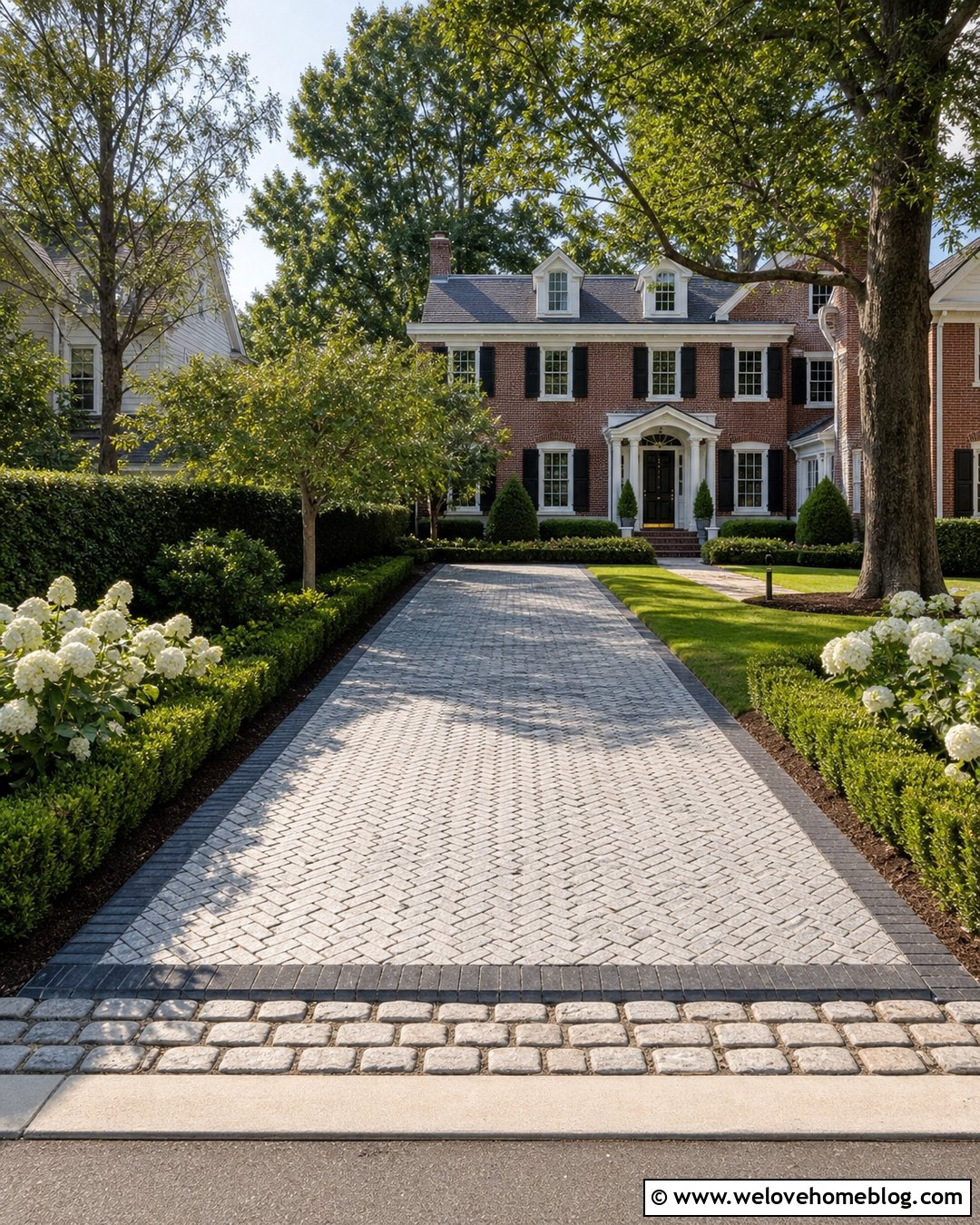
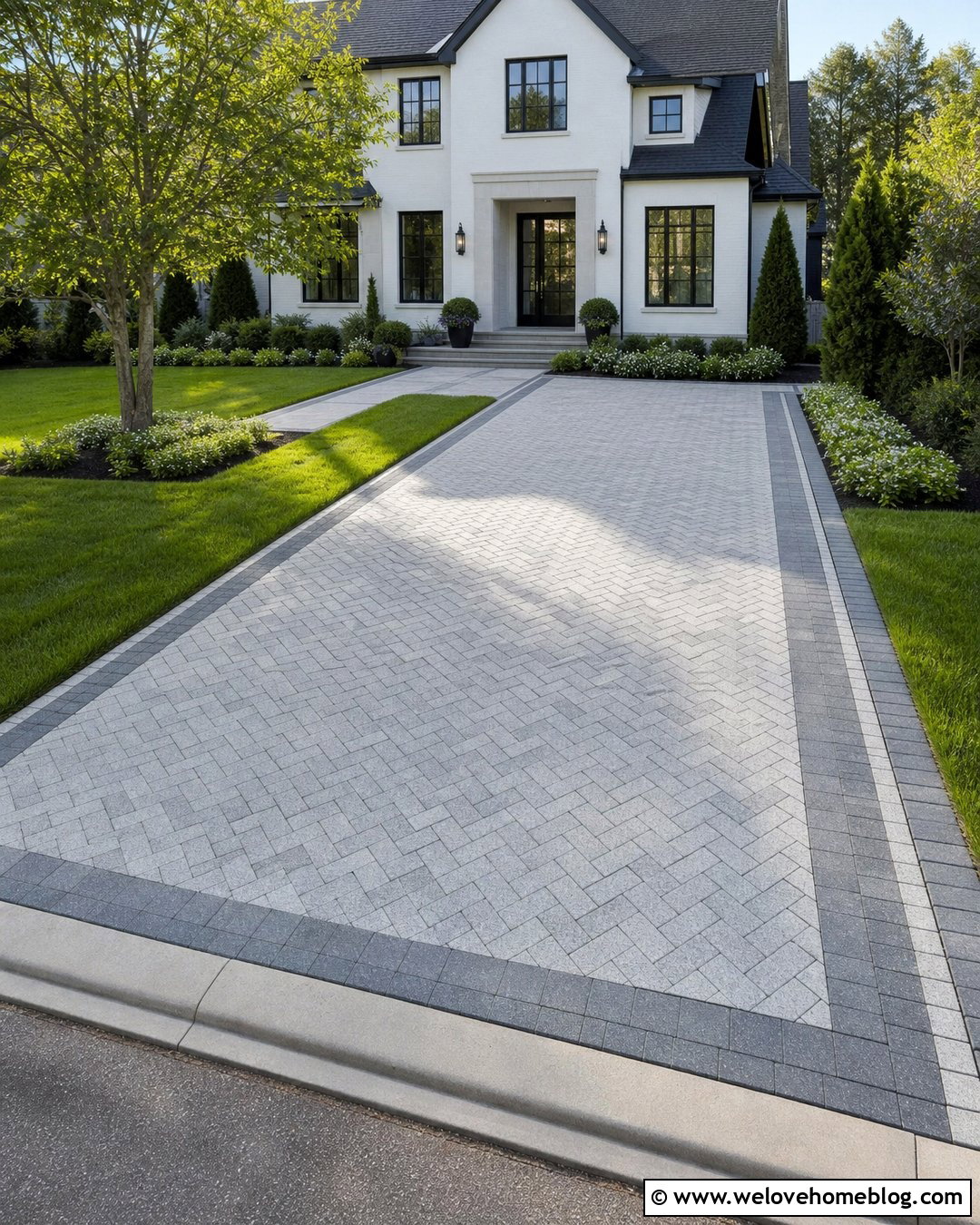
Granite cobblestones create a strong, traditional surface that looks especially appropriate beside brick Colonial, Tudor, and European-inspired homes. Lay rectangular gray cobbles in a herringbone pattern across a straight driveway to add movement while helping the individual pieces interlock. A darker granite soldier course can define both sides and prevent the pattern from disappearing into nearby planting beds. Complete the look with clipped boxwood, white hydrangeas, and a matching cobblestone walkway leading toward the front door. Keep the joint color close to the stone for a unified appearance. Because vehicle paving depends heavily on the supporting layers, hire an experienced hardscape contractor to prepare the base, establish the grade, and choose joints suitable for local weather conditions.
2. Gray Gravel Driveway With Cobblestone Edging
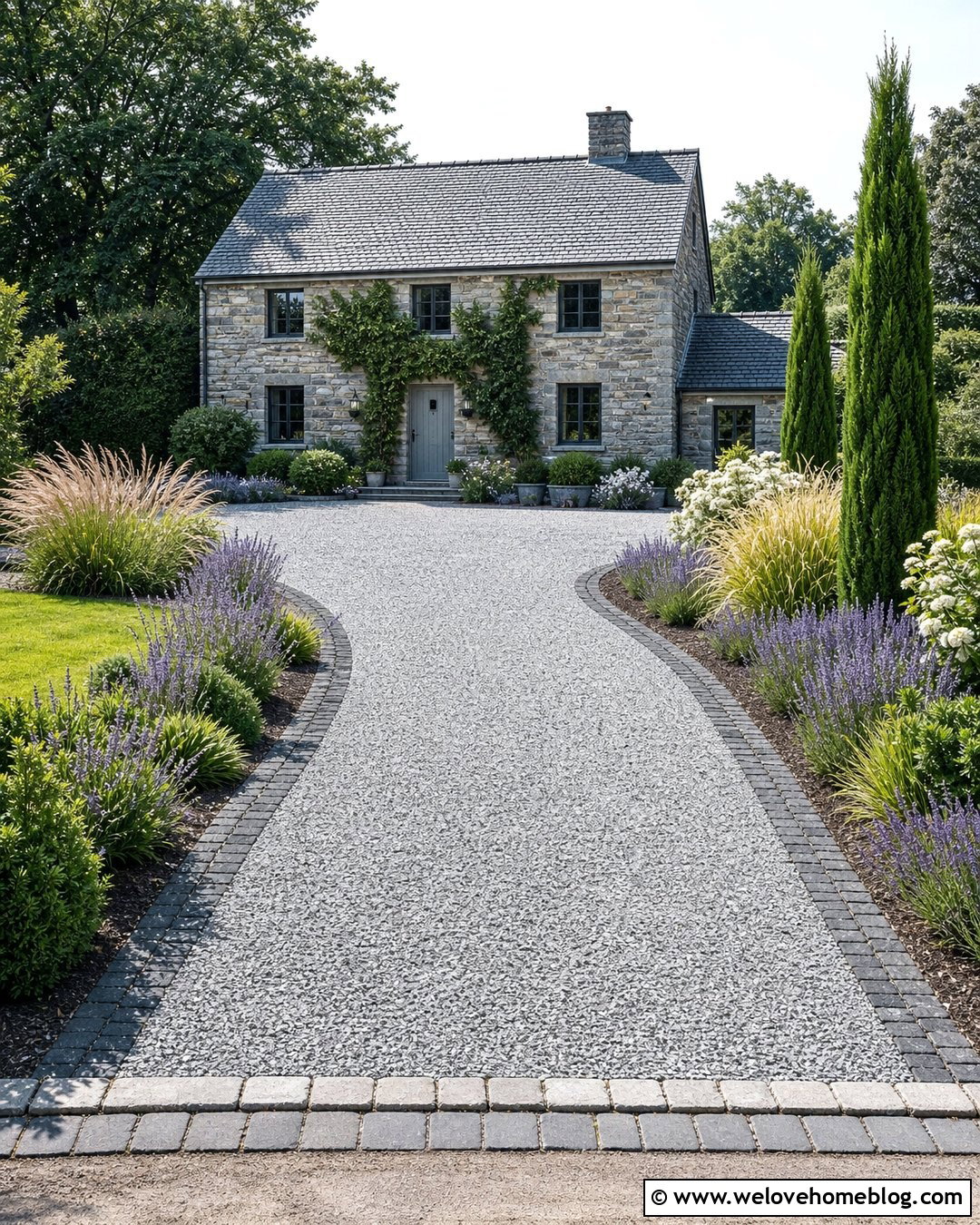
Soft gray gravel paired with substantial cobblestone edging delivers a relaxed look without allowing the driveway to feel unfinished. Use angular crushed stone rather than loose, rounded pebbles in the main driving area because the pieces settle together more effectively. Shape the driveway with a gentle curve that reveals the house gradually. Along both sides, install two rows of charcoal cobbles level with the gravel for clean containment and easier tire clearance. Lavender, ornamental grasses, and compact evergreen shrubs can soften the stone without crowding the driving lane. A gravel parking court near the garage provides room to turn. This complete design works well for cottages, farmhouses, and country properties where a perfectly formal paved surface might look out of place.
3. Flagstone Driveway With Gravel Joints
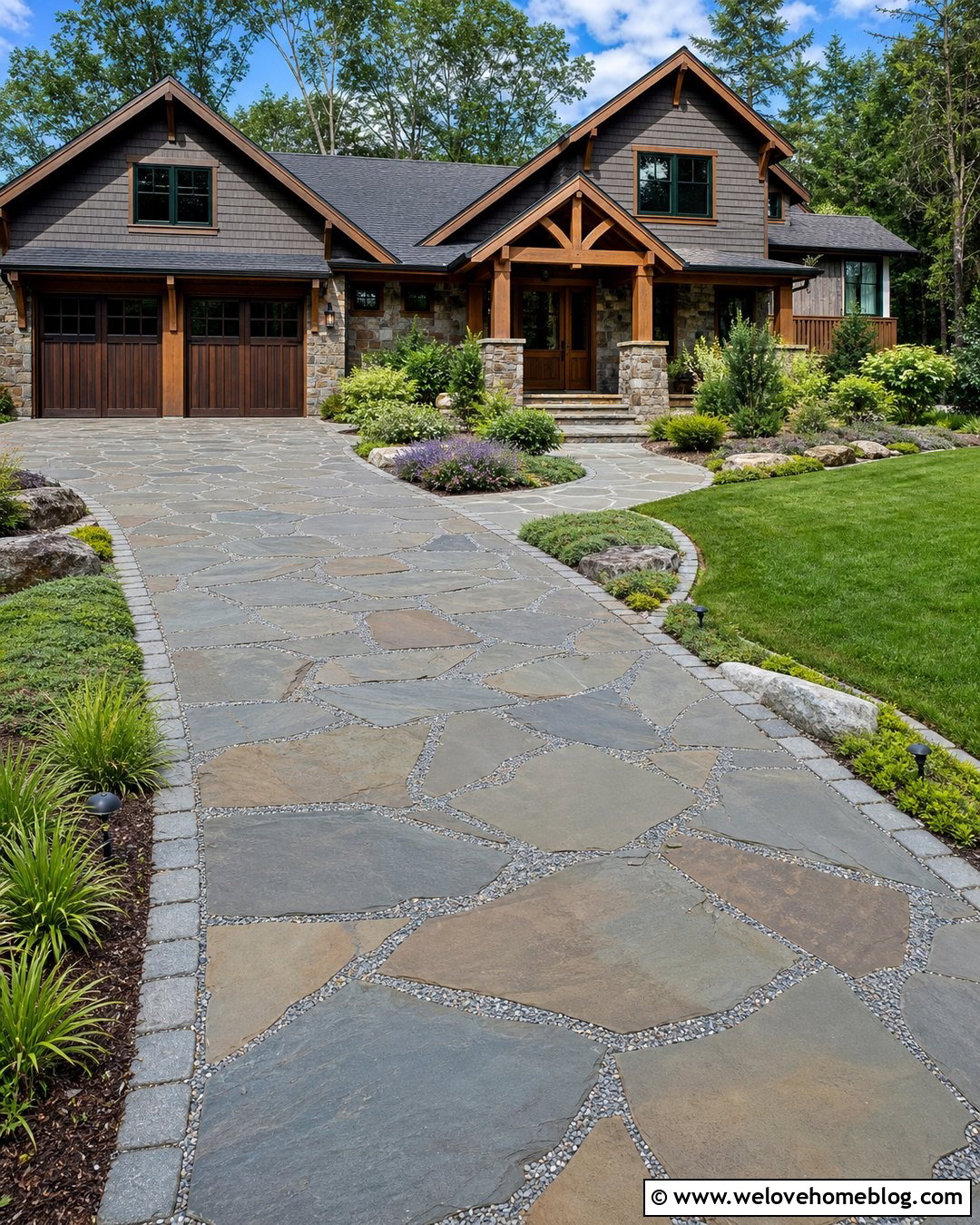
Large flagstone slabs separated by narrow gravel joints make a driveway feel natural and carefully designed at the same time. Choose thick, vehicle-rated sandstone or bluestone pieces with relatively consistent surfaces. Arrange them in an irregular pattern across a wide, straight approach, keeping joints controlled rather than excessively broad. Fill the spaces with small angular gravel that complements the dominant stone color. Low planting beds containing creeping thyme, sedges, and dwarf shrubs can continue the organic character along the edges. A flagstone walkway using smaller pieces creates a coordinated transition to the porch. This layout is best installed over a properly engineered base because thin landscape flagstones can crack under vehicles. Confirm stone thickness, drainage, and load requirements with the supplier and installer.
4. Crushed Limestone Driveway
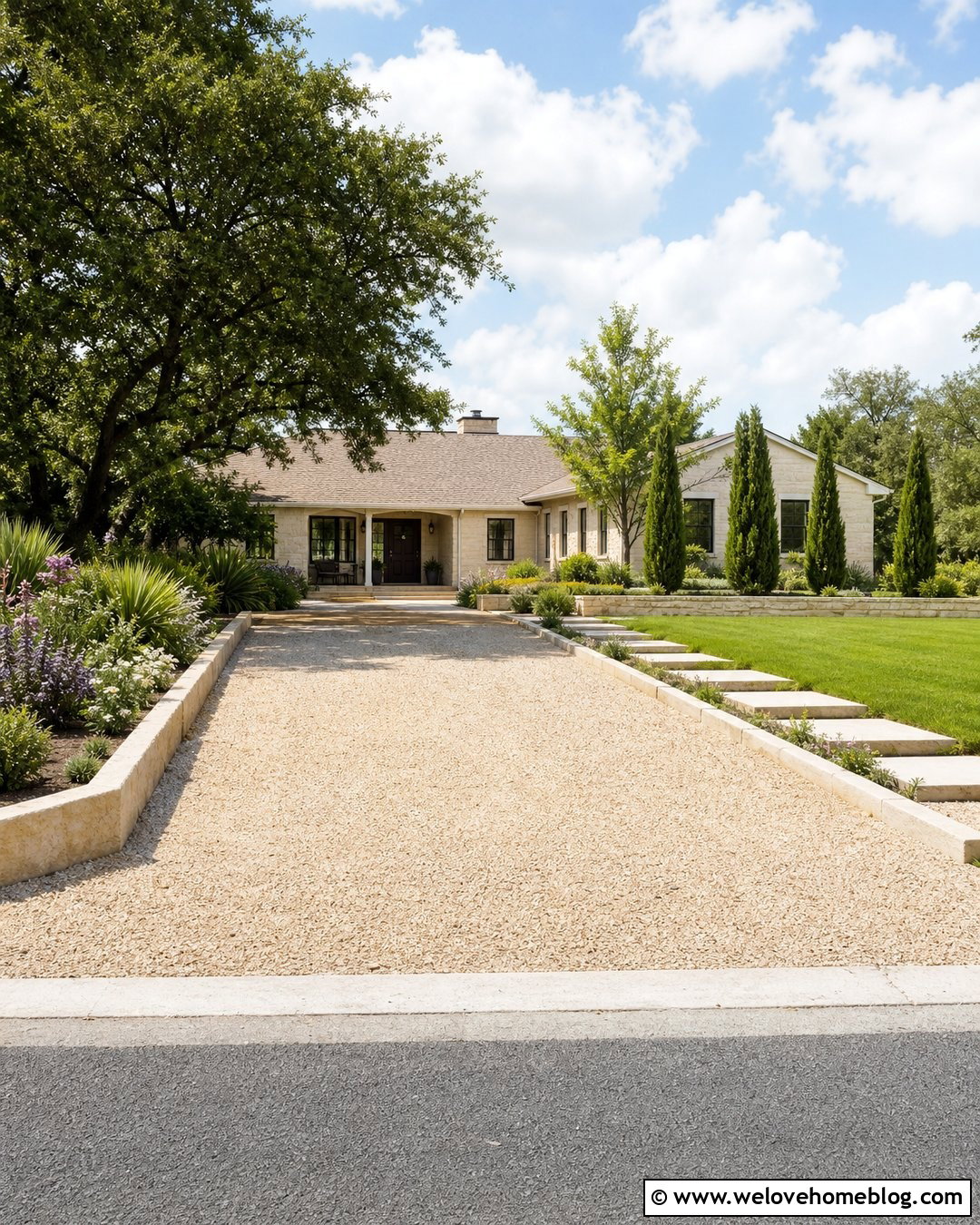
Warm crushed limestone can brighten a shaded front yard and complement cream siding, pale brick, or natural wood details. Use a compactable limestone blend with smaller particles that help form a firm driving surface. A straight driveway edged with larger limestone blocks produces a clean, coordinated appearance without introducing another color. Near the house, widen the surface into a simple rectangular parking area and connect it to a limestone stepping-stone walkway. Frame the approach with green lawn, upright junipers, and softly layered perennial beds. Occasional raking and replenishment will keep the crown and edges looking orderly. Before installation, plan where runoff should travel so water does not wash loose material toward the street, garage, or foundation during heavy storms.
5. Permeable Stone Paver Driveway
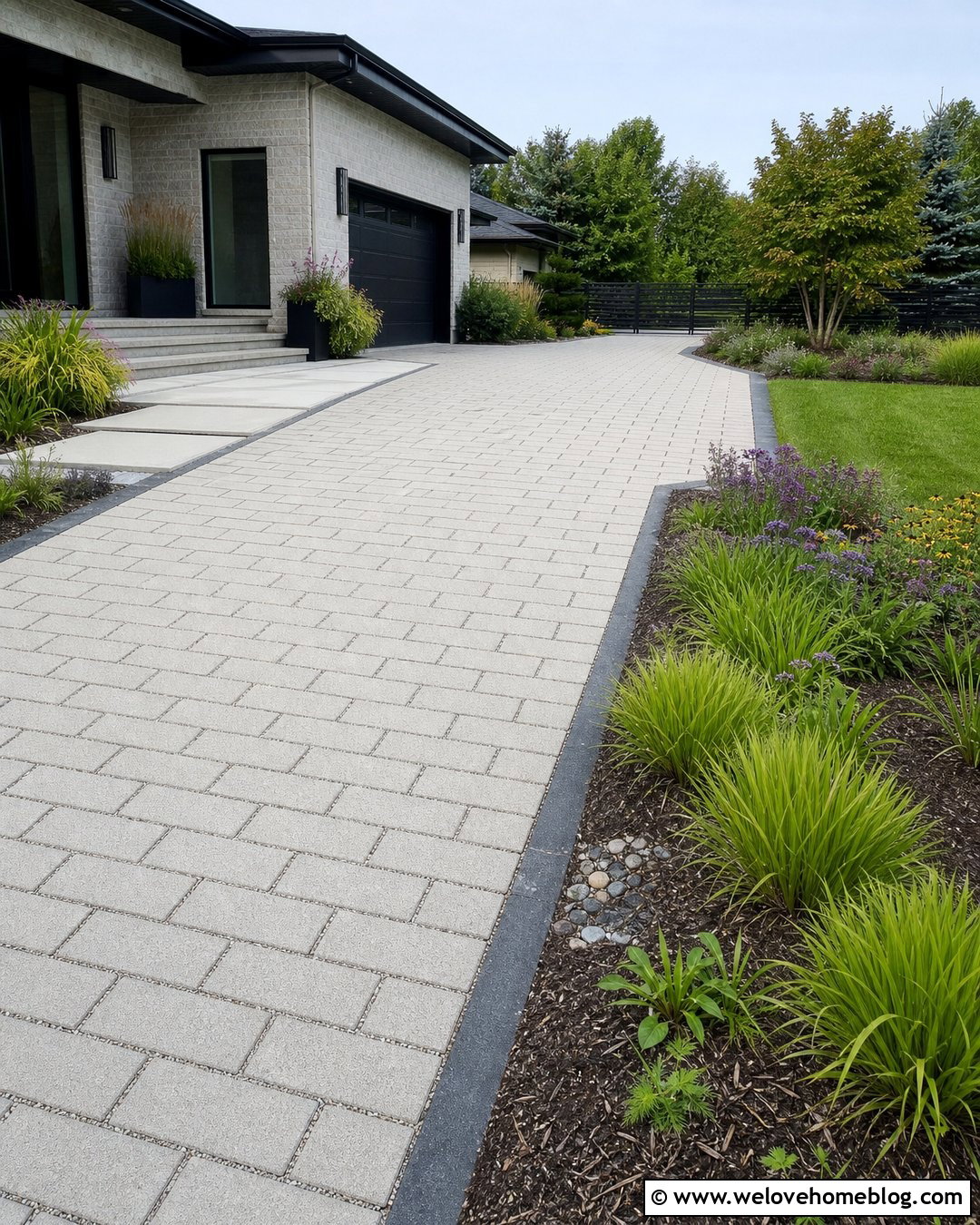
A permeable stone paver driveway combines a tailored appearance with a drainage-conscious layout. Choose granite or limestone pavers with wider aggregate-filled joints and arrange them in a running bond pattern across a gently sloped driveway. Rainwater can pass through an appropriately designed permeable system into stone storage layers below, although soil conditions, maintenance, and local rules should be evaluated first. () Add a shallow rain garden along the lower edge to receive overflow and visually connect the paving with the yard. Native grasses, flowering perennials, and small shrubs can make this practical feature attractive. Keep loose soil and mulch away from permeable joints because fine debris may reduce infiltration. The result suits contemporary homes and environmentally focused renovations.
6. Circular Cobblestone Driveway
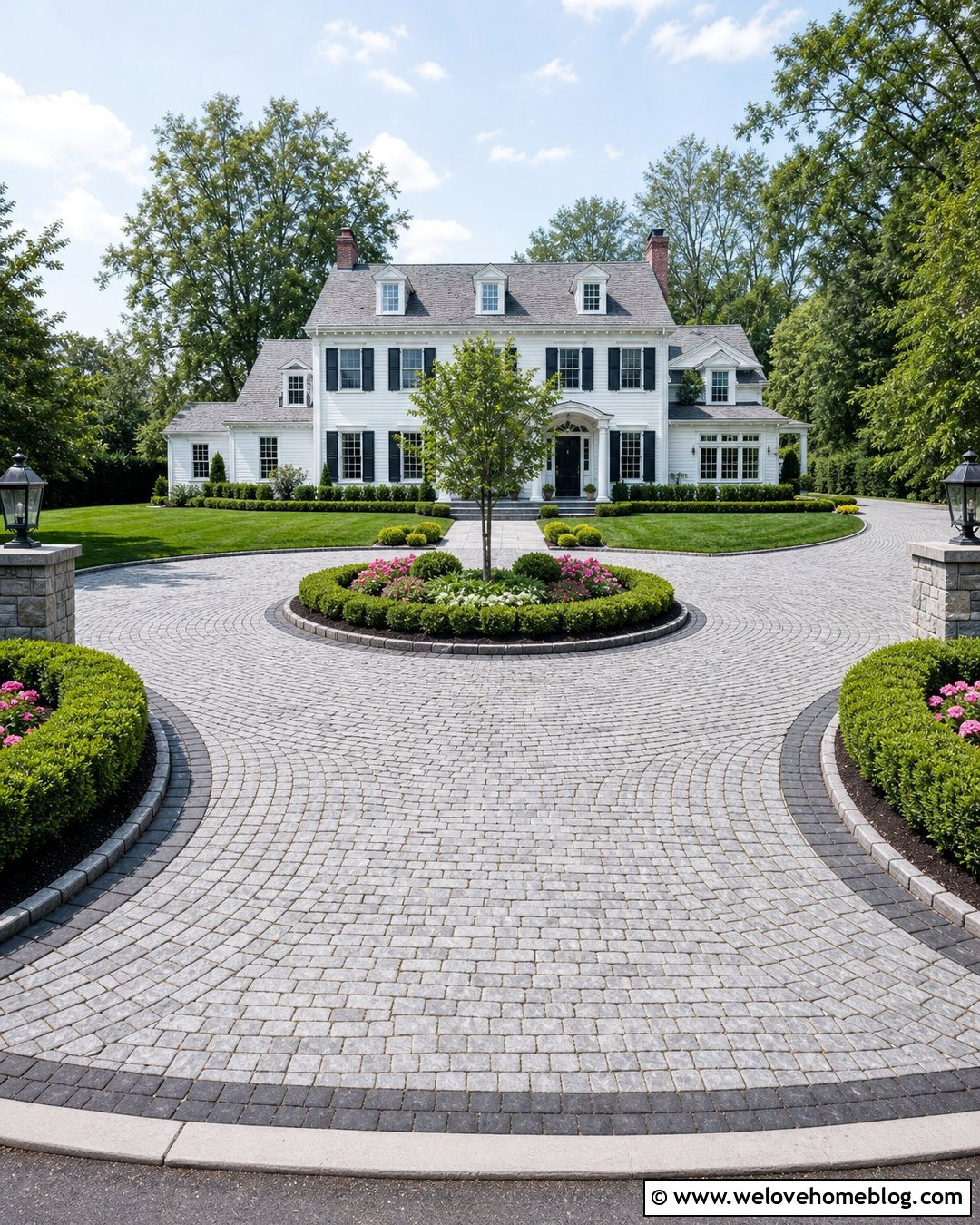
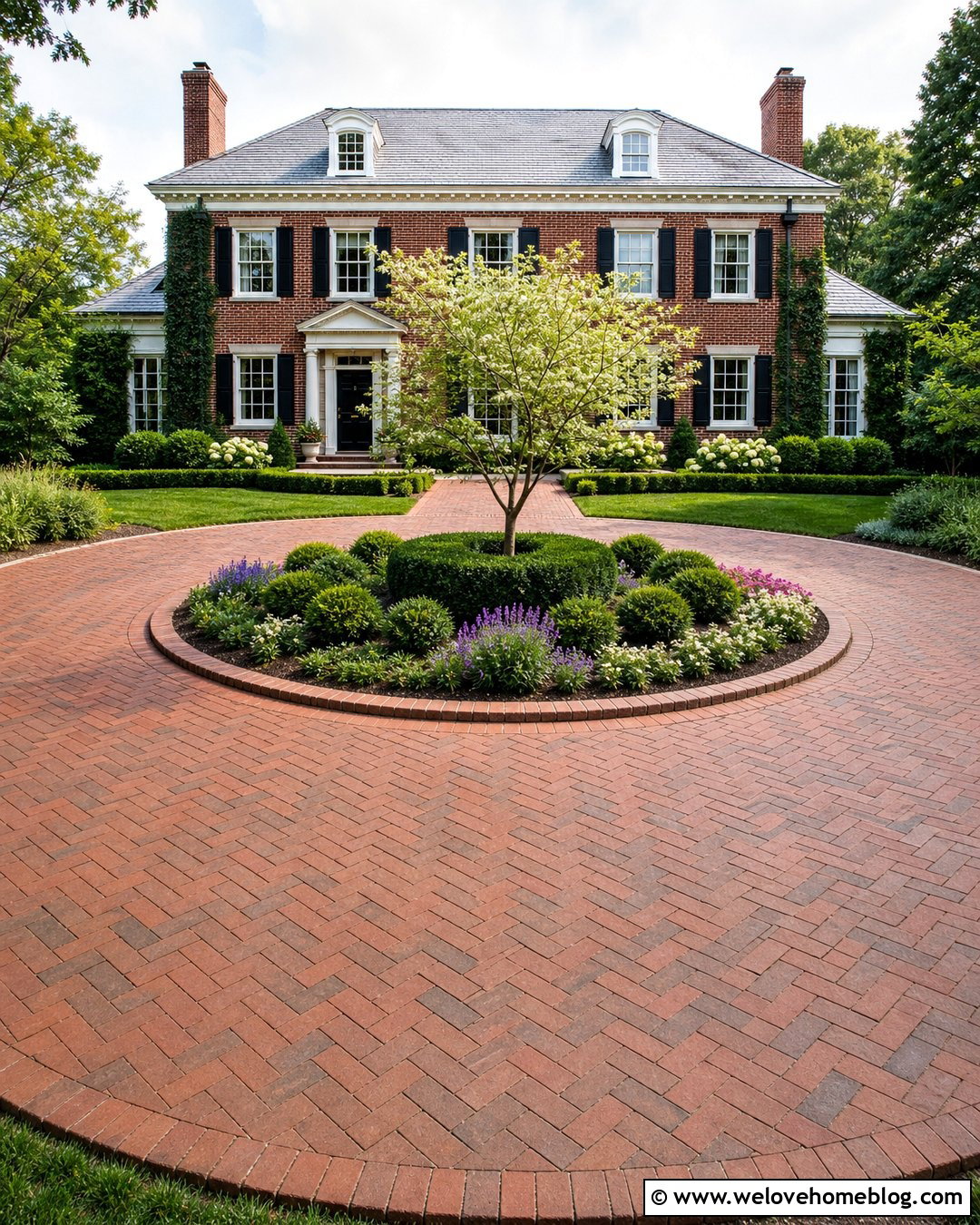
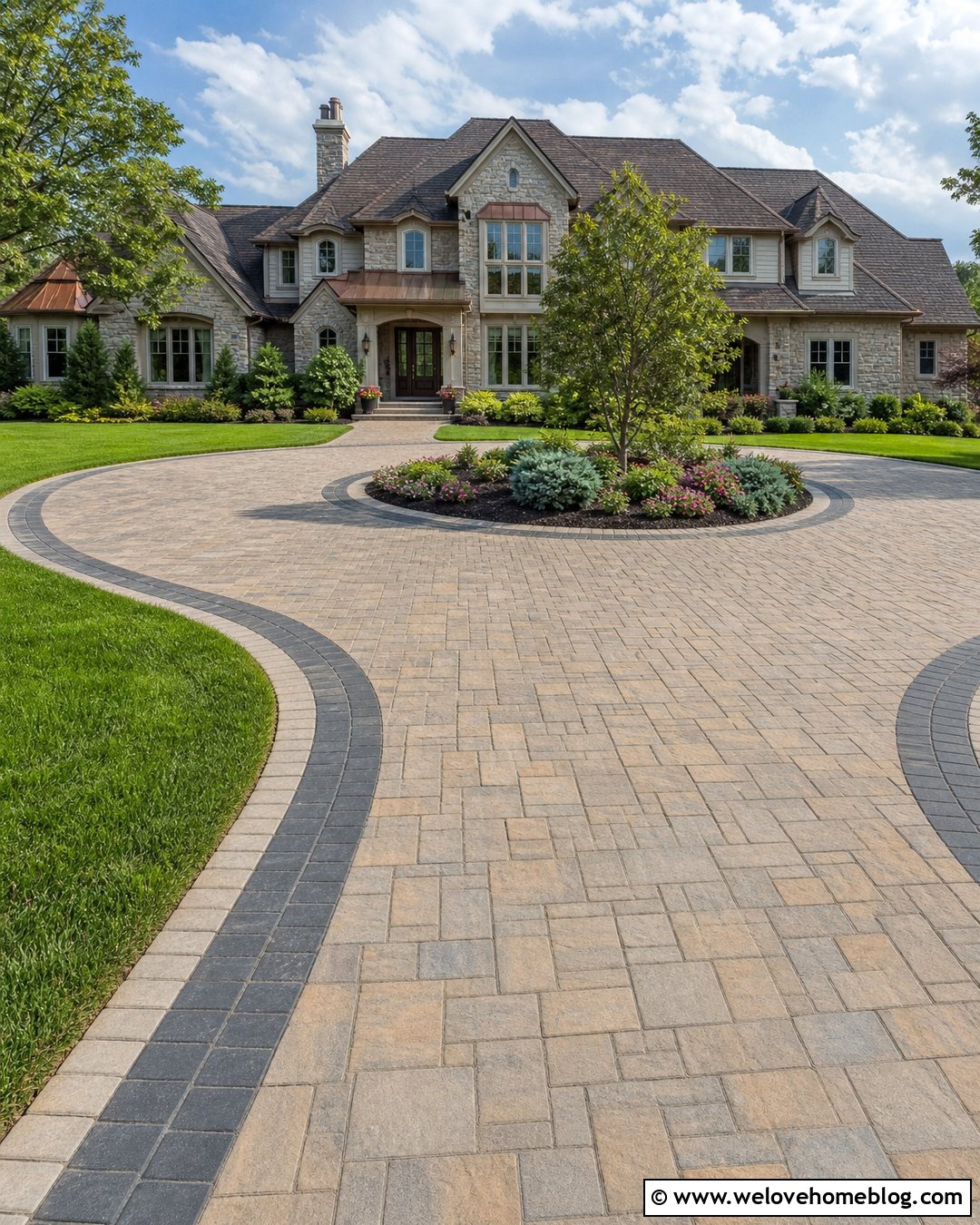
A circular cobblestone driveway creates an elegant arrival while allowing vehicles to approach the entrance and continue forward without backing out. Use medium-gray granite cobbles in curved running-bond rows that follow the shape of the drive. Place a landscaped island in the center with one small ornamental tree, low evergreen shrubs, and seasonal flowers that will not block visibility. A contrasting charcoal cobblestone ring can outline the island and the outside perimeter. Match the front walkway to the driveway border so the entrance reads as one complete composition. This layout needs enough front-yard depth, safe turning dimensions, and a carefully positioned street connection. Check local setback, curb-cut, drainage, and right-of-way requirements before finalizing the plan.
7. Curved Crushed Stone Driveway
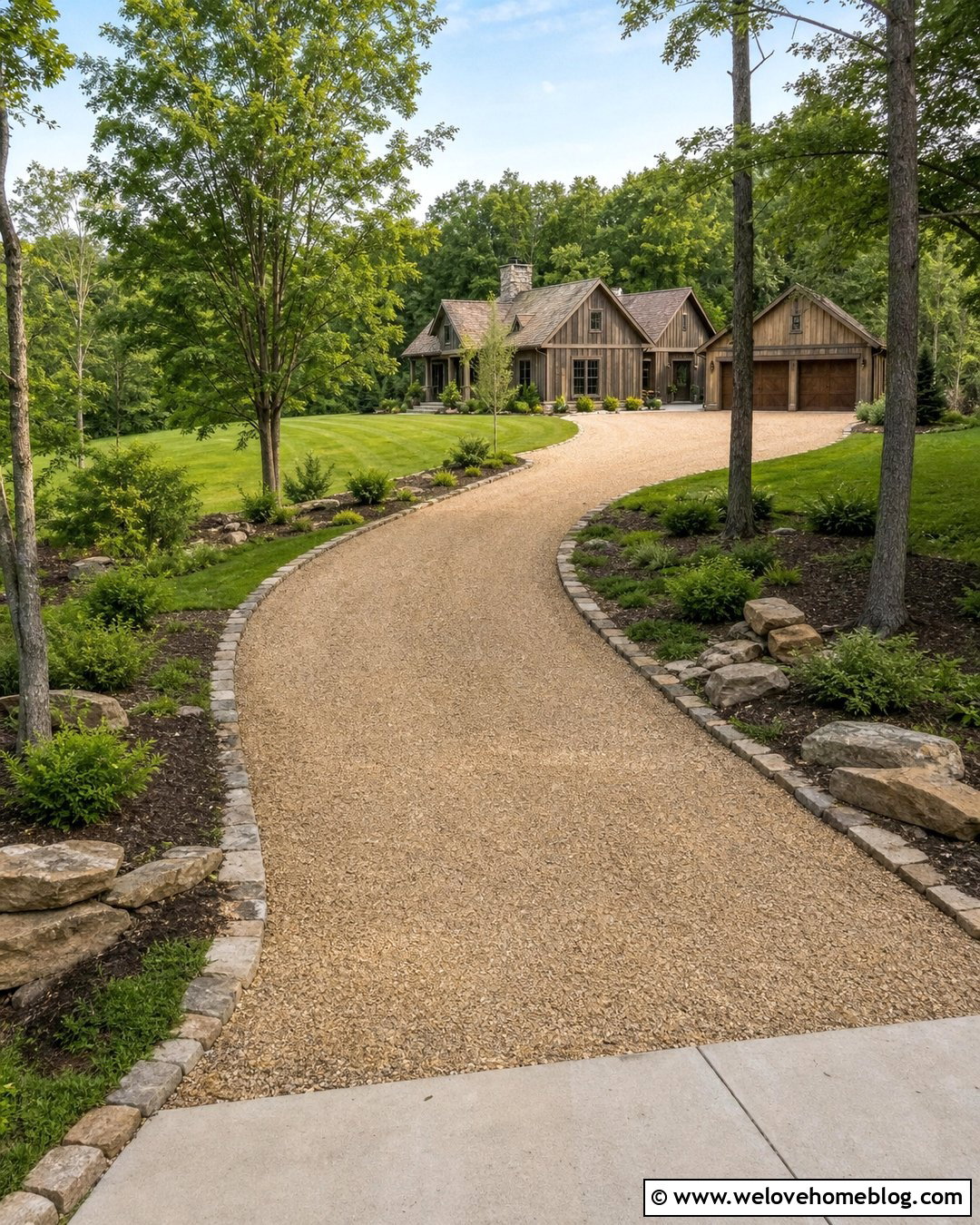
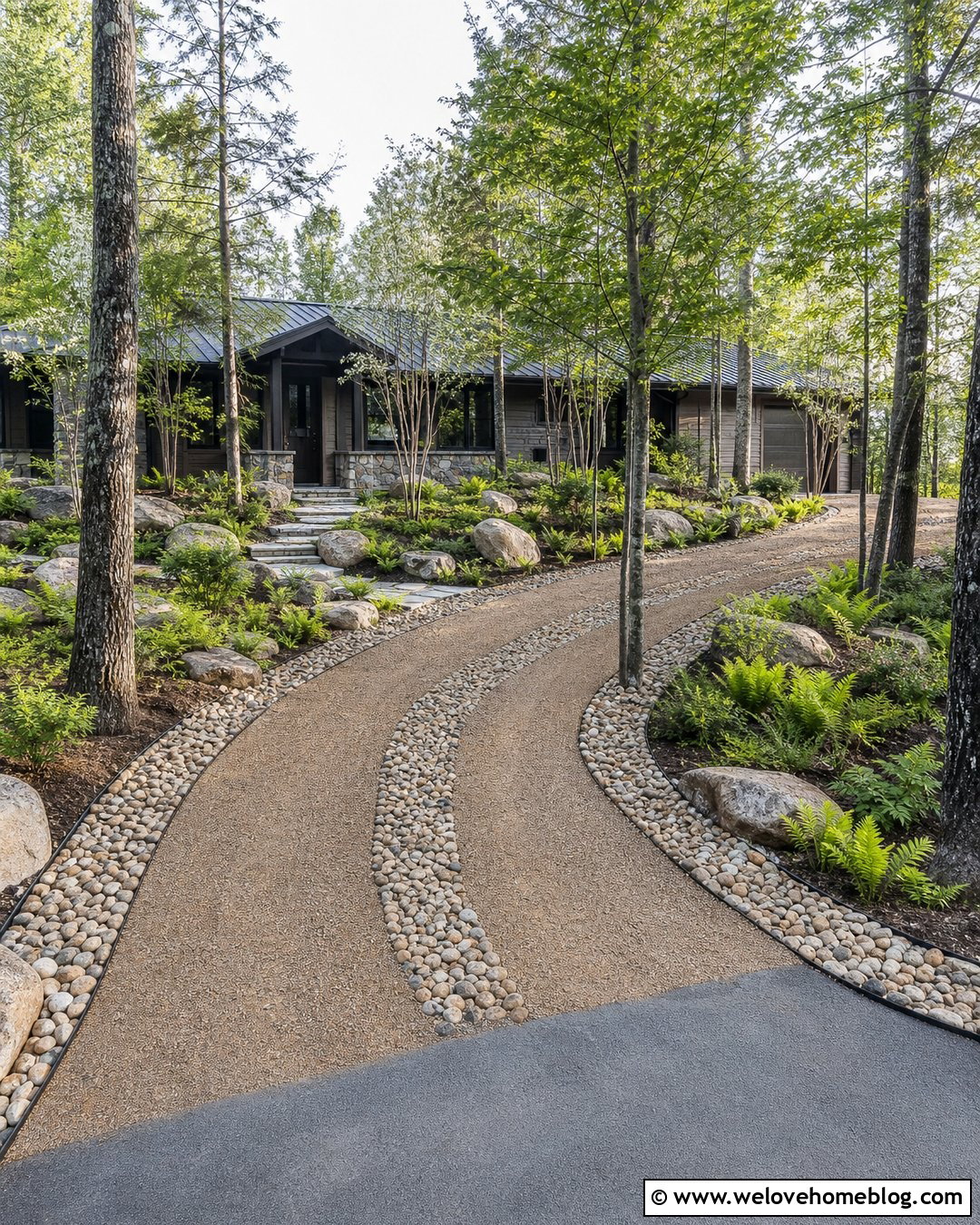
A curved crushed stone driveway can make a long approach feel more scenic and less like a direct strip of paving. Select tan or gray angular stone that coordinates with the home’s foundation and nearby retaining walls. Define the curves using locally sourced fieldstone set slightly above grade, then repeat that stone around planting beds near the house. Groups of native trees and shrubs can screen portions of the driveway without creating dangerous blind corners. Keep plants lower near the street entrance and inside curves to preserve visibility. A compacted parking court at the end provides space for turning and reduces wear near the garage. Gentle grading and drainage swales should guide water away from the loose-stone surface rather than directly across it.
8. Modern Bluestone Driveway
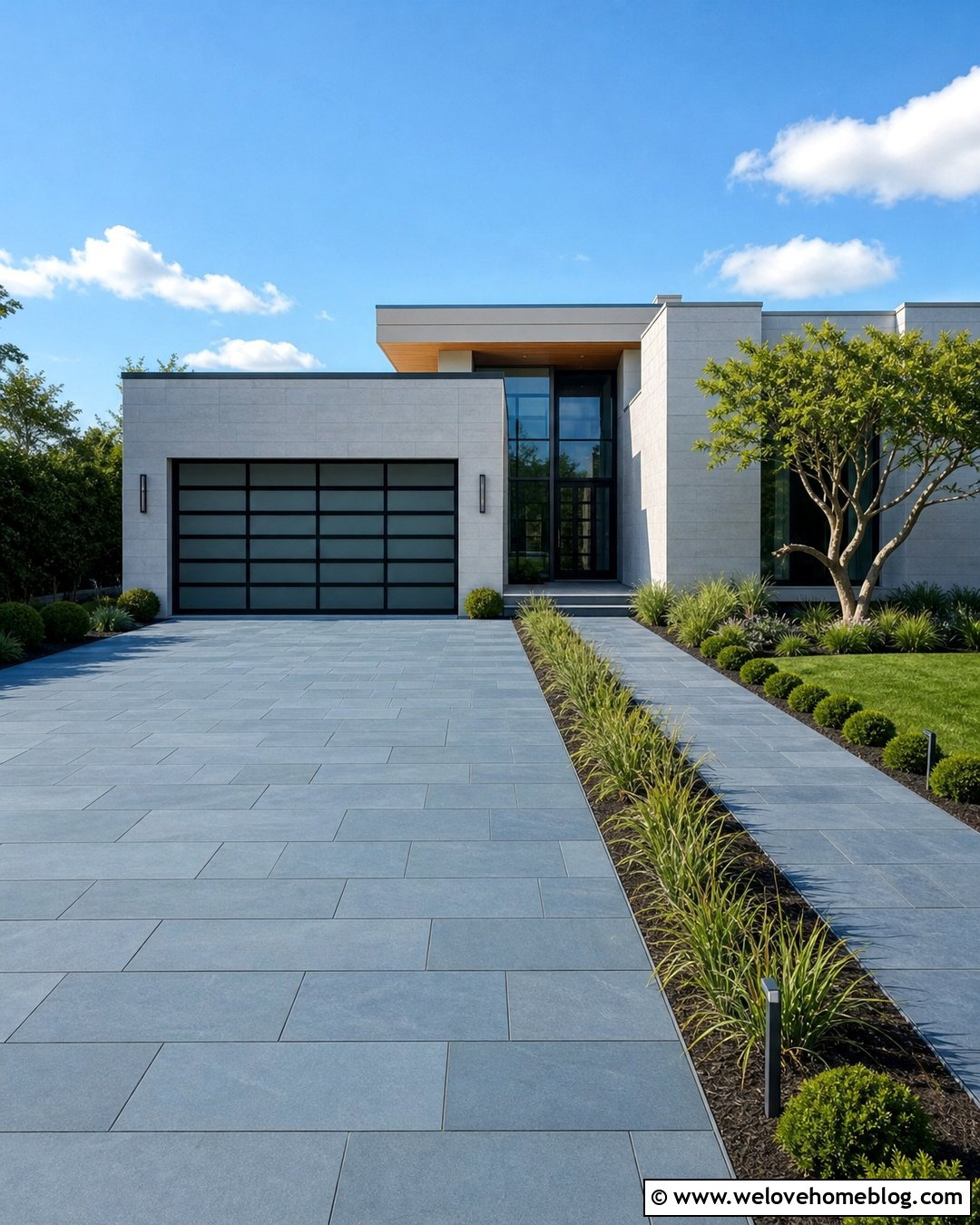
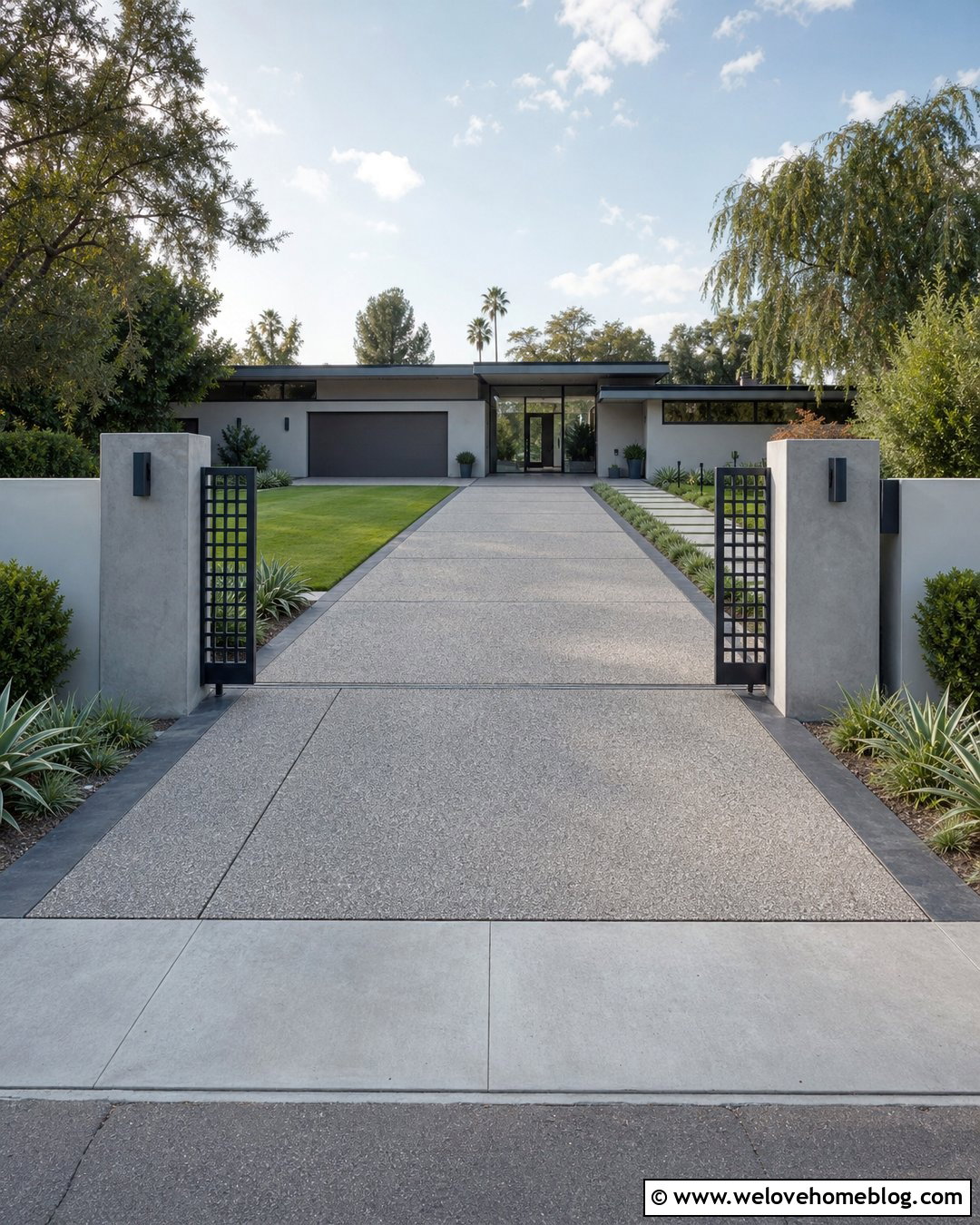
Large-format bluestone pavers give a modern driveway depth and natural variation without disrupting clean architectural lines. Choose dense, exterior-rated bluestone with a textured finish rather than a highly polished surface. Lay rectangular pieces in an offset grid across a broad, straight driveway leading to a minimalist home. Narrow dark joints and flush steel edging will maintain the crisp geometry. Use simple landscaping, such as linear ornamental grasses, low evergreen mounds, and one sculptural tree. A matching bluestone walkway can run beside the driveway but should be separated by a narrow planting strip for definition. Ask the supplier whether the selected bluestone is appropriate for vehicle loads, deicing practices, and local freeze-thaw conditions. Thoughtful material selection will protect both appearance and performance.
9. Rustic Fieldstone Driveway
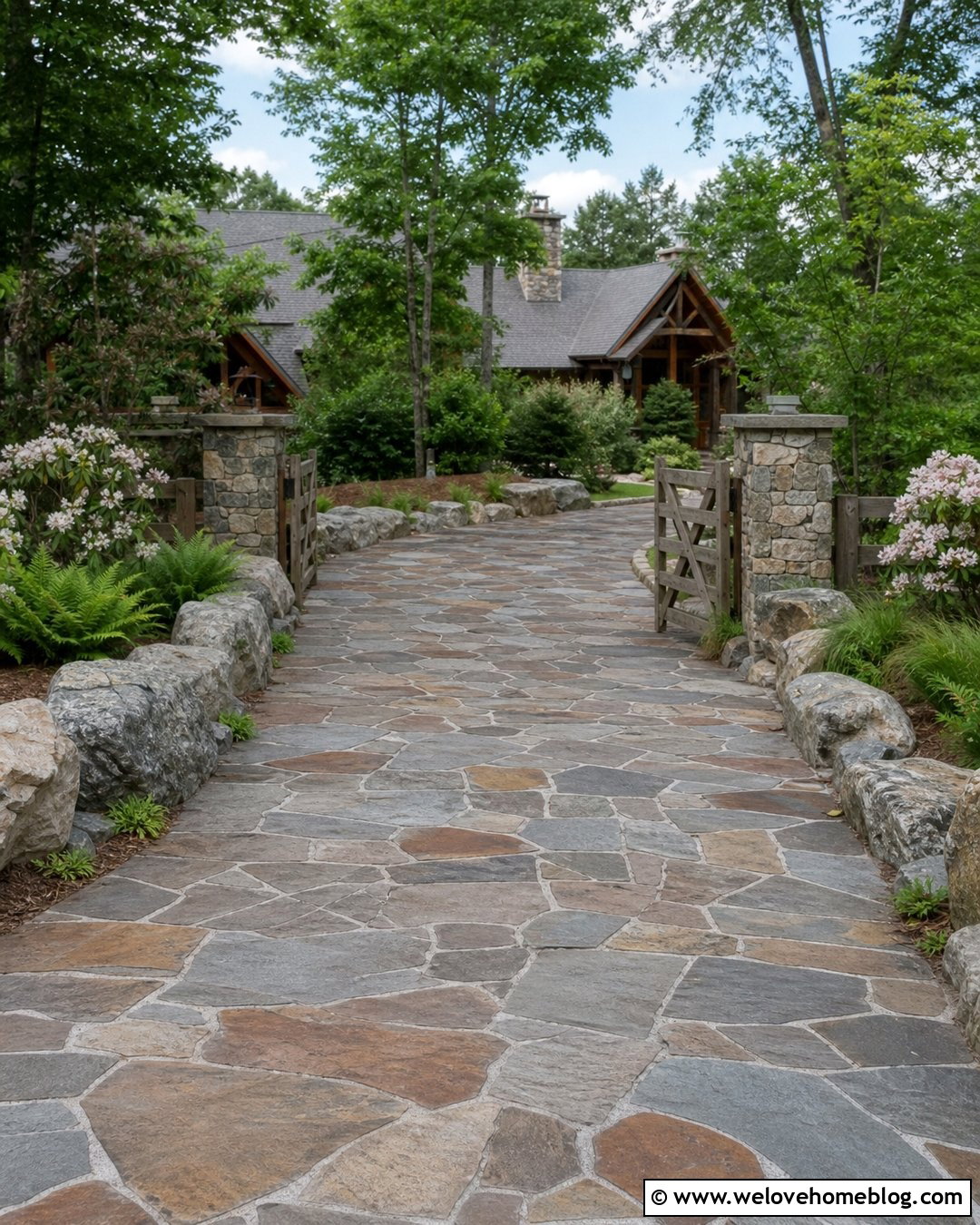
Irregular fieldstone creates a rugged driveway that looks naturally connected to wooded or rural surroundings. Choose substantial, relatively flat stones in mixed gray, brown, and muted rust tones. Fit them together with narrow joints over a vehicle-ready base, allowing the varied outlines to create an informal pattern. Use larger matching fieldstones as low borders where the driveway meets sloped planting beds. Ferns, native grasses, mountain laurel, and small woodland trees will soften the hardscape while preserving the rustic character. A simple timber gate or stone entry pillars can mark the beginning of the approach. Keep the central driving area reasonably even despite the irregular appearance. Excessive surface variation may make snow removal, walking, and everyday vehicle use more difficult.
10. Cobblestone Driveway Apron
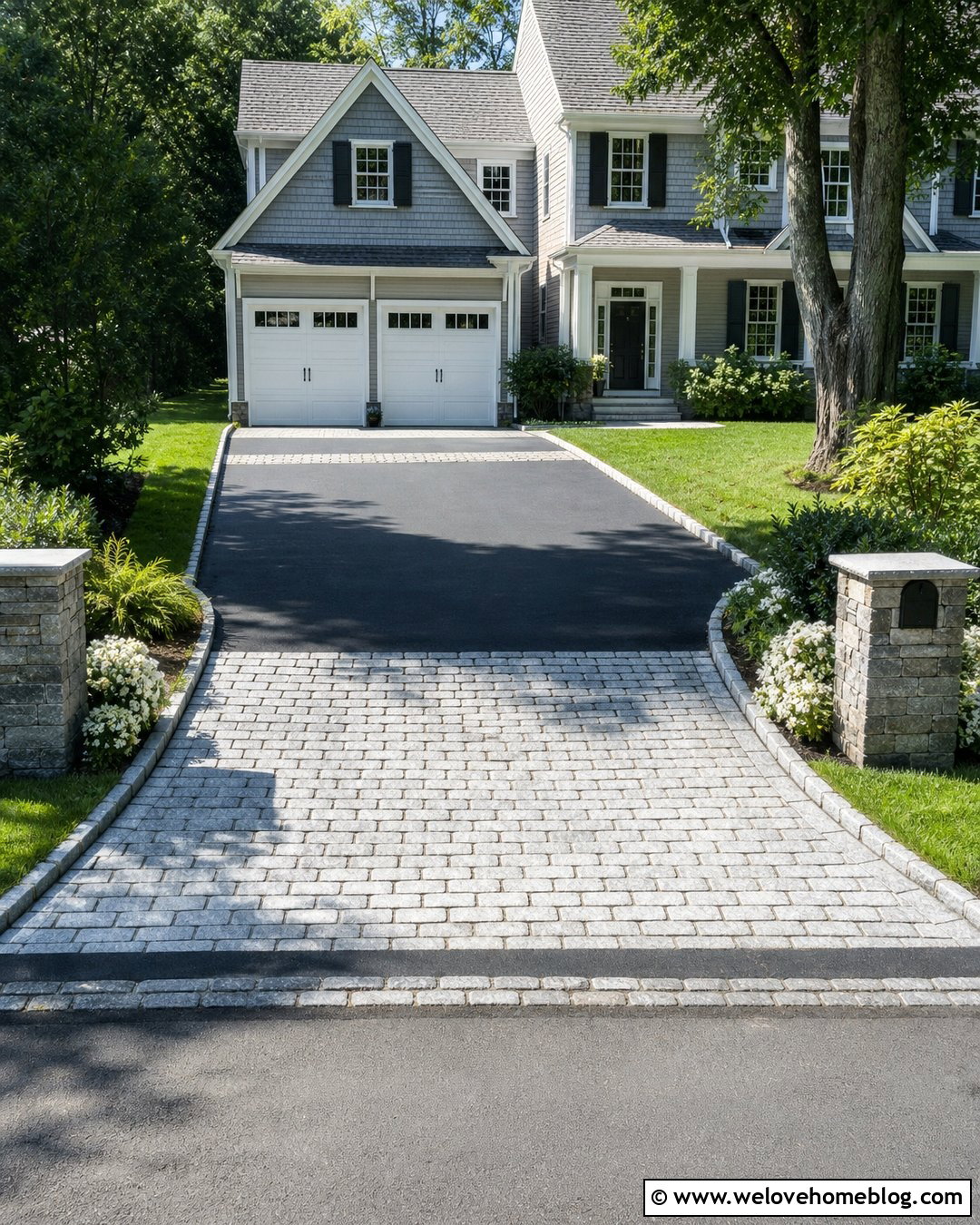
A cobblestone apron adds natural stone character where an asphalt, concrete, or gravel driveway meets the street. Install gray granite blocks in a running bond pattern across the full entrance, then repeat a narrower cobblestone band near the garage for balance. The apron should visually connect with stone mailbox pillars, a walkway, or the home’s masonry rather than appearing randomly attached. Slightly flared sides can make turning into the property easier while giving the entrance a more generous shape. Since this area receives frequent tire movement and may fall within a public right-of-way, confirm municipal requirements before beginning. A deeply compacted supporting base and controlled pitch are important for carrying vehicles and directing runoff appropriately. ()
11. Gravel Driveway With Belgian Block Border
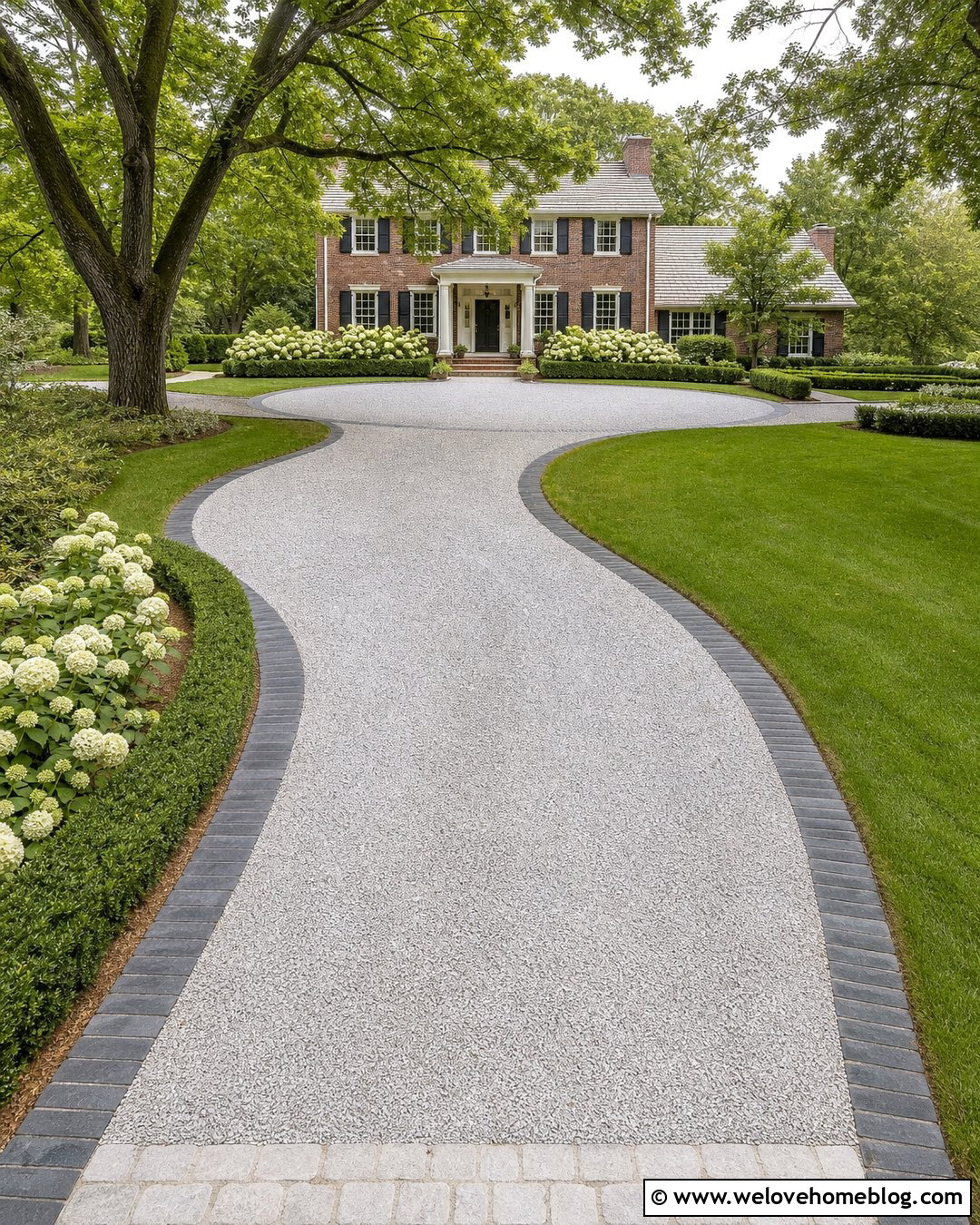
Belgian block provides a substantial edge that makes a simple gravel driveway look deliberate and enduring. Use charcoal granite blocks along both sides of a pale gray crushed-stone surface. Set the blocks in a single soldier course for a narrow driveway or use two rows where stronger visual definition is needed. A gentle S-curve can create an appealing approach to a traditional brick or clapboard home. Repeat Belgian block around a nearby walkway and small parking court to maintain continuity. Low hedges, hydrangeas, and mature shade trees will balance the weight of the stone. Properly anchored edging helps separate gravel from soil and lawn, but installation details should reflect climate, soil movement, and expected traffic. ()
12. Resin-Bound Stone Driveway
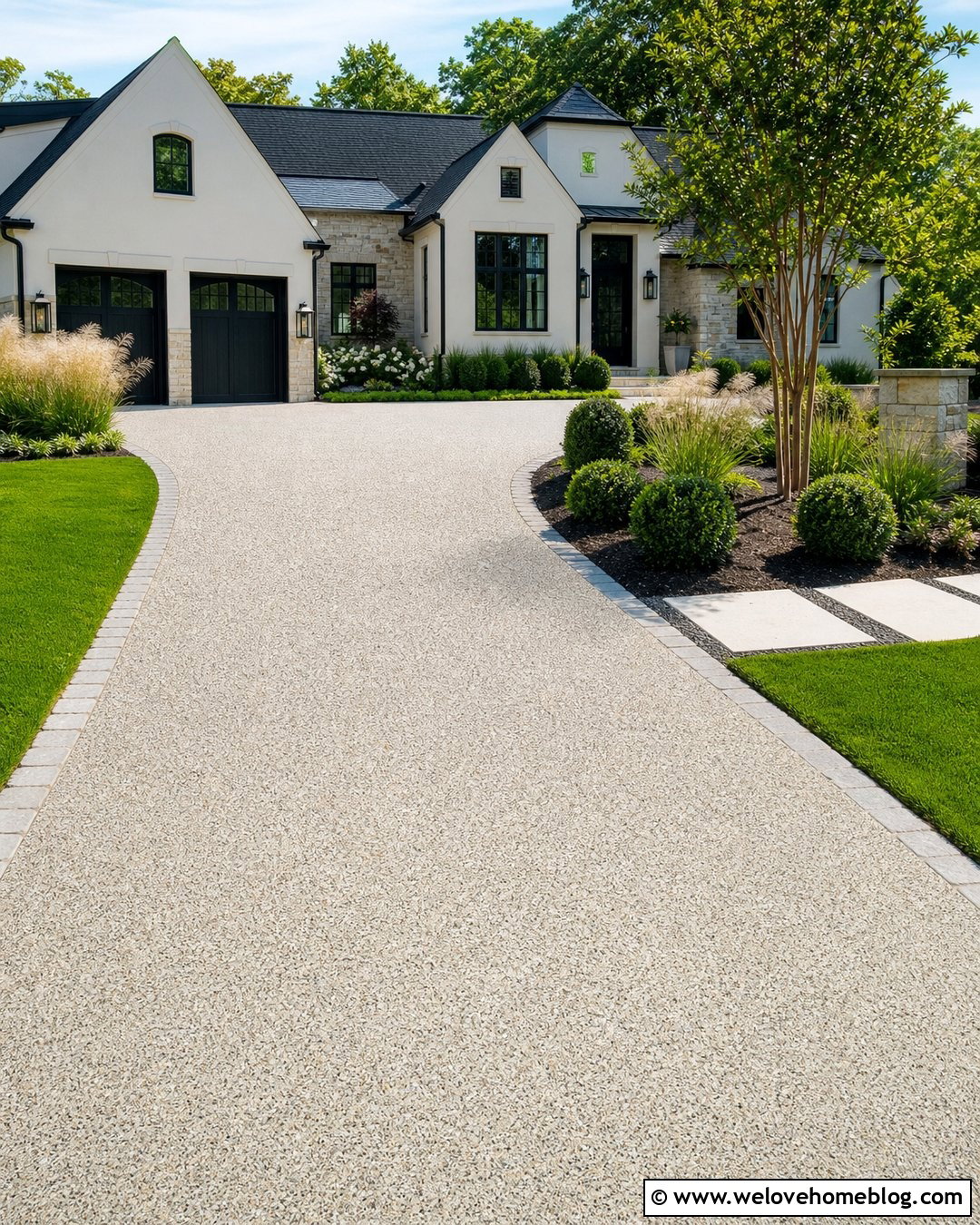
Resin-bound stone offers a smoother interpretation of a gravel driveway while preserving the color and texture of small aggregate. Choose a blend of beige, cream, and light gray stone for a warm contemporary finish. Shape the driveway with a broad curve and frame it with a narrow granite sett border that creates a sharp outline. Near the front door, connect the surface to oversized limestone walkway slabs surrounded by restrained planting beds. Boxwood, feather reed grass, and a multi-stem tree can keep the landscape modern without feeling bare. Use a system specifically designed and installed for vehicle traffic, and discuss permeability, ultraviolet stability, drainage, repairs, and winter maintenance with the contractor. The finished surface should complement the facade rather than compete with strongly patterned exterior materials.
13. Decomposed Granite Driveway
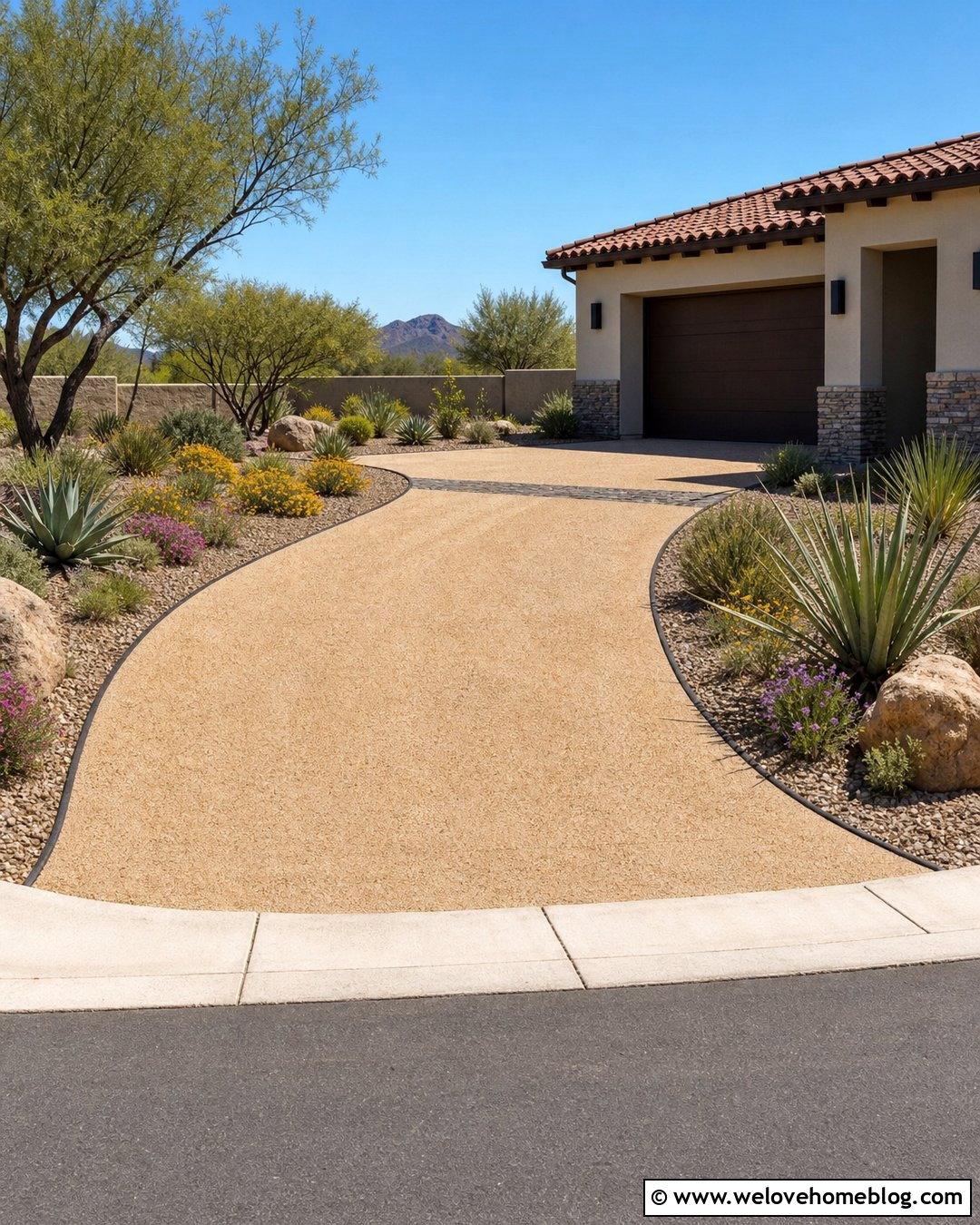
Decomposed granite gives a driveway a warm, understated surface that works beautifully with desert, ranch, and Southwestern homes. Select a stabilized product in gold, tan, or muted rose to reduce loose dust and migration. A broad, slightly curved layout can follow the natural contours of the site, while steel edging keeps the surface neatly separated from gravel mulch and planting areas. Complete the setting with agave, yucca, native grasses, boulders, and drought-tolerant flowering plants. Near the garage, add a darker granite cobble band to mark the transition and protect the edge. Decomposed granite performance varies with rainfall, slope, soil, and installation method, so it may not suit every climate. Plan drainage carefully and expect periodic compaction or surface refreshing.
14. White Stone Driveway
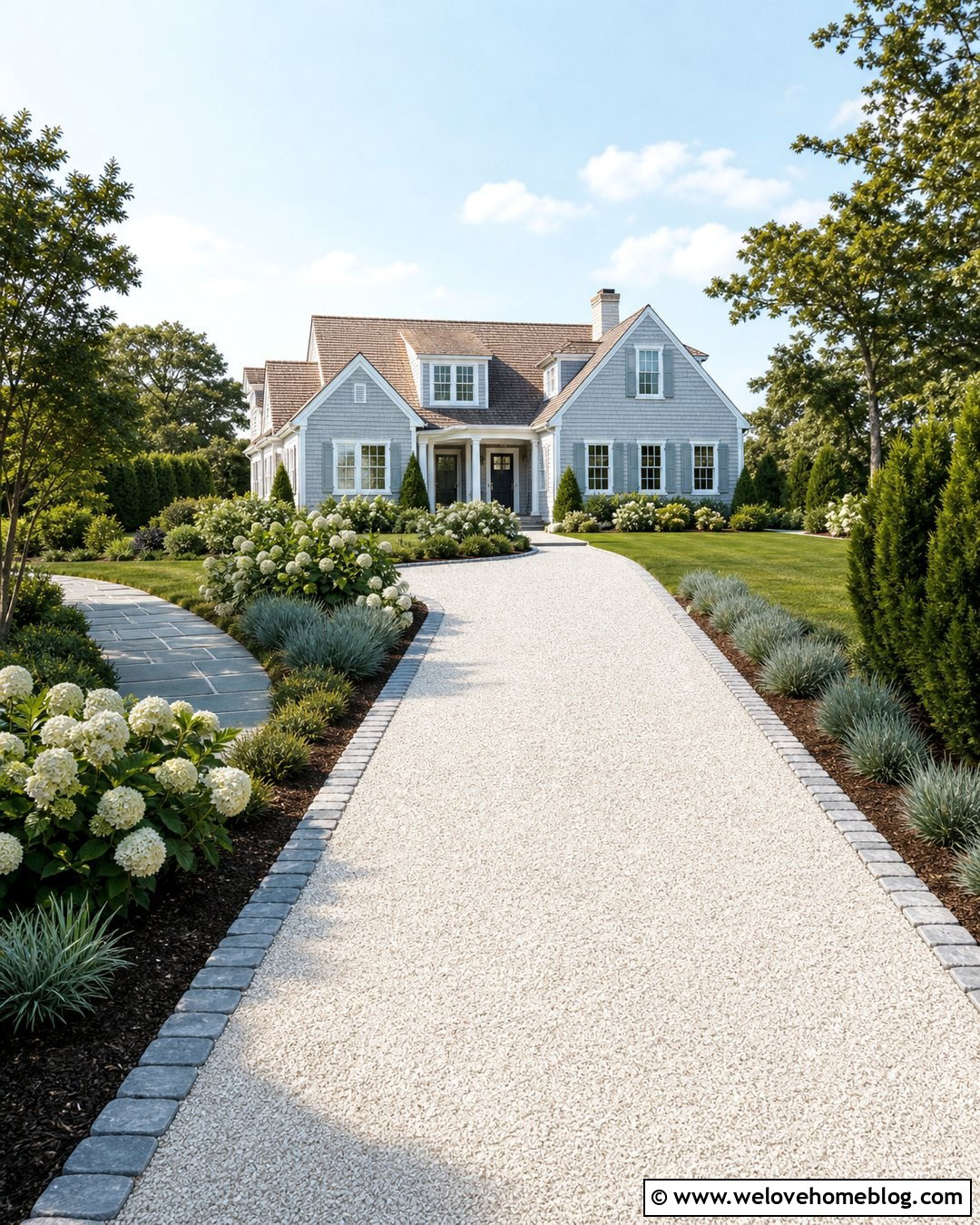
A white stone driveway can create a bright coastal or garden-inspired entrance, but the complete design should account for glare, staining, and routine upkeep. Use off-white crushed limestone or pale marble chips rather than an intensely reflective pure-white material. Form a straight driveway with warm gray cobblestone borders to contain the light aggregate and introduce contrast. Surround it with blue-green grasses, hydrangeas, and dark evergreen shrubs that visually anchor the surface. A gray stone walkway can lead guests clearly toward the entrance. Consider local trees before choosing very pale gravel, since falling leaves, berries, and organic debris may require frequent cleaning. In hot, sunny locations, inspect a sample area at midday to ensure the color remains comfortable and suits the house.
15. Black Basalt Driveway
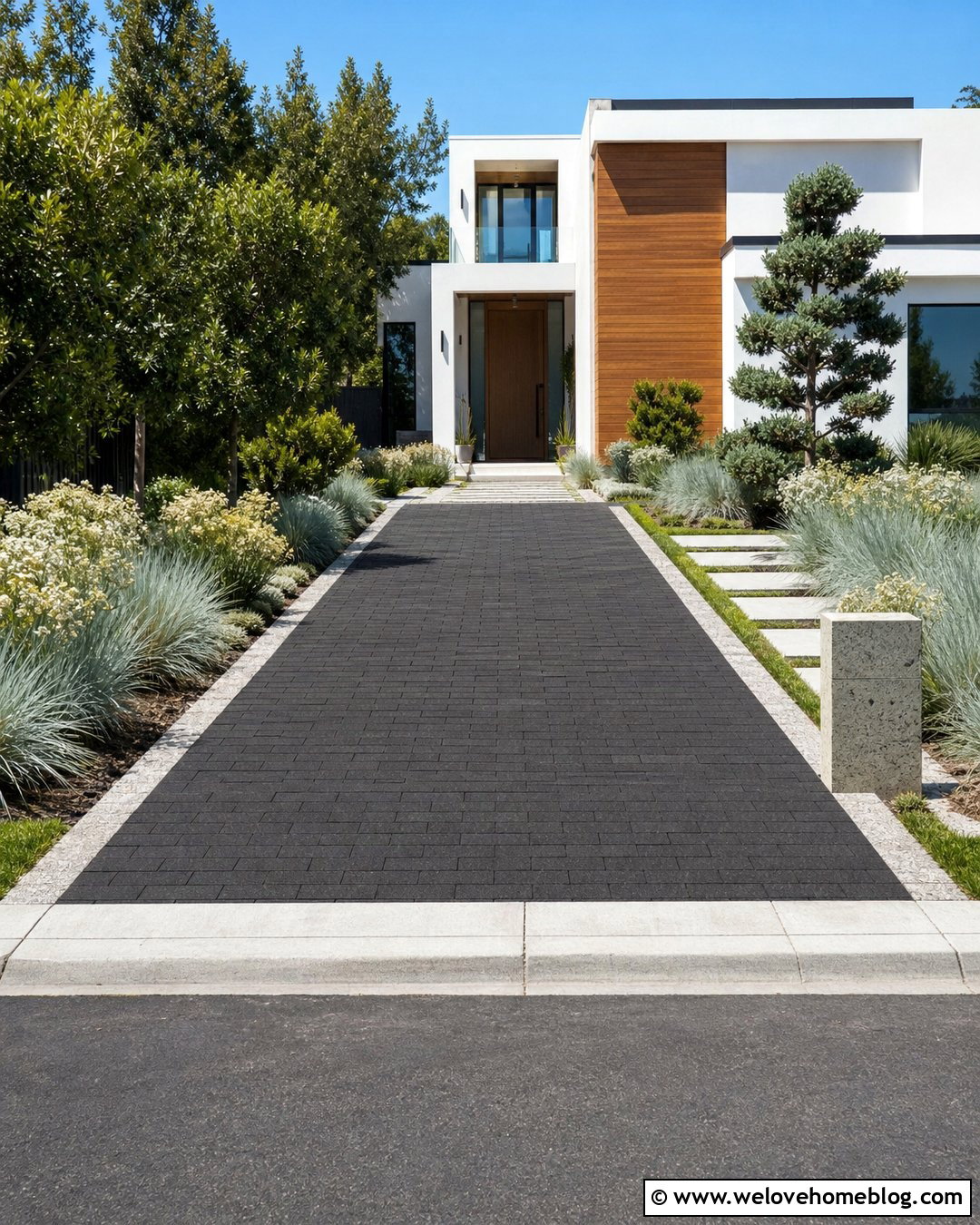
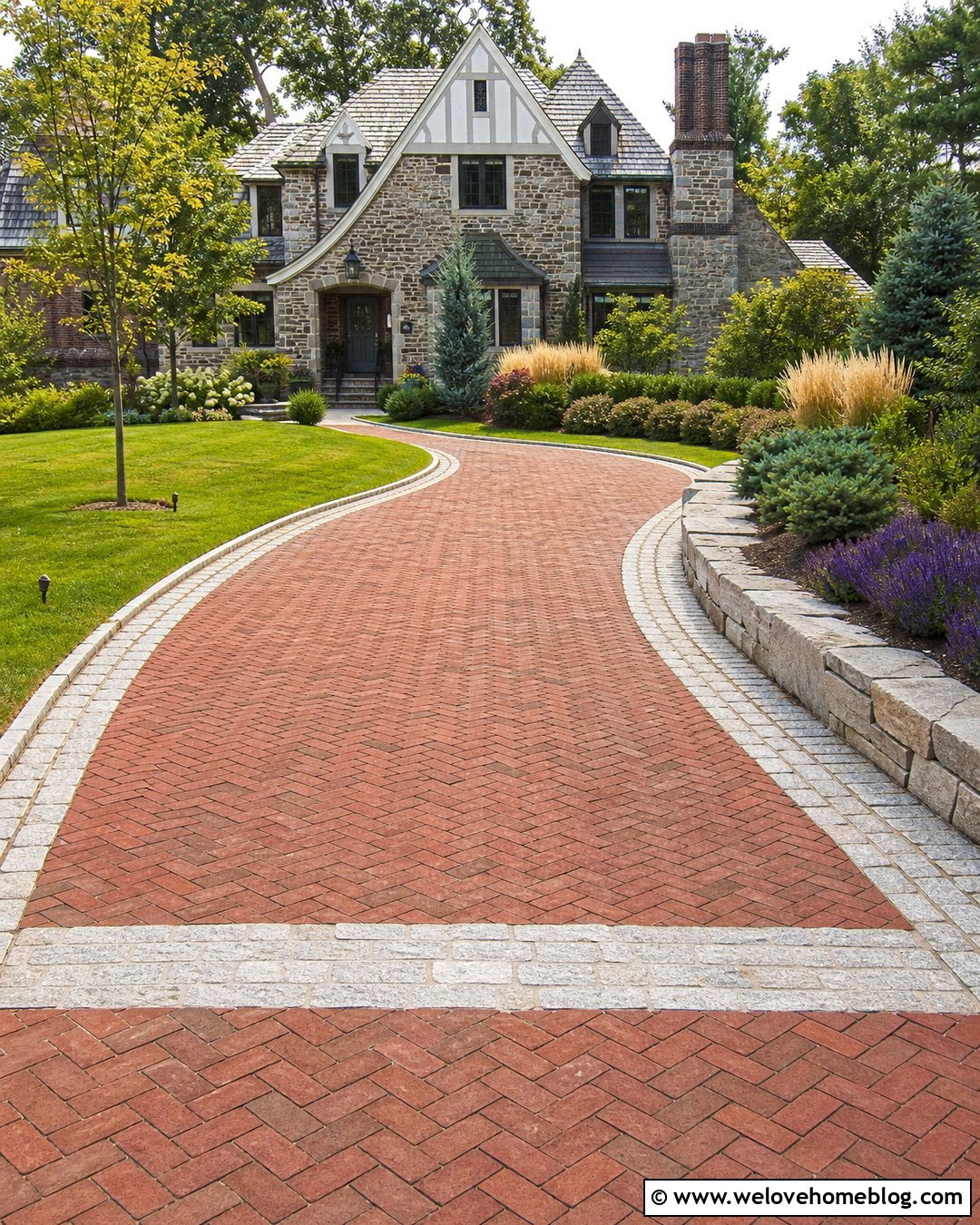
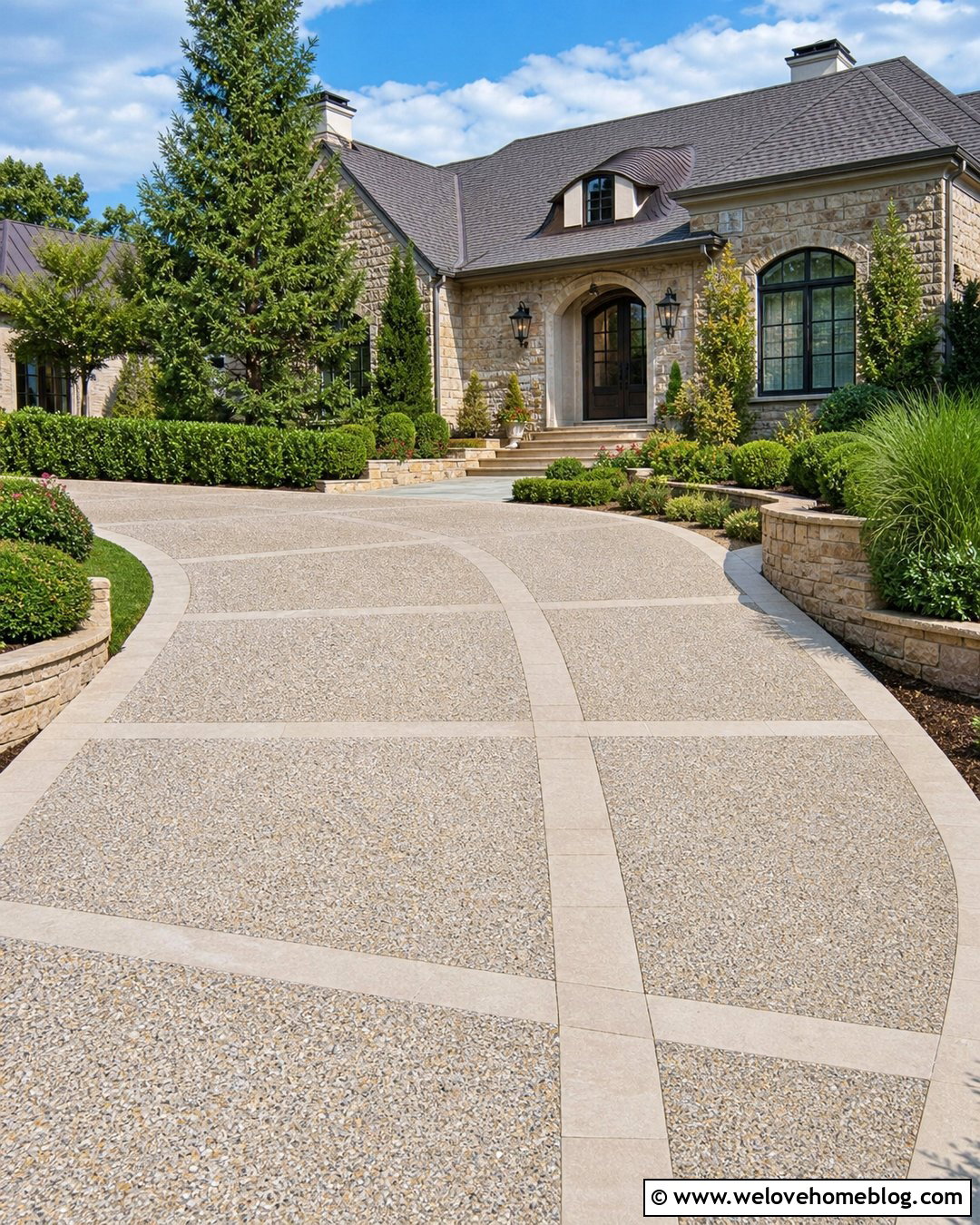
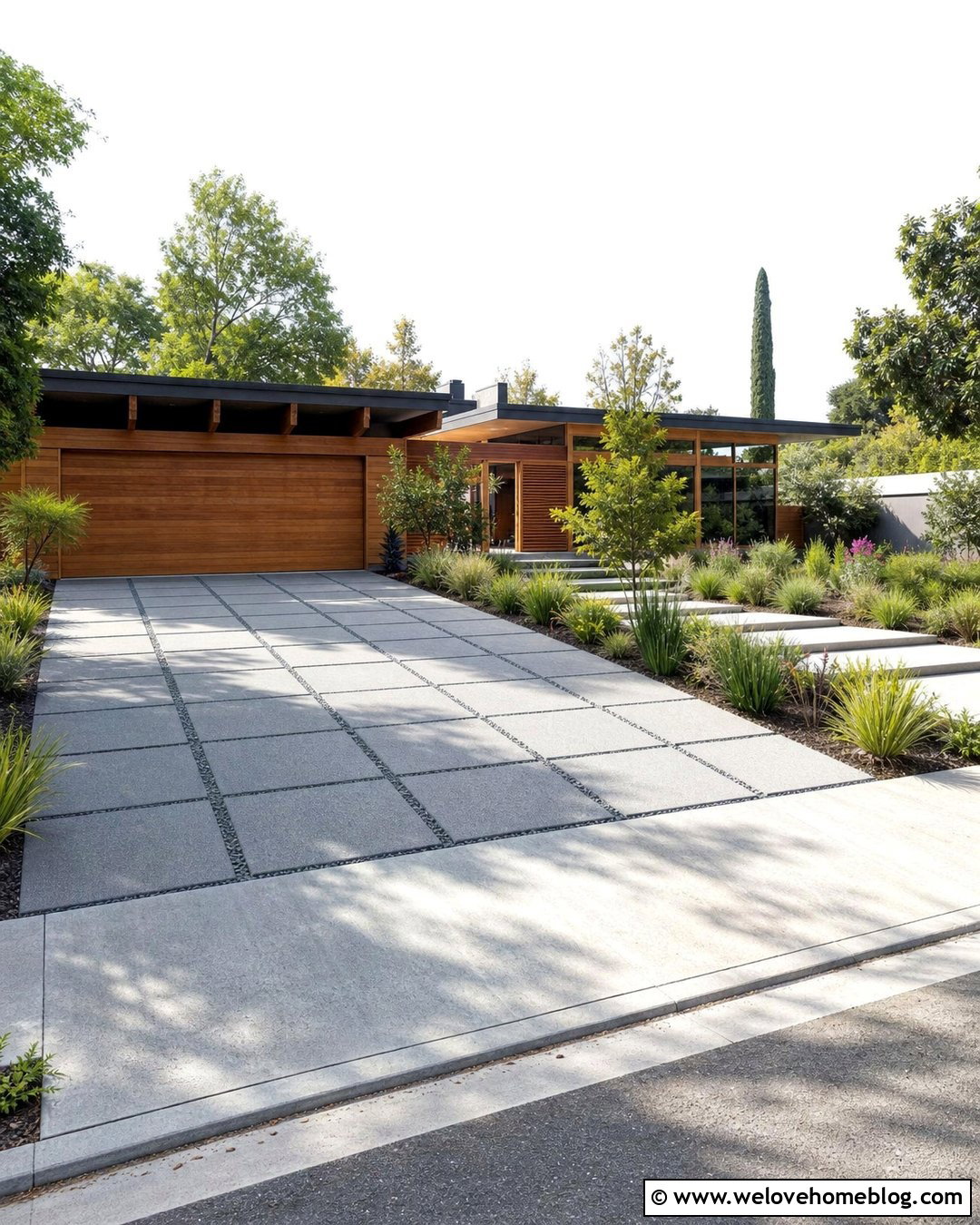
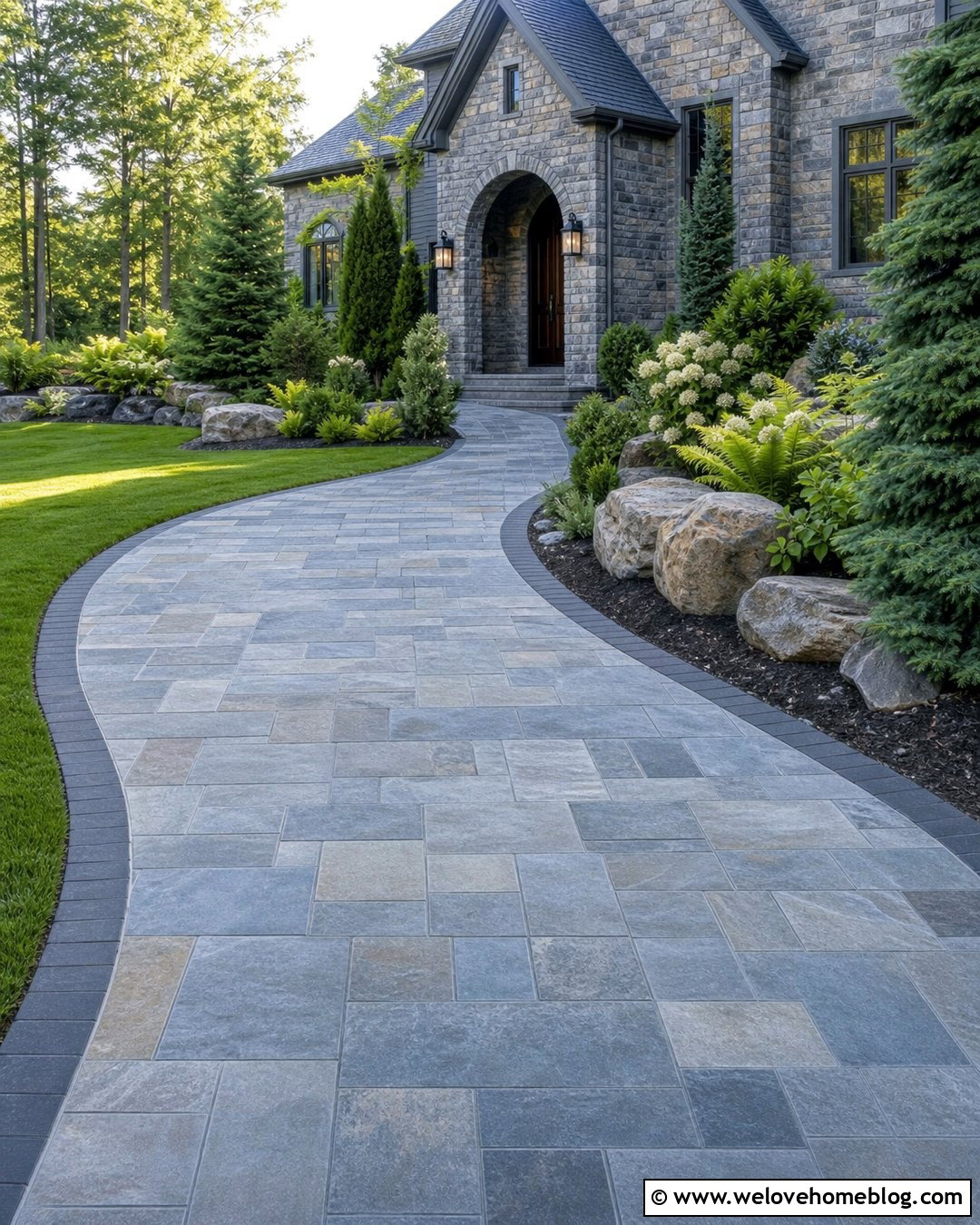
Deep charcoal basalt creates a dramatic stone driveway that pairs especially well with modern houses, light stucco, and warm wood siding. Use small flamed or textured basalt pavers in a clean running bond across a straight driveway. Outline the surface with a narrow band of lighter granite to prevent the dark paving from blending into black mulch or shadowed beds. Plant silvery grasses, pale flowering perennials, and sculptural evergreens along the sides for contrast. Linear walkway slabs and a simple address pillar can reinforce the contemporary geometry. Dark stone may absorb considerable heat in direct sun, so evaluate a sample under actual site conditions. Select an exterior finish with suitable traction, and avoid glossy stone in areas regularly exposed to rain, ice, or snow.
16. Sandstone Paver Driveway
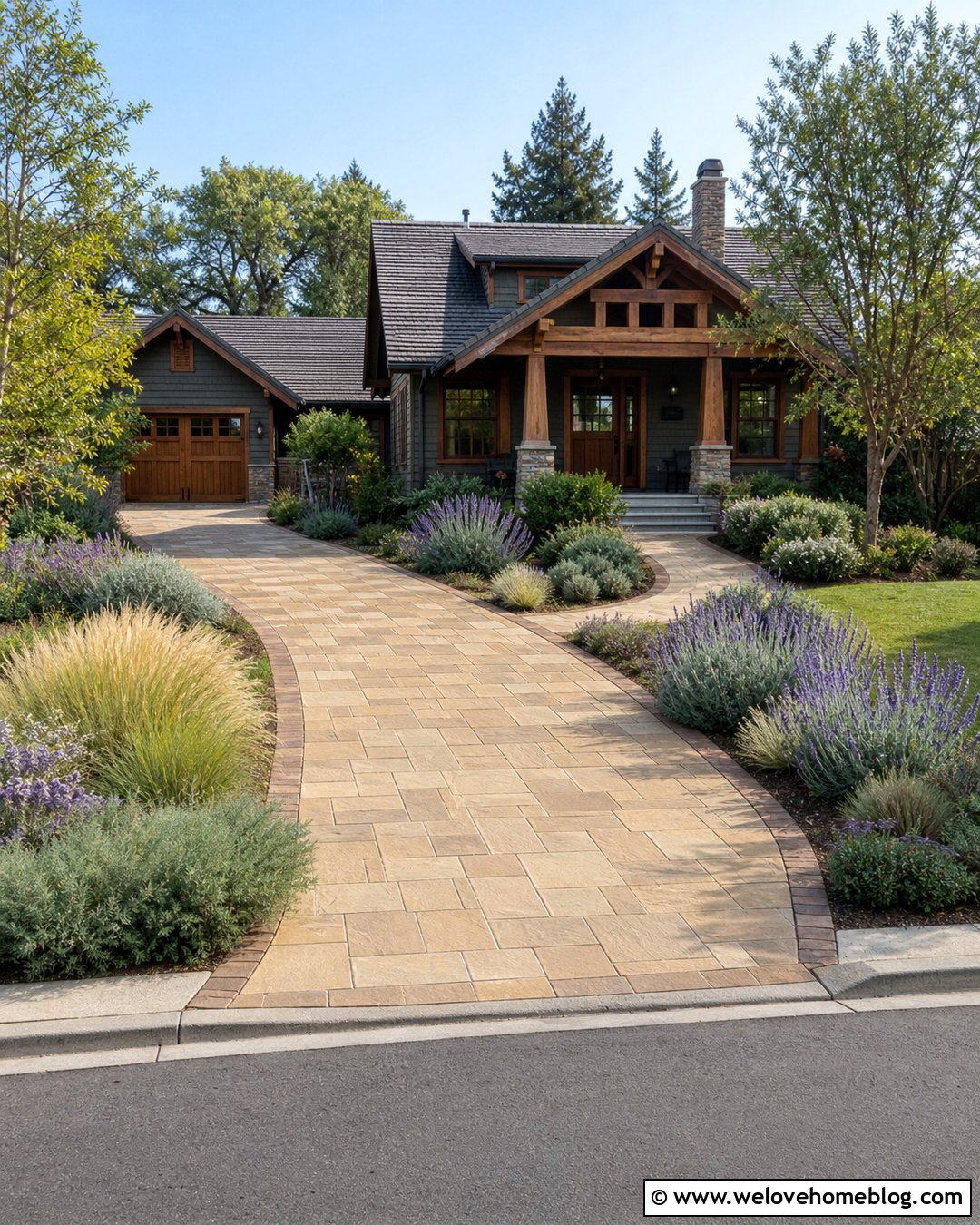
Sandstone pavers bring honey, buff, and muted brown tones to a driveway, making them a natural match for Craftsman, cottage, and Mediterranean homes. Use thick, calibrated pieces rated for vehicle traffic and arrange them in a modular pattern with several rectangular sizes. A curved outer edge can soften the driveway, while darker sandstone setts create a practical border. Extend the same material into the front walkway using a slightly smaller scale. Lavender, rosemary, ornamental grass, and low evergreen shrubs will echo the warm color palette. Sandstone properties vary by source, so confirm strength, absorption, surface finish, and climate suitability before purchasing. A quality penetrating treatment may simplify stain management if recommended by the supplier, but it cannot compensate for poor drainage or an inadequate base.
17. Tumbled Limestone Driveway
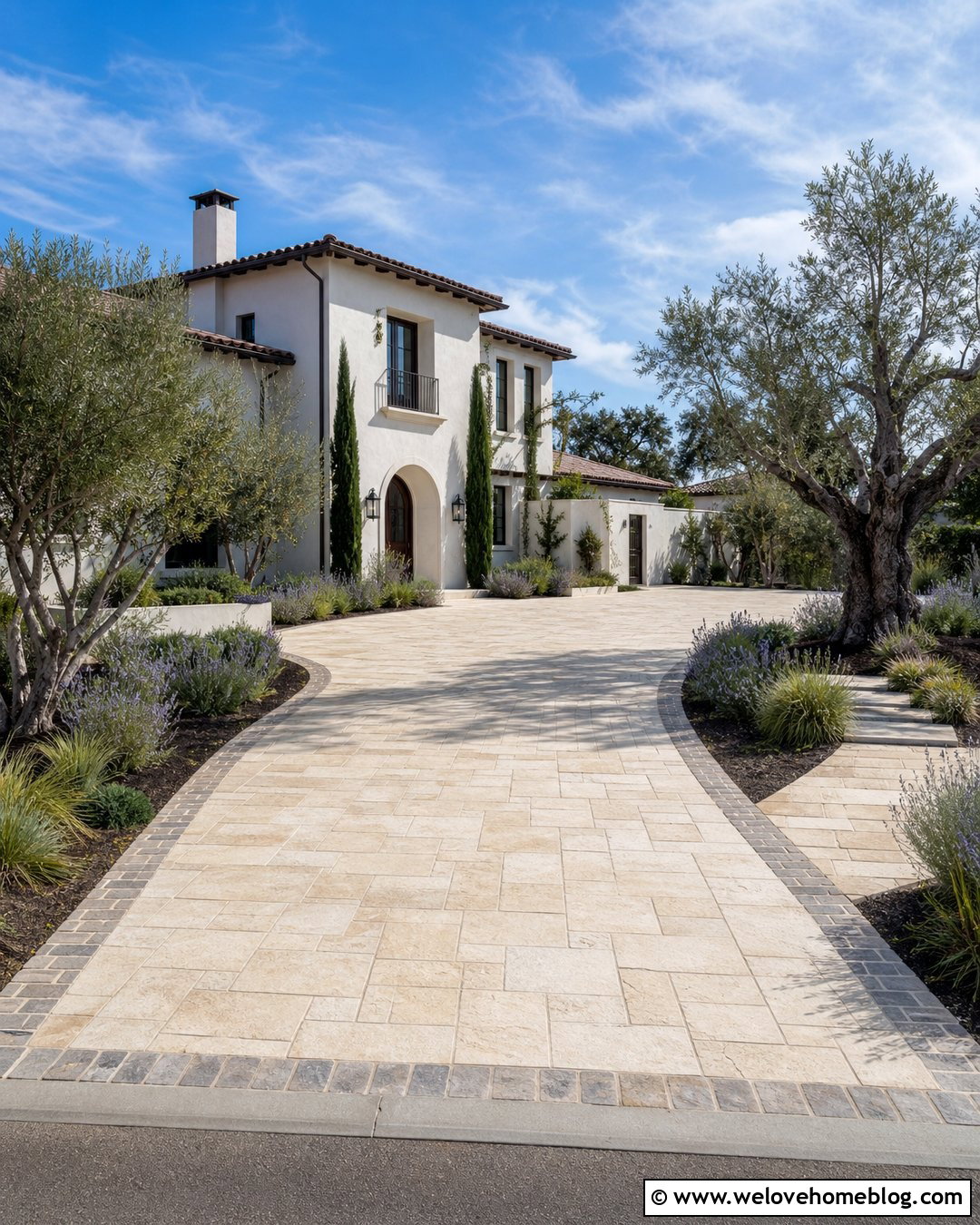
Tumbled limestone has softened edges that give a new driveway an established, relaxed appearance. Choose creamy beige pavers in mixed rectangular sizes and lay them in a random modular pattern across a gently curved approach. A border of darker limestone setts will define the shape and provide contrast around the parking area. Pair the surface with a stucco or stone-clad house, then add olive-toned shrubs, lavender, ornamental grasses, and a warm limestone walkway. The subtle color variation works best when the surrounding palette remains restrained. Limestone can react differently to moisture, salts, and freezing conditions depending on its density and origin. Ask for stone specifically approved for exterior vehicular use in your region, and select a textured finish that remains comfortable underfoot.
18. Slate Stone Driveway
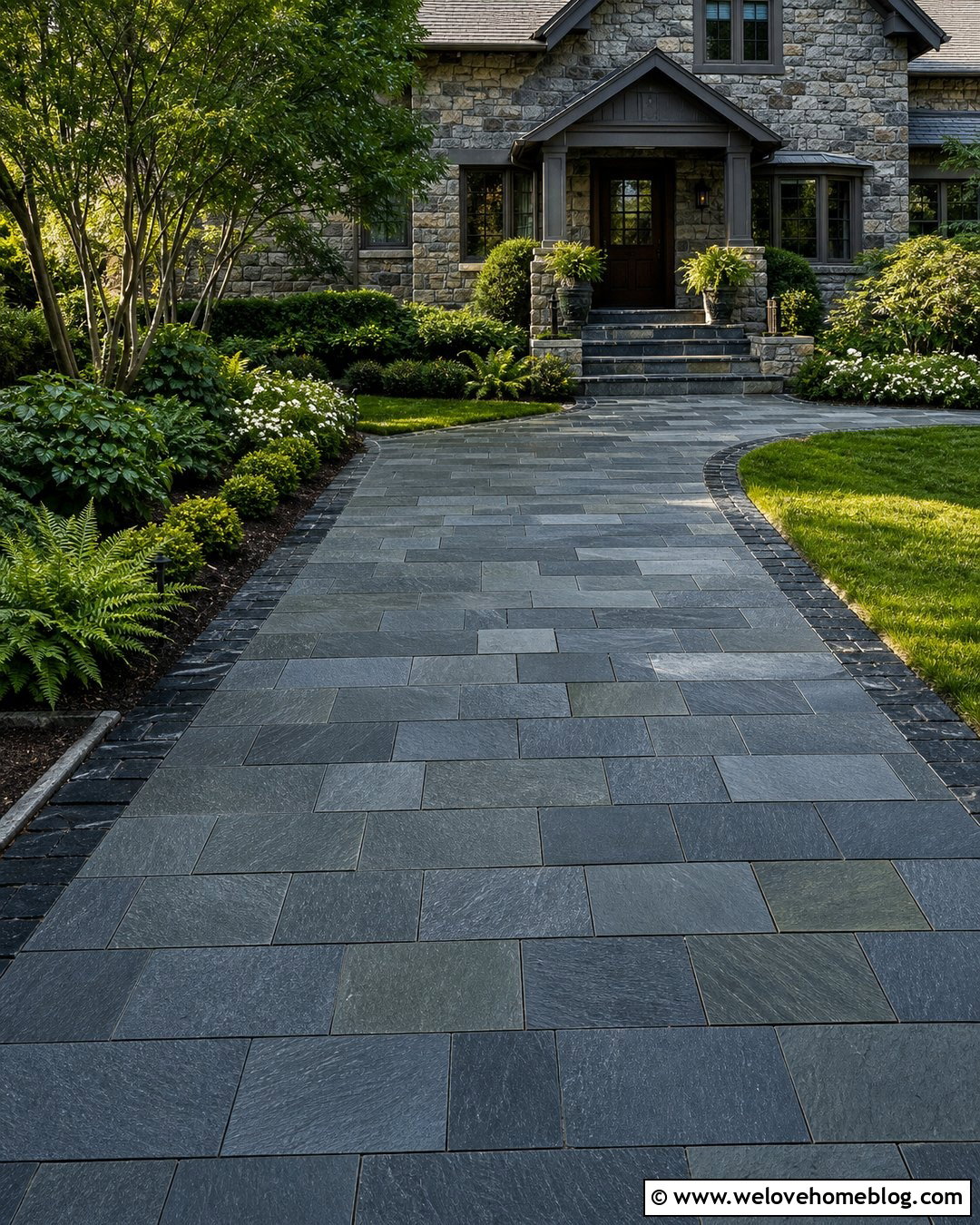
Slate can create an unusually rich driveway when the correct exterior-grade material is selected. Use dense slate pavers with a naturally textured surface in a blend of charcoal, blue-gray, and restrained green. A straight layout with staggered rectangular pieces will showcase the layered colors without becoming visually chaotic. Edge the driveway with dark granite blocks and repeat slate in the walkway or porch steps. Ferns, clipped shrubs, white flowering plants, and a green lawn can make the stone colors stand out. Not every slate is suitable for vehicle loads or freeze-thaw exposure, and some varieties may flake or vary in thickness. Obtain technical guidance and full-size samples before committing. Consistent base preparation and jointing are essential for maintaining an even driving surface.
19. Mixed Stone Driveway
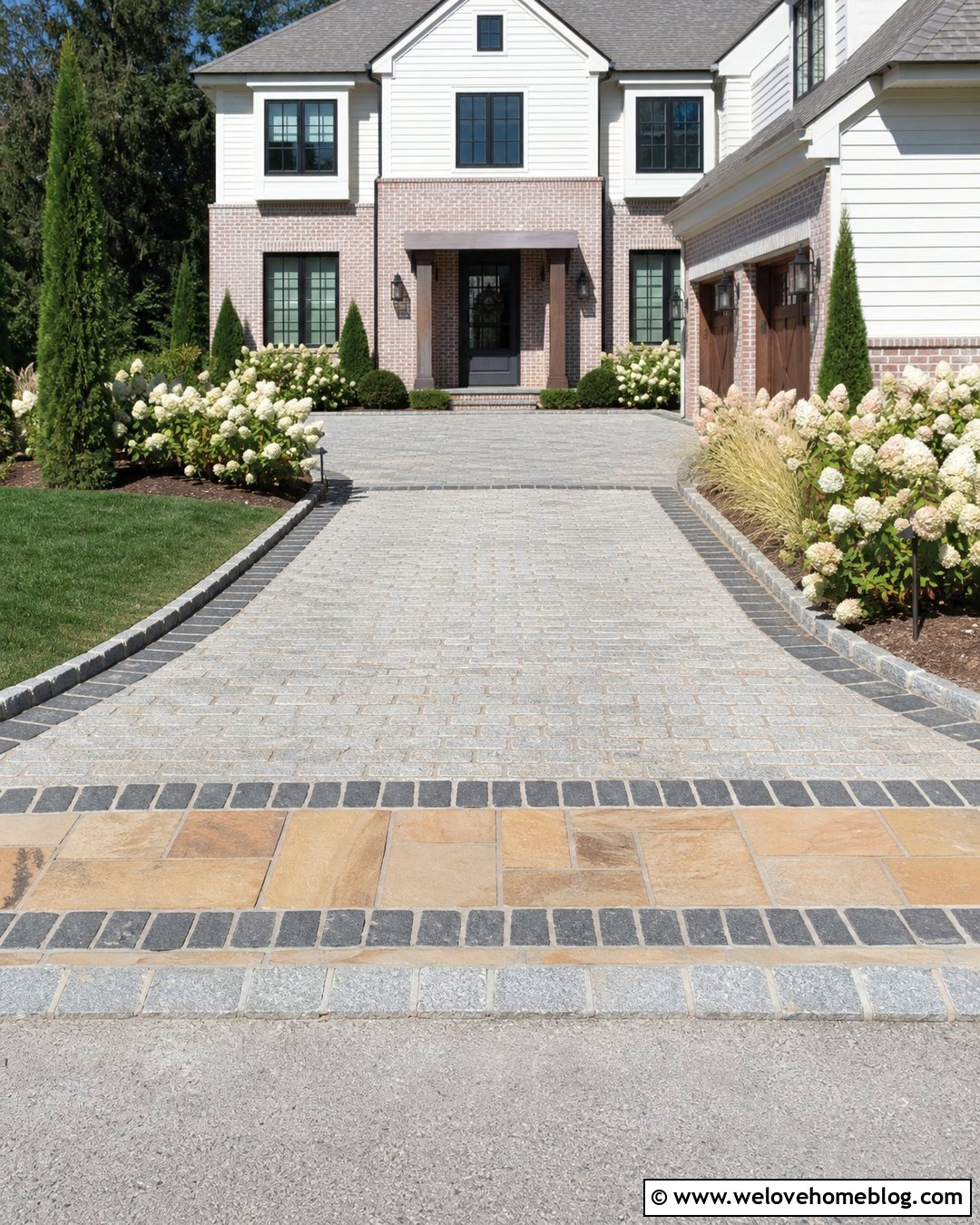
A mixed stone driveway can feel collected and distinctive when the palette is limited to compatible colors. Combine gray granite setts, buff sandstone pavers, and small charcoal cobbles in clearly organized zones rather than scattering materials randomly. Use granite for the main driving lanes, sandstone in the central parking court, and charcoal cobbles as borders and transition bands. A restrained pattern keeps the design appropriate for a transitional house with both brick and siding. Repeat only one or two stone types in the walkway and garden walls to prevent visual overload. Planting beds with hydrangeas, compact evergreens, and grasses can unify the varied surfaces. Before construction, compare thicknesses and installation requirements so all materials finish at a safe, consistent level.
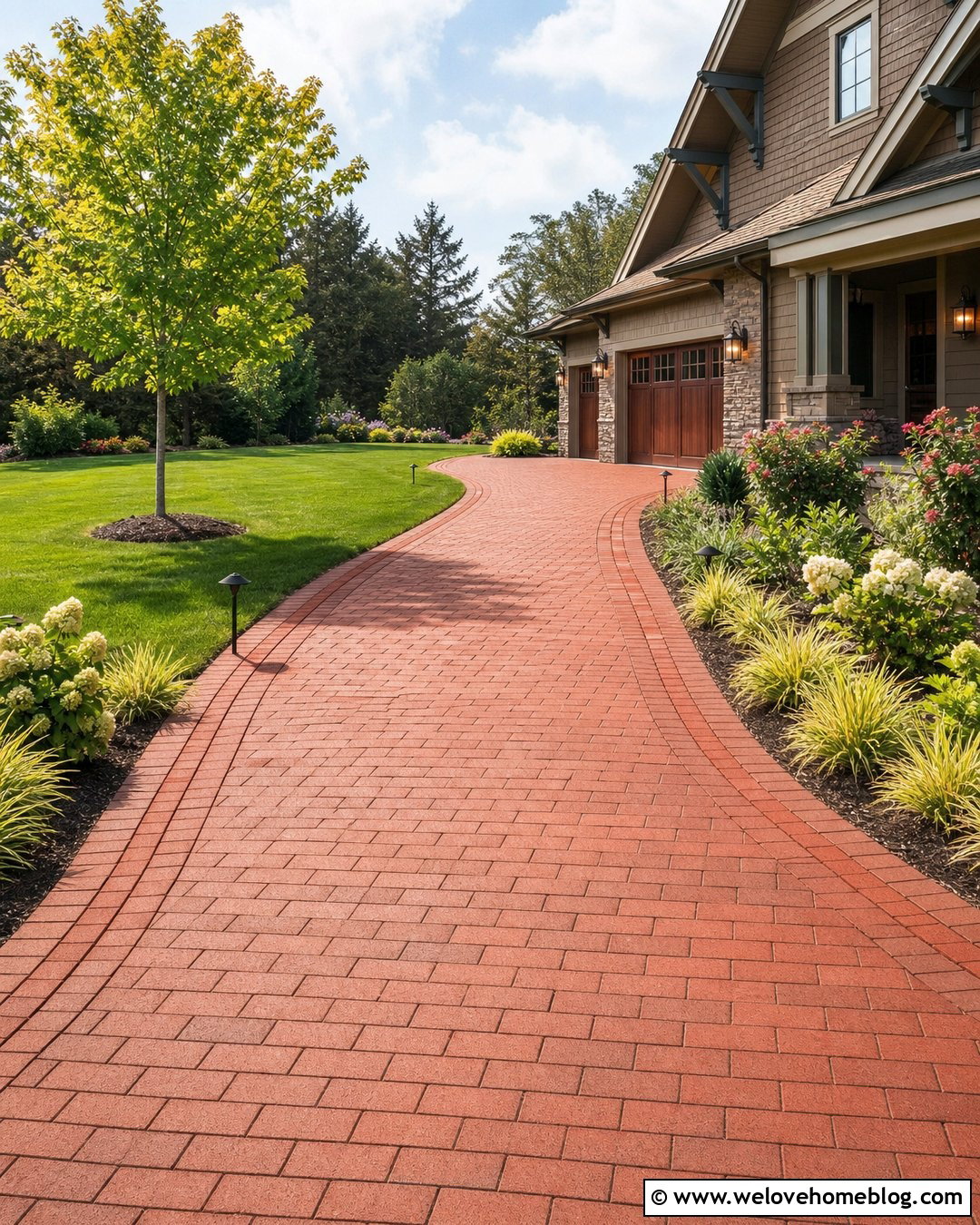
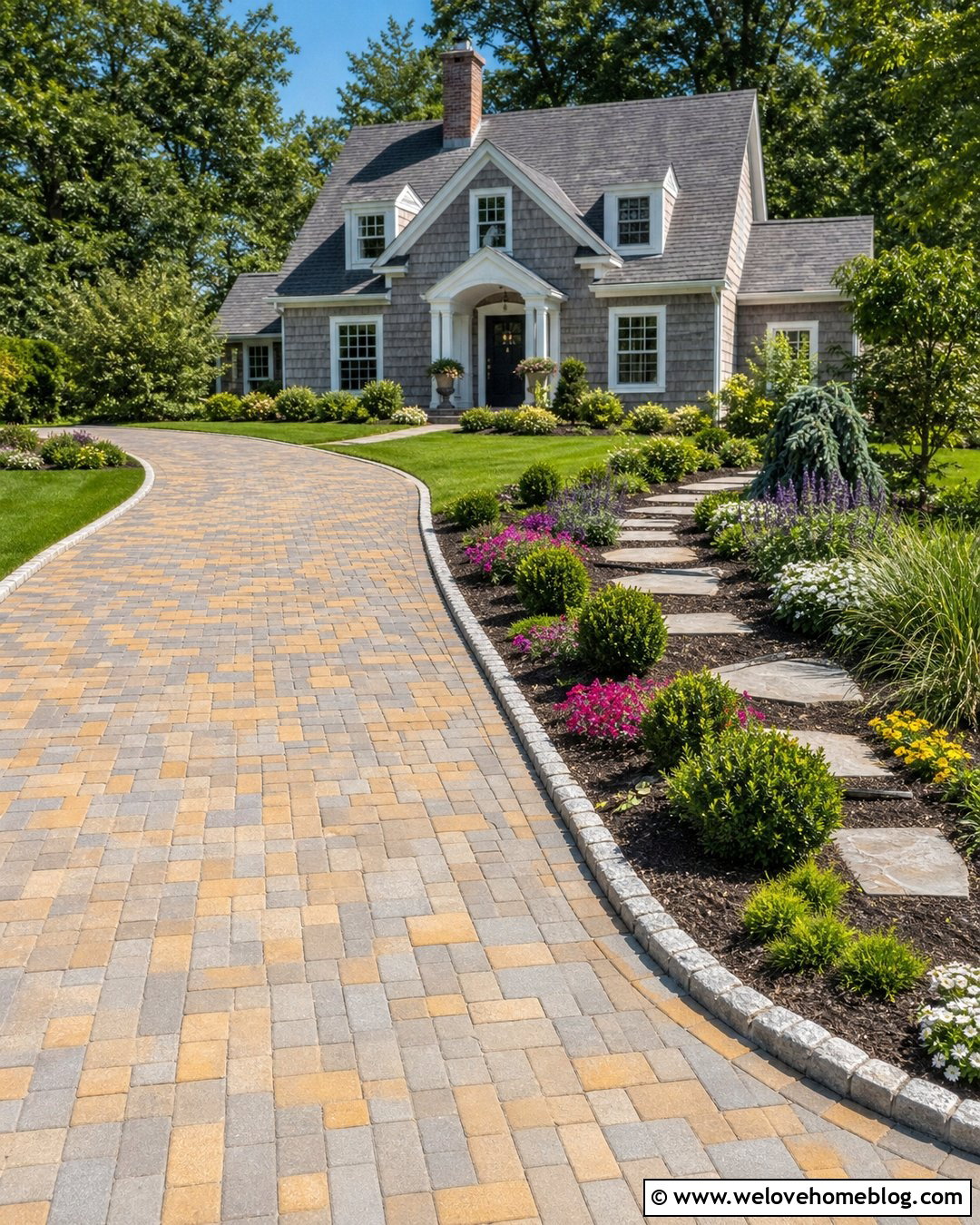
20. Stone Driveway With Grass Strips
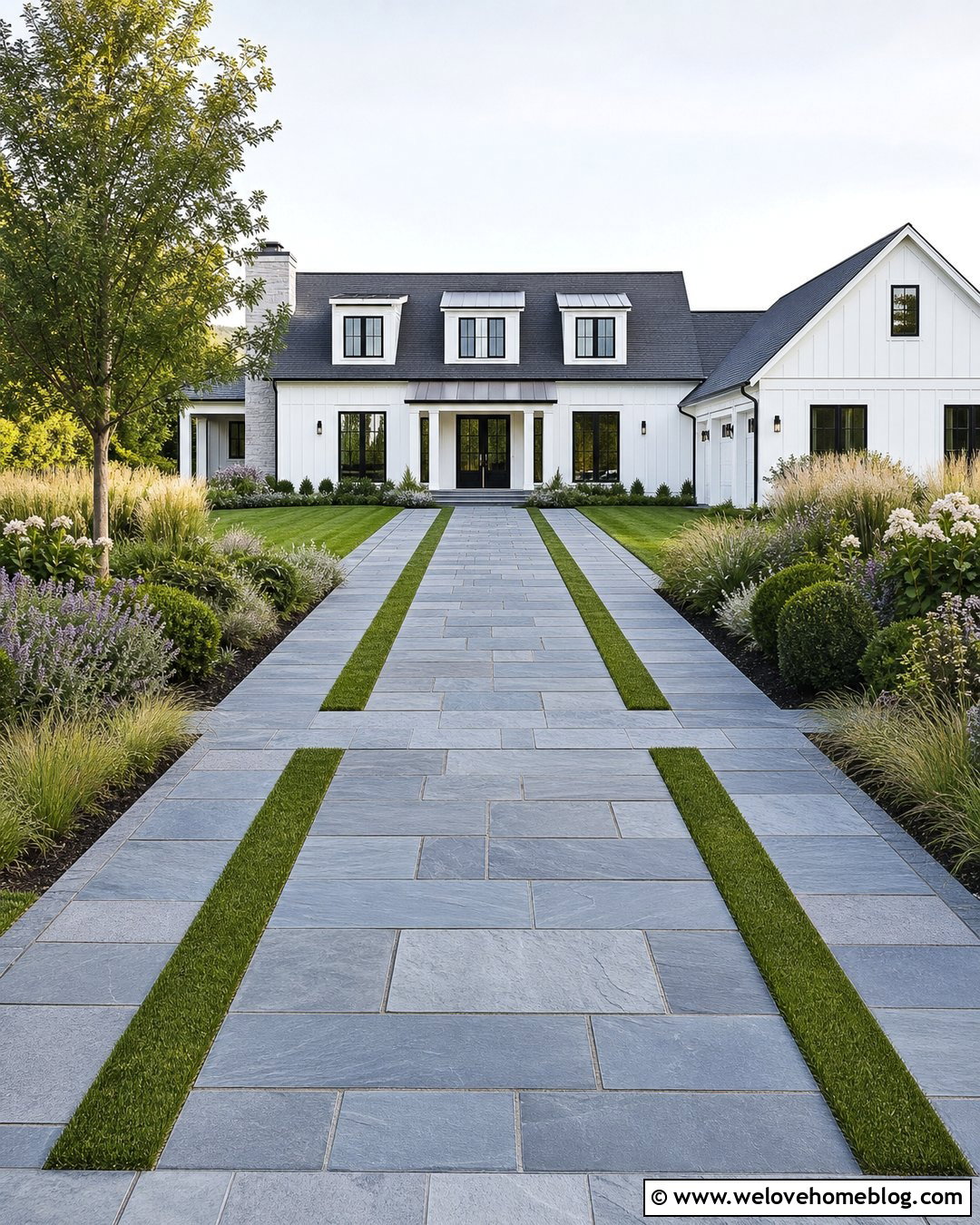
Stone pavers separated by narrow grass strips create a softer driveway that reduces the visual weight of a broad front parking area. Use large rectangular granite or bluestone slabs in two reinforced driving tracks, with turf or durable low ground cover between and around them. Keep the alignment simple and lead the tracks toward a modern farmhouse or contemporary garage. A matching stone walkway can cross the driveway at the entrance, making the pedestrian route easy to recognize. Frame the design with meadow-style grasses, flowering perennials, and a few clipped shrubs near the house. This layout works best where the green joints receive adequate light and irrigation. Select plants that tolerate occasional tire contact, and provide a structural base beneath every vehicle-bearing stone.
21. Two-Track Stone Driveway
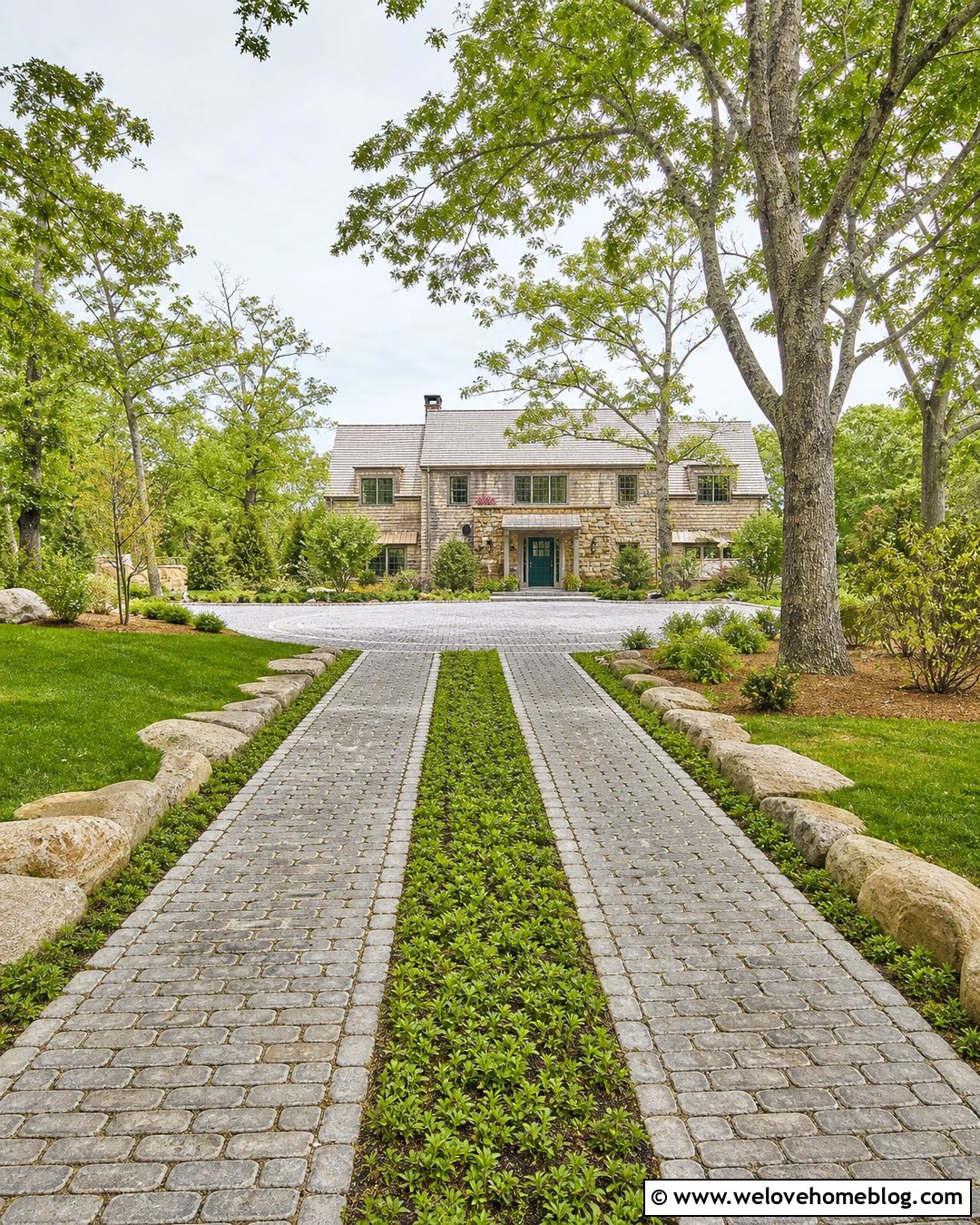
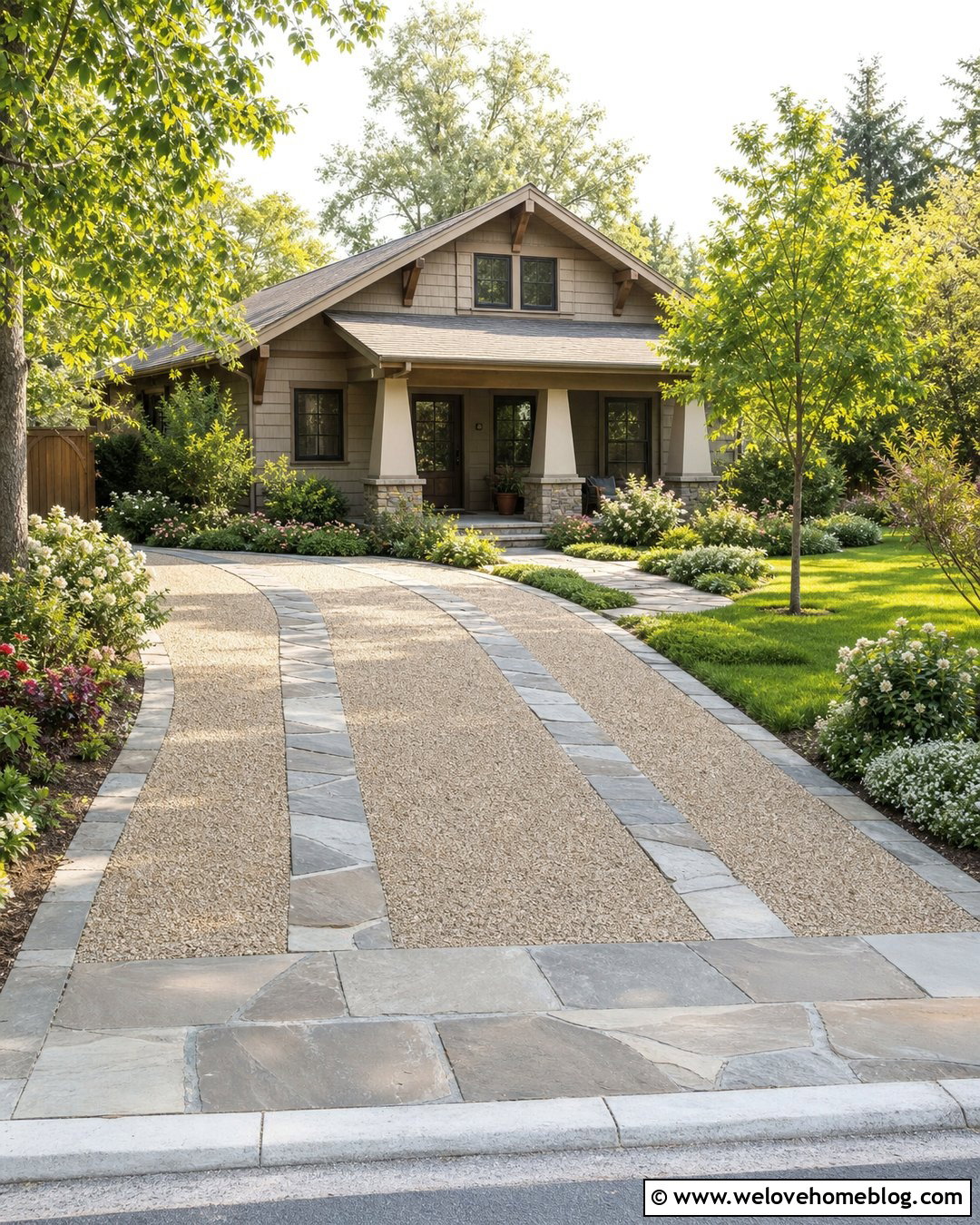
A two-track stone driveway uses material only where vehicle tires normally travel, helping a long approach blend into the yard. Construct the tracks from rectangular granite pavers, compacted crushed stone, or thick flagstone chosen for vehicular use. Maintain a consistent track width and fill the center with low grass or stable ground cover. Fieldstone edging along the outside can guide the line without making the driveway feel overly formal. This design suits country cottages, barns, guesthouses, and lightly used secondary entrances. Add native trees and loose planting groups along the route, but preserve open sightlines near curves. The base beneath the tracks still needs professional preparation because narrow strips carry concentrated loads. Include a full-width turning or parking area near the house for easier maneuvering.
22. Farmhouse Stone Driveway
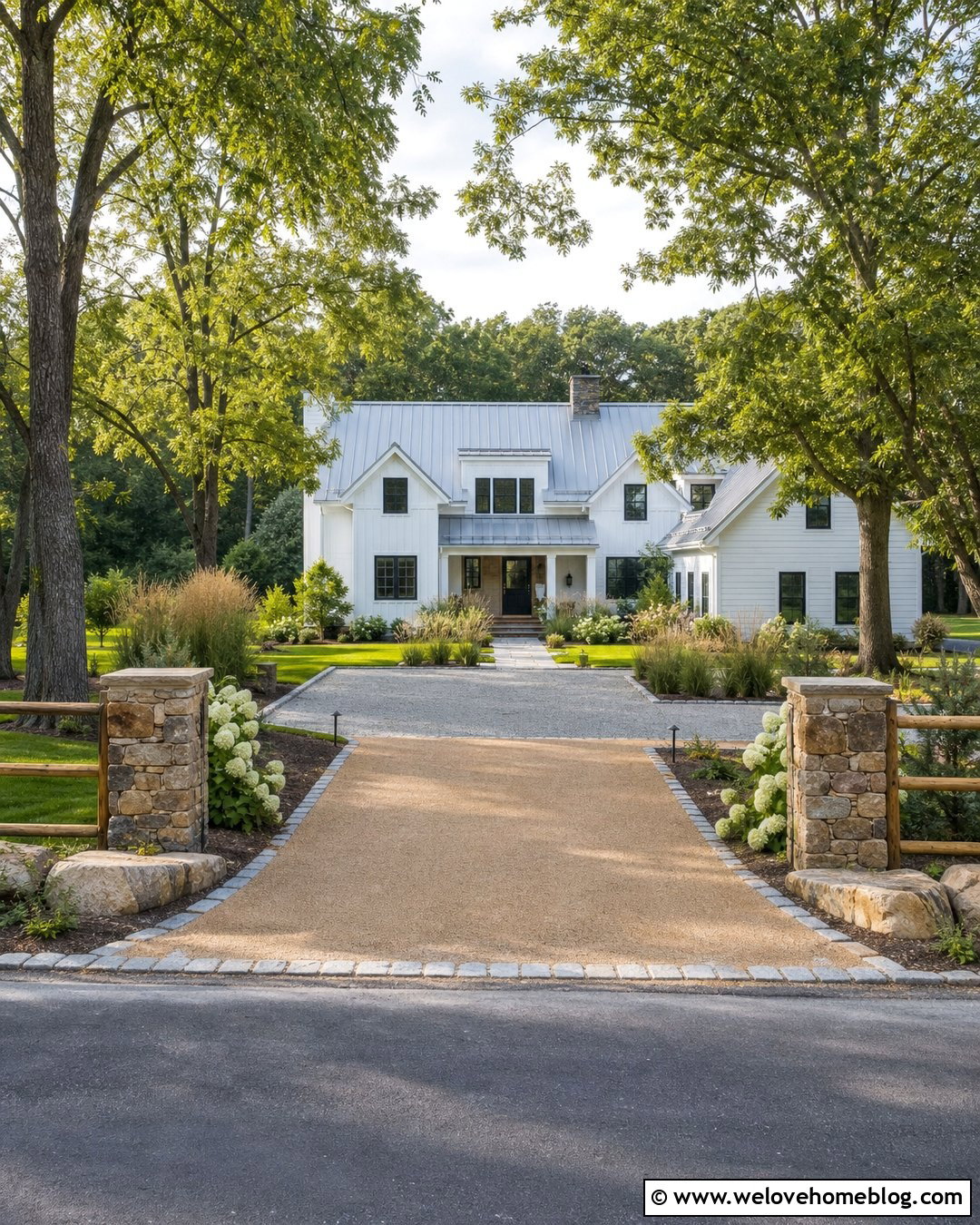
For a farmhouse exterior, a warm gravel driveway framed by substantial stone features feels both practical and welcoming. Use tan crushed stone in a broad straight layout leading toward a white or muted-gray farmhouse. Mark the entrance with low fieldstone pillars and simple timber fencing, then define the driveway edges with larger pieces of the same local stone. Near the house, widen the drive into a gravel court edged with granite cobbles. Hydrangeas, ornamental grasses, deciduous trees, and an informal lawn will keep the landscape relaxed. A flagstone walkway from the court to the porch can complete the material story. Avoid adding too many decorative patterns; the farmhouse look is strongest when stone colors are natural and the overall layout feels useful, balanced, and unfussy.
23. Colonial Cobblestone Driveway
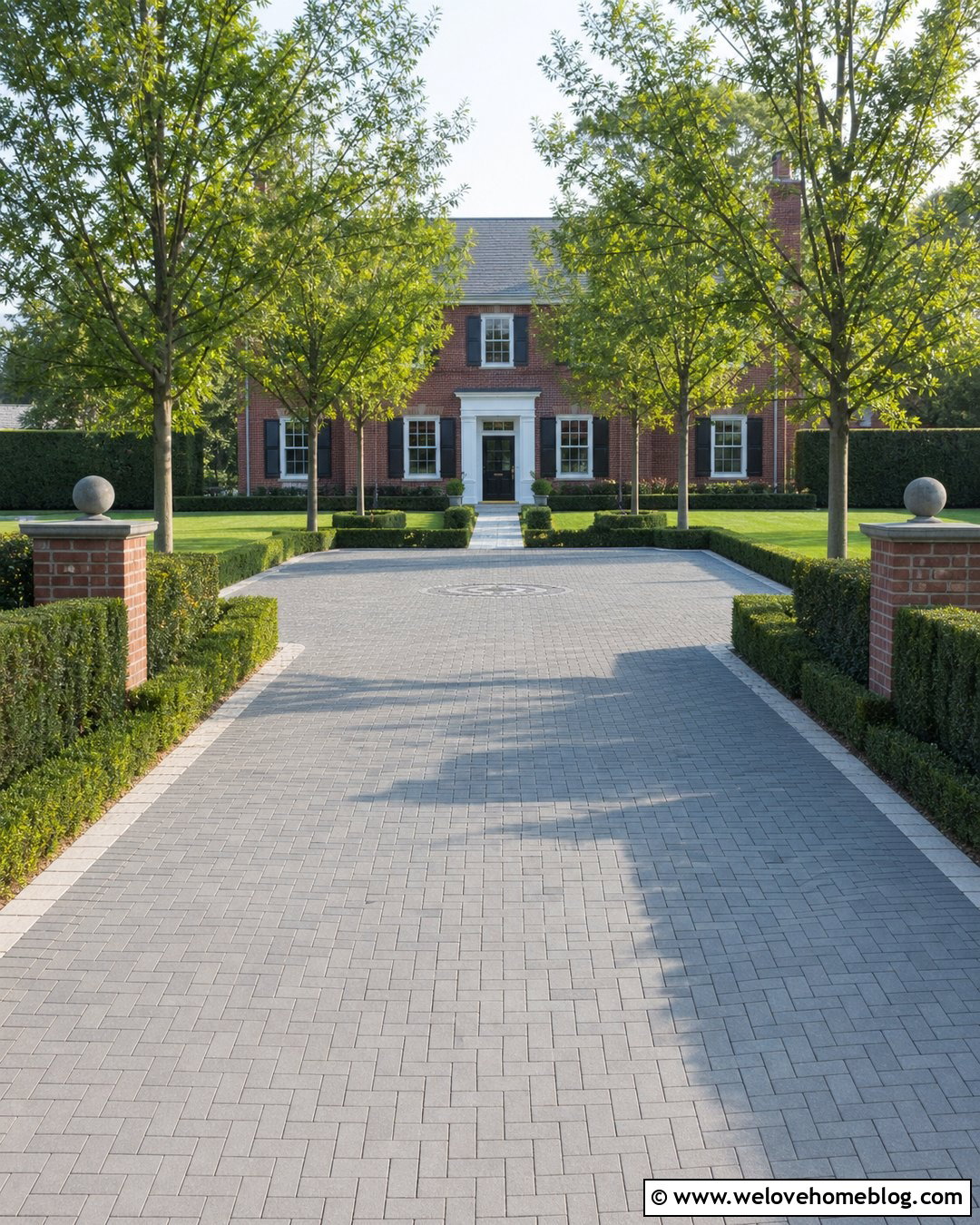
A Colonial house pairs naturally with an orderly cobblestone driveway and symmetrical landscaping. Select gray granite cobbles in a herringbone pattern for the central surface, then install straight soldier-course borders along both edges. A rectangular parking court in front of the garage can feature a simple cobblestone medallion or contrasting perimeter band. On either side of the driveway, use matching brick or stone pillars, clipped hedges, and evenly spaced deciduous trees to emphasize the home’s symmetry. A straight stone walkway should align clearly with the front door. Keep the paving palette limited to gray and charcoal if the facade already contains red brick. Traditional detailing does not require an oversized property; a smaller driveway can achieve the same effect through proportion, repetition, and disciplined planting.
24. Craftsman Stone Driveway

Craftsman architecture benefits from natural textures, warm colors, and materials that appear connected to the site. Build the driveway from irregular brown and gray stone pavers with subdued joints, then use rounded fieldstone as a low border. A gentle curve leading toward a wood garage door will complement the home’s horizontal rooflines and deep porch. Continue the stone into a broad walkway, using the same material in porch columns or low garden walls for visual unity. Japanese maples, ferns, rhododendrons, and layered evergreen shrubs can create a lush frame without hiding the masonry. Keep individual paving stones large enough to avoid an overly busy surface. Warm pathway lighting and a modest timber address sign will complete the entrance without competing with the handcrafted architectural details.
25. Ranch House Stone Driveway
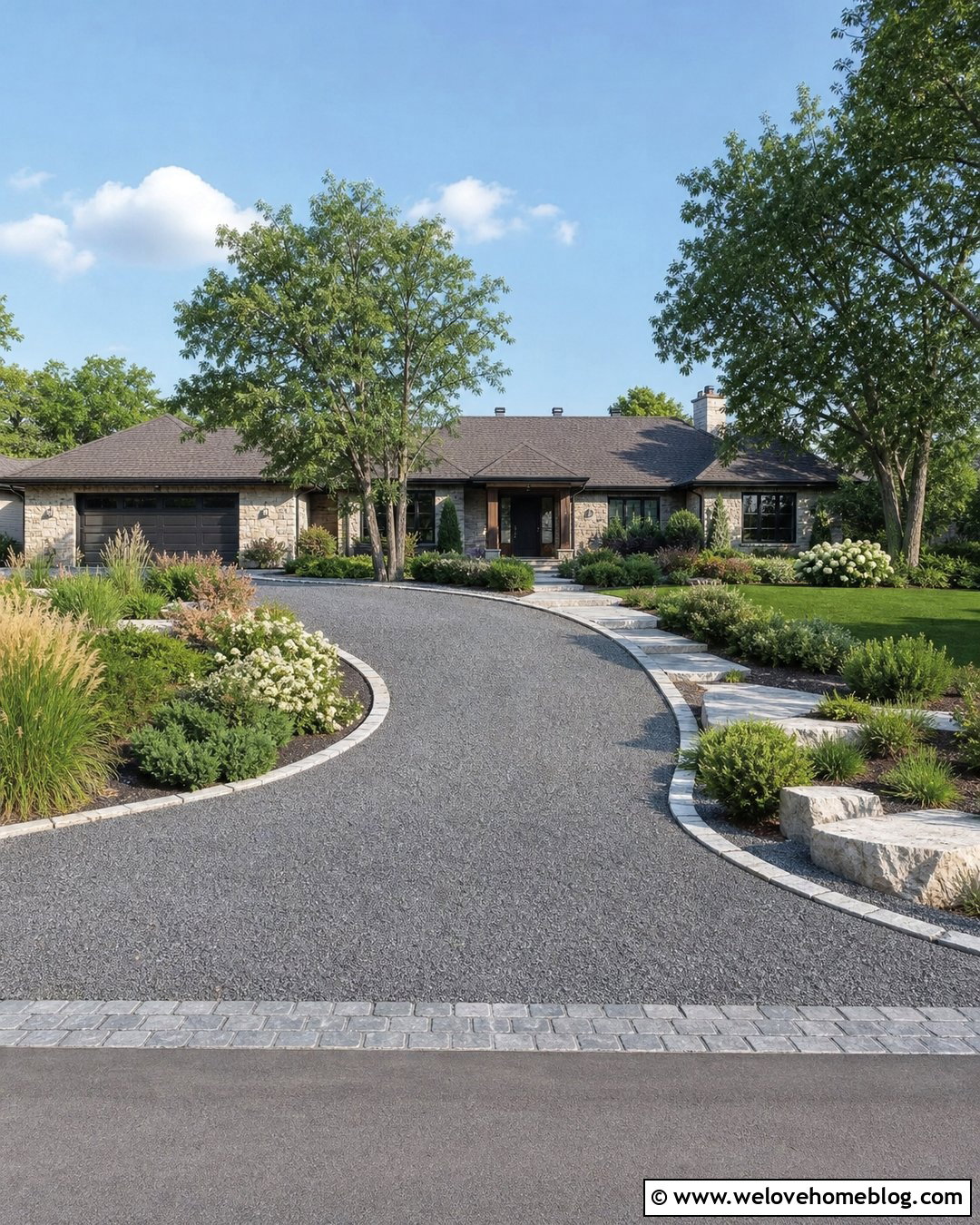
A ranch home often has a wide facade, so the driveway should reinforce its horizontal proportions rather than feel narrow and disconnected. Use medium-gray crushed stone across a broad, gently curved approach, with low limestone edging that visually stretches toward the garage. Introduce a granite cobblestone band near the street and another in front of the garage to break up the length. Wide planting beds filled with ornamental grasses, low junipers, flowering shrubs, and one or two shade trees will balance the expansive hardscape. Connect the driveway to the front door with large limestone stepping slabs. Keep tall plantings away from front windows and driveway sightlines. This straightforward combination can update an older ranch exterior without requiring a highly ornate or formal paving pattern.
26. Cape Cod Stone Driveway
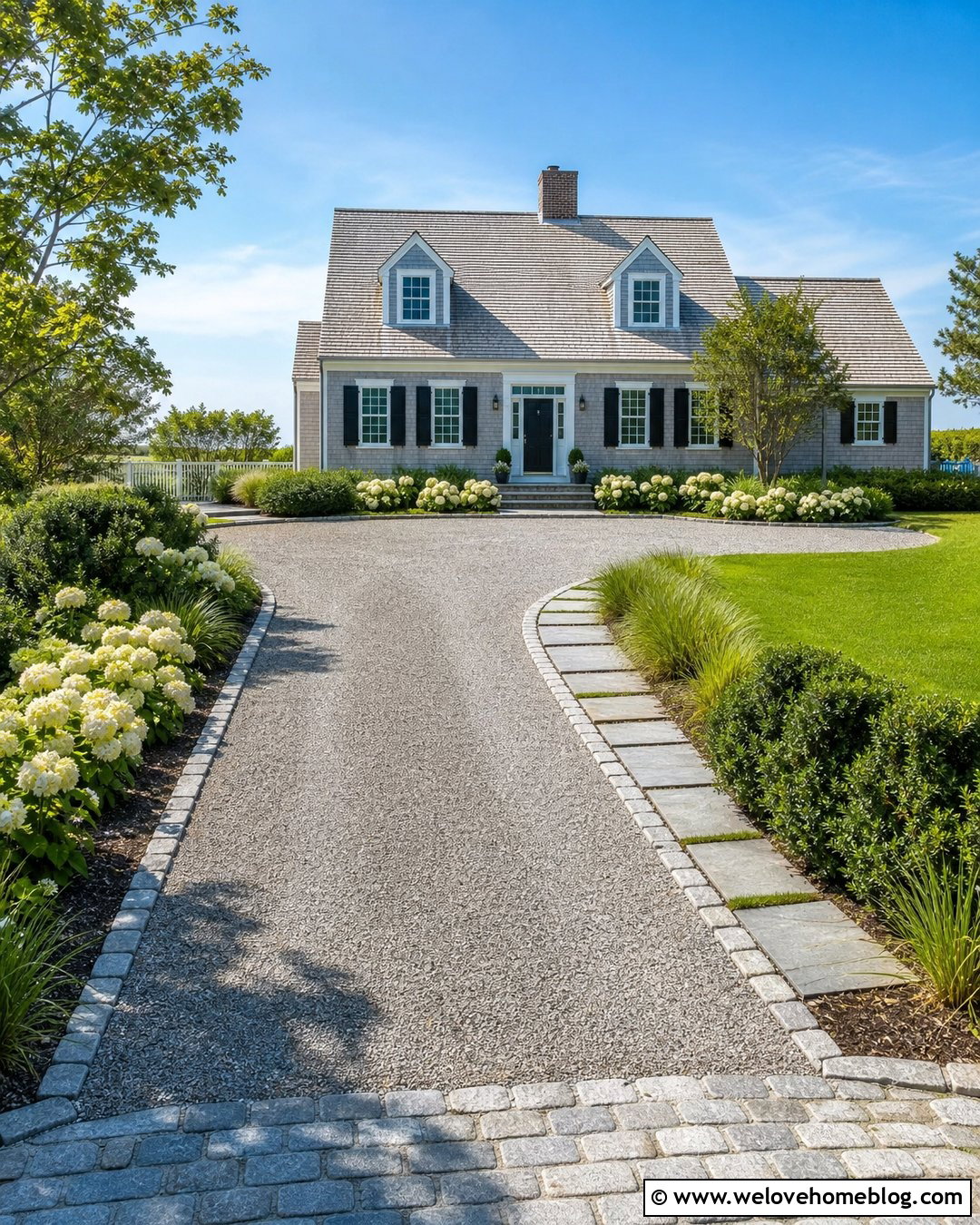
A compact pea gravel or crushed granite driveway can complement the simple charm of a Cape Cod home. Choose a soft gray aggregate and shape it into a straight or gently flared approach. Edge the surface with weathered granite cobbles, then continue those cobbles around a walkway of rectangular bluestone slabs. White hydrangeas, inkberry holly, beach grass, and a tidy lawn can reinforce the coastal planting palette. Near the garage, create a small turning area rather than allowing loose gravel to spread across the entire front yard. Although rounded pea gravel is visually appealing, it may shift more readily than angular crushed stone. Stabilization grids, firm edging, and an appropriate base can improve definition. Select the aggregate according to desired appearance, maintenance expectations, and site slope.
27. Mediterranean Stone Driveway
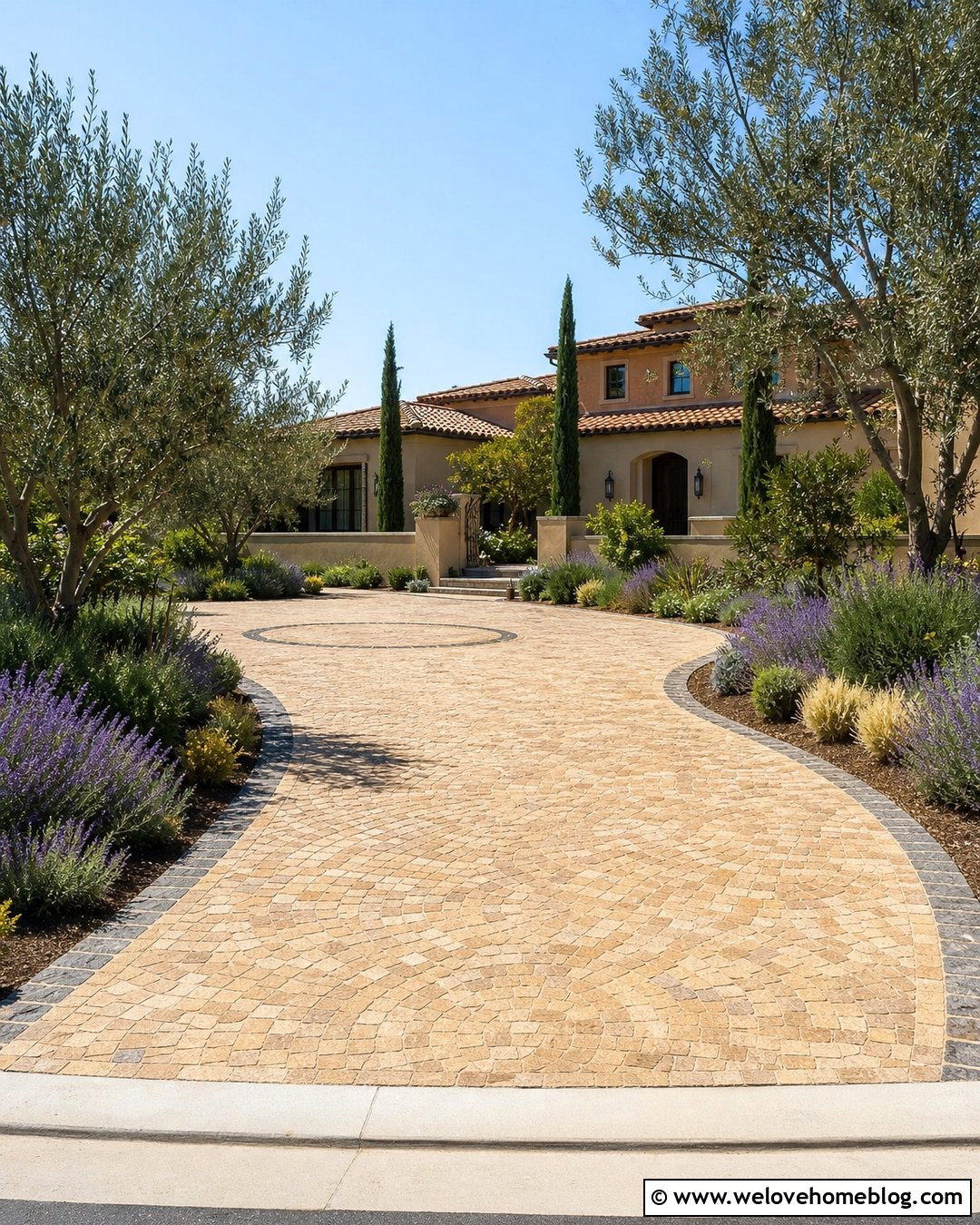
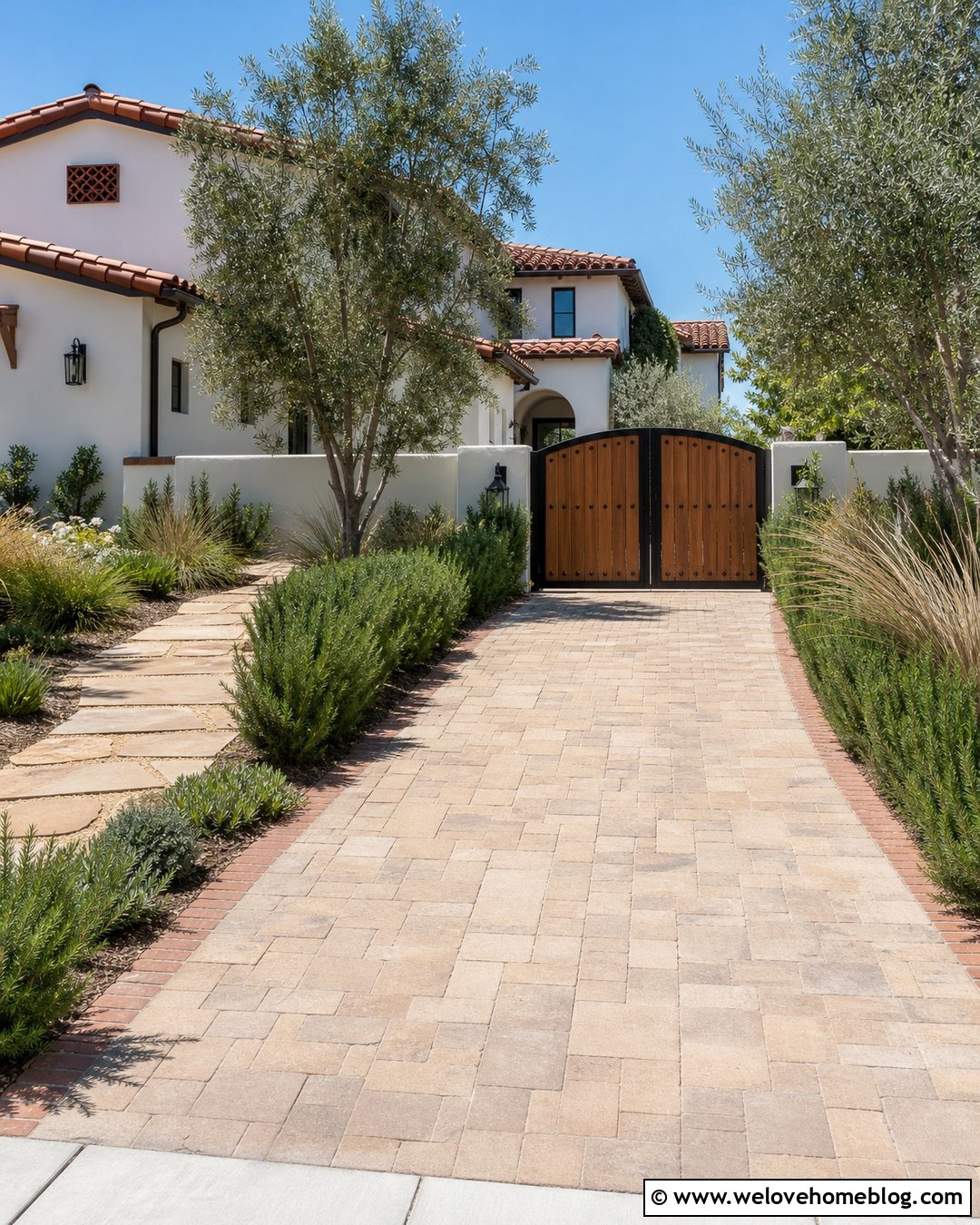
Warm tumbled stone pavers create a convincing Mediterranean driveway when they are paired with simple architecture and drought-aware planting. Use golden limestone or sandstone in a fan, running bond, or restrained modular pattern. Shape the driveway with a soft curve leading to a stucco house with a clay tile roof. Darker stone setts can outline the edges and form a circular detail in the parking court. Frame the route with lavender, rosemary, olive-toned shrubs, ornamental grasses, and small shade trees. A coordinating stone walkway should continue toward an arched entrance without introducing another strong pattern. For a US property, choose plants suited to the local climate rather than copying a Mediterranean palette literally. Also confirm that the selected paving stone can withstand regional rainfall, heat, and winter conditions.
28. Mountain Home Granite Driveway
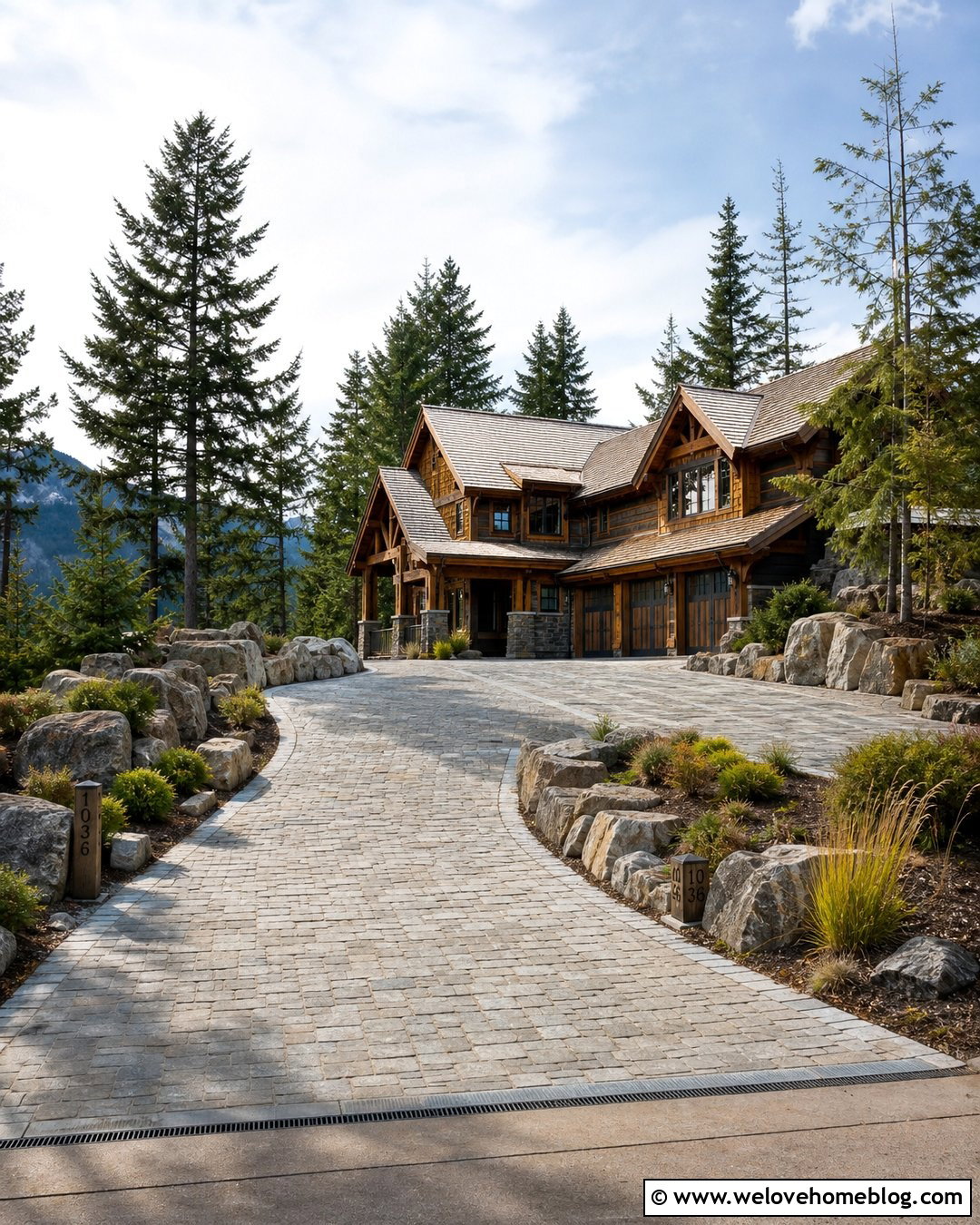
A mountain home needs a driveway that feels substantial without appearing overly polished. Use rugged gray granite setts or compacted granite chips along a gently winding approach. Large native boulders can form intermittent borders, retaining transitions where the driveway meets sloped terrain. Near the garage, switch to a flatter granite paver parking area for easier walking and snow clearing. Evergreen trees, native grasses, low shrubs, and exposed rock will connect the surface to the surrounding landscape. Keep drainage channels open and direct runoff toward stabilized areas that resist erosion. In snowy regions, discuss plow clearance, deicing products, joint type, and edge visibility with the installer. Low marker lights or reflective posts can define the route in winter without turning the natural setting into a brightly illuminated suburban entrance.
29. Small Front Yard Stone Driveway
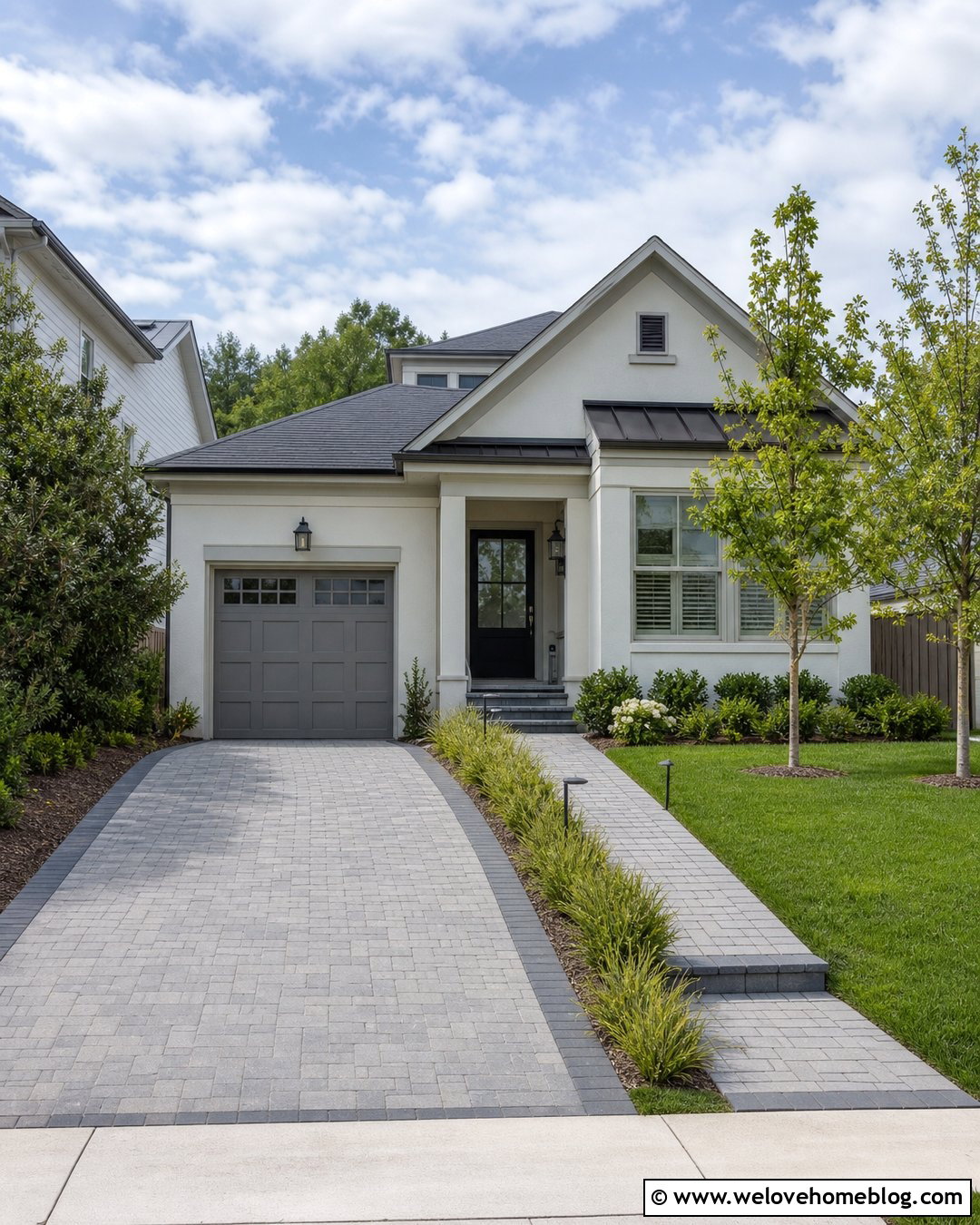
A small front yard can still support an attractive stone driveway when every transition has a clear purpose. Use compact gray granite pavers in a straight single-car layout and add a narrow charcoal border to sharpen the edges. Instead of covering the remaining yard with paving, preserve a planting strip between the driveway and front walkway. Fill it with low grasses, compact shrubs, and one small ornamental tree. Align the walkway with the porch steps so visitors do not need to cross behind parked vehicles. A slightly wider area near the street can make entry easier, subject to local curb-cut rules. Limit the design to one main stone and one border material. This restrained palette makes the property feel larger, calmer, and more coordinated.
30. Long Tree-Lined Stone Driveway
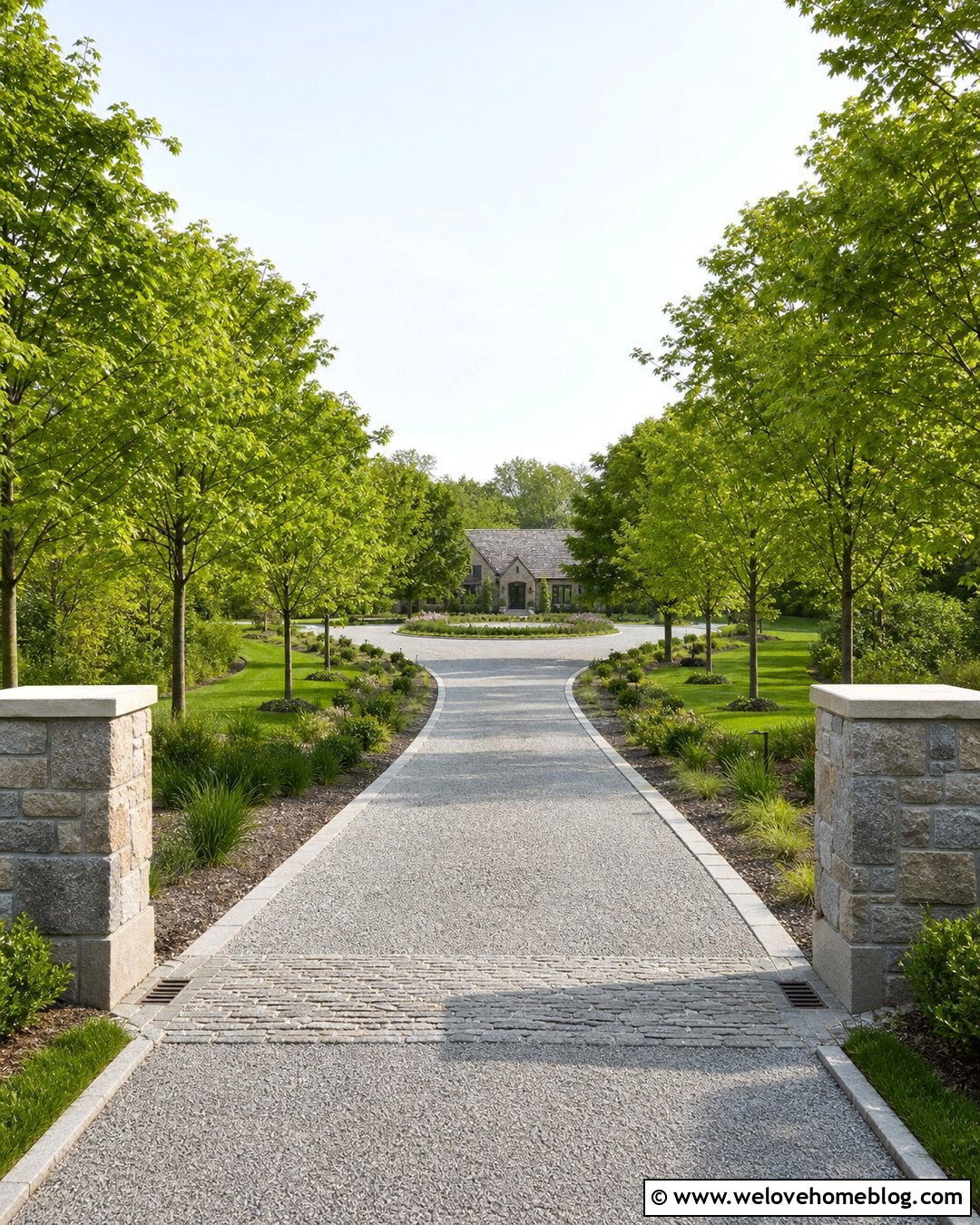
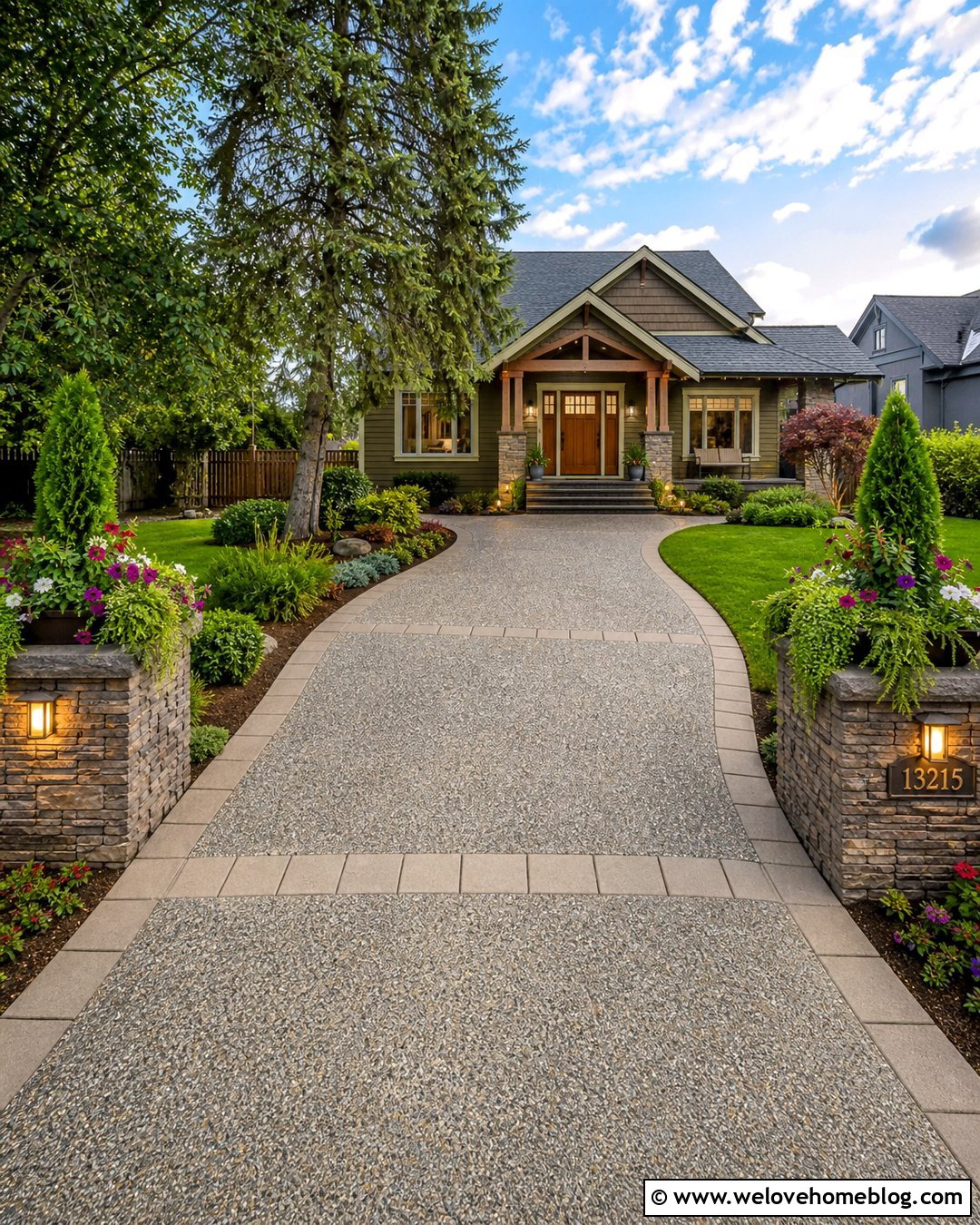
A long stone driveway becomes more inviting when its surface, borders, and tree placement create a clear rhythm. Use compacted gray crushed granite in a gently curving layout, held by flush granite edging. Plant deciduous trees at measured intervals along both sides, positioning them far enough from the driving area to accommodate mature trunks and roots. Between the trees, use simple grass or low native planting rather than continuous high-maintenance flower beds. Stone entry pillars can announce the beginning of the approach, while a cobblestone band near the house signals arrival. Include occasional drainage openings so edging does not trap runoff on the surface. A wider turning court near the garage should repeat the same stone palette, making the entire route feel intentional from curb to house.
31. Horseshoe Stone Driveway
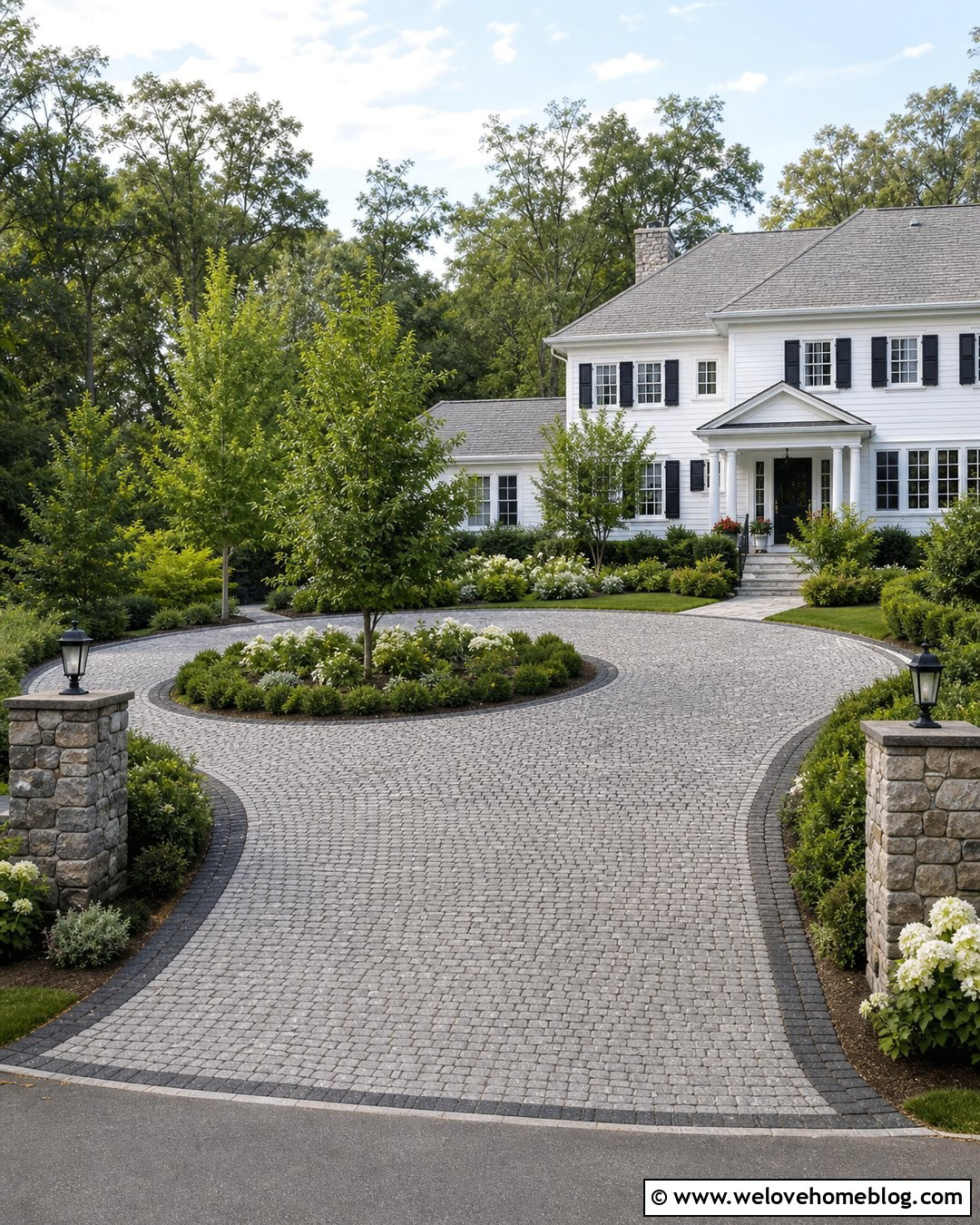
A horseshoe driveway offers separate entrance and exit points while creating a strong landscaped centerpiece. Use gray cobblestones, crushed limestone, or stone pavers along the curved route, depending on the home’s level of formality. Define both street connections with matching stone pillars and low planting beds that preserve clear views of traffic. In the center, design a broad island with one specimen tree, layered shrubs, and ground cover rather than a tall, dense screen. A contrasting cobblestone border can make the horseshoe shape easy to read. Connect the inner curve to the front walkway at a convenient drop-off point. Before construction, verify that the property has enough width for safe turning and that local regulations permit two curb openings. Plan drainage for both entrances and the central island.
32. Sloped Stone Driveway With Drainage
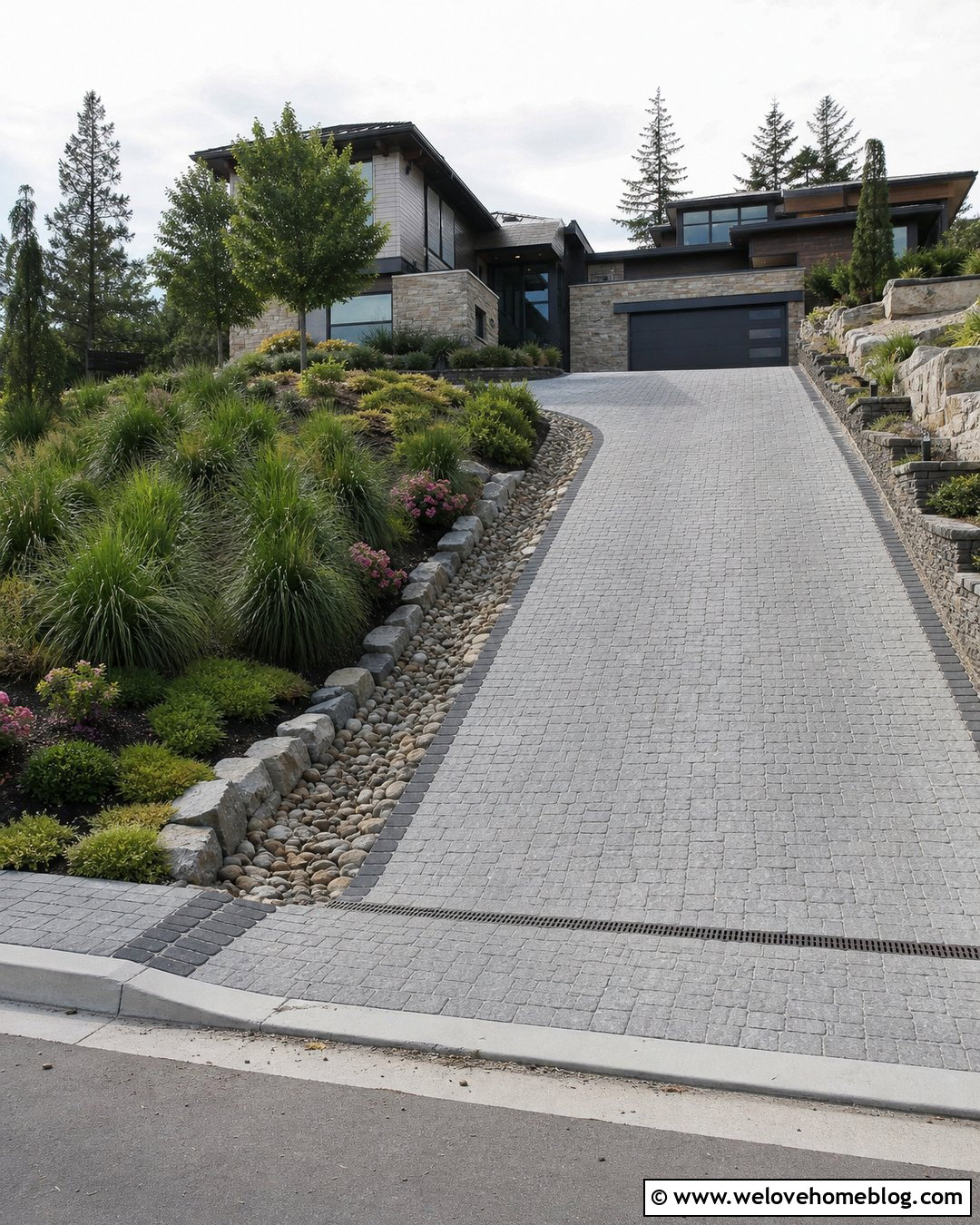
A sloped stone driveway needs a design that manages moving water without sacrificing curb appeal. Choose textured granite pavers or tightly compacted angular stone and install the surface with an engineered cross slope. Use substantial cobblestone borders to contain the edges, then place discreet channel drains where runoff would otherwise cross a walkway, garage threshold, or public sidewalk. A planted swale or rain garden beside the lower edge can become part of the landscape rather than looking like leftover drainage space. Deep-rooted grasses and shrubs will soften stone retaining walls along steeper sections. Avoid smooth paving finishes on an incline. Drainage requirements depend on soil, rainfall, grade, and local rules, so have the site evaluated before choosing the final surface and water-management system.
33. Stone Driveway With Brick Ribbon
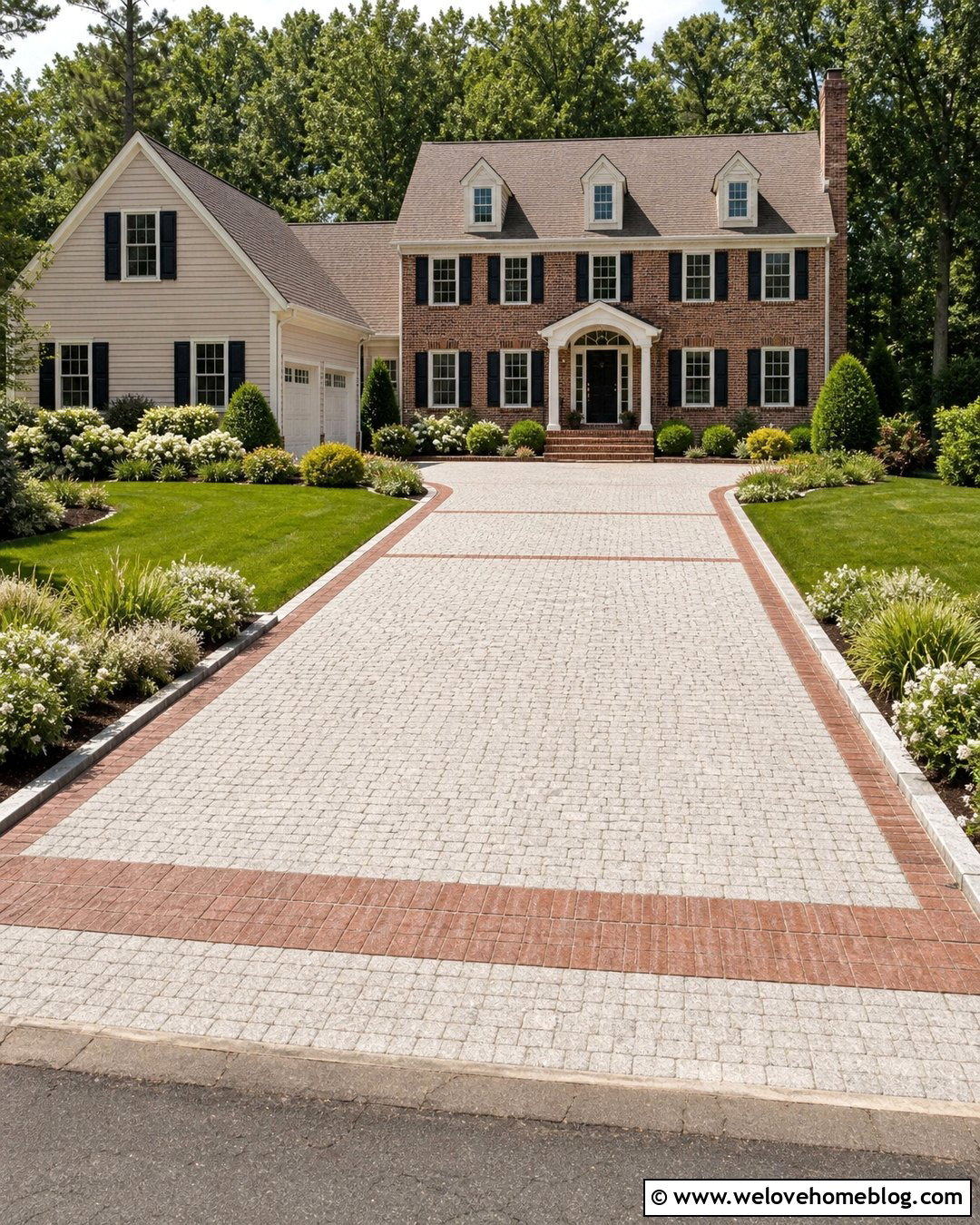
Stone and brick can work together when one material remains dominant and the colors relate to the house. Use pale gray granite pavers for the main driveway and introduce thin red or brown brick ribbons at the entrance, midpoint, and garage transition. Repeat the brick in the front steps or facade so the accent feels intentional. Straight granite edging will keep the layout neat, while curved planting beds add softness along the sides. Choose green shrubs, white flowers, and ornamental grasses that will not compete with the two paving colors. This design is particularly effective for brick Colonial, Craftsman, and transitional homes. Before installation, coordinate the thickness and base requirements of both products so the finished ribbons remain level and comfortable to drive across.
34. Stone Driveway With Landscape Lighting
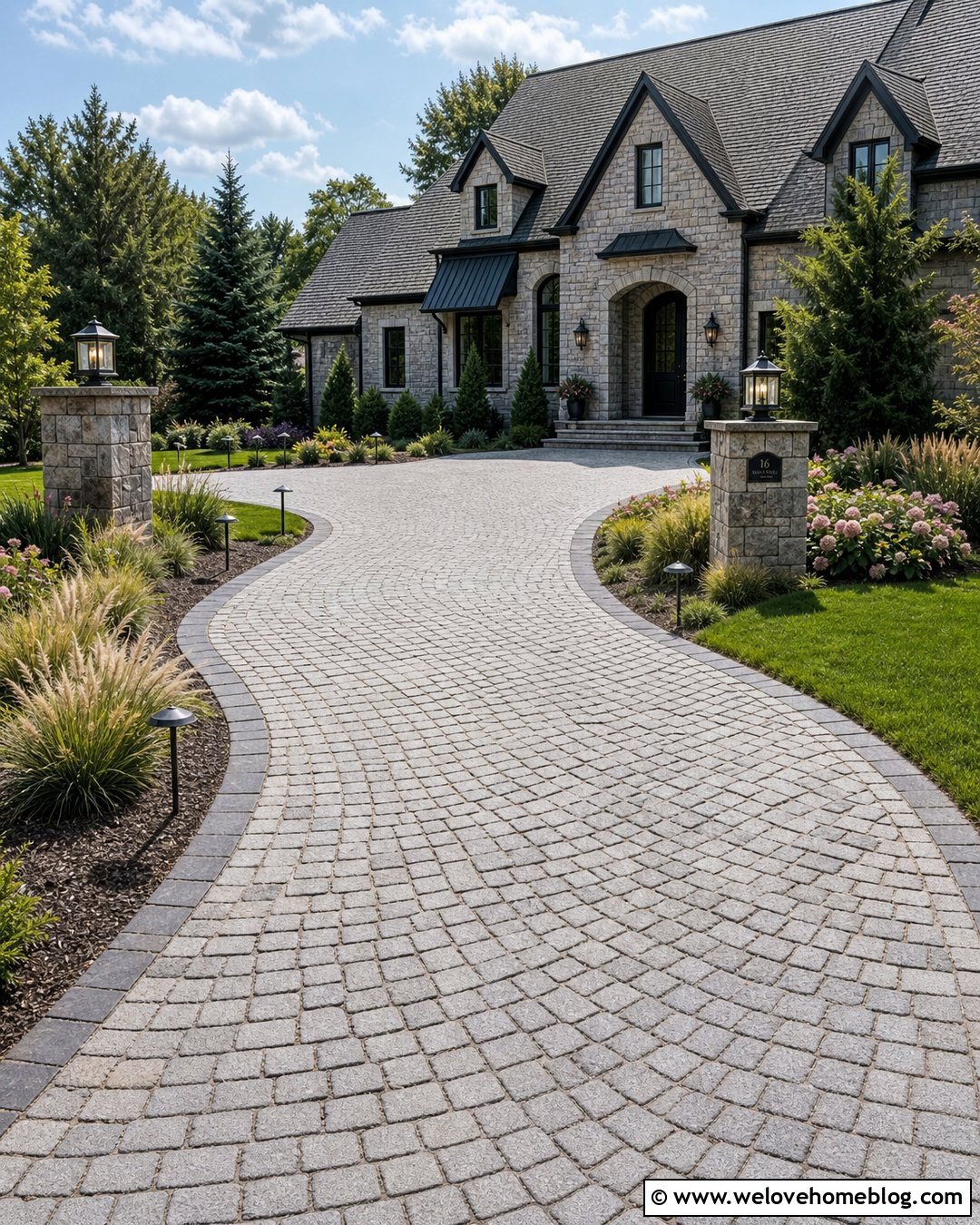
Integrated lighting makes a stone driveway easier to navigate while highlighting its texture and shape. Start with a curved gray cobblestone or granite paver surface bordered by darker stone setts. Place low, shielded fixtures at key turns, pedestrian crossings, entry pillars, and the parking court rather than lining every foot of the driveway. During daylight, the fixtures should blend into beds of grasses, evergreen shrubs, and flowering perennials. Coordinate the driveway lights with porch and walkway fixtures for a unified exterior. Select outdoor-rated equipment and position it where tires, snowplows, and lawn tools are unlikely to damage it. Warm but controlled illumination generally feels welcoming, while excessive brightness can create glare. A professional lighting plan can improve coverage without cluttering the landscape.
35. Budget Crushed Stone Driveway
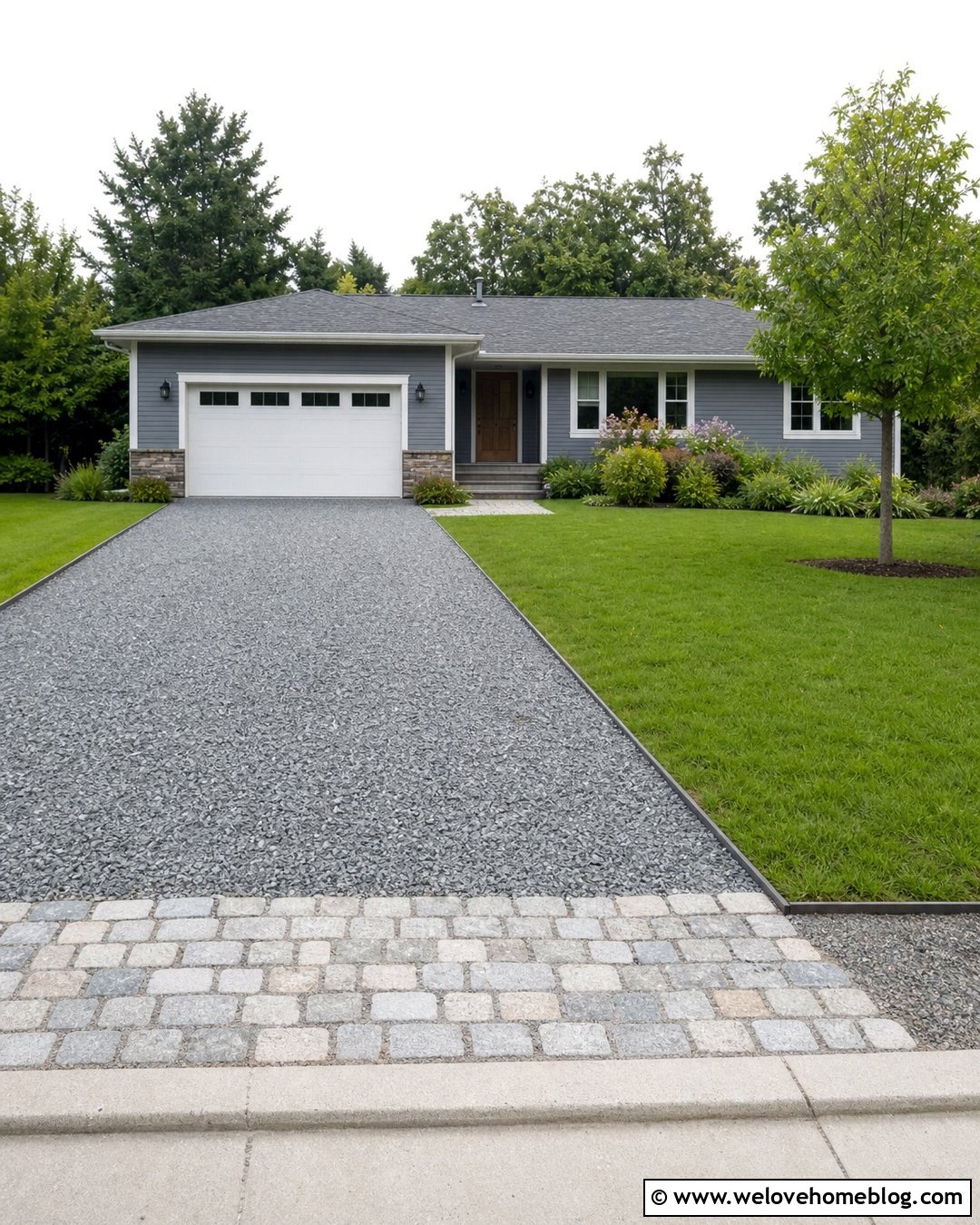
A budget-conscious stone driveway can still look finished when resources are concentrated on the most visible areas. Use locally available angular crushed stone for the main straight surface, since regional material may reduce transportation costs. Install sturdy steel edging or economical stone blocks to maintain clean sides. Reserve reclaimed granite cobbles for a narrow street apron and a band near the garage, where they will have the greatest visual impact. Simple lawn panels, native shrubs, and one small tree can frame the driveway without requiring extensive irrigation or seasonal planting. Invest first in excavation, base preparation, compaction, grading, and drainage rather than decorative extras. These hidden components influence everyday performance. Additional cobble borders, lighting, or landscaping can be added later as the budget allows.
Conclusion:
The best stone driveway feels like a natural extension of both the house and the surrounding yard. Material is only one part of the decision. Shape, drainage, edging, planting, vehicle movement, climate, and maintenance should guide the complete plan. Granite cobbles can create a formal entrance, while crushed limestone or decomposed granite offers a softer and often more economical look. Bluestone, sandstone, flagstone, and mixed pavers provide even more ways to coordinate the driveway with regional architecture. Before installation, compare full-size samples and confirm that every stone is suitable for vehicle traffic. With thoughtful preparation, these 35 Stone Driveway Ideas can inspire a durable, practical entrance with memorable curb appeal.

Related posts:
Leave a Reply