
Interlock driveway borders do more than frame the pavement. They clarify the driveway’s shape, connect it with the home, and create a clean transition into lawns, walkways, and planting beds. The border can blend quietly with the main surface or add strong contrast through color, texture, width, and laying pattern. Soldier courses, sailor courses, double bands, and accent inlays are commonly used to create a finished edge while supporting the overall paver layout. () The best choice also considers the driveway material, house facade, drainage, and surrounding landscape. From compact suburban entrances to sweeping circular layouts, the following complete designs offer practical inspiration for **20 Interlock Driveway Border Ideas**.
1. Charcoal Soldier Course Interlock Driveway Border
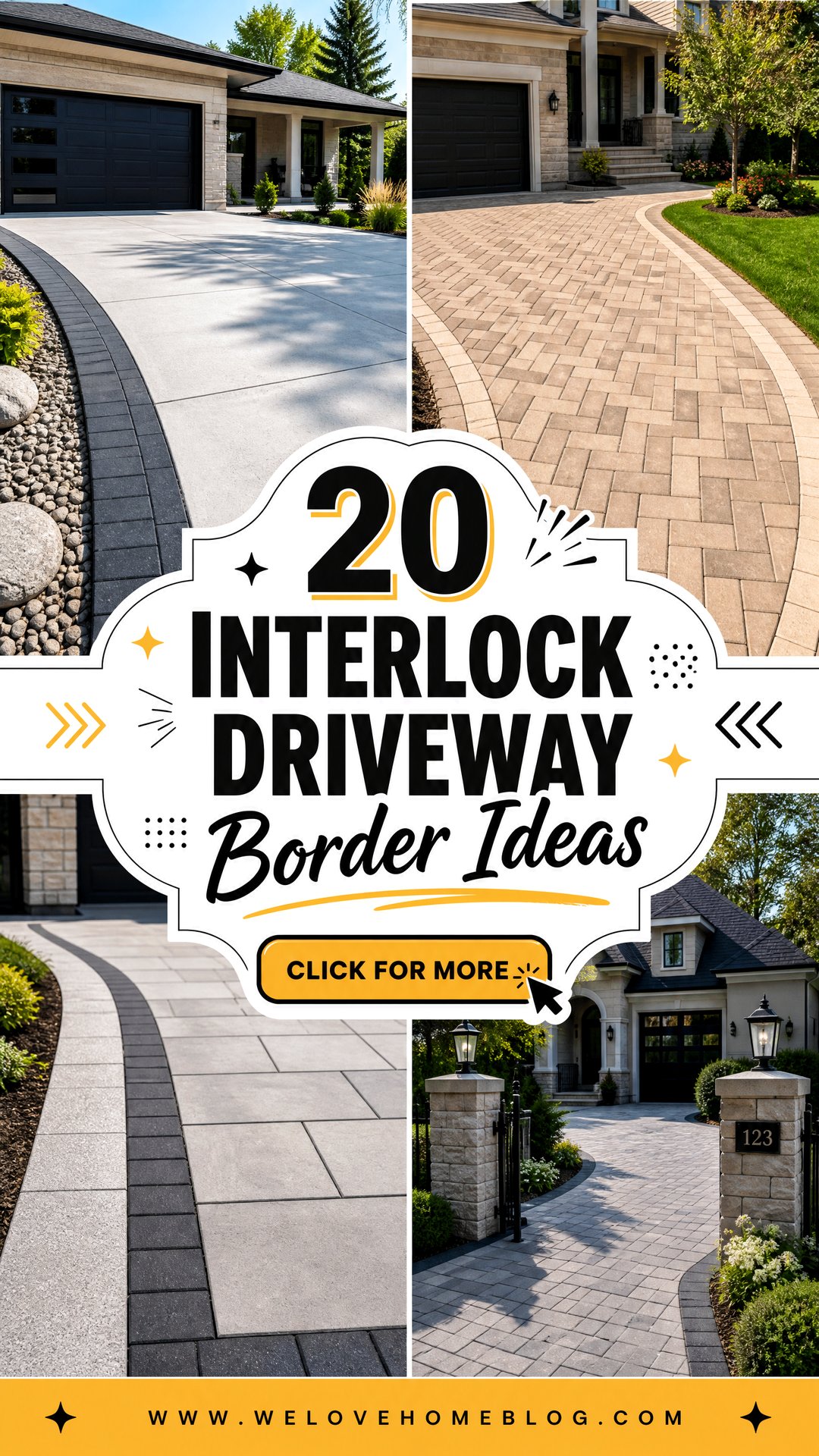
A charcoal soldier course creates a crisp frame around a light gray interlock driveway. In this layout, rectangular border pavers sit perpendicular to the driveway edge, making the outline easy to see from the curb. Pair the dark band with a straight herringbone field for a balanced look that suits modern and transitional homes. Continue the charcoal pavers across the garage apron and beside the walkway so every paved area feels connected. Low boxwood hedges, ornamental grasses, and pale decorative stone can soften the strong contrast. This border works especially well on a standard two-car driveway because it adds definition without taking up much visual space. Select pavers with similar thicknesses to keep the surface transition smooth and practical.
2. Double Sailor Course Interlock Driveway Border
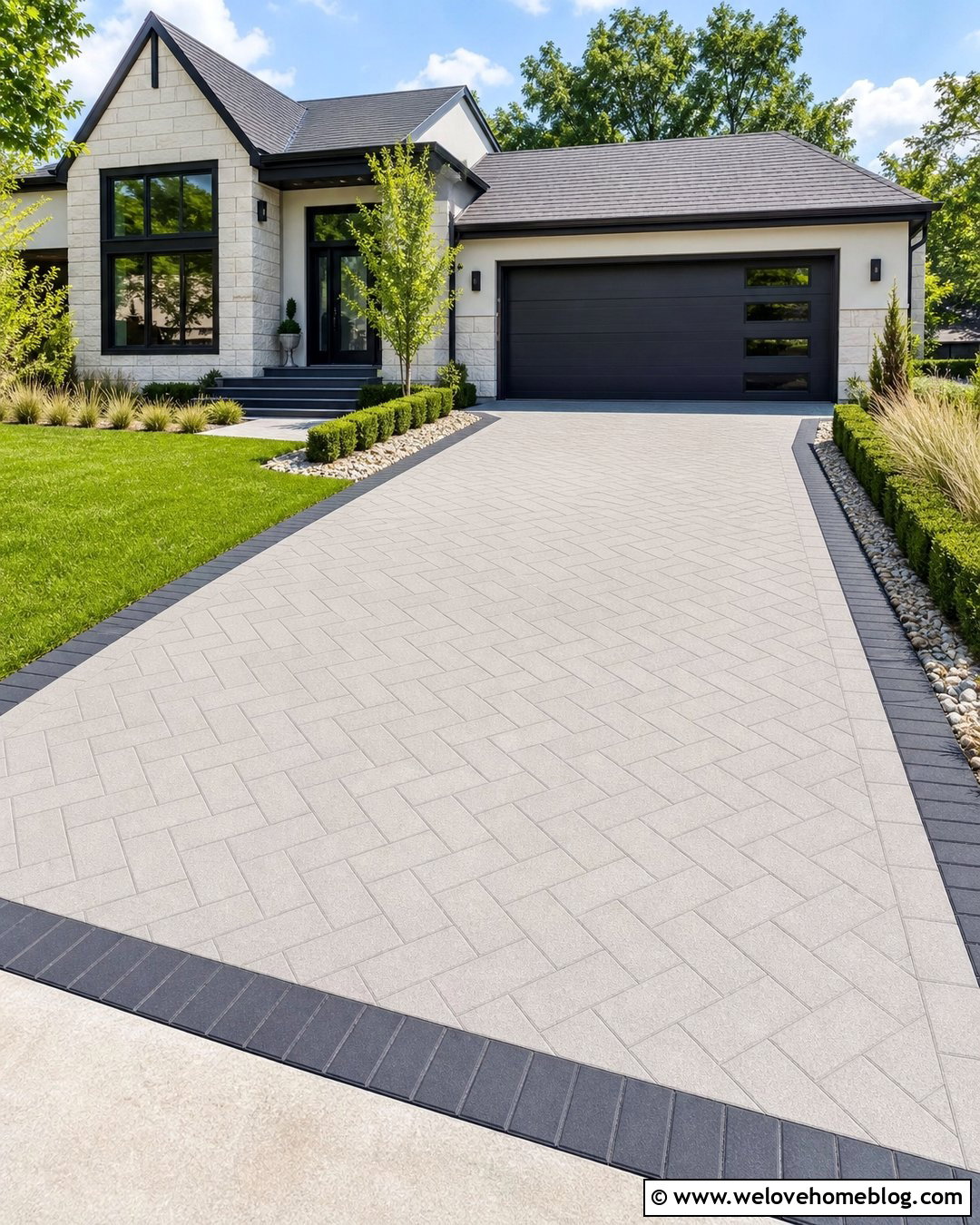
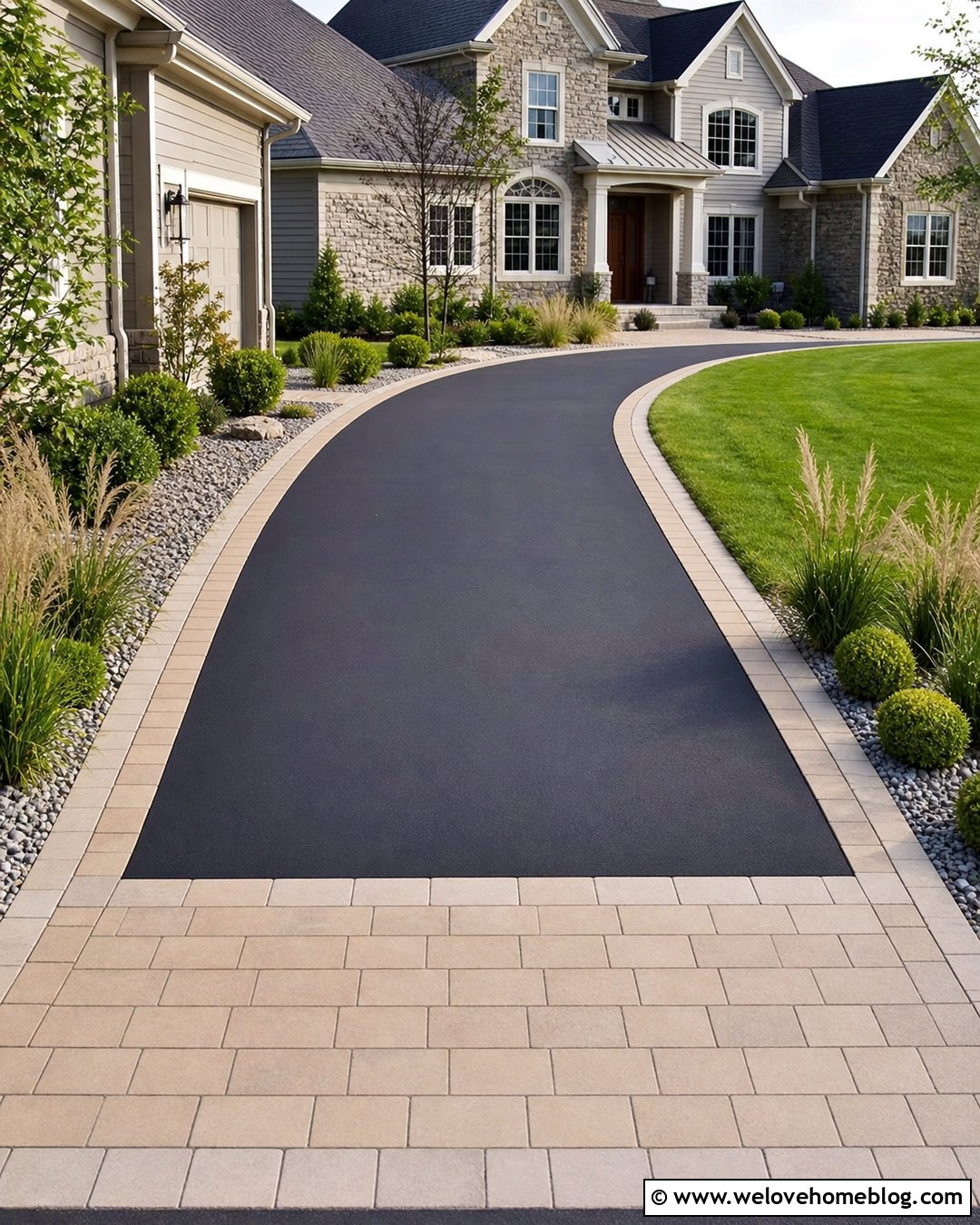
For a wider and more noticeable edge, use two rows of rectangular pavers in a sailor course arrangement. The long sides run parallel to the driveway, creating smooth lines that visually lengthen the entrance. A warm beige interlock field surrounded by dark brown border pavers feels welcoming beside a brick colonial or traditional suburban home. Carry the double band around gentle curves, the garage apron, and the adjoining front walkway. This creates one continuous frame instead of several disconnected details. Add mulched planting beds with hydrangeas, compact evergreens, and seasonal flowers outside the border. Double sailor borders work best when the driveway has enough width to support the heavier frame. Keep the colors related to the house masonry for a coordinated result.
3. Black Interlock Border With Gray Concrete Driveway
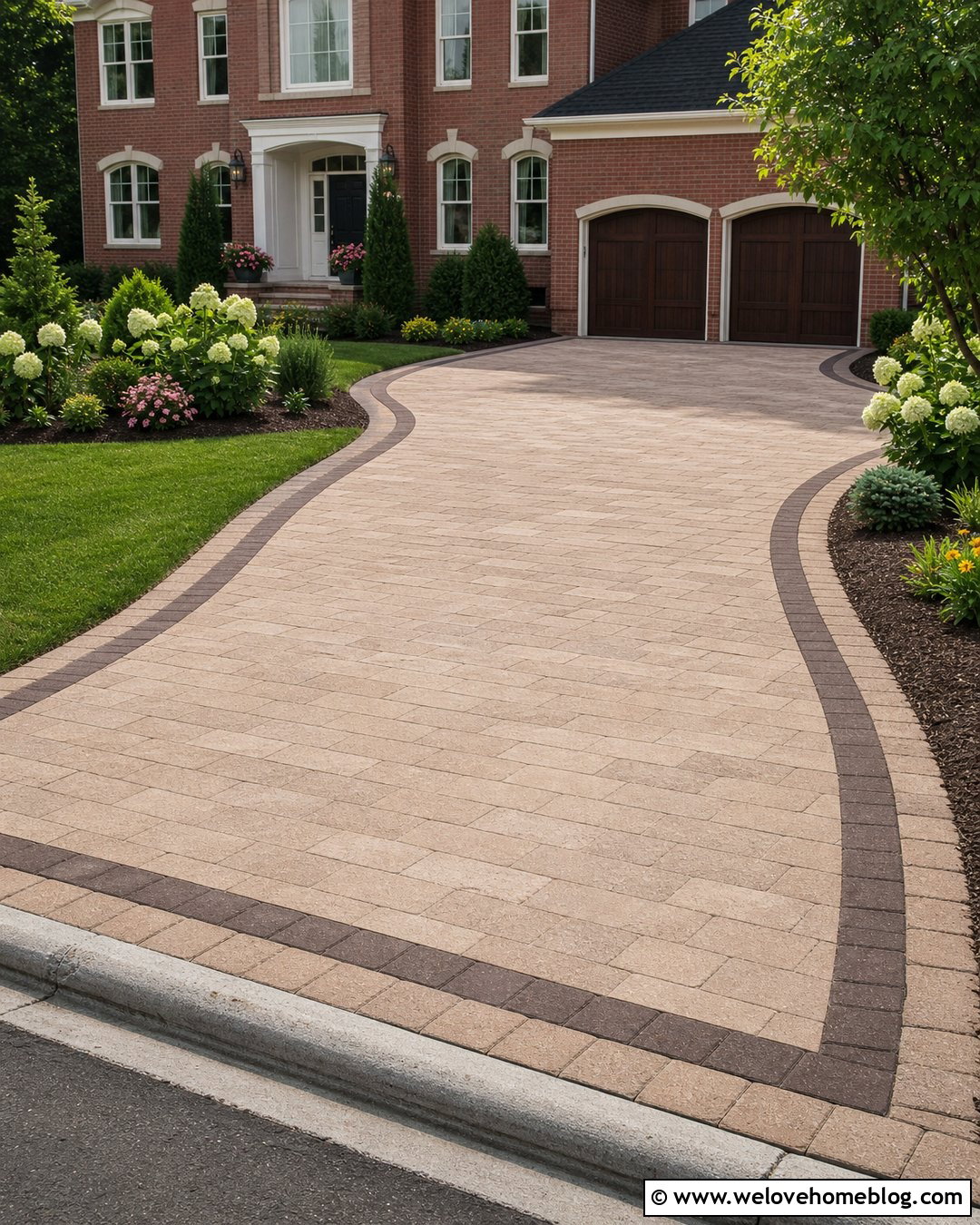
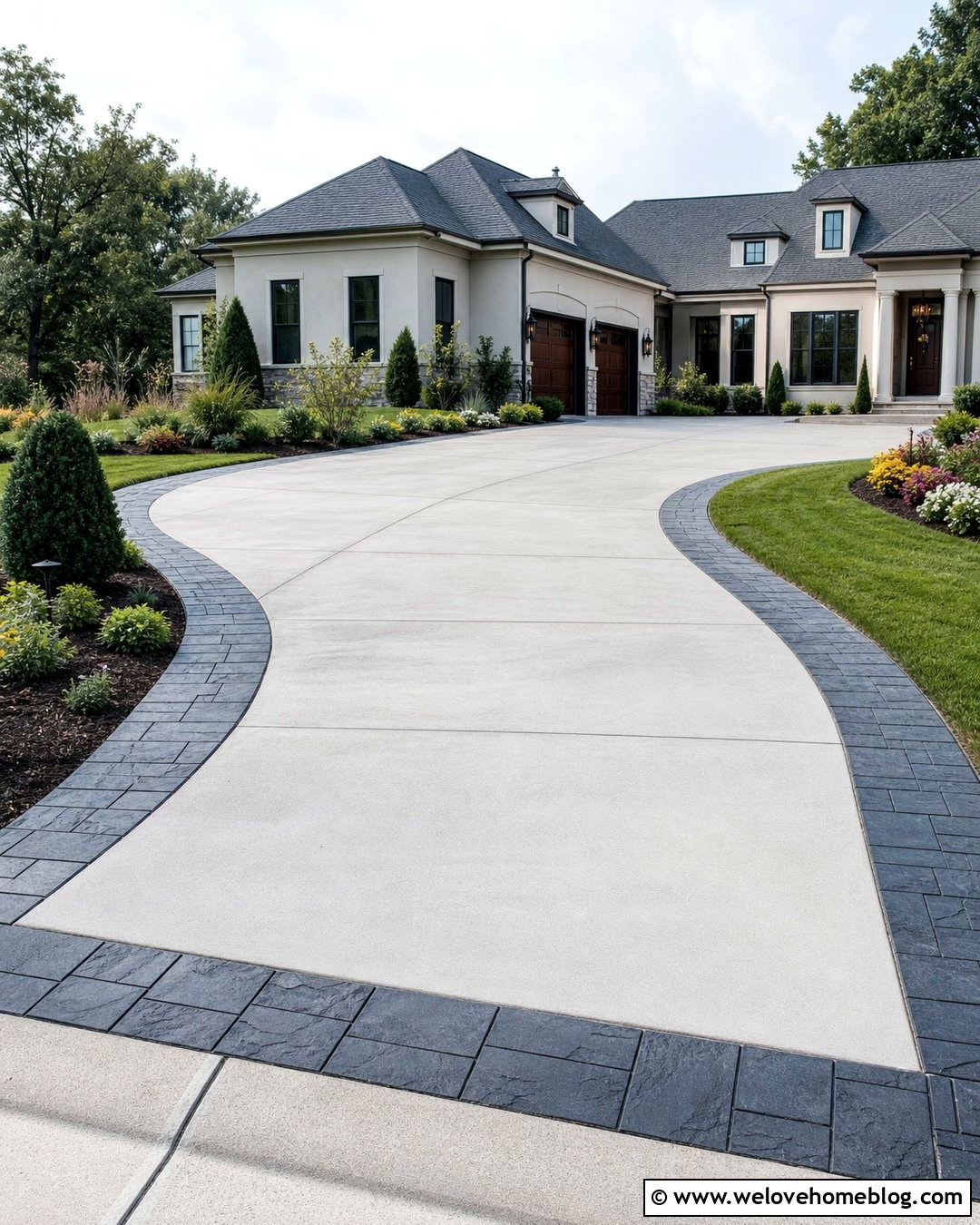
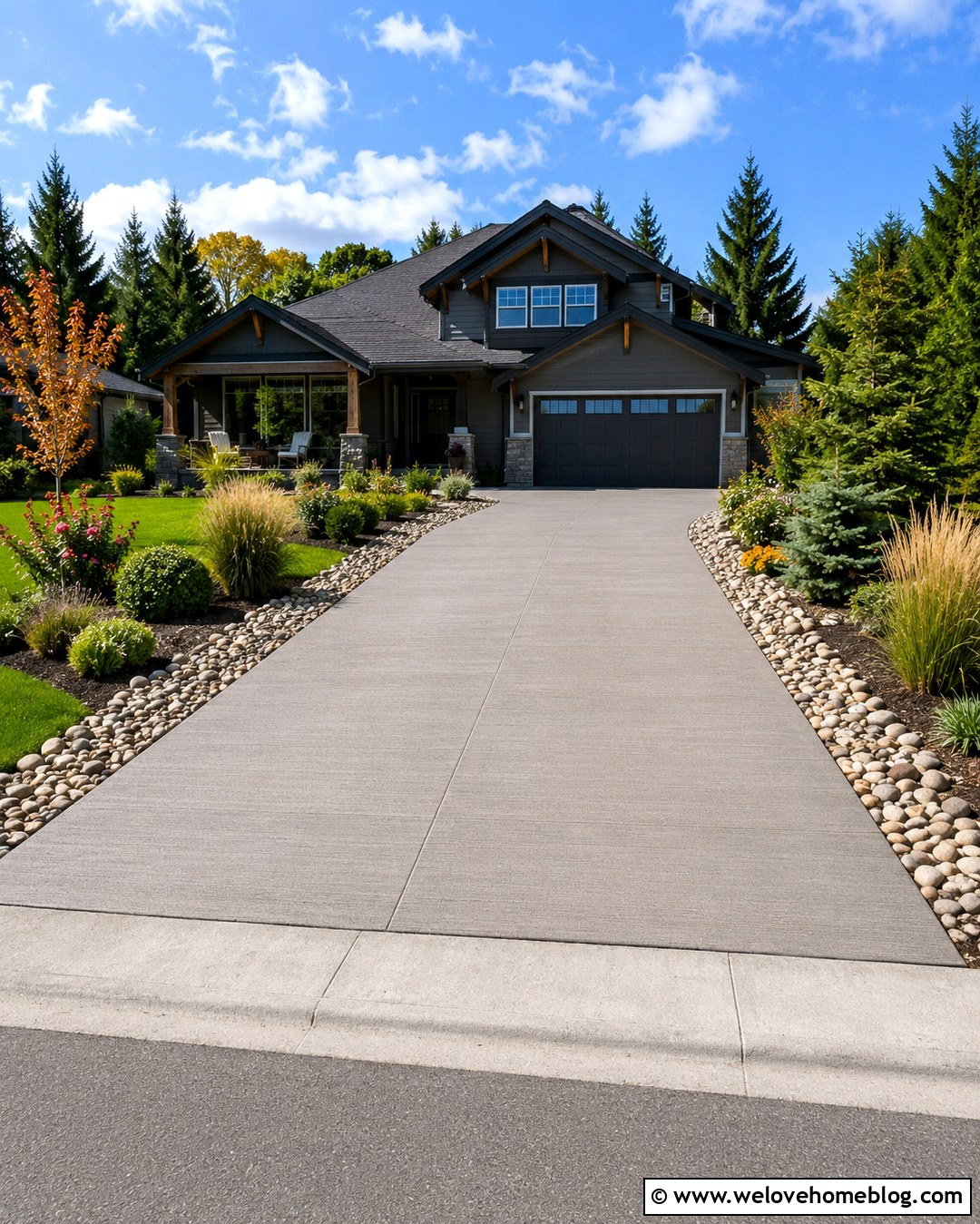
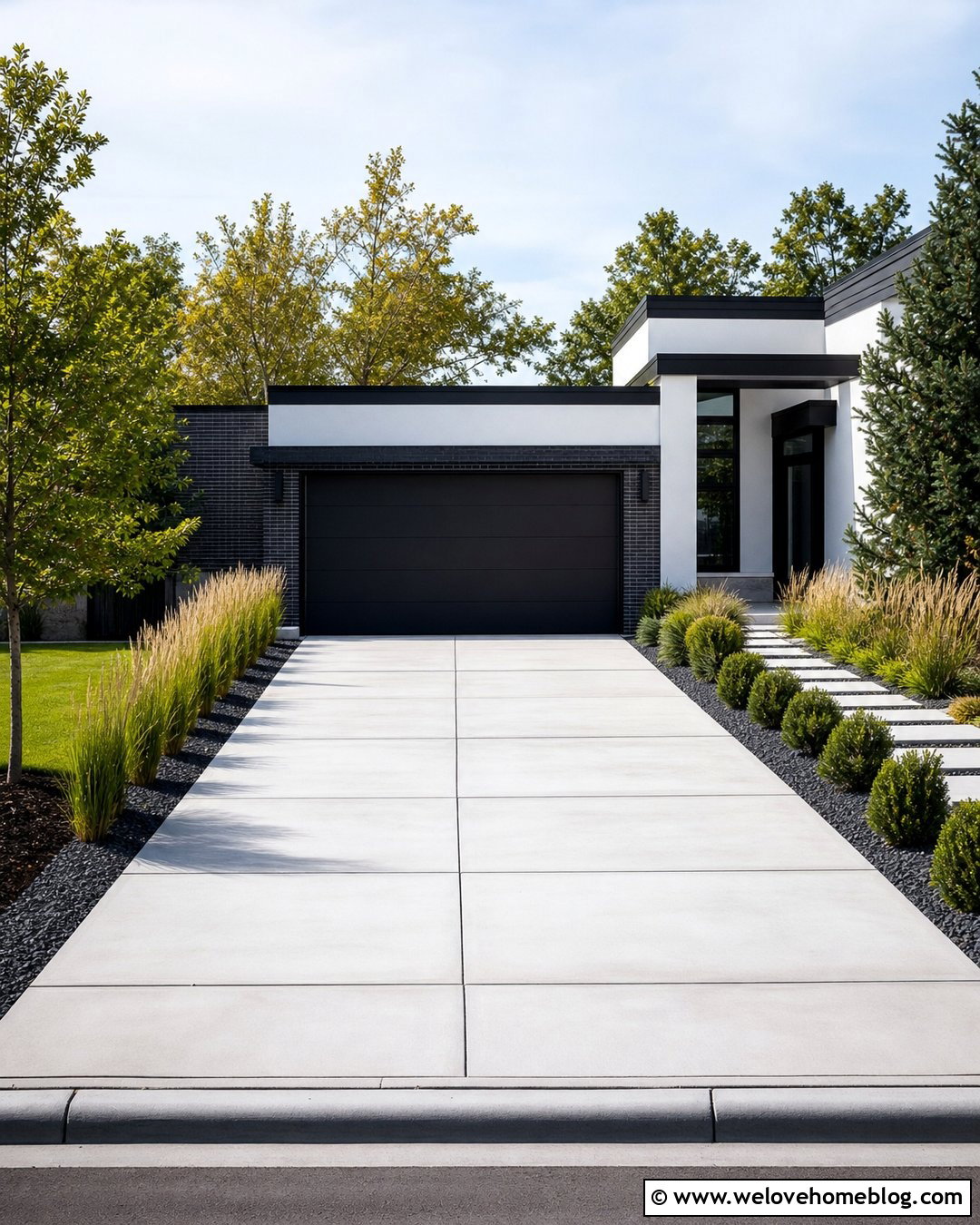
A black interlock border can give a plain gray poured concrete driveway a sharper, more custom appearance. Use smooth rectangular pavers along both sides and across the garage entrance, creating a dark frame around the lighter concrete. A straight driveway with clean expansion joints reinforces the modern geometry. For a unified front yard, repeat the black pavers beside the concrete walkway or at the front steps. Narrow beds filled with feather reed grass, dwarf juniper, and light river rock provide texture without hiding the border. This combination is a practical way to introduce interlock without replacing the entire driveway surface. Ask the installer to plan the concrete-to-paver transition carefully so the two materials meet evenly and the border remains properly supported.
4. Red Brick Interlock Border With Asphalt Driveway
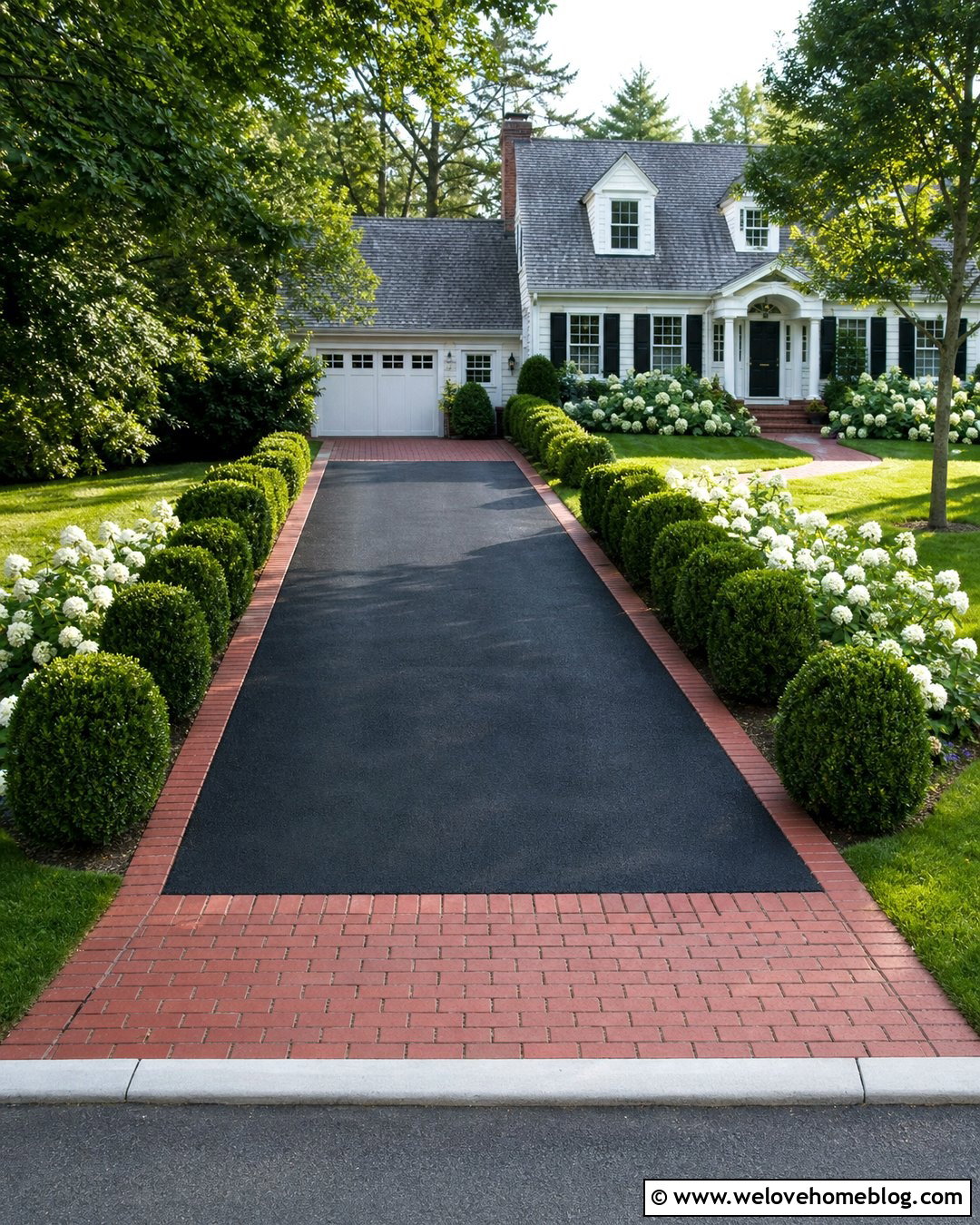
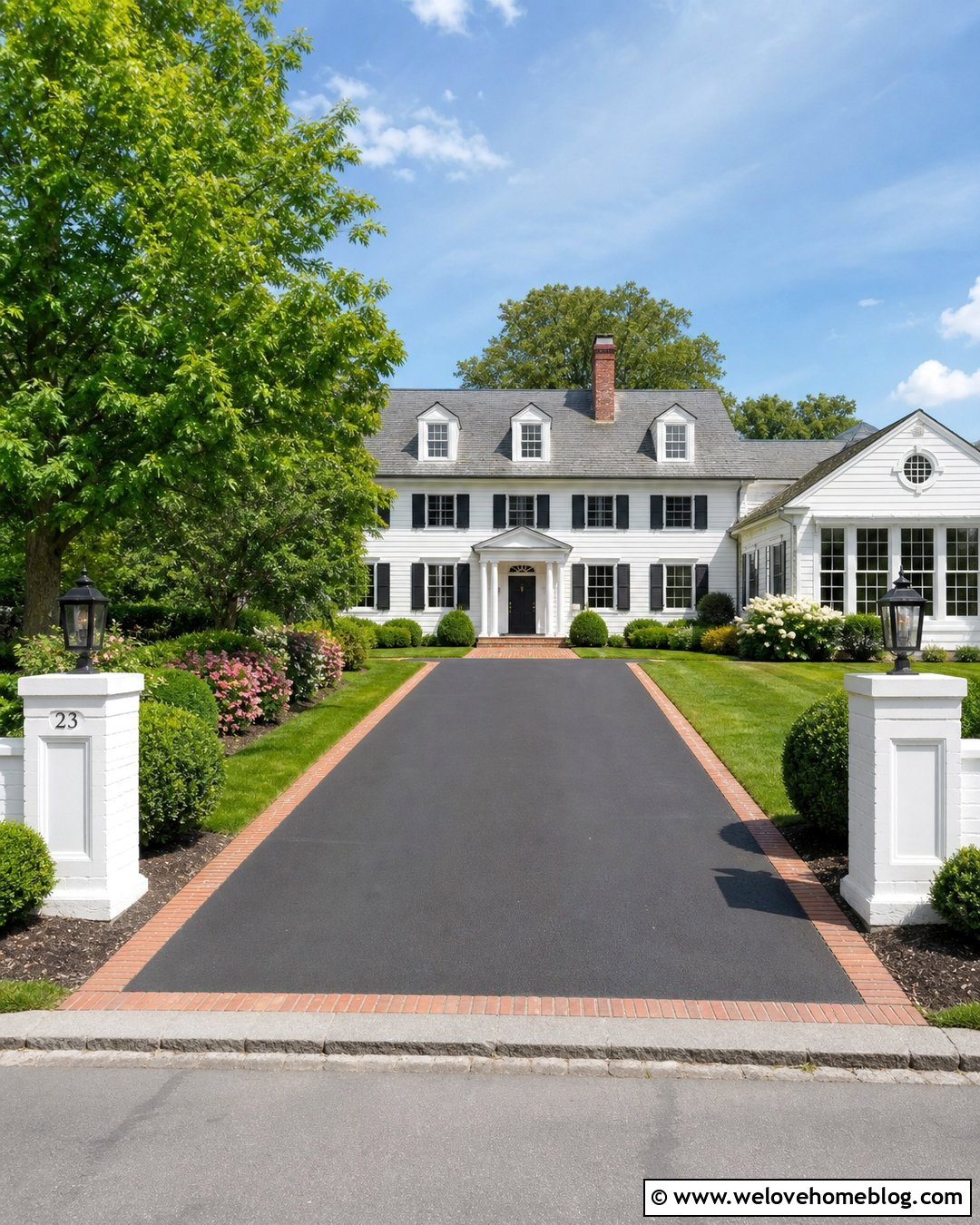
The deep color of a red brick interlock border brings warmth to a smooth black asphalt driveway. This complete look suits Cape Cod, colonial, and traditional brick homes, especially when the pavers echo the facade or front steps. Lay the brick border in a simple soldier course to produce a strong edge that remains easy to follow along a straight or gently curved driveway. A matching brick apron near the sidewalk can make the entrance more prominent. Frame the design with green lawn, clipped shrubs, and white flowering plants for fresh contrast. The border should be installed on a stable, compacted base rather than treated as a decorative strip placed loosely in soil. A restrained color palette keeps the asphalt-and-brick combination classic instead of overly busy.
5. Cobblestone Interlock Border With Gravel Driveway
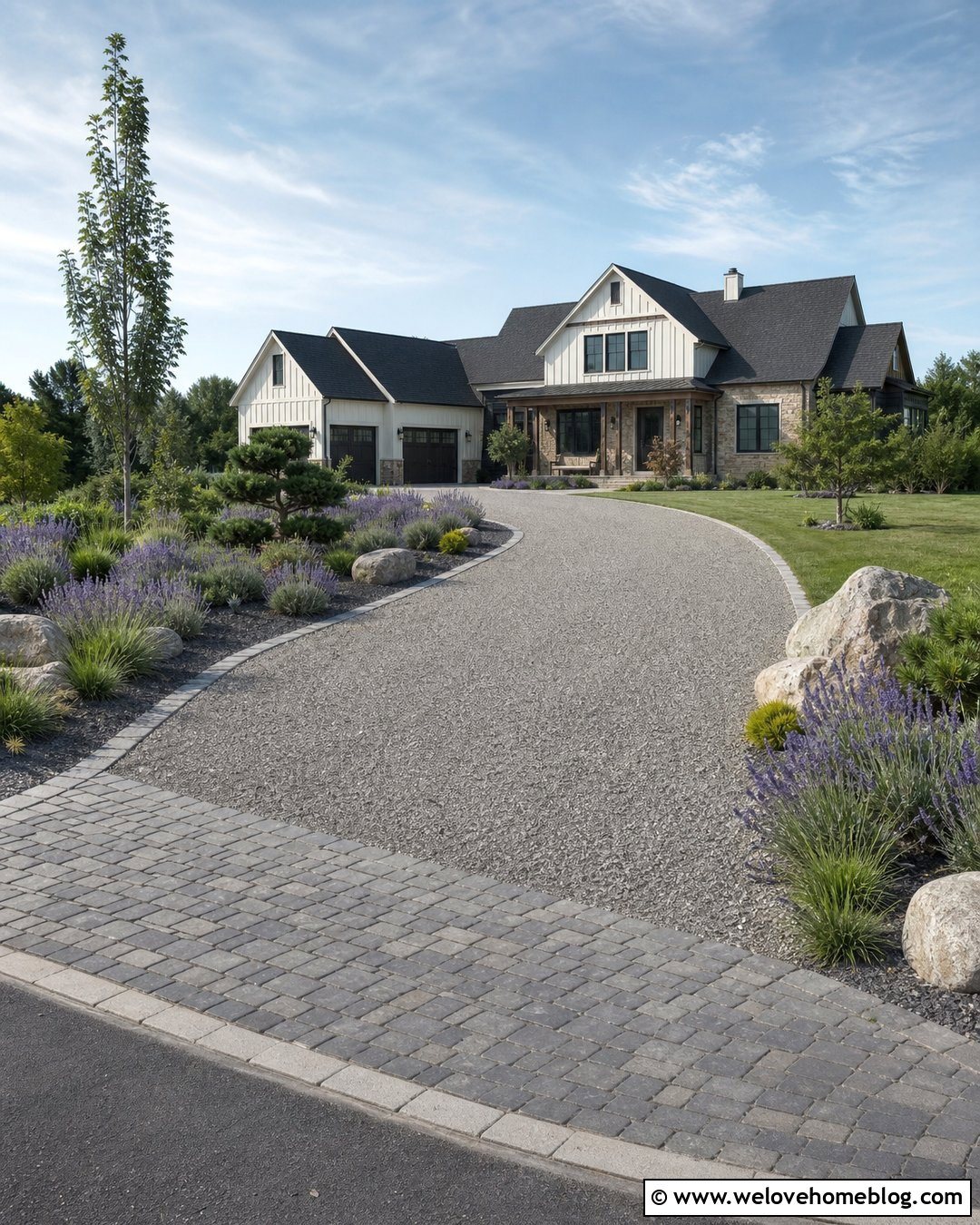
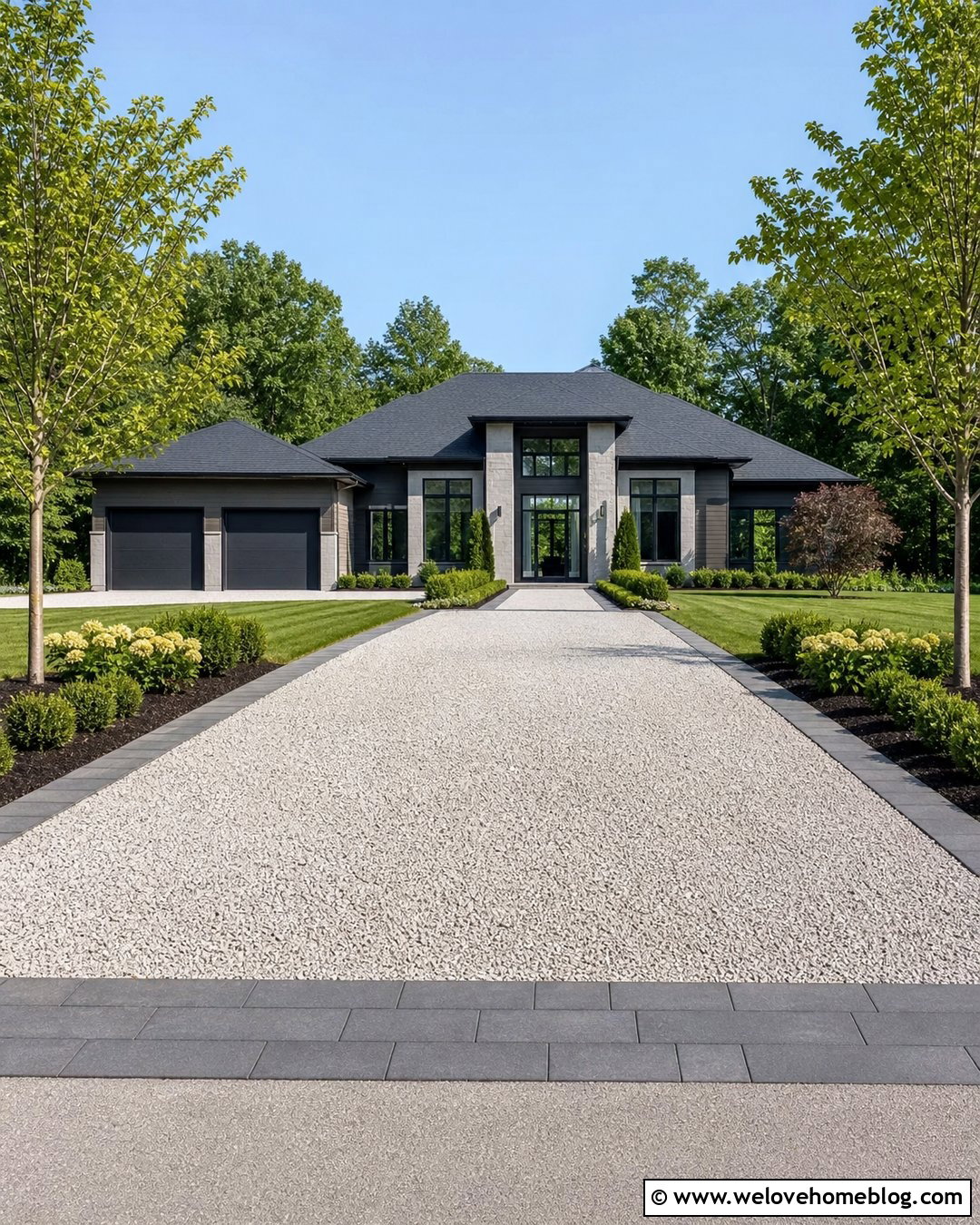
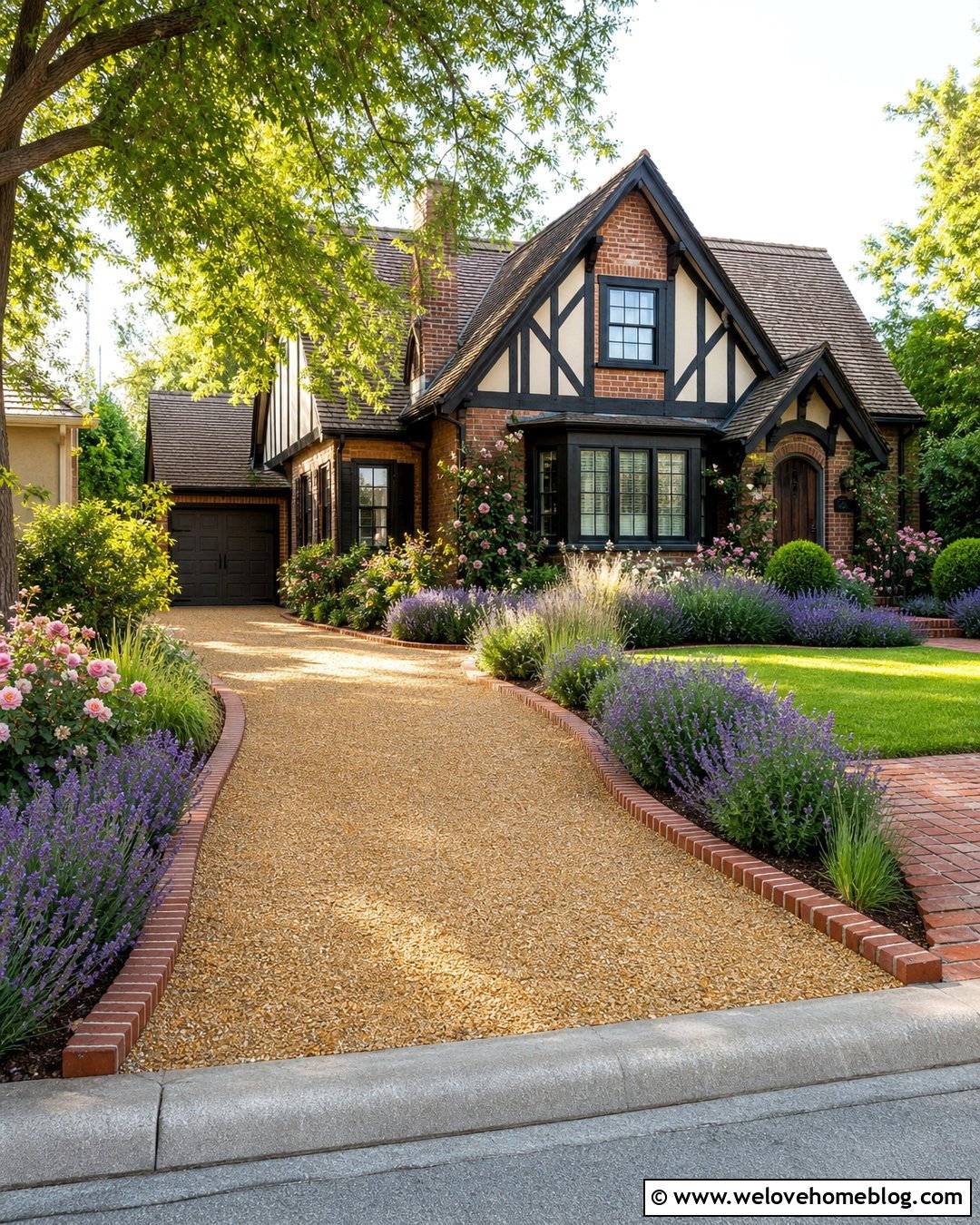
Loose gravel gains a more intentional outline when it is contained by a cobblestone-style interlock border. Choose gray and charcoal tumbled pavers around a curved driveway filled with compacted crushed granite or angular gray gravel. The textured border complements the informal surface while creating a clear divide between gravel, lawn, and planting beds. At the street, widen the cobblestone band into a durable entrance apron that visually anchors the design. Rustic grasses, lavender, dwarf pines, and natural stone can reinforce the relaxed character. Proper edge restraint is important because driveway borders help contain the paving system and supporting base materials. () This complete look works beautifully with country homes, cottages, and modern farmhouses where a softer driveway surface feels appropriate.
6. Beige Interlock Border With Herringbone Driveway
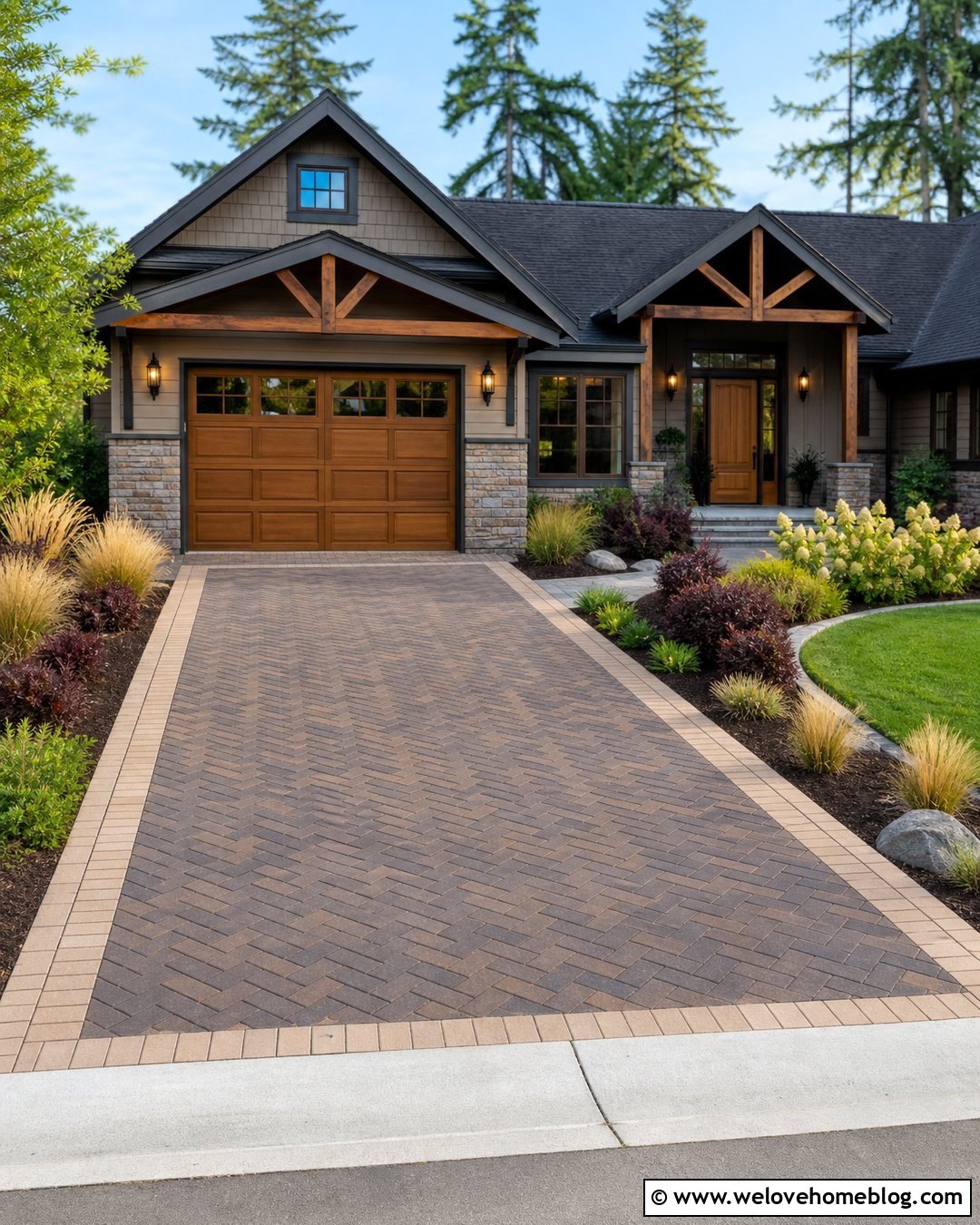
A beige border can frame a darker herringbone driveway without creating severe contrast. Start with a field of blended brown and charcoal concrete pavers, then surround it with warm sand-colored rectangular interlock. The lighter perimeter highlights the driveway’s shape and prevents the busy herringbone pattern from visually running into the lawn. Use the same beige pavers for the front walkway and a small band near the garage doors. This repetition ties the hardscape together. Curved planting beds filled with golden grasses, burgundy shrubs, and cream flowers can echo the warm tones. The result feels layered but still controlled. Because the field already has a strong pattern, keep the border simple, consistent in width, and free of additional decorative inserts that could make the entrance look crowded.
7. Natural Stone Interlock Border With Concrete Pavers
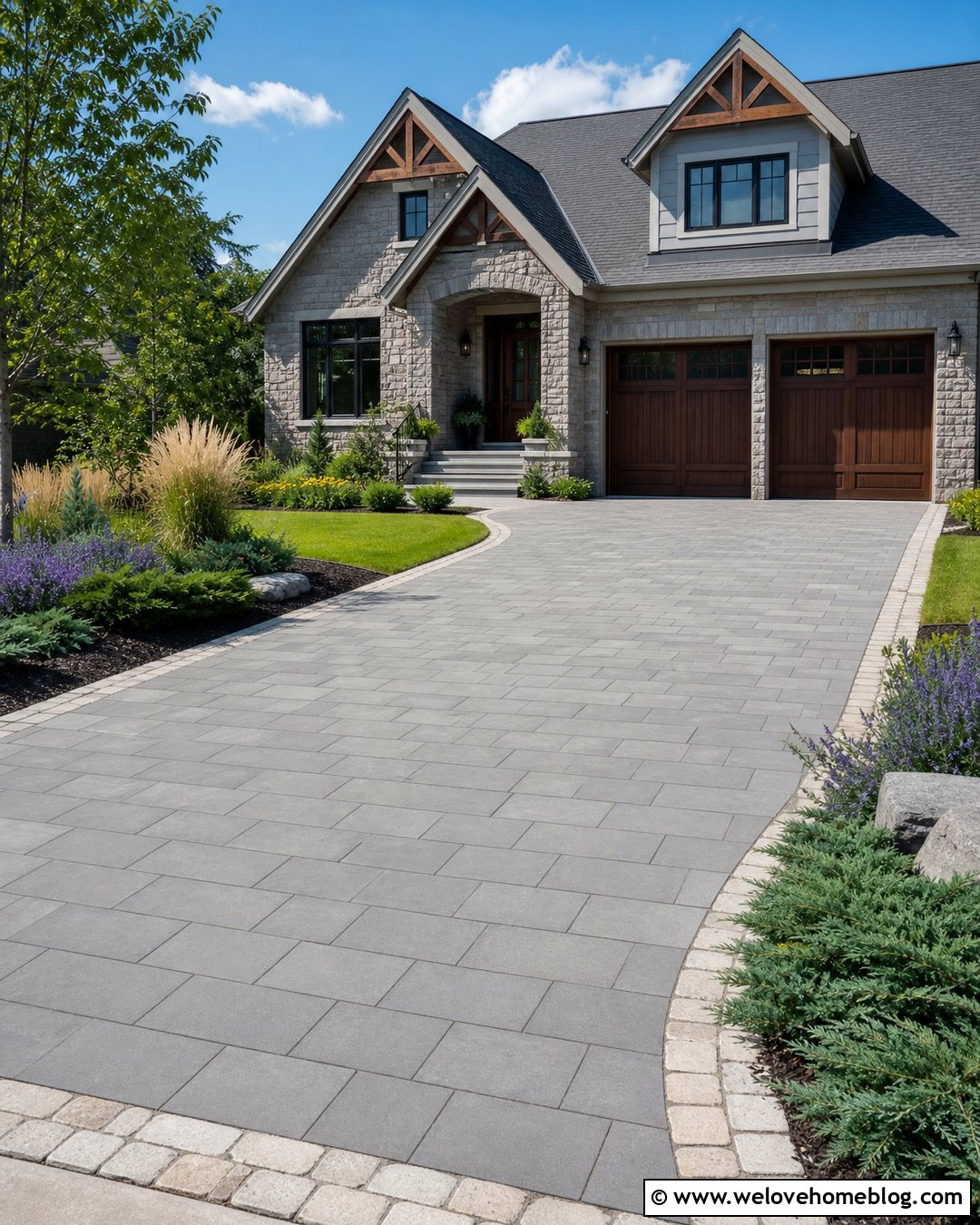
Natural stone-look border pavers bring subtle texture to a driveway made from smooth concrete interlock. Choose large-format gray field pavers in a running bond pattern, then frame them with smaller tumbled units in mixed limestone tones. The change in scale creates separation even when the colors remain closely related. This low-contrast approach suits craftsman houses and contemporary homes with stone veneer. Follow a softly curved driveway edge and connect the border to a matching walkway leading toward the porch. Plant compact junipers, catmint, and ornamental grasses beside the outer edge to soften the hardscape. Limit the stone blend to two or three related shades. Too many colors may compete with the house facade, while a controlled mix creates natural variation and an established, high-quality appearance.
8. Curved Interlock Driveway Border With Garden Beds
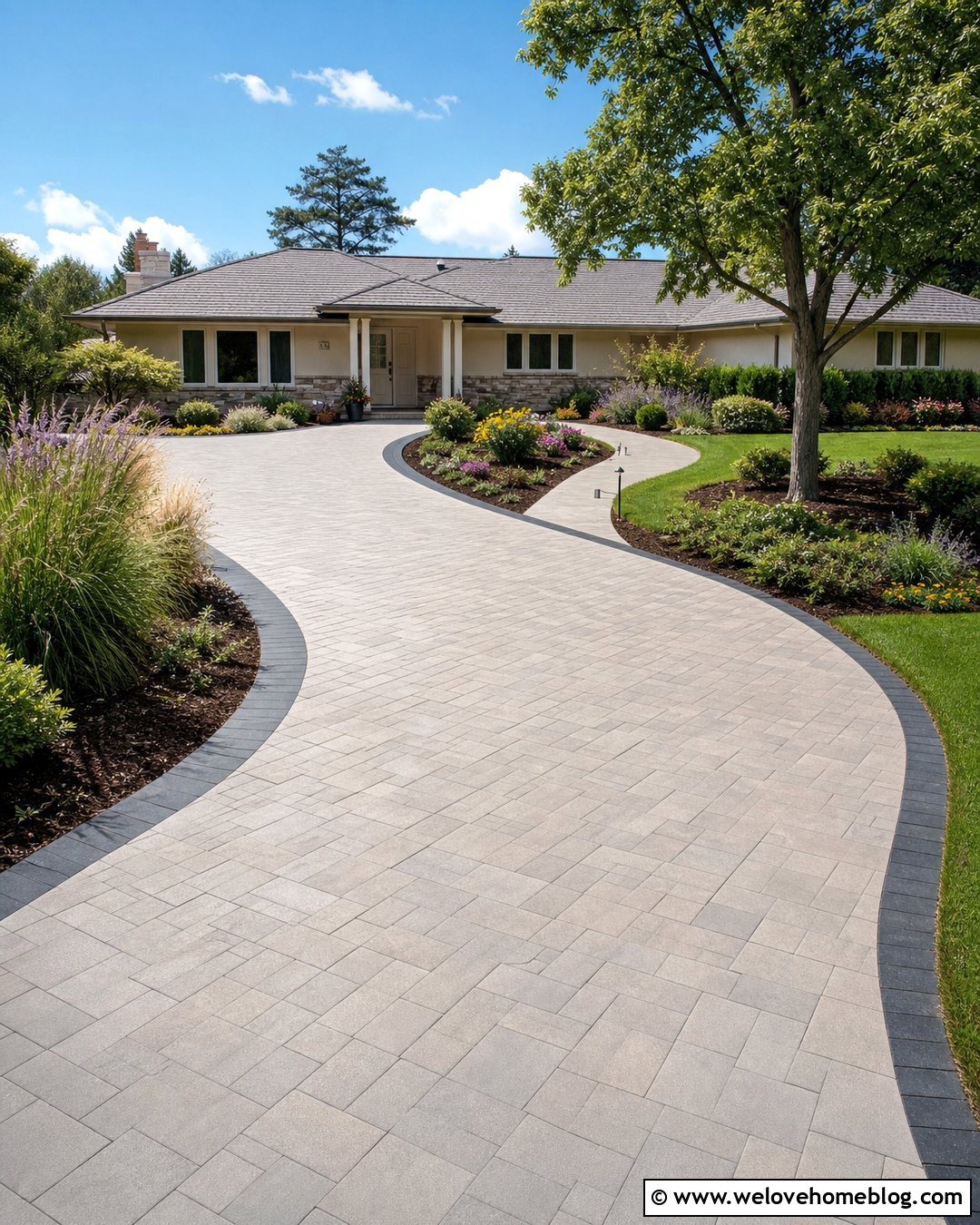
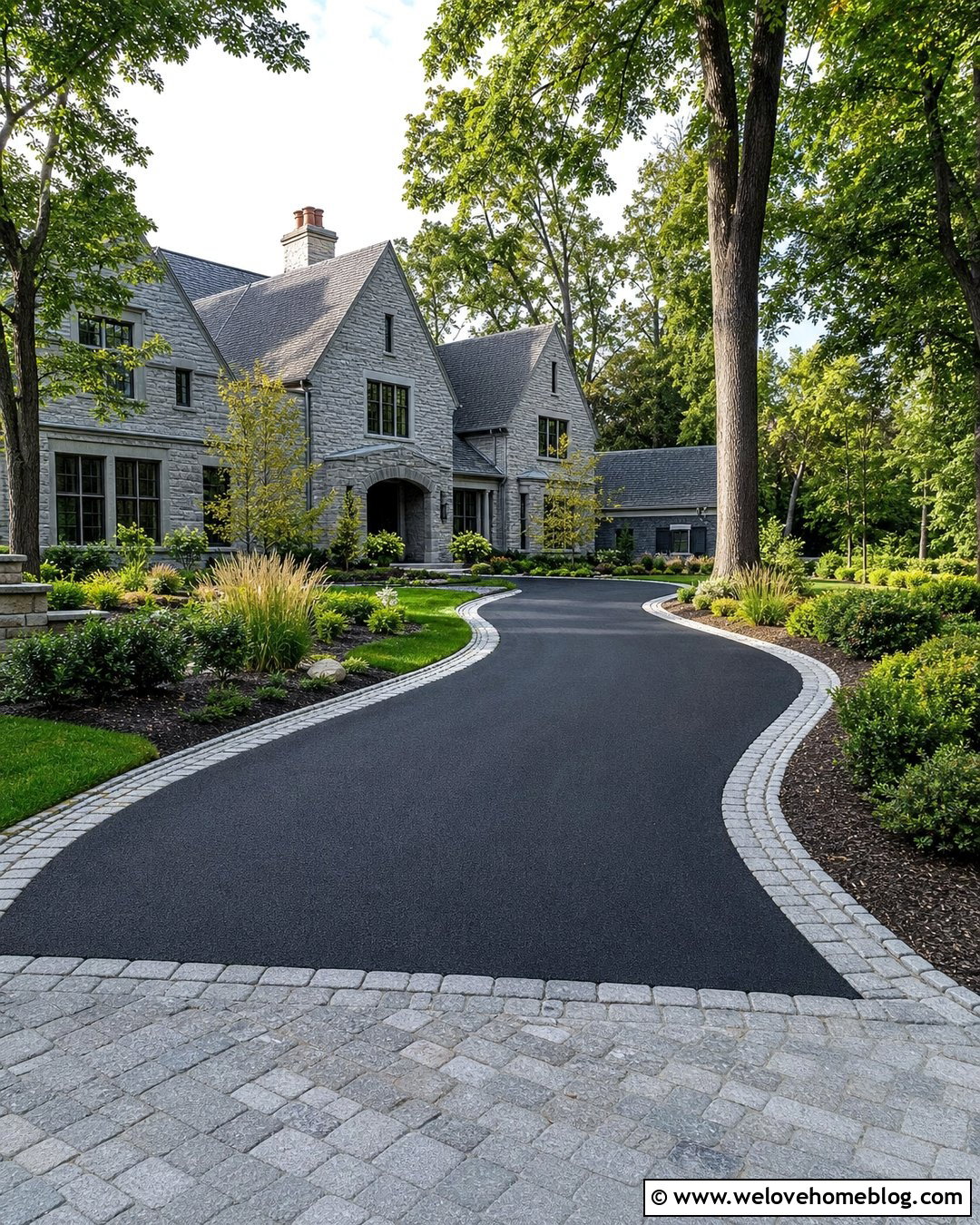
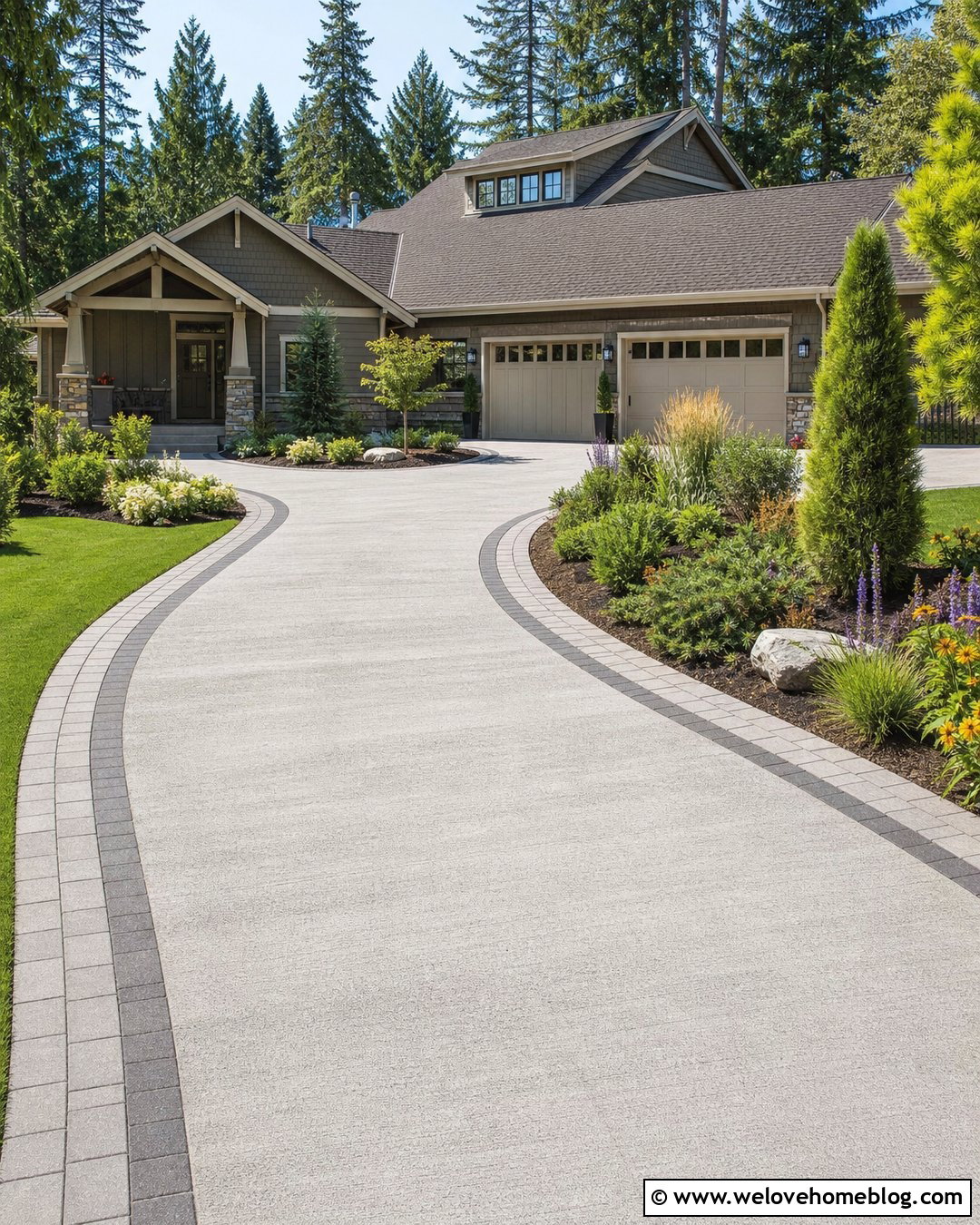
A curved interlock driveway feels more integrated with the yard when its border follows broad, flowing lines. Use medium gray concrete pavers for the main surface and a dark slate soldier course around the perimeter. Avoid short, uneven bends. Gentle curves are easier to read and create larger planting areas between the driveway and lawn. Fill those beds with layered shrubs, flowering perennials, ornamental grasses, and one small specimen tree near the entrance. A curved walkway can branch from the driveway using the same field and border combination. This complete design works well for ranch homes and properties with wide front yards. The dark outline keeps the paver field visually organized, while the landscaping prevents the generous paved area from appearing hard or oversized.
9. Circular Interlock Driveway Border With Center Island
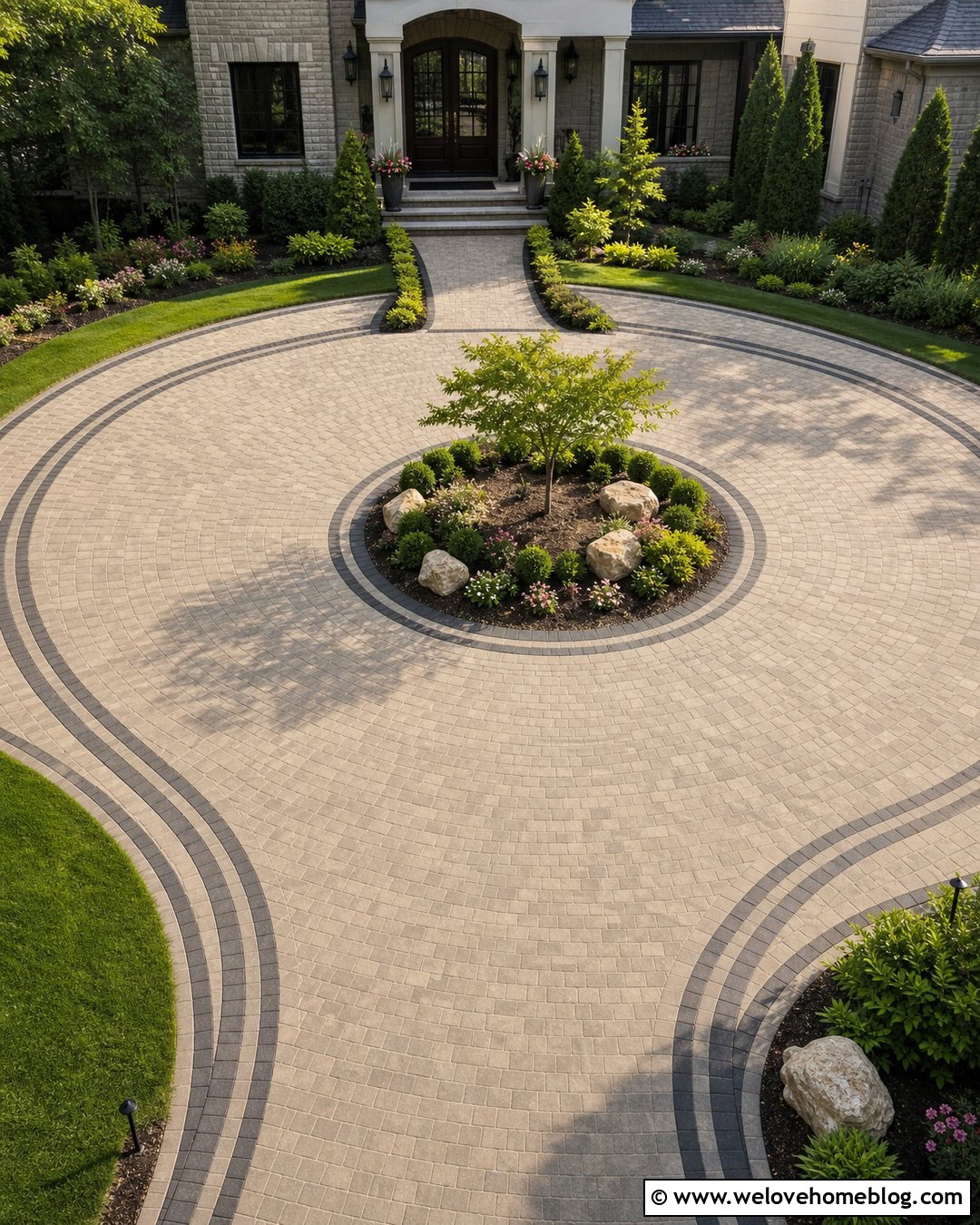
A circular driveway benefits from a defined border around both its outer perimeter and center island. Use warm gray interlocking pavers in a fan or radial-inspired layout, then add a charcoal double border that follows every curve. The repeated dark bands clearly explain the driving route while making the center landscape feature feel intentional. Inside the island, plant a small ornamental tree surrounded by low evergreen shrubs, flowering ground cover, and decorative stone. Keep taller plants away from the street-facing side so drivers have a clear view. The same charcoal pavers can frame the entrance openings and front walkway. This complete layout works best when the border width remains proportional to the driveway, house, and island rather than becoming the dominant feature of the front yard.
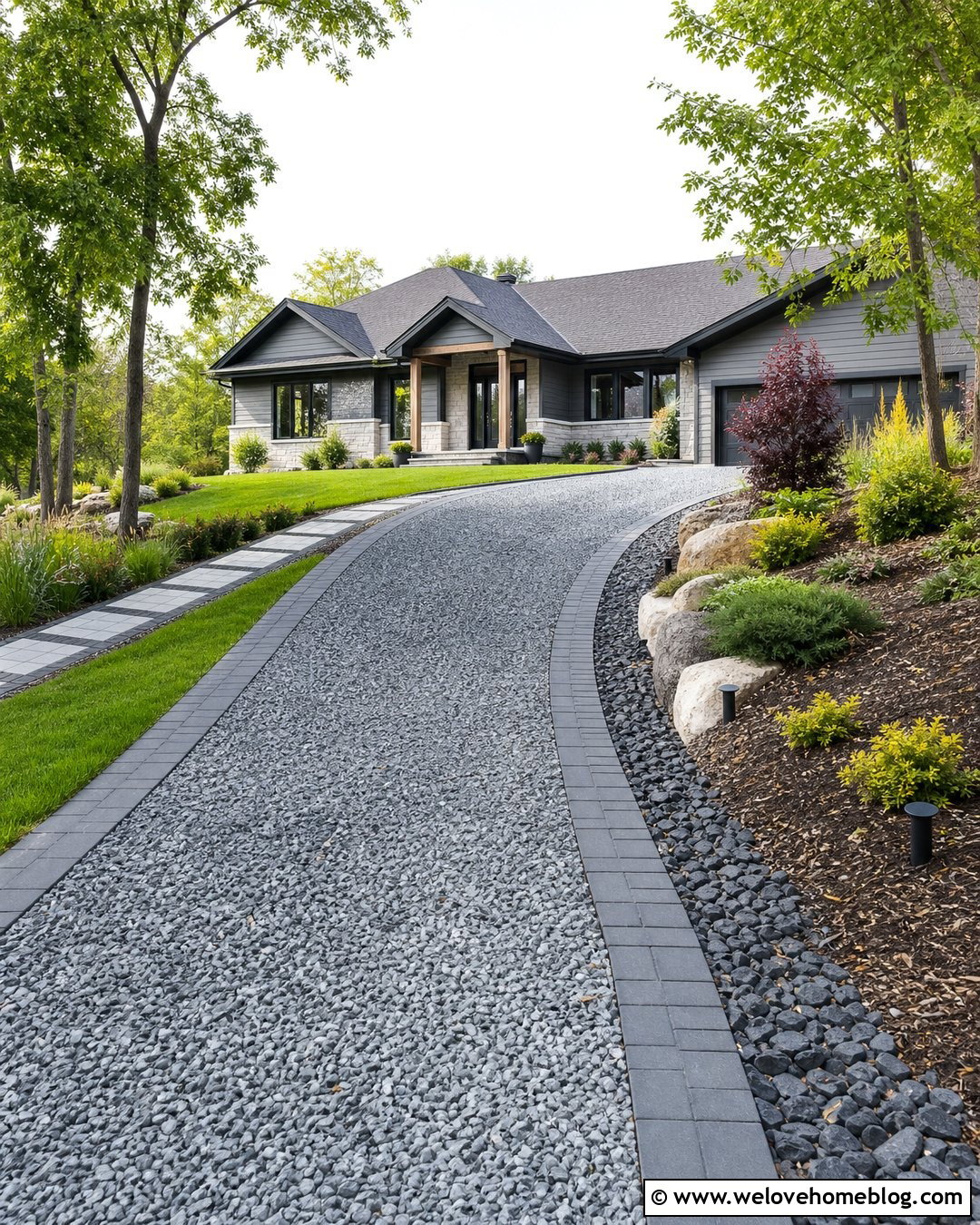
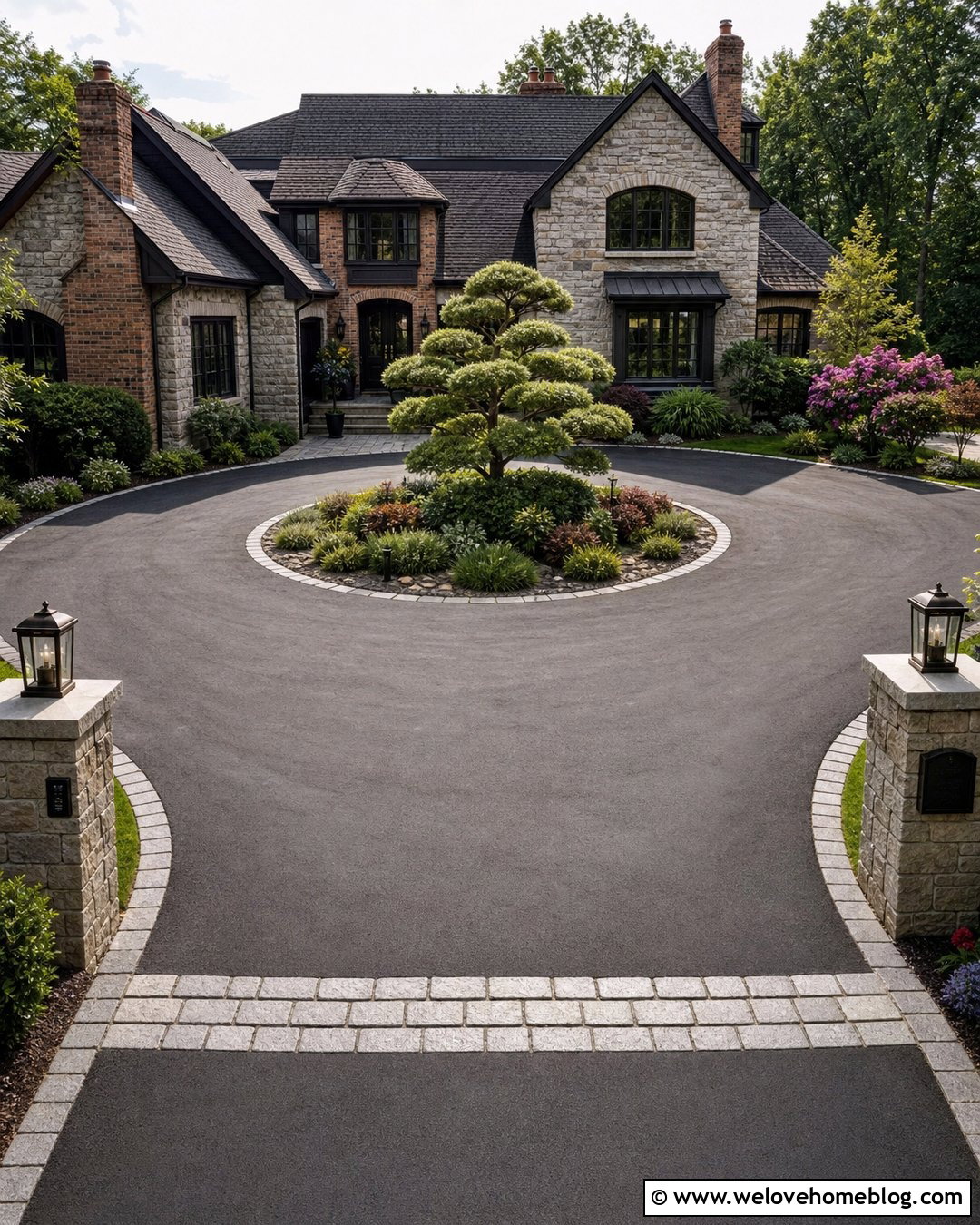
10. White Interlock Border With Dark Paver Driveway
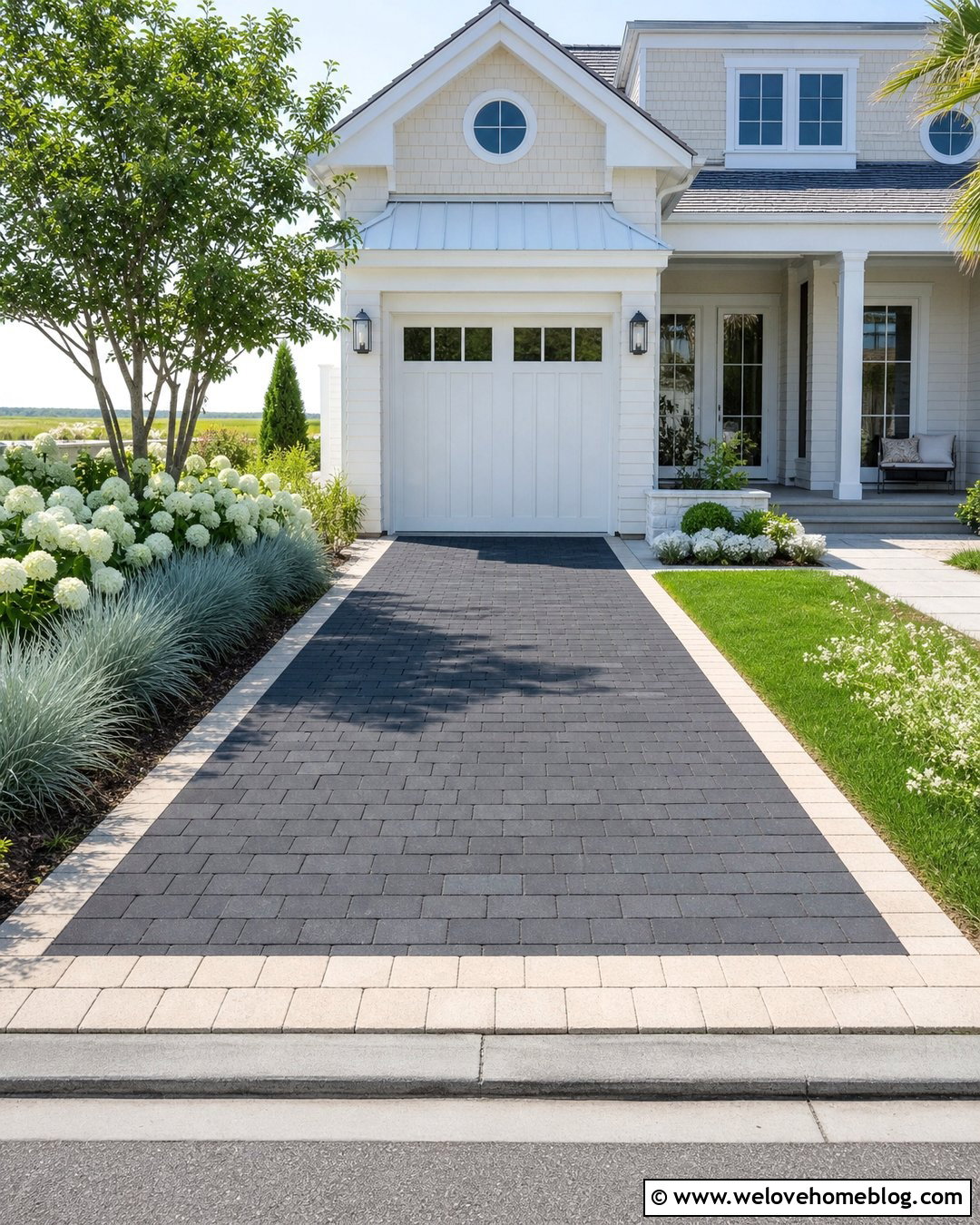
A pale interlock border can brighten a dark driveway and create a clean coastal appearance. Select charcoal concrete pavers for the field, laid in a simple running bond or herringbone pattern, and surround them with cream or limestone-colored border units. The high contrast clearly defines the paved surface, so careful alignment is essential. Repeat the light color in the walkway, porch columns, or house trim to prevent the border from feeling unrelated. Blue-green grasses, white hydrangeas, and neatly maintained lawn complement the cool palette. This look suits coastal cottages, light-sided homes, and updated suburban facades. Choose a light border with gentle tonal variation rather than stark white. It will feel more natural outdoors and make routine dust or tire marks less visually obvious.
11. Three Color Interlock Driveway Border
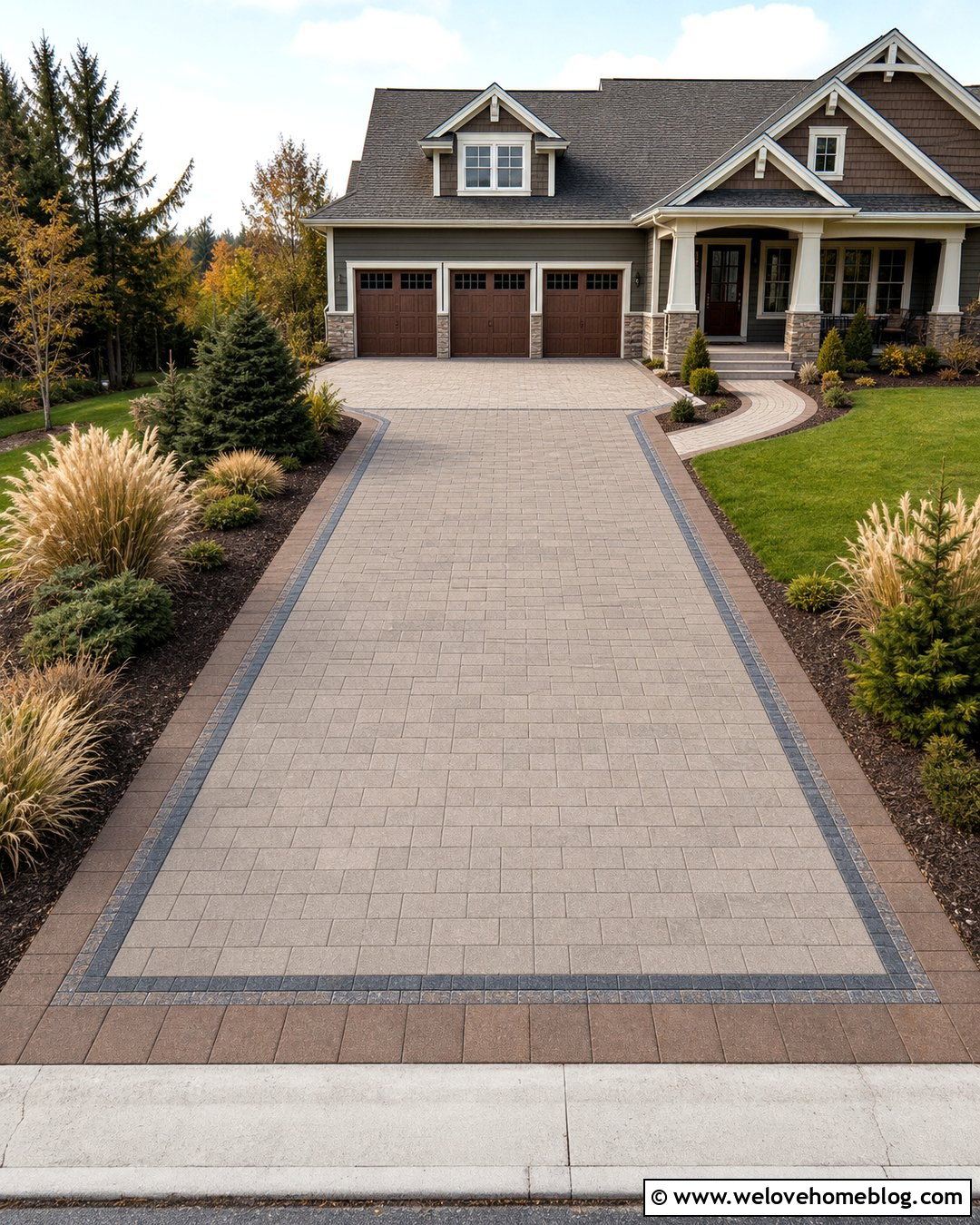
A three-color border can add detail without overwhelming the driveway when each shade has a clear role. Begin with a taupe interlock field, add a narrow charcoal accent line, and finish with a wider brown soldier course along the outside. The charcoal creates separation, while the brown connects the pavement to brick walls, wooden doors, or warm roof tones. Use this layered frame around a wide, straight driveway leading to a craftsman home. Keep the main field pattern simple so the multi-band border remains easy to appreciate. Beside the pavement, add structured planting beds with evergreen shrubs and tan ornamental grasses. Before installation, arrange full-size samples outdoors. Colors often appear different in direct sun, shade, and wet conditions, so testing the combination helps avoid an overly striped result.
12. Interlock Driveway Border With Matching Walkway
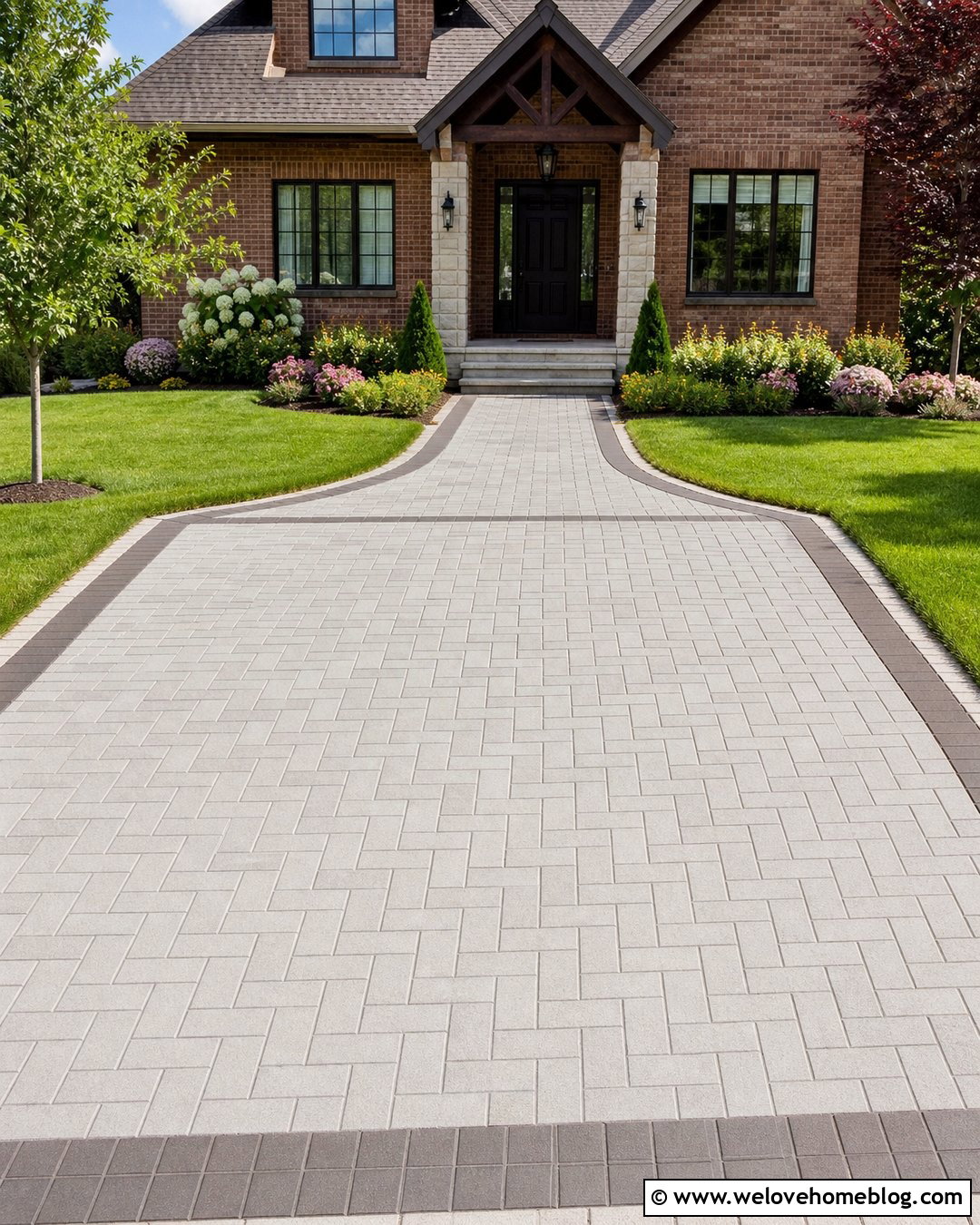
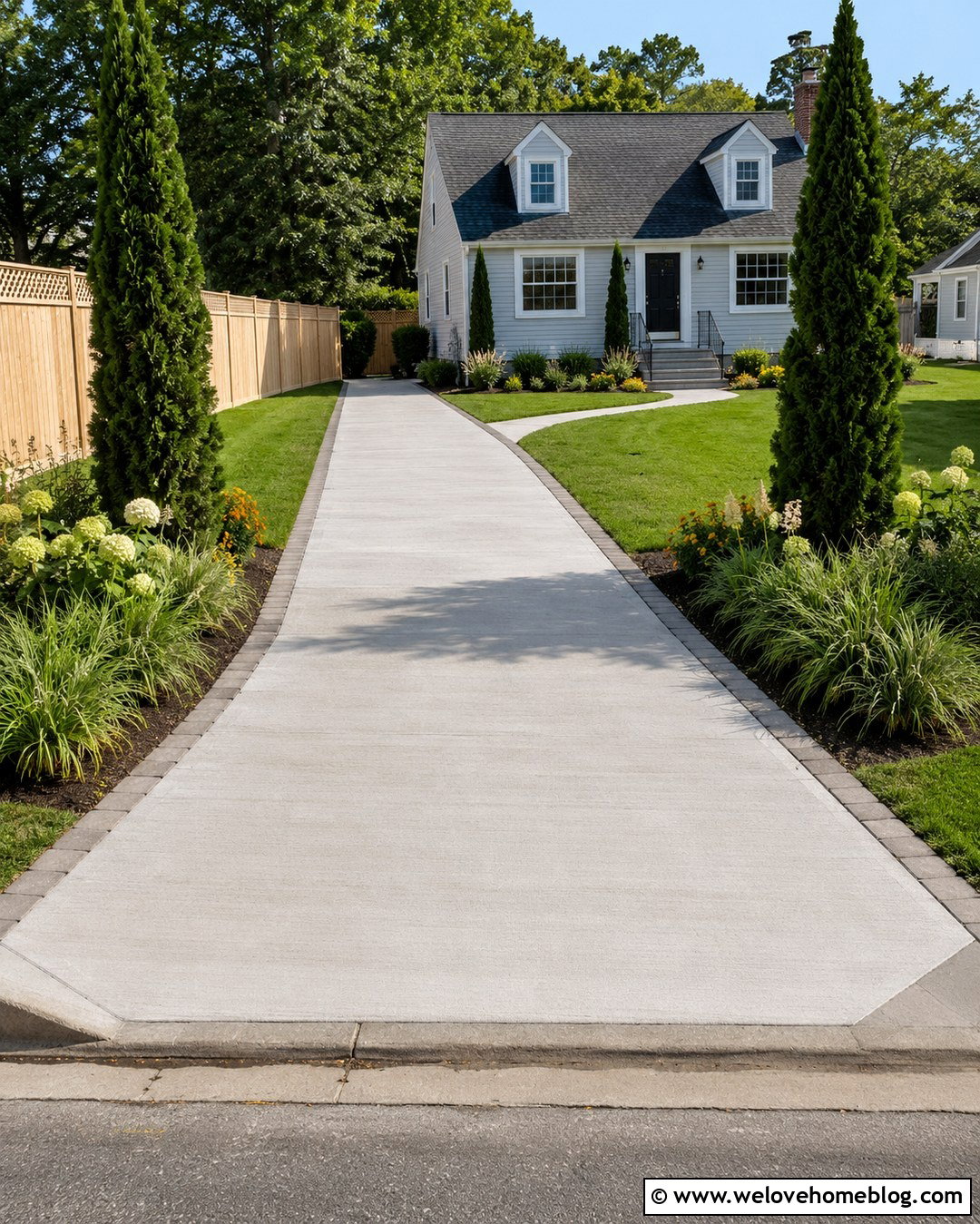
Connecting the driveway border to the front walkway creates a smooth, deliberate route toward the entrance. Frame a light gray basket-weave driveway with dark brown interlock pavers, then use the same dark pavers around a matching walkway. At the point where the two surfaces meet, widen the border slightly to form a clear pedestrian transition. This small change helps the walkway stand out without introducing another material. The design fits a traditional suburban home with brick details, symmetrical windows, and a central porch. Use low foundation shrubs and colorful perennials to guide the eye toward the door. Keep the walkway comfortably visible and avoid planting large shrubs directly beside the junction. The border should connect the spaces naturally rather than forming an awkward barrier between them.
13. Wide Interlock Driveway Border With Large Pavers
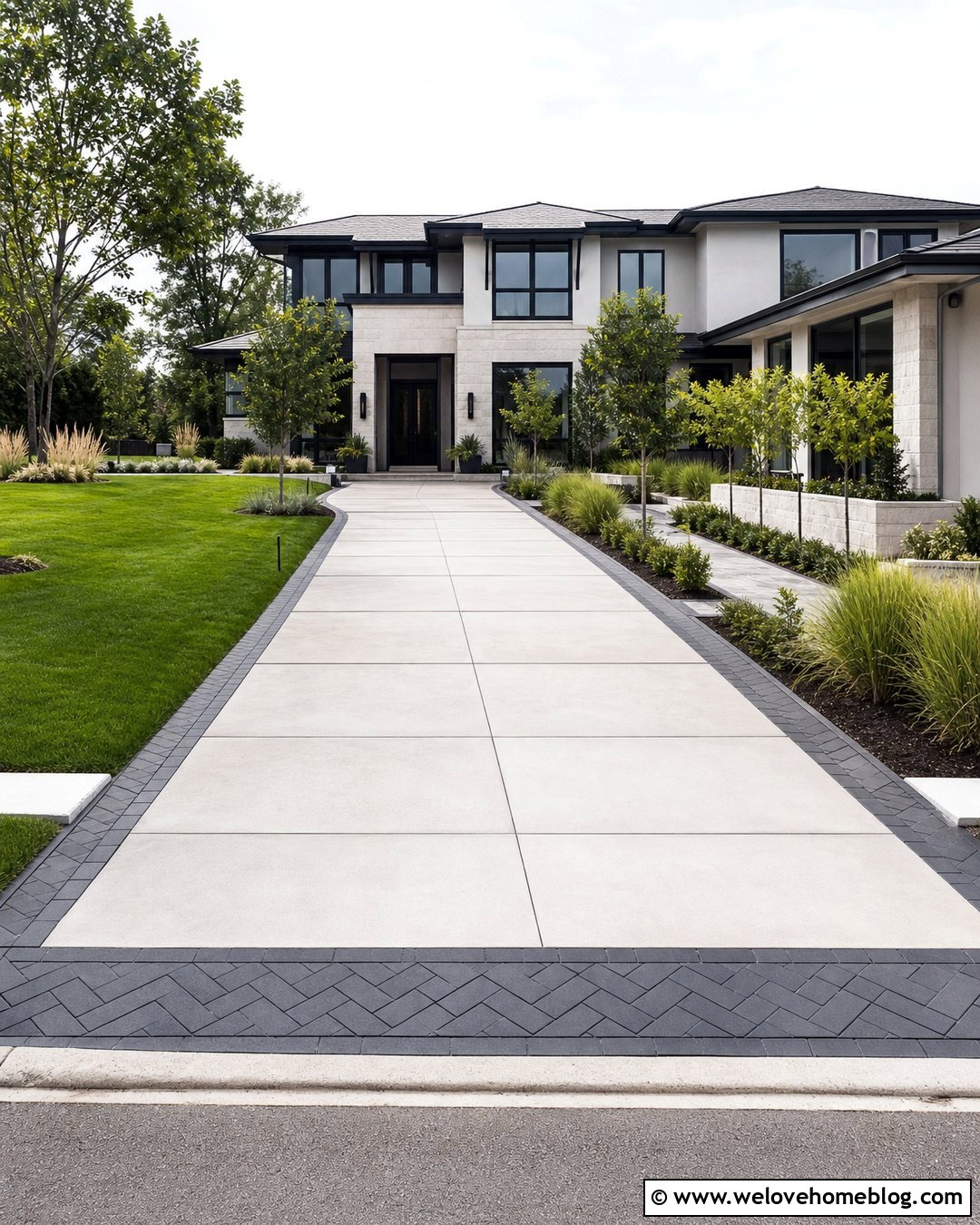
Large driveways can support a broad border that would feel too heavy around a compact entrance. Use smooth, oversized light gray pavers for the main field and frame them with a two- or three-foot band of smaller charcoal interlock. Lay the border units in a contrasting herringbone pattern to distinguish them from the simple field. This creates the appearance of a tailored runner around the driveway. A wide contemporary home, generous lawn, and linear planting beds provide the right scale for the design. Repeat the charcoal tone in porch steps, window frames, or landscape planters. Because a wide border increases visual activity, avoid extra medallions and scattered accent strips. Clean geometry, consistent joints, and a limited color palette will make the driveway look spacious rather than complicated.
14. Narrow Interlock Driveway Border For Small Homes
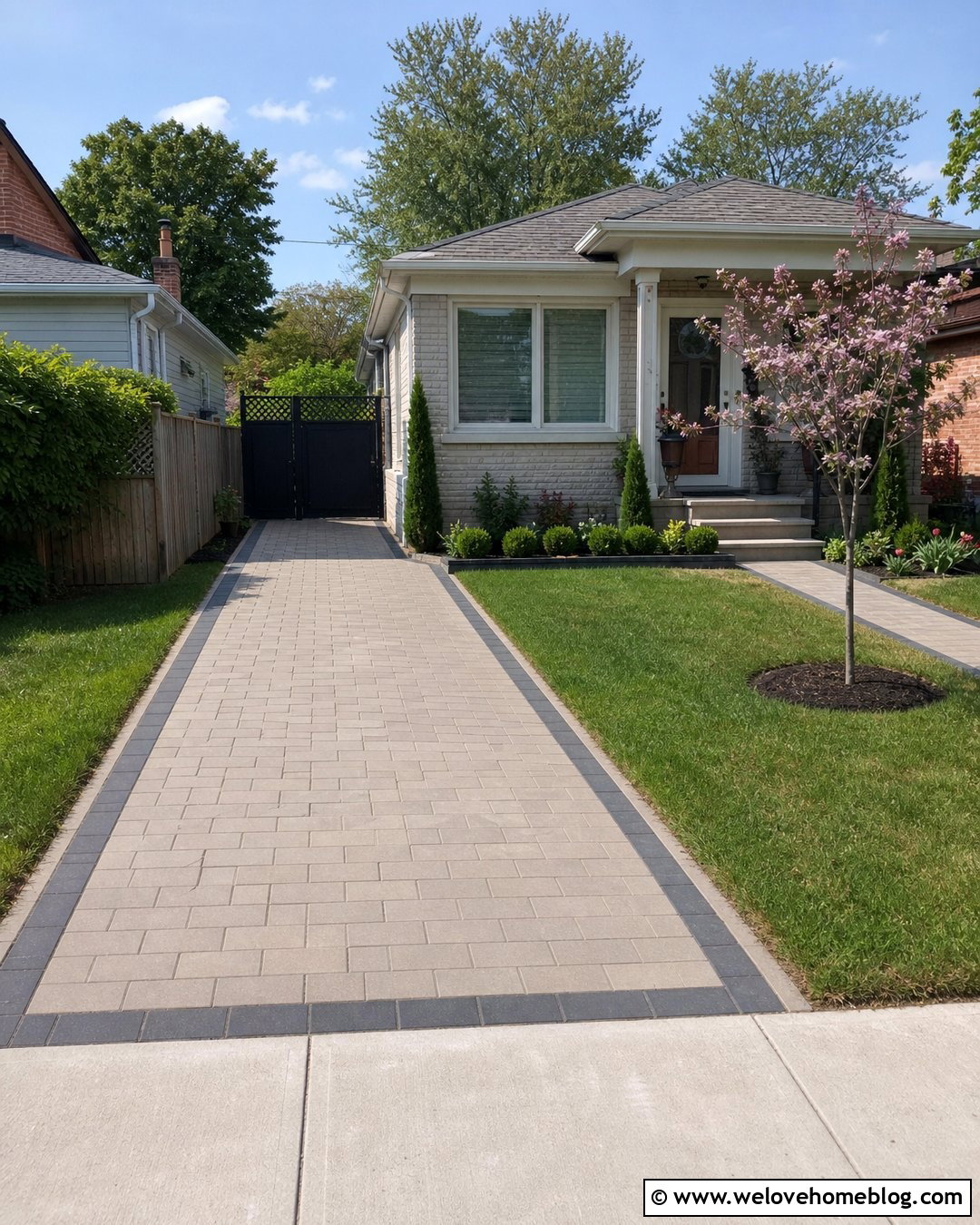
When the front yard is compact, a single narrow row of contrasting interlock can finish the driveway without reducing its apparent width. Frame a small light taupe paver driveway with slim charcoal rectangular units in a sailor course. Running the pavers parallel to the edge emphasizes length and creates an orderly path toward the garage. Keep the driveway straight and align the border carefully with the garage opening. A narrow lawn strip, one compact flowering tree, and shallow foundation beds provide greenery without crowding the pavement. Use the charcoal material again around the front walkway for continuity. Avoid wide borders, multiple accent colors, and elaborate patterns in this setting. A restrained frame makes the entrance feel larger, cleaner, and better connected to a modest bungalow or townhome facade.
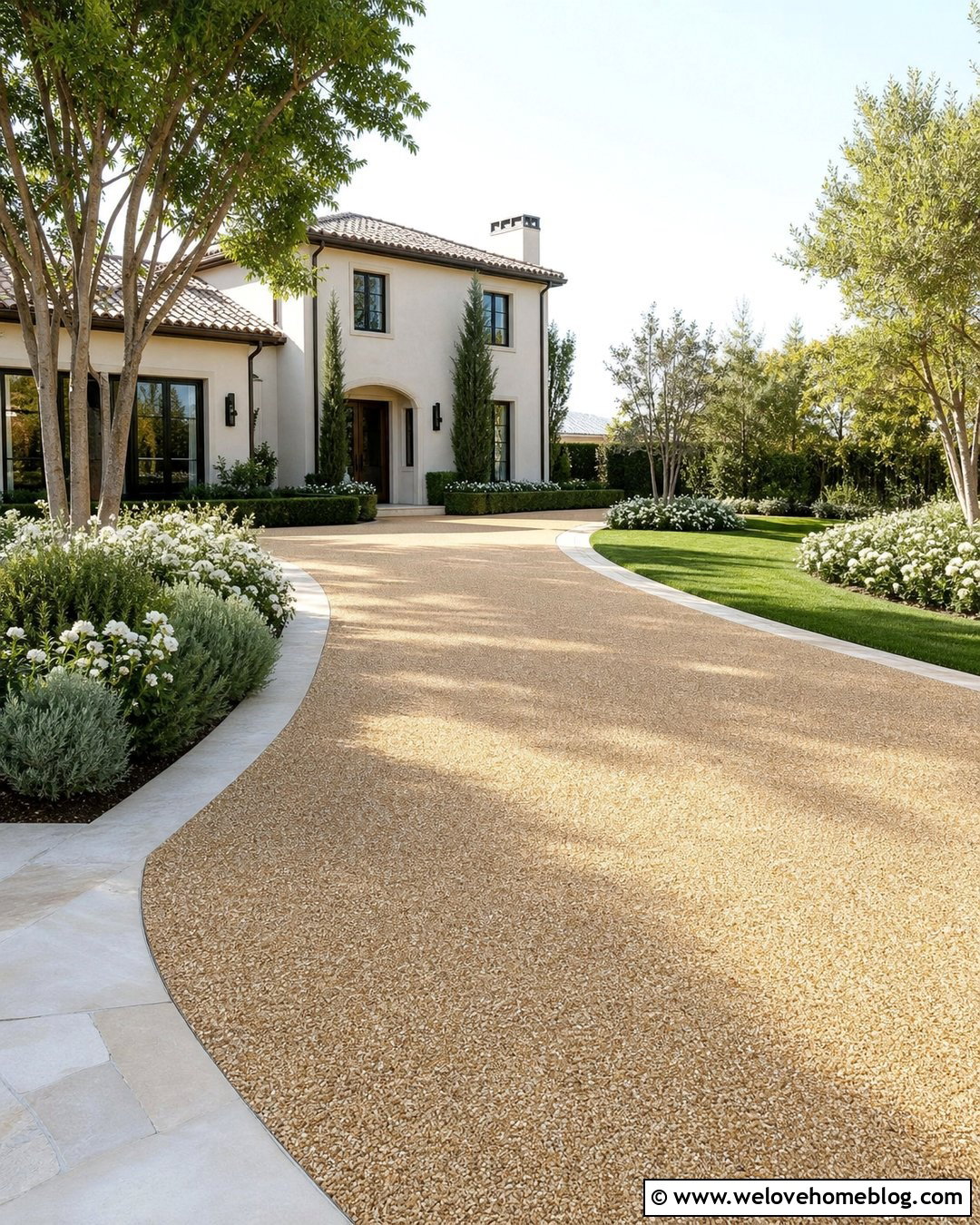
15. Interlock Driveway Border With Grass Strip
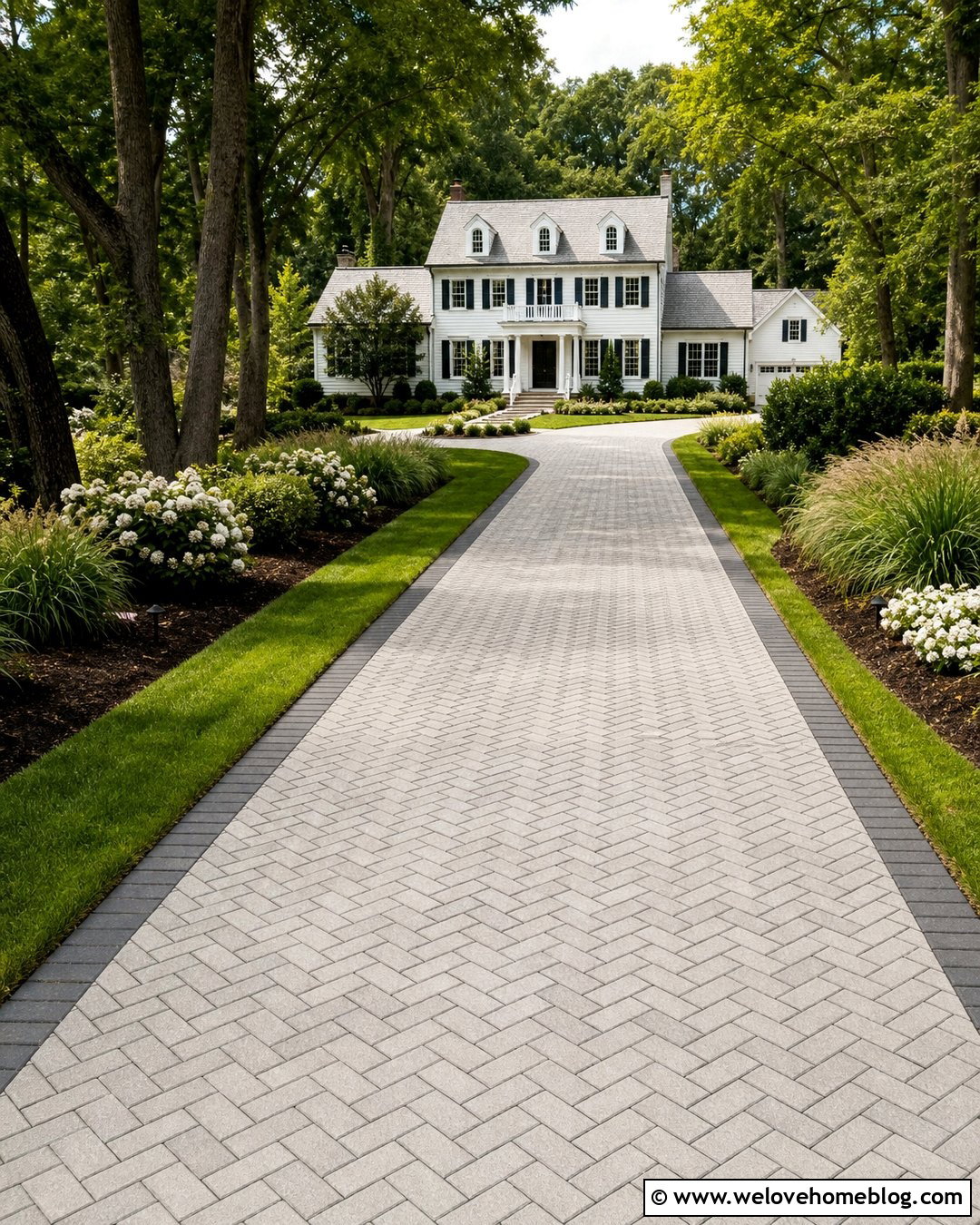
A narrow grass strip outside an interlock border can soften the transition between pavement and larger planting beds. Use medium gray pavers in a herringbone field, a dark soldier course for definition, and a carefully maintained ribbon of turf beyond it. The green line creates fresh contrast and works especially well along a long, straight driveway. Farther out, add trees, flowering shrubs, and mulched beds so the grass does not feel isolated. This layered arrangement suits a classic ranch or colonial home with a generous front lawn. The turf strip needs enough width for practical mowing and healthy root growth. If the space is too narrow or shaded, replace lawn with low ground cover. The border should still provide a clear, durable edge between the planting and vehicular surface.
16. Interlock Driveway Border With Decorative Gravel
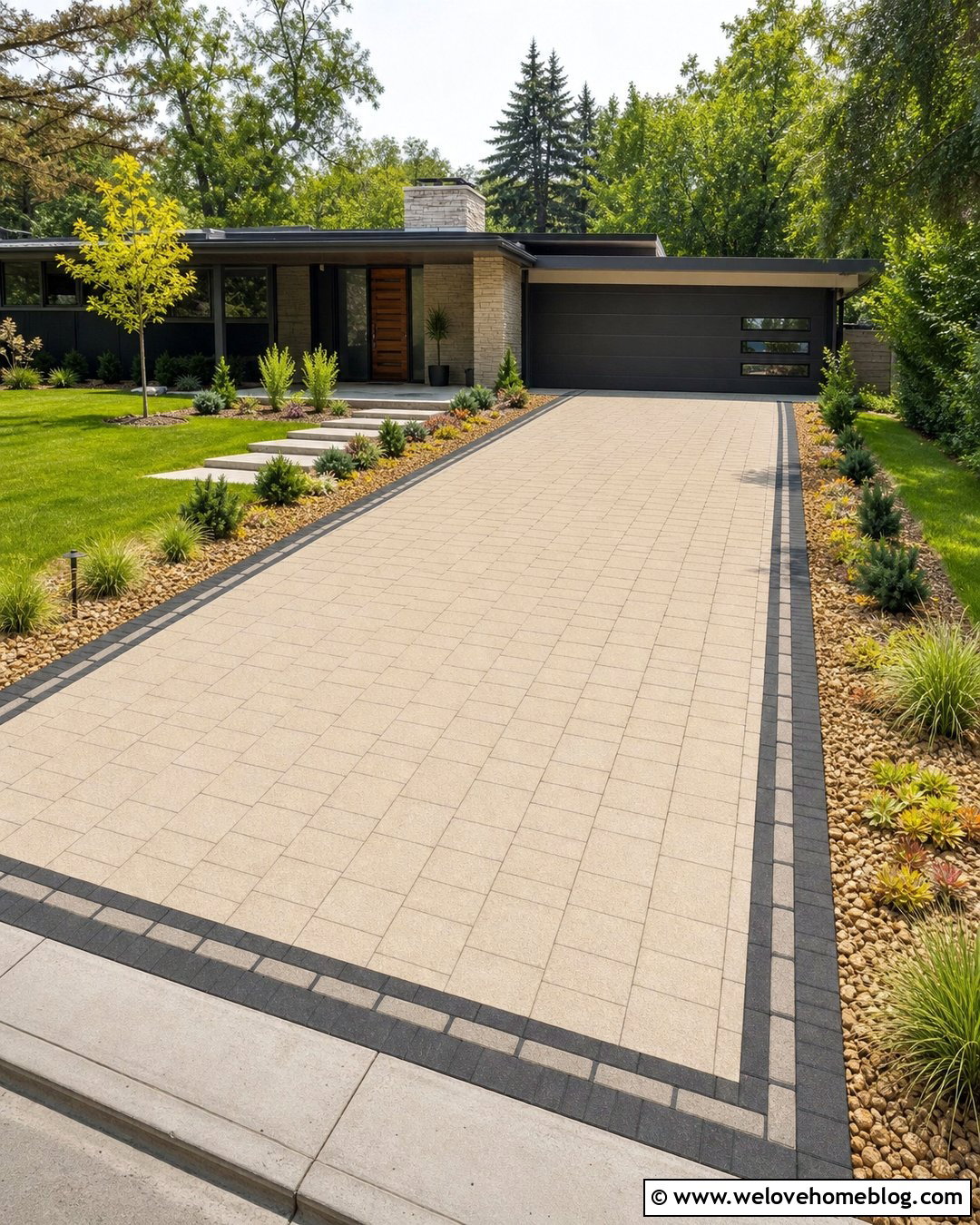
Decorative gravel between an interlock border and planting bed can add texture while reducing the amount of lawn beside the driveway. Create a smooth beige interlock surface with a charcoal double-sailor border, then place a contained strip of angular buff or gray stone outside the pavers. Use metal or stone edging on the landscape side to keep the gravel separate from mulch and soil. Drought-tolerant grasses, sedum, dwarf evergreens, and architectural shrubs complete the low-maintenance look. This design complements modern Southwestern, contemporary, and midcentury homes. Choose angular stone that settles more securely than rounded pebbles, especially near areas where people may step. Keep the gravel band consistent in width and avoid scattering too many rock colors. The result should appear structured, bright, and intentionally connected to the driveway.
17. Raised Interlock Driveway Border With Planting Beds
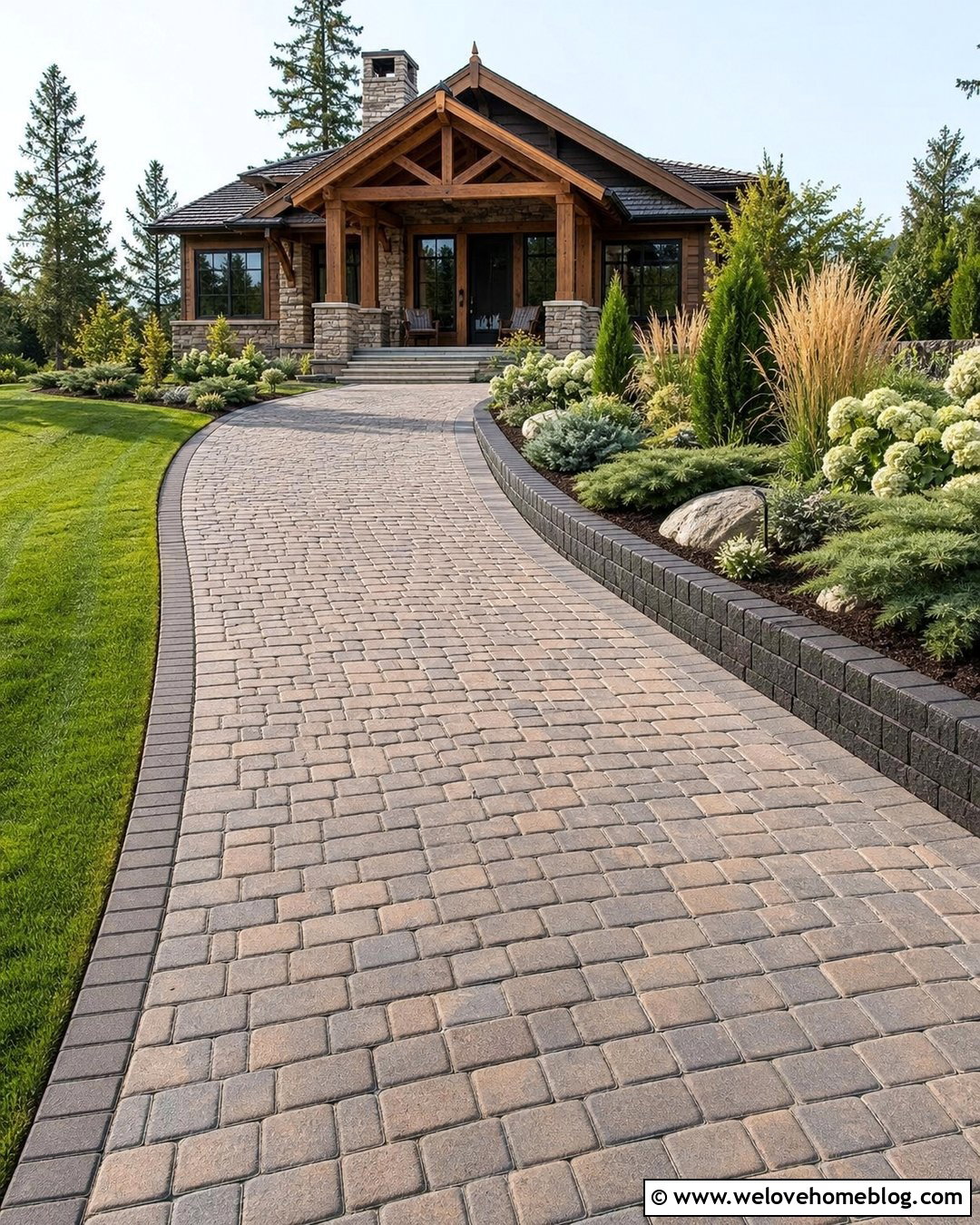
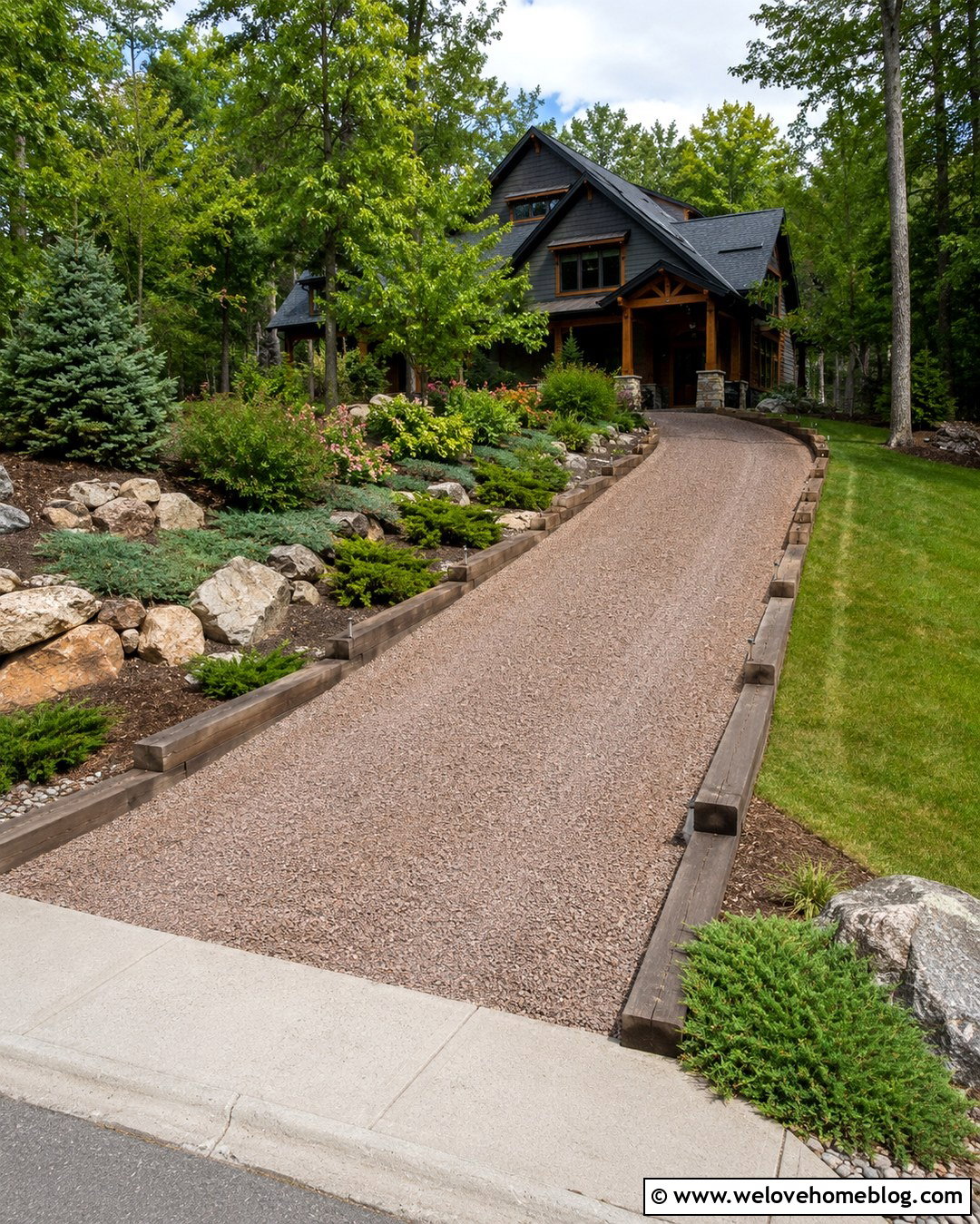
A slightly raised interlock border can help define planting beds beside a driveway on a gently sloped property. Use textured brown concrete pavers for the driveway and larger charcoal wall-style blocks along the uphill edge. The raised border should remain low and follow the grade gradually rather than creating a tall obstacle beside moving vehicles. Behind it, plant spreading junipers, compact hydrangeas, grasses, and erosion-resistant ground cover. On the opposite side, use a standard flush soldier course to maintain comfortable access. Match the raised border to the home’s stone veneer or front steps for a cohesive appearance. Drainage and base preparation need professional attention in this layout because water should not collect against the border or wash planting soil onto the driveway. The finished design feels neat, stable, and naturally terraced.
18. Interlock Driveway Border With Entrance Pillars
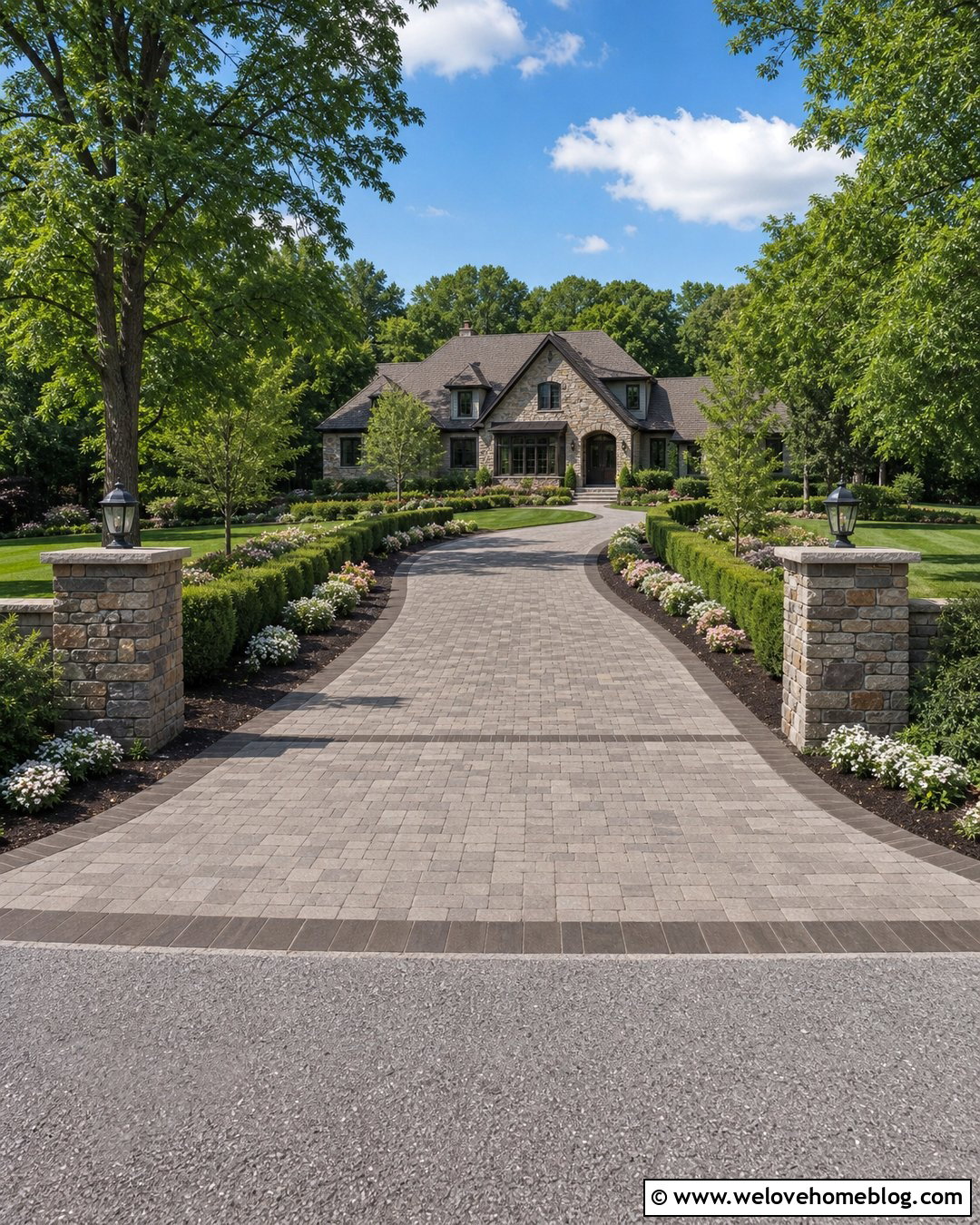
Entrance pillars and an interlock border can work together to make a long driveway feel properly anchored. Use warm gray interlocking pavers in a gently curved layout, surrounded by a dark brown soldier course. At the street, widen the border into a rectangular apron between two stone pillars. Match the border tone to the pillar caps, gate hardware, or masonry accents on the house. Low evergreen hedges and symmetrical flower beds can frame the entrance without blocking visibility. Continue the dark border toward the home so the pillars feel connected to the full driveway rather than added as separate decorations. This complete look suits country homes, large craftsman houses, and traditional estates. Keep the pillar scale appropriate to the entrance width, and leave enough open space for comfortable turning movements.
19. Permeable Interlock Driveway Border With Rain Garden
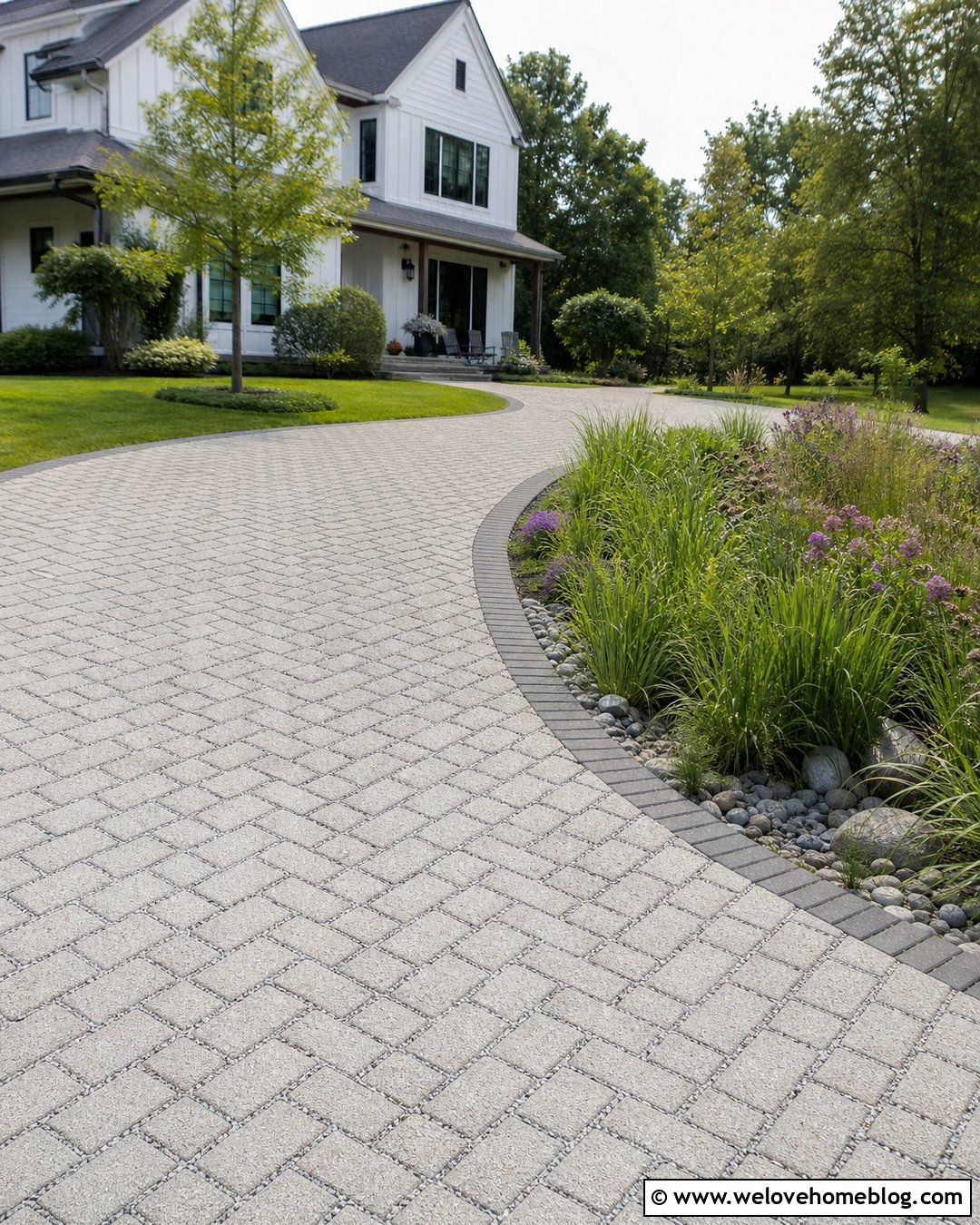
A permeable interlock driveway can be framed with a border that leads visually into a rain garden. Use light gray permeable concrete pavers with open, aggregate-filled joints and a darker solid-paver soldier course around the driving surface. Along the lower side of the driveway, curve the border gently toward a planted drainage area containing moisture-tolerant grasses, sedges, flowering perennials, and river stone. The result feels like one complete landscape rather than a technical drainage feature. Permeable paver systems are designed to let water filter through the paved surface, making them a useful option where site conditions and local requirements permit. () A modern farmhouse or contemporary home provides a fitting backdrop for the clean materials and naturalistic planting.
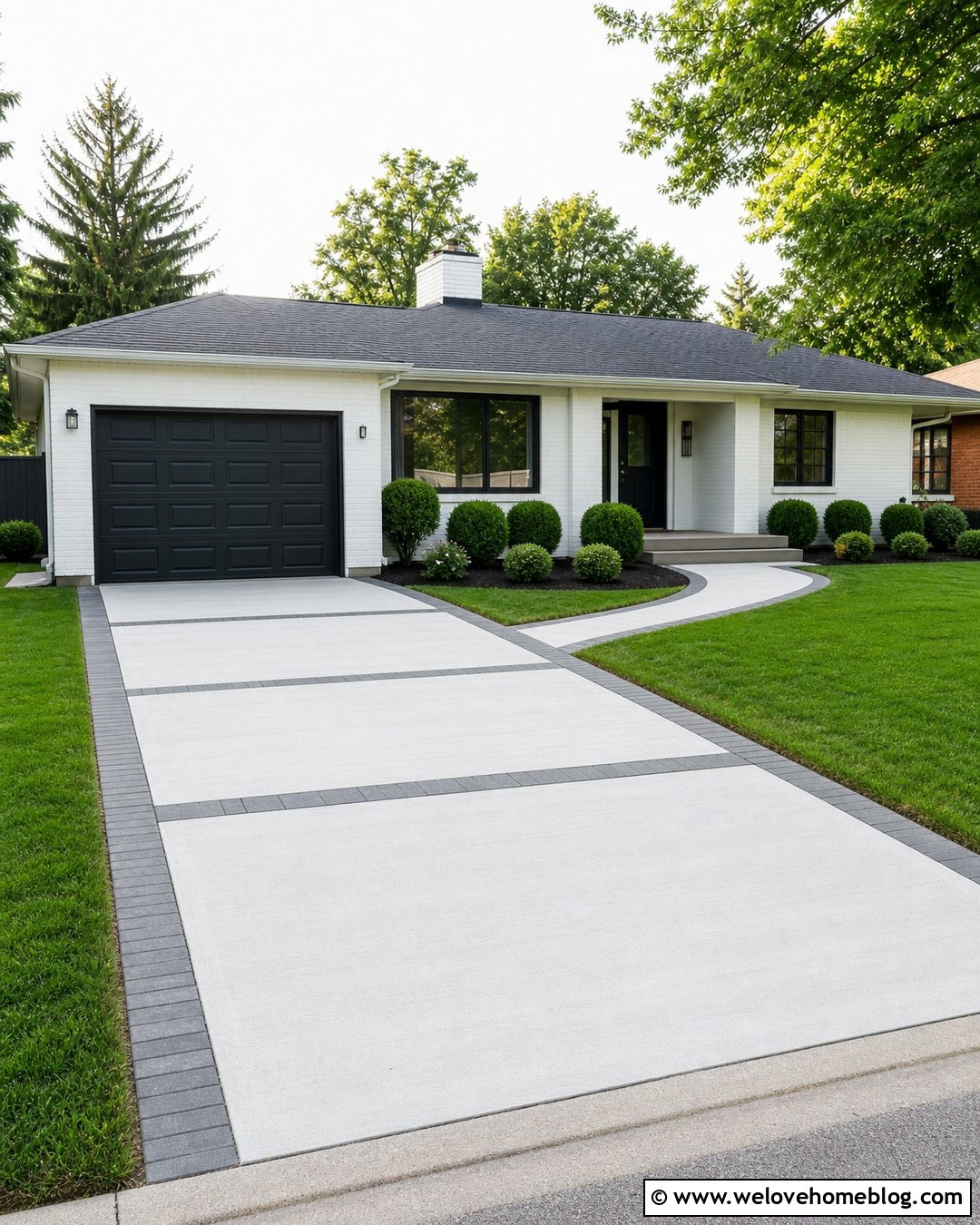
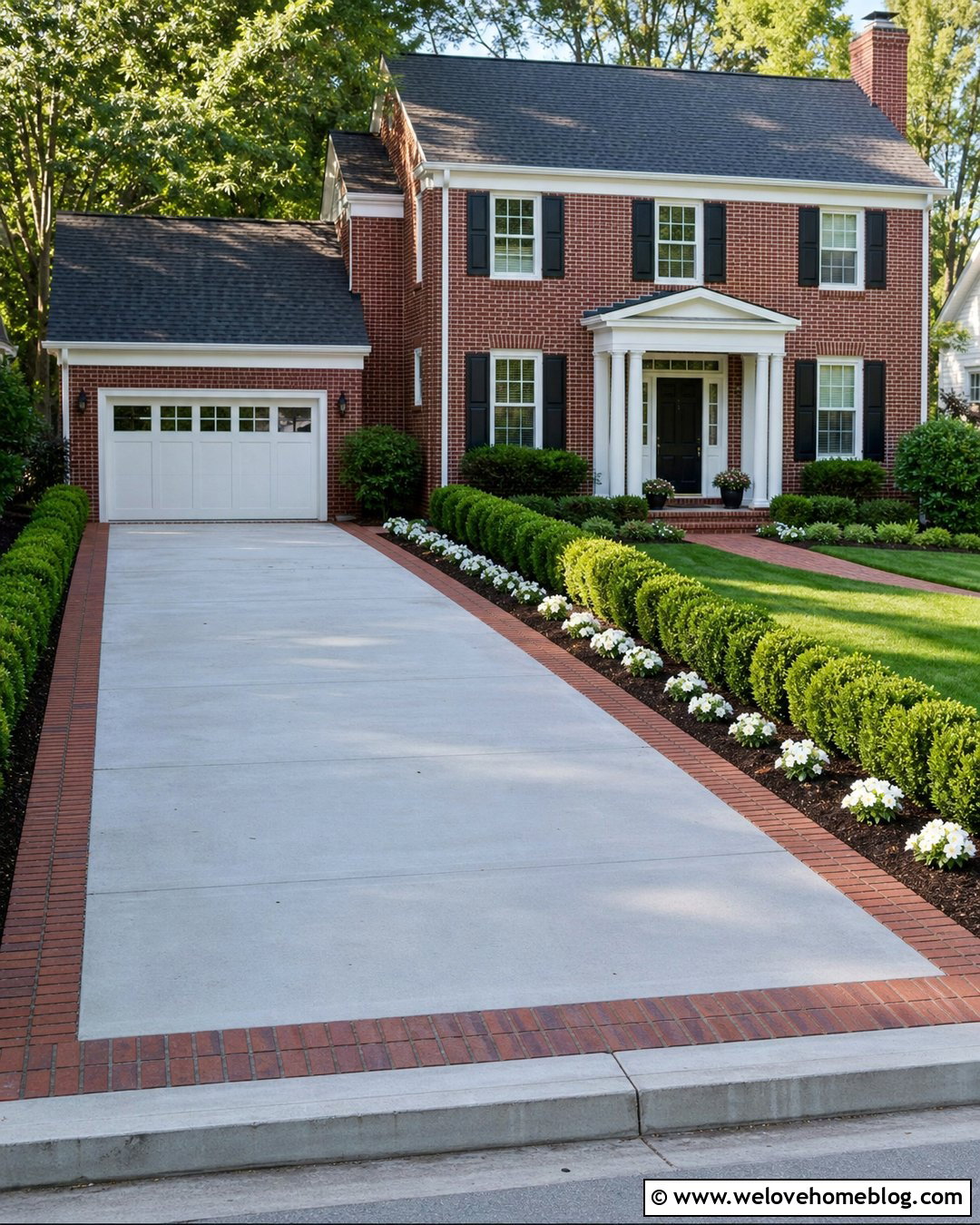
20. Interlock Driveway Border With Garage Apron
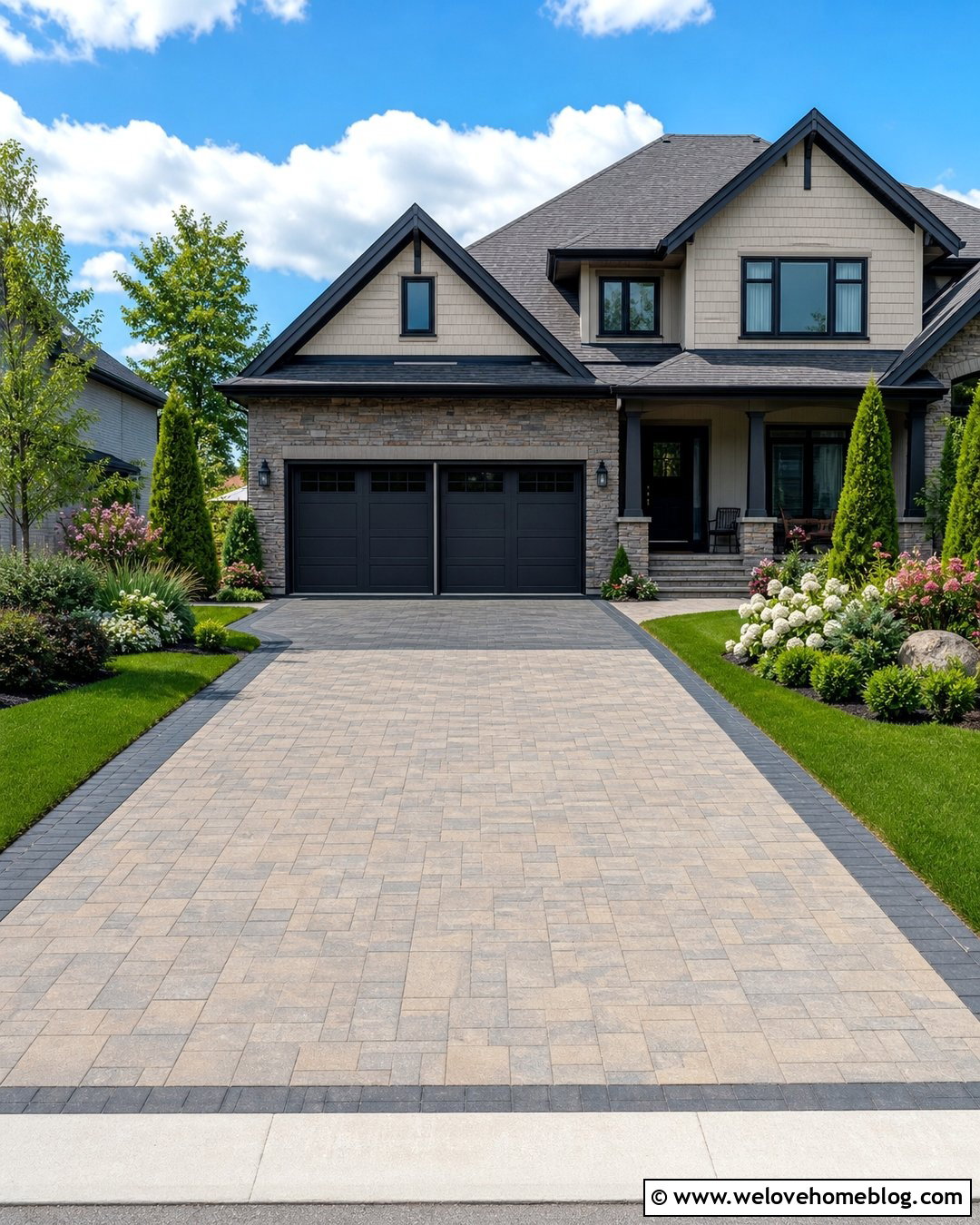
Emphasizing the garage apron gives an interlock driveway a strong visual finish at the house. Use blended beige and gray pavers for a straight driveway, edged with a charcoal sailor course. Near the garage, expand the charcoal border into a deeper rectangular band across the full width of the doors. This creates a clear stopping point and breaks up a long expanse of pavement. Repeat the dark pavers around the walkway and front steps to unify the hardscape. Narrow beds with clipped evergreens, flowering shrubs, and ornamental grasses soften the garage facade. Align the apron carefully with door openings, columns, and masonry lines. A simple field pattern is best because the wider apron already supplies contrast. The complete look feels organized, practical, and proportioned to the architecture.
Conclusion:
The most effective **20 Interlock Driveway Border Ideas** treat the border as part of a complete entrance rather than an isolated decorative strip. Color, width, pattern, and texture should work with the driveway surface, house facade, walkway, and surrounding landscape. A slim soldier course may be enough for a compact home, while a circular or oversized driveway can support wider double bands and layered colors. Durable results also depend on a compacted base, appropriate edge restraint, smooth transitions, and well-planned drainage. Before choosing materials, view full-size samples beside the house in sun and shade. A thoughtfully designed interlock border will make the driveway look cleaner, more connected, and intentionally finished.

Related posts:
Leave a Reply