
Driveway curbing does more than create a neat line between pavement and lawn. It can support loose gravel, protect vulnerable asphalt edges, guide drainage, simplify mowing, and connect the driveway to the home’s architecture. The best border depends on the driveway material, landscape style, climate, maintenance needs, and budget. A subtle steel strip works beautifully beside a modern gravel drive, while granite blocks or brick can give a traditional home a stronger, more finished entrance. Concrete curbing also offers flexible shapes, colors, and textures for curved planting beds. These complete looks combine practical borders with coordinated surfaces, layouts, landscaping, and house styles. Use the following **20 driveway curbing ideas** to find a durable design that improves your entire front yard. ()

1. Concrete Driveway Curbing With Curved Flower Beds
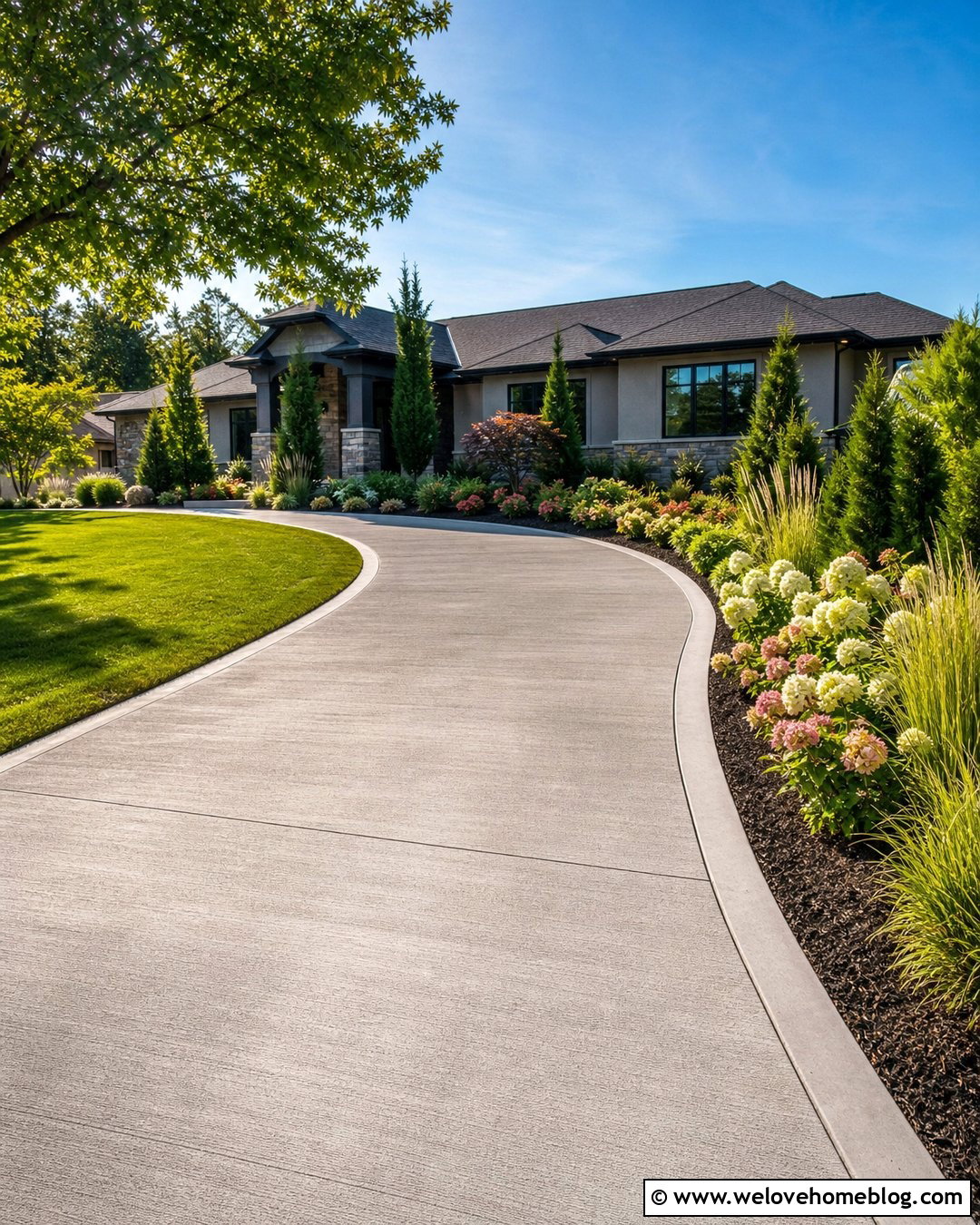
A flowing concrete curb can transform a basic gray poured concrete driveway into a softer, more welcoming approach. Use continuous light-gray curbing to follow both sides of a gently curved driveway. Wide planting beds filled with ornamental grasses, compact hydrangeas, and evergreen shrubs will soften the pavement without blocking visibility. Keep the curb several inches above the soil where mulch regularly washes onto the driveway. Near the street, widen the border into a rounded entrance bed for an address marker or small flowering tree. This complete look works especially well with ranch and contemporary suburban homes. Choose a broom-finished driveway for traction, then give the curb a smoother finish so its clean outline remains visually distinct.
2. Brick Driveway Curbing With Black Asphalt
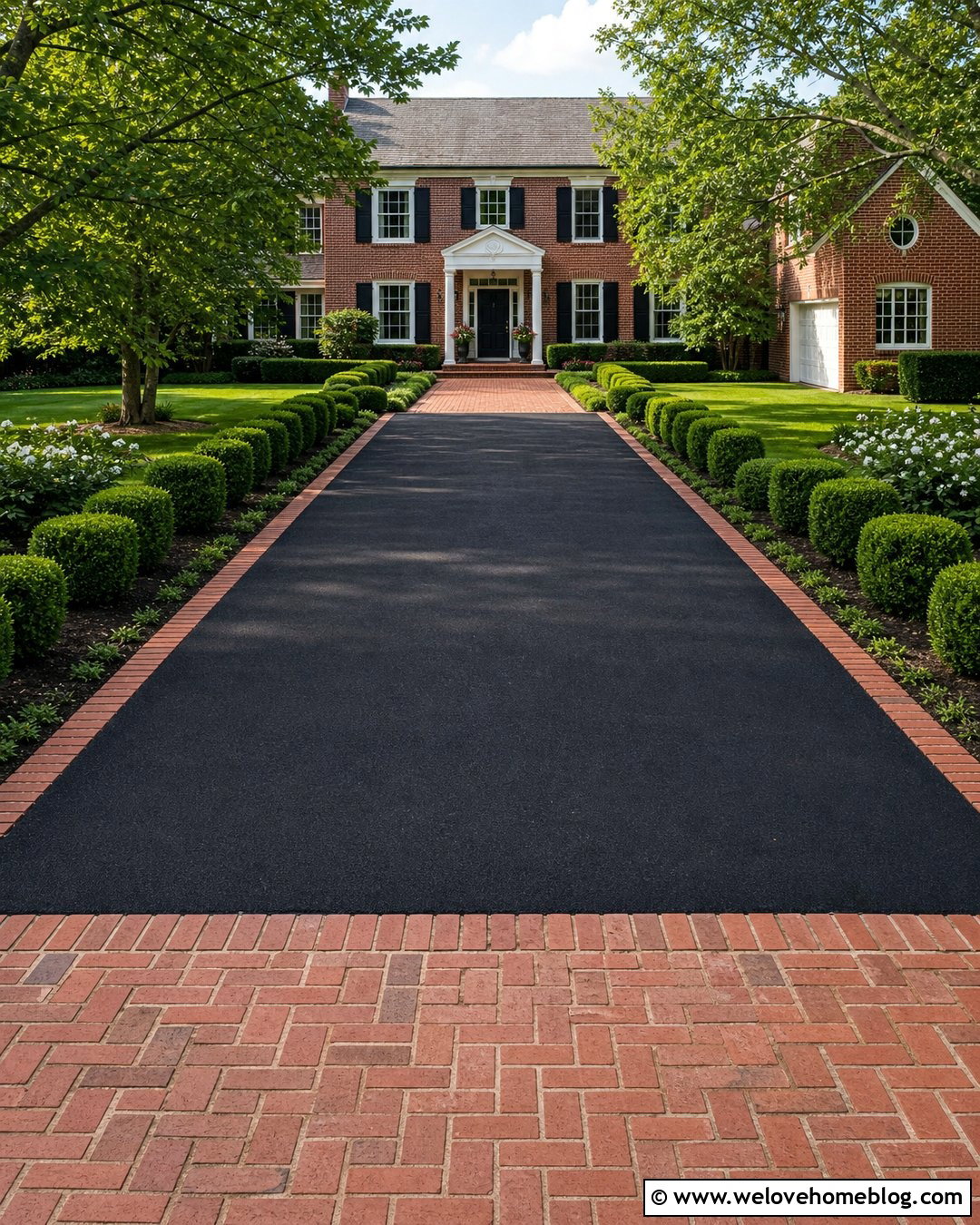
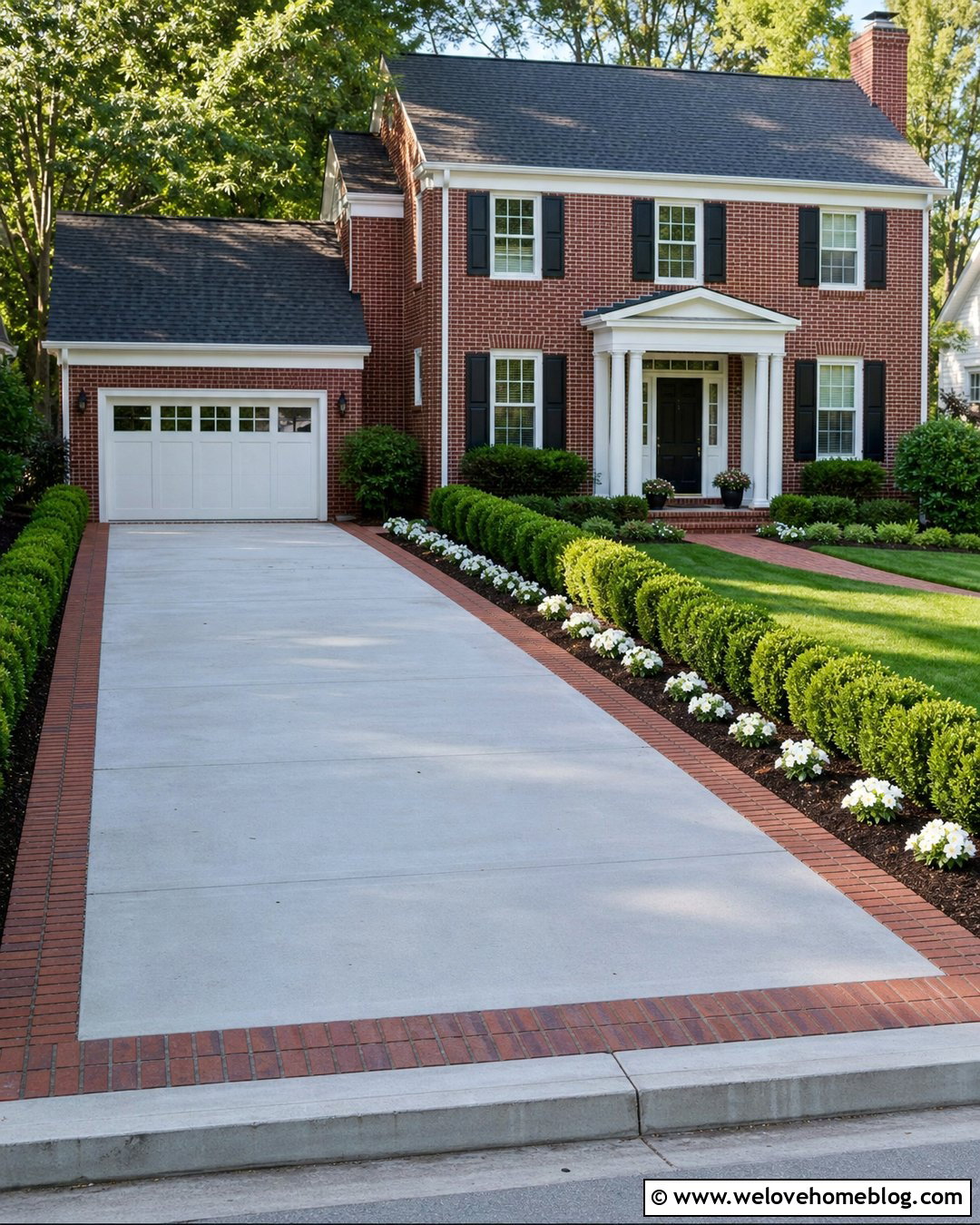
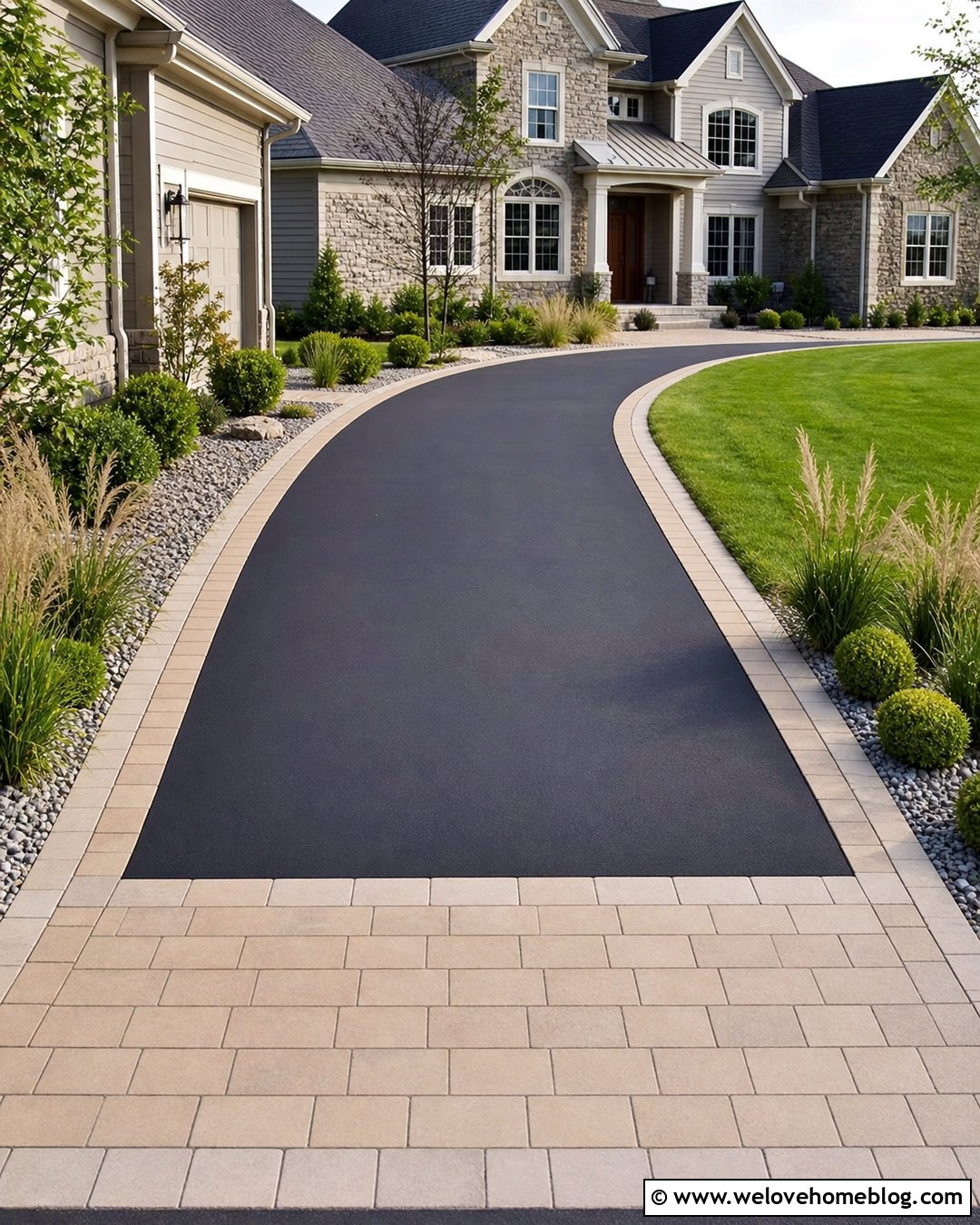
Red brick curbing adds warmth and definition to a smooth black asphalt driveway. Install the bricks upright in a soldier-course pattern for a narrow, noticeable edge that does not take away valuable driving space. A straight driveway leading to a colonial home feels especially balanced when the brick border matches the facade, front steps, or walkway. Frame the outside of the curbing with clipped boxwood, green lawn, and simple flower beds rather than overly busy planting. At the street, continue the brick across the driveway as an apron or decorative ribbon. Properly installed brick or stone edging can also help protect exposed pavement edges while creating a firm separation from the surrounding landscape. ()
3. Granite Block Driveway Curbing With Gravel
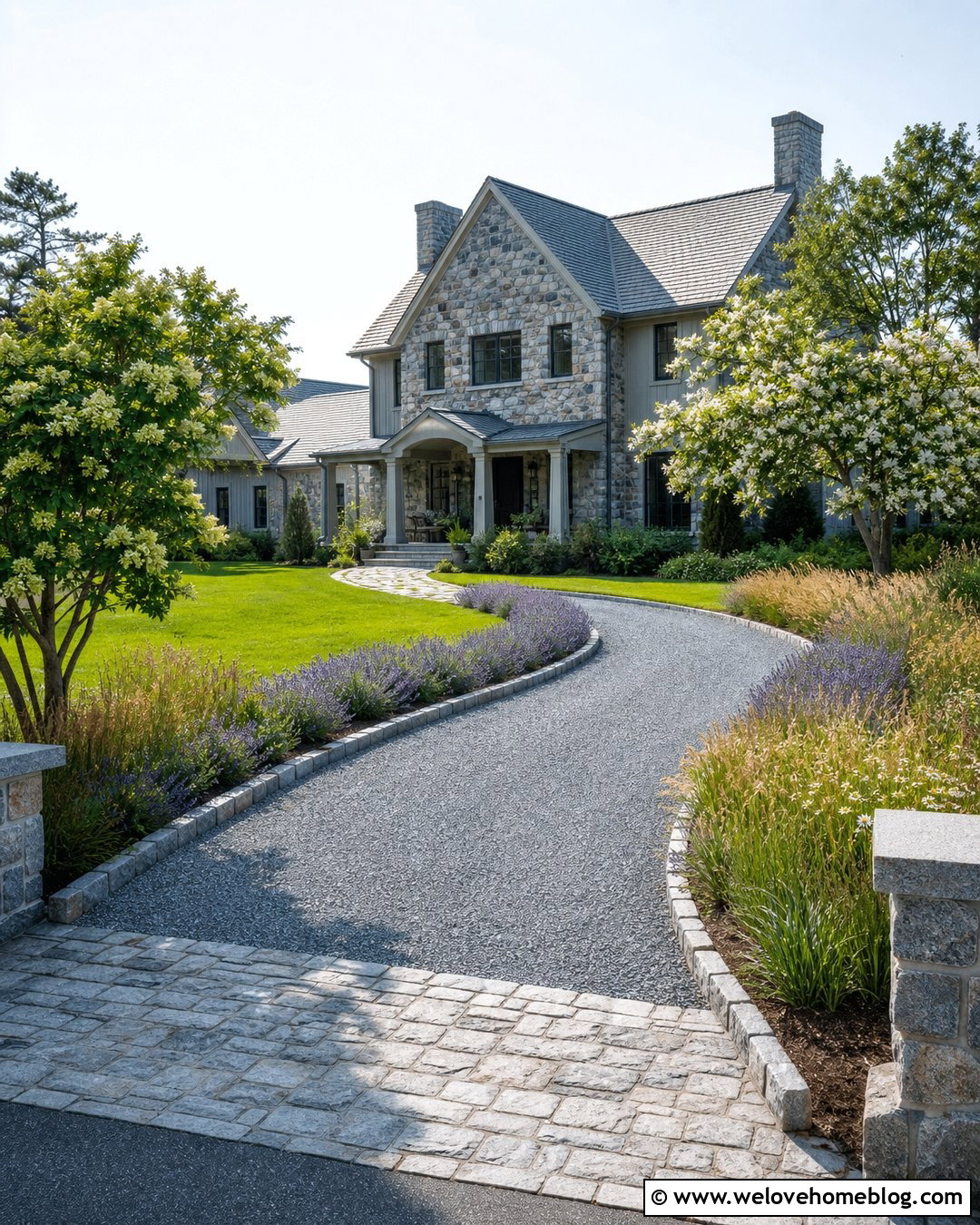
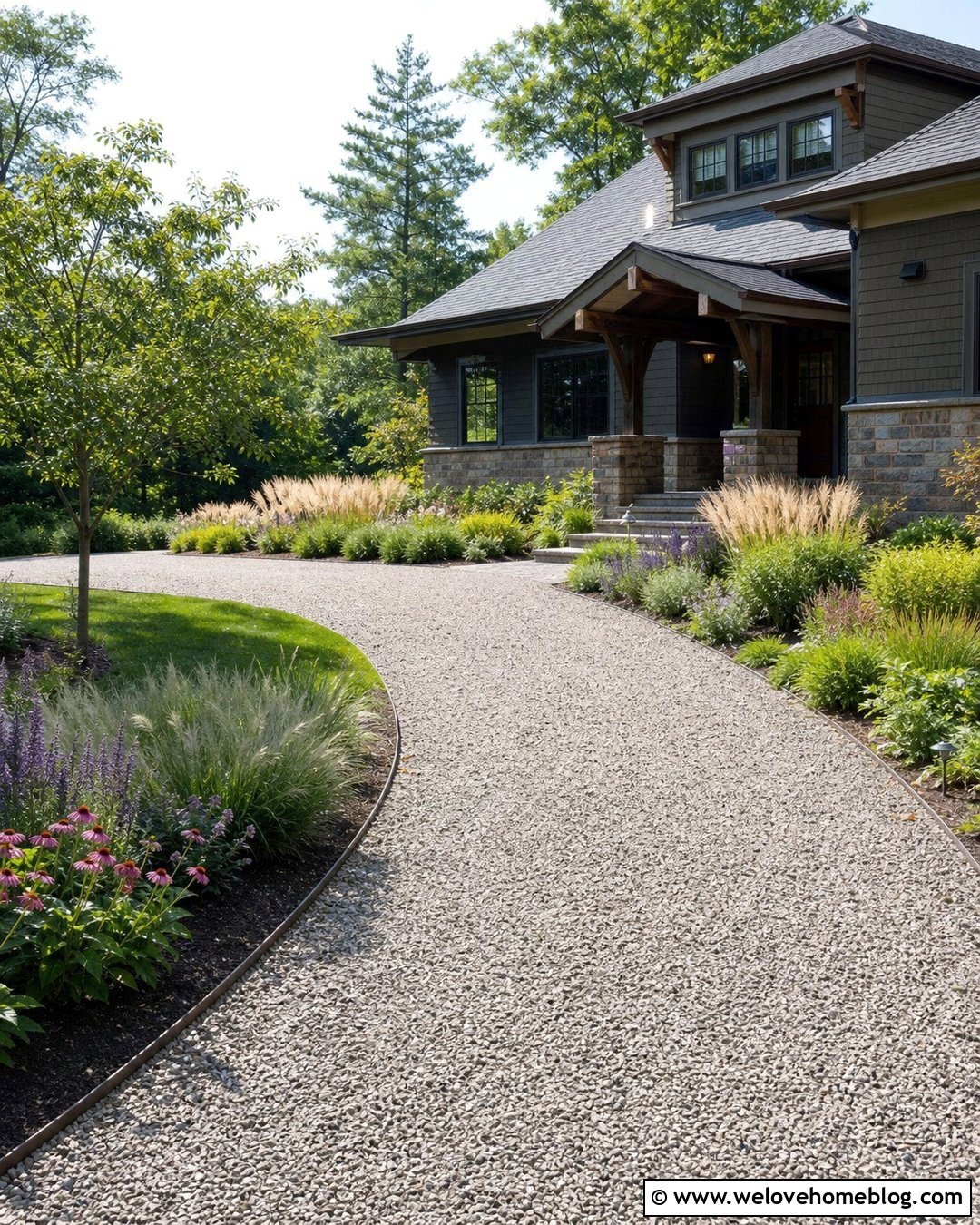
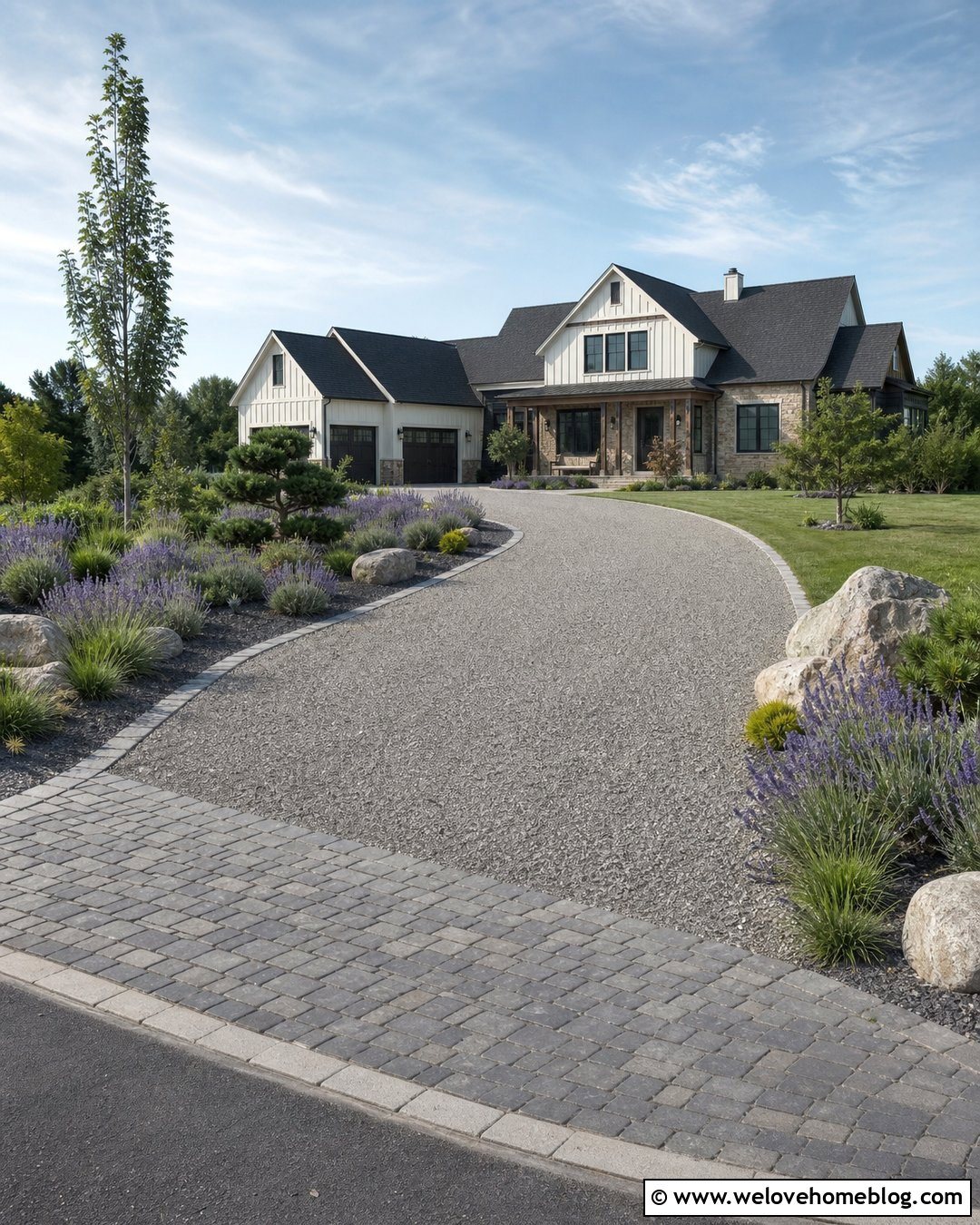
Loose gravel needs a substantial edge, and granite blocks provide both strength and traditional character. Pair a gray crushed-stone driveway with chunky granite curbing set along a broad, gently curved layout. The blocks should rise slightly above the gravel to help contain migrating stones, but they should remain low enough to avoid creating an awkward step near walkways. Add meadow grasses, lavender, and neatly maintained lawn outside the curb for a relaxed country look. A stone-faced farmhouse or Cape Cod home will make the varied granite tones feel intentional. At the entrance, create a wider granite apron that reduces gravel movement toward the street. This combination feels established, practical, and attractive without making the landscape look overly formal.
4. Belgian Block Driveway Curbing With Concrete
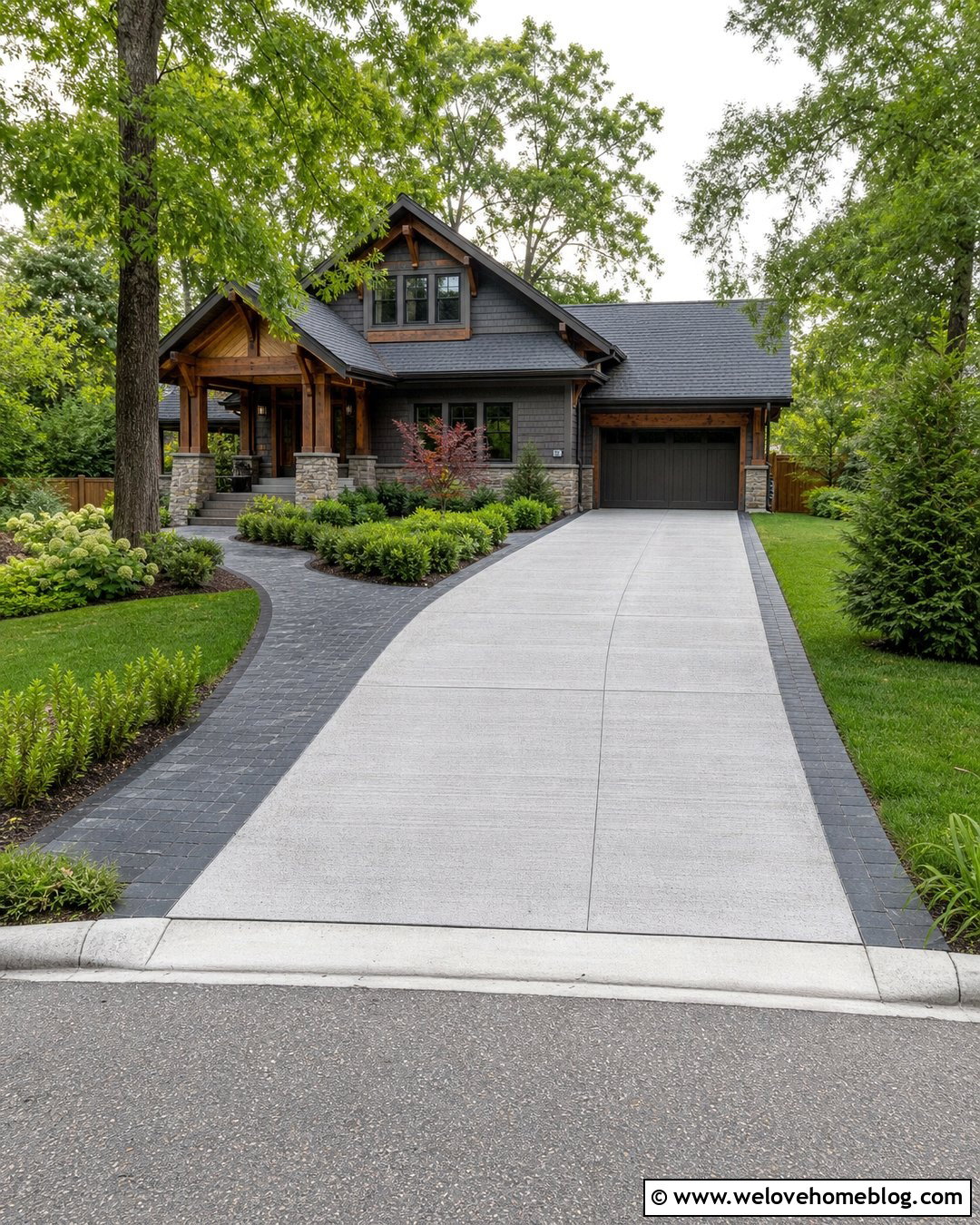
Belgian block gives an ordinary concrete driveway a substantial custom border. Place charcoal or warm-gray granite blocks along both sides of a straight broom-finished concrete surface. The darker stone will outline the driveway clearly while coordinating with slate roofing, dark shutters, or stone veneer. For a polished craftsman look, connect the curb to a matching paver walkway near the garage. Low evergreen shrubs and seasonal perennials can fill the adjoining beds without hiding the stonework. Belgian blocks should be installed on a stable setting base rather than placed loosely in soil. This creates a stronger edge where vehicle tires, rain, and seasonal ground movement place stress on the border. ()
5. Stamped Concrete Driveway Curbing With Pavers
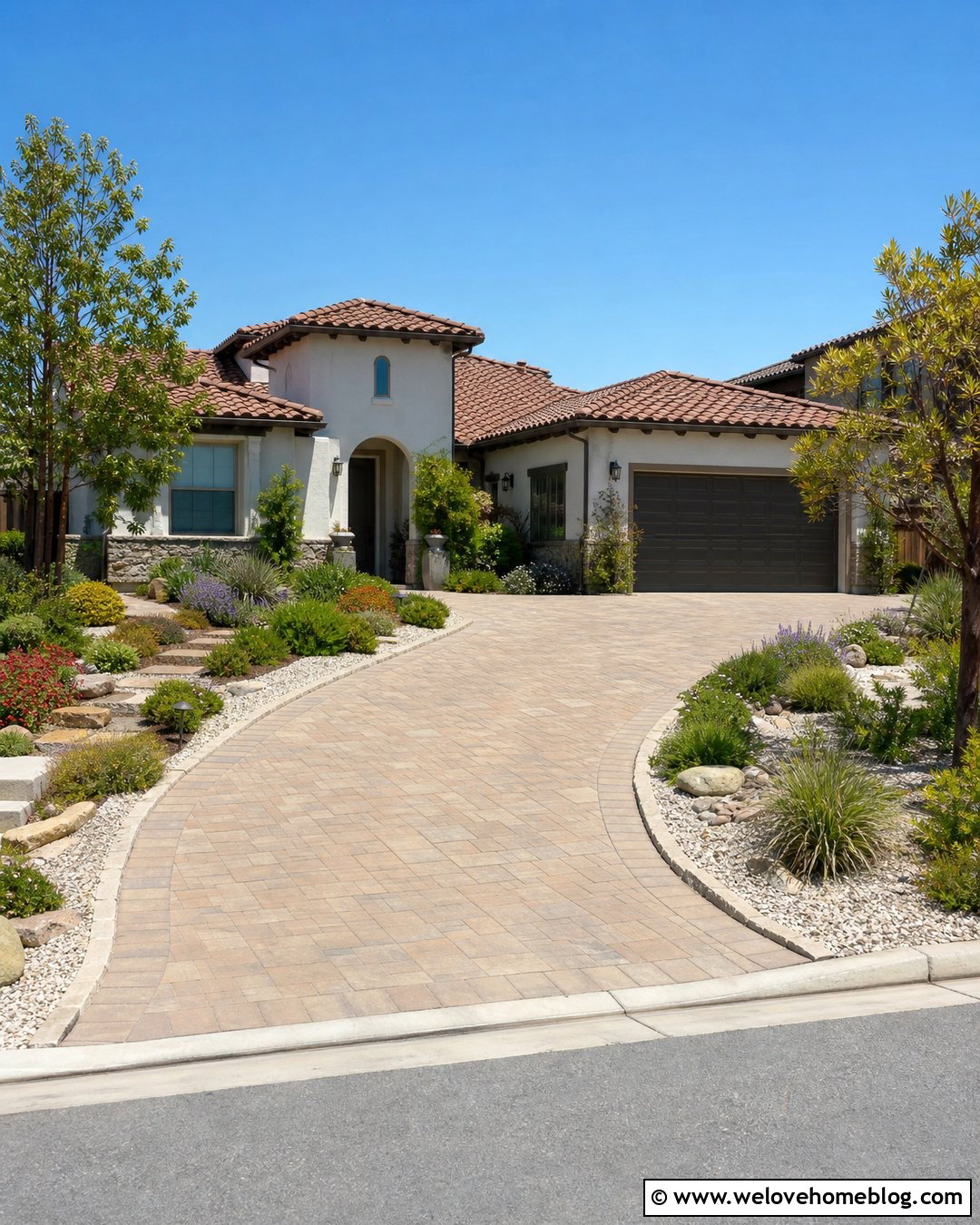
Stamped concrete curbing can bring texture to a driveway without the cost or visual weight of full natural-stone borders. Surround a tan concrete paver driveway with curbing stamped to resemble weathered limestone. A softly curved layout will showcase the pattern better than a completely straight edge. Coordinate the curb color with the pavers, but choose a slightly darker shade so the boundary remains visible. Outside the curb, combine pale river rock, drought-tolerant grasses, and compact flowering shrubs for a low-maintenance landscape. This complete design suits Mediterranean, Southwestern, and stucco homes. Keep the stamped texture shallow and consistent because deeply molded surfaces collect debris and can make routine cleaning harder around planting beds and driveway entrances.
6. Cobblestone Driveway Curbing With Pea Gravel
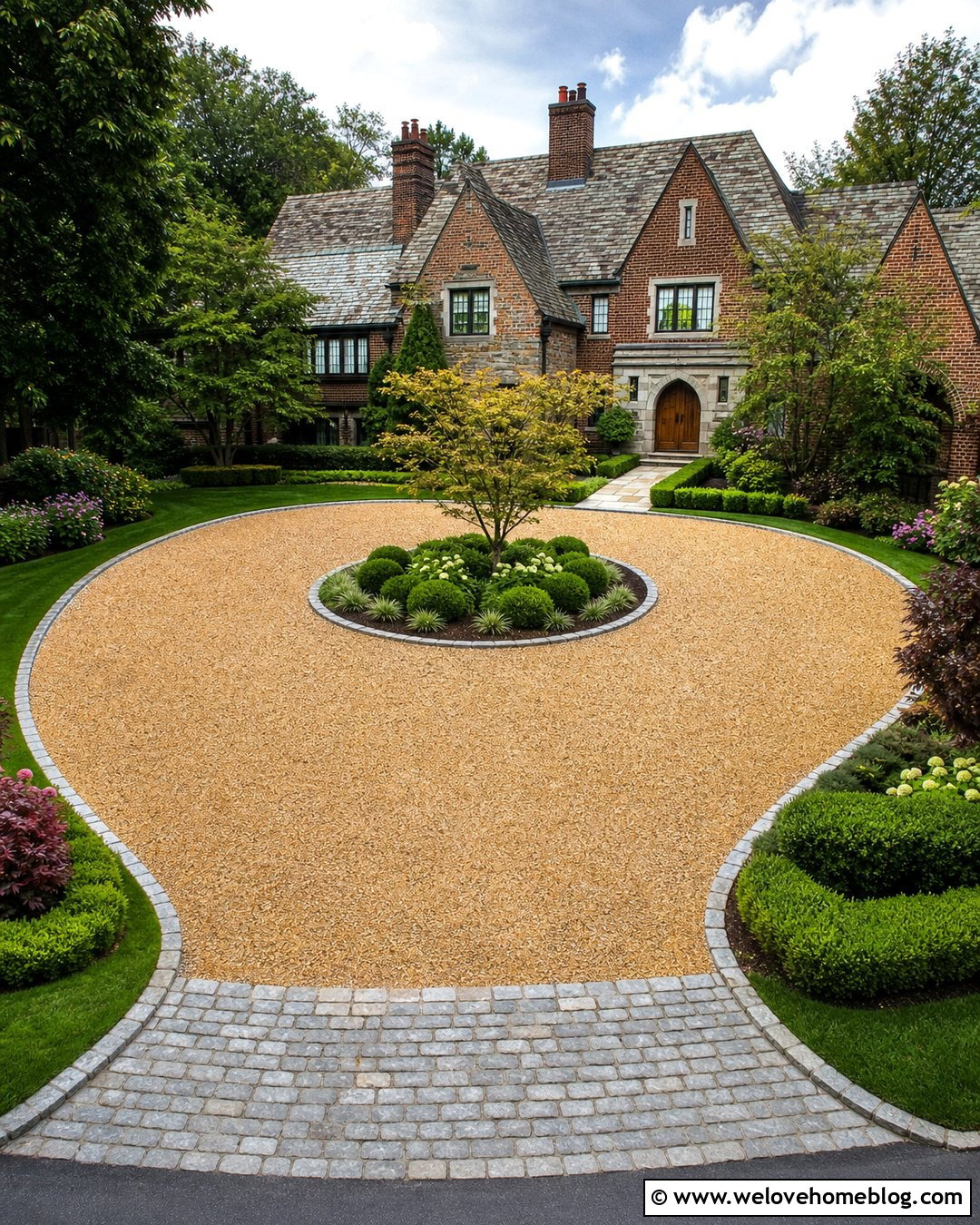
Rounded pea gravel gains structure when it is framed by rugged cobblestone curbing. Use a warm beige pea gravel surface on a wide circular driveway, then install gray and brown cobbles around both the outer edge and the central planting island. The contrast between smooth gravel and irregular stone creates an inviting old-world look. Fill the island with a small ornamental tree, low boxwoods, and layered perennials that preserve sightlines across the circle. A brick Tudor or traditional stone house provides the ideal backdrop. Add a matching cobblestone apron near the road to make the entrance feel complete. The raised curbing will visually contain the gravel while protecting nearby lawn and planting areas from scattered stones.
7. Paver Driveway Curbing With Exposed Aggregate
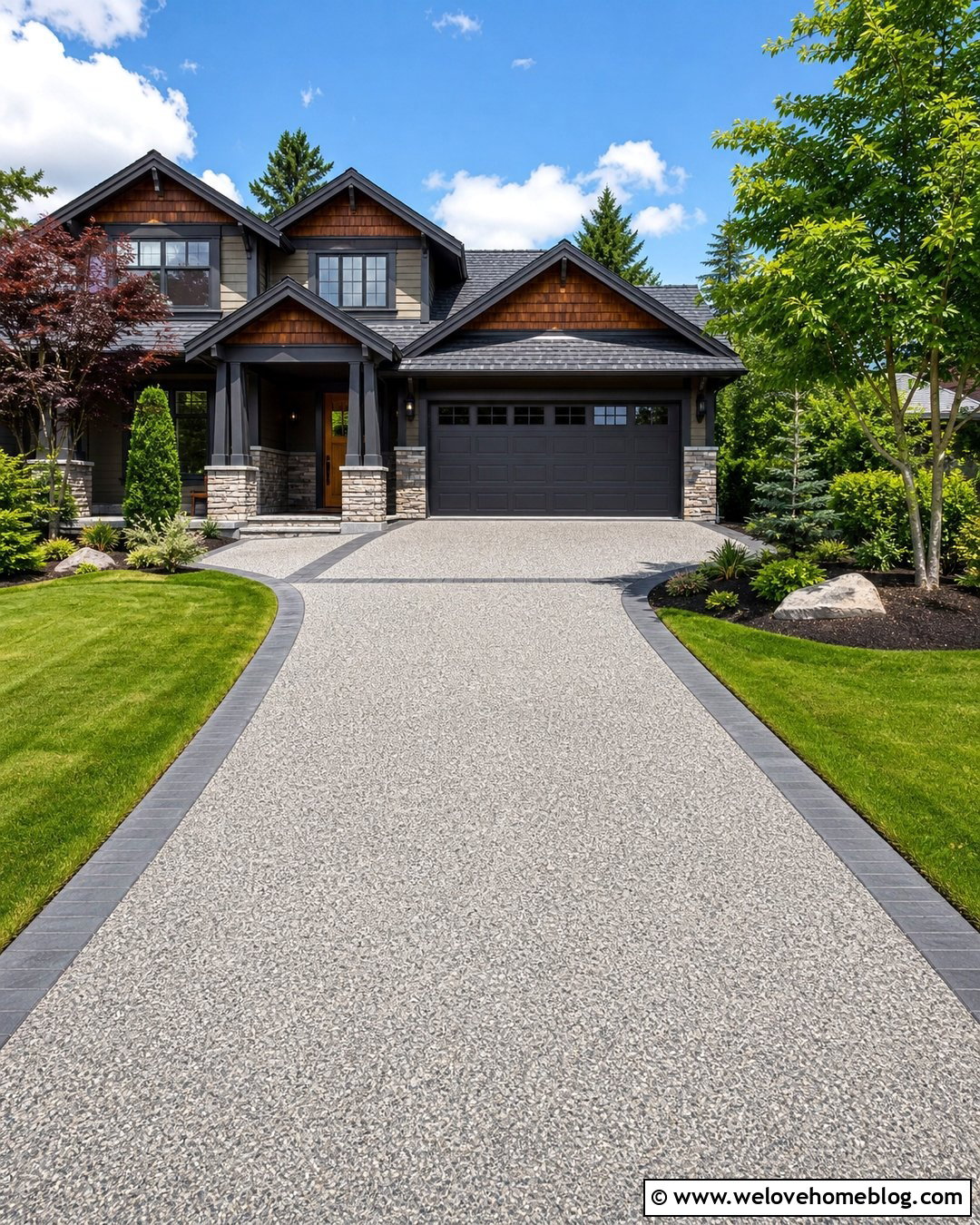
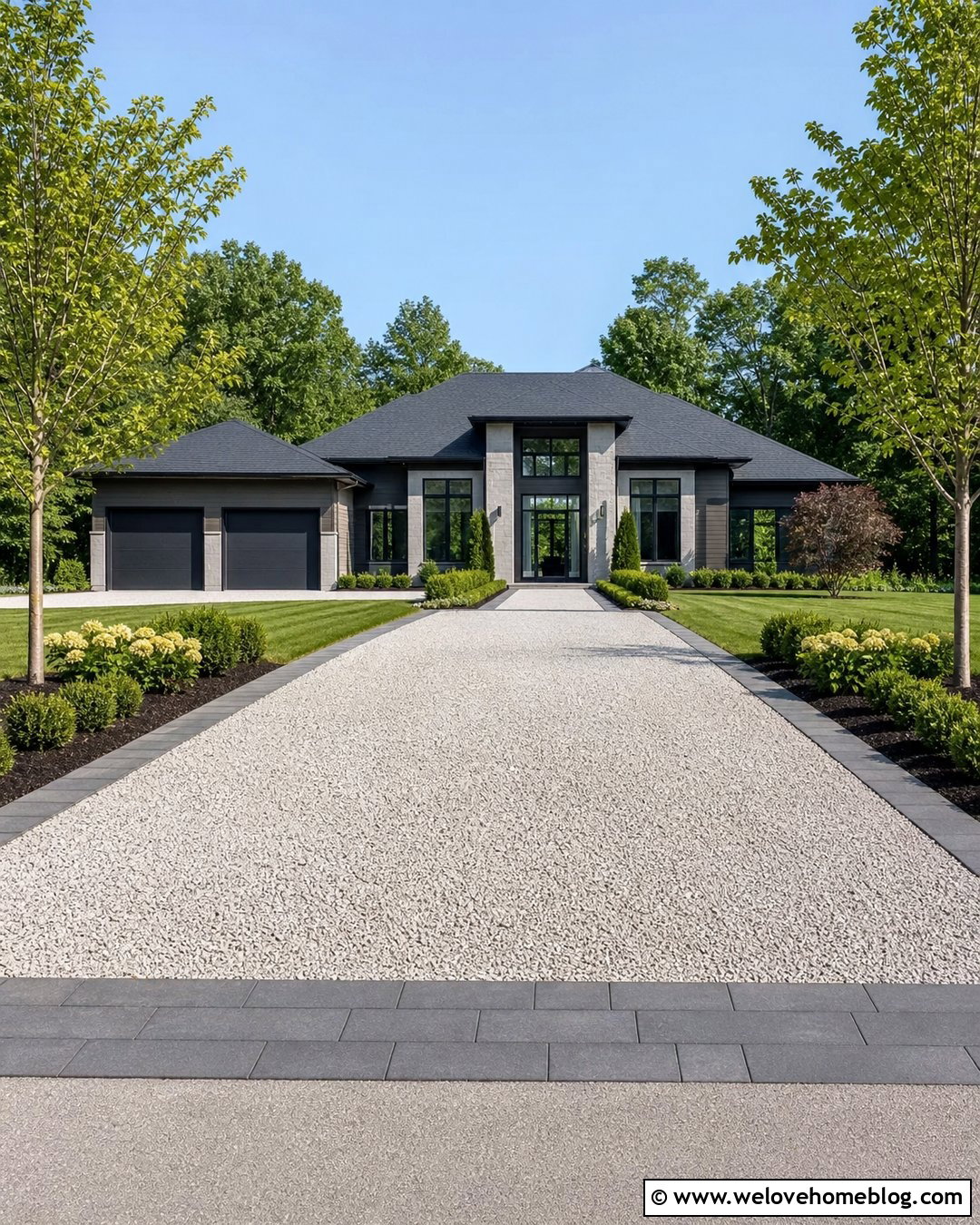
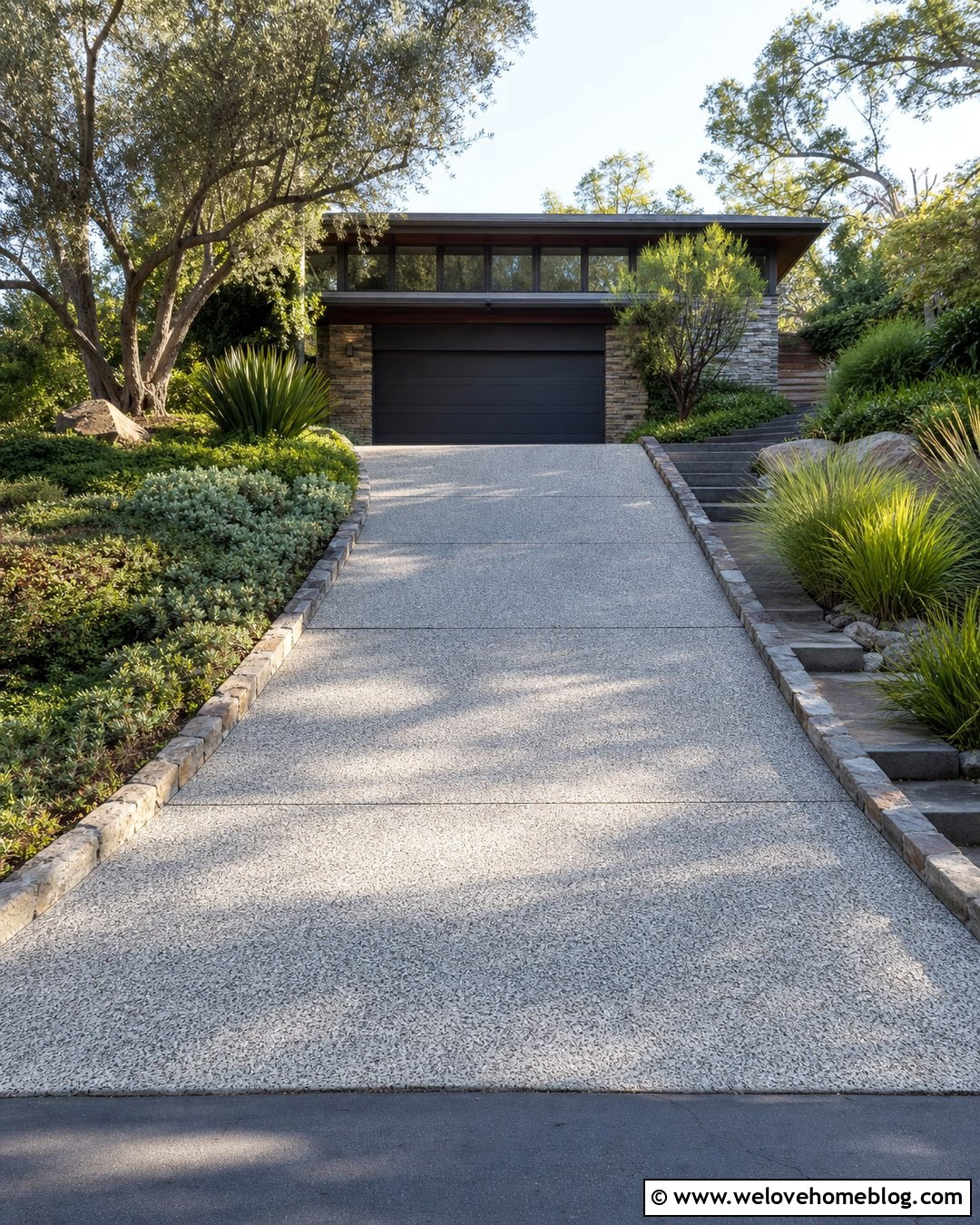
A charcoal paver curb can give an exposed aggregate driveway a clean, tailored frame. Choose a light-gray aggregate surface with visible tan and cream stones, then run dark rectangular pavers along a straight or slightly flared driveway. Lay the pavers lengthwise for a slim border or use a double row where you want stronger contrast. Continue the same pavers across the garage threshold and around the adjoining walkway to unify the hardscape. Simple lawn panels, clipped shrubs, and one ornamental tree on each side will complement a modern craftsman house. Because the driveway surface already contains plenty of texture, keep the curbing pattern restrained. The result feels detailed and upscale without making the entrance visually crowded.
8. Steel Driveway Curbing With Modern Gravel
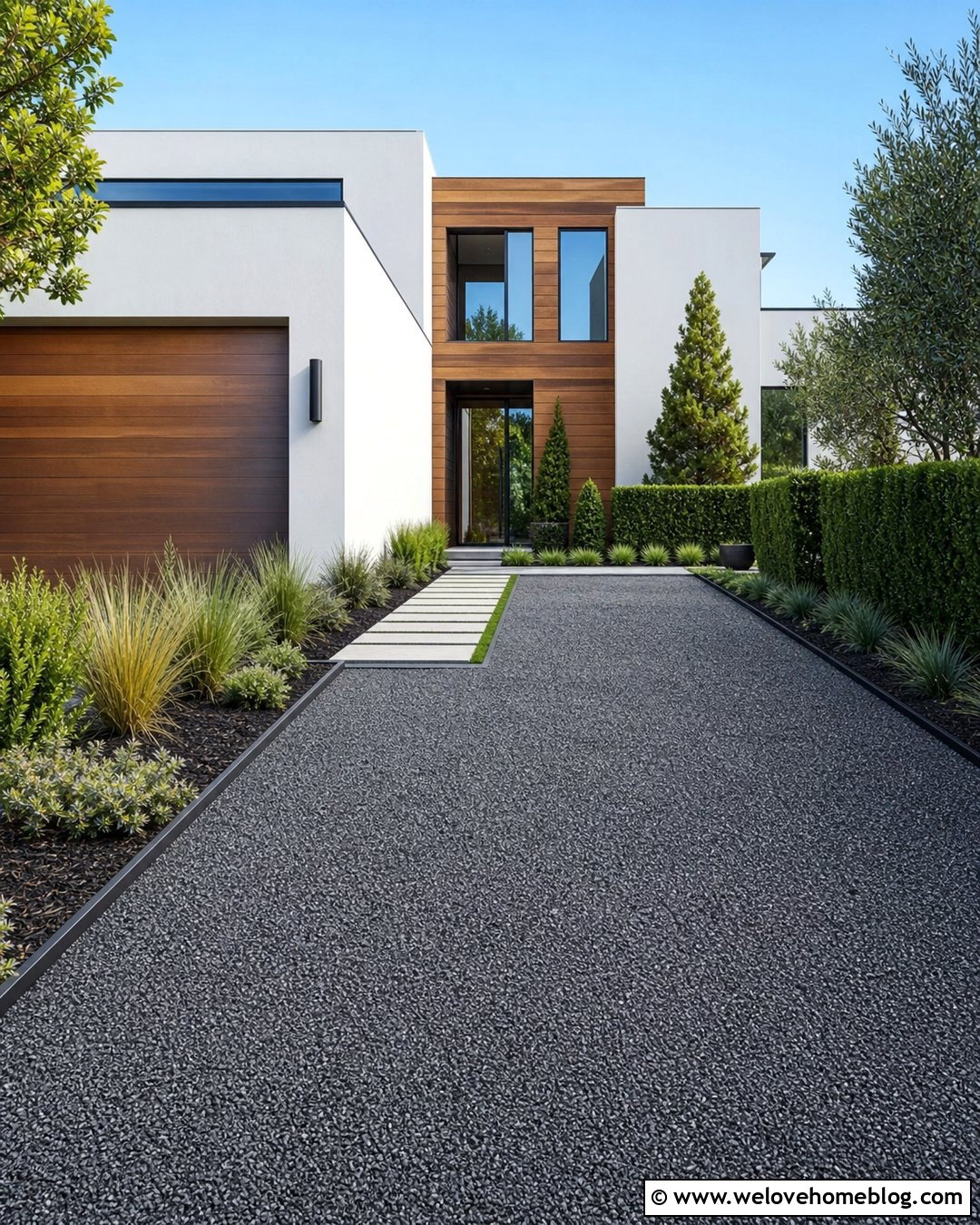
Slim steel curbing is ideal when you want a nearly invisible boundary around a modern gravel driveway. Pair dark-gray crushed granite with black powder-coated steel edging on a straight driveway divided by narrow grass or ground-cover strips. The metal should sit just high enough to restrain the aggregate while preserving the crisp, low-profile appearance. Surround the drive with architectural grasses, compact evergreens, and rectangular concrete stepping pads leading toward the front door. A modern house with white stucco, natural wood siding, and black windows will reinforce the clean palette. Heavy-duty steel is a better fit beside vehicle surfaces than thin decorative garden edging. Use firmly anchored sections and smooth transitions around the driveway apron and pedestrian paths. ()
9. Natural Stone Driveway Curbing With Asphalt
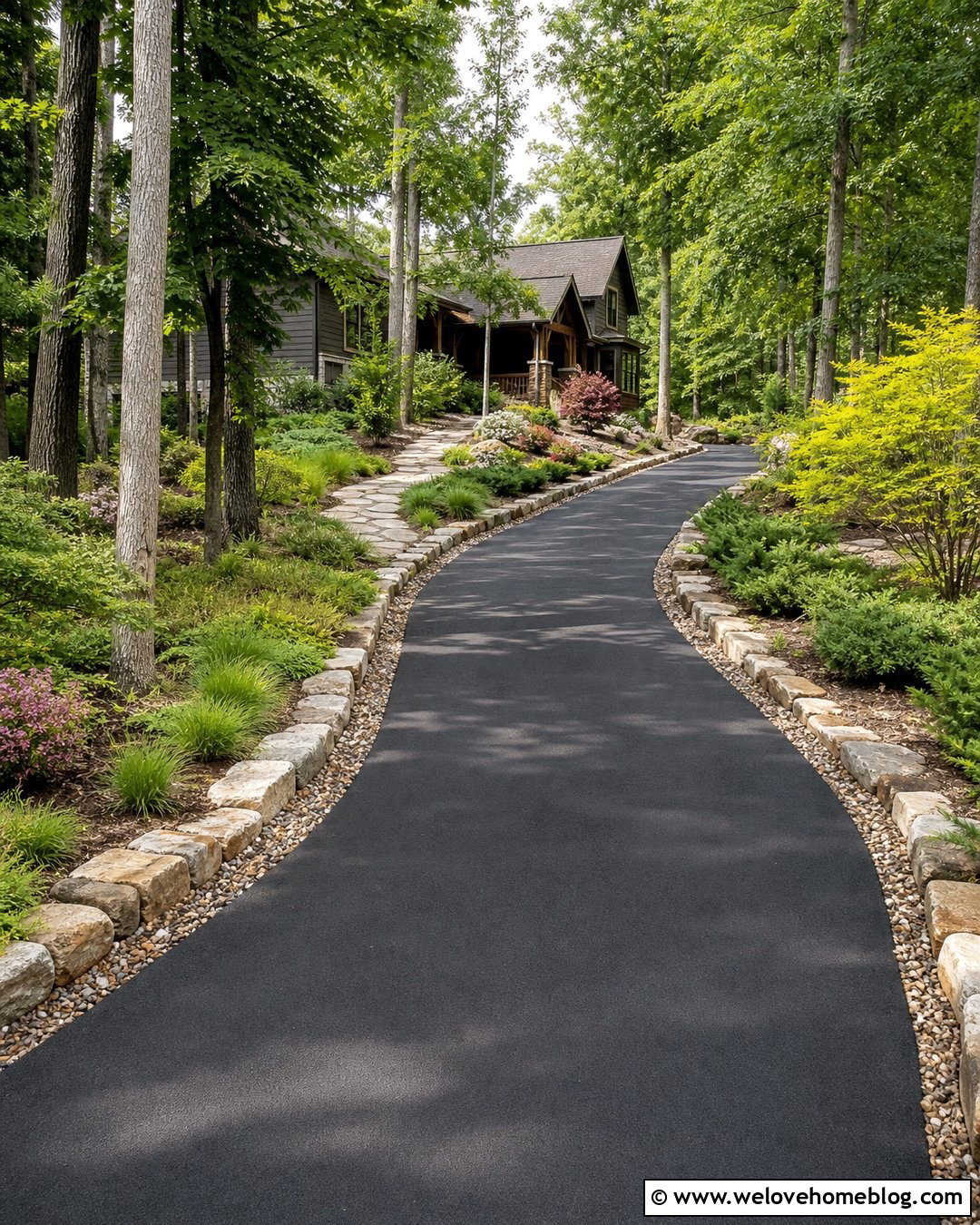
Irregular natural stone can soften the flat appearance of a large asphalt driveway. Choose locally appropriate fieldstone in gray, buff, and muted brown tones, then arrange it as low curbing along a curved approach. Instead of forcing every piece into a perfectly straight line, maintain a consistent height while allowing subtle variation in shape. Plant native grasses, spreading junipers, and flowering shrubs outside the stone to create an organic transition into the yard. This approach fits woodland homes, rustic cabins, and craftsman houses surrounded by mature trees. Use larger stones at the entrance and near tight curves where the edge needs more visual weight. A narrow gravel drainage strip behind the curb can further separate the asphalt from irrigated planting beds.
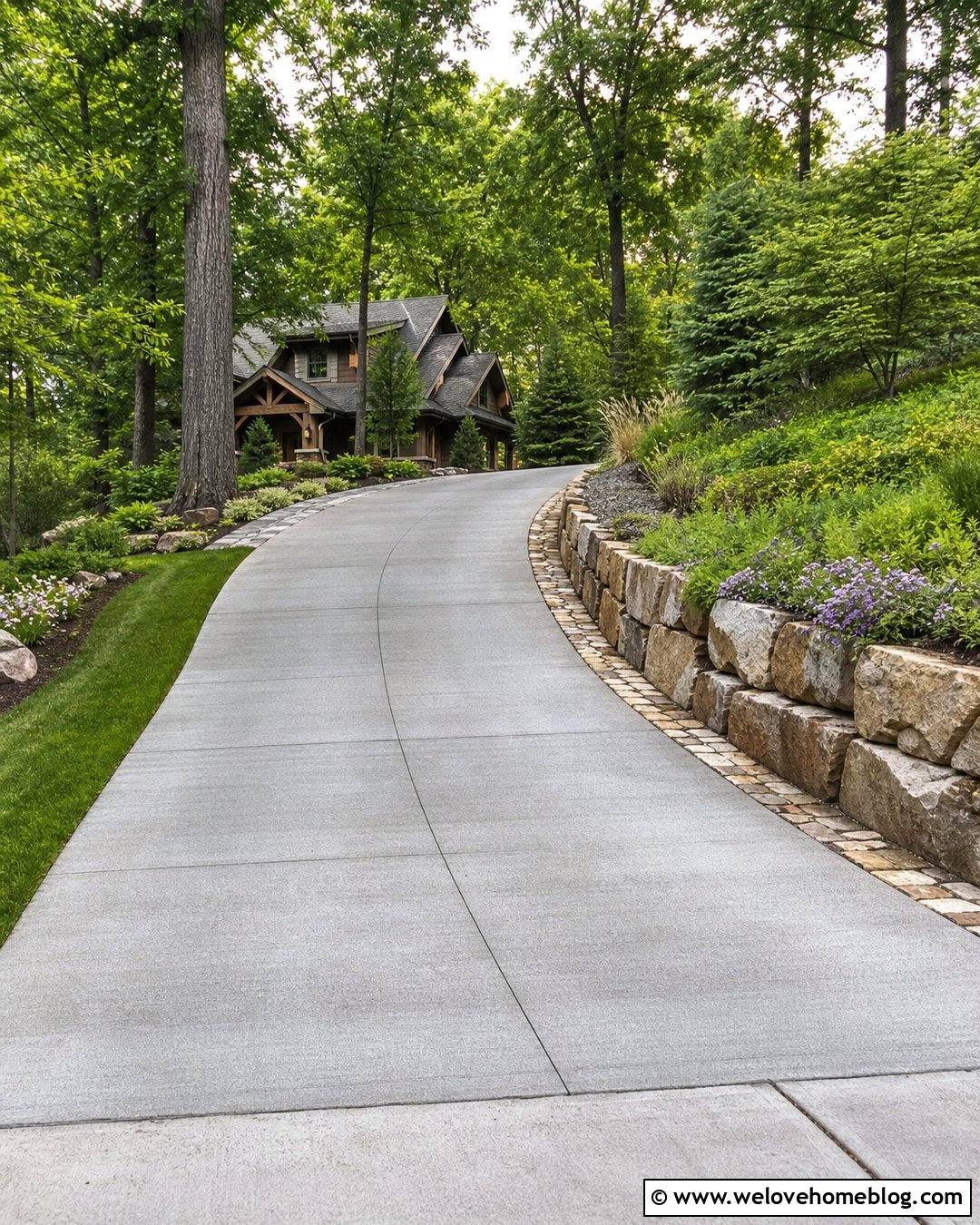
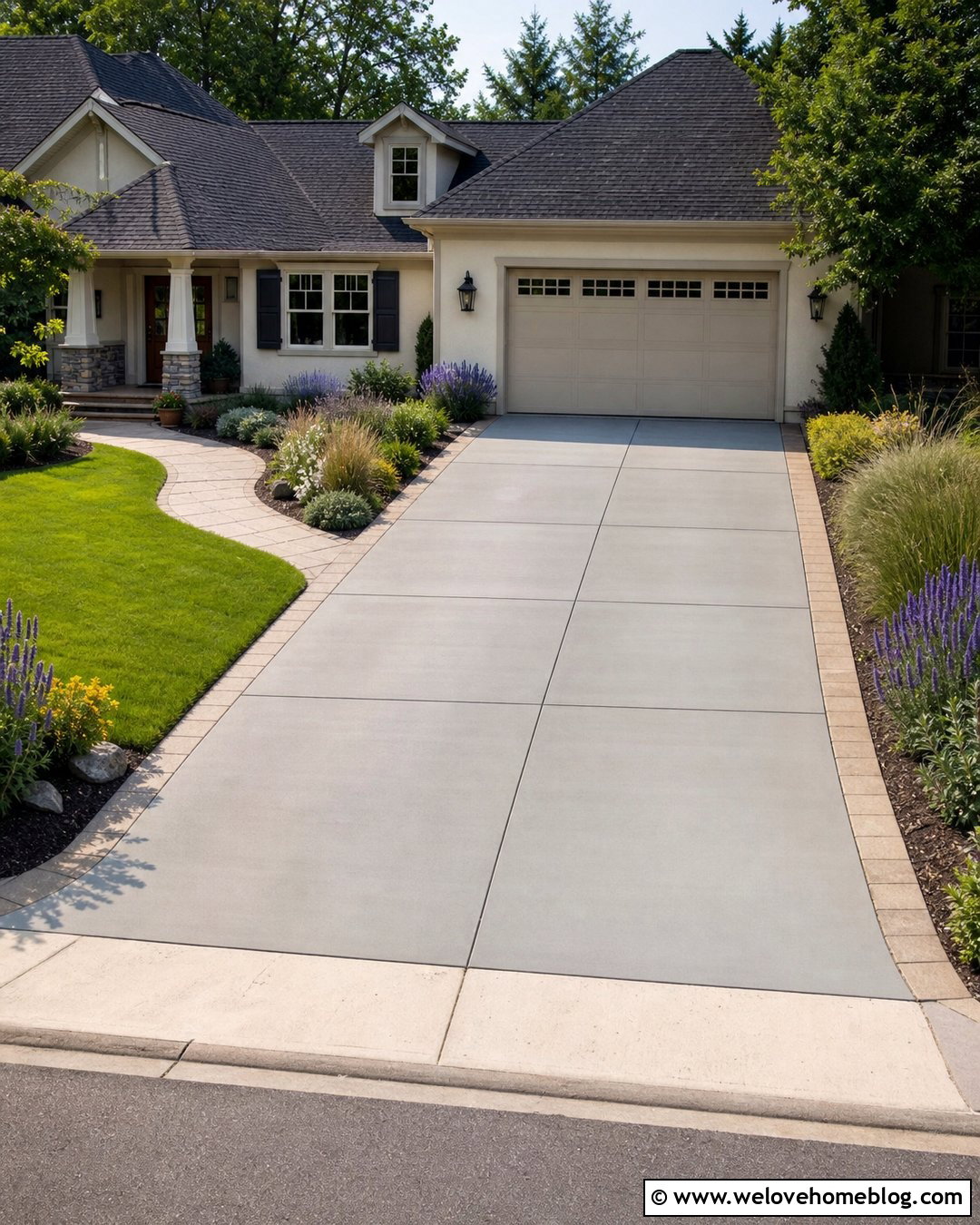
10. Limestone Driveway Curbing With Resin-Bound Gravel
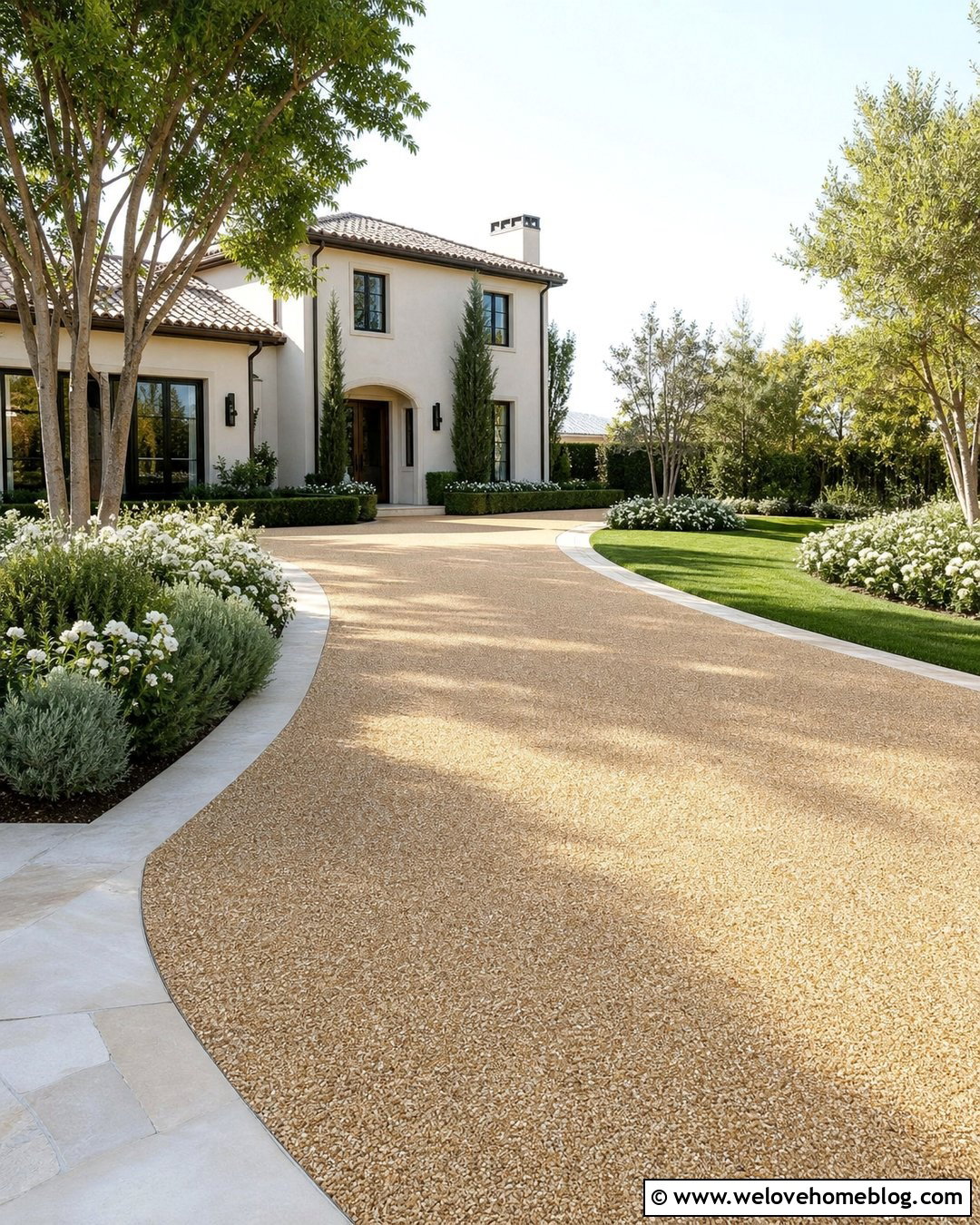
Cream limestone curbing paired with golden resin-bound gravel creates a bright, refined driveway. Use this combination on a broad curved approach leading to a light brick, stucco, or European-inspired home. Cut limestone units provide a smooth, consistent border that complements the even texture of the resin-bound surface. Outside the curb, arrange layered beds with sage-green shrubs, white flowers, and small multi-stem trees. A pale stone walkway can branch from the driveway and repeat the curb color near the front entrance. Since the entire palette is light, add contrast through deep-green planting and darker window trim. Keep soil and mulch slightly below the limestone edge so the crisp border remains visible and does not become stained after heavy rain.
11. Raised Driveway Curbing With Mulch Beds
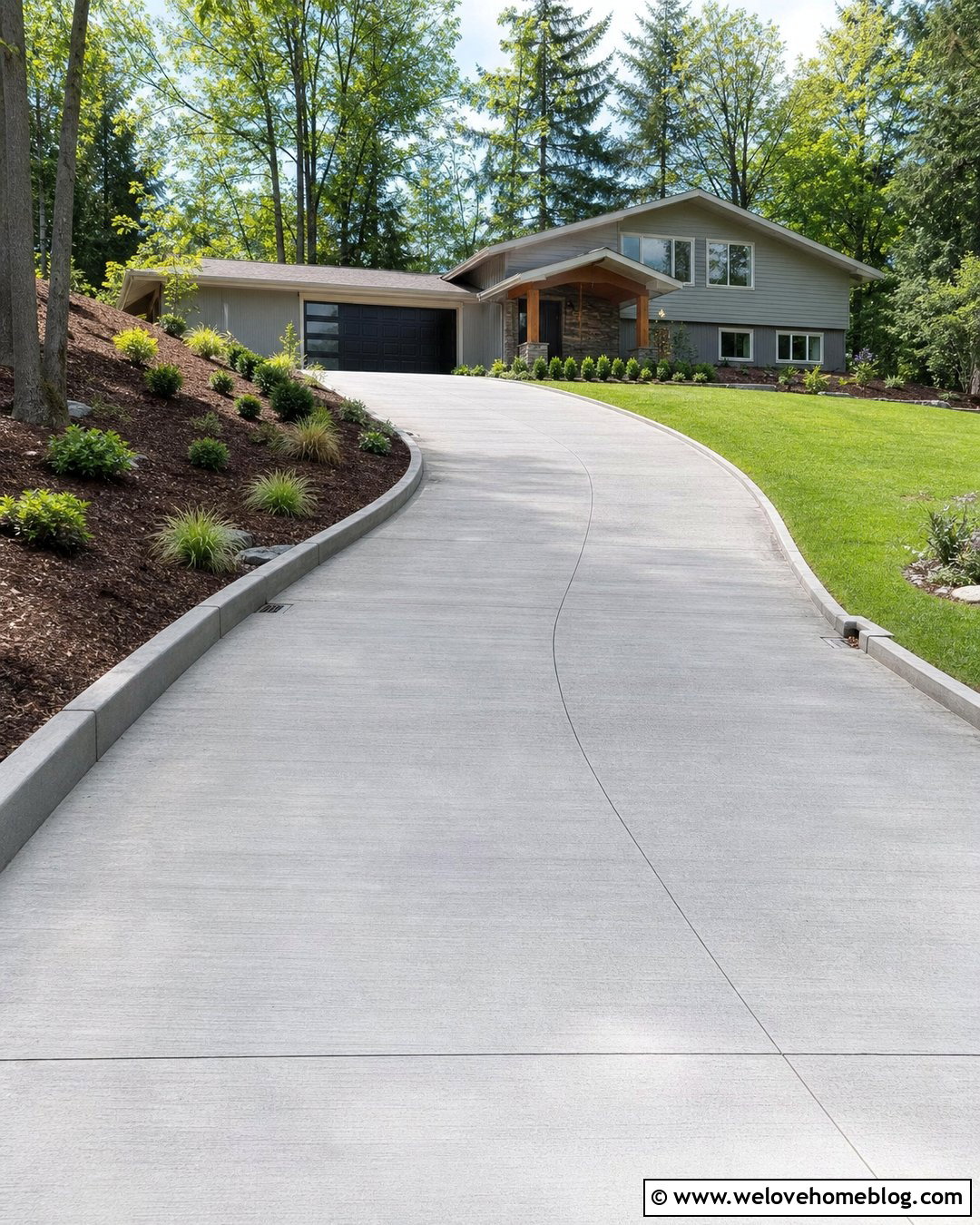
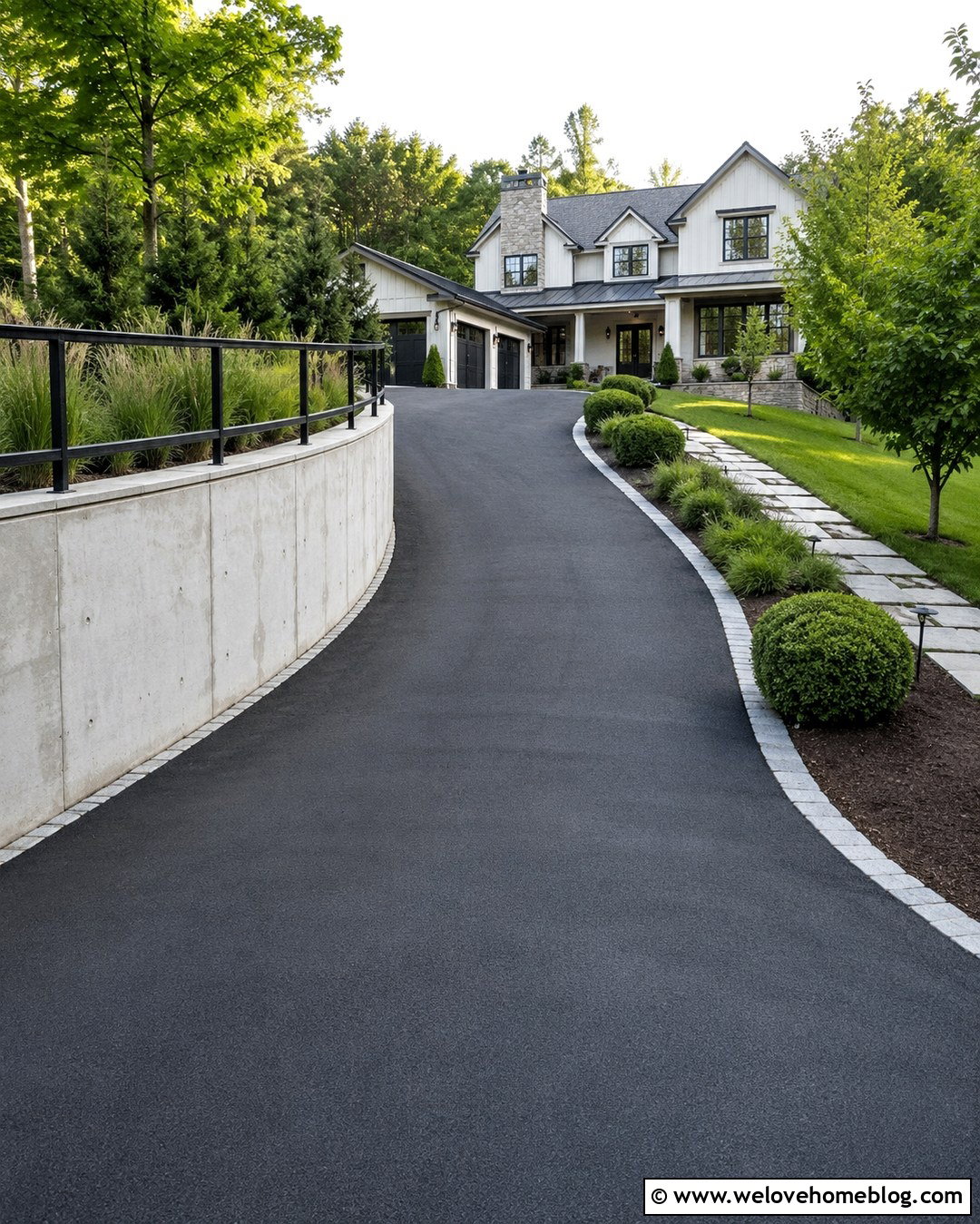
Raised curbing is useful where planting beds slope toward the driveway and regularly release soil or mulch. Combine a light broom-finished concrete driveway with warm-gray precast concrete curbs that rise several inches along the uphill edge. Shape the driveway in a gentle curve and use the border to contain mulched beds filled with spreading ground covers, dwarf shrubs, and deeply rooted ornamental grasses. On the lower side, use nearly flush curbing beside the lawn to avoid making the driveway feel enclosed. This practical layout works well for split-level and hillside homes. Include drainage openings or planned runoff routes where needed rather than building one uninterrupted barrier. The finished design should manage grade changes while still looking like a coordinated part of the landscape.
12. Flush Driveway Curbing With Lawn Edges
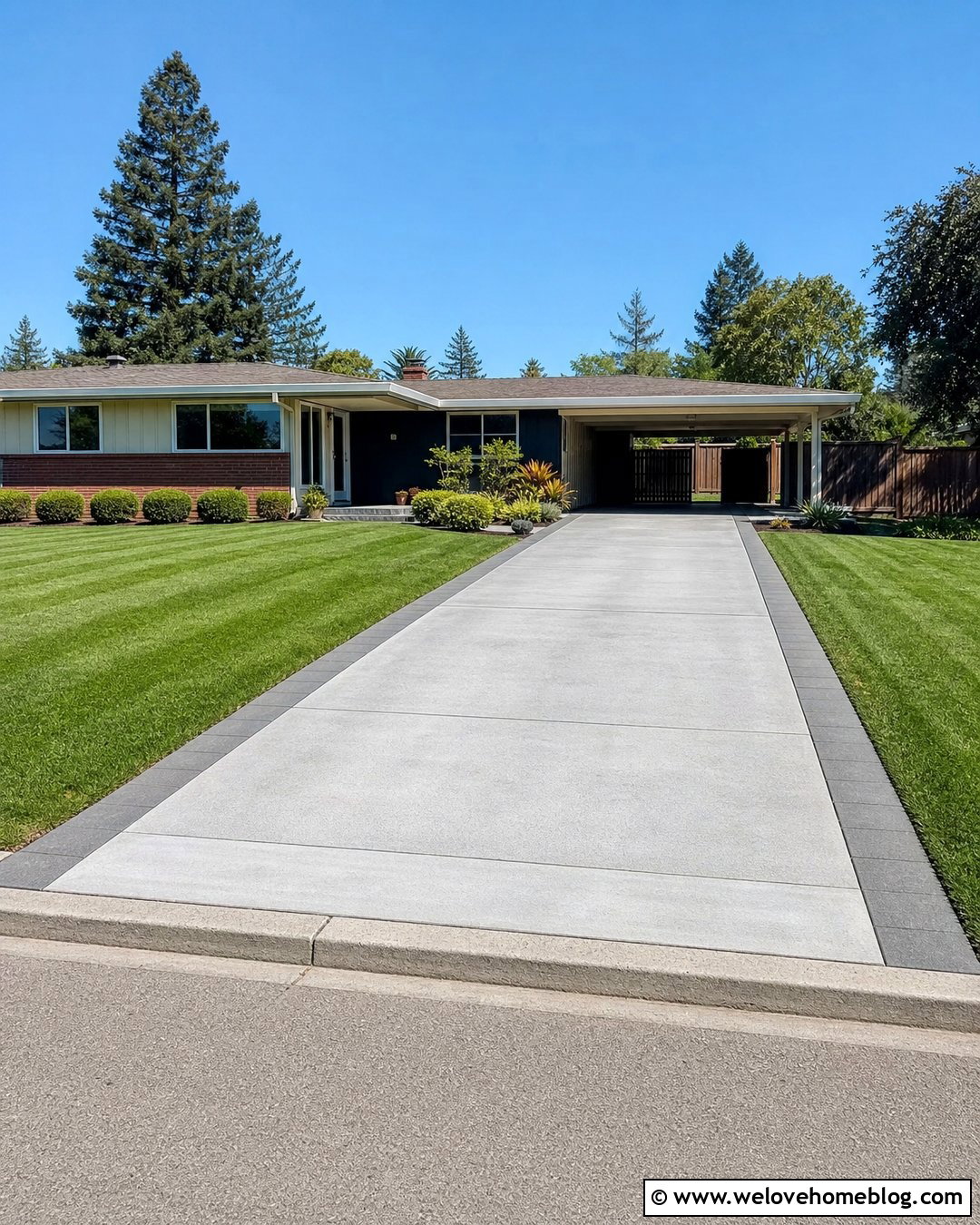
Flush curbing provides a clean boundary without creating a raised obstacle beside the driveway. Install a wide band of smooth concrete or rectangular pavers level with a gray poured concrete surface and the neighboring lawn. This creates a practical mowing strip while visually widening a narrow driveway. A straight layout leading to a small ranch or midcentury home will benefit from the simple geometry. Use broad lawn panels, low foundation shrubs, and a matching concrete walkway to maintain an uncluttered look. Choose a curb color that is slightly darker than the driveway so the edge can still be seen from the street. Flush borders require careful grading because lawn soil should not wash across the pavement or settle below the mowing strip over time.
13. Driveway Curbing With River Rock Drainage
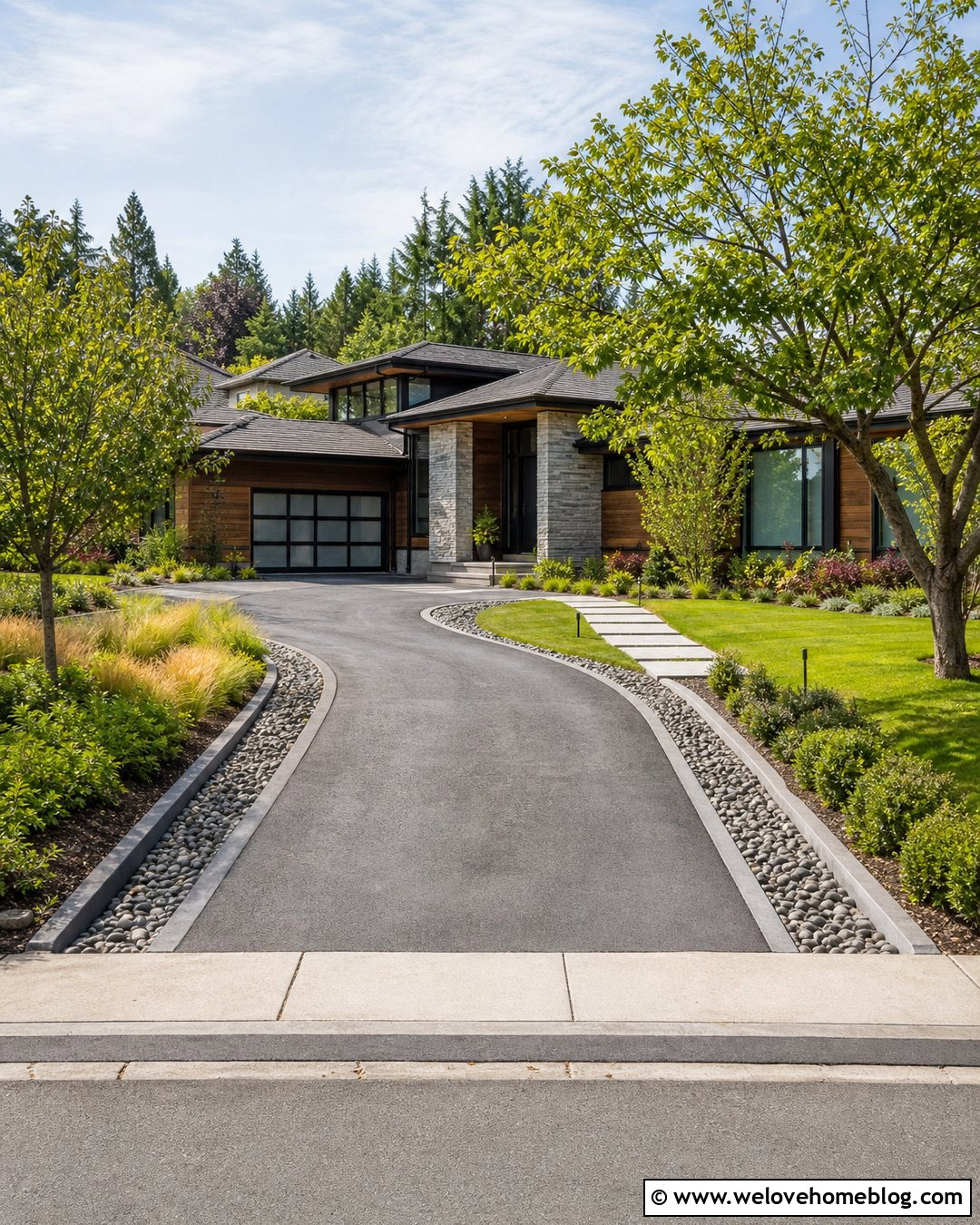
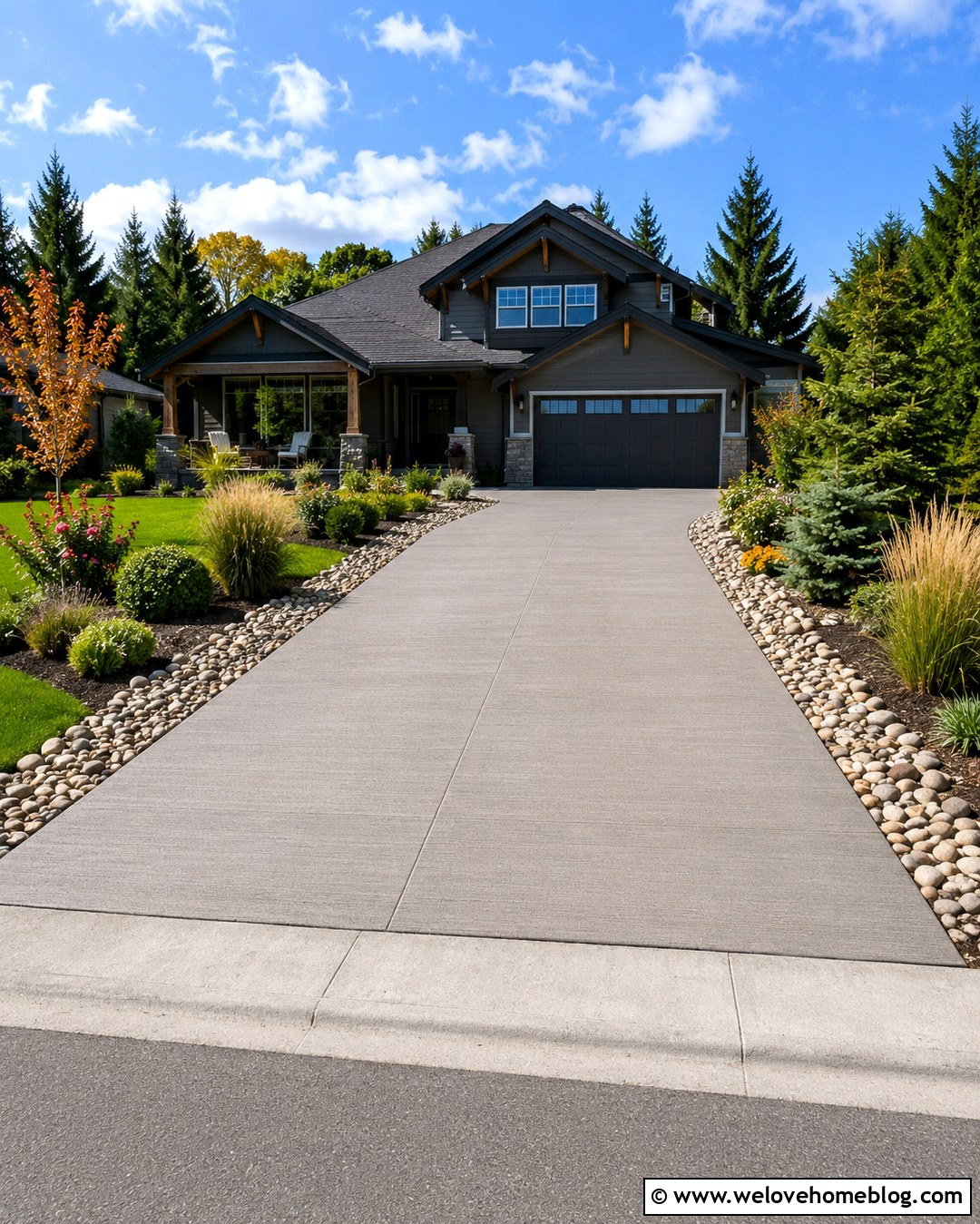
A river rock strip behind solid curbing can turn drainage into an attractive landscape feature. Start with a medium-gray asphalt or concrete driveway, then add low charcoal concrete curbing along both sides. Beyond the curb, install a narrow channel of smooth gray river rock that follows the driveway’s curved shape. Use drought-tolerant grasses, sedges, and small shrubs farther back to soften the stone. This arrangement works particularly well with contemporary homes and front yards that experience concentrated runoff. The rock channel should connect to a suitable drainage area rather than ending where water can collect near the house. Varying stone sizes will create a more natural appearance, while the defined curb keeps the driveway surface separate from the drainage bed.
14. Driveway Curbing With Low Landscape Lighting
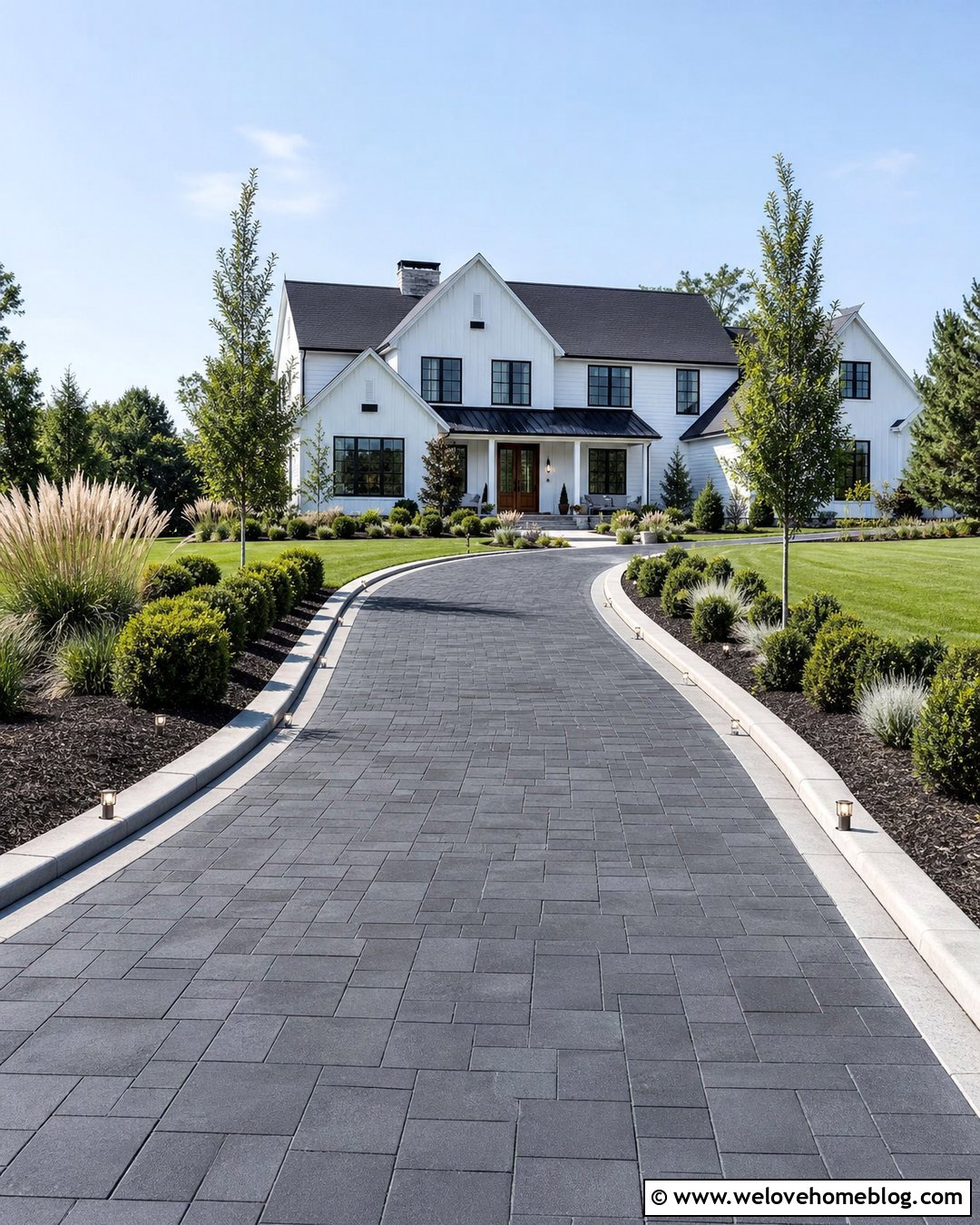
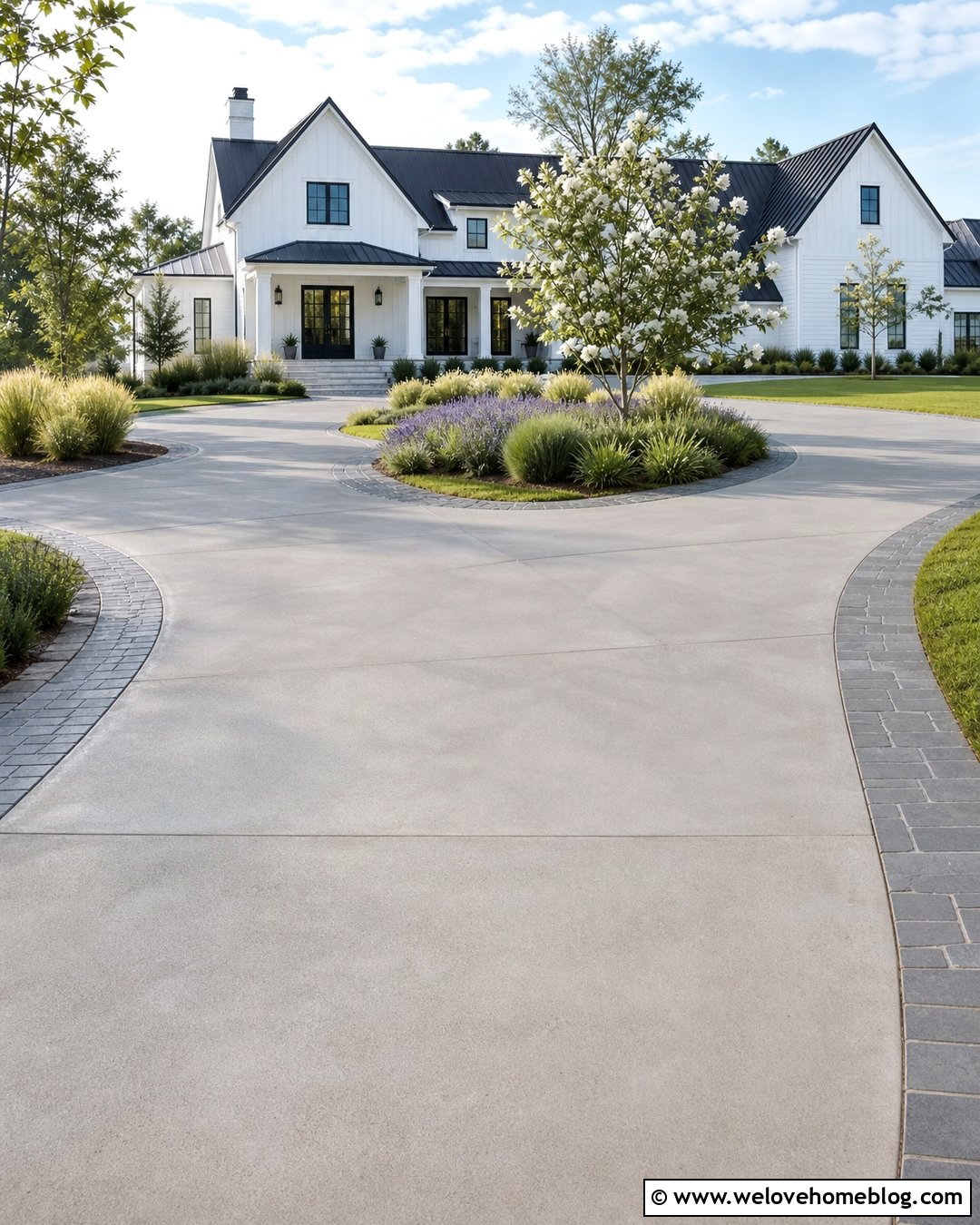
Integrated lighting makes driveway curbing easier to see while strengthening the entrance design. Pair a dark charcoal paver driveway with smooth light-gray concrete curbs on a long, gently curved approach. Install small recessed or shielded fixtures at measured intervals along the outer face of the curb, keeping them low and visually discreet during the day. Surround the drive with ornamental grasses, evergreen mounds, and neatly spaced trees. A contemporary farmhouse with white siding and black accents will coordinate with the high-contrast materials. Plan fixture placement before the curbing is installed so wiring and access points remain concealed. The curb, lighting, planting, and pavement should form one continuous route rather than looking like separate features added at different times.
15. Brick Driveway Curbing With Garden Borders
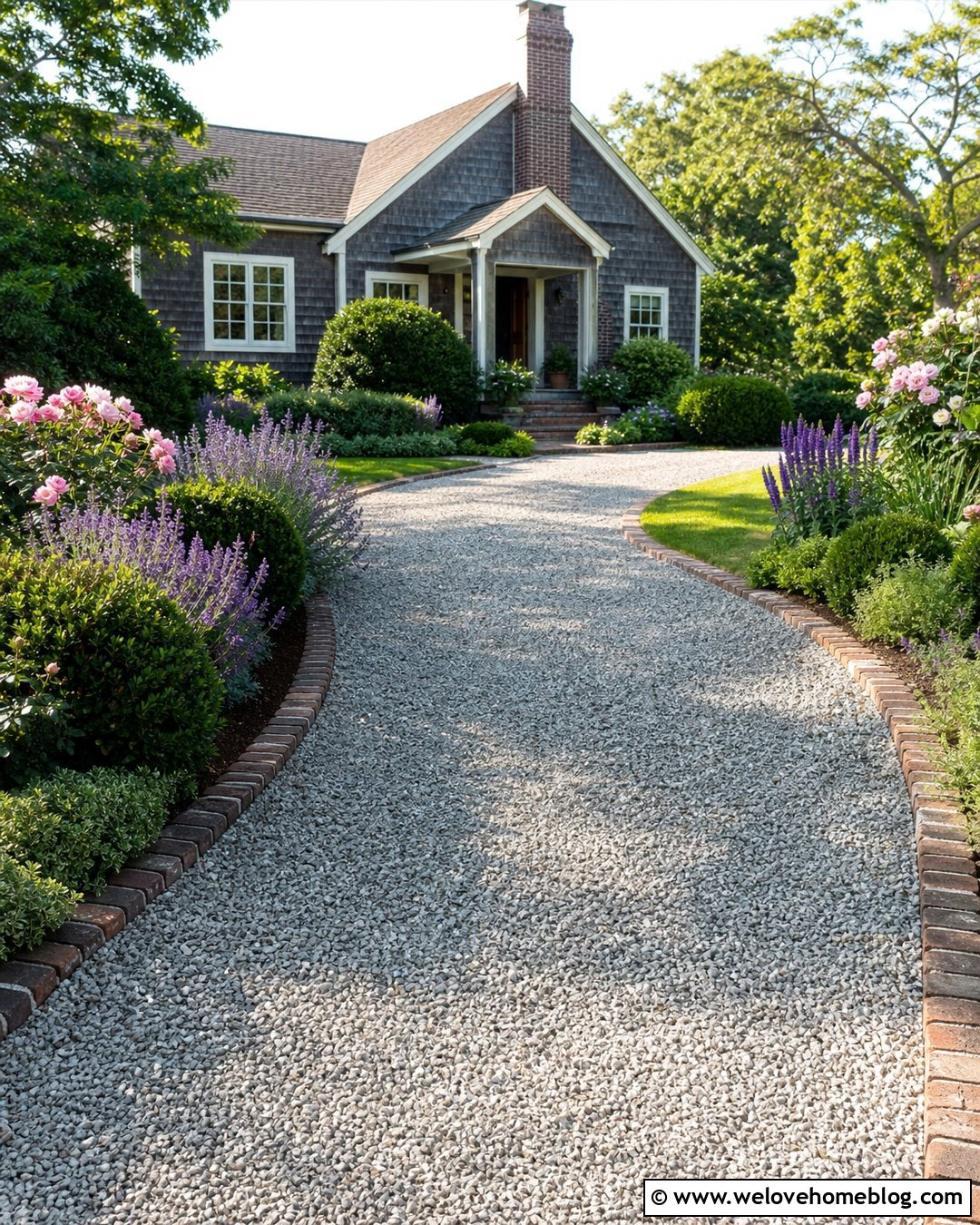
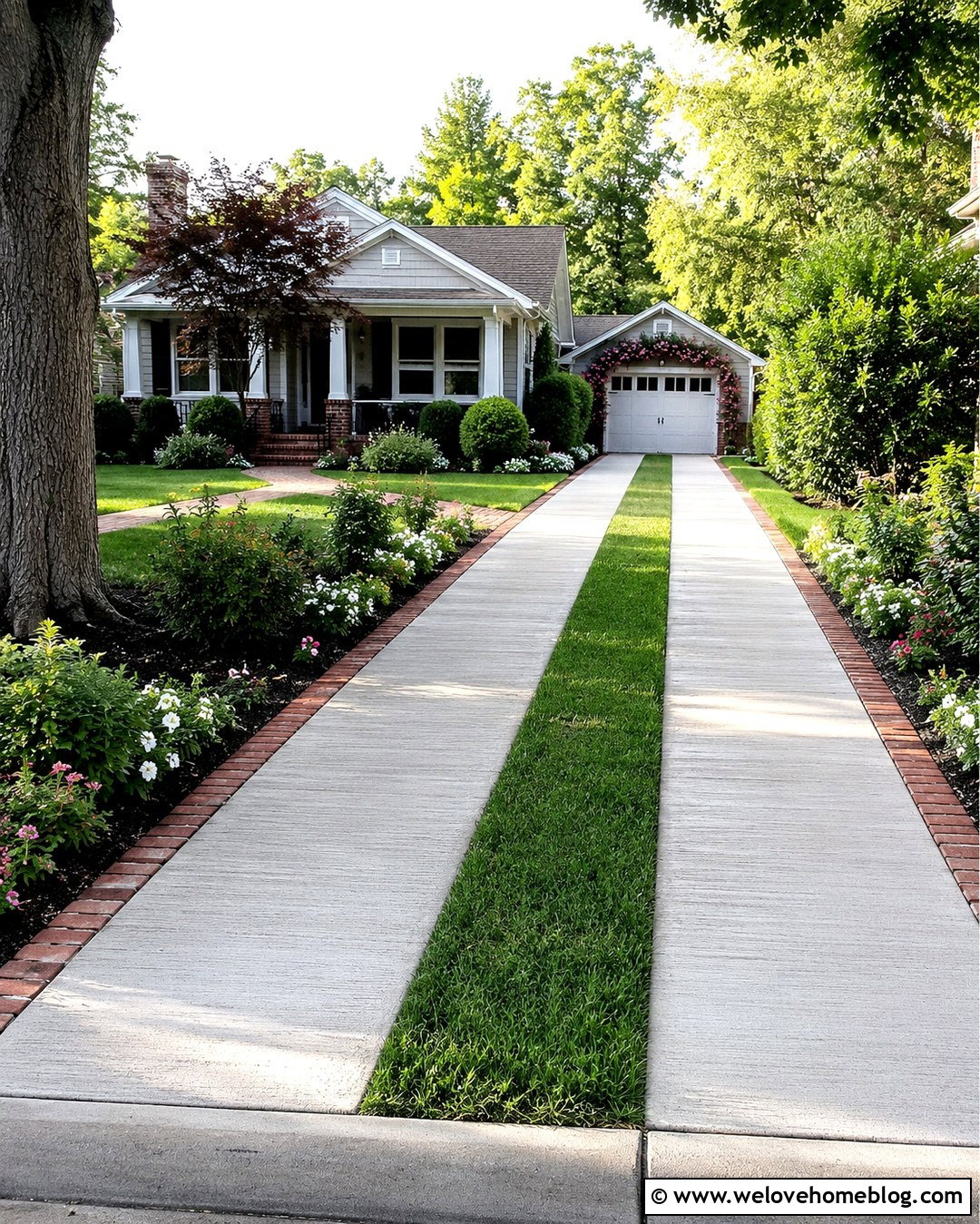
Brick curbing becomes especially inviting when it separates a driveway from colorful garden beds. Use reclaimed red and brown clay bricks beside a light-gray gravel or concrete driveway that curves toward a cottage-style home. Lay the bricks at a slight angle or in a traditional soldier course, then repeat the material around the front walkway. Outside the curb, plant compact roses, catmint, salvia, and evergreen shrubs in layered groups. Keep mature plant sizes in mind so foliage does not lean into parking space or hide the border. A narrow strip of low ground cover can soften the transition without overwhelming the brick. The mixed colors and gentle driveway curve will create a relaxed, established look that suits cottages, bungalows, and older suburban homes.
16. Timber Driveway Curbing With Crushed Stone
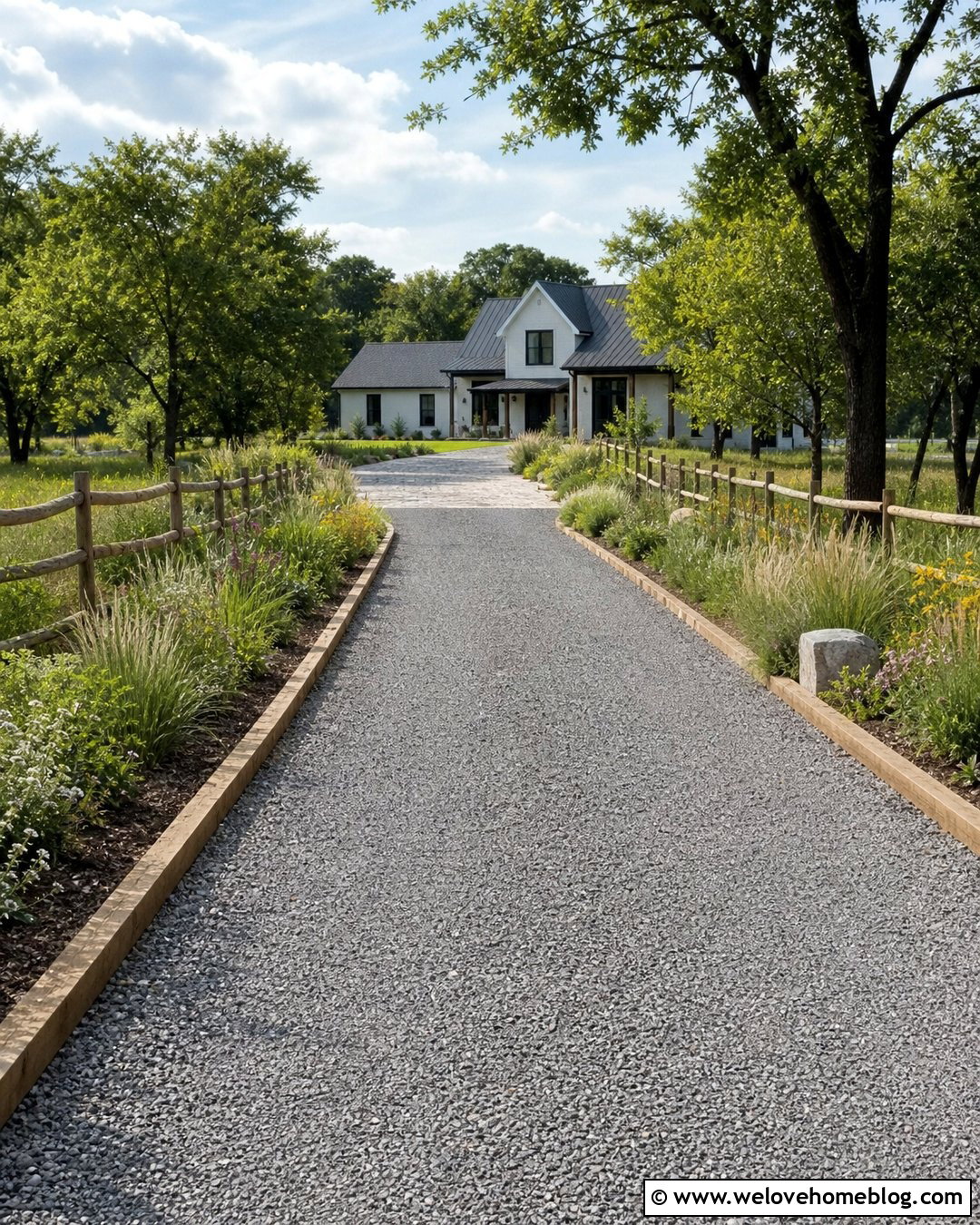
Timber curbing gives a crushed-stone driveway a simple, natural border that suits rural settings. Use pressure-treated or naturally durable wood beams along a straight gray crushed-granite driveway leading to a modern farmhouse or country home. Anchor the timbers securely and keep their top surfaces consistent, especially where the ground slopes. Native grasses, flowering meadow plants, and split-rail fencing can frame the drive without making it feel formal. At the house, transition from timber to stone pavers around the parking and walkway areas for a more finished surface. Wood exposed to constant soil moisture can deteriorate, so provide drainage and avoid burying untreated lumber. This design works best when its rustic appearance matches the home, outbuildings, and wider landscape. ()
17. Precast Concrete Driveway Curbing With Brick Pavers
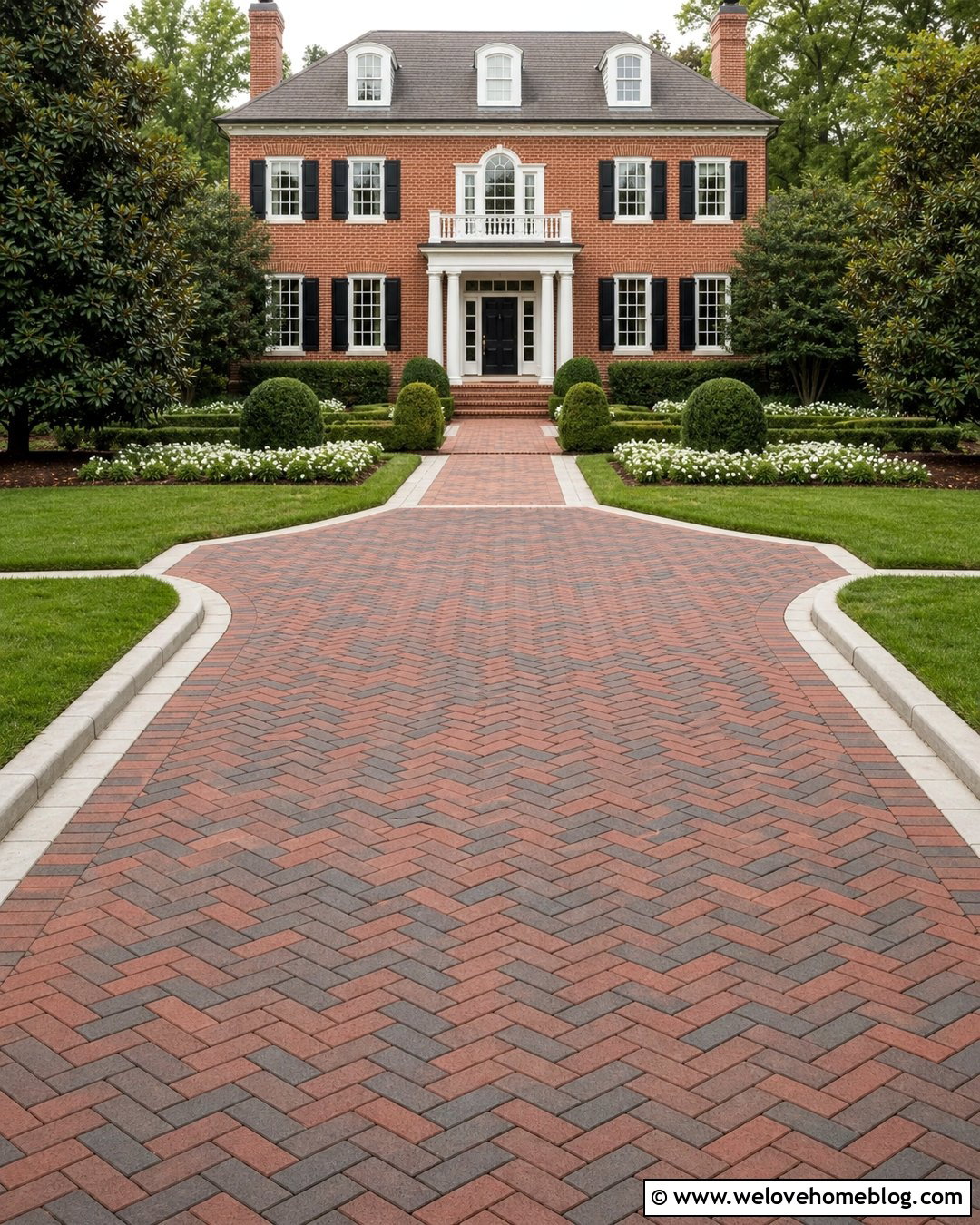
Precast concrete curb units offer a consistent edge around patterned brick pavers. Select warm-gray curbs with a gently rounded top, then use them to frame a herringbone driveway made from red and charcoal clay brick pavers. A straight layout with a flared entrance will suit a Georgian or colonial home, particularly when the paver colors repeat the facade. Add clipped hedges, symmetrical planting beds, and a formal walkway for a balanced front yard. The neutral curb prevents the patterned surface from appearing too busy while still providing a distinct perimeter. Make sure the curb dimensions work with the paver layout before installation. Awkward cuts along the edge can disrupt an otherwise crisp and carefully planned herringbone pattern.
18. Decorative Concrete Driveway Curbing With Xeriscaping
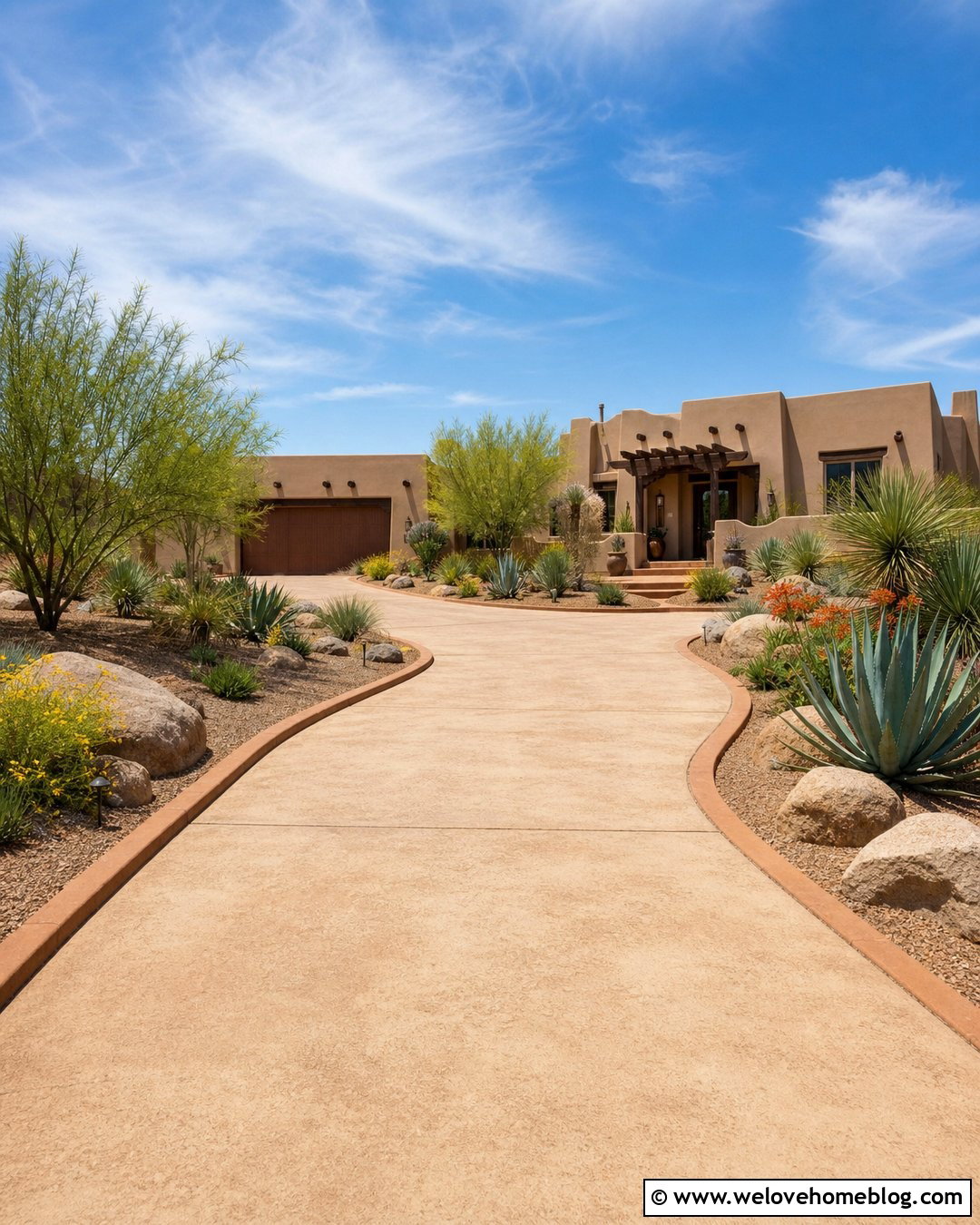
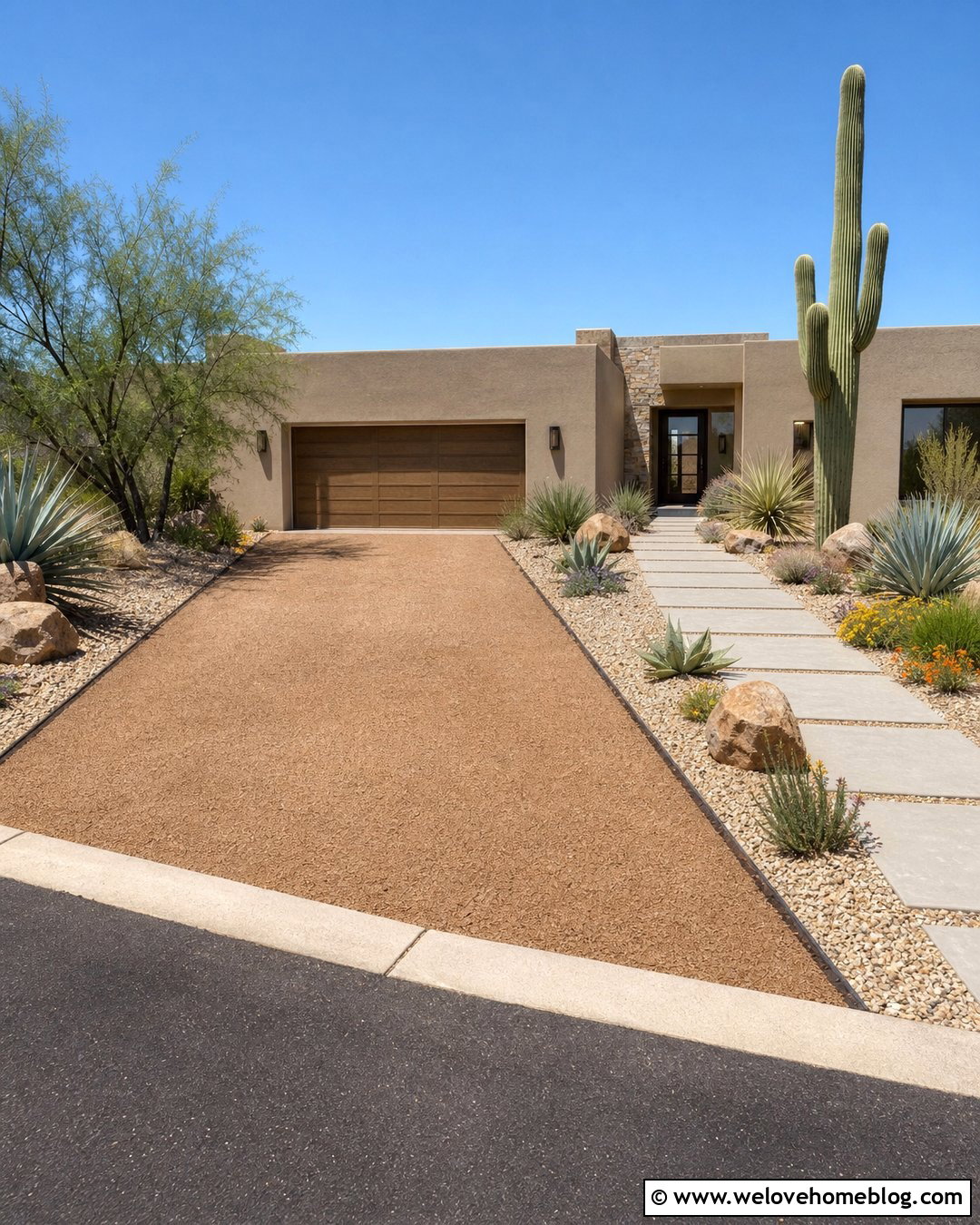
Decorative curbing works beautifully in water-conscious front yards when its color blends with the surrounding stone. Pair a sand-colored concrete driveway with continuous terracotta-toned curbing on a wide curved approach. Behind the curb, use decomposed granite, desert boulders, blue-green agave, yucca, and sculptural ornamental grasses. A Southwestern or modern adobe-style home will complete the warm, dry-climate palette. Choose a simple curb profile rather than a highly ornate shape, allowing the plants and boulders to remain the main visual features. The curb should separate loose landscape material from the driving surface and follow the natural sweep of the beds. Repeat its color in the front walkway or entry steps to connect the driveway with the house.
19. Driveway Curbing With Stone Entrance Pillars
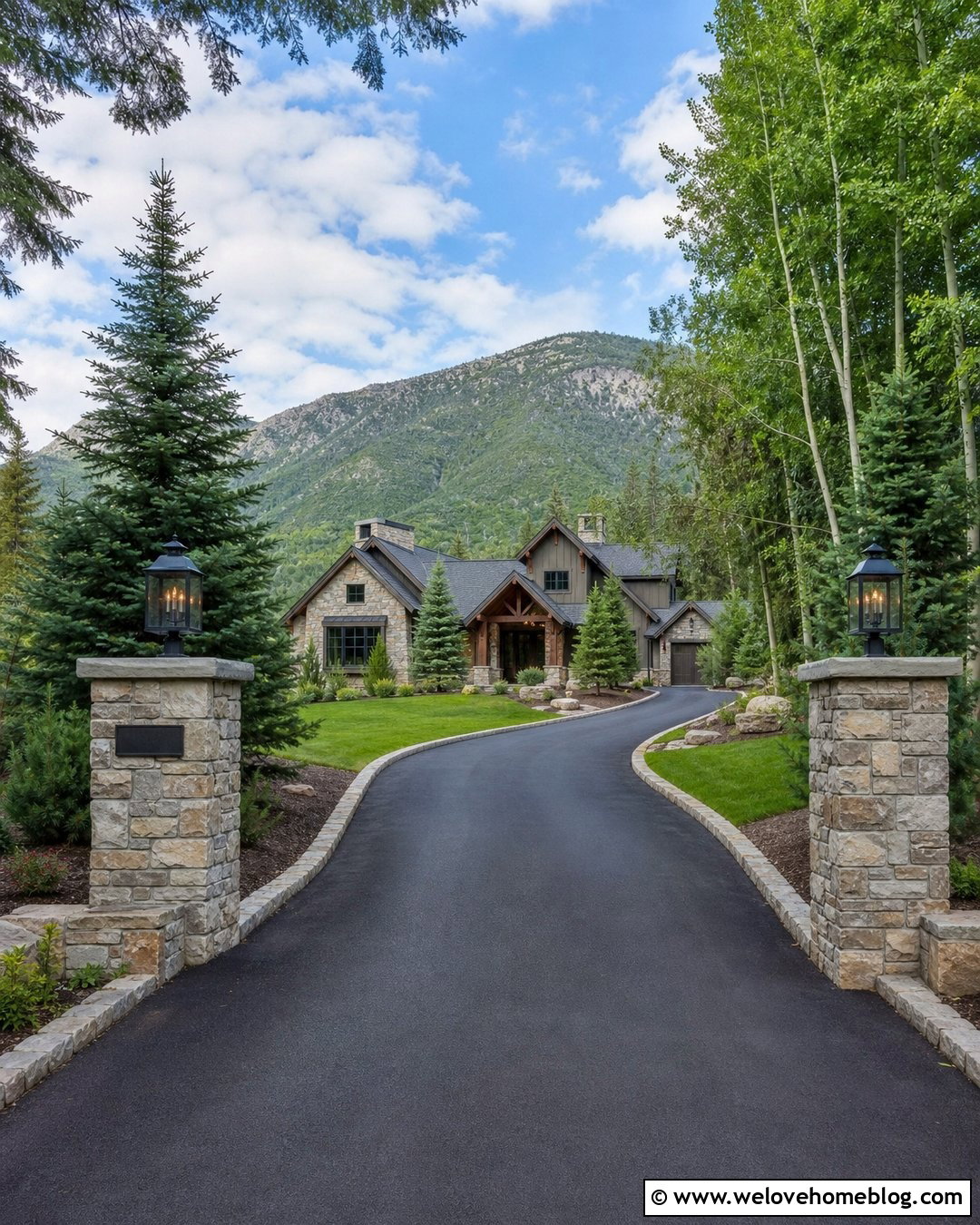
Stone entrance pillars feel more connected to the property when they flow into matching driveway curbing. Use a black asphalt driveway with low gray ledgestone borders that widen near the street and terminate at substantial square pillars. A gently curving layout will reveal the house gradually while making the entrance feel established. Add black lantern-style fixtures, a simple address plaque, and low evergreen planting around the pillars. Continue the stone tones in the home’s foundation, chimney, or front steps. Keep the curbing lower through the main driving area so passengers can exit safely. This complete look suits craftsman, mountain, and traditional homes, giving the entrance a clear identity without requiring an elaborate gate or oversized landscape features.
20. Driveway Curbing With a Contrasting Paver Apron
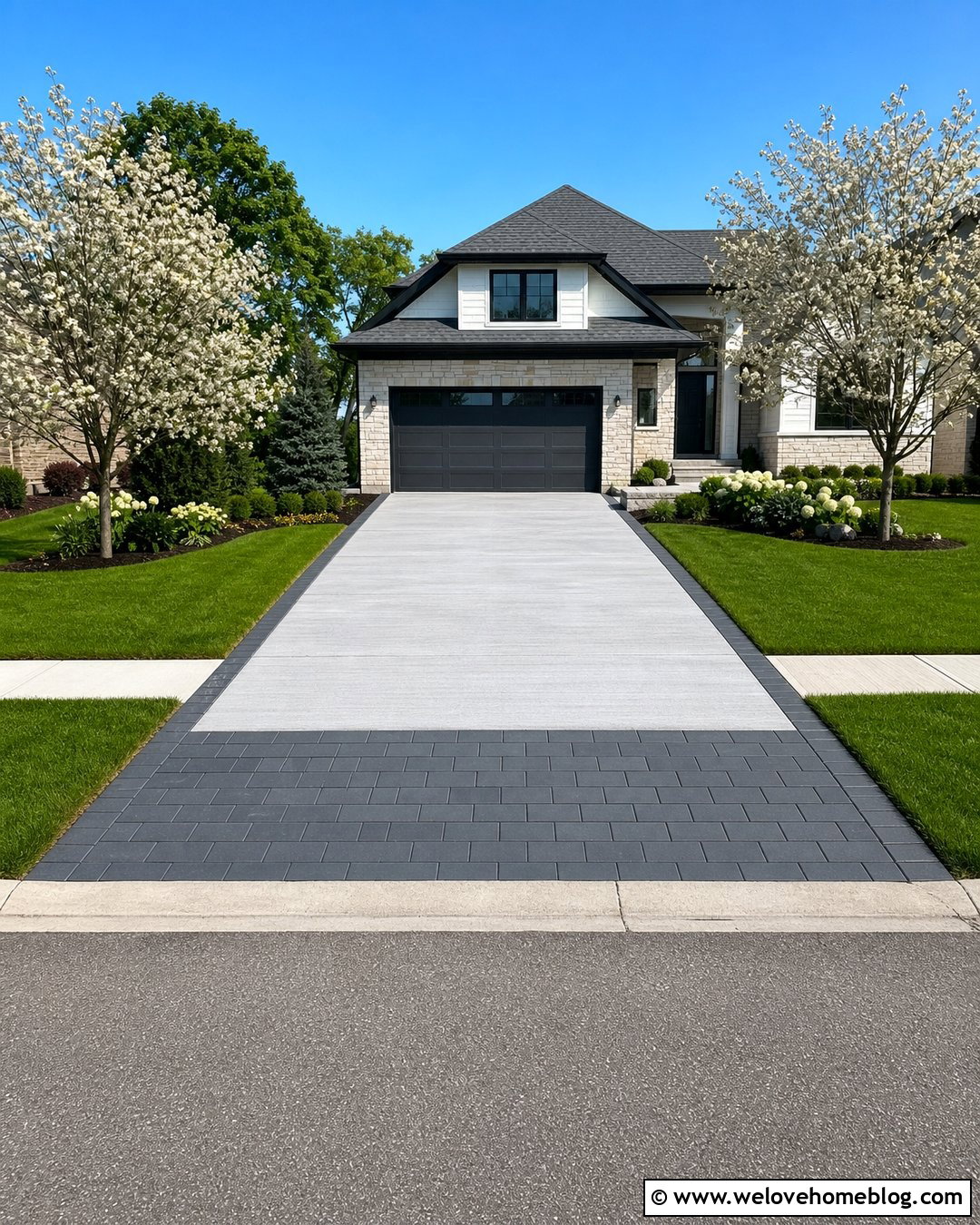
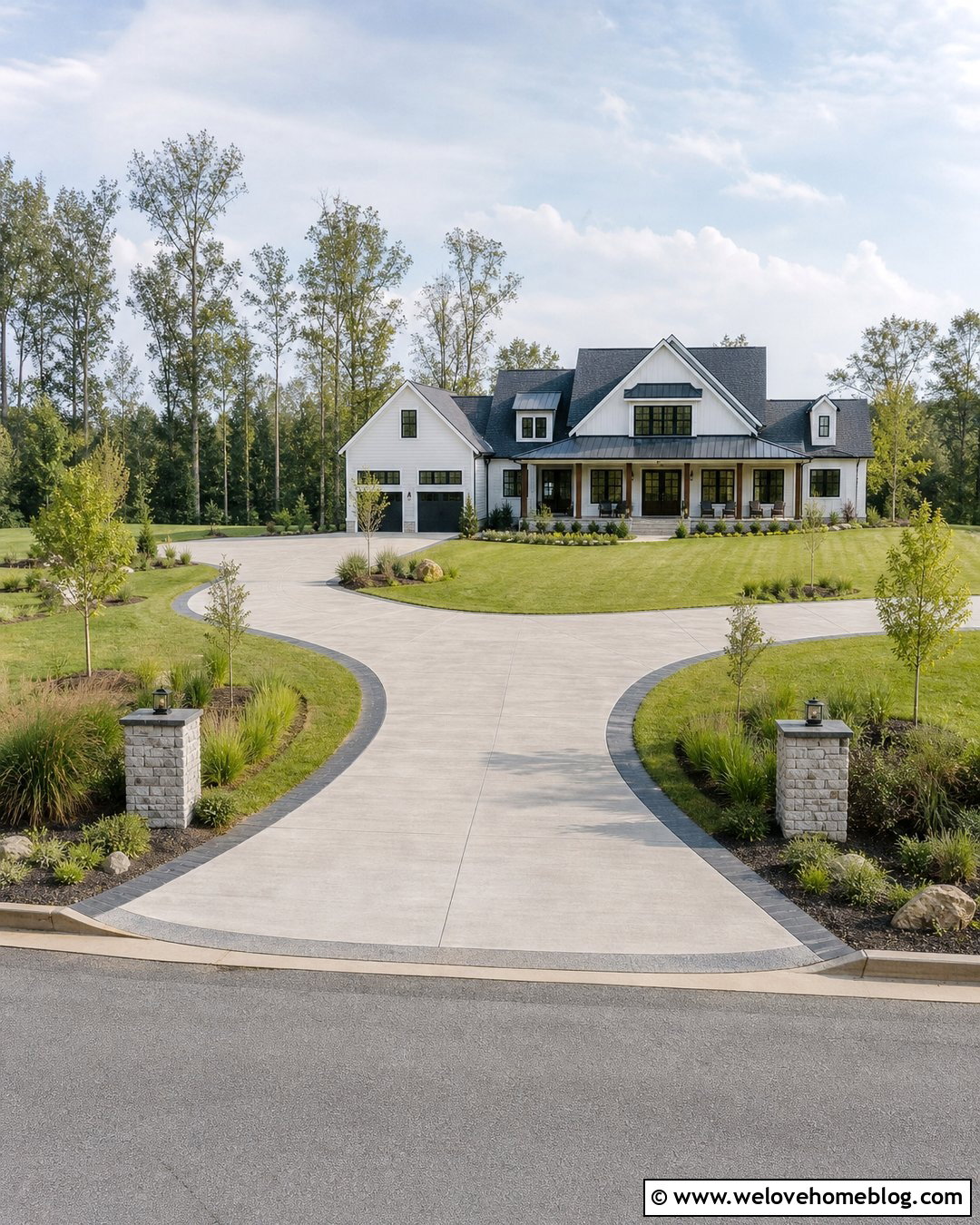
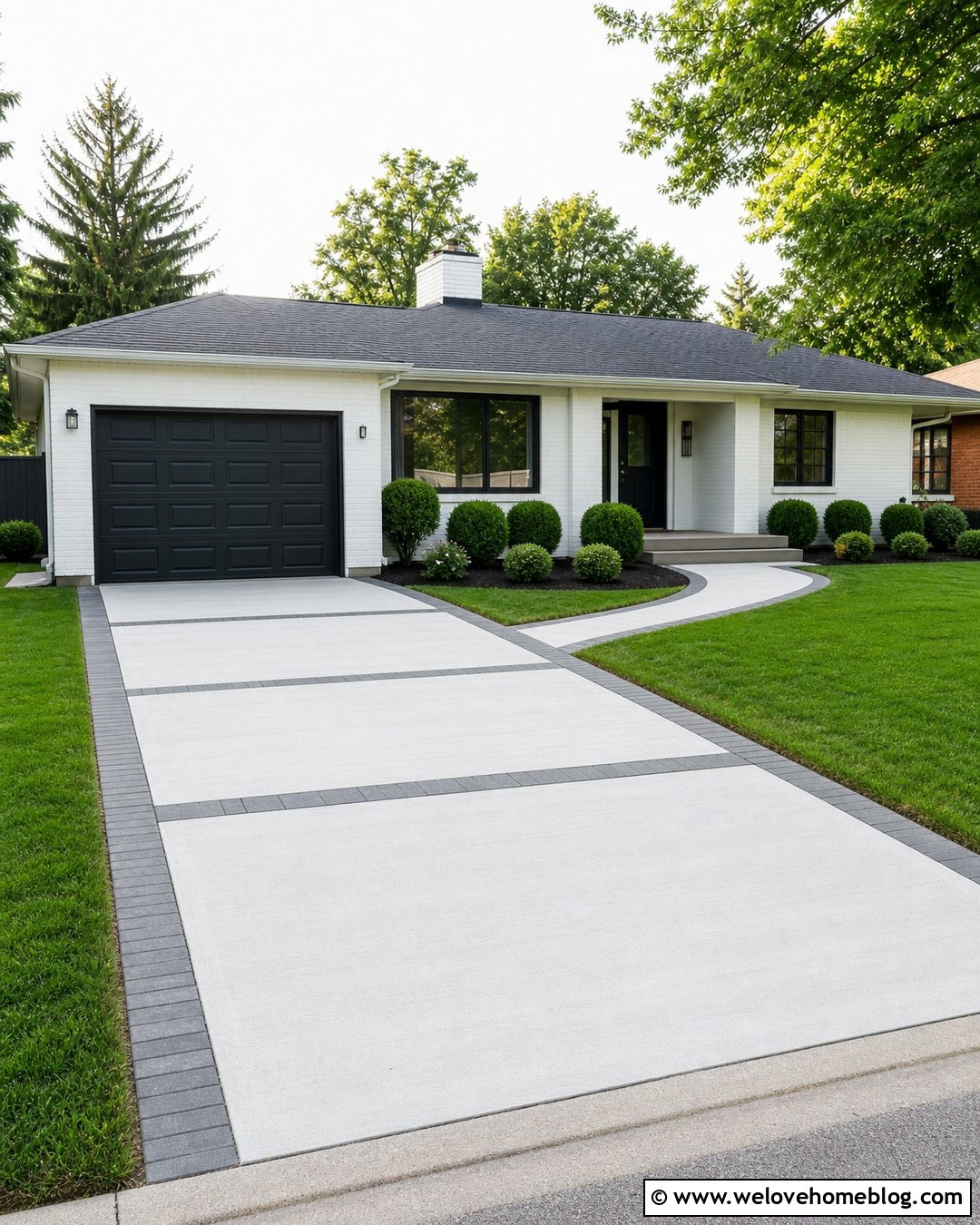
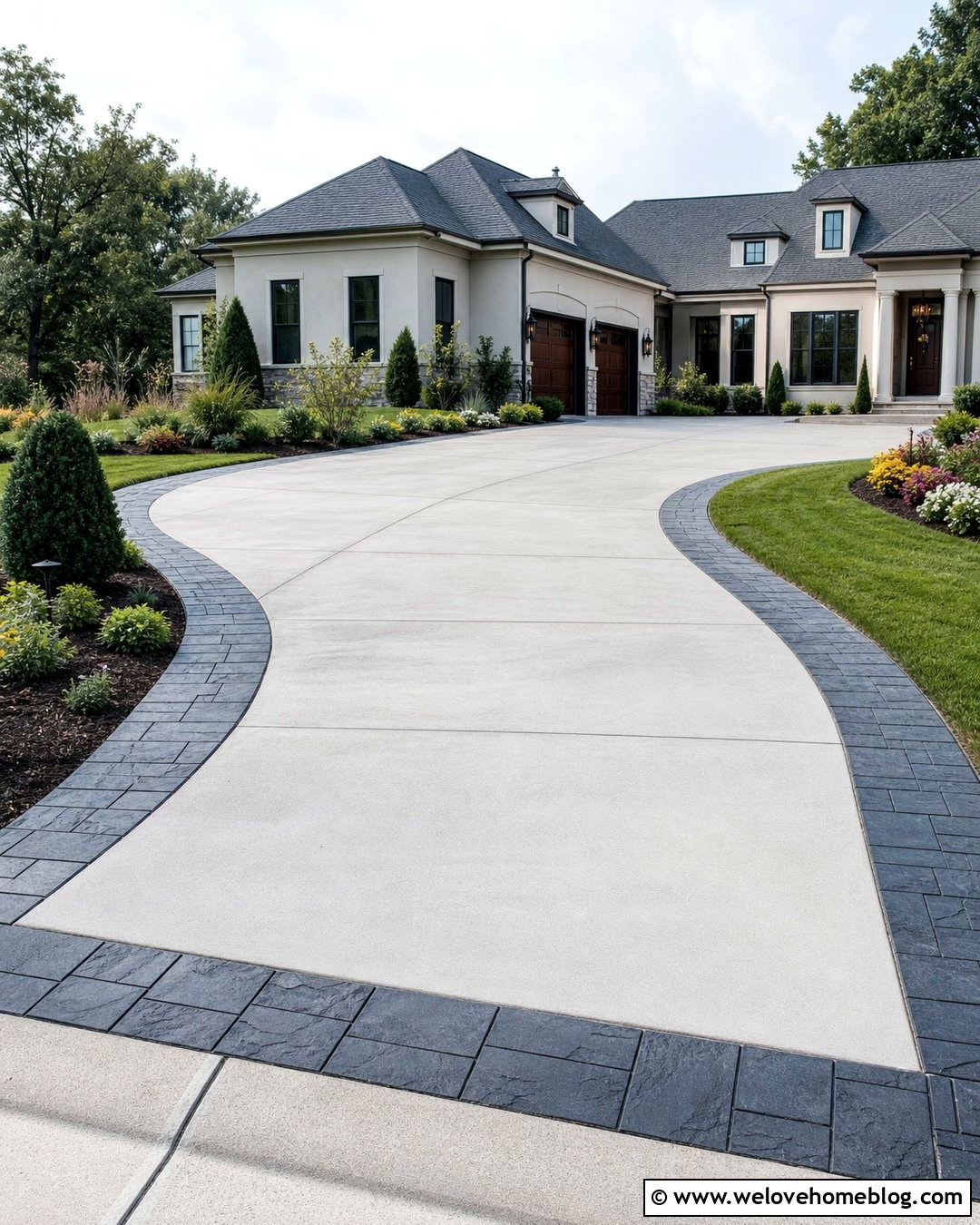
A contrasting apron gives driveway curbing a strong beginning at the street. Frame a light-gray concrete driveway with dark charcoal paver curbs, then extend those pavers across the entrance in a wide rectangular band. The apron marks the transition from road to private drive and protects the most visually prominent part of the approach. Use a straight driveway for a modern home or a subtle curve for a transitional house. Balanced lawn panels, flowering trees, and low foundation beds will keep attention on the crisp hardscape. Repeat the charcoal pavers in the front walkway or porch steps to create continuity. Ensure the apron remains comfortable to cross and does not interfere with local drainage patterns, sidewalks, or required street access.
Conclusion:
The right curb can make a plain driveway look intentional while improving the transition between pavement, lawn, gravel, and planting beds. Brick and granite offer traditional character, while steel and flush concrete suit streamlined modern homes. Raised curbing can contain sloped beds, and wider paver borders can create useful mowing strips or distinctive entrance aprons. Before choosing a design, consider vehicle clearance, drainage, snow removal, soil movement, maintenance, and how the material relates to your home. Plan the driveway surface, shape, edging, and landscaping as one composition rather than separate upgrades. With thoughtful installation, these **20 driveway curbing ideas** can deliver a cleaner edge, better function, and noticeably stronger curb appeal.

Related posts:
Leave a Reply