
A well-designed driveway curb does more than create a neat edge. It helps connect the driveway surface, lawn, planting beds, walkway, and home into one complete entrance. The best 20 driveway with curb ideas combine practical materials with shapes and borders that suit the property. Concrete curbs can sharpen modern layouts, while brick, cobblestone, and natural stone bring warmer character. Curbs are also useful for defining loose gravel and creating cleaner transitions around landscaped areas. Current driveway designs increasingly coordinate paving patterns, borders, drainage, lighting, and planting instead of treating the driveway as a separate feature. () Whether your yard is narrow, spacious, formal, or relaxed, the complete looks below explore 20 driveway with curb ideas.

1. Concrete Driveway With Brick Curb
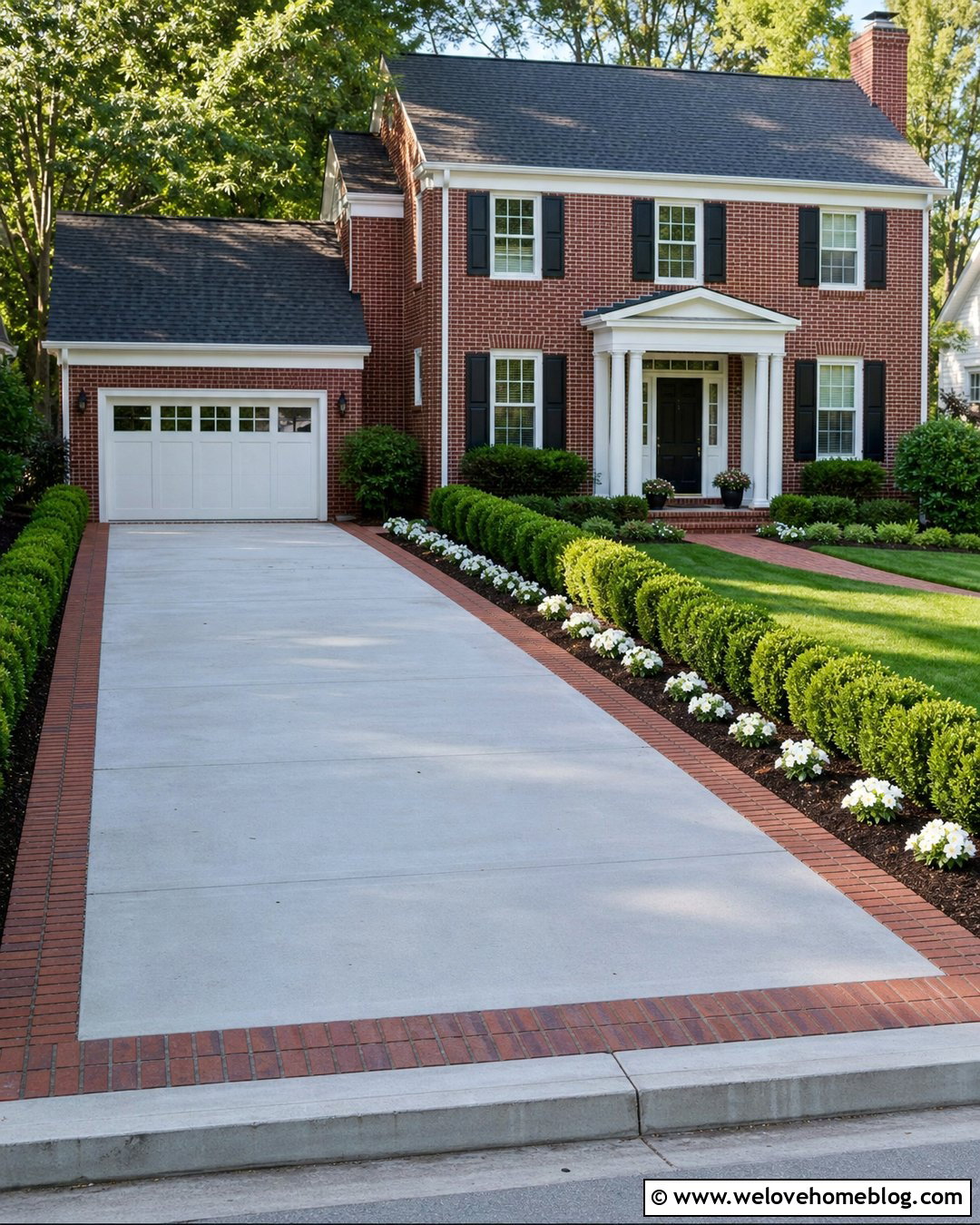
A light gray poured concrete driveway gains warmth when it is framed with a red or brown brick curb. Use a straight layout for a traditional colonial or suburban home, then run the brick along both sides and across the garage transition. A soldier-course pattern gives the curb a tidy, structured appearance without making the driveway feel busy. Match the brick to the house facade, porch steps, or front walkway for continuity. Narrow planting beds filled with boxwood, white flowers, and dark mulch can soften the hard materials. Keep the brick slightly raised beside the lawn but nearly flush around walking areas. This complete look is simple, familiar, and especially effective when an existing concrete driveway needs more definition.
2. Asphalt Driveway With Belgian Block Curb
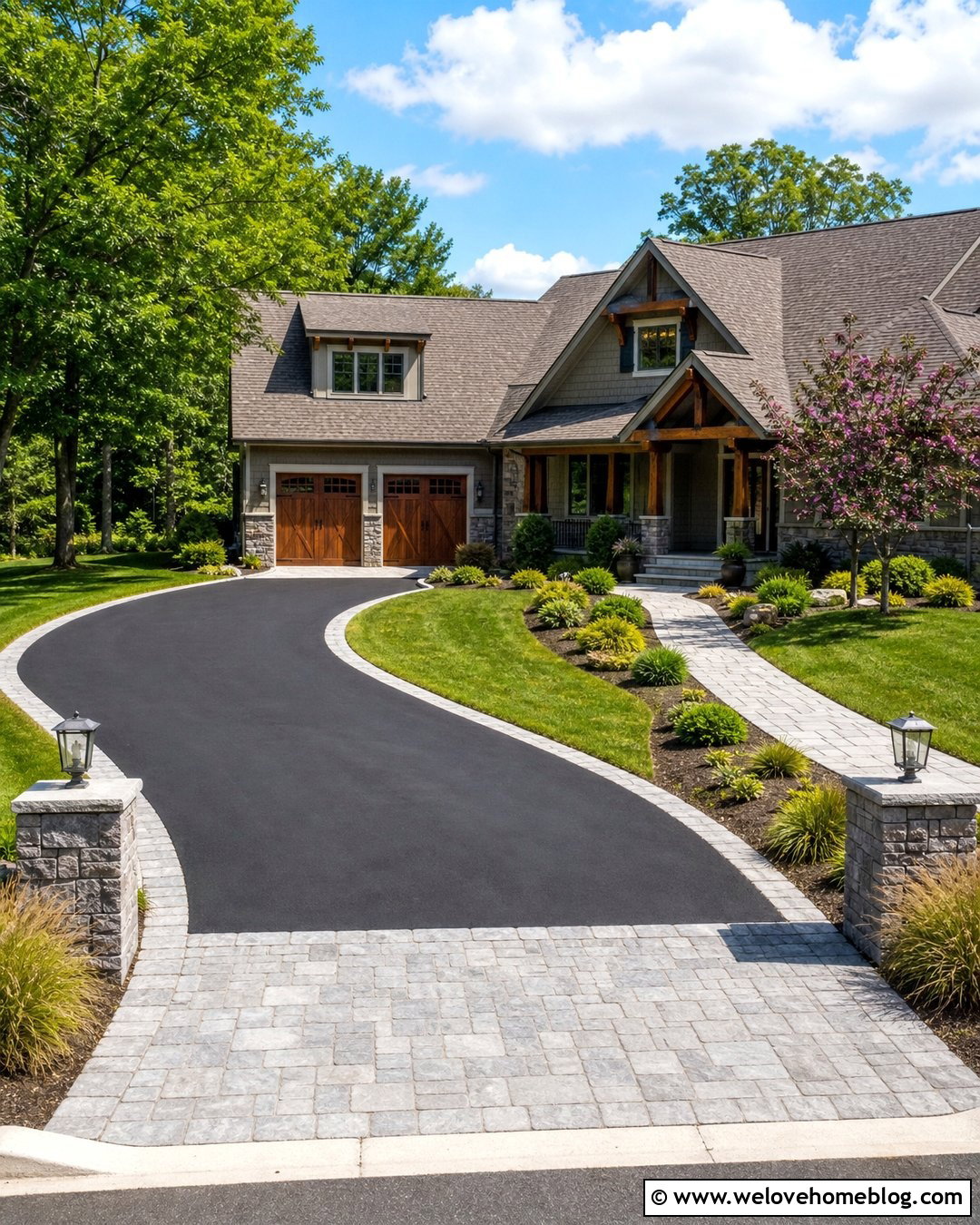
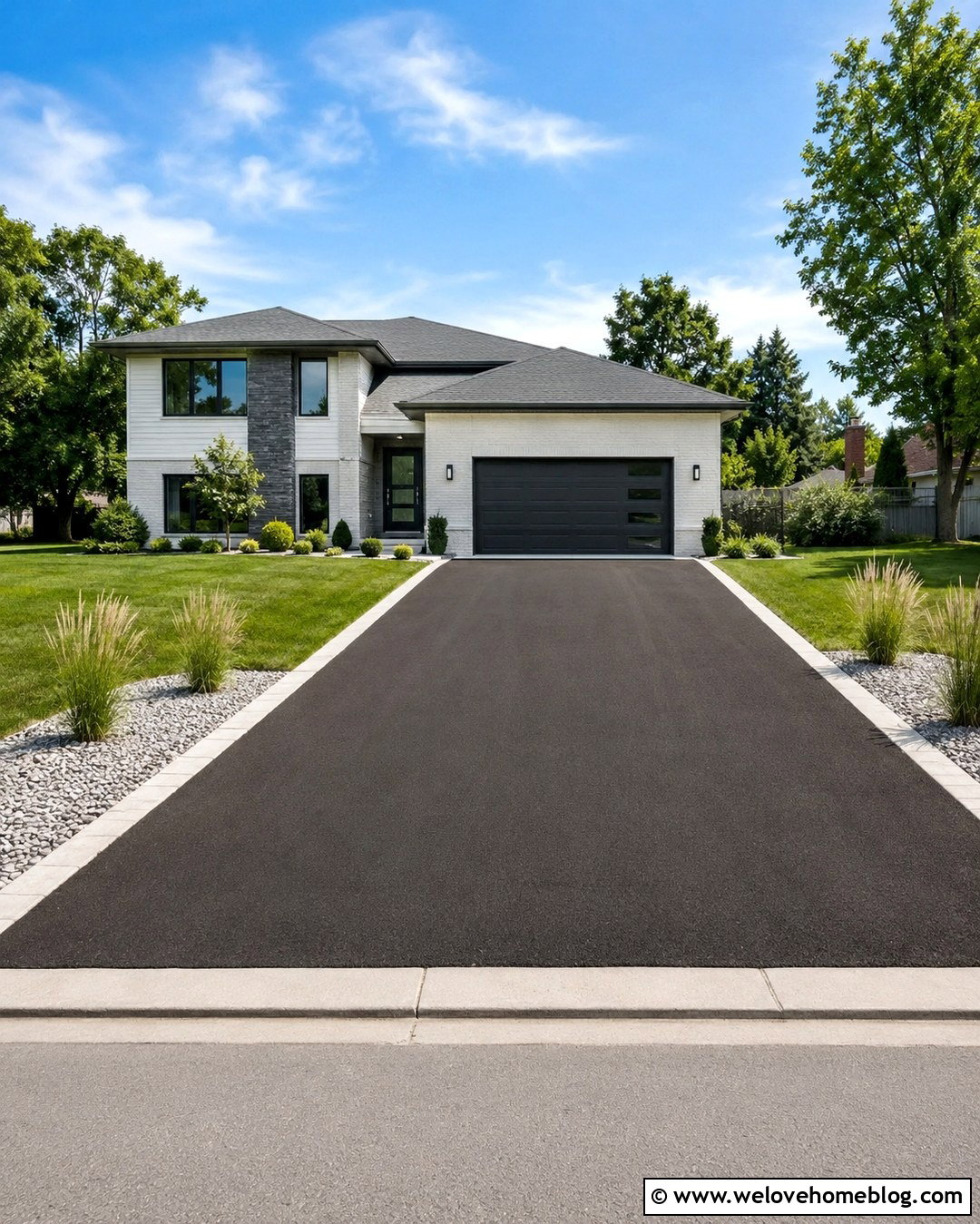
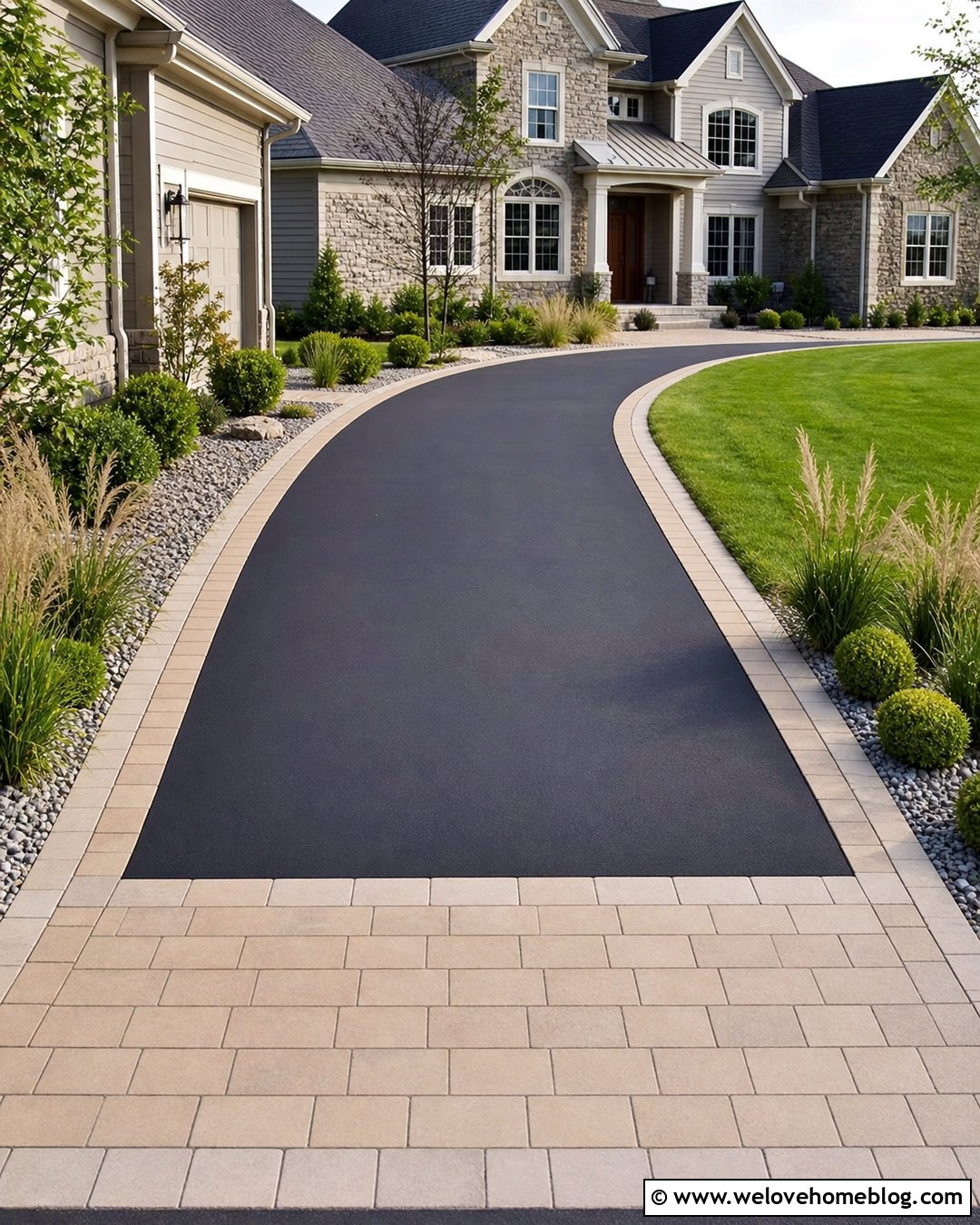
Deep black asphalt and light gray Belgian block create a crisp contrast that works with many American home styles. A gently curved driveway makes the combination feel more polished, particularly when the stone curb follows the curve without awkward breaks. Set the blocks in a single uniform row, with enough height to contain nearby soil and mulch. At the street entrance, widen the stone border into a small apron for a more substantial arrival point. Add ornamental grasses, compact evergreen shrubs, and one flowering tree along the outside curve. The asphalt remains practical and visually quiet, while the granite-like blocks provide texture and character. Repeating the same block around the front walkway helps the driveway and landscape feel intentionally connected.
3. Gravel Driveway With Concrete Curb
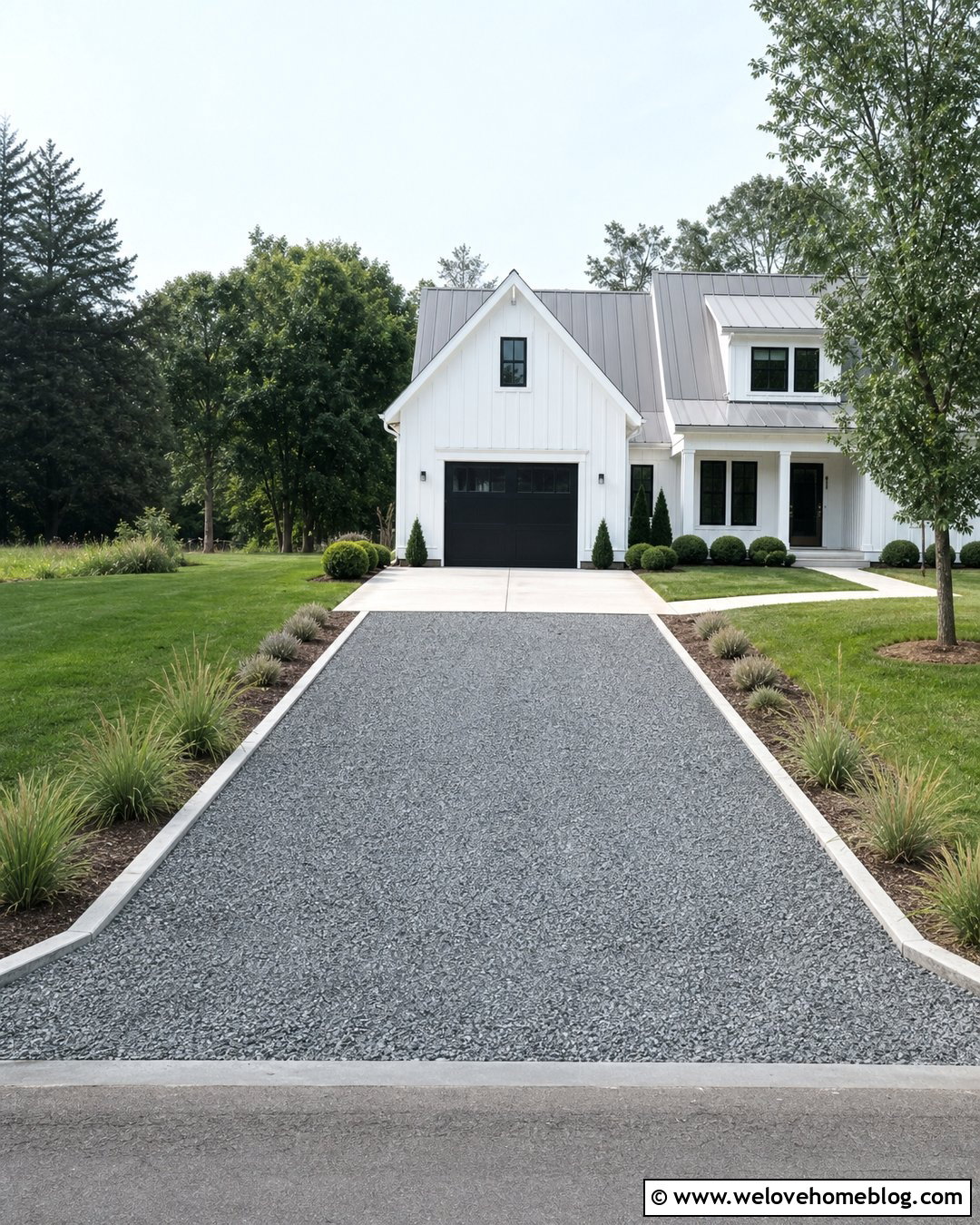
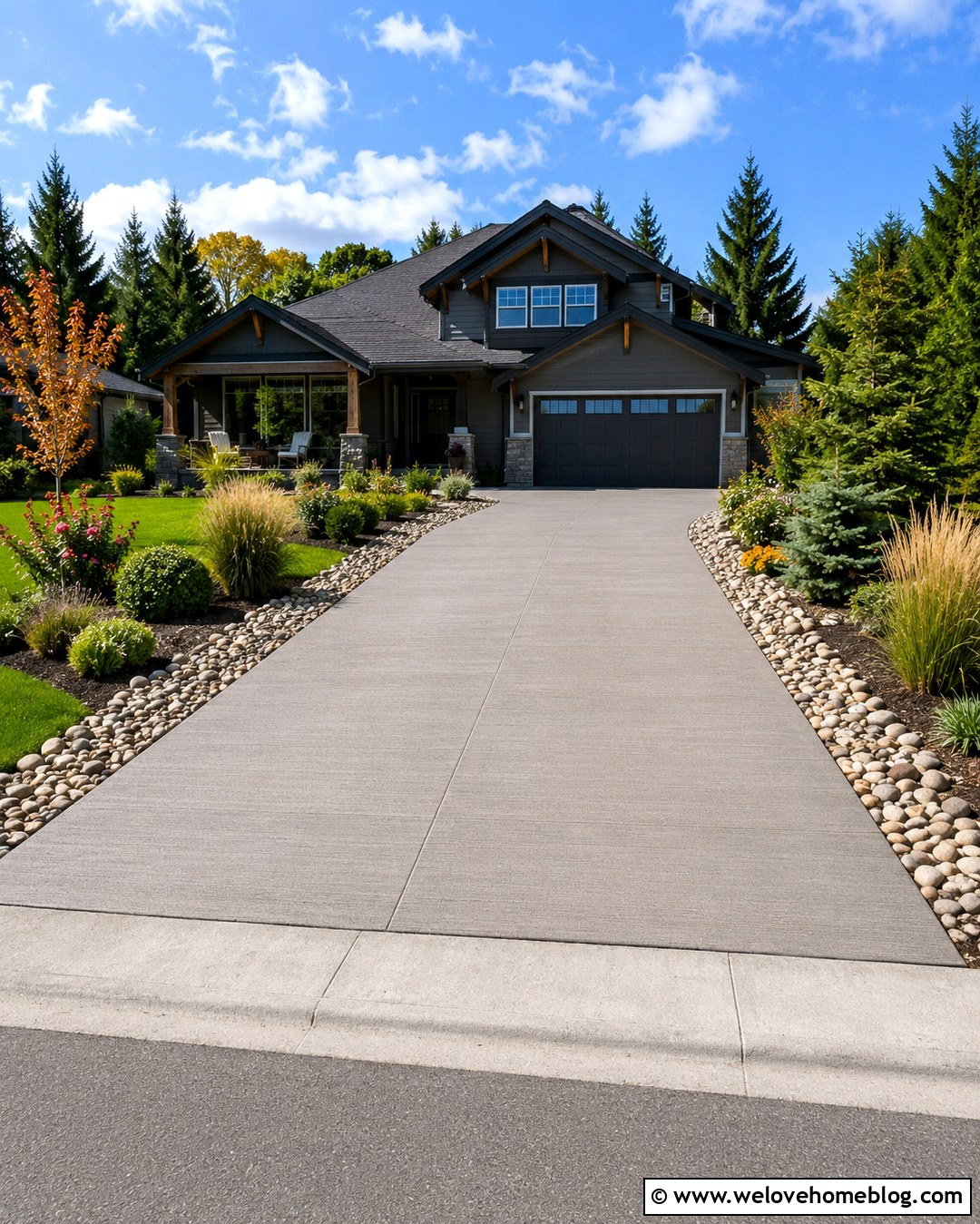
Loose gravel looks much more finished when it sits inside a clean concrete curb. Choose compacted gray crushed stone for the main surface and use a continuous light concrete edge on both sides. A straight driveway suits ranch homes, modern farmhouses, and smaller suburban properties because it keeps the approach visually organized. The curb should follow a consistent line and contain the gravel without appearing excessively tall. Concrete or properly supported edge restraints can help define loose driveway materials and separate them from surrounding landscaping. () Frame the entrance with low grasses, rounded shrubs, and broad lawn areas. Near the garage, transition to a concrete parking pad so scattered gravel is less likely to reach interior floors. The finished design feels relaxed but carefully maintained.
4. Paver Driveway With Matching Paver Curb
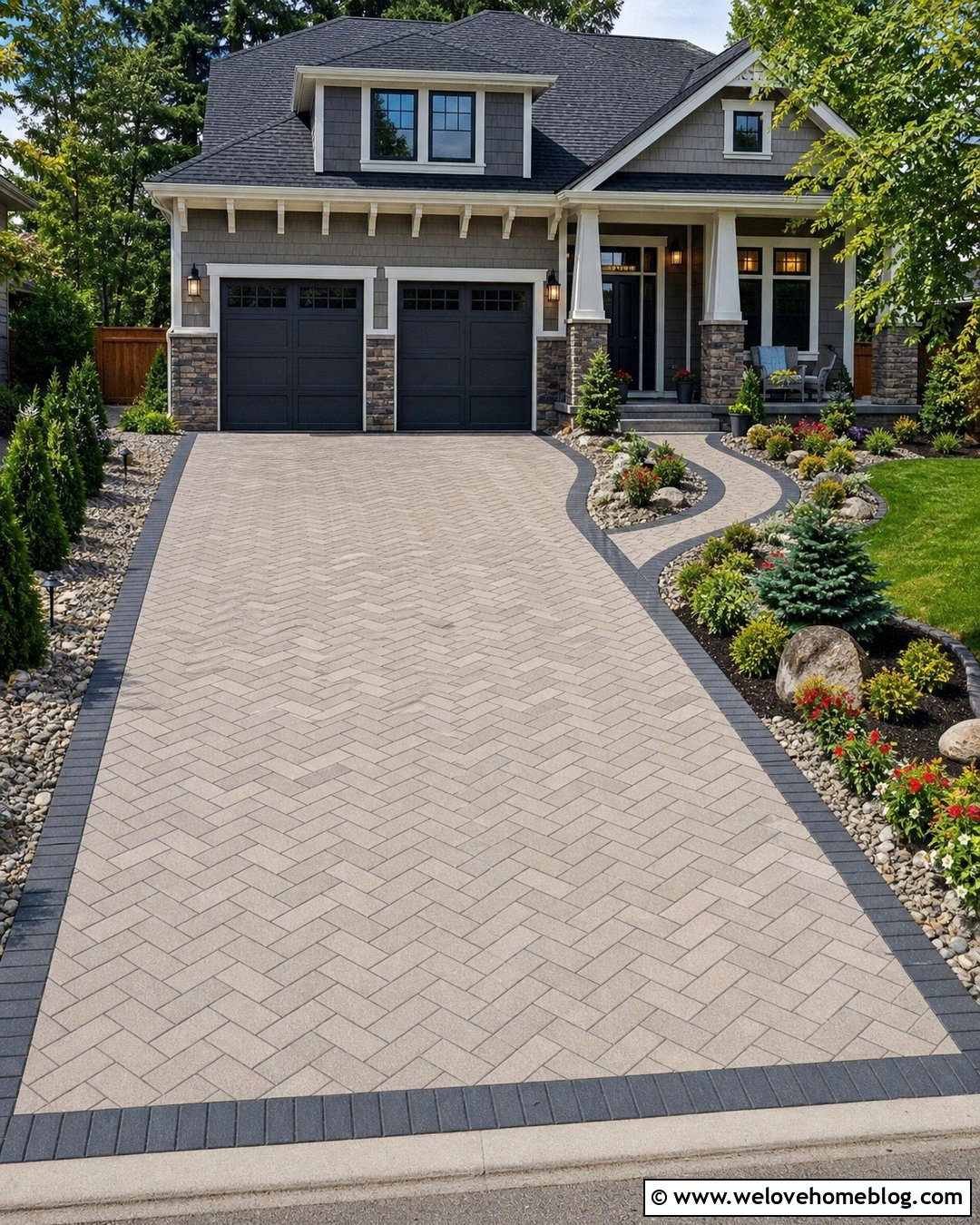
A driveway built from concrete pavers can have a refined, unified appearance when the curb uses the same paver collection in a darker shade. Lay warm gray pavers in a herringbone pattern through the center, then install charcoal pavers as a raised perimeter course. A wide straight driveway complements a craftsman house, especially when the border color repeats the roof, shutters, or stone porch columns. Include a curved planting bed beside the garage to prevent the paved area from looking oversized. Layer the bed with dwarf evergreens, flowering perennials, and decorative gravel. Continue the charcoal curb beside the front walkway for a smooth visual connection. The matching materials produce a coordinated finish, while the color change makes the driveway boundaries easy to recognize.
5. Stamped Concrete Driveway With Stone Curb
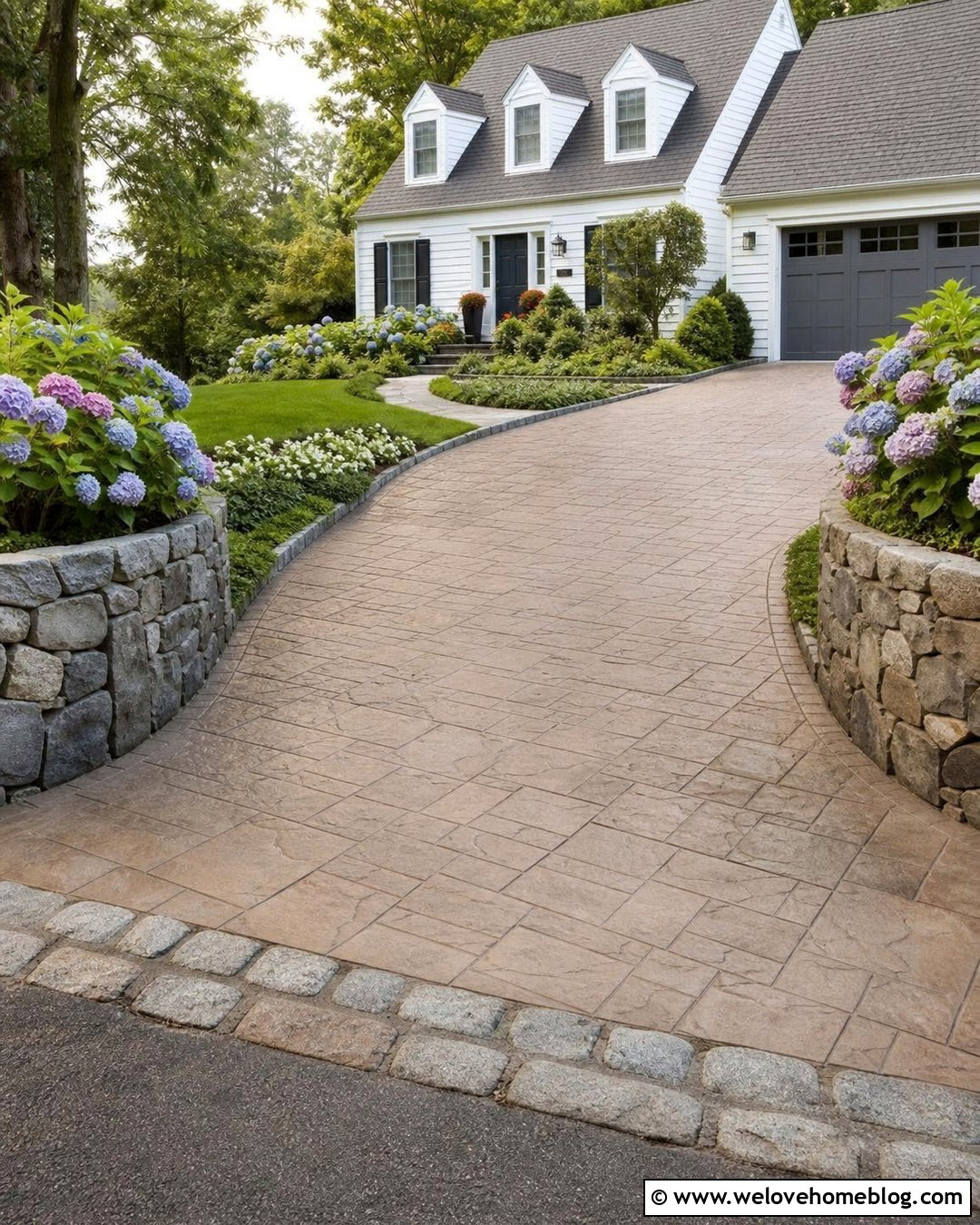
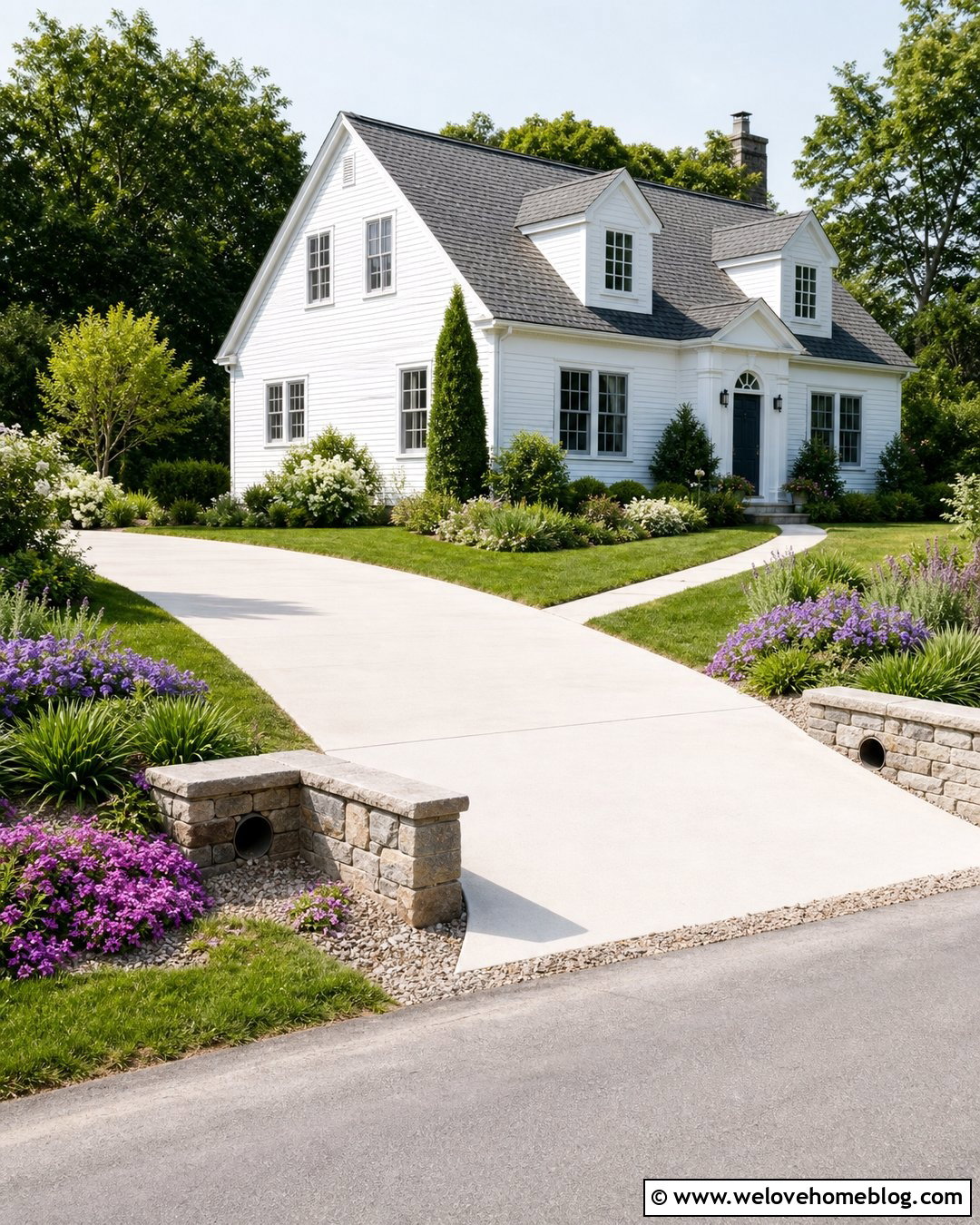
Stamped concrete can create the appearance of individual paving units while maintaining a continuous surface. Select a warm taupe ashlar-stone pattern and surround it with a low curb made from rugged gray fieldstone. A softly curved layout works well because it highlights the stamped pattern and gives the stone edge a natural flow. Place larger stones near the driveway entrance, then use more uniform pieces closer to the garage. A cape cod or cottage-style home provides an ideal background for this welcoming combination. Add hydrangeas, small flowering shrubs, ground cover, and a curved walkway beside the inside edge. Keep the concrete colors subtle so the surface does not compete with the house. The result has texture and traditional character without feeling overly decorative.
6. Exposed Aggregate Driveway With Charcoal Curb
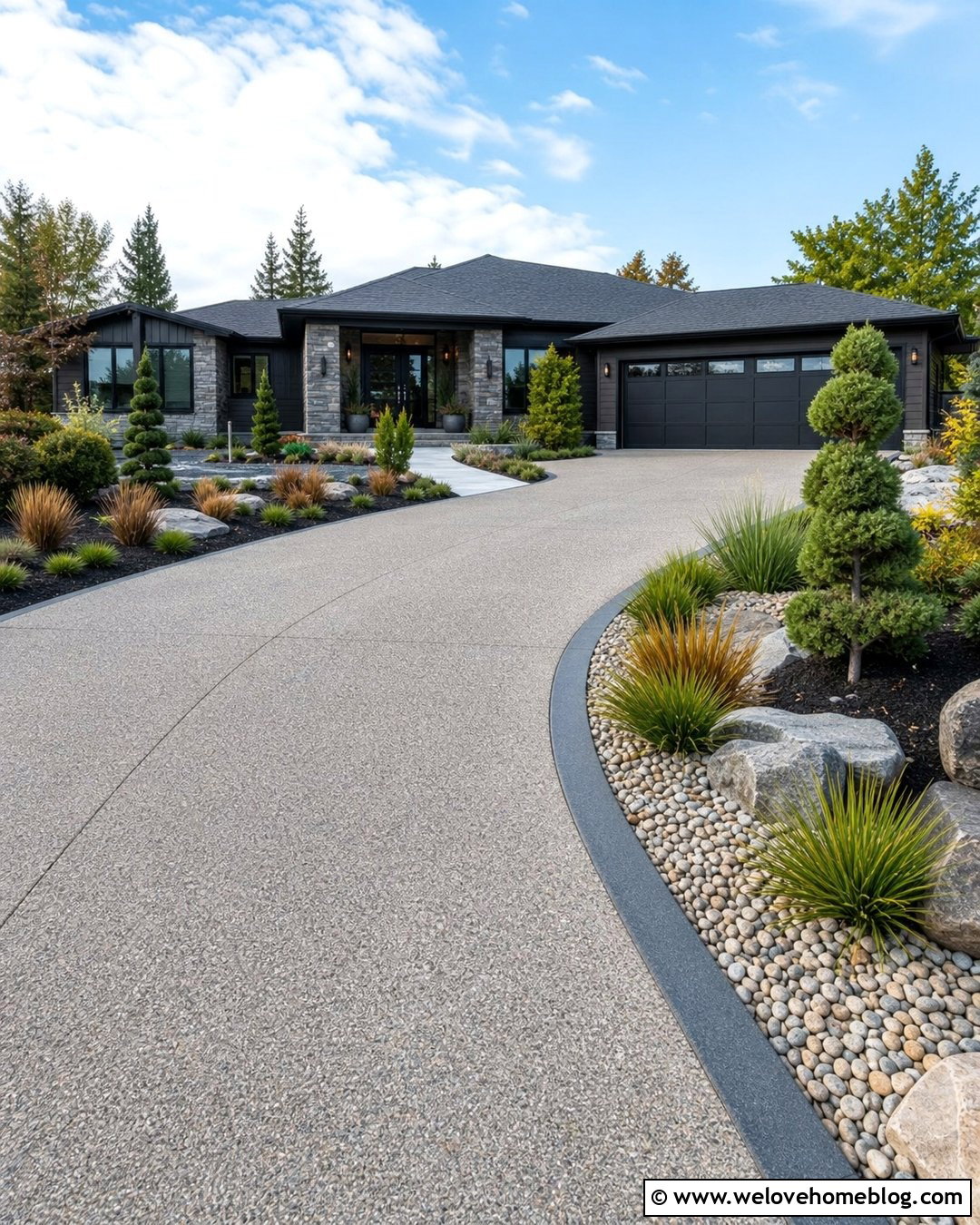
The small stones visible in exposed aggregate give a driveway more depth than plain concrete. Pair a sandy gray aggregate surface with a smooth charcoal concrete curb for a contemporary look. A broad driveway with a slight curve can guide attention toward a modern ranch home while reducing the visual effect of a large garage. Keep the curb low and sharply formed, then repeat its dark tone in planters, exterior lights, or window trim. Use simple landscaping with clipped grasses, sculptural evergreen shrubs, and pale river rock. A straight concrete walkway can cross the planting bed and meet the driveway near the front entrance. This combination balances texture and clean geometry, making it suitable for homeowners who want something distinctive but still easy to coordinate.
7. Circular Driveway With Landscaped Center Curb
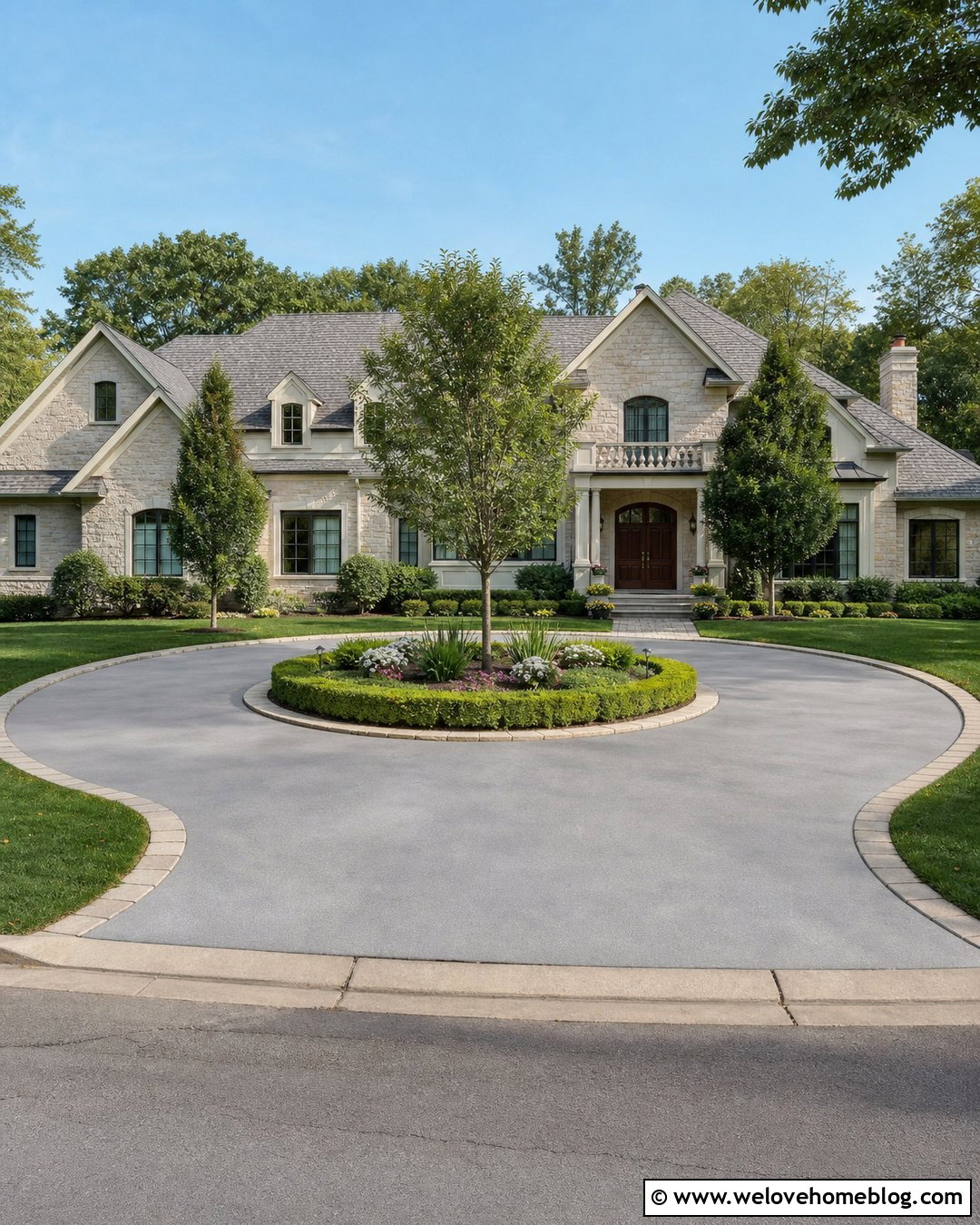
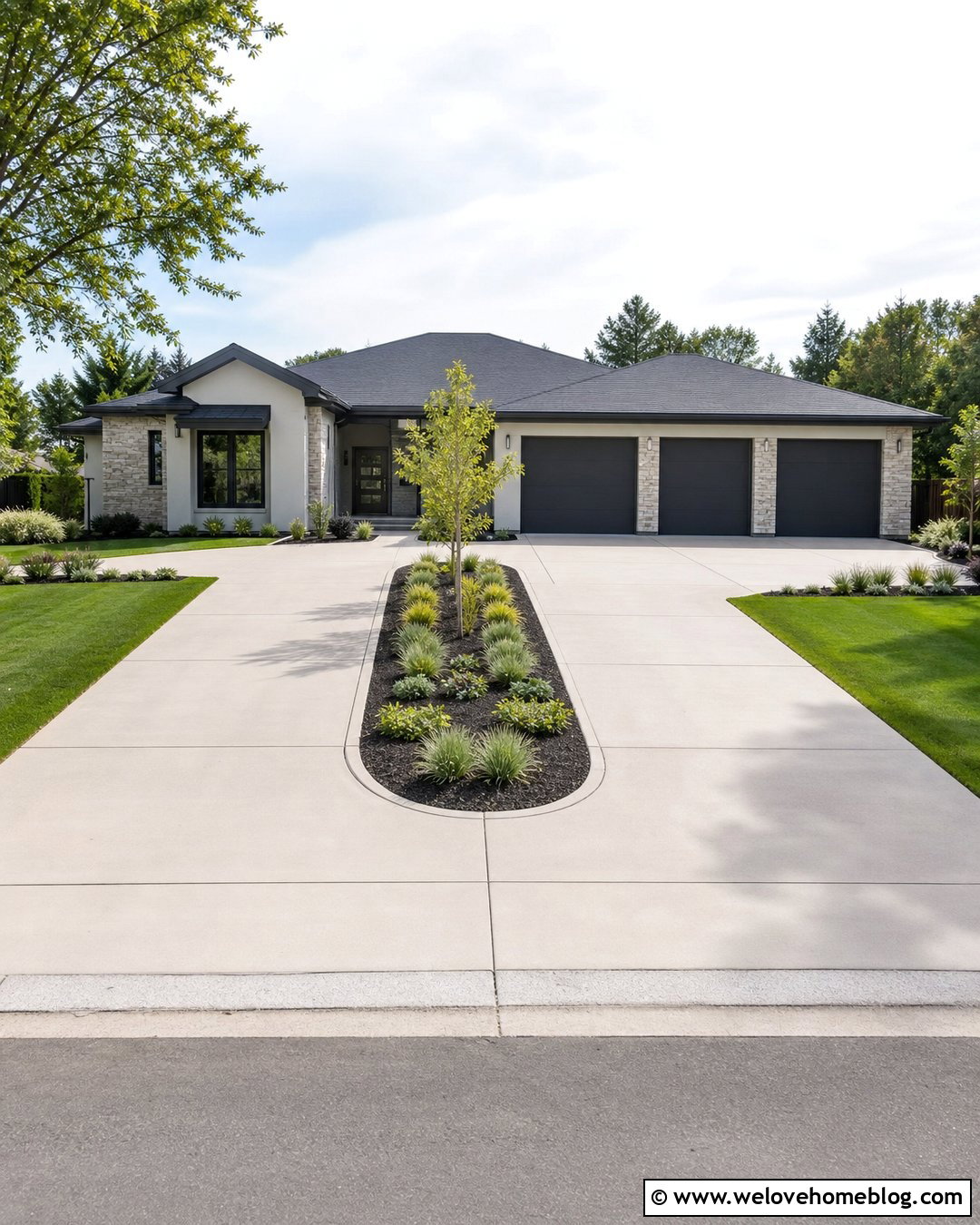
A circular concrete driveway feels more complete when a defined curb surrounds the center planting island. Use smooth medium-gray concrete for the driving surface and a low cream-colored masonry curb around the island. Shape the curb as a clean oval or circle that mirrors the vehicle route. Inside it, plant one appropriately scaled ornamental tree with evergreen shrubs, seasonal flowers, and ground cover beneath it. Landscape lighting can highlight the planting without filling the island with fixtures. Add a matching curb along the driveway’s outer edge where it meets lawn or garden beds. Circular layouts particularly benefit from coordinated landscaping because the central island helps establish the driveway’s shape and visual purpose. () The overall entrance feels generous, organized, and welcoming.
8. Curved Driveway With Granite Curb
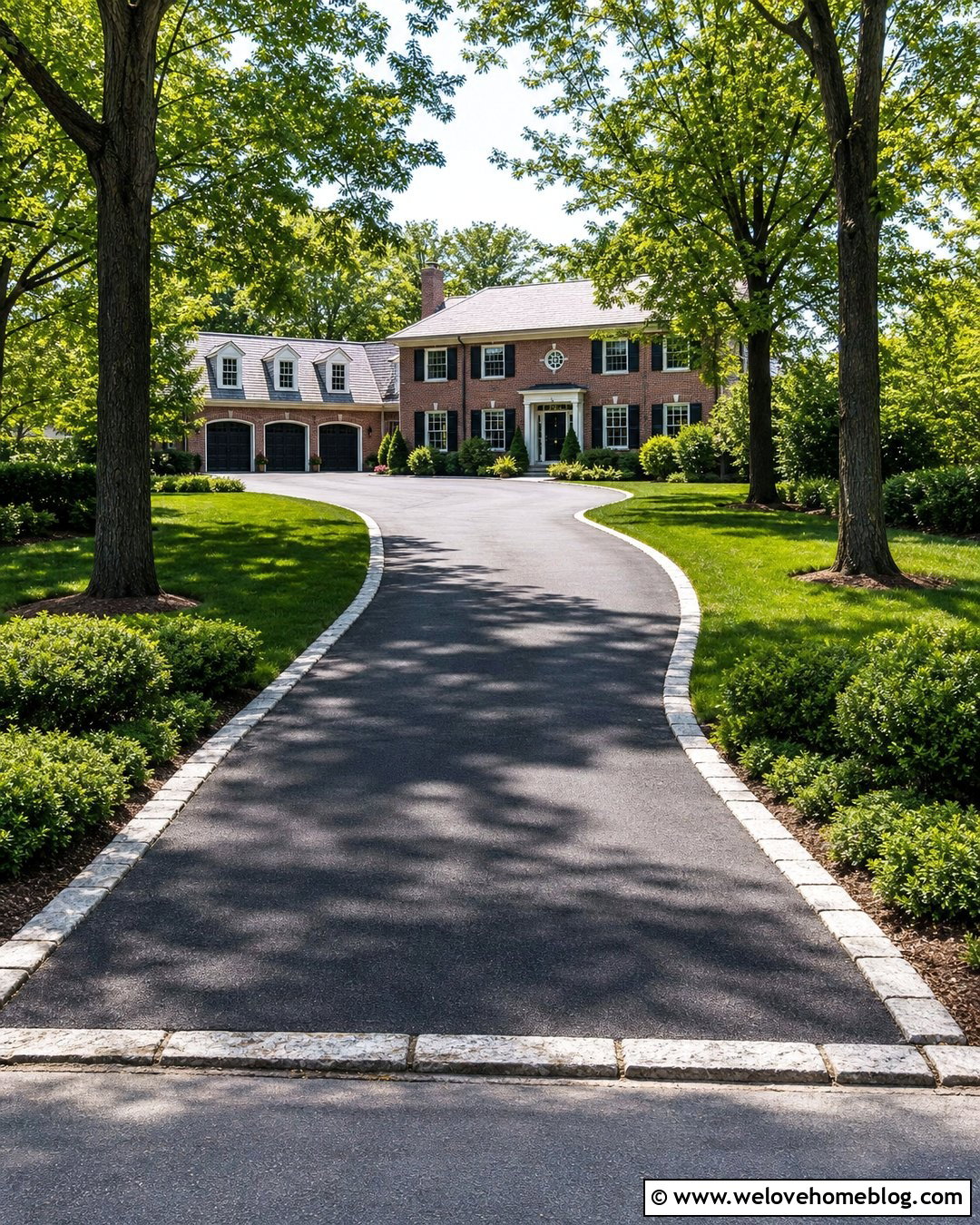
A sweeping driveway edged with granite can make a long front yard feel graceful and established. Choose medium-gray asphalt or compacted fine gravel for the surface, then follow both curves with rectangular granite curb stones. The stone should remain consistent in size, spacing, and height so the curve looks smooth from the street. Plant shade trees at generous intervals along one side while keeping the opposite side more open with lawn and low shrubs. This balanced arrangement provides structure without creating a narrow tunnel. Near a traditional brick or stone house, widen the driveway into a modest parking court bordered by the same granite. The natural color variation in the curb adds richness, while the restrained landscape keeps the complete approach calm and uncluttered.
9. Modern Concrete Driveway With Flush Curb
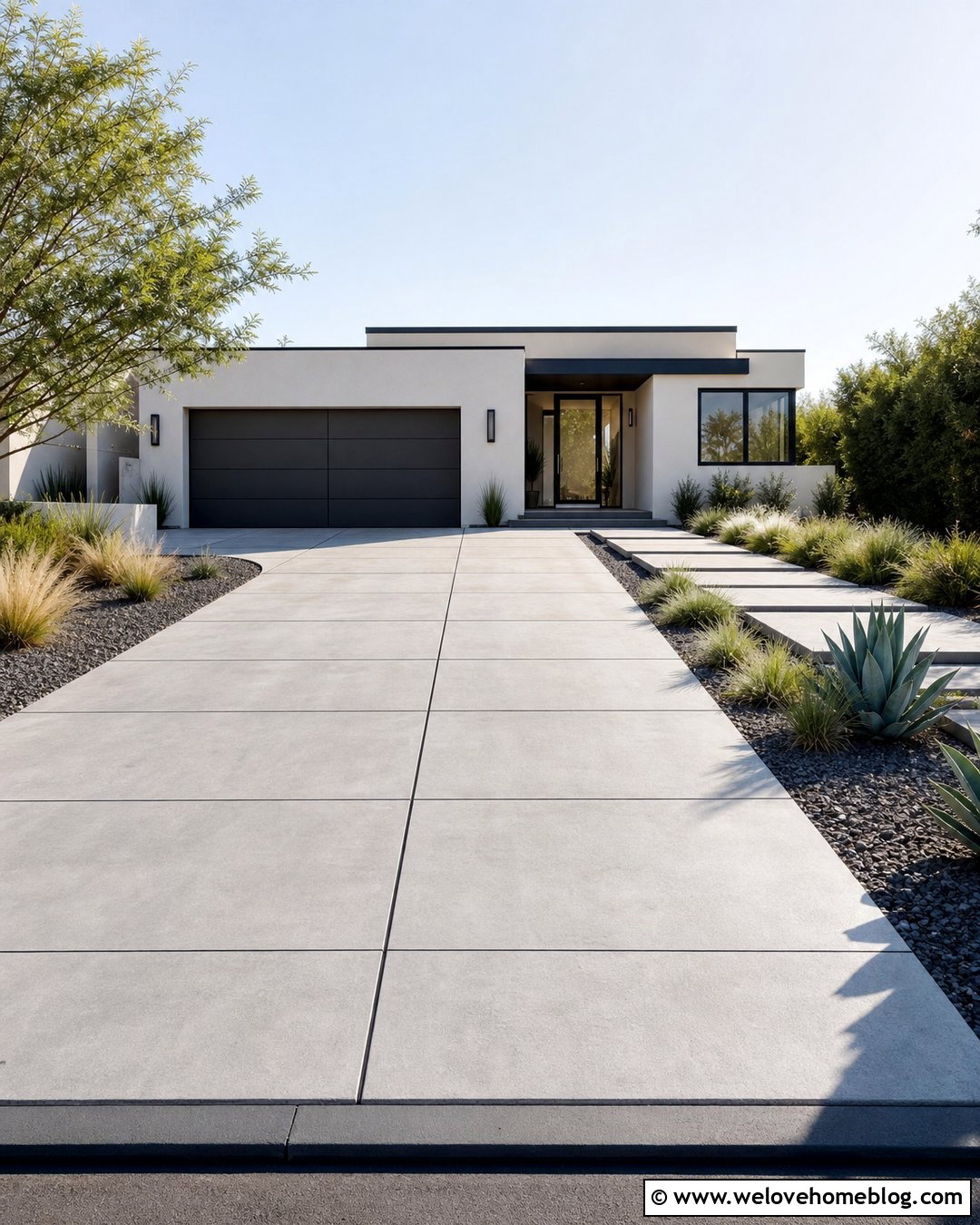
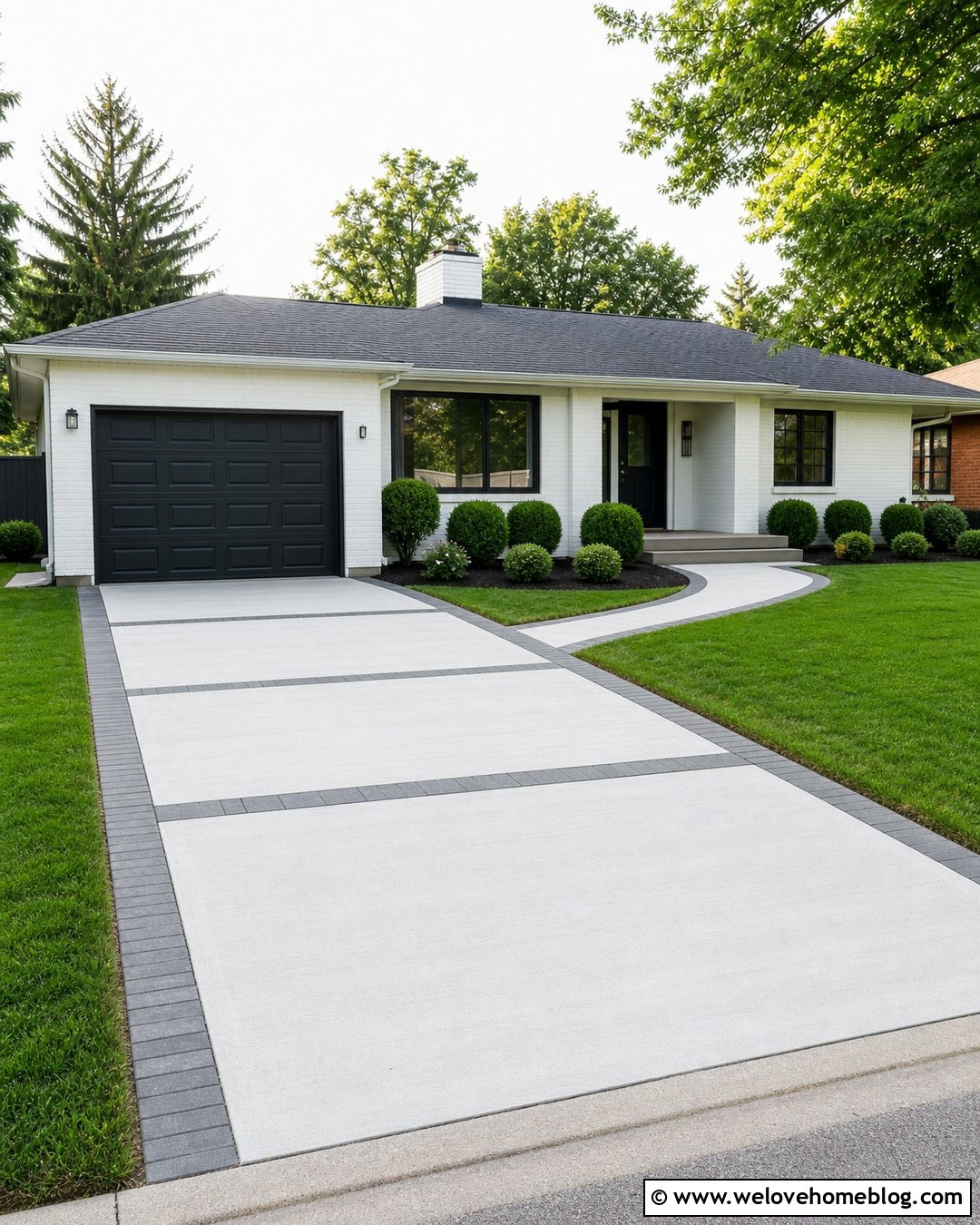
Large poured-concrete panels and a flush curb create a clean entrance for a modern home. Use pale gray concrete with narrow saw-cut joints arranged in a simple grid. Form a darker gray curb at lawn level, allowing it to define the driveway without producing a visually heavy raised edge. Add rectangular planting beds with ornamental grasses, compact agaves where climate allows, or neatly clipped shrubs suited to the region. Dark gravel mulch can echo black window frames and exterior metal accents. Keep the driveway straight or slightly offset toward the garage, with a wide slab walkway branching toward the front door. The flush border supports a seamless appearance and creates an easier transition in frequently walked areas. Every line should feel purposeful, simple, and aligned with the architecture.
10. Brick Driveway With Limestone Curb
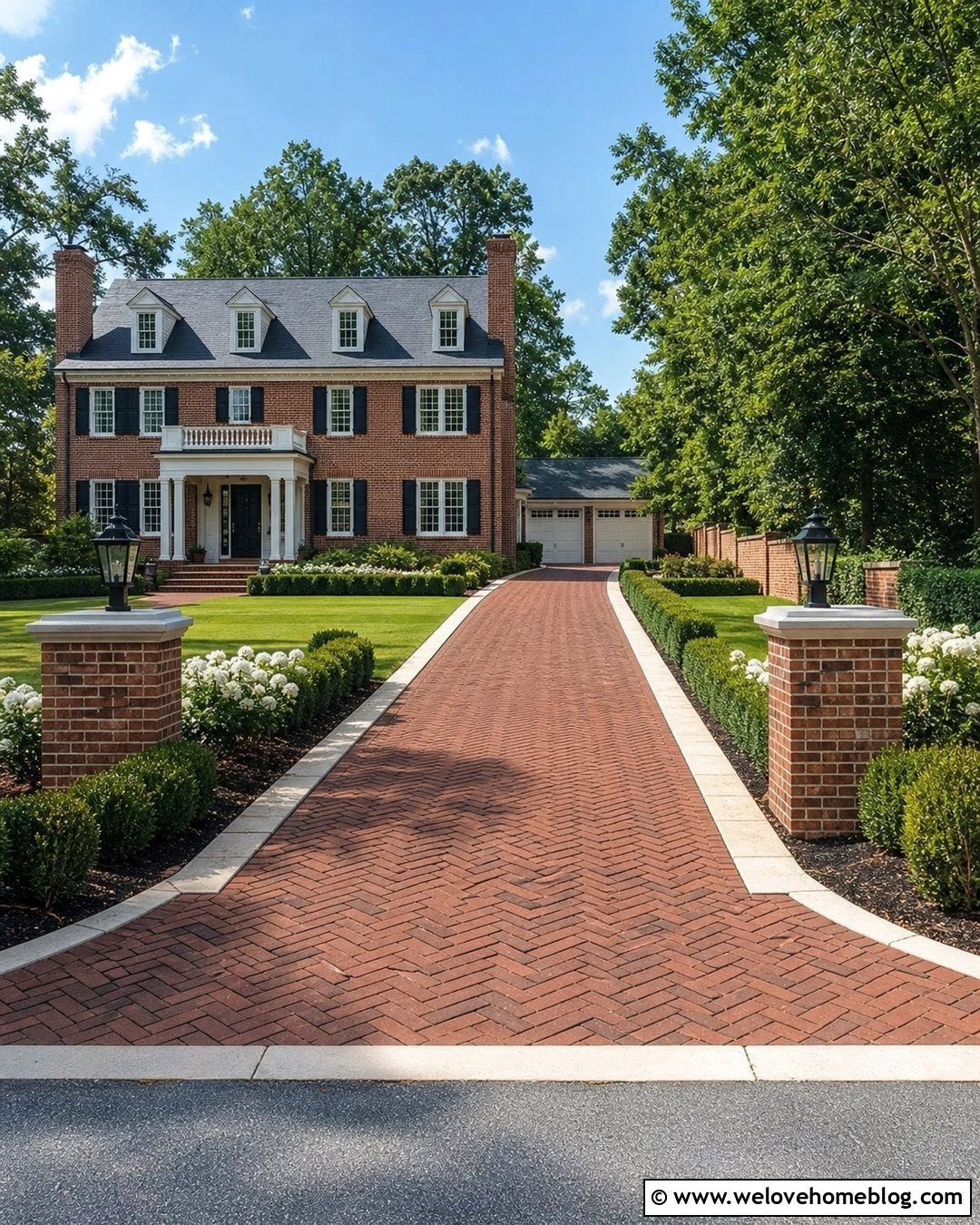
Warm clay brick pavers paired with pale limestone curbing create a classic driveway that suits colonial, Georgian, and traditional homes. Lay the brick in a herringbone pattern to provide movement through a long straight approach. Use smooth-cut limestone blocks along the edges and around nearby garden beds. Their creamy tone keeps the red brick from appearing too dark or visually dense. At the street, create a slightly wider brick apron outlined by the same limestone. Frame the driveway with clipped boxwood, green lawn, and white flowering shrubs for a formal but approachable setting. The front walkway can repeat the brick pattern at a narrower scale. Select exterior materials with related warm undertones so the driveway, curb, facade, and landscape read as one thoughtfully planned composition.
11. Cobblestone Driveway With Raised Stone Curb
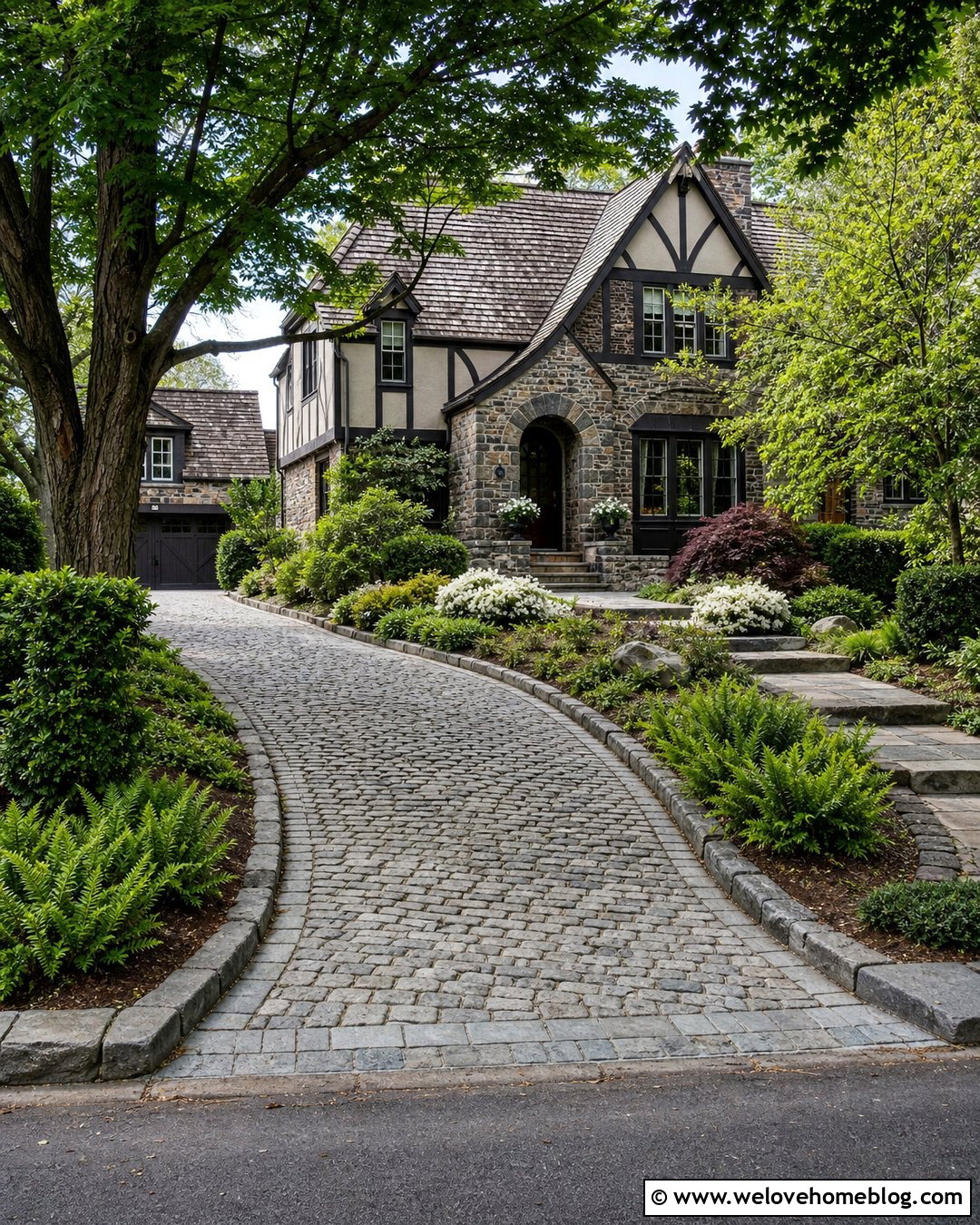
A cobblestone driveway already offers strong texture, so its curb should feel substantial but uncomplicated. Use mixed gray granite cobblestones across a gently curved surface and larger rectangular stones for the raised edge. A country home, Tudor house, or stone cottage makes a fitting backdrop. Keep the curb slightly higher beside planting beds, where it can create a clean division between paving and soil. Use creeping ground cover, ferns, flowering shrubs, and mature shade trees to soften the rugged masonry. At the garage, reduce the curb height for a comfortable transition to paths and doors. A simple stone walkway can branch from the curve and lead toward the entry. The weathered colors and irregular surface make the entire property feel established rather than newly assembled.
12. Resin-Bound Driveway With Cobblestone Curb
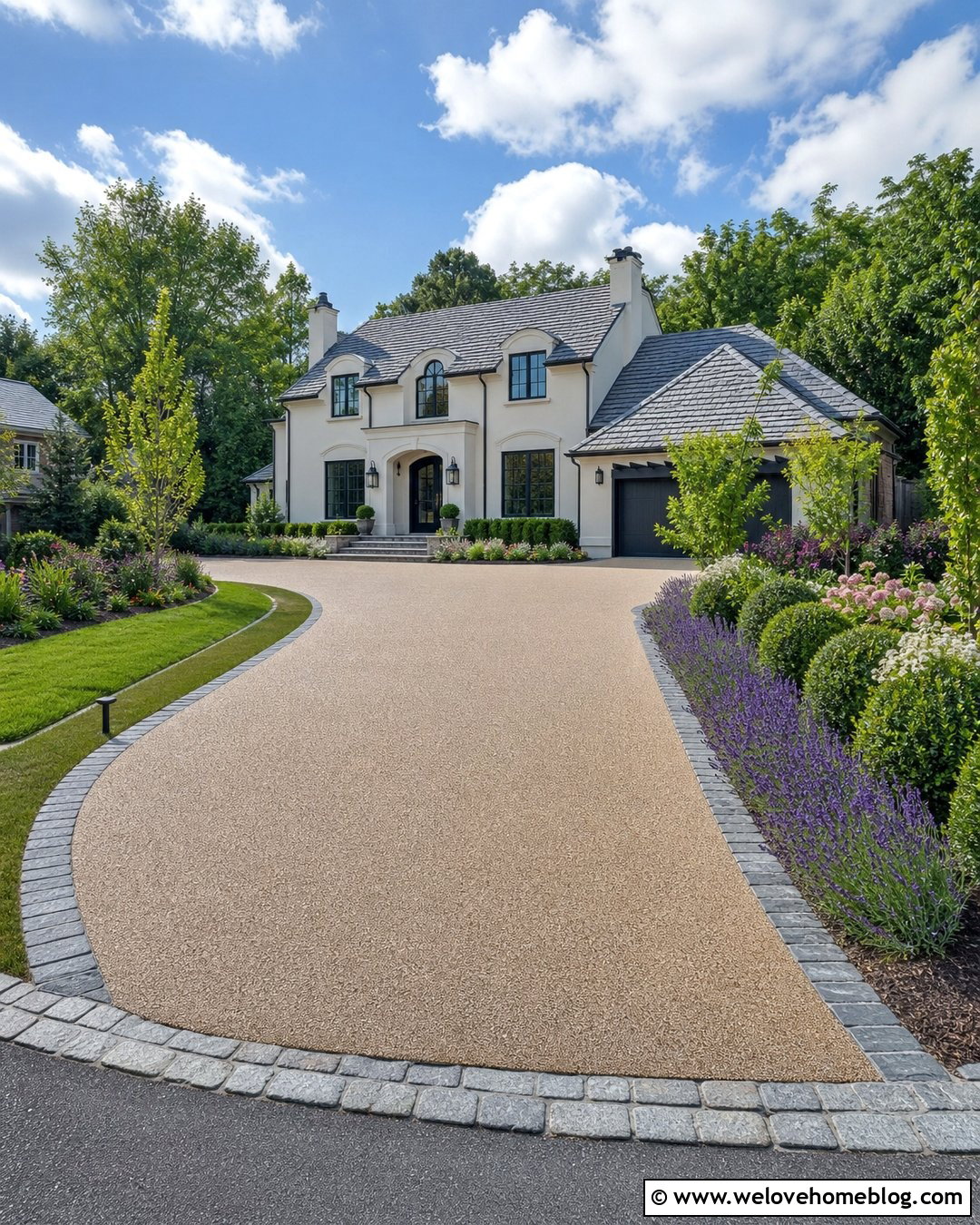
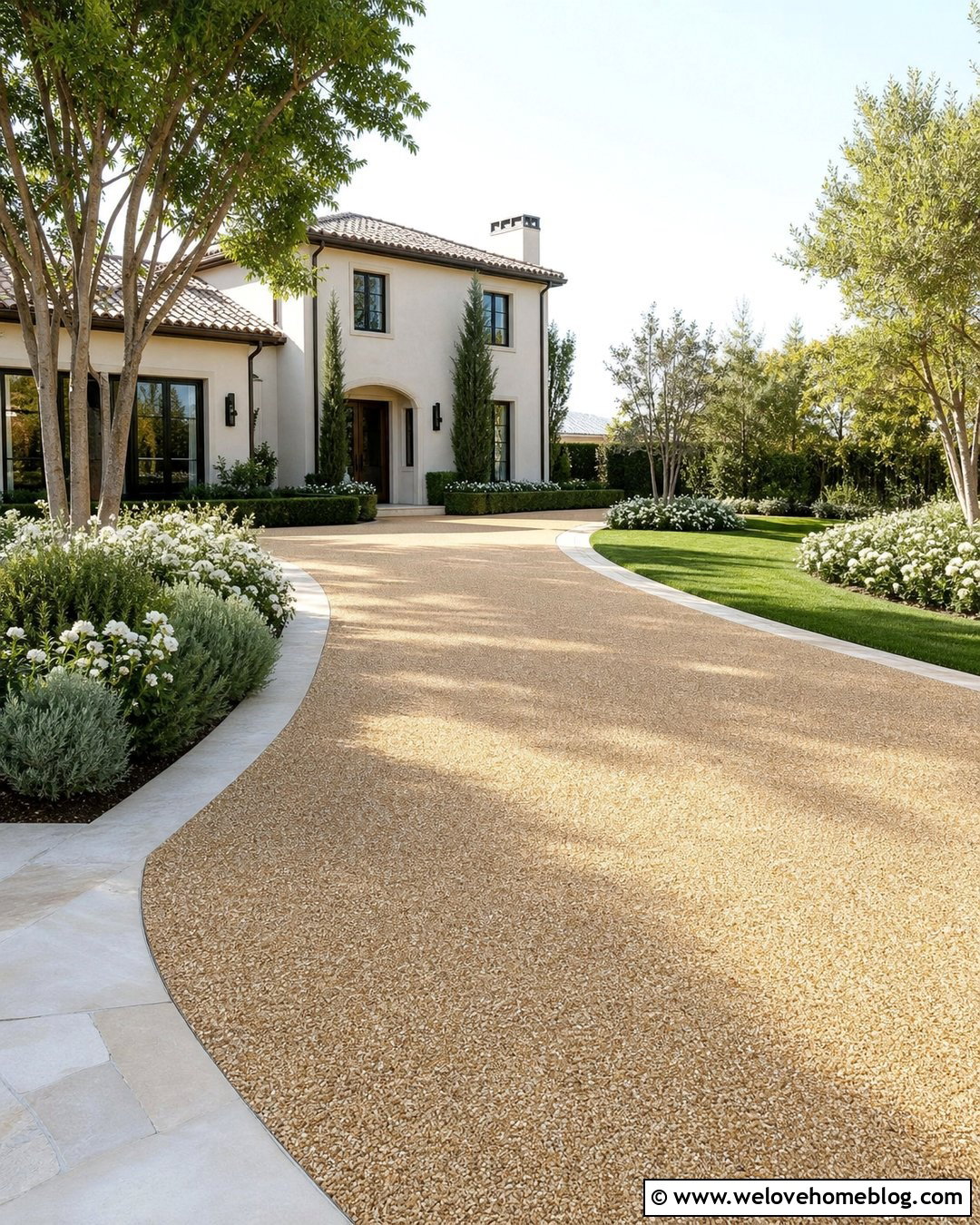
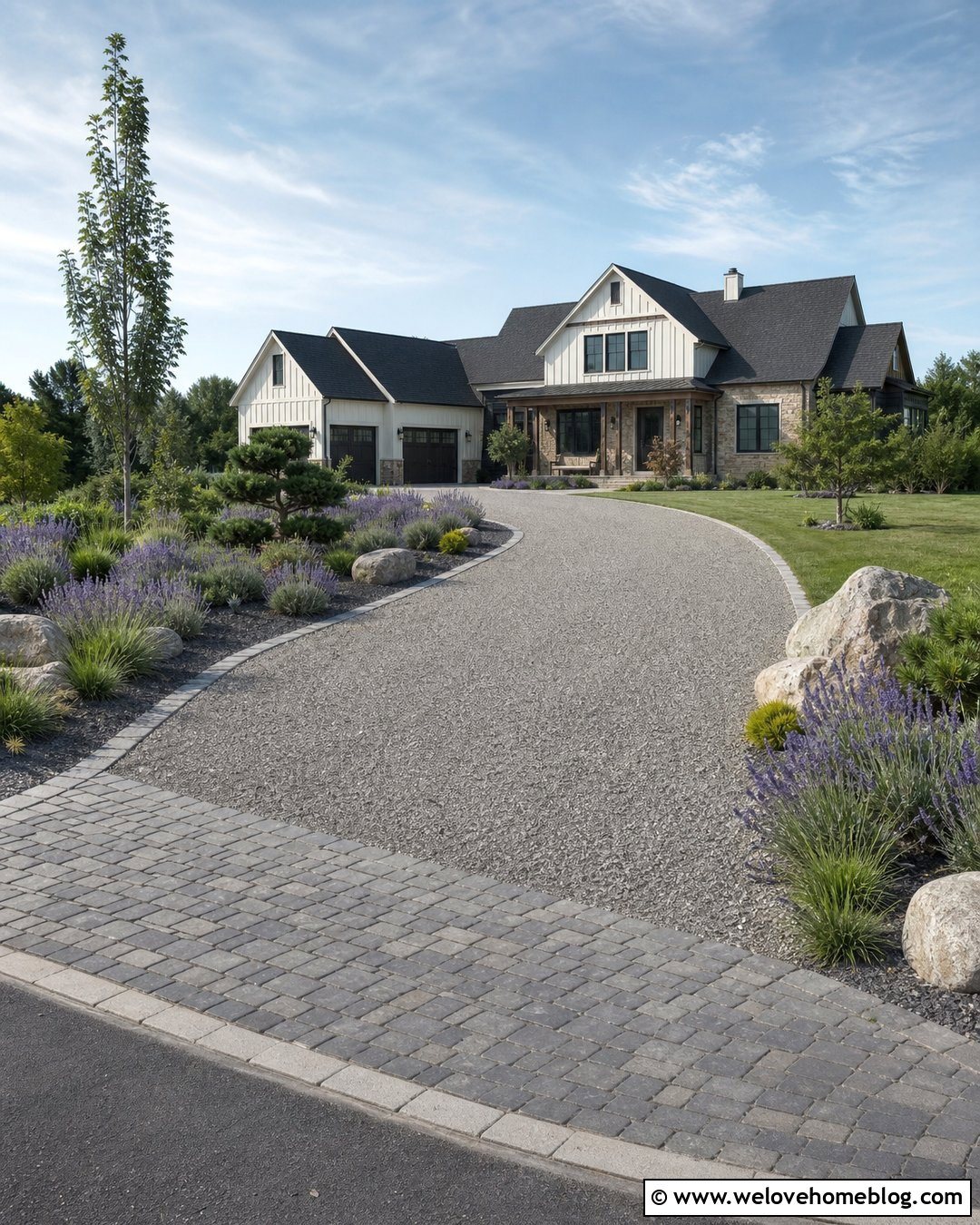
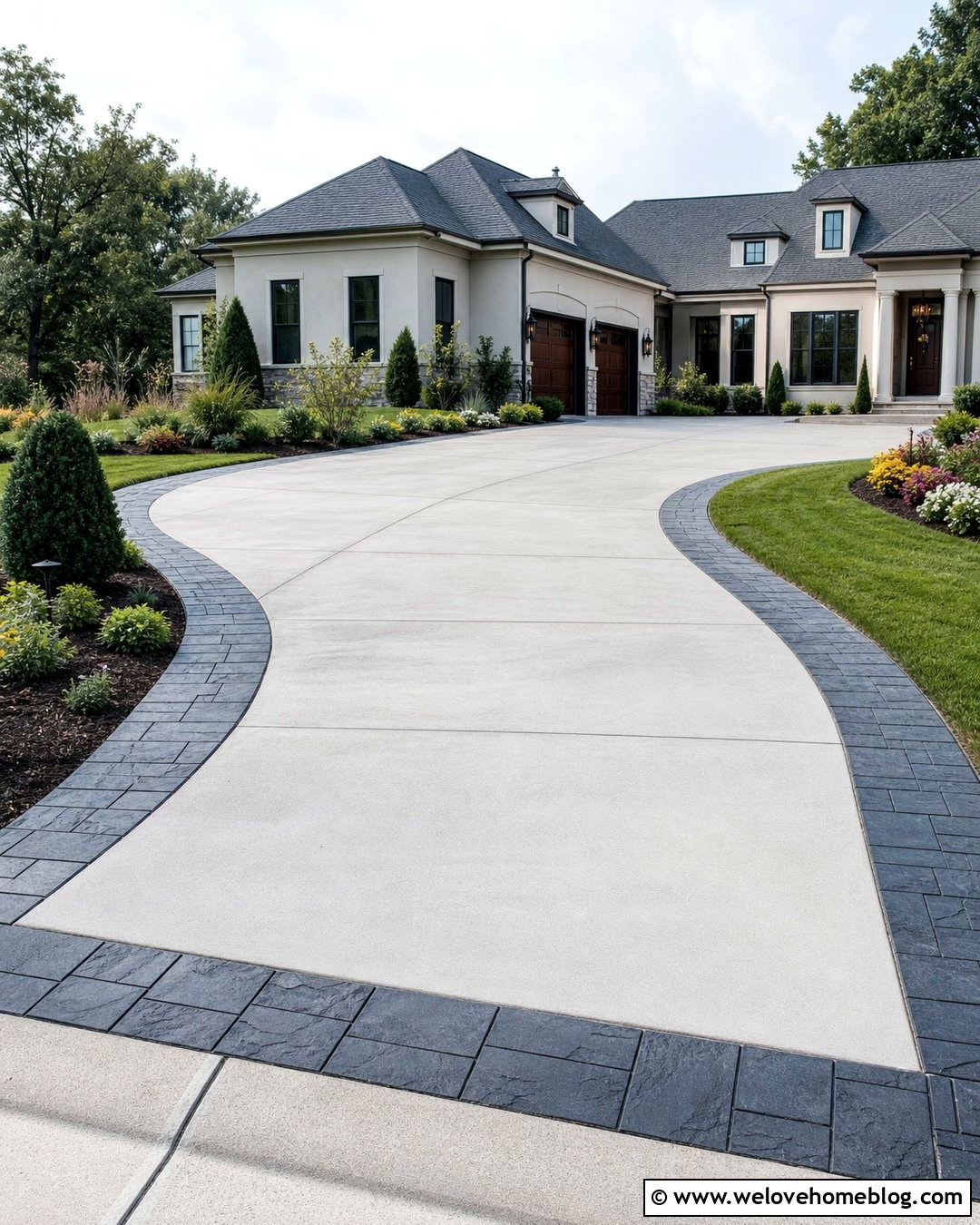
A resin-bound gravel driveway offers a smooth-looking surface while preserving the visual texture of fine stone. Choose a warm beige blend and frame it with dark gray cobblestones laid in a neat single row. A curved driveway works especially well because the contrasting curb makes its shape easy to follow. Pair the design with a light stucco, painted brick, or transitional-style house. Along the outer curve, create layered beds with lavender, evergreen spheres, flowering perennials, and ornamental grasses. Keep the inner curve open with lawn to avoid crowding the approach. Repeat the cobblestone around the front walkway or porch landing. The fine aggregate provides a calm background, while the darker curb introduces definition and connects the driveway to other masonry details around the home.
13. Pea Gravel Driveway With Brick Curb
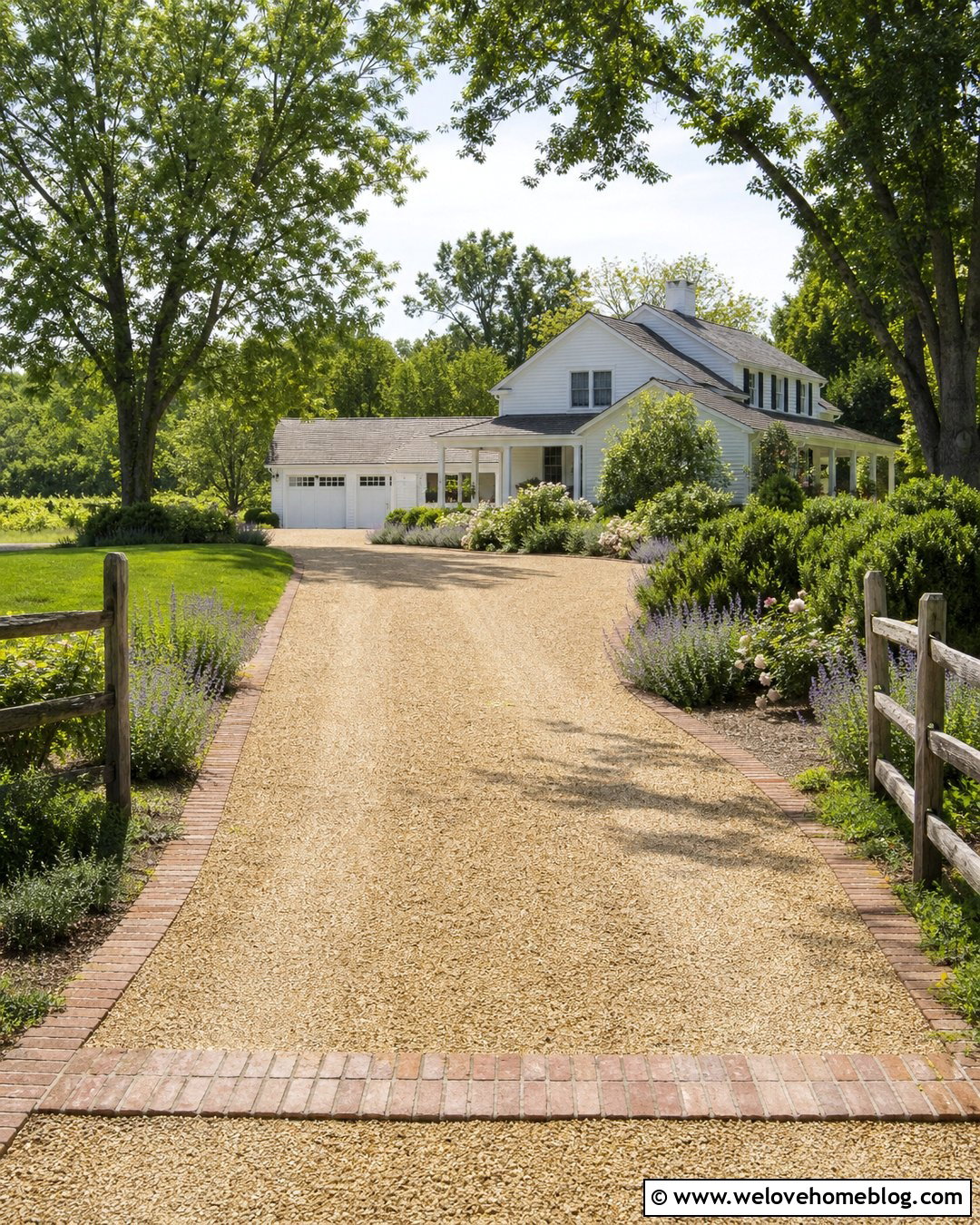
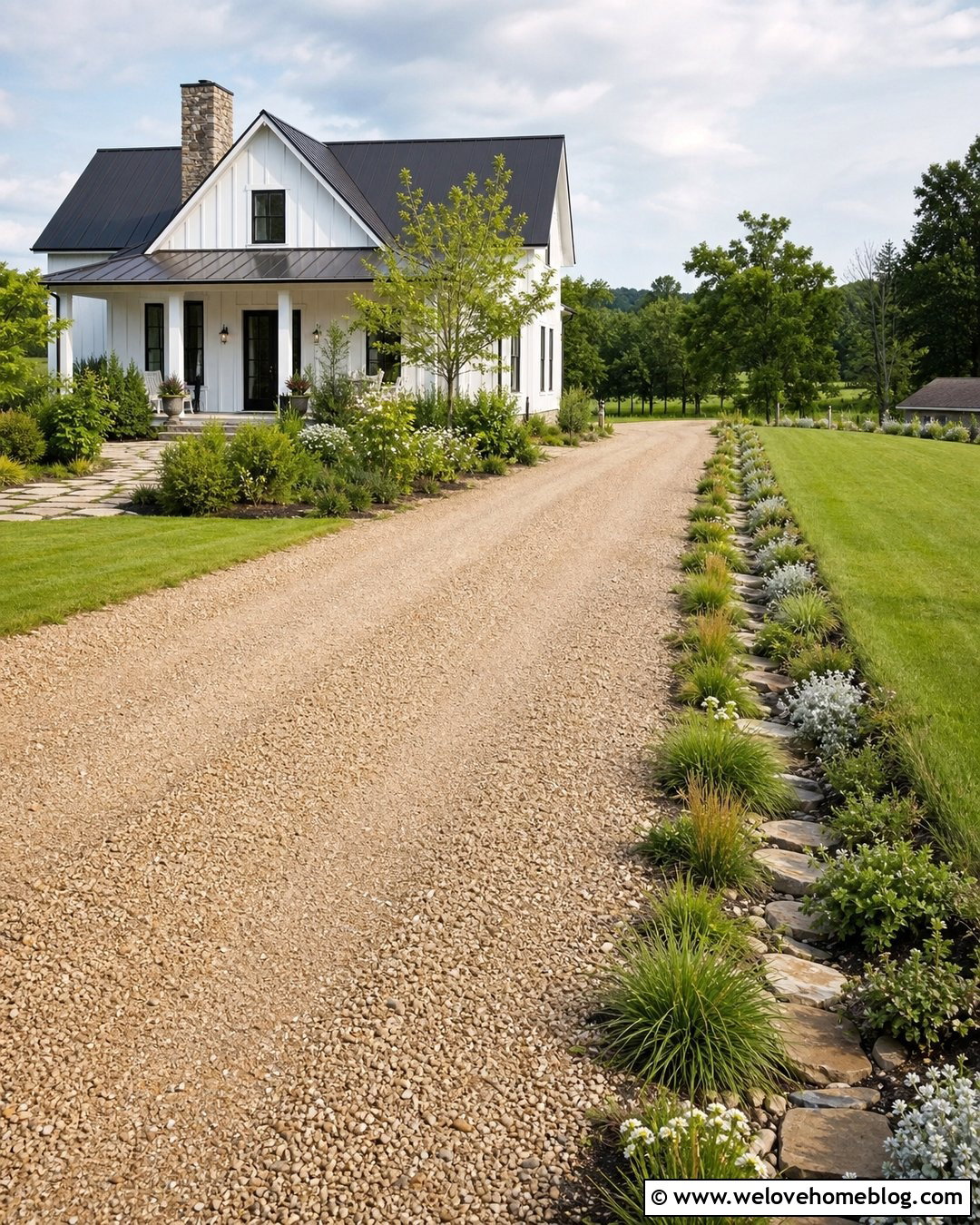
Soft tan pea gravel and reclaimed red brick can create a relaxed driveway for a farmhouse or cottage property. Use a straight approach that widens near the house, giving vehicles enough turning and parking space without forming a large rectangular lot. Install the brick curb in a sturdy soldier course along both sides to contain the rounded gravel. Add a wider brick threshold at the garage and street entrance for clear transitions. Border the driveway with lavender, catmint, low roses, and informal evergreen shrubs. A split-rail fence or simple wooden gate can frame the entrance without blocking the view of the house. The blend of warm gravel, aged brick, and loose planting creates a welcoming rural character while the defined curb keeps the design from looking unfinished.
14. White Gravel Driveway With Dark Concrete Curb
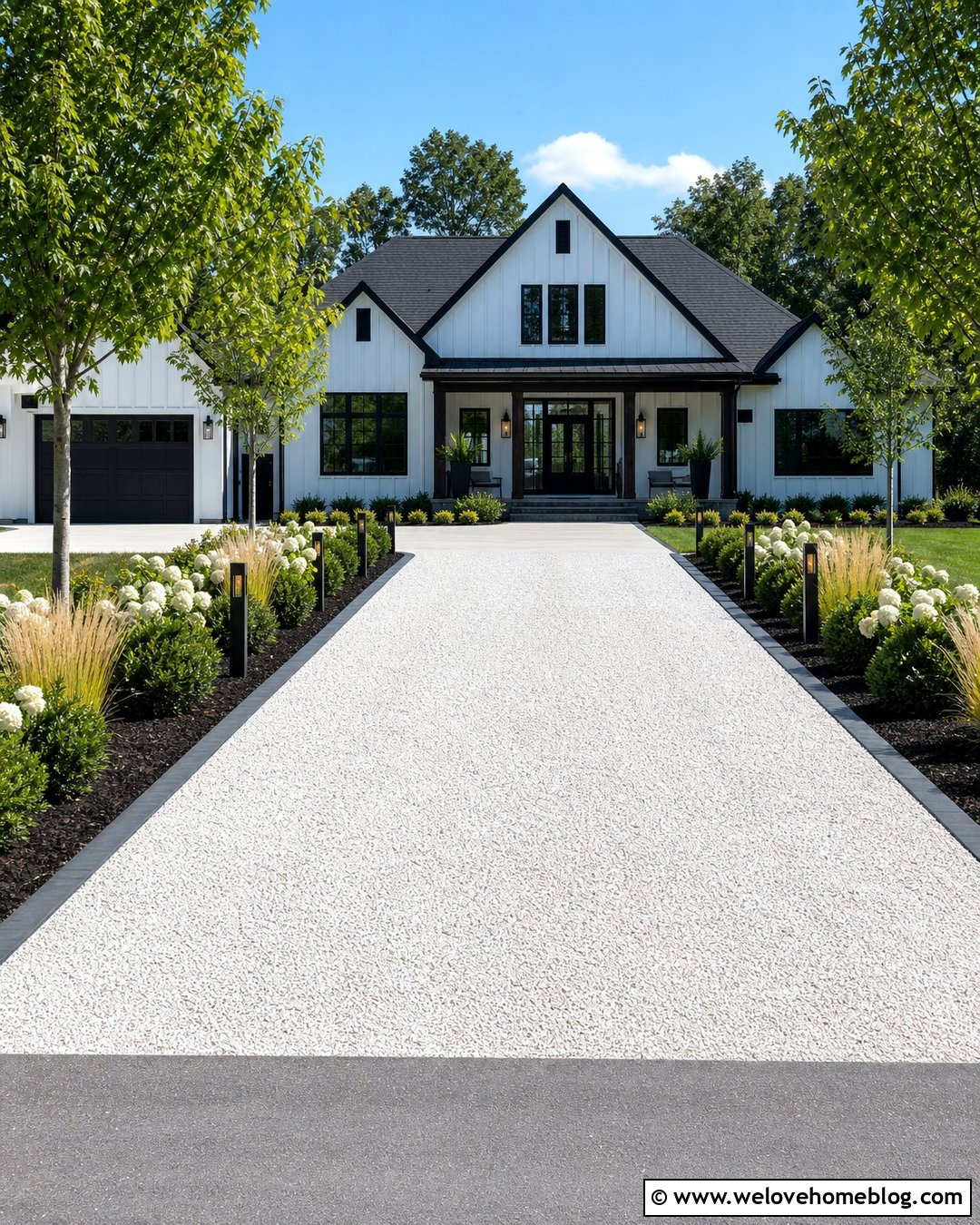
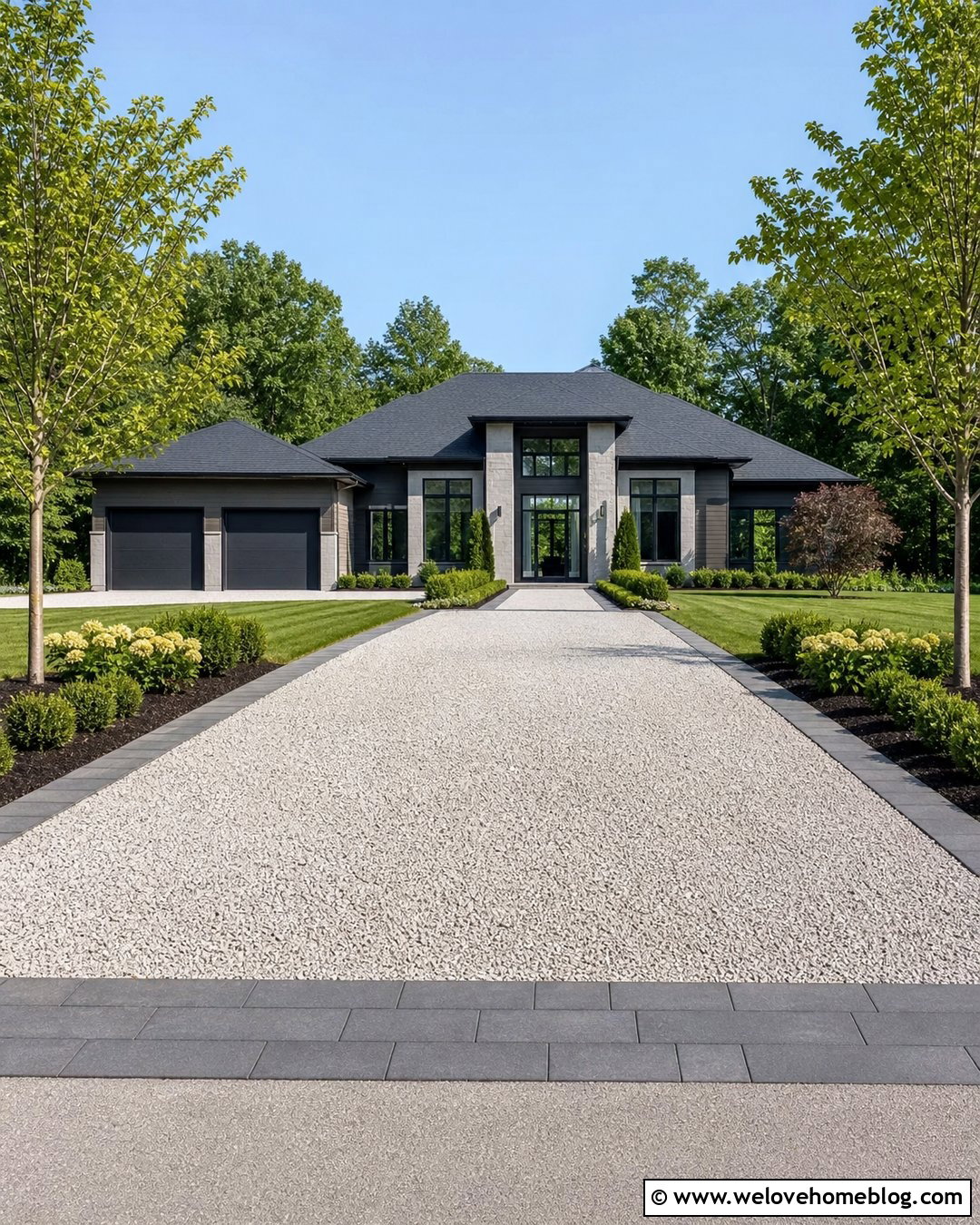
Bright white or pale limestone gravel makes a dramatic pairing with a dark charcoal concrete curb. This high-contrast design suits a black-and-white modern farmhouse, especially when the driveway has a straight, symmetrical layout. Keep the curbs narrow and continuous, then connect them to matching dark borders around the planting beds. Use green boxwood, white hydrangeas, feather reed grass, and dark mulch to reinforce the limited color palette. Near the garage, add a light concrete parking apron that blends with the gravel tone while providing a stable stopping area. Black post lights at the entrance can echo the curb without overwhelming it. Regular raking and careful material selection will be important because pale gravel makes leaves, soil, and scattered debris more noticeable.
15. Driveway With Low Retaining Curb
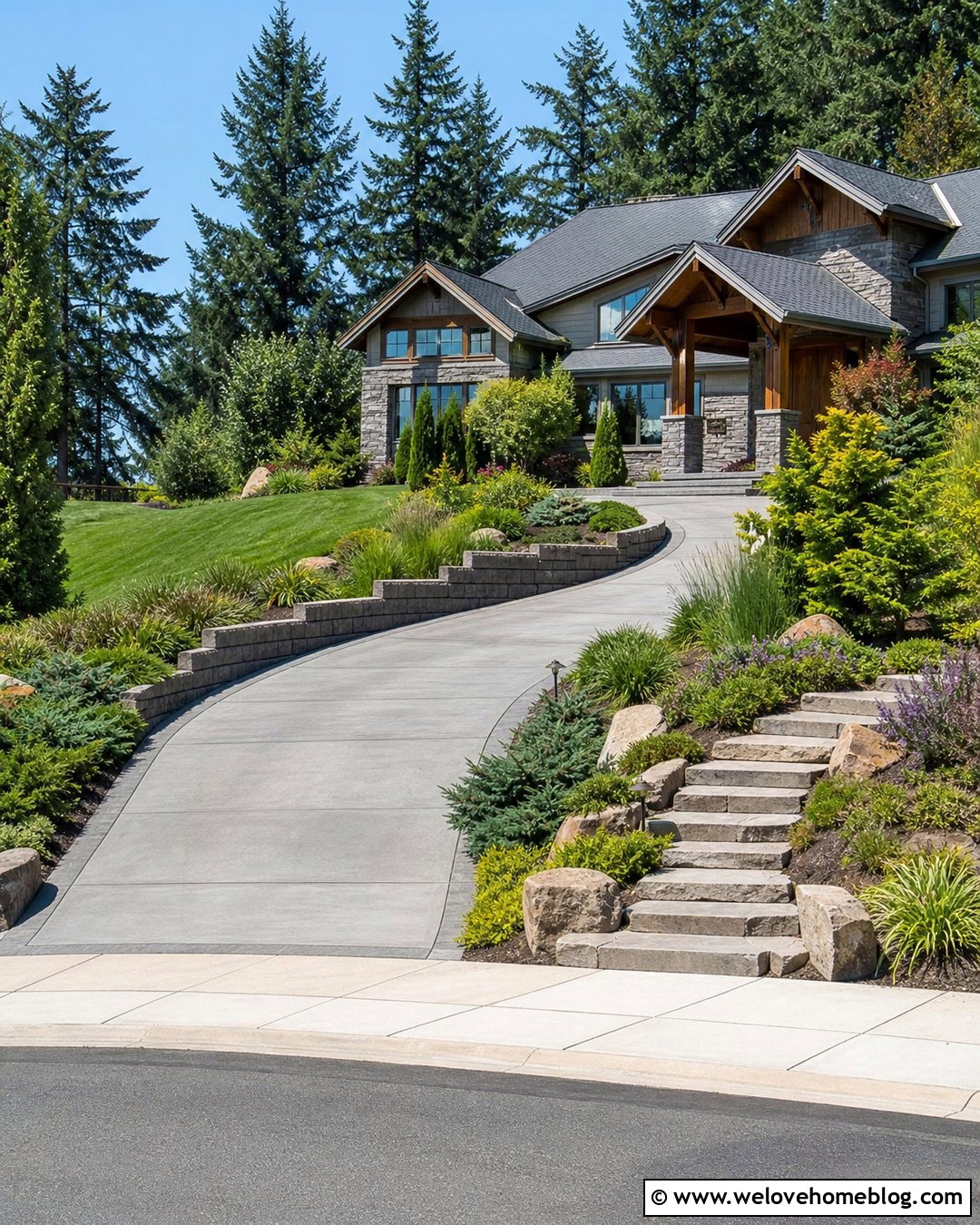
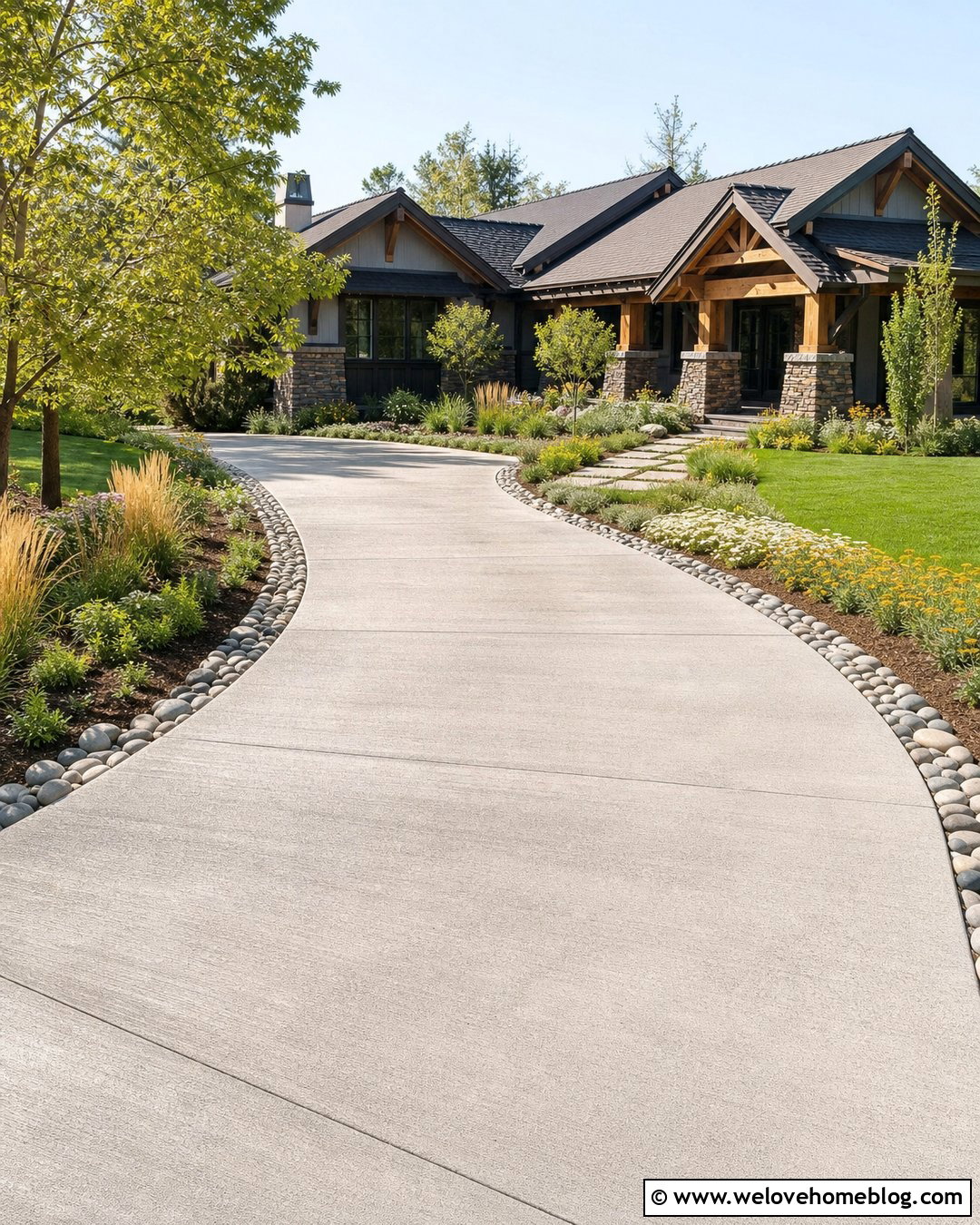
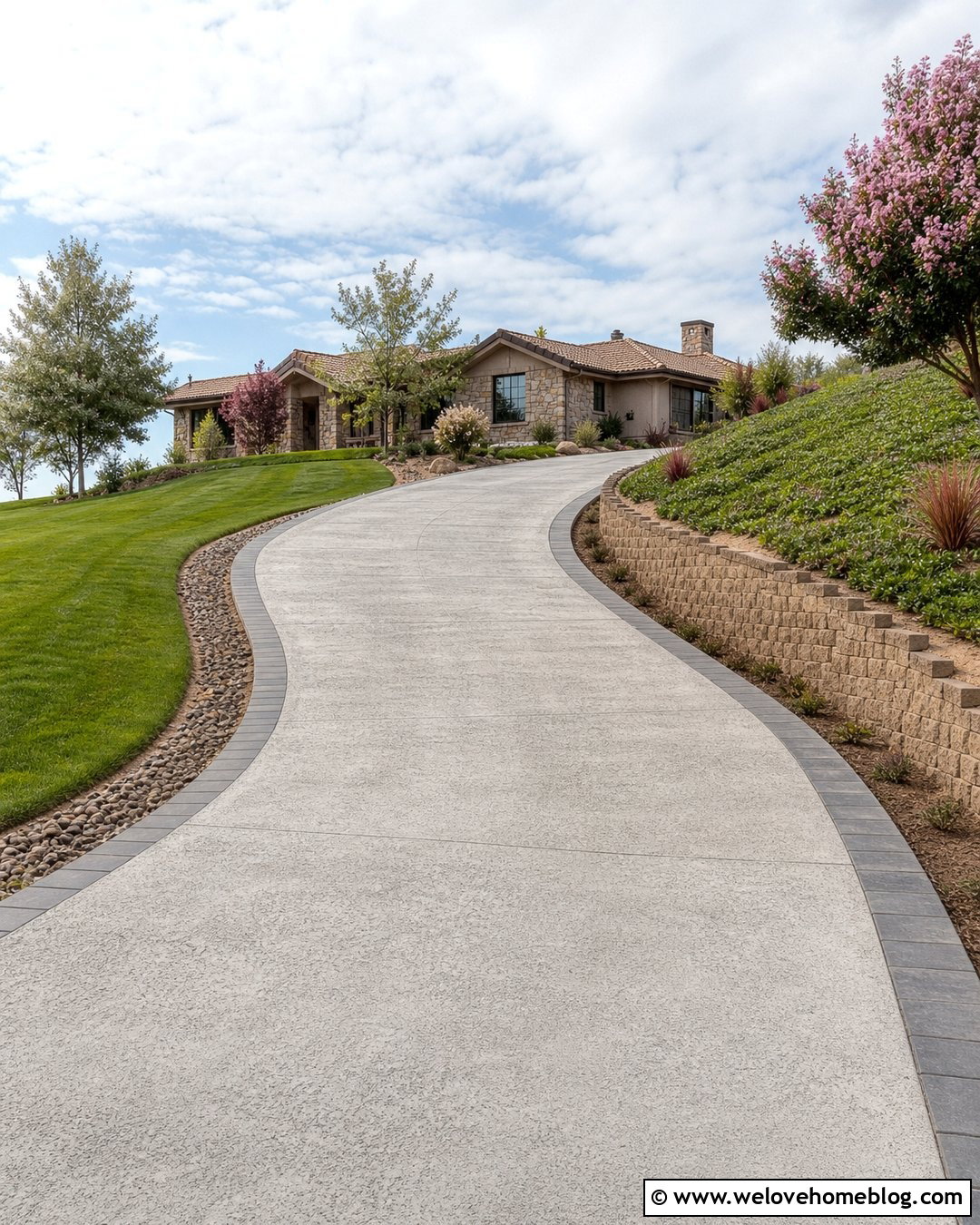
A sloped front yard often needs a driveway edge that also manages a change in grade. Use brushed concrete for a curved driveway and build a low retaining curb from stacked concrete wall blocks along the uphill side. Select blocks in a natural gray-brown shade that complements the home’s foundation or stone veneer. Above the curb, plant spreading juniper, ornamental grasses, compact shrubs, and erosion-resistant ground cover appropriate for the local climate. Keep the downhill side open with lawn and a simple flush edge so the driveway does not feel confined. Integrate broad stone steps into the retaining edge where the front walkway climbs toward the house. This complete design turns a necessary grade transition into an attractive feature while preserving a comfortable, uncluttered driving route.
16. Driveway With Planted Concrete Curb
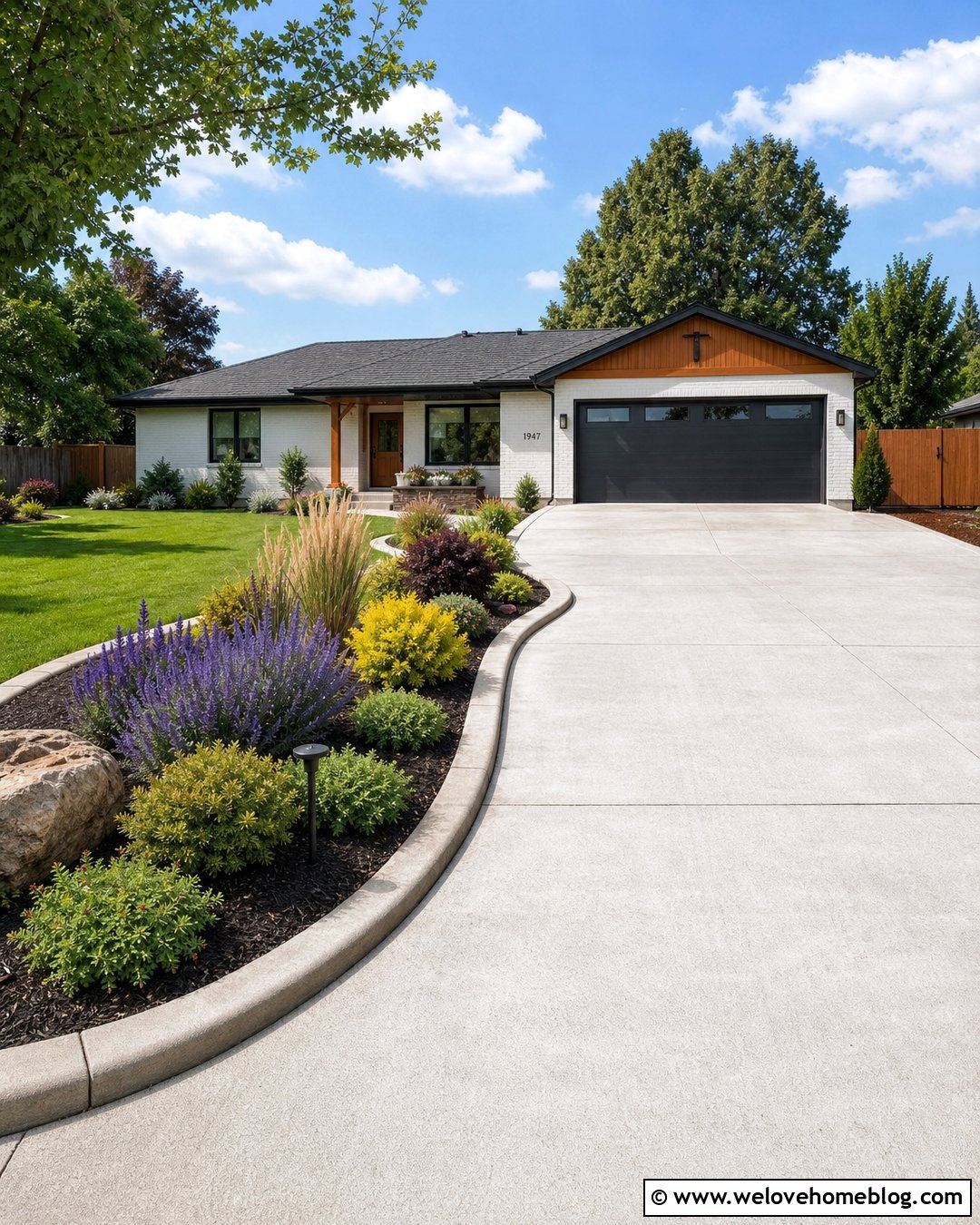
Concrete curbing can form gentle planting pockets instead of following two perfectly straight lines. Begin with a light gray concrete driveway, then shape a continuous curb around shallow curved beds along one side. Fill the pockets with dwarf shrubs, colorful perennials, decorative grasses, and durable ground cover. Keep mature plant sizes in mind so foliage does not spill into the driving area or obstruct sightlines near the street. On the opposite side, use a simple lawn edge to balance the decorative planting. A craftsman or updated ranch home works especially well with this informal layout. Match the curb color to the driveway for a subtle transition, allowing the planting to supply contrast. The result combines practical separation with a softer, garden-focused curb appearance.
17. Driveway With Curb Lighting
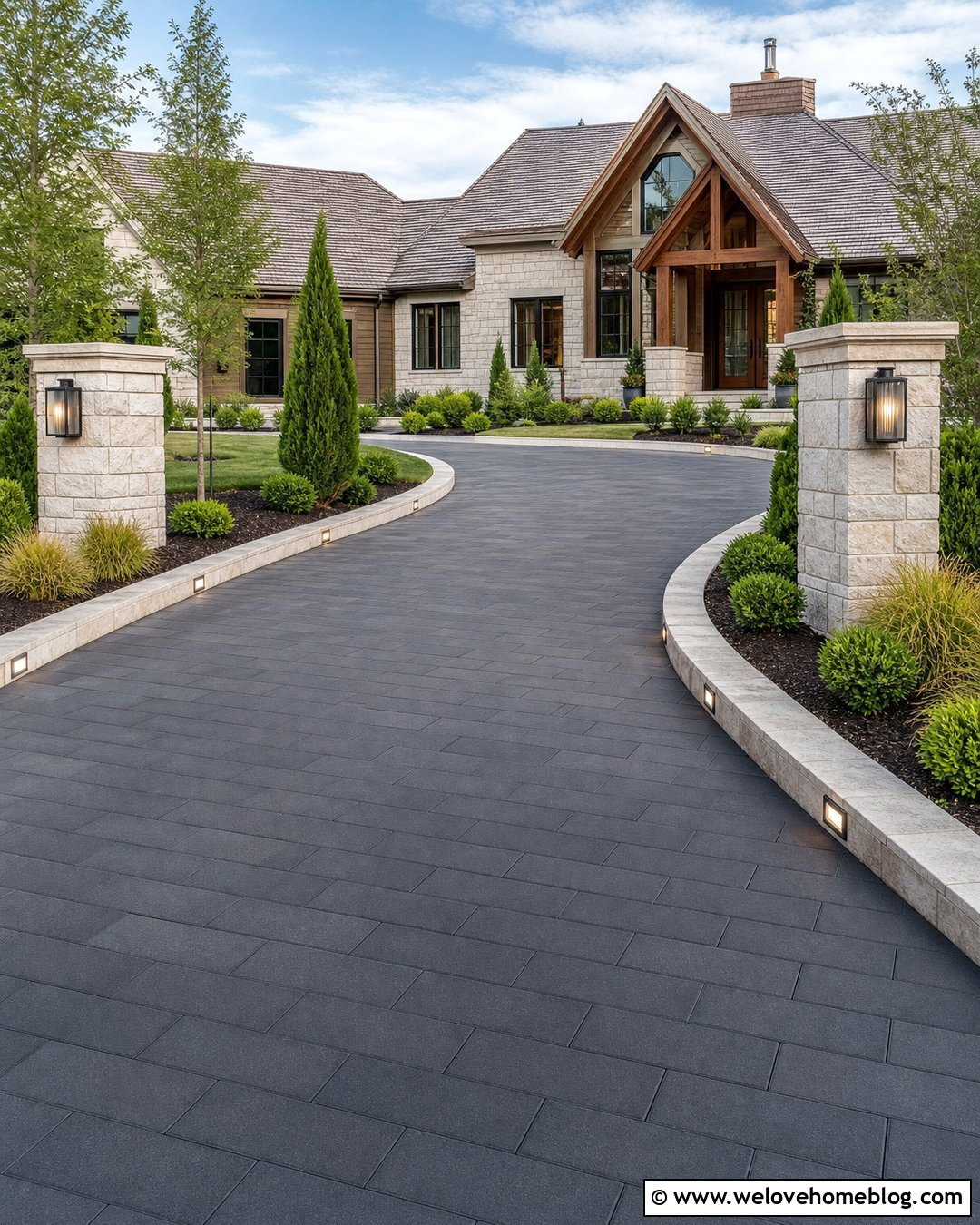
A dark paver driveway can be made more welcoming with carefully integrated lighting along a pale stone curb. Use charcoal concrete pavers in a running-bond pattern and low limestone curbs following a wide, gently curved approach. Install compact recessed fixtures or low-profile path lights at measured intervals, positioning them so they mark the edge without resembling an airport runway. Keep the daytime design attractive with evergreen shrubs, grasses, and neat mulch beds around the fixtures. At the entrance, use slightly taller masonry pillars with coordinating lights for a layered arrival. The house might be transitional or contemporary, with warm wood details that soften the dark paving. Plan fixture locations, wiring, drainage, and curb construction together instead of adding lighting after the hardscape is complete.
18. Driveway Entrance With Curb And Pillars
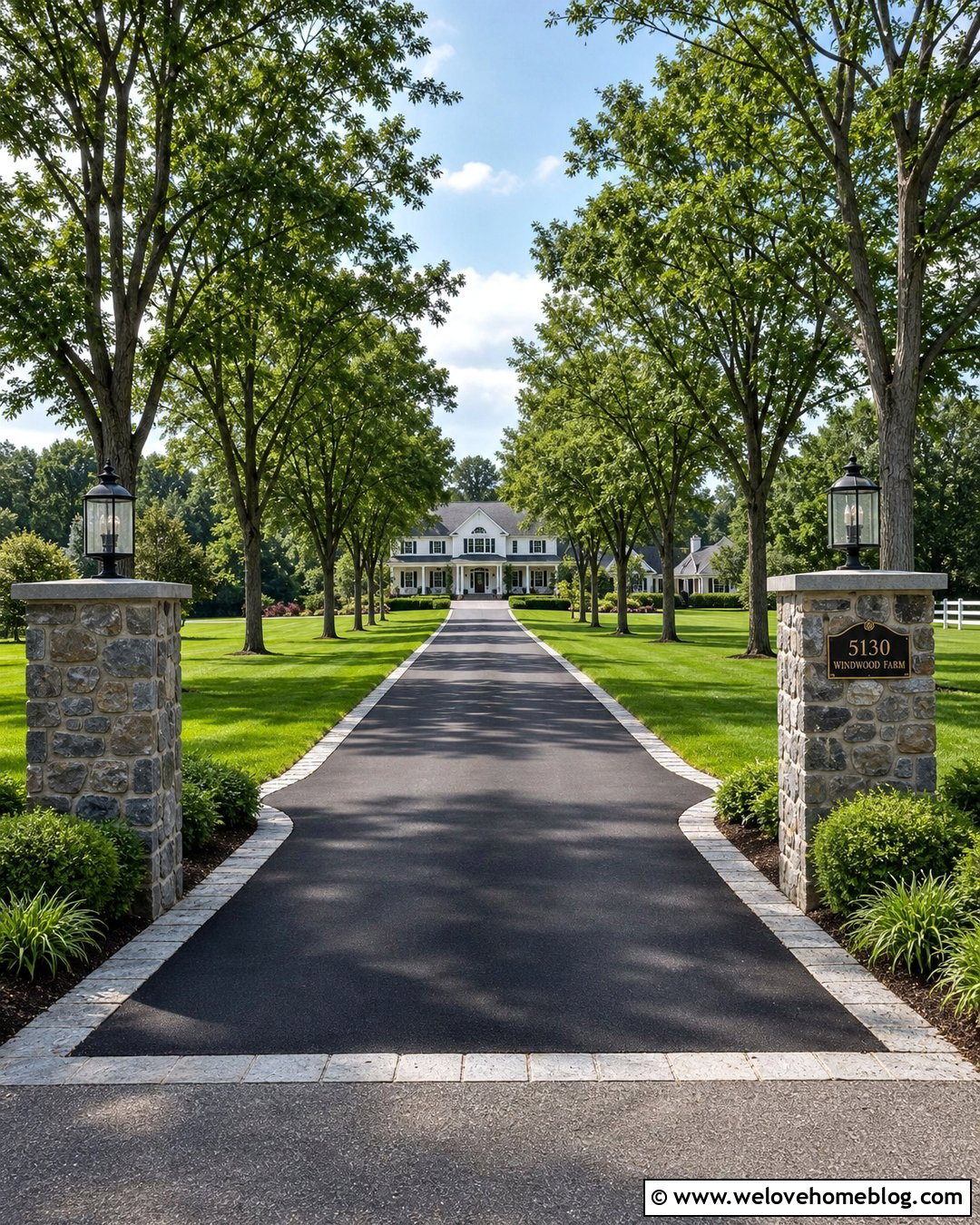
A defined driveway entrance creates a strong first impression when curbs and pillars share the same material. Use black asphalt for a long straight driveway, then add gray stone curbs that curve outward at the street. Finish each side with a substantial stone pillar topped by a simple light fixture. The flared opening makes the entrance easier to recognize and visually connects the driveway to the roadside. Beyond the pillars, plant low evergreen shrubs and ornamental grasses that preserve clear views for drivers. A row of shade trees can continue toward a colonial or country-style home in the distance. Keep gates optional and proportionate to the available space. Before rebuilding a street-facing entrance or changing a curb cut, confirm property boundaries and applicable local requirements.
19. Driveway With Drainage Curb
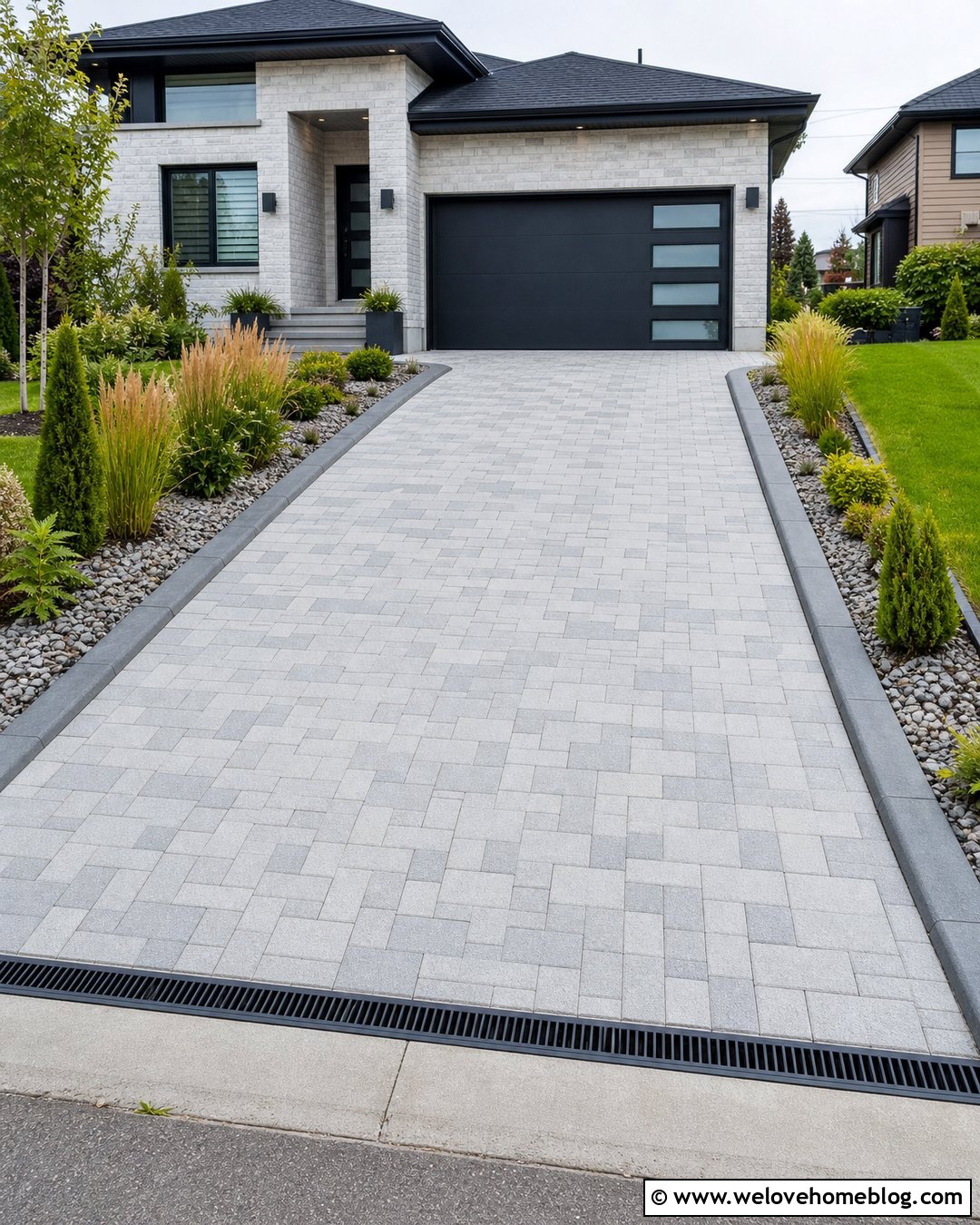
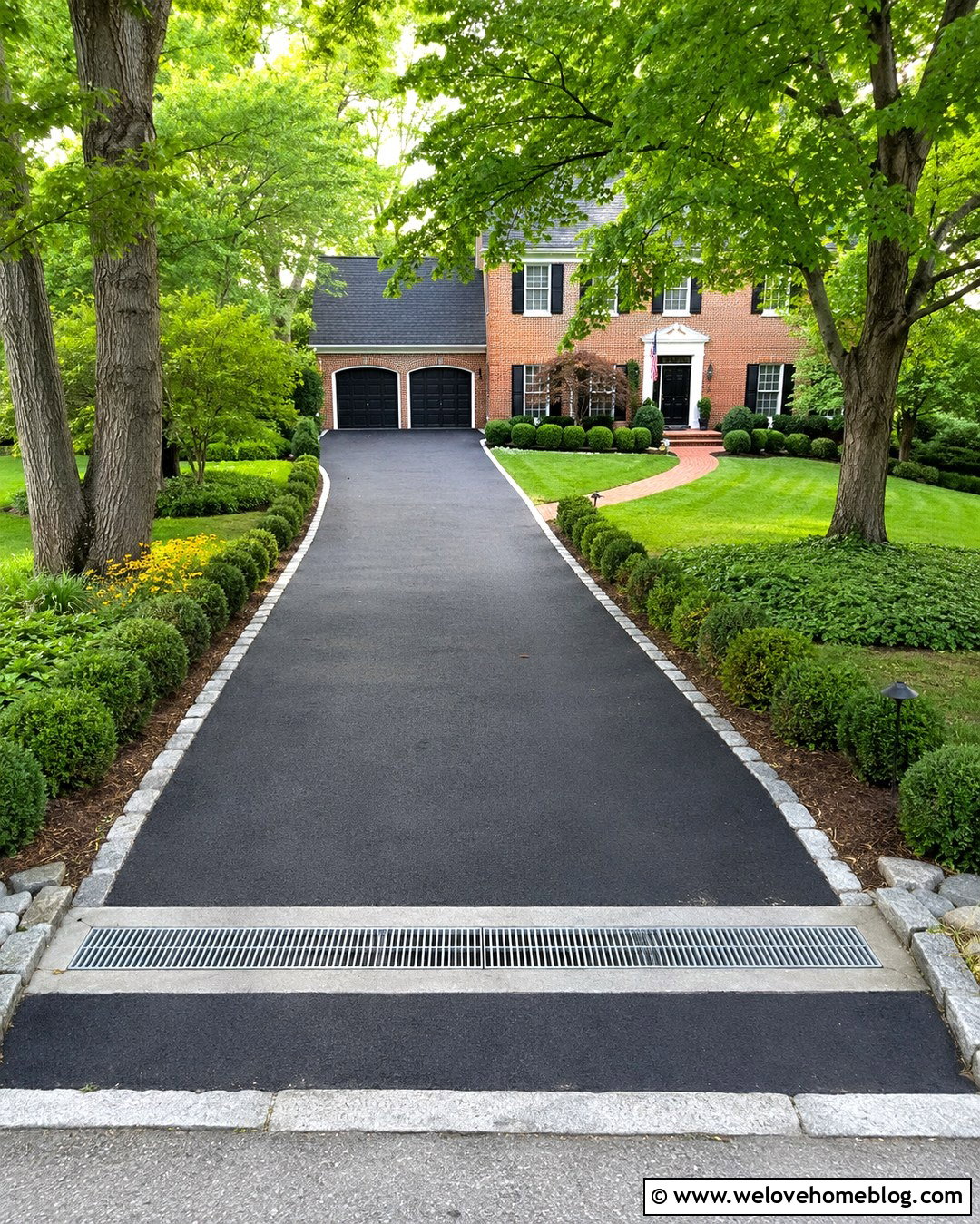
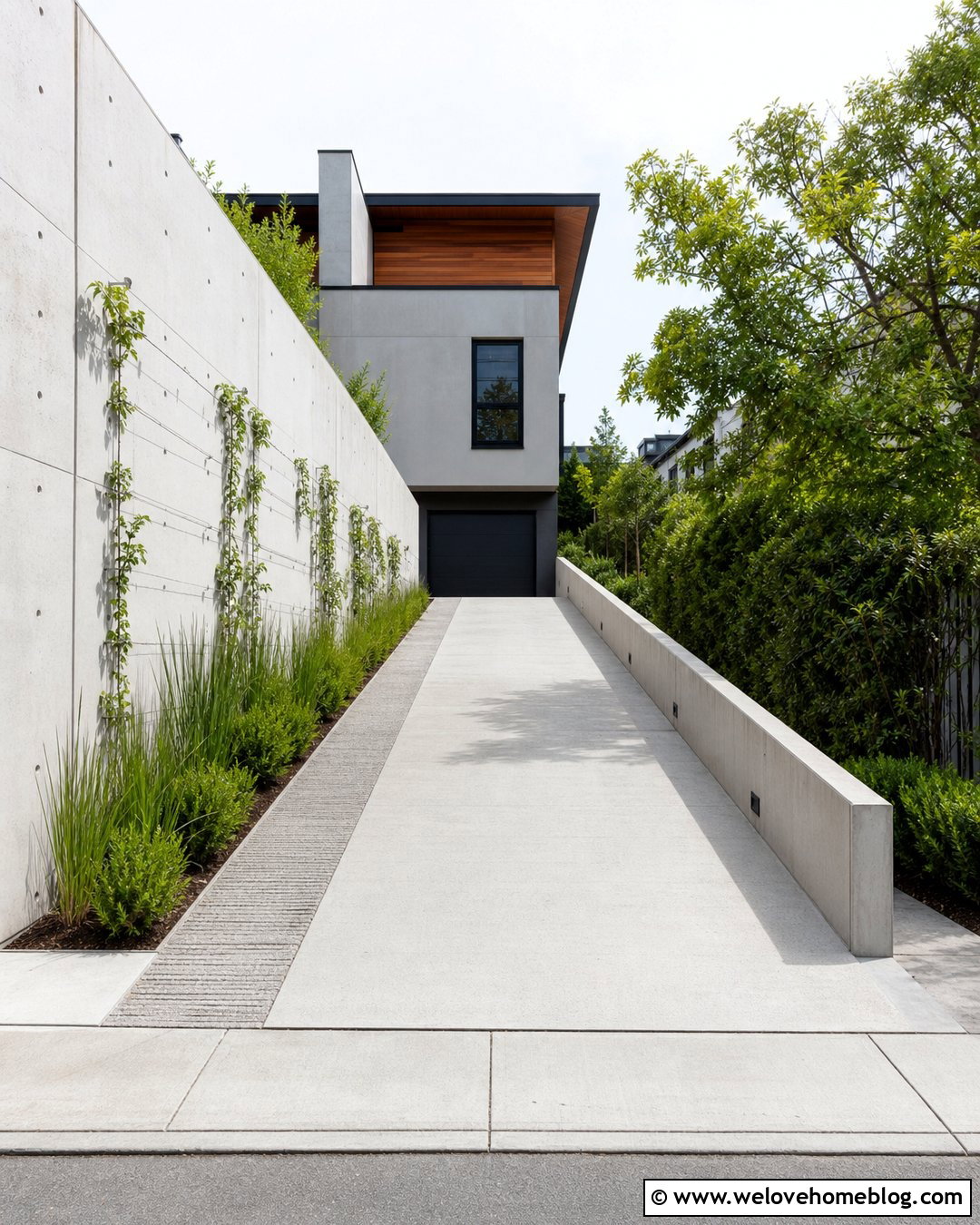
A drainage feature can become part of the design rather than looking like an afterthought. Use light gray interlocking concrete pavers for a slightly sloped driveway and frame them with charcoal curbs. Along the lower side, integrate a narrow linear channel between the driveway and the curb so water has a defined route. Cover it with a dark metal or stone-look grate that coordinates with the border. Plant moisture-tolerant grasses and shrubs in the adjoining bed where appropriate, but keep soil and mulch from blocking the channel. A clean-lined suburban or contemporary house suits this practical arrangement. Have the slope, outlet, base preparation, and expected water flow evaluated correctly. The finished driveway should look balanced from the curb while managing runoff in a controlled, intentional way.
20. Small Driveway With Rounded Curb
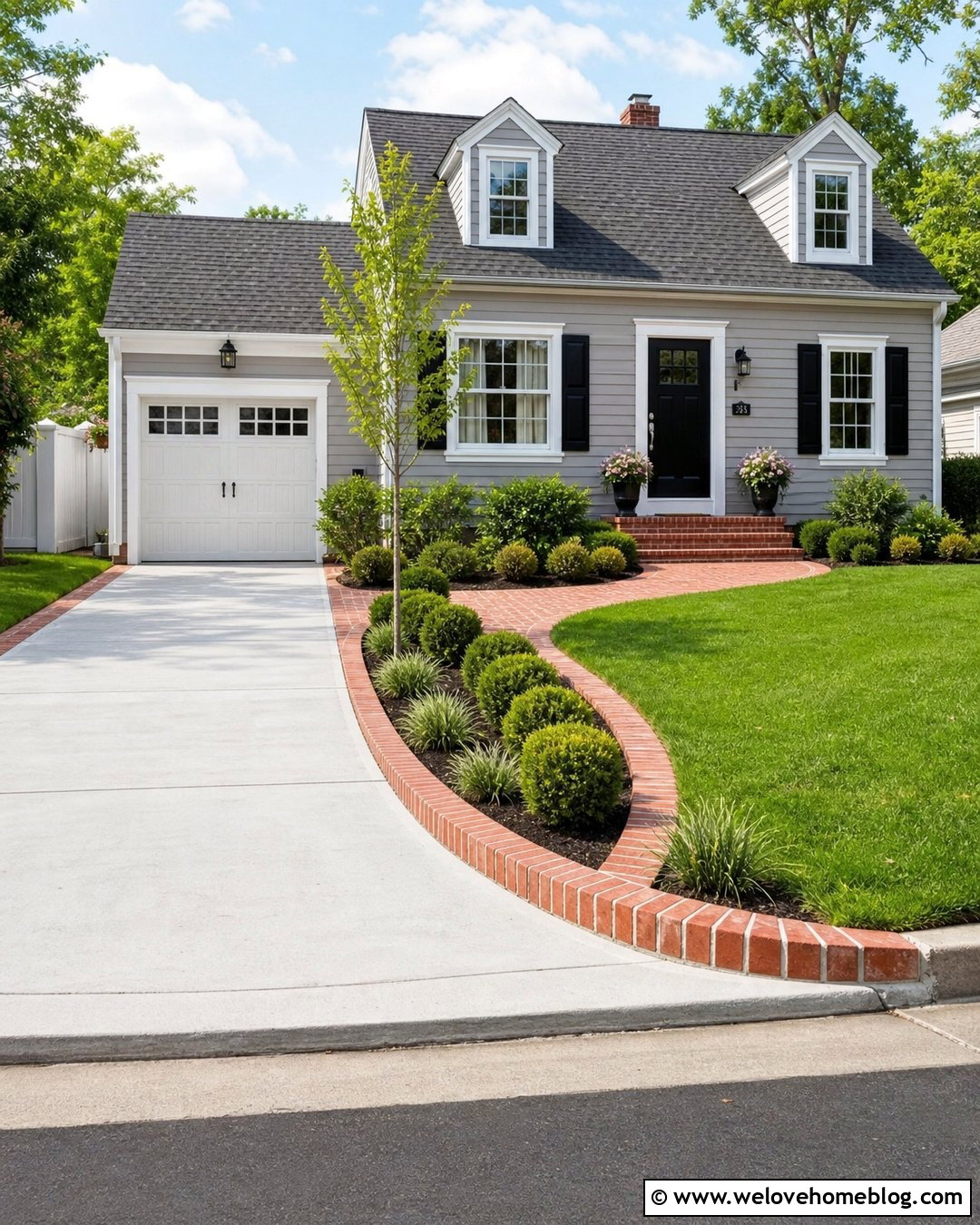
A compact driveway can feel more spacious when its borders use gentle curves instead of tight rectangular corners. Choose smooth light concrete for a single-car driveway and add a low rounded brick curb that bends outward near the street. This small flare makes the entrance look wider while preserving valuable lawn and planting space. Use narrow beds with compact boxwood, dwarf grasses, and one slender ornamental tree. A brick walkway can branch from the curb and lead toward a bungalow, cape cod, or small craftsman home. Keep the planting low beside the street and use only a few coordinated materials. Matching the curb to porch steps or foundation brick creates continuity. The simple layout delivers a complete, attractive entrance without requiring a large front yard or elaborate landscaping.
Conclusion:
These 20 driveway with curb ideas show how one well-planned border can transform the entire front approach. The curb should complement the driveway material, follow its shape, and connect naturally with the house and landscaping. Brick and cobblestone bring traditional warmth, while smooth concrete and dark pavers support cleaner modern designs. Gravel driveways benefit from strong containment, and sloped properties may need curbs that also address grade or drainage. Before selecting a look, consider vehicle clearance, snow removal, water movement, maintenance, and safe transitions near walkways. When the surface, curb, planting, entrance, and architecture are planned together, even a basic driveway can become an attractive and practical part of the home’s curb appeal.

Related posts:
Leave a Reply