
Brick edging can turn an ordinary driveway into a finished, intentional part of the landscape. The right border adds color, texture, and definition while creating a cleaner transition between the driving surface, lawn, and planting beds. These driveway brick edging ideas cover asphalt, concrete, gravel, permeable pavers, curved layouts, and narrow side yards. You will also find options for traditional red clay brick, dark contemporary brick, reclaimed materials, raised curbs, flush borders, and matching entrance aprons. A stable base and suitable edge restraint are important because vehicle loads, drainage, and seasonal ground movement can shift poorly installed borders. () Whether your home is modern, colonial, farmhouse, or craftsman, explore these practical driveway brick edging ideas.
1. Asphalt Driveway With Red Brick Edging
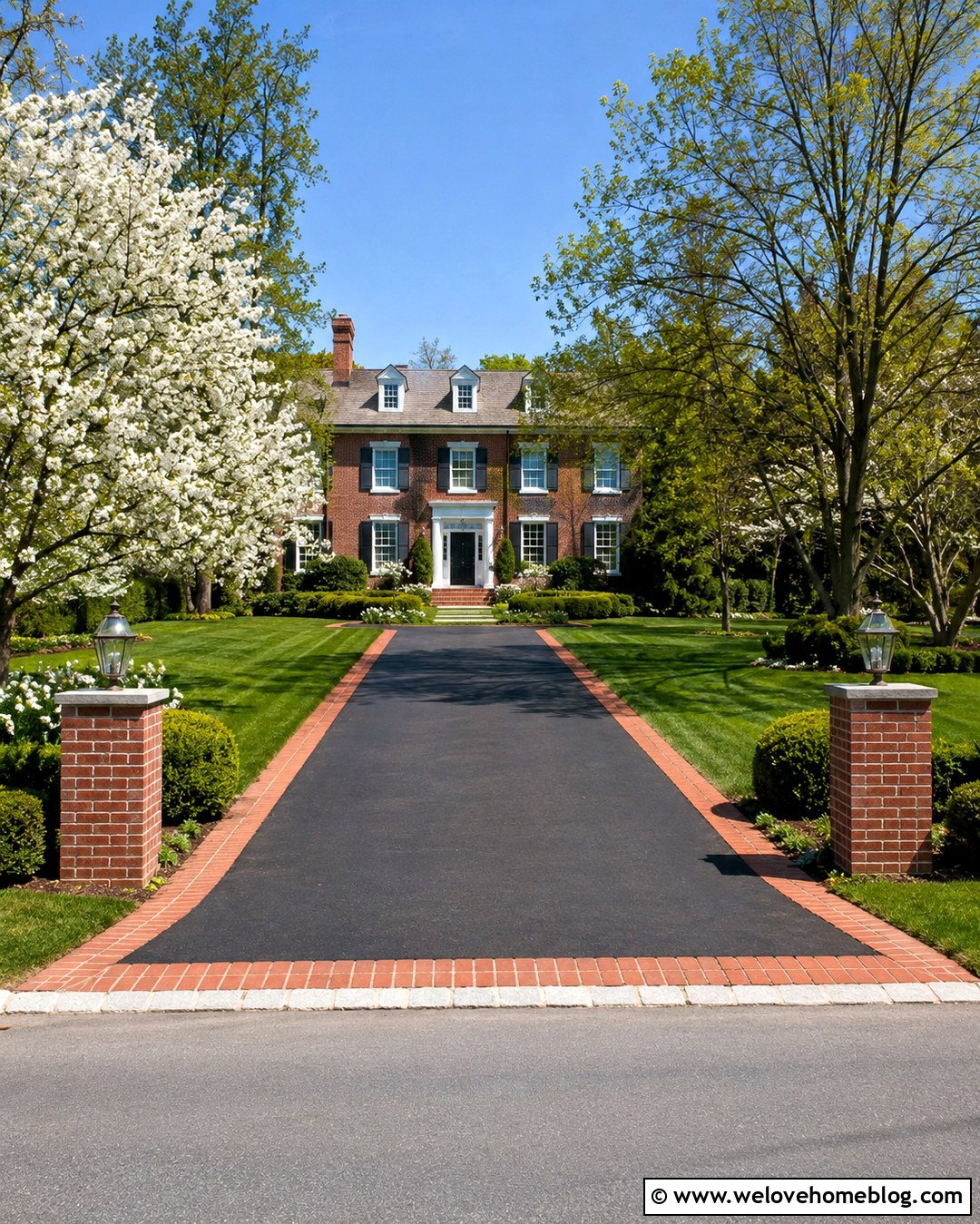
Fresh black asphalt creates a striking backdrop for warm red brick edging. Run one flat row of clay brick along both sides of a straight driveway to create a crisp, traditional outline. A soldier course, with the short ends facing the driveway, makes the border appear wider and more substantial. Keep the bricks level with the asphalt for easier snow removal and a smooth transition at the garage. Green lawn, clipped boxwoods, and small flowering trees soften the strong color contrast. At the street, continue the brick across the driveway as a narrow entrance band. This connects both sides visually and gives the entire driveway a more complete appearance. Choose dense paving brick rated for exterior ground use rather than softer building brick.
2. Concrete Driveway With Herringbone Brick Edging
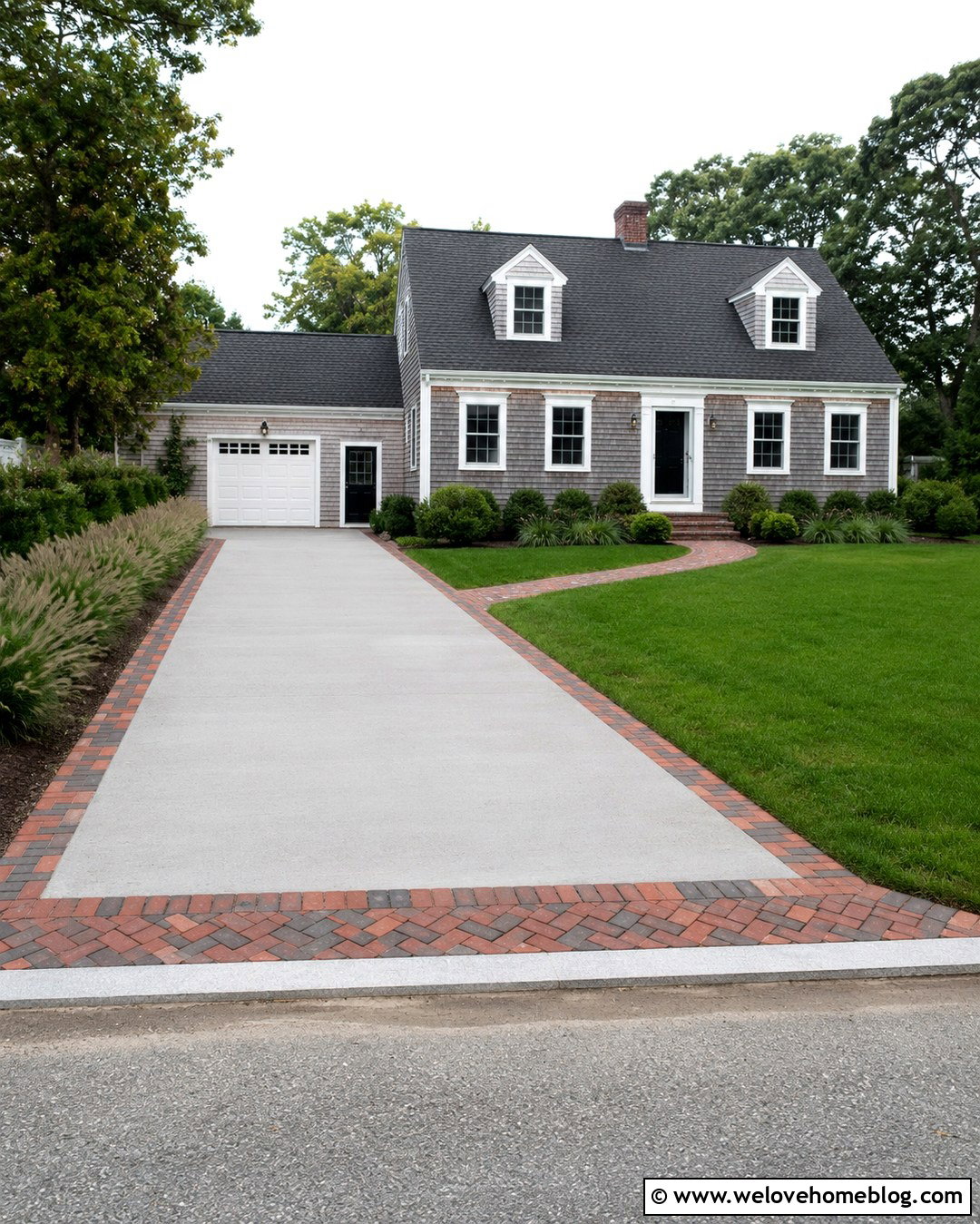
A light gray concrete driveway gains character when framed by herringbone brick edging. Instead of installing a single straight row, create a wider border with bricks set diagonally in a compact herringbone pattern. The detailed edge works especially well beside a simple broom-finished concrete surface because the materials offer clear contrast without competing. Use muted red, brown, and charcoal bricks to connect the driveway with a brick house or dark roof. Low ornamental grasses and rounded evergreen shrubs can follow the border without hiding it. A matching brick walkway leading toward the front door makes the design feel unified. Because this border is wider than standard edging, build it over a properly compacted aggregate base and provide firm restraint along its outer side.
3. Gravel Driveway With Raised Brick Edging
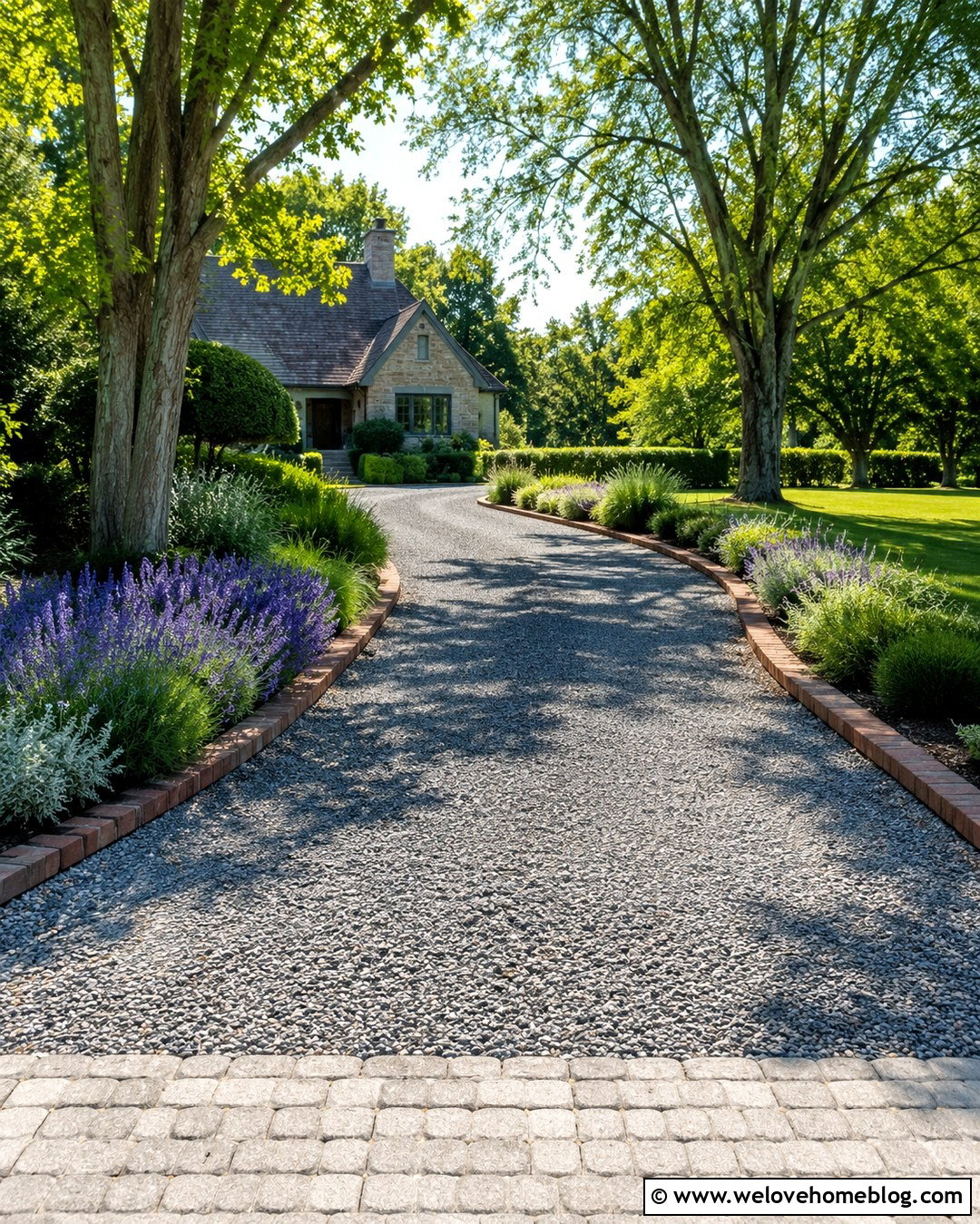
Loose gravel looks neater when a raised brick border contains it. Choose compacted gray crushed stone for the driving surface and install red clay bricks vertically along each side, leaving part of every brick visible above the gravel. The elevated edge prevents the driveway and lawn from visually blending together while reducing gravel migration into nearby planting beds. A gently curved layout gives this combination a relaxed country appearance. Add lavender, catmint, dwarf grasses, or low evergreen shrubs beyond the brick line, allowing enough clearance for vehicle doors. The gravel should finish slightly below the top of the bricks rather than spilling over them. For stability, set the edging over a compacted base and secure it appropriately, especially around curves and frequently driven entrance areas.
4. Curved Driveway With Soldier Course Brick Edging
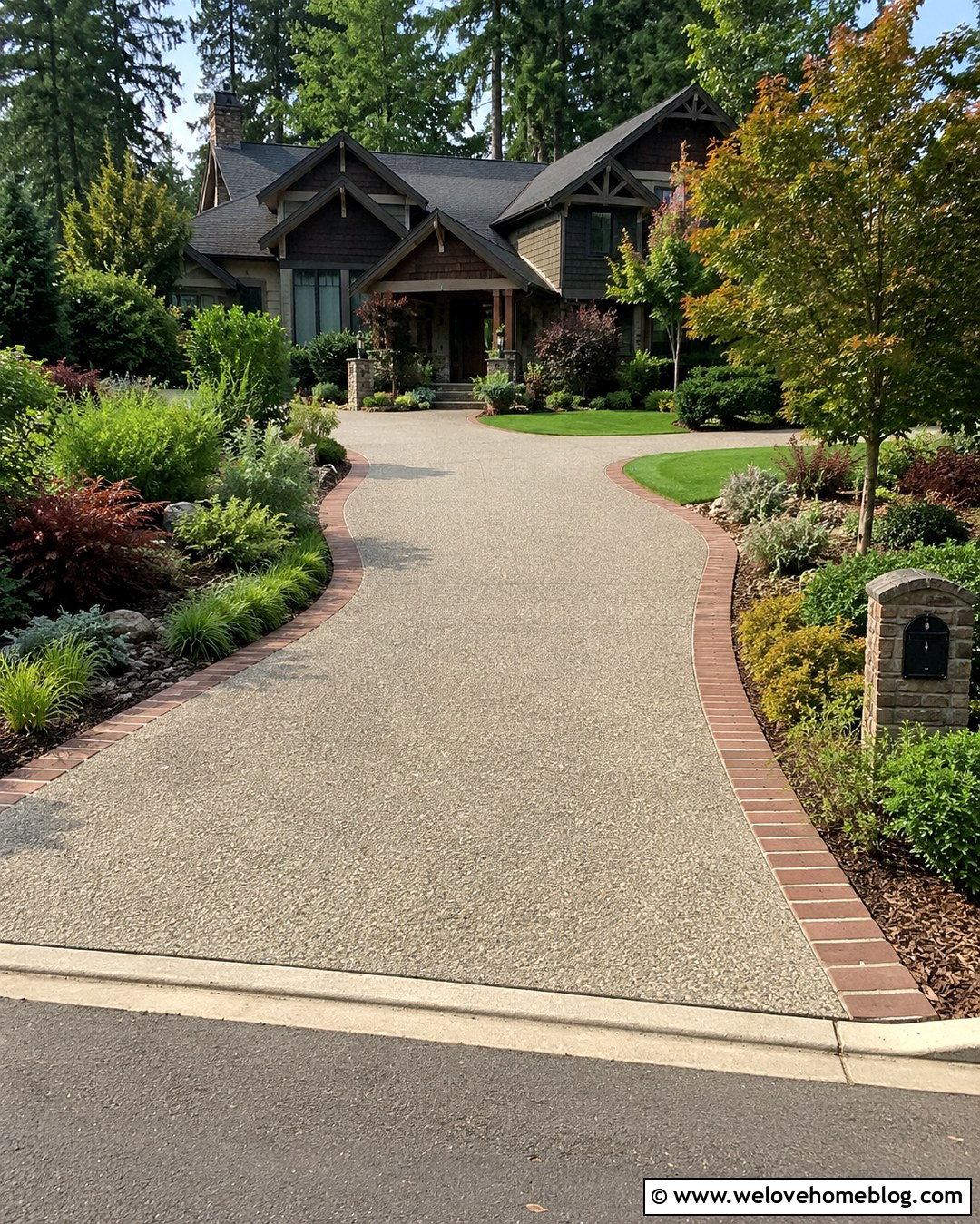
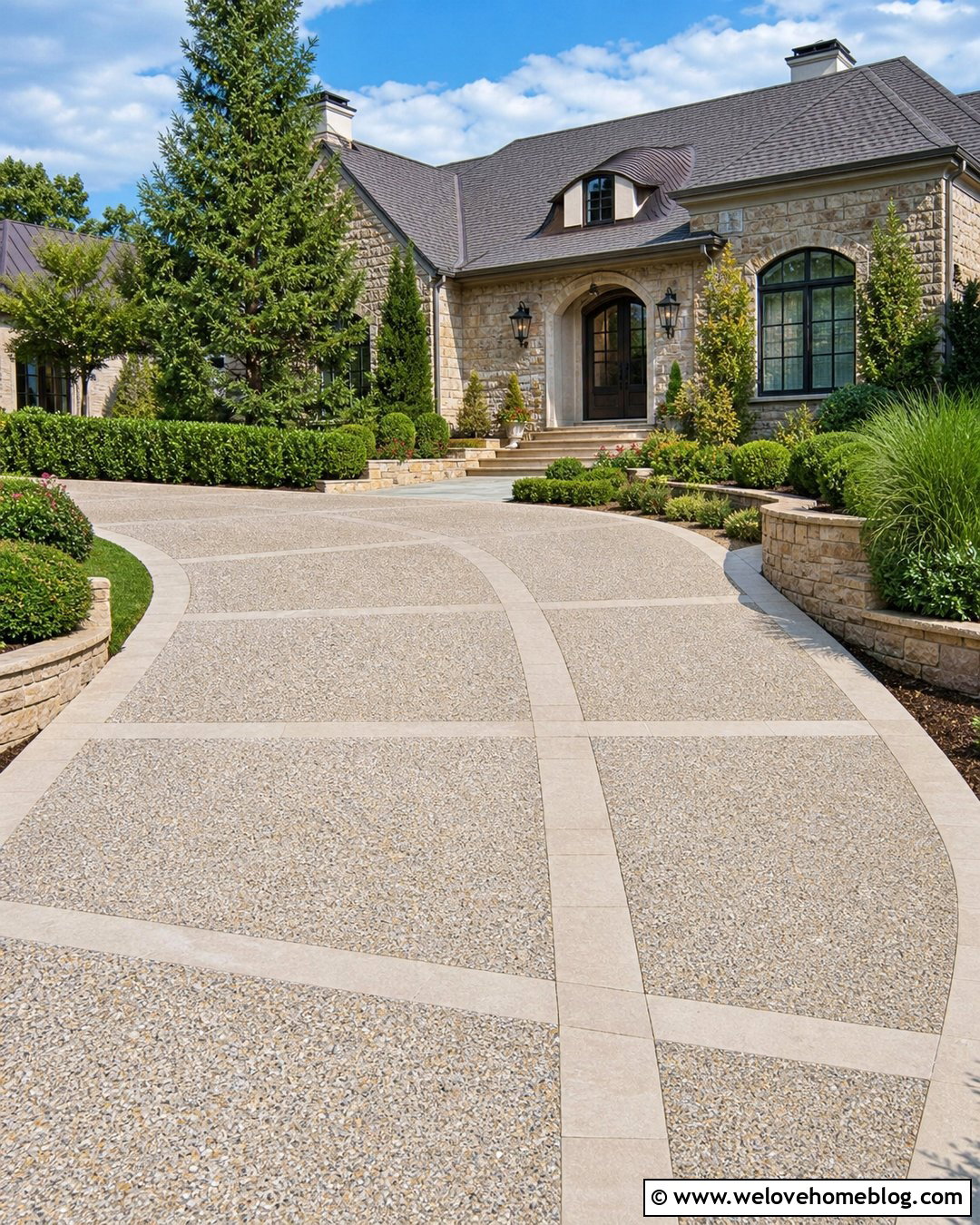
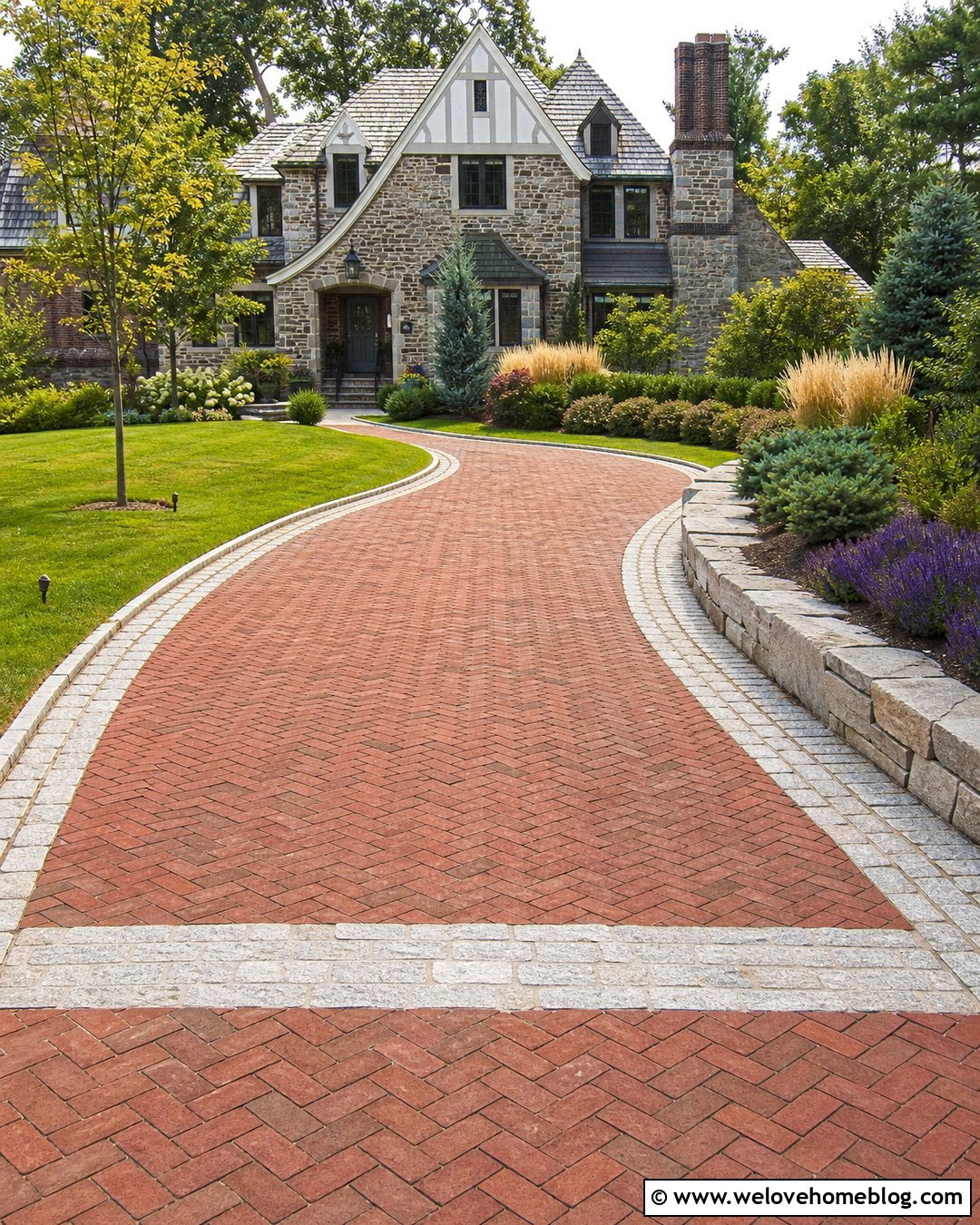
Curves become much easier to read when they are traced with soldier course brick edging. Frame a sweeping exposed-aggregate driveway with bricks positioned side by side so their short faces create a broad, rhythmic border. Slightly tapered joints can help the brick line follow gradual bends without awkward gaps. Select warm brown or red brick to complement the natural stones visible in the aggregate. On the outside curve, use layered planting beds with low shrubs near the edge and taller ornamental trees farther back. Keep the inside curve more open to preserve clear sightlines when leaving the property. Repeating the same brick around a nearby walkway or mailbox bed ties the entrance together. The finished design feels structured, but the curved shape keeps it welcoming rather than overly formal.
5. White Concrete Driveway With Charcoal Brick Edging
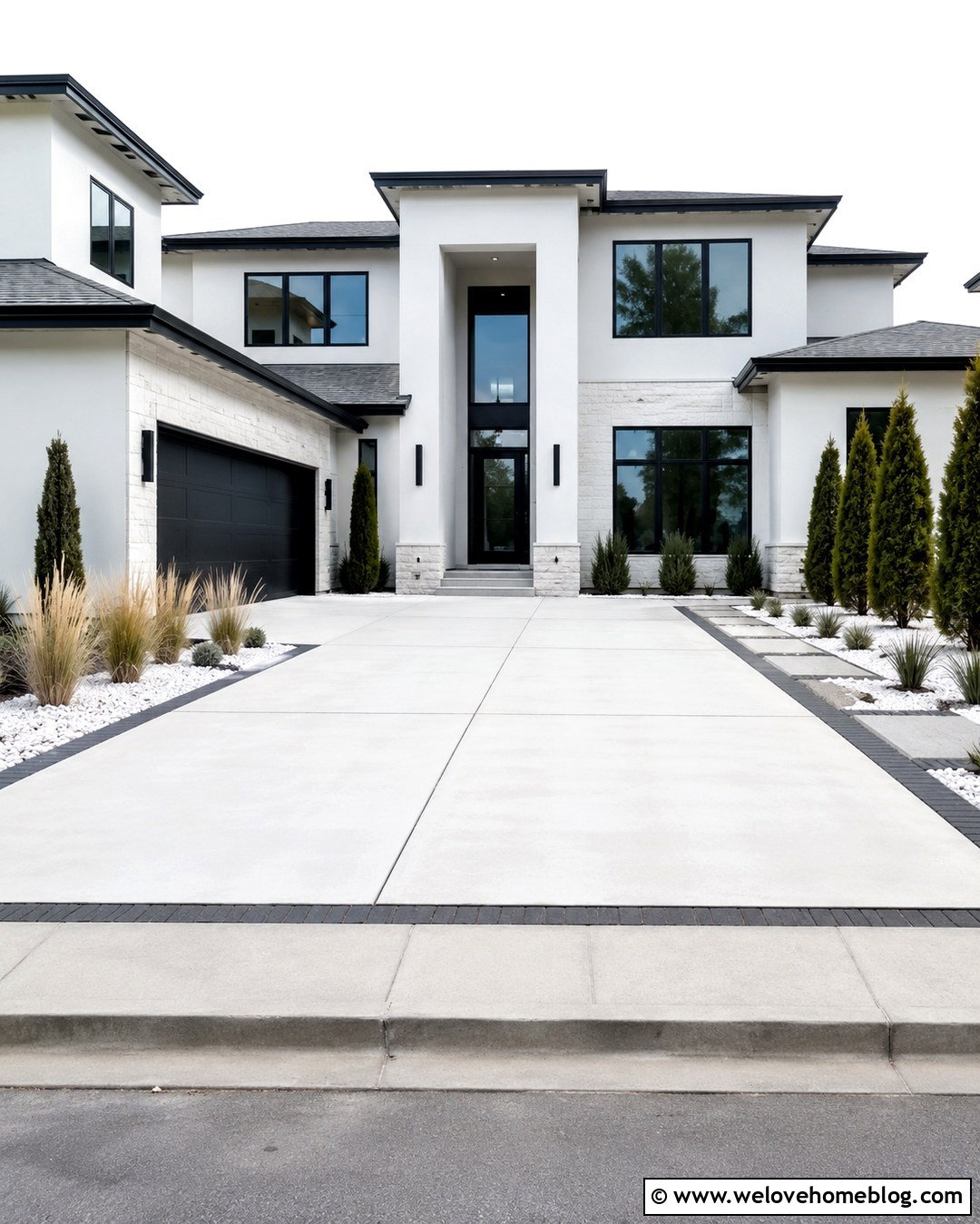
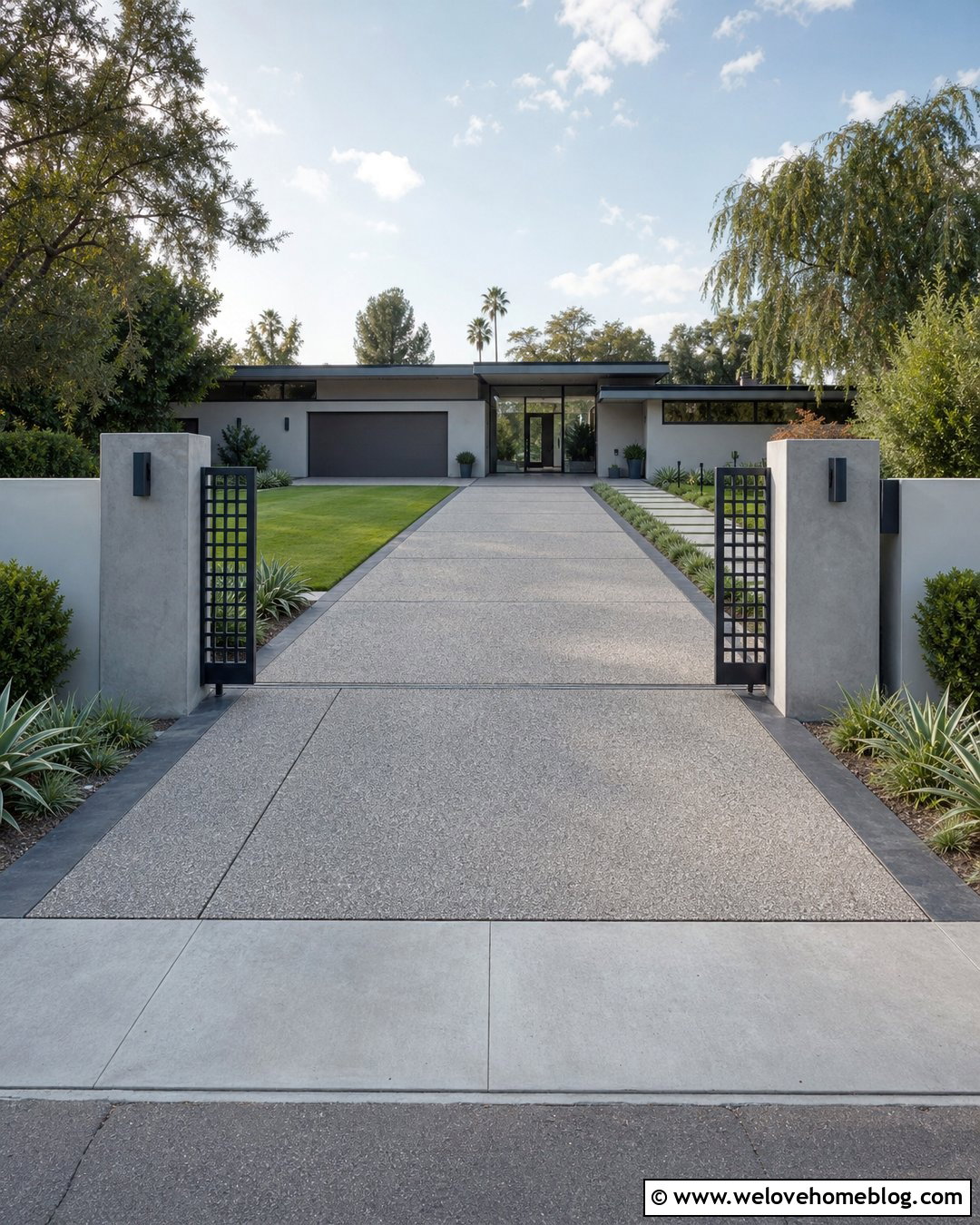
Bright concrete and charcoal brick create a clean look for a contemporary home. Use smooth white or pale gray poured concrete in large rectangular sections, then outline the driveway with one or two rows of dark charcoal brick. A flush border preserves the streamlined profile and avoids creating a bulky curb. Match the dark edging with black window frames, a metal garage door, or modern exterior lighting. Narrow beds filled with ornamental grasses, compact evergreens, and pale decorative stone reinforce the limited color palette. Straight edges and square corners work best for this design, although a subtle flare near the street can improve the entrance. Place expansion joints thoughtfully so they align with architectural features and brick bands. The contrast makes the driveway look tailored without adding an overly decorative pattern.
6. Black Asphalt Driveway With Reclaimed Brick Edging
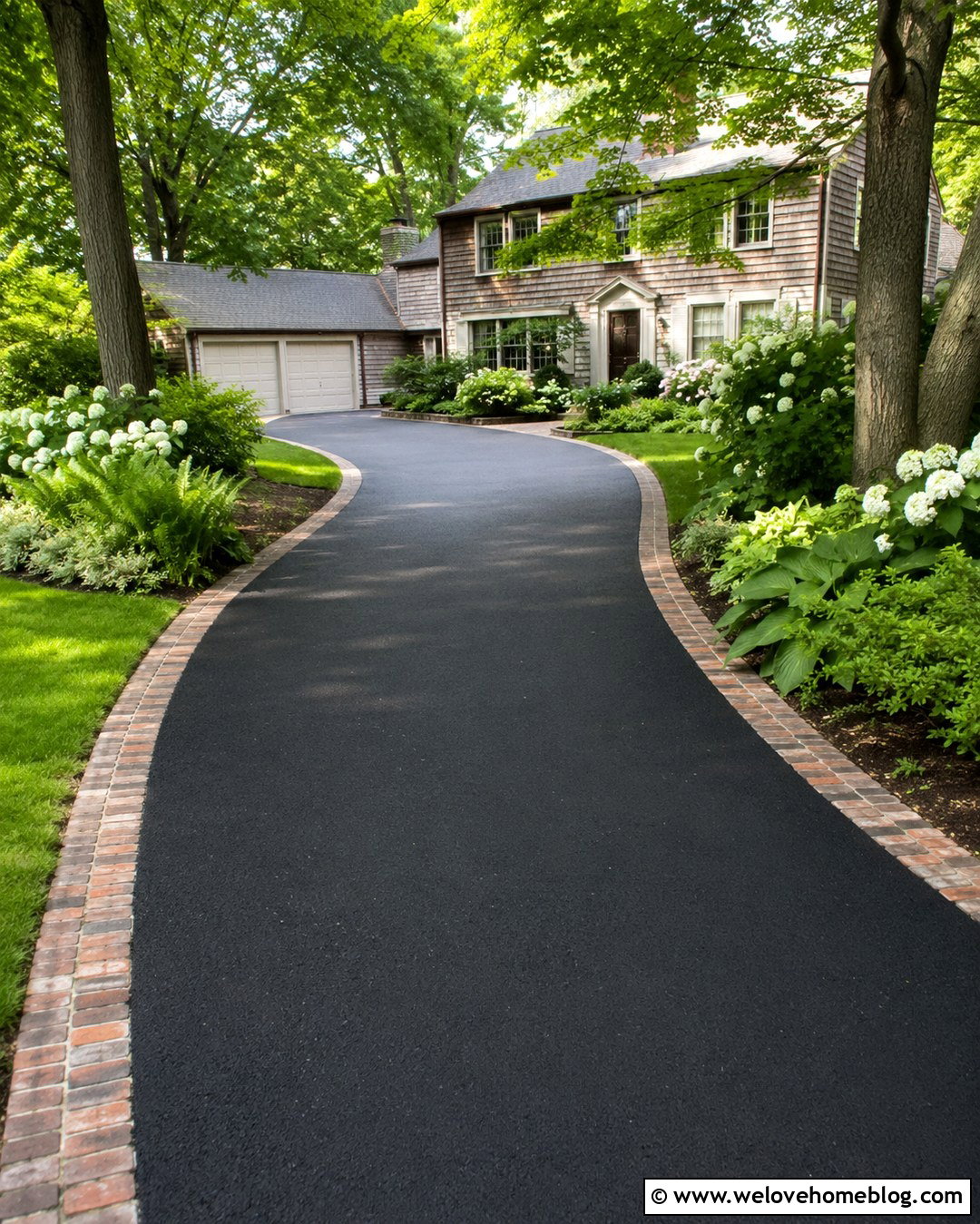
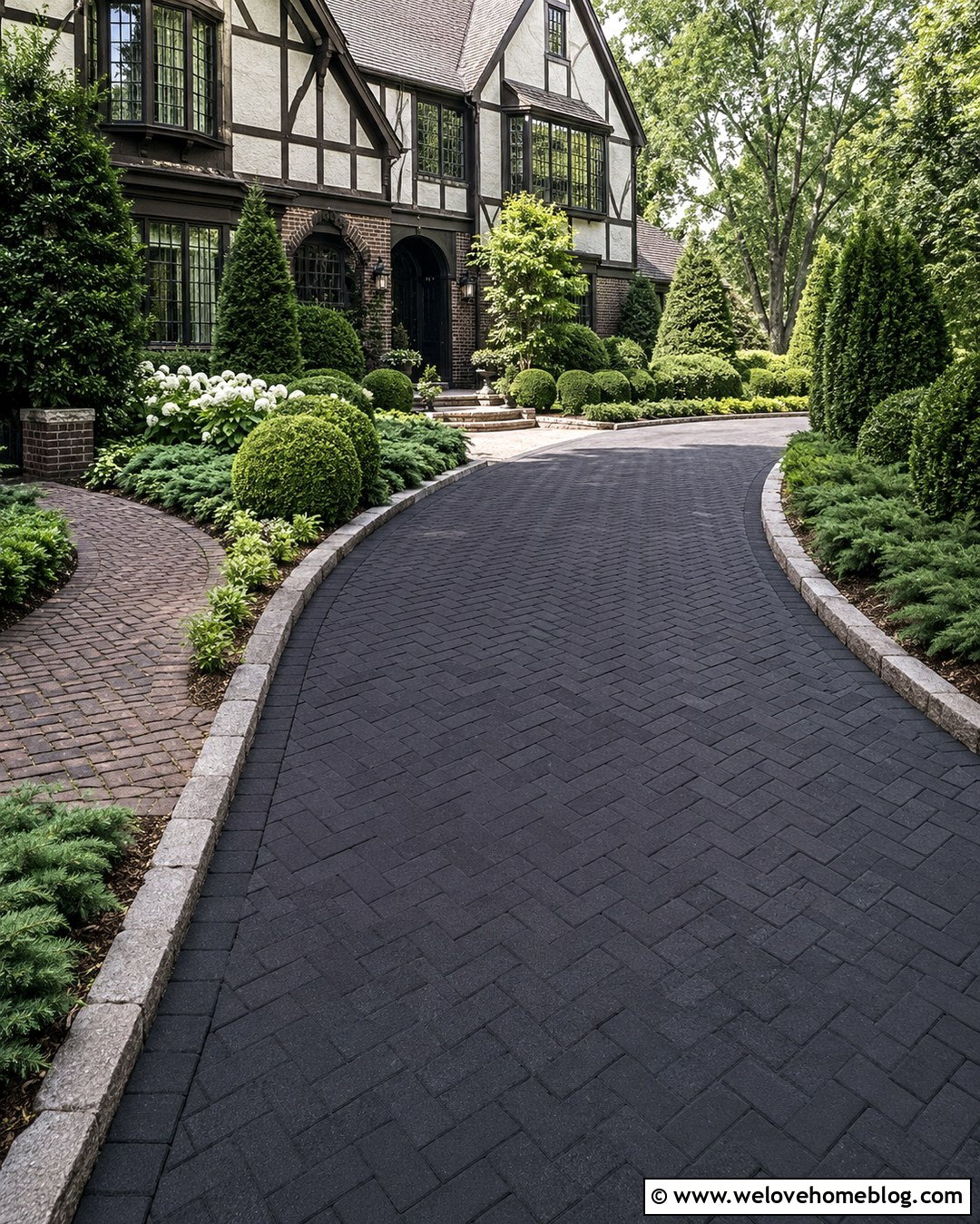
Weathered reclaimed bricks bring warmth and variation to a newly paved asphalt driveway. Their softened red, orange, brown, and charcoal tones reduce the stark appearance of the black surface, making the driveway feel connected to an older home or mature garden. Lay the bricks flat in a single running-bond row for a relaxed border that does not overwhelm the paving. Small chips and color differences can add character, but avoid bricks that are badly cracked, crumbling, or unsuitable for ground contact. Frame the driveway with informal hydrangeas, ferns, hostas, and shade trees. A slightly curved edge will enhance the established, collected look. Before installation, sort the reclaimed bricks by thickness so the finished border remains even and does not create troublesome high spots.
7. Pea Gravel Driveway With Double Brick Edging
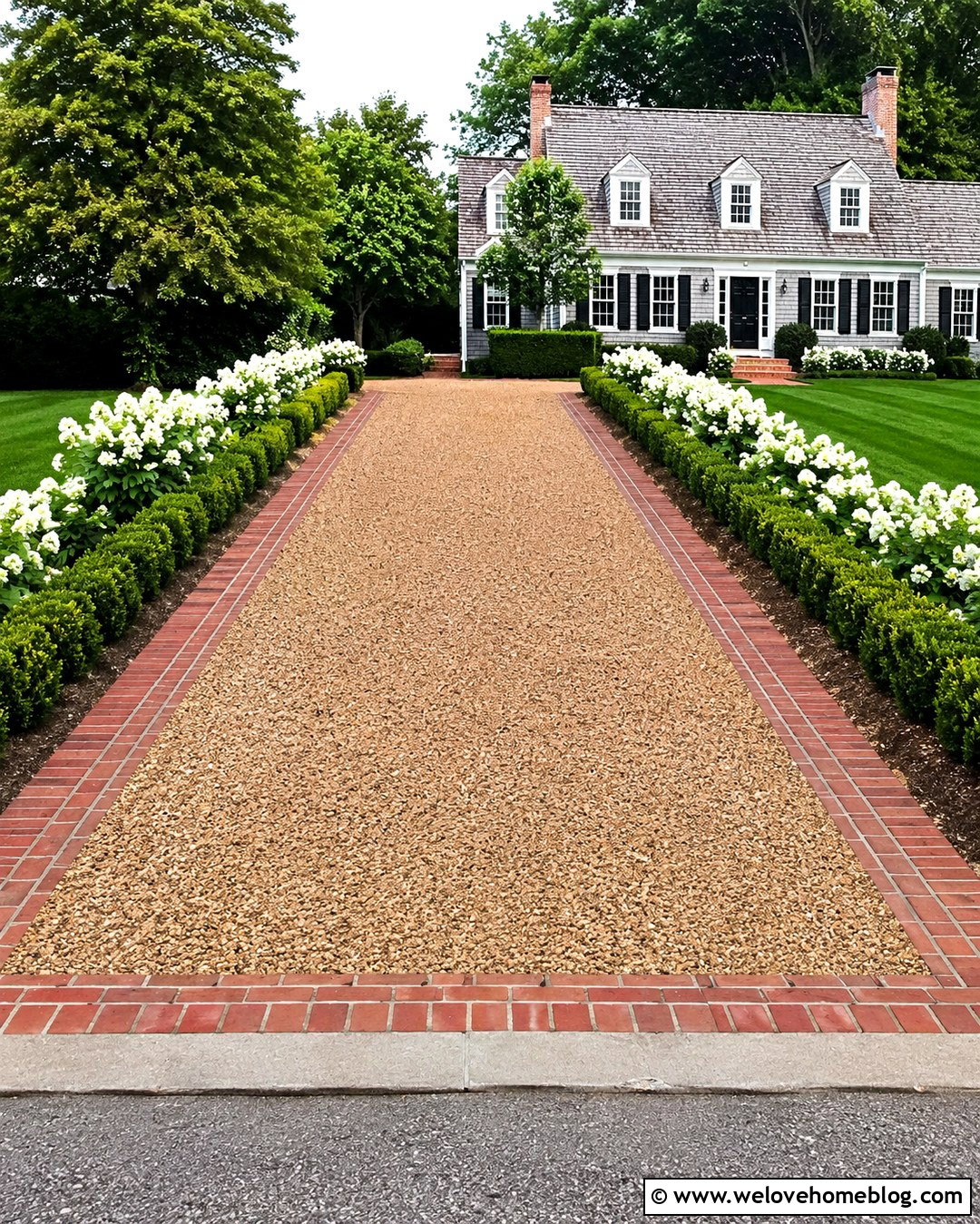
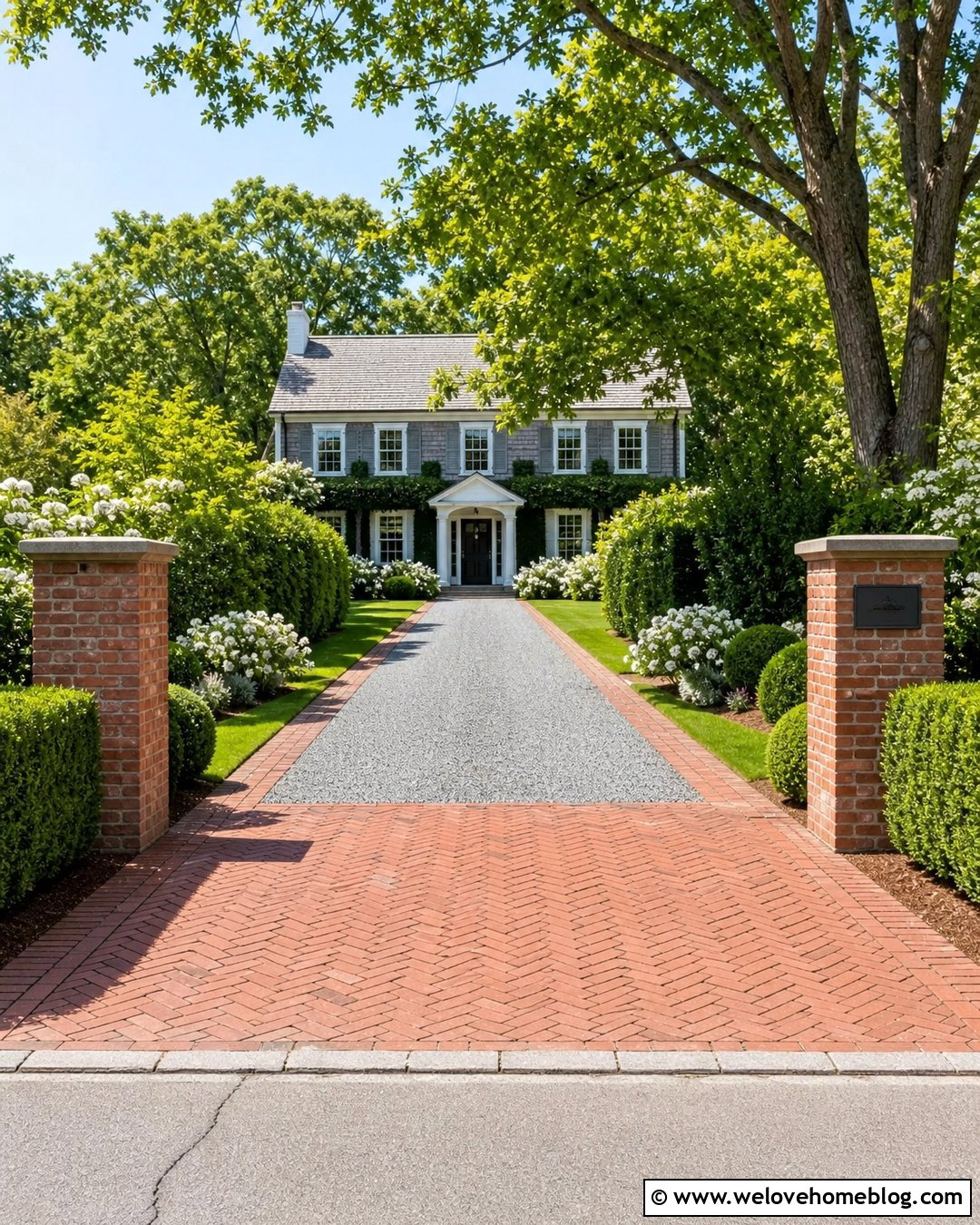
A double brick border gives a pea gravel driveway stronger definition and better containment. Use warm tan pea gravel through the center, then install two parallel rows of deep red paving brick along both sides. Lay the inner row lengthwise and turn the outer row into a soldier course for subtle pattern variation. The wider edge creates a comfortable visual transition from the loose gravel to lawn or garden beds. This combination suits cottages, cape cod homes, and traditional suburban houses. Frame the approach with white flowering shrubs, compact boxwoods, and a simple brick walkway. Because rounded pea gravel moves more readily than angular stone, keep the finished gravel level below the border. A well-compacted foundation beneath the brick helps prevent spreading, dipping, and uneven sections near vehicle wheel paths.
8. Circular Driveway With Brick Edging And Center Island
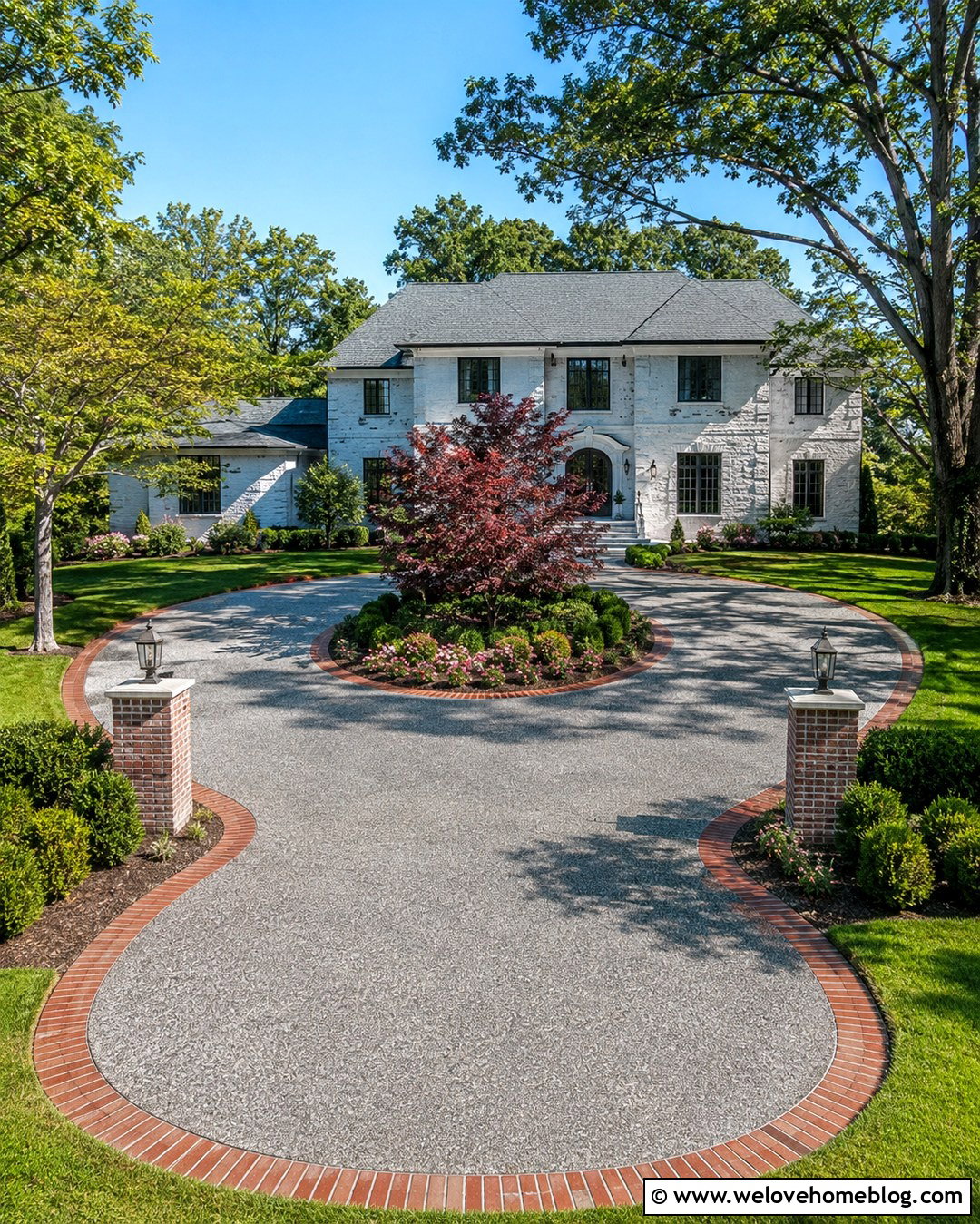
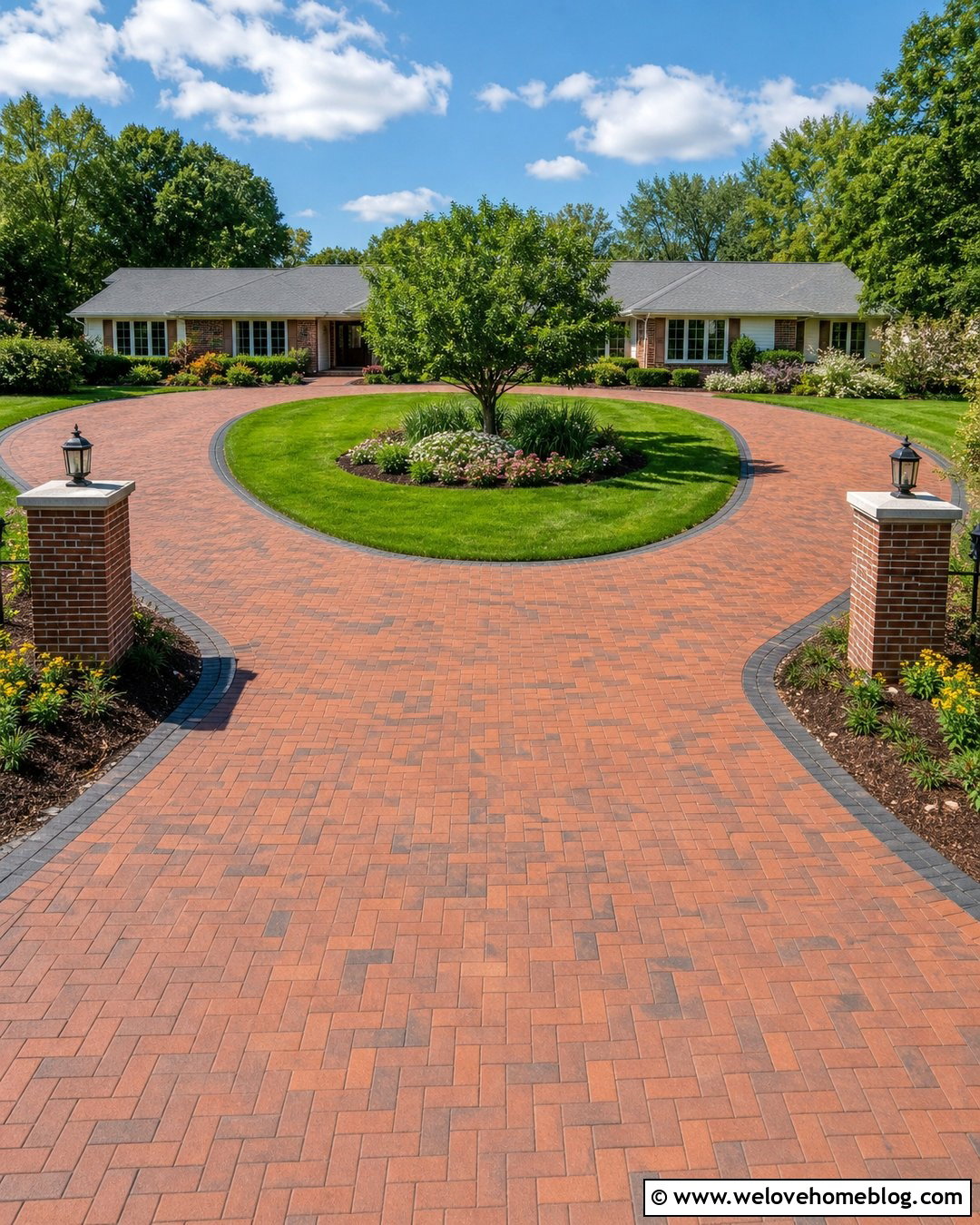
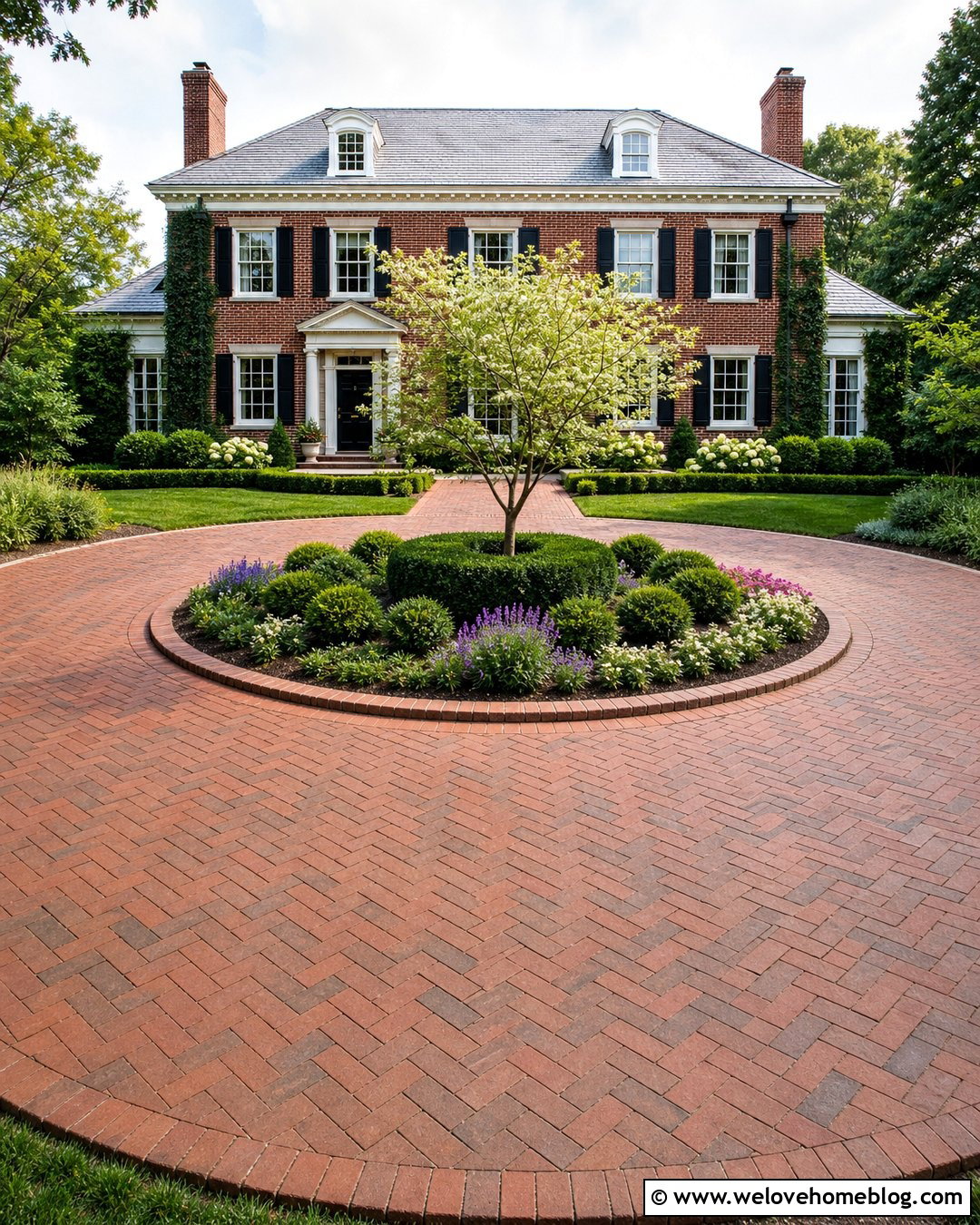
A circular driveway becomes more cohesive when brick edging outlines both its outer perimeter and center island. Use medium gray concrete or exposed aggregate for the driving surface and warm red brick for the borders. Lay the brick flat along broad curves to create smooth, continuous lines that guide vehicles naturally around the loop. Repeat the same material around the island so it feels like part of the driveway rather than an unrelated flower bed. A small ornamental tree, low evergreens, seasonal flowers, and ground cover provide interest without blocking views of the house. The outer border can meet matching brick entrance pillars or a brick mailbox. Keep plant growth trimmed back from the driving lane. This balanced layout offers a formal appearance while maintaining an open, practical arrival area.
9. Sloped Driveway With Mortared Brick Edging
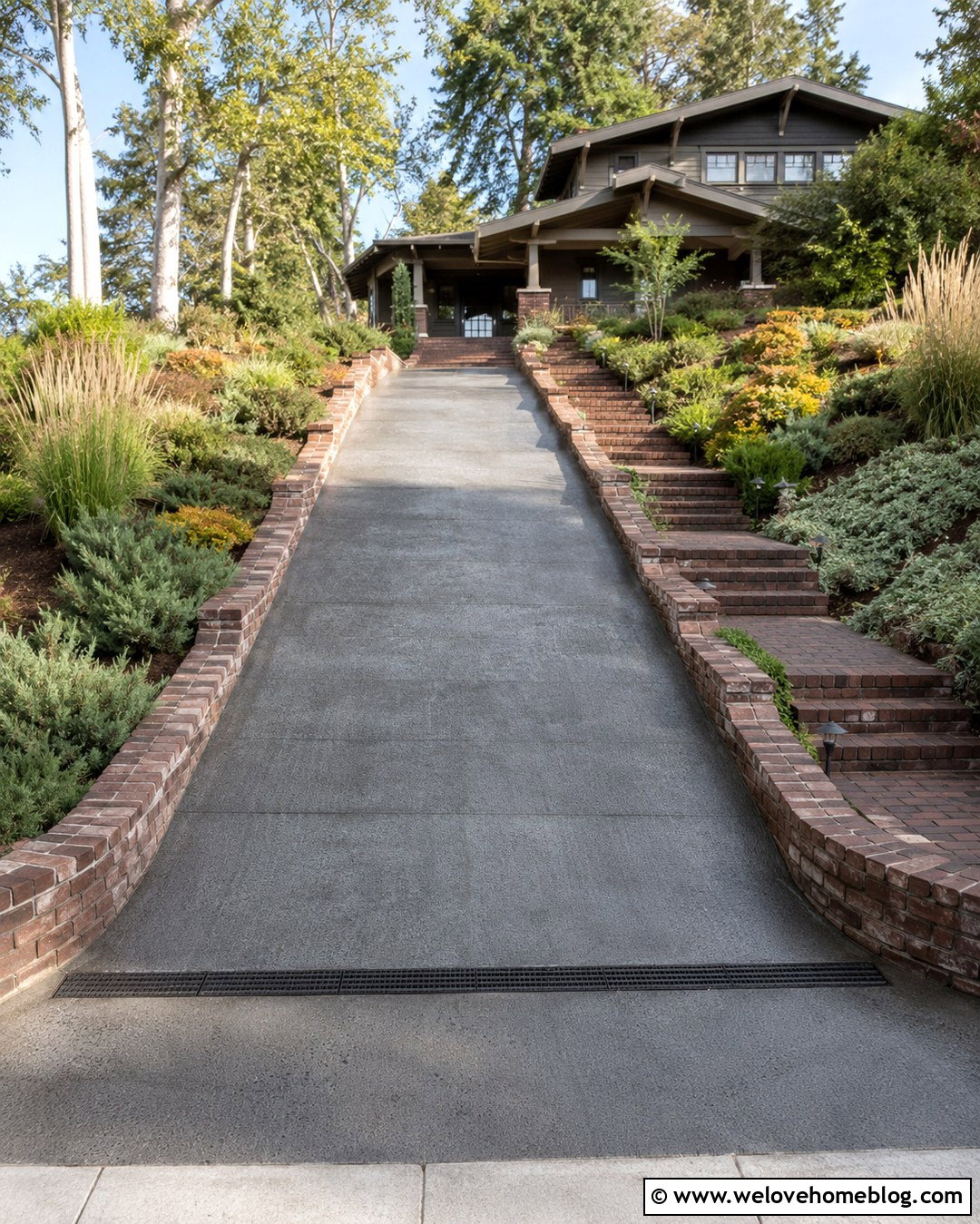
On a sloped driveway, brick edging needs to feel visually solid and properly supported. Pair a textured concrete driving surface with a raised border of dark red brick set on a stable base. The border can step gradually with the grade instead of forming abrupt level changes. This approach creates a controlled transition between the driveway and sloping planting beds while emphasizing the direction of the approach. Use low ground covers, spreading junipers, and erosion-conscious plantings beyond the brick so soil does not wash over the paving. A channel drain near the garage may be appropriate where runoff naturally travels toward the house, but drainage requirements should be evaluated for the specific site. Matching brick steps along a side walkway can make the entire front landscape appear coordinated and purposeful.
10. Narrow Driveway With Flush Brick Edging
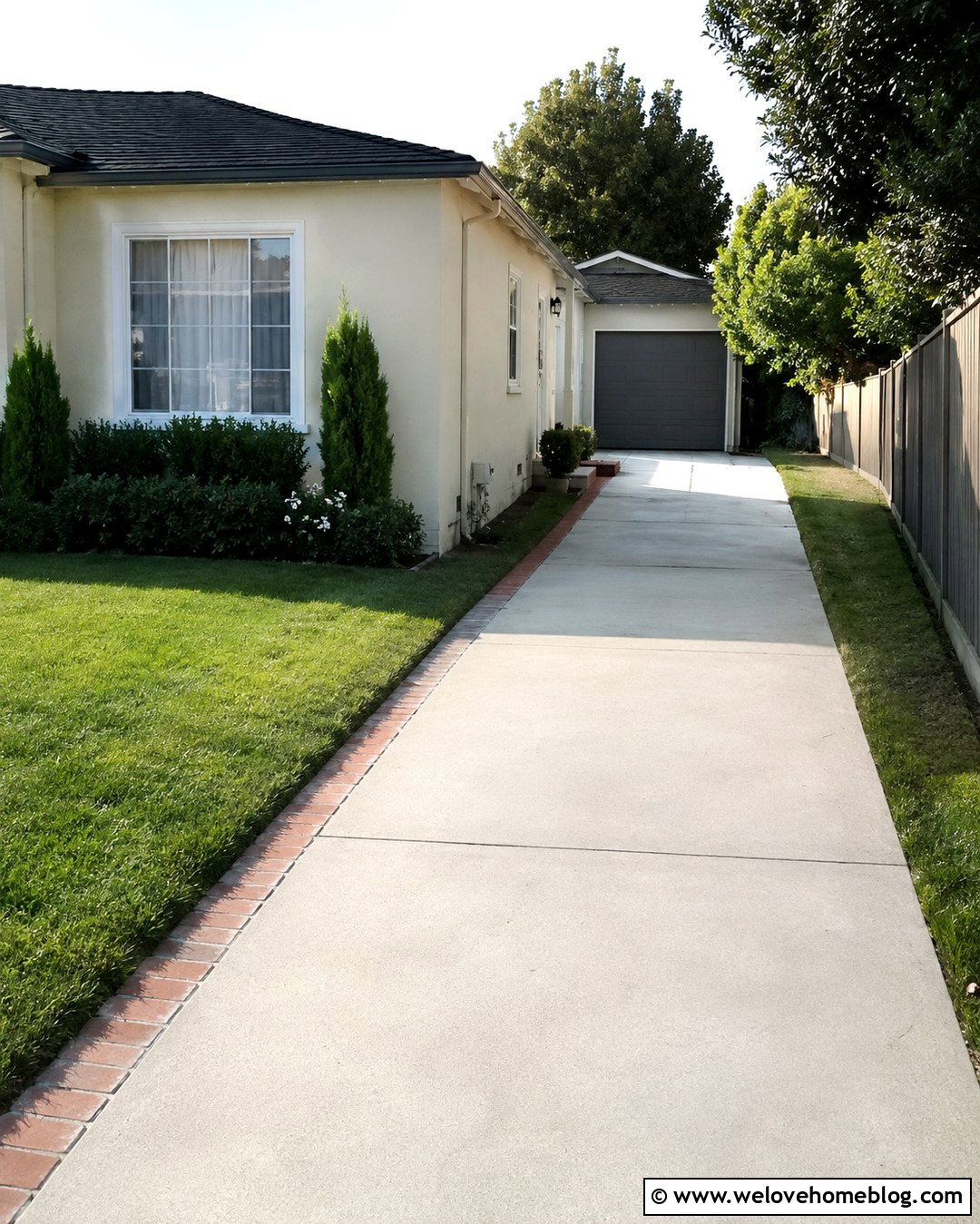
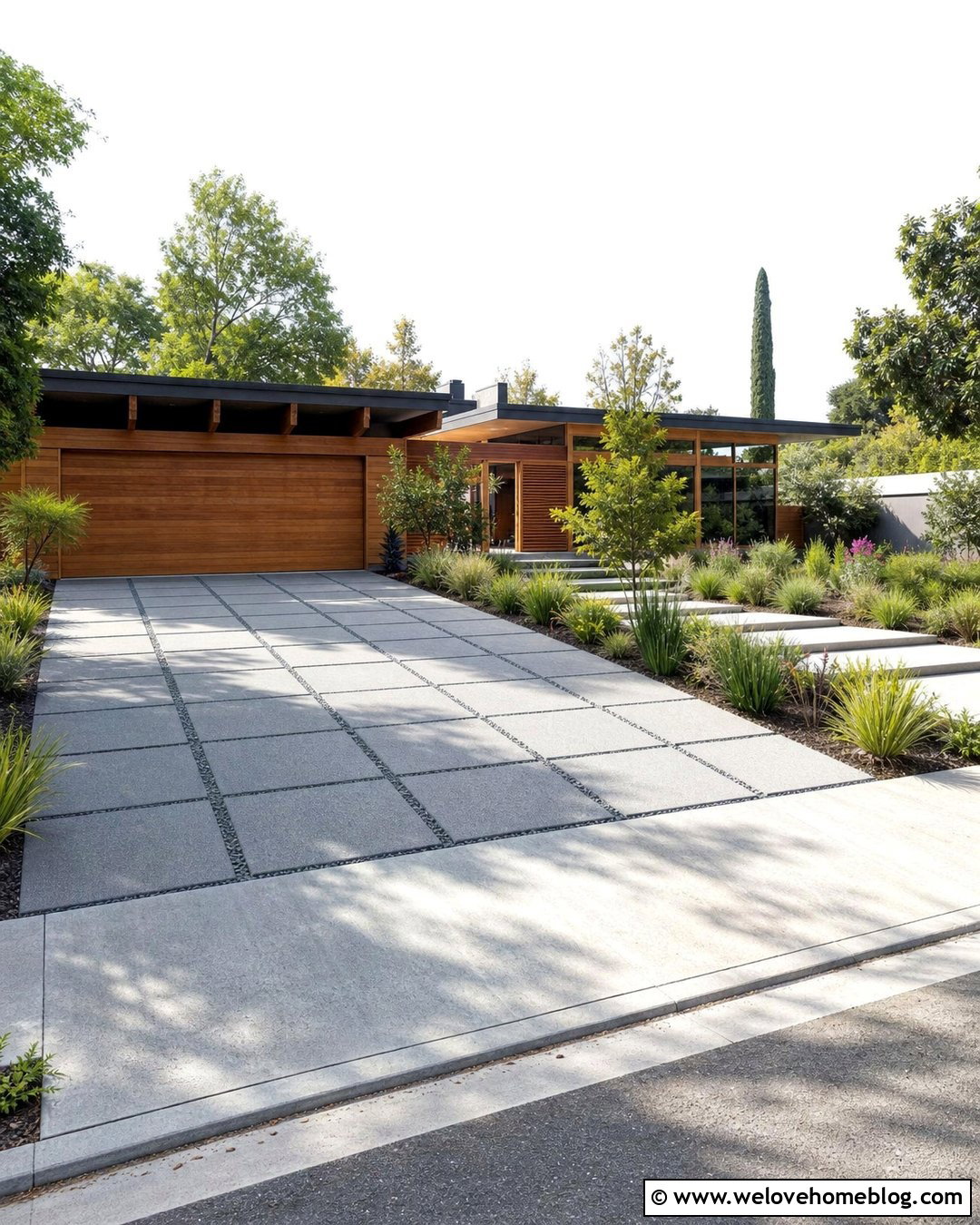
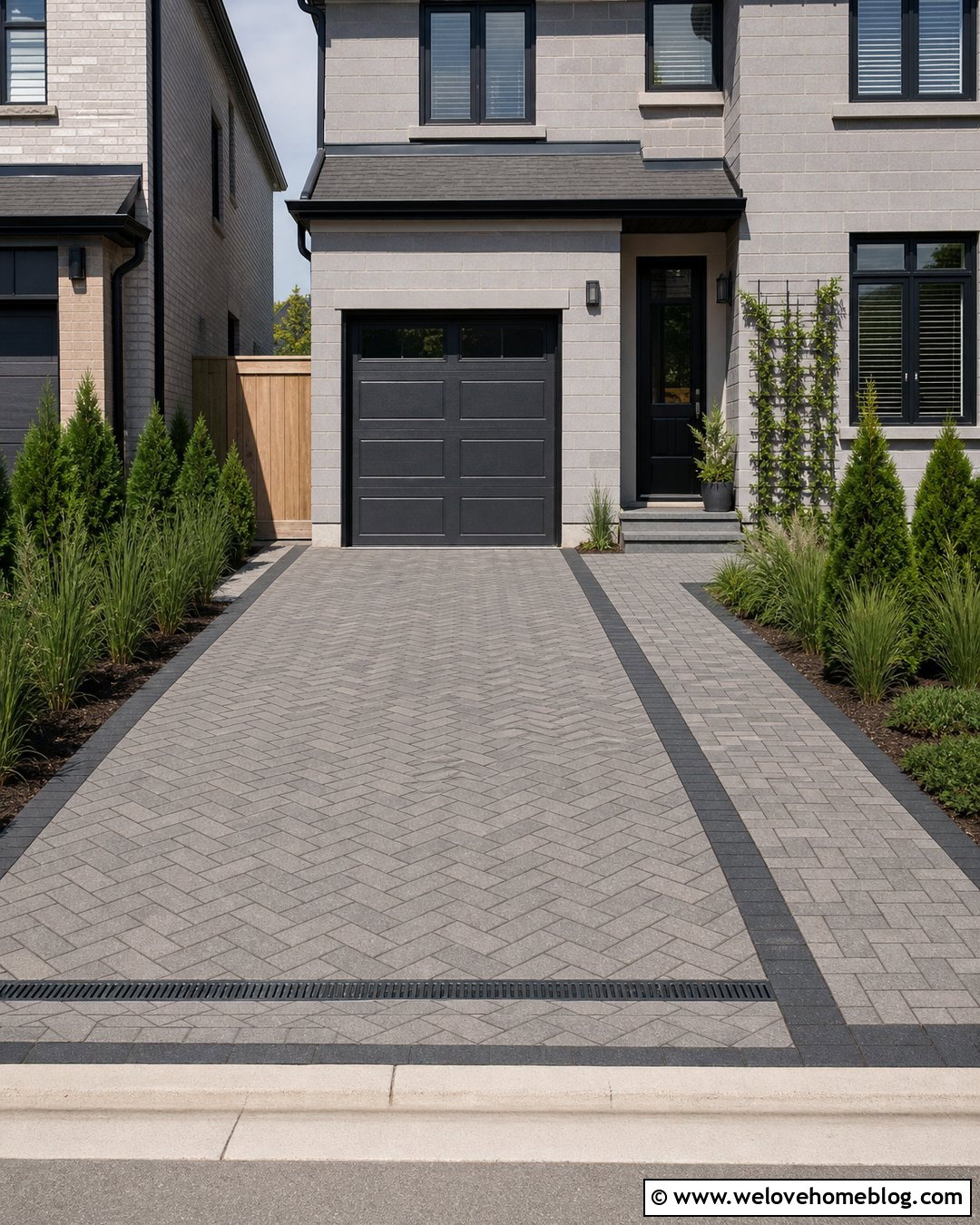
A narrow side driveway benefits from brick edging that defines the surface without reducing usable width. Start with smooth light gray concrete and install a single flush row of slim red or brown brick along each edge. Running the bricks lengthwise makes the driveway appear longer, while keeping them level minimizes interference with tires, gates, and foot traffic. Replace bulky planting beds with narrow grass strips, upright shrubs, or a simple fence covered in restrained greenery. Near the garage, extend the brick line into a small rectangular parking pad to make the transition feel planned. Avoid wide contrasting patterns that can make the driving lane seem tighter. Careful alignment matters in a confined space, so maintain consistent joints and use a string line when installing the straight portions of the border.
11. Long Driveway With Brick Edging And Trees
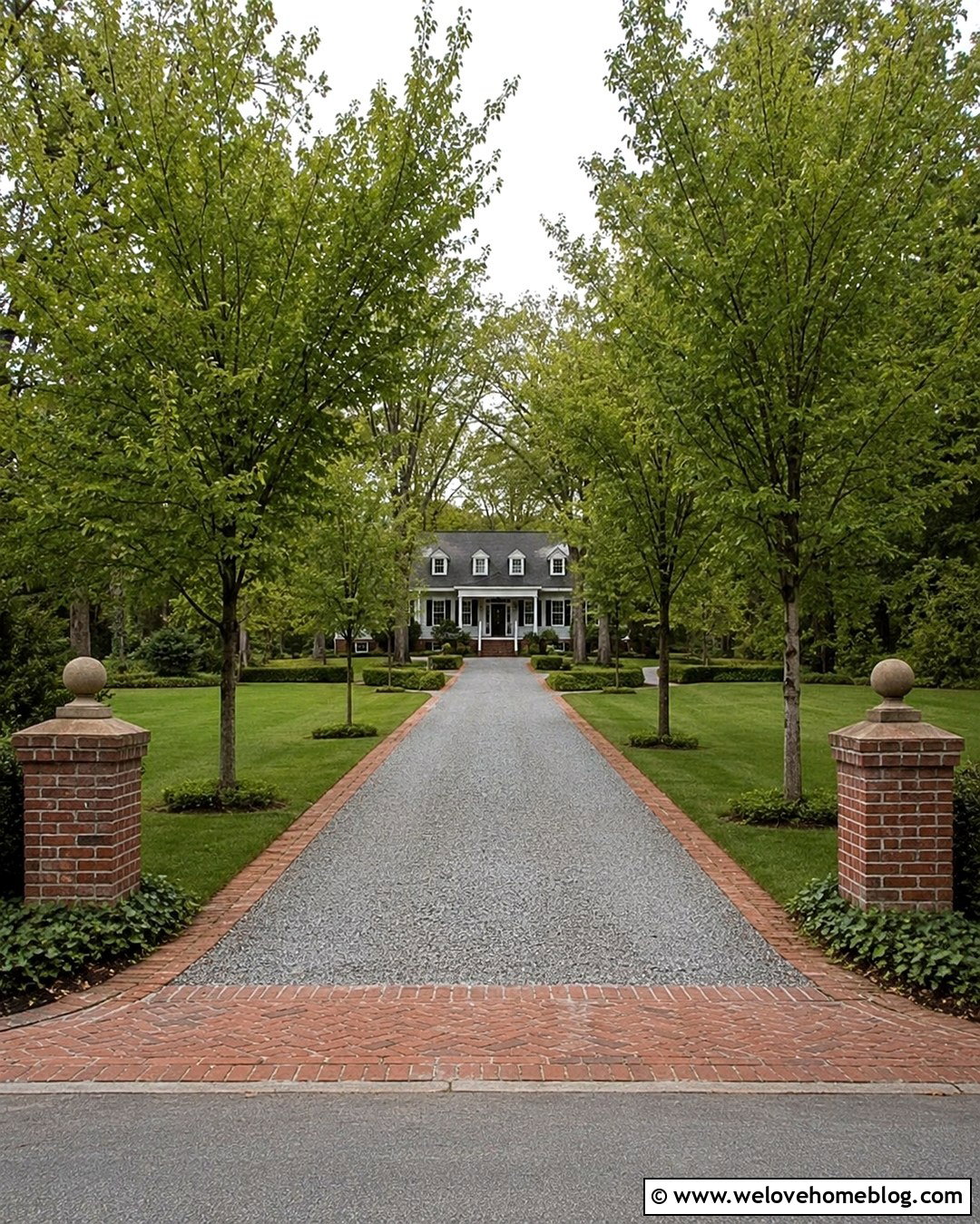
A tree-lined driveway can look especially polished when a continuous brick border connects the entrance to the house. Use compacted gray gravel or dark asphalt for the surface, then frame both sides with warm red brick laid in a simple soldier course. The repeated brick line adds structure beneath rows of maples, ornamental pears, or other regionally appropriate trees. Leave generous planting space between trunks and the driveway so roots and mature canopies have room to develop. Low ground cover or neatly maintained lawn can fill the area between trees without obscuring the edging. At the entrance, widen the brick into a small apron and pair it with understated pillars or an address marker. The long border strengthens perspective, making the approach feel orderly and connected to the architecture ahead.
12. Modern Driveway With Dark Brick Edging
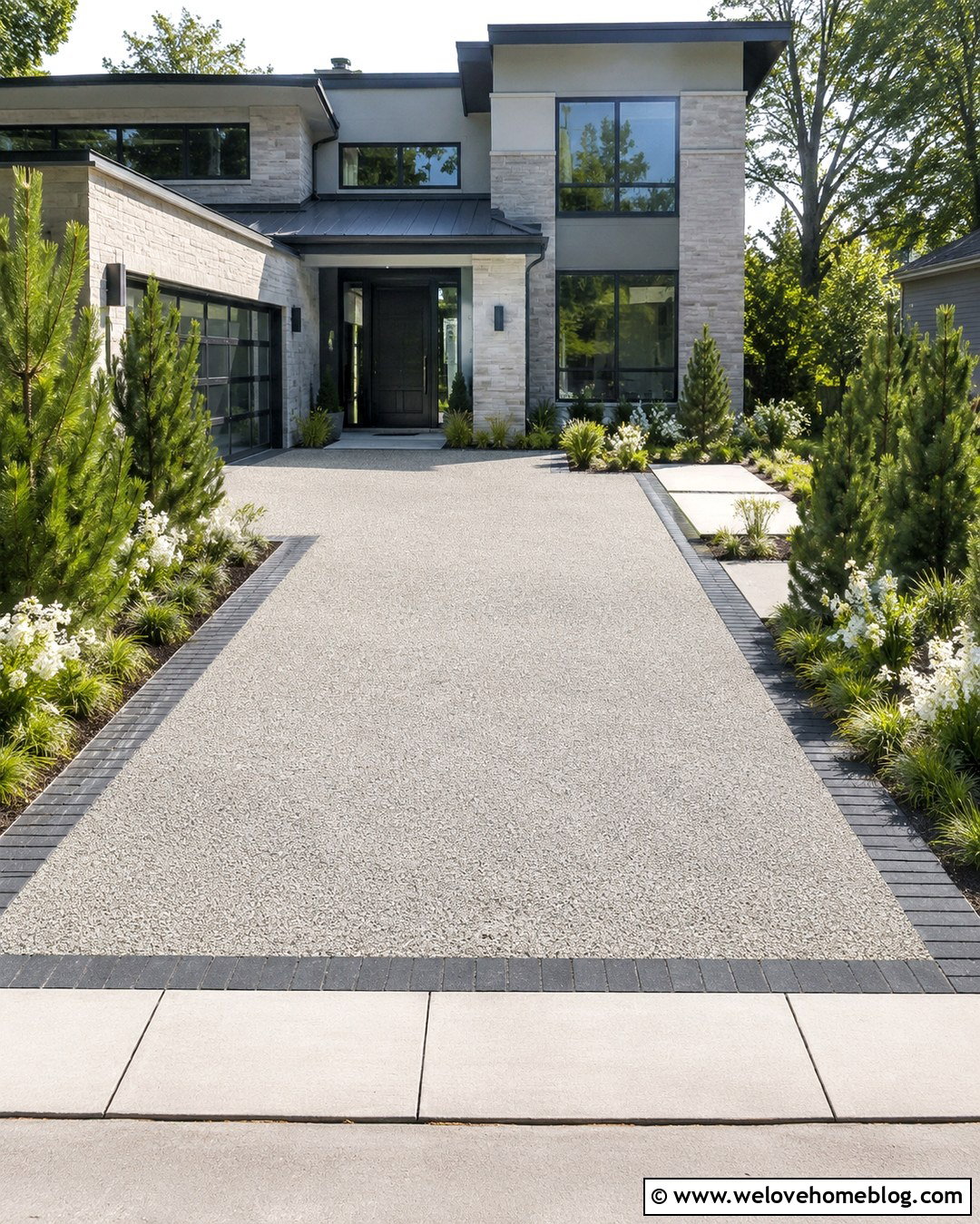
Dark brick does not have to feel traditional. Combine charcoal clay pavers with pale resin-bound gravel to create a modern driveway with subtle texture and sharp geometry. Use two flush brick rows around a straight or slightly offset layout, including clean ninety-degree turns near the garage and walkway. The charcoal color can echo a black metal roof, dark siding, or contemporary window frames. Frame the driveway with linear planting beds containing feather reed grass, dwarf pine, and white flowering perennials. Large concrete stepping pads can form the walkway while remaining visually separate from the driving surface. Limit the overall palette to gray, black, green, and one restrained accent color. With simple joints and precise alignment, the brick becomes an architectural frame rather than a decorative, old-fashioned detail.
13. Farmhouse Gravel Driveway With Brick Edging
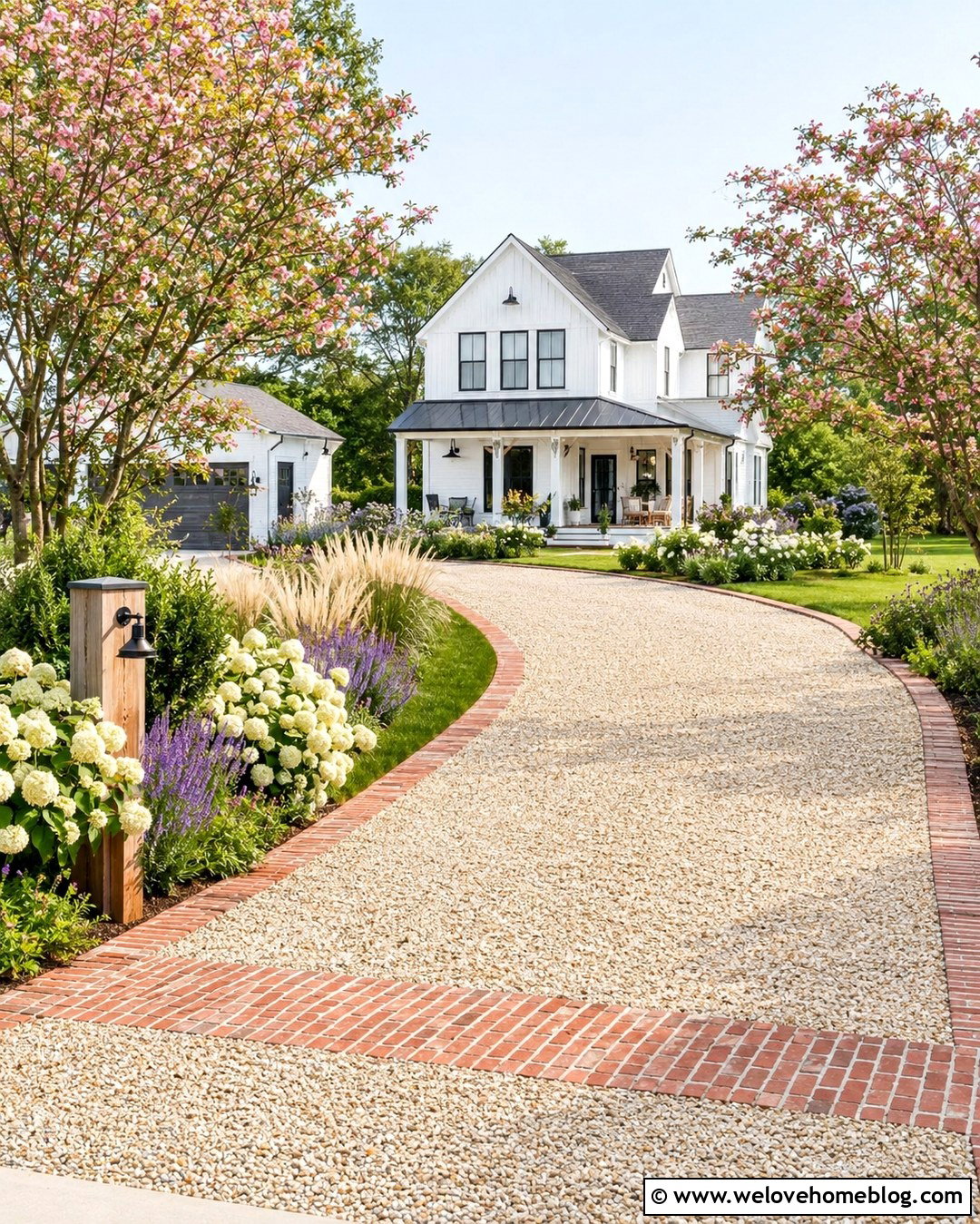
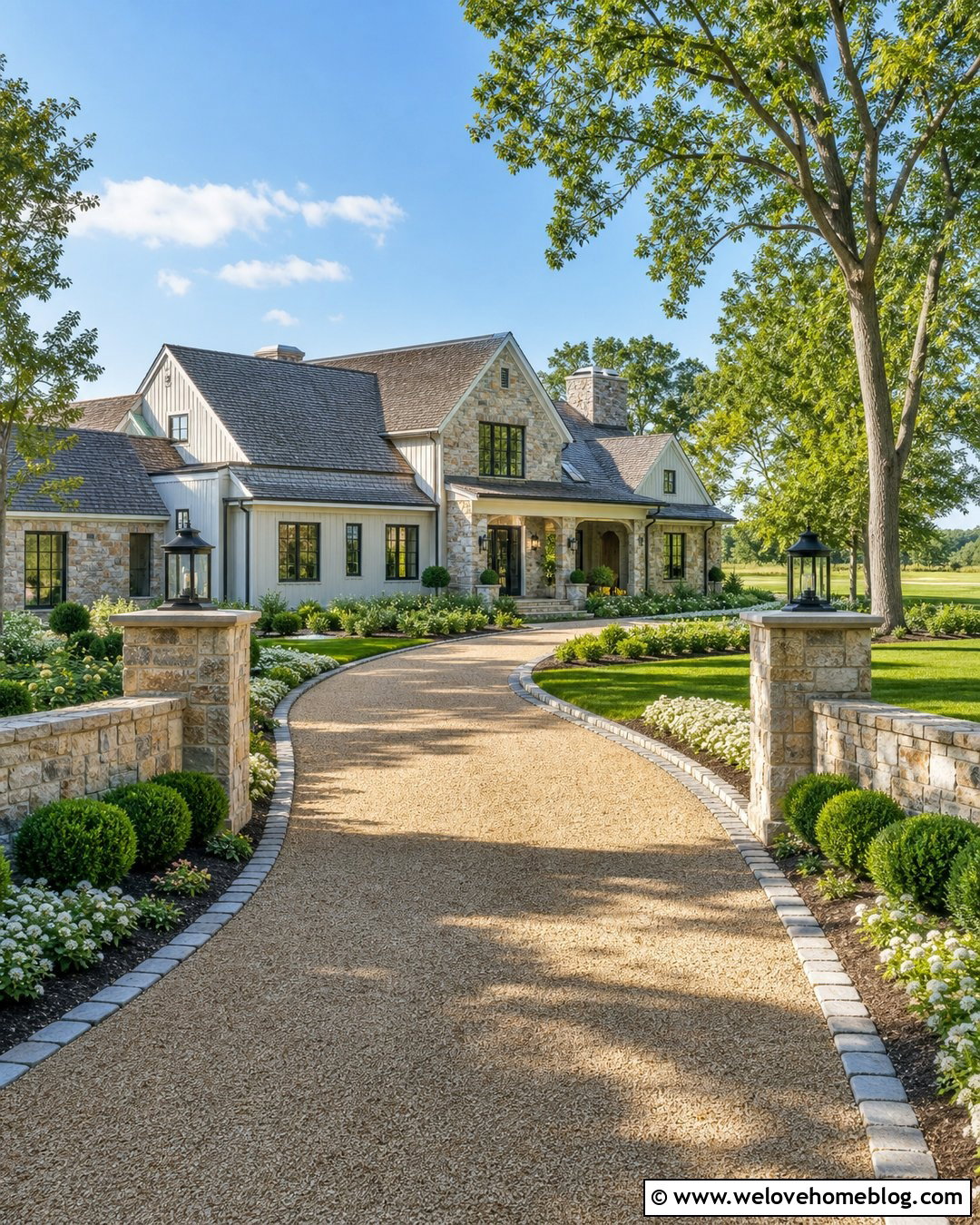
Picture a pale gravel driveway curving toward a white farmhouse, bordered by warm red brick and relaxed greenery. Use angular cream or buff gravel for a surface that contrasts gently with the brick. A single raised row can contain the stone, while a second flat row at the entrance creates a stronger threshold. Let planting beds follow the curve with hydrangeas, salvia, ornamental grasses, and small flowering trees. Near the house, connect the driveway to a brick walkway or brick-edged porch path. Black barn-style lights and a simple timber address post complete the farmhouse setting without making it feel themed. Keep the gravel properly crowned or graded for the site, and avoid planting tall material close to the street where it could interfere with visibility during entry and exit.
14. Colonial Driveway With Red Brick Edging
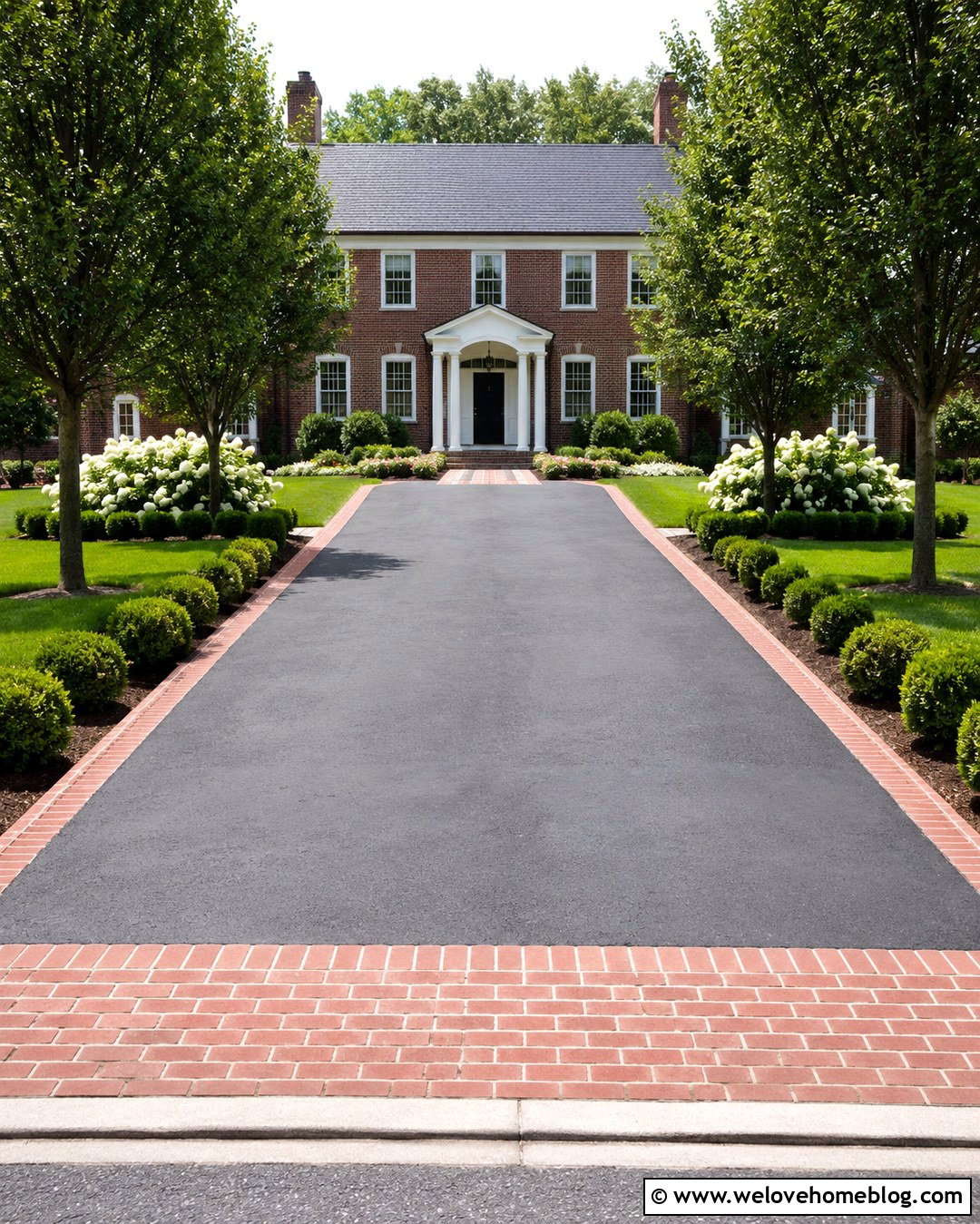
Symmetry makes red brick edging a natural fit for a colonial home. Center a straight, medium gray asphalt driveway on the garage or front facade, then define both sides with evenly installed red clay brick. A double soldier course adds enough visual weight to balance shutters, columns, and a formal entry. Continue the bricks across the street end as an apron, creating a clear entrance that mirrors the home’s traditional architecture. Neatly clipped boxwoods, balanced planting beds, and matching ornamental trees reinforce the organized layout. A brick walkway branching from the driveway should use the same color family, although its pattern can vary for interest. Keep joints, border widths, and planting distances consistent on each side. Small alignment differences become especially noticeable in a formal, symmetrical front yard.
15. Craftsman Driveway With Mixed Brick Edging
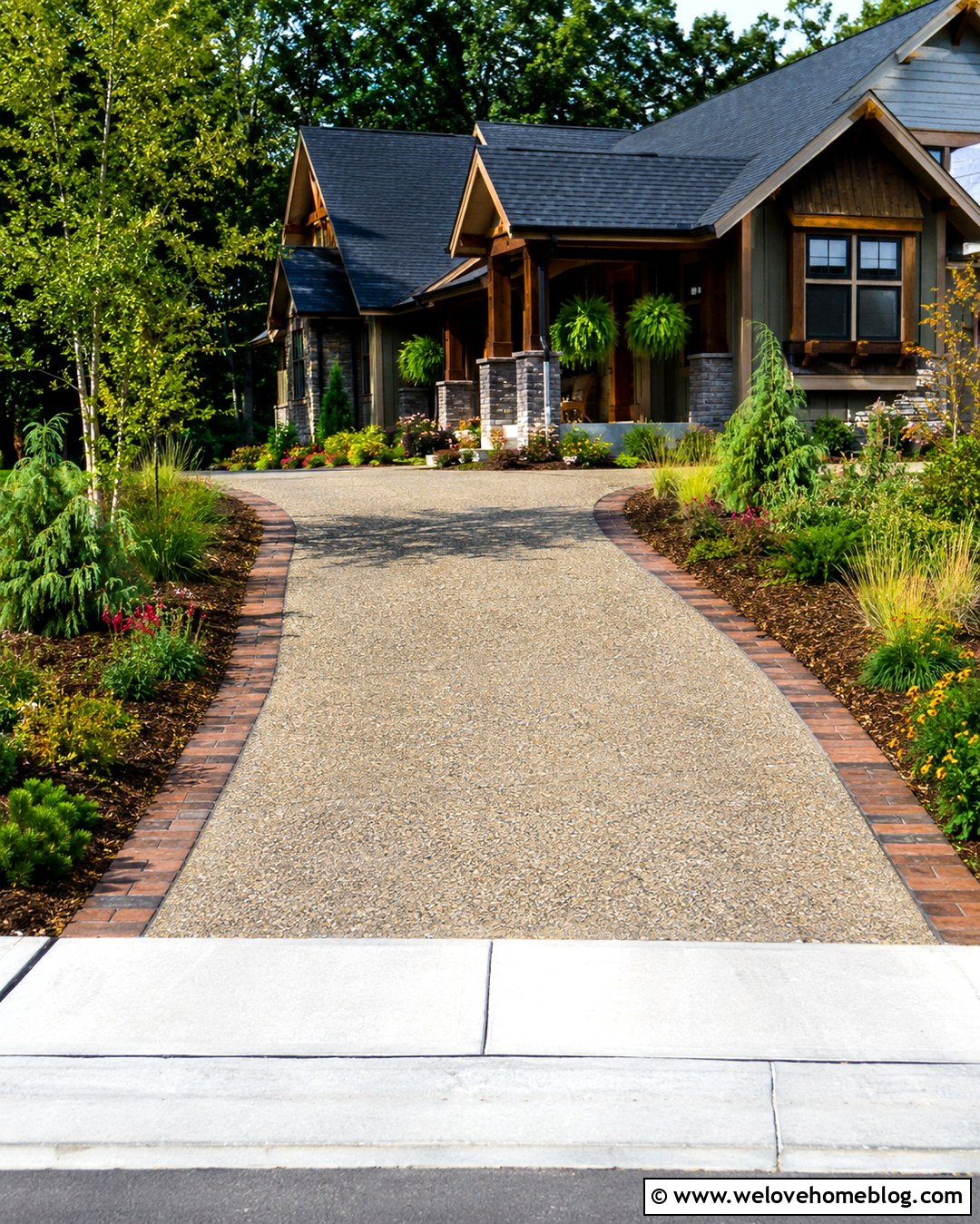
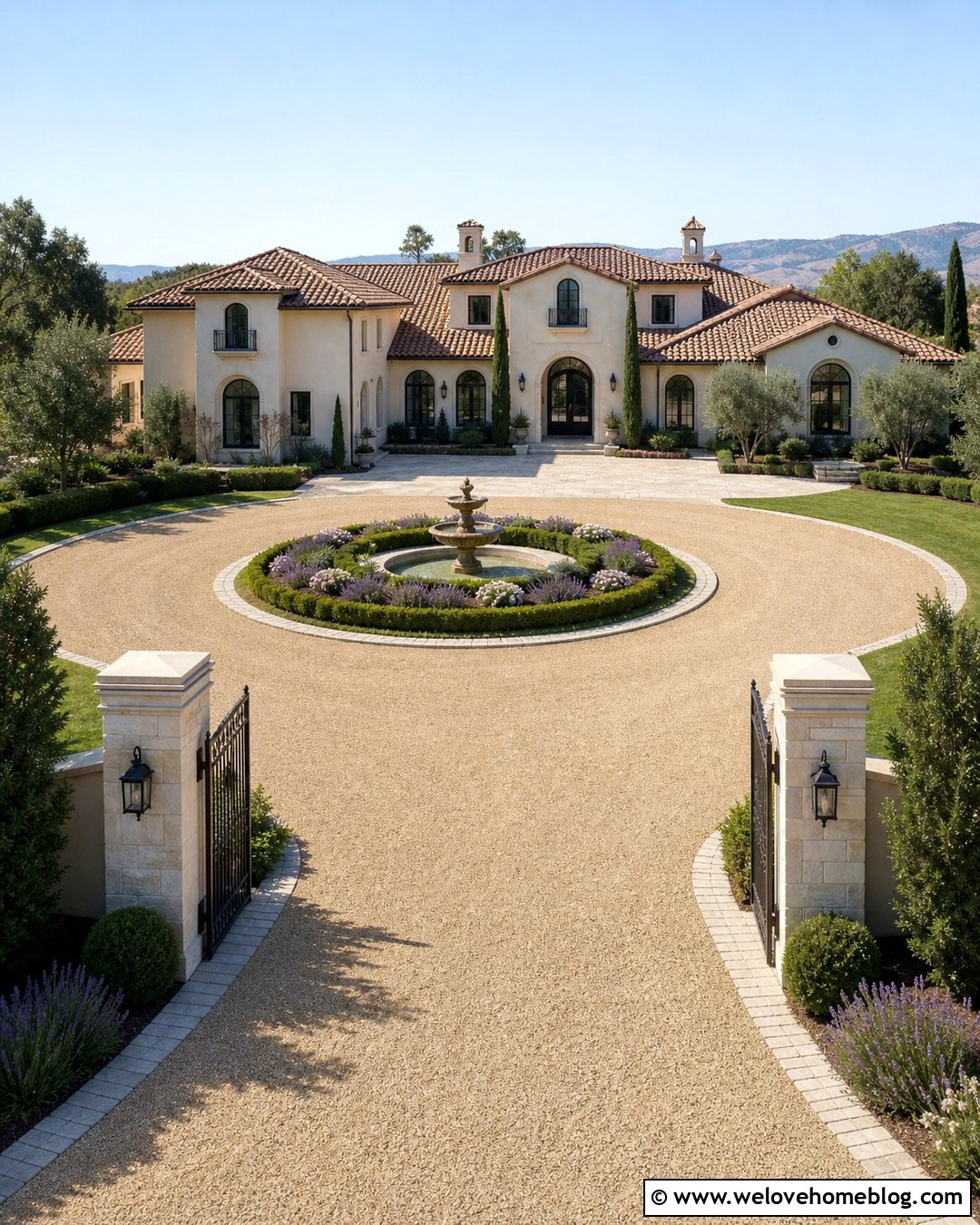
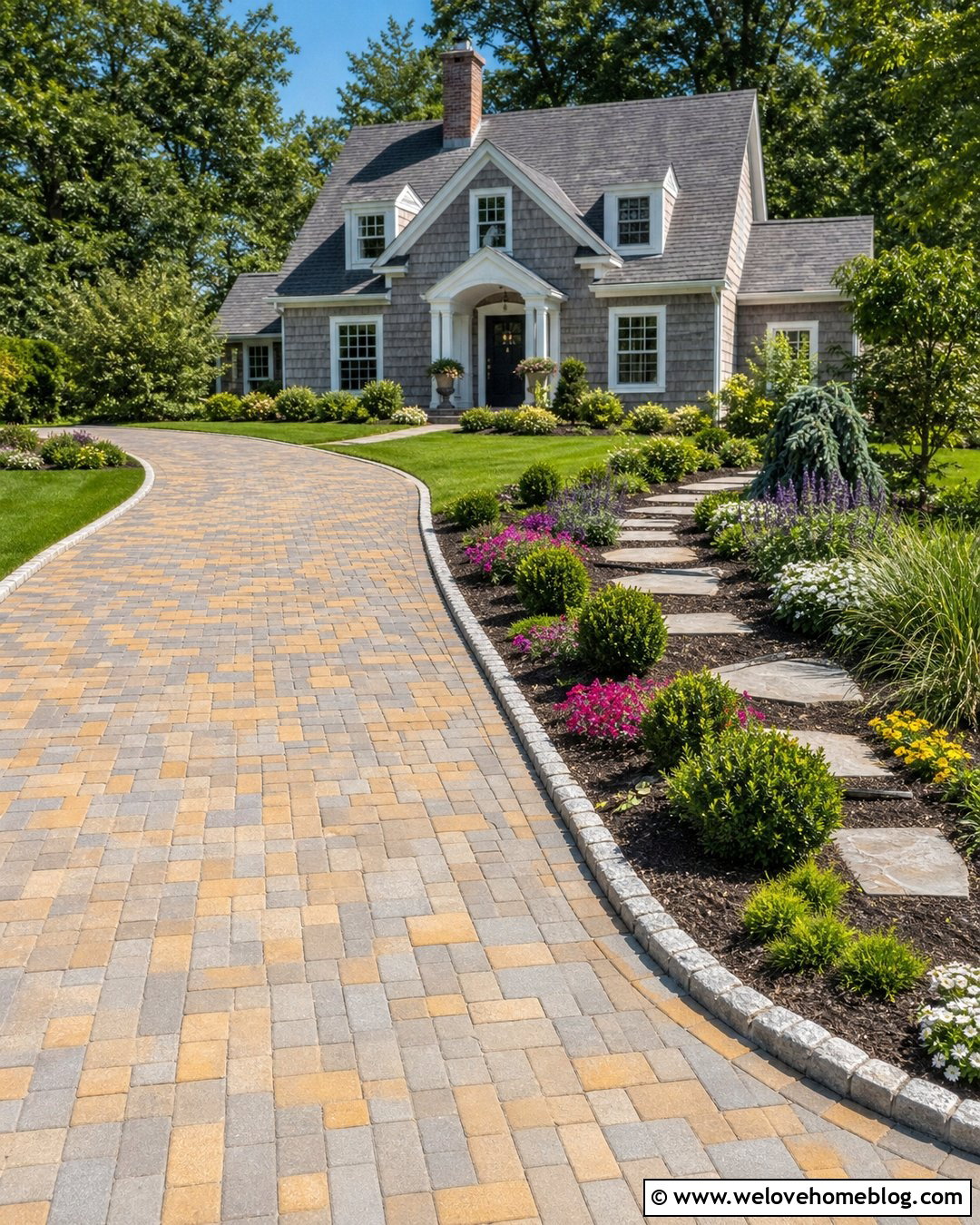
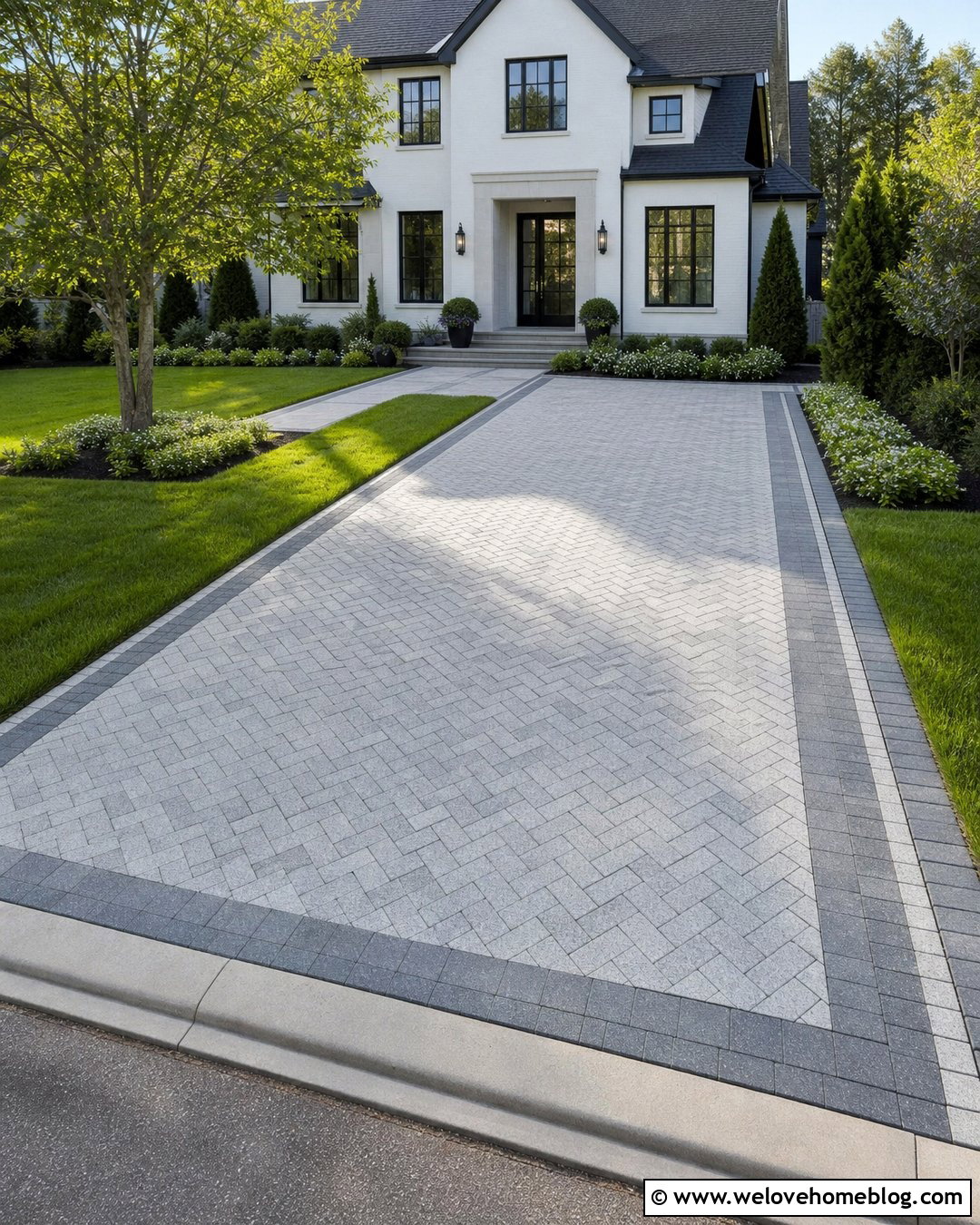
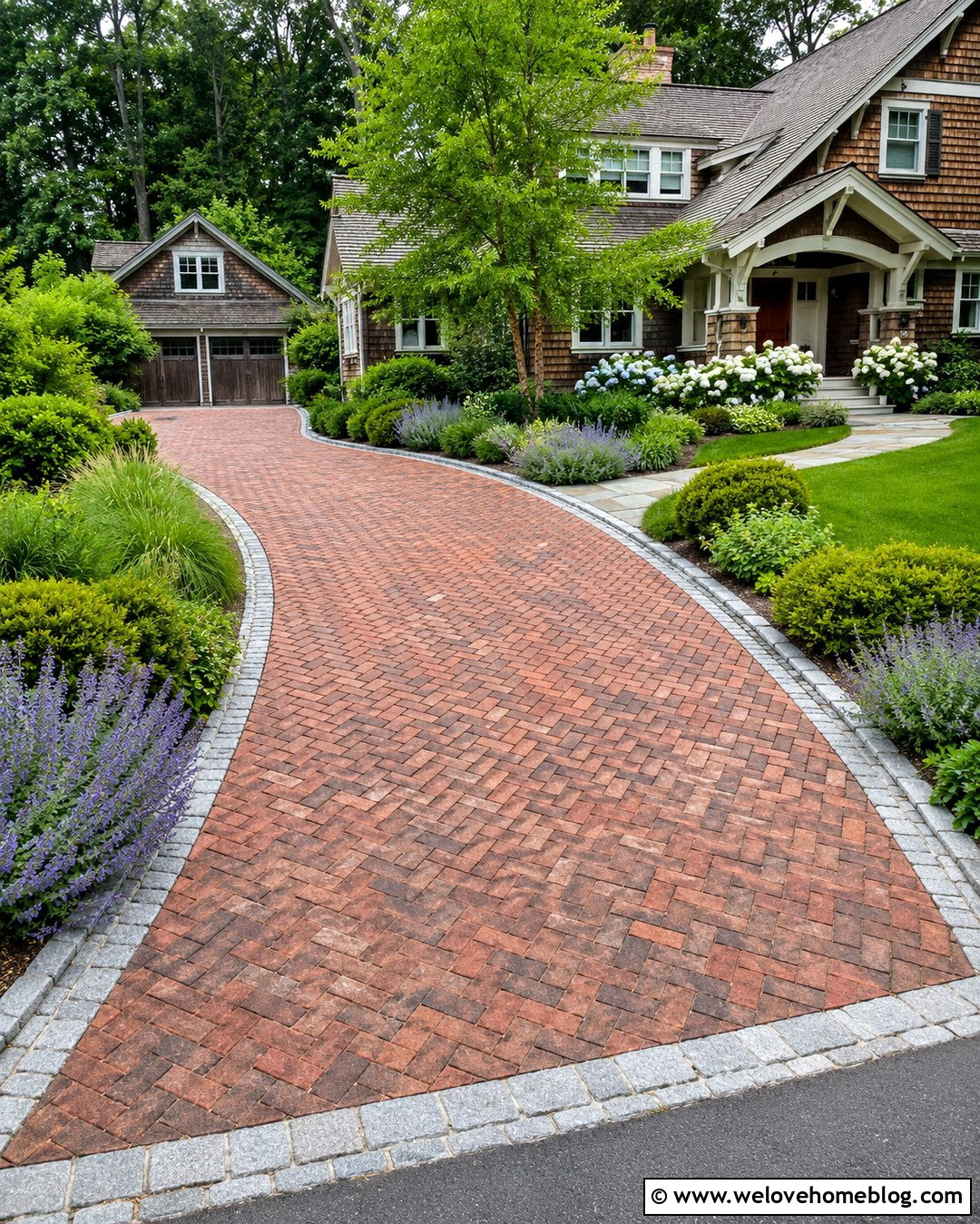
A craftsman house works well with brick edging in blended earth tones. Choose an exposed-aggregate driveway containing tan, gray, and brown stone, then add a wide border of mixed red, brown, and charcoal bricks. Arrange the bricks in a running bond rather than a highly formal pattern to complement the home’s handcrafted character. Natural stone porch columns, stained wood trim, and a muted garage door can repeat colors found in the border. Use layered planting beds with ferns, ornamental grasses, low evergreens, and native flowering plants. A gently flared entrance and softly curved edges keep the composition welcoming. Select the brick blend before finalizing the aggregate so the two materials share undertones. This creates a coordinated result instead of making the edging look like a later addition.
16. Driveway With Brick Edging And Matching Apron
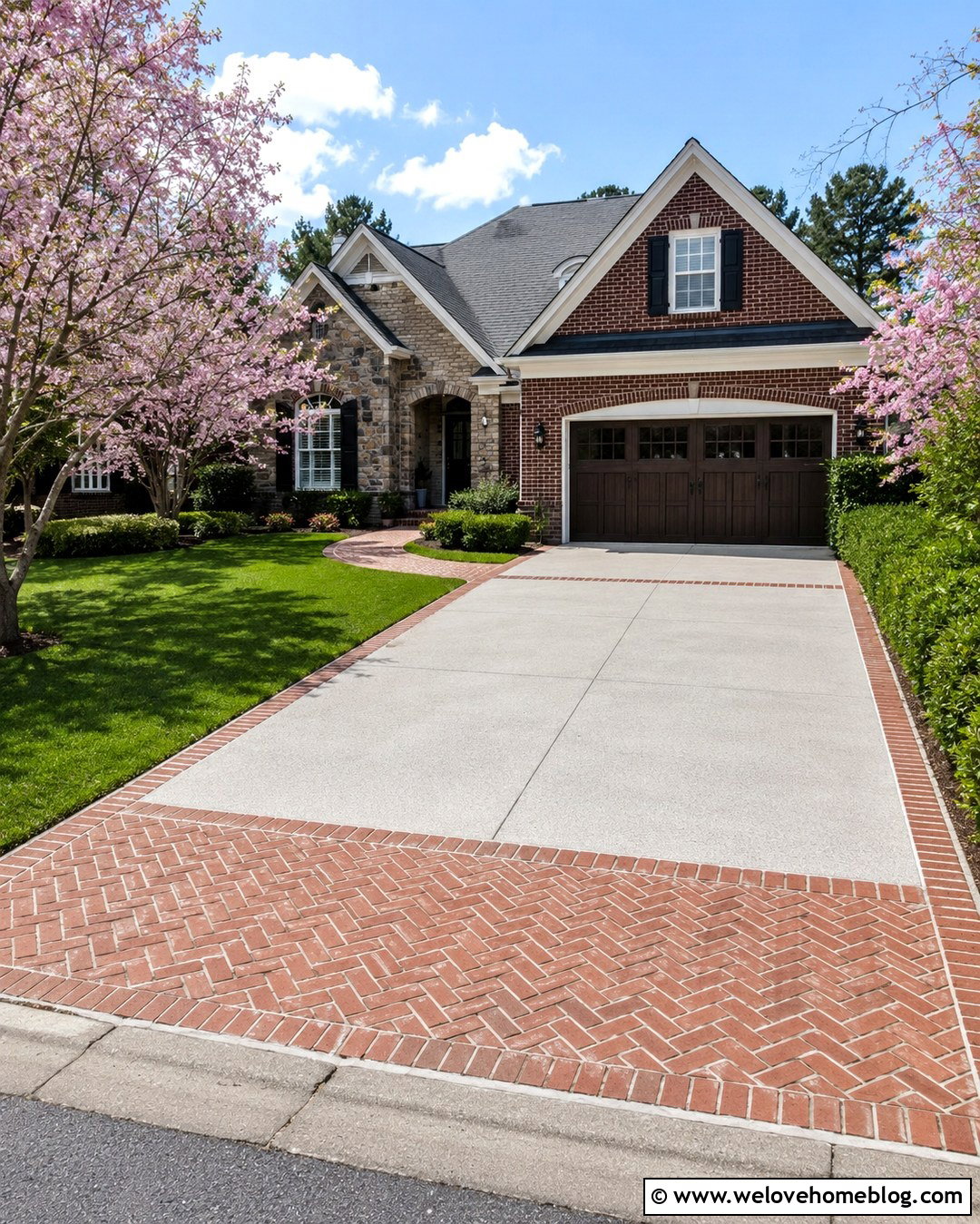
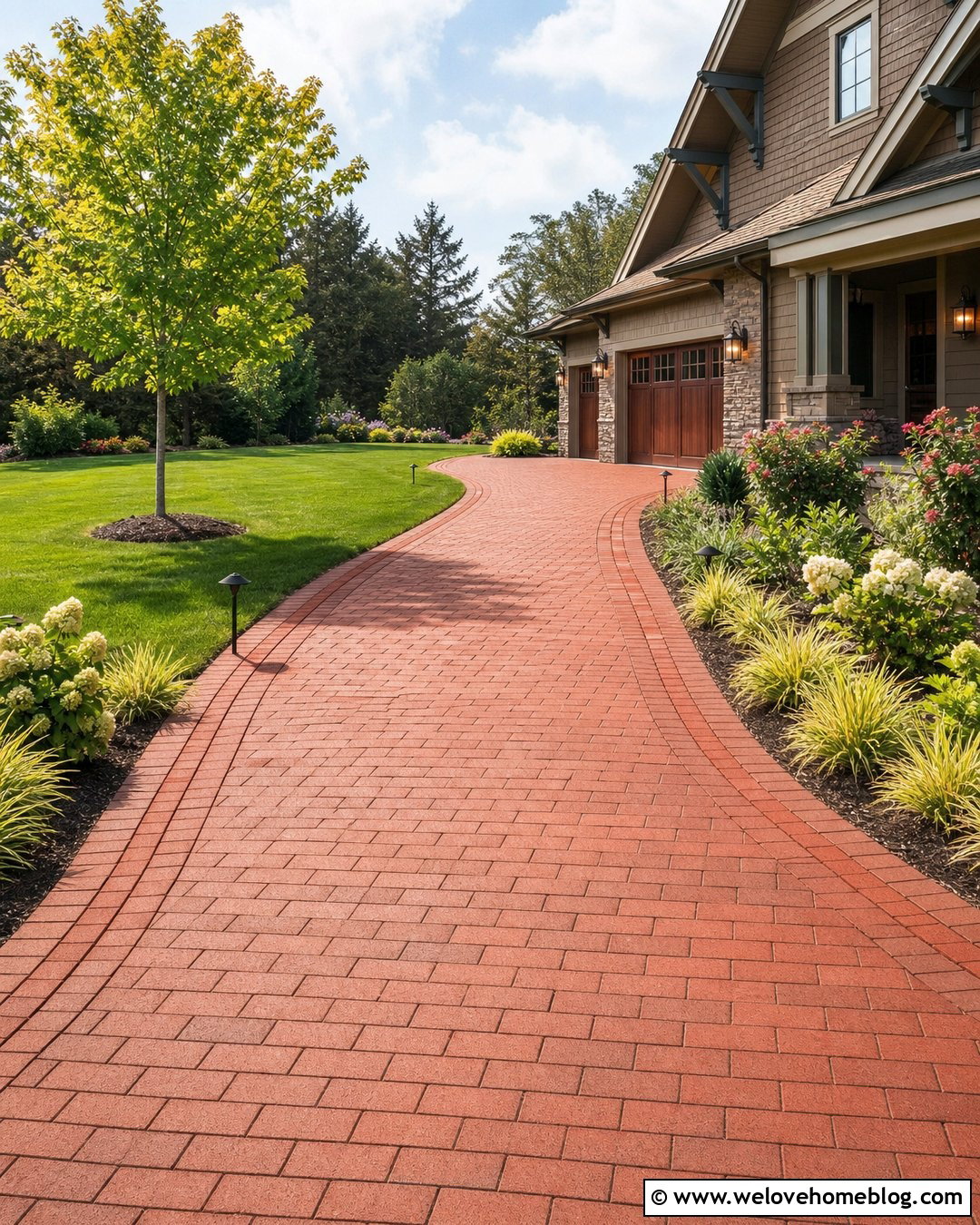
A matching brick apron can transform basic edging into a complete entrance feature. Frame a broom-finished concrete driveway with one row of rich red brick, then expand the same brick across the driveway near the curb. A herringbone or basketweave apron offers more visual impact than the simple side border while keeping the materials connected. Repeat a smaller brick band near the garage doors if the driveway is long enough to support another accent. Traditional lawn, foundation shrubs, and a brick-edged walkway create a balanced suburban setting. The apron color should contrast clearly with the main surface but relate to the house facade, roof, or front steps. Confirm local requirements before changing areas near sidewalks, curbs, or public rights-of-way, since these transitions may be subject to municipal rules or access limitations.
17. Driveway With Brick Edging And Grass Strip
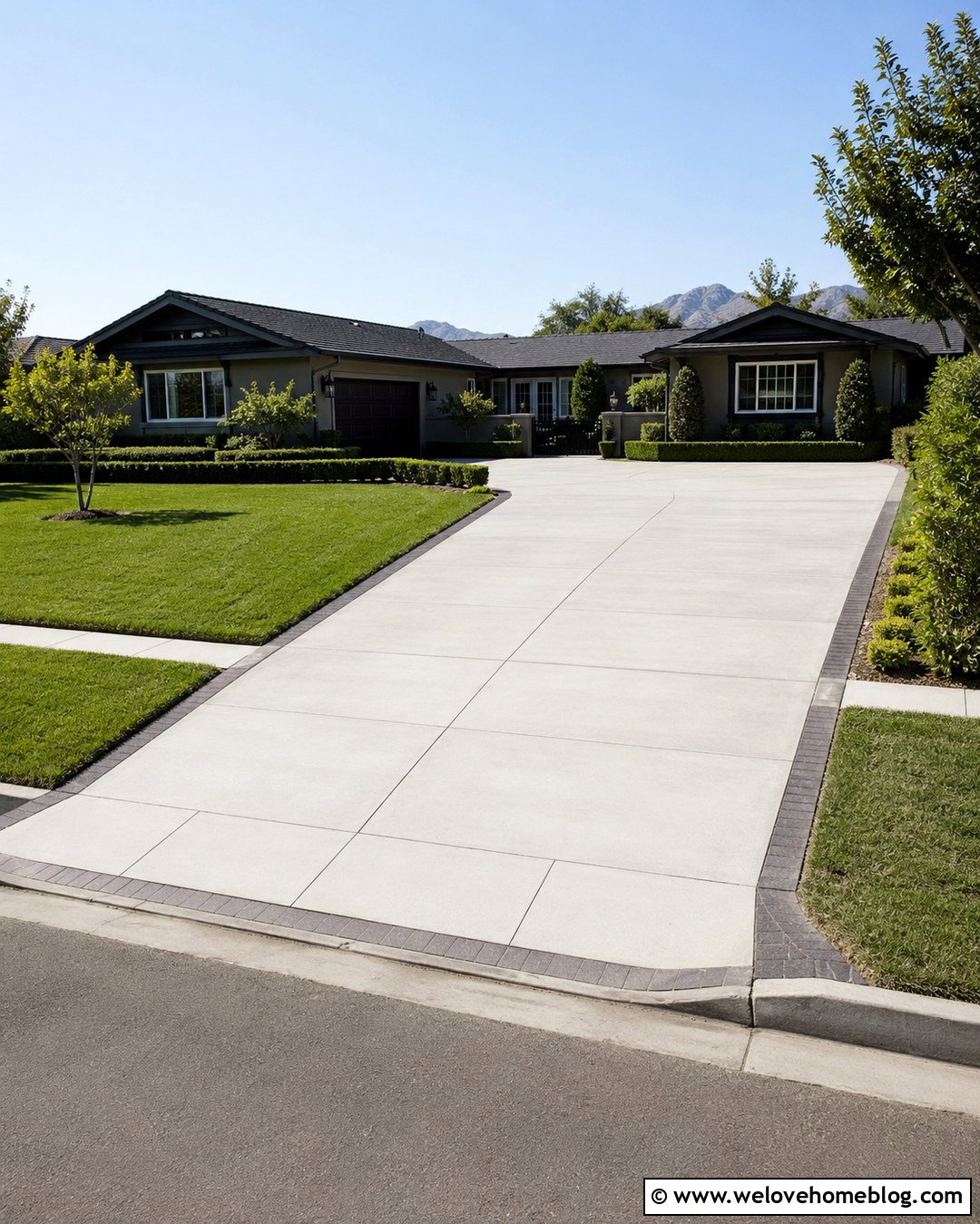
A narrow grass strip between the driveway and walkway adds softness without requiring a large planting bed. Use pale poured concrete for the driving lane and edge it with flat charcoal or red brick. Beyond the border, maintain a slender ribbon of turf before adding a matching brick-edged sidewalk. This layered layout creates clear separation between vehicles and pedestrians while keeping the front yard open. It works particularly well beside ranch homes and broad suburban lawns. Choose a grass suitable for the local climate and the amount of sunlight the strip receives. Keep brick surfaces flush where mowing equipment must cross them, and avoid creating tight corners that are difficult to maintain. At the street and front door, connect the driveway and walkway with wider paved transitions so the grass strip ends cleanly.
18. Driveway With Brick Edging And Flower Beds
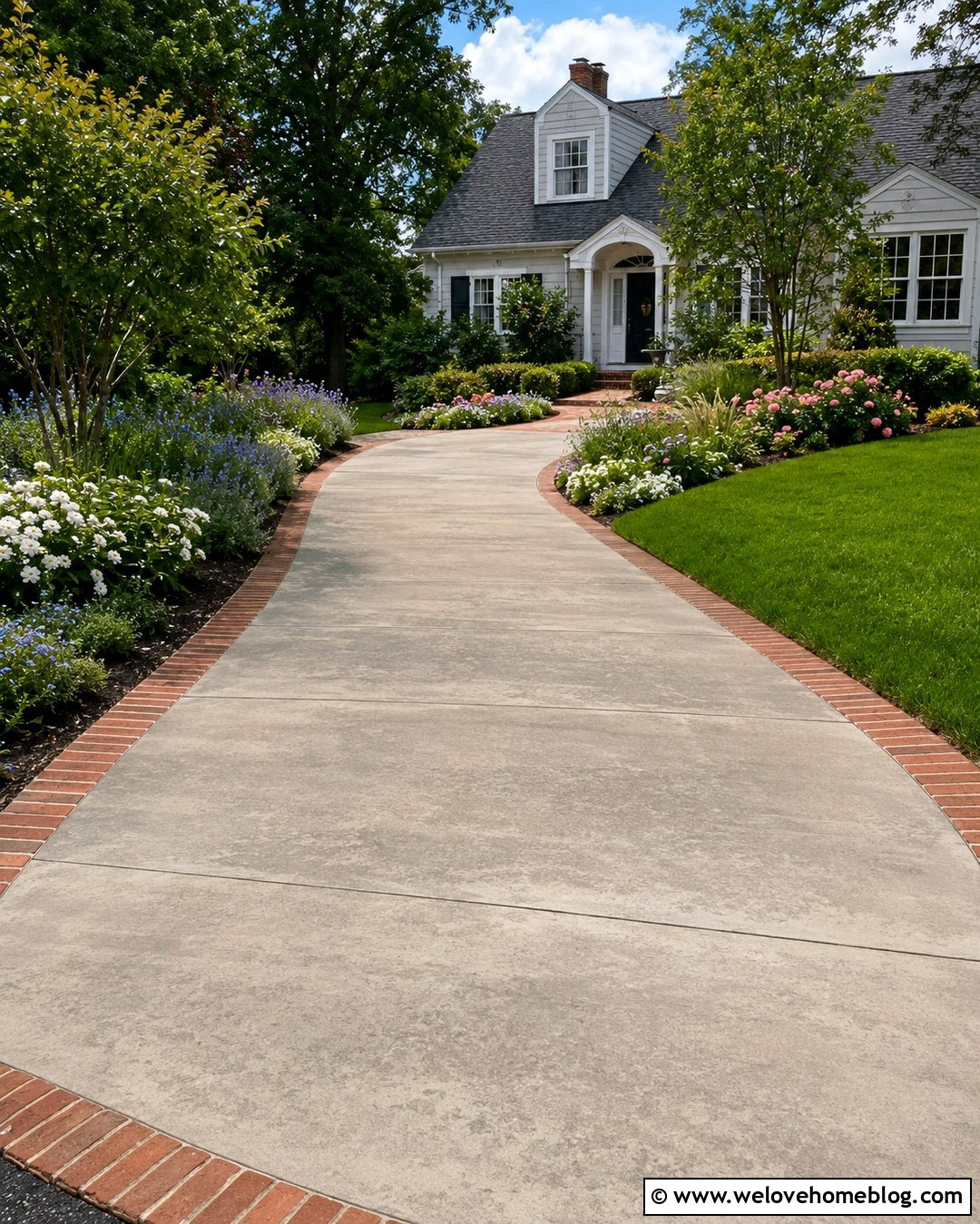
Colorful flower beds can make a brick-edged driveway feel like an intentional garden approach. Pair a warm gray concrete surface with red brick laid in a single soldier course, then build gently curved beds beyond the border. Place low flowers and ground covers nearest the driveway, medium shrubs behind them, and taller ornamental grasses or small trees toward the back. This arrangement keeps the brick visible and prevents mature plants from crowding parked vehicles. Select a limited flower palette that complements the house, such as white, blue, and soft pink against a cape cod facade. Add a simple walkway using matching brick accents. Leave practical access points for maintenance, trash bins, and side gates. Mulch should remain below the brick edge so heavy rain does not wash loose material onto the driveway.
19. Permeable Driveway With Brick Edging
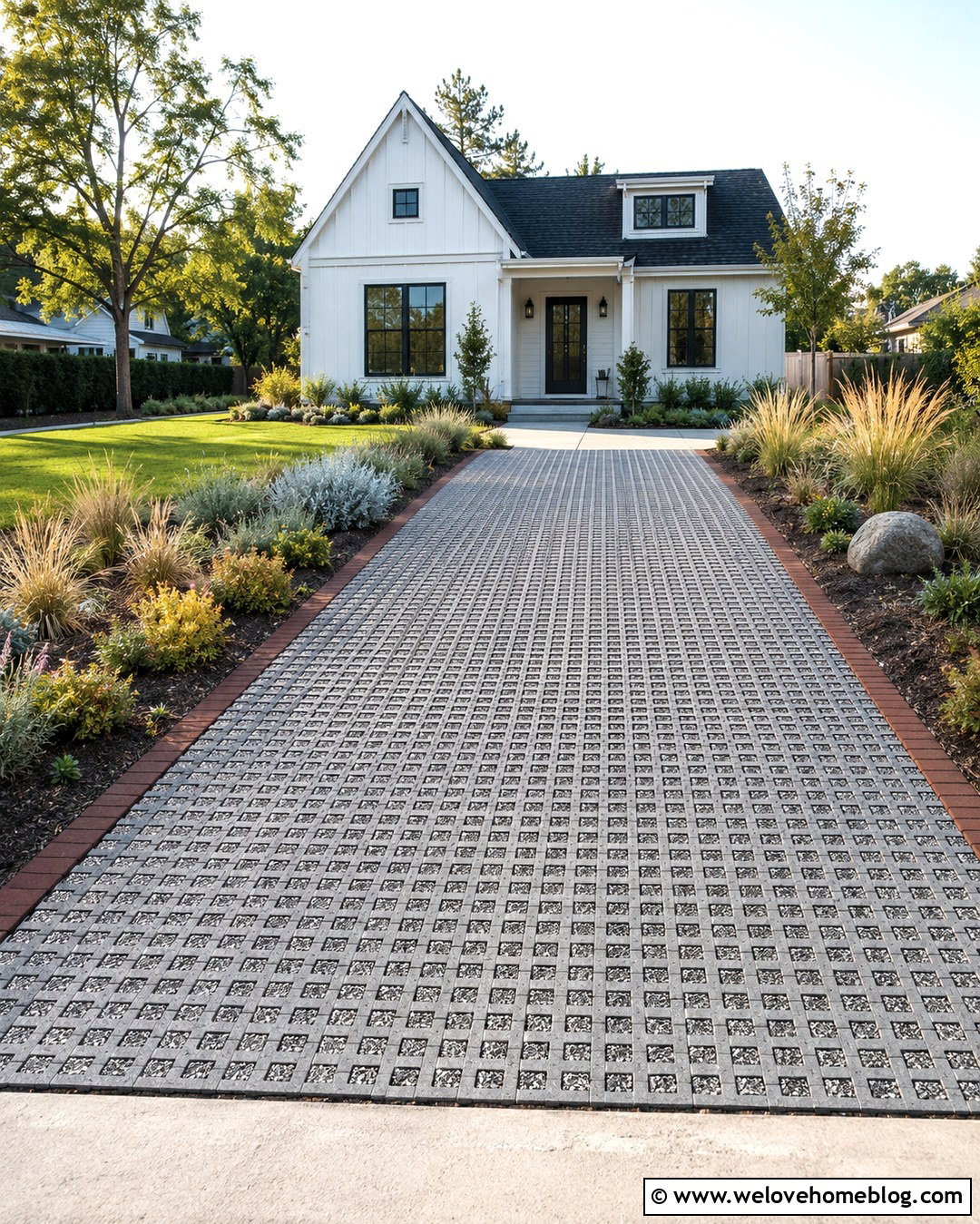
Permeable concrete grid pavers and brick edging create a driveway that feels structured but less visually solid. Fill the grid openings with small gray gravel or low-growing grass, depending on the site and maintenance plan. Surround the entire straight driveway with dark red paving brick installed as a firm, flush frame. The color contrast makes the grid pattern easier to read while separating it from lawn and planting beds. Use drought-tolerant grasses, compact shrubs, and rain-garden planting near suitable drainage areas to support the natural appearance. A modern ranch or contemporary cottage provides an attractive backdrop for this mixed-material surface. The base, subgrade, and drainage design must be appropriate for vehicle use. Avoid allowing soil, mulch, or debris to clog open joints and reduce the system’s performance.
20. Budget Driveway With Salvaged Brick Edging
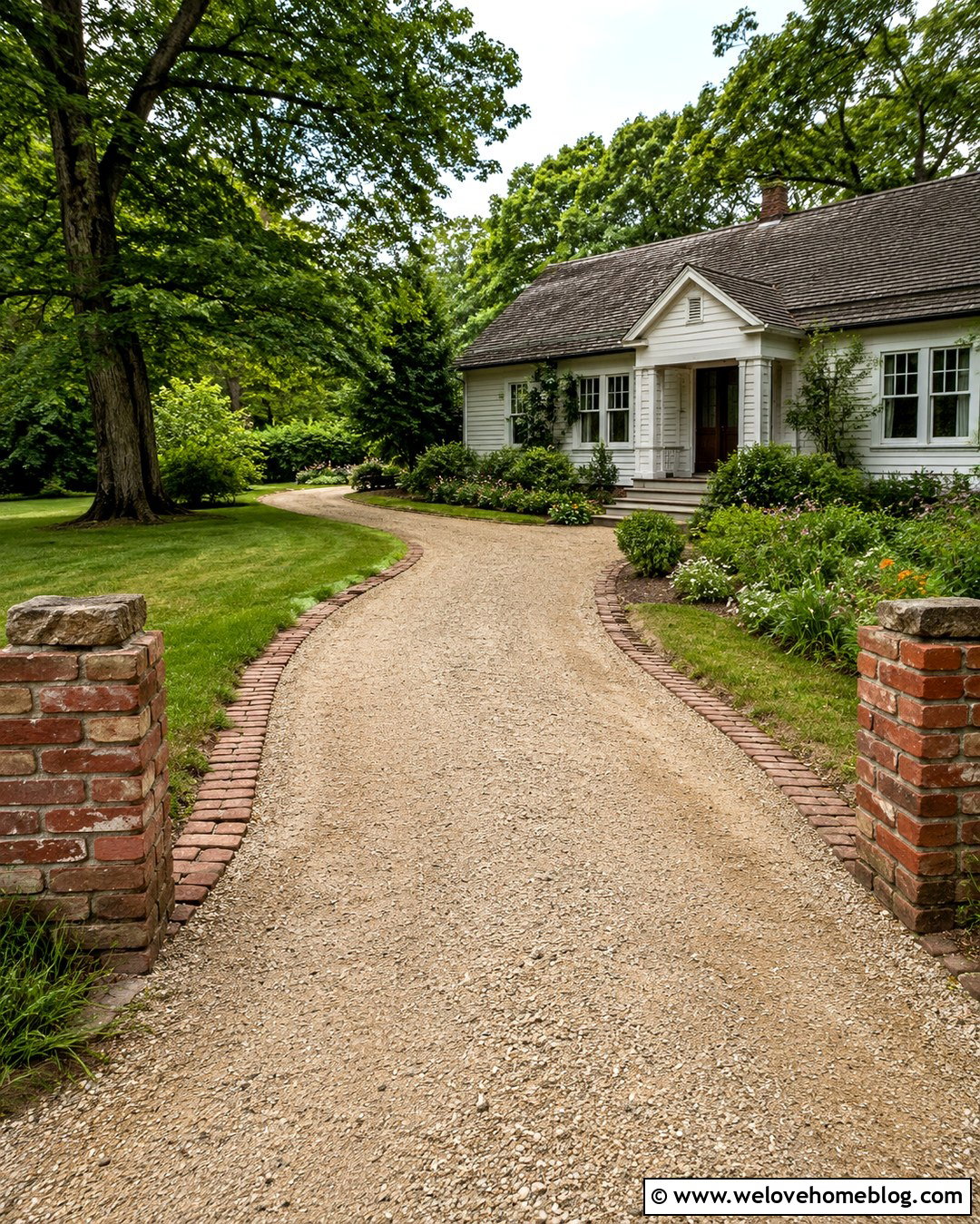
Salvaged brick can create an affordable border with more personality than a perfectly uniform new product. Use it beside an existing gravel, asphalt, or plain concrete driveway rather than replacing the entire surface. Sort the bricks into similar thicknesses, remove unstable pieces, and test a short section before completing the full border. Laying the bricks flat in a running line generally requires fewer materials than building a wide band. Mixed red and brown tones look natural beside tan gravel, informal lawn, and cottage-style planting beds. Reserve the best bricks for visible entrance areas and place more weathered pieces farther up the drive. Savings should not come at the expense of the foundation. A compacted base and reliable outer restraint help the reused border remain straight, level, and attractive over time.
Conclusion:
The best brick border should complement the driveway surface, house architecture, yard size, and level of maintenance you prefer. Red clay brick brings warmth to asphalt and concrete, while charcoal brick creates a sharper contemporary contrast. Raised borders are useful for containing gravel, whereas flush brick edging works well near lawns, snow-removal routes, and narrow driving lanes. Curves, aprons, matching walkways, and coordinated planting beds can turn a basic border into a complete front-yard design. Before installation, consider drainage, vehicle loading, base preparation, brick durability, and local requirements. Use these 20 driveway brick edging ideas to create an entrance that looks polished, practical, and naturally connected to your home.

Related posts:
Leave a Reply