
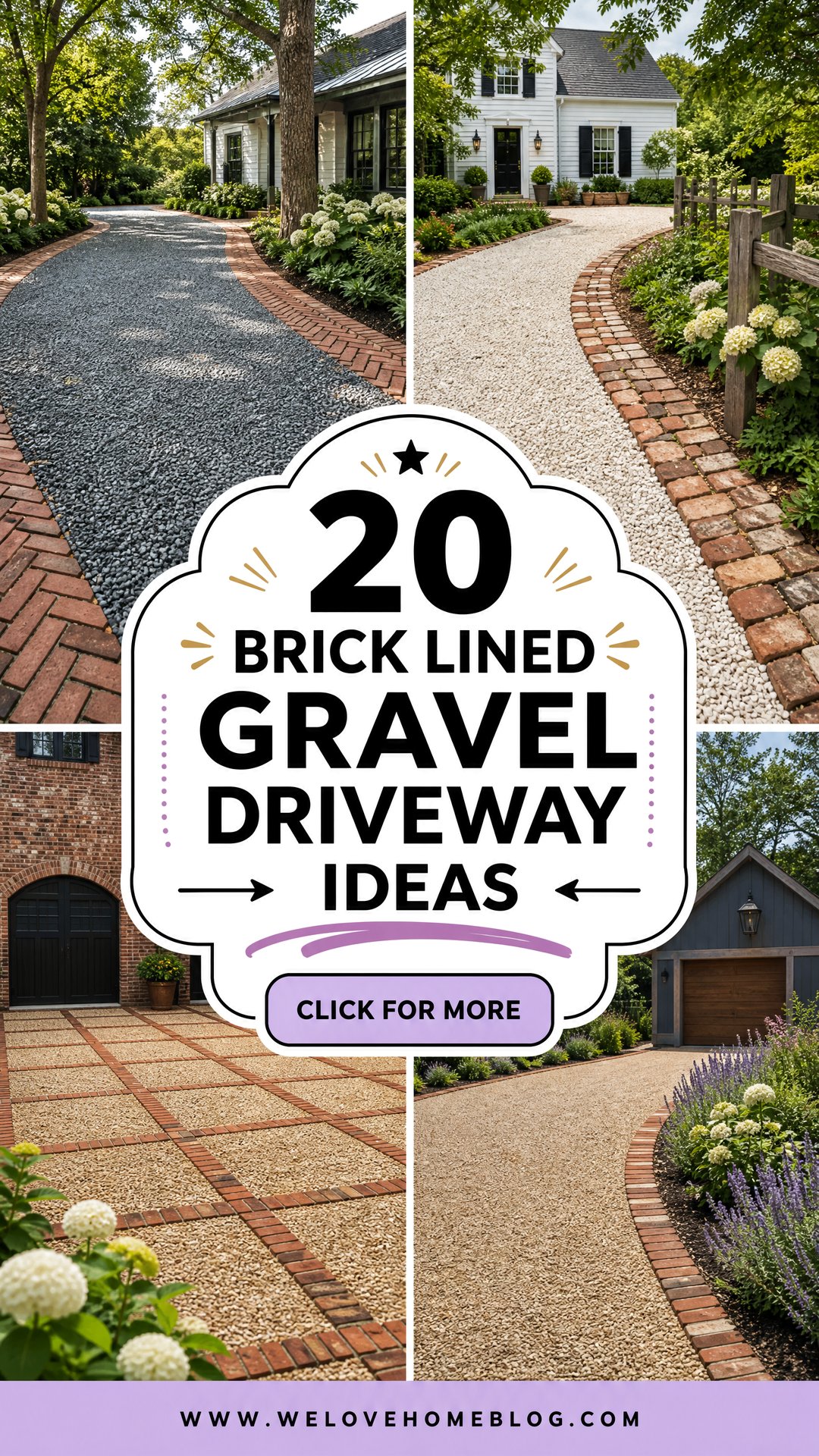
A brick-lined gravel driveway combines the relaxed texture of loose stone with the crisp structure of masonry. Brick edging helps contain displaced gravel while creating a finished transition to lawns, planting beds, walkways, and paved streets. () The pairing also offers plenty of design flexibility. Warm red brick can bring character to a cottage entrance, while charcoal brick and gray gravel can complement a modern home. Shape matters too. Straight layouts feel orderly, curved approaches soften large yards, and circular driveways create a more formal arrival. The following complete designs explore practical combinations of gravel color, brick pattern, landscaping, and house style to inspire your own 20 Brick Lined Gravel Driveway Ideas.
1. Pea Gravel Driveway With Red Brick Border
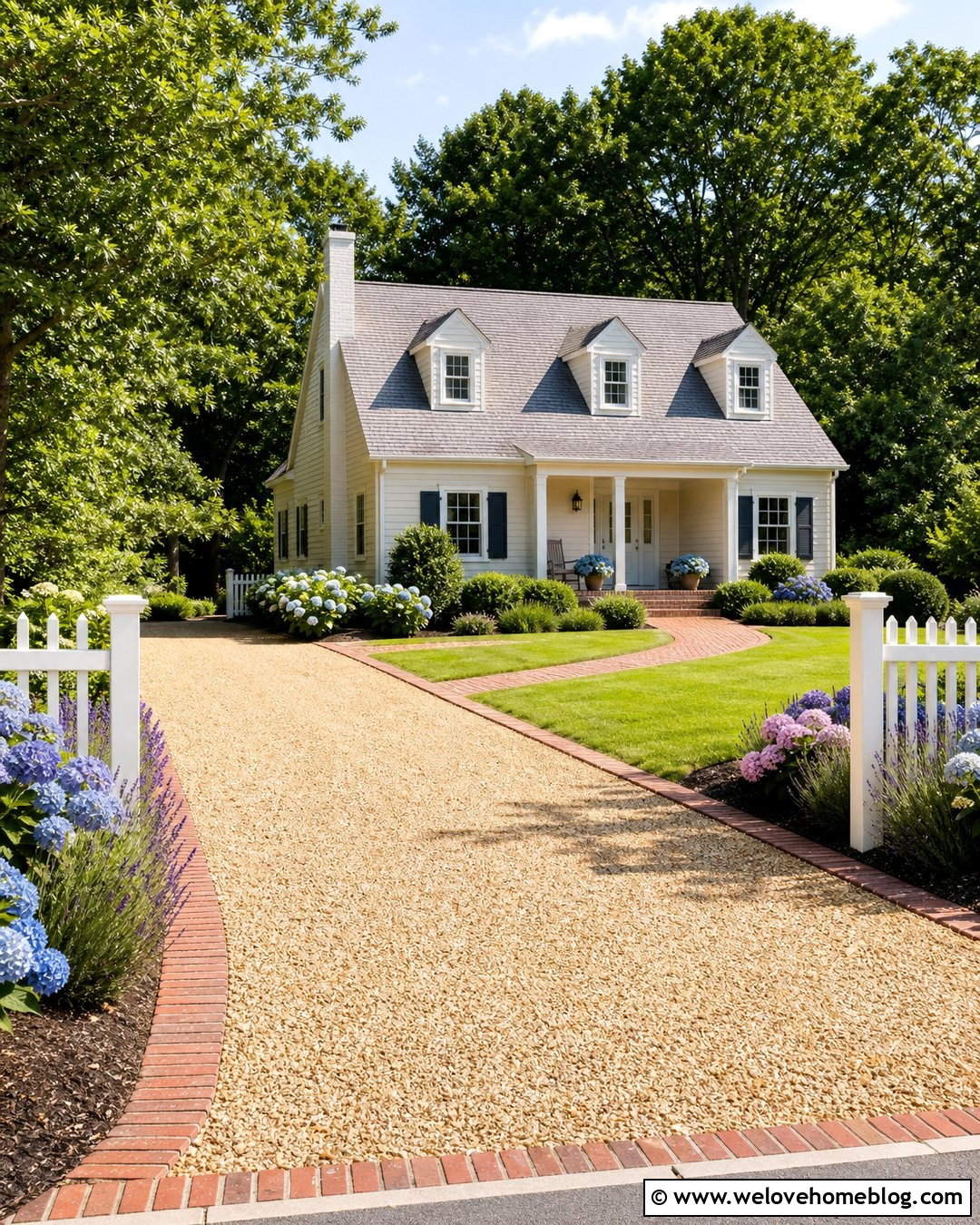
Smooth pea gravel and traditional red brick create a welcoming driveway that suits cottages, Cape Cod homes, and casual suburban properties. Choose warm beige or light brown pea gravel to soften the stronger color of the masonry. Install the bricks in a flush running-bond border so tires can cross the edge without catching on a raised corner. A straight driveway keeps the look simple, while curved planting beds add movement around it. Lavender, catmint, hydrangeas, or compact boxwoods can frame the entrance without hiding the brickwork. Connect the driveway to the front door with a matching brick walkway. This repeated material makes the entire front yard feel coordinated rather than assembled from unrelated surfaces.
2. Gray Gravel Driveway With Herringbone Brick Edging
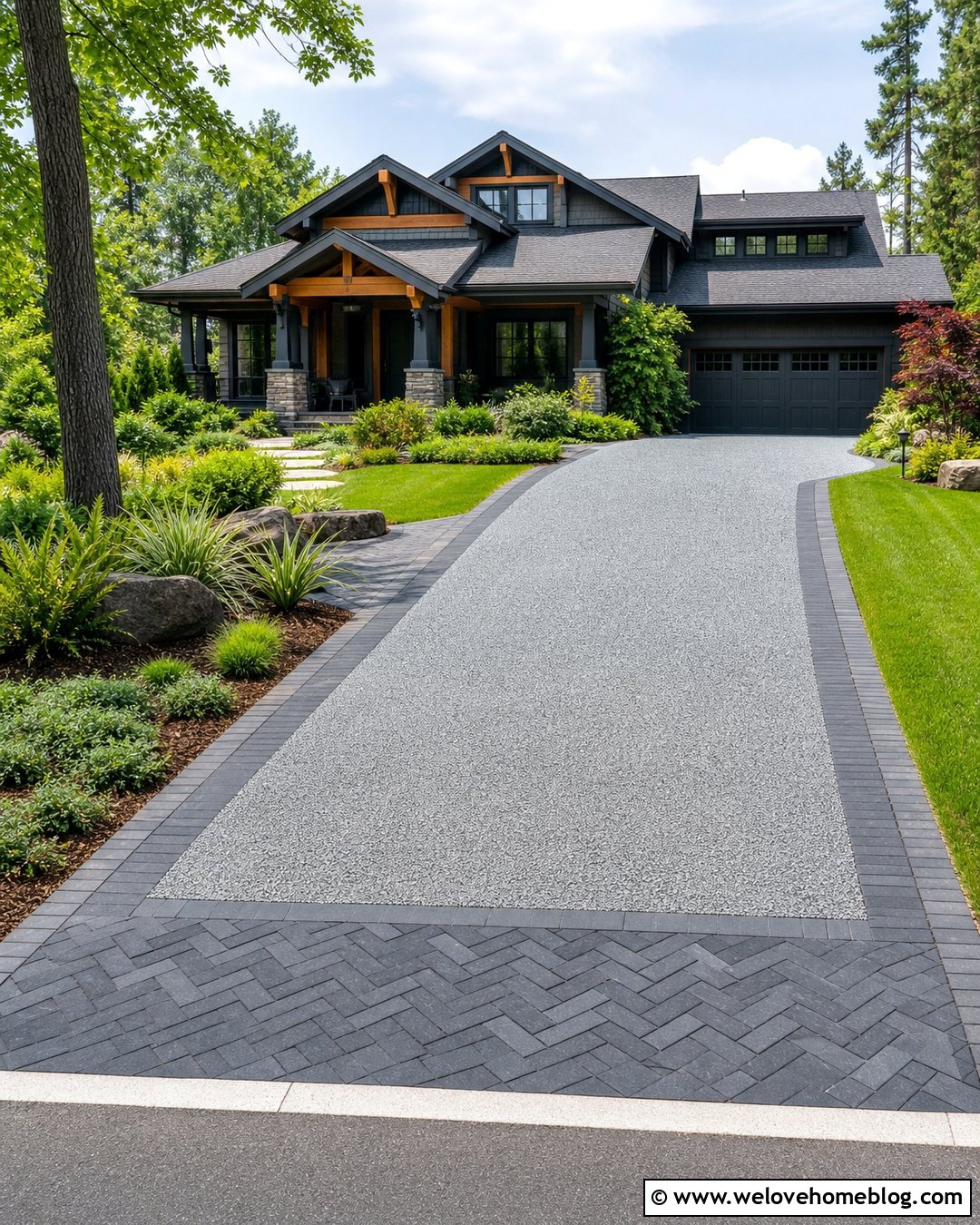
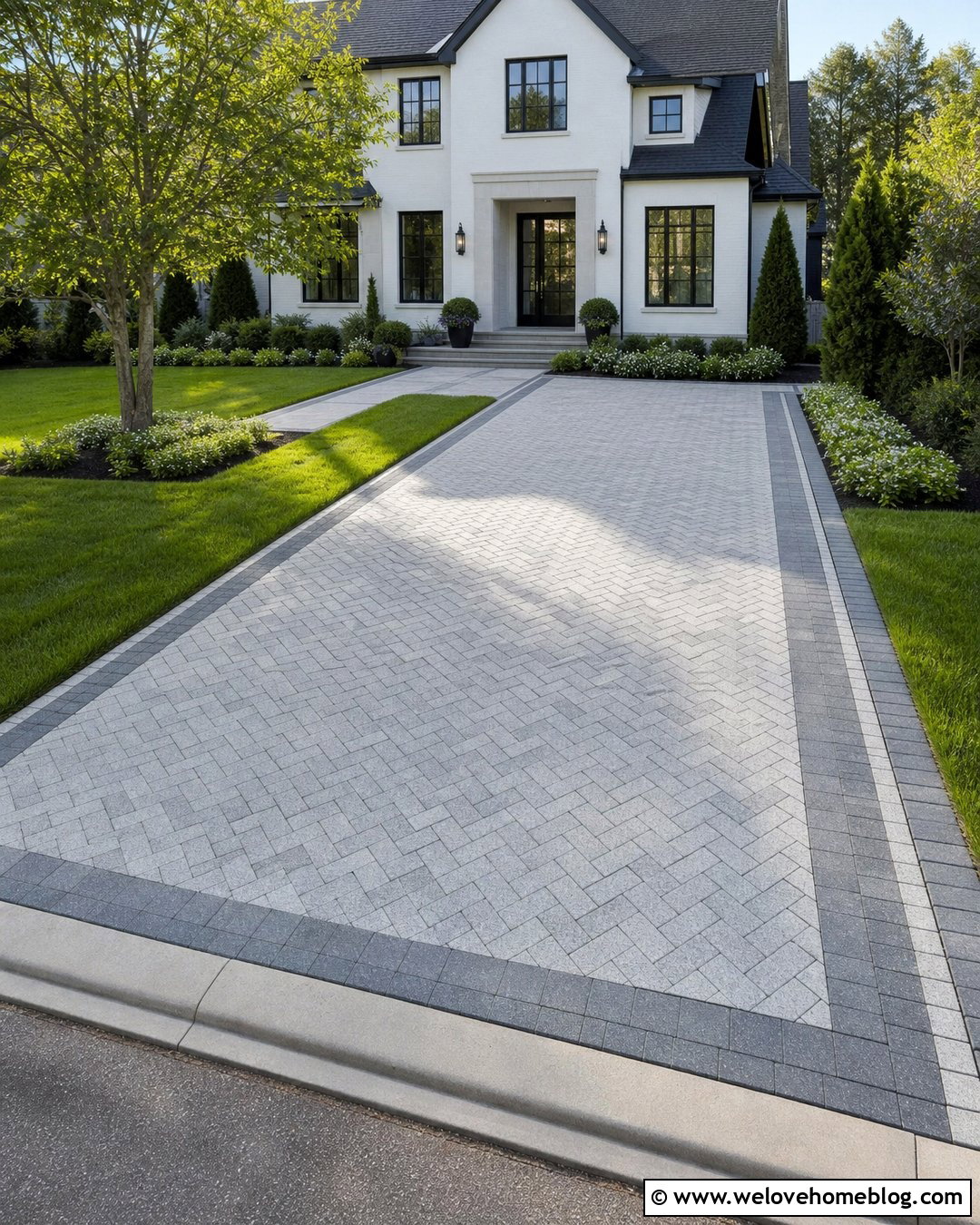
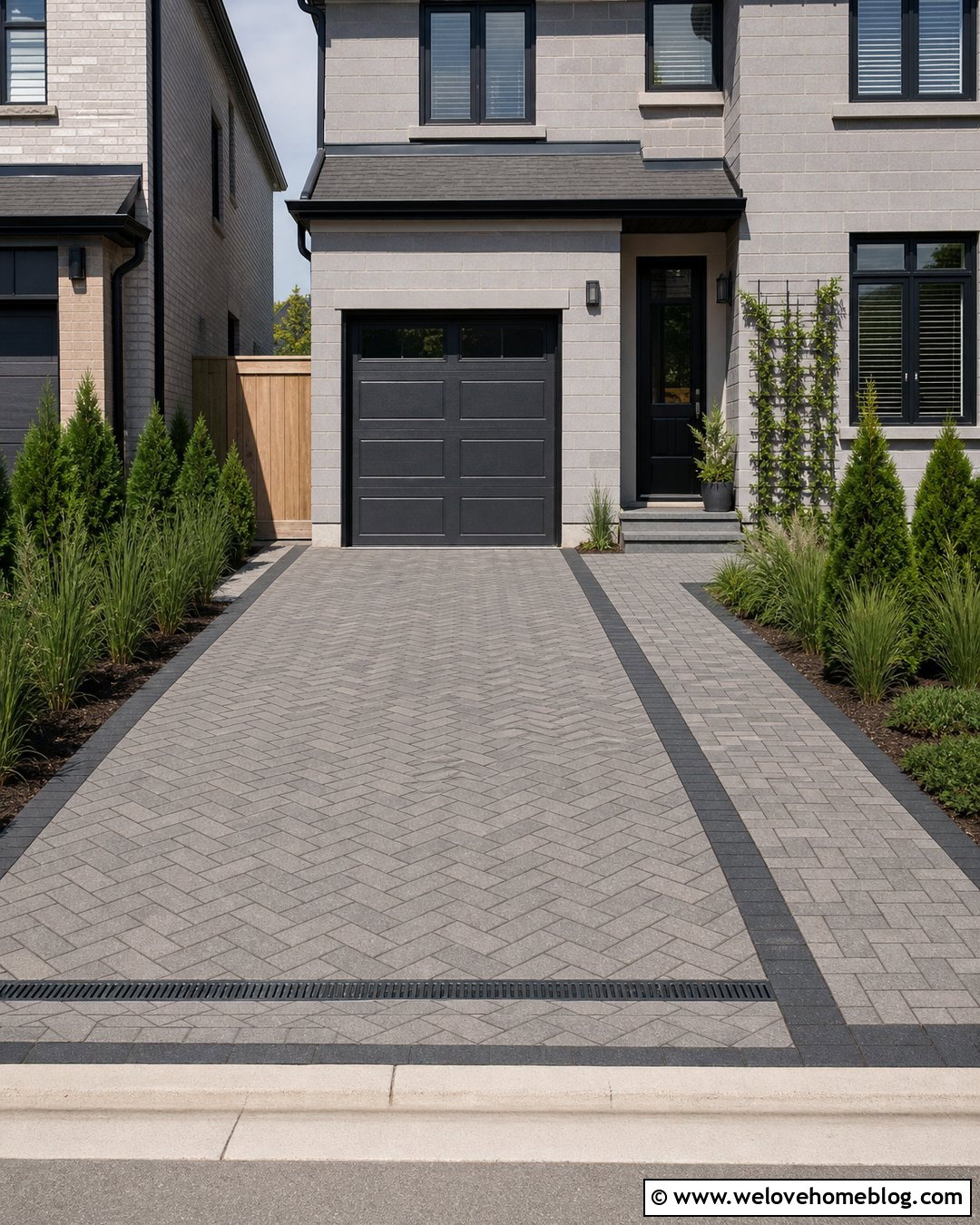
A gray gravel driveway gains extra definition when bordered by charcoal brick laid in a narrow herringbone pattern. This combination works especially well with Craftsman homes, gray siding, dark roofs, and black exterior trim. Use angular crushed granite rather than rounded stone if you want a firmer driving surface and a sharper appearance. Keep the driveway straight or give it one gentle bend toward the garage. Deep green foundation shrubs, ornamental grasses, and a clean lawn provide enough color without making the entrance busy. At the street, widen the brick edging into a small apron. The additional brick creates a stronger threshold and protects the most heavily traveled transition between the gravel driveway and paved road.
3. White Gravel Driveway With Reclaimed Brick Border
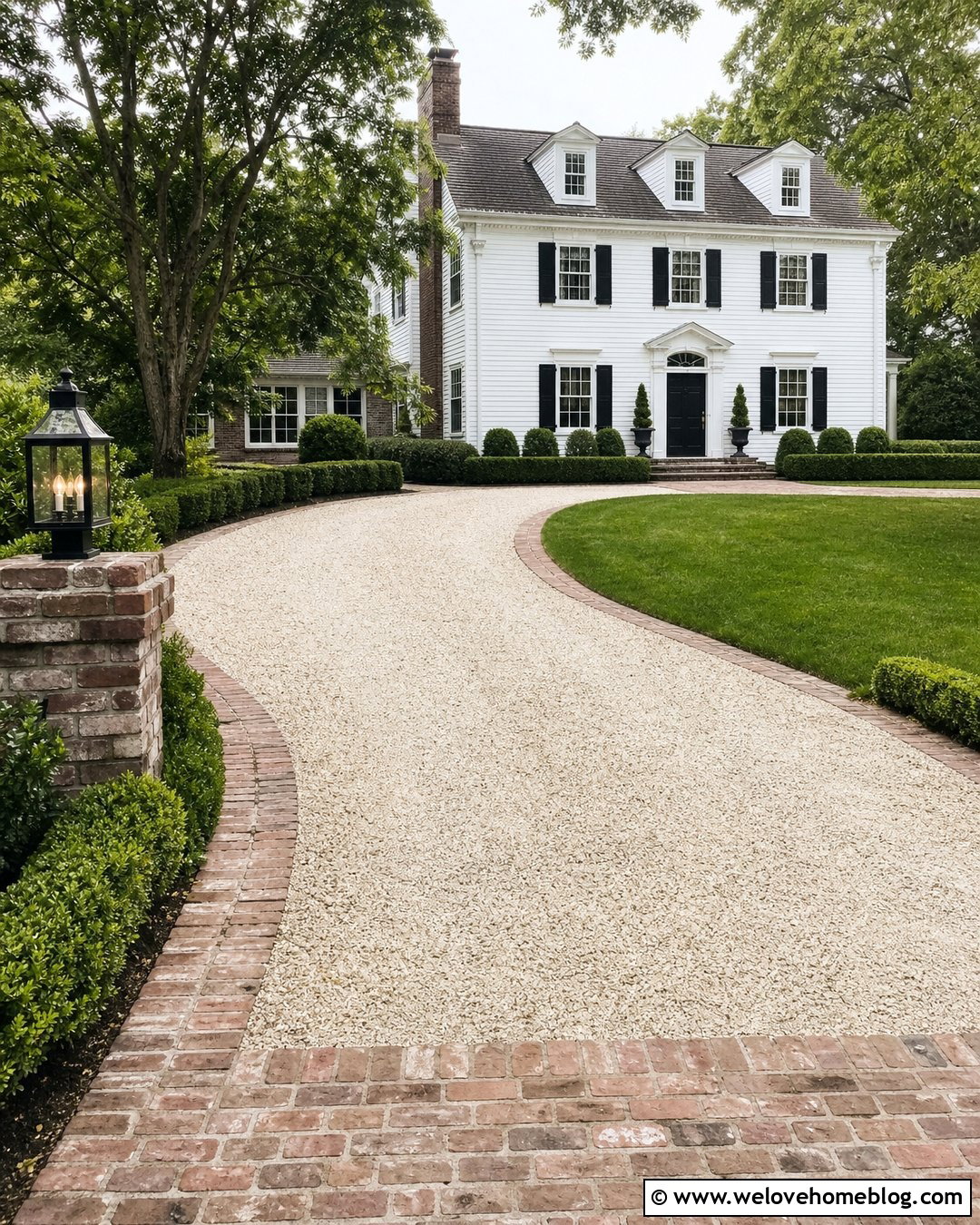
Bright white gravel paired with weathered reclaimed brick can make a traditional home feel lighter without removing its historic character. The aged bricks bring irregular color, softened edges, and an established look that new masonry may not provide. Use them around a wide, gently curved driveway leading to a colonial, Georgian, or painted-brick house. Cream gravel, white marble chips, or pale limestone can create the light surface, although very bright stone may require occasional cleaning. Frame the drive with clipped hedges, mature shade trees, and simple lawn panels. A reclaimed-brick walkway leading from the parking area to the porch completes the design. Keep the surrounding planting restrained so the contrast between pale gravel and mixed red brick remains the focal point.
4. Curved Gravel Driveway With Soldier Course Brick
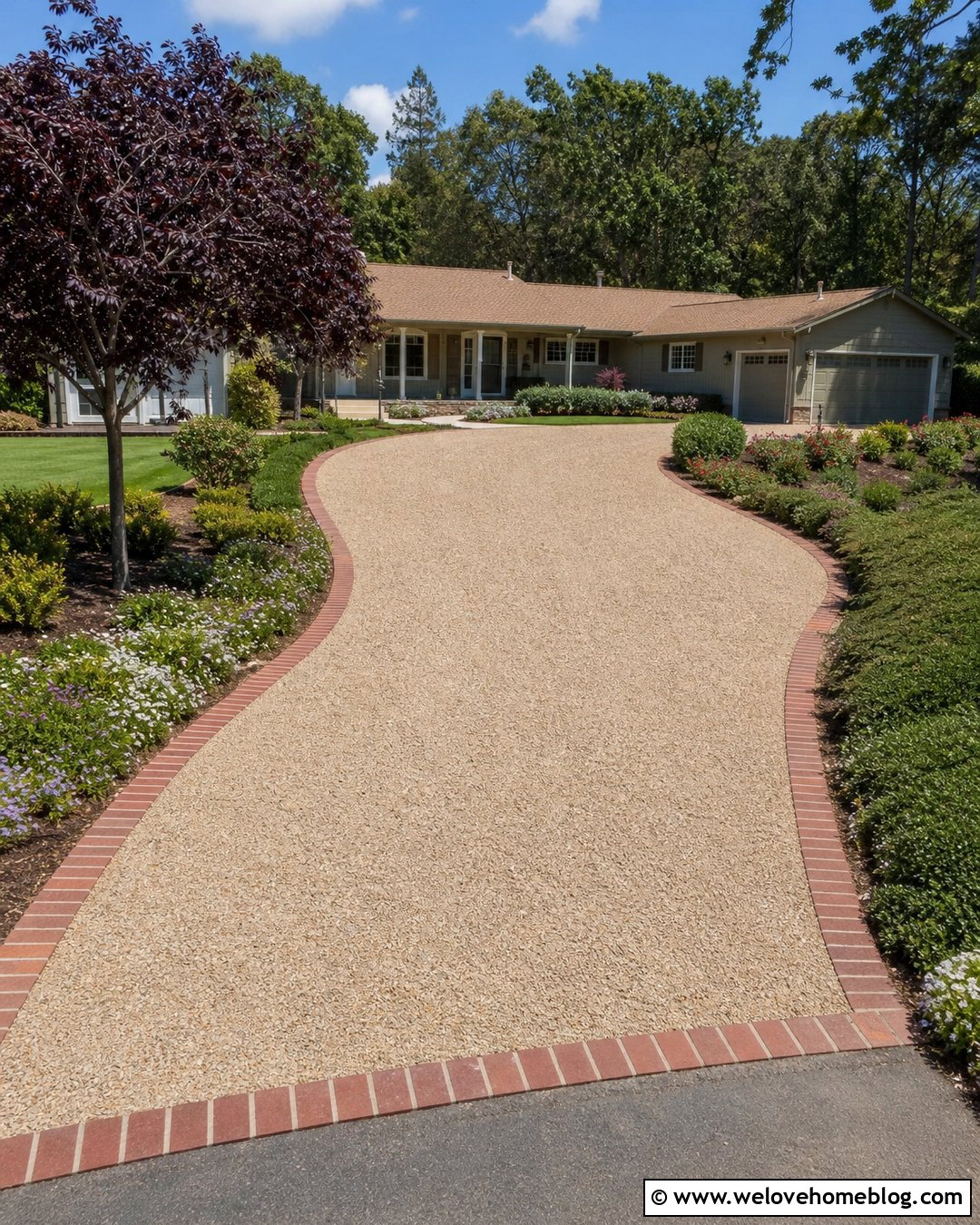
A curved driveway can make the approach feel more natural while revealing the house gradually. Define that curve with bricks installed in a soldier course, placing each brick perpendicular to the driveway edge. This arrangement forms a strong, clearly visible line around tan crushed gravel. It is particularly attractive beside a ranch house, bungalow, or low country home with warm siding. Follow the outside curve with layered landscaping, starting with low ground cover near the bricks and taller shrubs farther back. On the inside bend, use lawn or one small ornamental tree to preserve sightlines. Avoid overly tight curves that make everyday access difficult. A broad sweep looks graceful, provides easier vehicle movement, and gives the brick border room to form a smooth arc.
5. Circular Gravel Driveway With Brick Ring Border
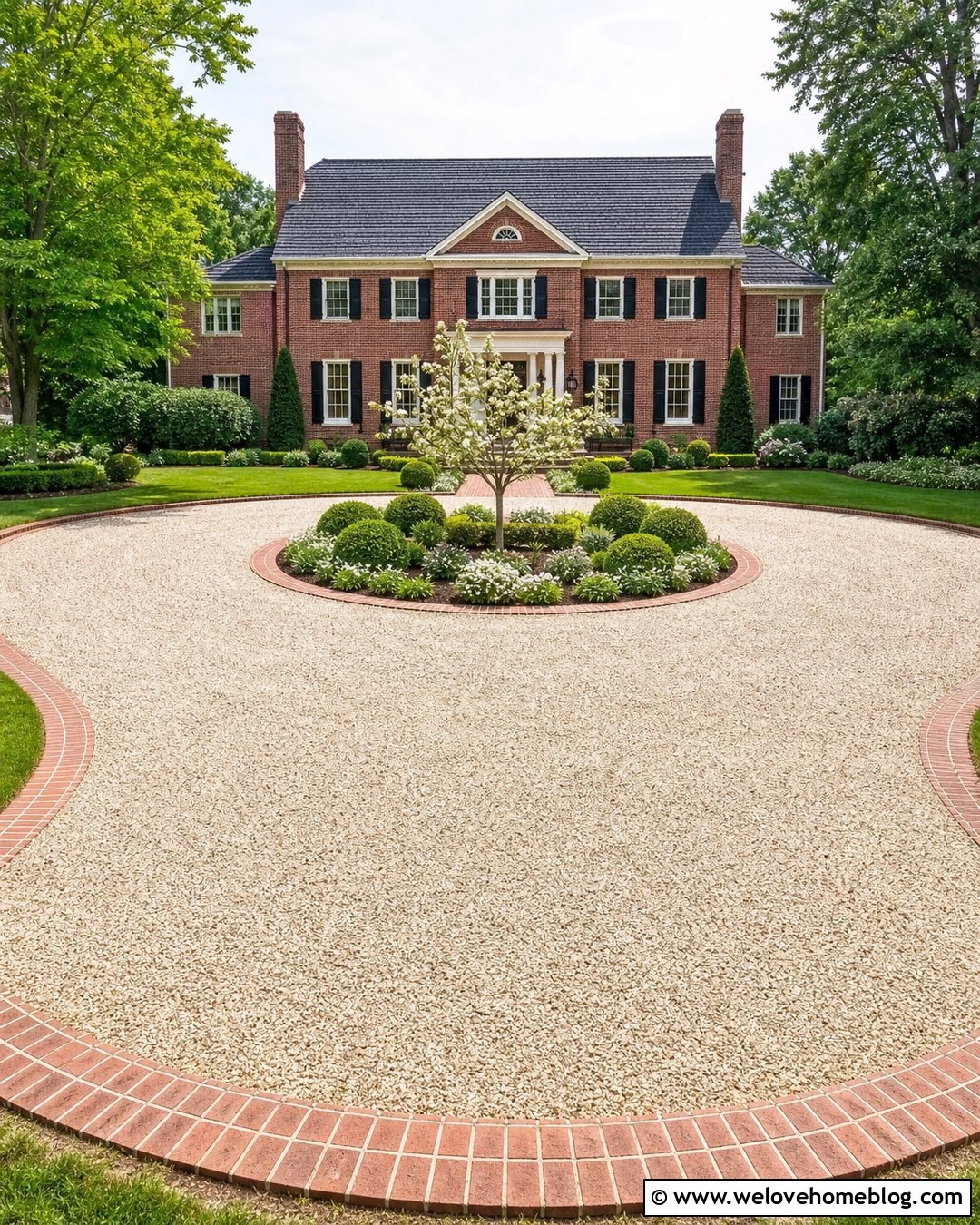
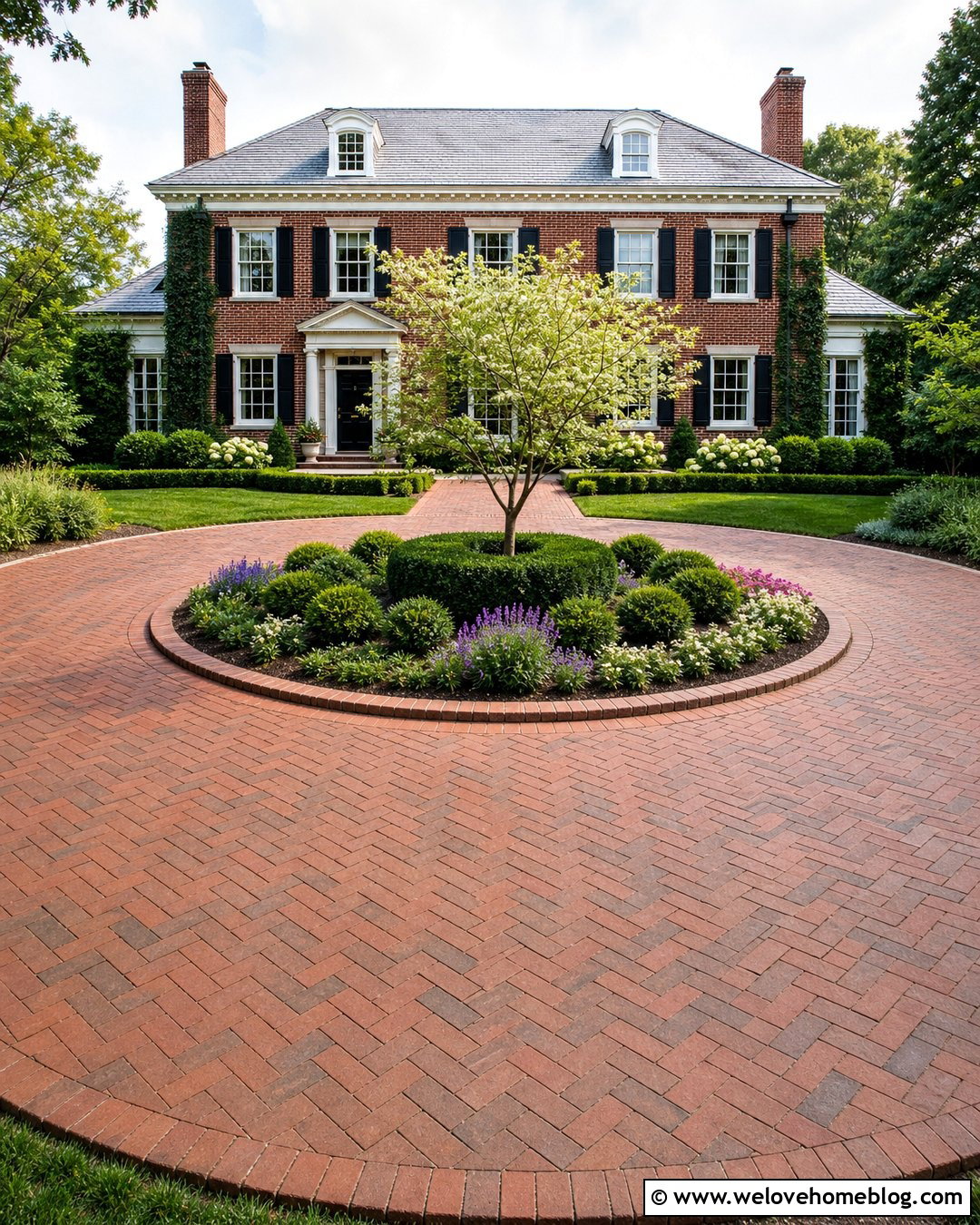
For a larger front yard, a circular gravel driveway creates convenient movement and a strong central feature. Use buff or light gray crushed gravel for the driving surface, then outline both the outside edge and center island with red clay brick. A double brick row can make the curves more noticeable and provide better visual balance across the broad layout. Fill the island with a small flowering tree, clipped evergreens, or a layered perennial bed instead of an oversized feature that blocks the house. A brick walkway can extend from the inner ring to the front entrance. This layout complements symmetrical colonial and traditional homes particularly well. Repeat the same brick around nearby beds or porch steps to connect the driveway with the architecture.
6. Long Gravel Driveway With Double Brick Border
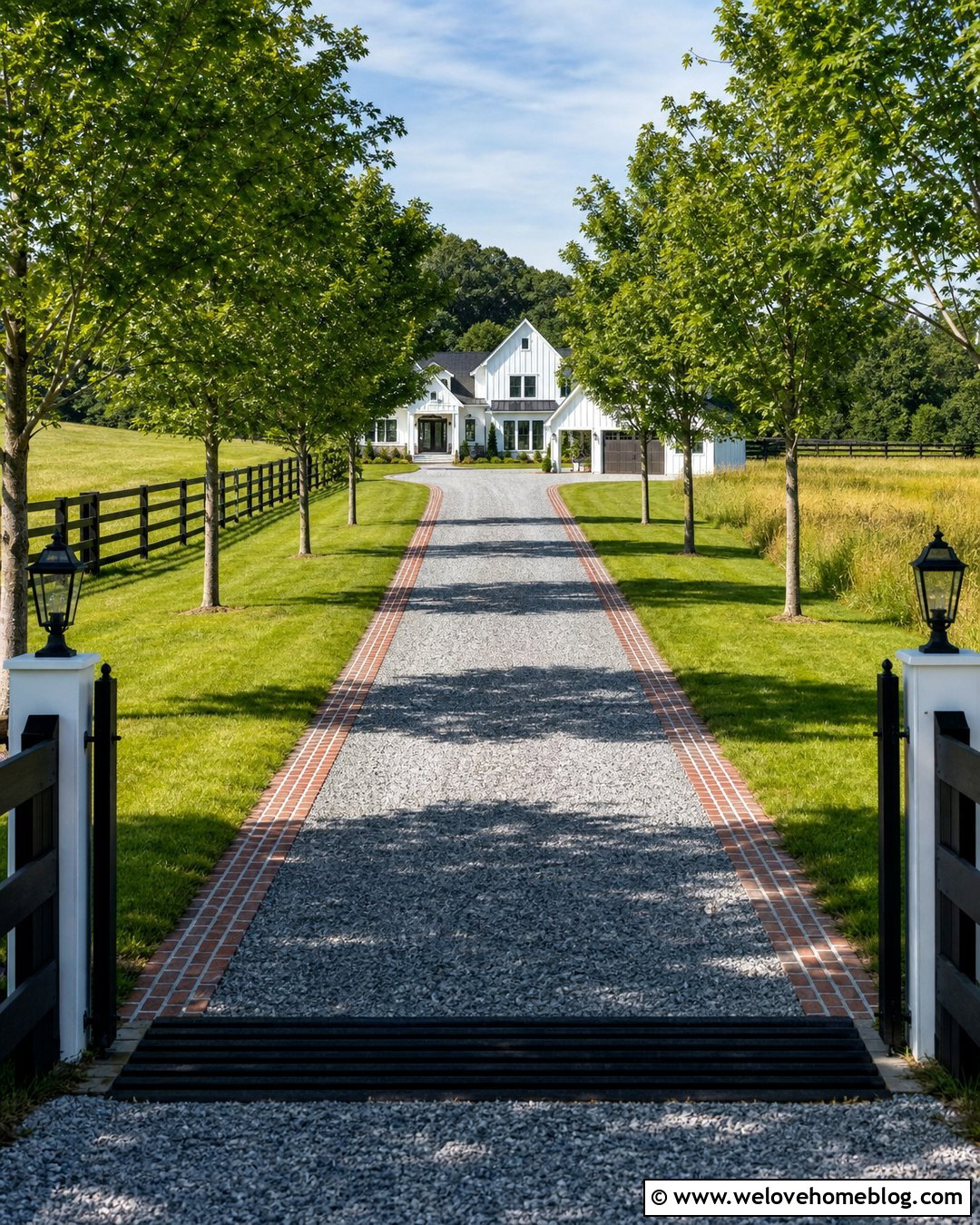
A long gravel driveway benefits from strong edges that remain visible from the street to the house. Two parallel rows of red or brown brick create a substantial border and prevent the gravel surface from visually disappearing into the surrounding yard. Fill the center with compacted gray crushed stone for an understated country look. Rows of deciduous trees can emphasize the length, while low grasses or neatly mowed lawn keep the route open and bright. Near a modern farmhouse, allow the driveway to widen into a gravel parking court with the same double border. Brick entrance markers or simple timber fencing can reinforce the rural setting. The repeated lines guide the eye forward and give an otherwise informal material a deliberate, well-planned appearance.
7. Black Gravel Driveway With Red Brick Edging
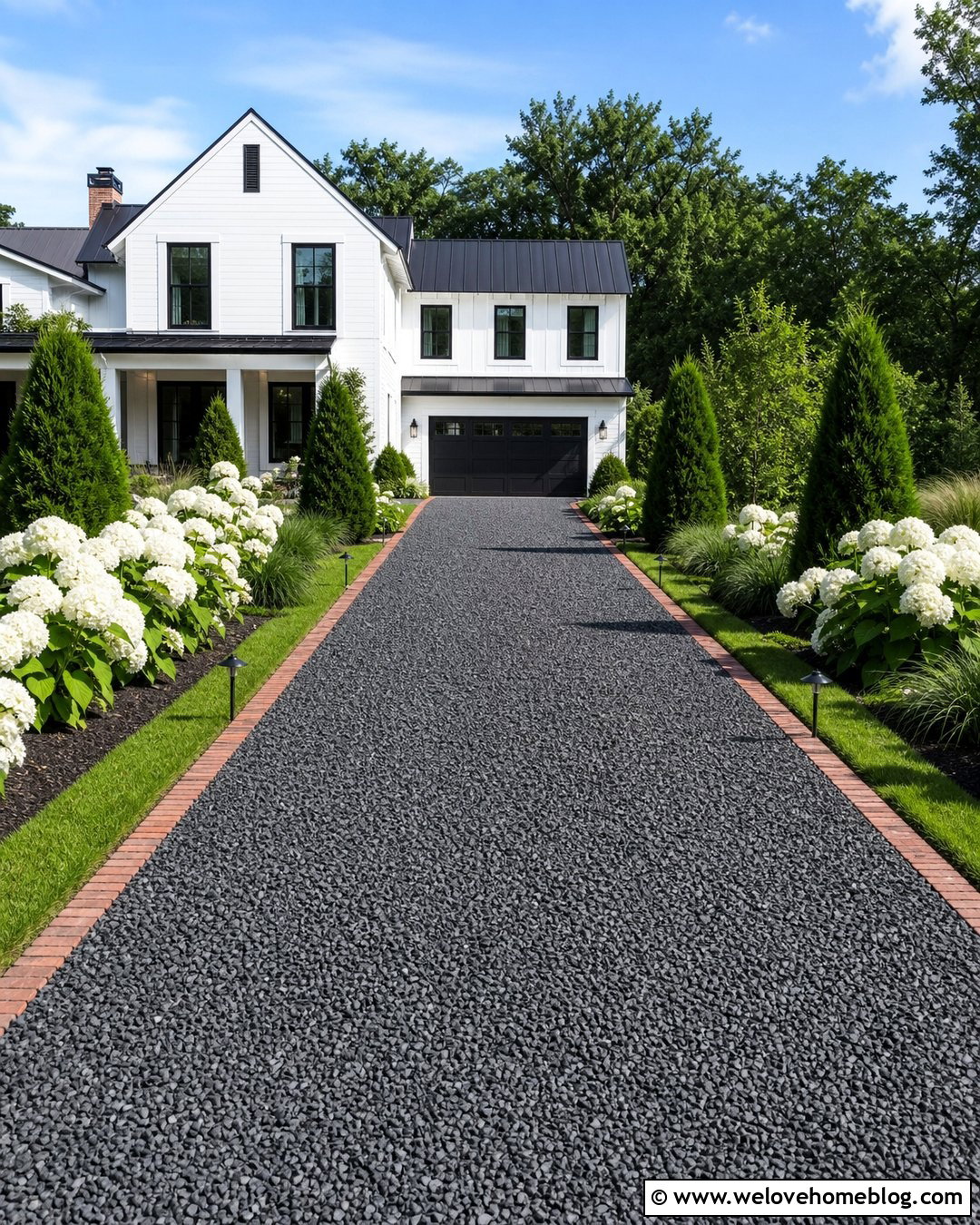
Dark gravel creates a dramatic backdrop for warm red brick, especially in front of a white modern farmhouse. Use black basalt chips or dark charcoal crushed stone to produce the deep surface color. A single flush brick border will appear clean and graphic, while a double border adds more traditional detail. Keep the driveway wide and straight so the contrasting materials form long, uninterrupted lines toward the garage. White hydrangeas, green ornamental grasses, and clipped evergreen shrubs can brighten the surrounding beds. Black metal lights placed beyond the brick edge continue the modern color palette without reducing driving space. Because very dark stone can show pale dust, selecting a locally available aggregate with natural tonal variation may give the surface a more forgiving everyday finish.
8. Small Gravel Driveway With Flush Brick Border
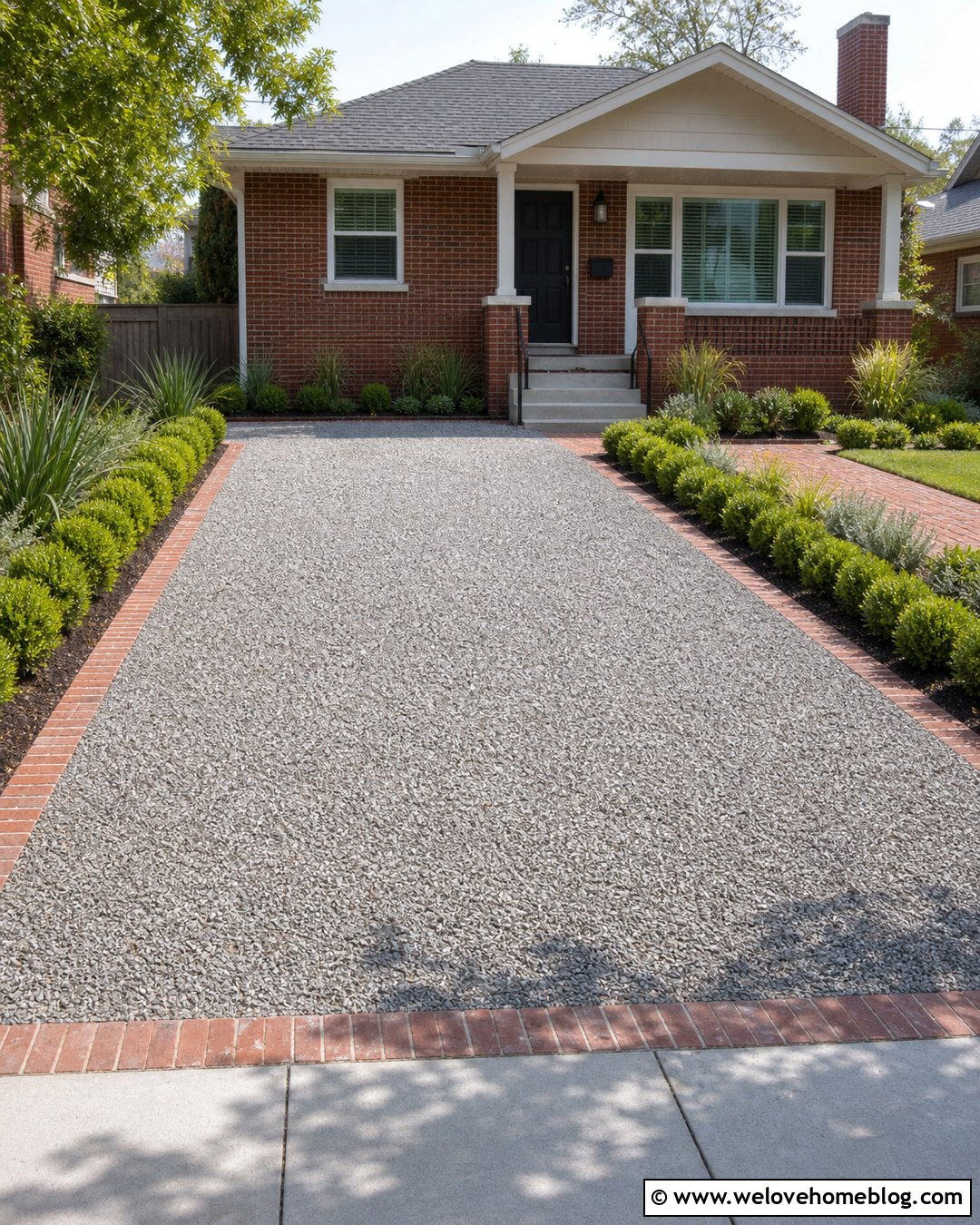
Limited front-yard space calls for a driveway that looks neat without feeling oversized. A compact rectangular driveway surfaced with small gray gravel and surrounded by one flush row of brick provides a simple solution. Choose brick that matches the house facade, porch, or existing walkway so fewer competing materials appear in the yard. Extend the border across the garage threshold and street entrance to create a complete frame. Narrow planting beds filled with dwarf shrubs, compact grasses, and low ground cover can fit between the driveway and property boundaries. If a walkway is needed, use the same brick in a slightly wider path. Keeping every edge level and clearly defined makes the small space easier to maintain while giving it a more generous, carefully organized appearance.
9. Sloped Gravel Driveway With Raised Brick Curb
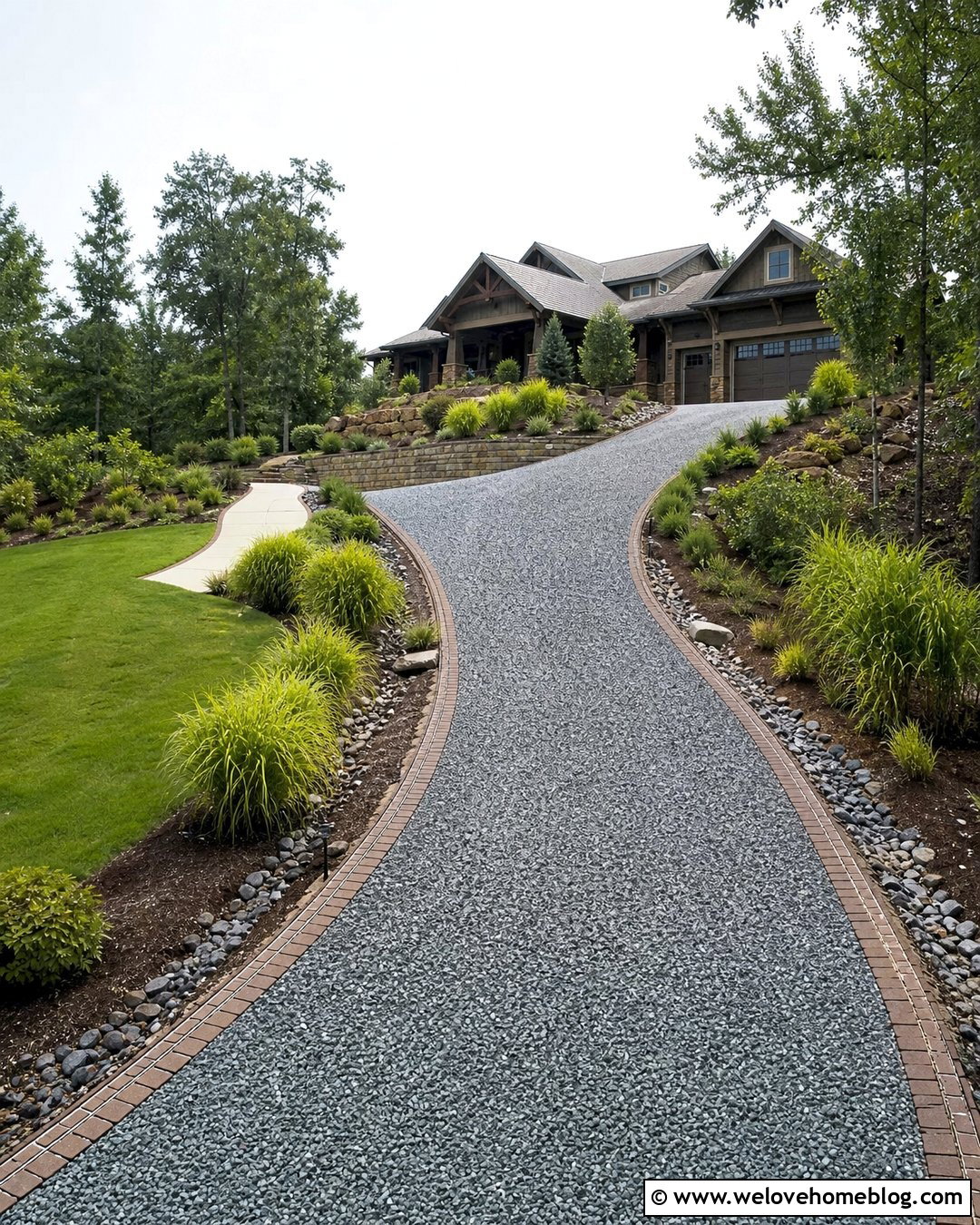
On a sloped site, a slightly raised brick curb can define the edges and help direct displaced gravel back toward the driving area. The complete design should still begin with proper grading, a stable aggregate base, and planned water movement rather than relying on the brick alone. Gravel driveways are commonly designed with a crown or controlled slope so runoff moves away from the center and nearby structures. () Use angular crushed stone for better interlock, then line the driveway with durable clay or concrete brick set on a reinforced base. Add drainage swales, moisture-tolerant grasses, or stone-lined channels outside the border where needed. A gently curving layout can slow the visual descent and blend naturally with a hillside home.
10. Horseshoe Gravel Driveway With Antique Brick
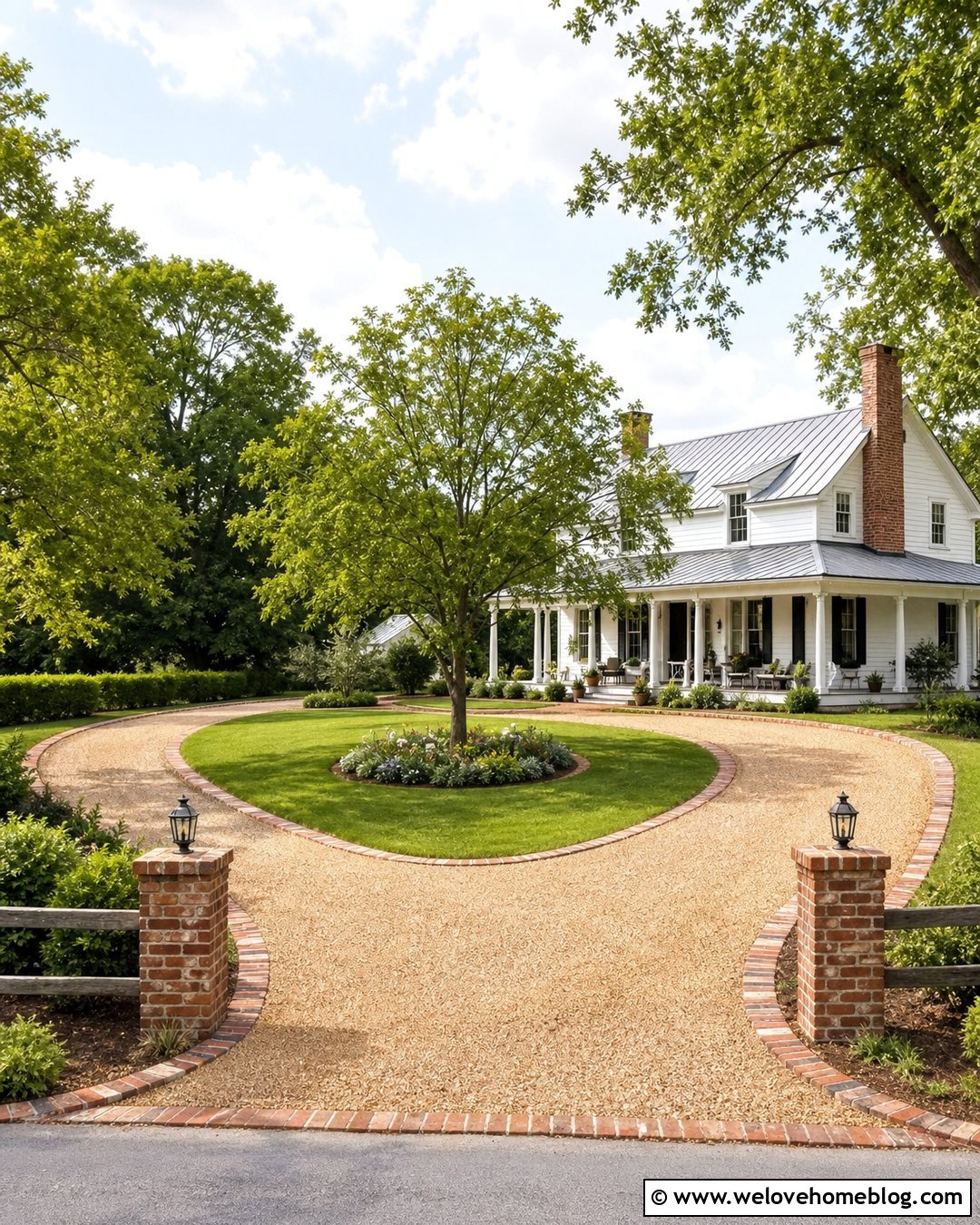
A horseshoe driveway offers two access points while creating an attractive landscape area between them. Surface the full loop with warm tan gravel and define both curves using antique-style red brick. Bricks with varied tones work well with country houses, historic farmhouses, and homes featuring natural wood details. Keep the center lawn simple, then add one specimen tree, a circular flower bed, or a low evergreen grouping. Matching brick pillars at both street entrances can make the broad layout feel unified. Where the driveway passes the front steps, widen the brick edge into a landing that connects with the walkway. The result should feel open and easy to navigate, not crowded with planting. Preserve clear views across both entrances for safer, more comfortable daily use.
11. Gravel Driveway With Brick Entrance Apron
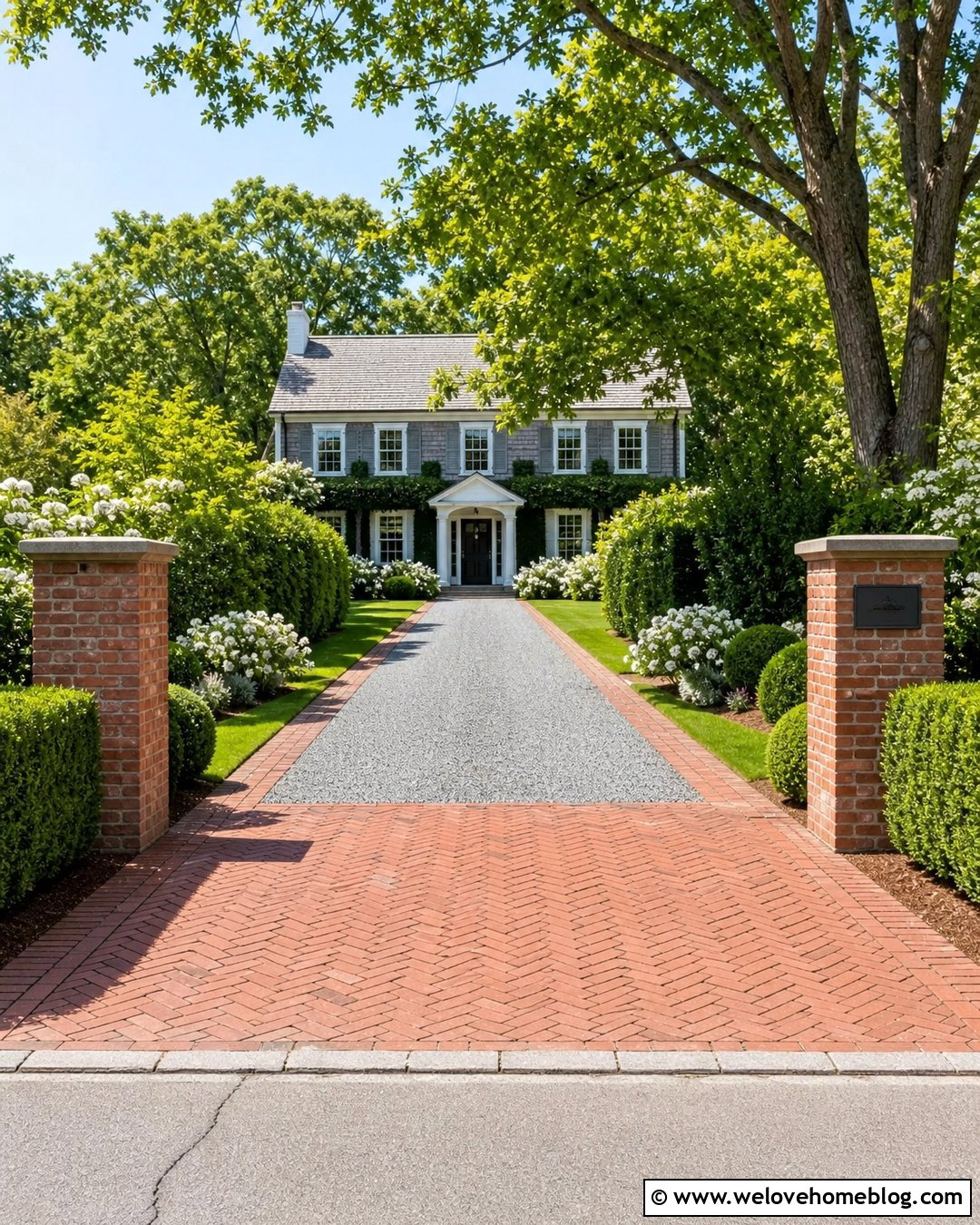
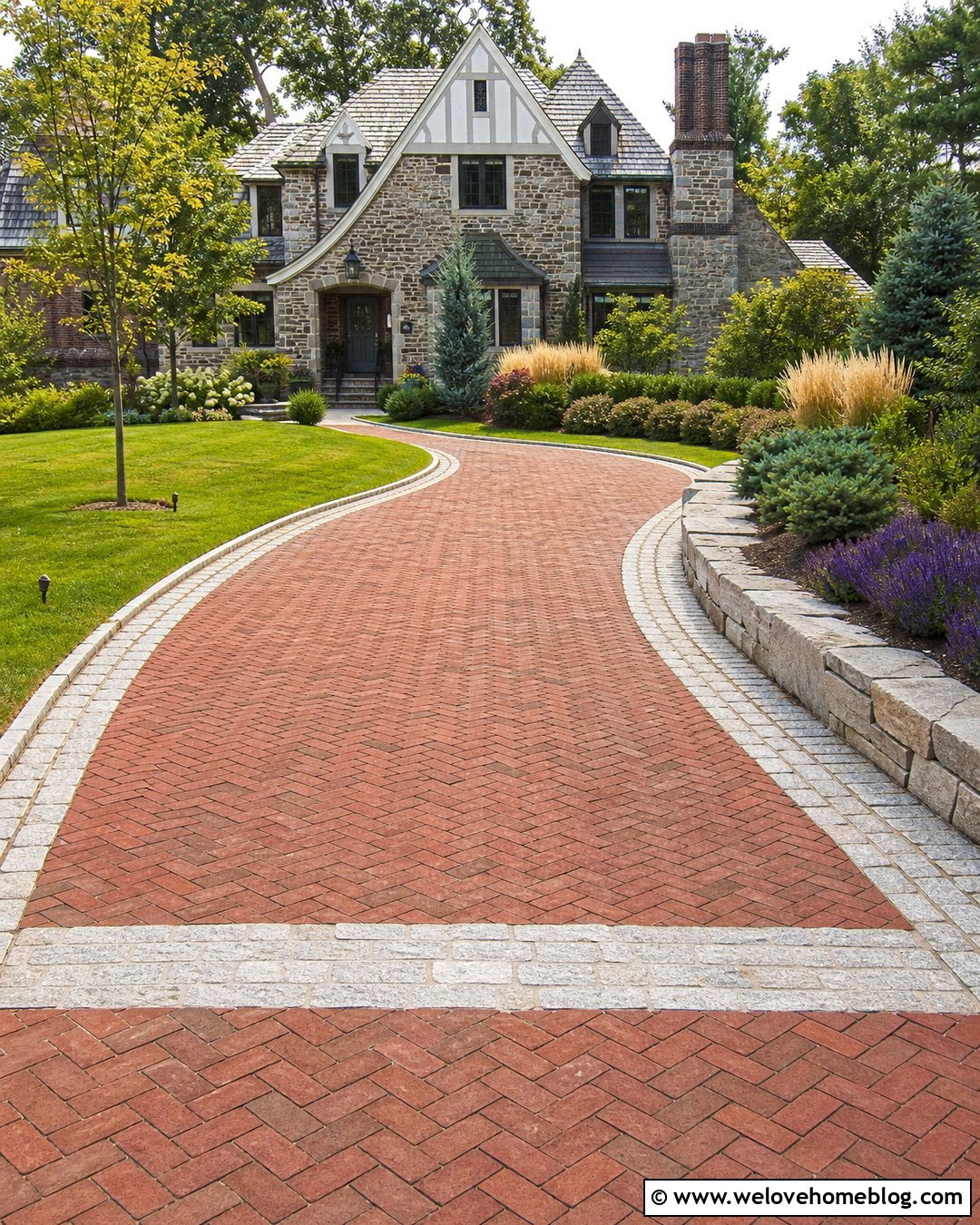
The point where gravel meets the street often receives the most turning, braking, and repeated wheel movement. A full-width brick apron creates a durable-looking transition and gives the entrance a more finished presence. Use medium gray crushed gravel throughout the driveway, then install red or brown brick pavers across the first several feet. Continue a matching single brick row along both sides to visually connect the apron with the house. This treatment works with straight, curved, and moderately sloped layouts. Brick pillars, low hedges, or an address marker can frame the opening without making it too narrow. Choose a brick pattern that complements the architecture, such as running bond for a casual home or herringbone for a more traditional, decorative entrance.
12. Gravel Driveway With Brick Tire Tracks
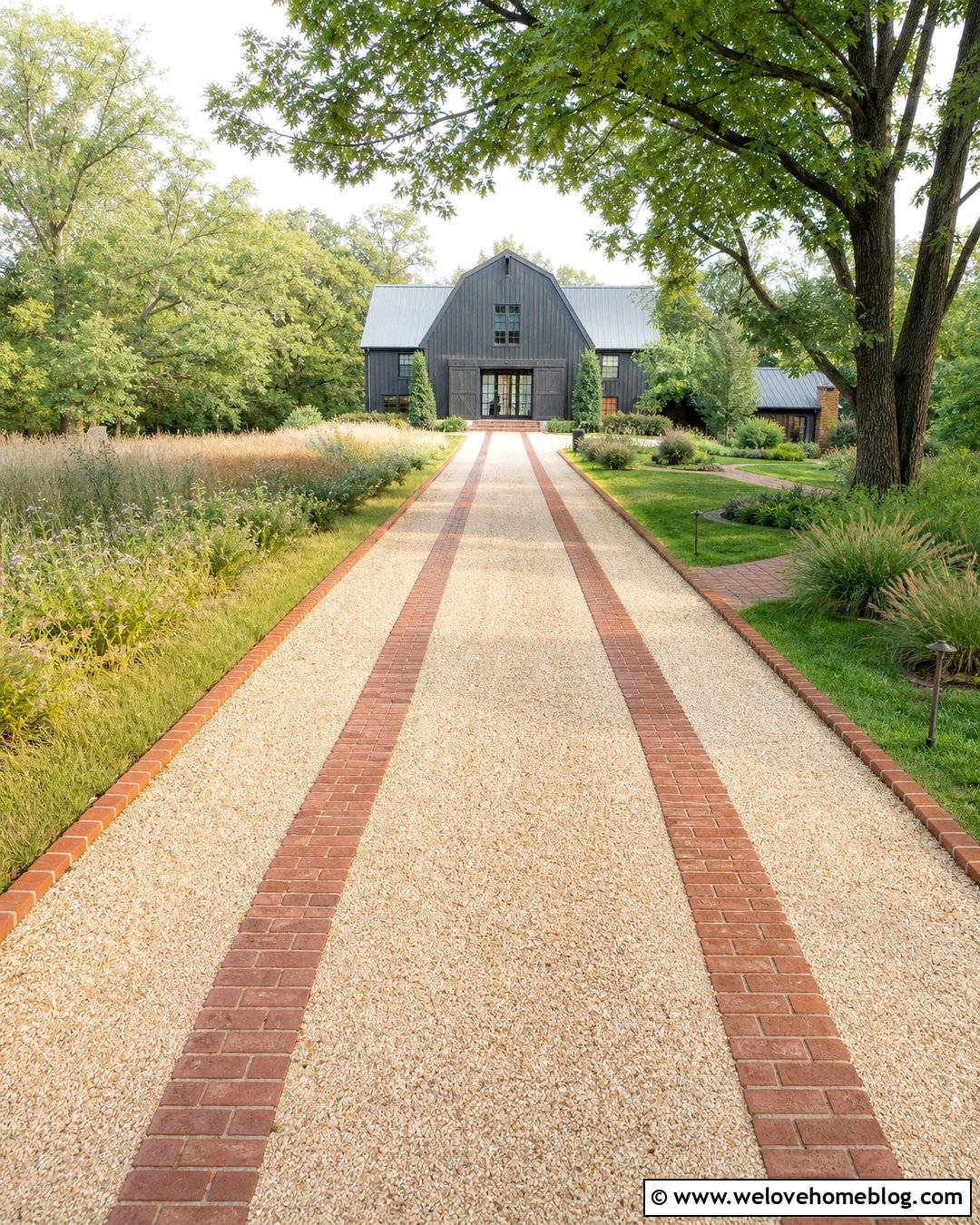
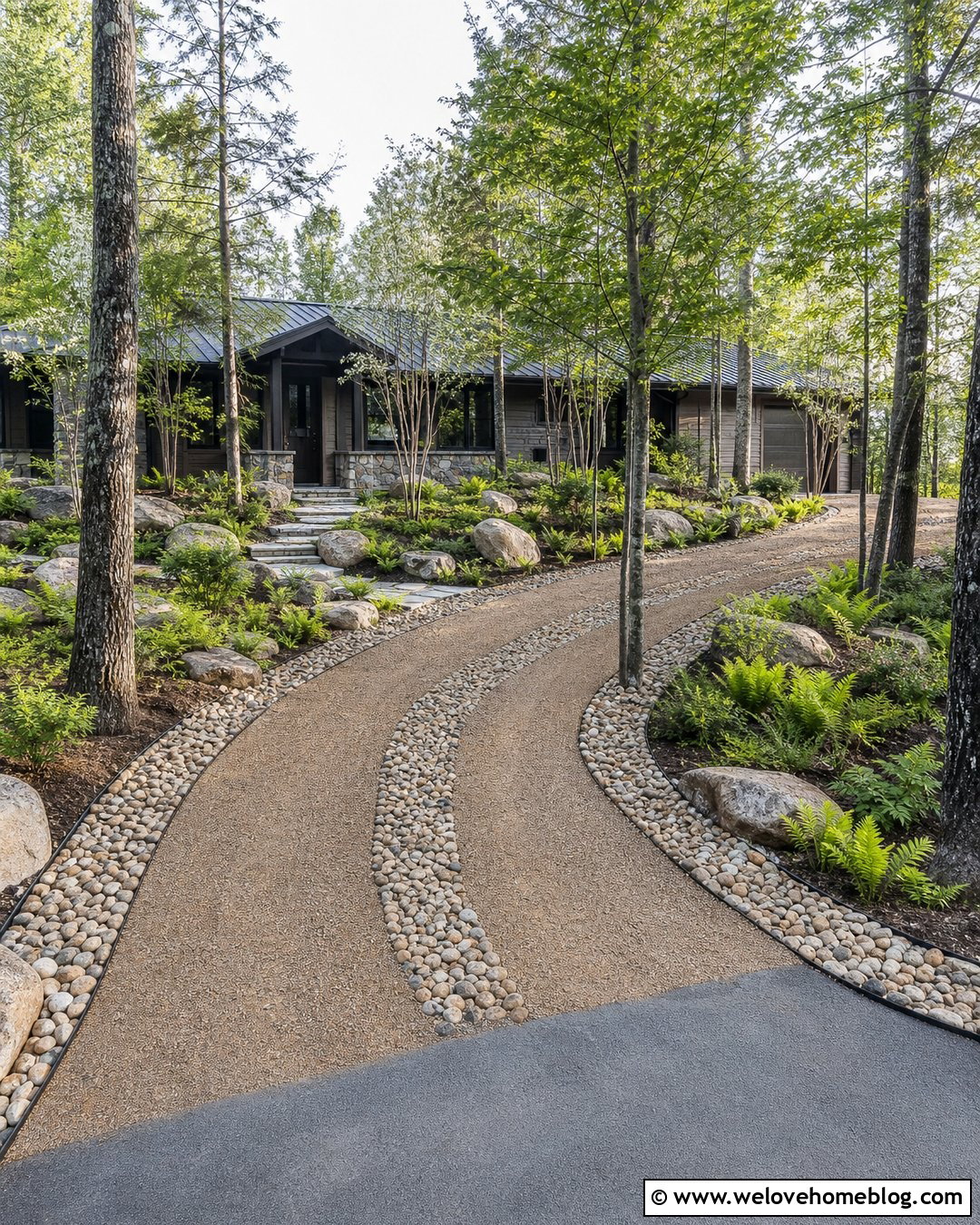
Brick tire tracks add structure to a gravel driveway while keeping loose stone as the dominant material. Create two parallel brick ribbons that follow the normal wheel path from the entrance toward the parking area. Fill the surrounding surface with compacted beige or gray gravel, then use matching brick around the outside perimeter. The ribbons should be planned carefully for comfortable vehicle alignment and supported by a properly prepared base. A straight layout usually gives the clearest result, although broad curves can also work. This combination looks especially fitting beside a renovated barn, farmhouse, or rustic contemporary home. Finish the surrounding yard with meadow grasses, low shrubs, and a brick walkway that branches toward the porch without interrupting the vehicle route.
13. Gravel Parking Court With Brick Grid
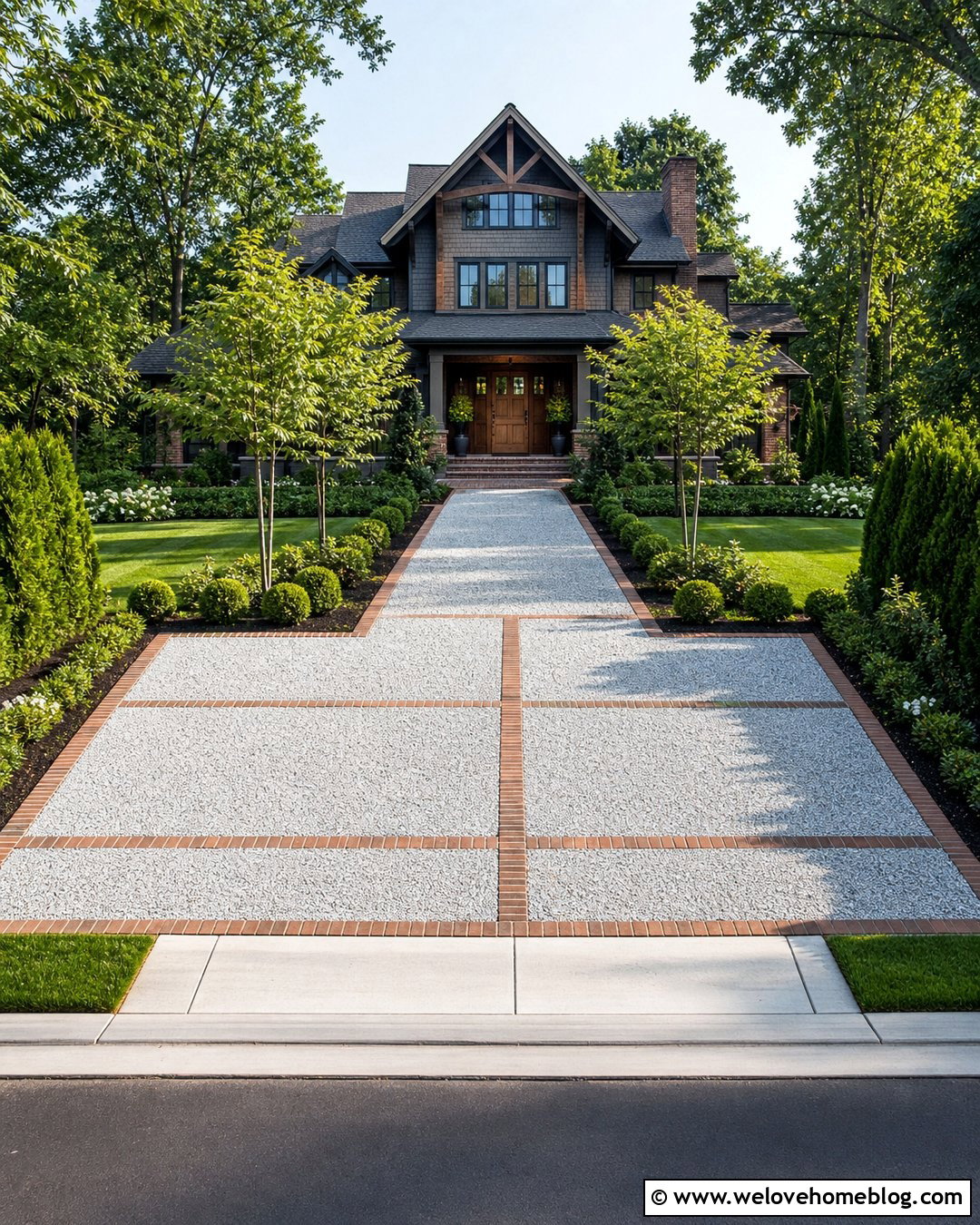
A wide parking area can look undefined when it is covered with one uninterrupted layer of gravel. Brick bands arranged in a simple grid divide the surface into clear parking bays and reduce the visual scale. Use light gray crushed stone inside each section and warm brown brick for the dividing lines and perimeter. The grid can connect to a straight brick-lined approach, creating a consistent route from the street to the house. This design is useful near larger Craftsman, colonial, or multigenerational homes where several parking spaces are needed. Frame the outer edges with evergreen shrubs and small trees, but leave the interior free from obstacles. A contrasting brick walkway can lead visitors from the parking court to the front entrance without crossing unpredictable driving areas.
14. Gravel Driveway With Matching Brick Walkway
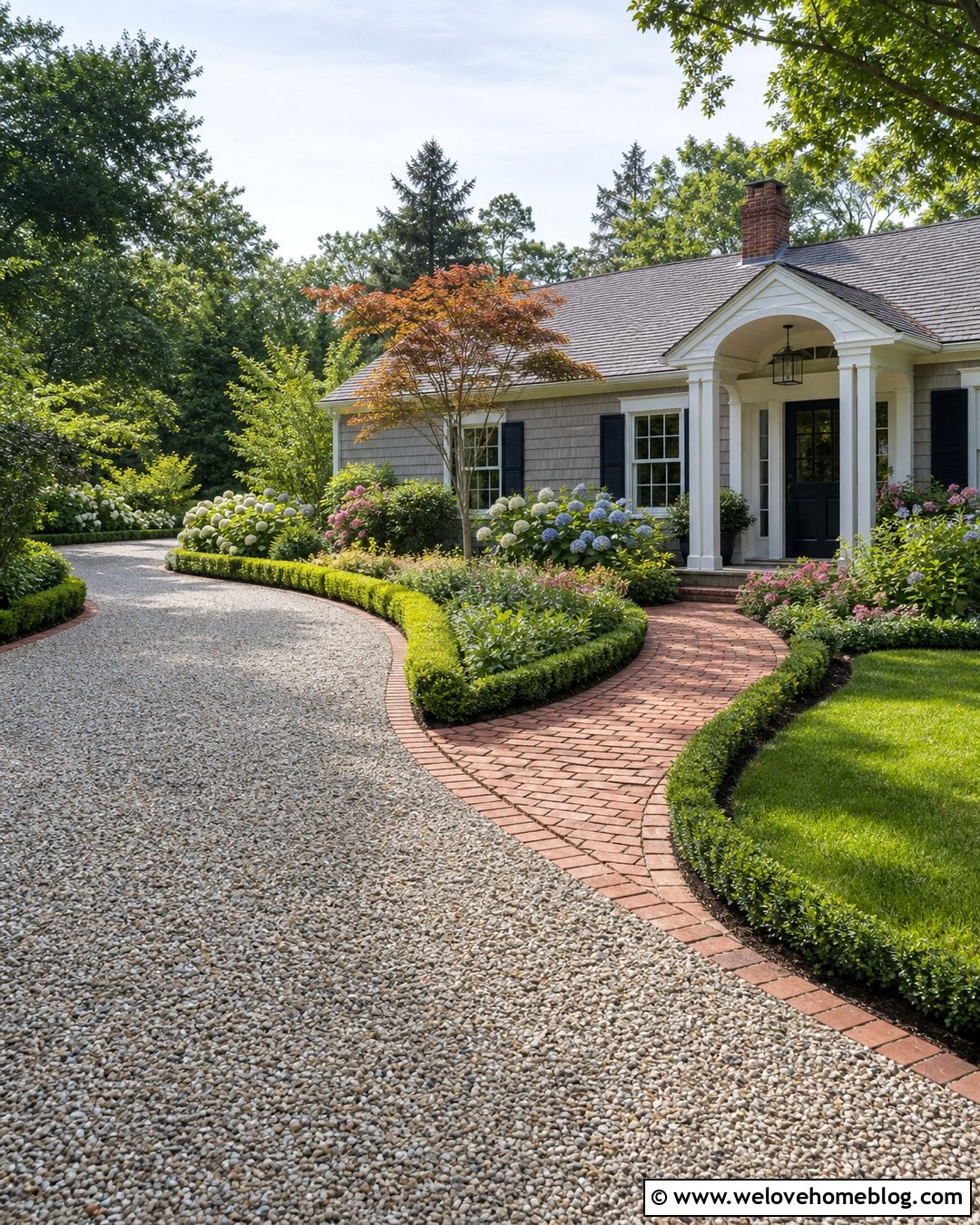
Repeating the driveway border in the front walkway is one of the easiest ways to create a coordinated exterior. Begin with a warm gray gravel driveway lined by traditional red brick. Near the main parking area, widen the brick border into a clear walkway leading directly to the porch. The path can be solid brick or gravel with brick edging, depending on the desired maintenance level and visual weight. Use a gentle curve where the walkway separates from the driveway to avoid an abrupt intersection. Cottage gardens, boxwood borders, or layered perennial beds can frame the pedestrian route. This complete layout works across many house styles because the repeated brick establishes continuity between the street, driveway, landscape, front steps, and building facade.
15. Gravel Driveway With Brick Pillars And Gate
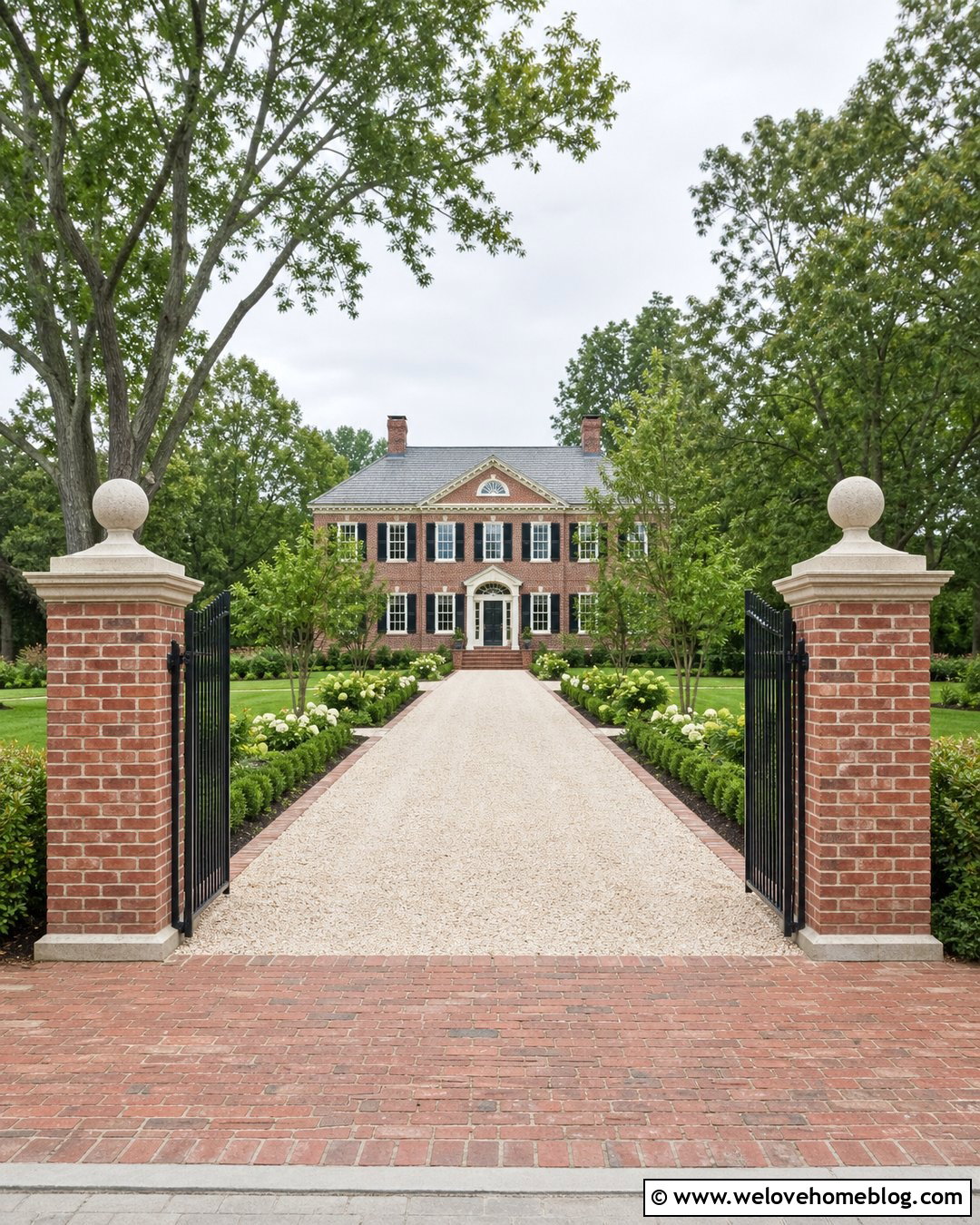
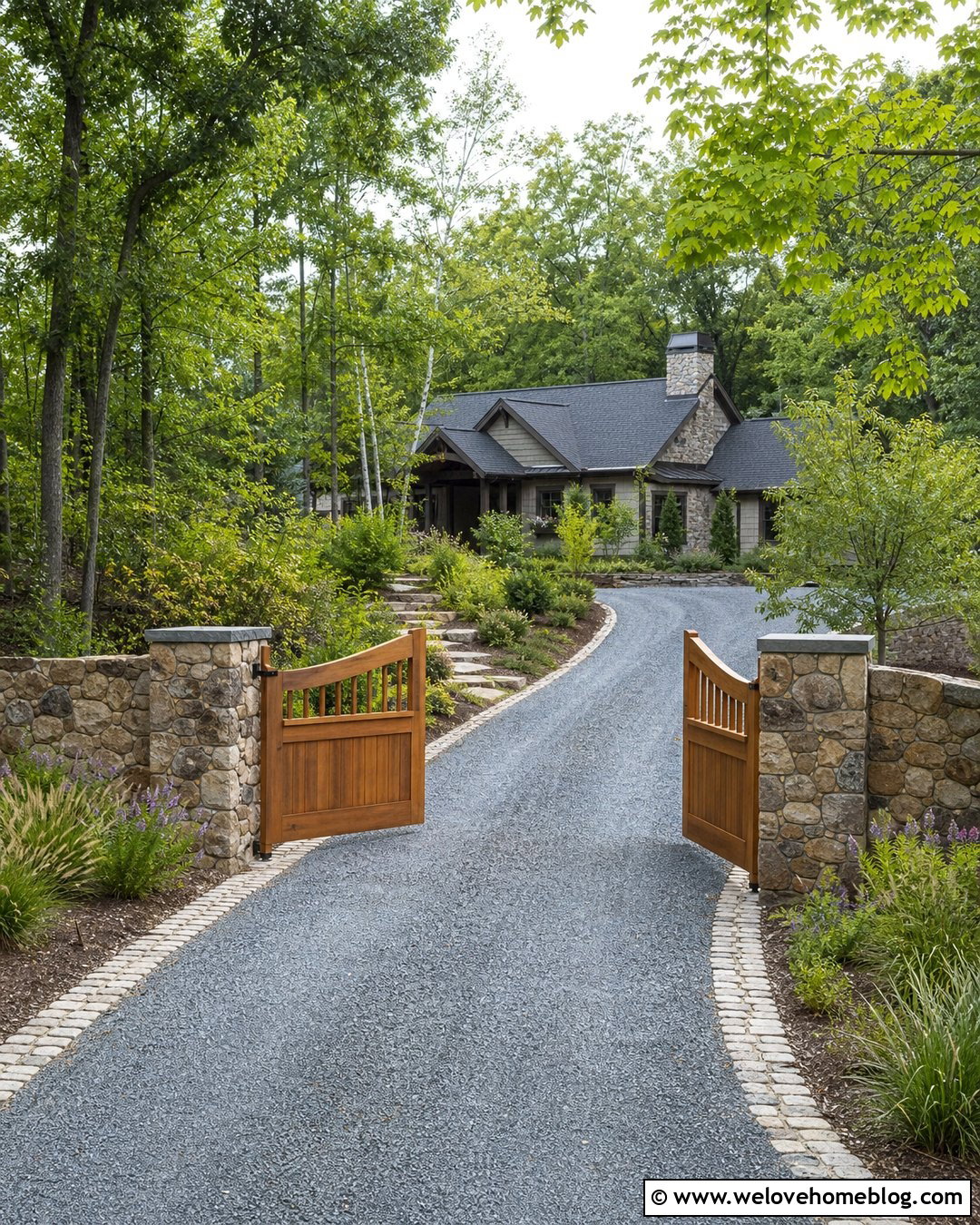
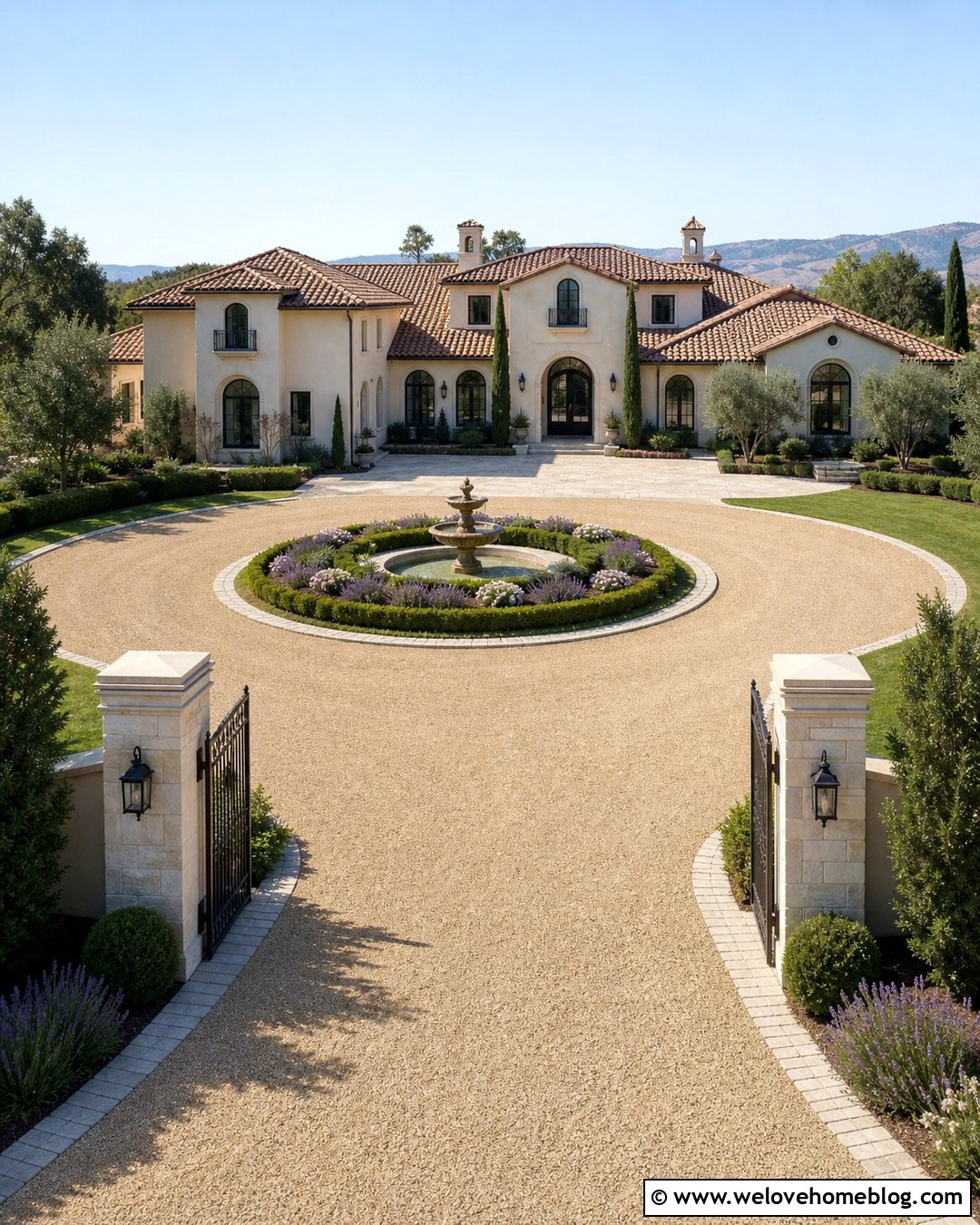
Brick pillars can turn a simple gravel entrance into a clearly defined gateway. Pair pale limestone gravel with substantial red brick pillars that match the driveway edging. A straight or gently curved approach gives the gateway a strong visual axis toward the house. Install a simple black metal or painted wood gate between the pillars, leaving enough clear width for comfortable entry. Low walls or short hedge sections can extend outward without creating a closed-off appearance. Add an address plaque, mailbox, or downlight to one pillar, but keep the arrangement balanced and uncluttered. This look works particularly well with colonial, Georgian, and traditional brick homes. The matching border carries the entrance material along the driveway, preventing the pillars from appearing isolated from the overall landscape.
16. Low Maintenance Gravel Driveway With Brick Edge
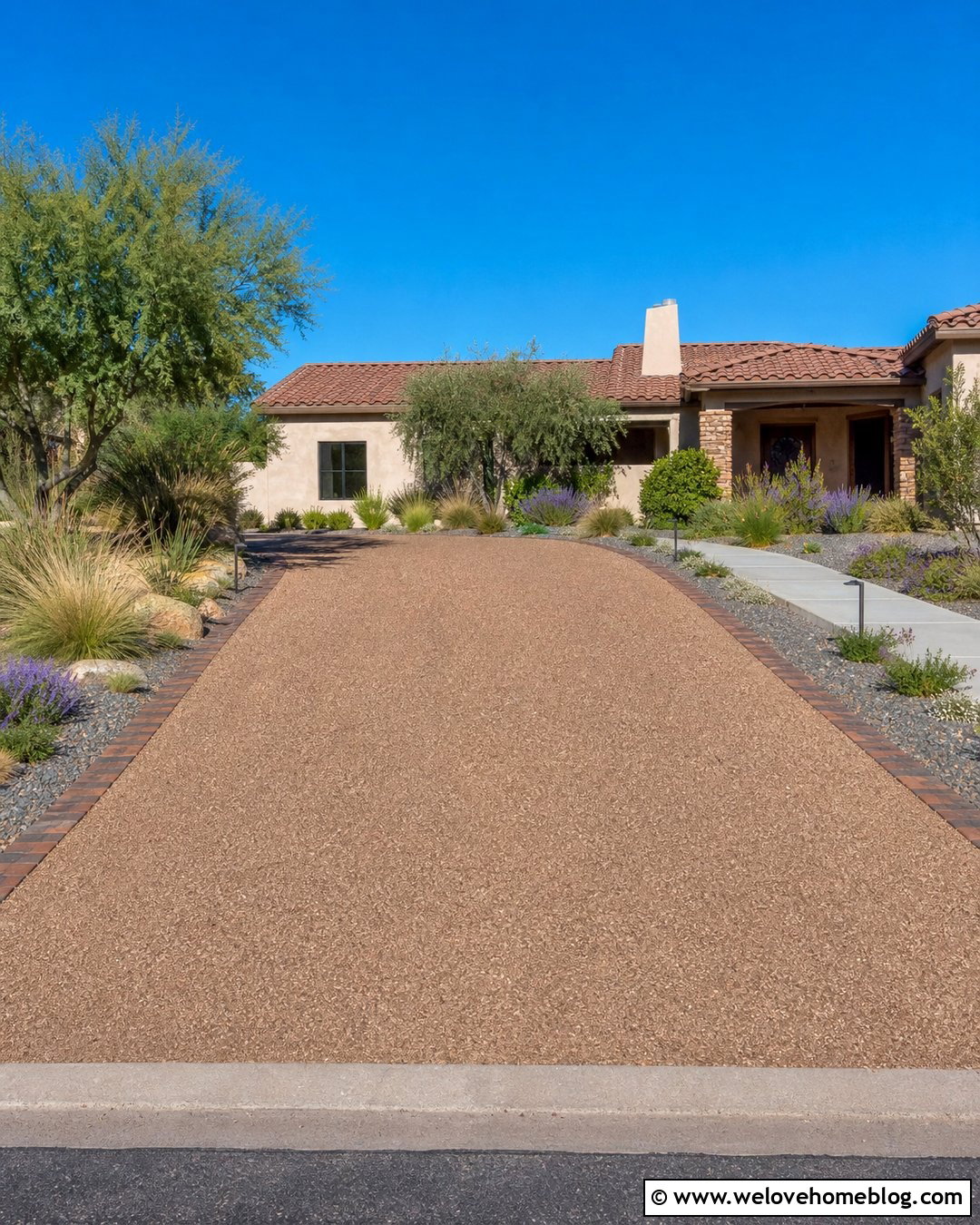
For a simpler front yard, combine compacted angular gravel with a straightforward flush brick edge and drought-tolerant landscaping. Medium-toned crushed granite hides ordinary dust better than extremely dark or white stone, while brown brick provides a softer contrast than bright red. Use a straight driveway with broad planting strips on both sides. Fill those beds with ornamental grasses, low evergreen shrubs, salvia, and regionally suitable ground covers. A drip irrigation line placed beyond the masonry can keep water away from the driving surface. Limit the plant palette to a few repeated varieties for easier care and a calmer appearance. This restrained design suits ranch, Southwestern, contemporary, and transitional homes while still giving the entrance color, texture, and clear year-round structure.
17. Woodland Gravel Driveway With Rustic Brick Border
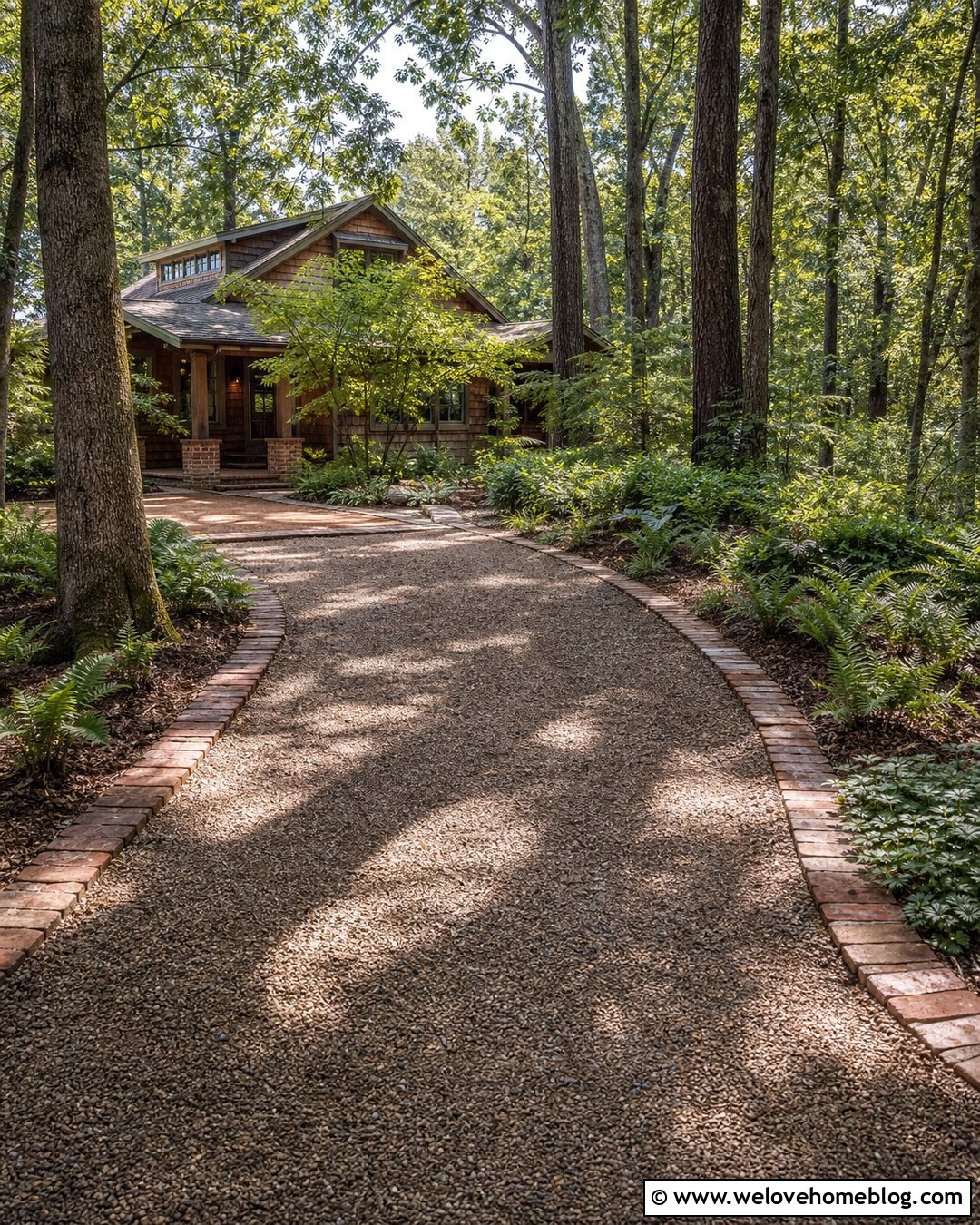
A gravel driveway passing through mature trees should feel connected to its natural setting. Choose brown or muted gray crushed stone rather than bright white gravel, then line the route with weathered red brick. A softly curved layout can move around established trunks while creating a gradual approach to a cabin, Craftsman house, or woodland cottage. Use shade-tolerant ferns, native sedges, low shrubs, and leaf-friendly ground covers outside the brick border. Keep plants set back at tight bends so branches do not obstruct visibility. Reclaimed-looking brick complements bark, fallen leaves, and natural stone without making the driveway appear overly formal. Near the house, widen the border into a small brick landing that provides a tidy transition to the porch or garden walkway.
18. Coastal Gravel Driveway With Light Brick Border
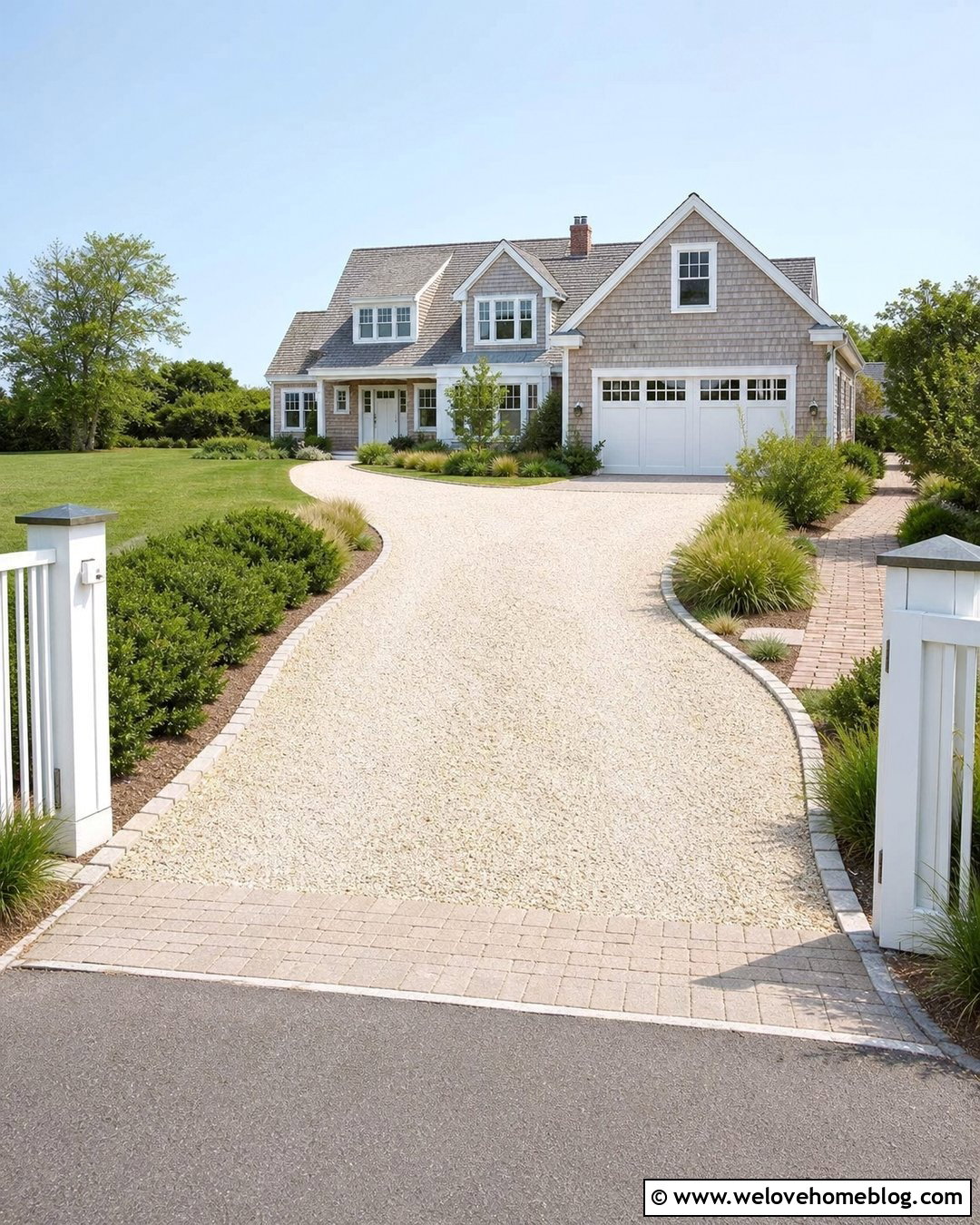
Pale gravel and softly colored brick can create a fresh driveway for a coastal or beach-inspired home. Use cream crushed stone or light gray gravel bordered with sand-toned brick rather than deep red masonry. A broad straight driveway or relaxed horseshoe layout works well with shingle siding, white trim, and a simple covered porch. Surround the drive with salt-tolerant ornamental grasses, low evergreen shrubs, and open lawn, using plant choices appropriate for the local climate. Keep the brick border flush and uncomplicated so the material palette remains airy. At the garage, add a wider brick threshold to catch the eye and mark the transition. The neutral colors should echo the house facade while still providing enough contrast for every driveway edge to remain visible.
19. Formal Gravel Driveway With Symmetrical Brick Edging

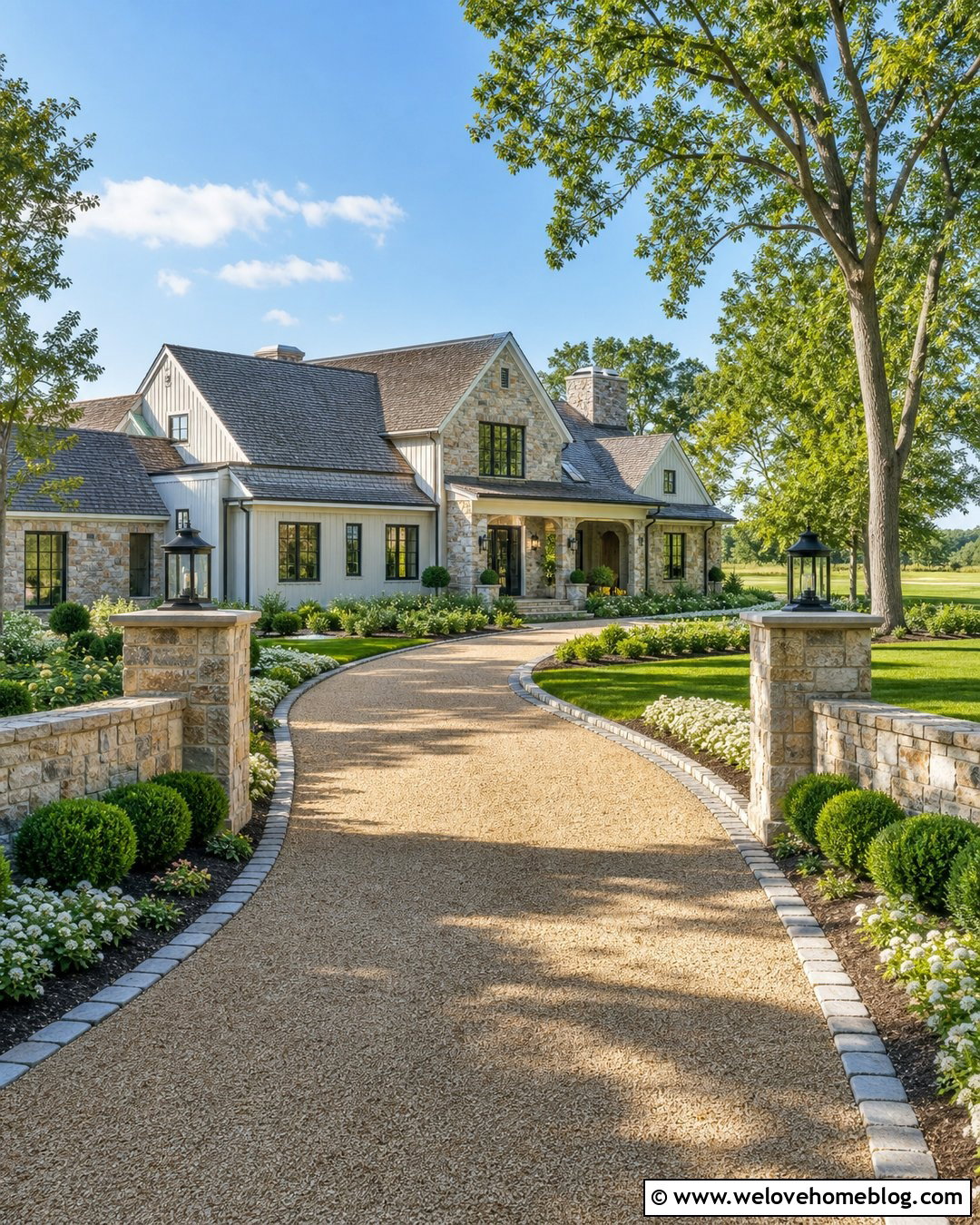
Symmetry can make a gravel driveway feel refined even when the surface material is informal. Center a straight light-gray gravel drive on the front door of a colonial or Georgian house. Line both sides with matching dark red brick borders installed at the same width. Identical lawn panels, clipped boxwood hedges, and evenly spaced trees should frame the approach. At the end, widen the driveway into a rectangular parking court or small turning area, continuing the brick around every edge. Matching brick walkways can branch toward the porch from both sides or form one centered path. Keep decorative objects to a minimum. Strong proportions, repeated planting, and carefully aligned masonry are what give this complete design its formal character and polished curb appeal.
20. Recycled Brick Lined Gravel Driveway
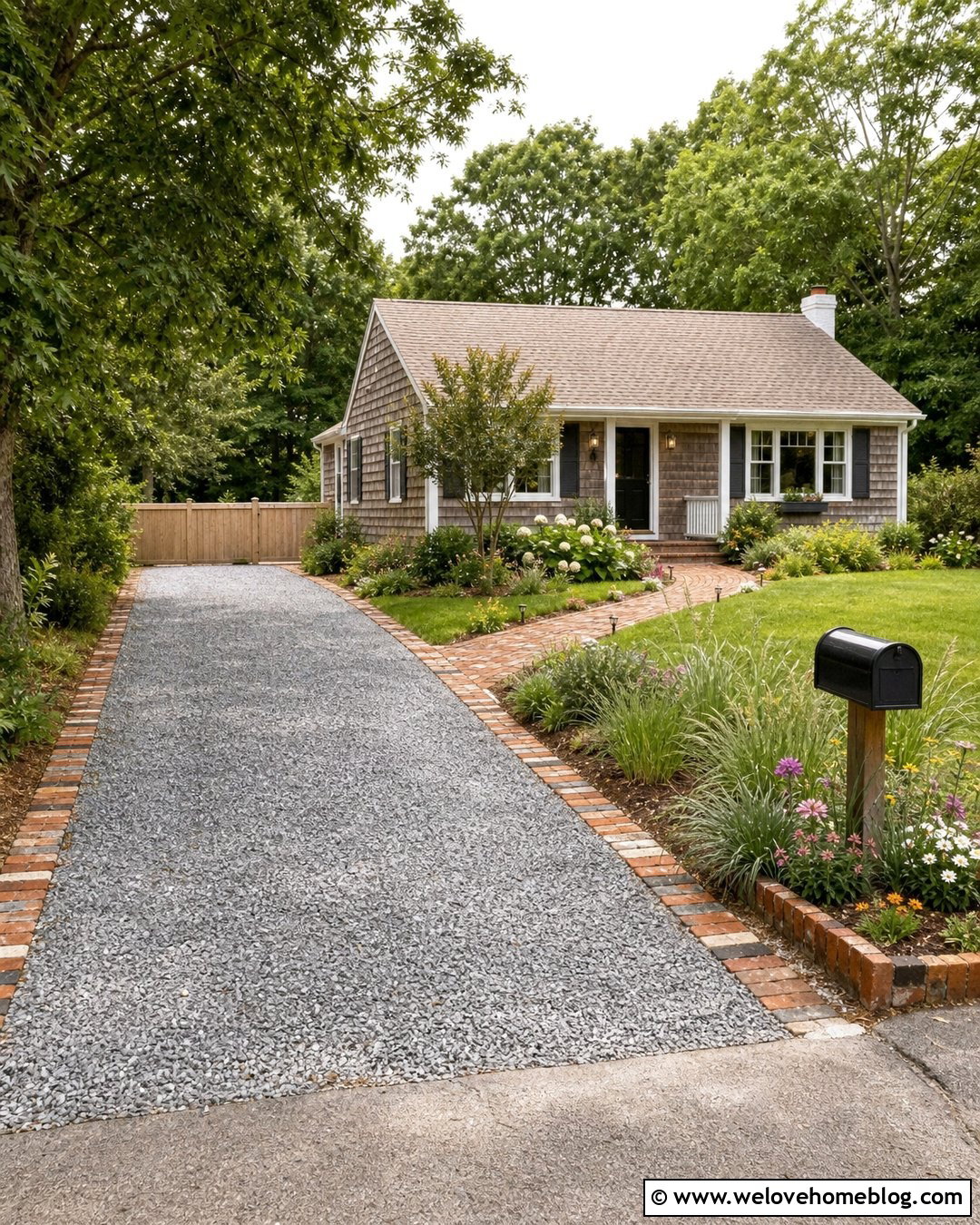
Recycled brick can give a budget-conscious gravel driveway warmth, variation, and a sense of history. Sort the bricks by thickness before installation and reserve the most consistent pieces for the vehicle-facing edge. Mixed shades of red, brown, orange, and charcoal pair naturally with inexpensive local crushed gravel. A simple straight layout is easiest to build and keeps the varied masonry from looking too busy. Use a narrow running-bond border, then repeat selected bricks around a nearby mailbox bed or walkway. Native grasses, flowering shrubs, and an informal lawn support the relaxed appearance. This design suits cottages, older ranch homes, and casual farmhouses. Proper base preparation remains important because reclaimed materials still need stable support to form a dependable, even driveway boundary.
Conclusion:
The best brick-lined gravel driveway balances appearance with everyday function. Gravel color, brick tone, driveway shape, and nearby landscaping should all relate to the home rather than compete for attention. Straight borders offer a neat, practical finish, while curved brick lines can make a larger property feel softer and more inviting. Entrance aprons, tire-track ribbons, parking grids, pillars, and matching walkways provide additional ways to repeat the masonry. Before installation, plan the base, grading, drainage, edge height, and vehicle clearances carefully. Whether you prefer reclaimed brick beside country gravel or charcoal masonry around crushed granite, these 20 Brick Lined Gravel Driveway Ideas offer adaptable starting points for distinctive curb appeal.

Related posts:
Leave a Reply