
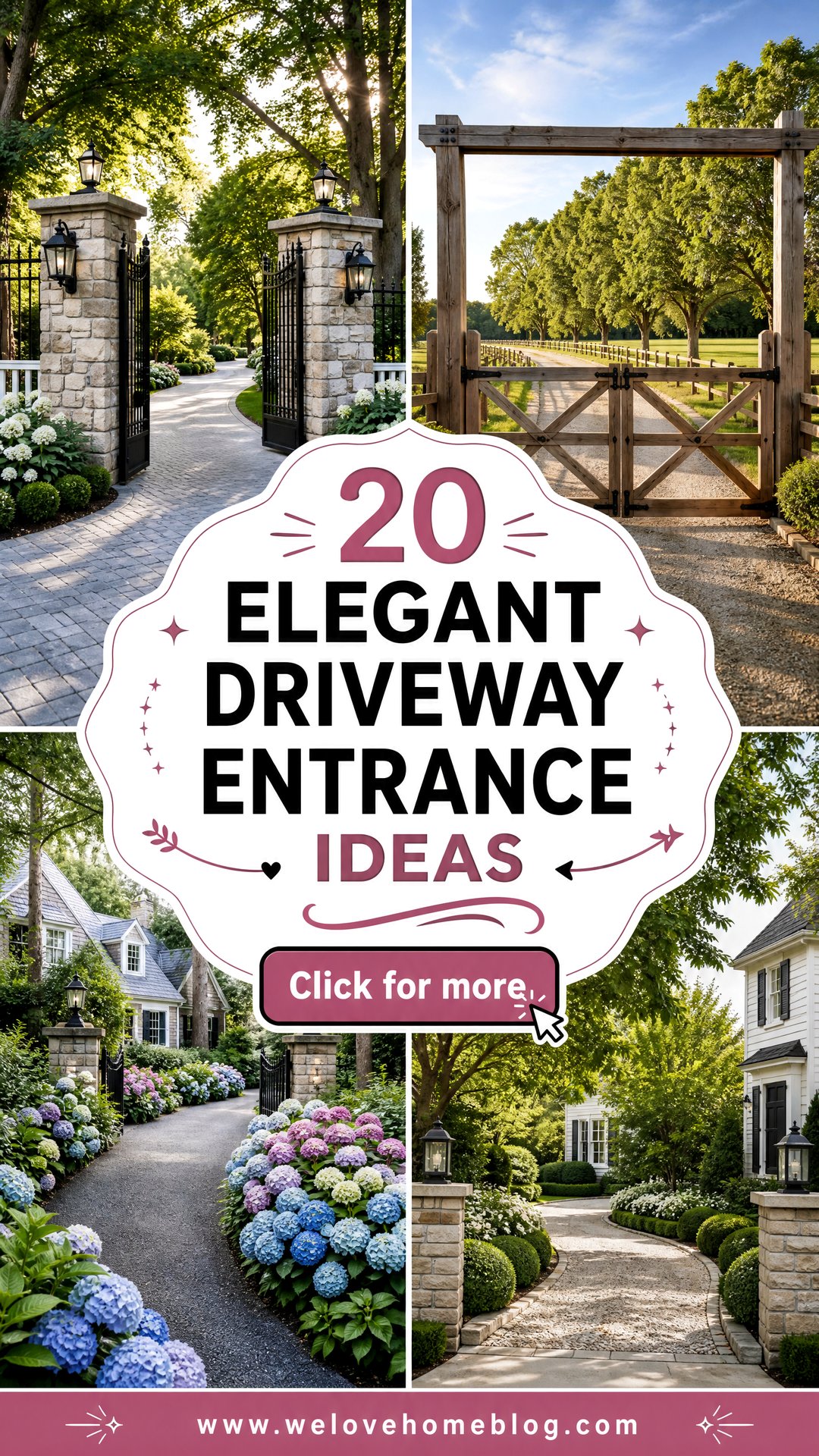
An elegant driveway entrance creates a polished first impression before guests ever reach the front door. The best designs coordinate the driveway surface with gates, pillars, borders, lighting, and landscaping, so the entire approach feels intentional. These 20 Elegant Driveway Entrance Ideas include traditional stone entrances, modern gates, welcoming garden borders, and practical solutions for smaller front yards. You will also find varied materials, including gravel, brick, concrete, asphalt, cobblestone, and pavers. As you plan, consider your home’s architecture, available turning space, maintenance needs, and views from the street. A beautiful entrance should look impressive without making everyday access difficult. Explore the complete driveway looks below to find 20 Elegant Driveway Entrance Ideas suited to different homes, budgets, and landscapes.
1. Stone Pillar Driveway Entrance
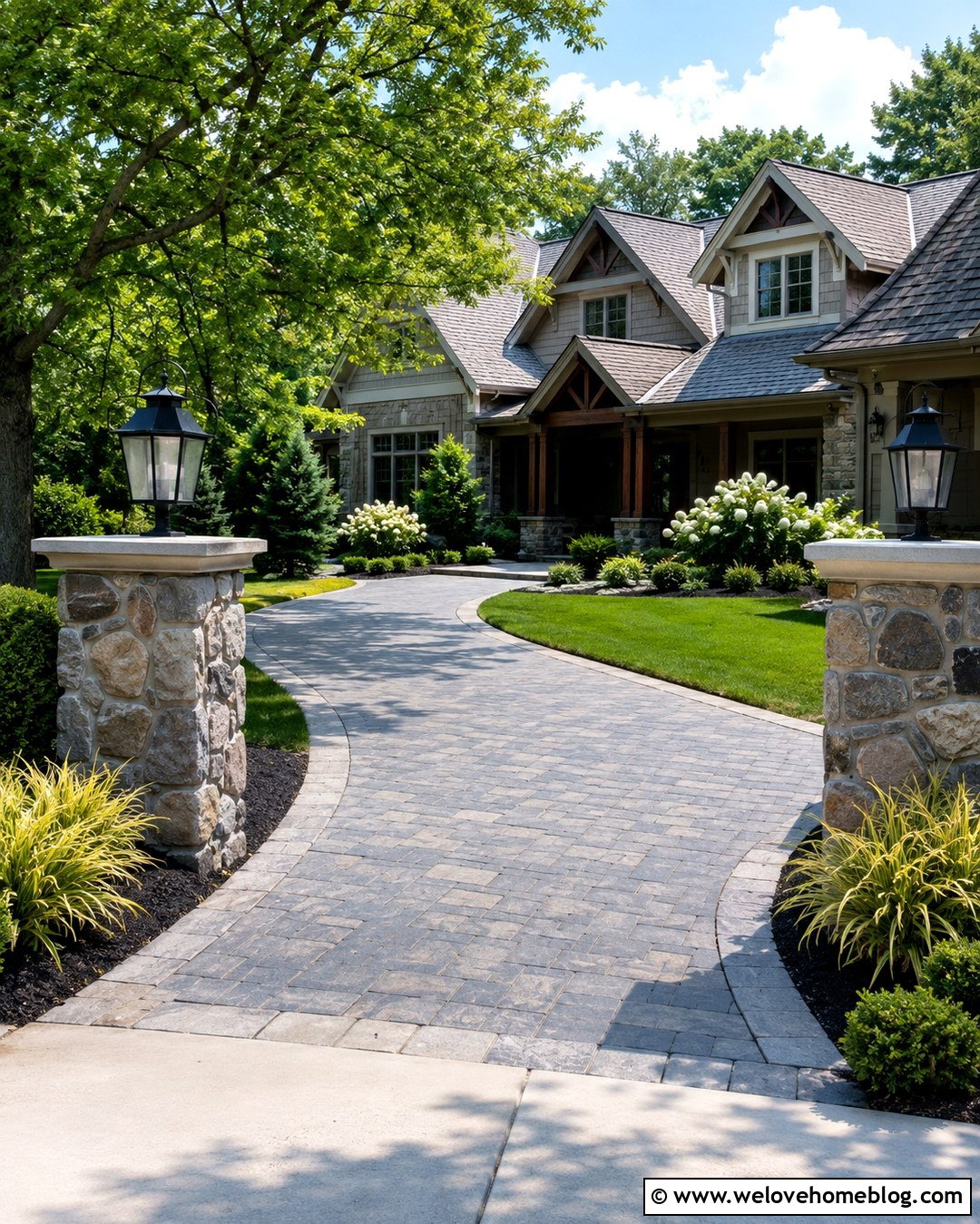
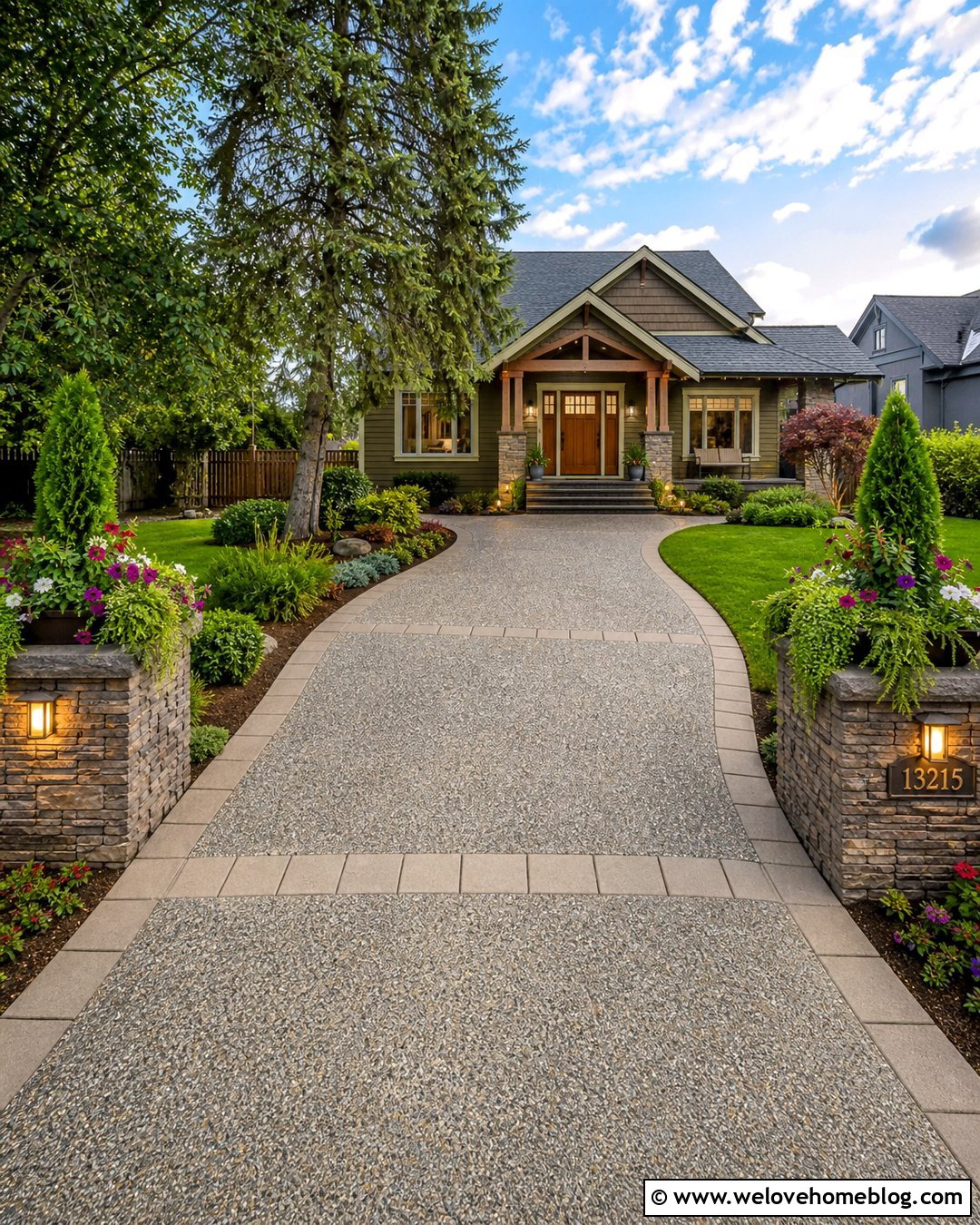
Stone pillars give a driveway entrance an established, elegant appearance that works especially well with colonial, craftsman, and country homes. Use locally inspired fieldstone or neatly cut limestone that coordinates with the home’s foundation or facade. A curved gray paver driveway can begin between the pillars, edged by matching stone blocks and low evergreen shrubs. Add broad capstones to create a clean finish and protect the masonry below. Lanterns mounted on top make the entrance more visible while reinforcing its balanced design. Leave enough open space between the pillars for delivery trucks and larger vehicles. For a softer transition into the yard, extend short stone walls from each pillar and surround them with ornamental grasses, hydrangeas, or compact boxwoods.
2. Wrought Iron Gate Driveway Entrance
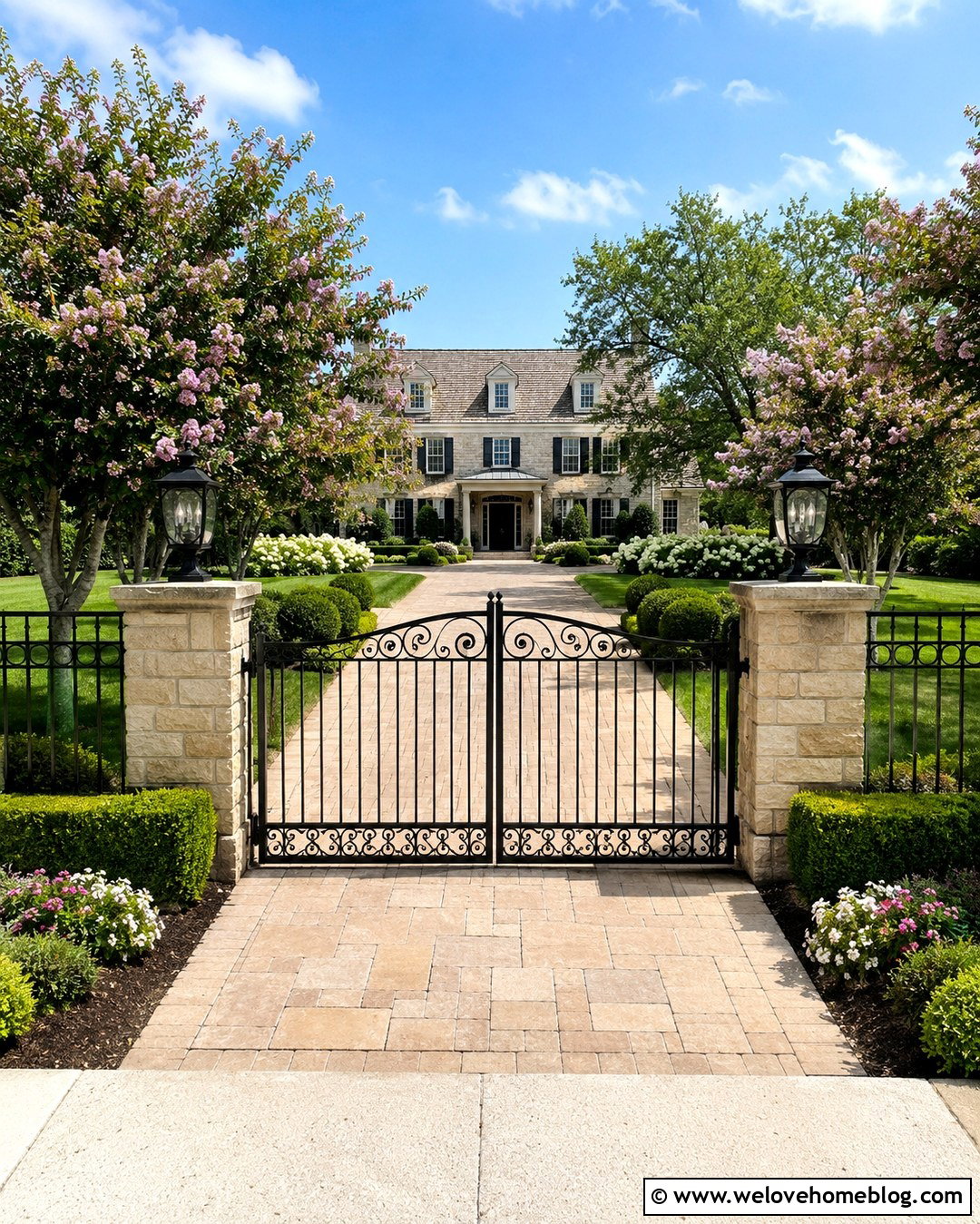
A wrought iron gate creates a formal driveway entrance without completely hiding the house or front landscape. Pair a black metal gate with warm limestone pillars and a straight driveway made from tan concrete pavers. This contrast gives the entrance definition while keeping the overall look light and welcoming. Choose a simple gate with restrained scrollwork rather than an overly ornate pattern. Matching pedestrian gates or short metal fence panels can extend from both sides for a cohesive boundary. Behind the entrance, use clipped hedges, flowering trees, and symmetrical planting beds to guide the eye toward the home. If the gate will be automated, plan the opening method, control equipment, and vehicle waiting area early so daily access remains smooth and convenient.
3. Brick Column Driveway Entrance
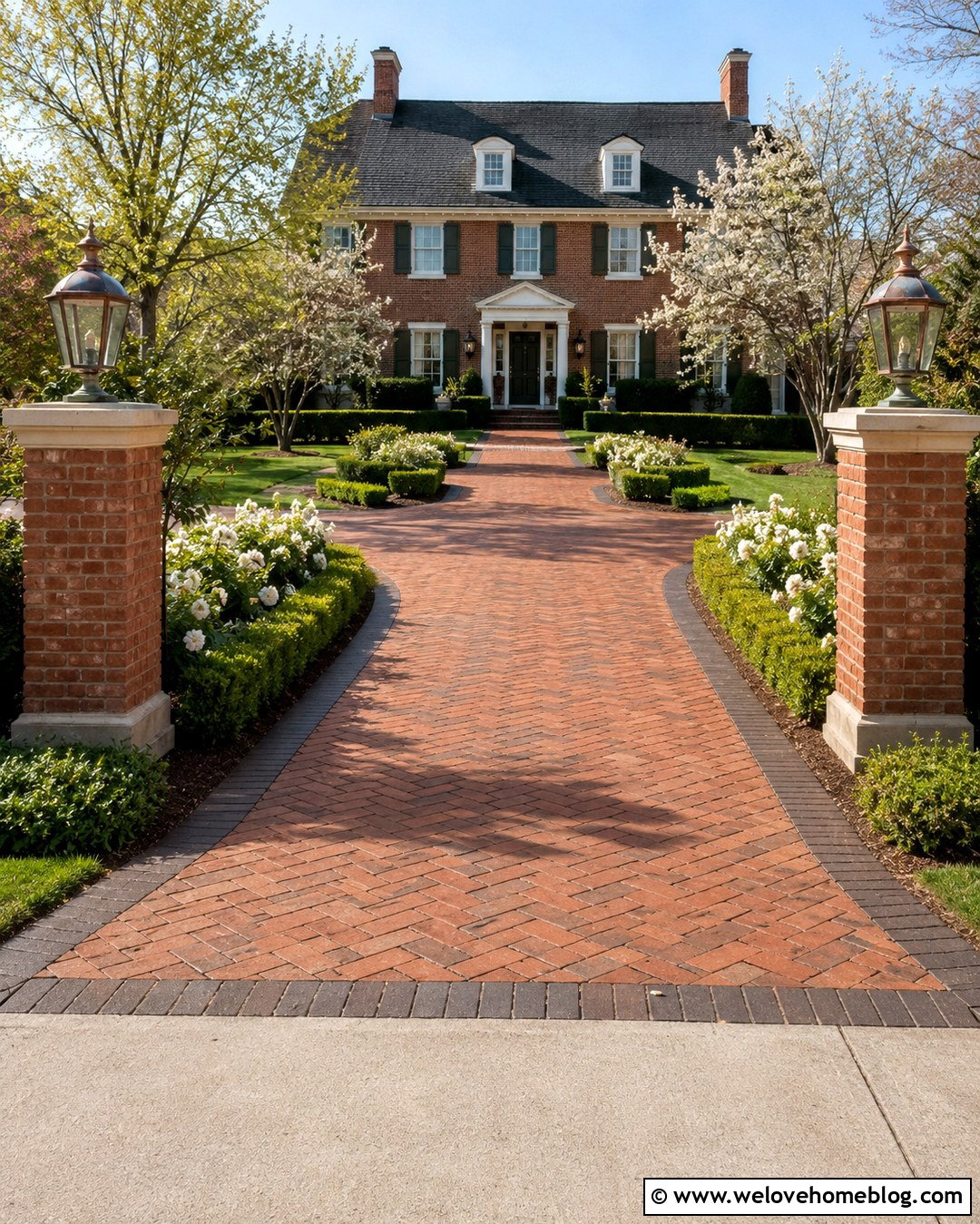
Brick columns can make a driveway entrance feel like a natural extension of a traditional brick home. Select brick that closely matches the house, then use contrasting cast-stone caps to give each column a crisp, finished edge. A herringbone clay brick driveway creates a rich approach, while a dark brick soldier-course border keeps the pattern visually contained. Place simple bronze lanterns on the columns and add low boxwood hedges around their bases. Curved planting beds filled with white flowers and deep green foliage soften the masonry without covering it. Brick columns can frame an open entrance or support a gate, depending on privacy needs. Repeating the same brick in the walkway or front steps helps connect the driveway, yard, and house.
4. Modern Slat Gate Driveway Entrance
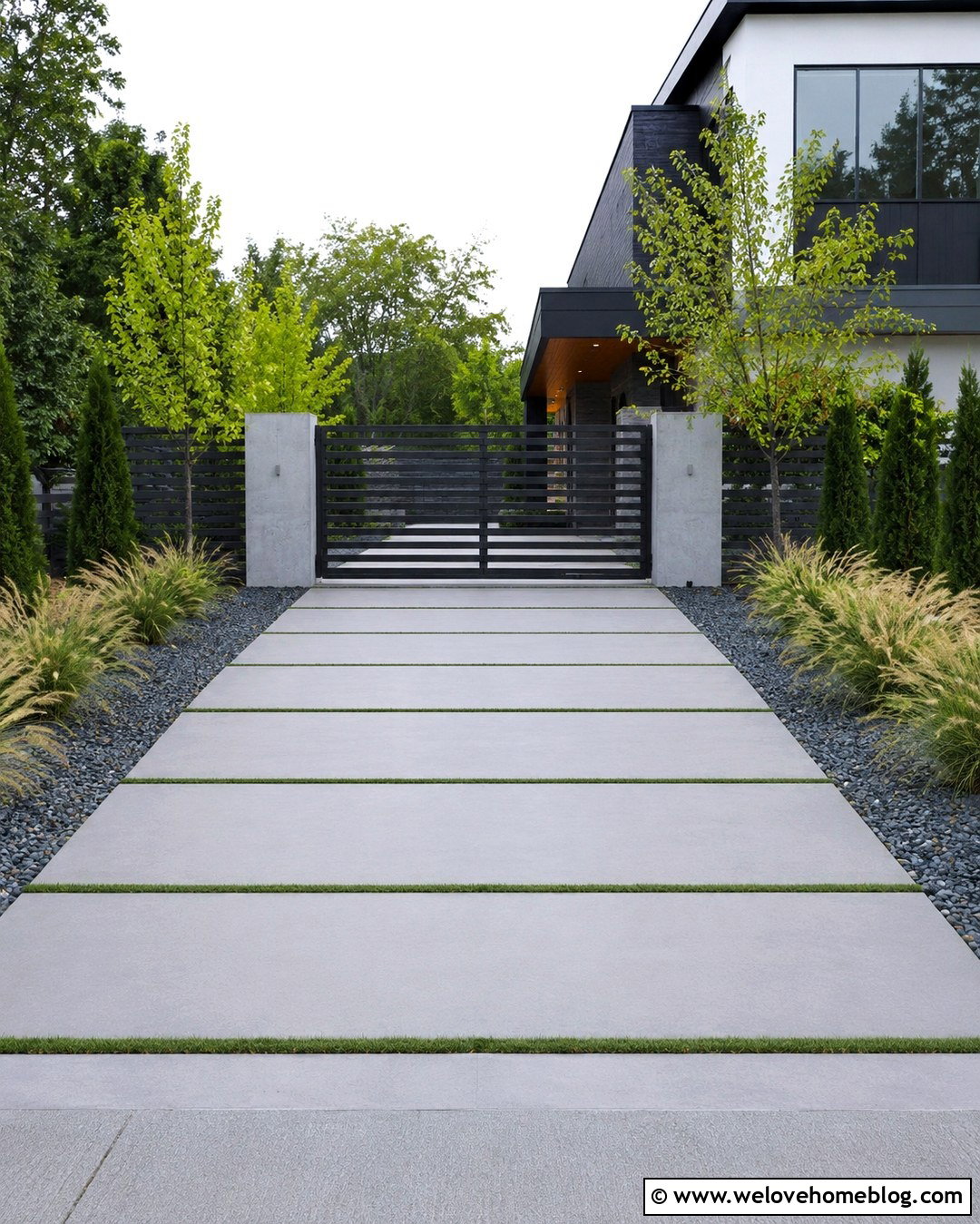
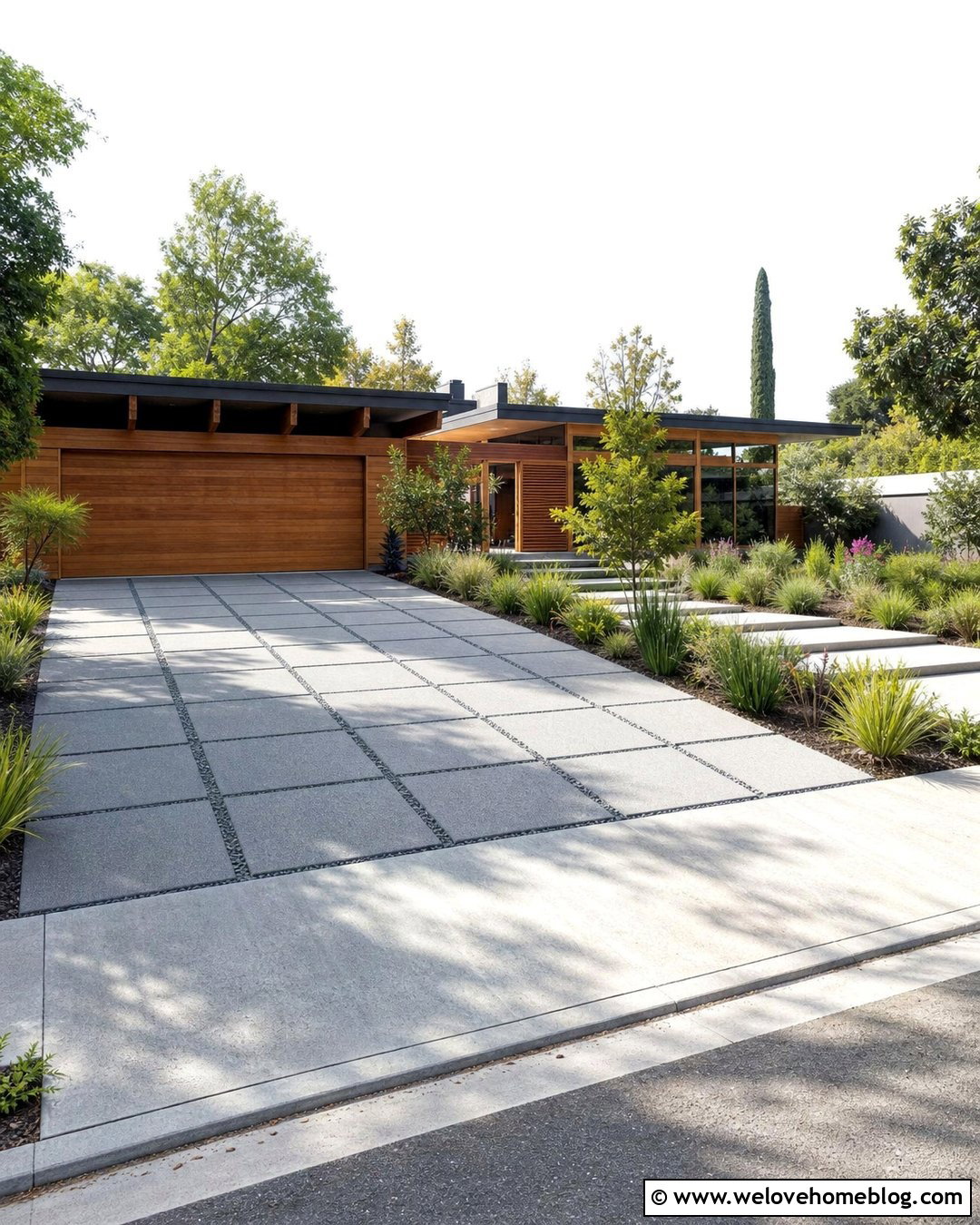
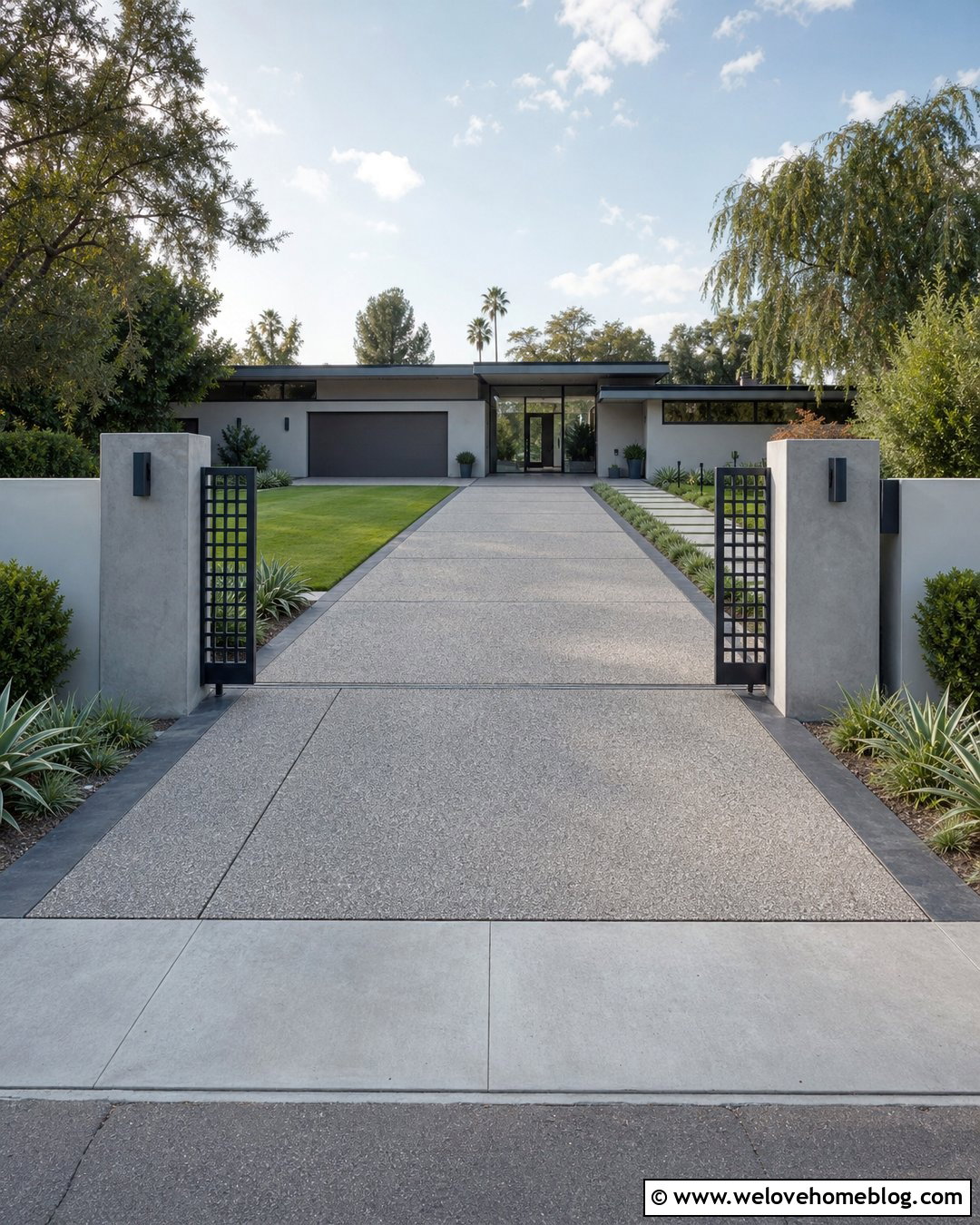
Clean horizontal slats bring privacy and modern structure to a contemporary driveway entrance. A charcoal aluminum gate looks particularly sharp between smooth concrete pillars, especially when paired with a straight driveway of large-format gray concrete pavers. Narrow grass strips or dark gravel joints can break up the paved surface and prevent it from looking like one oversized slab. Continue the gate material into short fence panels on both sides for a unified street-facing design. Keep the planting restrained with sculptural grasses, upright evergreens, and one or two small ornamental trees. A slim address plaque and recessed pillar lights maintain the streamlined appearance. This complete entrance works best when its gate, paving lines, beds, and house facade share the same simple geometry.
5. Wood Farm Gate Driveway Entrance
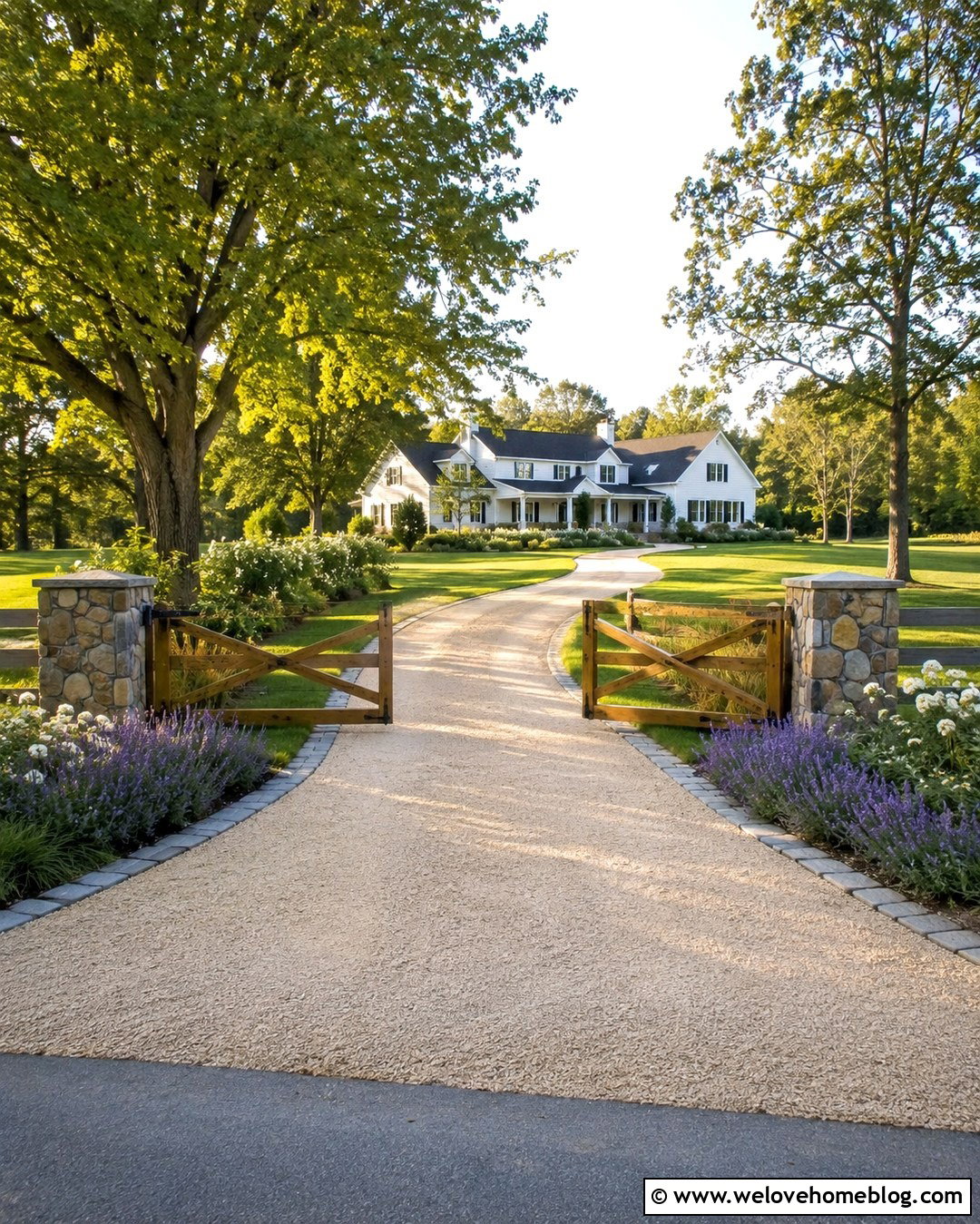
A wood farm gate can feel elegant when it is combined with tailored landscaping and refined natural materials. Frame a stained cedar gate with substantial fieldstone pillars, then continue through the entrance with a gently curved beige gravel driveway. Cobblestone edging keeps the loose gravel contained and gives the approach a more finished appearance. Add post-and-rail fencing along the roadside, using the same wood tone as the gate. Instead of overly formal shrubs, plant layered drifts of lavender, ornamental grasses, white roses, and native flowering perennials. Mature shade trees can frame the distant farmhouse without blocking it. Black metal gate hardware and understated pillar lanterns provide strong contrast. The result feels welcoming and rural, yet still carefully planned and polished.
6. Curved Gravel Driveway Entrance
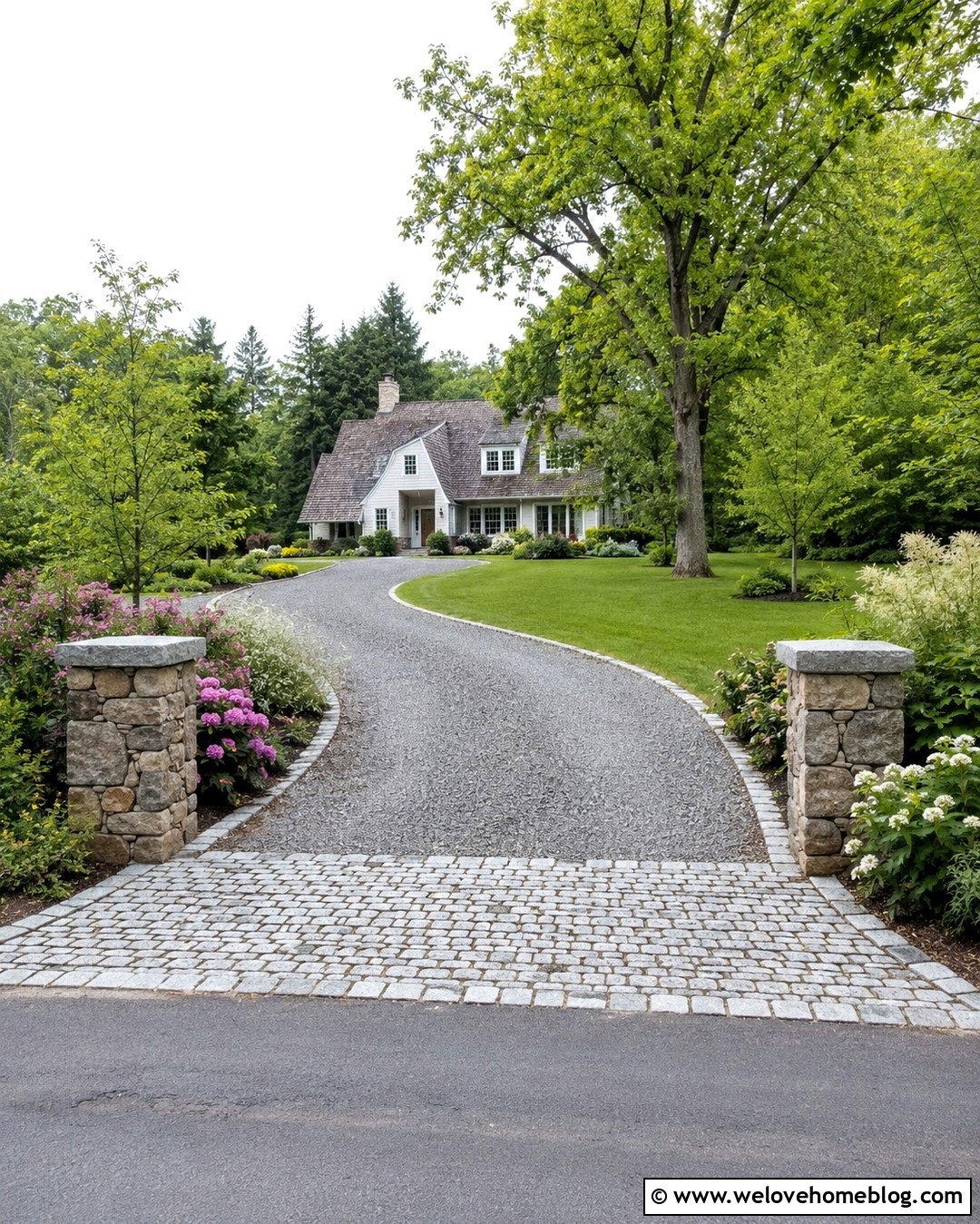
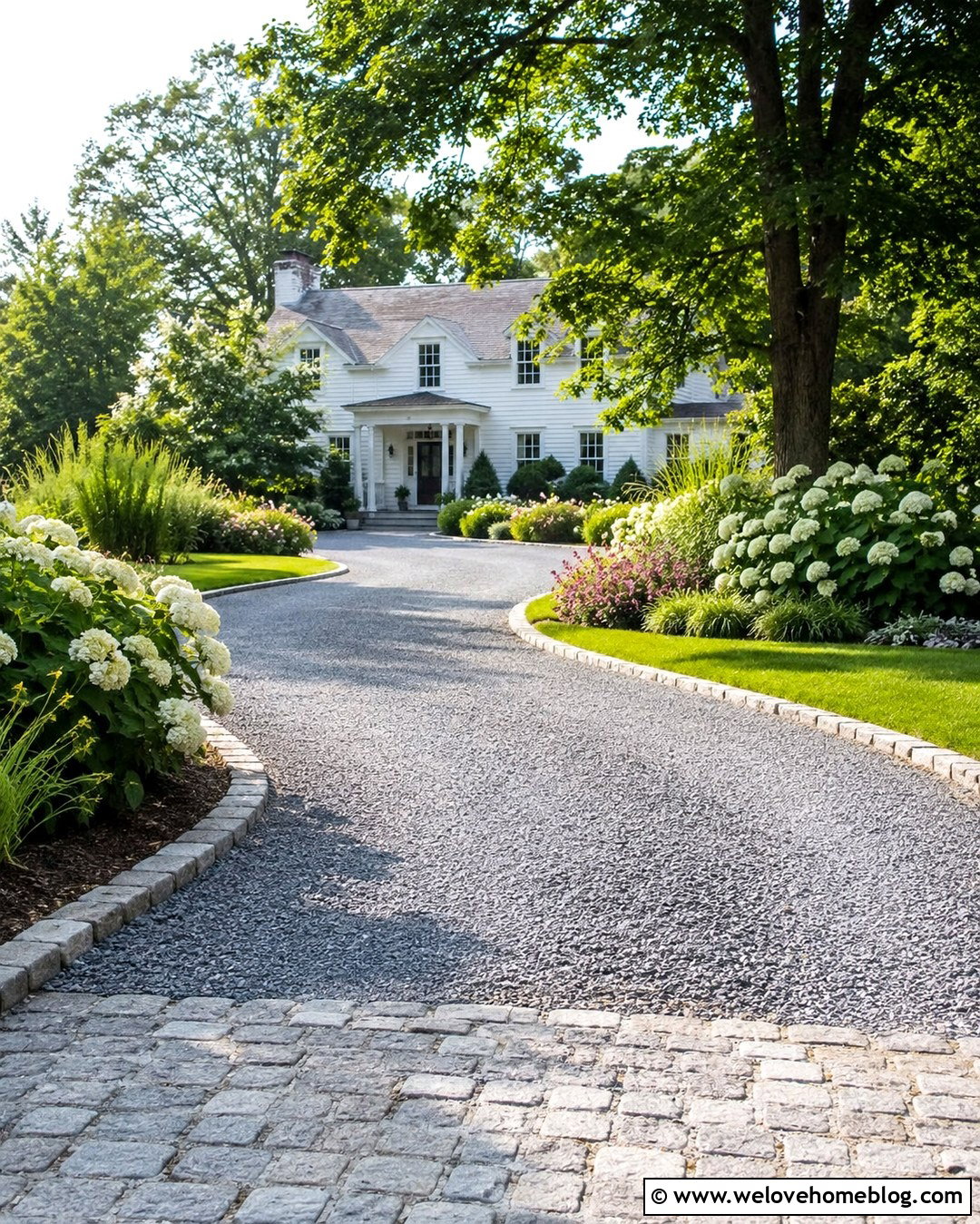
The soft sweep of a curved gravel driveway can turn a simple entrance into a graceful approach. Begin with two low stone pillars and a wide apron of granite cobblestones where the driveway meets the street. Beyond the apron, use compacted gray gravel bordered by larger granite setts. The contrasting materials clearly mark the entrance while helping the driveway feel connected to the landscape. Follow the outside curve with flowering shrubs, small trees, and low ground cover. Keep plantings lower near the road so drivers have a clear view when entering or leaving. On the inside curve, a broad lawn or simple meadow planting prevents the design from becoming crowded. This entrance is especially attractive for cottage, country, and traditional homes.
7. Cobblestone Apron Driveway Entrance
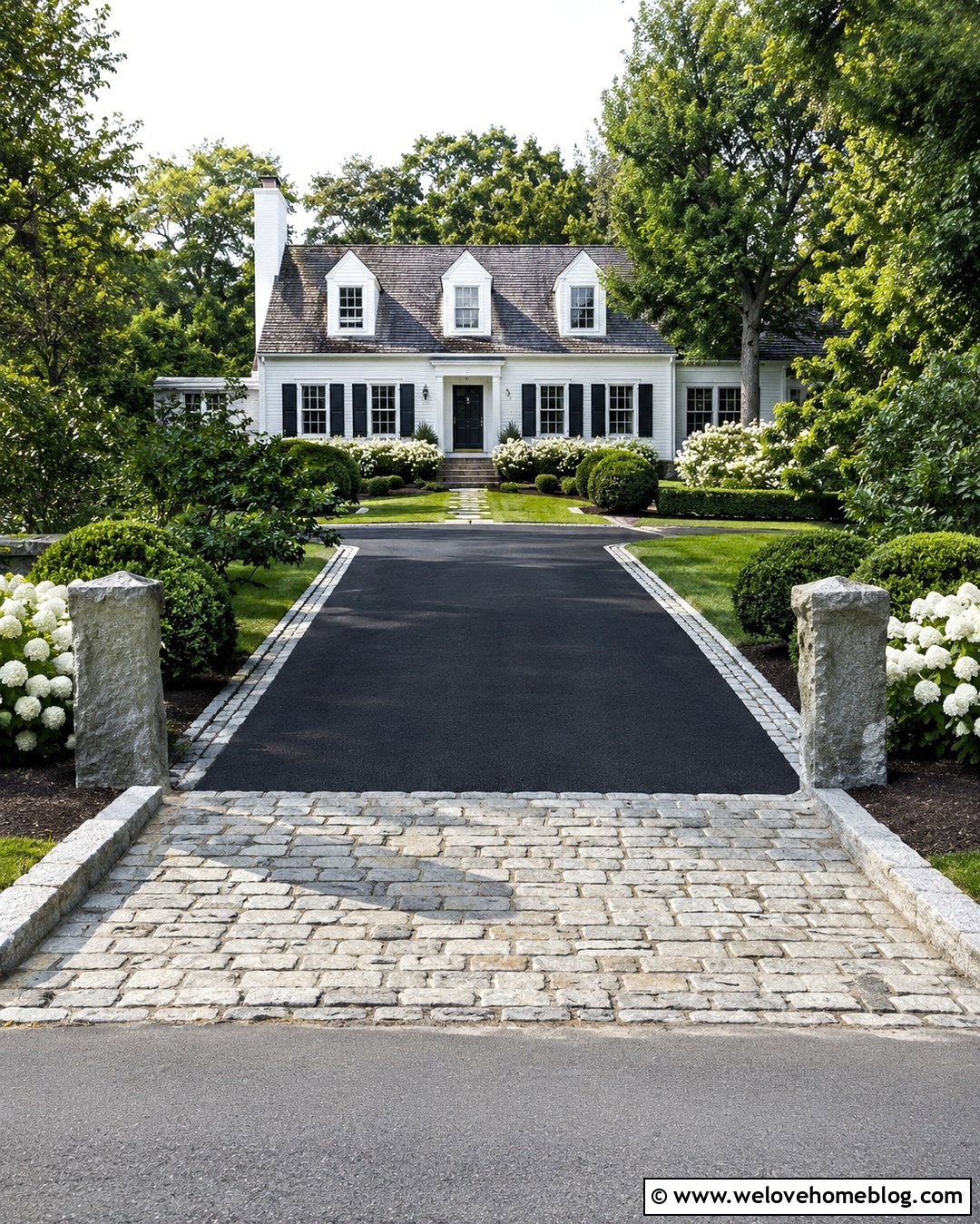
A cobblestone apron introduces texture and craftsmanship at the most visible part of a driveway. Use weathered gray cobblestones across the full entrance, then transition into a smooth black asphalt driveway leading toward a classic Cape Cod home. Continue narrow cobblestone borders along both sides to connect the apron with the rest of the approach. Low brick or stone posts can mark the entrance without requiring a large gate. Surround them with compact hydrangeas, rounded evergreens, and neat lawn edges. Because the apron is visually strong, keep additional patterns simple and avoid mixing too many masonry colors. The combination of dark asphalt, aged stone, and fresh planting creates an entrance that feels elegant but practical, even when the driveway itself uses an affordable surface.
8. Herringbone Brick Driveway Entrance
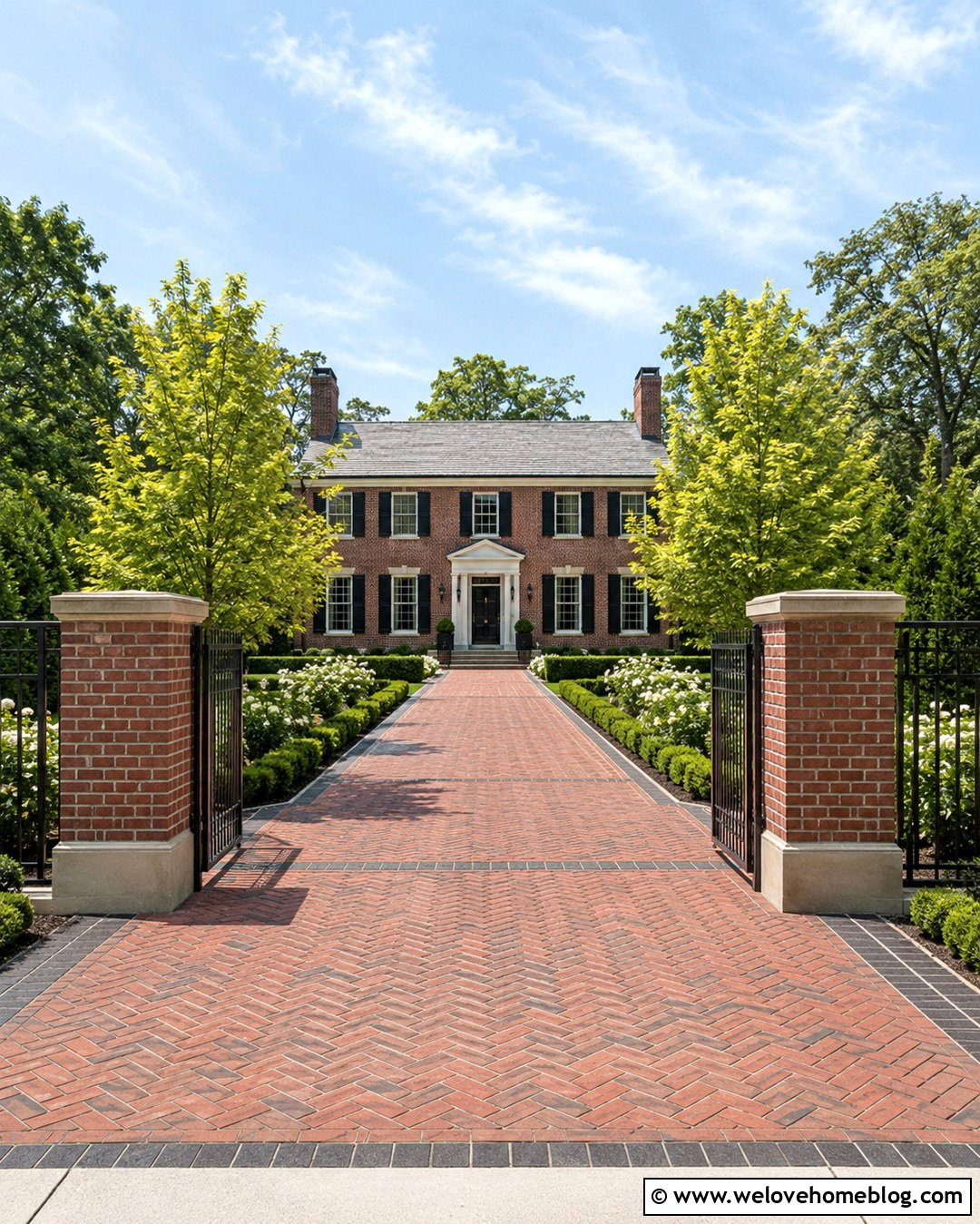
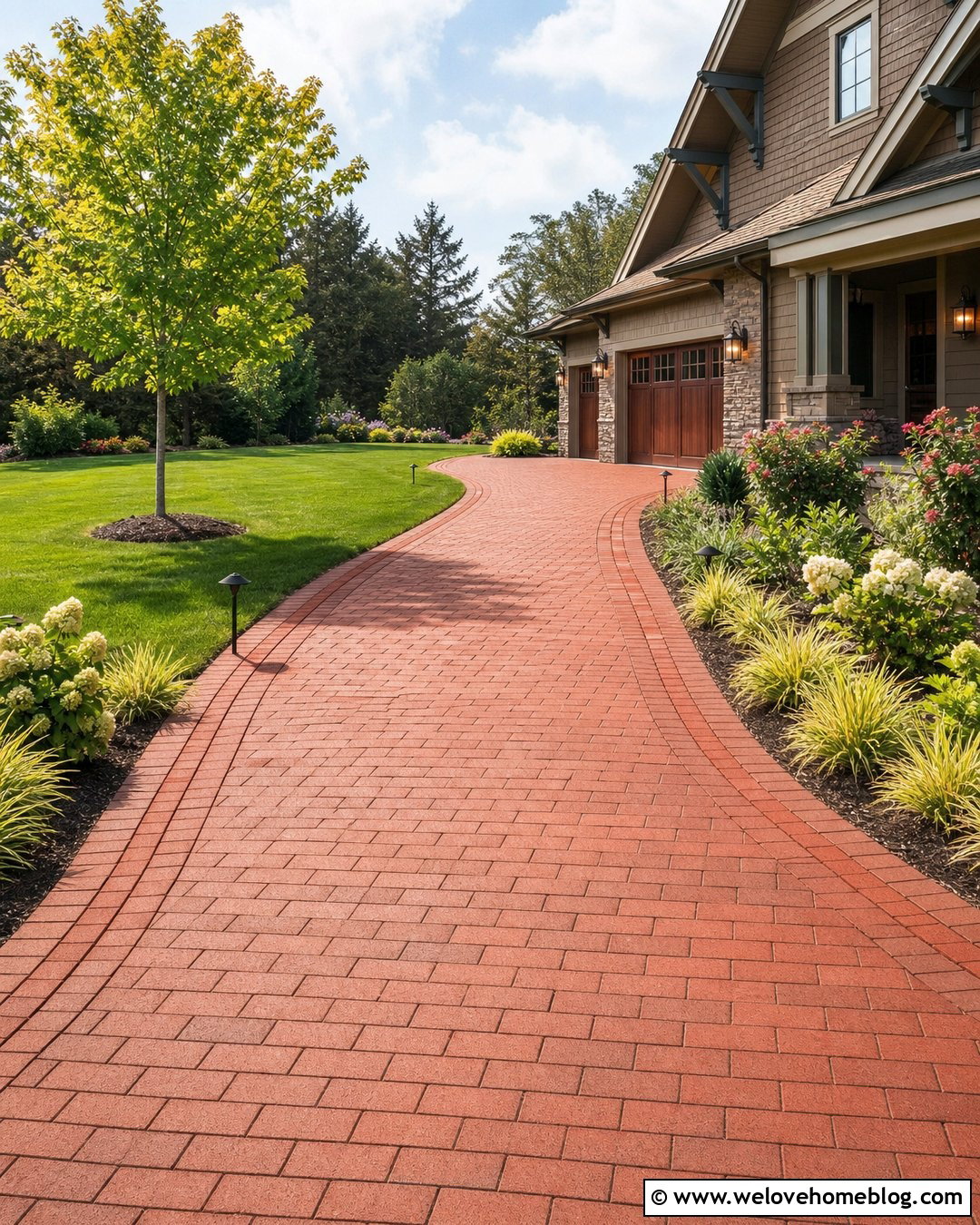
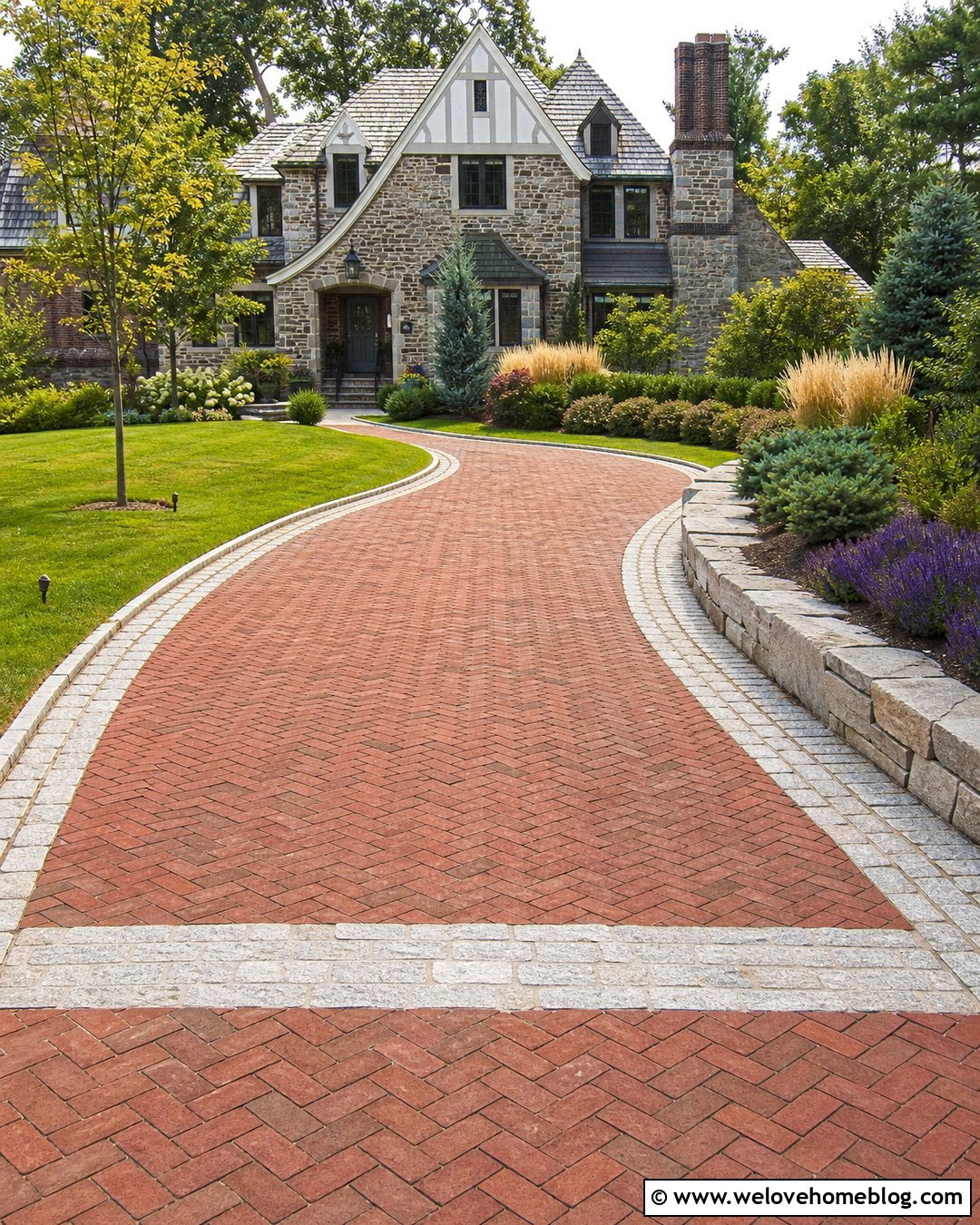
Herringbone brick paving adds a traditional pattern that immediately gives a driveway entrance more character. Lay red and brown clay brick pavers across a straight driveway, using a darker brick border to frame the pattern. At the street, widen the paving slightly between two square brick columns topped with pale stone caps. Black lanterns and a simple metal gate can add definition without distracting from the brickwork. Use symmetrical beds on both sides, planted with clipped boxwoods, white roses, and small flowering trees. A matching brick walkway can branch toward the front door, tying the entire front yard together. This look suits Georgian, colonial, and Tudor-inspired homes, particularly when the brick tones repeat colors already found in the home’s facade or roof.
9. Limestone Wall Driveway Entrance
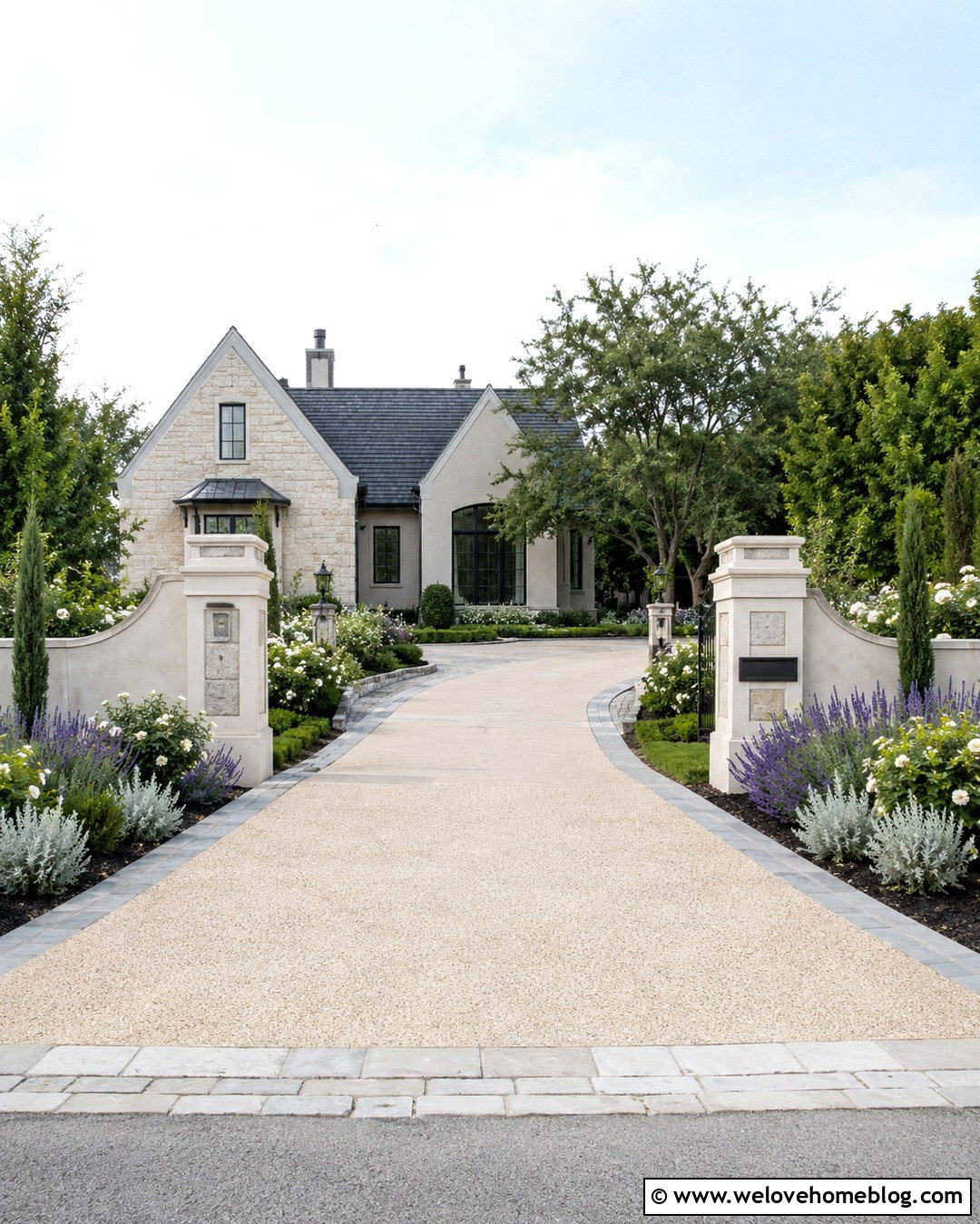
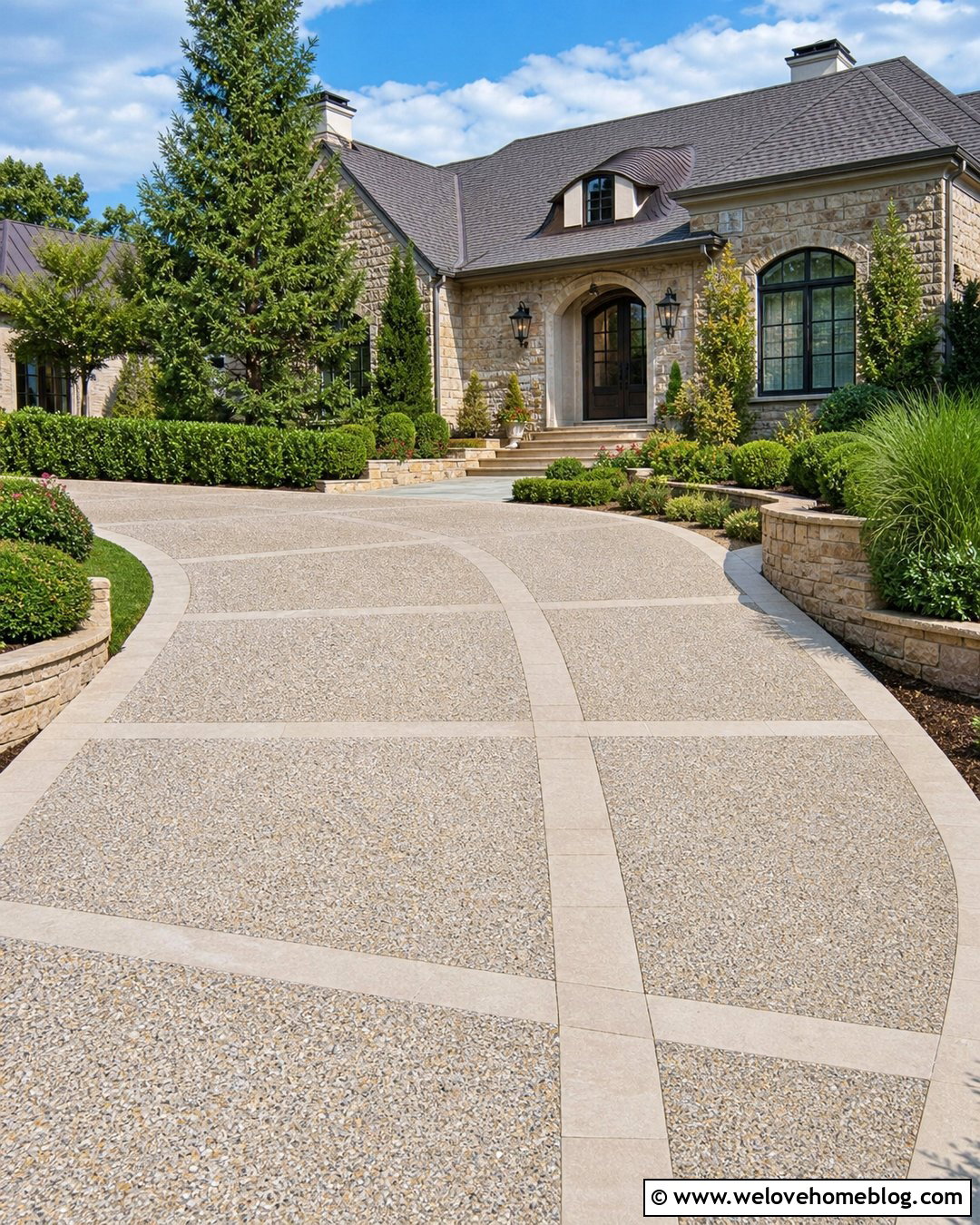
Pale limestone walls create a bright and sophisticated entrance that feels substantial without appearing heavy. Use low walls that curve gently away from a straight, cream-colored exposed aggregate driveway. Finish each end with a taller limestone pillar, creating a clear frame while keeping the entrance open. Light gray stone edging can separate the driveway from broad planting beds filled with lavender, sage, white roses, and silvery foliage. These softer colors complement limestone and maintain an understated palette. Place discreet address numbers on one pillar and a matching lantern on the other for visual balance. Behind the entrance, repeat limestone around the front steps or along a garden wall. Coordinating these materials helps the driveway feel integrated with the house rather than added as a separate feature.
10. White Stucco Pillar Driveway Entrance
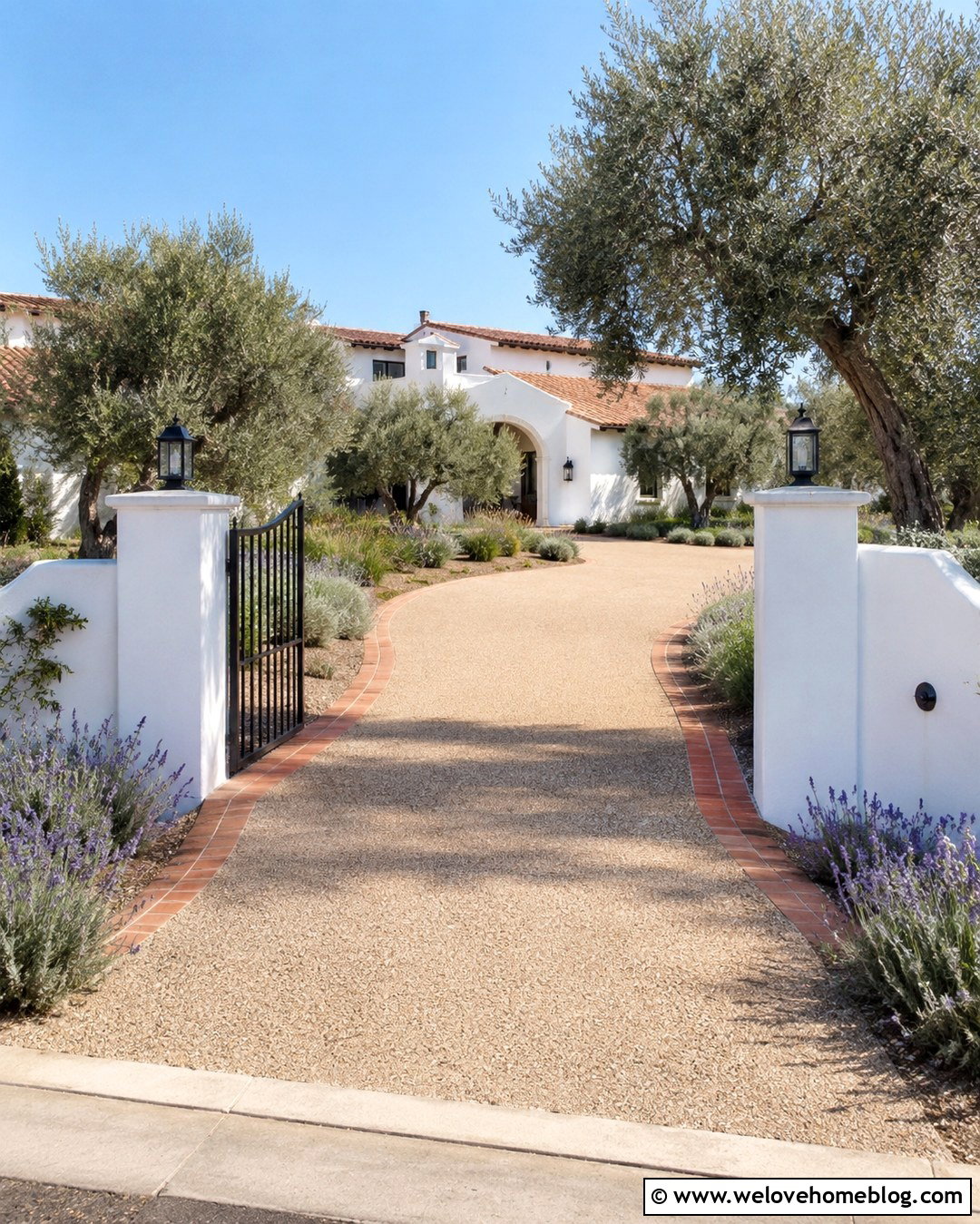
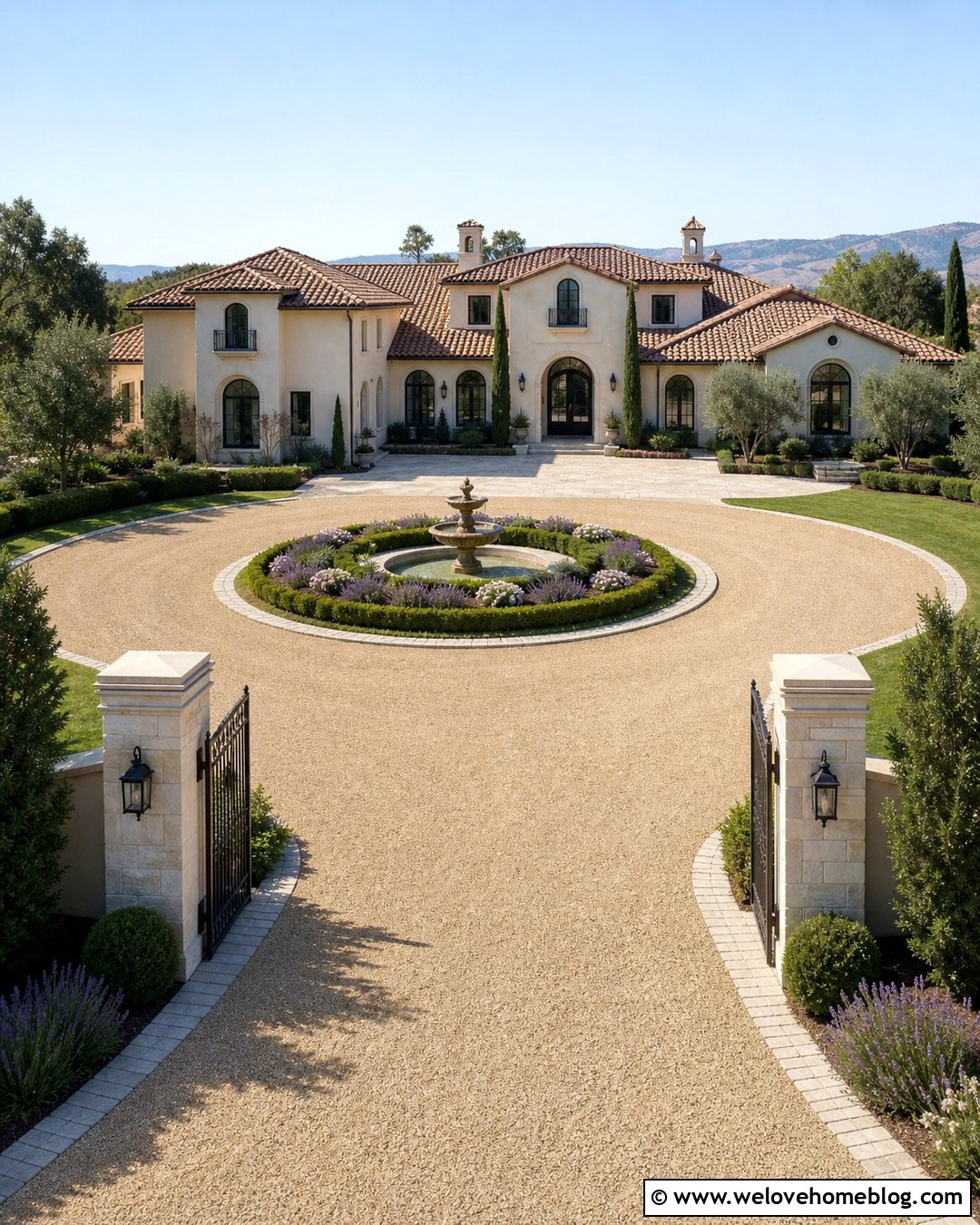
White stucco pillars offer a clean entrance for Mediterranean, Spanish, coastal, and transitional homes. Pair them with a warm beige resin-bound gravel driveway in a wide, gently curved layout. Terracotta paver ribbons along the edges introduce subtle color and connect the entrance to a tiled roof or warm-toned facade. Black metal lanterns provide crisp contrast against the white pillars, while a simple dark gate can be included when privacy is needed. Frame the entrance with olive trees, rosemary, lavender, and low ornamental grasses for a relaxed but tailored landscape. Avoid overly tall plantings near the road, which may hide the pillars or narrow the approach visually. Repeating the white stucco on low boundary walls creates a complete entrance that looks bright, balanced, and architecturally connected.
11. Circular Driveway Entrance Garden
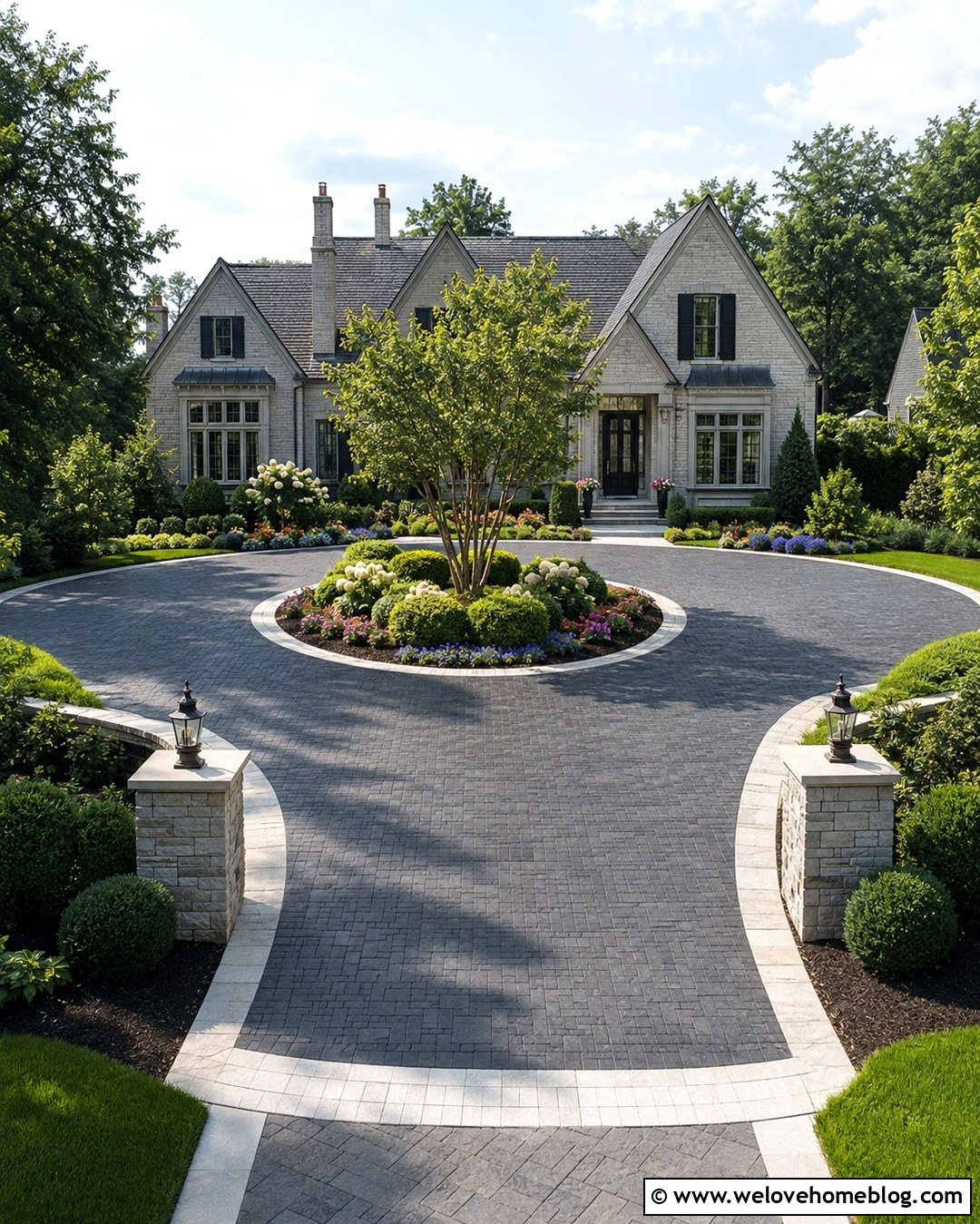
A circular driveway provides an opportunity to create an elegant central garden that is visible from the street. Start the entrance between low stone pillars, then use charcoal concrete pavers to form a broad circular route in front of the house. Define the center island with a pale limestone curb that contrasts with the darker paving. A multi-stem ornamental tree can anchor the garden, surrounded by clipped shrubs, flowering perennials, and low ground cover. Keep plants near the island’s entrance end shorter so the driveway layout remains easy to read. Matching beds beside the pillars help connect the street entrance to the central feature. This design works especially well for wider properties because it combines a formal arrival experience with practical vehicle movement and convenient guest access.
12. Tree Lined Driveway Entrance
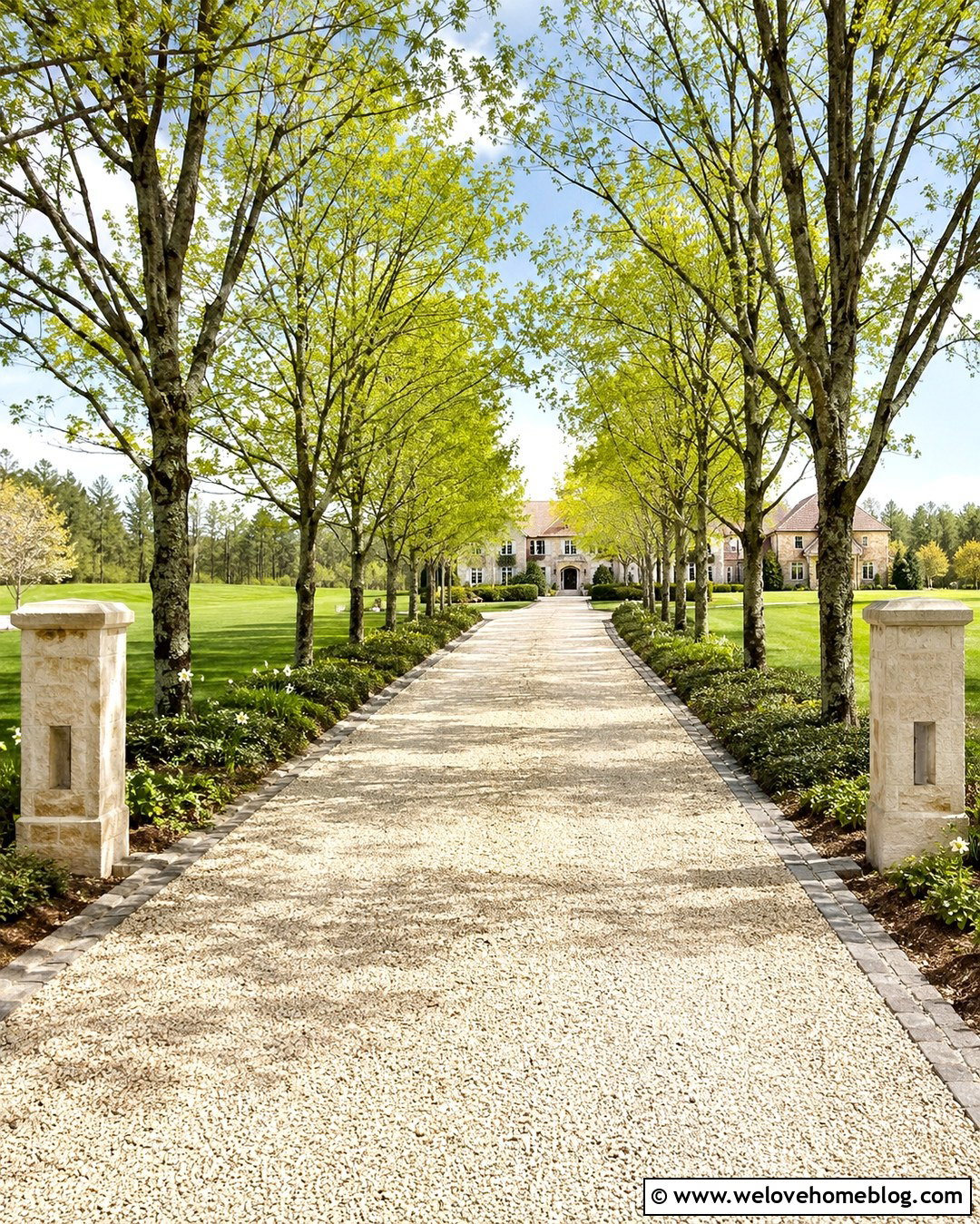
Rows of trees can make a long driveway entrance feel structured, calm, and connected to the house in the distance. Begin with a wide crushed-stone driveway between simple limestone posts, then establish evenly spaced deciduous trees along both sides. Use cobblestone edging to hold the pale gravel in place and maintain crisp boundaries against the lawn. Beneath the trees, plant a restrained layer of ground cover or spring bulbs instead of dense shrubs that could make the approach feel narrow. The entrance posts should repeat stone used on the home, front steps, or garden walls. Select trees with growth habits appropriate for the available space and position them far enough from the driving surface. This complete look is graceful, especially for country, farmhouse, and estate-style properties.
13. Hydrangea Driveway Entrance Landscaping
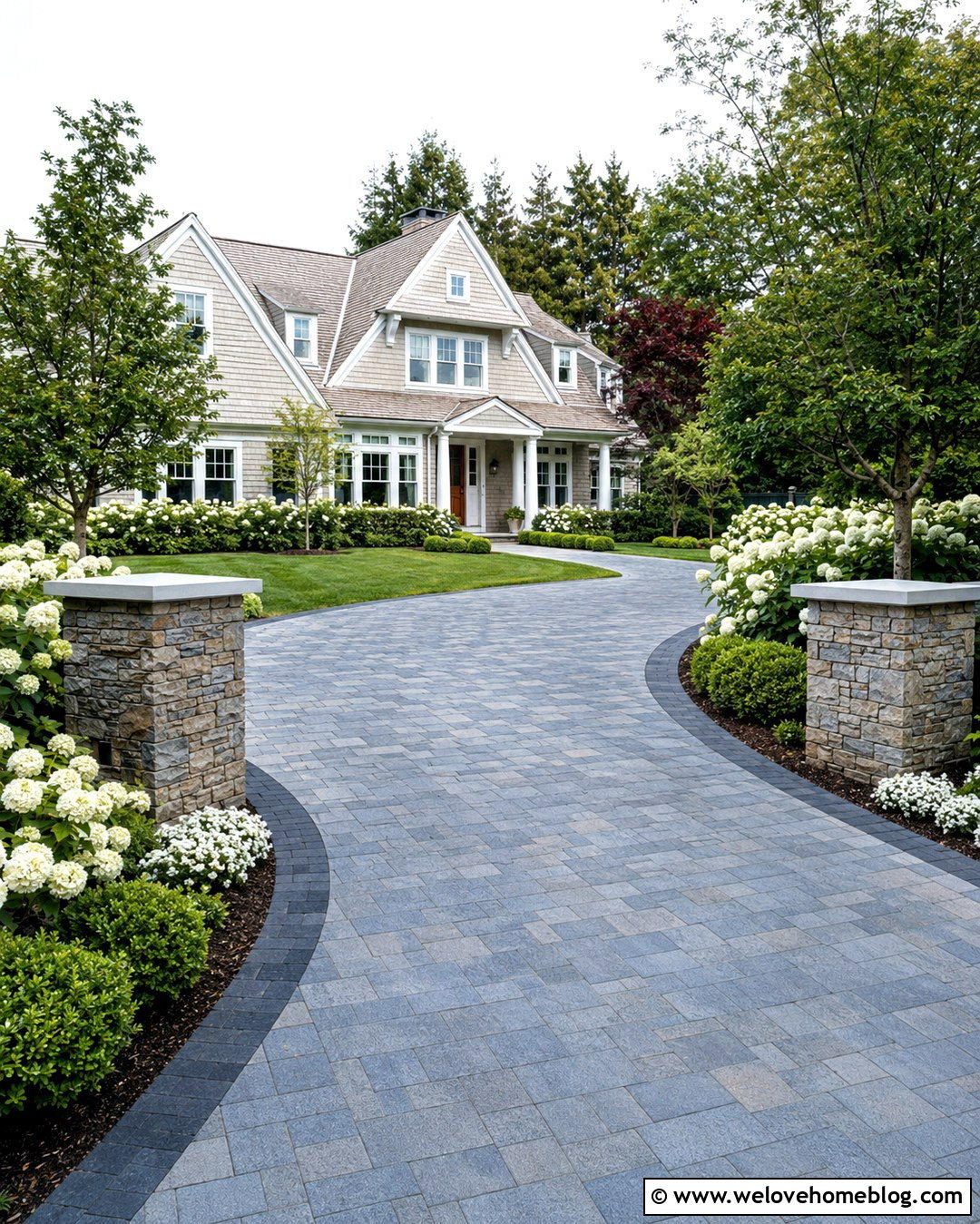
Large hydrangea borders can soften a paved entrance while creating abundant seasonal color. Pair white-flowering hydrangeas with a curved blue-gray concrete paver driveway and a narrow charcoal border. At the road, use two medium-height stone pillars with broad caps, then sweep the planting beds behind them to follow the driveway’s curve. Add low evergreen shrubs in front of the hydrangeas so the entrance retains structure when flowers are not present. A small ornamental tree on each side can add height without overwhelming the pillars. Keep enough distance between mature plants and the pavement to prevent branches from narrowing the driving area. This layered entrance looks particularly attractive with shingle, Cape Cod, cottage, and traditional homes, where its generous planting balances the hard lines of masonry and paving.
14. Low Hedge Driveway Entrance
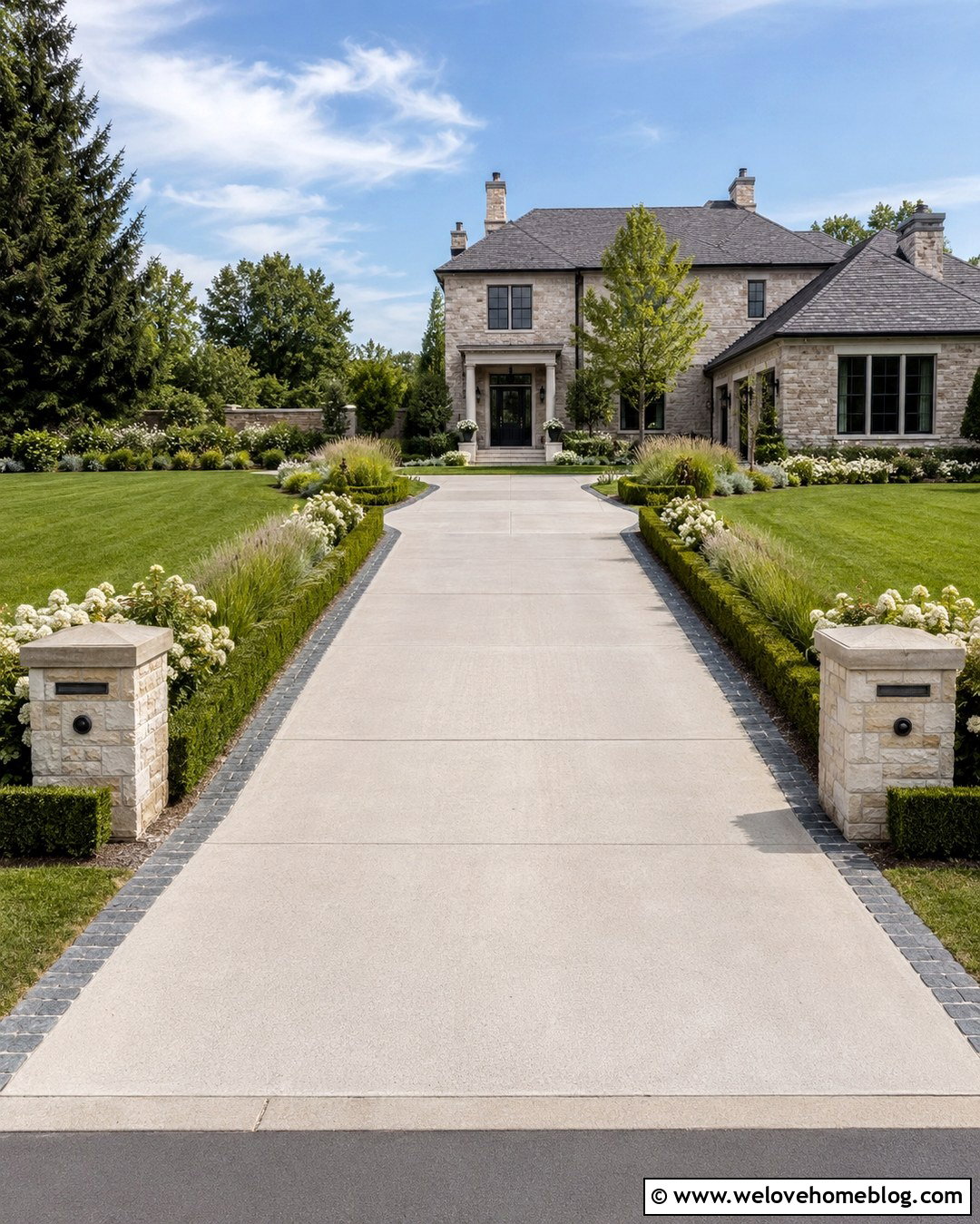
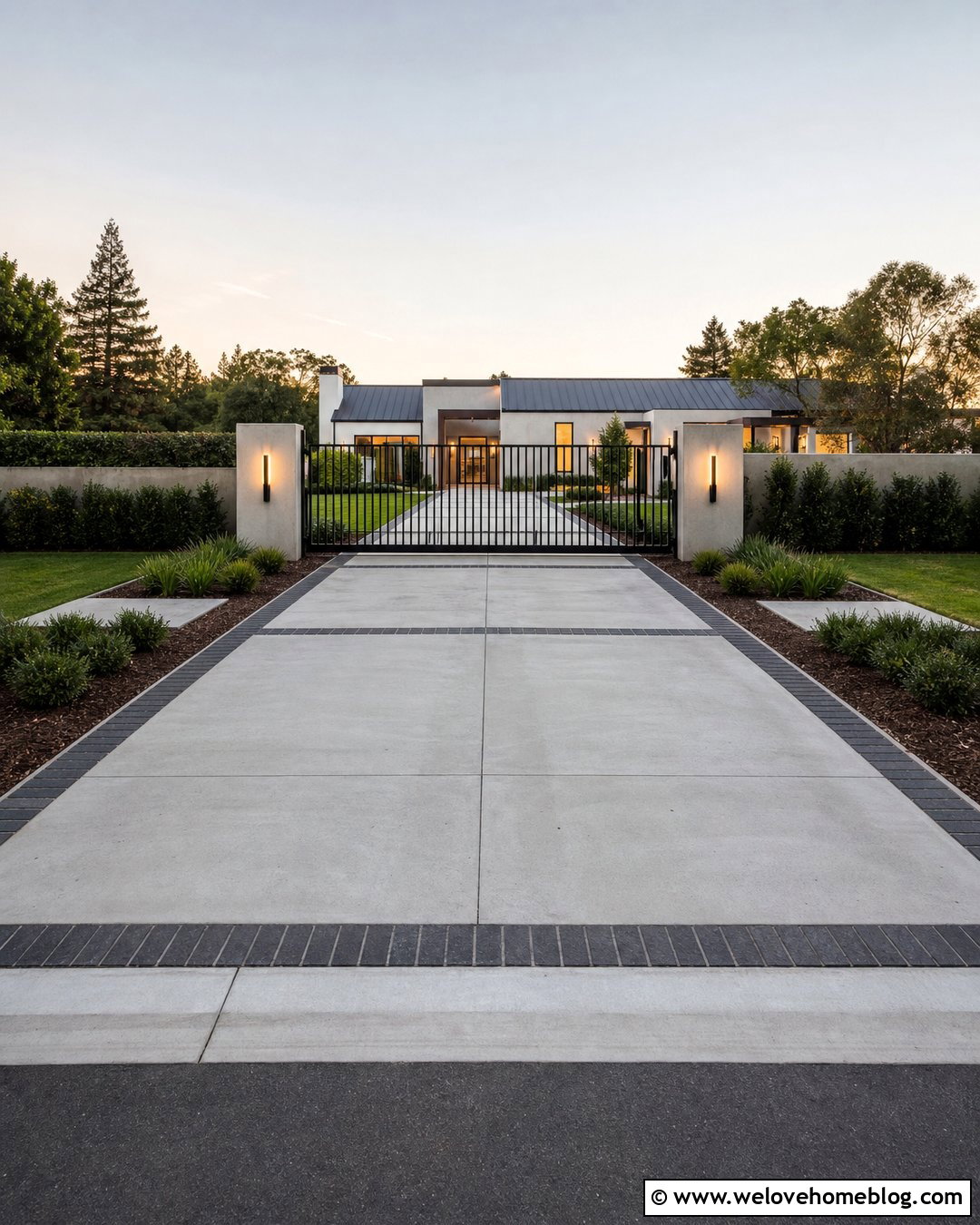
Low hedges give a driveway entrance formal definition while preserving open views of the house and street. Use a straight light-gray poured concrete driveway with a subtle broom finish, bordered by dark granite setts. Place square limestone posts at the entrance and extend neatly clipped boxwood hedges along both sides. Behind the hedges, add white roses, ornamental grasses, or seasonal flowers for depth and color. The hedge lines should follow the driveway’s geometry and connect visually with the front walkway. For a traditional home, use classic lanterns on the posts. For a transitional facade, choose simple rectangular fixtures. Regular trimming keeps this design looking intentional, so it suits homeowners who appreciate a polished landscape. The restrained planting also allows high-quality paving and architectural details to remain visible.
15. Driveway Entrance With Lantern Pillars
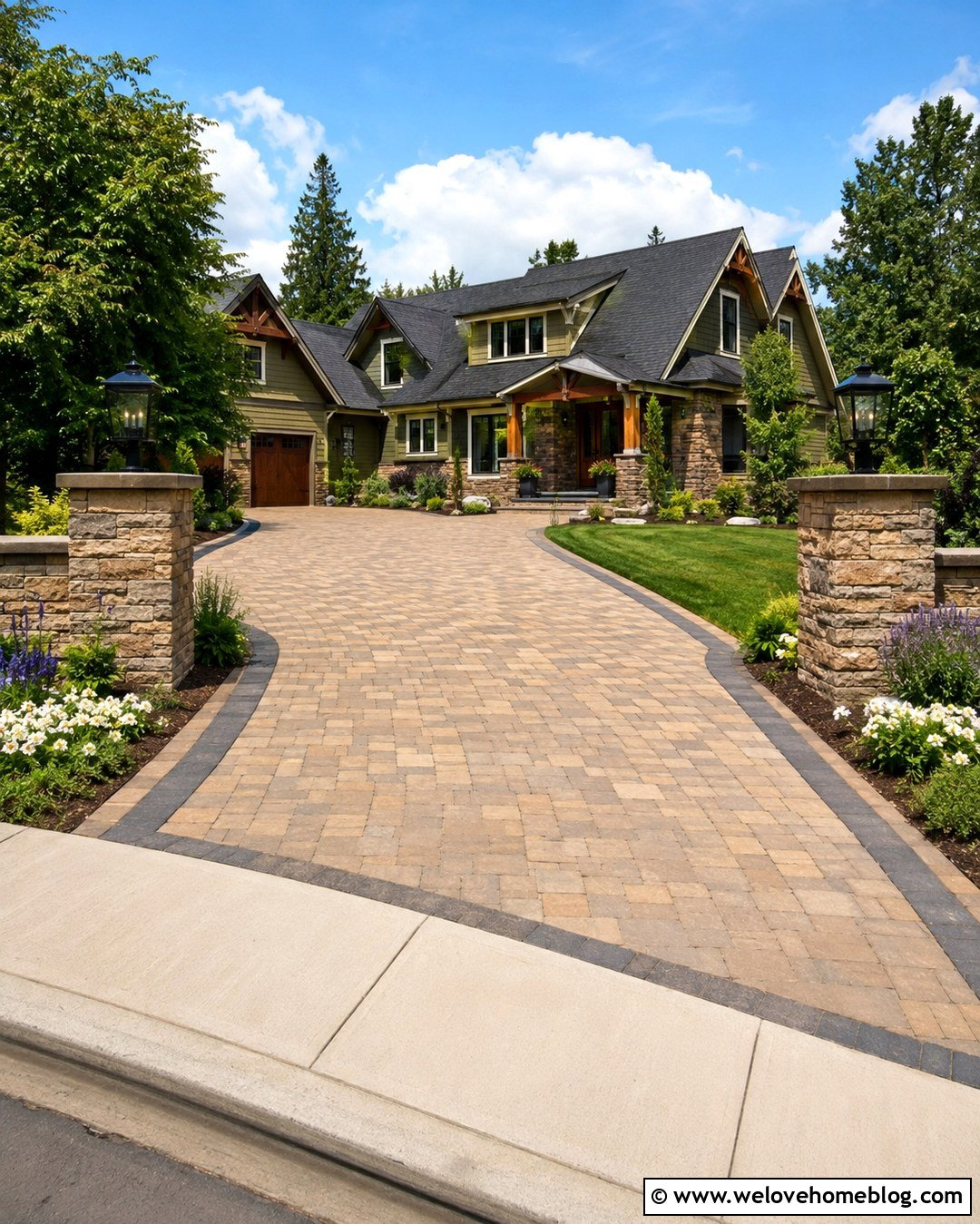
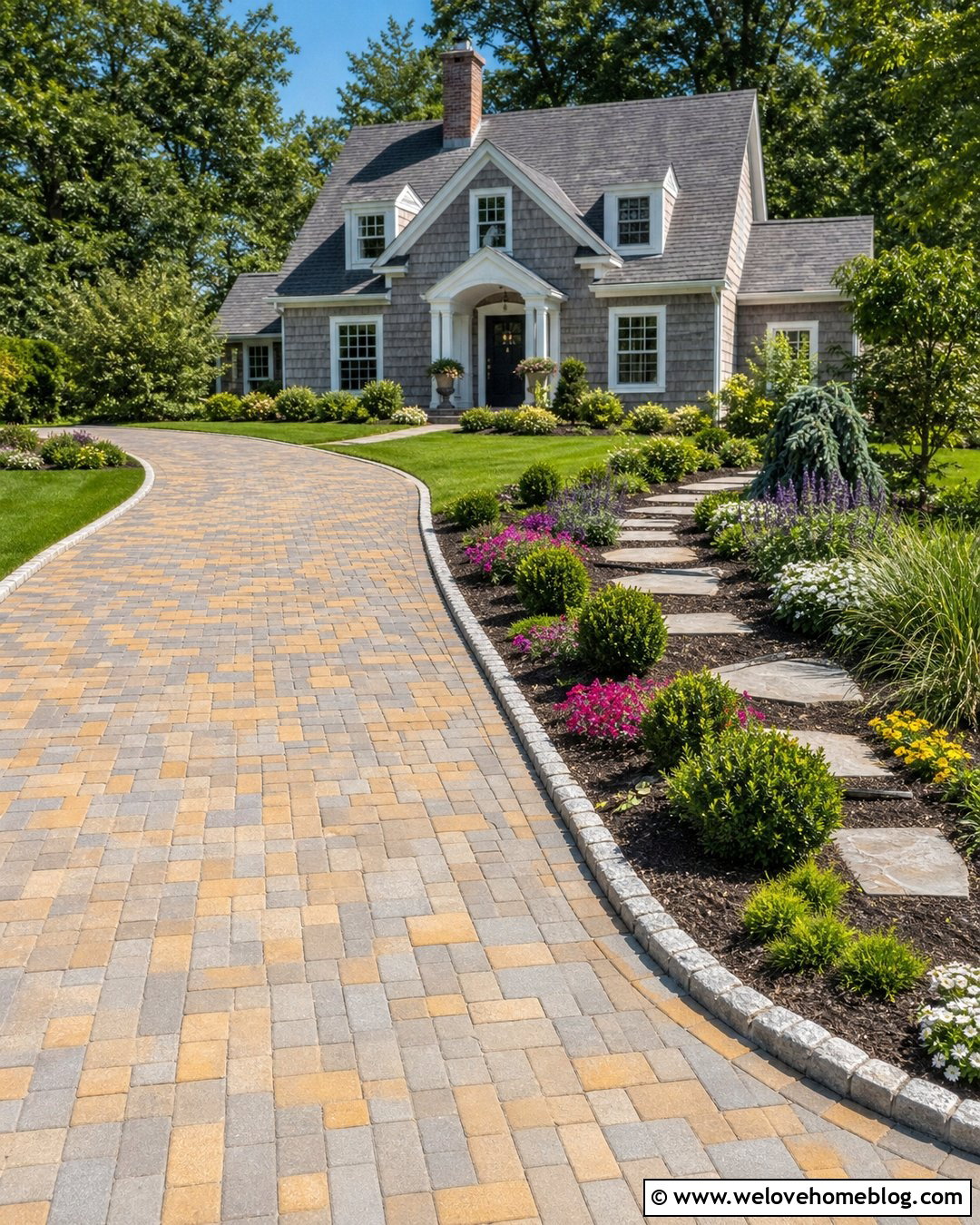
Lantern-topped pillars create a strong focal point during the day while making the driveway entrance easier to identify after sunset. Build the pillars from warm natural stone and pair them with a sweeping driveway of tan interlocking concrete pavers. A darker paver border can outline the curve and coordinate with bronze or black lantern frames. Extend low stone walls from the pillars, then soften their edges with compact evergreens, lavender, and white flowering perennials. Select fixtures that suit the scale of the masonry rather than choosing lanterns that look undersized. Electrical planning should happen before the pillars and surrounding paving are completed. Continue subtle lighting farther along the approach so the entrance does not feel disconnected. Used together, masonry, paving, plants, and lighting create a balanced arrival experience.
16. Driveway Entrance With Address Sign
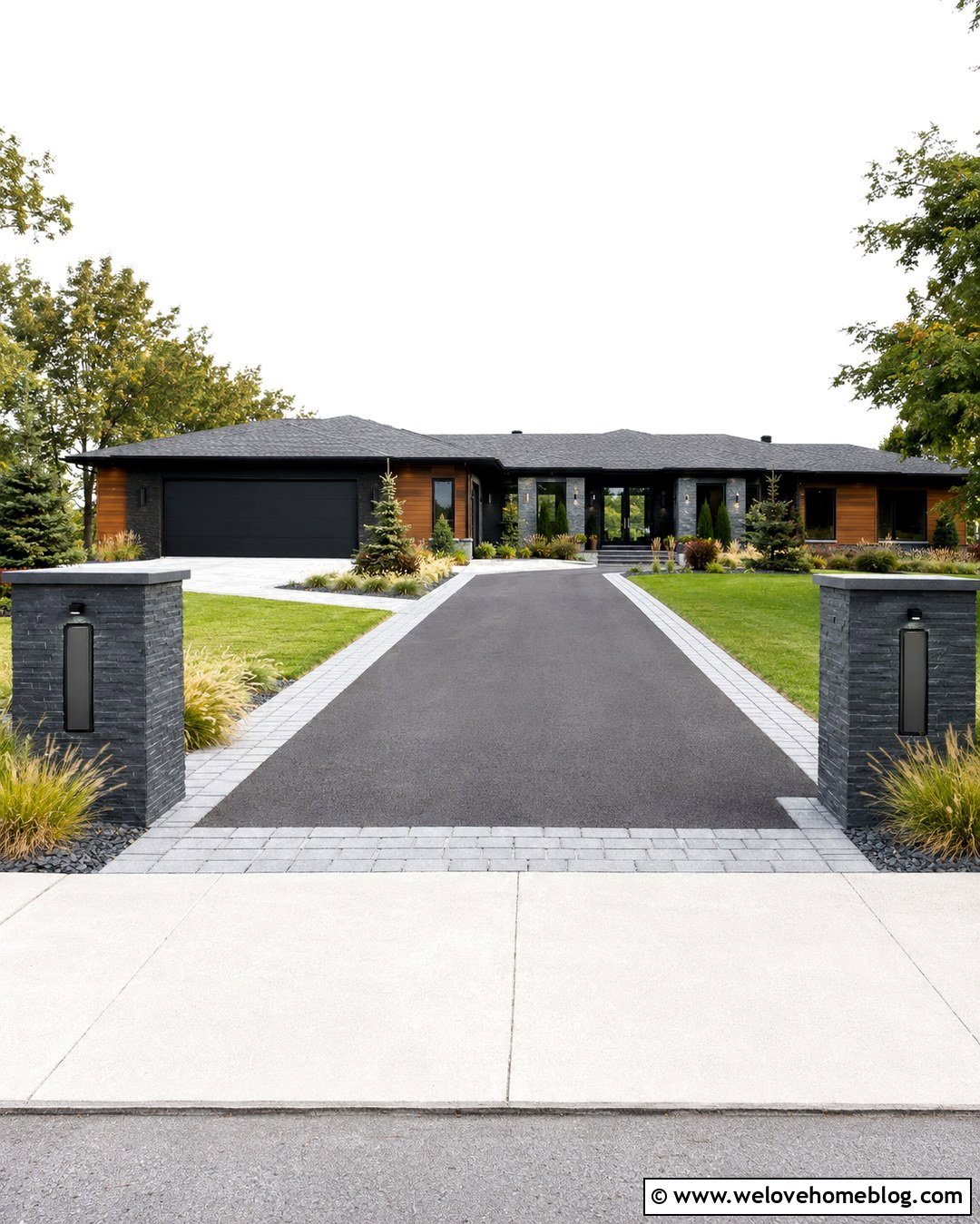
A well-integrated address sign can make a driveway entrance both elegant and easy to recognize. Place large, simple numbers on one slate-clad pillar and balance it with a matching pillar on the opposite side. Between them, use a straight black asphalt driveway finished with a wide border of gray concrete pavers. Plant low ornamental grasses and evergreen shrubs around the pillars, keeping the address area open and uncluttered. A directional light can illuminate the numbers without producing glare. Repeat the same slate or paver color in the front walkway to connect the entrance with the house. This design is especially effective on properties where the home sits far from the road. The sign feels like part of the architecture rather than a separate decorative object added beside the driveway.
17. Arched Driveway Entrance Gate
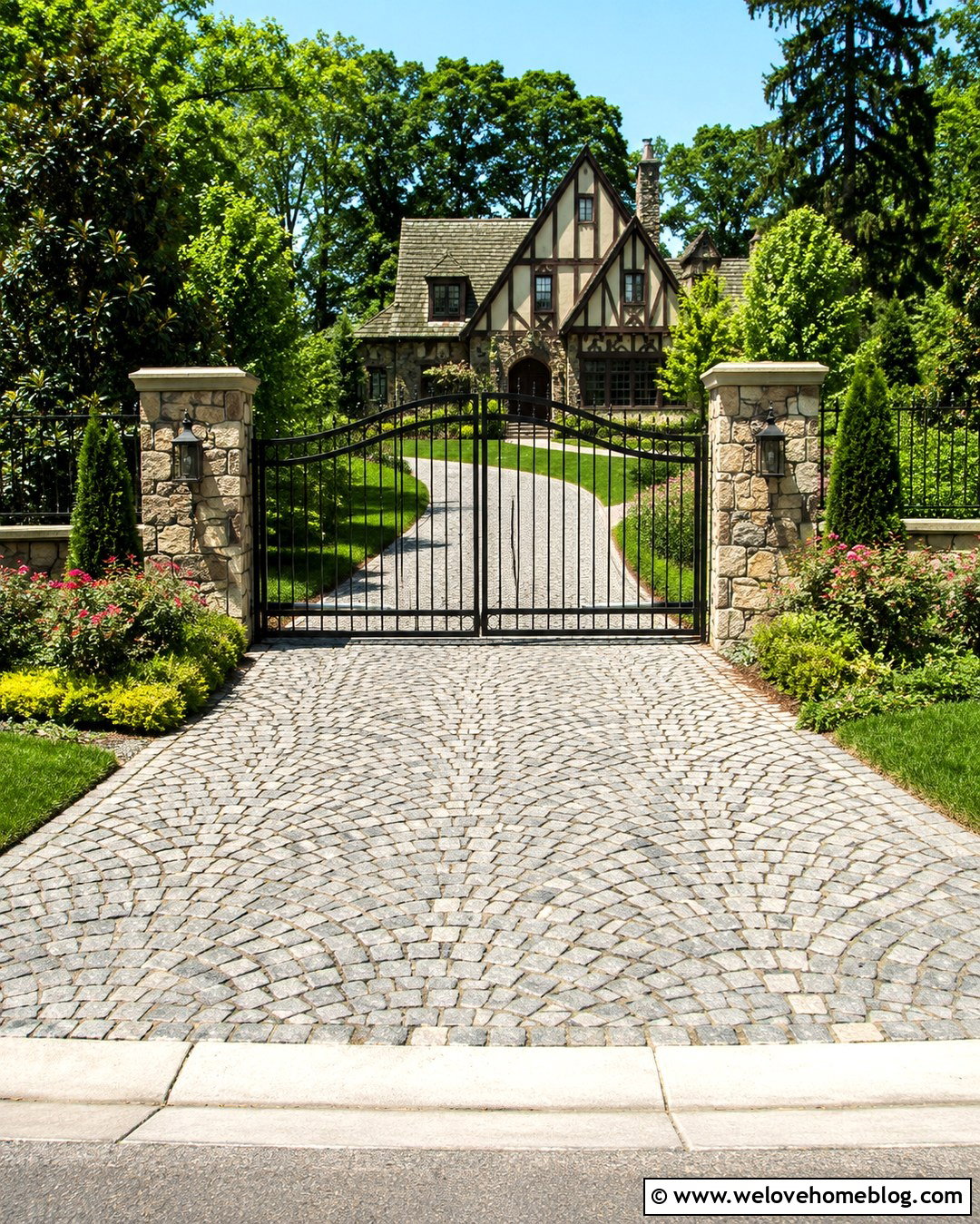
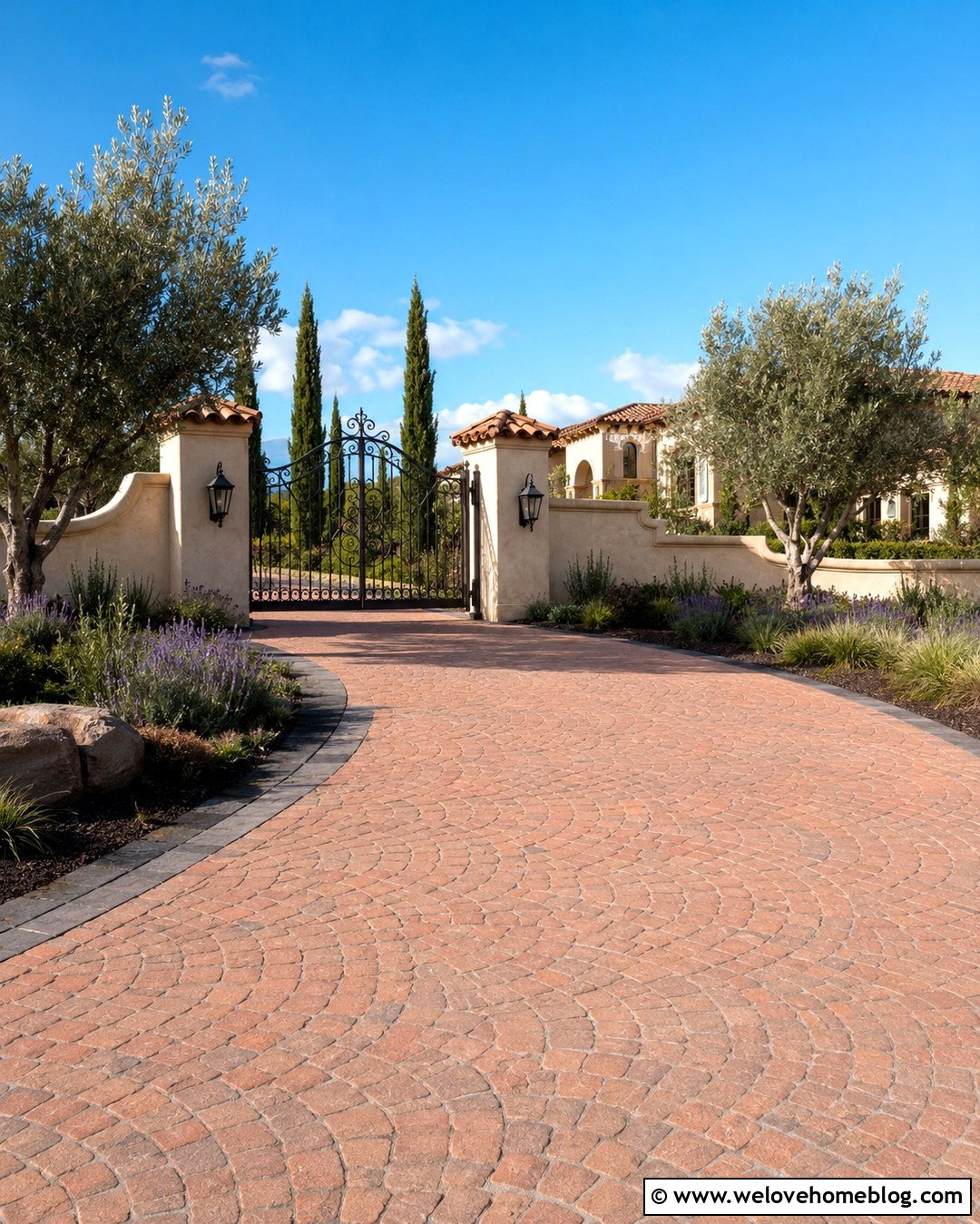
An arched gate adds height and ceremony to a driveway entrance while keeping the center visually open. Choose a gently curved black steel gate supported by buff-colored stone pillars. Continue inside with a fan-pattern cobblestone driveway that transitions into a curved approach toward a Tudor or European-inspired home. Short stone walls and matching metal fence panels can extend from the pillars, creating a complete boundary. Use upright evergreens to echo the gate’s height, then layer lower roses and ground cover around their bases. Avoid heavy ornamentation if the cobblestone already supplies strong texture. The gate arch should complement the shape of nearby windows, doorways, or rooflines when possible. This repetition helps the entrance look appropriate for the house instead of feeling like an unrelated feature placed at the roadside.
18. Split Rail Fence Driveway Entrance
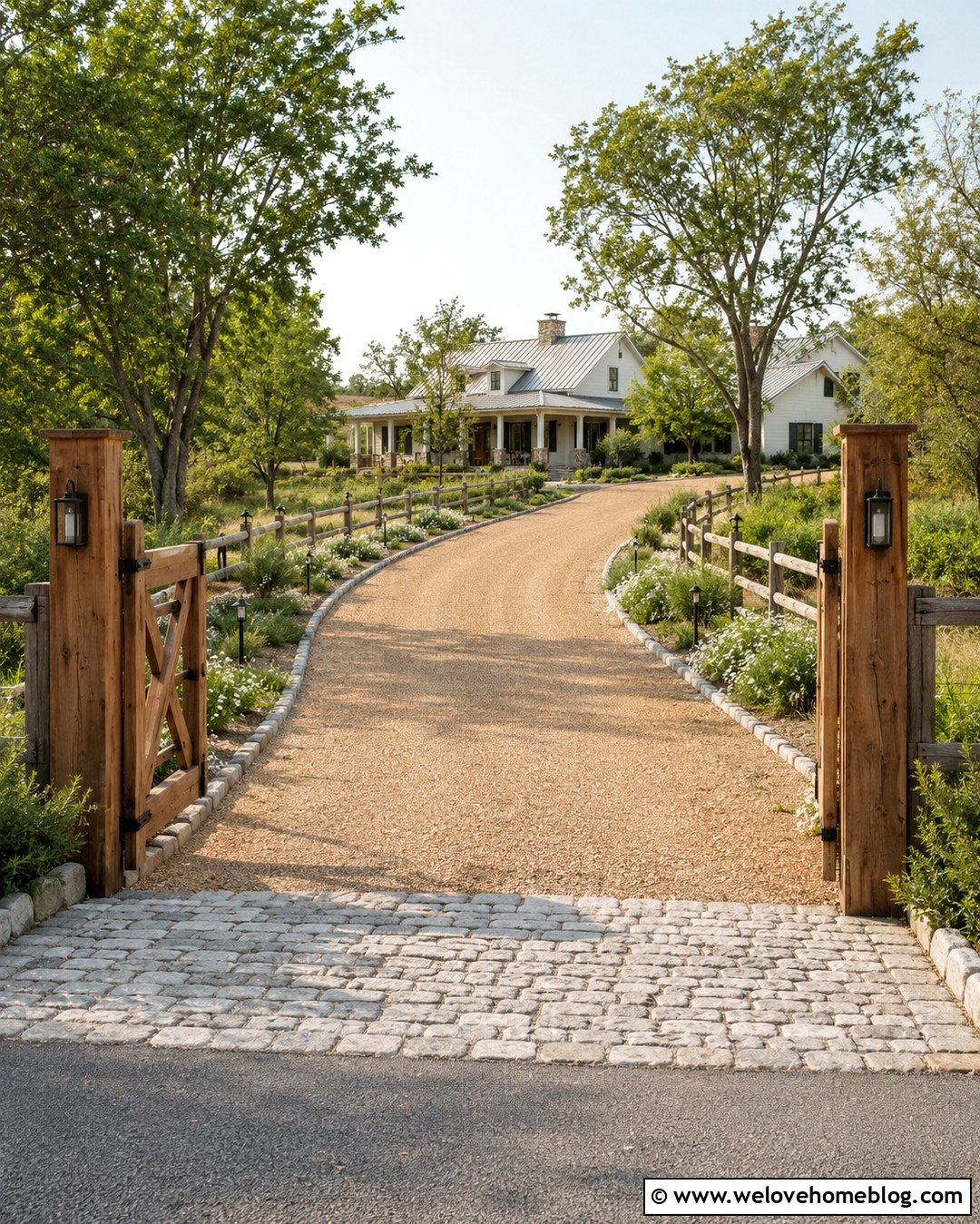
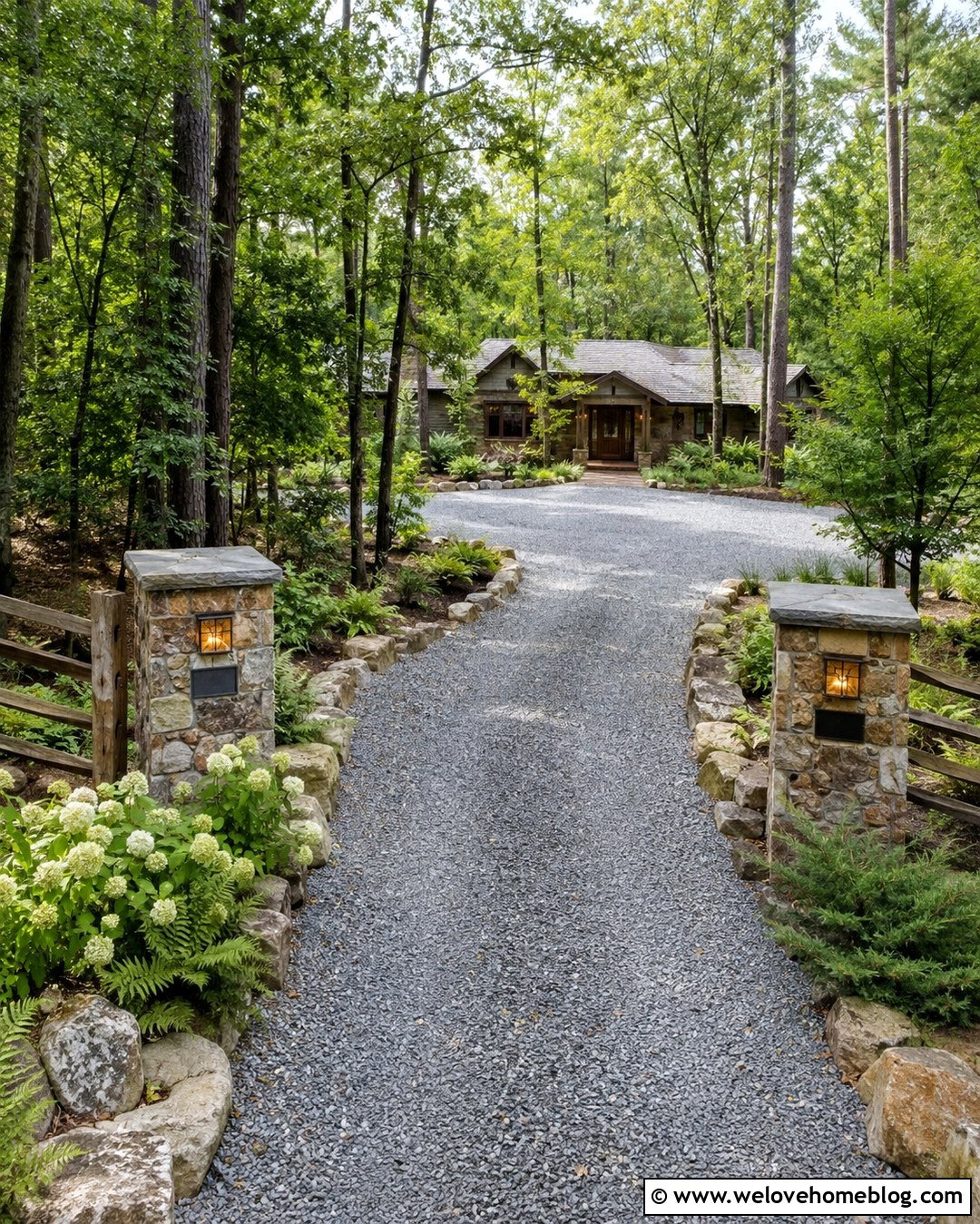
A split rail fence entrance can look polished when rustic materials are balanced with clean edges and thoughtful planting. Use a warm brown gravel driveway in a gently winding layout, framed at the road by substantial timber posts and a simple open wood gate. Continue split rail fencing along both sides, then add a cobblestone apron to create a durable-looking transition from the street. Plant native grasses, white flowering perennials, and small groups of flowering shrubs around the fence without hiding its structure. A pair of understated black post lights can add a refined finishing touch. This design feels natural beside ranch, farmhouse, cabin, and country homes. Keeping the fence lines orderly and the gravel neatly contained prevents the rustic entrance from appearing unfinished or overly casual.
19. Coastal Driveway Entrance
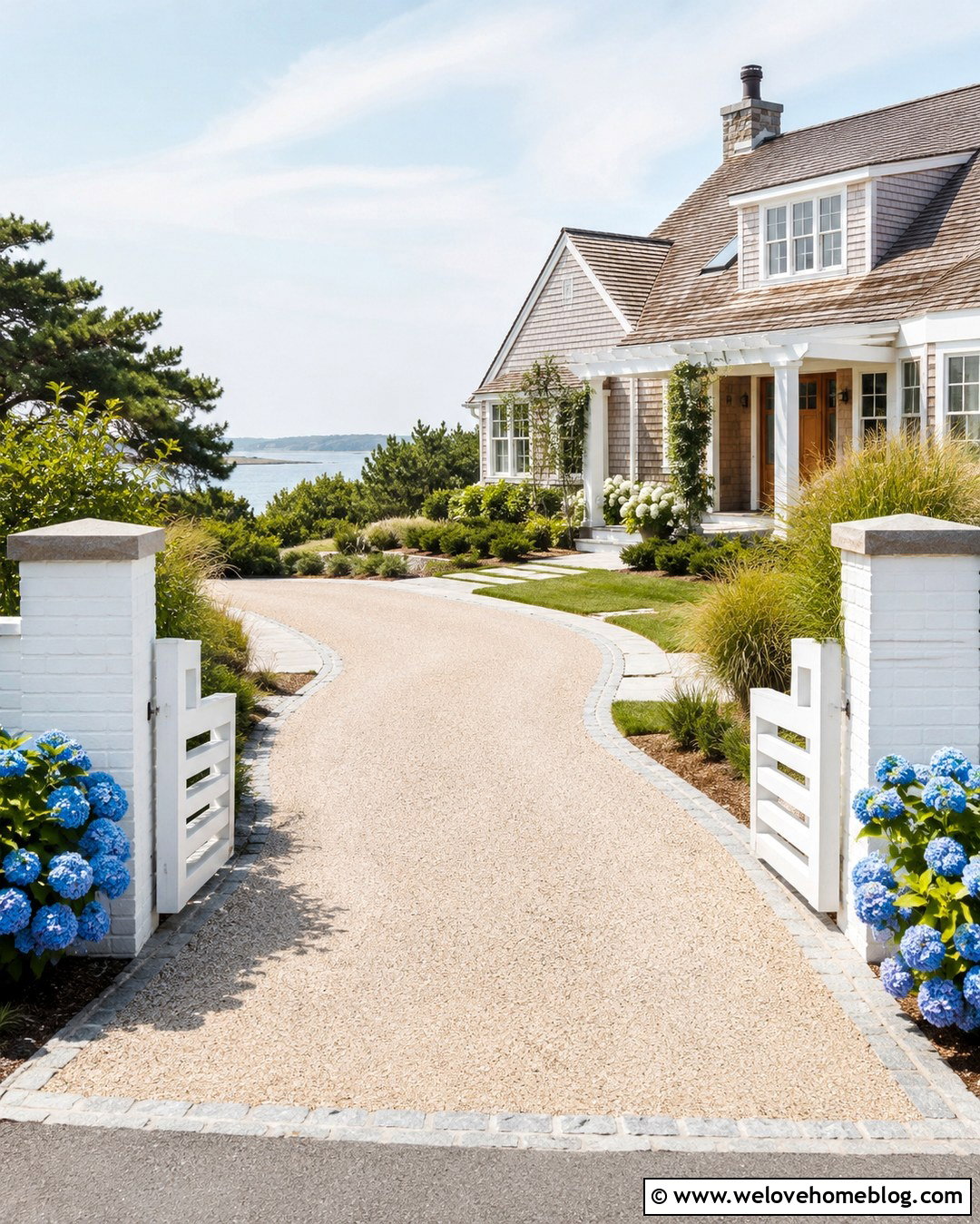
A coastal driveway entrance should feel bright, airy, and resistant to visual clutter. Begin with white-painted masonry pillars and a pale shell-colored resin-bound gravel driveway leading to a shingle-style or coastal cottage home. Add a narrow border of light-gray granite setts to define the curved approach. A simple white slatted gate can provide separation while maintaining the open character of the landscape. Surround the entrance with blue hydrangeas, beach grasses, low junipers, and other salt-tolerant-looking plants suited to the setting. Black or brushed metal lanterns create contrast without making the design feel formal. Keep the palette limited to pale stone, white architectural elements, blue-green foliage, and natural wood accents. Together, these features create relaxed elegance while clearly marking the driveway from the road.
20. Small Driveway Entrance Landscaping
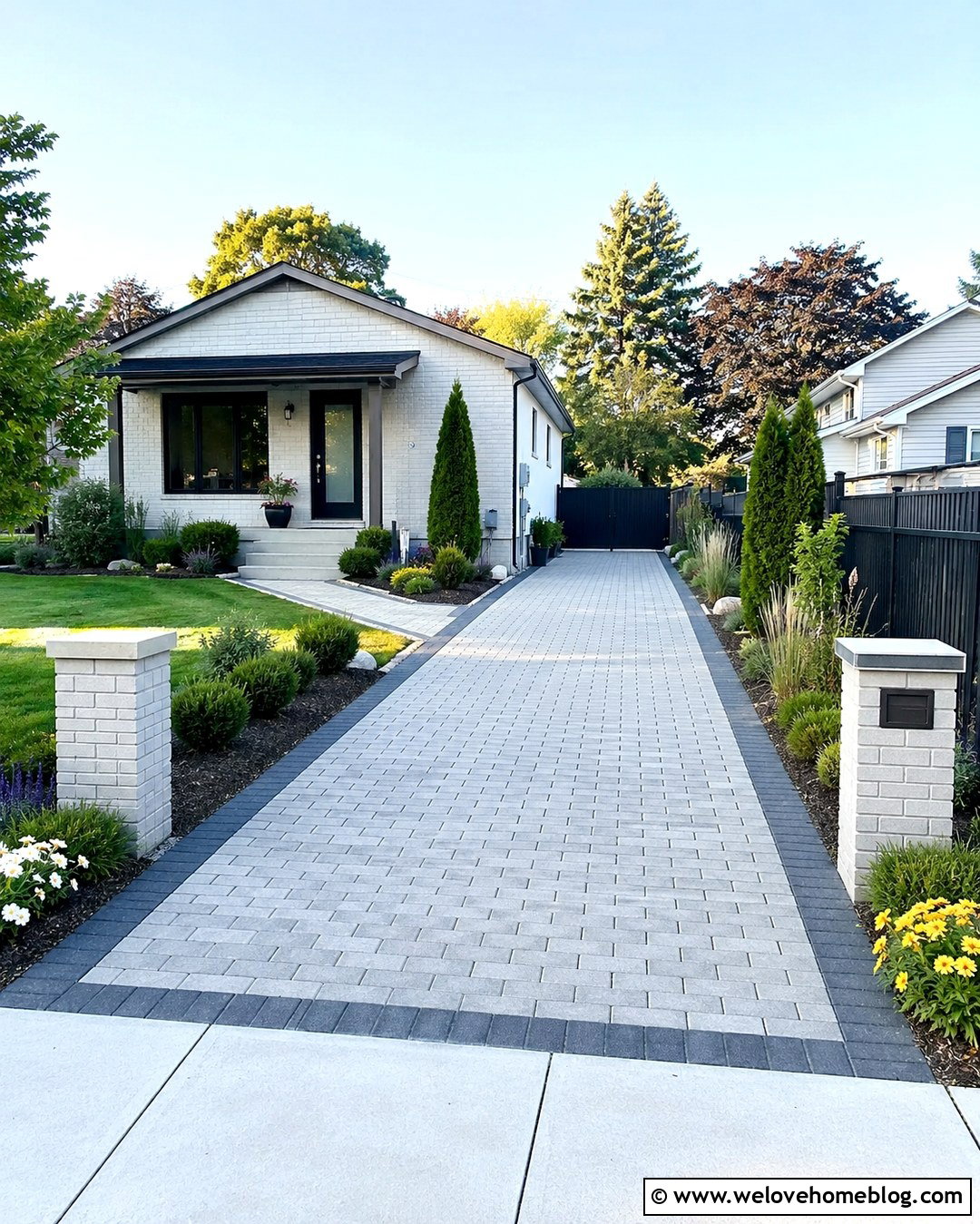
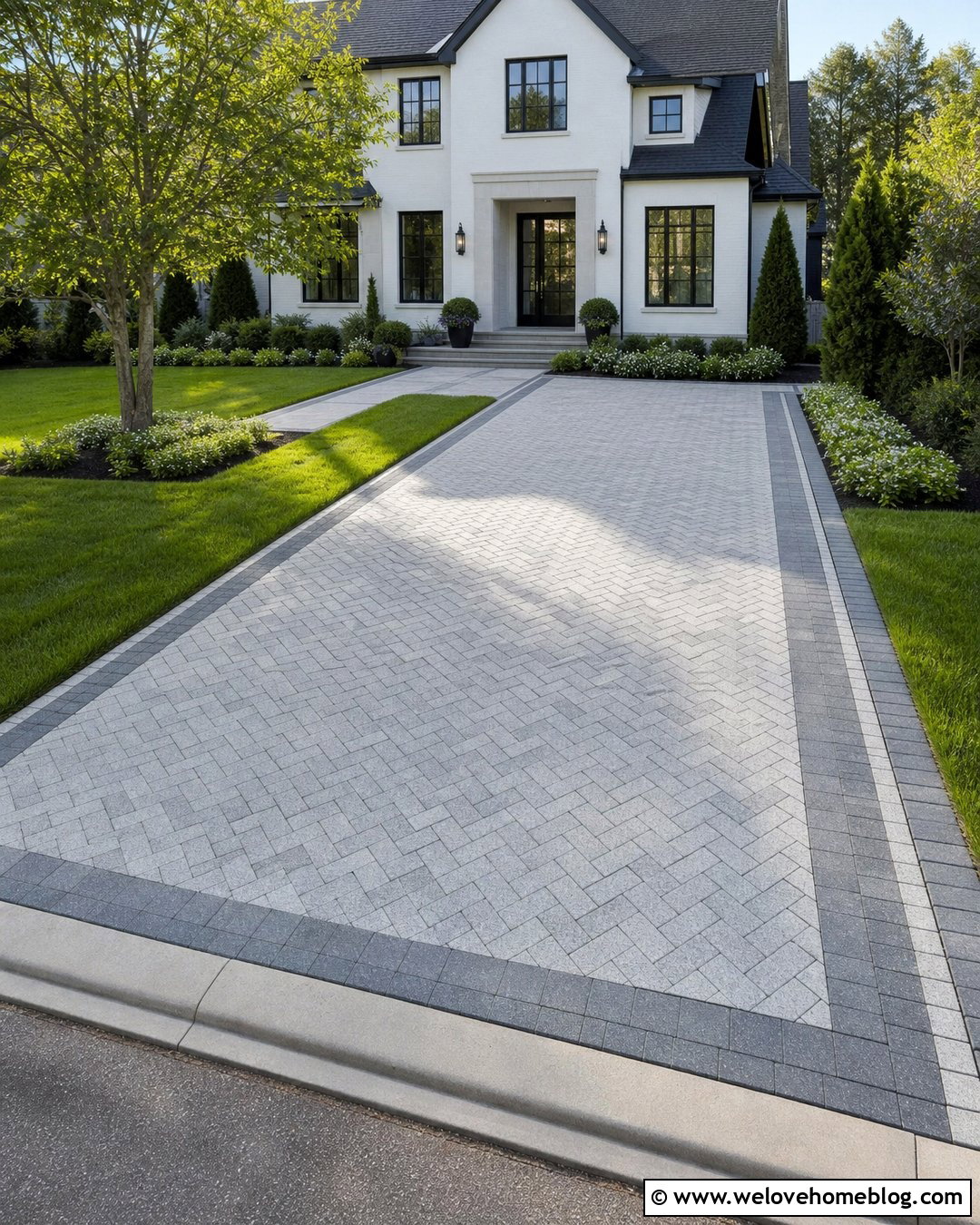
Even a short, narrow driveway can have an elegant entrance when every detail serves a clear purpose. Use a straight driveway of medium-gray permeable concrete pavers with a darker border that defines the edges. Instead of bulky pillars, install two slim brick posts or compact stone markers near the street. Low planting beds can hold dwarf evergreens, ornamental grasses, and a few long-blooming flowers without reducing usable driving space. Add a narrow coordinating walkway beside the driveway so pedestrians have a clear route to the front door. A wall-mounted or post-mounted address plaque provides identity without adding clutter. Keep plant heights low near the entrance and repeat only a few materials. This restrained approach makes the driveway appear wider, tidier, and better connected to the home.
Conclusion:
The most successful 20 Elegant Driveway Entrance Ideas treat the entrance, driveway surface, landscaping, and house as one connected composition. Stone pillars can bring traditional character, while metal gates, smooth concrete, and restrained planting suit contemporary homes. Gravel, brick, asphalt, pavers, and resin-bound surfaces can all look refined when their borders and transitions are carefully planned. Before building, consider vehicle clearance, views of the road, drainage, lighting, gate operation, and long-term landscape growth. Most importantly, repeat colors or materials already found on your home. Whether you have a compact suburban lot or a long country approach, a coordinated entrance can make the entire property feel more welcoming, intentional, and complete.

Related posts:
Leave a Reply