
Traditional driveways combine practical access with materials, shapes, and landscaping that feel connected to the home’s architecture. Brick, cobblestone, gravel, natural stone, asphalt, and concrete can all create a classic look when their colors and patterns complement the facade. Borders, entrance pillars, mature trees, clipped hedges, and traditional lighting help the driveway feel like part of the property rather than a plain parking area. The best layout also fits the available yard, whether that means a compact straight drive, a graceful curve, or a circular approach with a landscaped center. These 20 Traditional Driveway Ideas offer complete designs for Colonial, Craftsman, Cape Cod, Tudor, farmhouse, cottage, and other enduring American homes. Explore the following 20 Traditional Driveway Ideas for practical ways to improve character, function, and curb appeal.

1. Brick Traditional Driveway
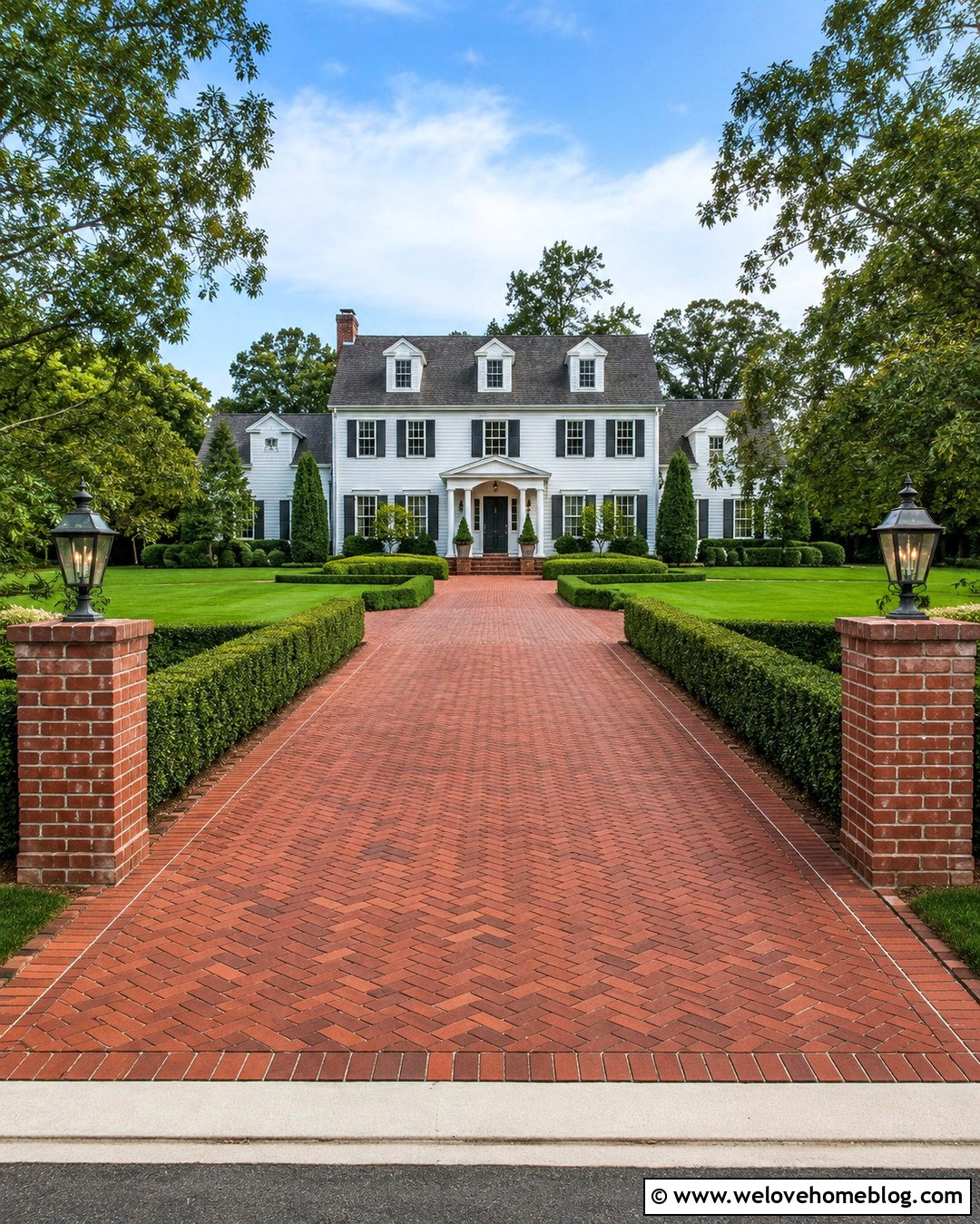
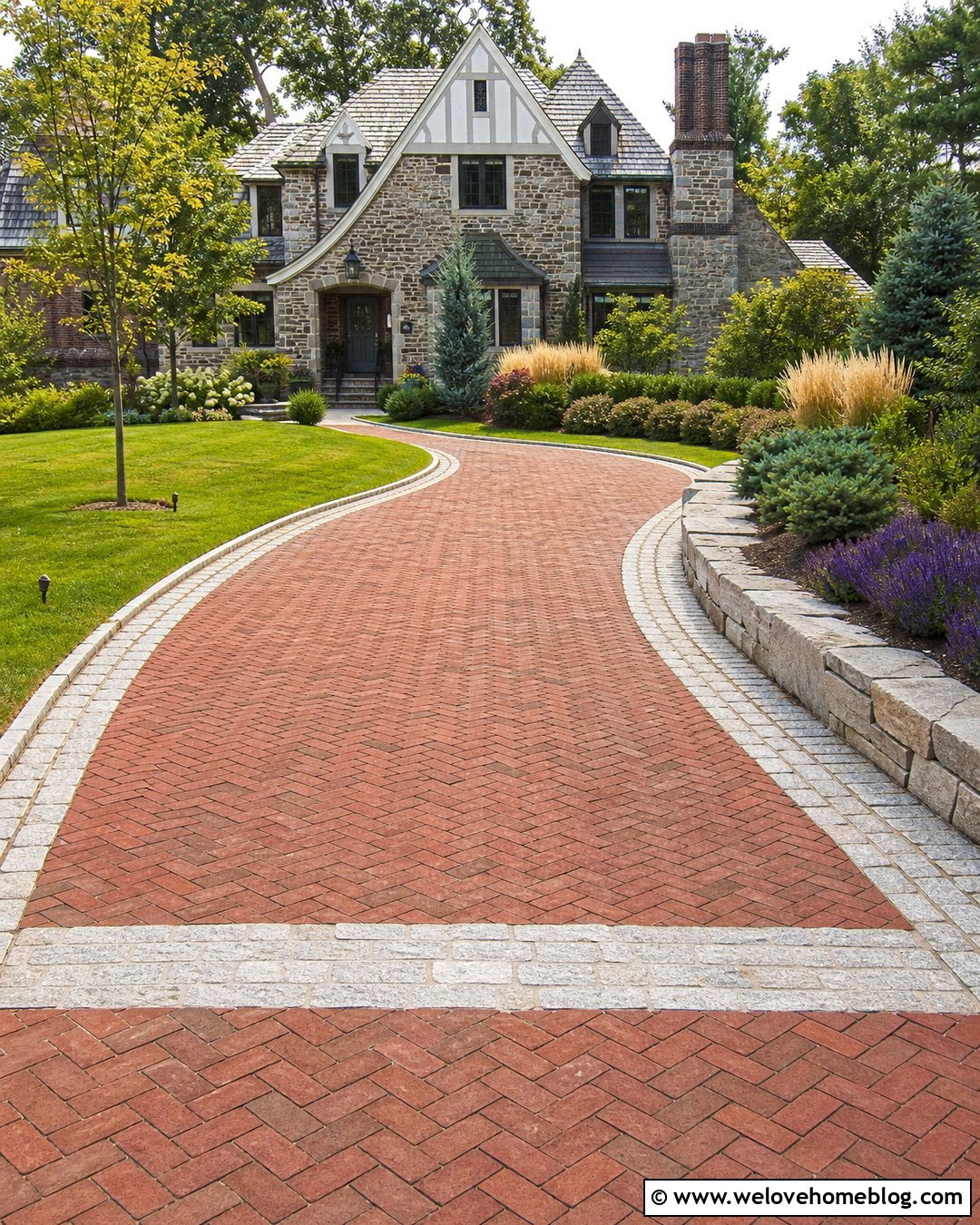
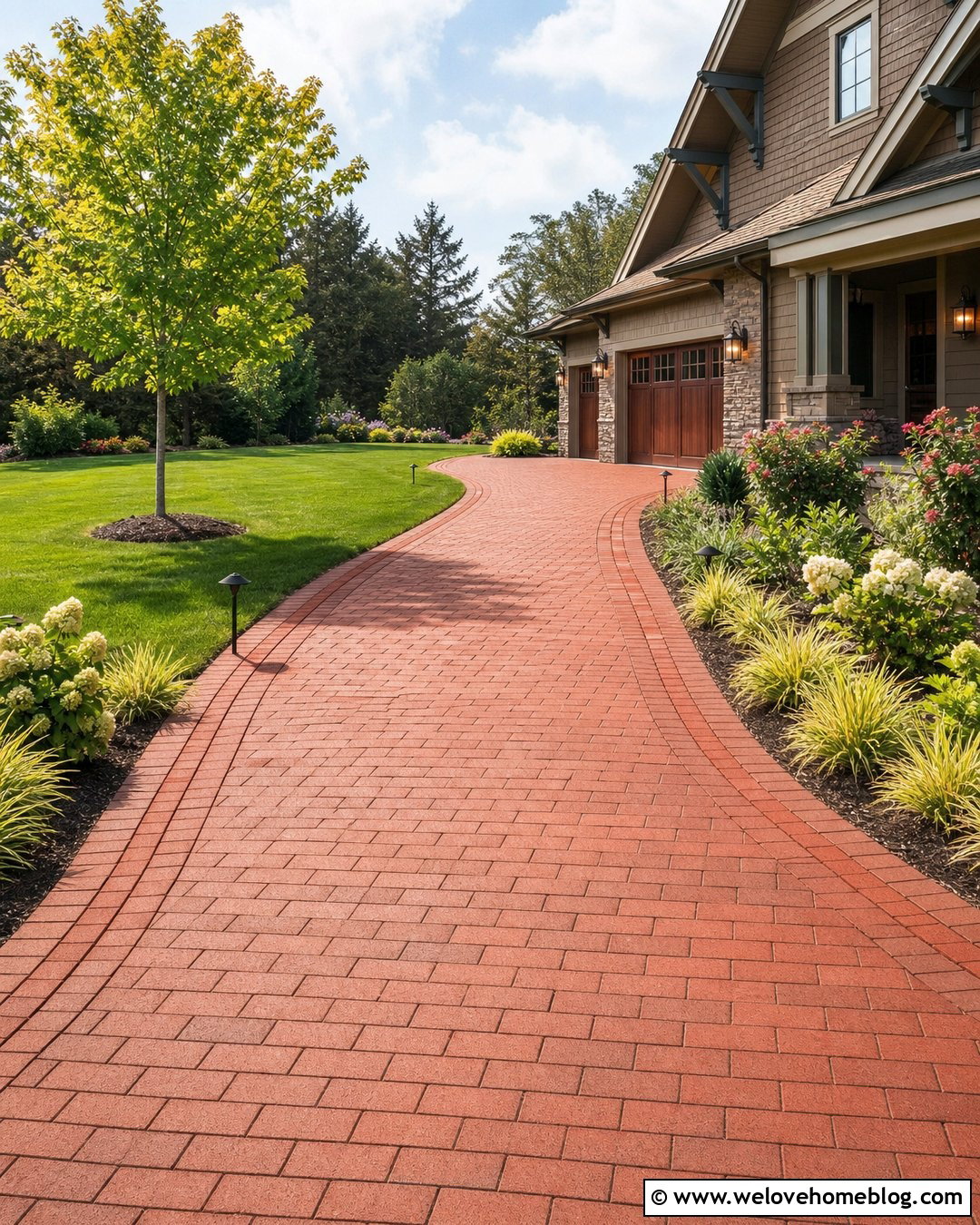
A red brick driveway brings warmth and historic character to a traditional home. Use clay brick pavers in a herringbone pattern to create visual movement and improve the surface’s interlocking appearance. A straight layout works especially well with a symmetrical Colonial house, while soldier-course brick edging gives the perimeter a clean finish. Frame the driveway with clipped boxwood hedges, green lawn, and matching brick walkways leading toward the front door. Dark bronze lanterns can repeat the home’s traditional exterior hardware without making the entrance feel overly formal. Choose brick colors that relate to the facade, chimney, or porch steps. Subtle color variation usually looks more natural than a perfectly uniform red surface, especially around an older home.
2. Gravel Traditional Driveway
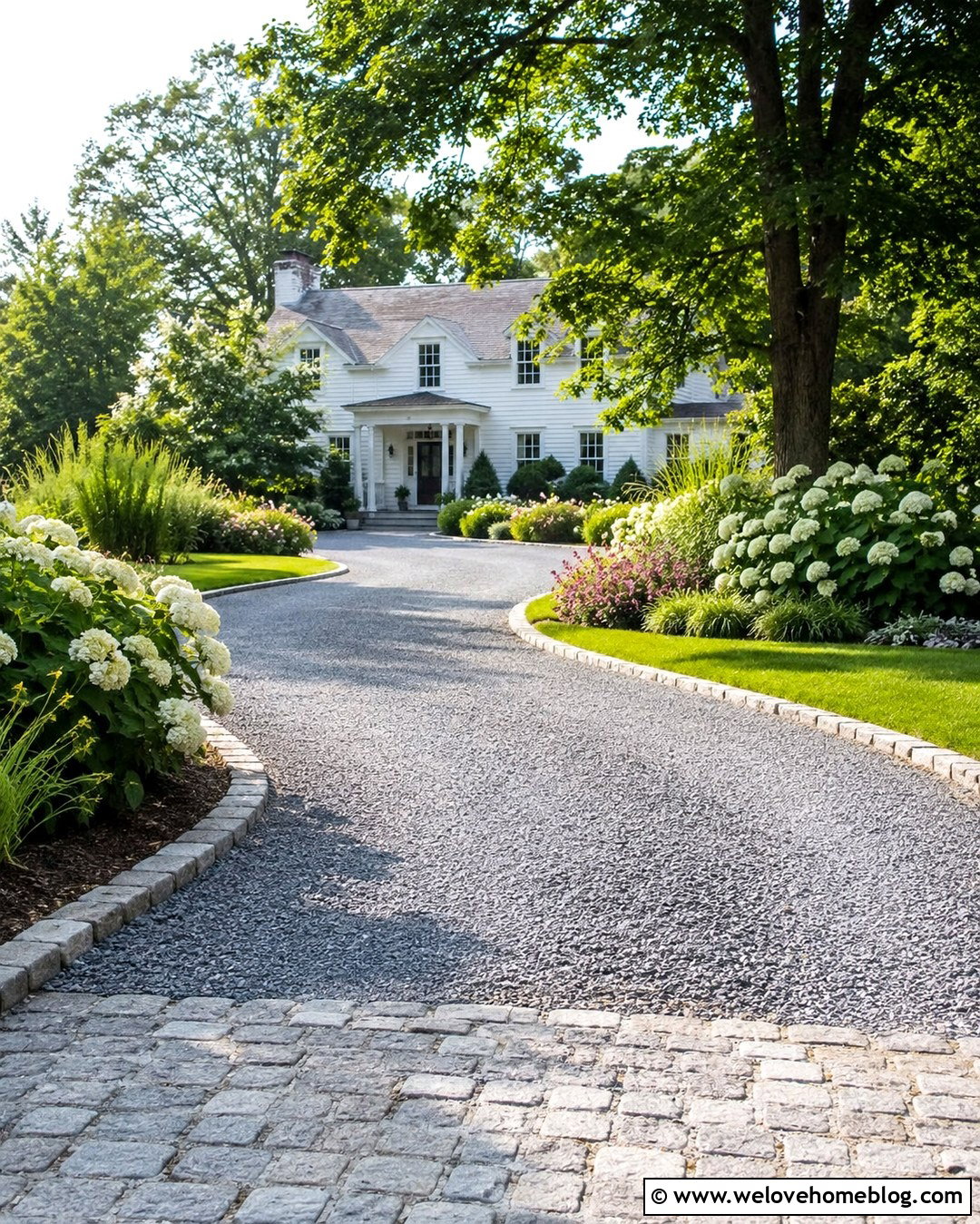
The gentle texture of gravel can make a country property feel relaxed, established, and welcoming. A curved driveway covered with compacted gray crushed stone suits farmhouses, cottages, and traditional homes surrounded by mature landscaping. Install a stable aggregate base beneath the decorative layer to support regular traffic. Cobblestone edging helps contain loose stone and gives the driveway a more finished appearance. Along the curves, use broad planting beds filled with hydrangeas, ornamental grasses, flowering perennials, and low evergreen shrubs. A stone apron at the street can define the entrance and reduce gravel movement near the road. Keep plants far enough from the driving surface to prevent overgrowth. Periodic raking and replenishment will preserve the driveway’s smooth, evenly covered look.
3. Cobblestone Traditional Driveway
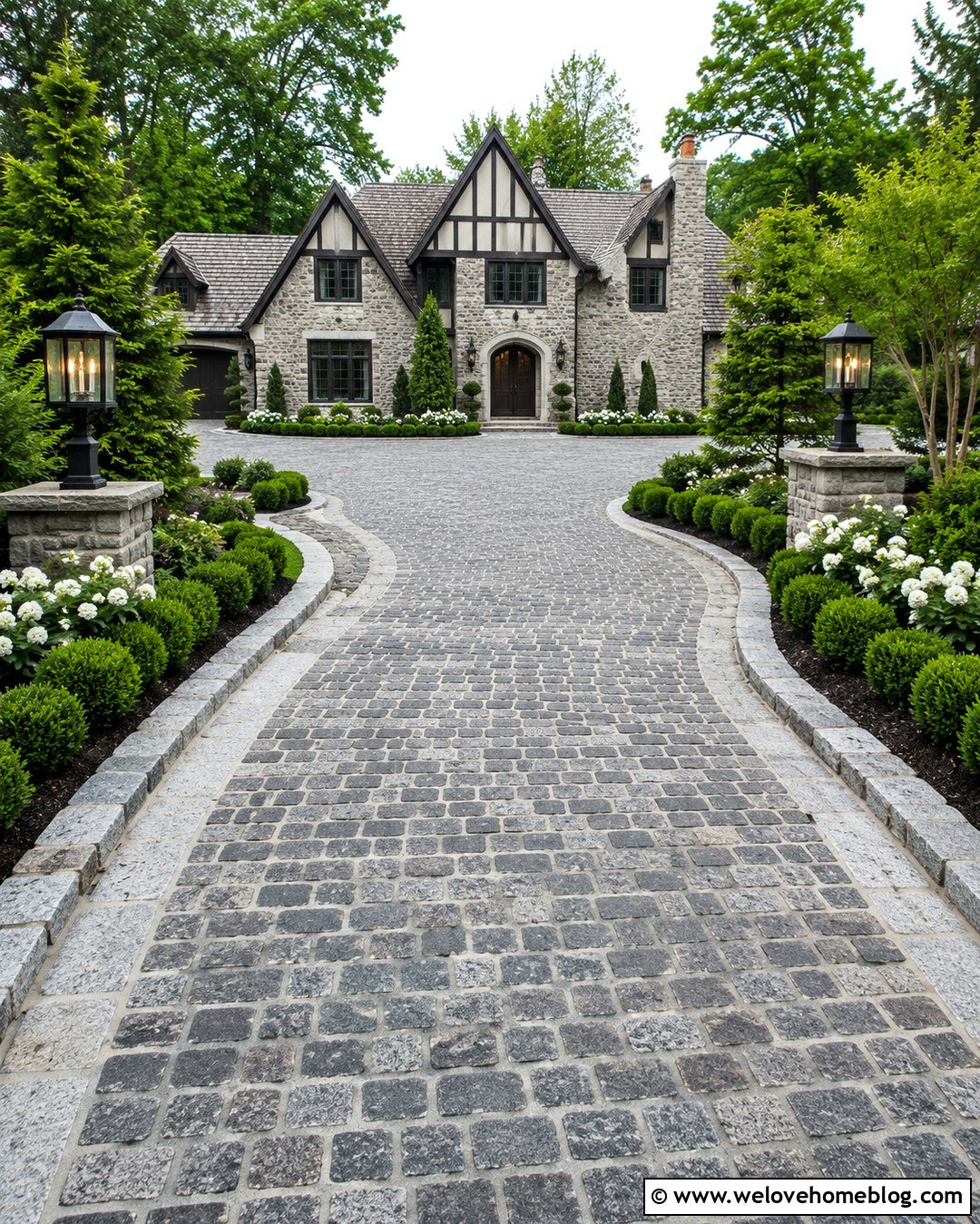
For an entrance with unmistakable old-world character, consider a full cobblestone driveway in mixed gray and charcoal tones. The natural color variation pairs beautifully with stone houses, Tudor facades, and substantial traditional residences. A gently sweeping layout keeps the extensive masonry from appearing rigid. Use larger granite blocks as a contrasting perimeter, then soften the edges with low boxwood, white roses, and layered evergreen planting. Wide joints can produce a rustic appearance, while tighter, more consistent joints create a formal finish. Proper base preparation is essential because the individual stones need even support under vehicle traffic. Continue the cobblestone into a generous front landing or motor court so the approach feels unified. Traditional lantern posts can highlight the entrance without competing with the richly textured surface.
4. Circular Traditional Driveway
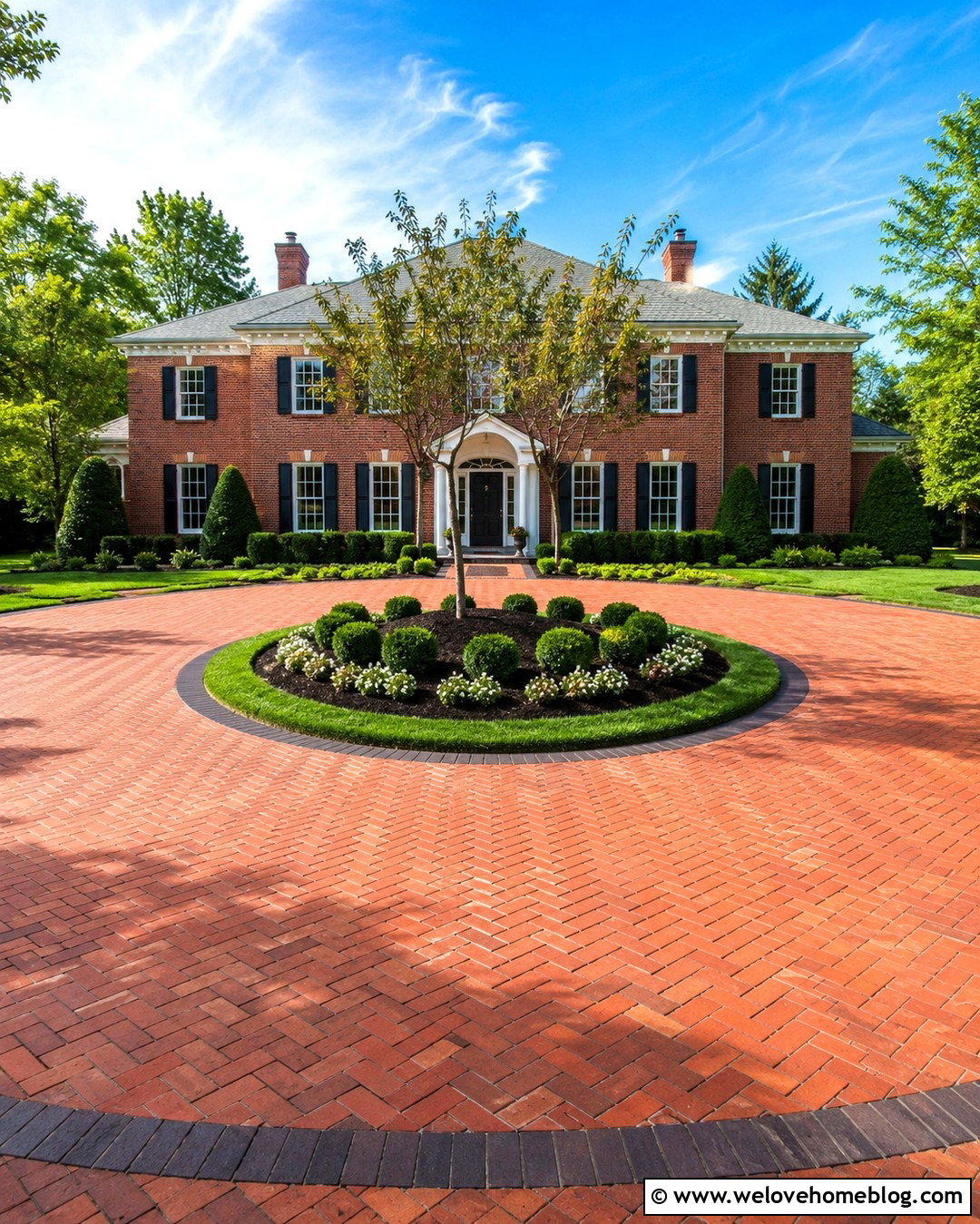
A circular driveway creates a graceful arrival sequence while allowing vehicles to approach and leave without backing toward the street. For a traditional design, use warm-toned brick pavers arranged in a running bond or herringbone pattern. Place a round lawn or landscaped island at the center to soften the hardscape. A small ornamental tree surrounded by boxwood, seasonal flowers, and dark mulch can become the main focal point. Define the outer driveway edge with a darker brick soldier course that follows the circle precisely. This layout complements symmetrical Colonial, Georgian, and French-inspired homes with centered entrances. Keep the island planting low near traffic areas so drivers retain clear sightlines. Matching brick steps and a direct front walkway complete the balanced, formal composition.
5. Asphalt Traditional Driveway
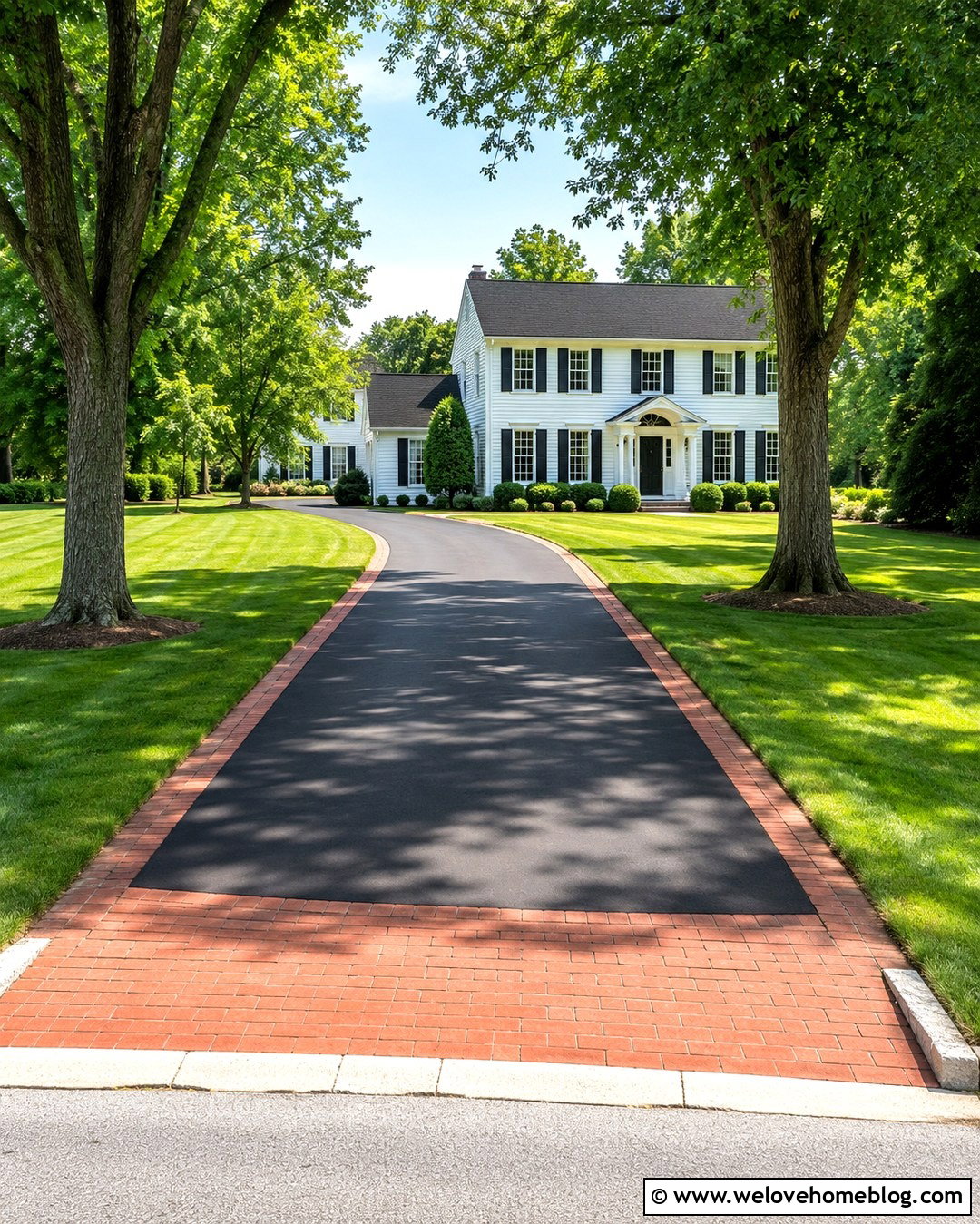
Black asphalt can support a traditional exterior when it is paired with thoughtful borders and landscaping. Use a smooth asphalt surface for a long, slightly curved driveway leading toward a white Colonial or Cape Cod house. Add a double row of red clay brick along both sides to introduce color, detail, and a connection to traditional architecture. A coordinating brick apron at the street makes the entrance look intentional rather than purely functional. Frame the route with open lawn, mature shade trees, and simple beds of evergreen shrubs. The restrained palette allows the house to remain the visual destination. Avoid crowding the asphalt with too many decorative elements. Clean edges, balanced planting, and a well-planned curve are usually enough to give this affordable surface a polished appearance.
6. Pea Gravel Traditional Driveway
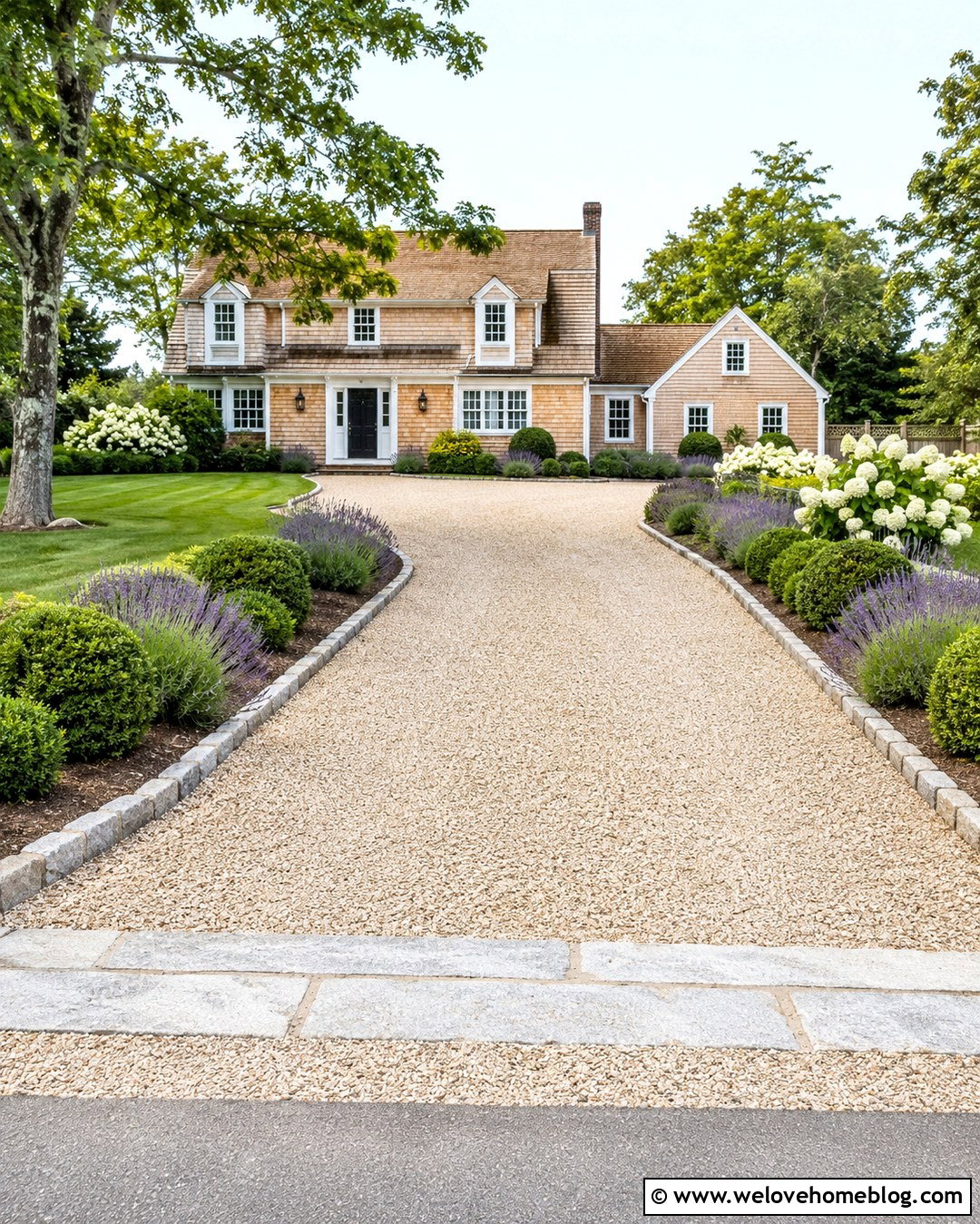
Soft beige pea gravel creates an elegant, understated surface for a traditional cottage or Cape Cod home. A straight driveway with a subtle flare near the garage provides practical parking while retaining a garden-focused appearance. Edge the gravel with weathered granite cobbles to contain the rounded stones and create a durable boundary. On either side, plant lavender, catmint, white hydrangeas, and low boxwood for a layered cottage garden effect. A bluestone walkway can cross the driveway and continue toward the front porch, visually connecting the landscape with the house. Because rounded pea gravel may shift, use it over a properly prepared base and consider a stabilizing grid where appropriate. Keep the decorative layer shallow enough to make walking, wheeling bins, and routine maintenance easier.
7. Concrete Paver Traditional Driveway
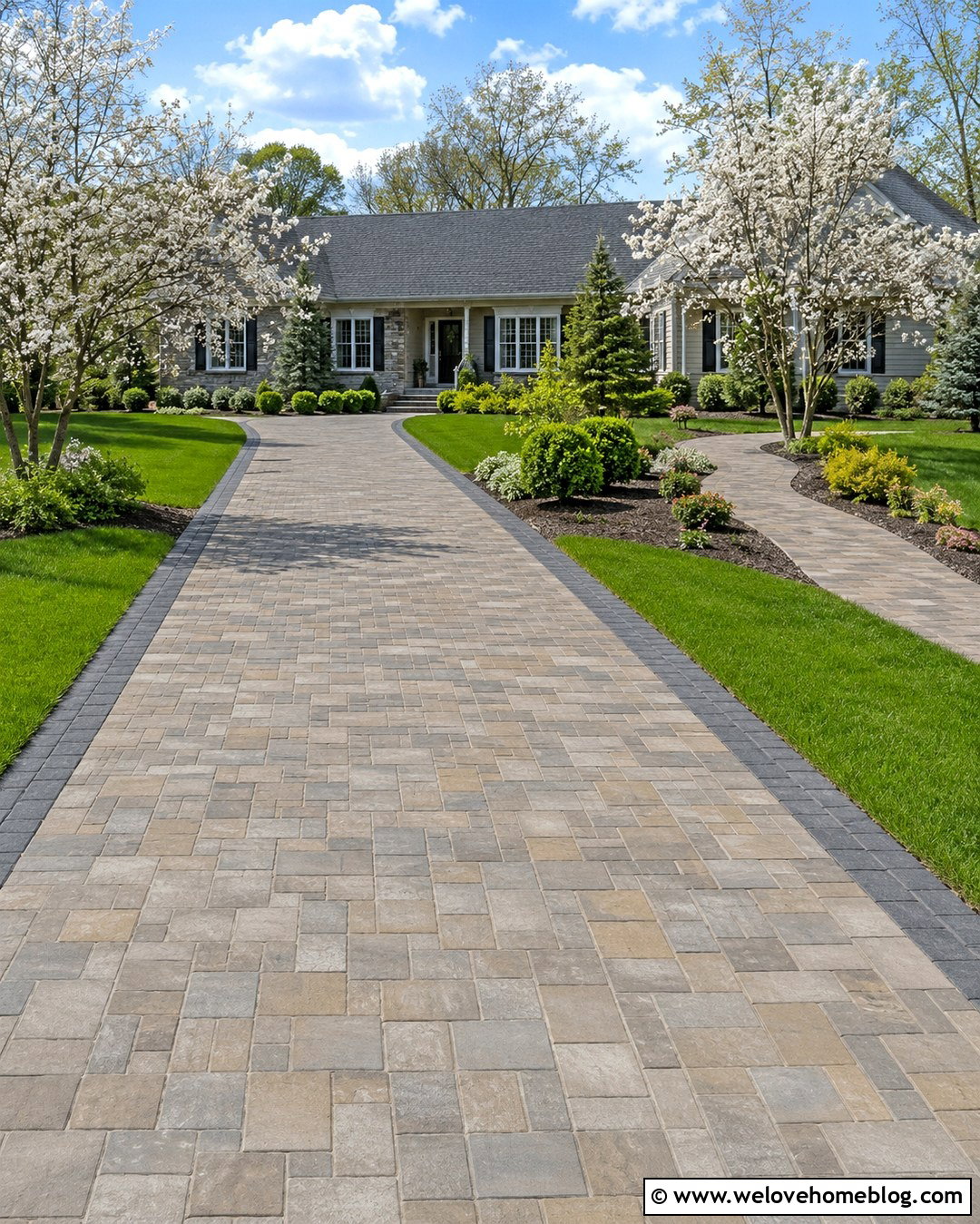
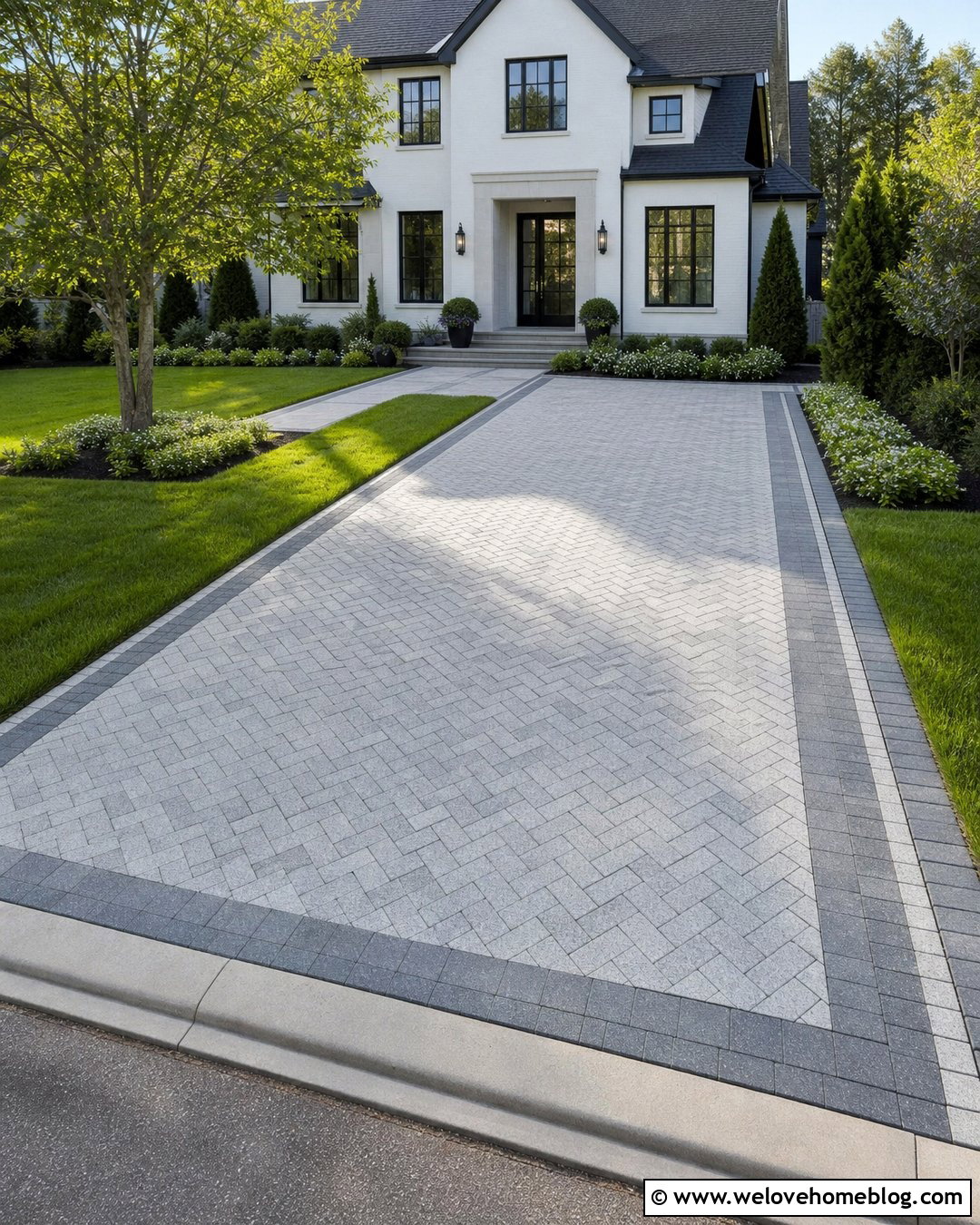
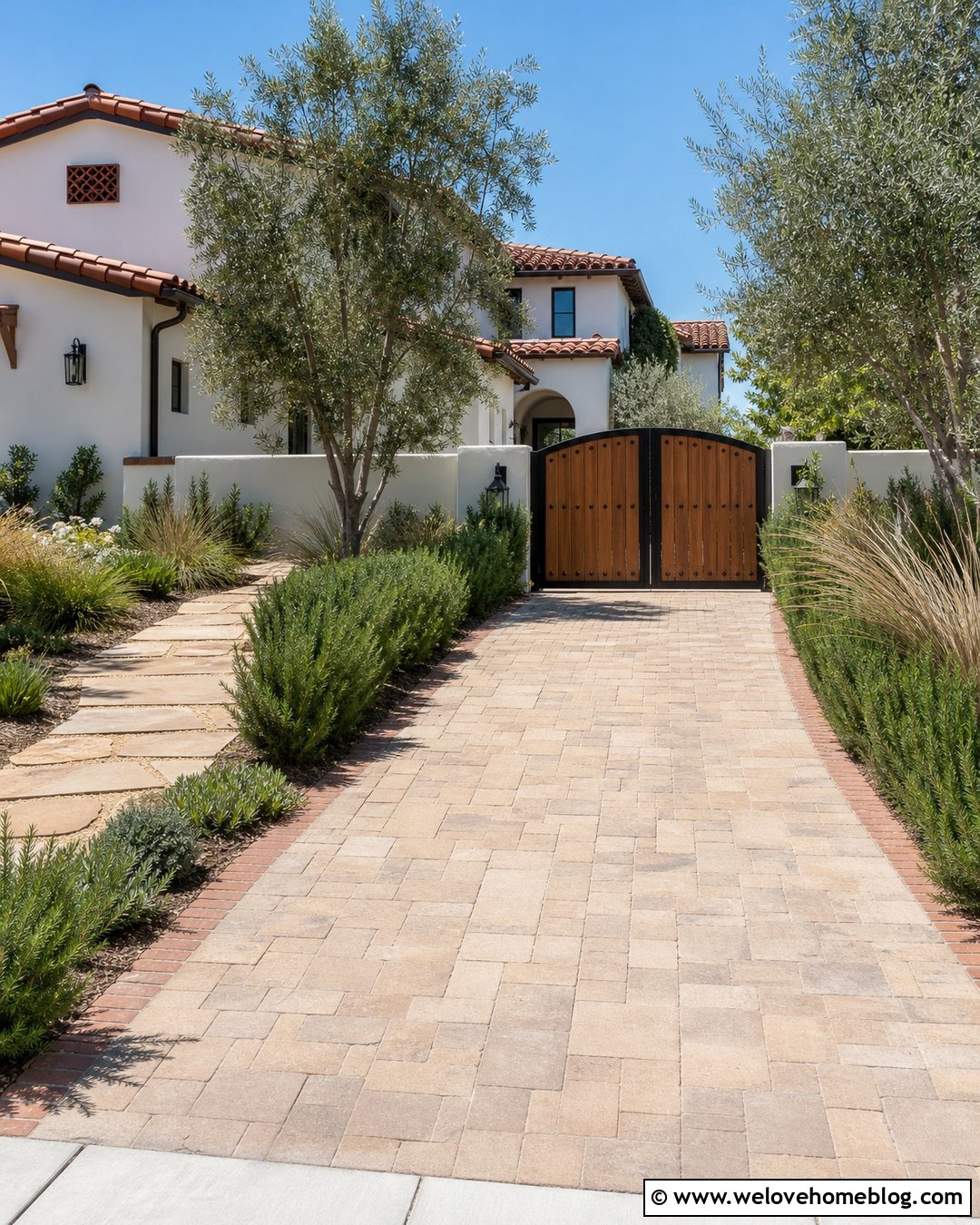
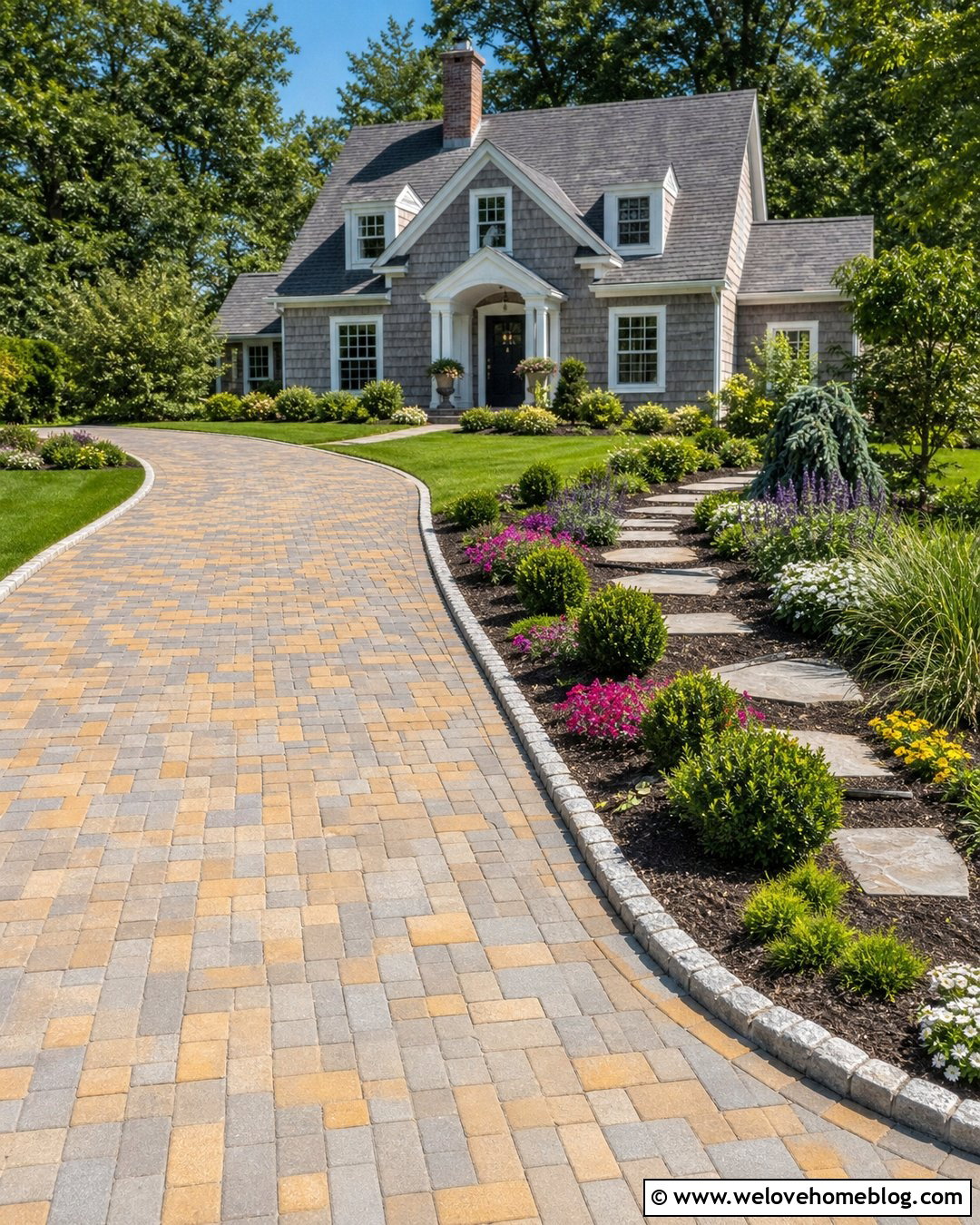
Concrete pavers can imitate the proportions and soft coloring of traditional stone while offering a neat, consistent surface. Choose tumbled rectangular pavers in warm gray, taupe, and sandstone tones rather than sharply modern monochromatic units. Install them in a modular pattern across a broad straight driveway leading to a Craftsman or traditional ranch house. A charcoal paver border can outline the parking area and coordinate with the roof. Plant low evergreen shrubs, flowering dogwoods, and sweeping lawn along the edges to balance the extensive paving. Use the same pavers for the front walkway, but change the pattern to distinguish pedestrian space. A gently widened area near the garage improves maneuvering. The finished design feels traditional because its restrained colors, borders, and landscaping work together.
8. Natural Stone Traditional Driveway
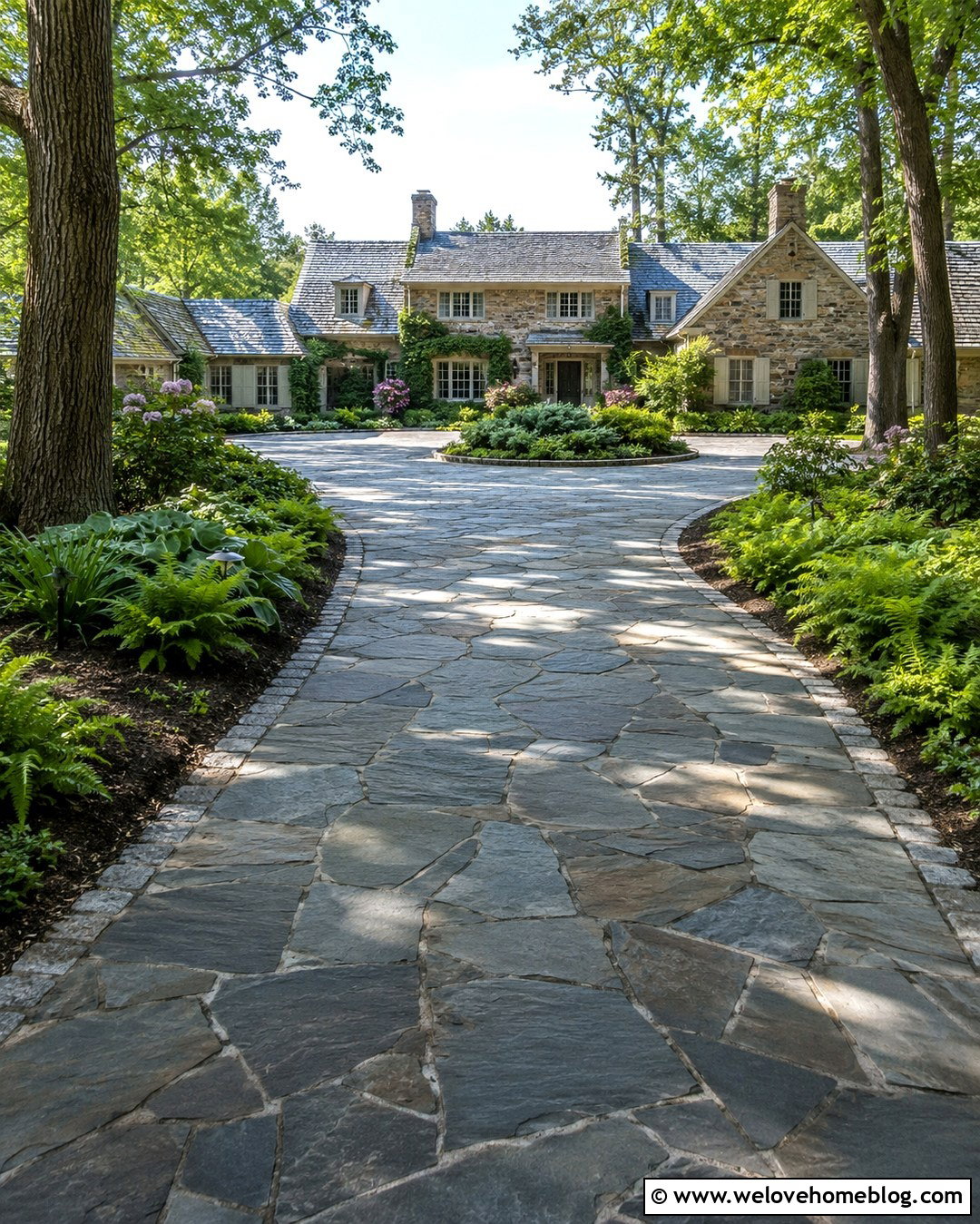
Irregular natural stone creates a substantial driveway that appears closely tied to the surrounding landscape. Use large pieces of bluestone, granite, or fieldstone with carefully fitted joints for a traditional estate or country house. A broad curved layout can follow existing trees and reveal the home gradually rather than creating a direct paved corridor. Add flush cobblestone edging to stabilize the sides without interrupting the natural appearance. Ferns, rhododendrons, woodland ground covers, and mature deciduous trees can frame the route in partially shaded yards. Near the entrance, widen the stone into a turning area with a central planting bed. Select stone with a textured driving surface rather than a polished finish. Repeating the same material on porch steps or walkways will visually connect the driveway and house.
9. Stamped Concrete Traditional Driveway
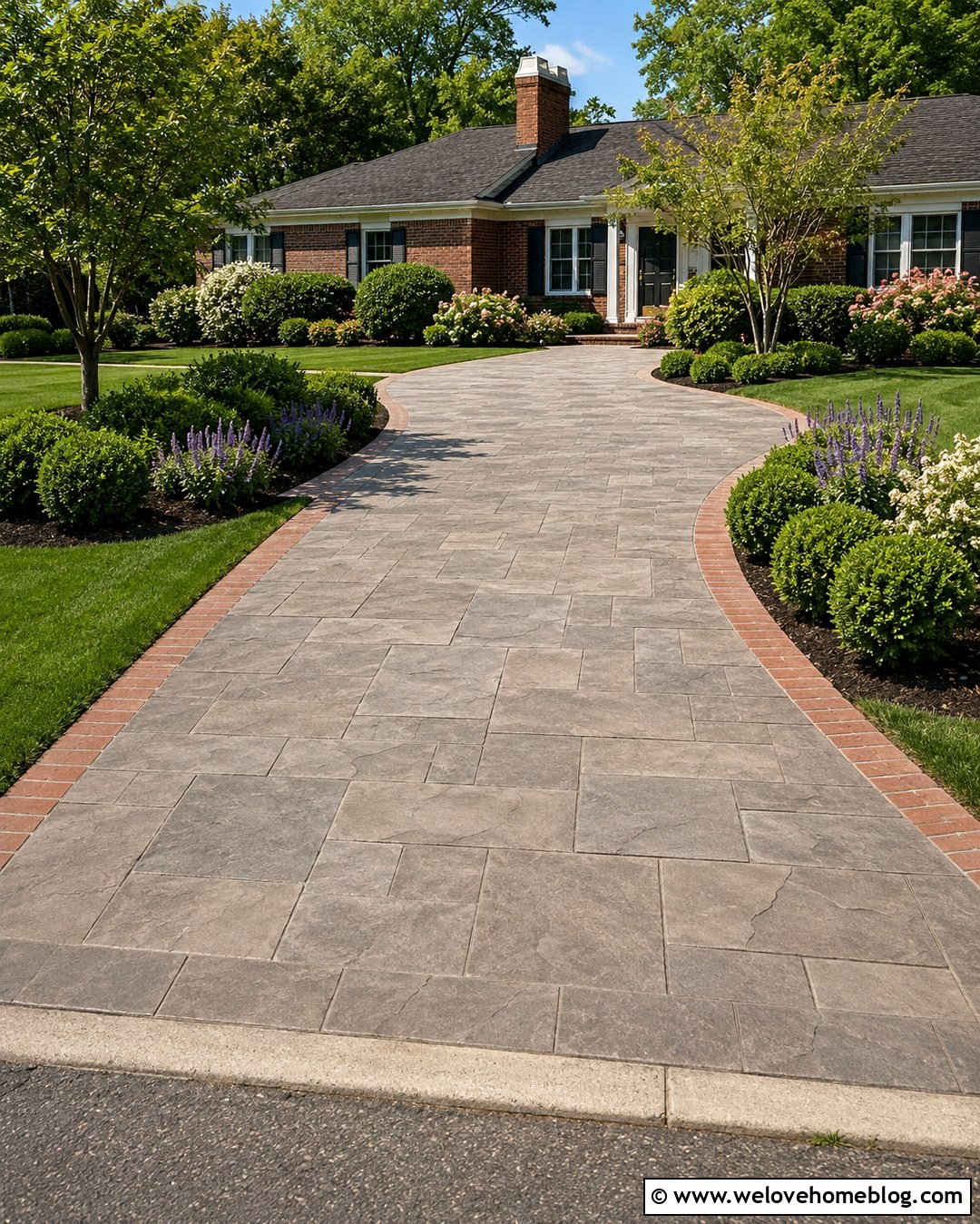
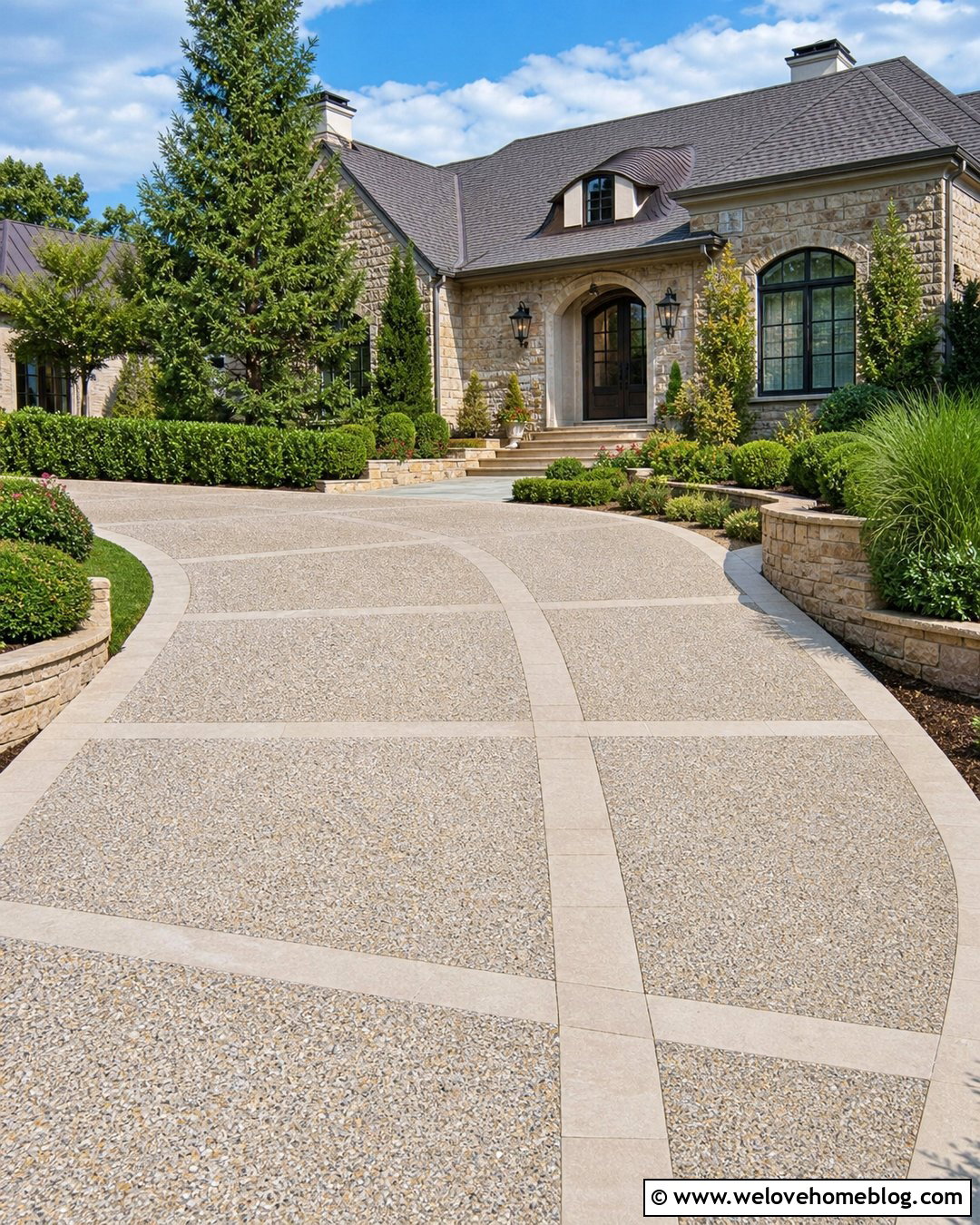
Stamped concrete offers a practical way to introduce traditional stone character across a large driveway. Choose a random ashlar slate pattern in warm gray or muted brown rather than an overly glossy or strongly contrasted finish. A straight driveway leading to a brick ranch or traditional two-story house can be softened with a gentle flare near the street. Add real brick borders to make the stamped pattern feel more convincing and tie the surface to the home’s masonry. Plant curved beds with boxwood, spirea, salvia, and small ornamental trees along the outer edges. Saw-cut control joints should be incorporated into the pattern as naturally as possible. Use a subtle integral color and restrained antiquing so the driveway develops visual depth without looking artificial or competing with the facade.
10. Colonial Traditional Driveway
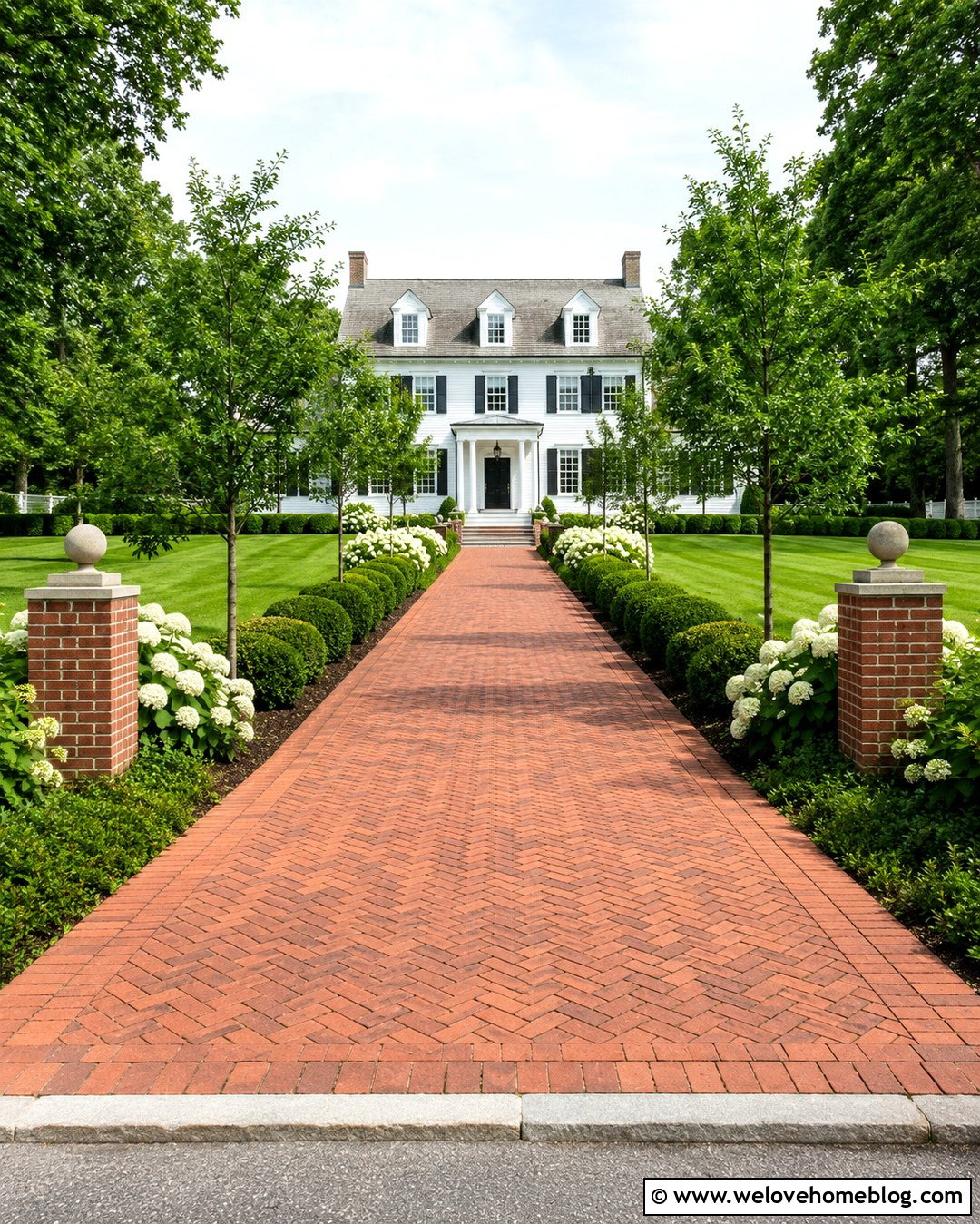
Symmetry is the key to a driveway that complements a Colonial house. A straight, centered approach made from red clay brick pavers reinforces the balanced windows, shutters, and front entrance. Use a herringbone field surrounded by a simple running-bond border for clear definition. On each side, matching rows of clipped boxwood can guide the eye toward the front door. Add symmetrical planting beds with white hydrangeas, evergreen foundation shrubs, and one ornamental tree on either side of the house. Brick or stone pillars at the street can mark the entrance without requiring an elaborate gate. If the garage sits to one side, gently angle the final section while preserving the main central sightline. Traditional lanterns and a matching brick walkway complete the orderly, welcoming exterior.
11. Farmhouse Traditional Driveway
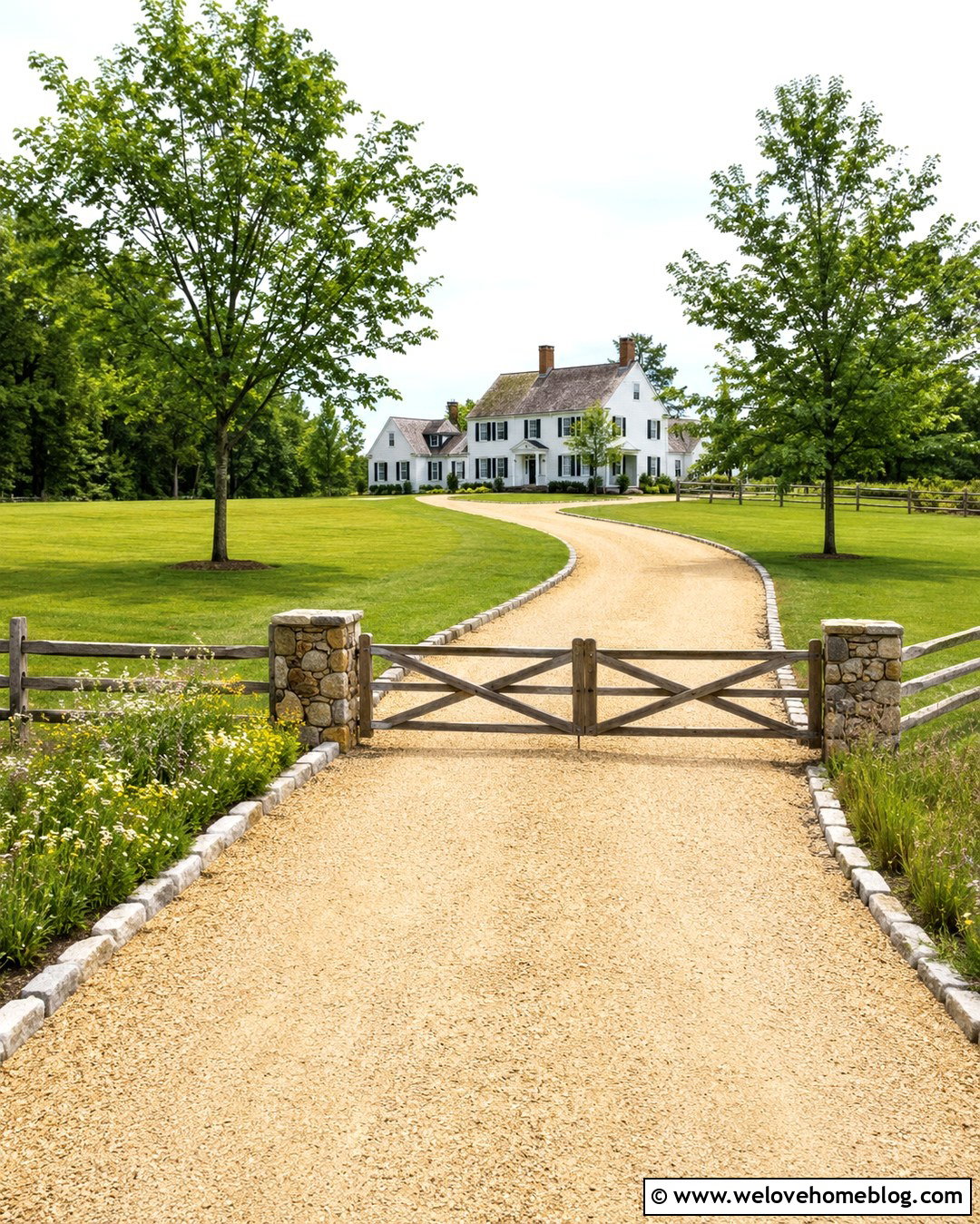
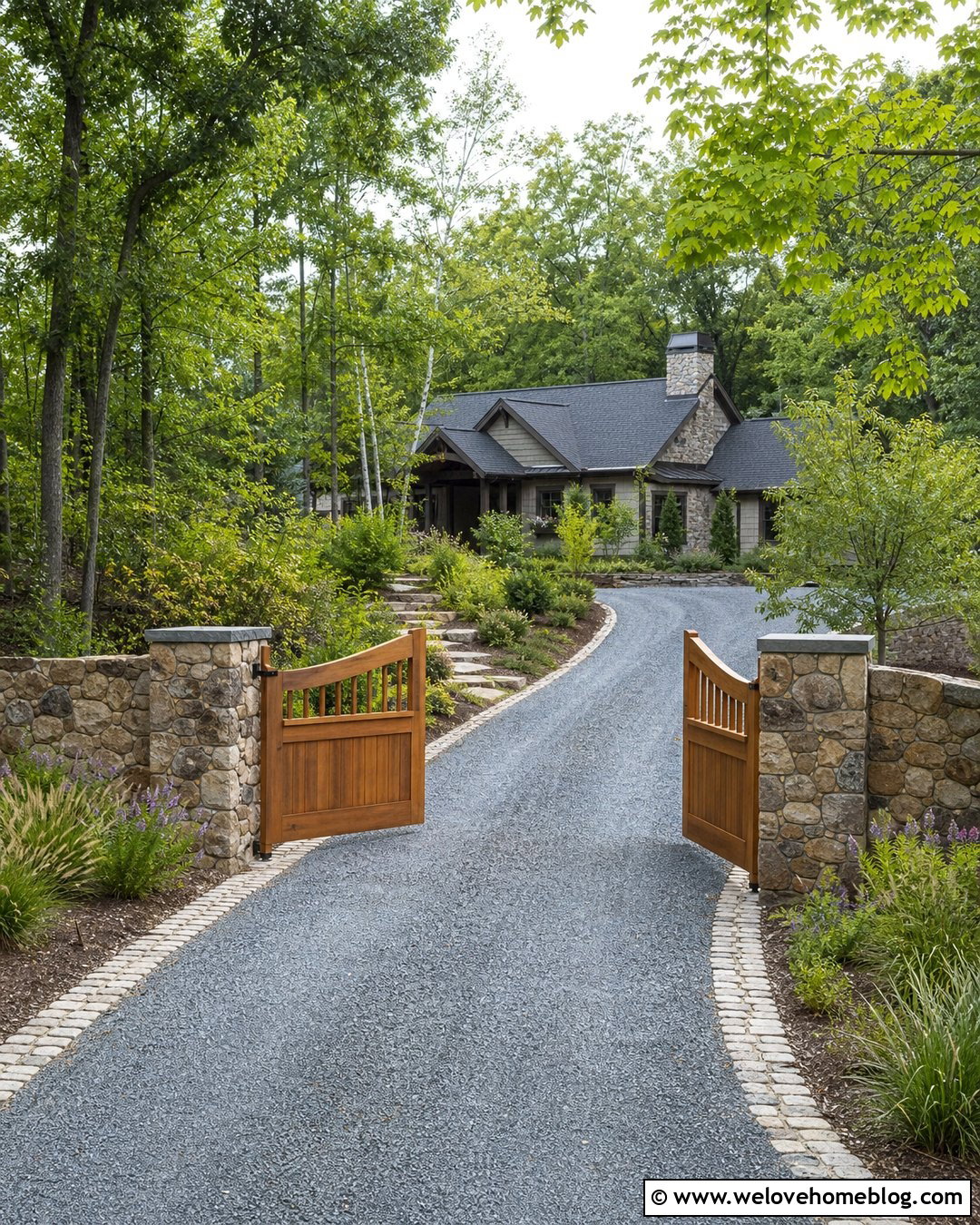
A long gravel driveway feels natural beside a traditional farmhouse, especially when it follows the contours of an open property. Use compacted tan crushed stone rather than bright white gravel for a softer, more weathered appearance. Define the drive with low timber edging or locally sourced fieldstone where stronger containment is needed. Rows of deciduous trees can frame the approach, but leave generous spacing so their mature canopies do not overwhelm the route. Near the house, transition into a brick or cobblestone parking apron that manages frequent turning and adds a refined focal point. Simple split-rail fencing, meadow planting, and broad lawn reinforce the rural setting. A wooden gate supported by fieldstone pillars can complete the entrance while keeping the overall design practical and unpretentious.
12. Tudor Traditional Driveway
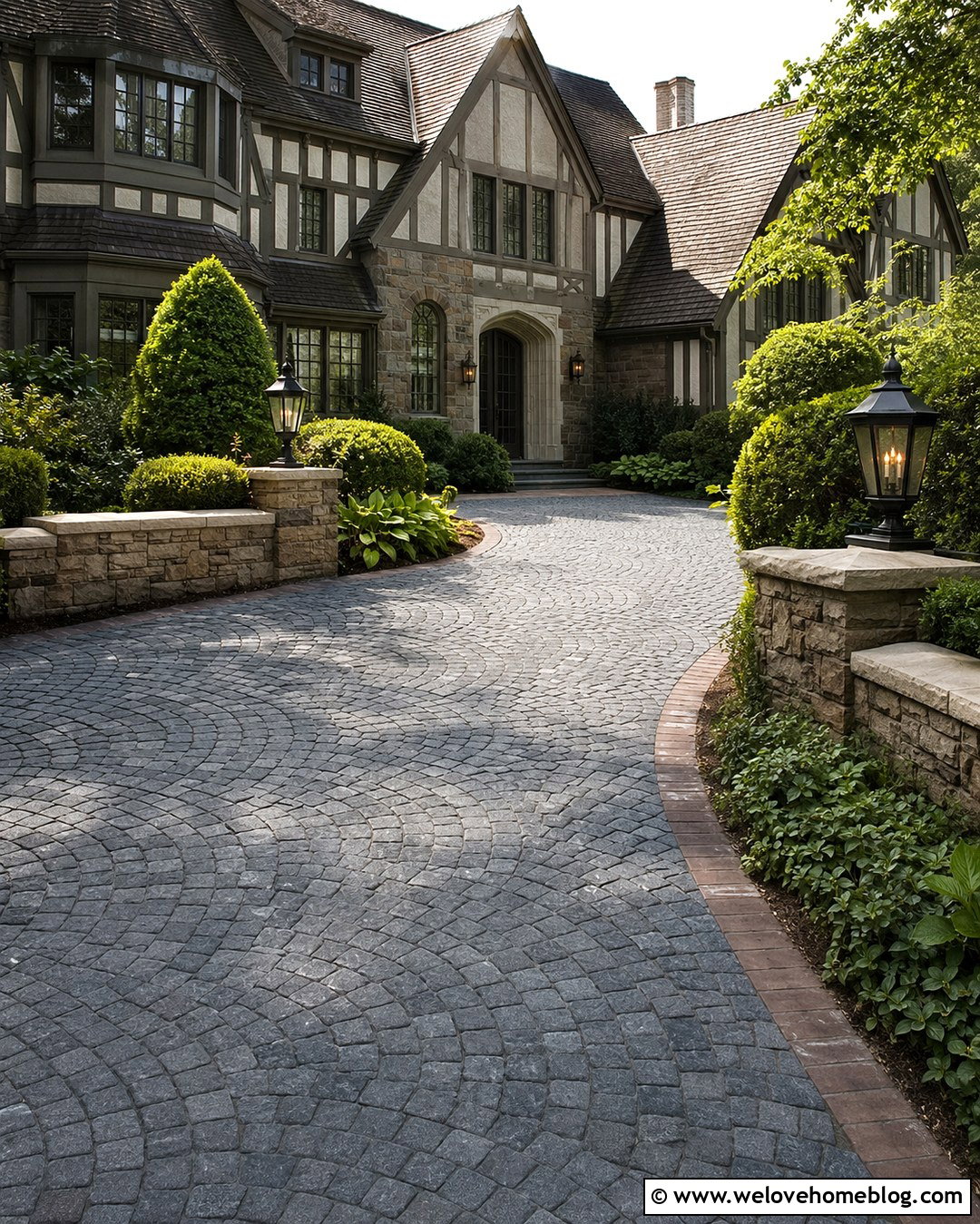
Deep colors and textured materials complement the distinctive masonry and steep rooflines of a Tudor home. Build the driveway with dark gray cobblestone or tumbled concrete pavers arranged in a fan pattern. A gentle curve makes the approach feel established and allows the house to appear between layered trees and shrubs. Use warm brown brick edging to repeat colors found in the facade, chimney, or entry arch. Plant yew, holly, boxwood, and shade-tolerant perennials in deep beds along the driveway. Avoid bright paving that may look disconnected from the home’s heavier architectural details. At the garage, widen the surface into a small motor court bordered by low stone walls. Black metal lanterns and restrained planting maintain the traditional atmosphere without turning the property into a theatrical imitation.
13. Cape Cod Traditional Driveway
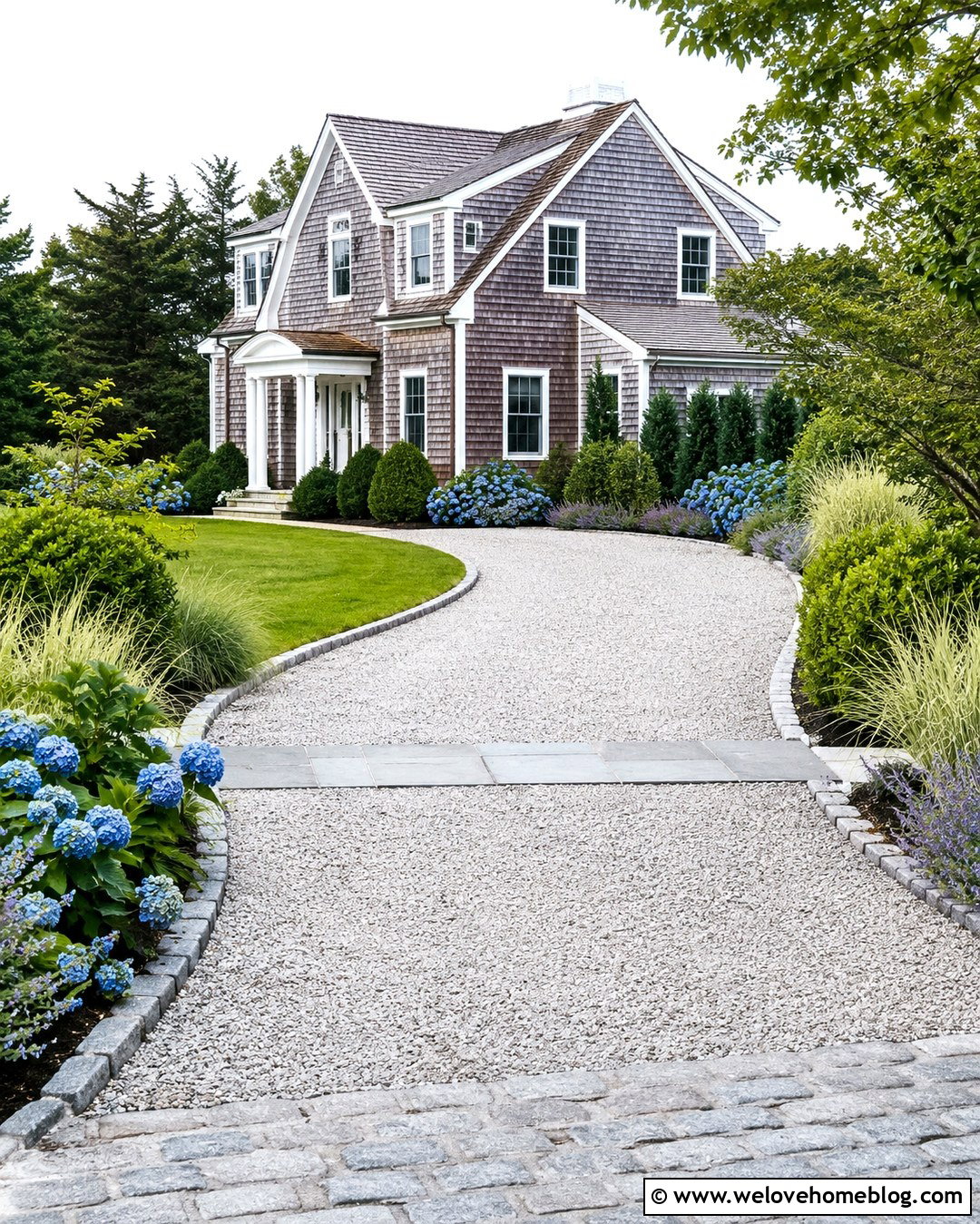
A pale gravel driveway pairs beautifully with the weathered shingles, white trim, and modest scale of a Cape Cod house. Choose light gray crushed stone for a straight or gently curving approach. Line both sides with granite cobbles, which add definition while reflecting the coastal character of the facade. Cottage planting can include blue hydrangeas, beach grass, catmint, and compact evergreen shrubs. Keep the beds informal but well contained so plants do not spill into the driving area. A bluestone walkway crossing the gravel creates a clear route from the parking space to the front door. Near the road, use a granite apron for a crisp transition. The restrained combination of gray stone, green foliage, blue flowers, and white architecture creates classic curb appeal without unnecessary ornament.
14. Craftsman Traditional Driveway
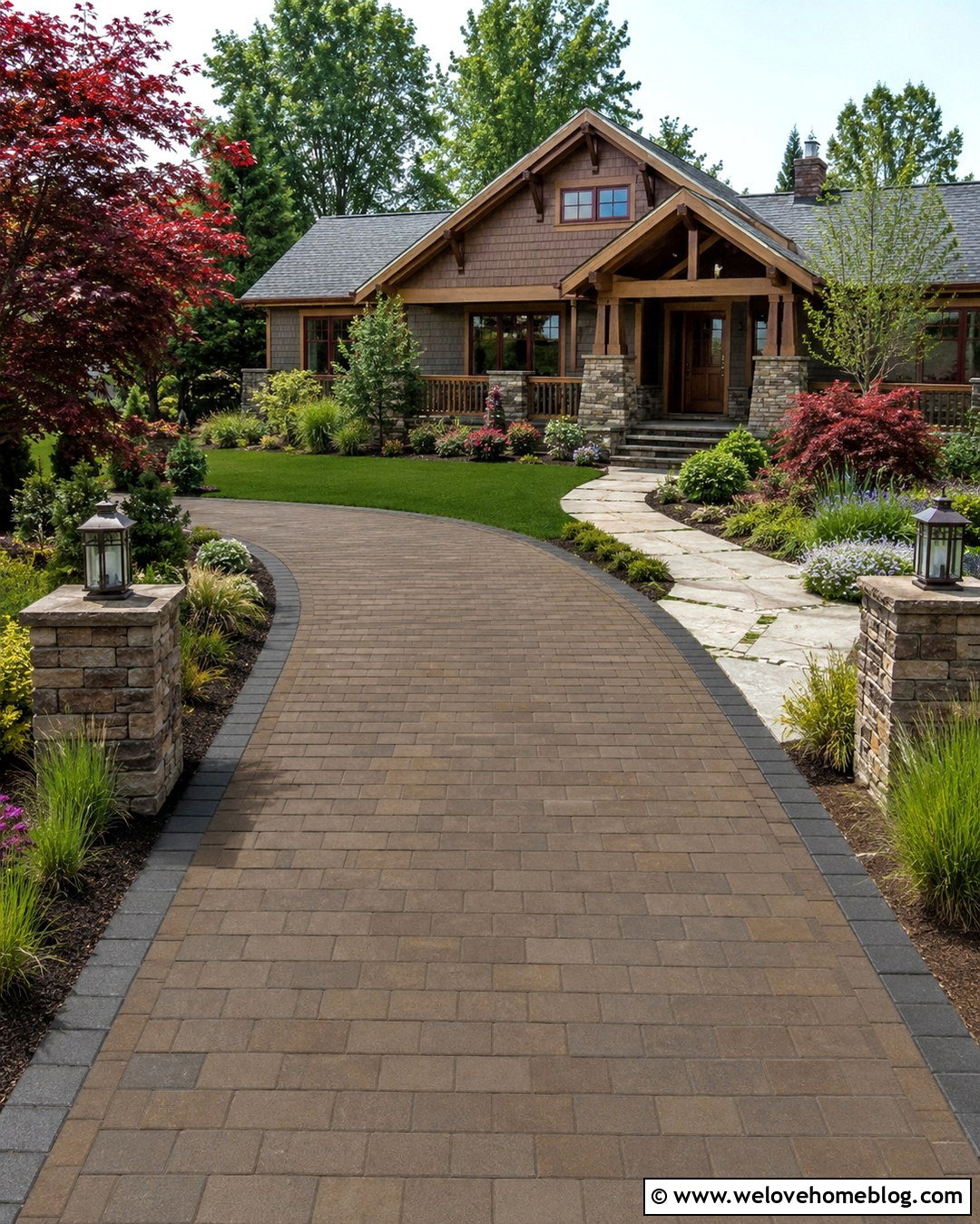
A Craftsman driveway should echo the home’s natural materials, horizontal lines, and handcrafted details. Use warm brown concrete pavers with a lightly tumbled finish in a running-bond pattern. A straight driveway with a slight curve near the garage fits the informal architecture without feeling overly formal. Border the pavers with darker charcoal blocks that relate to the roof and porch columns. Layer the surrounding landscape with native grasses, flowering shrubs, Japanese maples, and broad planting beds. Stone-faced entrance pillars can repeat the porch foundation and establish a clear connection between the street and house. Add a flagstone walkway that branches from the driveway toward the porch. Earthy colors and simple patterns work best, allowing the paving, woodwork, masonry, and garden to feel like one coordinated design.
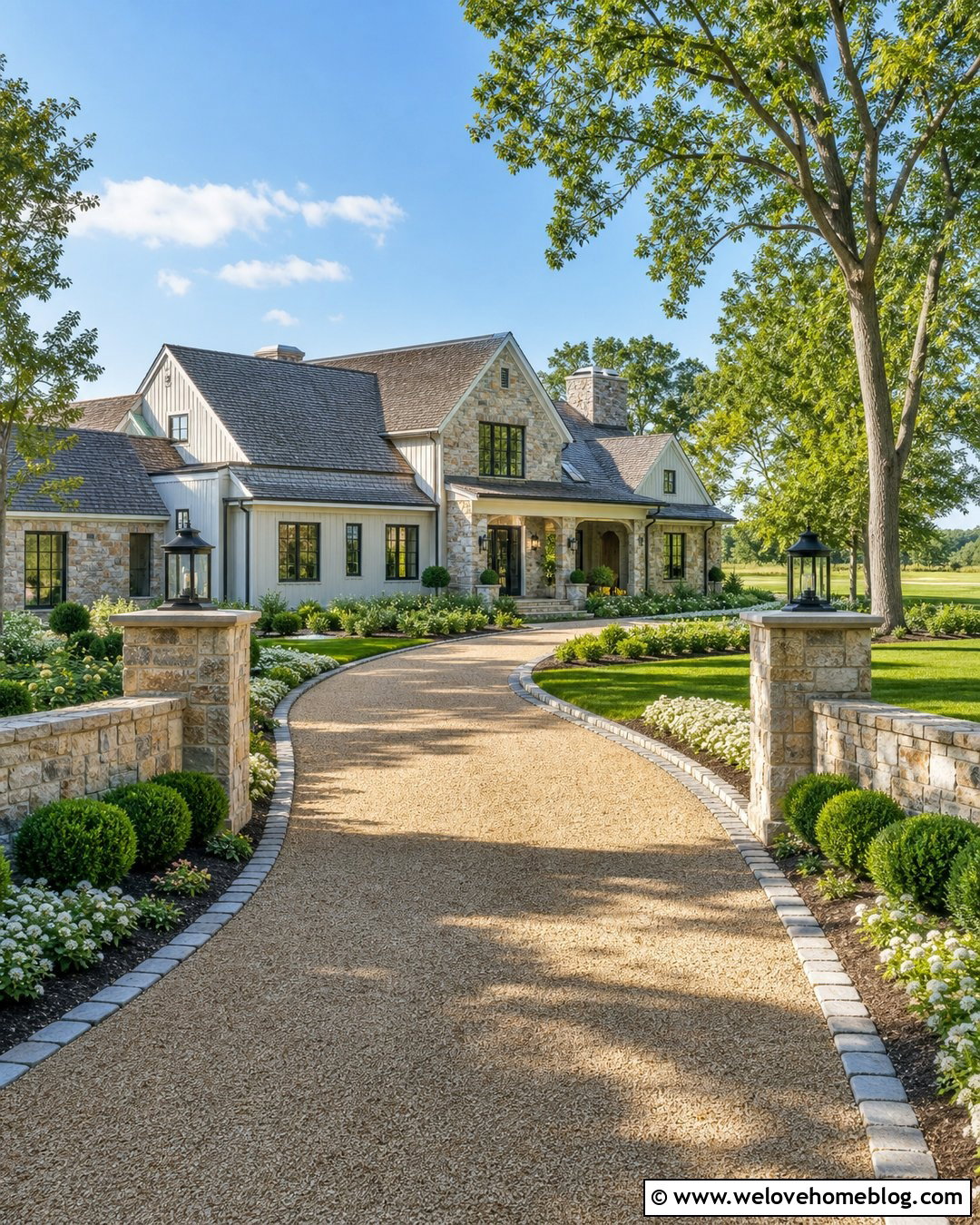
15. Country Cottage Traditional Driveway
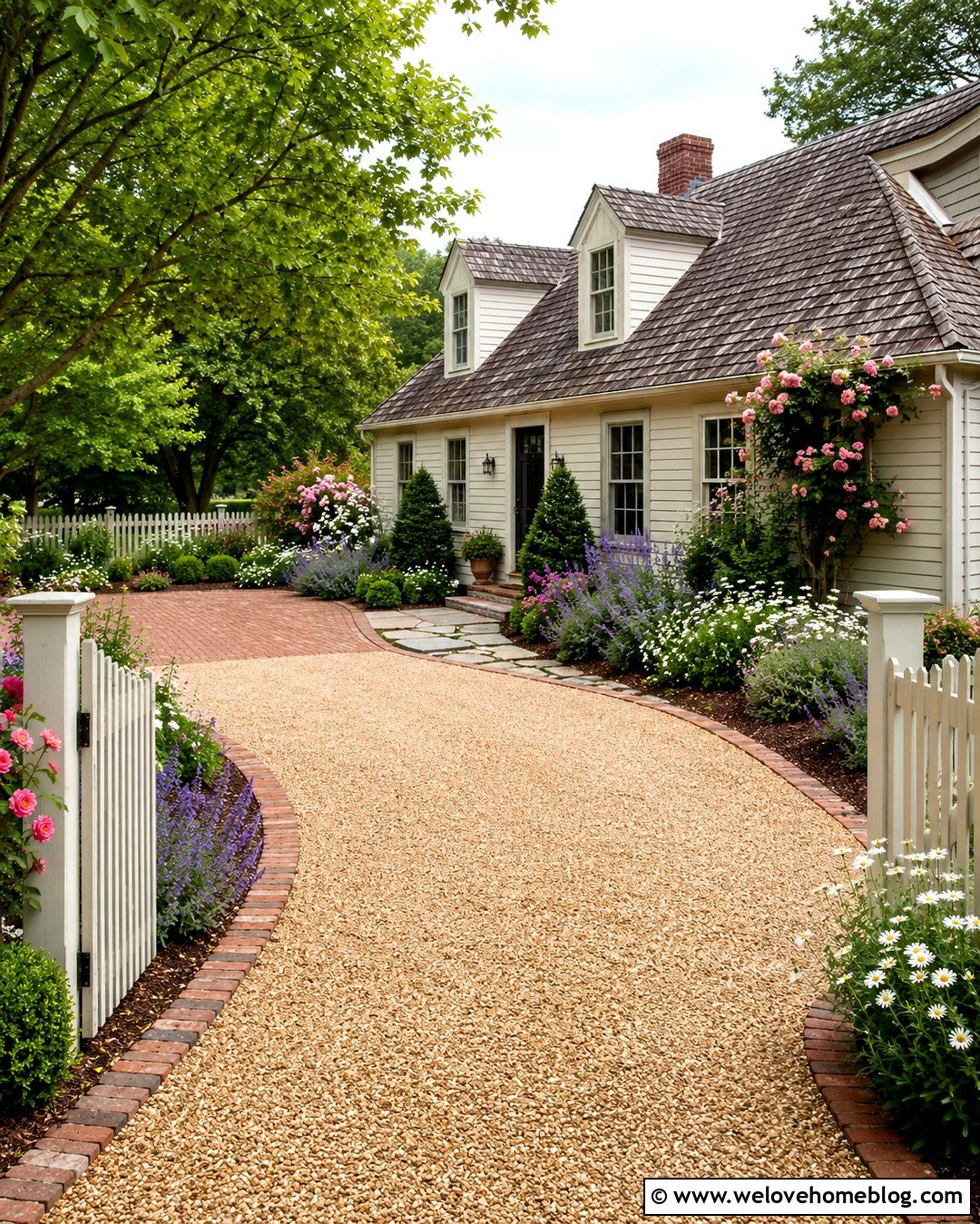
Imagine approaching a small cottage along a softly curved drive surrounded by flowers and greenery. A honey-colored gravel surface keeps the design casual, while reclaimed brick edging gives it enough definition to feel intentional. Allow broad cottage beds to follow the curve, using roses, salvia, catmint, daisies, and evergreen shrubs for structure. Place taller plants farther from the driveway and maintain a clear strip along the edge for visibility and easy upkeep. A brick parking pad near the house can provide a firmer surface while continuing the traditional color palette. Connect it to the porch with an irregular flagstone path. A simple painted wooden gate or low picket fence can mark the entrance. The result should feel comfortably established, not overly manicured or crowded with decoration.
16. Traditional Driveway With Stone Pillars
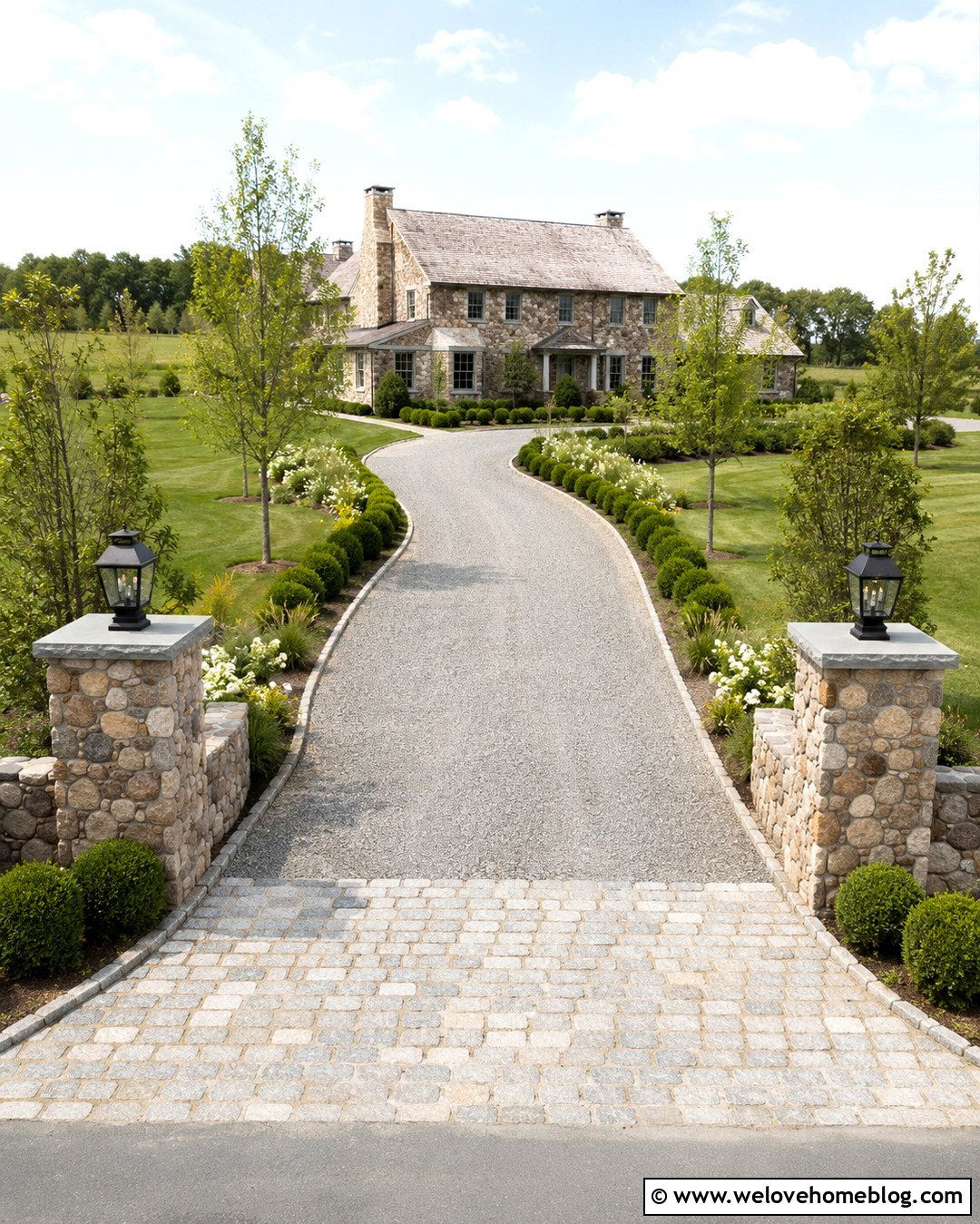
Stone entrance pillars make a traditional driveway feel permanent and clearly defined from the street. Pair substantial fieldstone pillars with a gently curved driveway surfaced in compacted gray gravel. Add a cobblestone apron between the pillars to create a durable, attractive transition from the road. Low curved walls can extend briefly from each pillar, but they should remain outside the vehicle clearance area. Cap the masonry with bluestone and install classic black lanterns sized to suit the pillars. Continue the fieldstone around planting beds or along the home’s foundation for a coordinated look. Boxwood, white roses, ornamental grasses, and small trees can soften the structure. This complete entrance works especially well with stone farmhouses, traditional ranch homes, and larger country properties surrounded by open lawn.
17. Traditional Driveway With Wrought Iron Gate
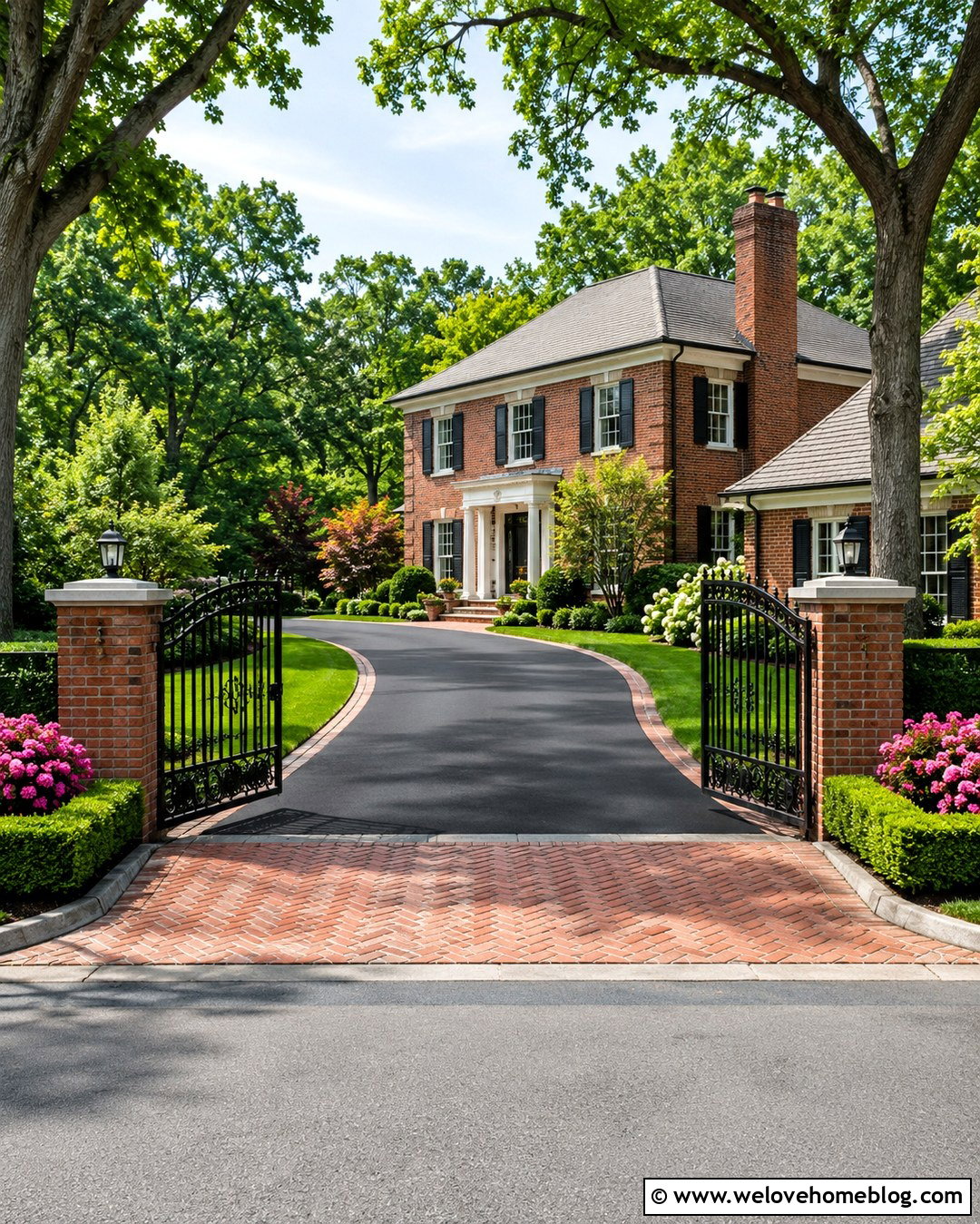
A wrought iron gate can provide definition and traditional character without hiding the view of the home. Set a black double-swing gate between red brick pillars at the entrance to a curved asphalt driveway. Outline the asphalt with matching brick edging and use a broad brick apron beneath the gate to strengthen the visual connection. The gate design should be simple, with evenly spaced vertical bars and restrained decorative detailing. Flank the entrance with clipped hedges and flowering shrubs, while larger trees frame the distant house. Leave suitable space for vehicles to wait clear of the street when the gate is closed. Traditional lanterns mounted on the pillars improve visibility and complete the composition. Repeating black metal on railings or exterior lights will keep the property’s details cohesive.
18. Traditional Driveway With Brick Apron
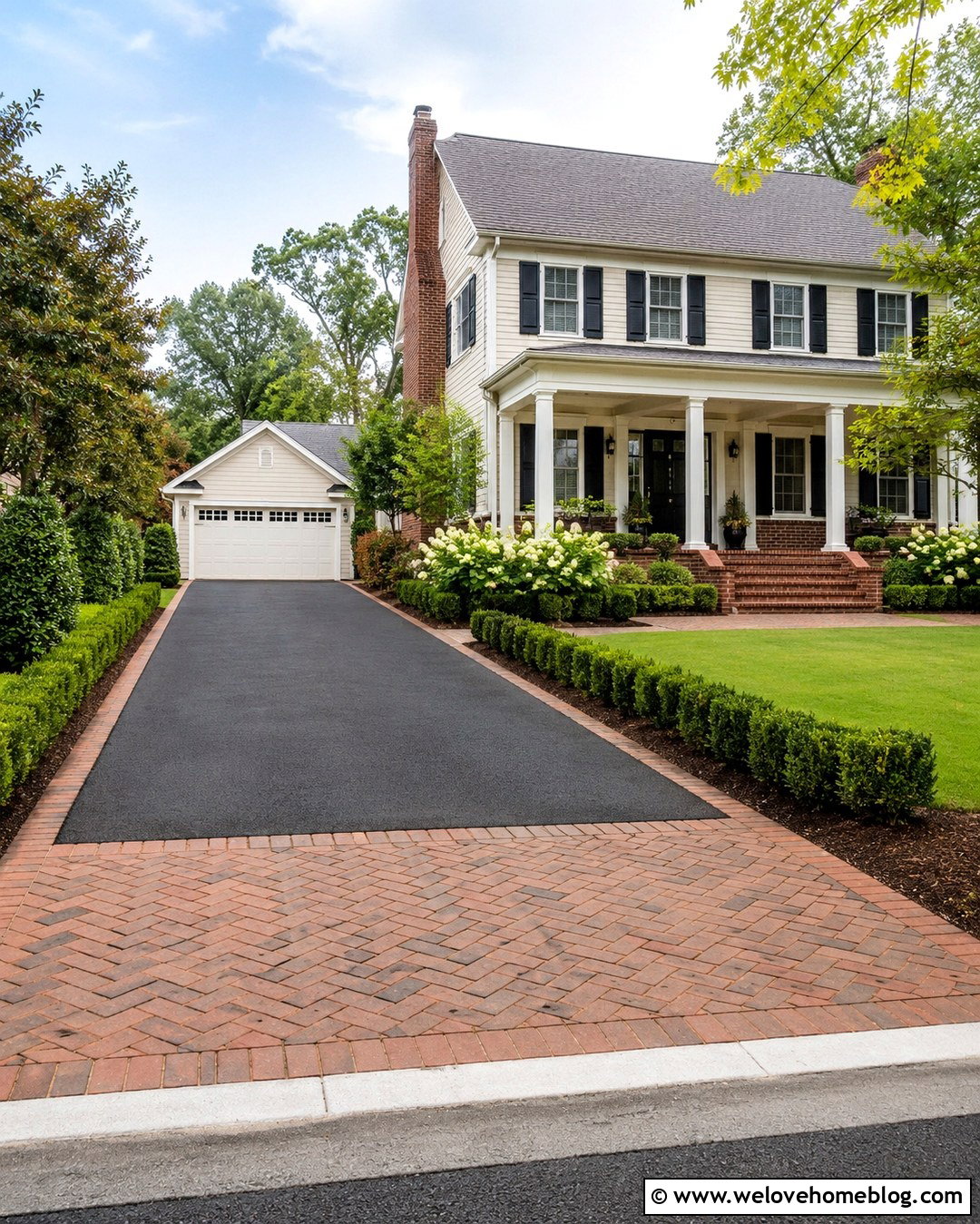
A brick apron can transform a simple driveway by giving the entrance a stronger architectural presence. Combine a smooth black asphalt driveway with a wide apron made from red and brown clay brick pavers in a herringbone pattern. Extend a narrow brick border along both sides so the entrance detail feels connected to the entire drive. A straight layout suits a traditional suburban house, particularly when the driveway aligns with a side-facing garage. Use low boxwood, flowering shrubs, and tidy lawn to frame the dark surface without narrowing it. The apron should be deep enough to read as a deliberate design feature rather than a thin decorative strip. Matching brick porch steps, walkway accents, or foundation masonry can unite the driveway with the home and create a balanced overall exterior.
19. Traditional Driveway With Grass Strip
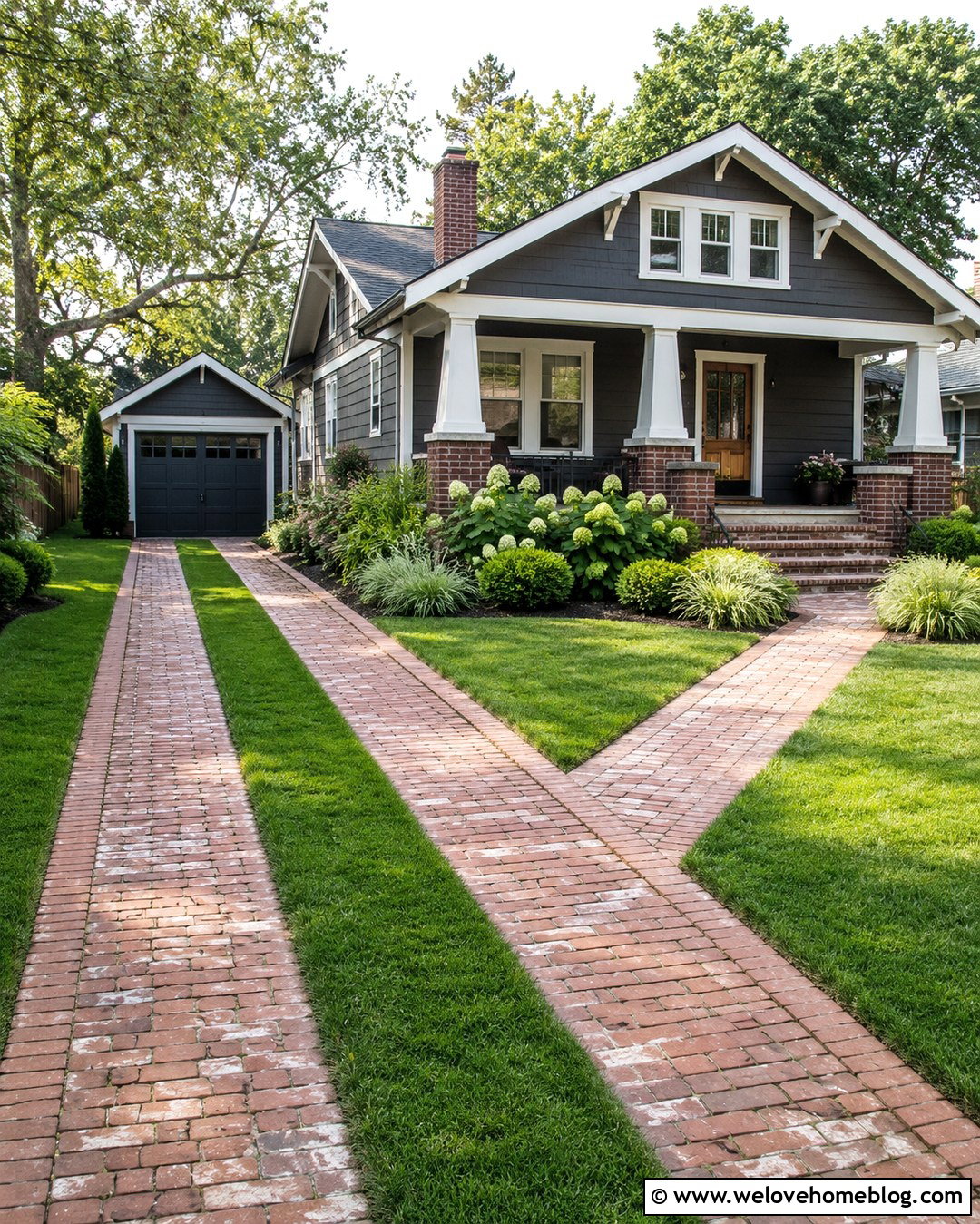
Two paved tracks separated by a green center strip can reduce the visual weight of a driveway in a smaller front yard. For a traditional look, use weathered red brick pavers for the wheel paths and durable low-growing turf through the middle. Keep the layout straight and lead it toward a detached garage behind a cottage, bungalow, or Craftsman home. Brick edging along the outside helps define the tracks and creates a neat transition to planting beds. Frame the drive with compact hydrangeas, ornamental grasses, and evergreen foundation shrubs. The wheel paths must be carefully spaced for the vehicles using the property, and the center should remain easy to mow. This design feels more like a garden path than a broad parking slab while still providing a clearly organized approach.
20. Traditional Driveway With Landscaped Island
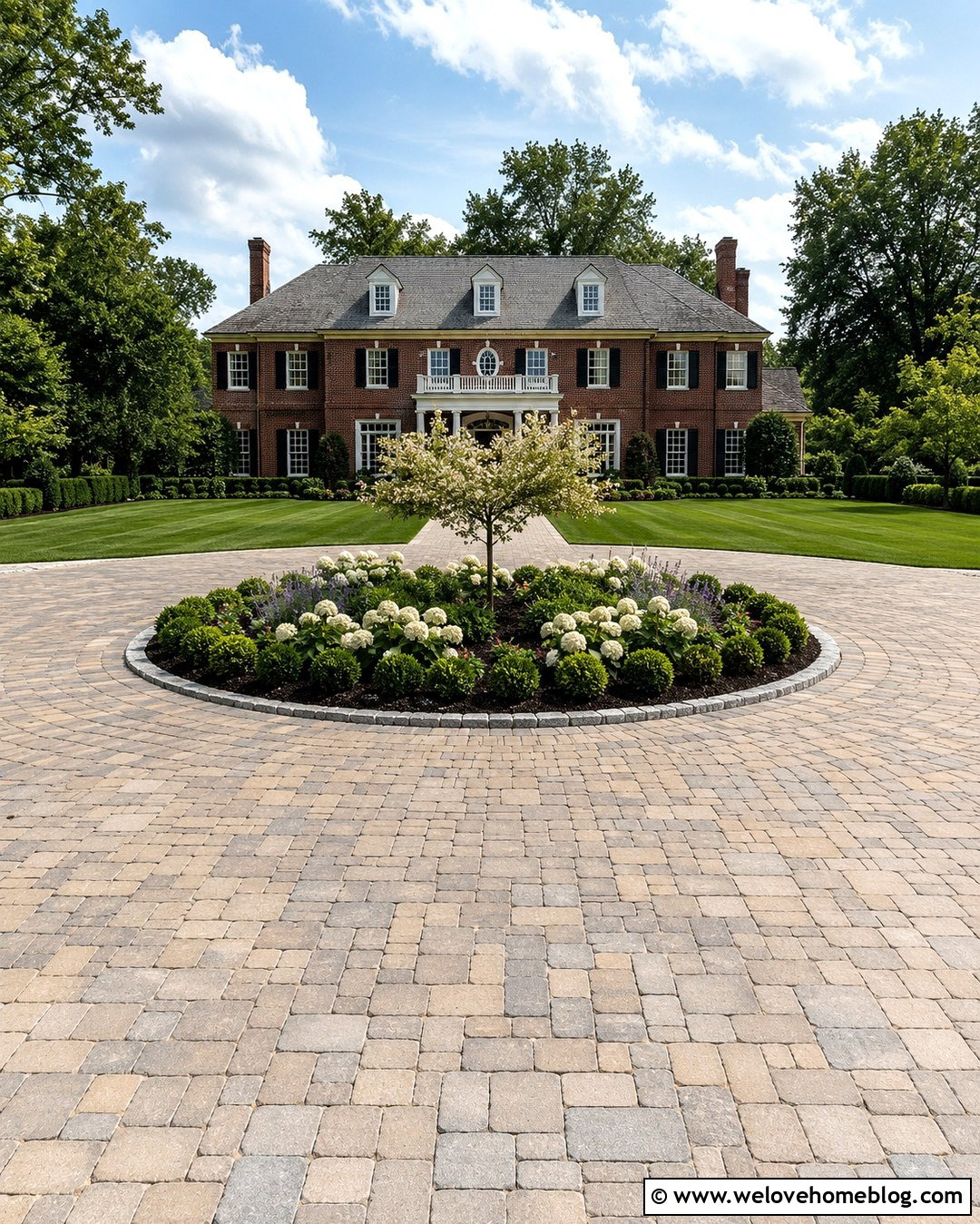
A landscaped island can turn a wide circular driveway into an attractive front garden. Use tumbled beige and gray concrete pavers in a traditional modular pattern for the driving surface. Define the center island with a low cobblestone curb that protects the planting while repeating the driveway’s muted stone colors. Place a small flowering tree at the center, then surround it with clipped boxwood, white hydrangeas, seasonal perennials, and dark mulch. Keep plants low around the island’s outer edge to maintain visibility across the circle. A direct paver walkway can connect the island area with the home’s front steps. This layout works well with Georgian, Colonial, and French country houses because it creates a formal sense of arrival while preserving greenery at the center of the property.
Conclusion:
The most successful traditional driveway feels like a natural extension of the house and landscape. Brick, cobblestone, gravel, asphalt, stone, and concrete pavers can each create a classic appearance when used with the right borders, proportions, and planting. Before selecting a design, consider vehicle movement, drainage, maintenance, local climate, and the architectural colors already present on the property. A well-prepared base and clear driveway edges are just as important as decorative details. Even a simple surface can look refined with a brick apron, clipped hedge, curved planting bed, or pair of entrance pillars. Use these 20 Traditional Driveway Ideas to create an approach that is welcoming, practical, and visually connected to your home.

Related posts:
Leave a Reply