
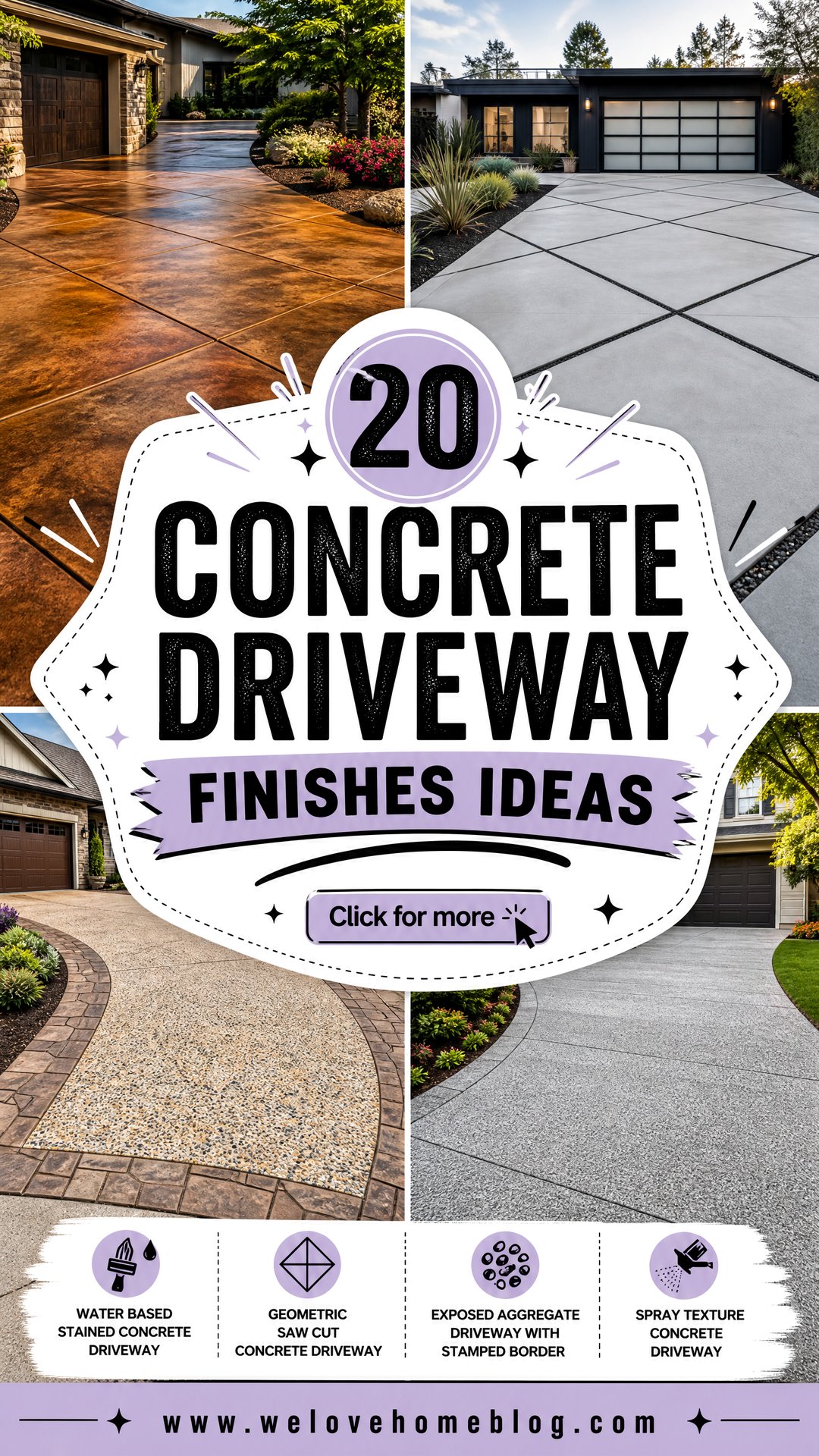
Choosing the right concrete finish can turn a basic parking surface into a polished part of your home’s exterior. These 20 Concrete Driveway Finishes Ideas cover practical textures, natural-looking patterns, modern colors, and decorative combinations for many budgets and house styles. Popular options include broom finishing, exposed aggregate, stamped patterns, integral color, staining, salt textures, and sandblasting. Each creates a different balance of appearance, traction, maintenance, and cost. () Before deciding, consider your climate, driveway slope, surrounding landscape, and the architecture of your home. A finish should look attractive from the street while remaining comfortable for everyday use. The complete driveway looks below make it easier to explore 20 Concrete Driveway Finishes Ideas.
1. Broom Finish Concrete Driveway
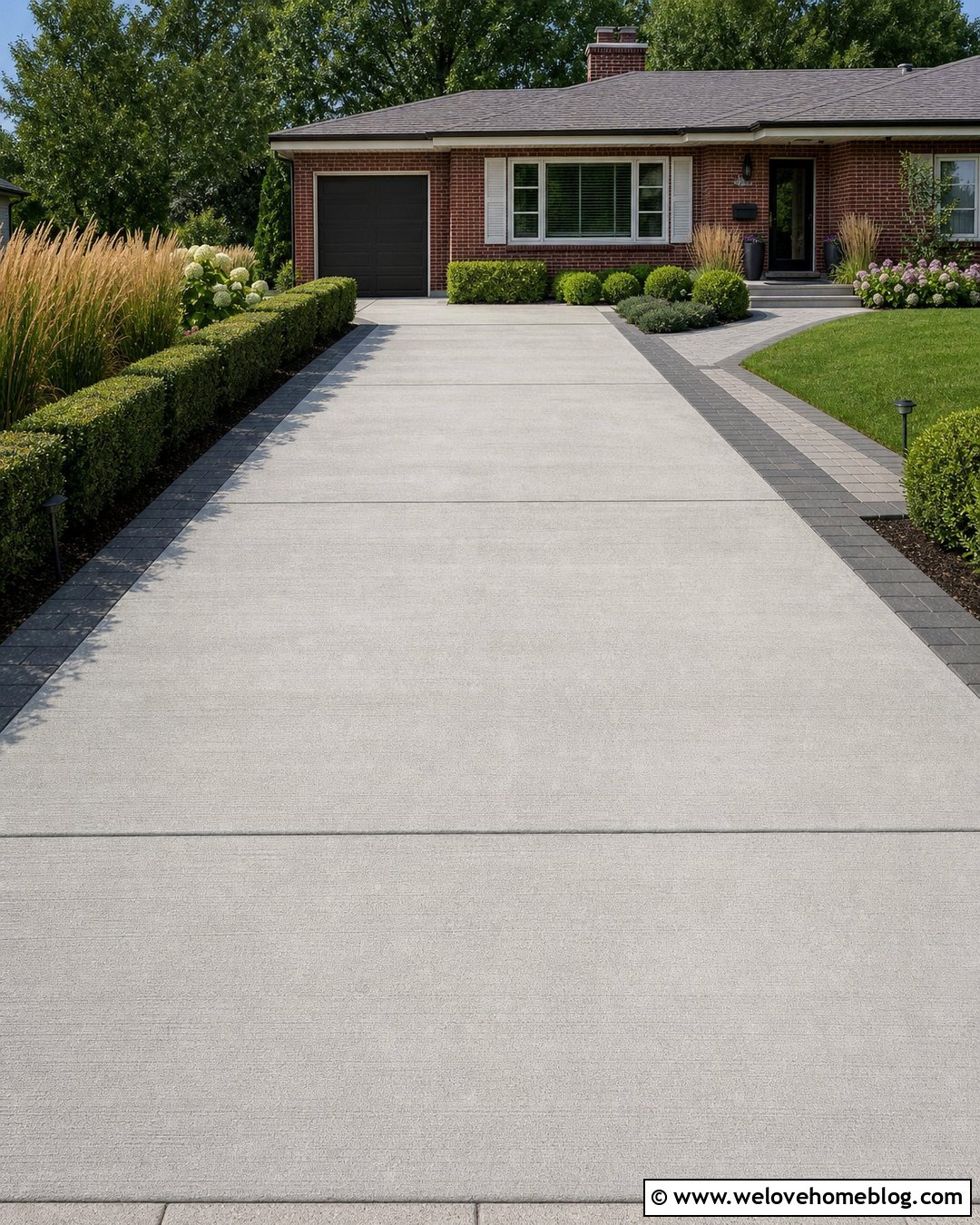
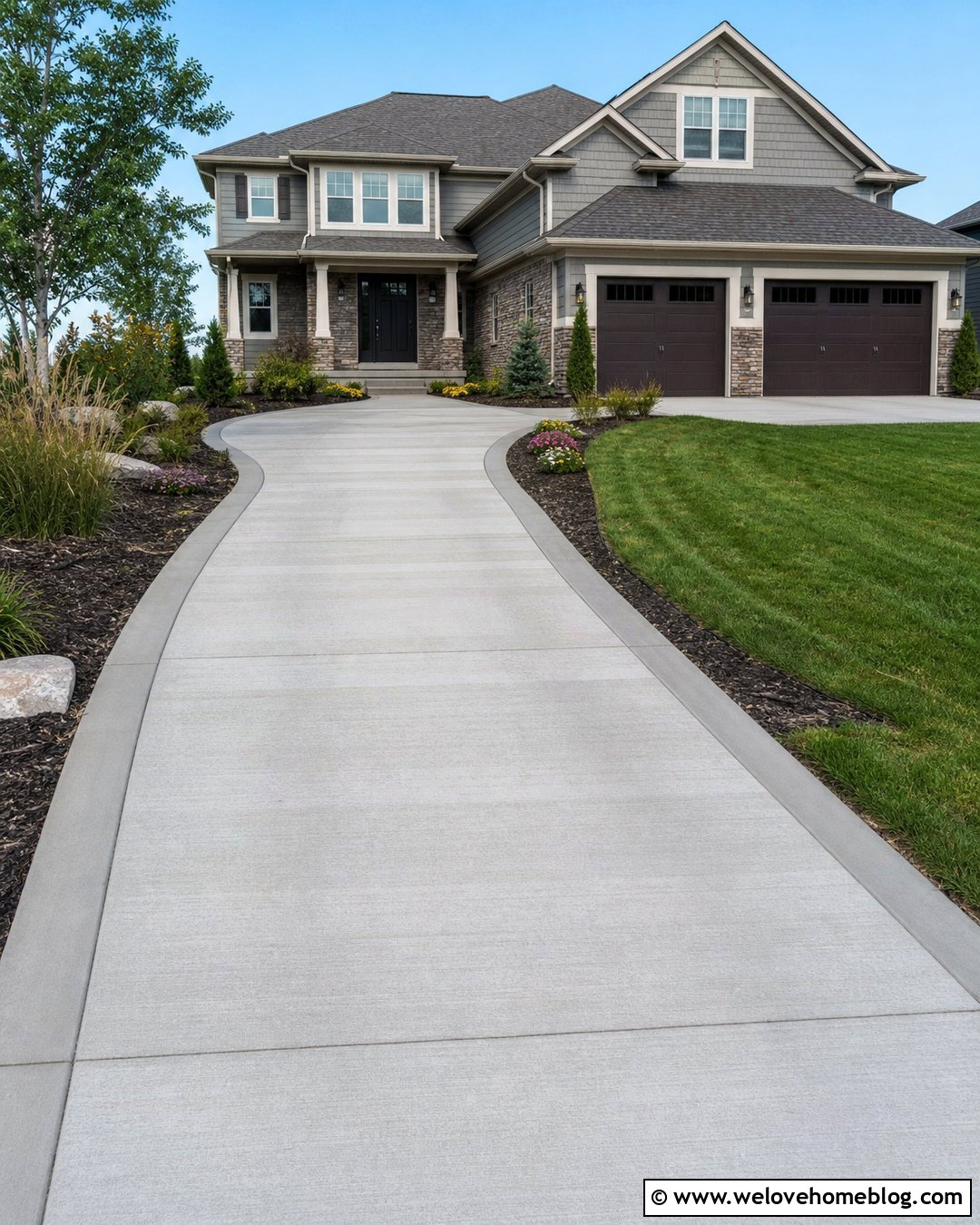
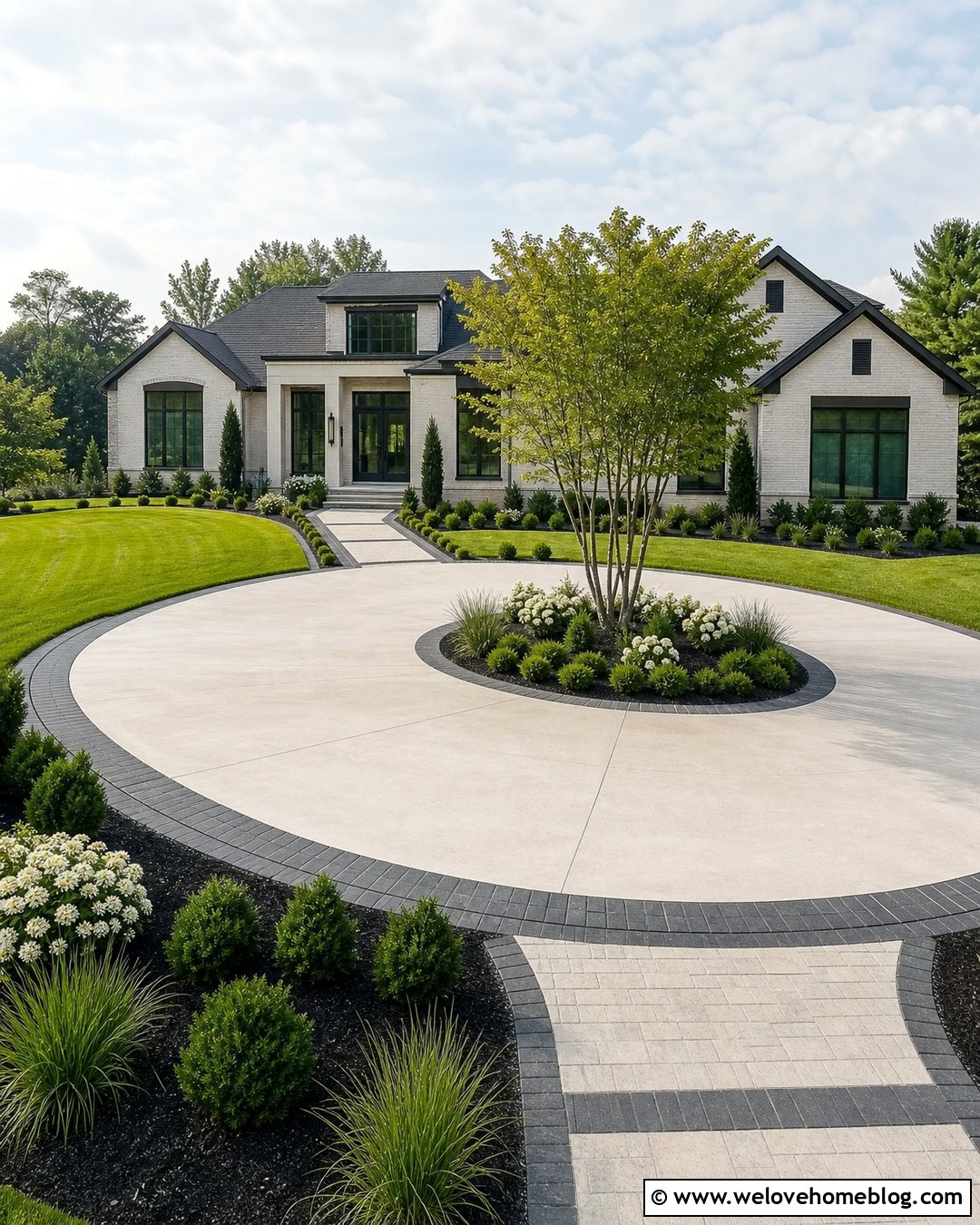
A broom finish is a straightforward choice for a clean, practical driveway. Fine grooves are brushed across freshly placed concrete, creating an evenly textured surface rather than a completely smooth slab. For a welcoming suburban look, use light gray concrete in a straight layout with narrow control joints and charcoal concrete borders. Low boxwood hedges, ornamental grasses, and a simple paver walkway can soften the wide paved area. The direction of the broom lines also affects the finished appearance. Straight lines feel orderly, while alternating directions between sections add subtle visual interest. This finish works especially well with ranch, Colonial, and craftsman homes where understated materials support the architecture instead of competing with it.
2. Exposed Aggregate Concrete Driveway
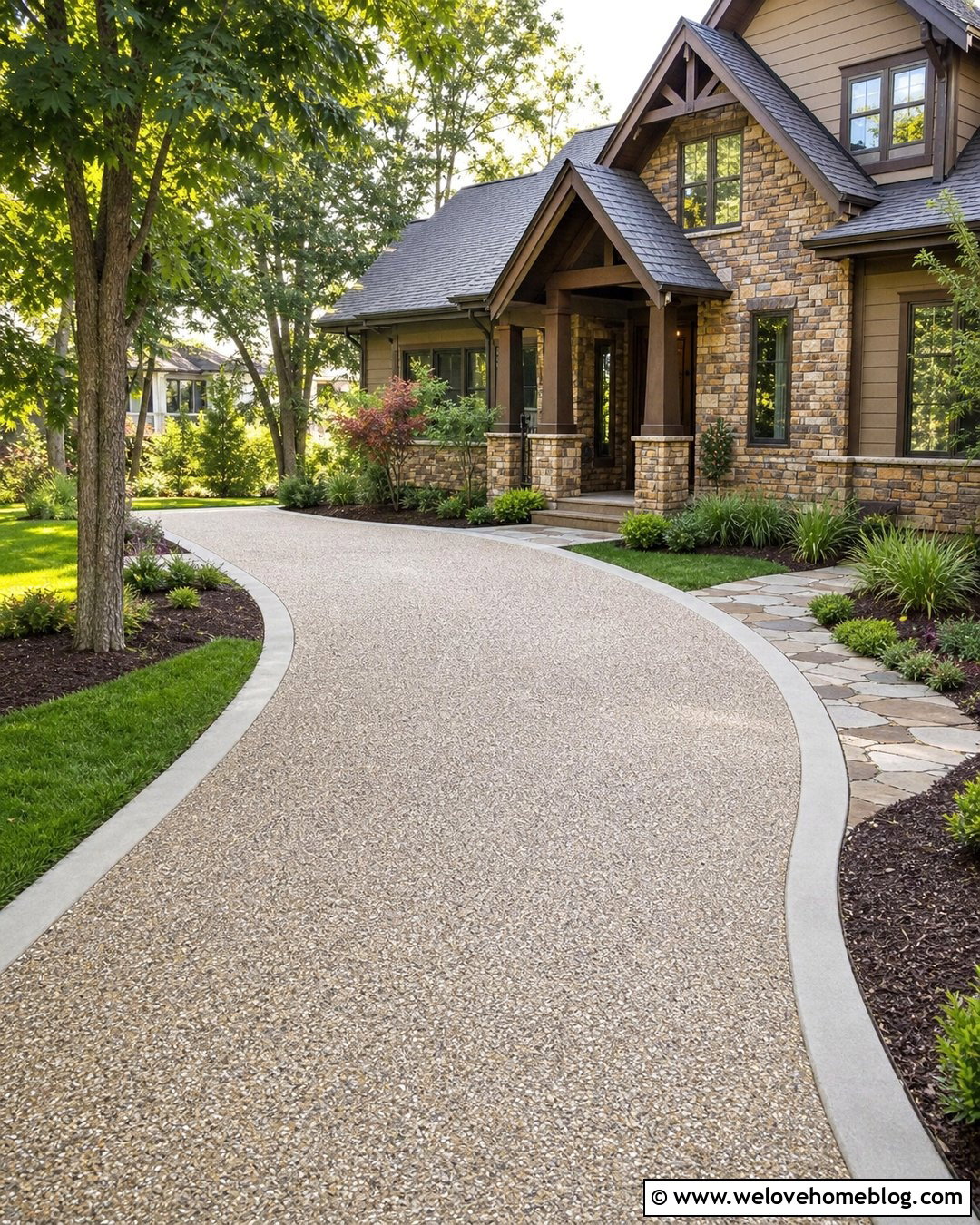
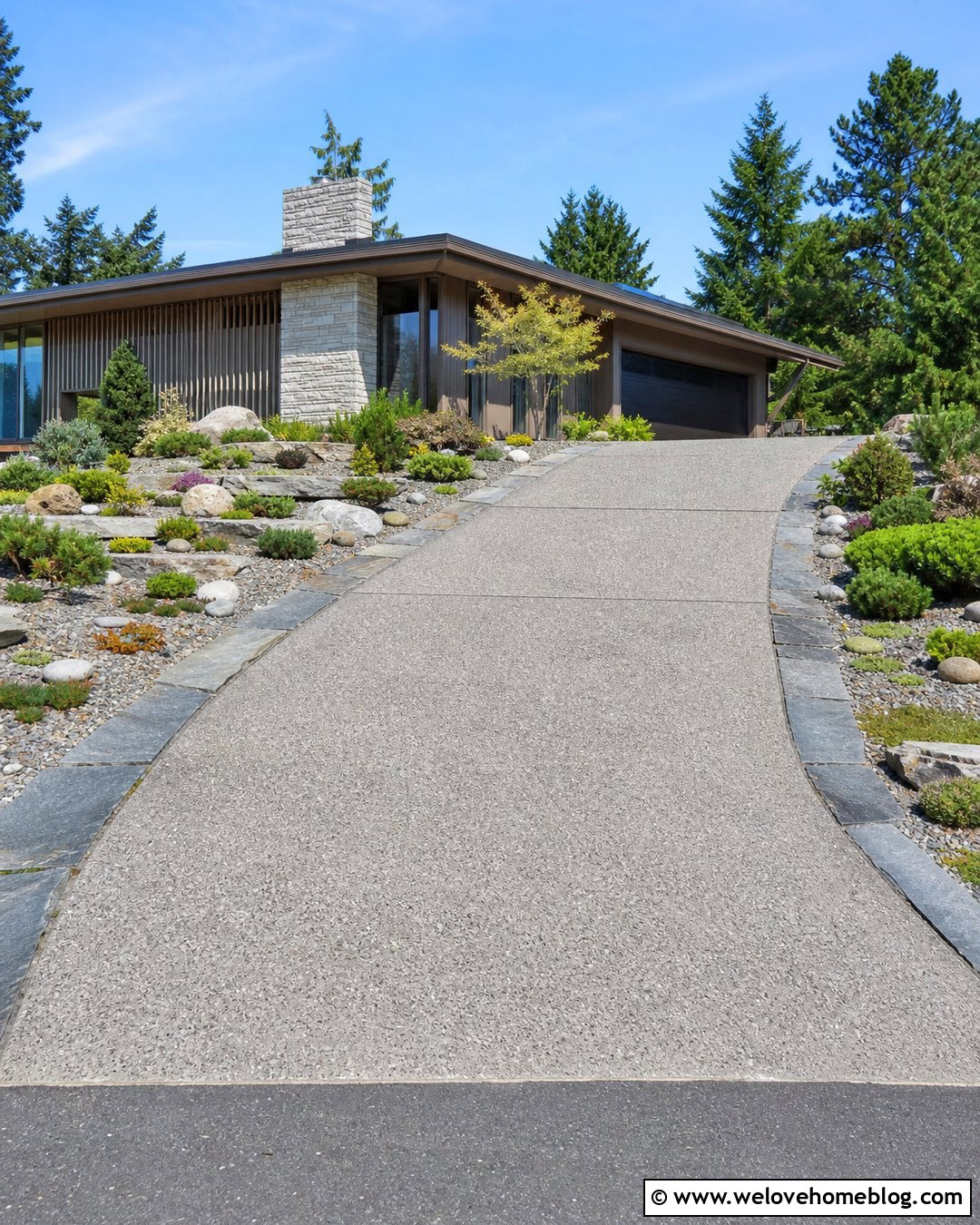
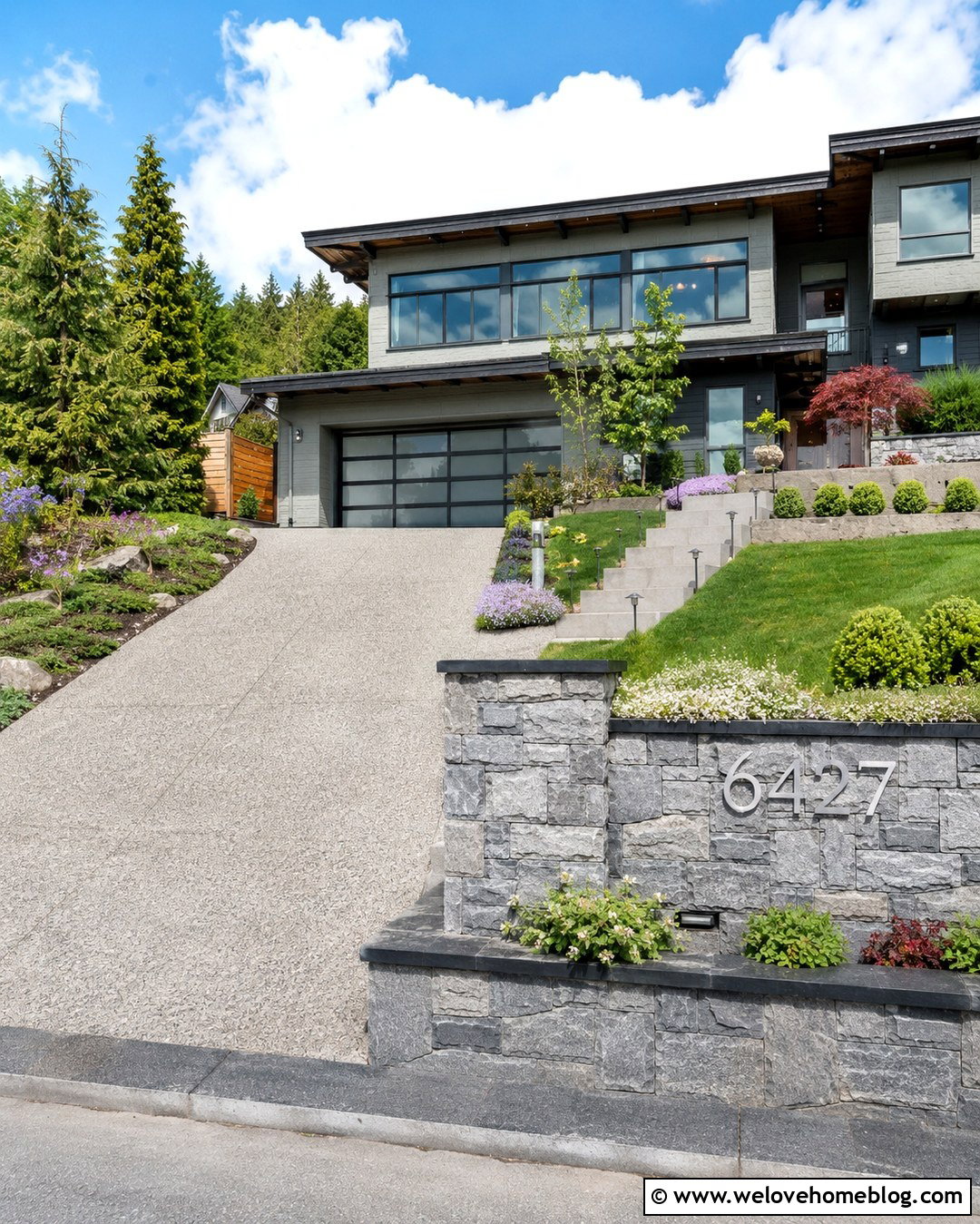
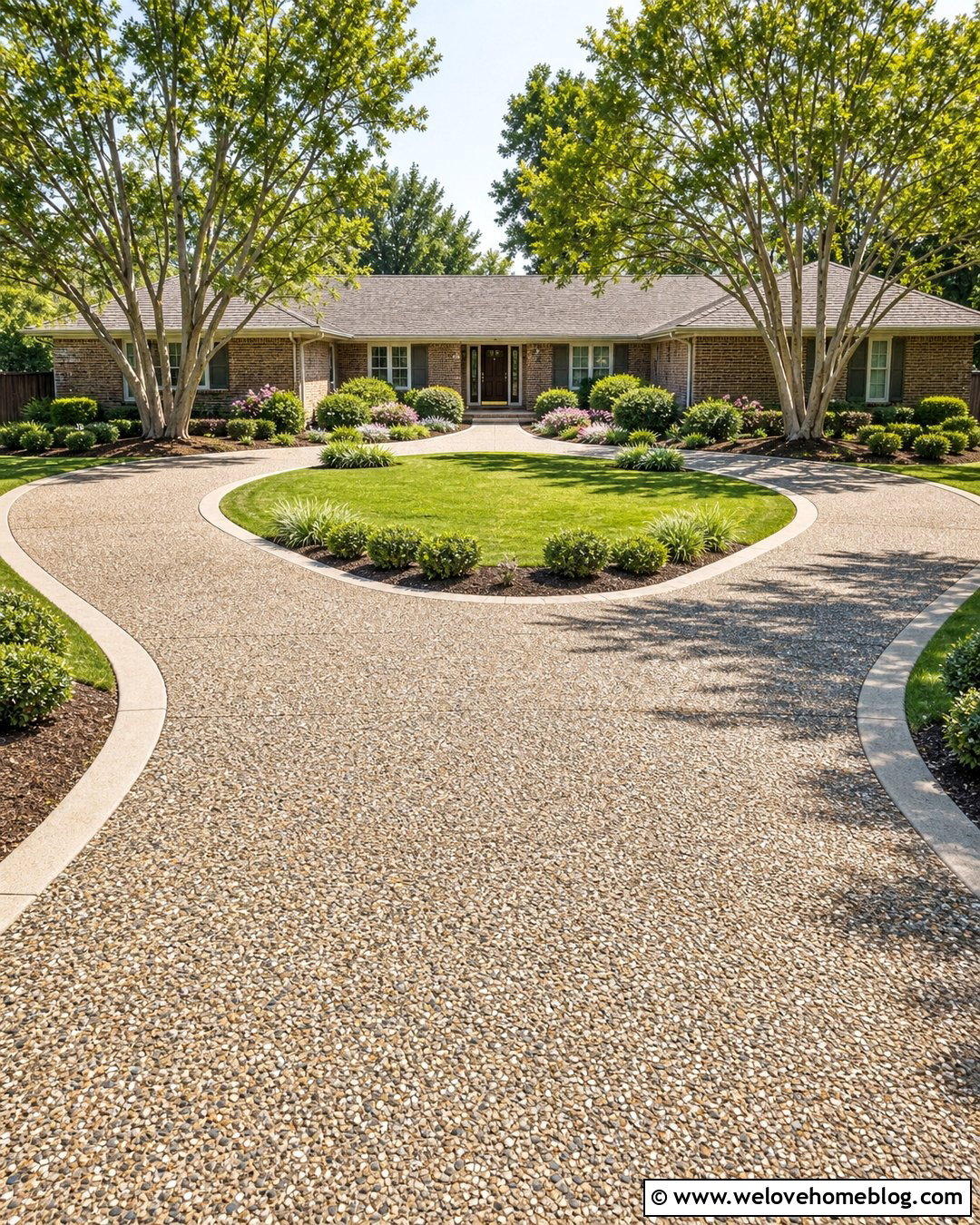
Small stones revealed across the concrete surface give exposed aggregate a naturally varied color and texture. A curved driveway finished with tan, cream, and gray aggregate can blend beautifully with stone veneer, mature trees, and informal planting beds. Add smooth poured-concrete bands along the edges to frame the rougher center field and create a tidy transition to the lawn. The aggregate selection should connect with colors already found on the house, retaining walls, or walkway. Rounded river pebbles create a softer appearance, while angular stone feels more structured. Because the visible aggregate becomes a major design feature, view samples in outdoor light before making a final selection. Exposed aggregate also pairs especially well with stamped borders and integral color. ()
3. Stamped Slate Concrete Driveway
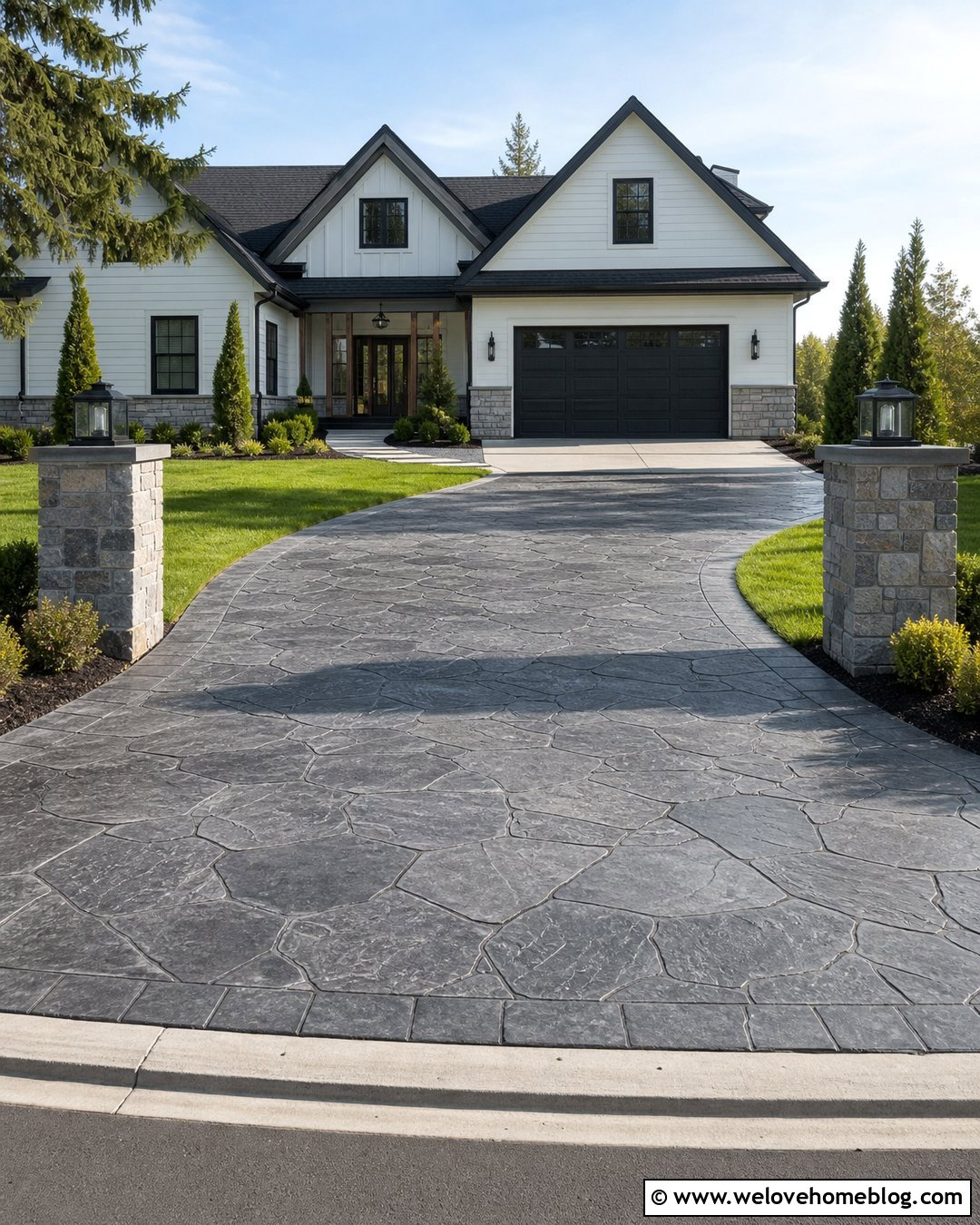
Stamped slate concrete brings the layered appearance of natural stone to a continuous driveway surface. Large, irregular slate impressions look convincing when two or three related colors are blended across the concrete instead of using one flat shade. Consider a medium-gray stamped driveway with charcoal release accents, a gentle curve, and matching stone columns near the entrance. A smooth concrete apron at the garage can provide a calmer transition beside the detailed pattern. Keep nearby landscaping simple with clipped shrubs, lawn, and a few upright evergreens. This prevents the driveway from looking too busy. Slate stamping complements modern farmhouse, craftsman, and contemporary homes, especially when the selected color repeats the roof, masonry, or exterior trim.
4. Stamped Cobblestone Concrete Driveway
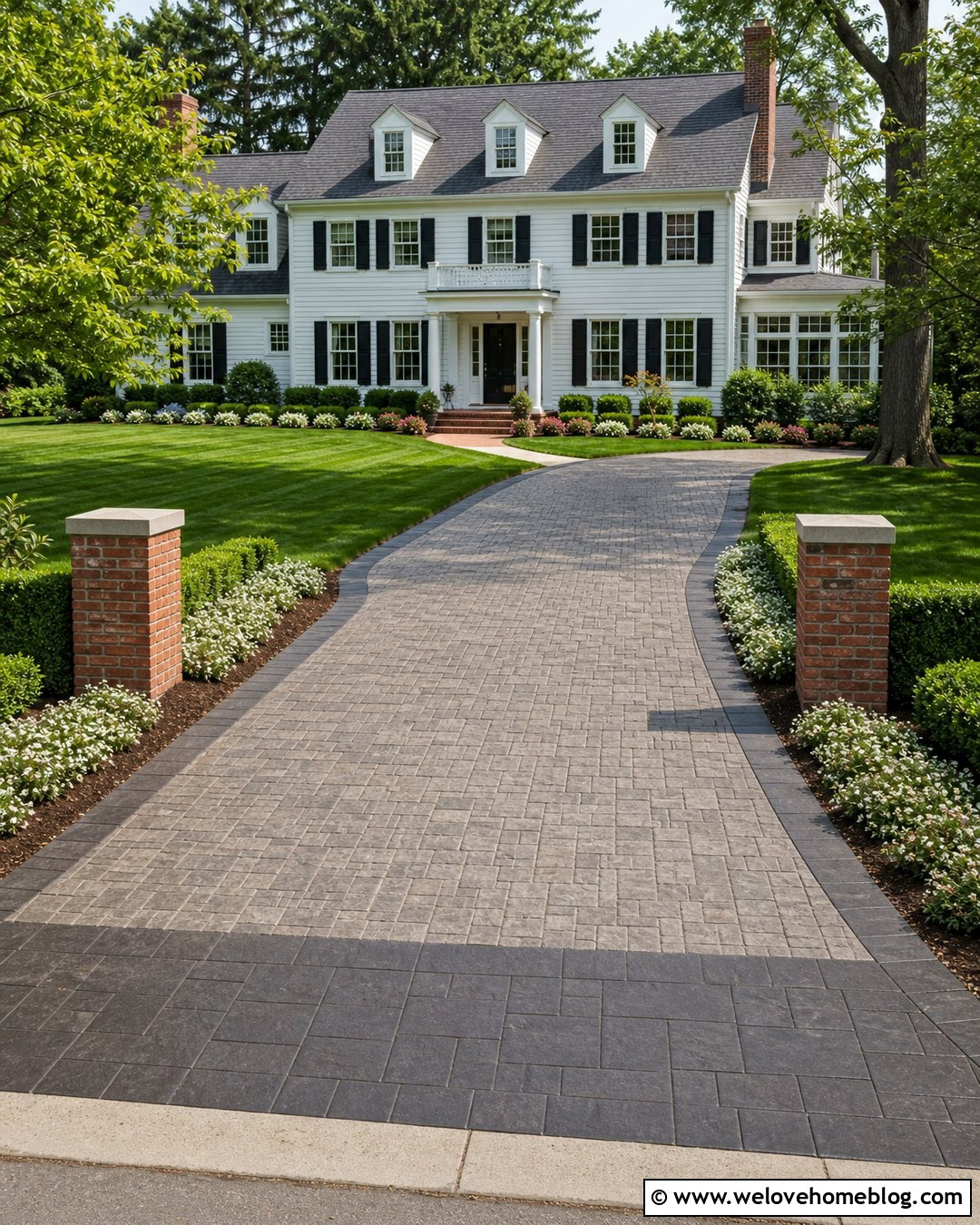
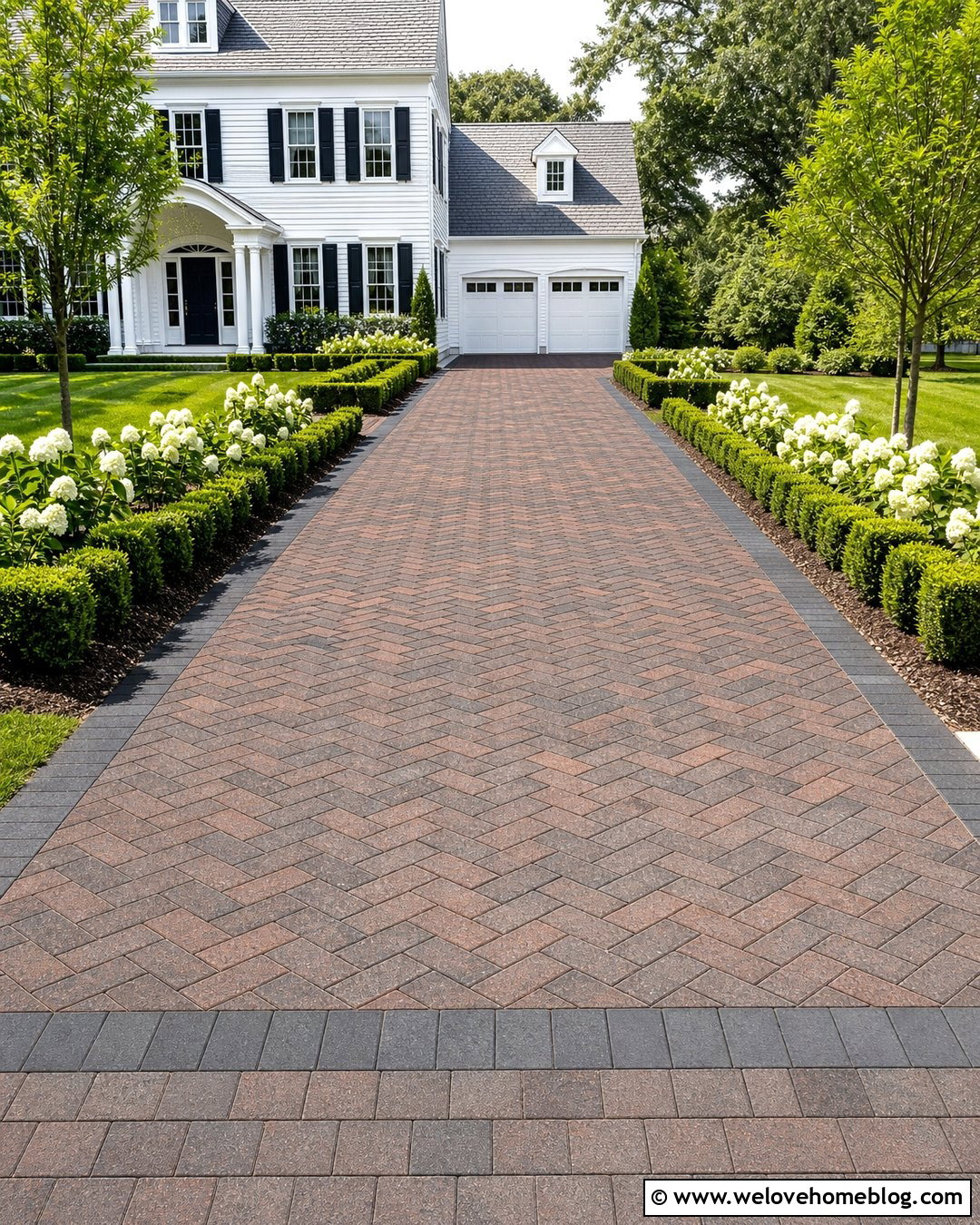
Do you love old-world paving but want a driveway built from poured concrete? A stamped cobblestone finish can create the appearance of individually laid stones through textured molds and layered coloring. Use a warm gray and taupe palette in a curved layout leading to a brick or traditional Colonial home. A darker stamped border will define the driveway and make the central pattern look more intentional. Near the street, widen the entrance slightly and frame it with masonry pillars, low hedges, and flowering ground cover. Avoid using too many contrasting colors because a restrained palette usually produces a more believable stone effect. Ask for a sample area so you can review the pattern scale, grout color, and texture depth together.
5. Rock Salt Finish Concrete Driveway
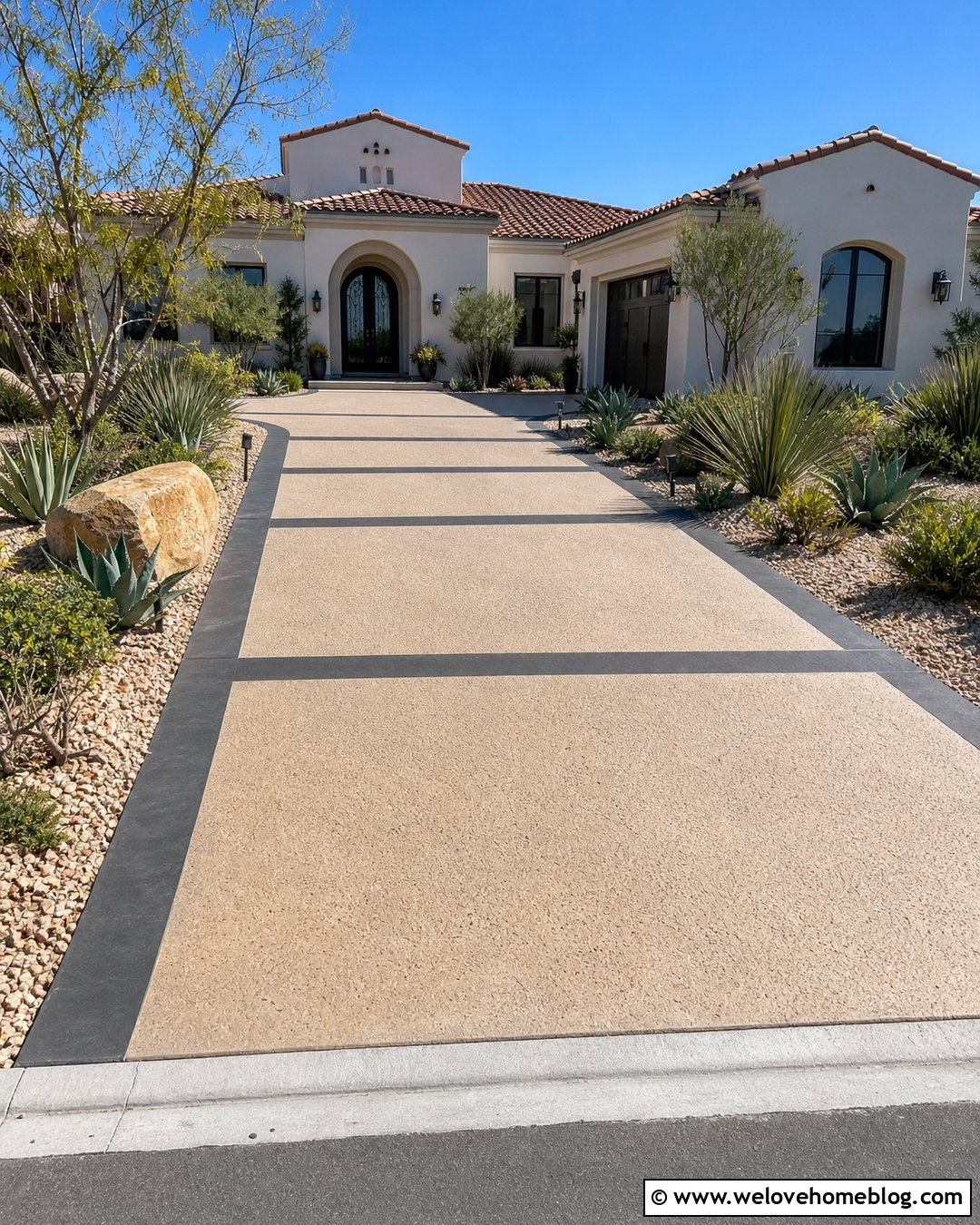
A rock salt finish creates shallow, scattered indentations that give concrete a lightly weathered appearance. It offers more character than plain concrete without introducing a strong stamped pattern. Warm beige concrete works particularly well with this finish, especially on a broad driveway serving a Southwestern, Mediterranean, or stucco home. Frame the surface with smooth charcoal bands and drought-tolerant planting beds filled with agave, ornamental grasses, and decorative gravel. The subtle texture looks best when the driveway has simple control-joint spacing and an uncluttered shape. Because the finished pits can vary in size and density, discuss the desired sample with the installer before the pour. A light, consistent salt impression creates a refined surface that remains visually calm from the curb. ()
6. Sand Finish Concrete Driveway
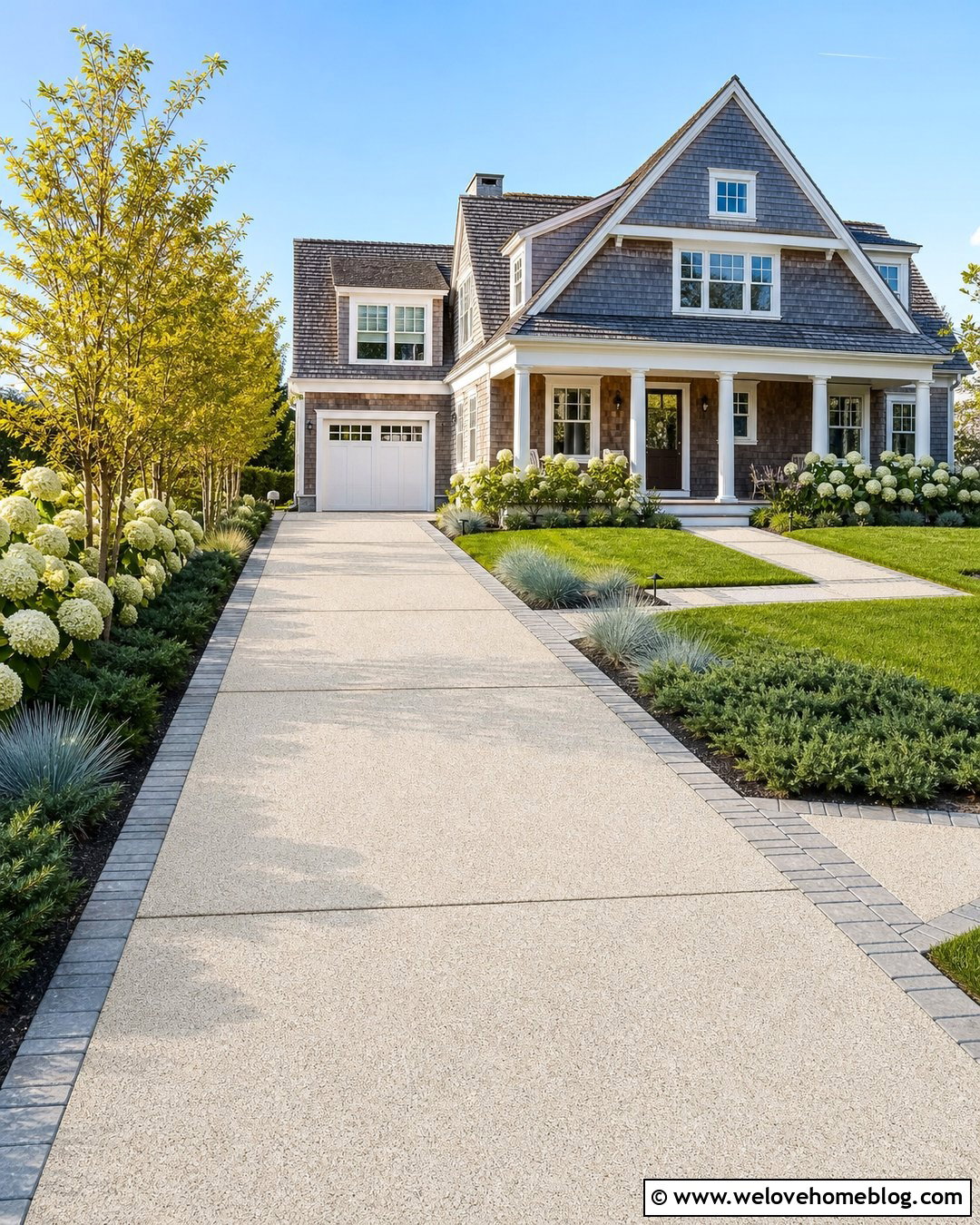
Sand-finished concrete has a fine, softly textured surface that feels quieter than exposed aggregate. It can be an excellent match for a coastal, Cape Cod, or contemporary house where clean materials and muted colors are important. Picture a pale sand-colored driveway in a straight layout, bordered by thin gray paver ribbons and airy beds of blue fescue, hydrangeas, and low juniper. Large rectangular control-joint sections will help the surface feel modern and organized. The finish can also continue onto an adjoining walkway for a coordinated entrance. Since sand exposure levels affect both color and texture, request a physical sample instead of selecting from a small photograph. Pair the understated center with stronger edging so the full driveway remains clearly defined against lawn and planting beds.
7. Swirl Finish Concrete Driveway
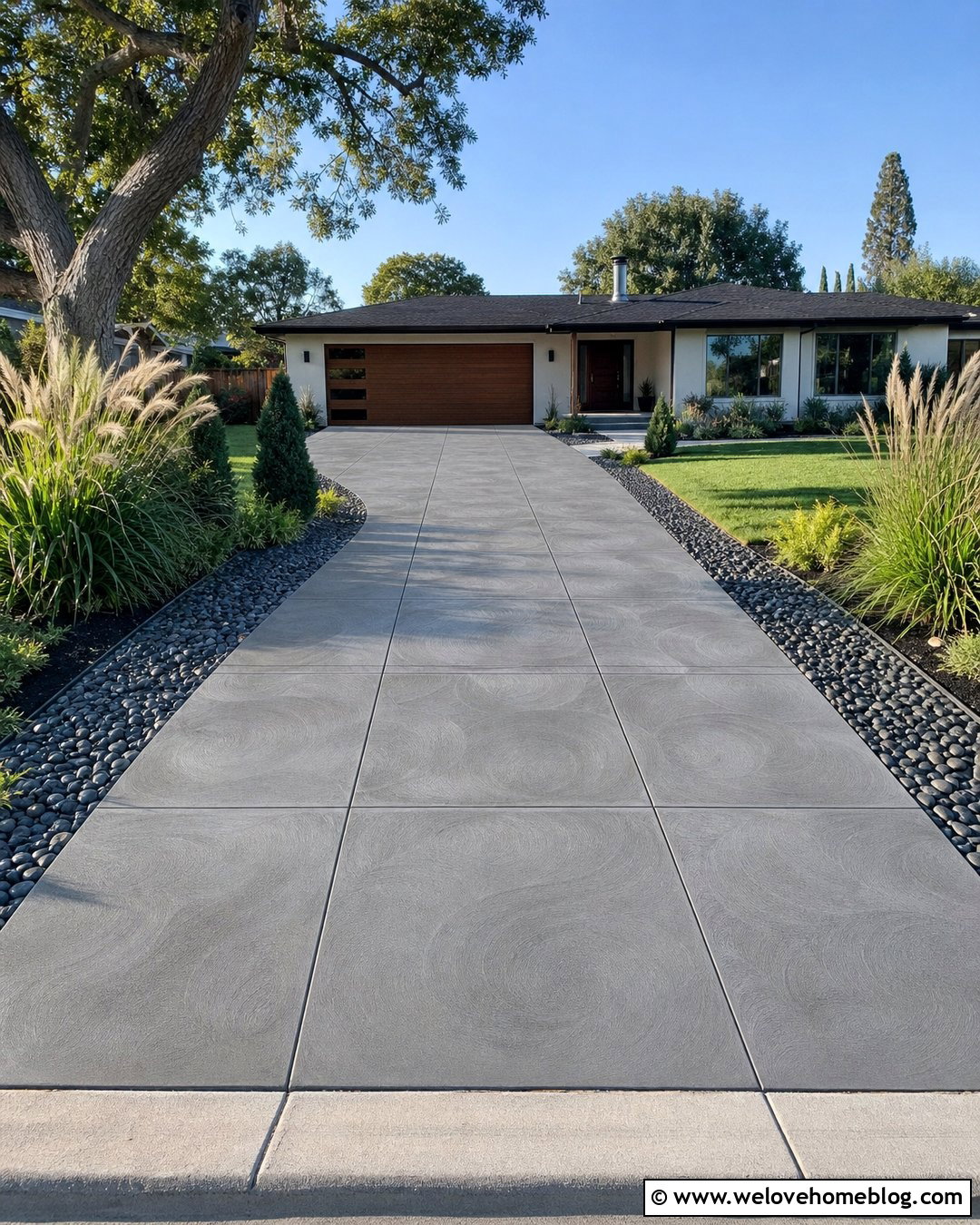
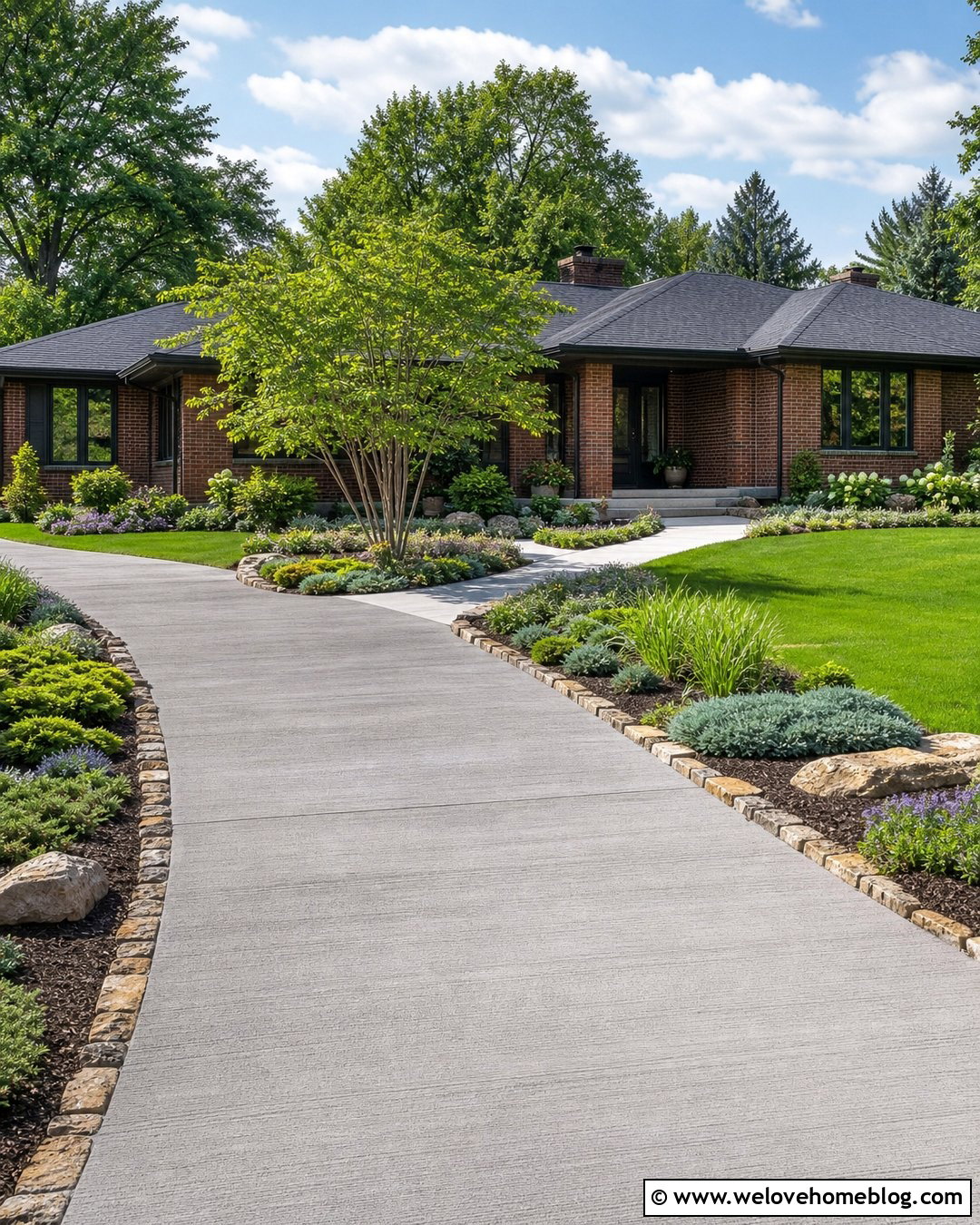
Overlapping arcs give a swirl finish noticeable movement without copying brick or natural stone. The pattern can be coarse and rustic or relatively fine, depending on the finishing tool and technique. For a midcentury ranch, try medium-gray concrete with broad, consistent swirls, straight driveway edges, and narrow bands of dark river rock. Repeat the curved lines through rounded planting beds containing ornamental grasses and compact evergreen shrubs. Simple square control-joint sections will provide visual structure beneath the flowing surface texture. This finish can hide minor marks better than completely smooth concrete, but consistency is essential across a large driveway. Review the swirl size and direction before installation so every section connects naturally rather than appearing like separate patches. ()
8. Smooth Trowel Concrete Driveway
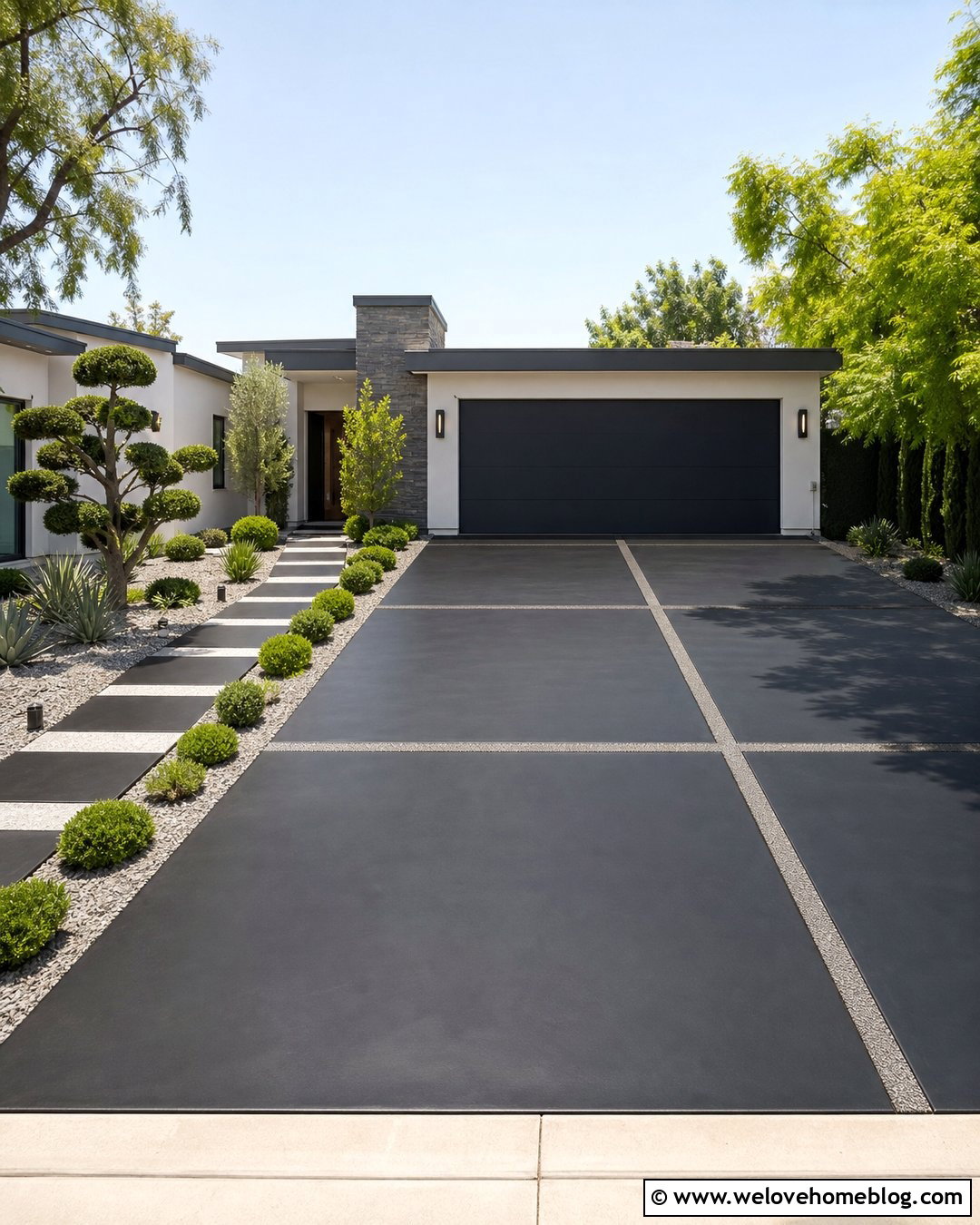
A smooth trowel finish delivers a crisp, minimal appearance that suits contemporary architecture, but an exterior driveway should still be designed with usable traction in mind. One balanced approach is to use smooth charcoal concrete panels separated by textured broom-finished strips. The strips create contrast, emphasize the driveway’s geometry, and break up the broad paved surface. Frame the layout with steel edging, rectangular planting beds, and evenly spaced ornamental trees leading toward a flat-roofed modern house. A matte sealer will generally look more understated than a glossy treatment. Keep the driveway slope, drainage path, and local weather conditions central to the design conversation. Rather than selecting a highly slick surface, ask the installer how the desired smooth appearance can be combined with suitable exterior texture.
9. Acid Stained Concrete Driveway
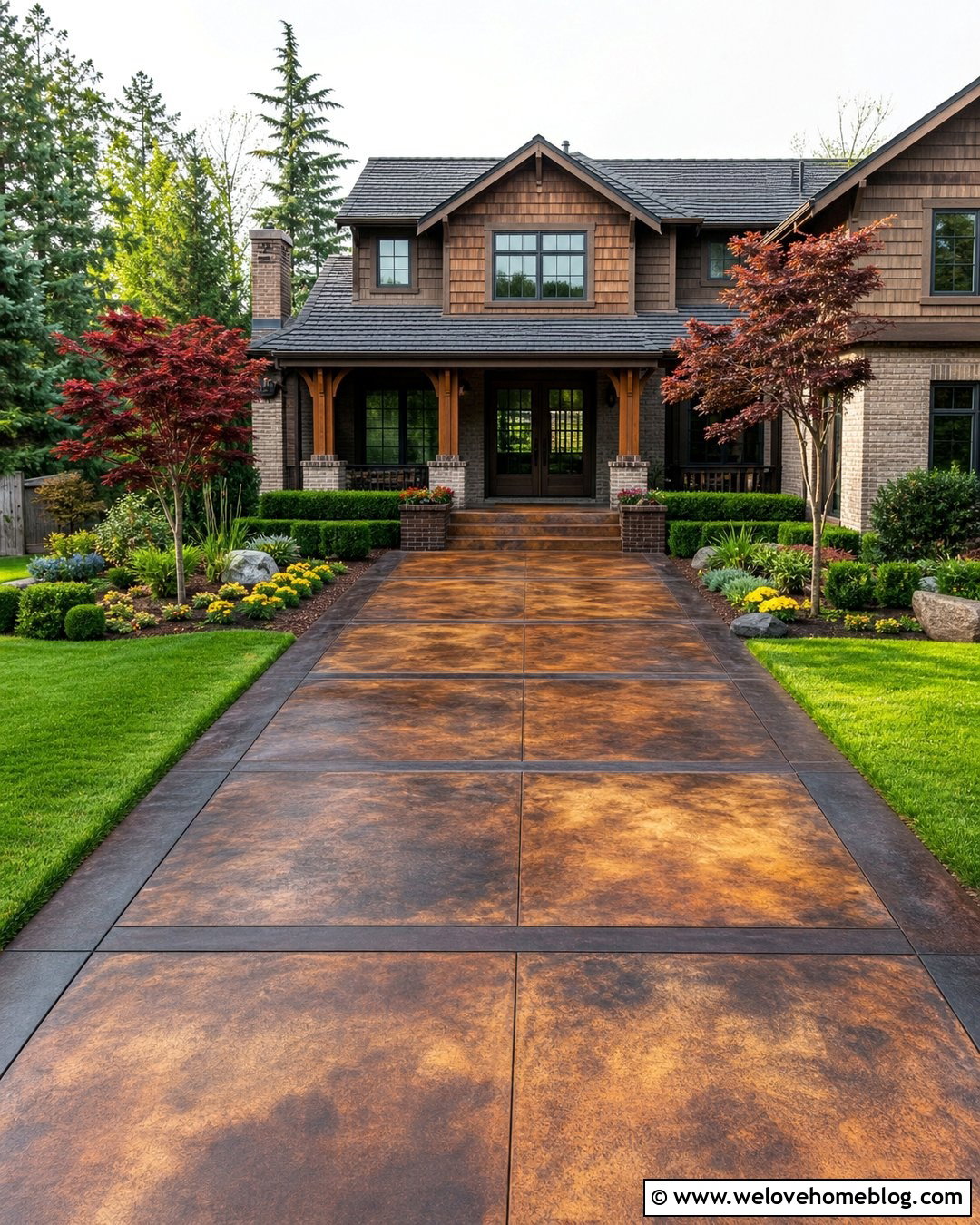
Acid staining can produce mottled, earthy color variation that feels richer than uniformly colored concrete. Warm brown, amber, rust, and muted charcoal tones can make a straight driveway complement brickwork, wood siding, or natural stone. Use a dark stained border around a lighter central field, then repeat the darker tone in the walkway and front steps. Informal planting beds with red maples, boxwood, and seasonal flowers will reinforce the layered color palette. Since stains react differently with each slab, variation should be treated as part of the design rather than a defect. Test the chosen stain on the actual concrete whenever possible. A breathable, appropriately specified exterior sealer can deepen the color, but its final sheen and traction should be reviewed before application.
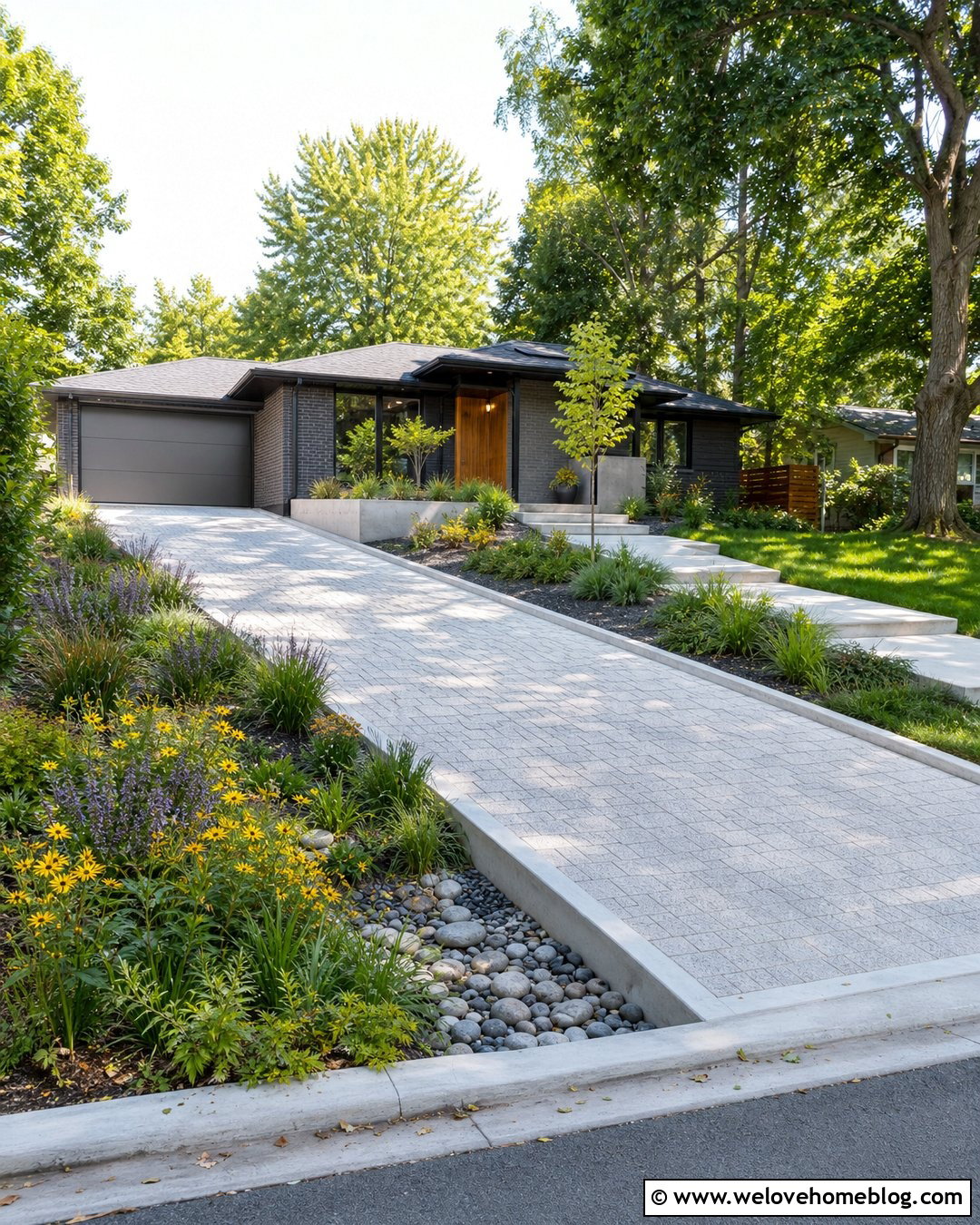
10. Water Based Stained Concrete Driveway
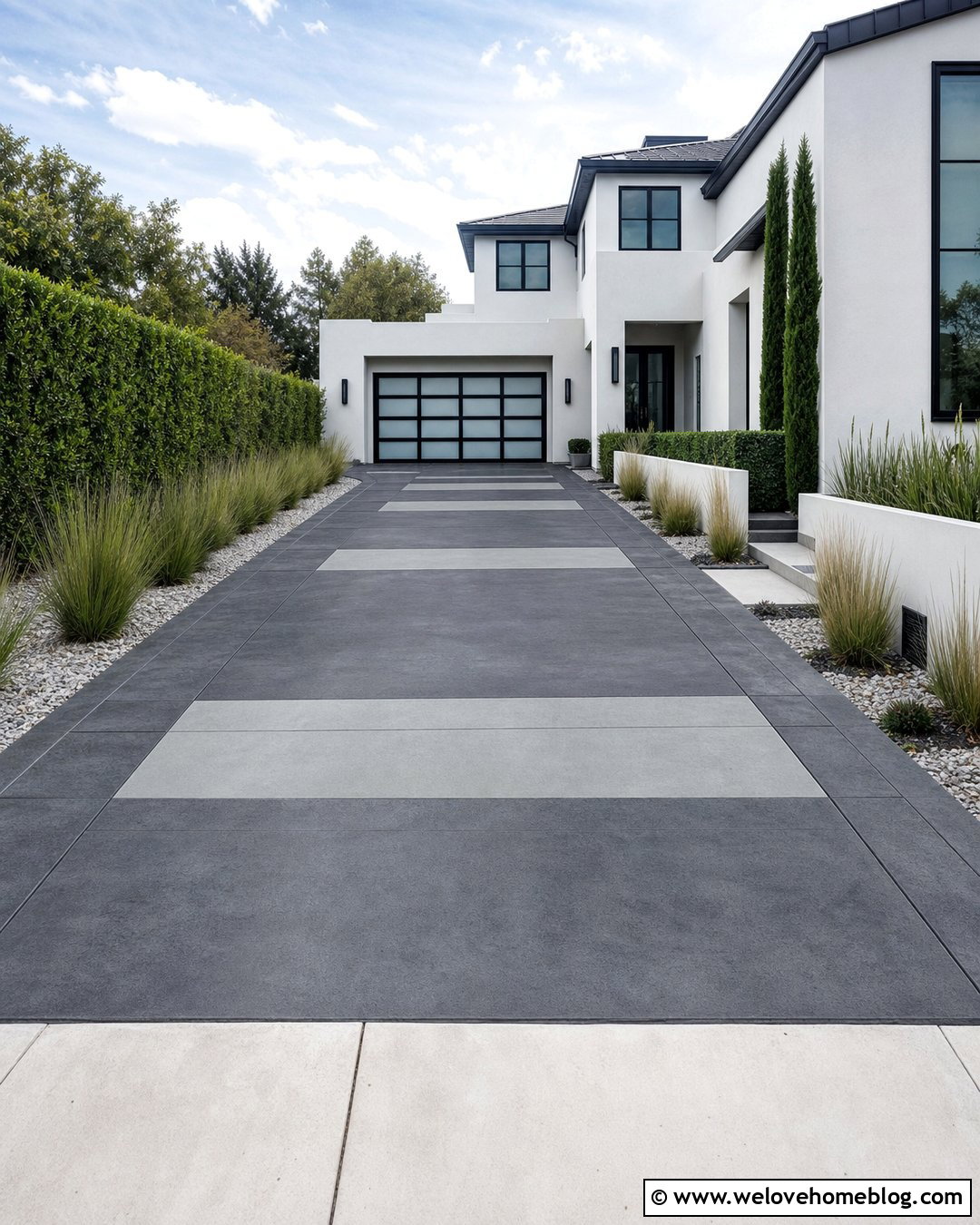
When you want more predictable color choices, a water-based stain can create a controlled yet translucent finish. A soft charcoal driveway with slightly lighter gray panels works beautifully beside white siding, black windows, and modern landscaping. Score the surface into oversized rectangles and add a narrow border in a deeper graphite tone. Upright grasses, clipped hedges, and pale gravel beds can frame the concrete without distracting from the color blocking. This approach is especially useful when the driveway needs to coordinate closely with exterior paint or masonry. Keep the palette to two related shades for a clean result. Before staining the full area, approve a test section under natural daylight because the original slab color and surface preparation can influence the final appearance.
11. Integral Color Concrete Driveway
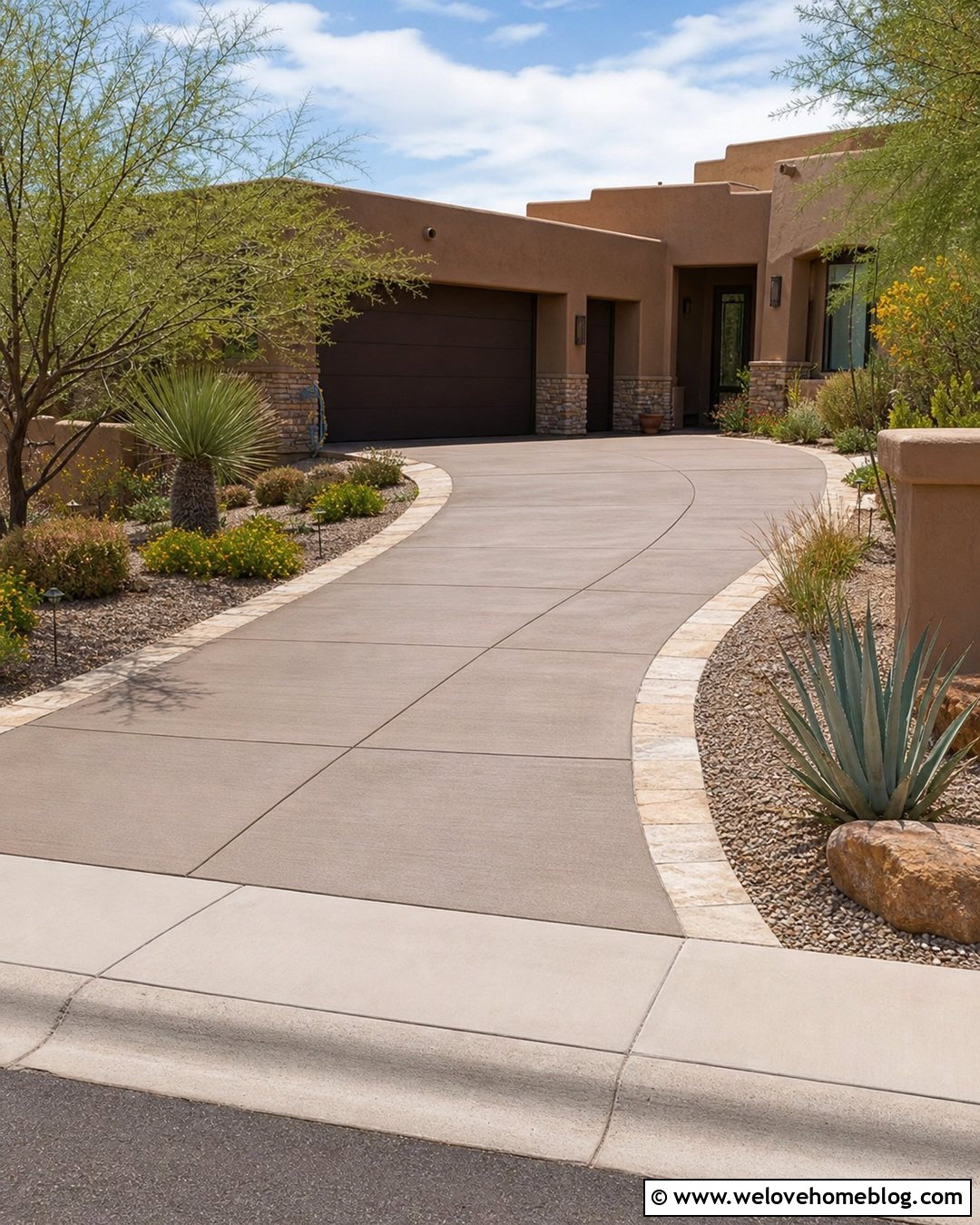
Integral color is mixed throughout the concrete rather than applied only to the finished surface. This makes it useful for creating a driveway with a consistent base tone from edge to edge. A warm taupe broom-finished driveway can soften the exterior of a tan stucco home while coordinating with limestone borders and desert planting. For a cooler design, use medium-gray integral color beside a contemporary facade with black trim. Break the driveway into large panels and outline the edges with contrasting pavers or smooth concrete bands. Select a color that harmonizes with permanent house materials instead of short-lived accent decor. Concrete curing, weather, and sealing can affect the final tone, so examine a cured outdoor sample and expect some natural variation across the completed surface.
12. Color Hardened Concrete Driveway
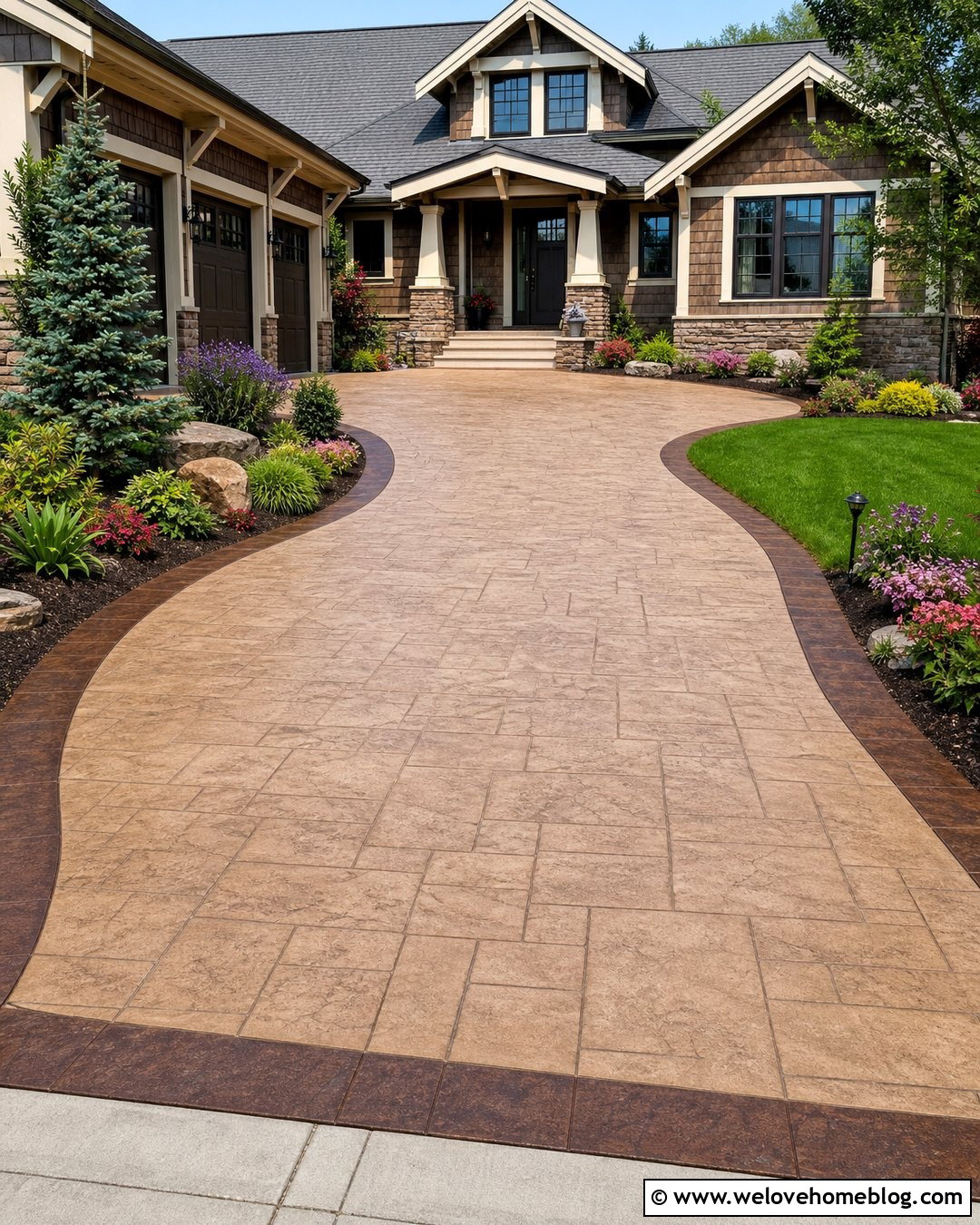
Color hardener adds concentrated pigment and surface strength to the upper portion of freshly placed concrete. It is often paired with stamping because it helps define textured patterns and allows contrasting release colors to create depth. For a craftsman home, consider a warm sandstone driveway stamped with a subtle ashlar pattern and framed by deep brown borders. Curved planting beds filled with dwarf evergreens, coral bells, and flowering shrubs can echo the driveway’s natural palette. Avoid combining an intricate pattern with overly elaborate landscaping. One should provide detail while the other creates breathing room. Proper color distribution matters across a large surface, so this finish is best handled by an installer experienced with decorative concrete. Review samples that show the full pattern, base color, accent color, and sealer together.
13. Honed Concrete Driveway
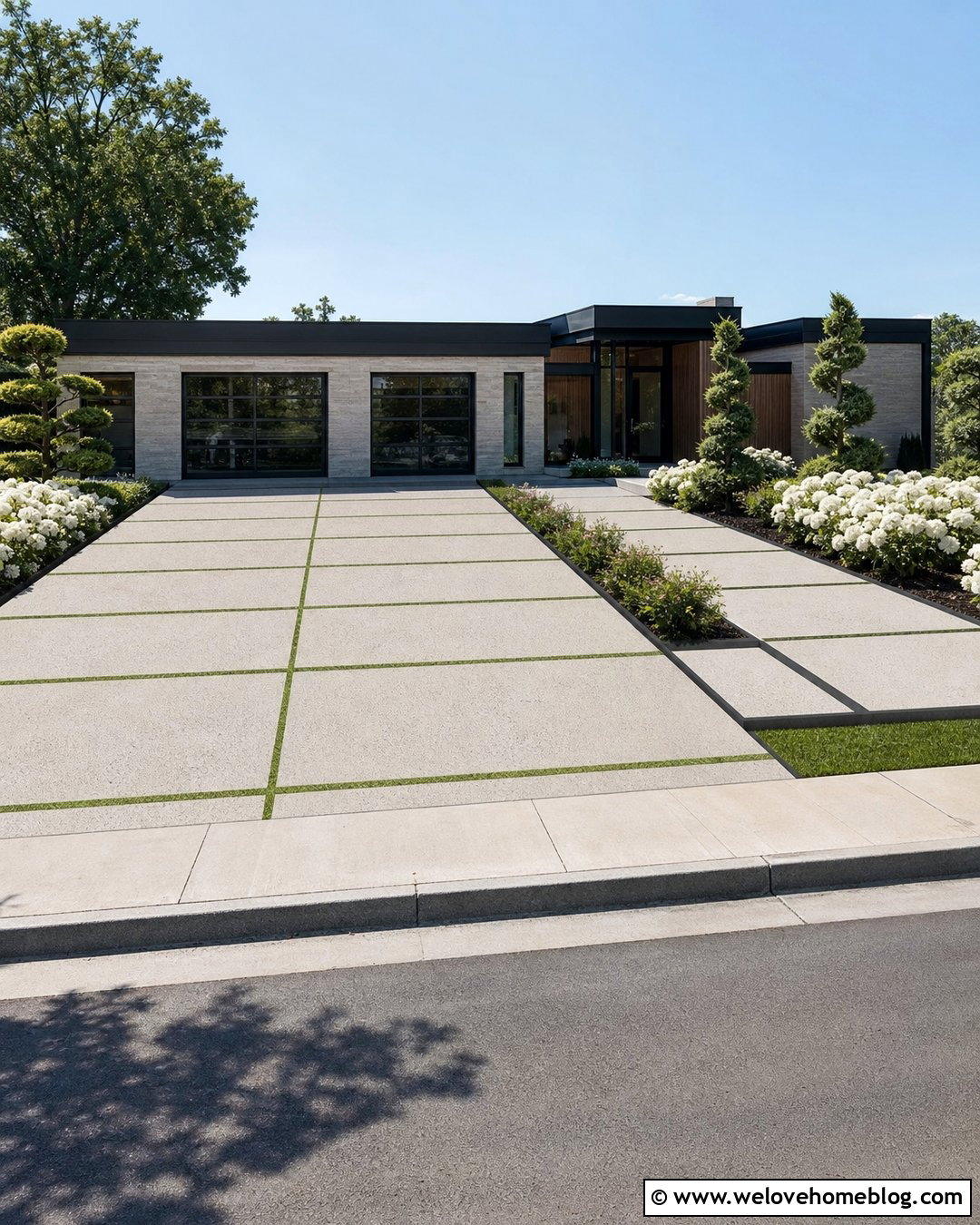
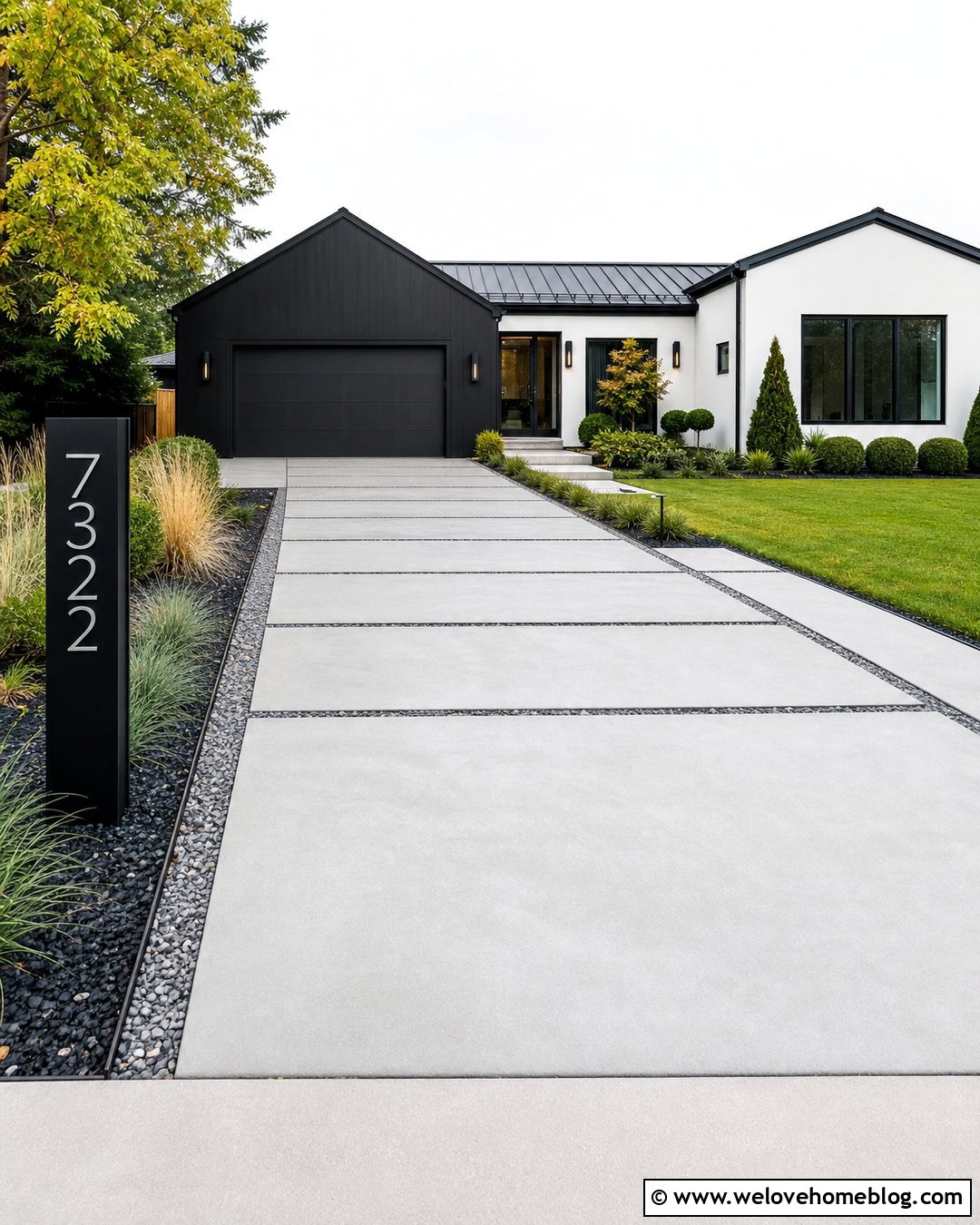
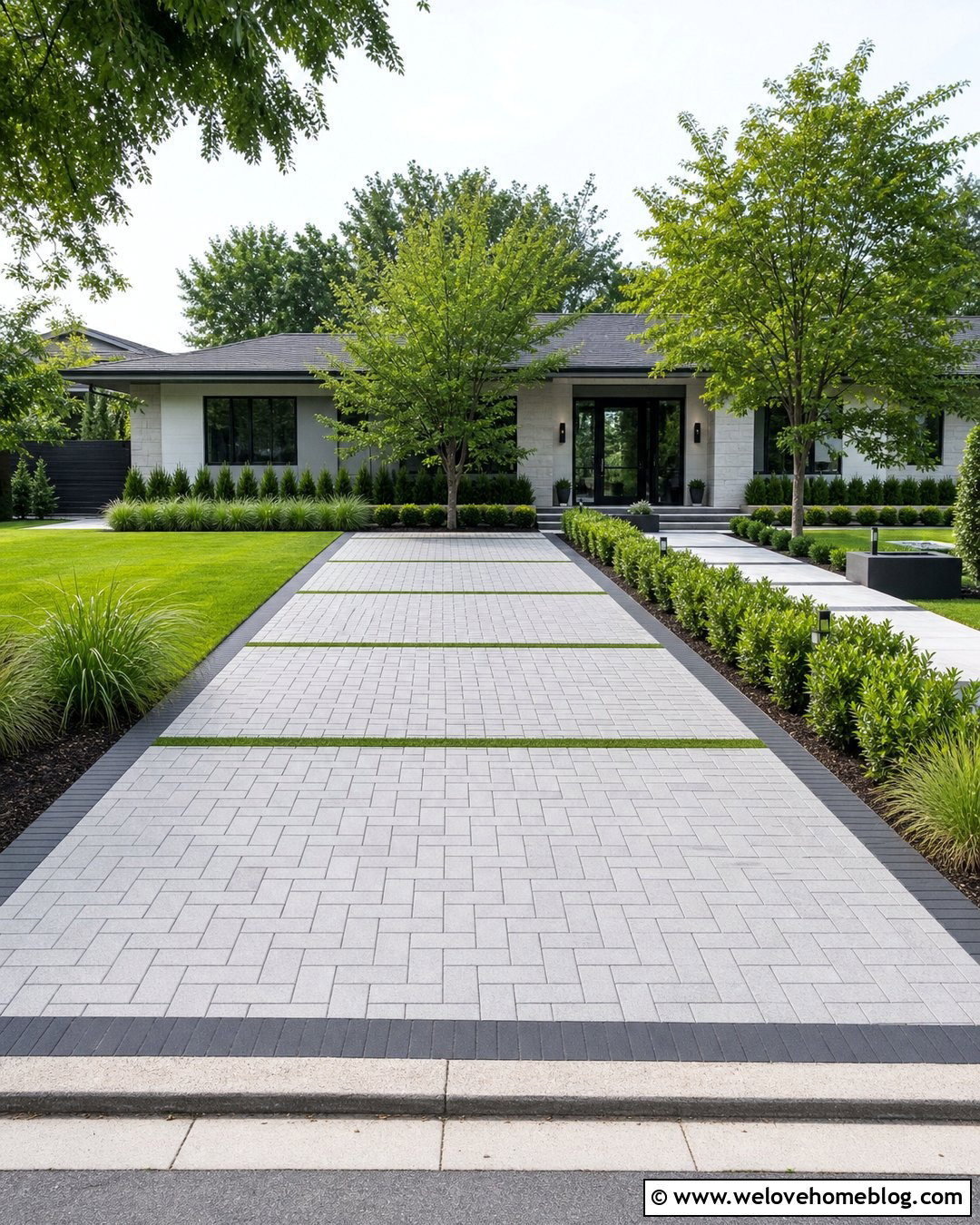
Honed concrete exposes a fine portion of the aggregate while keeping the surface more refined than heavily exposed aggregate. The result can look sleek and stone-like, making it a strong match for modern homes. Use pale gray honed concrete in wide rectangular panels with dark basalt aggregate showing subtly through the surface. Narrow grass strips between selected panels can reduce the visual weight of a large driveway, while black steel edging keeps every line crisp. Surround the approach with sculptural evergreens, white flowering shrubs, and a matching concrete walkway. Choose a low-sheen finish so the design feels sophisticated rather than glossy. Because exterior performance matters, discuss the exposure level, driveway slope, and appropriate surface texture with the concrete professional before settling on a highly refined finish.
14. Sandblasted Concrete Driveway
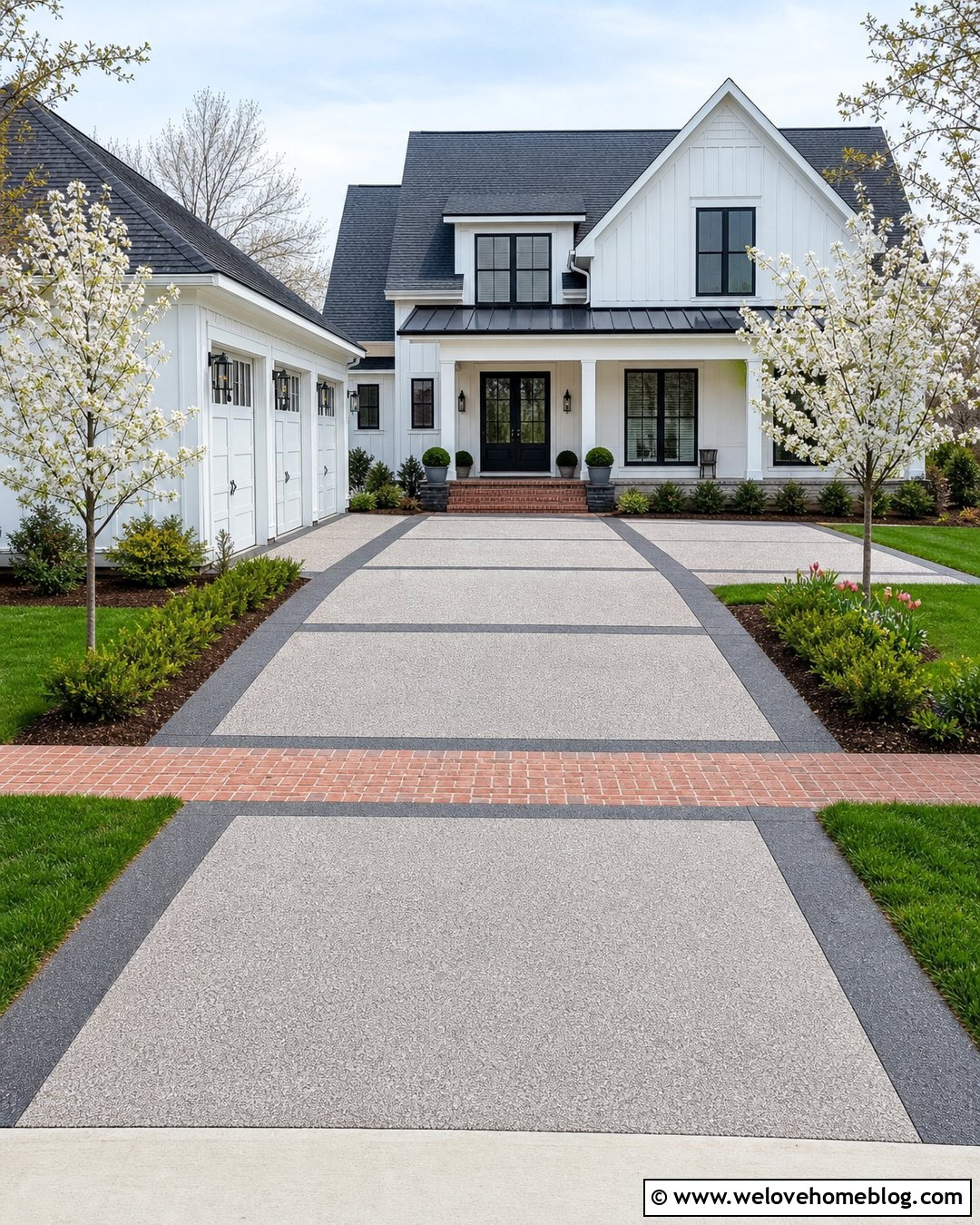
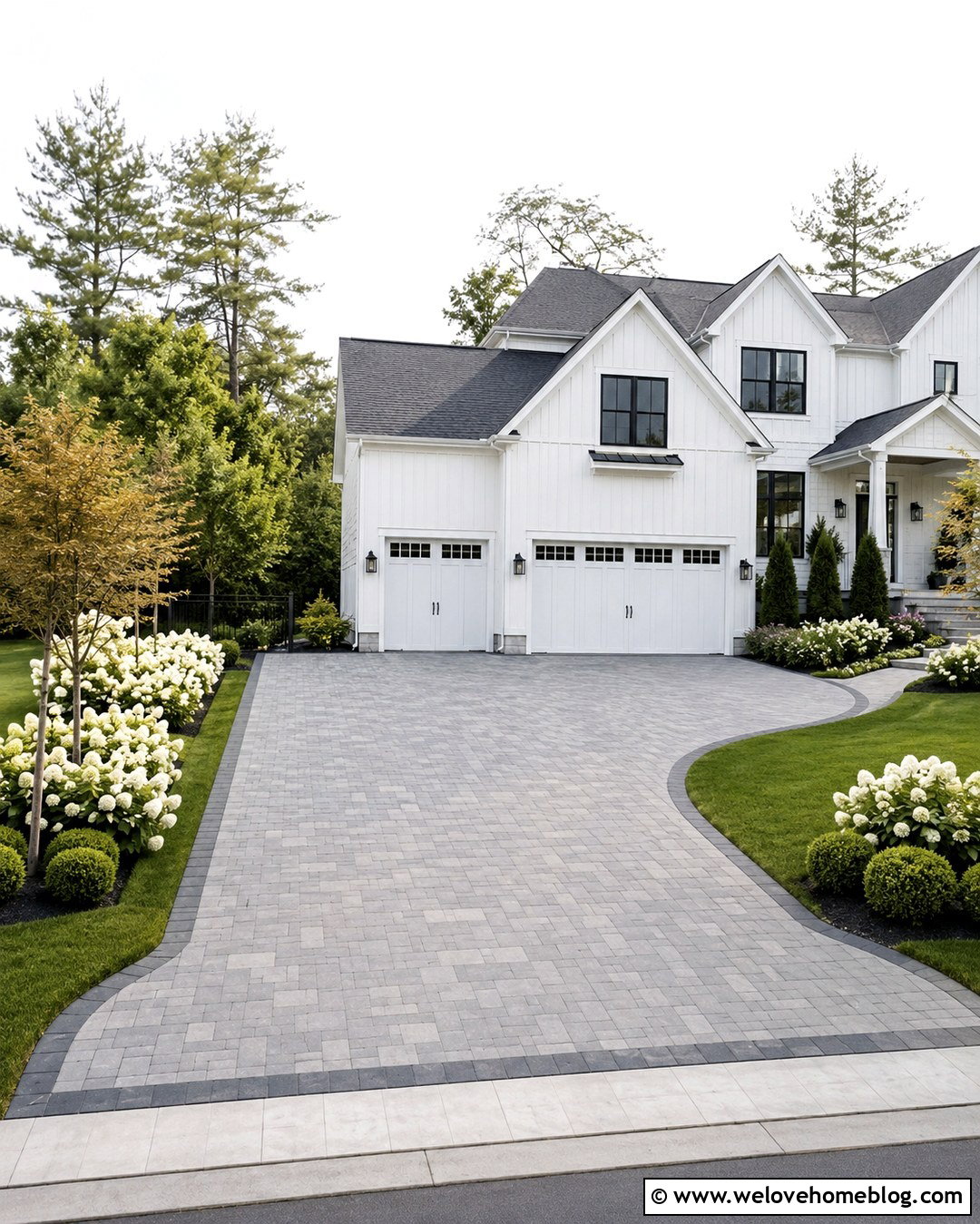
Sandblasting removes a controlled amount of surface paste to reveal fine aggregate and create an even texture. Visually, it falls between smooth concrete and a more rugged exposed aggregate finish. A light-gray sandblasted driveway can suit a modern farmhouse when paired with a charcoal broom-finished border and a straight approach to a white garage. Add symmetrical planting beds, small flowering trees, and a brick walkway to warm up the cool concrete tones. Decorative bands can also divide the driveway into balanced parking bays without changing the main material. The depth of blasting influences both the appearance and texture, so compare light, medium, and heavier samples. A shallow treatment generally produces a cleaner look, while deeper exposure gives the driveway a stronger aggregate character.
15. Stenciled Concrete Driveway
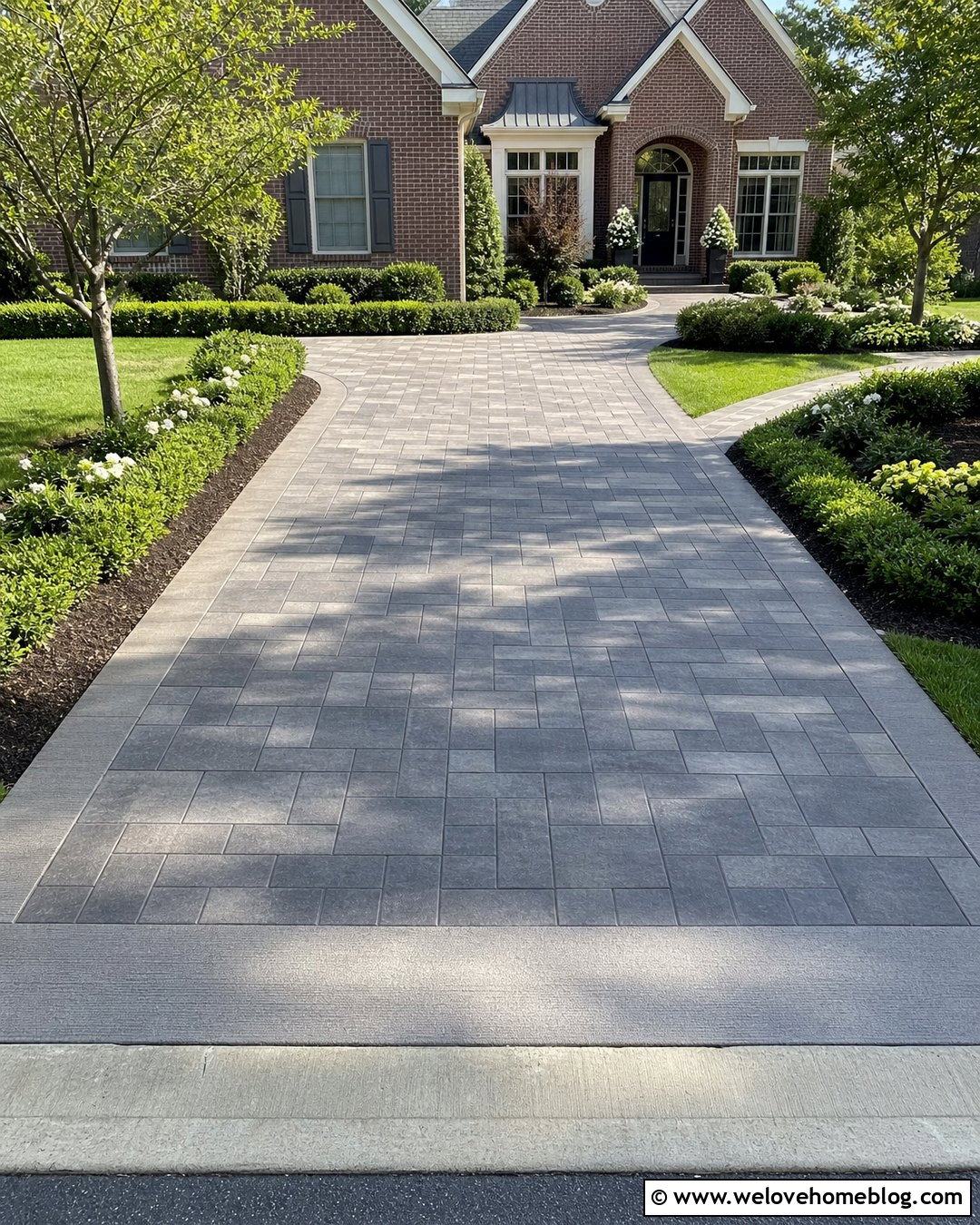
Stenciled concrete can create the appearance of brick, tile, or stone while maintaining a poured surface. For a traditional red-brick home, choose a large running-bond stencil in muted charcoal and warm gray rather than trying to match the facade exactly. Use the pattern mainly through the center of a straight driveway, then frame it with solid broom-finished concrete borders. This creates visual detail without overwhelming the front yard. Low hedges, lawn, and curved flower beds will soften the geometric design. Pay careful attention to pattern alignment where the driveway meets the sidewalk, garage, and walkway. A slightly larger stencil pattern is usually easier to read from the street. The selected color contrast should remain subtle enough that the surface resembles masonry instead of printed decoration.
16. Scored Concrete Driveway
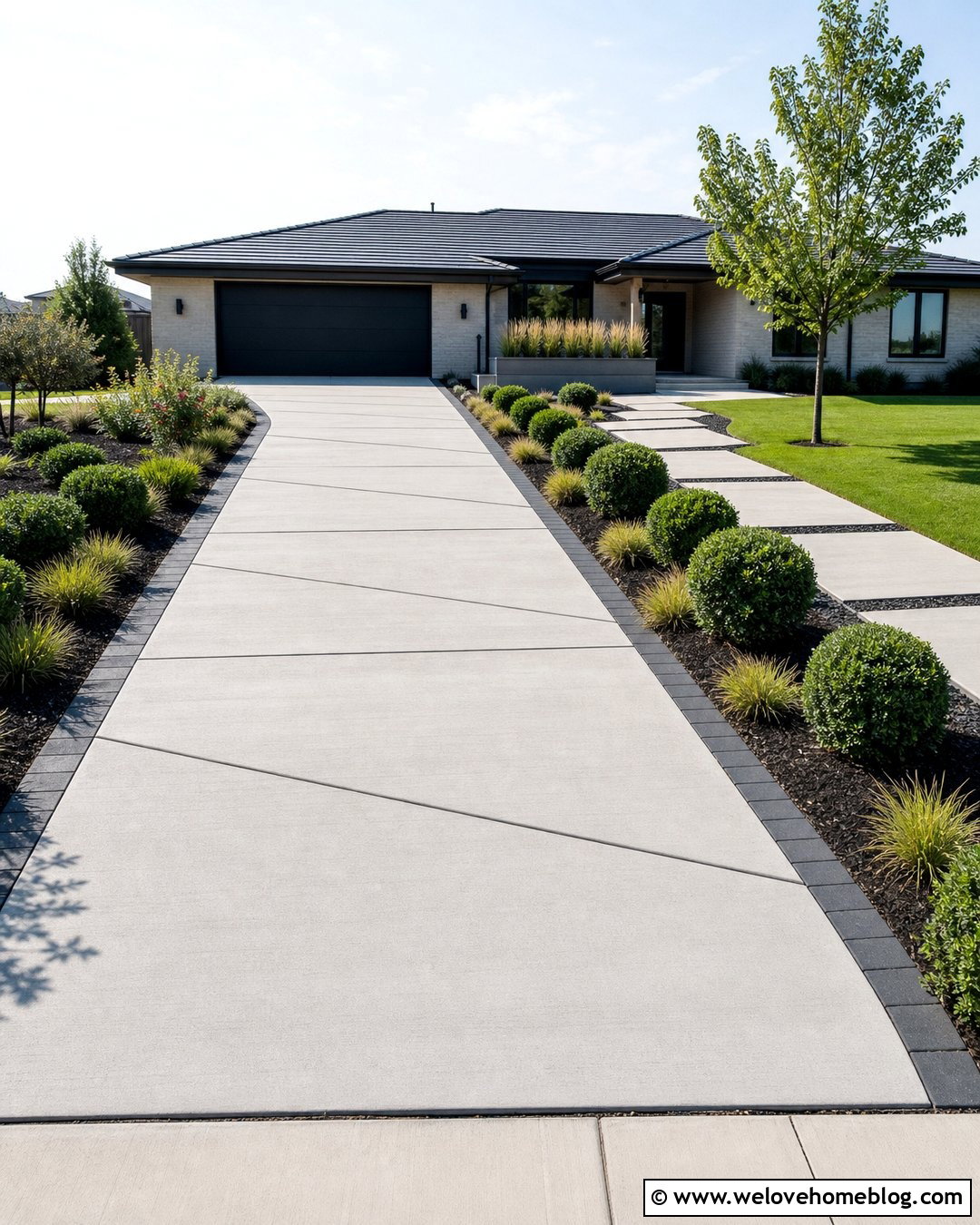
Simple scored lines can make an ordinary concrete driveway appear carefully planned. Instead of relying on a decorative texture, this design uses grooves to divide the slab into squares, diamonds, or rectangular panels. For a contemporary ranch, use light-gray broom-finished concrete with diagonal scoring and a slim border of dark concrete pavers. Extend one scoring line toward the front walkway to visually connect both surfaces. Low ornamental grasses, rounded shrubs, and a specimen tree can balance the strong geometry. Plan the score pattern around necessary control joints so the practical and decorative lines work together. Large panels suit a broad modern driveway, while smaller squares can add scale to a compact entrance. Keep the surrounding materials restrained so the organized linework remains the main design feature.
17. Geometric Saw Cut Concrete Driveway
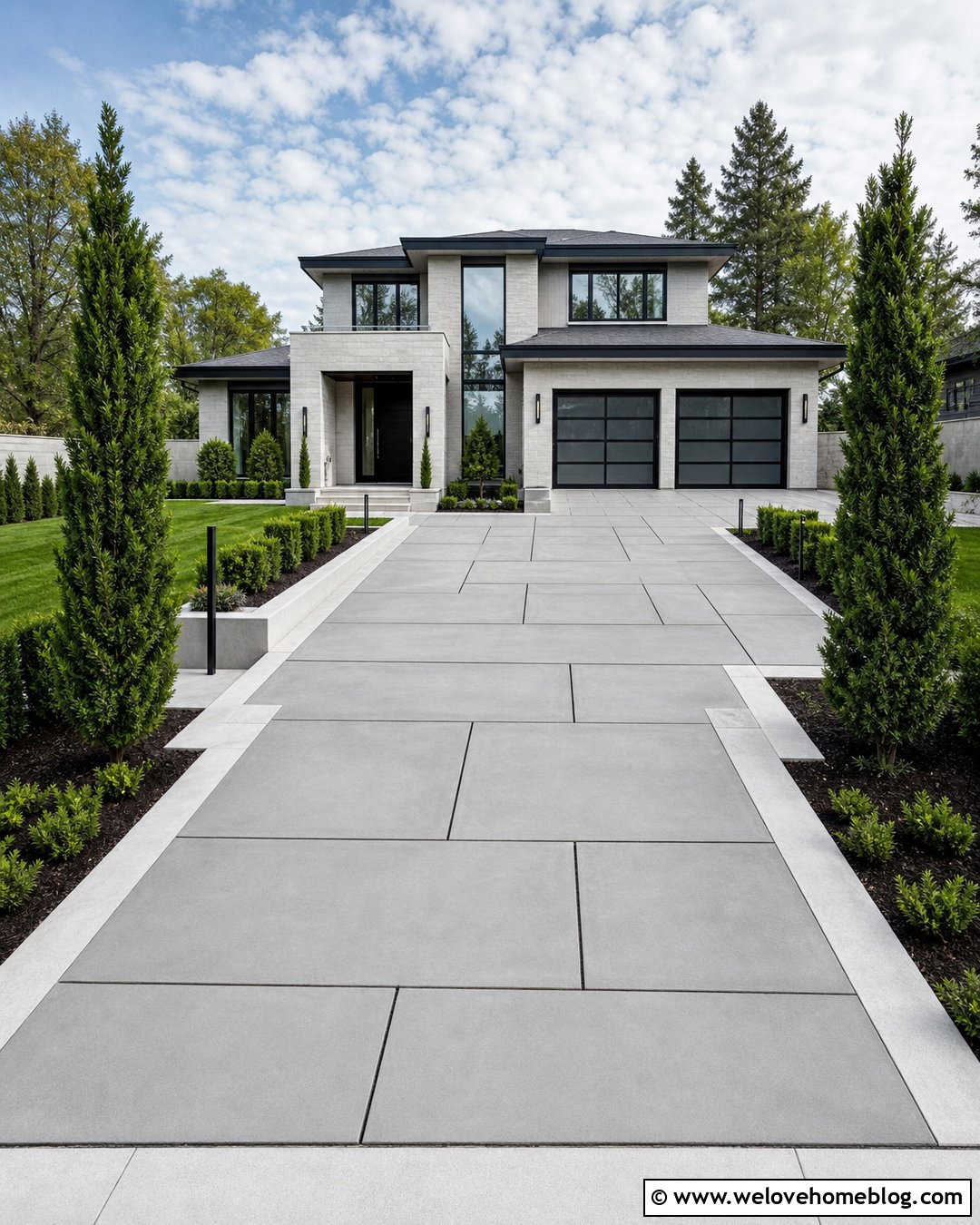
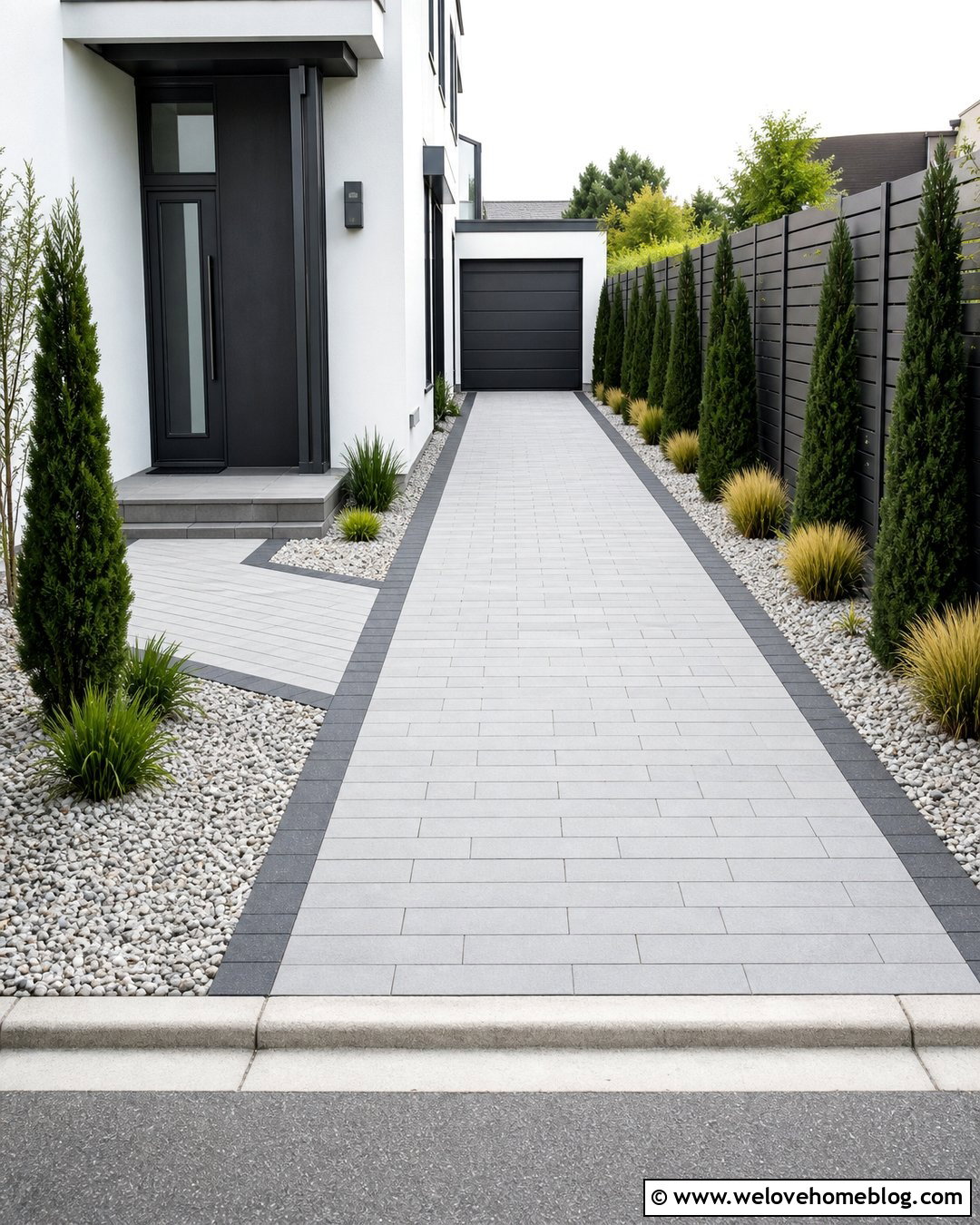
Bold saw-cut patterns bring a graphic quality to a concrete driveway without adding simulated stone texture. Large rectangular slabs, offset grids, or angled lines can visually widen a narrow approach and complement contemporary architecture. Try medium-gray concrete with clean saw cuts filled in a darker tone, then add pale concrete borders along both sides. Rectangular planting beds, linear path lights, and upright evergreen trees can repeat the same structured rhythm. This look depends on precise planning. Lines should relate to the garage doors, walkway, facade, and driveway width rather than being placed randomly. Avoid making every panel extremely small because numerous joints may create a busy appearance from the curb. A simple two-color palette will keep the complete driveway modern, legible, and connected to the house.
18. Picture Frame Broom Finish Driveway
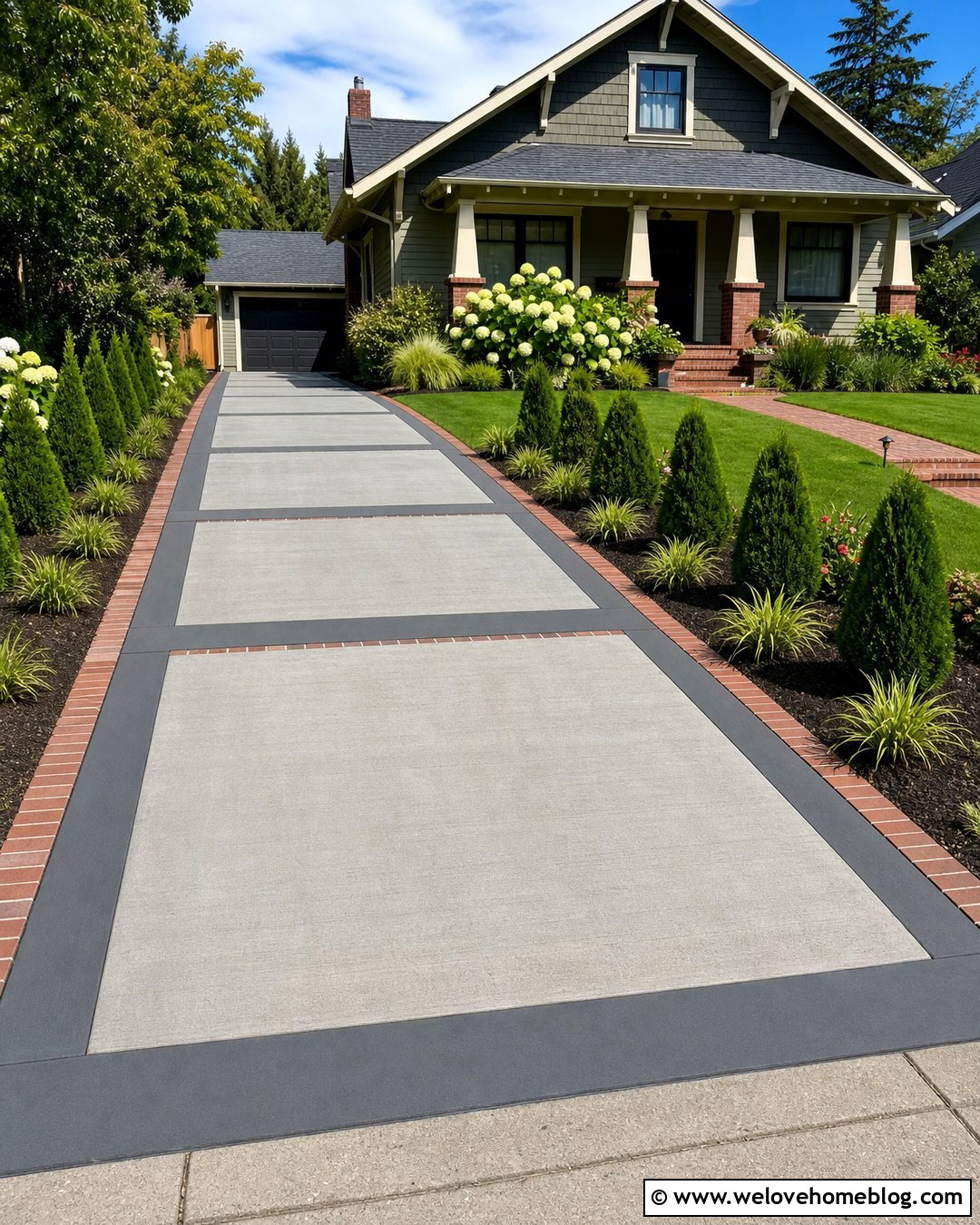
A picture-frame finish upgrades basic broom-finished concrete by placing smooth or differently textured bands around each section. The contrast is subtle, but it makes a large driveway look more tailored. Use pale-gray broomed centers with smooth charcoal frames and evenly spaced rectangular panels. A straight driveway leading to a craftsman bungalow can be bordered with brick edging, lawn, and layered beds of hydrangeas, dwarf conifers, and ornamental grasses. Align the framed sections with garage doors and walkway intersections for a balanced layout. The border can remain the same concrete color for an understated result or use integral color for stronger definition. This combination offers decorative detail without covering the entire driveway in an elaborate pattern, making it suitable for both compact and expansive front yards.
19. Exposed Aggregate Driveway With Stamped Border
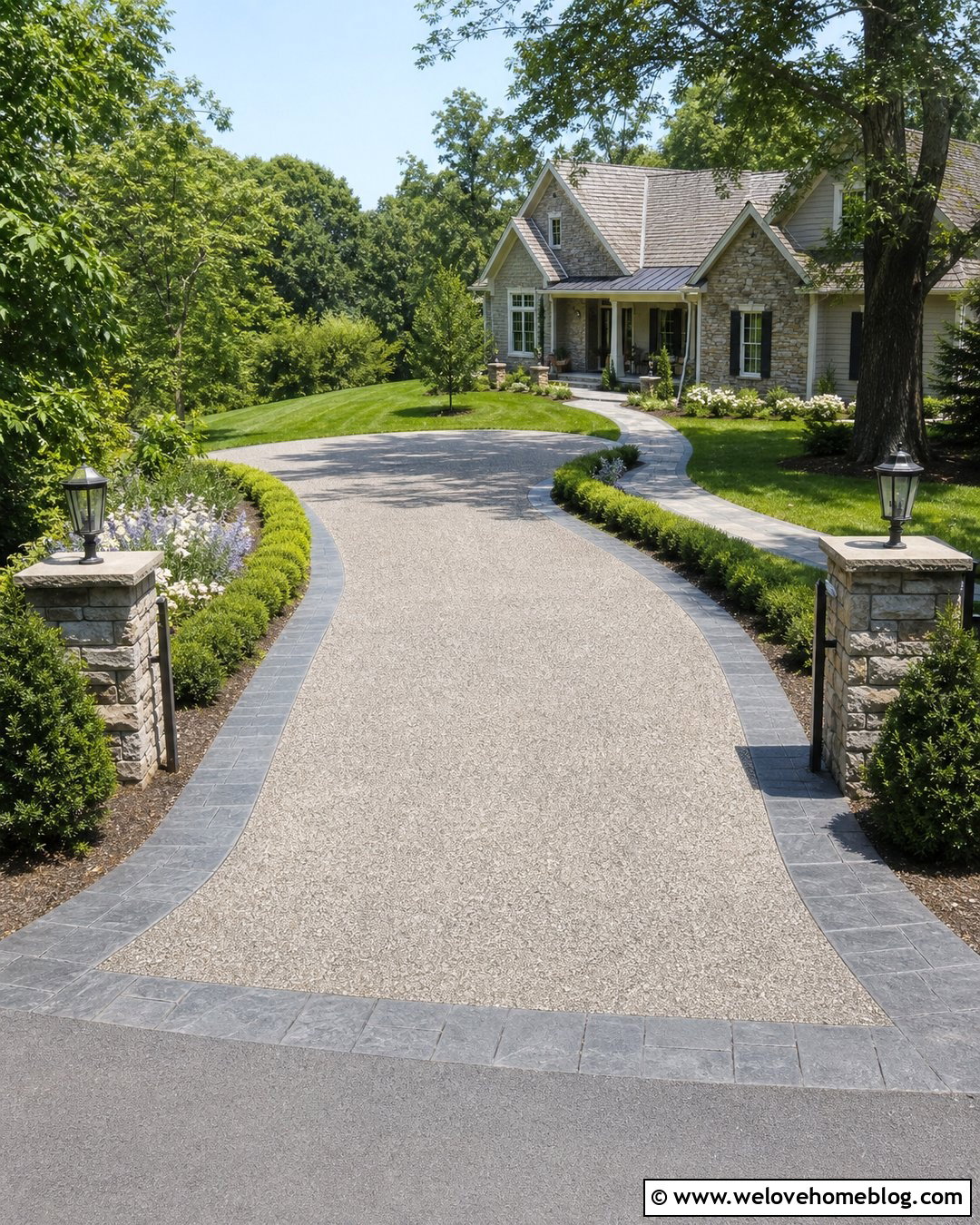
Combining two finishes creates a more customized driveway while keeping the largest area visually grounded. Use warm gray exposed aggregate through the center and frame it with a charcoal Roman-slate stamped border. On a gently curved driveway, the dark edge emphasizes the shape and creates a clean transition to lawn and planting beds. Add stone entrance pillars, low evergreen hedges, and flowering perennials that repeat colors found in the aggregate. The border width should match the scale of the driveway; a broad approach can support a wider band than a single-car layout. Coordinate the aggregate, stamped texture, integral colors, and sealer before construction. This layered treatment is especially effective when homeowners want natural texture, clear edging, and decorative curb appeal in one complete design. ()
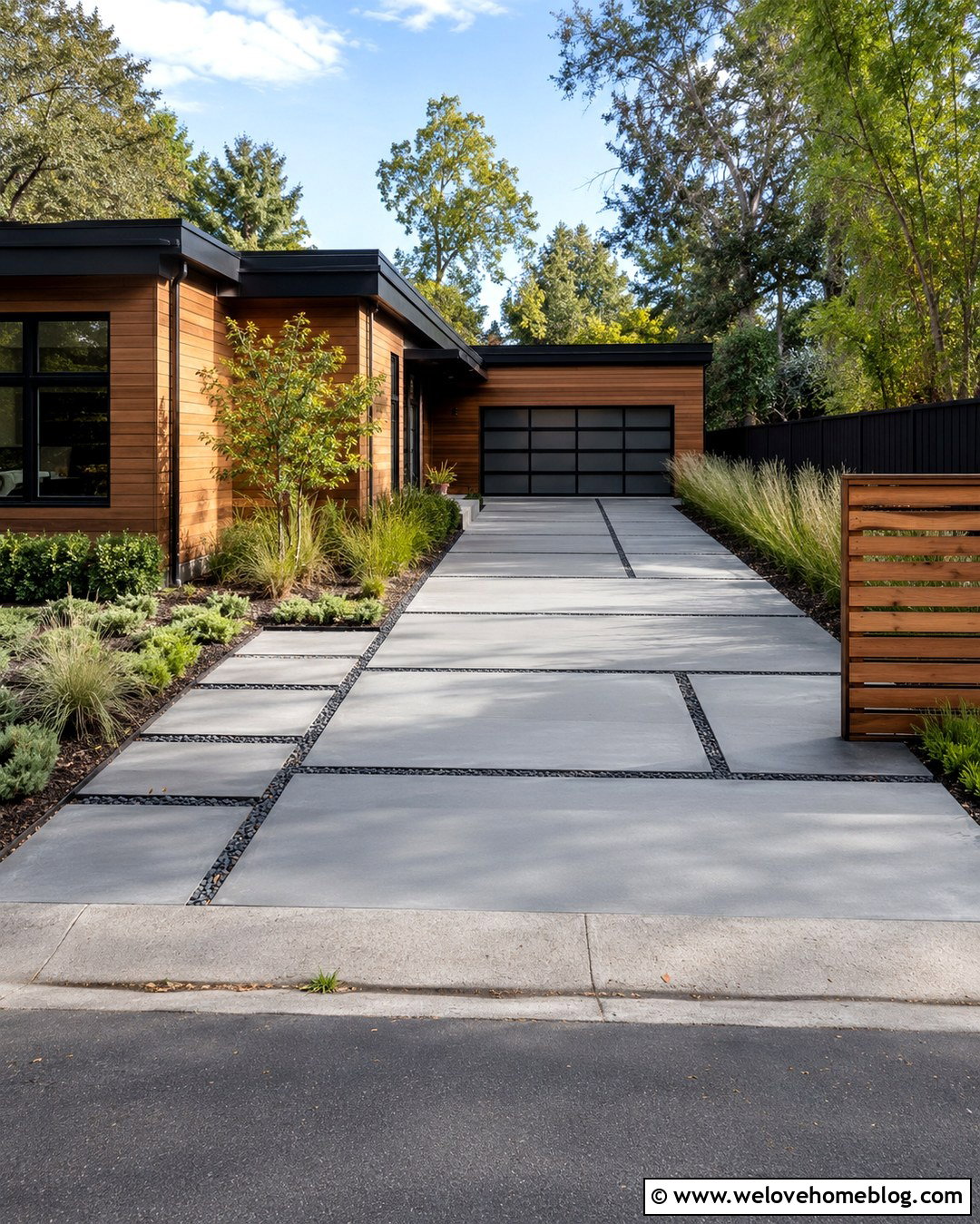
20. Spray Texture Concrete Driveway
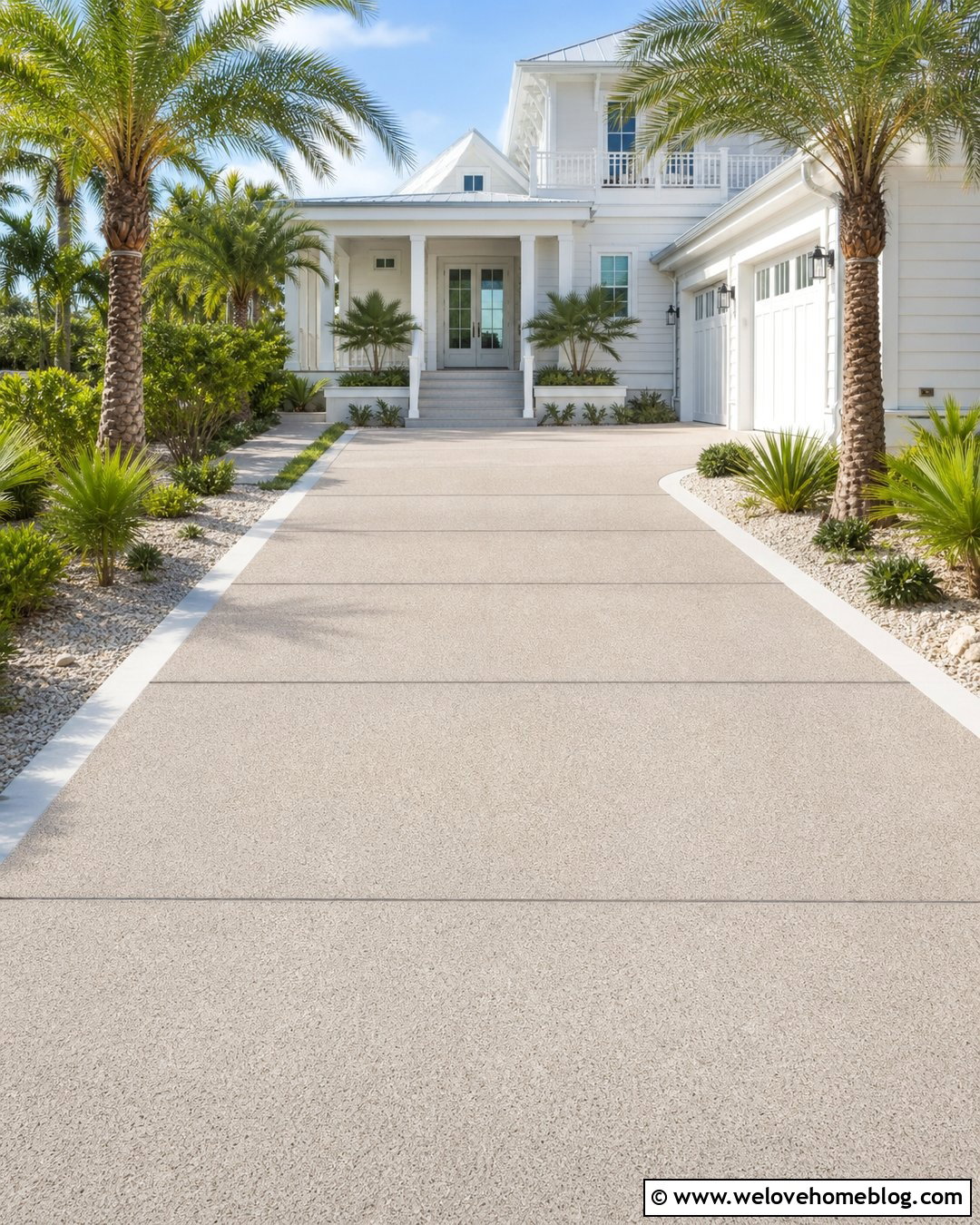
A spray-textured coating can refresh the visual character of suitable concrete while producing a fine, consistent surface pattern. For a bright coastal home, consider a pale gray or sandy beige driveway with a lightly sprayed finish and clean white concrete borders. Divide the surface into large sections with charcoal scoring, then frame the approach with palms, compact shrubs, ornamental grasses, and light-colored gravel beds. The subtle texture keeps the driveway from looking like one flat slab while allowing the house and landscaping to remain prominent. Color samples should be checked in direct sun and shade before application. Ask the installer about surface preparation, drainage, coating compatibility, repair visibility, and the traction of the complete system. A restrained color scheme will usually age more gracefully than a strongly contrasting pattern.
Conclusion:
The best concrete finish brings together surface texture, driveway shape, borders, landscaping, and house architecture. Broom and picture-frame finishes offer an understated appearance, while stamped, stained, stenciled, and exposed aggregate treatments create stronger decorative impact. Integral color, scoring, and contrasting bands can also transform simple concrete without making the design feel overly complicated. Use samples to compare colors outdoors, and discuss traction, drainage, sealing, climate, and maintenance with an experienced local installer. Most importantly, design the full approach rather than selecting a finish in isolation. These 20 Concrete Driveway Finishes Ideas provide practical starting points for creating a driveway that feels coordinated, functional, and attractive from the curb.

Related posts:
Leave a Reply