
Choosing the right layout can turn practical paving into a strong curb appeal feature. This guide to **20 Driveway Paver Patterns Ideas** explores complete driveway designs rather than isolated paving samples. Each look combines a durable paver surface with a suitable layout, border, entrance, and landscape. You will find classic herringbone, simple running bond, traditional basketweave, mixed-size ashlar, circular motifs, and modern geometric arrangements. Consider the driveway’s width, slope, turning space, architectural setting, and expected vehicle traffic before selecting a pattern. Proper base preparation, drainage, joint sand, and edge restraints are equally important for lasting results. Use these **20 Driveway Paver Patterns Ideas** to compare distinctive, practical looks for homes of different sizes and styles.

1. 45-Degree Herringbone Driveway Paver Pattern
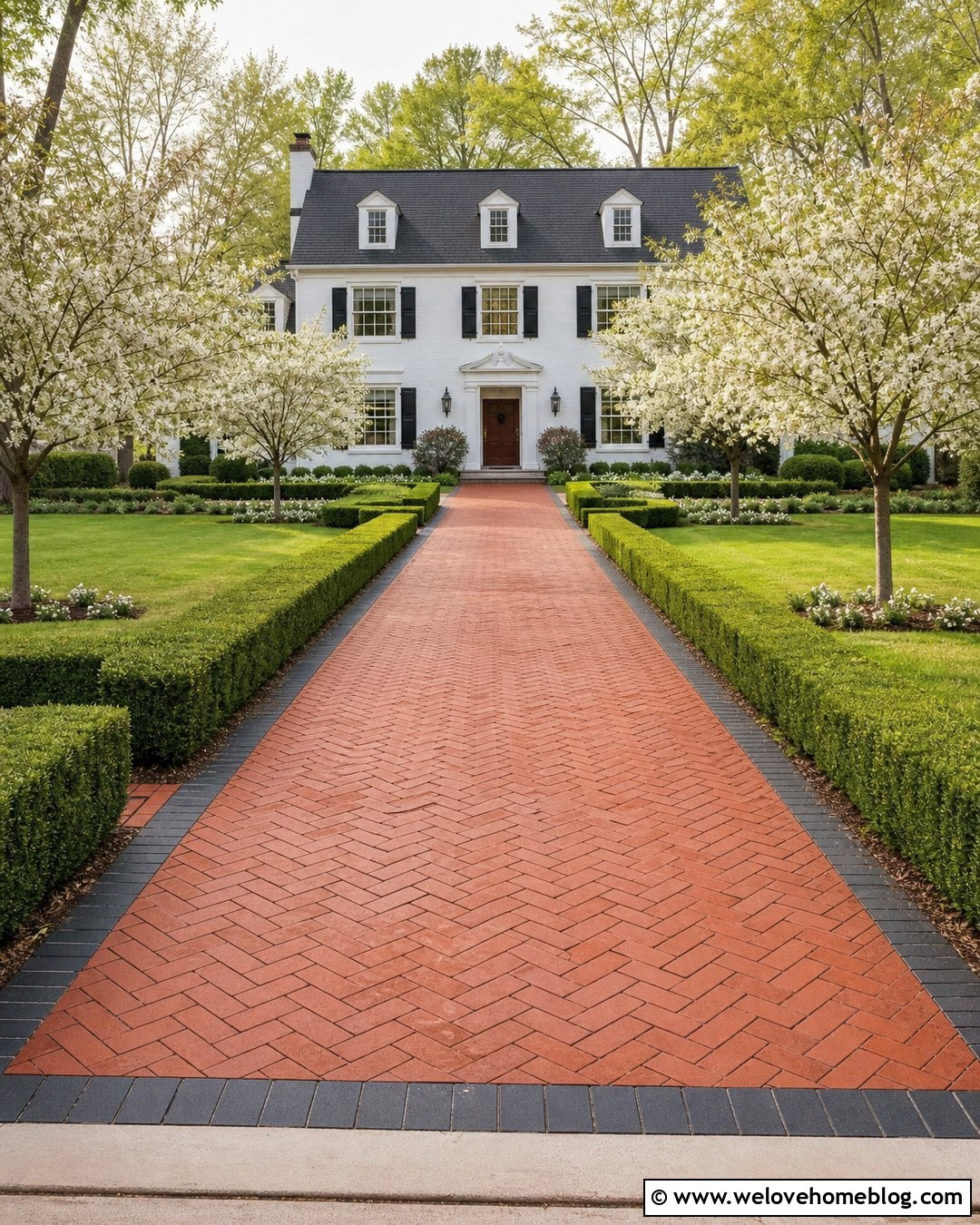
A 45-degree herringbone pattern gives a driveway lively movement while creating a tightly interlocked surface. Rectangular clay brick or concrete pavers sit diagonally to the garage, forming a repeating zigzag that makes the entrance appear wider. This layout works especially well on a straight driveway leading to a colonial, Tudor, or traditional brick home. Use warm red pavers for heritage character or charcoal blocks for a cleaner contemporary effect. A soldier-course border keeps the angled cuts contained and gives the driveway a finished outline. Low boxwood hedges, symmetrical planting beds, and a matching brick walkway complete the look. Because the diagonal layout requires numerous edge cuts, careful planning and professional installation can produce a neater, more balanced result.
2. 90-Degree Herringbone Driveway Paver Pattern
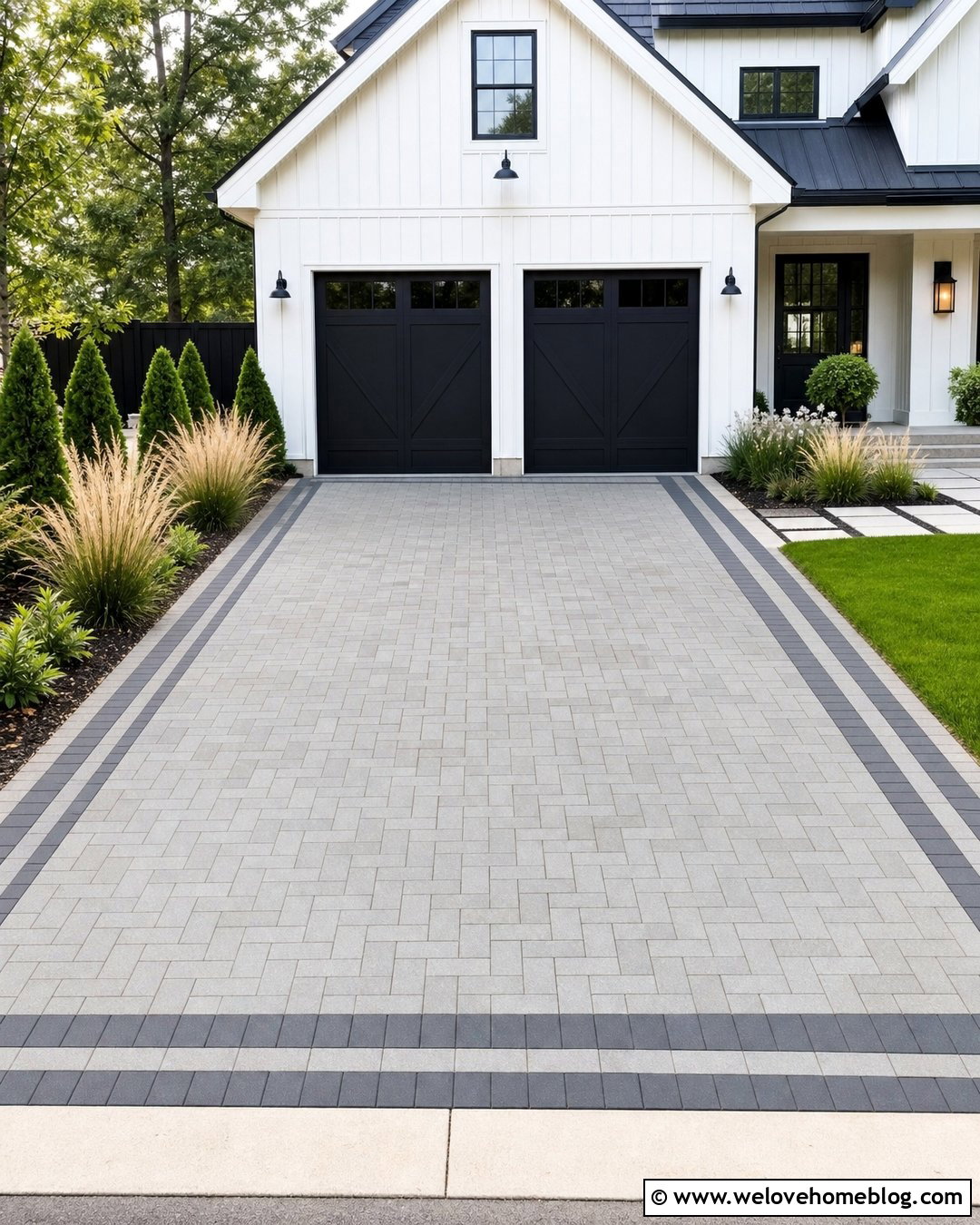
For a structured appearance, place rectangular pavers in a 90-degree herringbone pattern aligned with the driveway edges. The crisp zigzag arrangement guides the eye toward the garage and emphasizes the length of a short suburban driveway. It also creates a strong visual rhythm without feeling overly decorative. Medium-gray concrete pavers look particularly effective with a modern farmhouse or Craftsman home. Frame the main field with a charcoal paver border to define the edges and separate the paving from lawn or planting beds. Ornamental grasses, compact evergreens, and a straight stepping-stone walkway reinforce the orderly layout. Near the street, a wider paver apron can make the entrance feel more inviting while giving the pattern a clear and attractive starting point.
3. Running Bond Driveway Paver Pattern
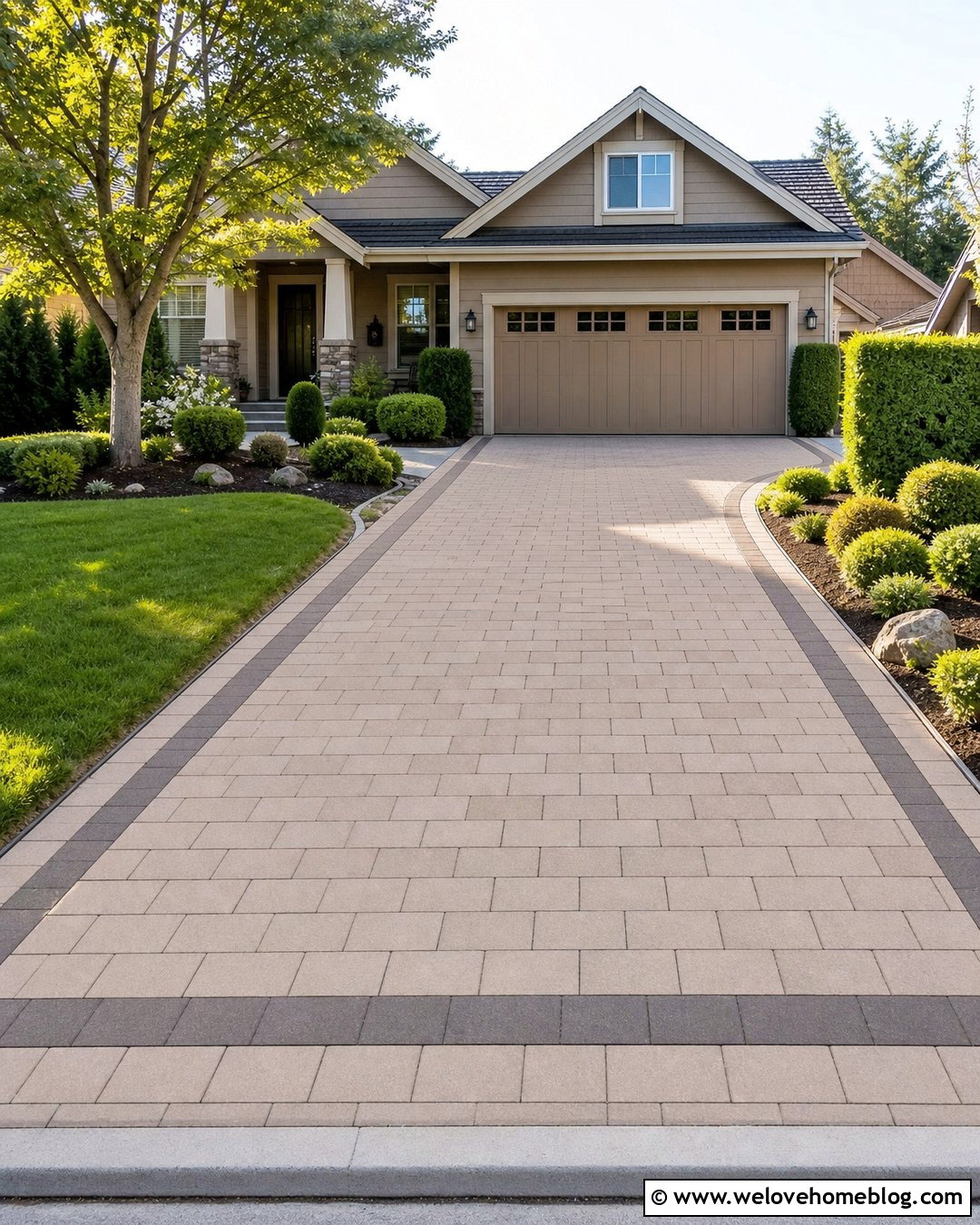
Running bond is a straightforward choice for homeowners who want a calm surface that complements rather than dominates the house. Rectangular pavers are installed in staggered rows, much like bricks in a wall. Running the rows toward the garage visually lengthens a compact driveway, while positioning them across the driveway can make a narrow entrance seem broader. Soft taupe concrete pavers pair naturally with a beige ranch or Craftsman facade. Add a darker double border to prevent the simple field from looking unfinished. Curved planting beds can soften the pattern’s strong linear direction, and a matching running-bond walkway creates continuity at the front door. This layout generally involves fewer complicated cuts than diagonal patterns, making it a practical option for straight driveways and restrained landscape designs.
4. Basketweave Driveway Paver Pattern
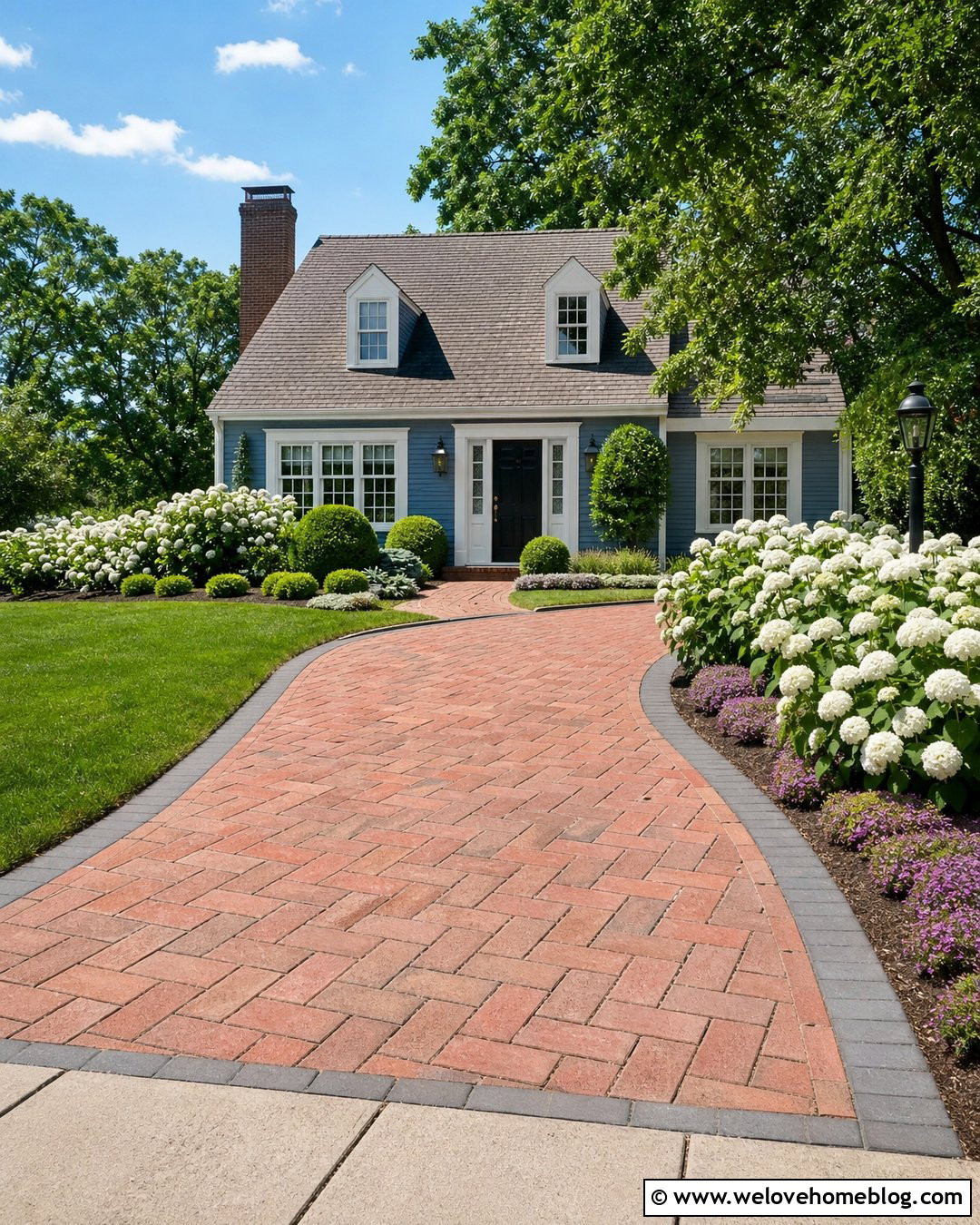
Alternating pairs of horizontal and vertical pavers give basketweave paving its familiar woven appearance. The pattern adds traditional texture without relying on several colors or elaborate decorative inserts. It is an appealing match for cottage, Cape Cod, colonial, and older brick houses. Consider weathered red clay brick pavers bordered by charcoal blocks for a surface with clear definition and subtle contrast. A gently curved driveway can keep the repeating grid from feeling too rigid. Along the edges, hydrangeas, clipped shrubs, and flowering ground cover create a softer frame. Basketweave is visually busiest when viewed across a large area, so a simple border and limited color palette help maintain balance. Ask the installer to create a full sample area before finalizing the paver color and joint tone.
5. Stack Bond Driveway Paver Pattern
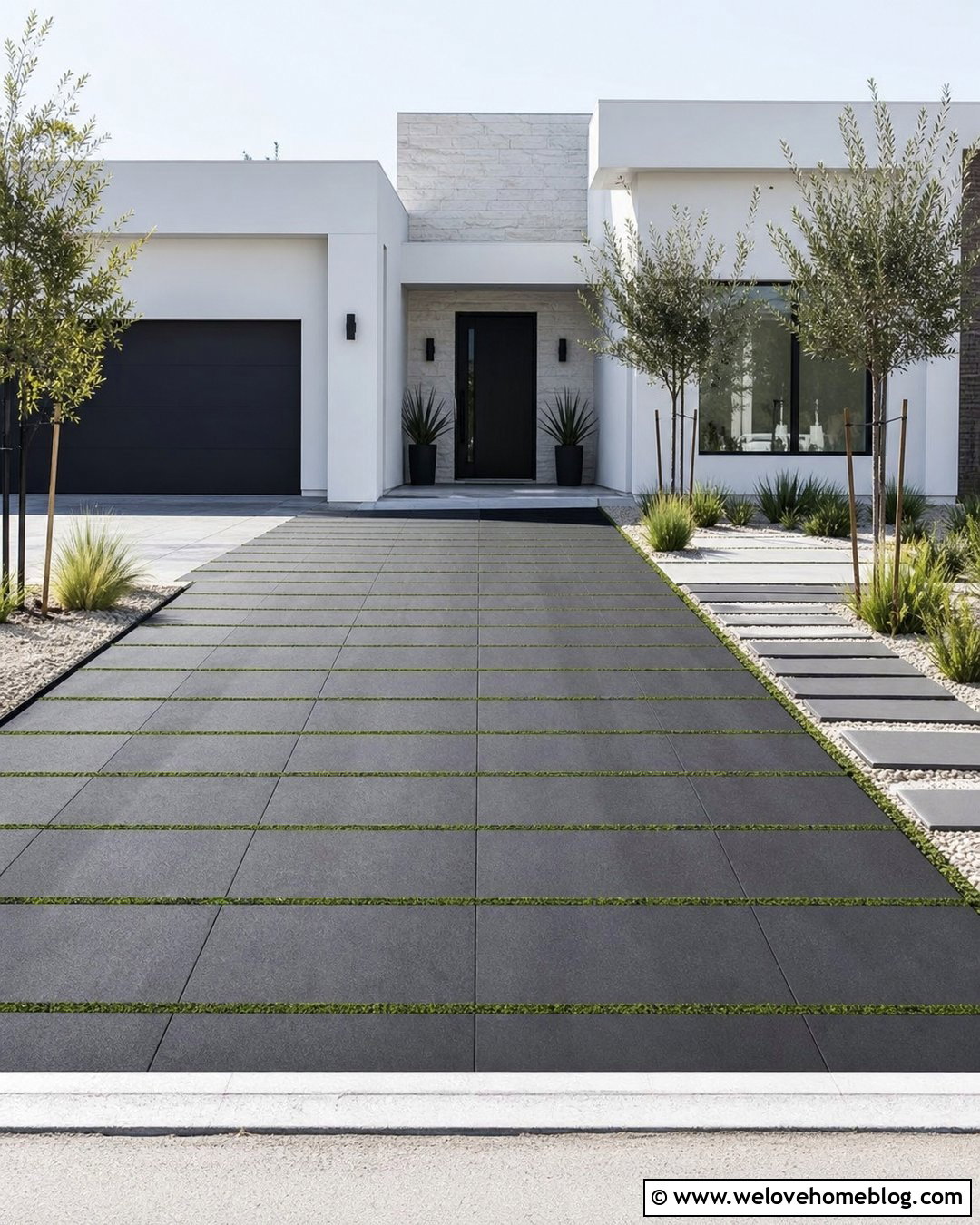
Clean grid lines make stack bond a natural fit for modern and midcentury homes. Square or rectangular pavers line up in straight rows without the offset seen in running bond. The result is simple, geometric, and highly ordered. Large-format charcoal concrete pavers can create a dramatic surface in front of a white stucco house, especially when the driveway has a wide, straight layout. Thin grass strips or narrow bands of pale gravel may break up the hardscape and support the modern composition. Use a flush concrete curb or matching dark soldier course to secure and sharpen the perimeter. Since long continuous joints make alignment errors noticeable, accurate installation is essential. This pattern is best considered alongside the paver manufacturer’s recommendations and the driveway’s expected vehicle loading.
6. Random Ashlar Driveway Paver Pattern
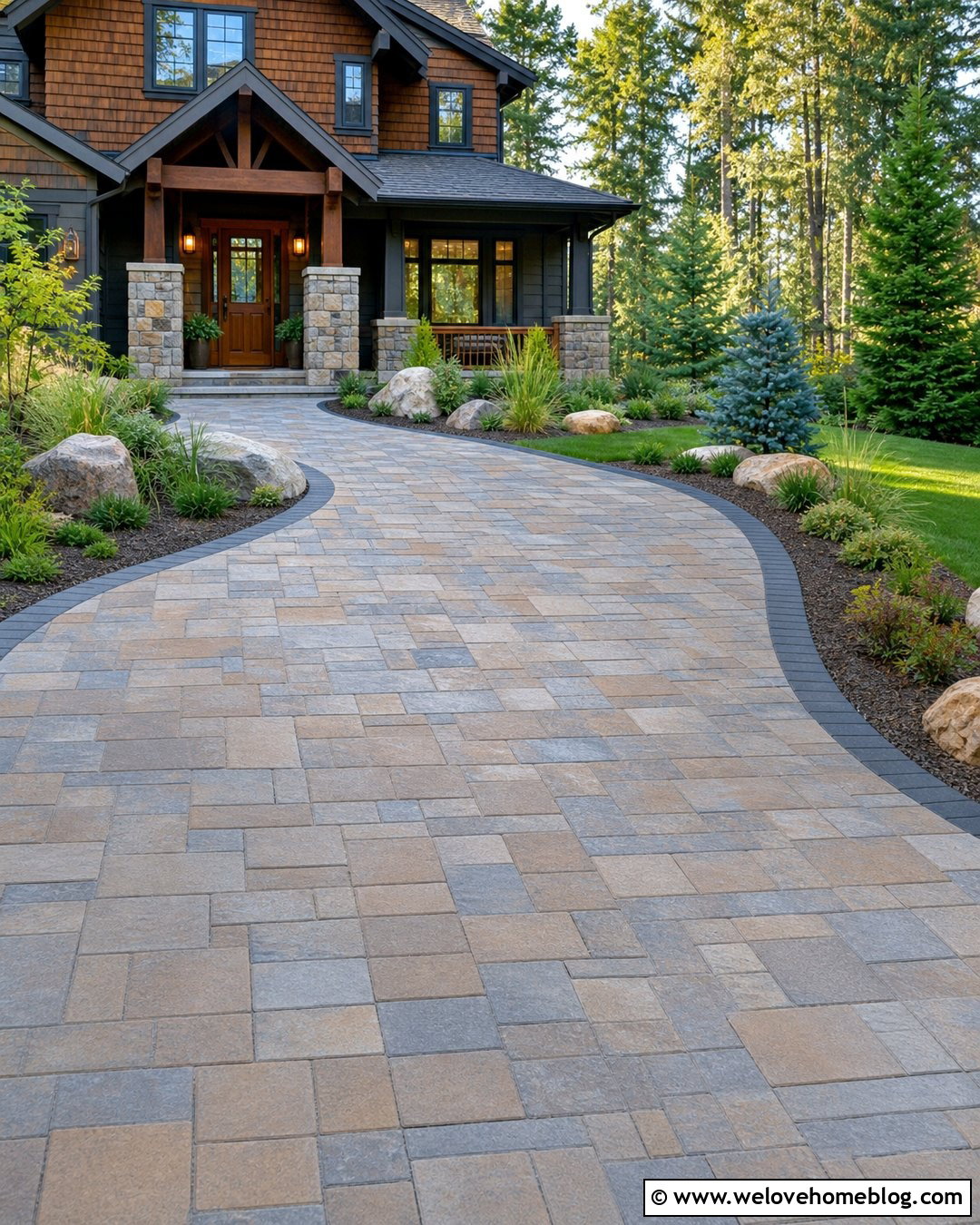
Random ashlar combines square and rectangular pavers in several sizes, producing a varied surface that feels relaxed but thoughtfully organized. It is useful for broad driveways where one repeating block might become monotonous. Choose tumbled concrete pavers in blended gray, tan, and sandstone tones to complement a Craftsman, ranch, or mountain-inspired home. A curved driveway enhances the natural character of the mixed-size layout. Define it with a dark charcoal border so the varied field still has a clear shape. Layered beds of ornamental grasses, dwarf conifers, and natural boulders can extend the informal texture into the yard. Before installation, review the manufacturer’s module or laying diagram. A planned repeat helps distribute sizes evenly and prevents clusters of identical pavers from interrupting the balanced appearance.
7. Modular Driveway Paver Pattern
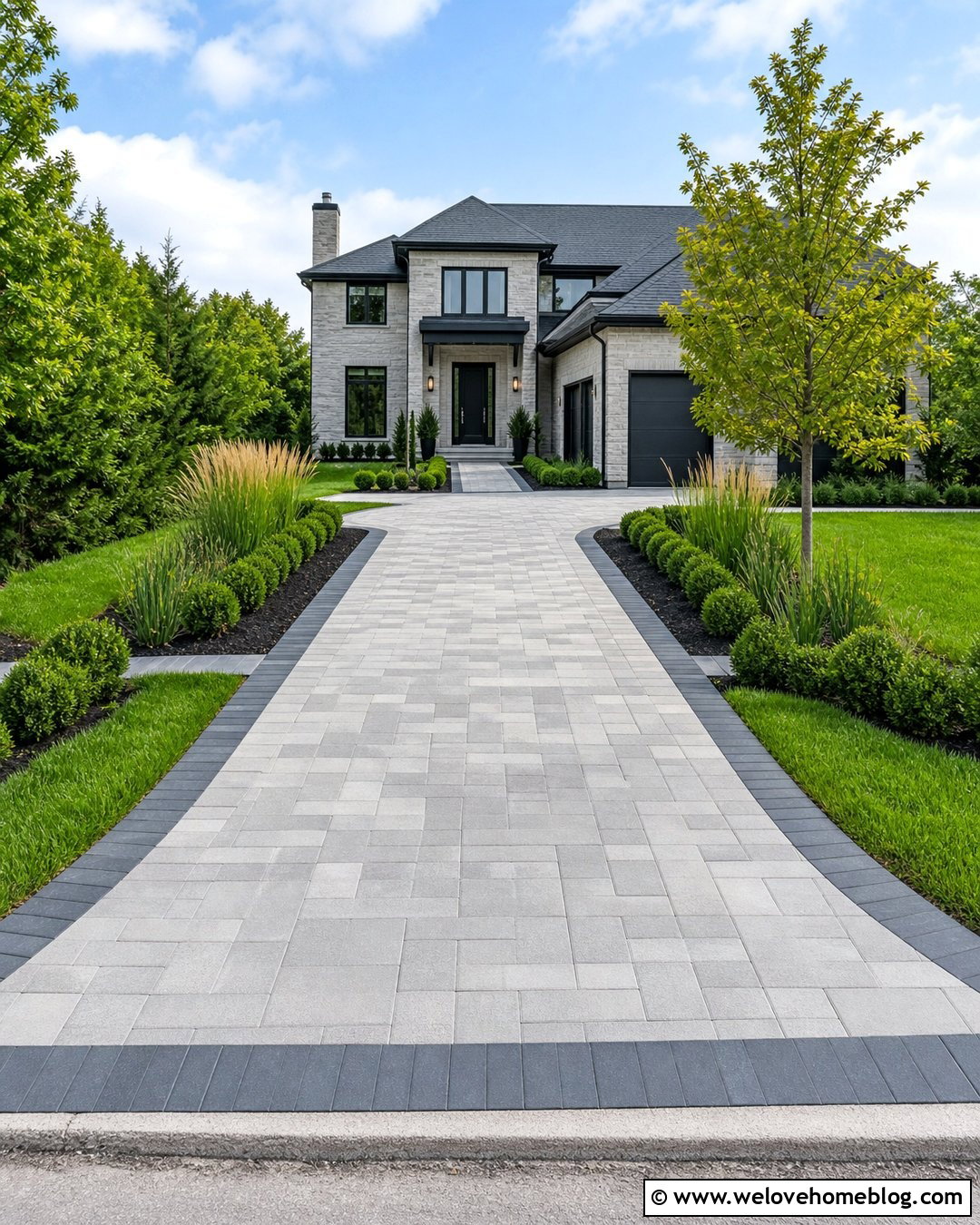
A modular pattern uses coordinated squares and rectangles designed to fit together in a repeating layout. It offers more movement than running bond but usually appears cleaner and more predictable than random ashlar. For a contemporary suburban home, try smooth concrete pavers in light gray with occasional medium-gray units. A straight driveway with a gentle flare at the street allows the pattern to remain visible from the curb. Frame the field with a simple charcoal border and repeat the same pavers on the front walkway. Structured planting beds filled with boxwood, feather reed grass, and one small ornamental tree support the modern geometry. Select a paver system rated for driveway use, and follow its specific pattern map so joints, unit sizes, and edge cuts remain properly coordinated.
8. European Fan Driveway Paver Pattern
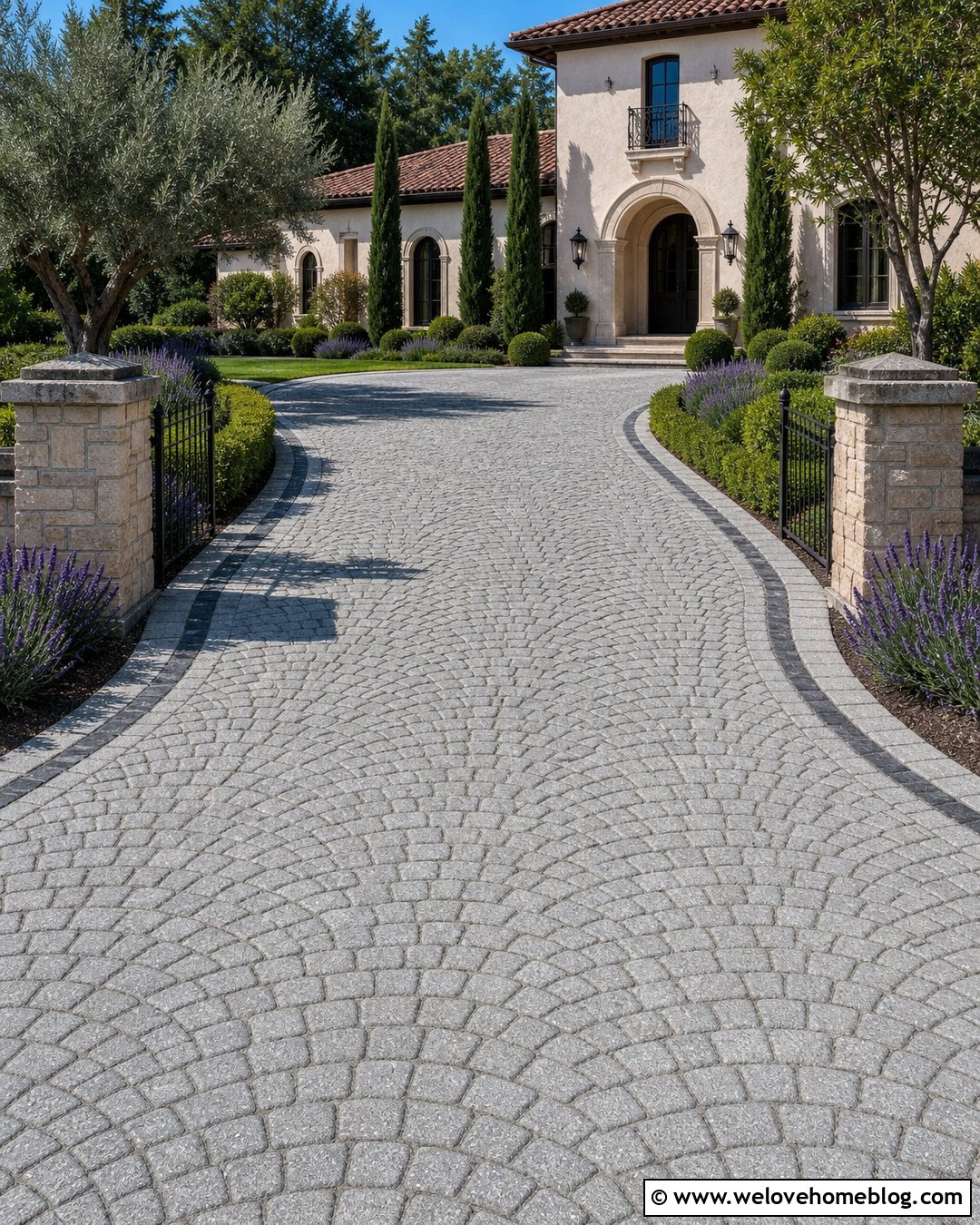
Rows of small pavers arranged in expanding arcs create the distinctive European fan pattern. This detailed surface brings old-world character to a curved driveway, motor court, or Mediterranean-style entrance. Granite-toned concrete cobblestone pavers offer the historic appearance of stone with controlled sizes and color options. Use the fan pattern across the main field, then contain it with a double row of darker cobbles. Stucco walls, stone pillars, olive-like ornamental trees, and low lavender borders can strengthen the European influence without overwhelming the driveway. The arcs must meet cleanly, particularly where the driveway widens or changes direction. For that reason, accurate layout lines and an experienced installer are valuable. Keep nearby landscaping relatively simple so the fan arrangement remains the property’s primary visual feature.
9. Circular Driveway Paver Pattern
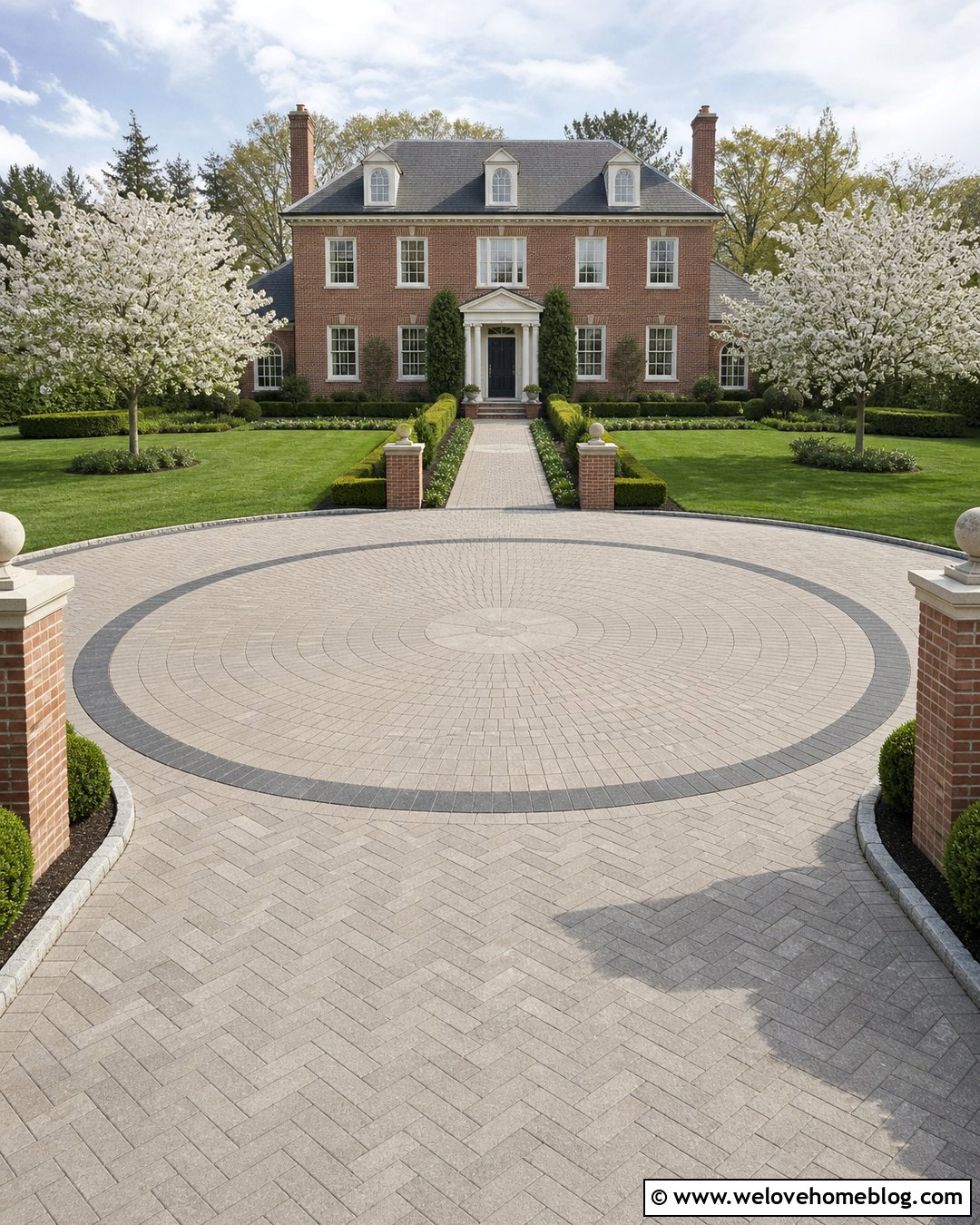
A circular paver motif creates a strong center point within a wide driveway or front motor court. Small wedge-shaped concrete pavers can radiate outward from a central circle, with surrounding rows transitioning into running bond or herringbone. This combination works beautifully in front of a symmetrical colonial, Georgian, or European-inspired house. Select warm gray paving with a charcoal ring to make the circular form readable from the curb. A low fountain is not necessary; an uninterrupted paved center keeps the area easier to drive across. Formal lawn panels, clipped hedges, and matching masonry pillars can frame the design. The circle should be scaled to the overall driveway rather than squeezed into a narrow field. Well-planned transitions prevent awkward cuts where the radial center meets the primary pattern.
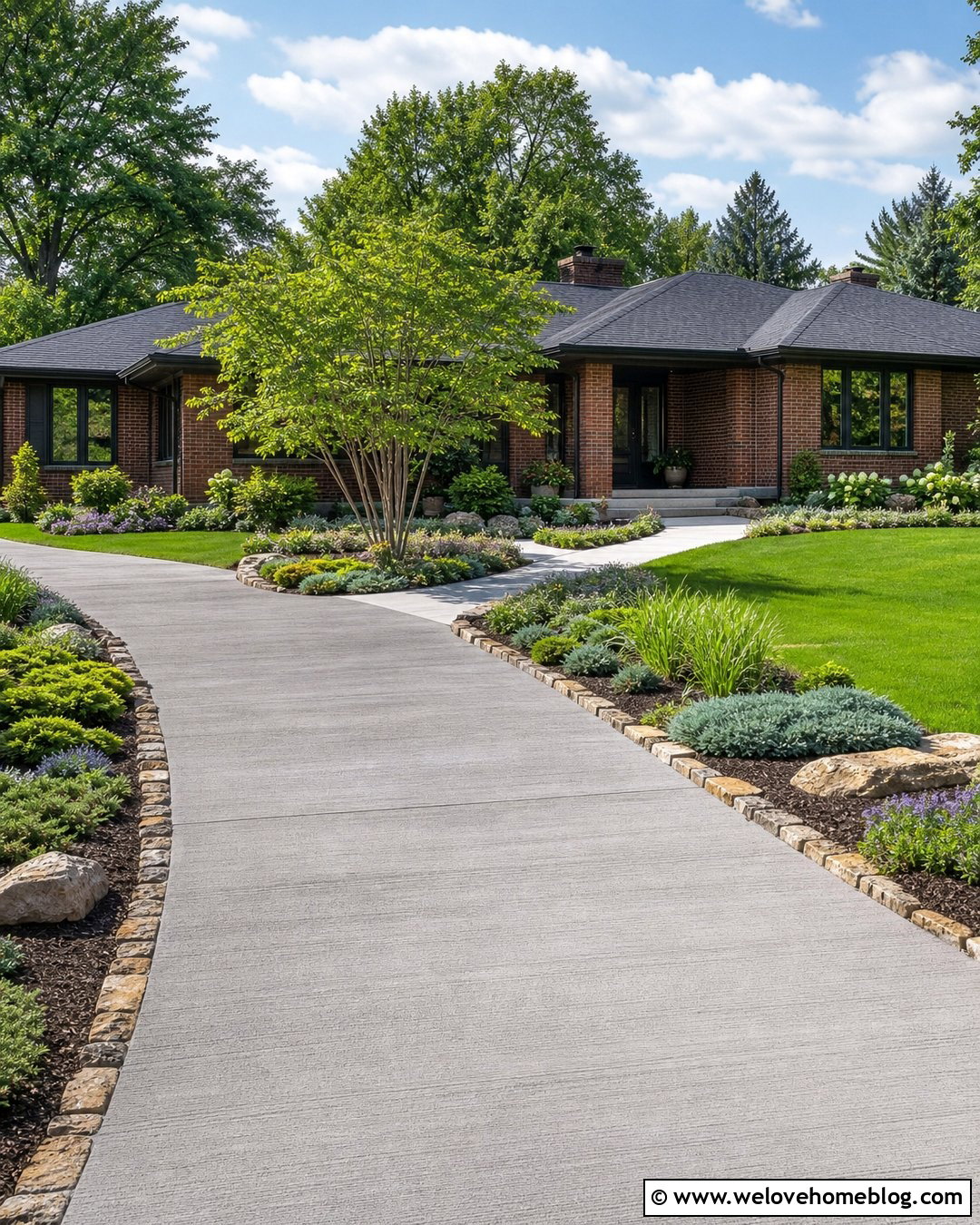
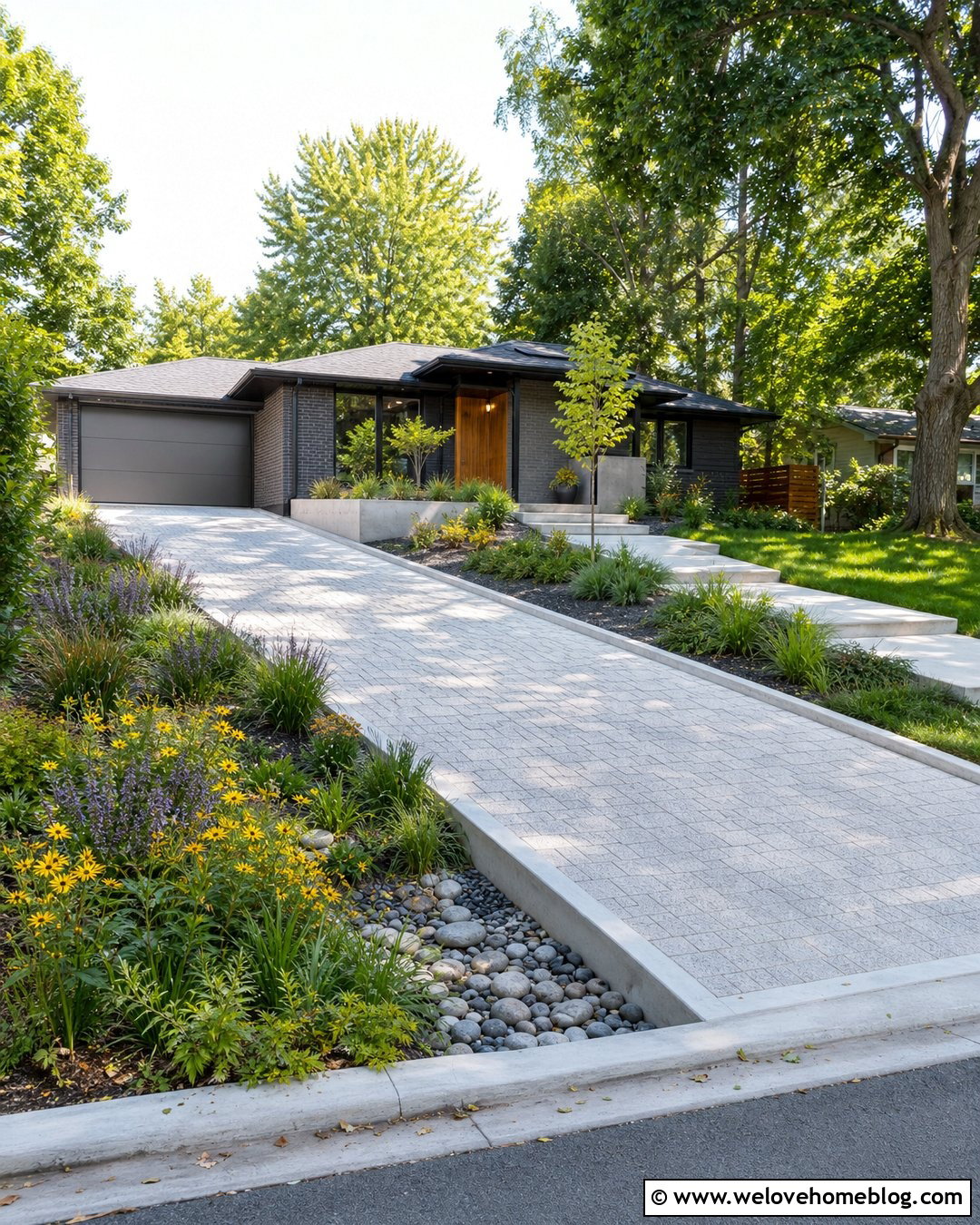
10. Cobblestone Arc Driveway Paver Pattern
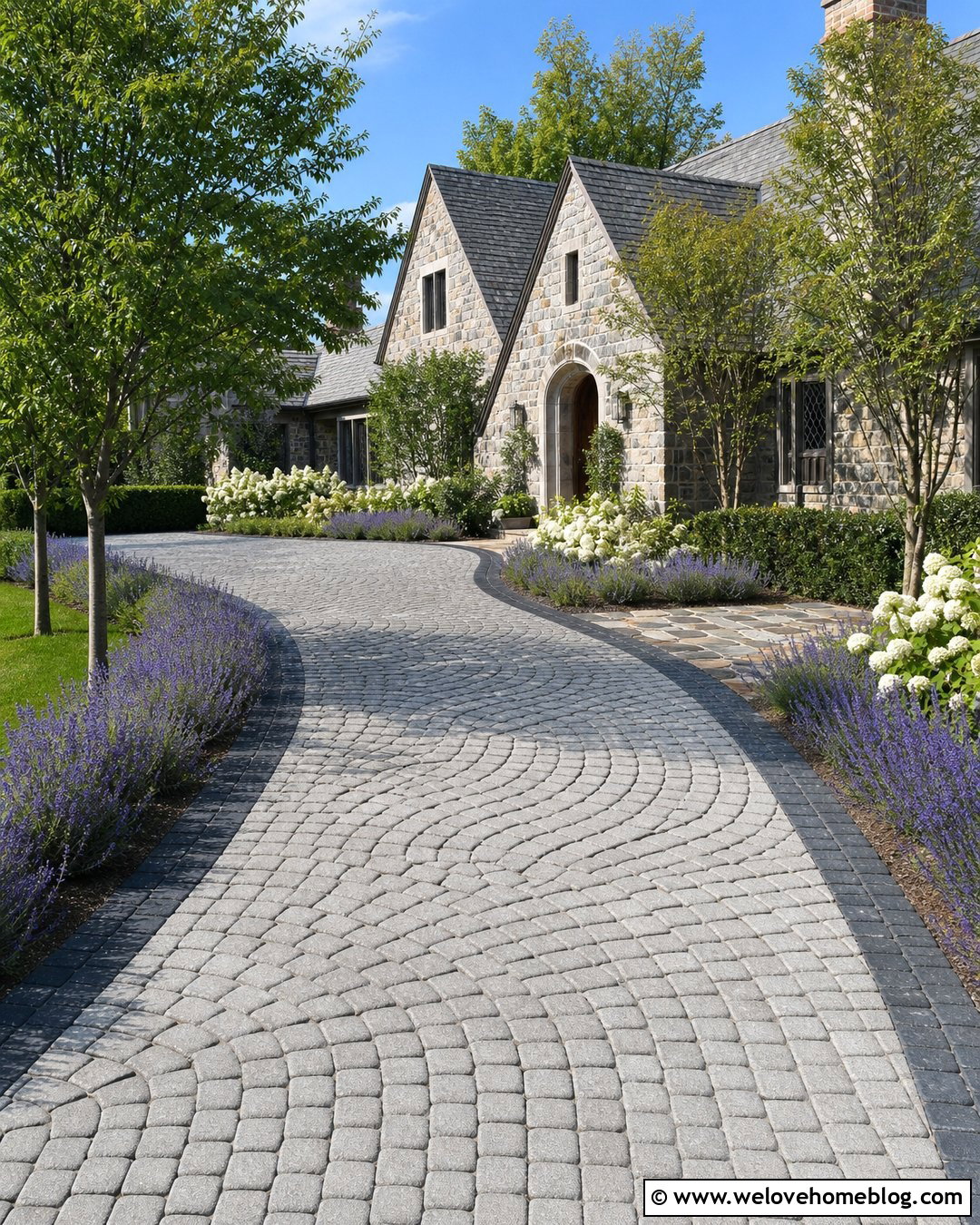
Cobblestone pavers laid in overlapping arcs give a driveway organic movement and a traditional European character. Unlike a full fan, the repeating curves travel across the surface in broad waves. Tumbled concrete cobbles in granite gray are easier to coordinate than highly irregular natural stones while still producing an aged appearance. Use the pattern on a gently curved driveway leading to a stone cottage, Tudor home, or country residence. Dark cobblestone edging can follow both sides and define transitions to lawn. Informal beds with lavender, flowering shrubs, and small deciduous trees soften the masonry. The arcing joints can disguise minor visual changes in direction, making this pattern helpful for a driveway that bends. A carefully compacted base remains critical because small units create many individual joints.
11. Pinwheel Driveway Paver Pattern
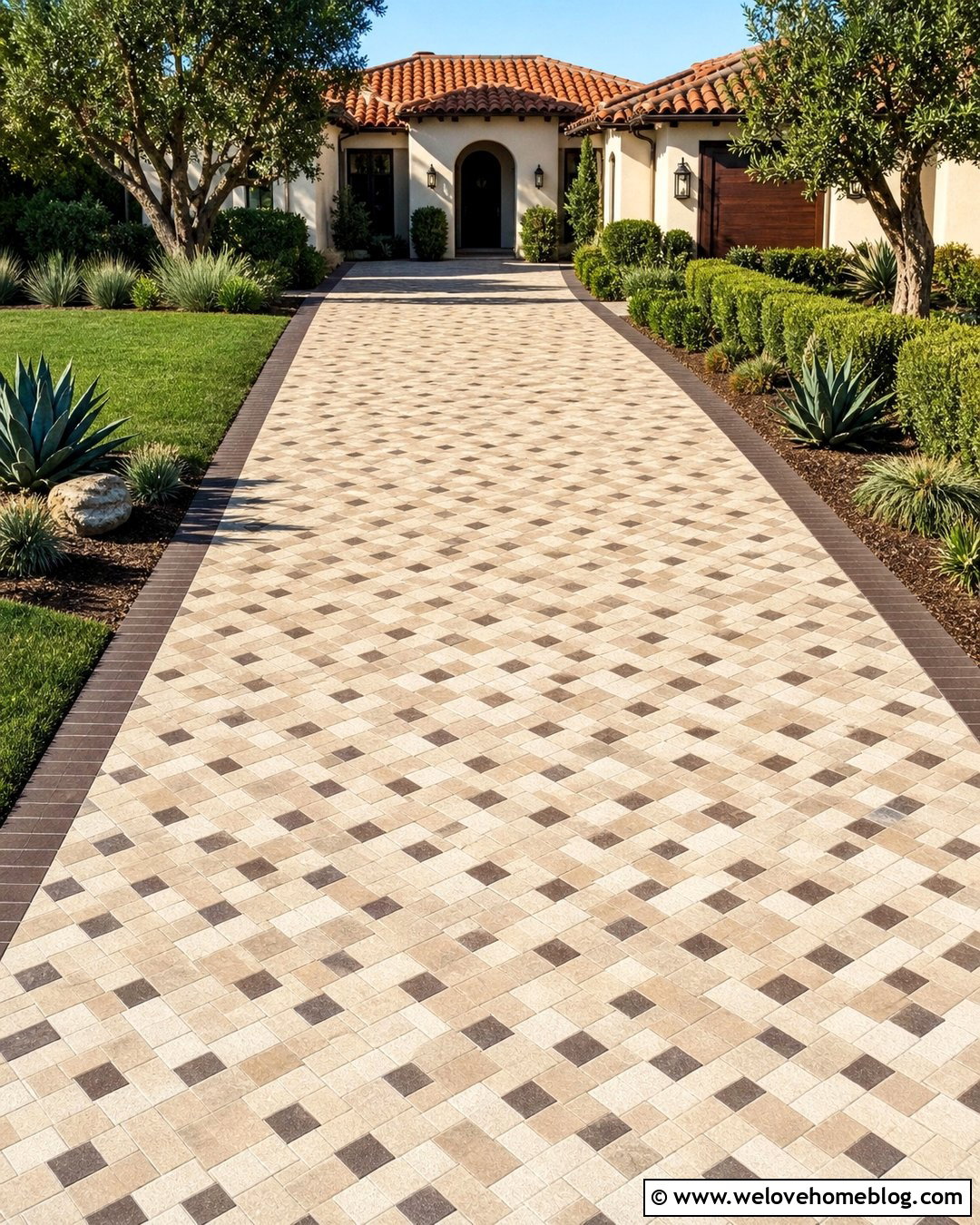
The pinwheel pattern combines small square pavers with larger rectangular units arranged around them. Repeated across the driveway, the layout creates rotating geometric shapes that add detail without requiring curved blocks. It suits a broad, straight driveway where the complete pattern can be seen clearly. Consider cream and tan concrete pavers with darker center squares for a Spanish, Mediterranean, or transitional house. A solid soldier-course border prevents the multishape field from appearing too busy. Along the sides, use simple lawn panels, clipped shrubs, and a few sculptural agaves or ornamental grasses. Keeping the landscape restrained allows the pinwheel geometry to remain noticeable. Confirm that every paver size in the selected system is suitable for vehicle traffic, and avoid placing small cut pieces along exposed driveway edges.
12. Diagonal Running Bond Driveway Paver Pattern
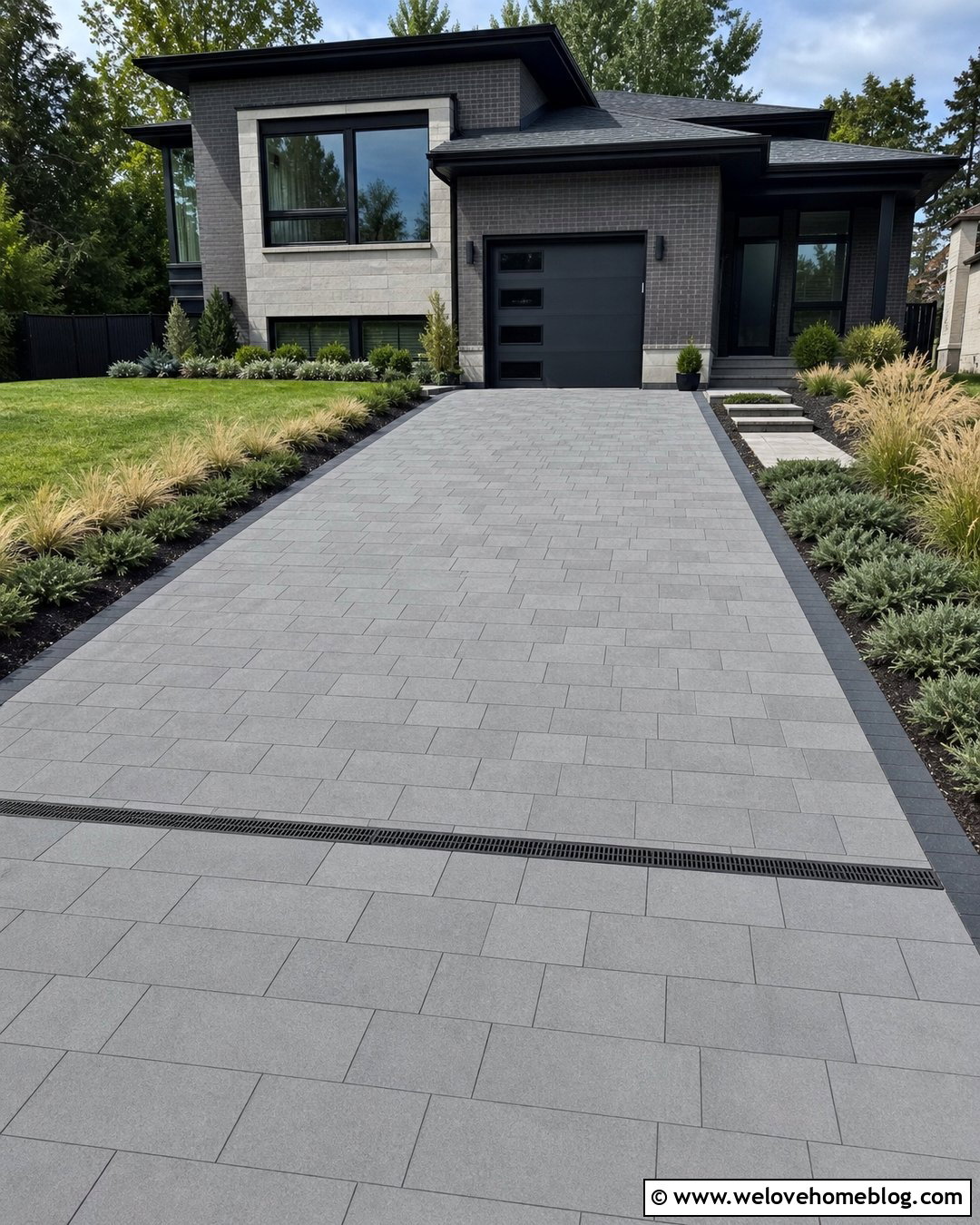
Turning a running bond pattern diagonally introduces movement while retaining its familiar staggered rows. Rectangular pavers cross the driveway at approximately 45 degrees, making a wide paved area feel less static. Smooth gray concrete blocks create a clean look for a contemporary ranch or split-level home. A dark border is especially important because it contains the diagonal cuts and makes the surface look deliberately framed. Consider a straight driveway with a widened parking pad, where the angled rows can visually connect both areas. Linear planting beds, low junipers, ornamental grasses, and a simple concrete walkway balance the active paving direction. Diagonal running bond generally creates more cutting and material waste than a parallel layout, so the pattern should be planned carefully around drains, utility covers, and garage thresholds.
13. Chevron Driveway Paver Pattern
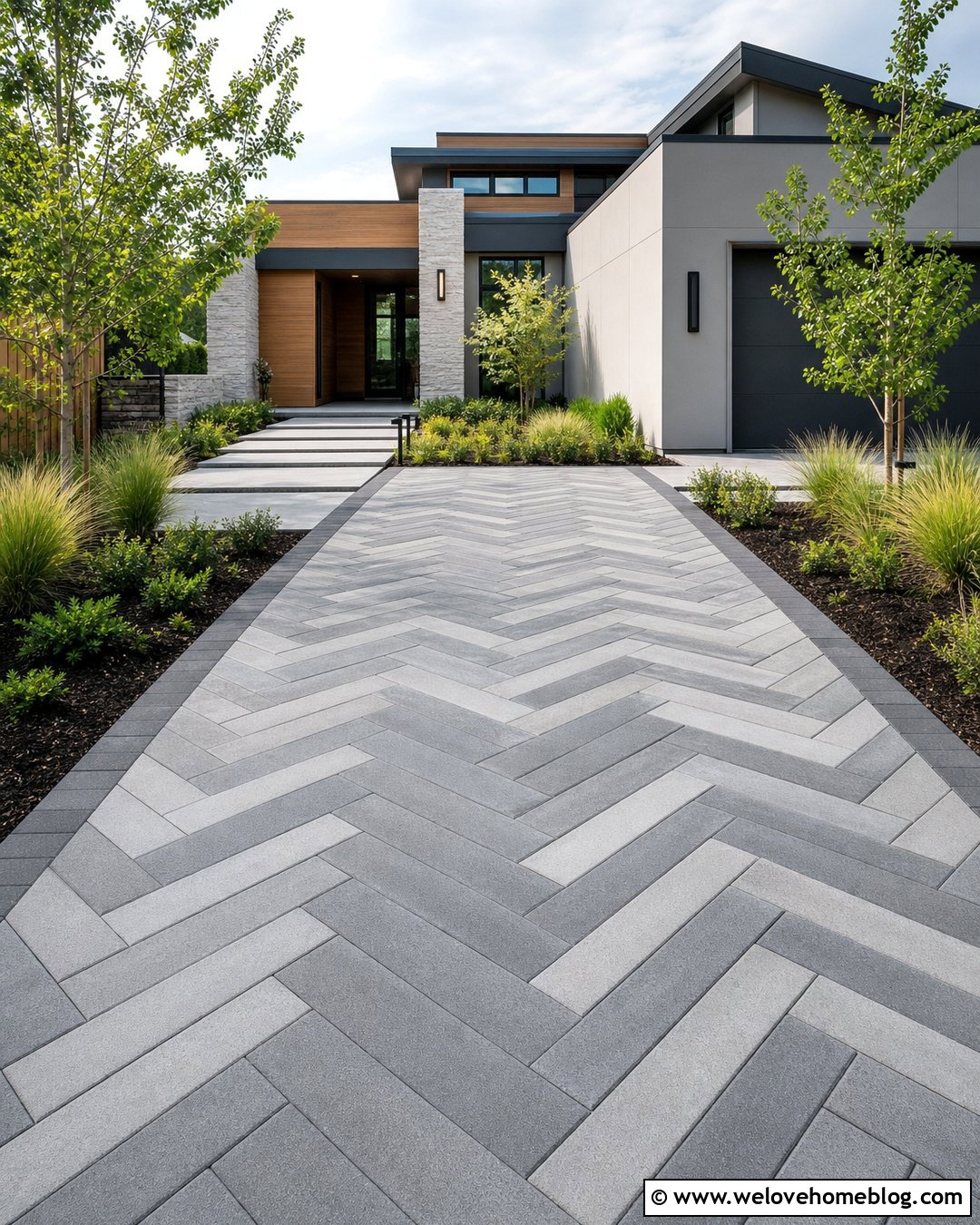
Chevron paving creates continuous V-shaped lines using pavers with angled ends or carefully cut rectangular units. Unlike herringbone, the ends meet to form clean points, producing a sharper and more contemporary appearance. Light and medium-gray concrete pavers arranged toward the garage can make a modern driveway feel long, focused, and highly tailored. Use a straight layout with a flush charcoal border so nothing distracts from the repeated central lines. Rectangular planting beds, architectural grasses, and a linear front walkway echo the geometry. Chevron demands exact alignment because even small errors become noticeable as the rows continue. Preformed chevron pavers may simplify installation and reduce cutting. For a balanced full-driveway design, coordinate the direction of every V with the front entrance, garage doors, or central axis of the house.
14. Parquet Driveway Paver Pattern
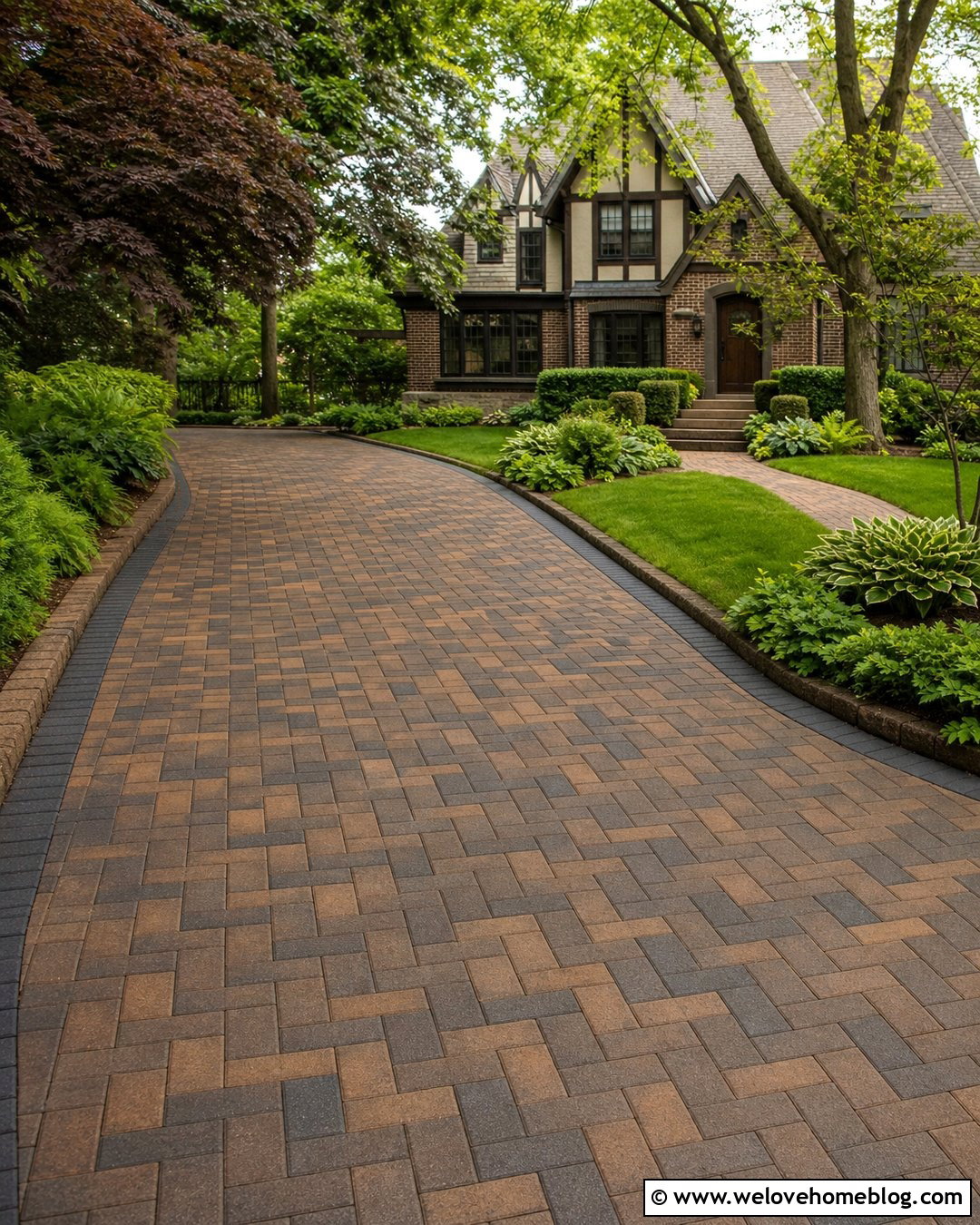
Parquet paving groups several narrow rectangular pavers into square blocks, then rotates each neighboring block in the opposite direction. The result resembles a large woven checkerboard with a stronger scale than traditional basketweave. Warm brown and charcoal concrete brick pavers work well on a wide driveway leading to a Tudor, Craftsman, or dark-sided farmhouse. Keep the driveway straight or gently curved so the rotating blocks remain easy to read. A narrow charcoal border gives the larger pattern a firm outline. Shade trees, hostas, ferns, and low hedges can create a rich green setting around the warm paving. Because the layout has numerous straight joint intersections, the installer should maintain consistent spacing and reliable edge restraint. A single-color field can prevent this detailed pattern from appearing overly complex.
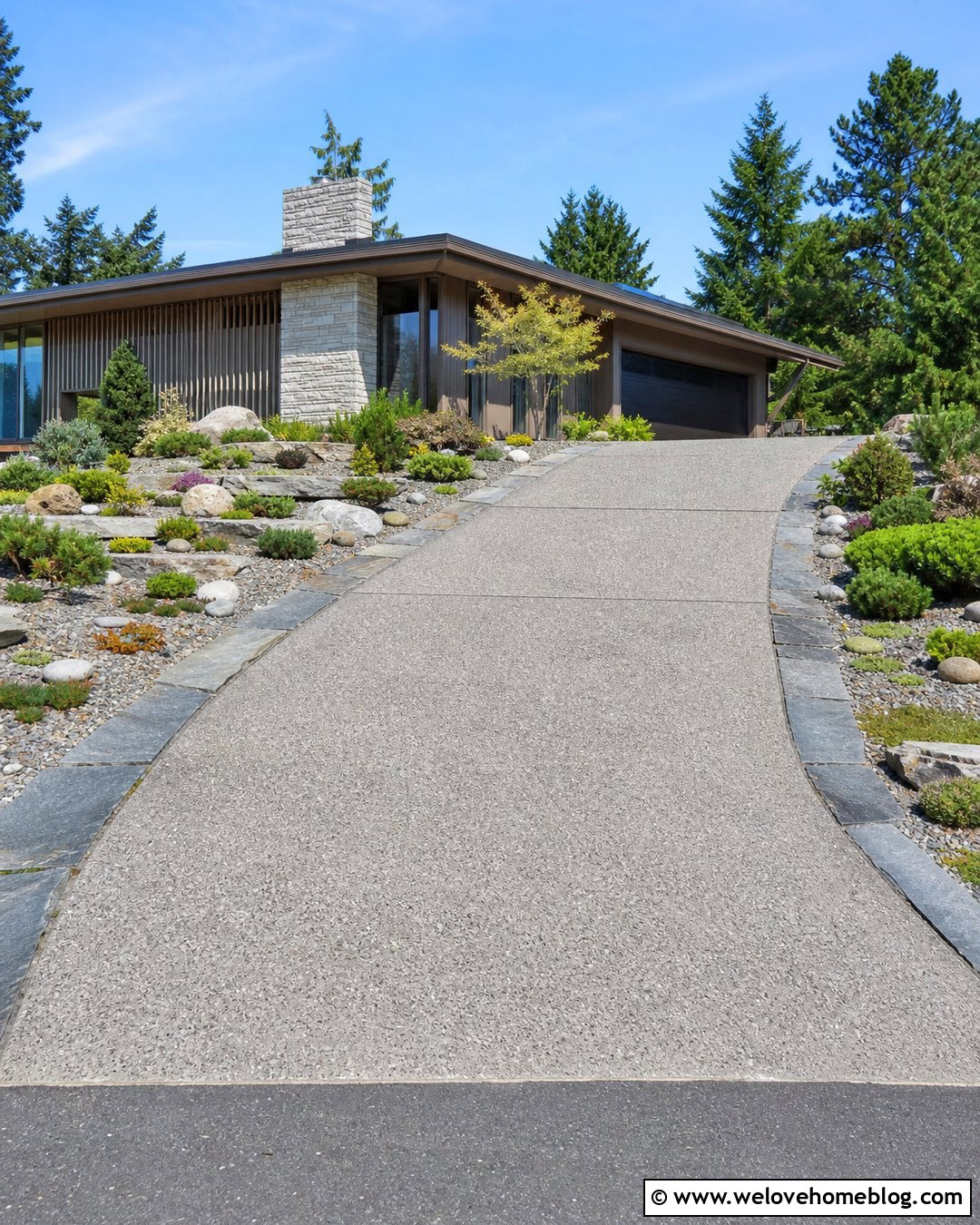
15. Octagon And Square Driveway Paver Pattern
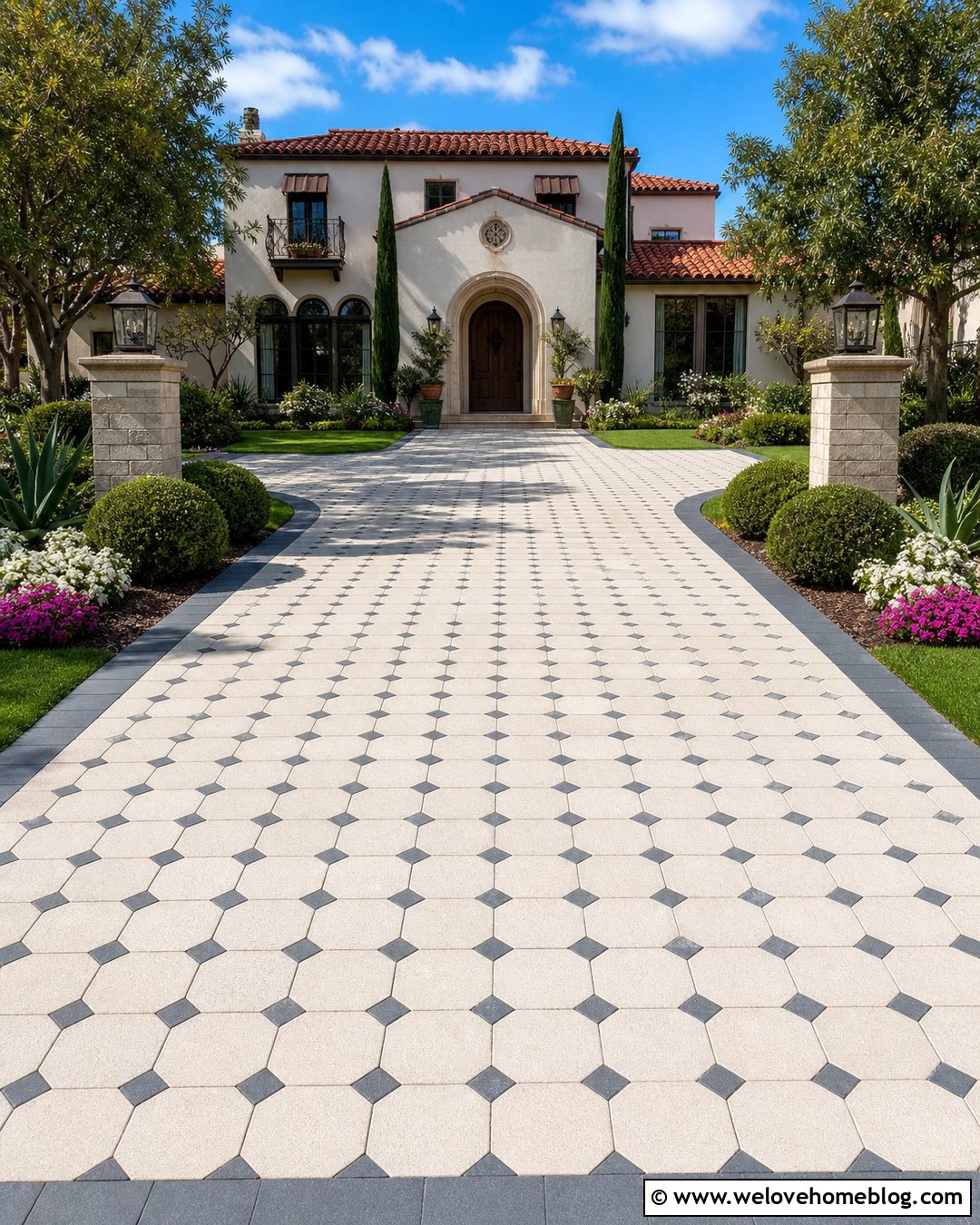
Large octagonal pavers separated by small square inserts create a formal geometric surface with noticeable contrast. The smaller squares can match the main paving for a subtle effect or use a darker tone to emphasize the repeating pattern. Cream octagonal concrete pavers with charcoal inserts suit a Mediterranean, Spanish Revival, or elegant stucco home. A broad, straight driveway provides enough space for several complete units between the borders. Use matching charcoal edging and repeat the insert color on the entry walkway or pillar caps. Rounded shrubs, flowering perennials, and small trees soften the hard geometry. Since the smaller accent pieces must remain secure under turning vehicles, select a driveway-rated paver system and ensure proper joint filling. Avoid narrow edge fragments by centering the complete pattern before installation begins.
16. Hexagon Driveway Paver Pattern
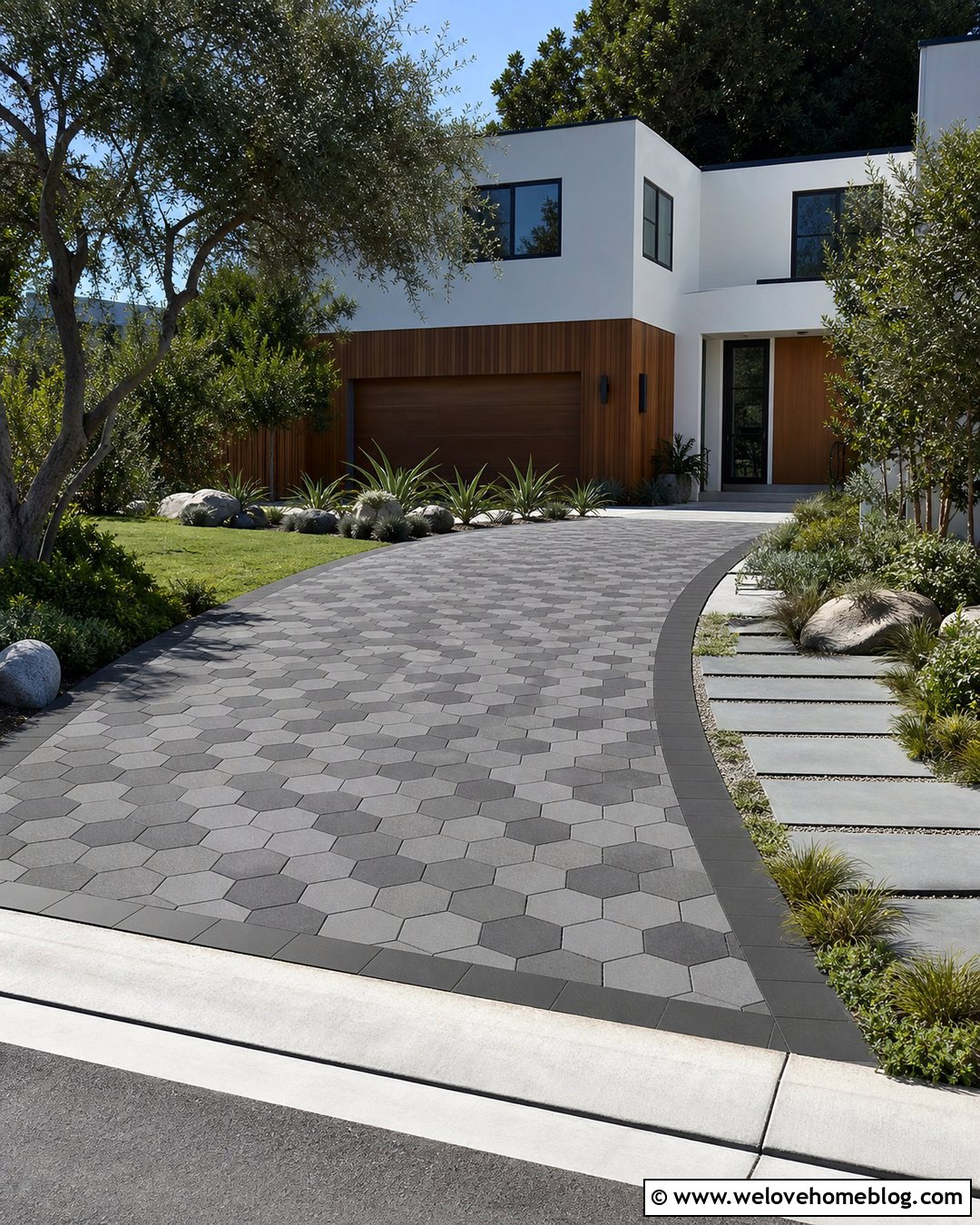
Hexagonal pavers produce a continuous honeycomb layout with no dominant horizontal or vertical line. That quality makes the pattern suitable for contemporary driveways with unusual widths, gentle curves, or adjoining parking areas. Large charcoal and medium-gray concrete hexagons can create controlled color variation in front of a minimalist white or natural-wood house. Keep the color blend random but balanced rather than arranging obvious stripes. A flush black border gives the honeycomb field a clean stopping point at the lawn. Drought-tolerant grasses, rounded boulders, and a straight slab walkway complement the modern surface. The pattern itself is visually active, so simple landscaping and garage doors are preferable. Plan the placement around drains and edges to limit tiny cuts, which may look awkward and be difficult to secure.
17. Large-Format Linear Driveway Paver Pattern
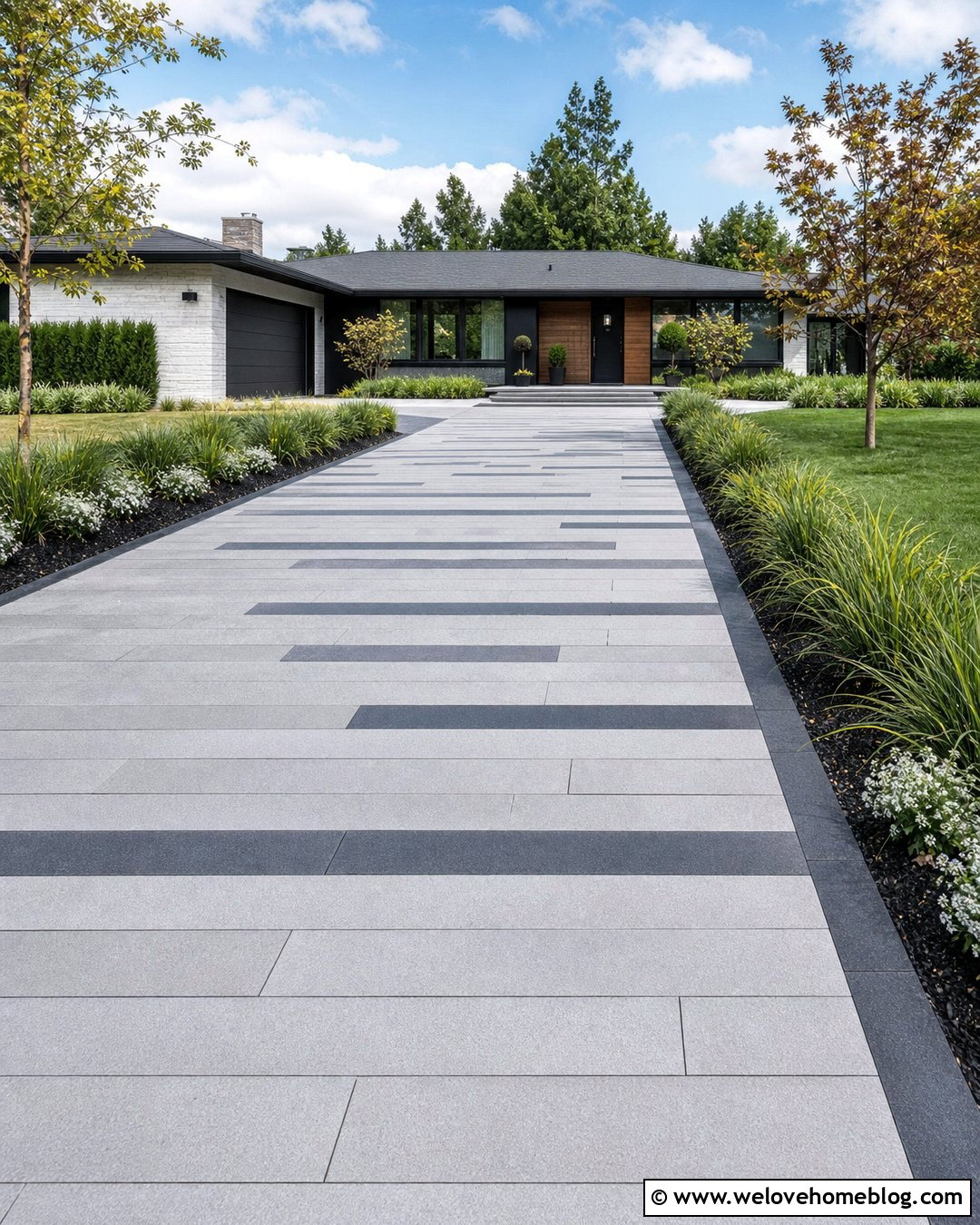
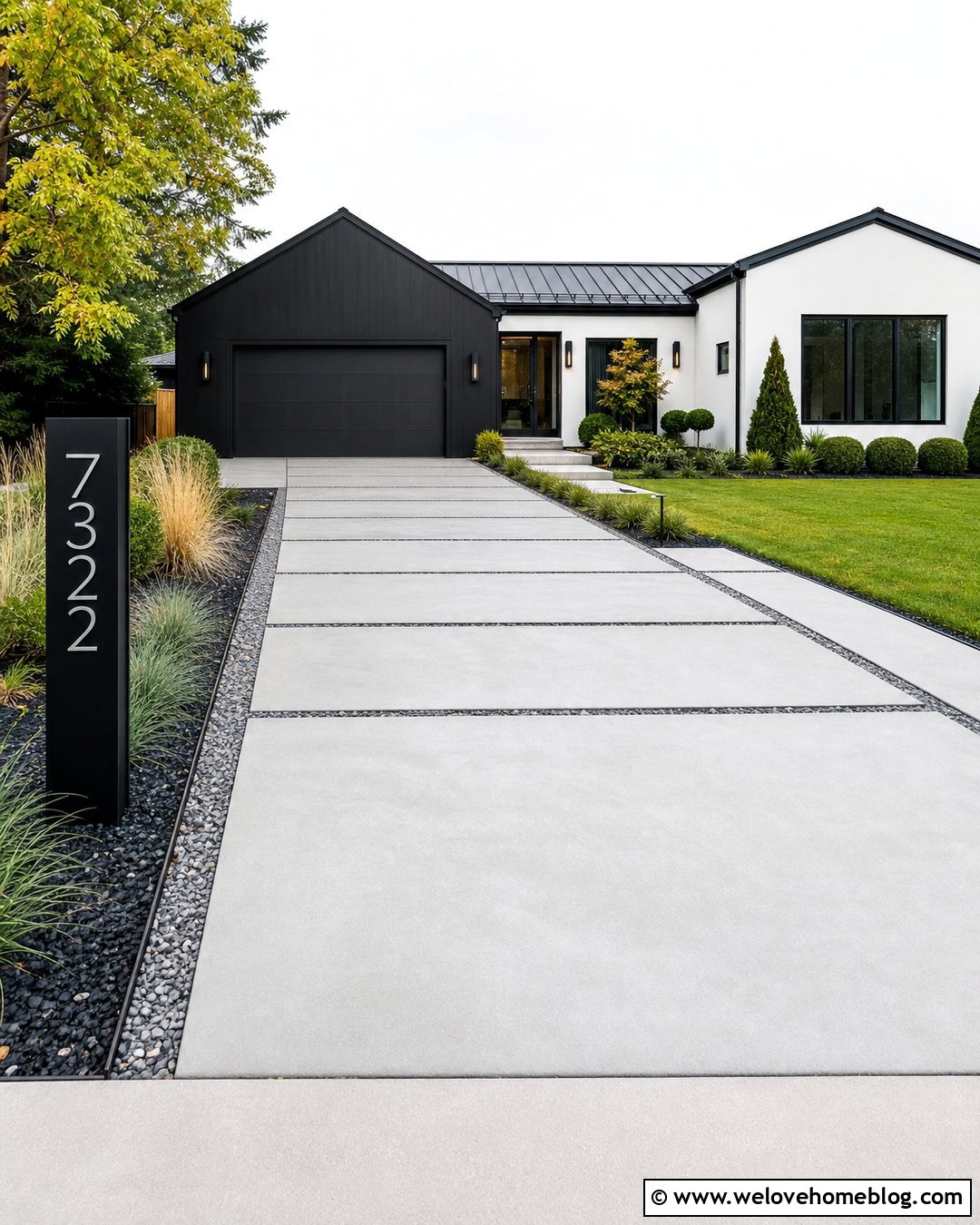
Long rectangular pavers laid in staggered linear rows can give a driveway a sleek architectural character. Position the units across a narrow driveway to enhance its apparent width or toward the garage to emphasize a long approach. Light-gray concrete plank pavers pair well with a flat-roof modern home or updated midcentury ranch. Add intermittent charcoal rows for quiet contrast instead of creating a complicated multicolor design. A matching dark border secures the ends and outlines the full paved area. Narrow beds of ornamental grasses, small trees, and white flowering ground cover maintain the clean composition. Large-format units require a well-prepared base and careful product selection for vehicular applications. Consistent joint lines and a smooth transition at the garage are essential because irregularities become especially visible within the elongated layout.
18. Permeable Grid Driveway Paver Pattern
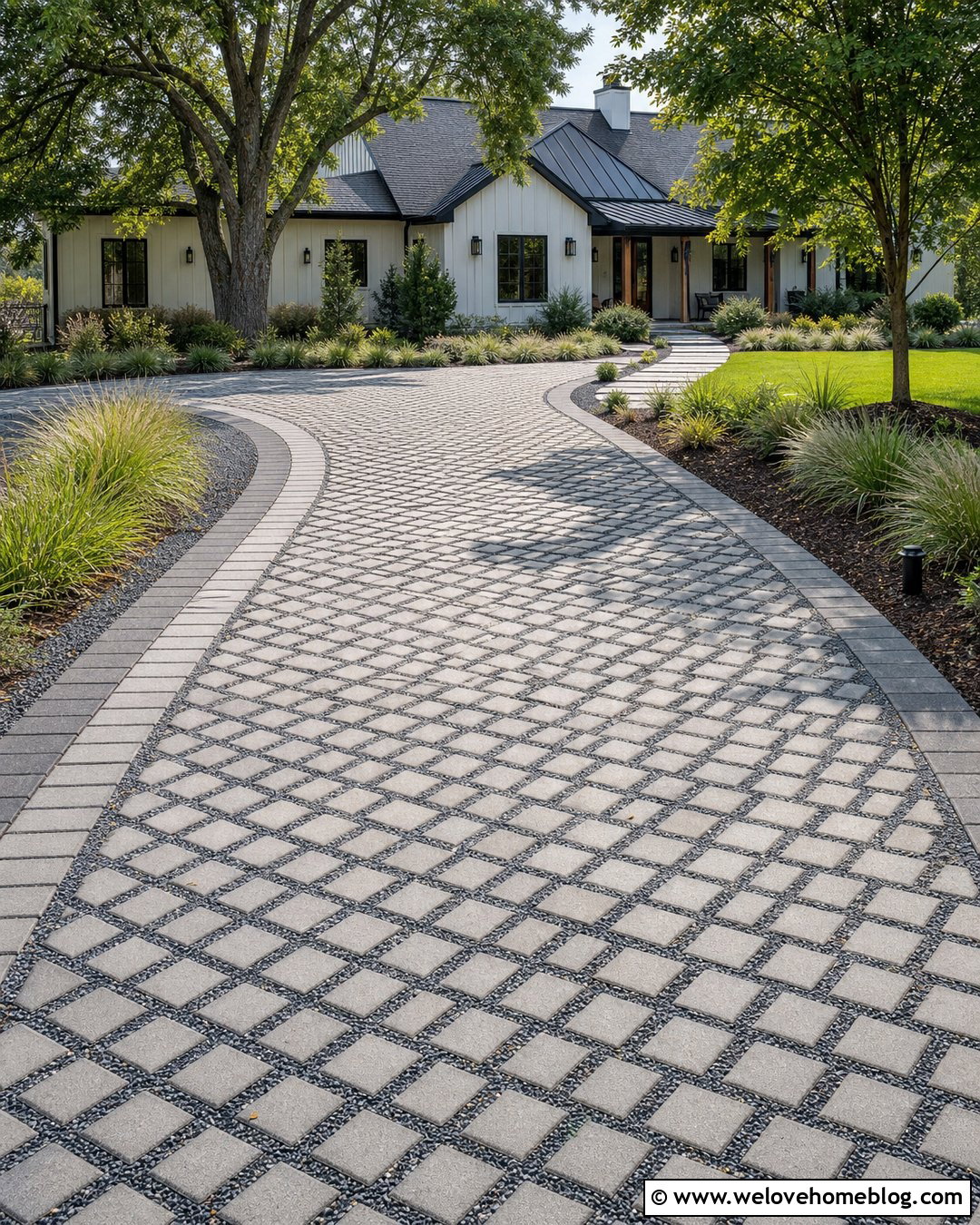
Permeable grid pavers combine a repeating geometric layout with open joints filled by small aggregate. The gaps create visible texture and give the driveway a lighter, less solid appearance. Use medium-gray concrete permeable pavers with clean charcoal gravel joints on a straight or gently curved driveway. This practical look complements modern farmhouse, ranch, and contemporary architecture. A solid soldier-course edge can define the perimeter, while rain-tolerant grasses and low shrubs connect the paving to the surrounding landscape. Keep loose decorative mulch away from the driveway so it does not mix with the joint aggregate. The complete system must be designed as permeable, including the pavers, joint material, bedding, and base. Site conditions, soil, slope, and local requirements should guide the final design and professional installation details.
19. Herringbone Driveway With Running Bond Border
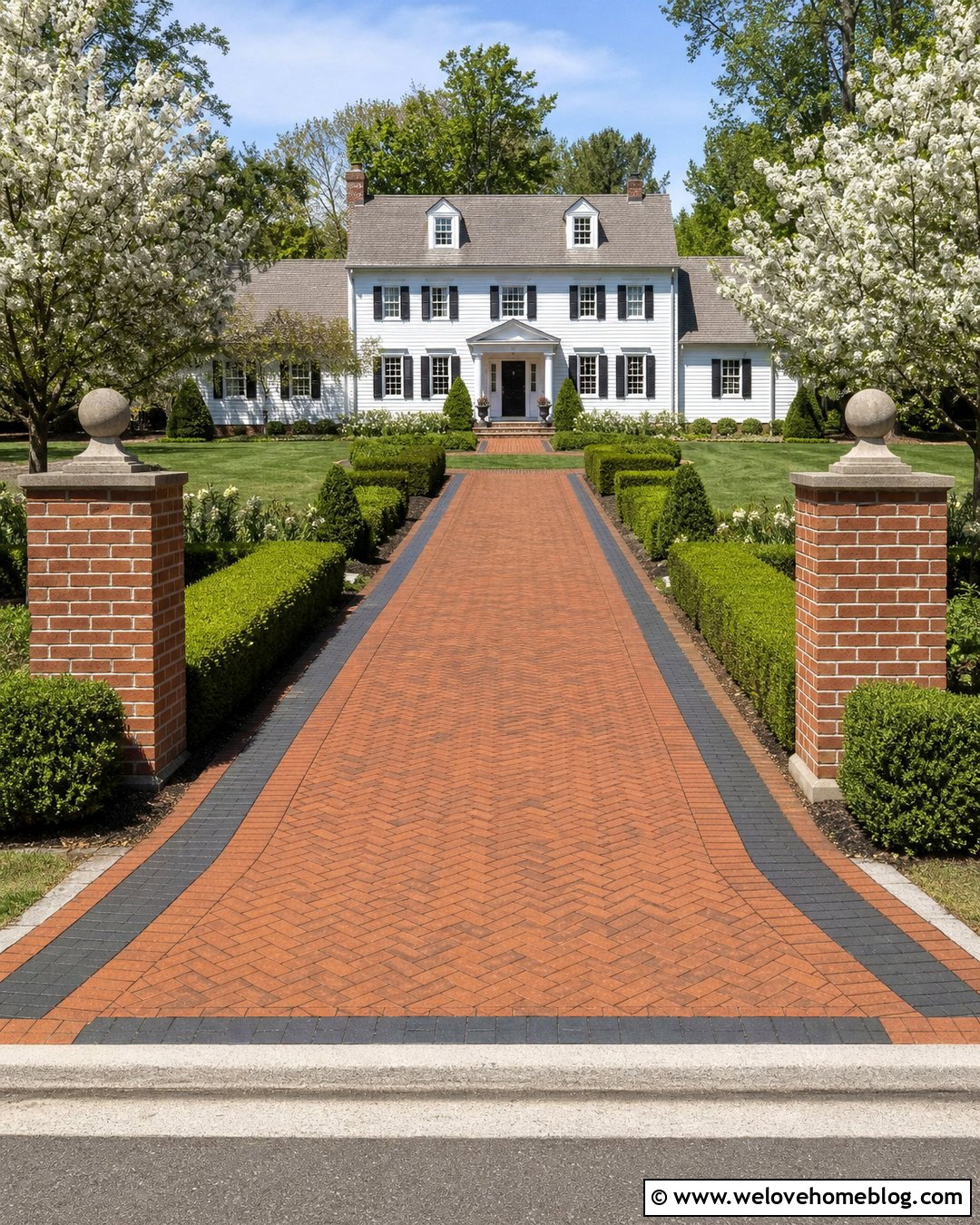
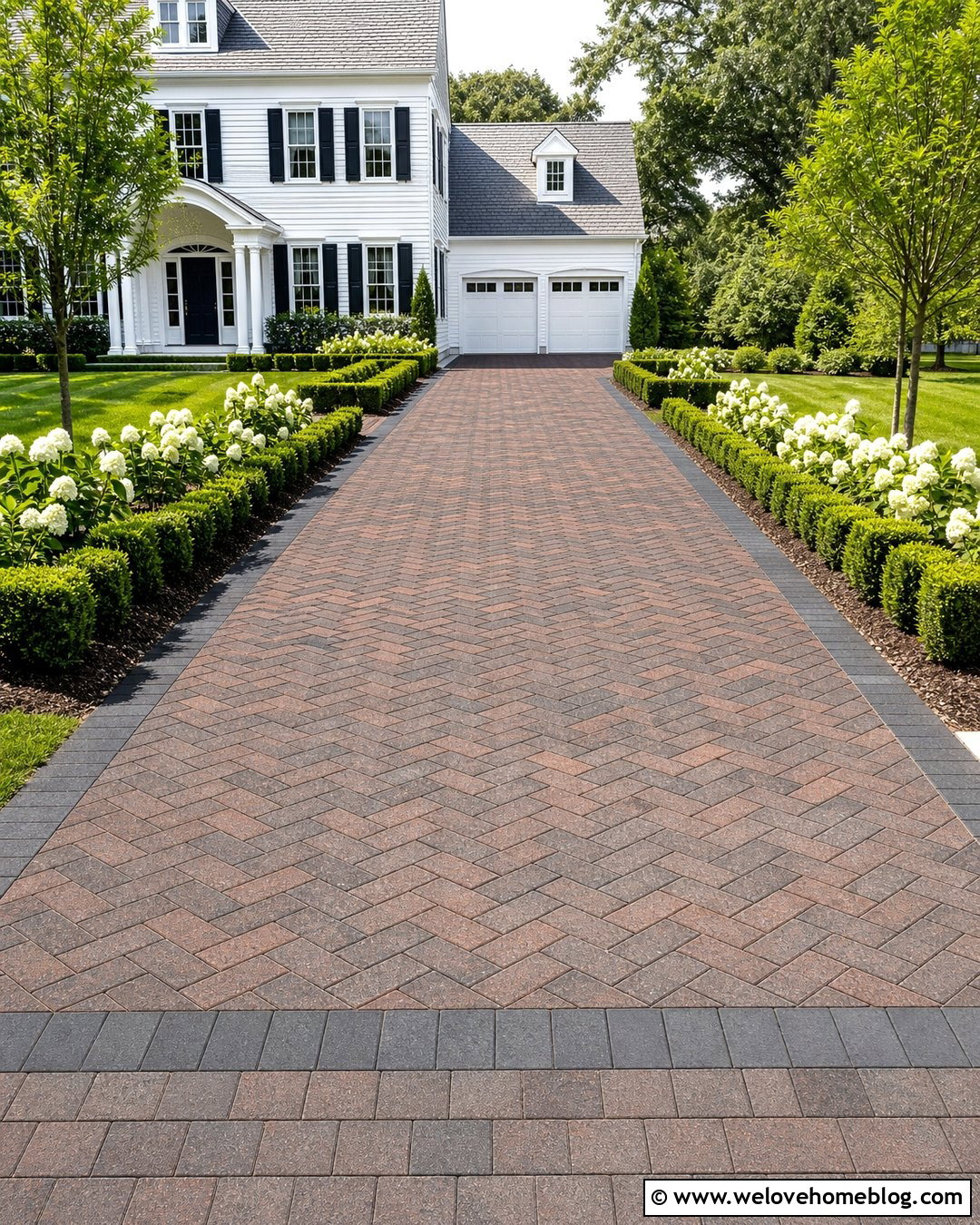
Combining patterns can add definition without making the driveway difficult to understand visually. A 45-degree herringbone field surrounded by a running bond border is one of the most balanced options. Warm red clay brick pavers create a traditional center, while charcoal concrete brick pavers form a crisp two-row frame. This design works particularly well on a straight driveway leading to a white colonial or classic brick house. Repeat the dark border along the walkway and around a small entrance apron for continuity. Symmetrical lawn panels, boxwood hedges, and flowering trees support the formal arrangement. The border hides diagonal edge cuts and strengthens the visual perimeter. Keep the color difference moderate so the two patterns cooperate as one complete surface rather than competing for attention from the street.
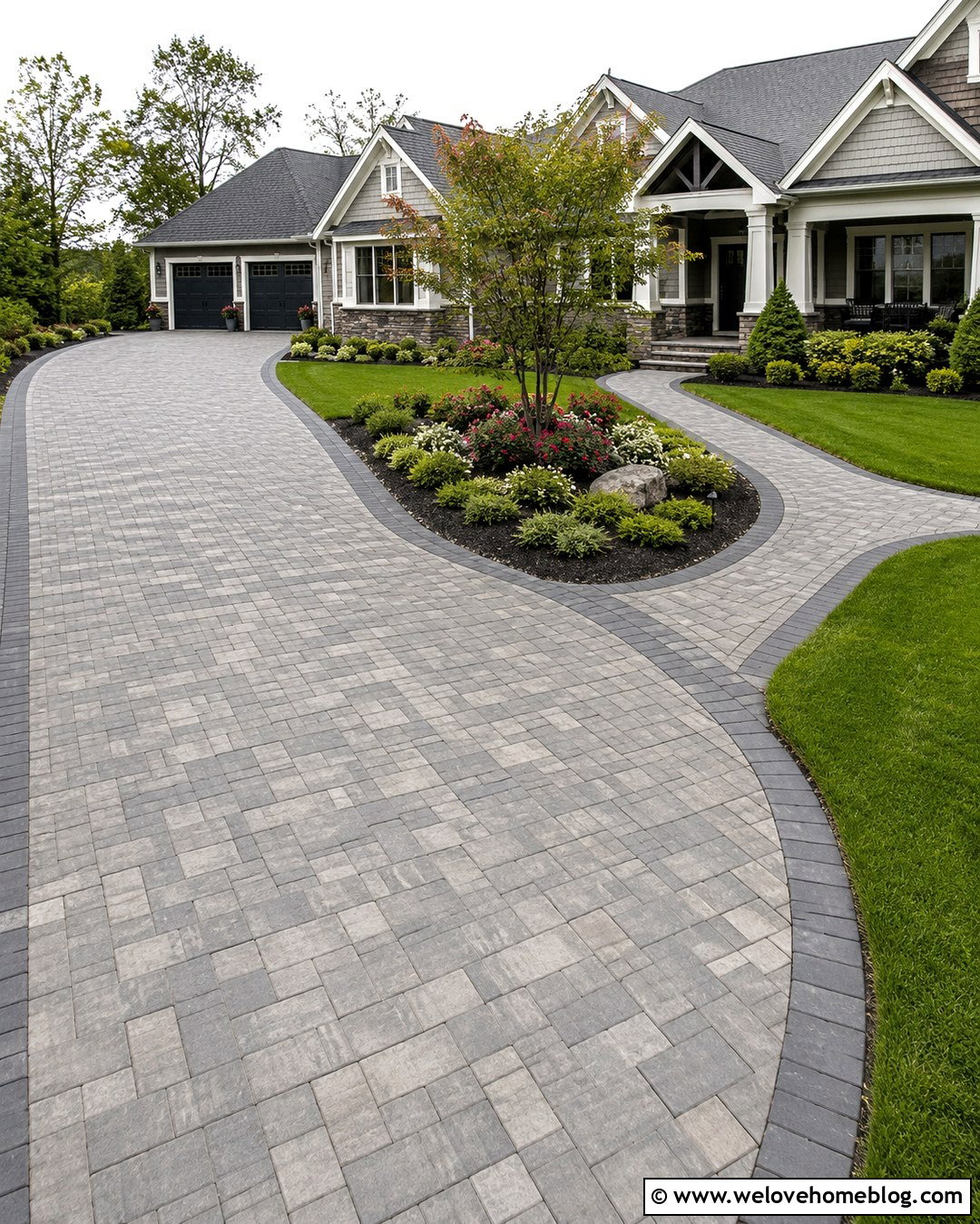
20. Driveway Paver Pattern With Center Medallion
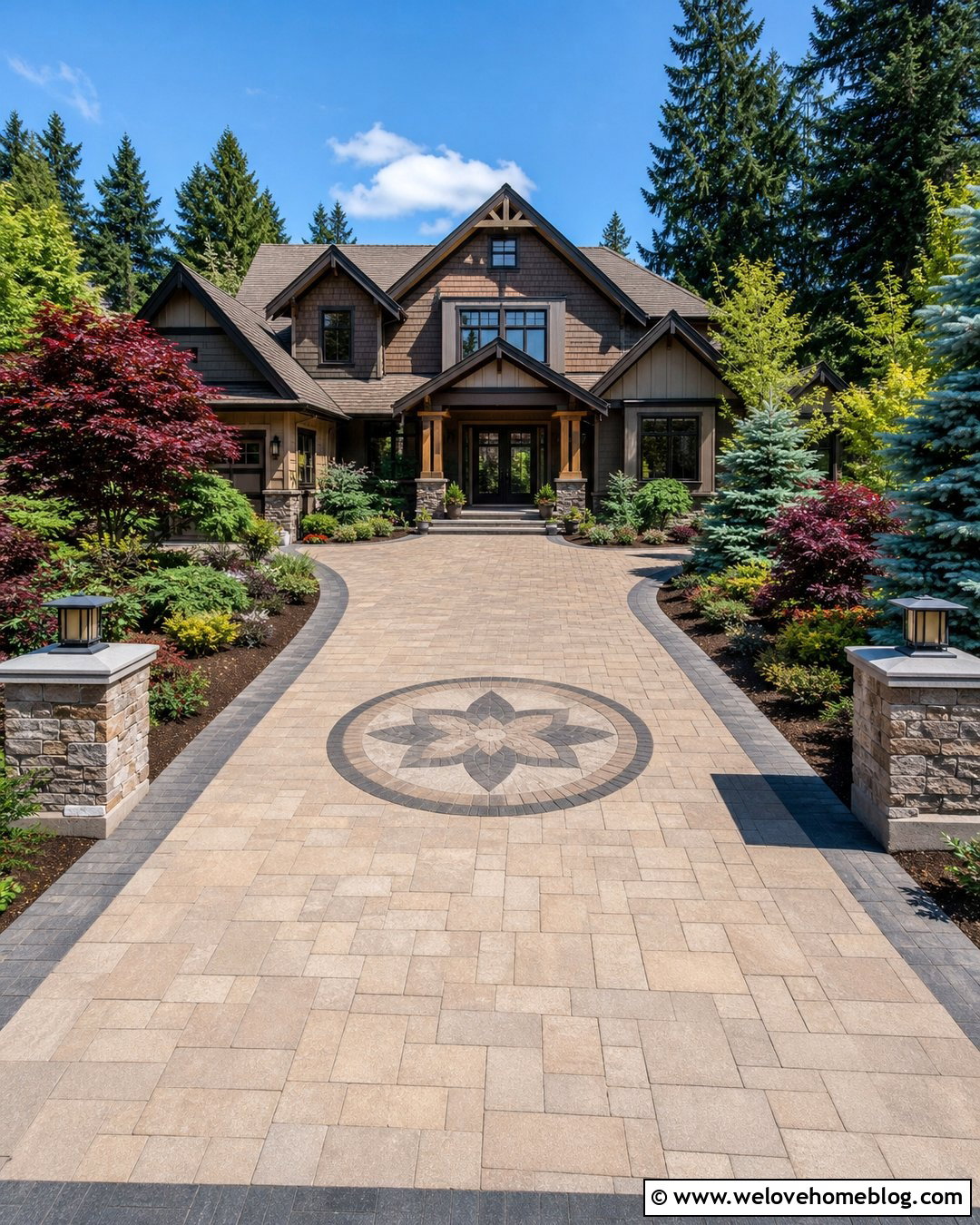
A center medallion can personalize a broad driveway while preserving a practical surrounding field. Place a circular or compass-inspired paver motif near the entrance to a motor court, then continue with a quieter random ashlar or running bond pattern. Sandstone-toned concrete pavers with a charcoal and cream medallion suit a large Craftsman, transitional, or European-style home. Echo the medallion colors in the outer border, front walkway, and masonry pillars. Curved planting beds, layered evergreens, and one ornamental tree on each side can frame the focal point from the curb. Scale is important: an undersized motif may disappear, while an oversized one can overwhelm the house. Center the design on the driveway approach or main entrance and keep utility covers away from its detailed paving lines.
Conclusion:
These **20 Driveway Paver Patterns Ideas** show how layout, color, borders, landscaping, and architecture can work together as one cohesive entrance. Herringbone offers active geometry, while running bond provides a simpler and more economical-looking surface. Ashlar and modular arrangements suit larger areas, and circular, fan, or medallion patterns establish memorable focal points. Before choosing, consider driveway dimensions, vehicle movements, slope, drainage, maintenance, and the visual scale of the house. Request physical samples and view them outdoors because sunlight can change how paver colors appear. Most importantly, use driveway-rated products, strong edge restraints, and a properly prepared base. Thoughtful planning will help the finished pattern remain attractive, functional, and well integrated with the property.

Related posts:
Leave a Reply