
Modern driveways do more than provide parking. They connect the street, landscape, and home through a coordinated mix of surface materials, clean geometry, borders, lighting, and planting. The strongest 45 modern driveway ideas balance that polished appearance with practical details such as drainage, safe access, climate suitability, and easy maintenance. Large-format pavers, permeable surfaces, exposed aggregate, gravel accents, and architectural greenery are especially effective because they extend the lines and colors of a contemporary home into the front yard. Modern driveway design also favors restrained material palettes and purposeful transitions rather than unnecessary decoration. () Whether you have a compact suburban lot or a long estate entrance, the following complete designs offer adaptable inspiration through these 45 modern driveway ideas.

1. Large Concrete Paver Driveway
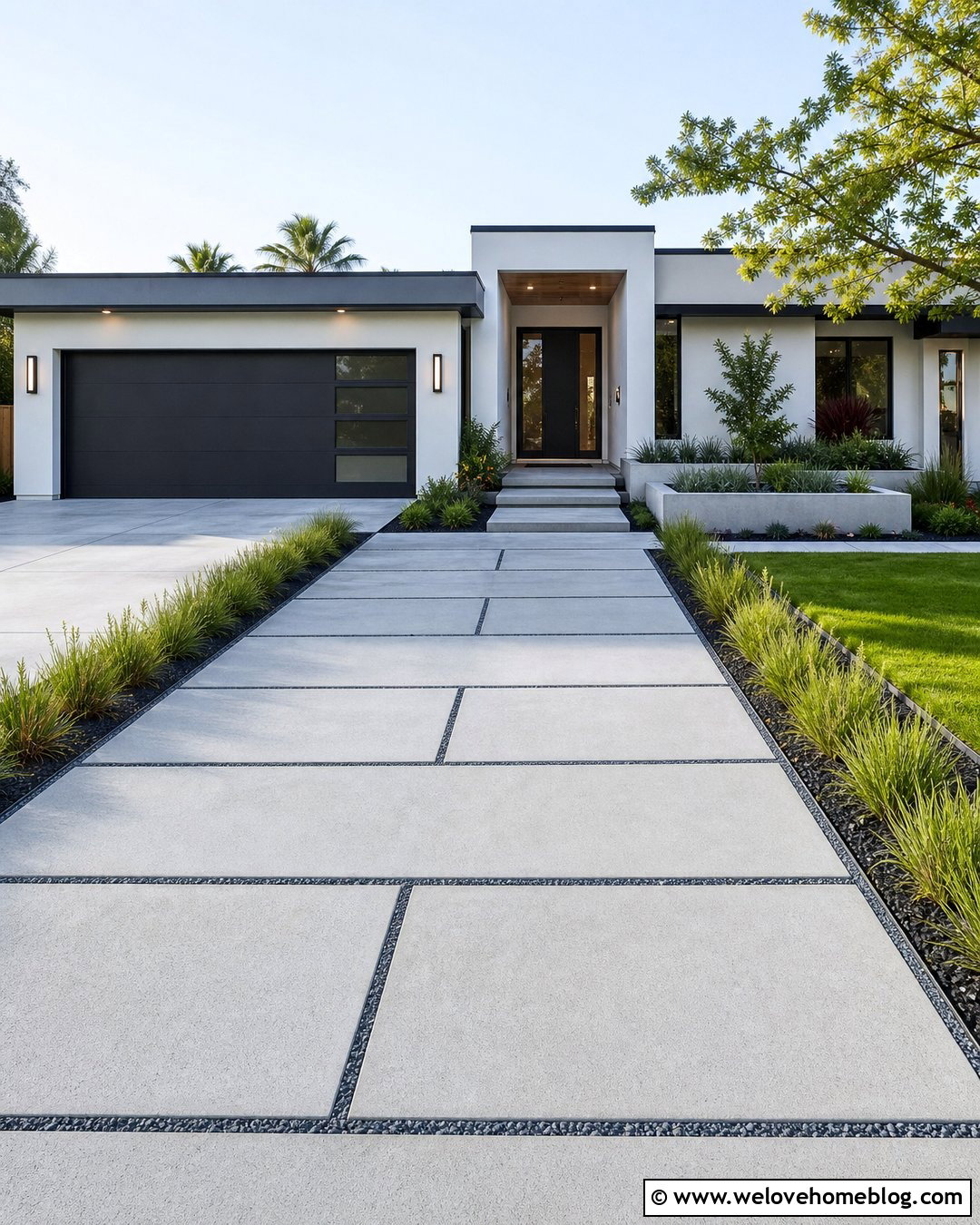
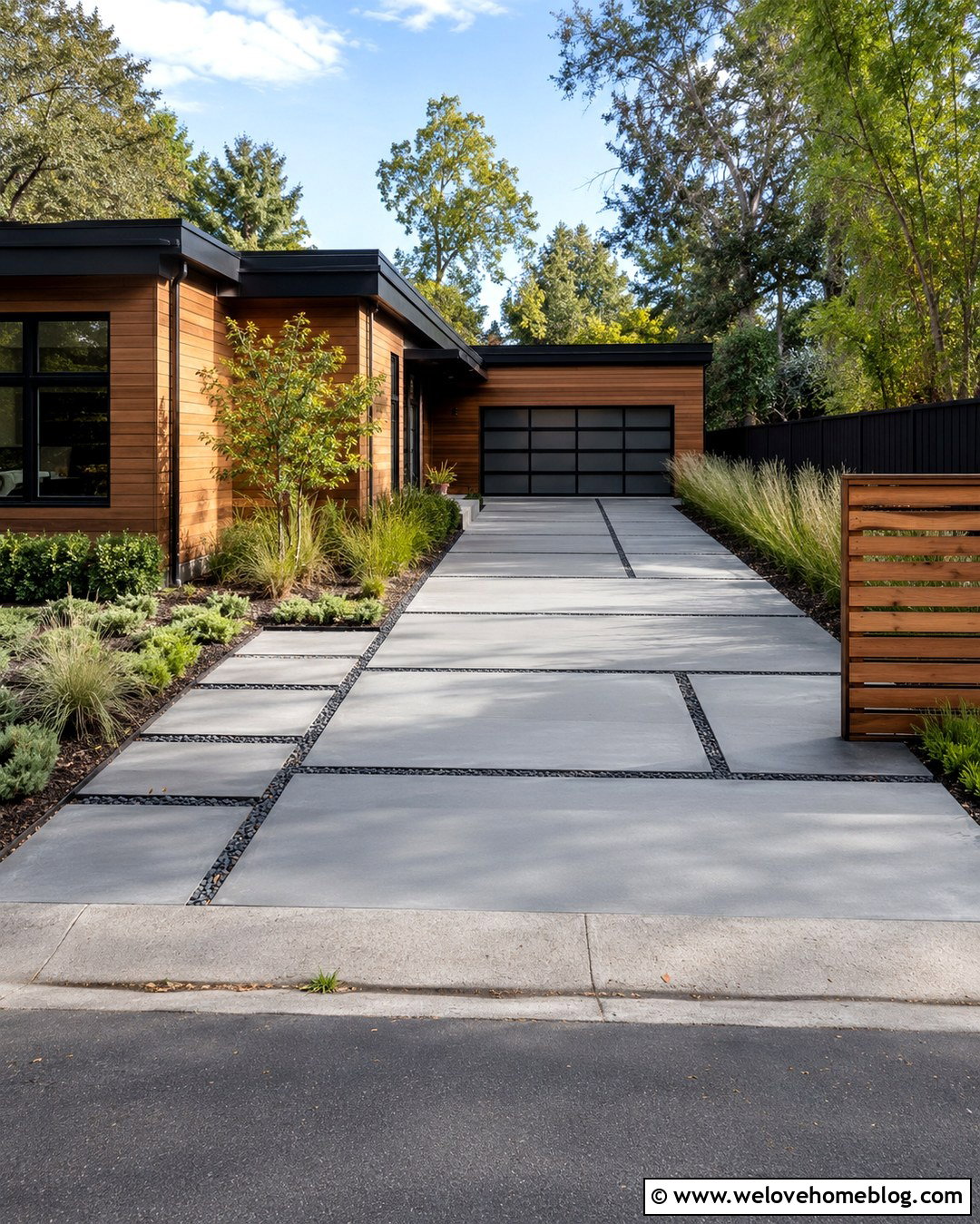
Large concrete pavers create a clean, upscale driveway that feels especially suited to homes with flat roofs, oversized windows, and simple facades. Choose smooth rectangular slabs in light gray, warm greige, or charcoal. Install them in a straight stacked layout to emphasize the architecture instead of creating a busy pattern. Narrow joints filled with dark gravel add contrast and help each paver remain visually distinct. Frame the driveway with steel edging, low ornamental grasses, and a matching concrete walkway leading to the front door. A strip of lawn or ground cover can soften one side without hiding the strong geometry. This complete look works best when the paver color repeats a tone found in the siding, garage door, or exterior stone.
2. Concrete Driveway With Grass Strips
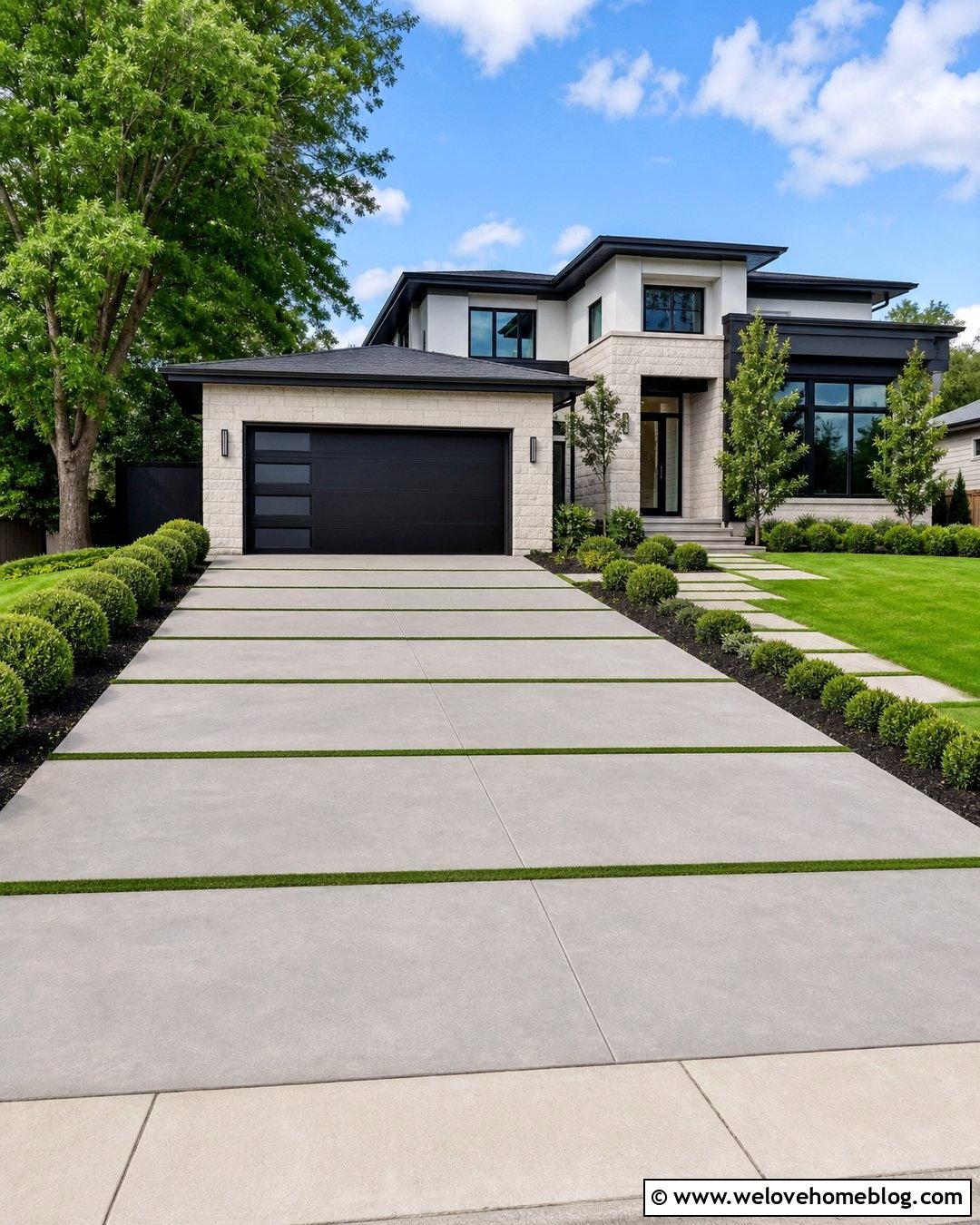
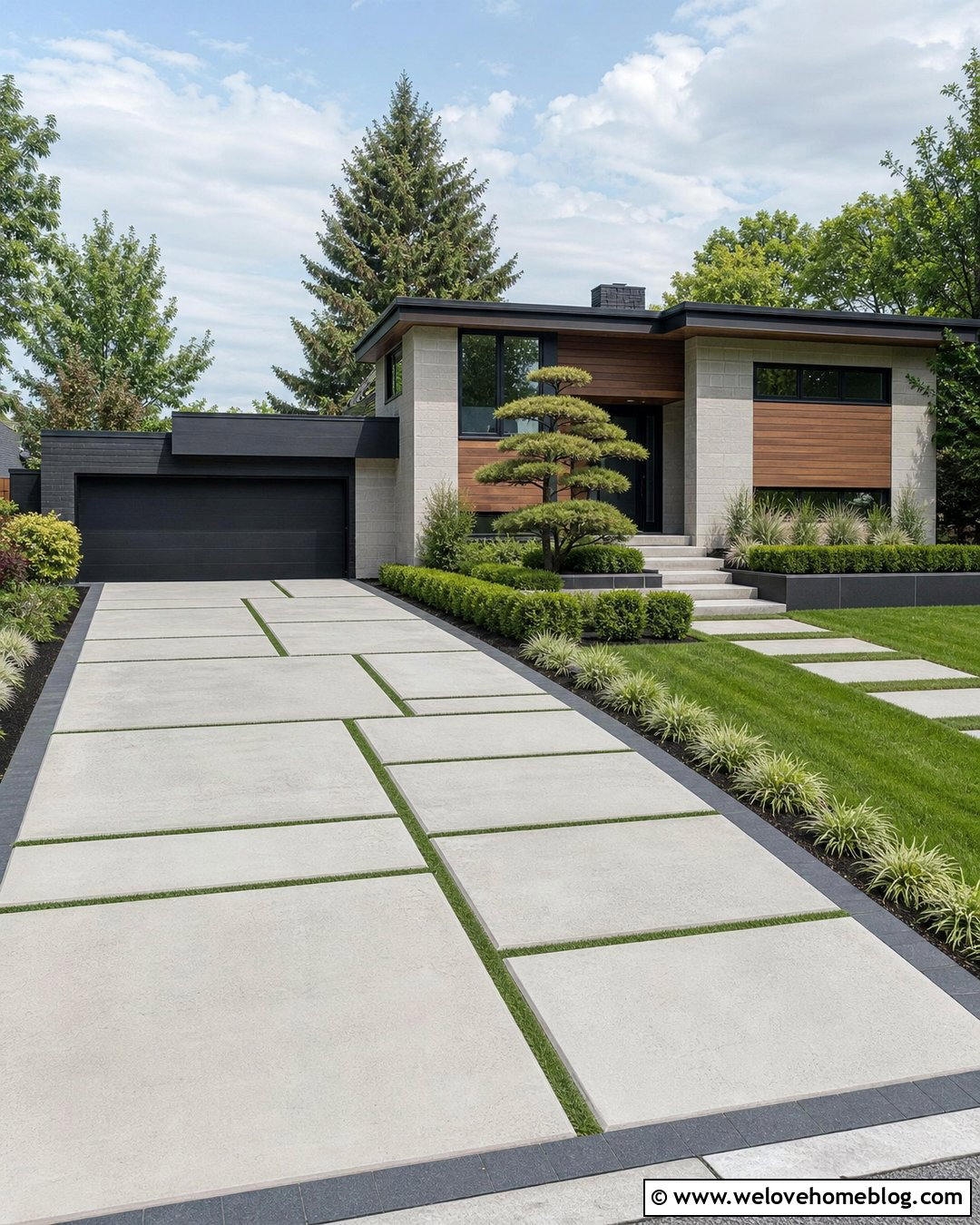
Picture broad concrete panels separated by crisp green lines. This modern driveway treatment breaks up a large paved surface and makes the approach feel connected to the yard. Use smooth poured concrete in evenly spaced rectangular sections, leaving narrow planting joints between them. Durable turf works in moderate climates, while low ground cover or artificial turf may be easier where growing conditions are difficult. Keep the driveway straight and align the joints with the garage bays or architectural lines of the house. Black steel edging gives the planting strips a precise finish. Complete the design with a simple lawn, sculptural shrubs, and a wide concrete entrance walk. The result feels fresh and geometric without making the property appear overly hard or industrial.
3. Black Asphalt Driveway With Paver Border
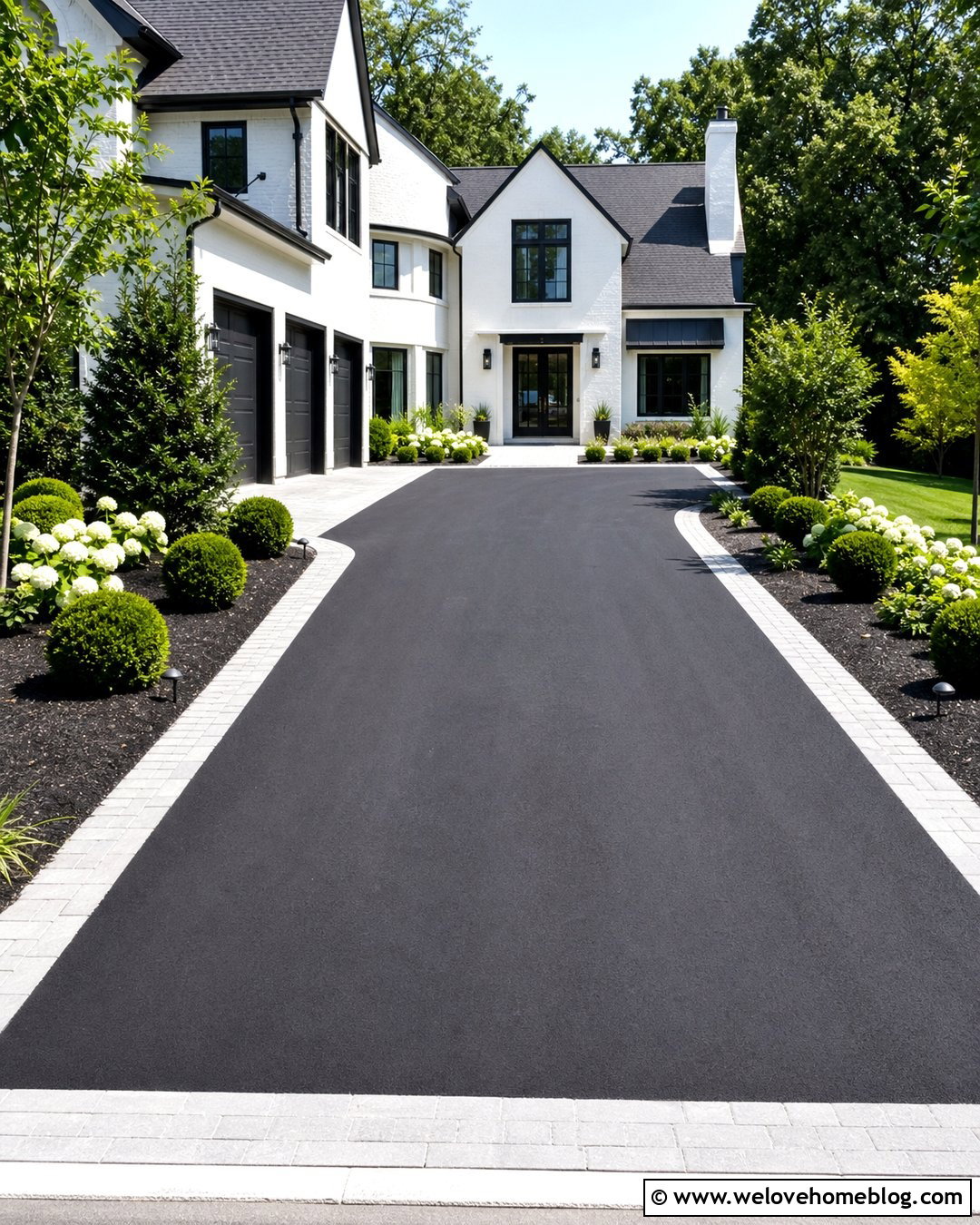
Can an asphalt driveway look genuinely modern? It can when the dark surface is installed neatly and framed with a strong contrasting border. Use smooth black asphalt for the main driveway, then add large light-gray concrete pavers along both edges. The pale outline makes the shape intentional while protecting vulnerable asphalt edges from crumbling. A straight driveway looks particularly sharp with this combination, although a gentle curve can create a more welcoming approach on larger lots. Add clipped evergreen shrubs, white flowering plants, and charcoal mulch beside the pavers. A black garage door and matching metal house numbers can repeat the driveway’s color. This is a practical way to create contemporary curb appeal without covering the entire entrance in premium paving materials.
4. Charcoal Permeable Paver Driveway
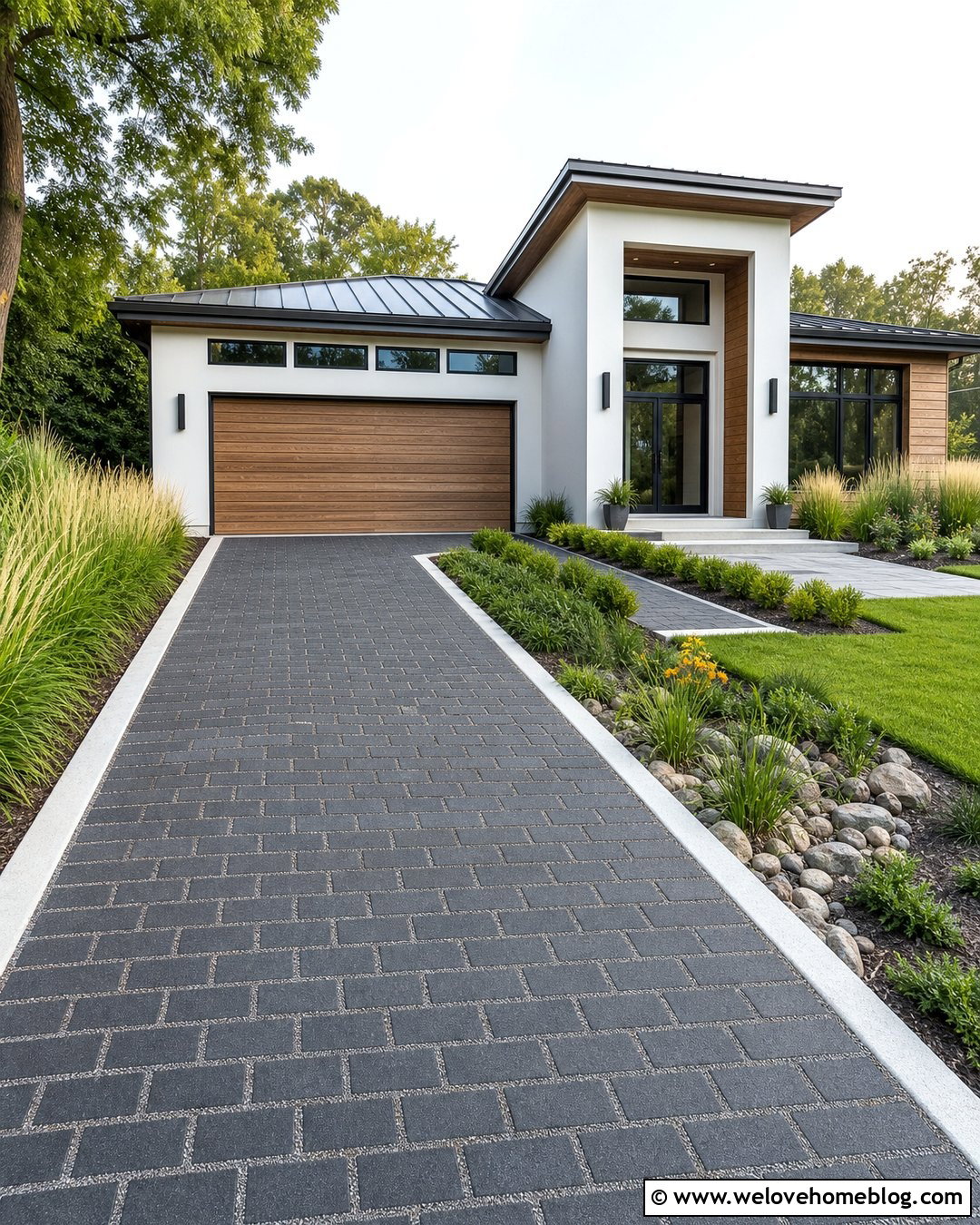
Charcoal permeable pavers provide a deep, sophisticated surface while helping water move through properly designed joints and base layers. The dark color works beautifully with white stucco, natural wood siding, or pale stone. Select long rectangular pavers and arrange them in a linear running pattern that directs the eye toward the house. Fill wider joints with small gray aggregate rather than bright contrasting gravel. Because permeable pavement requires a carefully prepared system below the visible surface, professional assessment is important for soil, slope, and local drainage requirements. () Finish the driveway with concrete curbs, airy grasses, and a rain garden near the lower edge. This creates a complete modern frontage in which drainage features feel like deliberate parts of the landscape.
5. White Concrete Driveway With Gravel Strips
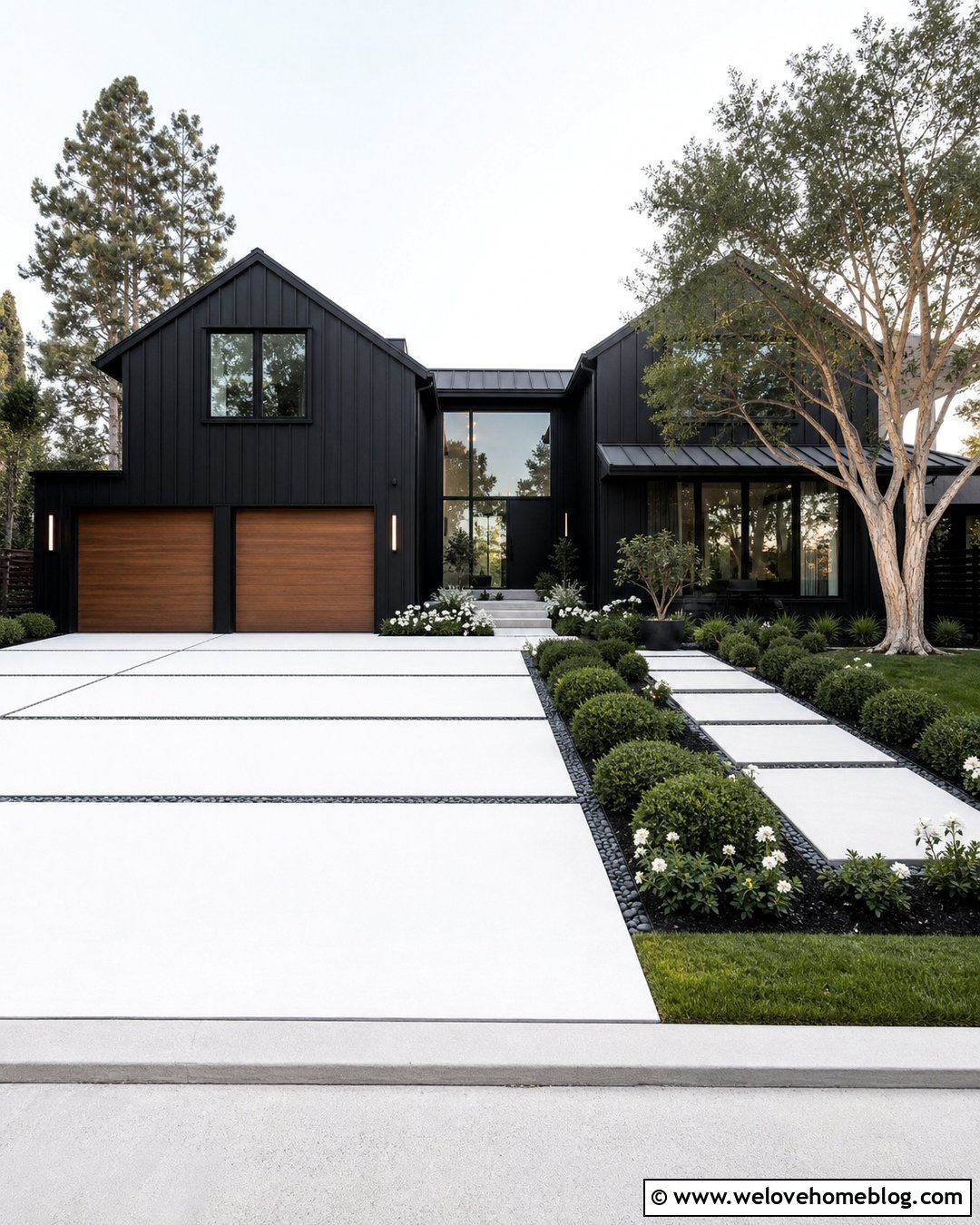
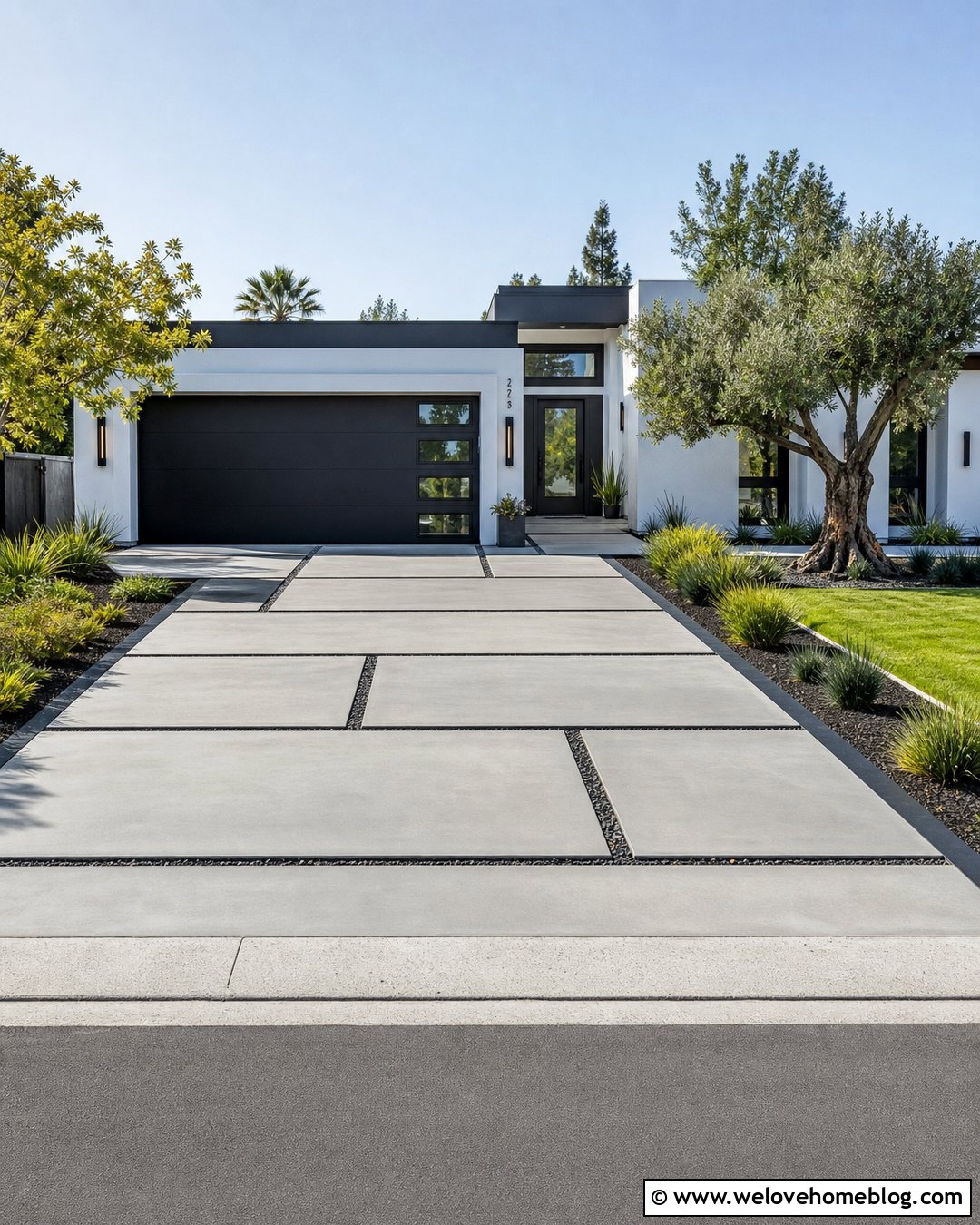
A pale concrete driveway can brighten the entire front of a dark contemporary home. Instead of pouring one uninterrupted slab, divide the surface into wide rectangular panels with strips of charcoal gravel. The darker joints emphasize the driveway grid and connect visually with black window frames or a dark garage door. Keep the overall layout straight and symmetrical for a restrained appearance. Concrete curbs or concealed steel edging will hold the gravel in place and maintain clean lines. Along the sides, use simple beds containing rounded shrubs, white flowers, and one sculptural tree. A walkway made from the same white concrete should branch naturally toward the entrance. This high-contrast design feels spacious and polished, particularly when the house has a monochrome exterior with warm wood accents.
6. Exposed Aggregate Driveway With Steel Edging
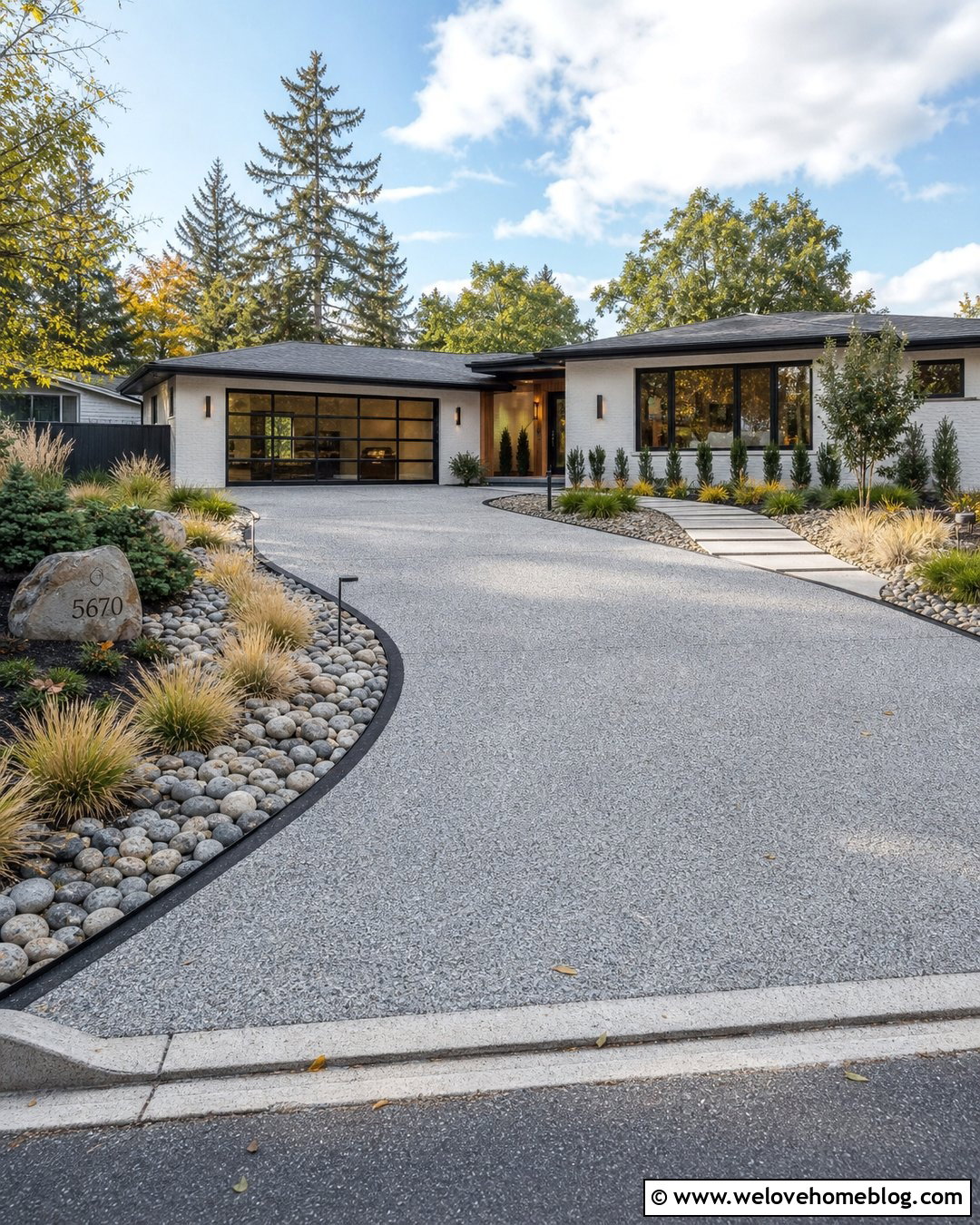
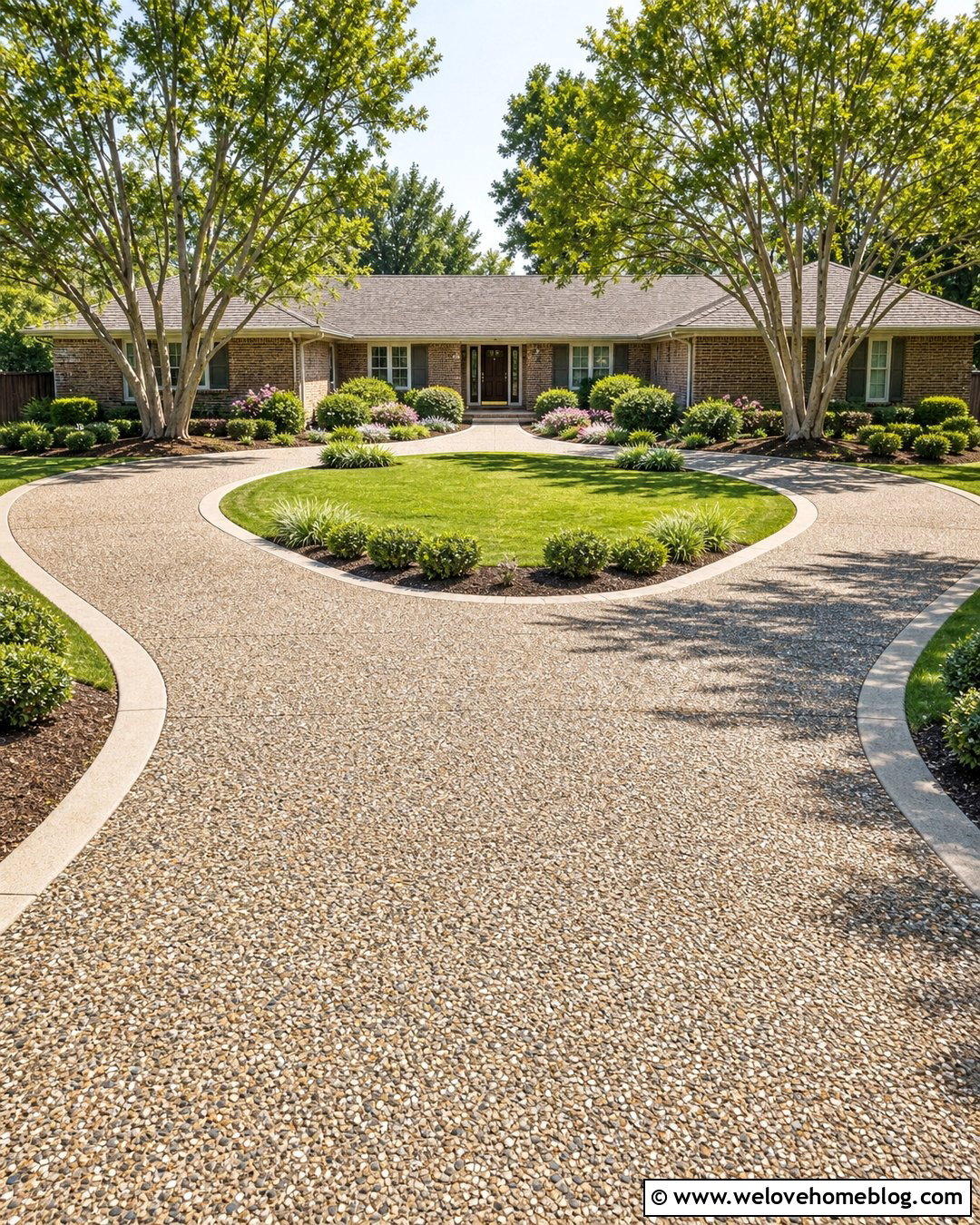
Exposed aggregate brings subtle texture to a modern driveway without introducing an elaborate pattern. Its visible stones provide more visual depth than smooth concrete and can coordinate with natural stone walls or gravel landscaping. Choose a cool gray mix with evenly distributed aggregate for a controlled contemporary finish. A gently curved layout can soften the route to the garage, while slim black steel edging keeps both sides sharply defined. Surround the drive with low grasses, evergreen mounds, and pale river rock instead of dense cottage planting. Continue the same material into a generous parking court, but use saw-cut joints to organize the larger surface. This driveway is particularly effective for a modern ranch home, where its horizontal lines and understated texture complement the building’s broad proportions.
7. Resin-Bound Gravel Driveway
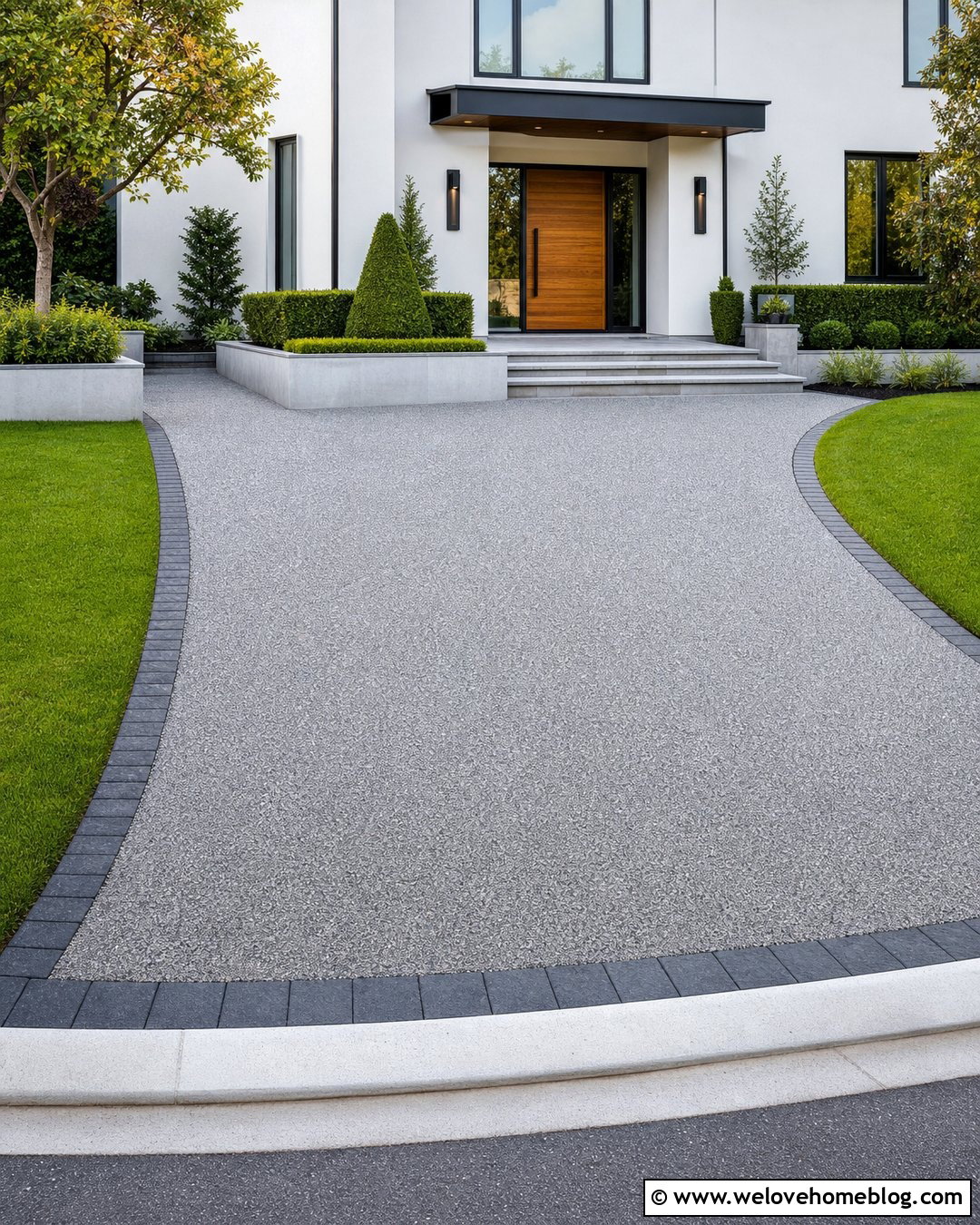
Resin-bound gravel creates a smooth-looking surface with the visual warmth of small natural stones. For a modern home, choose a controlled blend of silver, gray, or soft beige aggregate rather than a highly varied mix. Form the driveway into a simple straight or shallow curved layout and contain it with charcoal paver edging. A dark border gives the lighter resin surface a tailored appearance while defining the route toward the garage. Pair it with raised concrete planters, clipped shrubs, and an entrance walk made from oversized slabs. The consistent texture is useful when you want a visually quiet surface that does not compete with dramatic architecture. Before installation, confirm the correct base, drainage approach, curing requirements, and suitability for local temperatures with an experienced driveway contractor.
8. Gray Gravel Driveway With Metal Edging
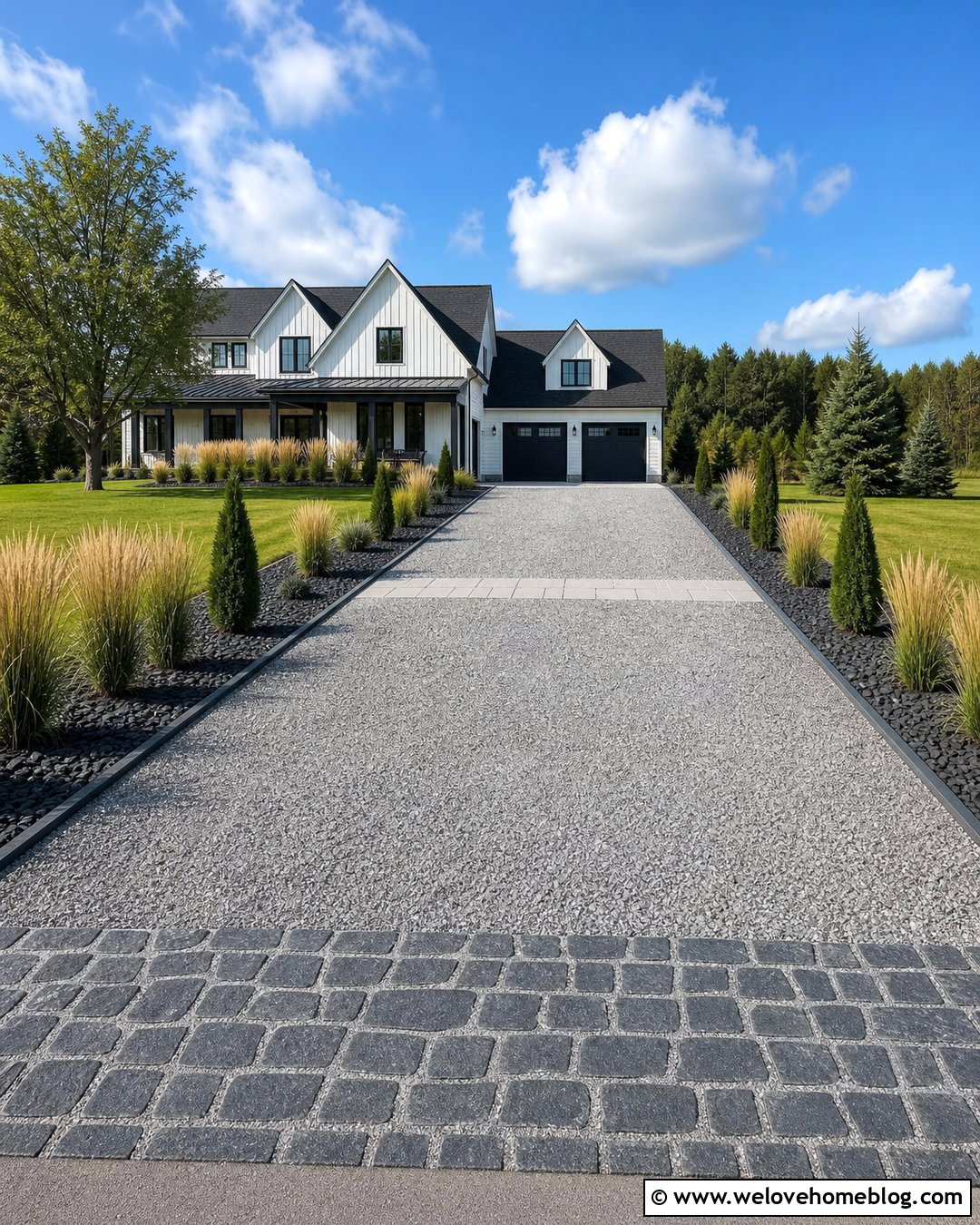
Loose gravel can look remarkably modern when every boundary is controlled. Use angular gray gravel rather than a multicolored blend, and install it over a properly compacted, stable base. Black metal edging creates a precise outline and prevents stones from migrating into lawns or planting beds. A straight driveway with a slightly wider parking area near the garage provides a simple, functional layout. Break up the long view with a concrete paver walkway crossing the gravel near the front entrance. Narrow beds of feather reed grass, compact evergreens, and dark landscape rock reinforce the muted palette. At the street, a band of larger stone setts can create a durable transition. The complete look combines the relaxed character of gravel with the disciplined lines expected from modern driveway design.
9. Basalt Paver Driveway
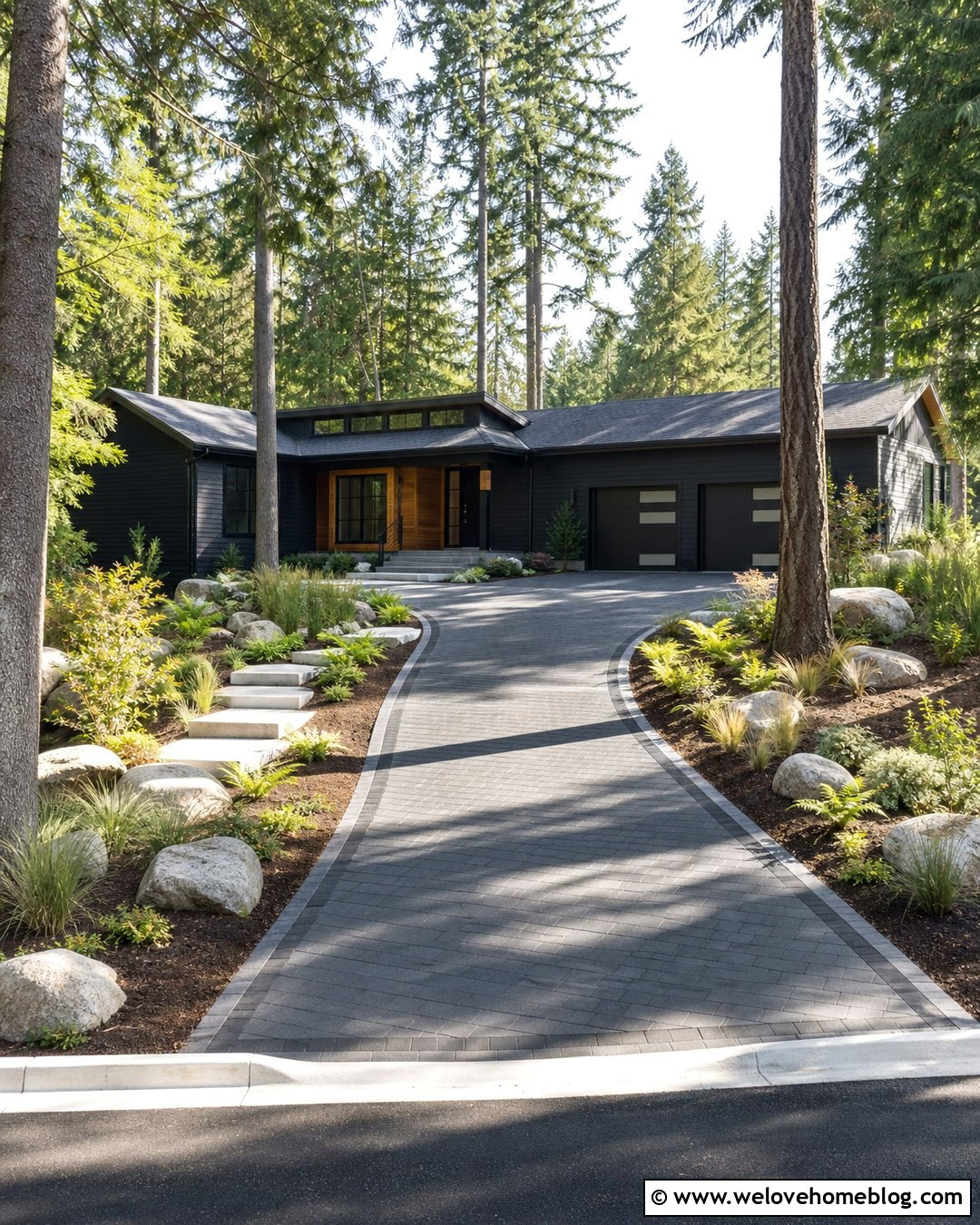
Dark basalt pavers deliver a strong architectural look that works well with minimalist houses and wooded properties. Their charcoal coloring makes greenery appear brighter while providing a grounded transition to a black or natural-wood facade. Choose rectangular pavers with a lightly textured finish and install them in a linear pattern. A subtle border made from the same stone can keep the surface continuous rather than decorative. Soften the dark driveway with pale concrete stepping slabs, ferns, ornamental grasses, and a few light-colored boulders. On a wider property, a shallow curve will make the approach feel natural without losing its modern character. Good exterior lighting and open planting are important because an overly enclosed design could make the dark surface feel heavy rather than refined.
10. Porcelain Paver Driveway
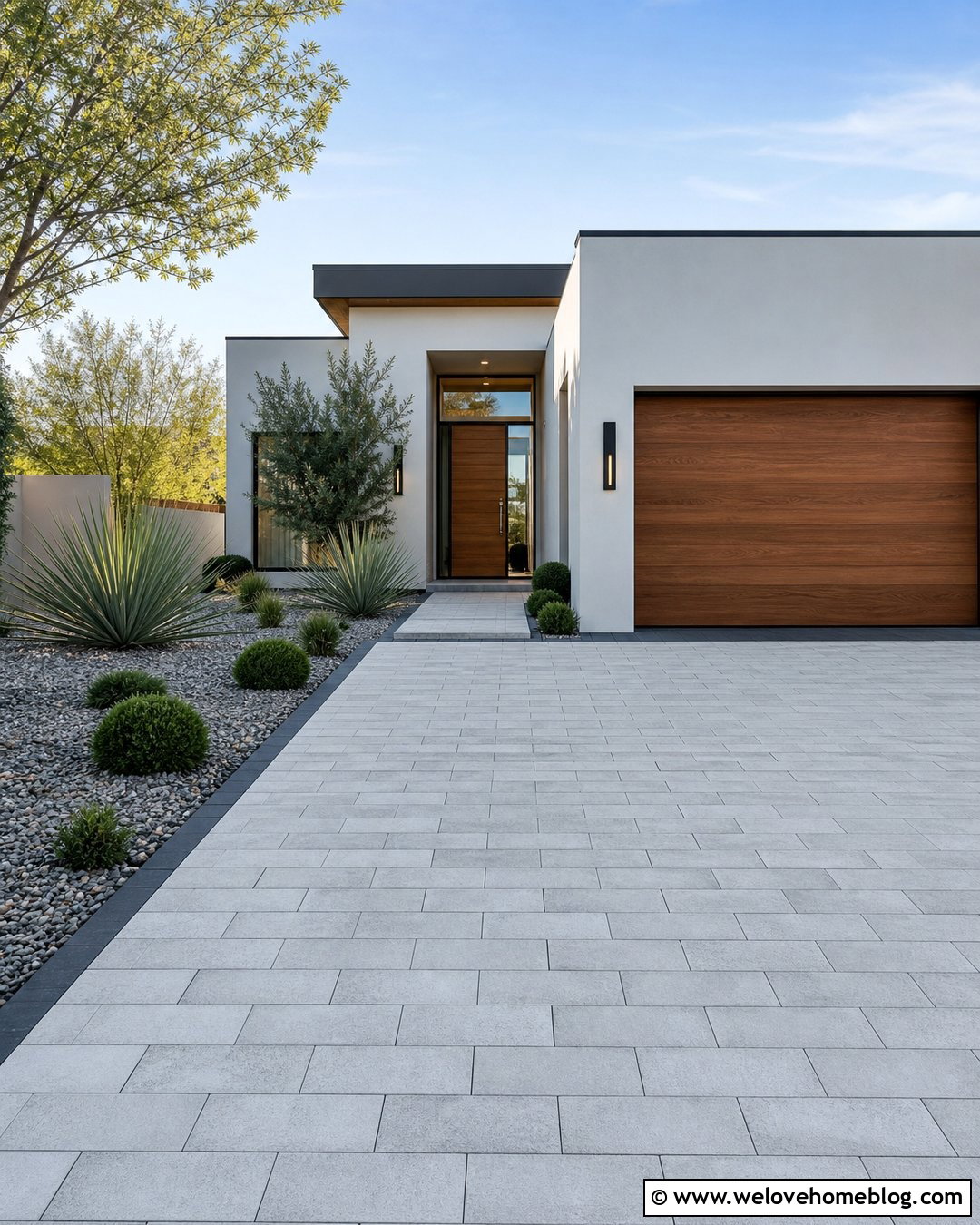
Porcelain pavers can produce a sleek, consistent appearance when products specifically rated for vehicular driveway use are selected. Consider large stone-look pavers in pale gray or warm taupe, laid in a simple running bond. The controlled color variation suits homes with crisp stucco walls, flat rooflines, and wood garage doors. Frame the driveway with darker concrete edging to make the light surface stand out. Continue matching porcelain along the entrance walk so the vehicle and pedestrian areas feel connected. Sparse plantings of yucca, compact grasses, and rounded evergreen shrubs will provide texture without obscuring the paving. Installation requirements are different from those of ordinary patio tile, so the supporting system, paver thickness, traction, load rating, and climate suitability should all be confirmed before choosing this polished modern look.
11. Herringbone Brick Modern Driveway
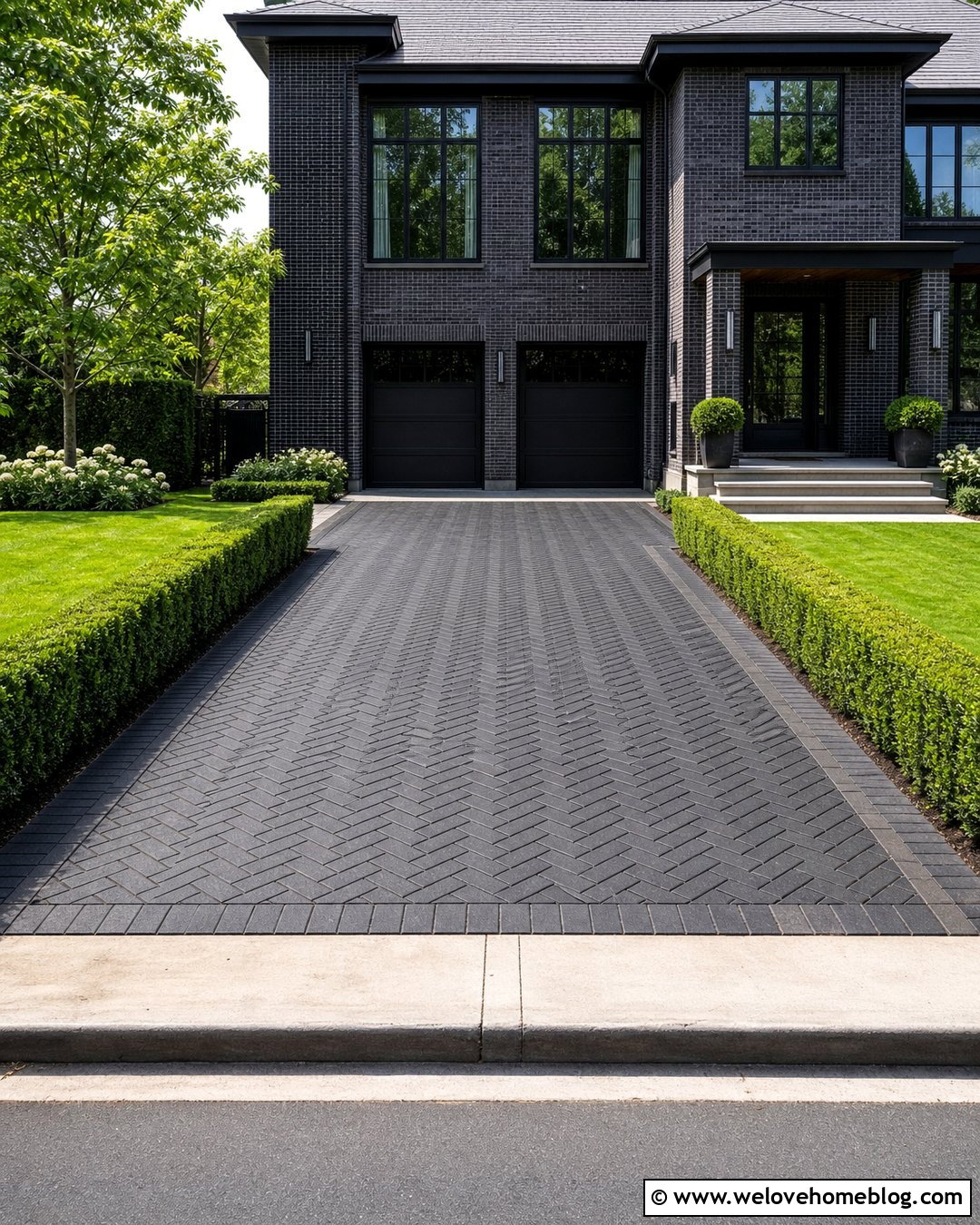
Brick does not have to make a driveway look traditional. Select charcoal, deep brown, or muted gray clay brick pavers and arrange them in a tight herringbone pattern. The diagonal movement adds interest while the restrained color keeps the result contemporary. Use a straight soldier-course border in the same brick to contain the pattern without creating excessive contrast. This design works especially well in front of a modern home that includes dark brick, weathered wood, or black metal details. Balance the richly textured surface with simple landscaping, such as rectangular lawn panels and clipped evergreen hedges. Wide concrete steps can lead from the driveway to the front door. The final composition feels detailed and durable while remaining visually connected to modern architecture.
12. Concrete Driveway With Cobblestone Bands
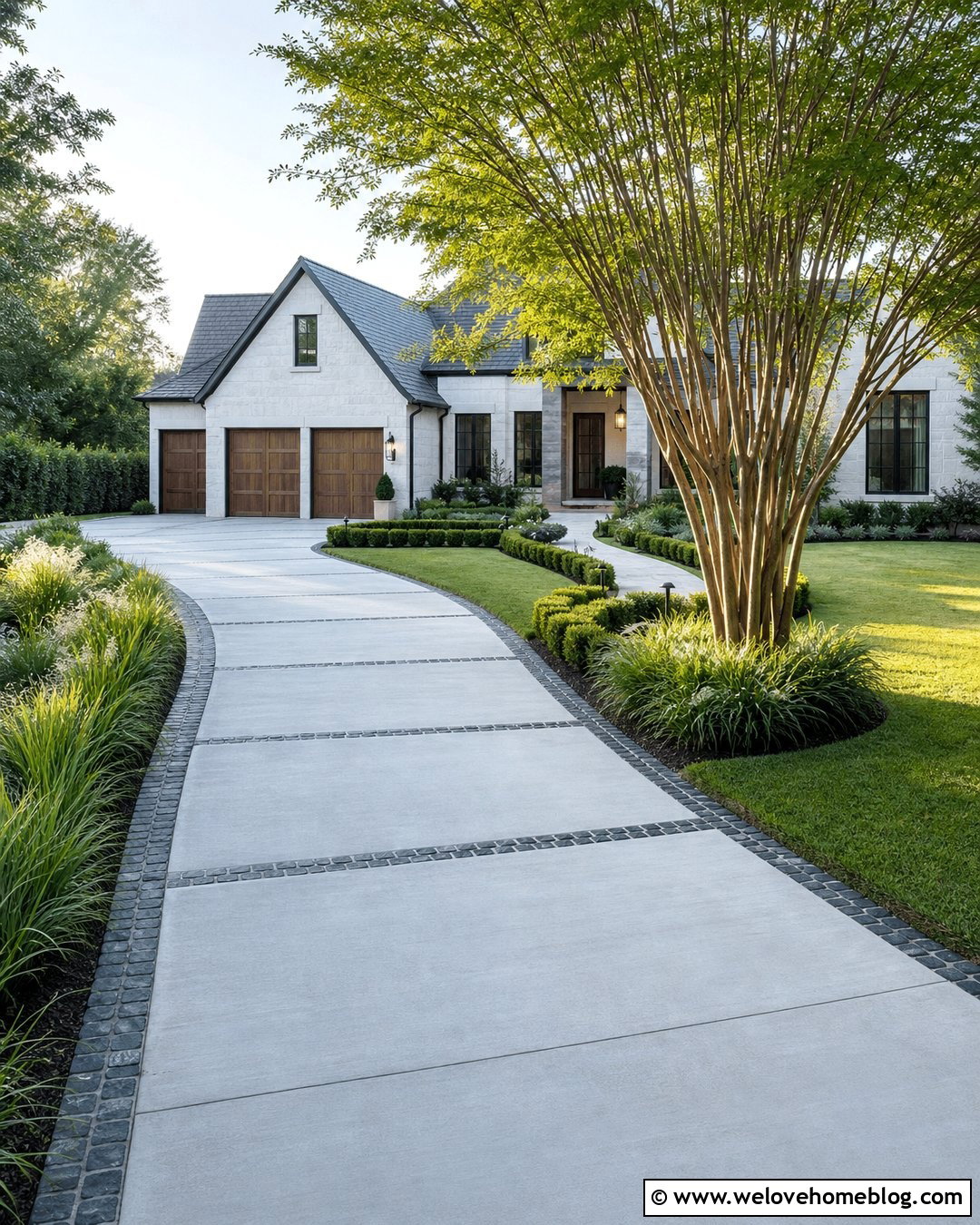
Cobblestone accent bands can introduce texture without turning the entire driveway into a rustic surface. Start with broad sections of smooth gray poured concrete. Insert narrow charcoal cobblestone bands across the driveway at regular intervals, aligning them with control joints where appropriate. Continue the cobblestone around the outer edge to create a unified frame. A shallow curved shape will make the bands more noticeable while guiding vehicles naturally toward the garage. Keep surrounding landscaping restrained with low hedges, airy grasses, and a single multistem tree near the entrance. The rugged stone contrasts with smooth concrete, but the limited palette prevents the combination from feeling crowded. This is a useful transitional design for homes that combine modern additions with older stone or brick architecture.
13. Geometric Concrete Driveway
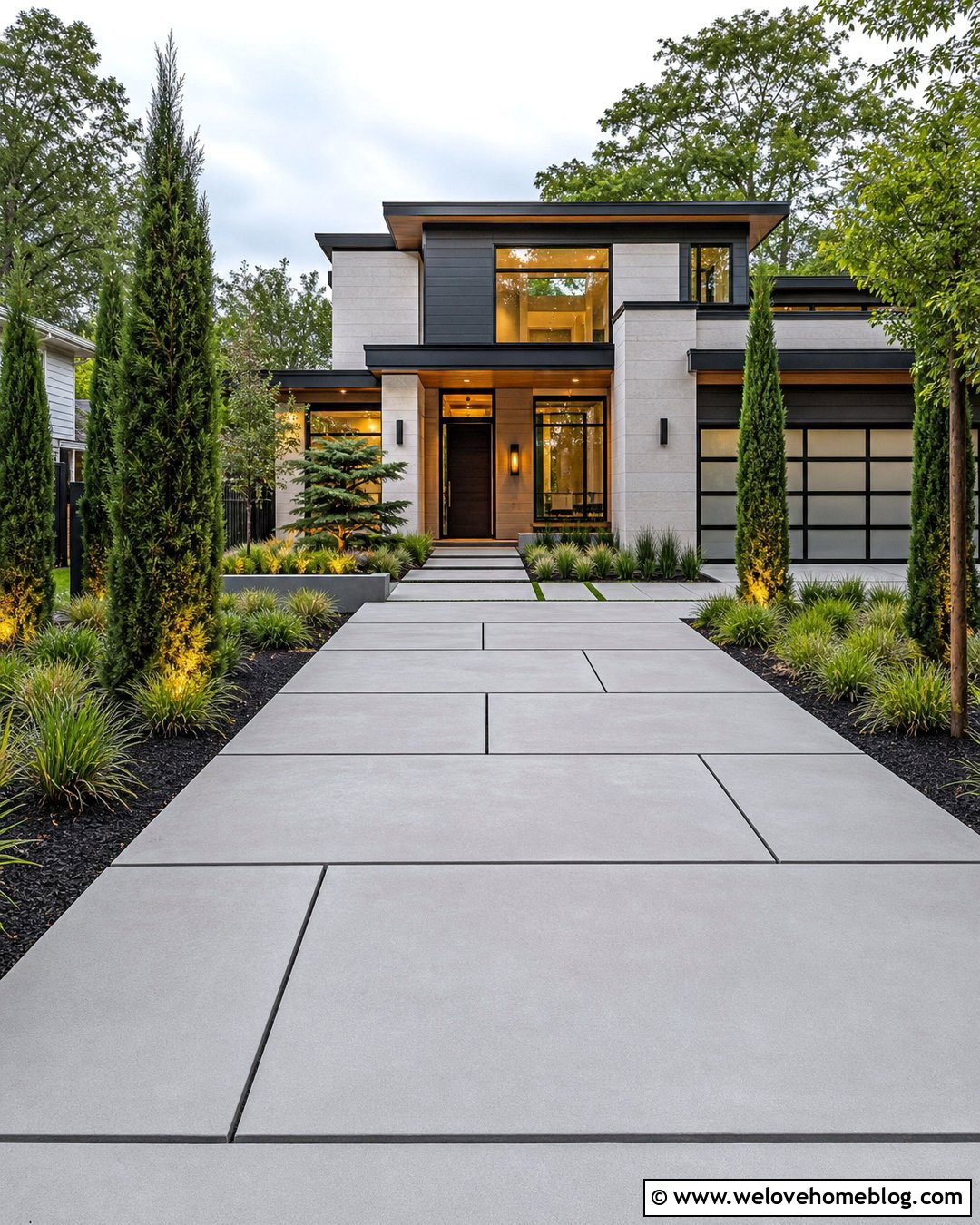
A geometric driveway turns practical expansion and control joints into part of the visual design. Instead of using a predictable square grid, divide smooth concrete into large offset rectangles that correspond with the house, walkway, and planting beds. Use one consistent concrete color, such as soft gray, and let slim dark joints define the pattern. A straight approach works best because it allows the geometry to remain easy to read from the street. Add rectangular beds containing low grasses, black mulch, and sculptural evergreens along one edge. Square concrete stepping pads can connect the driveway to the entrance without introducing another material. The pattern should look organized rather than random, so plan the entire composition before pouring. Proper joint placement must still support the concrete’s technical requirements.
14. Floating Concrete Strip Driveway
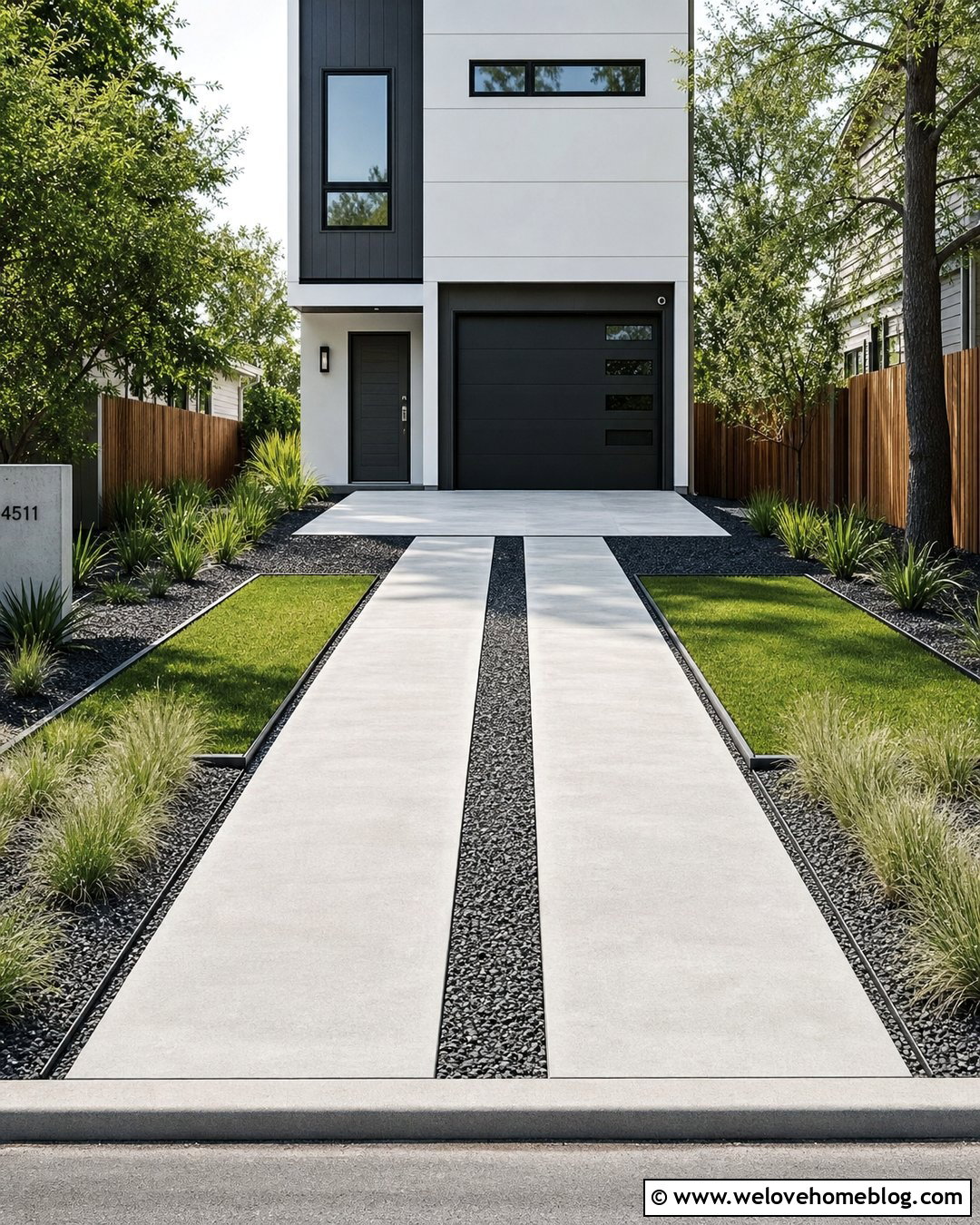
Parallel concrete driving strips create a lighter alternative to a fully paved driveway. Two or more broad lanes provide solid wheel paths, while the spaces between them contain gravel, low ground cover, or reinforced grass. For a clean modern result, use smooth light-gray concrete with straight edges and charcoal gravel in the gaps. Extend the strips from the curb to a compact parking pad near the garage. Black steel edging and symmetrical planting beds will keep the layout crisp. This design is especially appealing for a narrow modern home where a conventional solid driveway could overwhelm the front yard. The open sections add visual relief, but dimensions must match vehicle movement and provide comfortable access in all weather. Select infill that suits the climate and expected maintenance level.
15. Concrete And Gravel Driveway
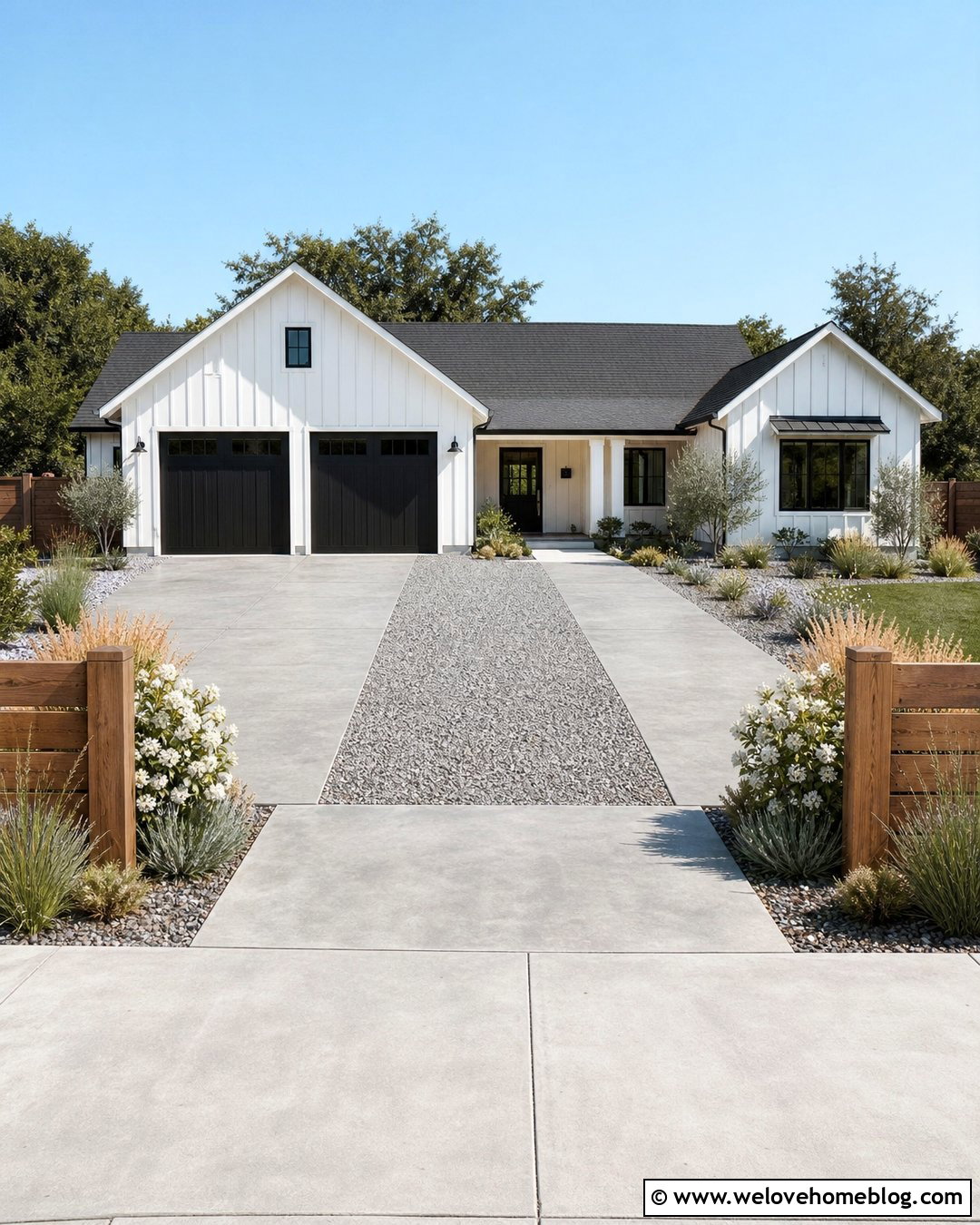
Combining concrete and gravel allows each material to handle a different part of the driveway. Use poured concrete for the main driving lanes and parking zone, then place gray gravel in wide side margins or a central divider. The concrete offers a crisp foundation, while the gravel reduces the appearance of one massive paved area. Keep both materials within a neutral palette and separate them with concealed metal edging. A modern farmhouse can carry this combination particularly well when the gravel color echoes exterior stone and the concrete matches pale siding. Add olive-toned shrubs, ornamental grasses, and simple timber fencing around the approach. A matching concrete walkway should connect the parking area to the front entrance, creating a clear and practical route through the mixed-material design.
16. Curved Modern Driveway
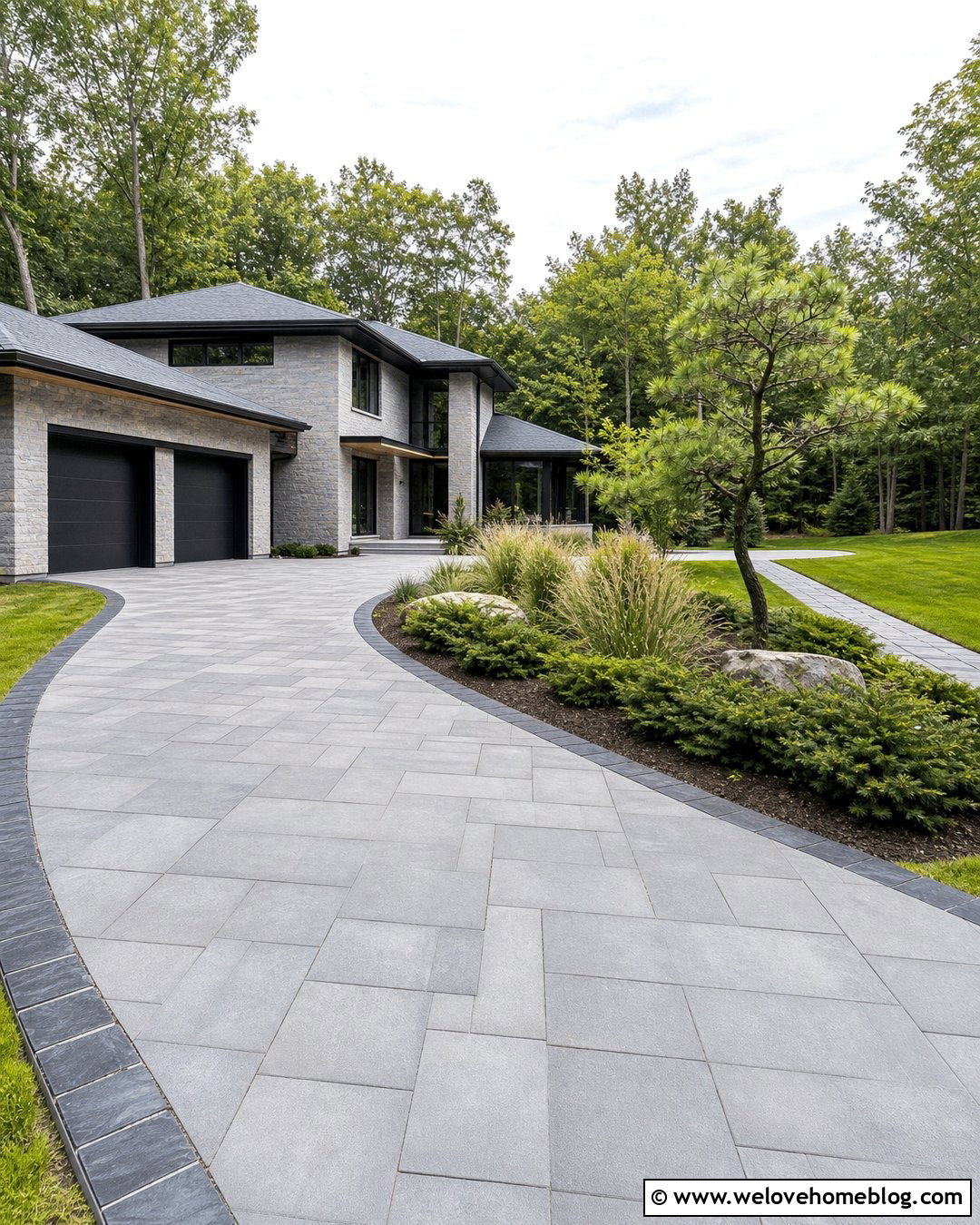
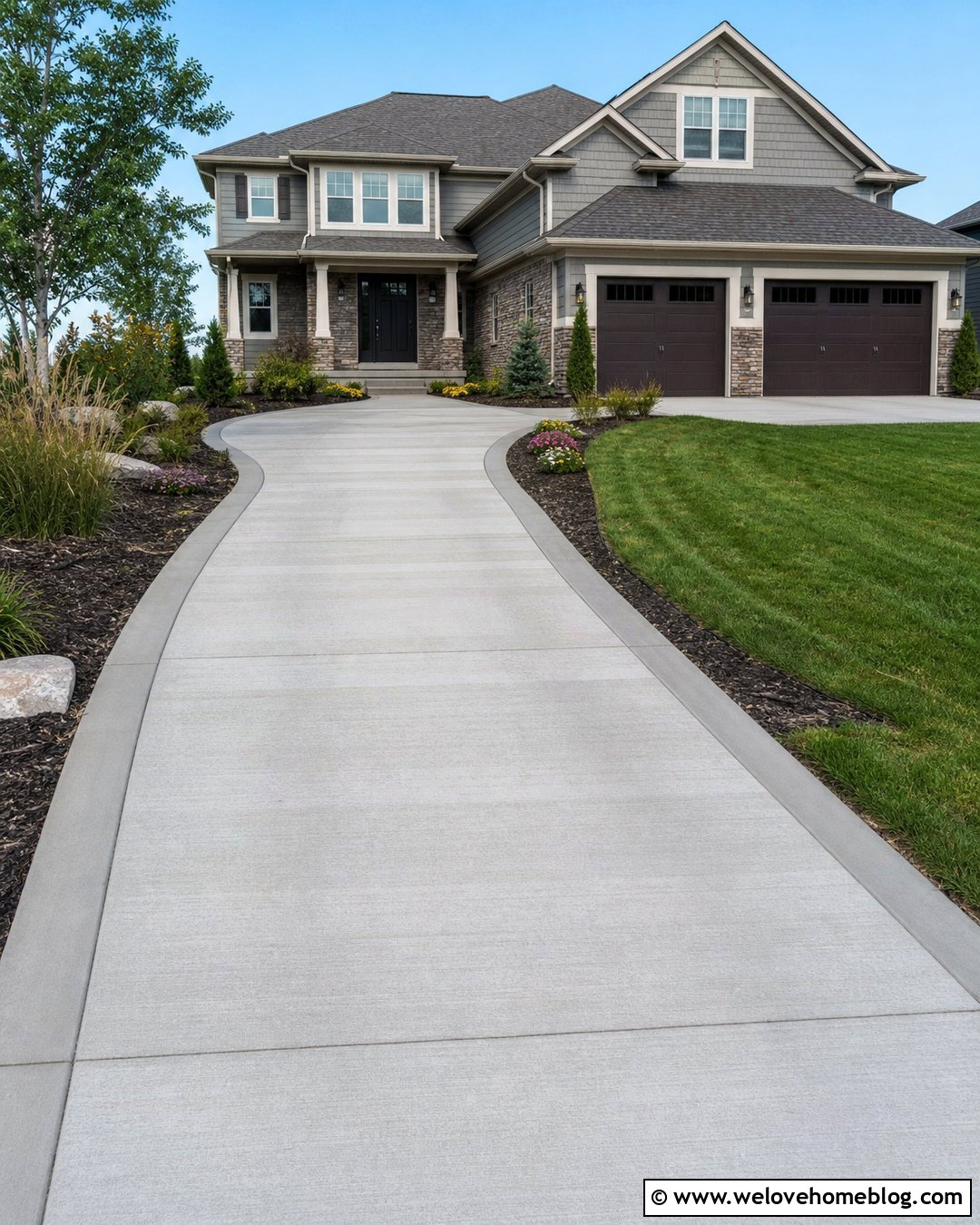
A modern driveway does not always need rigid straight lines. A broad, gentle curve can make the approach feel more natural while revealing the house gradually. Use large-format gray concrete pavers laid in subtle linear rows that follow the bend. Outline the outside curve with dark stone setts and frame the inside with a sweeping bed of ornamental grasses, low evergreens, and one sculptural tree. Keep planting heights low near the street to preserve visibility. The driveway should widen smoothly at the garage rather than ending in an awkward rectangular pad. Repeating the pavers on the front walkway will connect the entrance to the arrival area. This complete design suits a larger suburban or wooded property where the landscape has enough room to support a flowing approach.
17. Circular Modern Driveway
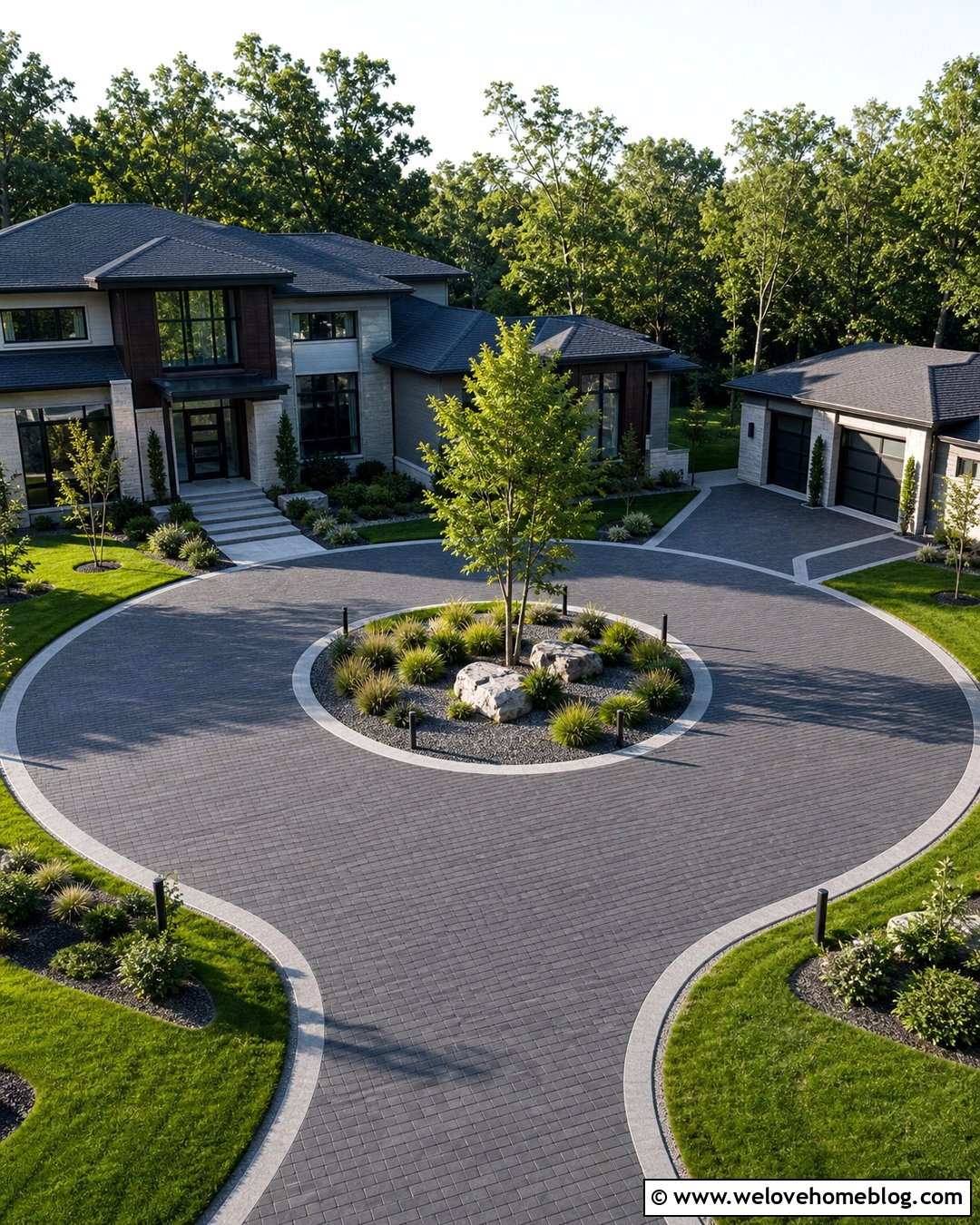
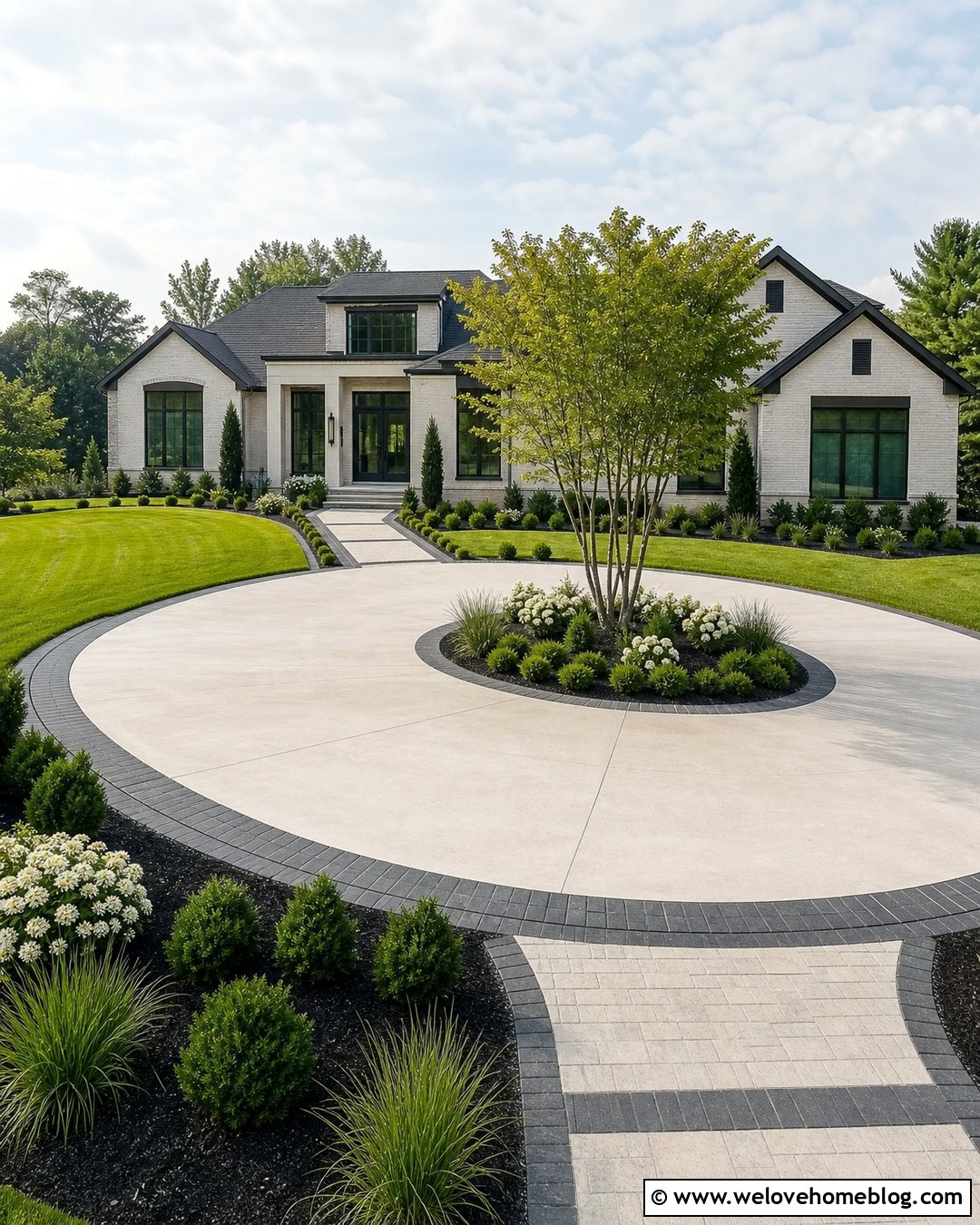
Circular driveways can feel contemporary when the center island and paving pattern remain simple. Choose smooth charcoal concrete pavers for a broad loop that provides an easy route past the front entrance. Define the inner and outer edges with narrow light-gray concrete bands. In the center, avoid a crowded flower garden. Use a single architectural tree surrounded by low grasses, gravel mulch, and perhaps one sculptural boulder. The reduced planting palette allows the circular shape to remain the main feature. Connect the loop to a separate garage spur if space permits, keeping parked vehicles away from the entrance view. Modern bollard lights can mark the curves without adding traditional ornament. Before construction, carefully plan turning space, entrance width, drainage, and visibility at both connections to the street.
18. Narrow Modern Driveway
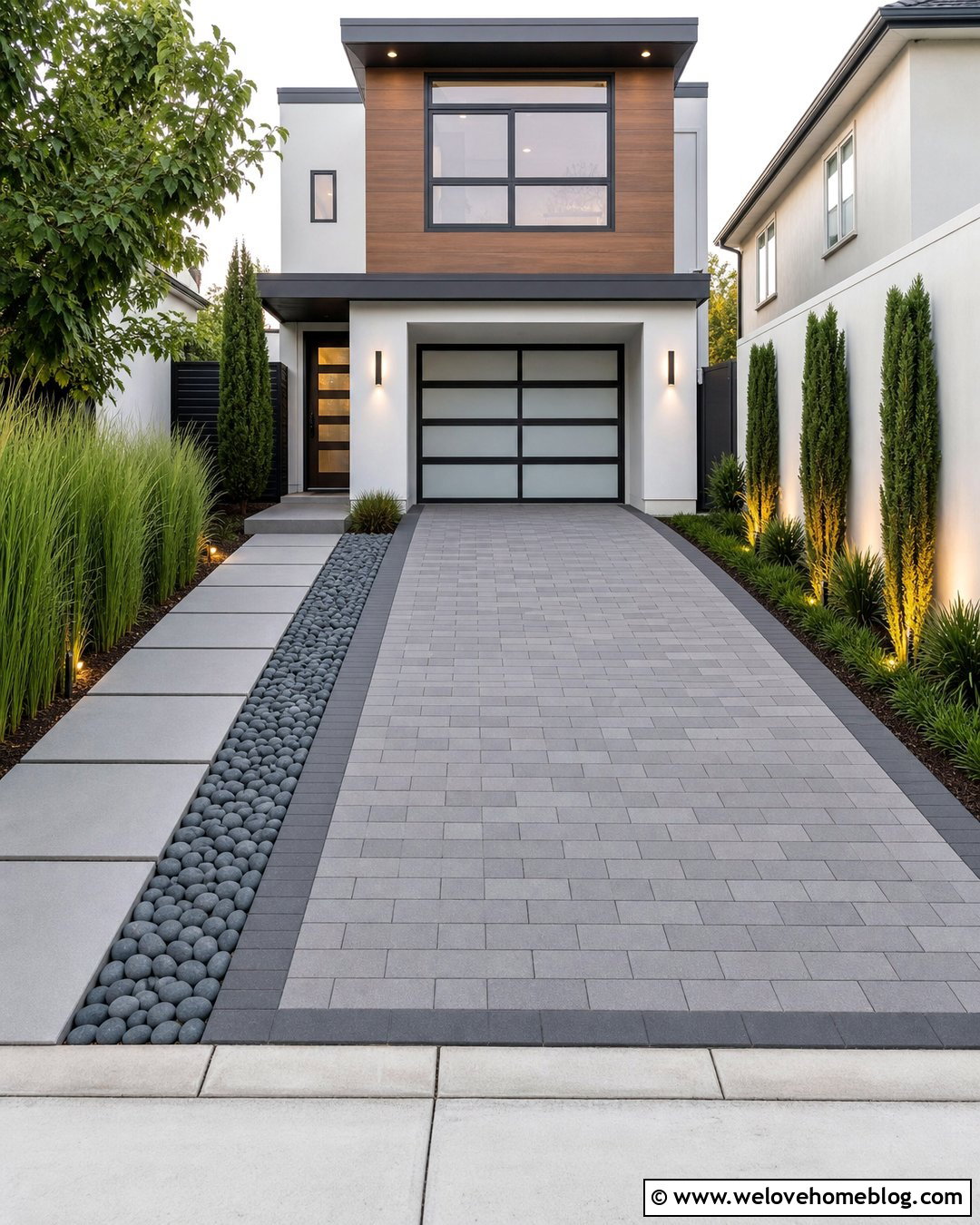
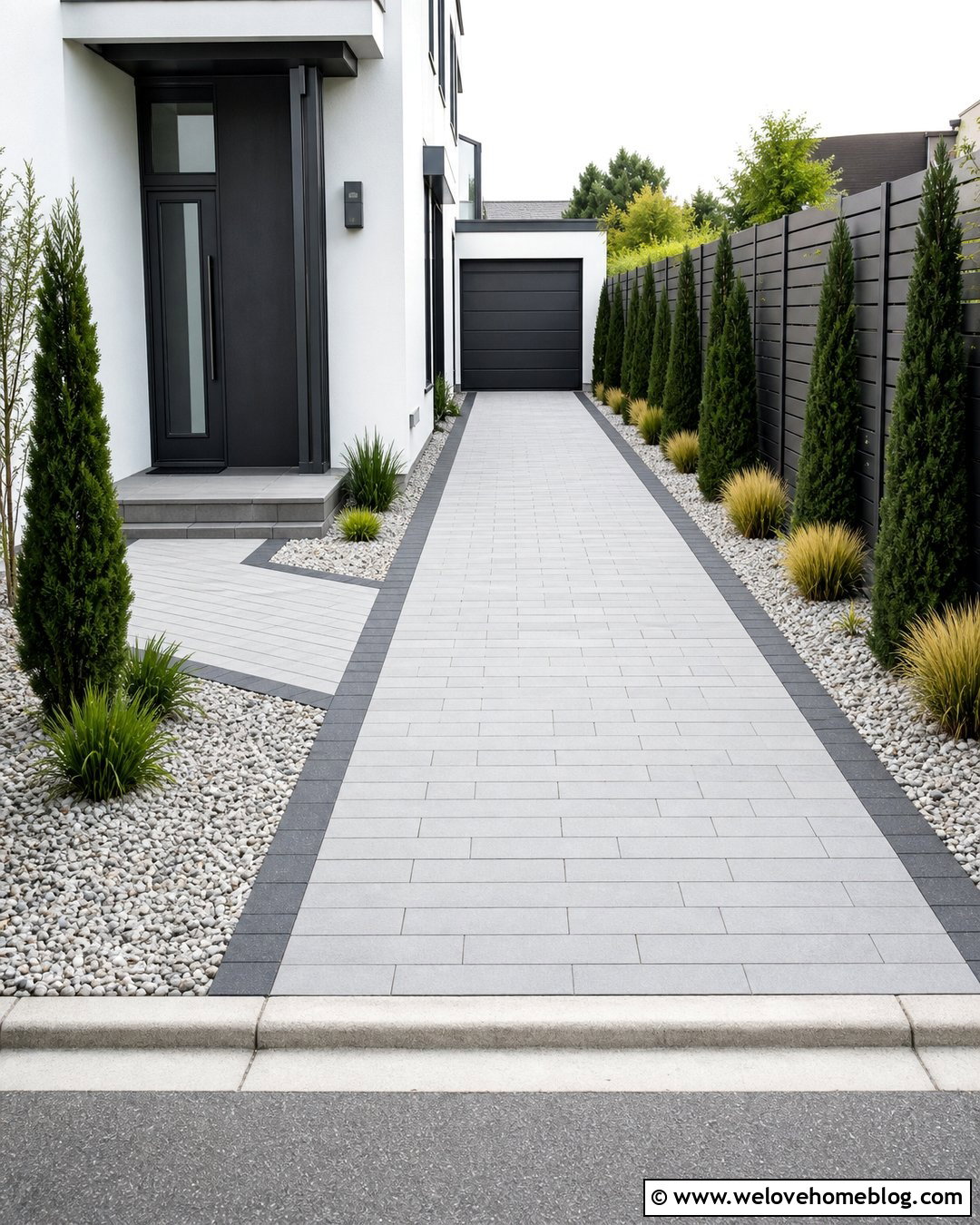
When space is tight, every edge of the driveway becomes visually important. Use long rectangular concrete pavers laid lengthwise to make a narrow approach appear more generous. A medium-gray surface will hide everyday dust better than very pale paving while still looking contemporary. Add slim charcoal borders instead of wide decorative bands that reduce usable space. Along one side, install a narrow walkway separated from the driveway by a line of low ground cover or river stones. Vertical grasses and columnar shrubs can provide greenery without spreading into the vehicle area. Wall-mounted lighting may be more practical than freestanding fixtures. Keep the garage end open and uncluttered so doors can operate comfortably. This design maximizes function while giving a small urban or suburban frontage a carefully organized appearance.
19. Small Front Yard Modern Driveway
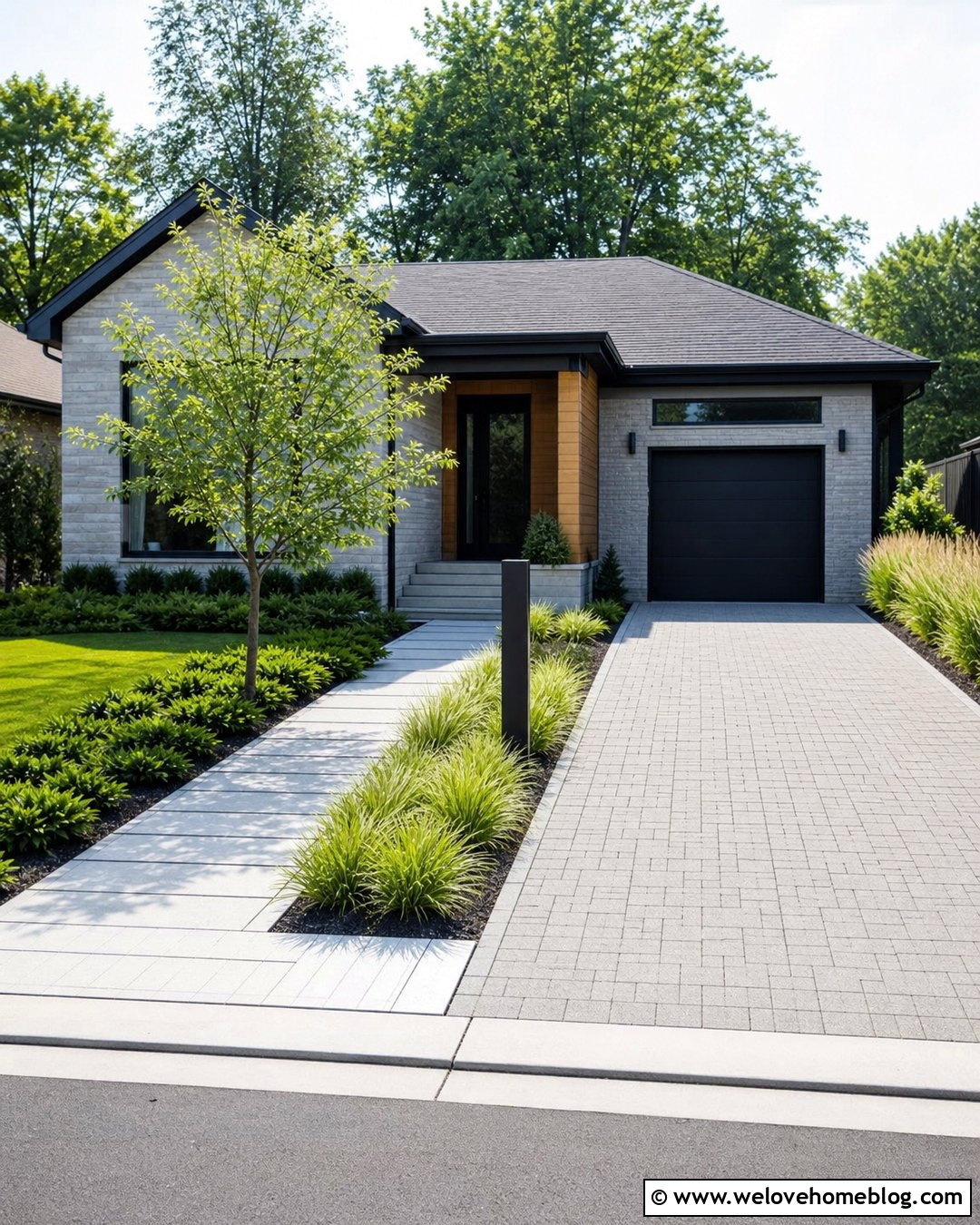
A compact driveway can still feel like a complete landscape rather than a parking pad. Start with light-gray permeable pavers arranged in a straightforward stacked pattern. Use the same paver family for the entrance walk, but change the laying direction to distinguish pedestrian space. A narrow planting bed beside the house can hold one small tree, low grasses, and evergreen ground cover. At the street, incorporate a simple black address marker into the border rather than adding a separate bulky feature. Keep fences low and planting open so the front yard does not feel enclosed. If the driveway occupies most of the frontage, a gravel strip or planted joint can break up the paving. Coordinating every surface creates a calm, spacious impression even when the actual footprint is limited.
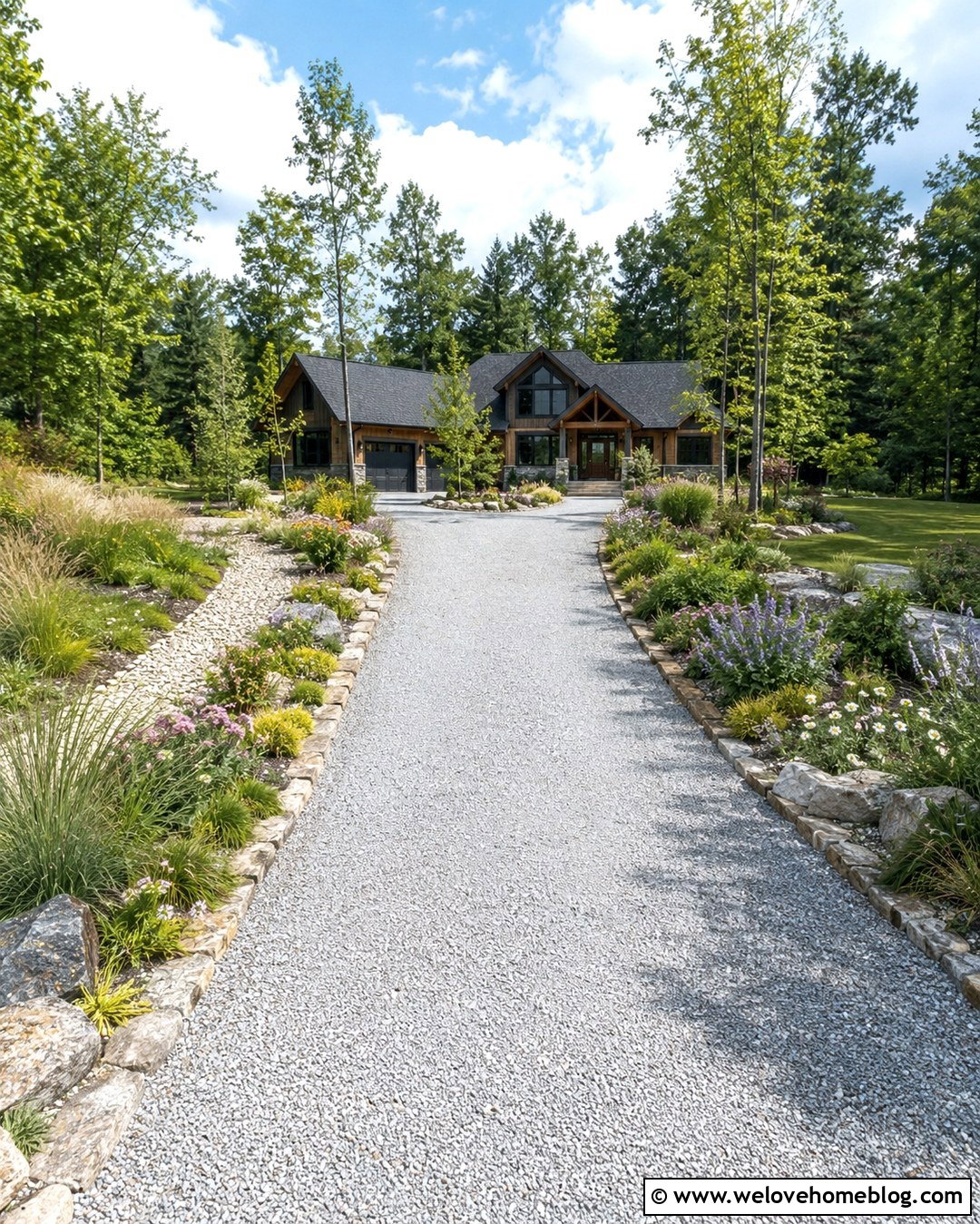
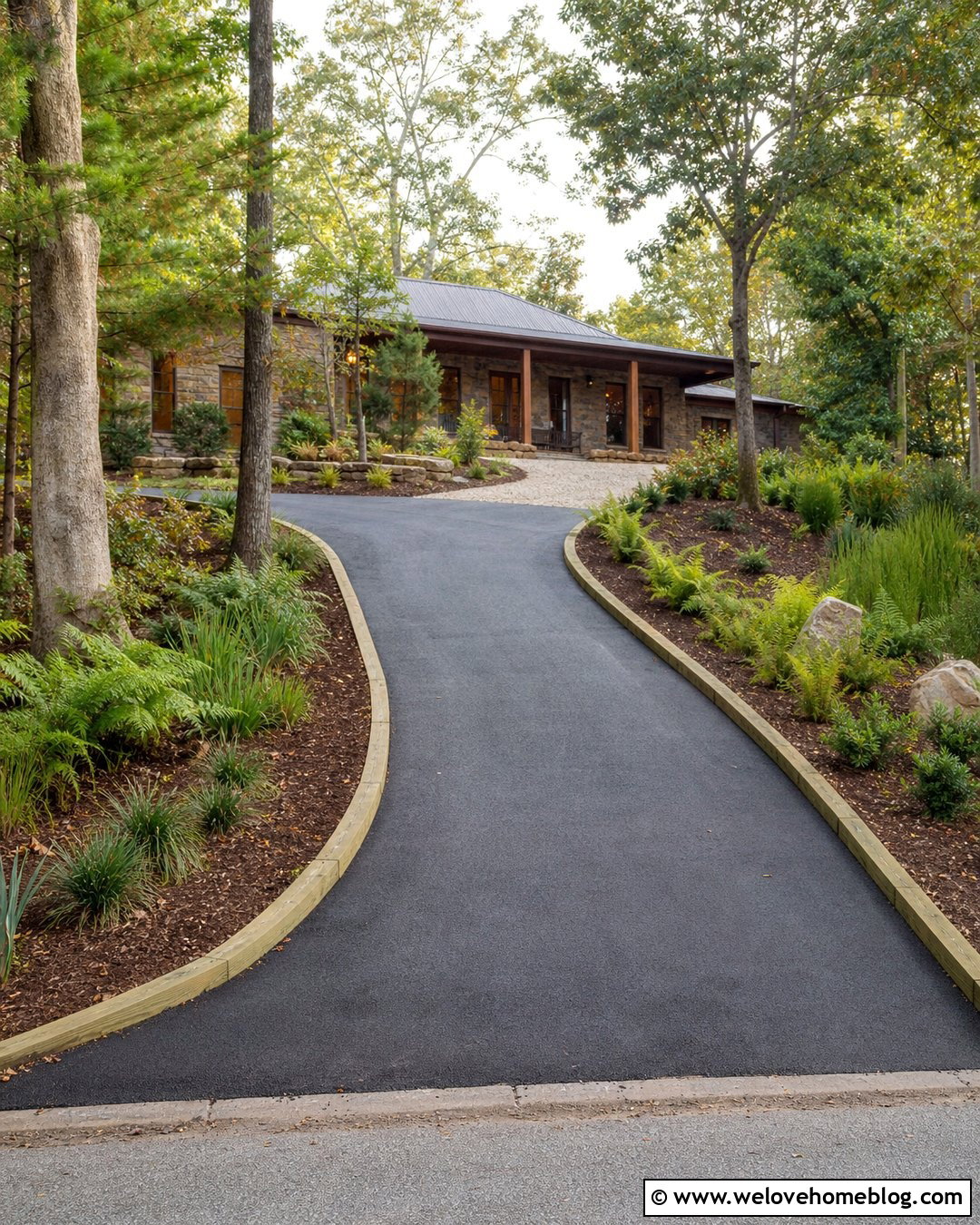
20. Sloped Modern Driveway
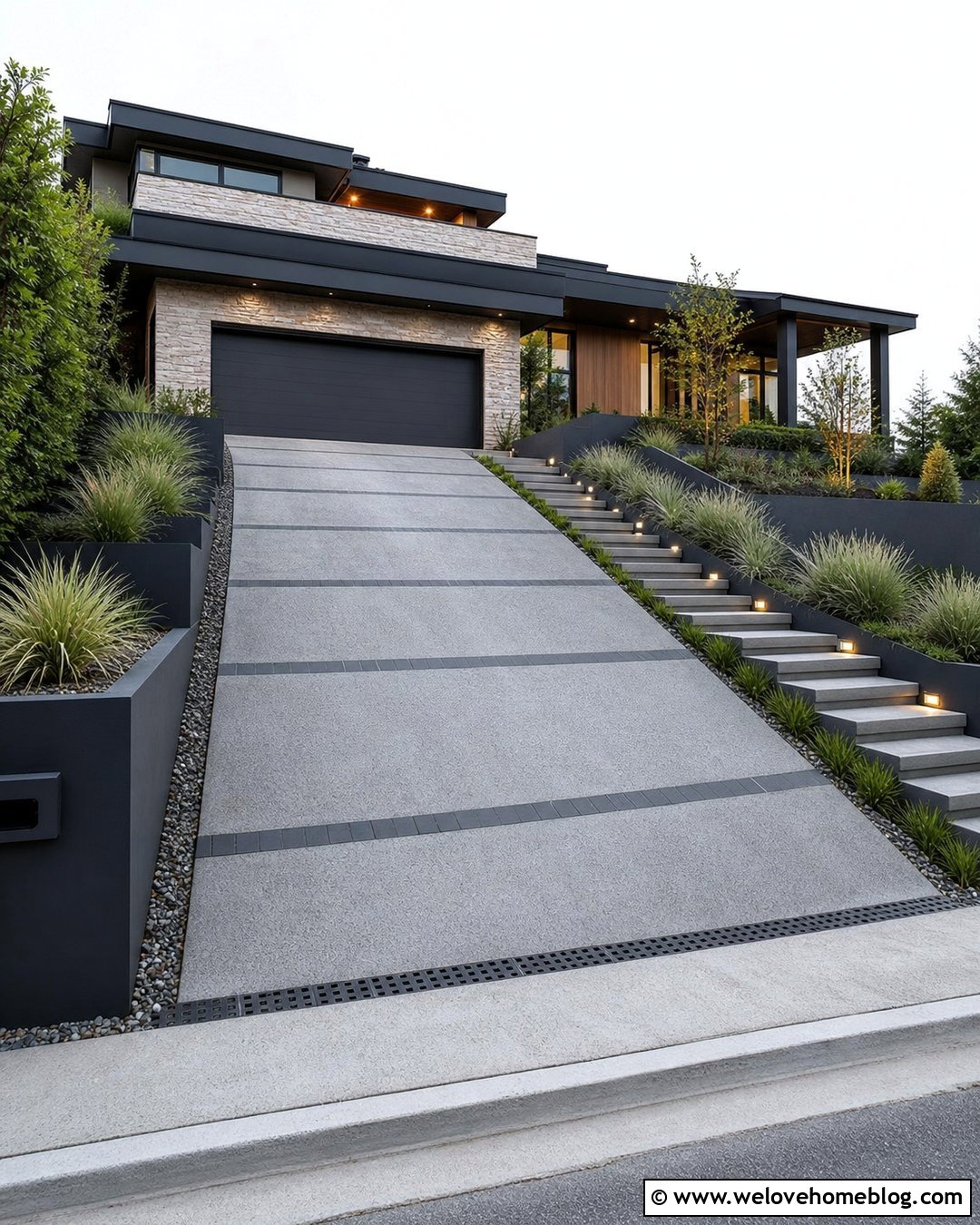
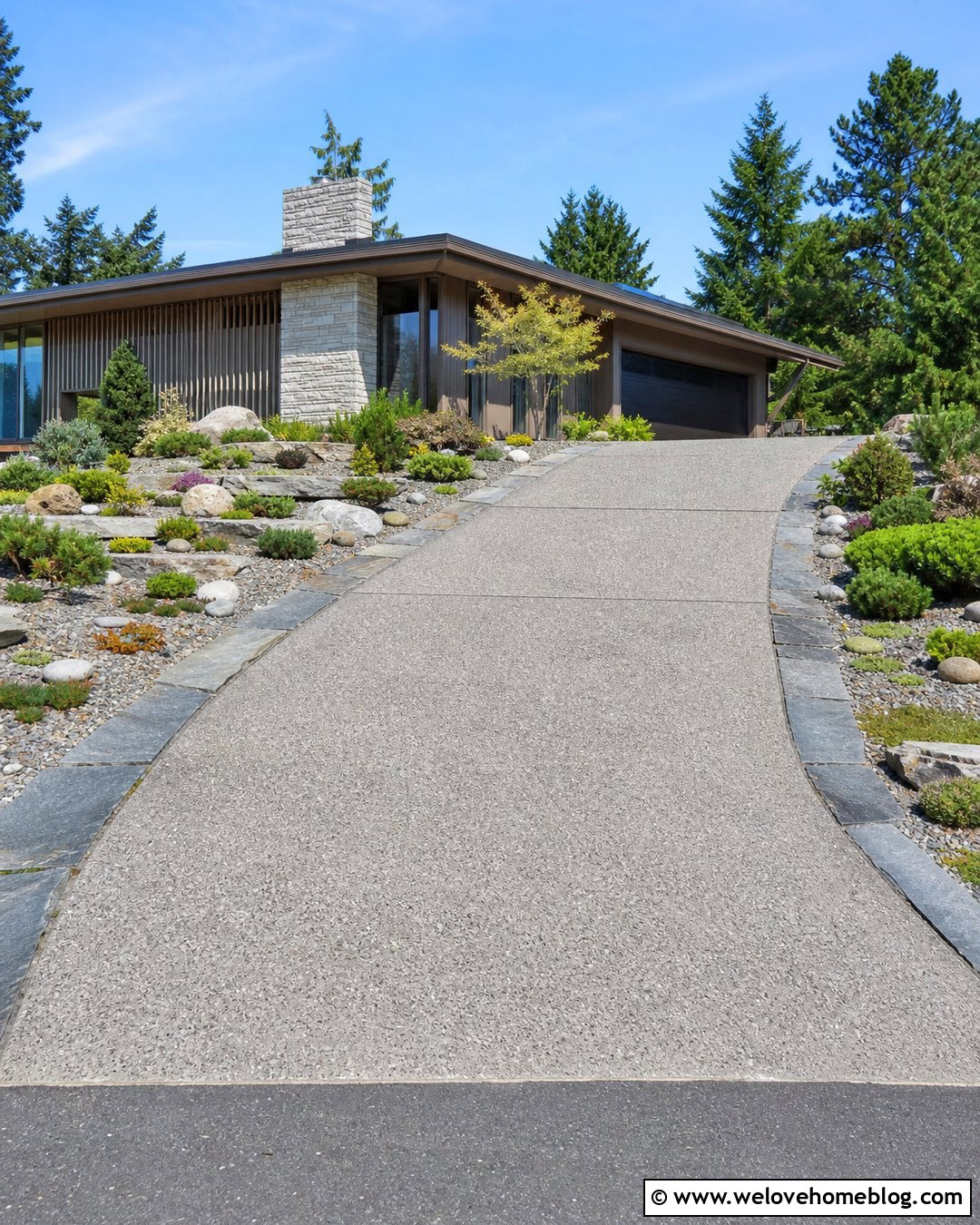
A steep approach needs a design that looks attractive while prioritizing drainage, traction, and safe transitions. Textured concrete or vehicle-rated concrete pavers in a medium-gray tone provide a contemporary base without appearing slippery and polished. Divide the slope into broad visual sections using darker paver bands. These horizontal lines can make a long incline feel more organized. Retaining walls made from smooth concrete blocks should follow the driveway, with layered grasses and low shrubs softening their upper edges. Install drainage where required by site conditions, and direct water away from the garage and neighboring property. Integrated step lights can illuminate an adjacent pedestrian path. Because slope requirements vary, a qualified local designer or contractor should evaluate grading, retaining structures, drainage, winter conditions, and driveway-to-street transitions before construction.
21. Long Tree-Lined Modern Driveway
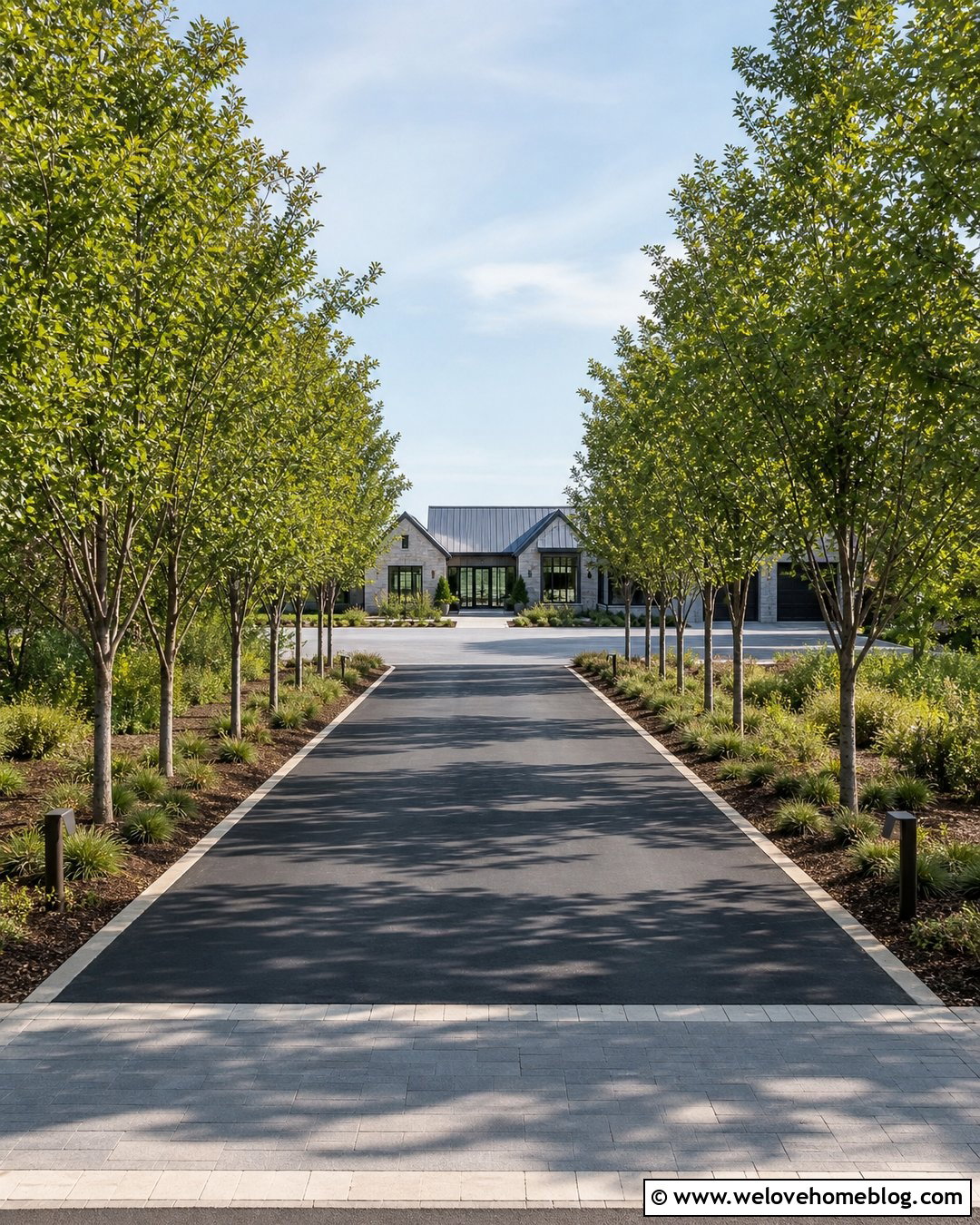
There is something impressive about a long driveway framed by a repeated line of trees. For a modern version, use dark asphalt or compacted gray gravel in a simple straight layout. Add narrow concrete curbs to produce clean edges and prevent the approach from disappearing into the landscape. Plant evenly spaced upright trees far enough from the pavement to allow healthy growth and vehicle clearance. Beneath them, use one restrained layer of ornamental grass or low native ground cover. A paver apron at the entrance can signal the transition from the public road to the private drive. Near the house, widen the surface into a geometric parking court. Repetition creates the drama here, so keep signs, lighting, and additional plant varieties limited and consistently positioned.
22. Modern Ranch Driveway
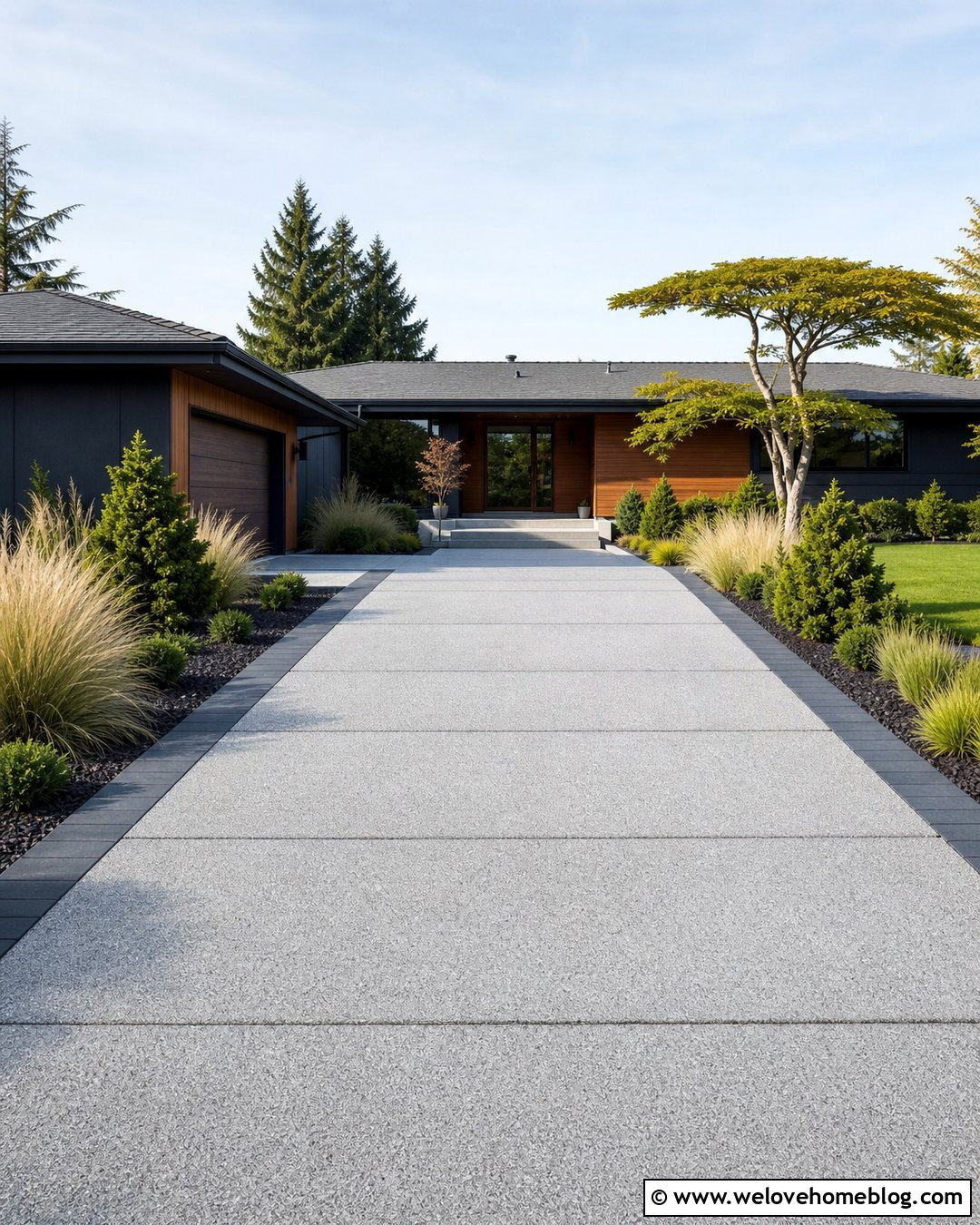
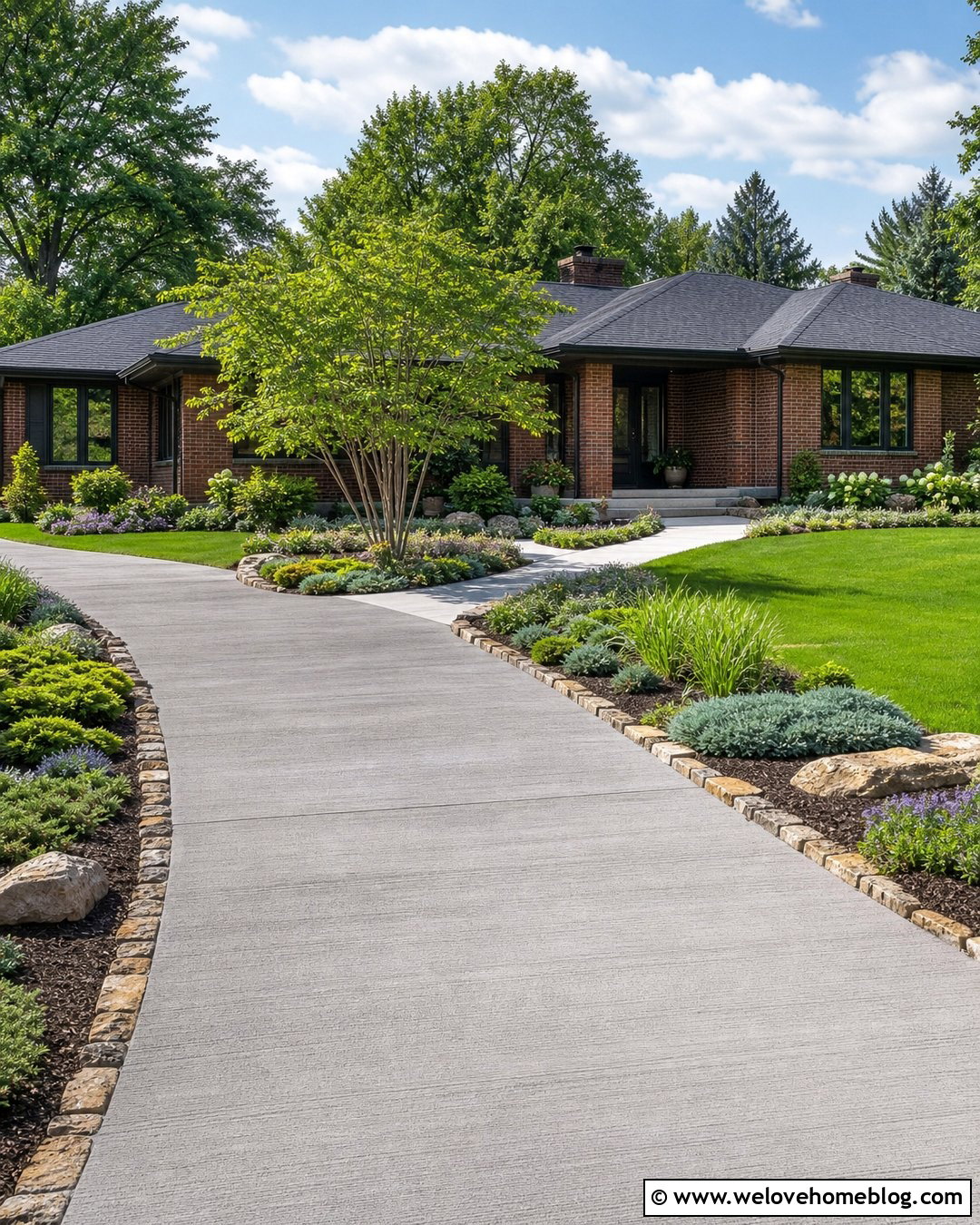
The long, low shape of a ranch home pairs naturally with a driveway built around horizontal lines. Use broad exposed-aggregate concrete panels separated by narrow saw-cut joints. A low charcoal paver border can echo the roof and garage door without competing with the facade. Instead of tall foundation shrubs, frame the driveway with wide beds of spreading grasses, compact evergreens, and drought-tolerant perennials. One flat-canopy tree can balance the home’s proportions while adding shade near the walkway. Extend a generous concrete path from the driveway to the entrance and align it with a prominent front window or porch feature. Warm wood accents on the house prevent the gray materials from feeling cold. The complete design updates ranch architecture without hiding the simple horizontal character that makes it distinctive.
23. Mid-Century Modern Driveway
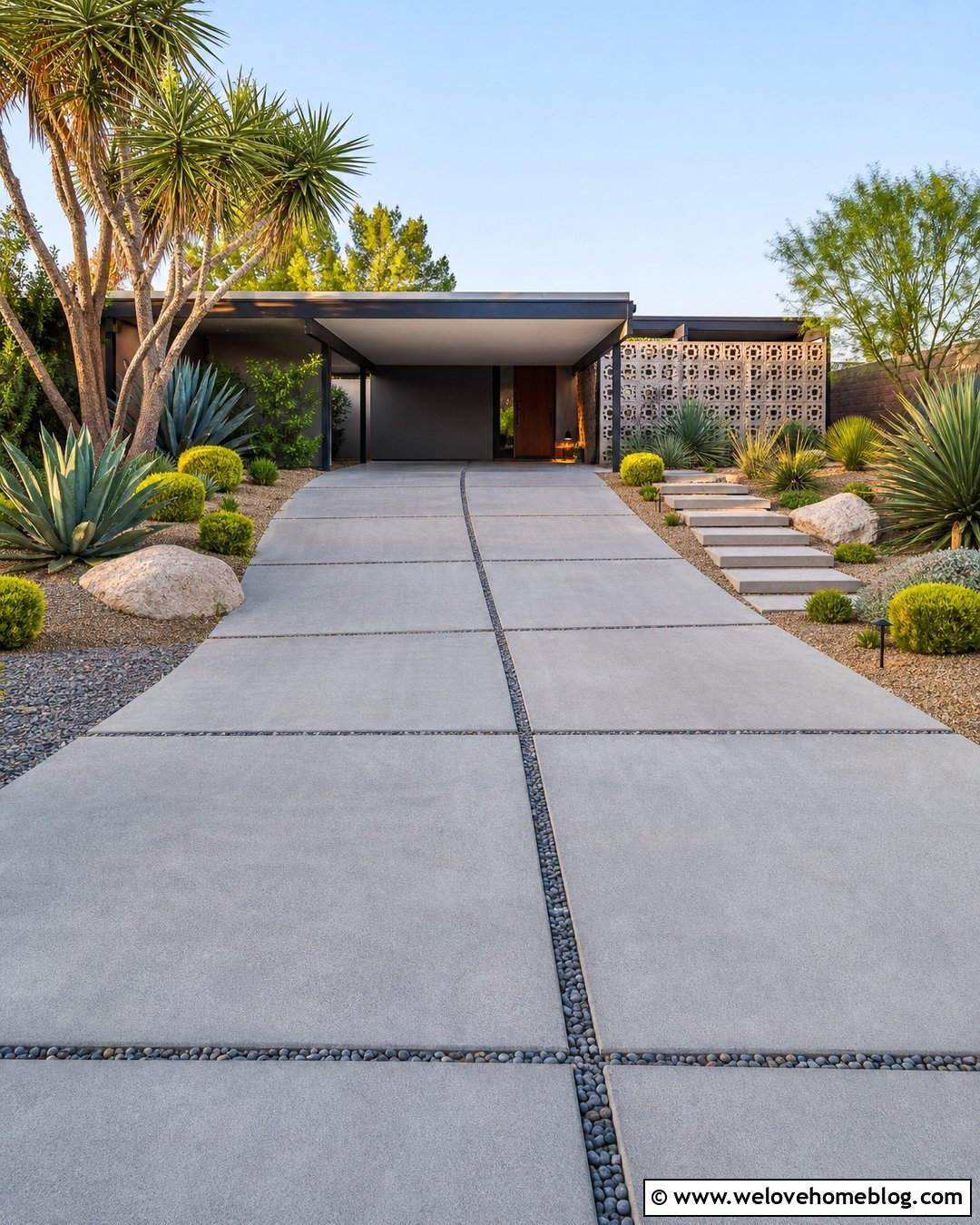
Mid-century homes look best with driveway designs that respect their strong rooflines, natural materials, and indoor-outdoor connection. Choose warm-gray concrete divided into oversized rectangular panels. Fill narrow joints with dark pebbles or low green ground cover to emphasize the grid. Run the driveway straight toward a carport or recessed garage, keeping the entrance walkway visible as a separate series of floating concrete steps. Landscape with sculptural agaves, ornamental grasses, rounded shrubs, and strategically placed boulders. Avoid overly formal hedges or elaborate paving patterns. A breeze-block screen or horizontal wood fence can provide privacy while reinforcing the home’s original character. The driveway should feel understated from the street, allowing the architecture, mature trees, and carefully spaced plant forms to create the main visual impact.
24. Modern Farmhouse Driveway
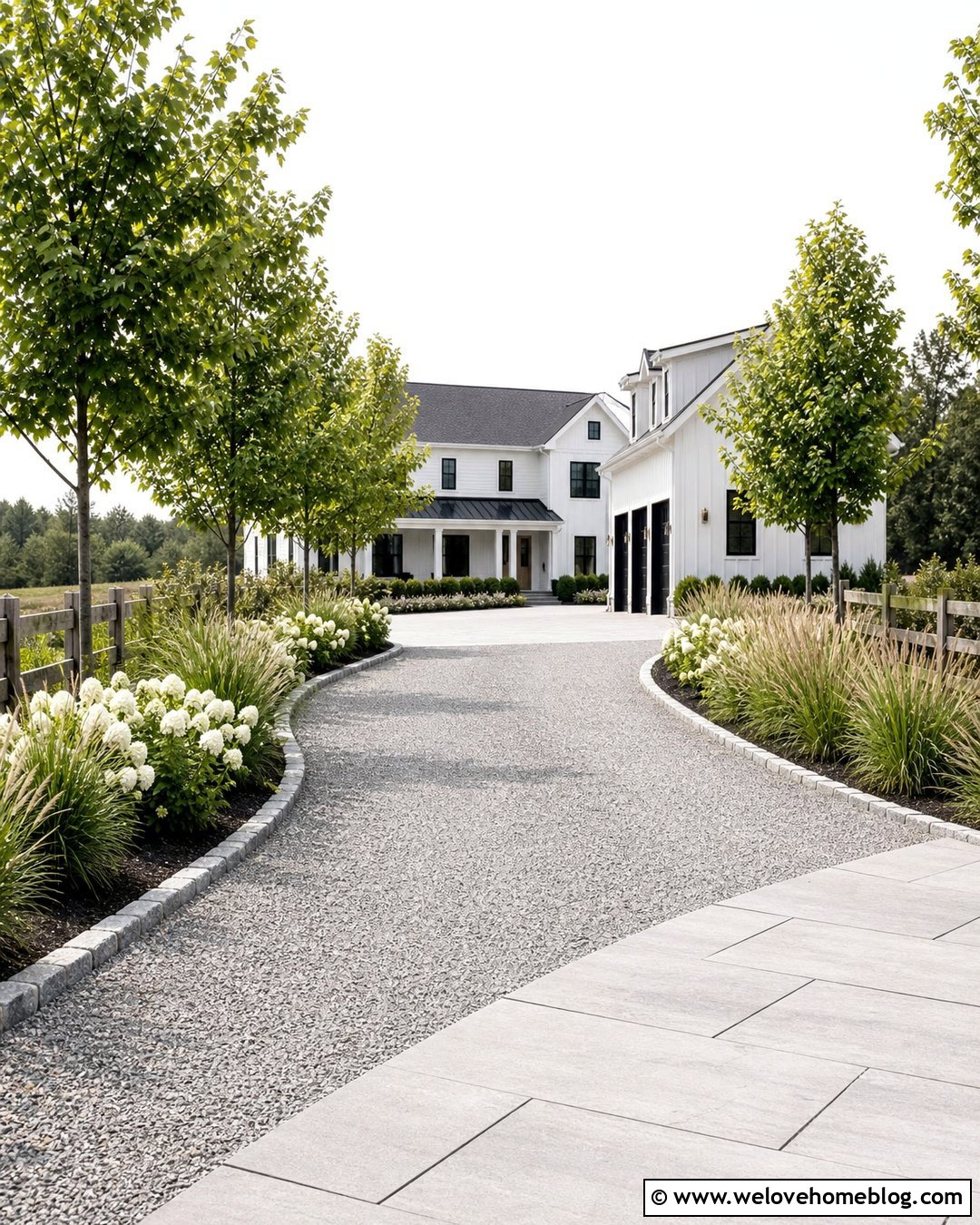
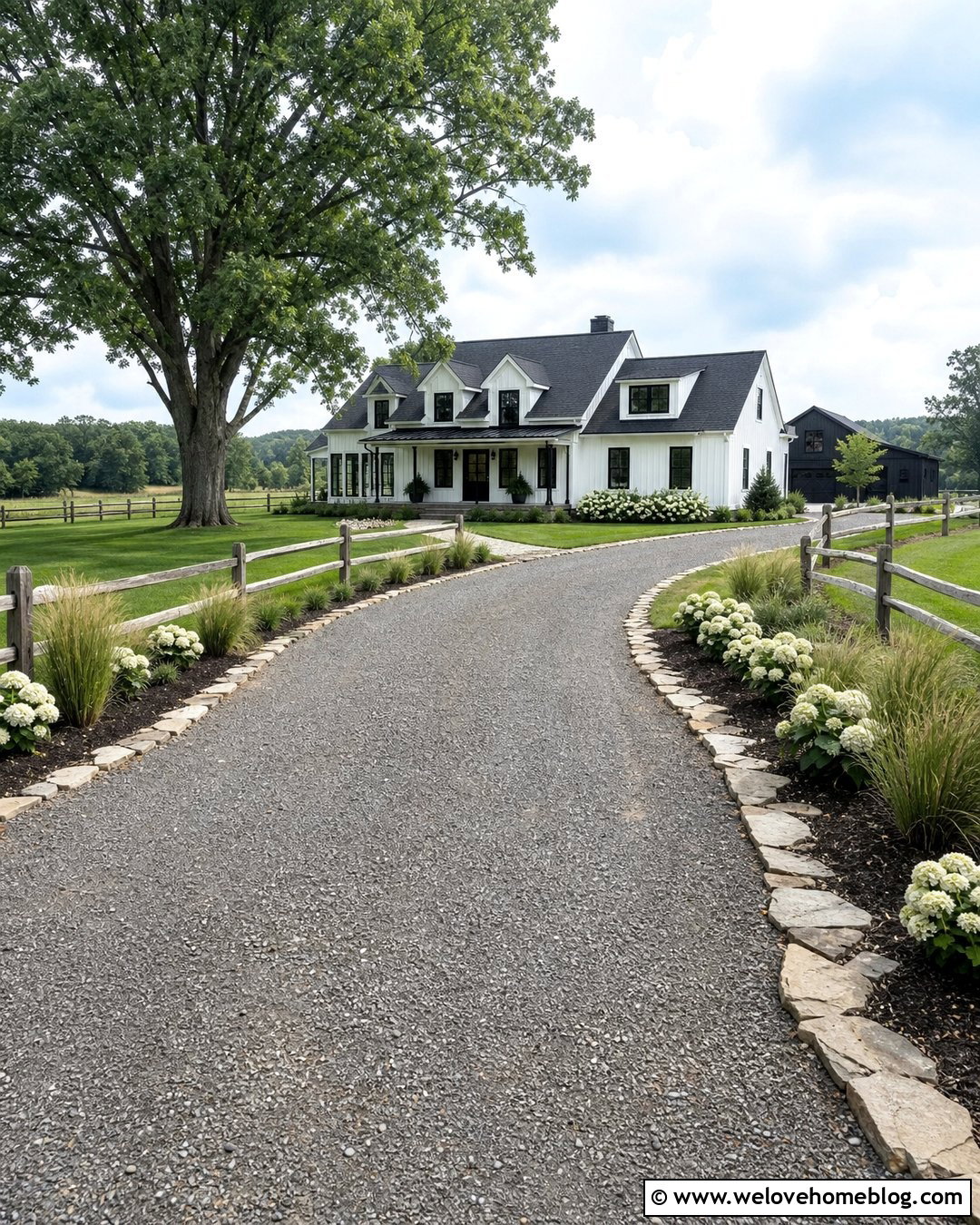
A modern farmhouse driveway should combine rural warmth with clean construction. Use pale gray gravel for the main approach and contain it with dark granite setts or black metal edging. Near the garage and entrance, transition to large concrete pavers that create a more stable arrival court. A shallow curve can make the property feel welcoming, especially when it passes a simple lawn and loosely planted beds. Frame the route with ornamental grasses, white flowering shrubs, and a few evenly spaced trees rather than a dense cottage border. Black barn-style garage doors, simple timber fencing, and natural stone foundation details tie the materials together. Keep the palette limited to gray, white, green, and black so the finished entrance feels modern even though it draws inspiration from traditional country properties.
25. Coastal Modern Driveway
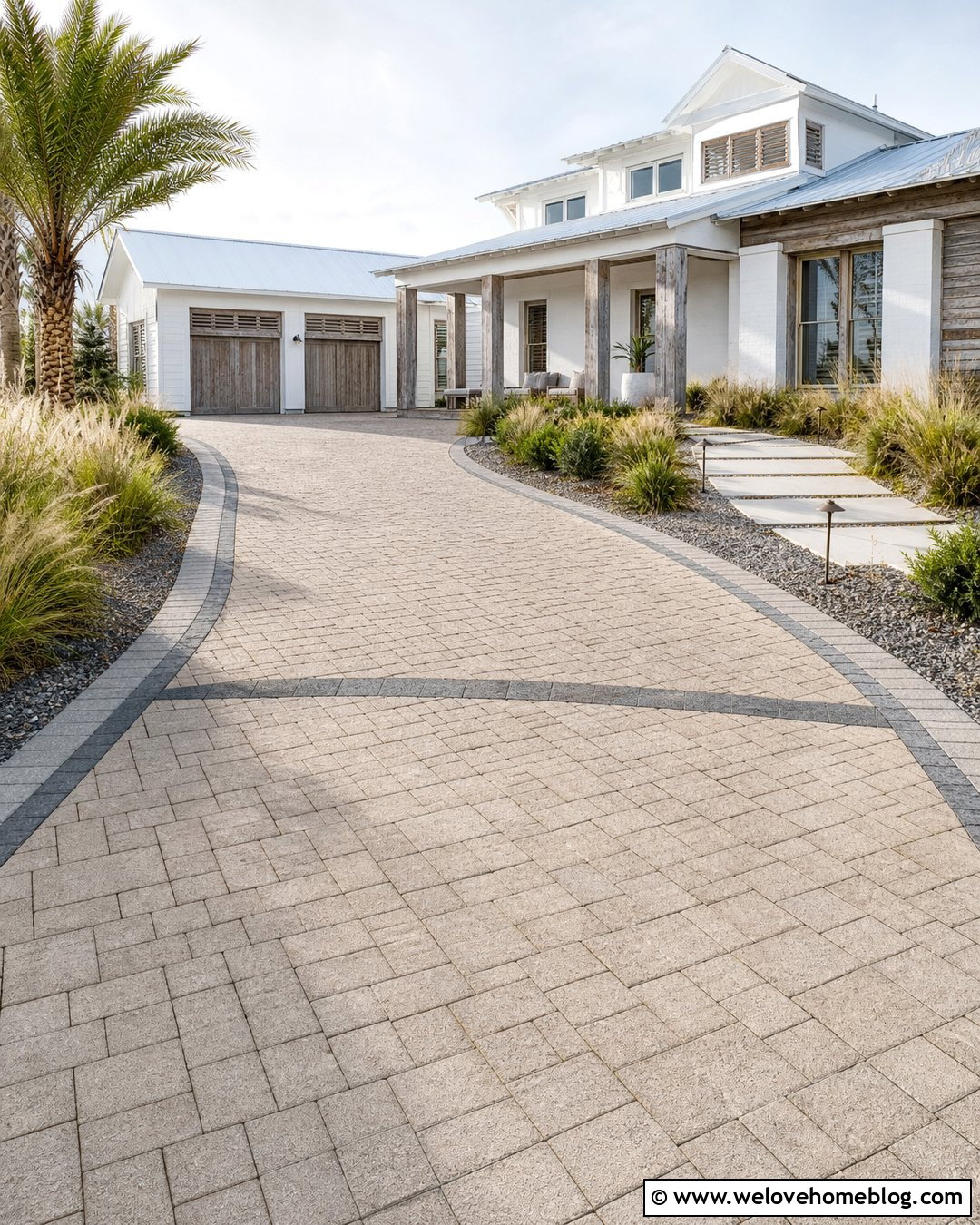
Light colors and relaxed planting give a coastal modern driveway an airy appearance. Choose pale sand-toned concrete pavers with a lightly textured finish, arranged in long linear rows. A curved layout can follow the natural shape of the property while avoiding a rigid suburban look. Edge the surface with smooth gray cobbles or narrow bands of contrasting charcoal pavers. Surrounding beds might include salt-tolerant grasses and shrubs suited to the specific region, arranged in loose groups over gravel mulch. A boardwalk-inspired walkway made from concrete planks can connect the driveway to a white or weathered-wood entrance. Keep the view open and avoid dense hedges that block breezes or sightlines. The driveway, planting, and facade should share soft neutral tones for a calm, cohesive result.
26. Desert Modern Driveway
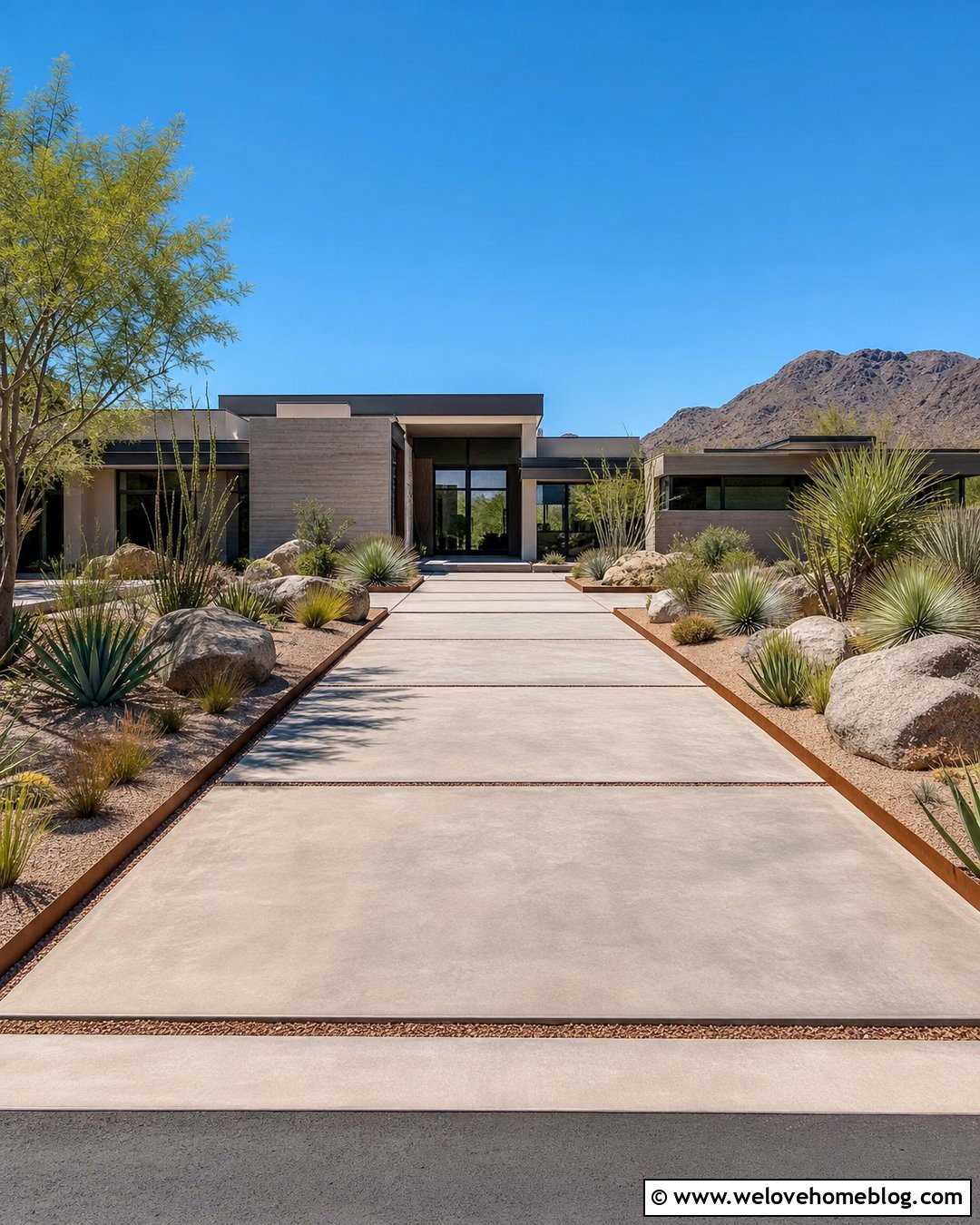
A desert driveway can feel refined without requiring a large lawn or thirsty planting scheme. Start with warm-gray concrete panels laid in a wide, straight approach. Separate the panels using slim bands of rust-colored gravel that pick up tones in the surrounding landscape. Corten steel edging can define angular planting beds filled with regionally appropriate agaves, yuccas, desert grasses, and sculptural boulders. Leave generous open areas of gravel mulch so each plant has visual space. A flat-roof stucco house in sand, white, or charcoal provides a strong backdrop. Connect the driveway to the entrance with oversized concrete stepping slabs. Carefully selected drought-adapted landscaping makes the complete frontage feel intentional, while the restricted combination of concrete, steel, stone, and architectural plants keeps the design unmistakably modern.
27. Woodland Modern Driveway
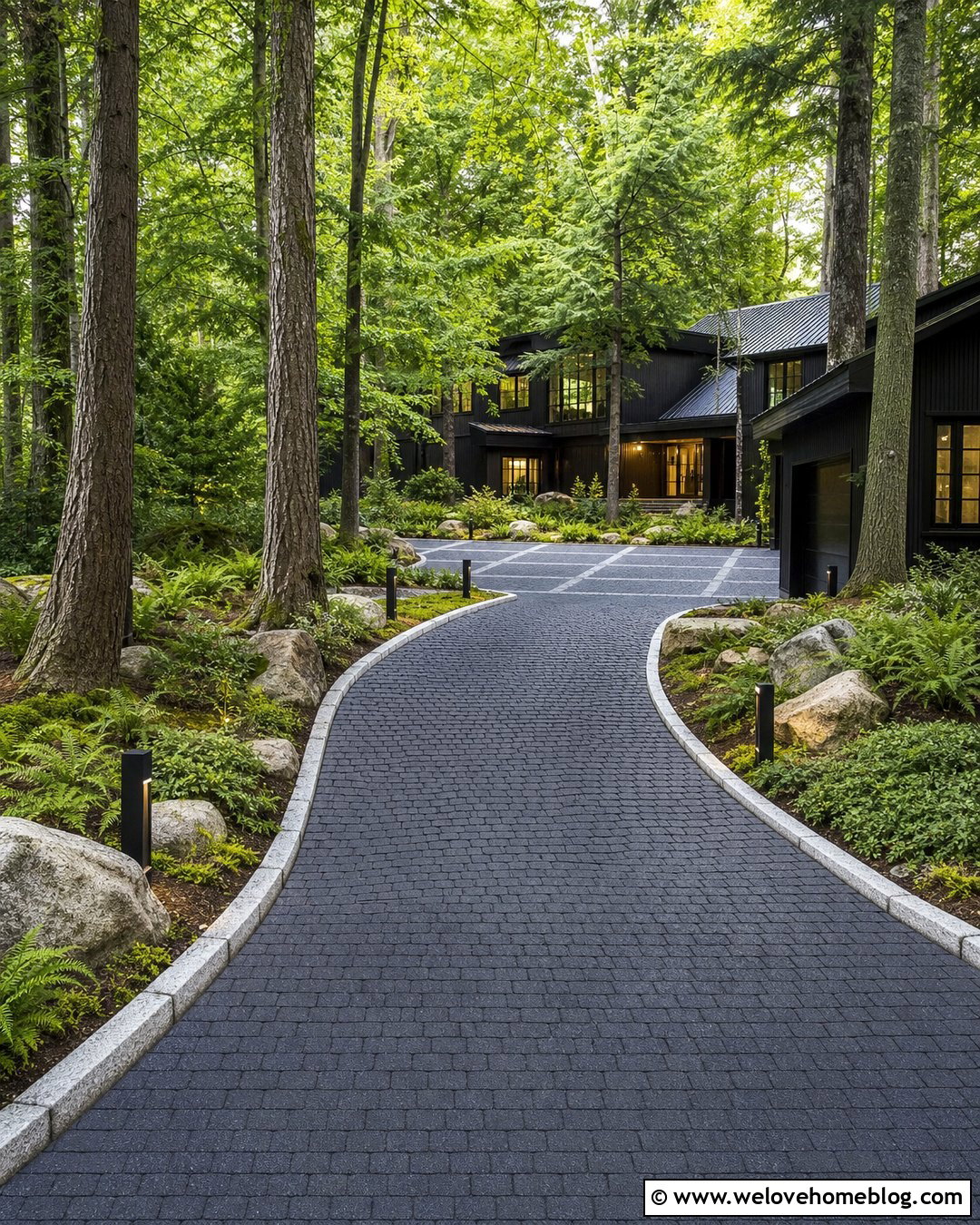
How do you build a contemporary driveway without making a wooded lot feel overdeveloped? Choose dark permeable pavers or charcoal gravel that visually recedes beneath the trees. A gentle curve can weave between established trunks while preserving a comfortable driving width. Edge the route with low granite blocks that relate to natural boulders in the landscape. Use ferns, sedges, woodland ground cover, and restrained evergreen planting to soften disturbed areas. Near the house, transition into a wider paver parking court with clearer geometric lines. Low black bollards can mark the route during darker conditions without dominating the daytime view. Root protection, grading, drainage, and excavation limits should be evaluated professionally. The goal is a legible modern approach that appears settled into the site rather than imposed on it.
28. Tropical Modern Driveway
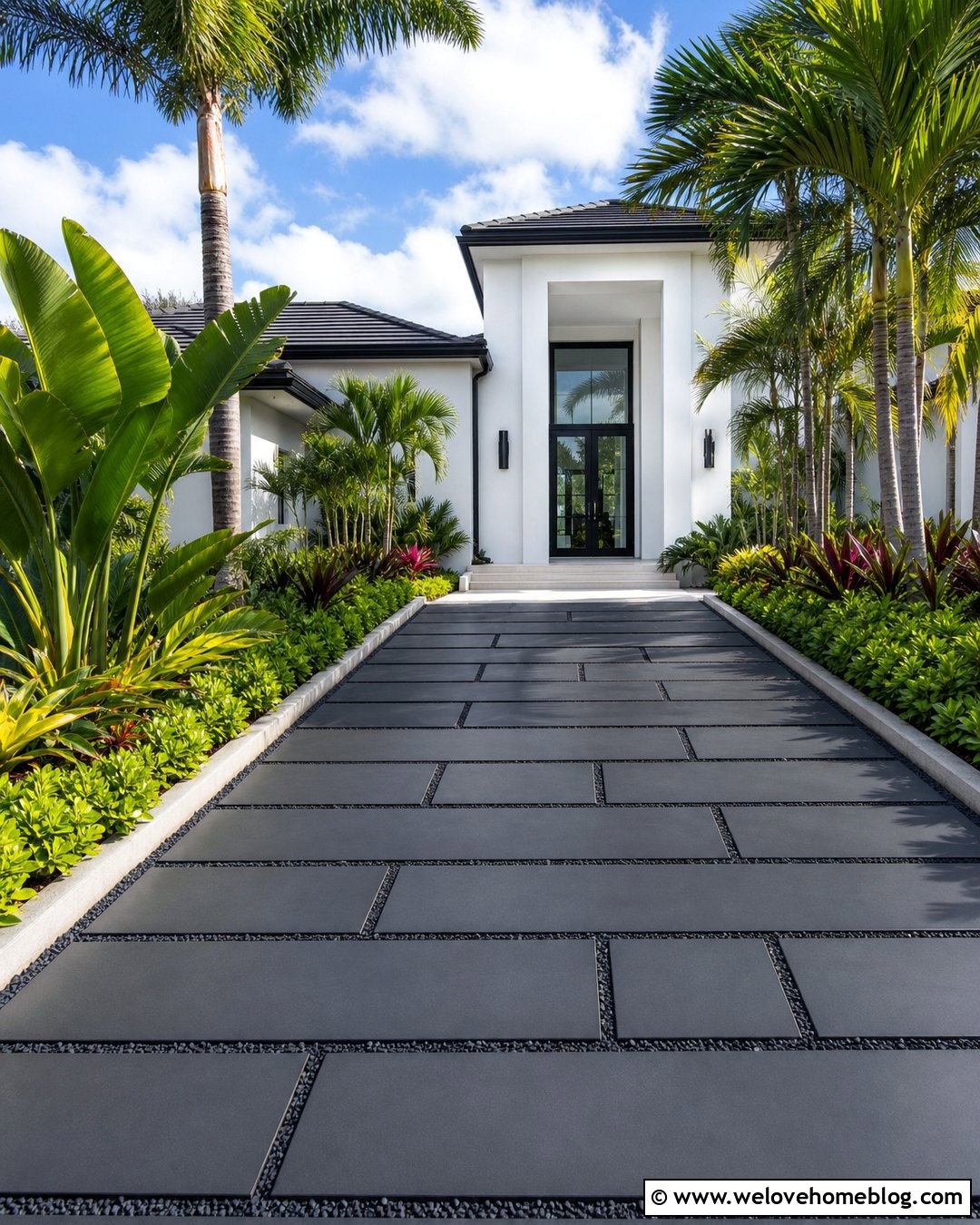
Bold foliage can soften the hard lines of a modern driveway while giving the entrance a lush resort-like character. Use large charcoal concrete pavers in a straight or gently offset layout leading to a white stucco home. Fill narrow joints with black pebbles and frame the driveway with low concrete curbs. Plant broad-leaf tropical greenery in layered beds, keeping larger specimens away from sightlines and vehicle clearance zones. A row of palms or upright trees can provide vertical rhythm without enclosing the approach. Add a pale concrete walkway through the planting to distinguish the route to the front door. The restrained paving pattern prevents abundant foliage from looking chaotic. Choose plants that are appropriate for the local climate, wind exposure, mature size, and available maintenance.
29. Minimalist Modern Driveway
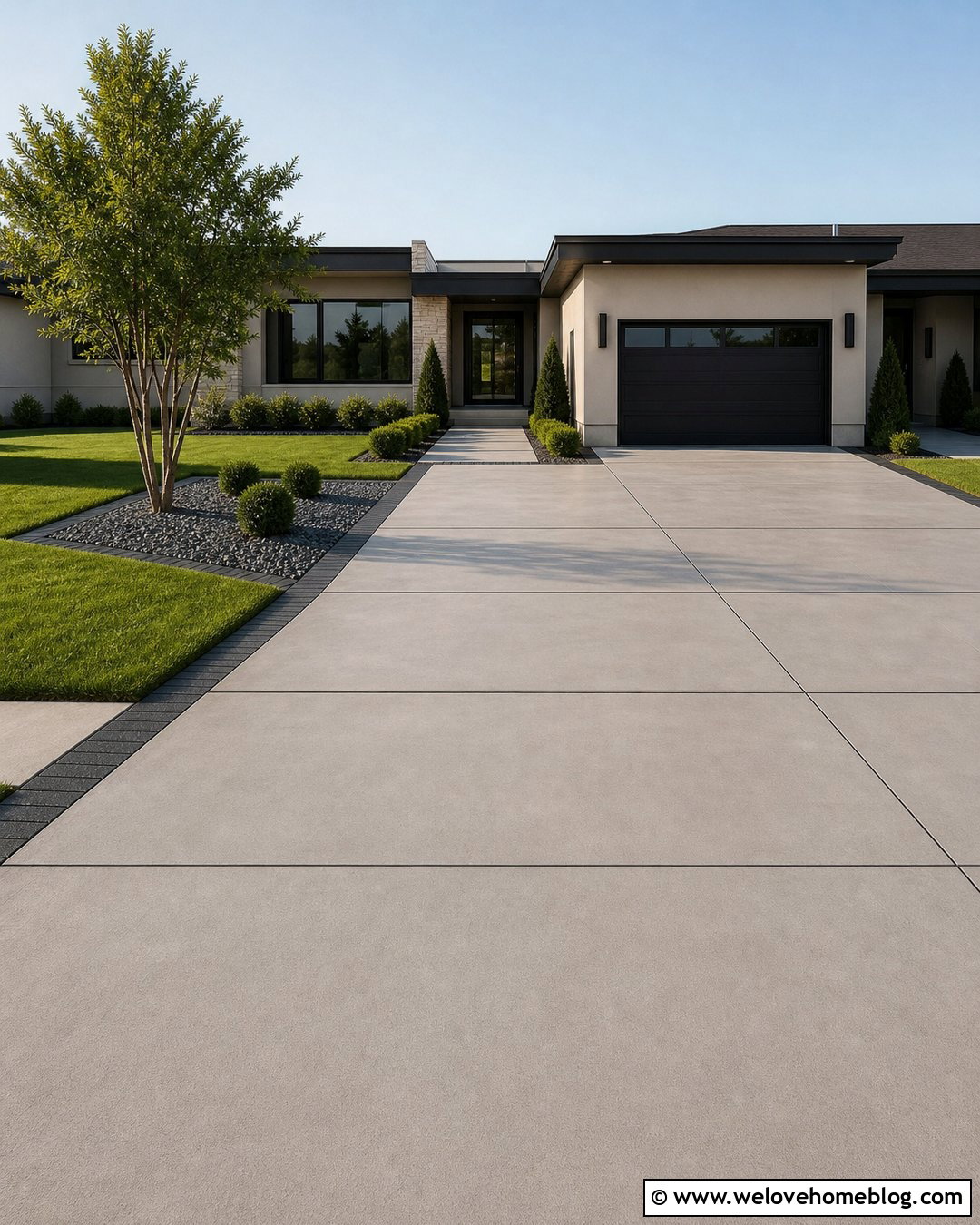
Minimalism depends on excellent proportions because there are few decorative elements available to hide poor planning. Use smooth poured concrete in a warm-gray finish and divide it into broad rectangular panels. Keep the driveway straight, with edges aligned to the garage and major facade lines. A narrow black paver border can create definition without becoming an obvious pattern. On one side, place a single rectangular planting bed containing clipped evergreens or one multistem tree over dark gravel. The other side can remain open lawn, creating useful negative space. Match the driveway concrete to the front steps and walkway for a seamless composition. Concealed drainage and simple wall-mounted lights preserve the uncluttered appearance. Every visible feature should serve a clear functional or architectural purpose within this restrained design.
30. Low-Maintenance Modern Driveway
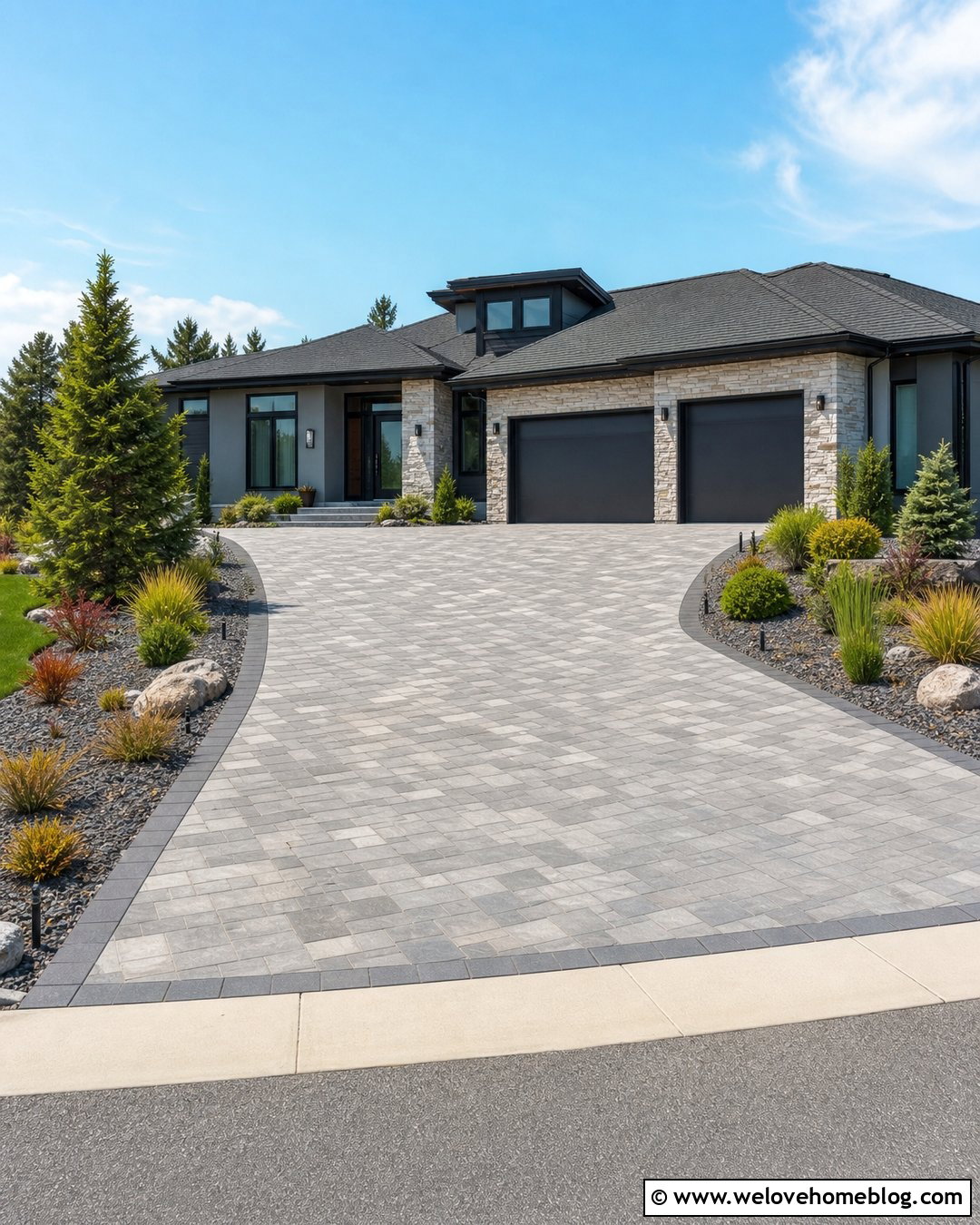
If weekend maintenance is not appealing, select a driveway with few loose materials and a limited planting palette. Interlocking concrete pavers in a mottled medium gray can disguise minor surface marks while creating a polished finish. Use a straight layout with a darker integrated border and a wide turning or parking area near the garage. Instead of lawn edges that require frequent trimming, place stone mulch beds along both sides. Fill them with compact evergreens, slow-growing grasses, and regionally suitable shrubs. Keep plants back from the pavement so branches do not interfere with vehicles. Install a simple concrete walkway and low-voltage lighting as part of the initial plan. No driveway is maintenance-free, but durable materials, controlled edges, accessible drainage, and uncomplicated planting can reduce recurring work.
31. Drought-Tolerant Modern Driveway
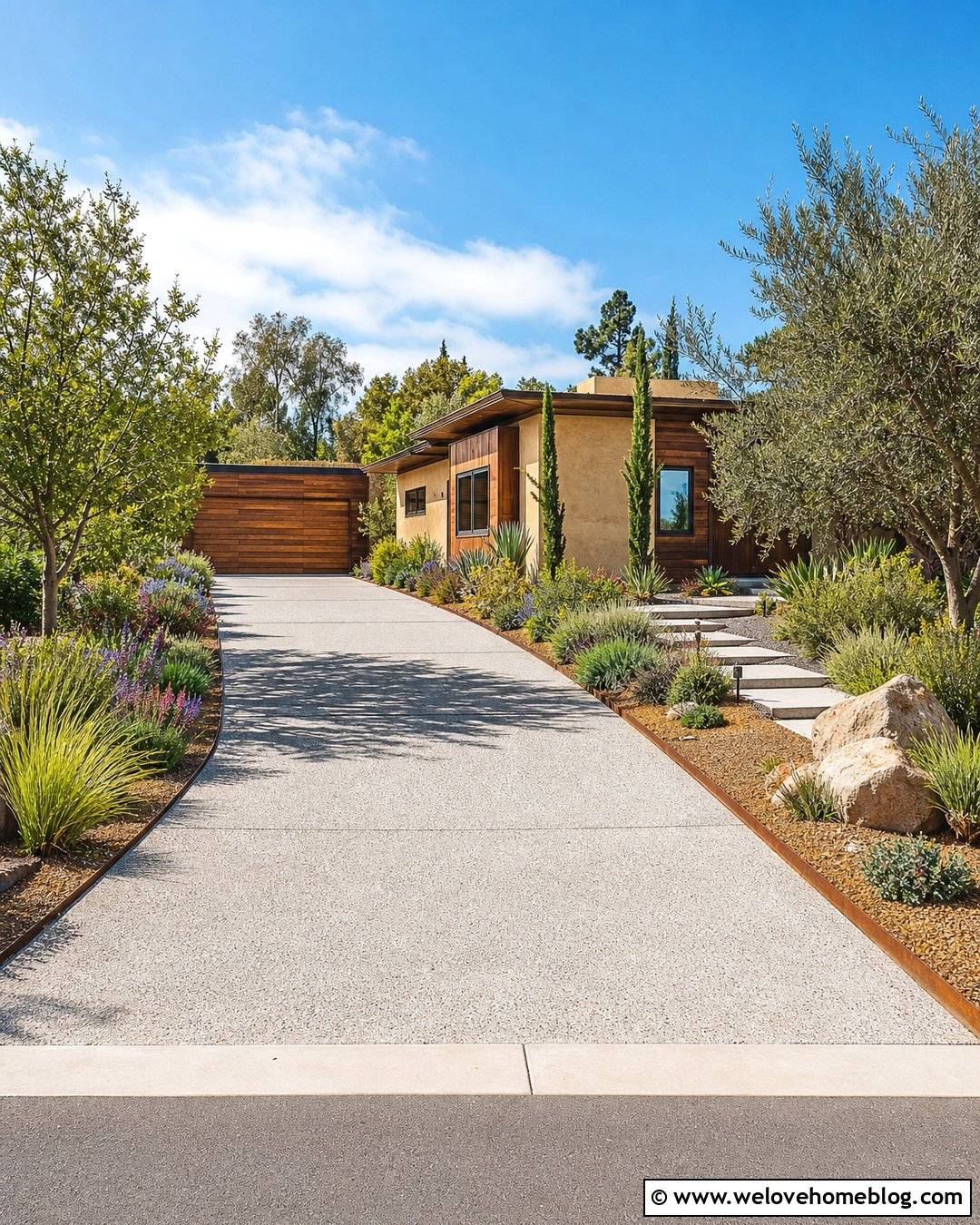
A drought-conscious front yard can be colorful, layered, and modern. Choose light exposed-aggregate concrete for the driveway, using large sections that complement a simple stucco or wood-clad home. Outline the surface with weathered steel edging and warm gravel beds. Plant groups of drought-adapted grasses, flowering perennials, succulents, and evergreen shrubs selected for the local region. Repeating three or four plant types creates rhythm without producing a sparse monoculture. Place larger boulders where they can protect corners and visually connect the driveway to the landscape. A stepping-slab walkway can pass through the planted area toward the front door. Group plants according to water needs and plan irrigation carefully. The pale driveway, warm stone, and sculptural planting create a cohesive entrance suited to dry conditions.
32. Native Plant Modern Driveway
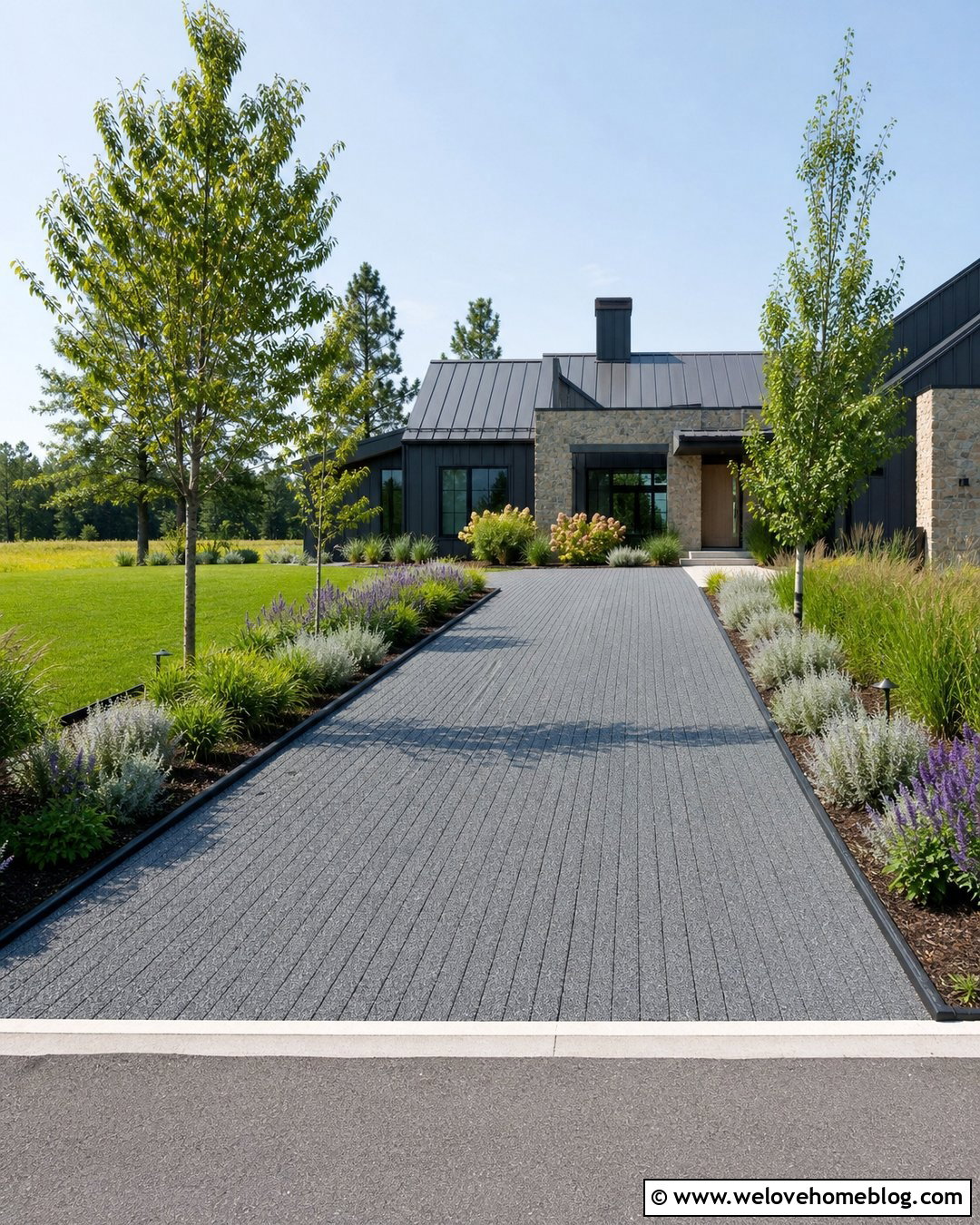
Native planting can frame a modern driveway while giving the front yard a stronger connection to its regional landscape. Begin with charcoal permeable pavers arranged in long rows. Their dark, regular pattern forms a calm base for more naturalistic beds. Use steel edging to separate the driveway from layered native grasses, flowering plants, shrubs, and small trees selected for the site’s sun, soil, moisture, and climate. Repeat plants in broad groups instead of scattering many individual varieties. This keeps the landscape legible and contemporary. Include a clear concrete walkway from the parking area to the entrance, with low planting near intersections for visibility. Seasonal flowers and seed heads add change throughout the year, while the consistent paving, edging, and plant repetition prevent the complete design from looking untidy.
33. Ornamental Grass Modern Driveway
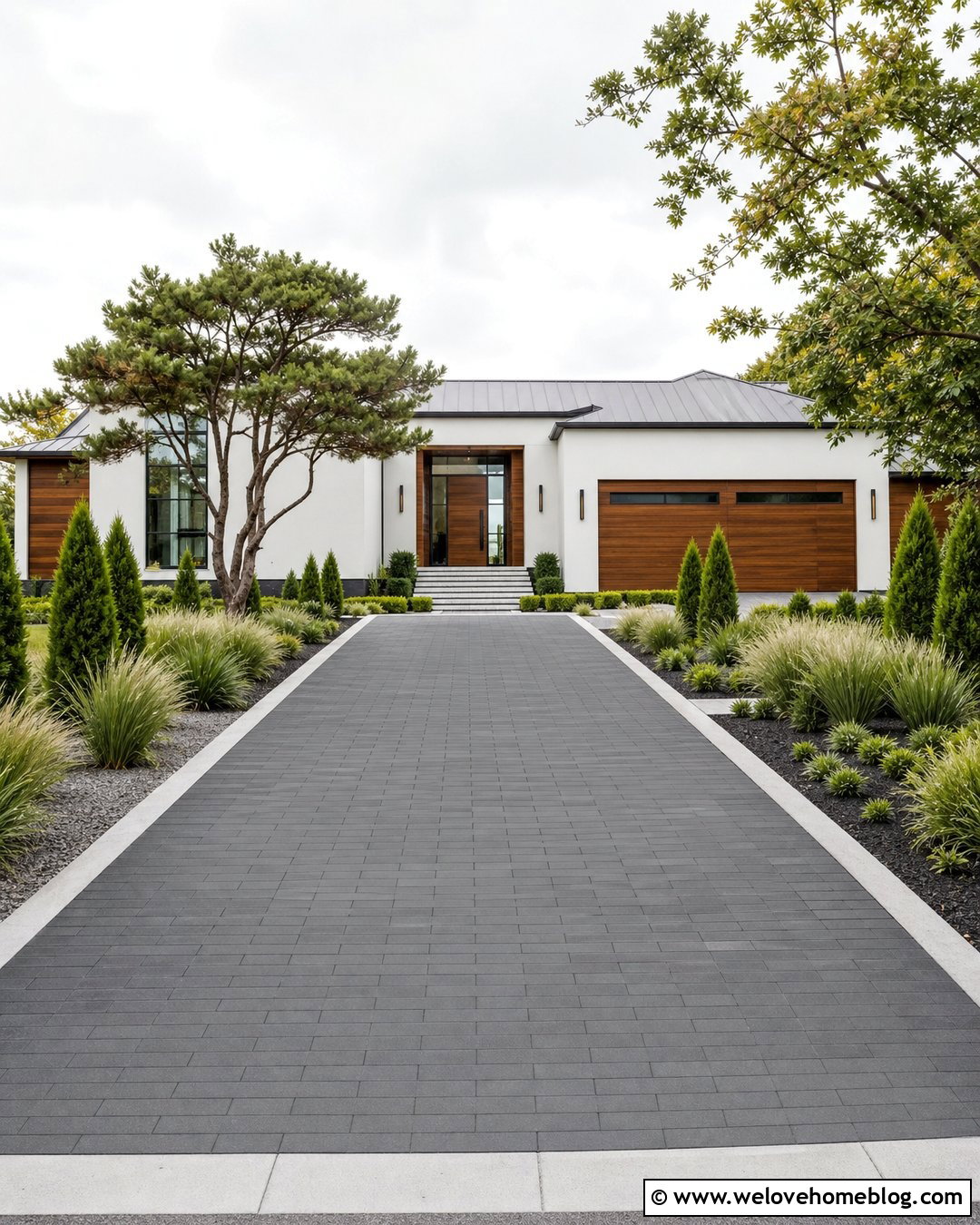
Movement from ornamental grass provides an appealing contrast to solid driveway materials. Use smooth charcoal concrete pavers in a straight layout, bordered by pale concrete curbs. Plant broad sweeps of grasses along one or both sides, selecting varieties whose mature height will not block vehicles, sidewalks, or street visibility. Combine upright grasses with lower mounded forms to create layers without relying on numerous colors. Gravel mulch can preserve the clean character and make the foliage stand out. Near the house, repeat a smaller group beside the entrance walk to connect the driveway landscape with the front door. One sculptural evergreen can provide year-round structure. This complete design works particularly well with white stucco, dark metal siding, and warm wood because the grasses soften all three architectural materials.
34. Modern Driveway With Raised Planters
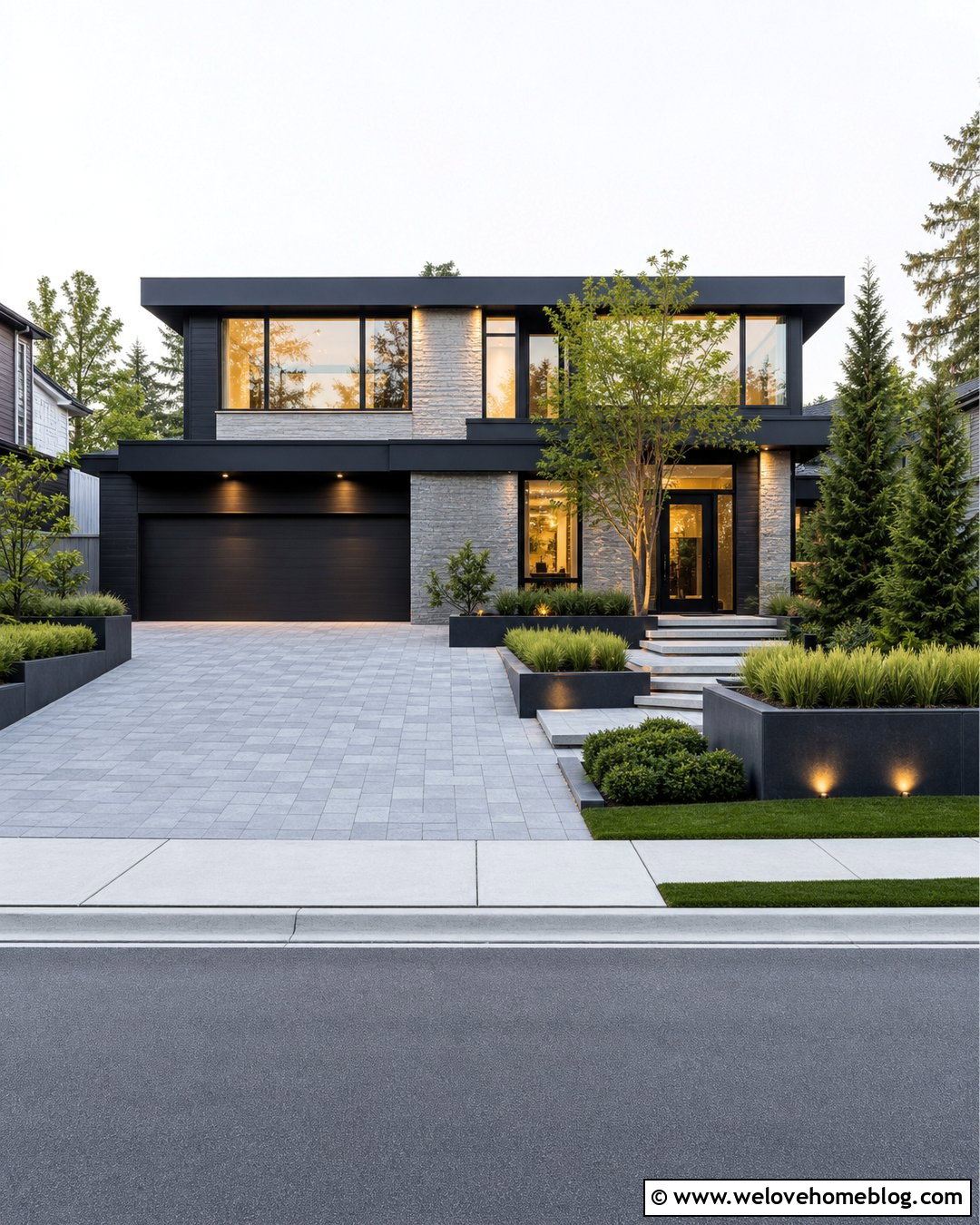
Raised planters can divide a wide driveway from the front entrance and make a large paved area feel more architectural. Use light-gray concrete pavers for a straight double-width driveway. Along the house side, construct low rectangular planters from smooth charcoal concrete or stone that matches the facade. Fill them with compact grasses, evergreen shrubs, and one small ornamental tree. Keep walls low near vehicle doors and turning areas. A wide walkway can run behind the planters, creating a protected pedestrian route to the front door. Add integrated lighting beneath the planter caps for subtle guidance, while still ensuring the driveway receives practical illumination. Repeating the paver color in the walls or steps brings everything together. The finished frontage feels layered, functional, and deliberately connected to the architecture.
35. Modern Driveway With Retaining Wall
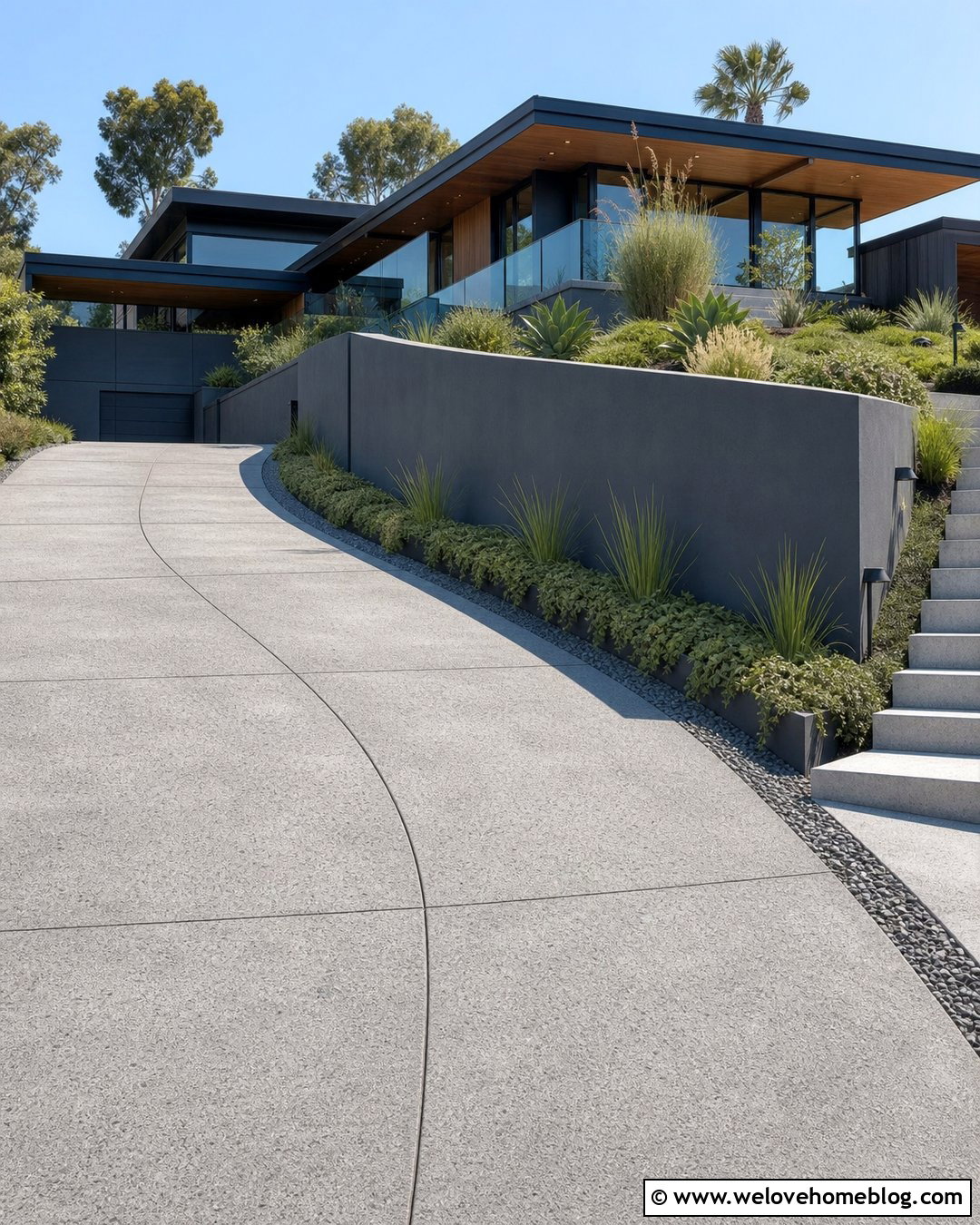
On a sloped property, a retaining wall can become one of the strongest visual features of the driveway. Pair a textured gray concrete driveway with a long wall made from large-format charcoal blocks or smooth poured concrete. Follow the curve or incline of the approach so the wall feels integrated rather than added afterward. Plant trailing ground cover and upright grasses along the top to soften the edge without hiding its geometry. At the base, a narrow gravel drainage strip can create a clean transition from vertical wall to driveway. Incorporate a separate stepped walkway where pedestrians need a safer route. Retaining walls are structural and drainage-sensitive, so design, permits, guard requirements, foundations, and water management should be handled according to local conditions and professional recommendations.
36. Modern Driveway With Rain Garden
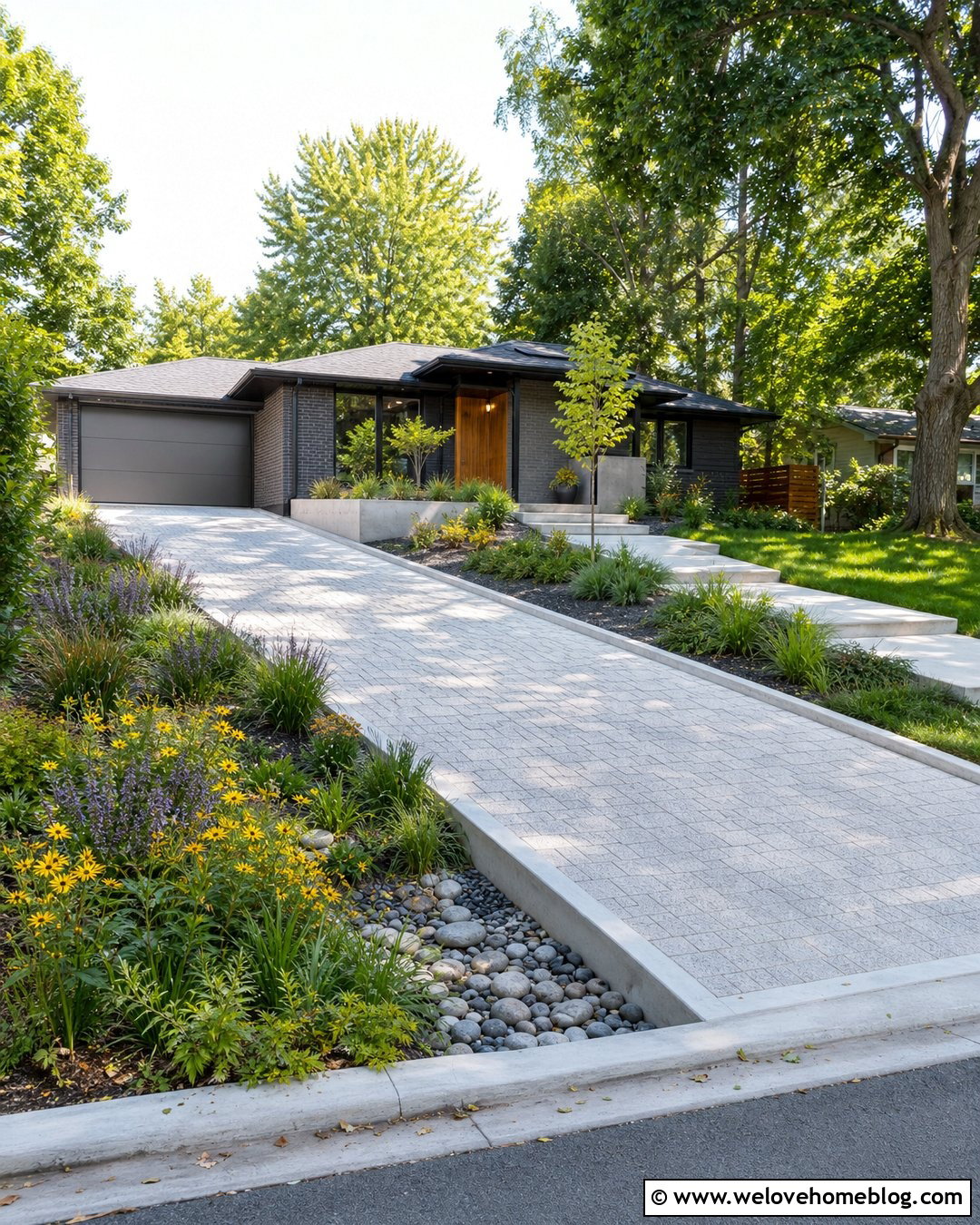
A rain garden can turn driveway runoff management into an attractive landscape feature. Use pale permeable pavers for a gently sloped driveway and form a planted basin along its lower side. Define the basin with a smooth concrete curb that includes carefully planned openings for water where appropriate. Fill the rain garden with regionally suitable plants that tolerate changing moisture levels, arranging them in repeated groups for a modern appearance. Add decorative stone at inflow points to reduce erosion and visually connect the bed with the driveway. A raised concrete walkway can cross beside the garden toward the entrance. Site conditions, soils, overflow routes, utilities, and local regulations must guide the design. When planned correctly, the driveway and planted drainage area read as one cohesive contemporary landscape.
37. Modern Driveway With Integrated Walkway
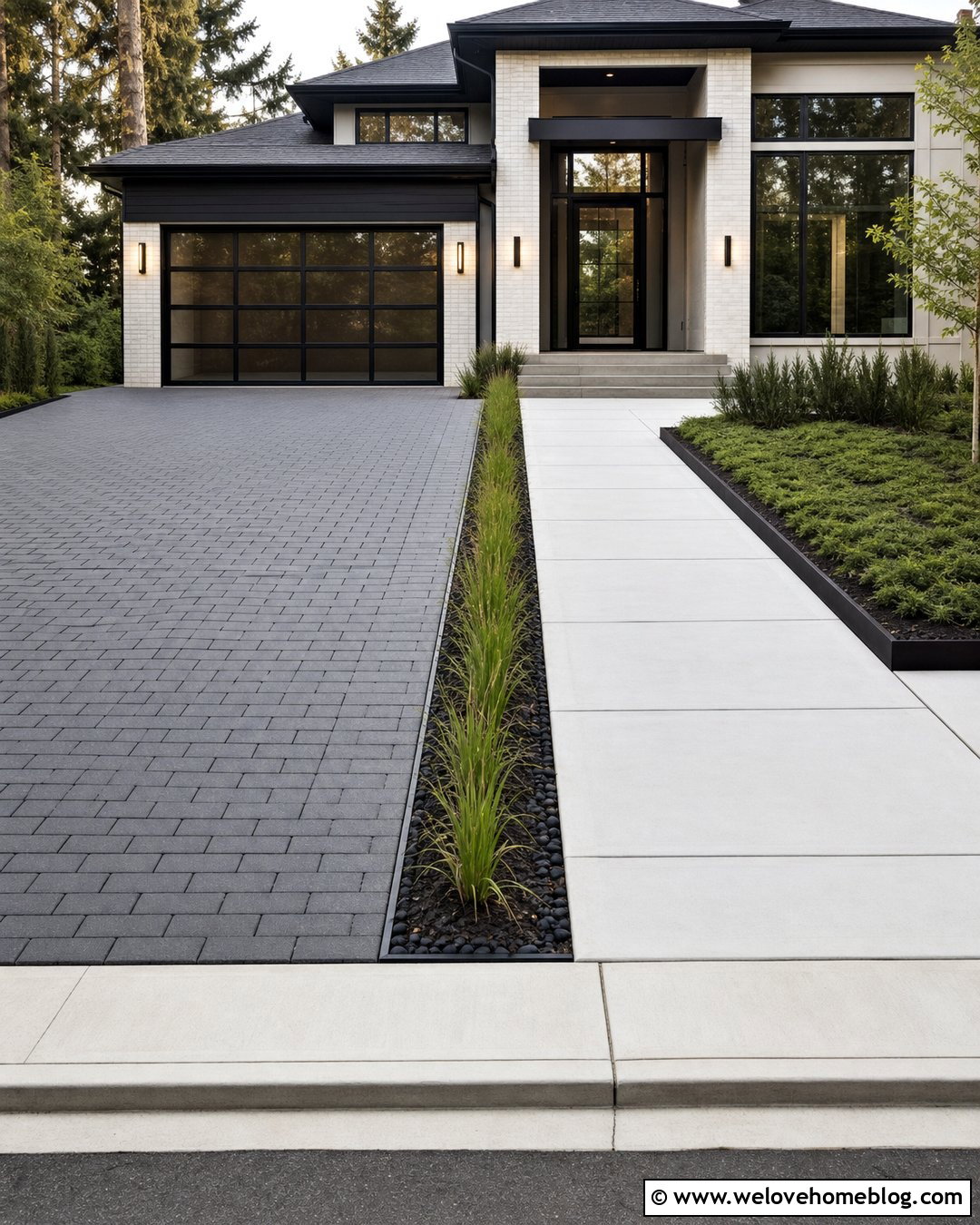
A clear walkway makes the front entrance easier to find and prevents pedestrians from sharing the vehicle route longer than necessary. Use charcoal concrete pavers for the driveway and light-gray poured concrete for a wide path that branches toward the door. Where the two meet, create a broad flush transition rather than a narrow, awkward opening. Separate the walkway from the driveway with a slim planting strip containing low grasses or evergreen ground cover. Repeat the light concrete in the front steps and porch for continuity. Black metal edging can define the planting without adding bulk. The contrasting materials should remain within the same neutral family, allowing the path to be visible but not disconnected. This complete arrangement works especially well for garages positioned prominently in front of the main entrance.
38. Modern Driveway With LED Lighting
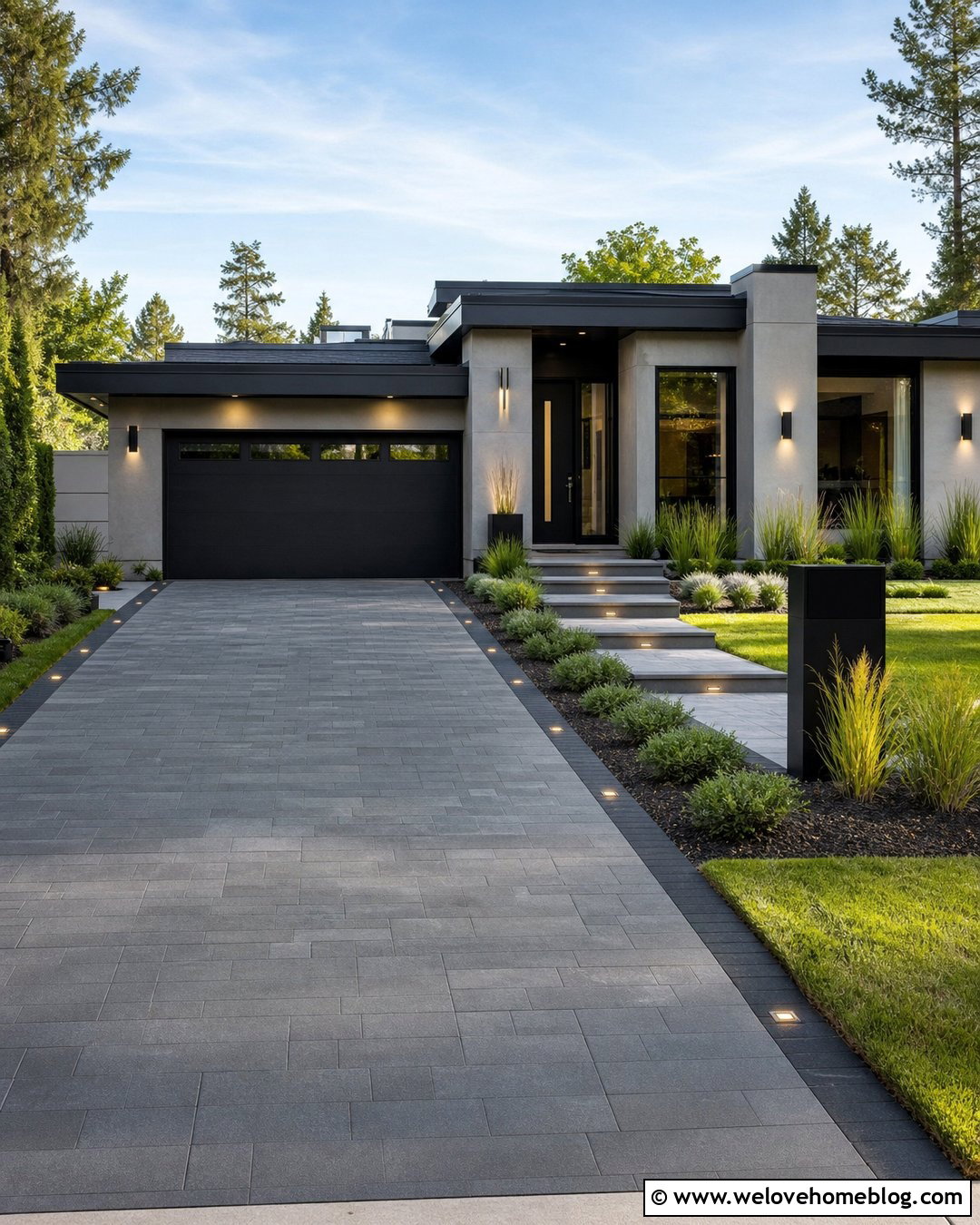
Driveway lighting should improve navigation while reinforcing the layout during daylight. Begin with dark gray concrete pavers in a straight approach. Install compact recessed or low-profile LED fixtures along the edges, spacing them consistently instead of creating a scattered line of lights. Add matching illumination to the entrance walk, steps, and address marker. During the day, the fixtures should blend into charcoal paver borders or black metal edging. Frame the driveway with low shrubs and grasses that will not cover the beams as they mature. Choose fixture locations carefully to reduce glare toward drivers, windows, and neighboring homes. Combine decorative lighting with any stronger illumination needed for safety. A coordinated plan makes the driveway, landscaping, garage, and entrance feel like parts of one modern composition.
39. Modern Driveway With Bollard Lights
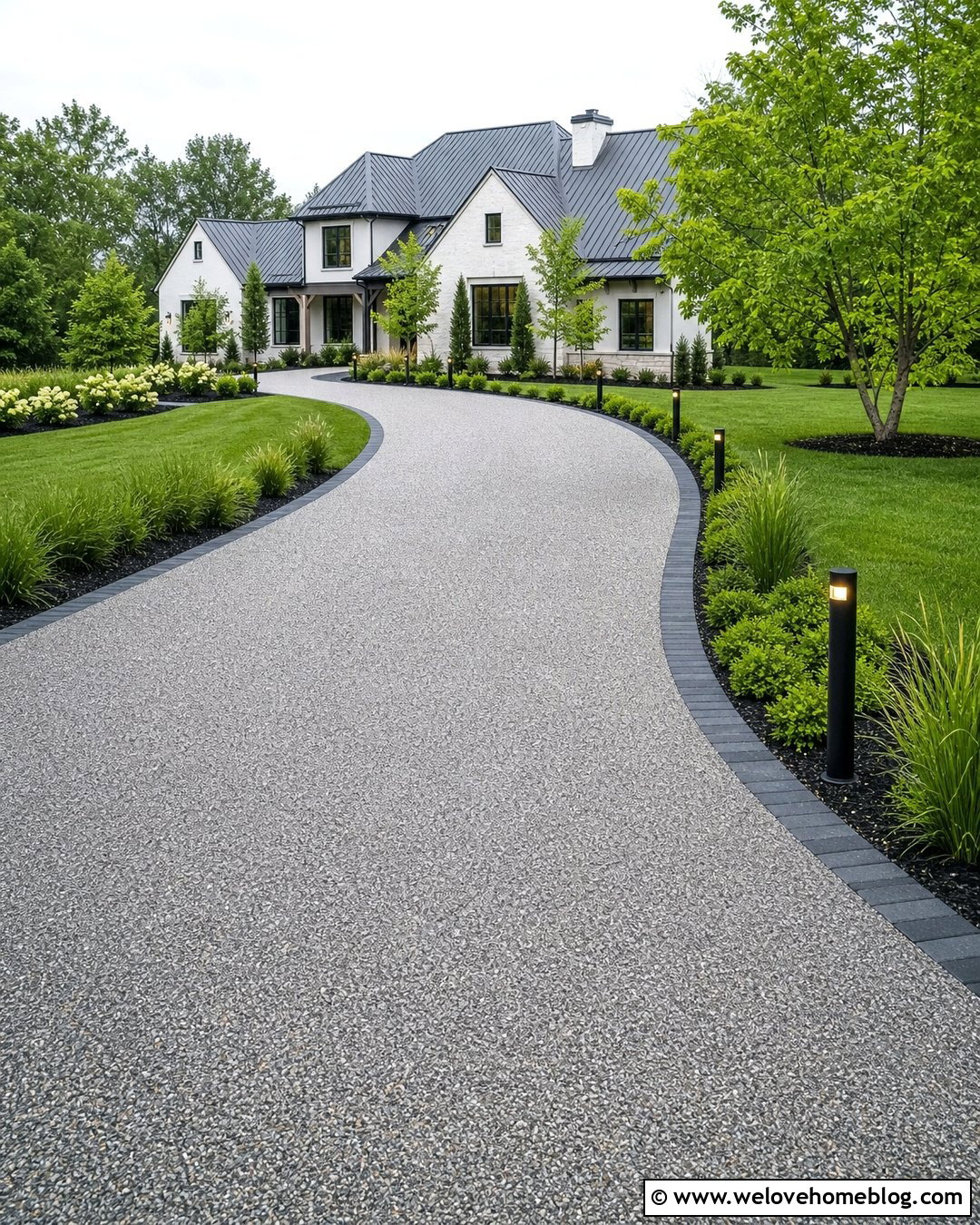
Bollard lights can give a long driveway a strong rhythm, but restraint is essential. Use a curved resin-bound gravel surface in a silver-gray tone with dark paver edging. Position slim black bollards at key points along the outside curve rather than lining every foot of pavement. Their vertical forms will stand out against low grasses and mounded shrubs while helping define the route. Repeat the same fixtures near the front walkway and parking court for consistency. Keep bollards far enough from vehicle overhangs, snow-clearing routes, and turning zones. The house might feature black window frames or dark exterior panels that visually connect with the lighting. A daytime-focused landscape should still look complete when fixtures are off, with the driveway material, curve, border, and planting doing most of the design work.
40. Modern Driveway With Sliding Gate
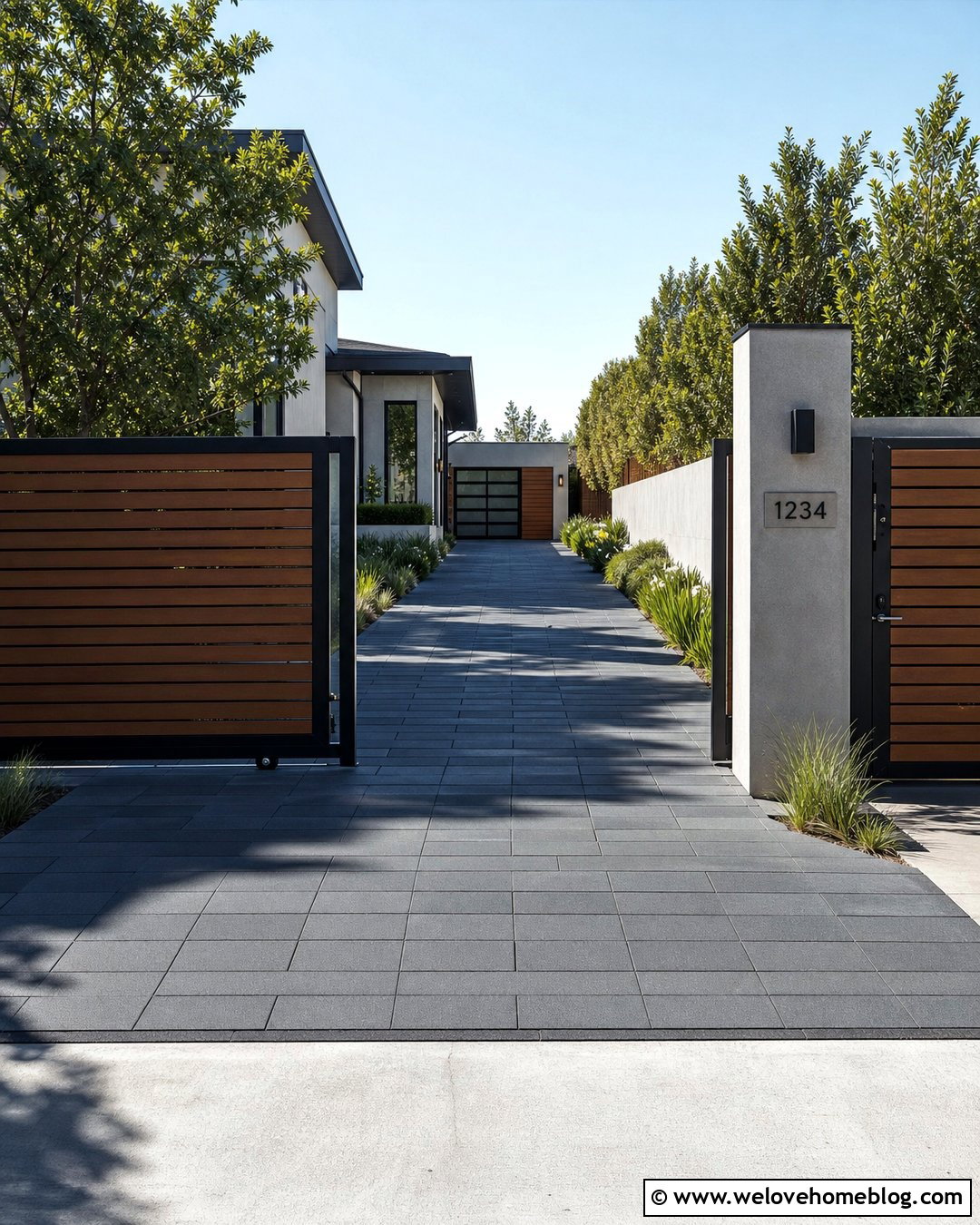
A streamlined sliding gate creates privacy without requiring the swing area of traditional hinged gates. Pair a straight charcoal paver driveway with a horizontal black metal or warm-wood gate. Set the gate between simple concrete walls rather than ornate posts. Continue the driveway material beyond the entrance so the route reads as one uninterrupted line toward the house. On the street side, add low ornamental grasses and an integrated address sign without blocking visibility. Inside the property, use a matching pedestrian gate and walkway where needed. The gate track, drainage, access controls, safety devices, emergency operation, and clearance must be planned professionally. Visually, the strongest result comes from matching the gate’s lines and colors to the garage door, fencing, windows, or exterior cladding.
41. Modern Driveway With Stone Pillars
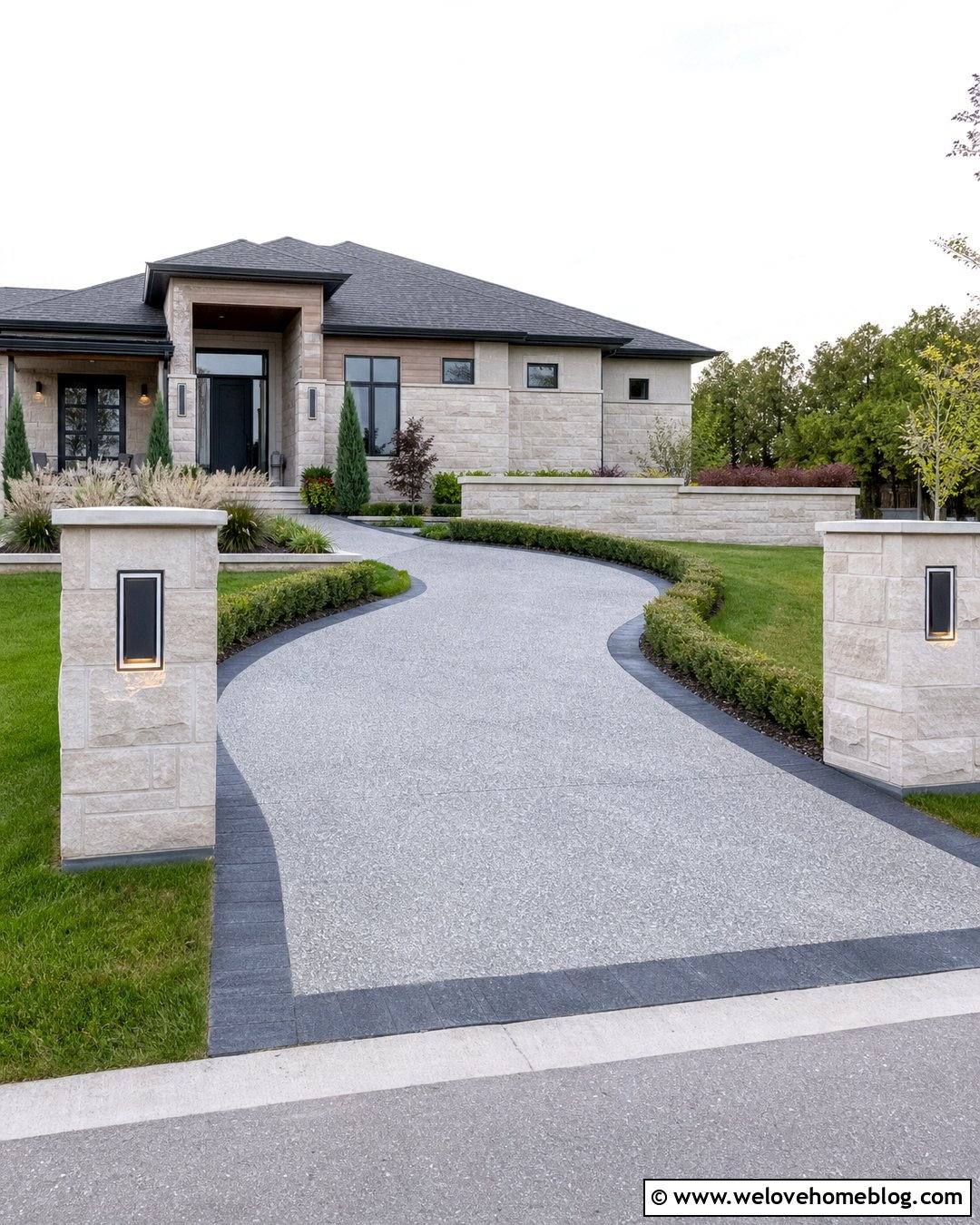
Stone pillars can suit a modern driveway when their shape is simple and their material is repeated elsewhere on the property. Use rectangular pillars clad in smooth-cut limestone, slate, or stacked gray stone. Place them at the entrance to a gently curved exposed-aggregate driveway with narrow charcoal borders. Avoid decorative caps and oversized lanterns. Instead, incorporate discreet downlights or recessed fixtures. Low hedges and ornamental grasses can frame the pillars while preserving clear views to the street. Repeat the same stone on a low garden wall or part of the house facade to create continuity. The entrance should feel substantial without becoming crowded, so allow generous vehicle clearance. Confirm property lines, visibility requirements, utilities, drainage, and local rules before building permanent masonry near the road.
42. Modern Driveway With Address Sign
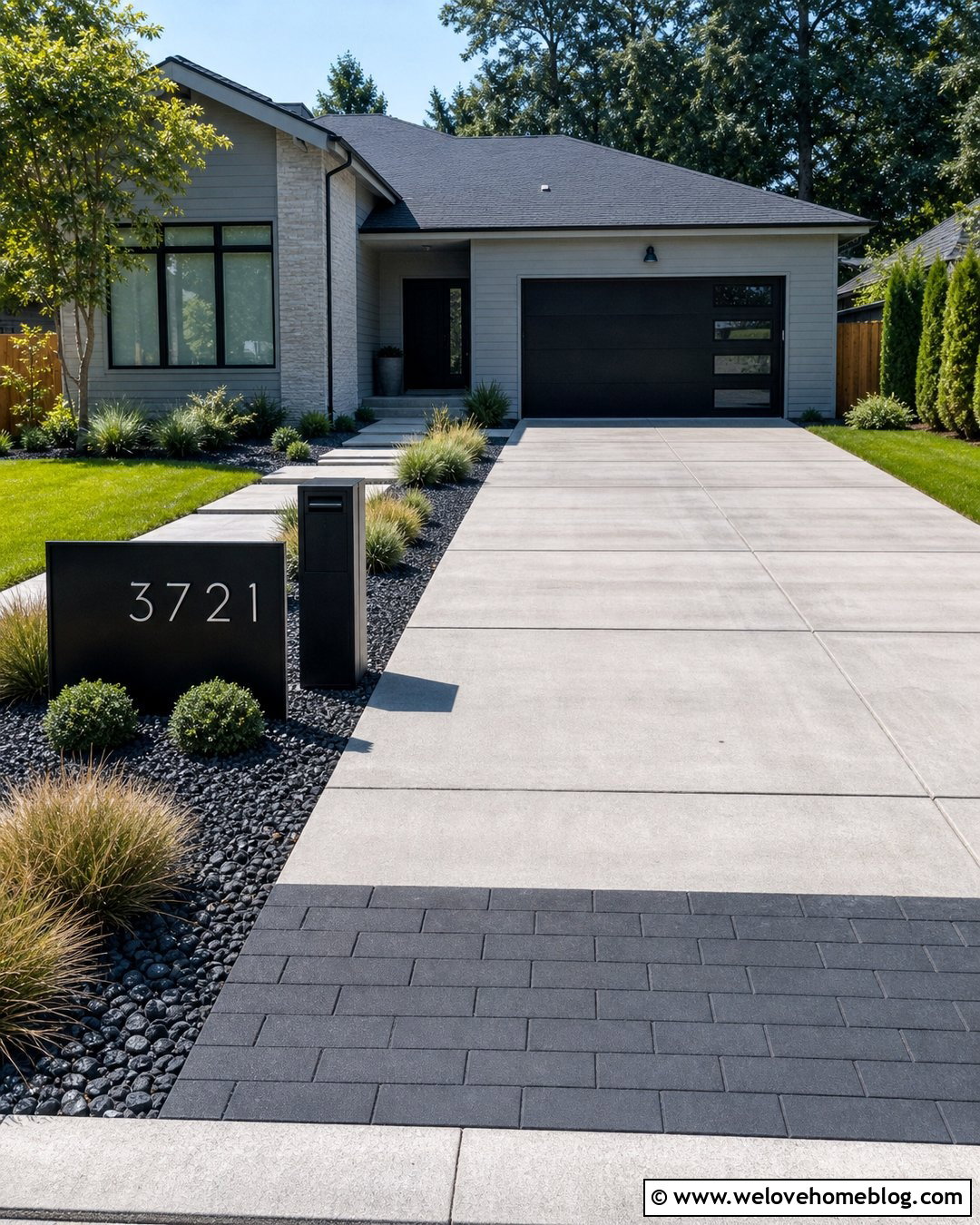
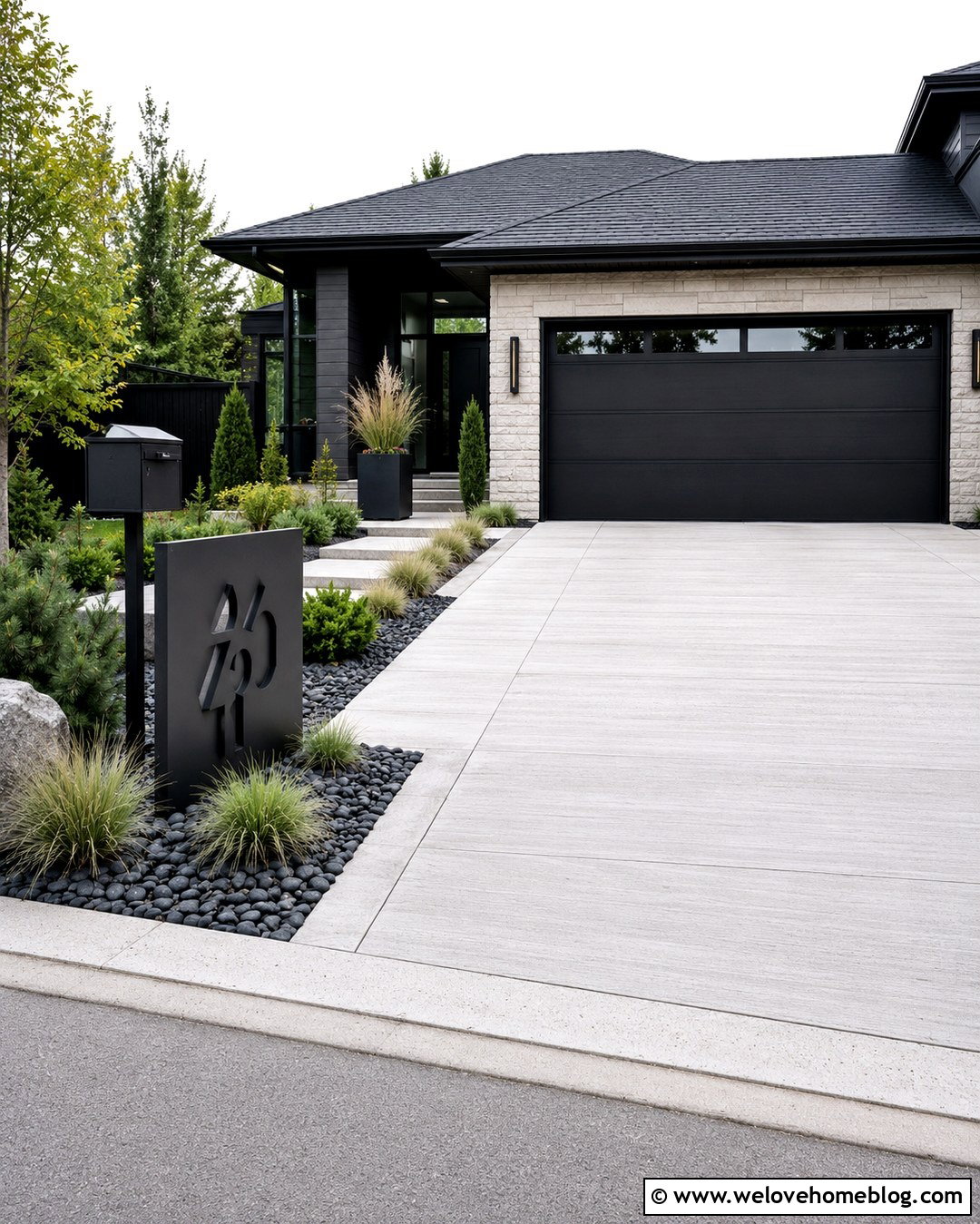
A well-positioned address sign can become the focal point of an otherwise simple driveway entrance. Choose a warm-gray concrete driveway divided into large rectangular panels and framed with dark gravel beds. Set a black metal or smooth concrete address marker within one planting bed, keeping it visible from the street without placing it in the vehicle clearance zone. Use large, high-contrast numerals and coordinate the sign with the mailbox, exterior lighting, and house trim. Low grasses and compact shrubs can soften the base without covering the numbers as they grow. A narrow paver apron at the curb creates a finished transition. The sign should look like part of the overall landscape architecture, not a separate decoration attached after the driveway and garden have already been completed.
43. Modern Driveway With Carport
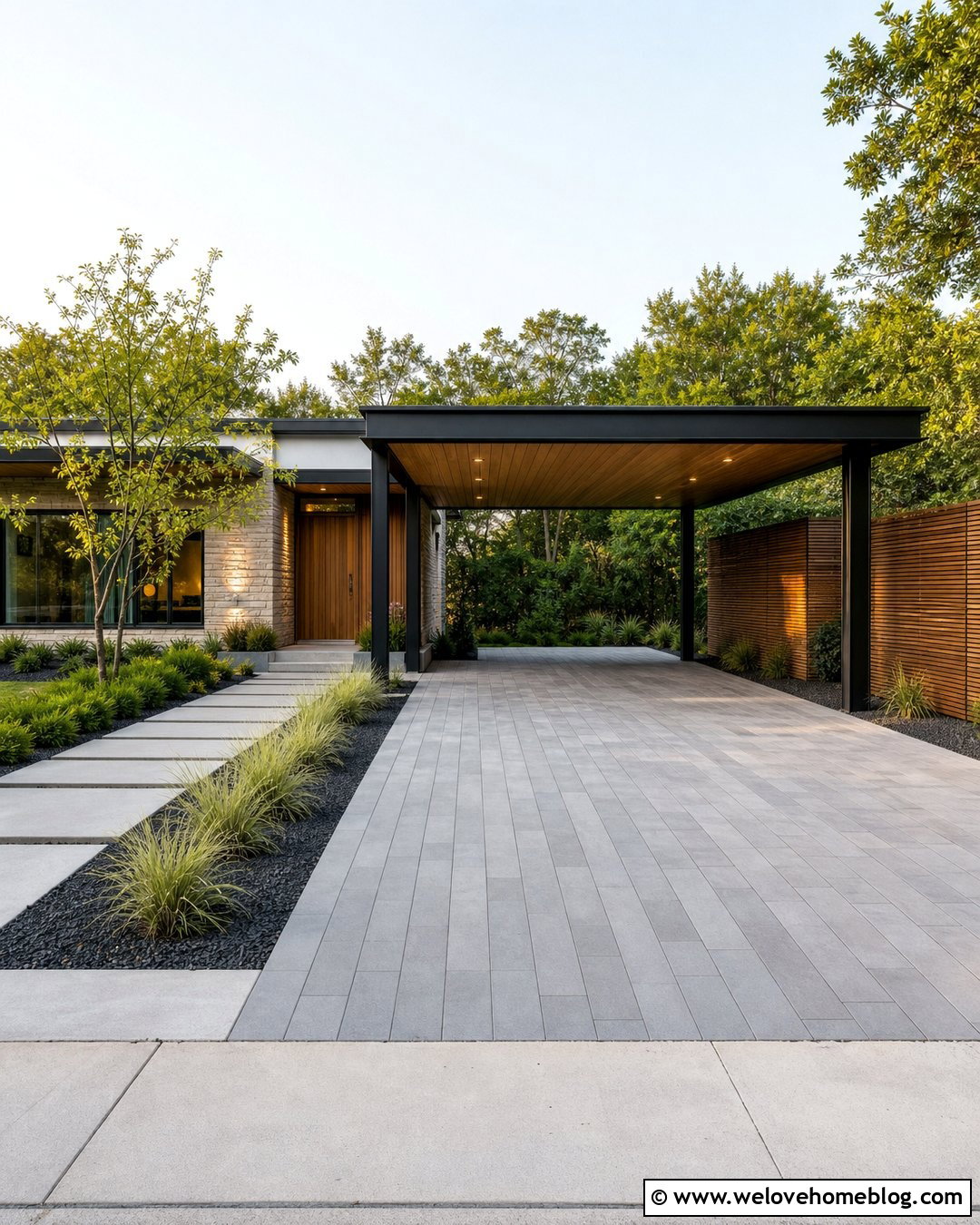
A driveway leading to a carport should strengthen the visual connection between the street and the lightweight structure. Use long concrete pavers in a stacked pattern that follows the direction of travel. Continue the paving beneath the carport for a seamless surface, provided the system is designed for the intended loads and drainage. A narrow gravel strip along one side can separate the driveway from a floating concrete walkway. Frame the opposite side with grasses and low evergreen shrubs. Match the paver tone to the carport roof or structural columns, while warm wood screening can soften the composition. Keep drainage lines, utilities, and downspouts visually controlled. The completed design feels particularly appropriate for mid-century and minimalist homes where the carport remains an intentional architectural feature rather than a concealed service area.
44. Modern Three-Car Garage Driveway
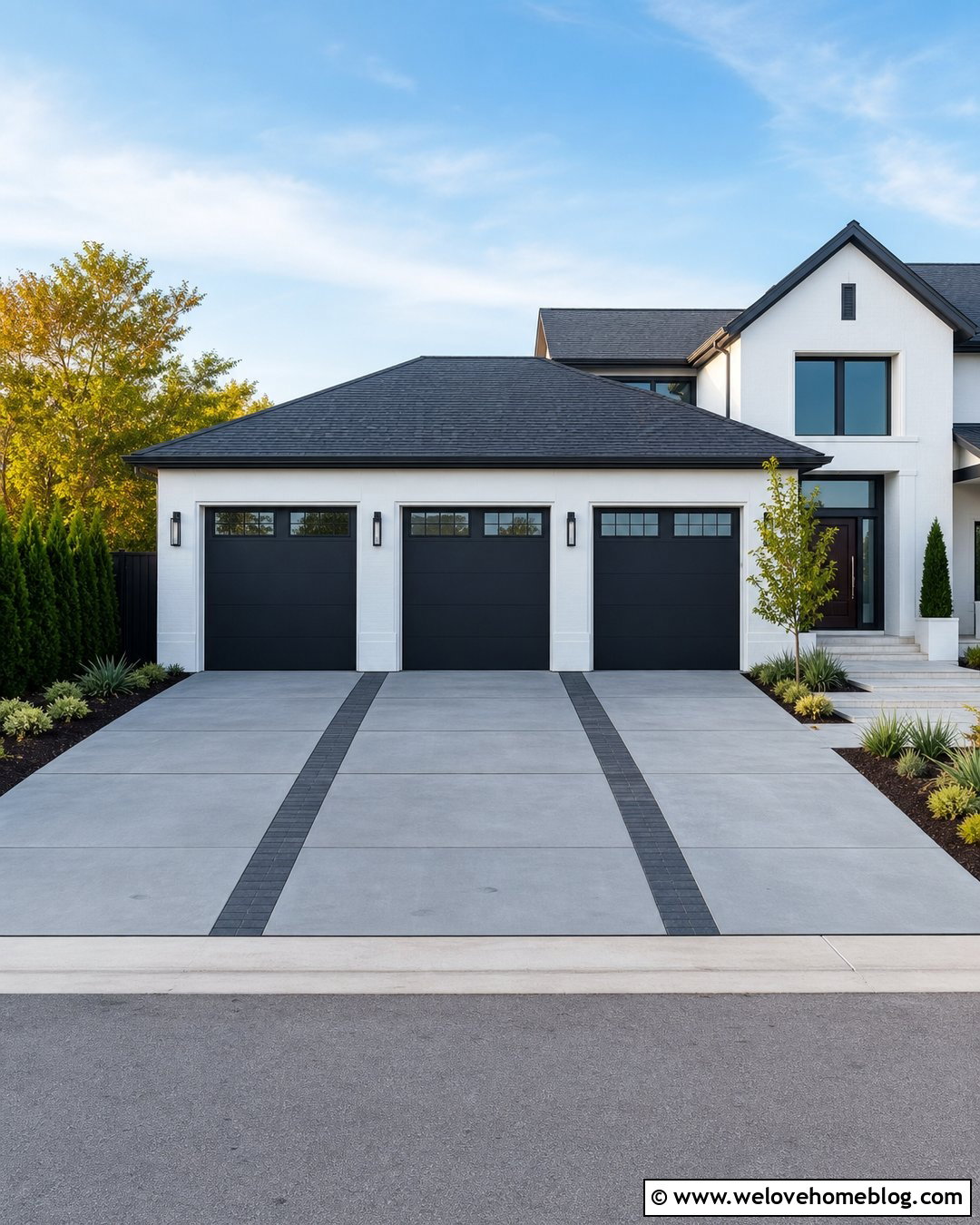
A driveway serving three garage bays can quickly resemble a parking lot unless the surface is carefully organized. Use large medium-gray concrete pavers across the full area, then add narrow charcoal bands aligned with the divisions between garage doors. These visual lanes break up the width and establish a direct relationship with the architecture. Create planting pockets at the outer corners using low grasses, evergreen shrubs, and one small tree. A contrasting light-concrete walkway can cross one side of the driveway and lead clearly to the entrance. Avoid placing tall plants where they interfere with backing visibility. Matching garage doors, exterior sconces, and paver borders will unify the broad frontage. The result remains highly functional but appears planned as a complete landscape rather than an oversized slab of paving.
45. Budget Modern Driveway
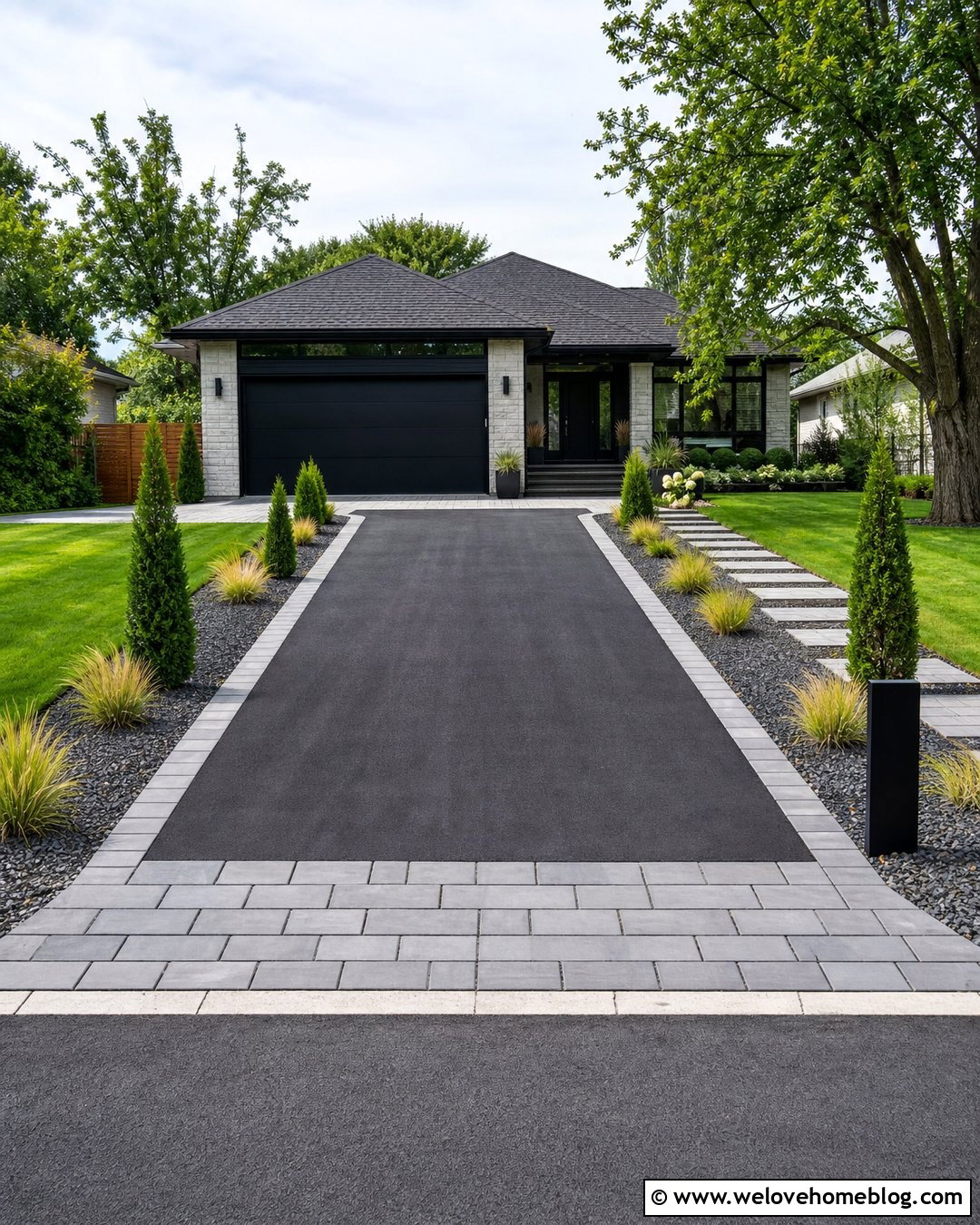
Modern curb appeal does not always require replacing the entire driveway. A well-maintained asphalt surface can become the base of an affordable update. Add a simple charcoal concrete paver border along visible edges and create a matching apron near the street or garage. Define planting beds with straight metal edging, then use gravel mulch, repeated ornamental grasses, and a few compact evergreen shrubs. Paint or update the mailbox and address marker in a coordinated black finish. A clear concrete stepping path can connect the driveway to the entrance if the existing pedestrian route is confusing. Clean lines, limited colors, and consistent materials matter more than expensive decoration. Address cracks, drainage problems, unstable edges, or structural failure before spending money on cosmetic improvements that may need to be removed later.
Conclusion:
The most successful modern driveway is not simply a fashionable surface. It is a coordinated entrance shaped by the home, lot size, climate, vehicle needs, drainage, walkway, and surrounding landscape. Concrete panels deliver sharp geometry, while pavers, gravel, brick, asphalt, and resin surfaces offer different combinations of texture, cost, and upkeep. Borders prevent the driveway from looking unfinished, and restrained planting softens large hard surfaces without creating clutter. Lighting, gates, pillars, and signs should repeat materials already used on the house. Before committing to any of these 45 modern driveway ideas, confirm local requirements and have site-specific grading, drainage, structural, and access concerns evaluated by qualified professionals.

Related posts:
Leave a Reply