
The narrow strip beside a driveway can do much more than separate pavement from lawn. With thoughtful planting, practical edging, and the right scale, it can soften hard surfaces, improve curb appeal, guide guests, and make the whole front yard feel complete. These side of driveway landscaping ideas cover sunny borders, shaded side yards, sloped properties, small spaces, long approaches, and low-maintenance designs. You will find complete looks that combine driveway materials with planting beds, trees, lighting, drainage, walkways, and durable borders. Choose plants suited to your climate, leave enough clearance for vehicles, and keep visibility open near the street. Whether your home is modern, traditional, rustic, or coastal, explore these 45 side of driveway landscaping ideas for a design that fits your property.

1. Low Maintenance Side Driveway Landscaping
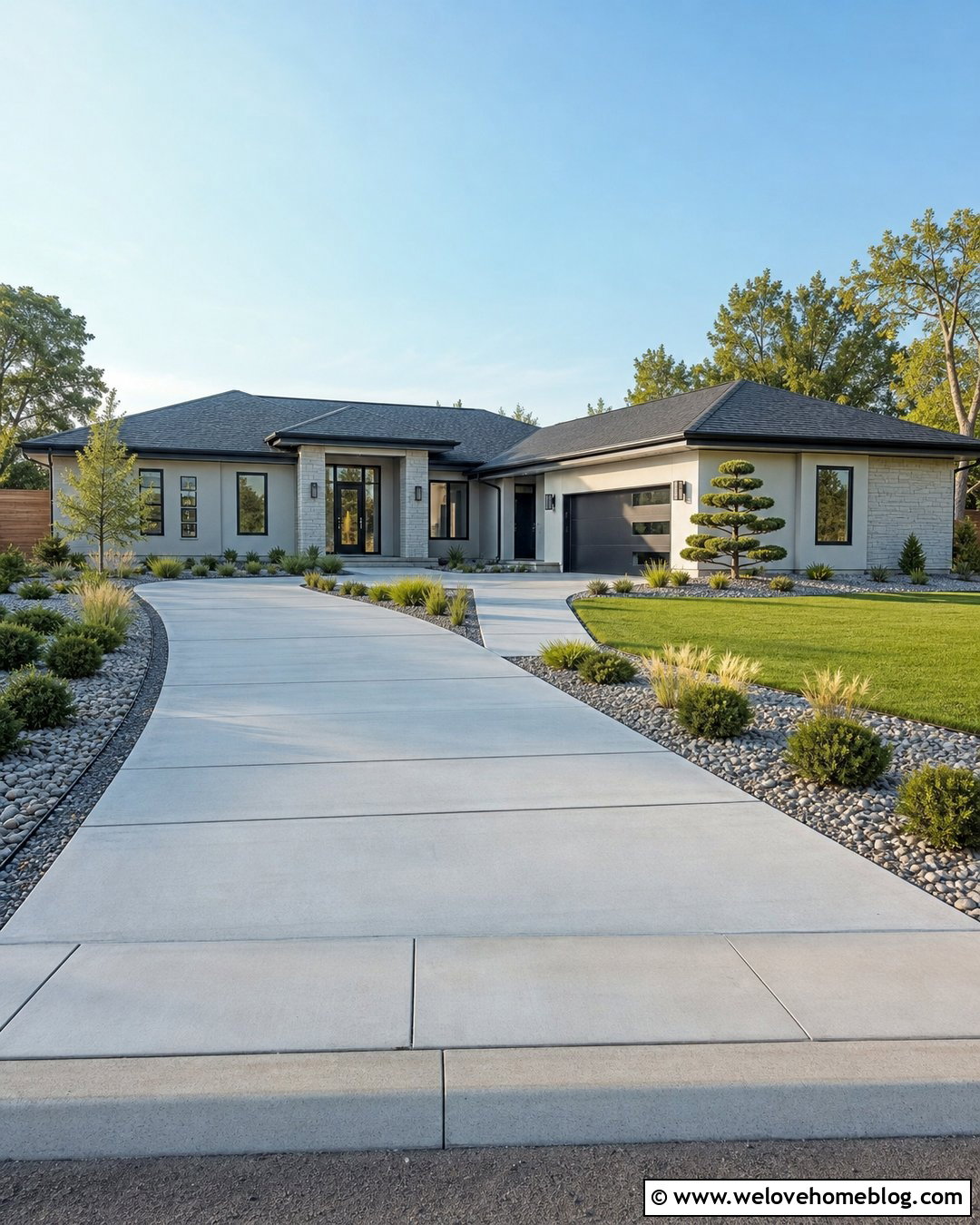
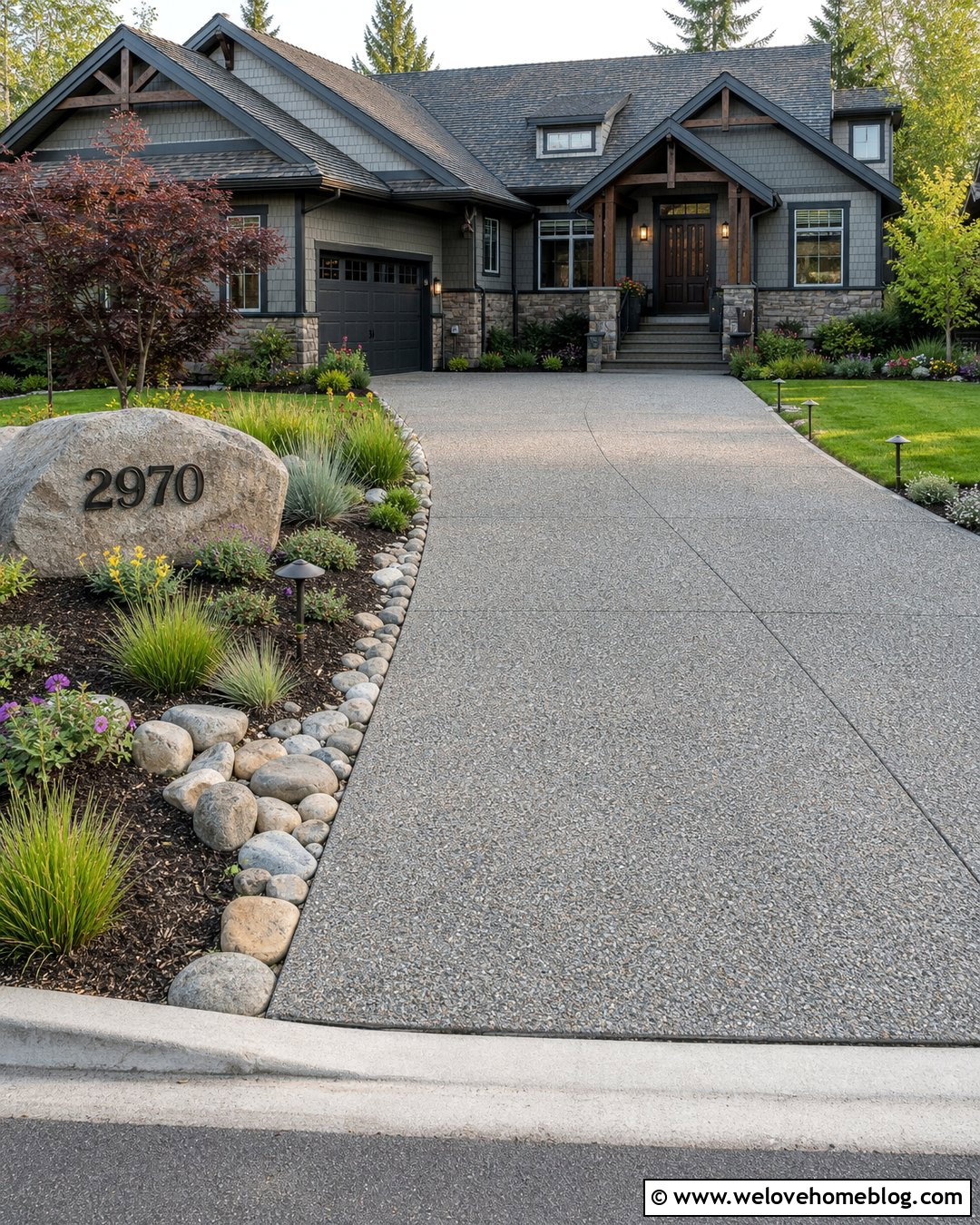
A clean, low-maintenance border works especially well beside a wide concrete driveway. Start with a gently curved bed edged in dark metal or concrete curbing. Fill the space with decorative river rock, compact evergreen shrubs, and groups of ornamental grass. Repeating only three or four plant varieties keeps the border calm and coordinated. Select plants that stay reasonably narrow so branches do not brush parked vehicles. A drip irrigation line beneath the rock can simplify watering while keeping foliage dry. Near the garage, add one larger specimen shrub to create a visual stopping point. This complete design softens the driveway without creating constant pruning, deadheading, or mulch replacement. It also complements modern ranch and contemporary homes particularly well.
2. Narrow Side Driveway Flower Bed
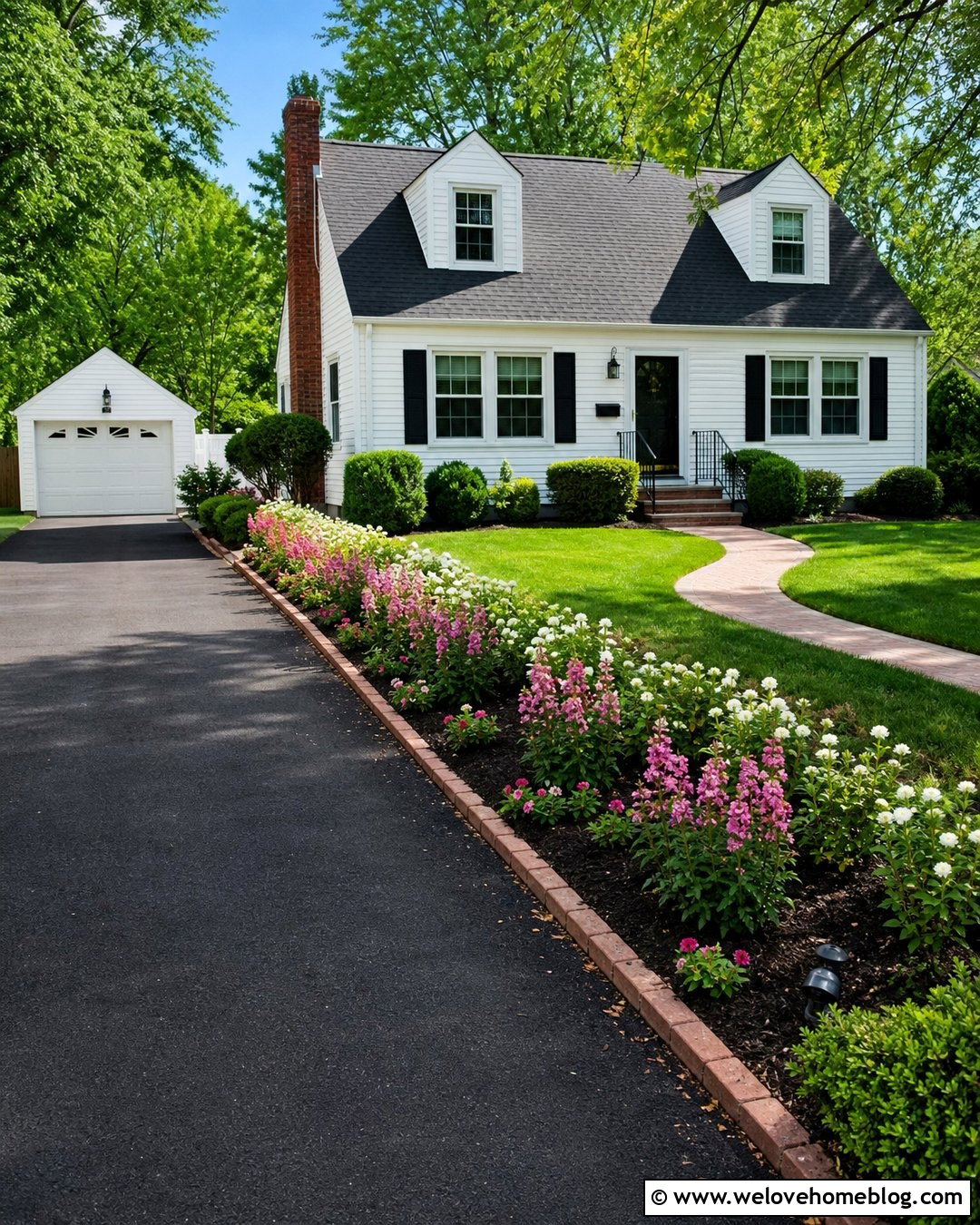
Even a slim strip can become an attractive flower bed when plants are arranged by mature size. Along a straight asphalt driveway, install a narrow brick edge and place compact flowers in repeating groups rather than mixing too many varieties. Low-growing annuals can fill the front, while tidy perennials provide structure behind them. Leave small gaps near vehicle doors and regularly used parking spaces. A light mulch color will brighten the narrow bed and help the flowers stand apart from dark pavement. Continue the same planting rhythm toward the garage to make the short border appear longer. Beside a cottage or Cape Cod home, this combination creates color without making the driveway feel crowded, overgrown, or difficult to navigate.
3. Side Driveway Landscaping With River Rock
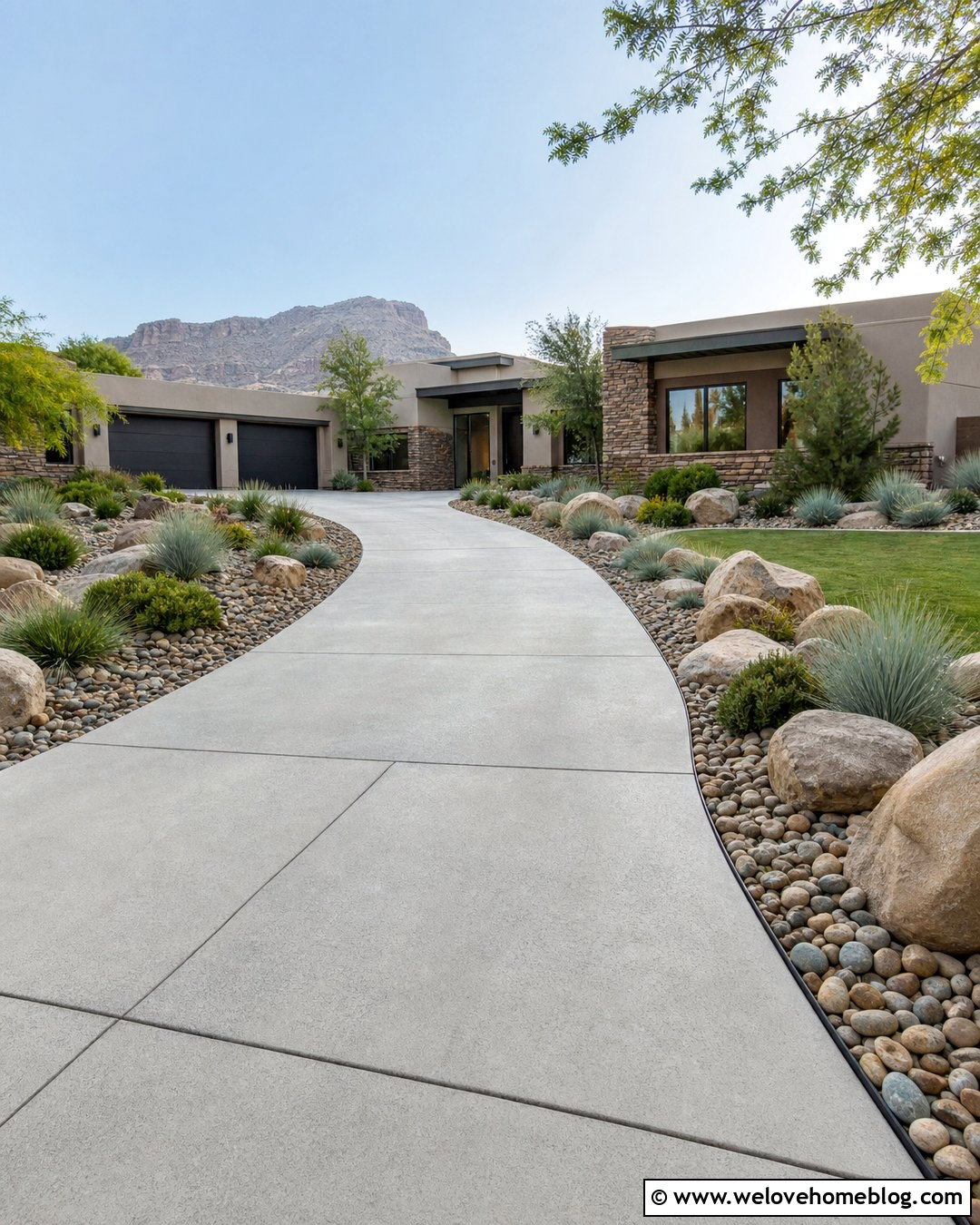
River rock creates a durable transition between a driveway and the surrounding yard. Pair a gray poured-concrete driveway with a broad bed of mixed tan and charcoal stones. Add sculptural evergreens, blue-green grasses, and several natural boulders for varied height. The rocks should sit slightly below the driveway edge so loose pieces are less likely to scatter onto the driving surface. Metal edging between the stone bed and lawn will maintain a crisp outline. If runoff moves toward the border, shape the bed into a shallow channel and choose plants that tolerate occasional moisture. This design feels especially fitting beside a modern or Southwestern house because it combines clean structure with natural texture. It also looks finished during every season.
4. Side Driveway Landscaping With Mulch
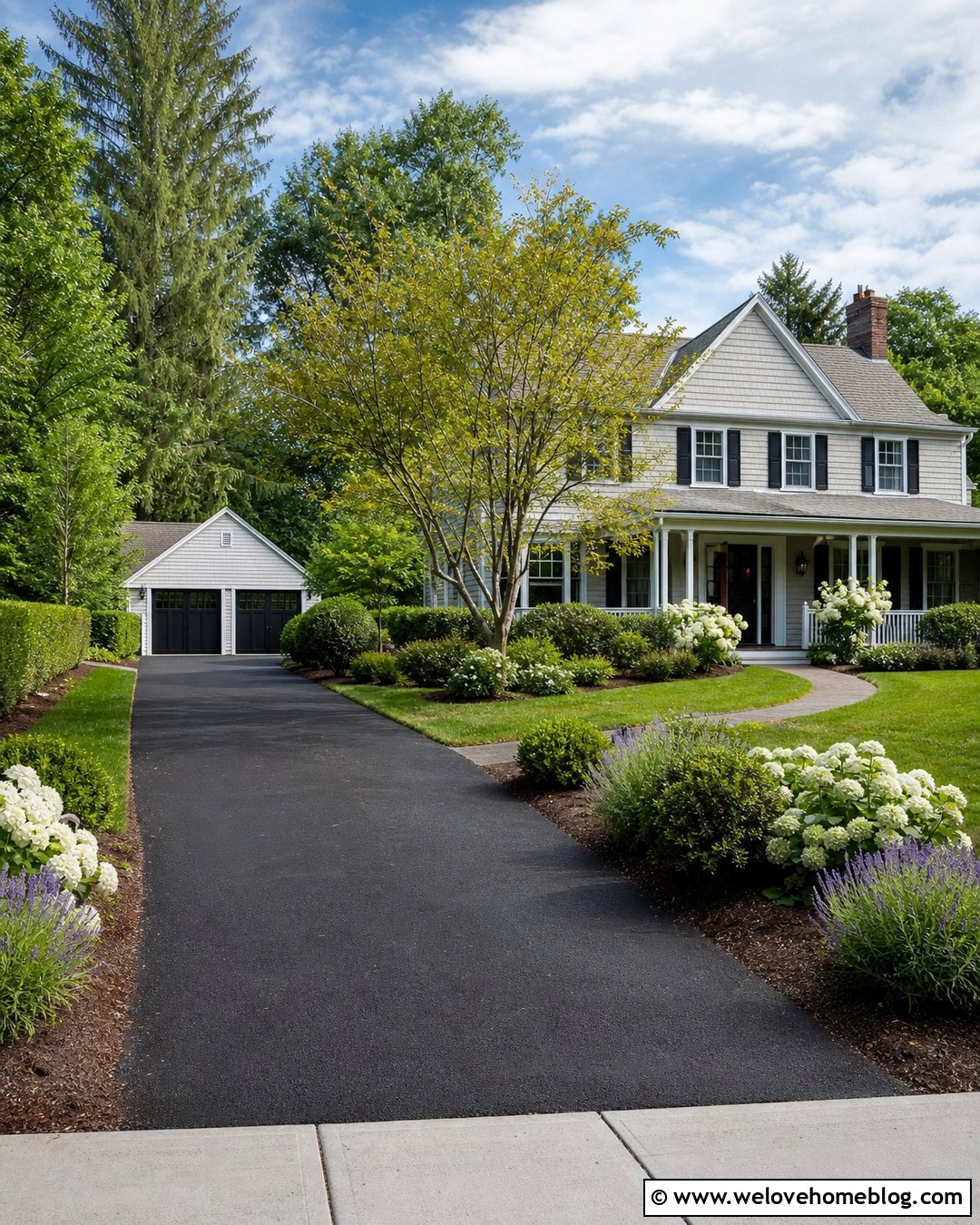
Fresh mulch provides an affordable way to connect a basic driveway with existing foundation beds. Beside a straight black asphalt driveway, create a wide planting border with a smooth spade-cut edge. Use one small ornamental tree, several rounded shrubs, and sweeping groups of dependable perennials. Apply mulch evenly, but keep it away from trunks and plant crowns. Brown shredded bark gives the landscape a natural appearance, while dark mulch creates stronger contrast with bright flowers and green foliage. Repeat plants already growing near the front porch so the driveway does not feel like a separate project. This coordinated layout suits traditional suburban homes and can be expanded gradually. Renewing the bed edge periodically will keep the entire driveway approach looking deliberate.
5. Side Driveway Landscaping With Hydrangeas
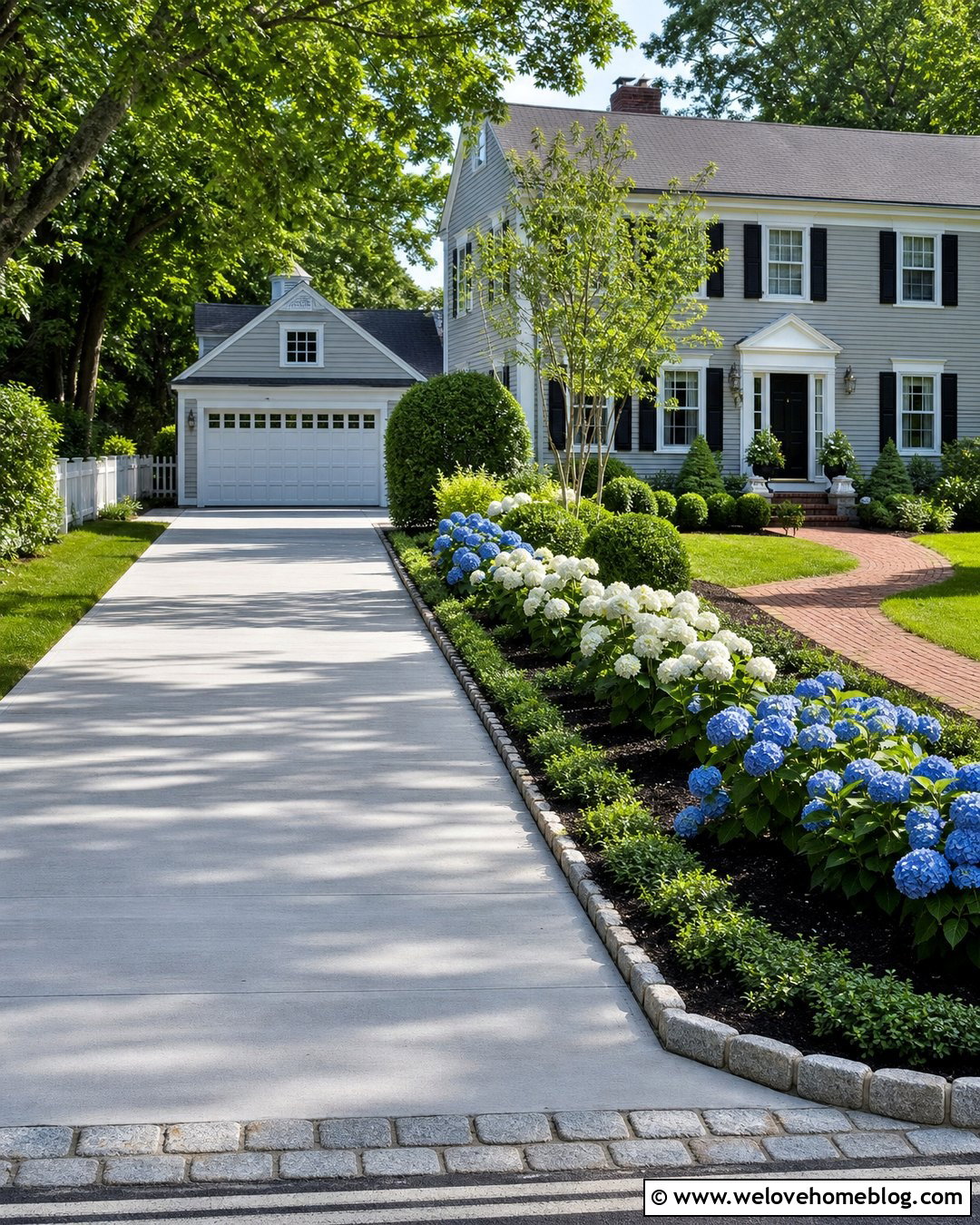
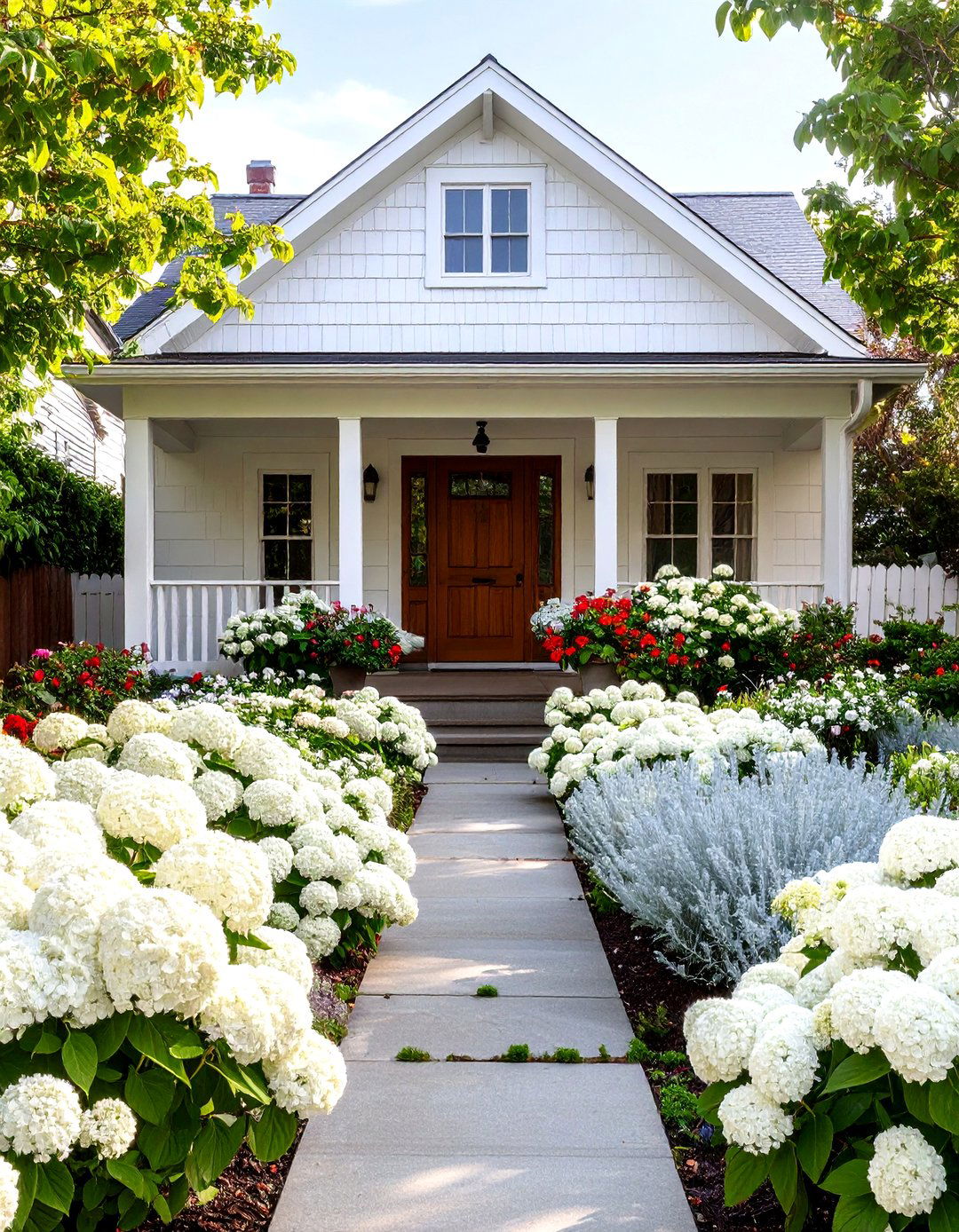
Large hydrangea blooms can turn a side driveway into a soft, welcoming garden approach. Pair them with a pale gray concrete driveway and a deep mulched bed along the property line. Position the hydrangeas far enough from the pavement to accommodate their mature width, especially beside parking areas. Low ground covers or compact flowering perennials can fill the front edge without hiding the blooms. Add a simple stone border to prevent mulch from washing onto the driveway. Hydrangeas work beautifully with colonial, cottage, and Craftsman facades, particularly when their flower color echoes the home’s trim or front door. Use a repeated row for a formal appearance or stagger the shrubs with ferns and smaller plants for a relaxed woodland effect.
6. Side Driveway Landscaping With Ornamental Grass
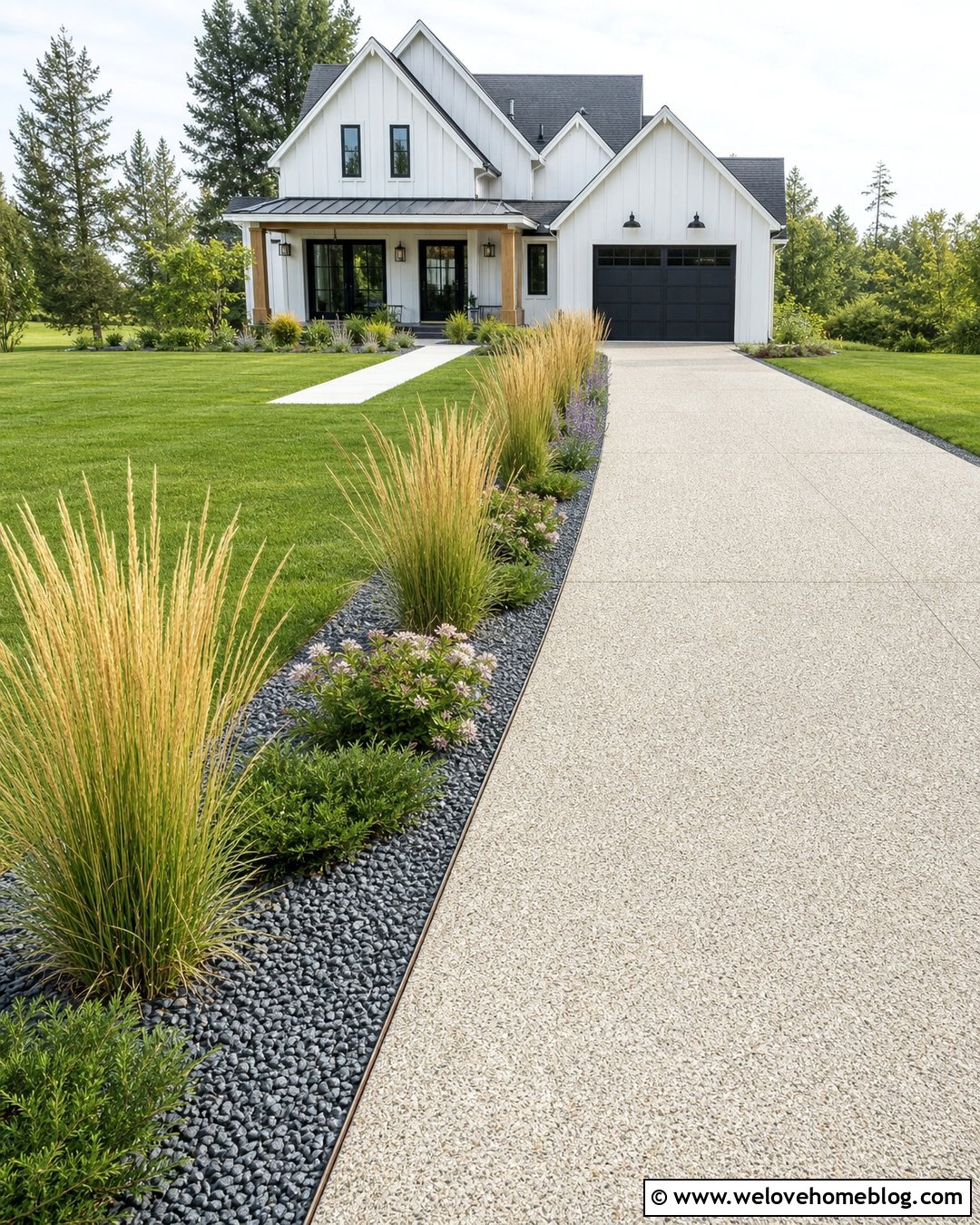
Ornamental grasses bring movement and texture to a driveway without requiring a complicated planting plan. Along a light exposed-aggregate driveway, arrange upright grasses in spaced groups rather than forming one solid wall. Fill the gaps with low evergreen ground covers and small flowering perennials. A narrow band of charcoal gravel can separate the plants from the driveway, giving tires and passenger doors extra clearance. Choose compact or non-flopping varieties where space is limited. Taller grasses should sit closer to the house or rear of the border so they do not block views near the street. This complete look pairs naturally with modern farmhouse and contemporary architecture. Cutting the grasses back at the proper seasonal time quickly refreshes the entire driveway border.
7. Side Driveway Landscaping With Boxwood
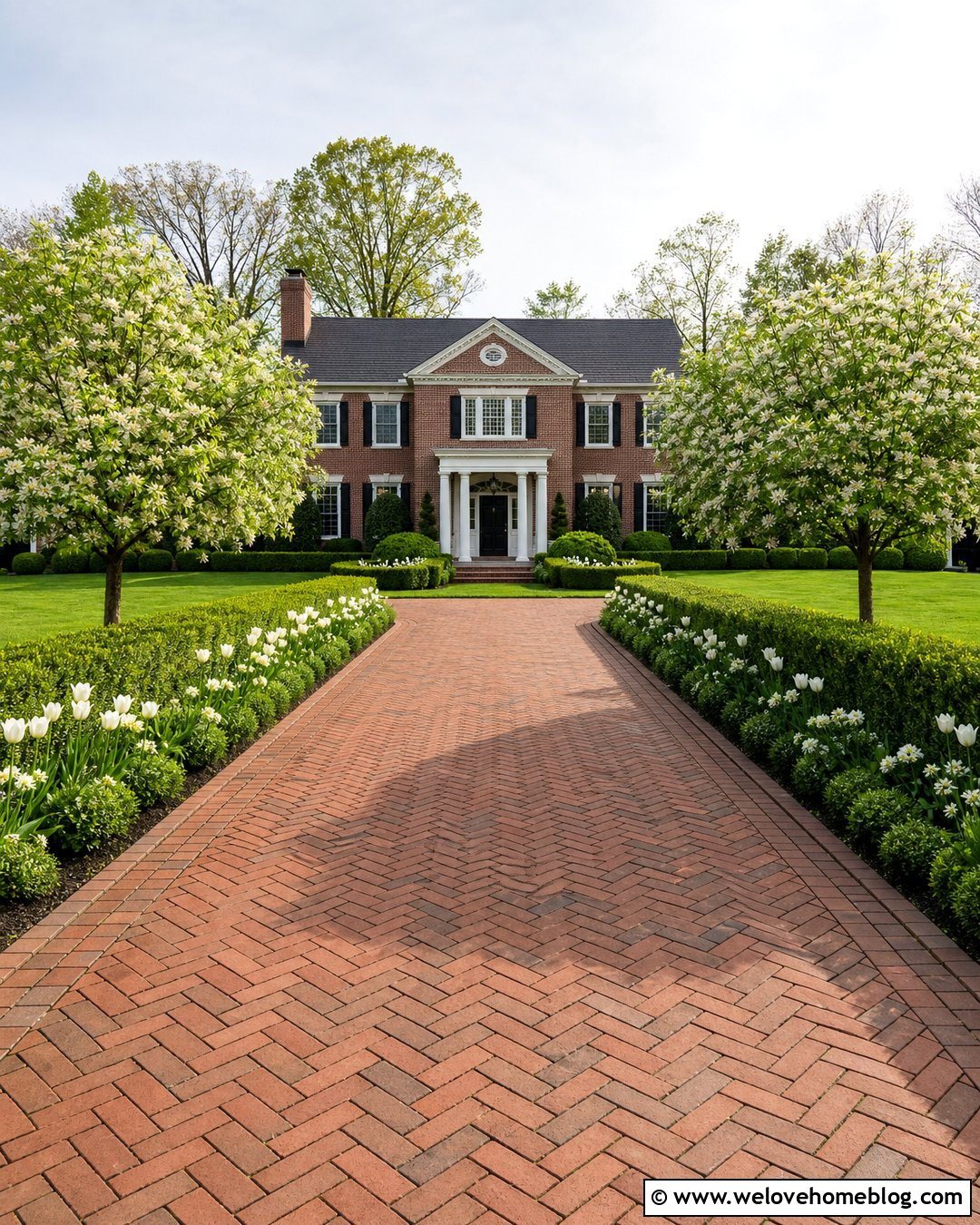
Boxwood creates an orderly edge that can make an ordinary driveway feel more architectural. Place a low clipped hedge beside a clay brick driveway laid in a herringbone pattern. Behind it, use white flowering perennials, flowering bulbs, and one or two small ornamental trees. The hedge should remain low enough to preserve visibility and provide enough clearance for opening car doors. A brick or steel barrier beneath the foliage will prevent soil from spilling onto the pavers. Repeating the hedge near the front walkway ties the driveway to the main entrance. This polished landscaping works especially well with Georgian, colonial, and symmetrical traditional homes. For a softer result, allow the individual shrubs to maintain rounded forms rather than clipping them into one continuous line.
8. Side Driveway Landscaping With Lavender
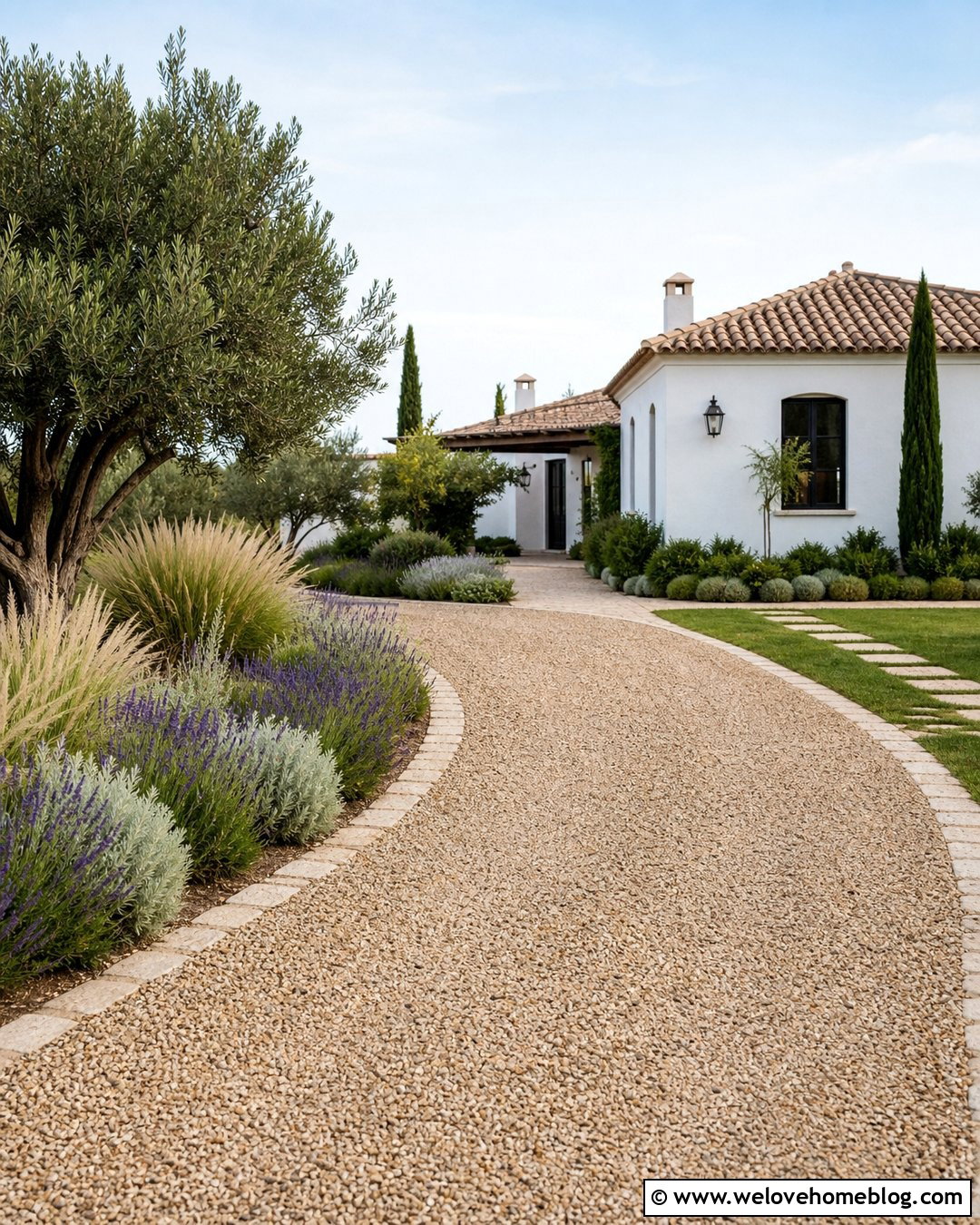
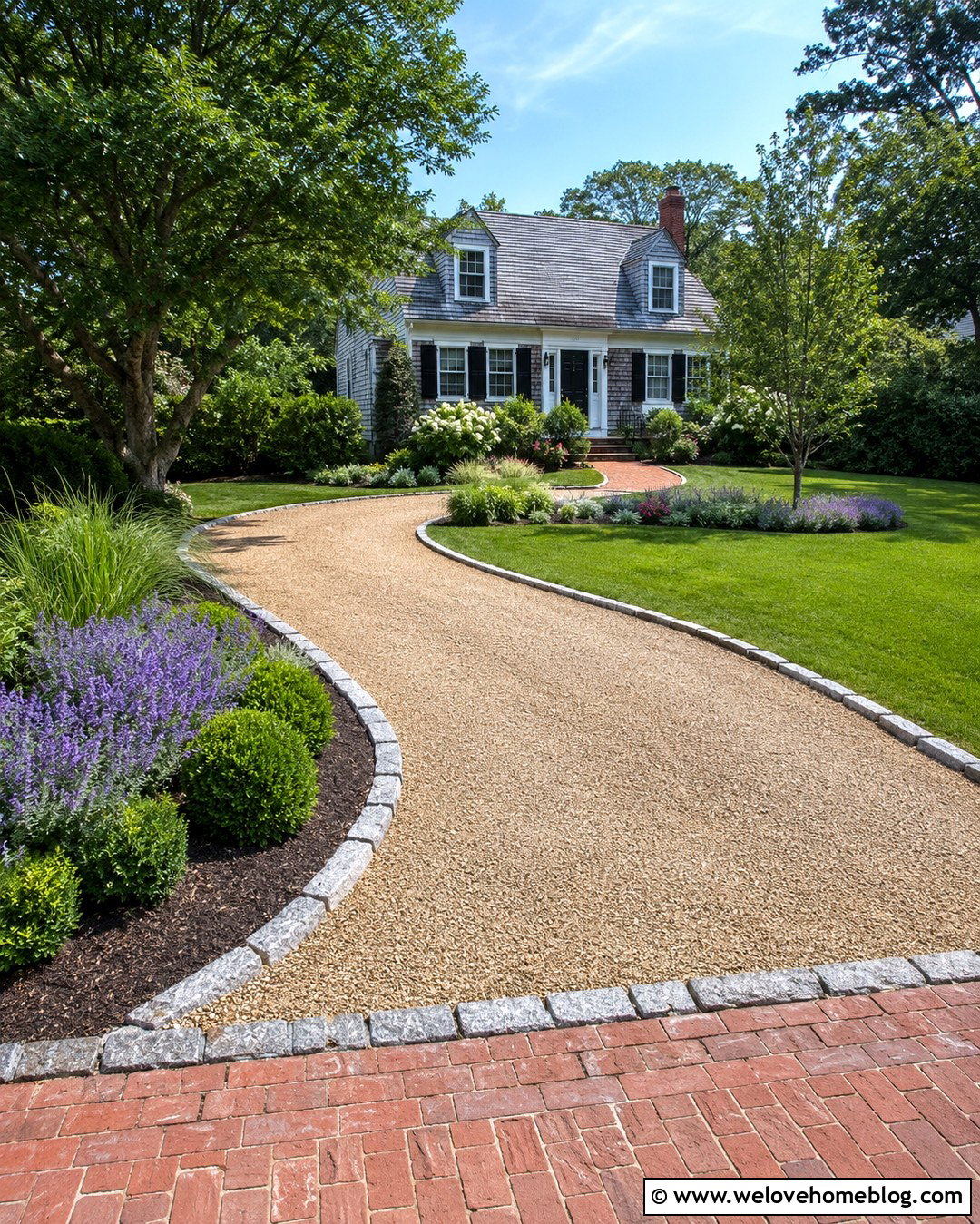
A lavender border offers soft color and a relaxed garden character beside a sunny driveway. Combine it with warm pea gravel contained by cobblestone edging. Plant the lavender in generous repeating groups, leaving enough space for air circulation and mature growth. Add silvery ground covers and a few upright ornamental grasses to vary the texture without losing the simple palette. The gravel driveway, stone edge, and drought-conscious planting create a unified look suited to farmhouse, Mediterranean, and cottage homes. Keep plants back from turning areas so tires do not crush the stems. A stepping-stone path through the bed can provide access for pruning and weeding. This border looks most intentional when the same lavender appears near the porch or front walkway.
9. Side Driveway Landscaping With Roses
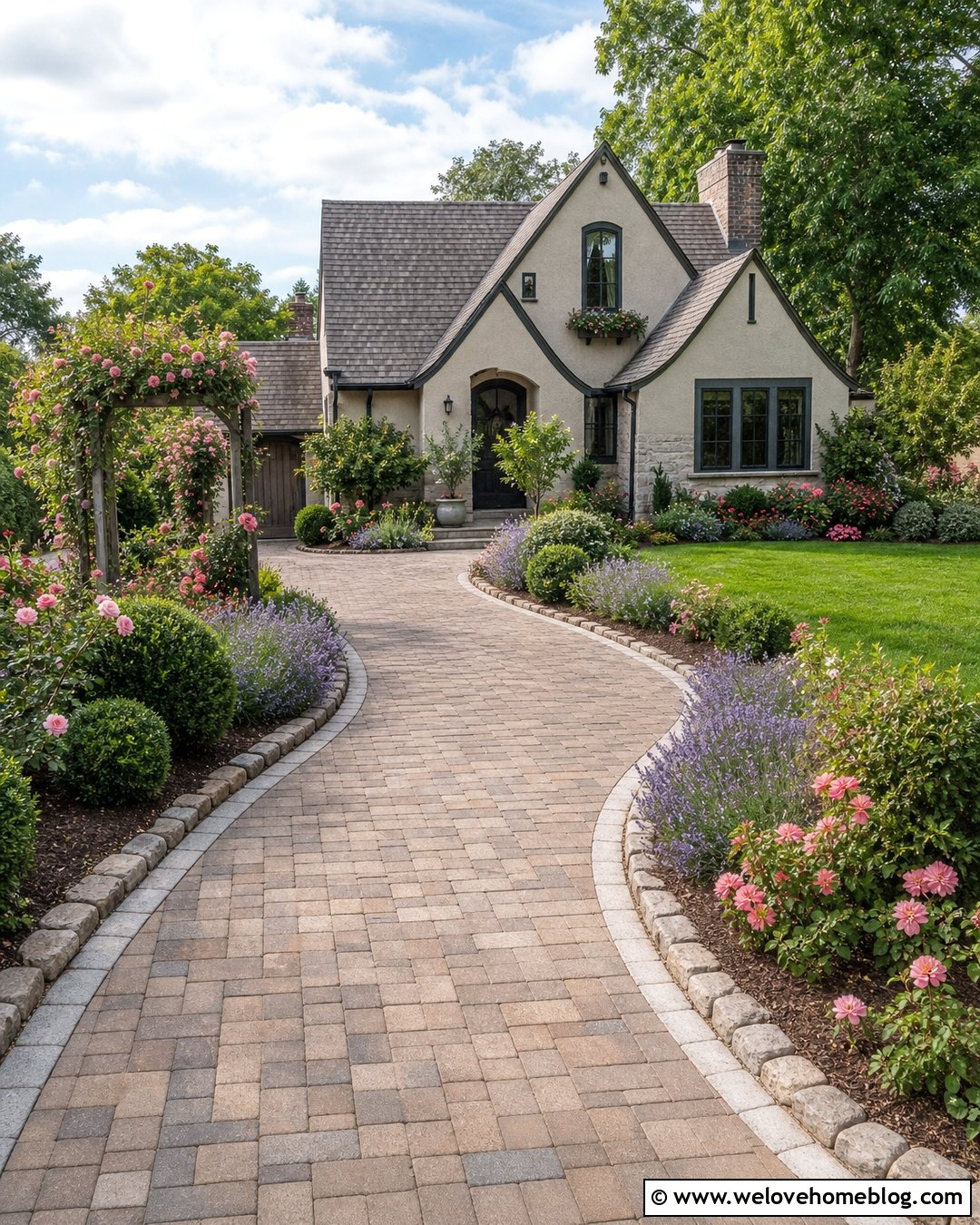
Roses can frame a driveway beautifully when they are positioned away from passengers and moving vehicles. Along a curved concrete-paver driveway, build a wide border with compact shrub roses, evergreen mounds, and low catmint or another soft flowering perennial. Use tumbled stone edging to connect the garden with the paver colors. Avoid placing thorny canes directly beside parking spaces or narrow walking routes. Repeating one rose color creates a more cohesive design than scattering many unrelated shades. Near the house, a simple rose-covered arbor can mark the transition from the driveway to a side garden path. This complete composition suits cottage and traditional homes, adding romance while preserving practical access. Regular pruning will keep the border attractive and comfortably contained.

10. Side Driveway Landscaping With Evergreen Shrubs
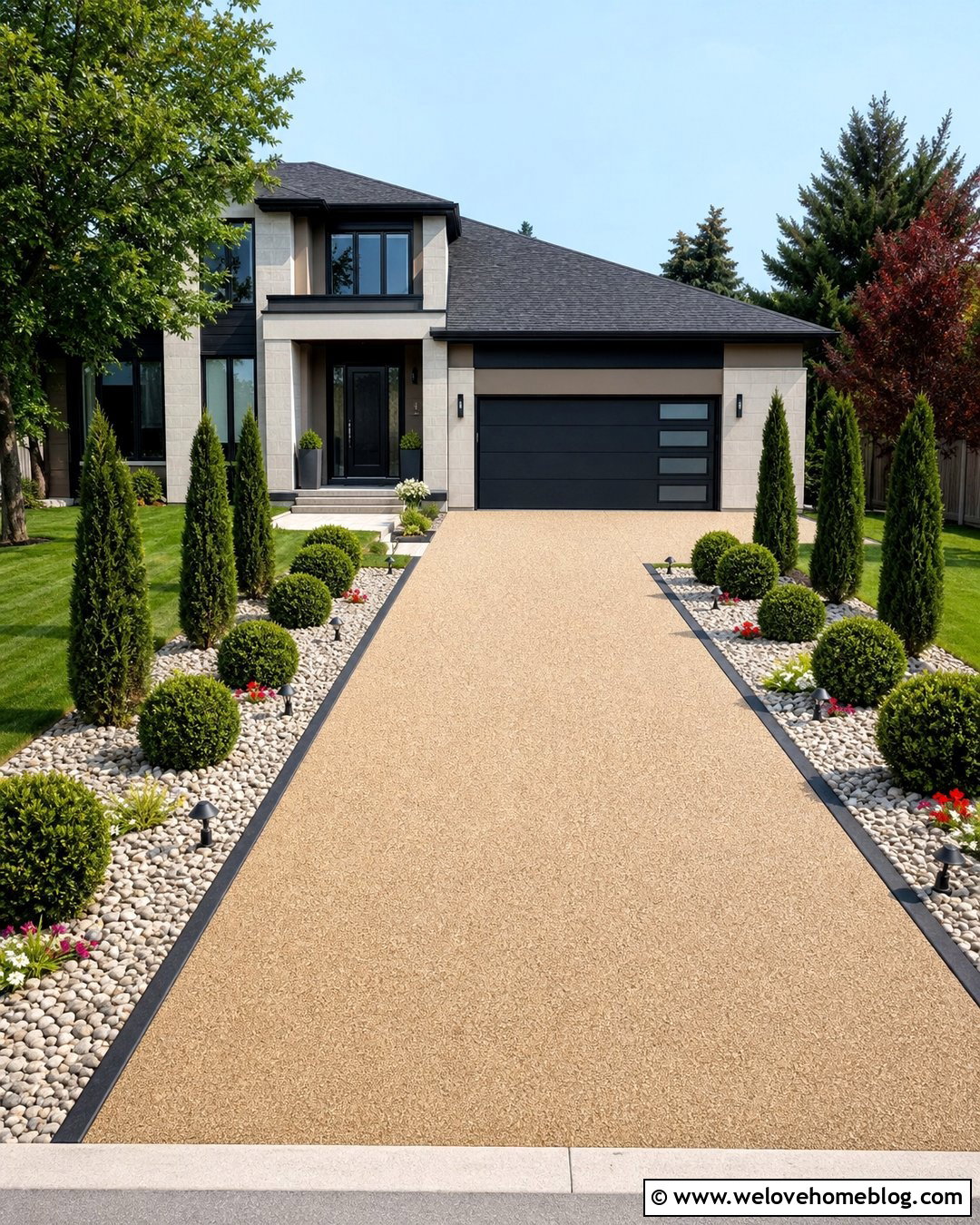
Evergreen shrubs provide a strong framework that keeps driveway landscaping composed throughout the year. Beside a straight resin-bound gravel driveway, alternate narrow upright evergreens with lower rounded forms. Use pale stone mulch and dark steel edging to emphasize the clean geometry. Seasonal flowers can be added in small pockets near the entrance without dominating the design. Keep larger shrubs away from utility boxes, sight lines, and areas where vehicles turn. For a long driveway, repeat the same planting group at measured intervals rather than filling every foot with foliage. The combination is especially effective with a contemporary two-story house because it echoes simple architectural lines. Low landscape lights placed between selected shrubs can make the route easier to read after sunset.
11. Side Driveway Landscaping With Small Trees
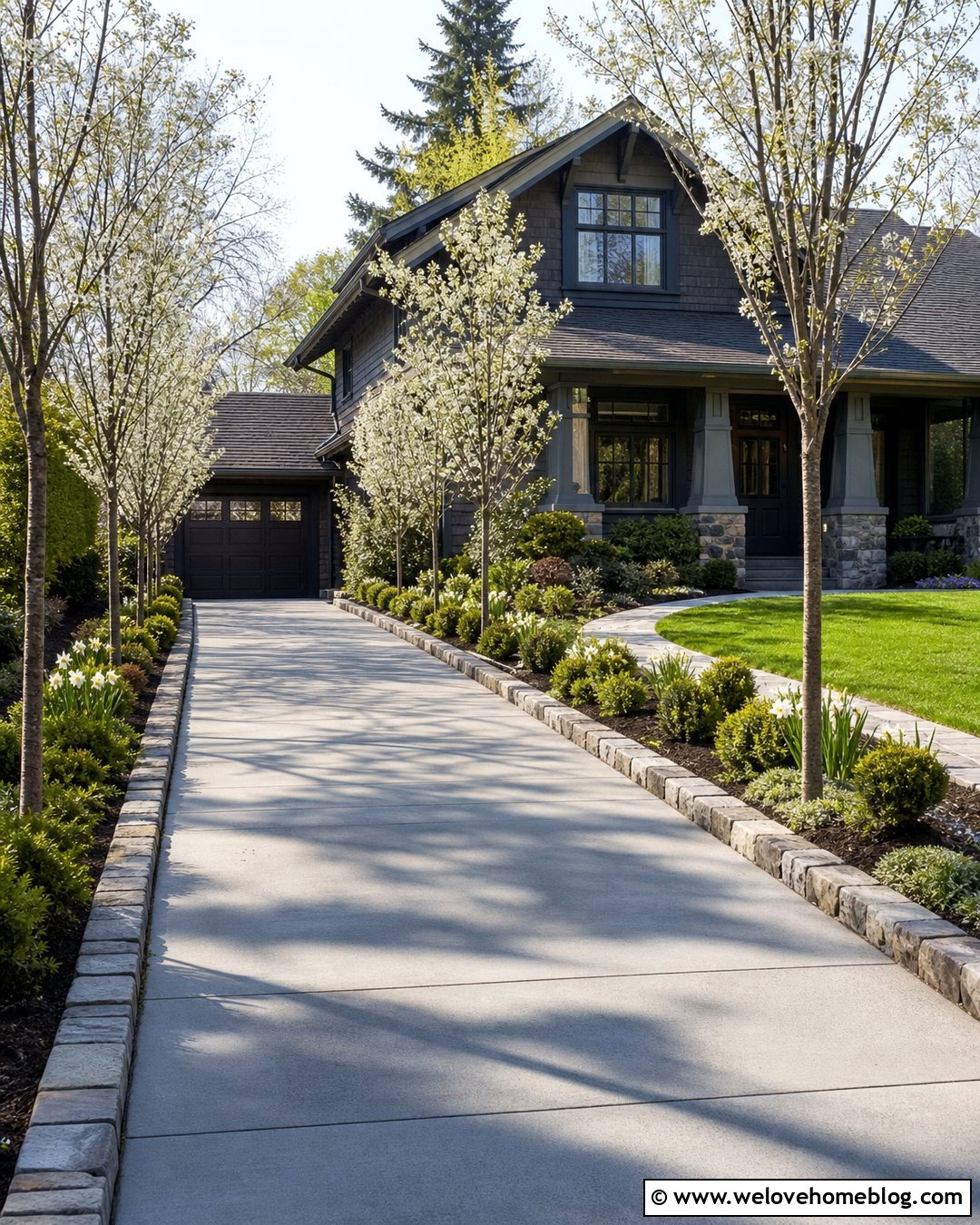
Small trees add height and shade without overwhelming a standard residential driveway. Pair a smooth concrete driveway with a generous lawn-side bed containing evenly spaced ornamental trees. Underplant them with low shrubs, spring bulbs, and spreading ground cover to create several layers. Select trees with roots and mature canopies appropriate for the available area, and avoid placing trunks directly against the pavement. Branches should be maintained above mirrors and vehicle roofs where necessary. A continuous natural-stone edge can protect the planting bed and make mowing simpler. This tree-lined approach suits Craftsman, colonial, and suburban homes. On a short driveway, one tree near the street and another near the garage may provide enough repetition to create a balanced, intentional composition.
12. Side Driveway Landscaping With Columnar Trees
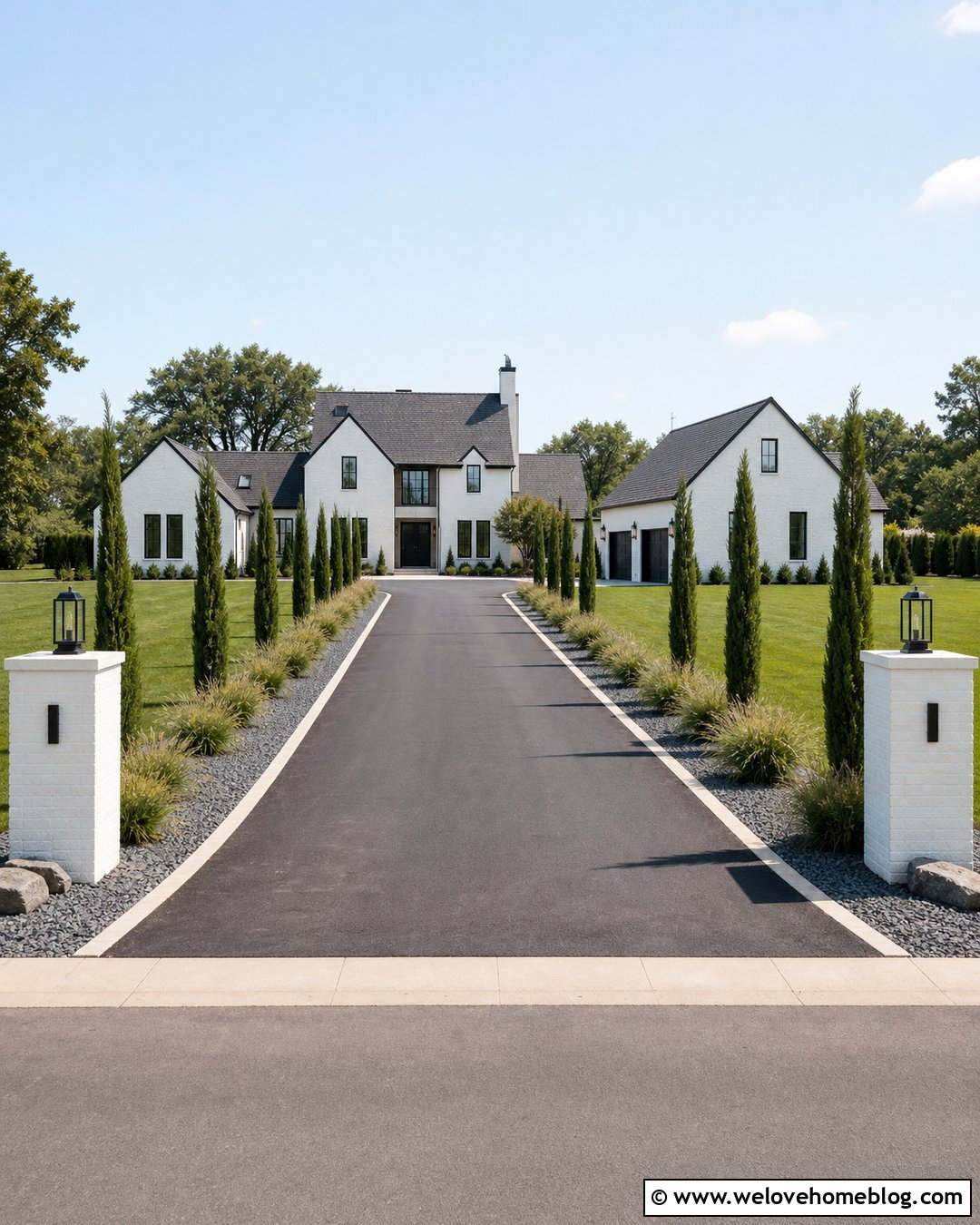
Columnar trees are useful when vertical impact is needed but planting width is limited. Line one side of a long asphalt driveway with evenly spaced narrow trees, then soften their bases using low grasses and a simple gravel mulch. Install a flush concrete curb to keep planting material away from the pavement. The upright forms draw attention toward the house and can visually strengthen a long, narrow property. However, spacing should reflect the trees’ mature size rather than their appearance at planting time. Keep the first tree back from the road to preserve a clear view of pedestrians and traffic. This structured design complements modern farmhouse, European-inspired, and formal homes. Matching plantings near the garage can create a satisfying endpoint for the linear arrangement.
13. Side Driveway Landscaping With Native Plants
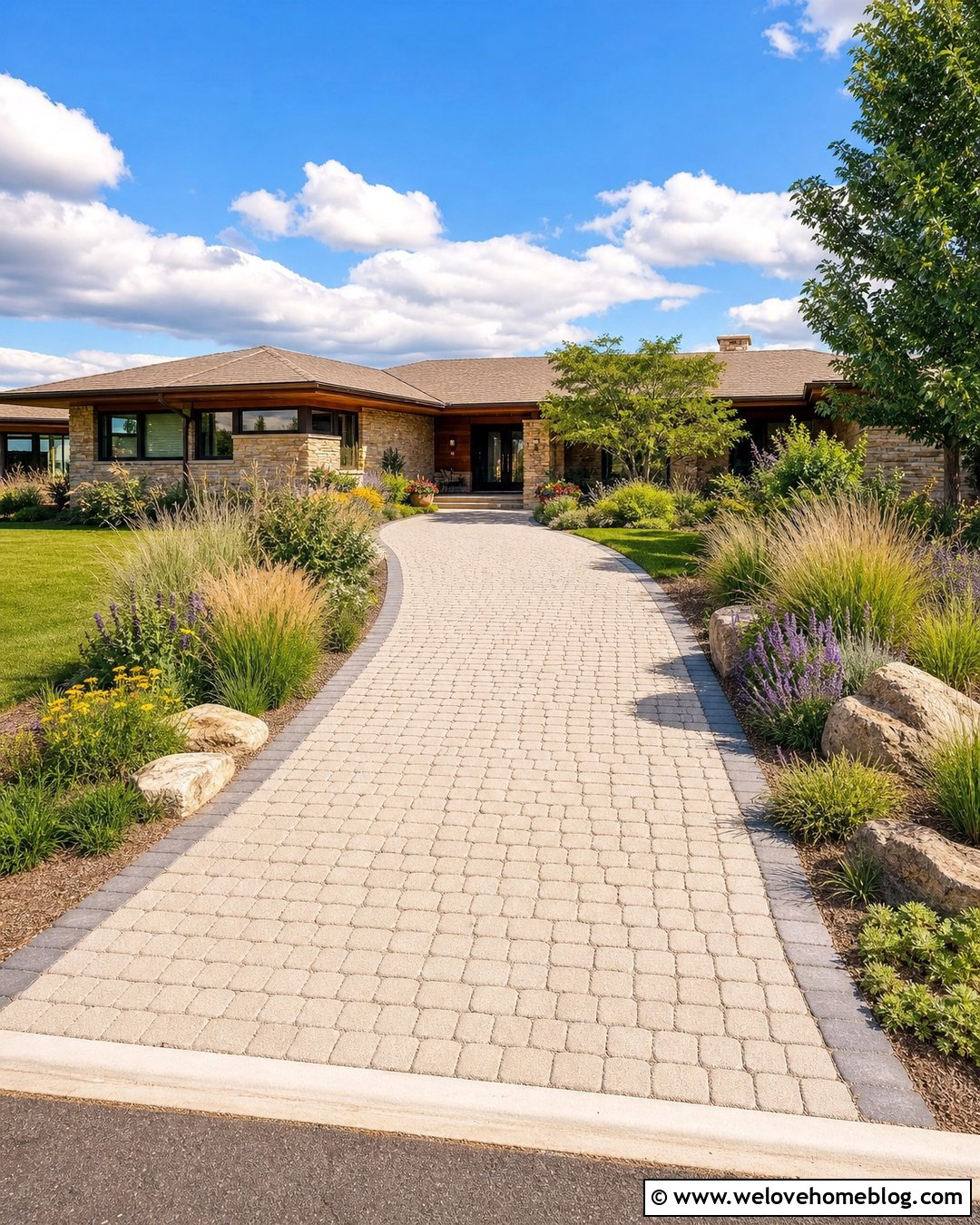
Native-focused planting can make a driveway border feel connected to the surrounding regional landscape. Along a permeable concrete-paver driveway, create a broad, irregular bed filled with locally appropriate grasses, flowering perennials, and compact shrubs. Arrange the plants in repeated drifts so the result appears designed rather than accidental. A clean stone edge beside the pavers provides contrast and prevents stems from leaning into the driving area. Place taller plants toward the center or back of the bed and reserve low selections for the street entrance. A few weathered boulders can reinforce the natural composition. This approach works with ranch, prairie, woodland, and contemporary homes. Confirm mature dimensions and local growing requirements before choosing the final planting combination.
14. Side Driveway Landscaping With Wildflowers
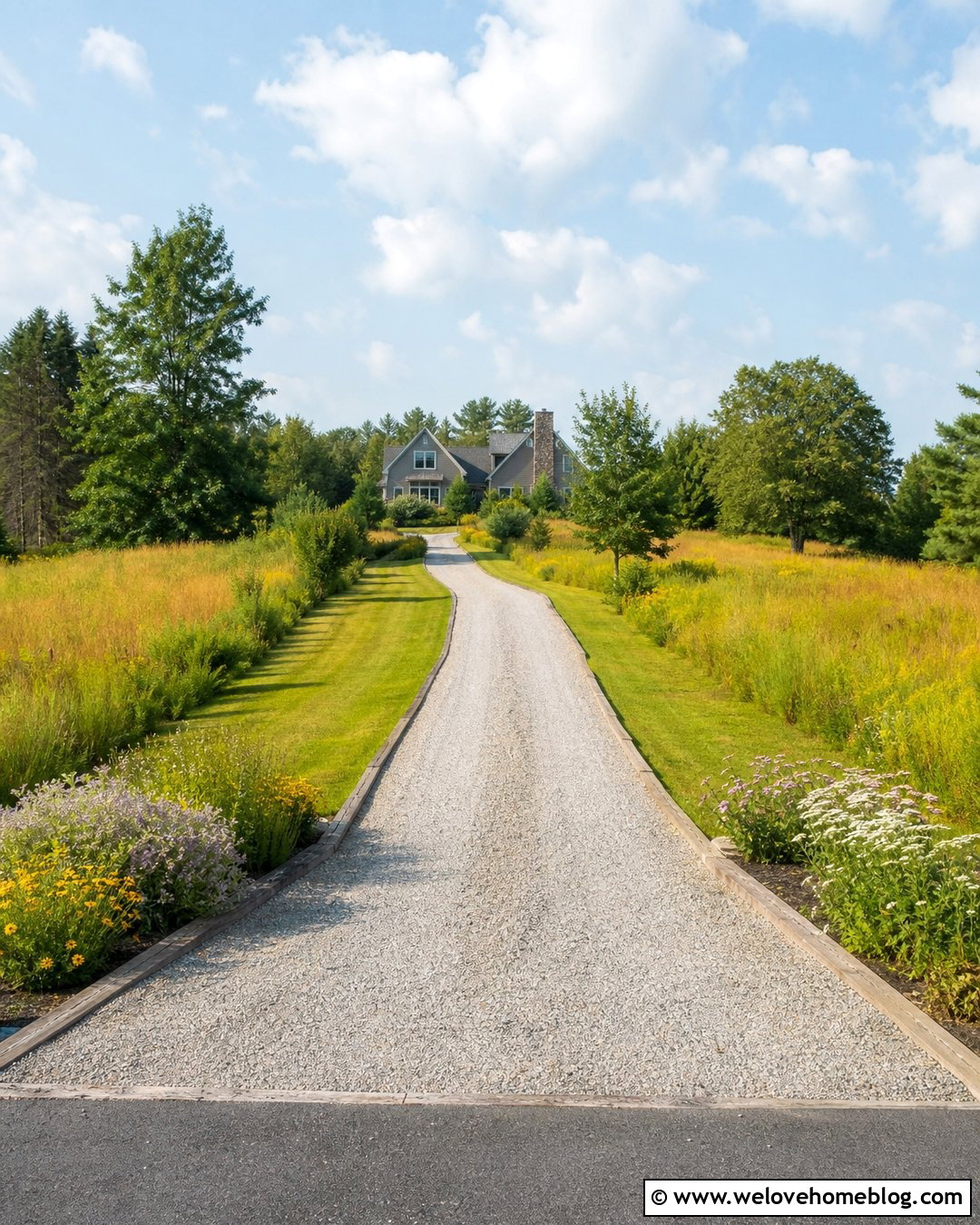
A wildflower border can soften a long rural driveway and create a colorful transition into the wider property. Use a light gravel driveway with a clearly defined timber or stone edge. Establish wildflowers in broad sweeps beyond a short mown strip, which keeps the driveway boundary tidy and leaves room for passengers. Mix flowering plants with native grasses so the border retains texture when fewer blooms are present. Near the road, keep growth lower to protect sight lines. The planting can become taller and looser as it approaches a country or farmhouse-style home. Include a simple mown access path for maintenance. The contrast between the crisp driveway edge and relaxed planting is what makes this complete landscape look attractive rather than neglected.


15. Side Driveway Landscaping With Hostas
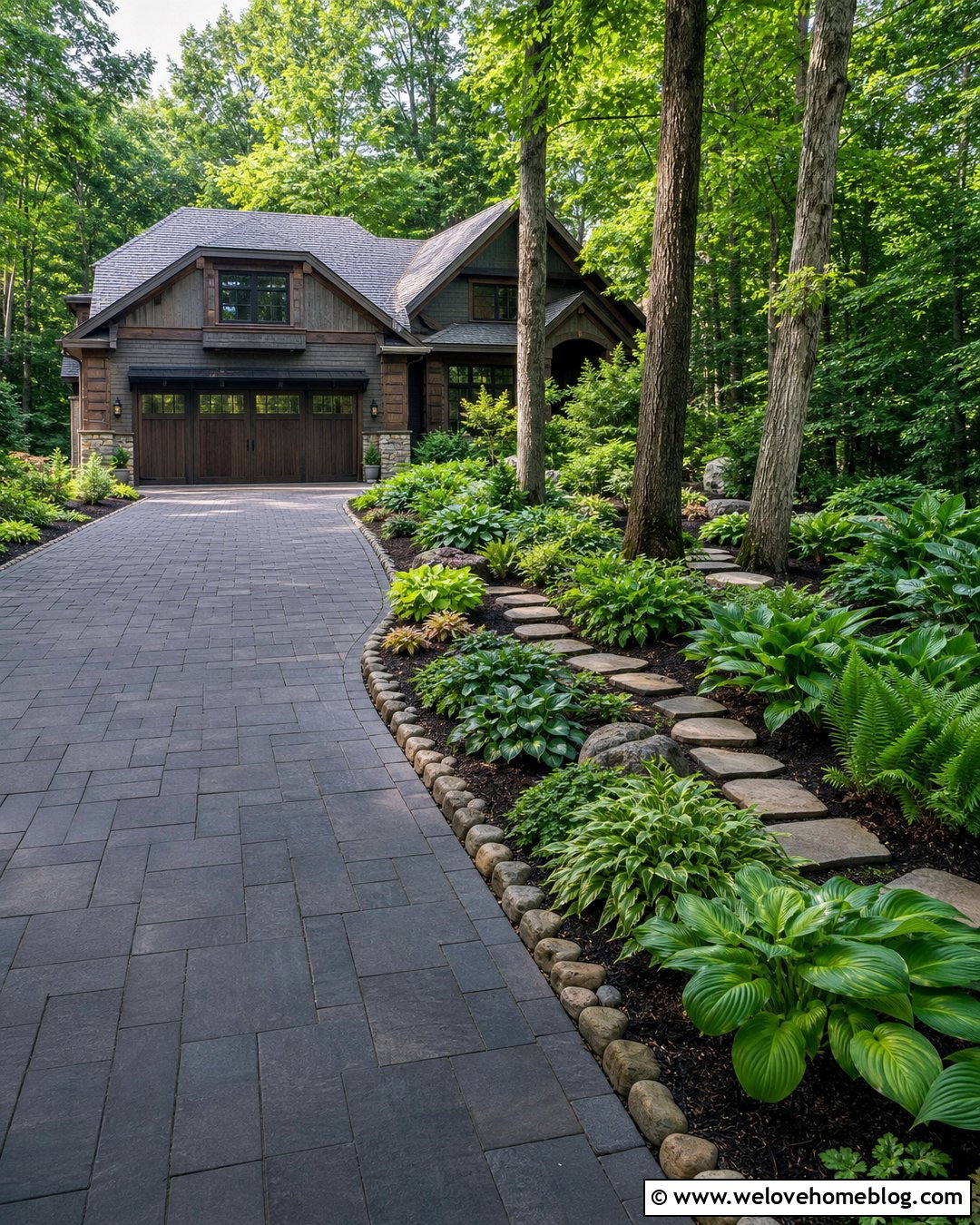
A shaded driveway border can feel lush and detailed without depending on bright flowers. Beside a charcoal concrete-paver driveway, combine hostas of several sizes with ferns, low evergreen ground cover, and a few woodland shrubs. Use dark bark mulch to highlight the broad foliage, then finish the bed with natural fieldstone edging. Position larger hostas away from vehicle doors because their leaves can spread considerably. Repeating the same varieties along the driveway creates rhythm and prevents the shaded strip from appearing cluttered. A narrow stepping-stone route through the bed makes maintenance easier without disturbing the plants. This combination suits wooded Craftsman, cottage, and traditional properties. It can also visually cool a narrow side yard bordered by mature trees or a tall fence.
16. Side Driveway Landscaping With Succulents
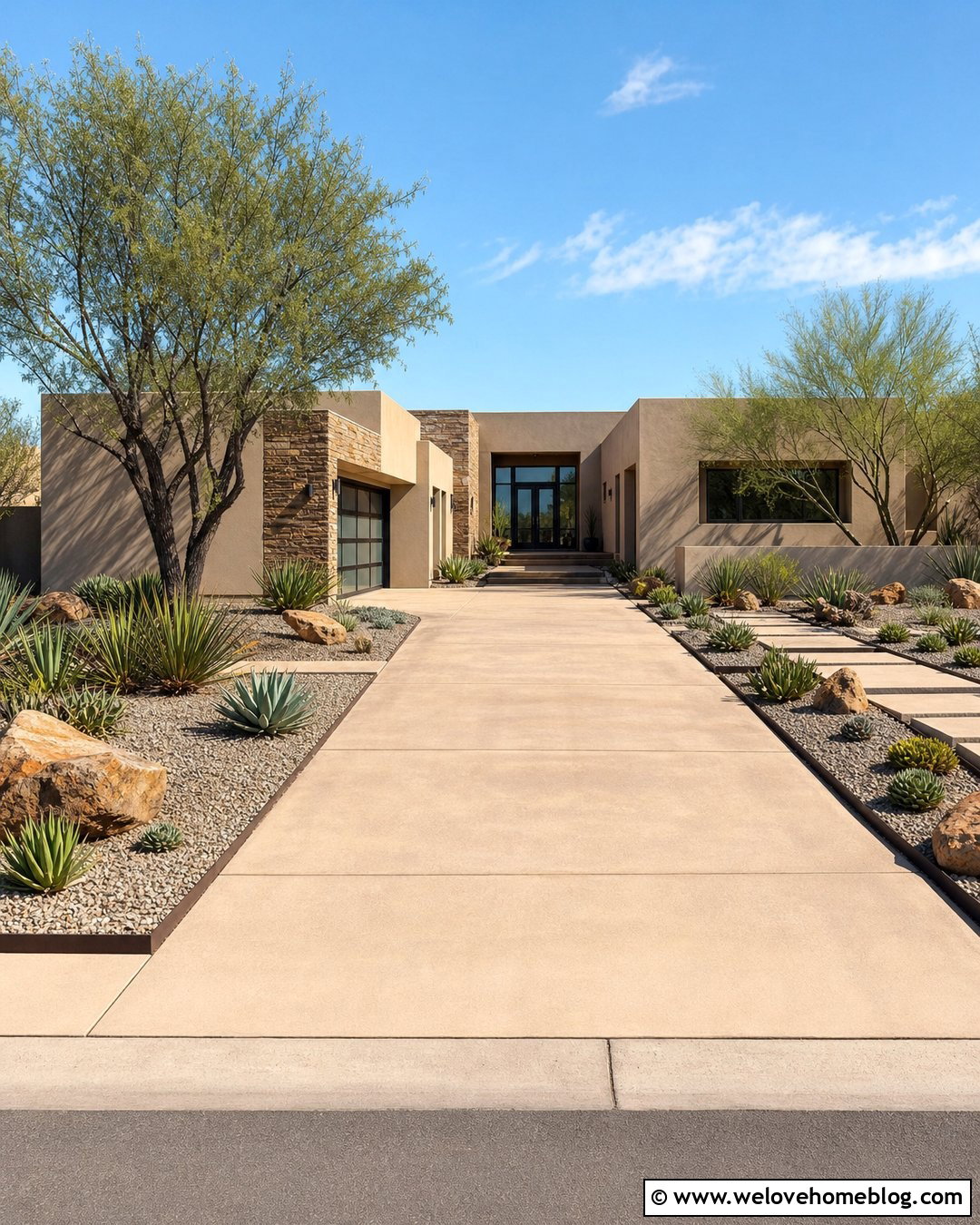
In a warm, dry setting, succulents can create an expressive border with relatively little visual clutter. Pair a sand-colored concrete driveway with beds of crushed granite, sculptural agaves, compact aloes, and low rosette-form plants. Arrange plants in asymmetrical clusters and use several large rocks to anchor the composition. A steel edge should separate the crushed stone from the driveway and nearby lawn. Keep sharp or rigid leaves well away from parking spaces, walkways, and passenger doors. The warm aggregate, blue-green foliage, and clean pavement complement Southwestern, desert-modern, and stucco homes. Instead of filling every open space, leave visible areas of stone around the plants. That negative space helps each form stand out and gives the driveway border a calm appearance.
17. Side Driveway Landscaping With Ground Cover
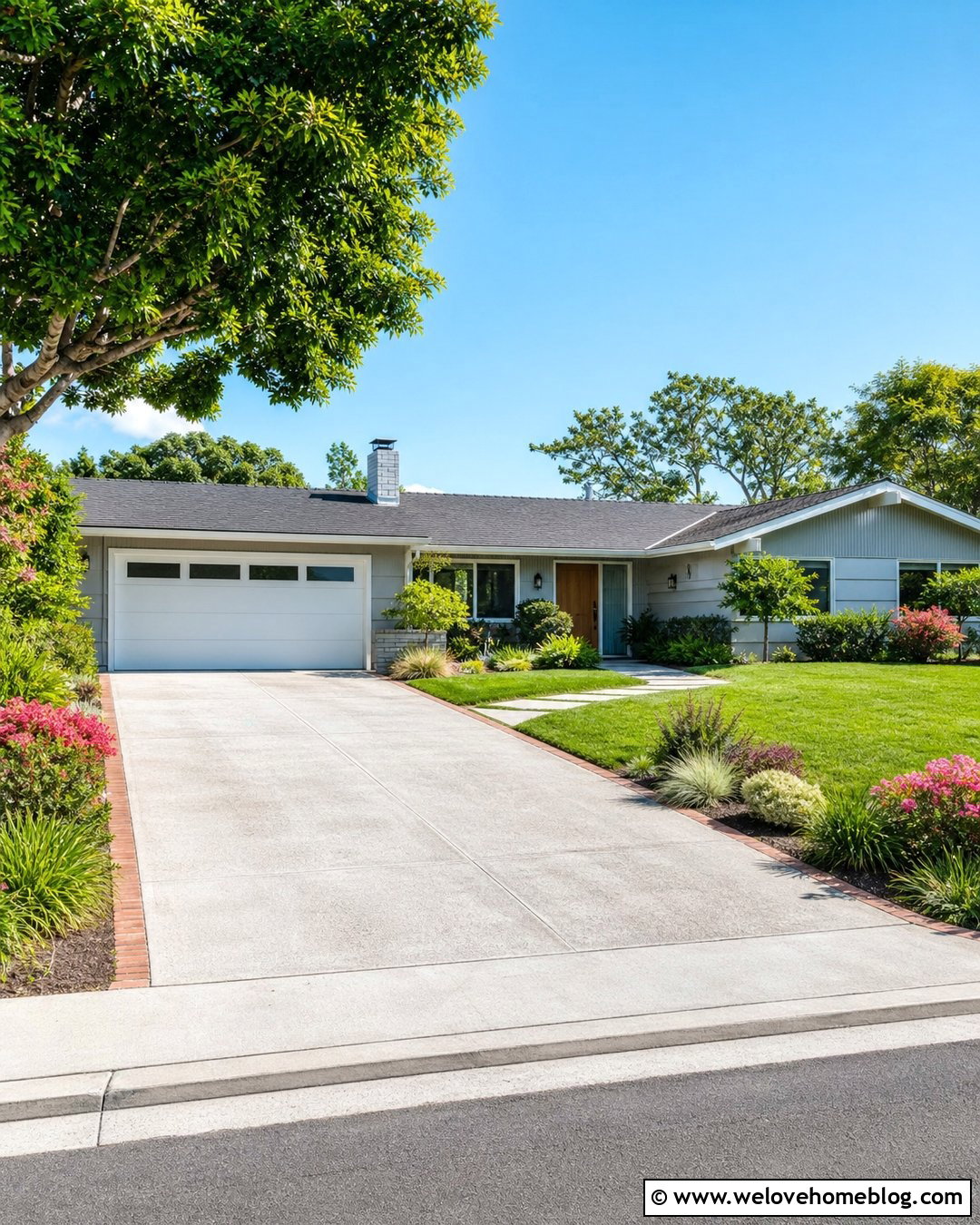
A low ground-cover border can soften pavement while preserving open views across the front yard. Next to a straight brushed-concrete driveway, install a narrow planting strip edged with brick or metal. Use one spreading ground cover in a broad ribbon, interrupted by small ornamental grasses and a few compact flowering shrubs. Select plants that remain low and do not creep aggressively onto the driveway. This design is useful beside parking areas because it reduces the amount of foliage near vehicle doors. Continue the ground cover around the mailbox bed or front walkway to connect separate landscape zones. The simple, horizontal planting complements ranch and midcentury-inspired houses. Regular trimming along the edge keeps the transition crisp and prevents the driveway from appearing narrower than it is.
18. Side Driveway Landscaping With a Retaining Wall
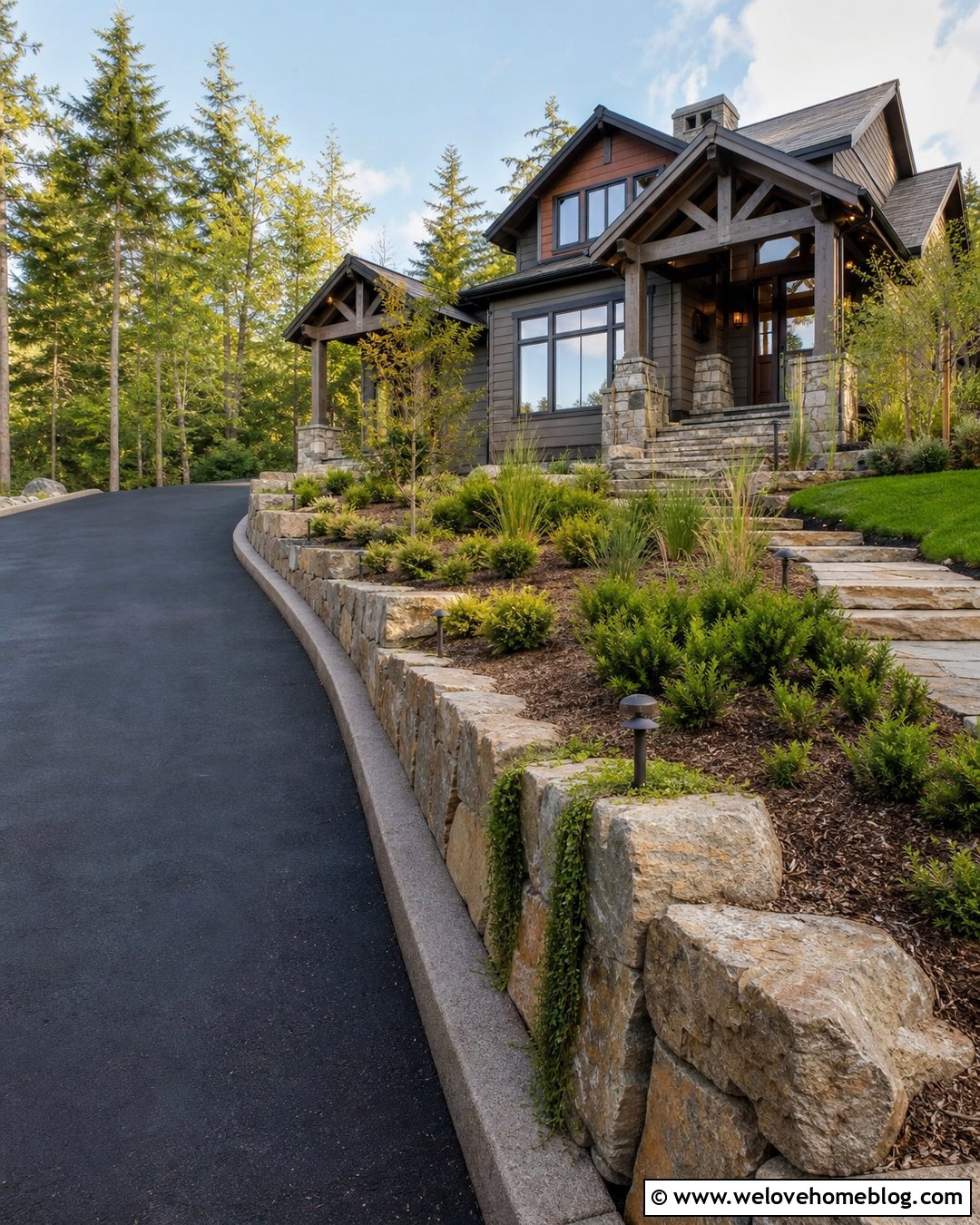
A retaining wall can turn an awkward raised bank beside a driveway into an organized planting feature. Along a sloped asphalt driveway, build a low wall from segmental concrete blocks or natural stone selected to match the house. Create a level bed above it with compact shrubs, trailing plants, and ornamental grasses. Keep the wall face free of soil stains by directing irrigation carefully and including suitable drainage behind the structure. Where the grade changes, step the wall gradually rather than forcing one tall, uninterrupted line. Add recessed or low-profile lighting only where it will not distract drivers. This complete treatment supports the slope, defines the pavement, and adds layered greenery. It works particularly well with hillside ranch, Craftsman, and mountain-inspired homes.
19. Side Driveway Landscaping With Boulders
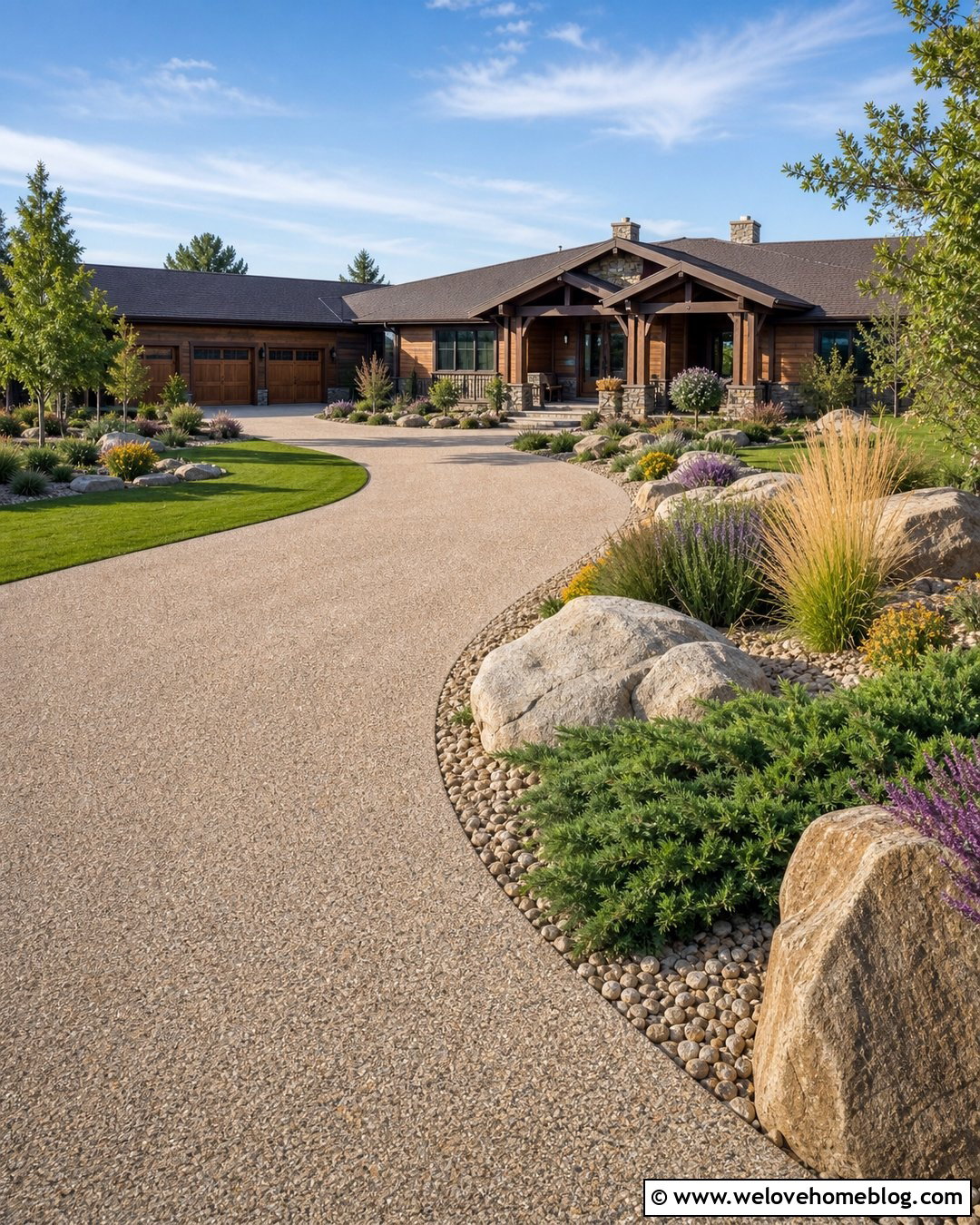
Large boulders can provide a natural focal point and help visually anchor a wide planting bed. Pair an exposed-aggregate driveway with groups of weathered stone placed along one gently curving side. Nest each boulder partly into the soil so it appears integrated rather than set on top. Surround the rocks with sturdy grasses, low junipers, flowering perennials, and stone mulch. Avoid locating bulky rocks beside tight parking spaces or where drivers need additional turning room. Select stone colors that relate to the driveway aggregate or house masonry. This rugged composition suits mountain, rustic ranch, and contemporary woodland homes. Using a few substantial boulders usually creates a stronger result than scattering many small rocks without a clear pattern or purpose.


20. Side Driveway Landscaping With a Dry Creek Bed
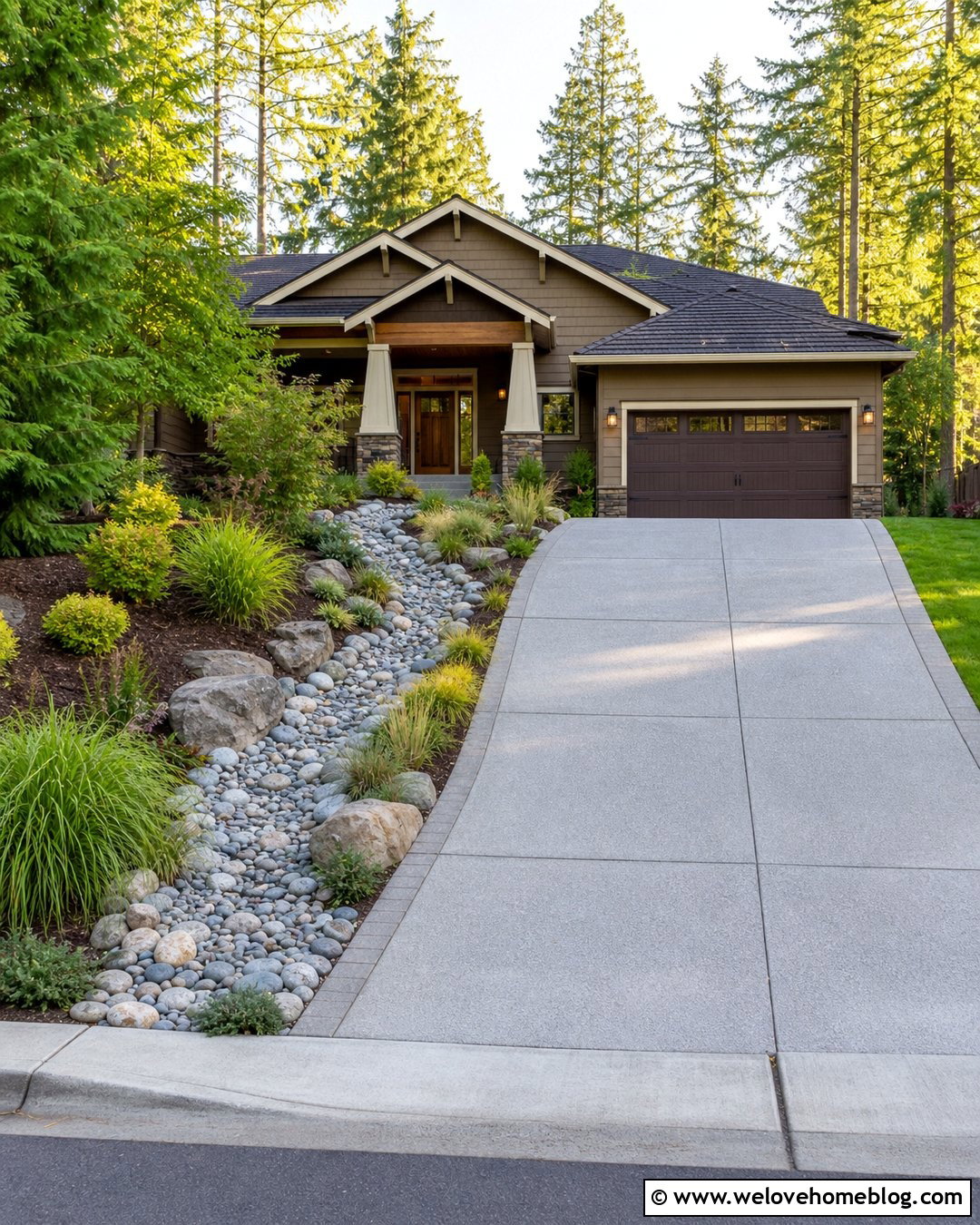
A decorative dry creek bed can connect driveway landscaping with a practical drainage route. Beside a sloped concrete driveway, form a shallow winding channel using rounded river stones in several sizes. Place larger rocks at bends, then plant moisture-tolerant grasses, sedges, and compact shrubs along the upper edges. The stone channel should remain lower than adjacent soil so runoff has a clear direction. A narrow paver border can separate the creek bed from the driveway and reduce loose-rock movement. Extend the planting toward the front yard to make the drainage feature feel like part of the overall landscape. This natural look fits Craftsman, woodland, and rustic homes. Any drainage layout should direct water toward an appropriate outlet rather than a neighboring property or structure.
21. Side Driveway Landscaping With a Rain Garden
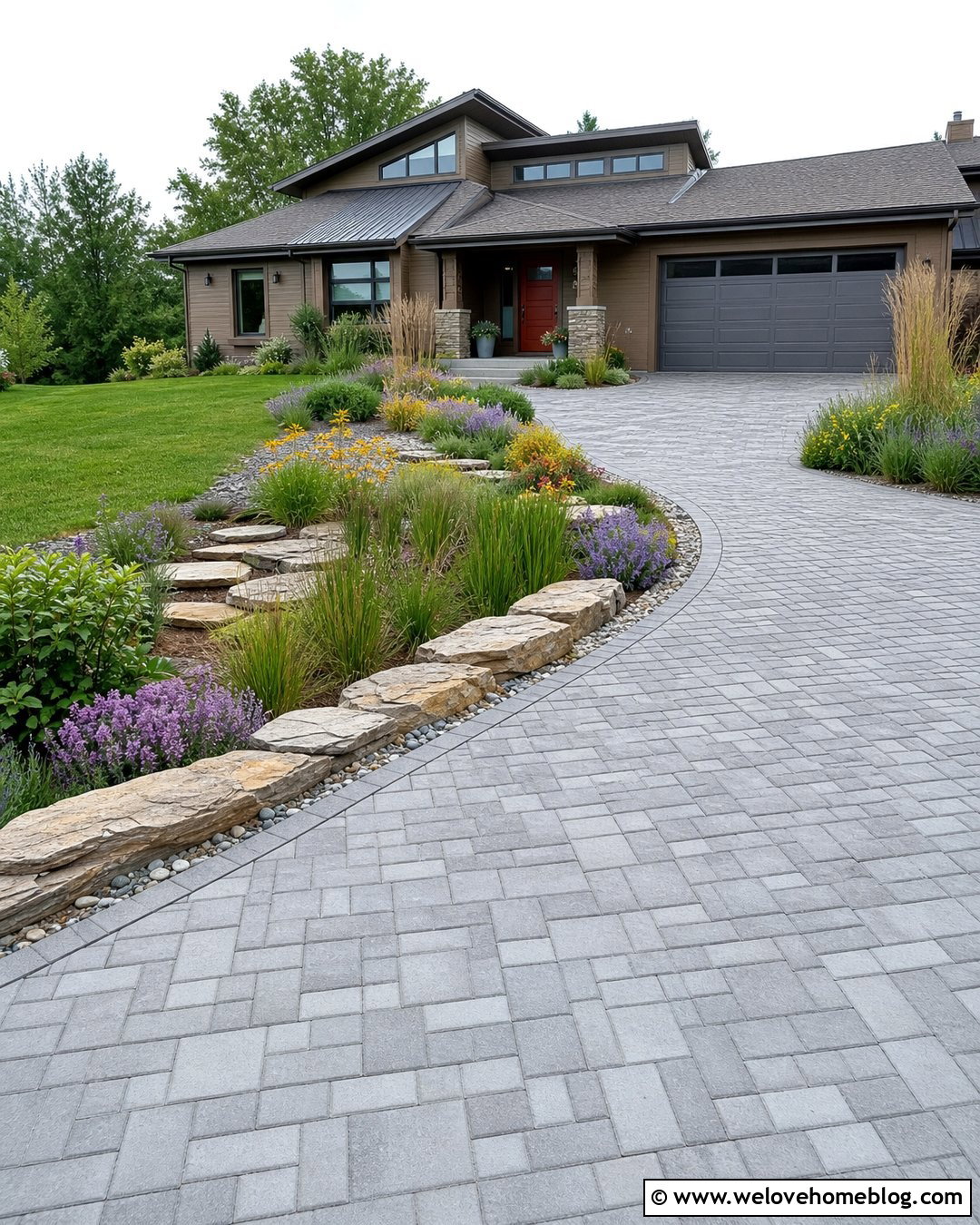
A rain garden can give a broad driveway border a clear visual and functional purpose. Pair permeable pavers with a shallow planted basin positioned beyond a level safety strip. Use moisture-tolerant plants in the lowest section, then transition to shrubs and grasses that prefer drier conditions around the rim. Define the driveway side with flat stone edging so the depression does not look accidental. A small bridge of stepping stones can connect the driveway to the lawn or front walkway. Keep the basin away from foundations and confirm where runoff naturally travels before shaping the bed. This complete landscape suits eco-conscious contemporary, Craftsman, and prairie homes. Repeated plant groups will make the rain garden appear polished even when it is temporarily dry.
22. Side Driveway Landscaping With Landscape Lighting
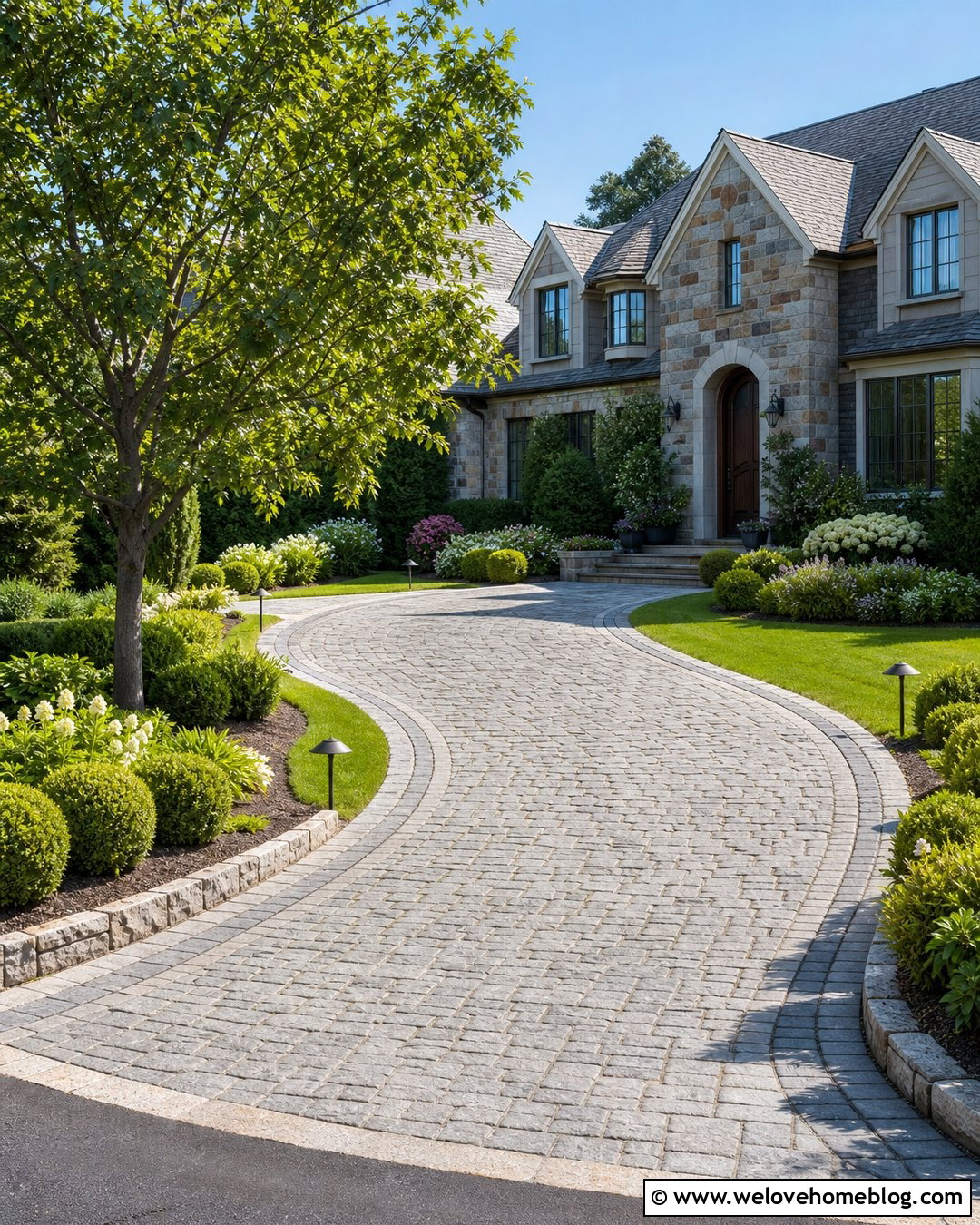
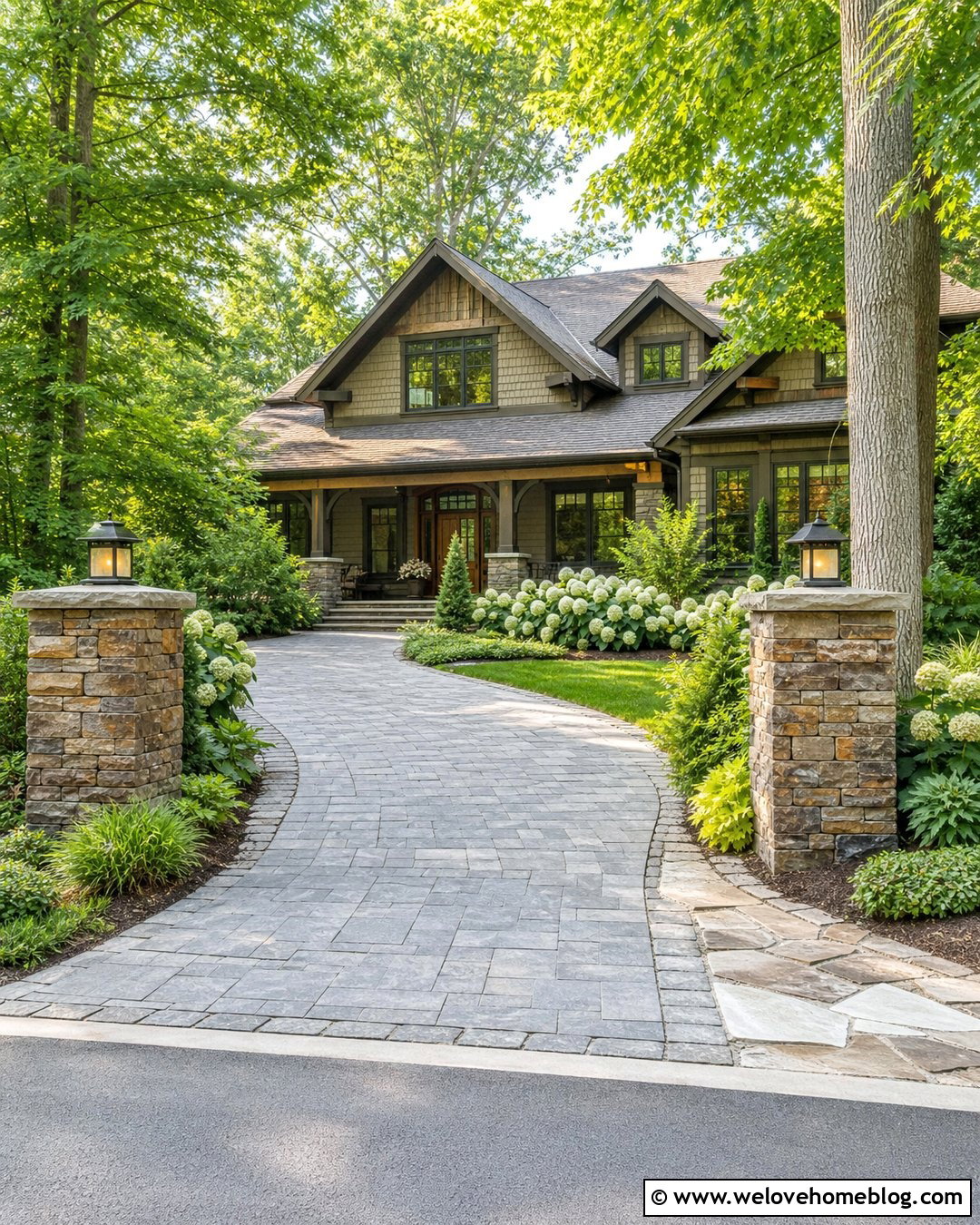
Lighting can strengthen a driveway border while making the route and nearby walkway easier to understand. Along a curved cobblestone driveway, install low, shielded fixtures between groups of clipped shrubs and flowering perennials. Space the lights according to important features rather than forming an overly bright runway. Highlight a specimen tree, stone wall, or address pillar while keeping glare away from drivers and neighboring windows. The planting bed should remain wide enough to protect fixtures from tires, lawn equipment, and snow removal. Warm-neutral fixtures with simple dark finishes suit most house exteriors. By day, the cobblestone, layered greenery, and stone edging deliver texture. After dark, carefully directed light emphasizes the curves and gives the complete entrance a more welcoming, finished appearance.
23. Side Driveway Landscaping With Solar Lights
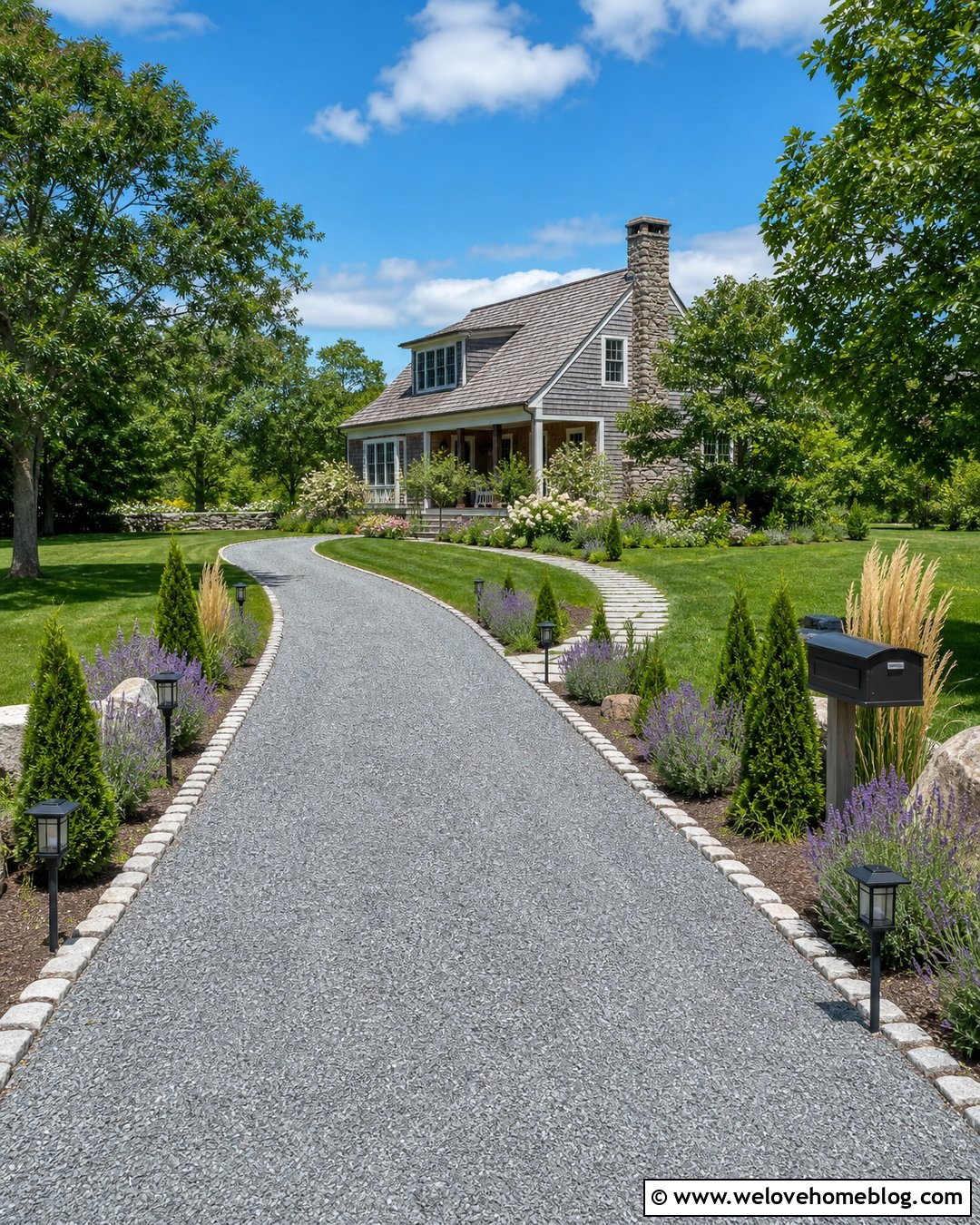
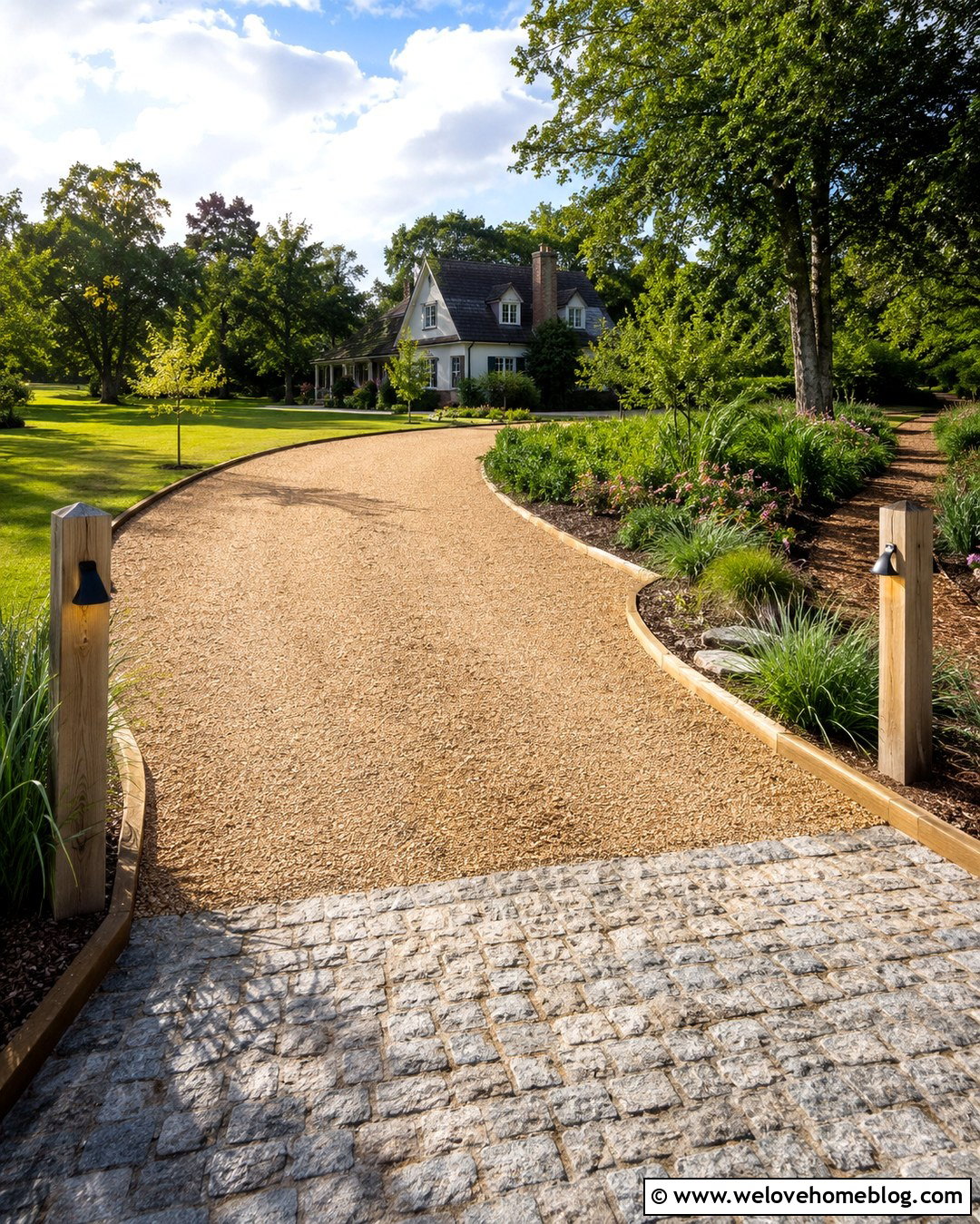
Solar lights offer a simple way to add definition when installing electrical wiring is impractical. Pair a gravel driveway with a crisp cobblestone border and low planting beds of lavender, grasses, and compact evergreens. Place durable solar fixtures at key transitions, such as the entrance, a curve, or the point where the driveway meets a walkway. Avoid crowding the entire edge with identical lights. Adequate sun exposure is important, so keep panels clear of dense foliage and deep shade. Choose fixtures with a consistent finish that relates to the mailbox, gate, or house hardware. This approachable design suits cottage, farmhouse, and casual suburban homes. The stone edging keeps gravel contained, while the repeated planting gives the small lights a purposeful daytime setting.
24. Side Driveway Landscaping With Raised Planters
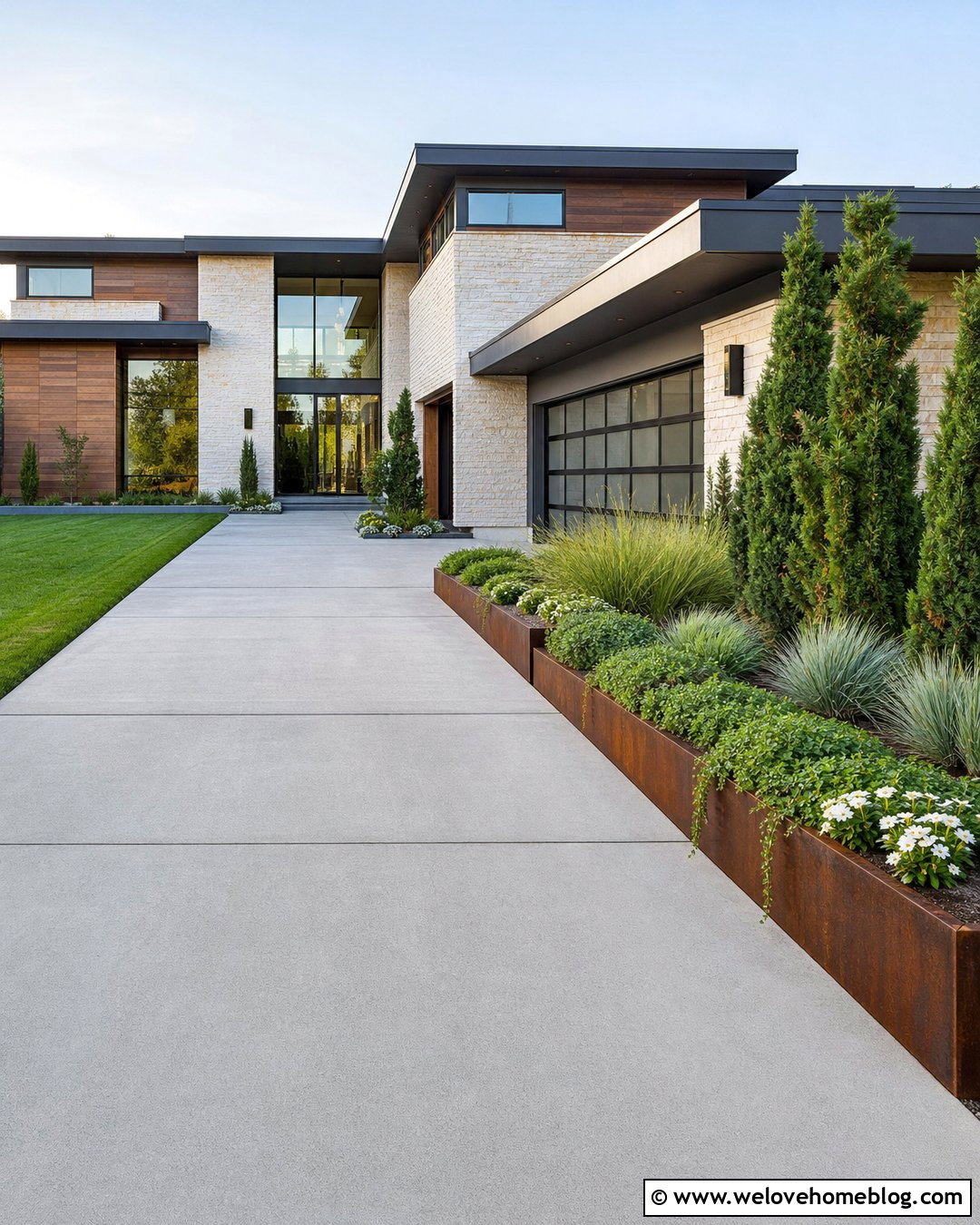
Raised planters can define a driveway where poor soil, a steep grade, or limited bed depth makes traditional planting difficult. Along a smooth poured-concrete driveway, install long planters made from masonry, weathered steel, or wood that complements the house. Fill them with compact grasses, trailing flowers, and upright evergreen accents. Keep the structures low beside turning and parking areas, and leave openings where passengers naturally walk toward the house. A matching pathway can connect the driveway with the front steps. This arrangement creates a clean architectural edge for modern and contemporary homes, although brick planters can suit traditional properties. Proper drainage is essential so water does not stain the wall face or collect beside the driveway after irrigation or heavy rain.
25. Side Driveway Landscaping With Window Boxes
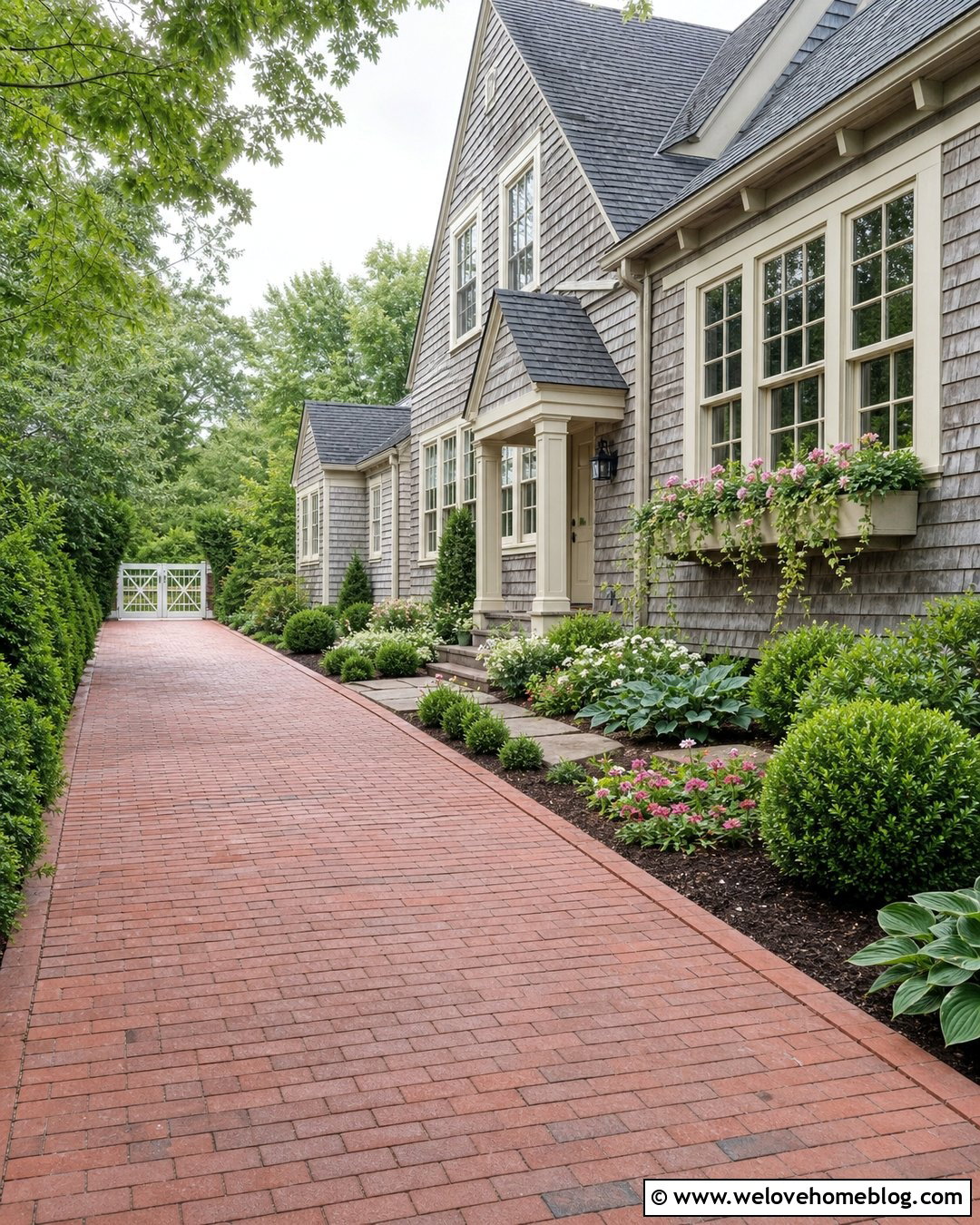
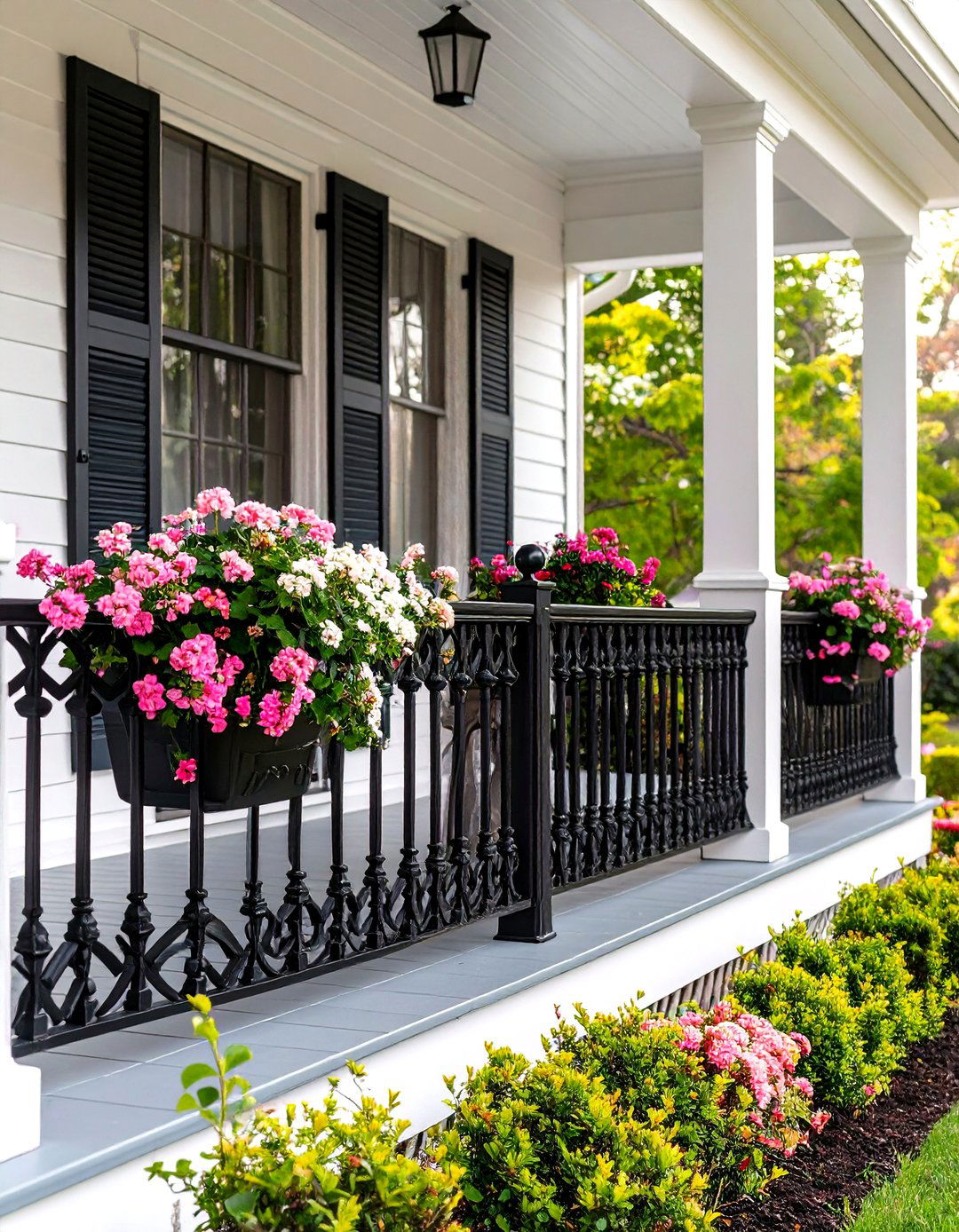
When a driveway runs close to the house, wall-mounted planting can add greenery without consuming valuable pavement. Use a narrow brick driveway beside a colonial or cottage facade, then install coordinated window boxes above a slim foundation bed. Fill the boxes with trailing foliage and seasonal flowers, while the ground-level strip contains compact shrubs and low perennials. A flush brick edge will prevent soil and mulch from spreading across the driveway. Keep plant selections controlled so branches do not scrape vehicles or block windows. Repeating the same flower color beside the porch ties the side driveway to the main entrance. This layered design draws attention upward, making a tight side yard feel more complete without reducing the usable width of the driving and parking surface.
26. Side Driveway Landscaping With a Privacy Hedge
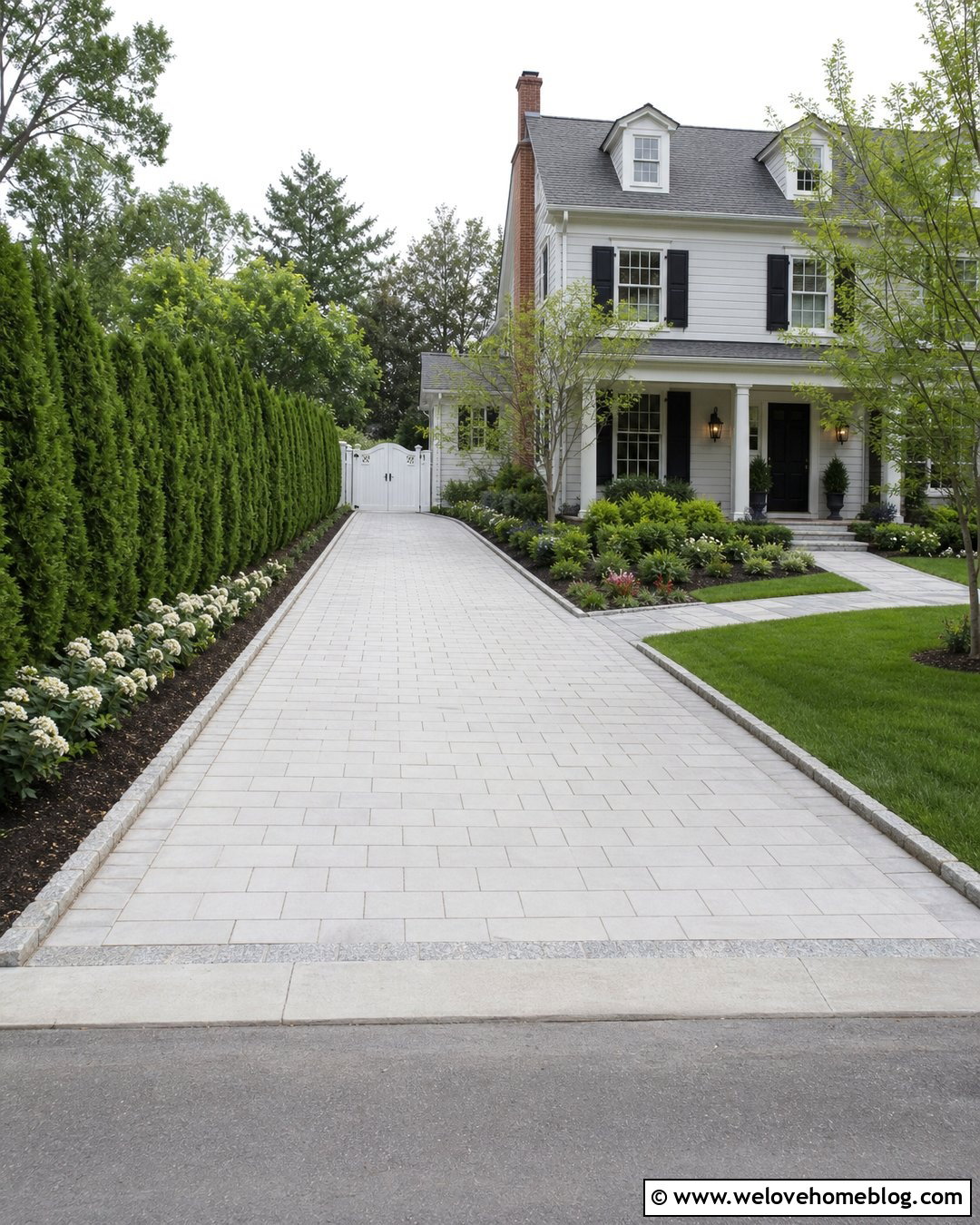
A privacy hedge can screen a neighboring yard while creating a green backdrop for the driveway. Along a straight concrete-paver surface, plant a row of narrow evergreen shrubs several feet behind a low stone border. Add smaller flowering plants and ground covers at the front so the hedge does not resemble a bare green wall. Confirm mature width before planting, since an oversized hedge can quickly reduce driveway clearance. Keep the street end lower or more open to maintain visibility. A drip line and mulched root zone will make the long planting easier to manage. This complete arrangement works beside suburban, colonial, and modern farmhouse homes. Occasional breaks in the hedge can accommodate a gate, utility access, or a walkway toward the backyard.
27. Side Driveway Landscaping With a Picket Fence
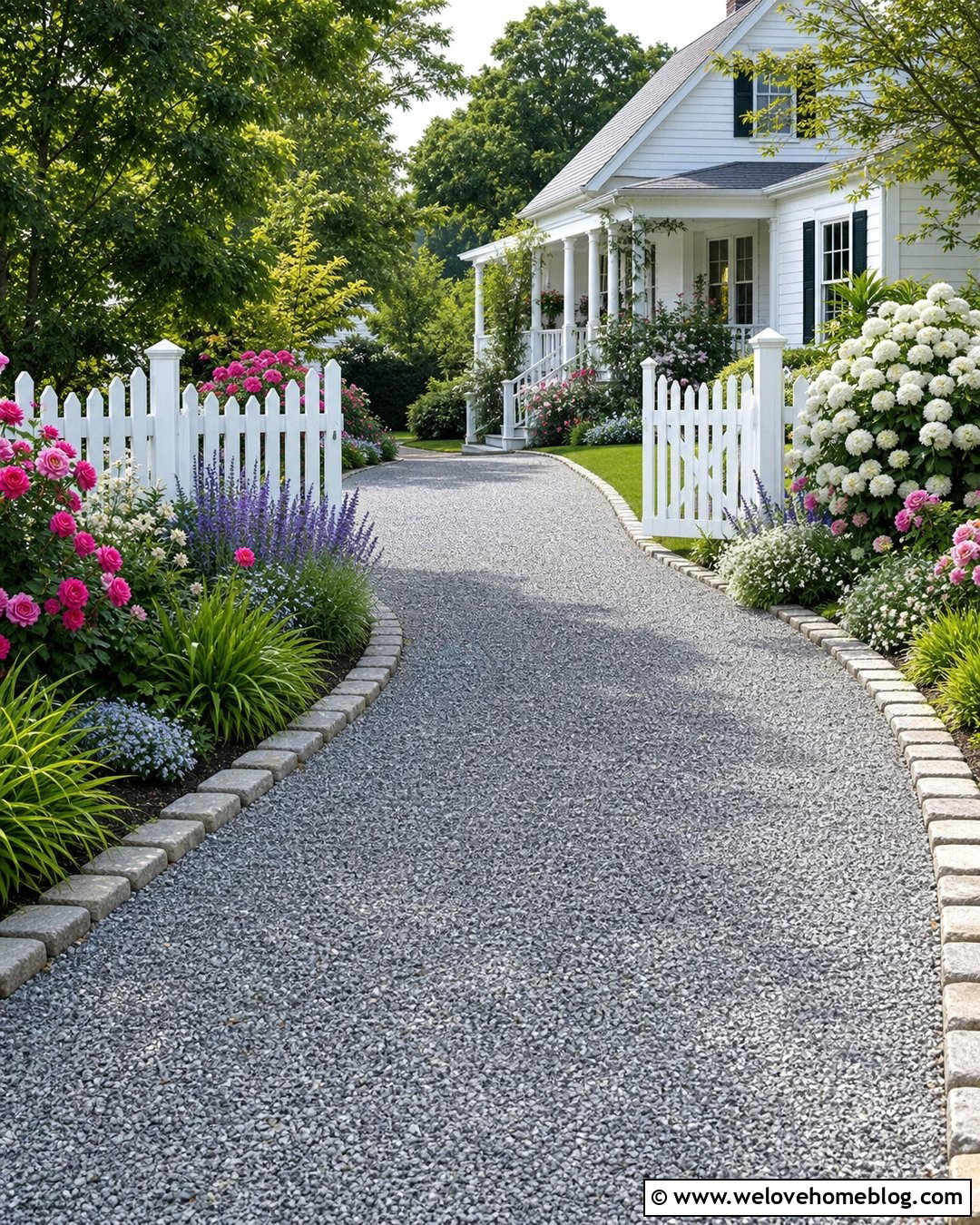
A low picket fence gives a side driveway a friendly boundary without completely closing it off. Pair a light gray gravel driveway with a white or natural-wood fence set behind cobblestone edging. On the yard side, plant roses, compact hydrangeas, catmint, and seasonal bulbs in a relaxed border. Keep taller foliage away from the street entrance and allow enough clearance for opening vehicle doors. A small matching gate can connect the driveway to a garden path or front porch. The gravel, traditional fence, and layered flowers create a complete cottage composition that feels welcoming from the curb. Repeat the fence color in the house trim or porch railing. This visual connection helps the driveway landscaping appear original to the property instead of added later.
28. Side Driveway Landscaping With a Modern Fence
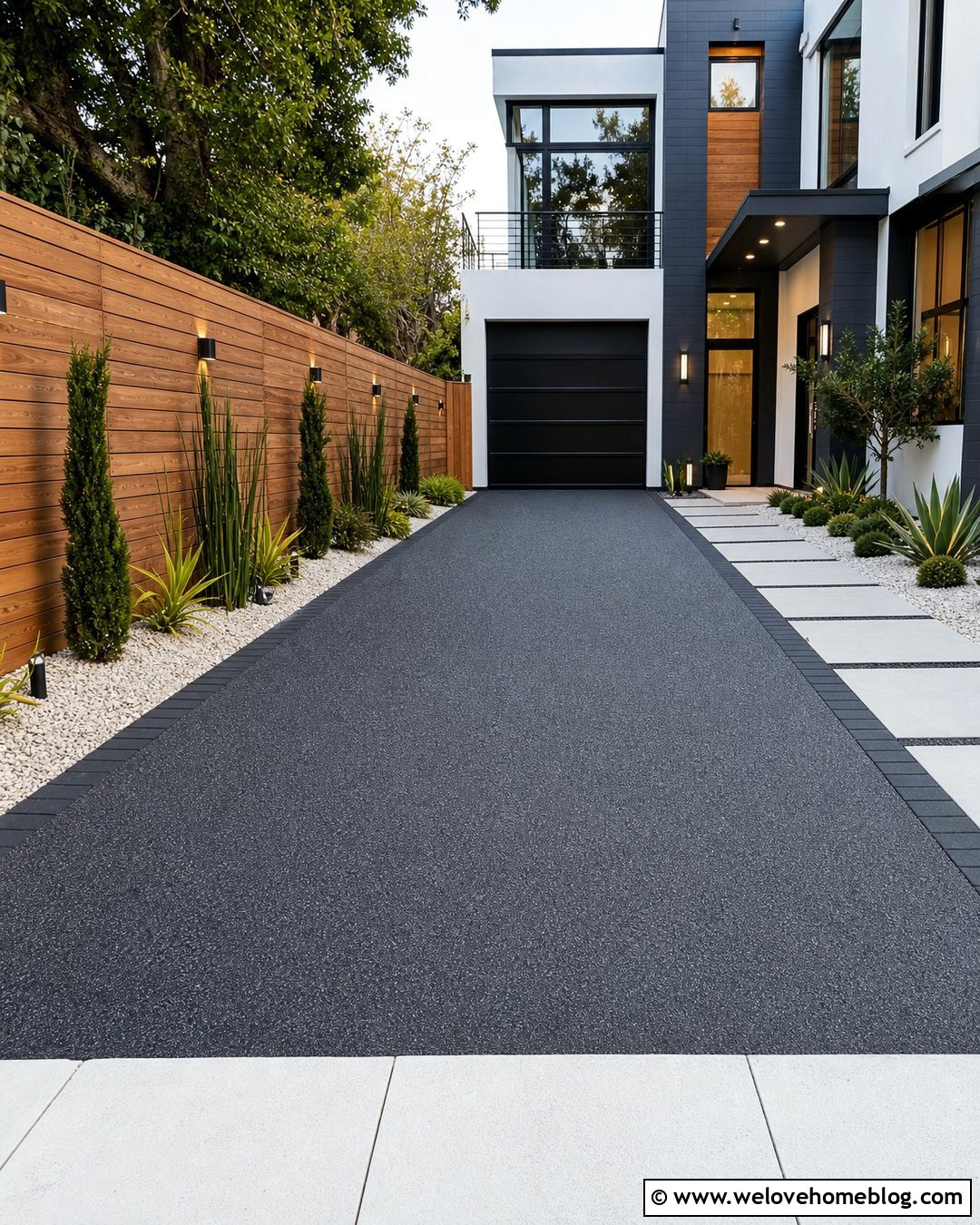
A modern fence can provide privacy while supporting a restrained side-driveway planting scheme. Beside a charcoal resin-bound driveway, install horizontal cedar slats or dark metal panels with clean, consistent spacing. Create a narrow gravel bed between the fence and pavement, then add upright grasses, columnar shrubs, and several sculptural plants. Concealed drip irrigation can keep the bed tidy without hoses crossing the driveway. Leave a clear strip beside parking spaces so passengers can move comfortably. Integrated downlights or shielded fence lights may highlight the texture without producing harsh glare. This combination is ideal for a contemporary house with wood, stucco, or dark siding. The fence, linear planting, and smooth driveway surface should share a simple palette for a cohesive result.
29. Side Driveway Landscaping With a Garden Path
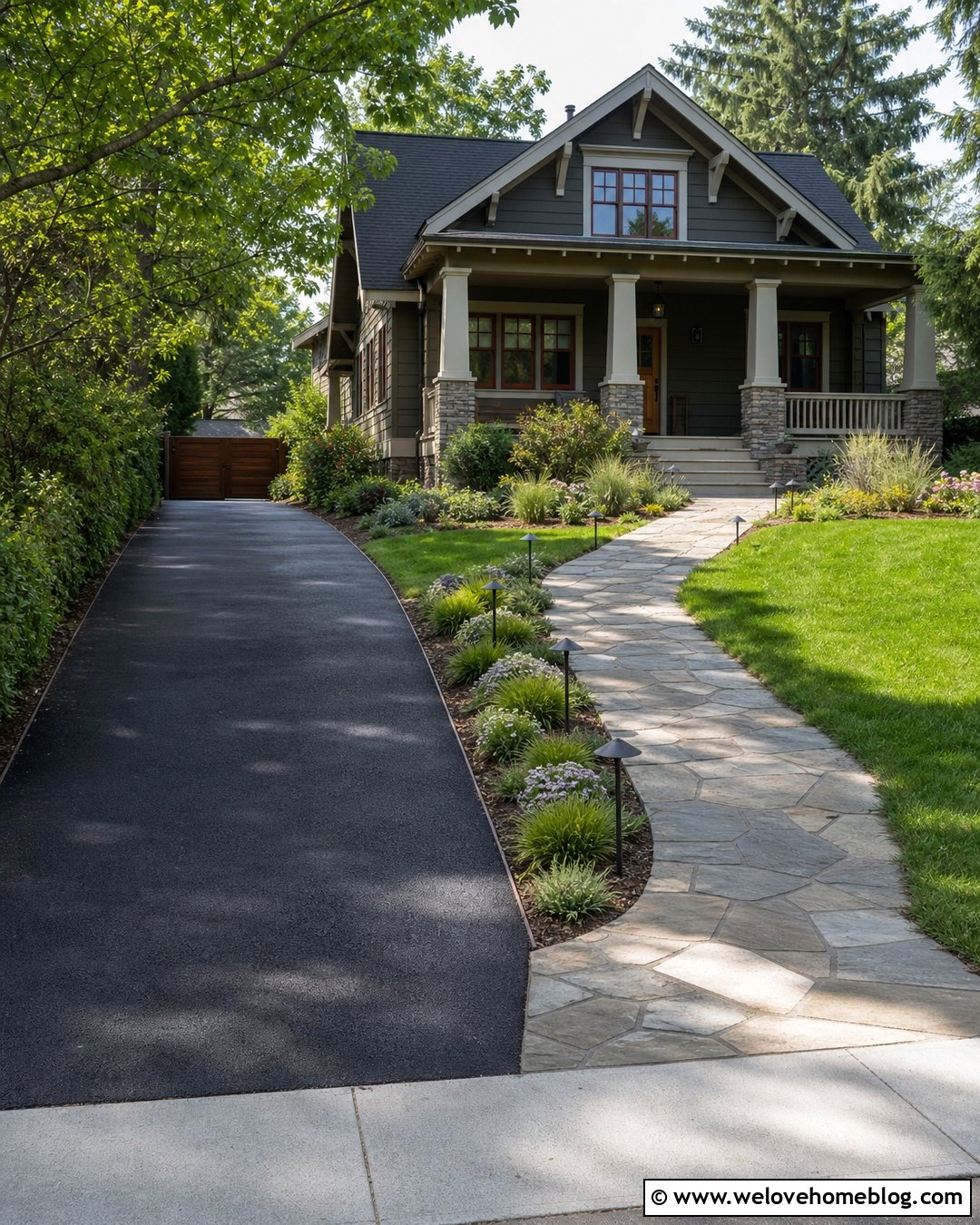
A separate path beside the driveway gives guests a comfortable route to the front door while adding valuable landscape detail. Pair a black asphalt driveway with a parallel flagstone walkway separated by a narrow planted strip. Fill the strip with low grasses, flowering ground covers, and occasional path lights. The walkway should connect clearly with the sidewalk and porch instead of ending abruptly. Use a stone or steel edge to keep mulch away from both surfaces. At the driveway entrance, widen the path slightly to create a welcoming transition. This complete layout works particularly well for homes where the front walk currently begins near the garage. Matching the walkway stone to porch steps or facade masonry will help all parts of the approach feel connected.
30. Side Driveway Landscaping With Stepping Stones
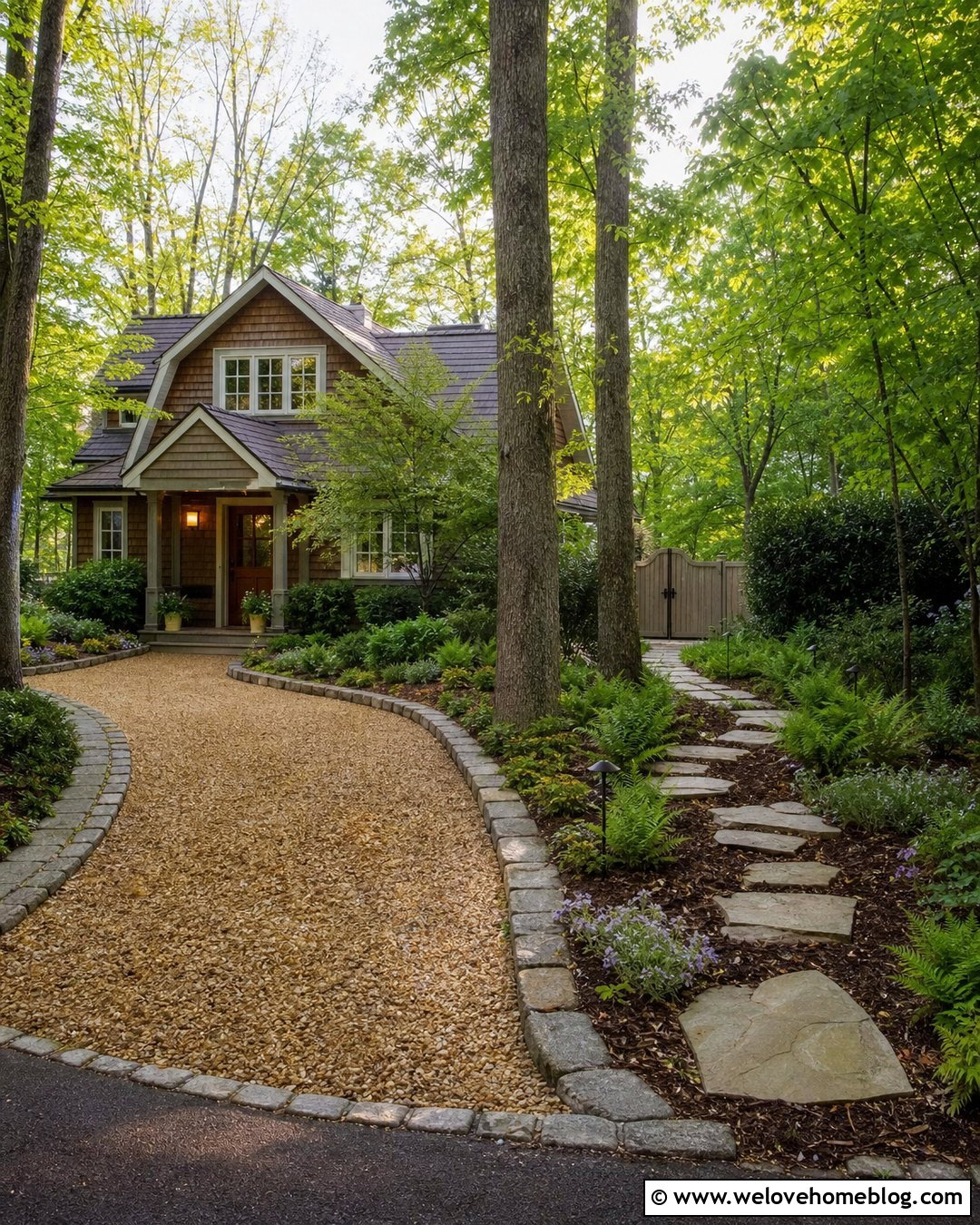
Stepping stones provide a casual side path without adding another large expanse of paving. Next to a pea gravel driveway, set broad flat stones through a mulched planting bed. Surround them with low ground cover, ferns, compact shrubs, and shade-tolerant perennials suited to the site. Keep the stones level and spaced for a natural walking rhythm. Cobblestone edging between the gravel and garden will help maintain a clean driveway line. The path can lead from the street to the porch, side gate, or backyard entrance. This relaxed combination suits cottage, Craftsman, and woodland homes. Choose stones that echo colors in the house foundation or driveway border. Keeping plants low beside the stepping route will make it more usable and visually open.
31. Side Driveway Landscaping With a Brick Border
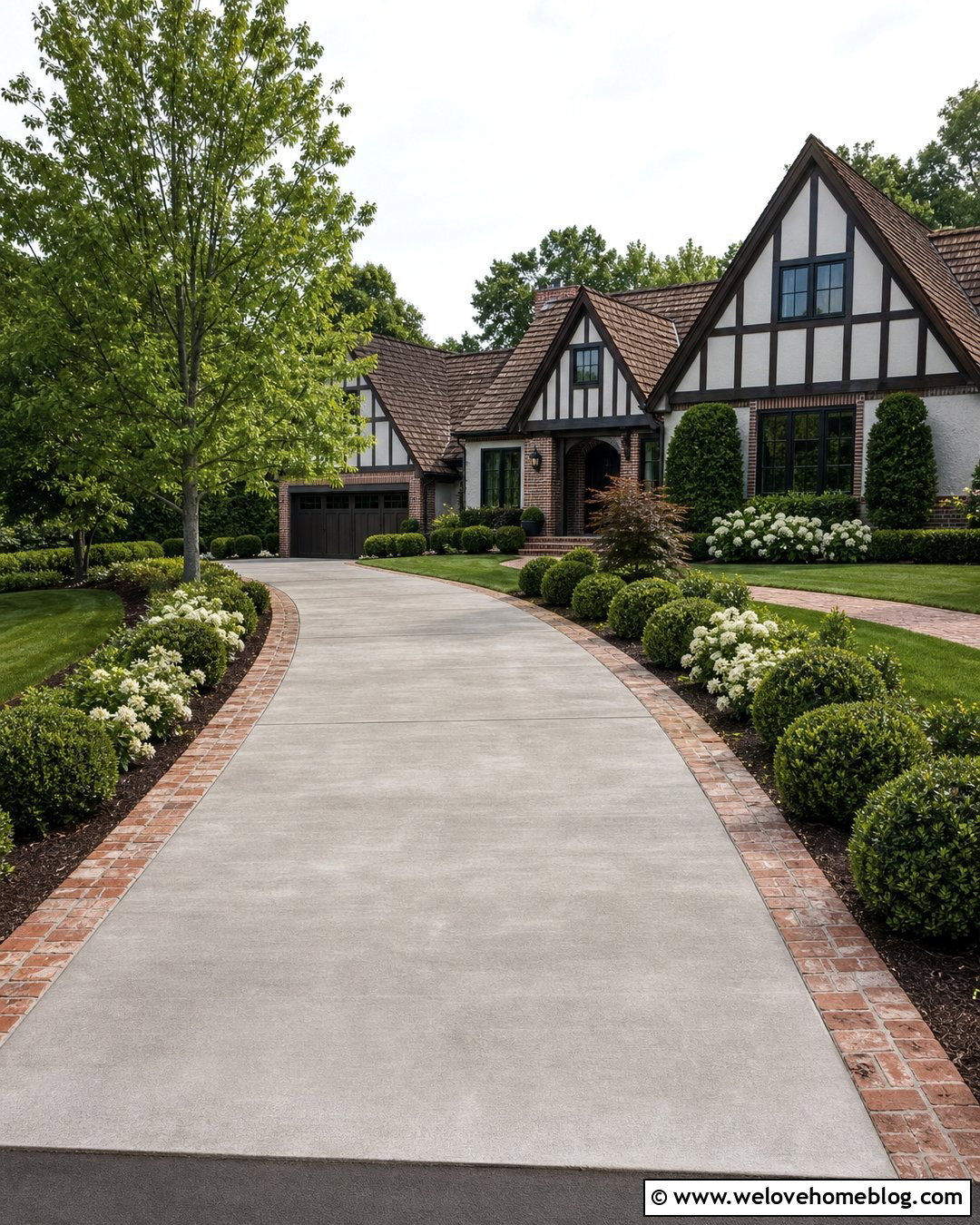
A brick border adds warmth and definition to plain pavement. Frame a brushed-concrete driveway with a double row of red or weathered clay brick, then build a mulched bed beyond it. Plant rounded evergreen shrubs, white flowering perennials, and one small ornamental tree to balance the strong linear edge. Use the same brick around the walkway or porch steps so the driveway connects naturally with the house. Set the border close to flush where vehicles may cross it, and raise it slightly only beside protected planting areas. This coordinated treatment is a natural fit for colonial, Tudor, and traditional homes. The brick provides color during winter, while the layered plants soften the hard surface and prevent the border from feeling too rigid.
32. Side Driveway Landscaping With Stone Edging
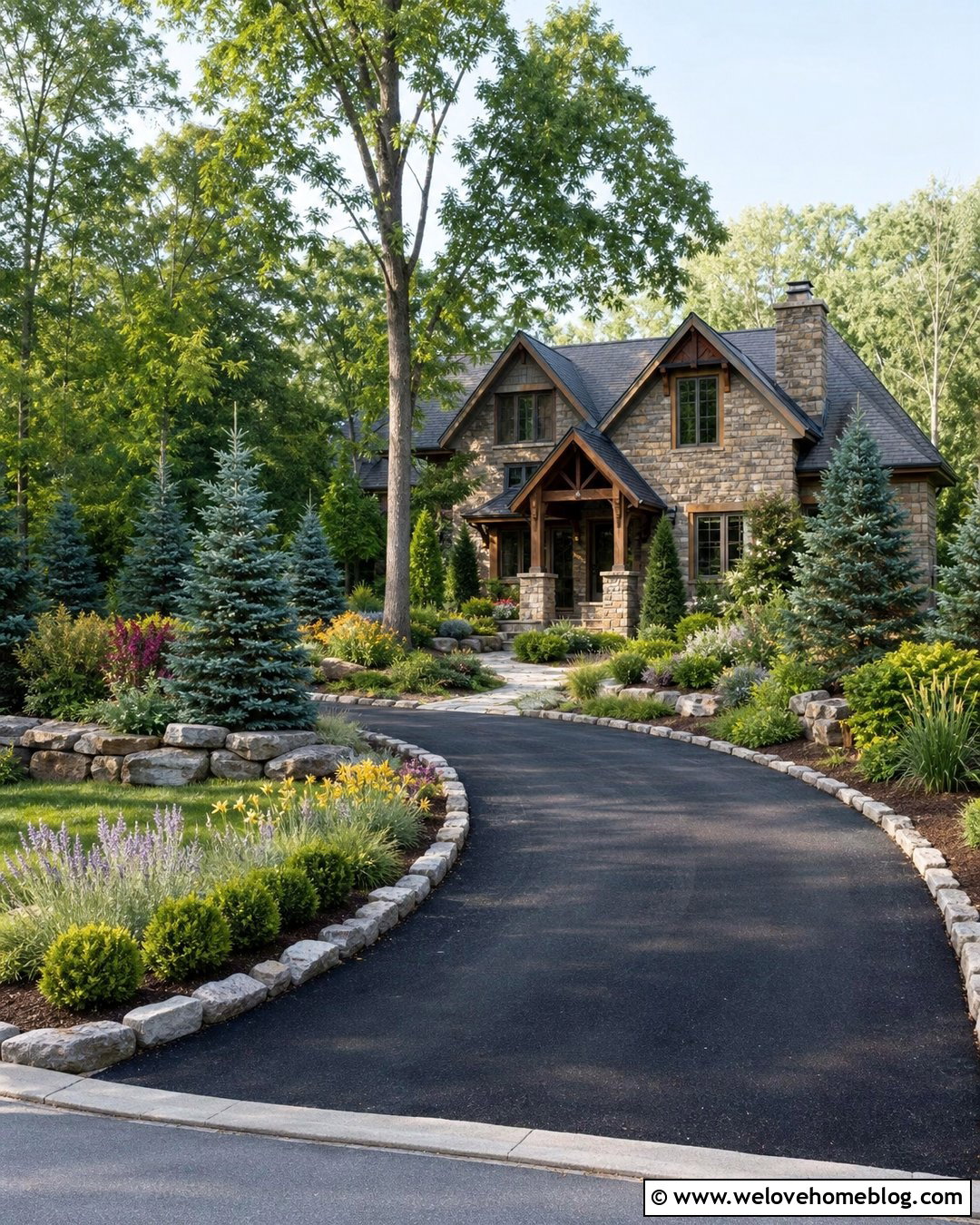
Natural stone edging can give driveway landscaping a substantial, handcrafted appearance. Along a curved asphalt driveway, install a low line of fieldstone with a broad planting bed behind it. Use evergreen shrubs, flowering perennials, and ornamental grasses in repeating clusters that follow the curve. Choose stones with similar tones to the house foundation, retaining walls, or front steps. The edge should be sturdy but not so tall that it catches car doors or creates a tripping point. At the street, lower the planting and stonework to preserve open views. This combination suits farmhouse, Craftsman, mountain, and traditional homes. Allowing a few plants to soften the stones creates a natural effect, while regular trimming keeps stems from spreading onto the pavement.
33. Side Driveway Landscaping With Timber Edging
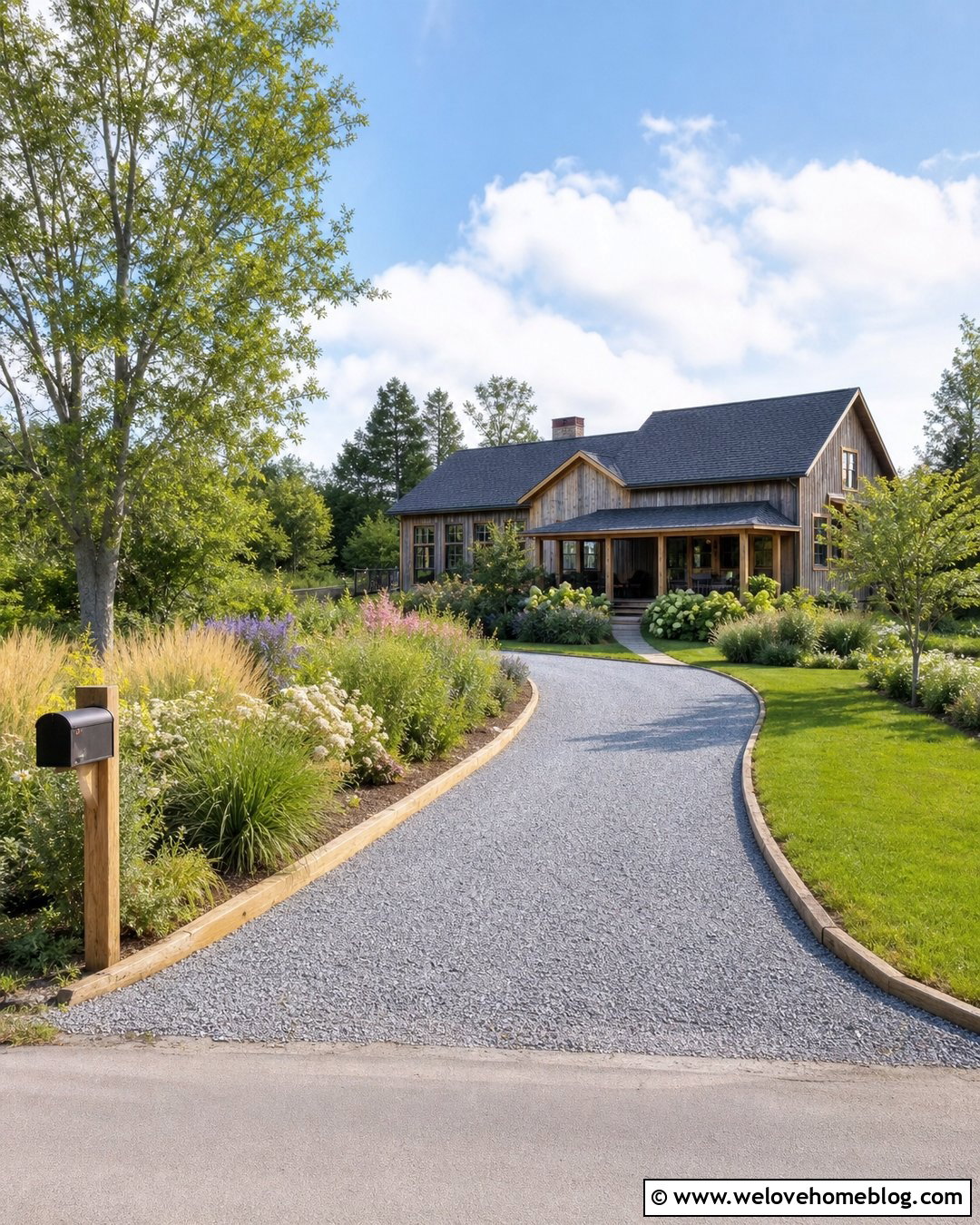
Timber edging brings a simple rustic finish to a gravel or crushed-stone driveway. Use pressure-rated landscape timbers or durable naturally resistant wood to form a clean boundary beside a gently curved gray gravel surface. Beyond the timber, create a wide bed of ornamental grasses, flowering shrubs, and meadow-style perennials. Add a mown lawn strip on the outer side to separate the planting from the wider yard. Secure the timbers carefully and keep their upper surface low enough to avoid conflicts with tires. This affordable-looking design is well suited to country, cabin, ranch, and farmhouse properties. Echoing the timber in a mailbox post, simple gate, or raised planter can tie the complete driveway approach together without making it feel overly formal.
34. Side Driveway Landscaping With Metal Edging
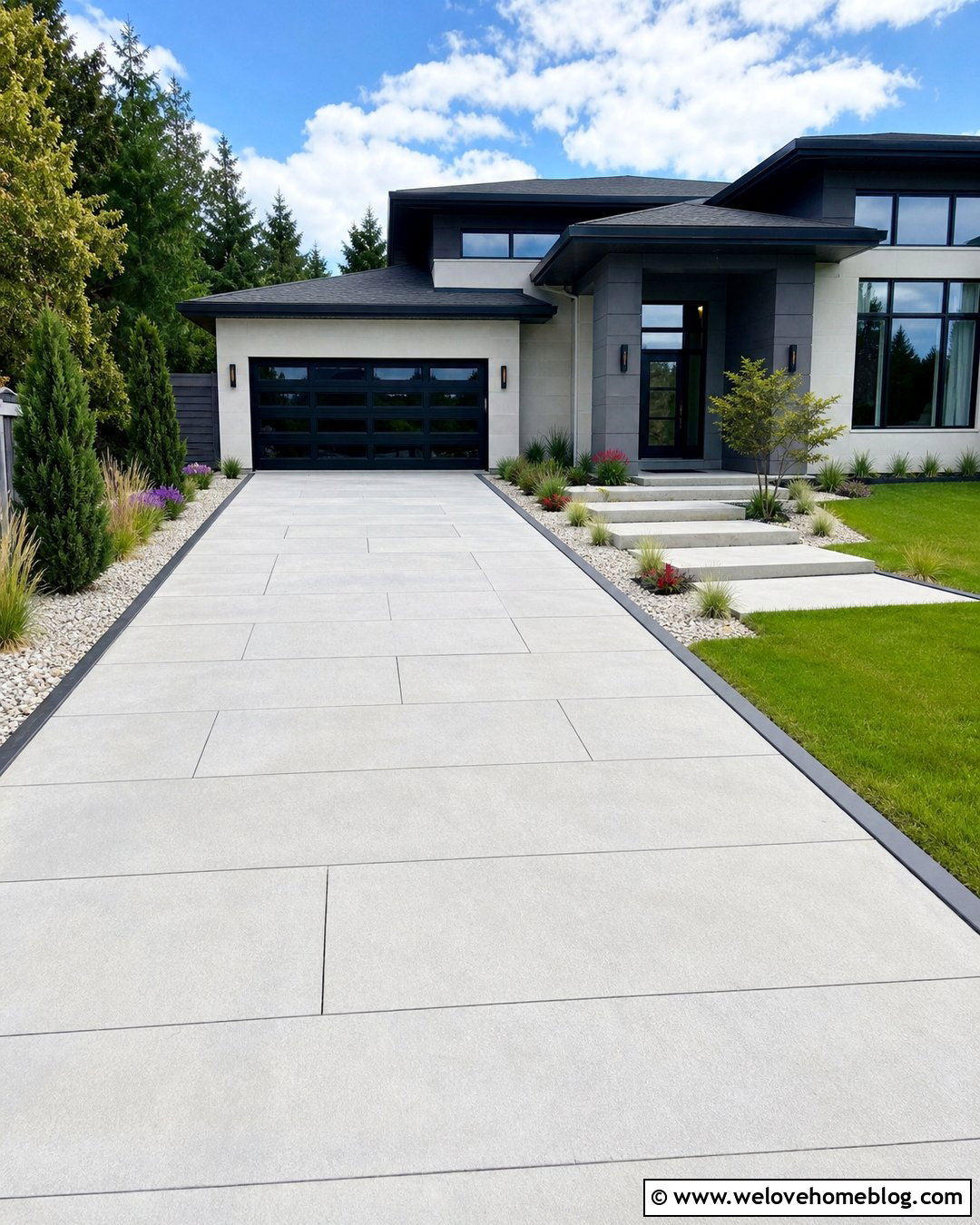
Thin metal edging is useful when the driveway landscape needs a crisp line without a bulky visible border. Pair a large-format concrete-paver driveway with a narrow strip of black steel separating the surface from pale decorative gravel. Plant the gravel bed with architectural grasses, compact evergreen forms, and small flowering accents. Use straight lines beside a modern home or gentle curves to soften a ranch facade. Install the edging with a safe, finished top and keep it low near walking areas. The dark line creates enough contrast to define each material while allowing plants to remain the main attraction. This restrained composition is particularly effective in small front yards, where heavy stones or wide curbs could make the driveway border feel crowded and visually complicated.
35. Side Driveway Landscaping With a Grass Strip
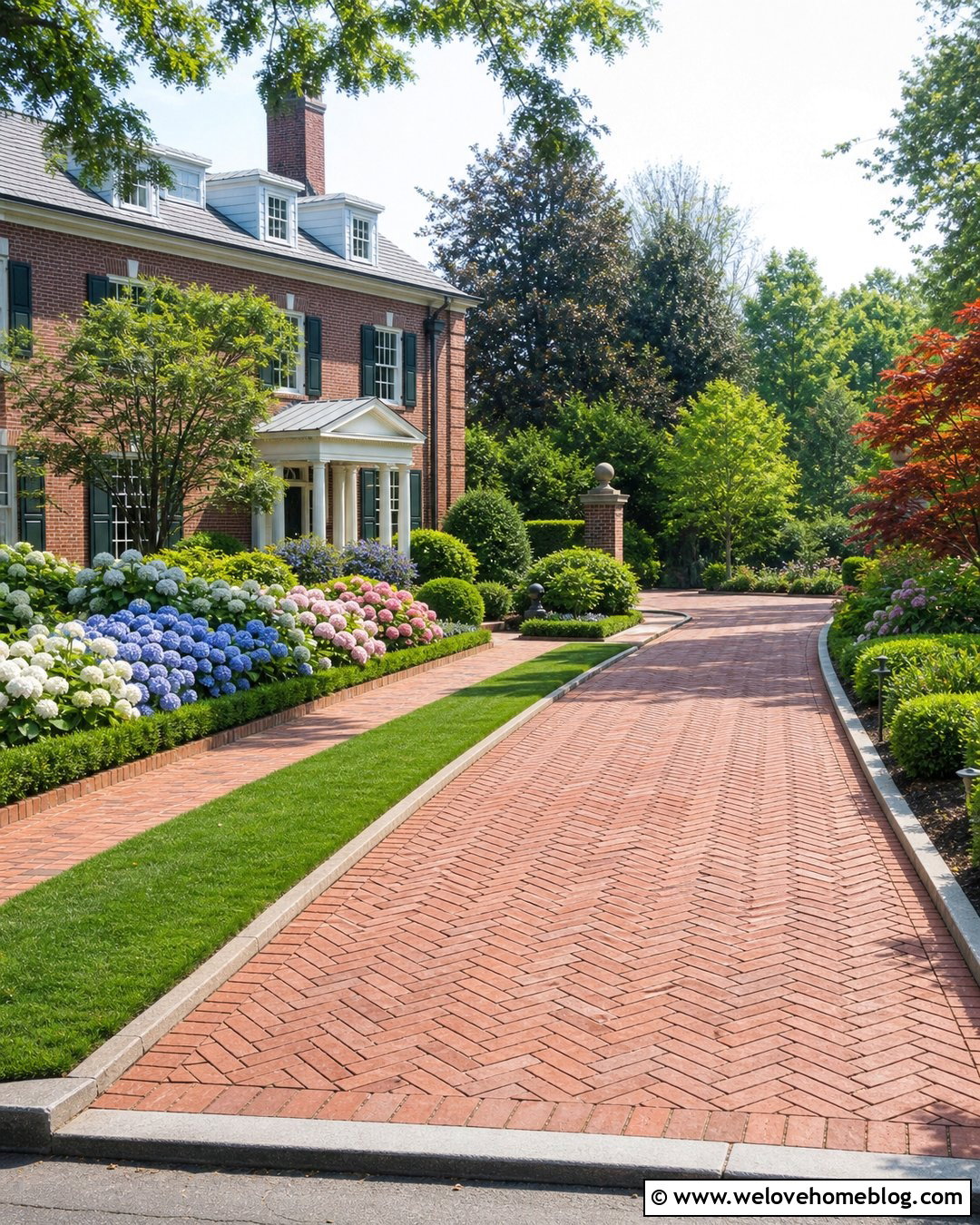
A simple grass strip can create breathing room between the driveway and a more detailed planting bed. Along a clay brick-paver driveway, maintain a narrow ribbon of lawn before adding hydrangeas, flowering shrubs, and small ornamental trees. The green strip provides convenient passenger access and prevents branches from leaning directly over parked vehicles. Use a defined edge on both sides so the lawn does not spread into the pavers or garden. The strip should be wide enough for easy mowing with available equipment. This classic layout works with colonial, Georgian, and traditional suburban homes. It also allows snow, leaves, and driveway debris to be cleared without immediately damaging delicate plants. Repeat the lawn ribbon near the walkway for a balanced front-yard composition.
36. Side Driveway Landscaping With a Gravel Border
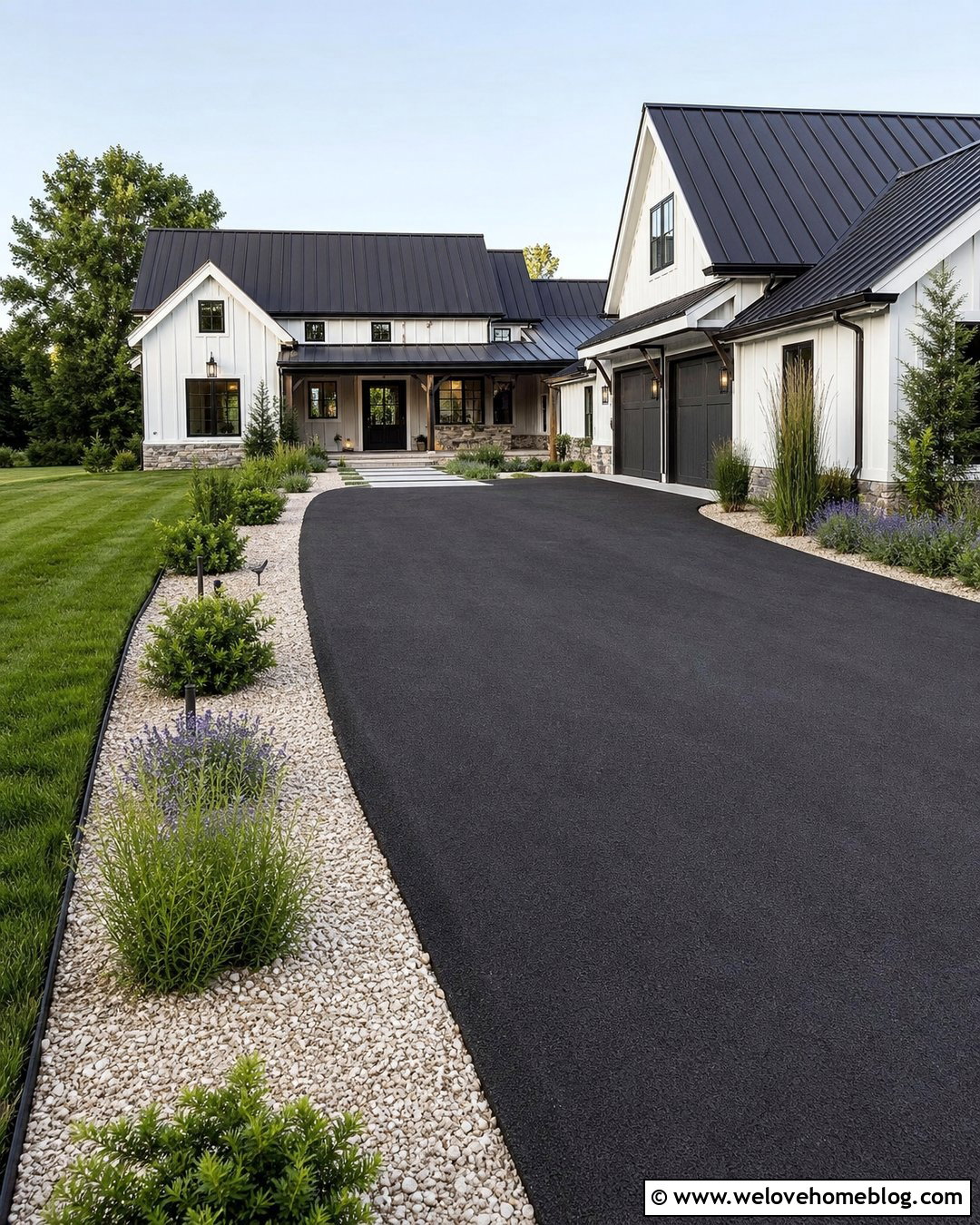
A contrasting gravel border can make a basic driveway look wider, cleaner, and more intentional. Beside a dark asphalt surface, install a band of pale crushed stone contained by steel edging. Beyond it, arrange low evergreen shrubs, drought-tolerant flowers, and upright grasses in a mulched bed. The gravel provides visual separation and a small buffer between tires and foliage. Select angular stone that stays relatively stable rather than rounded material that moves easily. At the garage, transition the gravel band into a matching foundation bed or stepping-stone walkway. This flexible treatment suits modern farmhouse, ranch, and contemporary homes. Keeping the stone free of soil and fallen leaves will preserve the strong color contrast that gives the complete driveway design its finished character.
37. Side Driveway Landscaping for a Sloped Yard
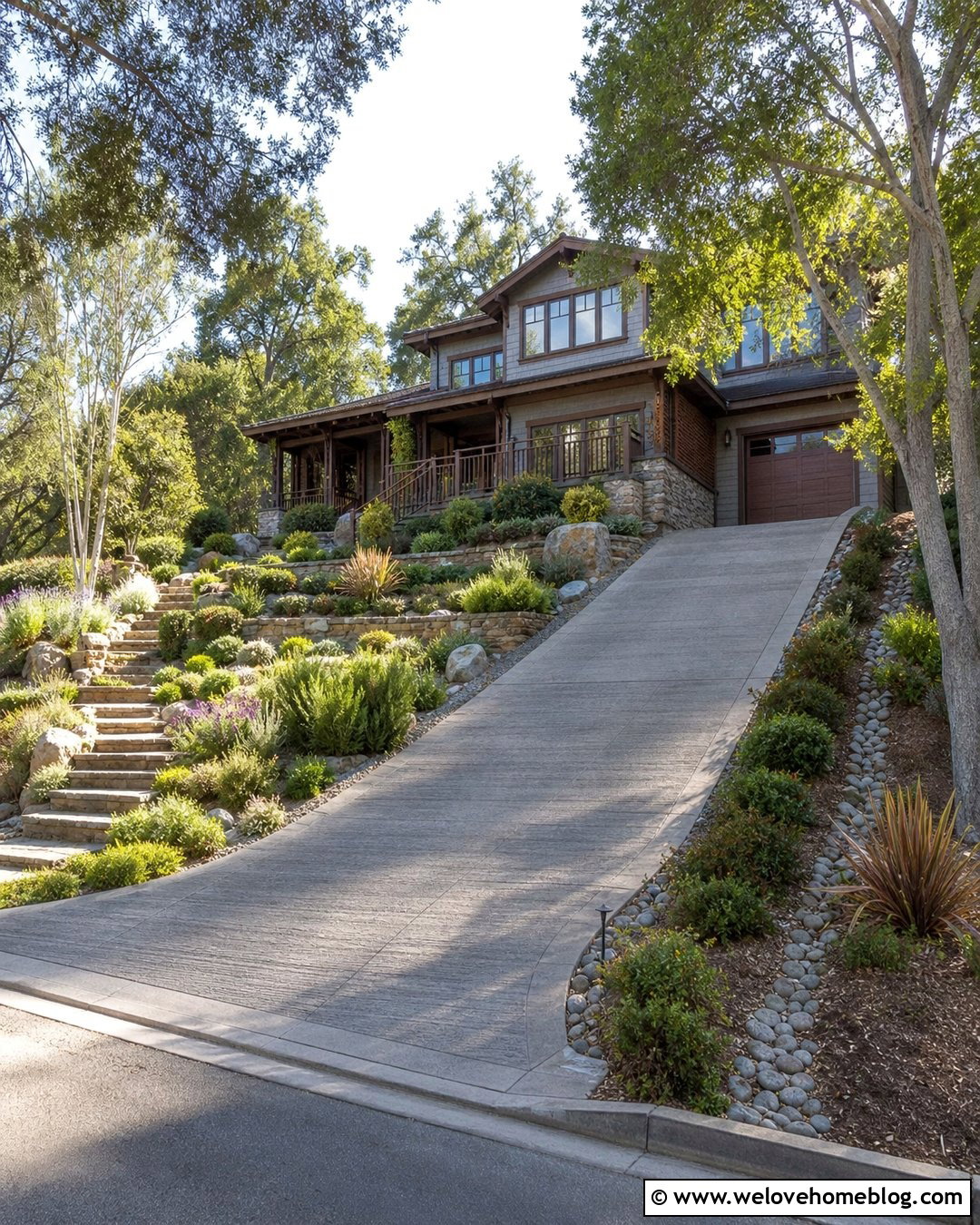
A sloped side yard benefits from landscaping that follows the grade instead of fighting it. Pair a textured concrete driveway with stepped planting terraces built from low natural-stone walls. Fill each level with compact shrubs, spreading ground covers, and ornamental grasses that visually stabilize the bank. Use repeating plants across the terraces so the slope does not appear fragmented. Include suitable drainage behind walls and keep loose soil from washing onto the driveway. Near the road, reduce wall height and plant size to maintain visibility. The stonework can gradually become taller toward the house, creating a natural sense of arrival. This complete solution fits hillside Craftsman, contemporary, and mountain homes while turning a difficult driveway edge into one of the property’s strongest landscape features.
38. Side Driveway Landscaping for a Small Front Yard
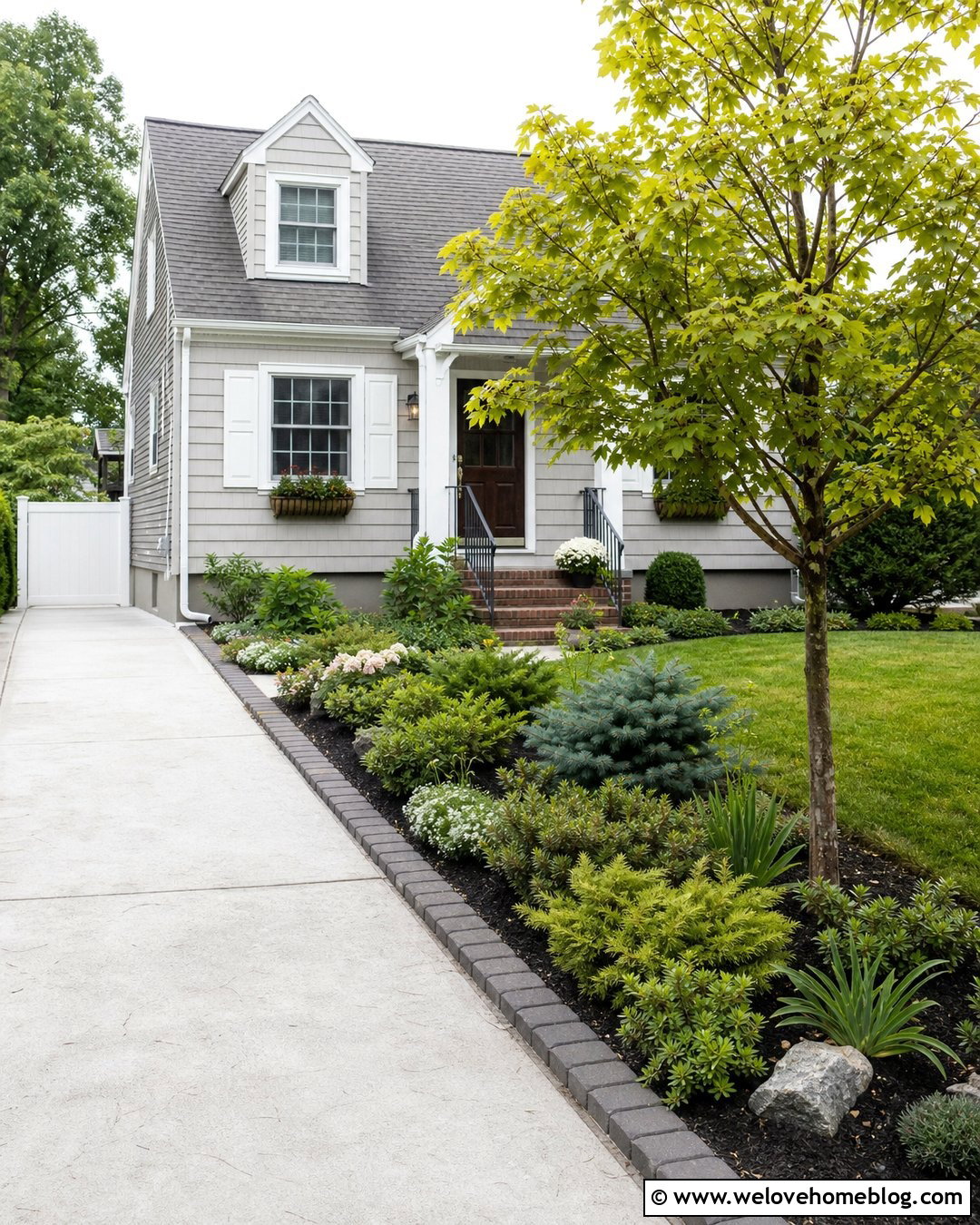
In a small front yard, every planting should contribute without making the driveway feel enclosed. Combine a narrow concrete driveway with a slim bed edged in dark brick. Use one upright ornamental tree, compact evergreen shrubs, and a continuous ribbon of low flowering ground cover. Keep the palette limited and repeat the same plants near the porch. This creates continuity and prevents a tiny area from looking busy. Avoid large shrubs beside passenger doors and leave a clear route from the driveway to the entrance. A wall-mounted planter or climbing vine can add vertical greenery where ground space is unavailable. This complete design works for bungalows, townhomes, Cape Cod houses, and compact ranch homes, delivering curb appeal without sacrificing practical parking width.
39. Side Driveway Landscaping for a Long Driveway
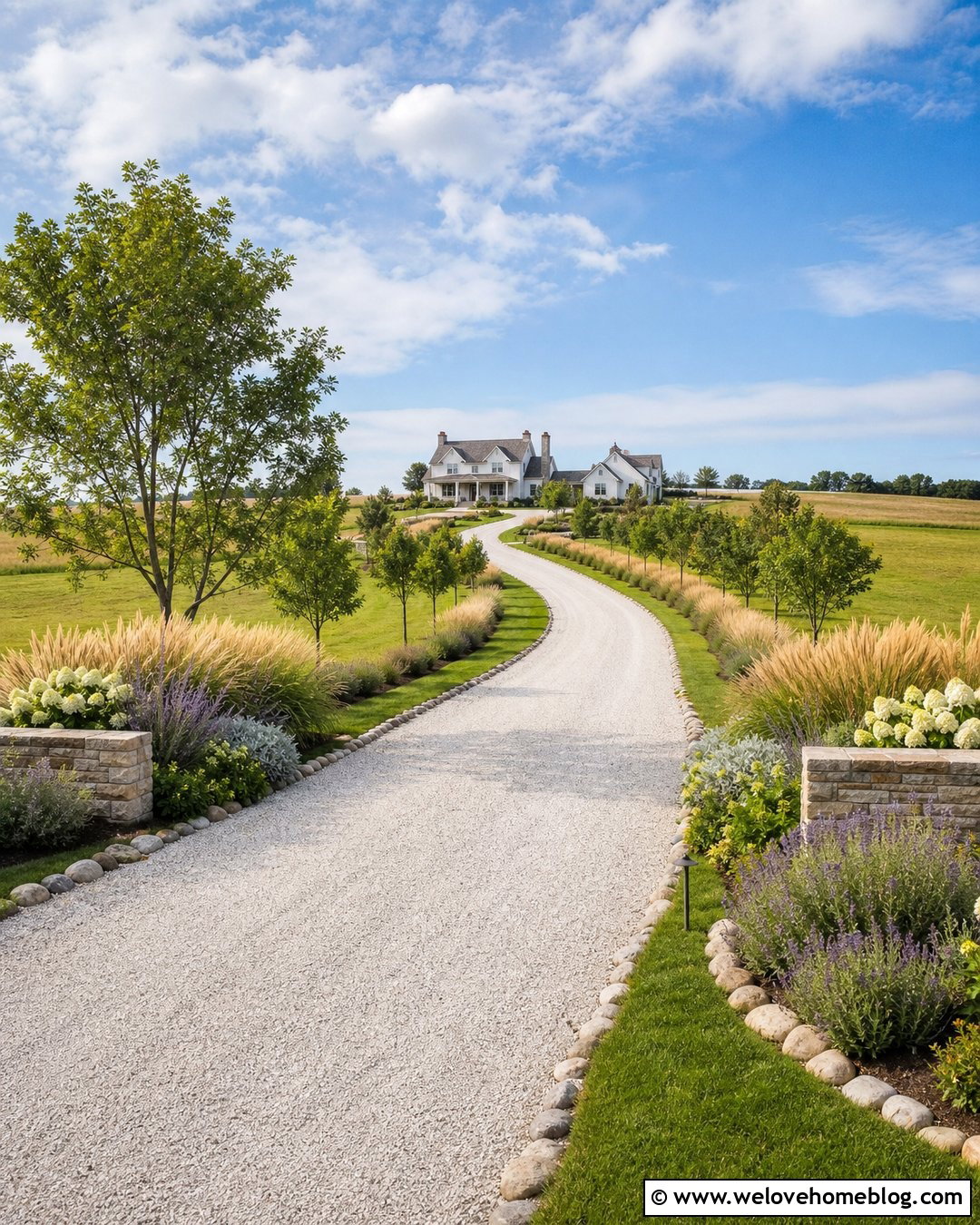
A long driveway needs repetition, scale, and a clear destination. Along a sweeping gravel drive, alternate small trees with broad groups of ornamental grass and flowering shrubs. Use natural-stone edging at curves and maintain a short grass shoulder where vehicles may need extra clearance. Repeating the same planting sequence every several yards creates rhythm without requiring a continuous, expensive border. Near the house, increase the detail with denser flowers, landscape lighting, and a wider arrival bed. Keep the roadside entrance simpler so it remains easy to see and maintain. This approach suits country, estate, farmhouse, and large suburban properties. The gradual change from open planting to a more finished arrival zone builds interest while keeping the entire driveway visually connected.
40. Side Driveway Landscaping for a Curved Driveway
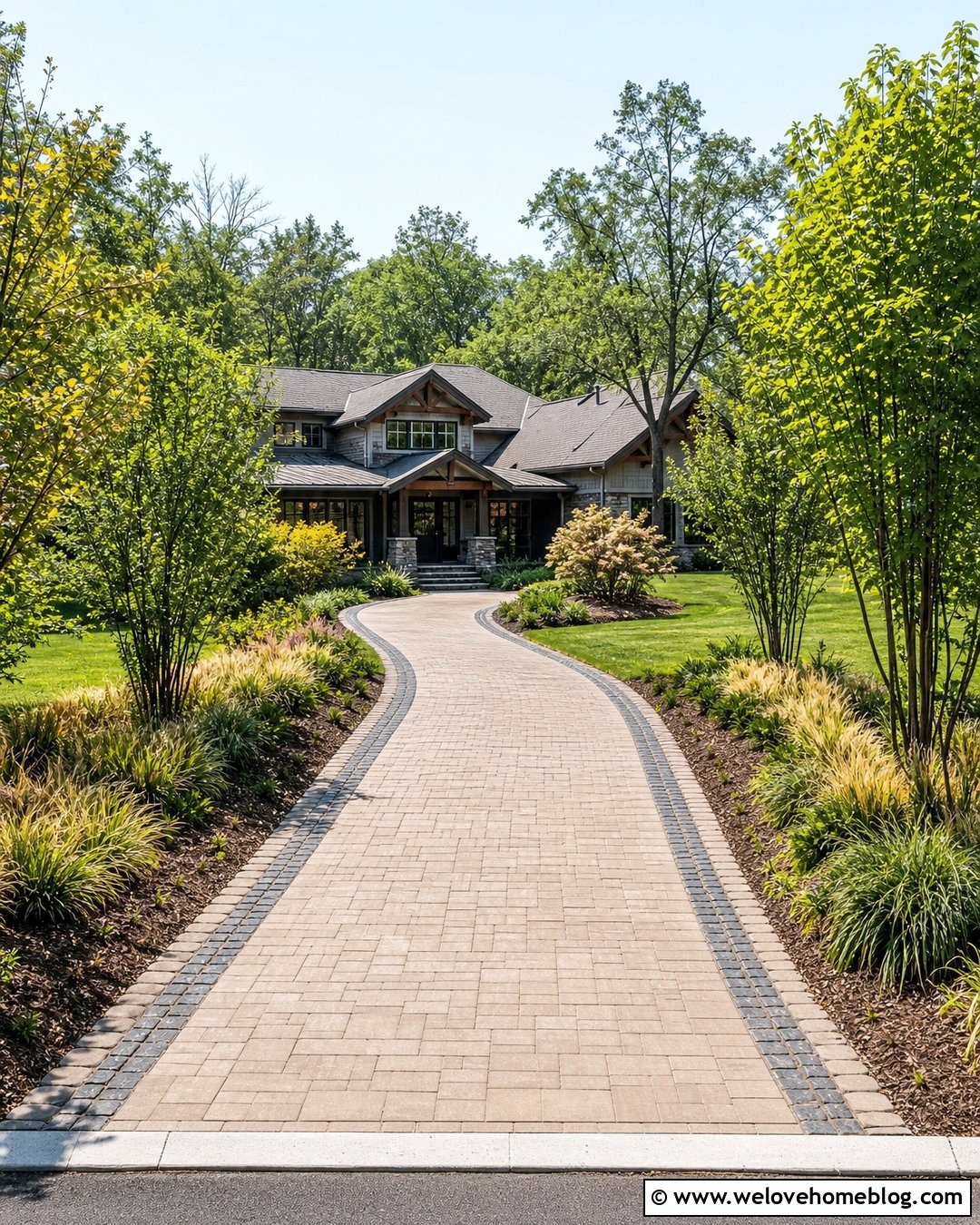
Landscaping can emphasize a curved driveway and make its route feel natural within the yard. Pair warm concrete pavers with a broad outer bed of small trees, layered shrubs, and sweeping ornamental grasses. Use a low cobblestone ribbon to trace the curve without creating a harsh barrier. On the inside edge, maintain lawn or low ground cover so drivers retain an open view around the bend. Repeat several plant groups rather than using a different selection at every point. A specimen tree or larger flowering shrub near the final curve can draw attention toward the house. This complete design works with traditional, Craftsman, and contemporary homes. The coordinated borders help the driveway appear integrated into the landscape instead of simply laid across it.
41. Side Driveway Landscaping for a Circular Driveway
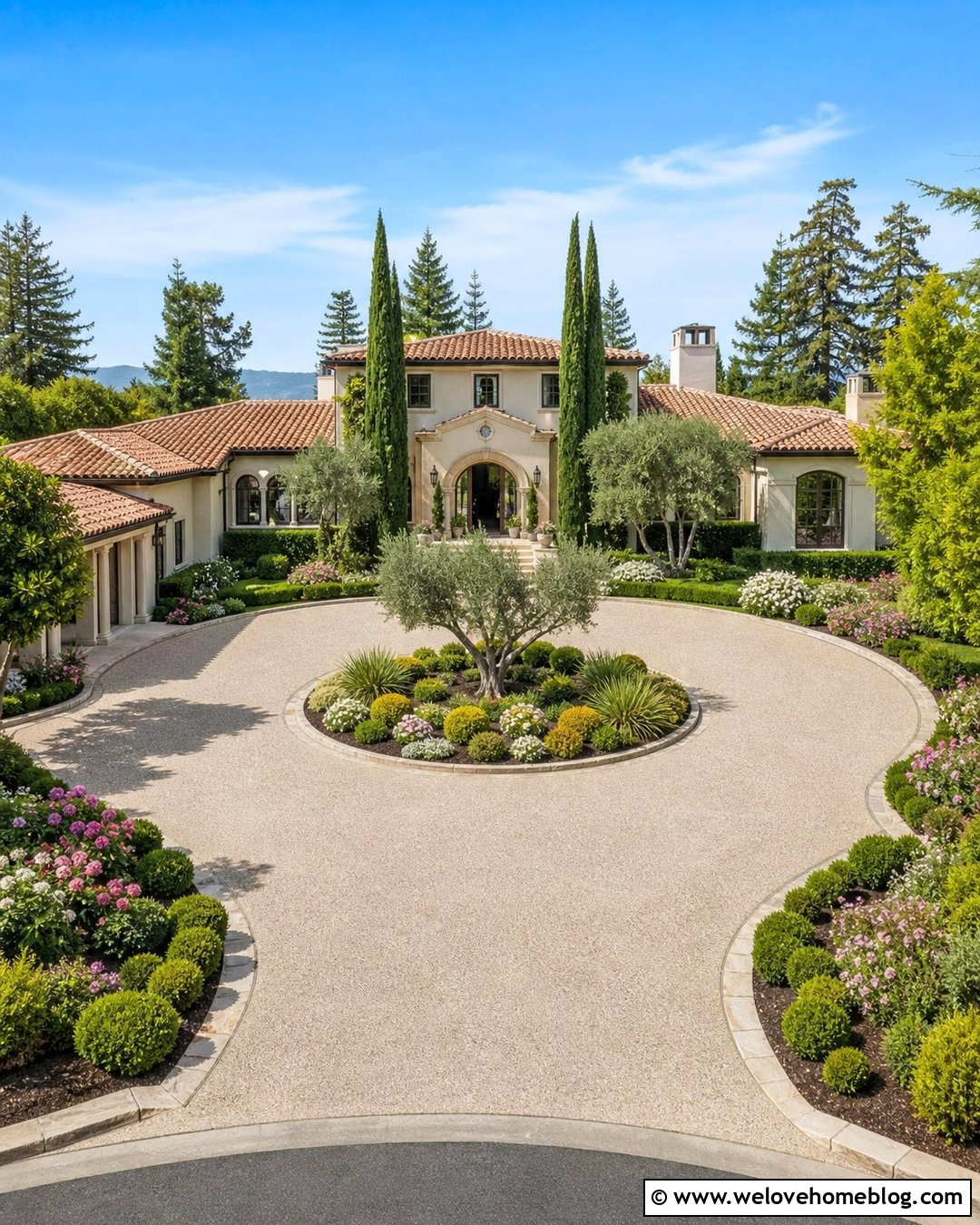
A circular driveway offers several planting zones that should feel related but not identical. Use a light exposed-aggregate surface with a landscaped center island and matching side borders. In the island, place one small ornamental tree above rounded shrubs, grasses, and seasonal flowers. Along the outer sides, repeat the same shrubs in wider spacing to maintain visual continuity. A flush stone curb can define the beds without interfering with turning vehicles. Keep plants low near entry and exit points, where clear views matter most. This balanced arrangement suits colonial, Mediterranean, and larger ranch homes. Coordinating the center island, front walkway, and side beds prevents the circle from looking like separate pieces and gives the full driveway a polished, unified appearance.
42. Side Driveway Landscaping for a Modern House
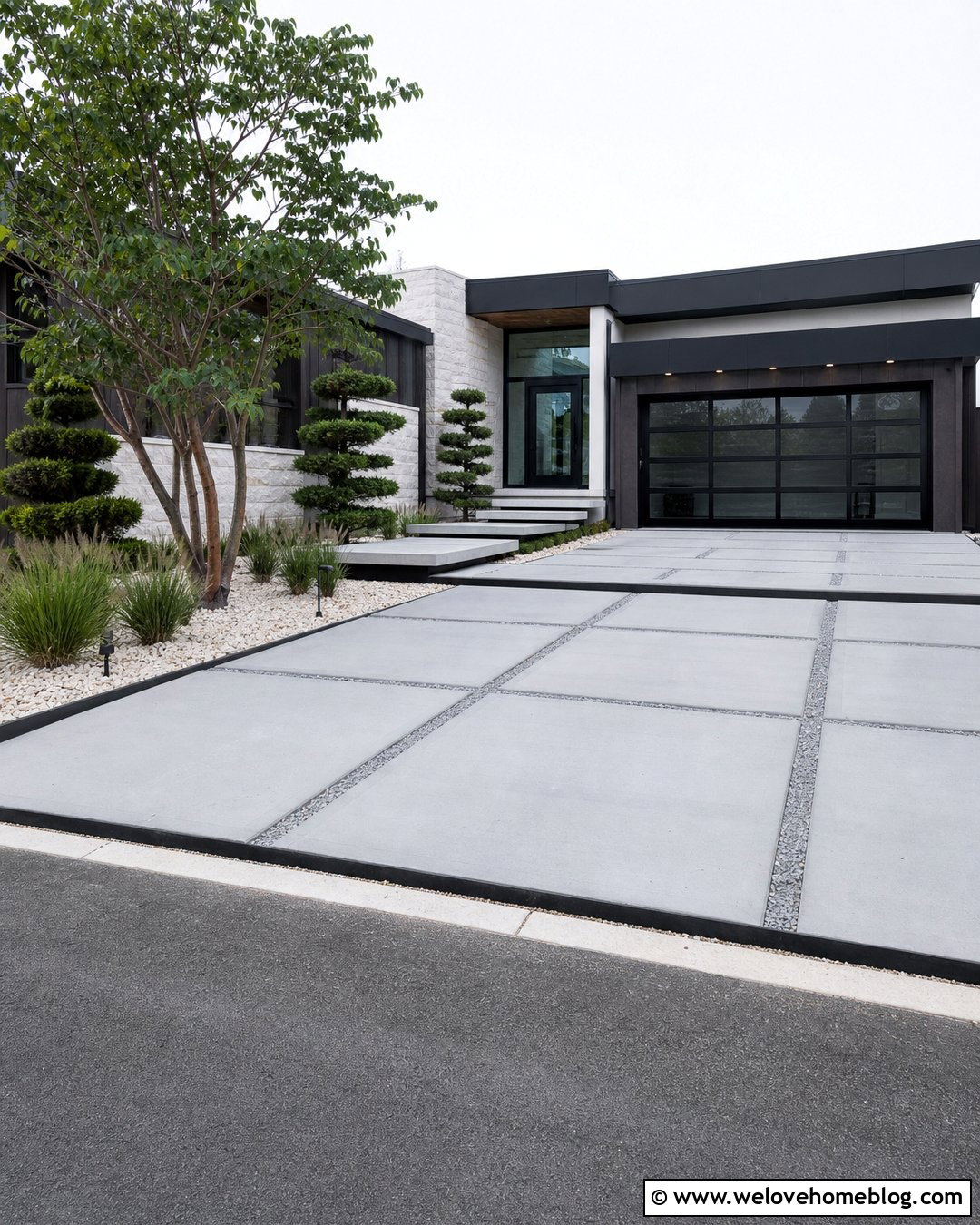
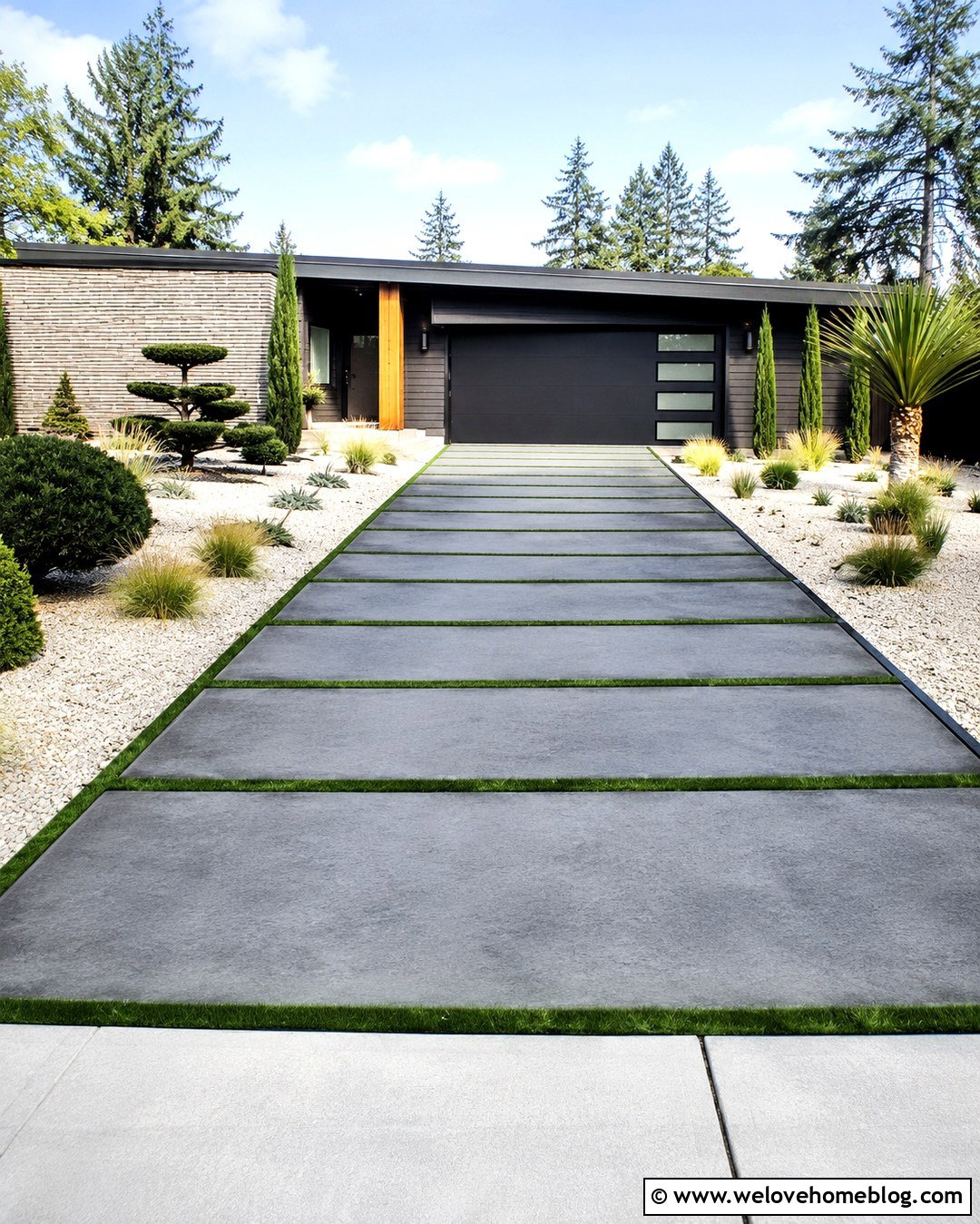
Modern side-driveway landscaping looks strongest when materials and plants follow a limited, deliberate palette. Pair large rectangular concrete slabs with narrow gravel joints and a linear planting bed. Use black metal edging, pale stone mulch, upright grasses, sculptural evergreens, and one multi-stem ornamental tree. Arrange plants in repeated blocks rather than loose mixed borders. A floating concrete walkway can cross the bed and connect the driveway to a simple front entrance. Keep fixtures, planters, and address markers in matching dark finishes. The contrast among smooth concrete, fine gravel, and structured greenery creates visual depth without decorative clutter. Leave open space around each major plant so its shape remains visible. This complete look complements flat roofs, geometric facades, and homes with wood or metal accents.
43. Side Driveway Landscaping for a Farmhouse
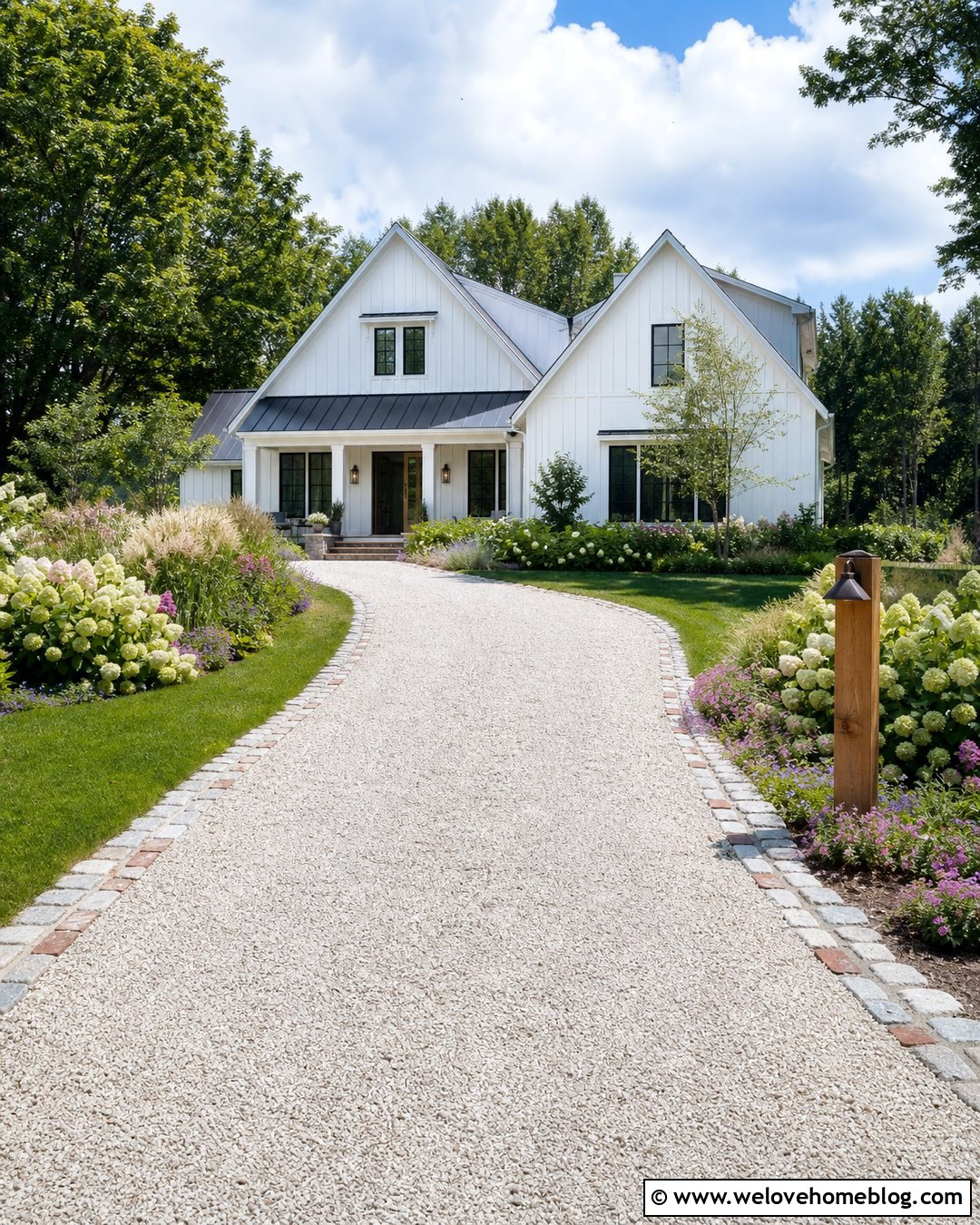
Farmhouse driveway landscaping can combine practical materials with loose, welcoming planting. Use a pale crushed-gravel driveway framed by cobblestone or reclaimed-brick edging. Along one side, create a deep border of hydrangeas, shrub roses, ornamental grasses, and flowering perennials. Include a short lawn shoulder beside parking areas for comfortable access. A simple wood post with an address plaque can mark the entrance, while matching timber details appear near the porch or gate. Keep the planting arranged in generous repeating groups so the cottage character still feels organized. White flowers, soft blue-green foliage, and warm stone work especially well against board-and-batten siding. This complete design feels established and relaxed while giving the gravel driveway a clearly maintained, durable boundary.
44. Side Driveway Landscaping for a Ranch House
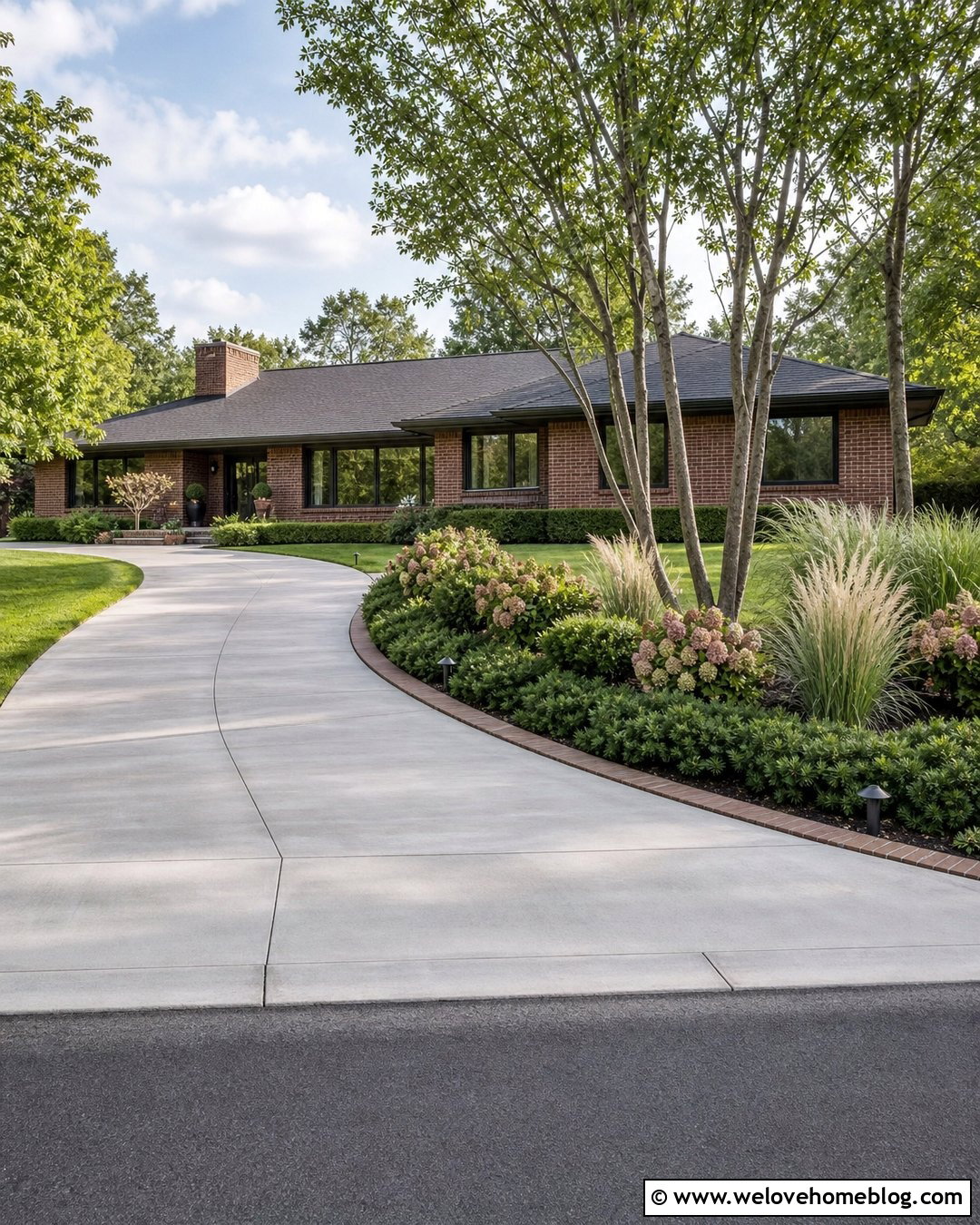
A ranch house benefits from driveway landscaping that emphasizes its low, horizontal architecture. Pair a broad brushed-concrete driveway with a long curved bed containing low junipers, rounded flowering shrubs, and flowing ornamental grasses. Add one or two multi-stem trees near the outer corners to provide height without hiding the facade. A flush brick border can connect the bed to the home’s masonry details. Keep the center of the front yard relatively open so the house does not feel crowded. Repeating broad plant masses rather than narrow upright accents strengthens the horizontal composition. This complete look suits both traditional and updated ranch homes. Simple path lighting and a matching walkway can guide attention from the driveway toward the front door instead of the garage.
45. Side Driveway Landscaping on a Budget
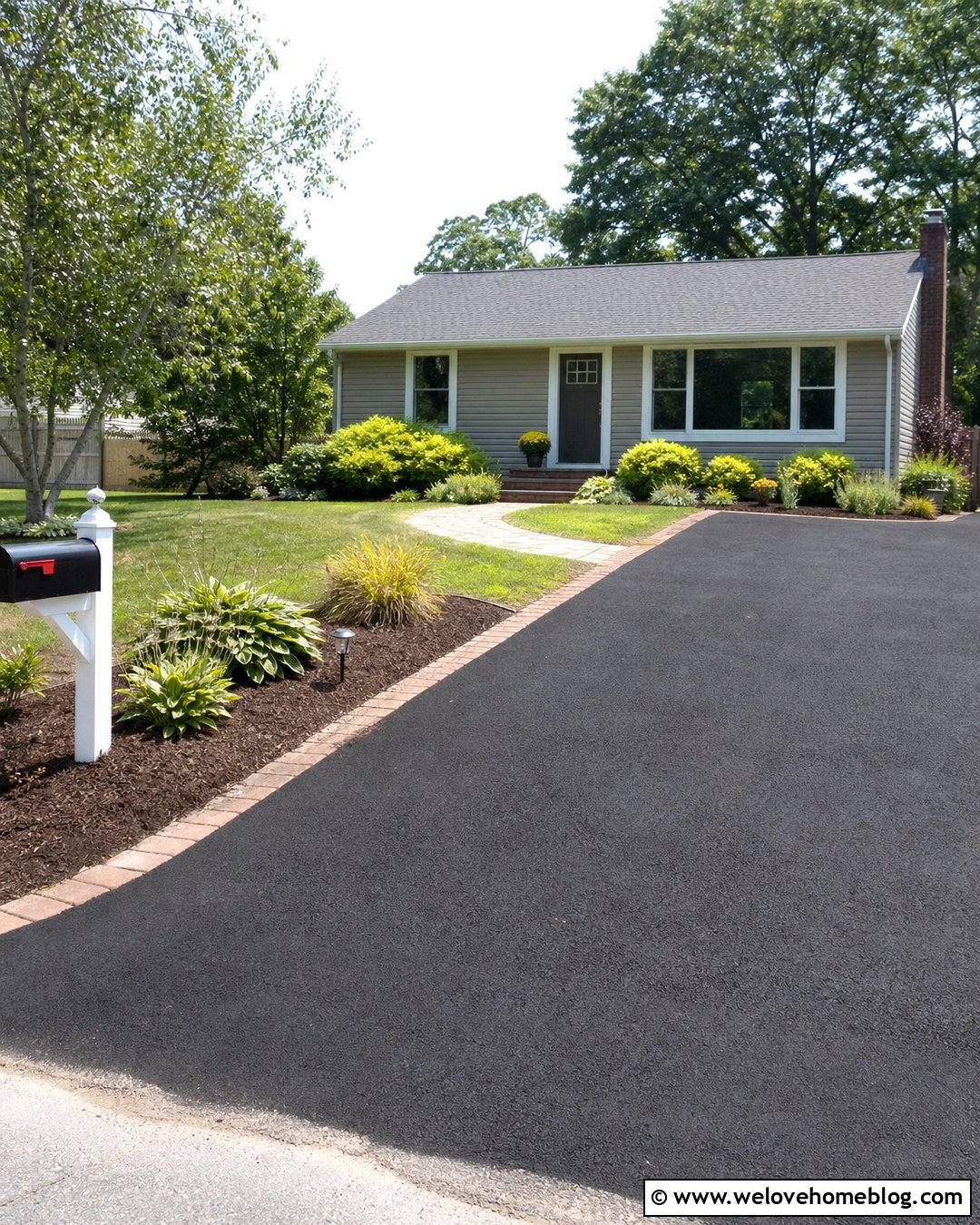
An attractive driveway border does not require replacing the driving surface or purchasing dozens of mature plants. Start beside an existing asphalt driveway by cutting one smooth planting-bed curve and installing an affordable spade-cut or recycled-brick edge. Use mulch to cover open soil, then add a few small shrubs, divisions from established perennials, and ornamental grasses in repeating groups. Leave space for every plant to mature rather than filling gaps immediately. A solar light near the walkway and a repainted mailbox can strengthen the entrance without major construction. Focus the densest planting near the street and garage, where it will have the most visual impact. This gradual approach creates a complete suburban driveway landscape that can be expanded over several seasons.
Conclusion:
The best side of driveway landscaping ideas balance curb appeal with safe, comfortable vehicle access. Begin by studying the available width, sunlight, drainage, slope, and natural walking routes. Then choose a complete combination of driveway material, durable edging, appropriately sized plants, and one or two supporting details such as lighting or a pathway. Repetition will make even an affordable planting plan feel organized, while clear spaces near doors and street entrances keep the design practical. Whether you prefer structured evergreens, colorful cottage flowers, natural boulders, or modern gravel beds, connect the border to materials already used around your home. A coordinated driveway edge can make the entire front yard look more welcoming and intentionally designed.

Related posts:
Leave a Reply