
A side driveway often has to handle parking, foot traffic, drainage, privacy, and curb appeal within one narrow strip. The right landscaping can make this hardworking area feel intentional rather than leftover. Start by measuring the usable planting space, checking sunlight, and noting where rainwater flows. Then choose compact plants, durable edging, and a driveway surface that suits your climate and maintenance goals. Upright shrubs, ground covers, ornamental grasses, rain gardens, and vertical trellises can add greenery without interfering with vehicles. Good visibility and clear access should remain priorities, especially near the street and garage. The complete looks below combine practical surfaces, defined borders, and space-conscious planting to inspire **20 side driveway landscaping ideas**. ()

1. Narrow Concrete Side Driveway With Low Planting
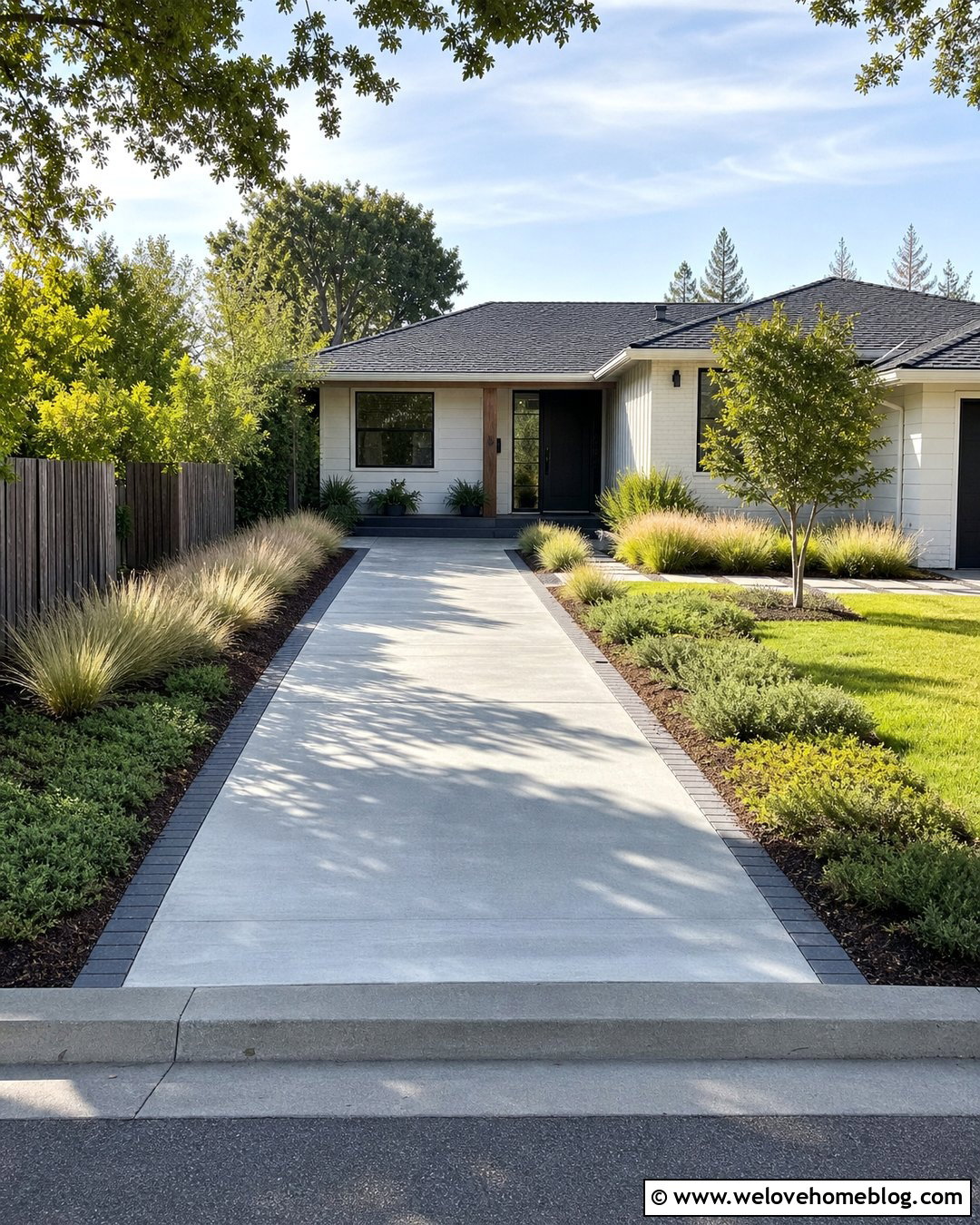
A narrow concrete driveway looks cleaner and wider when the landscaping stays low along both edges. Use smooth light-gray poured concrete with a straight layout leading to a side-entry garage. Add slim beds edged with dark steel or charcoal pavers for crisp definition. Compact plants such as creeping juniper, sedum, dwarf fountain grass, or low native perennials provide texture without brushing against vehicles. Repeat a limited plant palette instead of filling the border with many unrelated varieties. This creates rhythm and makes the long space feel orderly. Leave additional clearance where car doors open and near utility meters. At the front, widen the planting bed slightly and add one small ornamental tree to connect the driveway with the main yard.
2. Gravel Side Driveway With Native Plant Border
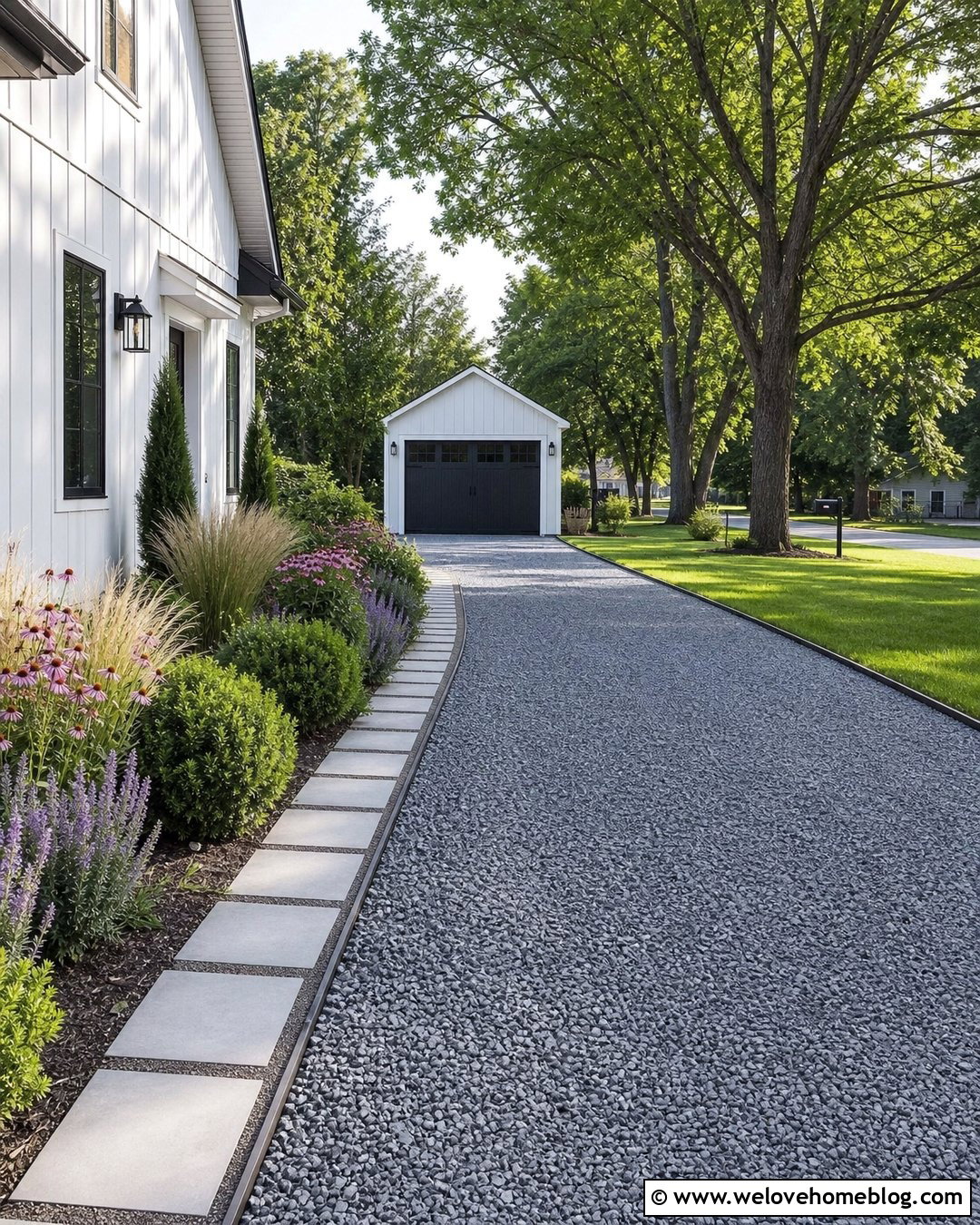
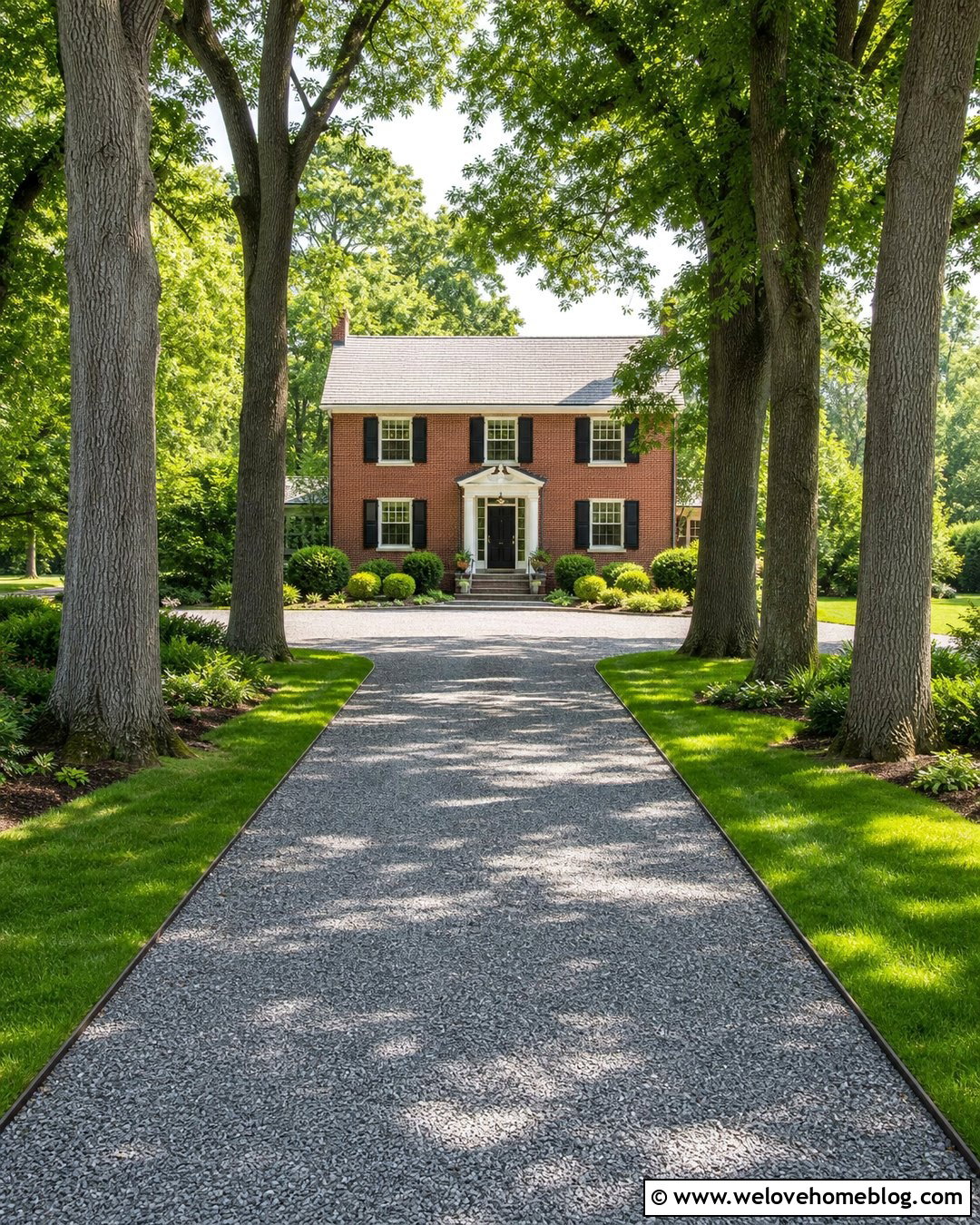
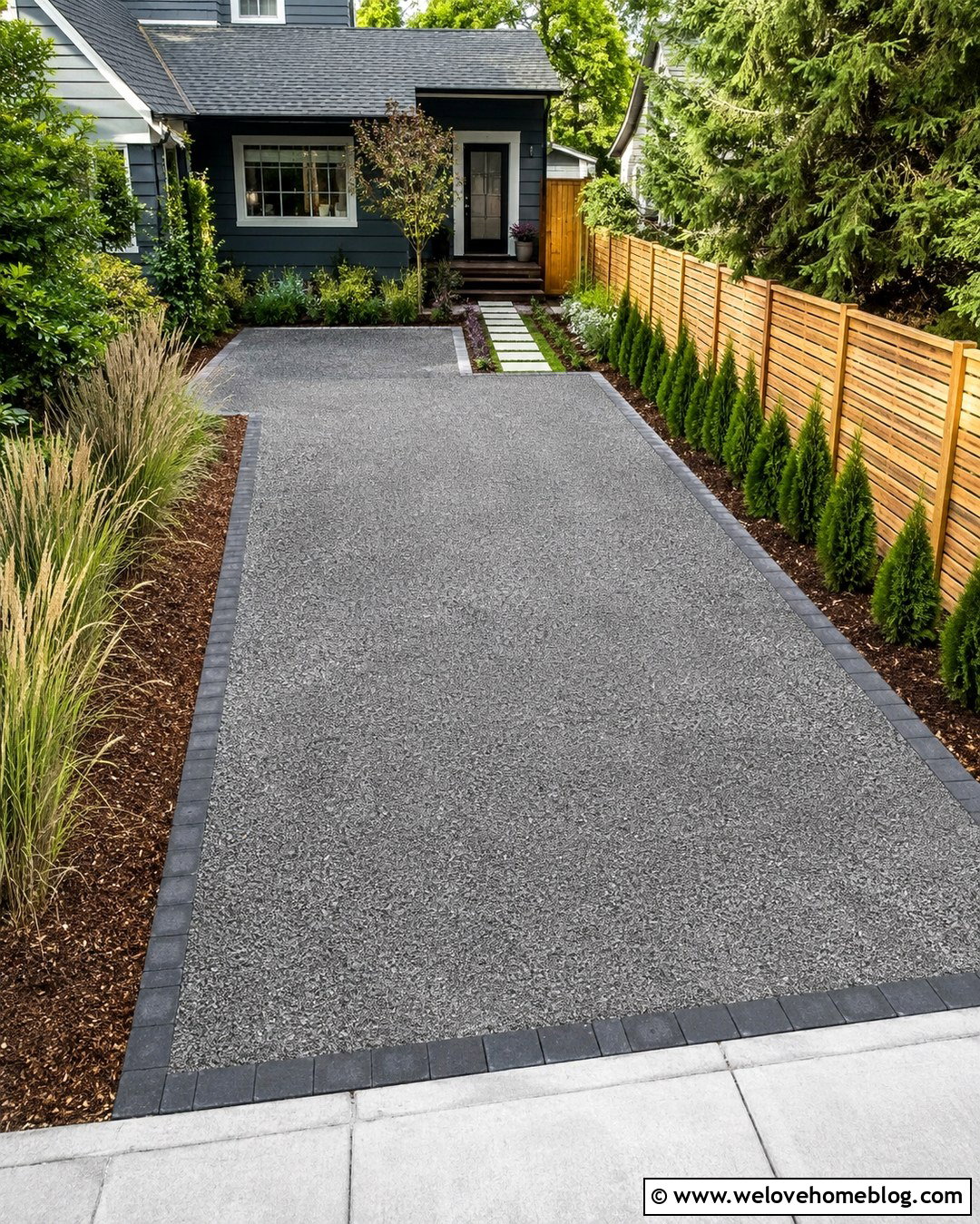
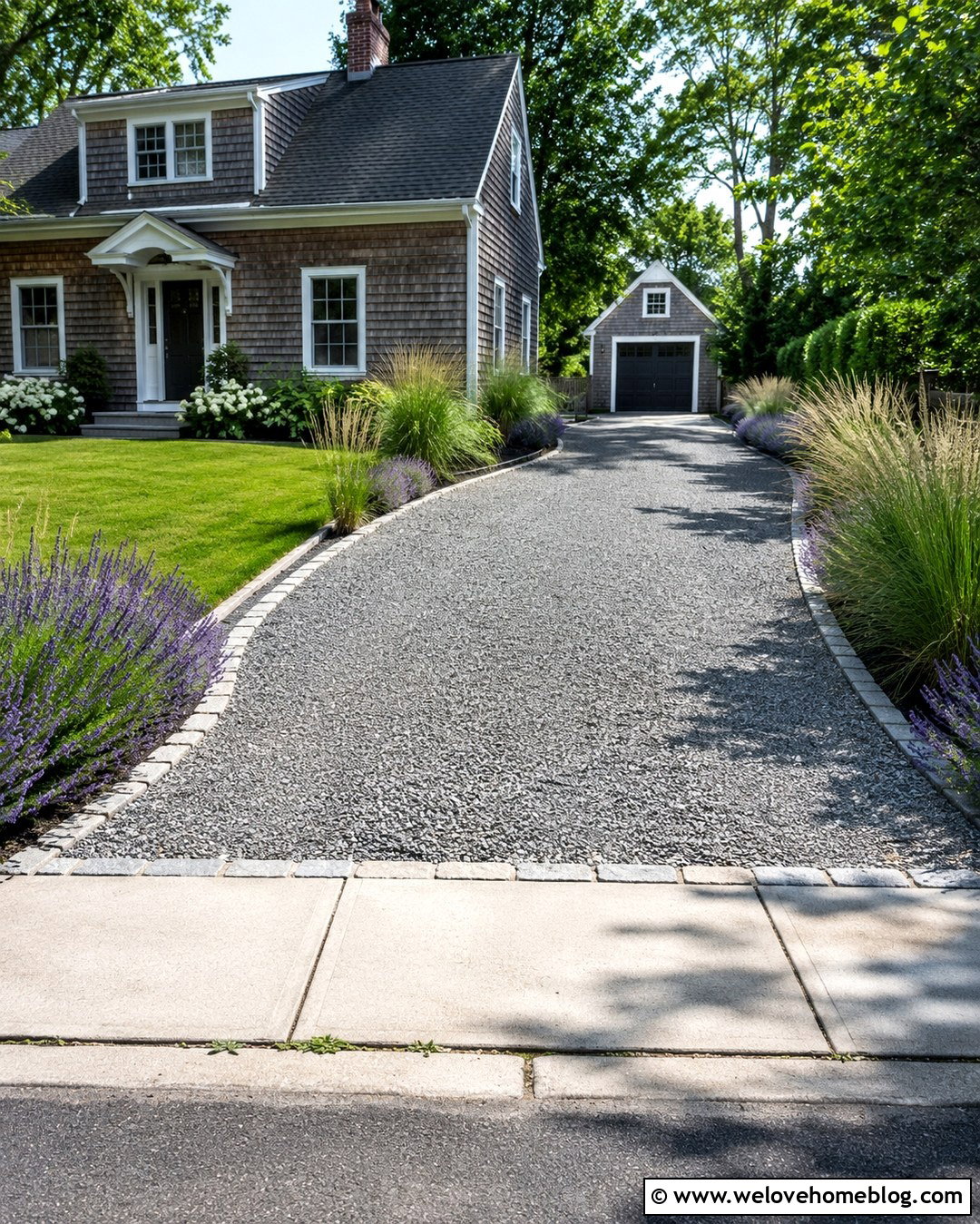
Gravel brings a relaxed, natural appearance to a side driveway and works especially well beside ranch, cottage, and farmhouse homes. Choose compacted angular gray gravel because it stays in place more effectively than loose, rounded stones. Contain it with steel edging or a flush cobblestone border. Along the outer side, plant a layered native border with low grasses at the pavement edge, flowering perennials through the middle, and compact shrubs near the fence. Select regionally appropriate plants that tolerate the driveway’s sunlight, soil, and reflected heat. Keep the border narrow near the entrance so drivers have a clear view of pedestrians and traffic. A stepping-stone path beside the gravel can also provide a clean walking route to the backyard.
3. Asphalt Side Driveway With Evergreen Screen
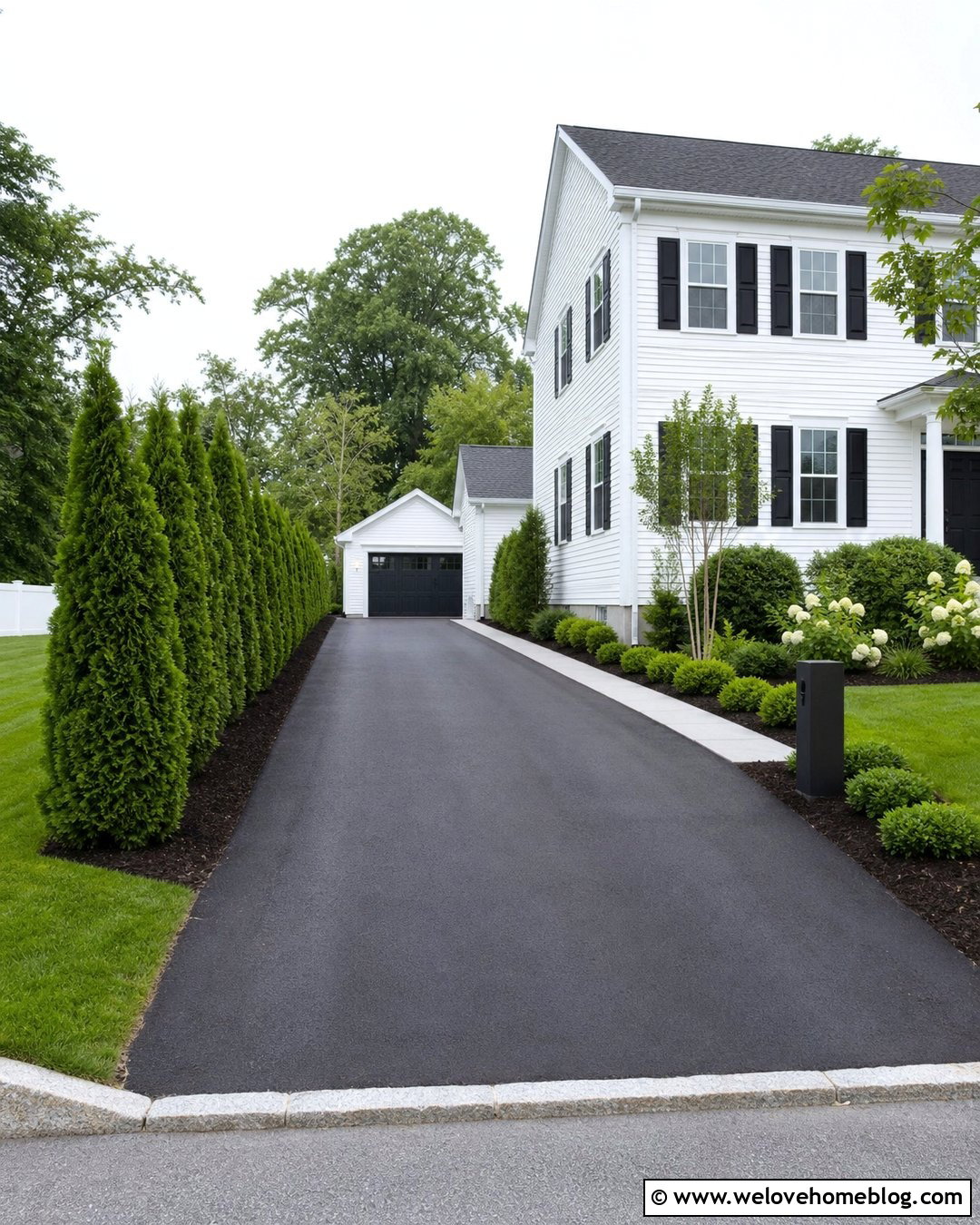
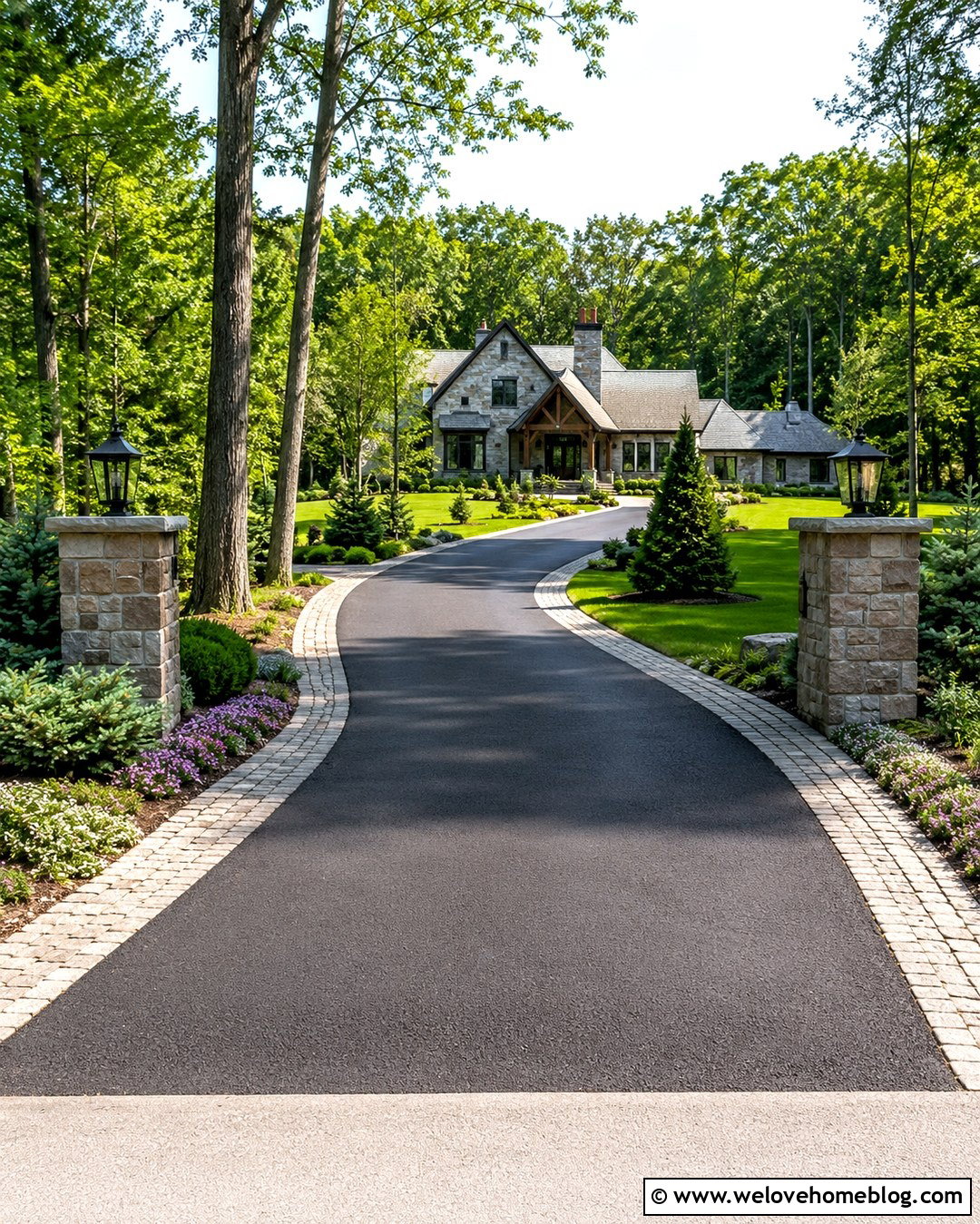
Need privacy without sacrificing valuable driveway width? Pair a black asphalt side driveway with a narrow evergreen screen along the property line. Upright varieties are more suitable than broad, spreading shrubs because they create height while preserving room for vehicles. Space plants according to their mature dimensions instead of placing them tightly for instant coverage. A continuous bed of dark mulch keeps the border simple and reduces visual clutter. On the house side, use a narrow concrete walkway or low ground cover to prevent the corridor from feeling enclosed. Break up the evergreen row near the street with a lower planting pocket and an address marker. The dark driveway, green screen, and restrained planting palette create a polished look that remains attractive throughout the year.
4. Paver Side Driveway With Grass Strips
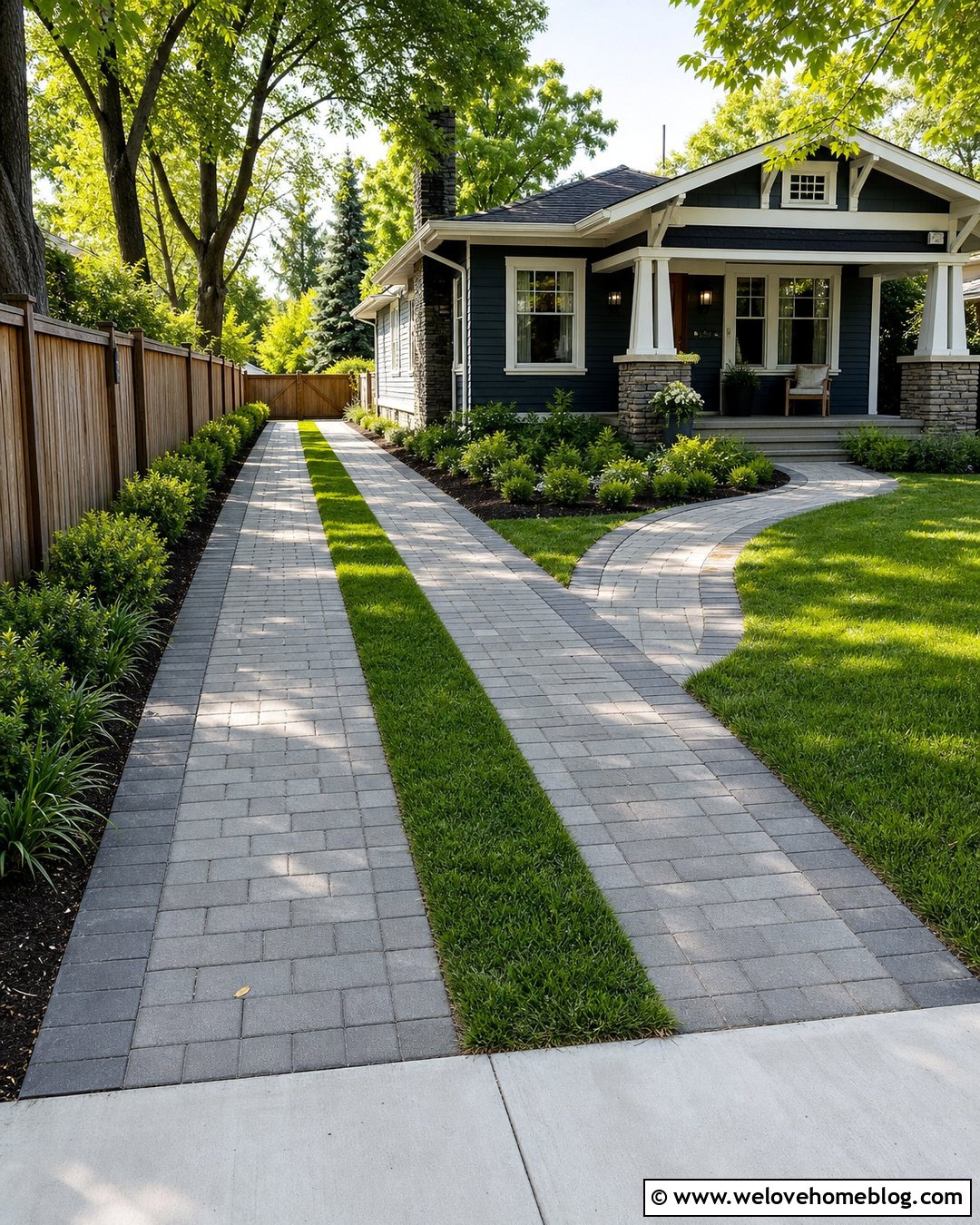
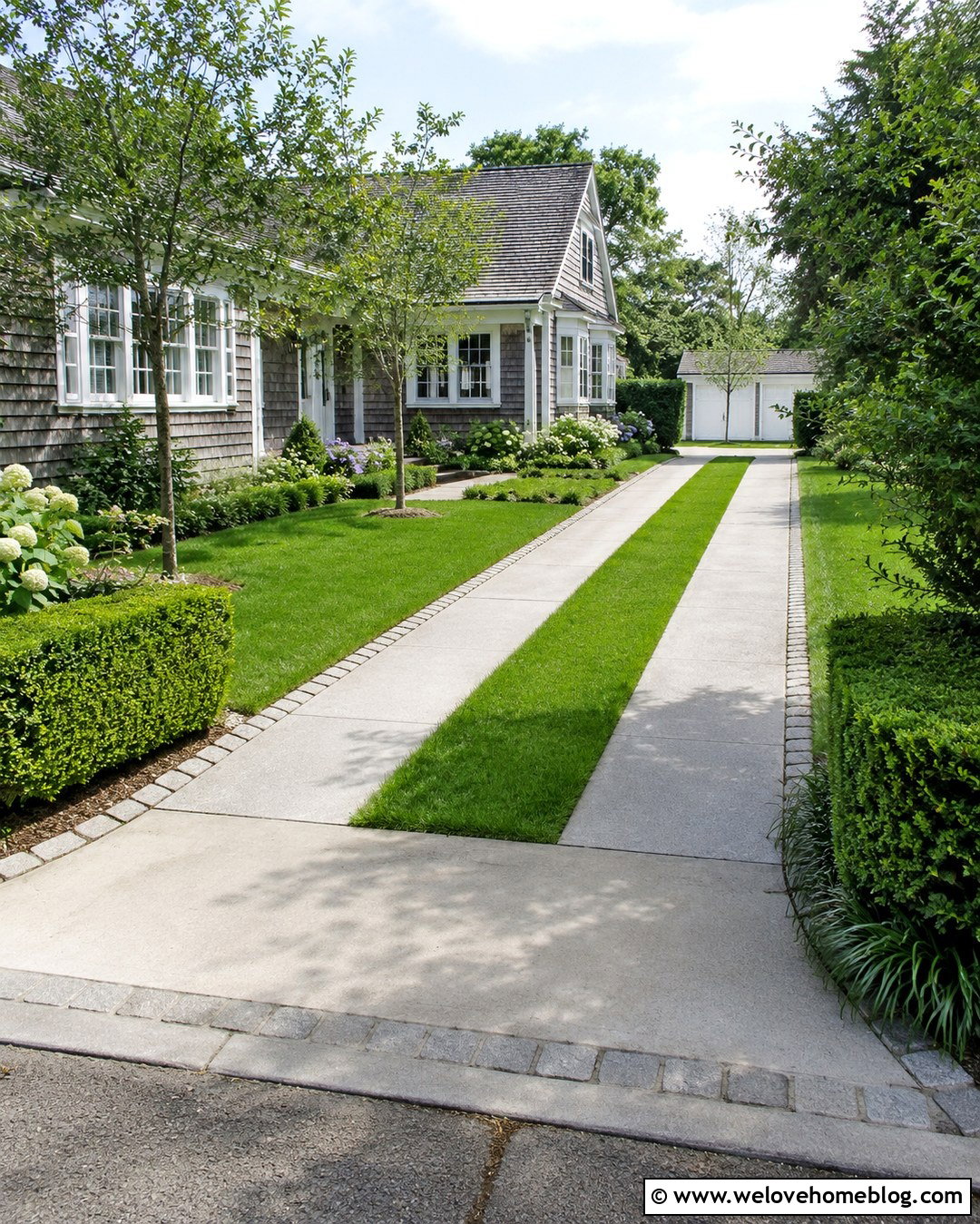
Pavers and grass strips can turn a functional side driveway into a softer extension of the yard. Install warm-gray concrete pavers in two reinforced wheel tracks, leaving a narrow strip of turf or durable ground cover between them. Frame the outside edges with matching soldier-course pavers so the layout looks deliberate. This design works best where the center planting receives enough light and can withstand occasional vehicle traffic. Along the fence, repeat small shrubs and ornamental grasses in a shallow mulched bed. Keep the house-side border open for drainage, maintenance, and access to utilities. A matching paver walkway can branch toward the side door. The combination reduces the visual weight of hard paving while giving the driveway a distinctive residential character.
5. Shaded Side Driveway With Woodland Planting
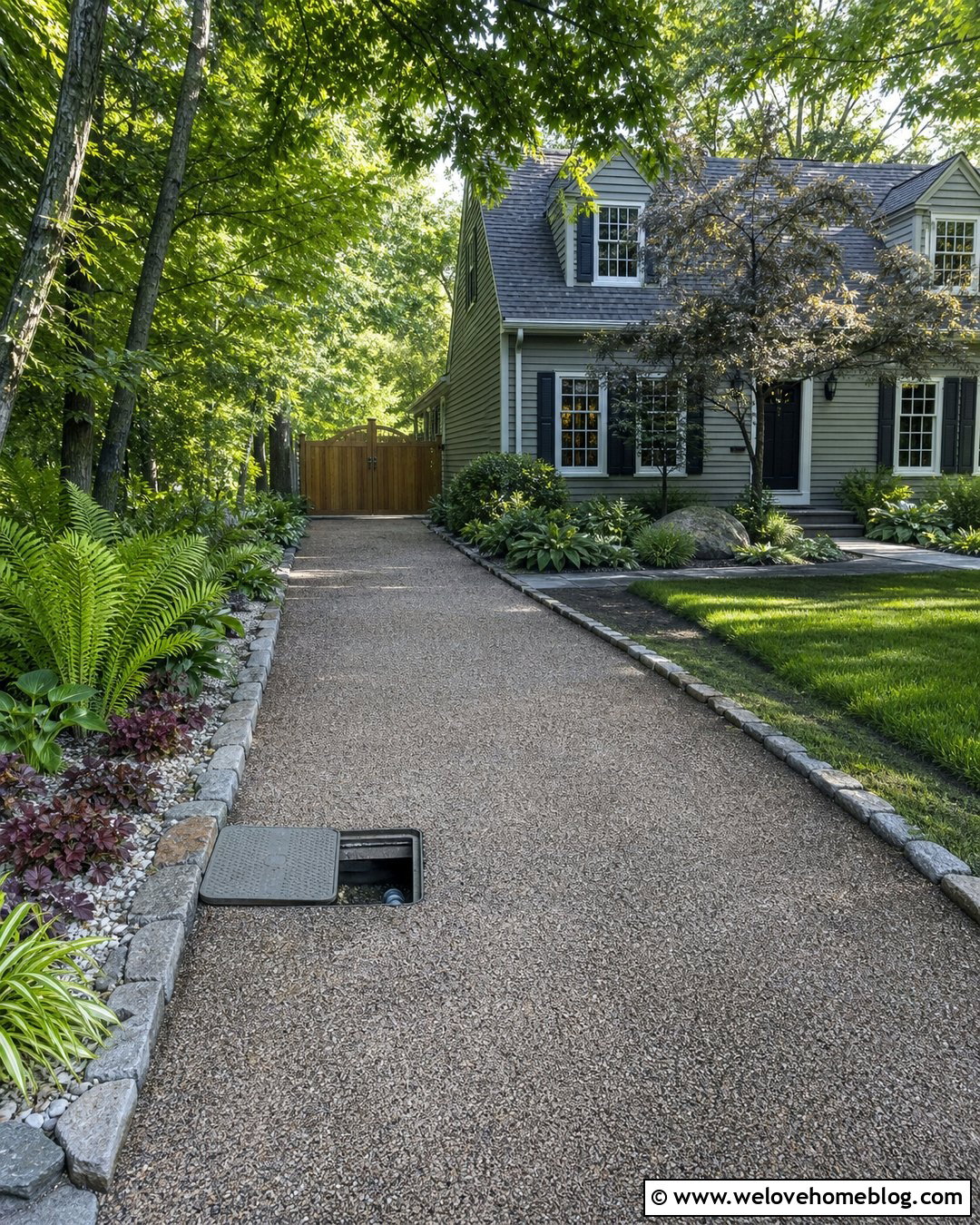
A driveway shaded by the house, mature trees, or a tall fence needs plants selected for lower light rather than a standard sunny border. Begin with a straight exposed-aggregate driveway in a soft gray-brown tone. Add a natural stone edge and layer shade-tolerant plants beside it, using compact shrubs toward the back and lower foliage near the pavement. Ferns, heuchera, sedges, hostas, and regionally suitable woodland ground covers can create rich texture without relying on constant flowers. Use lighter gravel mulch to brighten the narrow area and make plant shapes easier to see. Avoid crowding the wall or covering vents and utility equipment. Shaded side areas can retain moisture longer, so confirm drainage before adding dense planting or irrigation. ()
6. Side Driveway With Rain Garden
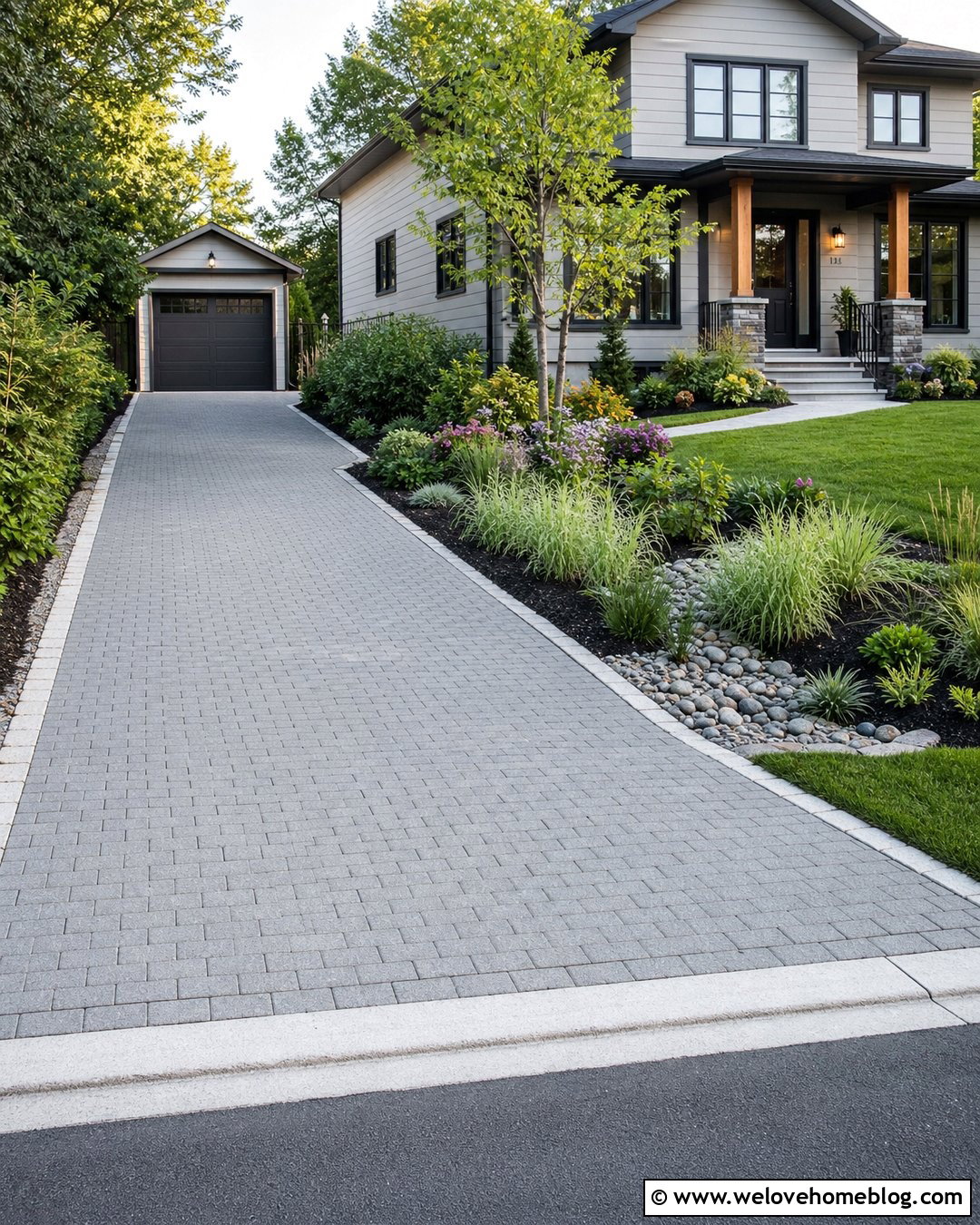
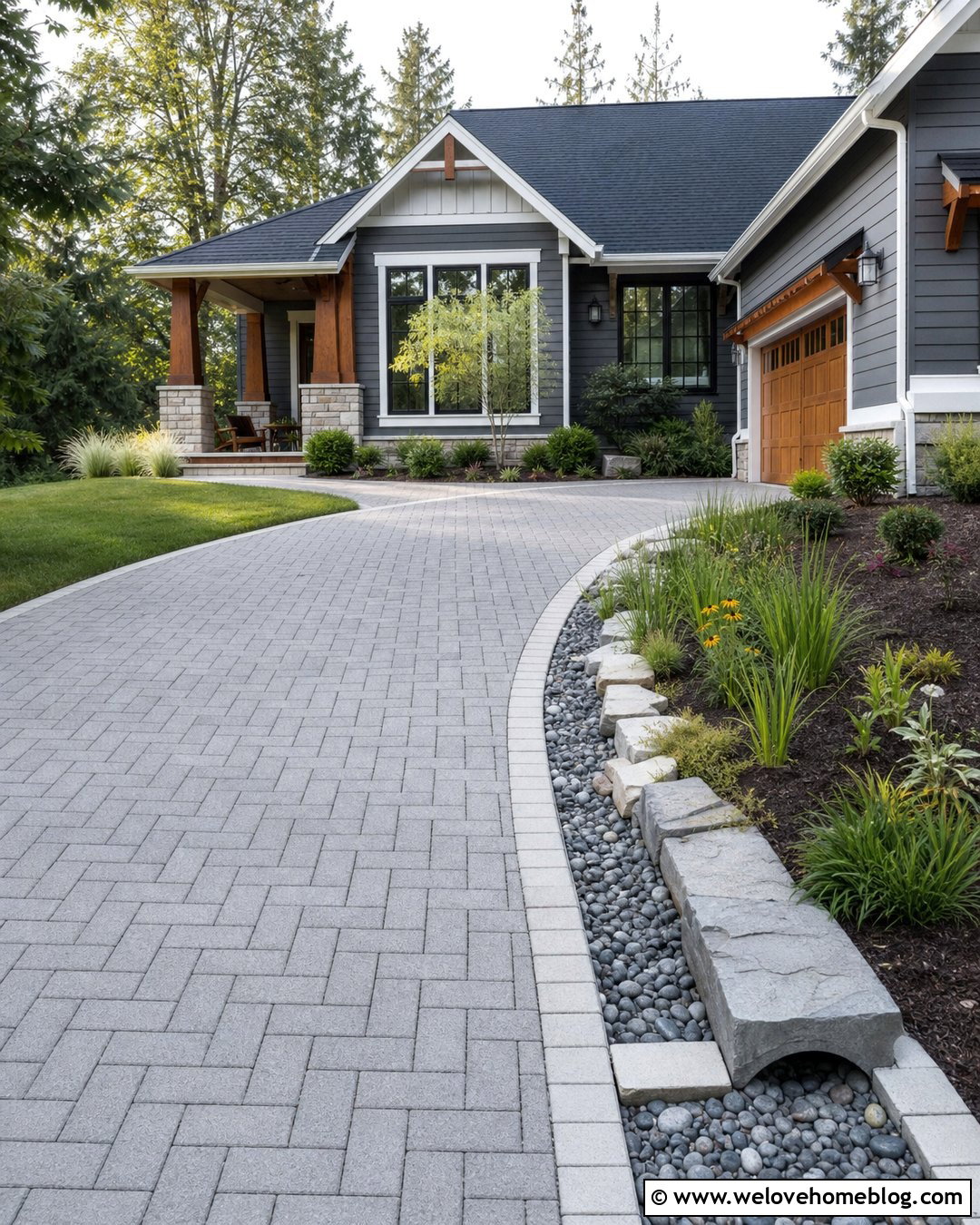
Where runoff collects beside the pavement, a planted rain garden can become part of the overall driveway design. Use a permeable concrete paver driveway that slopes gently toward a shallow landscaped basin on the yard side. Define the transition with a flush stone border that allows water to enter instead of trapping it on the paving. Fill the basin with plants suited to periodic moisture as well as drier conditions between storms. Arrange low plants nearest the driveway and taller grasses or shrubs farther back so visibility remains clear. Decorative river rock can protect the inlet where water enters the bed. Because soil, grading, rainfall, and local requirements vary, have persistent drainage or foundation problems evaluated before excavation. Rain gardens work best when runoff has a safe, planned destination. ()
7. Side Driveway With Dry Creek Bed
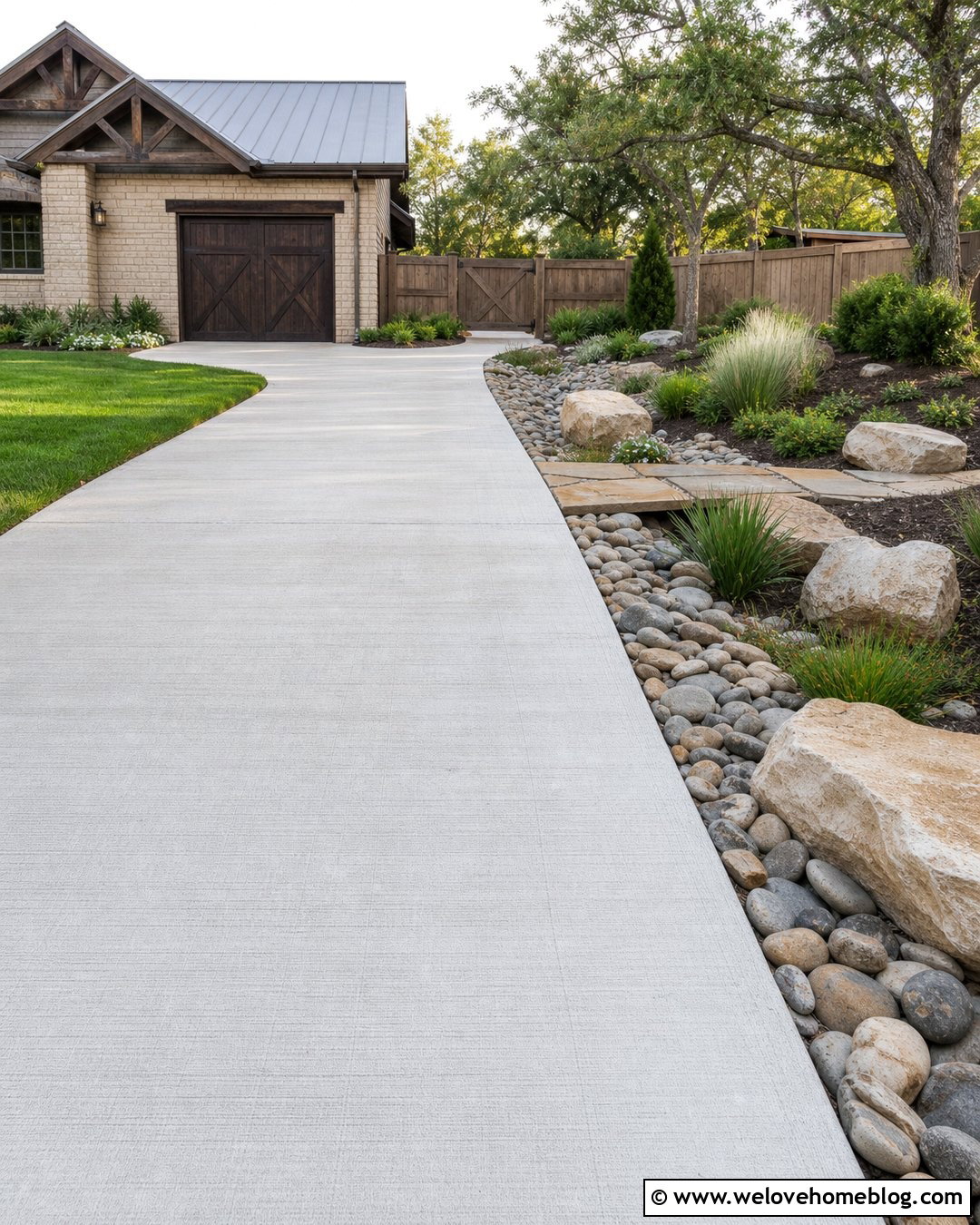
A dry creek bed adds texture while visually connecting a side driveway to the surrounding landscape. Pair a light broom-finished concrete driveway with a shallow channel of mixed river rock running along the lower edge. Use larger stones at curves and smaller gravel through the center to create a natural appearance. Plant moisture-tolerant sedges, compact shrubs, and ornamental grasses in spaced groups beside the channel. A small stone bridge or broad stepping slab can cross the creek bed where the walking route leads to a gate. The channel should complement proper grading rather than serve as decoration alone. Confirm where the collected water will flow, and never direct it toward the foundation or a neighboring property. When thoughtfully installed, the creek bed turns drainage infrastructure into a strong landscape feature. ()
8. Side Driveway With Columnar Trees
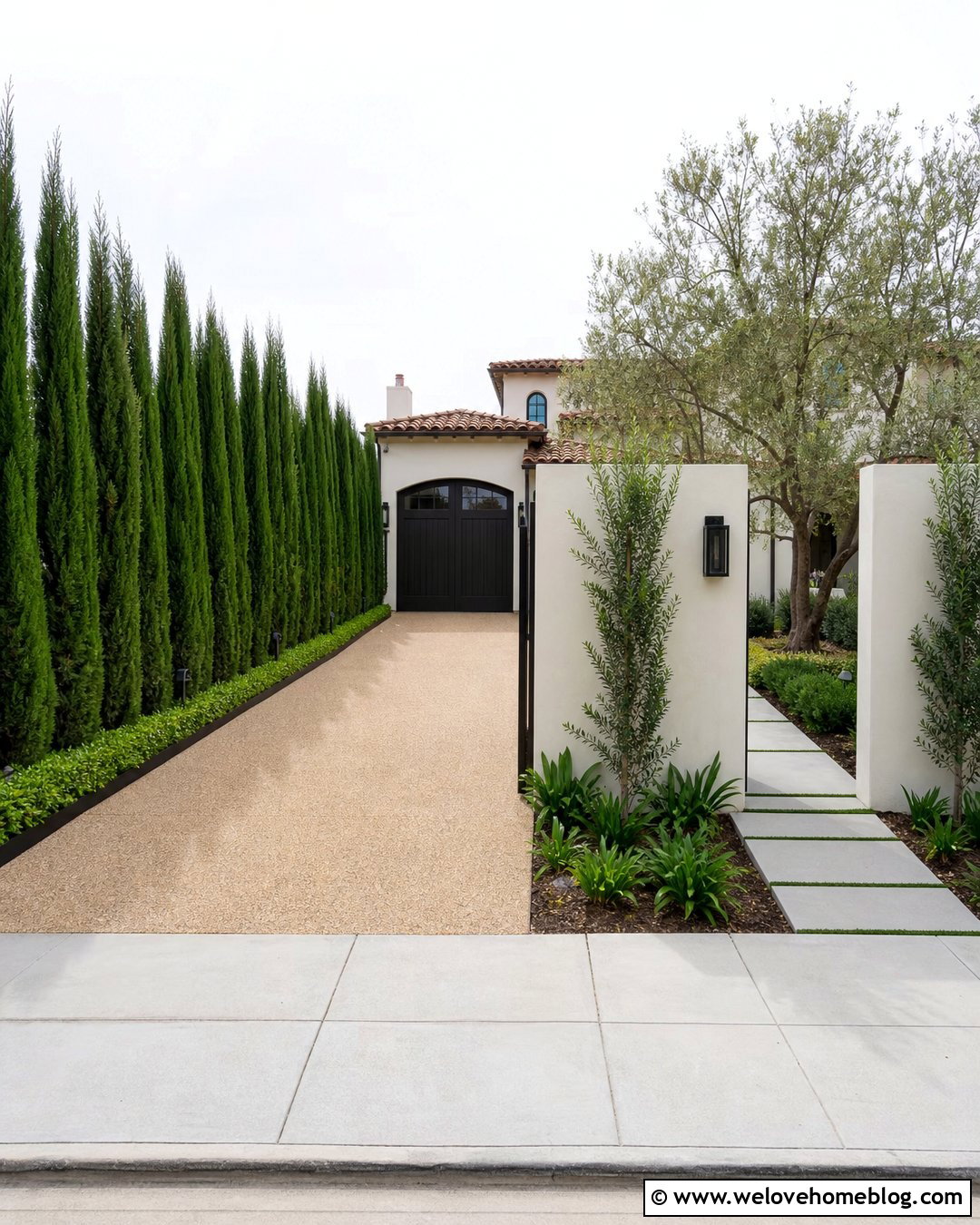
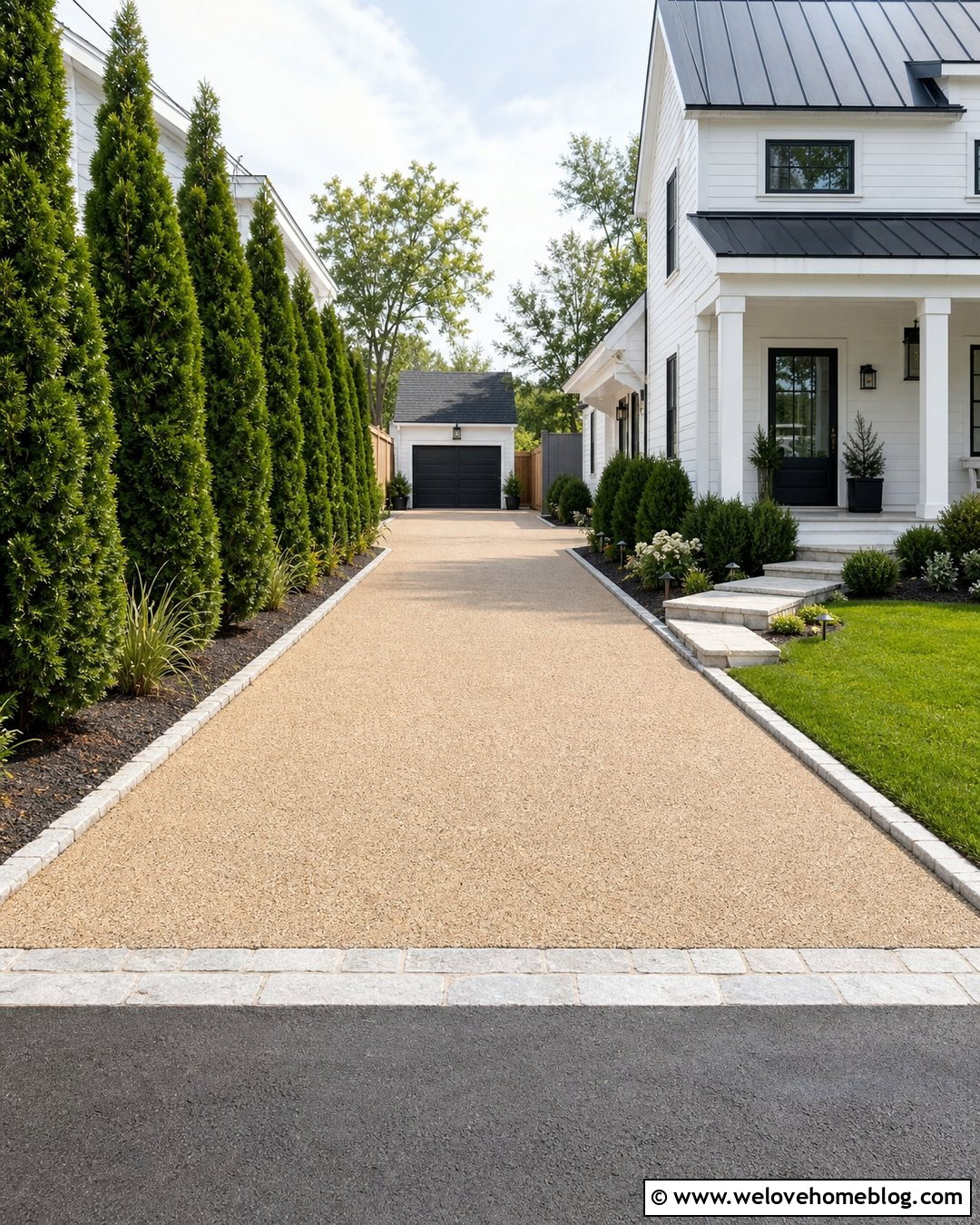
A row of slender trees can add privacy and vertical structure without making a side driveway feel crowded. Use tan resin-bound gravel for a smooth, visually quiet surface, then install a narrow planting bed along the fence. Choose columnar trees or upright evergreen shrubs suited to your growing zone, available sunlight, and soil conditions. Their mature width matters more than their size at the garden center. Underplant the row with one low ground cover to hide bare soil and simplify maintenance. A steel edge keeps roots, mulch, and gravel separated. Position the trees away from overhead wires, underground services, foundations, and areas where branches could scrape vehicles. At the street end, transition to lower plants so sightlines remain open. The finished driveway feels green, private, and carefully proportioned. ()
9. Side Driveway With Trellis Privacy
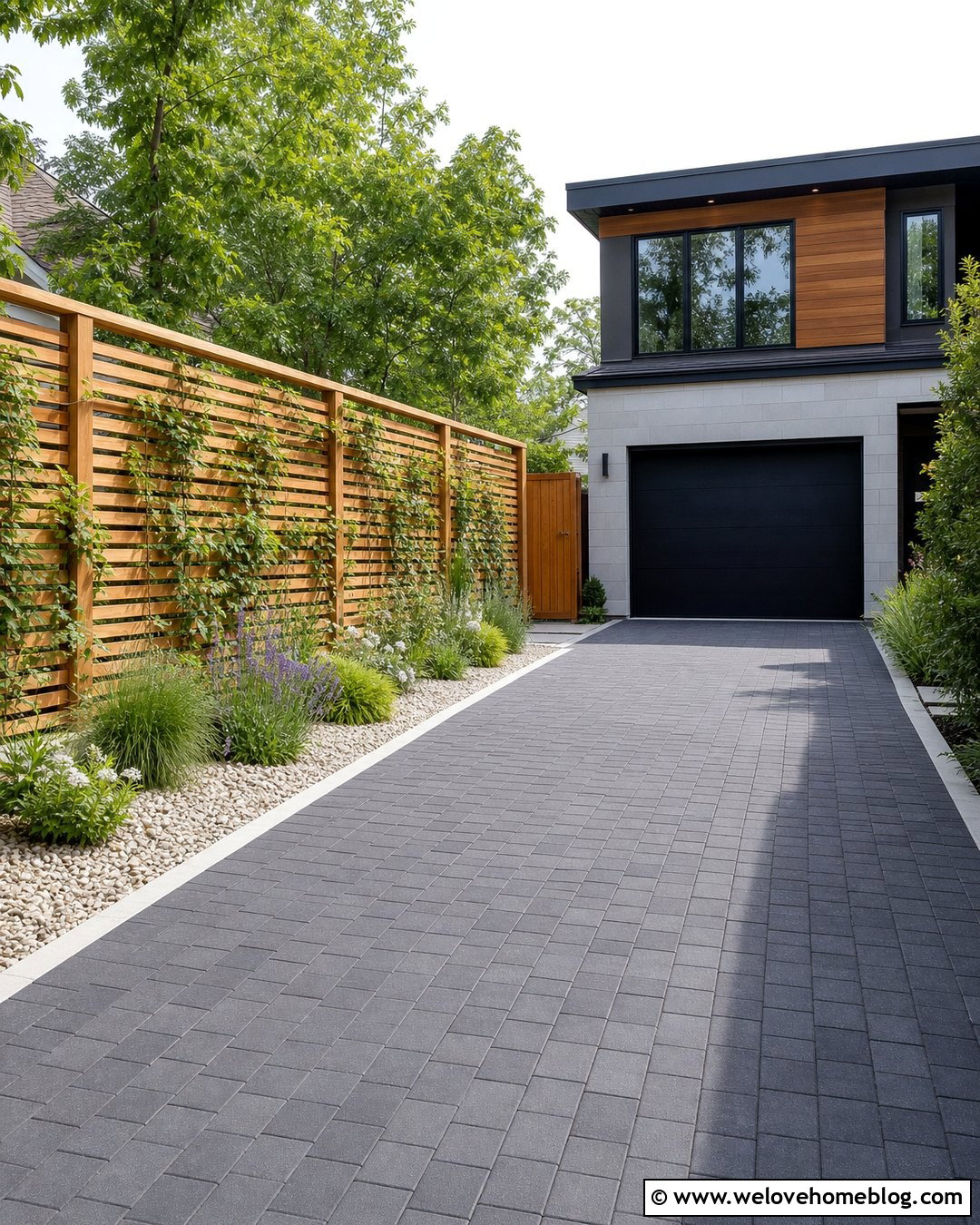
Vertical landscaping is a smart solution when the planting strip is too narrow for a full hedge. Set a cedar trellis or horizontal slat screen beside a charcoal concrete paver driveway. Train a well-behaved climbing plant across selected panels while leaving some wood visible, which prevents the narrow passage from looking like a solid green tunnel. Beneath the trellis, create a shallow gravel bed with small grasses and low flowering plants. Match the trellis stain to the garage door, fence, or house trim for a unified exterior. Keep vines away from gutters, siding, meters, and neighboring structures. If the screen sits near the driveway entrance, reduce its height or set it back to protect visibility. This layered combination provides privacy, greenery, and architectural interest while preserving the driveway’s usable width. ()
10. Side Driveway With Raised Planting Beds
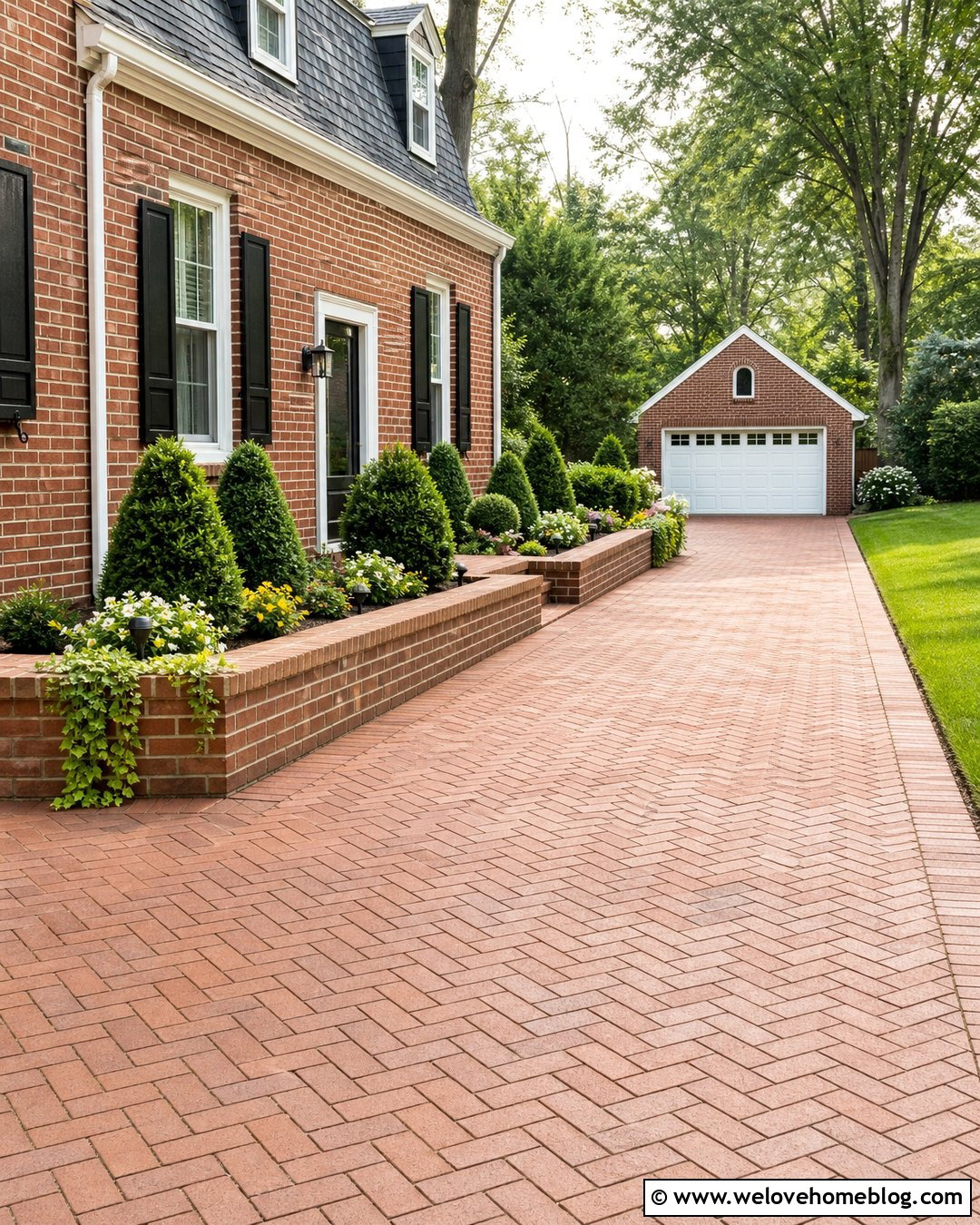
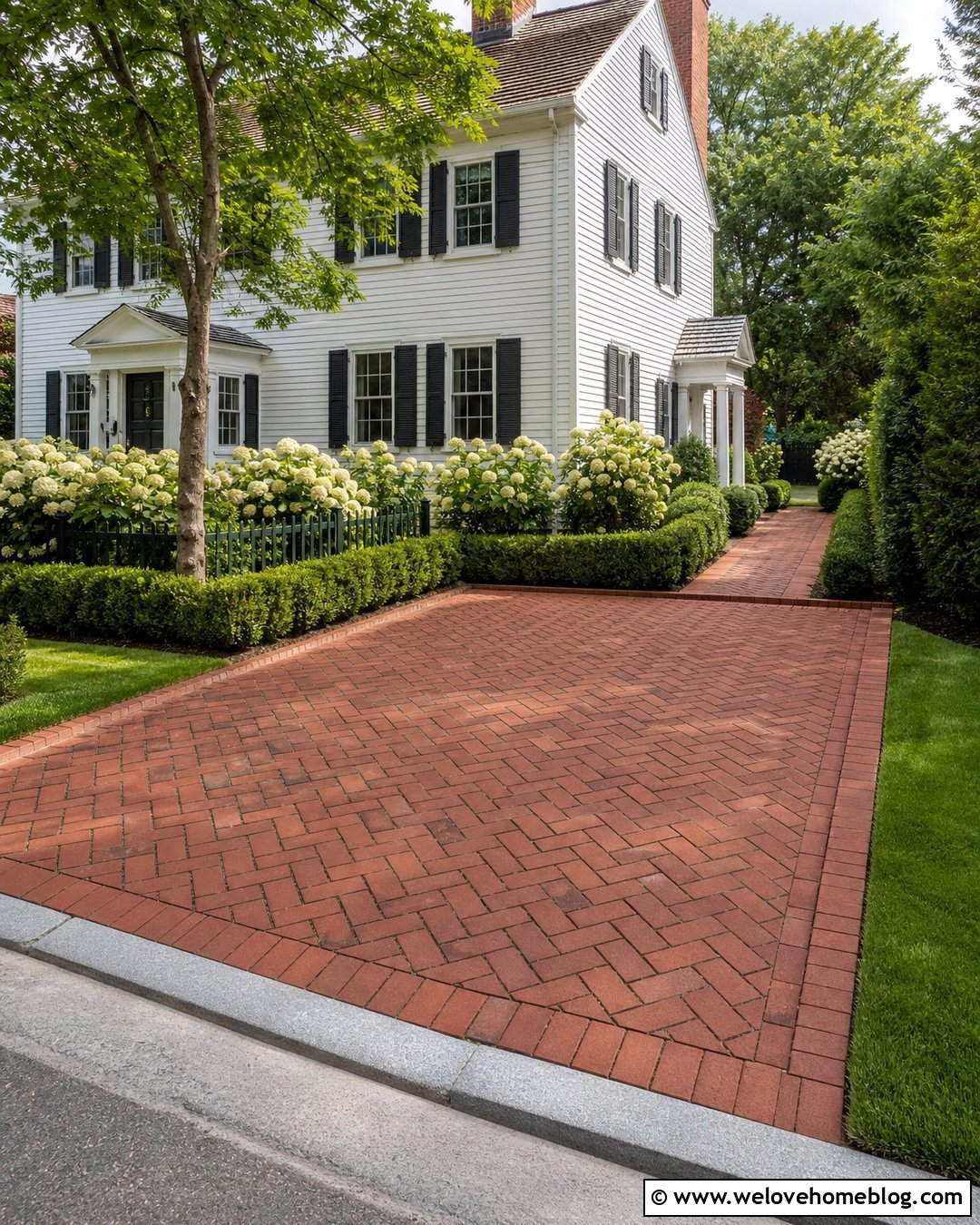
Raised beds can transform an awkward strip beside a driveway, particularly when the existing soil is rocky or difficult to plant. Pair warm-toned brick paving in a herringbone pattern with one long, low raised bed made from matching brick or natural stone. Keep the wall around seat height or lower so the driveway remains open and easy to navigate. Fill the bed with compact evergreen shrubs, seasonal flowers, and trailing plants that soften the top edge without spreading onto the paving. Include drip irrigation to reduce overspray and water waste. The bed should not block drainage, utility access, or vehicle doors. Near the garage, taper or end the wall to provide extra maneuvering room. Repeating the driveway material in the raised bed creates a cohesive, custom-built appearance.
11. Modern Side Driveway With Rock Landscaping
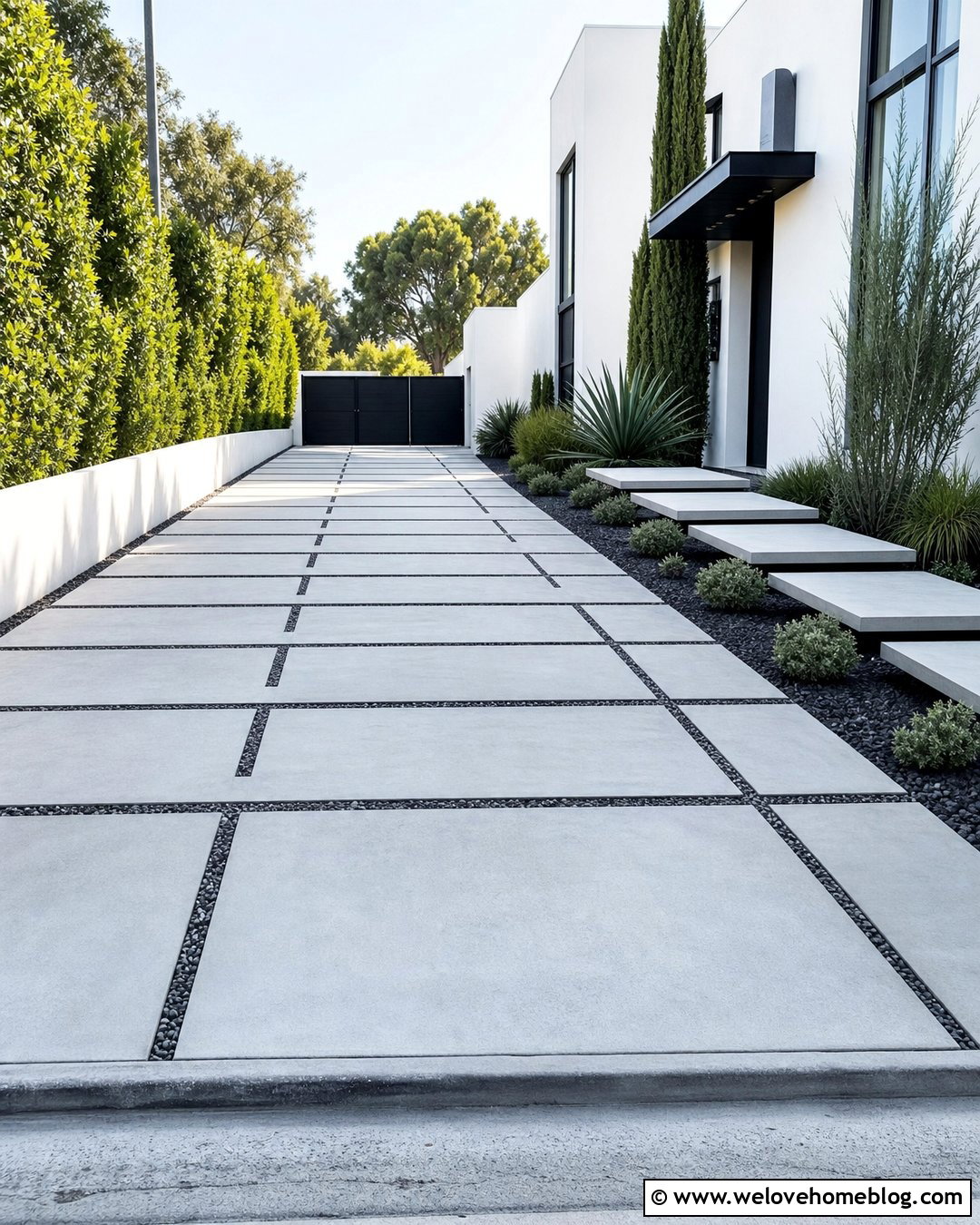
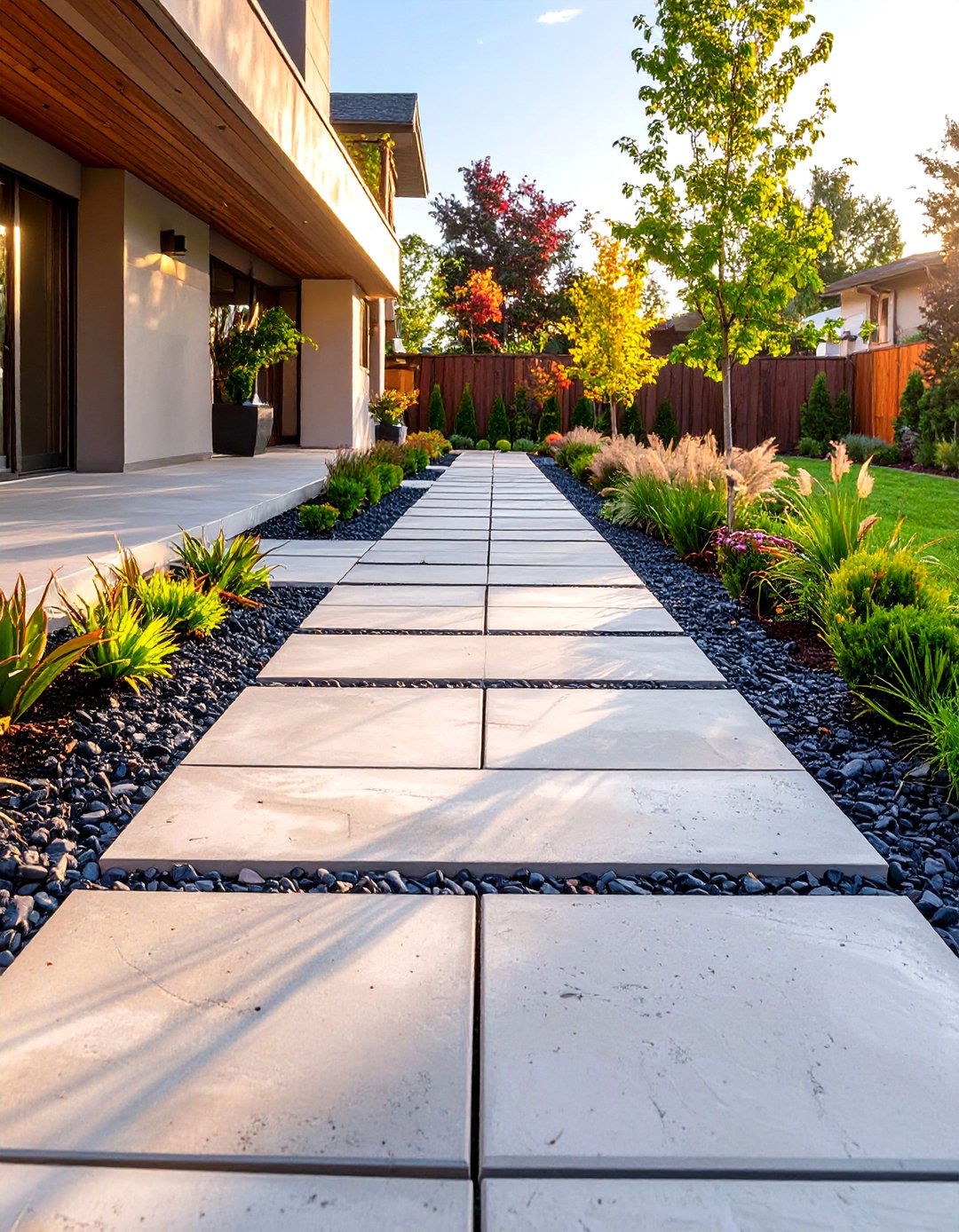
Clean lines and a limited color palette give a modern side driveway a calm, uncluttered look. Use large-format light-gray concrete slabs separated by narrow dark gravel joints. Along one side, install a linear bed of black Mexican beach pebbles or charcoal crushed stone contained by slim steel edging. Add sculptural plants in repeated groups, such as compact agave in warm climates or hardy yucca and upright grasses in colder regions. A few rectangular stepping pads can connect the driveway to the side entrance. Avoid filling every open space; exposed gravel is part of the composition. Choose plants that match the site’s climate and sunlight, since reflective walls and paving can intensify heat. The contrast between pale concrete, dark stone, and architectural foliage creates a bold but practical modern landscape.
12. Side Driveway With Cottage Flower Border
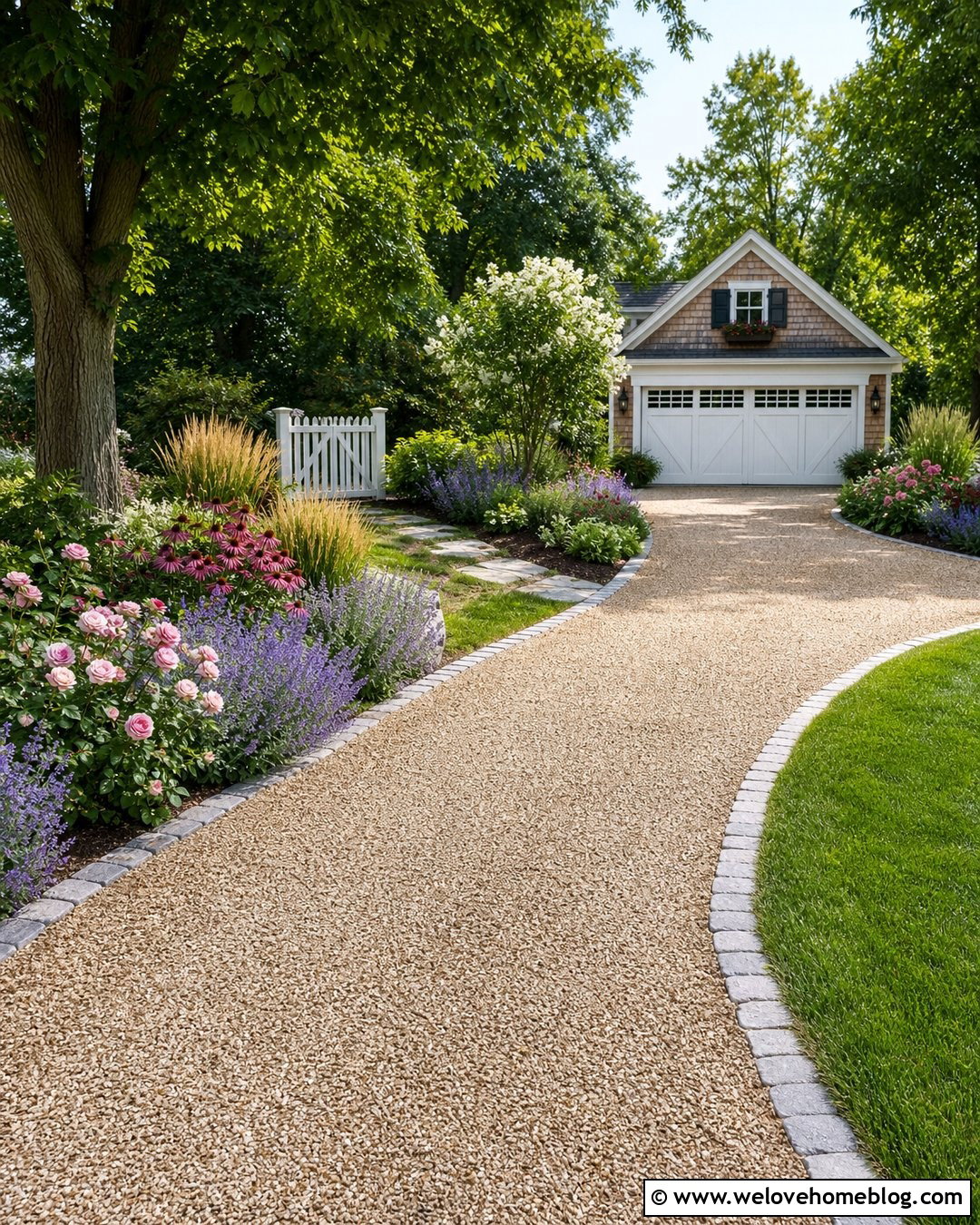
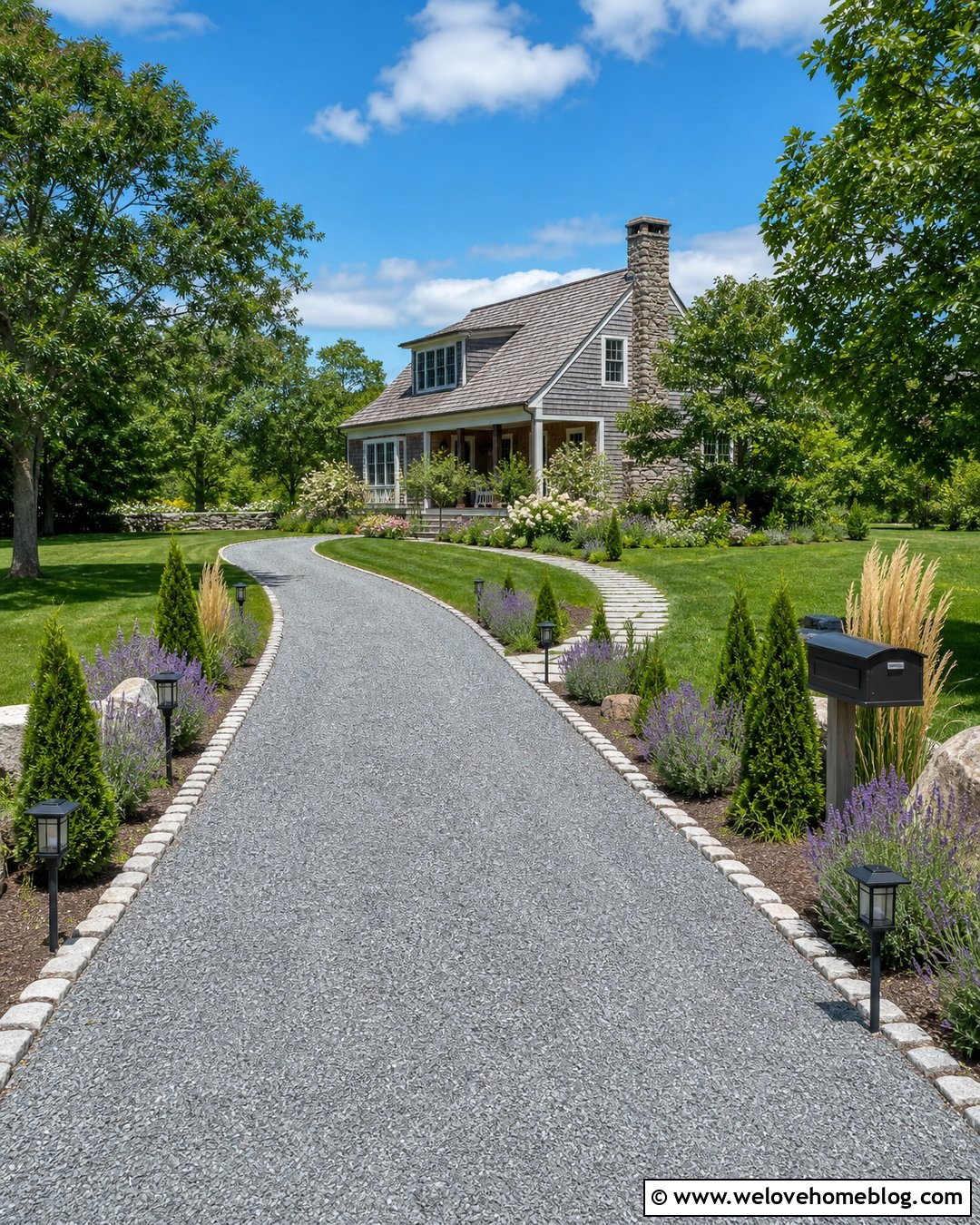
A cottage border can soften a side driveway without making it difficult to use. Start with buff-colored gravel or aged clay brick pavers leading toward a detached garage. Define the driving surface with a cobblestone edge, then create a gently curving flower bed along the lawn side. Combine compact roses, catmint, salvia, coneflowers, and low ornamental grasses, adjusting the selections for local growing conditions. Place shorter plants beside the driveway and taller flowers behind them to prevent stems from leaning into vehicle space. Repeat several varieties down the border instead of planting every flower once. A simple picket gate and narrow stepping-stone walkway strengthen the cottage character. Regular edging and selective pruning will keep this romantic planting scheme attractive, controlled, and comfortable to drive beside.
13. Side Driveway With Hydrangea Border
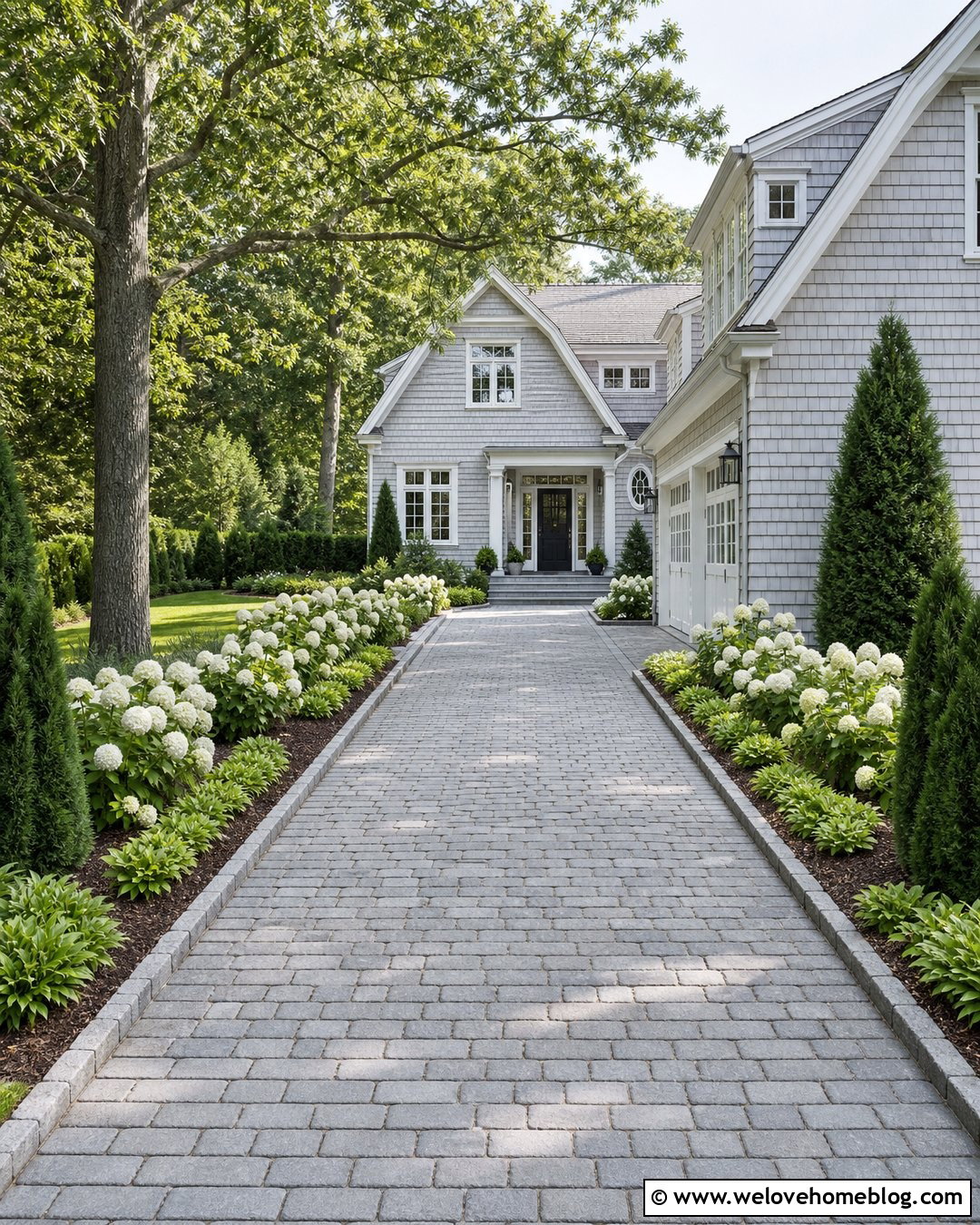
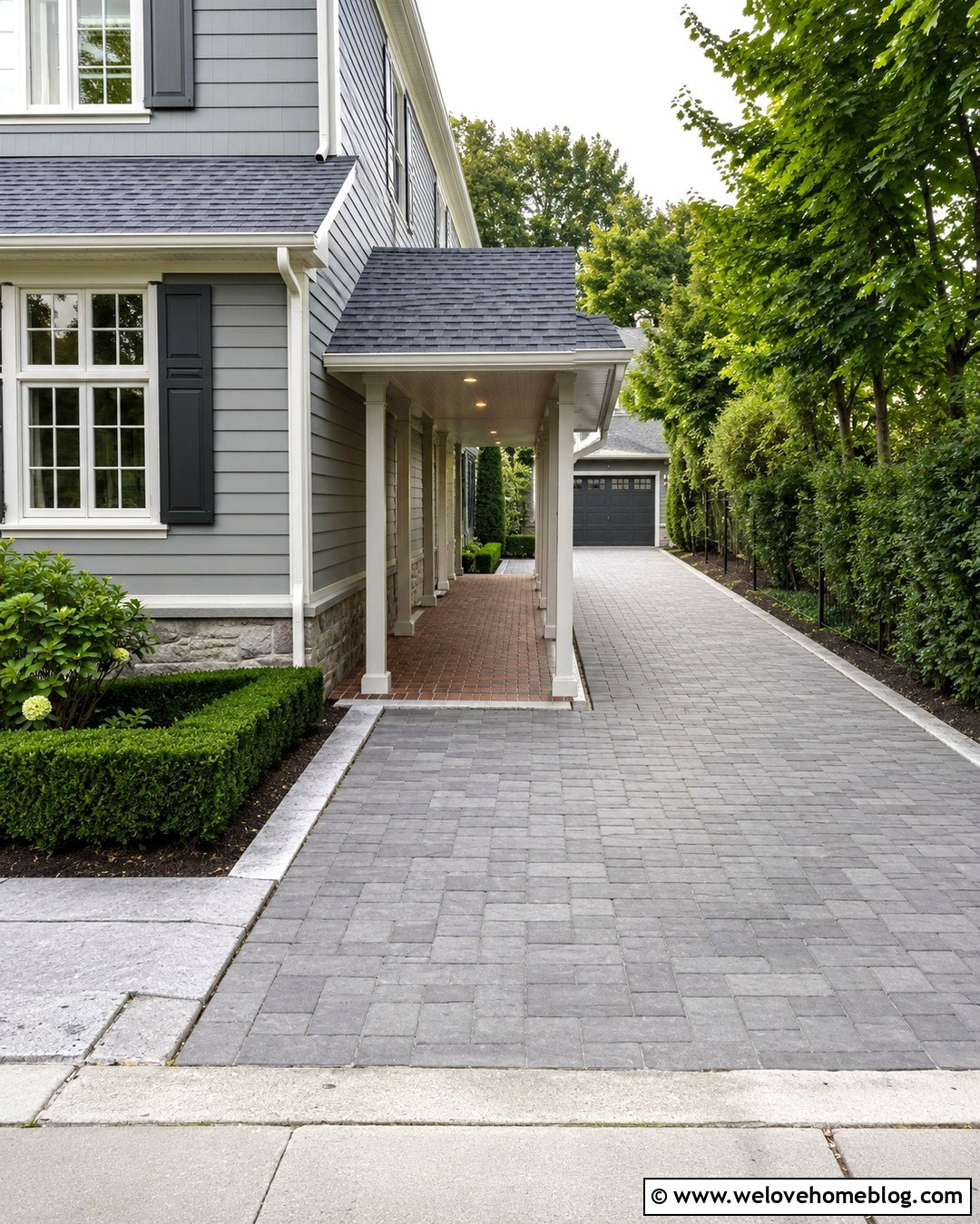
Hydrangeas can create a lush driveway border when the planting strip provides enough room for their mature size. Choose a straight gray cobblestone driveway and place compact hydrangea varieties in a broad bed on the yard side rather than squeezing large shrubs against the pavement. Underplant them with low shade-tolerant ground covers and finish the bed with fine bark mulch. A low granite curb protects the plants from tires while complementing the cobblestone surface. Leave intentional gaps near doors, walkways, and the garage entrance. Hydrangea performance varies with climate, sunlight, moisture, and variety, so select plants suited to the specific site. Repeating one flower color creates a calm, tailored appearance, while evergreen accents at each end give the border structure when the hydrangeas are dormant.
14. Side Driveway With Ornamental Grasses
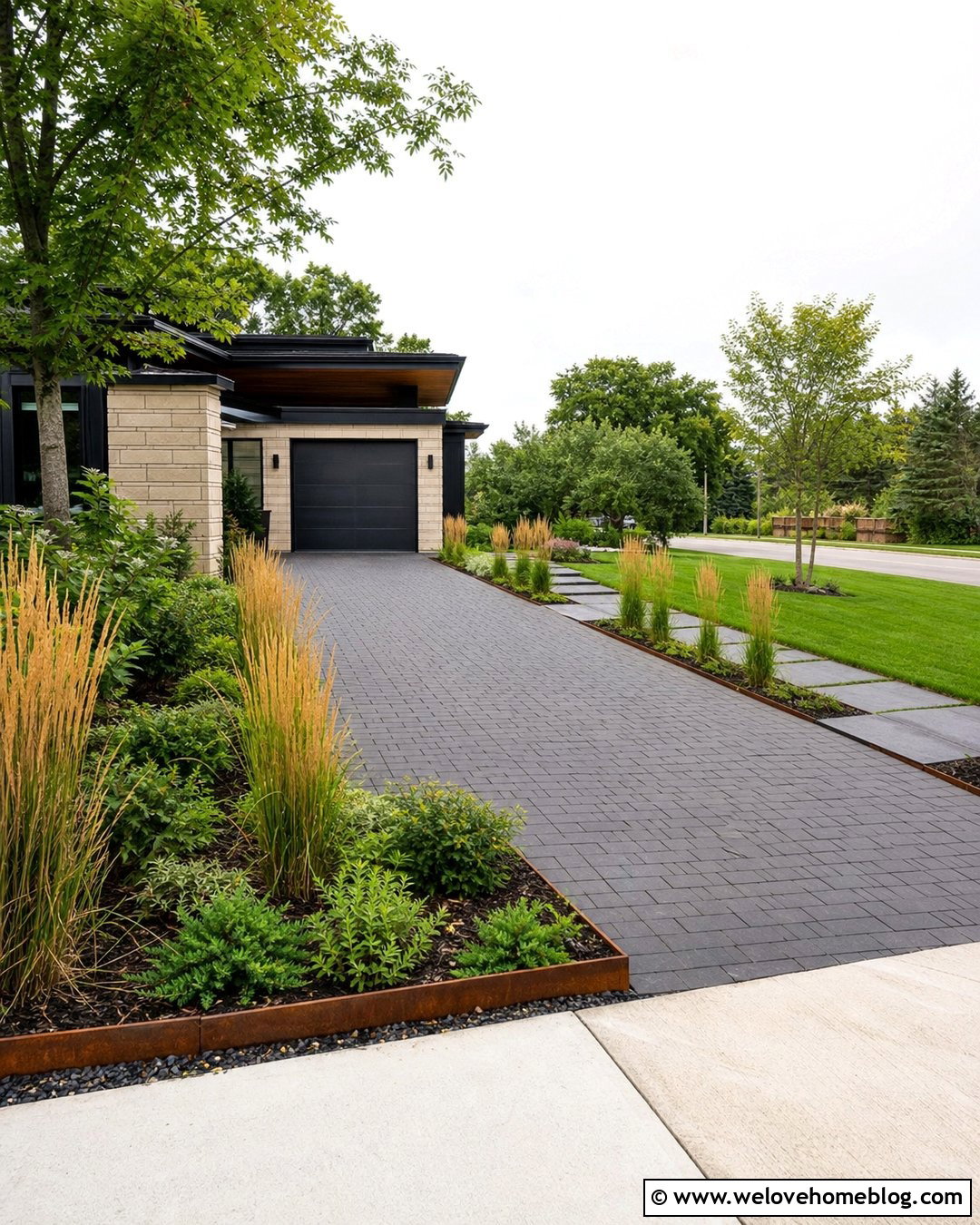
The movement and fine texture of ornamental grasses can make a long side driveway feel less rigid. Pair a dark-gray permeable paver surface with a wide planting ribbon containing repeated clusters of upright grasses. Mix them with low evergreen shrubs and a restrained layer of flowering perennials for seasonal color. Choose clumping varieties that remain within their intended space rather than aggressive spreaders. Place the shortest plants at the pavement edge and keep taller grasses away from the street, where they could obstruct views. A corten steel border adds a warm contrast to gray paving and green foliage. In snowy climates, allow enough setback for plowing and salt exposure. When the plant spacing, paver pattern, and border line repeat consistently, the entire driveway gains a strong visual rhythm.
15. Side Driveway With Ground Cover Border
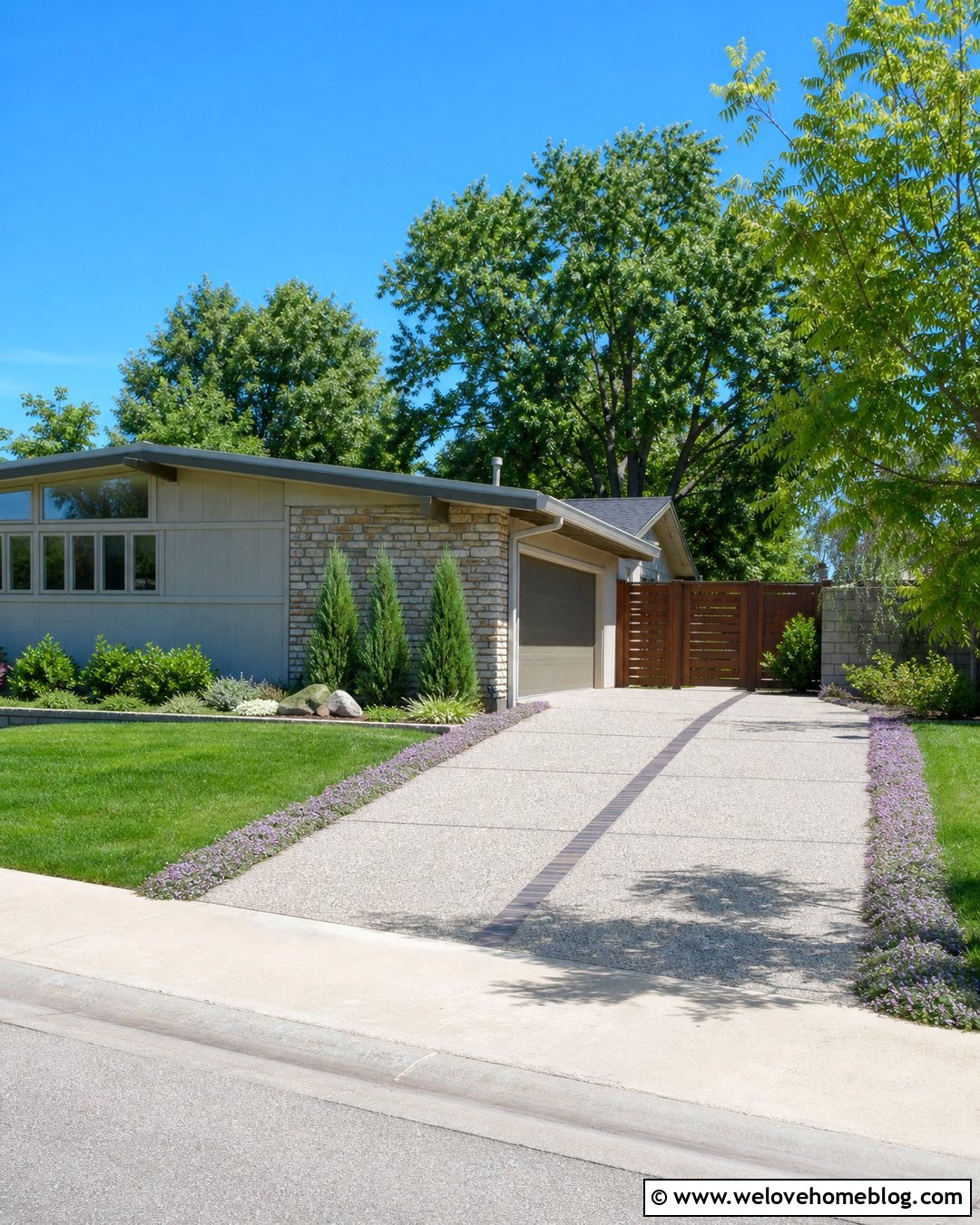
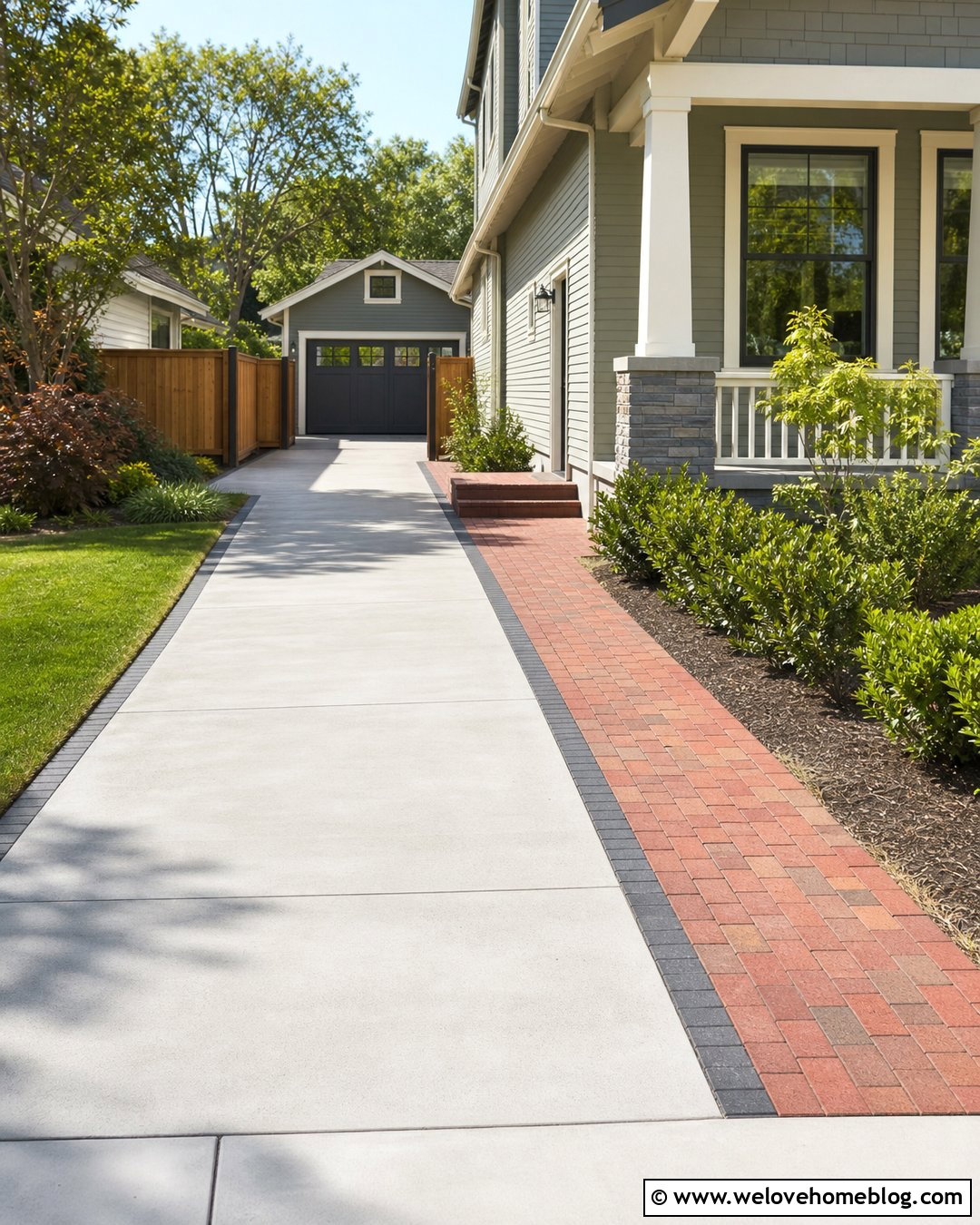
A continuous ground cover border is useful where there is little room for shrubs or complicated planting. Install a pale exposed-aggregate concrete driveway and edge it with a narrow ribbon of dark brick. Beyond the brick, plant one low-growing species in a broad sweep, choosing a variety appropriate for the site’s sun, moisture, winter temperatures, and foot traffic. Creeping thyme may suit hot, sunny locations, while certain sedges or other shade-adapted ground covers work better in cooler, protected strips. Add a few upright accents near the side gate to prevent the landscape from appearing flat. Keep plants trimmed away from the driveway surface and drainage openings. This simple treatment replaces a difficult sliver of lawn with texture and color while maintaining a generous, uncluttered driving area.
16. Sloped Side Driveway With Retaining Wall
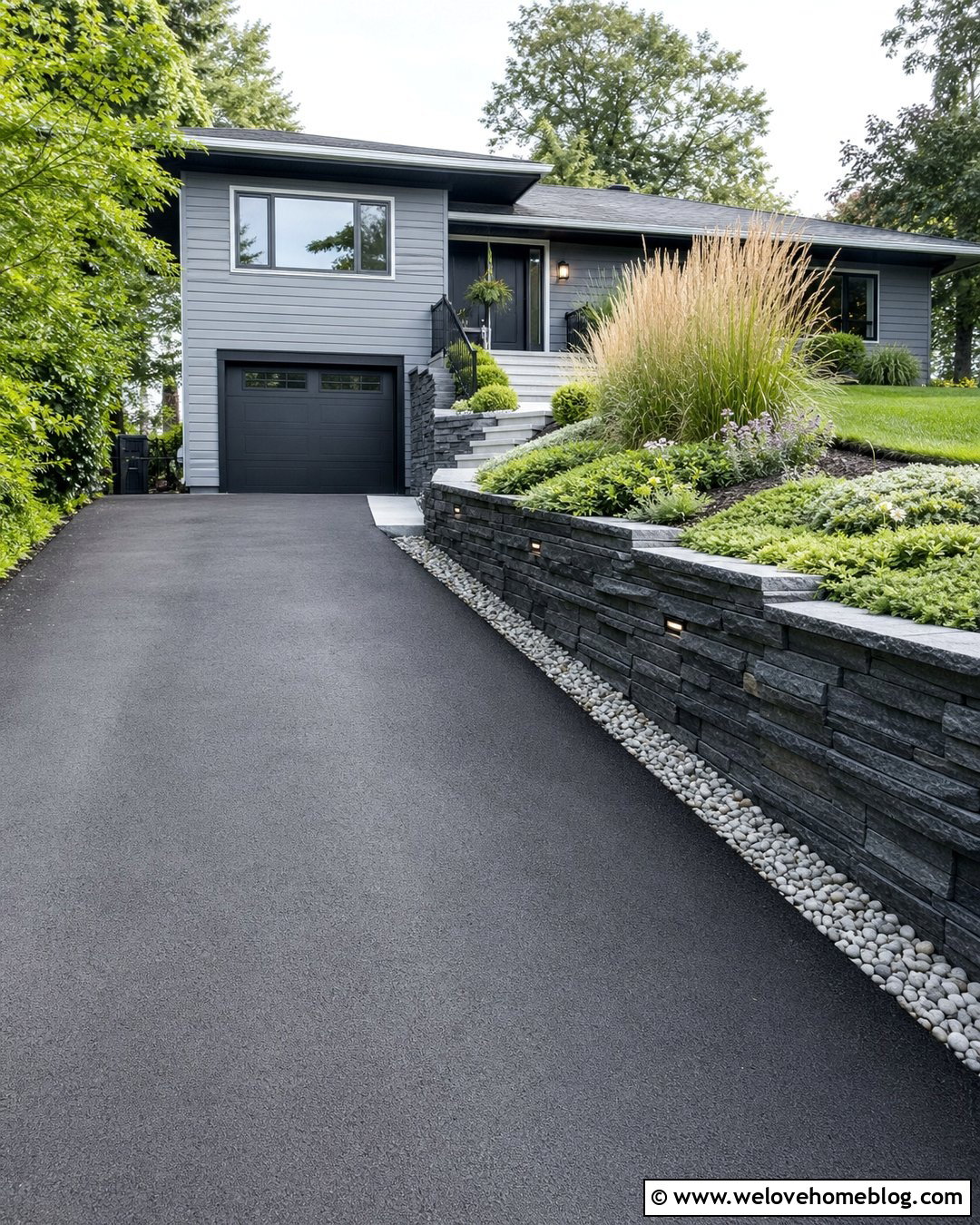
A side driveway cut into a slope needs a stable landscape structure before decorative planting is added. Use dark asphalt for the driving surface and build a low retaining wall from charcoal concrete block or natural ledgestone along the uphill side. Step the wall gradually with the grade instead of forcing one tall, uninterrupted structure. Above it, plant deep-rooted shrubs, spreading ground covers, and compact grasses that visually anchor the slope. Add a narrow gravel strip between the pavement and wall to collect debris and simplify maintenance. Wall height, drainage, soil pressure, and local codes can affect construction requirements, so taller or load-bearing walls may need professional design. Soft landscape lighting mounted below the top course highlights the wall while leaving the driveway itself clear and functional.
17. Side Driveway With Landscape Lighting
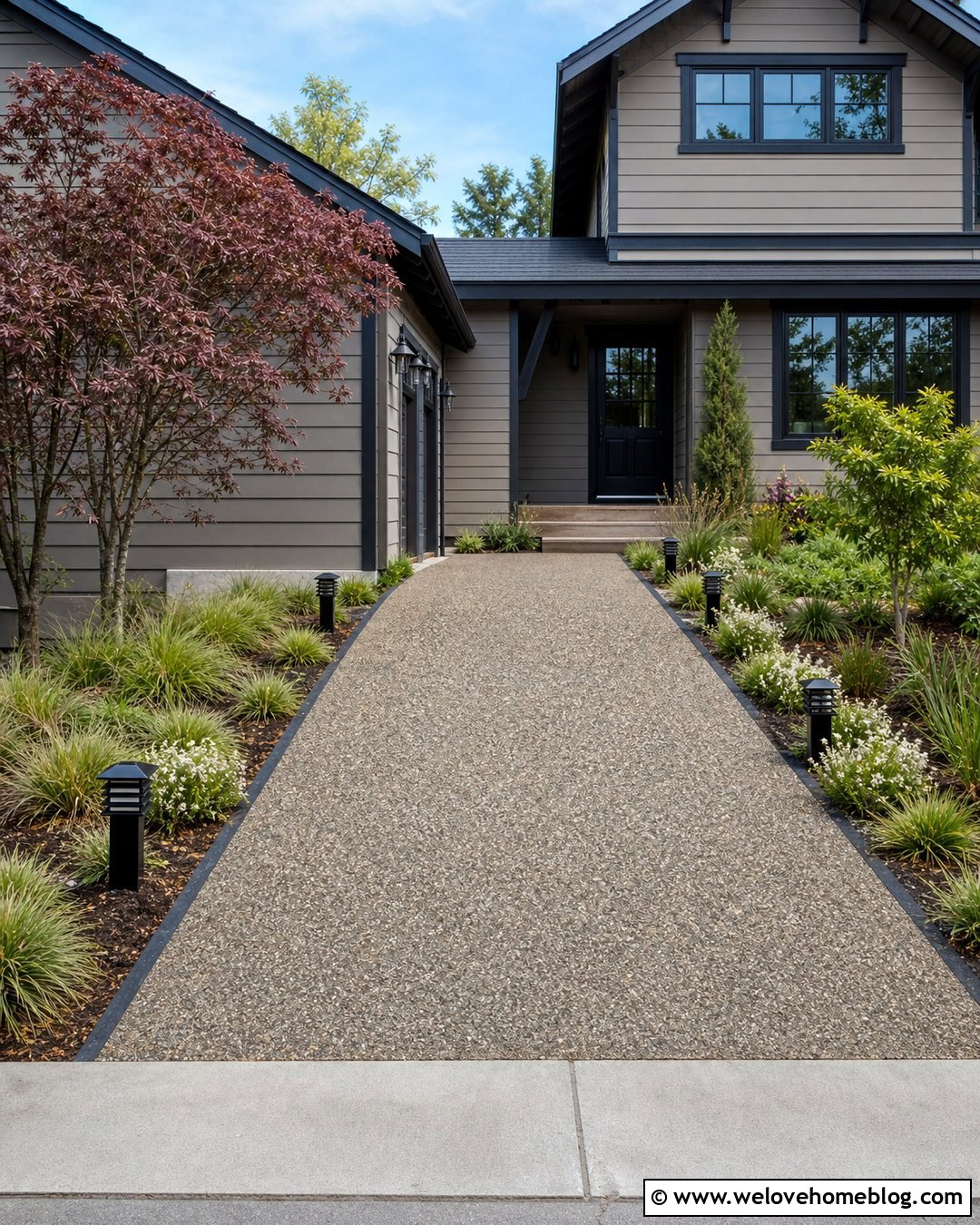
Lighting should make a side driveway easier to navigate while also revealing its landscaping after sunset. During the day, a warm-gray resin-bound gravel driveway, black steel edging, and layered green planting create a refined foundation. Place low shielded path lights at measured intervals along the outer border, directing illumination downward rather than toward windows or neighboring properties. Add one or two subtle uplights beneath a small ornamental tree near the front yard. Compact grasses and flowering ground covers can soften each fixture without hiding it. Keep lights away from tire paths, snow-removal zones, and areas where car doors open. Although the system is designed for nighttime use, its posts and housings should look neat in daylight. Matching black fixtures, edging, and house hardware ties the entire side driveway together.
18. Side Driveway With Fence Border
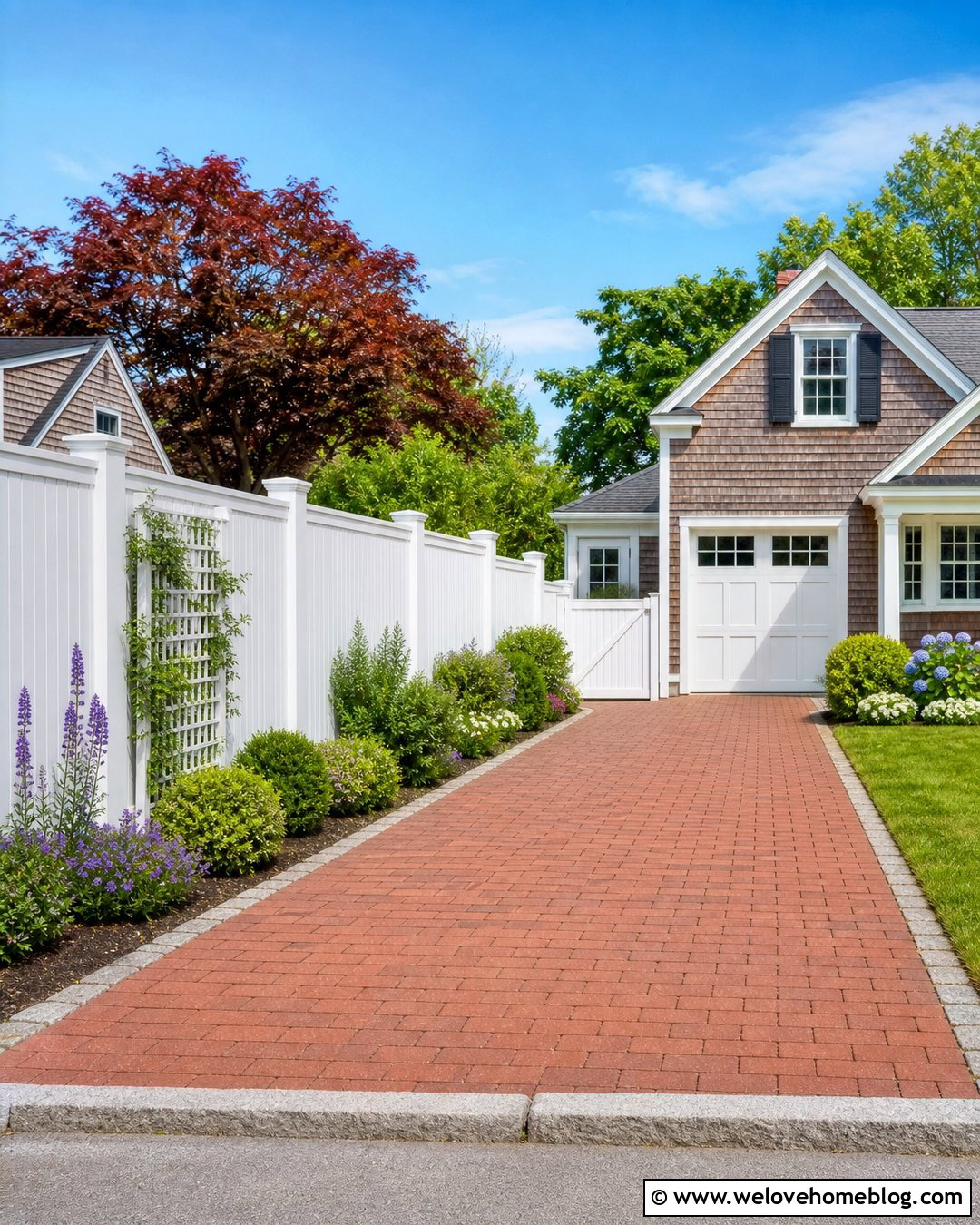
A fence can provide structure and privacy, but landscaping is what helps it feel connected to the driveway. Combine red-brown clay brick pavers in a running-bond pattern with a simple white cedar or painted wood fence. Leave a narrow planting bed between the fence and driveway, edged with flush stone to avoid reducing usable width. Repeat compact shrubs, flowering perennials, and low ground cover along the fence base. An occasional narrow trellis panel can support a climbing plant and add height without requiring a wide bed. Keep the fence set back at the street entrance to preserve visibility. Matching the driveway’s warm brick tones with natural wood or soft white creates a welcoming residential look. This arrangement is especially effective beside Colonial, Cape Cod, and traditional cottage homes.
19. Side Driveway With Pollinator Garden
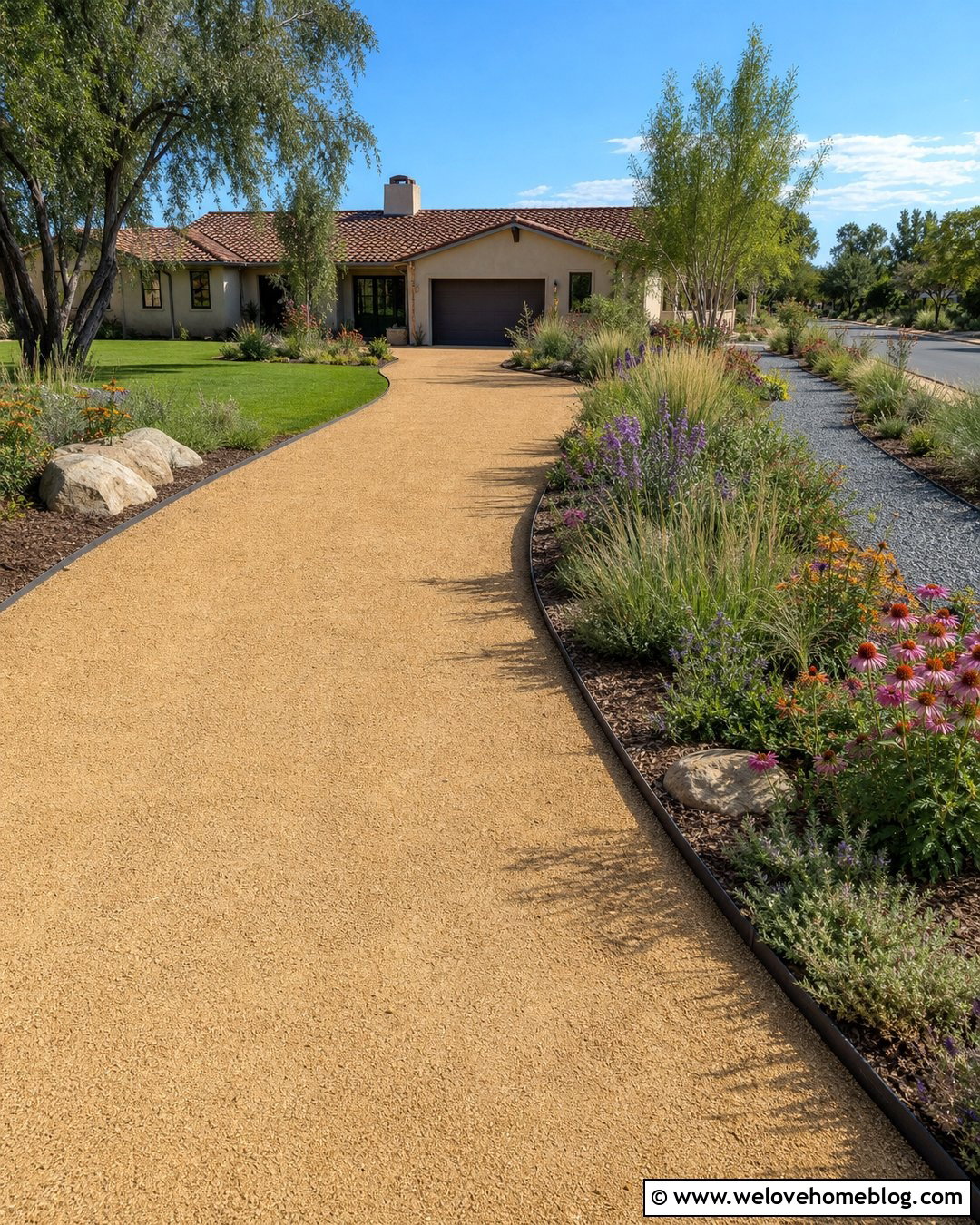
A pollinator border brings color and seasonal activity to a sunny side driveway. Use compacted tan decomposed granite for the driveway, secured with steel edging and a stable base. Create a gently curved planting strip containing native flowering perennials and bunch grasses selected for the region. Arrange plants in repeated groups rather than scattering individual varieties. This makes the border appear organized even during periods when fewer flowers are open. Keep tall plants toward the back and use short, durable species along the driveway edge. Include a small gravel maintenance path so the bed can be reached without stepping between plants. Avoid blocking utility equipment or street views. With suitable native selections, the planting can connect the driveway to the larger landscape while adding texture, color, and habitat value. ()


20. Side Driveway With Garage Turnaround Landscaping
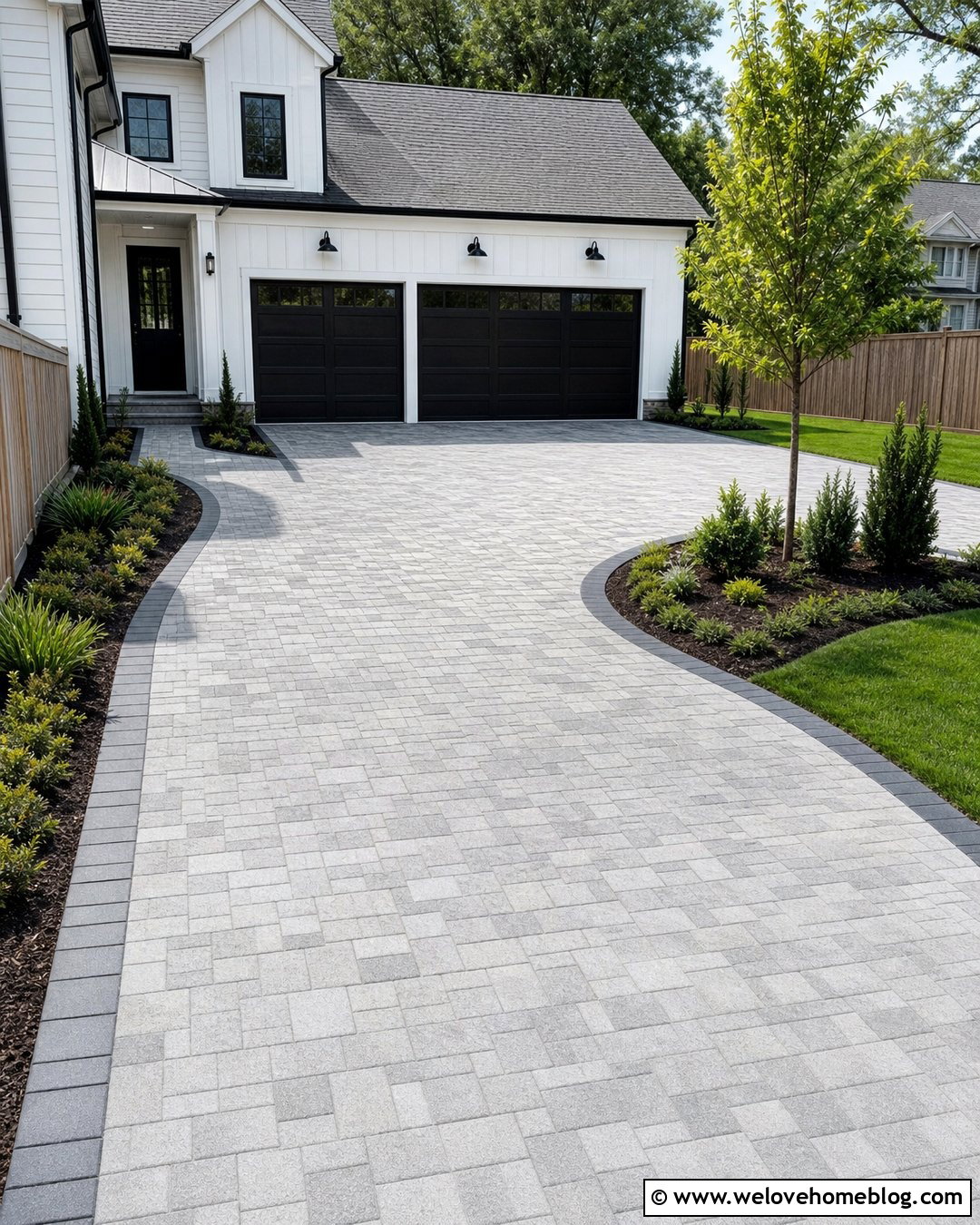
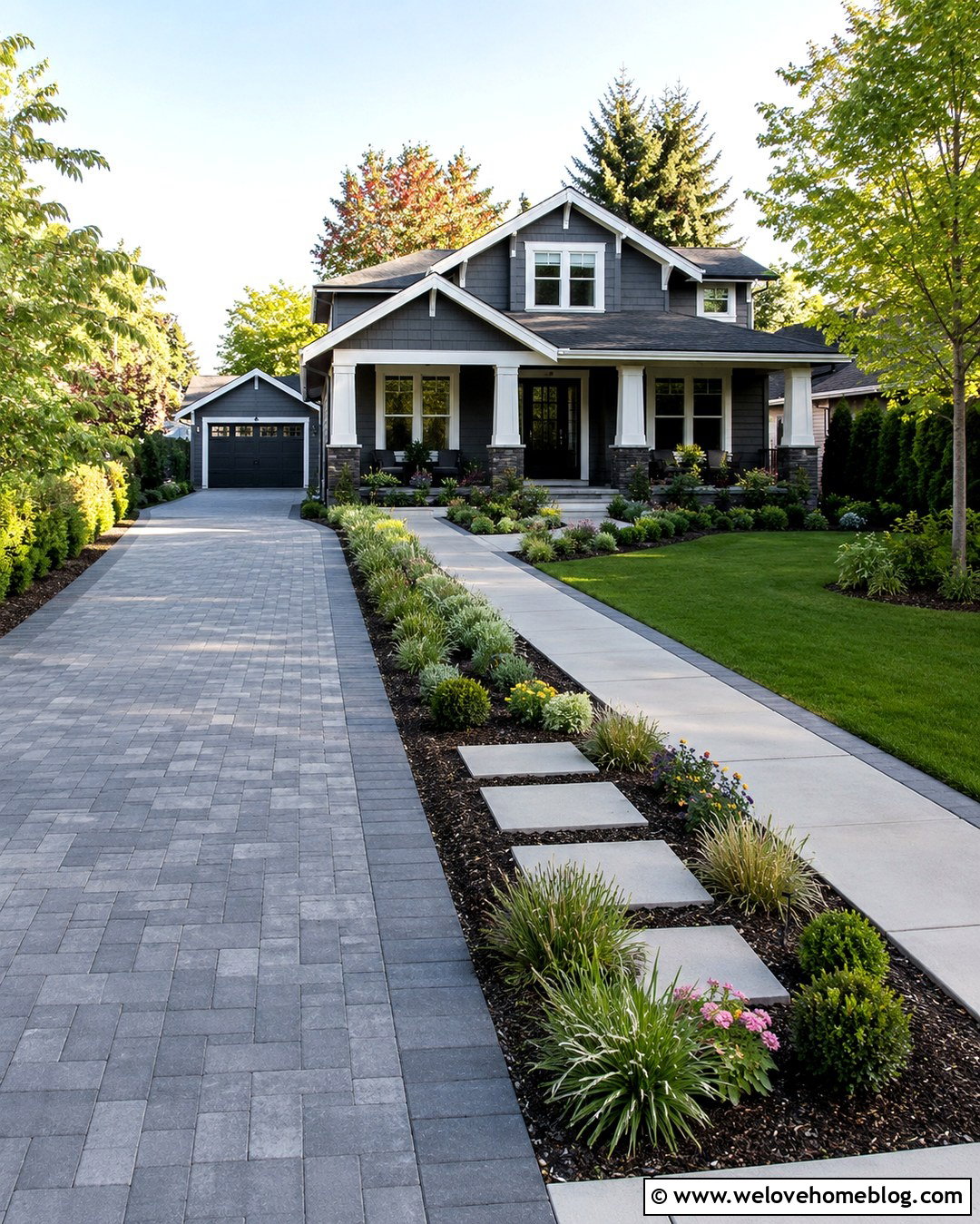
A driveway that widens near a side-entry garage needs landscaping that defines the turnaround without interfering with vehicle movement. Use medium-gray interlocking concrete pavers in a simple running pattern, then outline the wider parking area with a darker paver border. Place a curved planting island outside the turning path, filled with one small ornamental tree, low evergreen shrubs, and durable ground cover. Continue the same plants in a narrow ribbon along the driveway so the island does not feel isolated. A short walkway can connect the parking area to the side door or backyard gate. Before building the bed, test the turning space with the largest vehicle that regularly uses the driveway. The finished layout should soften the broad paved area while preserving clear, comfortable access.
Conclusion:
Successful **20 side driveway landscaping ideas** should improve the entire approach to the home, not simply fill a narrow strip with plants. Consider the driveway material, property lines, mature plant sizes, drainage, sunlight, utilities, and vehicle clearance as one connected design. Low borders keep tight spaces open, while columnar trees and trellises provide privacy without excessive width. Rain gardens and dry creek beds can make water management more attractive when they are properly planned. Repeating a few materials and plants also creates a cleaner result than using many unrelated features. Whether your side driveway is concrete, gravel, asphalt, brick, or pavers, thoughtful landscaping can make it safer, greener, and more appealing from the curb.

Related posts:


Leave a Reply