
Driveway borders face reflected heat, compacted soil, road salt, runoff, and occasional tire traffic, so plant selection matters as much as appearance. The best borders combine appropriately sized plants with a durable driveway surface, defined edging, and enough clearance for doors, mirrors, and snow removal. Keep taller growth away from the street so drivers can see pedestrians and traffic clearly. In cold regions, consider salt exposure before planting sensitive evergreen shrubs beside pavement. Check mature width, sunlight, drainage, and your USDA hardiness zone before buying anything. Repetition will also make a narrow planting strip feel calmer and more intentional. These **20 driveway border plants ideas** combine flowers, foliage, texture, and practical layouts for creating a polished entrance. Explore the complete driveway looks below with these **20 driveway border plants ideas**. ()

1. Lavender Border With Pea Gravel Driveway
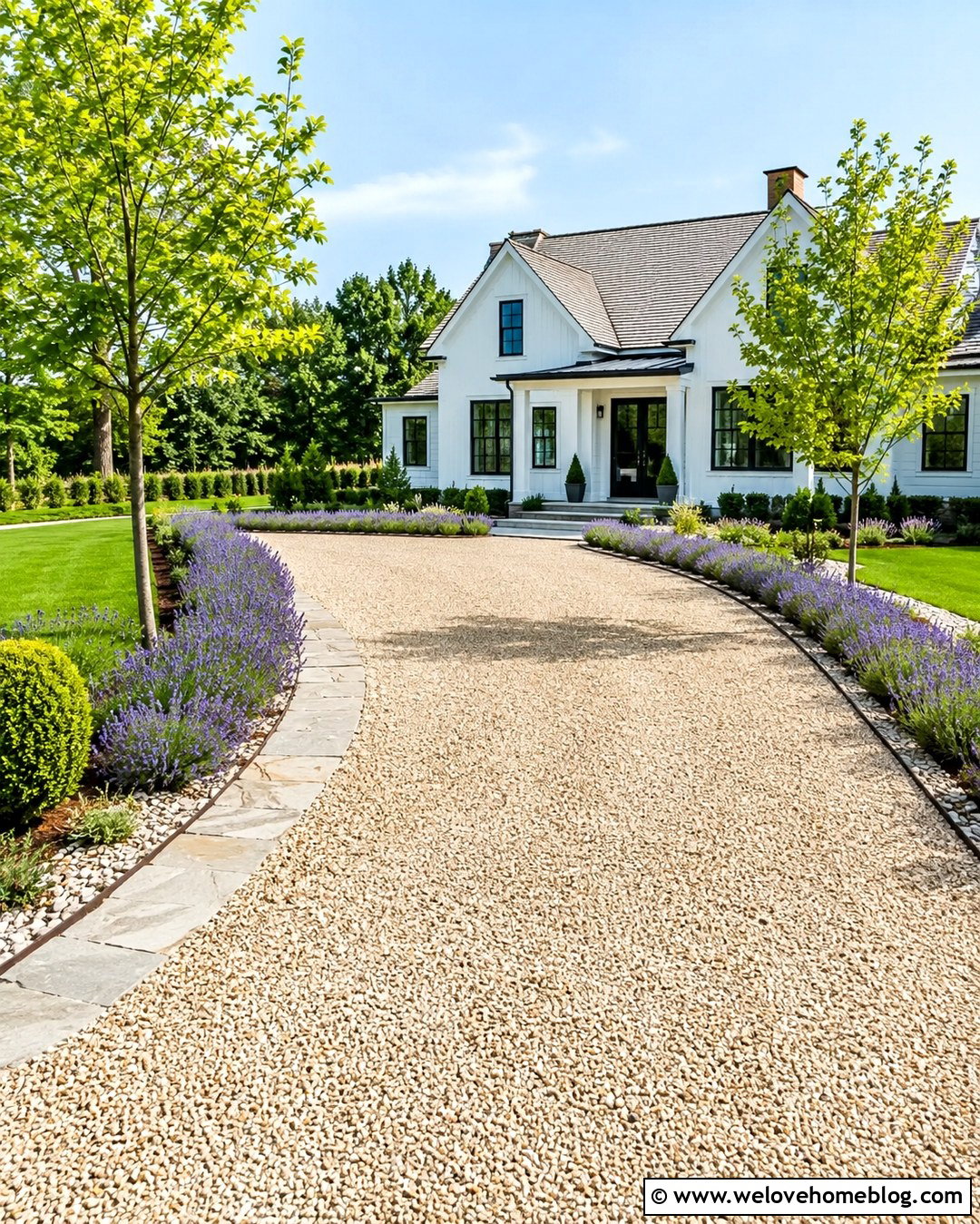
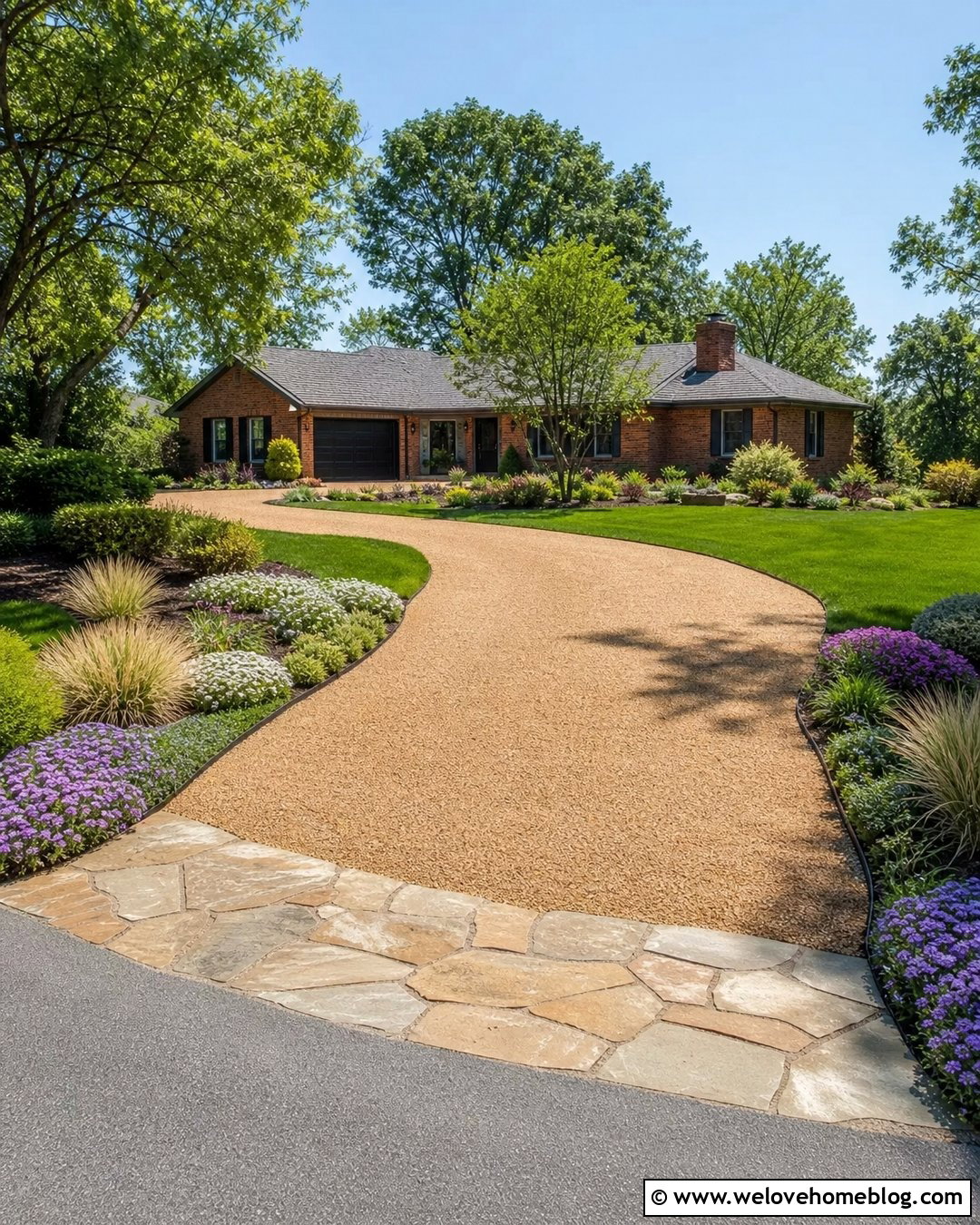
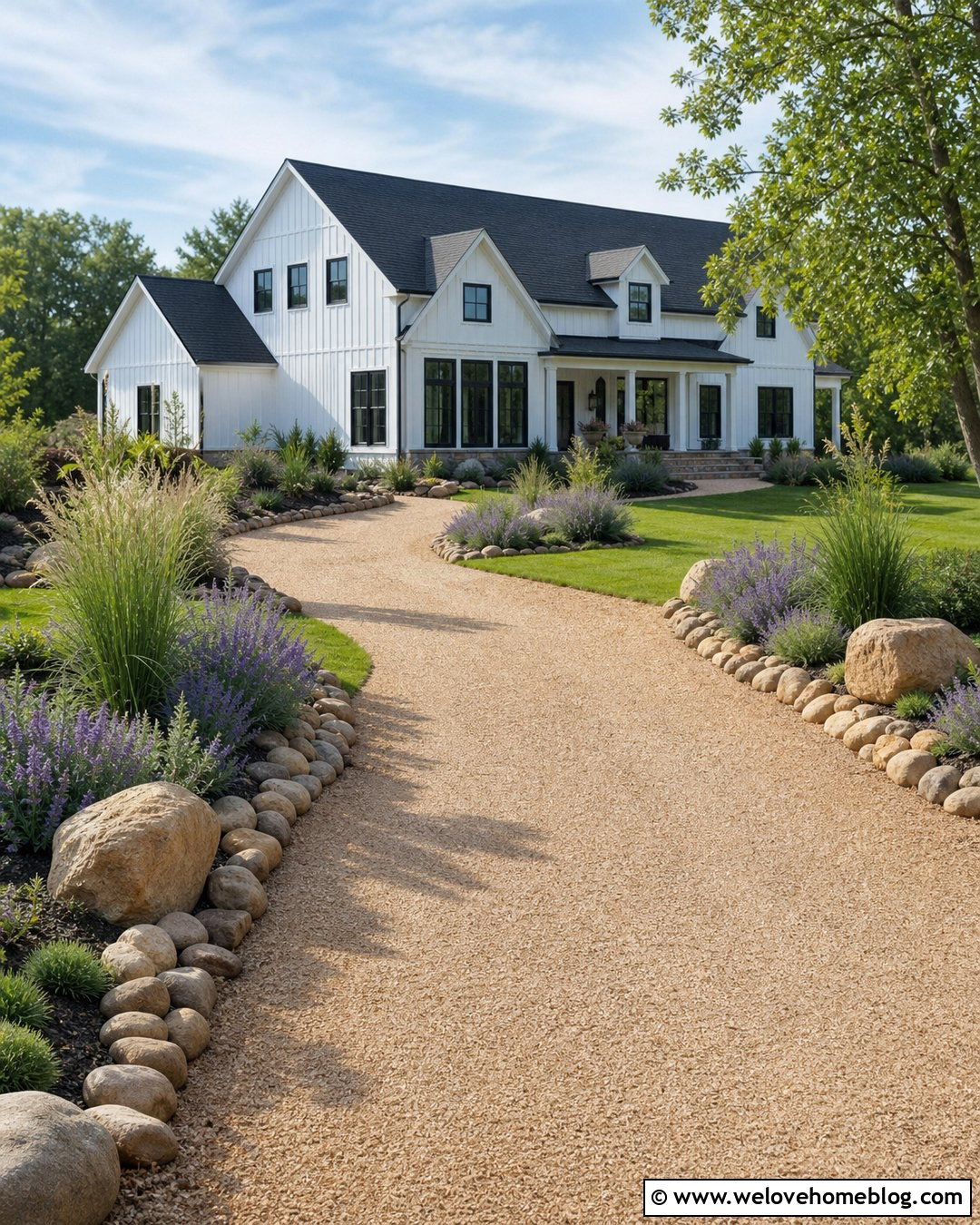
A pea gravel driveway bordered with lavender creates a relaxed, sun-washed entrance that suits cottages, ranch homes, and modern farmhouses. Shape the driveway with a gentle curve, then install steel edging between the gravel and planting beds. Repeat one compact lavender variety along both sides rather than mixing several sizes. The silver-green foliage softens the loose gravel, while purple flowers add seasonal color without making the border look busy. Plant lavender in full sun and sharply drained soil, keeping the crowns above areas where runoff collects. Pale limestone mulch around the plants can continue the driveway’s light color palette. In colder or humid regions where lavender struggles, use a locally adapted plant with similar form, such as compact catmint or perennial salvia. ()
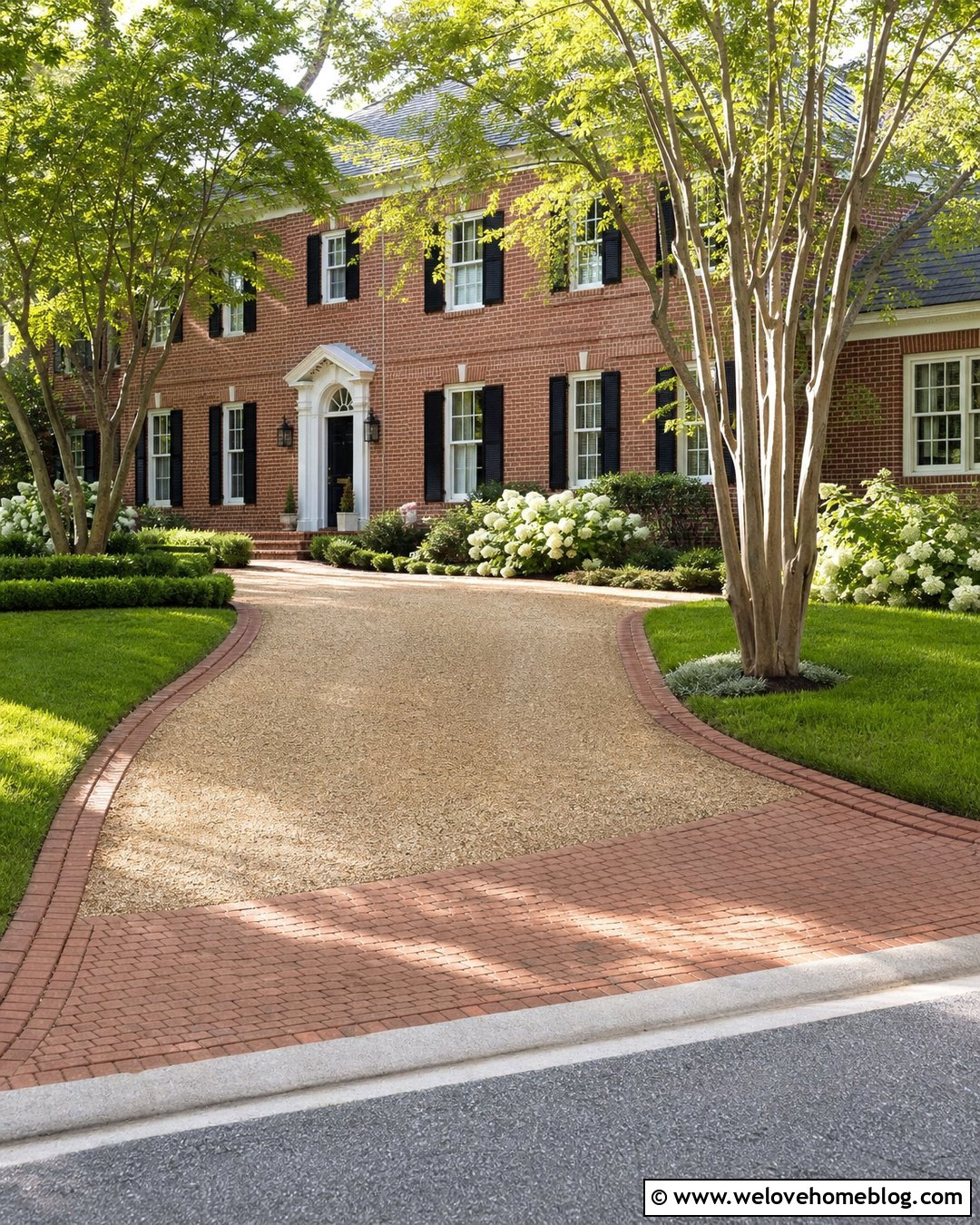
2. Boxwood Border With Brick Driveway
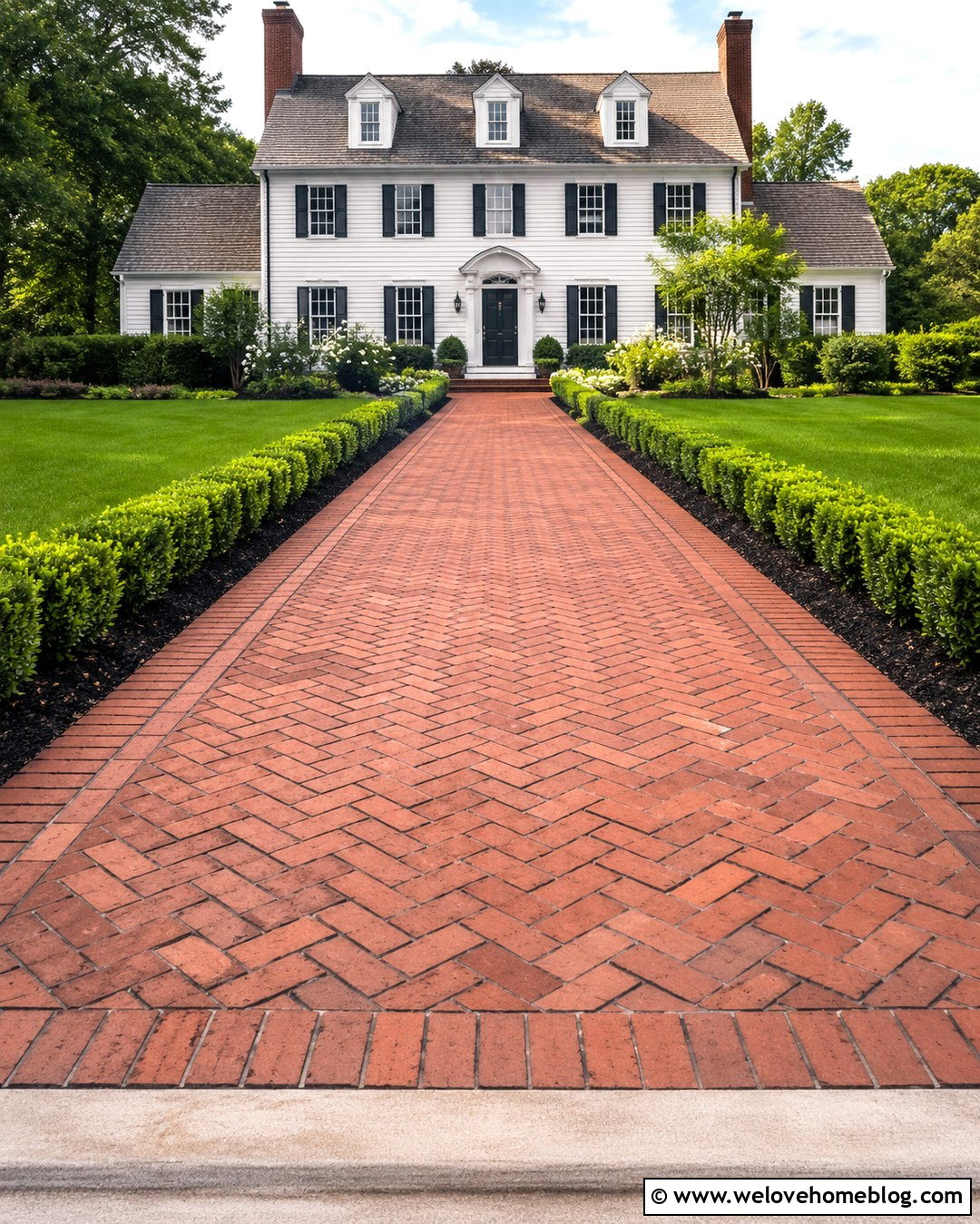
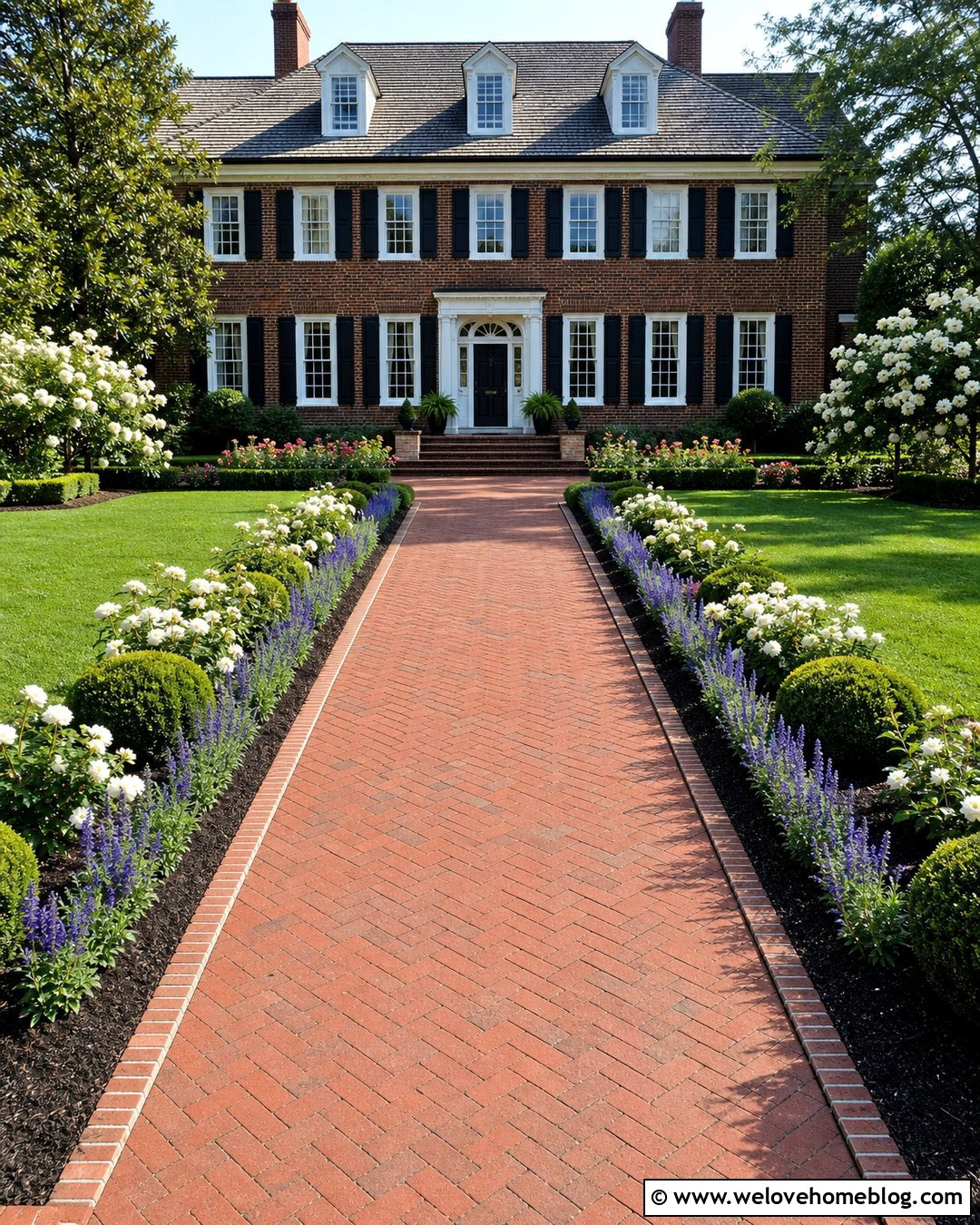
For a formal front yard, pair a straight brick paver driveway with a clipped boxwood border. Herringbone brick creates movement underfoot, while matching brick soldier courses neatly contain the surface. Plant compact boxwoods behind the hard edge with sufficient space for their mature width. A narrow mulch strip prevents branches from touching vehicles and makes pruning easier. Repeat the shrubs evenly for a structured appearance, then place small flowering perennials near the house rather than along the entire drive. This layout works especially well with Colonial and Georgian-style facades because the symmetry connects the driveway to the architecture. Before planting, choose a boxwood cultivar suited to your climate and local disease pressures. Avoid placing sensitive evergreens directly where winter deicer spray and salty snow are routinely deposited. ()
3. Feather Reed Grass Border With Concrete Driveway
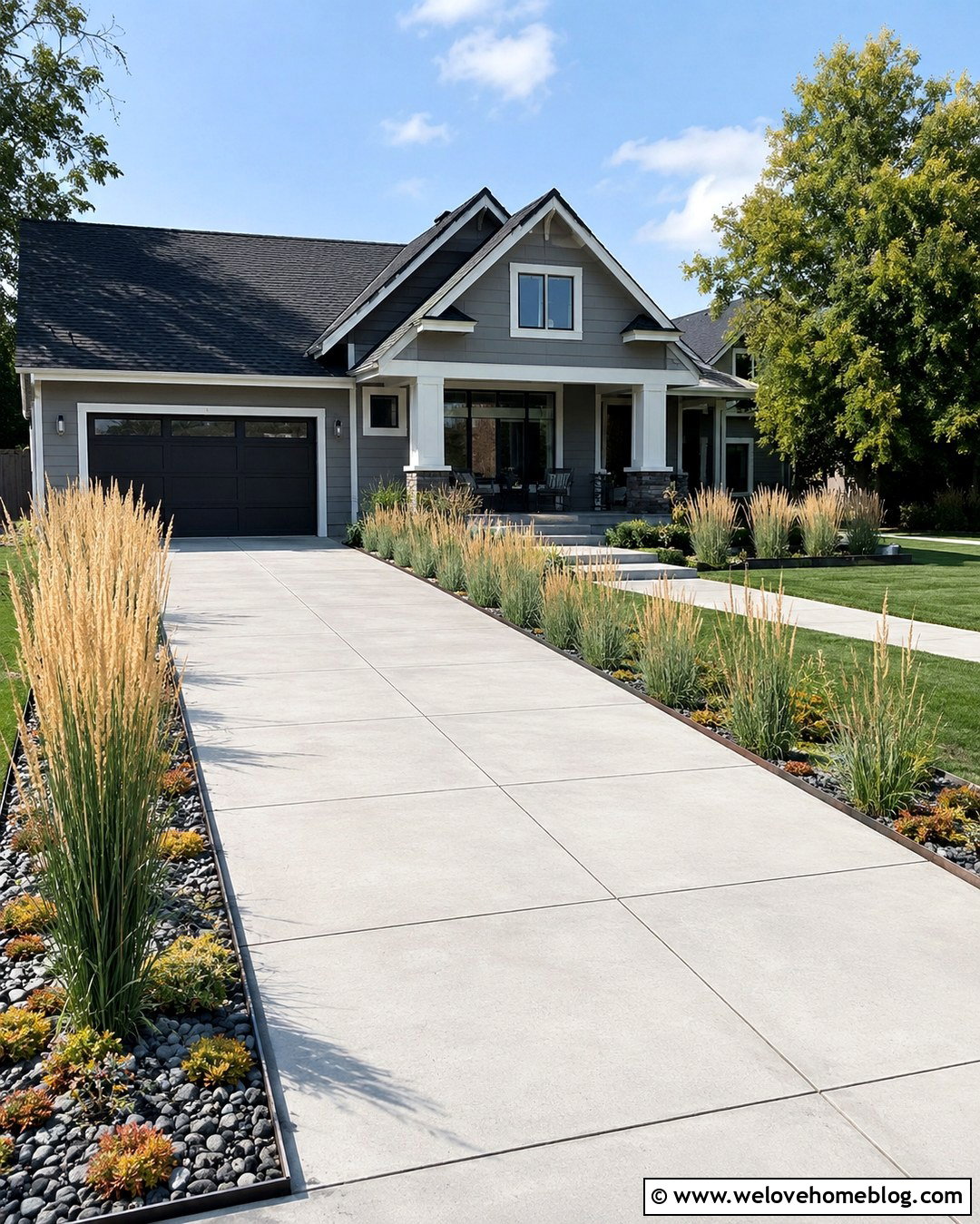
Tall, narrow feather reed grass can give a wide concrete driveway a cleaner vertical frame without creating a bulky hedge. Use gray poured concrete with subtle saw-cut joints and a straight layout leading to a contemporary or Craftsman home. Install the grasses in repeated groups behind a low concrete curb or dark steel edge. Leave an open section near the street and garage so the plants do not interfere with visibility or vehicle doors. Their upright blades provide summer texture, while the flower stalks add movement and can remain attractive beyond the growing season. For a fuller design, underplant the grass with low sedum or use river rock as mulch. Confirm the cultivar’s mature spread and local growing requirements before spacing the plants. ()
4. Catmint Border With Cobblestone Driveway
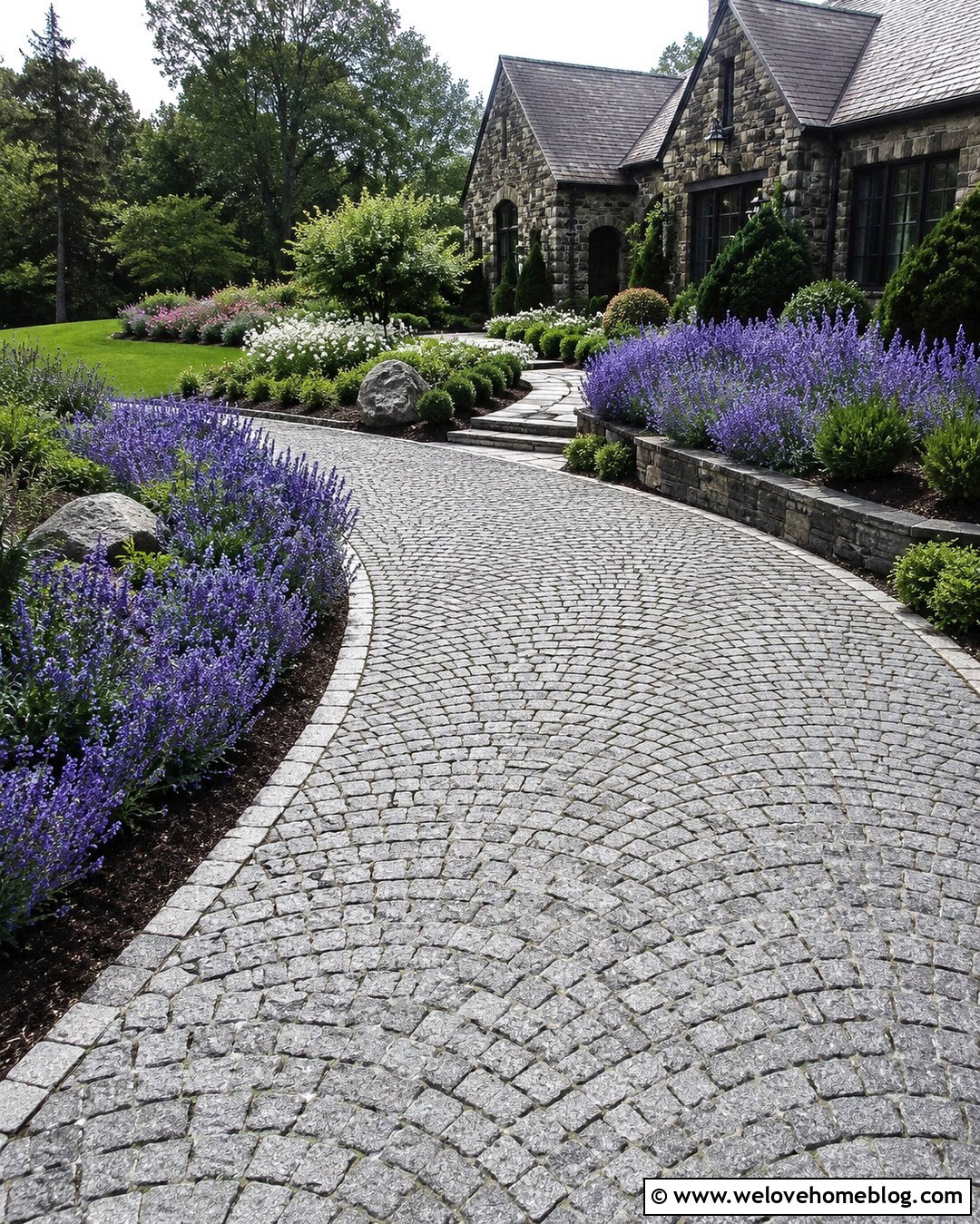
Imagine a curved cobblestone driveway edged with soft clouds of blue-purple catmint. This combination balances the weight and texture of natural stone, making the approach feel welcoming rather than severe. Use reclaimed-looking cobblestones in a fan or running pattern, with a flush granite curb that keeps soil out of the joints. Plant compact catmint in broad drifts along the sunny outer curve. Repetition will produce a more unified border than scattering individual plants at random. Add a few upright evergreens near the house for winter structure, but keep the driveway edge predominantly low and open. Trim catmint after its first major bloom if the plants become loose or begin leaning over the pavement. Check local recommendations because plant size and performance can differ by climate and cultivar. ()
5. Daylily Border With Asphalt Driveway
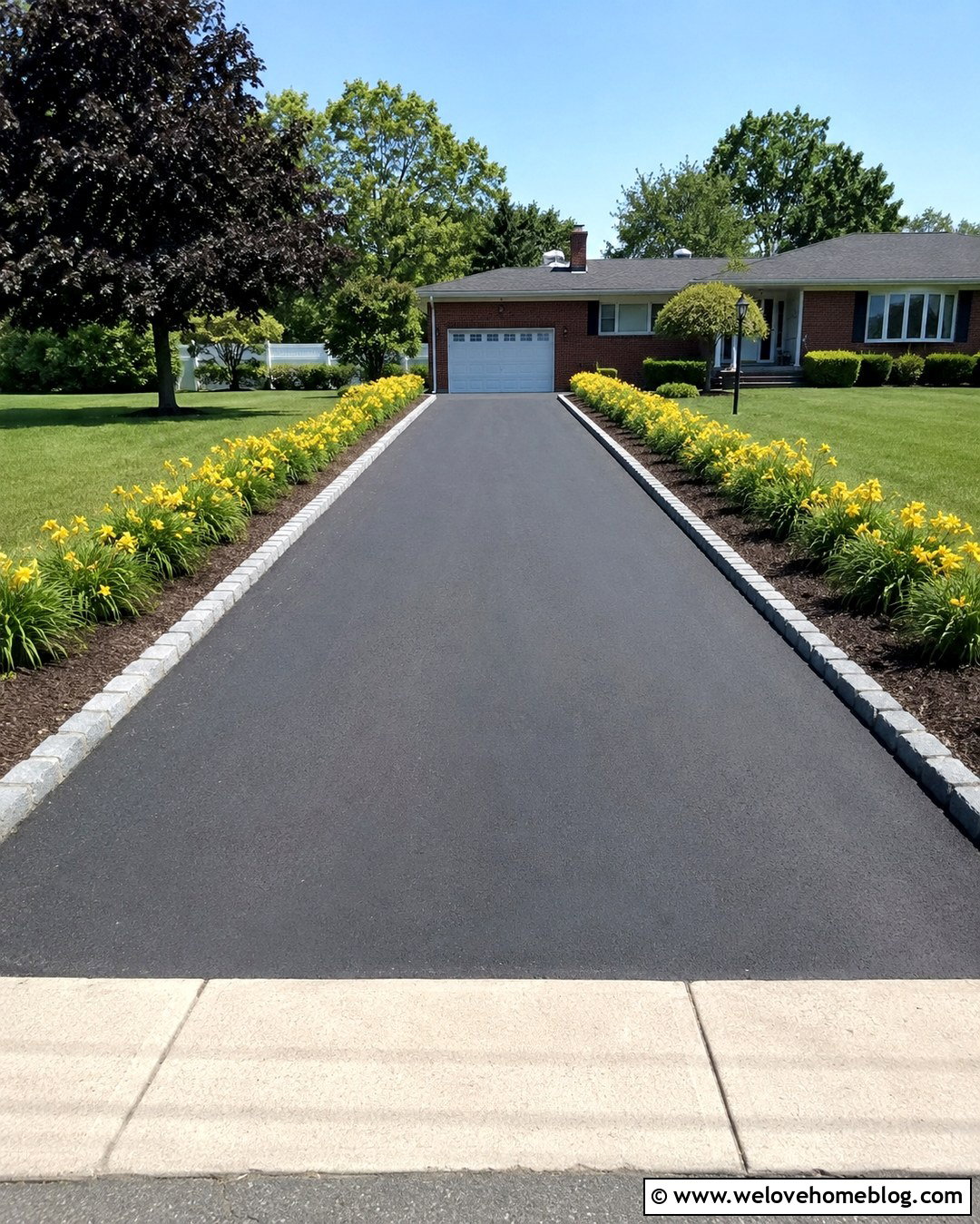
A black asphalt driveway becomes much more inviting when framed by repeated clumps of daylilies. Their arching green foliage softens the hard surface, while yellow, apricot, or red flowers create a strong summer display. Add a light-gray concrete or Belgian block edge to separate the dark pavement from the planting beds. This contrasting border makes the entire driveway look more finished. Daylilies are adaptable perennials that can form dense masses, making them useful along broad sunny edges and sloped driveways. Choose compact cultivars near parking areas, and set plants back so wet leaves do not brush against vehicles. Fill gaps with shredded bark mulch and use one flower color for visual consistency. Select cultivars proven to perform in your region rather than buying solely by bloom photograph. ()
6. Creeping Phlox Border With Paver Driveway
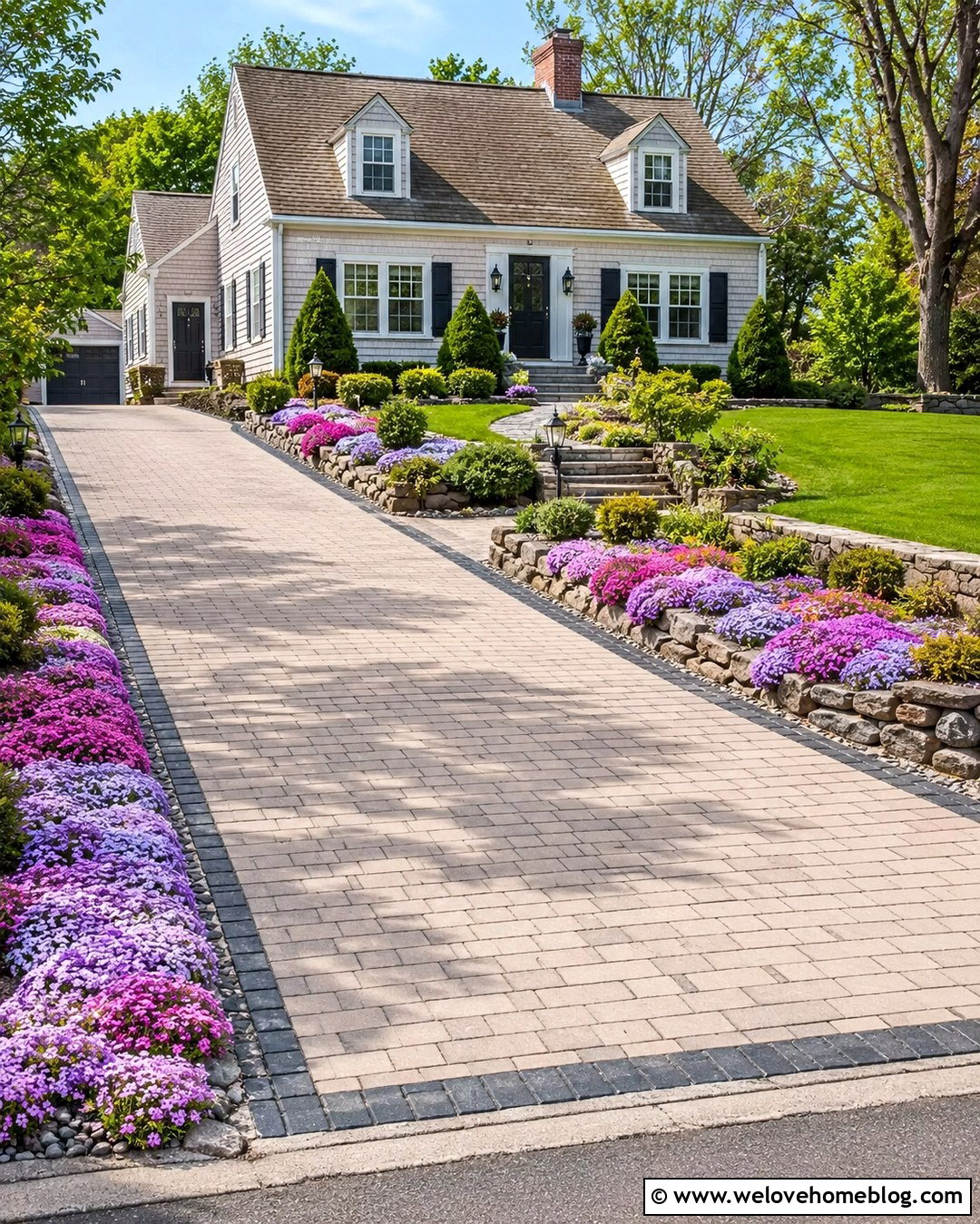
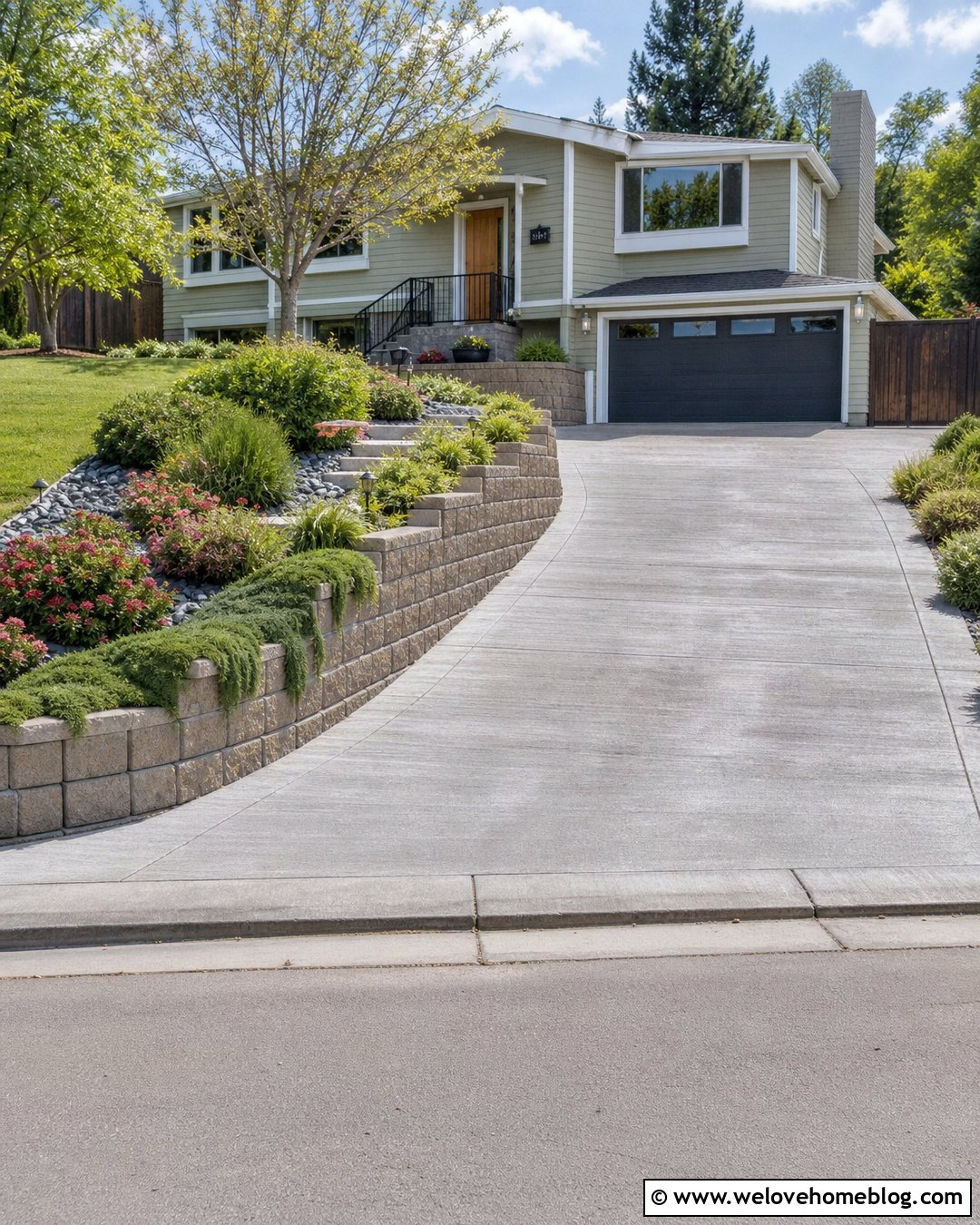
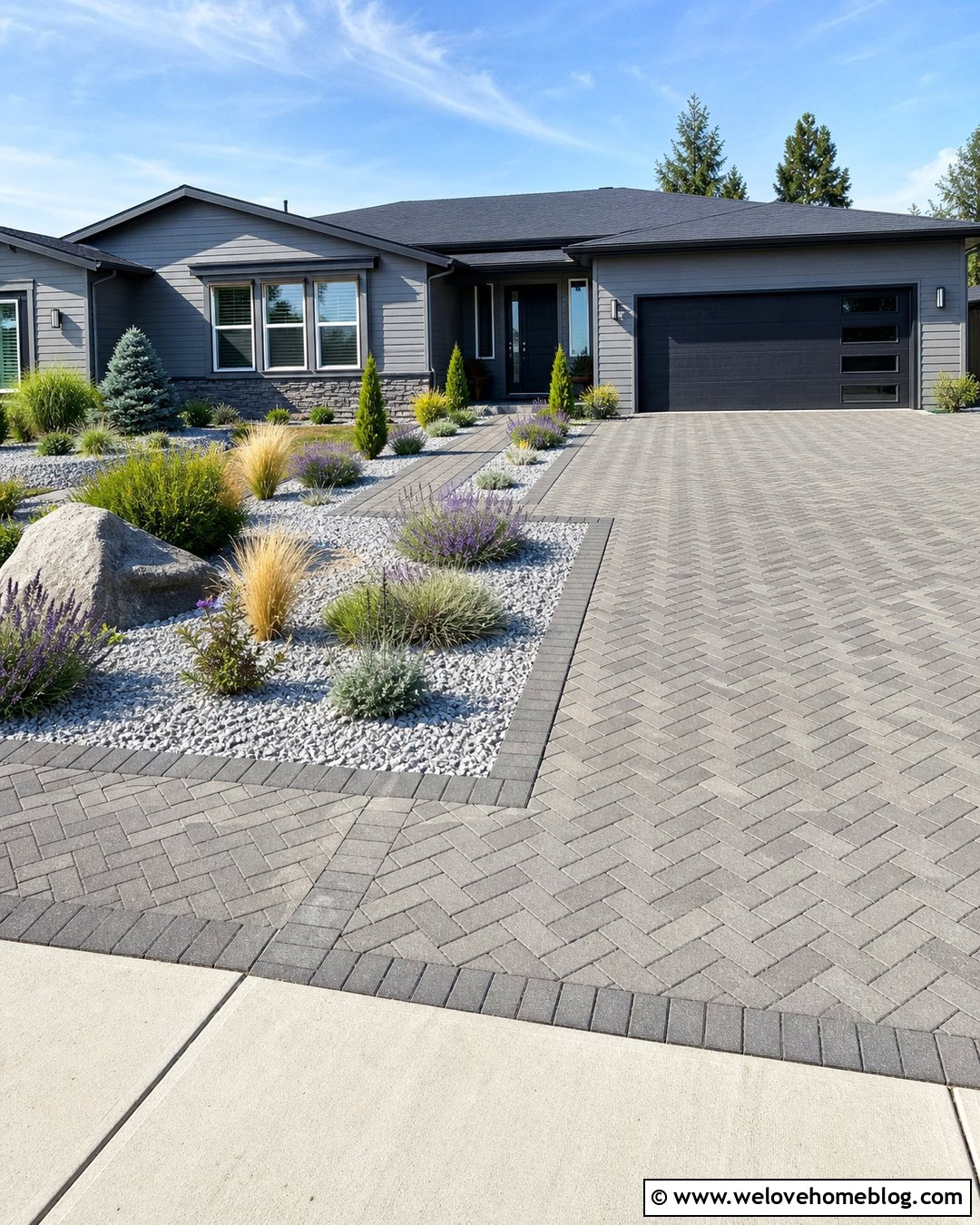
Creeping phlox makes a colorful spring border for an interlocking concrete paver driveway. Choose warm beige or greige pavers in a running-bond pattern, then frame them with a darker charcoal paver ribbon. Plant creeping phlox along the outer edge where its low growth can spread across the bed without covering the driving surface. Pink, white, lavender, or blue-flowering selections look especially attractive beside neutral paving. The mat-forming growth also suits slightly raised banks beside sloped driveways and can help visually connect nearby rock gardens. After flowering, maintain a crisp edge by trimming growth that extends over the border. Combine the phlox with dwarf evergreen shrubs near the house so the entrance retains structure after the main spring display has finished. ()
7. Dwarf Juniper Border With Gravel Driveway
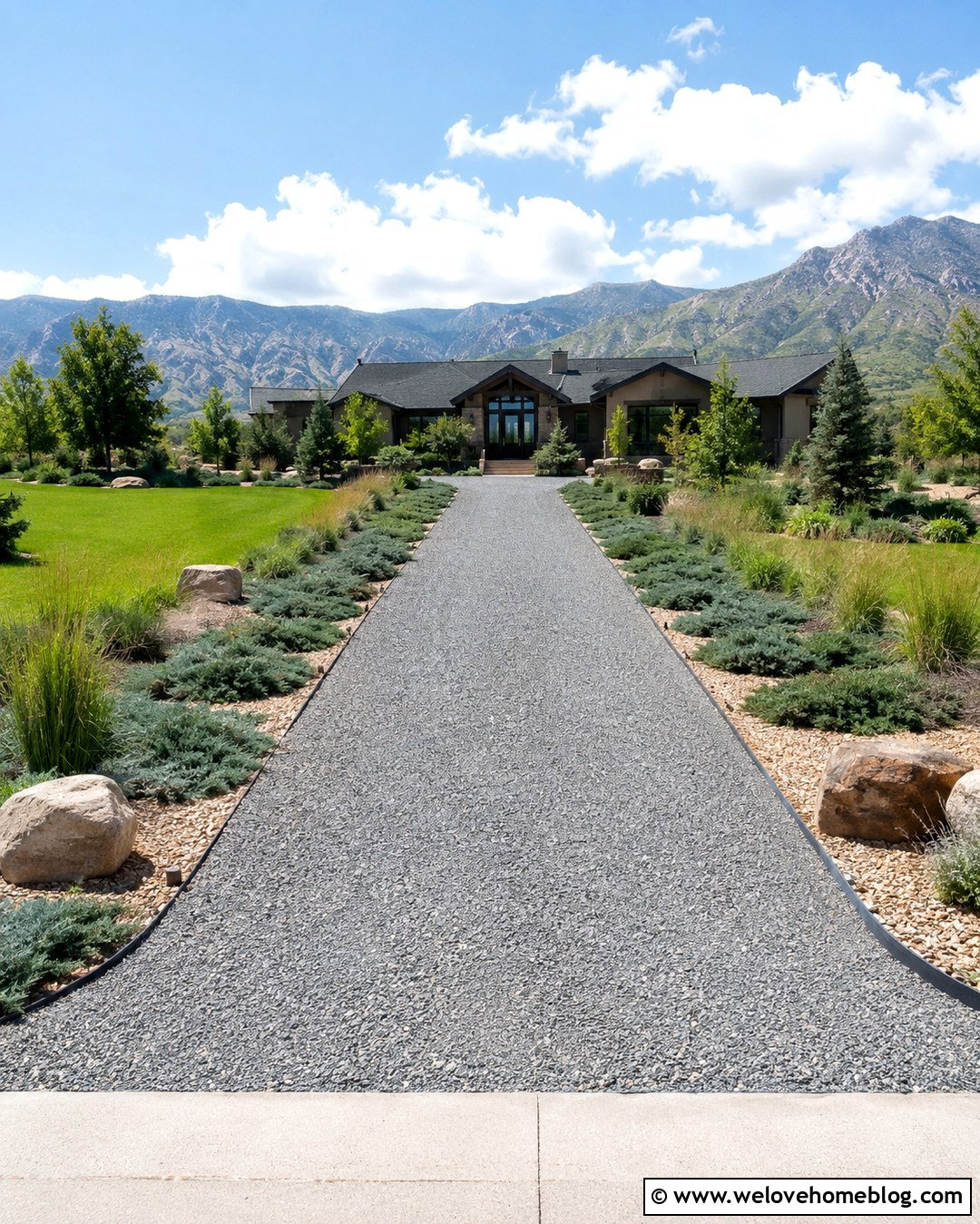
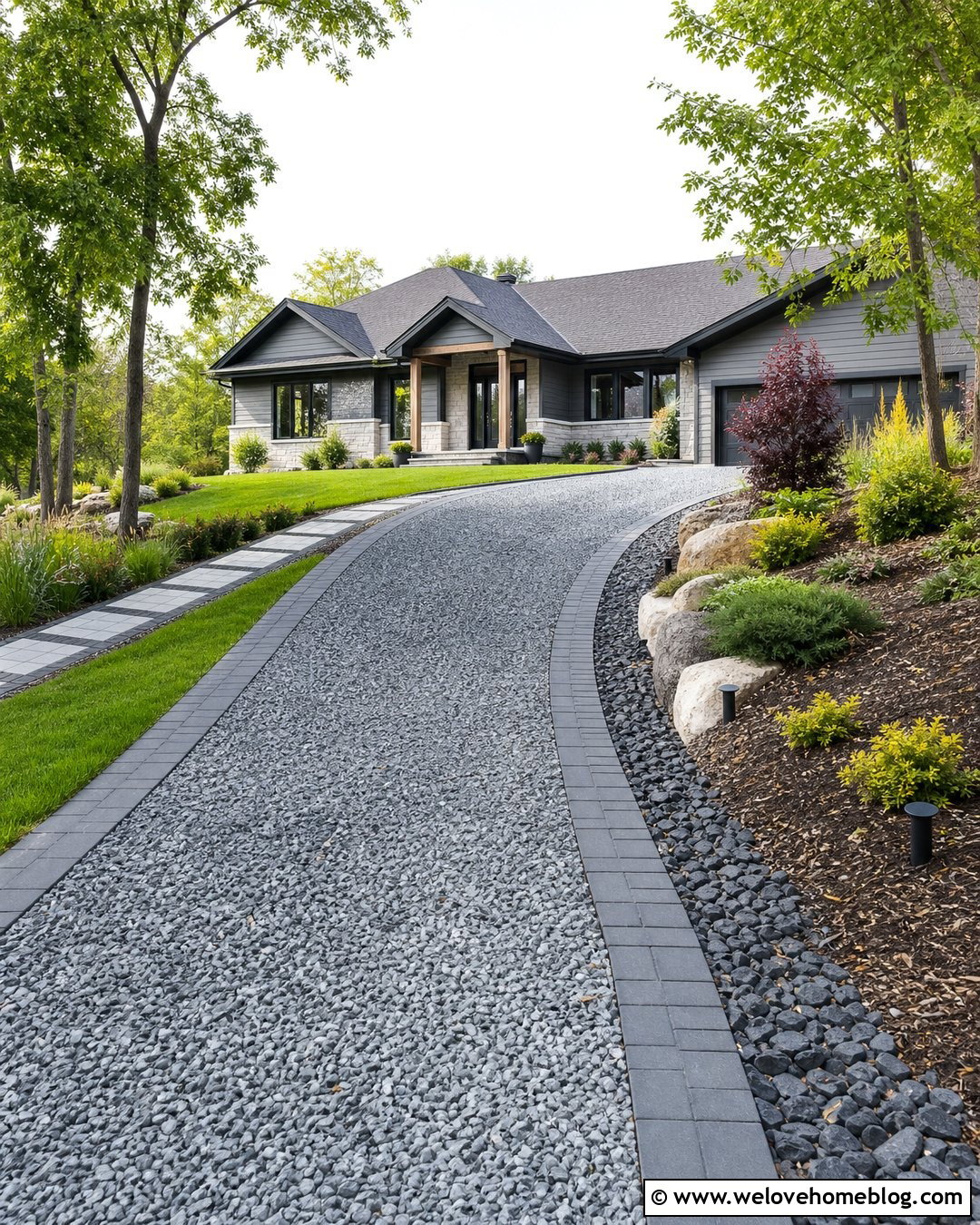
For a low-water landscape, frame a straight gray gravel driveway with dwarf spreading junipers, angular boulders, and tan stone mulch. The blue-green evergreen foliage creates year-round definition and works naturally with ranch, Southwestern, and mountain-style homes. Install metal edging to hold the gravel in place, then leave a generous setback between the junipers and the driving lane. That space prevents mature branches from trapping gravel or being crushed by tires. Use one low cultivar repeatedly, with taller upright accents reserved for the entrance or house foundation. In snowy climates, consider where plowed snow and deicing salt will land. Evergreens can be damaged by concentrated salt spray, so a gravel buffer, drainage swale, or more salt-tolerant planting may be needed along heavily treated sections. ()
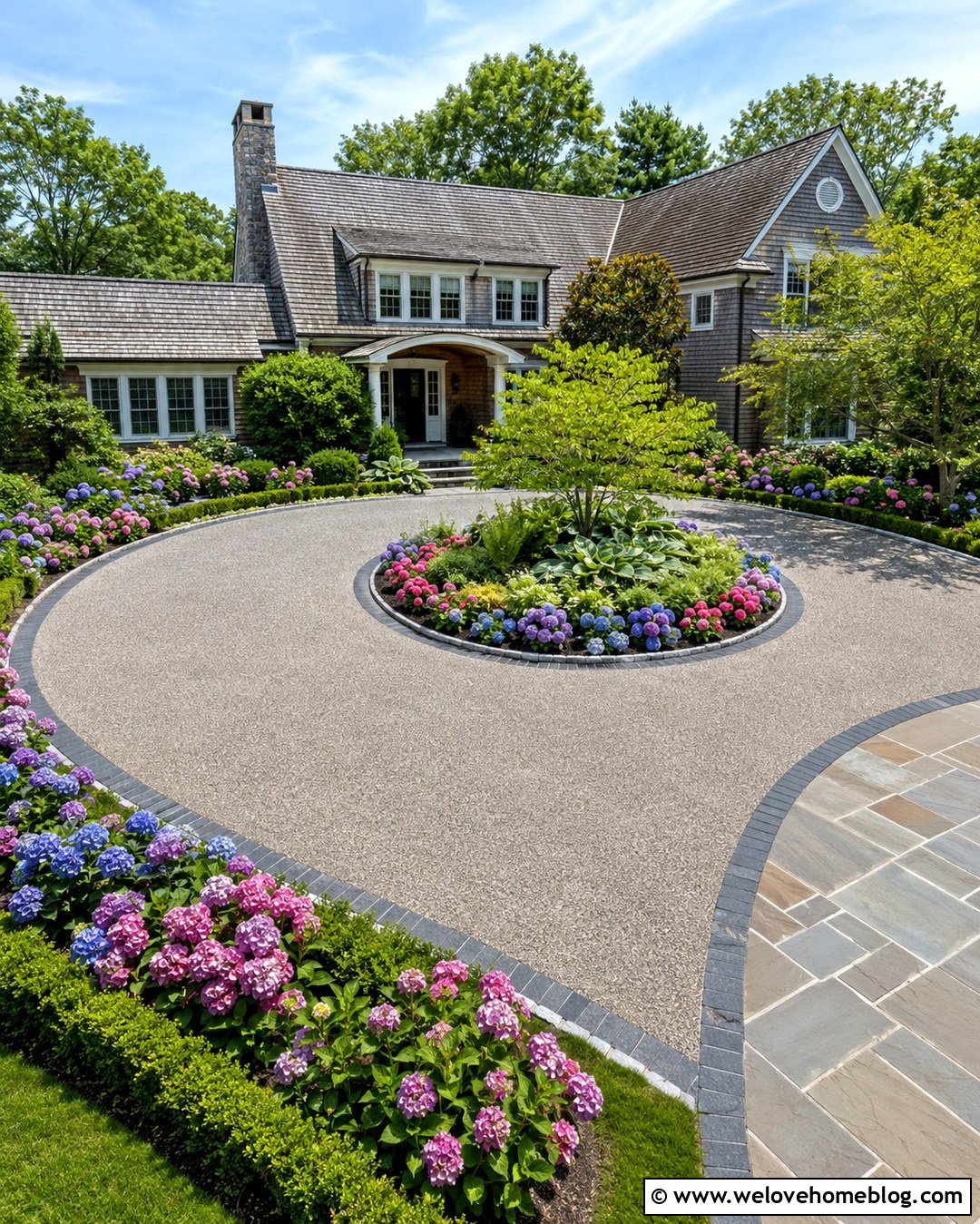
8. Hydrangea Border With Circular Driveway
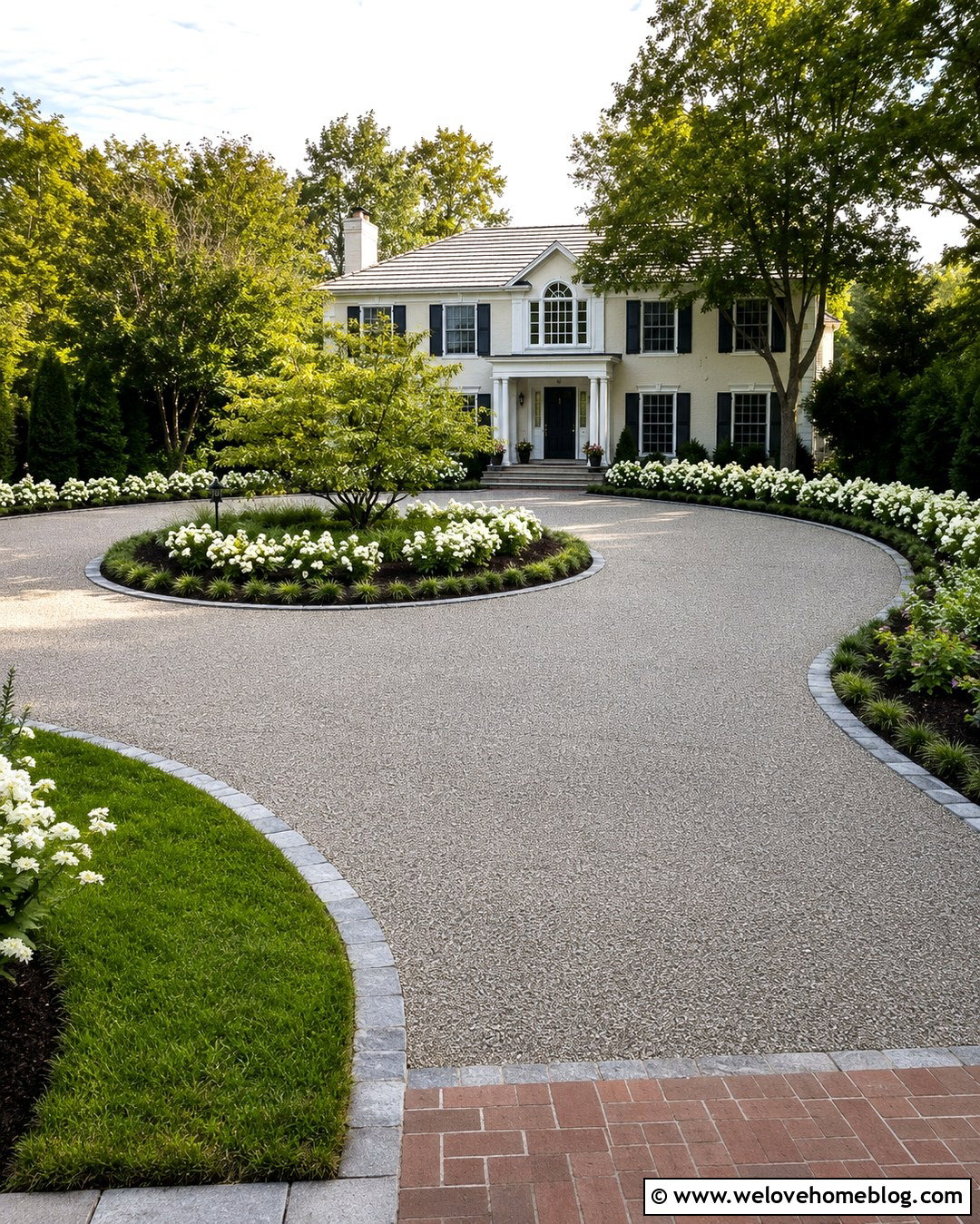
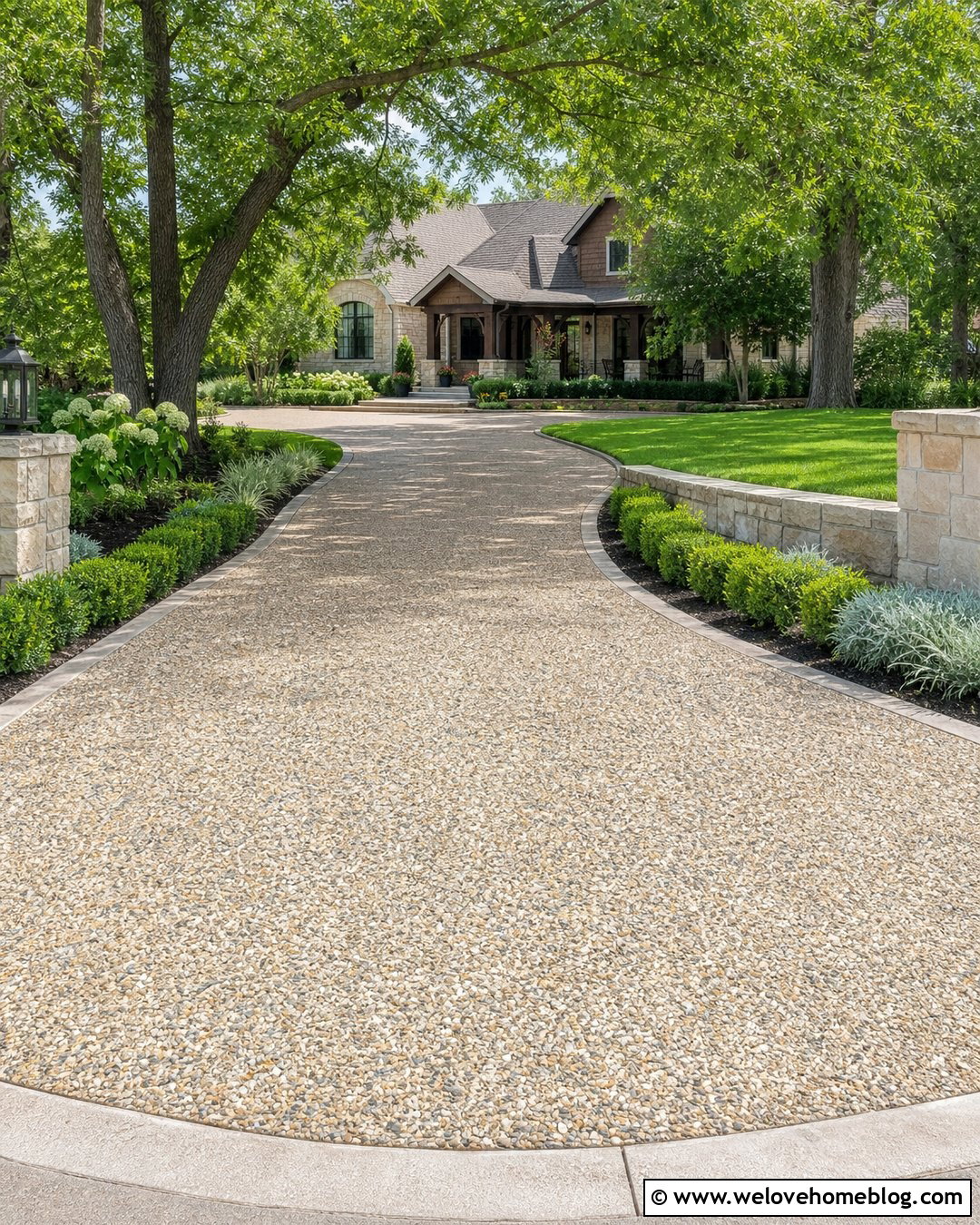
A circular exposed aggregate driveway bordered with hydrangeas creates a lush, traditional arrival. Place the shrubs along the house-facing arc or around a large central island rather than beside tight parking spaces. This gives mature stems room to expand without blocking doors or sight lines. A cobblestone curb can contain the aggregate and provide a clean transition into mulched planting beds. Choose a hydrangea species and cultivar suited to the site’s sunlight, winter temperatures, and available irrigation. Repeat the same variety for a calm display, then add low sedges or ground cover at the front of the bed. An ornamental tree in the center island adds height and anchors the circular layout. Keep the driveway entrance lower and more open so arriving drivers can clearly view the street. ()
9. Liriope Border With Concrete Paver Driveway
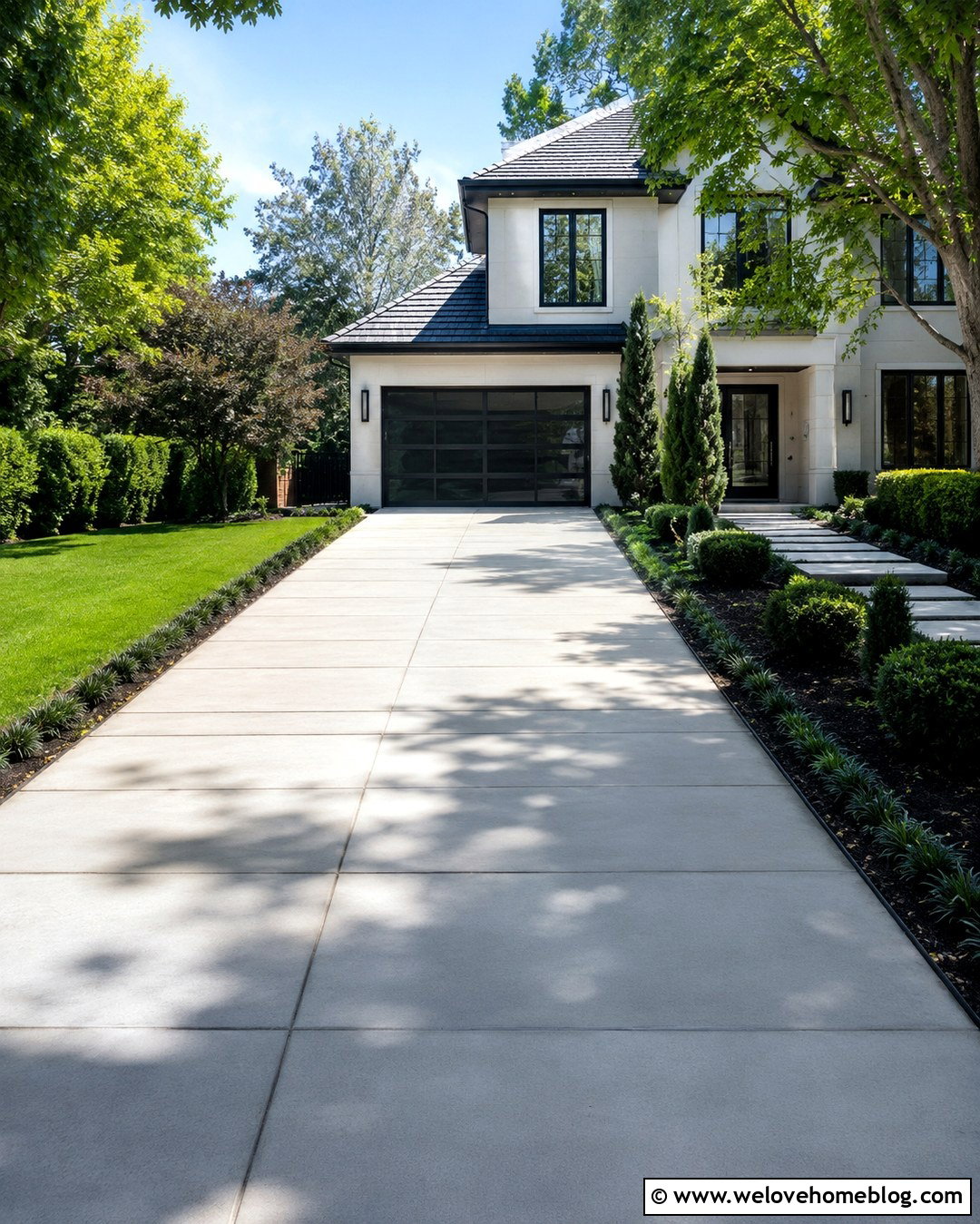
A narrow strip between a driveway and lawn can look finished with a simple liriope border. Pair the planting with large-format concrete pavers in a straight layout and use a slim black metal edge to create a precise transition. Repeated clumps of liriope bring grasslike texture without visually narrowing the driveway. Green foliage suits a clean modern home, while variegated selections can brighten a partly shaded approach beside mature trees. Allow for the mature width and research whether the chosen type spreads aggressively in your region. A restrained row generally looks better than several unrelated plants squeezed into the same space. Near the garage, widen the mulch buffer so passengers can step out without damaging foliage. The result is practical, neat, and especially useful for compact suburban front yards. ()
10. Rosemary Border With Resin-Bound Gravel Driveway
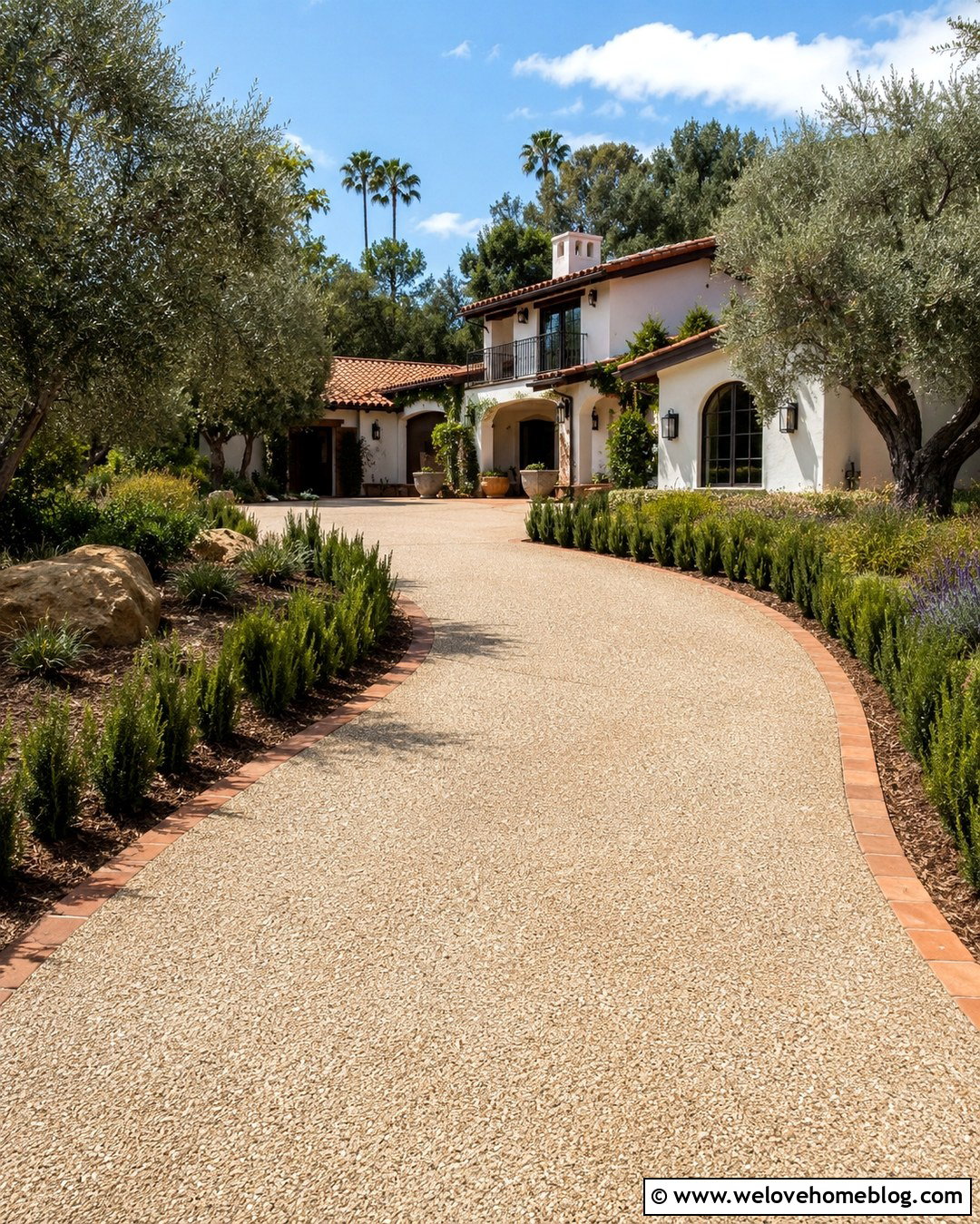
In warm, dry climates, rosemary can form an aromatic evergreen border beside a pale resin-bound gravel driveway. Use a gently curved layout leading to a stucco, Mediterranean, or Spanish-style home. A terracotta-colored paver ribbon will connect the driveway to the architecture, while decomposed granite mulch keeps the planting bed dry and cohesive. Choose compact upright rosemary for a low hedge or trailing rosemary where the border sits above a short retaining wall. Established rosemary prefers sunny, well-drained conditions and generally performs poorly in persistently wet soil. Keep irrigation directed toward the roots rather than the driveway surface. Pair rosemary with a few clusters of ornamental grass or drought-tolerant salvia, but leave breathing room between plants. This border is best where local winters allow rosemary to remain outdoors reliably. ()
11. Sedum Border With Permeable Paver Driveway
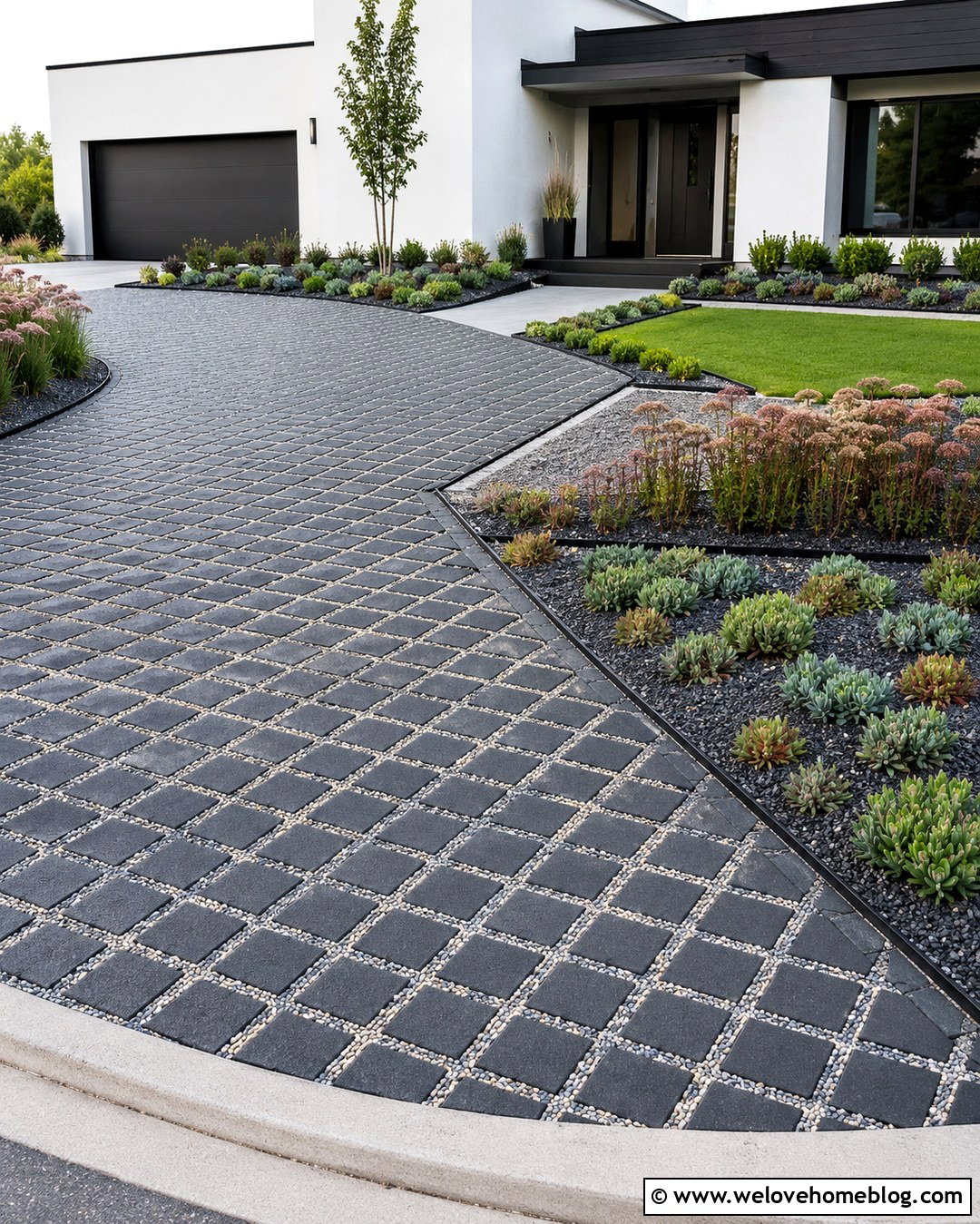
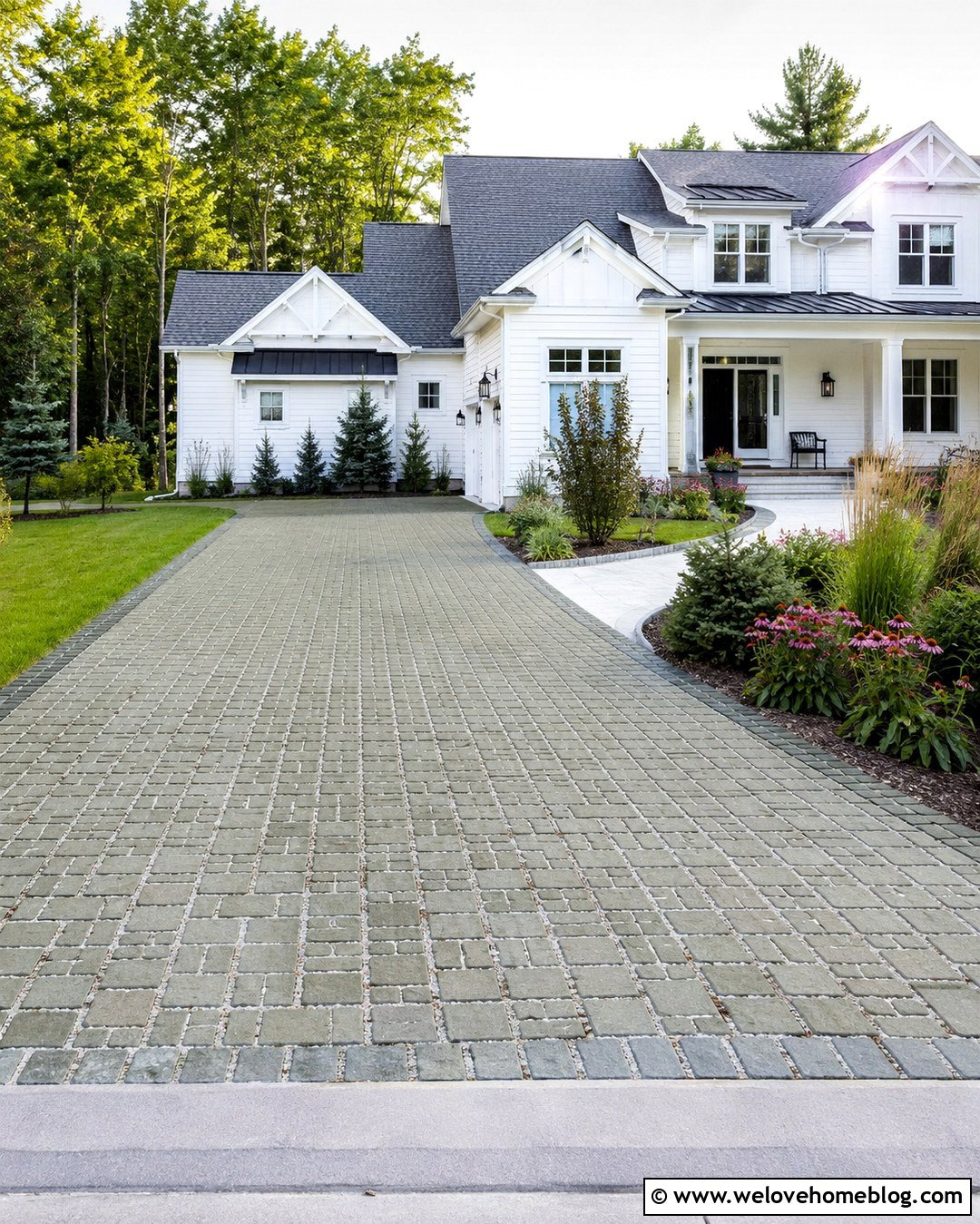
Sedum provides a low, tidy edge for a modern permeable paver driveway. Select charcoal grid pavers with gravel-filled joints, then create shallow planting pockets along the outer curves. Low stonecrop varieties echo the paving pattern with compact mats of green, blue, or bronze foliage. Their small scale keeps the border visible without interfering with turning space. Mix several sedums in broad repeated blocks rather than creating a patchwork of individual specimens. Crushed stone mulch helps the planting transition naturally into the driveway and reduces soil splashing onto the pavers. Taller flowering sedum can be placed farther back near the walkway or house. Good drainage remains essential, so do not position the border where roof water or driveway runoff collects for long periods after storms. ()
12. Spirea Border With Concrete Driveway
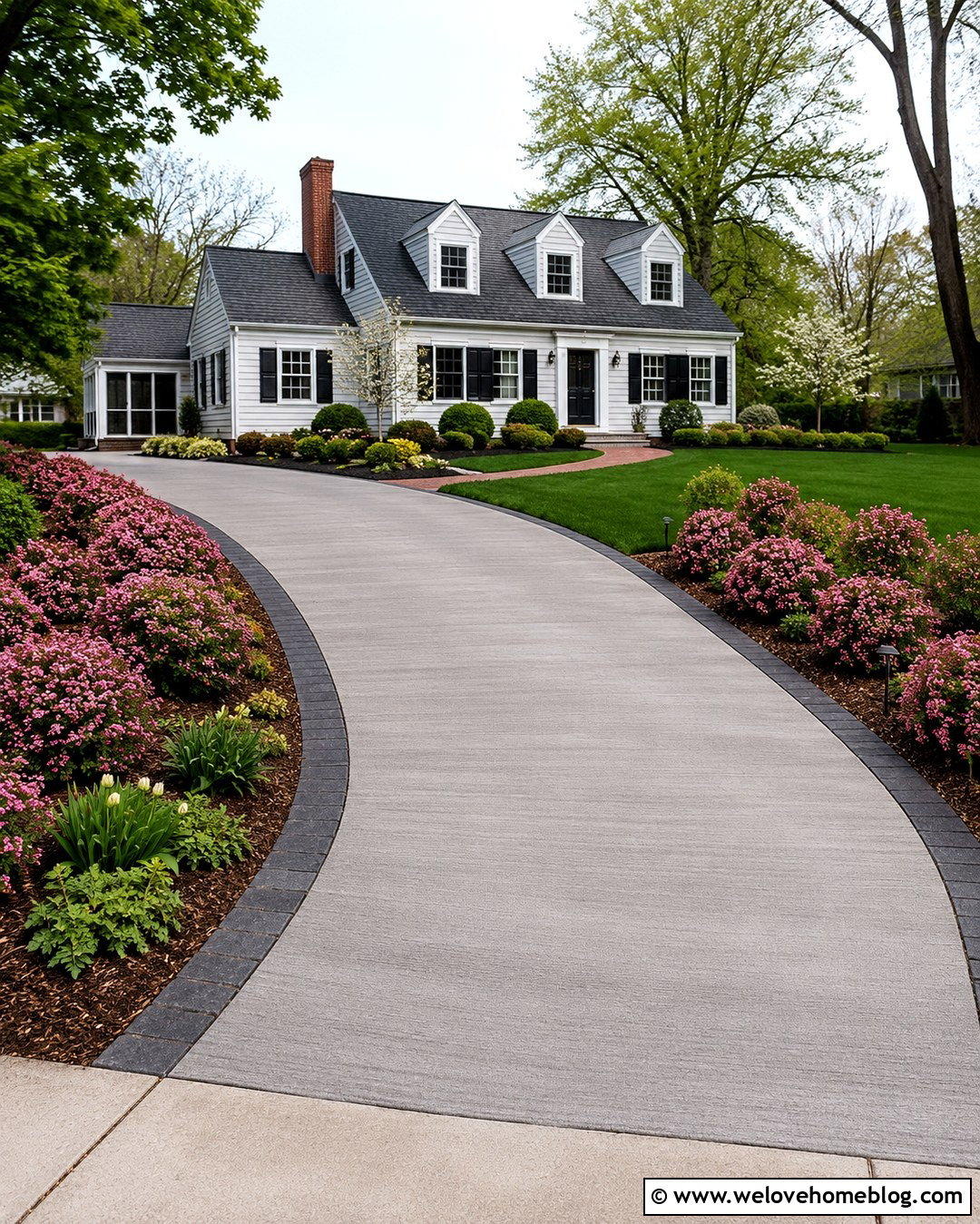
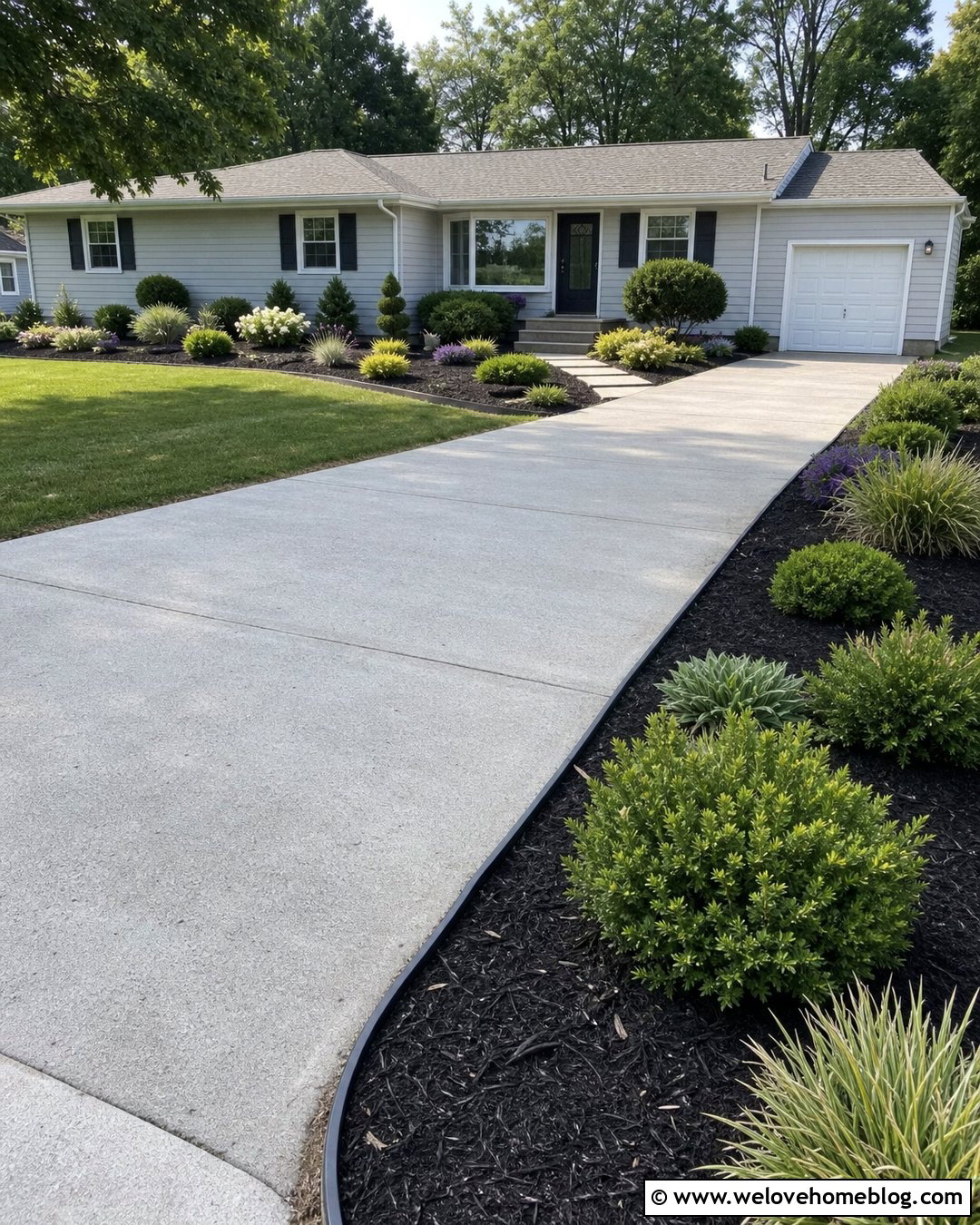
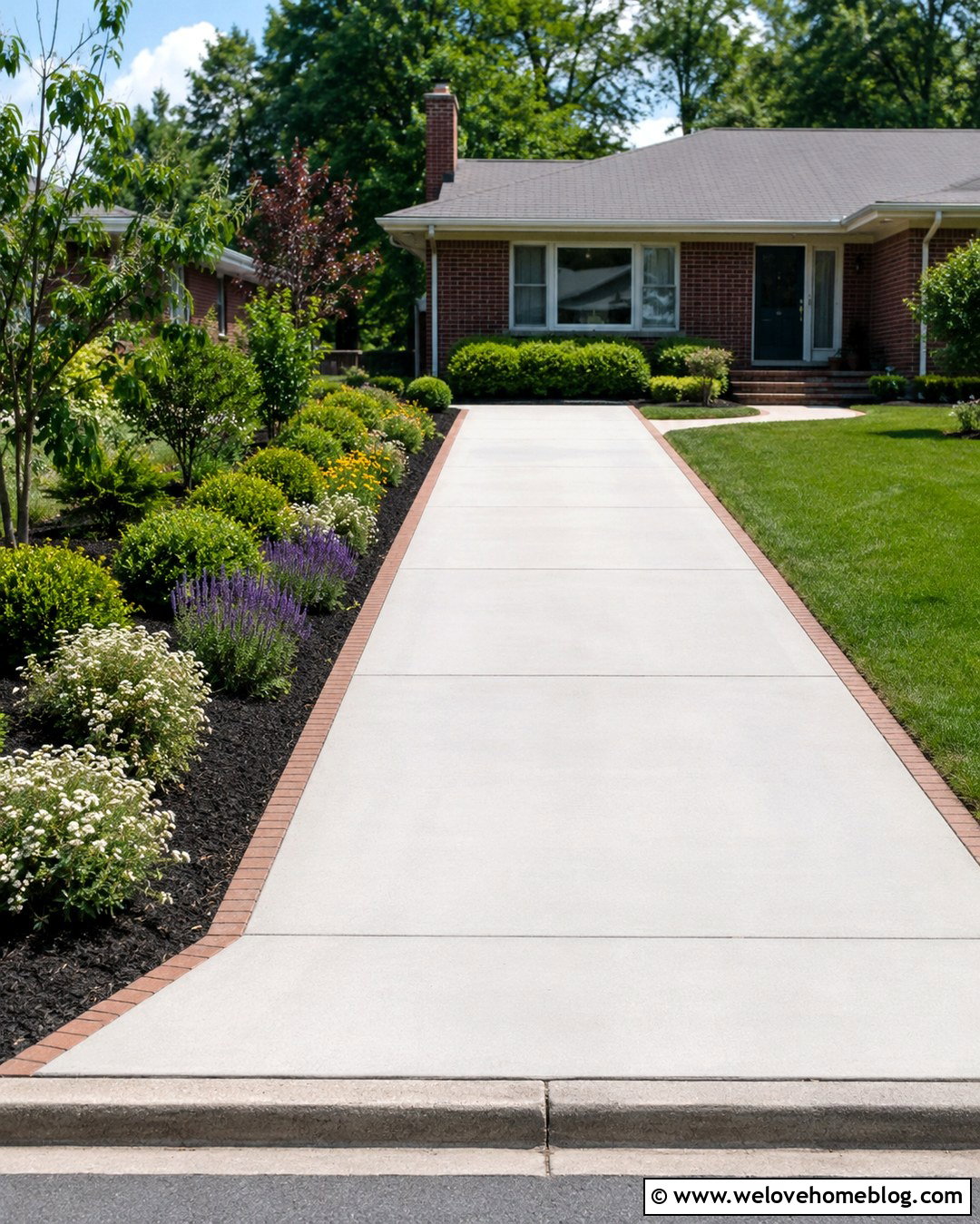
A curved broom-finished concrete driveway gains color and structure from a border of compact spirea. Use a warm gray concrete tone with a brick or dark paver ribbon along each side. Plant dwarf spirea in repeated groups, leaving a clear mulch setback next to the hardscape. Their rounded form creates a softer transition into the lawn, while seasonal flowers and changing foliage bring more interest than a plain hedge. This combination fits Cape Cod, ranch, and suburban homes particularly well. Choose a cultivar that will stay proportionate to the planting strip instead of relying on frequent hard pruning. Add spring bulbs or low ground cover between groups if extra color is wanted. Keep shrubs away from the driveway apron, where unrestricted views of pedestrians and street traffic are more important than dense planting. ()
13. Fountain Grass Border With Brick Paver Driveway
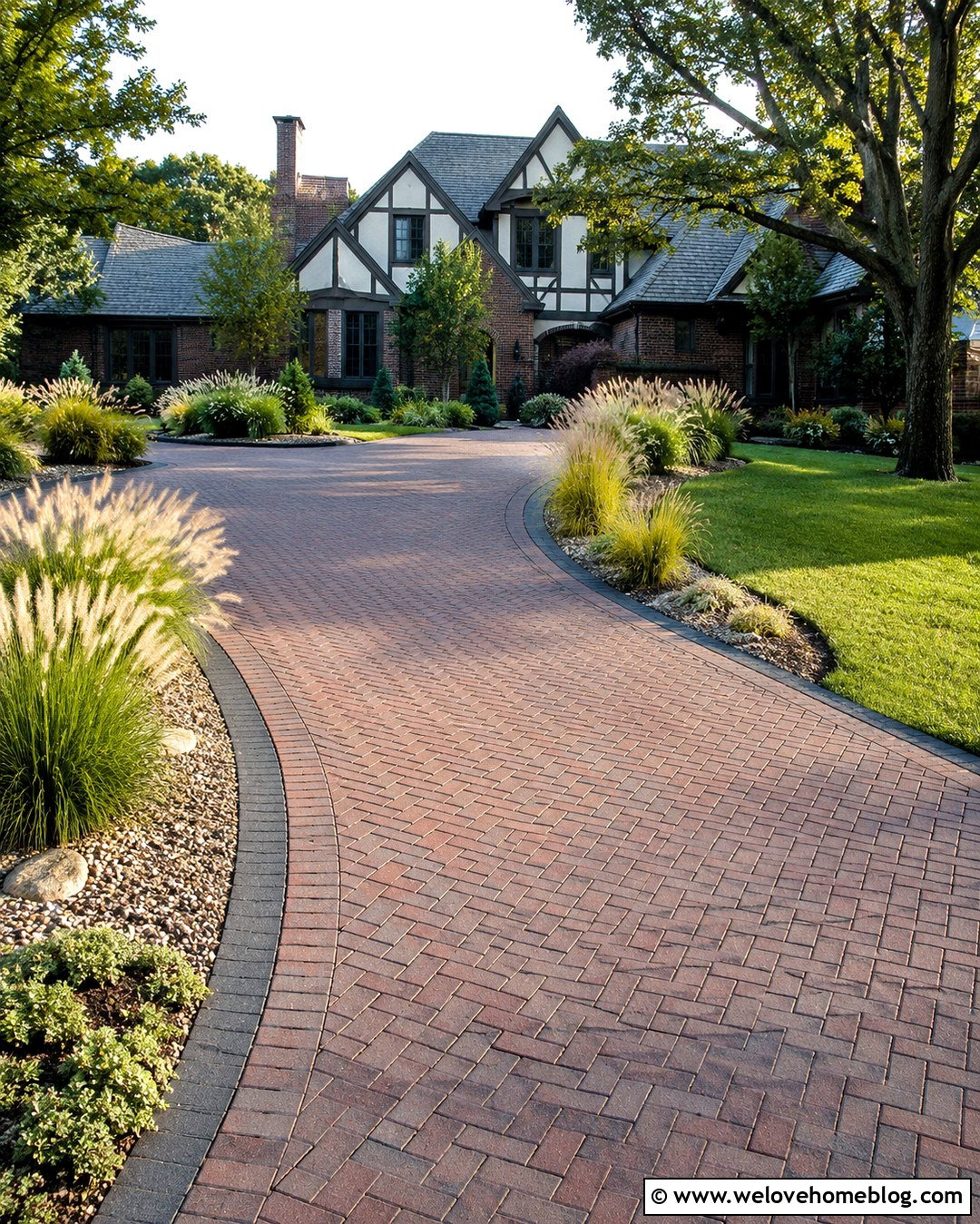
The arching form of fountain grass pairs beautifully with a sweeping brick paver driveway. Choose muted red and brown brick laid in a herringbone pattern, then add a flush charcoal border for definition. Place compact clumps of grass at consistent intervals along the outside curve, using low ground cover between them. The repeating plumes create movement and help guide the eye toward the house. In smaller yards, select a compact, noninvasive cultivar that will not overwhelm the driveway or spread into nearby natural areas. Decorative gravel around the plants can simplify maintenance and prevent soil from washing onto the brick. Keep the entrance open and use taller grass only farther inside the property. Check local invasive plant guidance before buying fountain grass, since suitability can vary significantly by region. ()
14. Coneflower Border With Gravel Driveway
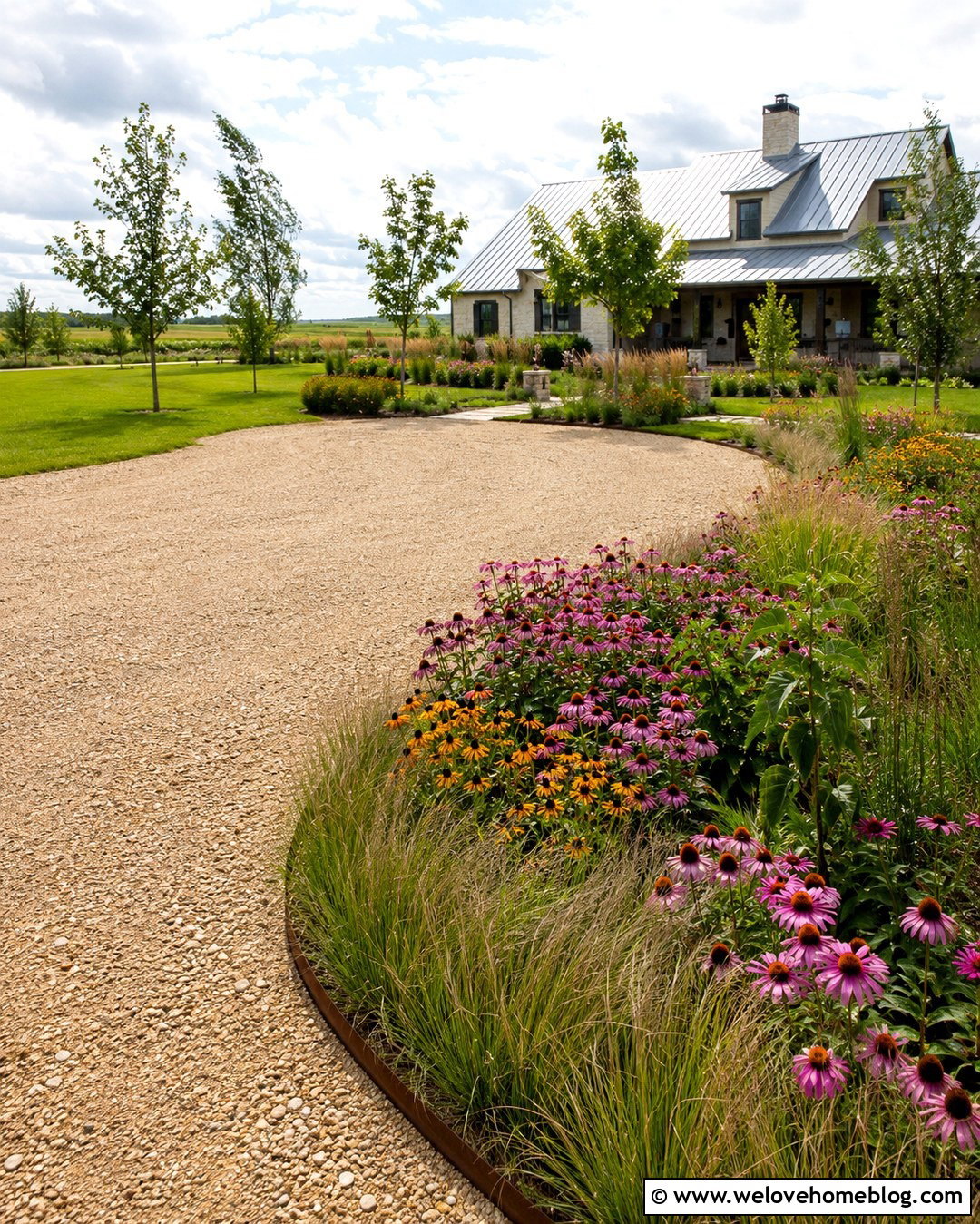
A tan crushed-gravel driveway bordered with coneflowers can create a cheerful native-inspired entrance. Shape the drive with a broad curve and contain the gravel with weathered steel edging. Plant coneflowers in generous drifts behind a narrow strip of prairie dropseed or low sedge, which keeps taller stems from leaning directly over the driving lane. Purple, pink, white, or orange blooms can coordinate with the home’s front door and trim. Add black-eyed Susans and native grasses farther back for a layered meadow effect, but repeat plant groupings so the design still looks intentional. During winter, standing seed heads can add texture if they remain upright and tidy. Choose locally appropriate native species or well-behaved cultivars suited to the soil, rainfall, and sunlight on your property. ()
15. Salvia Border With Stamped Concrete Driveway
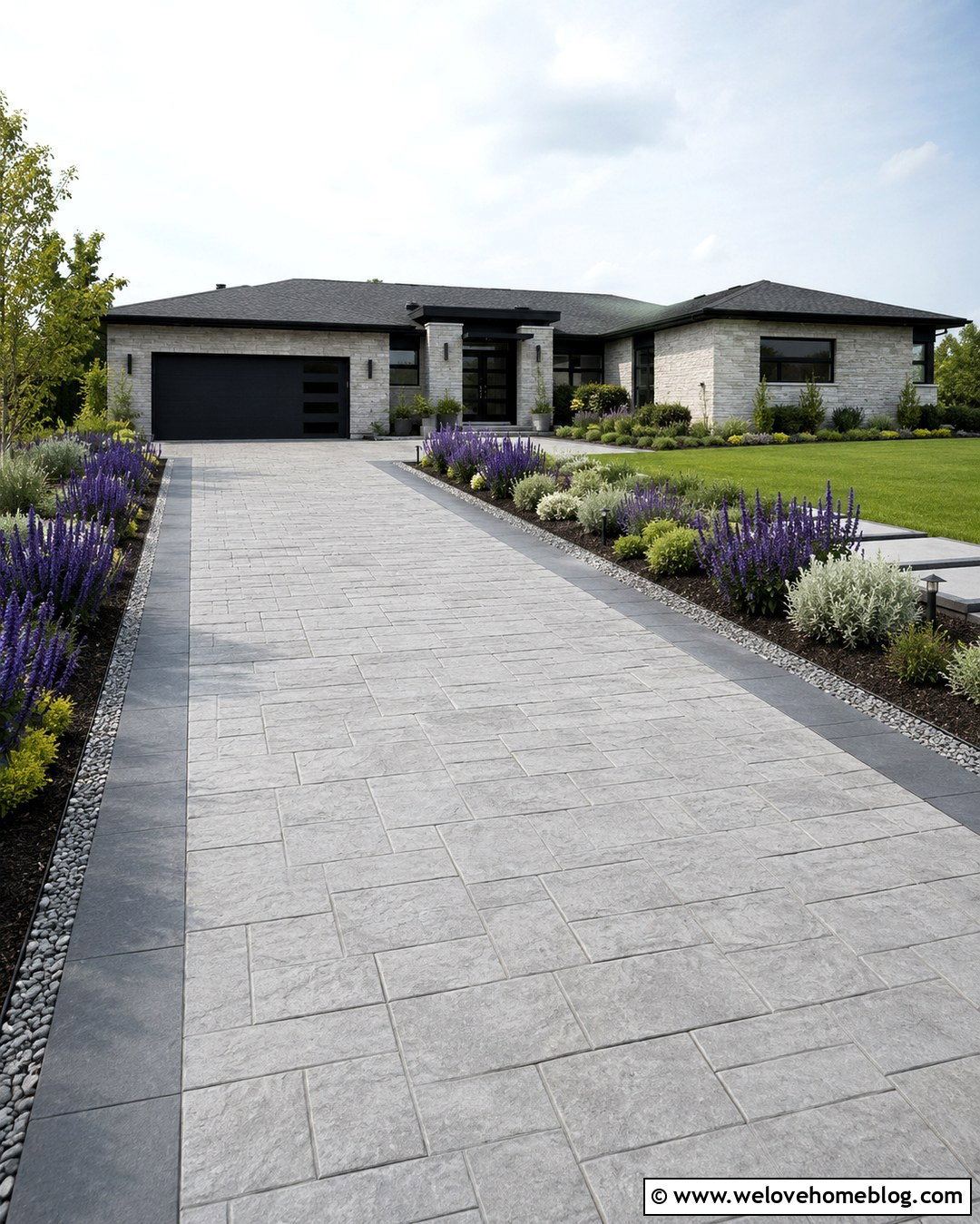
Deep blue or violet salvia brings crisp color to a light stamped concrete driveway. Use a subtle ashlar stone pattern rather than an overly busy texture, then outline the pavement with a smooth charcoal concrete band. Plant perennial salvia in repeated groups along the sunniest side, allowing a slim gravel strip between foliage and pavement. Upright flower spikes complement the driveway’s strong lines and work well with contemporary ranch or transitional homes. Add silver-leaved plants and low ornamental grasses to extend the border’s texture after flowering. Select salvia species according to your climate because hardiness, moisture needs, and mature size vary widely. Removing faded flower stems may encourage a cleaner appearance and, in some cases, additional blooming. Keep irrigation controlled so overspray does not stain or discolor the stamped surface. ()
16. Yarrow Border With Decomposed Granite Driveway
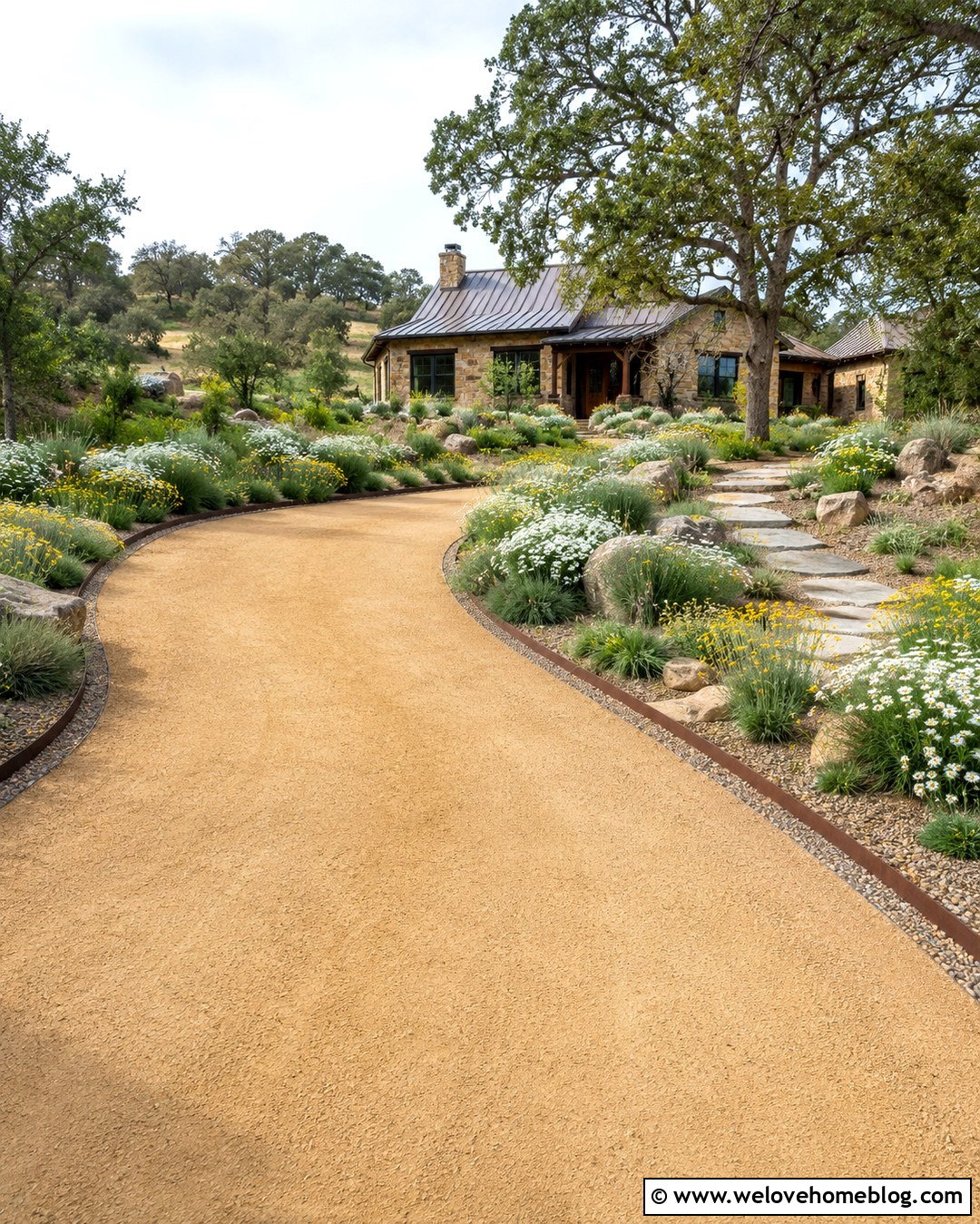
A decomposed granite driveway and yarrow border create a warm, natural look that suits country homes and dry landscapes. Build a straight or slightly curved drive with compacted golden-tan granite, stabilized where needed, and edge it with weathered steel. Plant yarrow in broad color blocks rather than alternating every plant. White, yellow, soft pink, or muted red flowers can connect the driveway to nearby meadow planting. Place the yarrow behind a narrow gravel buffer to keep stems away from tires and reduce soil movement. Add scattered boulders and native bunchgrasses for structure, but avoid overcrowding the strip. Yarrow is often used in sunny perennial plantings and can provide an extended seasonal display. Choose a cultivar with an appropriate height and growth habit for your region and available border width. ()
17. Hosta Border With Shaded Paver Driveway
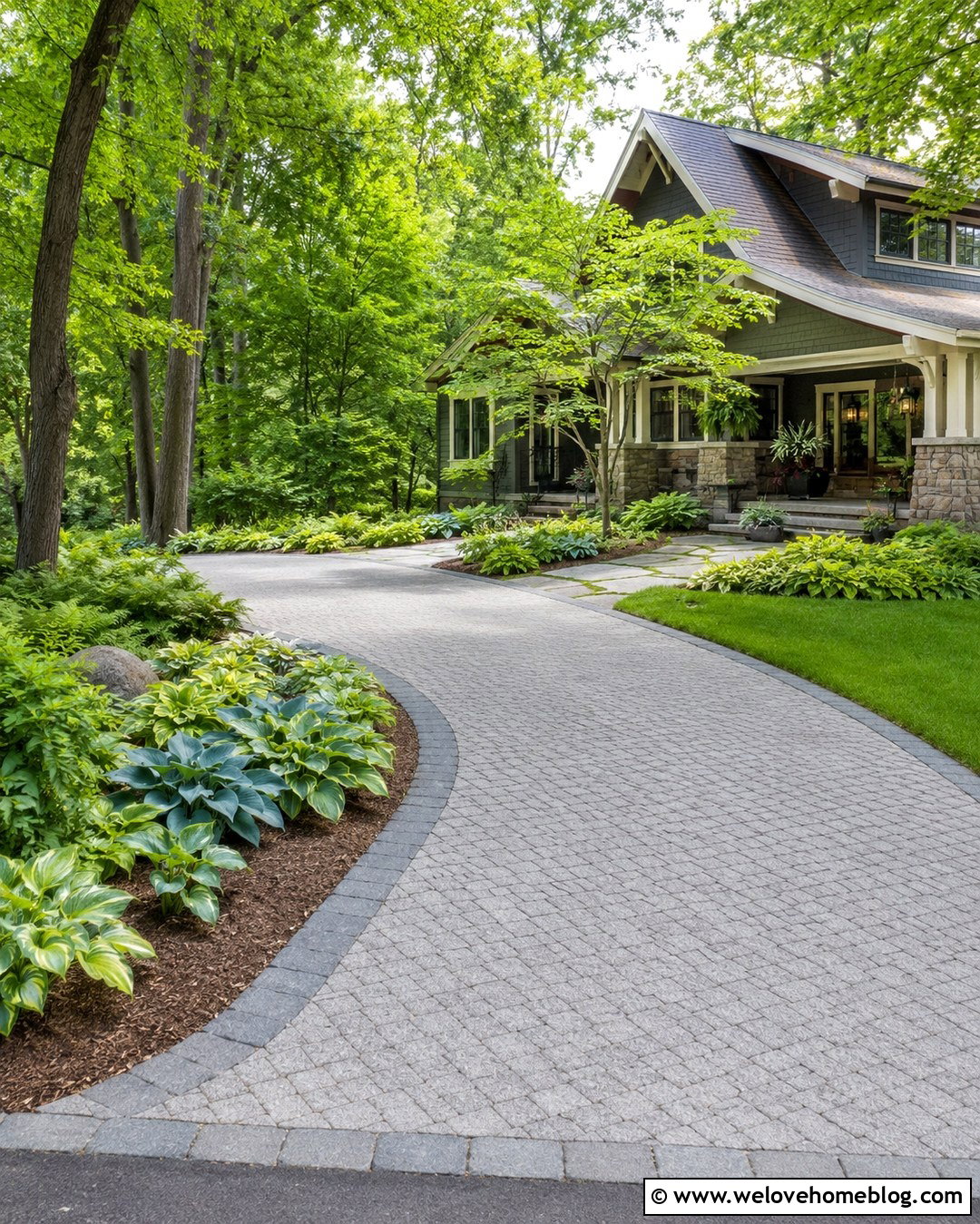
Does your driveway pass beneath mature shade trees? A hosta border can brighten that darker approach with bold foliage instead of relying on flowers. Use light-gray permeable concrete pavers in a gentle curve, edged with dark granite setts. Plant hostas in repeated groups on the shaded side, combining one large blue-green variety with a smaller chartreuse or variegated selection. Keep the palette limited so the driveway does not feel cluttered. Ferns, spring bulbs, and shade-tolerant ornamental grasses can fill spaces farther from the pavement. Leave a mulch buffer to protect leaves from vehicle doors and reduce splash during rain. Because hostas require adequate soil moisture, improve the bed before planting and avoid areas where large tree roots create severe competition or where salty snow is routinely piled. ()
18. Prairie Dropseed Border With Concrete Driveway
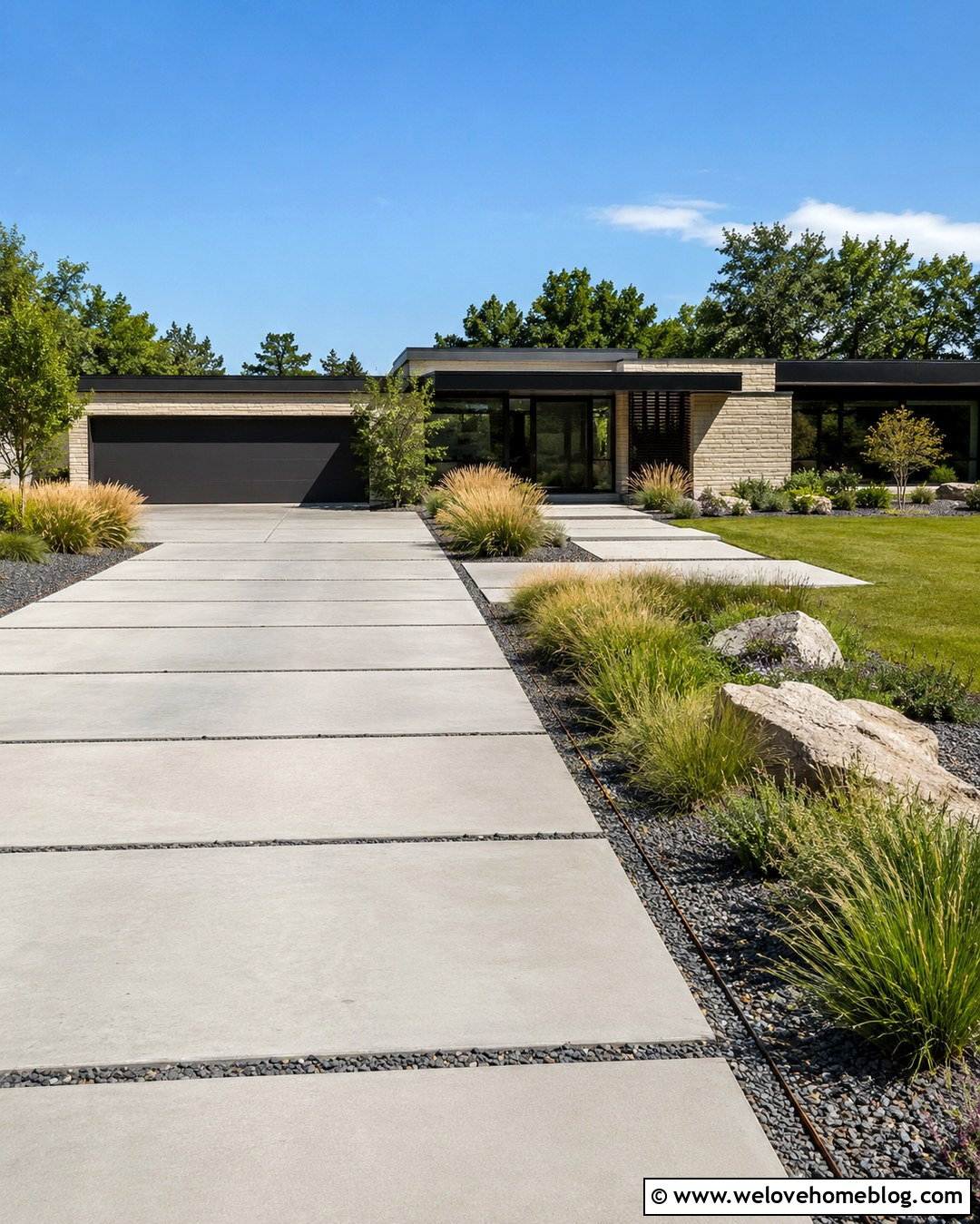
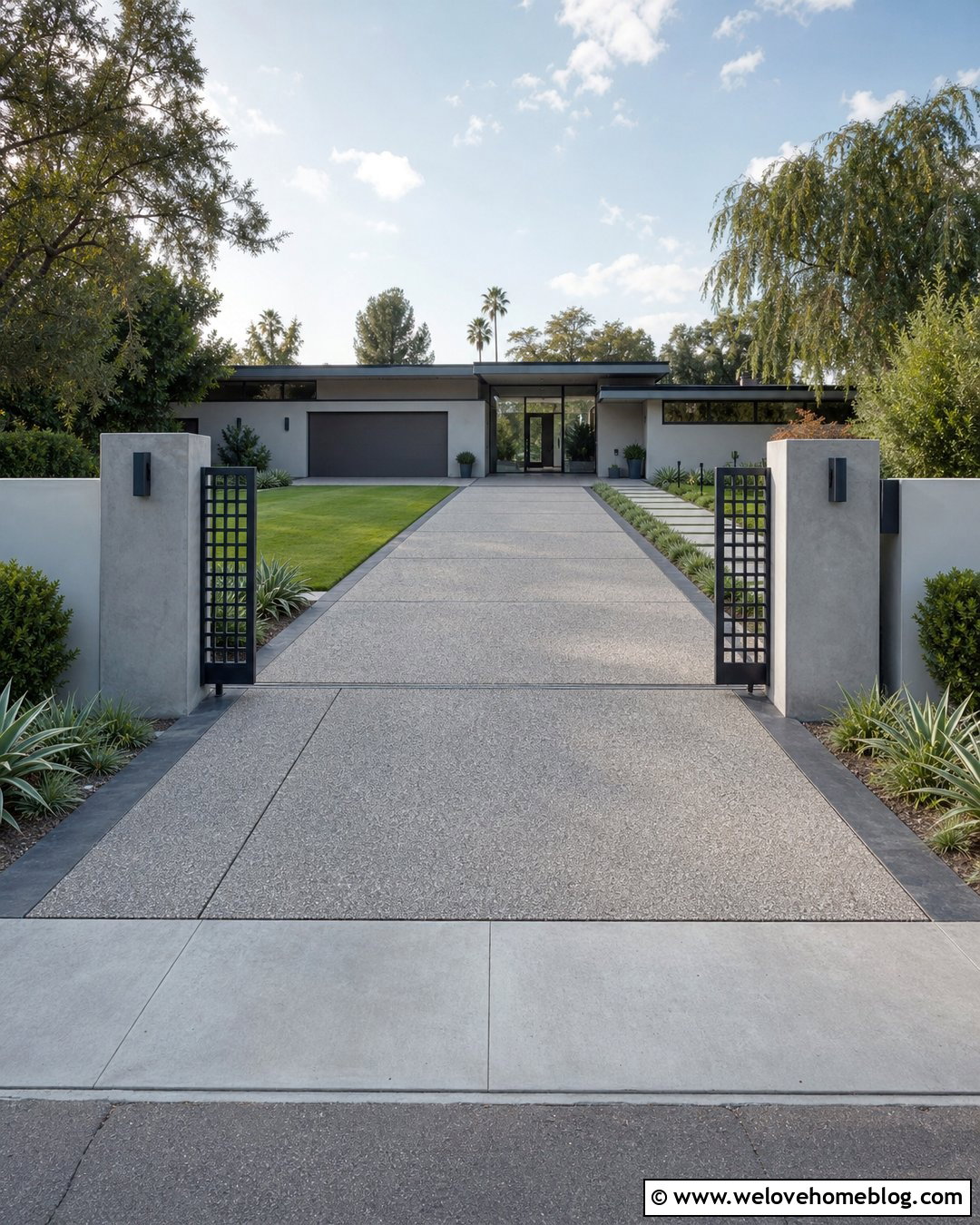
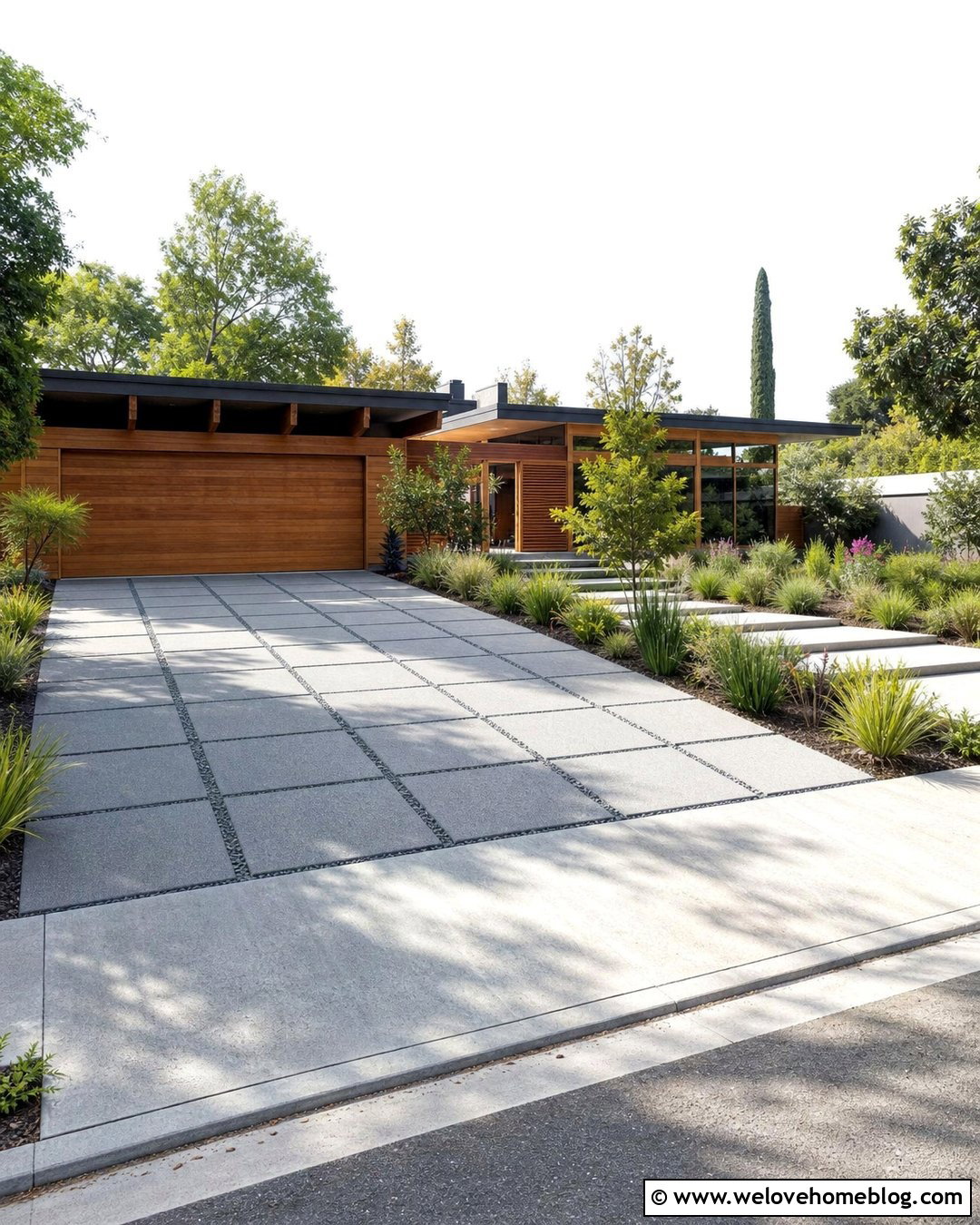
Prairie dropseed offers a refined native grass border for a minimalist poured concrete driveway. Use wide concrete slabs with narrow gravel joints and a straight approach to a modern or midcentury home. Plant the grass in evenly spaced masses behind black steel edging, allowing each clump enough room to develop its rounded shape. The fine foliage softens the concrete without hiding its clean geometry. Add low flowering perennials between selected groups, or keep the planting simple with gravel mulch and a few sculptural boulders. The design works especially well in sunny front yards where a traditional clipped hedge would feel too formal. Maintain low planting near the sidewalk and street, then gradually increase height closer to the house. Verify local performance, soil needs, and mature dimensions before installation. ()
19. Dwarf Rose Border With Brick Driveway
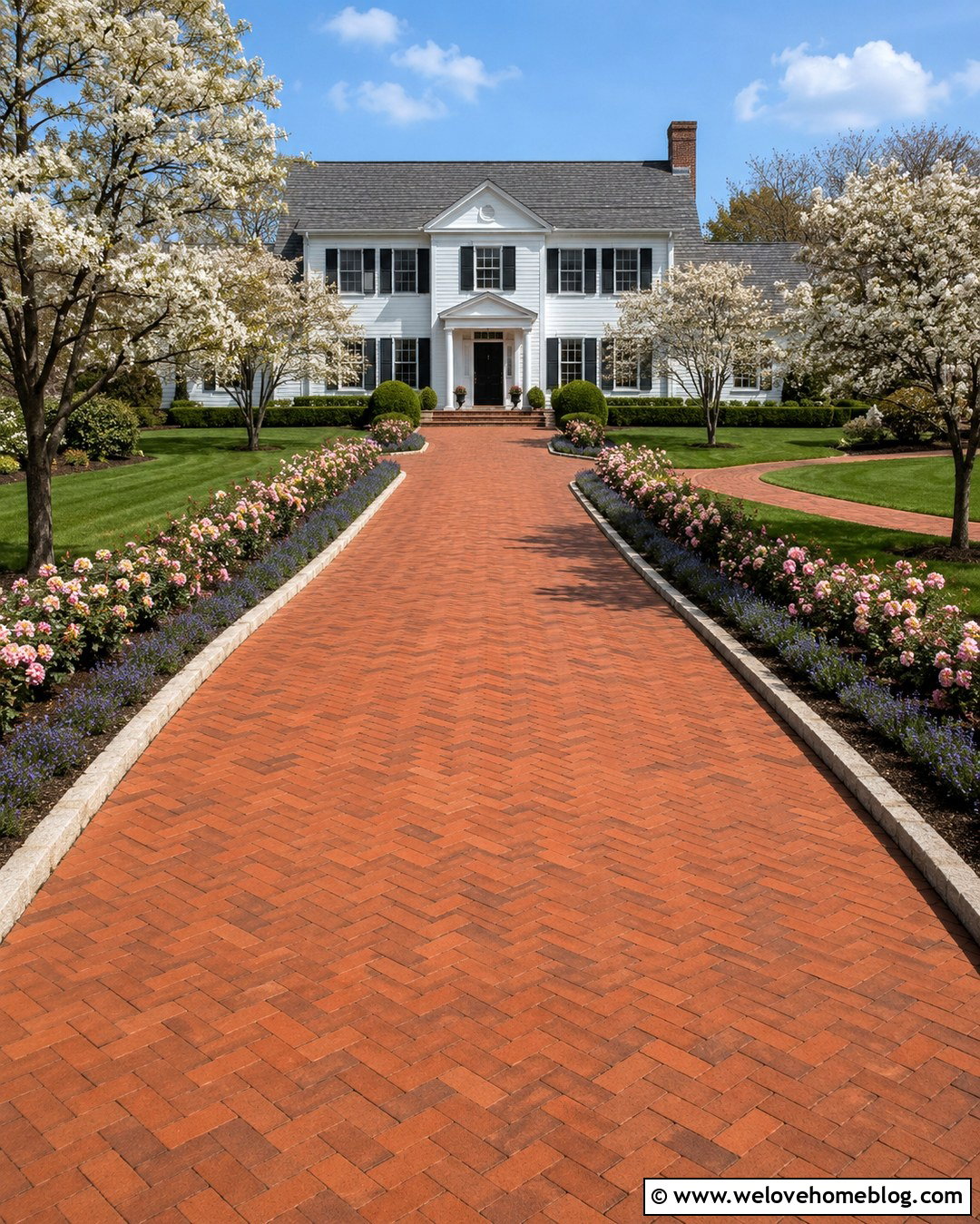
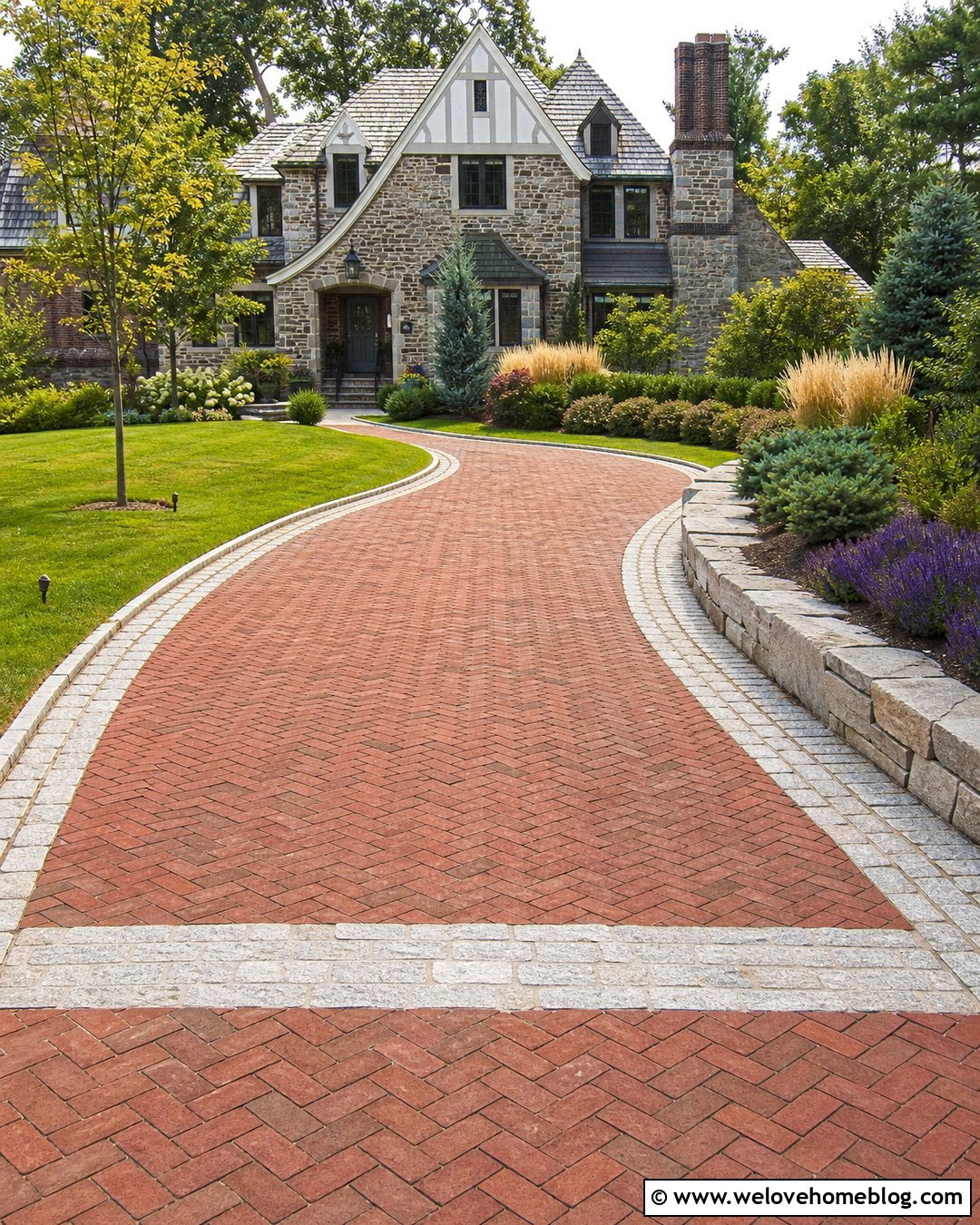
A brick driveway bordered with dwarf landscape roses creates a welcoming, flower-filled approach without requiring a deep cottage border. Choose clay brick pavers in a traditional herringbone pattern and contain them with a limestone or concrete curb. Plant one compact rose variety in repeated groups, leaving a mulch strip wide enough to prevent thorny stems from reaching parked vehicles. White or pale pink flowers create a restrained look, while deeper colors can complement a neutral house facade. Add low catmint or creeping thyme at the front of wider beds, but maintain a clean line along the pavement. Select disease-resistant roses recommended for your region and sunlight conditions. Regularly remove stems that lean into the driveway, and avoid placing thorny plants beside narrow passenger unloading areas or public sidewalks. ()
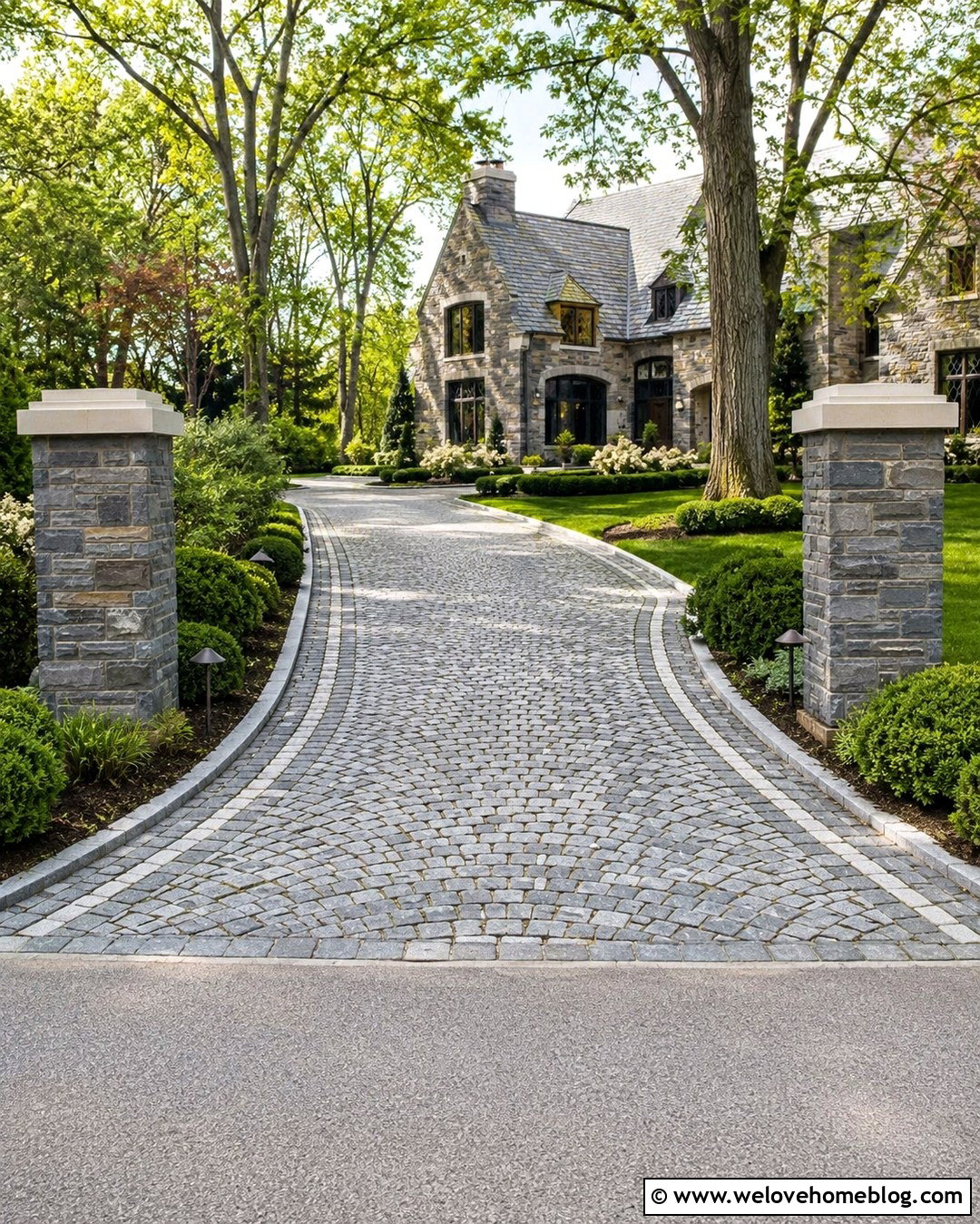
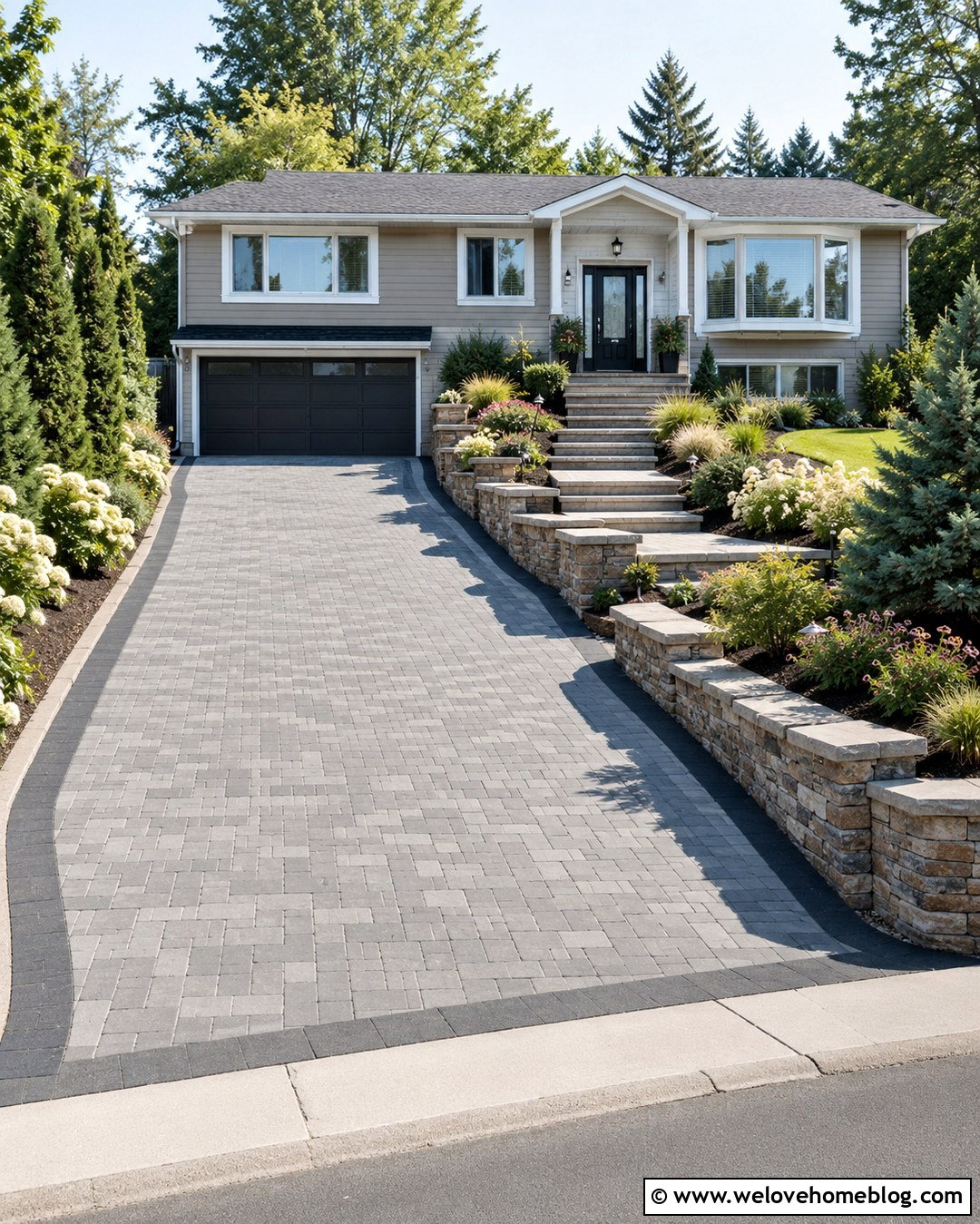
20. Mondo Grass Border With Black Asphalt Driveway
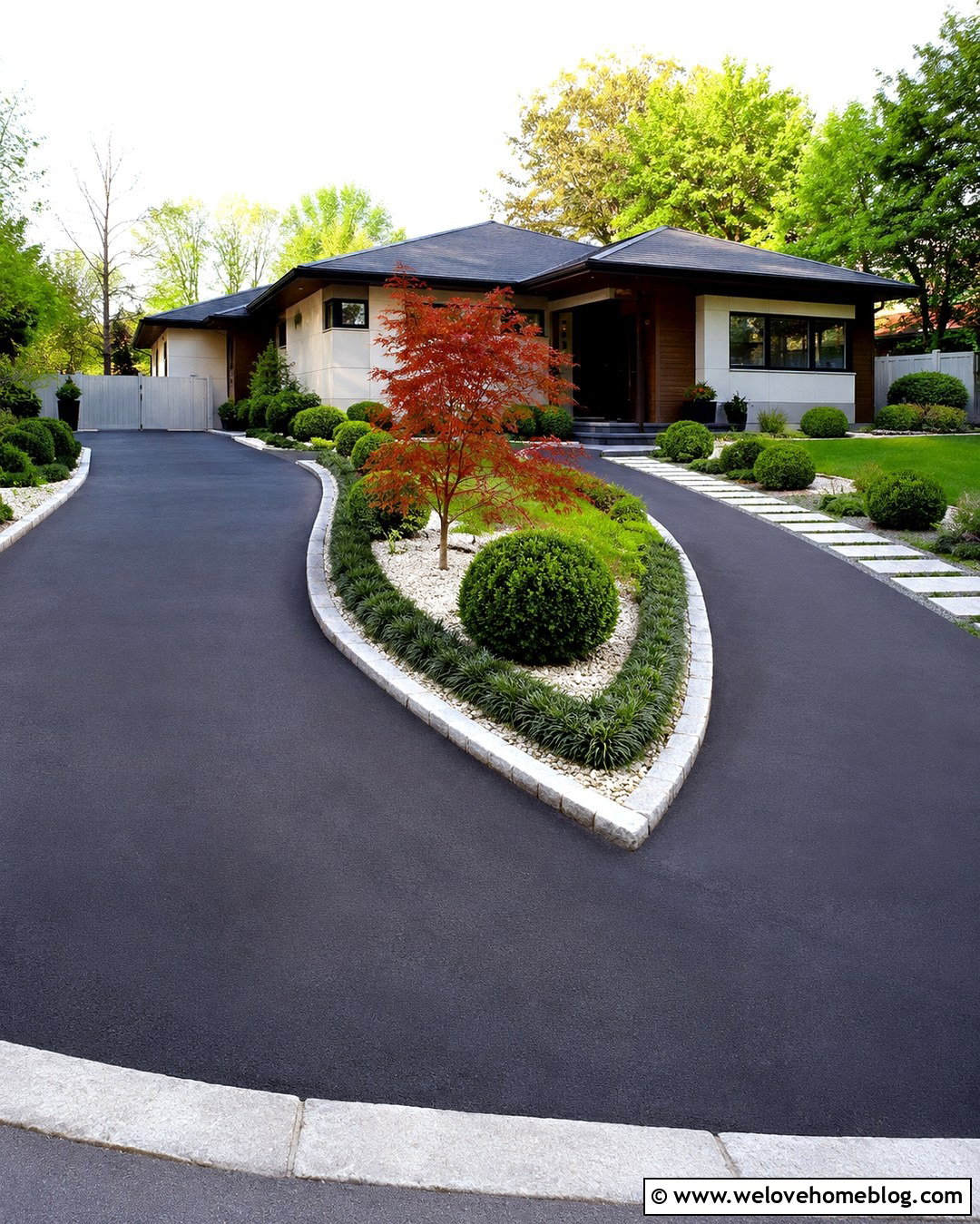
Mondo grass creates a crisp, low border that can soften the strong color of a black asphalt driveway. Use a straight or split driveway layout with a light granite cobblestone edge for contrast. Plant mondo grass in a continuous ribbon or evenly repeated clumps, depending on how quickly the selected variety spreads. Its narrow foliage works especially well beside contemporary, Japanese-inspired, or shaded suburban landscapes. Add rounded evergreen shrubs, a small ornamental tree, and pale gravel mulch farther back to complete the composition. In a compact front yard, the low planting preserves an open view while still separating pavement from lawn and walkway. Confirm the plant’s regional hardiness and light requirements, and choose a nonaggressive selection. Keep the cobblestone border slightly raised to prevent asphalt runoff from entering the bed. ()
Conclusion:
The most successful driveway border combines suitable plants with the surface, layout, house, and surrounding landscape. Use low ground covers where space is tight, flowering perennials for seasonal color, ornamental grasses for movement, or compact shrubs for year-round structure. Always consider mature size, drainage, sunlight, local winters, road salt, and the space needed beside parked vehicles. Repeating one or two plants usually creates a stronger result than filling the border with many unrelated varieties. Clear edging and a narrow mulch or gravel buffer will make maintenance easier while protecting foliage. Whether your entrance is gravel, concrete, asphalt, brick, or pavers, these **20 driveway border plants ideas** offer practical starting points for a more polished and welcoming approach. ()

Related posts:
Leave a Reply