
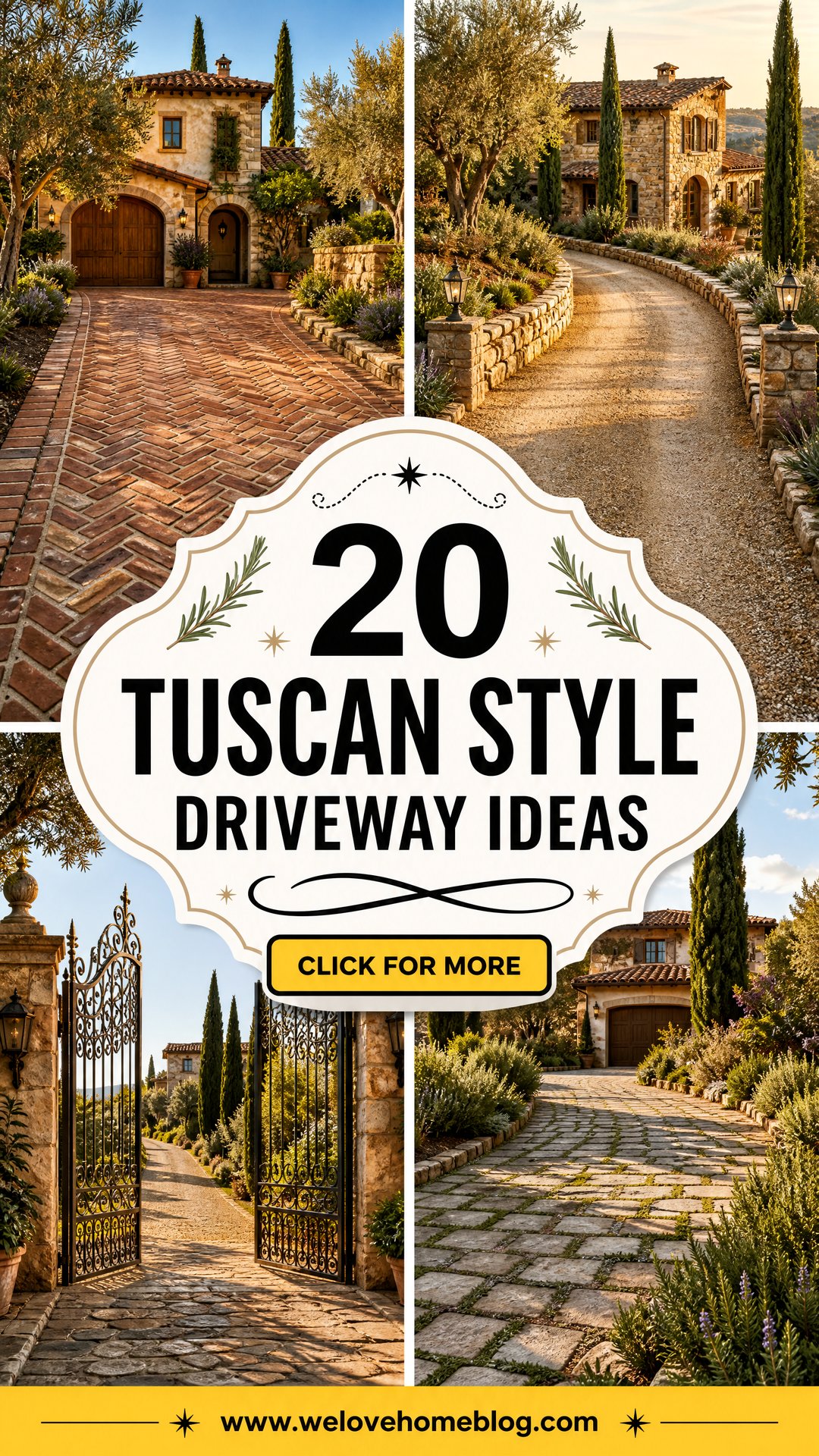
Tuscan style driveways blend warm, weathered materials with structured Mediterranean landscaping to create an inviting approach that feels established rather than overly polished. A convincing design usually connects the driveway surface, layout, borders, entrance, and planting palette to the home’s stucco walls, stonework, arches, and clay roof. Gravel, cobblestone, brick, travertine, and earth-toned pavers are especially well suited to this character. Italian cypress, olive trees, lavender, rosemary, and terracotta containers provide recognizable Tuscan details while remaining adaptable to many US climates. Current Mediterranean driveway designs also favor circular courts, decorative aprons, natural stone borders, and drought-tolerant planting. () The complete looks below offer practical inspiration through 20 Tuscan style driveway ideas.
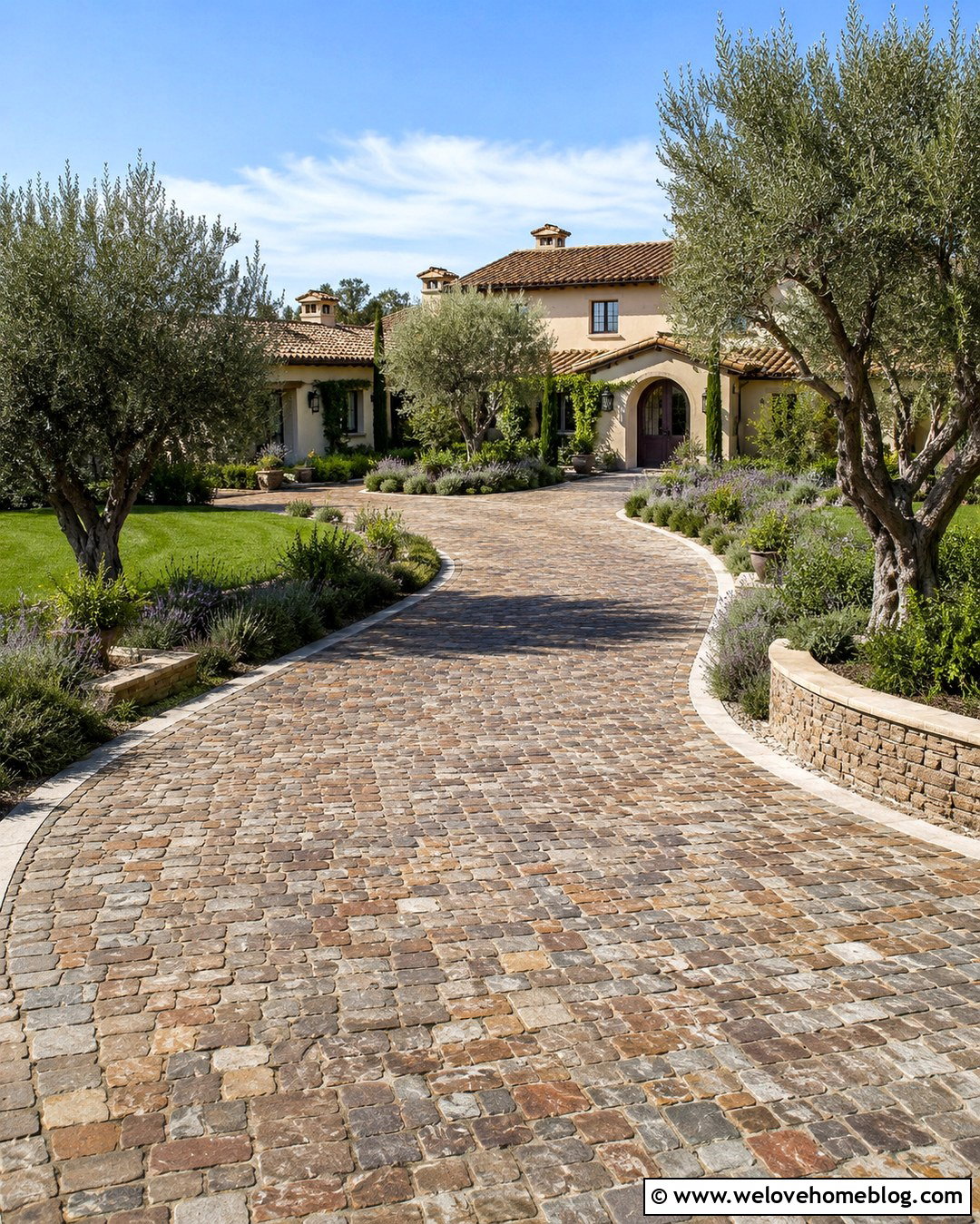
1. Tuscan Cobblestone Driveway With Cypress Trees
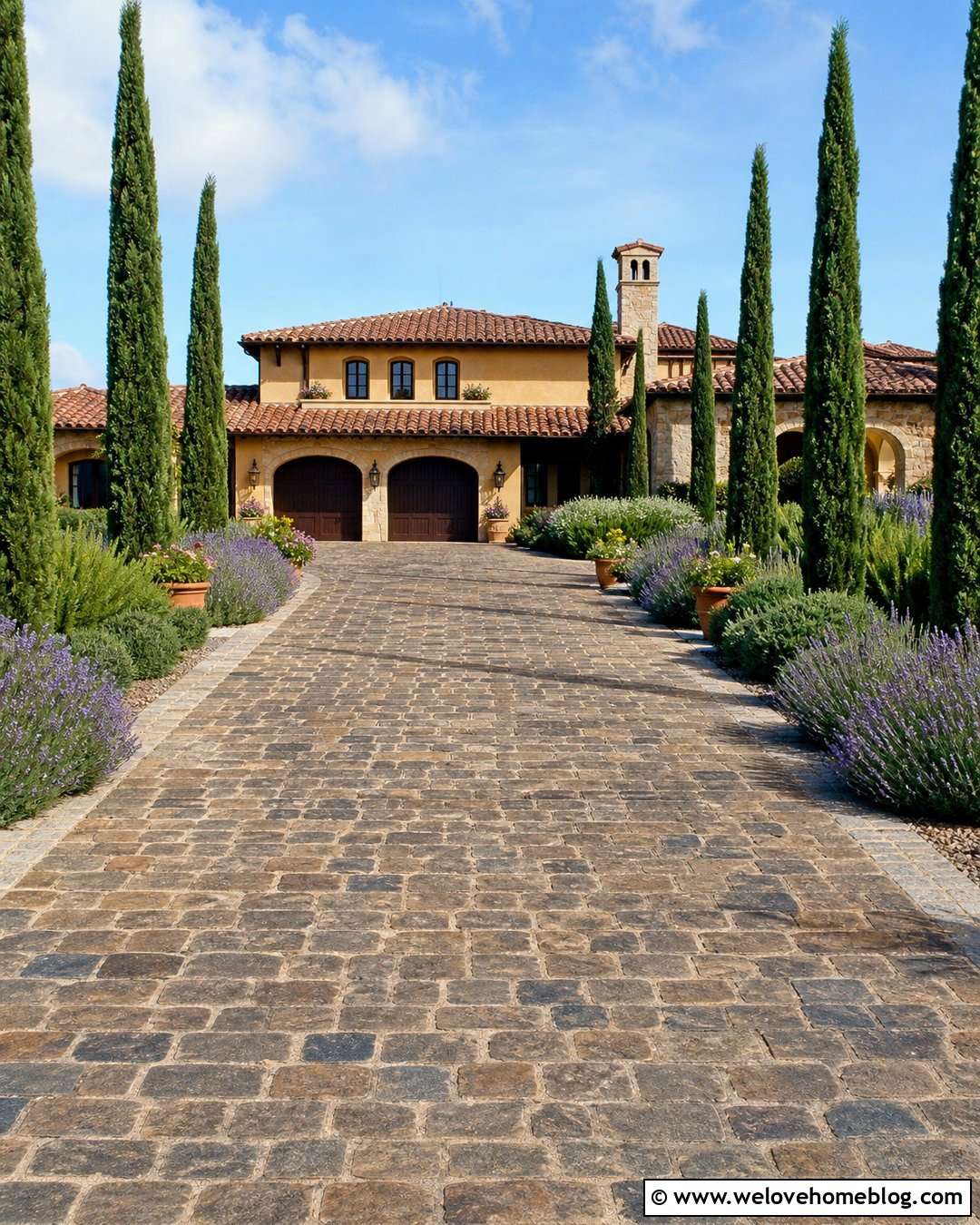
A cobblestone driveway creates an authentic old-world foundation for a Tuscan home. Choose weathered granite setts or tumbled concrete pavers in blended tan, charcoal, and brown tones. A straight layout makes the entrance feel formal, especially when tall Italian cypress trees are planted at even intervals along both sides. Add narrow beds of lavender and rosemary between the trees to soften the hardscape and introduce silvery Mediterranean color. A soldier-course cobblestone border keeps the edges neat while continuing the aged material palette. Near the house, widen the driveway into a simple parking court framed by stone walls and terracotta pots. The combination works particularly well with ocher stucco, arched garage doors, and a red clay tile roof. ()
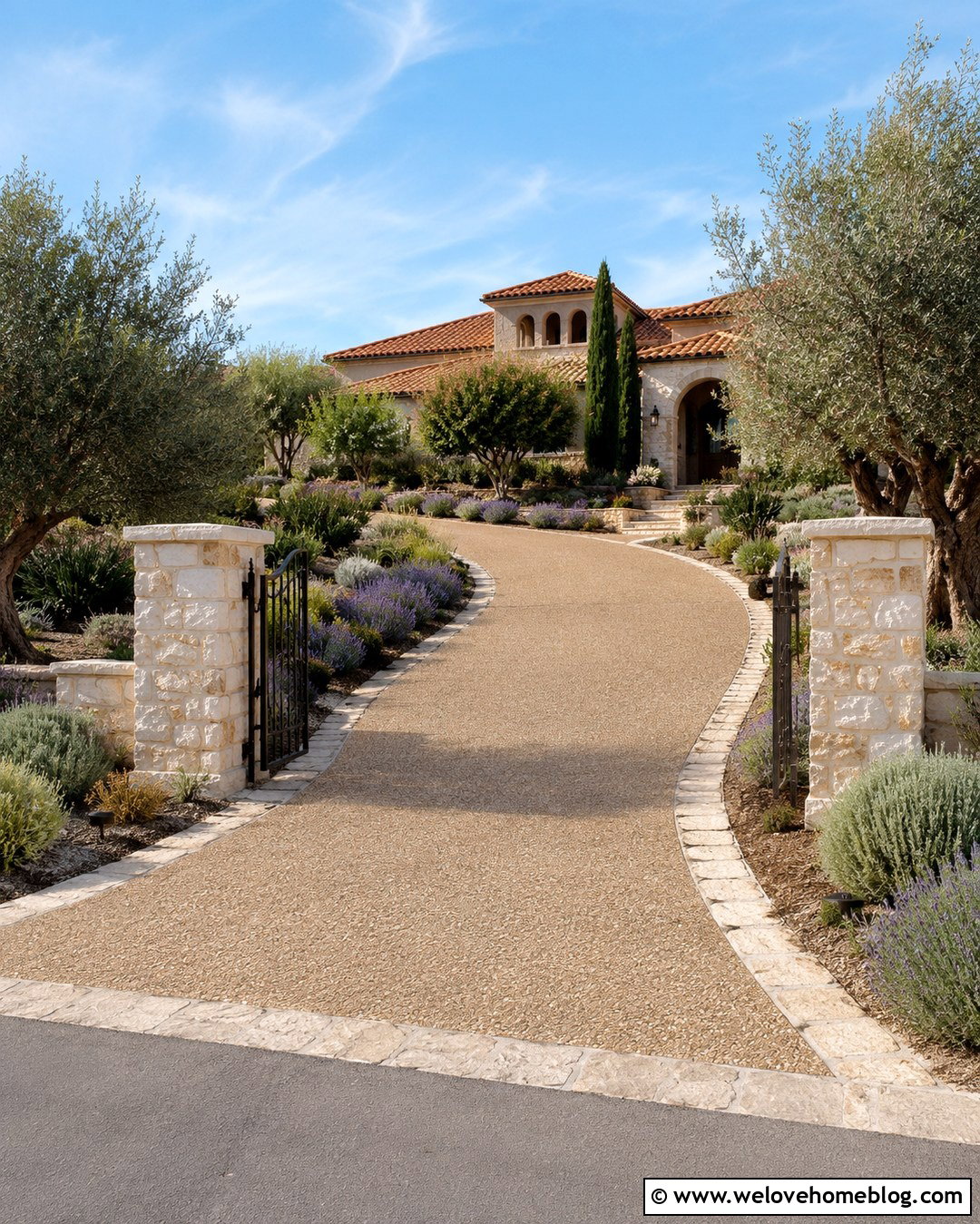
2. Tuscan Gravel Driveway With Olive Trees
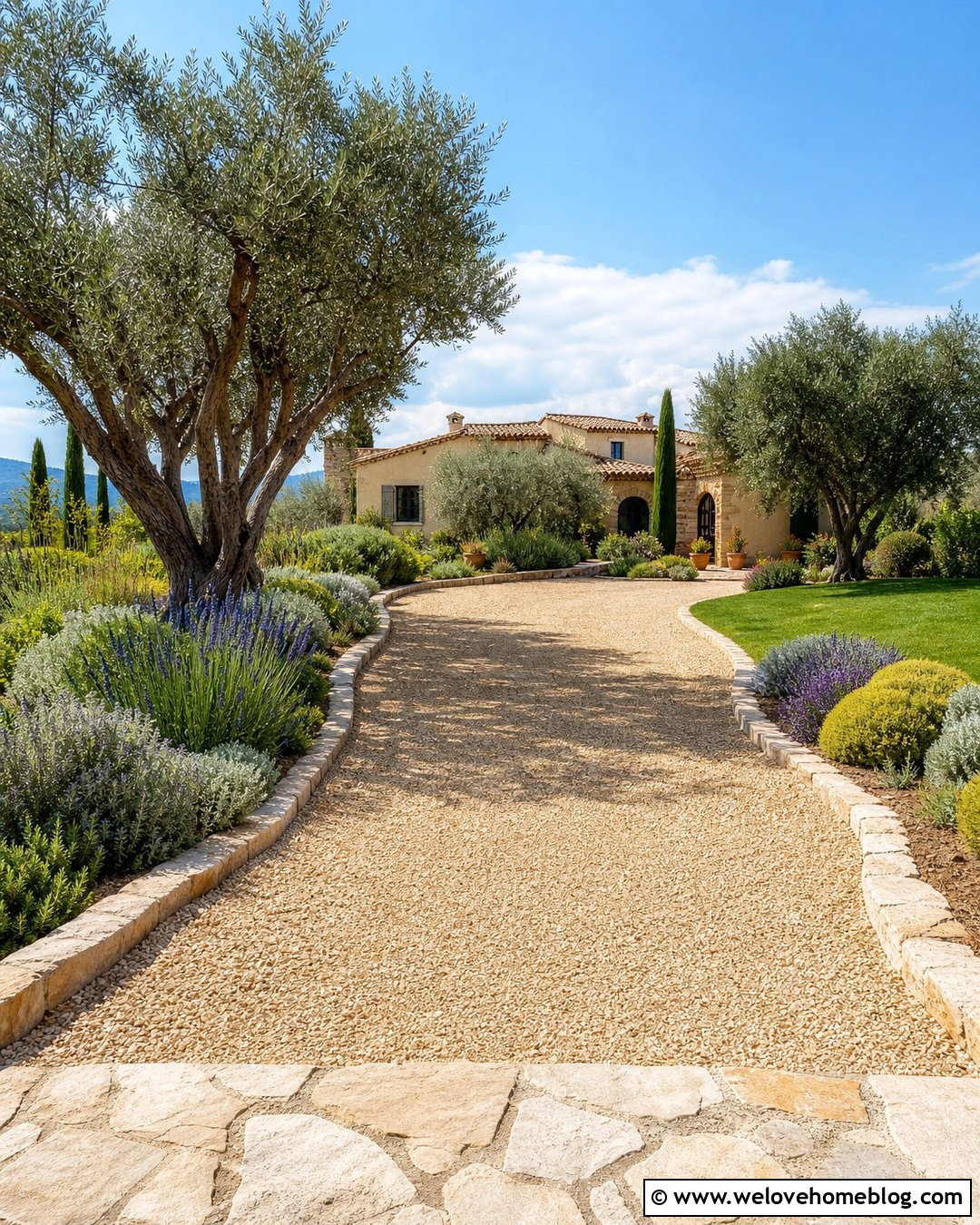
Can a simple gravel driveway still feel refined? Warm beige pea gravel or compacted crushed stone provides a relaxed Tuscan look without making the entrance appear unfinished. Use a gently curved layout that reveals the house gradually, rather than presenting the entire facade from the street. Mature olive trees placed within broad planting beds can frame the curve, while rosemary, santolina, thyme, and lavender fill the lower level. Natural limestone or weathered fieldstone edging prevents loose gravel from spreading into the beds. Include a matching stone apron where the driveway meets the road for a stronger entrance and easier maintenance. This complete design suits a rustic villa, ranch house, or stucco home surrounded by a dry, sunny landscape.
3. Tuscan Circular Driveway With Stone Fountain
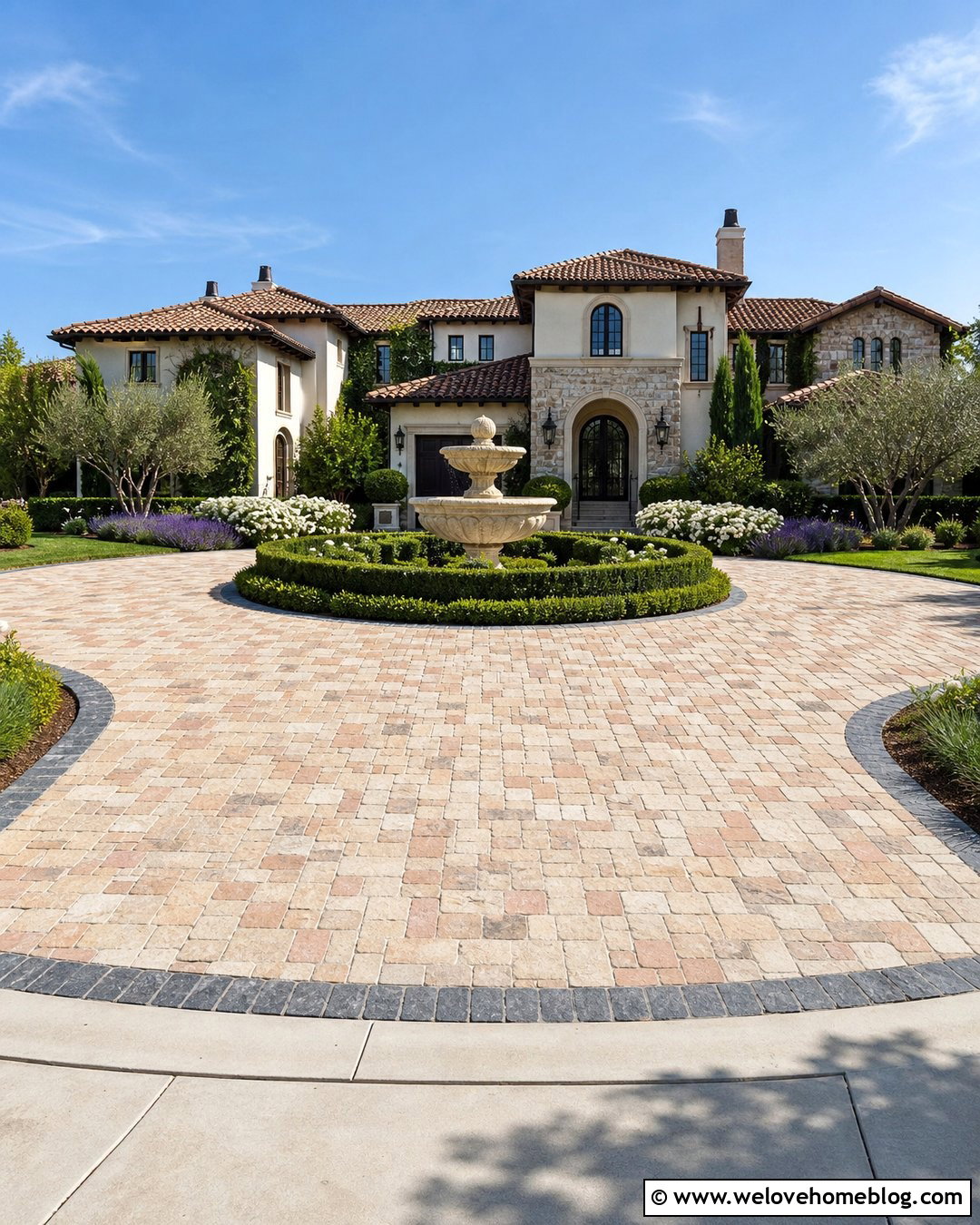
A circular driveway brings the scale and ceremony of a Mediterranean villa to a spacious front yard. Install tumbled concrete pavers in a blend of cream, sand, and muted terracotta, using a fan or random ashlar pattern for an aged appearance. Place a carved limestone fountain in the central island, but leave enough open space around it to prevent the feature from overwhelming the driveway. A low clipped boxwood ring adds structure, while lavender, white roses, and dwarf olive trees introduce softer texture. Finish the outer edge with a darker cobblestone band that clearly defines the turning area. Proper grading and drainage are especially important in a motor court where water could otherwise collect near the center or flow toward the house. ()
4. Tuscan Herringbone Paver Driveway With Brick Border
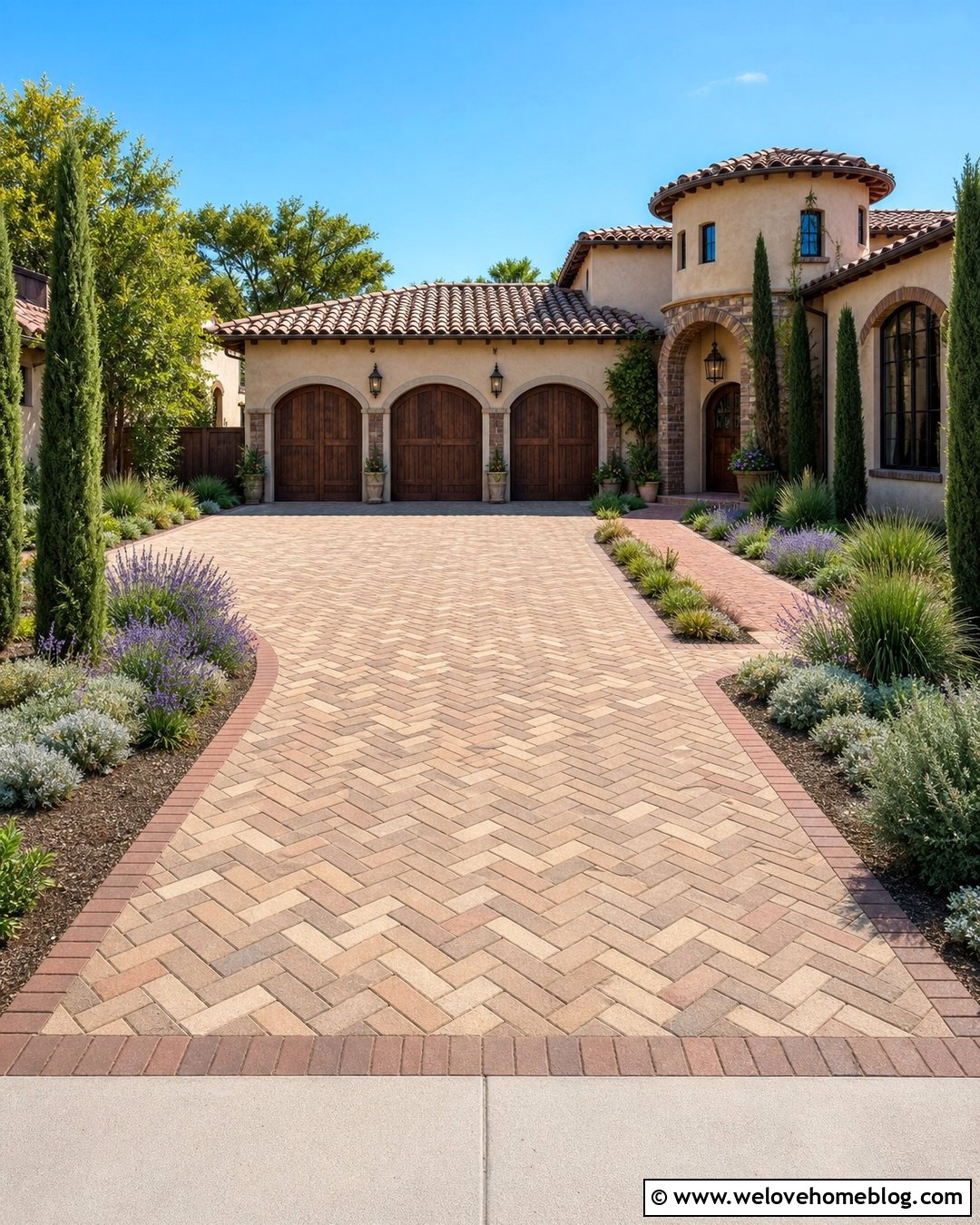
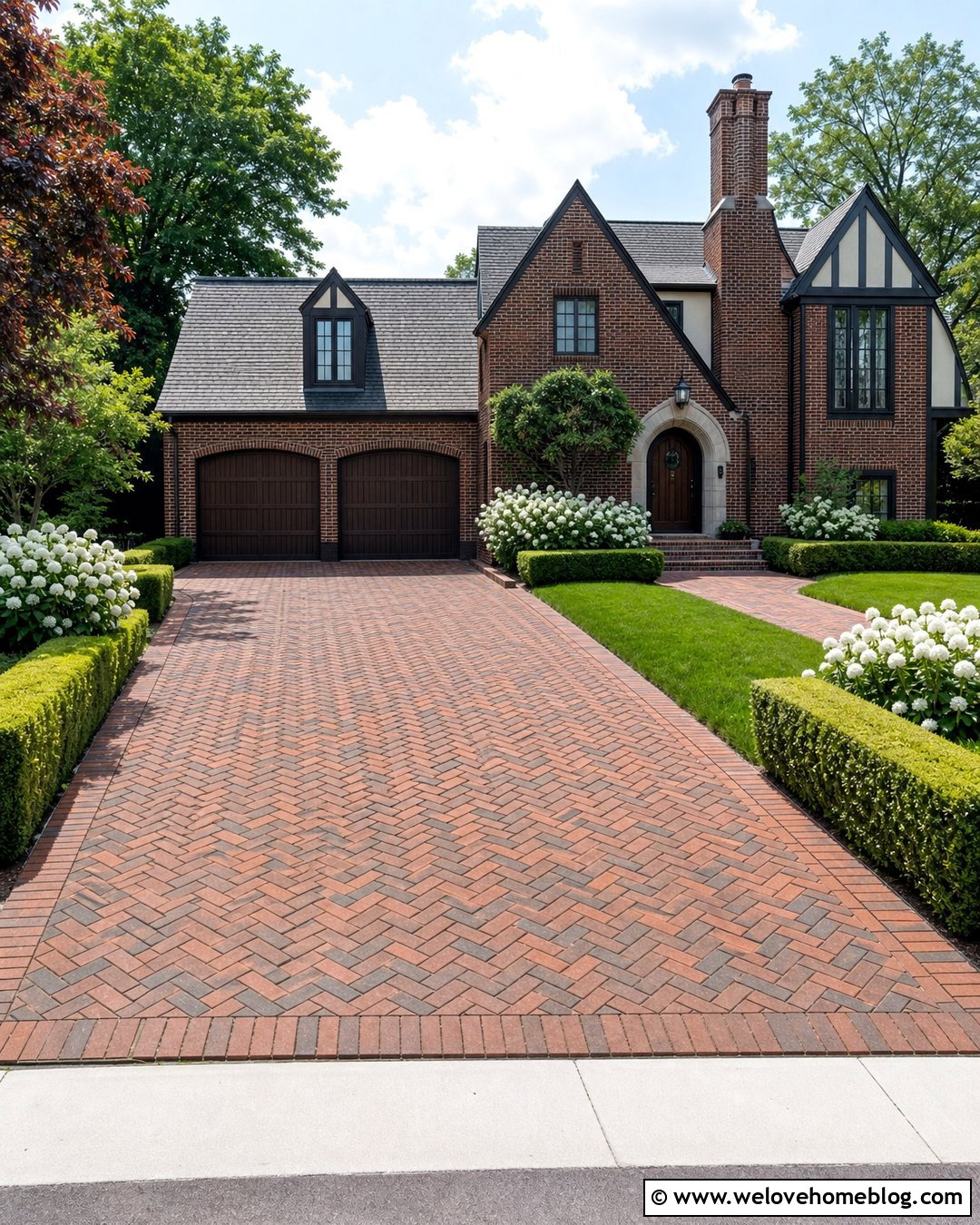
The strong geometry of herringbone paving can make a Tuscan driveway both practical and decorative. Select tumbled concrete pavers in soft sandstone and chestnut shades, then outline the driveway with a narrow clay brick border. The contrast should remain subtle so the surface complements the house rather than competing with it. A straight driveway can transition into a wider rectangular court outside arched wooden garage doors. On both sides, use layered beds containing dwarf cypress, lavender, ornamental grasses, and low-growing thyme. Brick steps and a coordinating walkway help carry the border color toward the front entrance. This driveway design is particularly effective for suburban homes because the recognizable pattern supplies old-world character even when space for large trees, gates, or an elaborate motor court is limited.
5. Tuscan Exposed Aggregate Driveway With Flagstone Apron
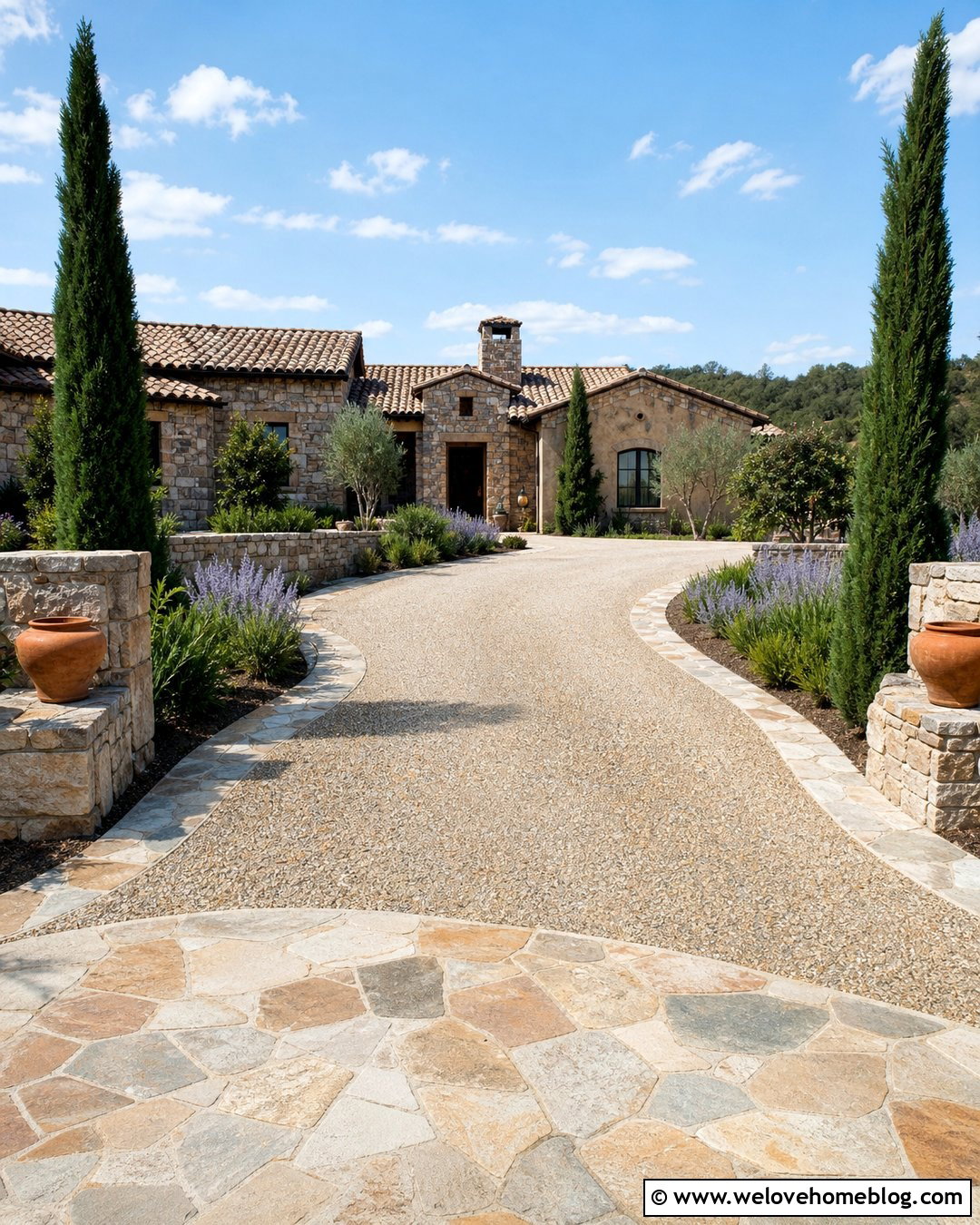
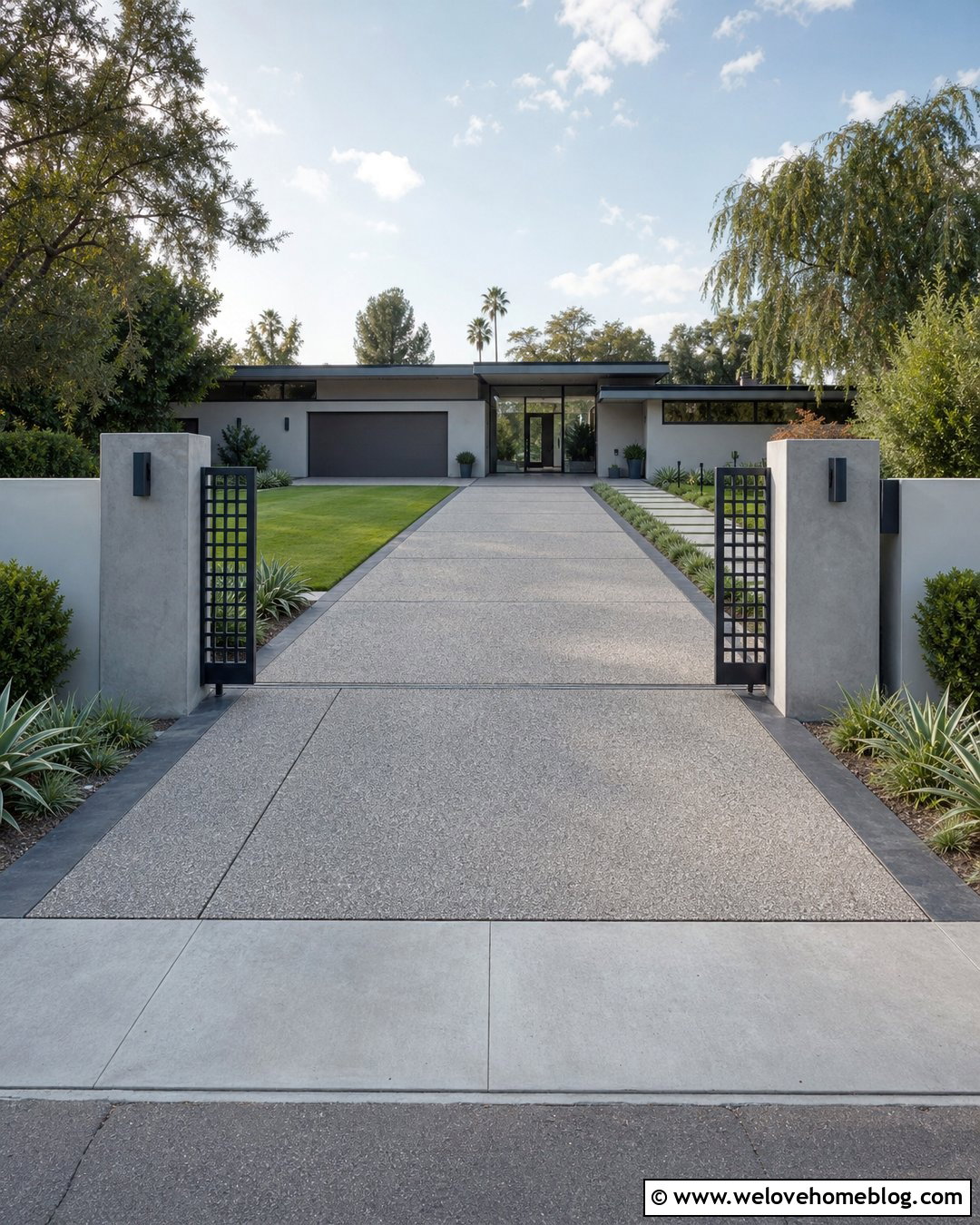
For a more affordable Tuscan interpretation, consider warm exposed aggregate concrete paired with a decorative flagstone entrance. Choose aggregate containing cream, amber, gray, and muted brown stones instead of cool blue material. A broad, irregular flagstone apron at the curb gives the driveway a handcrafted first impression, while matching flagstone bands can divide the concrete into balanced sections. Shape the driveway with a shallow curve and frame it using low stone walls. Behind the walls, plant upright juniper or regionally suitable cypress alternatives with rosemary and pale purple salvia. Terracotta urns placed near the garage reinforce the Mediterranean palette. The finished driveway feels grounded and textured, yet it can be easier to navigate and maintain than an entirely loose-stone surface.
6. Tuscan Brick Driveway With Stucco Pillars
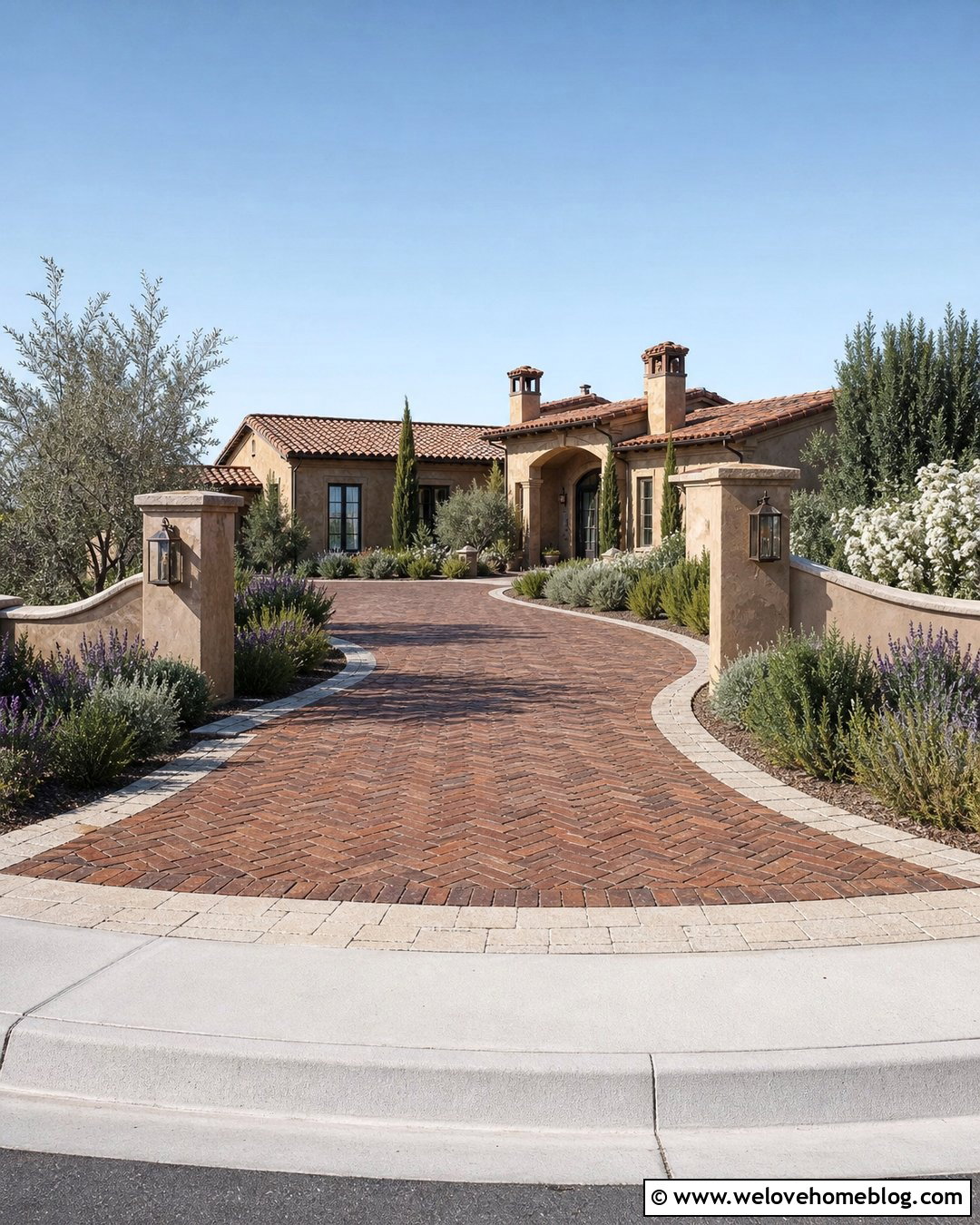
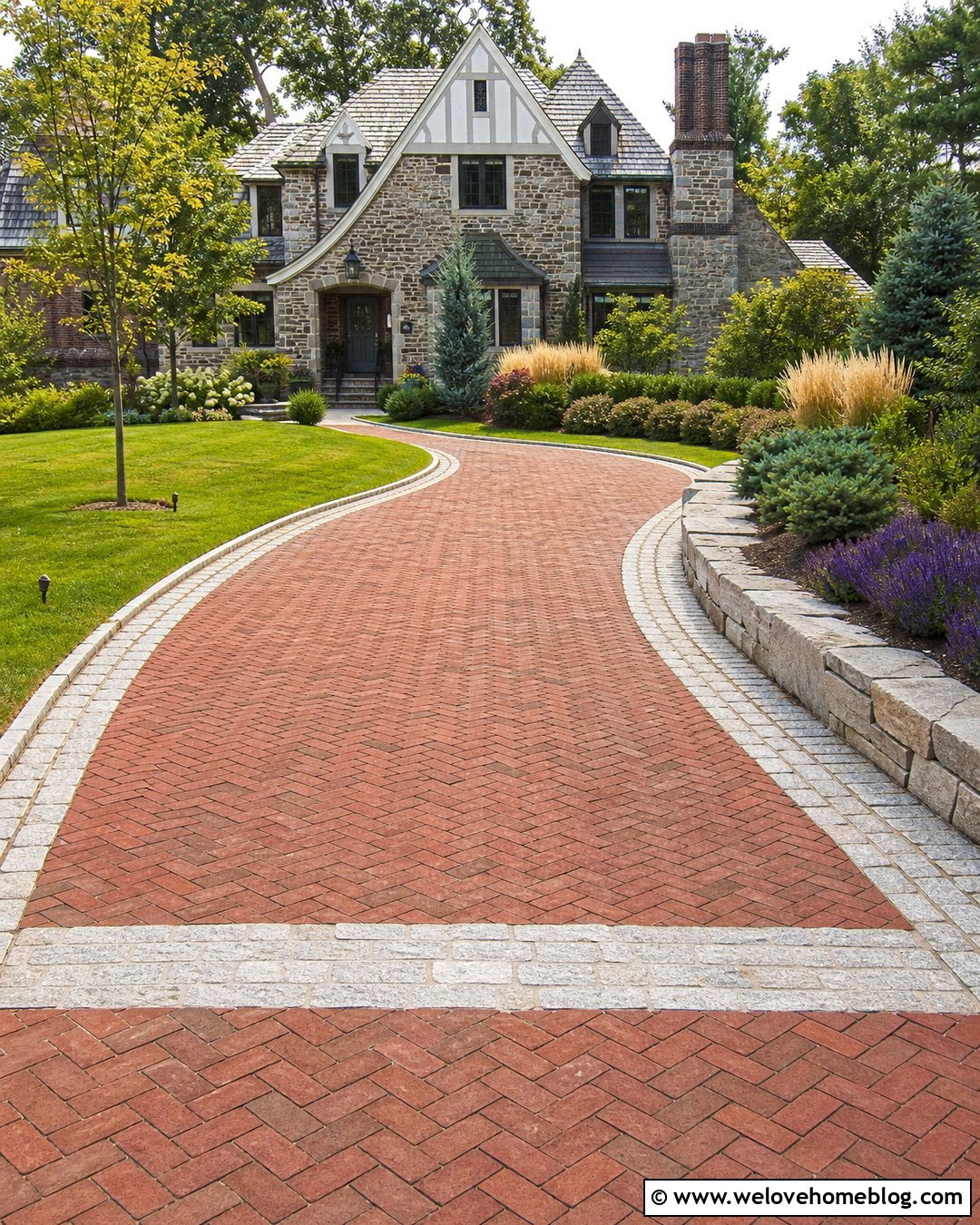
Sun-warmed clay brick can create a rich Tuscan entrance when its color relates to the home’s roof tiles. Use distressed brick pavers in a herringbone pattern, blending muted red, rust, brown, and burnt orange rather than choosing one uniform shade. At the street, frame the driveway with substantial stucco pillars capped in limestone or clay tile. Low curved walls can extend from each pillar and wrap around beds of lavender, rosemary, sage, and white flowering shrubs. A horseshoe layout gives the entrance a gracious appearance and allows convenient movement through the property. Add a light limestone border around the brick to brighten the surface and distinguish its shape. This complete look suits a traditional Tuscan villa or Spanish-influenced home with arched windows and iron details.
7. Tuscan Decomposed Granite Driveway With Stone Walls
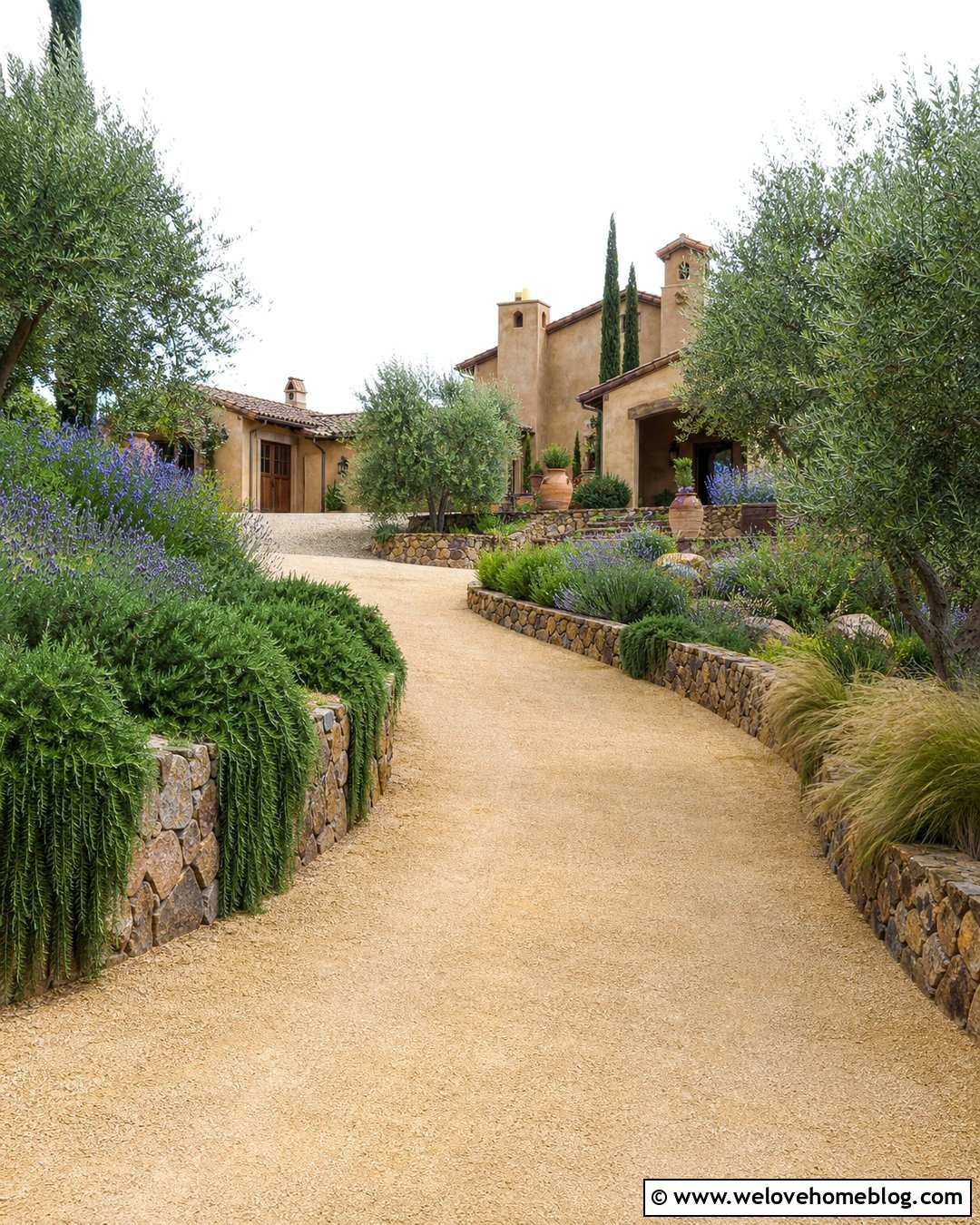
The soft golden color of decomposed granite feels naturally connected to a sun-baked Tuscan landscape. Use stabilized decomposed granite for a firmer driving surface, particularly on a long or gently sloping approach. Define both sides with rustic fieldstone retaining walls built in warm beige, honey, and gray tones. The driveway can curve between the walls before opening into a gravel motor court near the house. Plant creeping rosemary along the upper edges so selected stems spill naturally over the masonry. Add olive trees, lavender drifts, ornamental grasses, and occasional terracotta jars farther back. This arrangement looks especially convincing around a country home or hillside villa. Keep the planting informal, but repeat a few key species to give the long driveway a clear and coordinated rhythm.
8. Tuscan Limestone Driveway With Courtyard Entrance
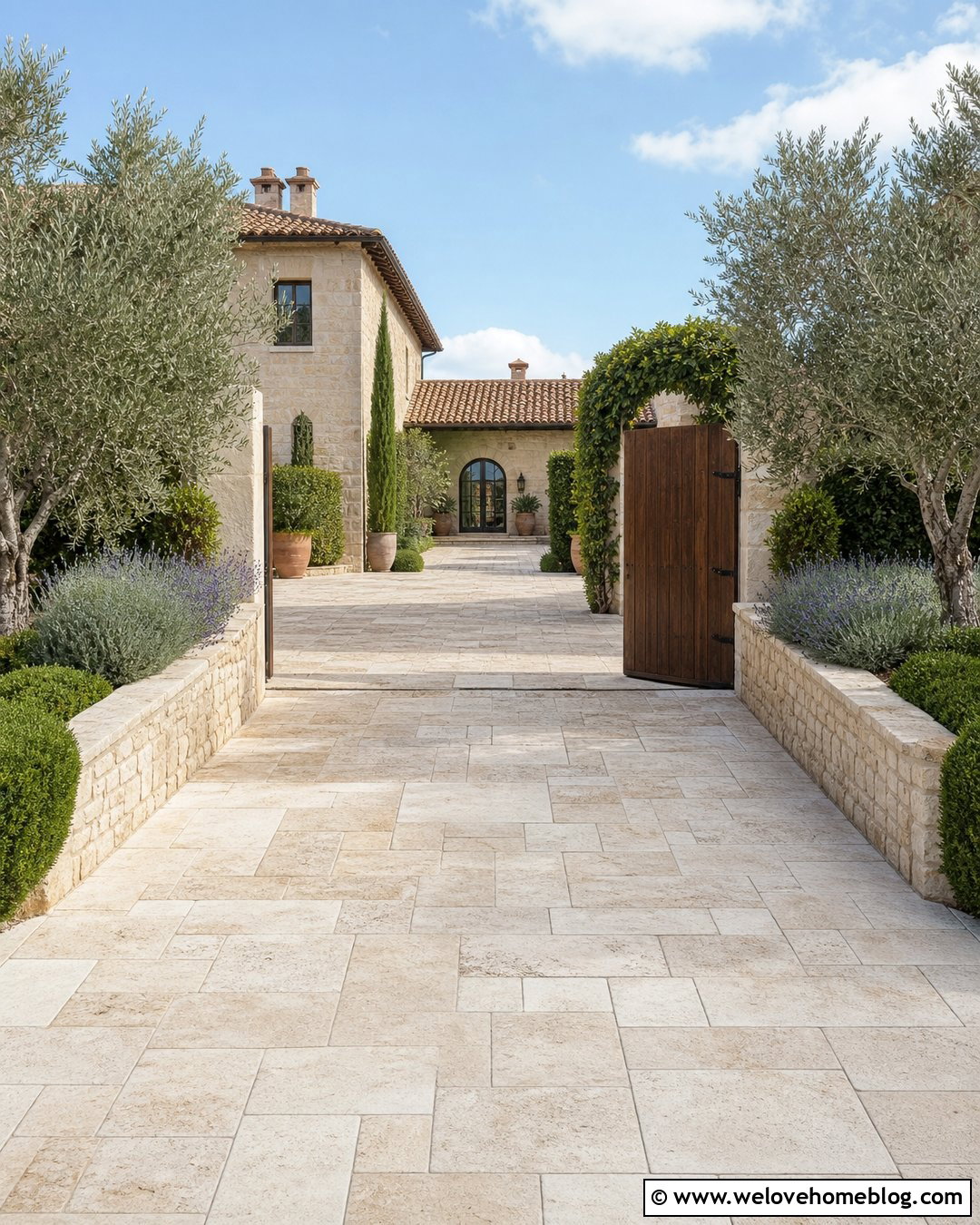
Pale limestone pavers can brighten a shaded entrance while retaining the natural texture associated with Tuscan architecture. Choose driveway-rated stone in mixed rectangular sizes and a lightly aged or brushed finish. A straight approach can lead into a square courtyard where the paver pattern changes direction, subtly identifying the parking and turning area. Frame the court with low limestone walls, clipped evergreen hedges, and four symmetrical olive trees. A vine-covered arch or recessed wooden gate can mark the transition to a private side garden. Use terracotta pots and lavender sparingly so the limestone remains the dominant feature. Because stone performance varies, select the thickness, finish, base, and installation system for local weather and vehicle loads rather than relying on appearance alone.
9. Tuscan Resin-Bound Gravel Driveway With Lavender Borders
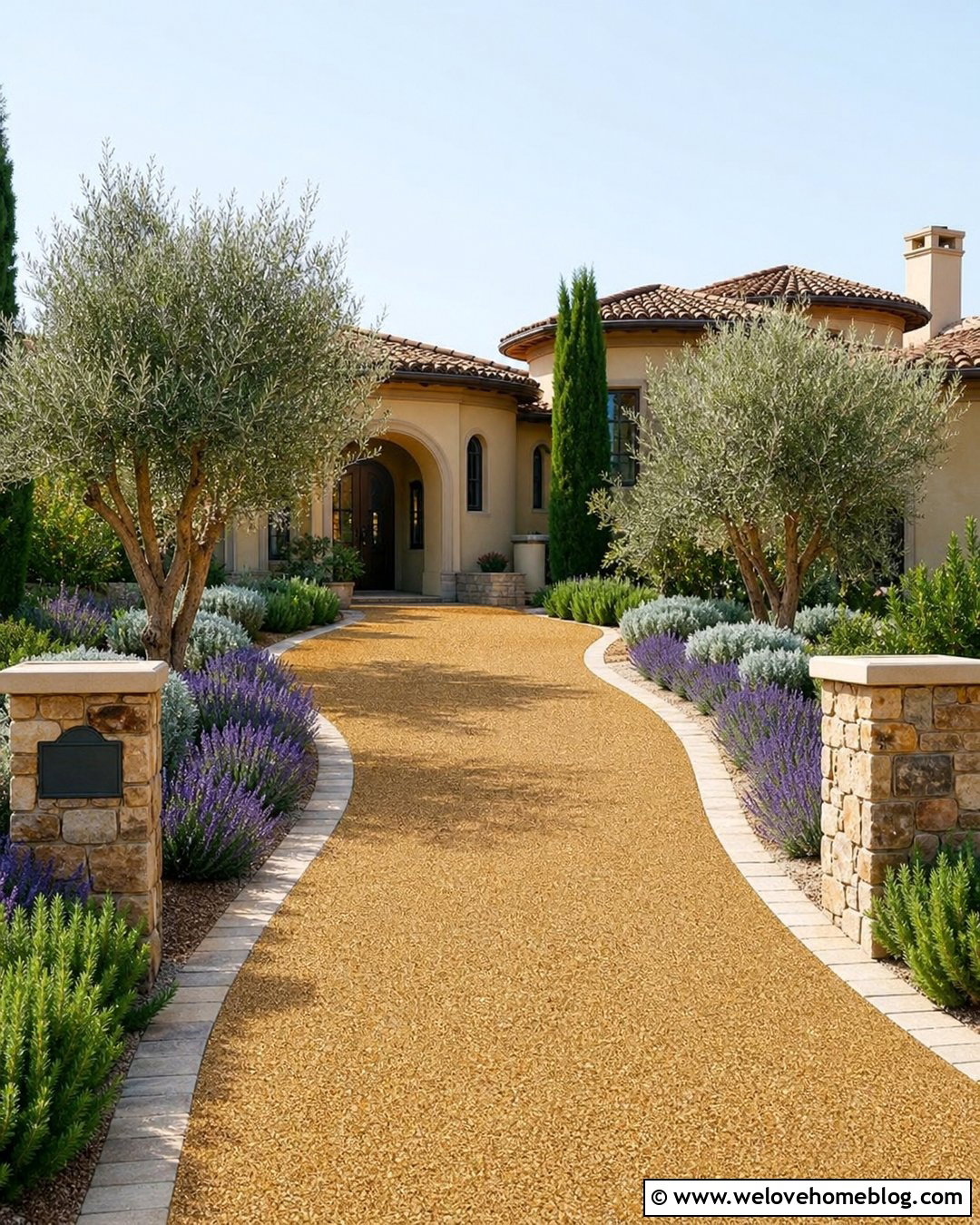
Golden resin-bound gravel offers a clean interpretation of the traditional Tuscan gravel court. The surface keeps the color and small-stone texture of gravel while producing a more unified finish. Use a wide curved layout bordered with tumbled sandstone pavers in a slightly darker tone. Deep lavender beds can follow the outside curve, accompanied by santolina, sage, and low rosemary for layered gray-green foliage. Position two multi-trunk olive trees near the midpoint to frame the view of the house without blocking it. At the entrance, add short stone pillars and a simple iron address plaque. This design suits homeowners who prefer an orderly surface but still want the warmth of a Mediterranean country approach. Coordinate the gravel tone with the stucco and roof instead of treating it as an isolated color.

10. Tuscan Stamped Concrete Driveway With Terracotta Pots
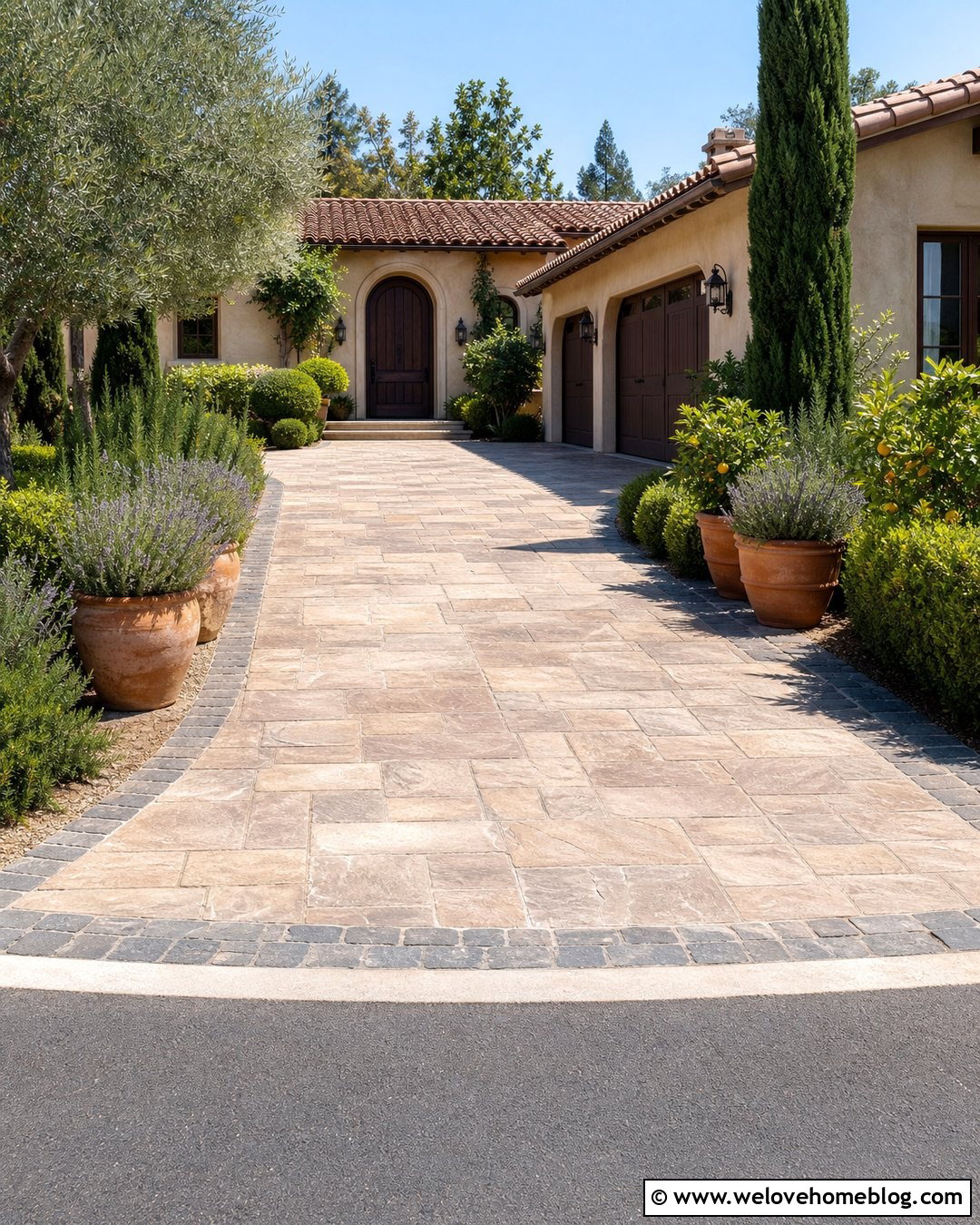
Stamped concrete can suggest natural stone when the pattern, color, and joint layout are carefully restrained. Select an ashlar slate pattern with a matte finish and subtle variations of beige, taupe, and light brown. Avoid intense orange coloring or highly repetitive stamps, which can make the driveway appear artificial. A straight driveway with a modest flared entrance works well for a smaller front yard. Border it with darker tumbled pavers, then place grouped terracotta pots near the garage and front walkway. Fill the containers with upright rosemary, citrus, geraniums, or other plants suited to the local climate. Narrow planting beds containing lavender and clipped evergreen shrubs provide continuity along the sides. The completed look delivers Tuscan warmth without requiring a large motor court or extensive masonry.
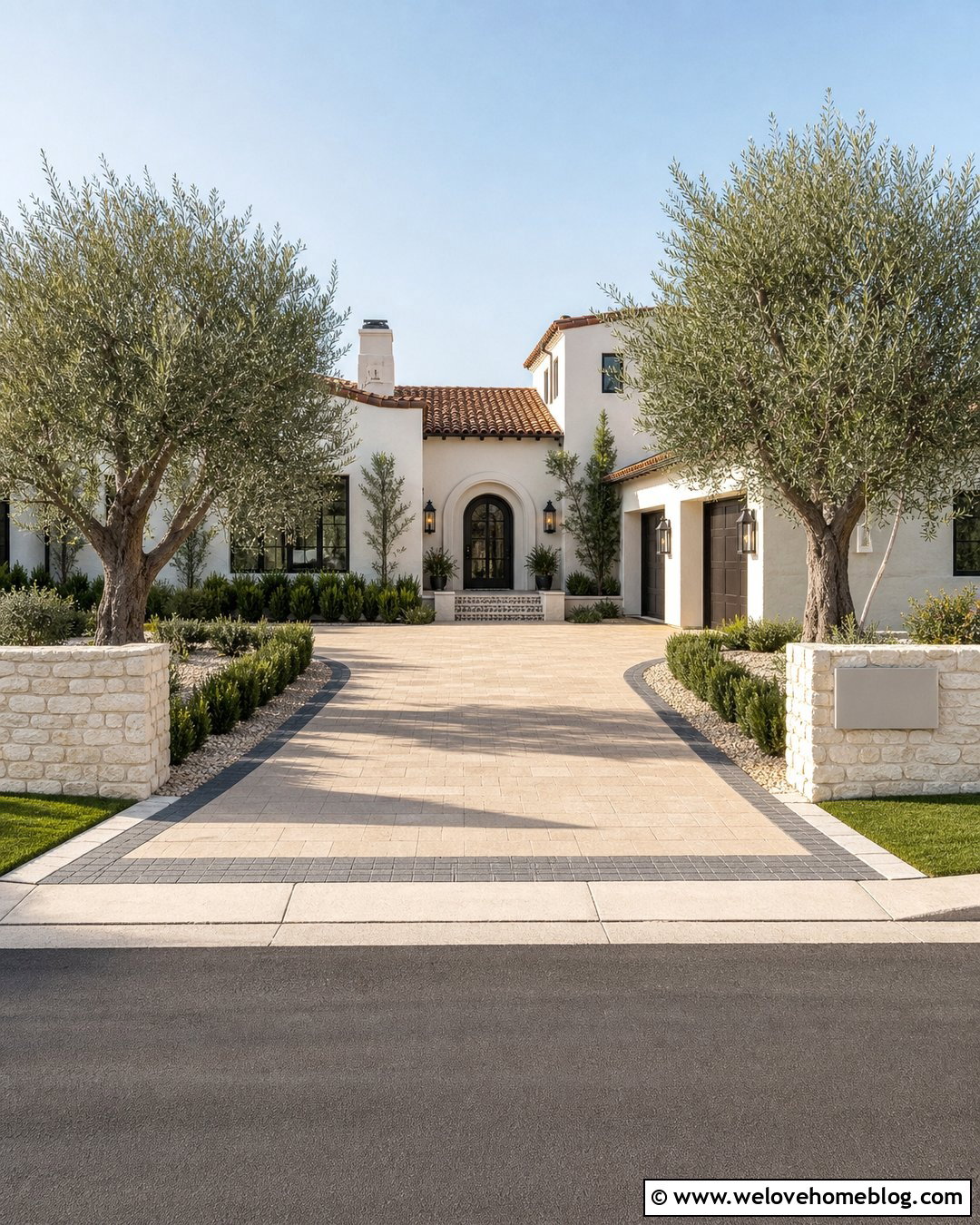
11. Tuscan Asphalt Driveway With Cobblestone Apron
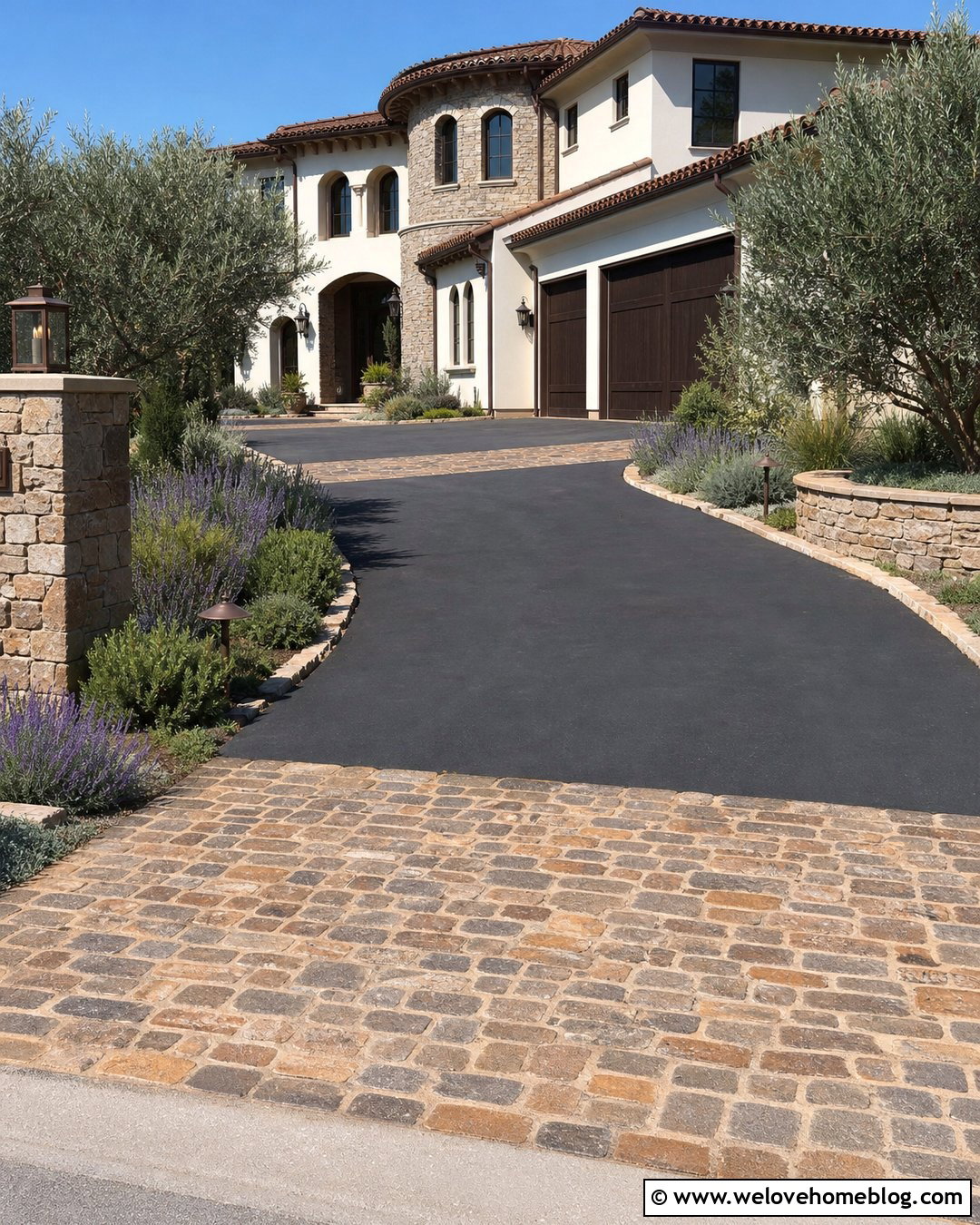
Existing black asphalt does not automatically prevent a home from having a Tuscan-inspired entrance. The key is to soften the large dark surface with warm, substantial borders. Install a tumbled cobblestone apron at the curb using mixed brown, tan, and charcoal tones. Repeat that material in narrow bands near the garage and around a small turnaround area. Curved planting beds can reduce the visual width of the asphalt while introducing olive trees, lavender, rosemary, and pale ornamental grasses. Add low-voltage path lights with simple dark bronze housings rather than elaborate fixtures. A cobblestone apron is an established way to give a plain driveway a more decorative entrance. () The result feels practical, welcoming, and coordinated with stone veneer, stucco walls, and clay roofing.
12. Tuscan Ribbon Driveway With Grass Center
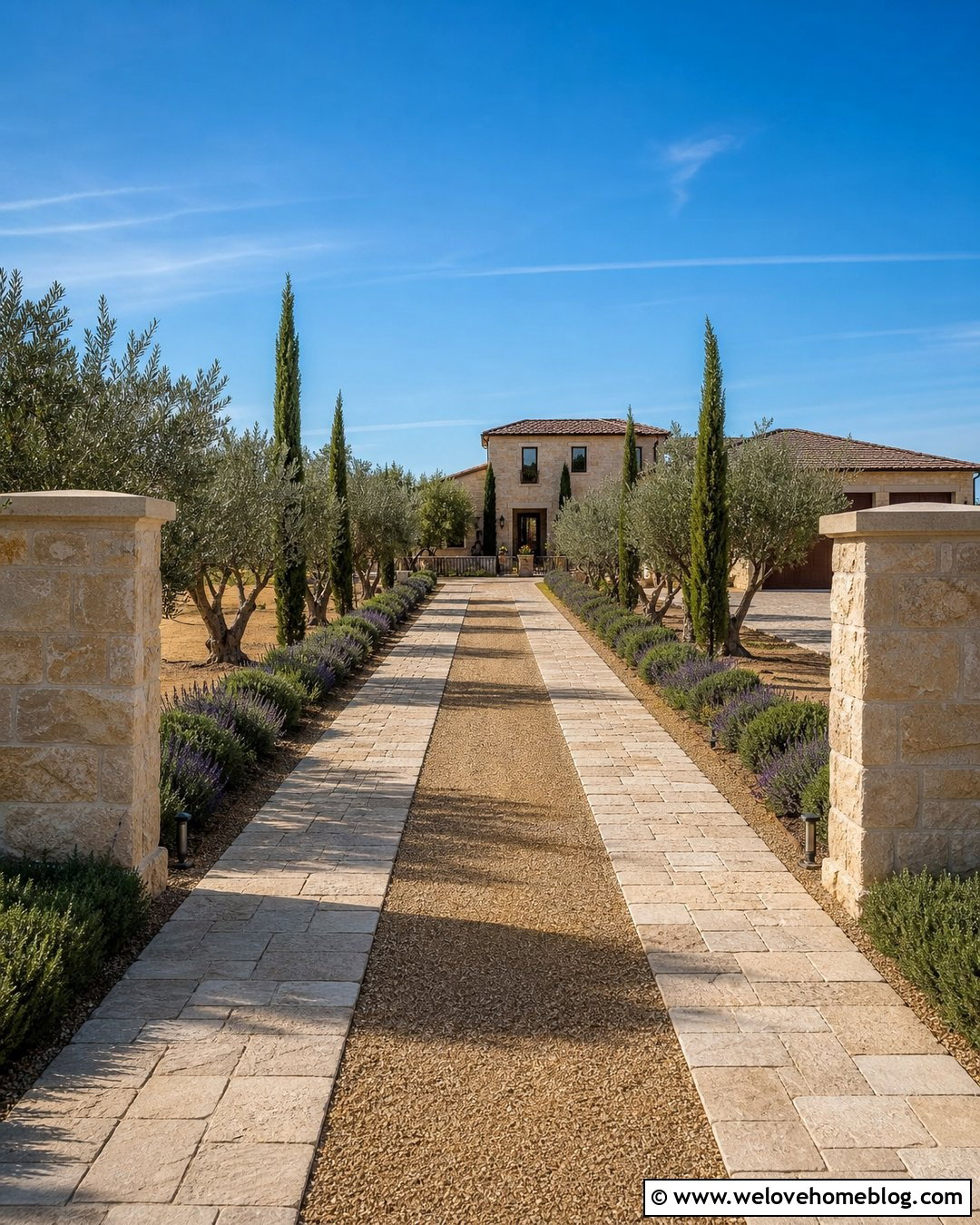
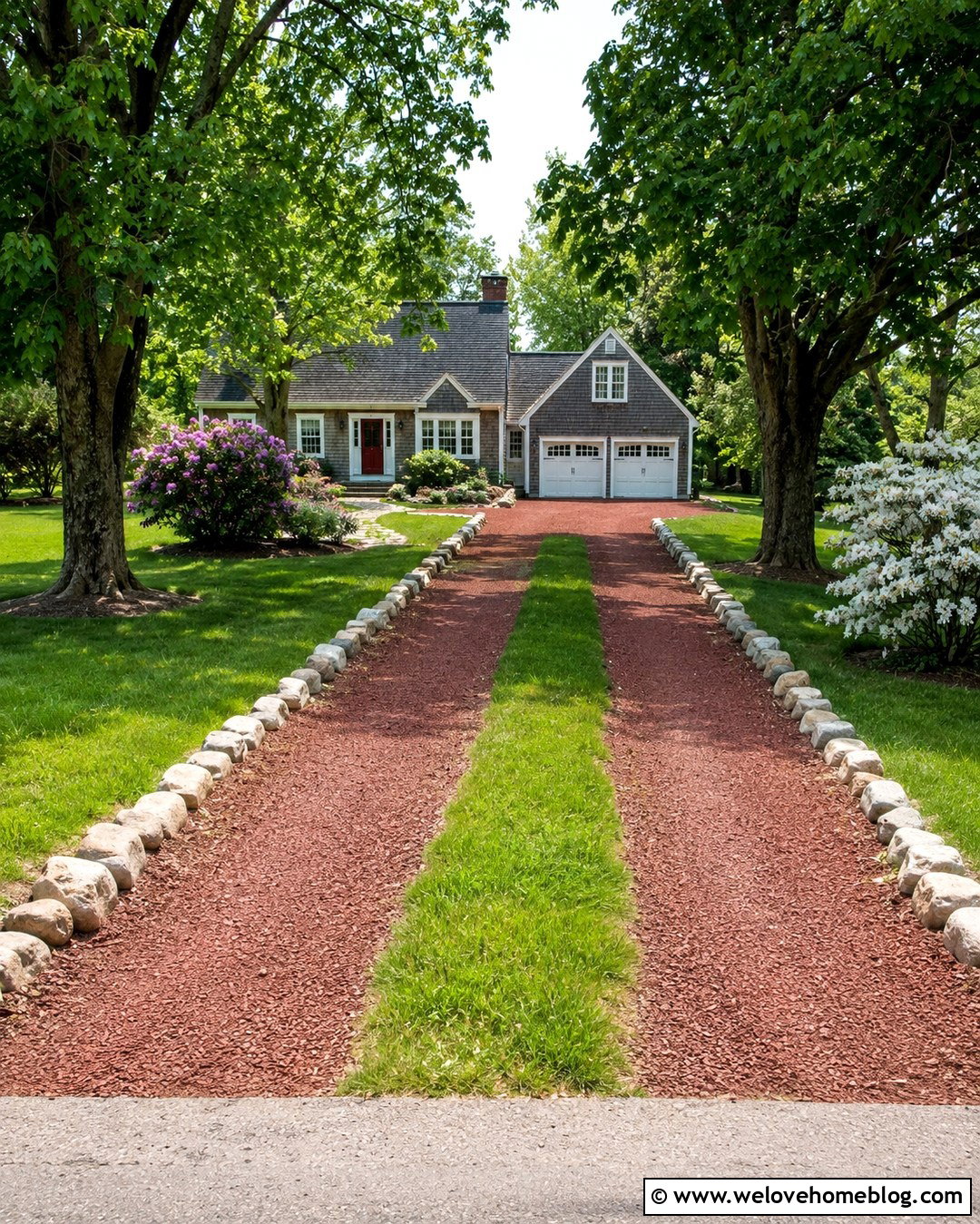
Two paved tire tracks separated by a green or gravel strip create a lighter approach to a country-style Tuscan home. Use weathered limestone-colored concrete pavers for the ribbons and install compacted golden gravel in the center if lawn maintenance would be difficult. A straight layout emphasizes a distant arched entry, while an avenue of olive trees or upright cypress provides strong perspective. Border the outer edges with steel restraints concealed beneath low thyme and lavender planting. Near the garage, transition the ribbons into a full paver parking pad so vehicles have room to turn. This design reduces the appearance of continuous hardscape and can support a softer garden setting. Ribbon layouts are also being used as an alternative to fully paved driveways in Mediterranean residential designs. ()
13. Tuscan Hillside Driveway With Retaining Walls
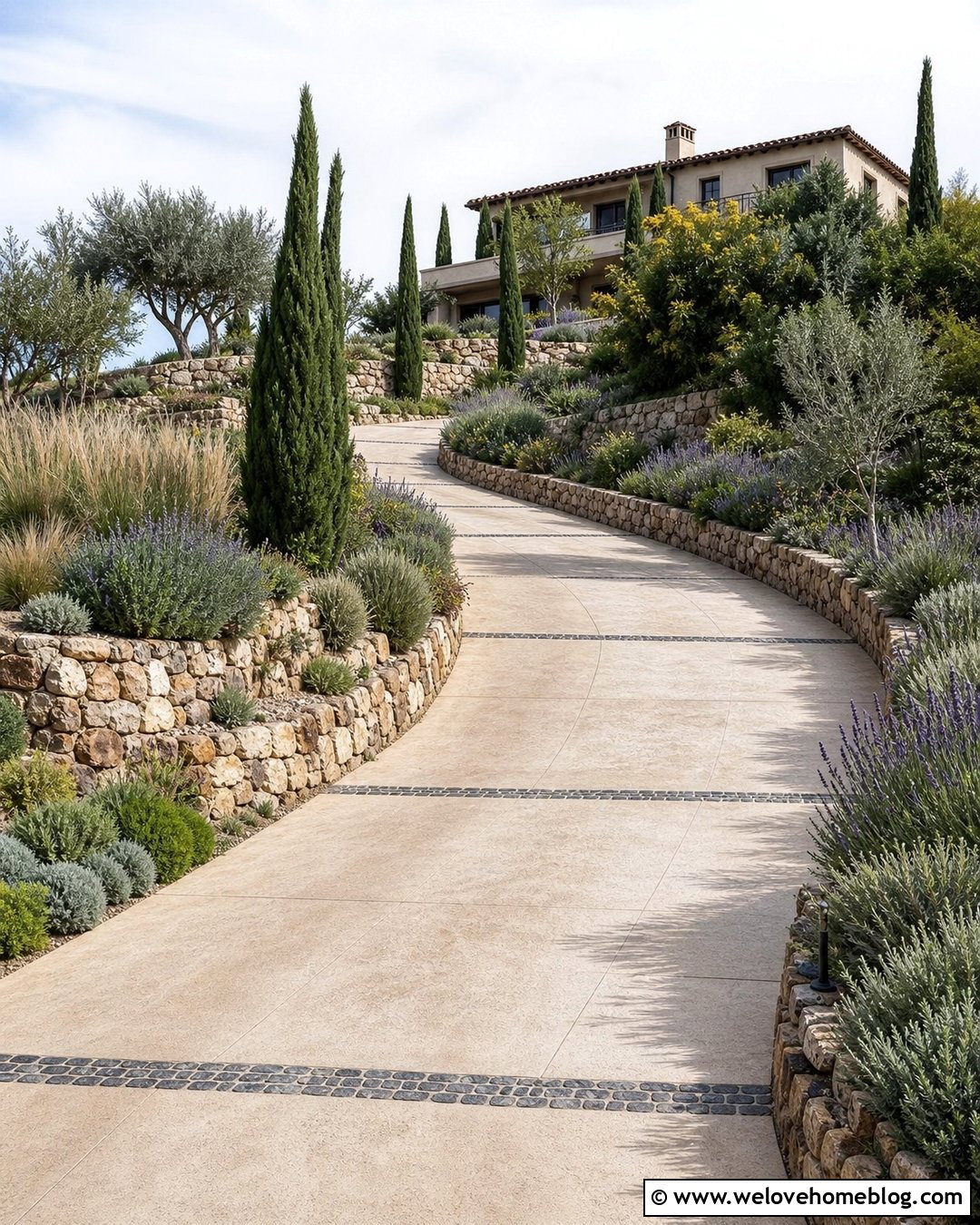
A sloping property can become one of the strongest settings for a Tuscan driveway. Shape the approach into a broad curve that follows the natural contour instead of forcing a steep, direct climb. Use textured tan concrete pavers with dark cobblestone bands across key transitions. Build tiered retaining walls from irregular local stone, keeping the masonry colors close to those of the house. Plant the terraces with spreading lavender, rosemary, santolina, ornamental grasses, and drought-tolerant flowering perennials. Slender cypress trees at selected turns help guide the eye uphill. Incorporate professional drainage behind the walls and across the driveway to manage runoff. When the paving, walls, and repeated planting are planned together, the challenging slope begins to resemble the layered landscape surrounding a hillside Italian villa.
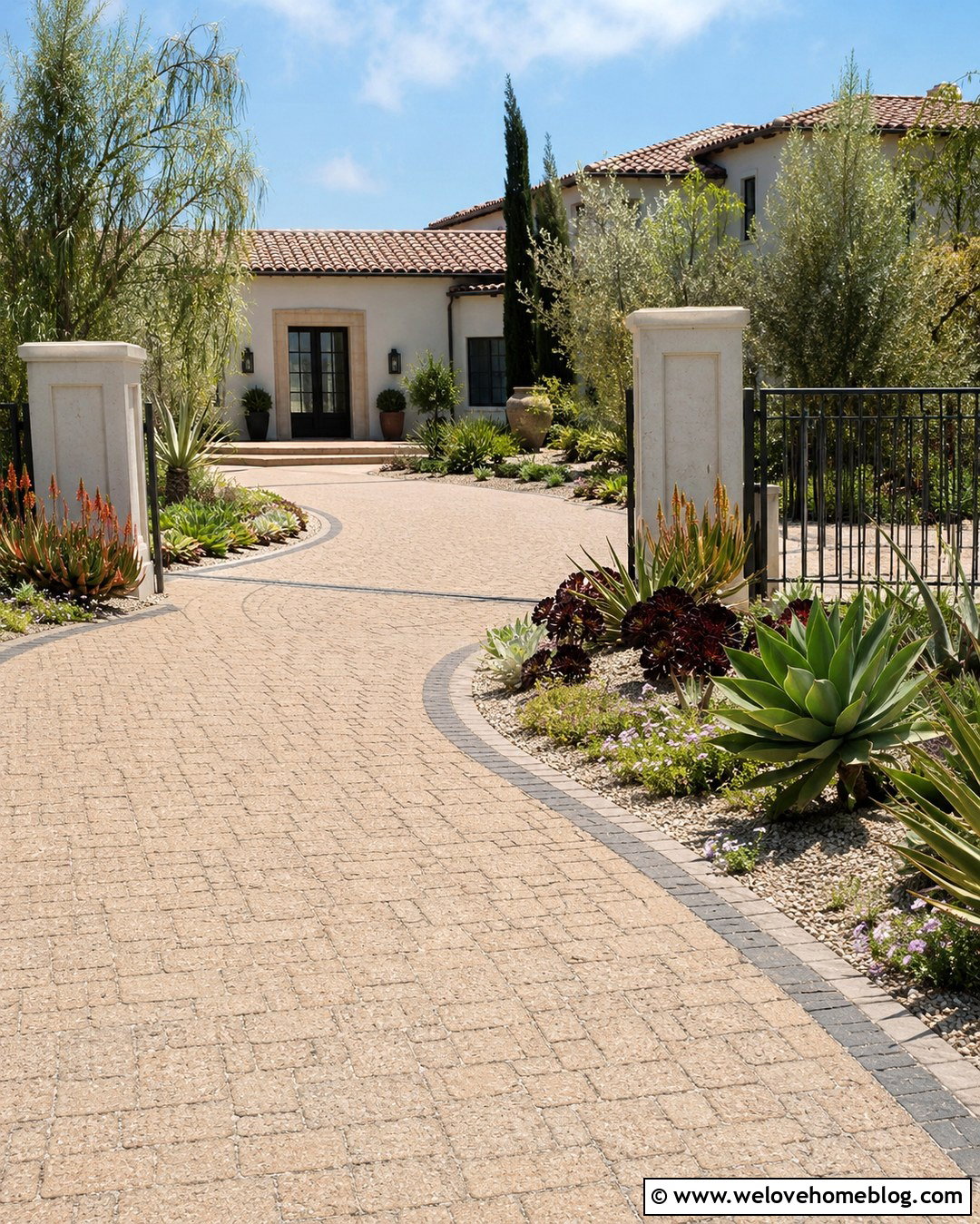
14. Tuscan Gated Driveway With Ironwork
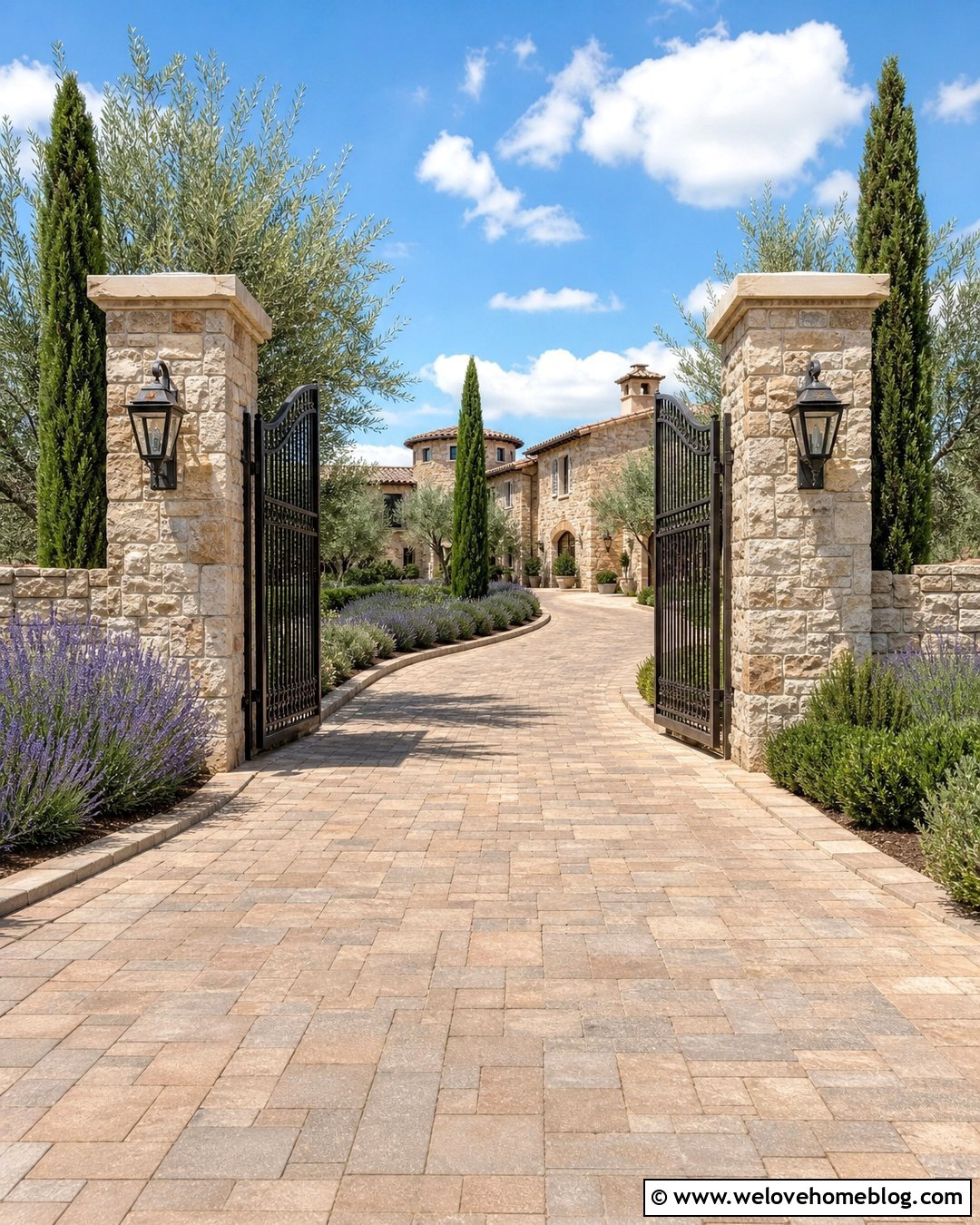
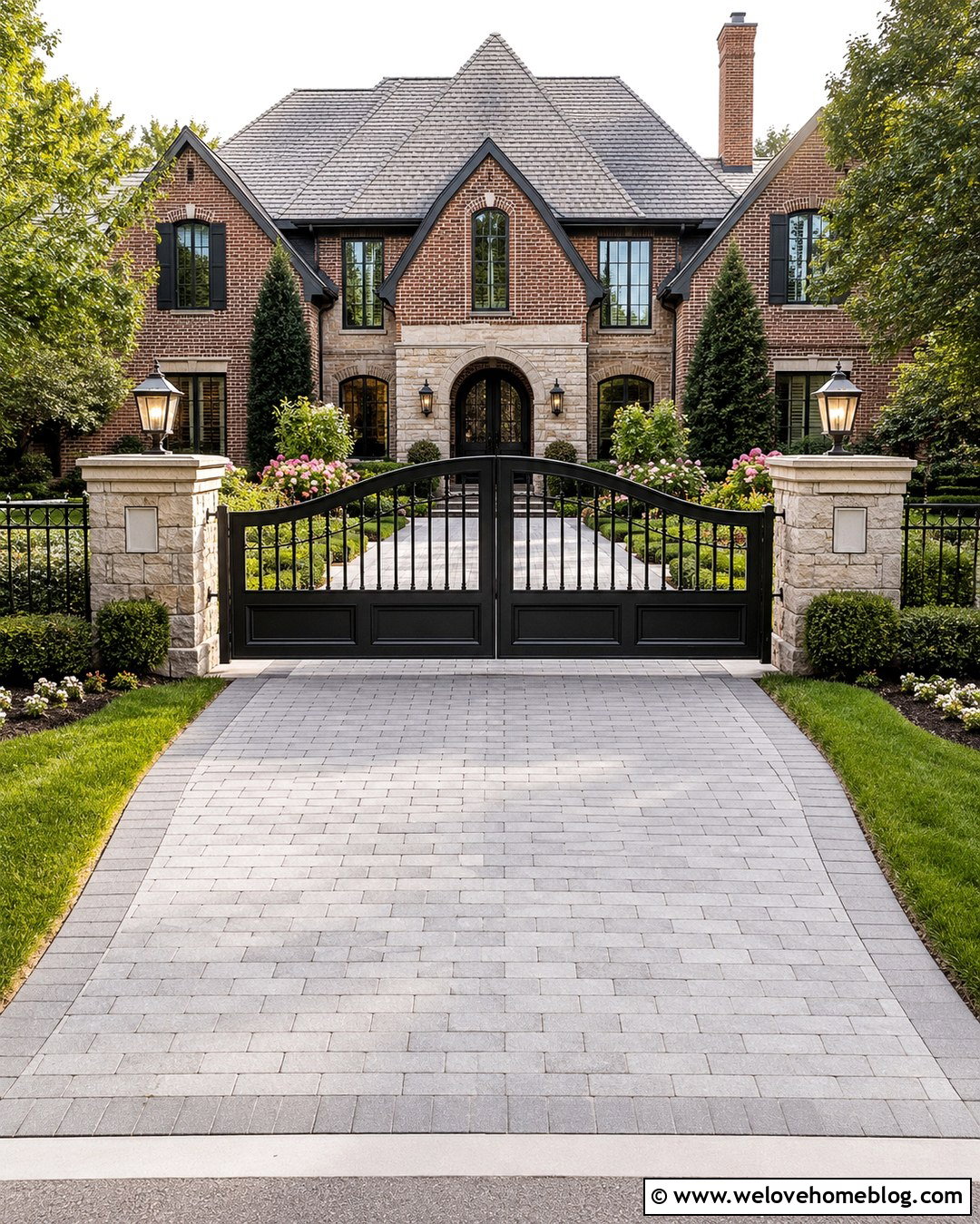
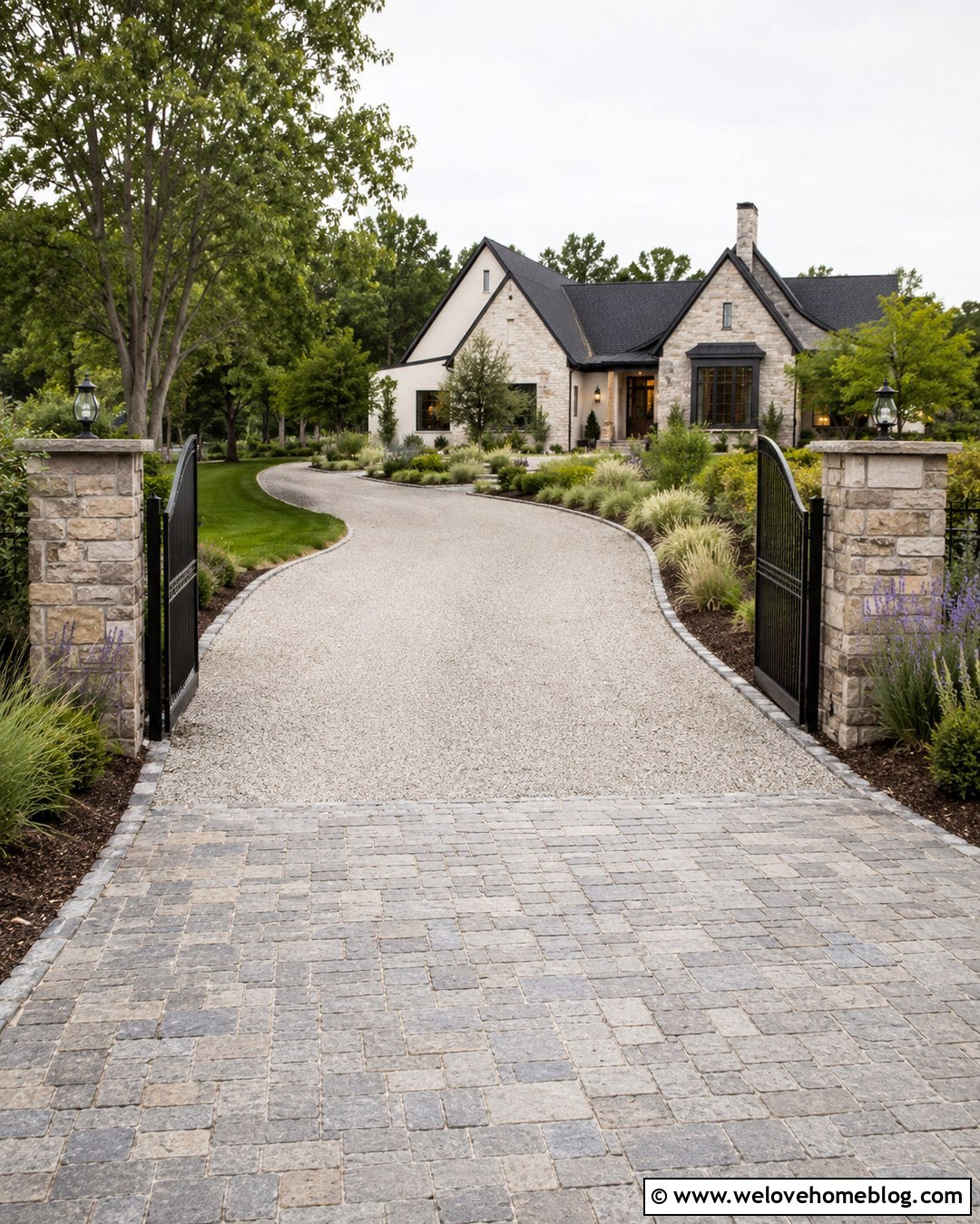
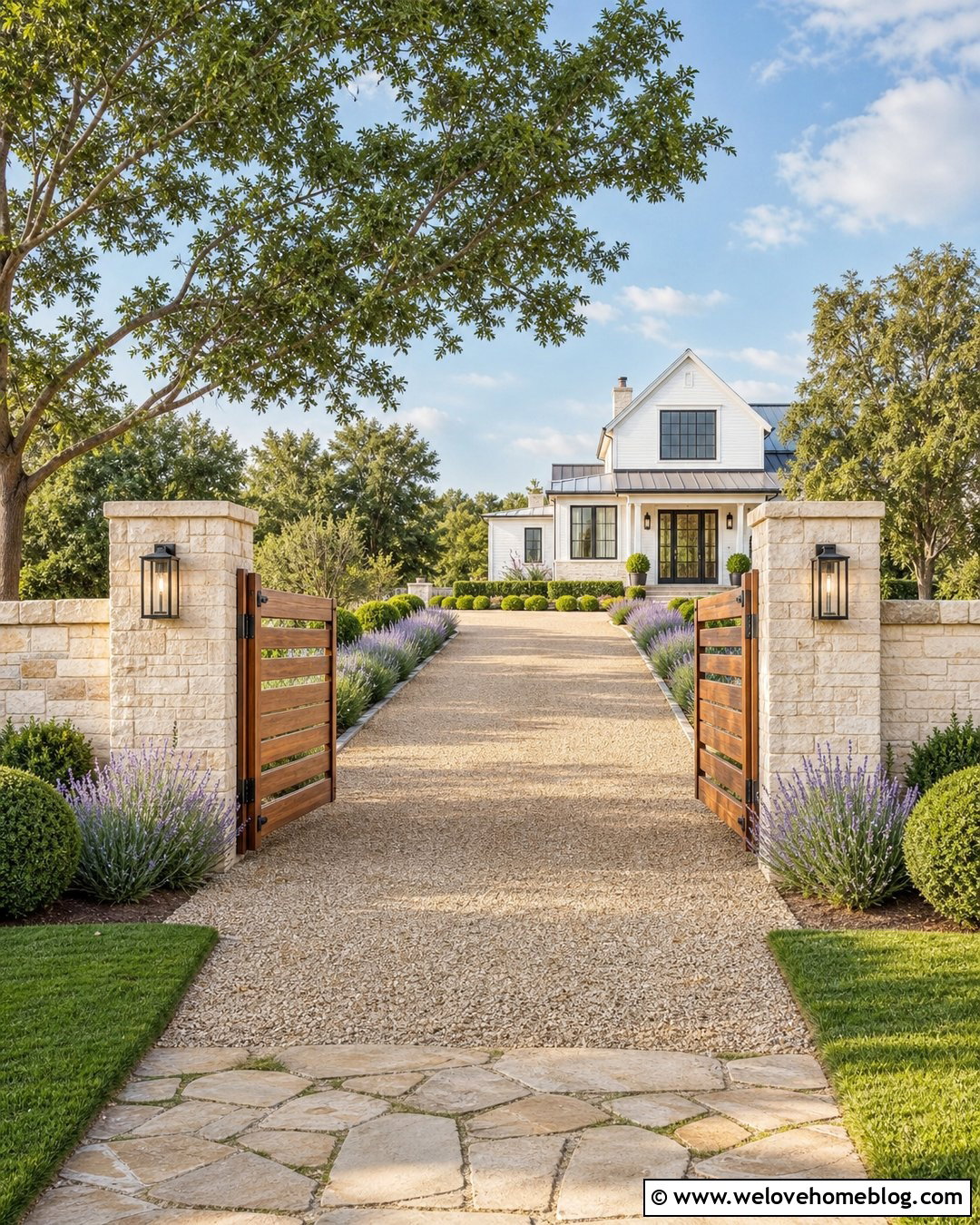
Nothing defines a private Tuscan entrance more clearly than restrained wrought-iron gates between substantial masonry pillars. Pair the gate with a gently curved driveway surfaced in tumbled tan and brown concrete pavers. Construct the pillars from rough limestone or stucco matching the house, then add simple stone caps and downward-facing lanterns. Avoid overly decorative scrollwork; a straightforward arched gate with widely spaced vertical bars often looks more convincing. Continue the driveway border into low wing walls surrounded by lavender, rosemary, olive trees, and compact evergreen shrubs. Beyond the gate, let the driveway curve out of direct view before reaching the house. This layered entrance creates privacy and anticipation while ensuring the paving, architecture, metalwork, and landscaping belong to one complete Tuscan composition.
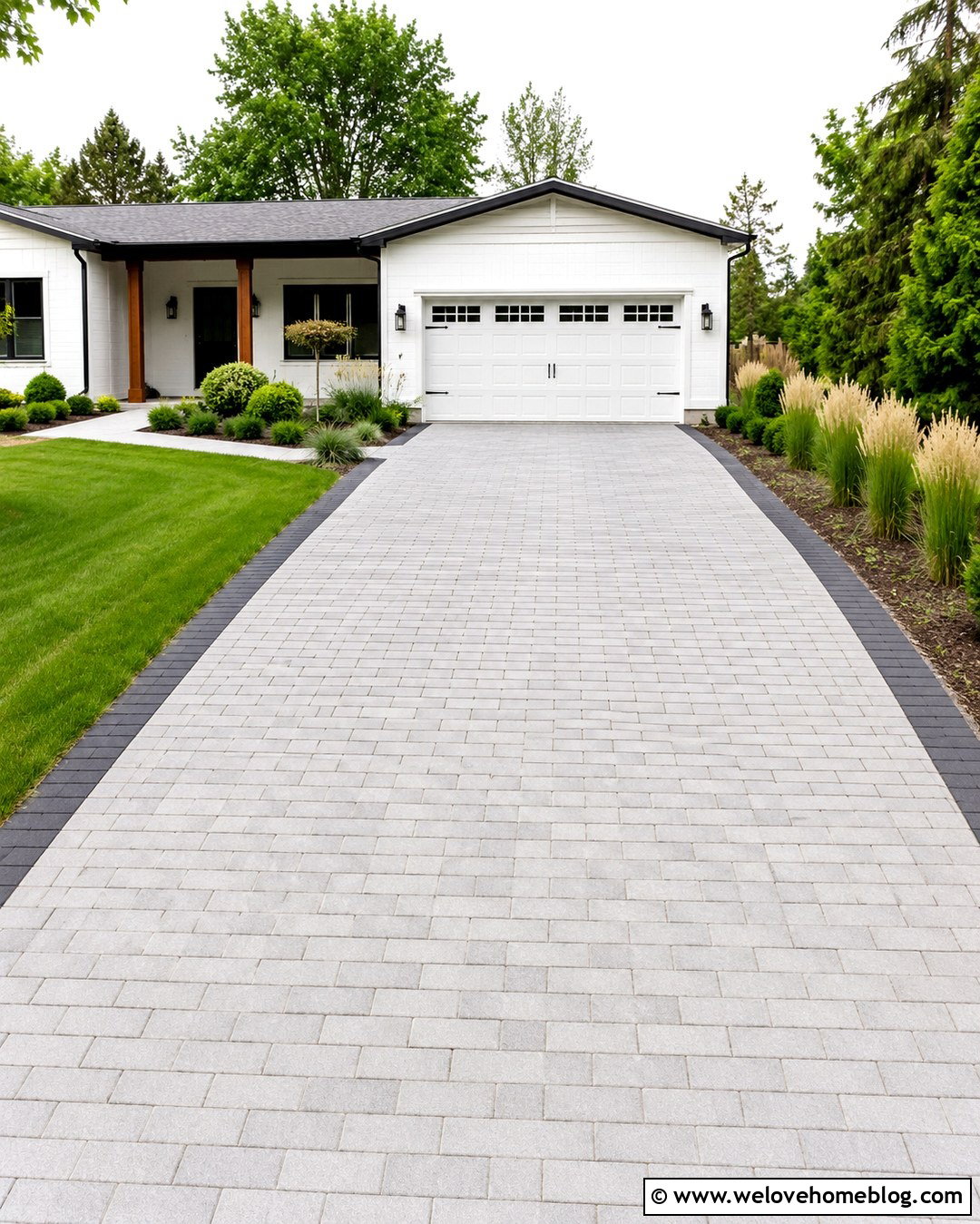
15. Small Tuscan Driveway With Paver Courtyard
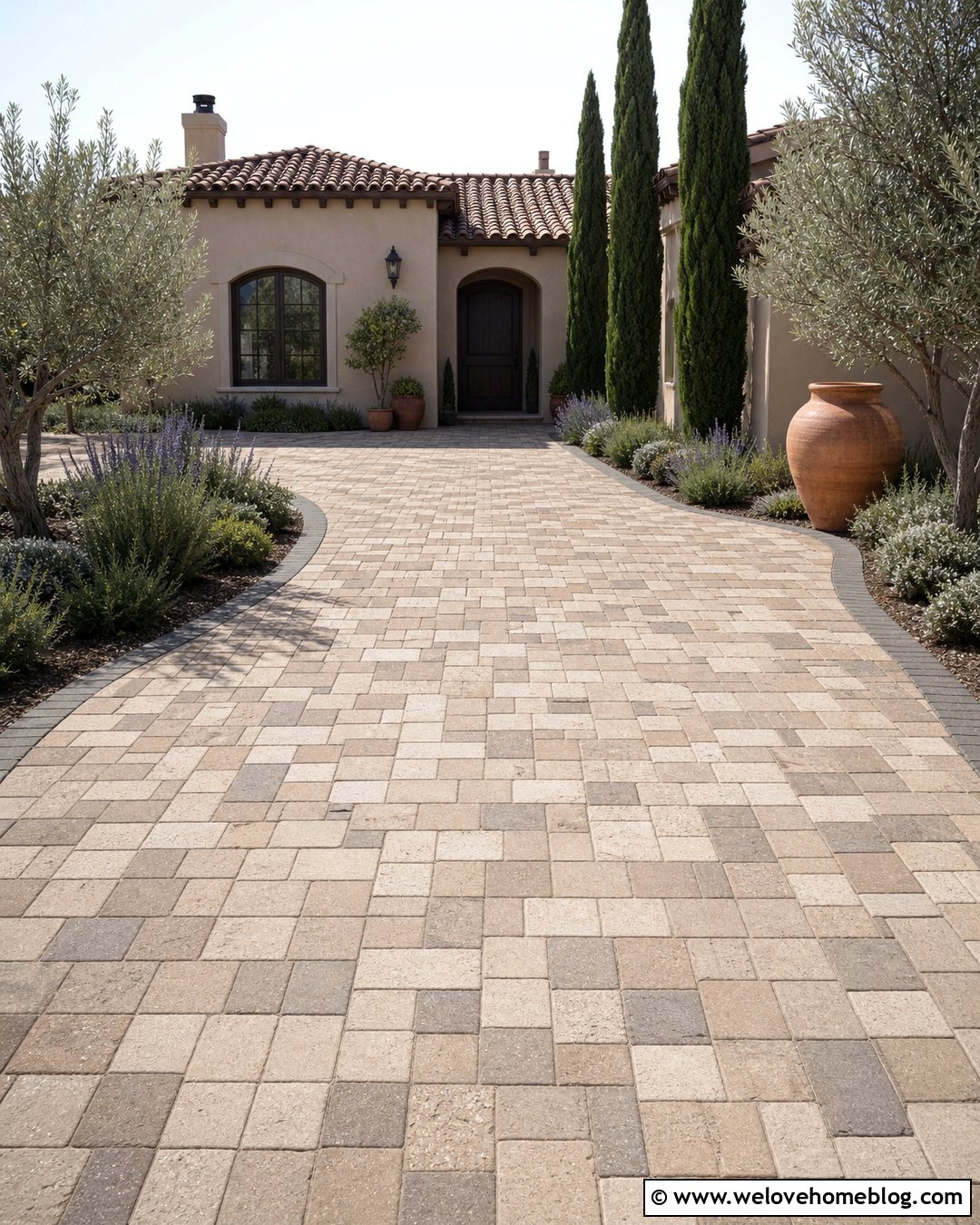
A compact front yard can still capture Tuscan character without being crowded by large trees or oversized pillars. Cover the driveway with small tumbled concrete pavers in a random pattern of cream, beige, and muted brown. Use a rectangular layout that widens slightly beside the front entrance, creating the visual effect of a tiny courtyard. Define the edges with one row of darker pavers and connect the driveway to a matching curved walkway. Plant dwarf olive trees or upright junipers in the corners, with lavender, thyme, and compact rosemary beneath them. One large terracotta urn near the arched doorway provides enough decoration. Keeping the material palette limited allows every component to feel intentional. It also makes the small driveway appear wider, calmer, and better connected to the house.
16. Long Tuscan Gravel Driveway With Tree Rows
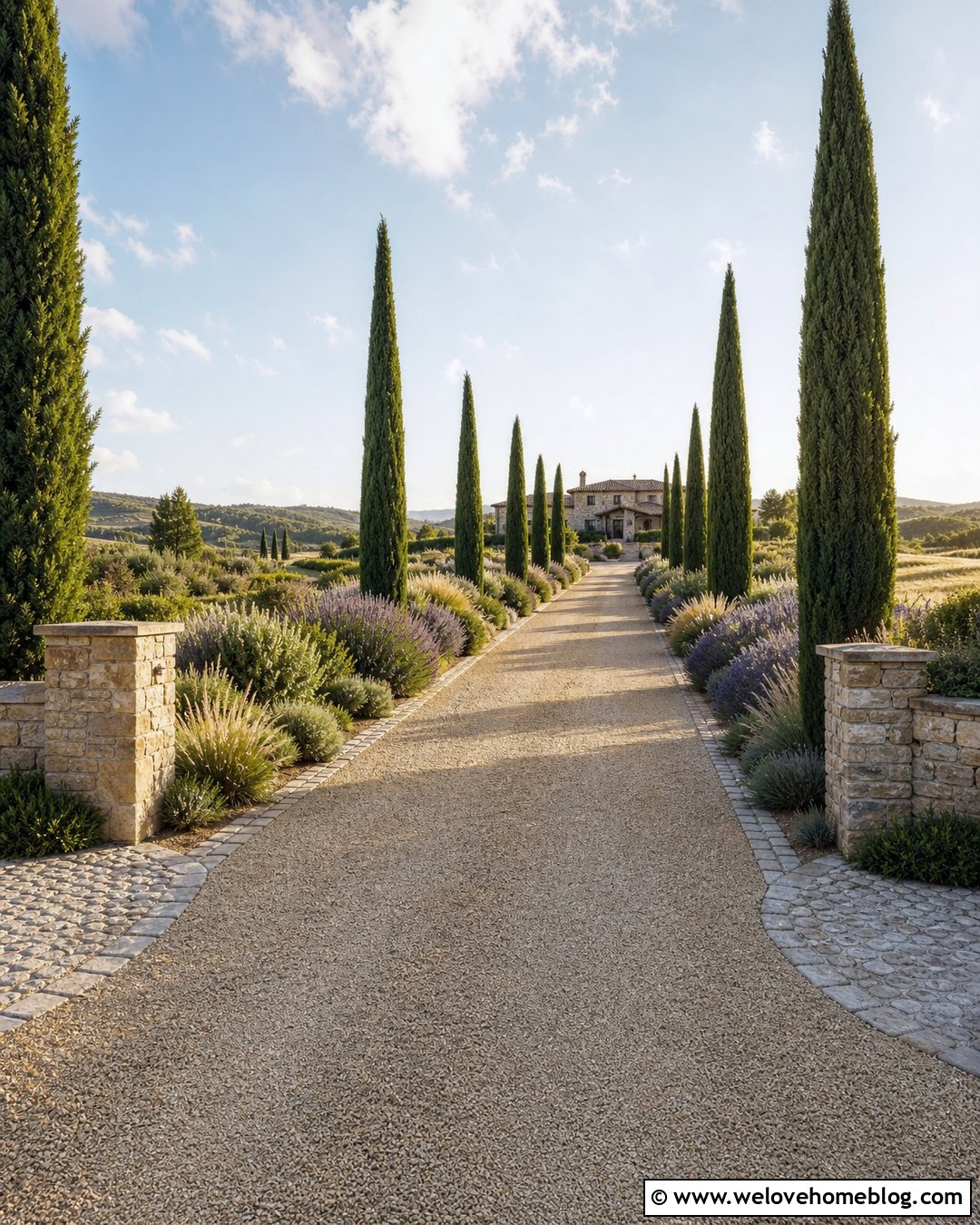
Imagine the gentle crunch of golden gravel beneath a long line of narrow evergreen trees. This classic approach creates immediate Tuscan atmosphere while directing attention toward the home at the end. Use compacted buff crushed gravel with a center crown for drainage, then contain it with flush cobblestone edging. Plant Italian cypress at generous, consistent intervals, leaving enough room for their mature size and local growing conditions. Between the trees, use broad sweeps of lavender, rosemary, sage, and ornamental grass rather than many unrelated plants. A pair of stone pillars can mark the entrance without requiring a gate. As the driveway approaches the house, widen it into a simple gravel court with a cobblestone perimeter. Repetition gives the long landscape its calm, memorable appearance.
17. Modern Tuscan Driveway With Large Pavers
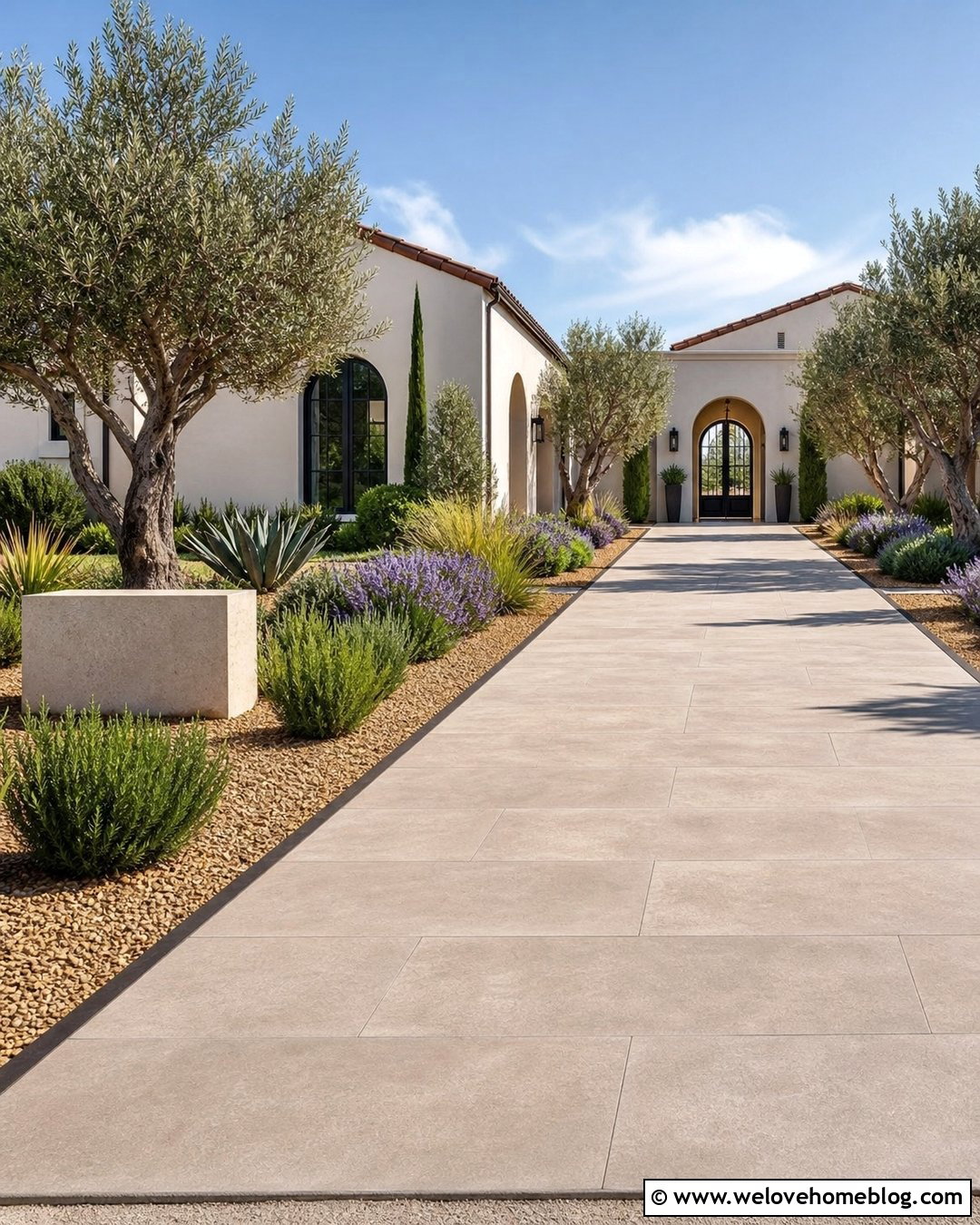
Modern Tuscan design replaces some rustic details with cleaner lines while preserving warm colors and natural materials. Install large-format driveway-rated concrete pavers in light taupe, arranging them in a running bond pattern with narrow joints. Use a straight or subtly offset layout leading to a streamlined stucco house with simplified arches and a low clay tile roof. Border the driveway with dark bronze metal edging and bands of small golden gravel. Sculptural olive trees, clipped rosemary, lavender, agave, and soft ornamental grasses create a drought-conscious planting scheme. Keep decorative objects to a minimum and use smooth limestone blocks for low walls or address markers. This approach feels fresh rather than themed because the Tuscan influence comes from the earth-toned palette, Mediterranean planting, and coordinated architecture.
18. Rustic Tuscan Fieldstone Driveway With Herb Beds
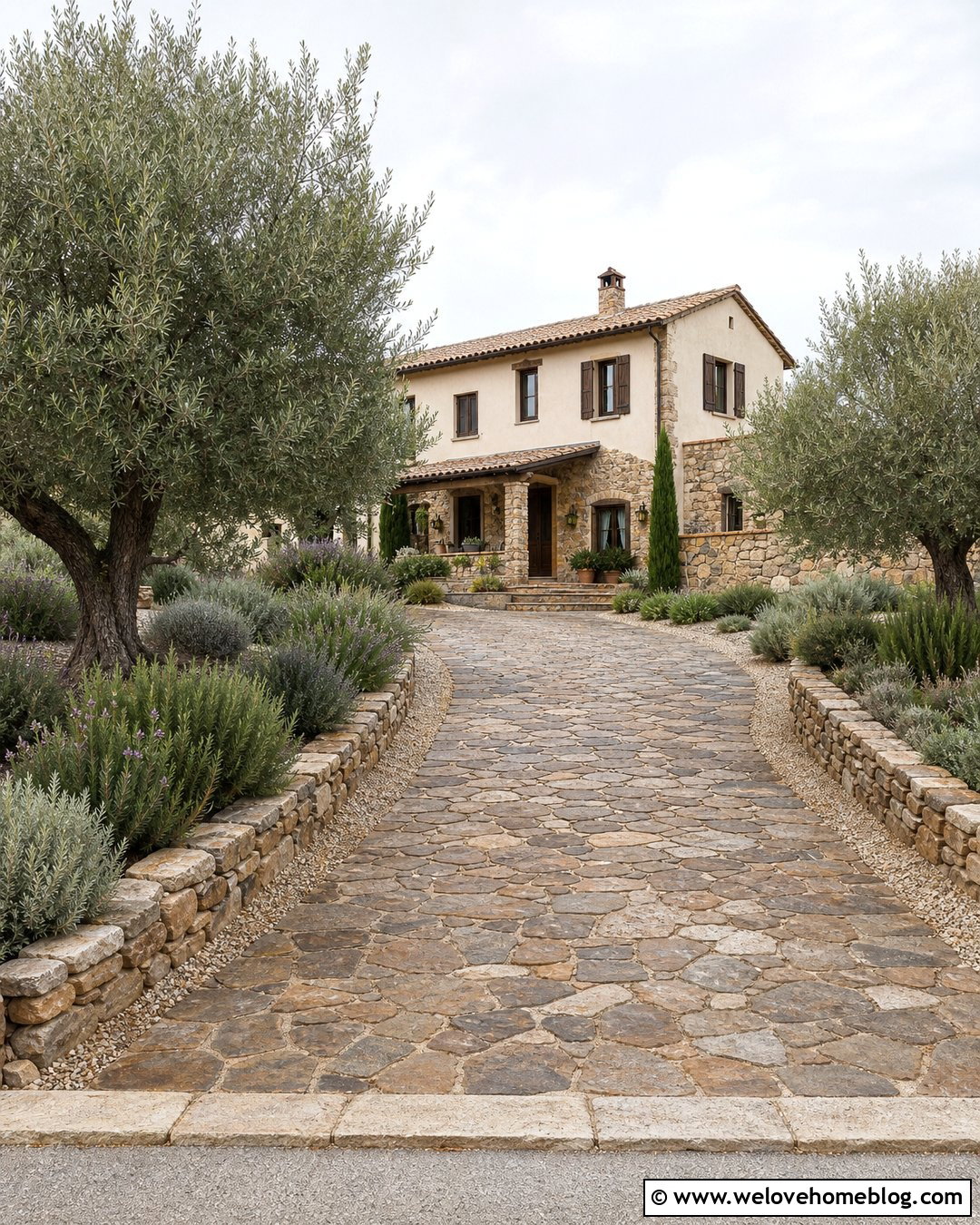
Uneven color and texture give a rustic fieldstone driveway the appearance of having developed naturally over many years. Use flat, driveway-rated stone in warm gray, brown, and honey shades, laid in an irregular pattern over a properly engineered base. A curved shape will complement the organic joints and soften the approach to a farmhouse-style Tuscan home. Border the paving with low dry-stacked stone walls and generous herb beds containing rosemary, thyme, oregano, sage, and lavender. Small olive trees can anchor the widest planting areas, while gravel-filled gaps beside the walls improve the transition between hardscape and garden. Repeat the same fieldstone on the house foundation or front steps. That connection prevents the driveway from feeling like a separate decorative feature added after construction.
19. Tuscan Permeable Paver Driveway With Rosemary
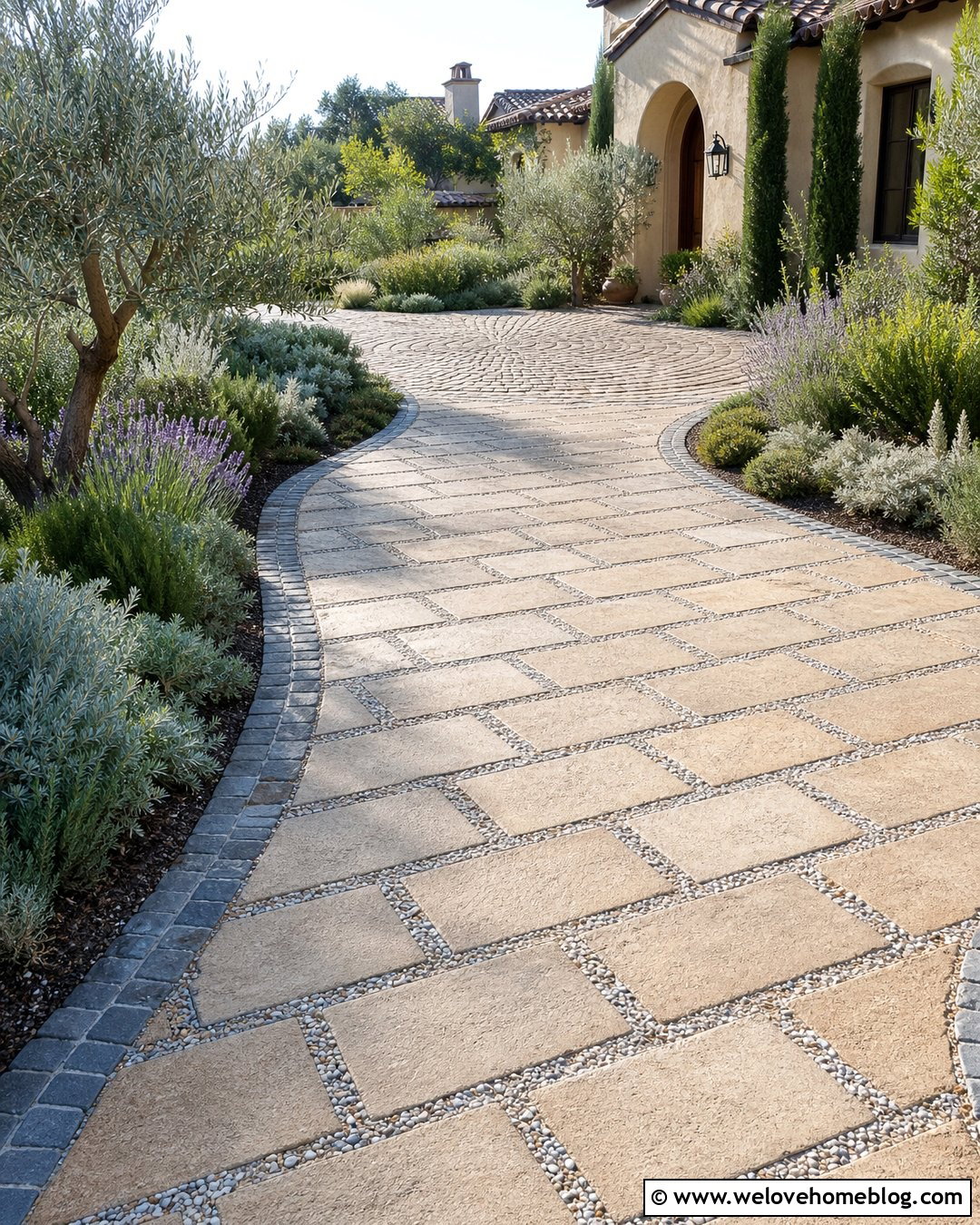
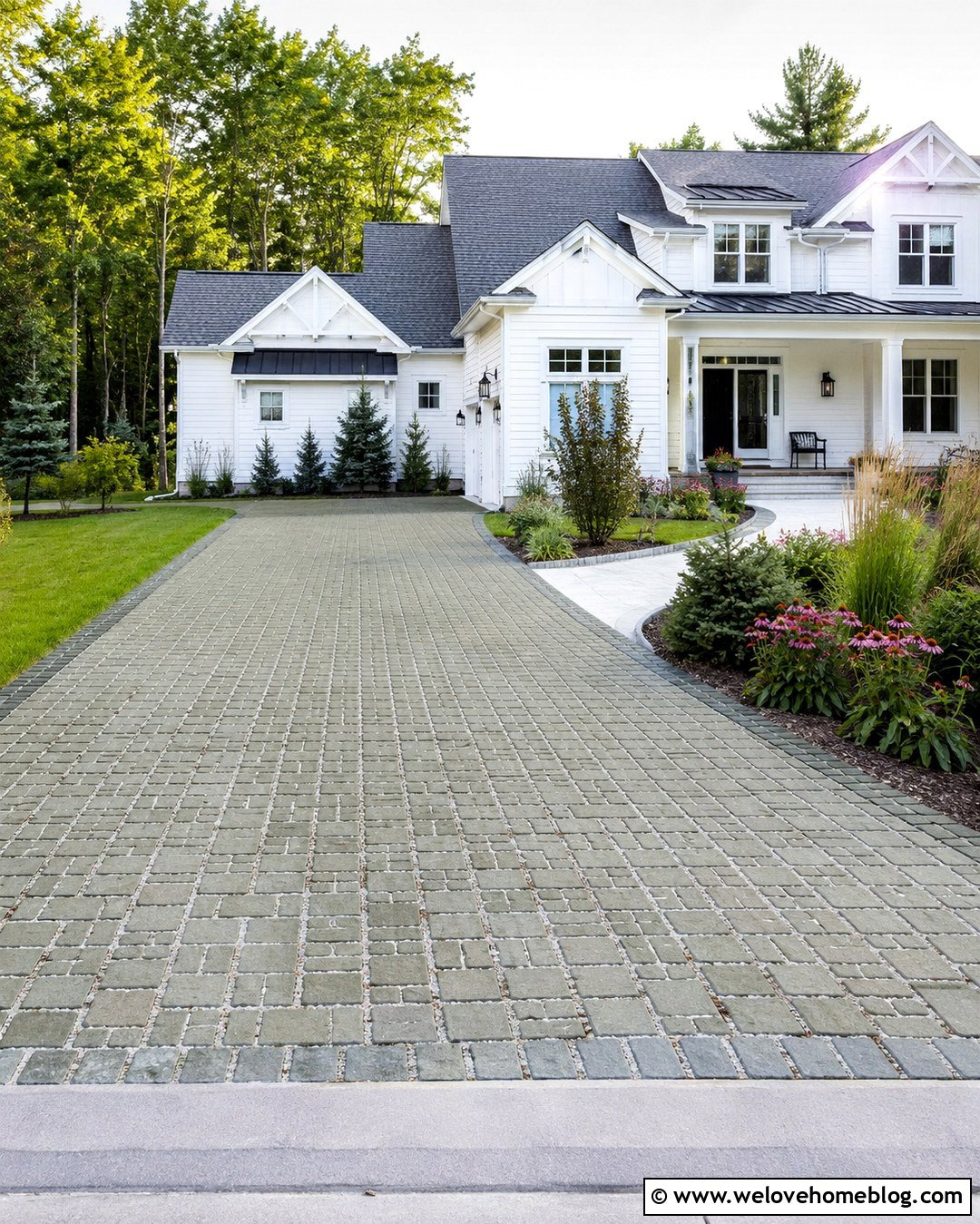
A permeable paver driveway can combine Mediterranean texture with a practical approach to surface drainage. Choose antiqued concrete pavers in sandy beige and install them with wider, gravel-filled joints according to the manufacturer’s complete permeable system. Lay the driveway in a gentle S-curve and outline it with a darker cobblestone edge. On the outside of each bend, create deep planting beds containing upright rosemary, lavender, dwarf olive trees, and silvery ground covers. Keep plants away from the driving surface so growth does not obscure its edges. At the house, continue the pavers into a small motor court arranged in a contrasting fan pattern. Permeable paving allows water to move through the surface, but successful performance still depends on proper soil evaluation, base construction, grading, and maintenance. ()
20. Tuscan Split Driveway With Central Olive Tree
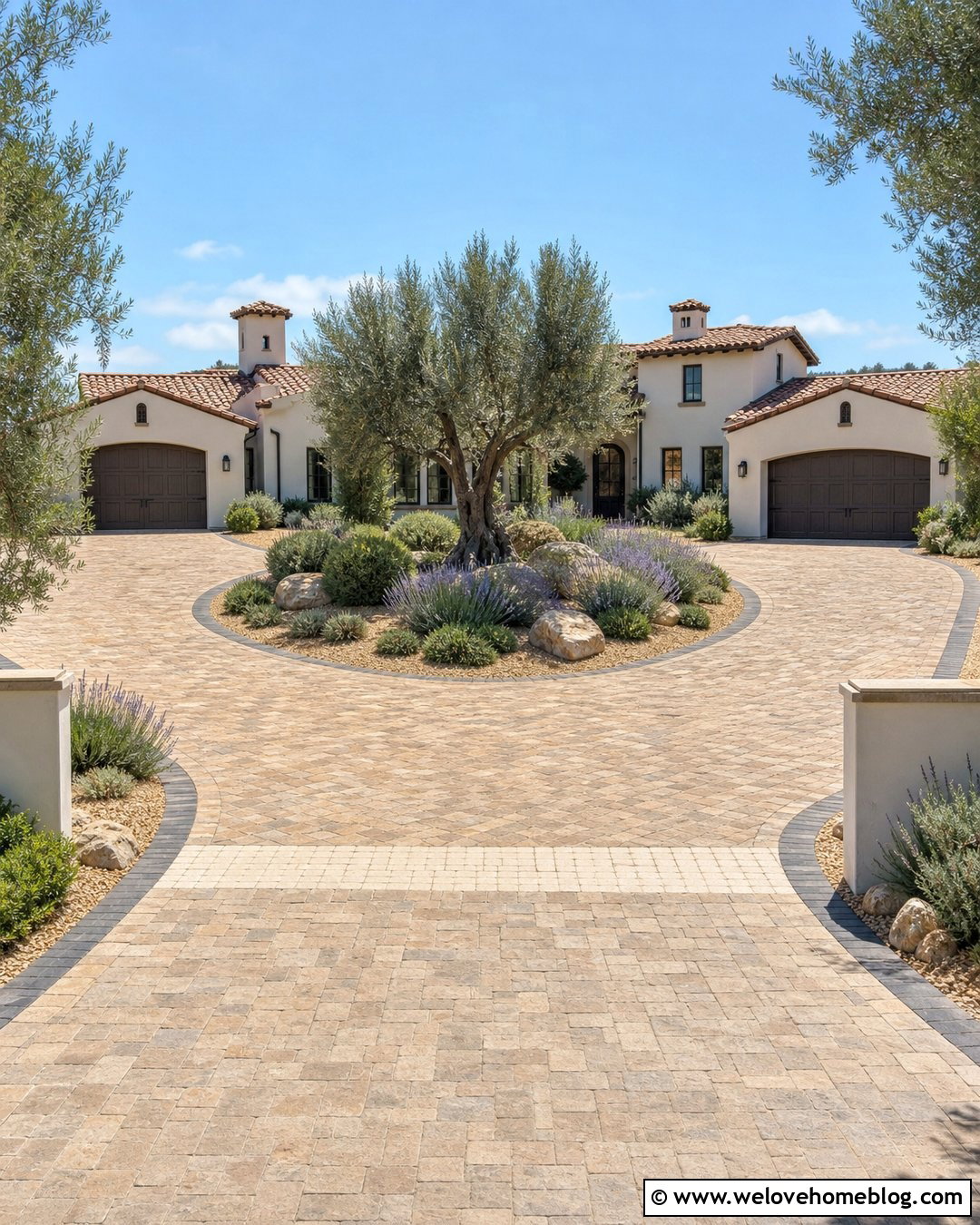
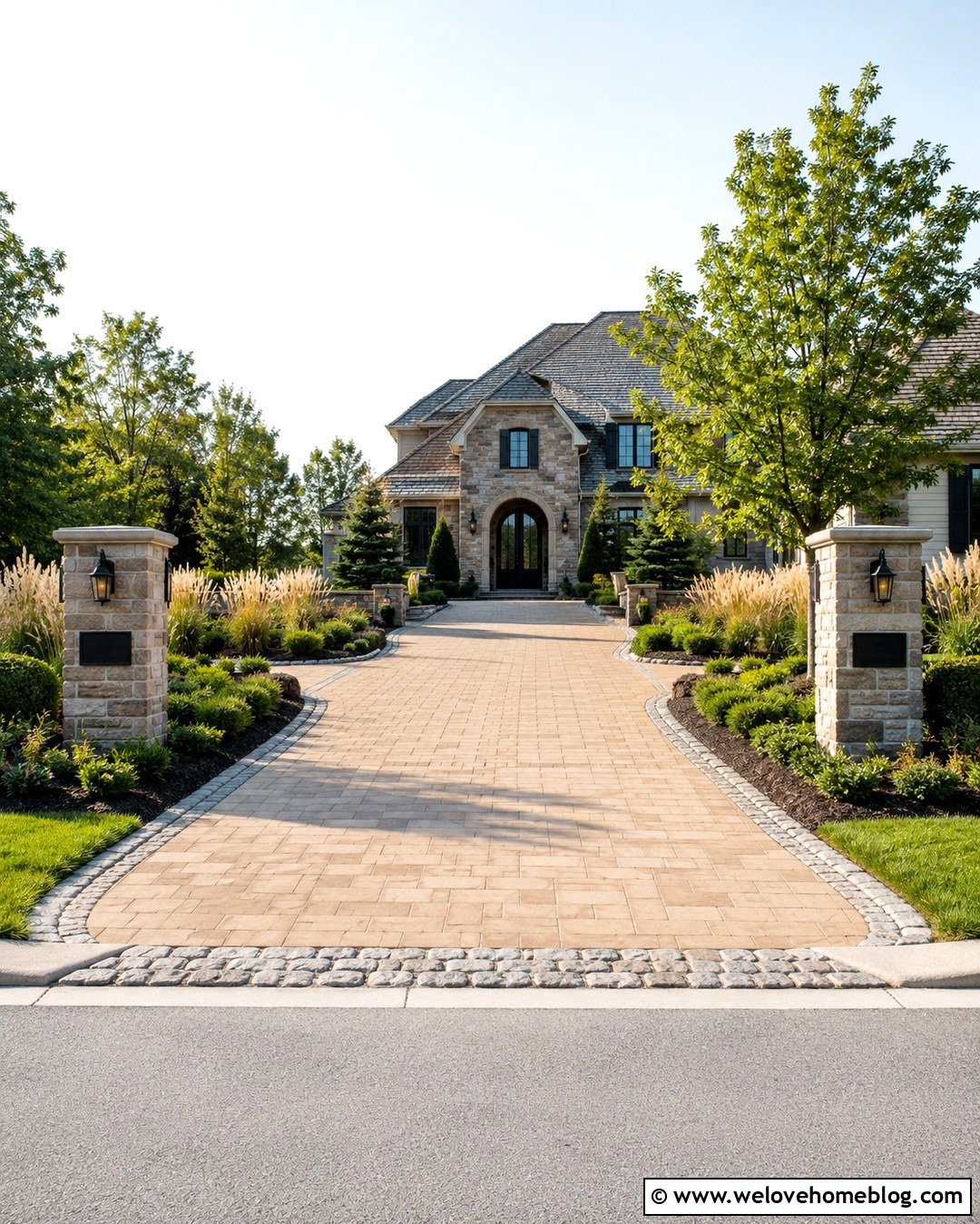
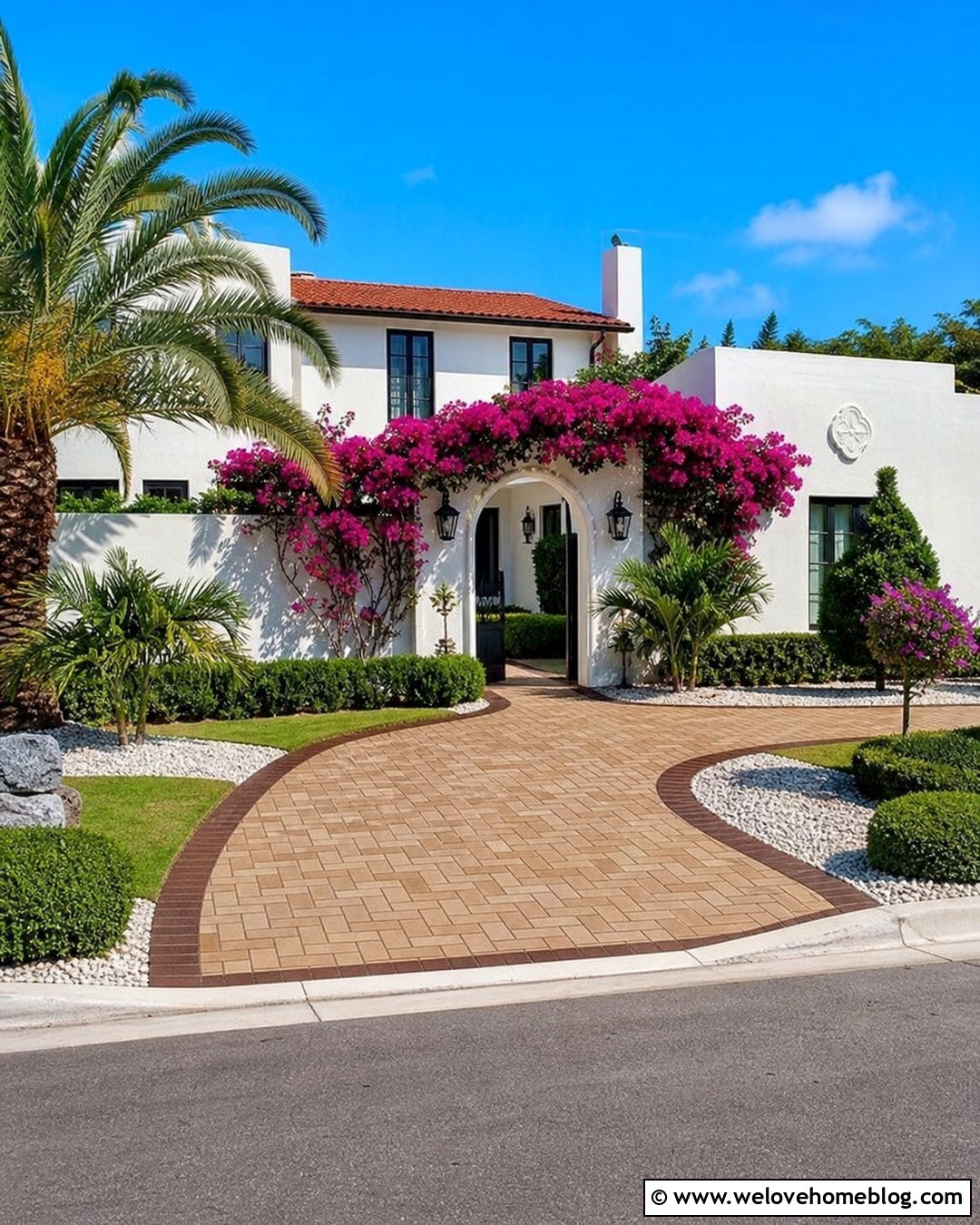
A split driveway can turn a broad front yard into an organized Tuscan arrival court. Use warm cobblestone-style concrete pavers for two branches that divide around a large oval island before meeting separate garage bays. Place a sculptural olive tree in the center, surrounded by a simple gravel bed, clipped rosemary, lavender, and several weathered limestone boulders. A darker paver border should trace both branches and clarify the unusual shape. Connect the island to the front walkway with a visible stone crossing so pedestrians have a direct route to the house. Low stucco walls can screen utilities or side parking without closing off the view. This complete design balances vehicle movement, landscaping, and architecture while giving a wide driveway a strong, attractive focal point.
Conclusion:
The most successful Tuscan driveways feel warm, established, and closely tied to the architecture around them. Start with a durable surface that suits your climate, slope, vehicle use, and maintenance preferences. Then develop the entire approach through coordinated borders, curves, planting beds, walls, gates, and entrance details. Cobblestone and gravel provide rustic character, while earth-toned pavers, exposed aggregate, and stamped concrete offer adaptable alternatives. Olive trees, cypress, lavender, rosemary, limestone, and terracotta can reinforce the theme without making it feel excessive. Whether you have a compact suburban lot or a long country approach, these 20 Tuscan style driveway ideas can help you create a practical entrance with inviting Mediterranean curb appeal.

Related posts:
Leave a Reply