
Driveway walls can solve practical landscape problems while giving the front of a home a more finished, welcoming appearance. They can hold back sloped soil, frame an entrance, protect planting beds, define property edges, and guide attention toward the house. The best design connects the wall with the driveway surface, home exterior, and surrounding yard rather than treating it as a separate feature. Materials such as natural stone, brick, concrete, timber, and gabion cages offer options for traditional, rustic, modern, and budget-friendly properties. Taller retaining structures may require engineered foundations, drainage, permits, and professional installation. () Use these complete 30 Driveway Wall Ideas to find a look that suits your property’s slope, architecture, and curb appeal.
1. Natural Stone Driveway Retaining Wall
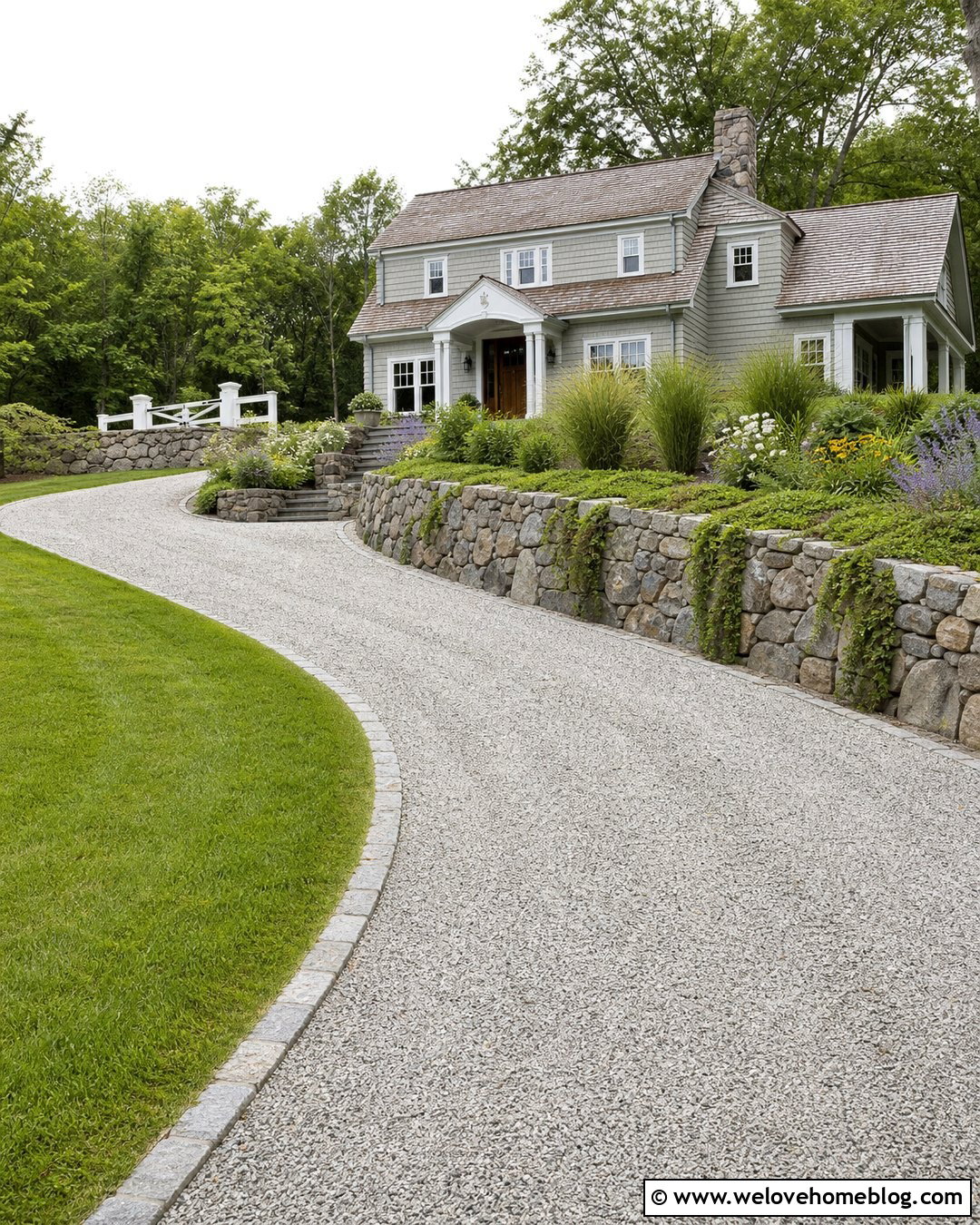
A natural stone retaining wall gives a driveway an established appearance that blends comfortably into a planted yard. Pair irregular fieldstone with a curved gray gravel driveway for a relaxed country setting. Use larger stones at the base and smaller pieces near the top to create a balanced surface. Low-growing juniper, ornamental grasses, and flowering perennials can soften the upper edge without hiding the masonry. A simple stone cap makes the wall look more finished and provides a visual connection to matching front steps. Choose stone colors that repeat tones found in the house foundation or exterior. On a slope, the complete design feels strongest when the wall follows the driveway’s curve instead of cutting across the landscape in a rigid line.
2. Brick Driveway Wall With Paver Entrance
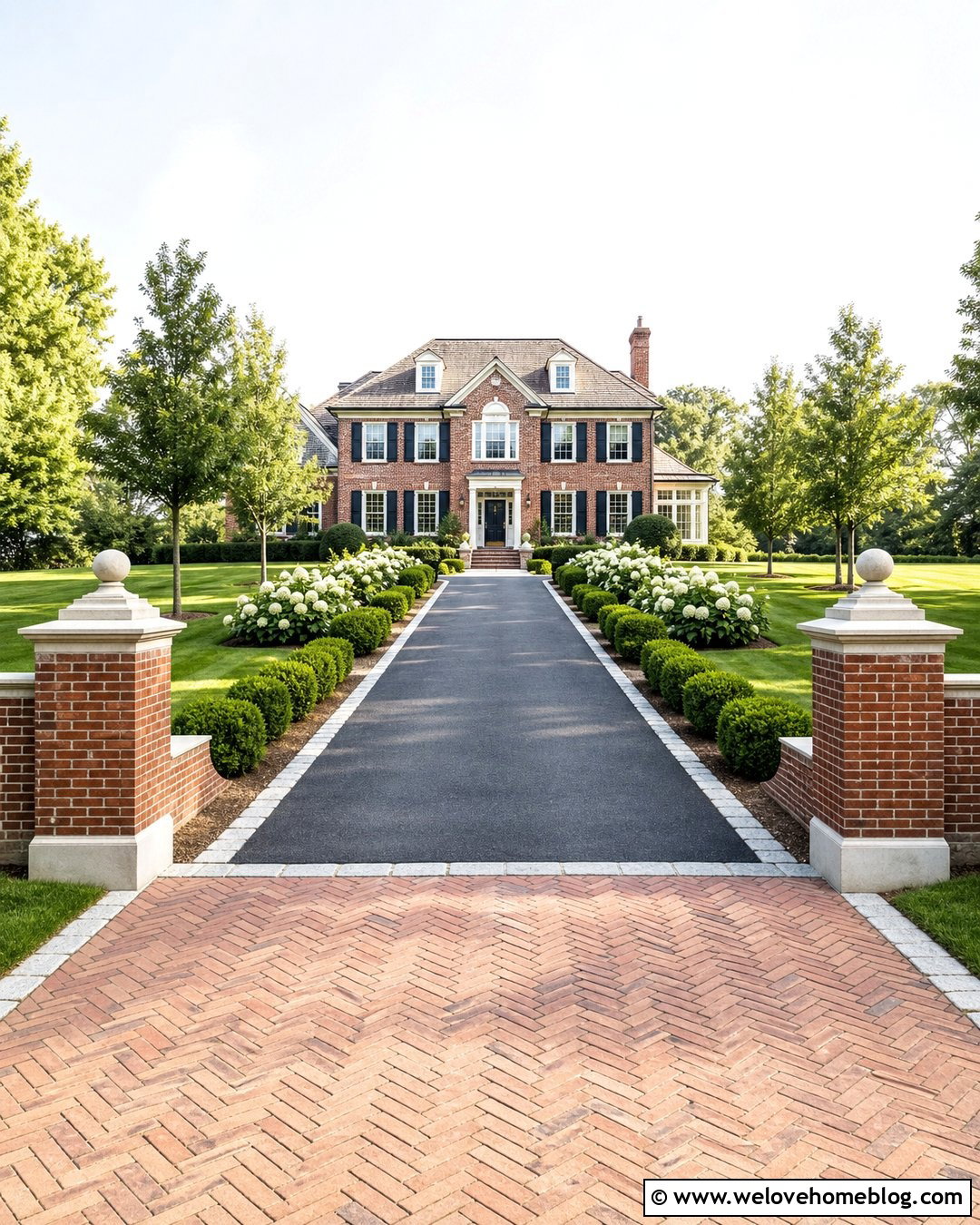
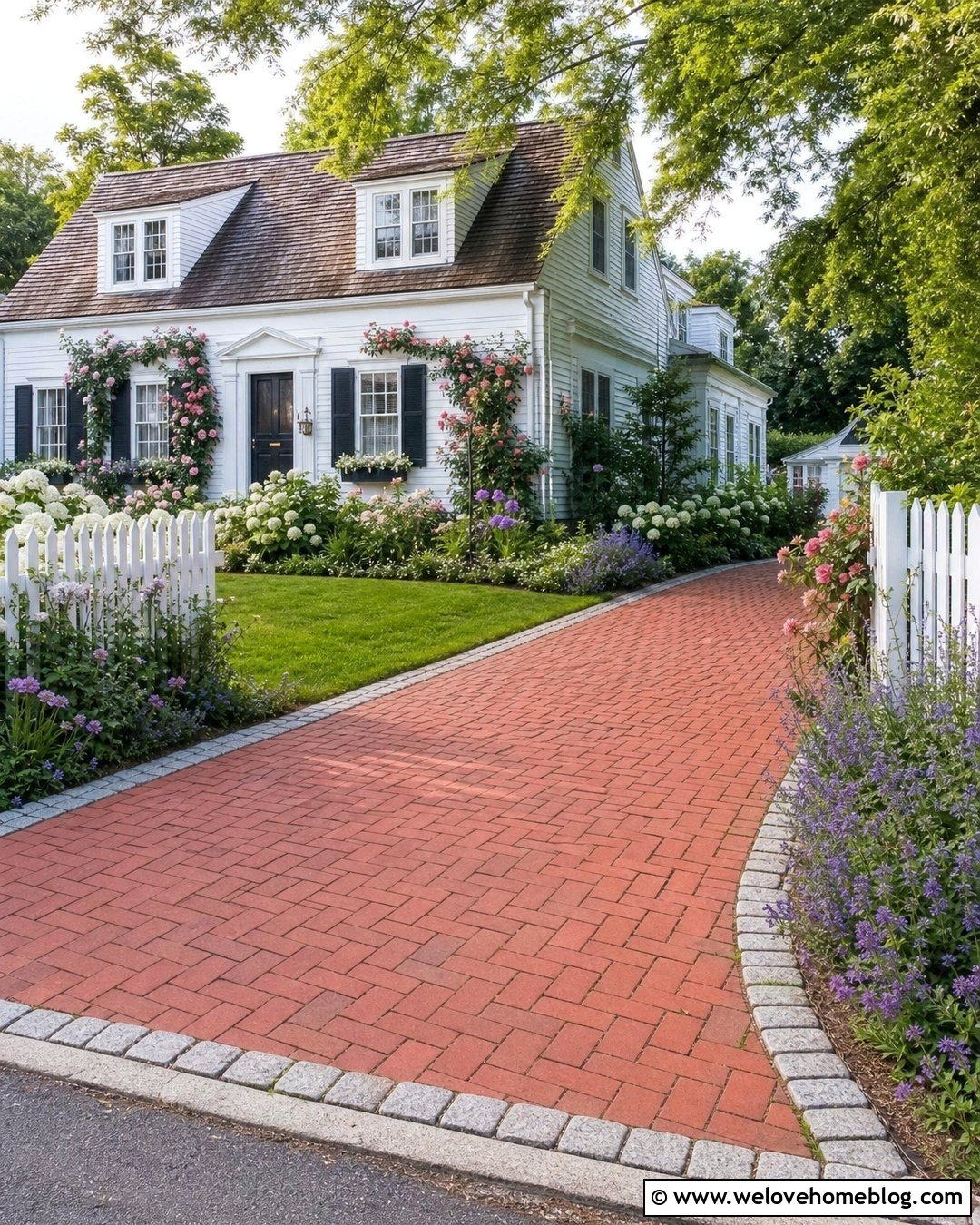
Warm red brick walls can frame a driveway entrance while complementing a Colonial, Georgian, or traditional ranch home. Continue the material into a brick paver apron where the driveway meets the street, then use asphalt or poured concrete for the longer driving surface. This keeps the design visually rich without covering the entire driveway in brick. Low walls with square pillars create a clear entrance while preserving visibility for drivers. Add clipped boxwoods, white hydrangeas, and a straight walkway to support the formal layout. A limestone or pale concrete cap protects the top and provides attractive contrast. Match the brick as closely as possible to the house facade, chimney, or front steps so the entrance looks original to the property.
3. Modern Concrete Driveway Wall
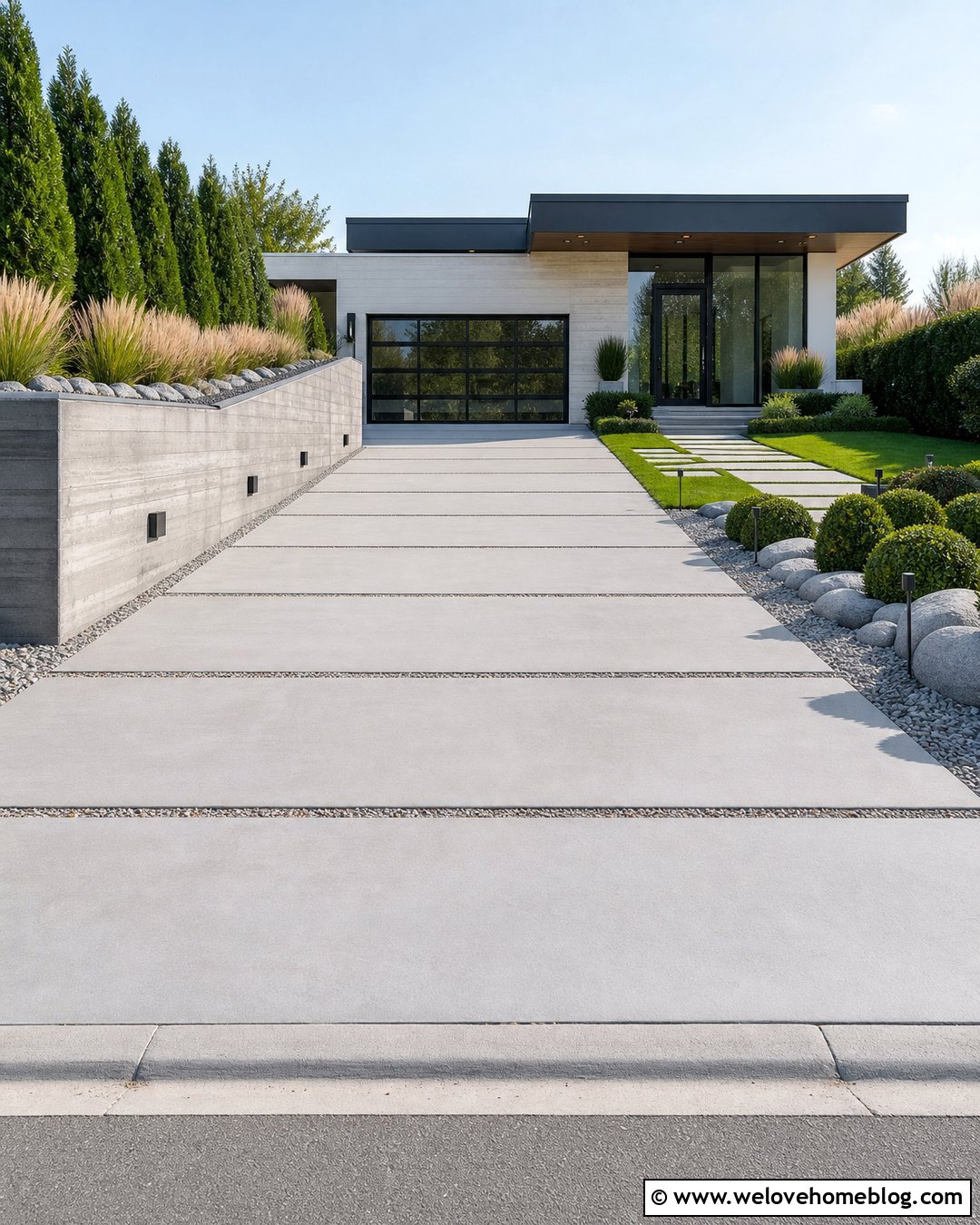
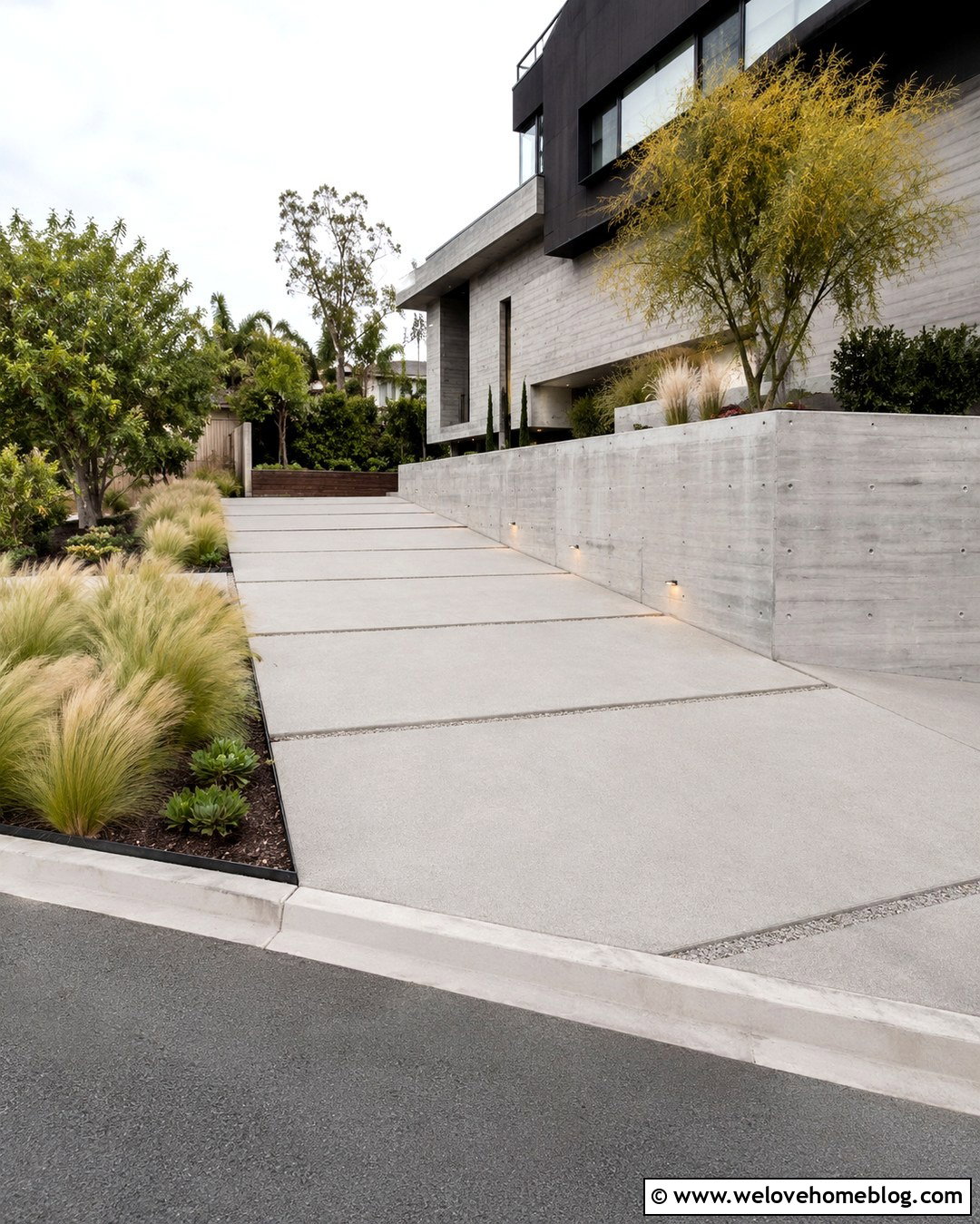
Clean architecture calls for a driveway wall with simple lines and very little decoration. A smooth poured-concrete wall works well beside large-format concrete driveway slabs separated by narrow gravel joints. Keep the wall low near the street and gradually increase its height as the driveway climbs toward the house. This stepped profile follows the grade while maintaining an open entrance. Black metal lighting, ornamental grasses, compact evergreens, and pale river rock add contrast without making the space feel busy. Board-formed texture can be introduced if completely smooth concrete looks too plain. Repeat the wall’s gray tone in the driveway, walkway, and front steps. The final look should feel connected, geometric, and intentionally restrained rather than cold or unfinished.
4. Curved Driveway Wall With Landscaping
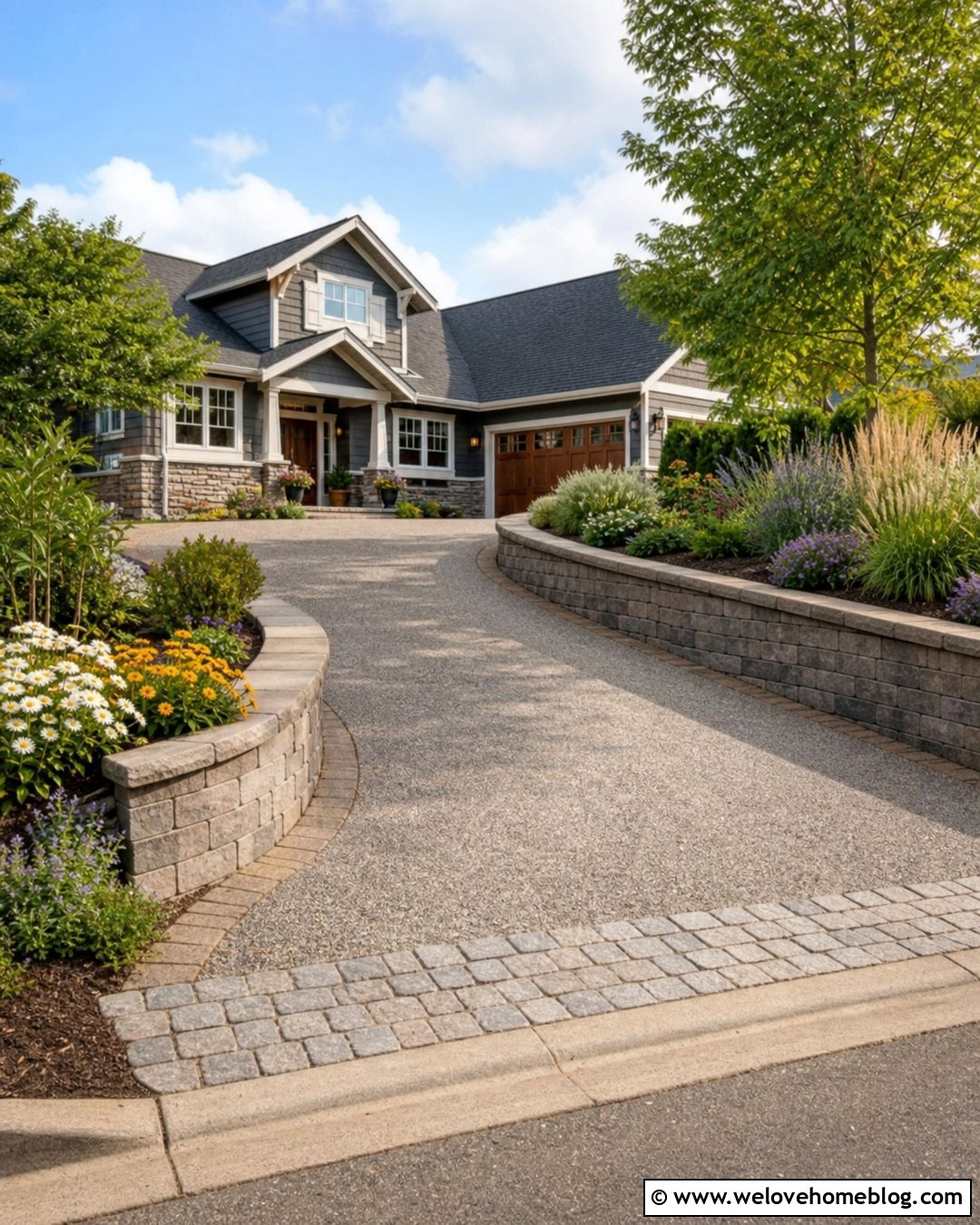
A curved wall can make a wide driveway feel more graceful and guide attention naturally toward the home. Build the wall from warm concrete blocks or tumbled stone that can follow a gentle radius without awkward gaps. Pair it with a curved exposed-aggregate driveway and a broad planting bed on the higher side. Layer compact shrubs, fountain grass, catmint, and seasonal flowers so the landscaping remains visible at several heights. A smooth cap gives the masonry a clean outline and provides a comfortable transition around corners. Keep plants near the street short enough to protect sightlines. When the driveway, wall, and flower bed share the same sweeping shape, the entire front yard gains movement and looks larger than a collection of disconnected features.
5. Tiered Driveway Retaining Walls
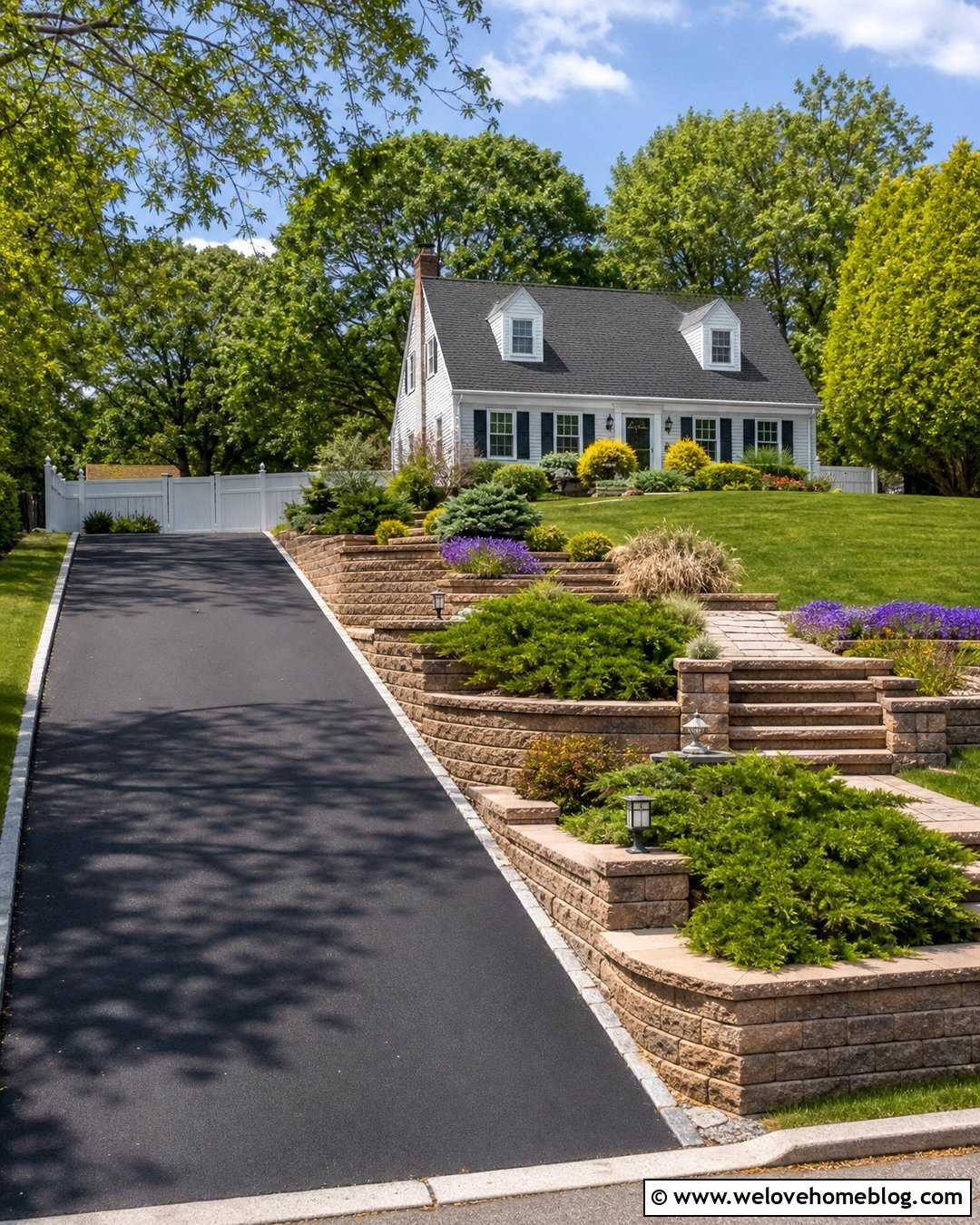
Multiple low walls can be more visually comfortable than one tall structure beside a steep driveway. Use two or three tiers of tan segmental concrete blocks, leaving generous planting areas between each level. A straight asphalt driveway provides a simple dark surface that helps the lighter walls stand out. Fill the terraces with spreading evergreens, flowering ground covers, small shrubs, and ornamental grasses suited to local conditions. Repeating the same plants across the levels keeps the slope organized rather than cluttered. Include steps or a sloped walkway where access is needed between the driveway and upper lawn. Tiered construction should still be planned around drainage and soil pressure. Done correctly, the walls turn an awkward grade into an attractive, layered front garden.
6. Boulder Driveway Retaining Wall
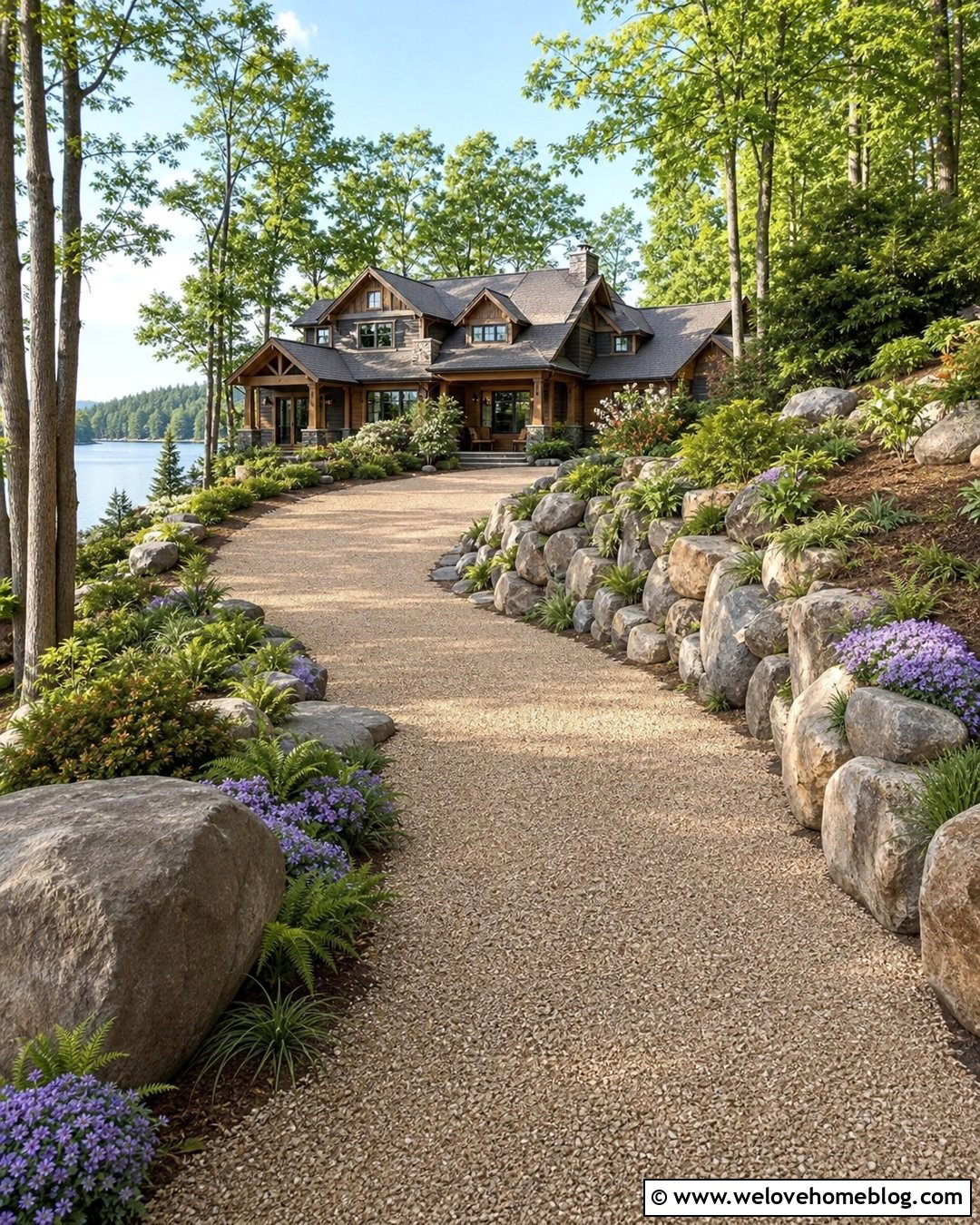
Large landscape boulders create a strong wall that feels especially appropriate around woodland, mountain, and lakefront homes. Combine rugged gray and brown boulders with a gently curved crushed-stone driveway leading to a rustic craftsman house. Set the largest rocks low in the slope and stagger the visible joints for a natural formation. Plant creeping phlox, sedges, ferns, and compact native shrubs in broad pockets around the stones. Avoid placing tiny plants beside oversized boulders because they can look out of scale. A matching boulder cluster near the driveway entrance helps the wall feel connected to the rest of the property. The finished layout should resemble a carefully shaped hillside rather than a straight row of rocks placed along the pavement.
7. Gabion Driveway Wall
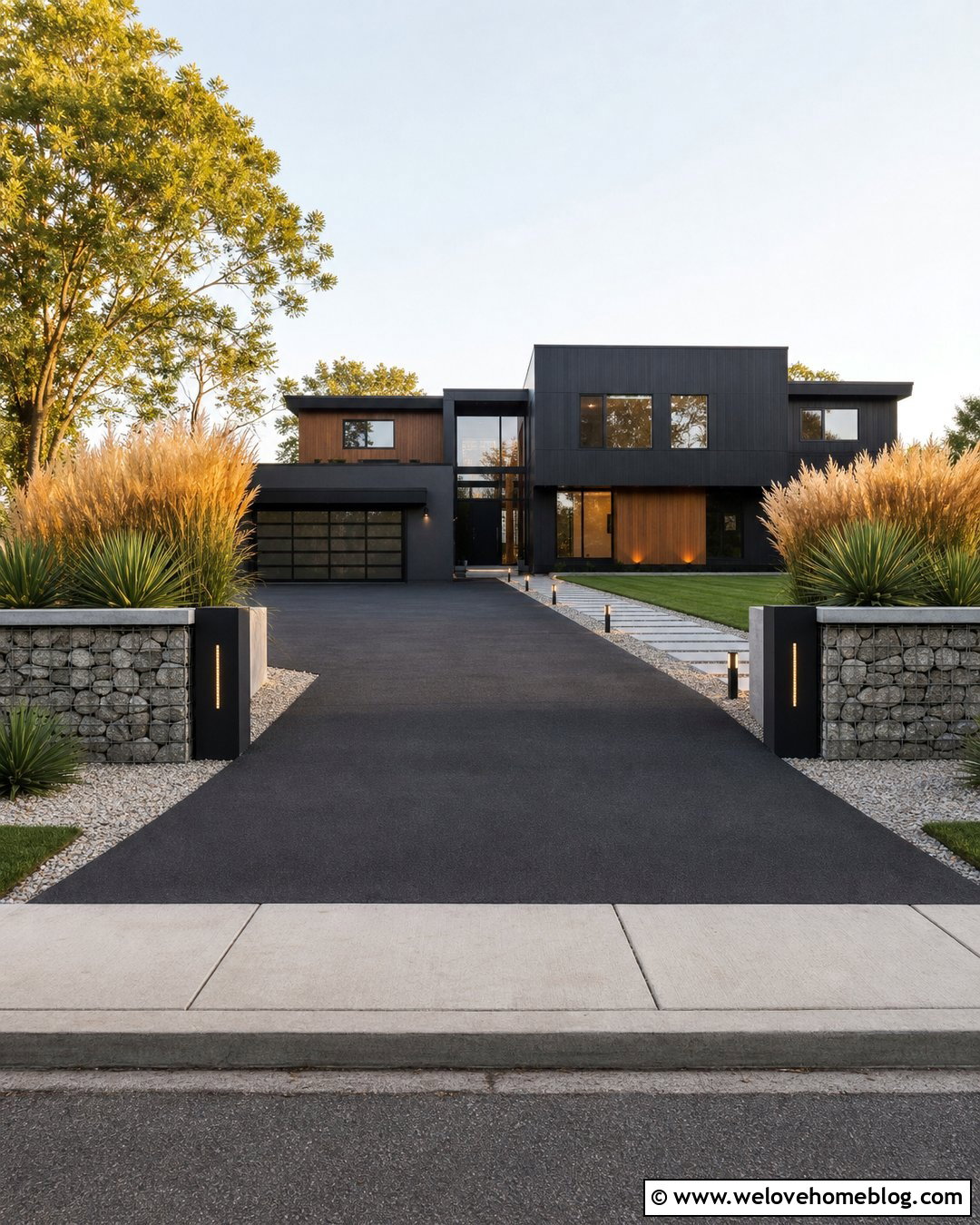
Gabion walls bring texture and an industrial edge to a contemporary driveway. Their wire cages can be filled with angular gray stone, rounded river rock, or locally available material that complements the house exterior. Place a low gabion wall beside a black asphalt driveway with a straight approach to a modern home. Add smooth concrete coping if a cleaner upper surface is desired. Linear planting beds filled with feather reed grass, yucca, or compact shrubs soften the metal framework while maintaining the architectural style. Black steel address numbers can be mounted on a nearby pillar instead of directly on the uneven cage. This wall looks best when the stone color, driveway tone, and building materials share a limited, coordinated palette.
8. Timber Driveway Retaining Wall
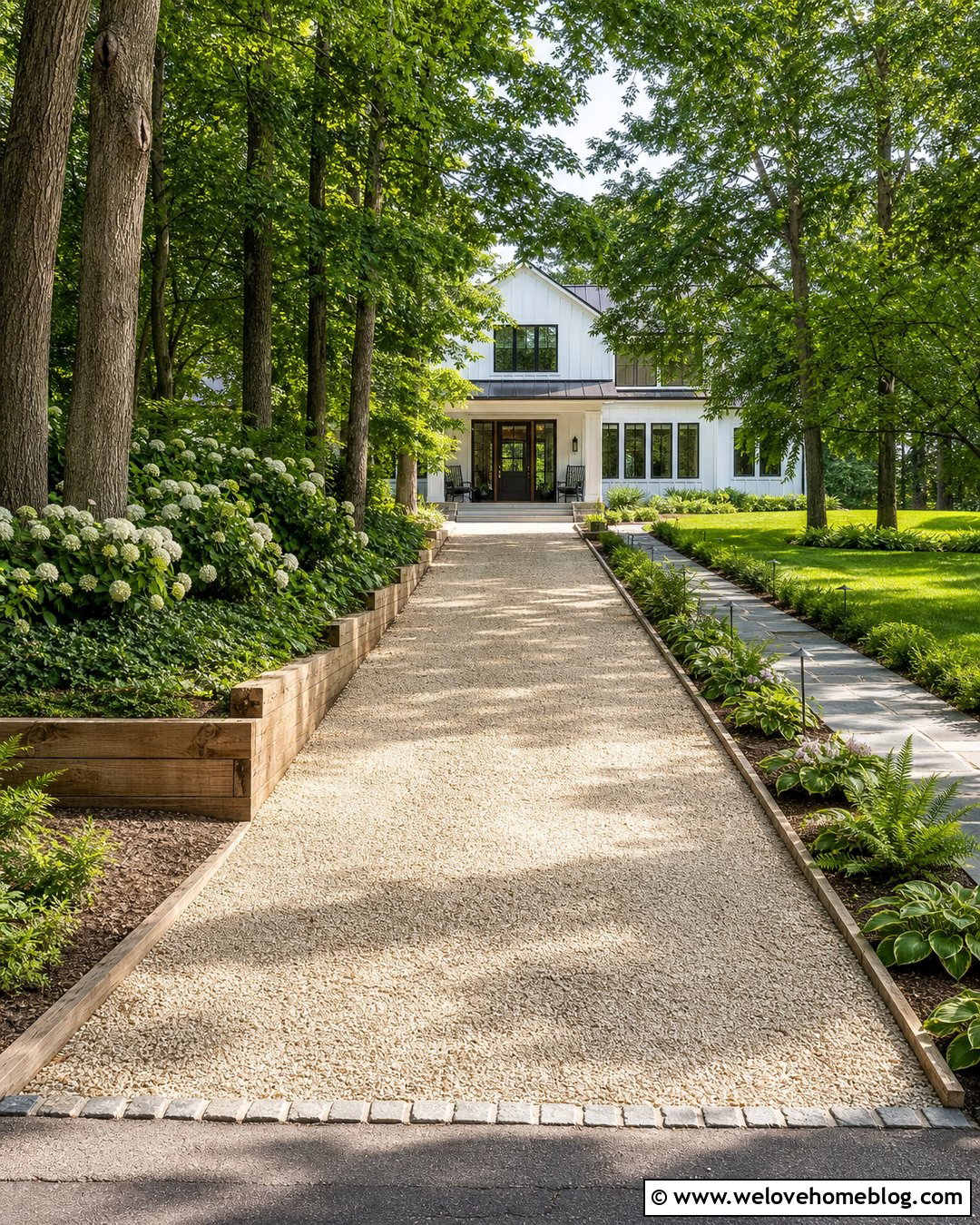
Timber walls introduce warmth to informal landscapes and can be useful for creating a low raised bed beside a driveway. Use pressure-treated landscape timbers or naturally durable wood rated for ground contact. Pair the wall with a light gravel driveway, timber edging, and a modern farmhouse or cabin-style home. Stagger the joints and include broad end returns so the structure does not appear thin or temporary. Above the wall, plant hydrangeas, ferns, hostas, and shade-tolerant ground covers if mature trees filter the sunlight. Gravel around the base helps create a neat transition from wood to driveway. Timber will weather over time, so the design works best when its softer, natural appearance supports the surrounding architecture and landscape.
9. White Stucco Driveway Wall
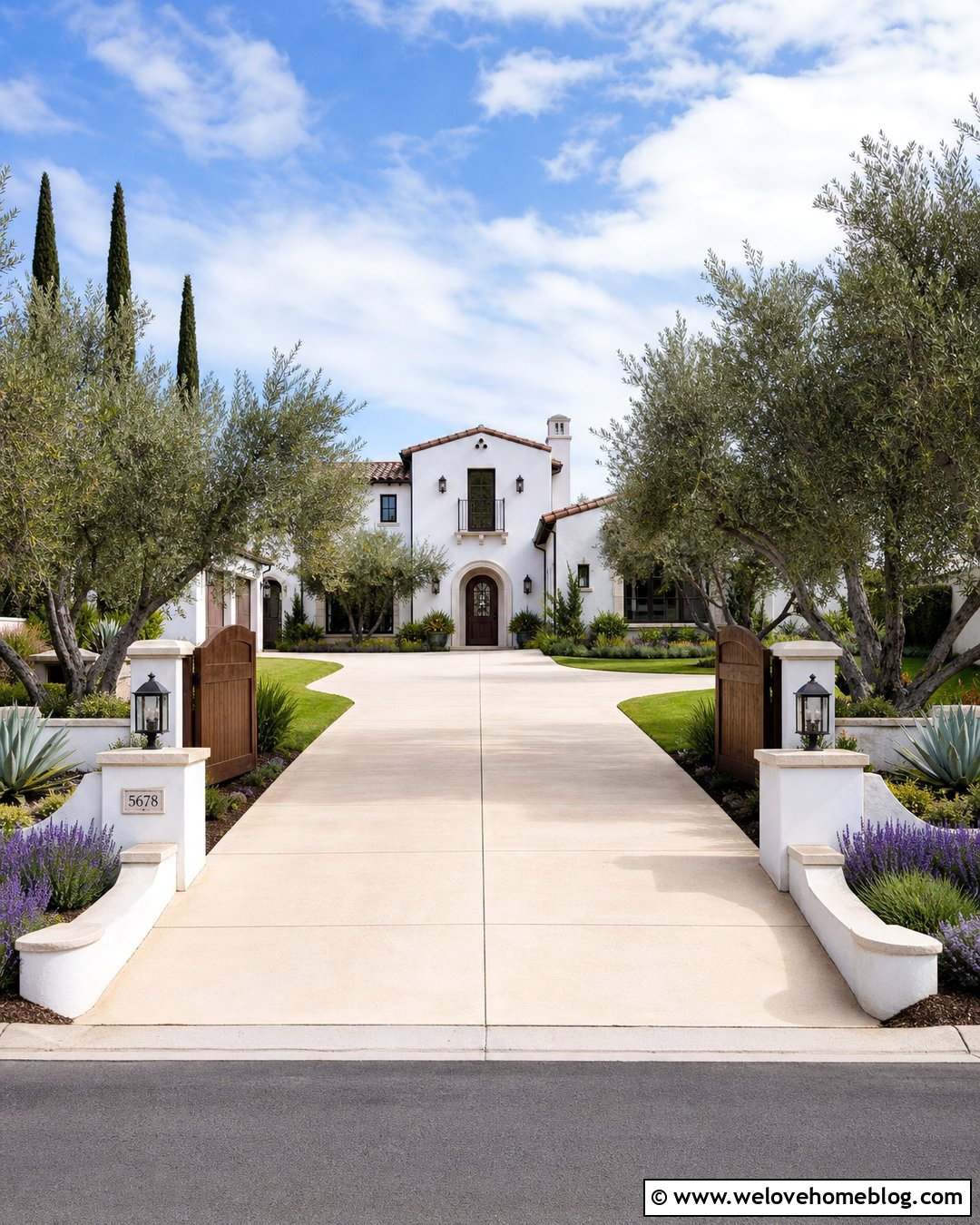
A white stucco wall can brighten the front of a Mediterranean, Spanish, coastal, or Southwestern home. Pair it with a warm beige concrete driveway or pale limestone pavers laid in a simple running pattern. Use rounded wall ends, smooth coping, and occasional square pillars to repeat details from the house. Bougainvillea, lavender, olive trees, agave, or rosemary can add color and structure, depending on the climate. Keep the lower wall sections clean and visible rather than covering everything with dense planting. Dark metal lanterns and a wood gate provide strong contrast against the white finish. Good proportions are essential because a tall solid wall can feel closed off, while a lower version creates separation without overpowering the entrance.
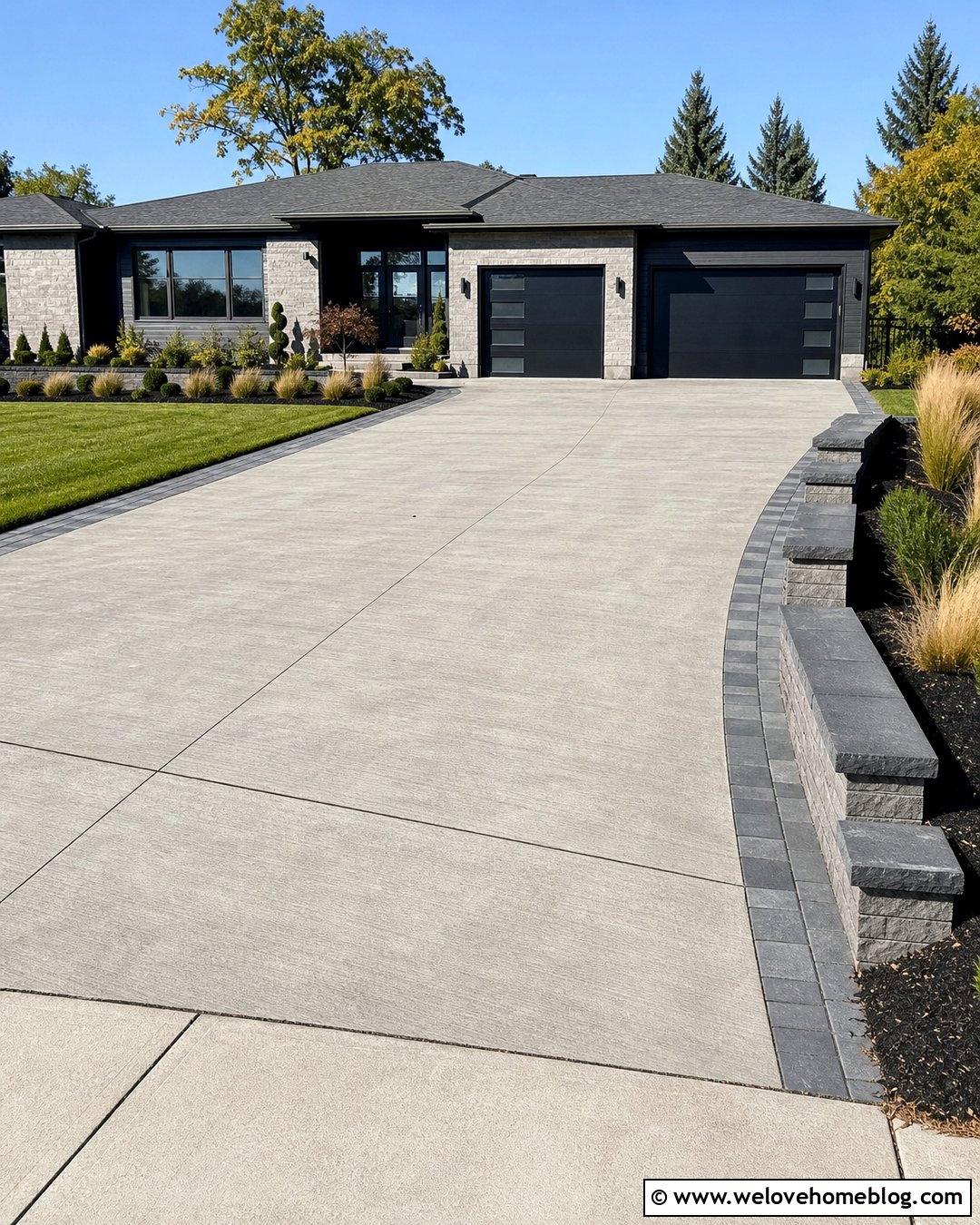
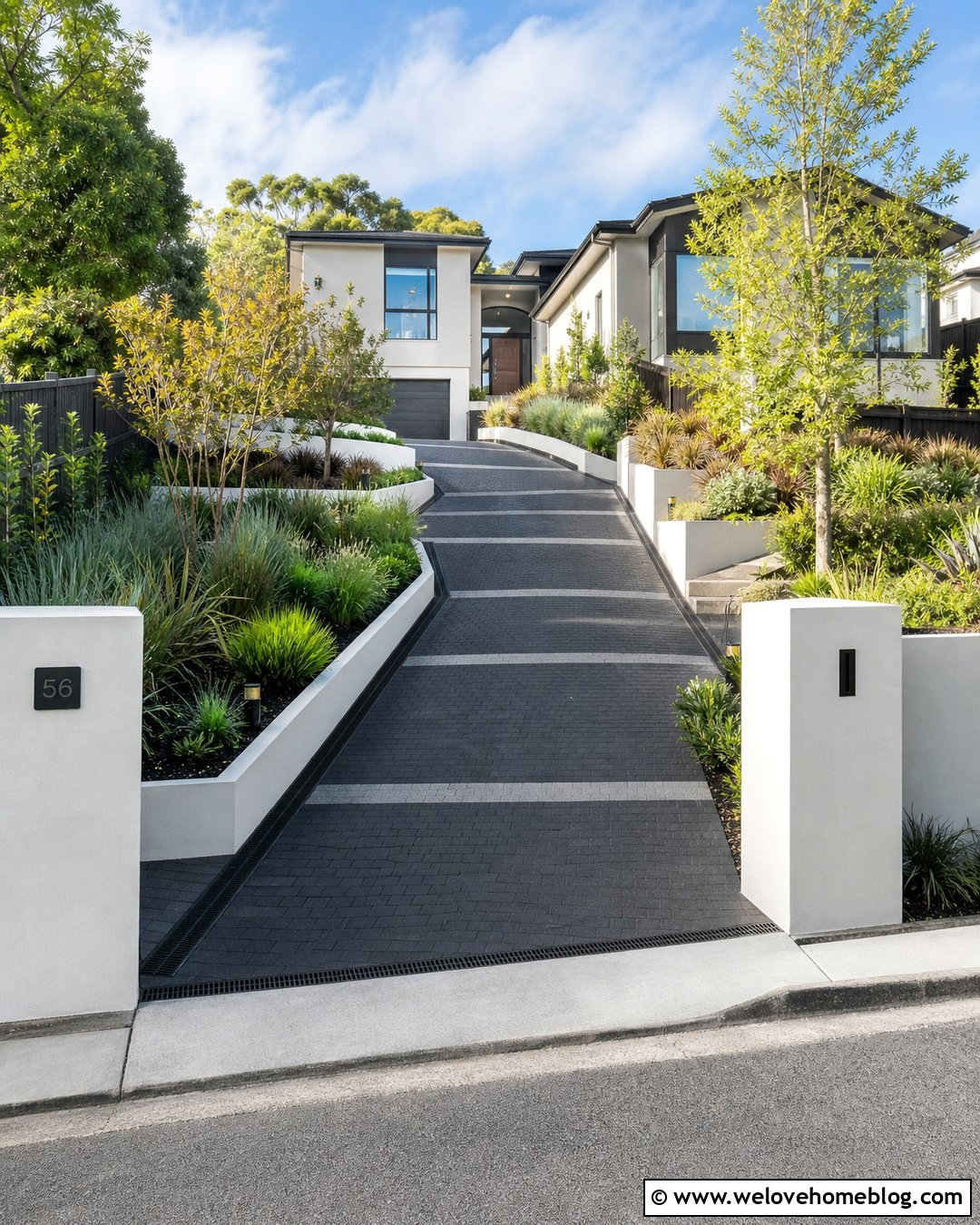
10. Driveway Wall With Built-In Lighting
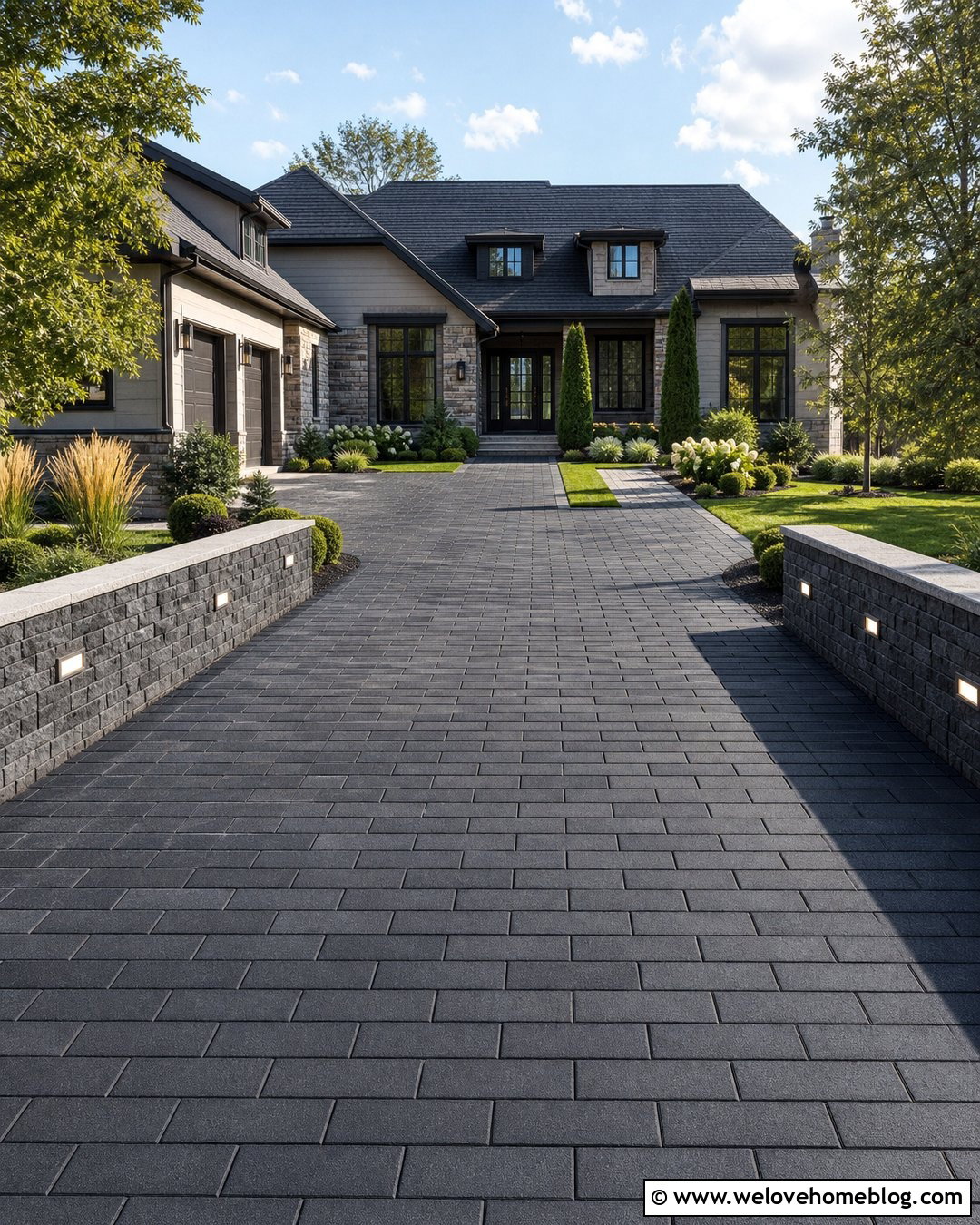
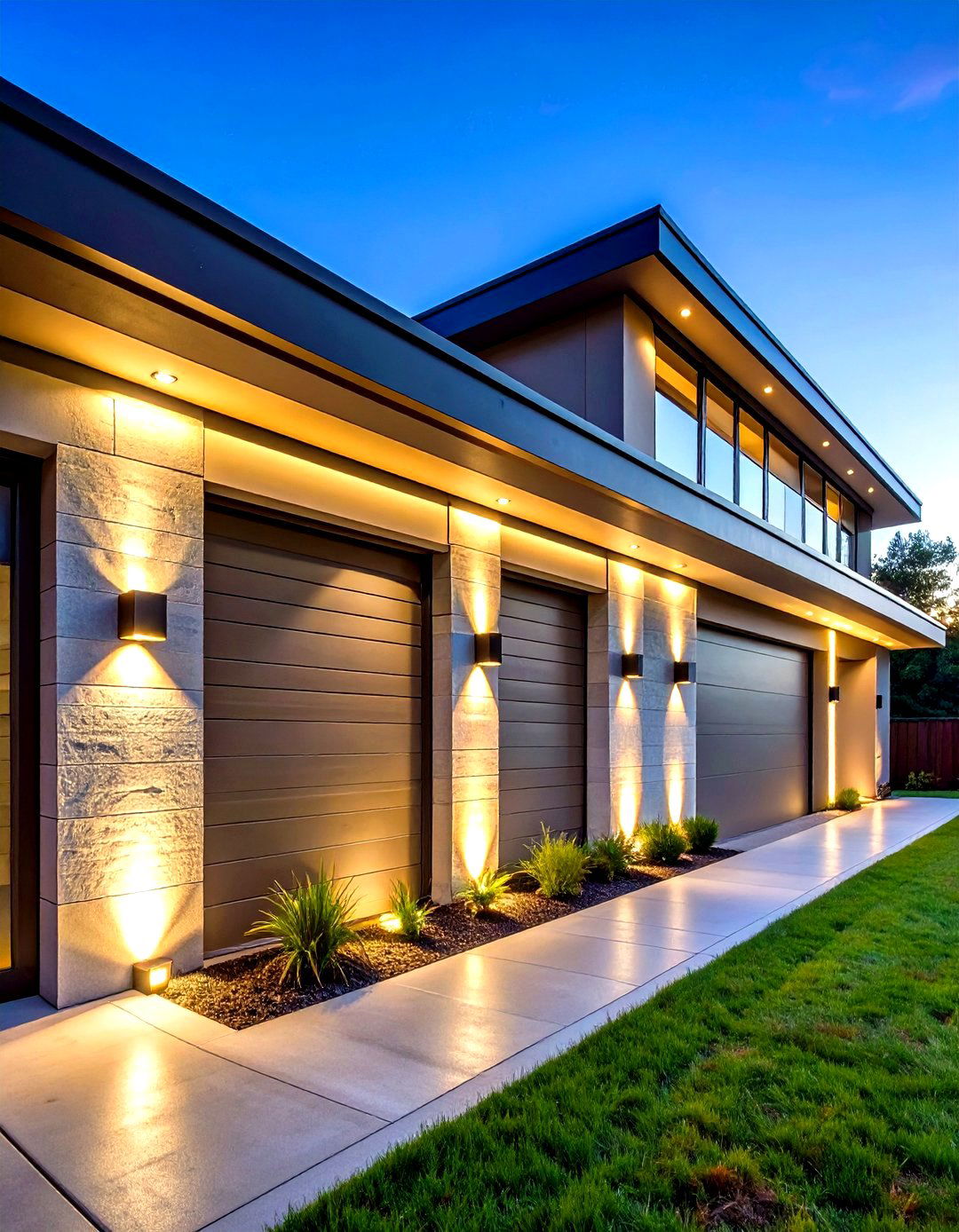
Integrated wall lights can improve the appearance of a driveway while making its edges easier to recognize. Install evenly spaced recessed fixtures in a low stone or masonry wall beside a charcoal concrete paver driveway. Select shielded lighting that directs illumination downward instead of producing glare toward the street or neighboring homes. The fixtures should align with wall joints, steps, or planting sections so the placement feels deliberate. Use low shrubs and ornamental grasses above the wall to maintain an open view of the lights. Matching fixtures can continue along the front walkway and porch. During the day, the wall should remain attractive through its stone texture, cap, and landscaping, allowing the lighting to support the design rather than become its only interesting feature.
11. Driveway Wall With Stone Pillars
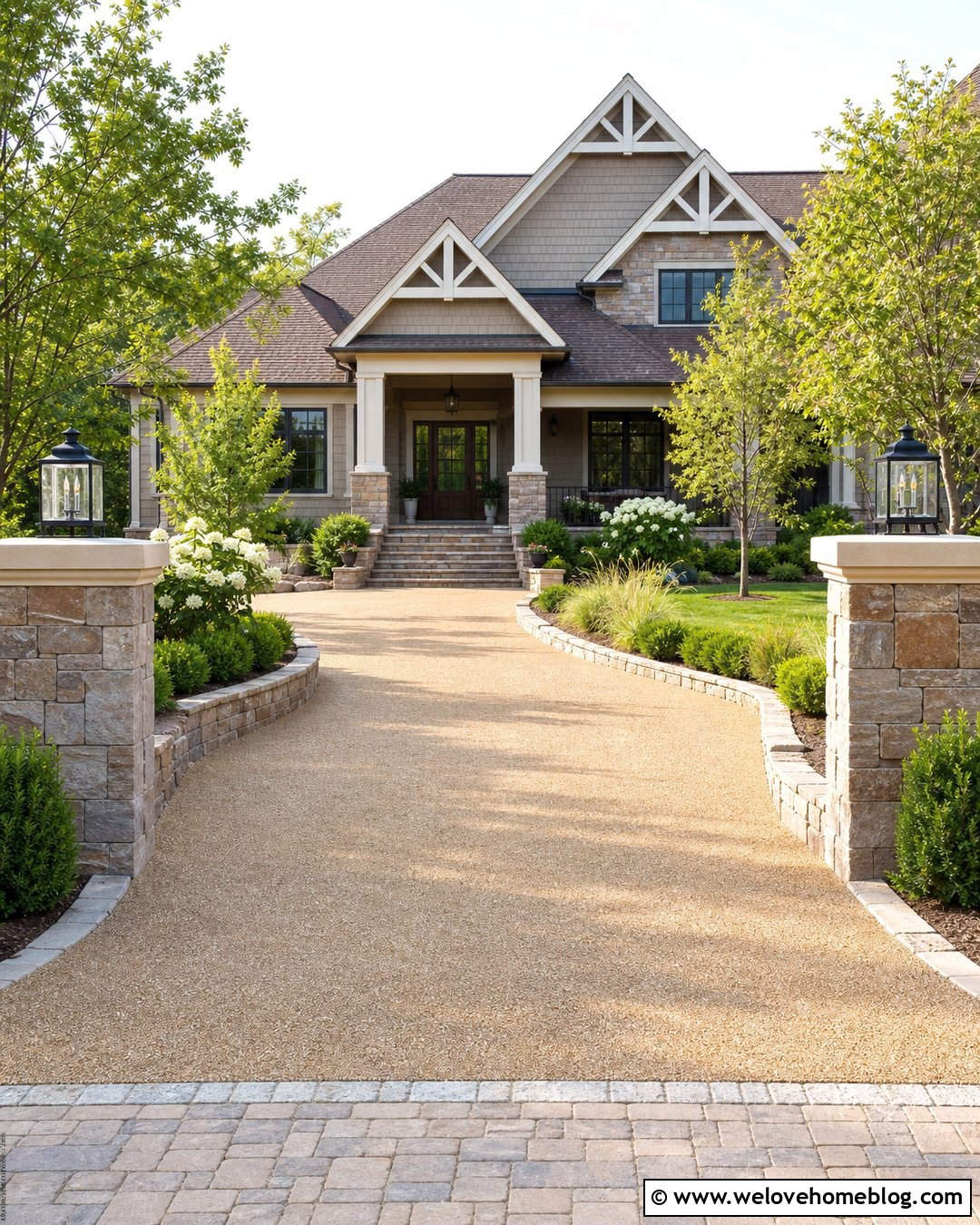
Stone pillars give a long driveway a clear beginning and create a sense of structure without requiring a solid wall across the property. Build broad pillars from ledgestone or fieldstone and connect them to low, gently curved walls. A warm-toned resin-bound gravel driveway can continue between the pillars toward a craftsman or country house. Add stone caps that project slightly beyond the masonry and coordinate with the front steps. Plant symmetrical groups of boxwood, panicle hydrangea, and ornamental grass around the entrance. Keep trees far enough behind the pillars to avoid crowding them as they mature. Pillars should be scaled to the driveway width and house size. Oversized structures can overwhelm a modest home, while undersized pillars may look decorative rather than architectural.
12. Driveway Wall With Wood Gate
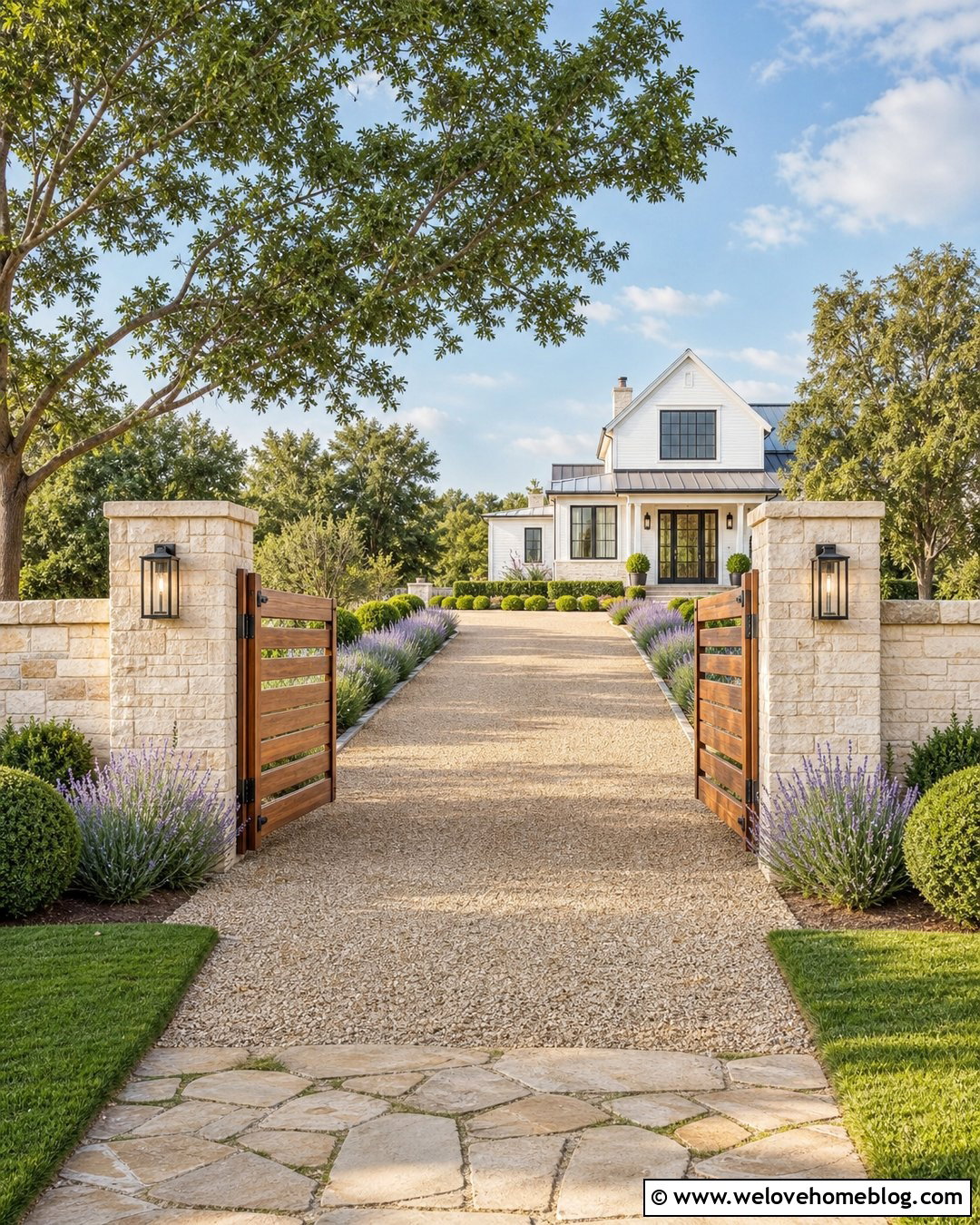
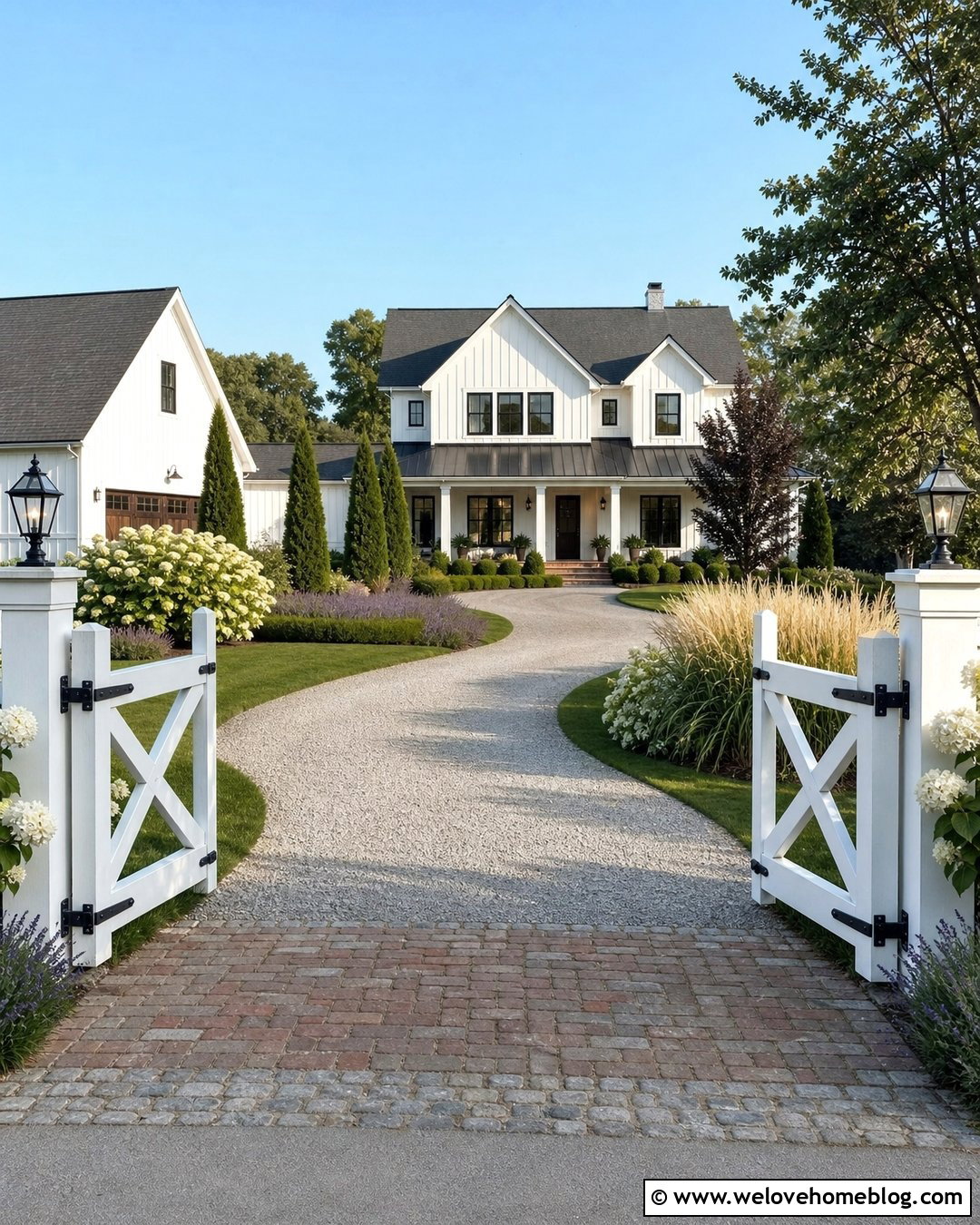
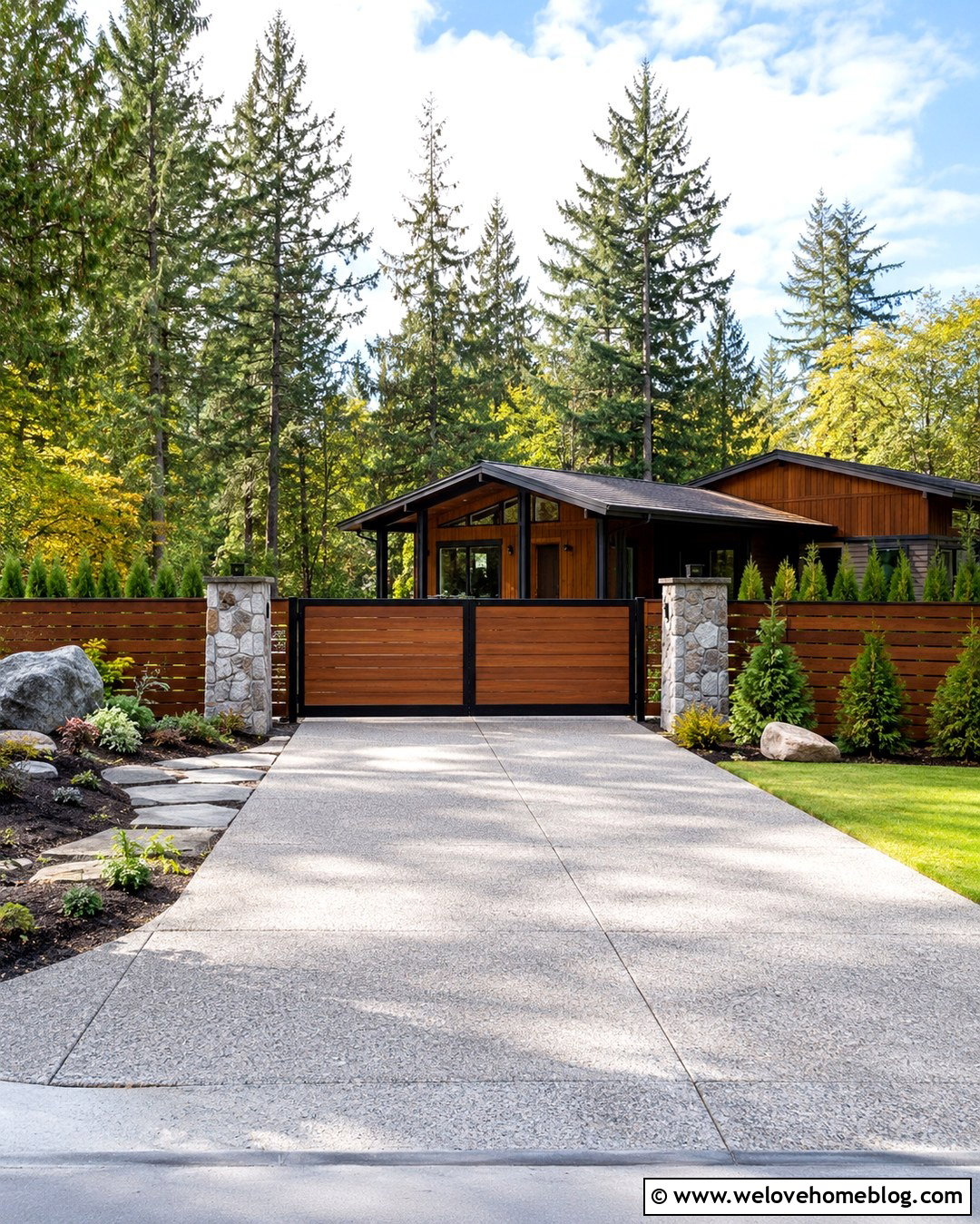
Combining a masonry wall with a wood gate balances strength and warmth. Use low cream-colored stone walls and square pillars around a straight pea gravel driveway. A horizontal cedar gate suits a modern farmhouse, while a framed vertical-board gate works well with traditional or country architecture. Repeat the wood tone on the front door, garage door, or nearby fence for a coordinated exterior. Lavender, clipped evergreens, and soft grasses can frame the entrance without interfering with gate movement. Plan enough level space between the street and gate for safe vehicle access. Hardware should suit the weight and exposure of the gate. When closed, the entrance feels private and polished; when open, the driveway remains visually connected to the home and landscaped yard.
13. Low Driveway Border Wall
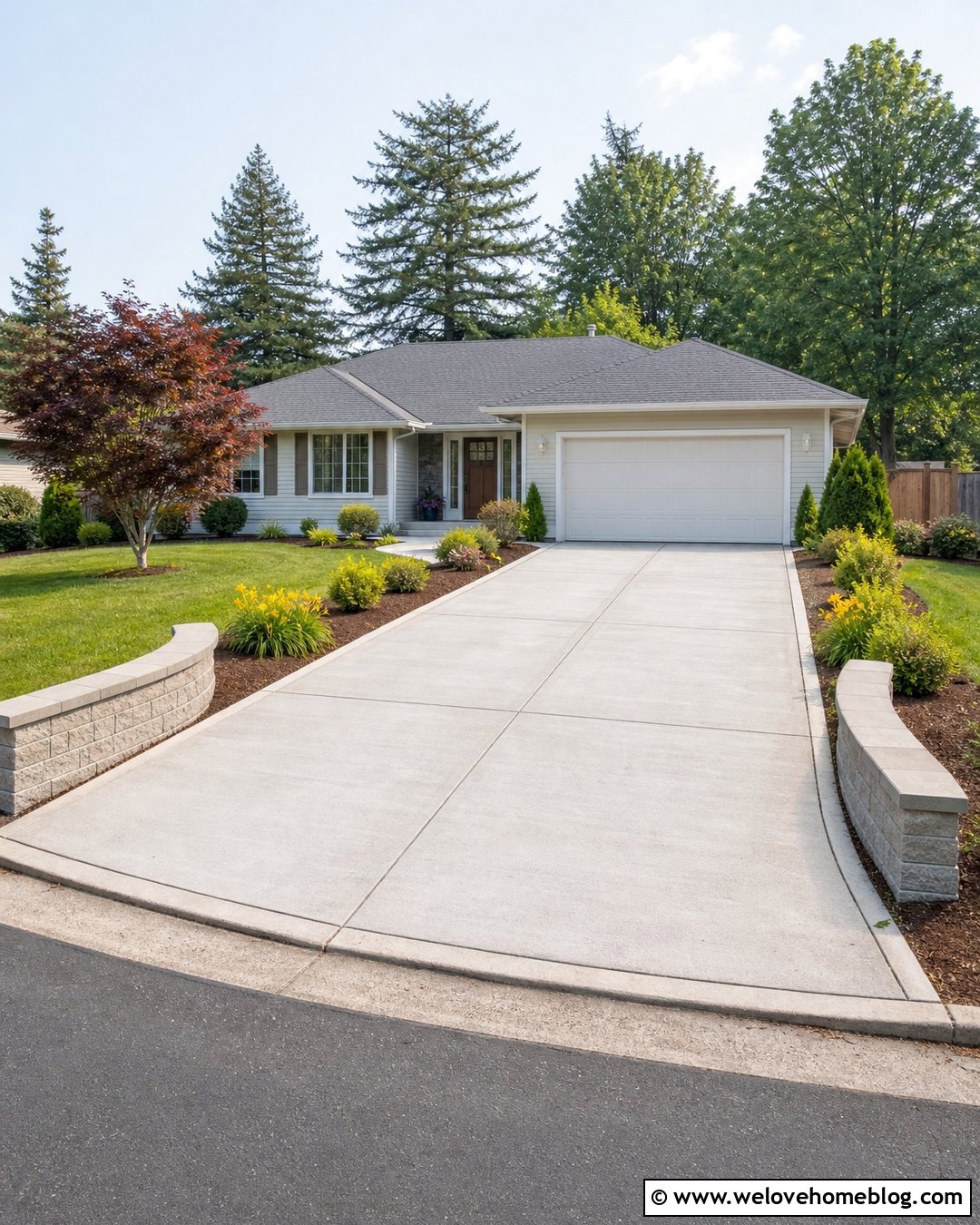
Not every property needs a tall retaining structure. A wall only a few courses high can separate pavement from lawn, contain mulch, and make a simple driveway feel more deliberate. Pair a low tumbled-block wall with a straight brushed-concrete driveway and traditional ranch home. Curve the wall outward near the street to widen the entrance visually. Behind it, use compact shrubs, daylilies, and a small ornamental tree as a layered border. Choose a cap with a slightly different color to give the low structure a clear outline. The wall should stop or taper before the sidewalk and road so it does not obstruct visibility. This approachable design adds definition while preserving an open suburban character and allowing the house to remain the primary focal point.
14. Driveway Wall With Flower Beds
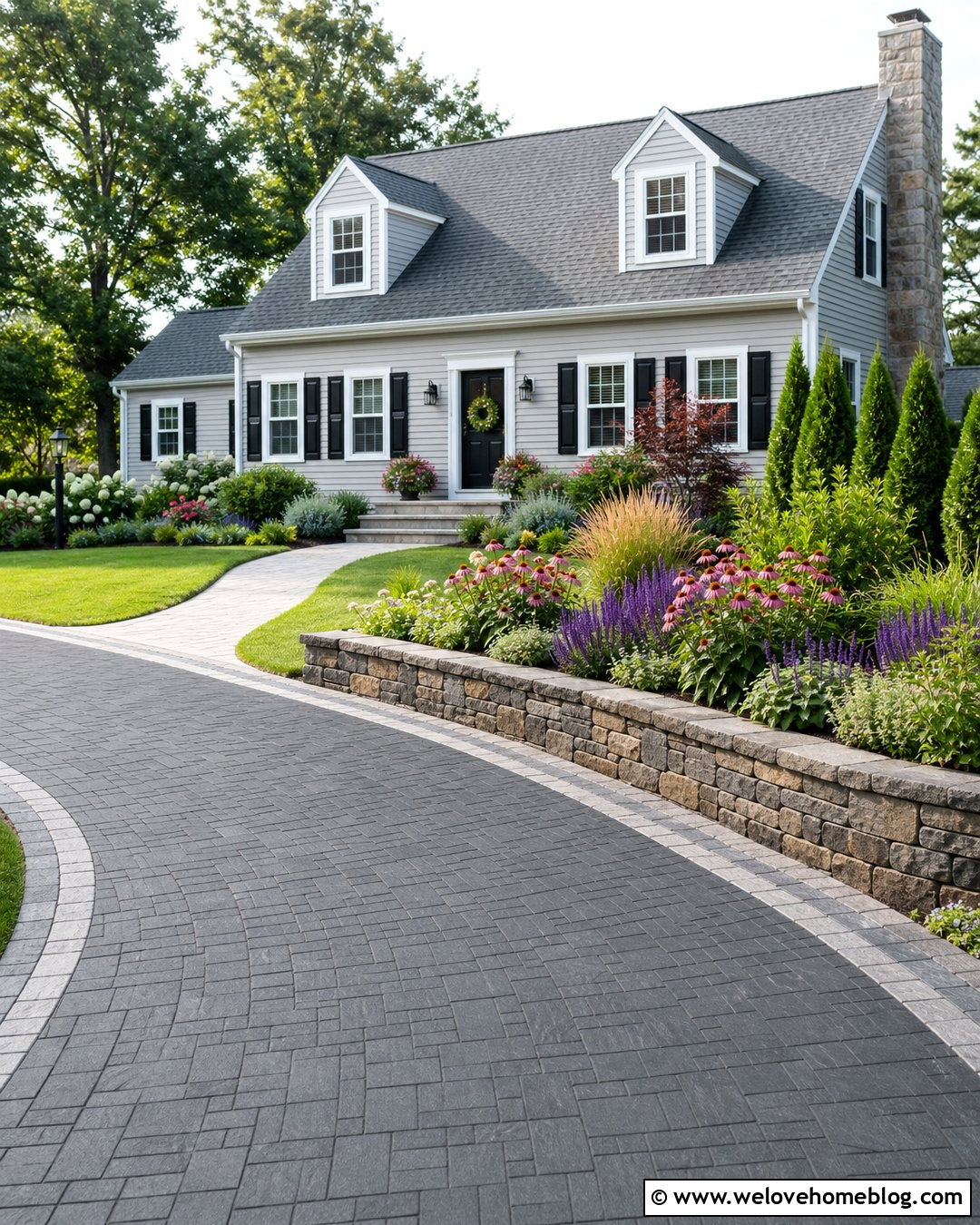
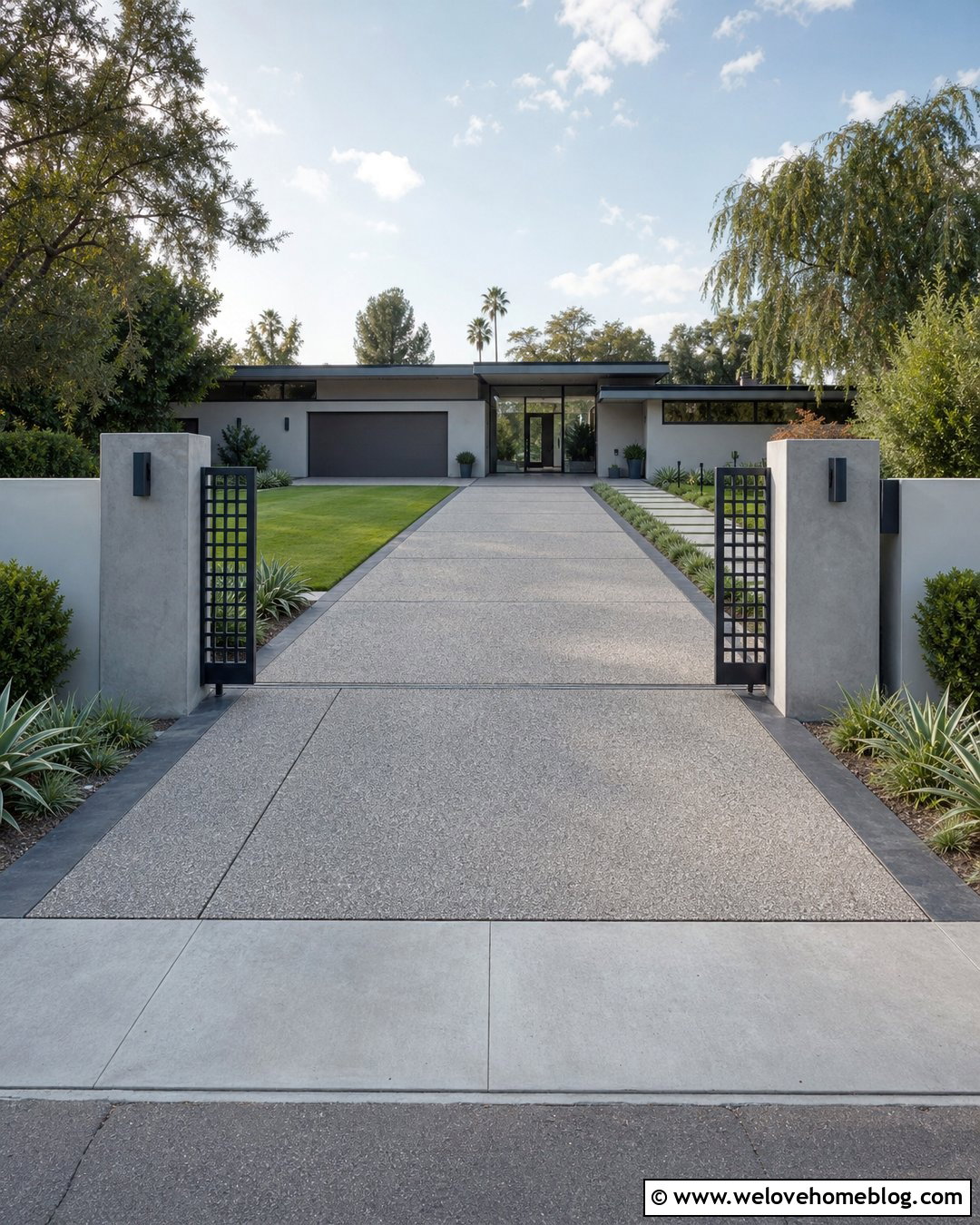
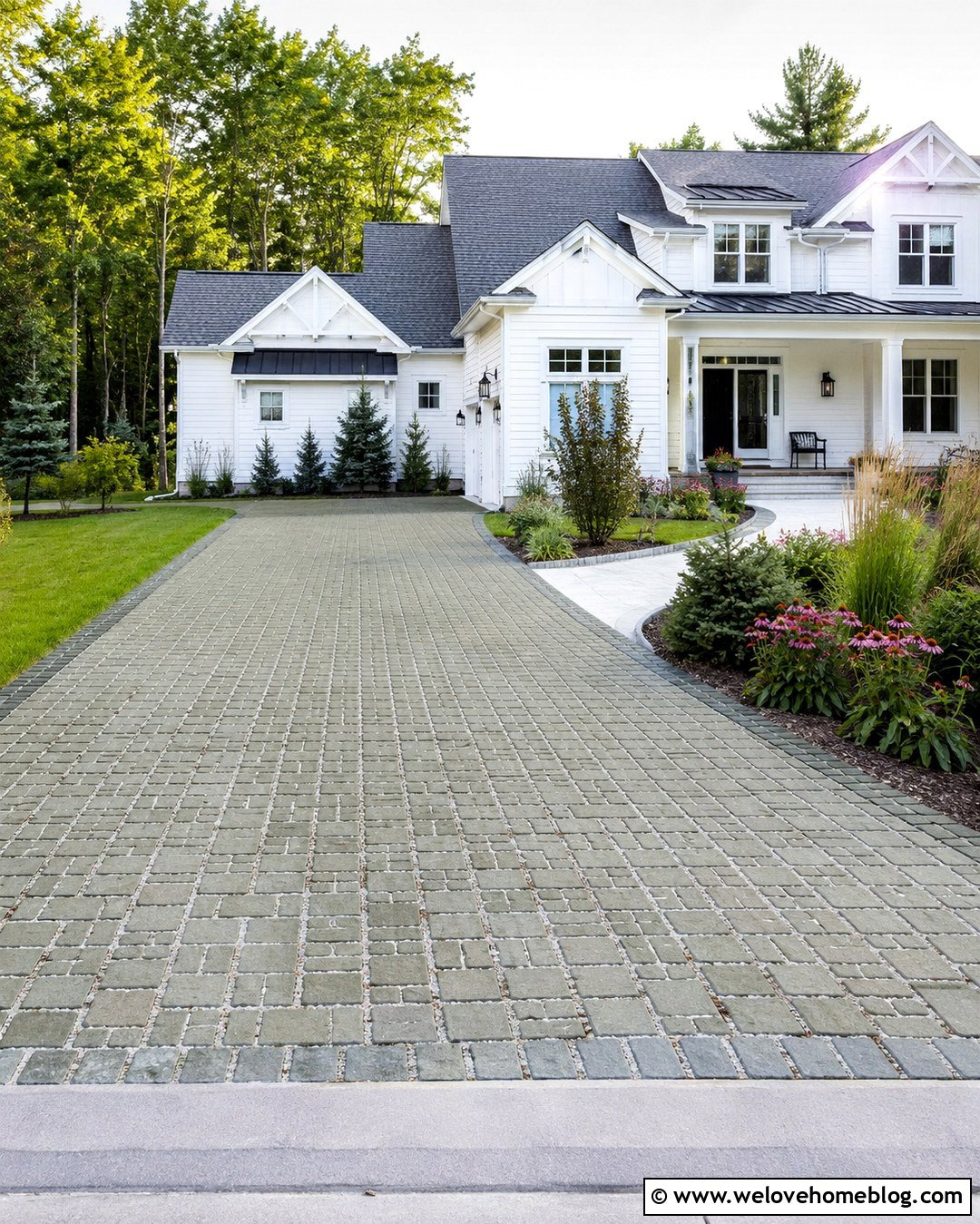
A planted driveway wall can transform a hard, sloped edge into one of the most colorful parts of the front yard. Build a warm gray stone wall beside a curved concrete paver driveway, then create a deep bed behind it rather than a narrow strip of soil. Arrange evergreen shrubs as the permanent framework and add salvia, coneflowers, catmint, and ornamental grasses for seasonal texture. Trailing plants can spill lightly over selected sections without covering the stone completely. Repeat two or three plant varieties along the driveway to create rhythm. Irrigation and drainage should be planned before planting. This complete look works especially well for cottage, craftsman, and Cape Cod homes where generous landscaping helps connect the driveway with the front walkway and porch.
15. Driveway Wall With Cascading Plants
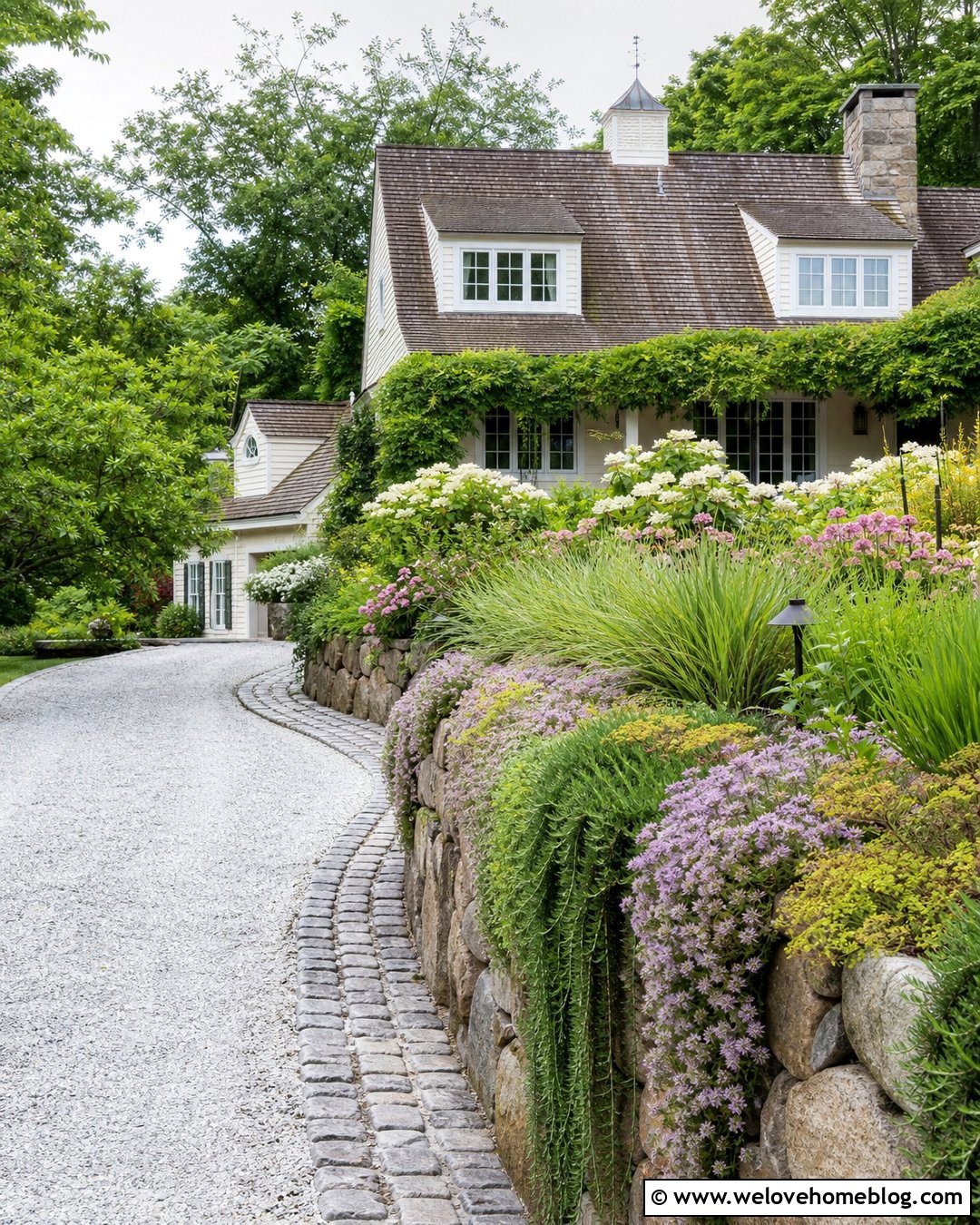
Trailing greenery softens the upper edge of a retaining wall and helps masonry settle naturally into the landscape. Combine a rough fieldstone wall with a light gray gravel driveway that curves toward a cottage-style house. Plant creeping thyme, trailing rosemary, sedum, and other climate-appropriate ground covers in pockets along the top. Mix them with upright grasses and small flowering shrubs to prevent the bed from looking flat. Allow plants to cascade in selected groups rather than forming an unbroken curtain. This keeps the wall’s attractive texture visible and makes maintenance easier. Use a broad gravel or cobblestone strip along the base to catch loose soil and leaves. The result feels lush and relaxed while still maintaining a practical, clearly defined driveway edge.
16. Driveway Wall With Built-In Planters
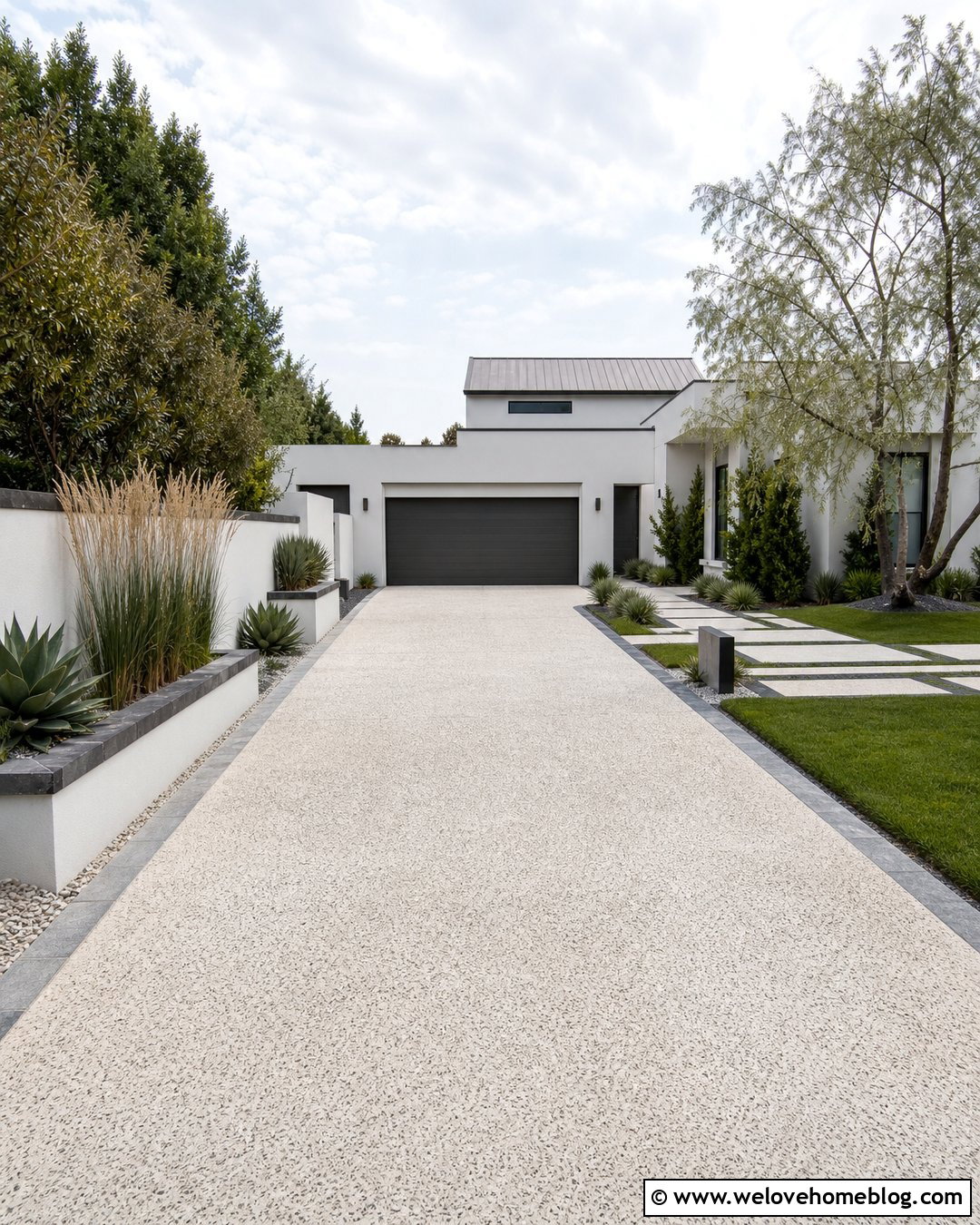
Built-in planters can break up a long wall and bring landscaping closer to the driving surface. Use smooth white concrete or stucco for a modern wall beside a pale exposed-aggregate driveway. Create rectangular planter recesses at regular intervals and fill them with sculptural grasses, compact agaves, or evergreen shrubs. Keep the planter shapes consistent with the house windows, entry steps, and other architectural lines. A dark stone cap provides contrast and protects the wall’s upper edge. Include drainage outlets that do not stain the visible finish or release soil onto the driveway. This design works best with restrained planting and a limited material palette. Too many flower colors or container shapes can compete with the wall’s crisp geometry and reduce its modern character.
17. Driveway Wall With Address Sign
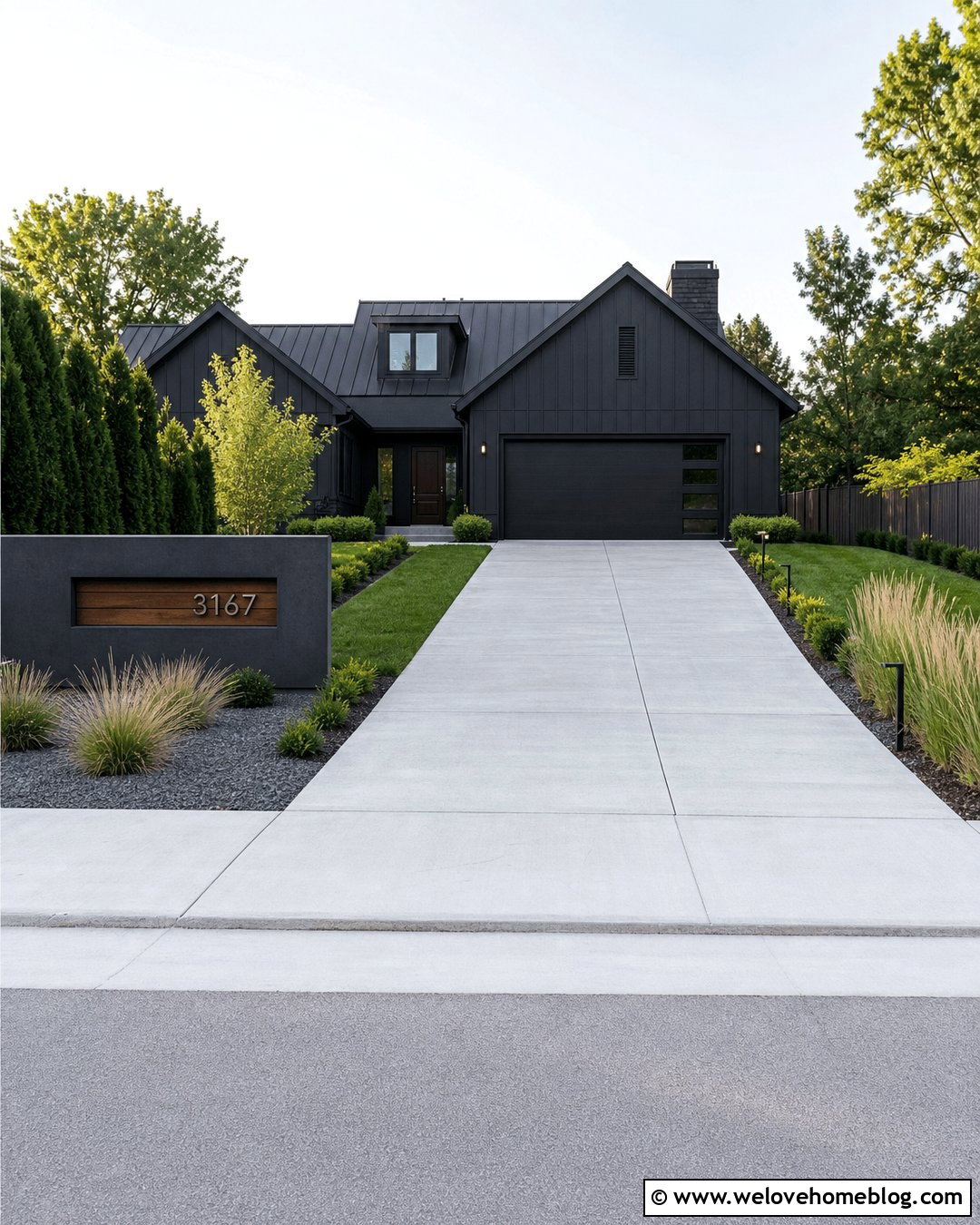
An address display built into a driveway wall can make the entrance easier to identify while supporting the overall architecture. Use a horizontal charcoal concrete wall beside a straight light-gray poured-concrete driveway. Install large, simple metal numbers on a smooth section that remains visible from the road. A narrow recessed panel in wood or lighter stone can create contrast behind the numbers. Frame the sign with low ornamental grasses and compact evergreens rather than tall shrubs that may eventually block it. Add a concealed downlight if nighttime visibility is important. The wall’s height, number size, and placement should be comfortable to read without distracting drivers. Repeat the same metal finish on the mailbox, exterior lights, and house hardware for a cohesive modern entrance.
18. Driveway Wall With Mailbox
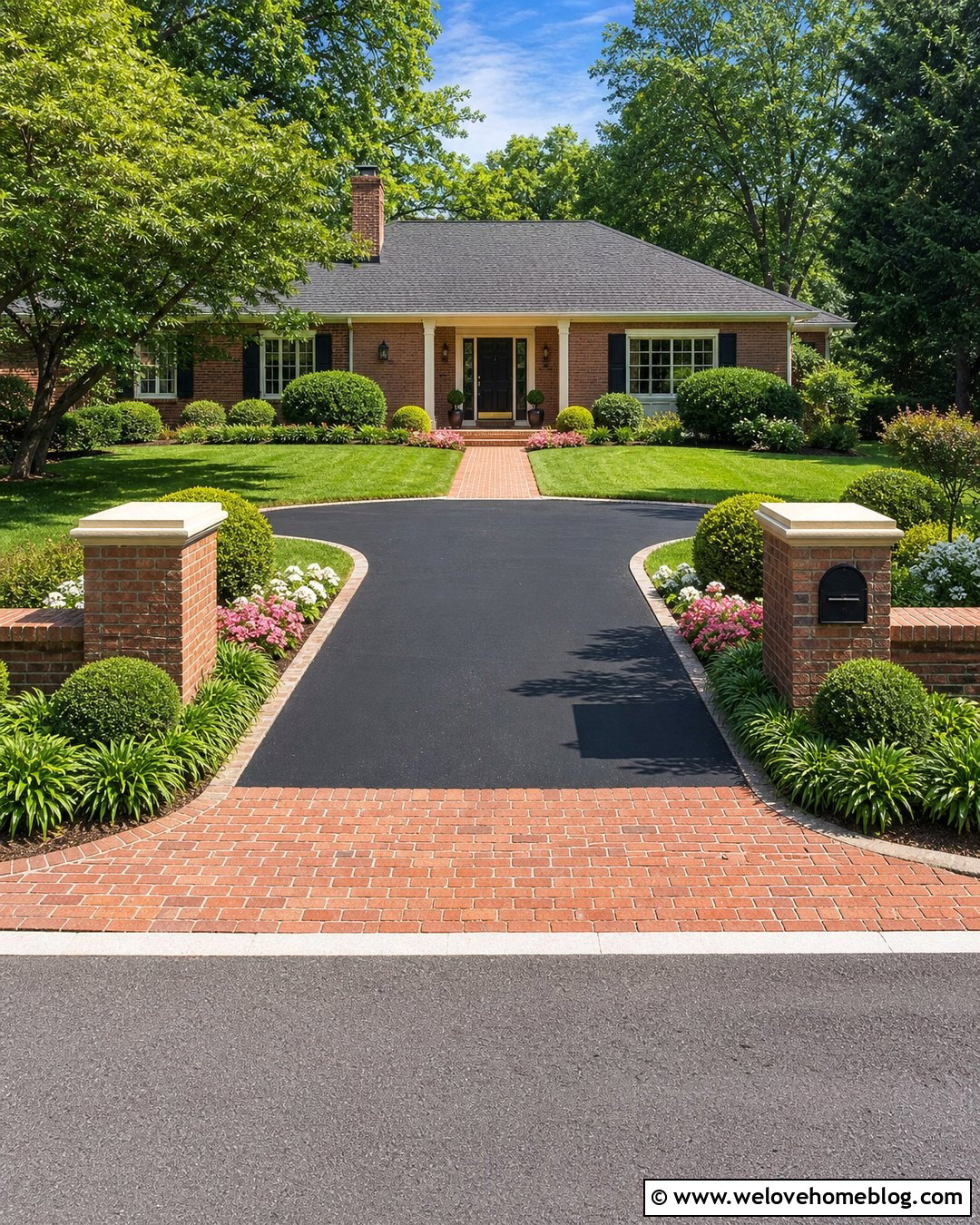
Integrating a mailbox into a low entrance wall keeps the street-facing area organized and attractive. Build the wall and mailbox surround from brick that matches a traditional home, then cap both with pale limestone. A dark asphalt driveway with a brick apron creates a clear material connection at the curb. Place the mailbox at a practical height and orientation that complies with local delivery requirements. Use low boxwoods, liriope, and seasonal flowers around the base while maintaining clear access. Continue the wall a short distance on either side to make the mailbox feel architectural instead of bulky. The design can include a separate parcel compartment when space permits. Keep all doors, hinges, and house numbers simple so they do not compete with the brickwork.
19. Driveway Wall With Steps
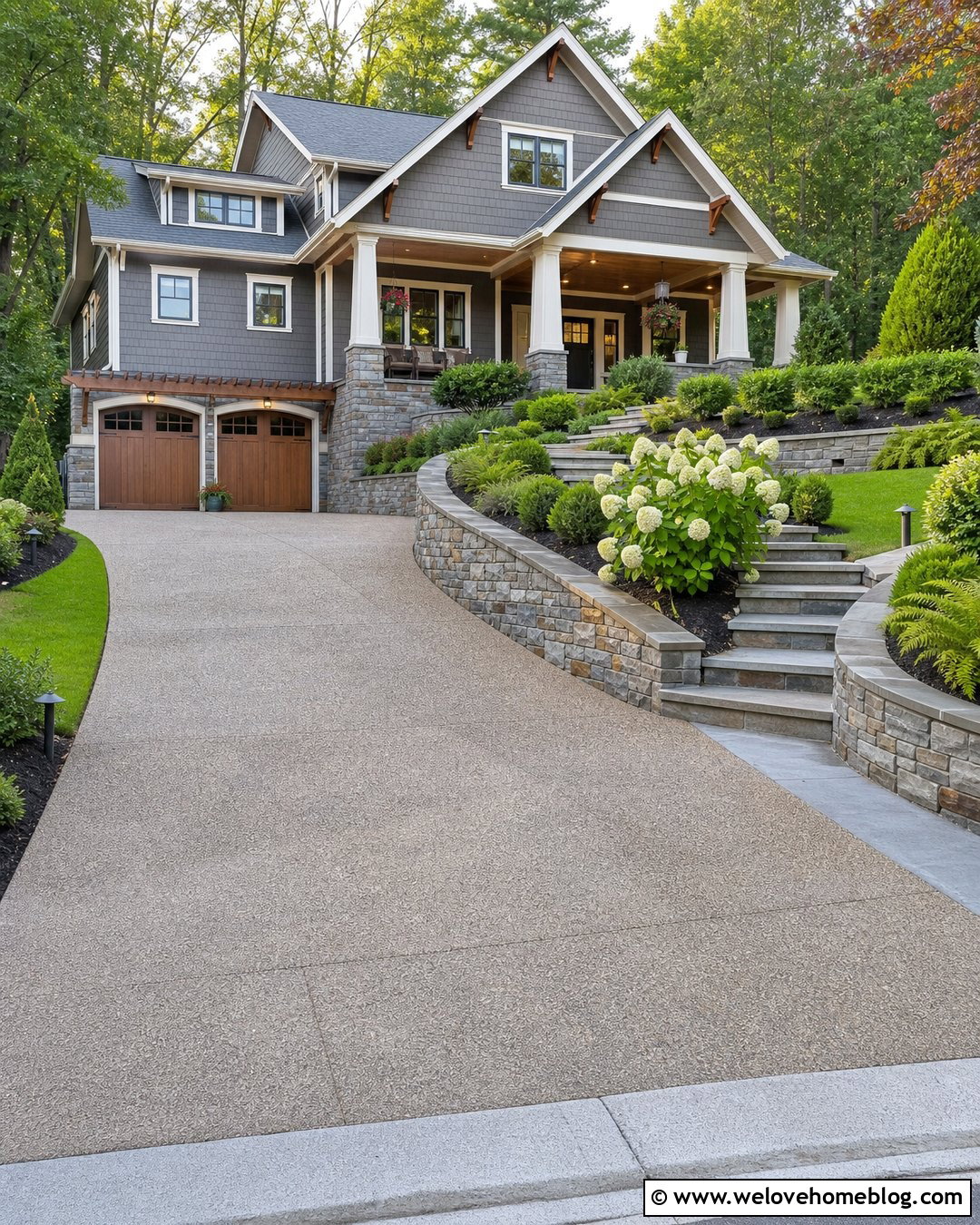
Steps built into a driveway wall provide a direct and attractive route from the parking area to an elevated front yard. Pair a natural bluestone retaining wall with an exposed-aggregate driveway and broad bluestone stair treads. Position the staircase near the primary parking space rather than forcing visitors to walk along the driveway edge. Low wall returns can frame the steps and hold planting beds filled with hydrangeas, ferns, and compact evergreens. Use consistent riser heights, comfortable tread depths, and a handrail where required. Matching pathway lights can emphasize the route without creating glare. The wall, stairs, and walkway should appear as one continuous composition. Repeating the same stone at the porch creates an especially strong connection between driveway and entrance.
20. Driveway Wall With Metal Railing
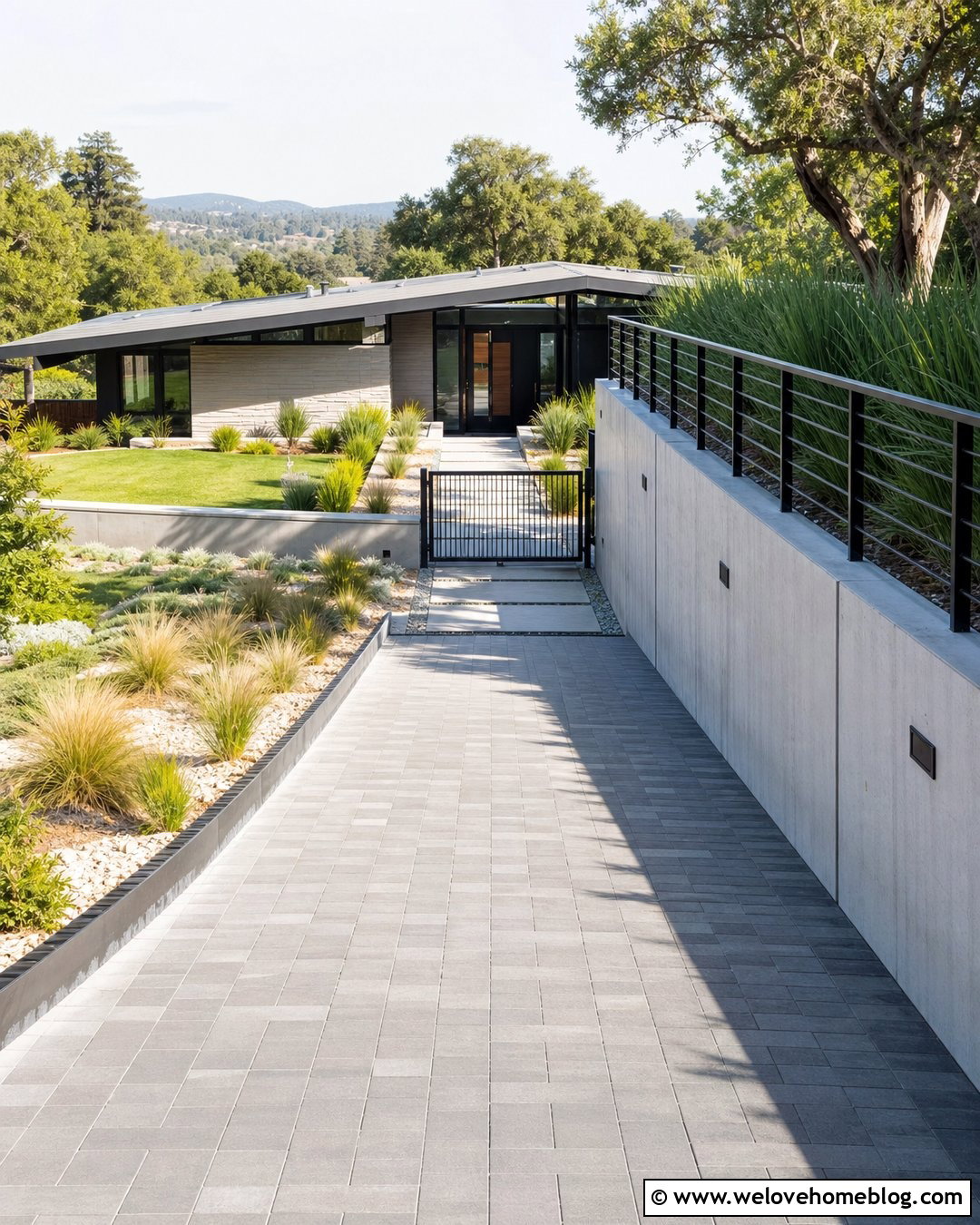
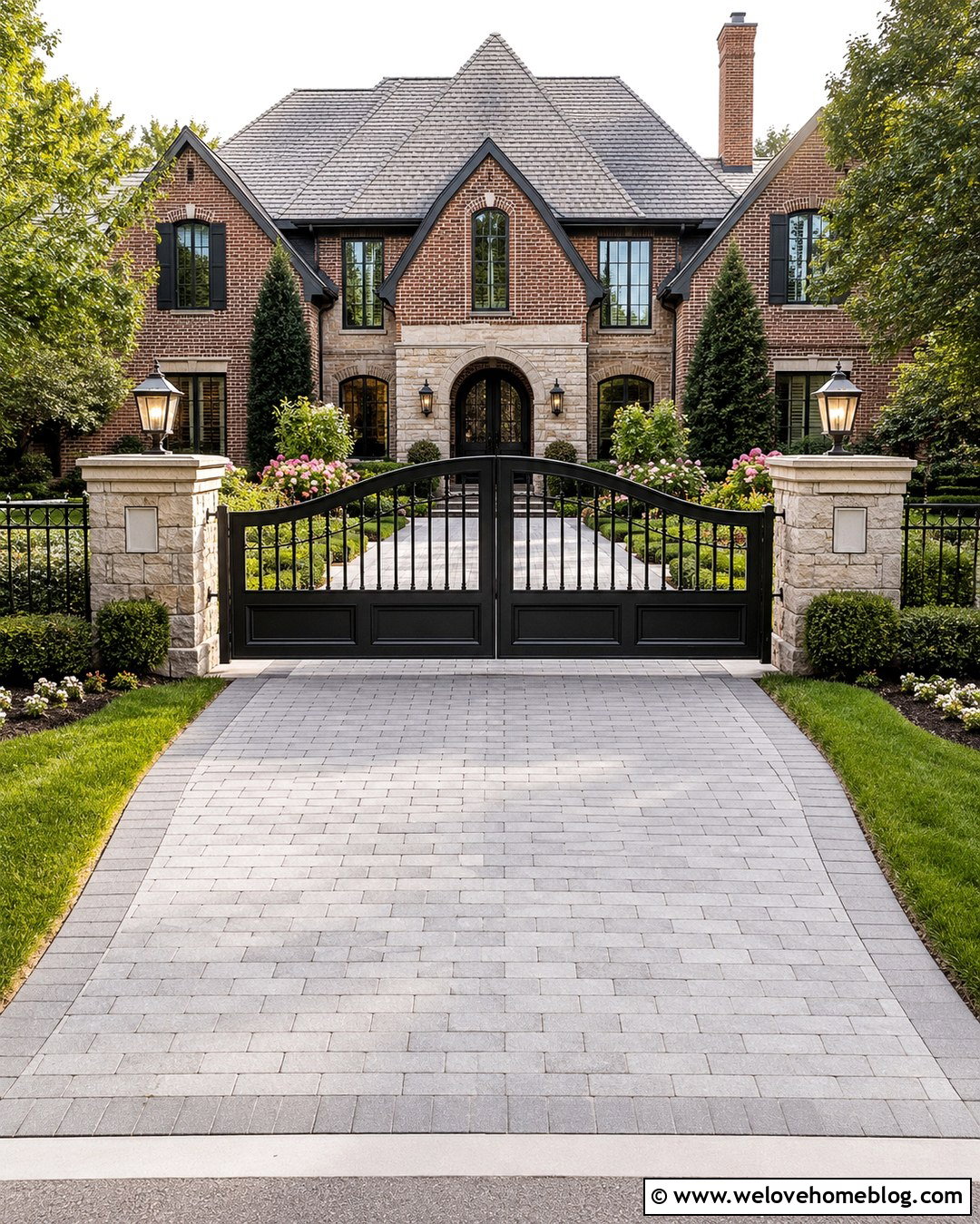
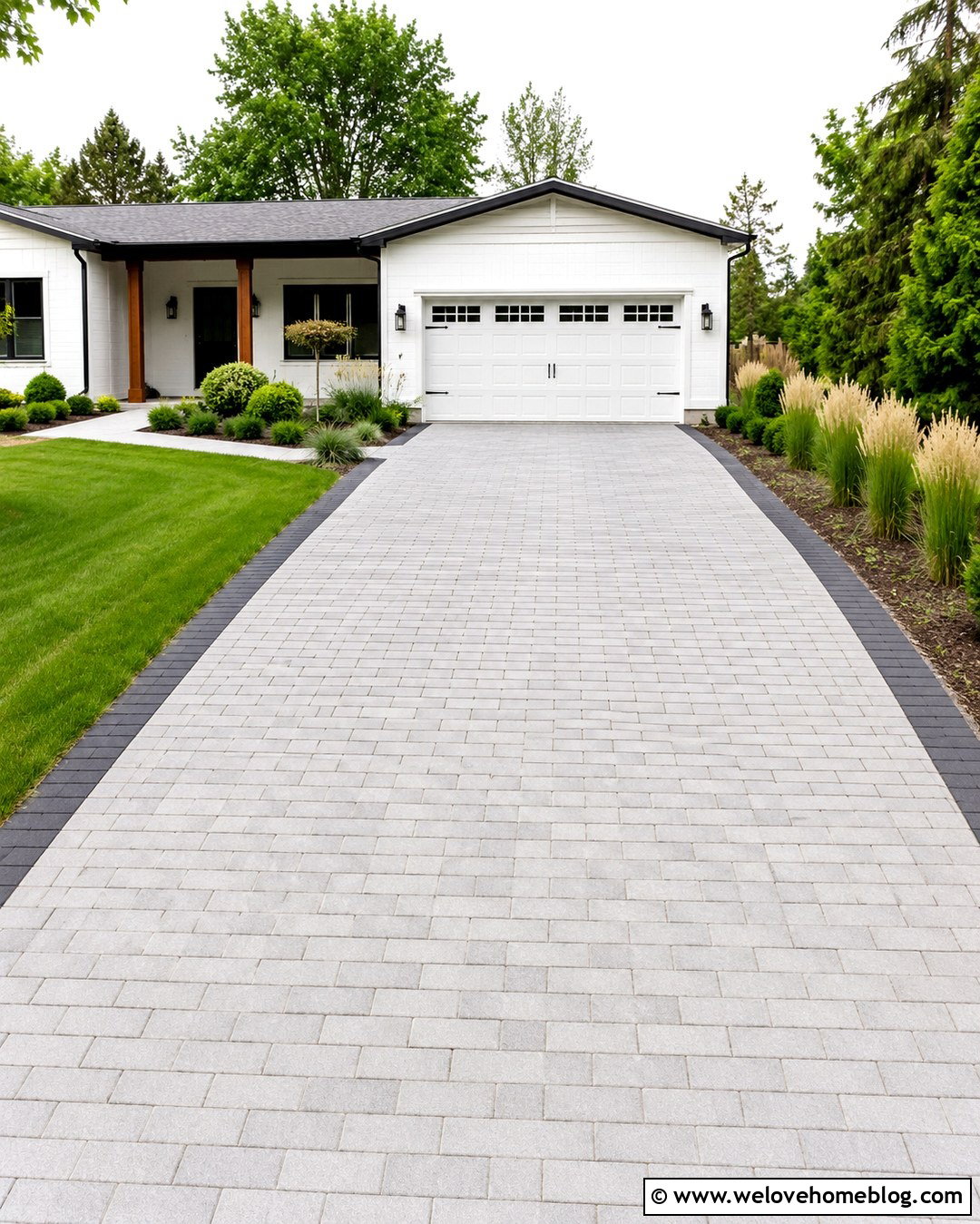
A railing can add security along the top of a retaining wall without making the driveway feel boxed in. Combine a smooth concrete wall with a slim black steel railing beside a descending gray paver driveway. Choose simple vertical bars or narrow horizontal panels that match the home’s windows and exterior hardware. Dense shrubs should not hide the railing or reduce visibility around turns. Instead, use low grasses and ground covers along the wall base. The railing posts need secure attachment points planned as part of the wall construction, not added carelessly afterward. Continue the black metal detail on a pedestrian gate, house numbers, or porch rail. This coordinated design works particularly well with modern, transitional, and updated midcentury homes.
21. Driveway Wall With Privacy Fence
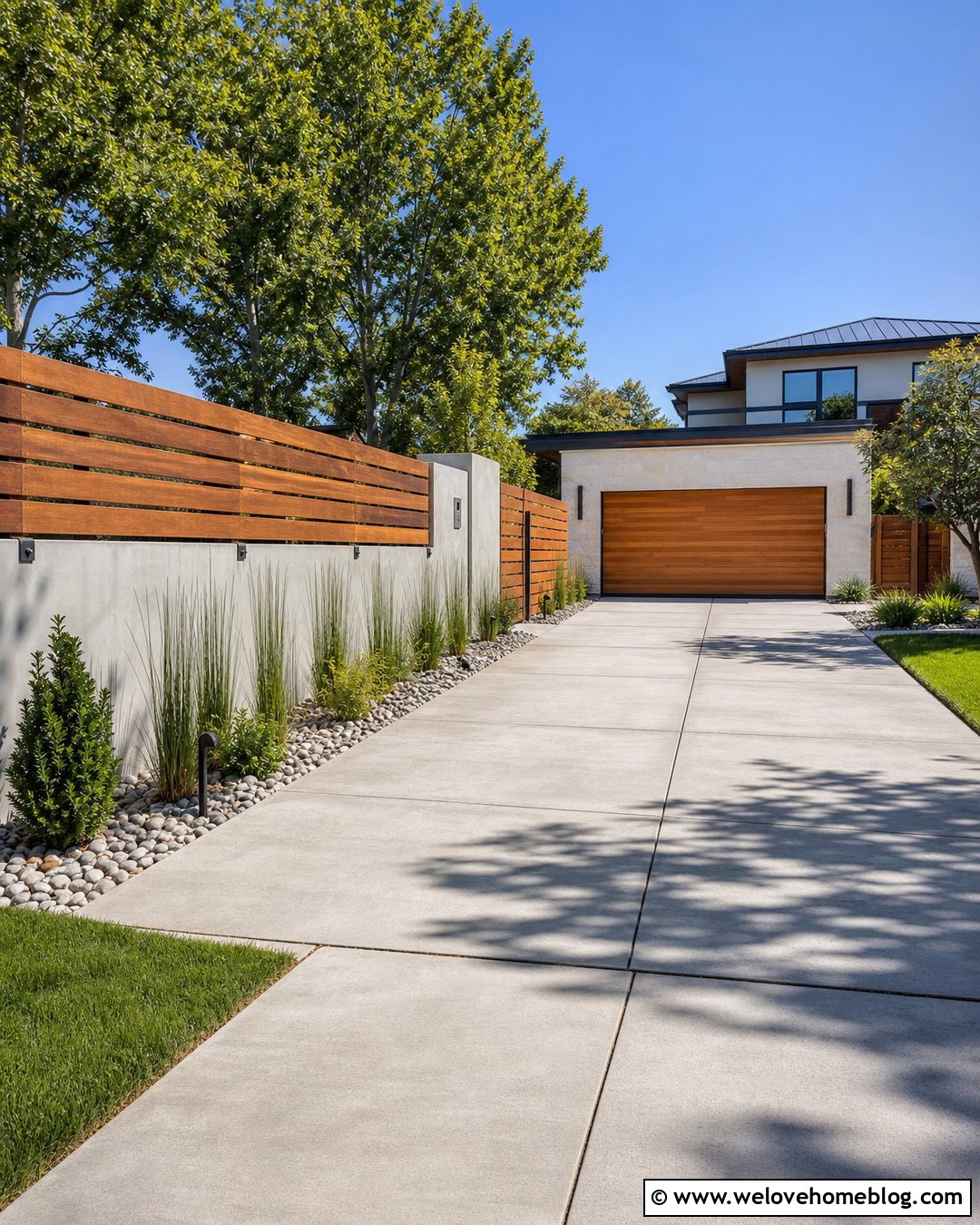
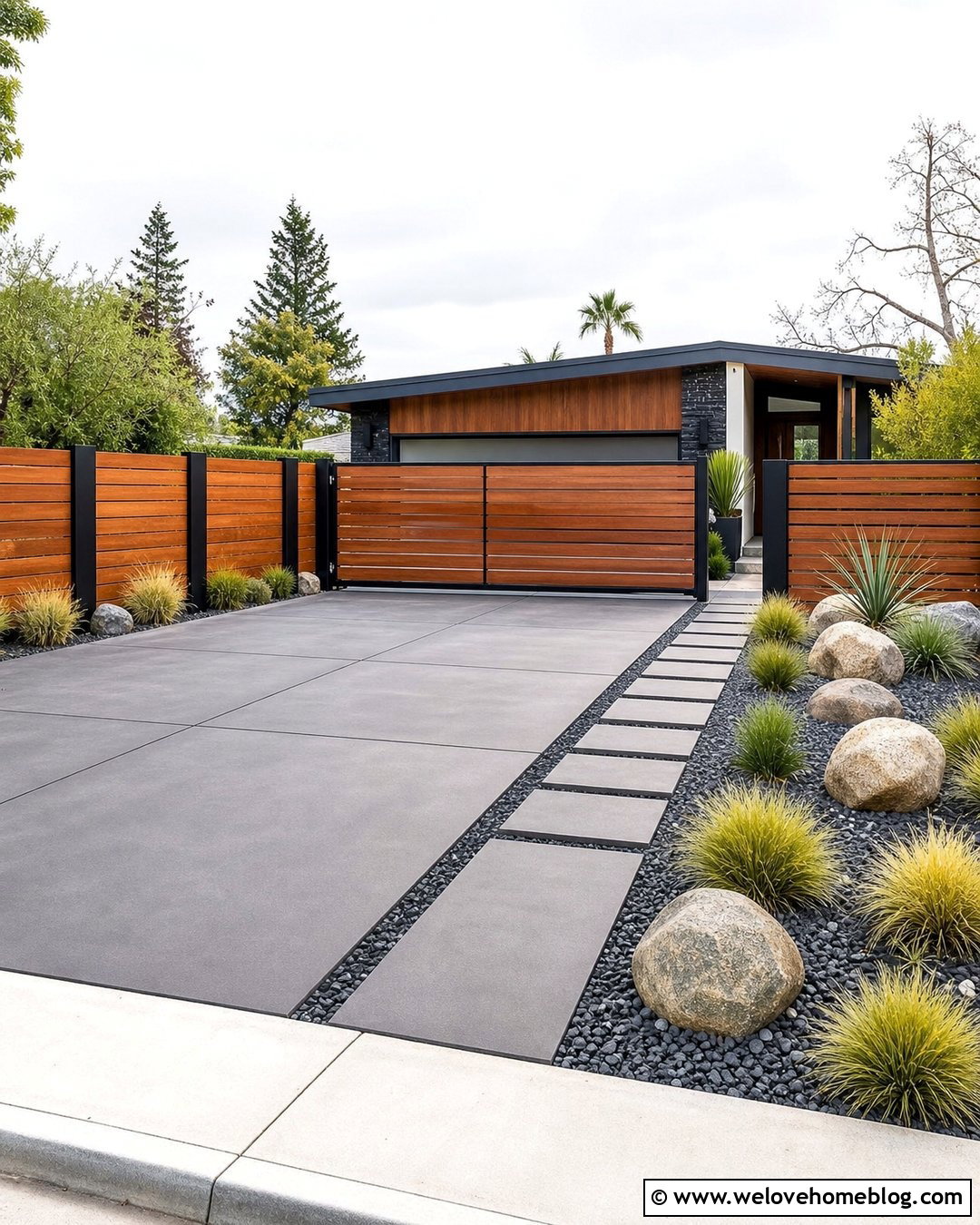
A wall-and-fence combination offers privacy without requiring a heavy masonry structure at full height. Build a low concrete or stone wall beside a straight concrete driveway, then add horizontal cedar slats above it. Leave narrow gaps between boards to reduce the appearance of a solid barrier and introduce filtered views. The warm wood contrasts attractively with cool gray paving and a modern house facade. Use a narrow planting strip containing bamboo alternatives, upright grasses, or clipped shrubs to soften the boundary. Match the fence stain to the garage door or entry accents. Keep the structure lower near the street to preserve safe visibility. Farther into the property, it can gradually rise to screen windows, patios, utility areas, or neighboring yards.
22. Driveway Wall With Hedge Border
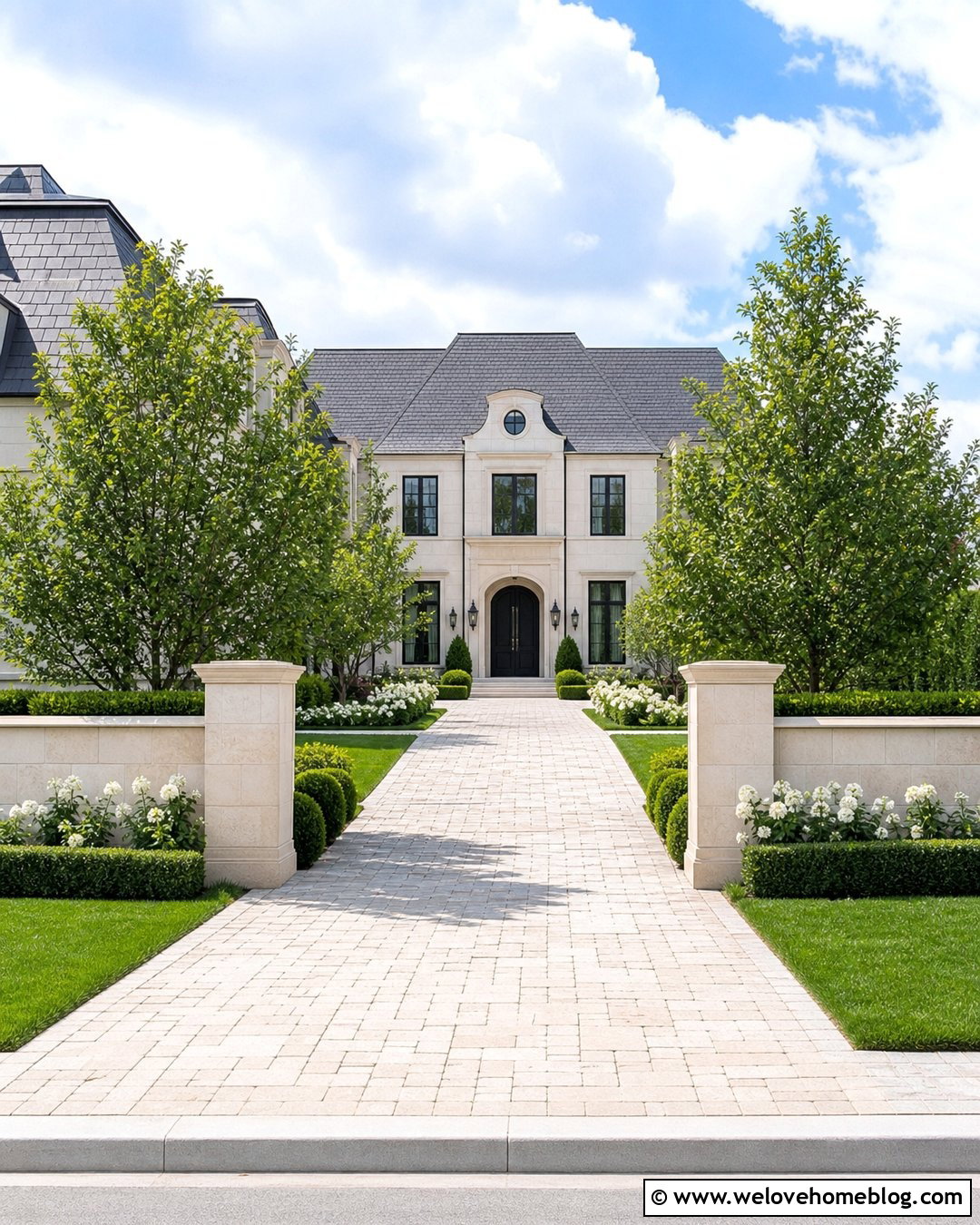
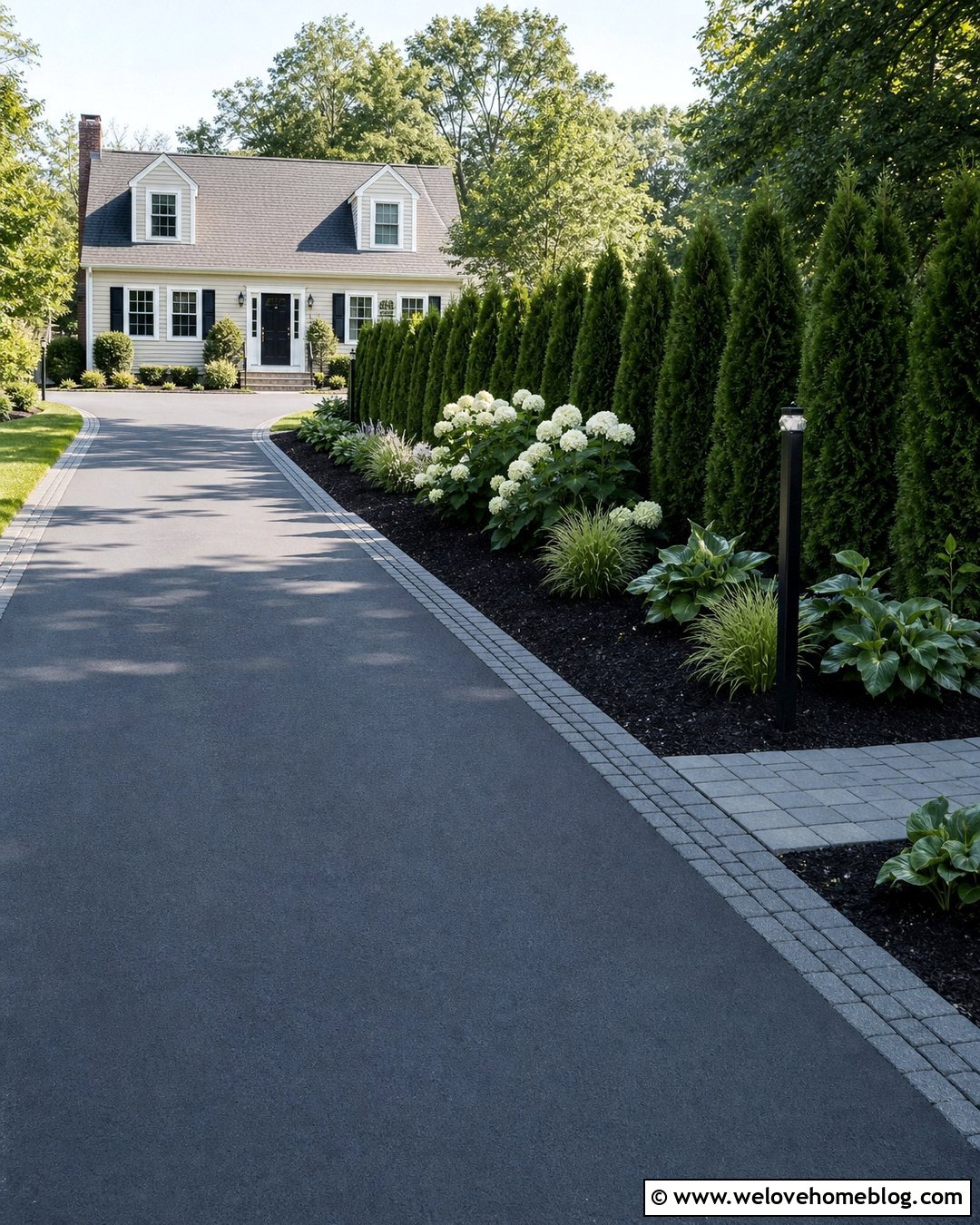
A masonry wall paired with a hedge offers clear structure at ground level and soft greenery above. Use a low limestone wall along a light concrete paver driveway leading to a traditional two-story home. Plant boxwood, yew, holly, or another regionally suitable evergreen behind the wall, allowing enough room for its mature width. A clipped hedge creates a formal entrance, while a loosely pruned hedge looks more relaxed. Add matching limestone pillars at the street and repeat the wall material around the front walkway. Regular maintenance is important because an overgrown hedge can narrow the driveway and hide the stonework. With careful proportions, this combination provides privacy, year-round color, and a polished boundary that feels less severe than a tall wall alone.
23. Driveway Wall With Black Metal Fence
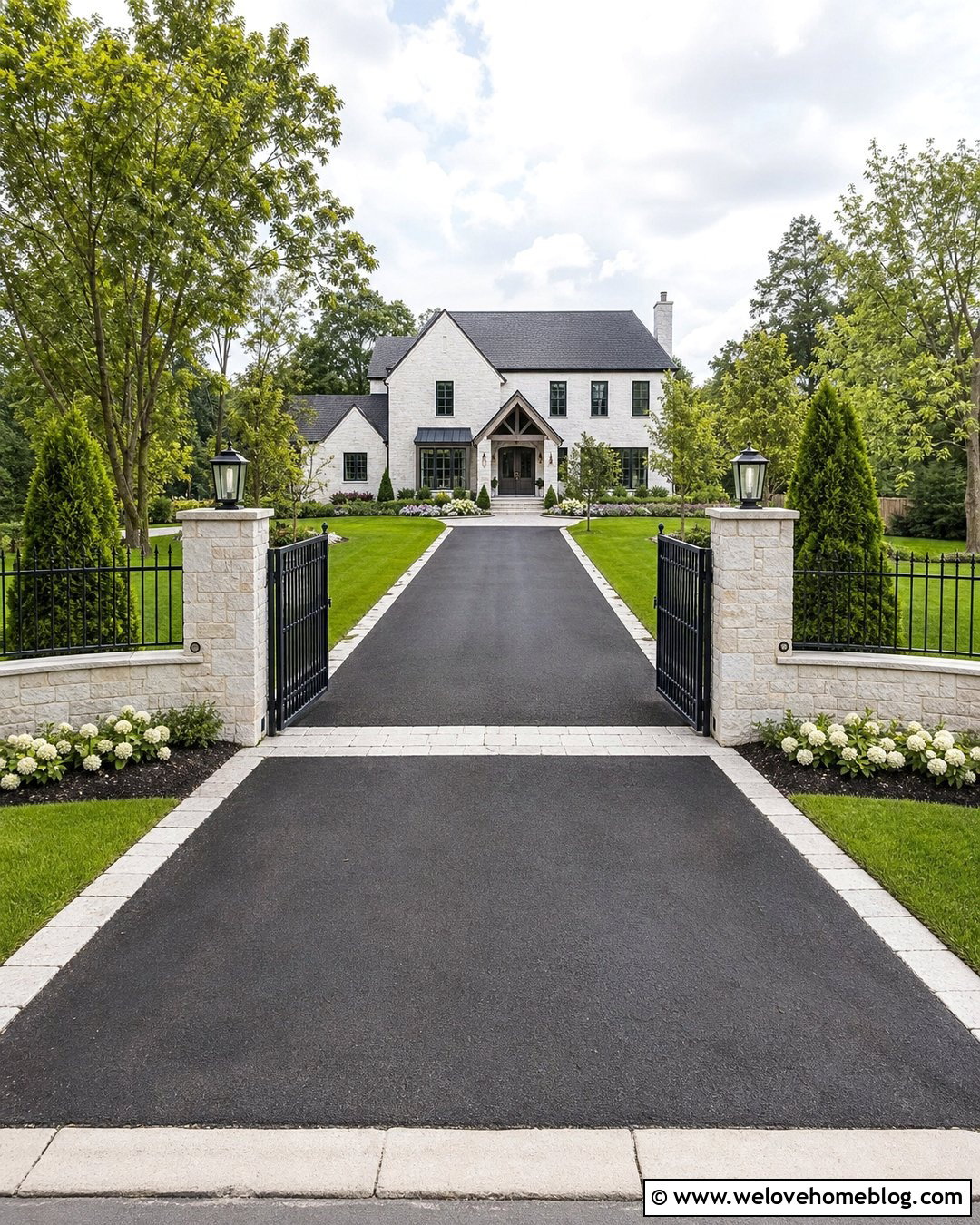
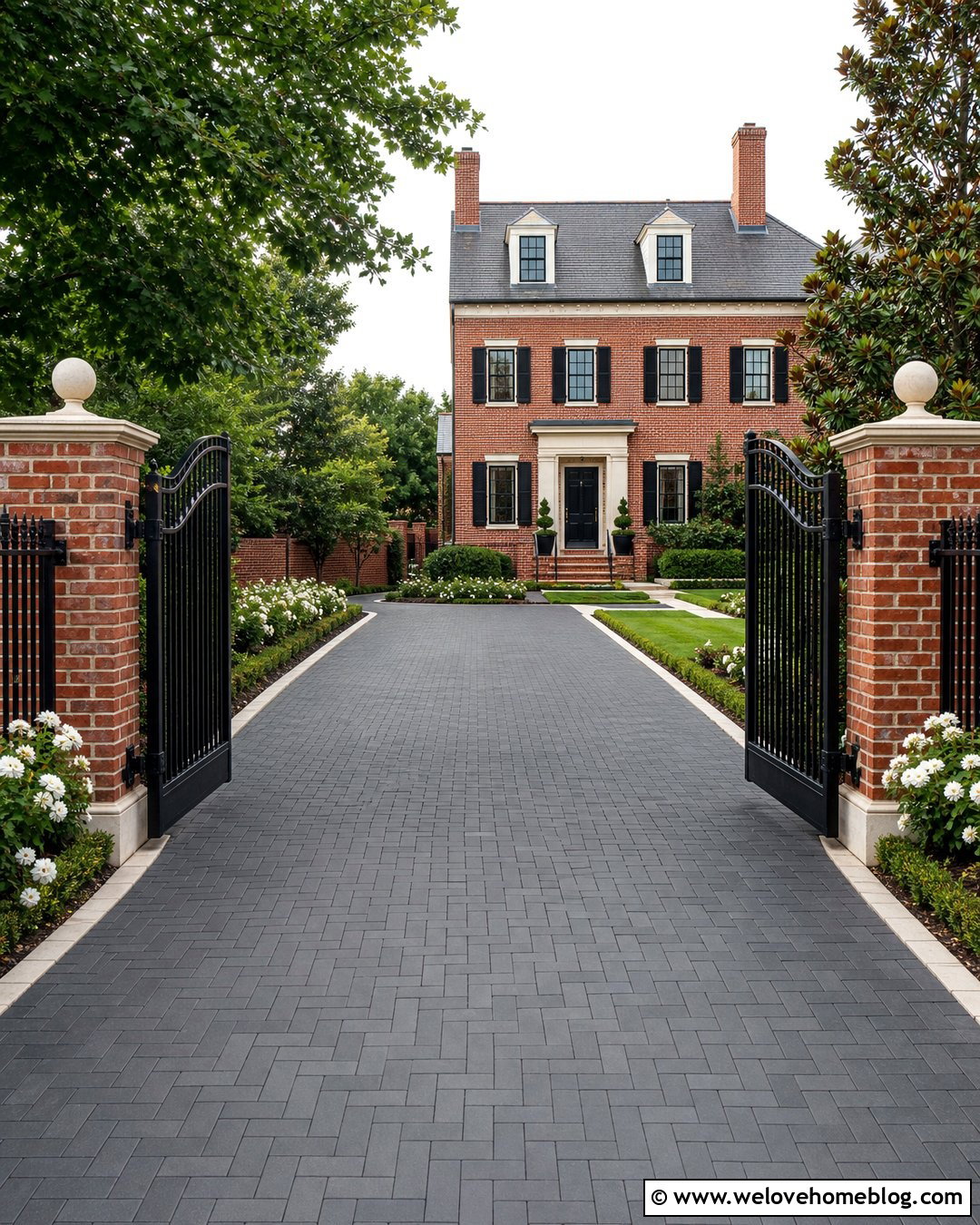
Black metal fencing set above a masonry wall creates security while preserving views of the house and landscape. Start with a low red brick or pale stone base that coordinates with the home, then install simple steel or aluminum pickets. Pair the boundary with a wide asphalt driveway and matching metal driveway gate if enclosure is required. Plant upright evergreens at the pillars and lower flowering shrubs along the wall to keep the fence visible. Avoid overly decorative scrollwork when the house has clean architecture. Square posts, straight rails, and understated caps provide a more versatile look. The open fencing allows sunlight into the planting beds and prevents the entrance from appearing overly enclosed, making it suitable for both formal traditional properties and transitional suburban homes.
24. Driveway Wall With Cobblestone Apron
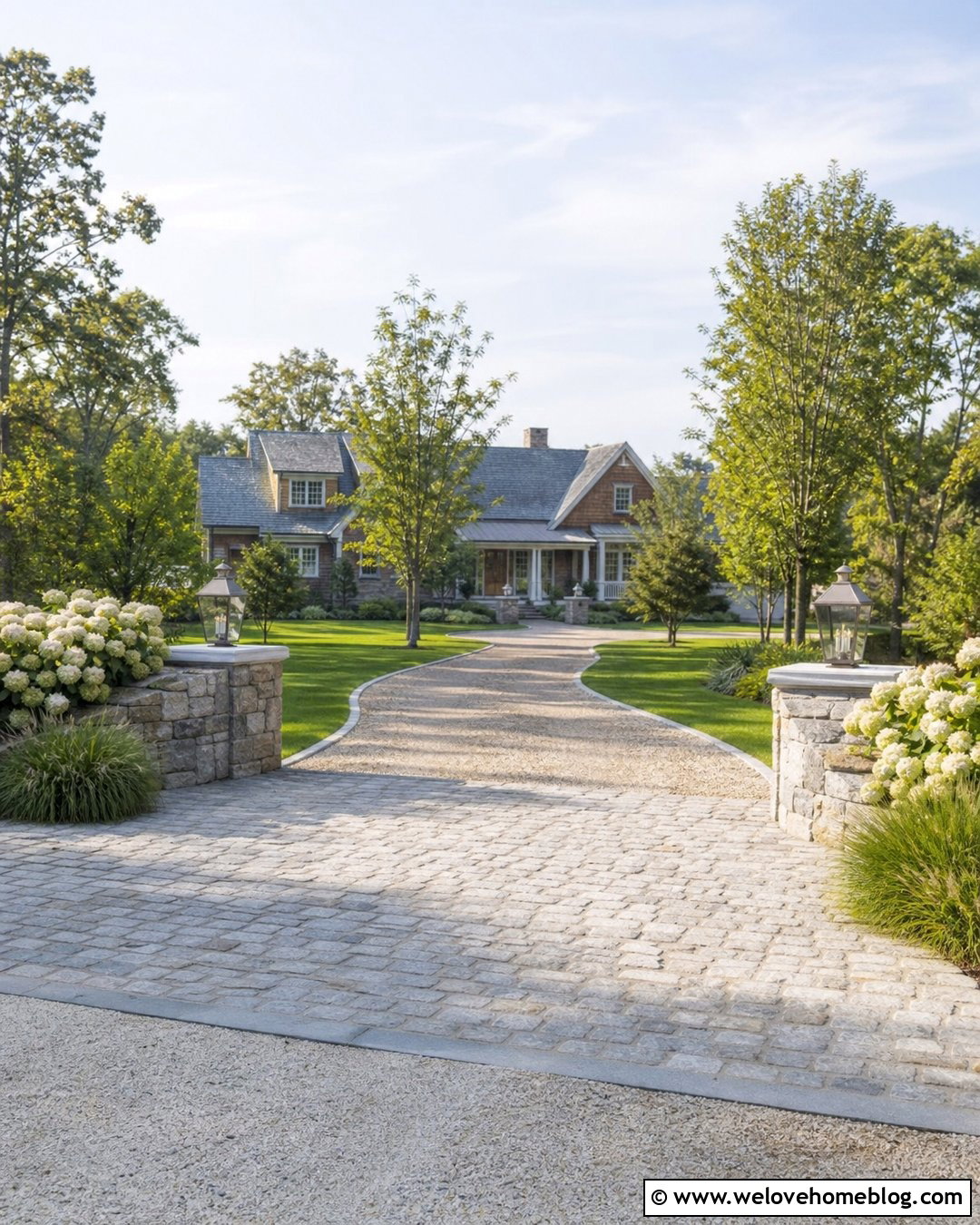
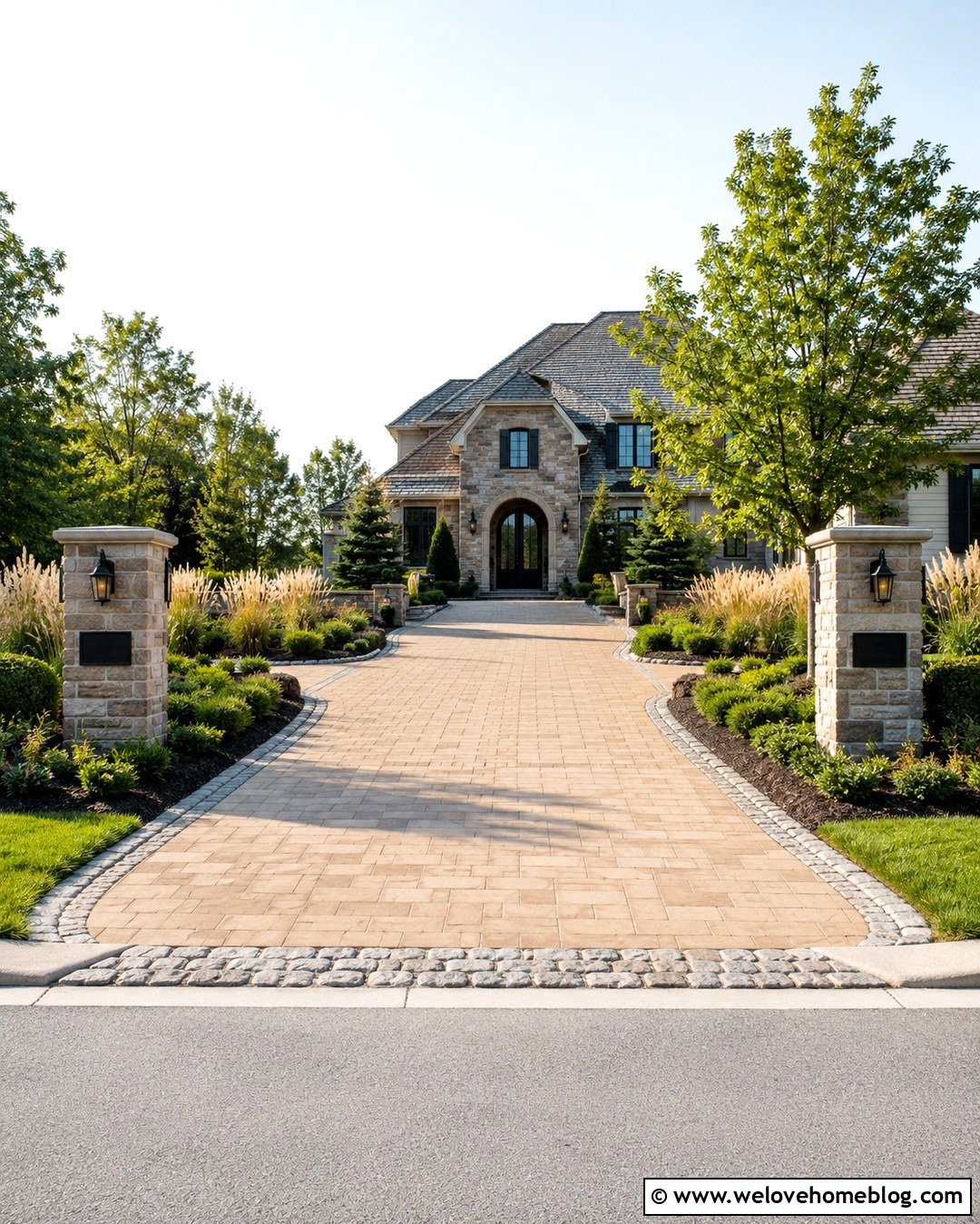
Cobblestone at the driveway entrance can connect a roadside wall to the main driving surface. Use low fieldstone walls that curve outward around a broad apron of gray granite cobbles. Continue beyond the apron with compacted gravel, asphalt, or concrete to control costs and simplify maintenance. The cobblestone transition should be wide enough to look intentional rather than resembling a narrow decorative stripe. Add symmetrical planting beds with hydrangeas, ornamental grasses, and compact trees around the wall ends. Matching stone caps and understated lanterns create a polished arrival point. This look suits country estates, craftsman homes, and traditional suburban houses. Repeating a few cobbles along the driveway edge can help tie the decorative entrance to the full approach.
25. Driveway Wall With Arched Opening
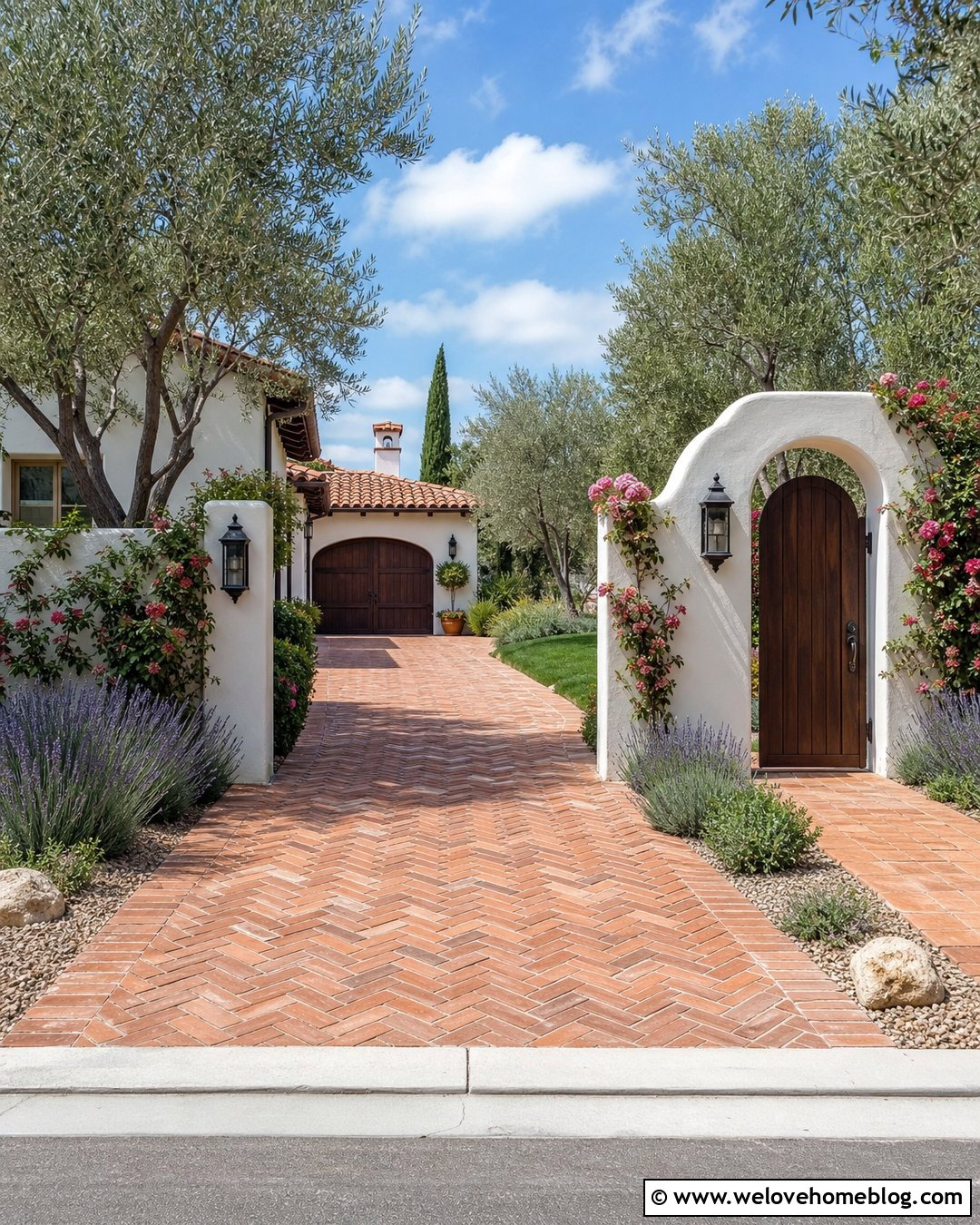
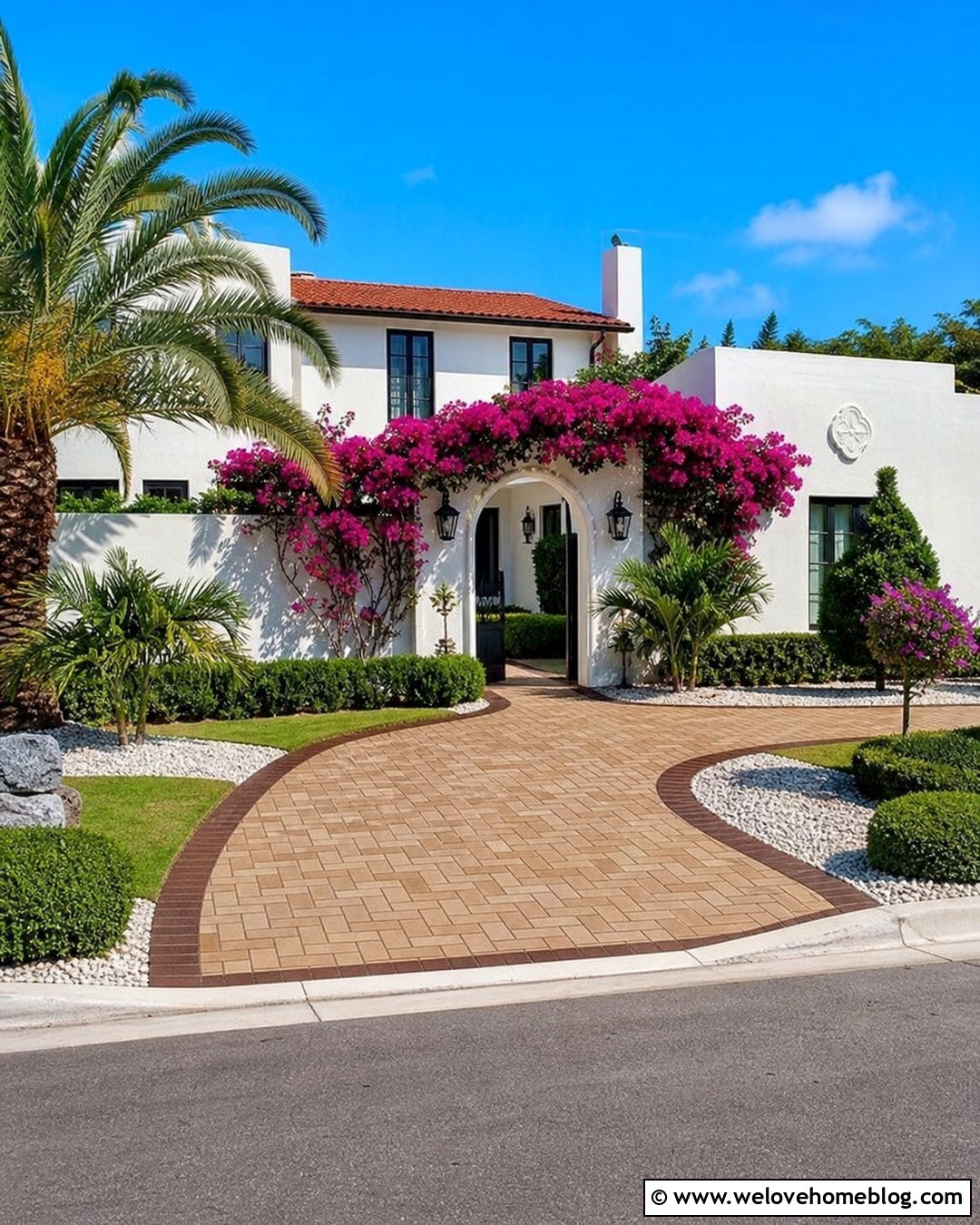
An arched opening introduces traditional character while providing pedestrian access through a driveway wall. Use warm stucco, brick, or natural stone around a straight clay brick paver driveway leading to a Spanish, Mediterranean, or English-inspired home. Position the arch beside the vehicle entrance and connect it to a walkway leading directly to the front door. A wood or wrought-metal pedestrian gate can sit within the opening. Repeat the arch shape in windows, porch openings, or garden structures so it belongs with the architecture. Climbing roses or restrained vines may soften the upper wall, but they should not hide the opening. Keep the vehicle side broad and uncluttered, allowing the decorative pedestrian entrance to provide charm without compromising driveway function.
26. Driveway Wall With Water Feature
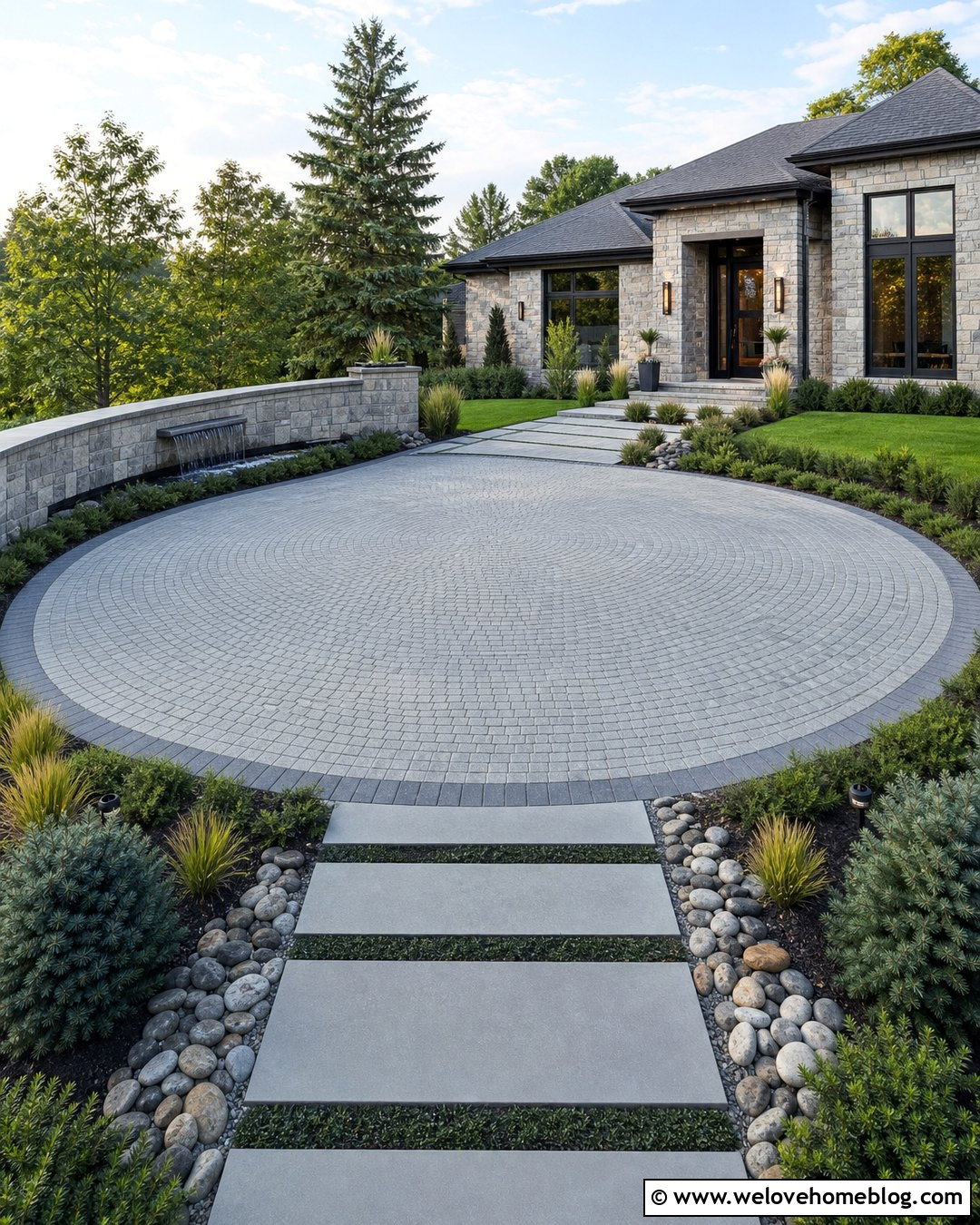
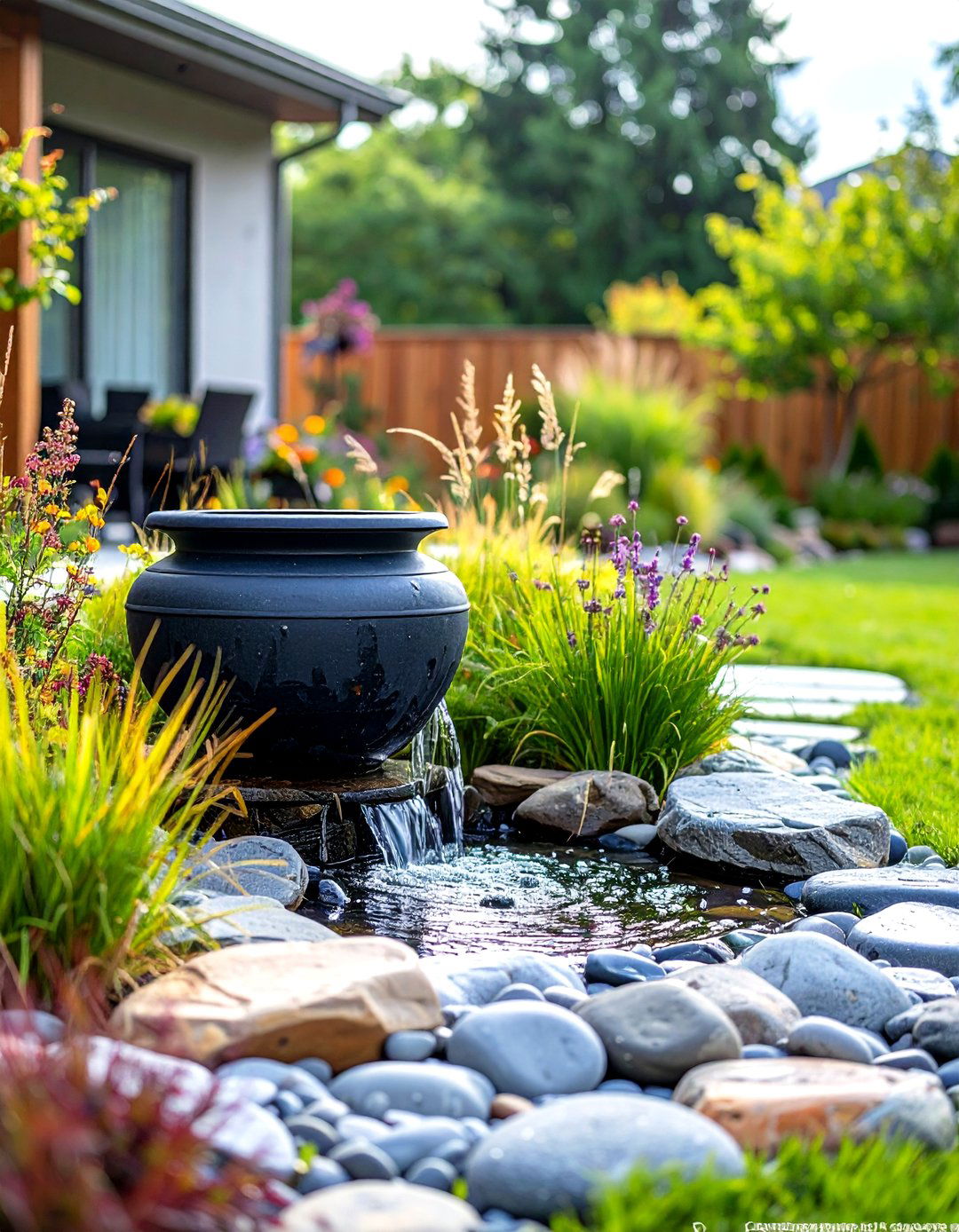
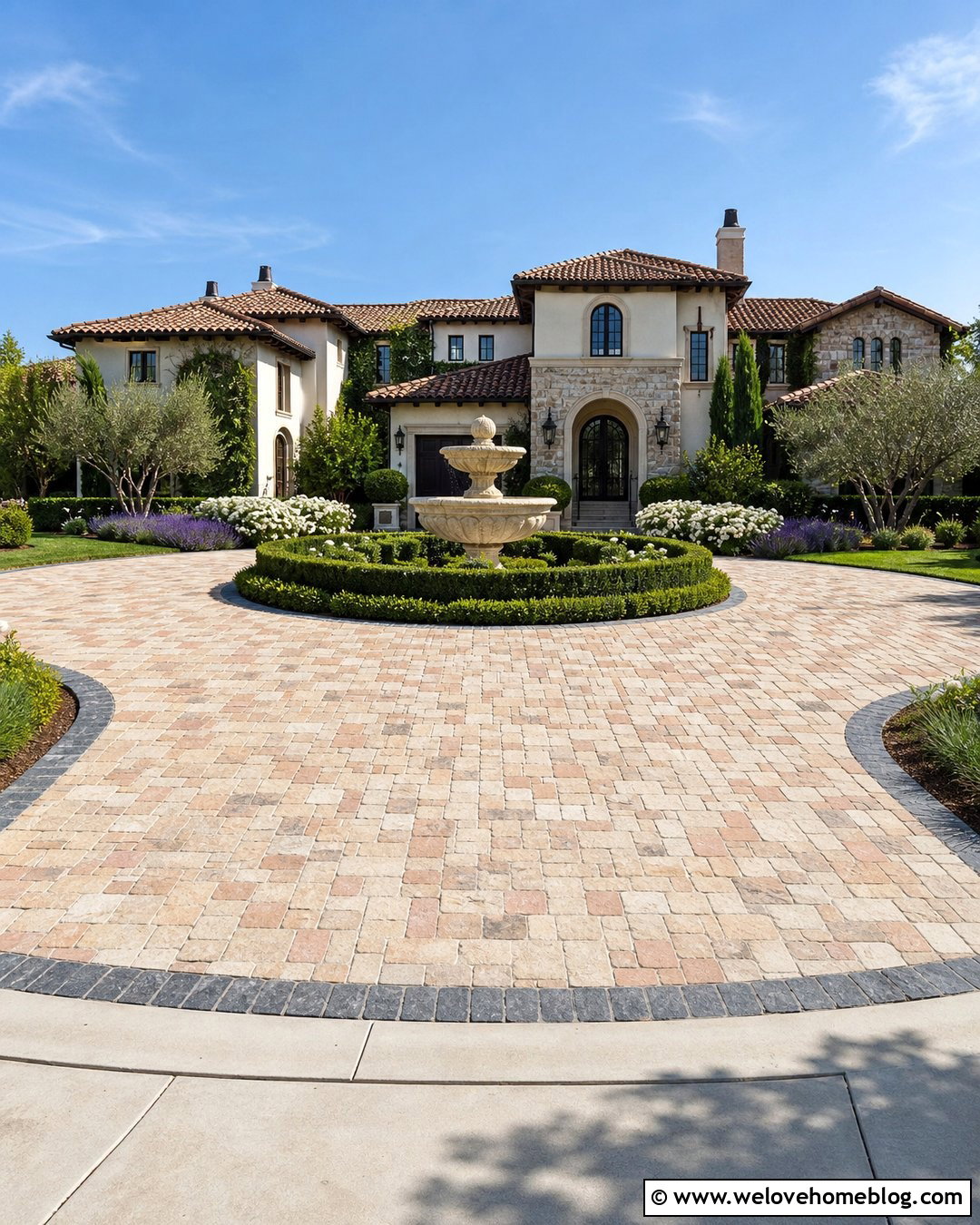
Water can turn a broad driveway wall into a memorable landscape feature when the design remains proportionate and easy to maintain. Build a smooth stone-clad wall beside a circular concrete paver driveway and integrate a narrow spillway flowing into a contained basin. Position the feature where it can be viewed from the house and arriving vehicles without placing water on the driving surface. Use river rock, evergreen ground covers, and ornamental grasses around the basin. Pumps, access panels, and drainage should be concealed but reachable for service. A simple sheet of water generally looks cleaner than multiple elaborate fountains. The driveway’s circular movement, horizontal wall, and reflective water can create a calm, upscale entrance for a contemporary or transitional home.
27. Driveway Wall With Raised Garden
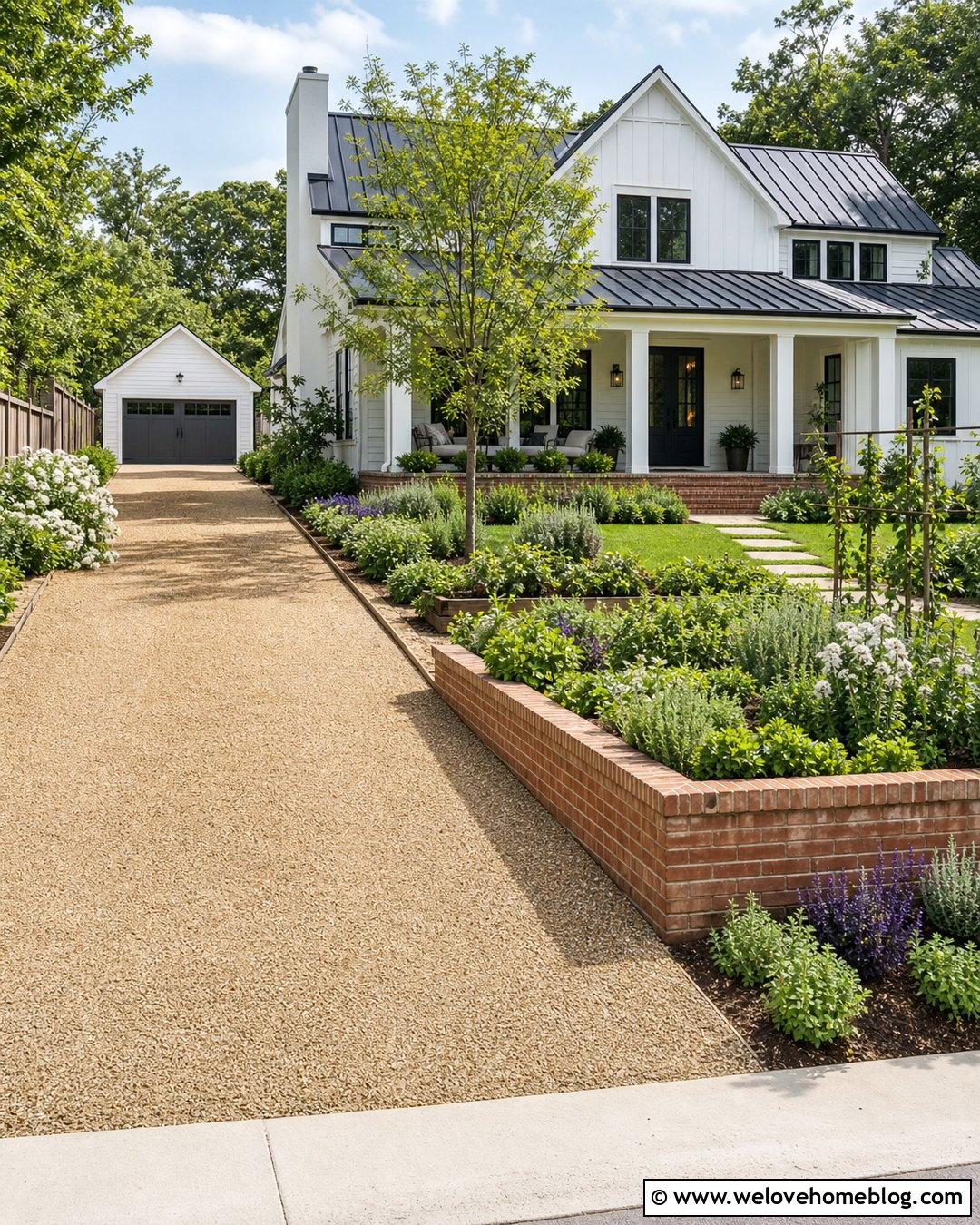
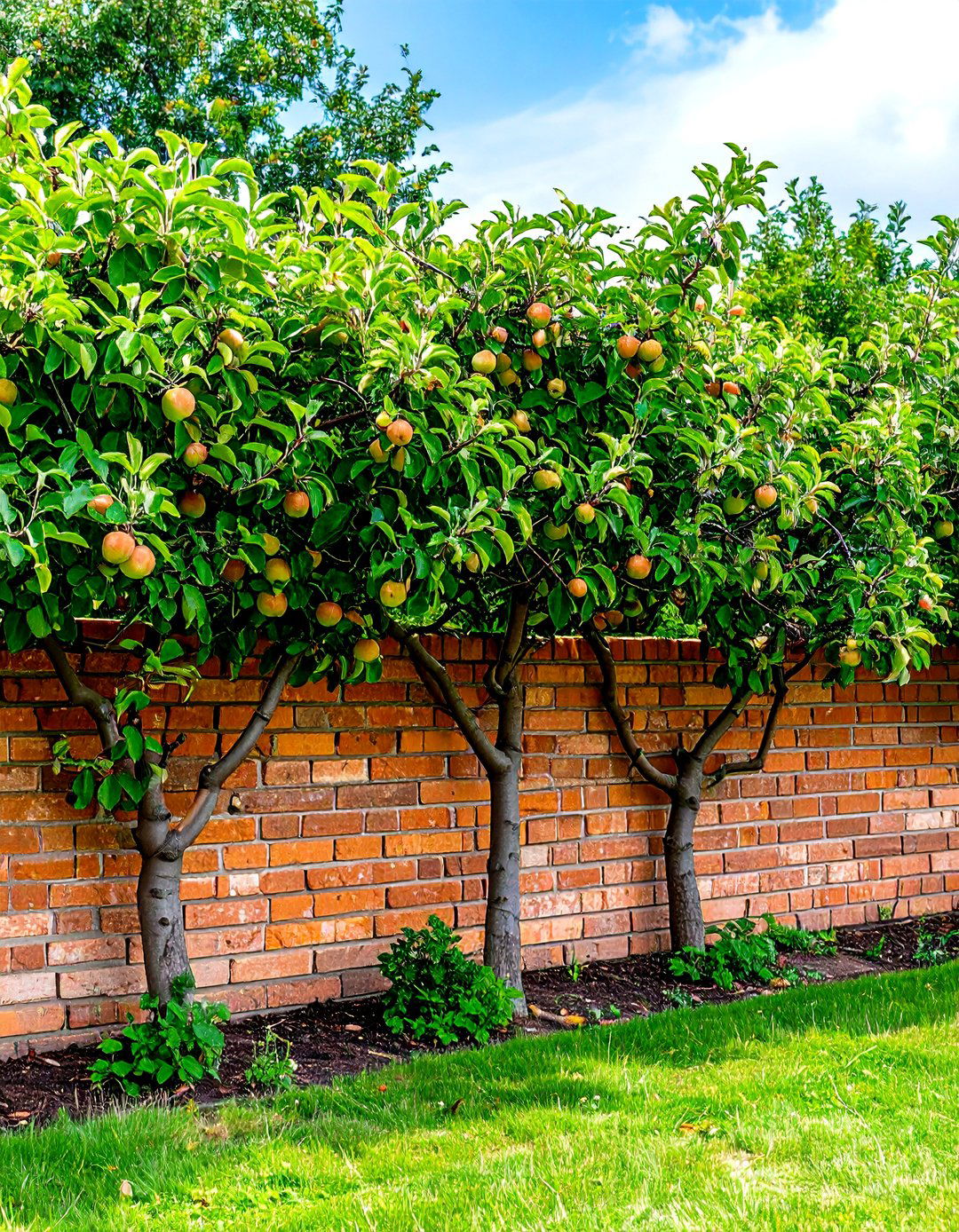
A raised garden above a low wall makes productive planting possible along a sunny driveway edge. Pair a warm brick retaining wall with a permeable gravel driveway and farmhouse-style home. Create a bed wide enough for herbs, compact vegetables, pollinator flowers, or espaliered fruit, depending on the available light and maintenance needs. Use an attractive cap that can serve as a convenient working edge. A nearby stepping-stone path provides access without requiring gardeners to stand in the driveway. Keep tall crops away from the entrance so they do not affect sightlines. Repeating the brick around the porch or walkway helps the garden feel integrated. This design combines curb appeal with useful growing space while giving a sloped or narrow front yard a clear purpose.
28. Driveway Wall With Grass Terraces
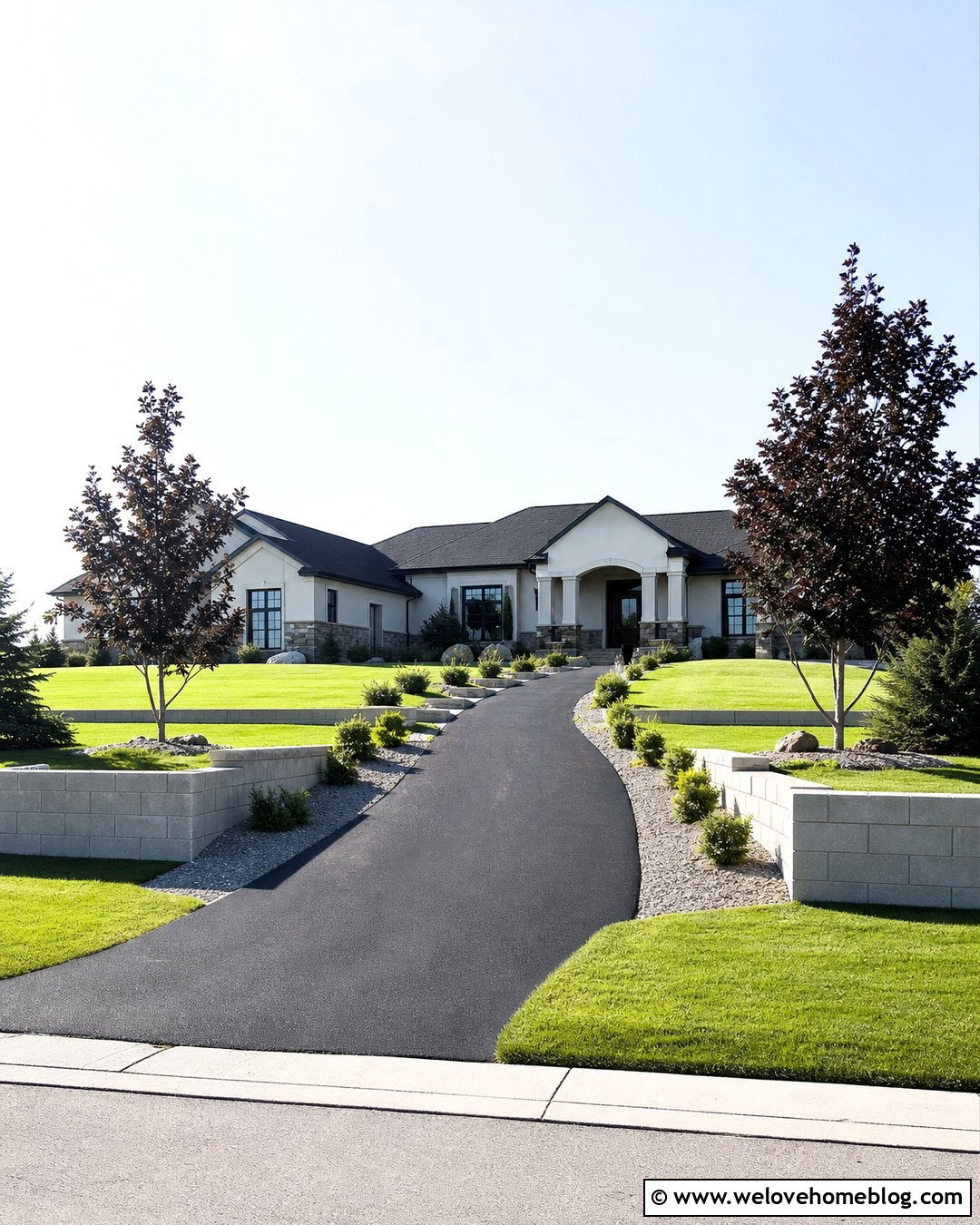
Grass terraces offer a clean solution for a broad sloping yard that needs structure without heavy planting. Use two low pale-gray block walls beside a gently rising black asphalt driveway. Create level lawn bands between the walls and add a few widely spaced ornamental trees for height. Crisp curves or straight edges should follow the driveway’s layout and the geometry of the house. A narrow stone mowing strip along each wall reduces trimming around the masonry. Keep the lawn surface slightly below the cap so soil and grass clippings do not wash onto the driveway. This restrained arrangement suits large ranch, modern farmhouse, and contemporary homes. The open green terraces make the property appear spacious while the walls quietly manage changes in elevation.
29. Driveway Wall With Mixed Stone And Brick
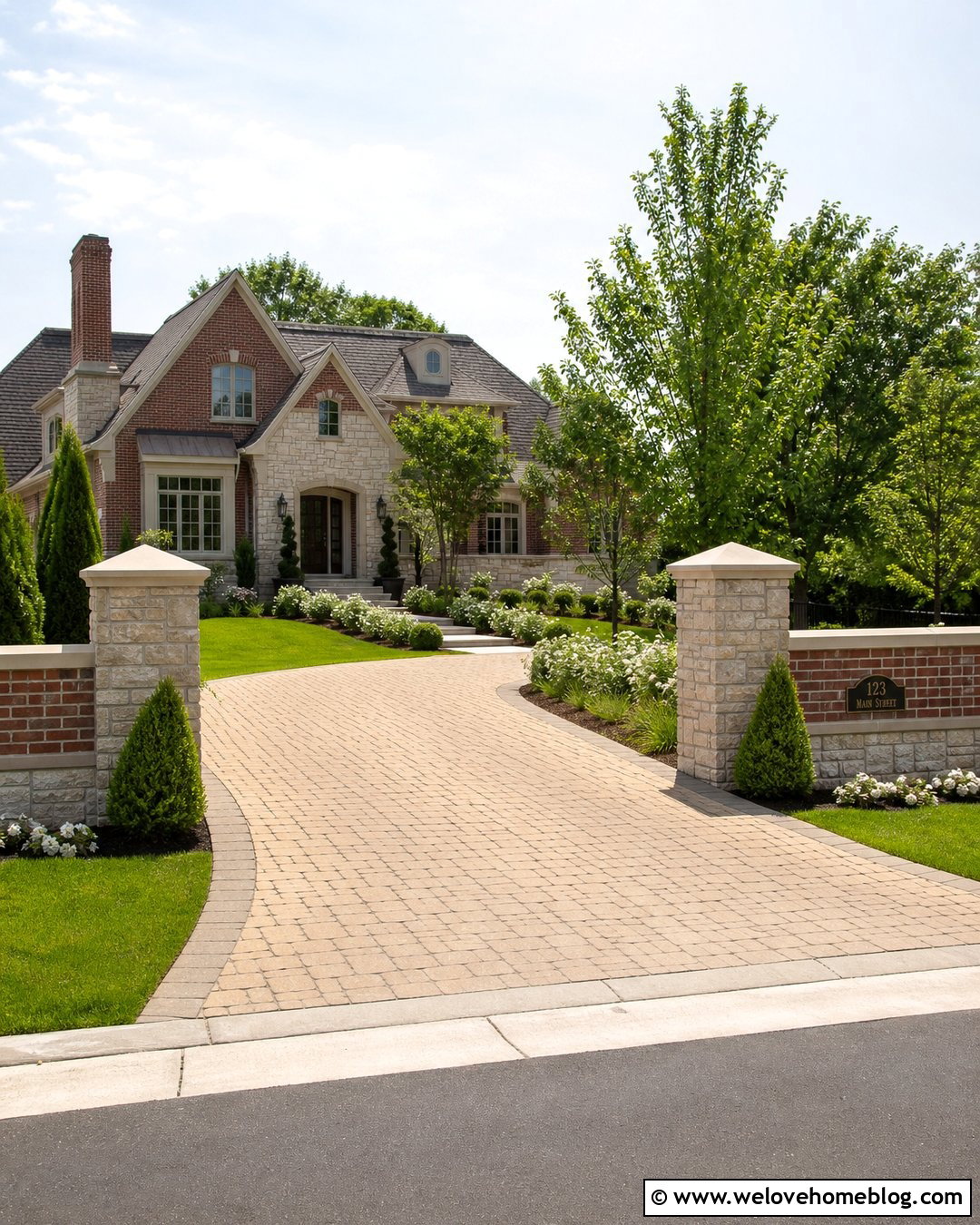
Mixing stone and brick can connect a driveway entrance to a house that already uses both materials. Build the primary wall from red or brown brick, then use natural stone for the base, pillars, or cap. A tan concrete paver driveway provides a neutral surface that allows the masonry combination to stand out. Limit the palette to two wall materials and one main paving color to prevent visual clutter. Plant simple groups of evergreen shrubs, white flowering perennials, and small trees around the entrance. Repeat the brick near the garage and the stone around the front steps. The most successful mixed wall looks planned from the beginning, with consistent joint widths, balanced proportions, and colors taken directly from the home’s exterior.
30. Driveway Wall With Matching House Materials
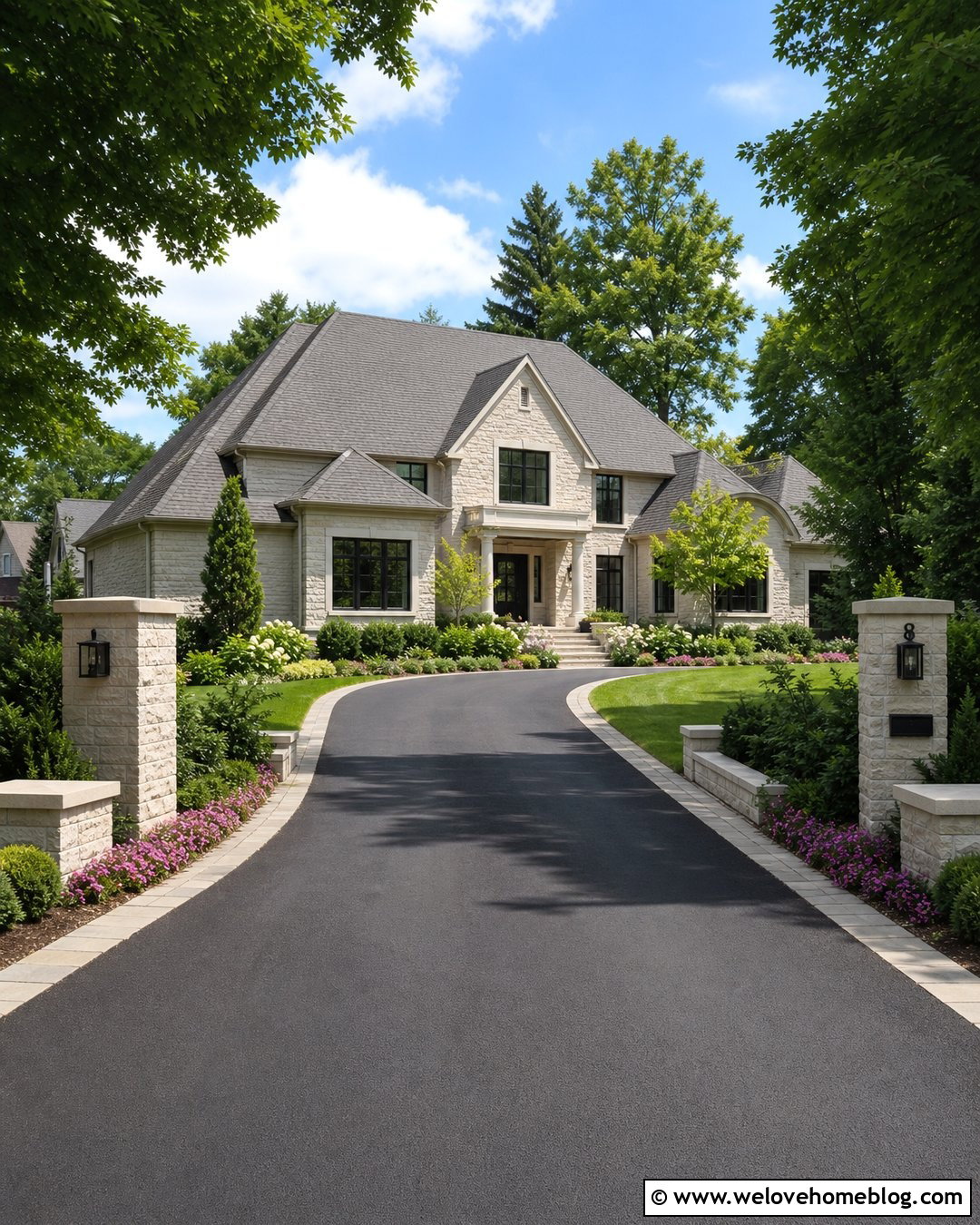
One of the most reliable approaches is to repeat materials already present on the home. A house with limestone siding might use a limestone driveway wall, while a brick home can carry matching brick into its entrance pillars and borders. Pair the wall with a driveway surface that provides gentle contrast, such as dark asphalt beside pale stone or warm concrete pavers beside red brick. Use the same cap material found on porch columns, steps, or window sills. Landscaping should support this continuity with repeated shrubs and coordinated planting beds from the curb to the front door. Exact matching is not always possible, but similar undertones are essential. This complete design makes the wall appear architecturally connected instead of added as a separate landscape project.
Conclusion:
The strongest 30 Driveway Wall Ideas combine appearance, access, landscaping, and practical site requirements in one coordinated plan. Natural stone and boulders suit relaxed landscapes, while smooth concrete, gabions, and metal details create a cleaner modern look. Brick, stucco, and formal pillars can reinforce traditional architecture. Before selecting a design, consider the driveway’s width, slope, drainage, vehicle clearance, entrance visibility, and relationship to the house. Retaining walls that support significant soil or sit near vehicle loads may require professional engineering and local approval. () Whatever material you prefer, repeat its colors elsewhere in the landscape and surround it with appropriately scaled planting. That coordination will make the entire driveway feel attractive, purposeful, and complete.

Related posts:
Leave a Reply