
Choosing a driveway surface is about more than finding a place to park. The right material can improve drainage, support daily traffic, complement the house, and make the entire front yard feel more polished. These 20 Driveway Surfaces Ideas explore practical options for different climates, budgets, maintenance preferences, and home designs. You will find familiar choices such as concrete, asphalt, gravel, and brick, plus permeable pavers, resin-bound gravel, natural stone, and mixed-material layouts. Each look considers the complete driveway, including its shape, edging, planting, and connection to the entrance. Before installation, always evaluate the soil, slope, drainage, and local requirements. Use these 20 Driveway Surfaces Ideas to compare complete designs and discover which approach suits your property.
1. Broom Finish Concrete Driveway
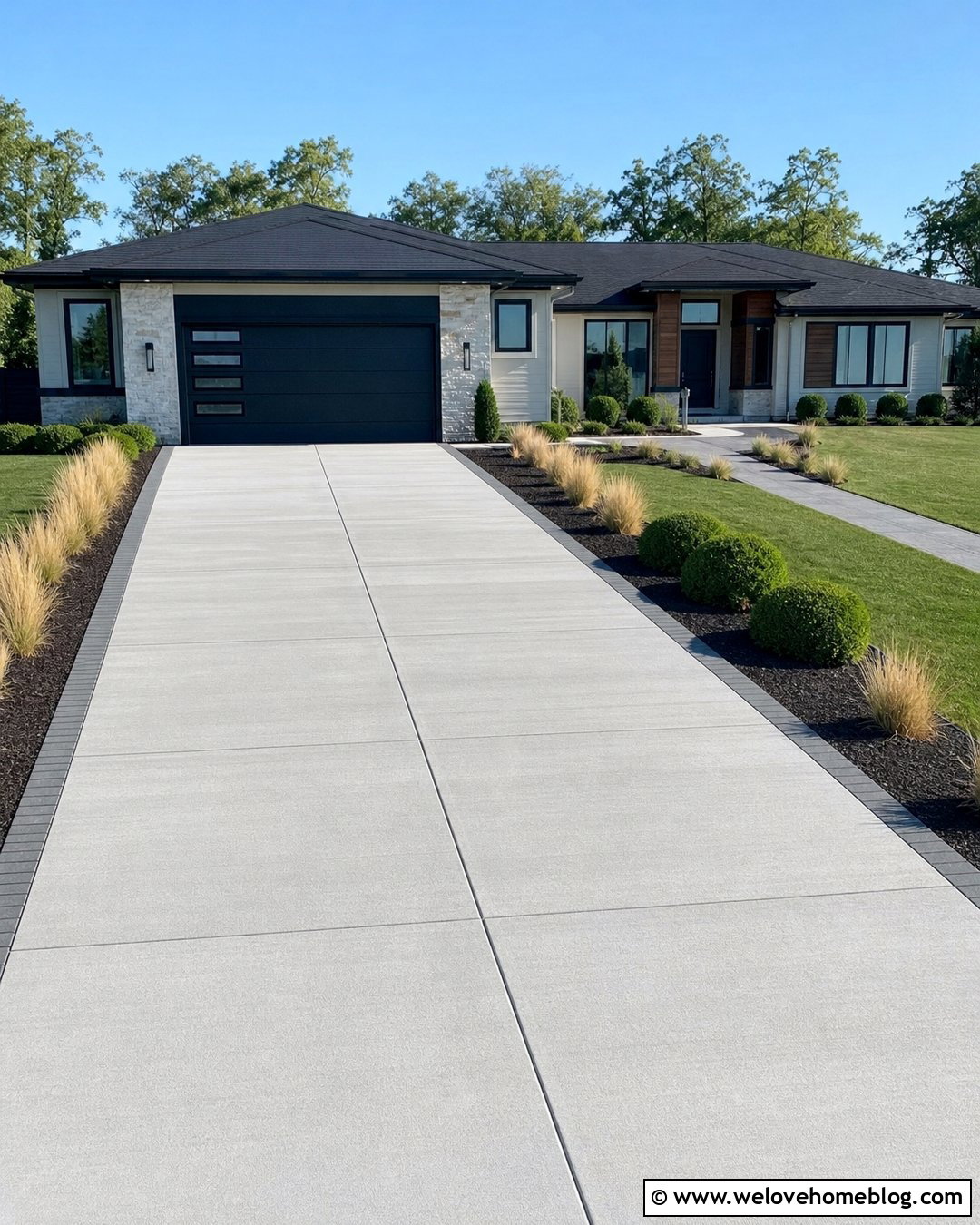
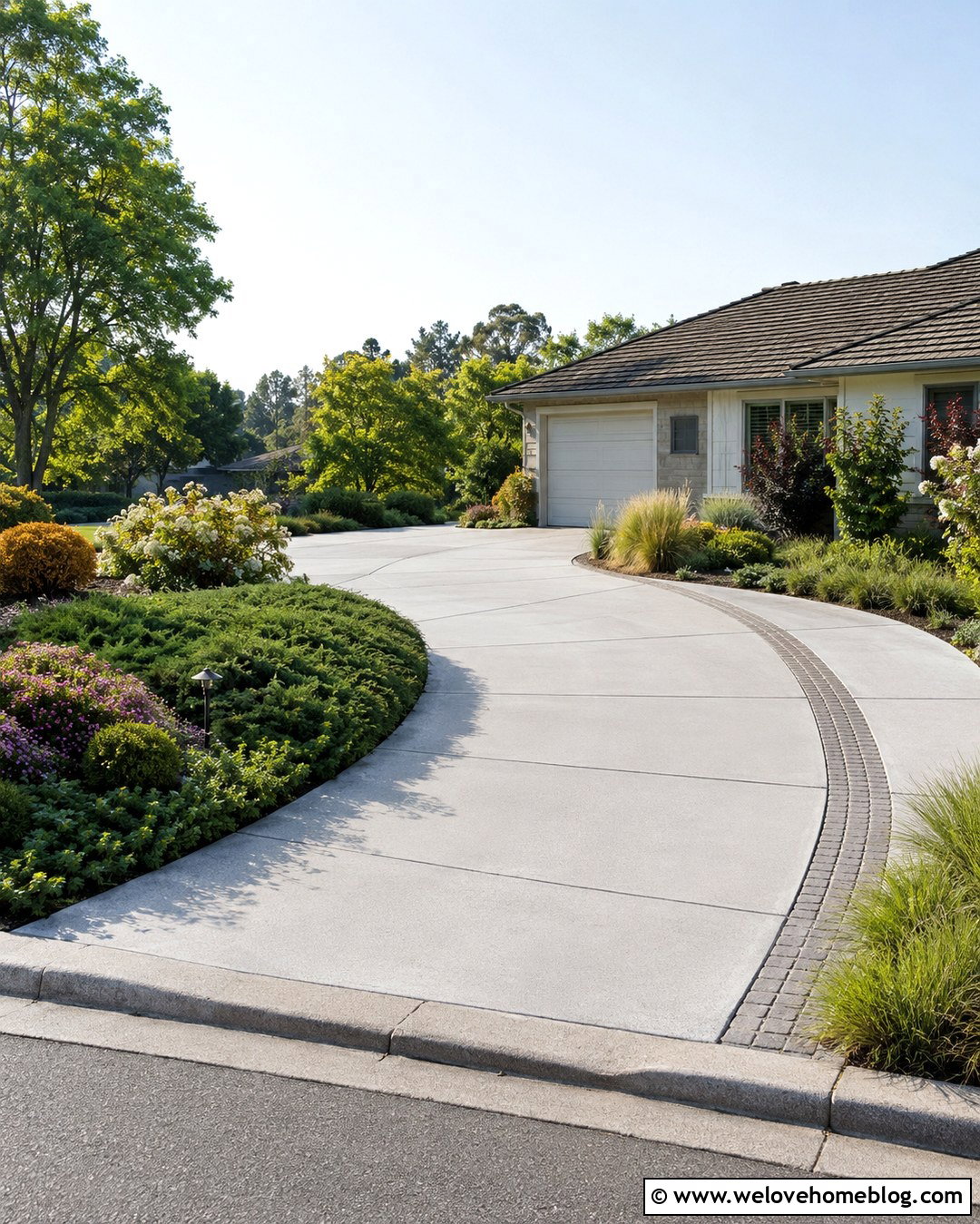
A broom finish gives a poured concrete driveway a clean appearance with subtle surface texture. It works especially well for a straight, double-width layout leading to a ranch or contemporary home. Divide the concrete into balanced rectangular sections with properly planned control joints. A dark charcoal paver border can sharpen the edges and connect the driveway to a matching front walkway. Soften the broad gray surface with low ornamental grasses, evergreen shrubs, and a narrow lawn strip along each side. The lightly textured finish offers more visual depth than completely smooth concrete while keeping the design simple. Choose a warm gray tone instead of stark white if you want the driveway to blend naturally with stone, brick, or neutral siding.
2. Black Asphalt Driveway With Brick Border
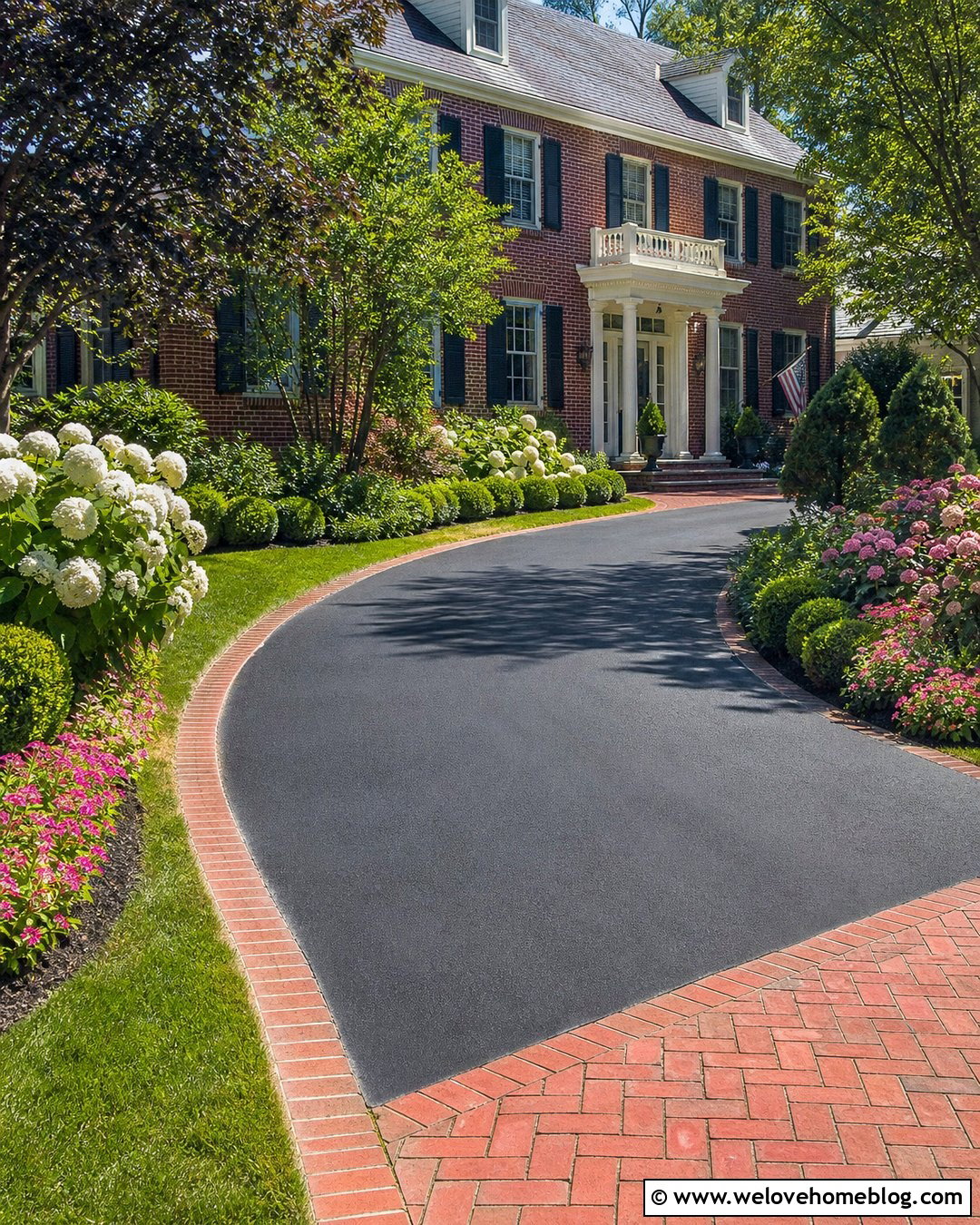
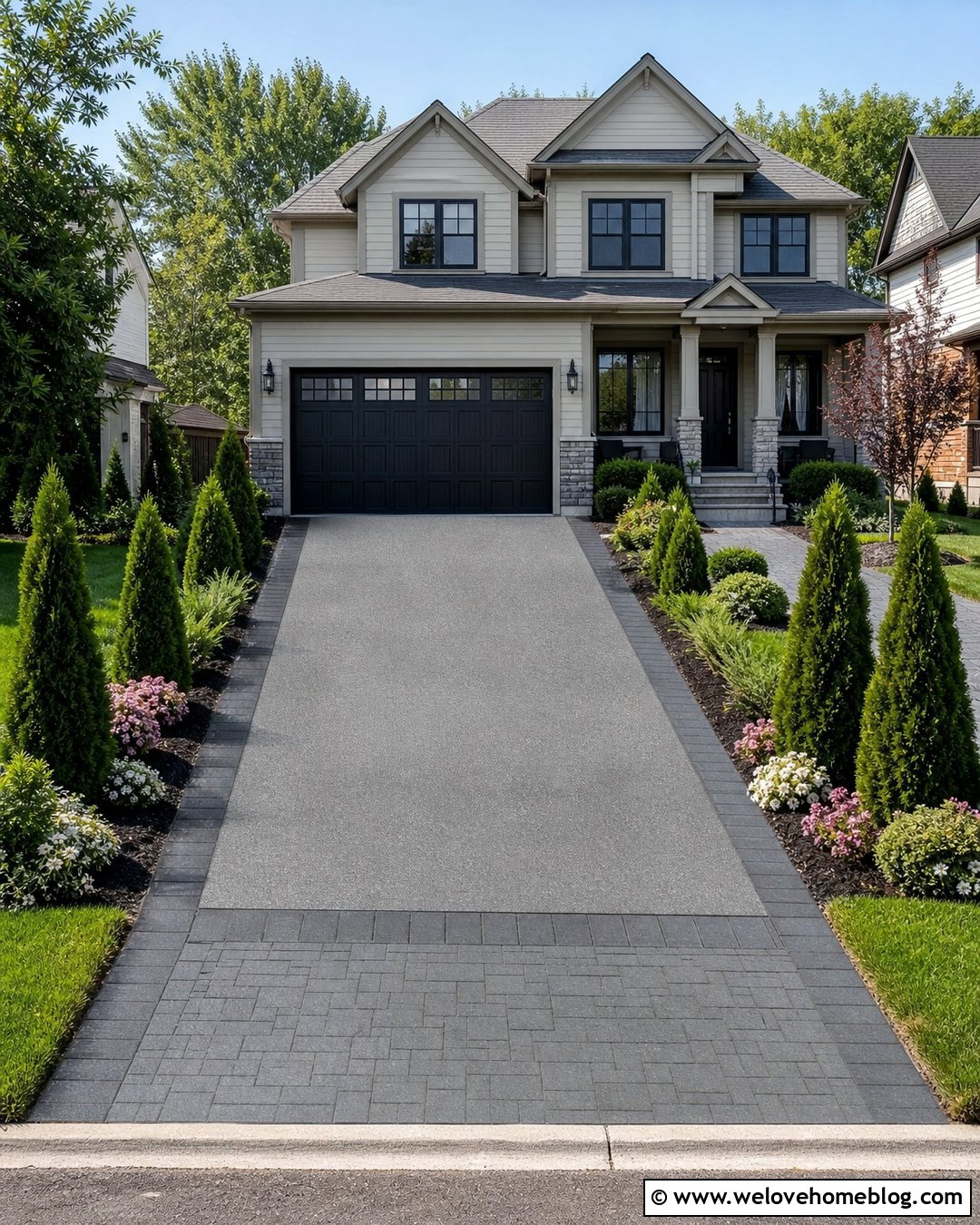
Fresh black asphalt creates a smooth, understated surface that can suit traditional and modern homes. For a more finished look, frame a gently curved asphalt driveway with red or charcoal brick pavers. The border clearly defines the driving area while introducing color and texture near the lawn. A brick apron at the street can strengthen the visual connection and make the entrance feel intentional. Surround the curve with layered planting beds containing compact shrubs, flowering perennials, and one or two small ornamental trees. Because dark asphalt can dominate a front yard, generous green borders help balance its appearance. Match the brick edging to the home’s facade, steps, or walkway so the driveway becomes a coordinated part of the overall exterior.
3. Pea Gravel Driveway With Cobblestone Edging
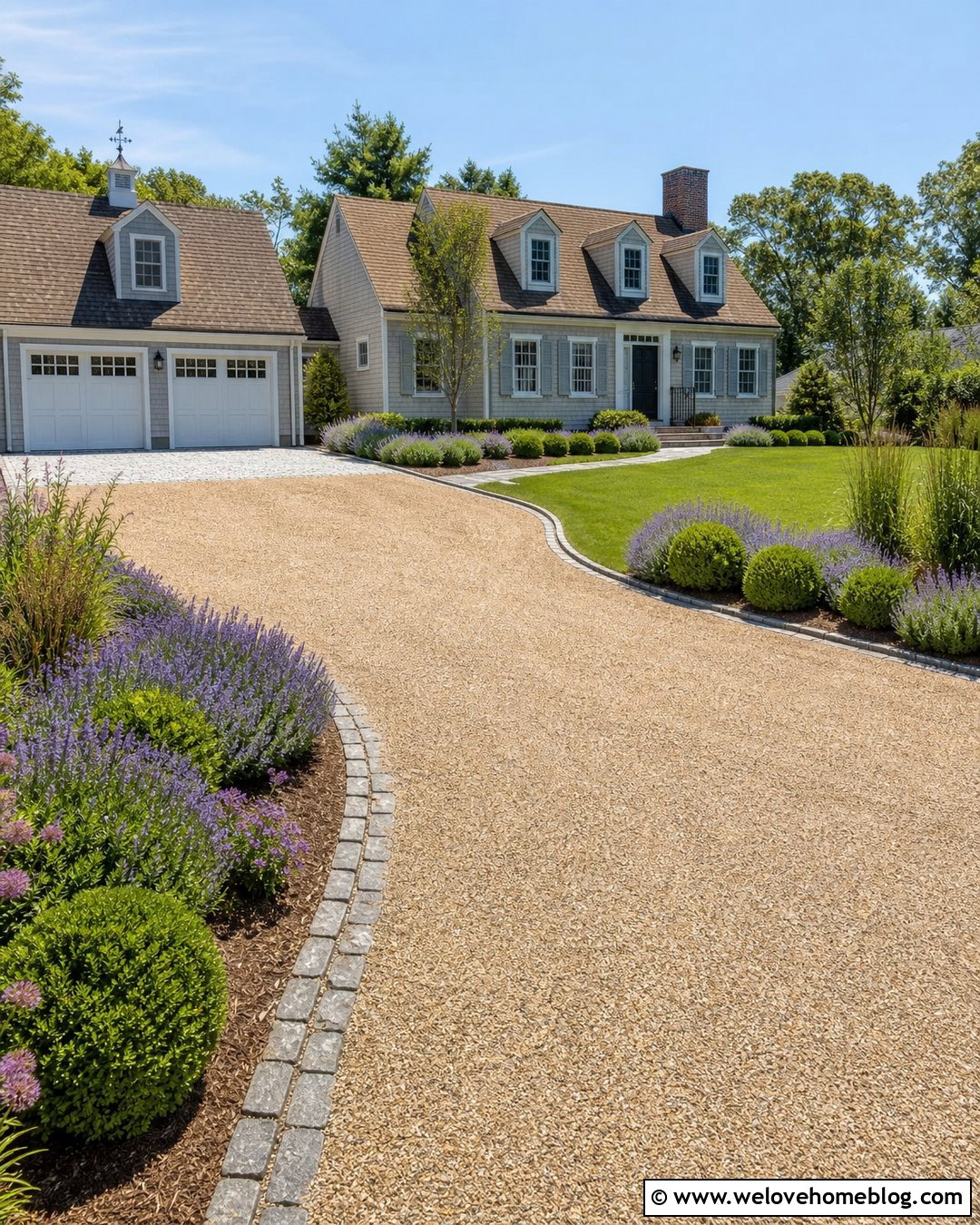
The gentle crunch and soft color of pea gravel can make a driveway feel relaxed and welcoming. Use warm beige pea gravel on a curved approach leading to a cottage, Cape Cod, or country house. Install substantial cobblestone edging to contain the loose material and create a crisp division between the driveway and planting beds. A cobblestone apron near the garage can reduce gravel migration at the transition. Lavender, catmint, boxwood, and ornamental grasses create attractive borders without hiding the driveway’s shape. The base and edge restraint are especially important because rounded pea gravel can shift under tires. With careful grading and containment, this complete look combines informal texture, classic stone details, and colorful landscaping around an approachable residential entrance.
4. Exposed Aggregate Concrete Driveway
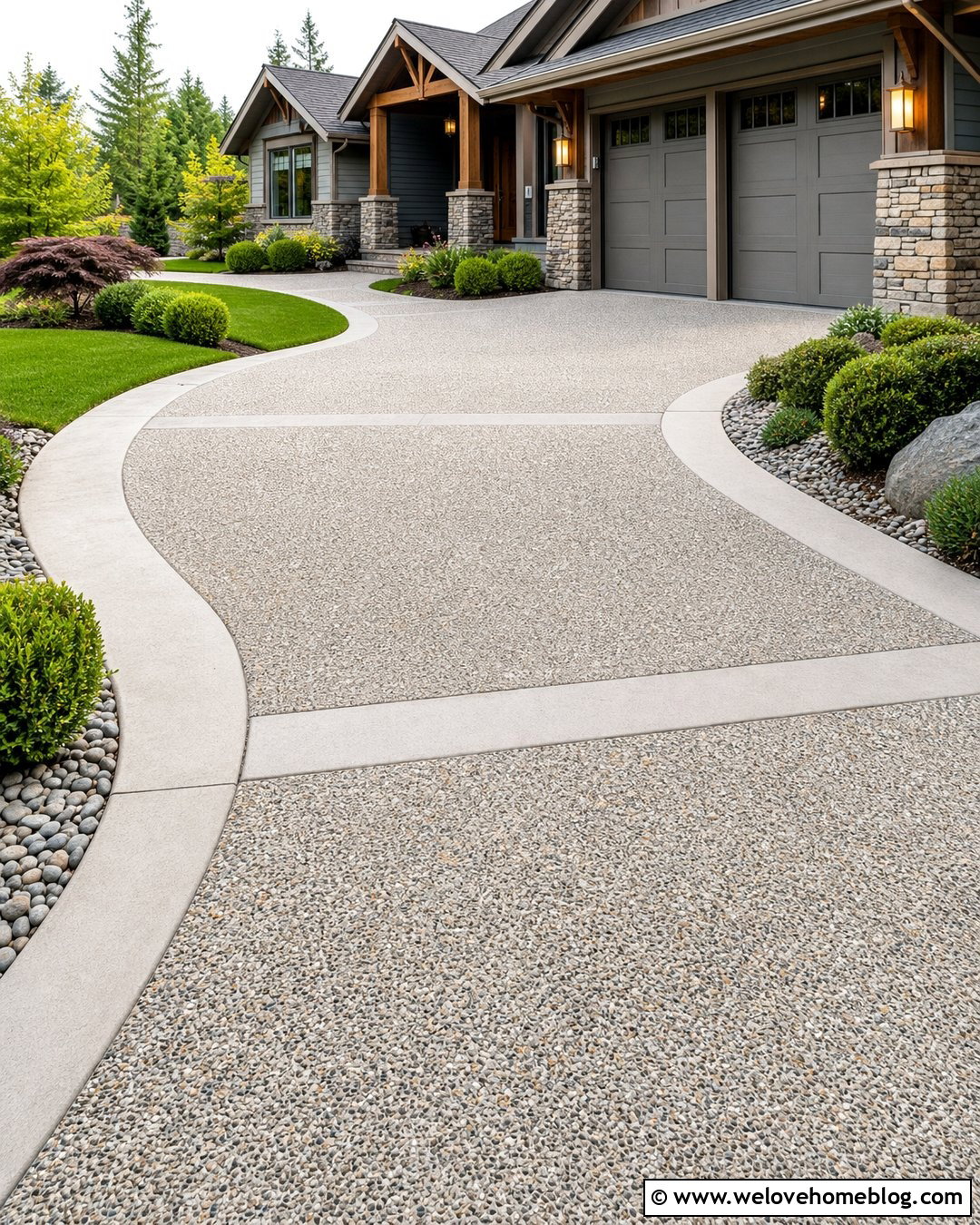
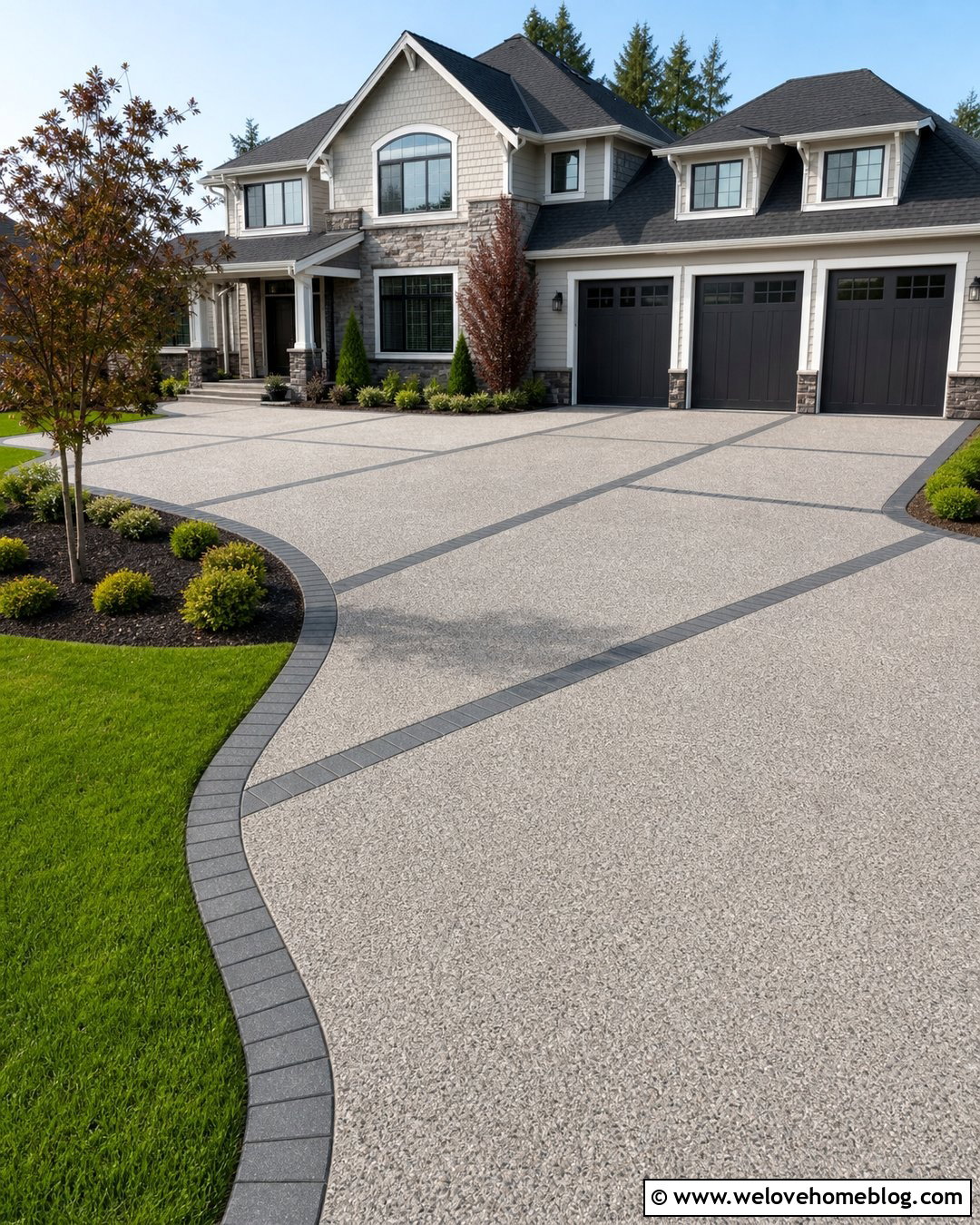
Exposed aggregate concrete brings the natural character of small stones to the dependable form of a paved surface. A broad, gently curved driveway in tan and gray aggregate can complement a craftsman house with stone columns and warm wood details. Use a smooth poured-concrete band around the perimeter to frame the textured center and create a tidy transition to the garage floor. Repeating the same smooth concrete on the walkway helps unify the entrance. Plant beds filled with rounded shrubs, dwarf evergreens, and river rock echo the colors and shapes within the aggregate. Select an aggregate blend that coordinates with the facade rather than competing with it. The finished driveway should look textured and distinctive while remaining visually calm across a large front yard.
5. Stamped Concrete Driveway With Slate Pattern
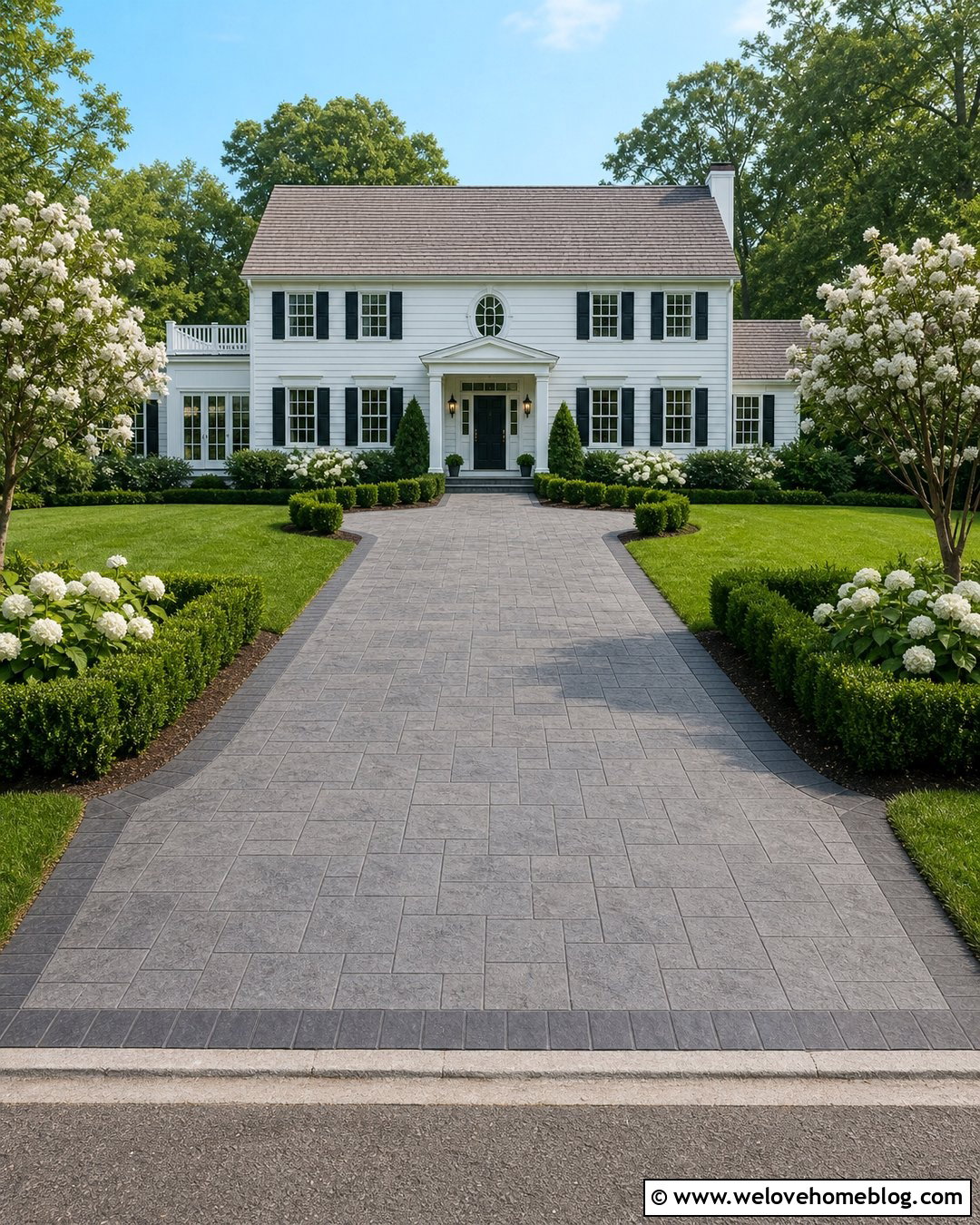
Stamped concrete can provide the patterned appearance of individual stone pieces across a continuous driveway. A slate-pattern surface in layered gray tones works beautifully on a straight or slightly flared driveway leading to a colonial home. Keep the pattern moderate in scale so it remains convincing from the curb. Darker accent color in the recessed lines creates depth, while a charcoal soldier-course border gives the edges definition. Add symmetrical planting beds with clipped boxwood, hydrangeas, and small flowering trees to reinforce the home’s balanced architecture. A coordinating stamped walkway can branch toward the front door without making the yard look busy. Proper color selection is essential; subtle variation generally creates a more natural result than highly contrasting shades across the entire surface.
6. Interlocking Concrete Paver Driveway
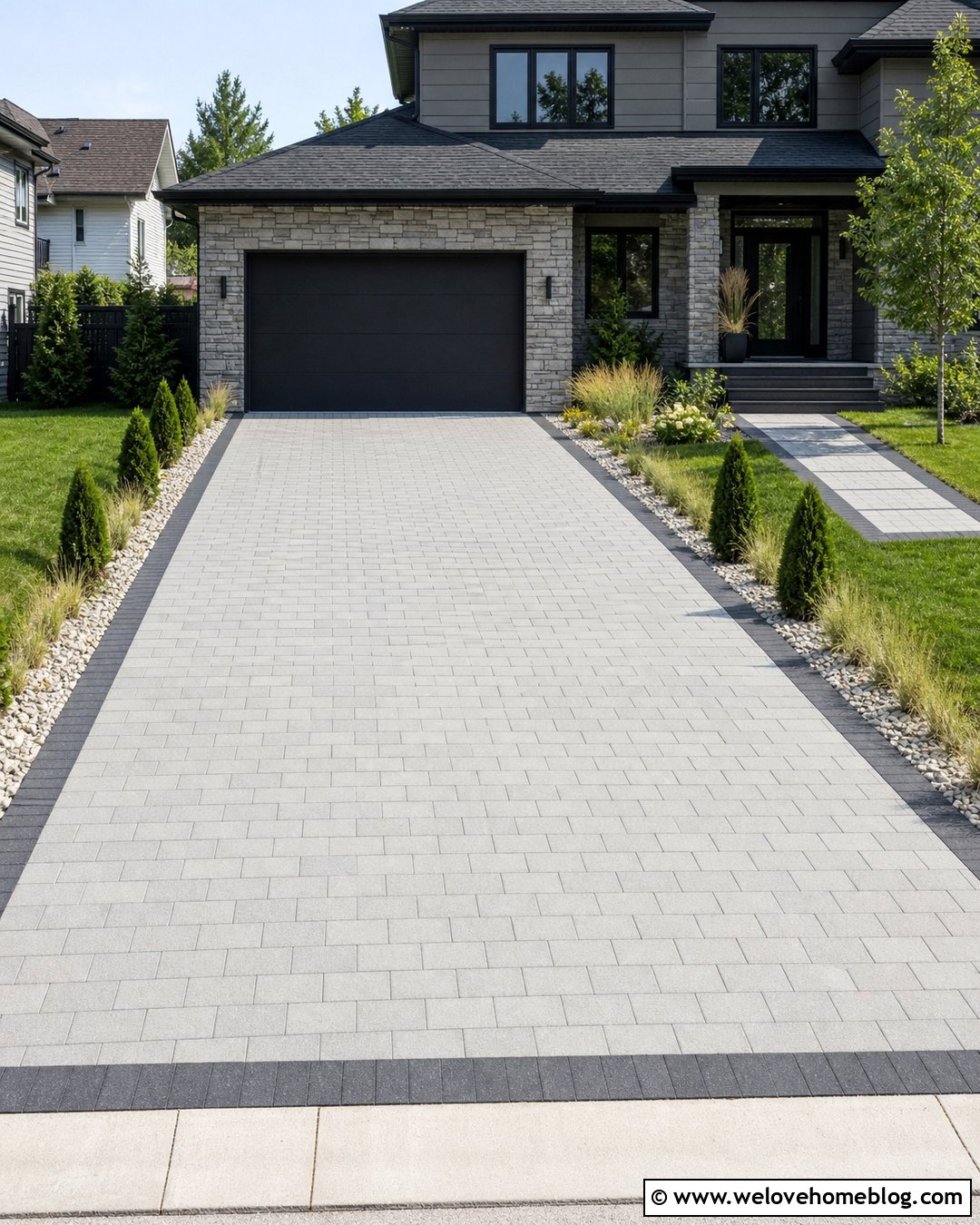
Interlocking concrete pavers offer abundant choices in color, size, and laying pattern. For a modern suburban look, use large rectangular pavers in blended light gray tones across a wide, straight driveway. A running-bond pattern can visually lengthen the approach, while a darker paver border keeps the edges crisp. Continue one section toward the front entrance to form an integrated walkway. Linear planting beds with ornamental grasses, compact evergreens, and pale gravel reinforce the organized layout. Good base preparation and secure edge restraints help the individual units remain aligned under regular vehicle use. If repairs or underground work become necessary, matching pavers may be lifted and reset. The completed design feels refined without being too formal, especially beside clean stucco, stone, or horizontal siding.
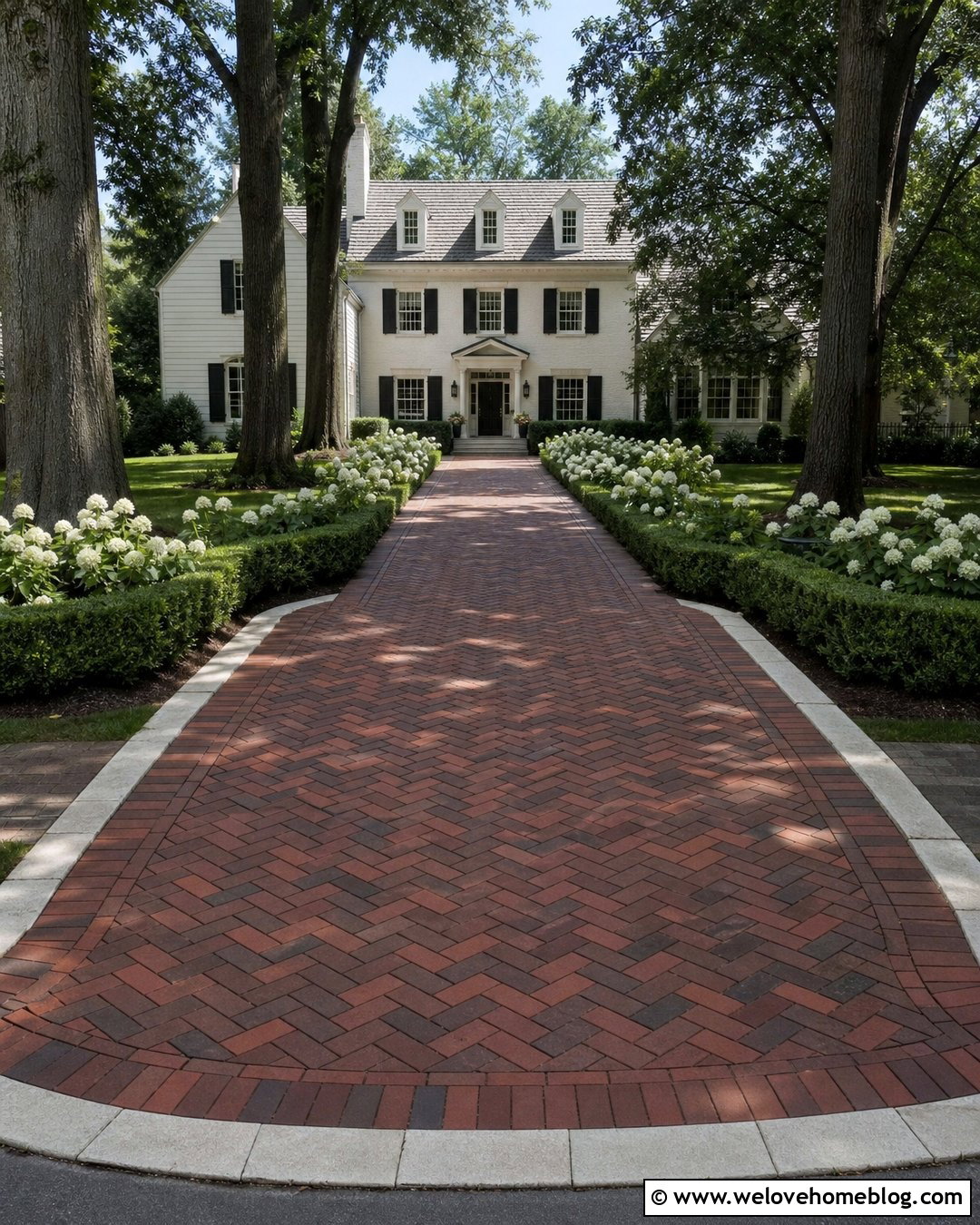
7. Clay Brick Herringbone Driveway
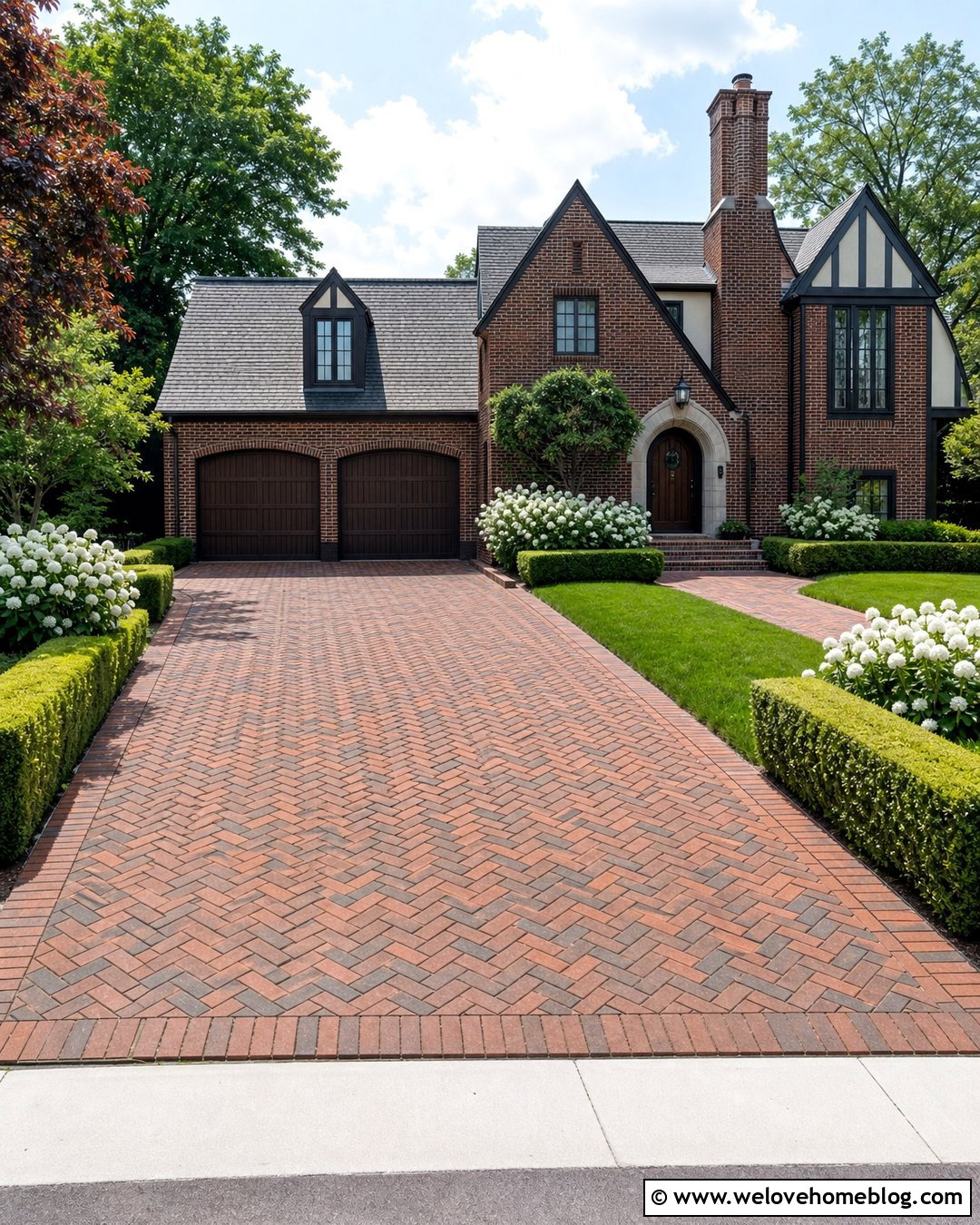
Rich clay brick can give an established home a warm and traditional entrance. Lay red and brown brick pavers in a herringbone pattern across a straight driveway leading to a colonial, Tudor, or brick residence. The interlocking pattern adds energy to the surface without requiring multiple materials. Create a simple soldier-course border using the same brick, then finish the garage transition with a slightly wider matching band. Green lawn, clipped hedges, white flowering shrubs, and a brick walkway can frame the driveway with timeless curb appeal. Since brick shades naturally vary, blend units from several pallets during installation for an even distribution of color. A properly constructed base and restrained edges are vital for maintaining the pattern and reducing movement through seasonal weather changes.
8. Granite Cobblestone Driveway
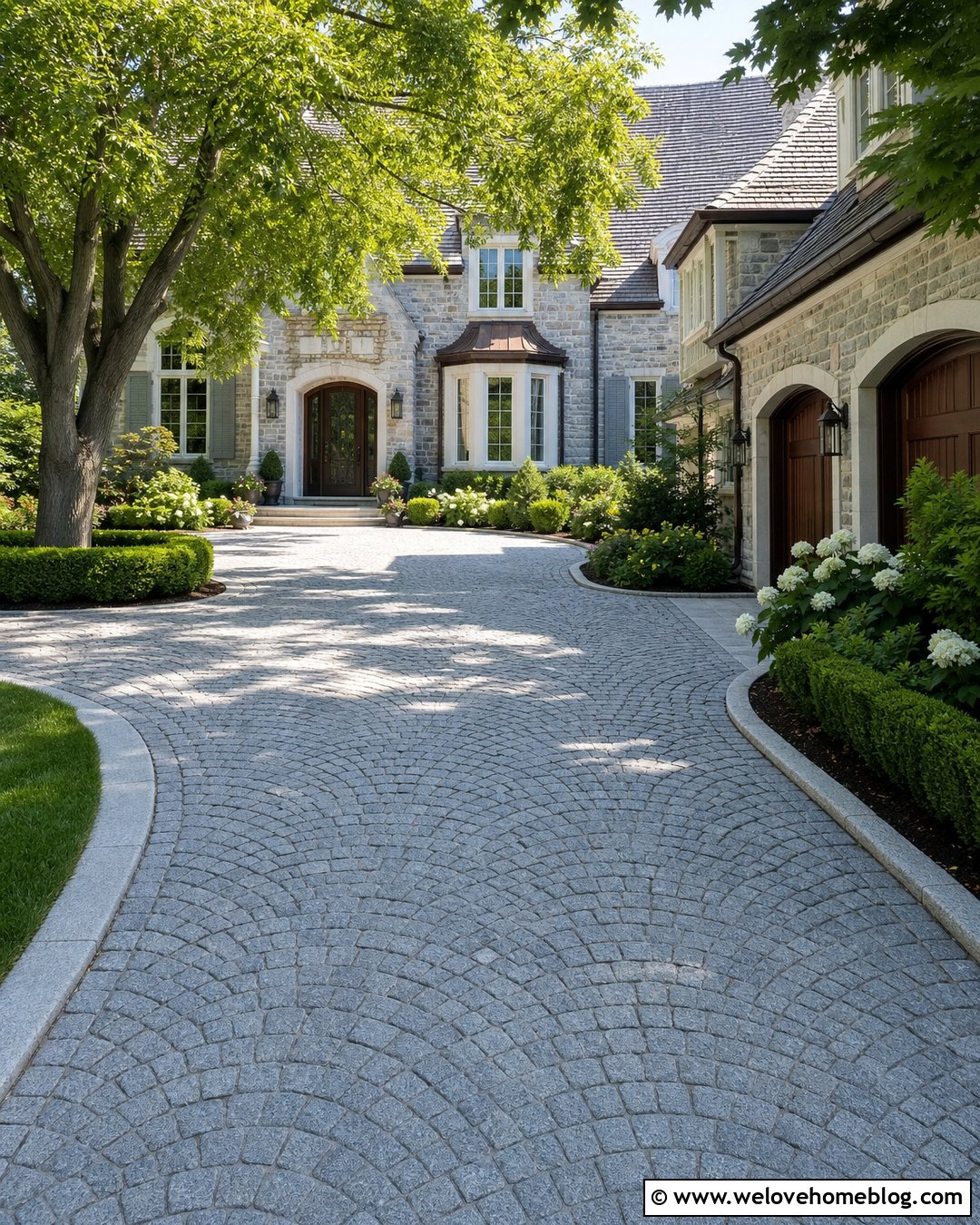
Granite cobblestones create a substantial surface with texture that feels appropriate for historic, European-inspired, and high-end traditional homes. Use gray granite setts across a curved driveway that opens into a generous parking court. Lay the stones in gentle fan patterns to follow the turning area and prevent the design from appearing rigid. Larger granite curbs can contain the edges, while a smooth stone threshold provides a neat transition into the garage. Frame the approach with mature shade trees, clipped evergreen hedges, and understated perennial beds. Because the surface contains numerous joints and slight variations, careful installation is needed to create a comfortable, stable route. The result is a durable-looking entrance where the natural stone, sweeping layout, and structured landscaping feel convincingly connected.
9. Resin-Bound Gravel Driveway
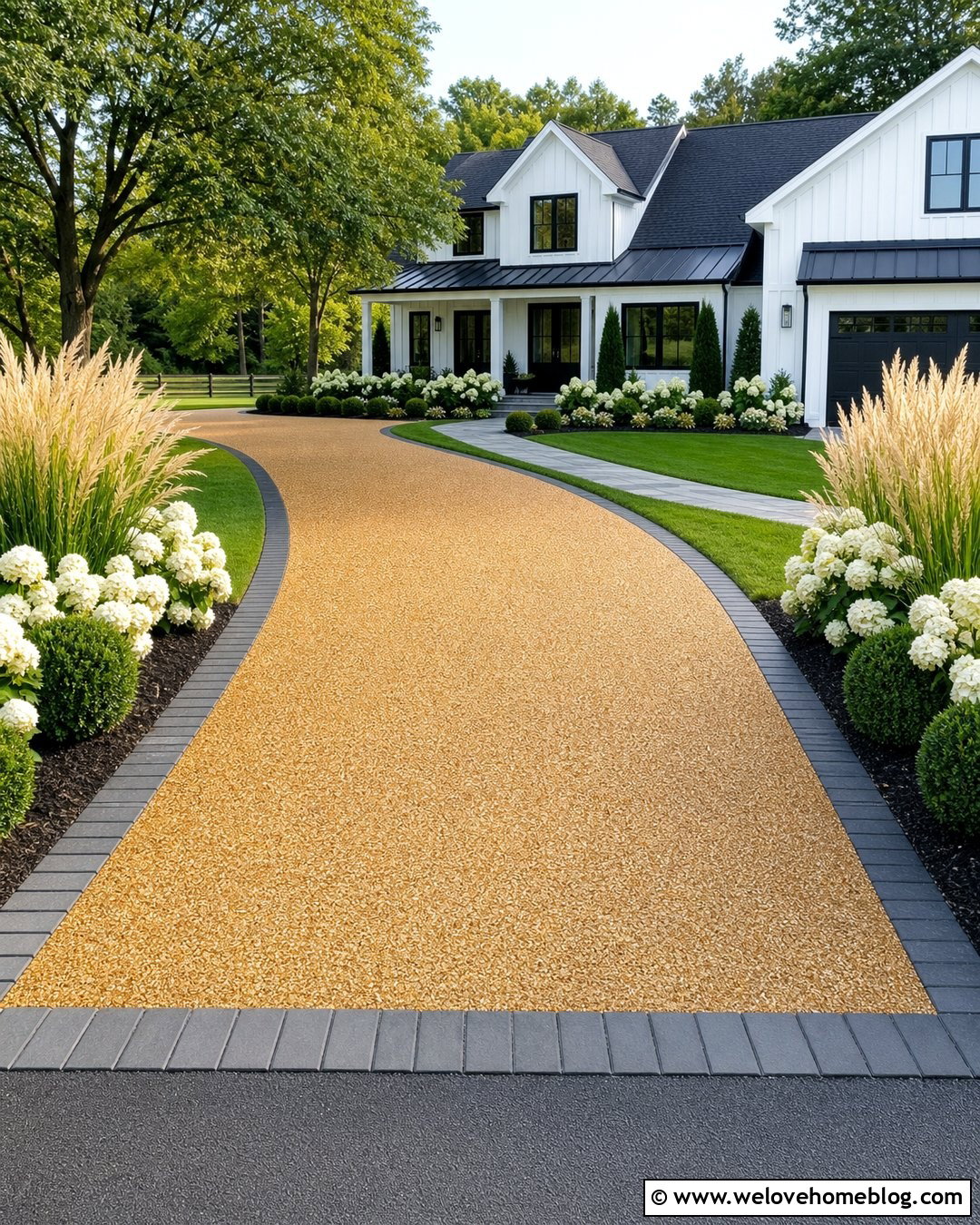
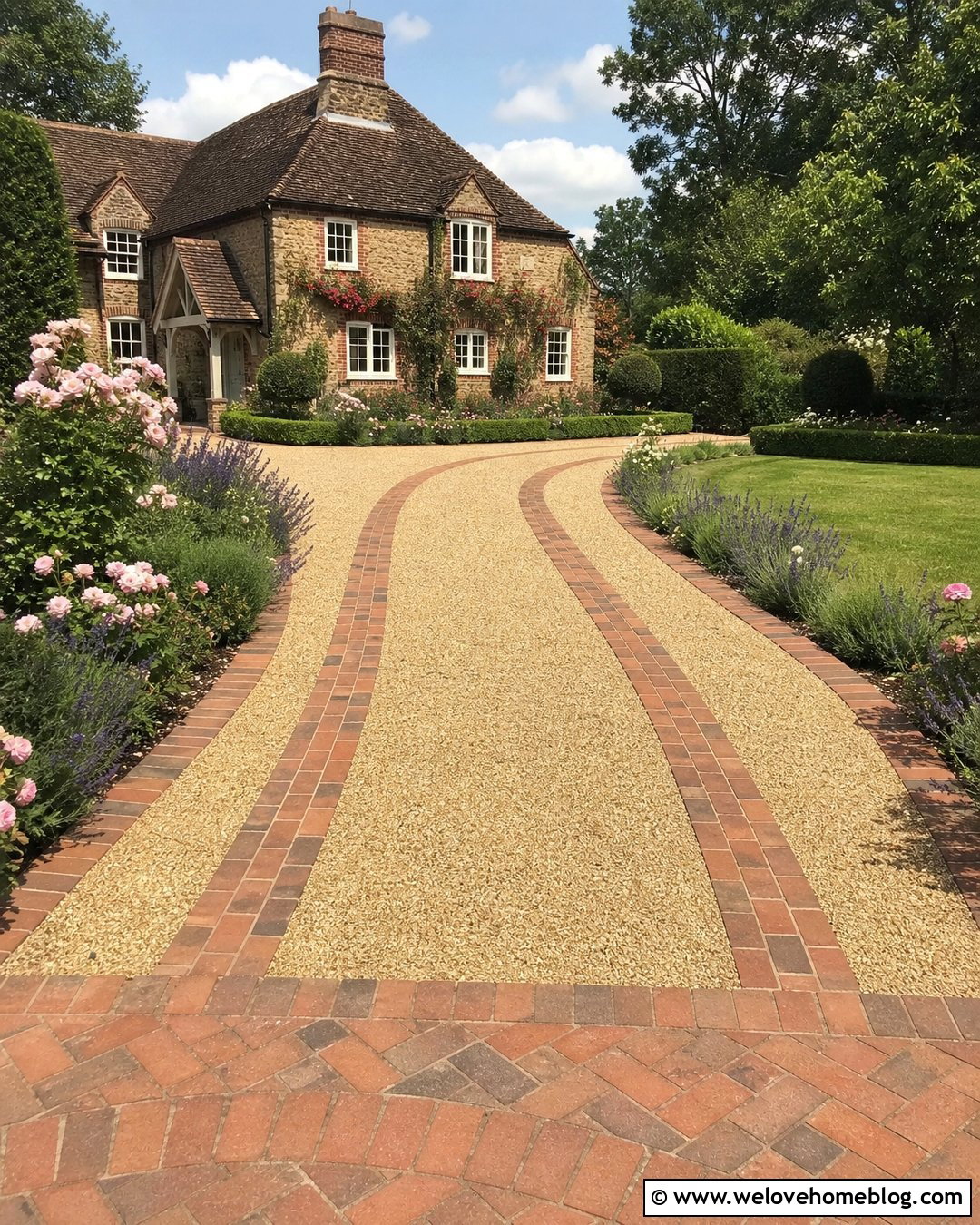
Resin-bound gravel delivers the color and texture of small aggregate in a smooth, visually consistent surface. A warm honey-colored finish can brighten a curved driveway leading to a modern farmhouse with white siding and black accents. Define the perimeter with charcoal concrete pavers and repeat them across the entrance as a narrow decorative band. The contrast makes the organic aggregate color feel more contemporary. Add soft planting beds with feather reed grass, white hydrangeas, and rounded evergreen shrubs. A resin-bound system should not be confused with loose gravel or resin-bonded surfacing, so discuss the intended construction method with an experienced installer. When the base, drainage, aggregate, and binder are correctly specified, the complete driveway can feel tidy, comfortable, and visually softer than ordinary pavement.
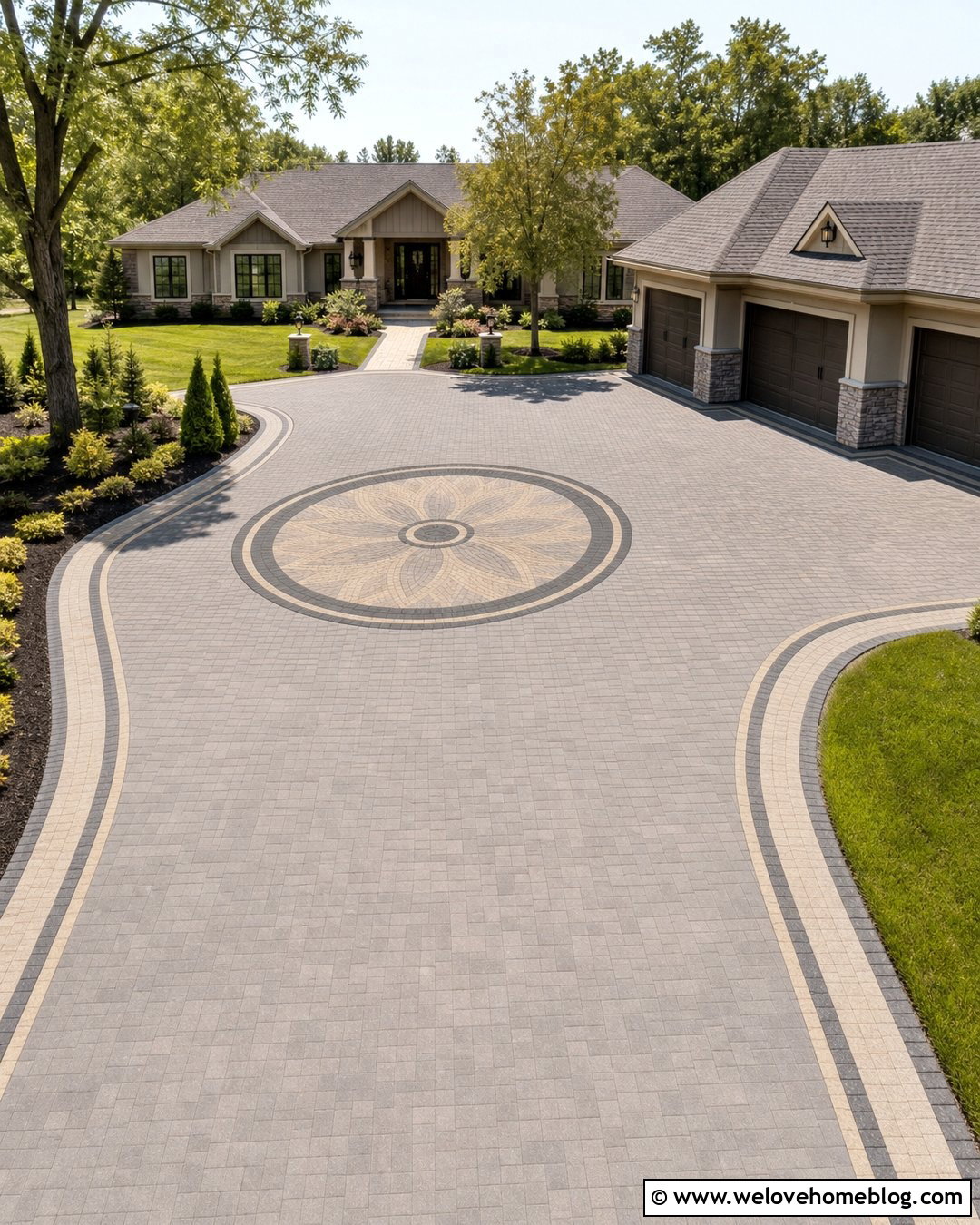
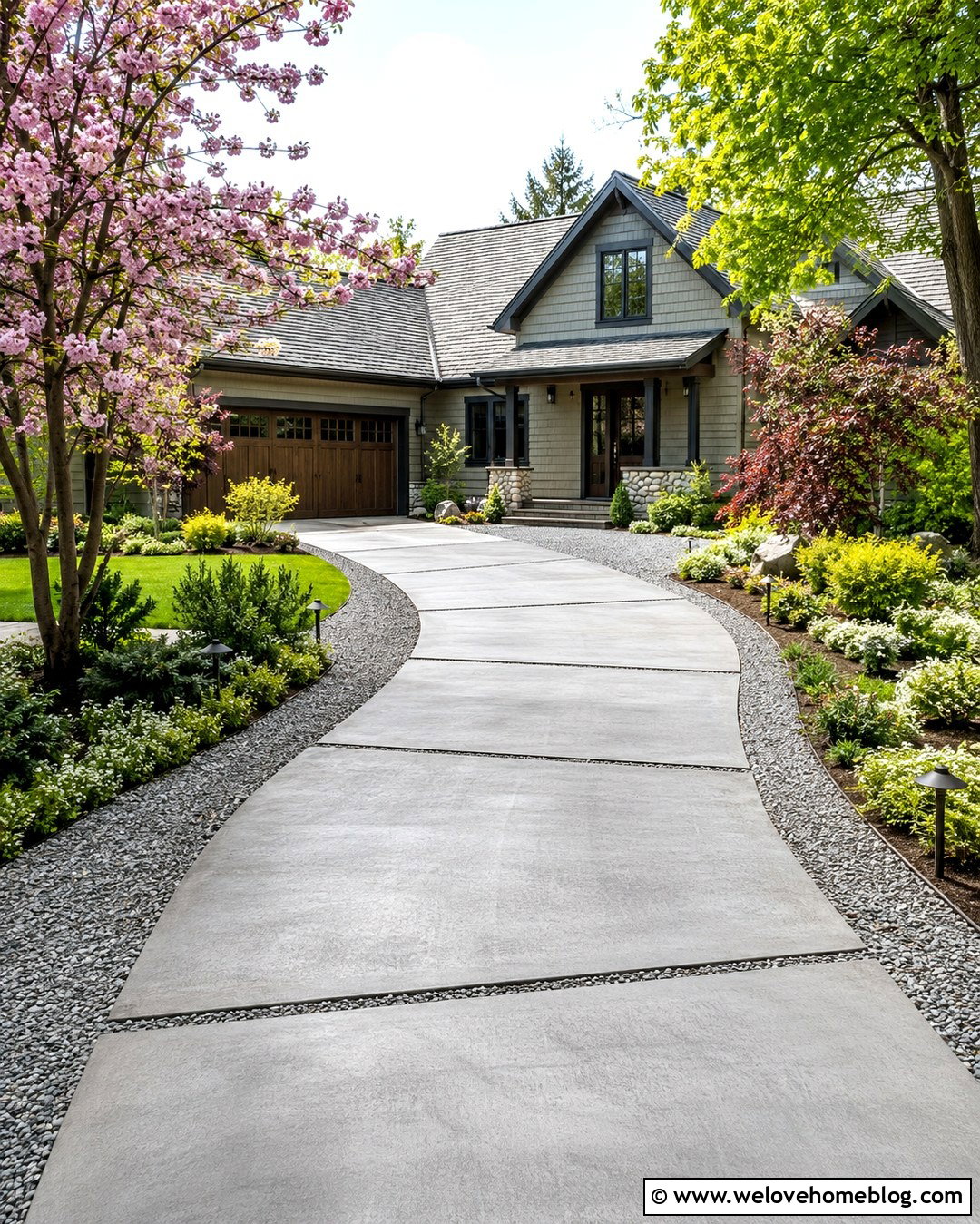
10. Permeable Paver Driveway
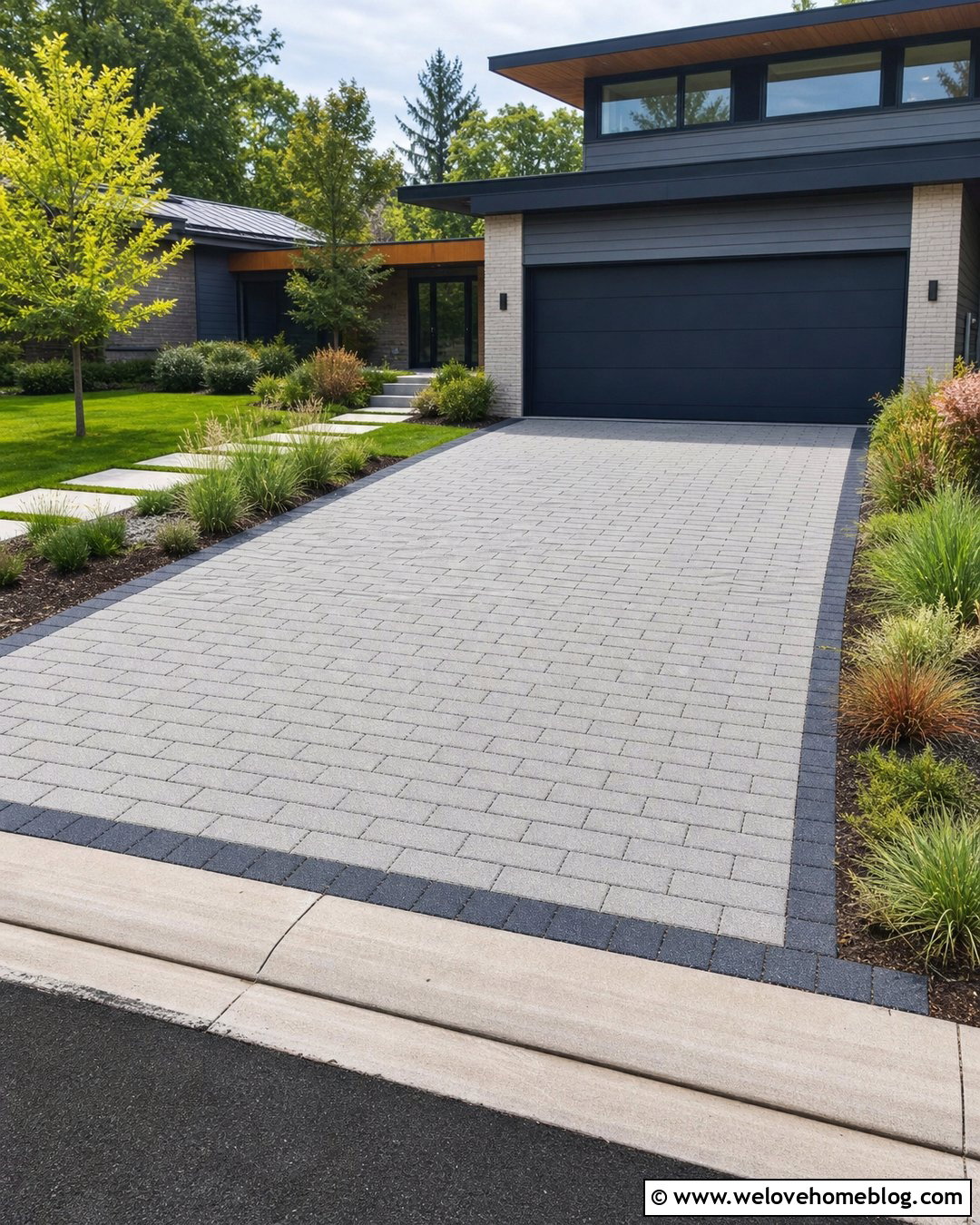
Permeable concrete pavers can turn stormwater management into an attractive design feature. Choose medium-gray rectangular pavers with slightly wider, aggregate-filled joints for a straight driveway beside a contemporary home. Dark borders can clearly define the parking surface, while the open joints form a subtle grid across the main field. Direct the driveway toward rain gardens or planted drainage areas where appropriate for the site. Low sedges, ornamental grasses, native shrubs, and a stepping-stone walkway complement the practical landscape. The pavers need a permeable base system rather than a conventional dense foundation if the design is intended to accept water. Soil conditions, groundwater, slope, and local regulations should guide the final specification. Visually, this surface offers clean geometry without creating an uninterrupted slab.
11. Grass Grid Paver Driveway
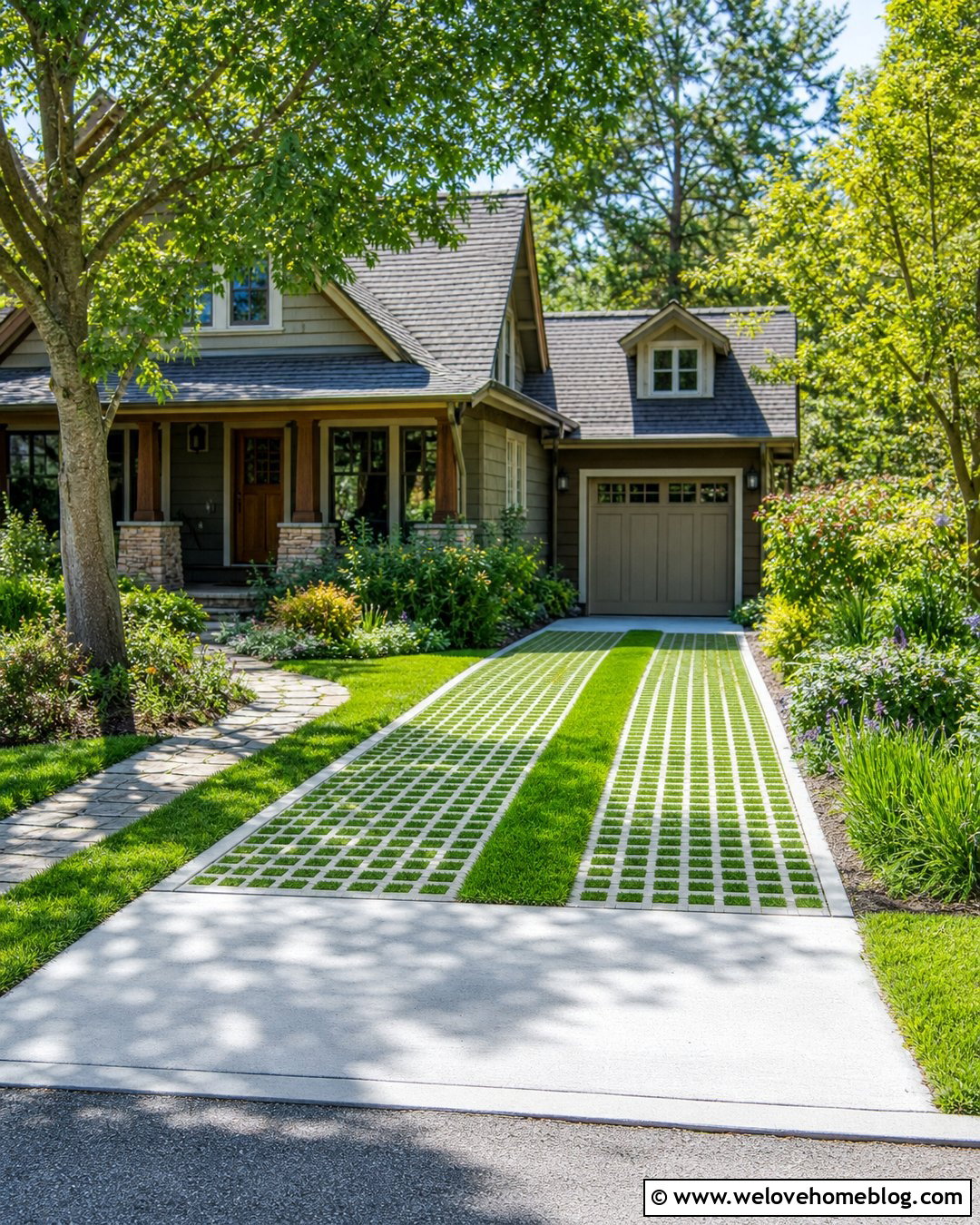
Grass grid pavers soften the appearance of off-street parking by combining reinforced driving areas with living turf. They are especially effective on a secondary driveway, lightly used approach, or spacious country property. Use concrete or heavy-duty cellular grid pavers on a straight two-track layout, with healthy grass filling the open spaces. Solid concrete bands near the street and garage provide defined transitions and protect heavily traveled turning points. Keep both sides open with lawn, shade trees, and simple native planting beds so the green surface feels connected to the yard. Irrigation, sunlight, soil conditions, vehicle frequency, and grass selection all influence how well the planted sections perform. The finished driveway should appear intentional and structured, not like vehicles are simply parking on an unsupported lawn.
12. Crushed Limestone Driveway
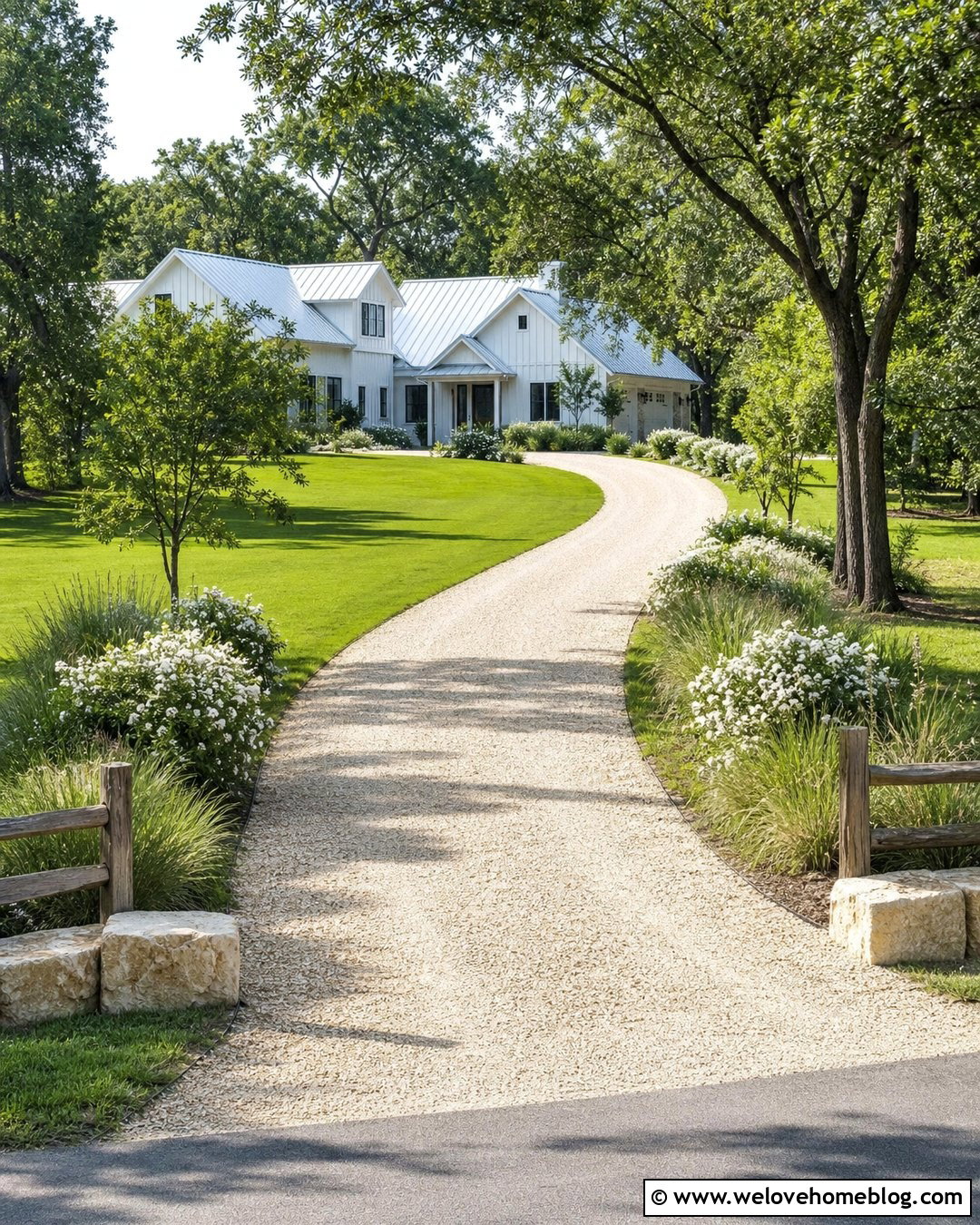
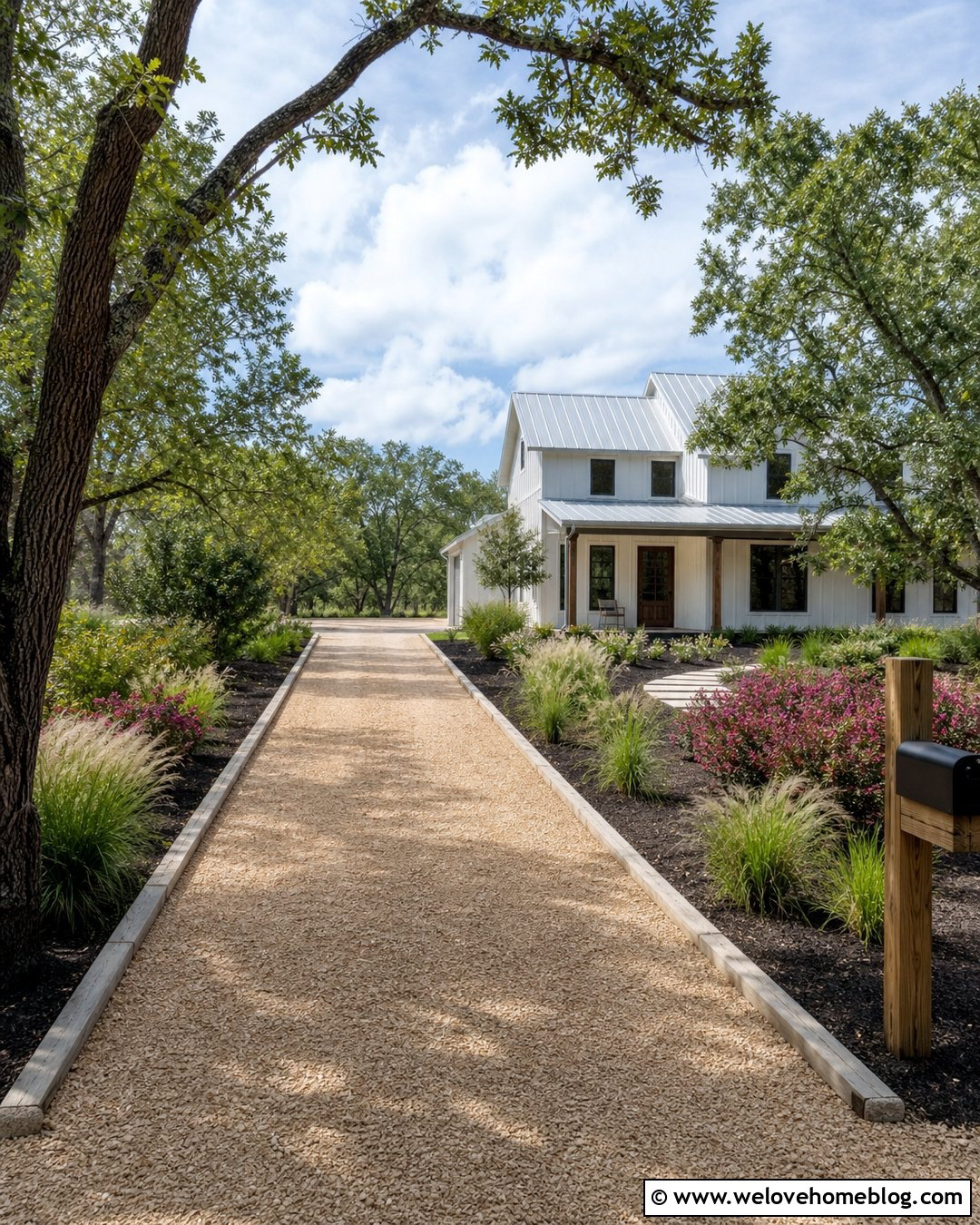
Pale crushed limestone can make a long driveway feel bright, natural, and suited to farmhouse or rural architecture. Use angular, compactable limestone in a soft cream or light gray tone on a gently curving approach. Steel edging offers a nearly invisible restraint, while larger limestone blocks at the entrance create a stronger visual boundary. A compacted base beneath the finish layer helps form a firmer driving surface than decorative rounded stones alone. Line the route with native grasses, white flowering shrubs, split-rail fencing, and occasional canopy trees. Crown or slope the driveway according to site drainage needs so runoff does not collect in low areas. The muted stone color connects easily with white siding, weathered wood, and natural stone foundations without making the landscape feel overly formal.
13. Stabilized Decomposed Granite Driveway
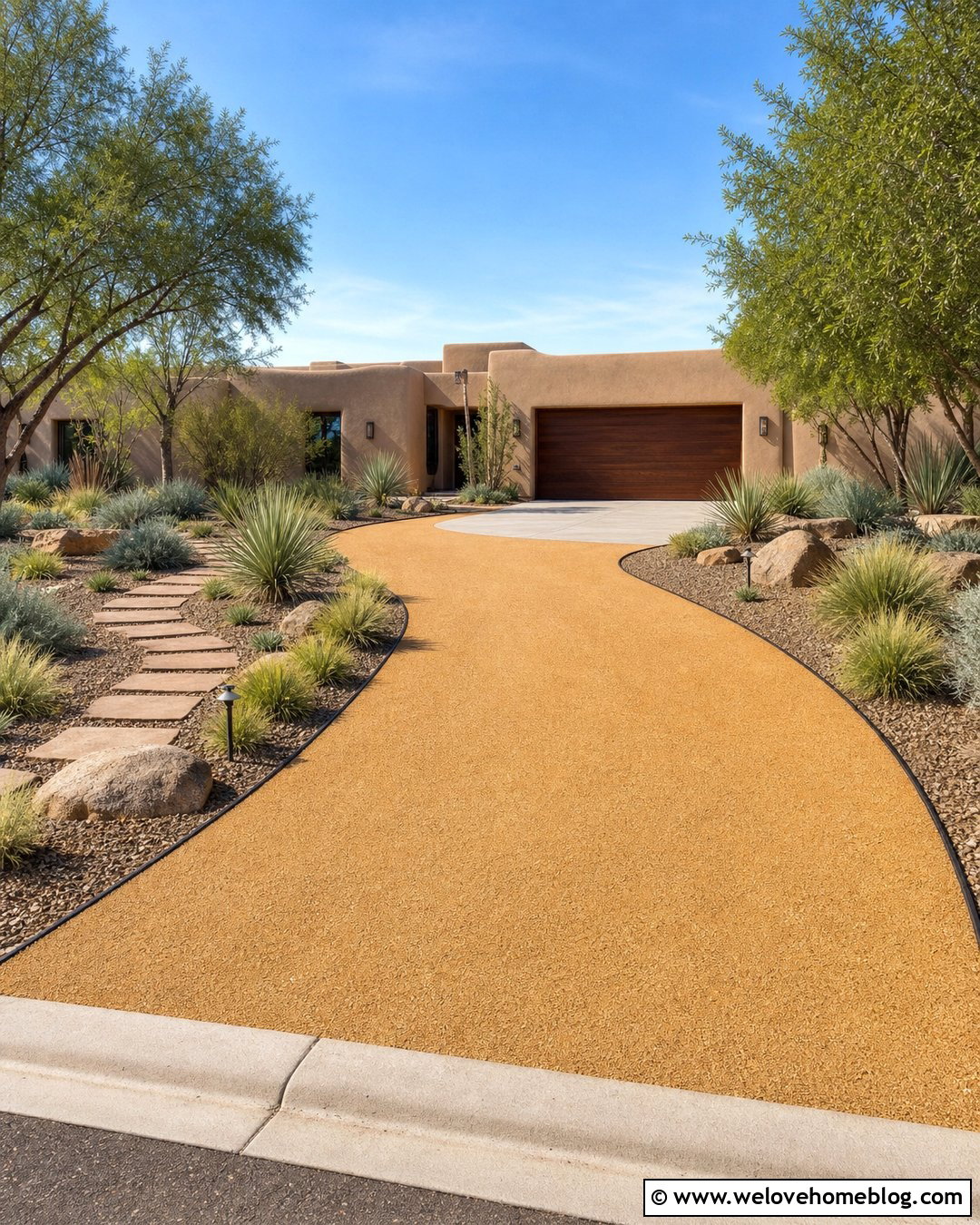
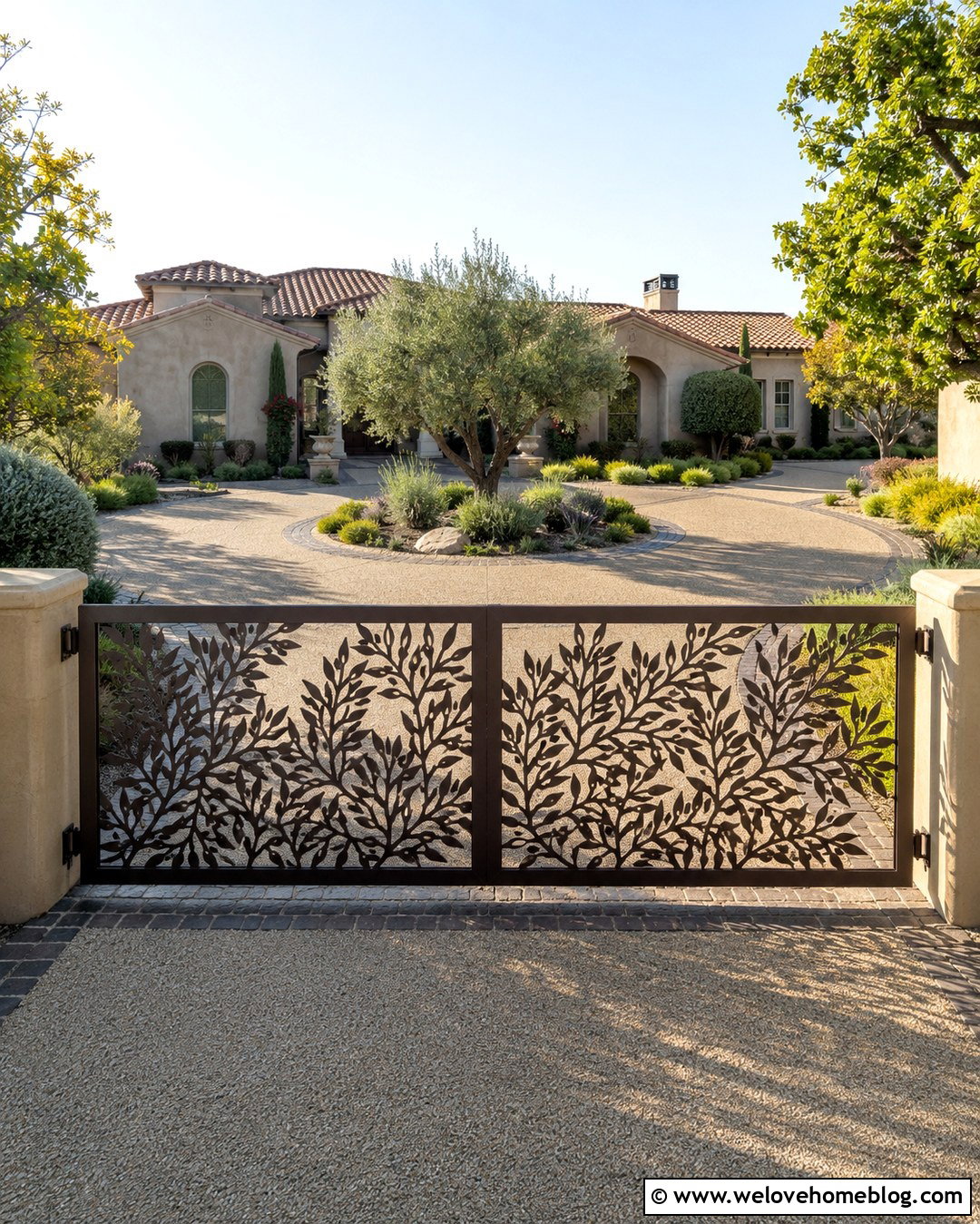
Decomposed granite creates a fine-textured surface with earthy color that works particularly well in dry, southwestern, and California-inspired landscapes. Select stabilized golden or rust-toned decomposed granite for a gently curved driveway leading to a low stucco or mid-century home. Use steel edging or narrow concrete curbs to contain the material without interrupting its natural appearance. A concrete apron at the garage provides a clean transition and supports frequent turning. Surround the driveway with drought-tolerant grasses, agave, sage, boulders, and gravel mulch. Stabilized material is different from loose landscape-grade decomposed granite, so the product and installation should be suitable for vehicle traffic. Thoughtful compaction, drainage, and periodic maintenance help preserve the smooth, informal surface while allowing it to blend gracefully into the surrounding yard.
14. Tar And Chip Driveway
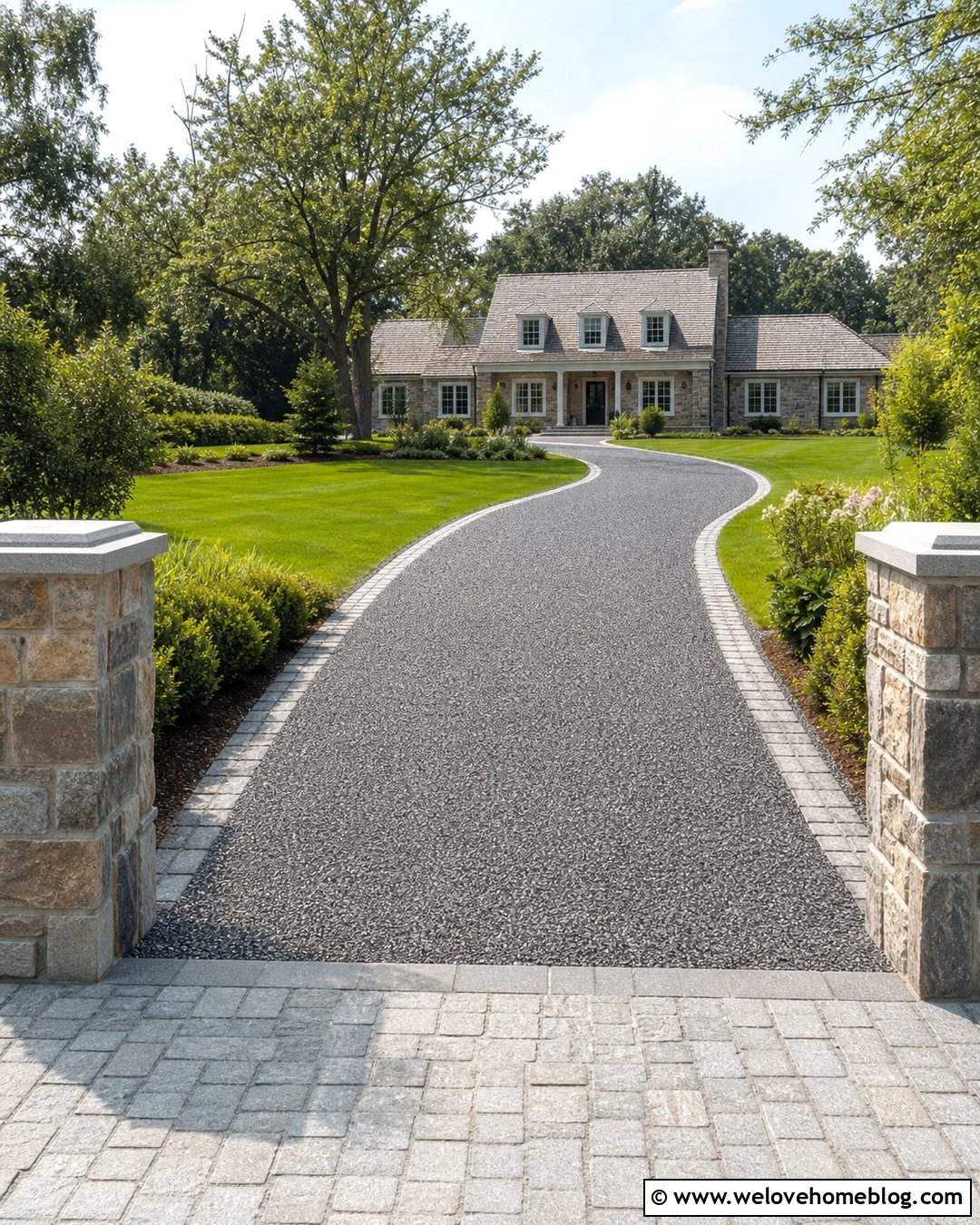
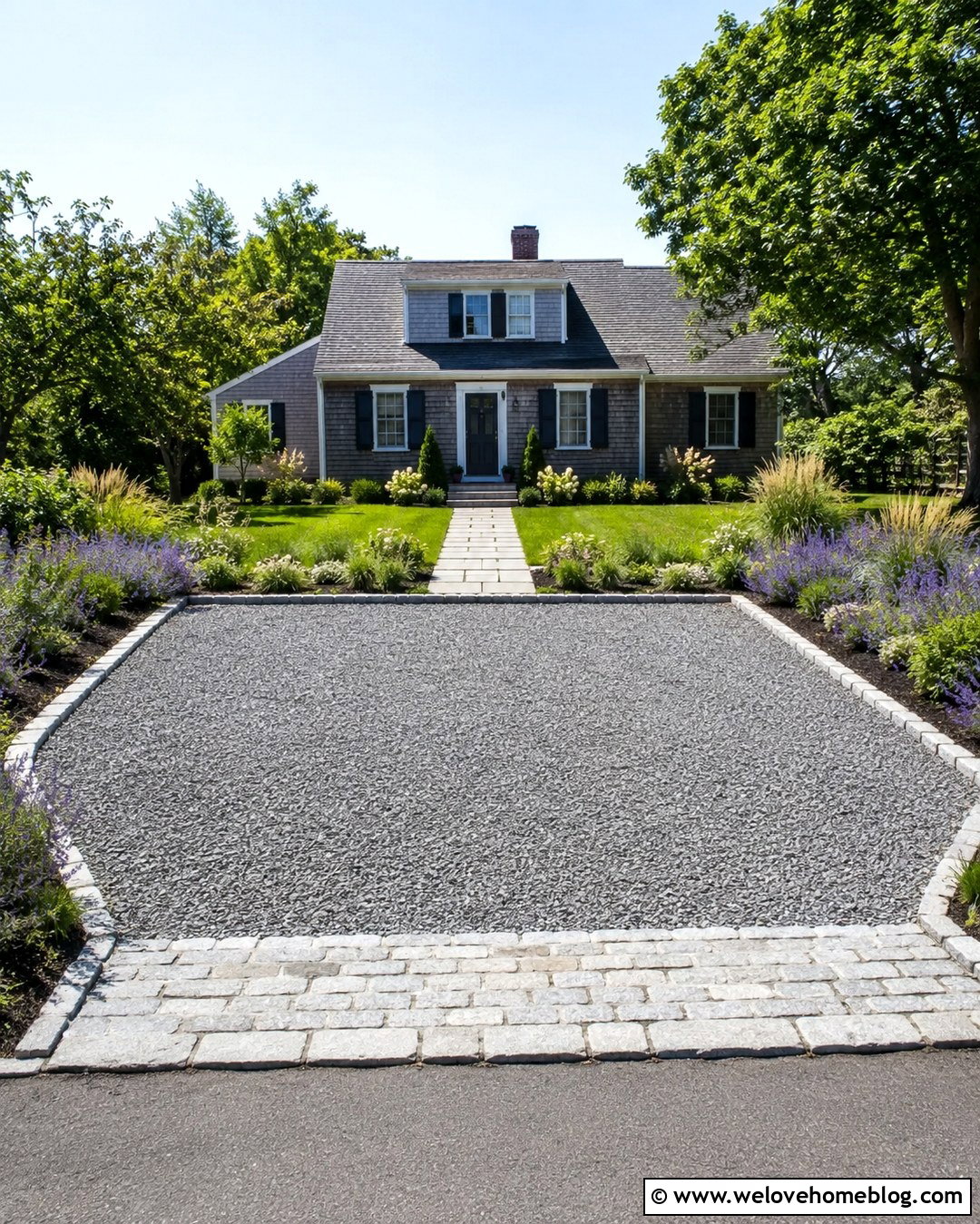
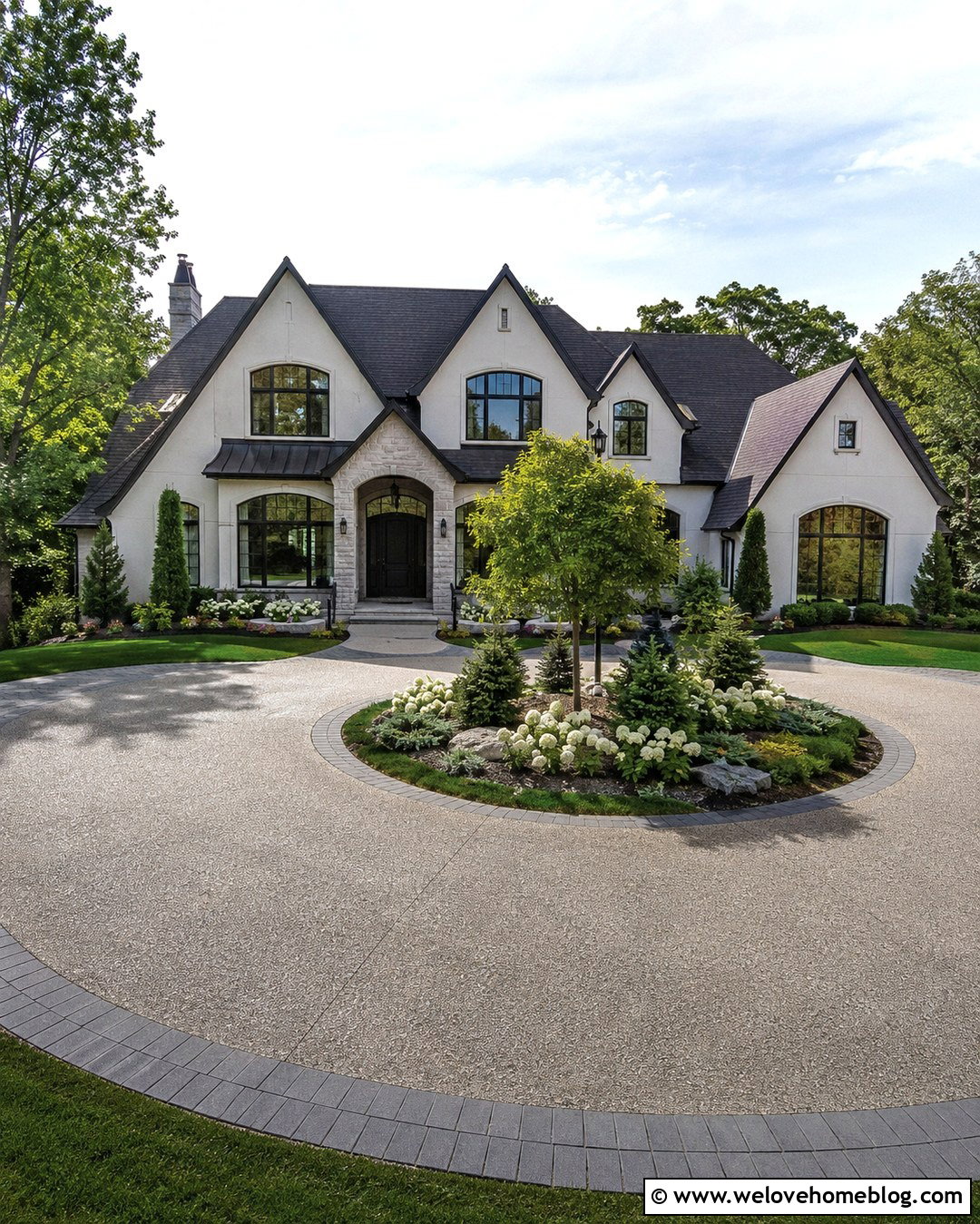
Tar and chip surfacing combines a dark binding layer with visible stone chips, creating a textured alternative to plain asphalt. A charcoal-and-gray chip blend looks especially fitting on a long, curved driveway approaching a traditional country house. Edge the route with flush granite setts so the boundary remains defined without forming a tall curb. At the entrance, a wider stone apron can introduce a polished focal point and connect with masonry pillars or a mailbox structure. Frame the driveway with broad lawn, informal hedges, and mature deciduous trees. Stone size and color can be selected to coordinate with the home, but local contractor availability may influence the choices. The overall look is practical and restrained, with enough aggregate texture to sit comfortably in a natural landscape.
15. Crushed Shell Driveway
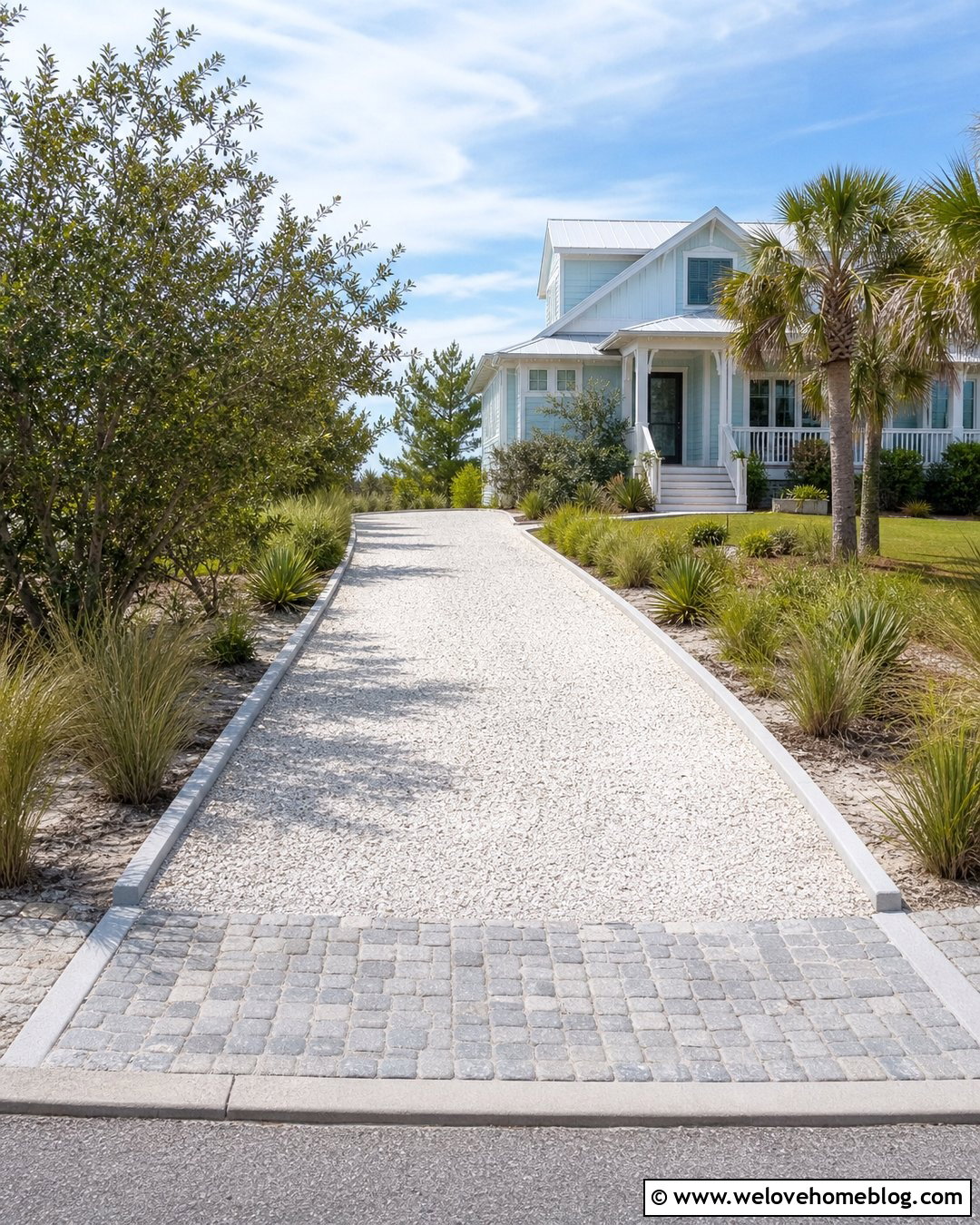
A crushed shell driveway brings a light coastal character to homes near beaches or warm, sunny landscapes. Use pale oyster or clam shell material across a straight driveway leading to a coastal cottage with light siding and simple shutters. Concrete curbing can hold the shells in place, while a shell-and-paver apron creates a polished entrance from the street. Surround the drive with salt-tolerant grasses, wax myrtle, dwarf palms where locally appropriate, and sandy-colored planting beds. Shell availability and suitability vary by region, so source material legally from an established landscape supplier. The surface may compact and change in appearance as it is used, making occasional replenishment necessary. Paired with relaxed planting and a bright facade, the finished entrance feels airy, regional, and pleasantly informal.
16. Flagstone And Gravel Driveway
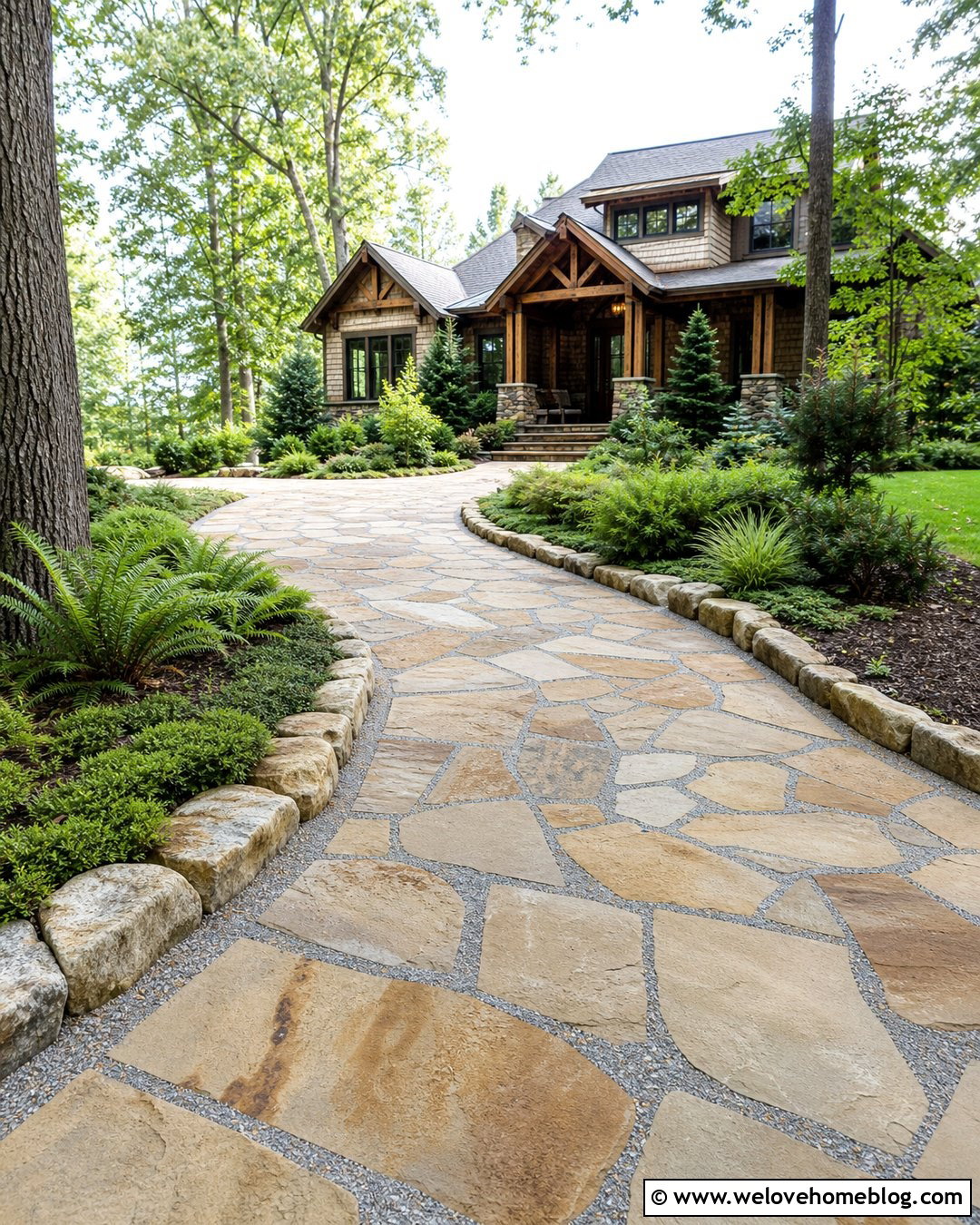
Large flagstones separated by compacted gravel create a richly textured driveway that blends hard paving with a more relaxed infill material. Choose thick, vehicle-rated sandstone or irregular flagstone for the primary driving surface, with small angular gravel packed into the joints. A gently curving layout works well beside a rustic craftsman or mountain-style house. Use a matching stone curb to contain the edges and connect the driveway with a broad front walkway. Plant ferns, ornamental grasses, low evergreens, and native ground covers around existing trees. The stone thickness, foundation, joint width, and installation method must be designed for vehicle loads. When carefully executed, the combination avoids the visual heaviness of uninterrupted paving while preserving a clear and welcoming route to the house.
17. Bluestone Paver Driveway
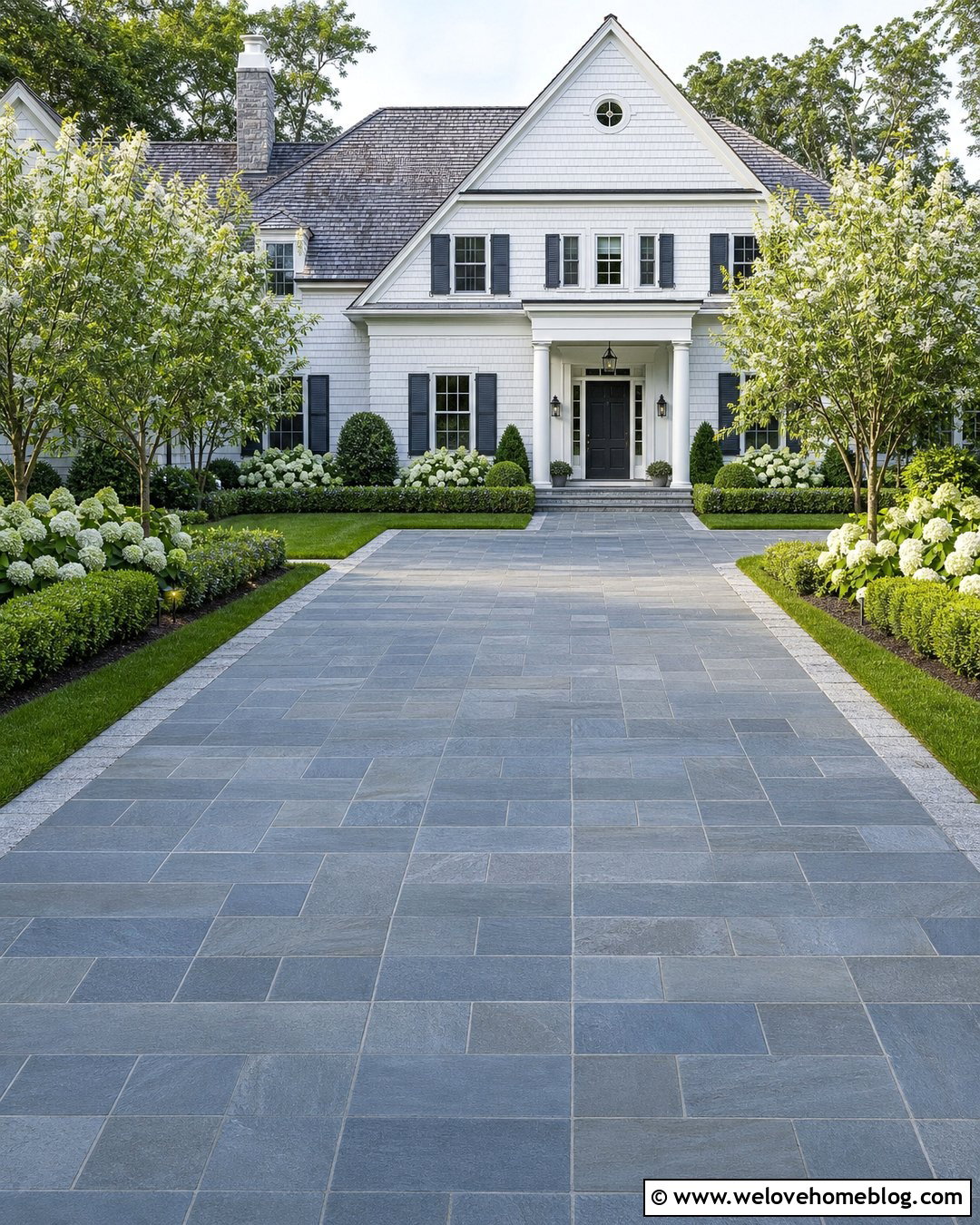
Bluestone pavers introduce cool blue-gray color and clean natural texture to a formal residential entrance. Lay rectangular, vehicle-rated bluestone in an ashlar pattern across a straight driveway leading to a white colonial or shingle-style house. A granite border can provide subtle contrast and create firm edge definition. Repeat the bluestone on the front walkway and landing so the hardscape feels unified from the curb to the door. Balanced beds of boxwood, hydrangeas, and small ornamental trees complement the refined surface. Natural stone can vary in tone and texture, so view representative material before final selection. A properly engineered base is essential for supporting the pavers and maintaining an even surface. This complete look feels elegant, structured, and closely tied to traditional architecture.
18. Recycled Asphalt Millings Driveway

Recycled asphalt millings can create a dark, compacted driveway with a more textured appearance than freshly laid asphalt. This surface is often best suited to long driveways, rural homes, detached garages, and budget-conscious improvement projects. Shape the material into a broad straight approach with clearly graded shoulders and compacted edges. Use treated timber, steel edging, or low concrete curbs where extra containment is needed. Plant native grasses and hardy shrubs along the route, then add a concrete or paver apron near the house for a cleaner arrival point. Product quality and local availability can vary, so inspect the millings and discuss preparation with a qualified contractor. The finished layout should look deliberate, evenly compacted, and connected to the architecture rather than resembling an unfinished construction area.
19. Concrete Ribbon Driveway With Grass Center
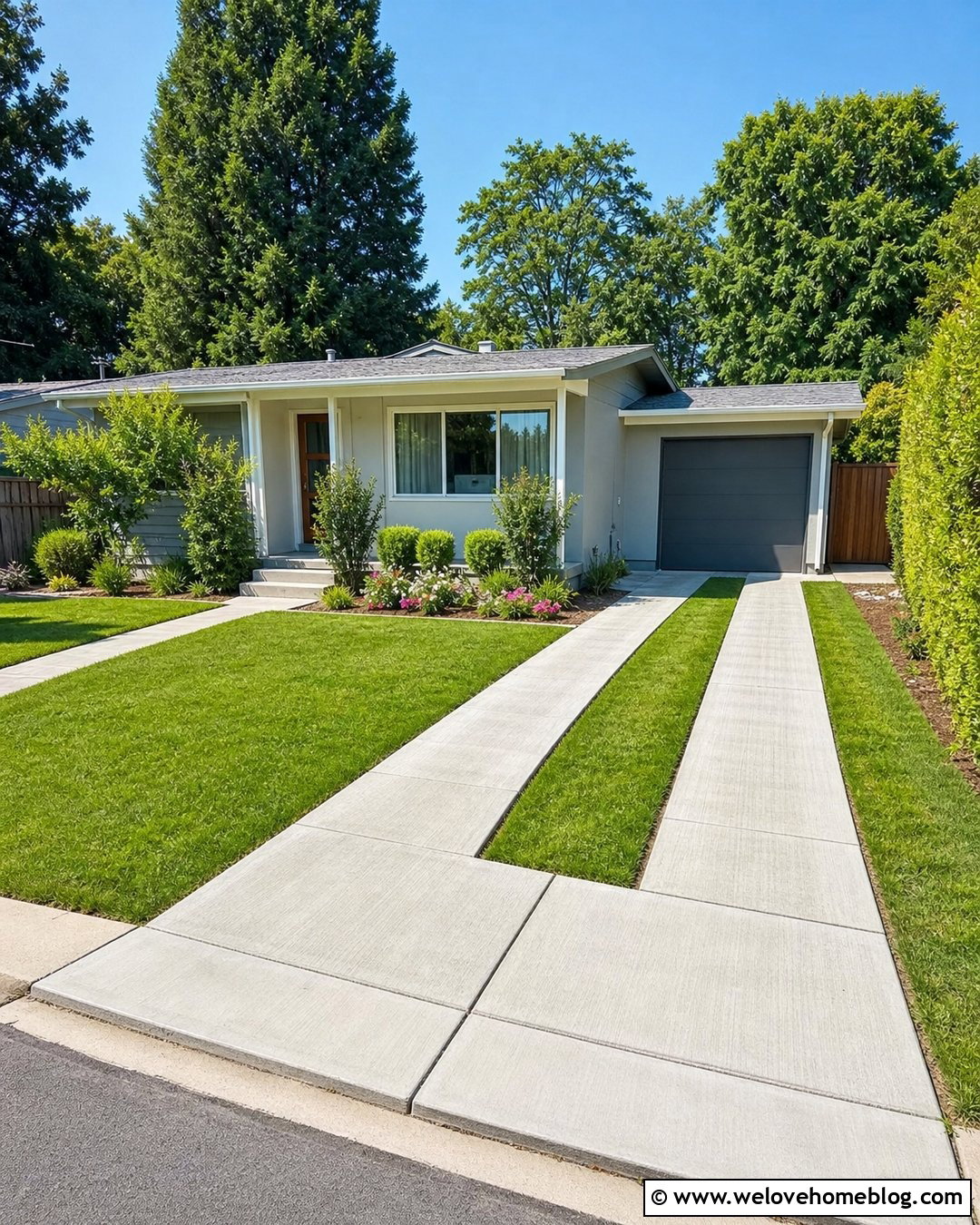
Two poured-concrete ribbons with a planted center reduce the visual width of a driveway and add greenery near the house. Use light gray broom-finished concrete strips positioned carefully for vehicle tires, with a central band of durable grass or low ground cover. A straight layout suits a small bungalow, cottage, or mid-century residence where a full-width slab might overwhelm the front yard. Add a solid concrete apron at the sidewalk and garage to simplify turning and create smooth transitions. Low planting beds, a narrow walkway, and compact shrubs can frame the design without crowding it. Dimensions must accommodate the vehicles that regularly use the property. The living center also needs suitable sunlight, drainage, soil, and maintenance to remain healthy beneath occasional tire traffic and changing weather.
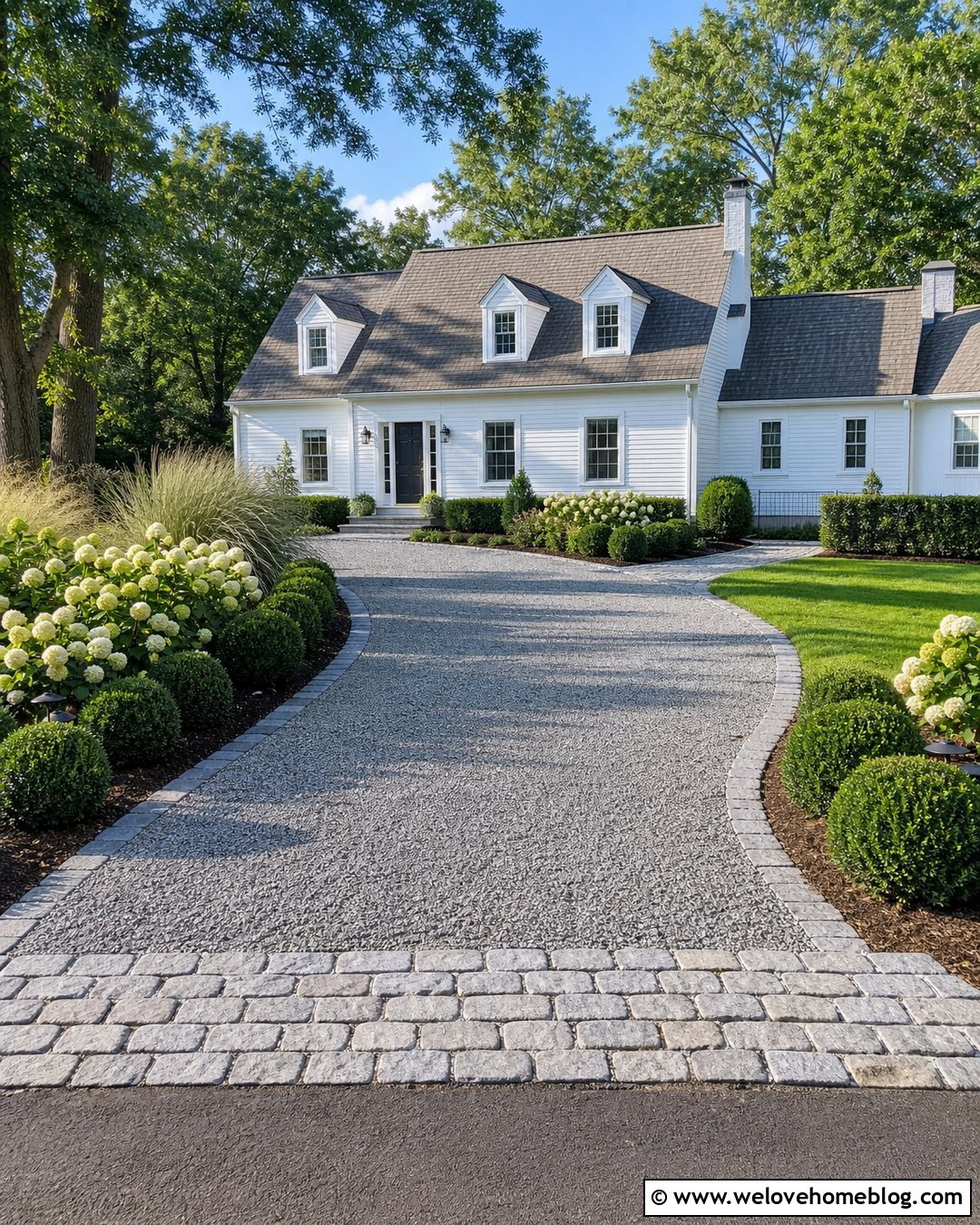


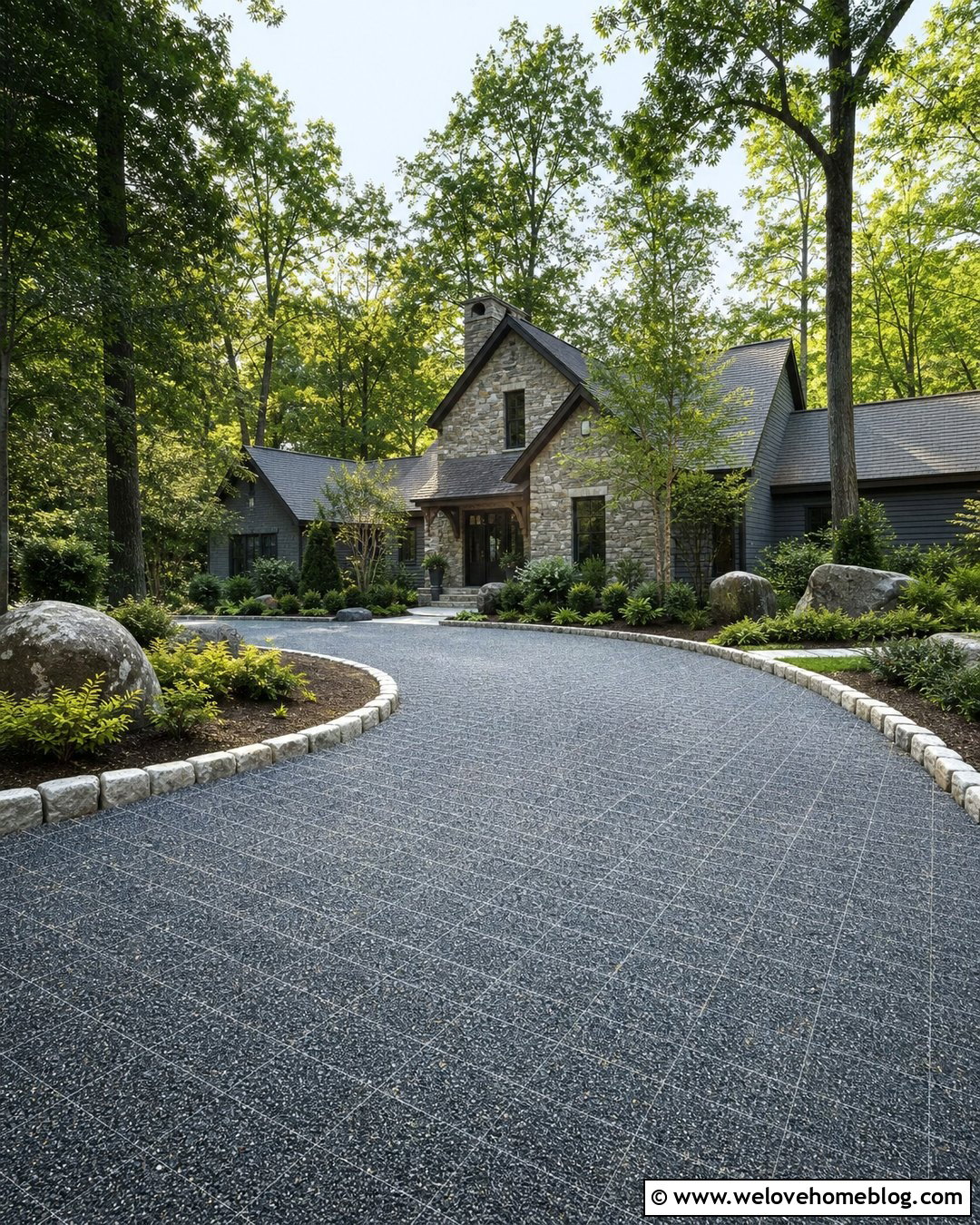
20. Concrete And Brick Driveway
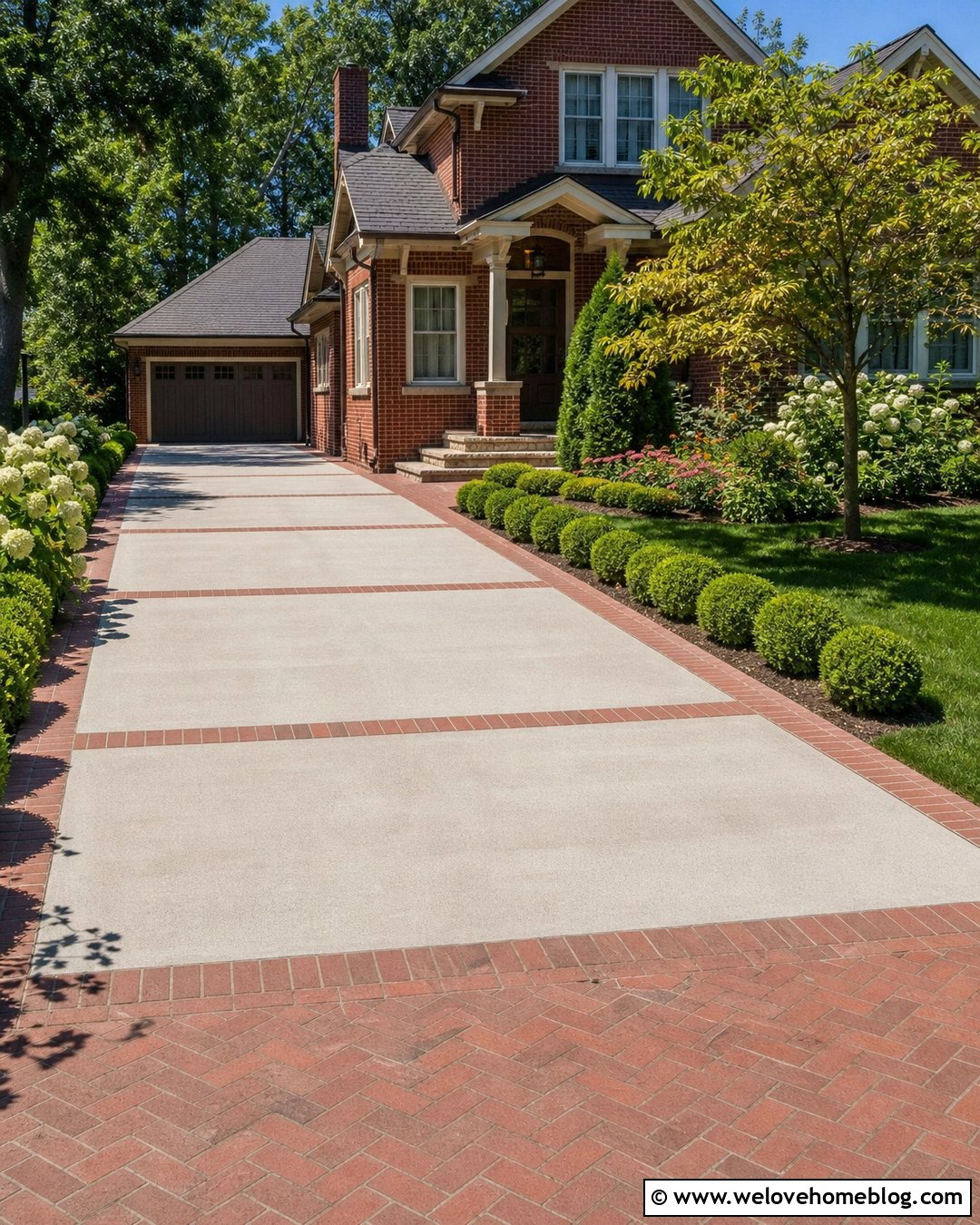
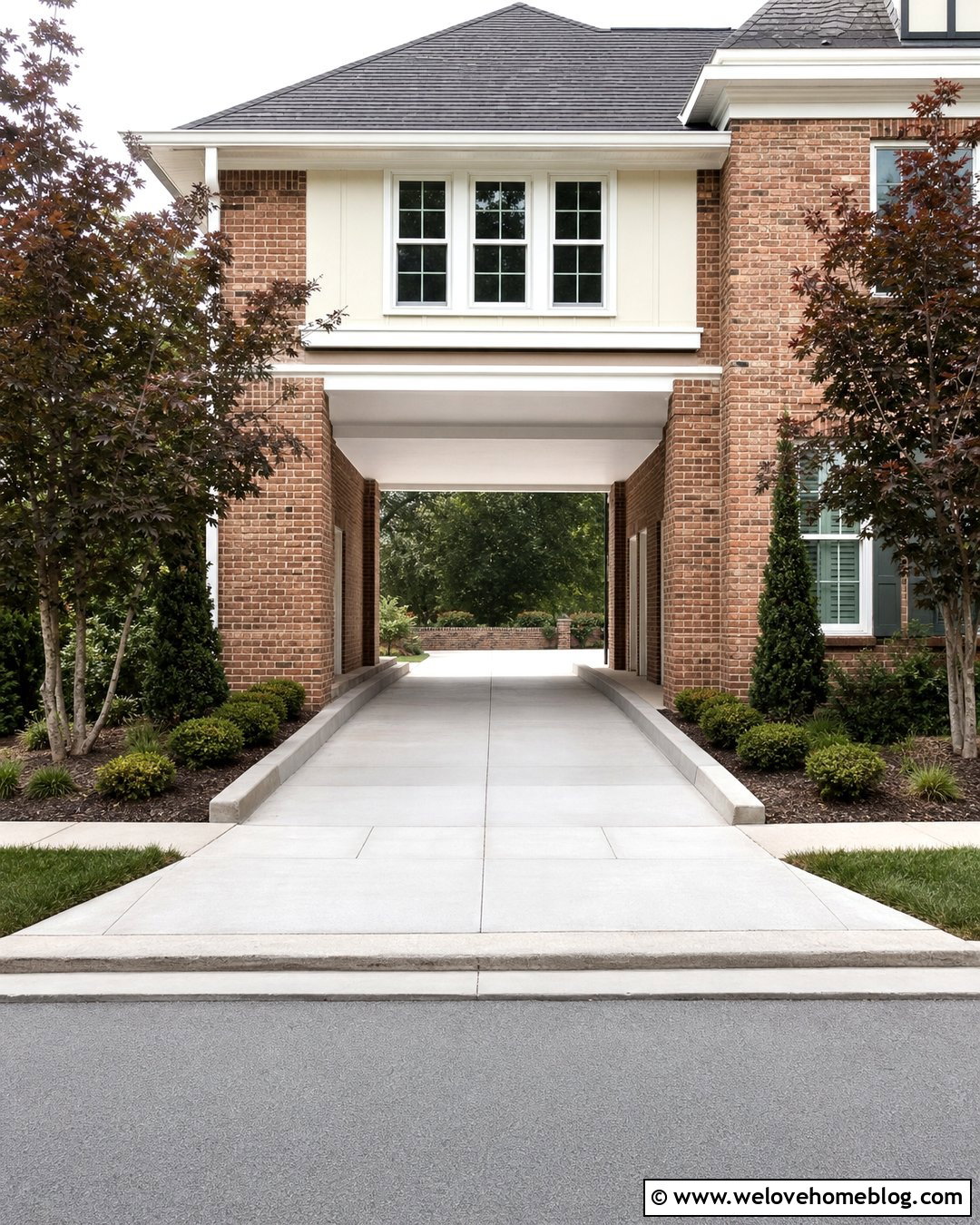
Mixing poured concrete with clay brick creates a balanced driveway that is practical, detailed, and easy to coordinate with traditional architecture. Use warm gray concrete for the main driving field, then add red brick ribbons along the perimeter and across the surface at measured intervals. A brick apron can emphasize the entrance, while the same material on the walkway visually leads toward the front door. This combination works well on a wide, straight driveway beside a brick colonial, craftsman, or classic suburban home. Frame it with lawn, boxwood, flowering shrubs, and a small shade tree. Keep the number of decorative bands limited so the surface does not become visually fragmented. Matching masonry colors helps the complete design feel established rather than added as an afterthought.
Conclusion:
The most suitable driveway surface should support your vehicles, handle local weather, manage water, and complement the home’s exterior. Concrete and asphalt provide familiar simplicity, while gravel, limestone, and recycled millings create more informal options. Brick, cobblestone, natural stone, and patterned pavers bring stronger decorative character. Permeable systems and planted grids can also reduce the visual impact of a large parking area. As you compare these 20 Driveway Surfaces Ideas, look beyond surface color alone. Consider the base, slope, edging, transitions, maintenance, and surrounding landscape. A well-planned driveway brings all these details together, creating a durable approach that looks connected to the house and improves curb appeal from the street.

Related posts:
Leave a Reply