
Aggregate driveways combine the strength of concrete with the natural color and texture of decorative stone. They can suit almost any home, from a traditional brick colonial to a sleek modern build. The real design potential comes from coordinating the aggregate blend with the driveway shape, border material, landscaping, and home exterior. Warm pebbles can soften a farmhouse entrance, while charcoal aggregate creates a crisp foundation for contemporary architecture. Curves, contrasting bands, planted islands, lighting, and decorative aprons add even more character. The textured finish also provides practical traction while hiding minor marks better than plain concrete. Whether you are replacing an old surface or planning a new entrance, these complete aggregate driveway ideas offer useful inspiration for different properties, climates, and budgets.
1. Exposed Aggregate Driveway With Brick Border
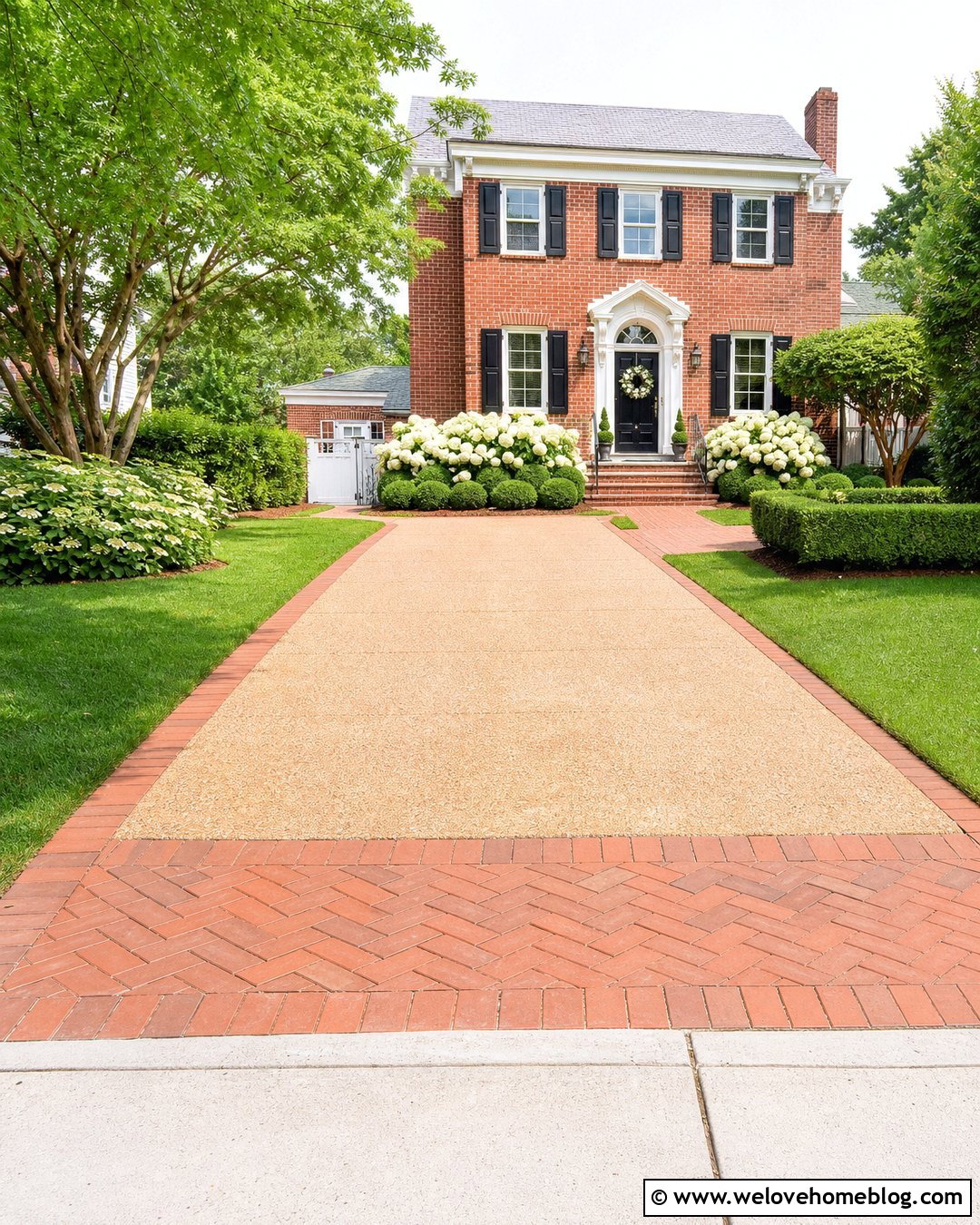
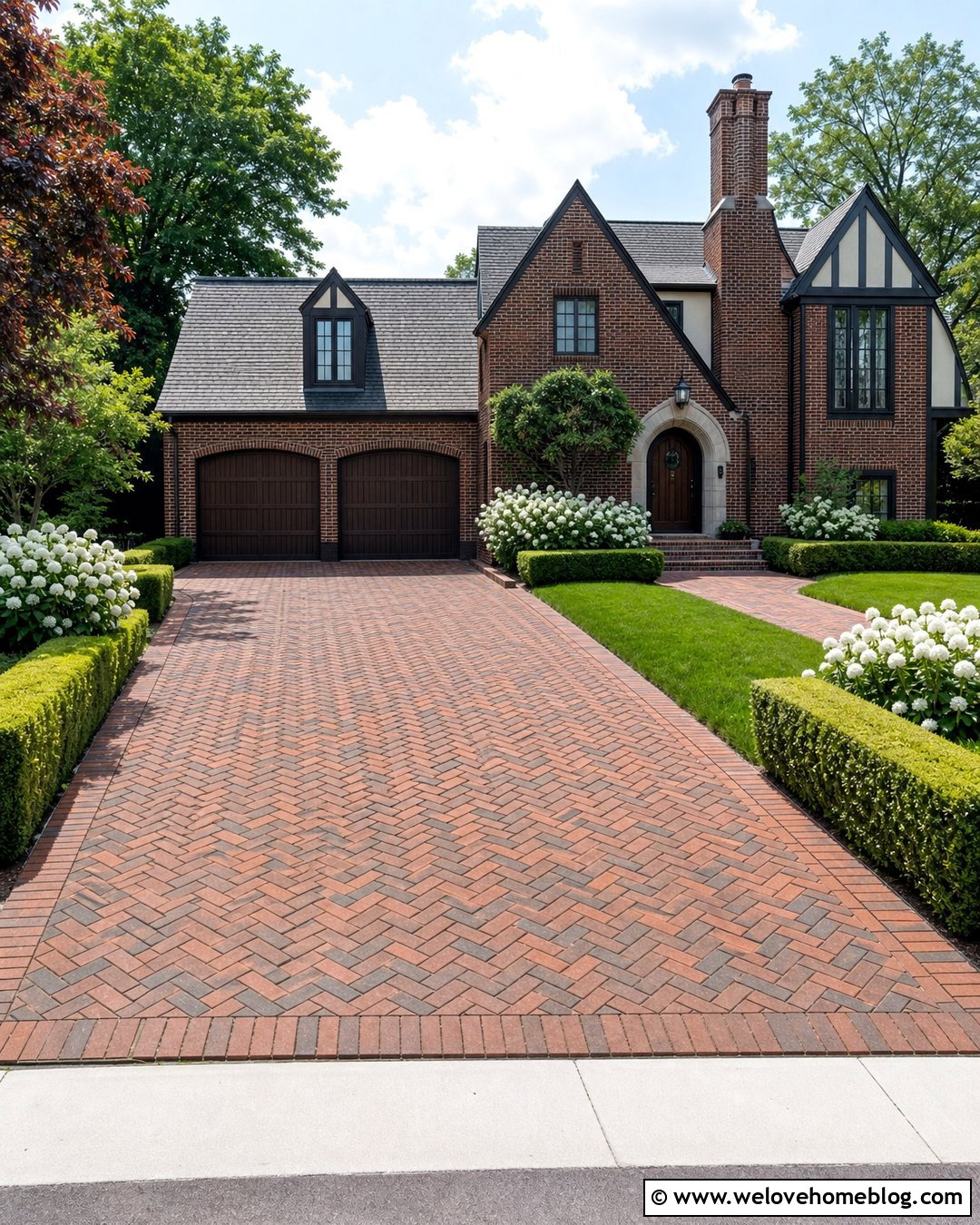
A warm exposed aggregate driveway framed with red brick creates a polished look that works especially well with colonial, craftsman, and traditional homes. Choose an aggregate blend containing tan, cream, brown, and muted gray stones to complement the earthy brick. A straight or gently curved layout keeps the entrance practical, while a matching brick apron provides a clear transition from the street. Continue the brick along the walkway so the driveway feels connected to the front door. Neatly clipped boxwoods, flowering hydrangeas, and a simple green lawn can soften the hard surfaces without hiding the border. Keep the brick flush with the concrete to reduce rough transitions and make routine sweeping, snow removal, and edging easier.
2. Gray Aggregate Driveway With Black Border
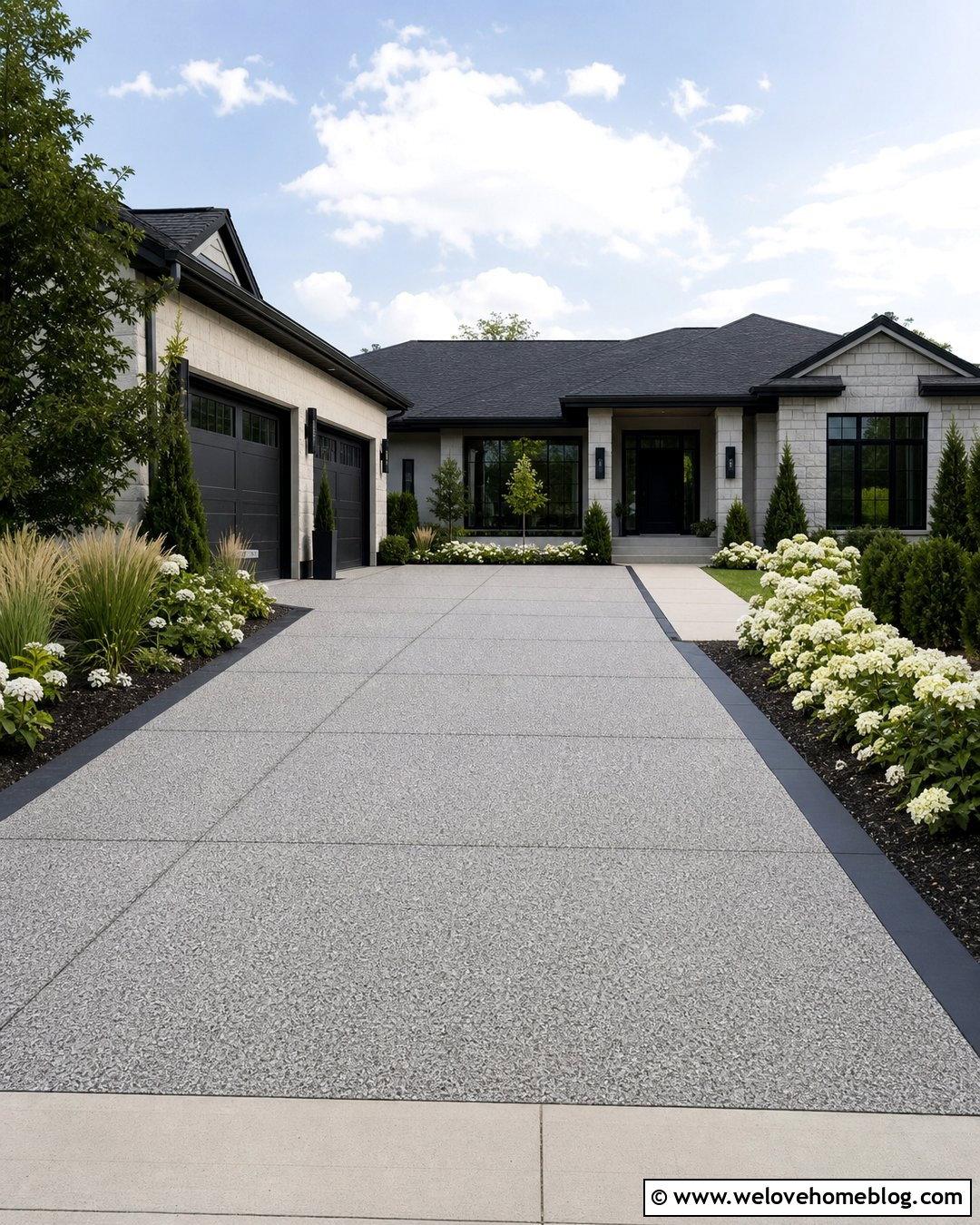
Cool gray aggregate surrounded by a smooth black concrete border gives a driveway strong definition without making it overly decorative. This combination suits modern, transitional, and updated ranch homes with black windows or dark roof details. Divide the surface into large rectangular panels using clean control joints that follow the lines of the garage. A straight driveway emphasizes the geometric appearance, while narrow planting beds prevent the hardscape from dominating the yard. Ornamental grasses, compact evergreens, and white flowering perennials bring movement and contrast. At the curb, a wider black apron can visually anchor the entrance. Select a medium stone exposure rather than an extremely rough texture to balance visible aggregate character with comfortable walking and easier cleaning.
3. Curved Aggregate Driveway With Stone Edging
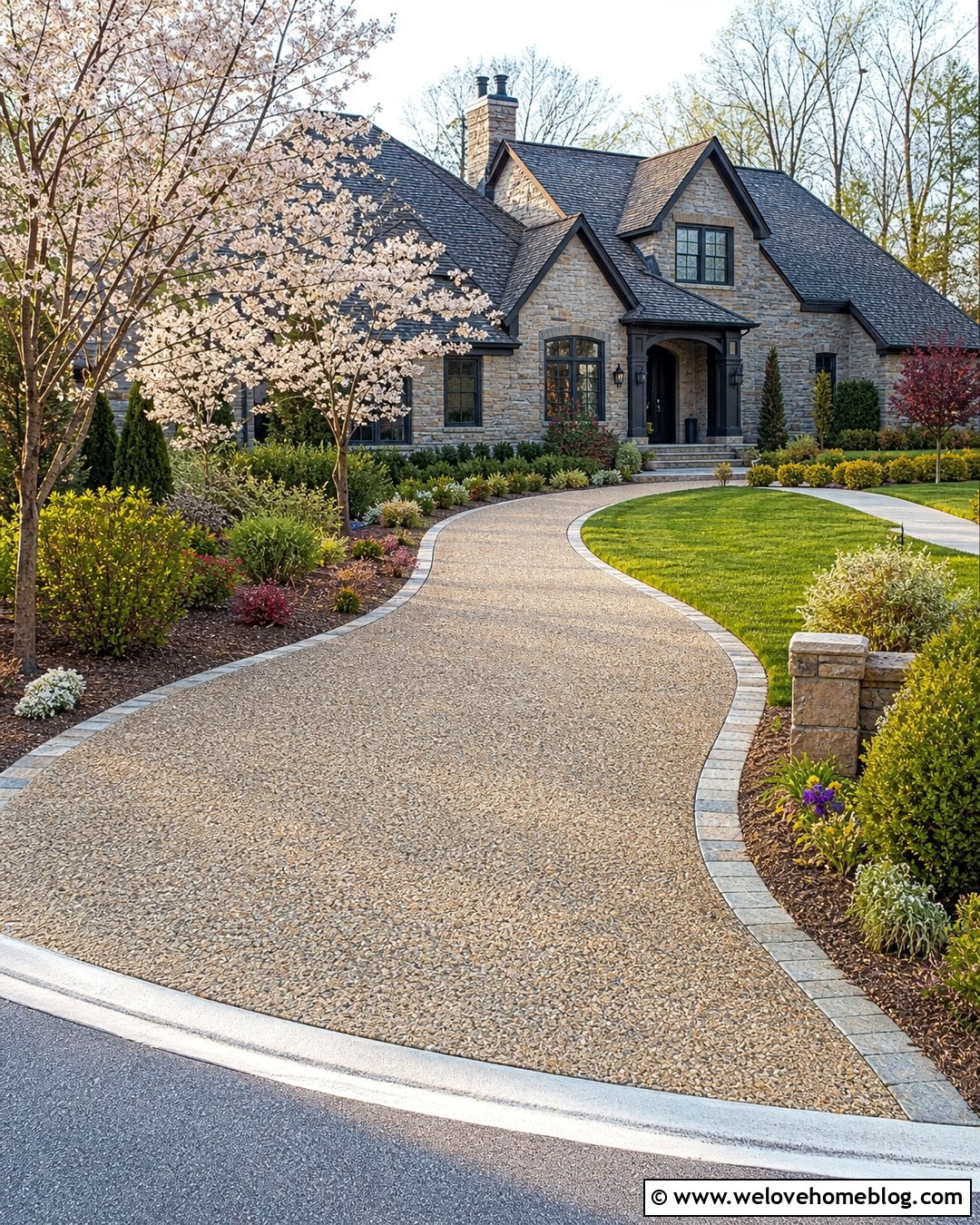
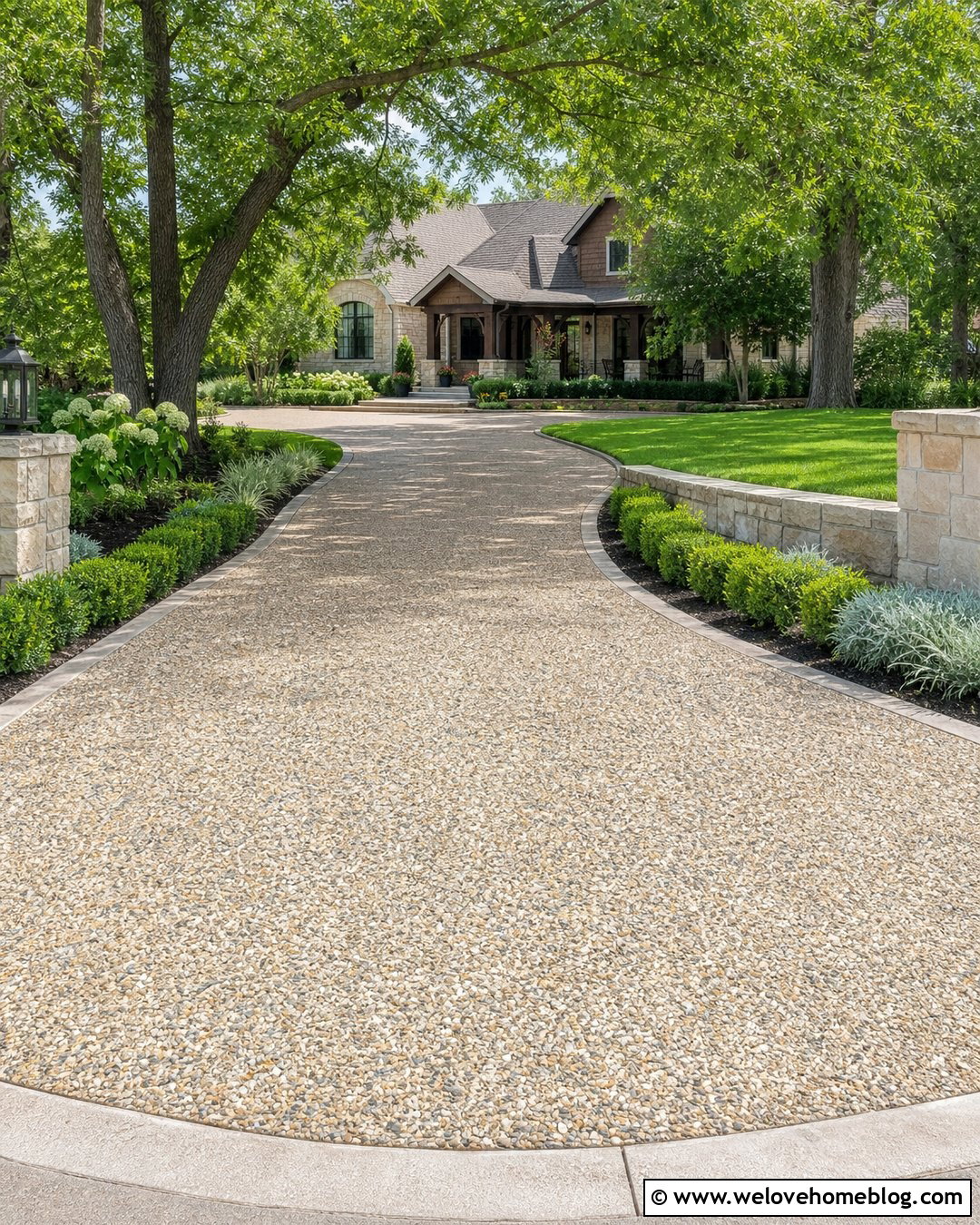
A curved aggregate driveway can make the approach to a home feel natural and spacious, even when the front yard is not especially large. Use a soft beige exposed aggregate containing rounded river pebbles, then outline the curve with low granite or limestone setts. The stone edging should follow one continuous radius rather than a series of abrupt turns. On the outside edge, layer low shrubs, ornamental grasses, and one or two small flowering trees. Keep plants shorter near the street for better visibility. A broad lawn on the inside of the curve creates breathing room and highlights the driveway shape. This complete design is particularly effective beside craftsman homes, stone cottages, and houses positioned at an angle to the road.
4. Aggregate Driveway With Paver Apron
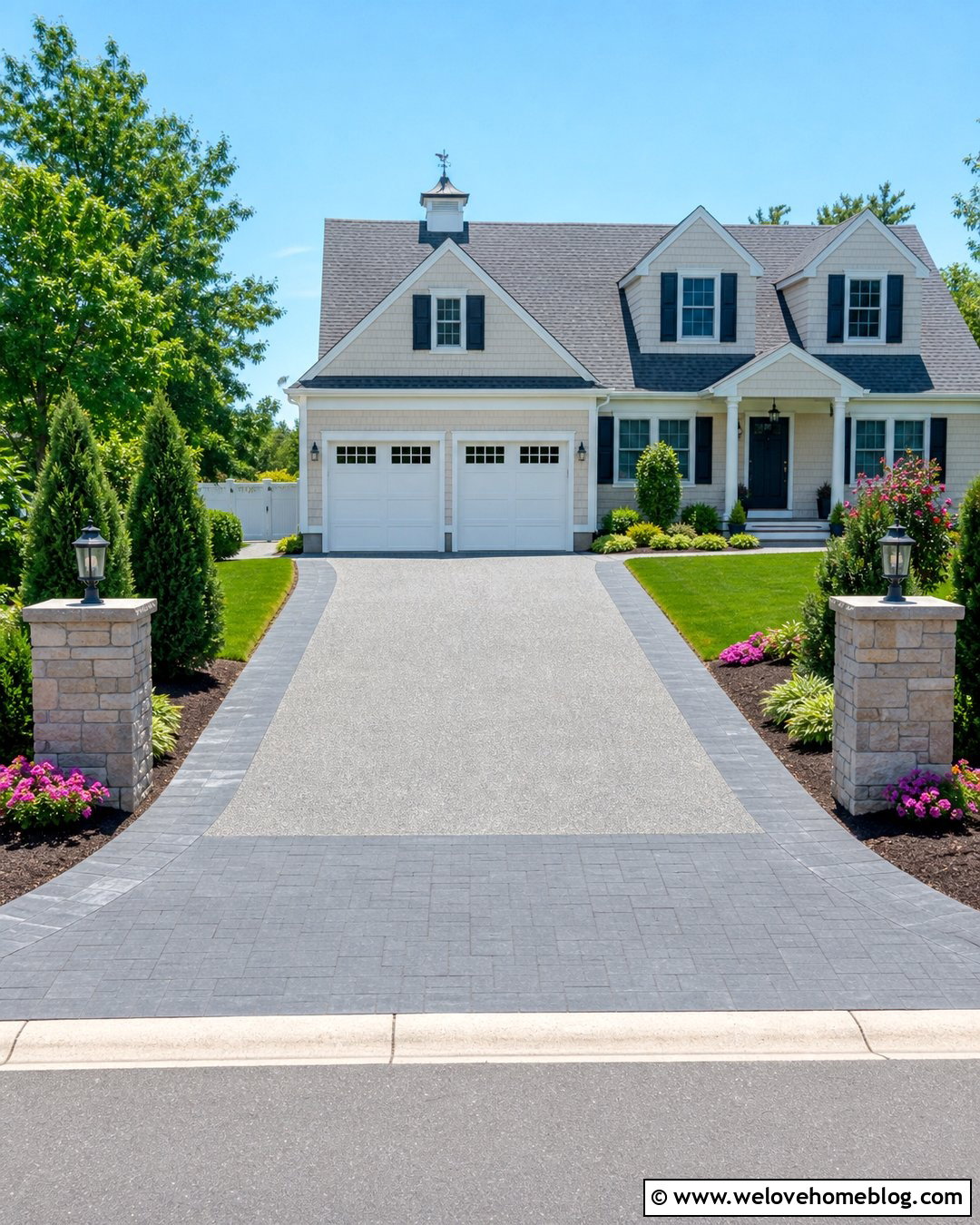
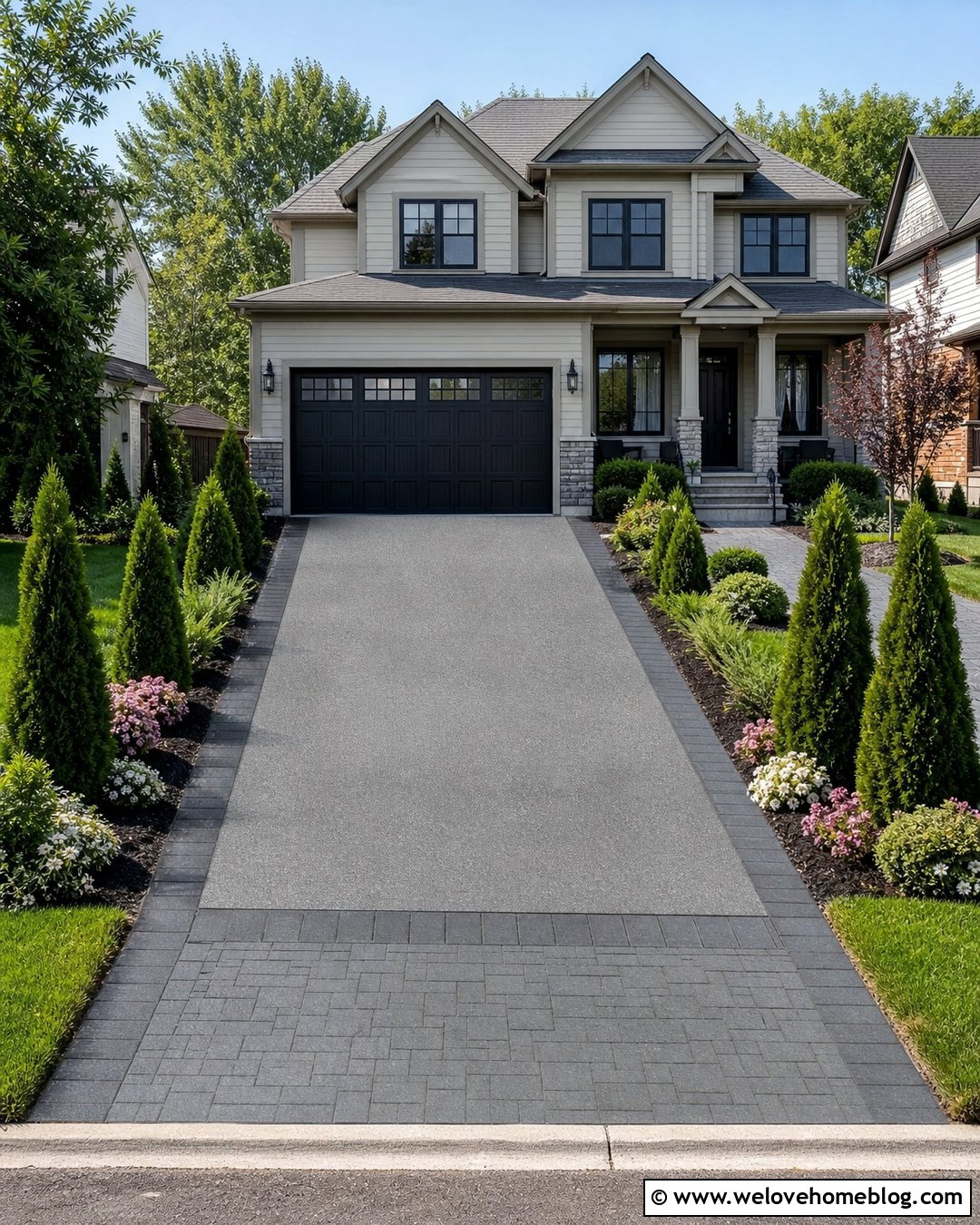
Adding a paver apron is an efficient way to give an aggregate driveway a more substantial entrance without paving the entire surface in expensive masonry. Begin with a medium-gray exposed aggregate concrete field, then install charcoal or taupe concrete pavers across the first several feet near the curb. Repeat the pavers as narrow side borders or a band near the garage to make the apron feel intentional. A straight, slightly flared layout provides comfortable access from the street. Frame the entrance with symmetrical planting beds containing evergreen shrubs and seasonal flowers. Low masonry address pillars can complete the look on larger properties. Coordinate the paver color with the roof, garage doors, or facade rather than introducing an unrelated accent shade.
5. Light Aggregate Driveway With Grass Strips
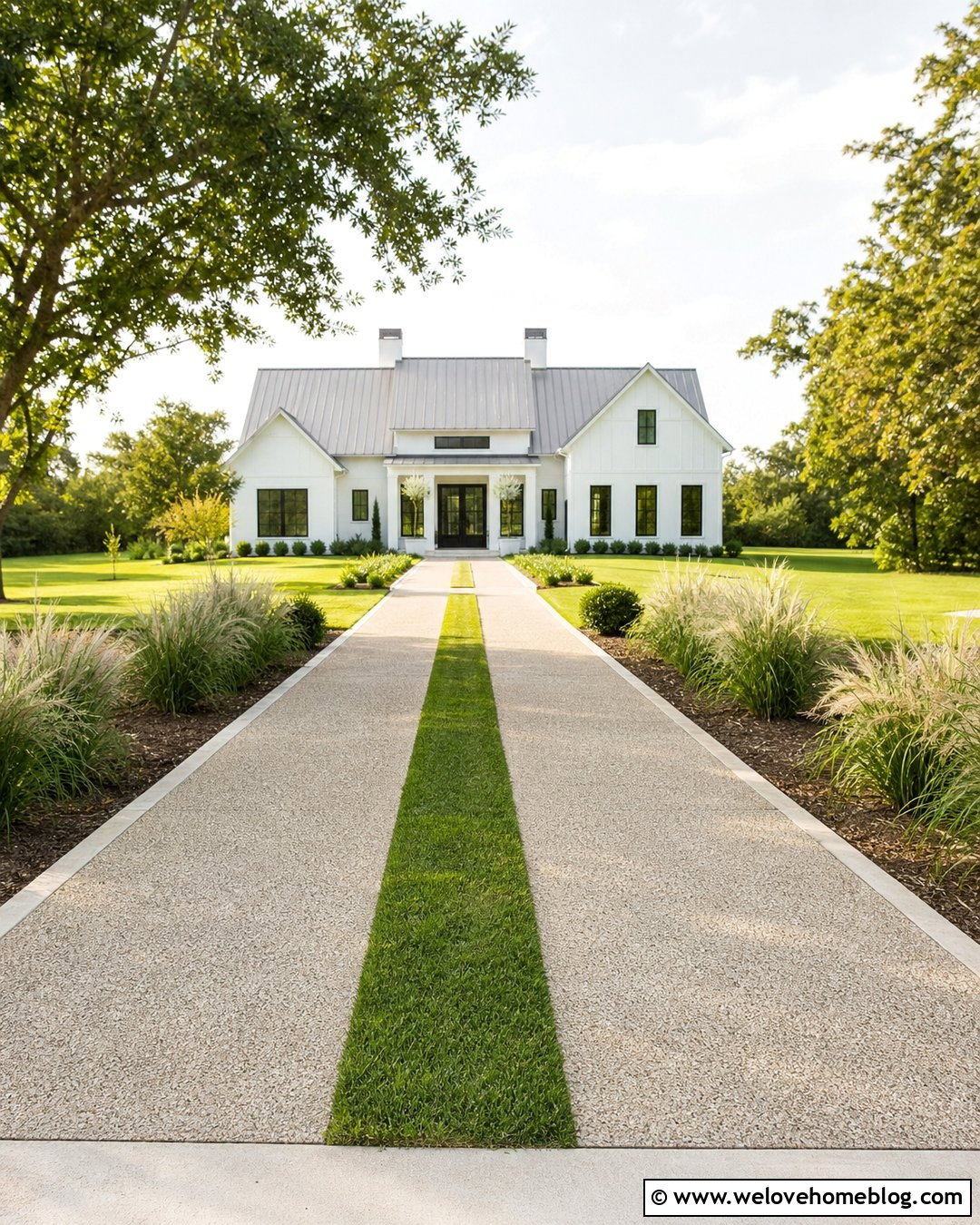
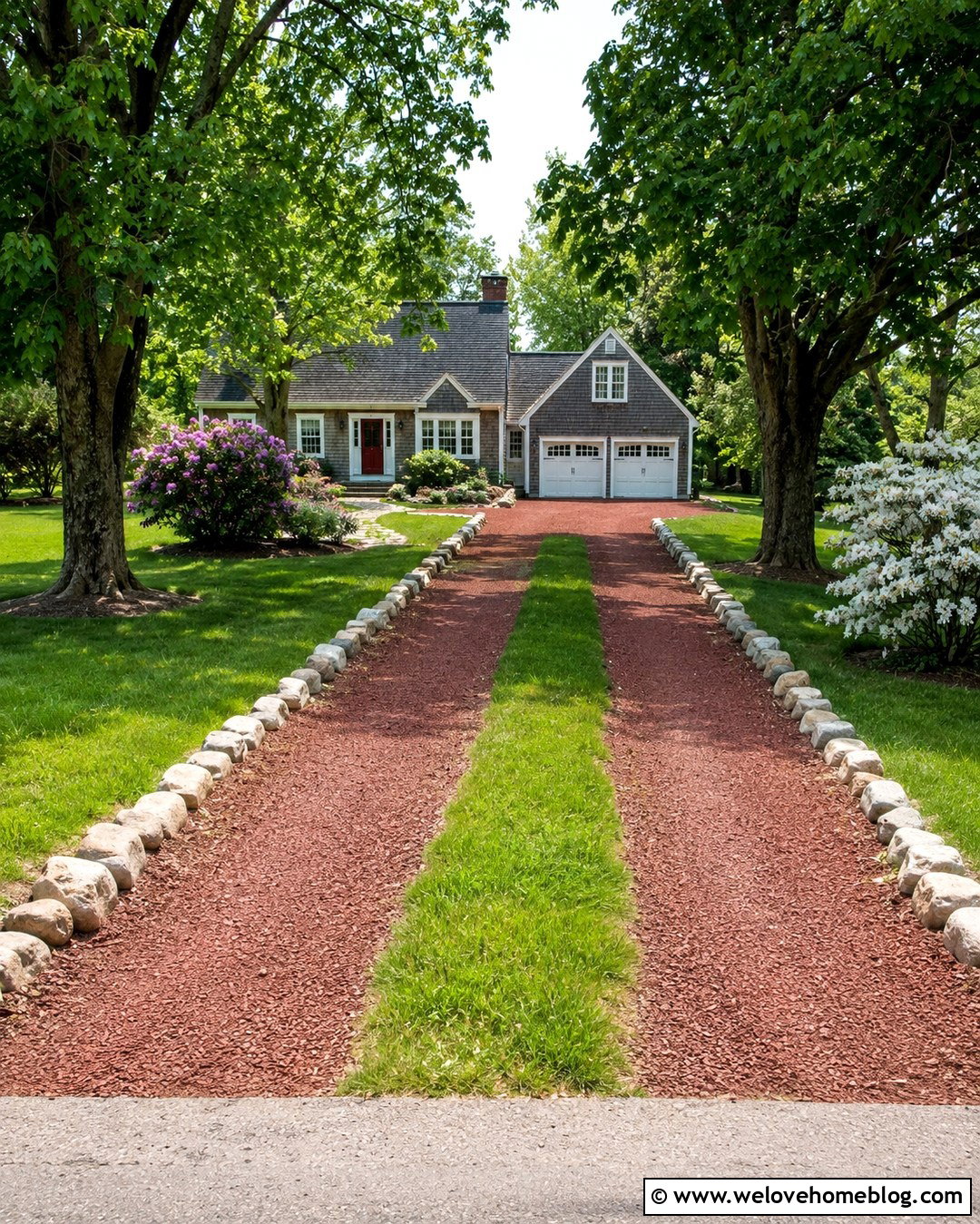
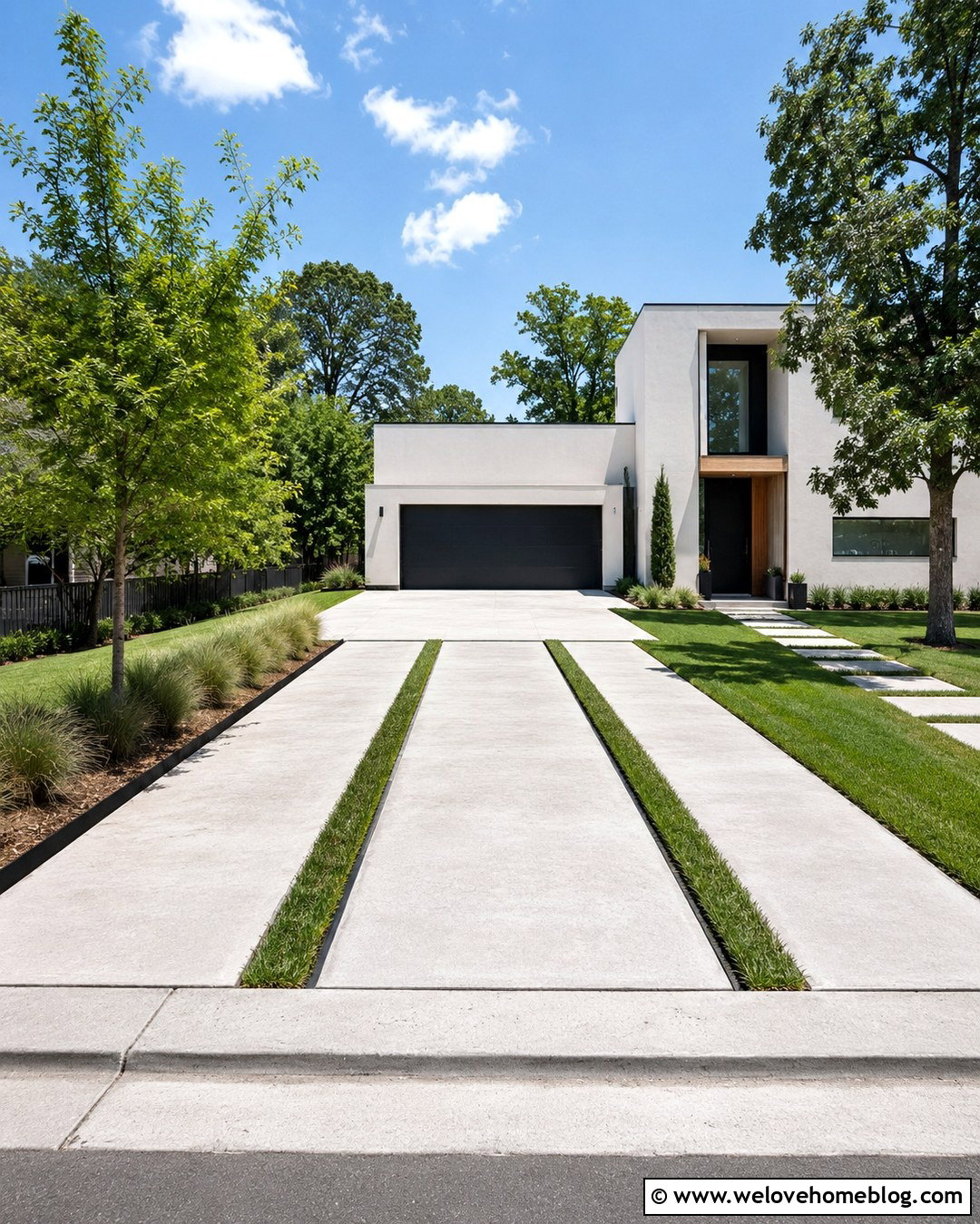
Bright cream aggregate and narrow grass bands create a softer alternative to one large, uninterrupted concrete surface. Pour the driveway as two broad wheel tracks or several long slabs separated by reinforced planting strips. Low-growing turf or durable ground cover can fill the joints, depending on local conditions and maintenance preferences. This linear layout looks especially attractive in front of a modern farmhouse or minimalist white home. Continue the pale aggregate into a simple walkway leading toward the porch. Use steel or concrete edging to keep soil and roots from spreading into the driving surface. The green strips require thoughtful drainage and regular trimming, but they visually reduce the driveway’s width and connect it more naturally to the surrounding lawn.
6. Dark Aggregate Driveway With White House
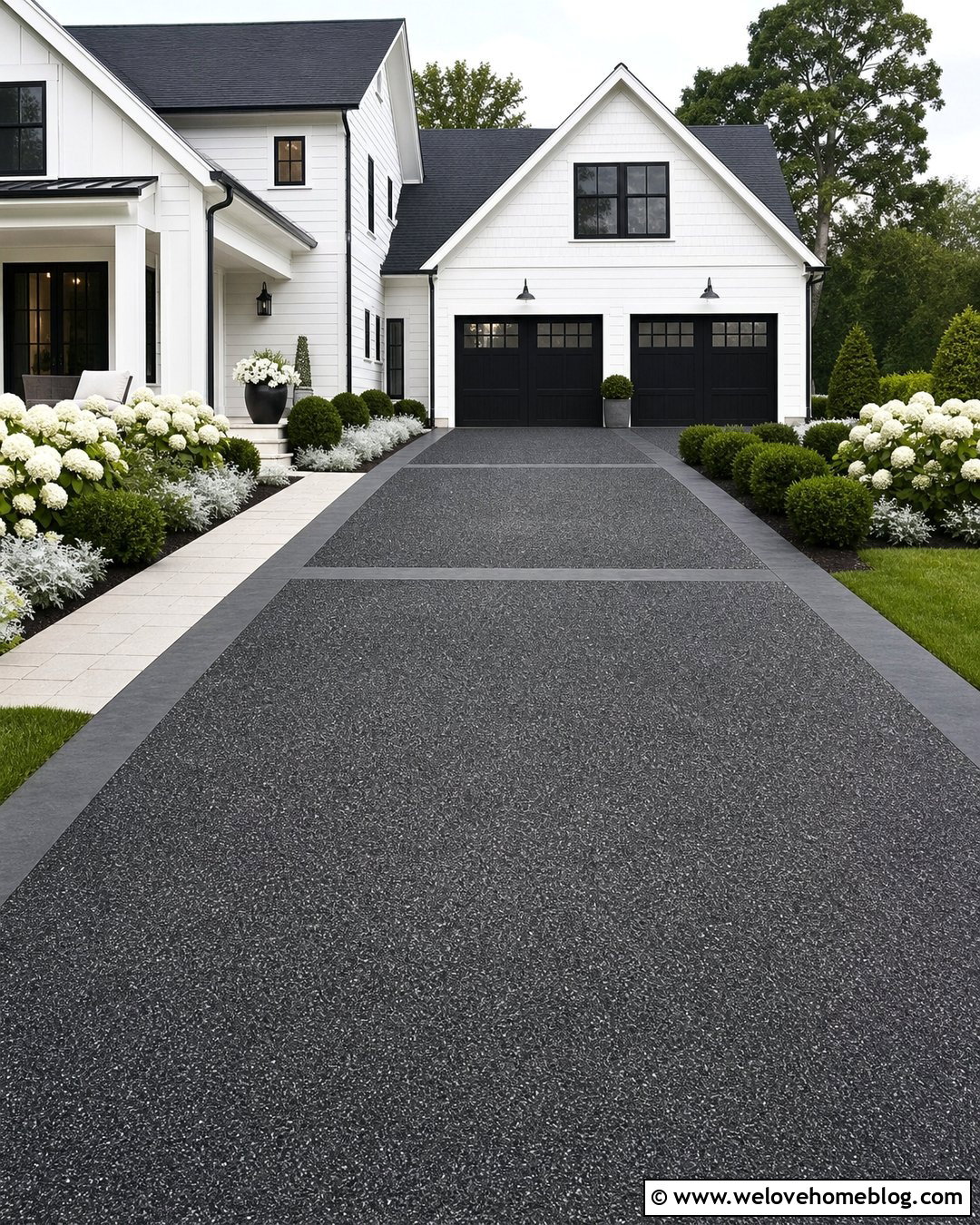
A charcoal exposed aggregate driveway creates dramatic contrast against a white house while remaining more textured and visually varied than plain dark concrete. Choose a mix containing black basalt, deep gray stone, and a small amount of lighter aggregate for dimension. A wide straight layout works well when aligned with double garage doors. Frame the sides with smooth charcoal concrete bands to create a clean finished edge. White hydrangeas, silver foliage, and clipped green shrubs repeat the home’s restrained color palette. Near the entrance, install a light concrete walkway that clearly separates pedestrian and vehicle routes. This design suits contemporary homes, modern farmhouses, and renovated ranch houses. Proper exterior lighting can keep the darker surface easy to navigate without cluttering the daytime view.
7. Aggregate Driveway With Cobblestone Bands
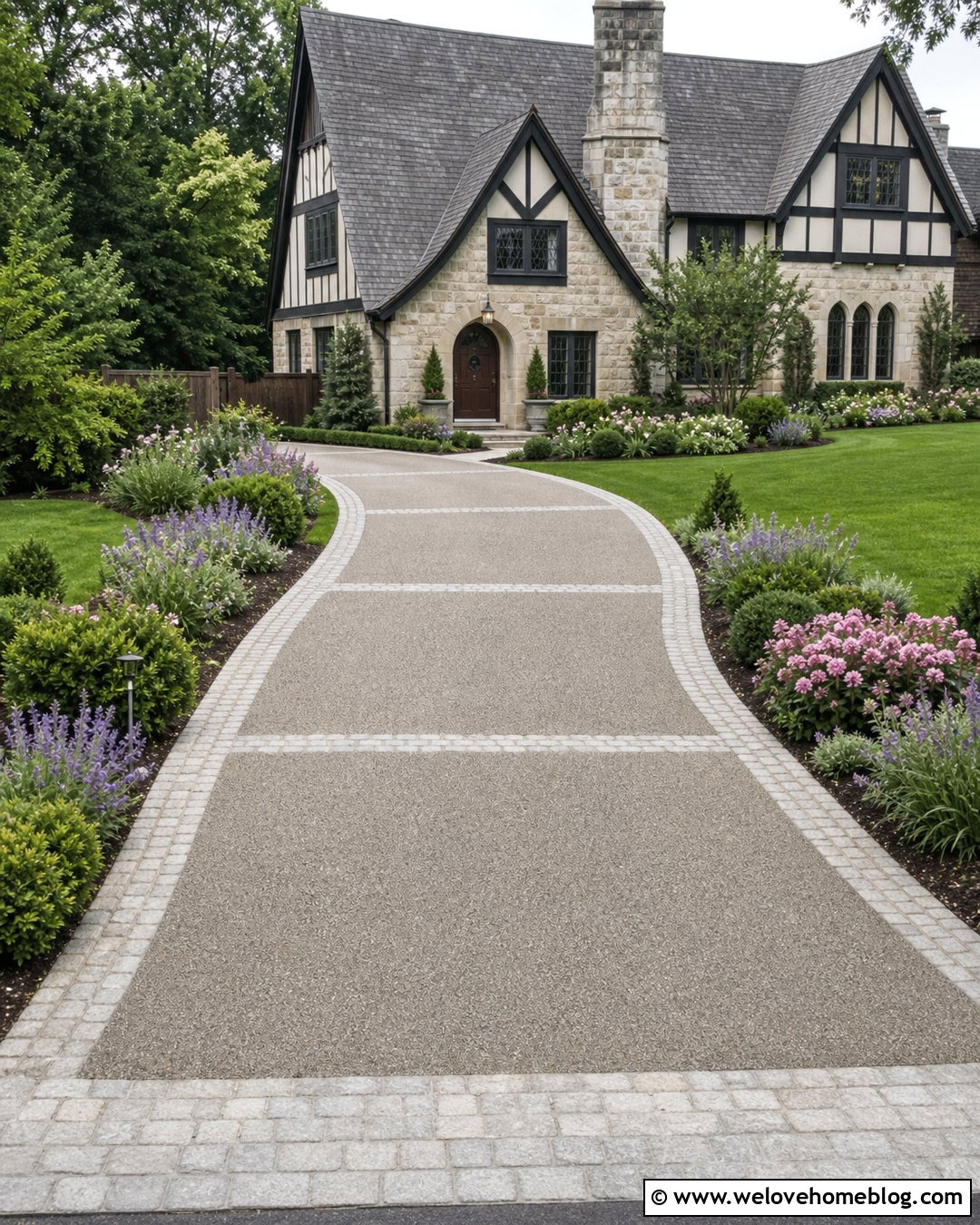
Cobblestone bands can divide a wide aggregate driveway into smaller visual sections and give the surface a handcrafted appearance. Use warm gray exposed aggregate concrete as the main material, then position rows of granite cobbles across key points, such as the curb, parking area, and garage entrance. Side borders made from the same cobbles tie everything together. A slightly curved layout adds traditional character without becoming difficult to navigate. Plant lavender, catmint, compact roses, or low hedging along the edges, leaving enough open space around vehicle doors. This driveway design pairs naturally with European-inspired cottages, Tudor homes, and stone facades. The cobblestones should be carefully set at a consistent height so the decorative bands remain functional and comfortable to cross.
8. Aggregate Driveway With Concrete Border
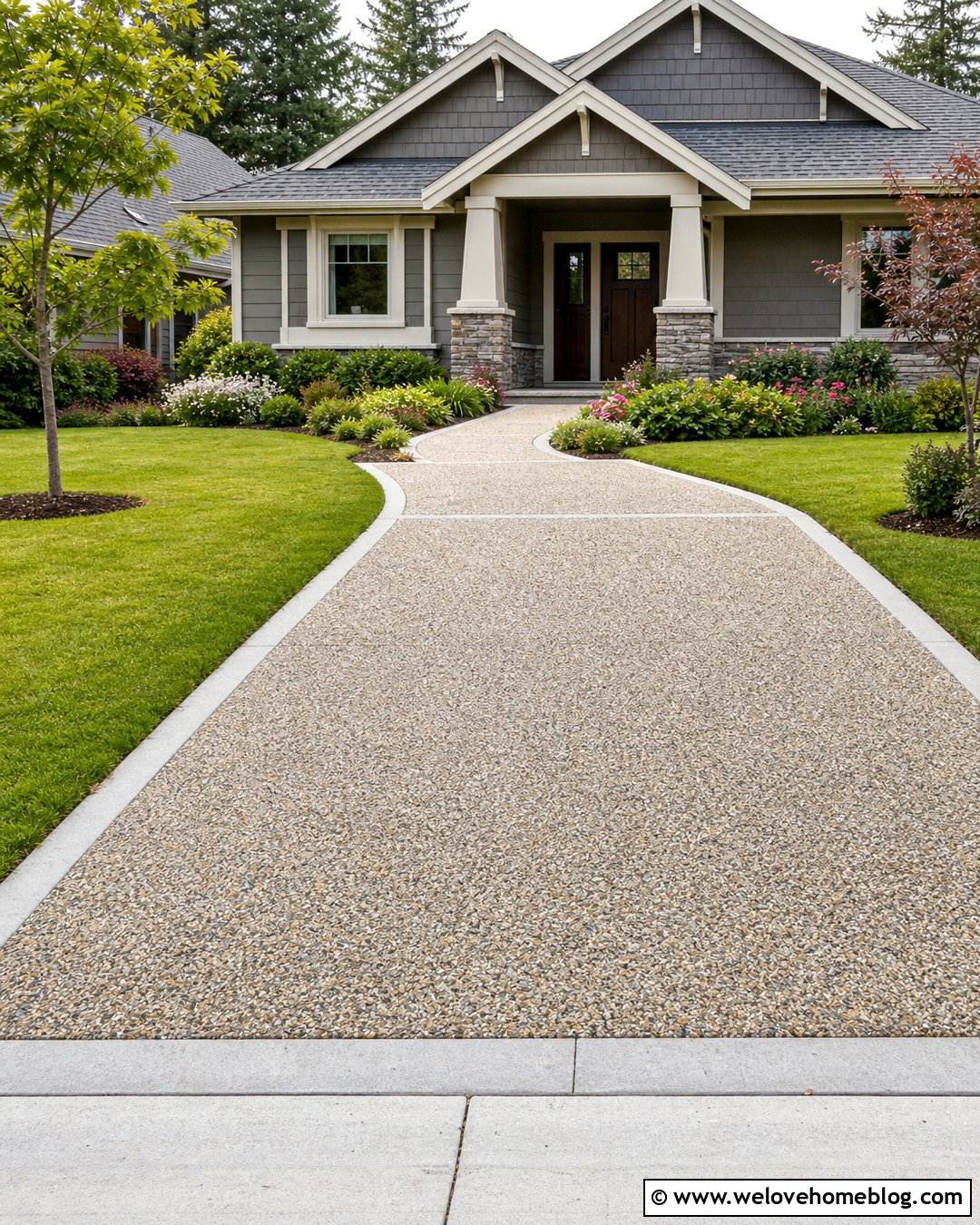
A simple concrete border makes exposed aggregate look crisp while keeping the overall design affordable and easy to coordinate. Select a natural pebble aggregate for the main driveway and surround it with smooth, lightly colored poured concrete. The border can be six to twelve inches wide depending on the scale of the property. Use it to emphasize a straight driveway, define a gentle flare at the street, and connect the vehicle area with the front walkway. Foundation beds filled with compact shrubs and perennial flowers add color without competing with the stone texture. This combination works with almost any house style because the border can match existing steps, sidewalks, or porch flooring. Clean joint placement will make the contrasting finishes look planned rather than added later.
9. Aggregate Driveway With a Center Island
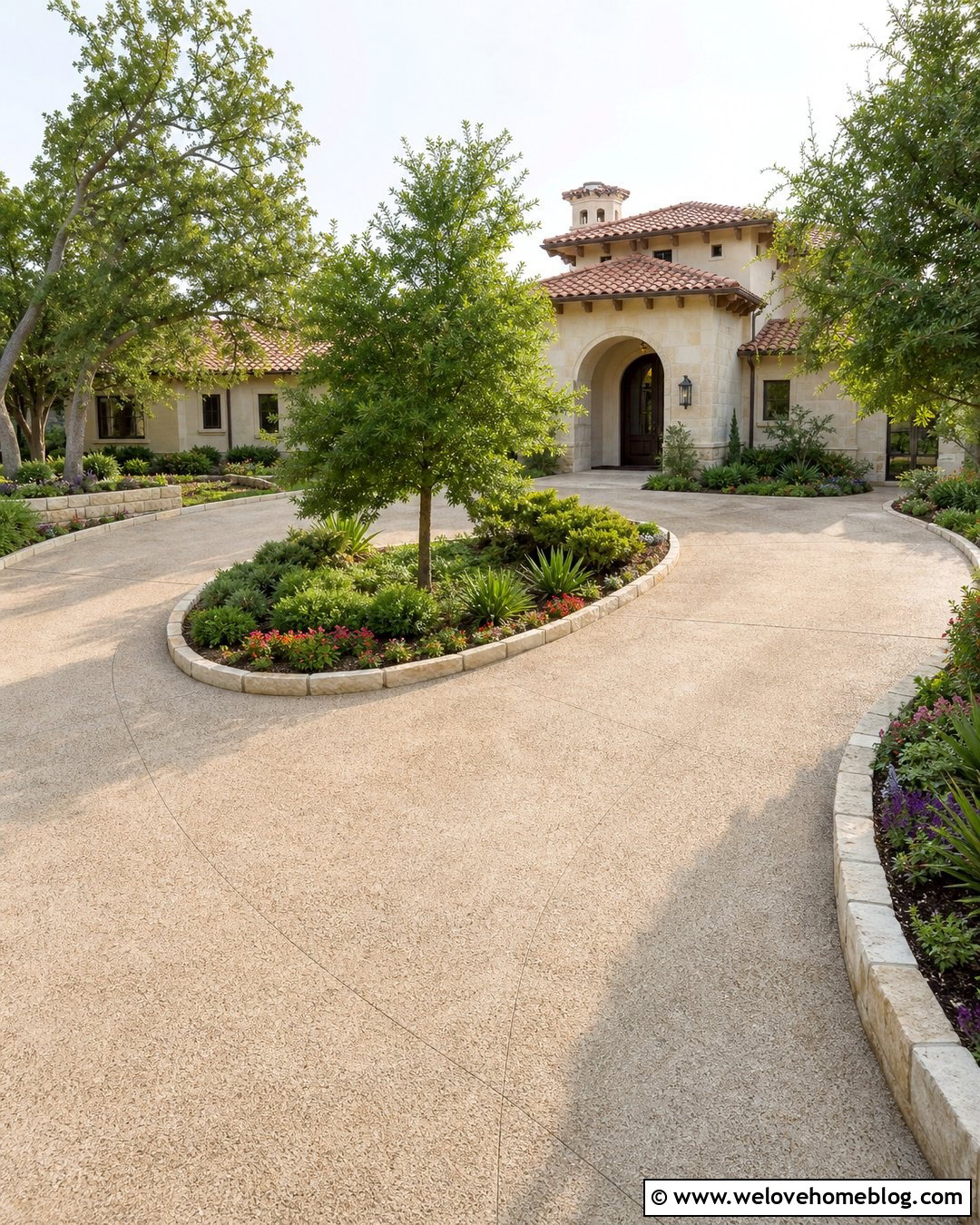
A planted center island can transform a broad aggregate driveway into an organized arrival area while reducing the amount of uninterrupted pavement. Shape the driveway around an oval or circular island using warm beige exposed aggregate concrete. Define the island with a low natural stone curb that coordinates with the facade. A small ornamental tree can provide height, while ground cover, compact shrubs, and seasonal flowers fill the lower layers. Avoid dense planting near important turning points so drivers retain clear sightlines. Repeat the same stone along the outer driveway border for continuity. This layout works best on wider lots with enough turning space and suits traditional, Mediterranean, and large suburban homes where a simple straight driveway might otherwise look oversized.
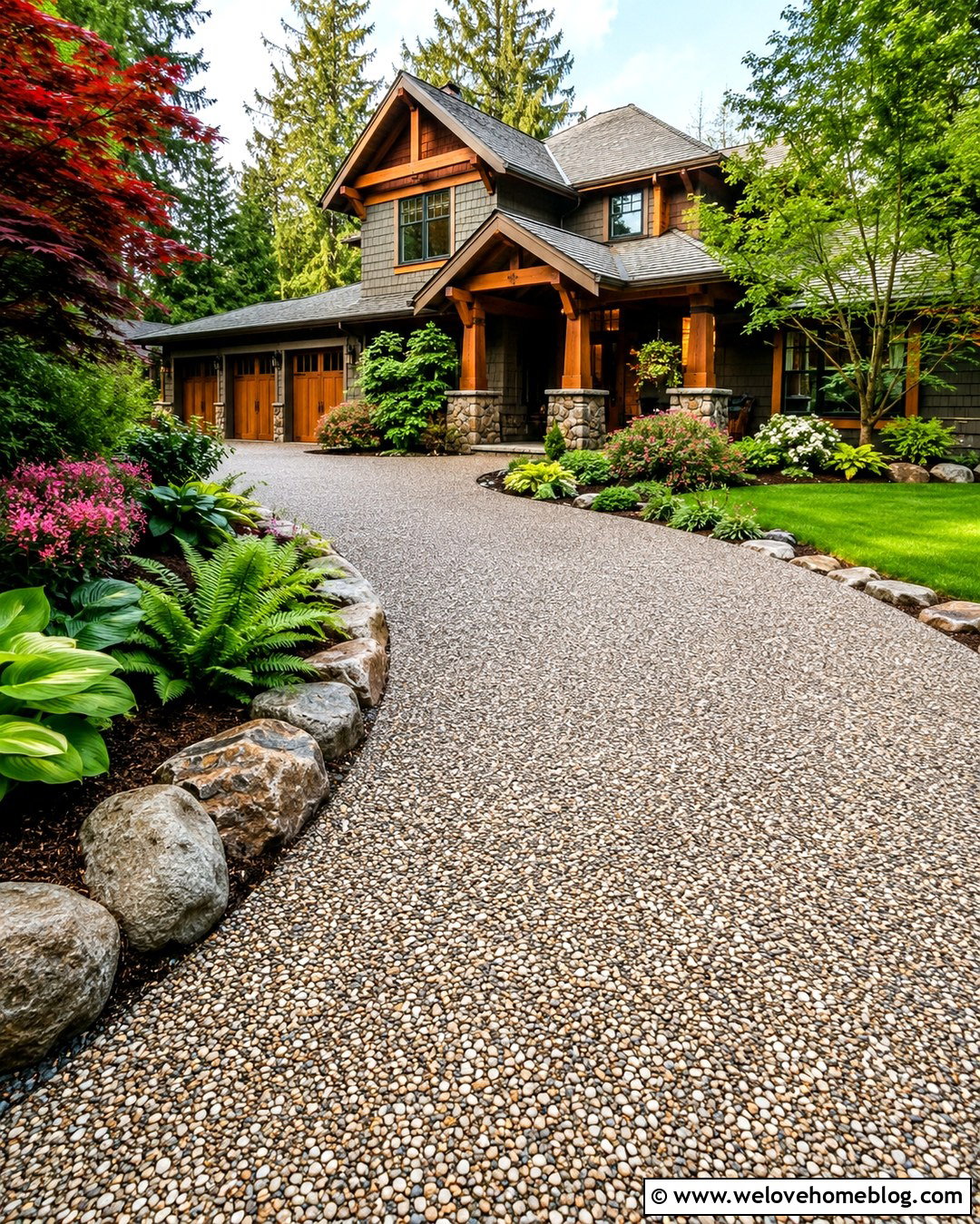
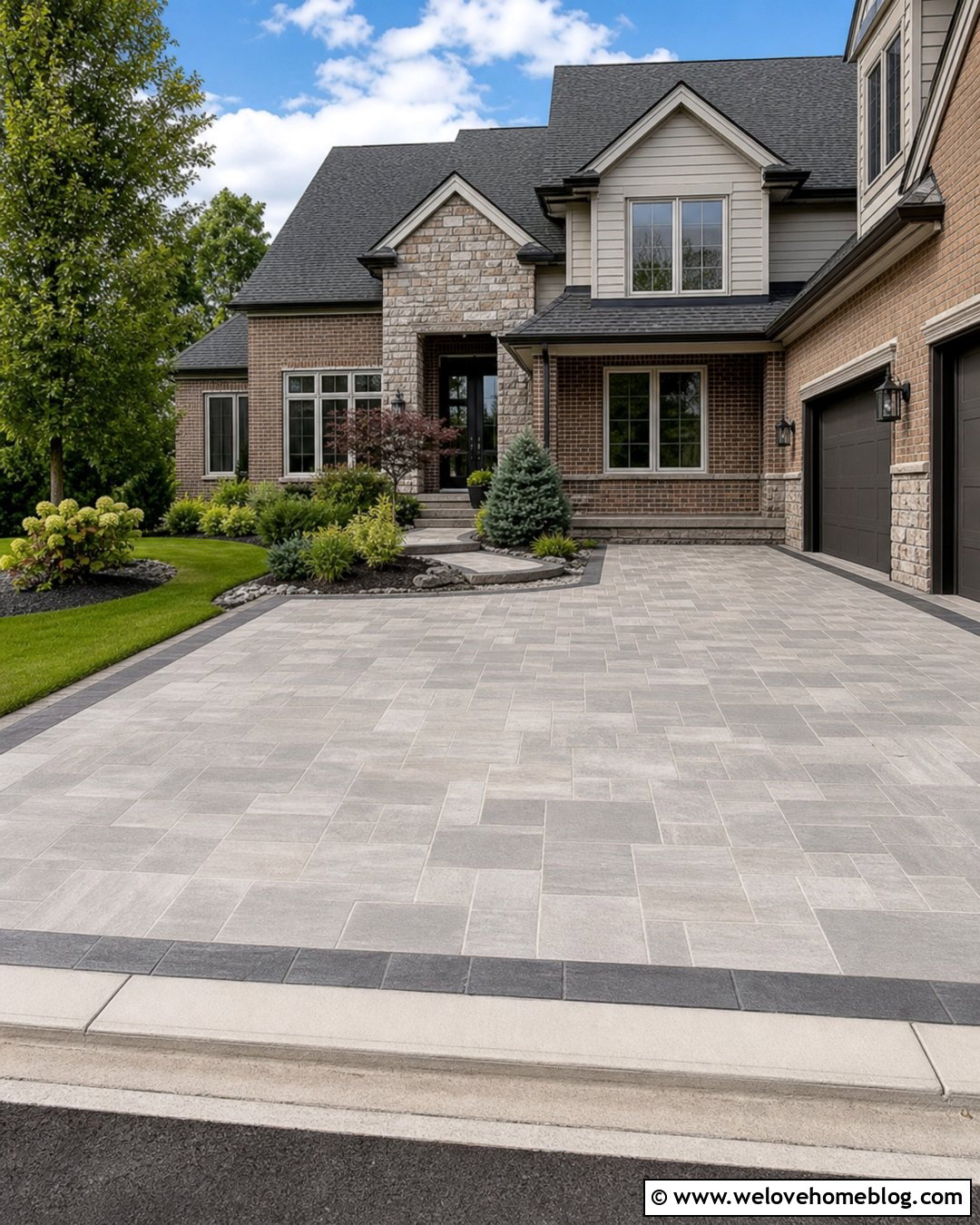
10. Circular Aggregate Driveway With Formal Landscaping
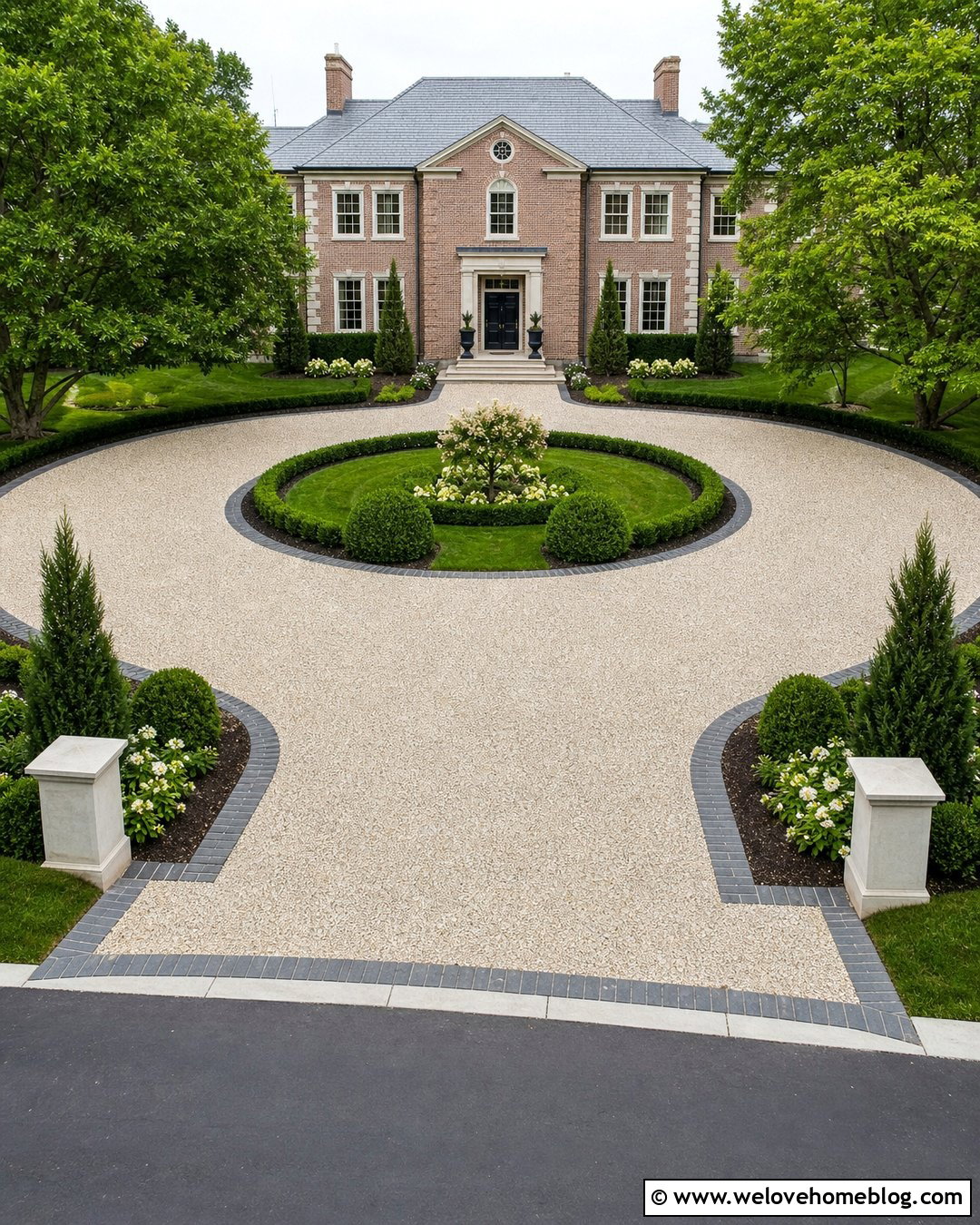
A circular aggregate driveway offers convenient vehicle movement and creates a prominent setting for formal landscaping. Use fine exposed aggregate in balanced shades of cream, tan, and gray, then frame the circle with a dark paver border. Position a symmetrical lawn or planted island in the center, leaving generous clearance around the turning path. Boxwood hedges, upright evergreens, and matching flower beds can reinforce the formal arrangement. Two defined curb openings make entry and exit easy to understand. Connect the circle to the front steps with a wide walkway using the same border material. This complete driveway look is ideal for colonial, Georgian, and stately brick homes. Careful proportions are essential so the central island does not restrict comfortable vehicle circulation.
11. Aggregate Driveway With Stamped Concrete Border
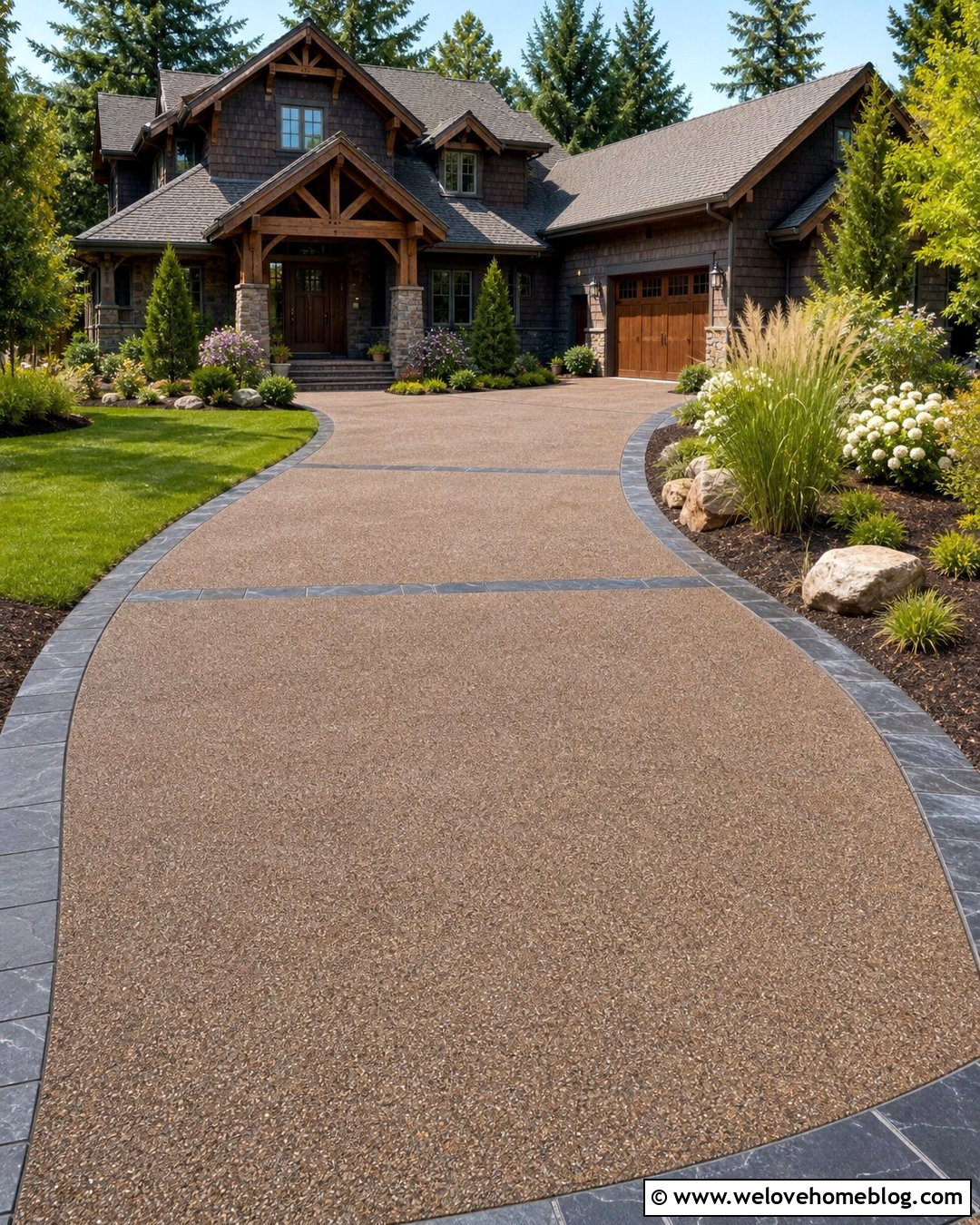
An exposed aggregate field surrounded by stamped concrete provides two distinct textures while keeping the entire driveway concrete-based. Choose a medium-brown aggregate blend and a stamped border that resembles large slate pieces in a slightly darker tone. A curved driveway highlights the patterned edge and helps the border feel integrated with the landscape. Add one or two stamped bands across the surface, but avoid using so many that the design becomes busy. Beds of ornamental grass, evergreen shrubs, and pale flowers can echo the natural colors. This treatment suits craftsman, rustic, and transitional homes. Select a stamp pattern with moderate texture near walking routes, and coordinate the border dimensions with the width of the driveway and the scale of the house.
12. Tan Aggregate Driveway With Desert Landscaping
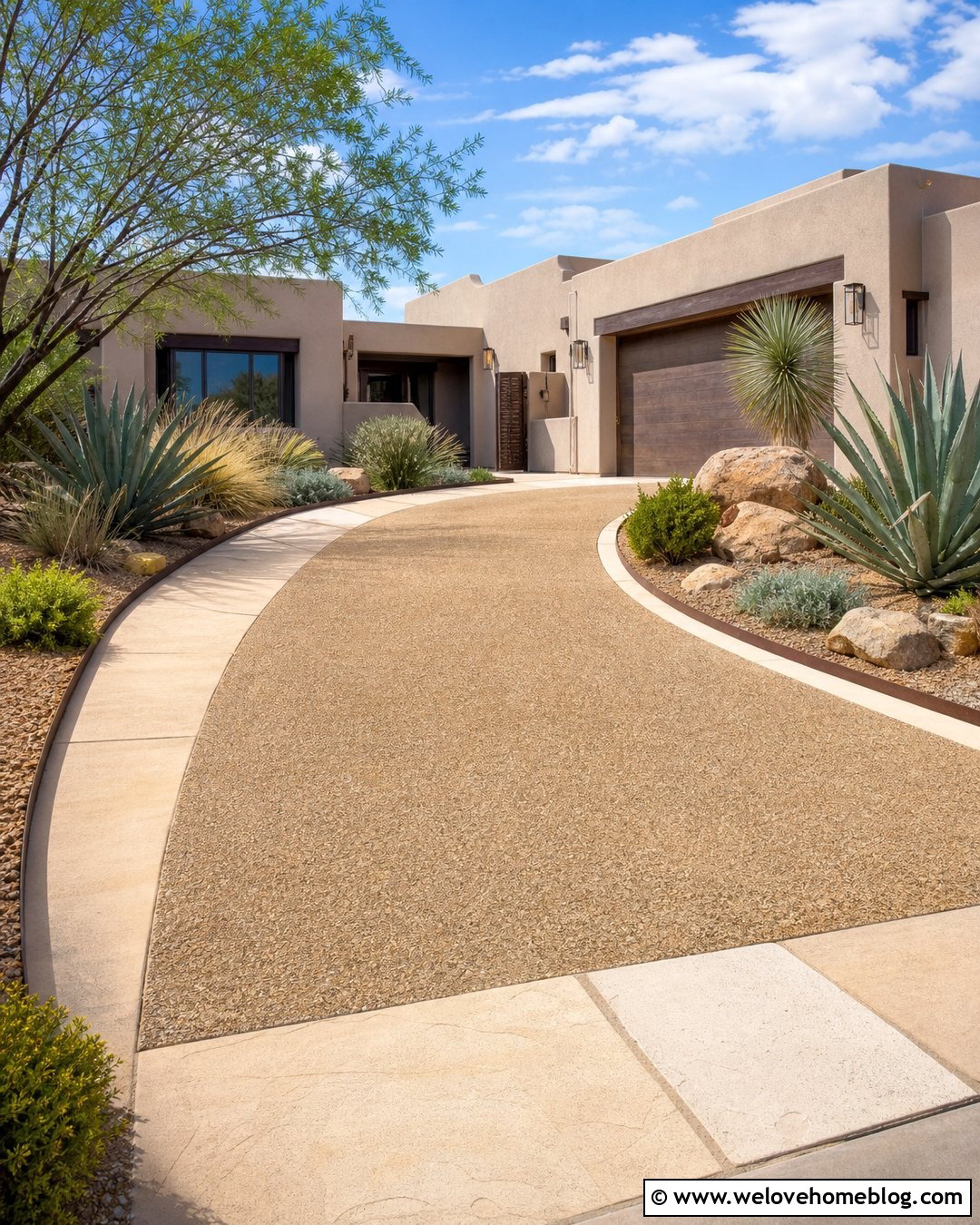
Tan exposed aggregate can blend naturally into a dry, sunny landscape while providing a stable surface with more character than standard concrete. Select golden, cream, and muted brown stones that relate to nearby gravel beds and masonry. Use a gently curved driveway bordered with weathered steel or a narrow band of smooth sand-colored concrete. Drought-tolerant plants such as agave, yucca, desert spoon, sage, and ornamental grass can form layered beds along the approach. Position larger boulders away from turning zones and vehicle doors. A stucco home with wood or dark metal accents completes the warm palette. This design looks cohesive because the driveway, planting material, and architecture share similar natural tones rather than relying on sharp color contrasts.
13. Aggregate Driveway With Modern Grass Joints
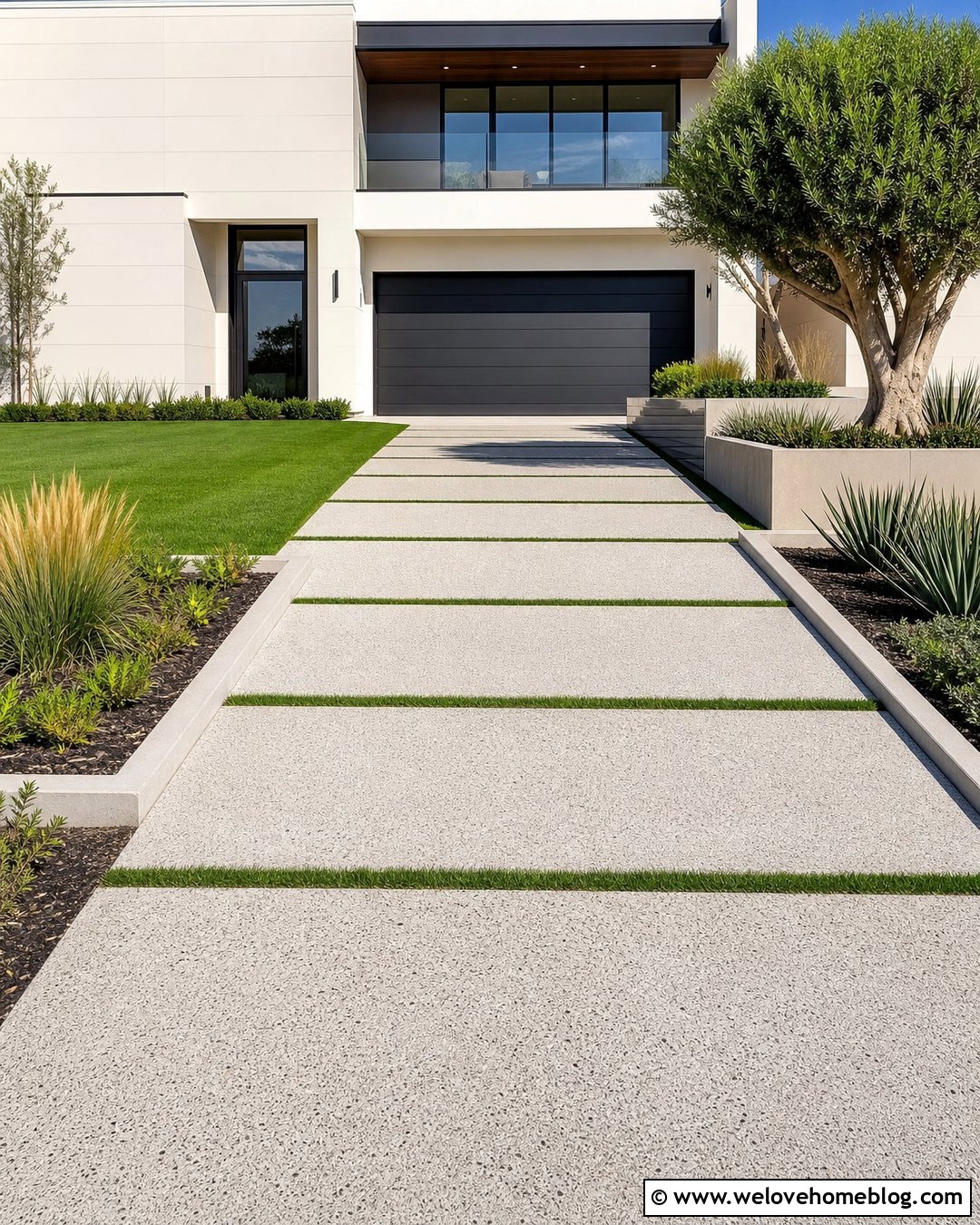
Large exposed aggregate slabs separated by straight grass joints bring structure and greenery to a contemporary front yard. Use pale gray aggregate concrete poured in long rectangular panels, with narrow reinforced strips of turf between selected sections. Keep the driveway straight and align every joint with the garage doors, walkway, and major architectural lines. A flush concrete border helps contain the planting areas and provides a tidy outside edge. Pair the driveway with simple landscaping, such as low ornamental grasses, clipped shrubs, and one sculptural tree. This design works best with modern homes featuring flat or low-pitched roofs and restrained facades. Plan drainage carefully so the planted joints receive water without allowing runoff or soil to collect across the aggregate surface.
14. Aggregate Driveway With Timber Edging
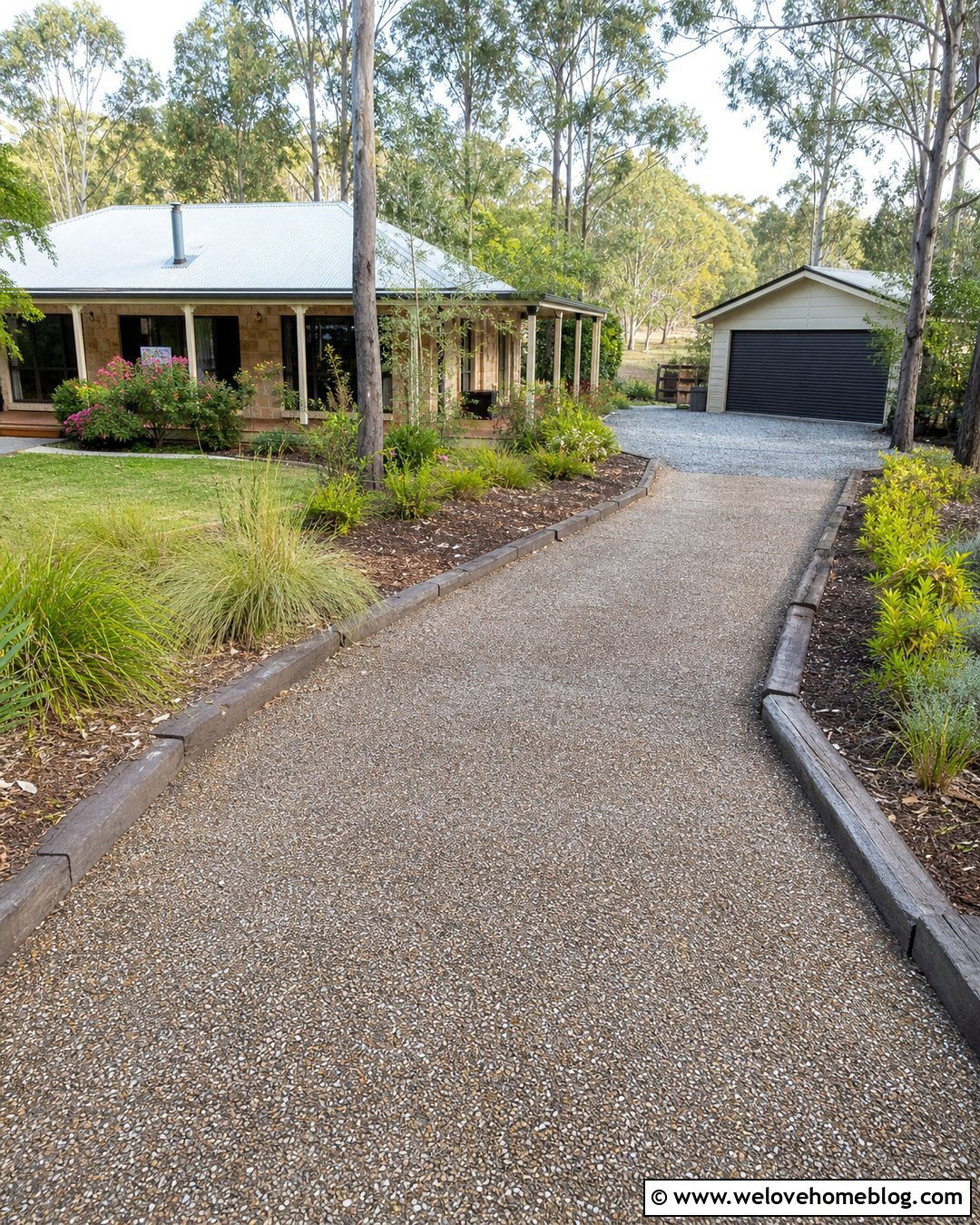
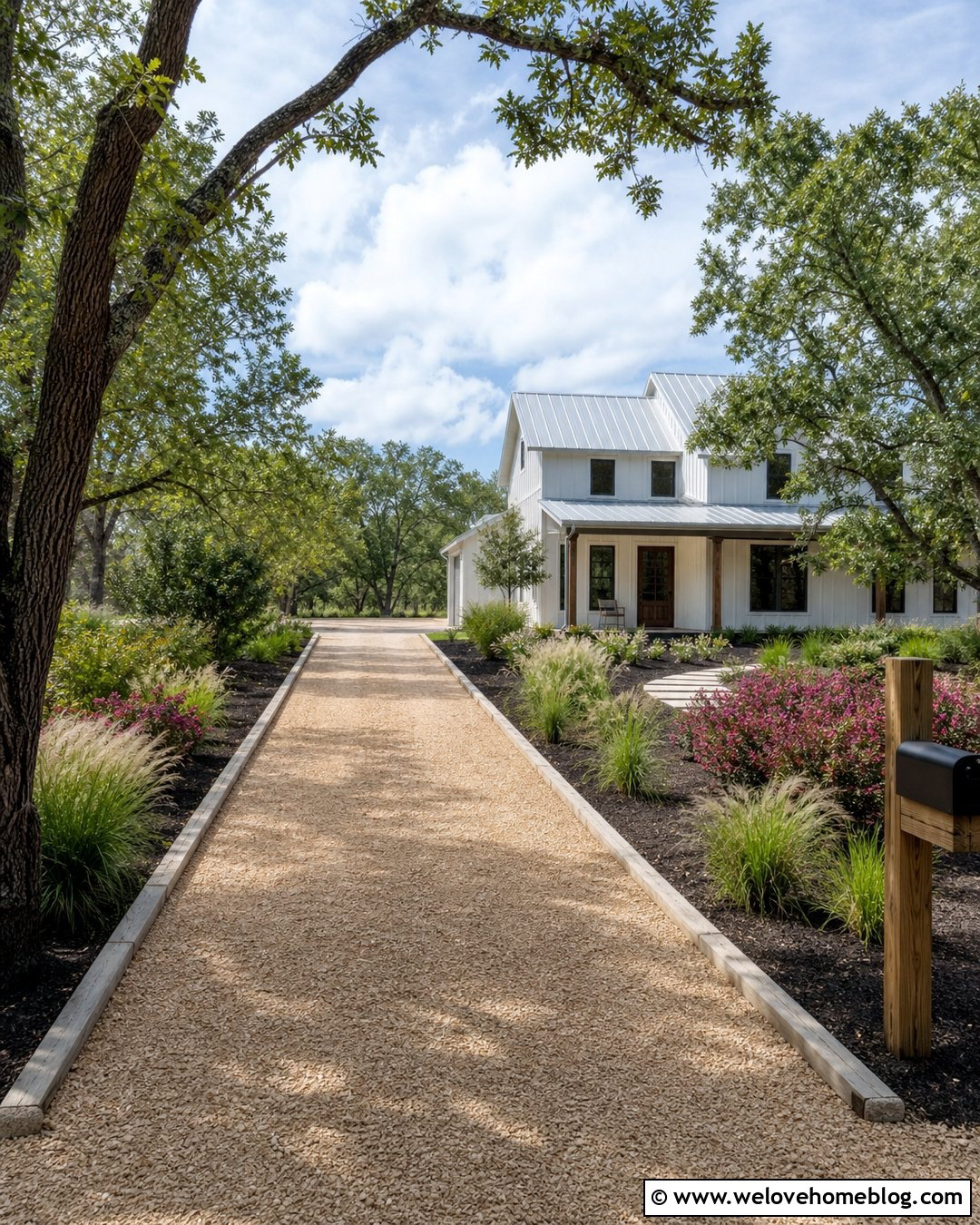
Timber edging gives an aggregate driveway a relaxed, rural appearance that suits wooded properties and modest budgets. Use brown and gray exposed aggregate concrete with a straight or softly curving layout, then frame it with durable landscape timbers installed securely at the edges. The wood should sit close to the driveway height without creating an awkward lip. Beyond the edging, use native grasses, ferns, flowering shrubs, and informal mulch beds to blend the drive into the yard. A gravel transition near a detached garage can add another rustic layer. This look pairs well with cabins, country ranches, and casual farmhouse exteriors. Choose materials rated for ground contact and design the border so water can drain away from both the concrete and wooden edging.
15. Aggregate Driveway With Flagstone Entrance
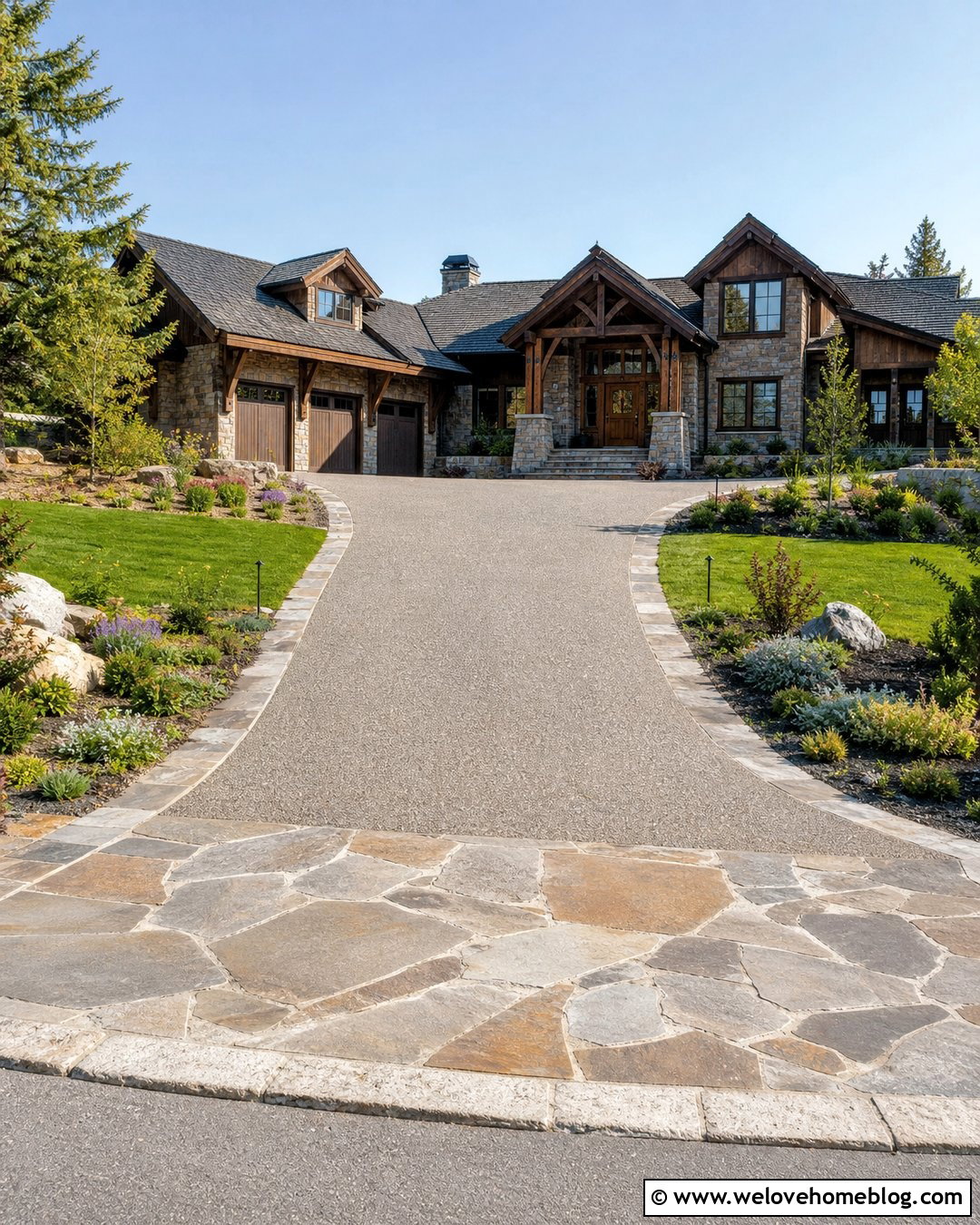
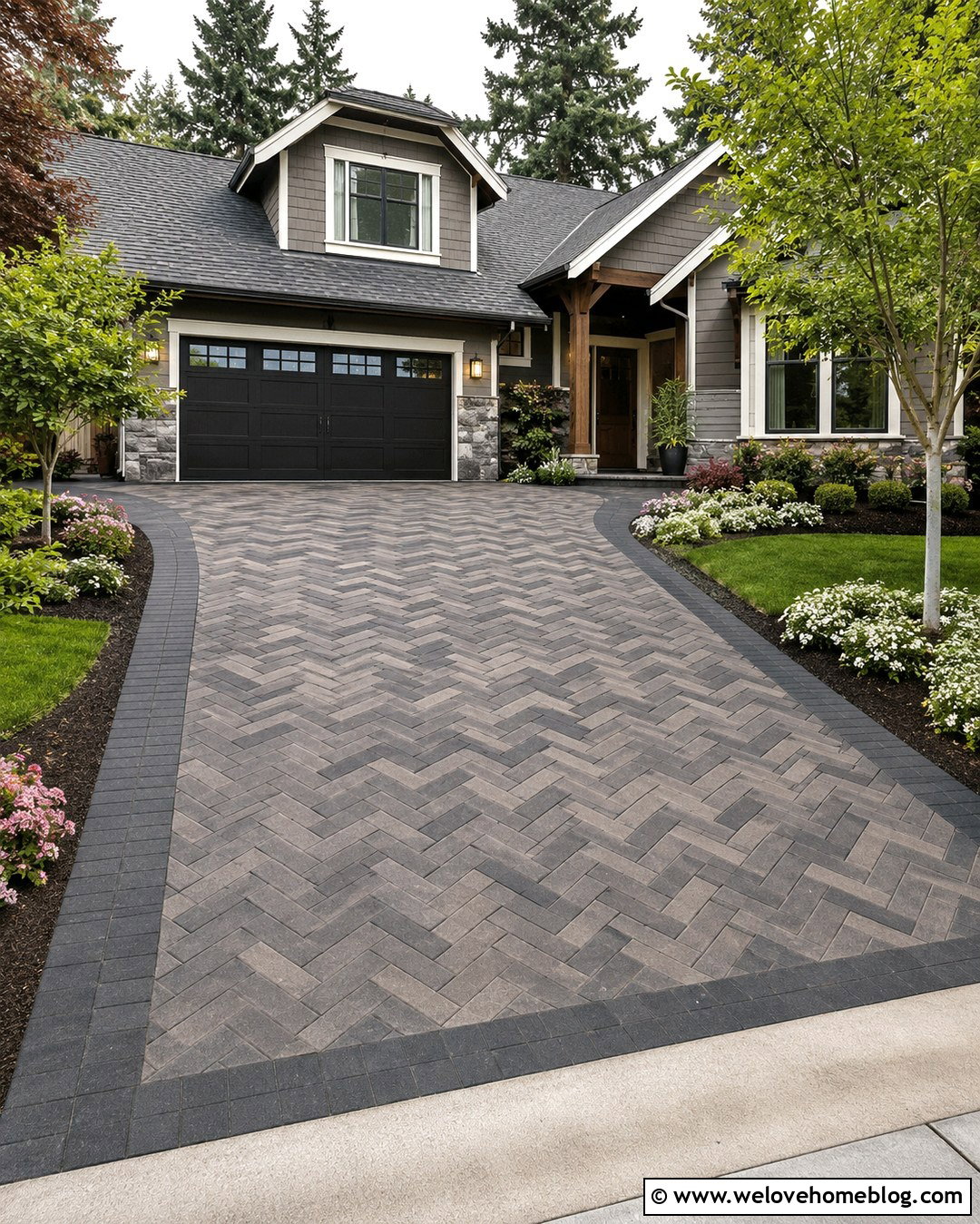
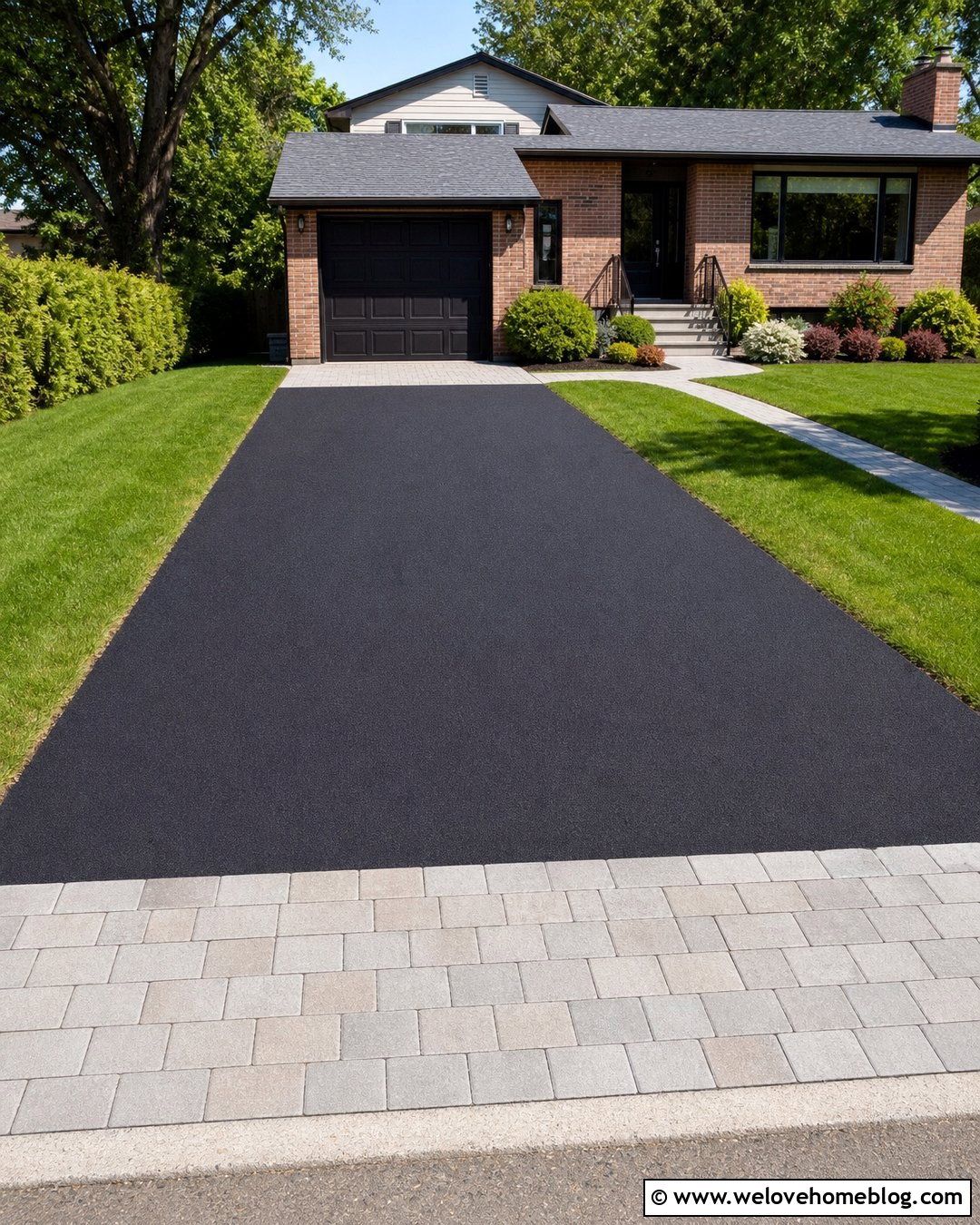
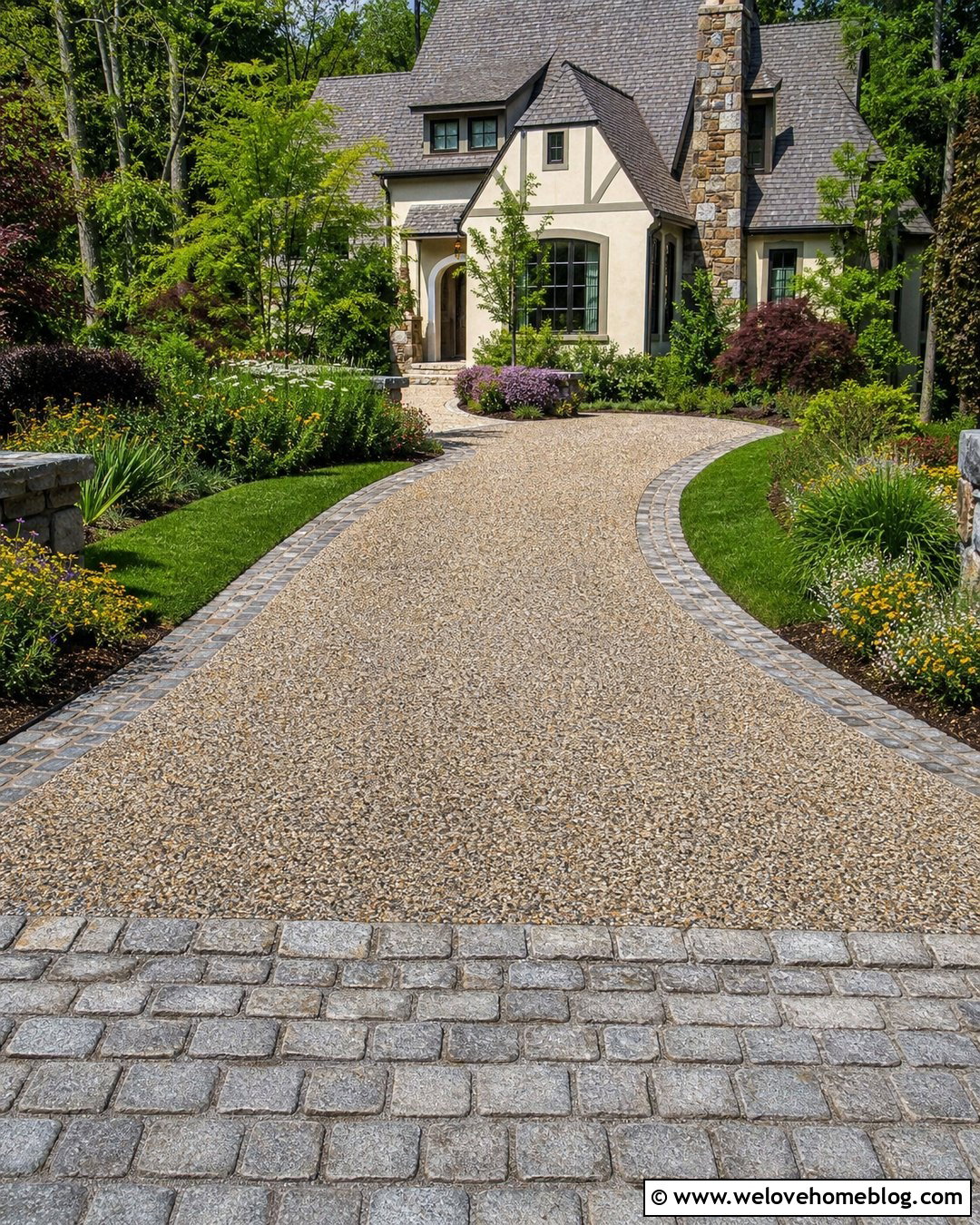
A flagstone entrance can add natural movement and color to an exposed aggregate driveway. Start with a neutral gray-brown aggregate surface, then create a broad apron using irregular flagstone pieces in compatible tones. Use cut stone edges along the traffic line so the transition remains neat and stable. Repeat a small amount of flagstone beside the driveway or along the front walkway to connect the entrance with the house. Curving beds filled with ground cover, flowering perennials, and low evergreens can follow the apron’s organic outline. This design works particularly well with craftsman houses, mountain homes, and properties featuring stone veneer. Keep the flagstone palette controlled; too many unrelated colors can compete with the already varied aggregate finish.
16. Aggregate Driveway With Lavender Borders
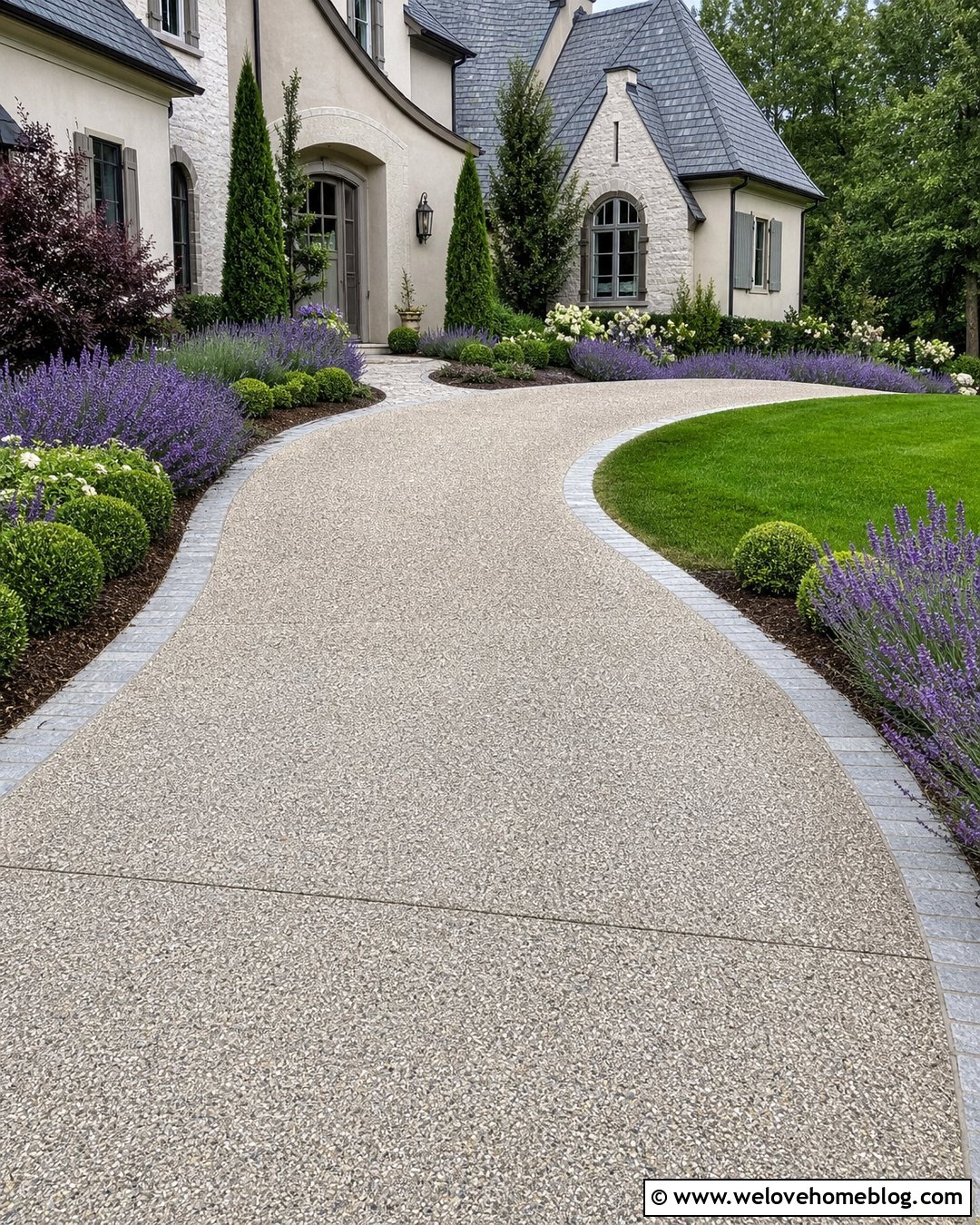
A pale exposed aggregate driveway lined with lavender creates a welcoming, garden-focused approach with color, texture, and a light fragrance during the growing season. Choose cream and warm gray aggregate, then define the edges with a thin row of stone setts. Plant lavender in repeated groups rather than one continuous hedge, leaving openings near walkways and parking areas. Add clipped evergreens behind the lavender for structure when flowers are not present. A gently curved driveway allows the planting border to unfold gradually toward the house. This combination complements cottages, French-inspired homes, and light-colored stucco facades. In climates where lavender struggles, plants with a similar low, mounded form can create the same effect while being better suited to local soil and weather.
17. Aggregate Driveway With Tree-Lined Entrance
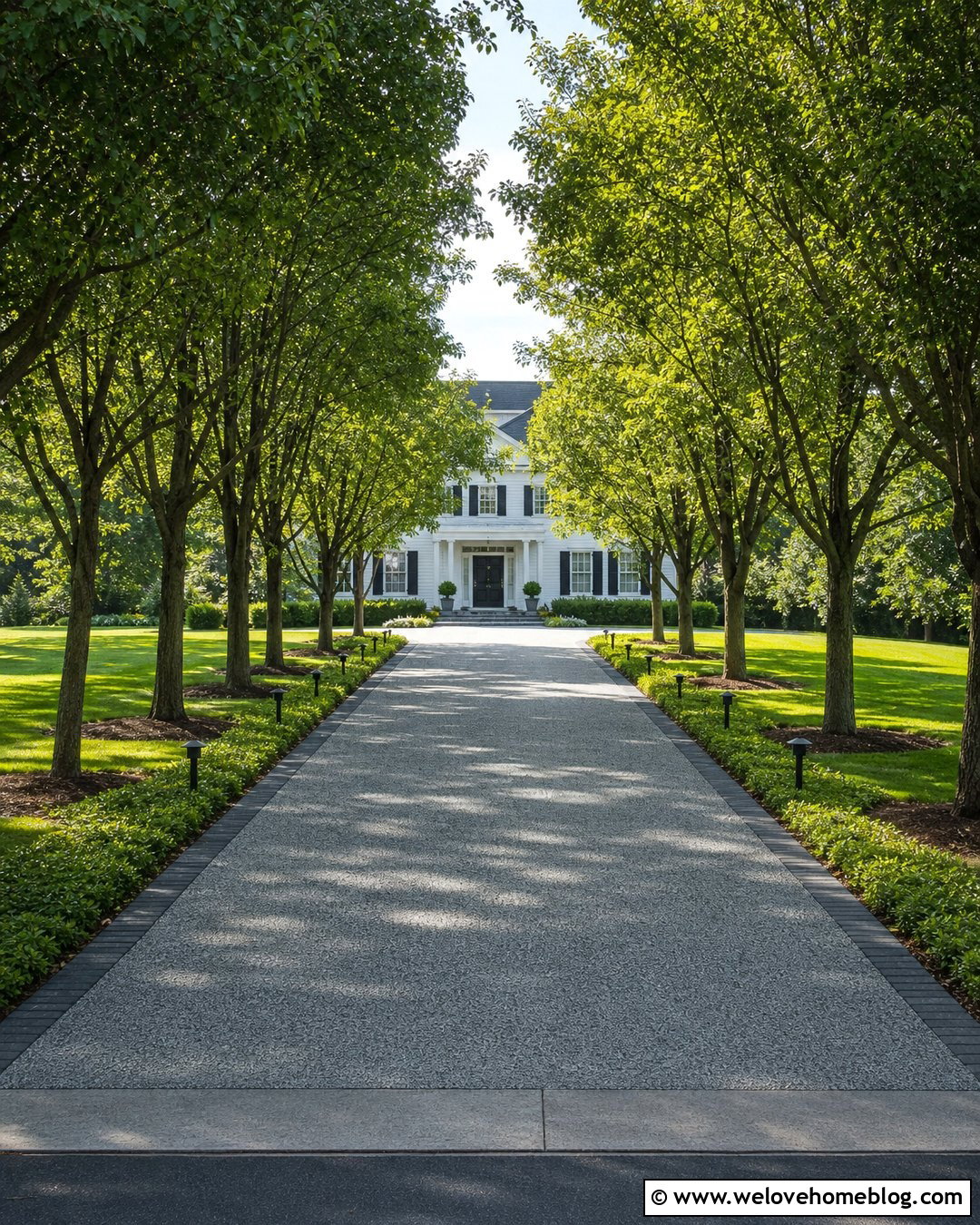
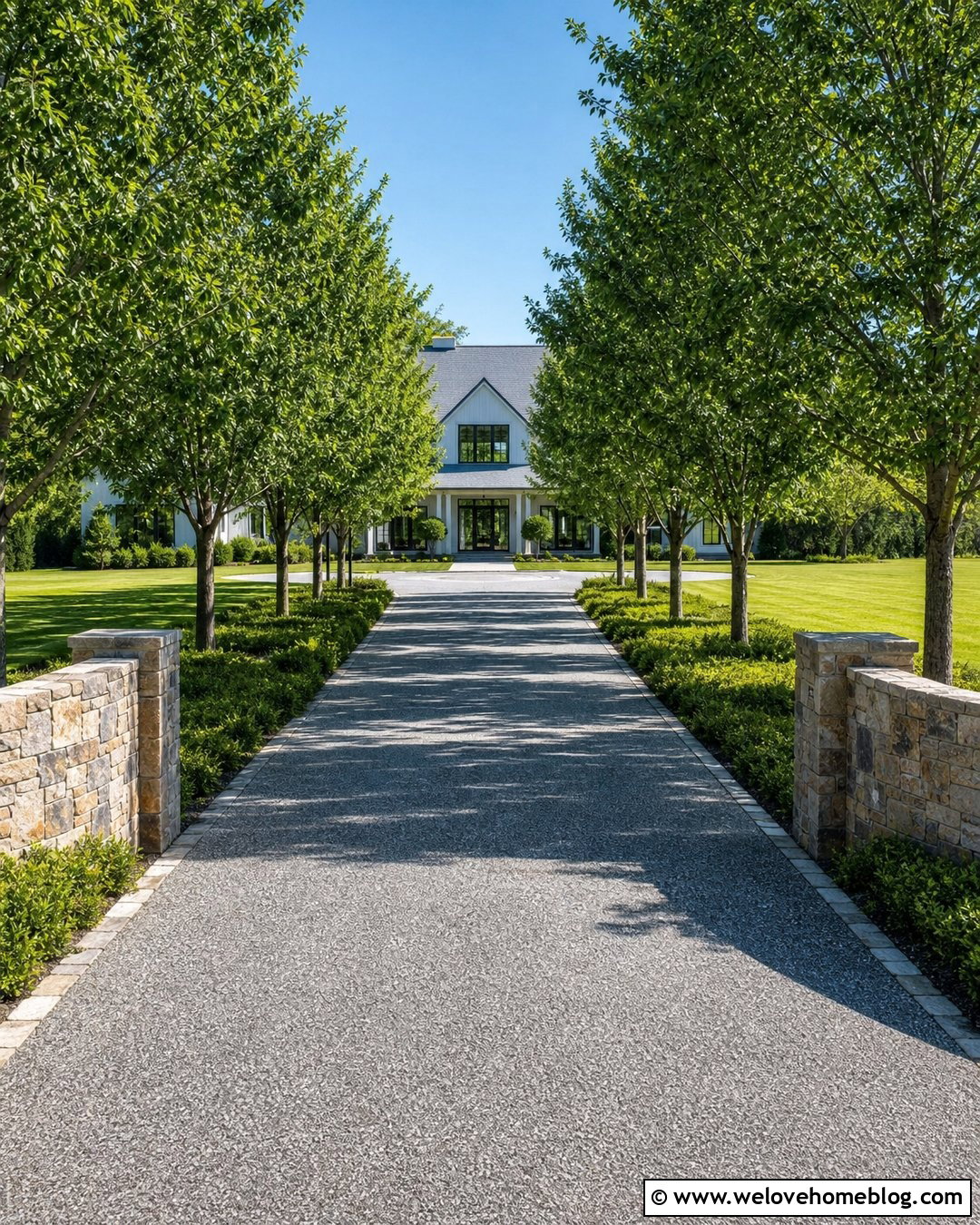
A tree-lined aggregate driveway creates a strong sense of arrival on a long residential property. Use medium-gray exposed aggregate concrete in a straight layout that draws the eye toward the house. A narrow dark paver border can sharpen the edges and protect adjacent planting beds from vehicle movement. Place evenly spaced deciduous or upright evergreen trees along both sides, allowing enough distance for mature roots, branches, and snow storage where necessary. Underplant the trees with grass, low ground cover, or simple mulch rather than dense shrubs. Small path lights can mark the drive without competing with the canopy. This formal arrangement works well with colonial, farmhouse, and country homes, especially when the tree rows align with the main entrance or central architectural feature.
18. Aggregate Driveway With Native Planting Beds
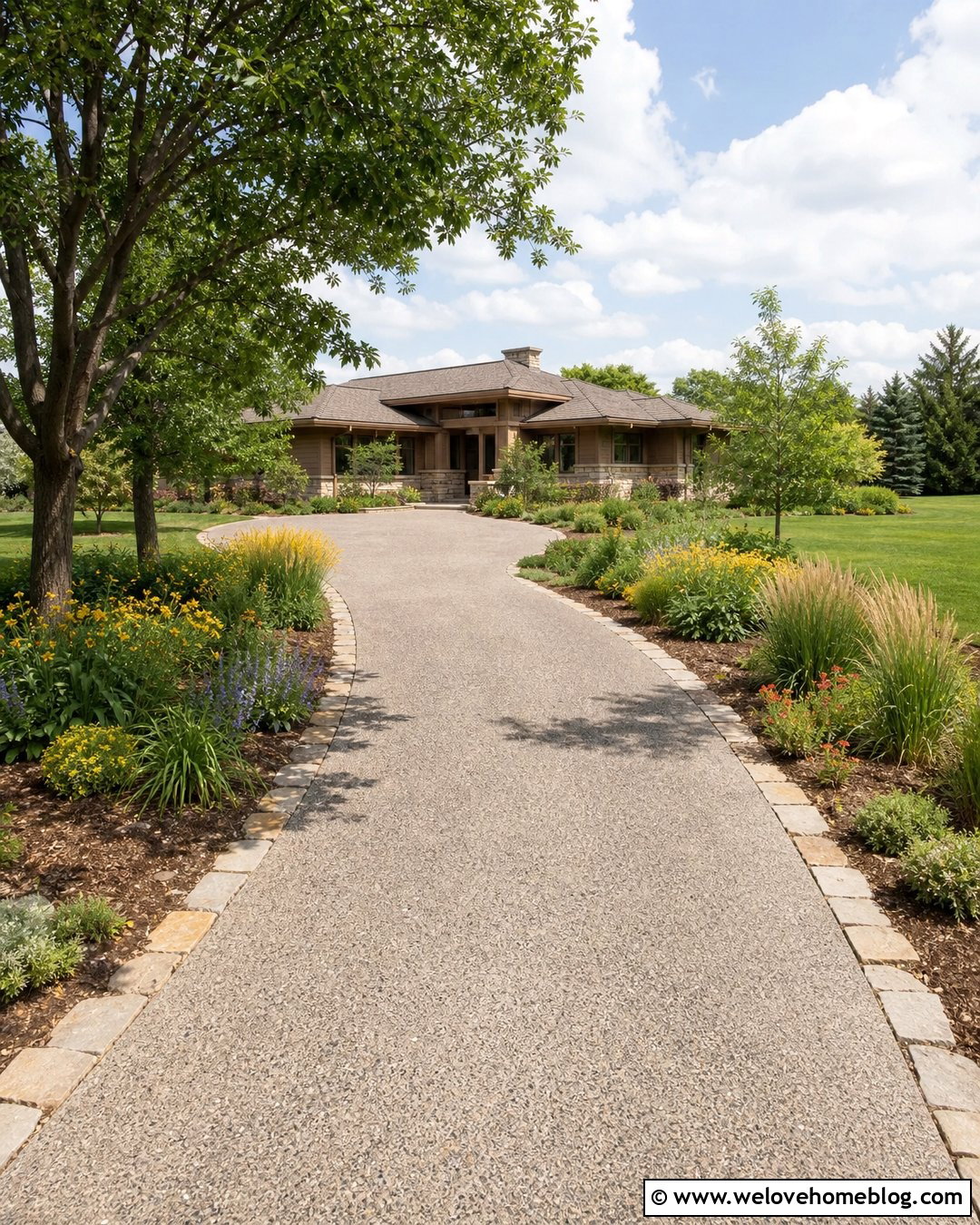
Native landscaping can make an aggregate driveway feel established and connected to its regional setting. Select an exposed aggregate blend containing stone colors commonly found in the surrounding landscape. Shape the driveway with a gentle curve and edge it with a restrained band of smooth concrete or local stone. Build broad planting beds containing native grasses, flowering perennials, compact shrubs, and one or two small trees. Group plants in repeated masses for a neat residential appearance rather than scattering individual specimens. Leave clear gravel or mulch zones near the pavement to prevent foliage from covering the driving edge. This complete look suits ranch, prairie, craftsman, and contemporary homes. Regionally adapted plants can also create seasonal interest without requiring an overly formal garden layout.
19. Aggregate Driveway With Stone Pillars
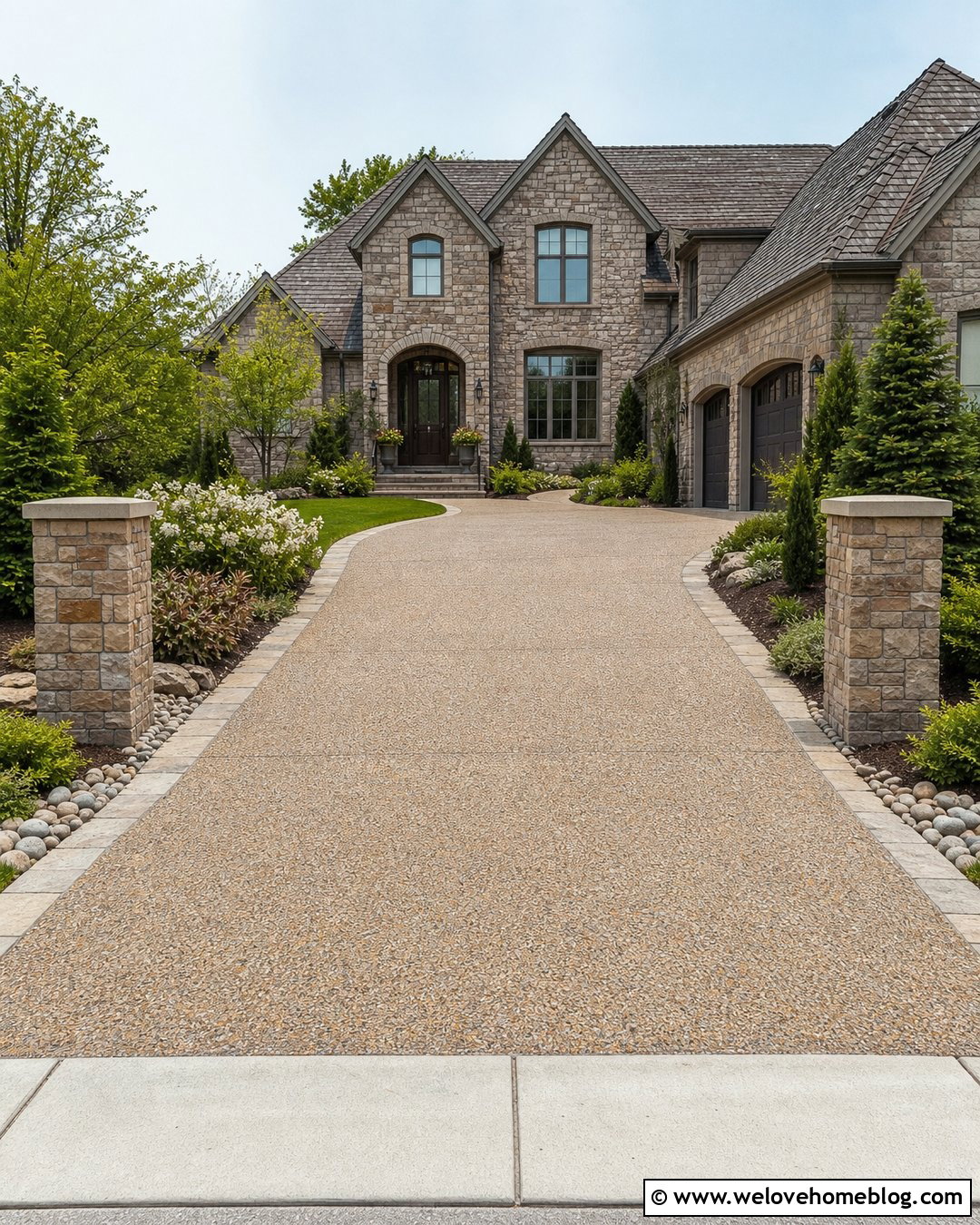
Stone pillars at the curb can give an aggregate driveway a clear entrance while visually connecting it to a stone or brick home. Use warm exposed aggregate concrete with tan, gray, and brown pebbles, then add matching natural stone edging along a gently flared approach. Build the pillars outside required vehicle clearance and keep them low enough to preserve visibility. Simple lanterns or understated caps can finish the tops without making the entrance feel heavy. Layer evergreen shrubs and flowering plants behind each pillar to soften the masonry. A straight driveway keeps the composition symmetrical and easy to understand. Repeat the pillar stone on the facade, retaining walls, or walkway so the entrance feels like part of one coordinated property design.
20. Aggregate Driveway With Black Metal Gate
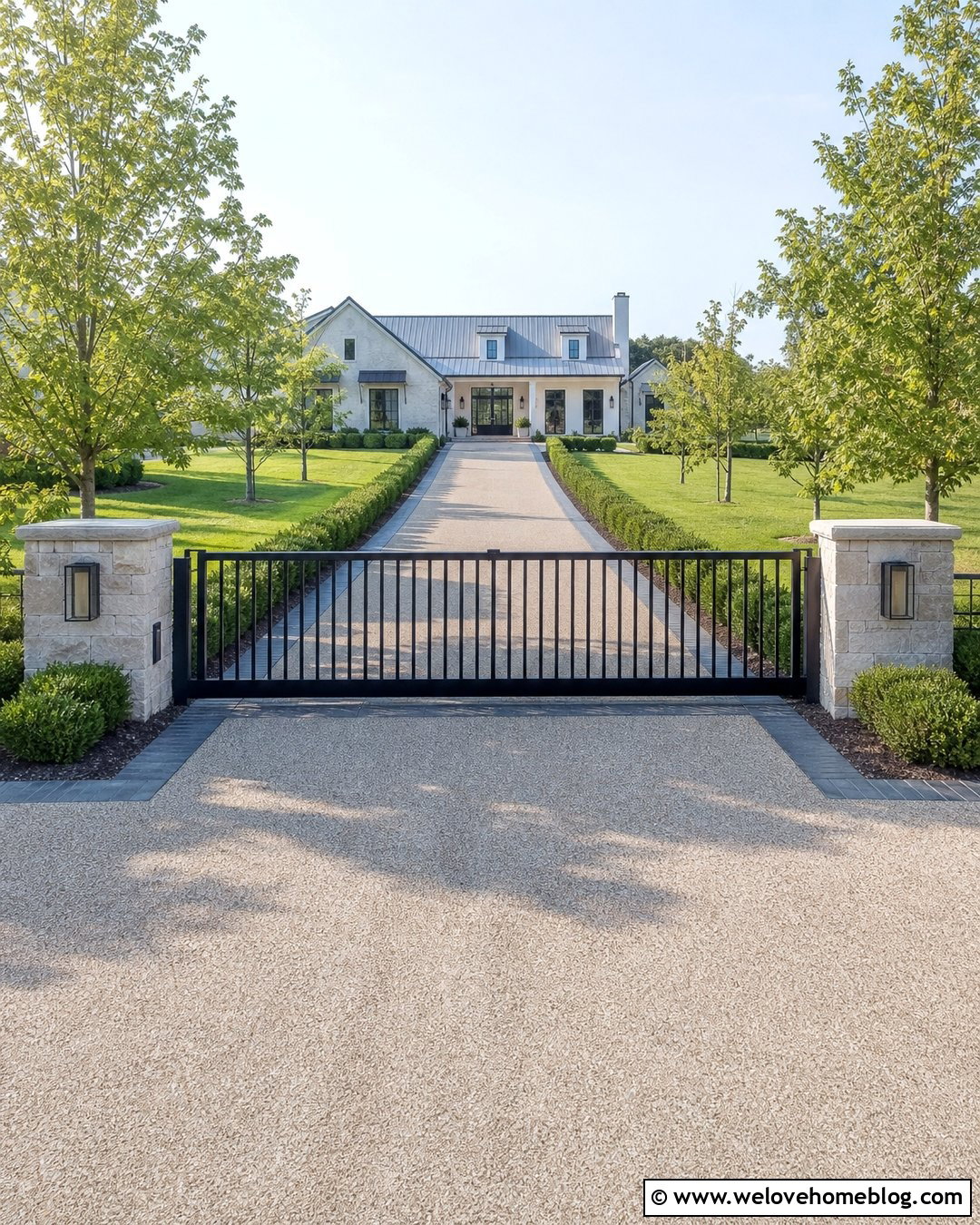
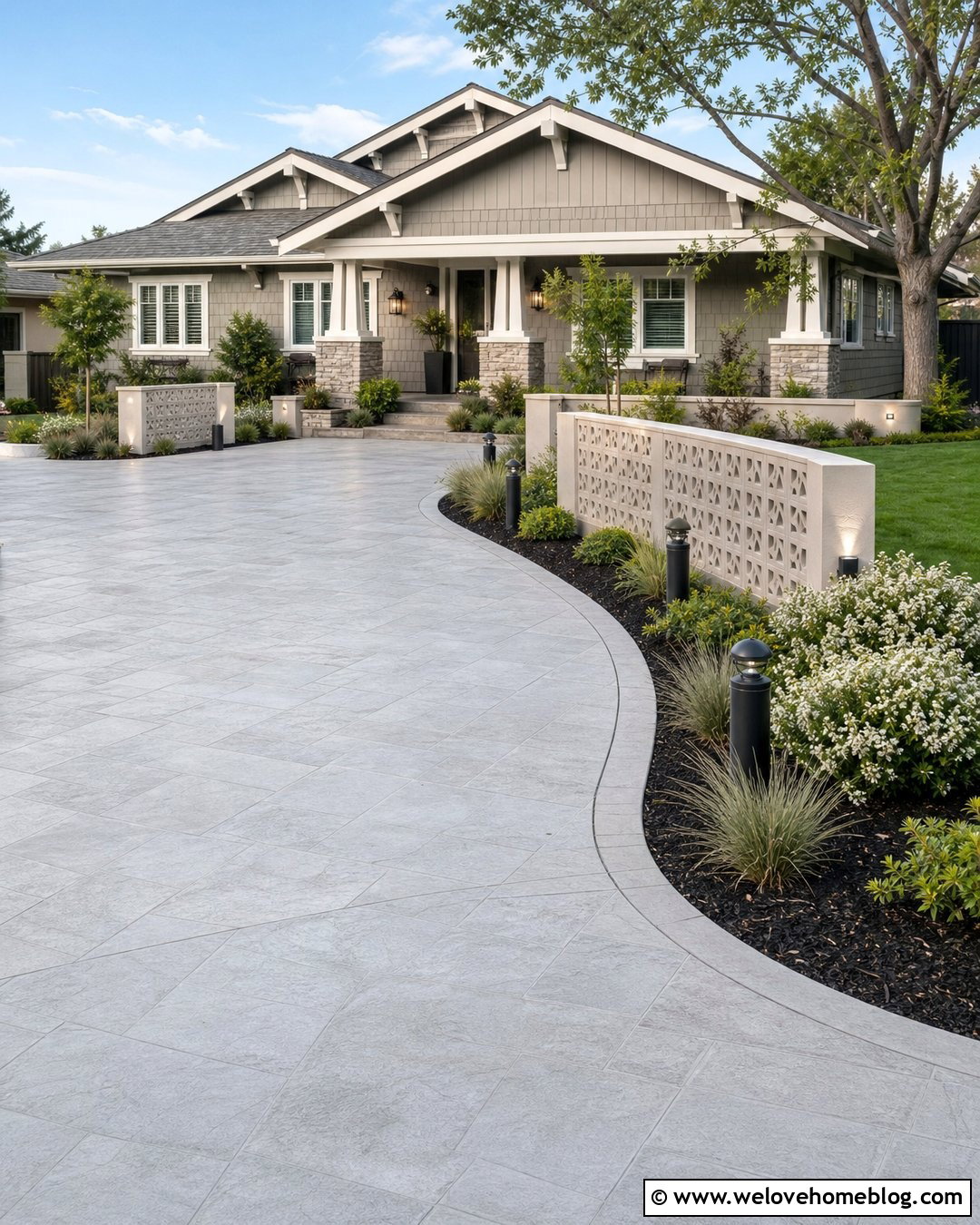
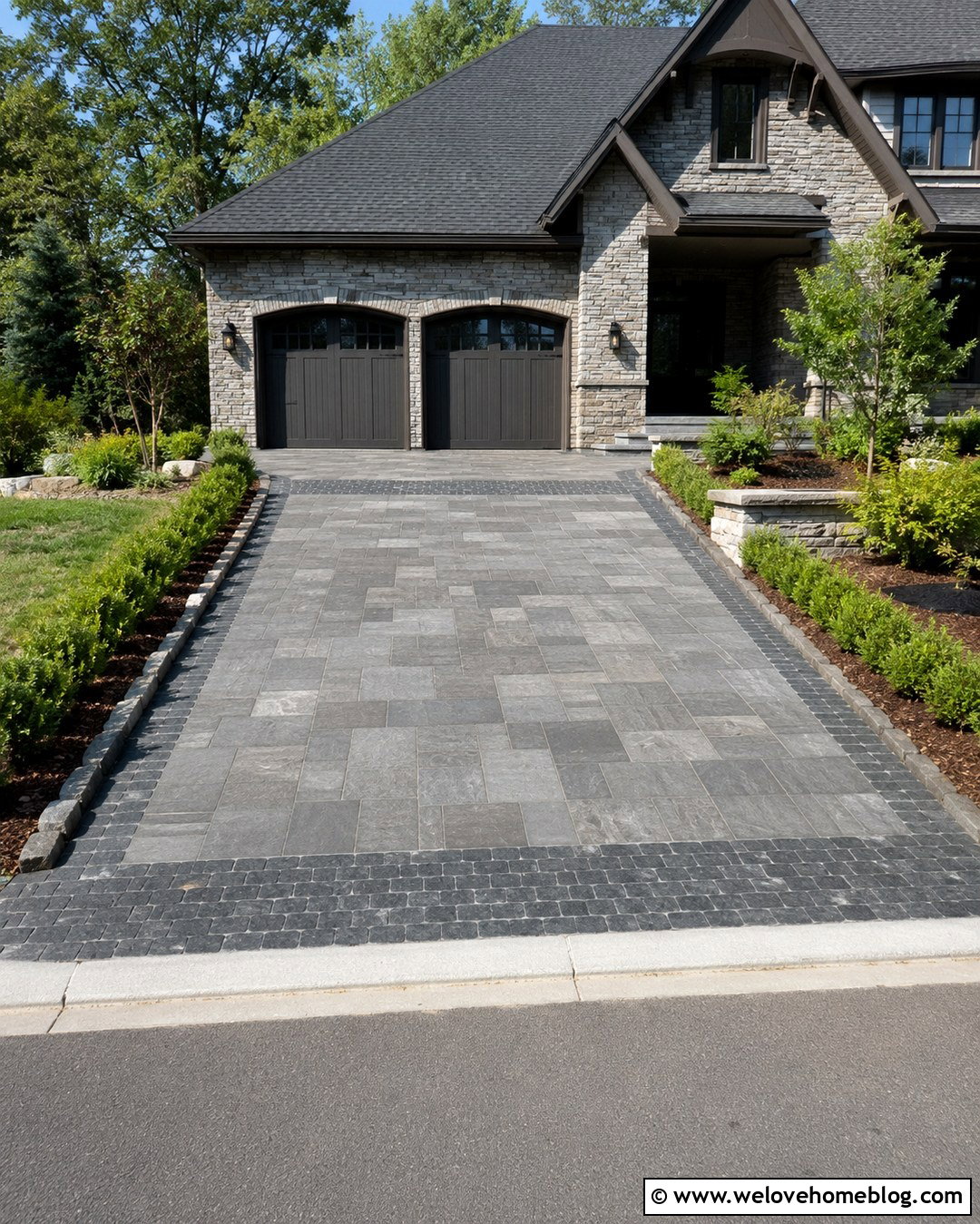
A black metal gate creates a strong focal point when paired with a light exposed aggregate driveway. Choose cream or pale gray aggregate concrete and use a straight approach with a subtle flare near the gate. Low stone or stucco pillars can support the gate, while dark paver borders repeat its black finish along the driveway. Keep landscaping near the opening low and simple to preserve visibility and operating clearance. Beyond the gate, rows of compact shrubs or ornamental trees can guide the eye toward the home. This design complements modern farmhouses, Mediterranean houses, and updated traditional properties. Plan space for vehicles to wait safely without blocking the street, and make sure the gate’s swing or sliding path remains completely free of planting and lighting fixtures.
21. Aggregate Driveway With Solar Edge Lighting
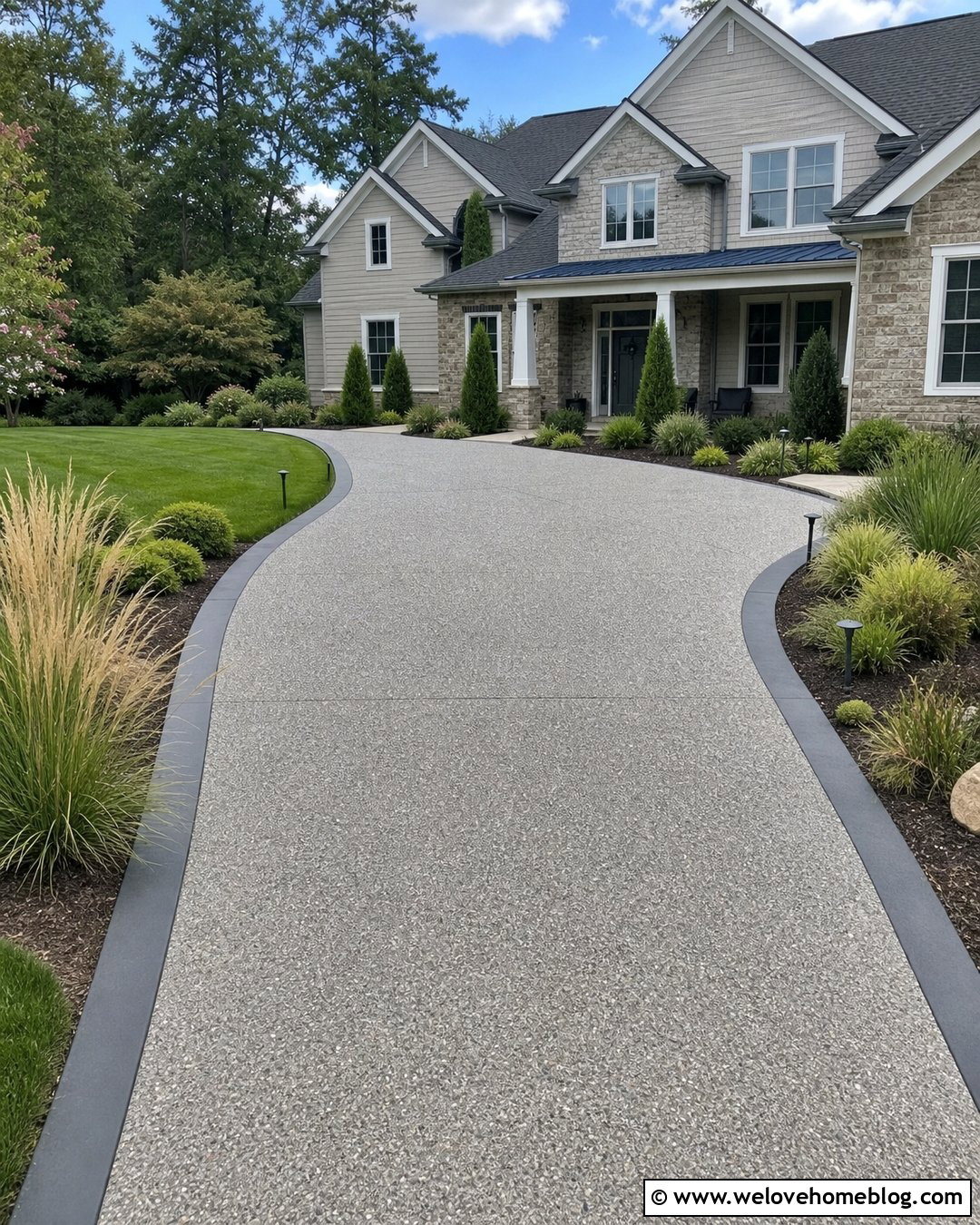
Integrated edge lighting helps define an aggregate driveway after dark while remaining discreet during the day. Use medium-toned exposed aggregate concrete with a smooth charcoal border wide enough to hold evenly spaced, low-profile fixtures. A curved layout benefits especially from lighting because the illuminated edge reveals each change in direction. During daylight, ornamental grasses, compact shrubs, and a tidy lawn keep the design clean. Choose fixtures with a simple finish that coordinates with the house numbers, garage lights, and door hardware. Avoid placing lights where tires, lawn equipment, or snowplows may damage them. This complete look suits modern, transitional, and suburban homes. Consistent spacing is more effective than crowding the driveway with too many bright or decorative fixtures.
22. Aggregate Driveway With Matching Walkway
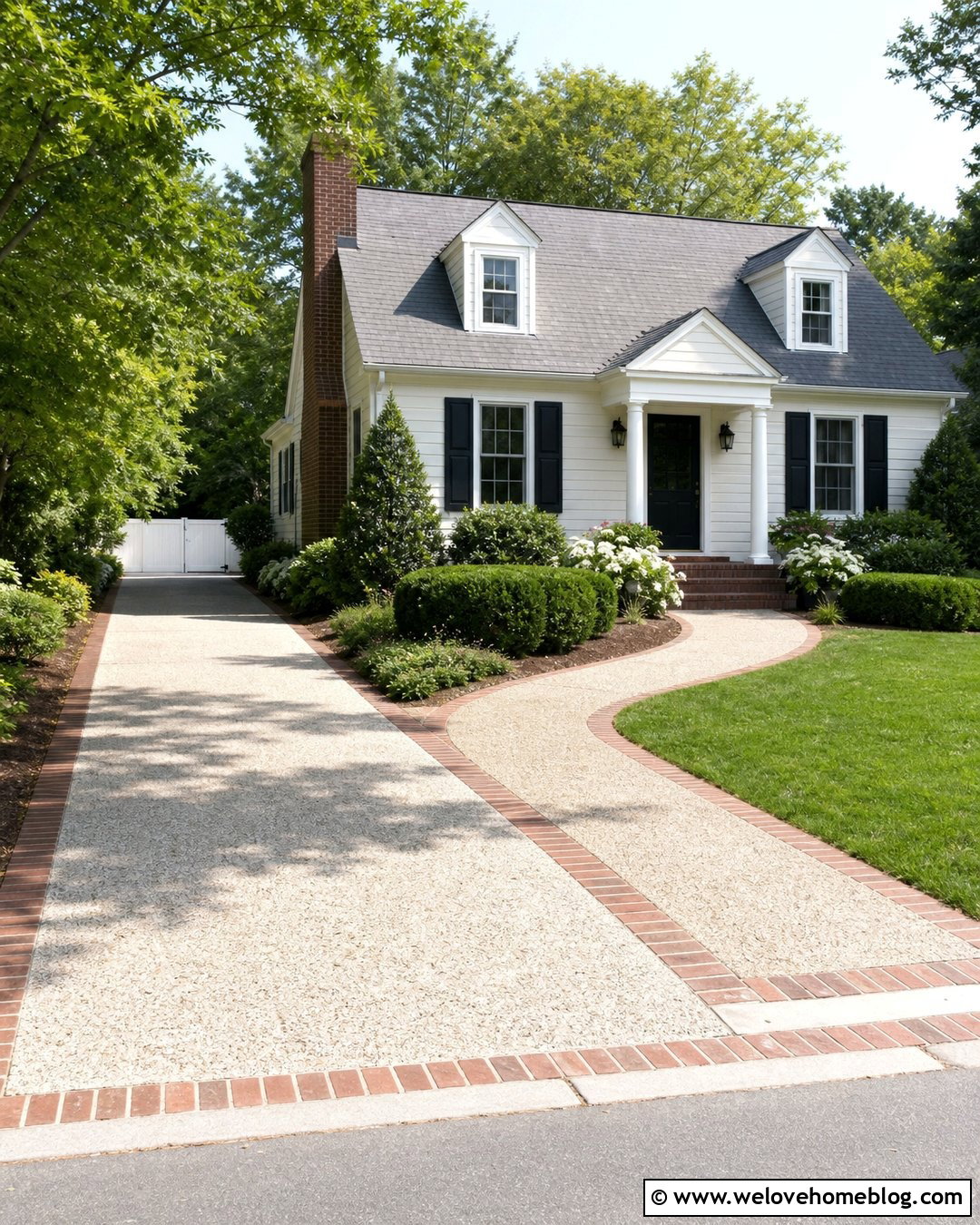
Connecting an aggregate driveway to a matching front walkway creates a continuous and well-planned entrance. Use the same fine exposed aggregate mix for both surfaces, then distinguish the pedestrian route with a contrasting brick or paver border. A straight driveway can meet a gently curved walkway near the garage, directing guests toward the front door without confusion. Widen the connection point slightly so it feels comfortable and intentional. Add low planting beds along the walkway with evergreen shrubs, seasonal flowers, and ground cover. Repeat the border around porch steps or a small landing for visual consistency. This approach works with almost every home style and is particularly helpful when the front door is positioned away from the garage or main parking area.
23. Aggregate Driveway With Retaining Wall
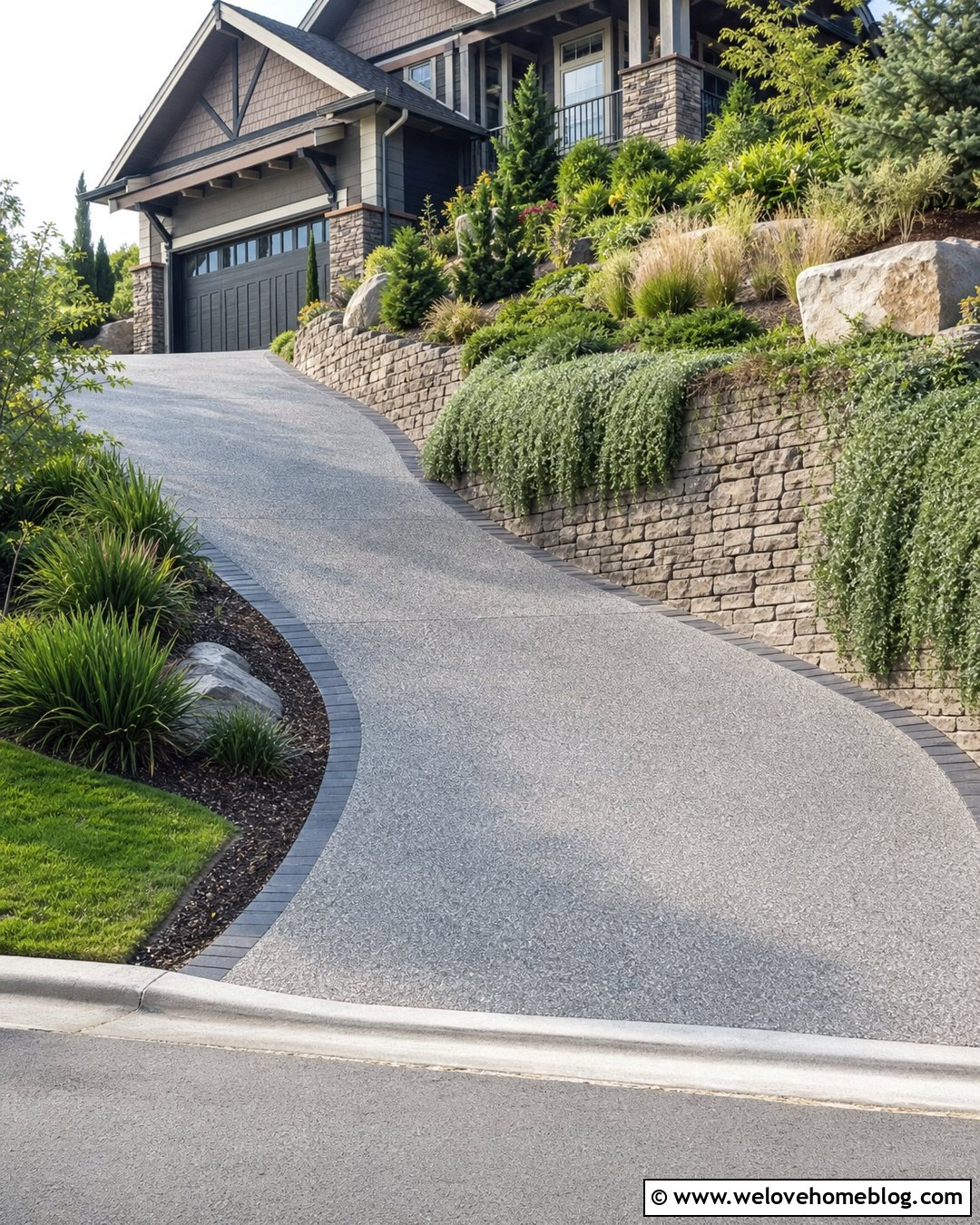
A sloped front yard can benefit from an aggregate driveway paired with a coordinated retaining wall. Use gray exposed aggregate concrete on a gently rising or curving driveway, then build a low wall from stacked stone or concrete blocks in related colors. The wall can support an elevated planting bed while defining the vehicle edge. Choose cascading ground cover, compact shrubs, and ornamental grasses that soften the masonry without spilling into the driving area. Add drainage behind the wall and direct surface water away from the garage and foundation. A darker paver strip along the lower driveway edge can visually balance the wall. This practical design suits hillside ranches, contemporary homes, and craftsman properties where grade changes need to become part of the curb appeal.
24. Aggregate Driveway With Wide Parking Area
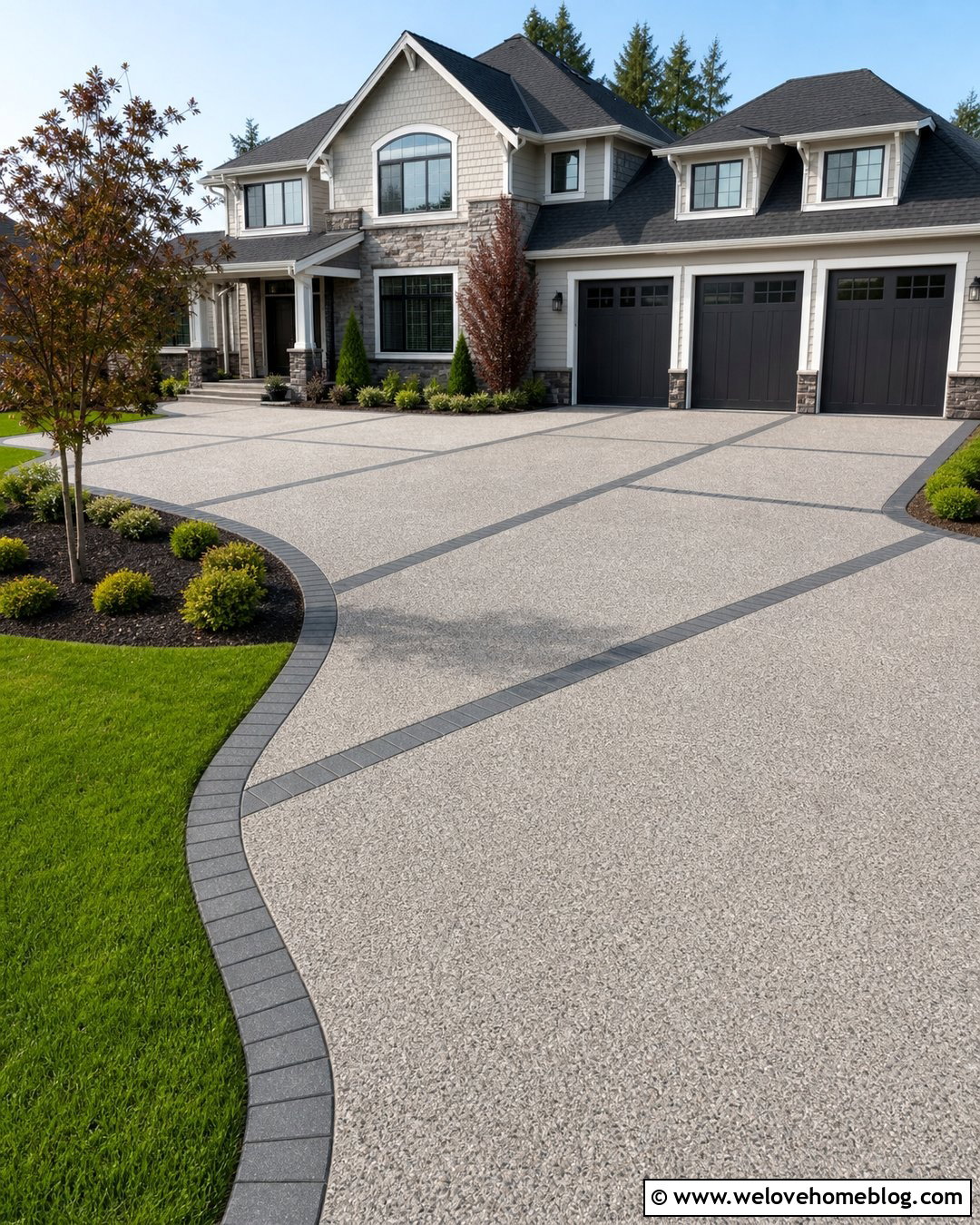
A wide parking area does not have to look like an oversized slab when aggregate texture, borders, and landscaping divide it thoughtfully. Use light gray exposed aggregate concrete and organize the surface into large panels with well-positioned joints. Frame the outer edge with charcoal pavers, then add matching bands between parking zones or garage bays. A curved planting island at one corner can reduce the visual width and provide space for a small tree and low shrubs. Keep the turning area open and avoid placing decorative features where they limit movement. This design works well for multicar households, side-entry garages, and broad suburban lots. Repeating materials from the house exterior helps the larger hardscape feel balanced and connected to the property.
25. Aggregate Driveway With Coastal Landscaping
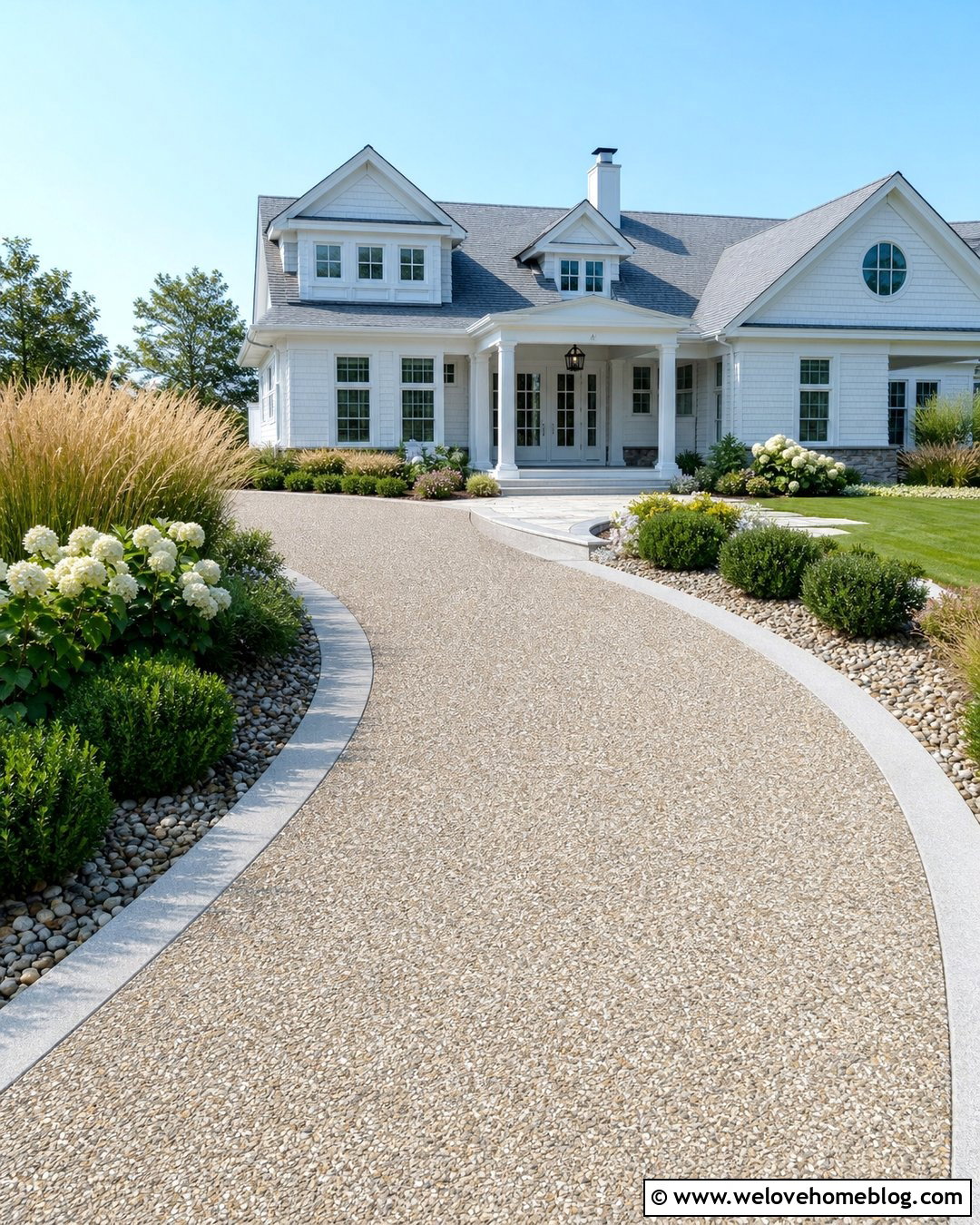
A light aggregate driveway fits naturally with an airy coastal home and salt-tolerant planting palette. Choose cream, sand, and pale gray stones in a fine exposed finish, then use a softly curved or straight layout bordered by light concrete. Surround the driveway with ornamental grasses, low evergreen shrubs, hydrangeas where appropriate, and beds of washed stone. A simple boardwalk-inspired path or large rectangular pavers can lead toward the porch. Keep the design open rather than enclosing the driveway with dense hedges. White siding, weathered wood, pale blue accents, and natural stone reinforce the relaxed color scheme. Select plants and materials suitable for local wind, moisture, and salt exposure so the finished entrance remains attractive beyond its first season.
26. Aggregate Driveway With Geometric Bands
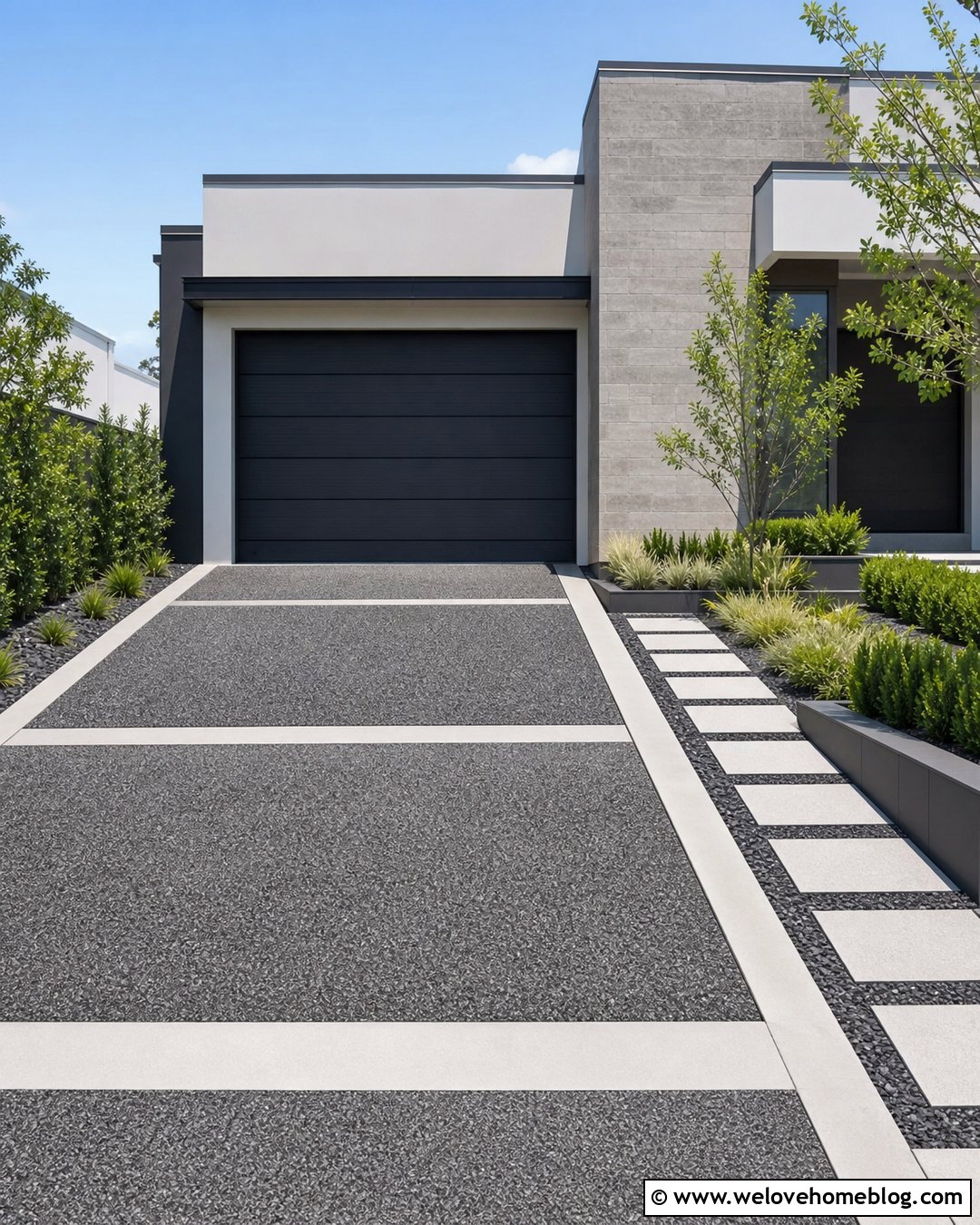
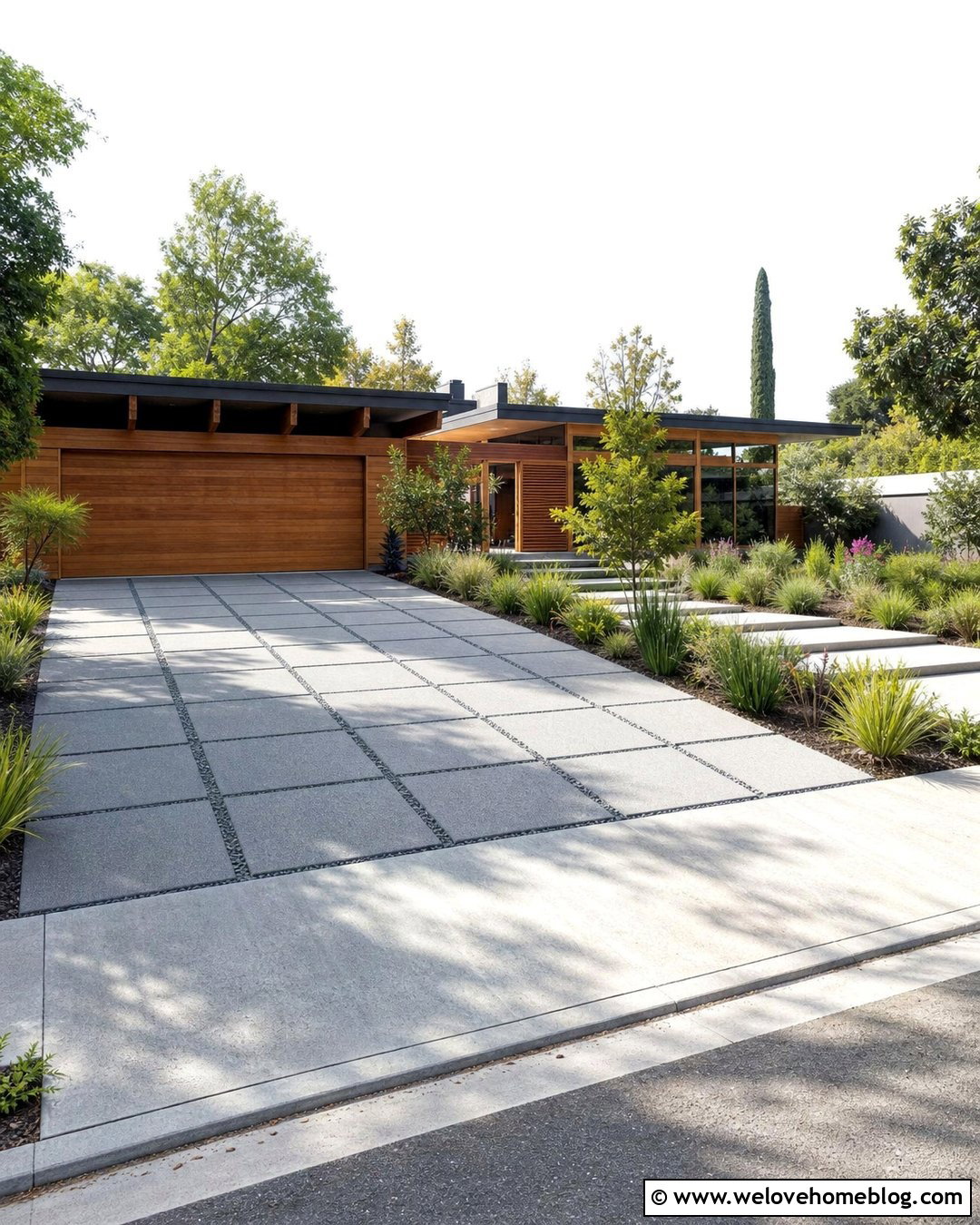
Geometric bands give exposed aggregate a modern pattern without covering the entire driveway in decorative pavers. Use a charcoal and gray aggregate field divided by smooth light concrete strips arranged in large rectangles. Align the pattern with garage openings and architectural features so it looks orderly from the curb. A straight driveway provides the clearest canvas, although the bands can also organize a wide parking court. Keep borders narrow and landscaping restrained with clipped shrubs, ornamental grasses, and rectangular planting beds. A flat-roofed or contemporary house makes an ideal backdrop. Limit the surface to two coordinated colors and finishes. Too many bands, angles, or materials can make a practical driveway appear fragmented and visually smaller than it actually is.
27. Aggregate Driveway With Warm Stone Mix
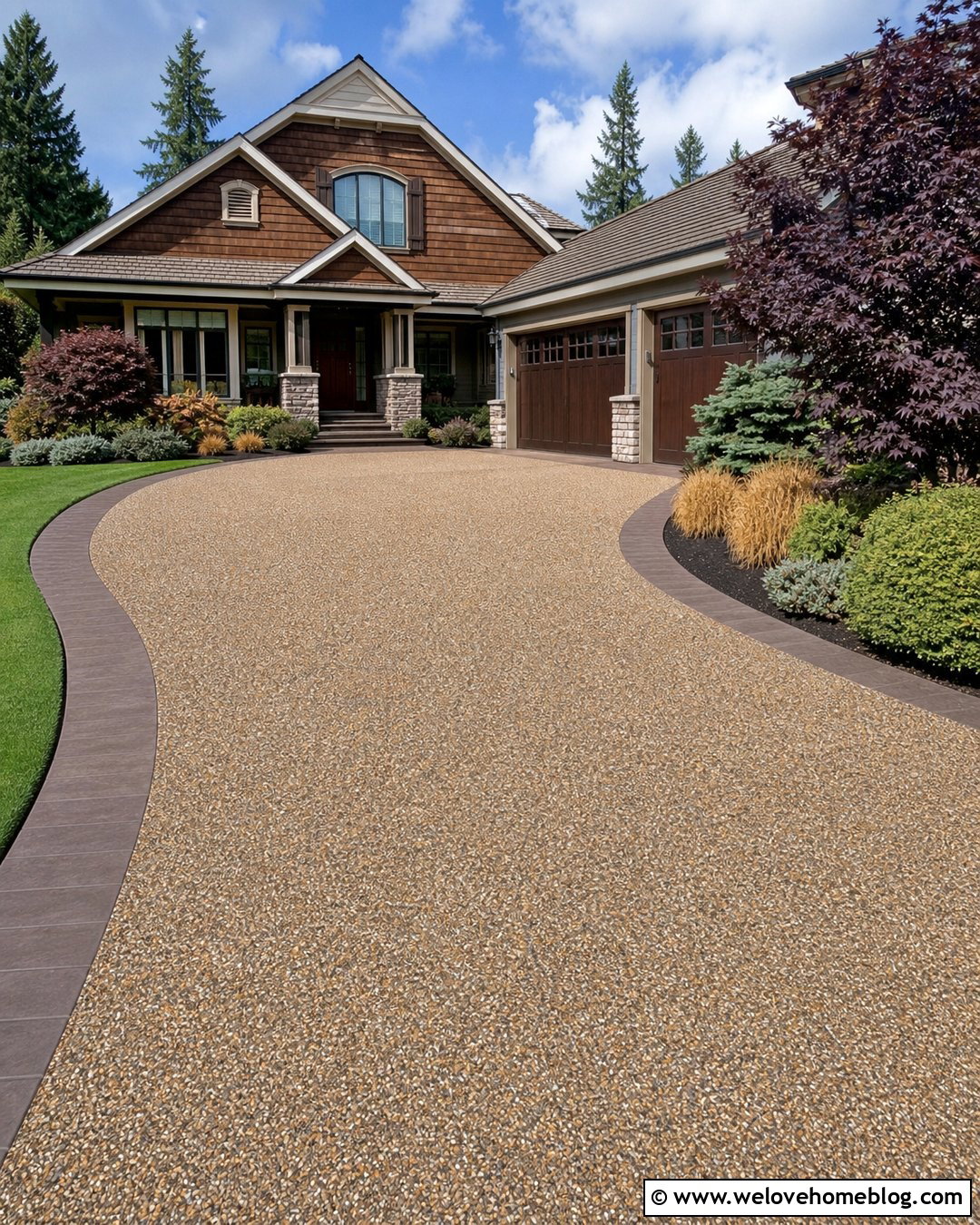
A warm stone aggregate mix can make a new driveway feel naturally connected to a brick, wood, or earth-toned exterior. Look for exposed aggregate containing honey, rust, cream, and soft brown pebbles set in a tan concrete base. A broad curved layout allows the changing stone colors to catch the light along the approach. Border the surface with muted brown pavers and repeat them at the garage threshold. Planting beds filled with burgundy foliage, evergreen shrubs, and golden ornamental grasses reinforce the warm palette. This combination suits craftsman homes, traditional brick houses, and rustic contemporary architecture. Test the aggregate blend beside facade samples before installation because stone and concrete colors can appear noticeably different in direct sun, shade, and wet conditions.
28. Aggregate Driveway With Fine Pebble Finish
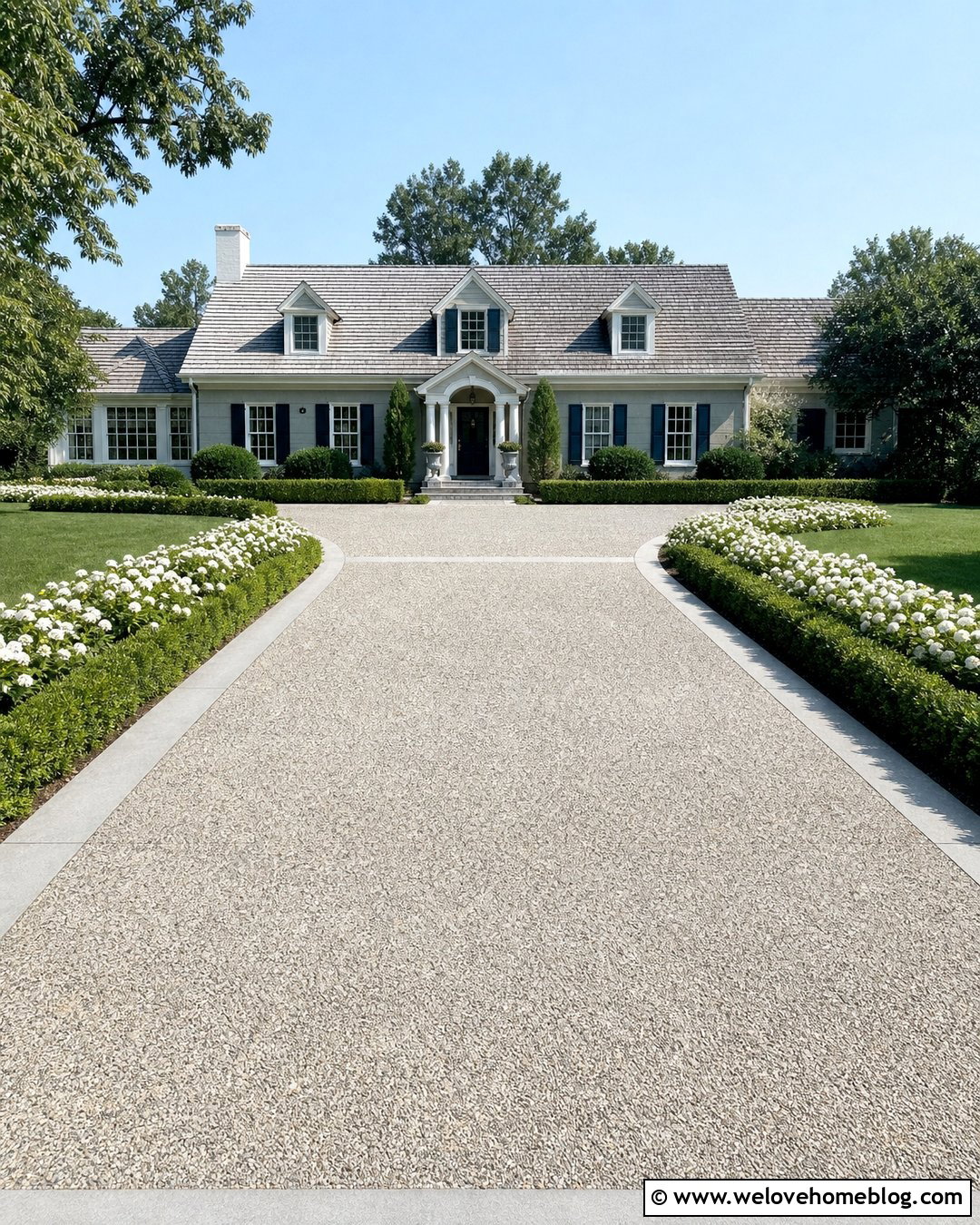
Fine exposed aggregate offers a quieter texture for homeowners who prefer a clean surface without losing the natural stone appearance. Use small, evenly graded pebbles in soft gray and cream tones across a straight driveway with a slight flare at the curb. A smooth concrete border in a matching shade provides definition without strong contrast. Pair the driveway with a simple lawn, low hedges, and broad planting beds containing white flowers and green foliage. Continue the fine pebble finish into the walkway for a seamless entrance. This restrained design works well with ranch houses, Cape Cod homes, and understated contemporary facades. The smaller-scale texture is especially useful where the driveway needs to complement the architecture rather than become the property’s main visual feature.
29. Aggregate Driveway With Heated Surface
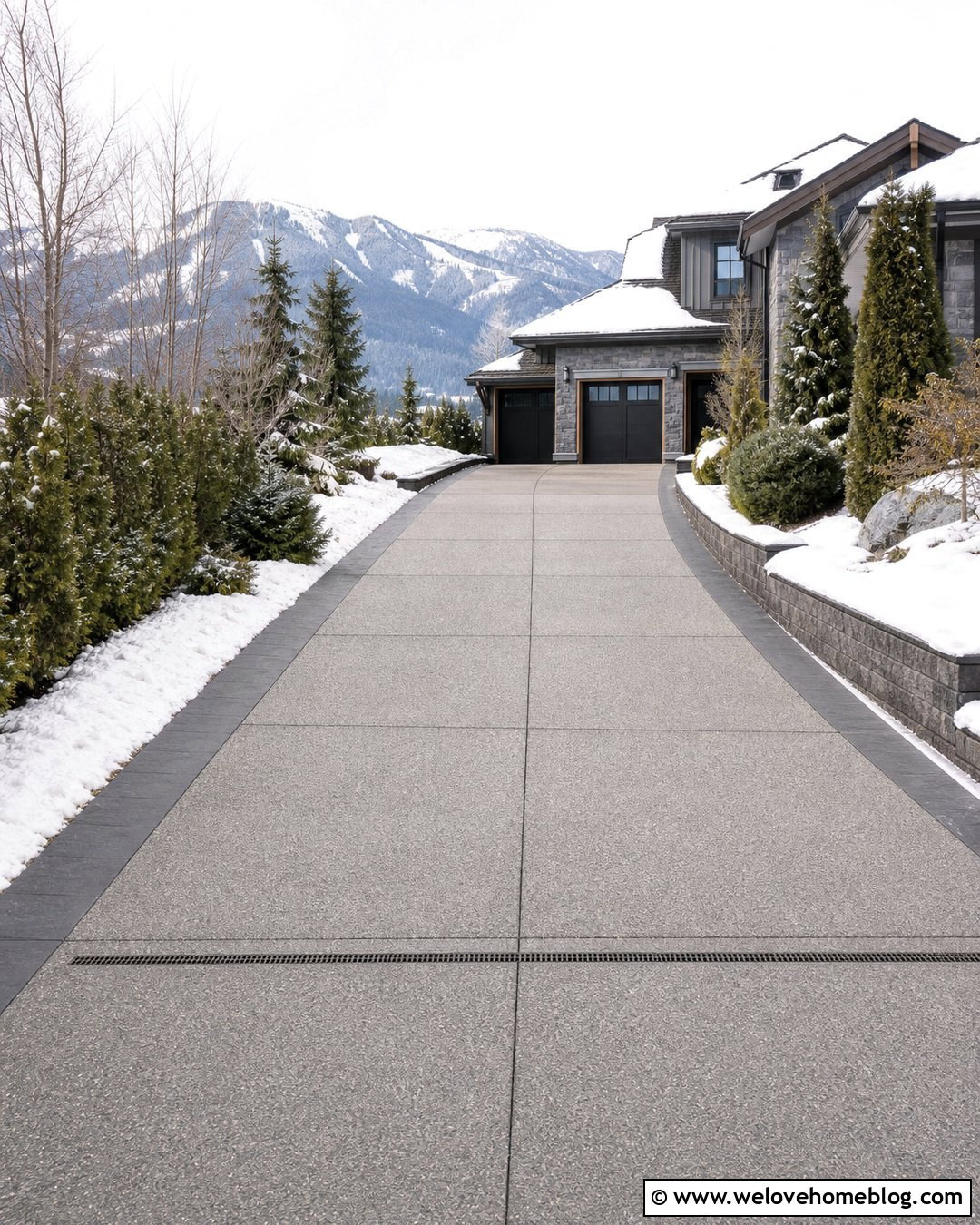
A heated exposed aggregate driveway can combine winter convenience with a decorative finish in cold climates. Choose a medium-gray aggregate blend that helps disguise road residue and everyday dirt, then frame it with dark concrete or granite edging. A straight or gently sloped layout should direct water toward suitable drainage areas rather than allowing meltwater to refreeze near the street or garage. Keep landscaping durable and setback from snow storage zones. Evergreen shrubs, deciduous trees, and raised planting beds can maintain curb appeal through every season. The heating system must be planned before the concrete is poured, with controls and service access positioned carefully. This complete driveway design suits mountain homes, northern suburban properties, and houses with challenging shaded approaches.
30. Aggregate Driveway With Minimal Landscaping
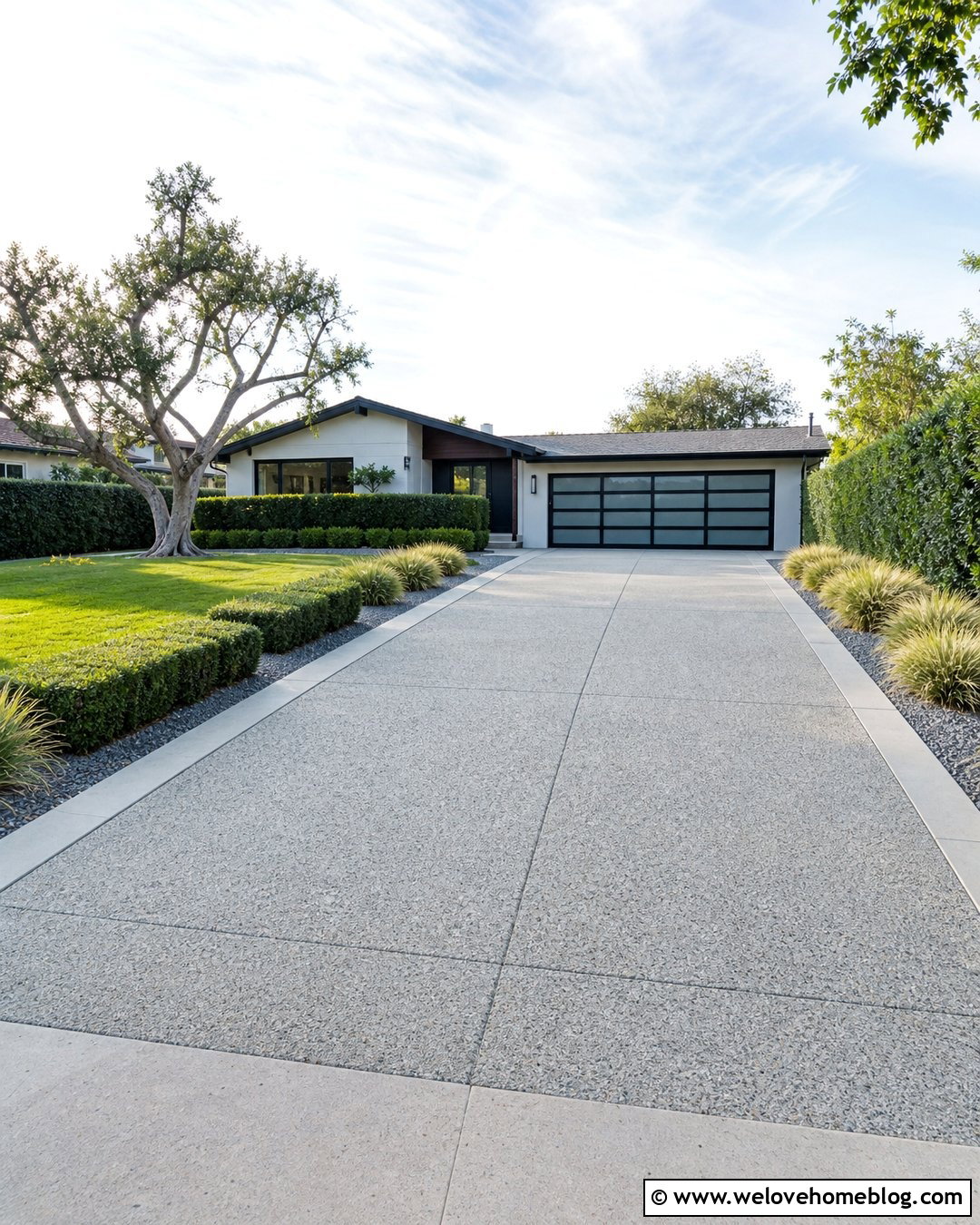
Minimal landscaping allows the color and texture of an aggregate driveway to become a calm part of the architecture. Choose a balanced gray exposed aggregate mix and pour it in large rectangular sections across a straight approach. Use a narrow smooth concrete border rather than a strongly contrasting material. One sculptural tree, a clipped evergreen hedge, and several masses of ornamental grass may be enough to frame the entire driveway. Maintain open lawn or gravel beds between these features so the entrance does not feel crowded. This design works particularly well with modern, midcentury, and renovated ranch homes. Clean edges, controlled joints, and a limited material palette are essential because simple compositions make uneven lines and unrelated details more noticeable from the curb.
Conclusion:
The best aggregate driveway ideas treat the driveway as part of the complete front yard rather than an isolated concrete surface. Aggregate color should relate to the home, while borders, bands, aprons, and walkways create useful visual connections. Driveway shape matters just as much. Straight layouts feel orderly, curves soften the approach, and circular designs provide a more formal arrival. Landscaping can then balance the hardscape with trees, shrubs, grasses, or restrained planting beds. Before selecting a final look, consider drainage, turning space, visibility, maintenance, and local weather. With thoughtful planning, exposed aggregate can provide lasting texture, practical traction, and distinctive curb appeal without overwhelming the architecture or surrounding yard.

Related posts:
Leave a Reply