
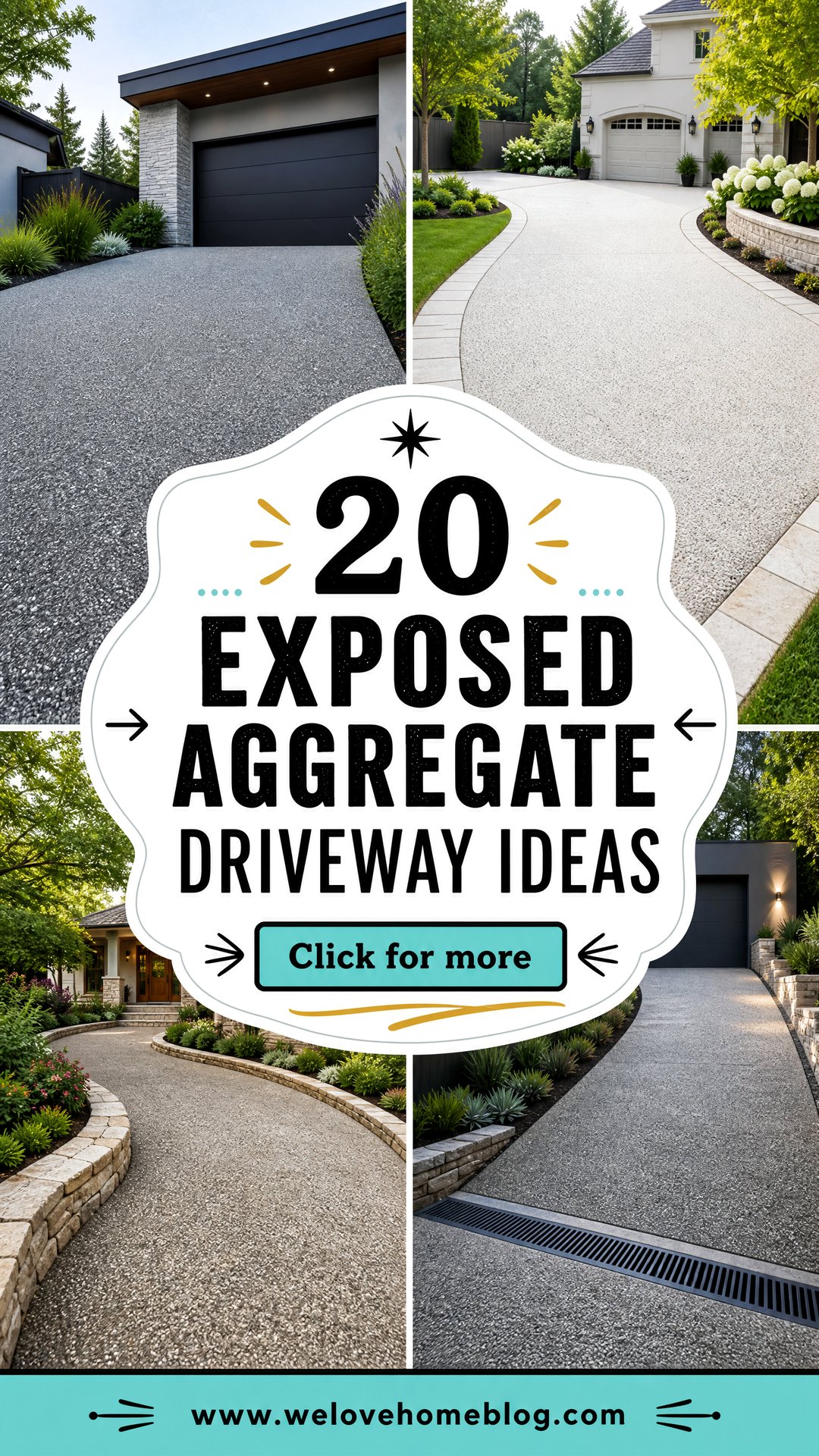
Exposed aggregate concrete brings natural stone color and texture to a surface that still feels clean, permanent, and practical. The finish is created by removing the top layer of cement paste so the decorative aggregate becomes visible. Depending on the stone, an exposed aggregate driveway can look warm and rustic, crisp and modern, or quietly traditional. It also pairs well with concrete bands, brick borders, stone aprons, landscape beds, and curved layouts. Aggregate color, exposure depth, joint placement, and sealer choice all influence the finished appearance, so it pays to plan the entire approach rather than selecting the surface alone. () The complete driveway looks below offer flexible inspiration for different homes, lot sizes, and budgets through **20 Exposed Aggregate Driveway Ideas**.
1. Modern Gray Exposed Aggregate Driveway
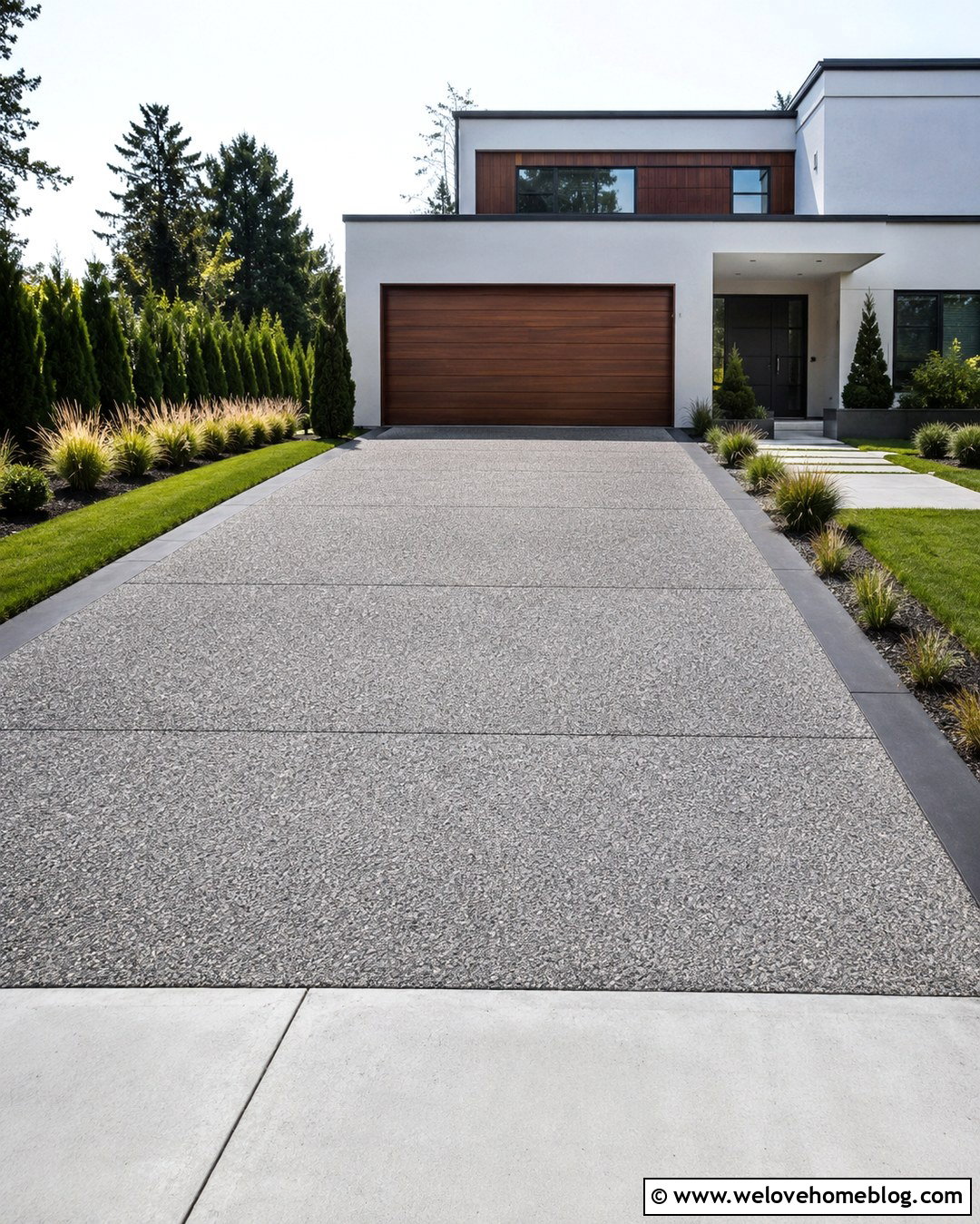
A medium-gray exposed aggregate driveway creates a clean foundation for a modern home without looking flat or industrial. Choose fine charcoal, silver, and pale gray stones for controlled texture. Pour the driveway in large rectangular panels, then use narrow saw-cut joints to emphasize the home’s straight architectural lines. A flush dark concrete border gives the edges a tailored finish and helps visually contain the busier aggregate surface. Keep the landscaping equally simple with clipped ornamental grasses, low evergreen shrubs, and a single sculptural tree near the entrance. A wide concrete walkway can connect to the driveway using the same gray palette. This complete look works especially well with white stucco, black window frames, warm wood siding, and minimalist exterior lighting.
2. Tan Exposed Aggregate Driveway With Brick Border
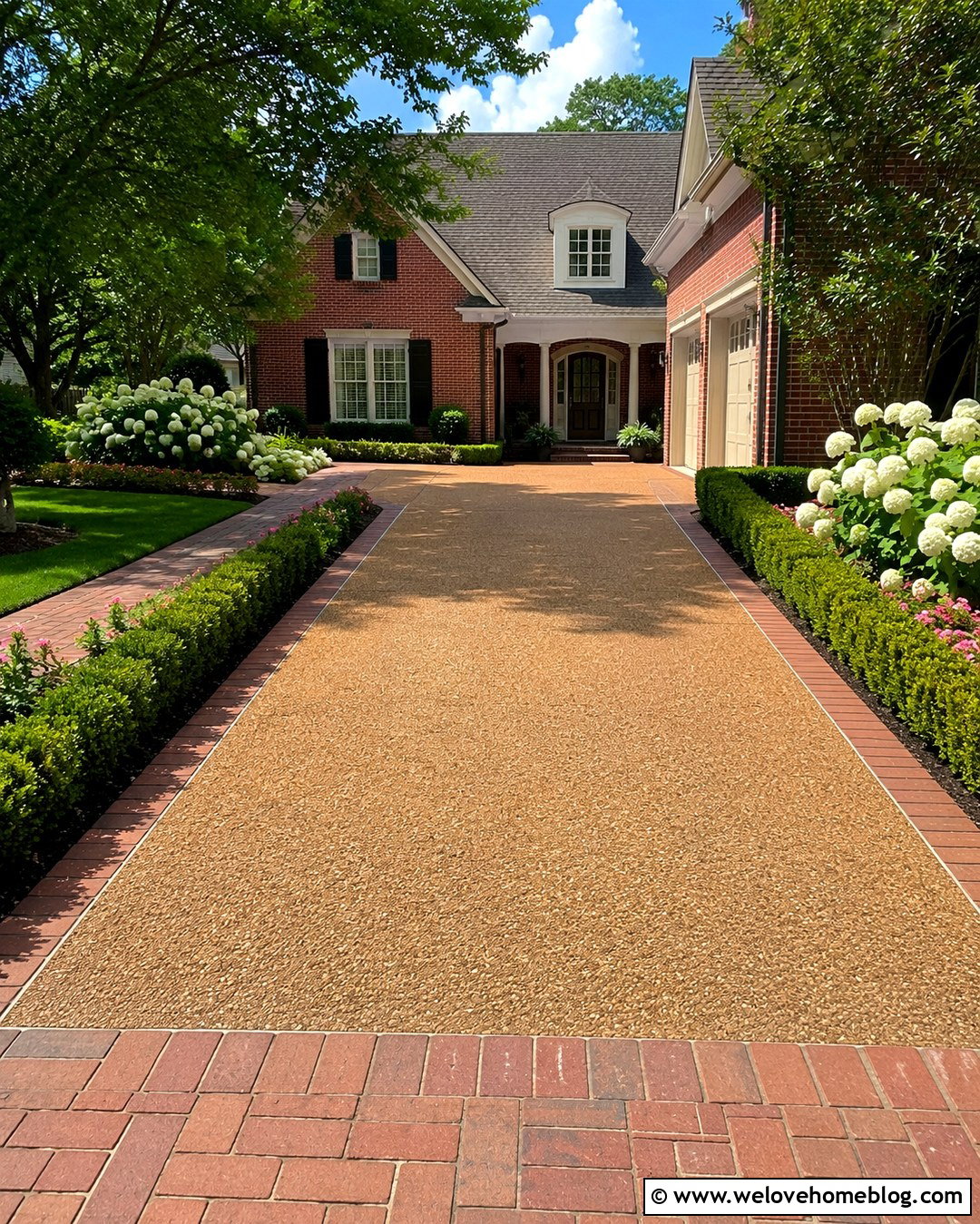
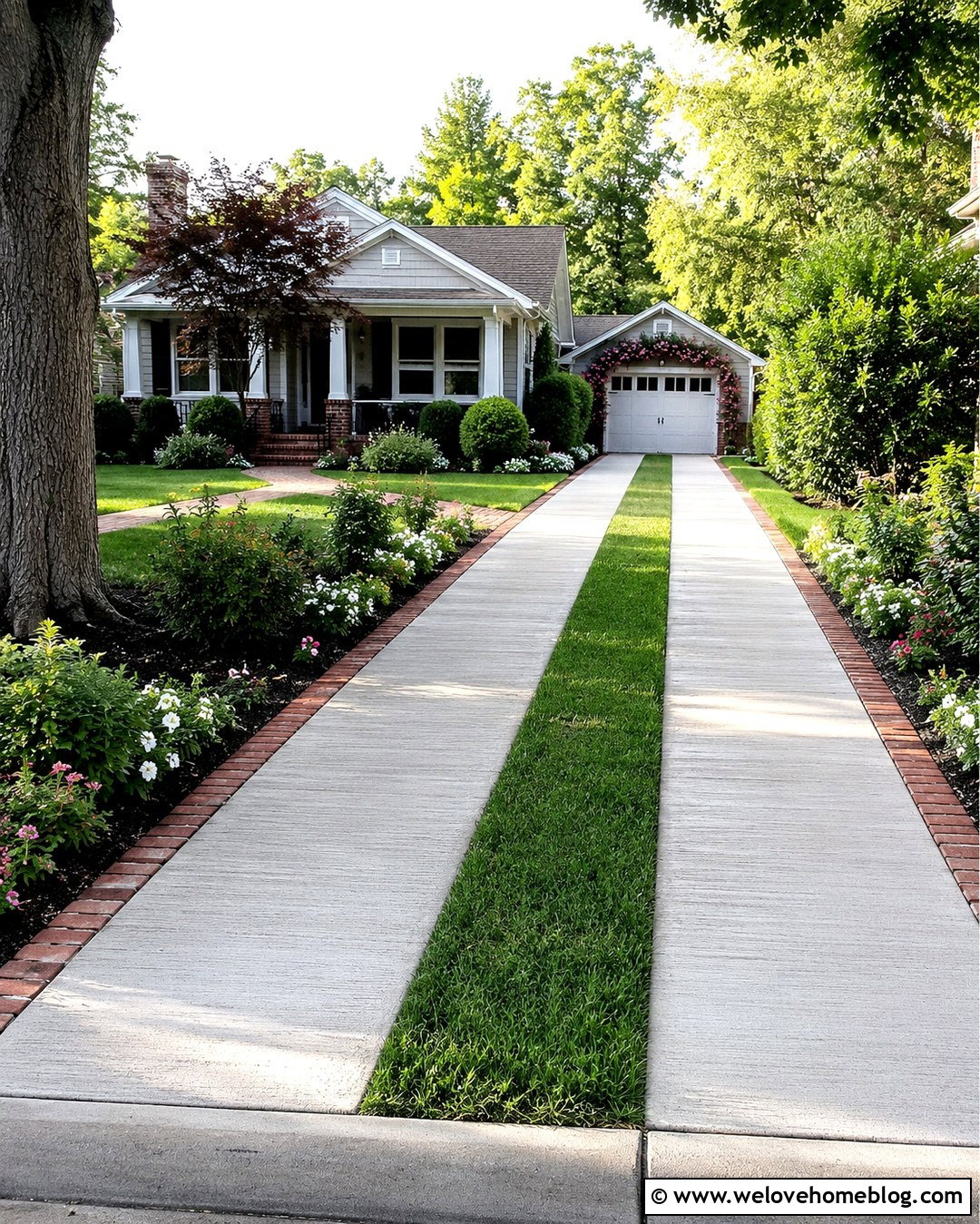
Warm tan exposed aggregate feels welcoming beside red brick, cream siding, or traditional stonework. Select honey, buff, brown, and muted rust-colored pebbles rather than a cool gray mix. A straight driveway can be framed with clay brick pavers laid in a simple running-bond pattern. The border defines the concrete while repeating the color of a brick house or front walkway. Add layered planting beds with boxwoods, hydrangeas, and seasonal flowers to soften both sides. A matching brick apron near the sidewalk creates a more finished entrance without covering the whole driveway in costly masonry. For a balanced result, keep the concrete base close to the aggregate’s warm undertones. This prevents the visible stones and surrounding hardscape from appearing disconnected.
3. Black Exposed Aggregate Driveway With Concrete Bands
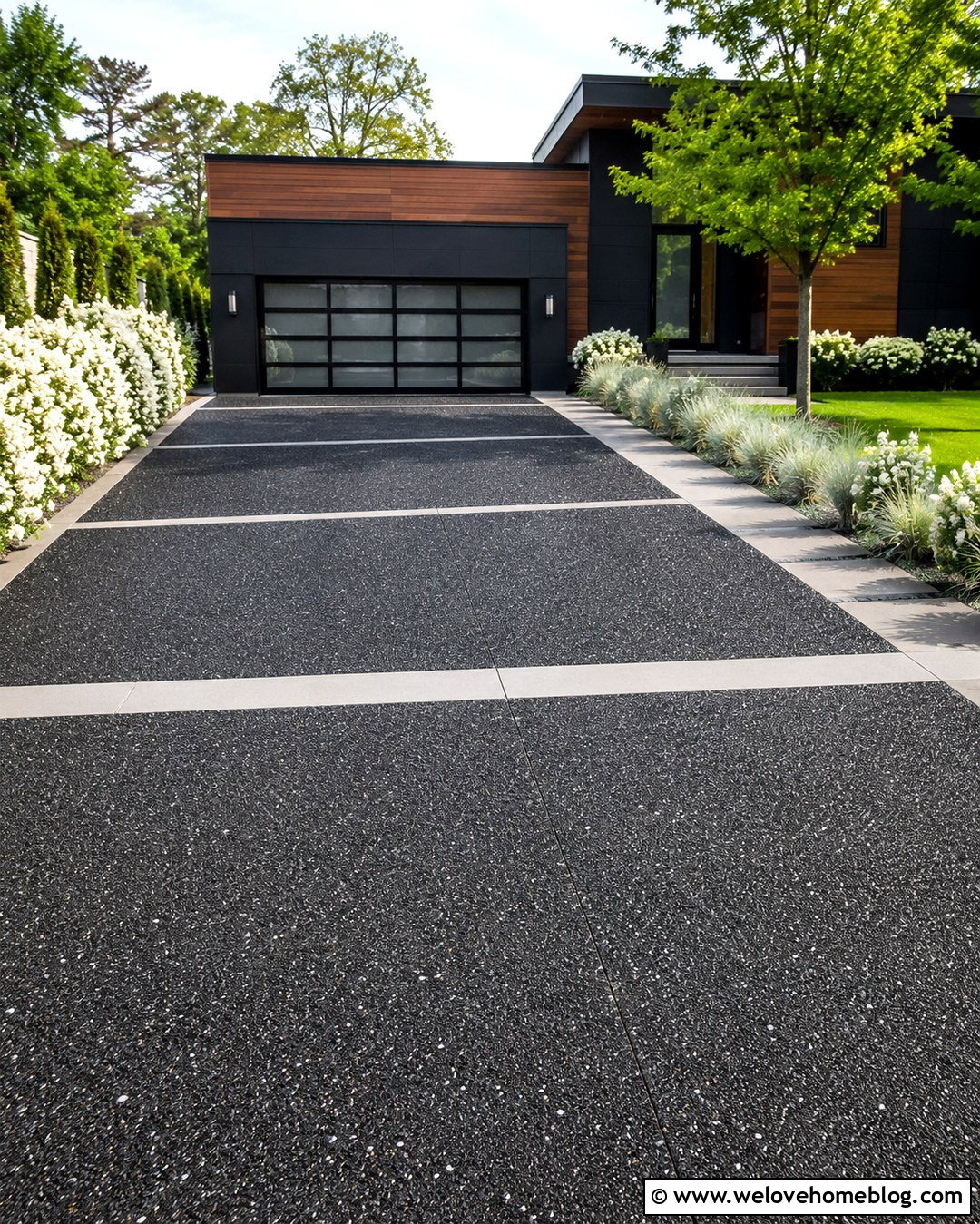
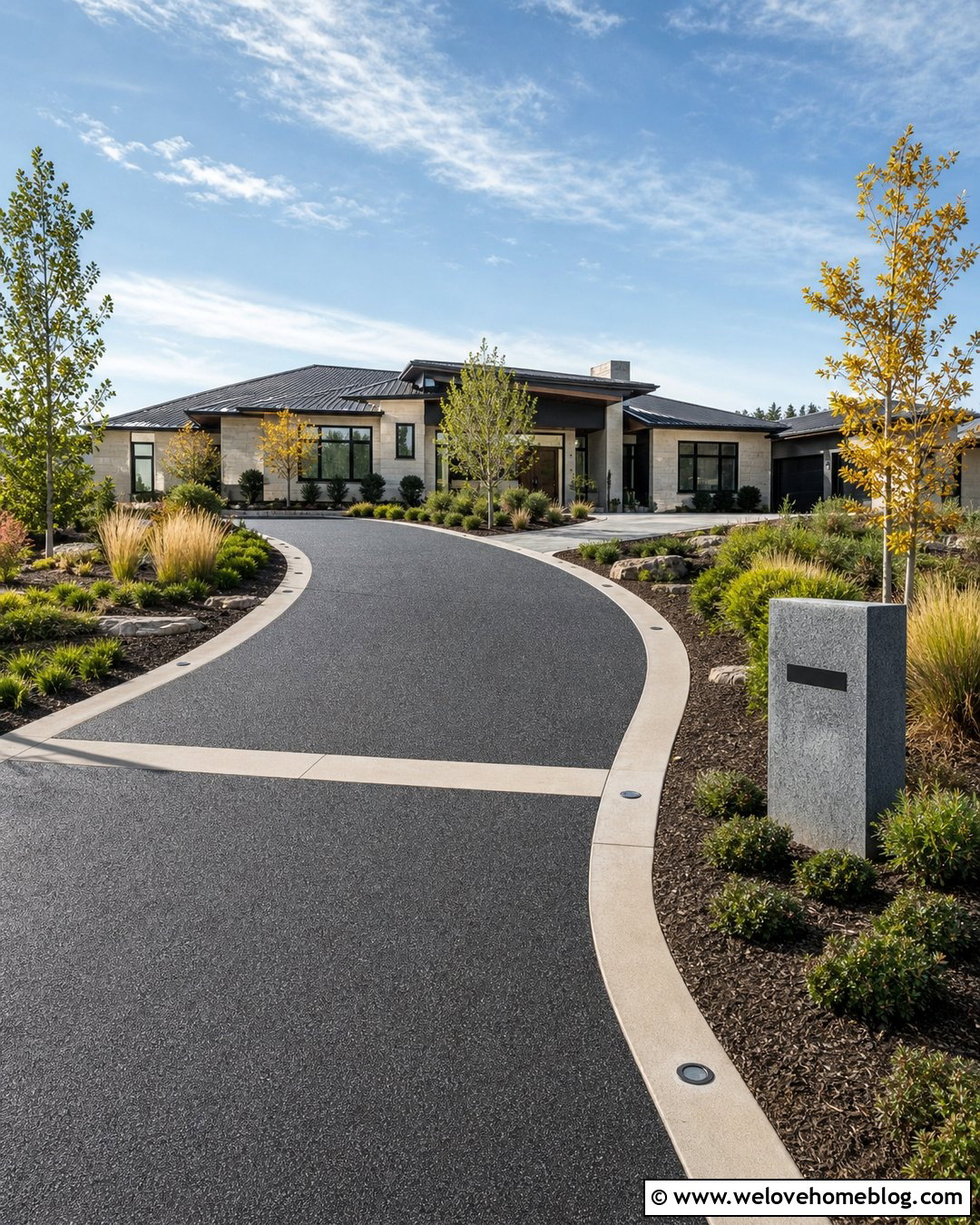
Dark exposed aggregate can make a bold statement in front of a contemporary house. A mix containing black basalt, charcoal stone, and small flecks of white quartz creates depth without relying on a completely black concrete slab. Break up the dark surface with light-gray poured concrete bands placed across the driveway at regular intervals. These bands can align with control joints, turning necessary divisions into an intentional geometric pattern. Use a straight or gently angled layout leading toward a black-and-wood garage facade. White flowering shrubs, silvery grasses, and bright green lawn will keep the frontage from feeling too heavy. Because dark surfaces can show dust differently than mottled tan finishes, ask to view a sealed sample in direct sunlight before approving the final color combination.
4. River Rock Exposed Aggregate Driveway
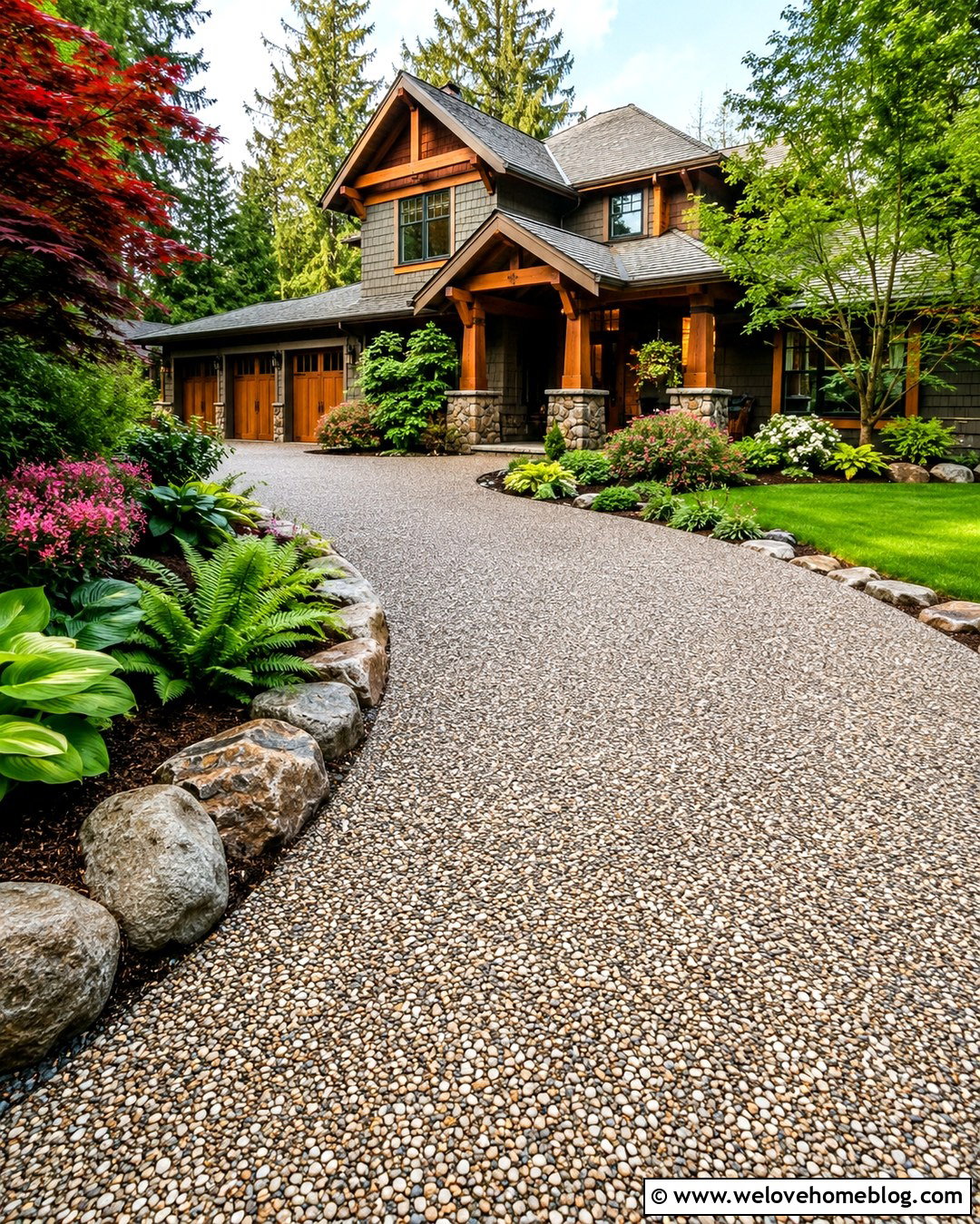
Rounded river pebbles give exposed aggregate concrete a softer, more organic character. Choose a blend of gray, brown, cream, and muted gold stones with consistent sizing so the driveway remains visually calm. A gently curved layout suits this material because it echoes the rounded shapes within the surface. Frame the edges with natural fieldstone and broad beds filled with ferns, hostas, flowering shrubs, and small ornamental trees. The driveway can lead to a craftsman house with timber details and a stone-clad foundation. Continue the same aggregate into the front walkway for a unified approach, but separate it with a subtle control joint. The finished design feels especially natural in wooded or established neighborhoods where a stark, plain slab could appear out of place.
5. Circular Exposed Aggregate Driveway With Cobblestone Edging
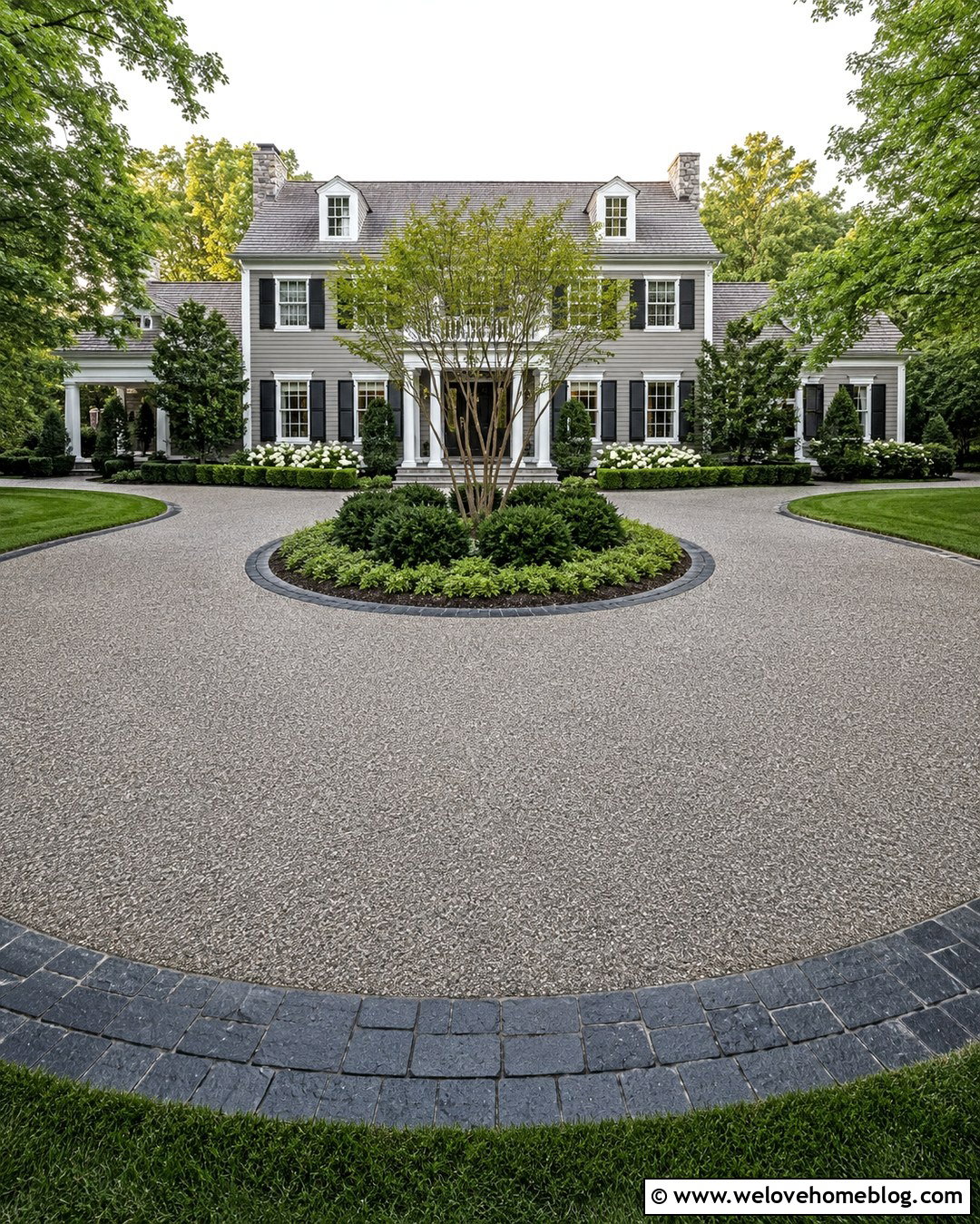
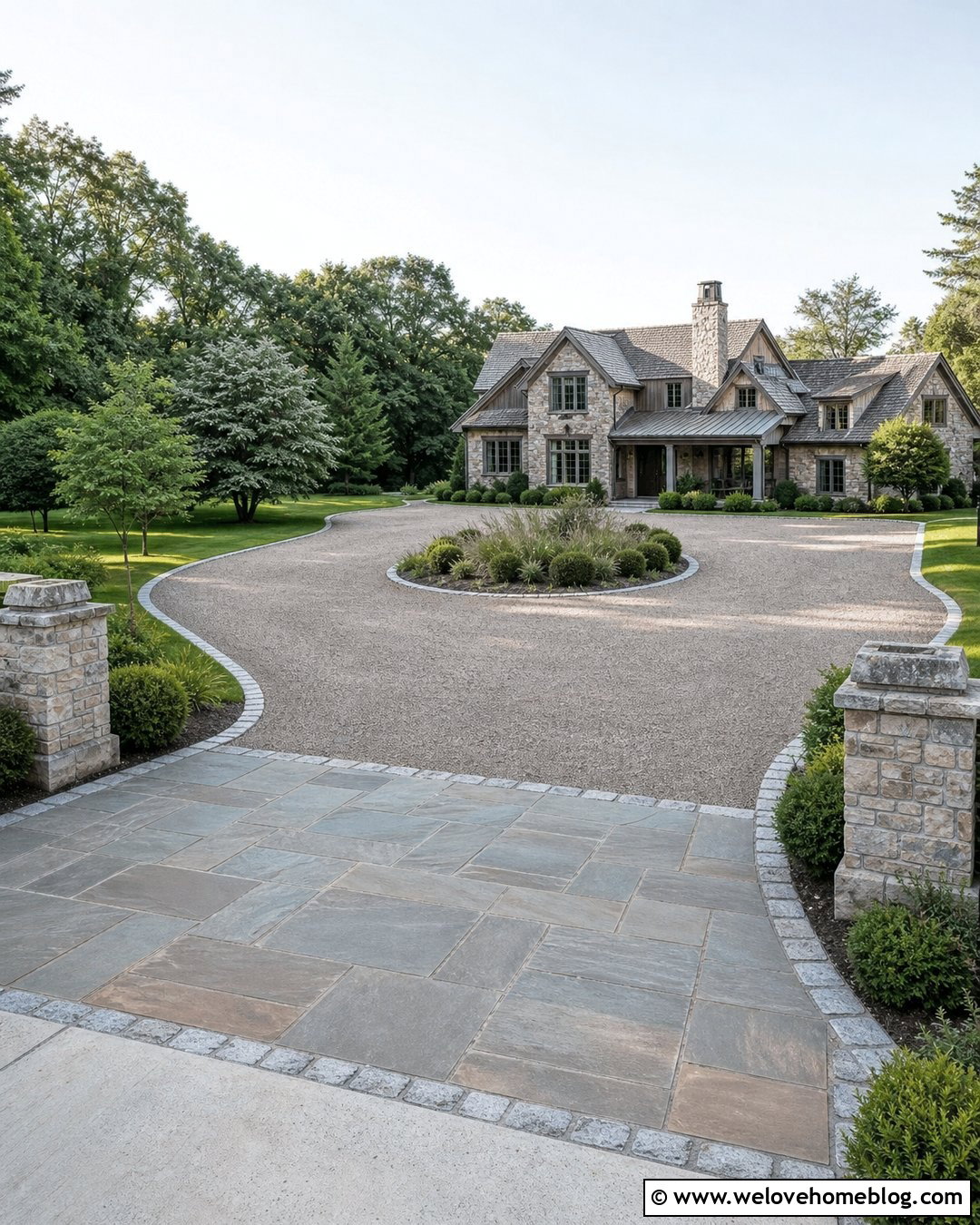
A circular driveway becomes more defined when exposed aggregate concrete is outlined with dark cobblestone. Use a neutral gray-brown aggregate through the main driving surface, then install granite setts along both the outside edge and the central landscape island. The contrasting border makes the circular shape easy to read from the street. Fill the island with a multi-stem ornamental tree, low evergreen shrubs, and ground cover that will not block sightlines. Near a colonial or Georgian-style house, symmetrical planting beds can reinforce the formal layout. Keep the driveway wide enough for comfortable turning and plan the entry and exit points around existing traffic conditions. The combination of textured concrete, structured stone edging, and balanced landscaping creates a substantial entrance without making the entire surface visually ornate.
6. White Exposed Aggregate Driveway With Limestone Border
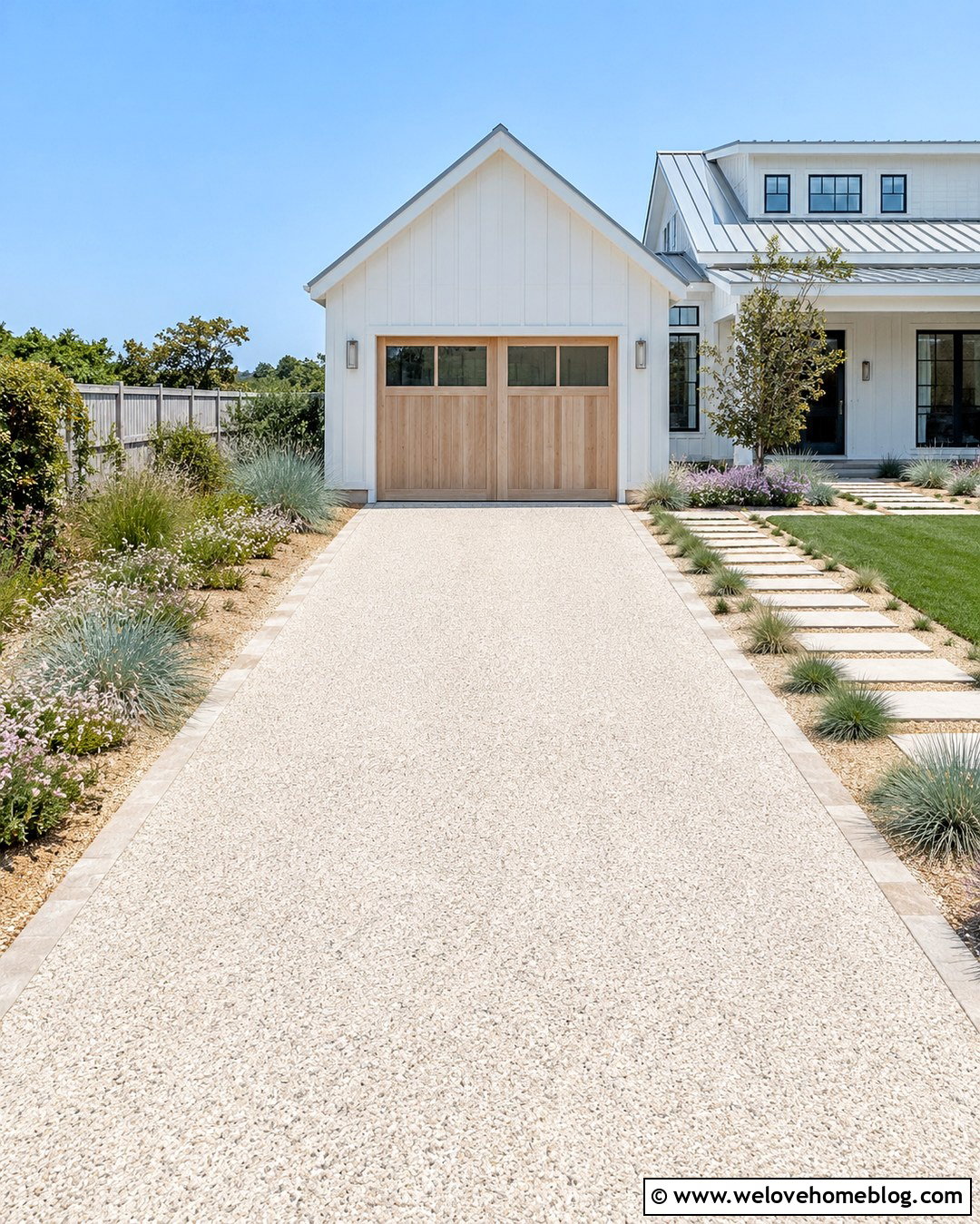
Pale exposed aggregate can brighten the approach to a coastal, Mediterranean, or light-colored contemporary home. Select white quartz, cream gravel, and soft beige stone set in a lightly tinted concrete base. A honed limestone border adds gentle definition without producing a harsh contrast. Use a straight driveway with broad planting beds containing blue-green grasses, compact flowering shrubs, and drought-tolerant perennials. A pale stepping-stone walkway can branch toward the front door while maintaining the relaxed color palette. Avoid combining too many bright white materials, which may make the design appear washed out in strong sunlight. Instead, add warmth through natural wood garage doors, sandy stone walls, or beige stucco. The result is fresh and spacious, yet the visible stone keeps it from resembling ordinary white concrete.
7. Curved Exposed Aggregate Driveway With Natural Stone Edging
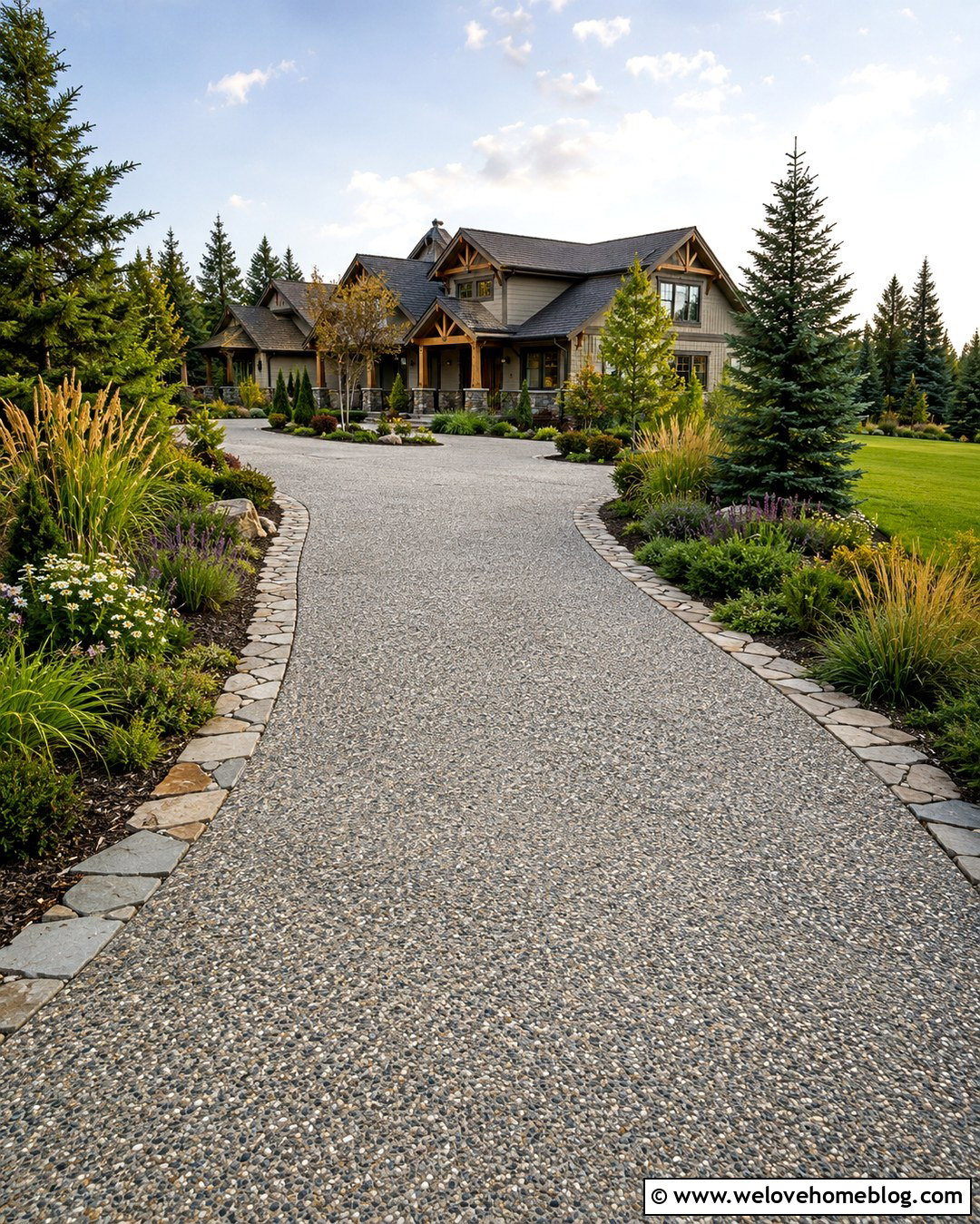
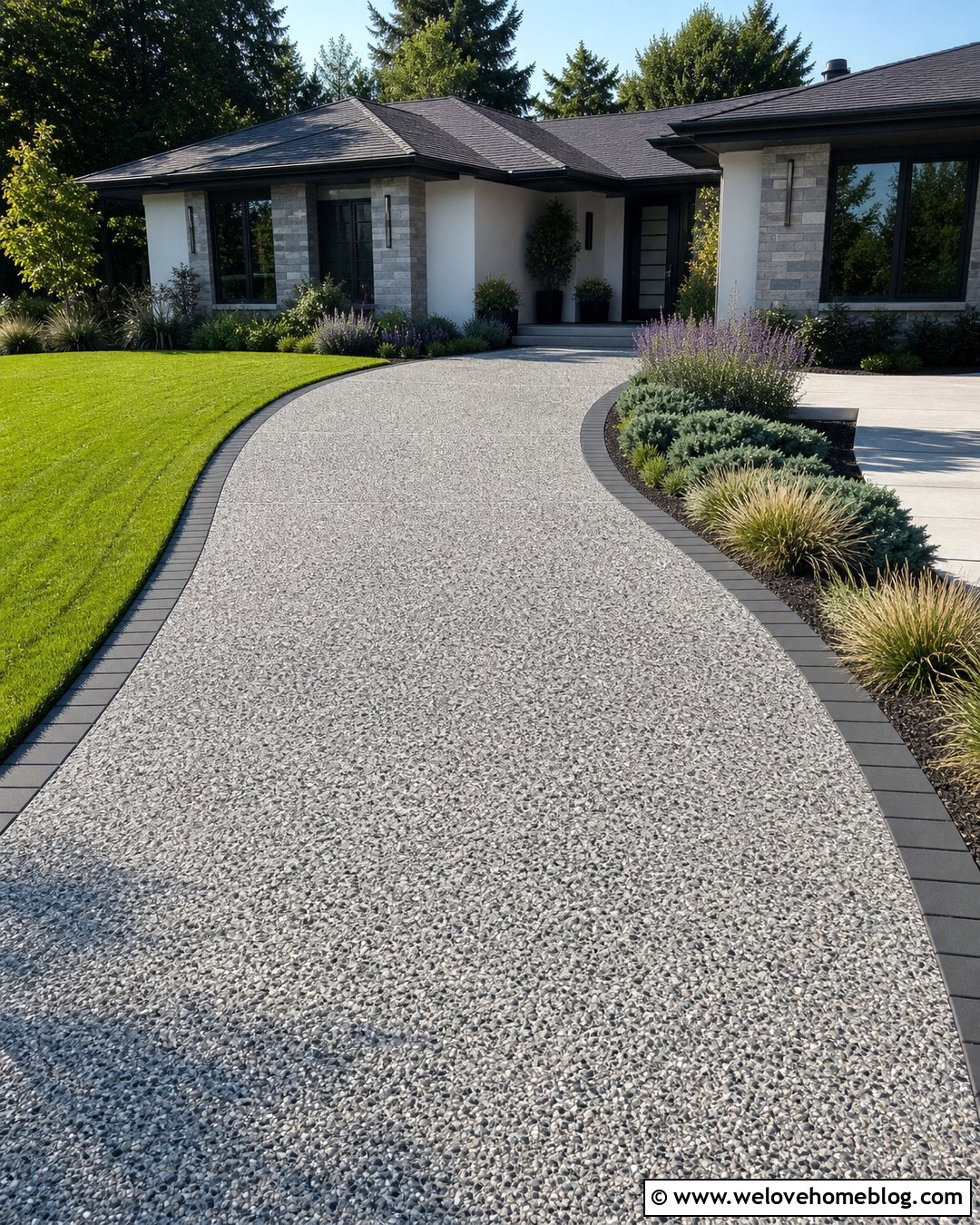
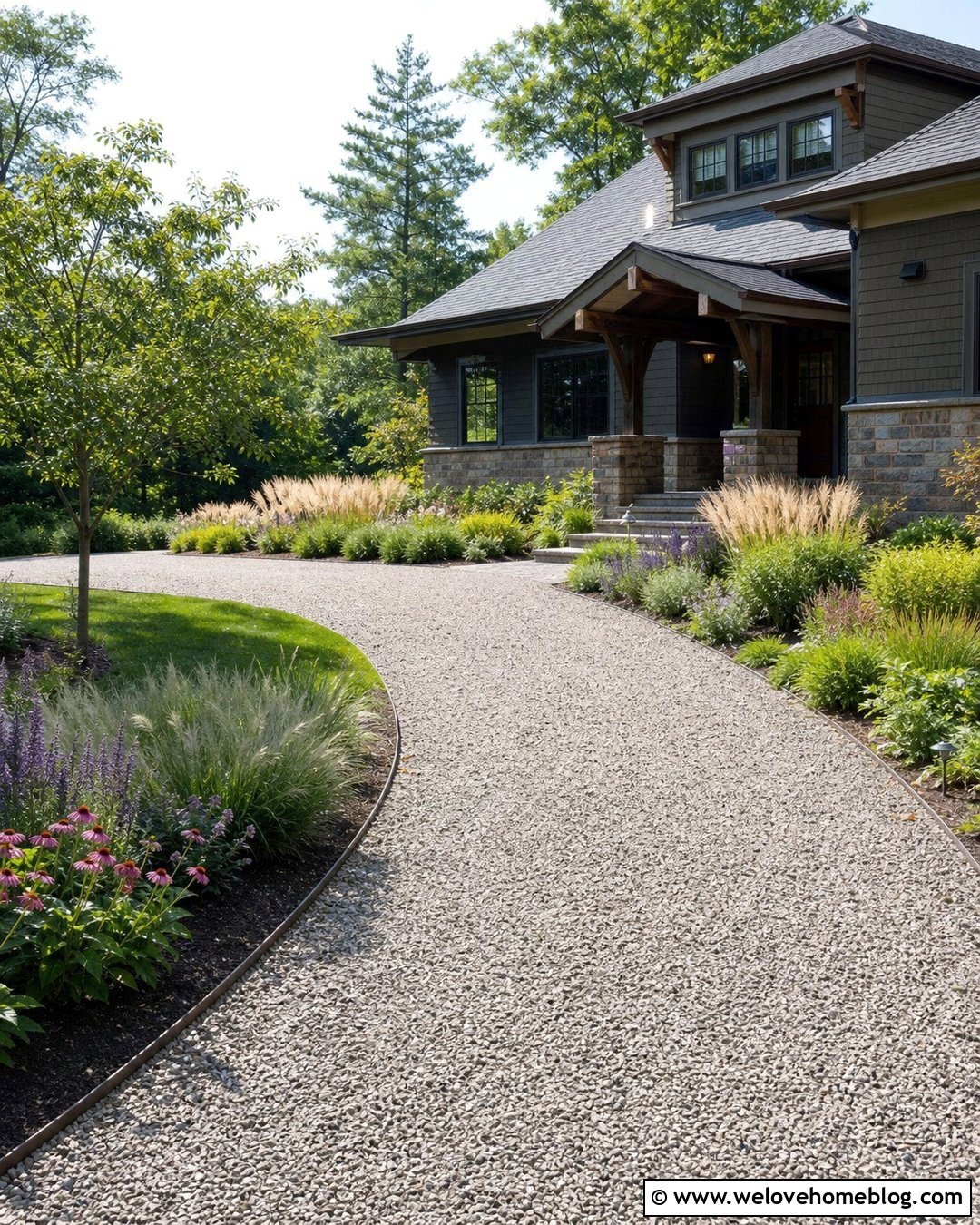
A sweeping driveway benefits from materials that help it blend naturally into the yard. Use a warm gray exposed aggregate containing mixed river stone, then follow each curve with irregular natural stone edging. The stones should sit close to the concrete surface so tires and lawn equipment are not obstructed. Create wide planting beds on the outer curve using layered evergreen shrubs, ornamental grasses, and flowering perennials. On the inside curve, preserve open lawn or lower plantings to maintain a clear view toward the house. This layout works beautifully with ranch, craftsman, and country homes set back from the street. The combination of a relaxed curve, earthy aggregate, and informal stone border makes the driveway feel integrated with the landscape rather than placed on top of it.
8. Two-Tone Exposed Aggregate Driveway
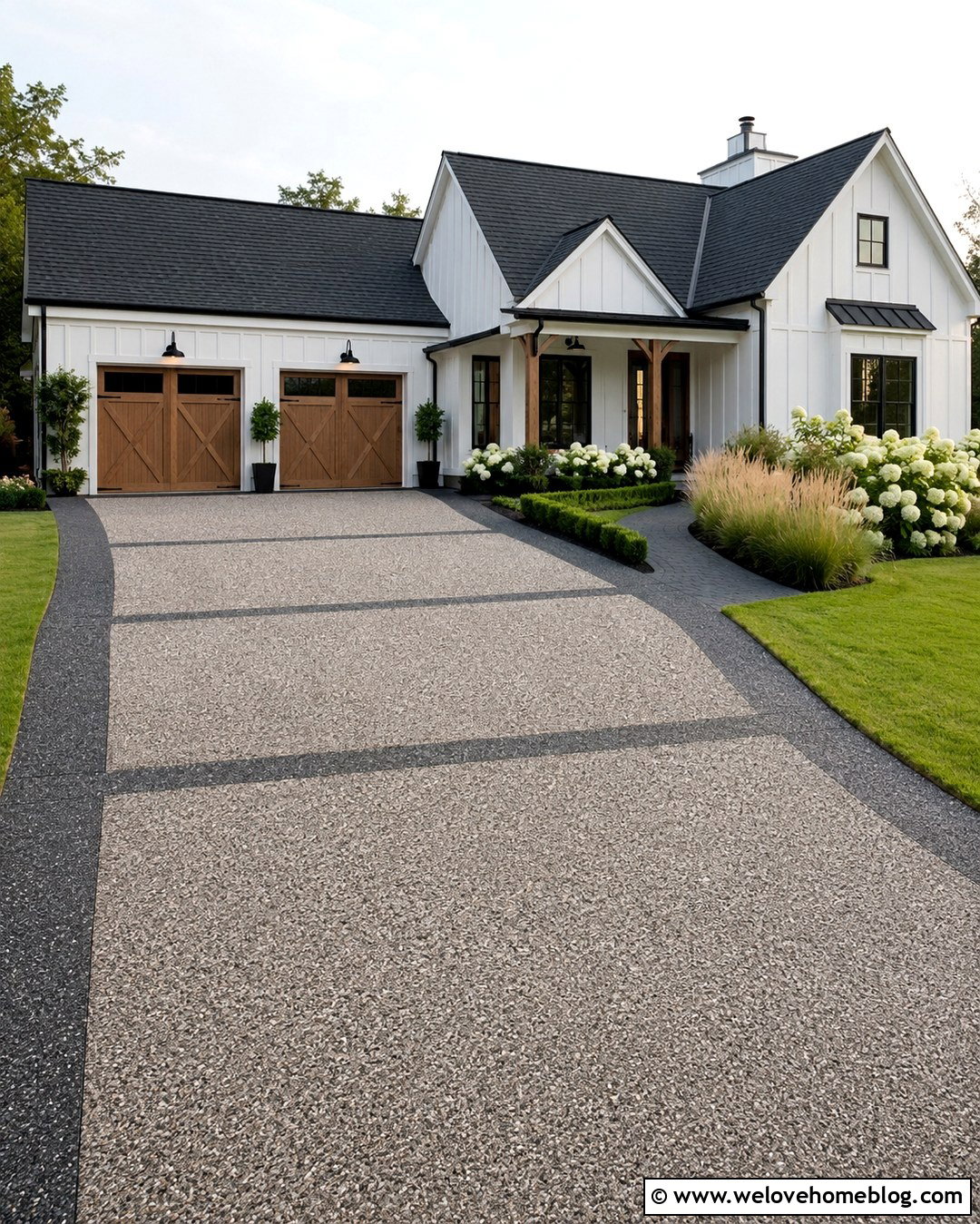
Using two complementary aggregate colors can organize a wide driveway and reduce the appearance of one uninterrupted surface. Cover the main parking and driving area with warm gray exposed aggregate, then introduce darker charcoal aggregate as perimeter bands and crosswise accents. The darker sections can follow control joints or mark the transition between the street, parking pad, and garage approach. Keep the pattern simple so it remains readable from the curb. A modern farmhouse with white siding and black roofing provides a strong backdrop for this two-tone palette. Complete the design with clipped hedges, airy grasses, and a dark paver walkway. Before installation, request full-sized samples of both mixes. Small stone samples may not accurately show how the concrete color and aggregate concentration will look across a large driveway.
9. Exposed Aggregate Driveway With Smooth Concrete Ribbons
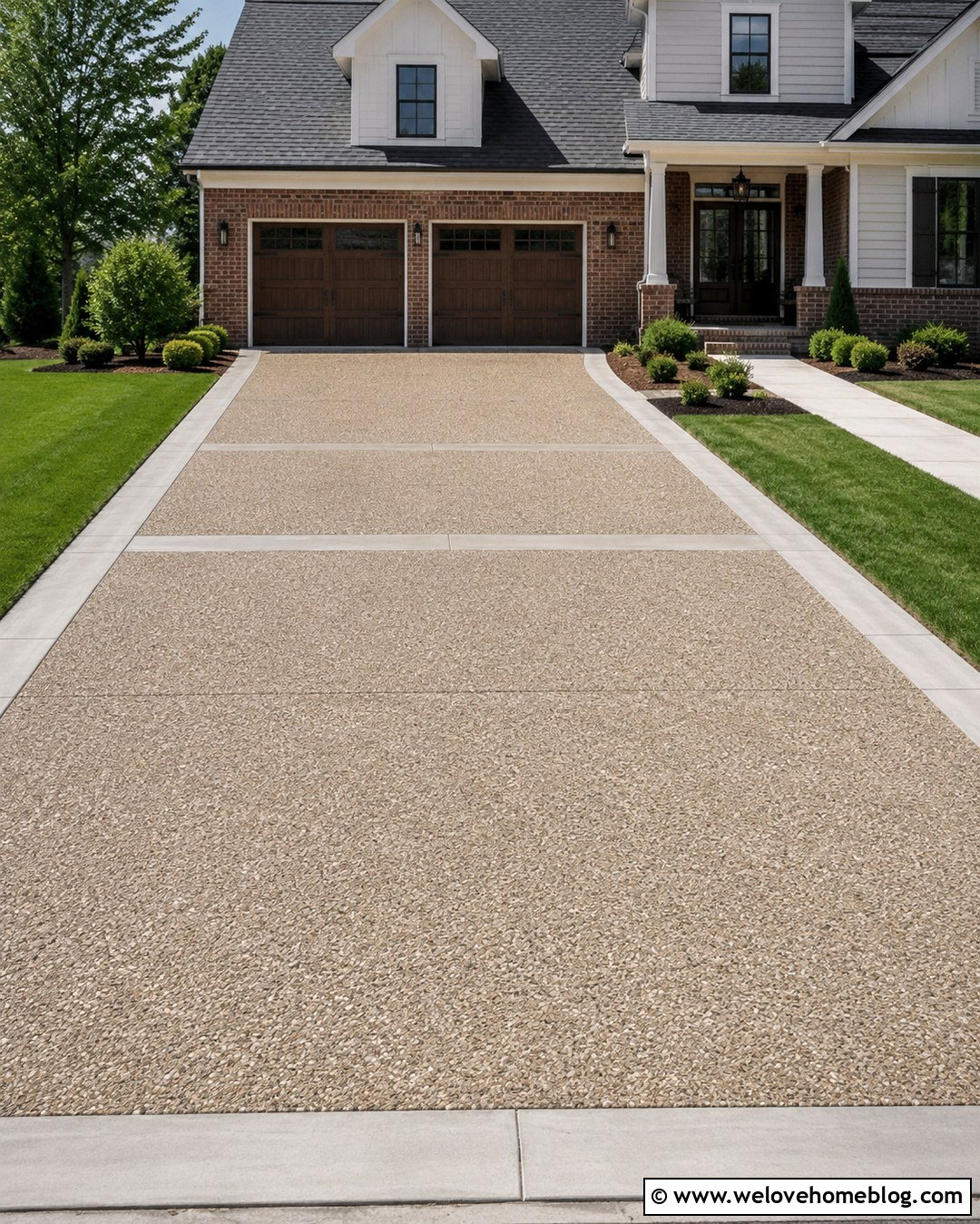
Smooth concrete ribbons provide a crisp contrast to the rougher appearance of exposed stone. Use light brown exposed aggregate for the main surface and install wide broom-finished concrete bands along the edges and between major driveway sections. A central ribbon can guide the eye toward the garage, while cross bands visually shorten a long approach. Keep both concrete finishes in related colors so the difference comes mainly from texture. This combination suits a transitional home with brick, siding, and simple architectural details. Add low foundation shrubs, mulch beds, and a straight walkway that repeats the smoother concrete finish. Combining finishes can also make expansion and control joints feel deliberate rather than distracting. Careful alignment with garage doors, porch columns, and landscape edges will produce the most orderly appearance.
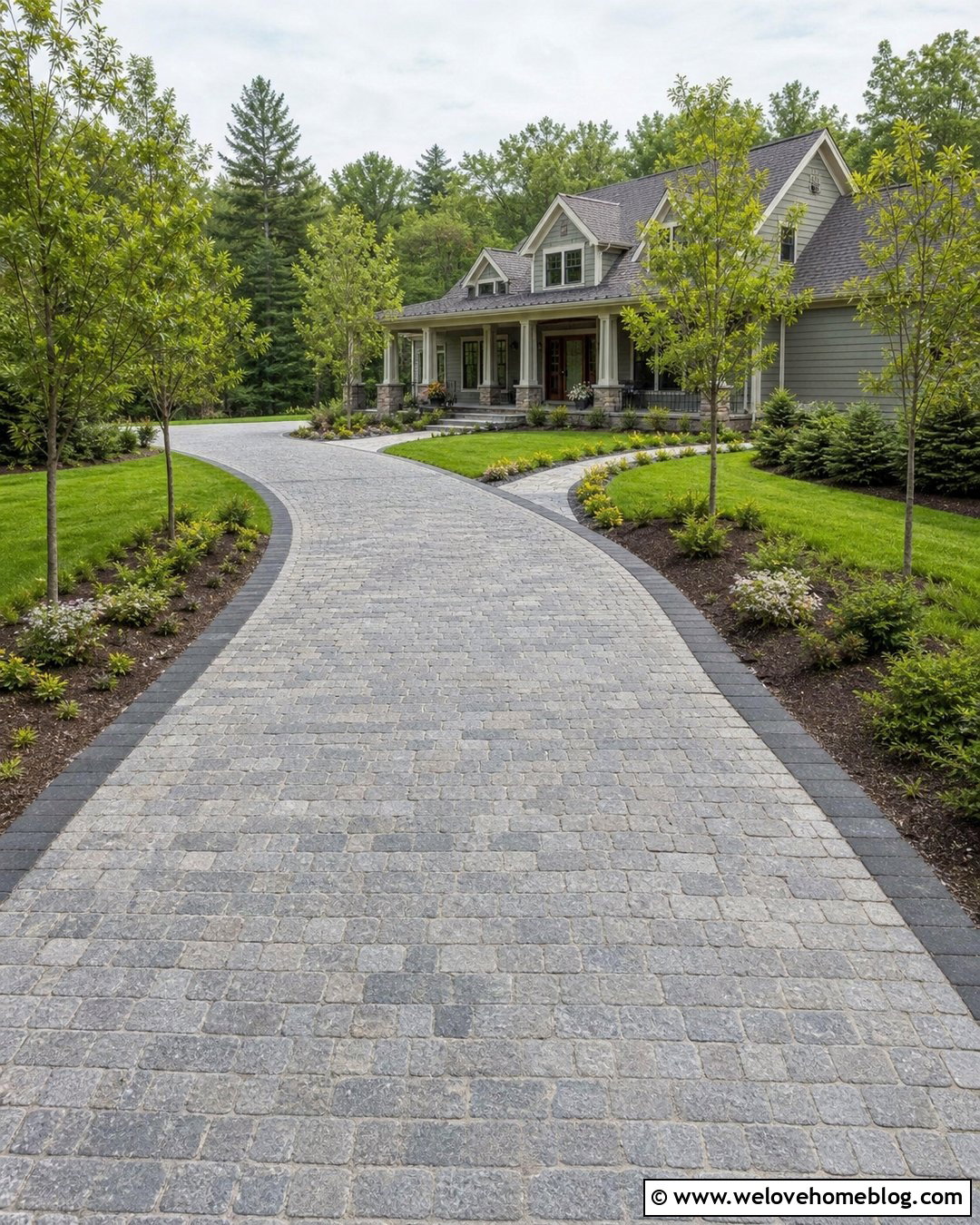
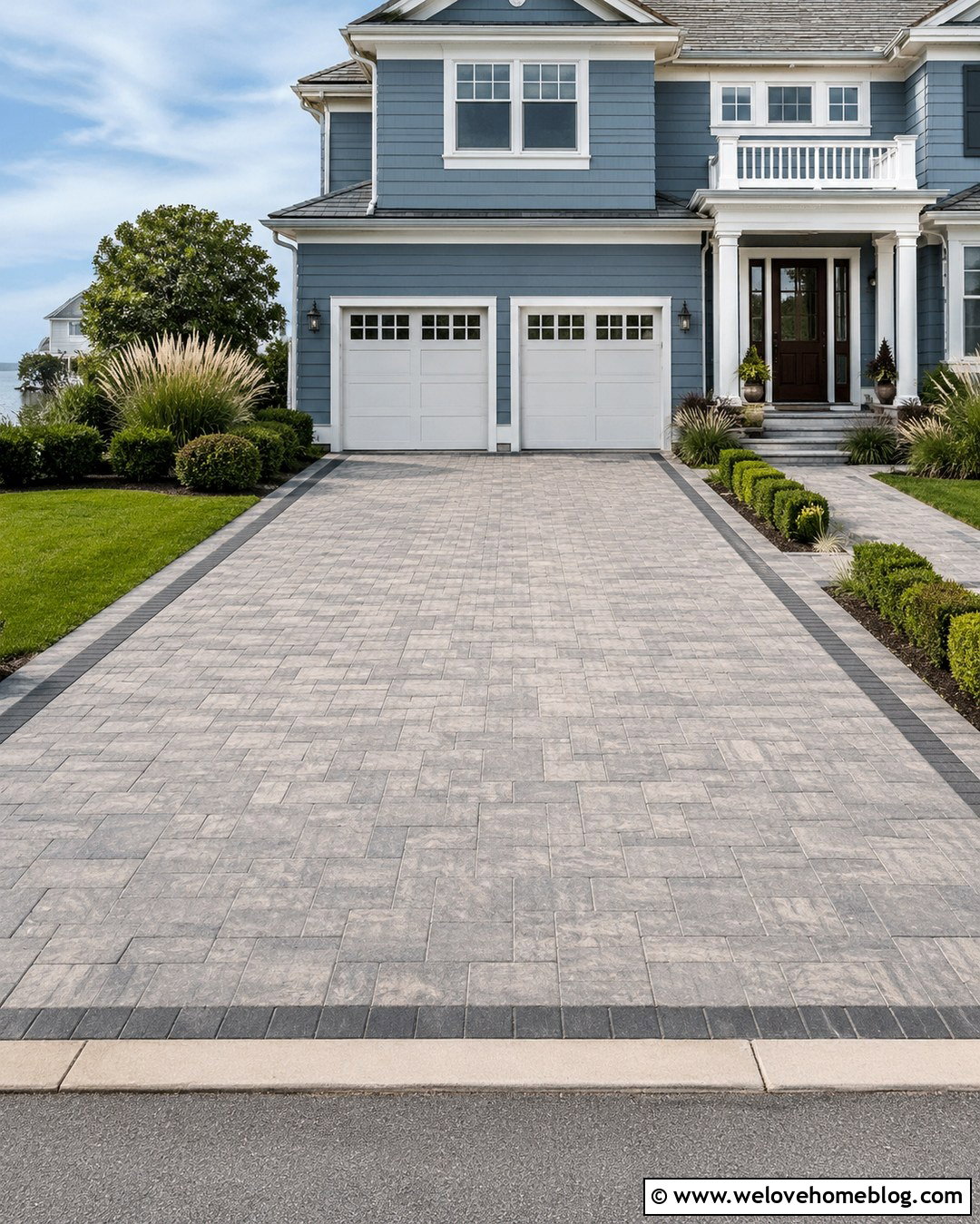
10. Exposed Aggregate Driveway With Red Brick House
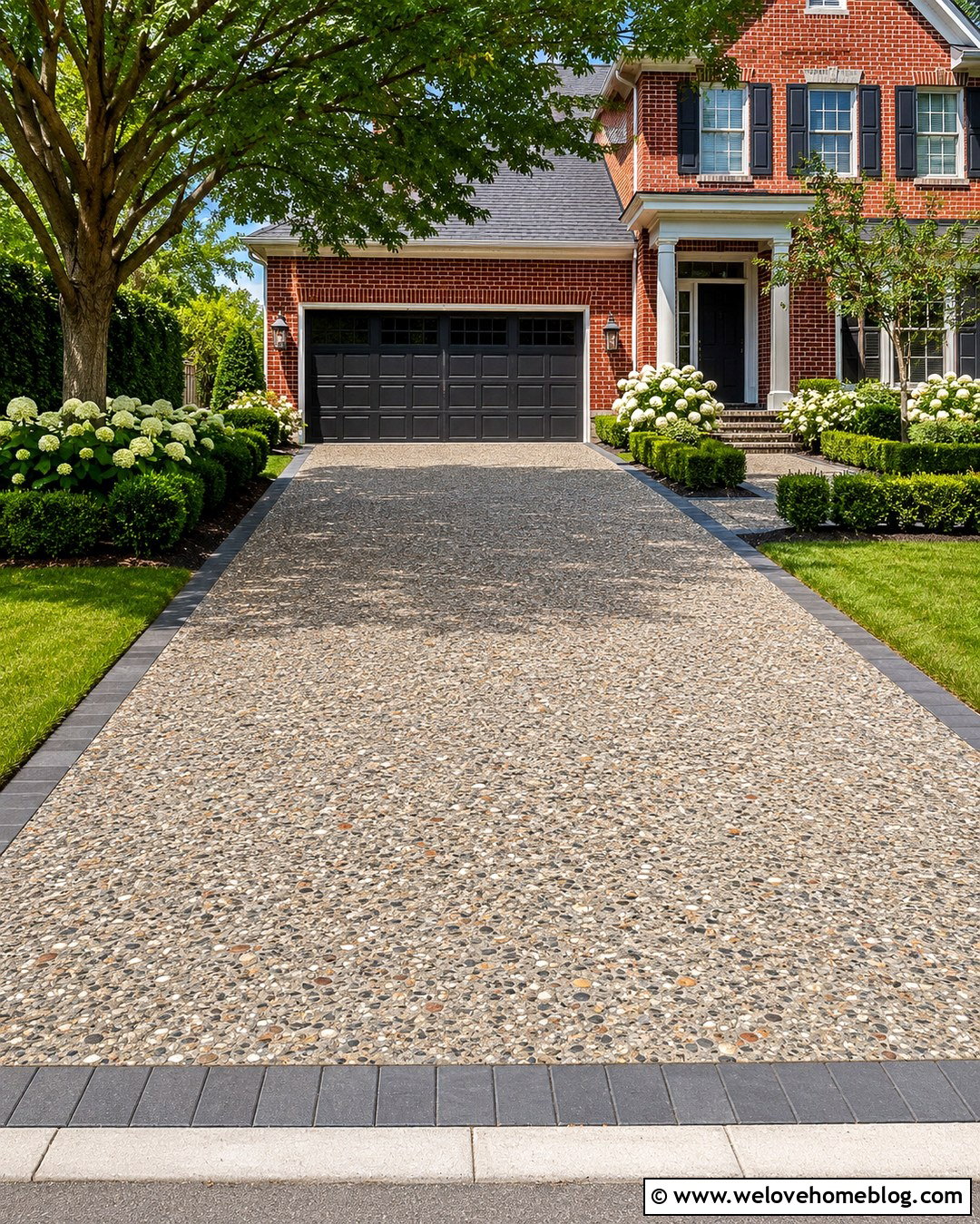
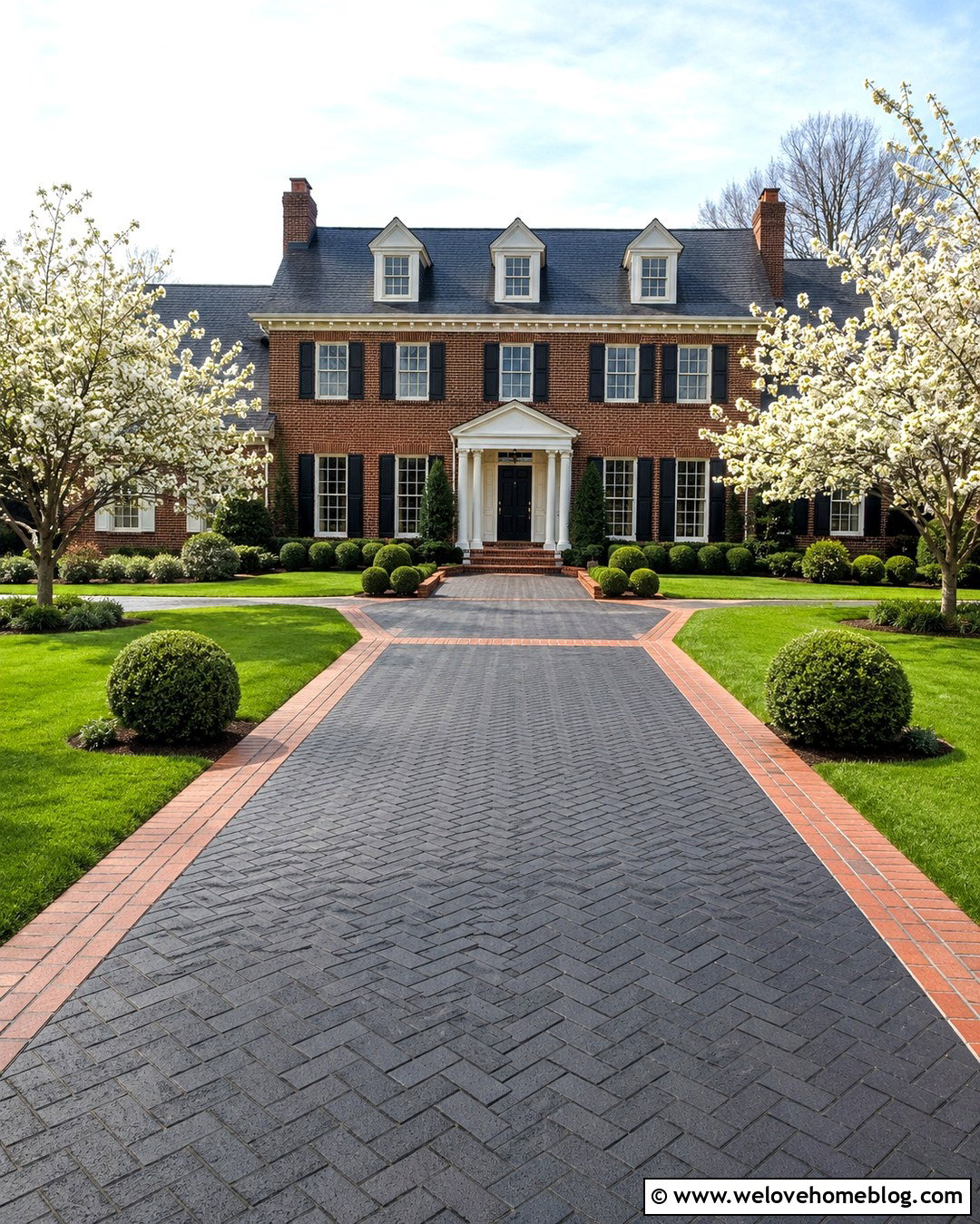
A red brick house already contains strong color and texture, so the driveway should support it rather than compete with it. Choose exposed aggregate with soft gray, tan, and occasional rust-colored stones. A medium exposure keeps the surface interesting while preventing it from becoming overly rugged. Shape the driveway as a straightforward double-width approach and frame it with a narrow charcoal paver border. The darker edge separates the warm brick facade from the mixed stone colors. Use green lawn, clipped boxwoods, white hydrangeas, and one shade tree to create a classic residential setting. A matching paver walkway can connect the driveway to the porch. Repeating only one or two tones from the brick creates coordination while allowing the driveway to remain a distinct part of the overall frontage.
11. Charcoal Exposed Aggregate Driveway With Farmhouse Landscaping
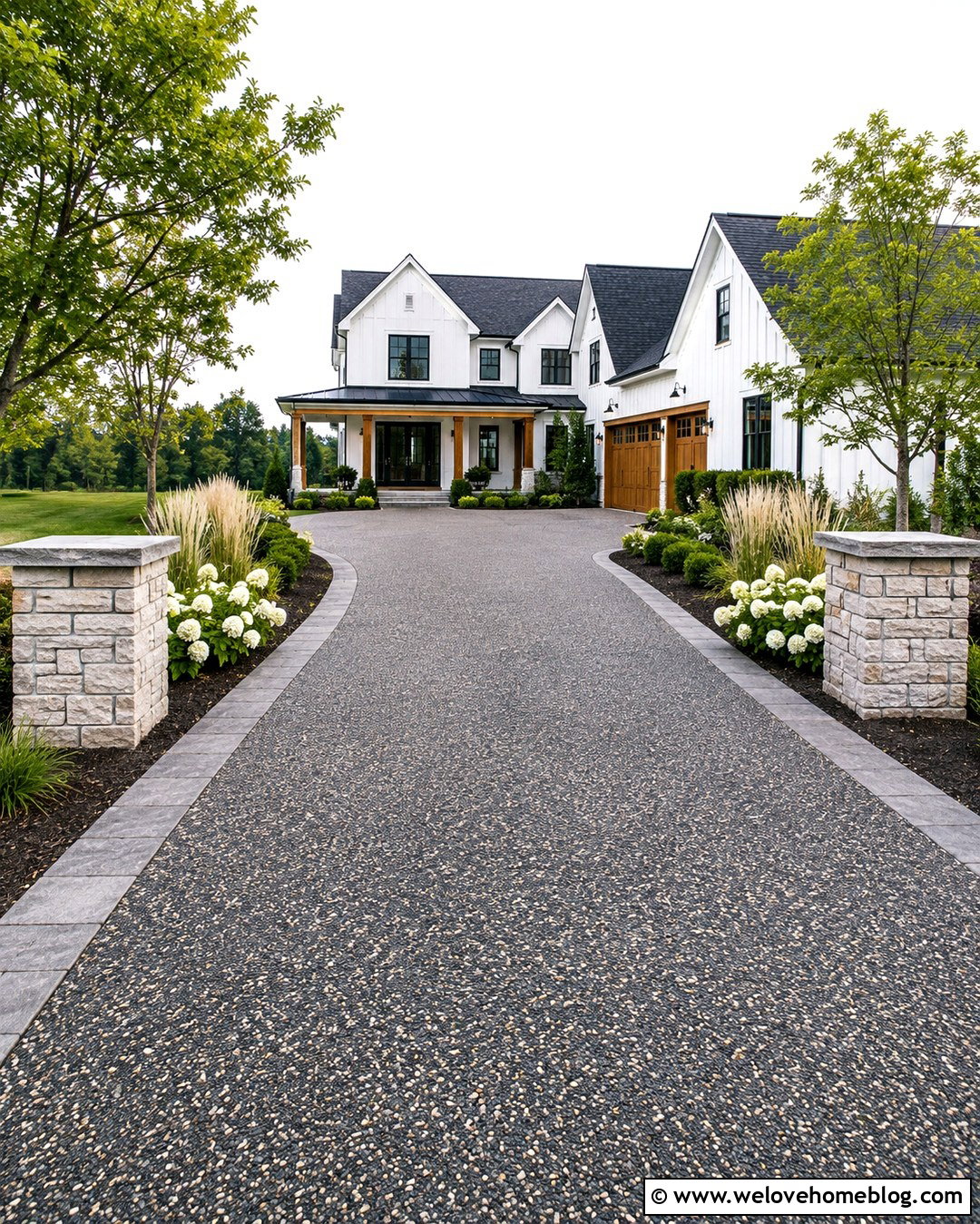
A charcoal exposed aggregate driveway gives a modern farmhouse a stronger, more grounded entrance. Choose dark gray aggregate with subtle cream and brown flecks to connect black exterior accents with natural wood details. Keep the driveway straight and broad, using a flush border of large-format gray pavers along each side. Frame the approach with white flowering shrubs, feather reed grass, compact evergreens, and areas of open lawn. Near the street, simple stone columns can mark the entrance without requiring a gate. Warm wood garage doors will soften the dark driveway and help prevent the black-and-white farmhouse palette from feeling too severe. For a cohesive finish, repeat the aggregate or border material in the walkway leading to the porch, while keeping the front steps smoother and more comfortable underfoot.
12. Small Exposed Aggregate Driveway With Paver Apron
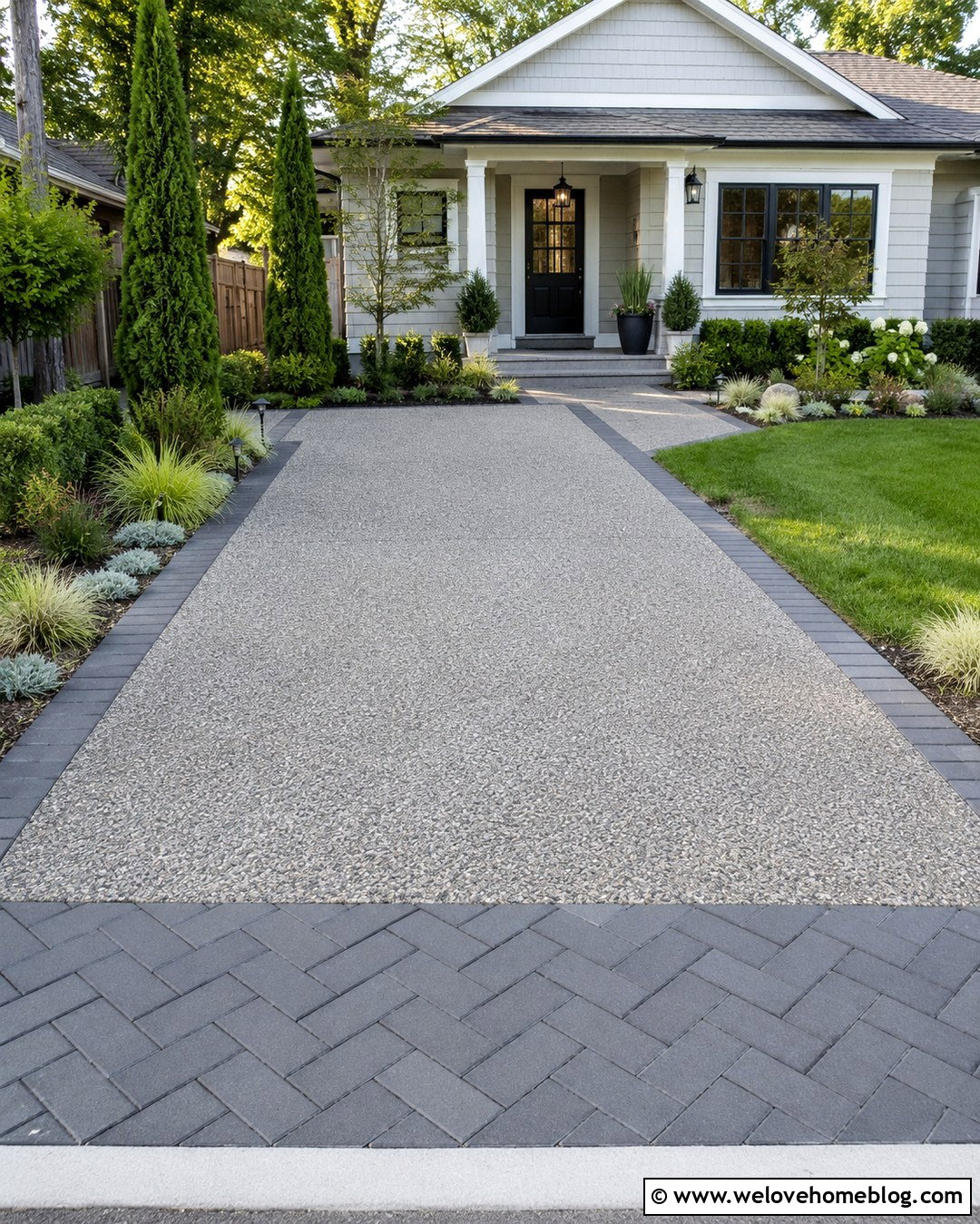
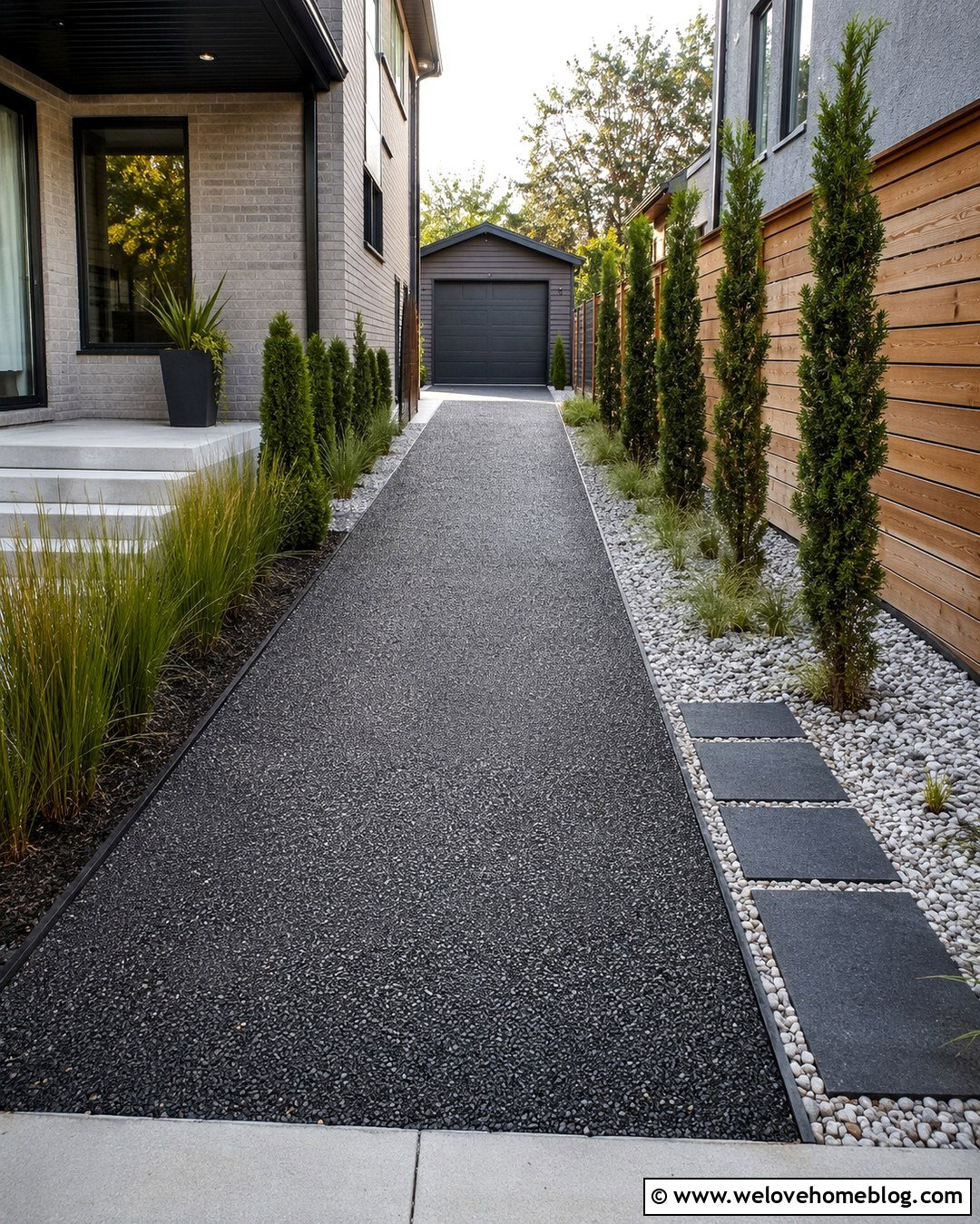
A compact driveway can still have a clear sense of arrival. Use fine, light-gray exposed aggregate across the main parking space to keep the area visually open. At the sidewalk or curb, install a shallow apron of charcoal concrete pavers in a herringbone pattern. This creates an attractive transition and protects the entrance from looking unfinished. Continue a narrow paver border around the exposed aggregate, but avoid an overly complex pattern that could make the space feel smaller. Plant slim upright evergreens, compact grasses, and low ground cover along the edges rather than wide shrubs. A short matching walkway can lead to a cottage, bungalow, or narrow urban home. Keeping the aggregate scale small and the color contrast controlled helps the complete driveway look detailed without becoming crowded.
13. Long Exposed Aggregate Driveway With Trees
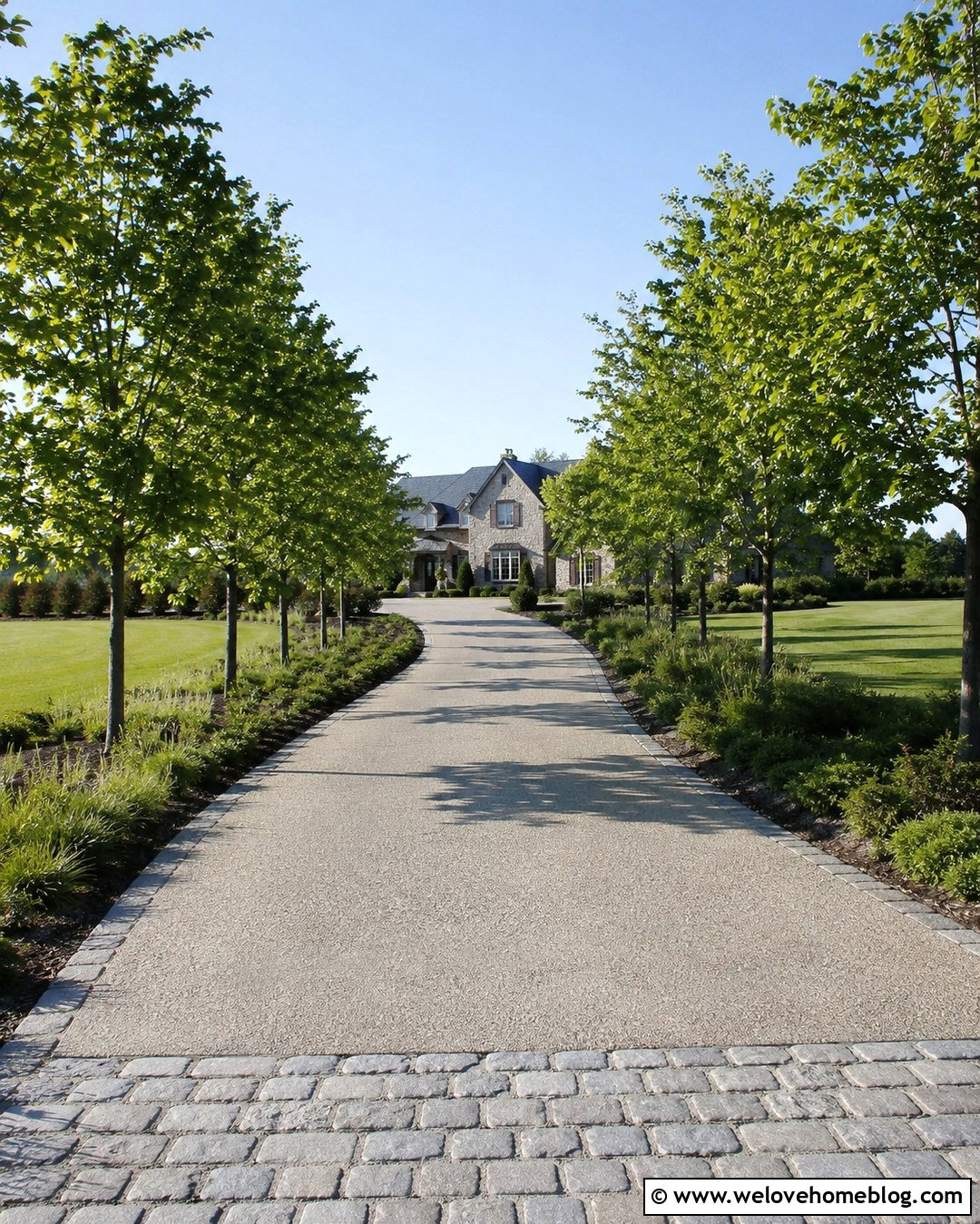
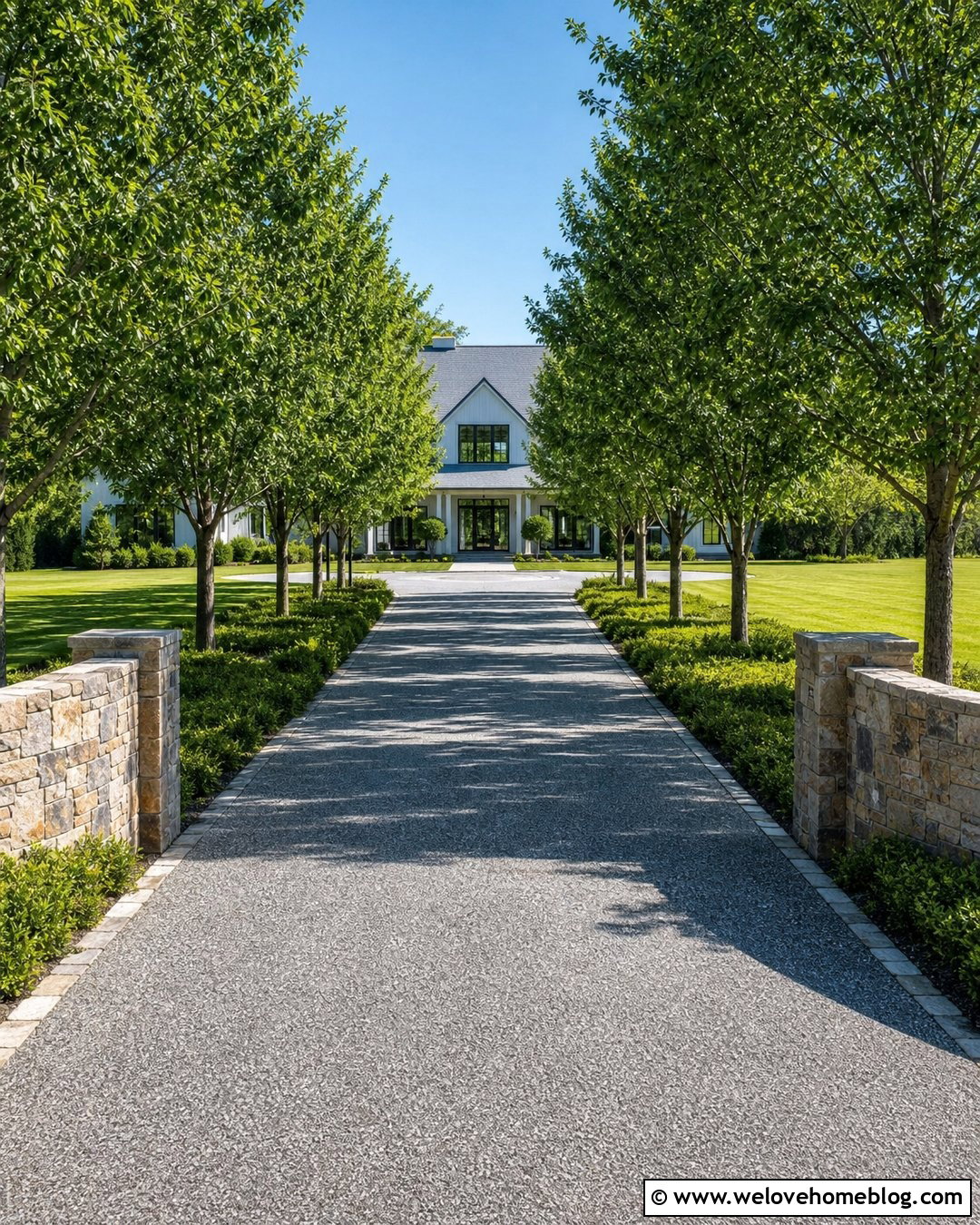
A long driveway needs repeated landscape elements to connect the street with a distant house. Choose warm gray exposed aggregate with a simple straight or softly curving layout. Line both sides with evenly spaced deciduous trees, leaving enough clearance for mature trunks, roots, and branches. Low grasses or ground cover can fill the planting strips beneath them without hiding the driveway edges. Use a granite cobblestone apron at the entrance and repeat the same stone near the garage to visually link both ends. For a country or traditional home, the long tree-lined approach creates structure while the natural aggregate keeps it relaxed. Include widened areas only where turning, passing, or guest parking is needed. Too many unnecessary expansions can weaken the strong perspective created by the driveway and tree rows.
14. Horseshoe Exposed Aggregate Driveway With Stone Pillars
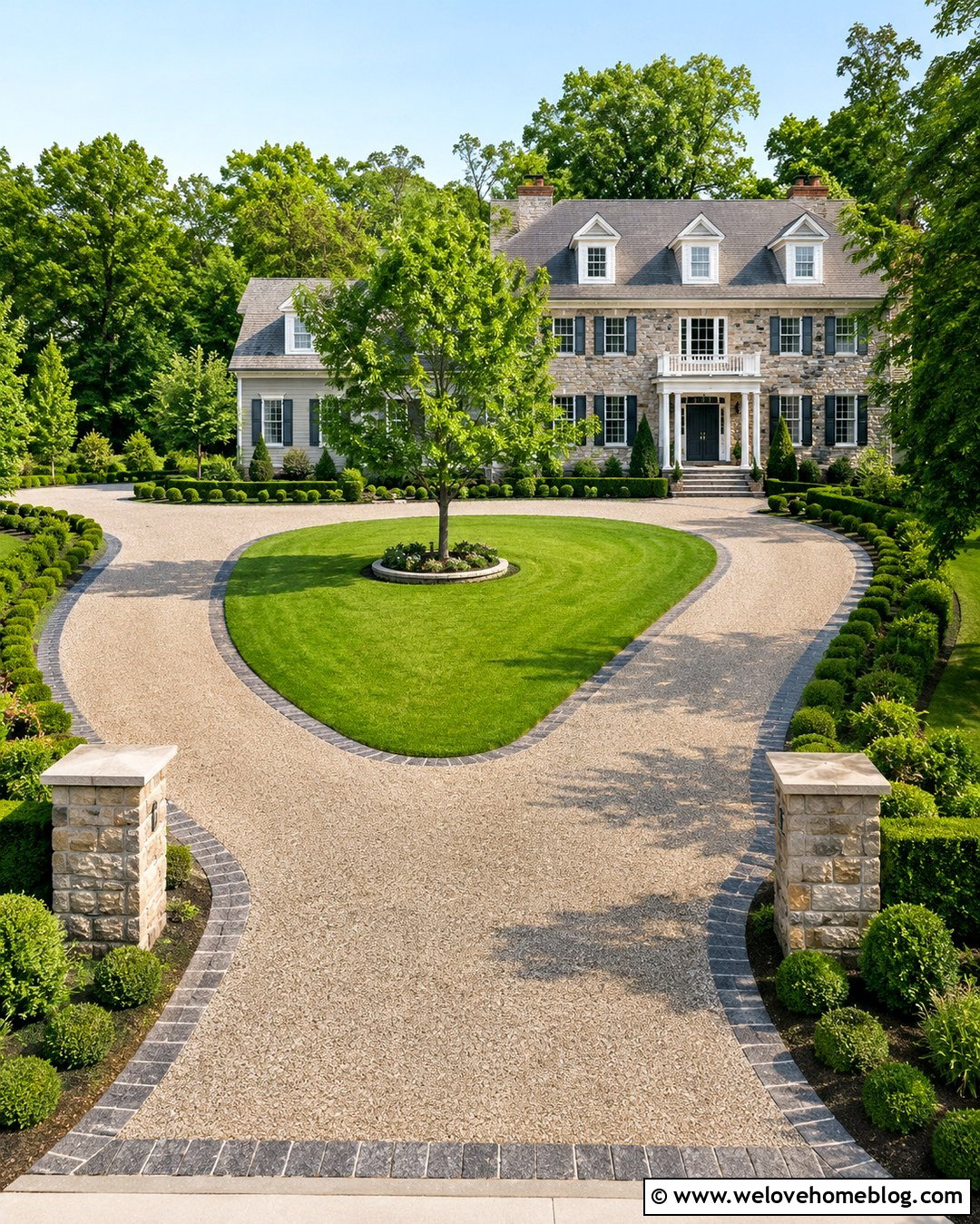
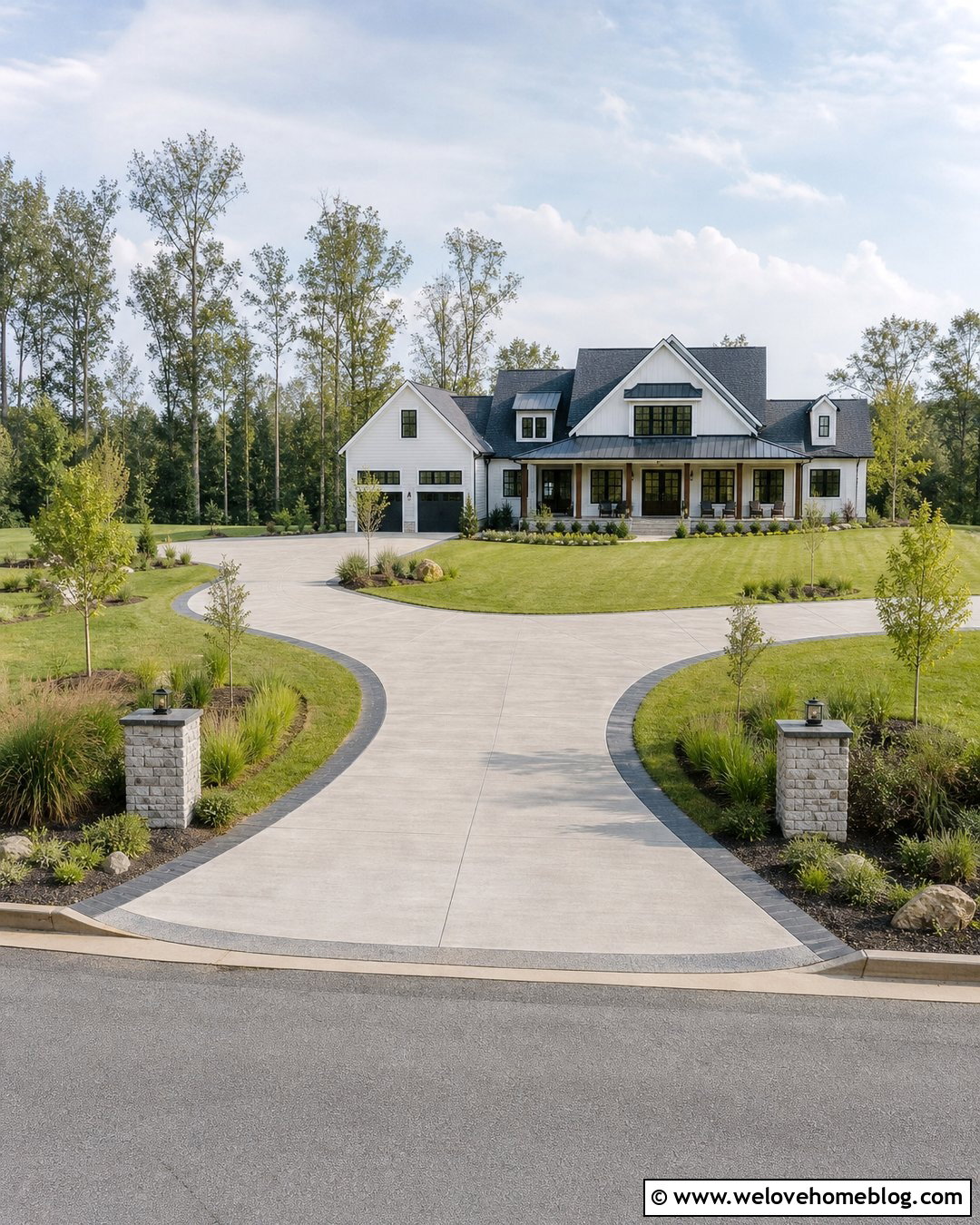
A horseshoe driveway offers a convenient entry-and-exit arrangement while giving the front yard a formal frame. Use tan and gray exposed aggregate for the full curved driving lane, then add broad natural stone pillars at both street entrances. Low stone walls or short hedges can extend from the pillars without limiting visibility. Border the driveway with dark granite setts to strengthen the horseshoe outline. In the center lawn, use a specimen tree surrounded by a simple circular planting bed. This prevents the landscaping from competing with the driveway’s shape. A substantial ranch, colonial, or country house suits the wide layout. Coordinate the pillar stone with the home’s foundation or porch details. The repeated masonry makes the entrance, driveway, landscape island, and house read as one planned residential design.
15. Sloped Exposed Aggregate Driveway With Drainage Channel
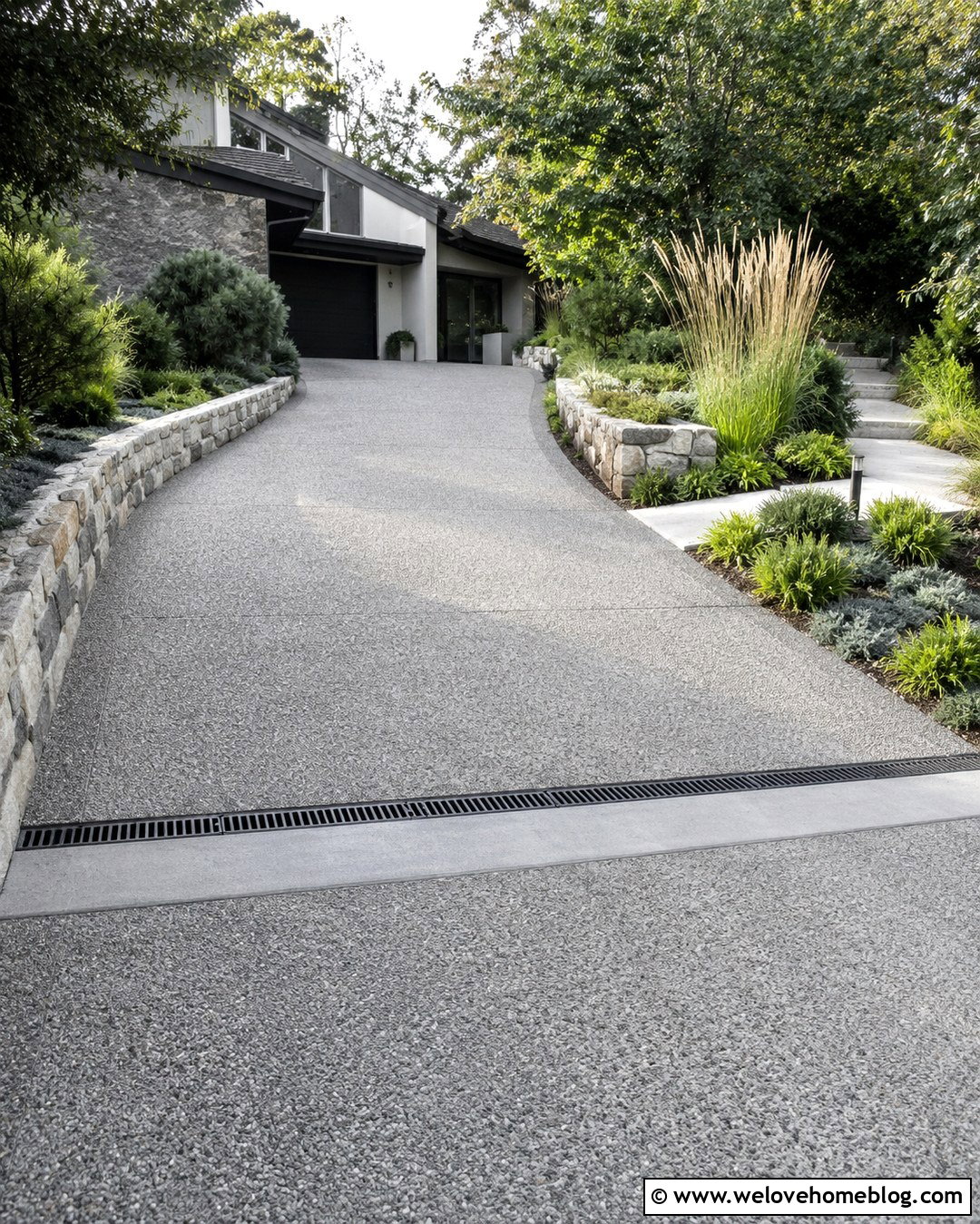
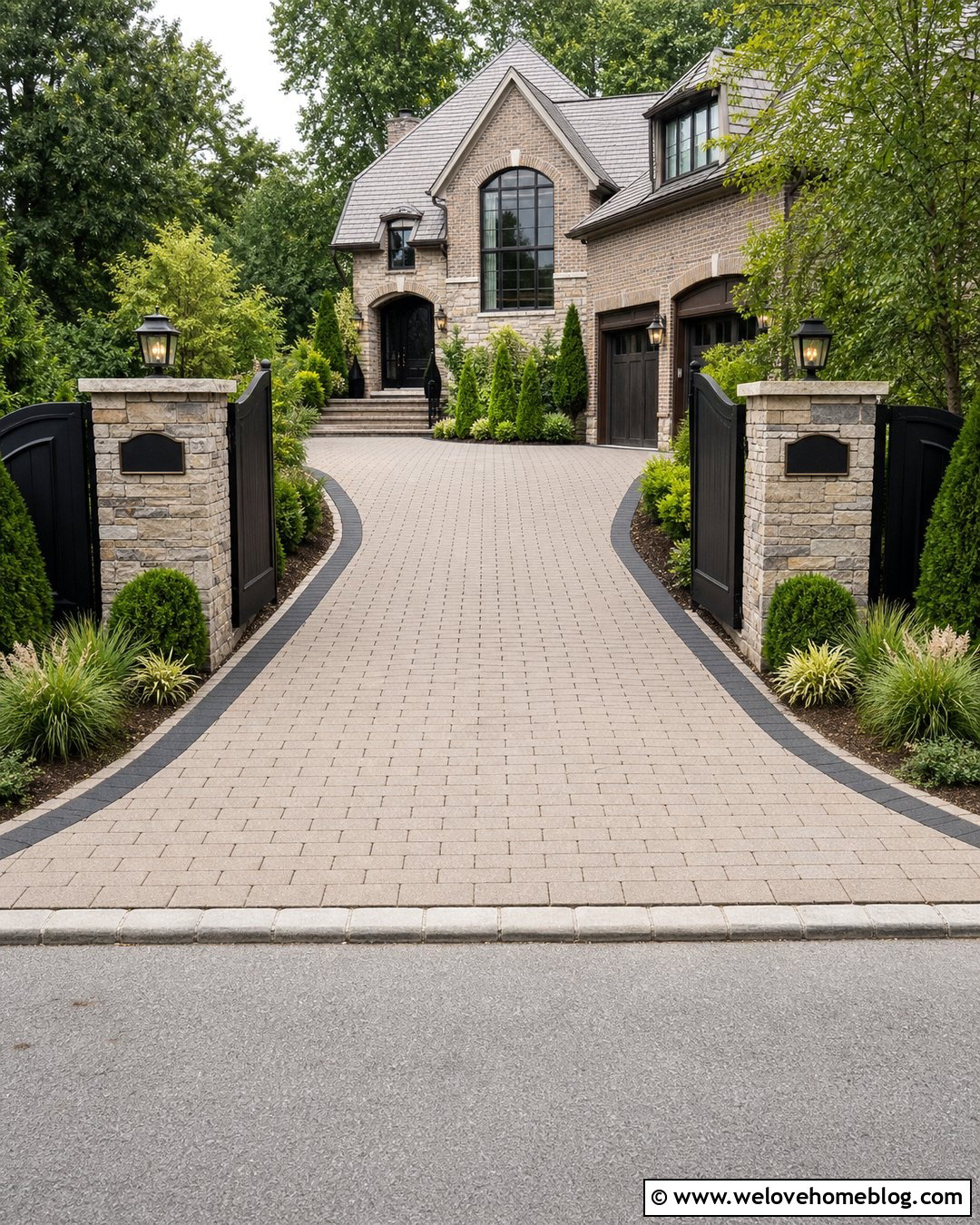
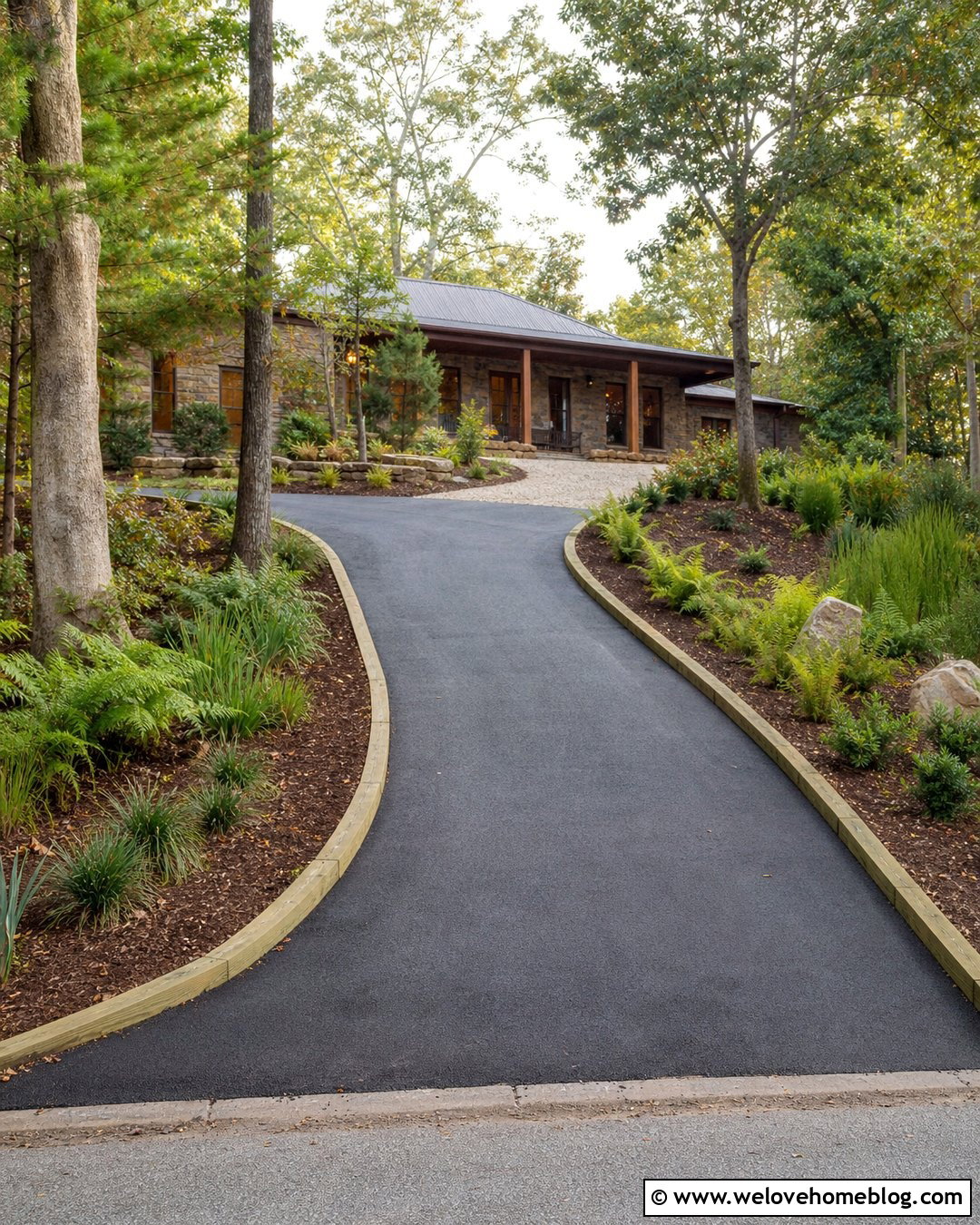
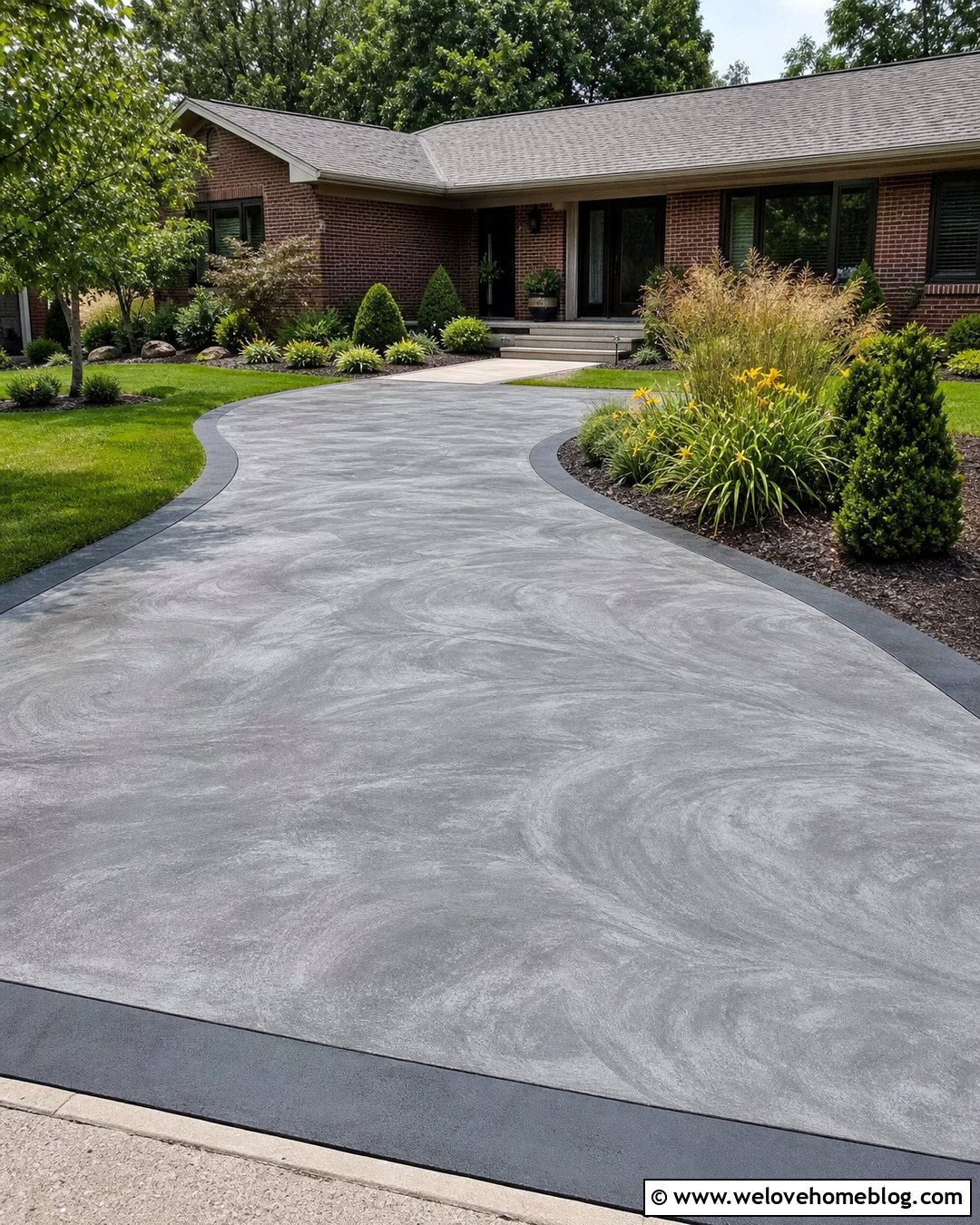
On a sloped property, an attractive surface should be planned alongside practical water management. A medium-textured exposed aggregate finish can give the incline visible depth while maintaining a natural appearance. Choose mixed gray stone and shape the driveway with a gentle curve that follows the grade rather than fighting it. Install a discreet trench drain where runoff needs to be intercepted, using a dark metal grate aligned with a contrasting concrete band. Low retaining walls can hold planted slopes on either side. Use deep-rooted shrubs, grasses, and ground cover to soften those walls and stabilize the surrounding landscape. Because drainage requirements vary by property, the final grading and water route should be professionally designed. A coordinated channel, edging system, and planting plan can keep the necessary features visually integrated.
16. Desert Exposed Aggregate Driveway With Drought-Tolerant Landscaping
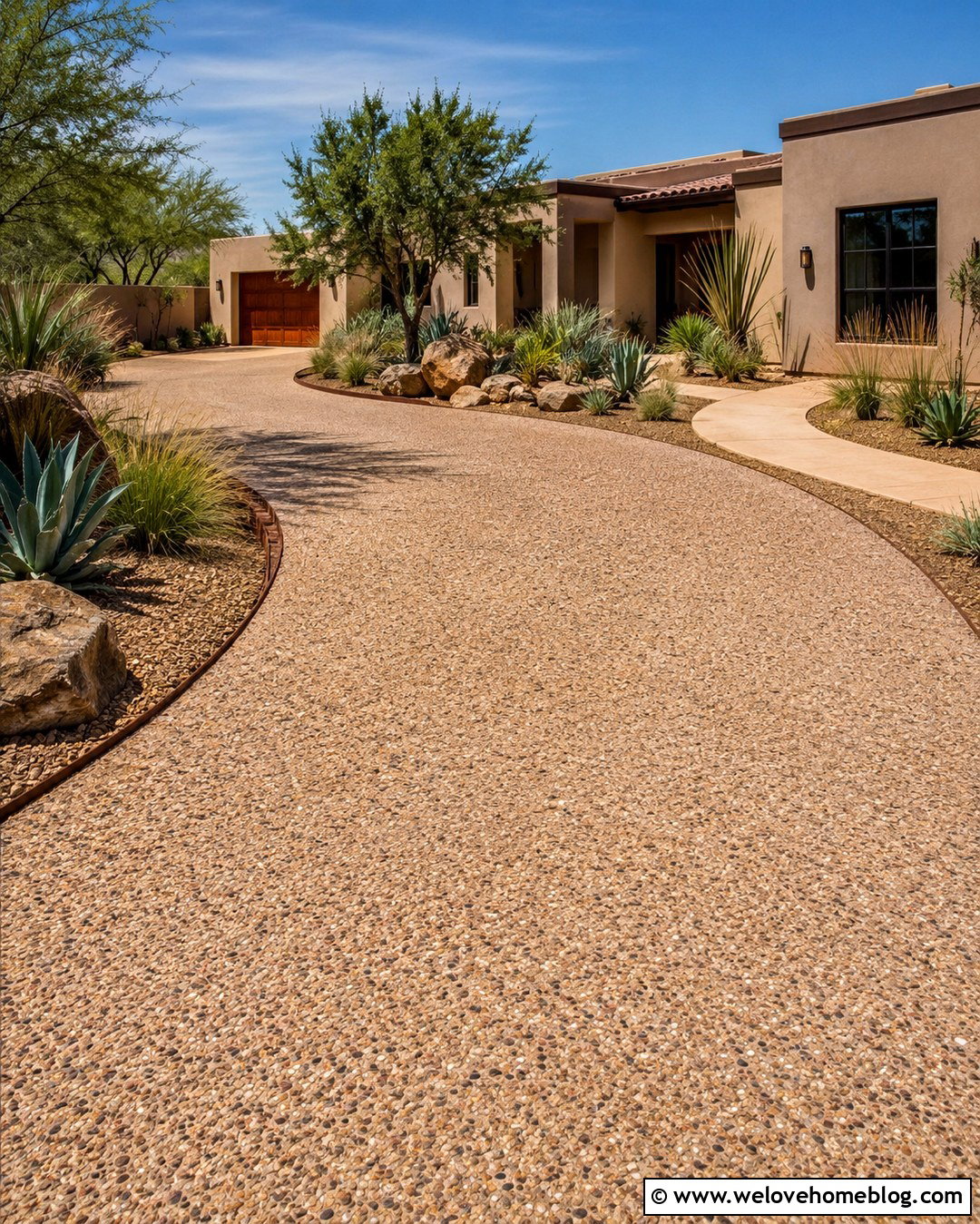
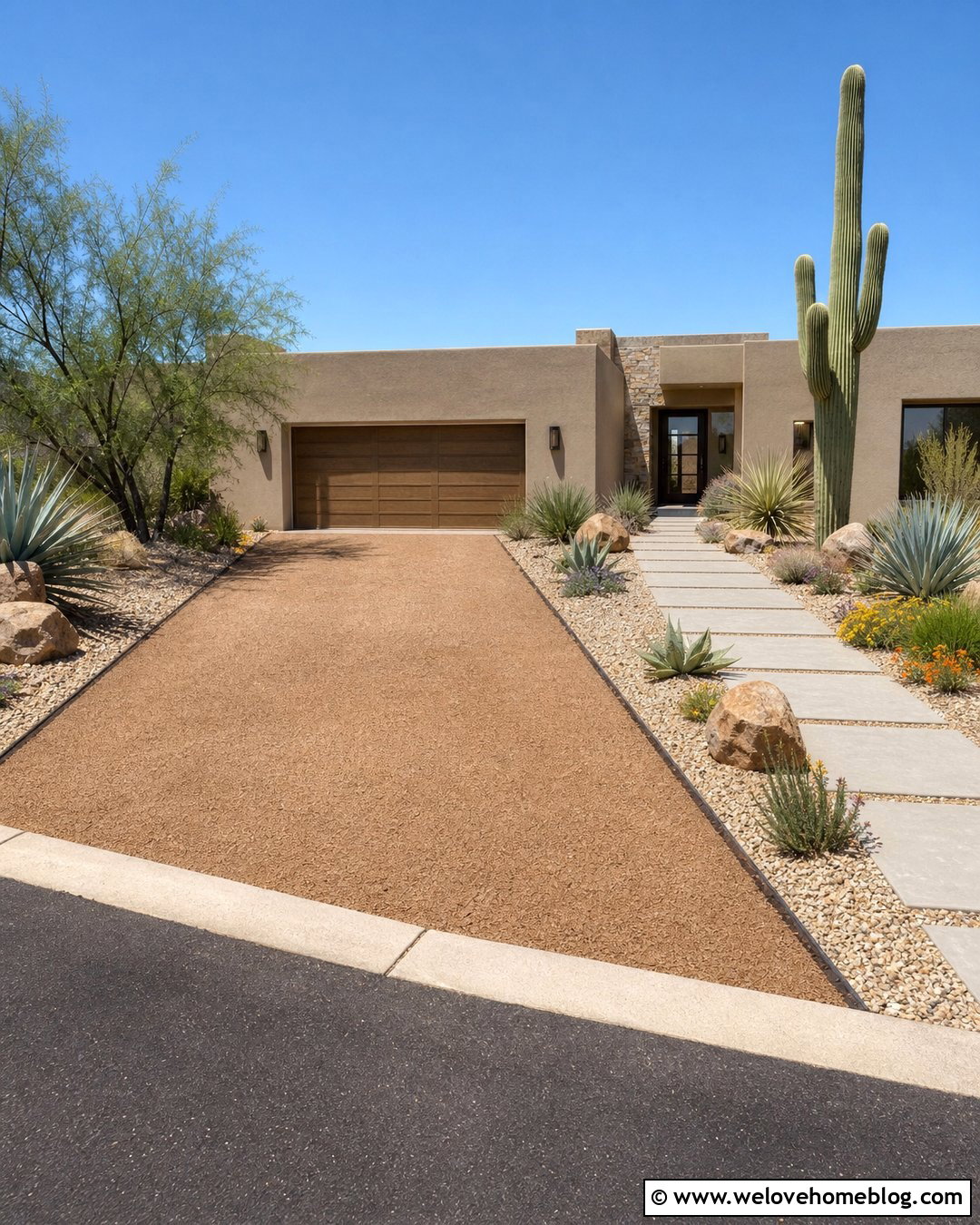
Sun-washed aggregate colors fit naturally into a Southwestern or desert landscape. Select tan, gold, cream, and muted red stone in a sandy concrete base. Shape the driveway with a broad curve leading toward an adobe, stucco, or low contemporary house. Rust-colored steel edging or warm brown pavers can define the perimeter without introducing an unrelated material. Surround the driveway with decomposed granite beds, sculptural agaves, yuccas, ornamental grasses, and carefully placed boulders. Maintain generous spacing between plants so the design feels intentional and visibility remains open. A smooth concrete walkway in a matching sand tone can provide a quieter route to the front door. The exposed aggregate, dry landscape materials, and warm facade colors work together to create a low-water frontage with strong regional character.
17. Woodland Exposed Aggregate Driveway With Boulder Borders
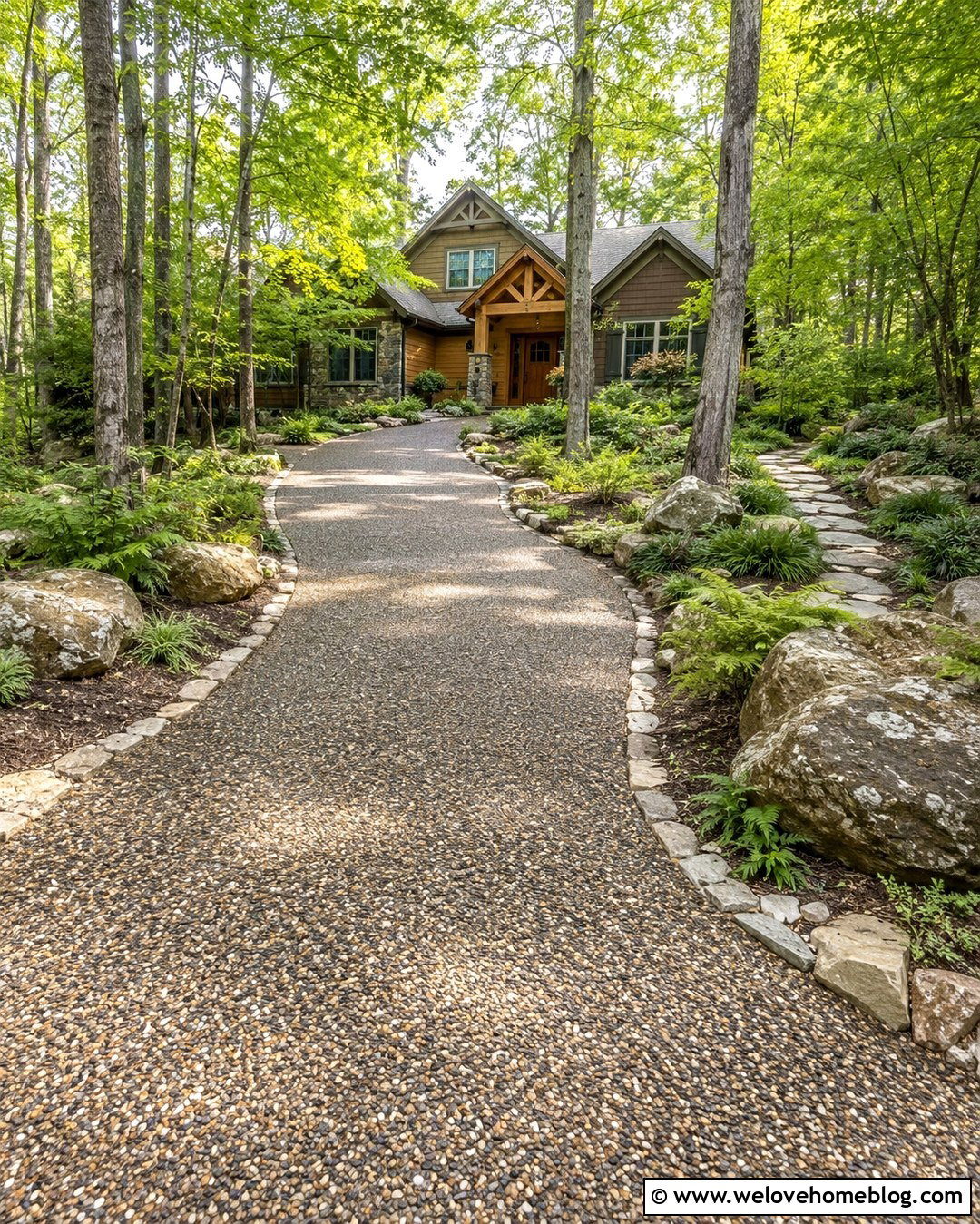
In a wooded setting, the driveway can feel polished without losing its connection to the surrounding landscape. Choose exposed aggregate made with brown, charcoal, mossy gray, and cream river stones. A curving layout can move around established trees and reveal the house gradually. Use grouped boulders at key bends instead of forming a continuous heavy border. Fill the spaces between them with ferns, sedges, woodland ground cover, and shade-tolerant shrubs. A narrow fieldstone strip along the remaining edges will contain mulch and provide a clean transition. This look complements craftsman cabins, contemporary woodland homes, and rustic stone houses. Keep branches and dense planting away from important sightlines. The best result feels natural and layered while still providing a clearly defined, easily navigated approach to the garage.
18. Heated Exposed Aggregate Driveway For Snowy Climates
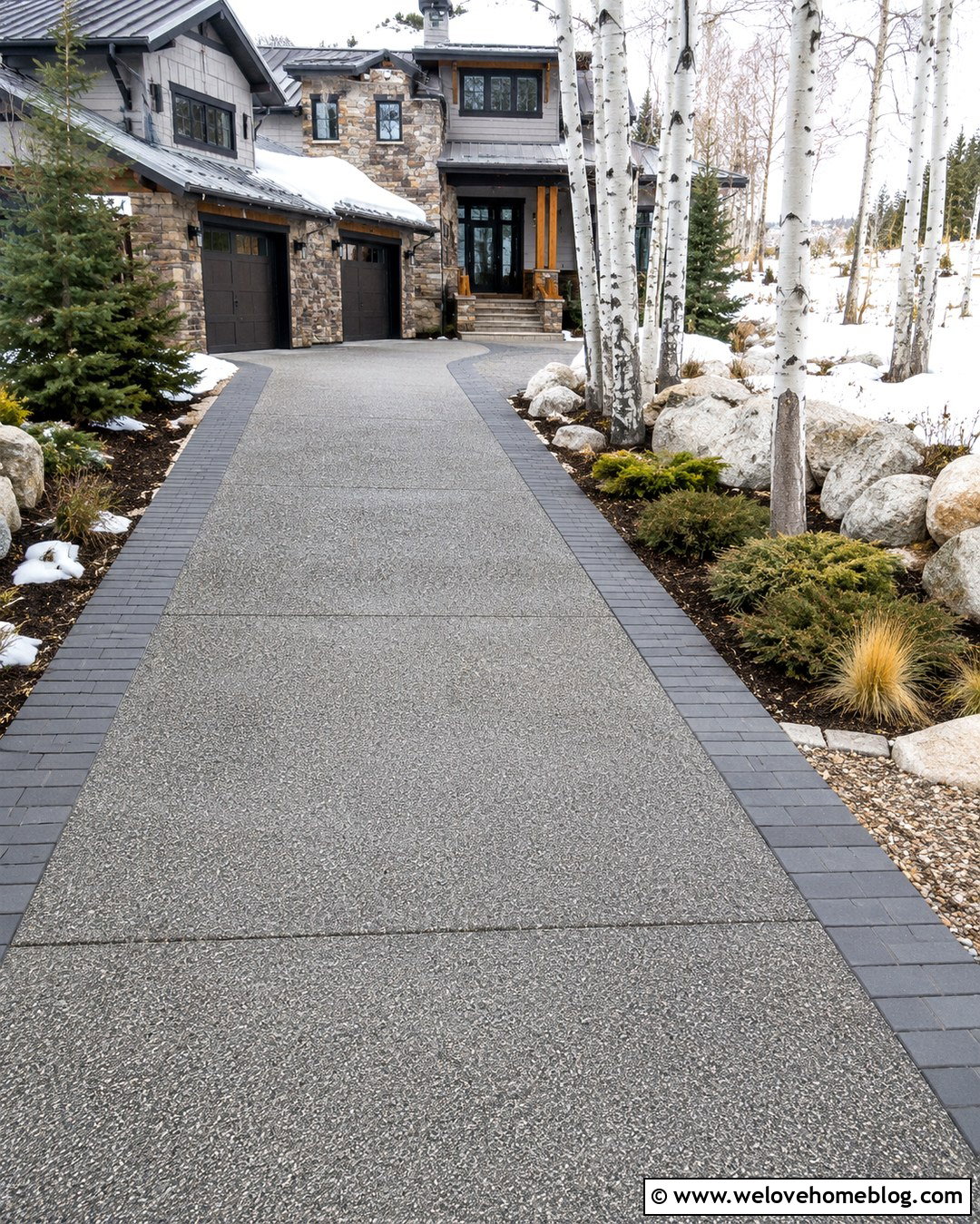
A heated exposed aggregate driveway can preserve the textured stone appearance while incorporating a snow-melting system beneath the slab. Use a medium-gray aggregate blend that coordinates with winter skies, stone siding, and dark roofing. A straight or gently sloped layout keeps the design practical, while charcoal paver edging provides year-round definition. Add evergreen shrubs, birch trees, and low ornamental grasses that remain attractive outside the growing season. The heating system, slab design, drainage, exposure method, and sealer must be coordinated before concrete placement rather than treated as separate upgrades. Radiant heating has been incorporated into decorative exposed aggregate driveways, including designs with colored and stamped borders. () Proper professional planning creates a cohesive surface instead of allowing mechanical requirements to interrupt the finished pattern.
19. Exposed Aggregate Driveway With Lighting And Address Sign
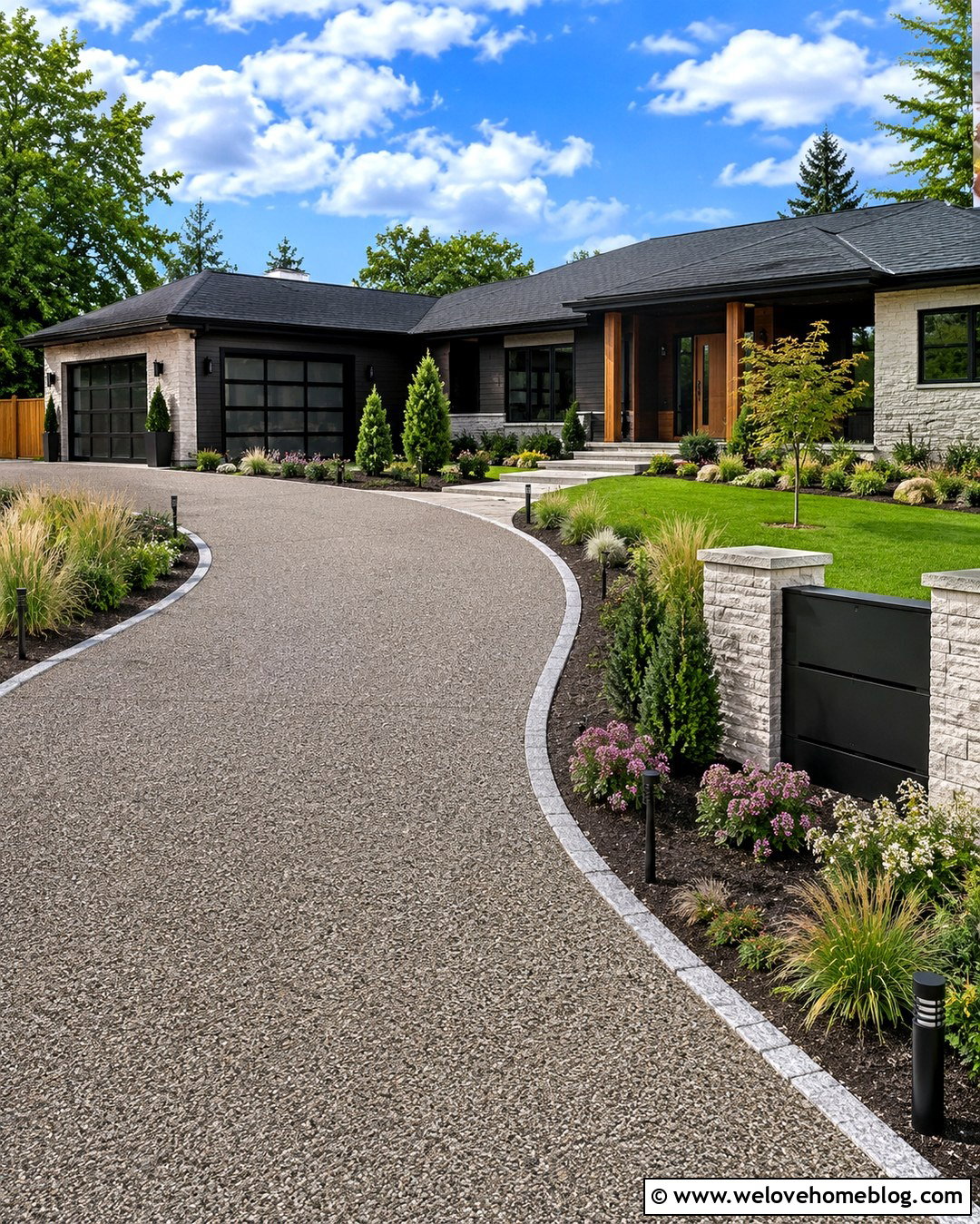
Integrated lighting can make a driveway entrance easier to recognize while improving its appearance from the curb. Use neutral brown-gray exposed aggregate in a gently curved layout leading to a contemporary ranch house. Install low-profile bollard lights within the landscape beds rather than directly in the vehicle path. At the street, place a large stone or dark metal address sign beside the driveway, framed by ornamental grasses and compact evergreen shrubs. A narrow granite border can connect the entrance feature to the rest of the driveway. Keep fixtures evenly spaced and visually consistent with the house hardware. During daylight, the sign, plantings, border, and aggregate should still form a complete composition. The lighting works best as a supporting layer rather than the only decorative feature in the frontage.
20. Geometric Exposed Aggregate Driveway With Paver Grid
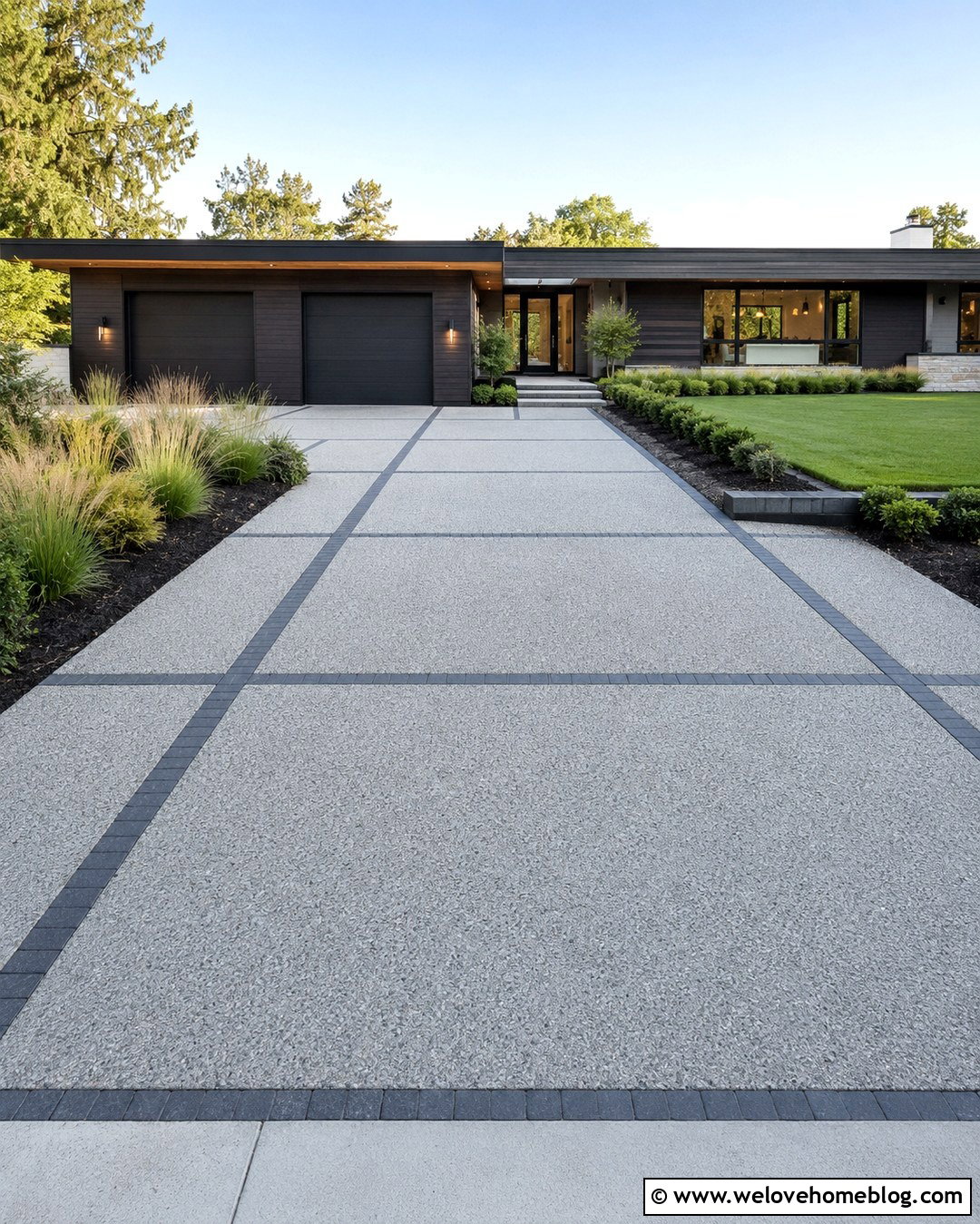
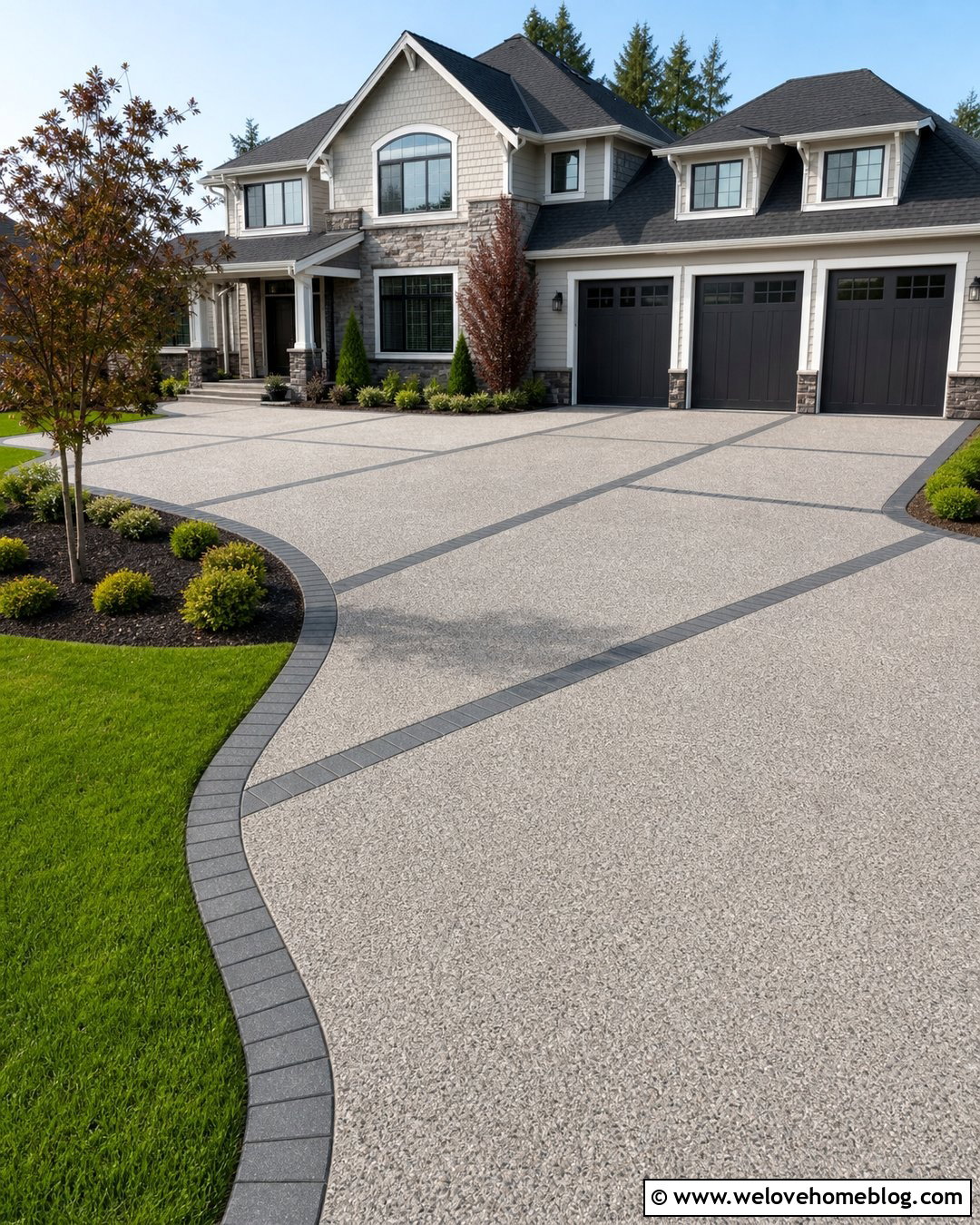
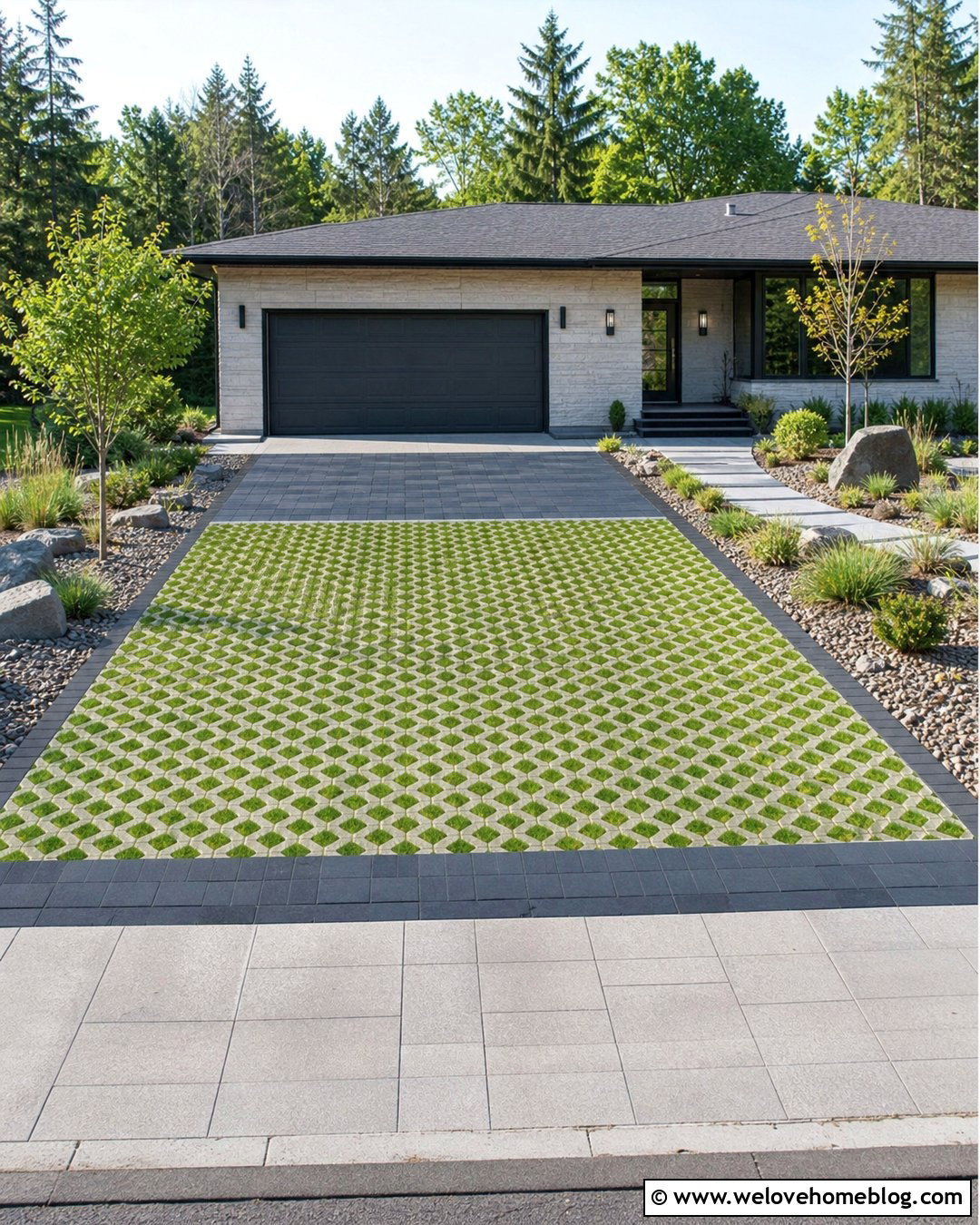
A paver grid can give exposed aggregate a structured look that suits modern and midcentury homes. Divide the driveway into large rectangular fields of fine gray exposed aggregate using narrow charcoal paver bands. Align the grid with the garage doors, front walkway, and major lines of the house. This creates order while allowing the visible stone to add natural variation inside each panel. Continue one paver band toward the front entrance so the walkway feels connected to the driveway. Use broad areas of lawn, low horizontal shrubs, and a few architectural grasses around the edges. Avoid making the grid too small, since numerous divisions can appear busy and increase installation complexity. Large, carefully proportioned panels deliver the strongest curb appeal and allow both materials to remain clearly visible.
Conclusion:
The most successful exposed aggregate driveway is designed as part of the entire front yard, not as an isolated concrete surface. Stone color should relate to the house, while borders, joints, landscaping, and entrance features should strengthen the driveway’s shape. Light quartz can brighten a compact property, dark basalt can sharpen a modern facade, and warm river rock can soften a wooded or traditional setting. Always review realistic samples and discuss grading, drainage, joint placement, exposure depth, and sealing with an experienced local contractor. Whether you prefer a simple straight approach or a detailed circular layout, these **20 Exposed Aggregate Driveway Ideas** offer practical starting points for creating lasting texture, useful function, and stronger curb appeal.

Related posts:
Leave a Reply