
Charcoal block paving creates a strong, polished foundation for a driveway without limiting your choice of house style or landscaping. Its deep gray color can sharpen a modern facade, balance warm brick, or add structure to a traditional exterior. The real design impact comes from combining the blocks with a suitable laying pattern, defined edging, practical drainage, and planting that softens the dark surface. You can also change the mood with contrasting borders, curved lines, mixed block sizes, or decorative entrance details. Whether you have a compact front yard or a broad circular approach, these complete driveway looks offer practical inspiration. Explore the following **20 Charcoal Block Paving Driveway Ideas** to find a layout that complements your home and everyday parking needs.

1. Charcoal Block Paving With Light Gray Border
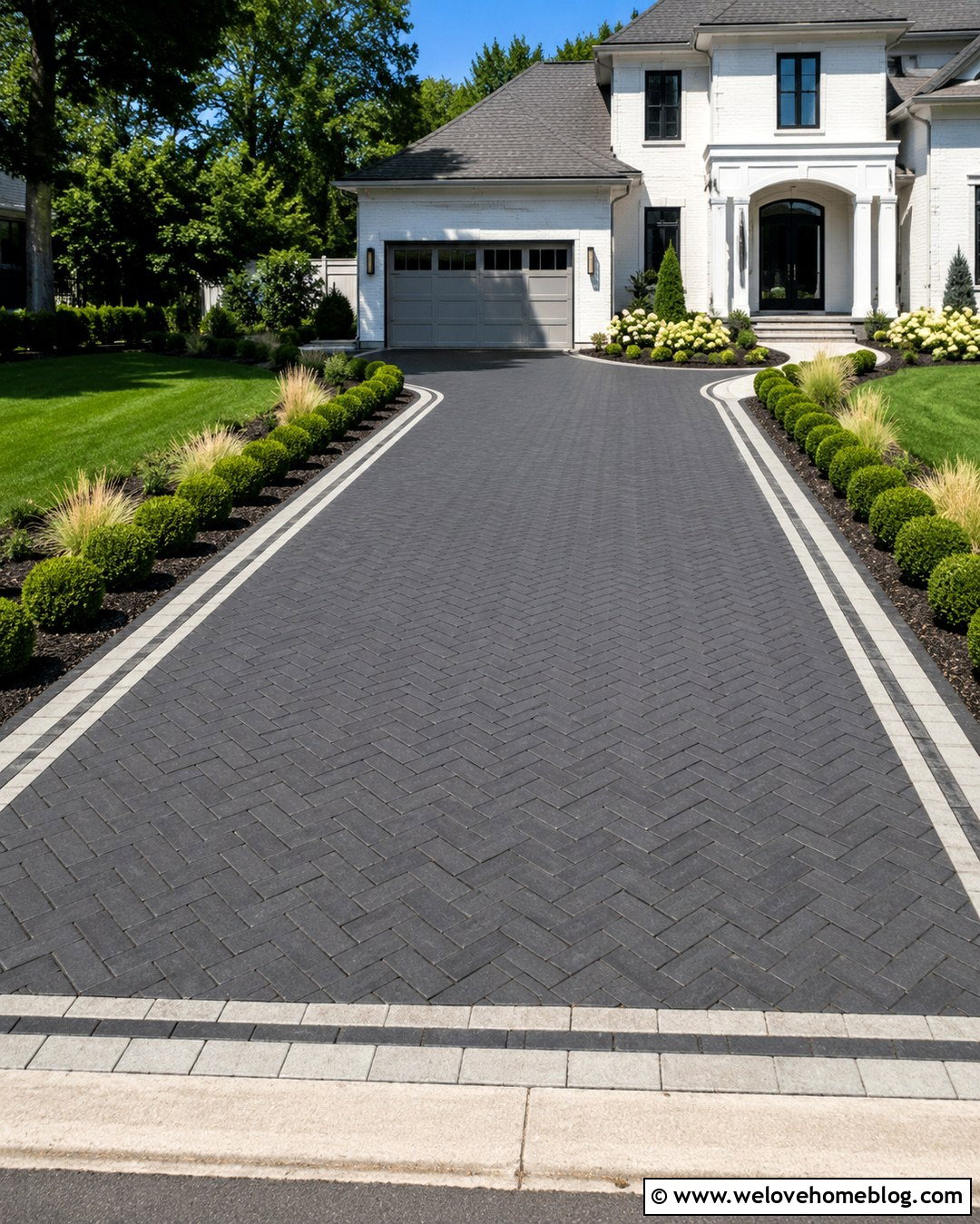
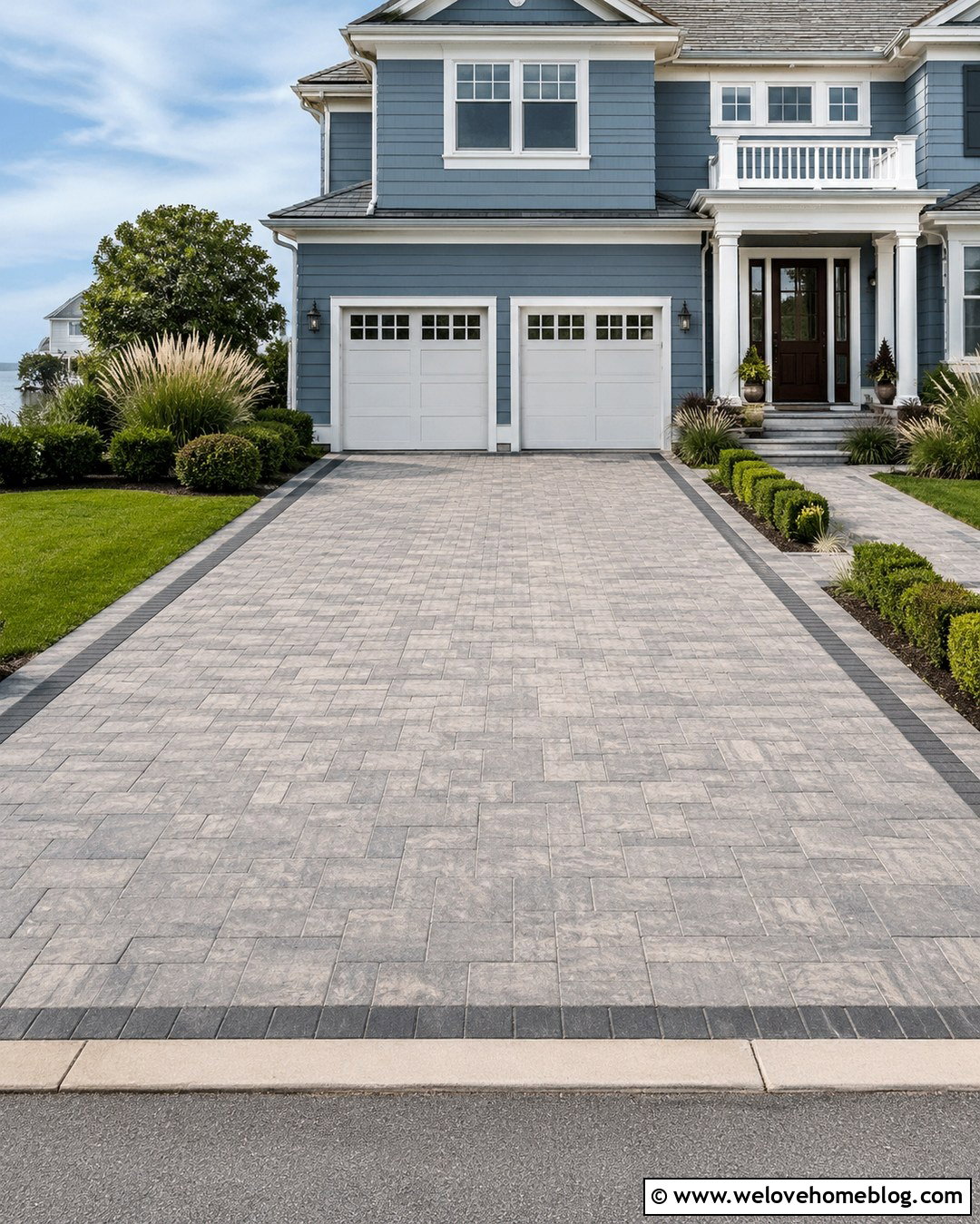
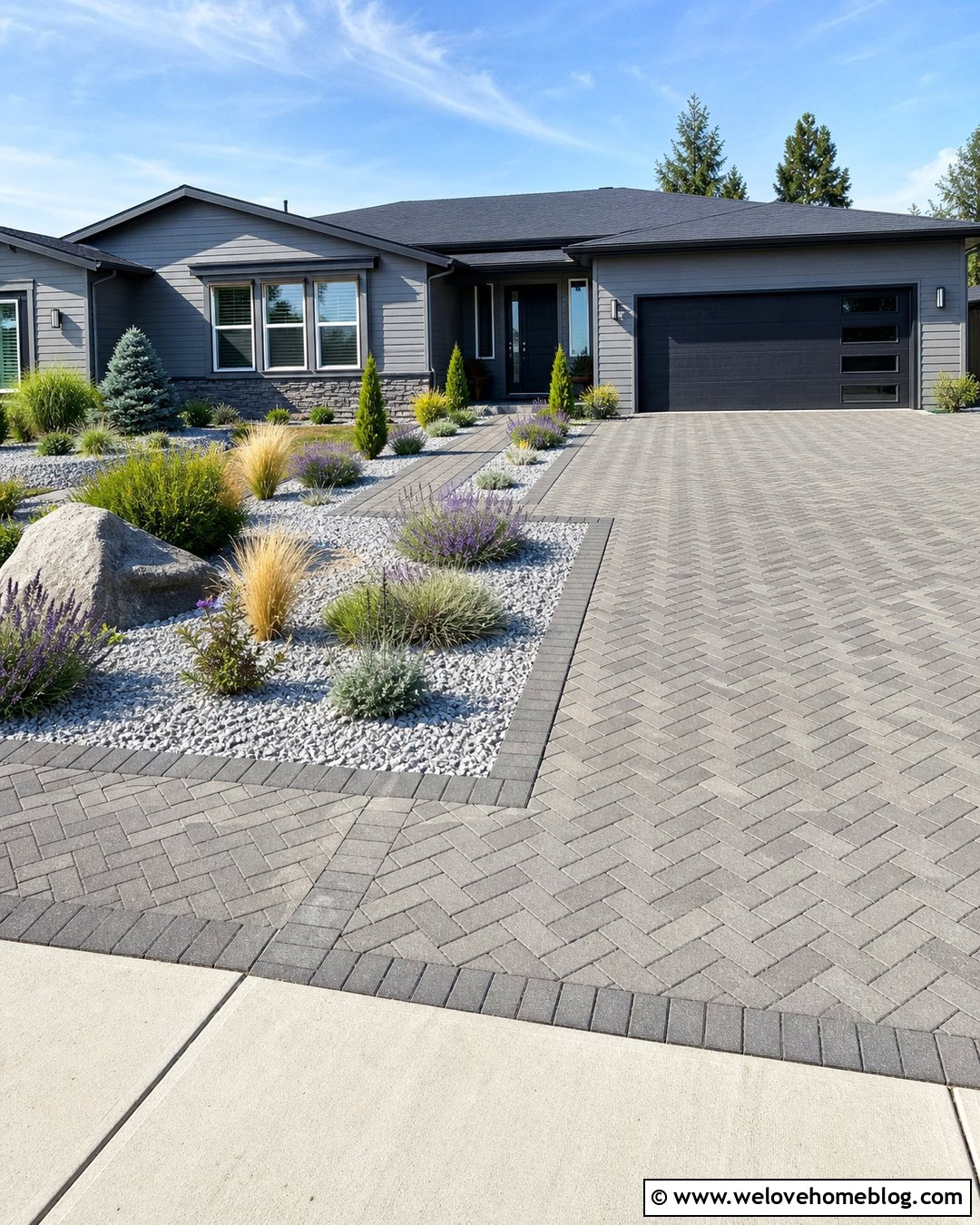
A light gray border gives a charcoal driveway a crisp outline that feels polished without becoming overly decorative. Lay the charcoal concrete blocks in a 45-degree herringbone pattern, then frame the entire surface with one or two rows of silver-gray blocks. This contrast makes the driveway shape easier to see from the curb and can visually separate parking space from nearby planting beds. Continue the border beside the front walkway to connect both paved areas. Low evergreen shrubs, ornamental grasses, and a simple lawn will soften the dark surface. This combination works especially well with white siding, pale stucco, or cool gray brick. Contrasting borders and herringbone fields are commonly used to give block-paved driveways a strong, finished frame. ()
2. Charcoal Herringbone Block Paving Driveway
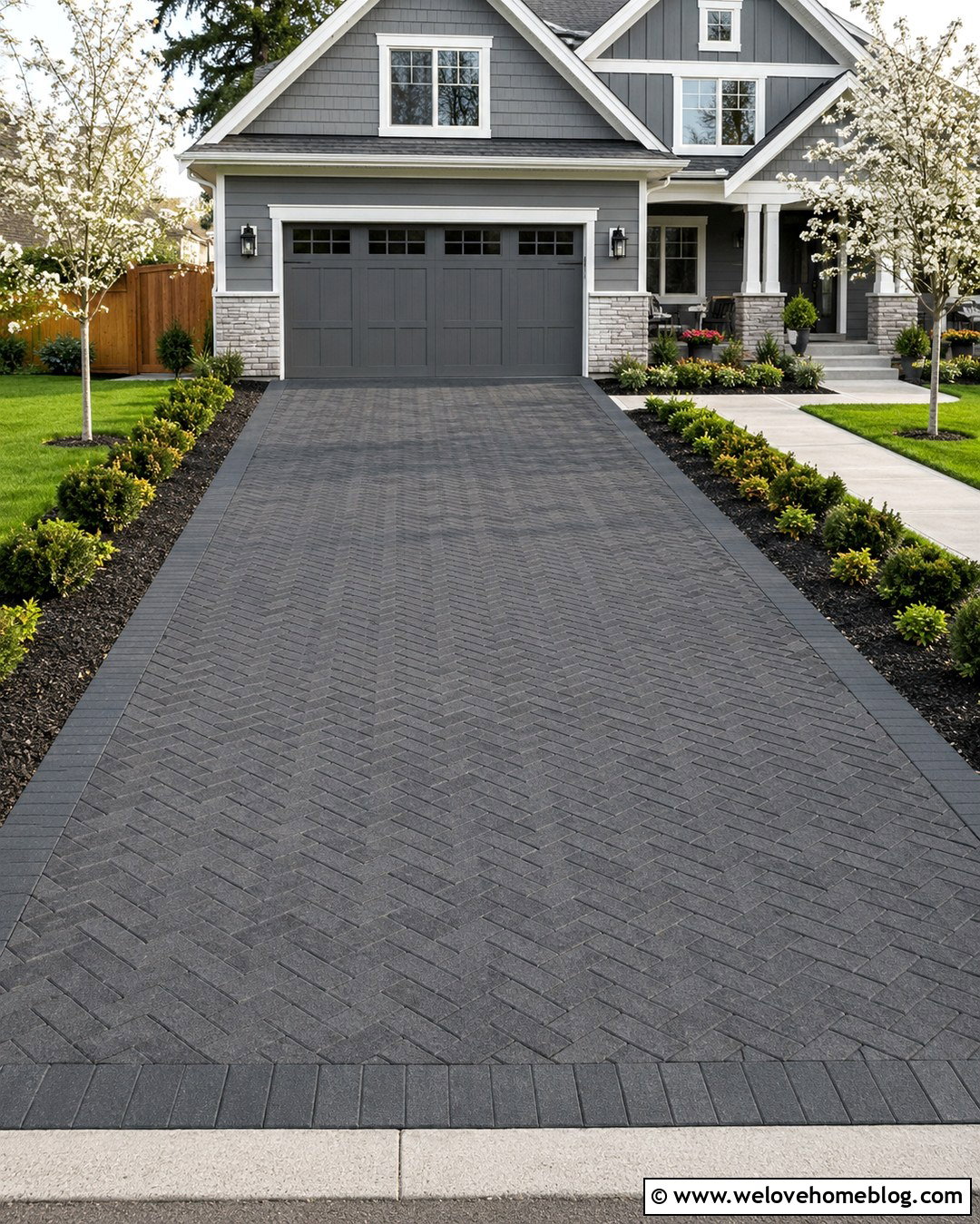
Do you want a driveway that looks detailed but still feels orderly? A full charcoal herringbone layout provides movement while keeping the color scheme simple. The interlocking direction of the rectangular blocks makes the surface particularly suitable for busy parking and turning areas. Choose a 45-degree pattern for a dynamic entrance or a 90-degree arrangement for straighter visual lines. A matching charcoal soldier-course border will create a seamless edge without introducing another color. Finish the design with clipped hedges, a concrete walkway, and balanced planting beds beside the garage. The repeated angled pattern also disguises the long, narrow proportions of many suburban driveways. Proper edge restraints help maintain the clean shape and alignment of the paved field. ()
3. Charcoal Block Paving With Red Brick Border
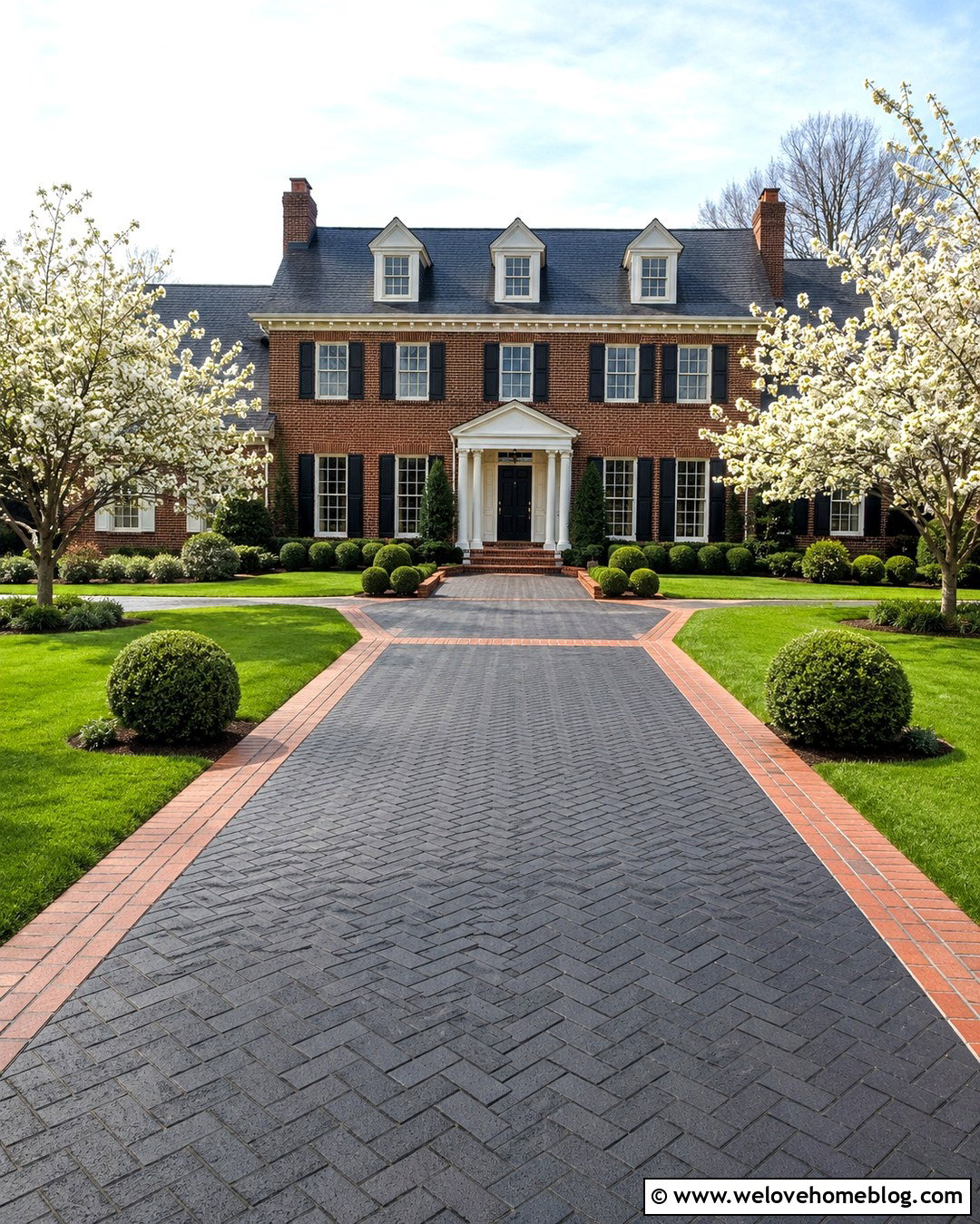
Warm red brick can prevent dark charcoal paving from feeling too cool beside a traditional home. Use smooth charcoal concrete blocks across the main driveway and install a single or double red brick ribbon around the perimeter. The brick border should relate closely to the home’s facade, front steps, or garden walls so the contrast looks intentional. A straight driveway laid in charcoal herringbone works beautifully in front of a red brick colonial or craftsman house. Add symmetrical foundation shrubs and small flowering trees for a balanced curb view. At the sidewalk, carry the red border across the driveway entrance to create a complete frame. This design combines old and new materials while keeping the larger charcoal surface practical, restrained, and visually connected to the architecture.
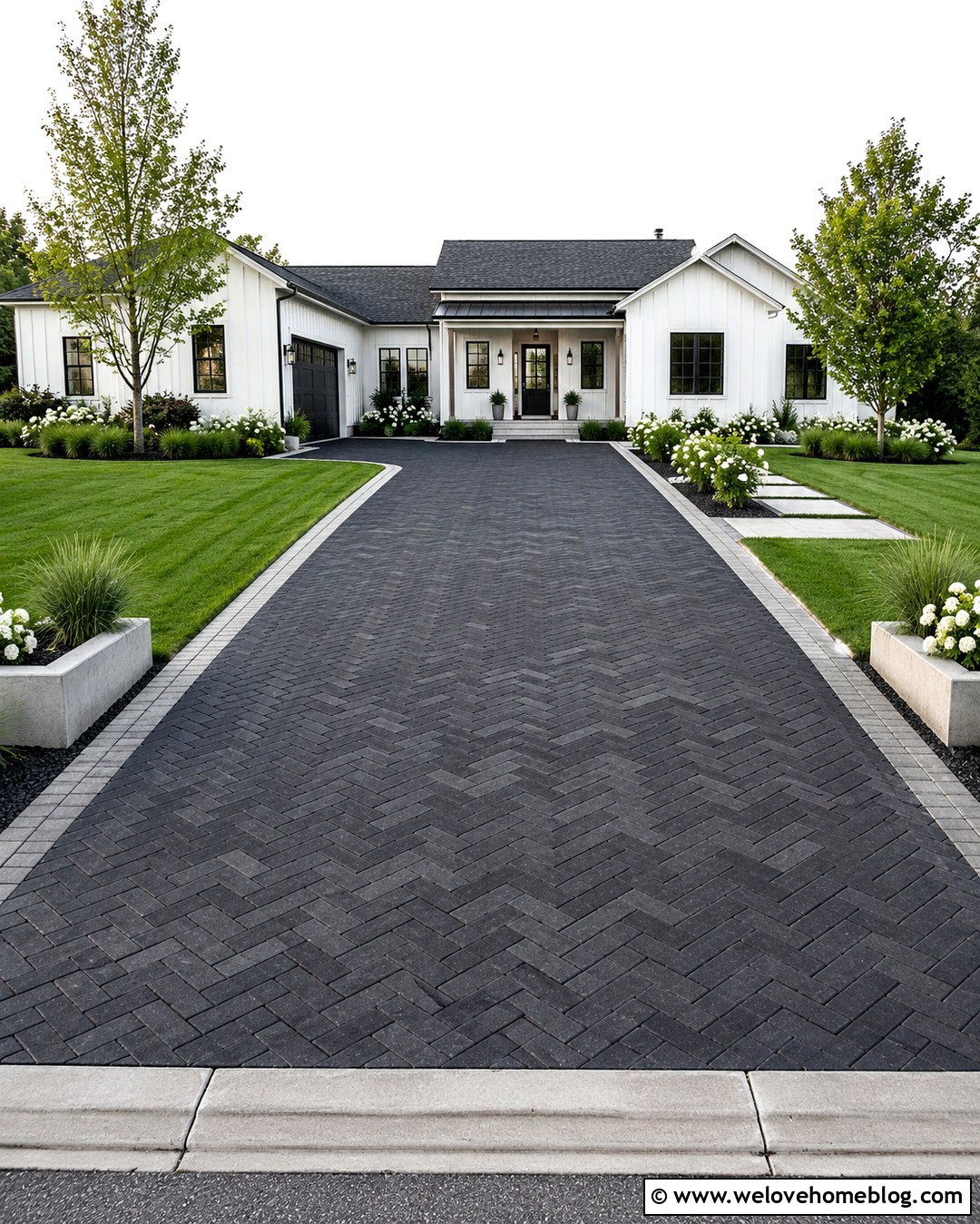
4. Charcoal Block Paving With White House
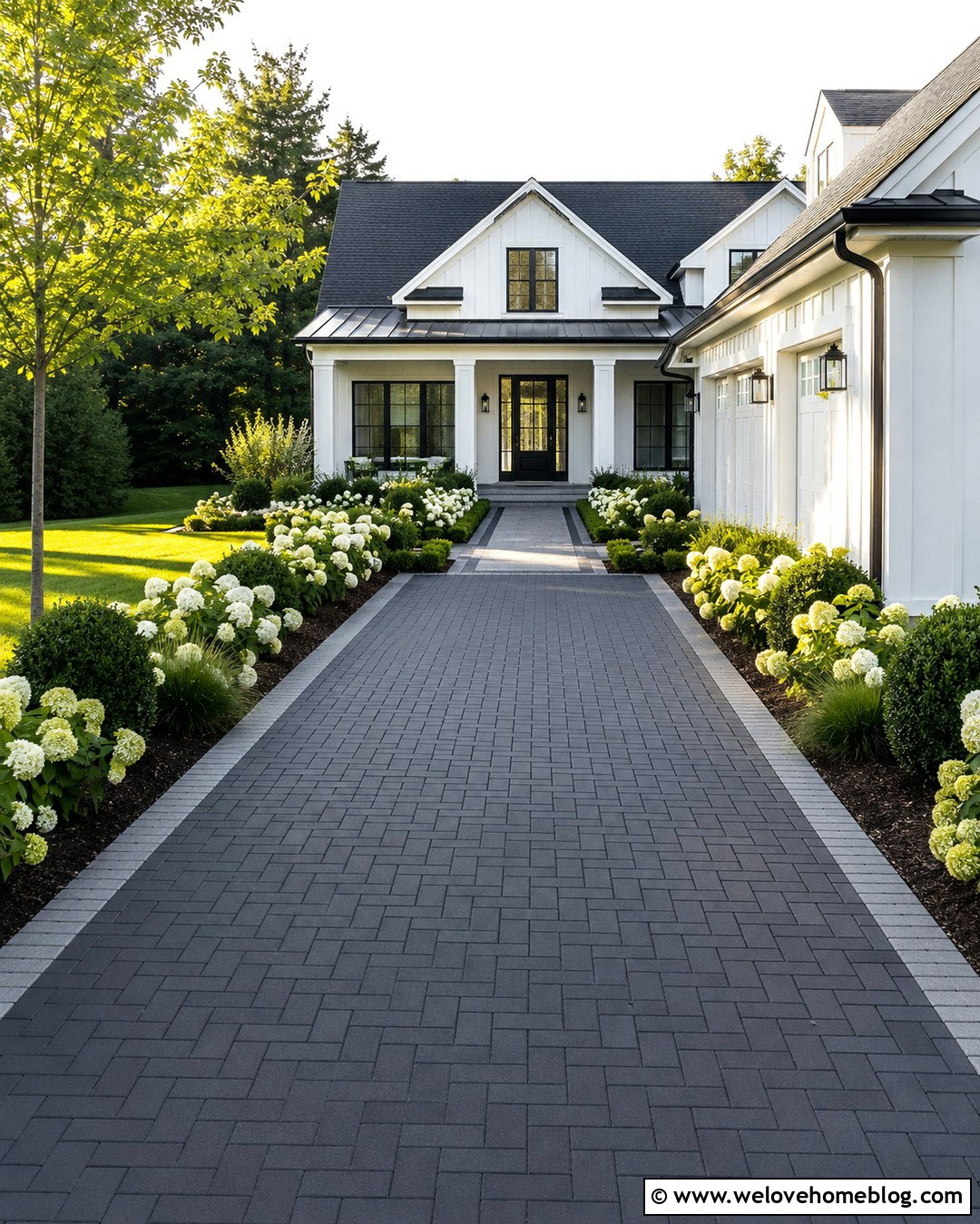
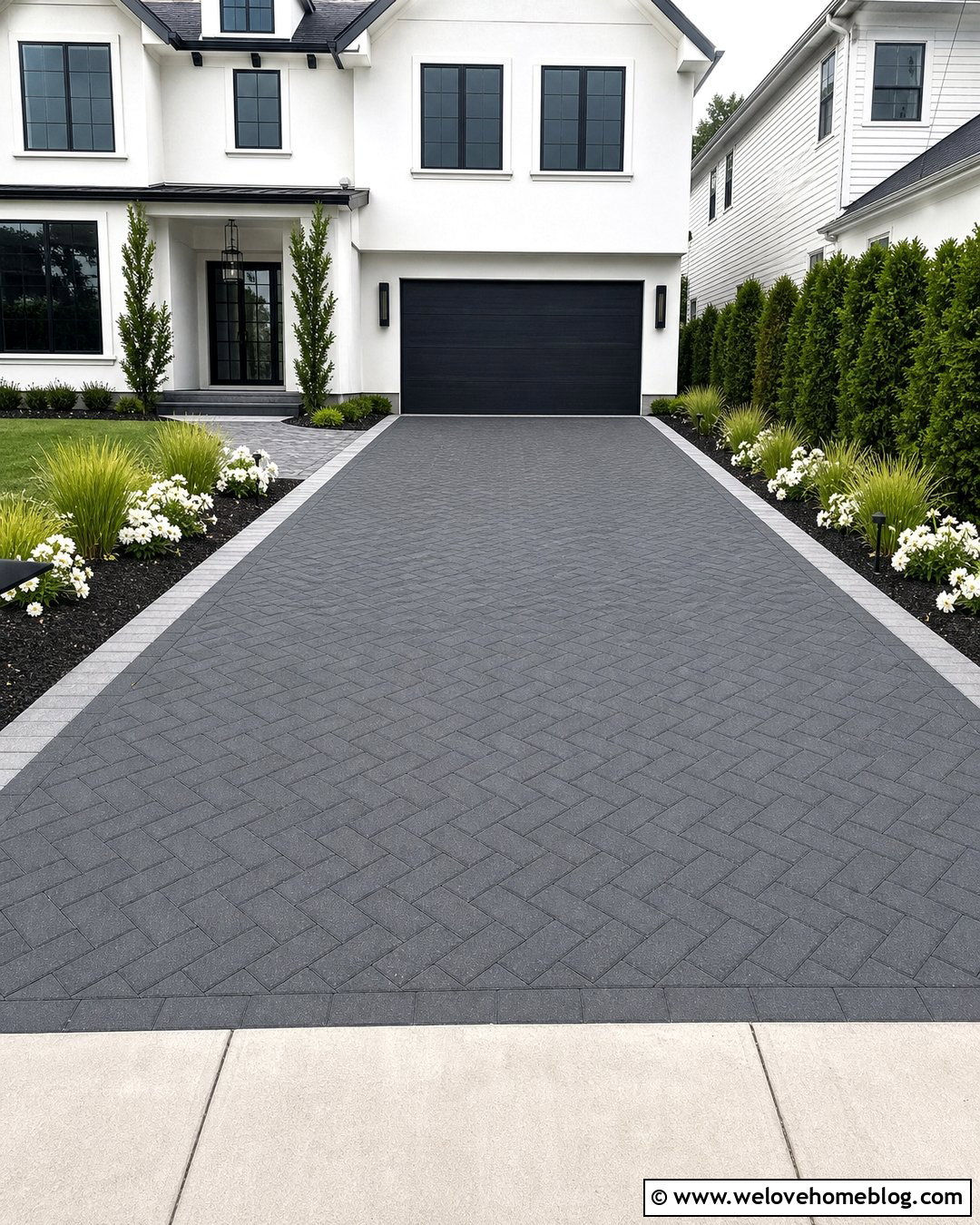
Against a bright white house, charcoal block paving creates an especially clean and noticeable contrast. Keep the driveway straight and uncomplicated, using smooth-edged rectangular blocks in a 90-degree herringbone pattern. A narrow medium-gray soldier border can soften the transition between the dark surface and green lawn. Near the house, connect the driveway to a wide path made from the same charcoal blocks for a cohesive entrance. White hydrangeas, boxwood shrubs, and feathery grasses repeat the light-and-dark palette without crowding the parking area. Black exterior lighting and simple garage doors complete the coordinated look. Because every element shares a restrained color scheme, the driveway feels integrated with the house rather than added as a separate slab of paving.
5. Charcoal Block Paving With Red Brick House
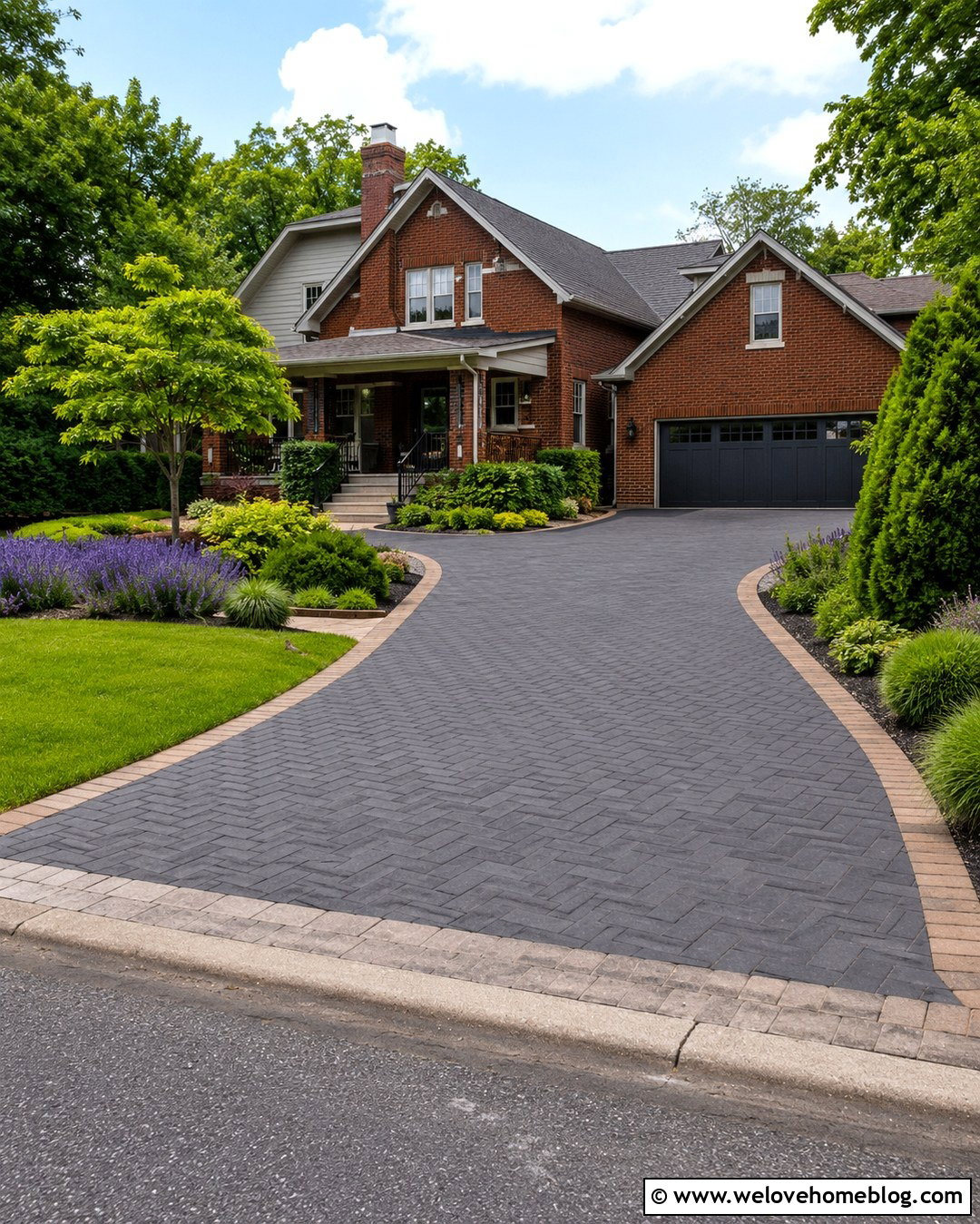
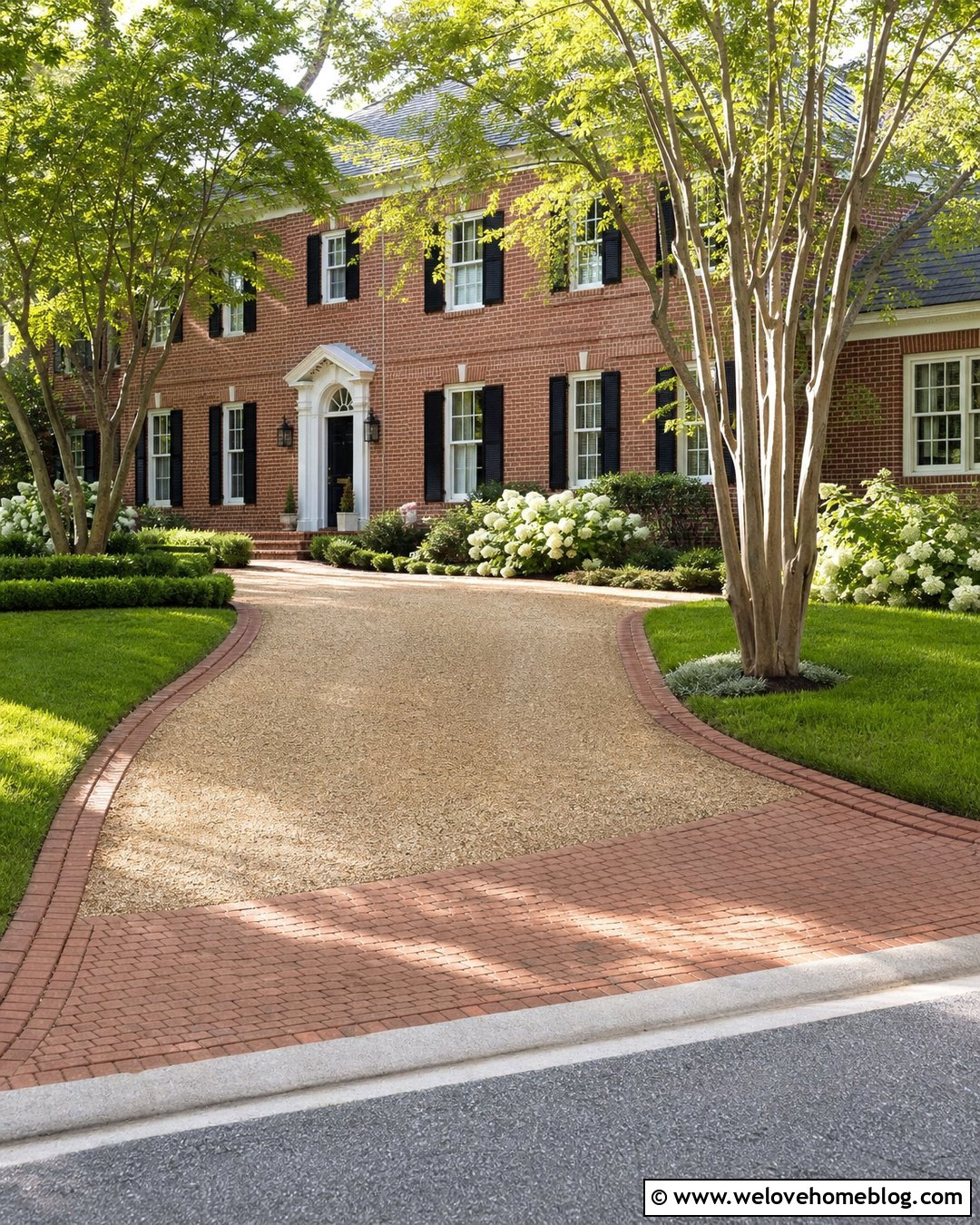
The rich color of a red brick home pairs naturally with charcoal paving, especially when the driveway includes a warm neutral accent. Lay charcoal concrete blocks in a classic herringbone field and add a narrow buff or sandstone-colored border. This lighter course creates separation between the dark driveway and brick facade while coordinating with mortar, stone window sills, or front steps. A gently curved edge can make the approach more welcoming than a rigid rectangle. Plant evergreen shrubs near the house and use lavender, catmint, or compact grasses along the outer curve. A paved path branching toward the front door should repeat the border treatment. The finished design feels established and traditional, but the deep charcoal surface keeps the overall exterior looking sharp and updated.
6. Charcoal Block Paving With Granite Edging
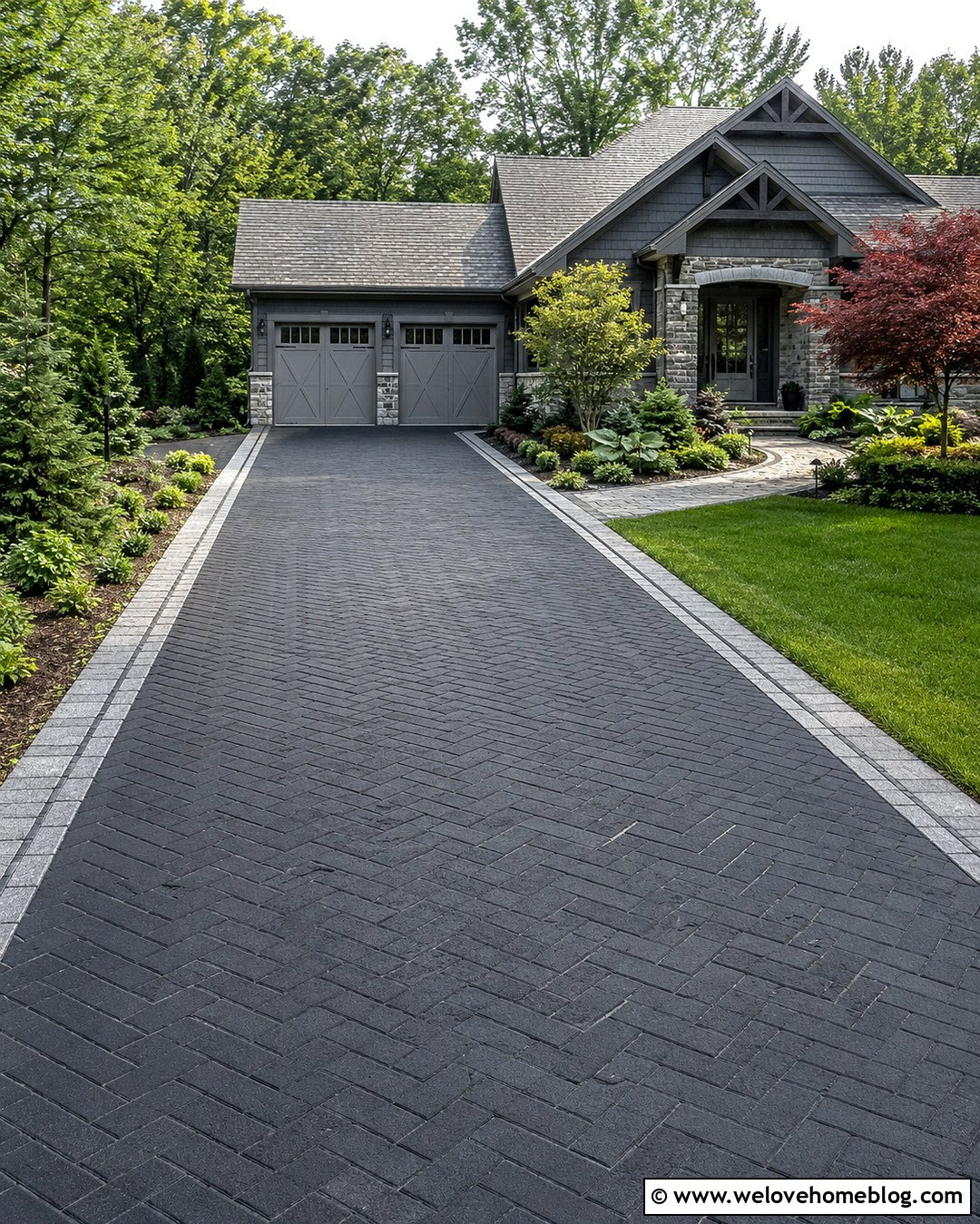
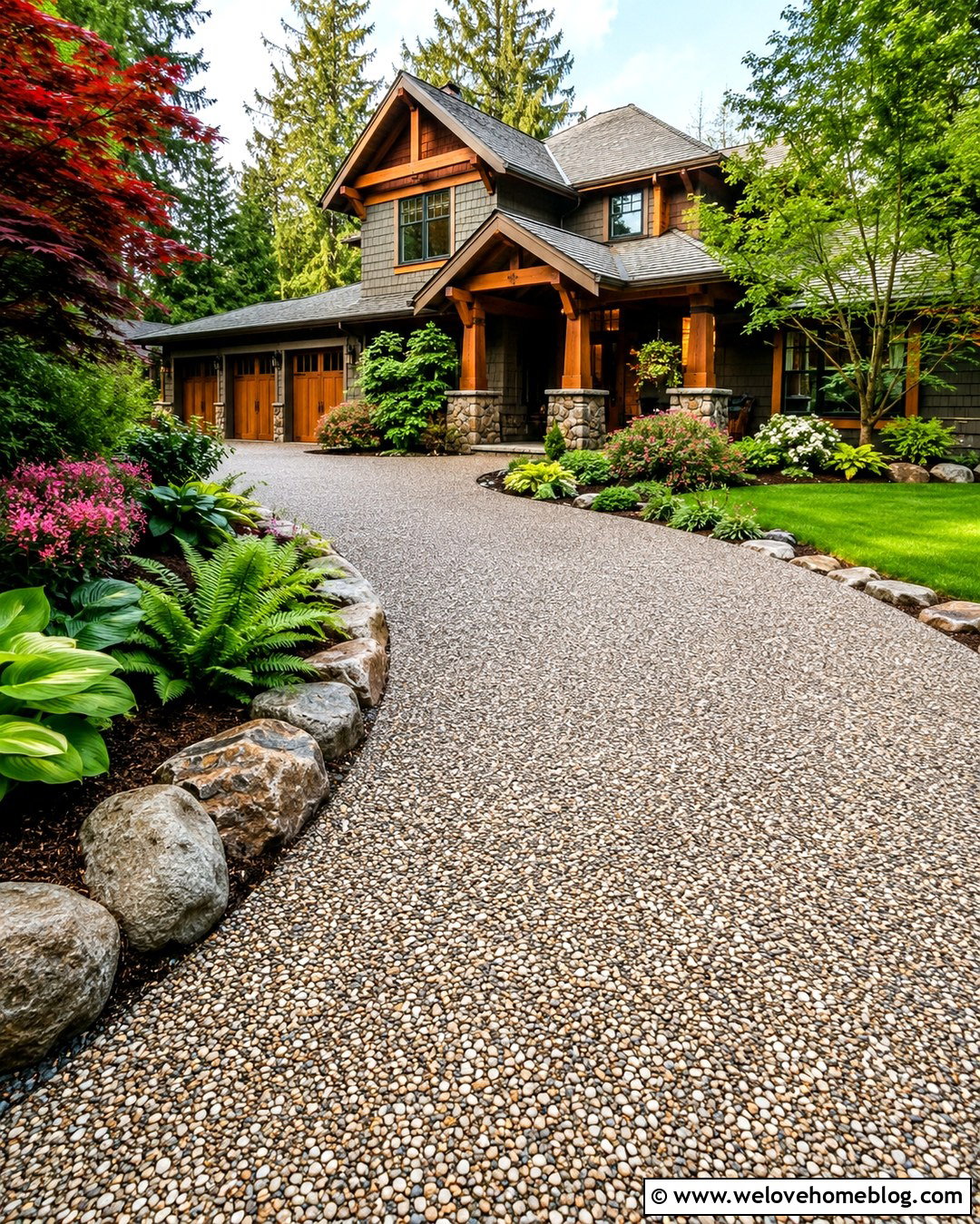
Granite edging adds natural texture and a premium finish to a charcoal block-paved driveway. Choose pale gray granite setts for a noticeable outline or darker split-face stone for a quieter transition. A double granite border is especially effective around a broad driveway where a narrow edge might disappear visually. Lay the charcoal concrete blocks in a 45-degree herringbone pattern and use the granite to define planting beds, the street entrance, and the walkway connection. A craftsman home with stone columns provides an ideal backdrop for this combination. Complete the setting with layered evergreen planting, spreading ground cover, and one or two ornamental trees. Granite setts are frequently paired with charcoal paving because their natural color variation provides contrast while maintaining a coordinated gray palette. ()
7. Charcoal Block Paving With Curved Edges
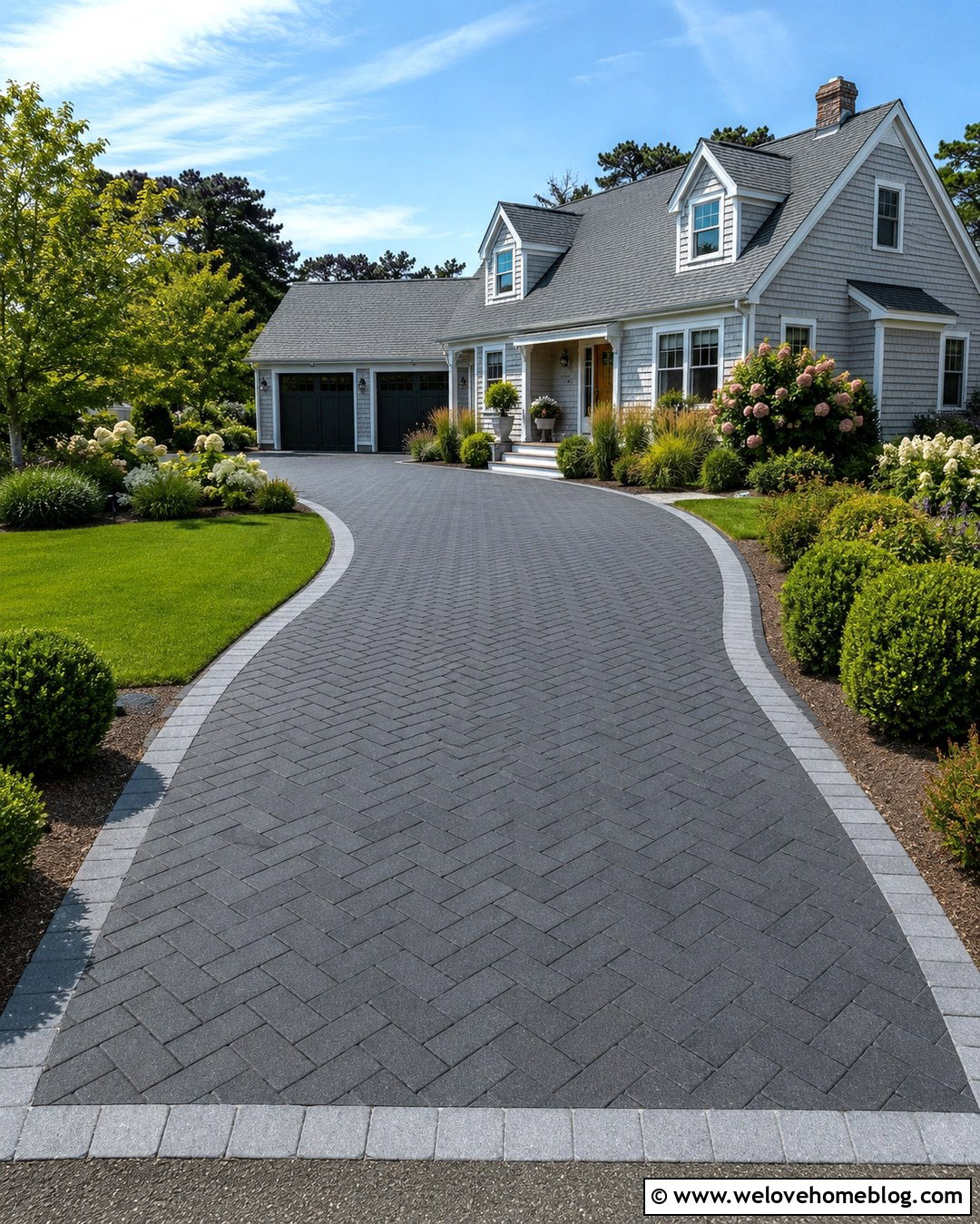
Curved edges can make a charcoal driveway feel softer and more connected to the yard. Instead of paving a basic rectangle, create a gentle sweep that widens near the garage and narrows toward the street. Small rectangular charcoal blocks follow curved boundaries more naturally than oversized units. Use matching charcoal edge blocks for a subtle finish, or add a thin silver-gray ribbon that emphasizes the shape. Plant the outside curve with ornamental grasses, rounded shrubs, and seasonal perennials arranged in broad groups. A curved walkway can branch from the driveway and lead visitors toward the front door. This layout suits cottage, Cape Cod, and transitional homes because it balances the formal appearance of dark paving with relaxed landscaping and an easy, flowing approach.
8. Charcoal Basketweave Block Paving Driveway
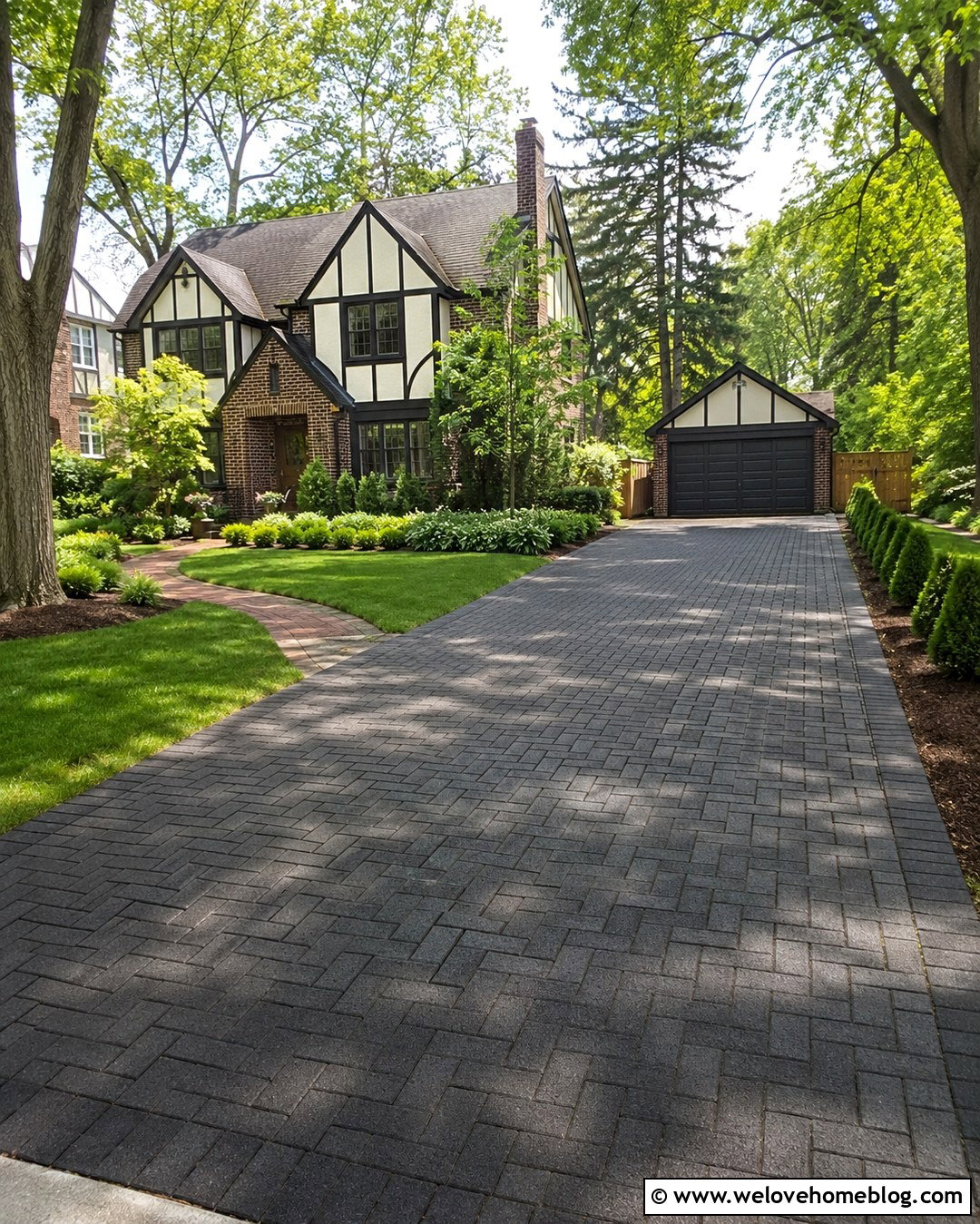
A basketweave pattern gives charcoal paving a traditional character that works particularly well with older houses. Pairs of rectangular concrete blocks alternate direction, creating small woven squares across the driveway. Keep the surface entirely charcoal if the house already has detailed brickwork, shutters, or decorative trim. For clearer definition, add a simple soldier-course perimeter using the same blocks. A straight driveway leading to a detached garage can highlight the repeating pattern without requiring additional ornaments. Frame the approach with lawn, mature shade trees, and low foundation beds rather than highly geometric planting. Basketweave is generally more visually relaxed than herringbone, making it attractive for lighter residential use and historic-inspired settings. Confirm the block specification and proposed pattern with an experienced installer before finalizing a heavily trafficked driveway. ()
9. Charcoal Running Bond Block Paving Driveway
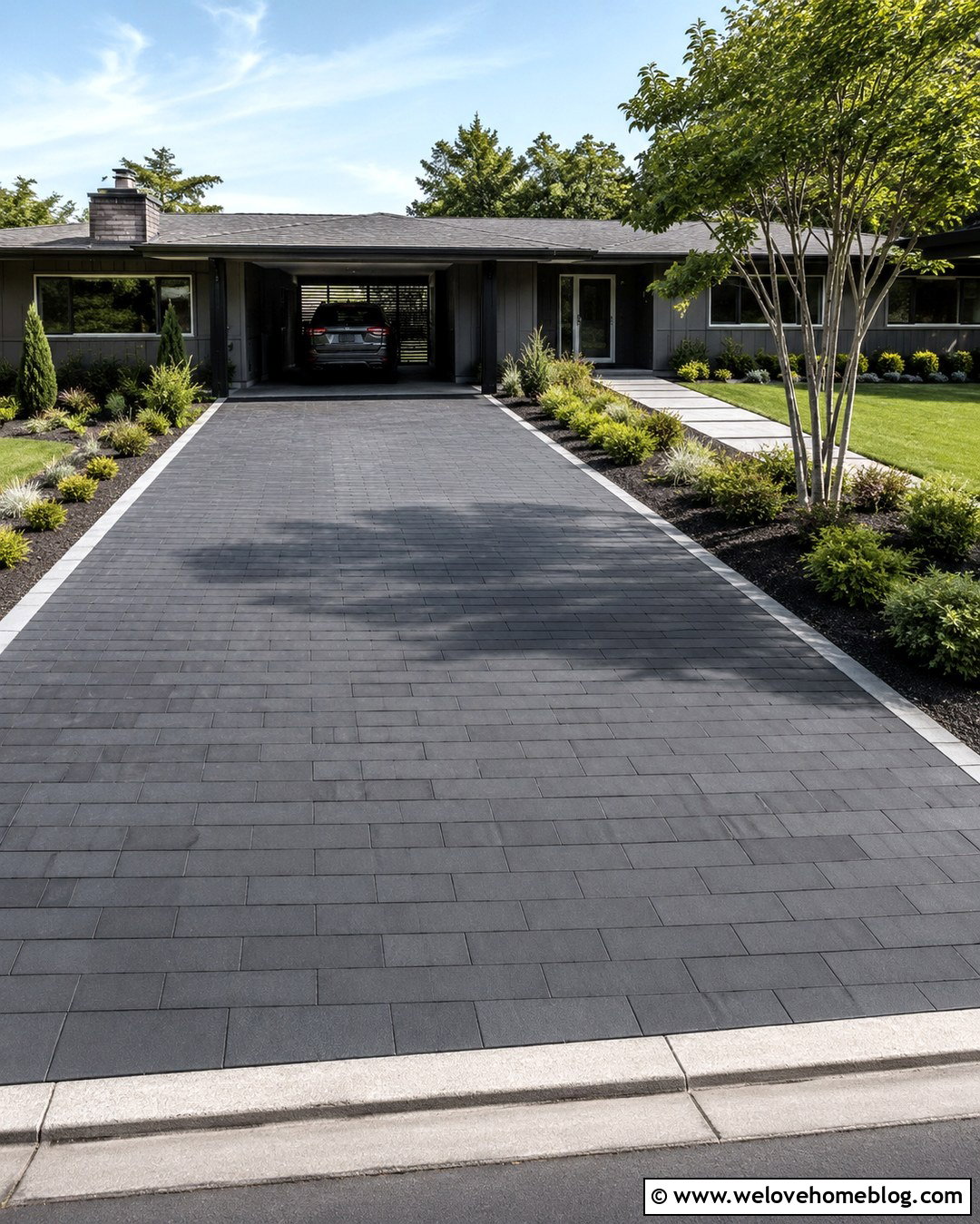
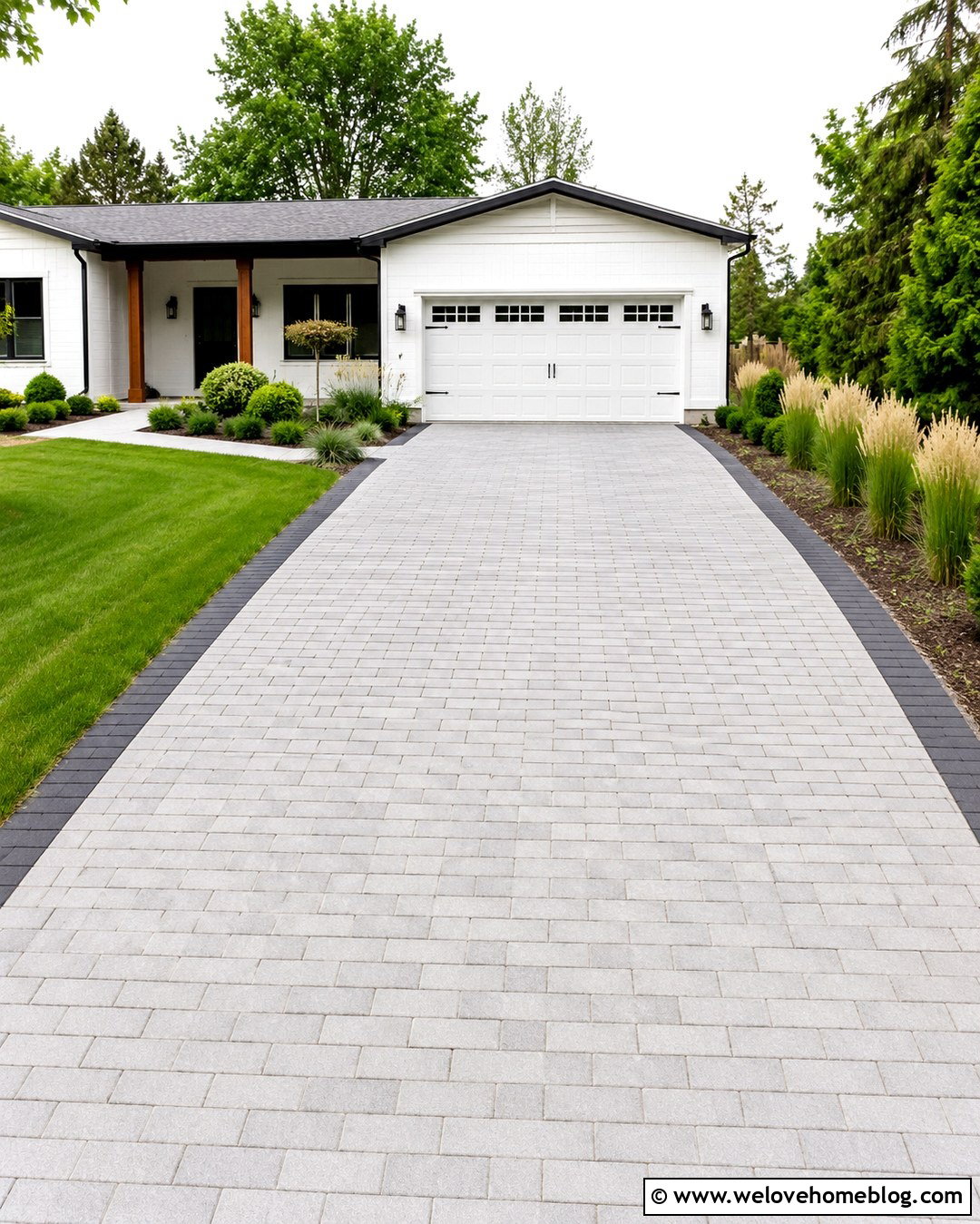
Long, staggered rows can make a compact driveway appear wider and less busy. Install charcoal concrete block pavers in a running bond pattern, positioning the rows across the driveway rather than toward the garage. The horizontal lines visually stretch the paved area from side to side. A matching dark border maintains the streamlined appearance, while a light concrete curb can provide subtle separation from the lawn. This arrangement complements a low ranch house with broad windows and simple architecture. Use rectangular planting beds filled with dwarf evergreens, spreading ground cover, and one multi-stem tree to balance the strong horizontal layout. Keep the walkway and front steps plain so they do not compete with the paving. The result is practical, calm, and particularly effective in shallow suburban front yards.
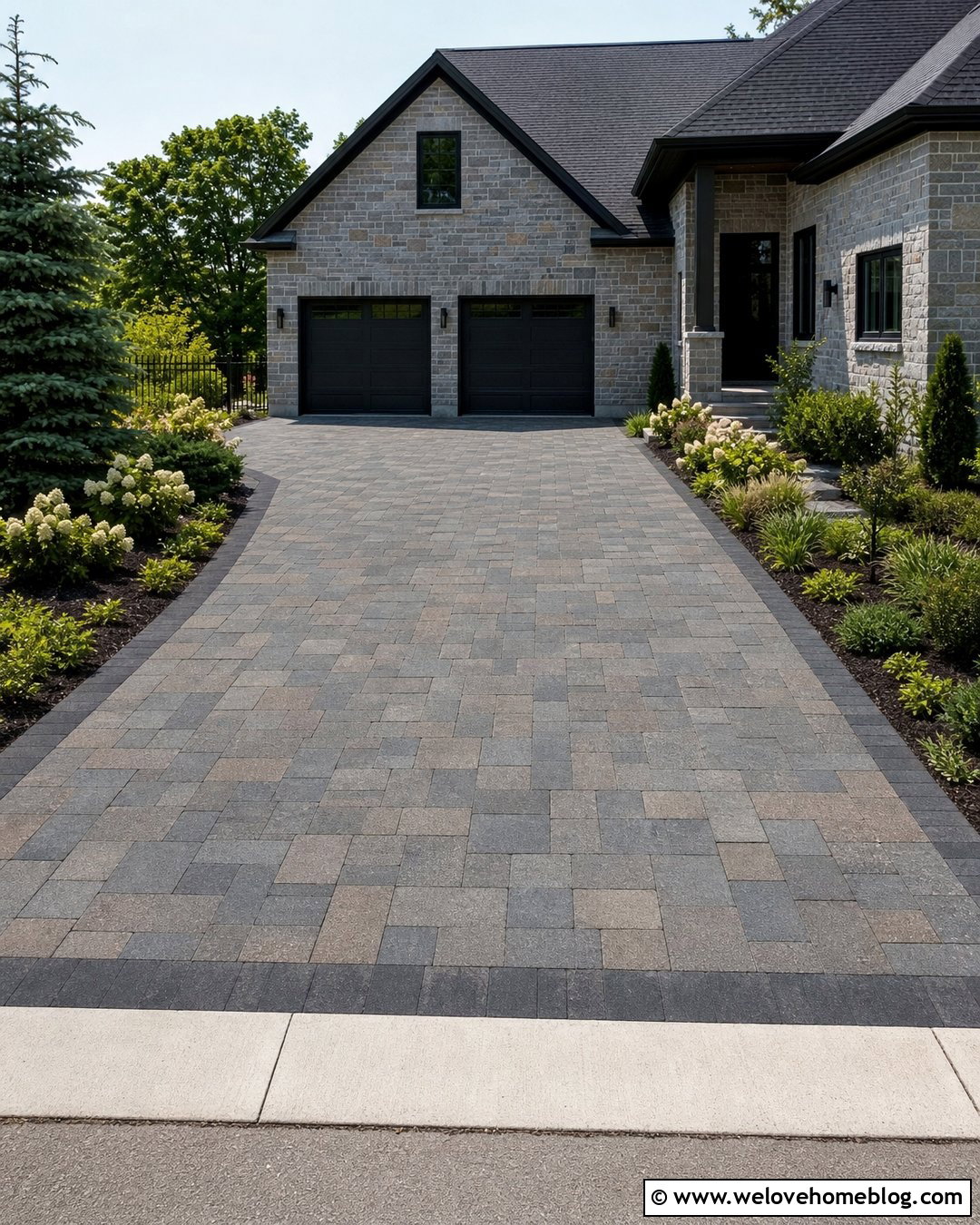
10. Charcoal Mixed-Size Block Paving Driveway
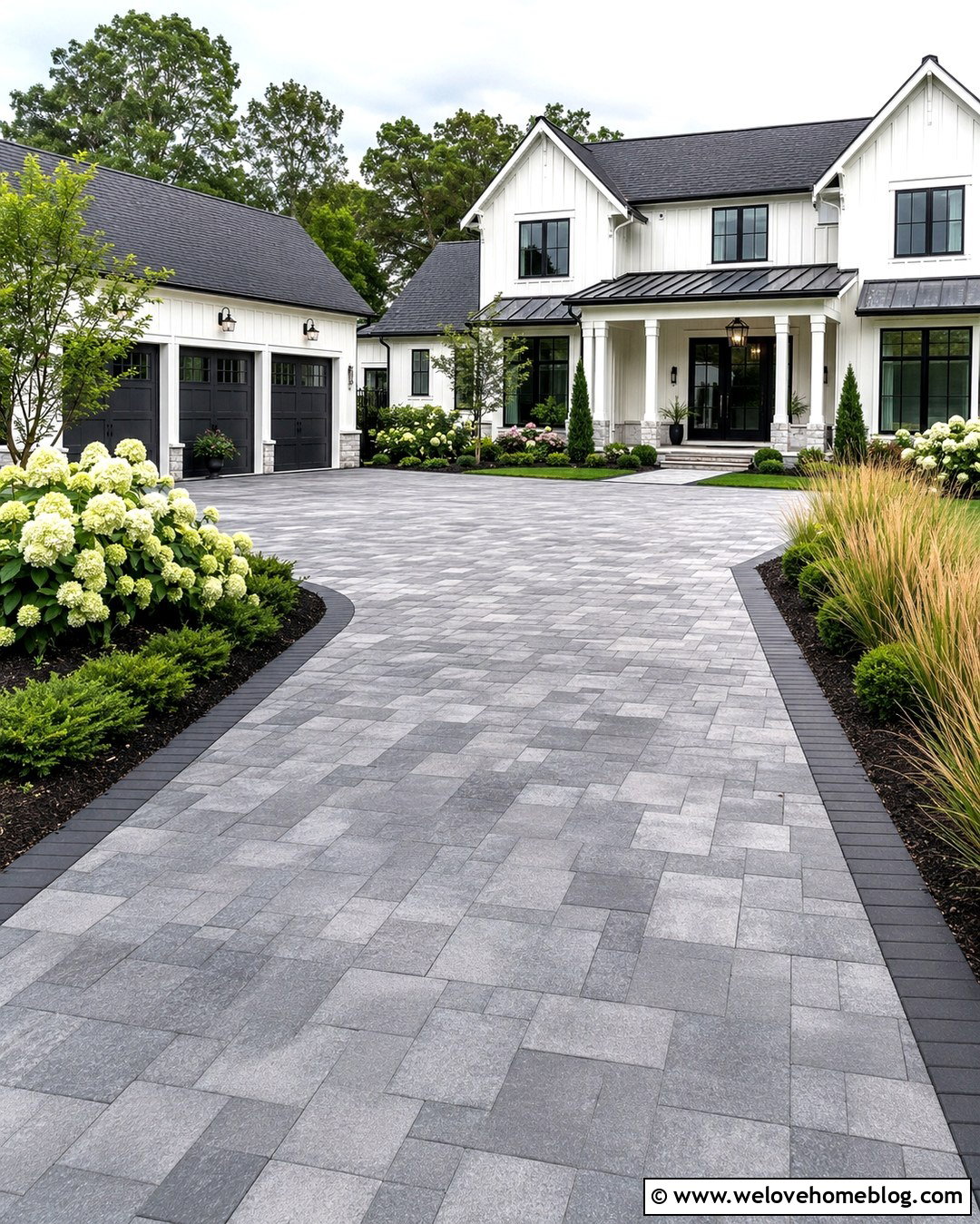
Mixed-size charcoal blocks bring texture to a large driveway without requiring several colors. Combine small squares, medium rectangles, and larger units in a repeating modular pattern. Slight variations in charcoal, graphite, and deep gray will make the finished surface feel layered rather than flat. A simple dark soldier border gives the varied field a controlled outer edge. This treatment works well on a wide driveway leading to a modern farmhouse or large suburban home. Add broad planting beds with panicle hydrangeas, upright grasses, and low junipers to match the scale of the paved area. Near the garage, use a straight transition line so cut blocks remain neat. The mixture of sizes is visually forgiving and can help break up an expansive parking court without adding an elaborate centerpiece.
11. Tumbled Charcoal Block Paving Driveway
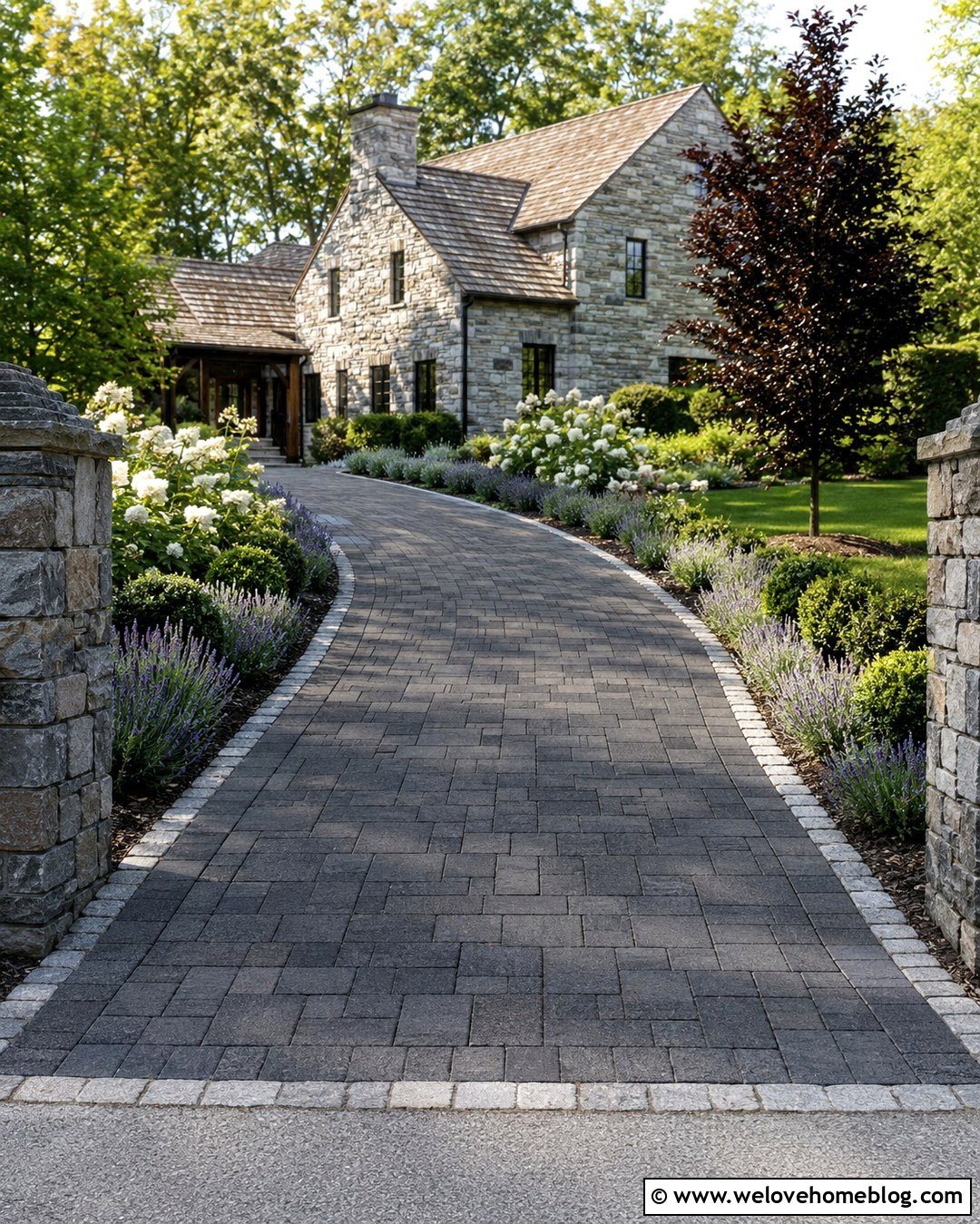
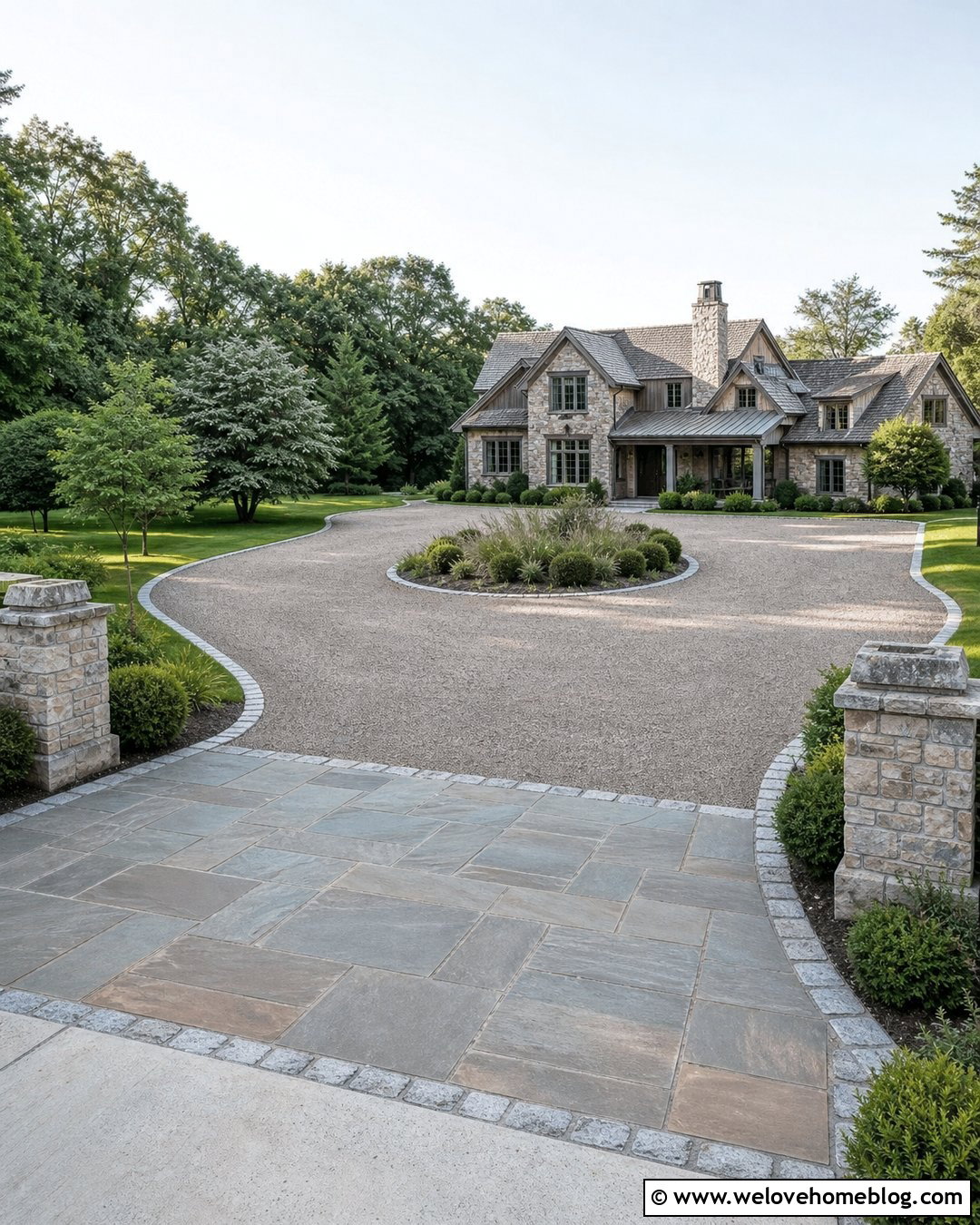
Tumbled charcoal blocks have softened edges and gentle surface variation that can make a new driveway look more established. They are a natural match for stone cottages, traditional farmhouses, and homes with reclaimed brick details. Use three block sizes in an informal modular layout, then finish the edge with weathered granite setts. A gently curved driveway will reinforce the relaxed character. Plant lavender, low boxwood, flowering shrubs, and a small ornamental tree along the approach, leaving enough open space for vehicles. Rustic stone entrance pillars can repeat the colors found in the tumbled paving. Avoid highly polished accessories because they may conflict with the aged finish. The complete design should feel welcoming and timeworn while still maintaining clear parking boundaries and a well-planned connection to the house.
12. Charcoal Block Paving With Circular Feature
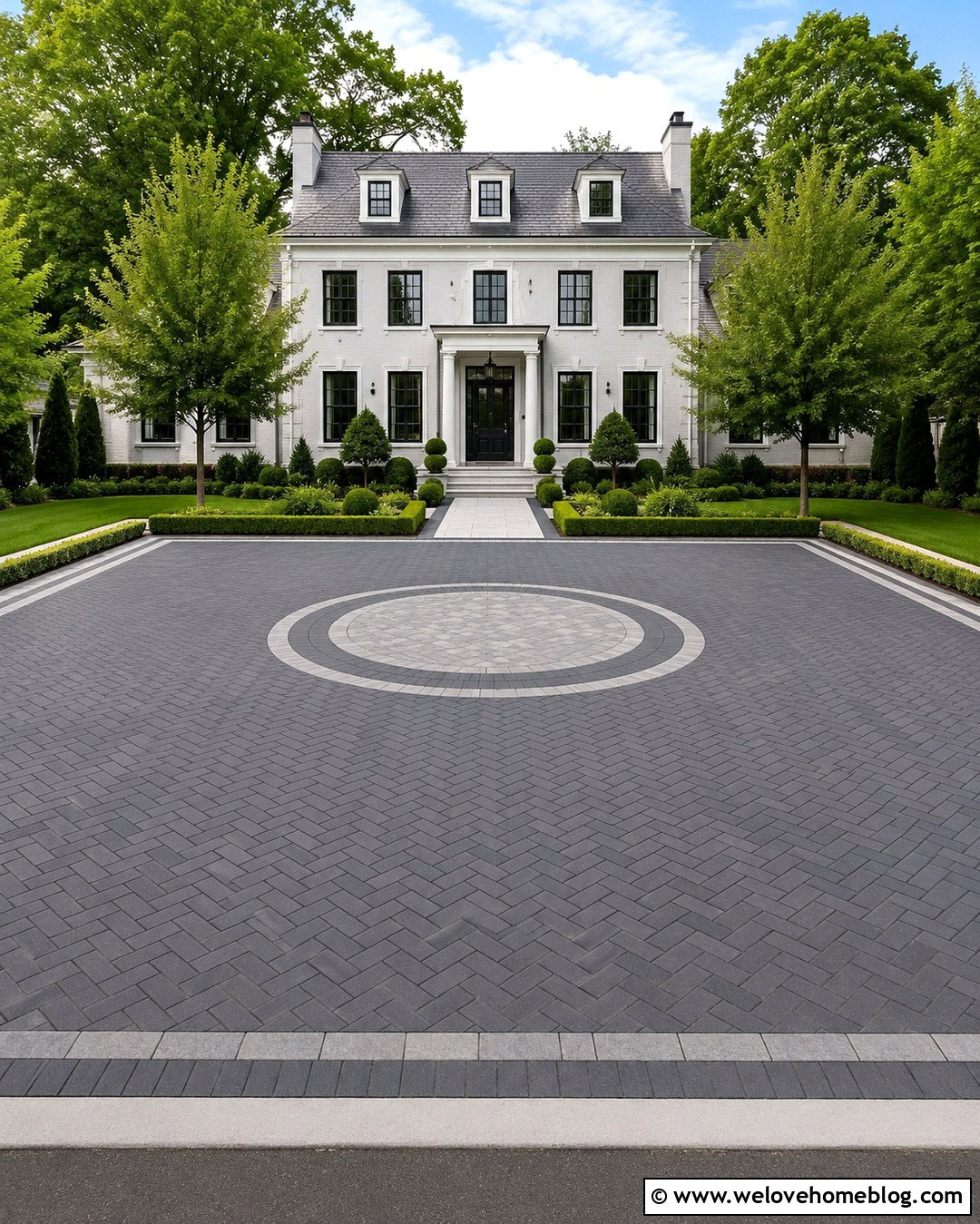
A circular paving feature can become an attractive focal point in the center of a wide charcoal driveway. Keep the main surface in smooth charcoal herringbone, then build the circle from light gray and charcoal blocks arranged in concentric rings. Position it where it remains visible without interfering with vehicle movement. On a parking court, the feature can mark the center and organize spaces around the garage entrance. Repeat the light gray accent in the perimeter border to keep the design consistent. Formal shrubs, symmetrical trees, and a straight walkway suit the geometry well. Decorative circles are most effective when their scale matches the driveway rather than overwhelming it. Circular features and contrasting block arrangements can create clear focal points within larger block-paved areas. ()
13. Permeable Charcoal Block Paving Driveway
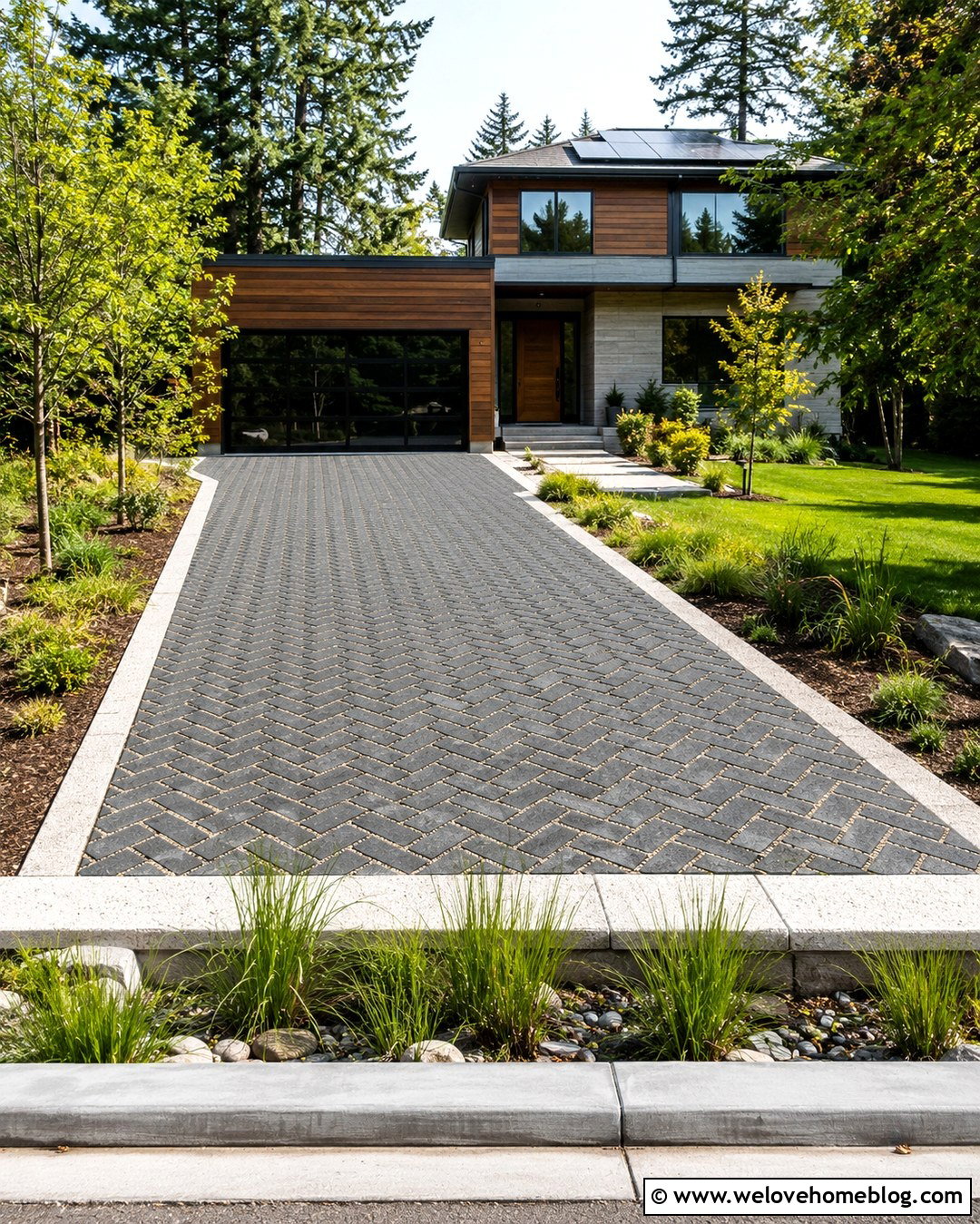
Permeable charcoal block paving can combine a sophisticated dark finish with a surface designed to manage rainwater through widened joints and a suitable underlying system. Choose purpose-made permeable concrete blocks rather than assuming standard pavers will perform the same way. Lay them in a simple herringbone or linear pattern and fill the specified joints with compatible aggregate. Pale granite edging can define the driveway without distracting from its clean surface. Add a shallow rain garden with moisture-tolerant grasses beside the lowest part of the driveway, subject to site conditions and local requirements. This complete look works well with an eco-conscious contemporary home. Permeable pavement performance depends on the entire construction, including the blocks, jointing material, sub-base, soil conditions, and professional drainage design. ()
14. Charcoal Block Paving With Drainage Channel
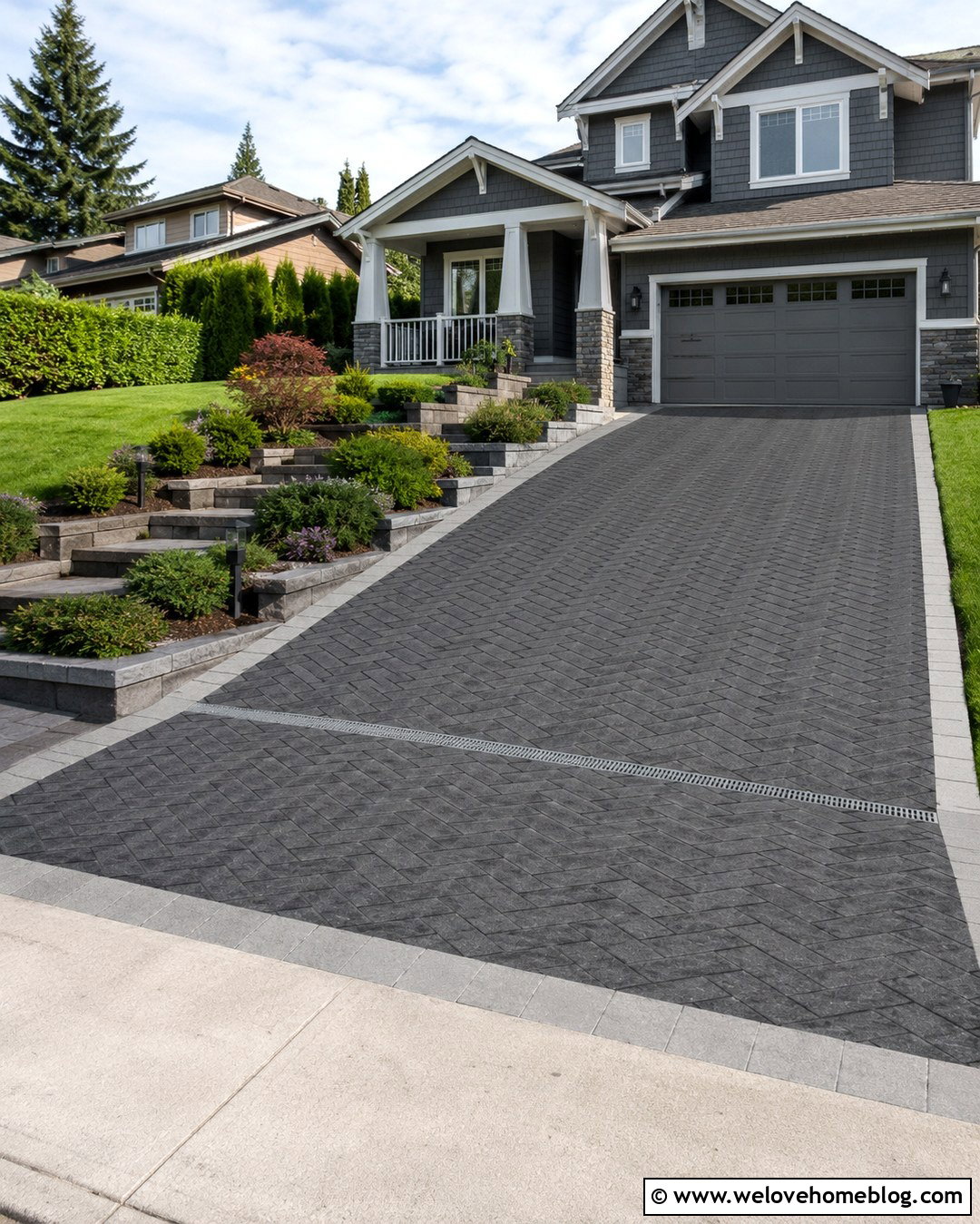
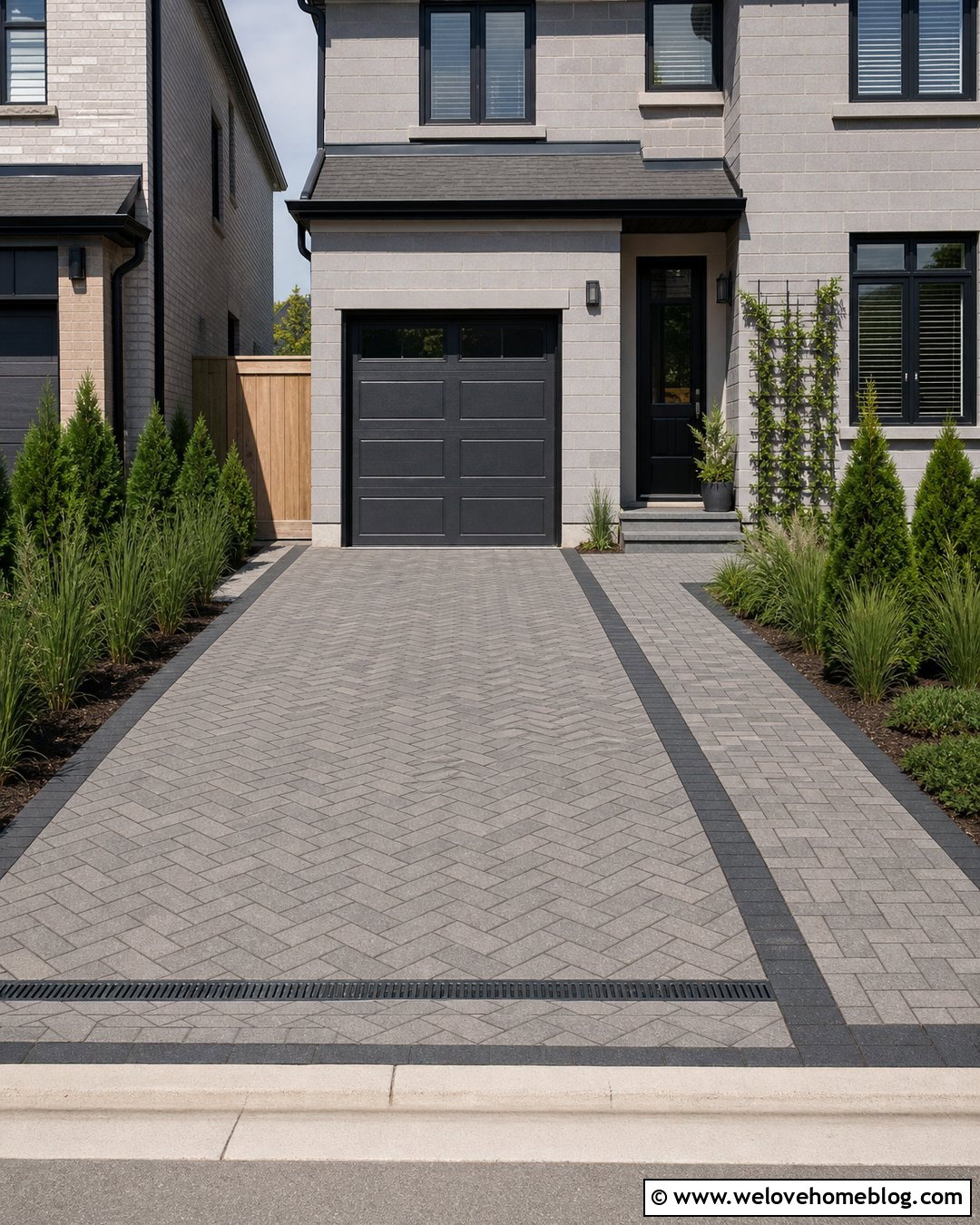
A sloped driveway needs drainage to be planned as part of the design, not treated as an afterthought. Use charcoal concrete blocks in a 45-degree herringbone layout and install a neat linear drainage channel where runoff must be collected, often near the garage or driveway entrance. Choose a dark or galvanized grate that sits level with the paving and follows a straight border line. Silver-gray edge blocks can visually connect the channel with the rest of the driveway. On either side, use raised planting beds with tough evergreen shrubs and ground cover that will not spill onto the driving area. Final levels, outlet locations, and drainage capacity should be designed for the property. Correct grading helps direct surface water away from vulnerable areas and reduces unwanted pooling. ()
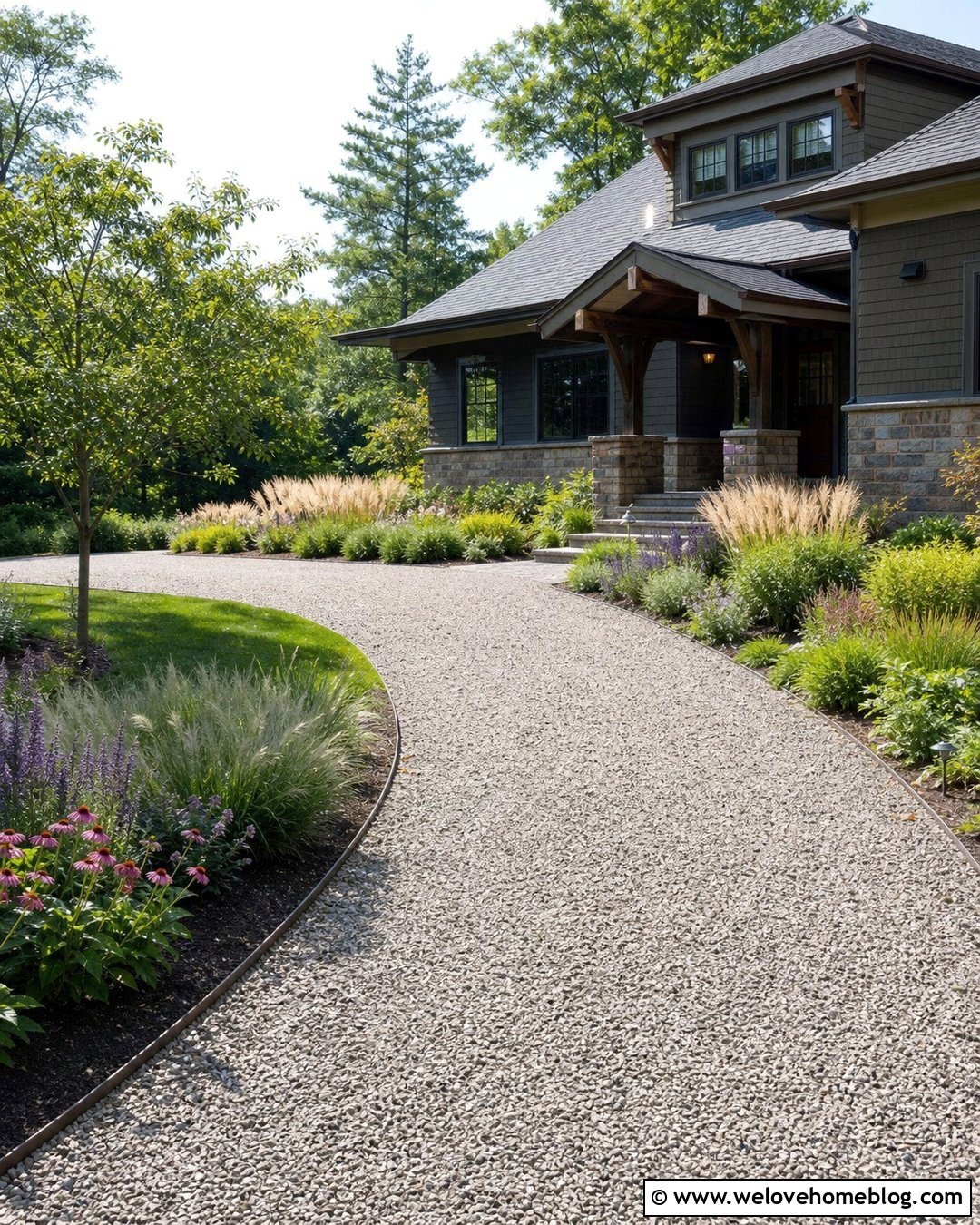
15. Charcoal Block Paving With Grass Strips
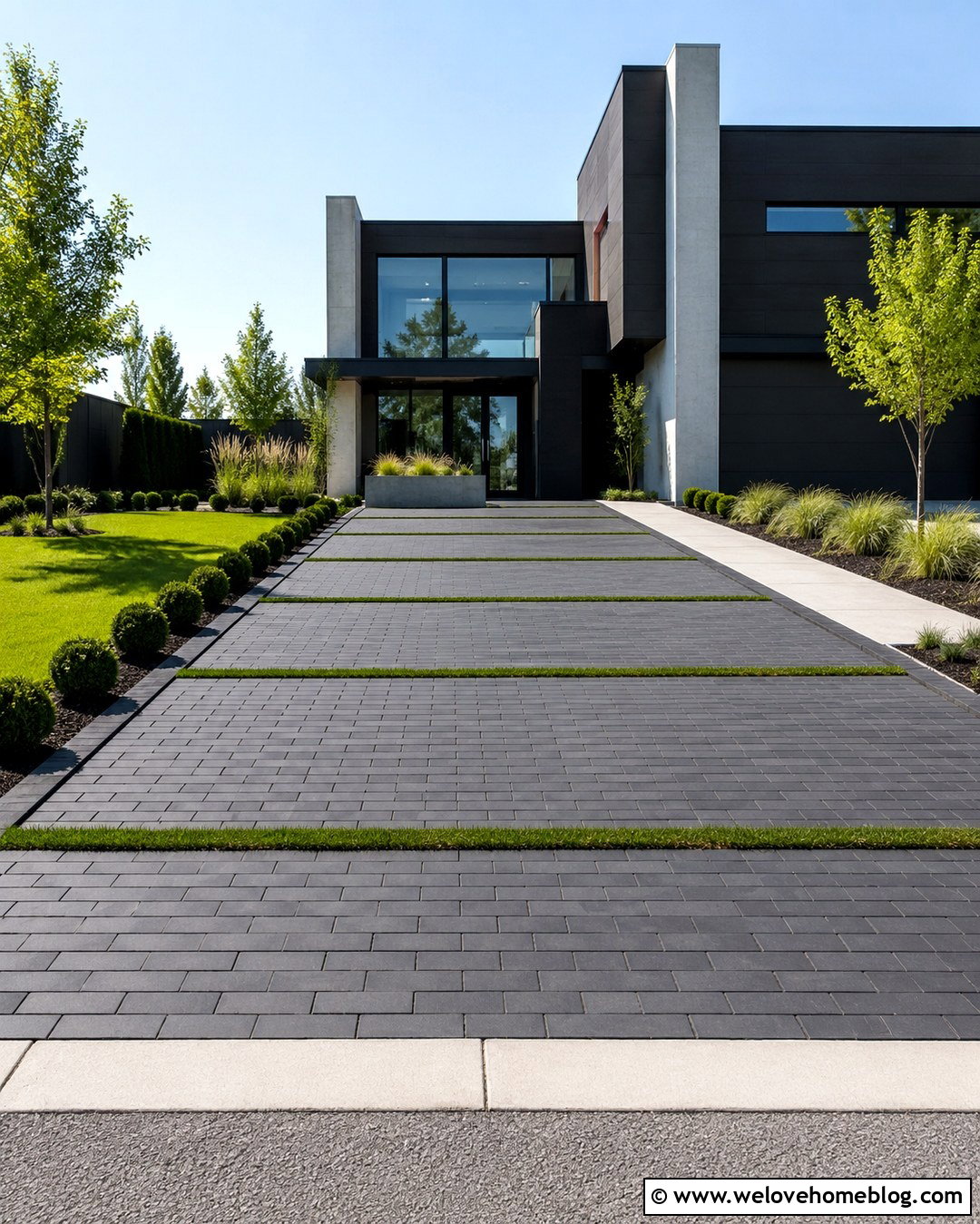
Narrow grass strips can introduce color and rhythm without taking away too much parking space. Divide a broad charcoal block-paved driveway into clearly defined wheel or parking zones using slim bands of reinforced turf. Keep the main driving surface in smooth charcoal rectangular pavers laid in straight rows. Concrete or matching charcoal edge blocks should separate the soil from the paving and help maintain tidy lines. This treatment is best suited to a level driveway where the grass can receive adequate light and routine maintenance. Repeat the green bands beside a modern house with flat planting beds, clipped shrubs, and one architectural tree. If natural grass would be difficult to maintain, use planted permeable pavers specifically designed for vehicle loads rather than leaving unsupported gaps between ordinary driveway blocks.
16. Small Charcoal Block Paving Driveway
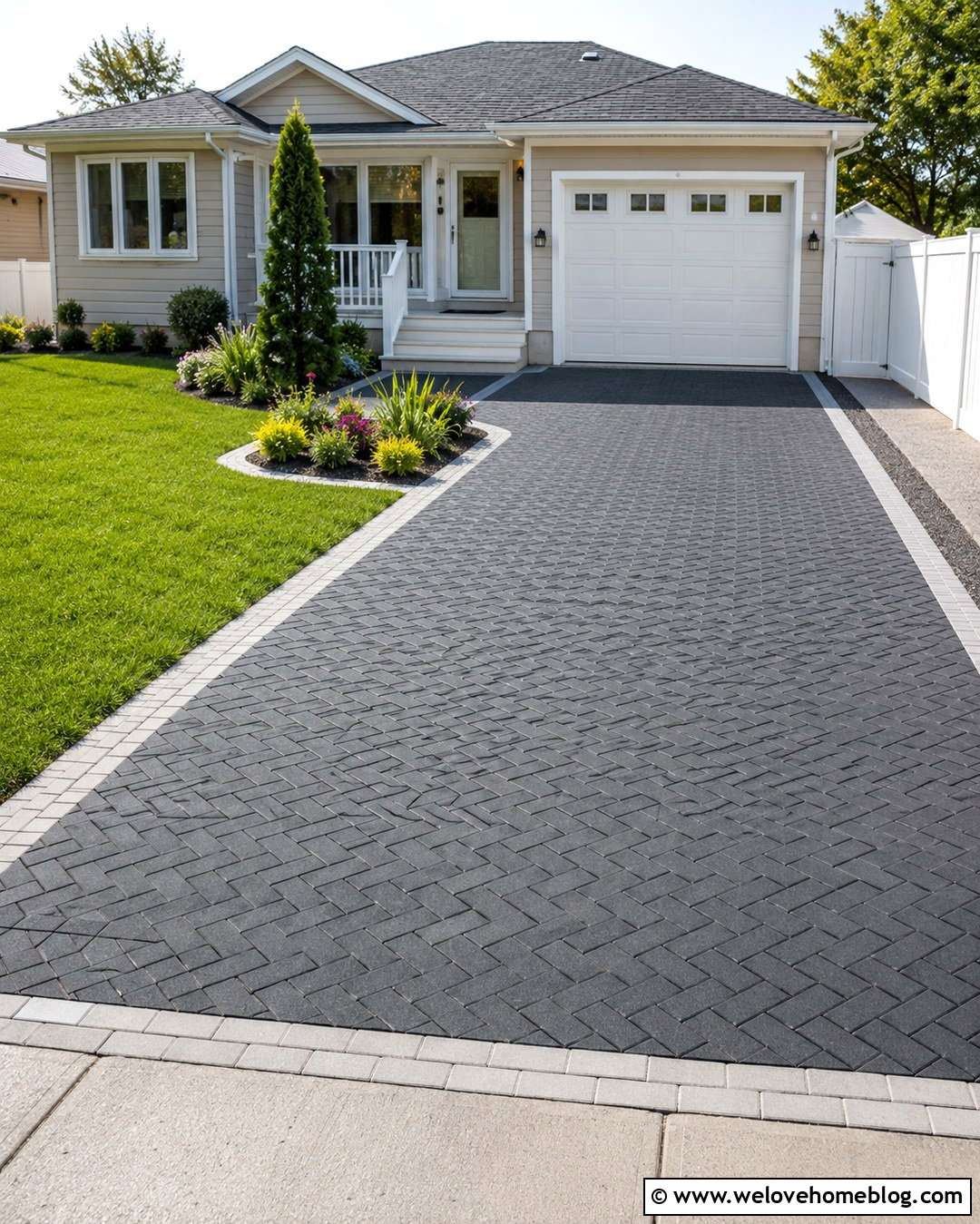
A small front yard benefits from a simple paving pattern and carefully controlled borders. Cover the parking space with medium charcoal concrete blocks laid in a 90-degree herringbone arrangement. Add only one narrow light gray edge course so the border does not consume valuable visual space. A straight line between the sidewalk and garage will make the layout feel organized, while a gently angled corner can preserve room for planting. Use one compact bed with an upright evergreen, low grasses, and seasonal flowers instead of several disconnected pockets. Match the front walkway to the driveway border for continuity. Keep bins, utility covers, and other practical features screened where possible. The restrained palette allows a limited driveway to feel intentional, spacious, and properly integrated with the entrance.
17. Wide Charcoal Block Paving Driveway
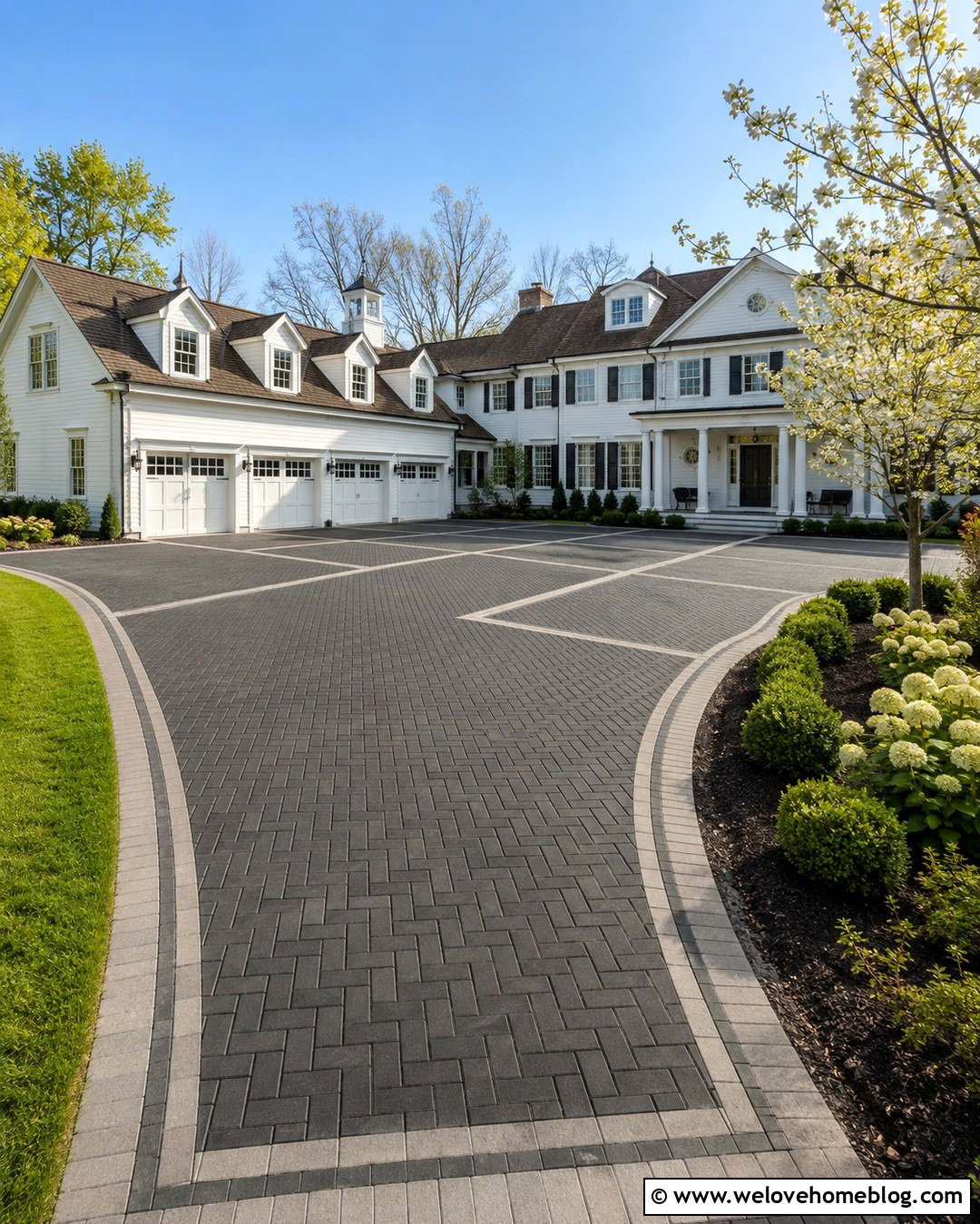
An expansive driveway needs enough detail to avoid looking like a dark, empty surface. Divide a wide charcoal herringbone field with light gray block ribbons that outline parking bays and a central approach. The ribbons should be simple and evenly spaced, creating structure without producing a commercial parking-lot appearance. A double border around the perimeter gives the large area an appropriately substantial frame. At the house, widen the paving into a turning court and connect it to a generous front walkway. Large planting beds containing evergreen masses, flowering trees, and ornamental grasses will balance the amount of hardscape. This layout is well suited to a broad colonial, estate-style home, or residence with multiple garage doors. Strong repetition helps every part of the driveway read as one coordinated composition.
18. Charcoal Circular Block Paving Driveway
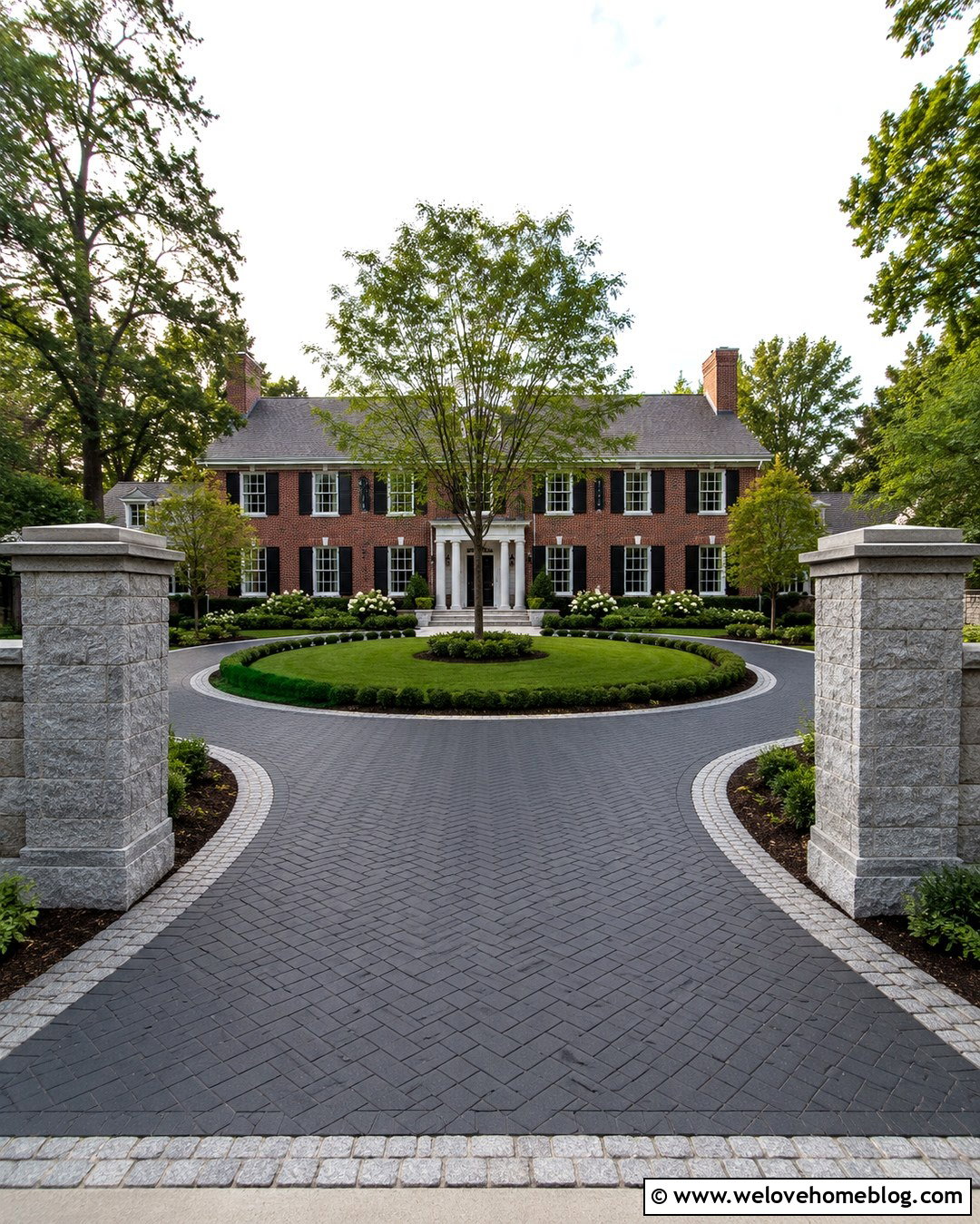
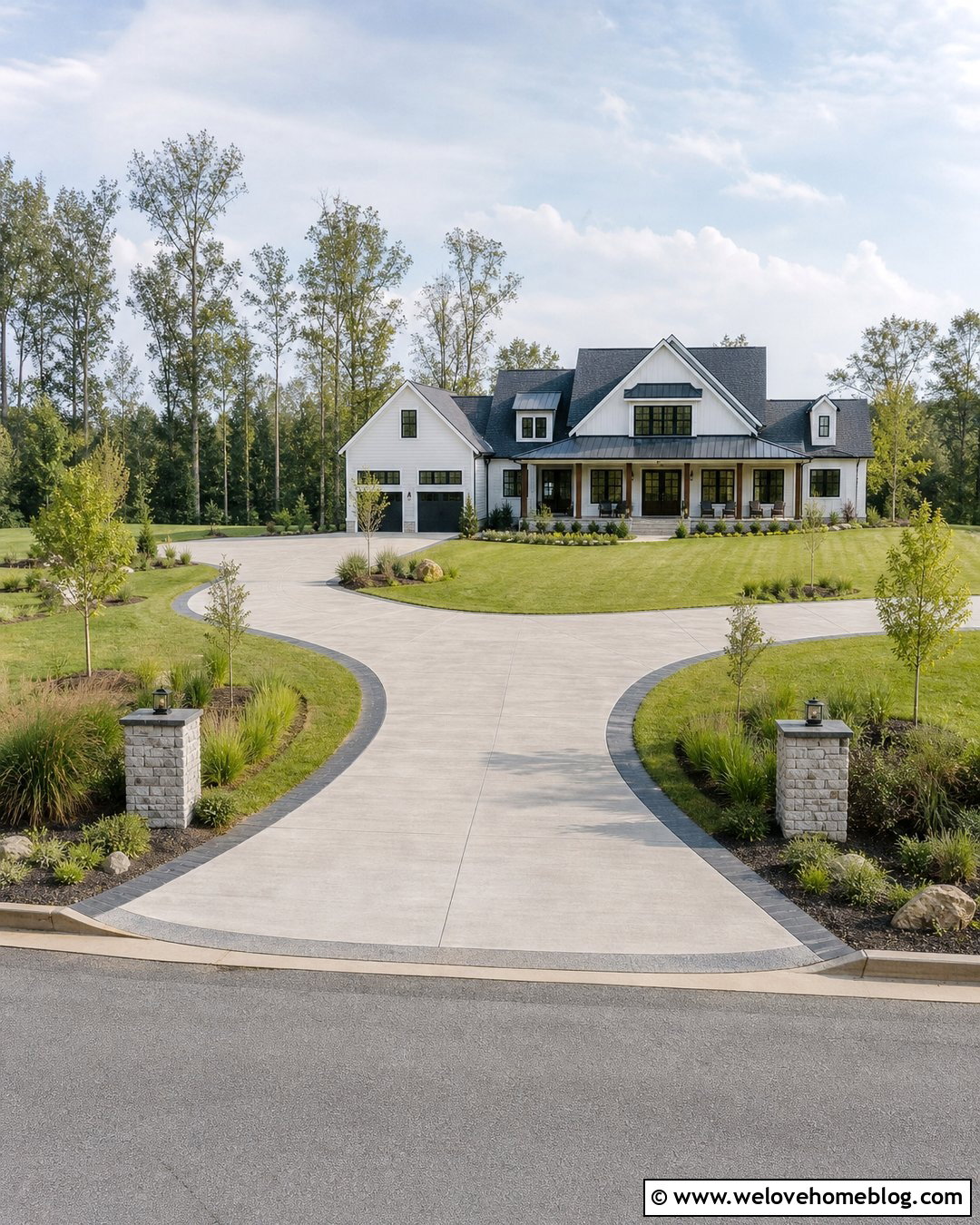
A full circular driveway provides an impressive approach while allowing vehicles to continue moving toward the street. Use smooth charcoal concrete blocks in a directional herringbone pattern that follows the main driving route. Frame both edges with pale gray granite setts, creating a clear boundary around the entire loop. The center island can contain lawn, one specimen tree, and a low ring of evergreen shrubs that will not obstruct sightlines. Coordinate the entrance points with matching masonry pillars or low stone walls. A substantial Georgian, colonial, or traditional brick home gives the circular layout an appropriate backdrop. Because turning dimensions and visibility are essential, establish the functional route before finalizing decorative features. The charcoal paving then unifies the entrance, landscaped island, parking area, and front walkway.
19. Charcoal Block Paving With Modern Landscaping
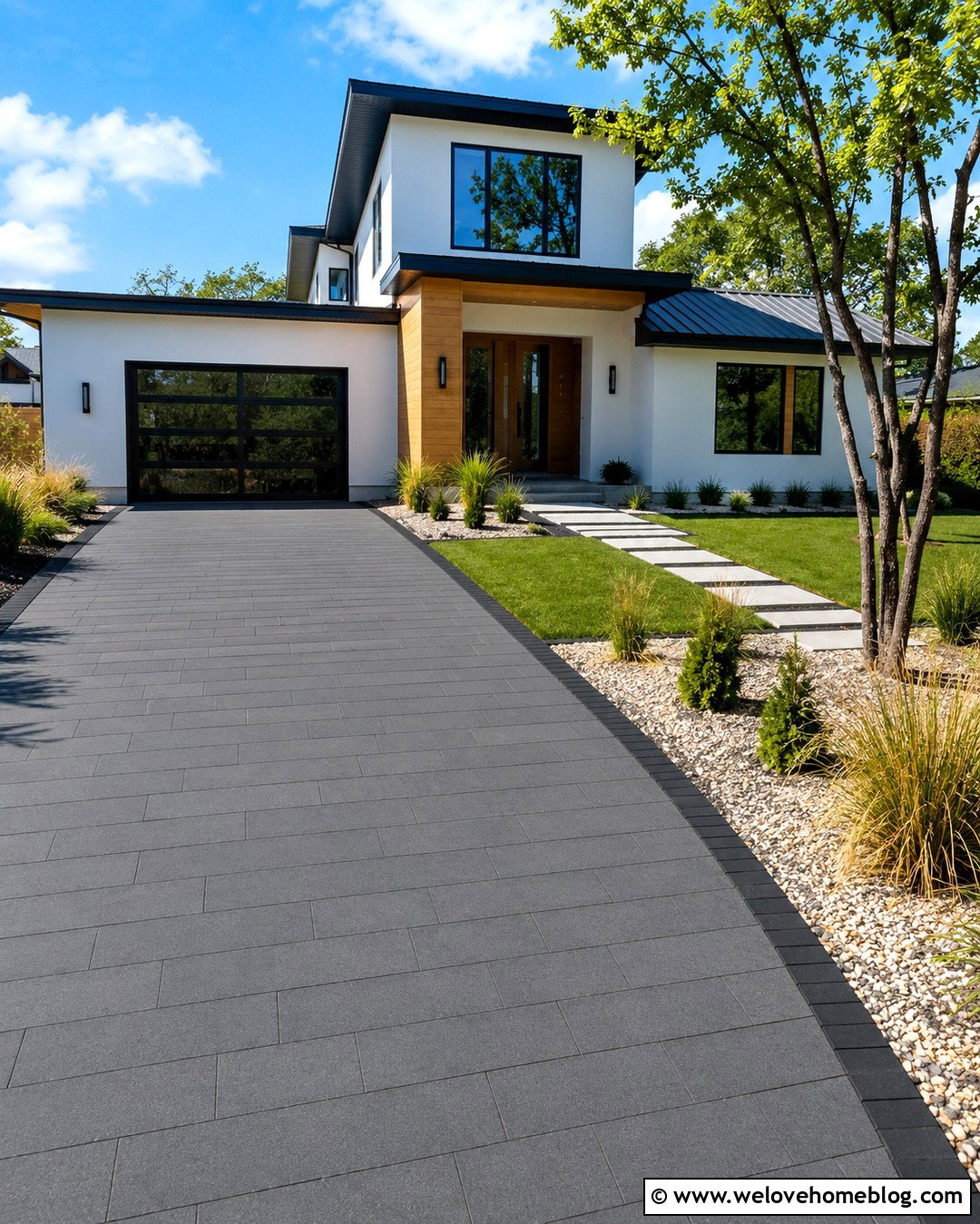
Clean planting lines can amplify the contemporary appearance of charcoal paving. Start with large-format charcoal concrete block pavers laid in a linear running bond across a straight driveway. Border the surface with narrow black edge blocks and rectangular beds filled with ornamental grasses, compact evergreens, and pale gravel mulch. A stepping-stone walkway can run beside the driveway without interrupting the main paved field. Use one multi-stem tree near the street to add height while preserving an open view of the house. This composition works best with a modern facade featuring white stucco, warm wood siding, or dark metal details. Keep the plant selection limited and repeat each variety in groups. The combination of deep paving, light gravel, structured greenery, and simple architecture creates a coordinated exterior with strong year-round curb appeal.
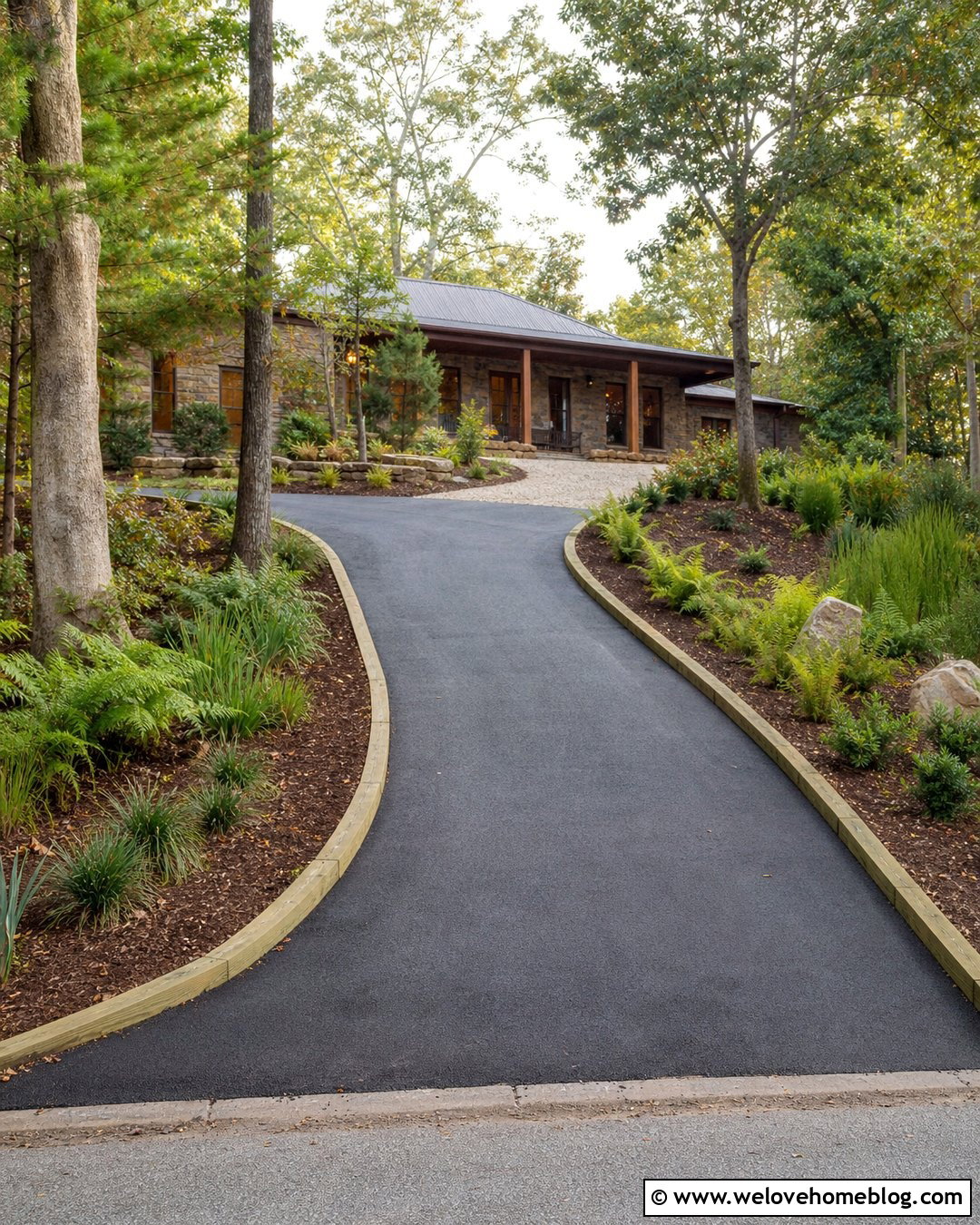
20. Charcoal Block Paving With Entrance Pillars
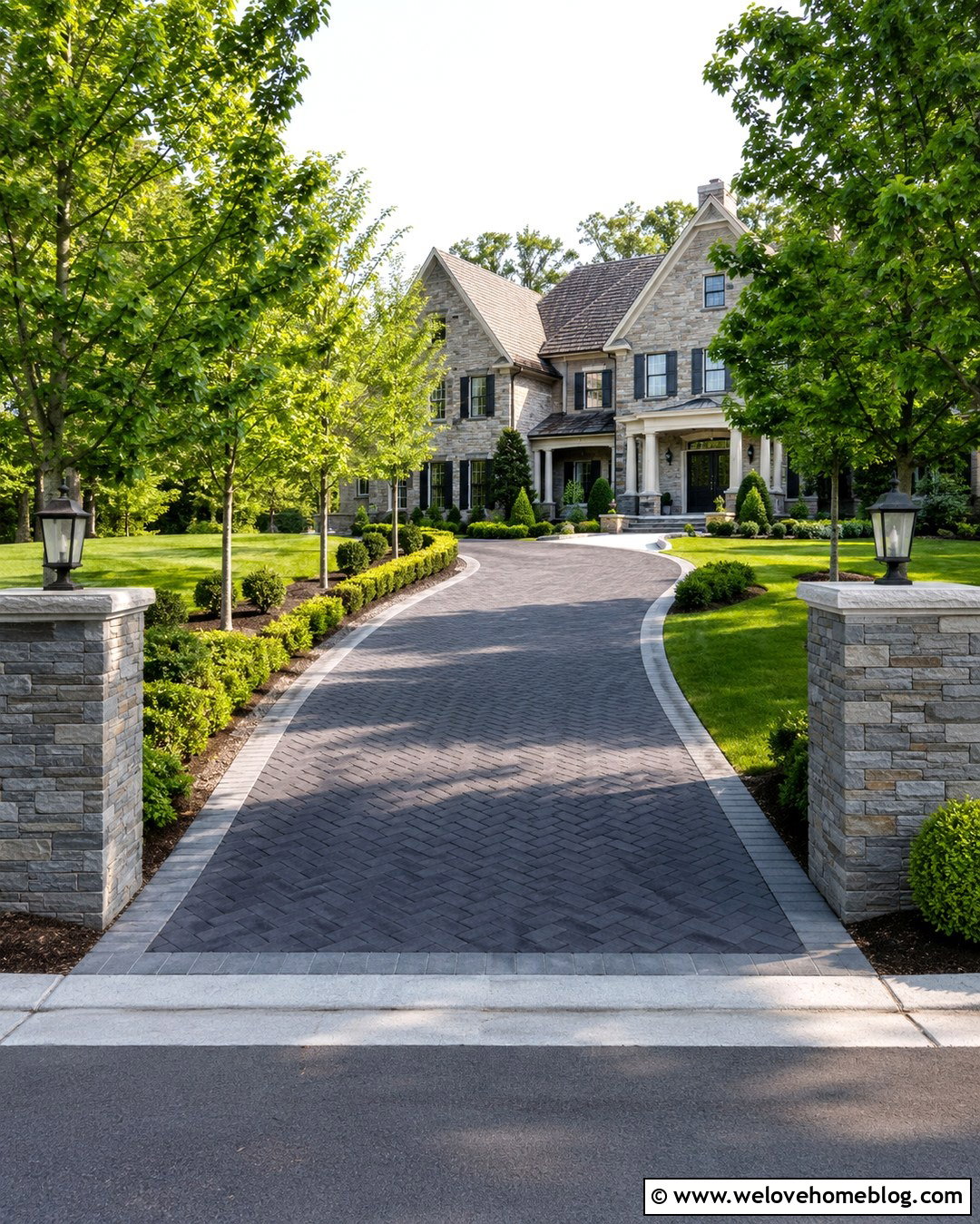
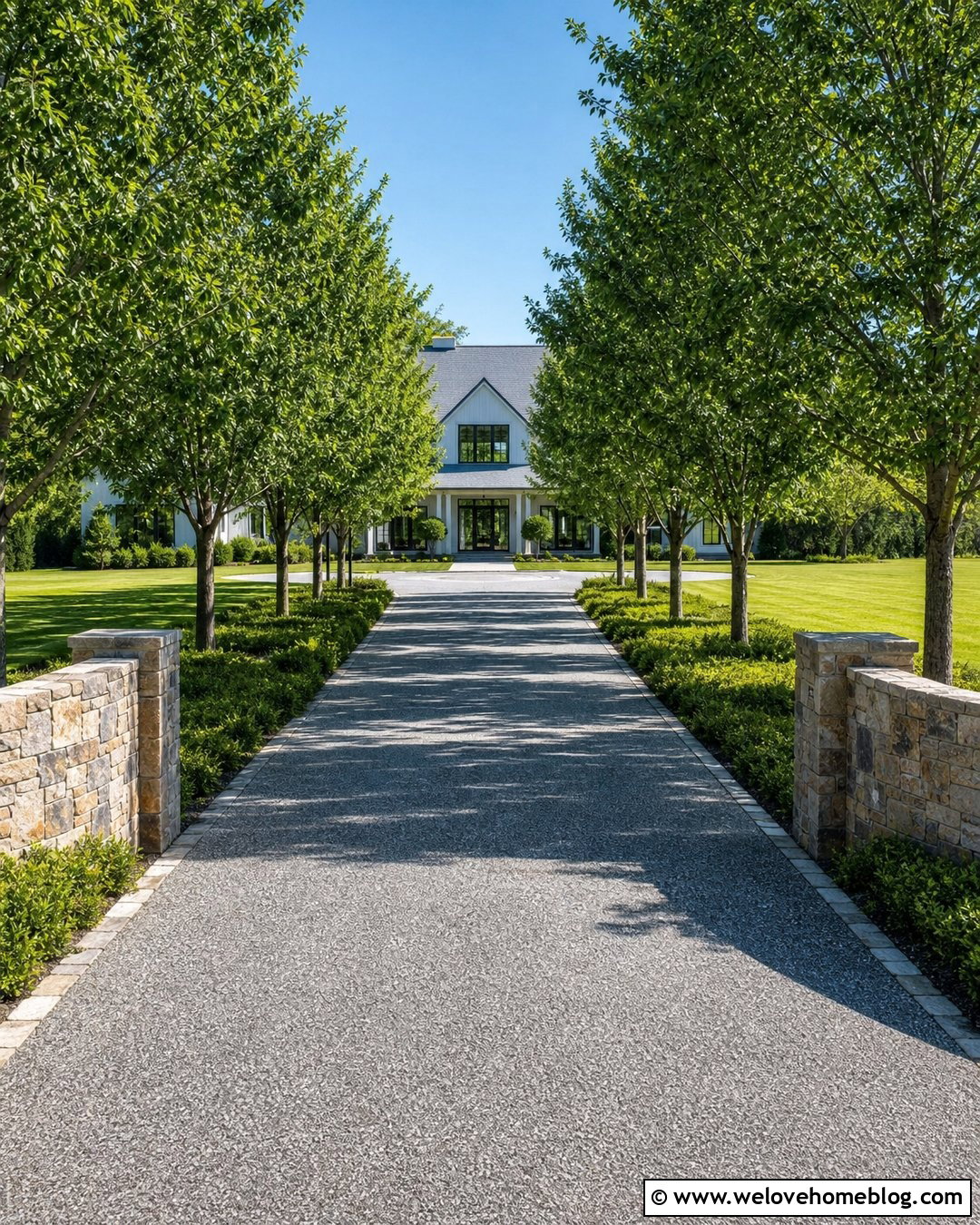
Entrance pillars give a charcoal driveway a defined starting point and help connect the street view with the house. Build the pillars from brick or natural stone already present on the facade, then place them outside the practical driveway clearance. Continue a light gray block border between the pillars and around the charcoal herringbone surface. For a long driveway, use a gentle curve that reveals the home gradually while preserving comfortable vehicle movement. Low hedges and evenly spaced trees can frame the route without making it feel enclosed. Add restrained pillar caps and discreet address plaques rather than oversized decorations. If gates are included, their swing, access controls, visibility, and setback should be planned early. The finished entrance should feel proportional, open, and clearly connected to the driveway’s materials and landscaping.
Conclusion:
The best charcoal driveway designs treat paving, borders, drainage, planting, and architecture as parts of one complete composition. Herringbone patterns offer a classic, energetic surface, while running bond and mixed-size layouts create different visual effects. Light gray blocks, brick ribbons, granite setts, and planted edges can all prevent the dark paving from looking flat or overpowering. Before selecting a layout, consider vehicle movement, maintenance, water management, and how the driveway connects to the front door. Professional base preparation and secure edge restraints are just as important as the visible pattern. Use these **20 Charcoal Block Paving Driveway Ideas** to develop an entrance that feels balanced, practical, and tailored to your home.

Related posts:
Leave a Reply