
Large Front Driveway Ideas can turn an oversized paved area into a welcoming approach that feels connected to the house and landscape. The strongest designs coordinate the surface material, driveway shape, borders, planting, walkways, and entrance details instead of treating each feature separately. On a spacious lot, you might choose a circular paver drive, a sweeping gravel approach, or a wide concrete layout with planted breaks. Mixing materials and adding green space can also keep a broad driveway from resembling a parking lot. () Practical planning matters too, including drainage, turning space, garage access, and safe visibility near the street. The complete looks below offer adaptable inspiration for traditional estates, modern homes, farmhouses, and suburban properties through 20 Large Front Driveway Ideas.

1. Large Circular Paver Driveway
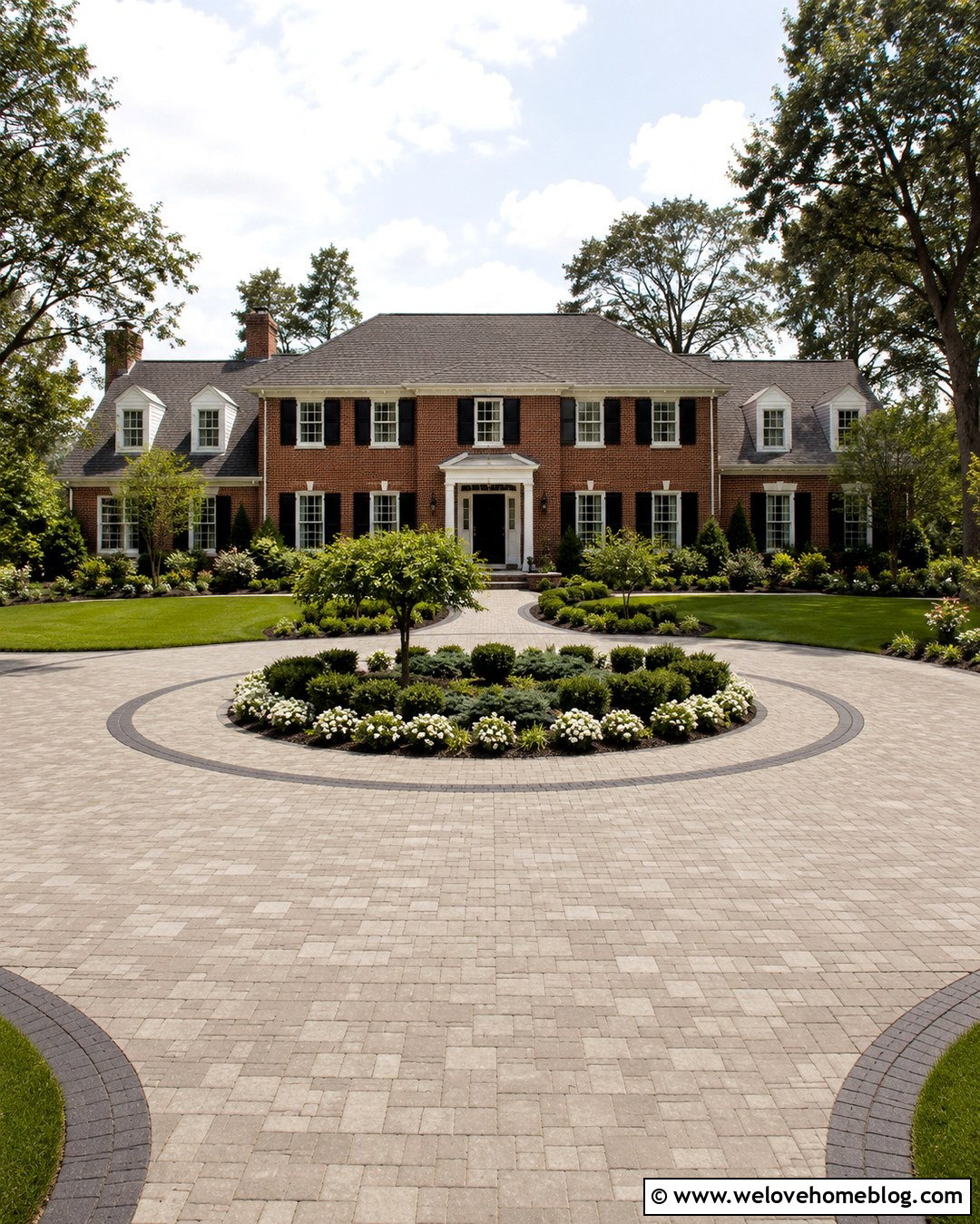
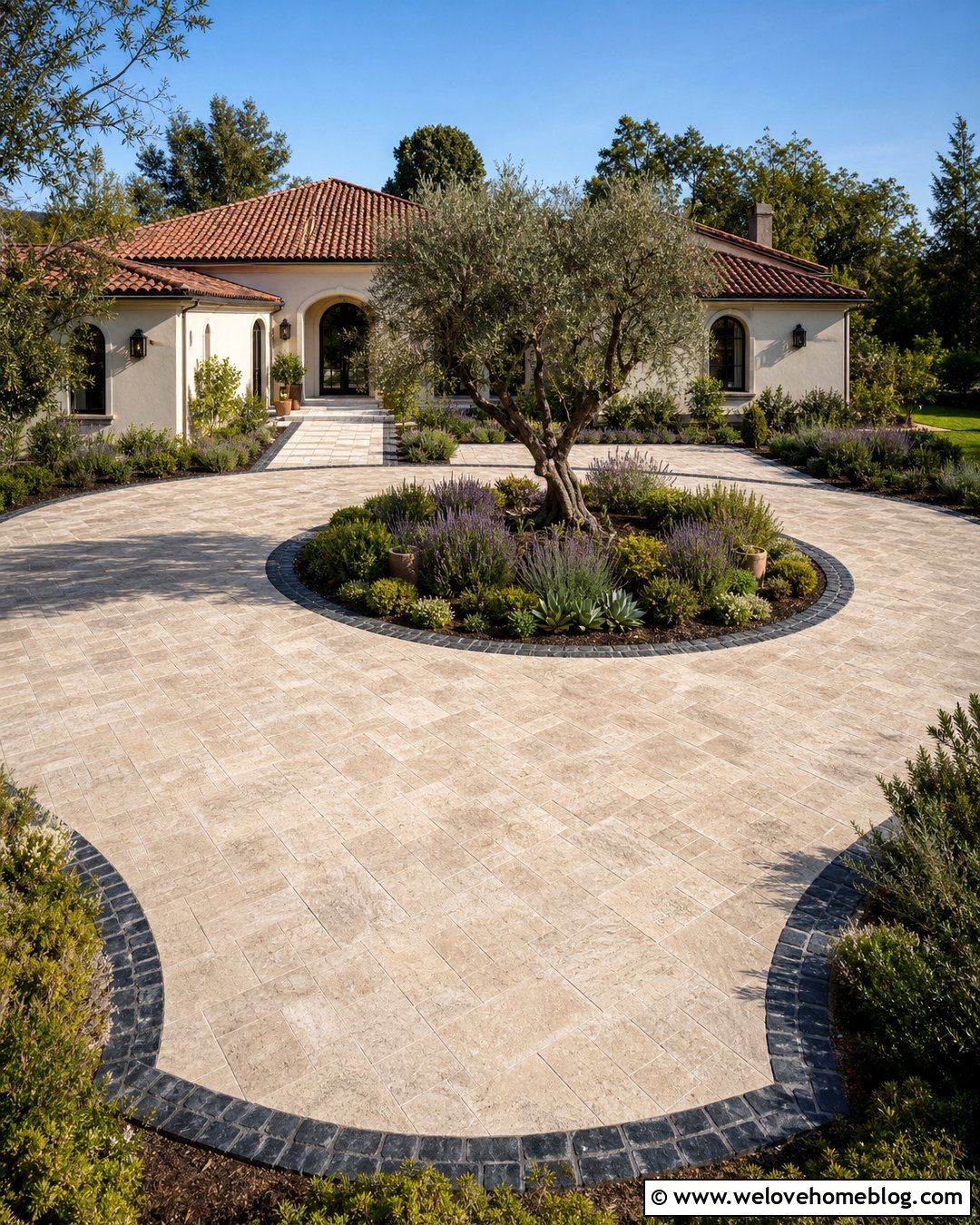
A circular driveway gives a large front yard a clear sense of structure while creating an easy arrival and departure route. Choose warm gray concrete pavers laid in a running bond or fan pattern, then frame the outer edge with darker charcoal pavers. A broad center island prevents the paved surface from feeling excessive. Fill it with a small ornamental tree, low evergreen shrubs, and simple flowering ground cover. Keep taller plants toward the middle so drivers can see across the circle. A curved walkway can connect the drop-off area to the front porch without crossing traffic unnecessarily. This complete layout works especially well with brick Colonial, Georgian, and traditional two-story homes because its balanced geometry complements symmetrical architecture.
2. Curved Gravel Driveway With Stone Edging
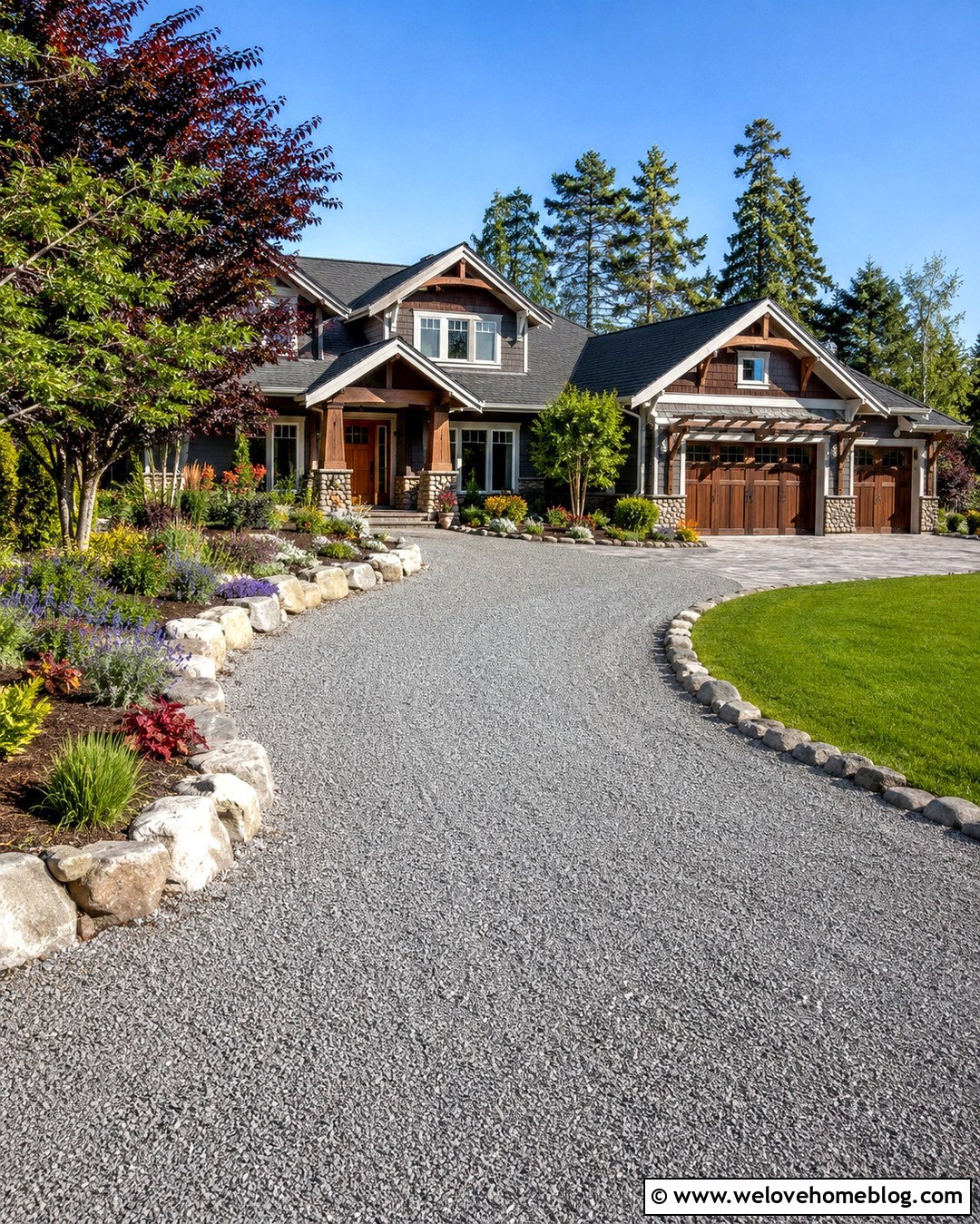
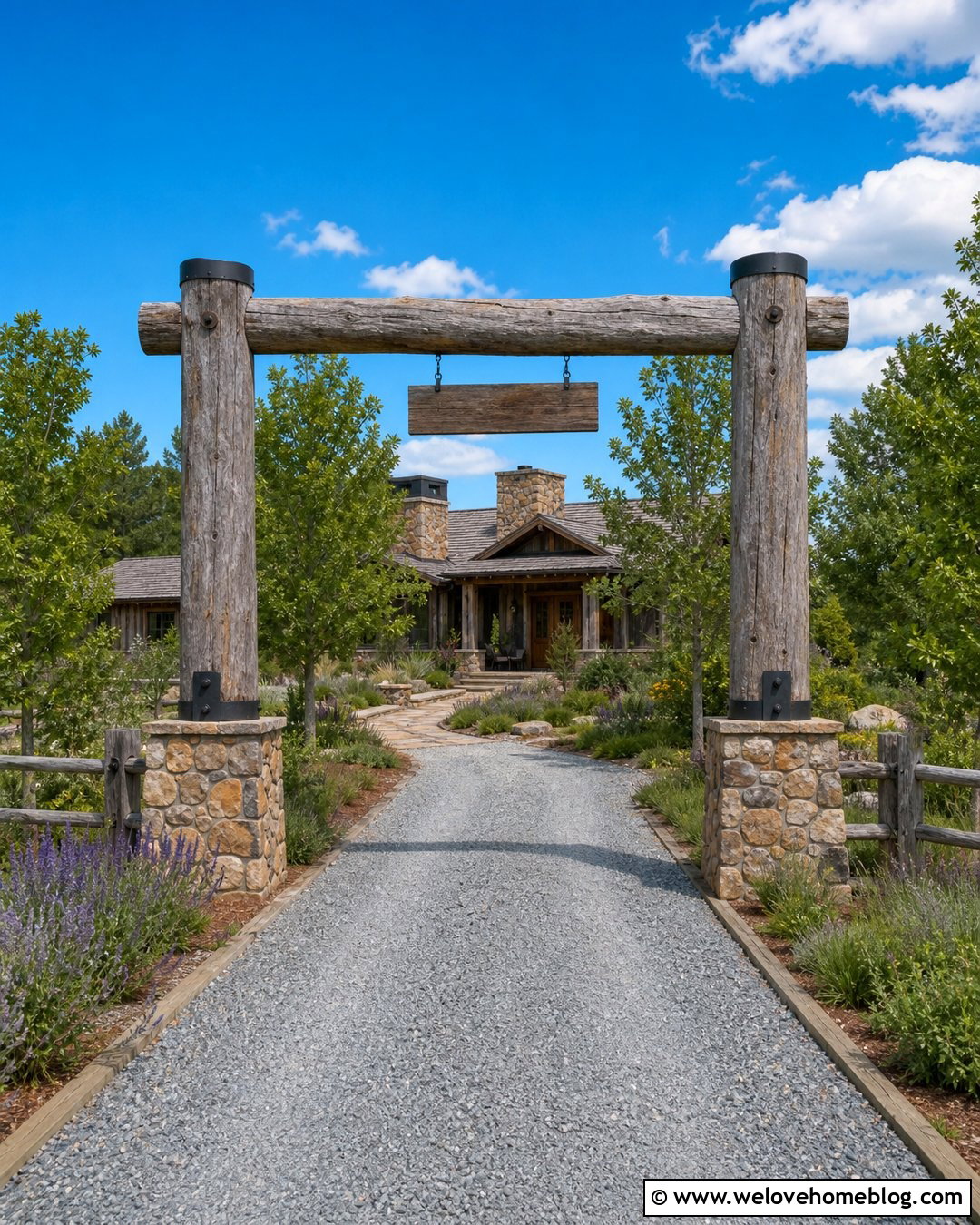
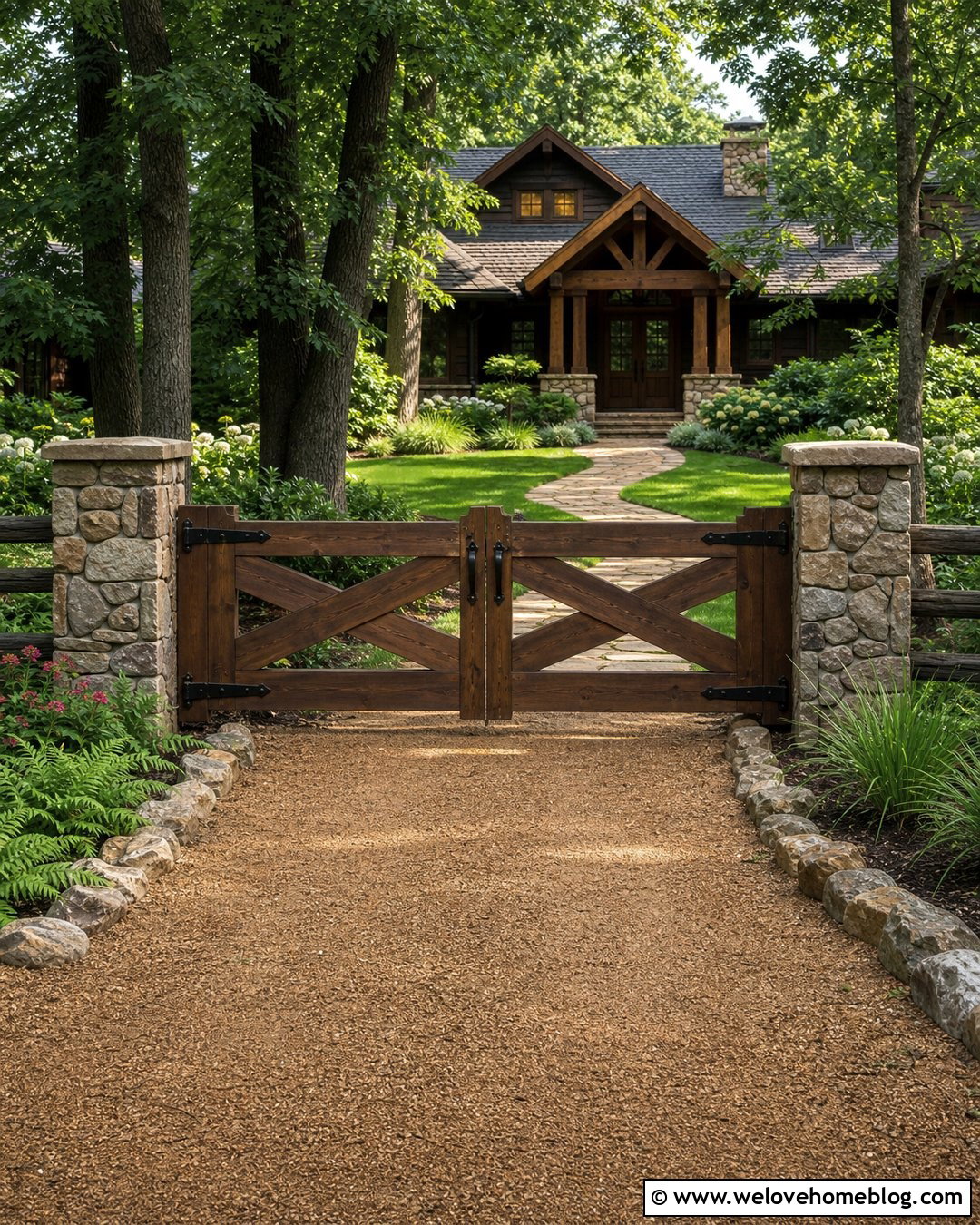
Can a spacious driveway feel relaxed without looking unfinished? A gently curved gray gravel driveway bordered by natural fieldstone creates an informal yet intentional approach. The curve should follow the shape of the lawn and reveal the house gradually rather than cutting directly across the property. Compact the gravel over a properly prepared base and use substantial edging to contain loose stones. Along the outside curve, plant layered beds with shade trees, evergreen shrubs, ornamental grasses, and seasonal flowers. Keep the inside edge simpler with open lawn to preserve visibility. Near the house, transition from gravel to a stone or paver parking apron. This design suits country homes, Craftsman houses, and wooded properties where softer materials belong naturally within the setting.
3. Modern Concrete Driveway With Grass Strips
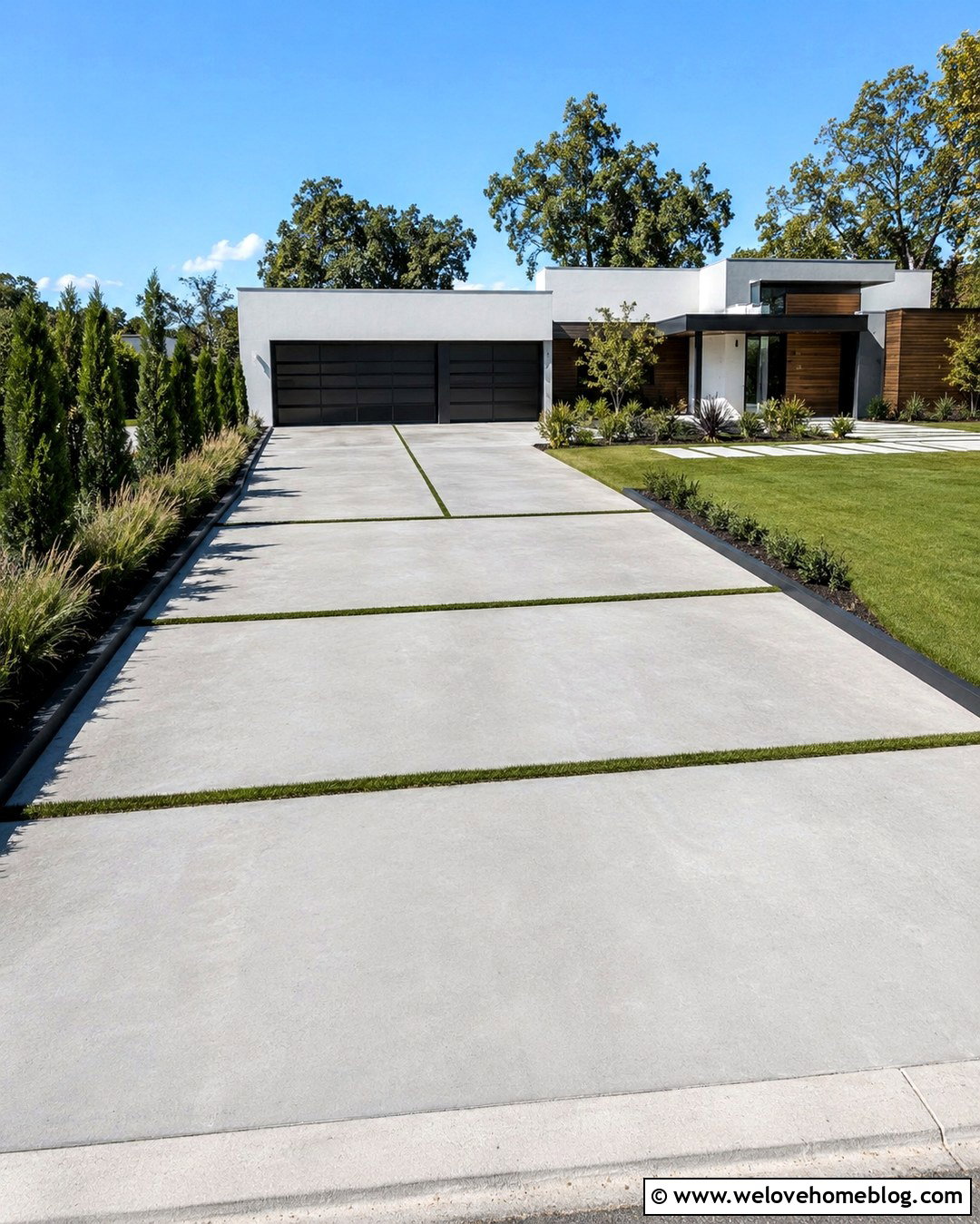
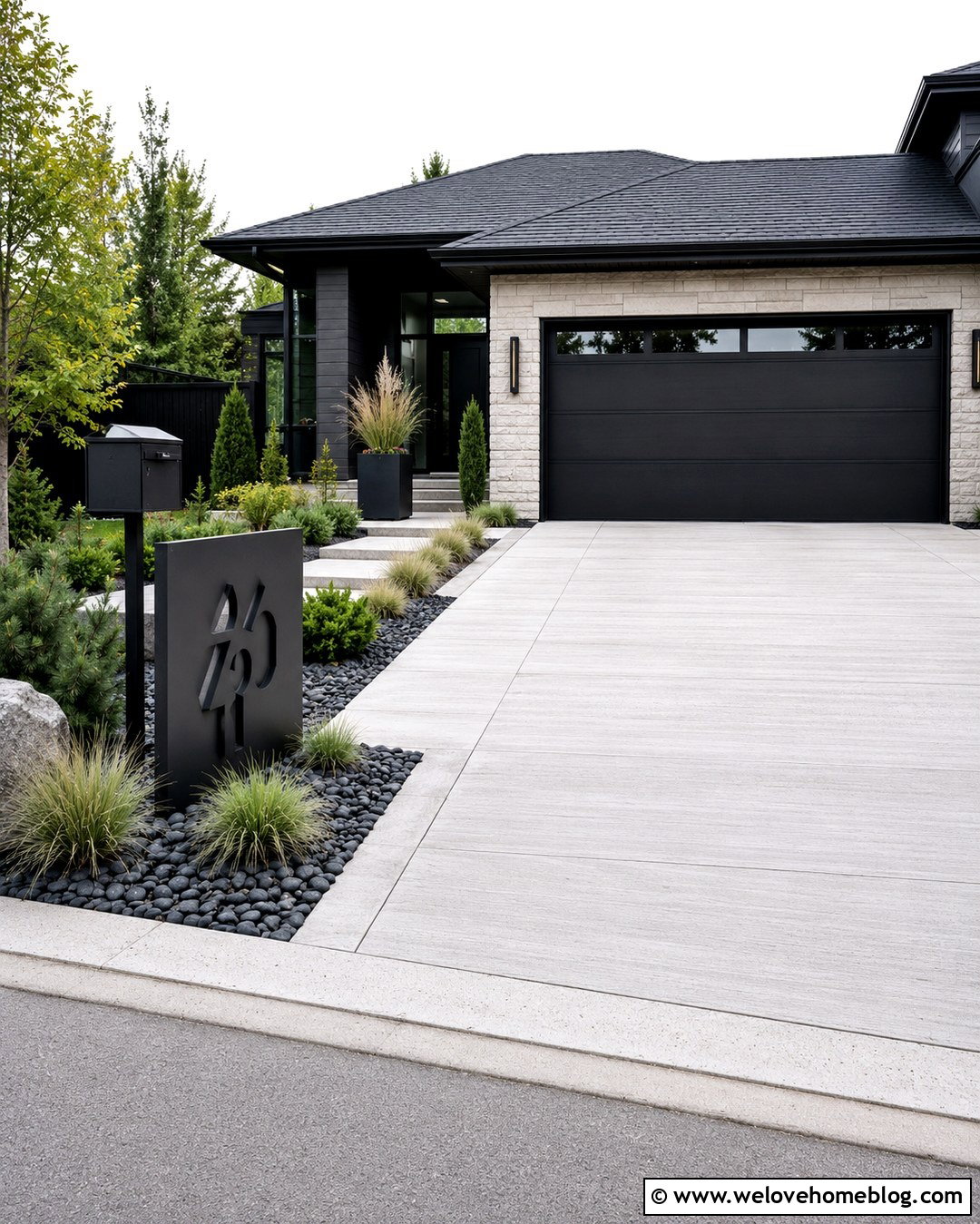
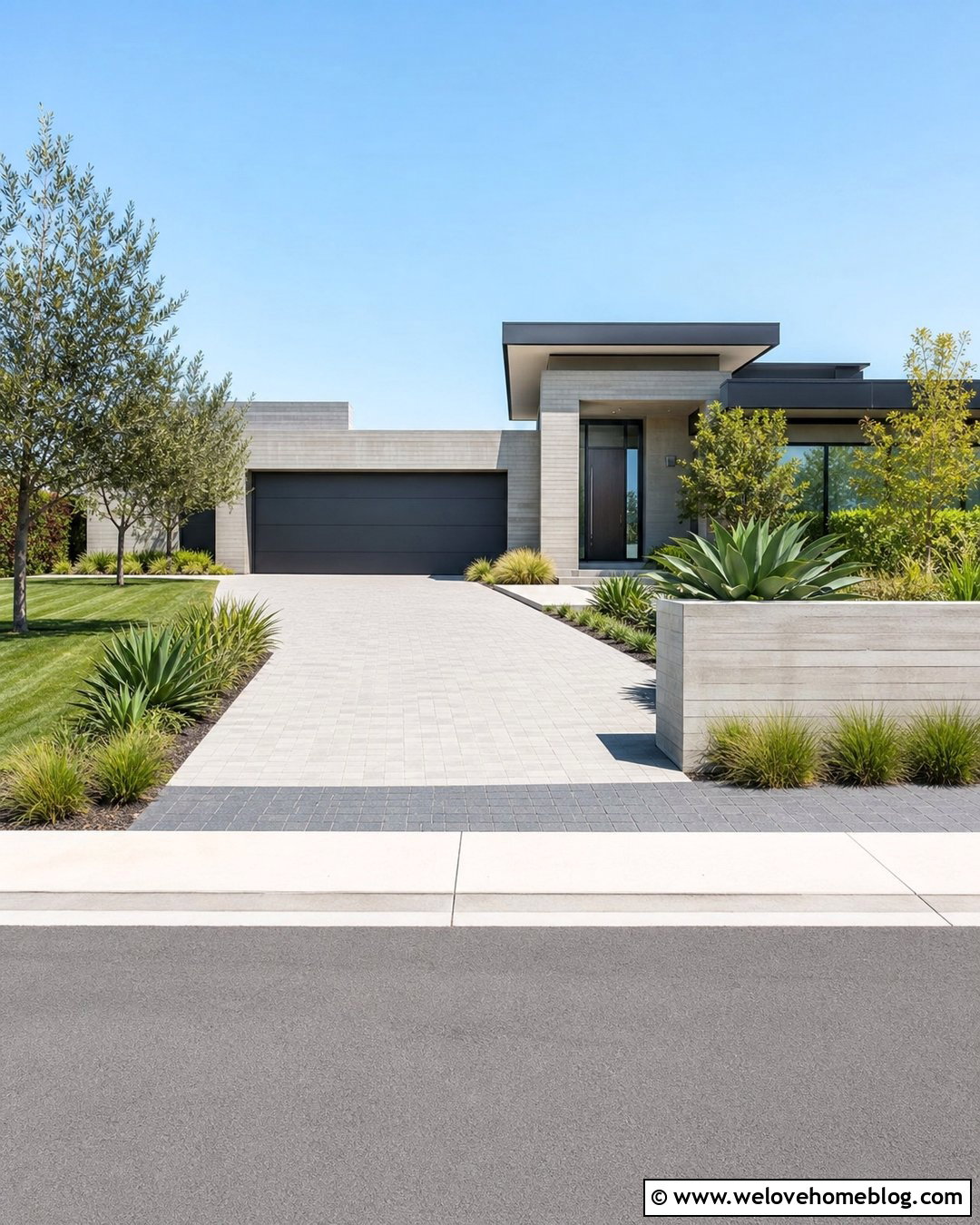
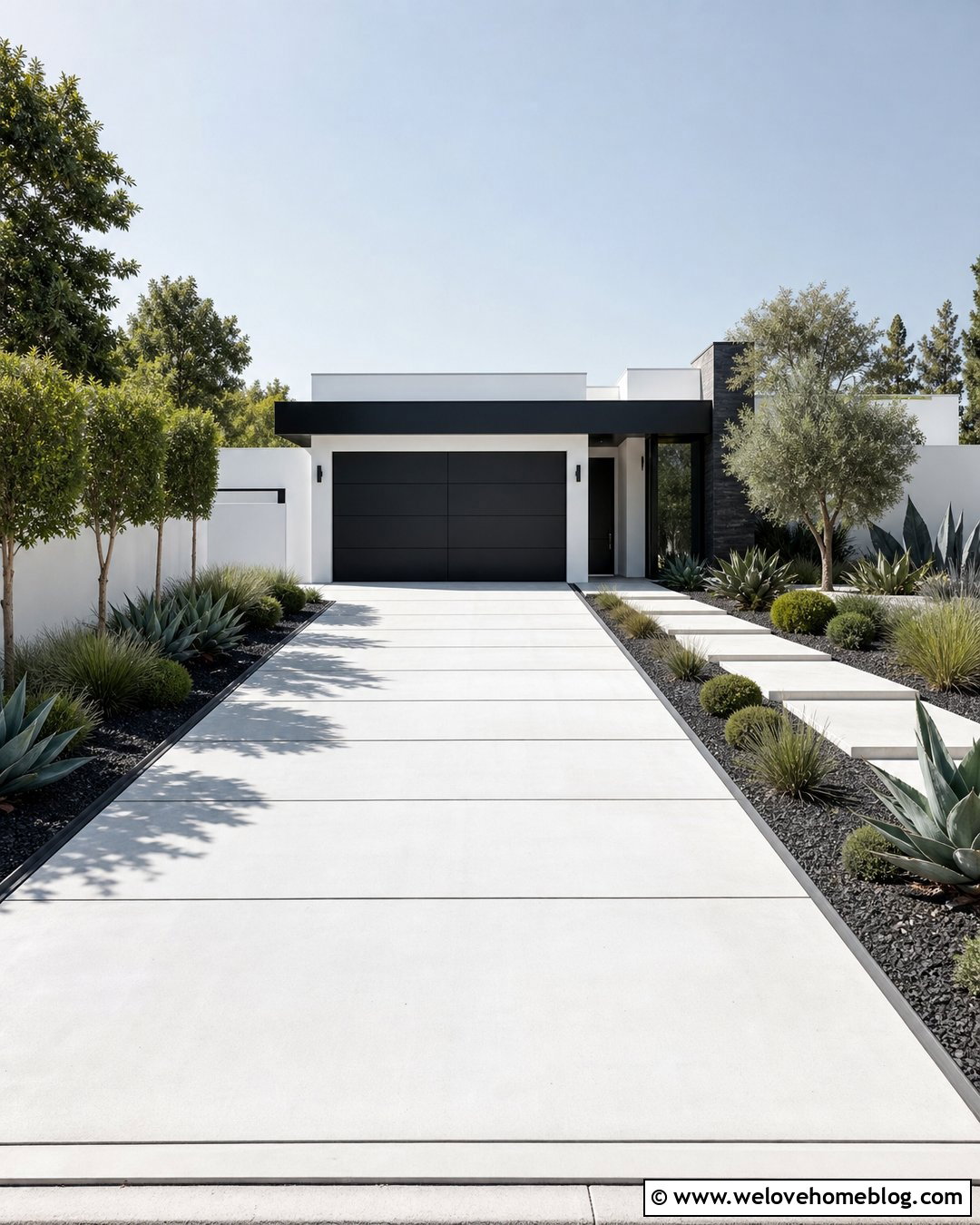
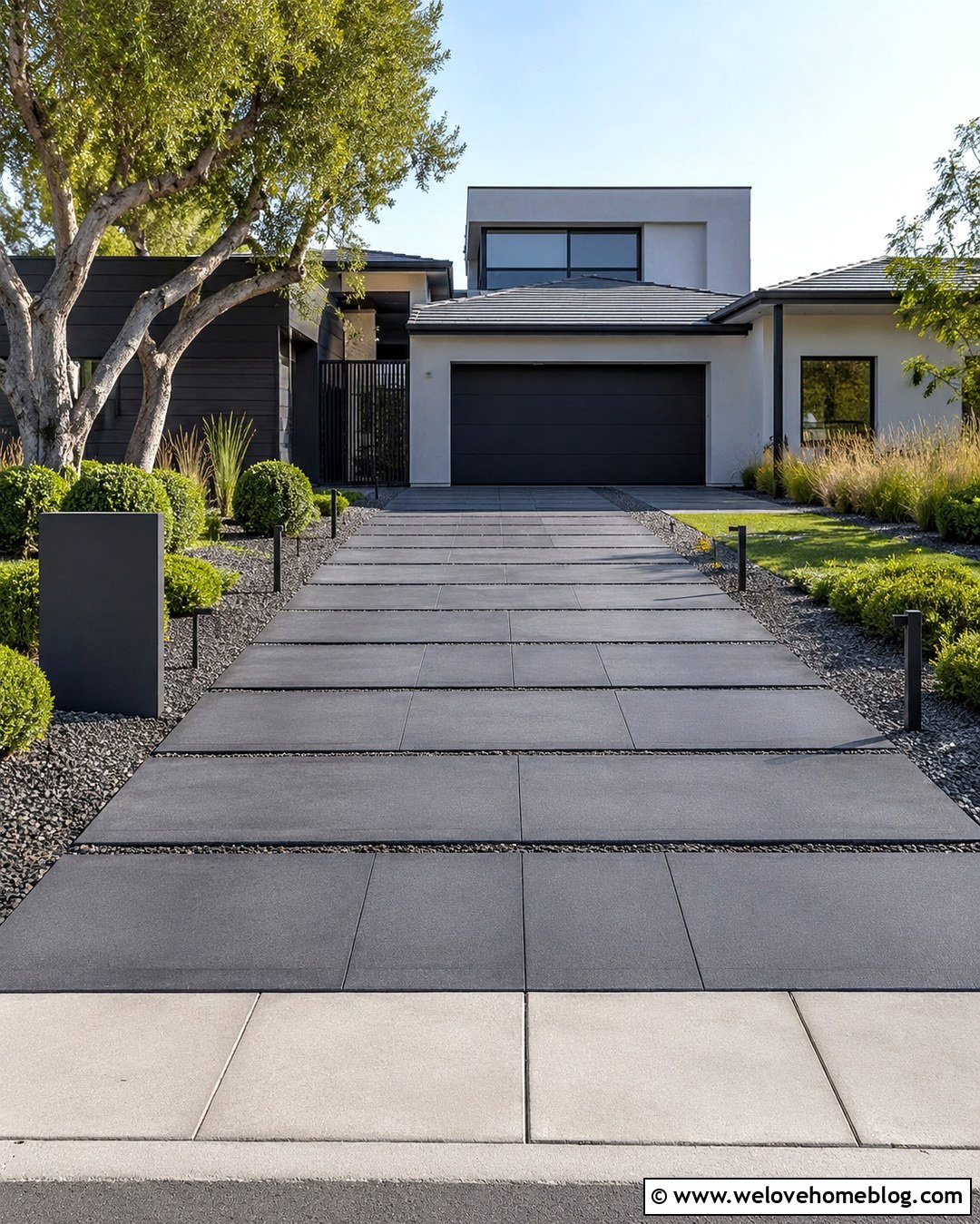
Crisp concrete panels can make a broad front driveway look organized rather than overwhelming. Use smooth, light gray poured concrete divided into large rectangular sections, with narrow grass or low ground-cover strips separating selected panels. A straight or slightly offset layout reinforces the clean architecture of a modern house. Dark metal edging keeps the planted joints defined, while linear beds of ornamental grasses, compact evergreens, and drought-tolerant perennials soften the hard surface. Repeat the concrete panels in the walkway leading to the front door so the entire entrance feels coordinated. Near a multi-car garage, use uninterrupted concrete in the main turning area for easier movement. The planted sections are most effective along lower-traffic areas where tires will not repeatedly cross them.
4. Horseshoe Asphalt Driveway With Brick Aprons
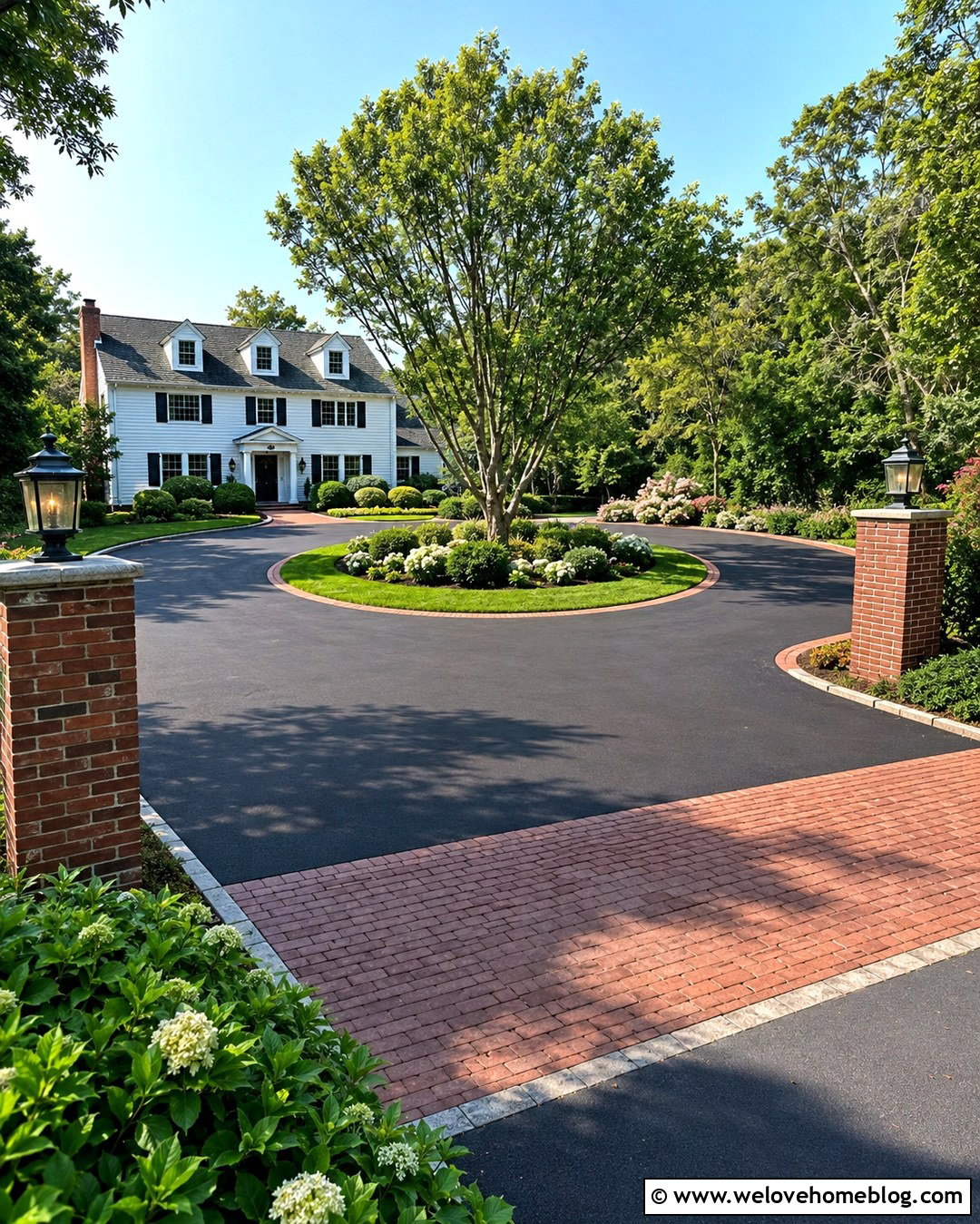
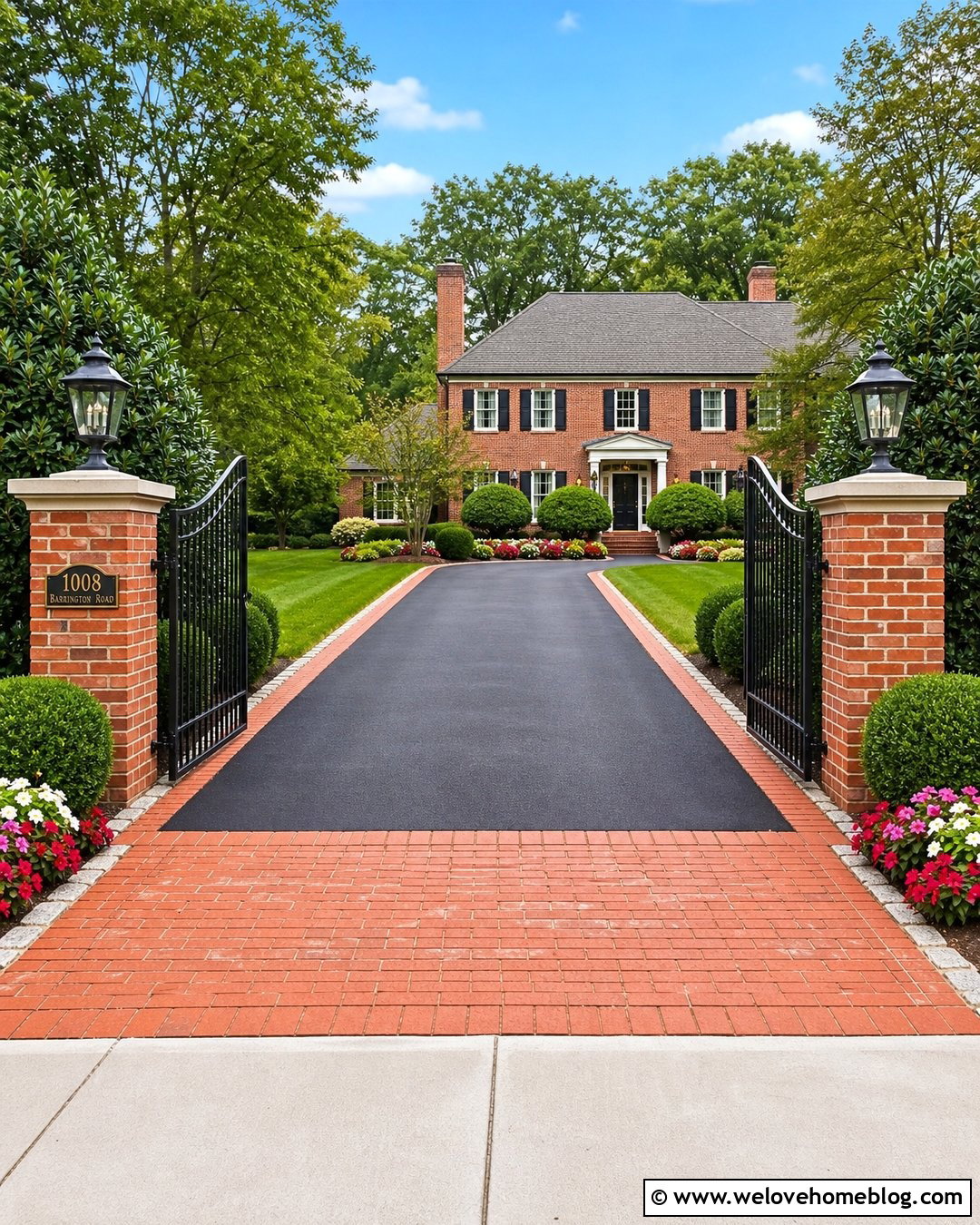
A black asphalt horseshoe driveway provides a practical solution for a large front yard that regularly handles visitors. Two street entrances allow vehicles to move through the property without complicated backing. To make the asphalt feel more connected to the house, install clay brick aprons at both entrances and repeat the same brick around the driveway edges. A wide planting bed can occupy the center of the horseshoe, combining a specimen tree with low shrubs and colorful perennials. Add matching brick pillars at the entrances for another layer of definition. The dark driveway surface looks especially sharp beside a white Colonial, Cape Cod, or painted-brick home. Leave generous open areas near the street so landscaping and pillars do not interfere with a driver’s view.
5. Cobblestone Driveway With Gate Pillars
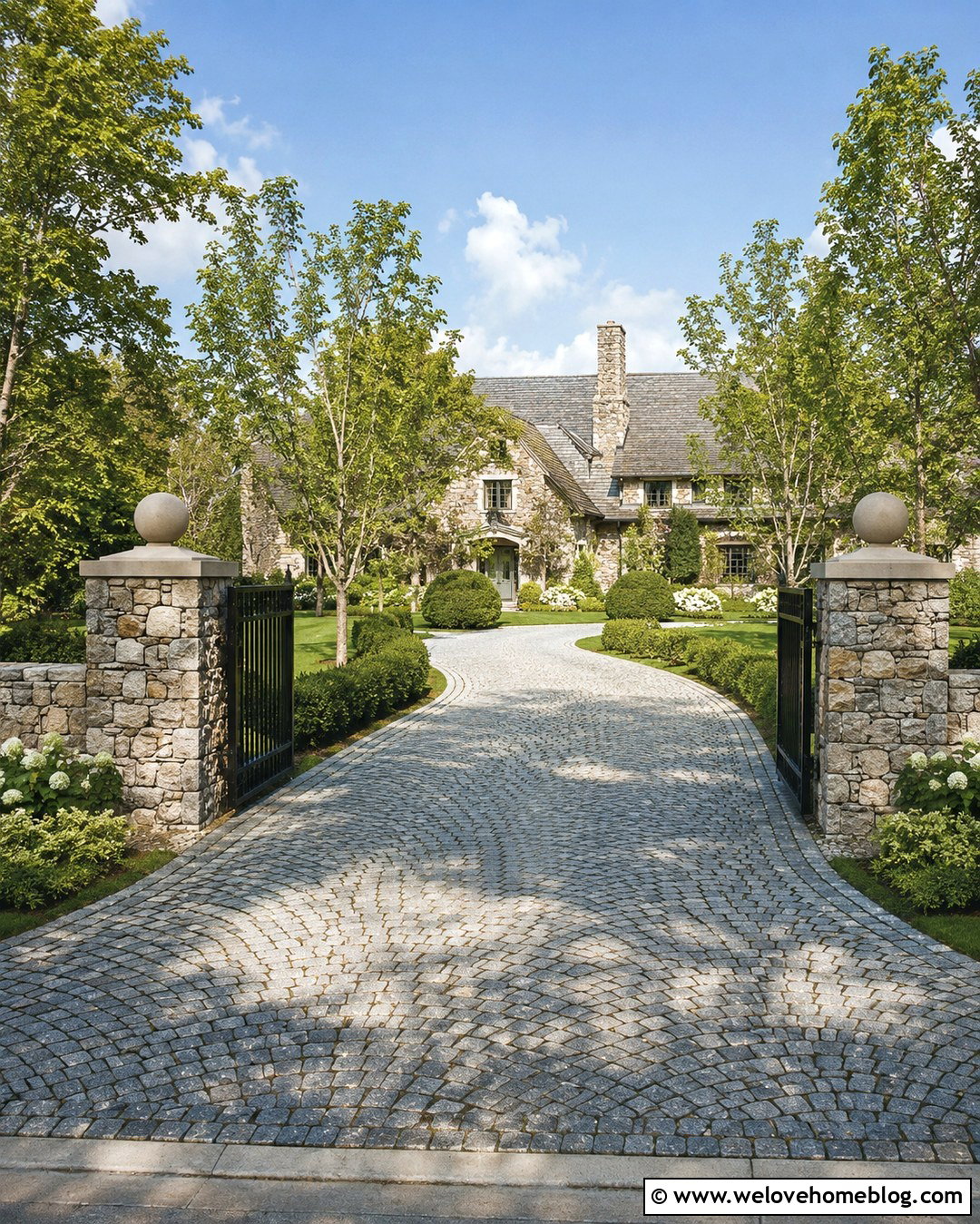
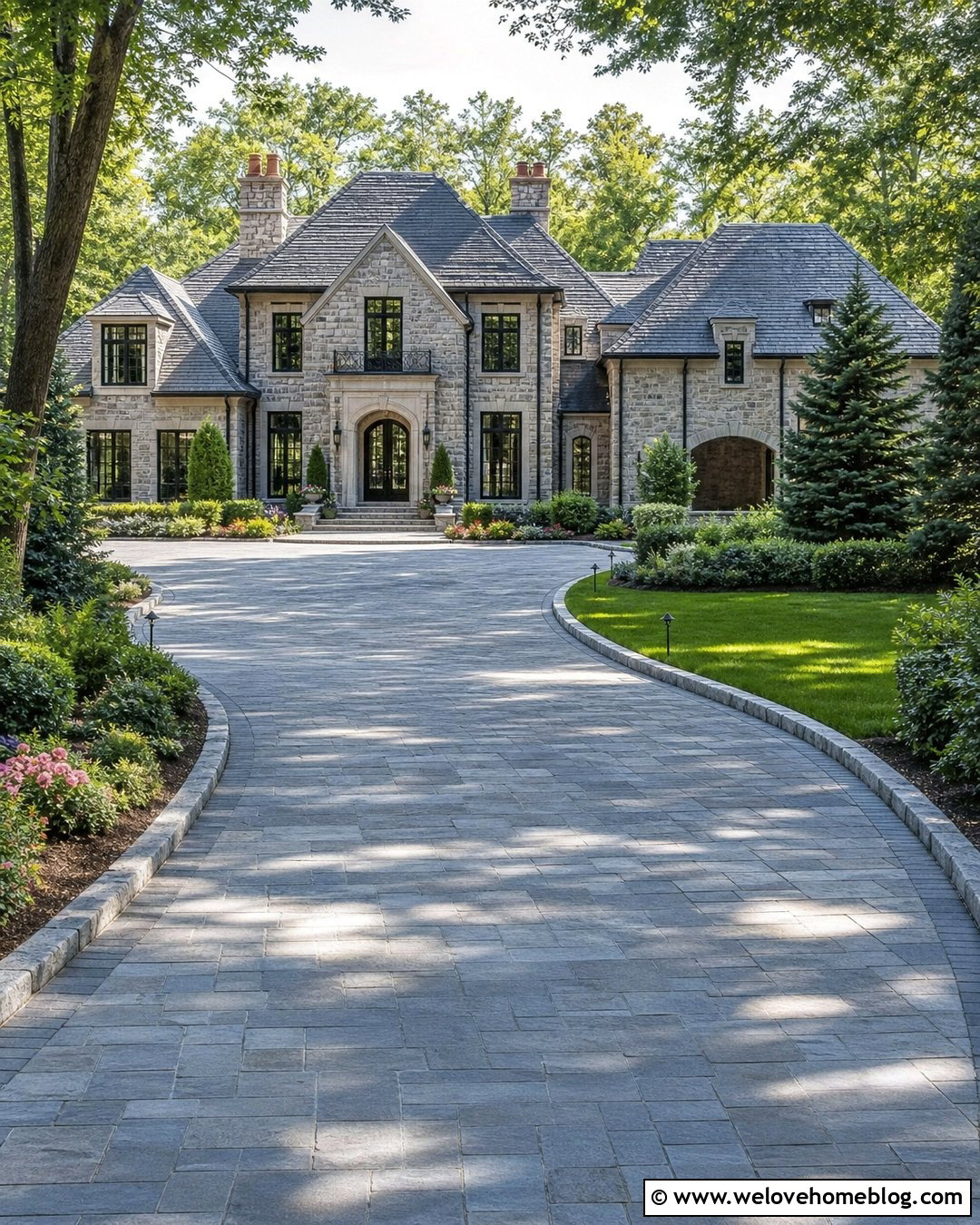
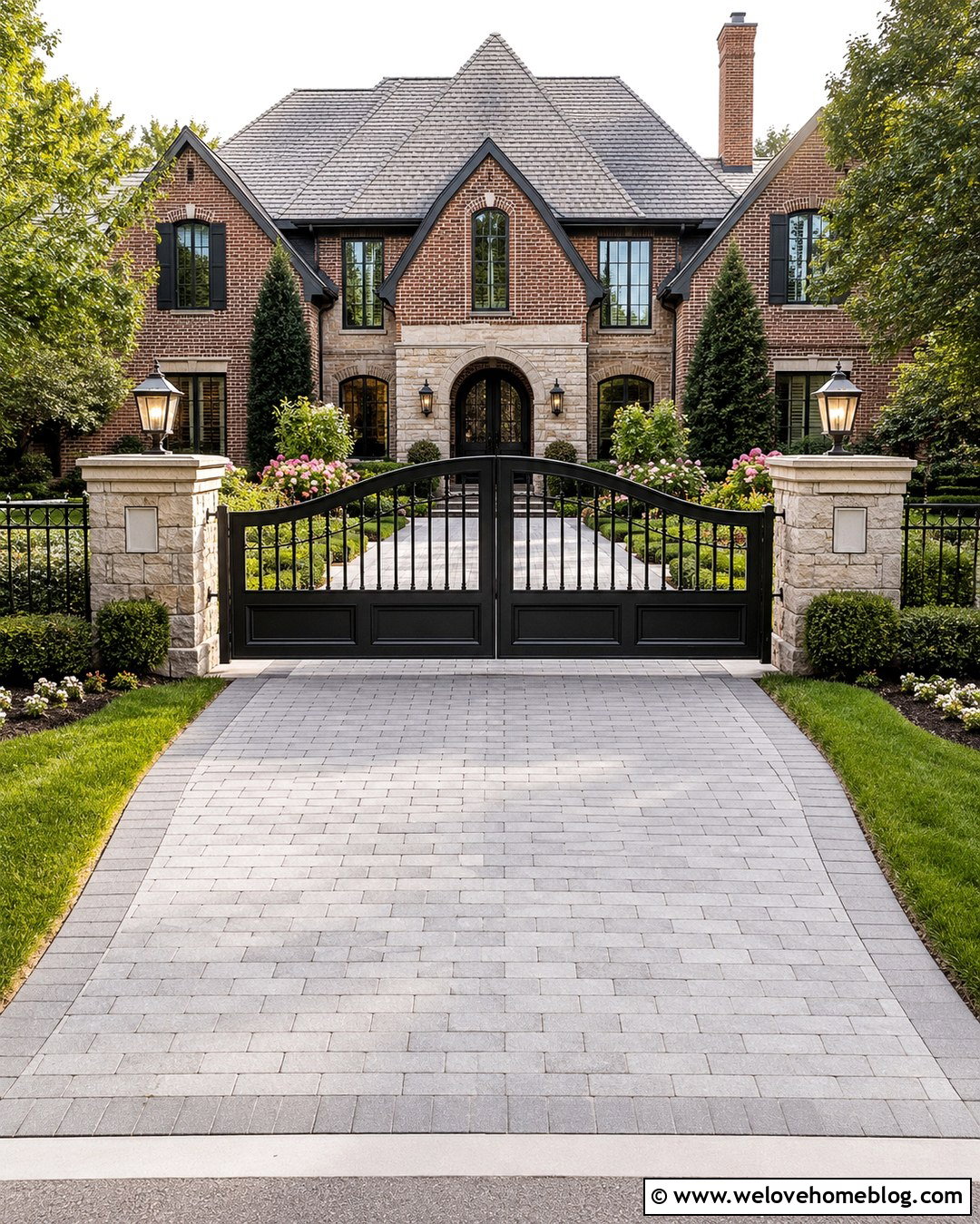
The texture of cobblestone can give a large front driveway the character of a traditional estate. Use rectangular gray granite cobbles in a fan or offset pattern, with a gently curved approach leading to the house. At the street, substantial stone pillars and a simple black metal gate establish a formal entrance without hiding the property. Continue the pillar stone into low retaining walls or raised planting beds for visual continuity. Clipped hedges, flowering shrubs, and evenly spaced deciduous trees can frame the drive while leaving enough clearance for vehicles. A smooth stone walkway should branch toward the front door near the parking court. Because cobblestone creates strong visual movement, keep the planting palette controlled and repeat the same materials around the porch, steps, and facade.
6. Exposed Aggregate Driveway With Curved Beds
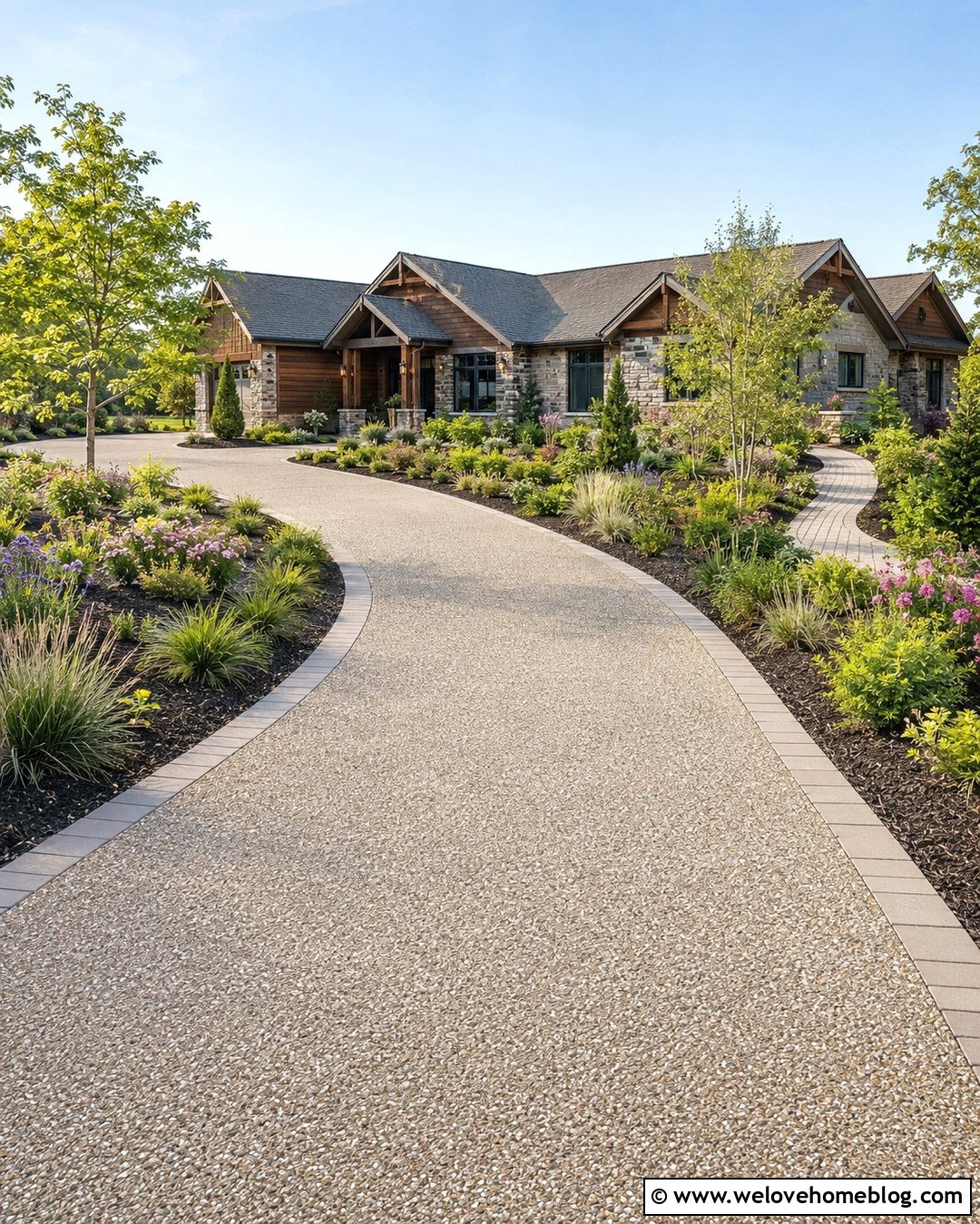
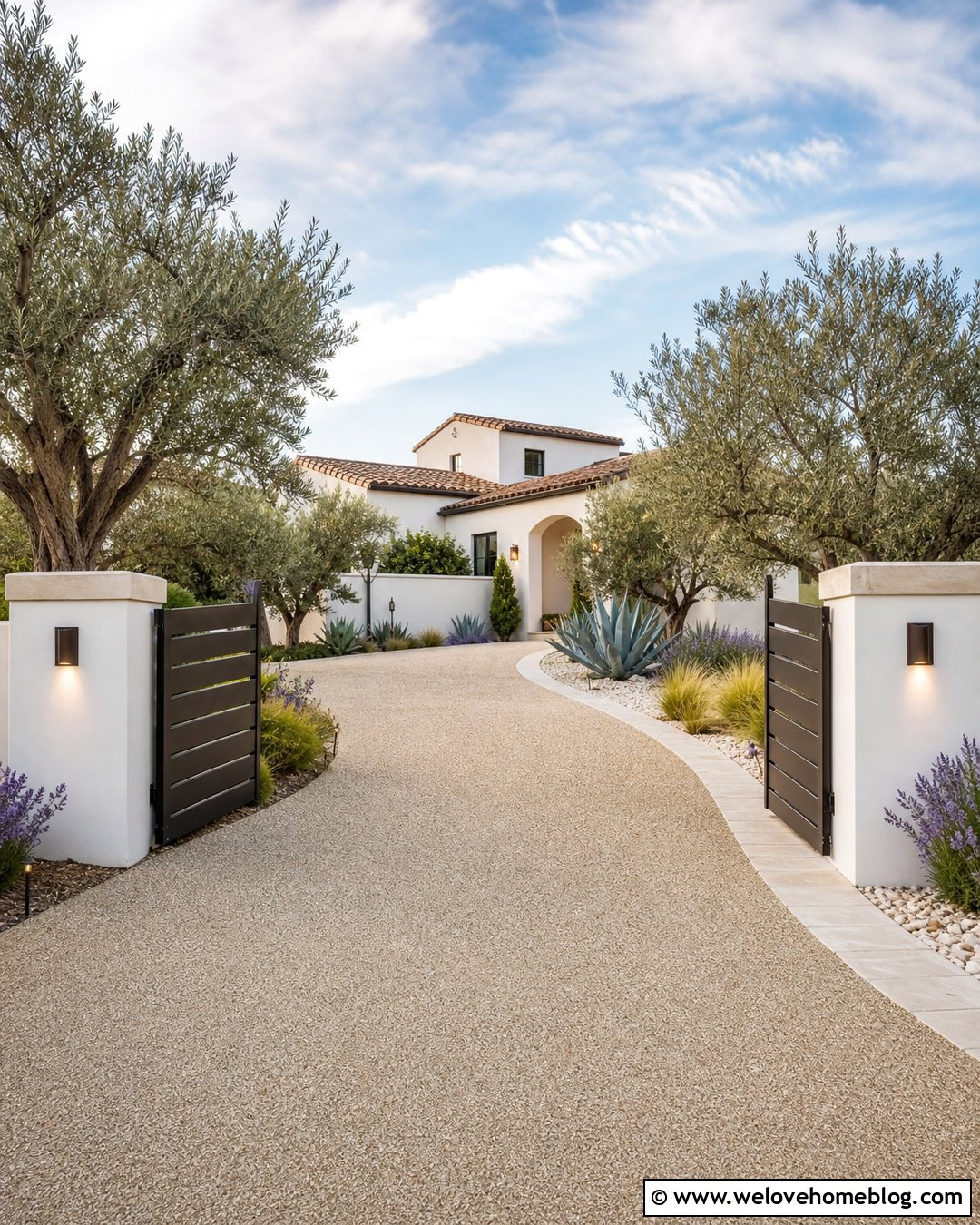
Exposed aggregate provides subtle color and texture while remaining calmer than a heavily patterned surface. For a large front driveway, select a warm beige or soft gray aggregate that relates to the stone, brick, or roof colors on the house. Shape the driveway with wide, flowing curves and border it with a narrow band of coordinating concrete pavers. Deep planting beds should follow the same curves, allowing shrubs, grasses, flowering perennials, and small trees to soften the broad hardscape. A separate walkway can cut gently through one bed toward the porch. At the garage, simplify the planting and provide a broad maneuvering area. This complete look feels polished without becoming overly formal, making it suitable for ranch homes, contemporary Craftsman houses, and updated suburban properties.
7. Herringbone Brick Driveway For A Colonial House
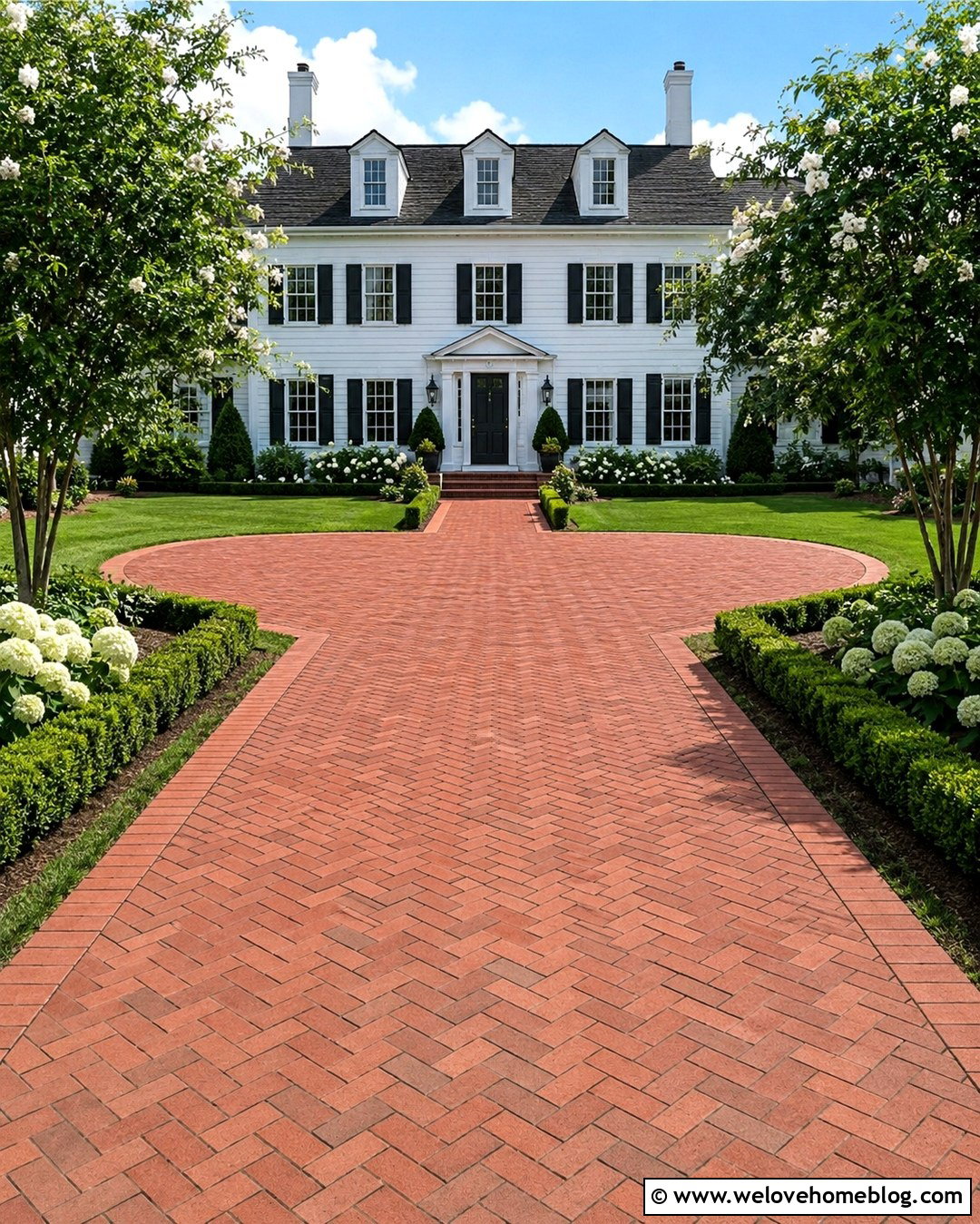
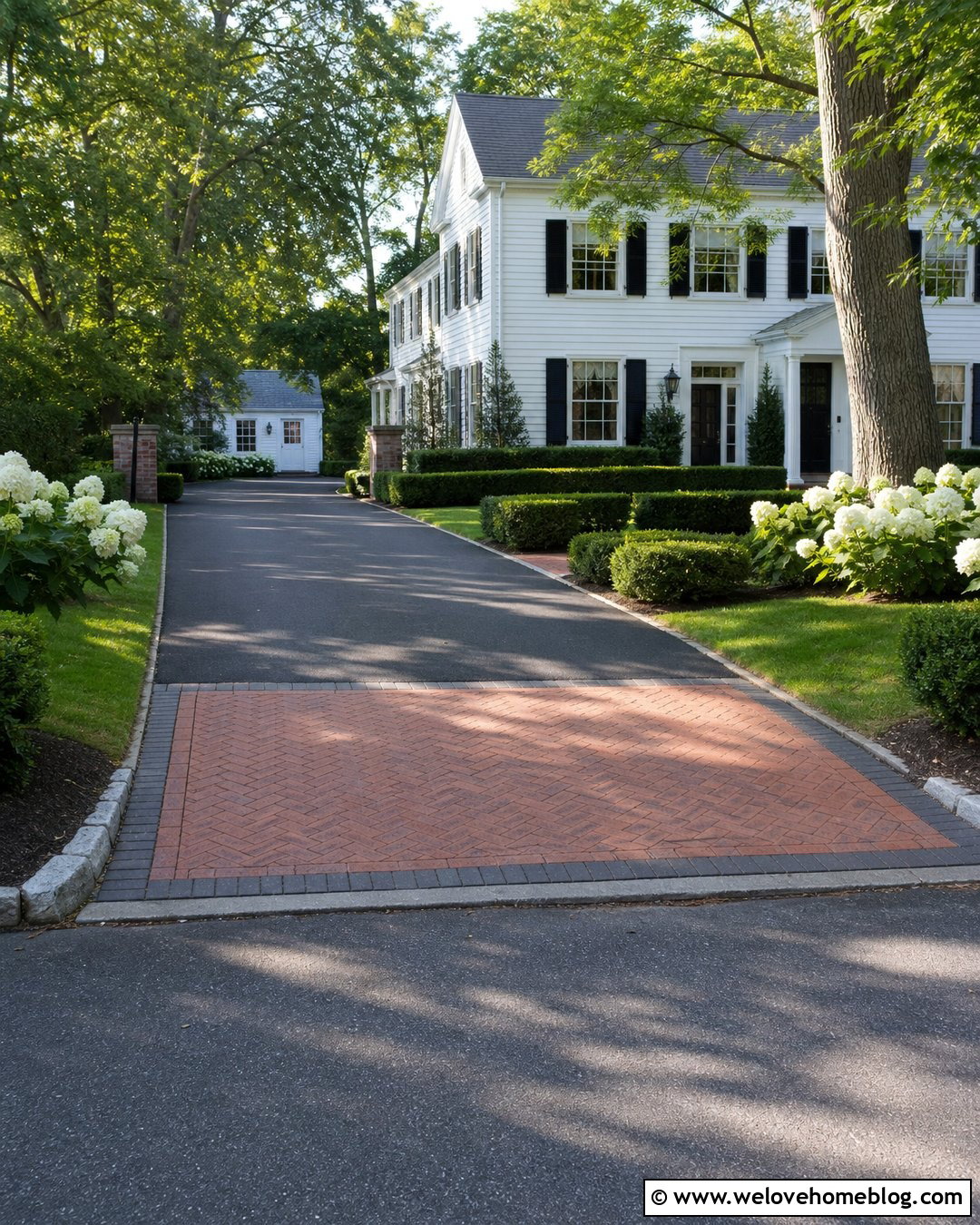
A red clay brick driveway laid in herringbone brings rich pattern to the spacious front of a Colonial house. The angled pattern creates visual interest across a large surface, while a straight soldier-course border gives the driveway a clean perimeter. Use a symmetrical layout that leads toward the garage but includes a widened arrival area near the front walkway. Low boxwood hedges, hydrangeas, and small flowering trees can frame both sides without competing with the brick. Repeat the driveway material in the walkway or porch steps to connect the entrance visually. If the red tones feel too strong, incorporate darker brown or charcoal border bricks. The finished design should feel balanced, orderly, and closely aligned with the proportions of the home’s windows, doorway, and facade.
8. Resin-Bound Driveway With A Dark Border
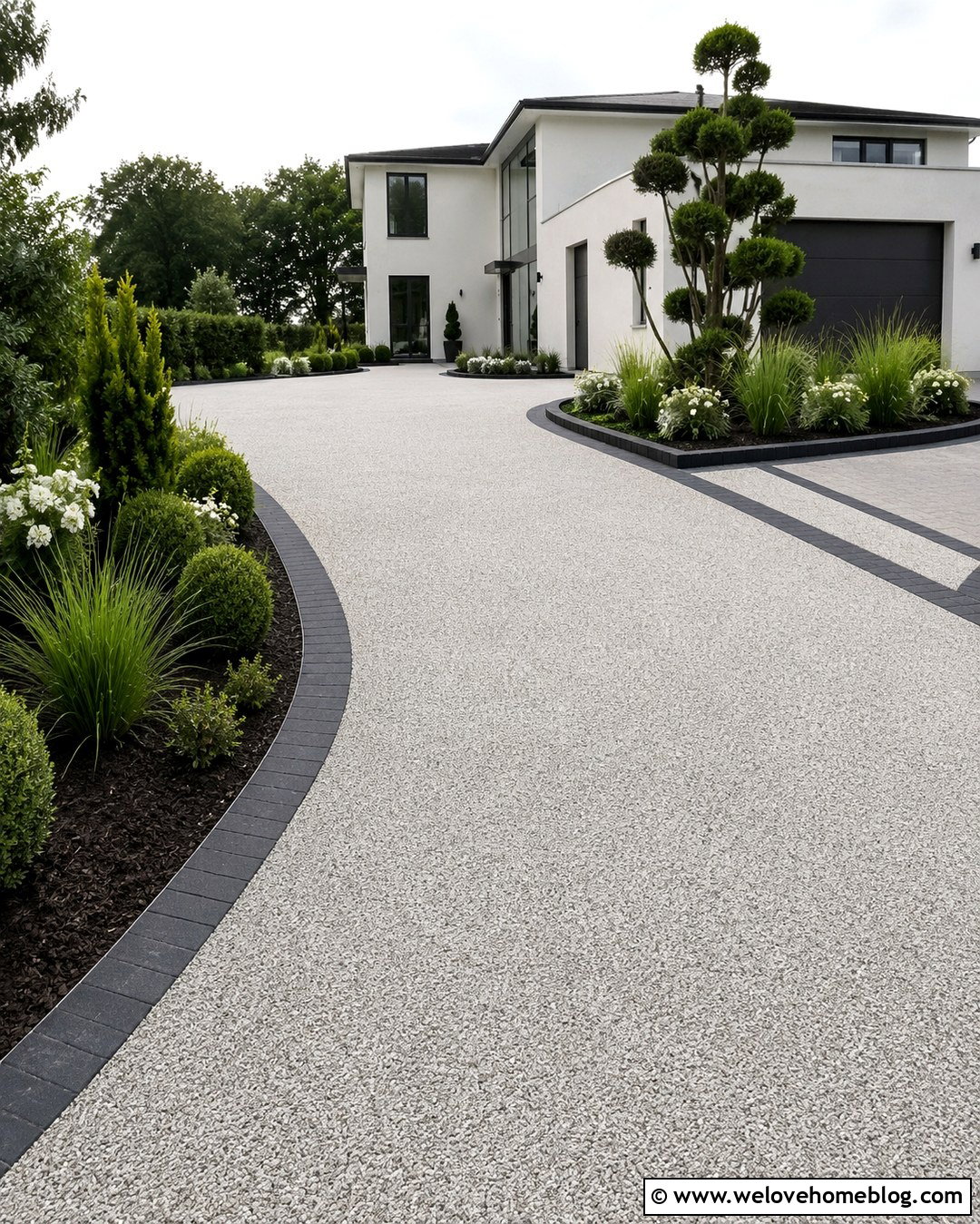
A resin-bound gravel surface gives a large driveway a smooth, seamless appearance while retaining the natural look of small stones. Choose a warm tan, pale gray, or muted golden aggregate and outline the complete driveway with charcoal block pavers. A curved layout can soften an angular contemporary home, while a straight geometric layout complements minimalist architecture. Create broad planting beds at strategic corners instead of lining every edge with narrow strips. Sculptural evergreens, ornamental grasses, and groups of flowering perennials provide shape without making the entrance busy. A matching resin-bound walkway can extend to the porch, separated from the driving area by a contrasting paver band. The clean border is essential because it defines the generous surface and ties it to darker window frames or roof details.
9. Farmhouse Gravel Driveway With Trees
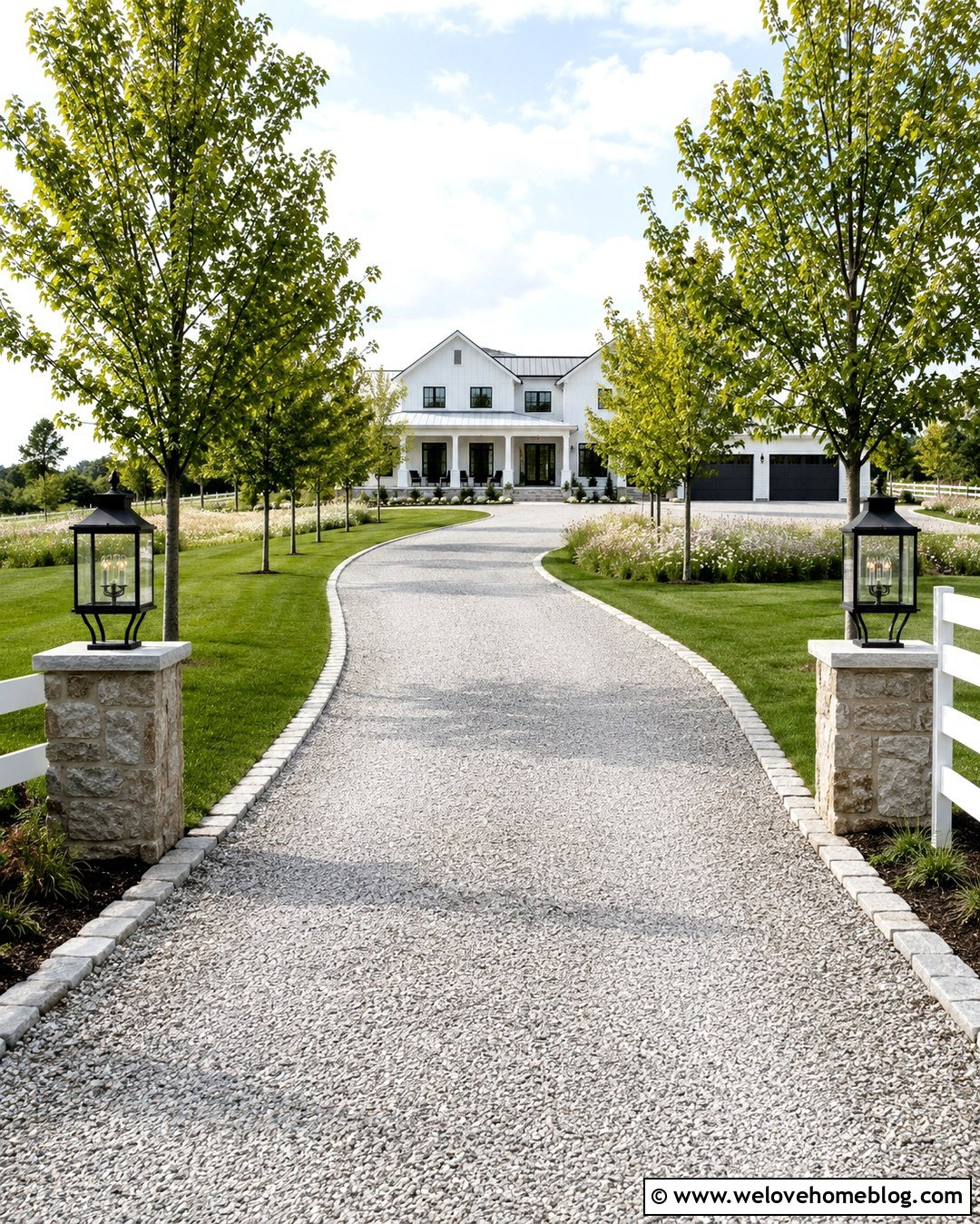
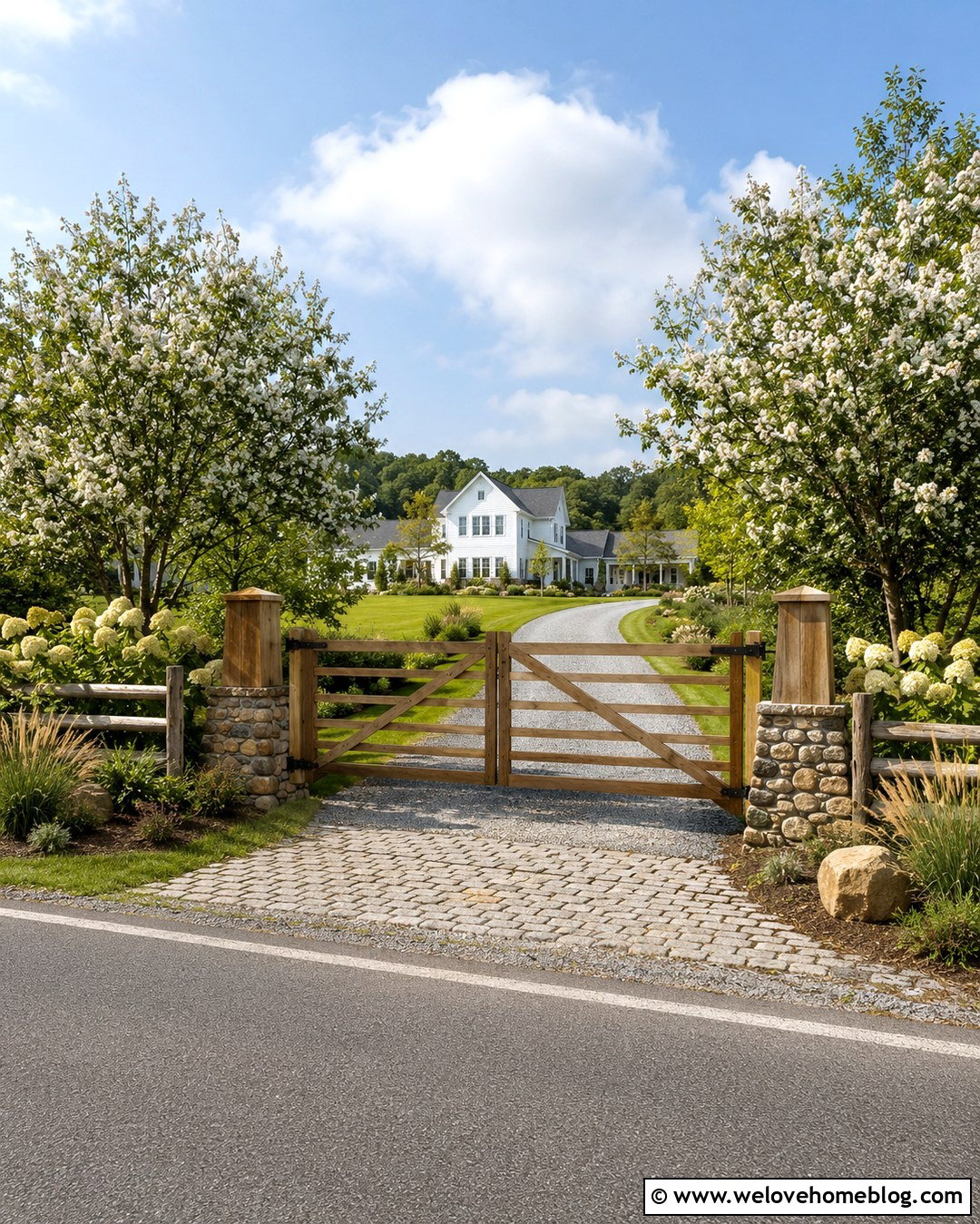
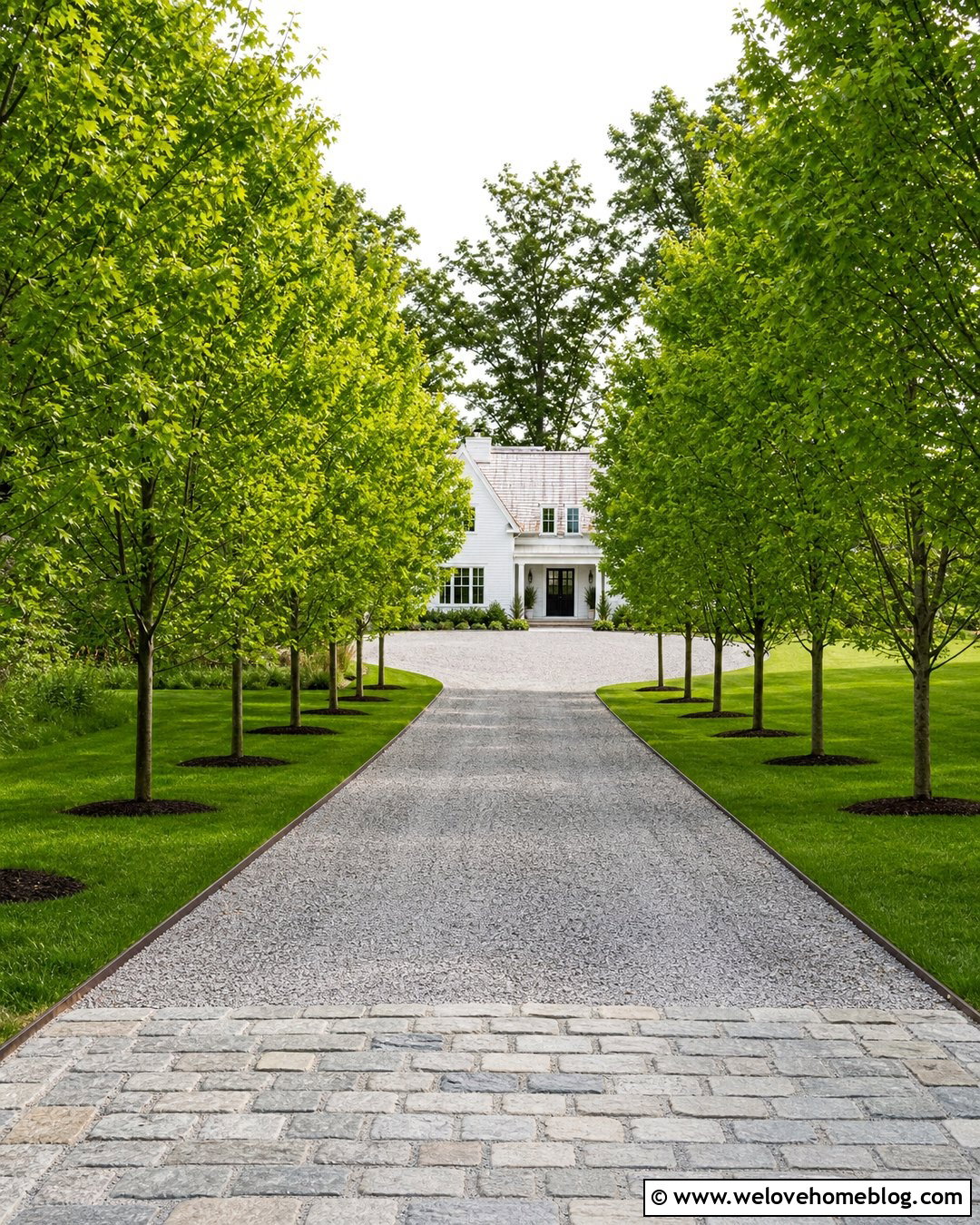
Few approaches feel as inviting as a long gravel driveway passing between evenly spaced trees. For a modern farmhouse, use compacted light gray crushed gravel in a straight or gently curving layout. Edge the driveway with steel, granite setts, or a subtle strip of larger stone to control spreading. Plant rows of deciduous trees far enough from the driving surface to allow healthy growth and clear vehicle access. Beneath them, use mown grass or simple meadow planting rather than complicated beds. Near the house, widen the drive into a gravel parking court with a paver apron in front of the garage. Black lantern-style lights, white fencing, and a matching gravel walkway complete the look. The limited material palette keeps a large property feeling calm and cohesive.
10. Stamped Concrete Driveway With Paver Ribbons
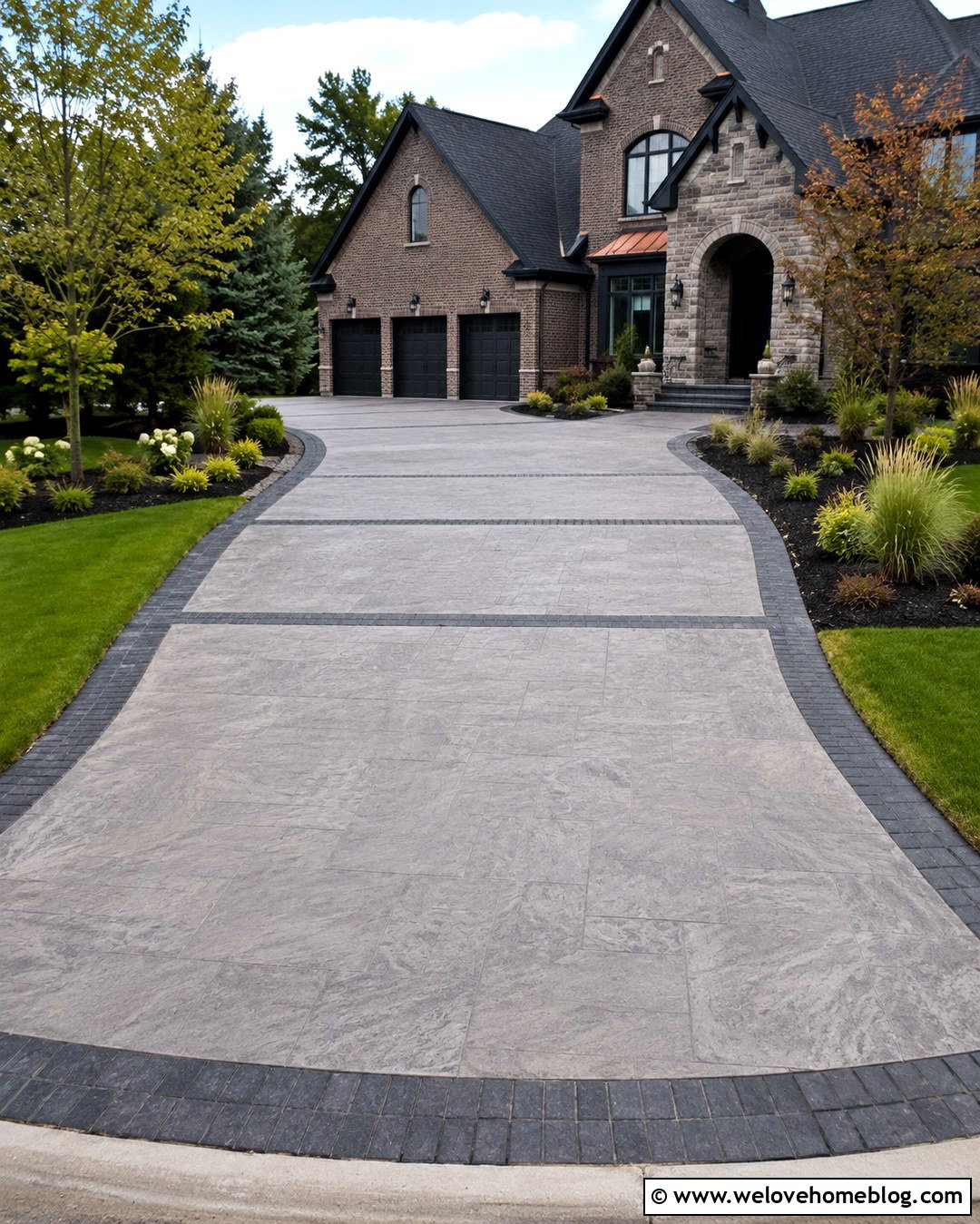
Stamped concrete can add detail to a large front driveway without requiring individual pavers across the entire area. Choose a subtle slate or large-stone pattern in warm gray, then divide the broad surface with brick or charcoal paver ribbons. These bands can outline parking spaces, mark the walkway crossing, and break the driveway into visually manageable sections. A gently flared entrance creates a welcoming transition from the street, while curved landscape beds soften the sides. Use medium-size shrubs, ornamental grasses, and one or two small trees rather than scattering many isolated plants. Coordinate the stamped color with the house facade and repeat the paver ribbons around the porch. A restrained pattern and limited color range will prevent the expansive driveway from appearing overly decorative.
11. Permeable Paver Driveway With Rain Gardens
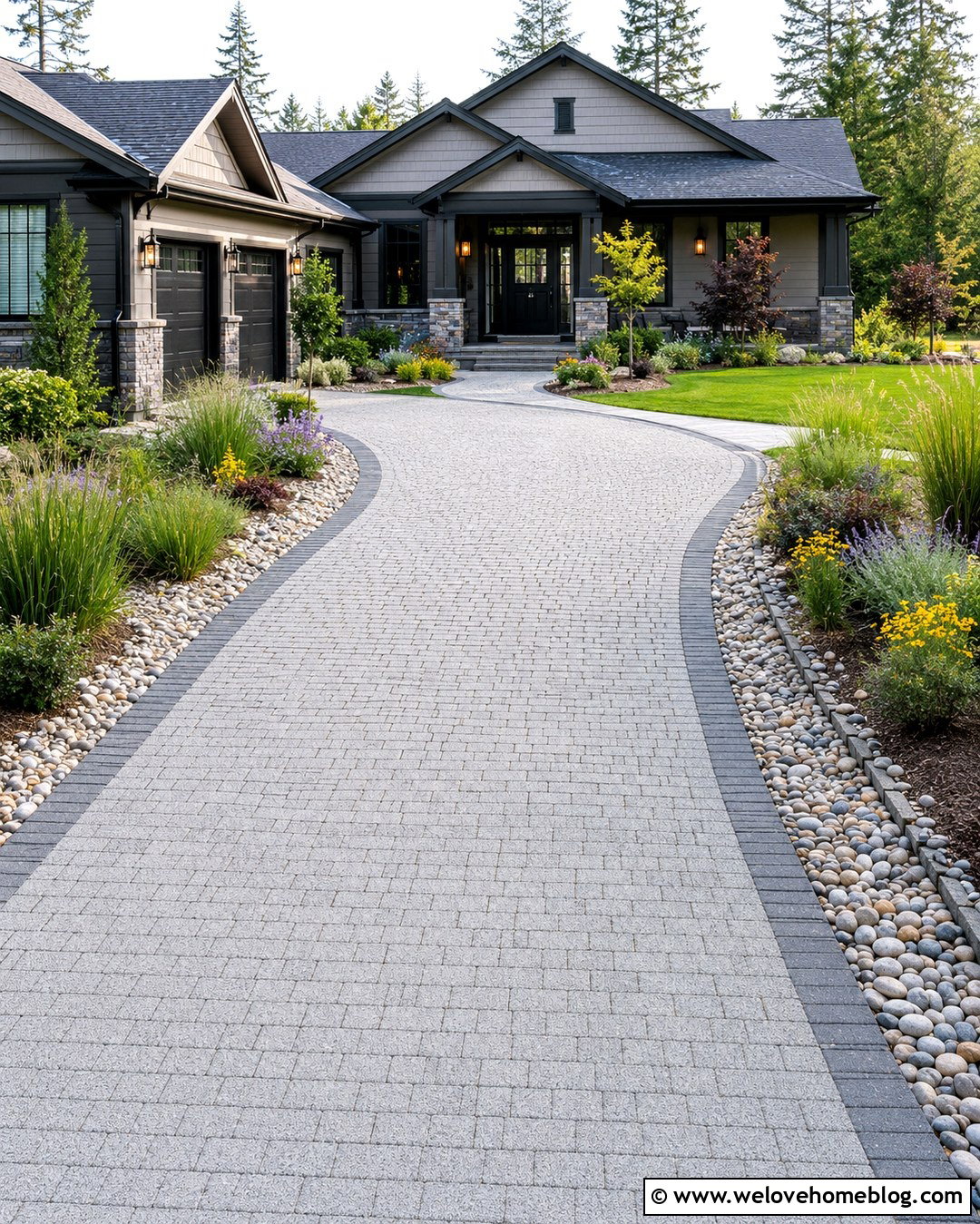
A large front driveway offers enough space to combine structured paving with planted areas designed around water movement. Use gray permeable concrete pavers in a straight or softly curved layout, with darker paver borders defining the driving lanes. Place shallow rain gardens along lower edges where they can become part of the overall landscape plan. Fill them with locally suitable grasses, sedges, flowering perennials, and compact shrubs that create layers without blocking visibility. Narrow stone channels can provide a clean transition between the pavers and planted depressions. Continue the paver pattern into the front walkway, then use open lawn around the remaining perimeter. Permeable materials, grading, and drainage should be evaluated as one coordinated system for the specific site rather than selected separately. ()
12. Split Driveway With A Central Lawn
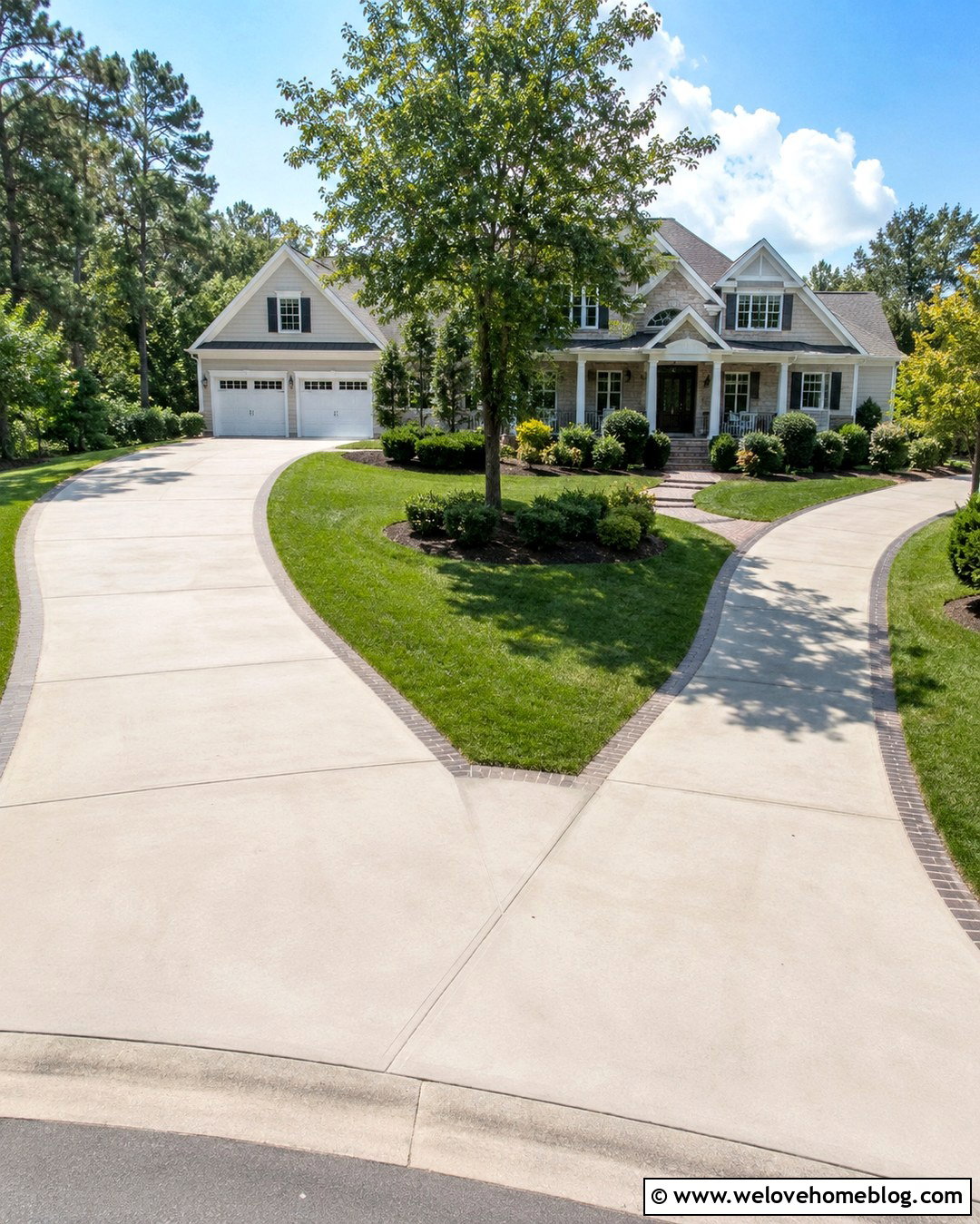
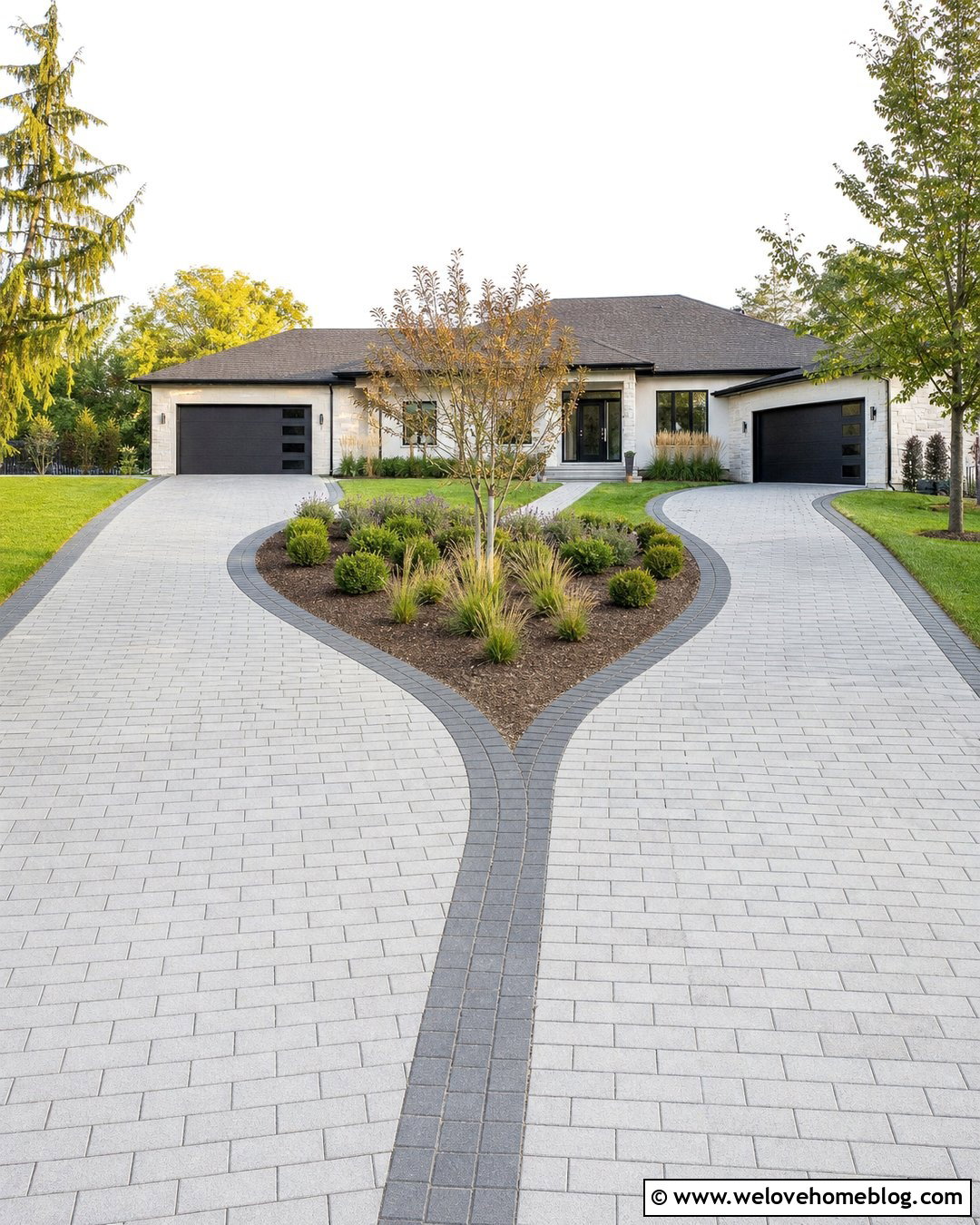
A split driveway creates separate routes for the garage and front entrance while preserving a generous area of lawn. Begin with a single driveway entrance, then divide it farther into the property. One branch can lead directly to the garage, while the other curves toward a visitor drop-off space near the porch. Poured concrete, asphalt, or concrete pavers all work, but consistent edging should connect both branches. Shape the central lawn as a broad, intentional island rather than a narrow leftover strip. Add a medium-size shade tree, simple foundation planting, and a curved walkway through the green space. This layout can reduce the visual weight of one enormous paved area. It also helps organize different vehicle movements across a wide suburban or estate-size front yard.
13. Three-Car Concrete Driveway With A Front Walkway
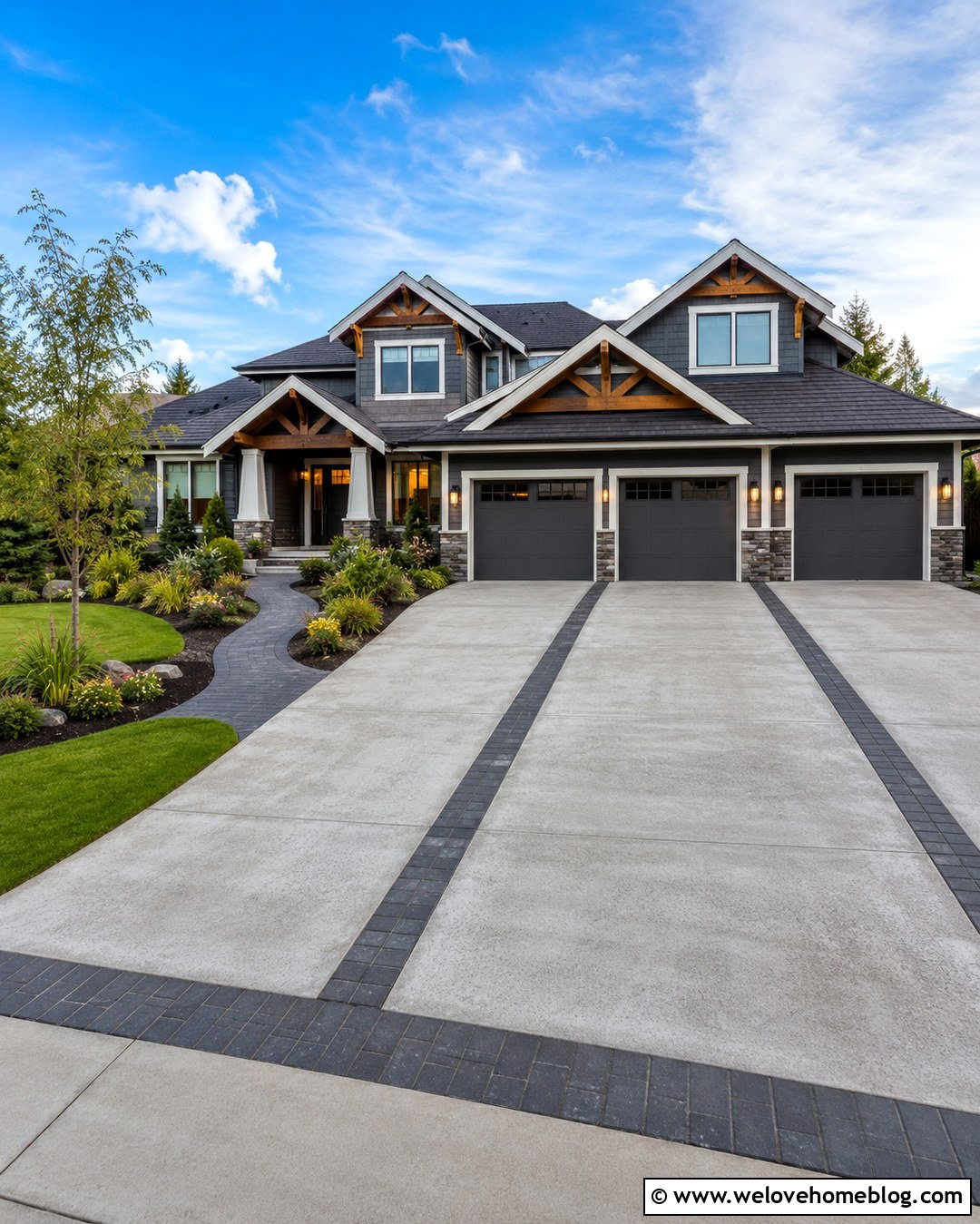
A three-car garage often requires a wide driveway, but thoughtful details can keep it from dominating the house. Use medium gray brushed concrete for the main surface and add darker paver bands between the garage bays. These lines break up the width and relate the paving to individual doors. Along one side, install a separate front walkway using the same dark pavers, then curve it through a planted bed toward the porch. Broad beds beside the driveway can include evergreen structure, flowering shrubs, and ornamental grasses. Leave enough open paving near the garage for turning and door access. A small tree placed closer to the street can partially screen the garage without obstructing the driveway. This balanced layout works well for large Craftsman and transitional suburban homes.
14. Sloped Driveway With Stone Retaining Walls
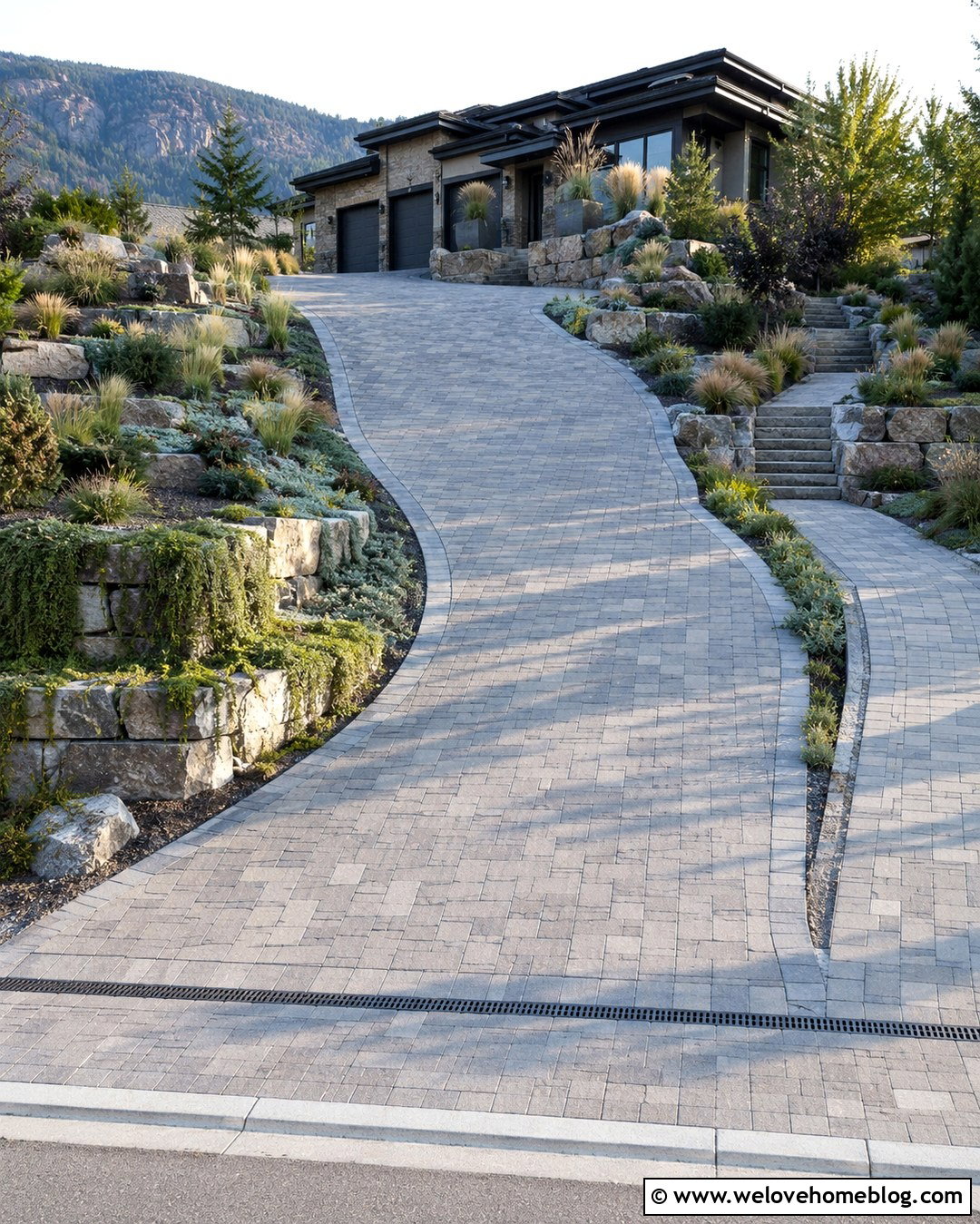
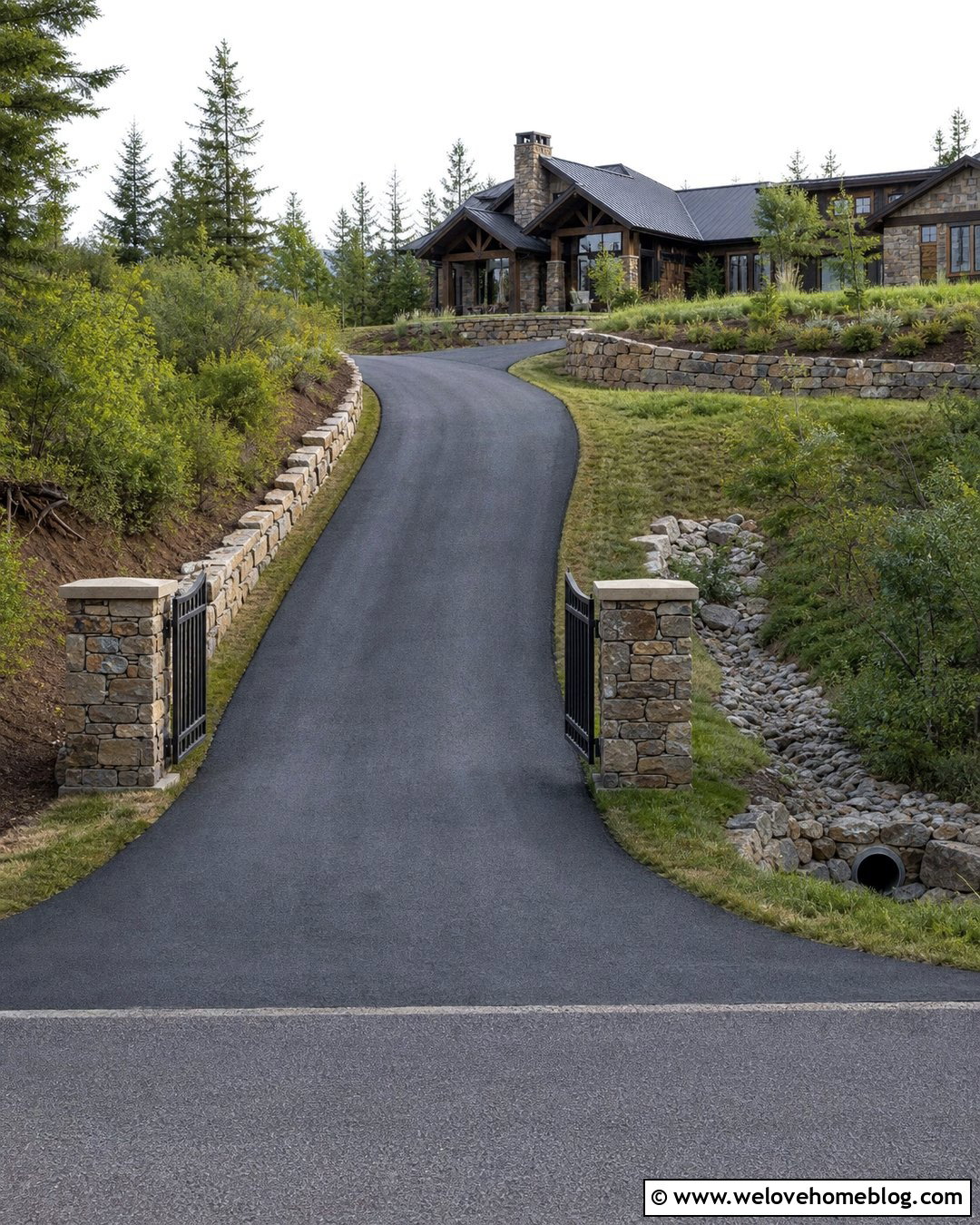
A large sloping front yard needs a driveway design that looks grounded within the changing elevation. Use textured concrete pavers or exposed aggregate in a gently curving layout rather than creating one steep, direct run. Low natural-stone retaining walls can hold back planting beds and visually guide the approach. Step the walls with the terrain instead of using one tall, imposing structure. Plant spreading shrubs, ornamental grasses, and cascading ground covers above the walls to soften their edges. Incorporate clearly defined drainage features and have the slope, base, and vehicle transitions professionally evaluated. Near the house, flatten and widen the driveway into a practical arrival court. Matching stone steps and a separate pedestrian path can provide a comfortable connection from the lower yard to the front entrance.
15. Mediterranean Paver Driveway With A Fountain
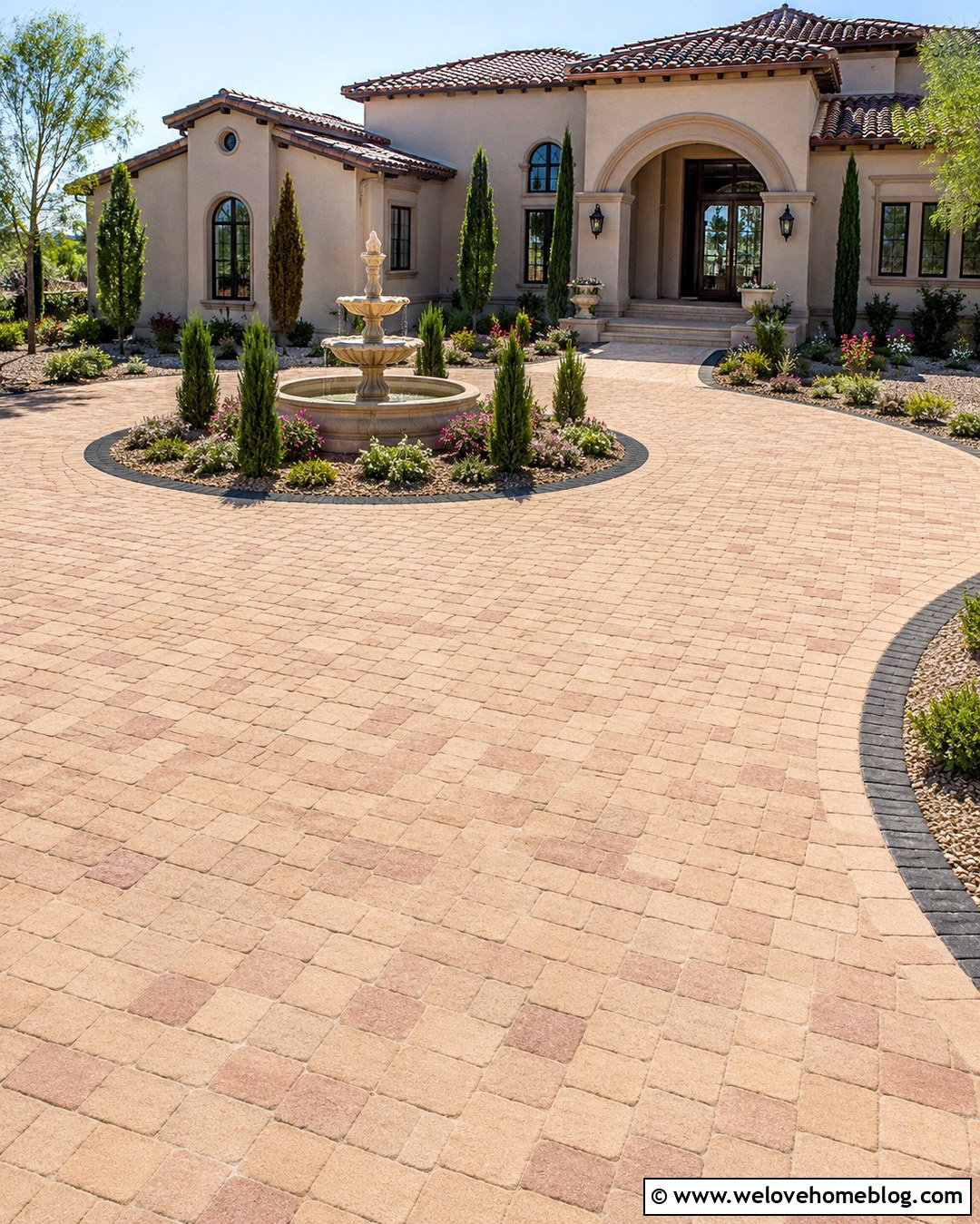
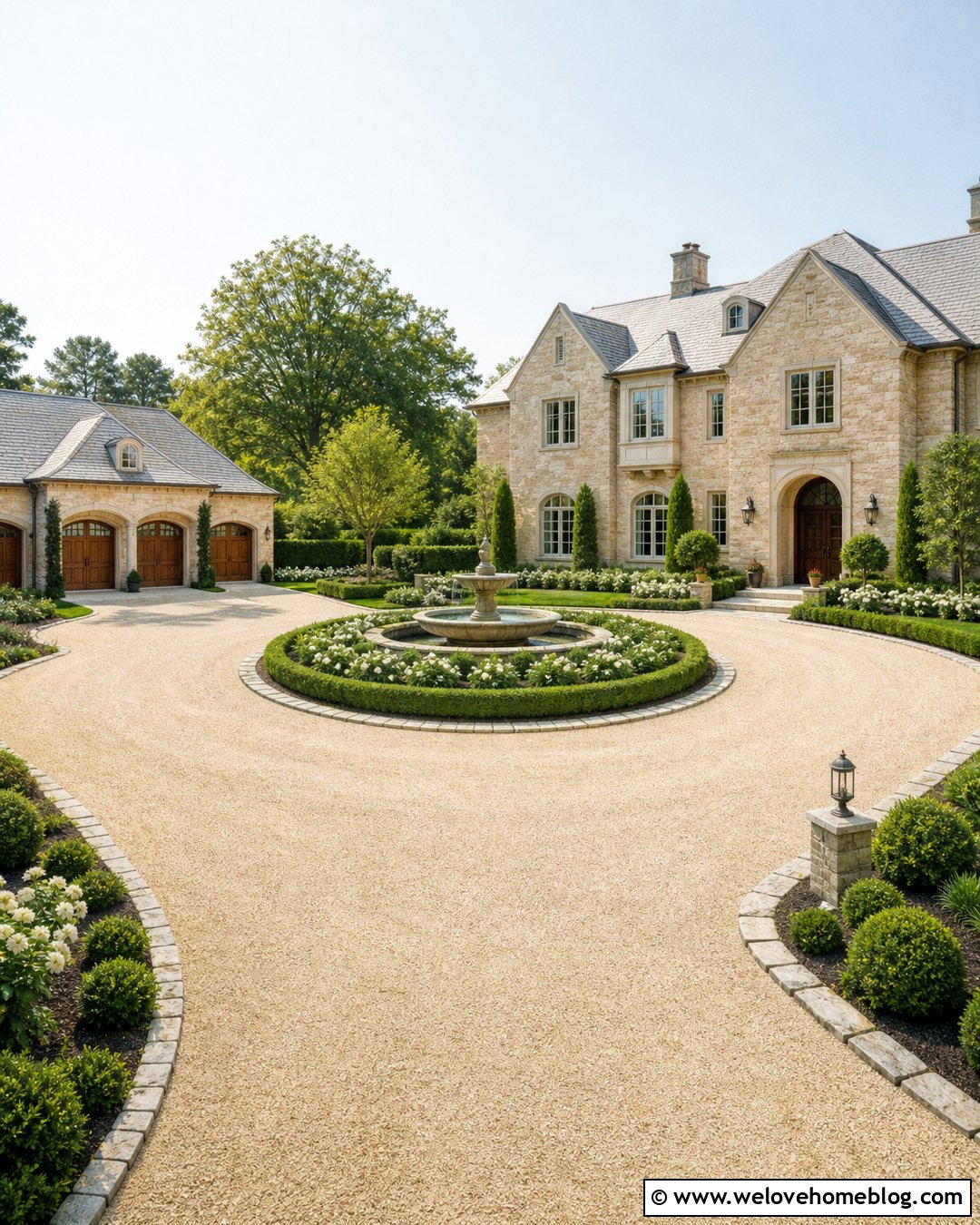
Warm-toned pavers and a circular layout can create a natural match for a Mediterranean or Spanish-style home. Use tumbled concrete or clay pavers in sandy beige, muted terracotta, and soft brown tones. Arrange them around a landscaped center island with a simple stone fountain as the focal point. The island can also include clipped evergreen shrubs, lavender-like perennials suited to the local climate, and gravel mulch. Define the driveway with darker paver edging and connect the arrival area to the front door using a wide arched walkway. Olive-shaped ornamental trees, upright evergreens, and drought-conscious planting can frame the outer curves. Keep the fountain proportionate to the island so vehicles have comfortable clearance and the architecture remains the strongest feature in the overall composition.
16. Black Asphalt Driveway With Concrete Bands
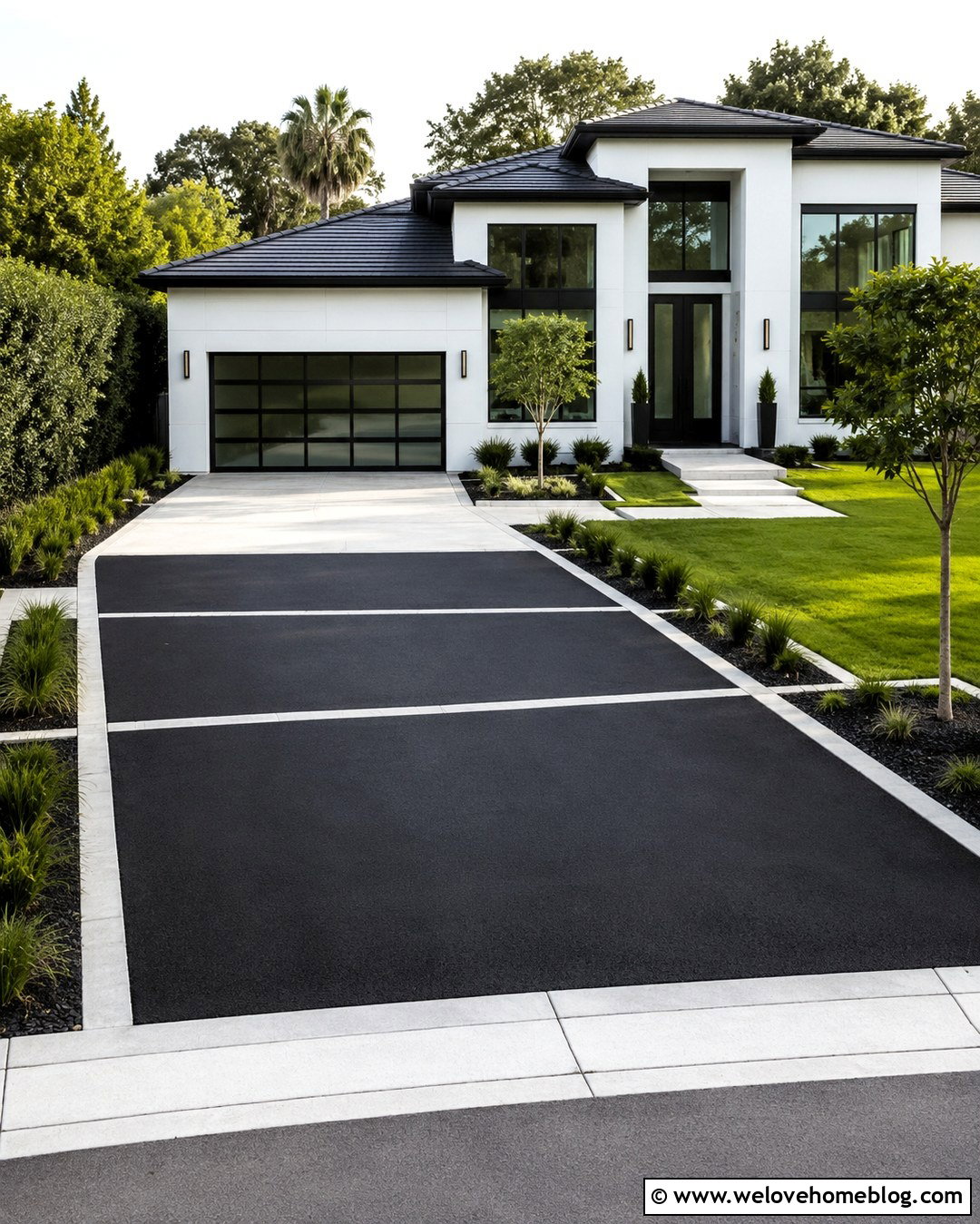
Fresh black asphalt can look surprisingly modern when paired with strong geometric details. On a large front lot, use a straight, wide driveway crossed by light gray concrete bands at measured intervals. The contrast divides the dark surface and echoes the horizontal lines of a contemporary house. Continue concrete along the edges as a crisp curb, then add rectangular planting beds with ornamental grasses, compact shrubs, and sculptural small trees. A broad concrete walkway can branch from the driveway and align directly with the entrance. Keep the lawn and planting layout simple so the asphalt-and-concrete combination remains visually clean. Near the garage, use a larger concrete apron to create a durable-looking transition. Dark garage doors or window frames will help the driveway feel integrated with the facade.
17. Crushed Shell Driveway For A Coastal House
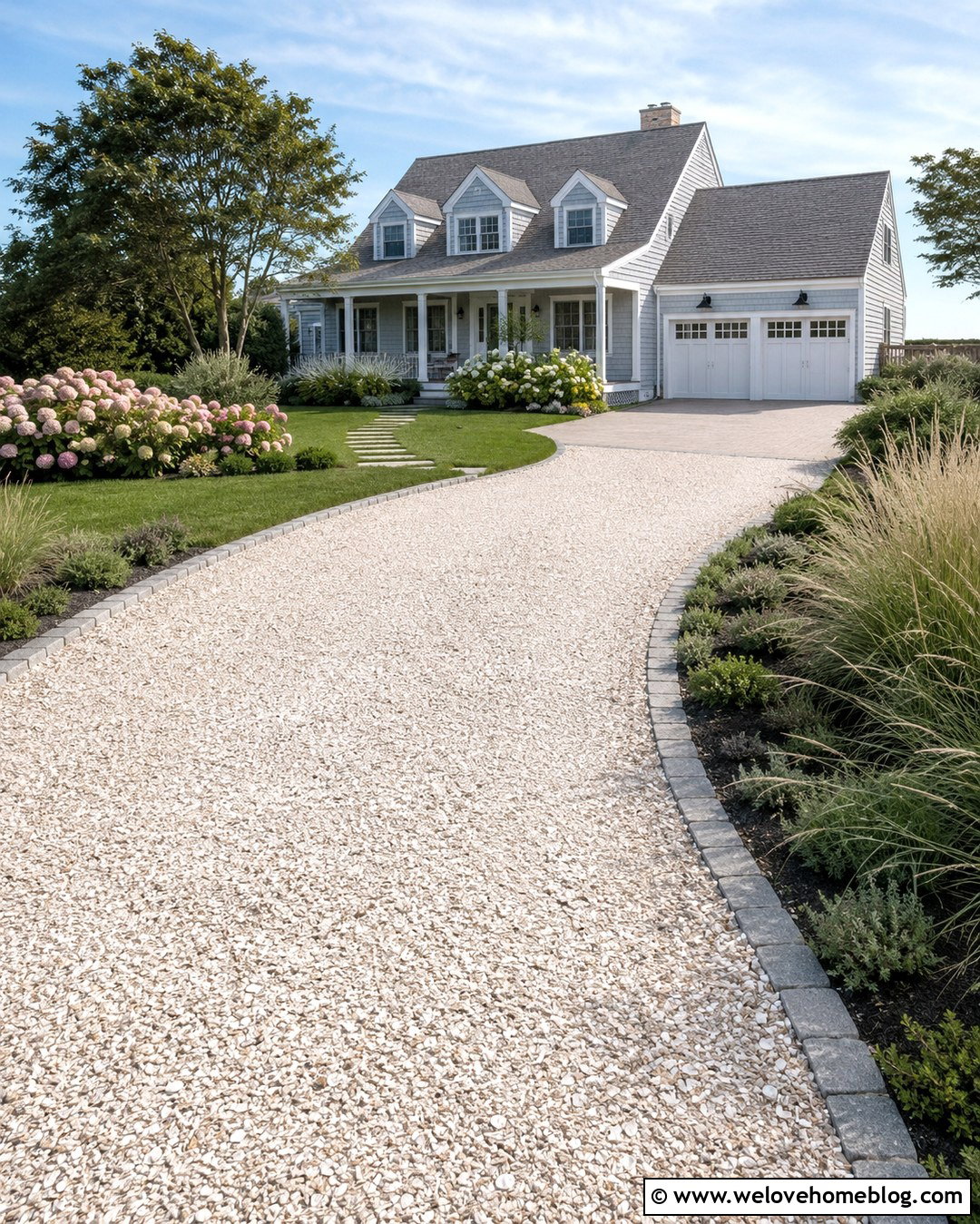
A pale crushed shell driveway brings a bright, relaxed quality to a large coastal front yard. Use compacted off-white crushed shell or a shell-and-stone blend in a sweeping curved layout leading to a light-colored Cape Cod or coastal cottage. Strong edging is important, so contain the loose surface with granite setts, pale concrete curbing, or weathered timber suited to the setting. Frame the approach with salt-tolerant grasses, low evergreen shrubs, hydrangea-like flowering plants where appropriate, and areas of simple lawn. Near the garage, add a larger paver apron to create a tidy transition and reduce loose material movement. A shell walkway can lead toward the porch, while natural stone stepping pads provide contrast. The result should look airy, practical, and connected to the coastal landscape.
18. Large Driveway With A Parking Court
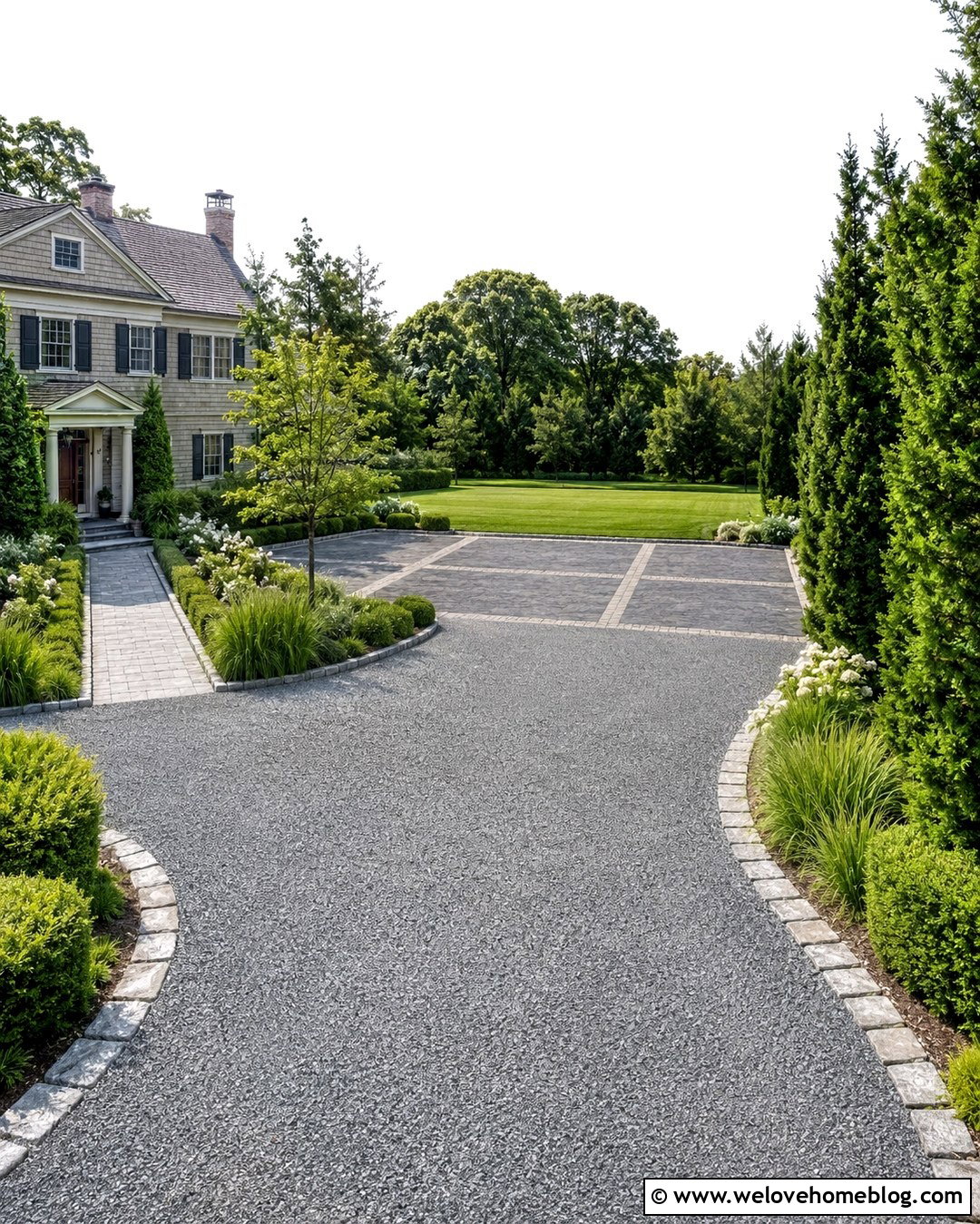
When several vehicles need to fit comfortably, a dedicated parking court can keep the main approach from becoming cluttered. Use a curved asphalt or gravel driveway that opens into a rectangular paver court near the side of the house. The material change clearly separates everyday travel from parking. Outline the court with a cobblestone or brick border and screen its outer edge with layered evergreen shrubs, small trees, and ornamental grasses. A direct walkway should connect the parking area to the front door without forcing guests to walk behind vehicles. Keep the central front-yard view open so the house remains visible from the street. This arrangement works particularly well on estate lots and wide suburban properties where additional parking can be positioned beside, rather than directly in front of, the main facade.
19. Long Curved Driveway With Landscape Lighting
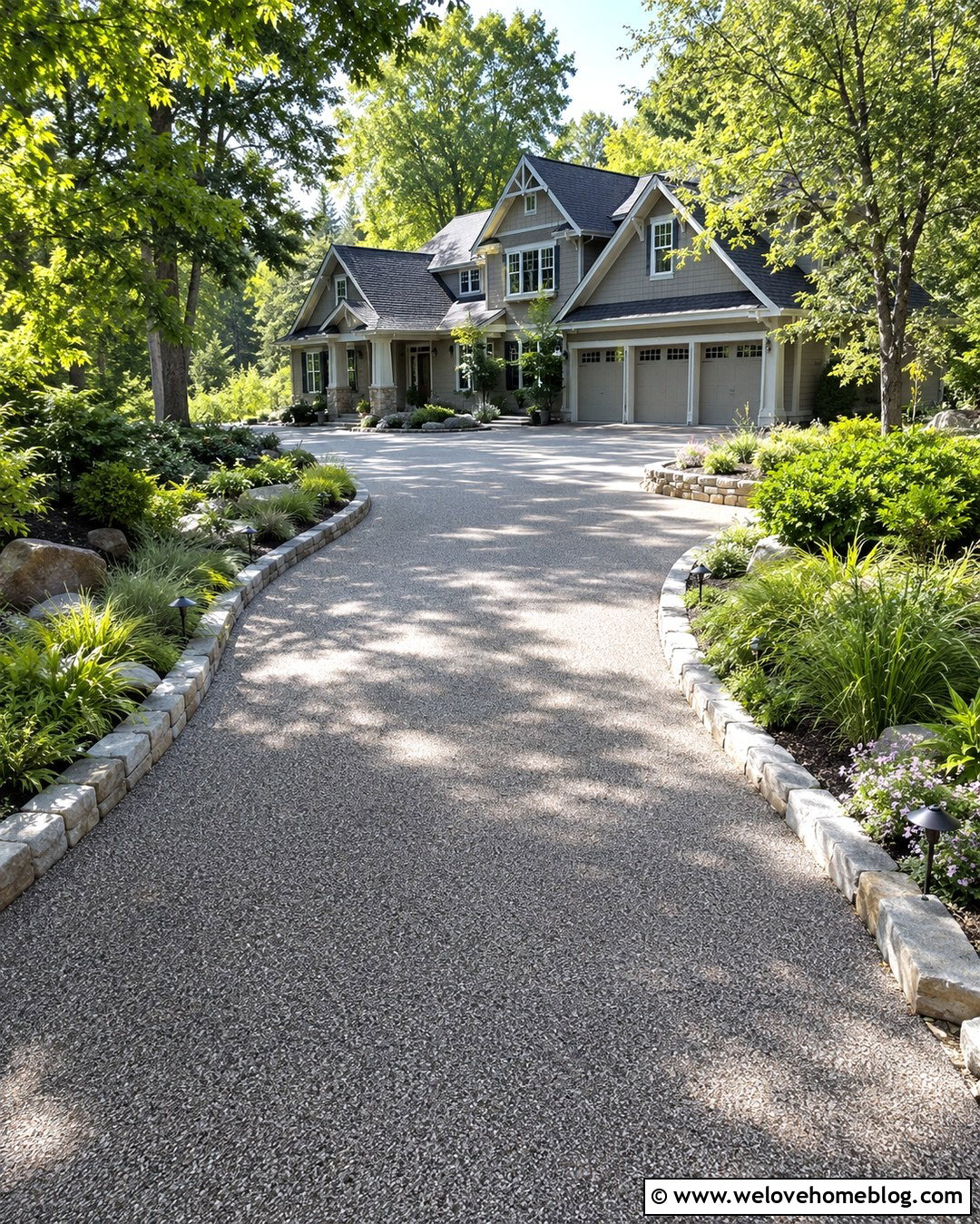
A long driveway becomes more welcoming when its curves, plantings, and lighting follow one consistent rhythm. Choose warm gray concrete pavers, compacted gravel, or exposed aggregate for a gradual curved approach through the front yard. Border the surface with low stone edging and wide beds containing shade trees, layered shrubs, grasses, and flowering ground covers. Space low-voltage fixtures along important turns, entrance points, and walkway connections instead of creating an uninterrupted runway effect. During the day, simple dark fixtures should blend into the landscaping. Near the house, allow the driveway to open into a wider drop-off area before continuing to the garage. Although lighting is a major feature, the design should still be photographed and appreciated in bright daylight, when the complete surface and landscape arrangement remain clearly visible.
20. Mixed Material Driveway With A Landscaped Island
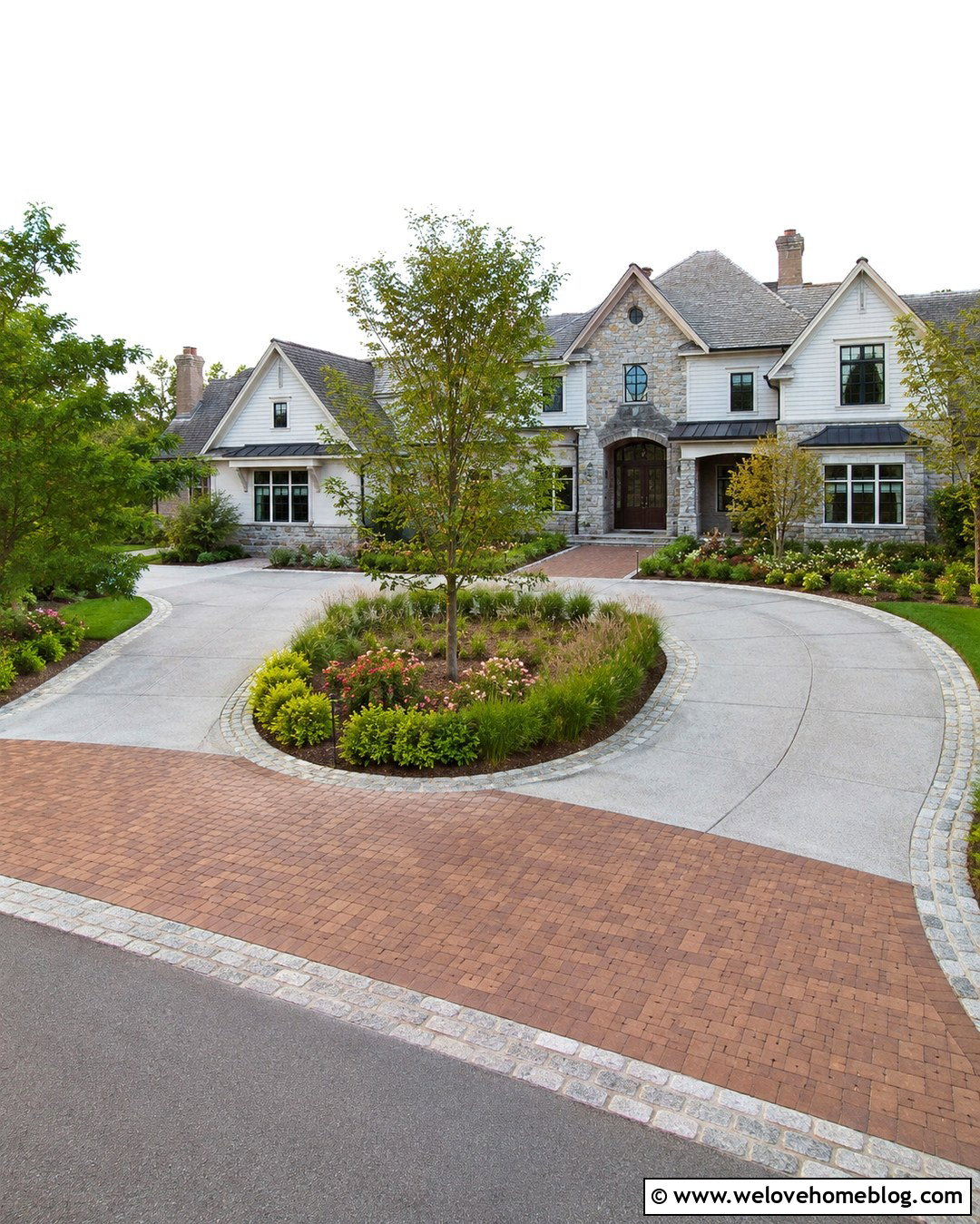
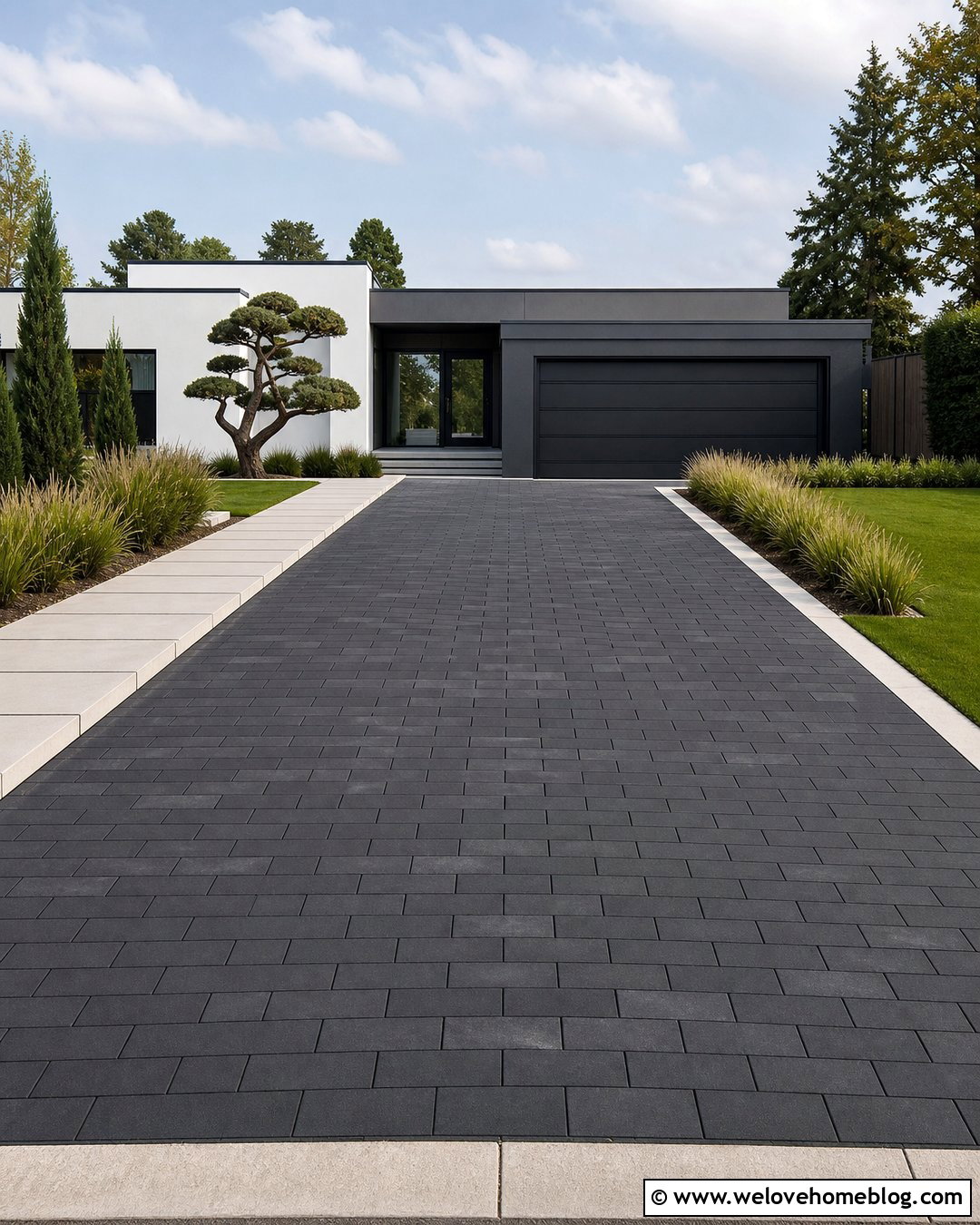
Mixing materials can make an expansive front driveway feel more detailed and appropriately scaled. Begin with smooth gray concrete or asphalt for the main driving lanes, then use brick pavers or granite cobbles at the entrance, around a central island, and across the garage apron. Keep the palette limited to two primary surfaces and one border material. A landscaped island can divide arriving and departing traffic while introducing a small tree, low shrubs, grasses, and seasonal color. Repeat those plants in curved beds around the driveway perimeter. A matching paver walkway should lead from the drop-off zone to the front door. This flexible design can be adapted to modern, traditional, or transitional homes by changing the paver color, border pattern, planting structure, and shape of the island.
Conclusion:
The best 20 Large Front Driveway Ideas make generous vehicle space feel like a designed part of the home rather than an oversized stretch of paving. Start by choosing a shape that fits the lot, garage location, and way vehicles enter and leave. Then coordinate the surface with purposeful borders, comfortable walkways, layered landscaping, and a clearly defined entrance. Circular layouts create elegant movement, while split drives and parking courts help organize larger properties. Gravel, concrete, asphalt, pavers, brick, cobblestone, resin, and mixed surfaces can all look attractive when they complement the architecture. Before construction, verify dimensions, visibility, grading, drainage, utilities, and local requirements with qualified professionals familiar with your property.

Related posts:
Leave a Reply