
A well-planned acreage driveway should feel welcoming from the road while handling the practical demands of rural living. The best entrances combine a durable driving surface, comfortable turning space, clear visibility, defined borders, and landscaping that suits the scale of the property. Gates, pillars, fencing, lighting, and address markers can add character, but they should never interfere with drainage or views of approaching traffic. Local permit requirements also matter because entrance placement, culverts, grades, and sight distance may be regulated. () Whether your home is a traditional ranch, modern farmhouse, country cottage, or contemporary retreat, these complete designs balance appearance with everyday function. Use the following 20 acreage entrance driveway ideas to create an attractive arrival that feels connected to your house, land, and lifestyle.

1. Gravel Acreage Driveway With Timber Gate
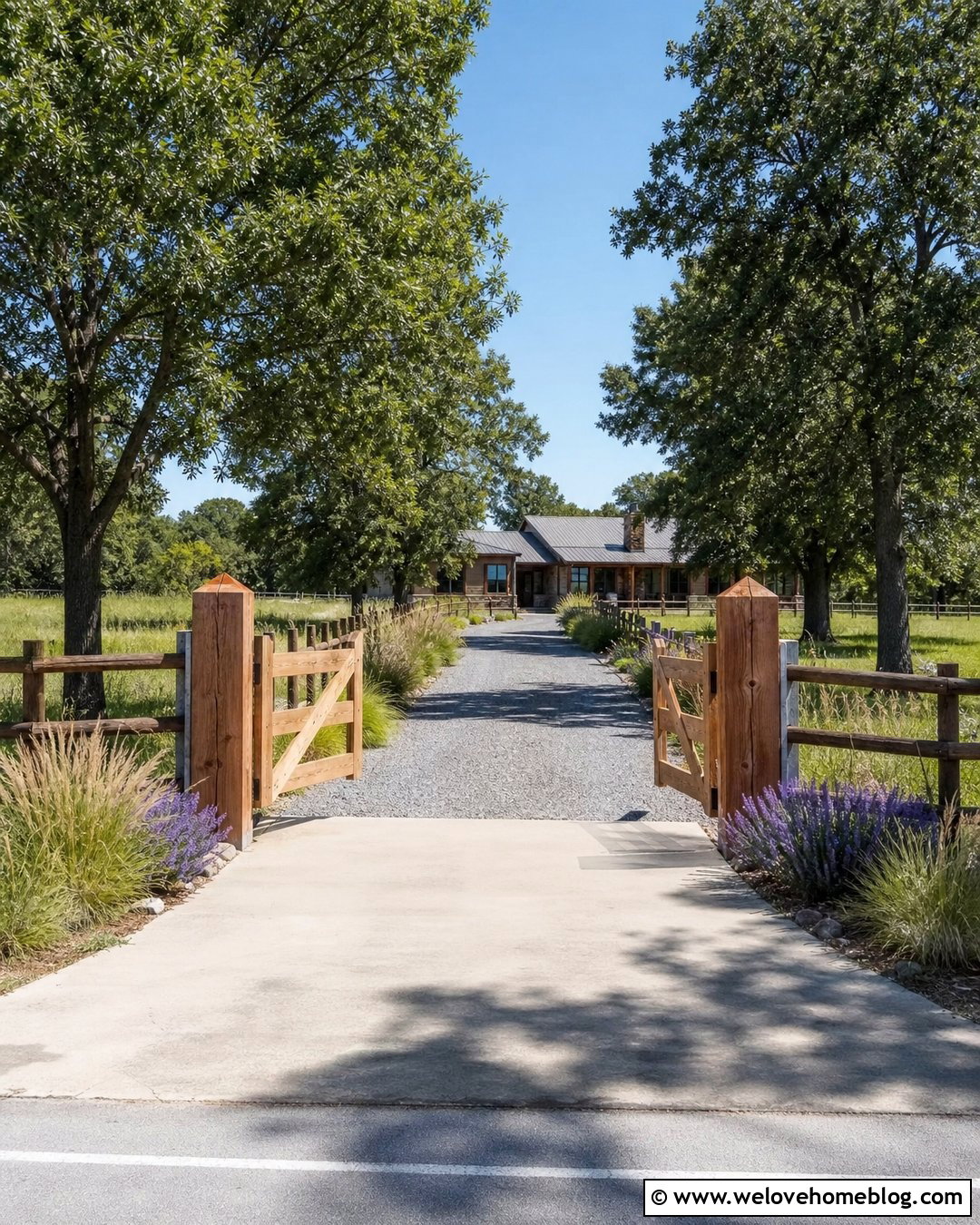
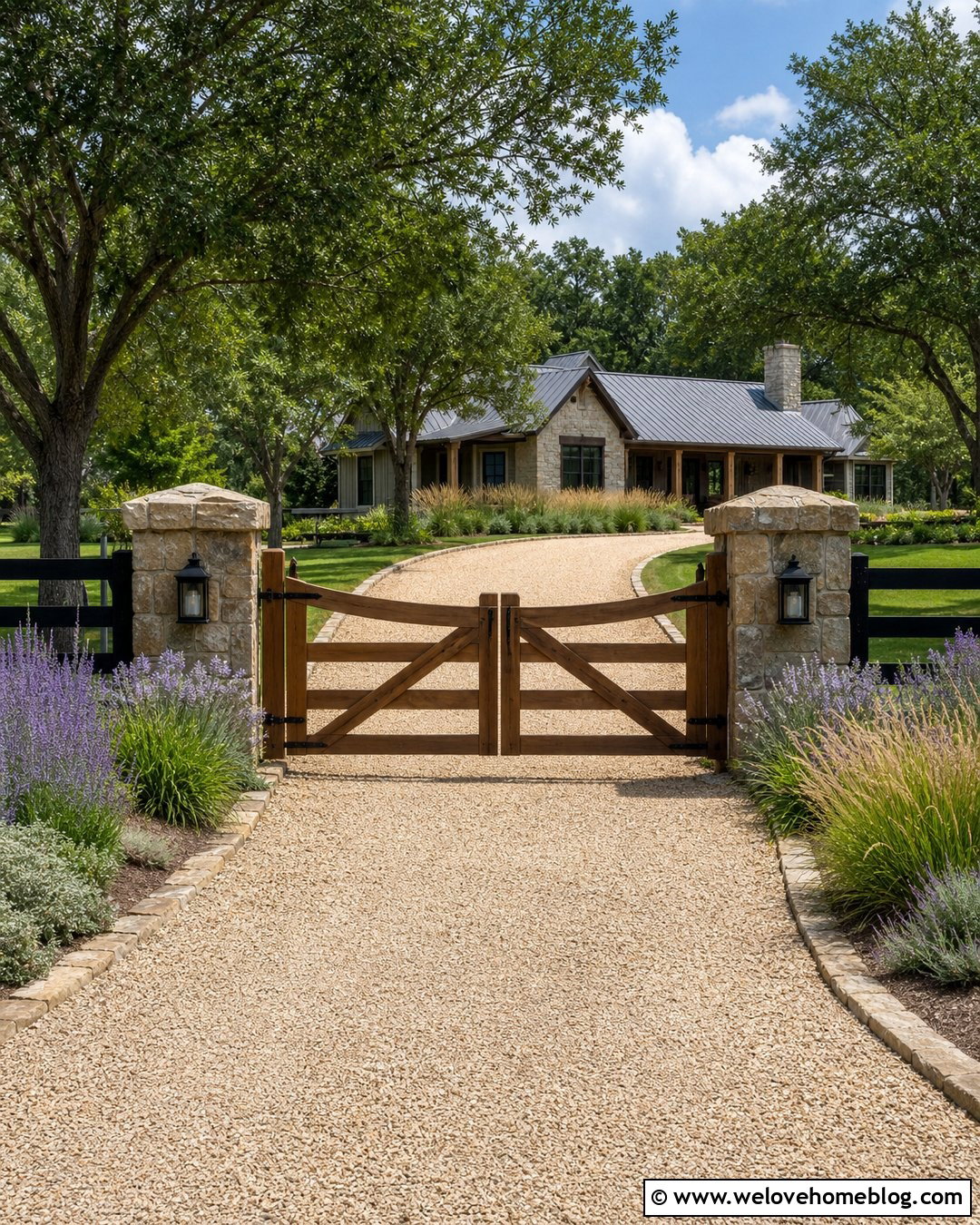
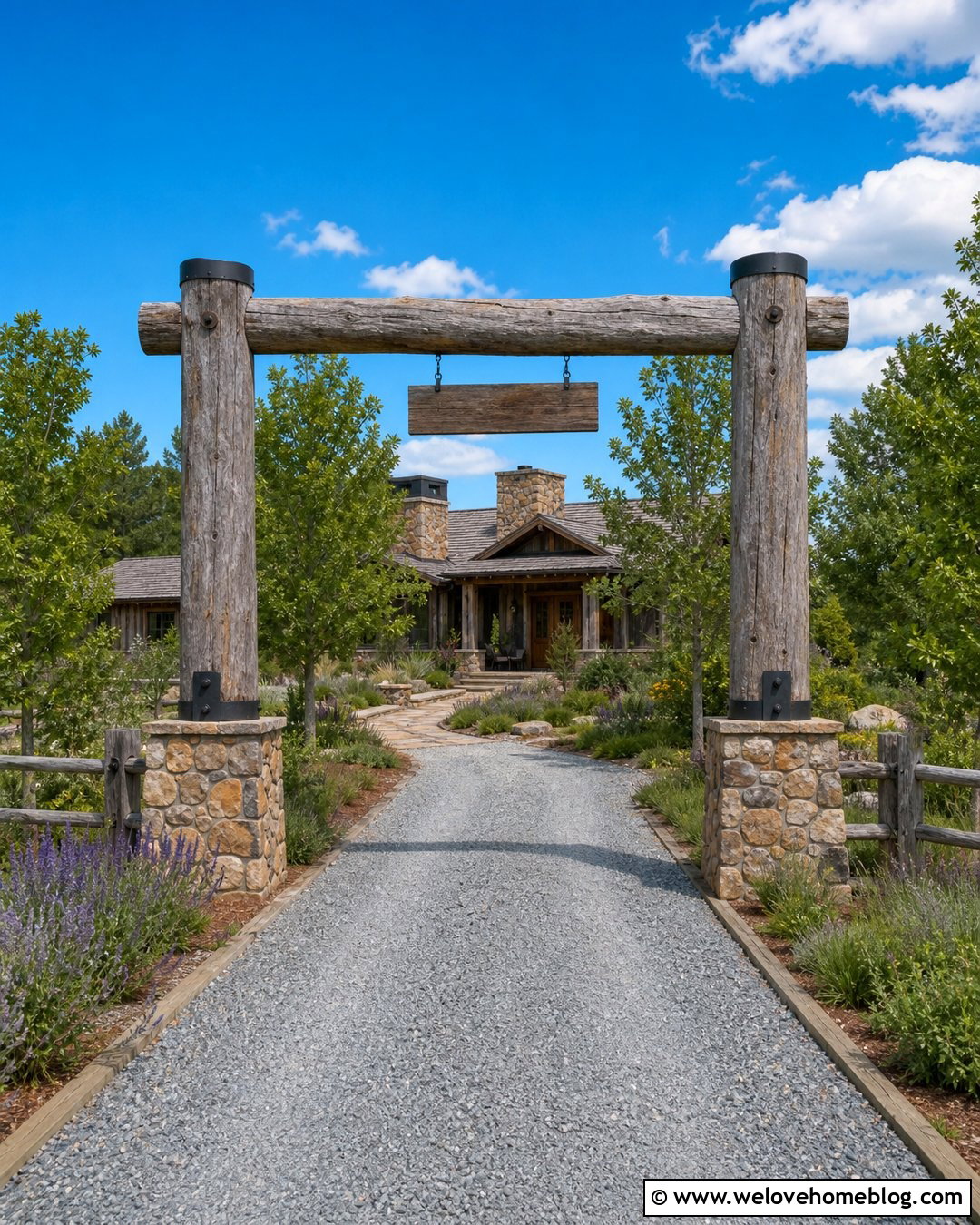
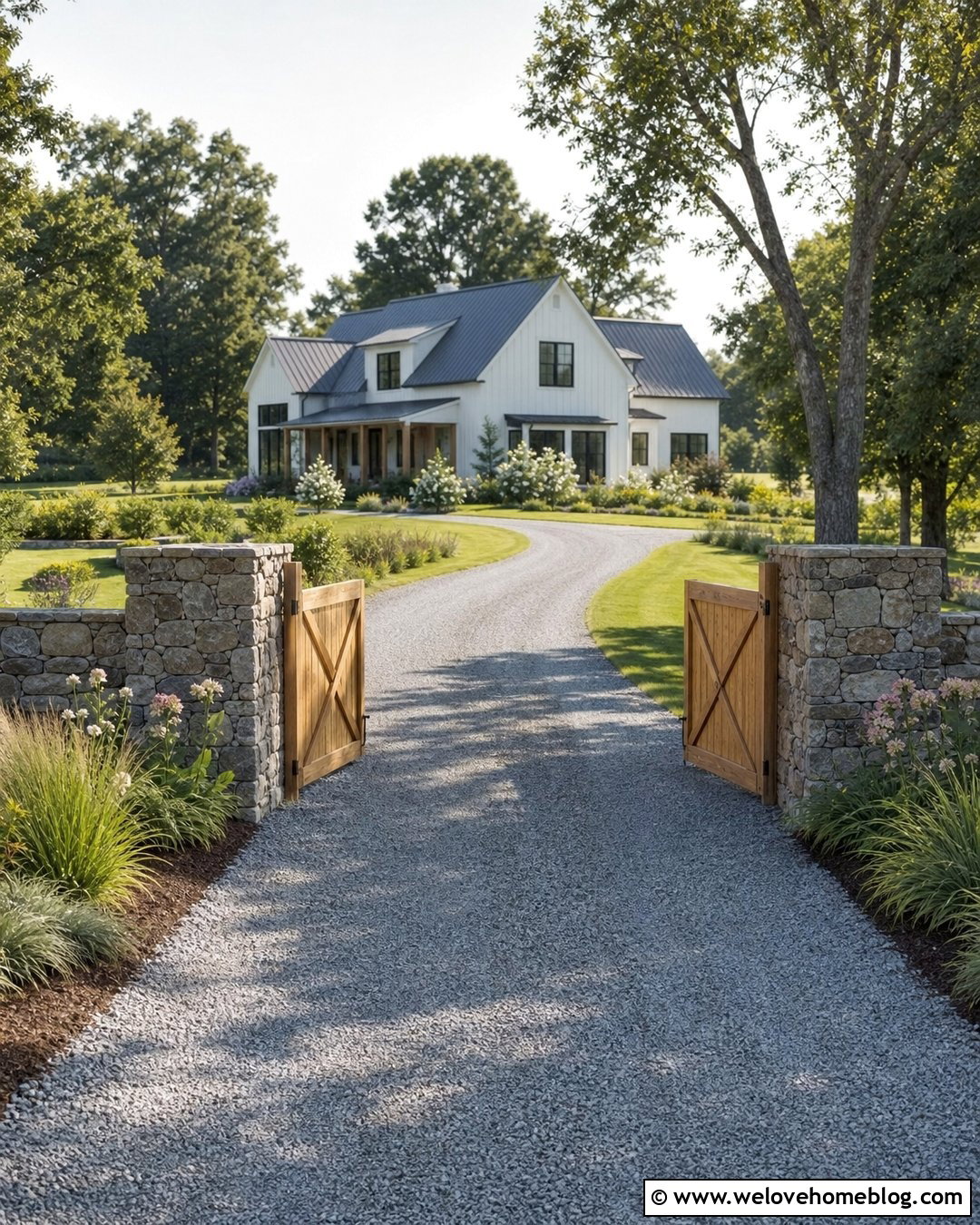
A broad gravel driveway paired with a timber gate creates a practical entrance that looks natural against open land. Choose compacted gray crushed gravel for the main surface and widen the first section so trailers, delivery vehicles, and farm equipment can turn comfortably. Large timber posts make the entrance visible without appearing overly formal. Continue split-rail fencing from both sides of the gate to connect the driveway with surrounding pastures. Low beds of ornamental grasses, salvia, and hardy shrubs can soften the posts while preserving visibility near the road. Add a paved or concrete apron where the gravel meets the public roadway to reduce loose-stone movement. The complete look works especially well with ranch homes, cabins, barndominiums, and traditional farmhouses set deep within the acreage.
2. Stone Pillar Acreage Driveway Entrance
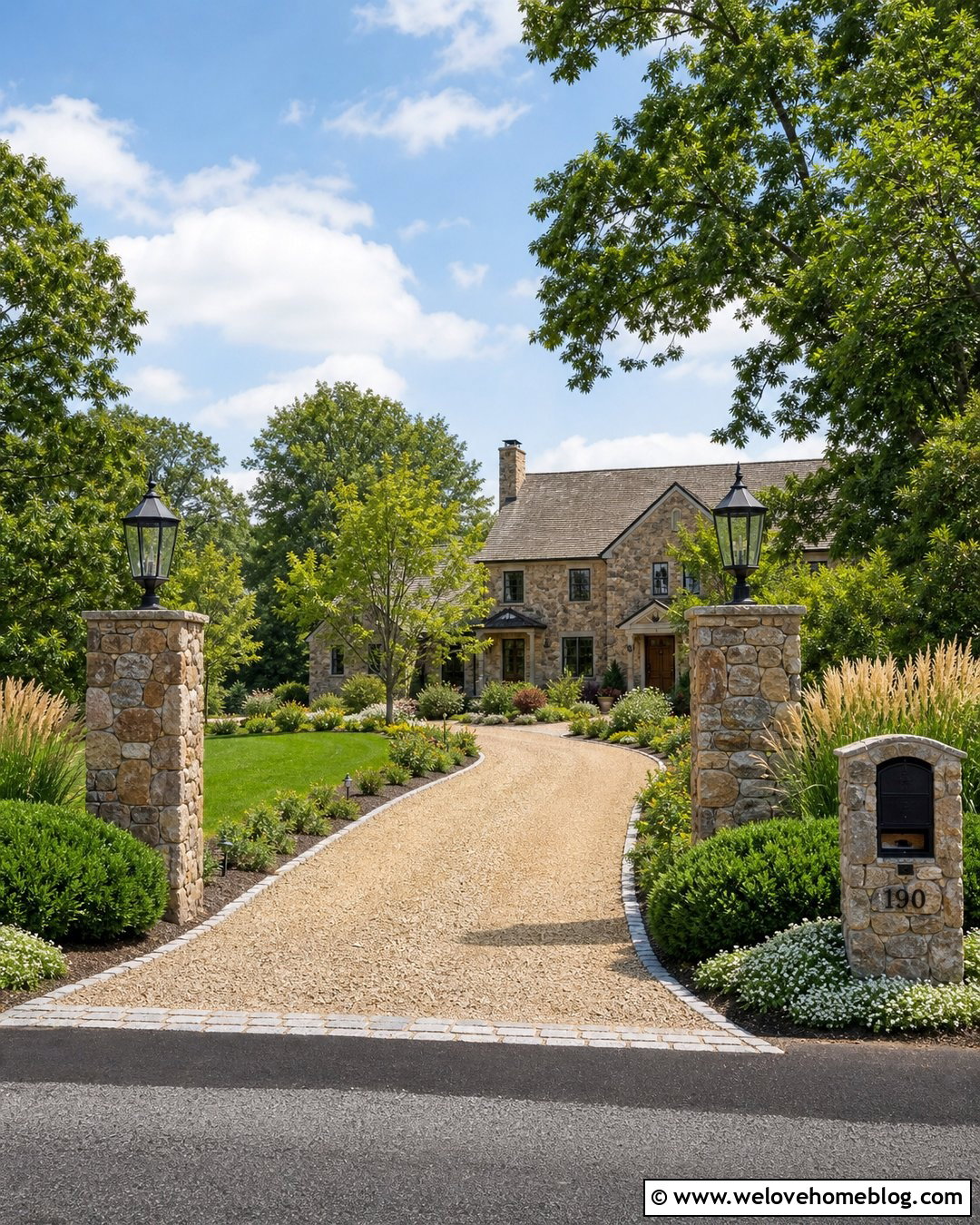
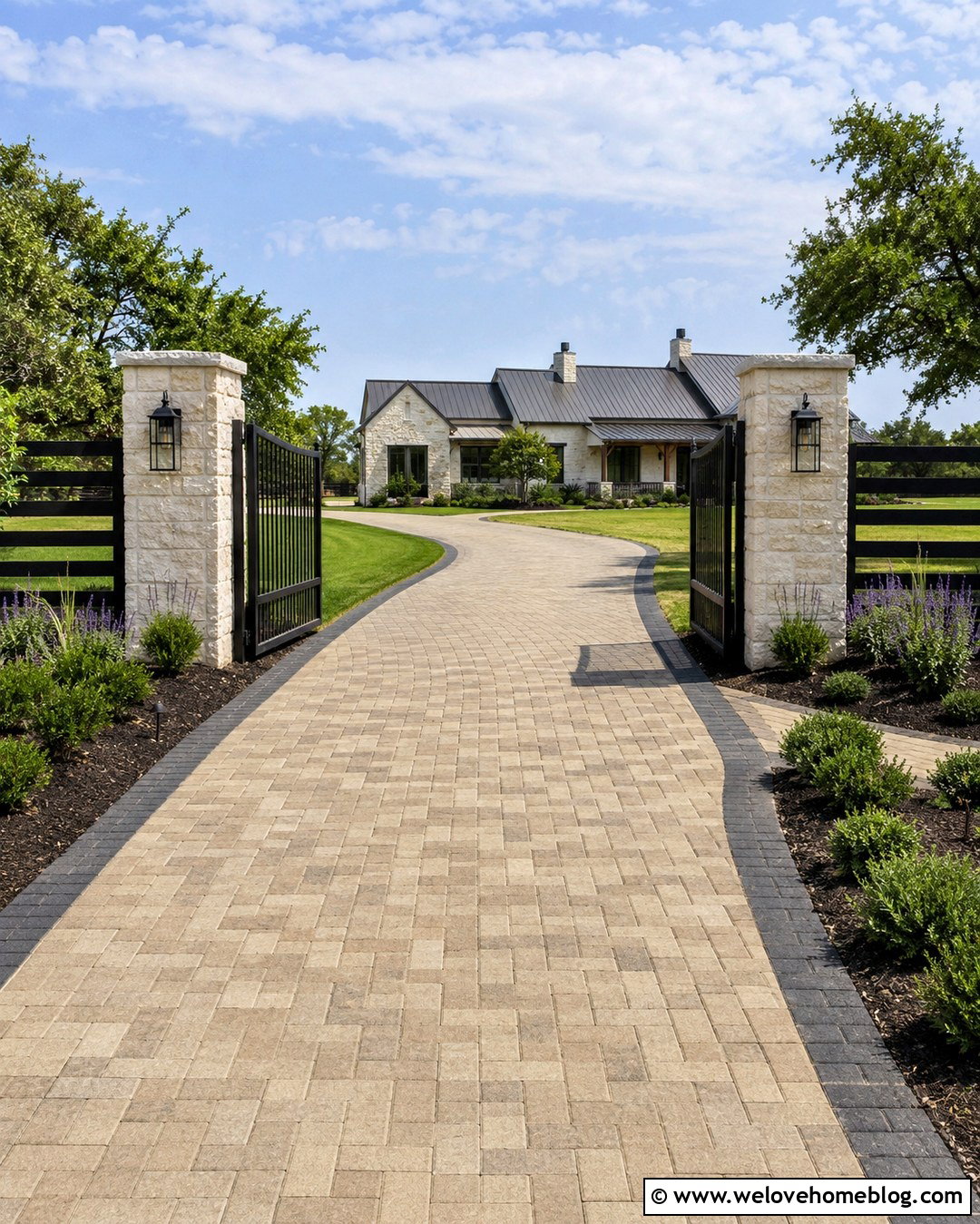
Stone pillars give a long acreage driveway a clear architectural starting point. Match the stone color to the home’s foundation, chimney, or exterior walls so the entrance and house feel connected, even when separated by a large distance. A warm beige gravel surface works beautifully with fieldstone pillars and a gently curved approach. Keep the pillars substantial but proportional, leaving enough clearance for wide vehicles and equipment. Low-voltage lanterns can be built into the tops for visibility after dark. Around the base, use simple beds filled with dwarf evergreens, native grasses, and low ground cover rather than tall shrubs that could block traffic views. A matching stone drainage headwall or mailbox surround can complete the entrance without adding too many unrelated materials.
3. Black Metal Gate Acreage Driveway
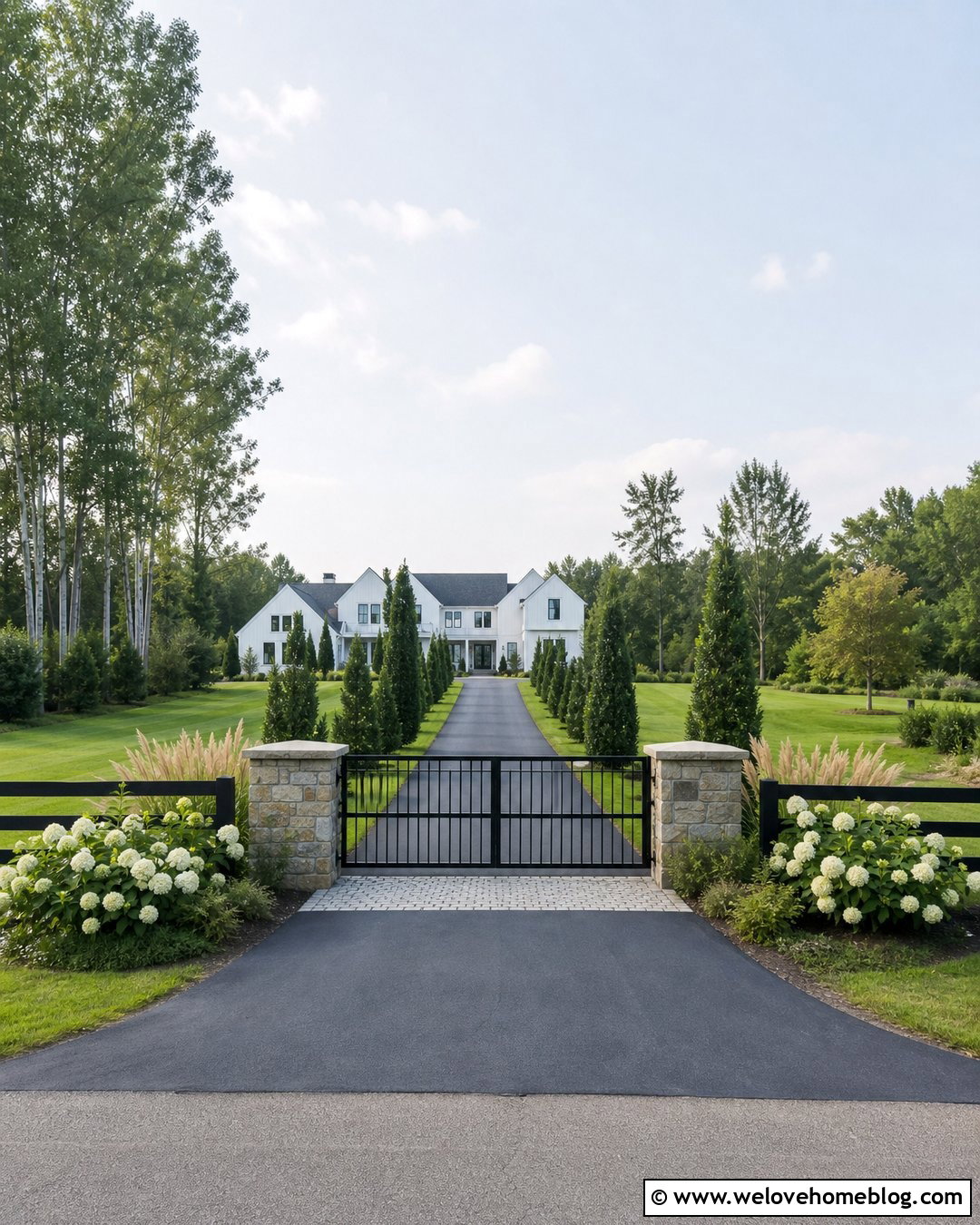
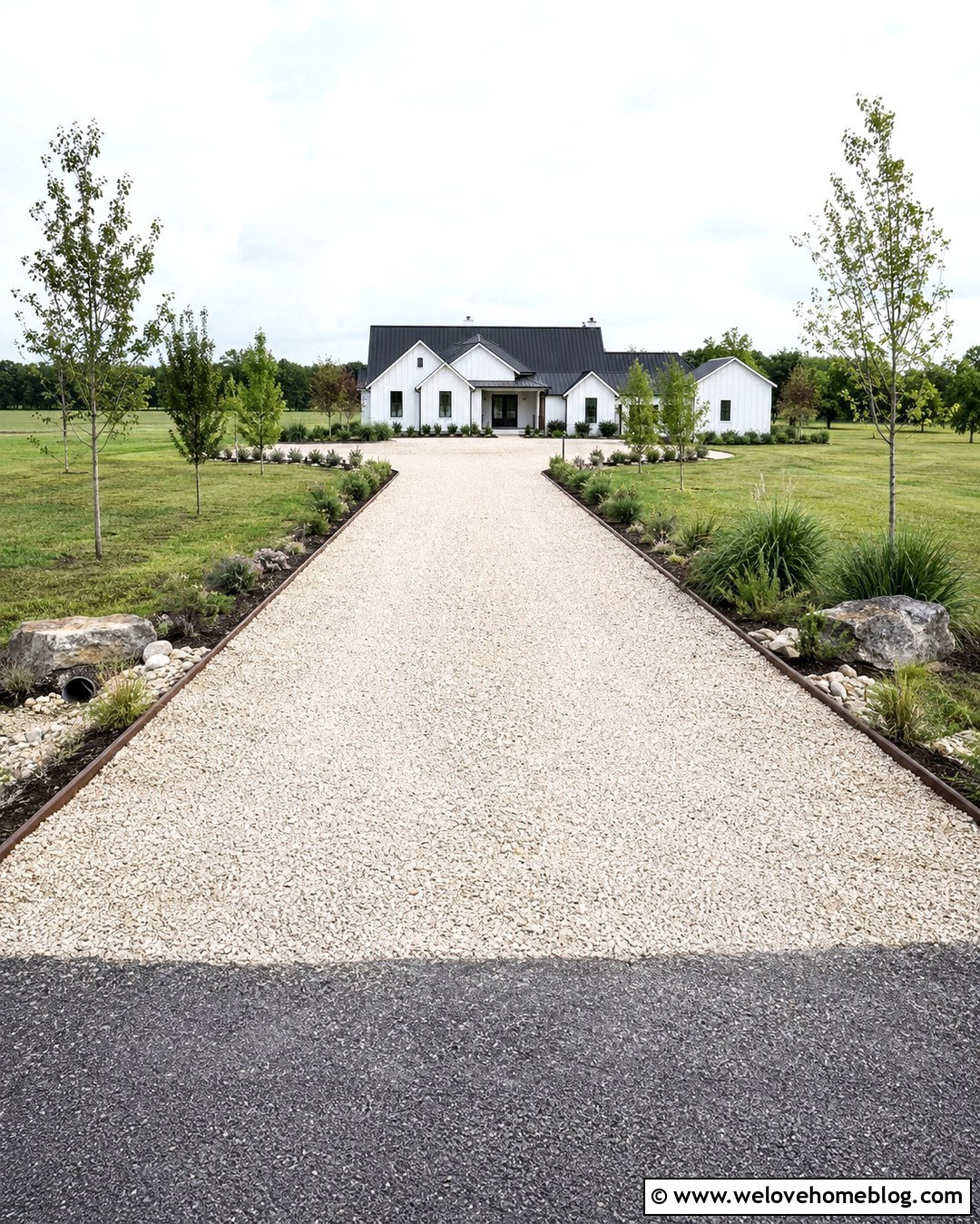
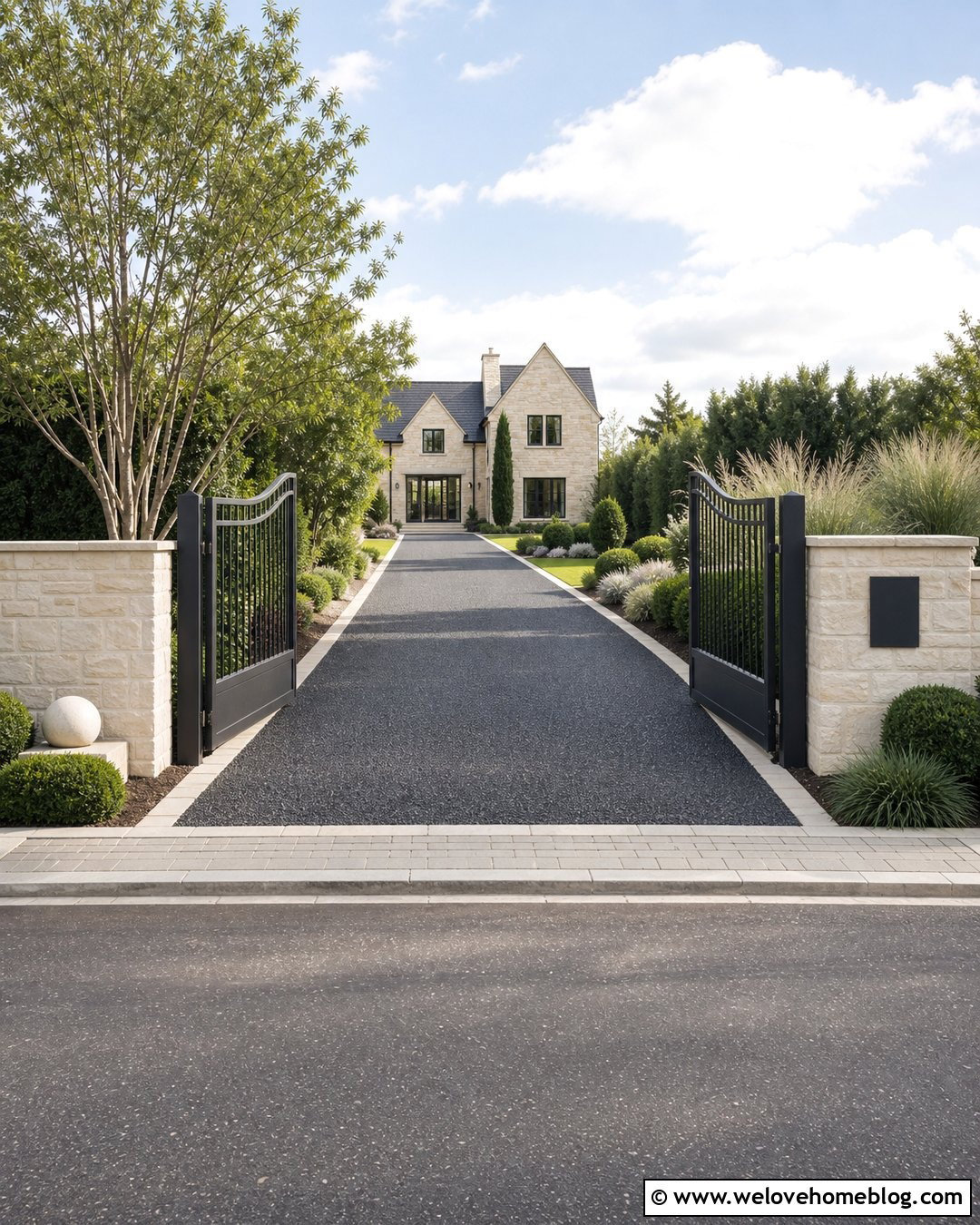
For a cleaner rural entrance, pair a matte black metal gate with a smooth black asphalt driveway. The dark materials create a strong visual line through open lawns, while stone gateposts prevent the entrance from looking too industrial. A straight layout offers a formal appearance and makes the house the main focal point from the road. Continue black post-and-rail fencing along both sides to frame the property boundary. Broad planting beds with white hydrangeas, feather reed grass, and clipped evergreens can soften the contrast. Place access controls, delivery boxes, and the address marker on one pillar to keep the other side uncluttered. This complete acreage driveway look complements white farmhouses, brick colonials, transitional homes, and modern country houses with black window frames.
4. Ranch Acreage Driveway With Pipe Fence
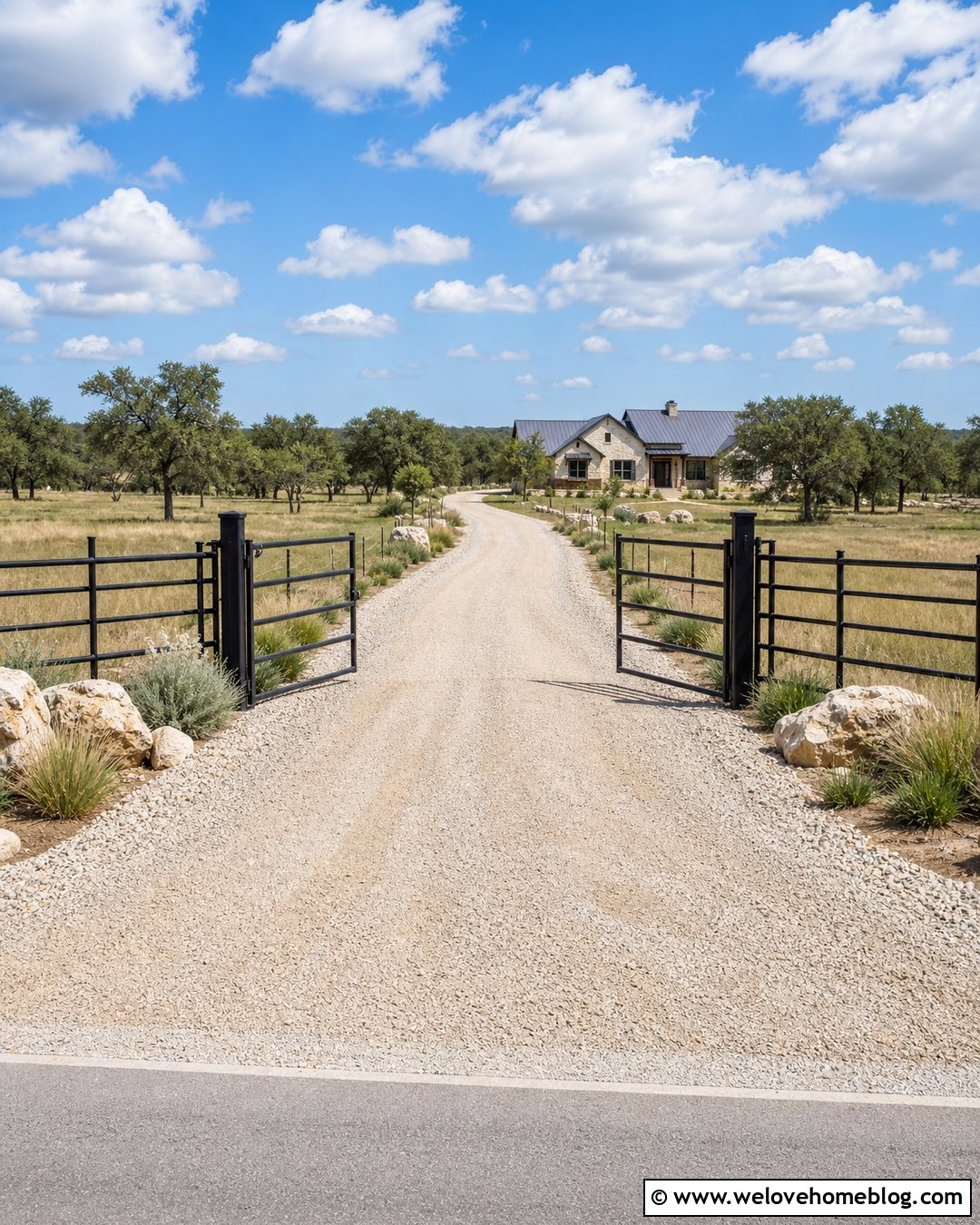
A pipe fence entrance is a durable choice for working acreage where livestock, tractors, and utility vehicles are part of daily life. Use a wide crushed limestone driveway with a galvanized or matte black pipe gate set between sturdy steel posts. Flared gravel shoulders make turns easier, while a compacted stone base helps the entrance hold its shape under heavier traffic. Extend the pipe fencing along the roadside to create a continuous ranch boundary. Native bunchgrasses, low sage, and scattered landscape boulders can add texture without introducing delicate plants that require constant care. A steel ranch sign mounted above or beside the gate gives the entrance a recognizable identity. This straightforward design fits Western ranch houses, Texas limestone homes, and functional agricultural properties.
5. Modern Farmhouse Acreage Driveway Entrance
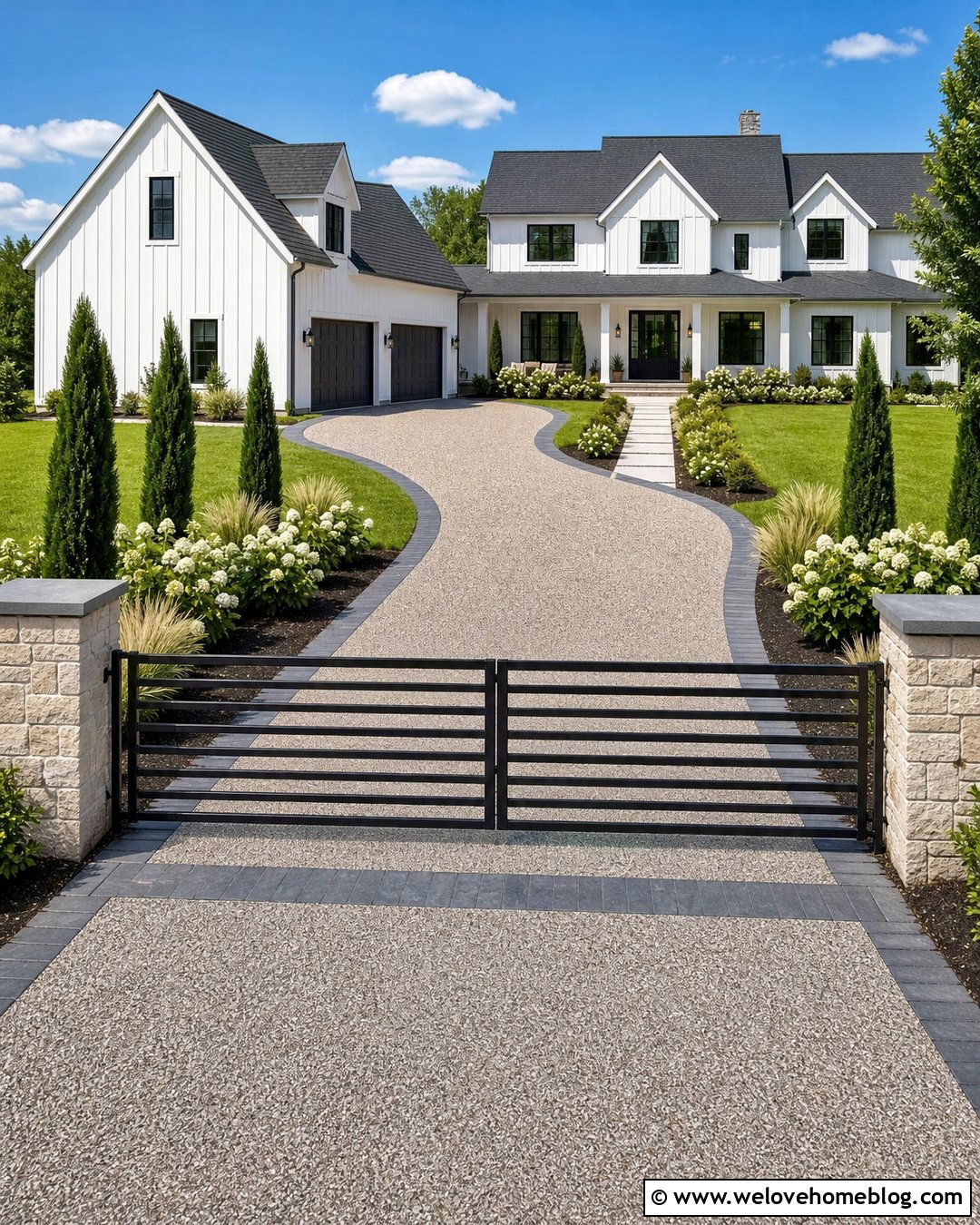
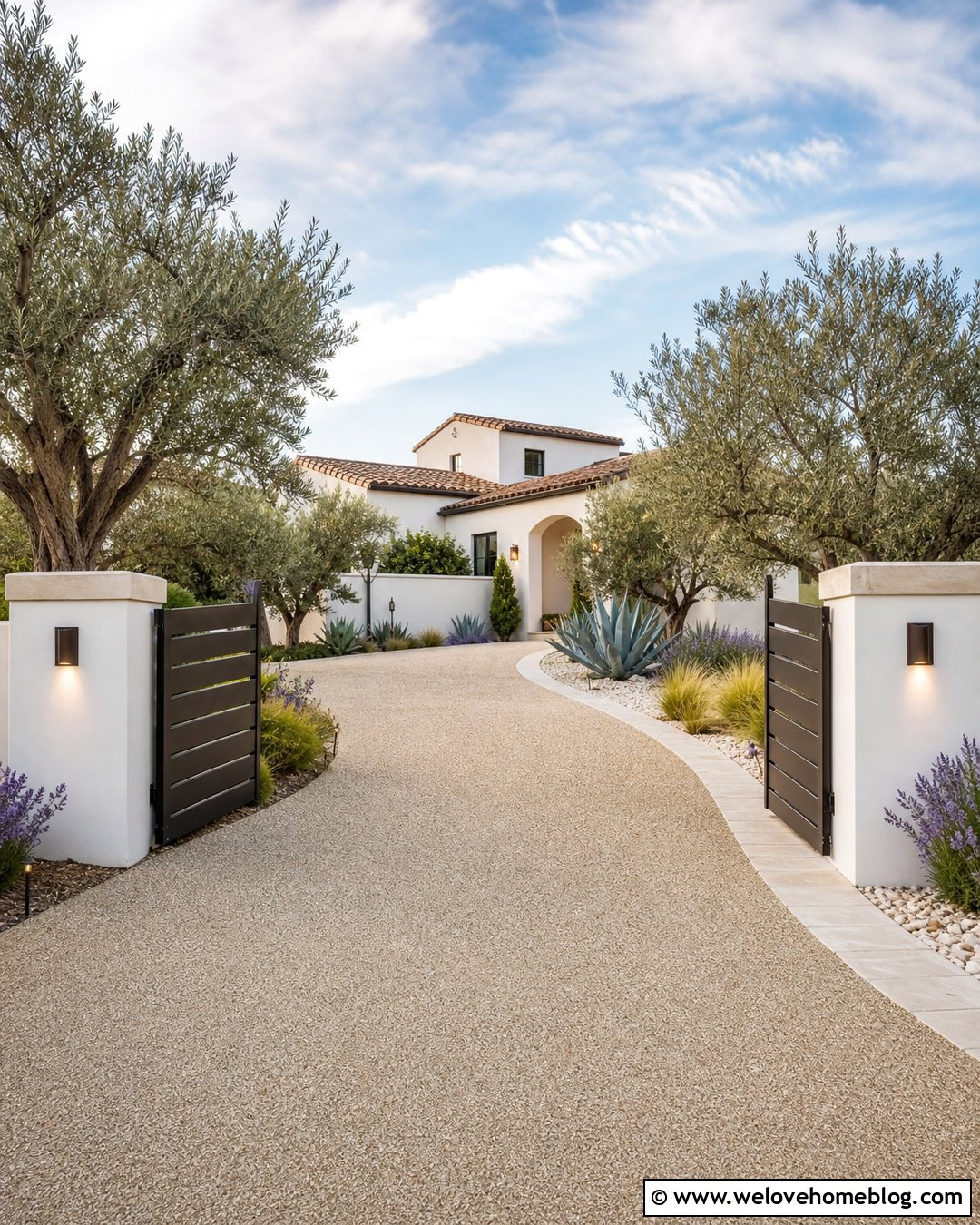
Clean lines can give a rural property a polished modern farmhouse appearance without making it feel suburban. Begin with a light gray resin-bound gravel driveway that curves gently from the road toward a white board-and-batten house. Frame the entrance with simple limestone pillars and a horizontal black metal gate. Narrow charcoal paver bands along the sides create crisp borders and help define the transition into surrounding lawn. Use restrained landscaping, such as upright junipers, white flowering shrubs, and evenly spaced ornamental grasses. Black lanterns on the pillars can repeat the home’s exterior fixtures. Leave open space around the entrance so the arrangement feels appropriate for acreage rather than crowded. The combination of pale surfacing, dark metal, and structured planting creates a bright, cohesive arrival.
6. Tree-Lined Gravel Acreage Driveway
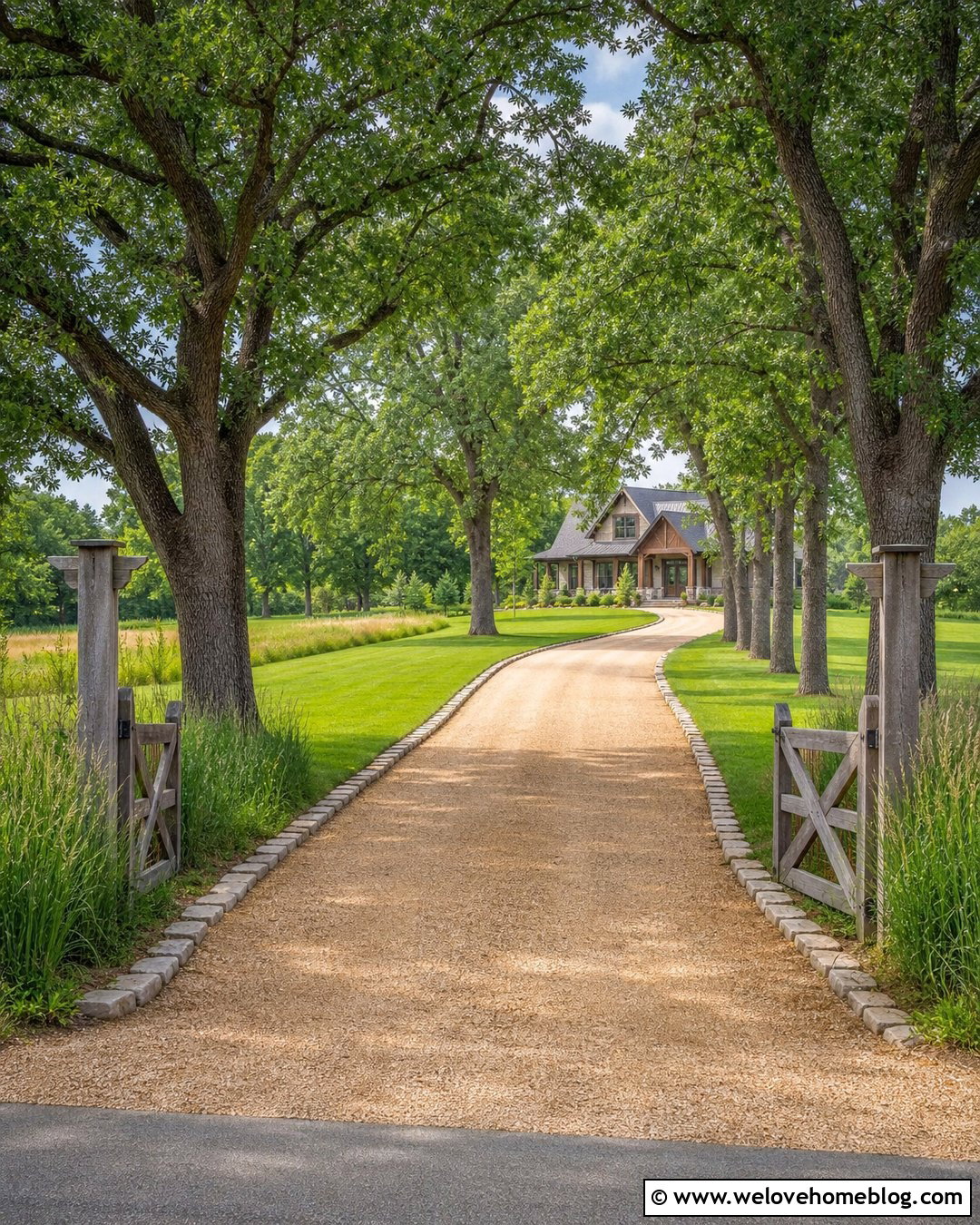
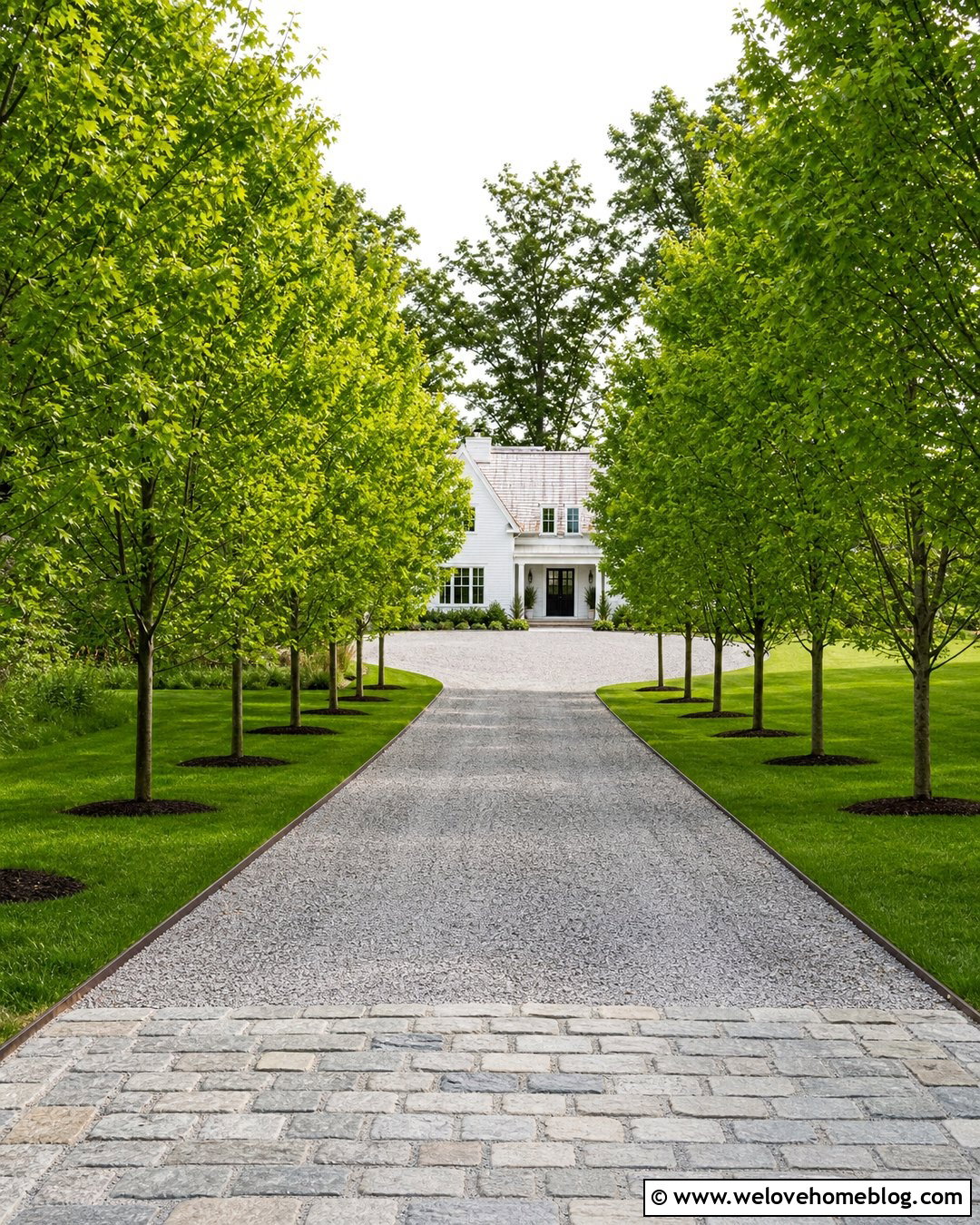
Few features establish a sense of arrival as effectively as a long tree-lined driveway. Start with compacted tan gravel edged by narrow strips of steel or natural stone to maintain a neat boundary. Plant evenly spaced deciduous trees farther back from the driving surface, allowing enough room for mature trunks, canopies, and roadside visibility. Oaks create a grand rural effect, while maples, elms, or regionally suitable native trees can introduce seasonal color. Between the trees, maintain simple meadow grass or mowed lawn rather than continuous flower beds. A gently curved layout can reveal the house gradually and make the property feel more expansive. At the entrance, understated timber posts and a matching farm gate preserve the landscape-focused character while clearly identifying the driveway from the road.
7. Circular Acreage Driveway Entrance
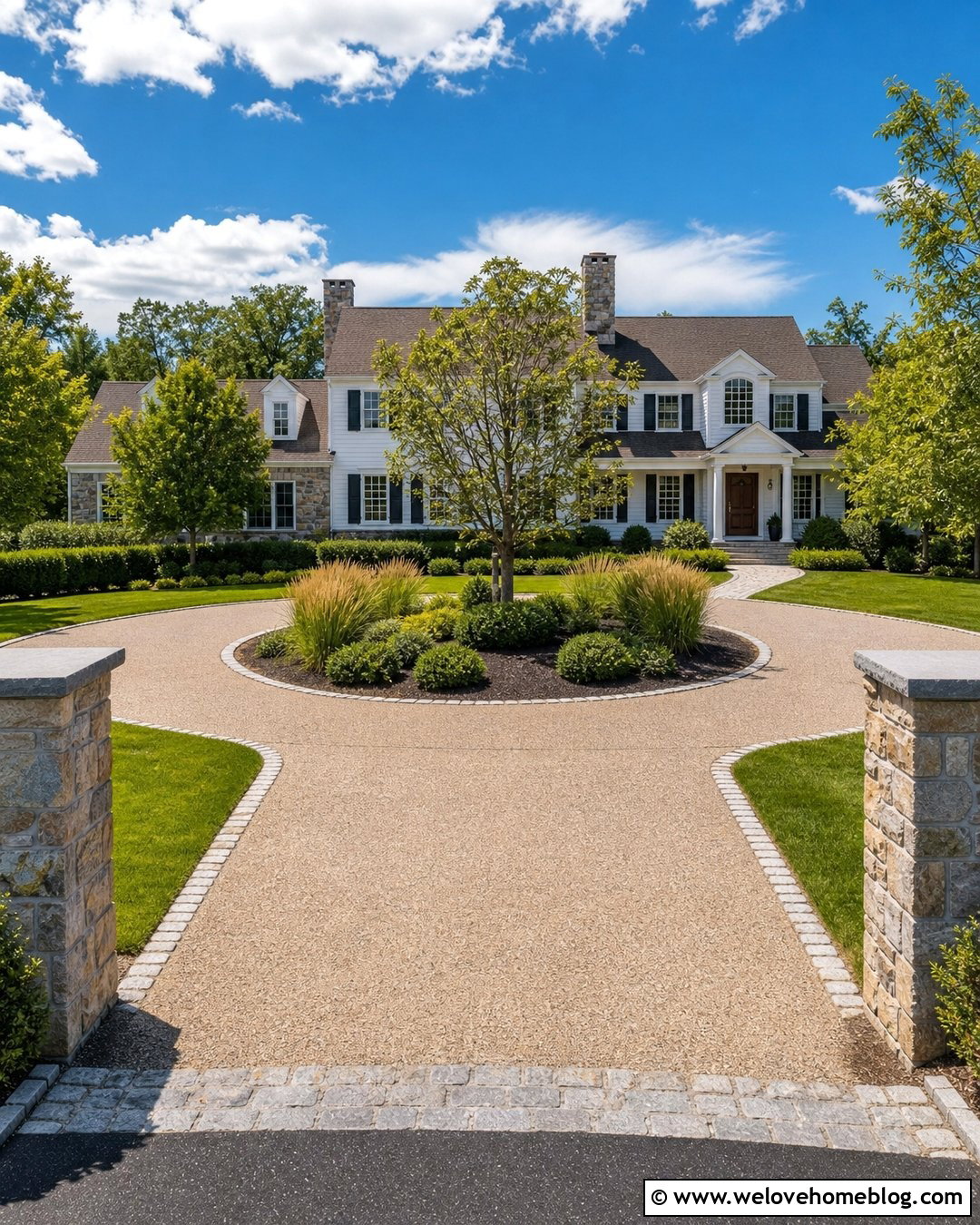
A circular driveway can provide an elegant arrival while allowing guests, service vehicles, and larger trucks to leave without backing toward the road. Use warm exposed aggregate concrete for the circle and connect it to a straight entrance lane framed by stone columns. In the center island, create a large, uncomplicated landscape bed with one specimen tree, low evergreen shrubs, and sweeping ornamental grasses. Avoid small decorative objects that can look lost against an acreage setting. A brick or cobblestone border can define the concrete and coordinate with the house facade. Keep the entrance opening wide and position any gate well back from the road so vehicles have space to wait. This design is especially suitable for substantial colonial, Mediterranean, traditional, and European-inspired country homes.
8. Curved Asphalt Acreage Driveway
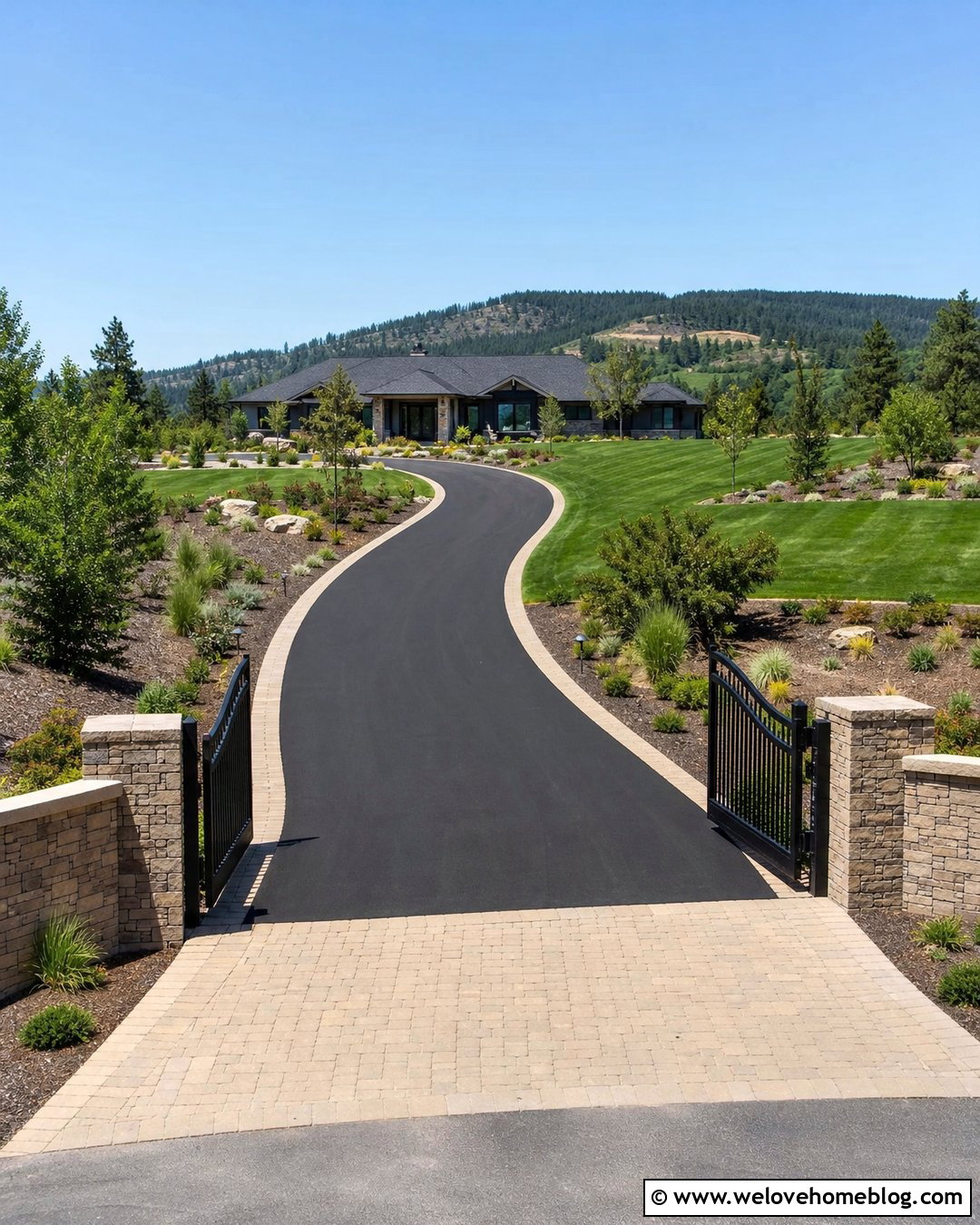
A sweeping asphalt driveway is a sensible choice when the house sits far from the road or the property has rolling terrain. The smooth black surface provides a strong visual contrast with green fields and can accommodate regular residential traffic without the migration associated with loose gravel. Add a buff-colored paver apron at the road and matching paver ribbons along the entrance edges. A broad curve should follow the natural contours of the land rather than cutting awkwardly across slopes. At the entrance, use low stone walls, modest pillars, and an open black gate. Group native shrubs and grasses behind the walls while keeping the immediate roadside area clear. The finished look feels refined but remains practical for large properties, wooded lots, and contemporary ranch homes.
9. Crushed Limestone Acreage Driveway
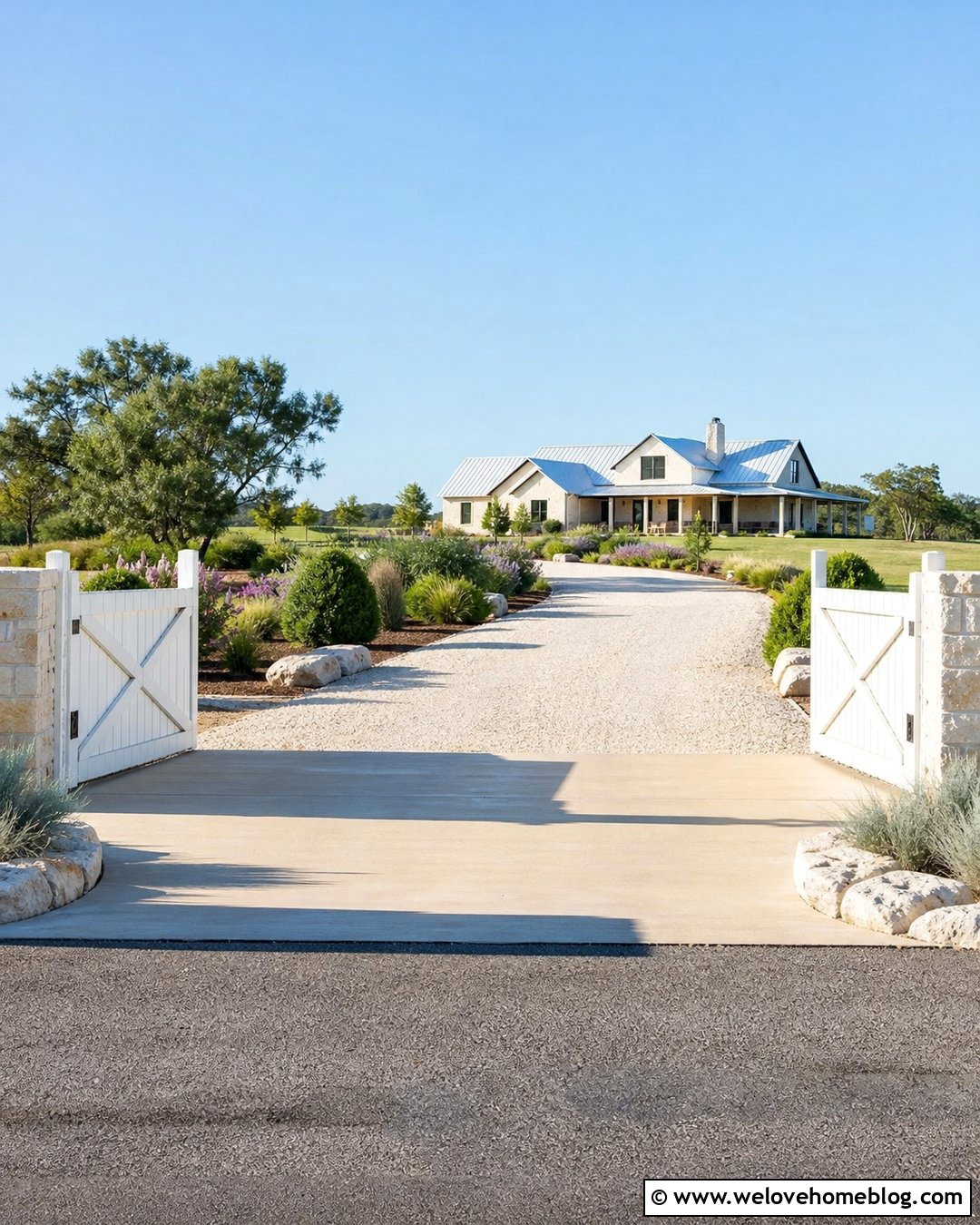
Bright crushed limestone can make a rural driveway look clean, defined, and connected to a pale stone or cream-colored home. Shape the driveway with a wide, slightly curved layout and use larger limestone blocks as borders near the entrance. Farther along the drive, transition to subtle steel edging so maintenance remains manageable. A white or natural cedar field gate adds warmth without competing with the light surface. Plant drought-tolerant native grasses, flowering perennials, and a few rounded evergreen shrubs around the entrance monuments. Because loose material can spread at turning points, include a stabilized apron where tires enter from the road. A properly prepared and compacted base is essential for a long acreage drive. This complete look suits Texas, Midwestern, and Southern country properties particularly well.
10. Brick Apron Acreage Driveway Entrance
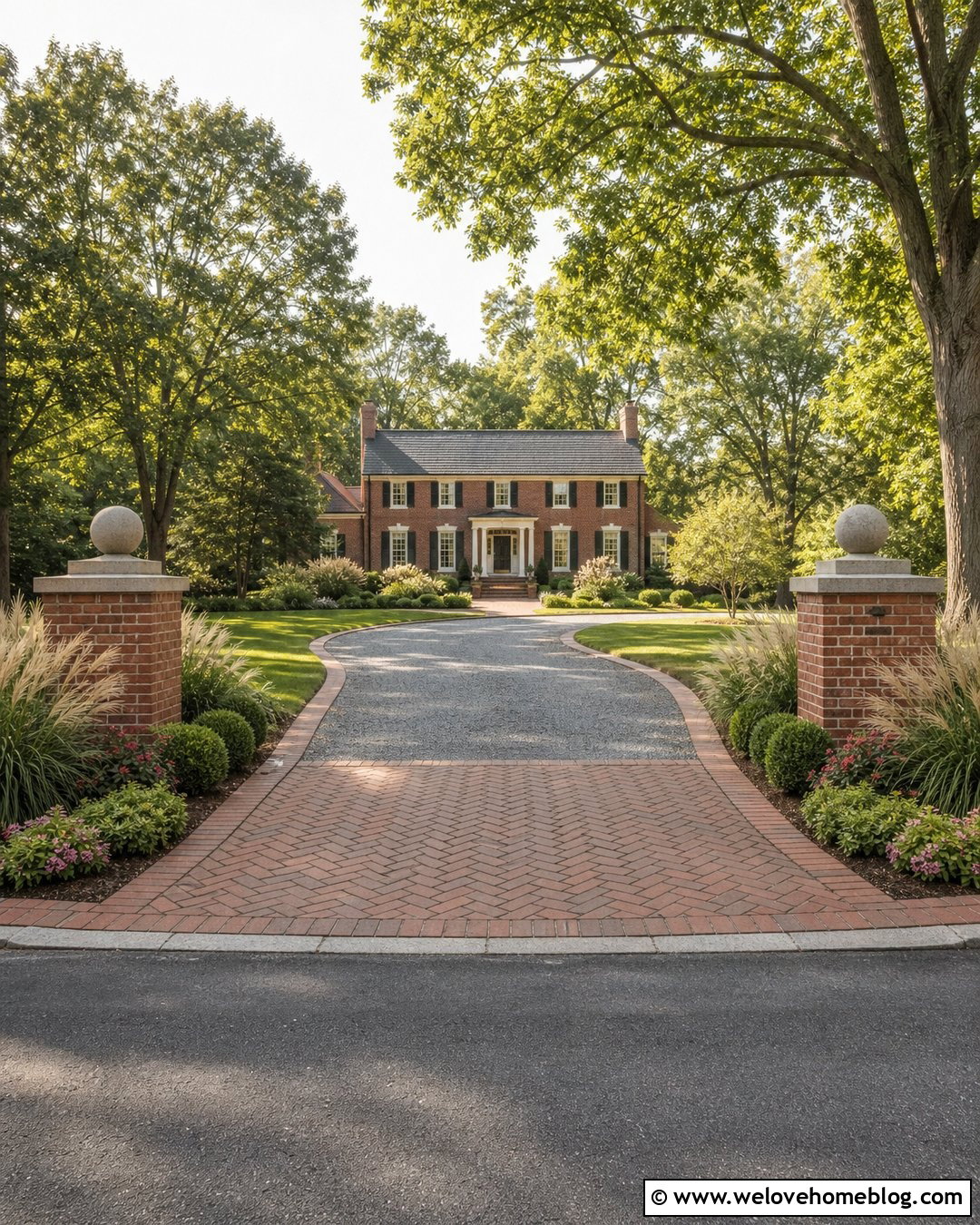
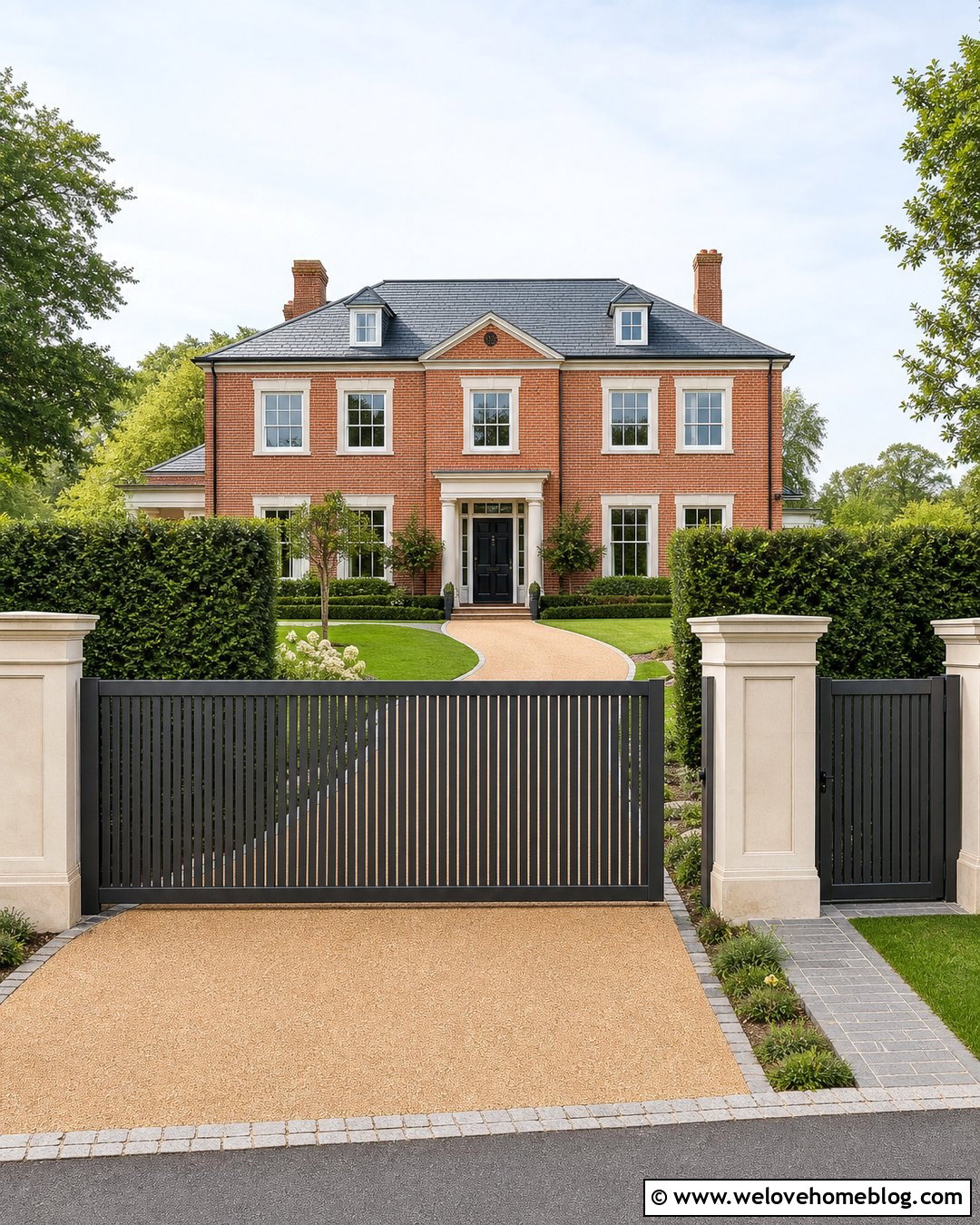
A brick apron creates a polished transition between the public road and a long rural driveway. Use clay brick pavers in a herringbone pattern across the first several feet, then continue with compacted gray gravel or asphalt toward the house. The contrasting surface marks the entrance clearly and adds architectural detail where it will be noticed most. Brick-edged planting beds can curve outward from two simple masonry pillars, creating space for low boxwoods, switchgrass, and seasonal flowers. If the property has a gate, position it beyond the apron so waiting vehicles can clear the roadway. Repeat the same brick around the mailbox or address monument for continuity. This entrance works particularly well with red-brick colonials, Georgian homes, traditional farmhouses, and classic American country houses.
11. Cobblestone Acreage Driveway Entrance
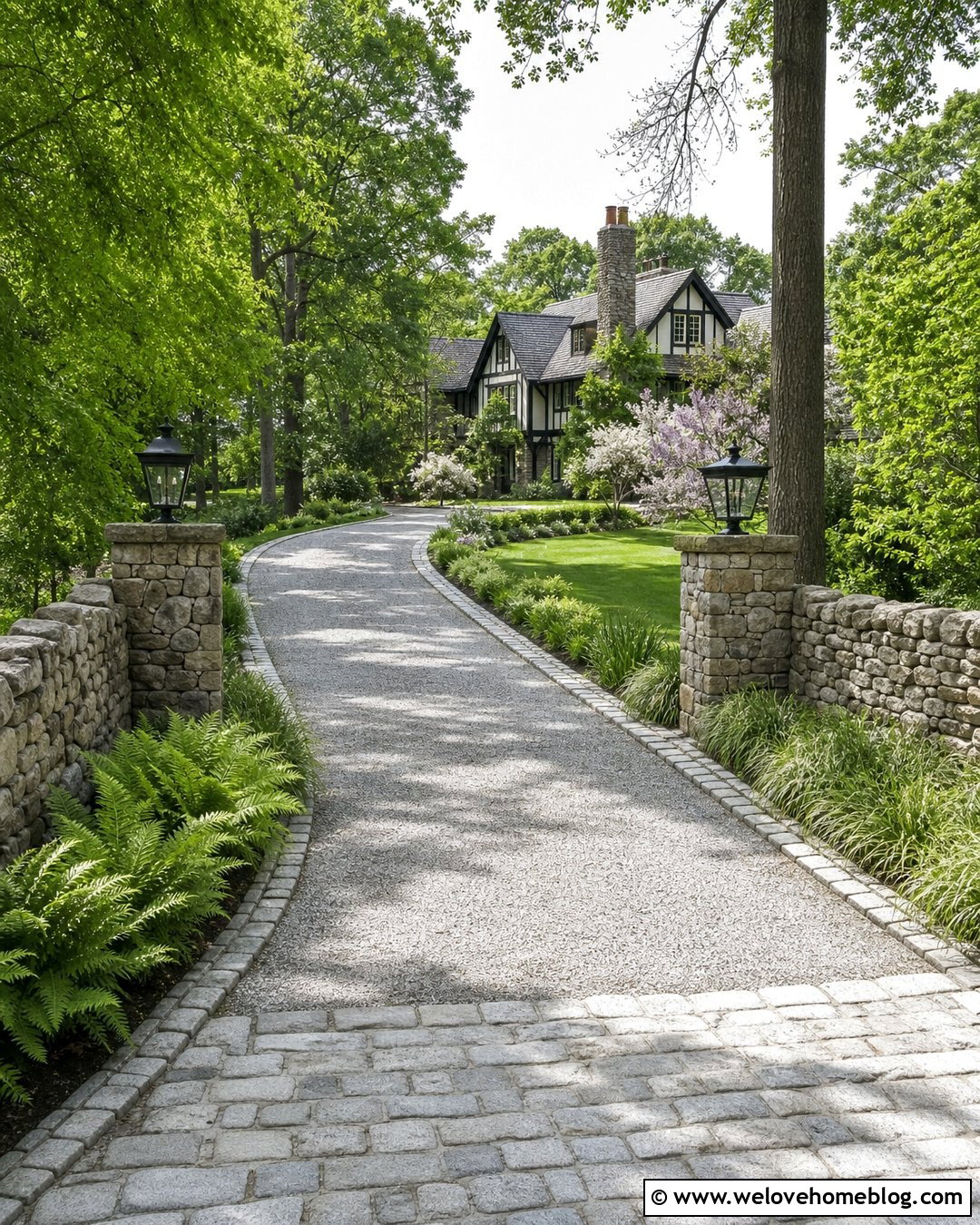
Cobblestone brings texture and permanence to an acreage entrance without requiring the entire long driveway to use an expensive material. Install granite cobblestones across the entrance apron and along the first section, then transition into fine gray gravel through a gently curved edge. Stone pillars with simple black lanterns reinforce the substantial appearance. Continue low dry-stacked walls for a short distance on both sides, allowing them to taper naturally into the landscape. Ferns, woodland grasses, and flowering shrubs can soften the stone on a shaded property, while lavender and sage suit sunnier locations. The cobblestone should complement the colors found on the house rather than introducing an unrelated tone. This layered design gives country estates, Tudor homes, and wooded retreats a memorable but grounded entrance.
12. Split-Rail Fence Acreage Driveway
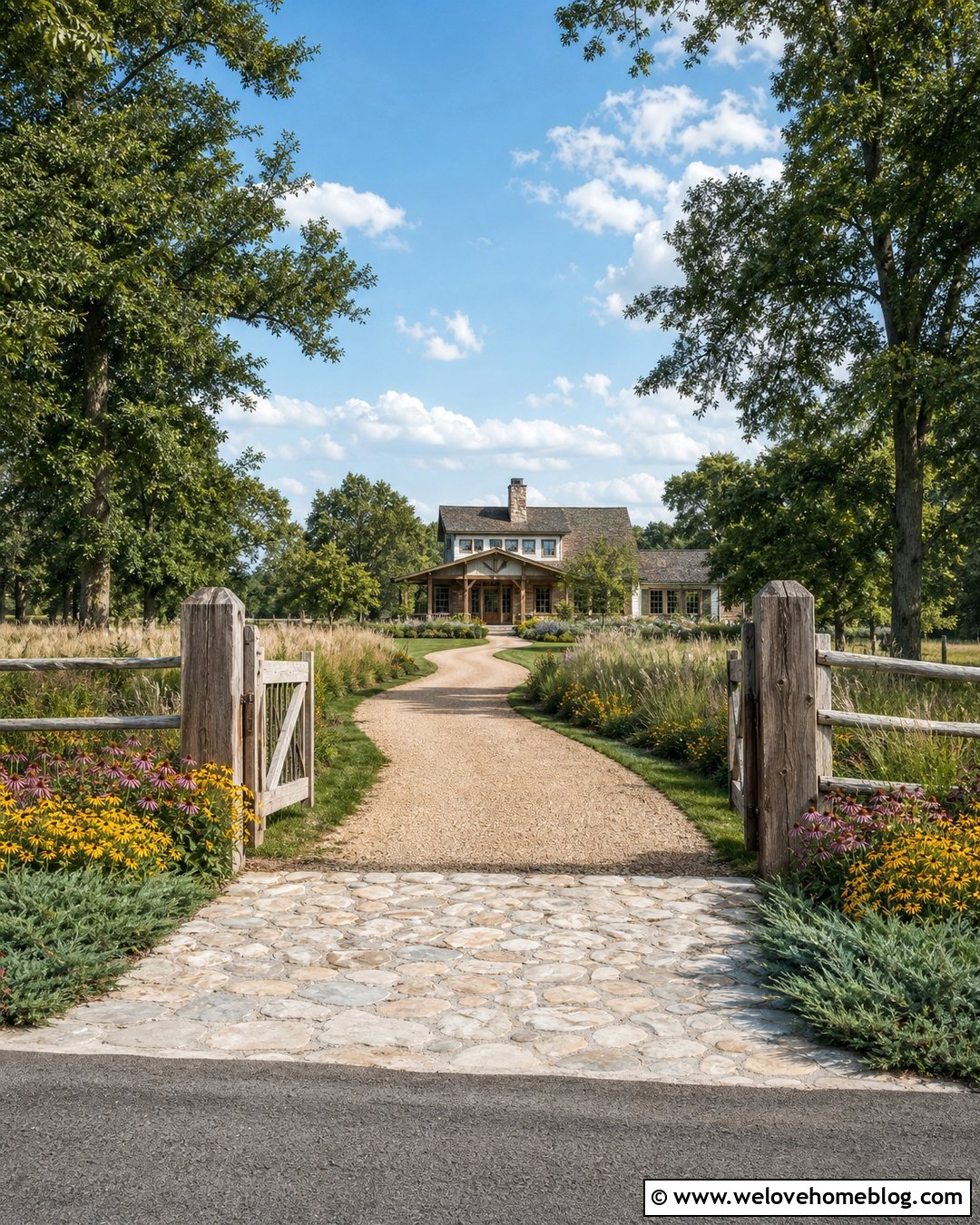
A split-rail fence can visually organize a wide frontage while preserving an open countryside atmosphere. Pair it with a tan pea gravel driveway that enters straight from the road before bending toward a craftsman or farmhouse-style home. Extend the fencing in balanced lengths on both sides, following the terrain instead of forcing perfectly level lines across rolling ground. At the driveway opening, use thicker timber posts and a simple wood gate that matches the rails. Plant clusters of black-eyed Susans, coneflowers, native grasses, and low junipers behind the fence. A stone or brick apron can stabilize the entrance and create a clean road transition. This complete look is approachable, economical, and especially effective where pastures, meadow areas, or mature shade trees already shape the property.
13. Native Landscaping Acreage Driveway
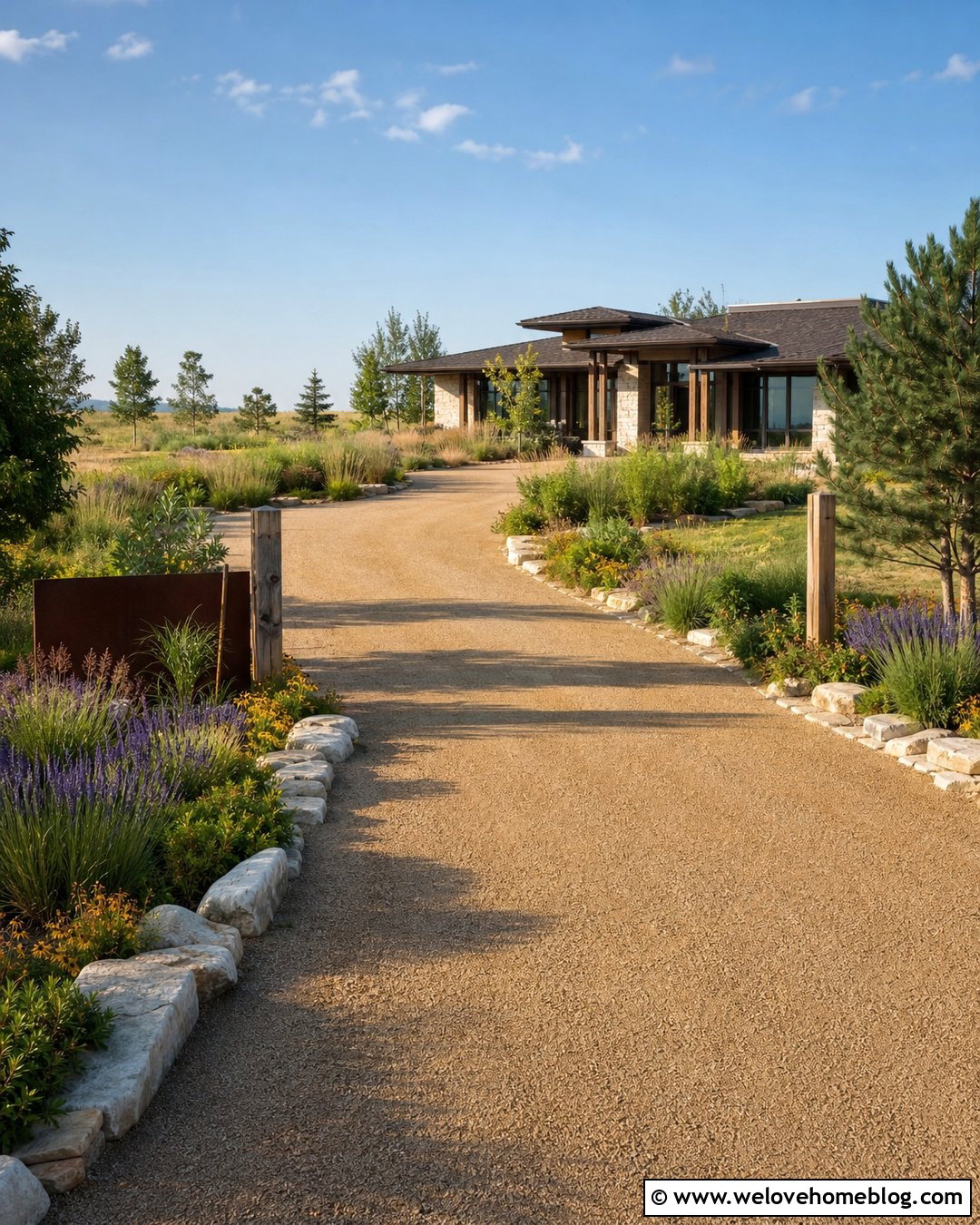
Native landscaping helps a long acreage driveway blend into its surroundings instead of appearing imposed on the land. Choose a warm decomposed granite surface with a broad curved layout and natural stone edging around the entrance. Build generous planting zones using regionally appropriate grasses, flowering perennials, evergreen shrubs, and small trees. Arrange plants in repeated drifts rather than isolated specimens, which can look undersized across a large property. Keep taller vegetation away from the roadside sight area and use low ground covers closest to the entrance. Weathered steel address panels and simple timber posts add definition without overpowering the landscape. This approach works with prairie homes, desert ranches, woodland cabins, and modern houses because the plant palette can be adjusted to local soil, rainfall, and scenery.
14. Low-Maintenance Acreage Driveway Entrance
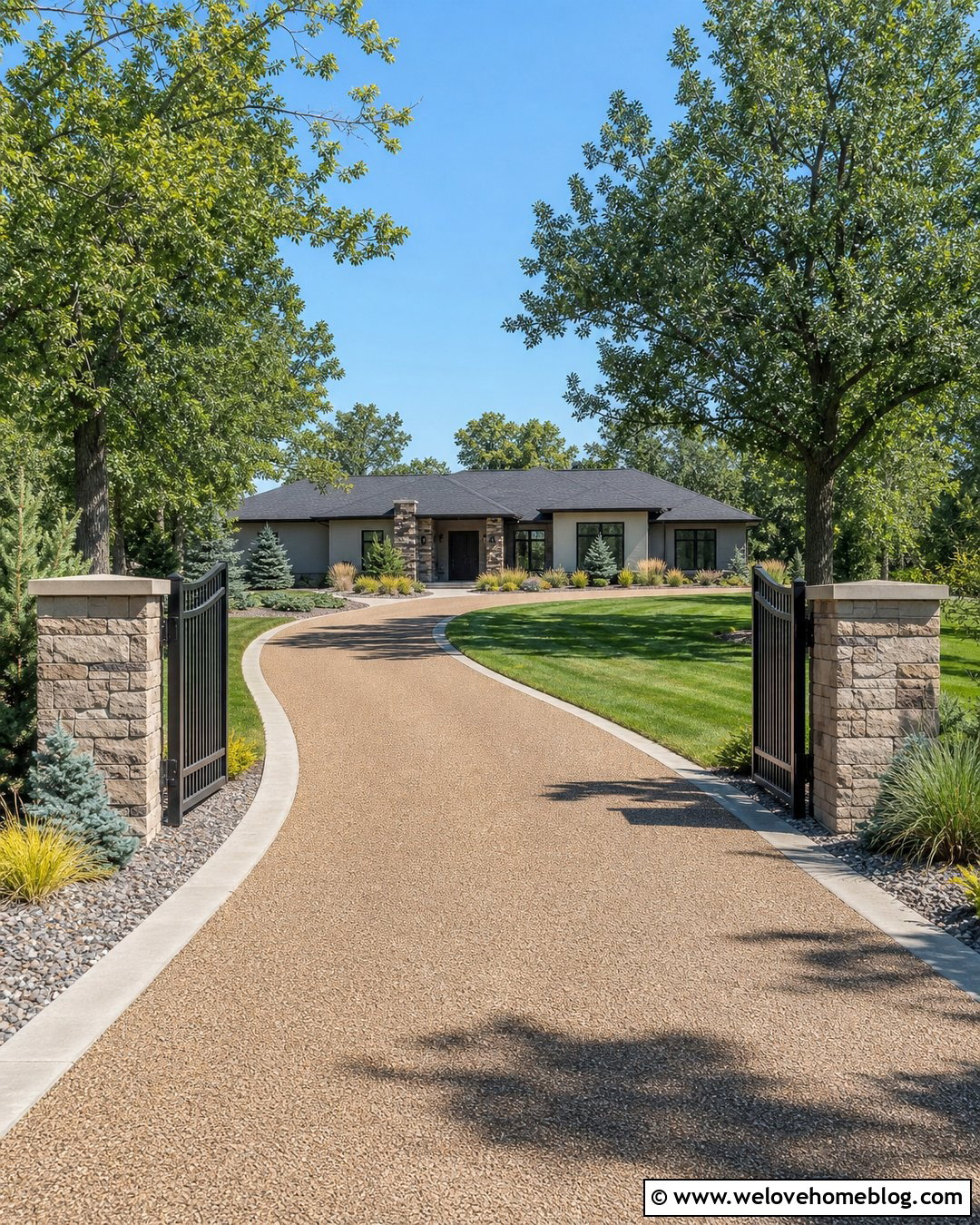
If you do not want to spend every weekend trimming and weeding, build the entrance around durable materials and broad plant groupings. A chip-seal driveway offers a rural appearance with a more stable surface than loose decorative gravel. Border the opening with concrete curbing and large beds covered in crushed stone mulch. Use slow-growing evergreen shrubs, ornamental grasses, and locally adapted ground covers that can handle exposure near the road. Two clean stone pillars and an open metal gate provide structure without requiring painted wood components. Include a wide mowing strip between the beds and lawn so grass edges remain easy to maintain. A simple curved approach leading to a one-story ranch or contemporary farmhouse completes the look while keeping long-term upkeep realistic for a large property.
15. Lighted Acreage Driveway Entrance
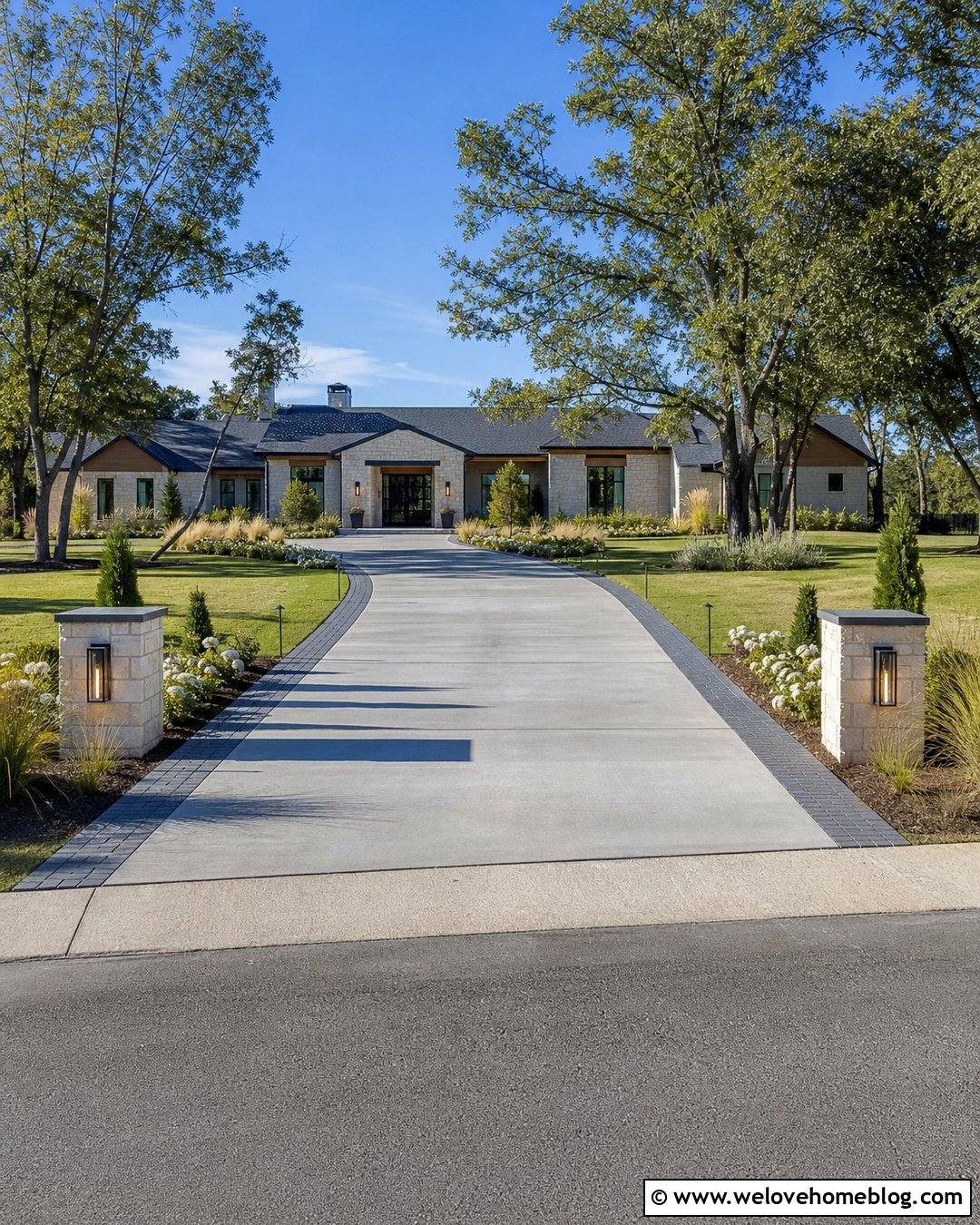
Thoughtful lighting makes a rural entrance easier to identify while highlighting the design after sunset. During the day, the entrance can feature a smooth gray poured-concrete driveway, charcoal paver borders, and limestone columns with integrated fixtures. Continue low path lights for a short distance along the approach rather than lining the entire long driveway like a runway. Use shielded fixtures aimed toward the driving surface and entrance features to limit unnecessary glare. Plant compact evergreens, white flowering shrubs, and soft grasses around the columns so the lighting reveals layered textures. The entrance should remain equally attractive in bright daylight, with wiring, transformers, and controls concealed from view. This complete design suits modern homes, upscale ranch houses, and properties where the residence is difficult to see from the road.
16. Address Sign Acreage Driveway Entrance
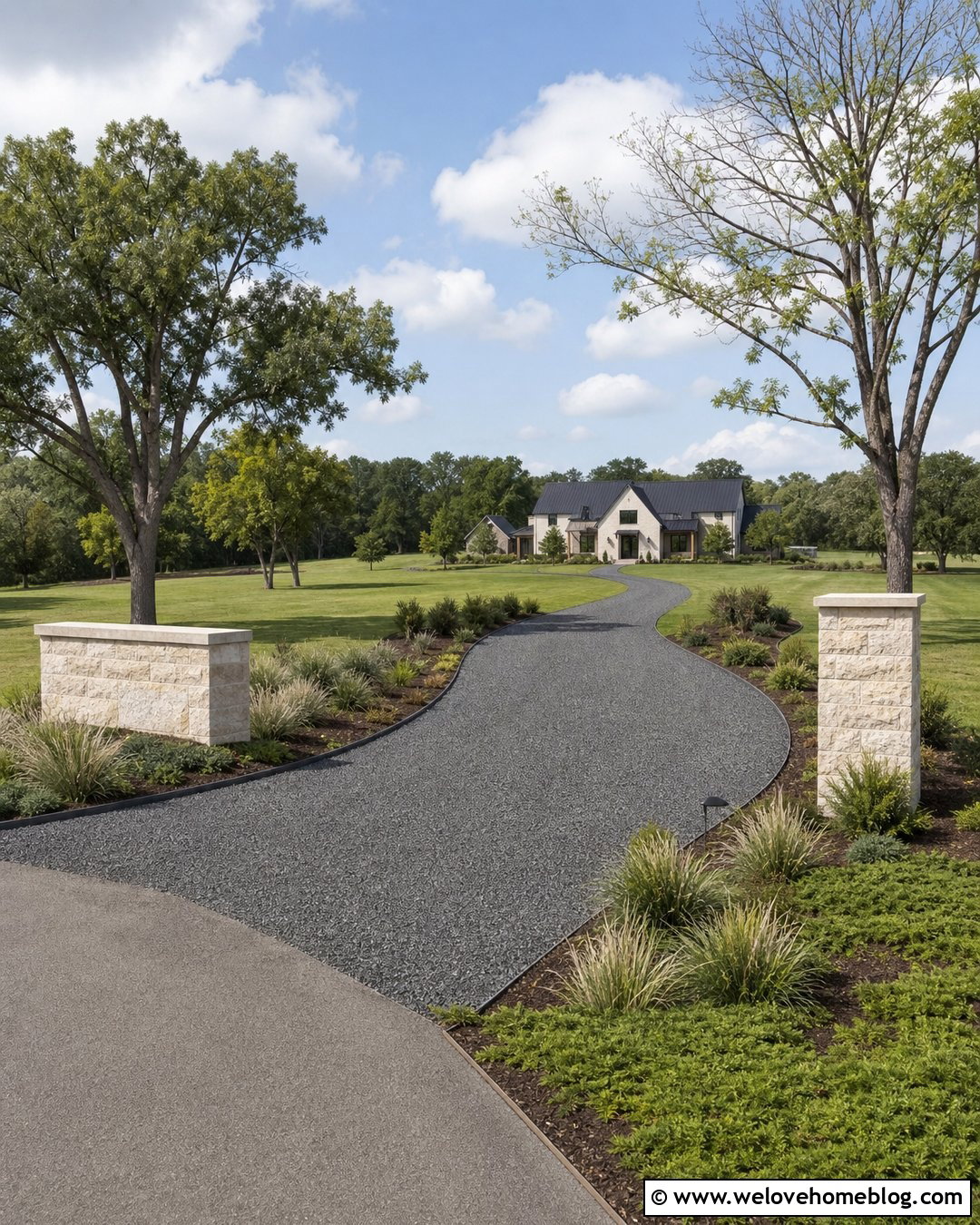
On a large property, a clear address marker can become an attractive focal point rather than an afterthought. Pair a dark gray gravel driveway with a low limestone monument placed beside the entrance, beyond the clear roadside viewing area. Use large, high-contrast numbers that can be recognized easily from approaching vehicles. A matching limestone pillar on the opposite side creates visual balance without making the opening feel enclosed. Frame both structures with low ornamental grasses, creeping ground cover, and broad mulch beds. Continue a simple black metal edging along the driveway before allowing the border to disappear into the landscape. A slight curve beyond the sign creates privacy while guiding attention toward the house. The design is functional, uncluttered, and suitable for both contemporary and traditional acreage homes.
17. Covered Ranch Gate Acreage Driveway
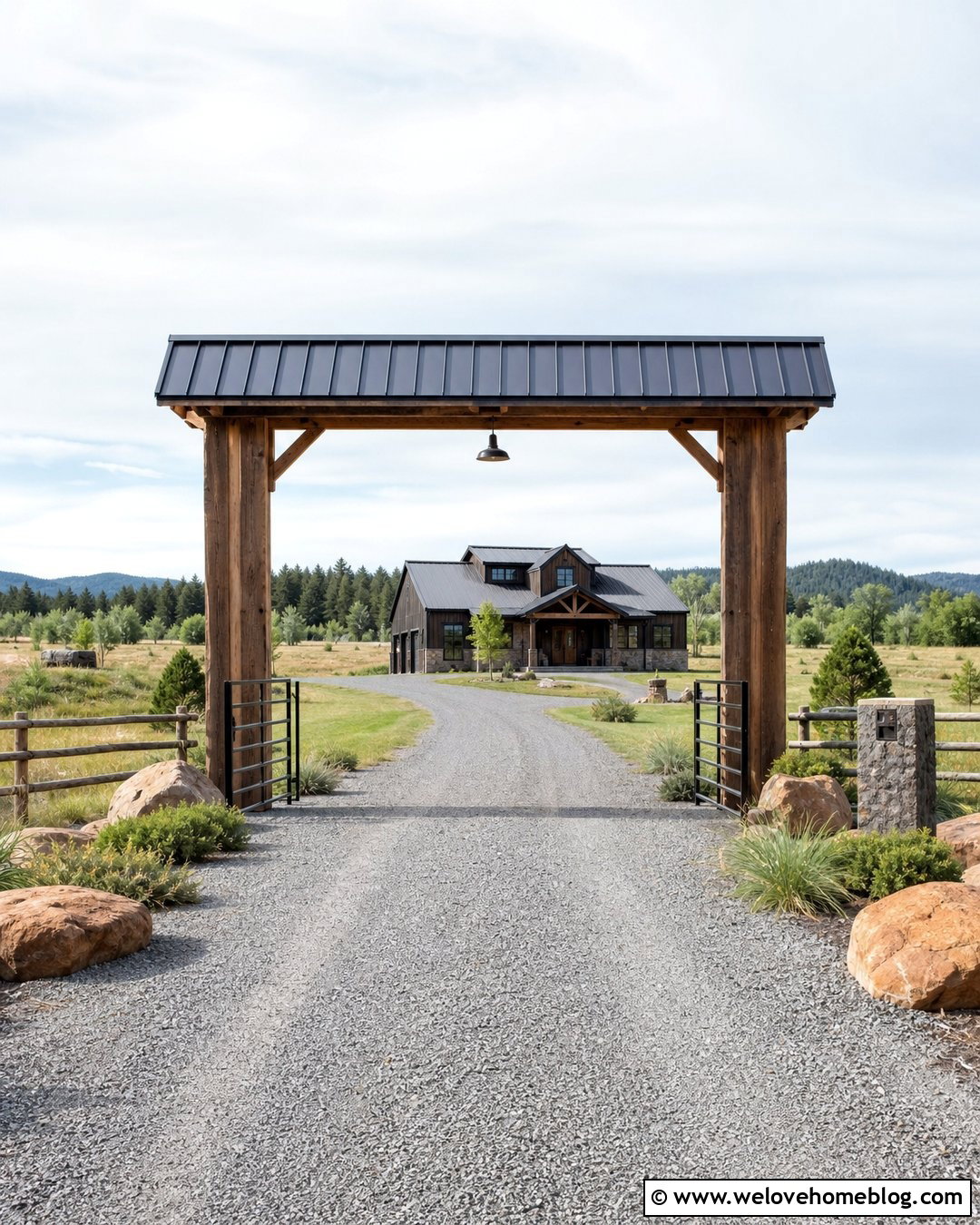
A covered gate structure creates a strong ranch identity and makes the property entrance visible across a broad rural landscape. Use thick timber posts, a simple metal roof, and an open steel gate over a wide compacted gravel driveway. The overhead structure should provide generous clearance and remain proportional to trailers, farm equipment, and emergency access needs. Continue post-and-rail fencing outward from both sides to anchor the feature. Large boulders, native grasses, and low shrubs can connect the structure to the surrounding land without hiding its supports. Add a separate address sign beside the gate rather than crowding the overhead beam with excessive decoration. This complete arrangement works particularly well with ranch houses, lodges, mountain properties, equestrian acreage, and rustic barndominiums.
18. Sloped Acreage Driveway Entrance
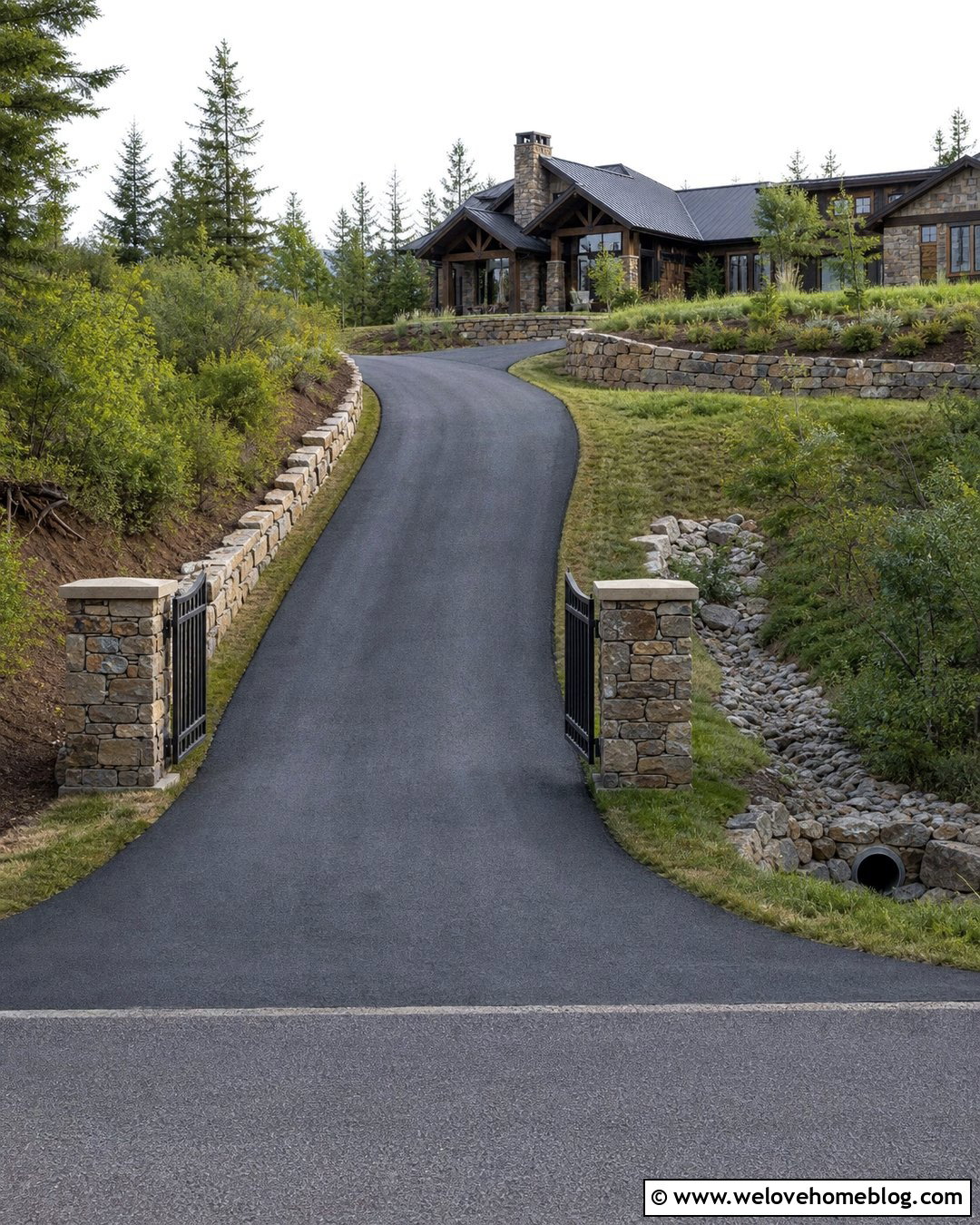
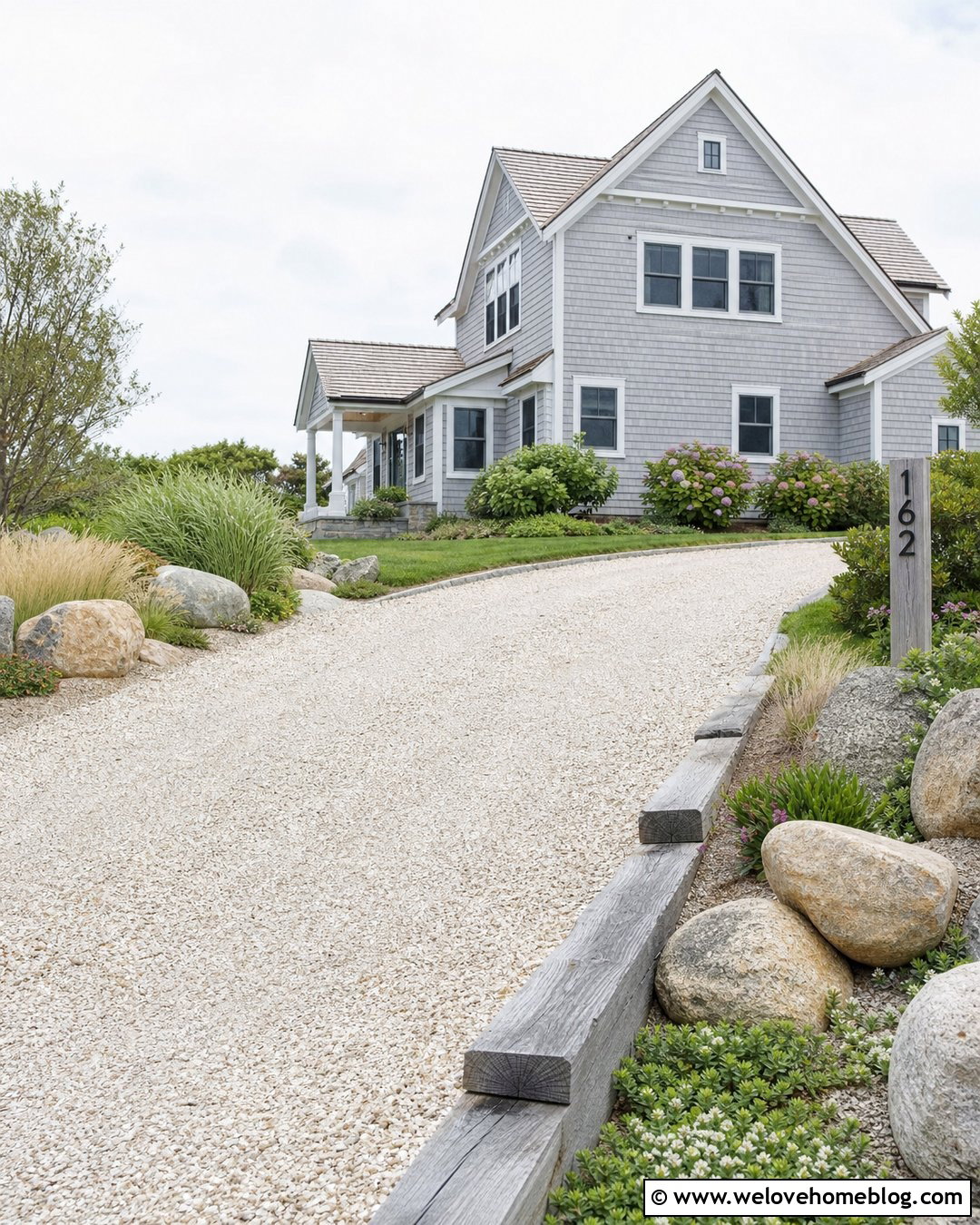
A sloped entrance needs careful grading so it looks finished and handles runoff without washing material toward the road. Use textured concrete or asphalt at the steepest section, then transition to gravel only after the grade becomes gentler. Low stone retaining walls can hold the uphill planting bed while creating a defined edge along the entrance. On the lower side, incorporate a grass-lined swale, culvert, or planted drainage area appropriate for local conditions. FHWA guidance emphasizes reviewing driveway drainage, grades, road alignment, and visibility when designing rural access. () Plant erosion-resistant grasses and spreading shrubs instead of loose mulch on the slope. Simple masonry pillars and an open gate complete the entrance without adding obstacles to an already challenging approach.
19. Wide Acreage Driveway For Trailers
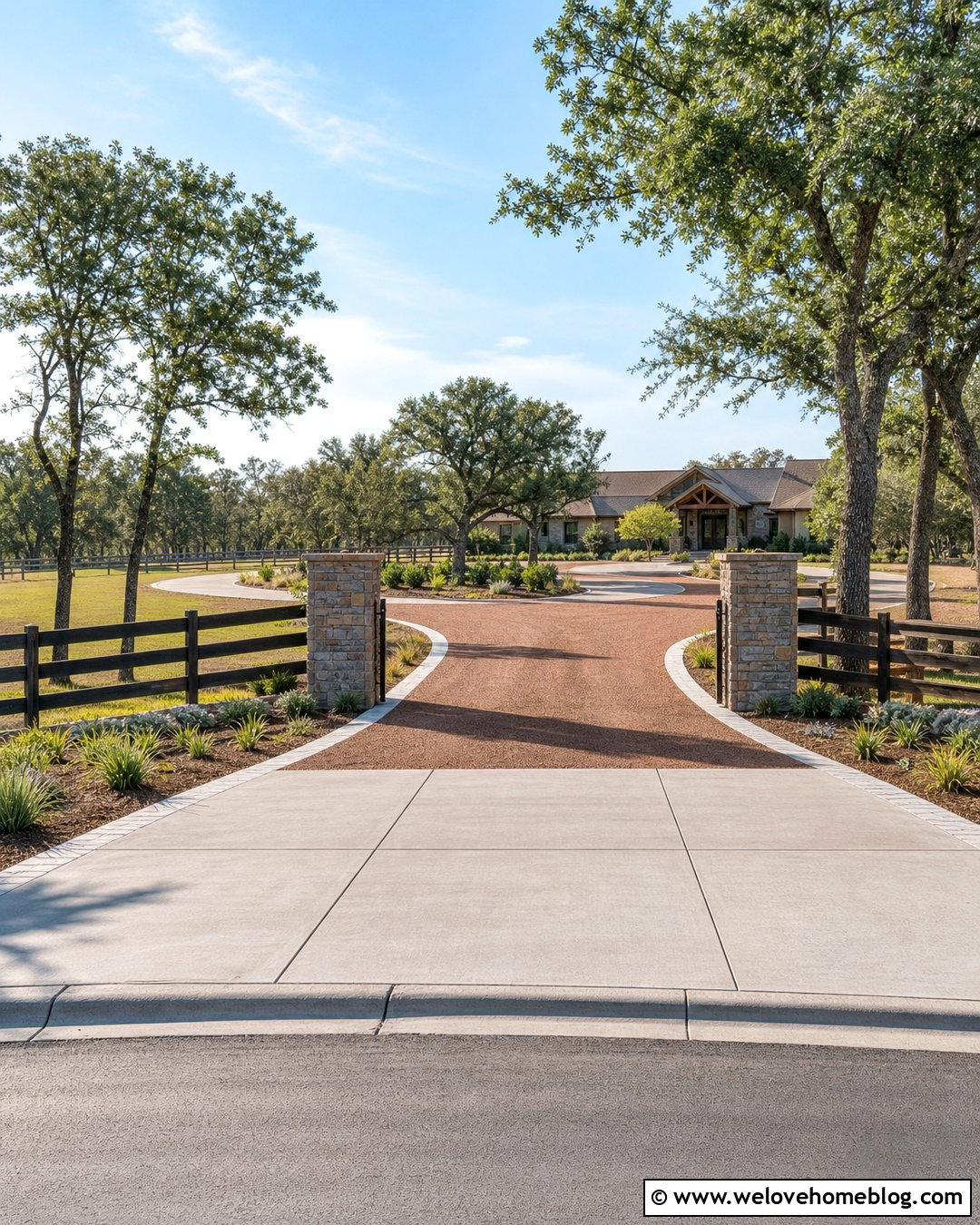
A trailer-friendly entrance should provide generous width, smooth turning transitions, and an uncomplicated layout. Begin with a reinforced concrete apron at the roadway, then continue into compacted crushed granite for the main driveway. Flare both entrance corners so long trailers can turn without crossing lawn, clipping pillars, or disturbing roadside drainage. Set stone columns and fencing farther from the driving edge than you would on a standard residential driveway. Inside the property, add a broad turnaround or separate equipment loop so drivers do not need to reverse onto the public road. Low native grasses and ground covers can fill the entrance beds without narrowing visibility. The complete look remains attractive enough for a country home while supporting horse trailers, recreational vehicles, farm machinery, deliveries, and maintenance equipment.


20. Budget Acreage Driveway Entrance
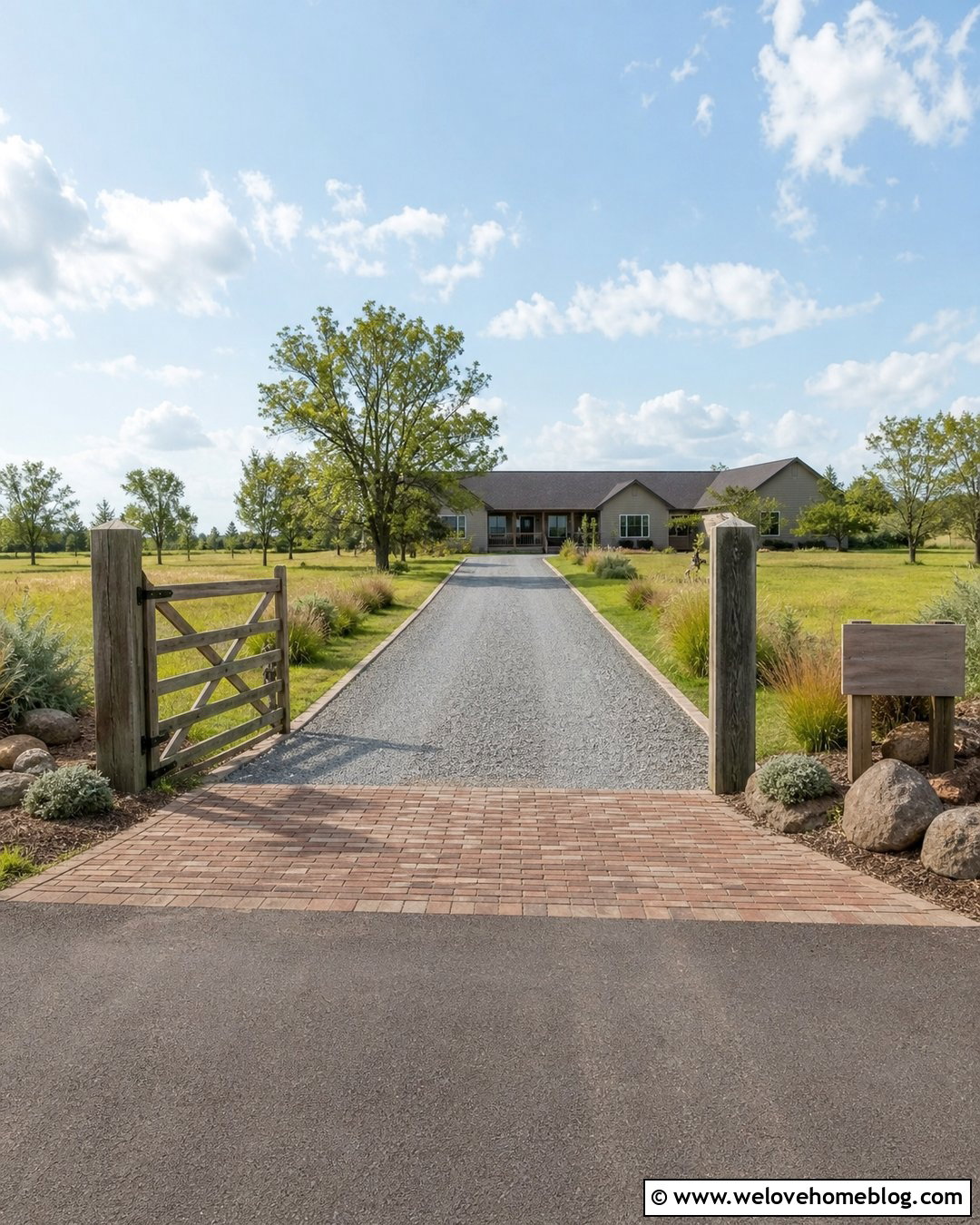
An attractive acreage entrance does not require elaborate masonry or an automatic gate. Start with a well-compacted gray crushed-stone driveway and define the first section using pressure-treated timber edging. Install two sturdy wood posts with a simple farm gate or leave the entrance open if fencing is unnecessary. A homemade address sign mounted on a separate post can provide a clear focal point. Use divided native grasses, hardy shrubs, and locally sourced landscape rocks to create broad beds on both sides. A short recycled-brick or concrete paver apron can dress up the road transition without covering the entire driveway. Focus spending on base preparation, grading, drainage, and sufficient entrance width first. The result feels intentional, welcoming, and appropriate for a modest ranch, cabin, or starter acreage property.
Conclusion:
The strongest acreage entrance combines appearance, durability, visibility, and comfortable vehicle access in one coordinated design. Gravel, asphalt, concrete, limestone, brick, and cobblestone can all work beautifully when the surface matches the property’s terrain, maintenance needs, and house architecture. Gates and pillars should frame the approach without creating tight turns, while planting should enhance the entrance without hiding traffic. Before construction, confirm local requirements for permits, setbacks, drainage, culverts, and sight distance. Then repeat a few materials or colors from the house to make the long approach feel connected. These 20 acreage entrance driveway ideas offer practical starting points for creating a rural arrival that looks established, functions smoothly, and complements the surrounding land for years.

Related posts:
Leave a Reply