
A well-planned tree-lined driveway turns an ordinary route to the garage into a welcoming landscape feature. These **20 treed driveways ideas** combine attractive surfaces, practical layouts, defined borders, and trees that complement the home. The best design depends on driveway length, available width, climate, soil, and the mature size of each tree. Roots, falling fruit, low branches, and heavy shade should also be considered before planting. Whether you prefer a formal allée, a relaxed woodland approach, or a modern row of sculptural trees, the entire setting should feel connected. Use the following complete driveway looks to compare paving materials, tree arrangements, planting beds, entrances, and architectural pairings while exploring these **20 treed driveways ideas**.

1. Oak Tree Gravel Driveway
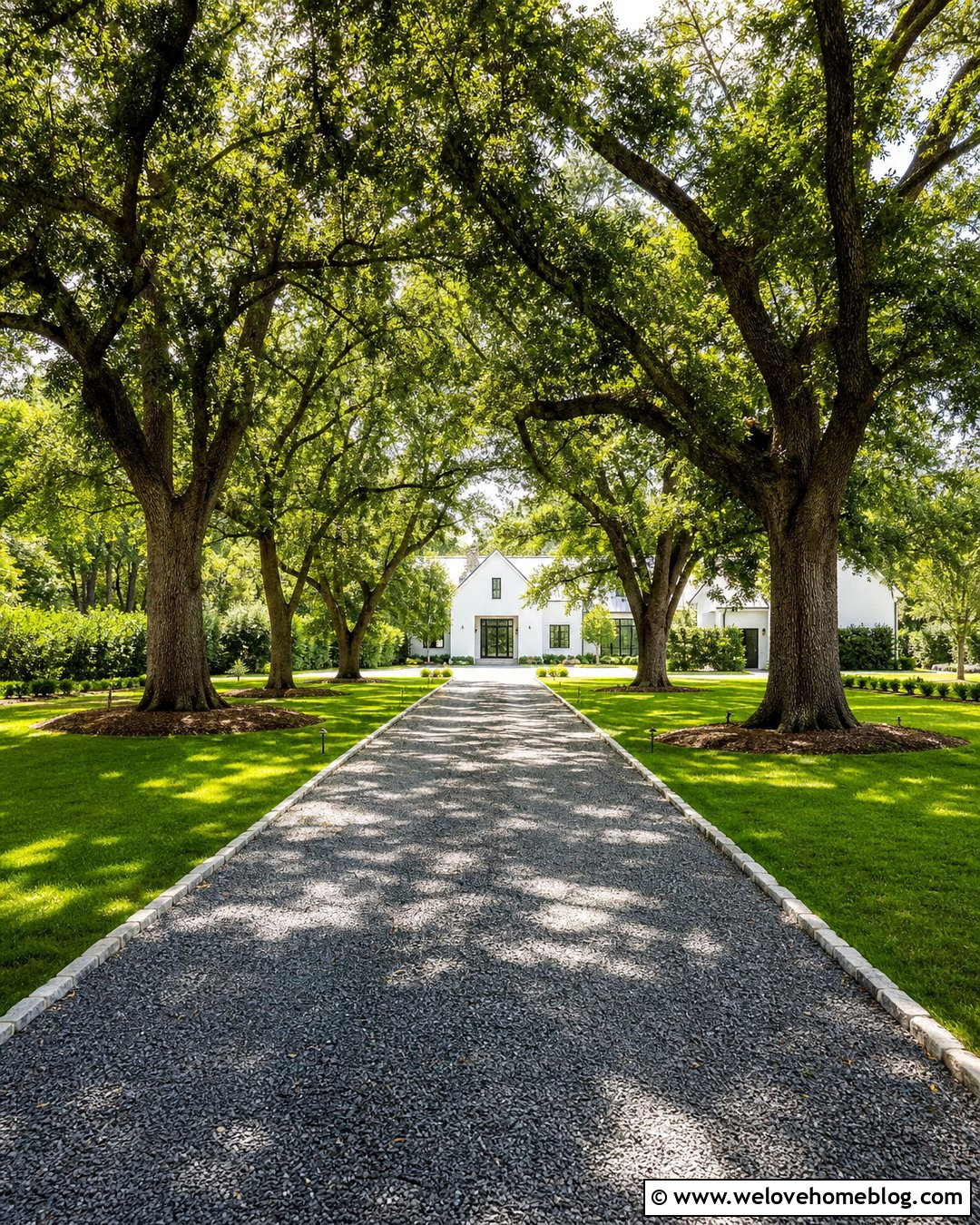
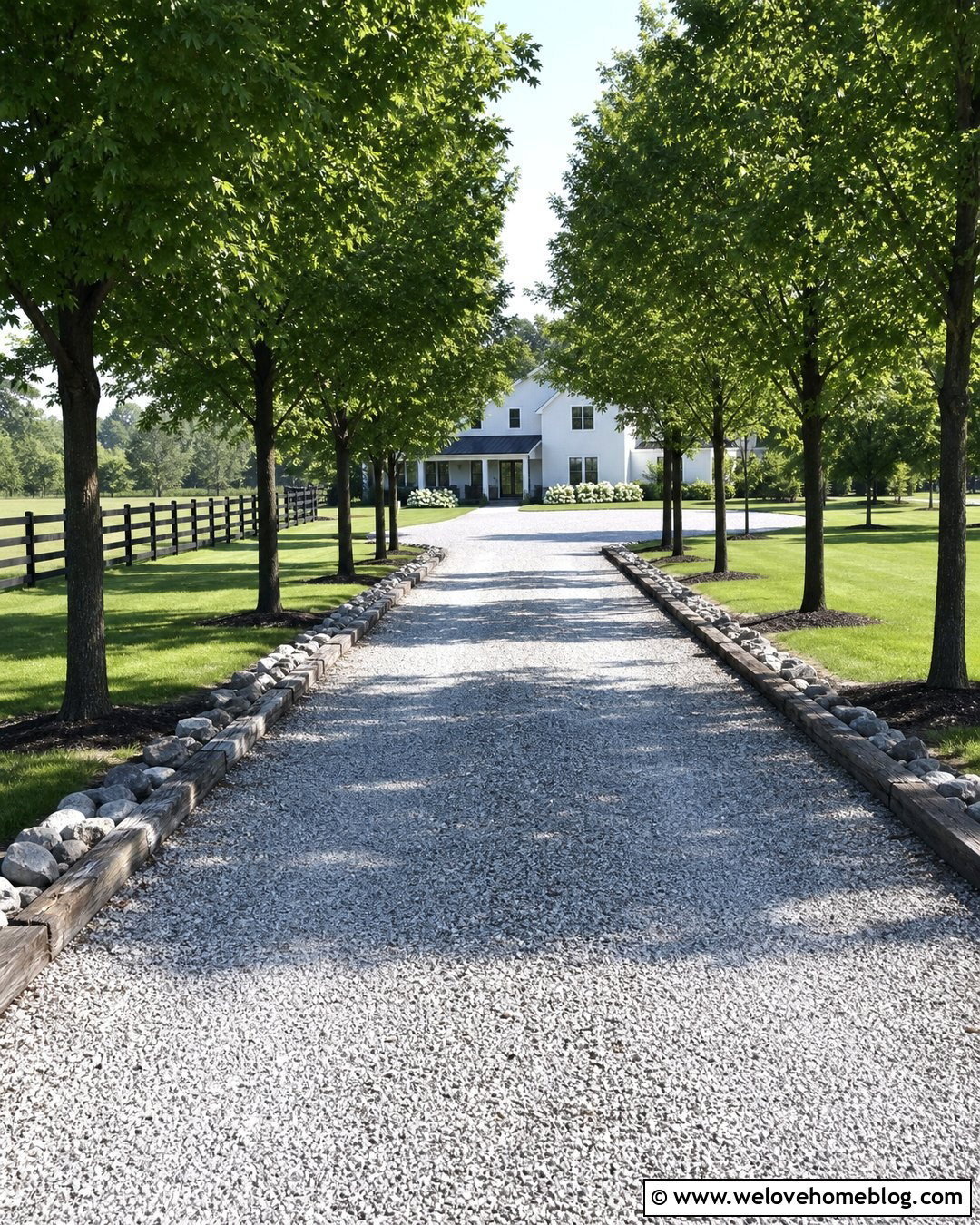
A long gravel driveway lined with oak trees creates a substantial country entrance that becomes more impressive as the landscape matures. Use compacted gray crushed stone for a stable surface, then install steel or granite edging to contain loose material. Wide grass verges give the oak trunks room to develop without crowding vehicles. Beneath the trees, a simple layer of mulch or low groundcover keeps maintenance manageable. The driveway can run straight toward a farmhouse or curve gently to preserve existing trees. Position new oaks according to their mature canopy and root spread rather than their nursery size. This approach requires patience, but it produces a shaded, natural-looking drive with strong year-round structure and classic rural character.
2. Birch Tree Curved Driveway
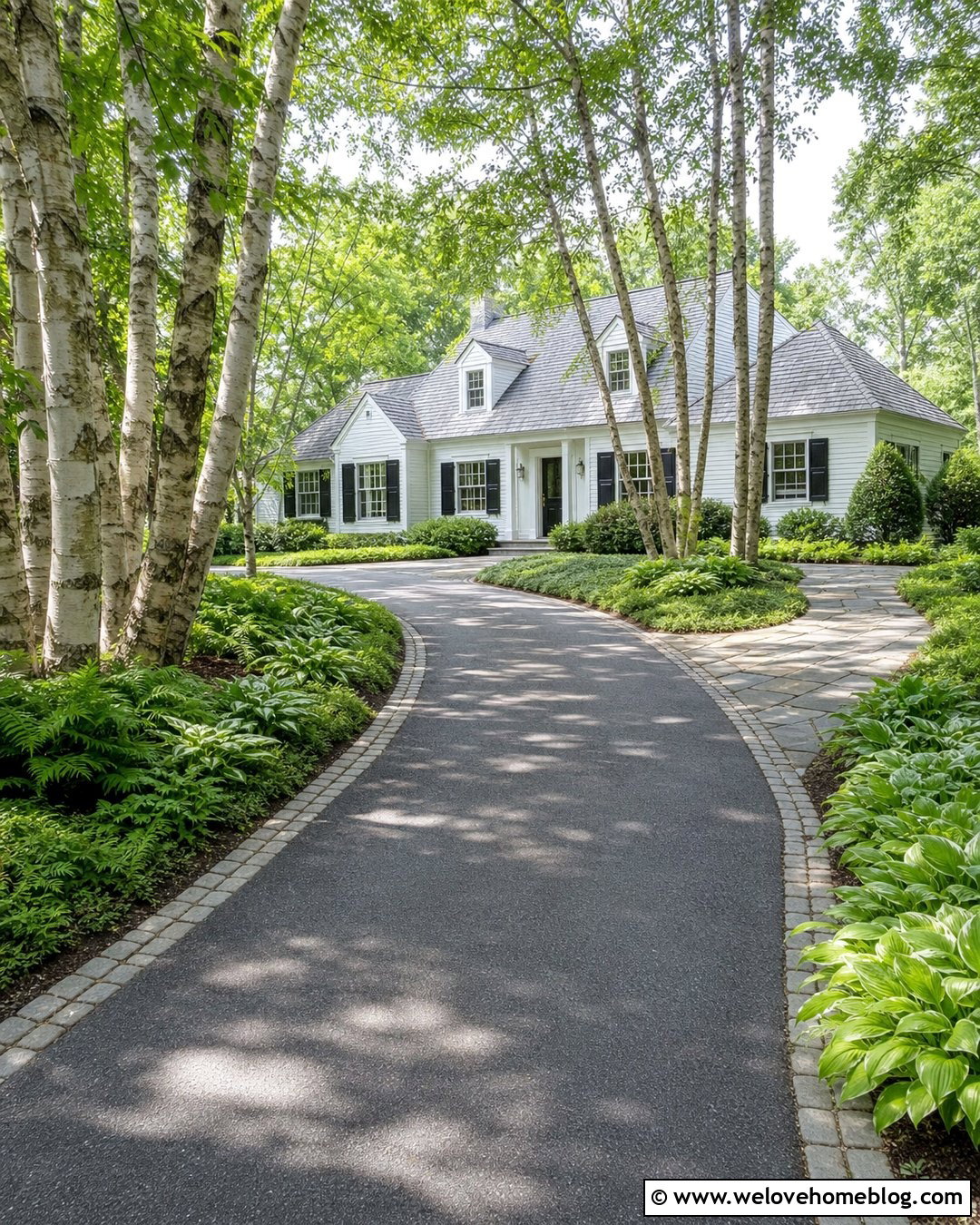
Bright white birch trunks can visually guide a curved driveway through a green front yard. A light gray asphalt surface keeps the route smooth, while a narrow cobblestone border gives the edge a finished appearance. Plant birches in informal clusters instead of perfectly straight rows for a relaxed woodland effect. Ferns, sedges, hostas, and shade-tolerant groundcovers can soften the planting beds around them. The curve should feel gradual enough for comfortable vehicle movement and clear sightlines. This complete look works especially well beside a Cape Cod or cottage-style home with white siding. Select birch varieties suitable for local heat, soil, and moisture conditions, and allow enough clearance to reduce future conflicts between trunks, roots, paving, and overhead branches.
3. Maple Tree Asphalt Driveway
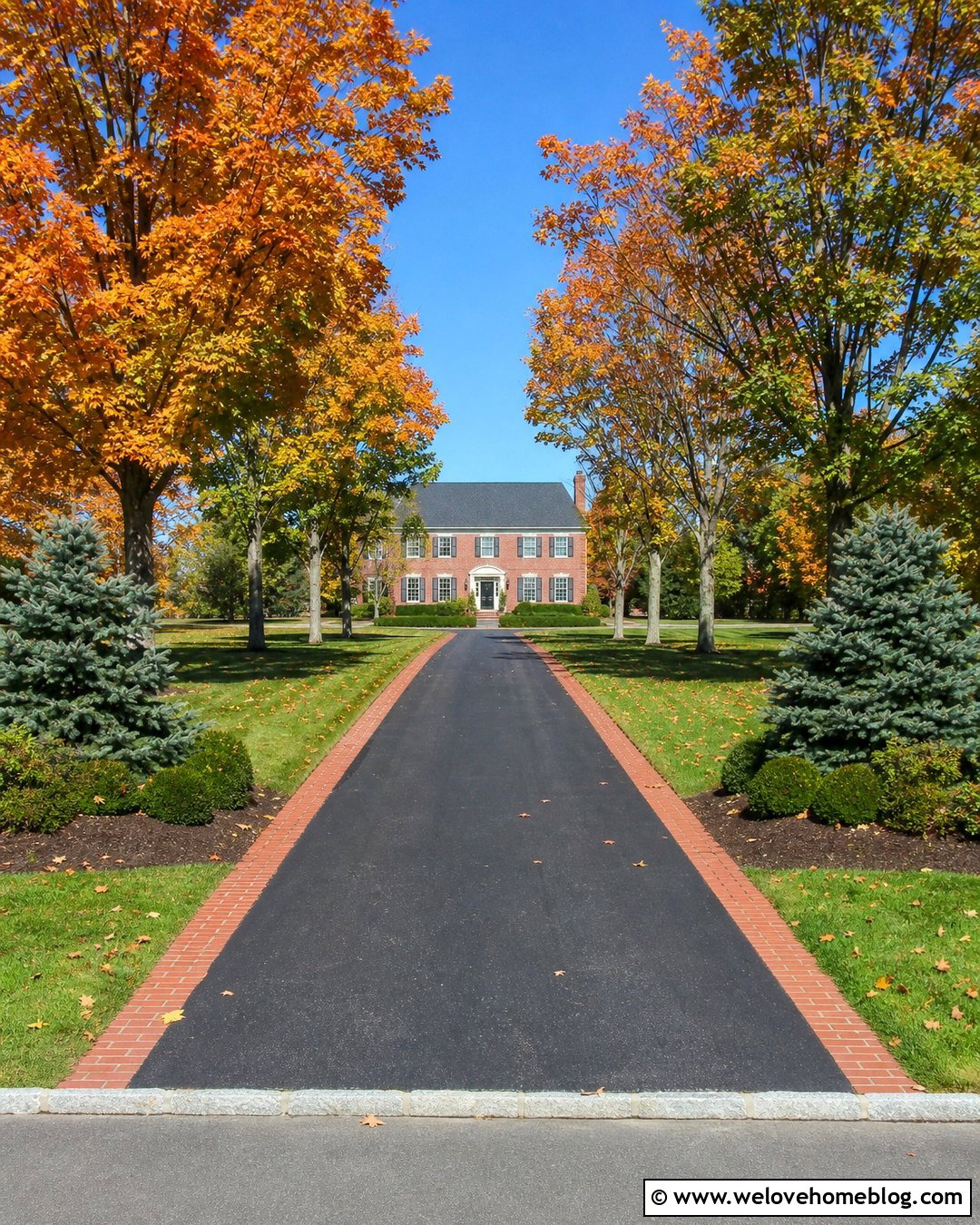
Imagine arriving home beneath maple leaves that shift from fresh green to vivid fall color. A black asphalt driveway provides a clean visual base that makes the foliage stand out. Add a red brick ribbon along both sides to connect the driveway with a traditional brick or colonial house. Evenly spaced maples create a formal approach, while lawn strips between the pavement and trunks protect growing space. Curved planting beds near the house can introduce evergreen shrubs and seasonal flowers without cluttering the long entrance. Keep trees far enough from the pavement to accommodate mature trunks and roots. This driveway design feels polished throughout the year, but it becomes especially memorable in autumn when the colorful canopy frames the full approach.
4. Olive Tree Gravel Driveway
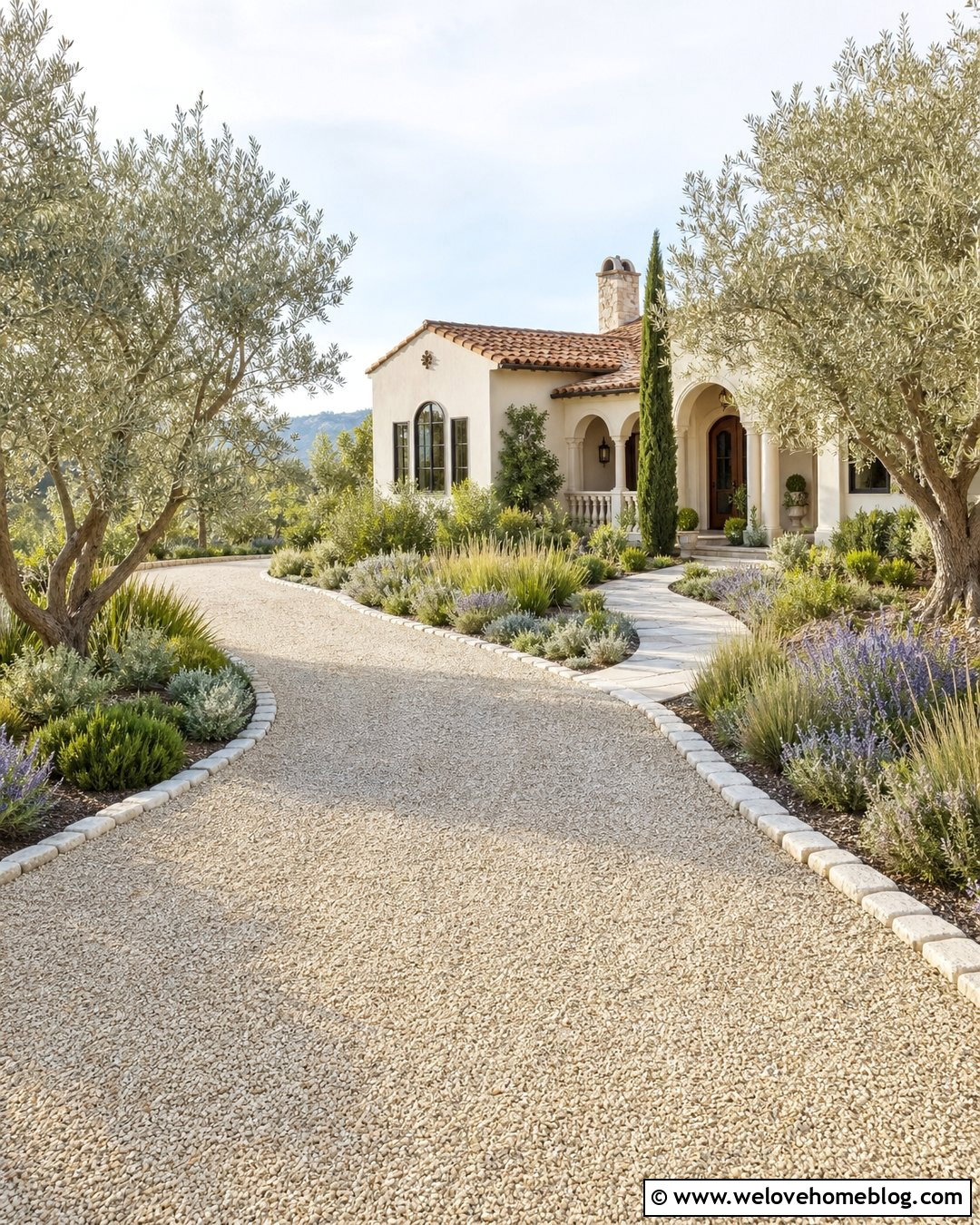
For a warm, Mediterranean-inspired entrance, pair silvery olive trees with a cream-colored gravel driveway. A straight or gently curved layout works well, particularly when it ends at a stucco, Spanish Revival, or Southwestern house. Use warm limestone cobbles as edging and repeat the stone around the tree beds. Lavender, rosemary, ornamental grasses, and drought-tolerant groundcovers reinforce the dry-climate character without hiding the sculptural trunks. Space the trees loosely for an established, informal effect rather than a rigid avenue. Good drainage is essential for both the gravel surface and olive trees. In colder regions, use a locally hardy tree with similar gray-green foliage to achieve the look without choosing a species poorly suited to winter conditions.
5. Cypress Tree Paver Driveway
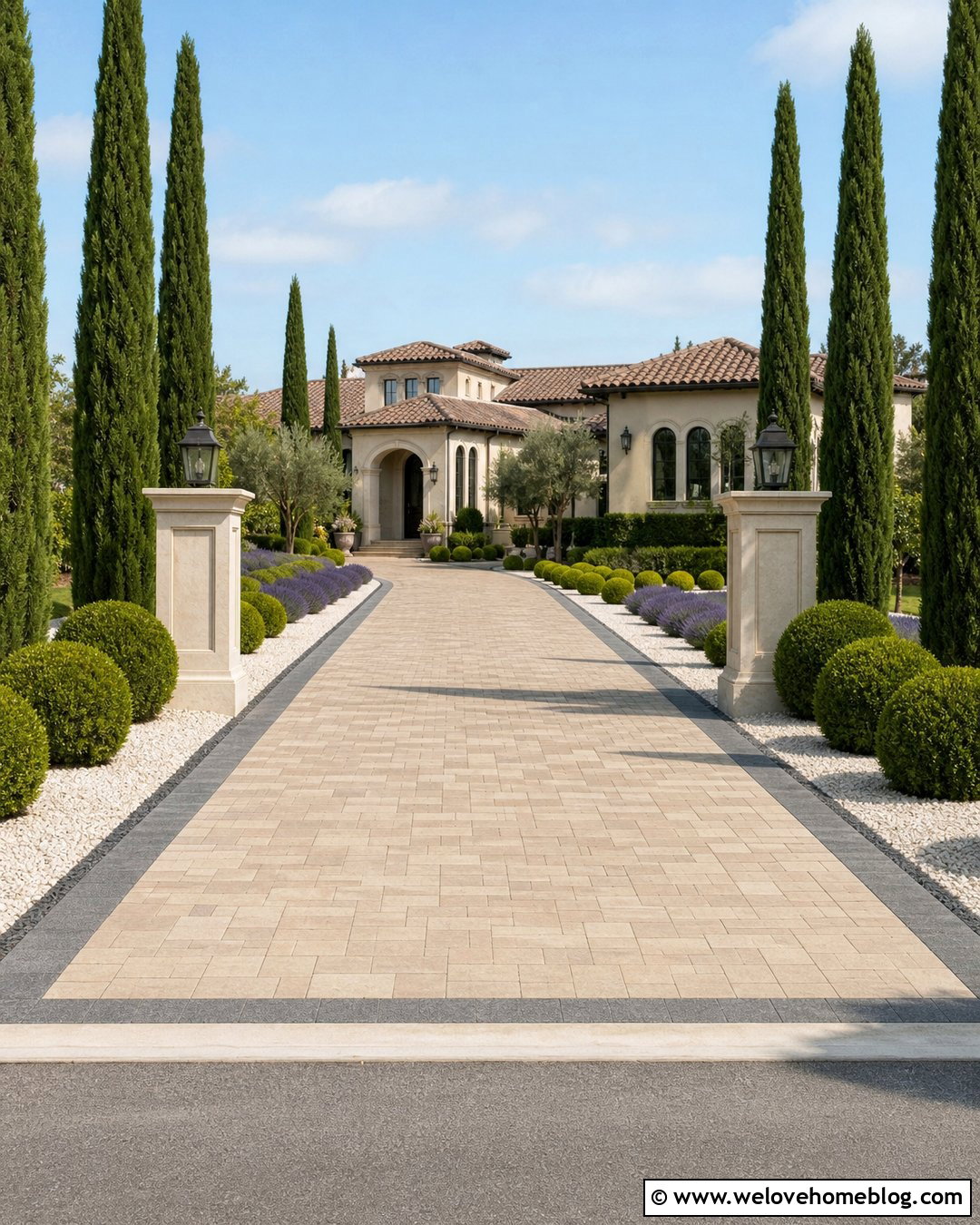
Tall, narrow cypress trees create strong vertical lines without consuming as much driveway-side space as broad-canopied trees. Pair them with warm beige concrete pavers arranged in a running-bond pattern and edged with darker stone. A straight driveway reinforces the symmetry and draws the eye toward a Mediterranean or Italianate house. Low clipped shrubs, lavender borders, and gravel-mulched beds keep the base neat while allowing the cypress silhouettes to remain dominant. Matching stone pillars at the entrance can make the entire composition feel more intentional. This design suits longer properties where a formal arrival is desired. Choose trees adapted to the regional climate, and confirm their mature width so the planting remains balanced rather than becoming an overcrowded green wall.
6. Dogwood Tree Concrete Driveway
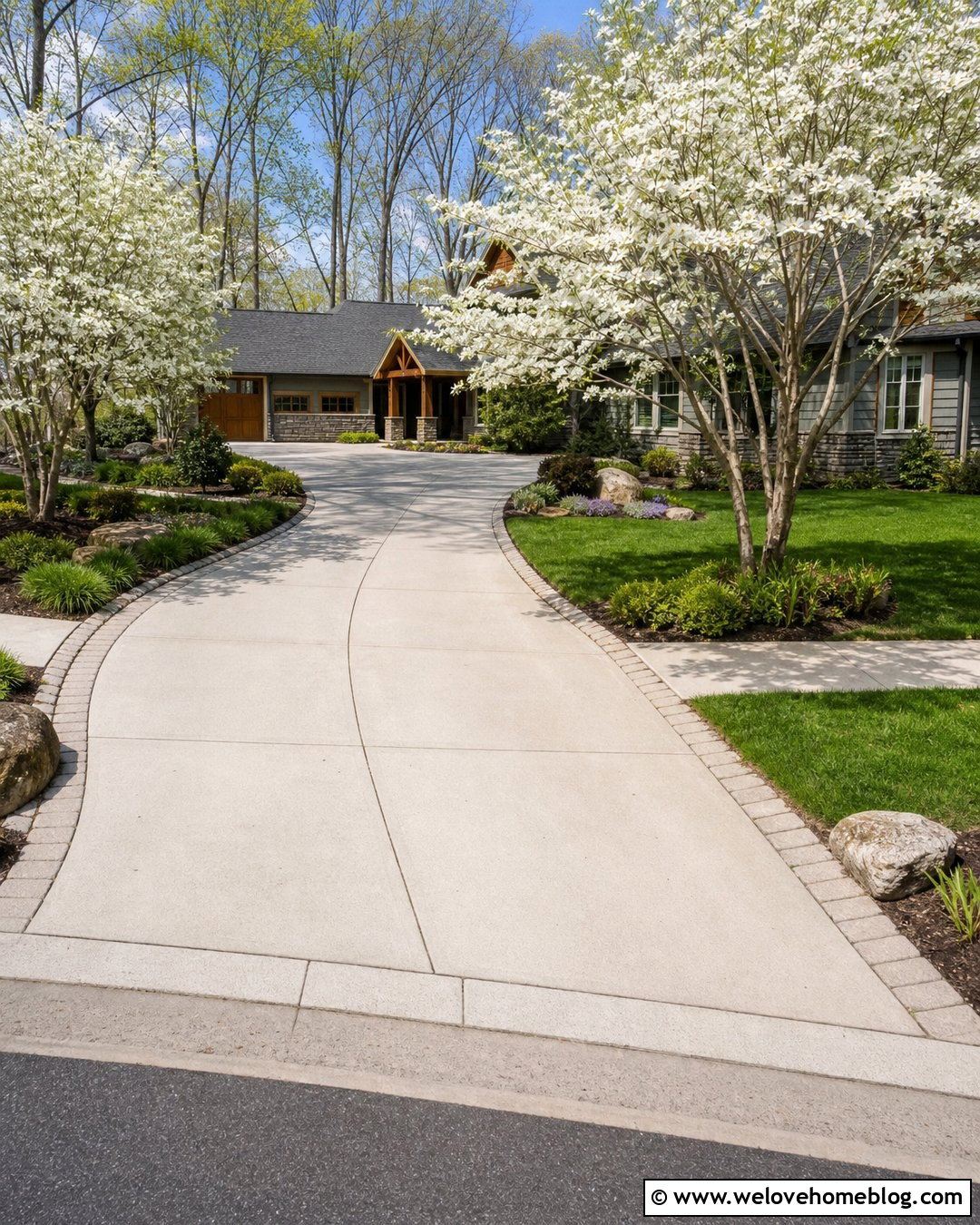
A dogwood-lined driveway offers spring flowers, attractive branching, and colorful seasonal foliage on a manageable residential scale. Use light gray poured concrete with subtle control joints, then soften its edges with broad planting beds instead of narrow strips. Arrange dogwoods in staggered groups along a gently curving route to a craftsman home. Evergreen shrubs, woodland perennials, and natural mulch can fill the lower layer without competing with the flowering trees. This combination feels structured near the house and increasingly natural toward the street. Dogwoods generally look better when their branches have enough open space to develop. Consider local sun exposure and disease-resistant varieties before planting. The finished driveway should feel airy, welcoming, and integrated into the front-yard garden.
7. Cherry Tree Brick Driveway
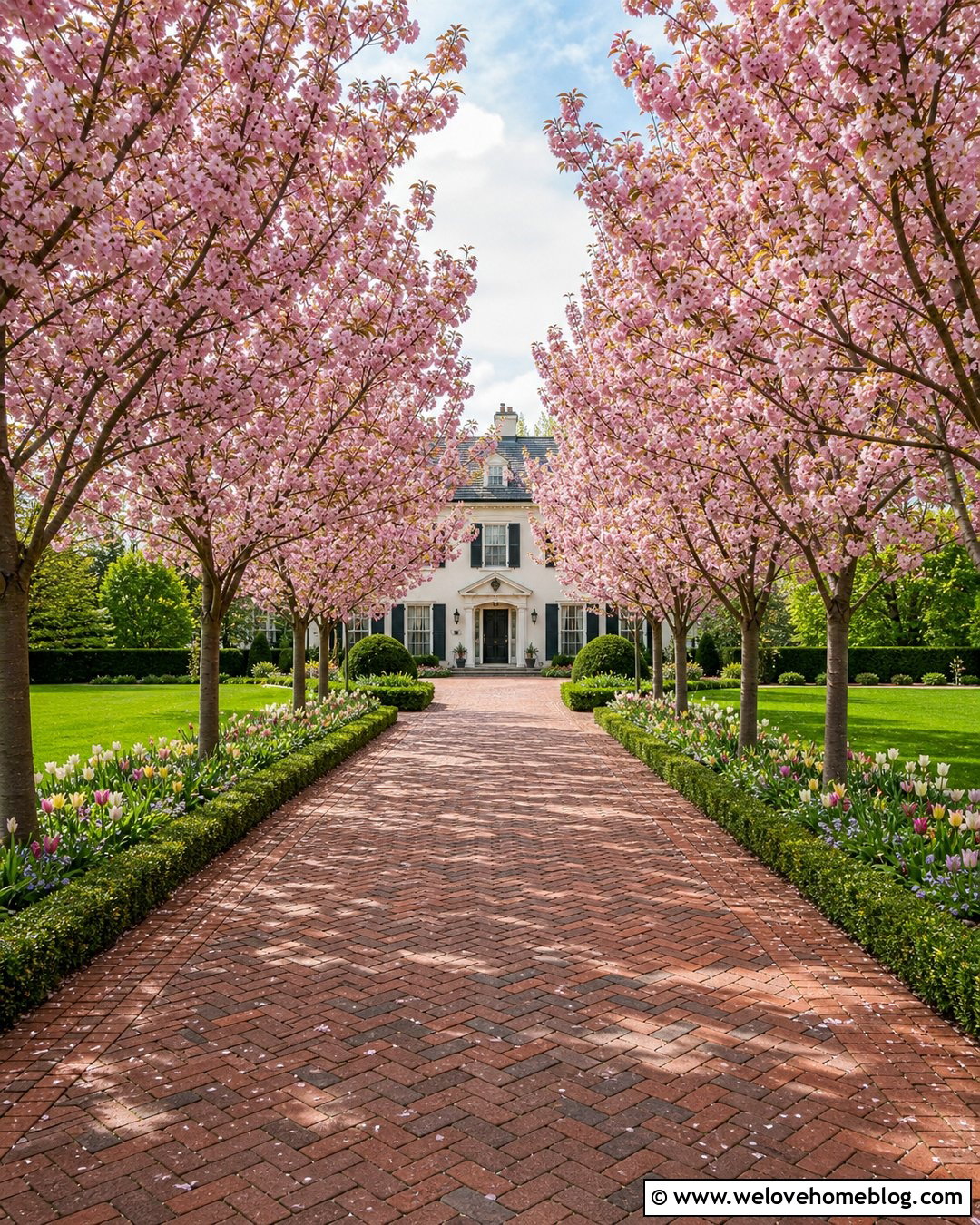
A brick driveway framed by flowering cherry trees creates a refined spring entrance while retaining year-round architectural interest. Clay brick pavers laid in a herringbone pattern provide texture and help the driveway complement a traditional home. Keep the layout straight for formal symmetry, or introduce a slight curve when working around an established lawn. Long planting beds can combine cherry trees with clipped boxwood, bulbs, and low flowering groundcovers. A dark metal edge or soldier-course brick border keeps the paving lines crisp. Because ornamental cherries vary considerably in size and shape, select a cultivar that fits the available width. Thoughtful spacing prevents crowded branches and ensures the driveway remains open, functional, and attractive after the trees reach maturity.
8. Pine Tree Country Driveway
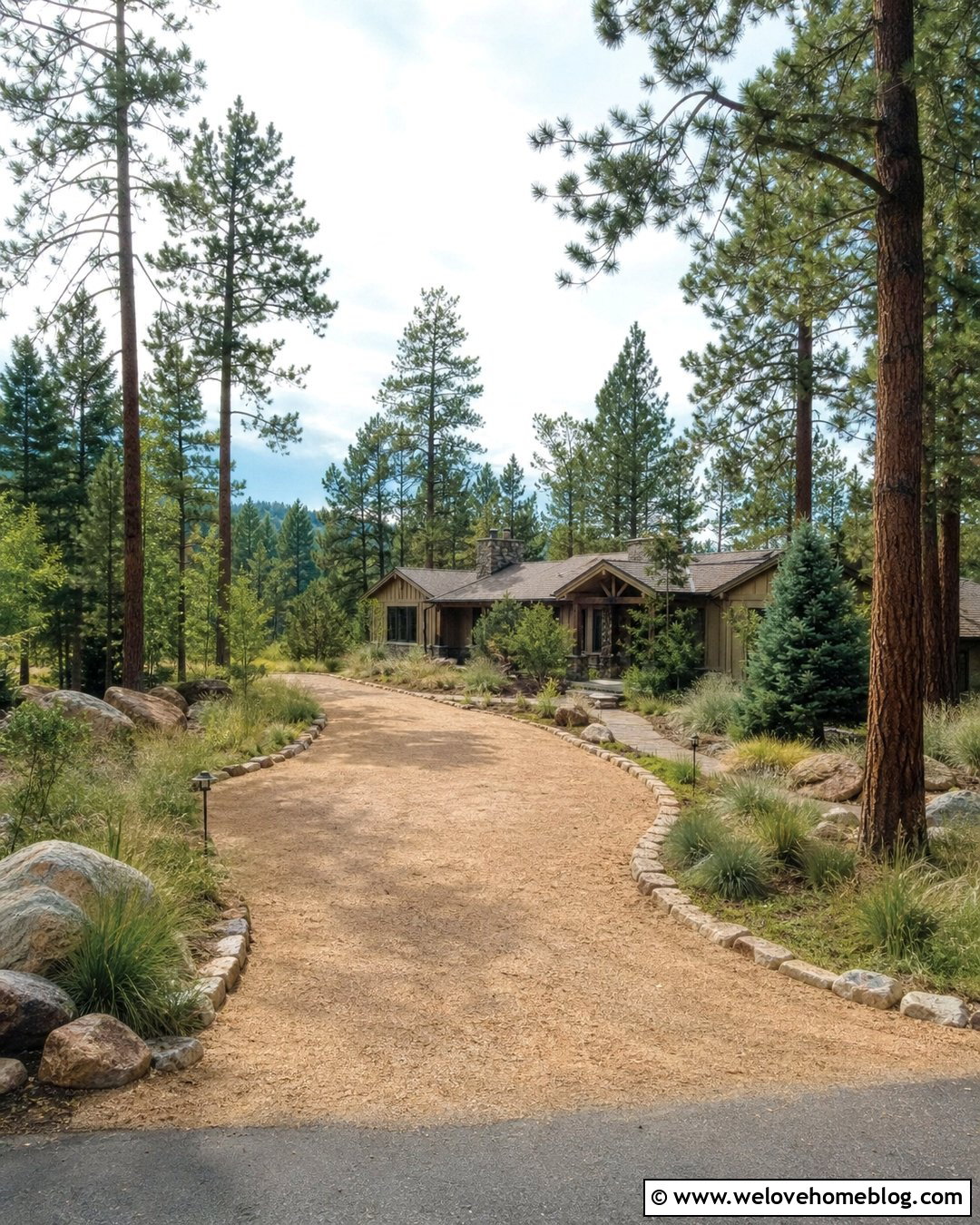
A pine-lined country driveway delivers privacy, winter greenery, and a strong connection to a wooded setting. Use brown crushed gravel for a warm, informal surface and shape the drive with one broad curve leading toward a rustic ranch or cabin-style house. Natural fieldstone edging can define key sections without making the entire route look overly formal. Combine the pines with native grasses, woodland shrubs, and pockets of exposed rock for a layered transition into the surrounding property. Avoid placing trees where lower limbs will obstruct visibility at the road entrance. The driveway should remain wide enough for deliveries and emergency access. With generous spacing, the pines can provide screening while preserving sunlight, airflow, and comfortable clearance beside the driving surface.
9. Palm Tree Circular Driveway
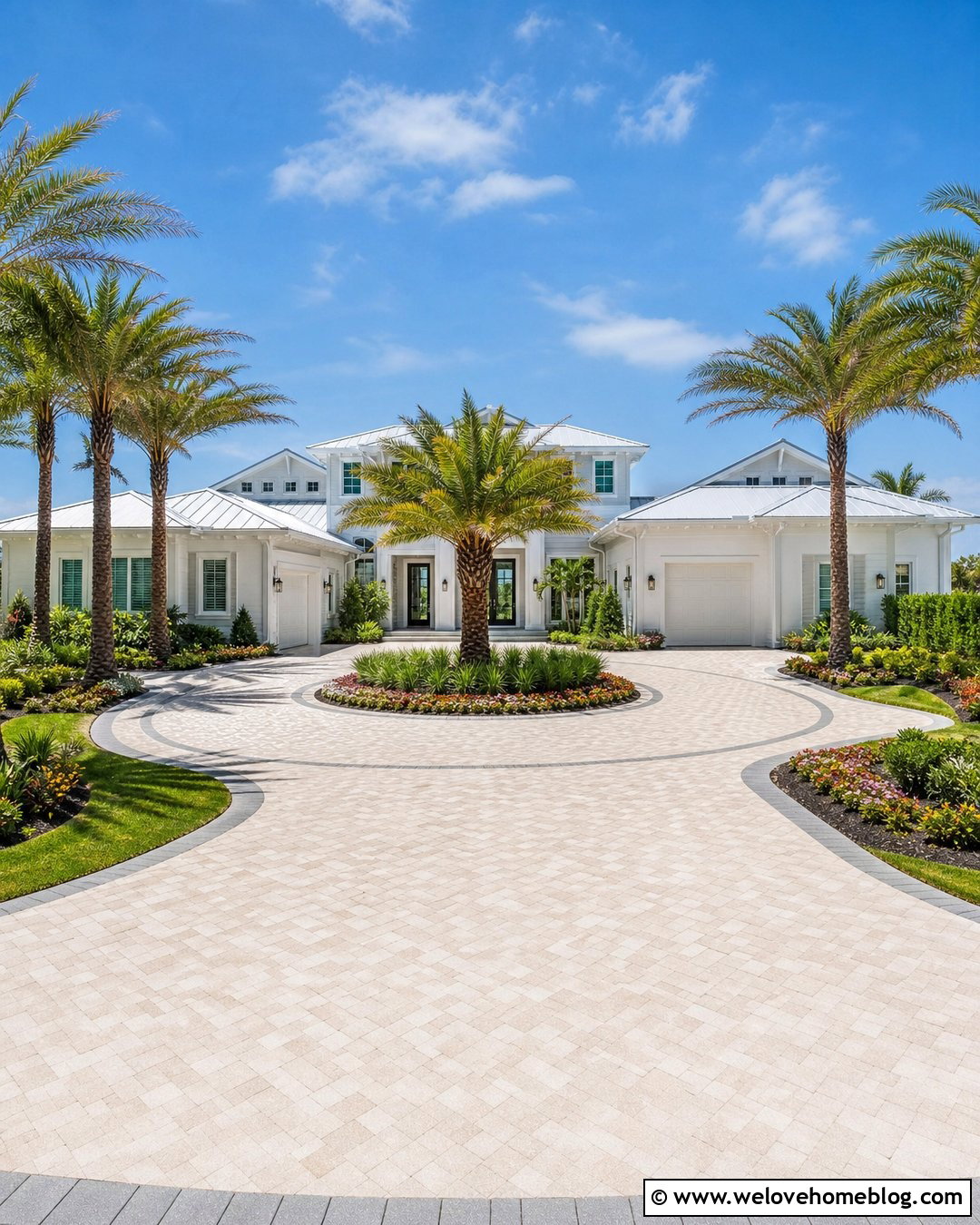
Rows of palms can give a circular driveway a clear rhythm while preserving open views of the house. Choose pale concrete pavers or cream-colored travertine-style pavers to reflect heat and complement a coastal or Florida-inspired facade. Place palms around the outside curve and use one sculptural specimen in the central landscape island. Low tropical shrubs, ornamental grasses, and colorful groundcovers keep the trunks visible and make the circle easy to navigate. A contrasting paver band can outline the driving lane and clarify entry and exit points. Check mature trunk diameter, frond spread, and regional storm suitability before selecting a palm. The complete design should feel spacious, bright, and orderly rather than crowded with dense tropical planting near vehicle sightlines.
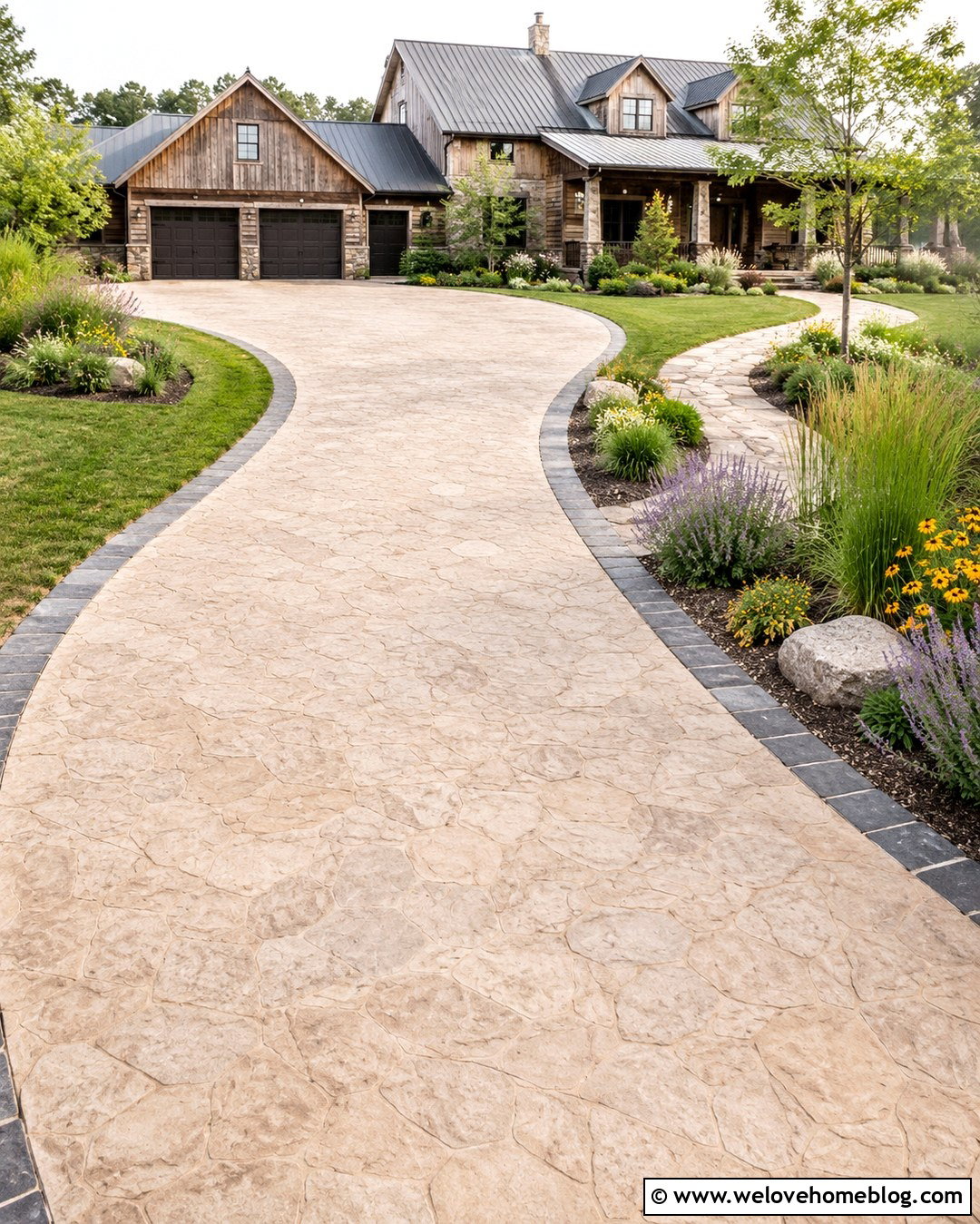
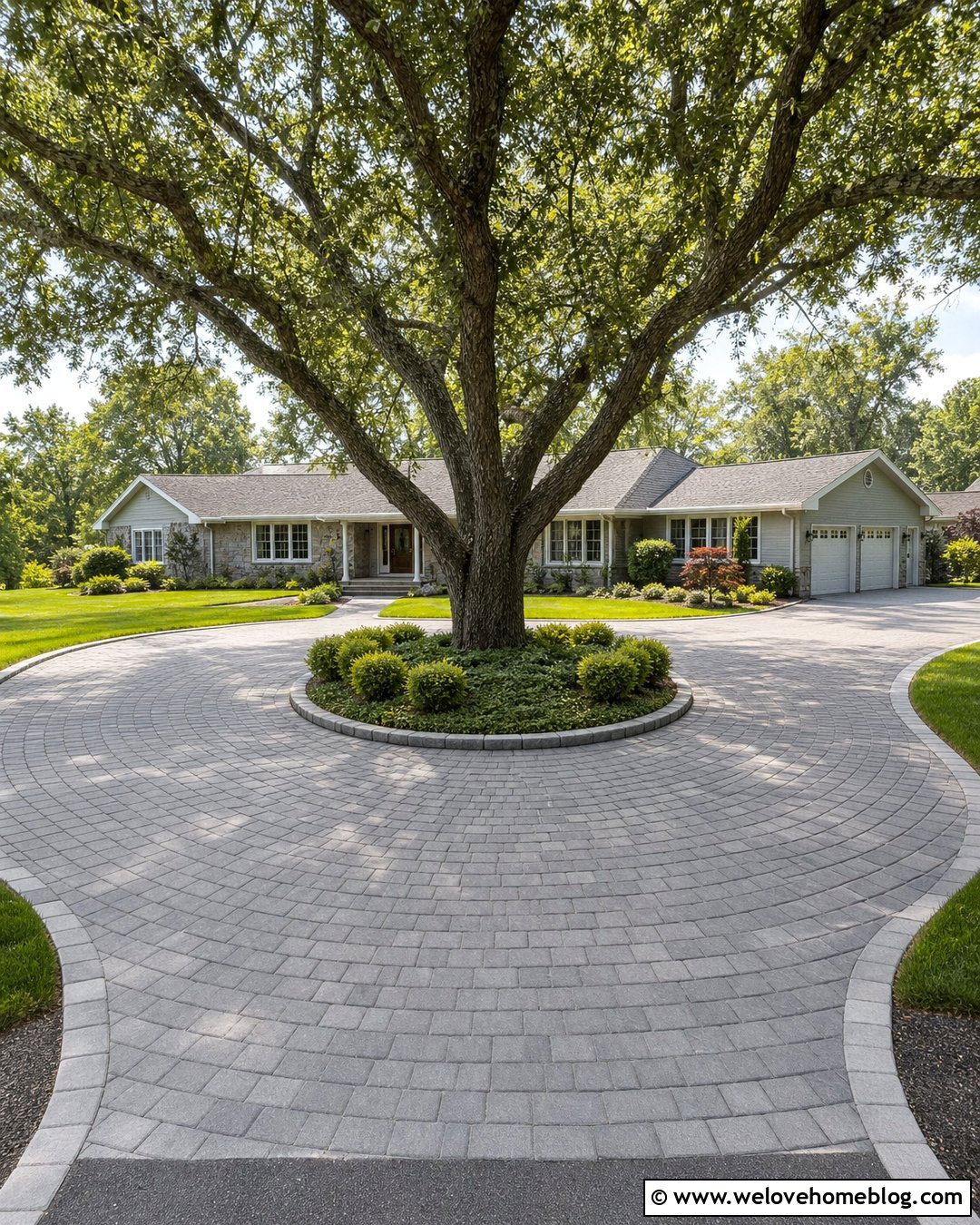
10. Magnolia Tree Concrete Driveway
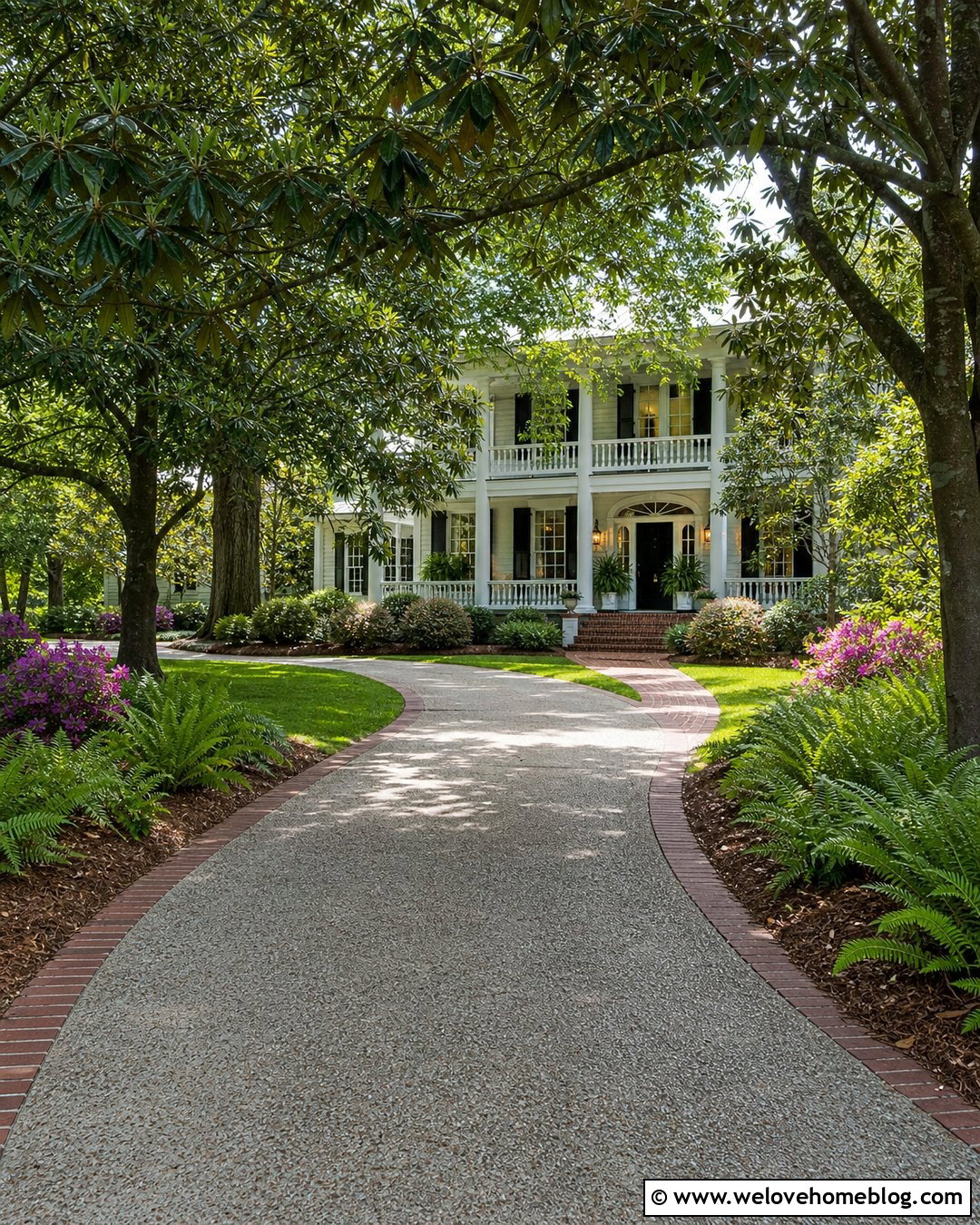
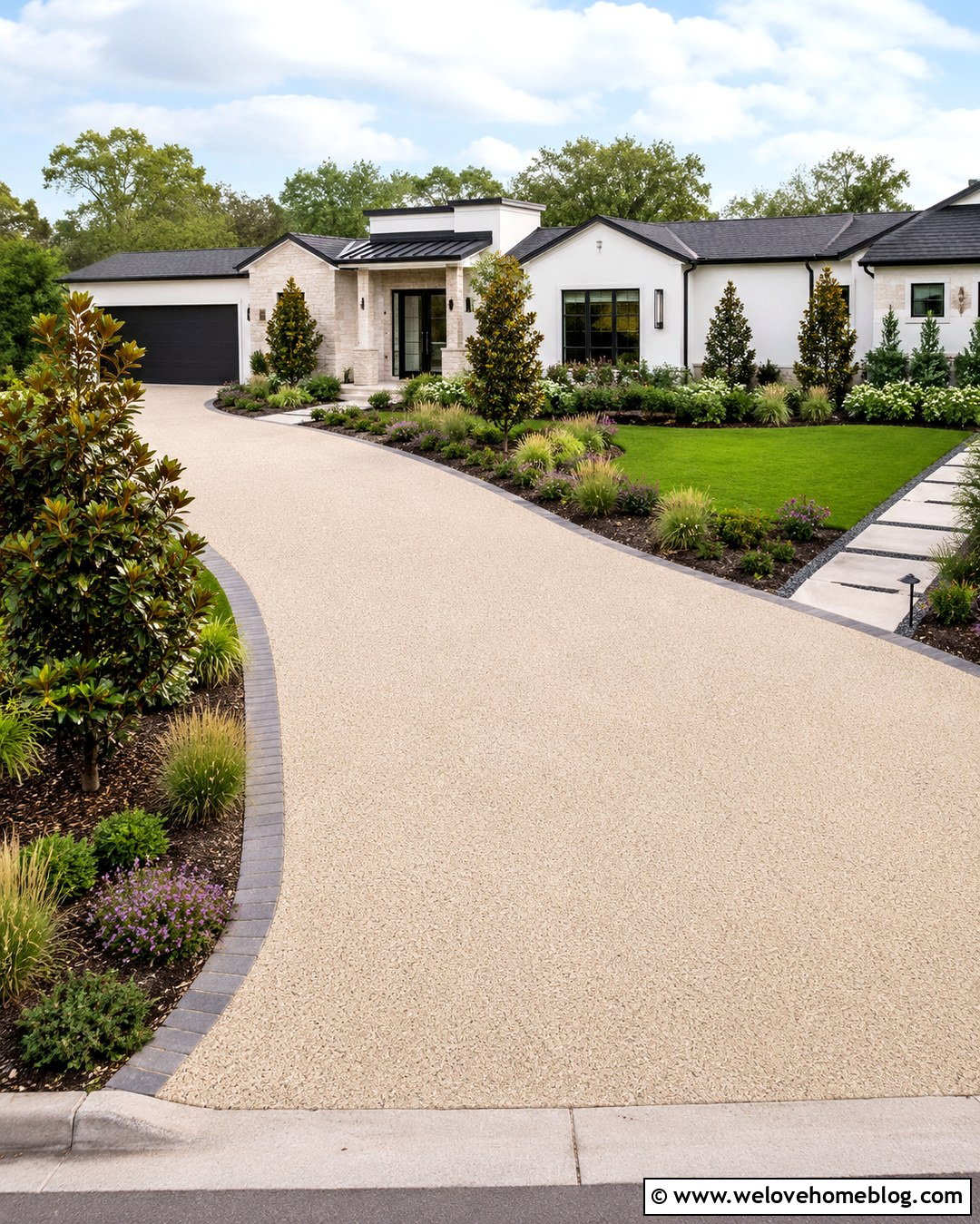
Large magnolia trees bring glossy foliage and bold flowers to a wide residential driveway. Pair them with an exposed aggregate concrete surface that offers subtle texture and an understated natural color. A sweeping curved layout gives the canopies room to frame the approach without creating a tunnel. Use brick edging to connect the driveway with a Southern colonial or traditional home. Beneath the trees, broad mulched beds planted with ferns, azaleas, and shade-tolerant groundcovers can reduce mowing around surface roots. Magnolias may develop substantial crowns, so placement should account for future branches, parked vehicles, and nearby structures. The result is a gracious Southern-inspired entrance where the textured pavement, mature greenery, and home facade read as one coordinated landscape.
11. Redbud Tree Small Driveway
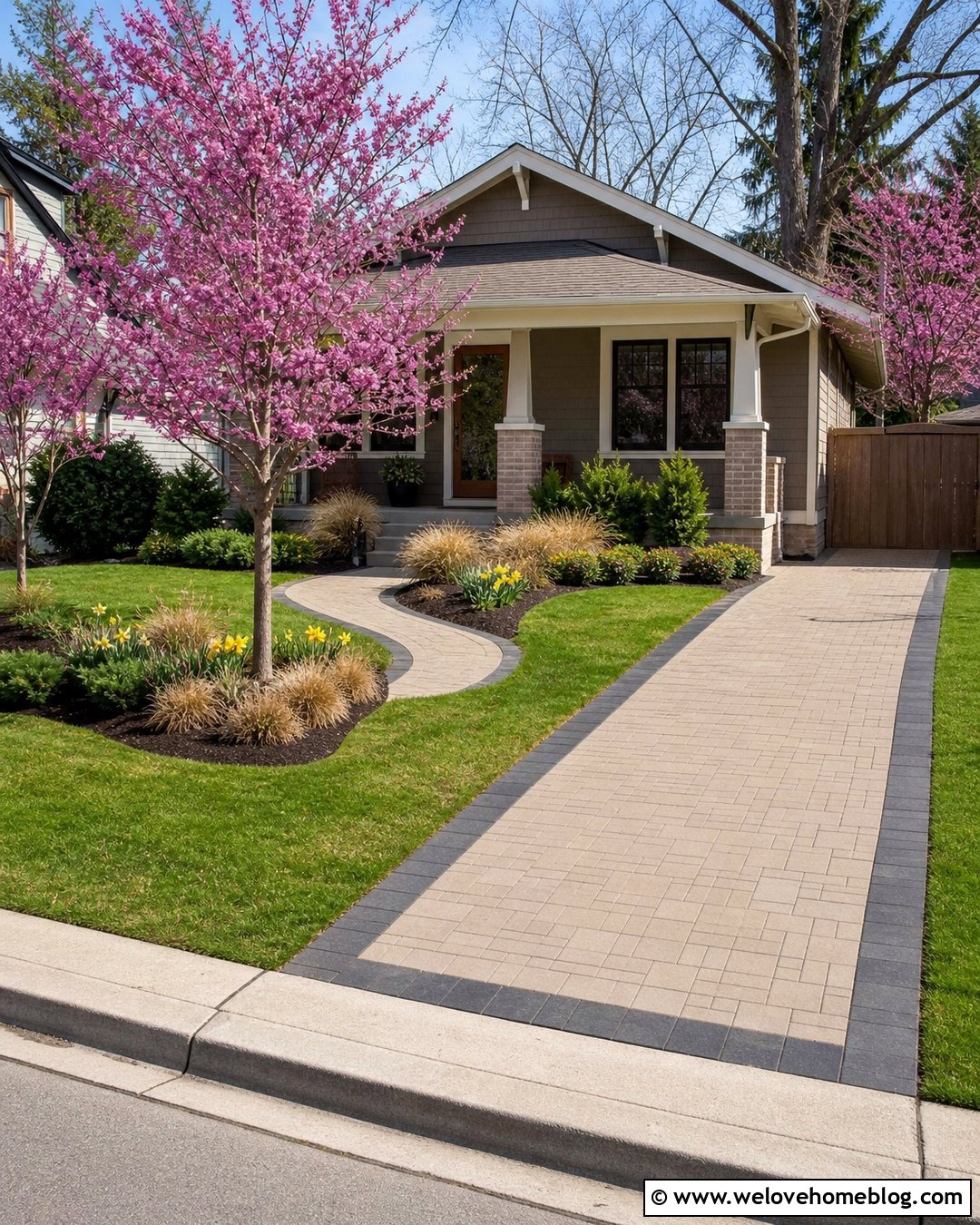
A compact front yard can still support a beautiful treed driveway when smaller ornamental trees are used thoughtfully. Redbuds suit a short, straight concrete paver driveway leading to a bungalow or cottage. Place several trees in offset beds rather than forcing two continuous rows into a narrow space. Warm taupe pavers, a charcoal border, and curved planting pockets help the driveway feel wider and less rigid. Add native grasses, spring bulbs, and low evergreen shrubs beneath the redbuds for color after flowering ends. Keep the tree canopies clear of garage doors and pedestrian paths. This layered design delivers seasonal character without overpowering the property, making it practical for suburban lots where planting room, turning space, and neighboring boundaries must all be considered.
12. Apple Tree Farmhouse Driveway
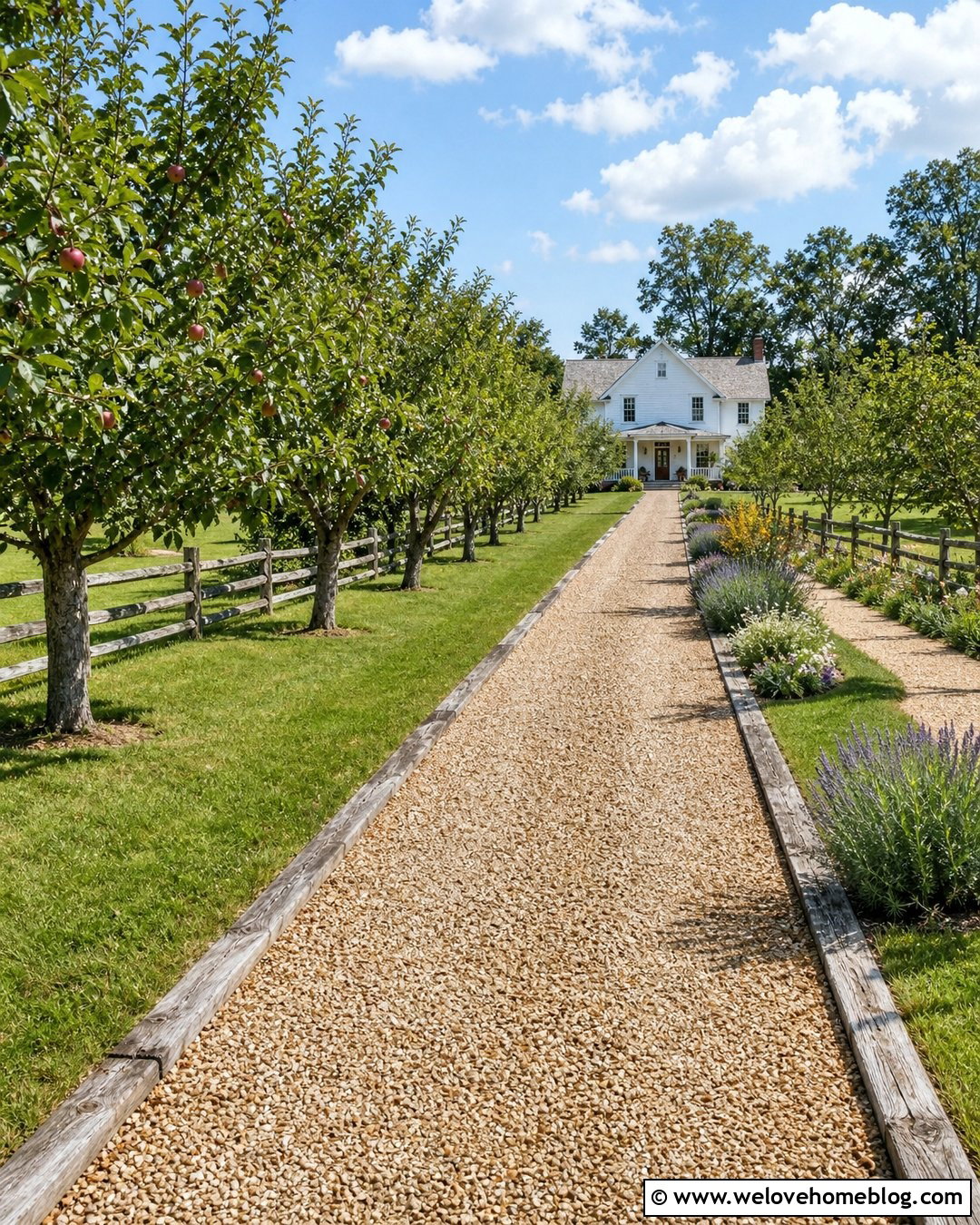
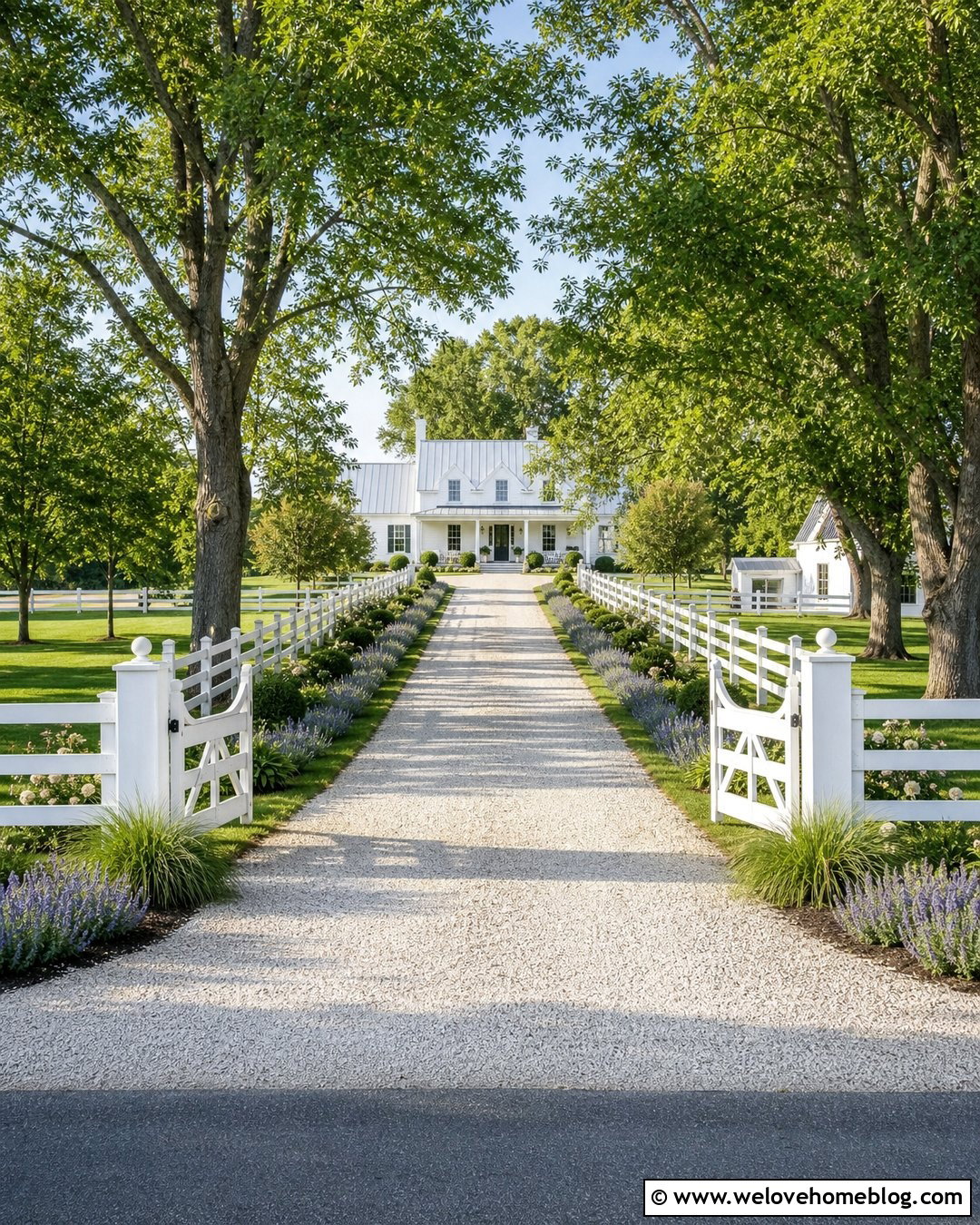
Apple trees can transform a gravel farmhouse driveway into a productive, orchard-like entrance. Use tan pea gravel over a properly prepared base and contain it with weathered timber or steel edging. Arrange the trees in relaxed rows along a straight drive, leaving wide grass strips between the trunks and vehicle route. A simple split-rail fence can run behind one planting line to strengthen the rural look. Near the house, add herb beds, flowering perennials, and a gravel walkway that repeats the driveway material. Choose varieties suited to the local climate and account for pruning, fallen fruit, and pollination needs. This design is best for homeowners comfortable with seasonal maintenance and interested in combining curb appeal with an edible landscape.
13. Evergreen Tree Modern Driveway
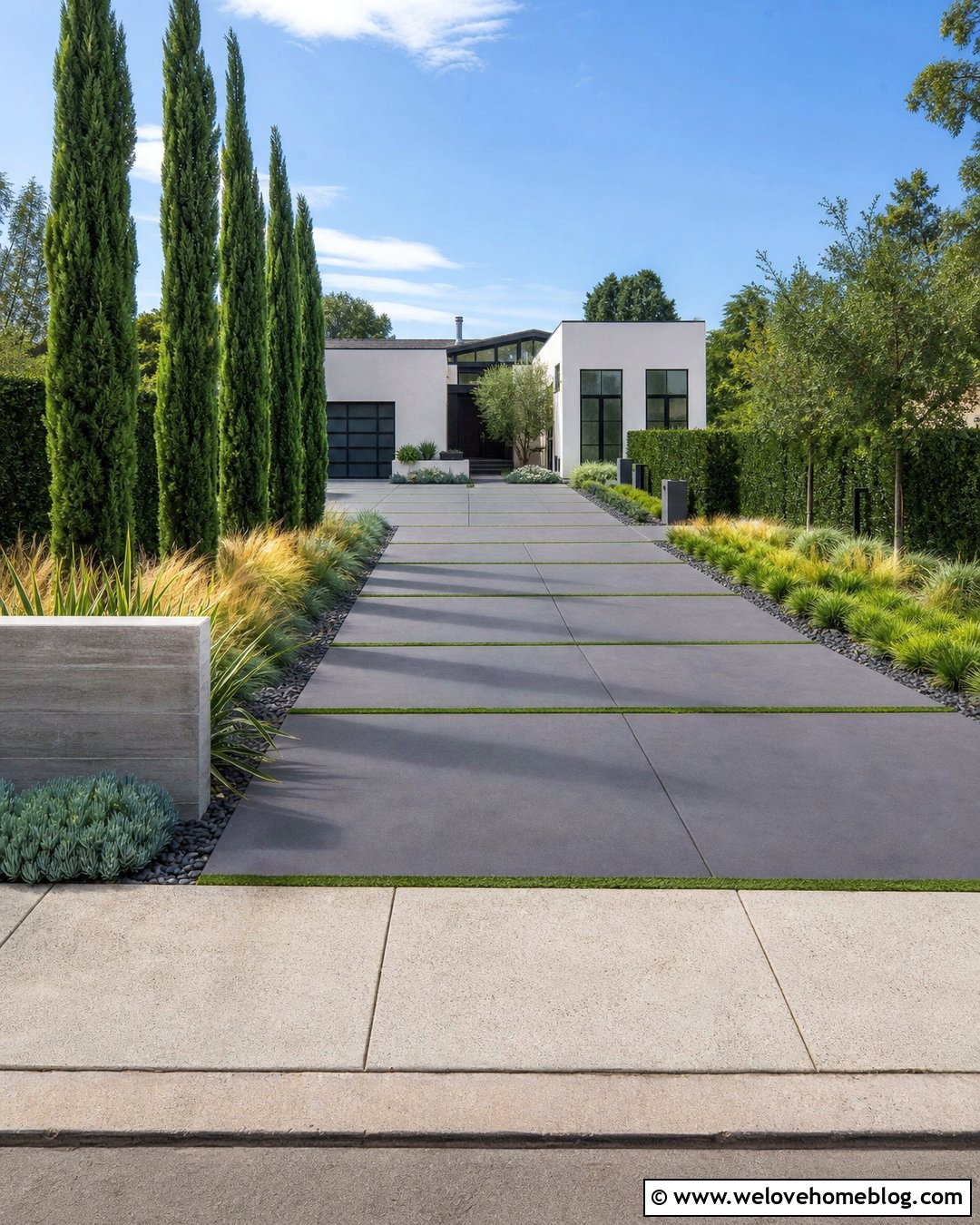
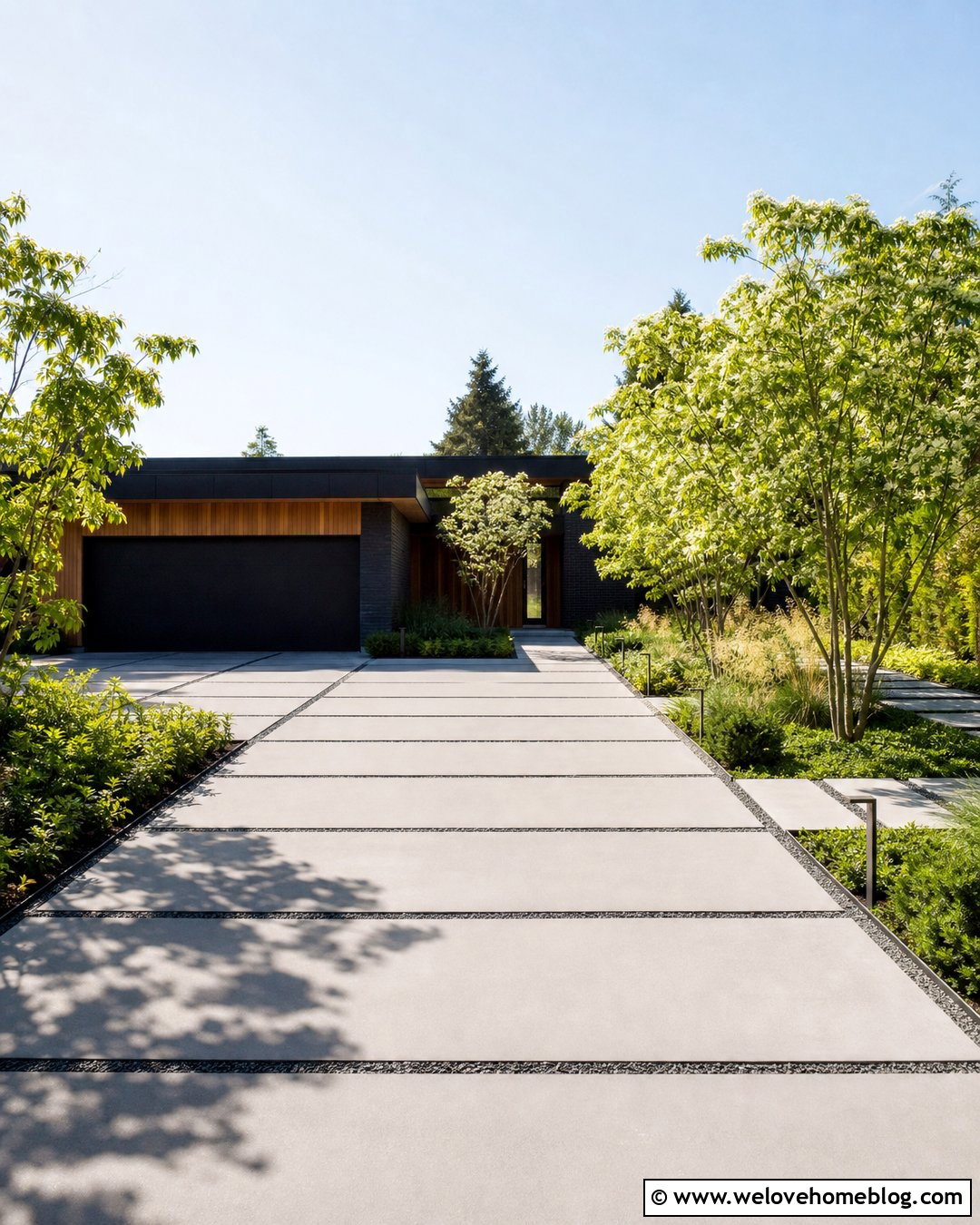
Columnar evergreens can frame a modern driveway without hiding the clean architecture of the house. Start with large-format charcoal concrete pavers laid in a straight grid, then introduce narrow grass joints or dark gravel strips for contrast. Plant the evergreens at measured intervals along one or both sides, depending on available width and privacy needs. Rectangular beds filled with ornamental grasses and low groundcovers continue the geometric composition. A simple horizontal address monument and integrated pathway make the entrance easier to identify. Avoid planting a dense, uninterrupted wall unless full screening is necessary. Strategic gaps create views, improve airflow, and prevent the driveway from feeling confined. The final look should be crisp, restrained, and visually connected to the home’s lines.
14. Willow Tree Waterside Driveway
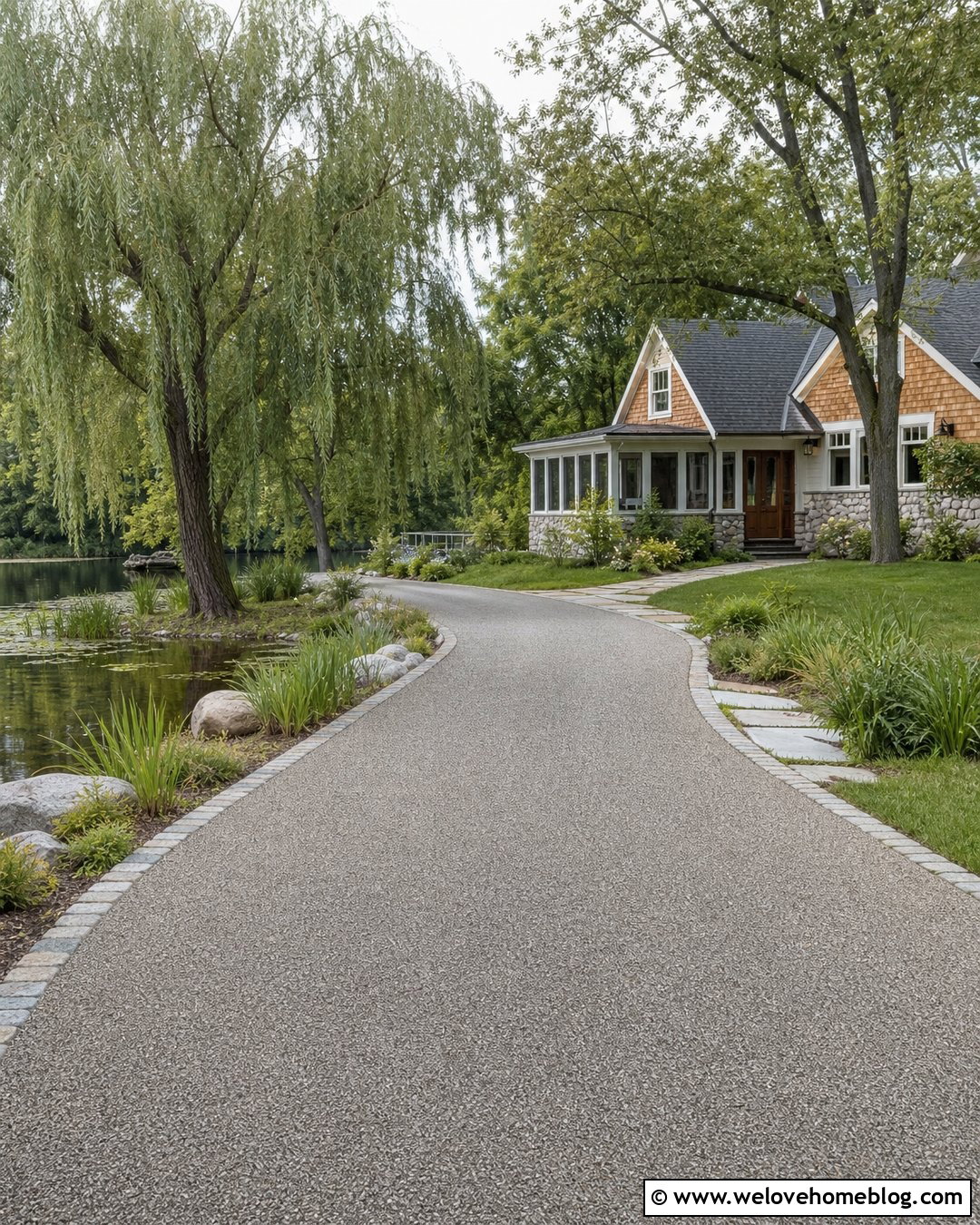
A gently curving driveway beside a pond can be enhanced by carefully placed willow trees. Use warm gray resin-bound gravel for a smooth, permeable-looking surface, with natural stone edging defining the curve. Plant willows on the waterside where their flowing branches can frame the view, while maintaining generous clearance from the driveway and drainage systems. On the opposite side, use lawn, moisture-tolerant grasses, and smaller native shrubs to keep the landscape balanced. This relaxed setting pairs beautifully with a country cottage or lakeside home. Since willows can become large and develop extensive root systems, professional placement is important. The design works best when the trees enhance the water feature without overwhelming the driveway, house, or underground infrastructure.
15. Crepe Myrtle Driveway Entrance
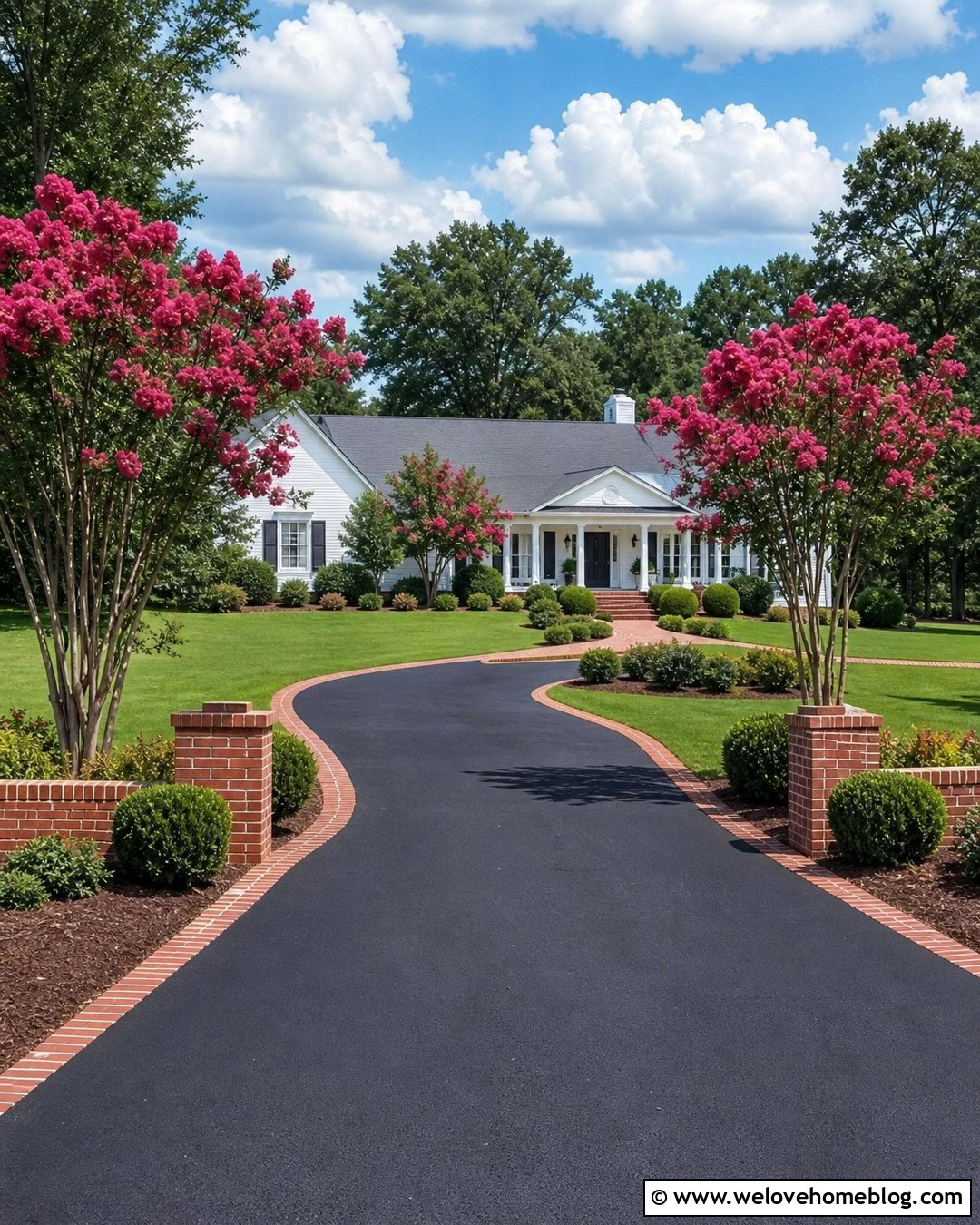
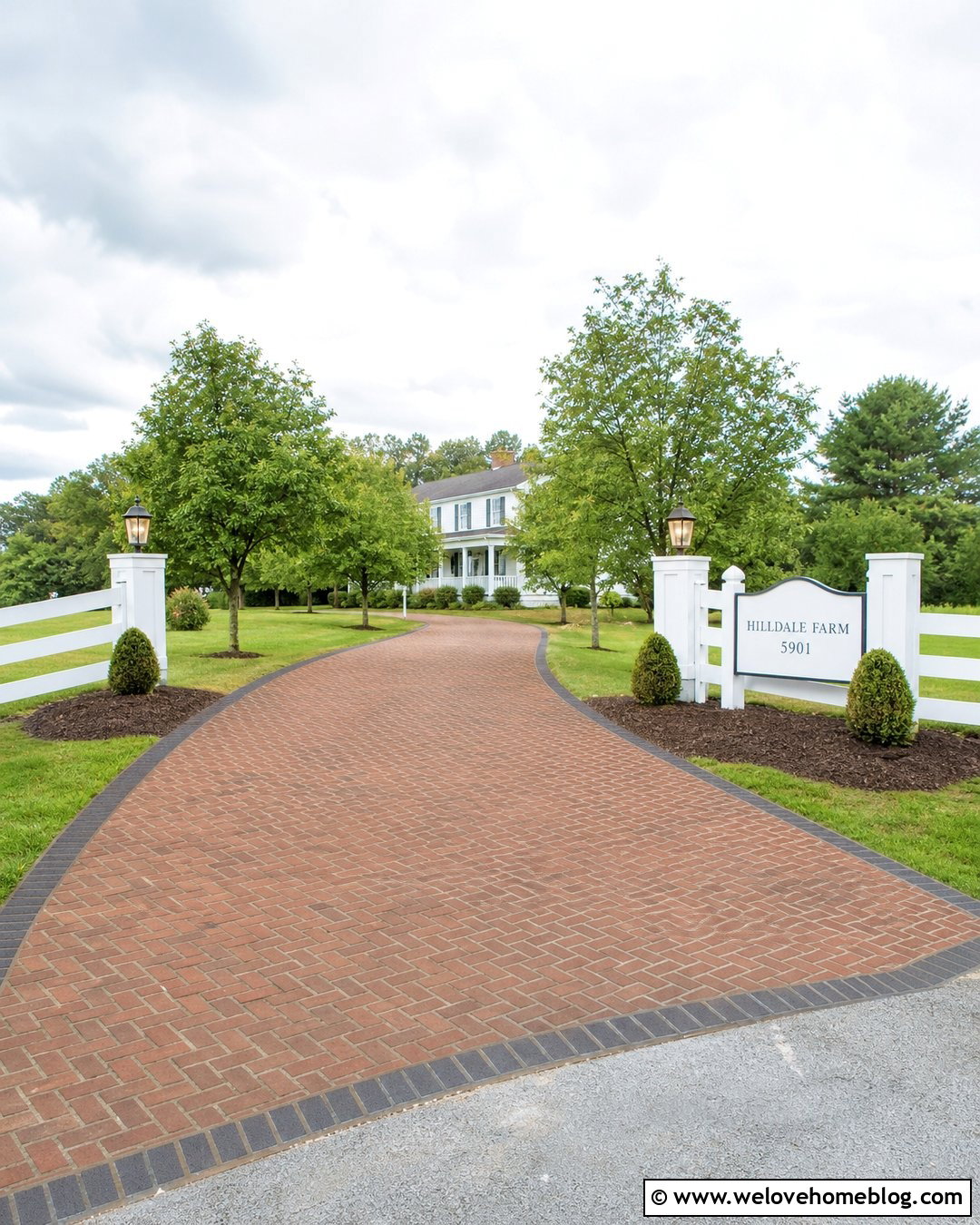
Crepe myrtles can create a colorful driveway entrance without lining the entire route. Pair a smooth black asphalt driveway with a double row of flowering trees near the street, then transition to open lawn closer to the house. Brick entrance pillars and matching brick edging establish a polished Southern look. Beneath the trees, use low evergreen shrubs and neat mulch beds so the multistem trunks remain visible. Continue the driveway in a gentle curve toward a white-painted traditional or ranch home. Select crepe myrtles by mature height rather than flower color alone, and avoid varieties that will interfere with utility lines. Concentrating the trees near the entrance creates a memorable gateway while keeping the rest of the driveway open and easy to maintain.
16. Sycamore Tree Long Driveway
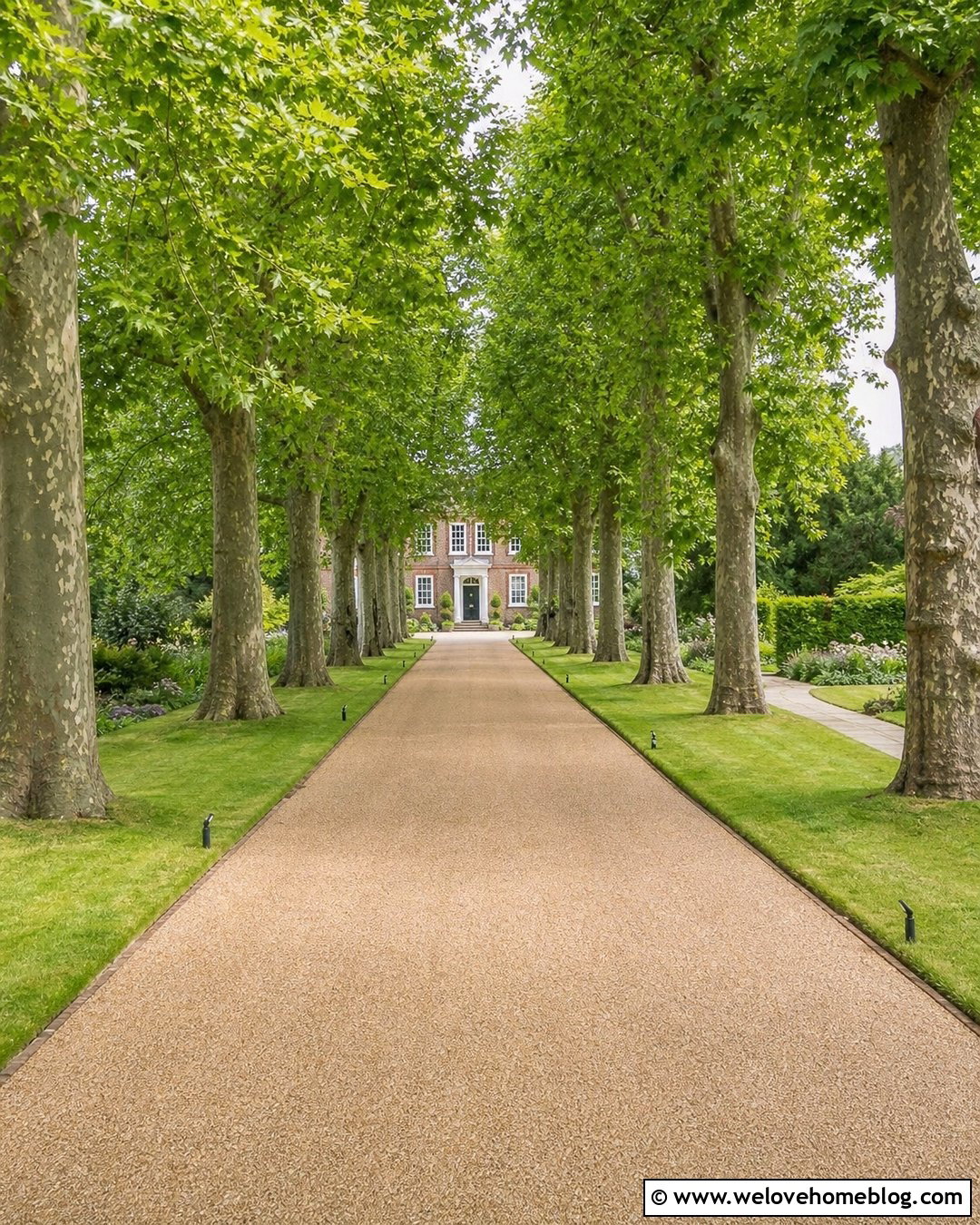
A long driveway has enough scale to support the broad crowns and striking bark of sycamore trees. Use buff-colored chip seal or compacted gravel to create a durable country surface, then border it with broad mown grass verges. Space the trees generously in two rows so their eventual canopies can develop without excessive competition. The straight layout creates a strong sightline toward a large farmhouse, Georgian home, or converted barn. Simple low-voltage uplights can highlight selected trunks while preserving the natural appearance during the day. Avoid narrow planting beds around these substantial trees. Their mature dimensions, leaf litter, roots, and branching habits require room. Planned correctly, the driveway develops into a dramatic green corridor with an unmistakable sense of arrival.
17. Mixed Tree Woodland Driveway
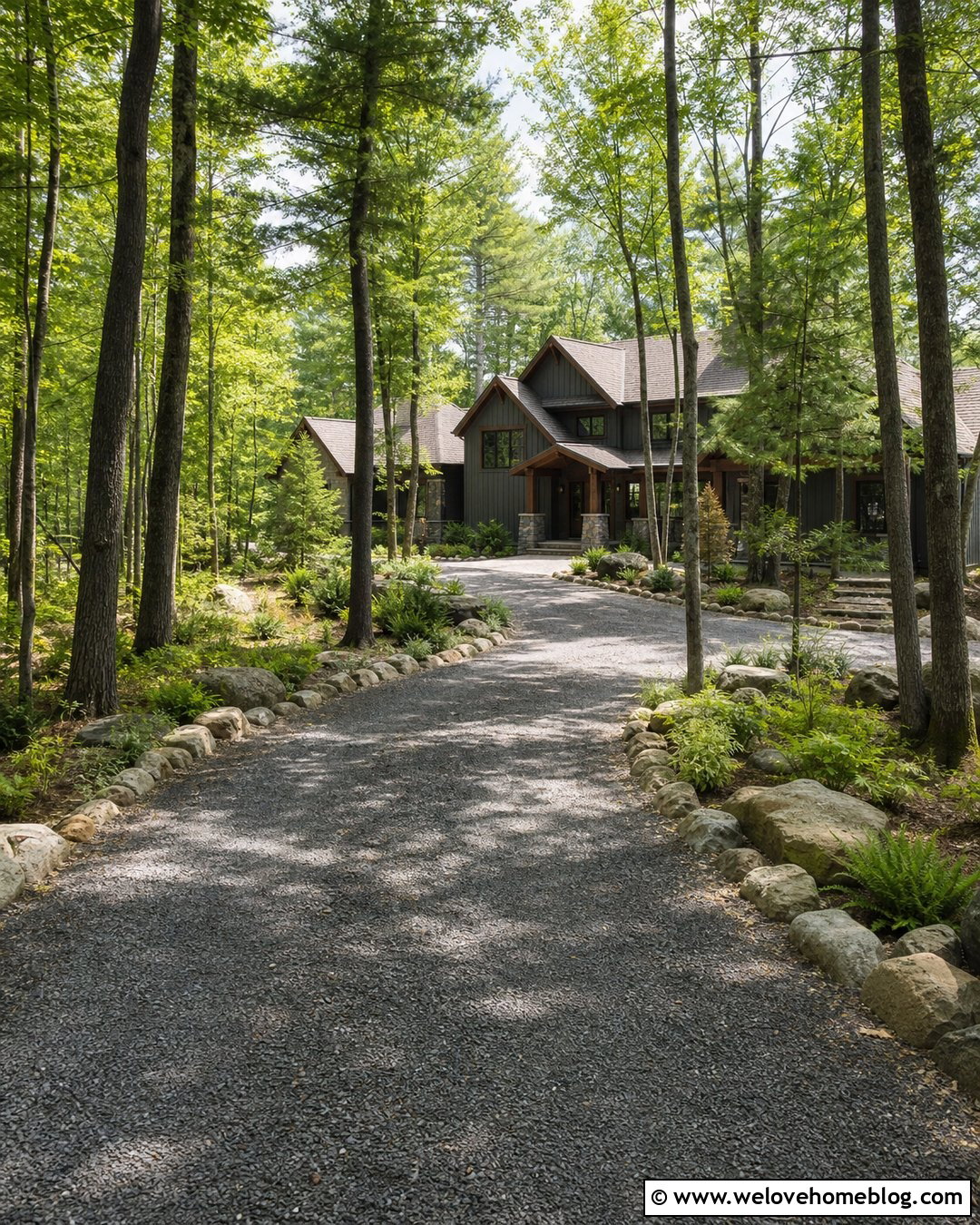
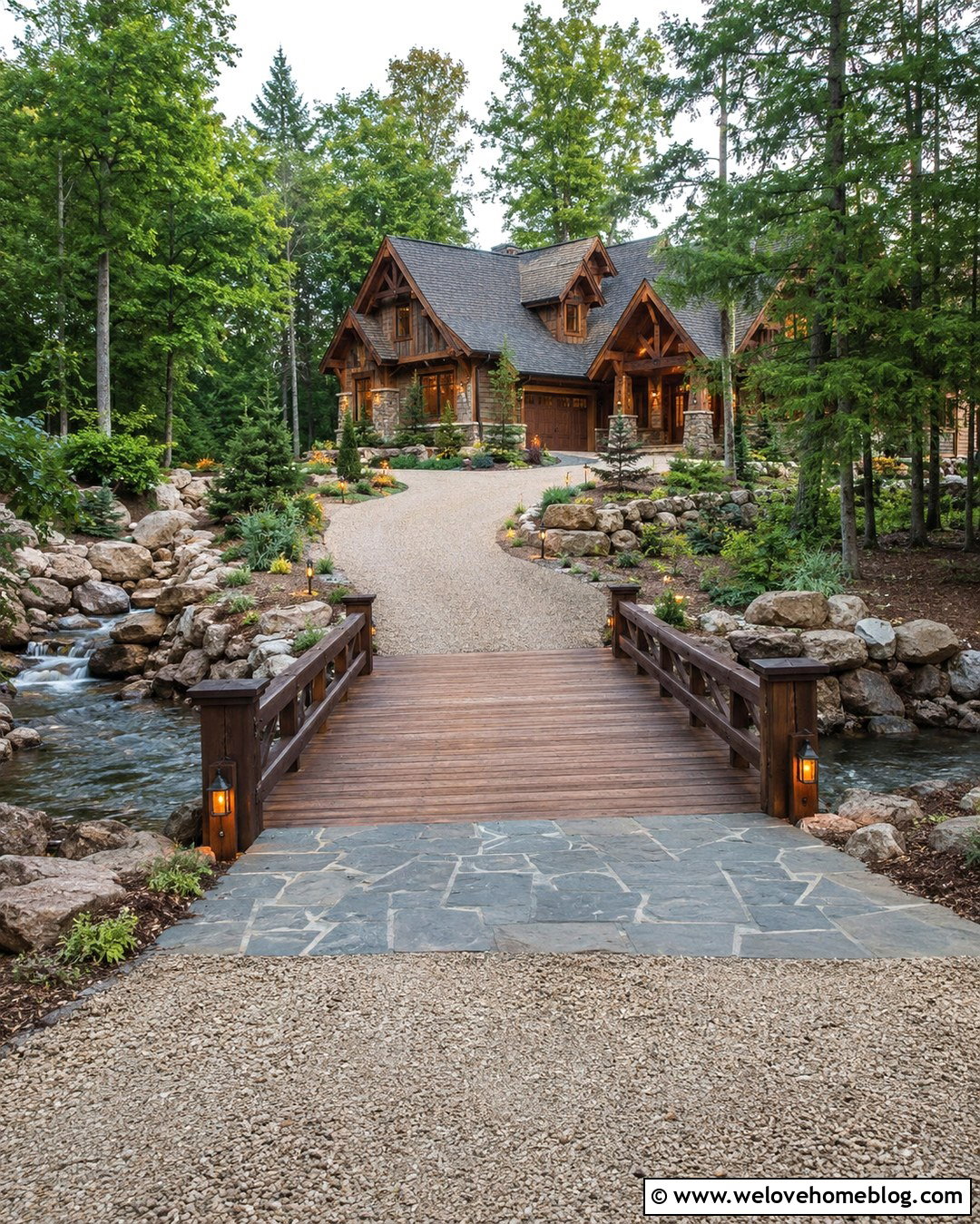
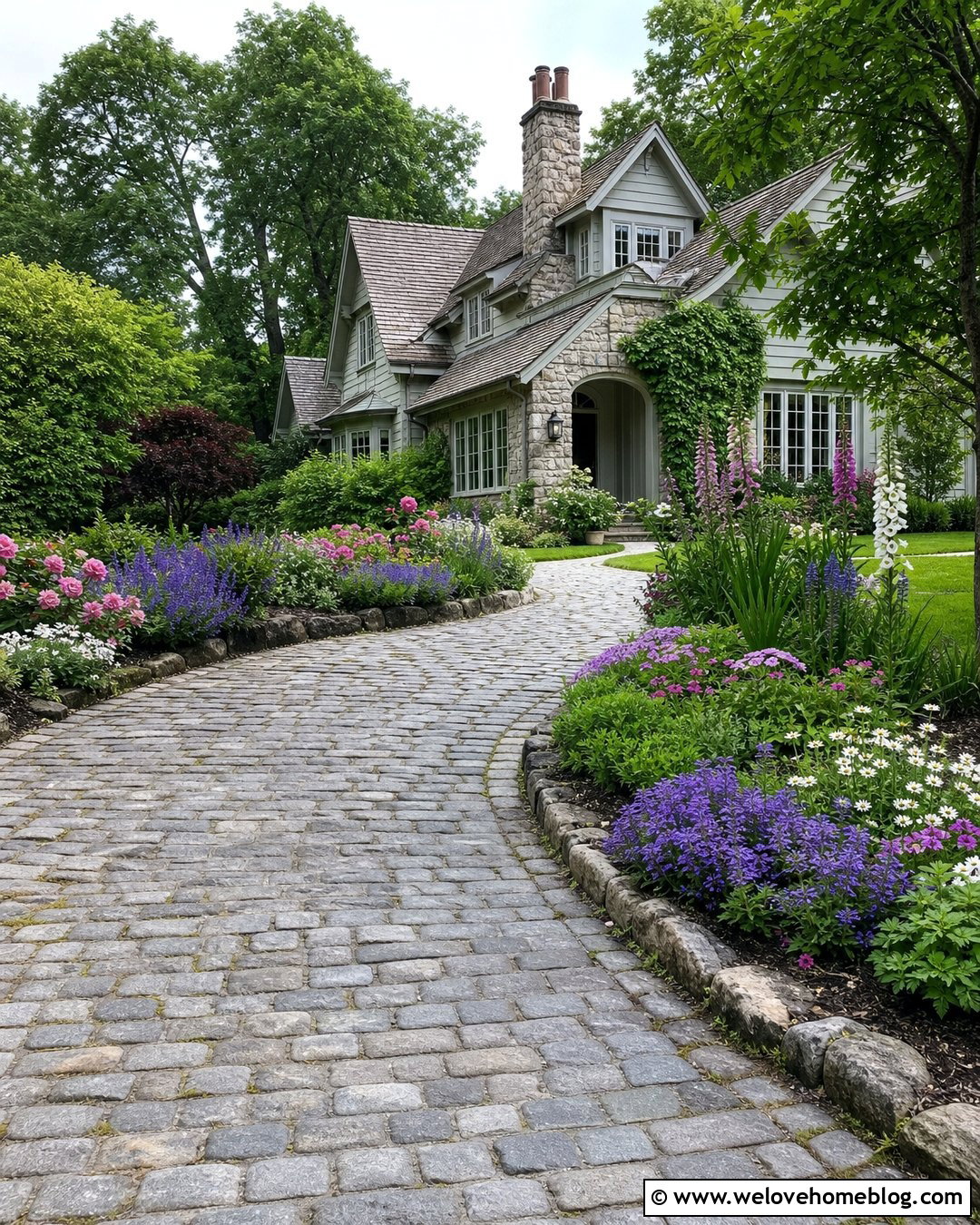
Not every treed driveway needs matching rows. A mixed woodland design uses existing oaks, maples, pines, and understory trees to shape a more organic route. Choose compacted gray gravel and curve the driveway around healthy mature specimens rather than cutting a straight path through them. Irregular fieldstone edging can protect vulnerable corners and guide vehicles near planting beds. Fill disturbed areas with native shrubs, ferns, sedges, and woodland groundcovers. A craftsman, rustic contemporary, or mountain home fits naturally at the end of the approach. Maintain clear visibility around bends and remove weak overhead branches when necessary. The completed driveway should look as though it belongs in the woodland, while still providing dependable drainage, adequate width, and practical access to the house.
18. Tree-Lined Driveway With Gate
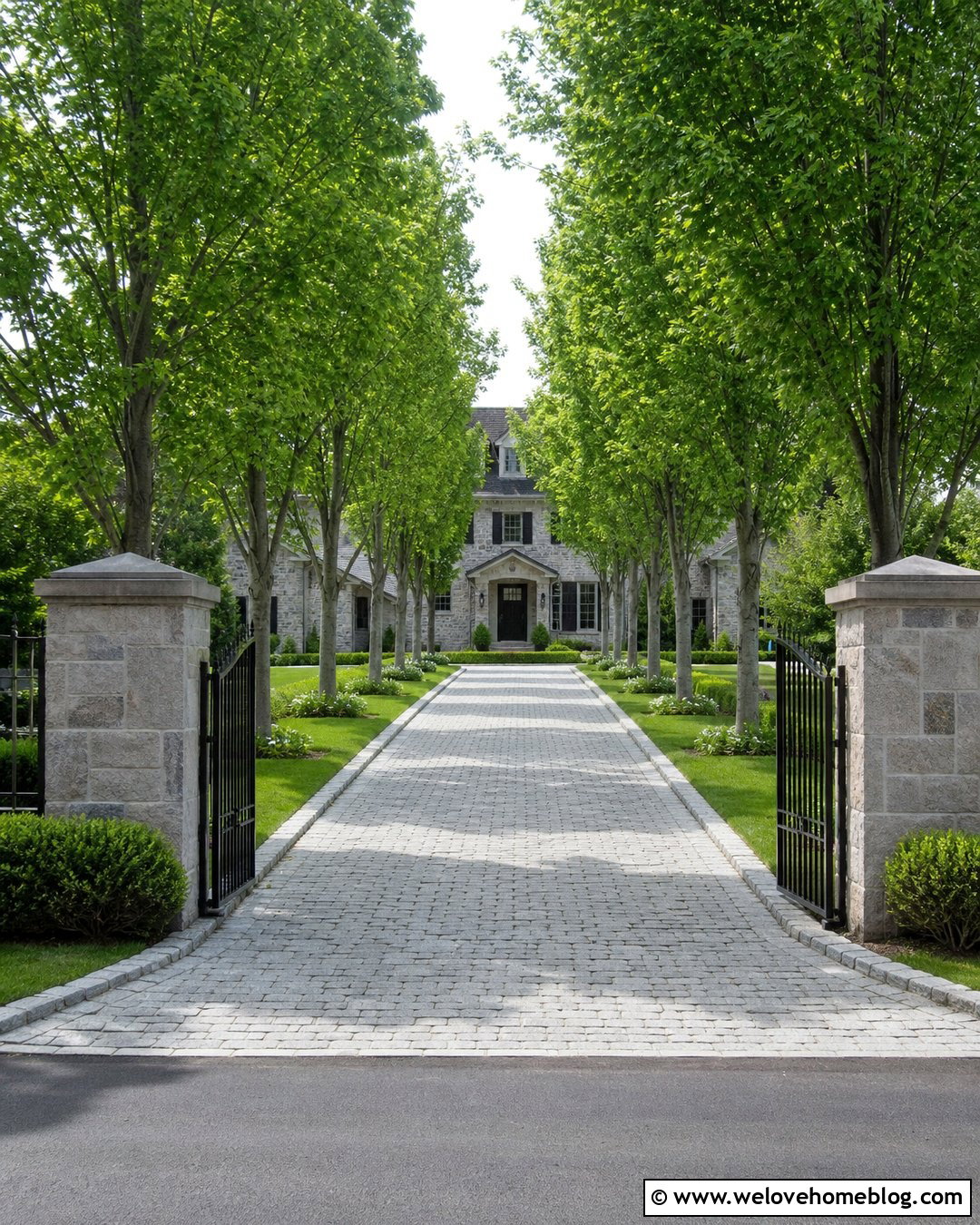
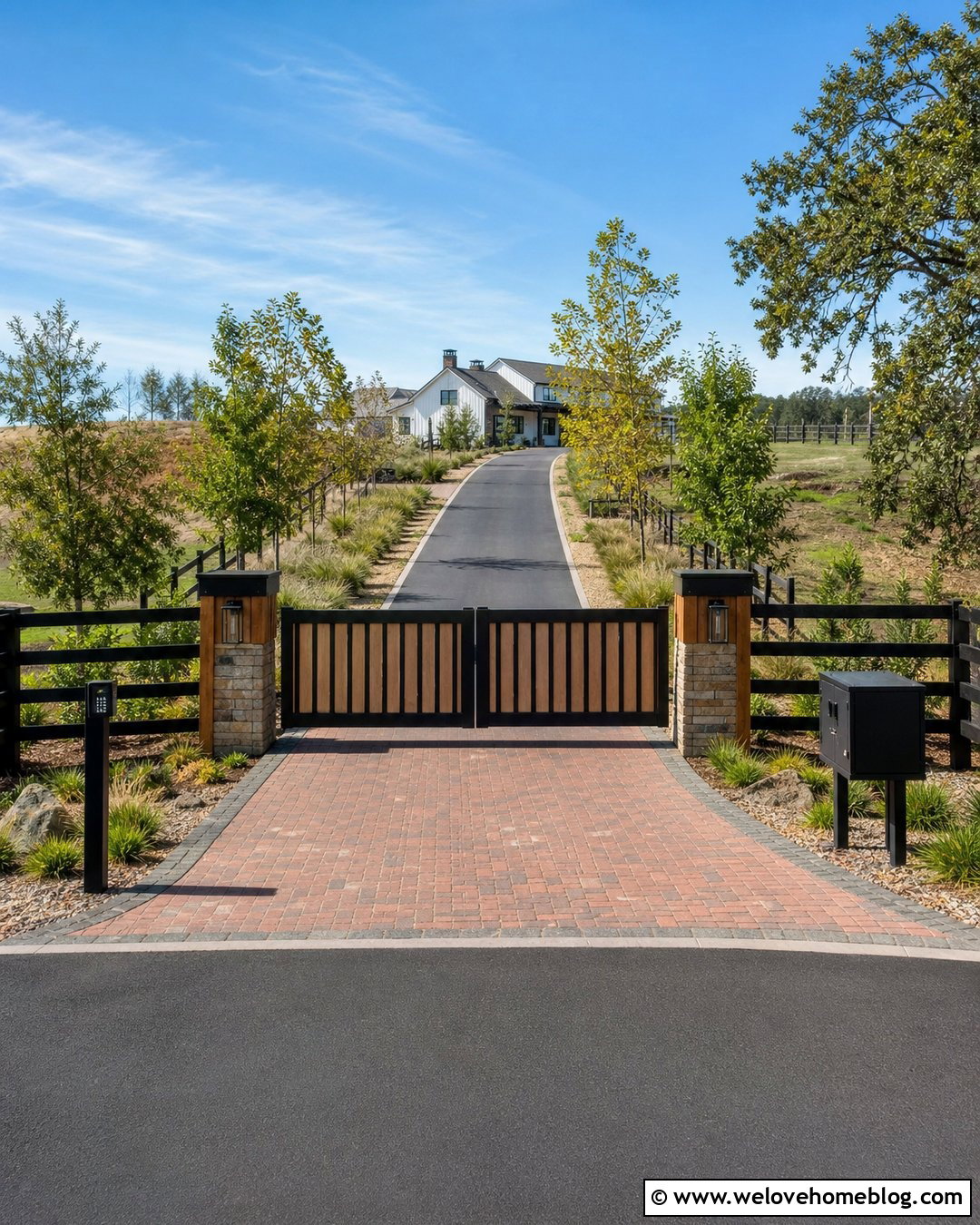
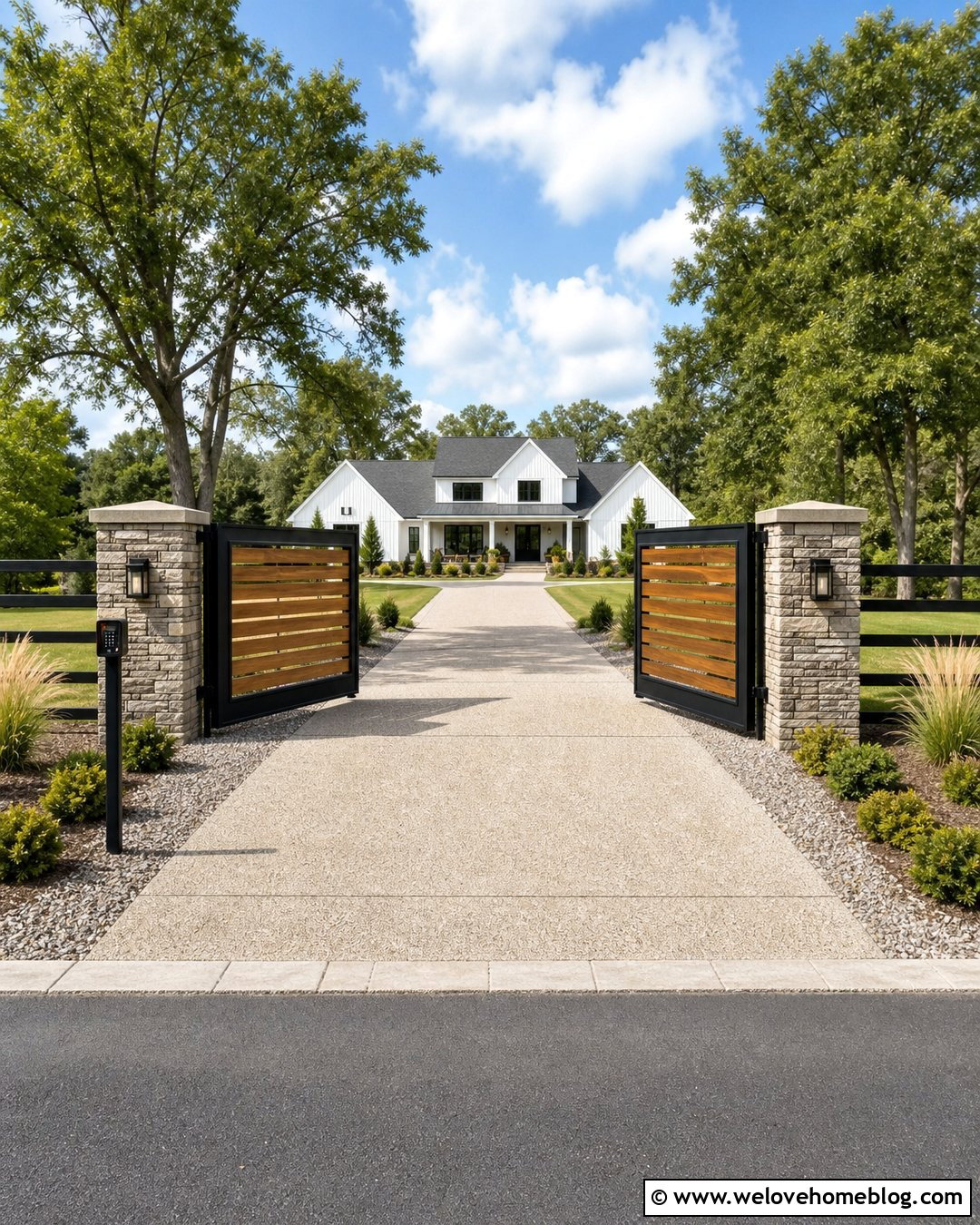
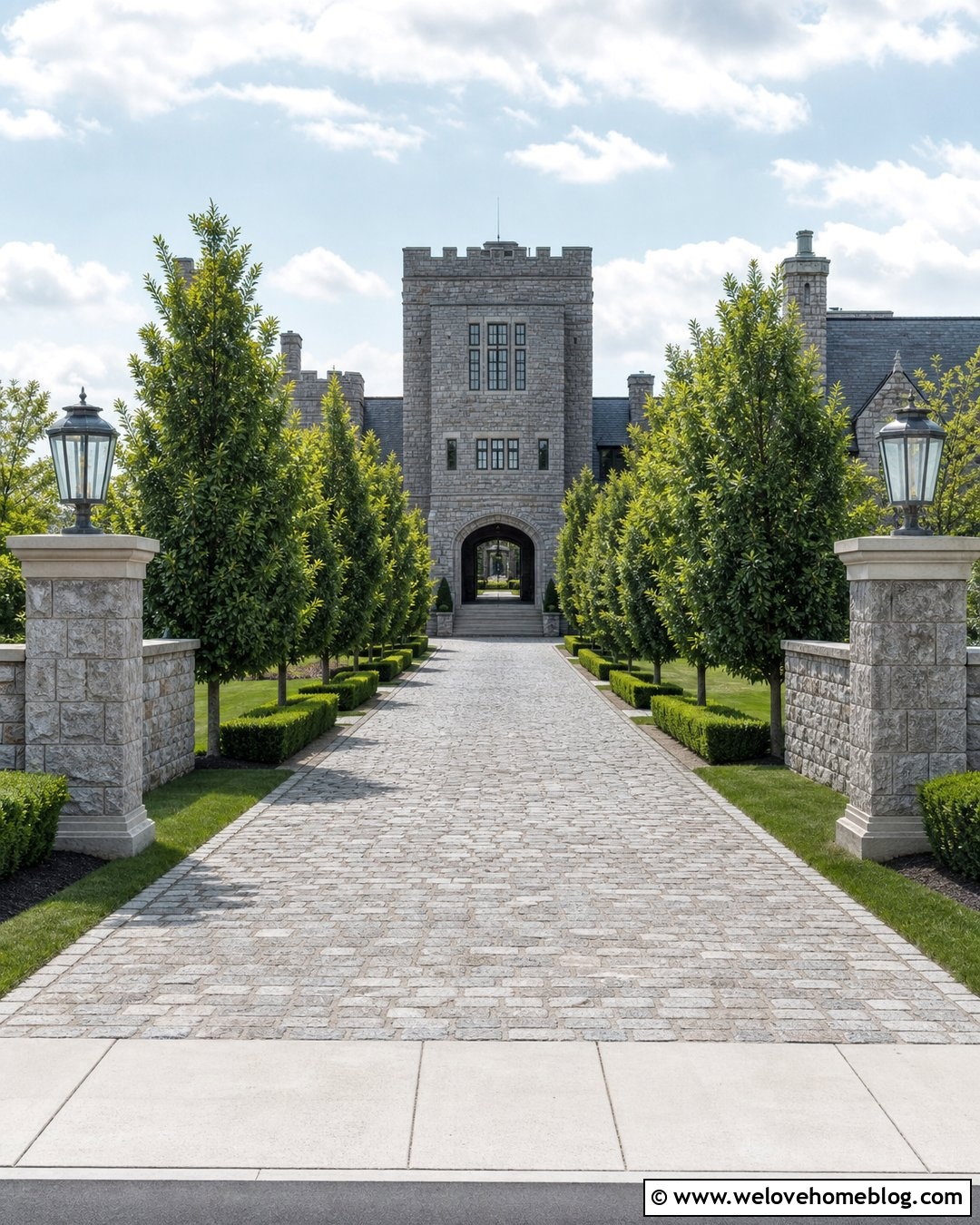
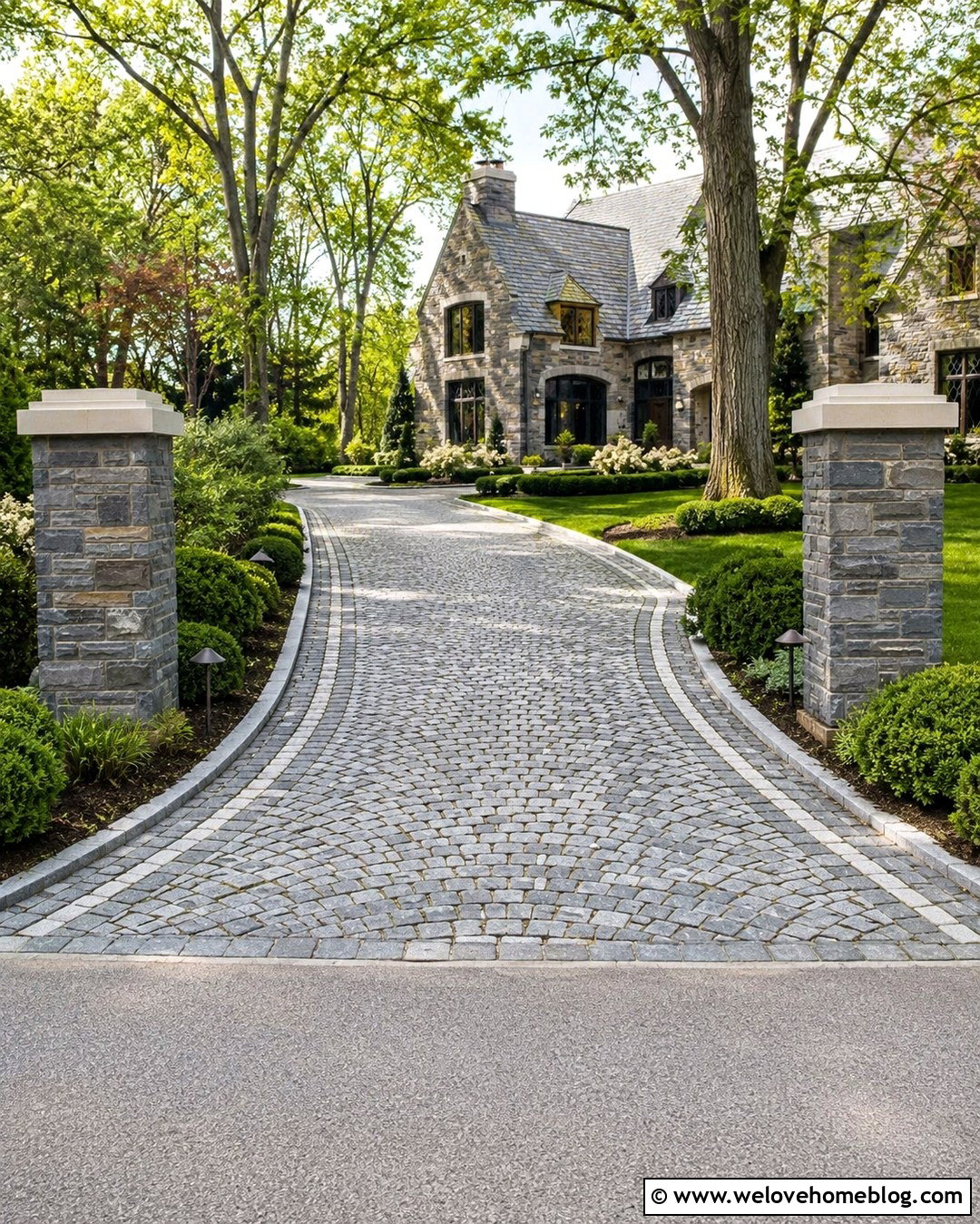
A driveway gate becomes more welcoming when it is integrated into a complete tree-lined approach. Use light gray cobblestone or cobblestone-style pavers in a straight layout leading to a traditional house. Position stone pillars and a simple black metal gate several feet inside the property, leaving safe space for vehicles to stop. Beyond the entrance, evenly spaced linden or hornbeam trees can continue toward the home. Low hedges, lawn strips, and restrained perennial beds keep the formal composition readable. Repeat the pillar stone in the driveway border or front walkway for continuity. Mature tree spread and gate clearance should be planned together. The finished entrance feels secure and distinguished without relying on oversized ornament, dense planting, or visually heavy barriers.
19. Tree-Lined Driveway With Lighting
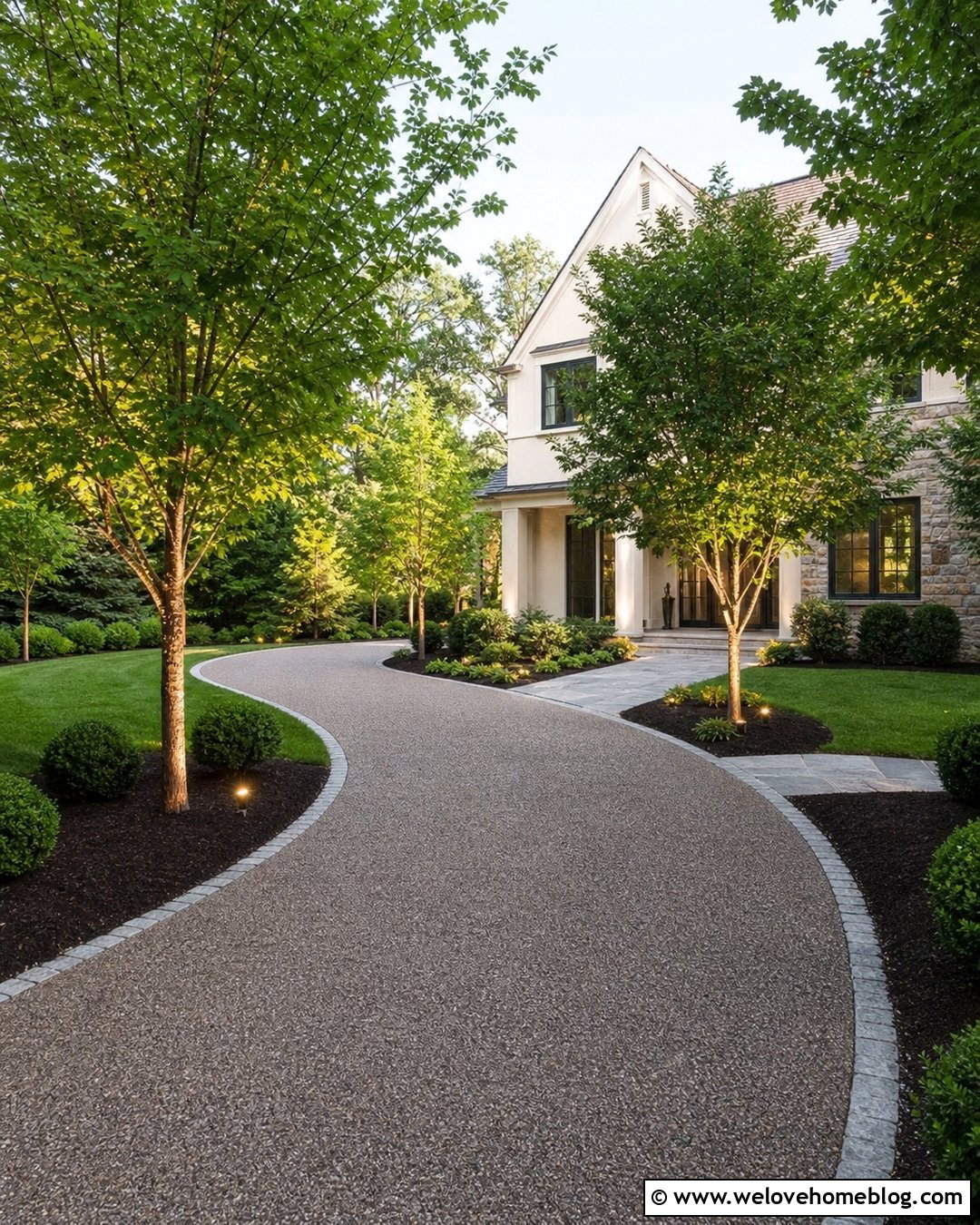
Landscape lighting can make a treed driveway easier to follow while highlighting its strongest natural features. Begin with a dark gray asphalt or resin-bound gravel surface arranged in a gentle curve. Install low, shielded fixtures near selected tree trunks rather than placing identical lights at every interval. Granite edging and broad mulch beds provide tidy transitions between the driveway, trees, and lawn. During daylight, ornamental pear or hornbeam trees create rhythm along the route to a transitional-style home. After dark, soft illumination should reveal the driveway edge and branching structure without producing glare. Electrical planning is best completed before new trees or paving are installed. This coordinated approach creates a practical arrival sequence while keeping cables, fixtures, roots, and drainage systems properly separated.
20. Native Tree Permeable Driveway
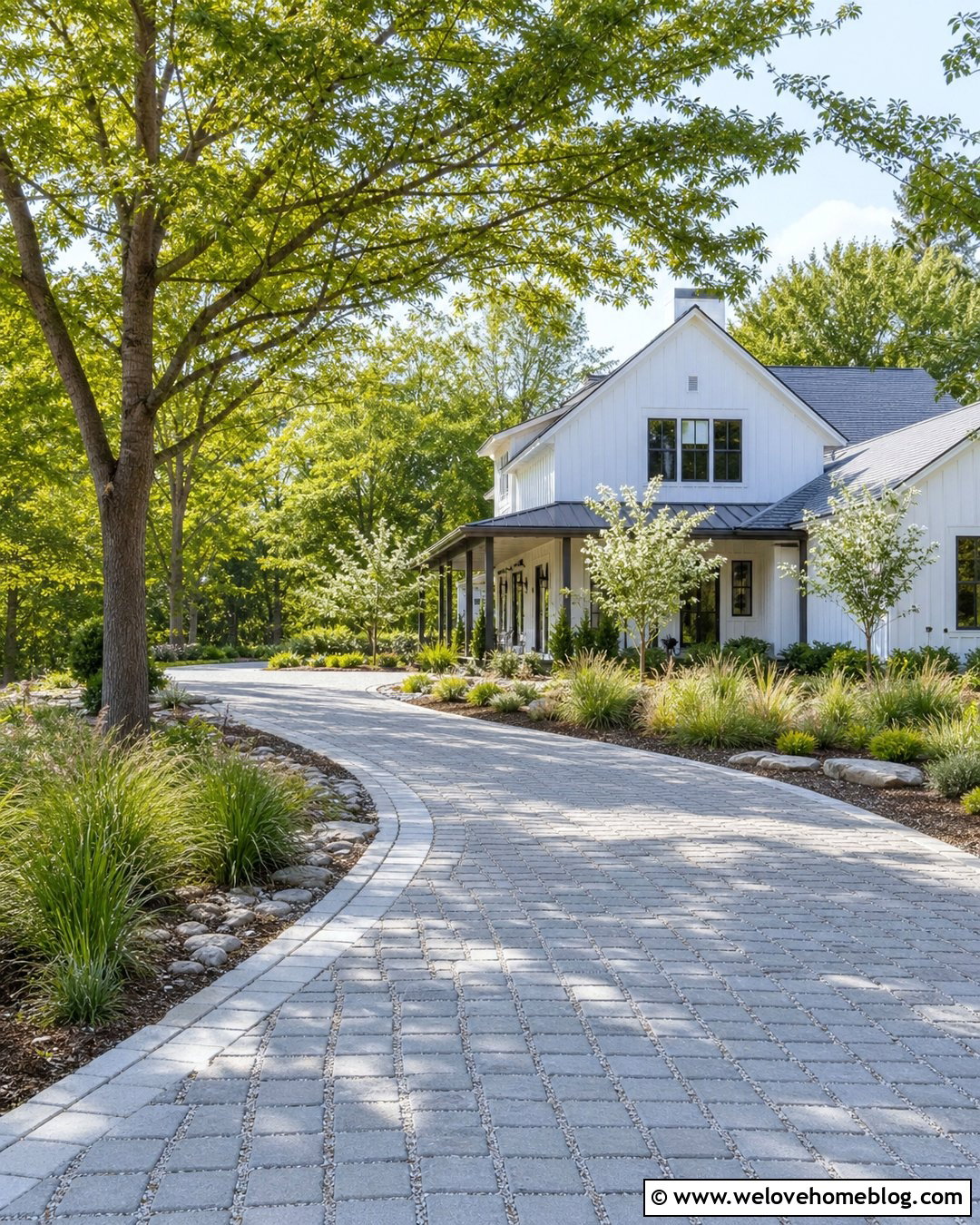
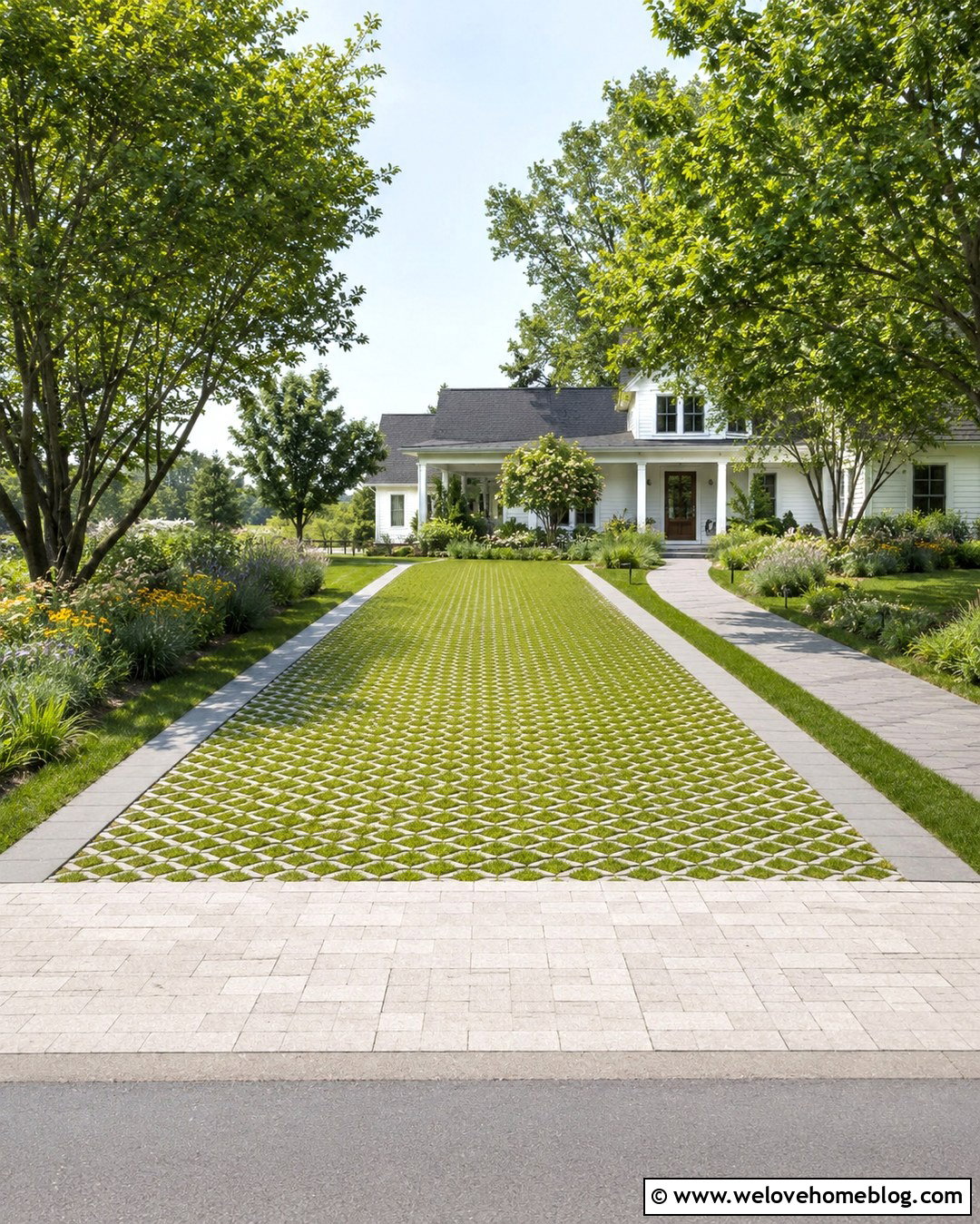
A permeable driveway surrounded by native trees creates a natural entrance with a lighter environmental footprint. Use permeable concrete pavers in a soft gray tone, with gravel-filled joints that visually connect to nearby planting beds. A curved route can preserve established trees and slow the approach to a contemporary ranch or modern farmhouse. Add locally appropriate shade trees, flowering understory trees, native grasses, and low shrubs in broad, layered borders. Stone check areas or planted swales can help guide runoff away from the driving surface where site conditions allow. Keep the center of the driveway visually open and maintain clear access near the street. This complete design feels relaxed and regional while combining durable paving, thoughtful drainage, and habitat-friendly landscaping.
Conclusion:
The most successful tree-lined driveway balances immediate curb appeal with long-term growth. Choose the paving, layout, edging, entrance details, and planting scheme as one connected design rather than separate upgrades. Before planting, consider mature canopy width, root space, overhead clearance, drainage, utility locations, and maintenance. Trees that suit the local climate and soil will generally create a healthier, more convincing landscape. Formal rows work beautifully with straight approaches, while mixed planting fits curved woodland drives. Smaller ornamental trees can bring the same welcoming effect to compact properties. From gravel farmhouse lanes to modern permeable pavers, these **20 treed driveways ideas** offer practical starting points for creating a distinctive and inviting approach to your home.

Related posts:
Leave a Reply