
A beautiful driveway can do more than provide a place to park. It can become a colorful garden feature that guides the eye toward your home. These **25 flower lined driveway ideas** combine practical driving surfaces with attractive borders, layered planting, and thoughtful edging. The right design depends on your climate, sunlight, available space, and preferred maintenance level. Low-growing flowers work well near parking areas, while taller plants can add depth farther back. You can also coordinate bloom colors with your home’s siding, front door, or driveway material. From lavender beside gravel to native wildflowers along asphalt, every option below creates a complete, welcoming approach. Explore these practical and inspiring **25 flower lined driveway ideas**.

1. Lavender Lined Gravel Driveway
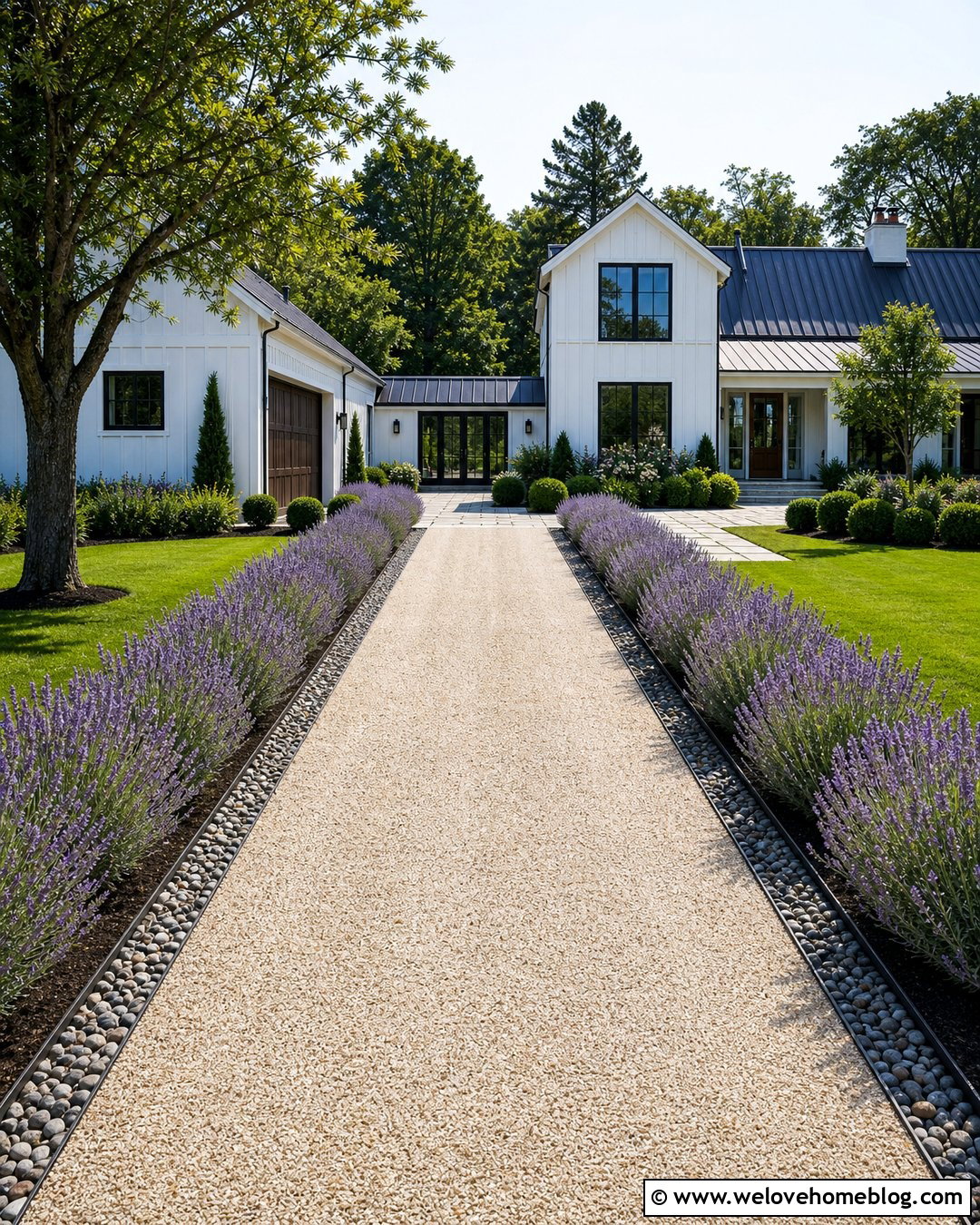
A pale gravel driveway bordered by lavender creates a relaxed entrance with clear structure. Use compacted beige or gray gravel for the driving surface, then install steel edging to keep loose stones out of the planting beds. A straight layout suits farmhouse, cottage, and Mediterranean-inspired homes. Plant lavender in generous repeating groups rather than isolated specimens. This produces a stronger visual line when the plants bloom. Add a narrow strip of decorative stone between the gravel and flowers to improve drainage and protect stems from vehicle doors. Lavender needs abundant sun and fast-draining soil, so avoid placing it where driveway runoff collects. Finish the design with clipped evergreen shrubs near the garage to maintain structure after the flowers fade.
2. Hydrangea Lined Concrete Driveway
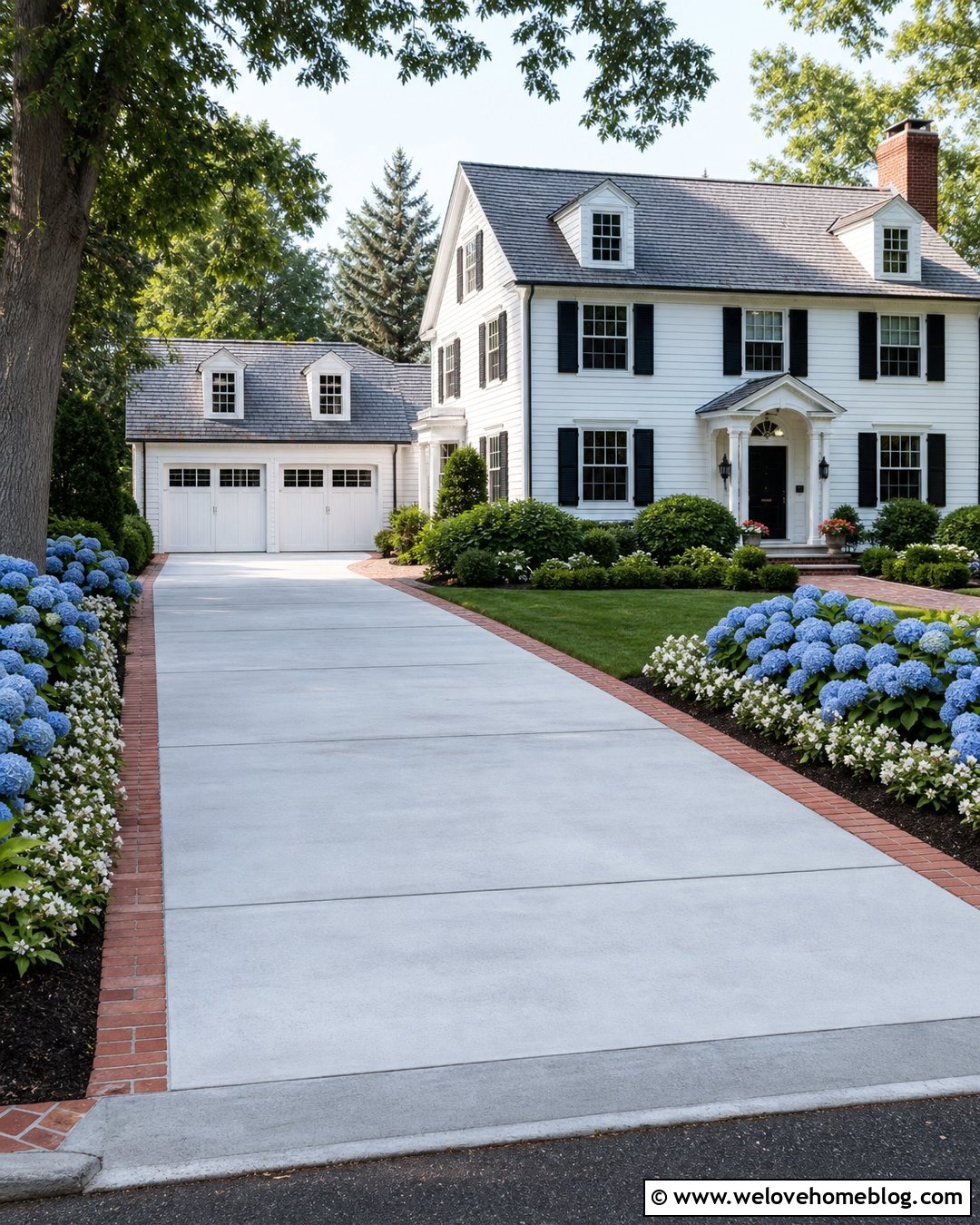
Large hydrangea flowers can soften the broad surface of a poured concrete driveway. This look works especially well with a Colonial, Cape Cod, or traditional two-story house. Create deep planting beds on both sides so mature shrubs do not lean into the driving area. Low brick curbing can separate the soil from the concrete while coordinating with a brick facade or walkway. Choose hydrangeas suited to your local climate, light conditions, and available space. Place compact annuals near the driveway edge, followed by hydrangeas farther back for a layered arrangement. A gently curved bed line keeps the planting from looking too rigid. Apply mulch for a finished appearance, and provide a practical stepping area where passengers regularly enter and exit vehicles.
3. Rose Lined Brick Driveway
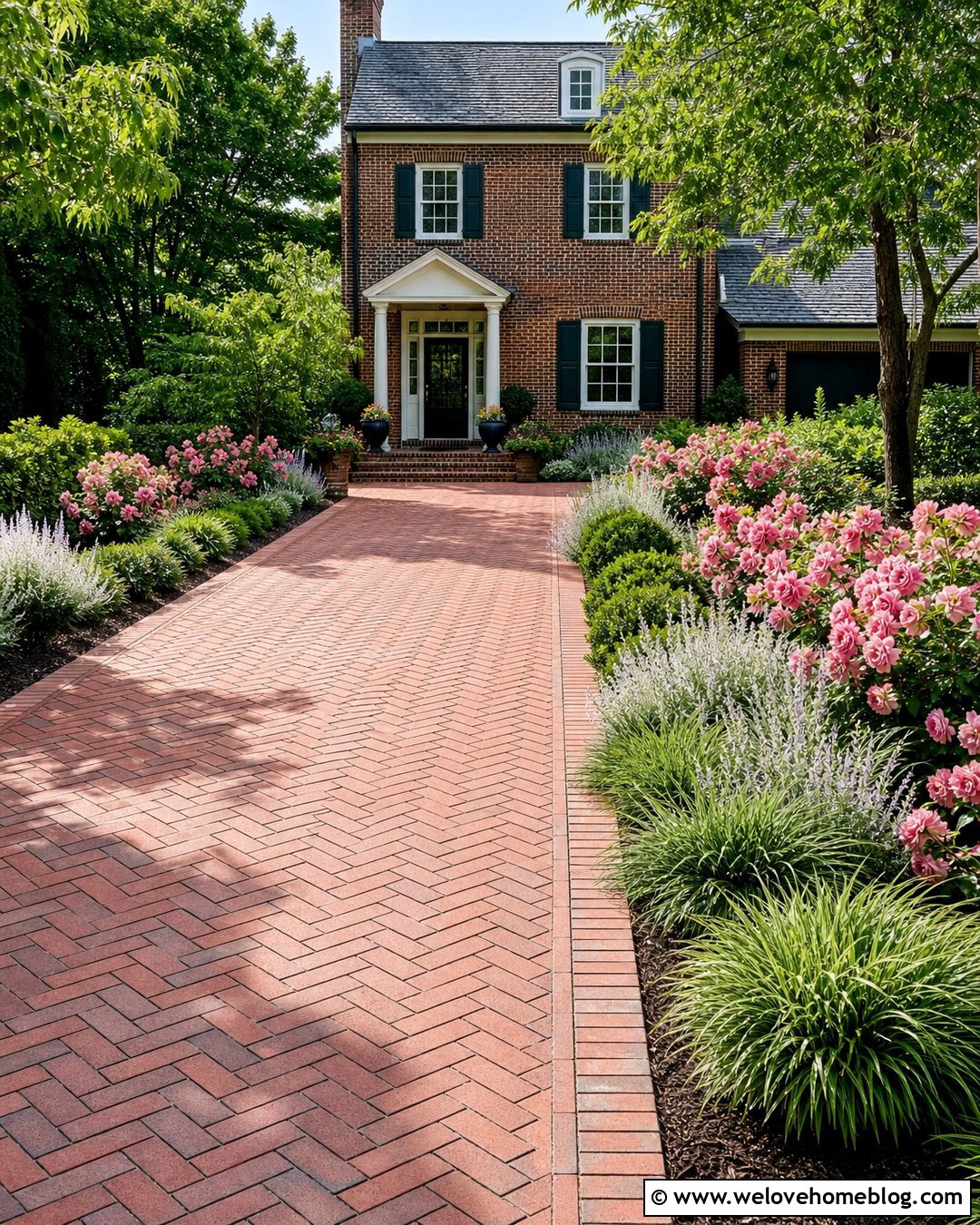
Could anything look more welcoming than roses framing a warm brick driveway? Clay brick pavers in a herringbone pattern provide traditional character, while low shrub roses introduce lasting color without blocking sightlines. Use a soldier-course brick border to contain the pattern and create a clean transition into the flower beds. Repeat one or two rose colors along both sides for a cohesive design. White, blush, and soft pink flowers complement red brick particularly well. Set the roses back from the pavement so thorny stems do not scratch vehicles or catch clothing. Boxwood, catmint, or compact ornamental grasses can fill gaps between bloom cycles. Near the house, widen the beds and connect them visually to the front walkway and foundation landscaping.
4. Wildflower Lined Asphalt Driveway
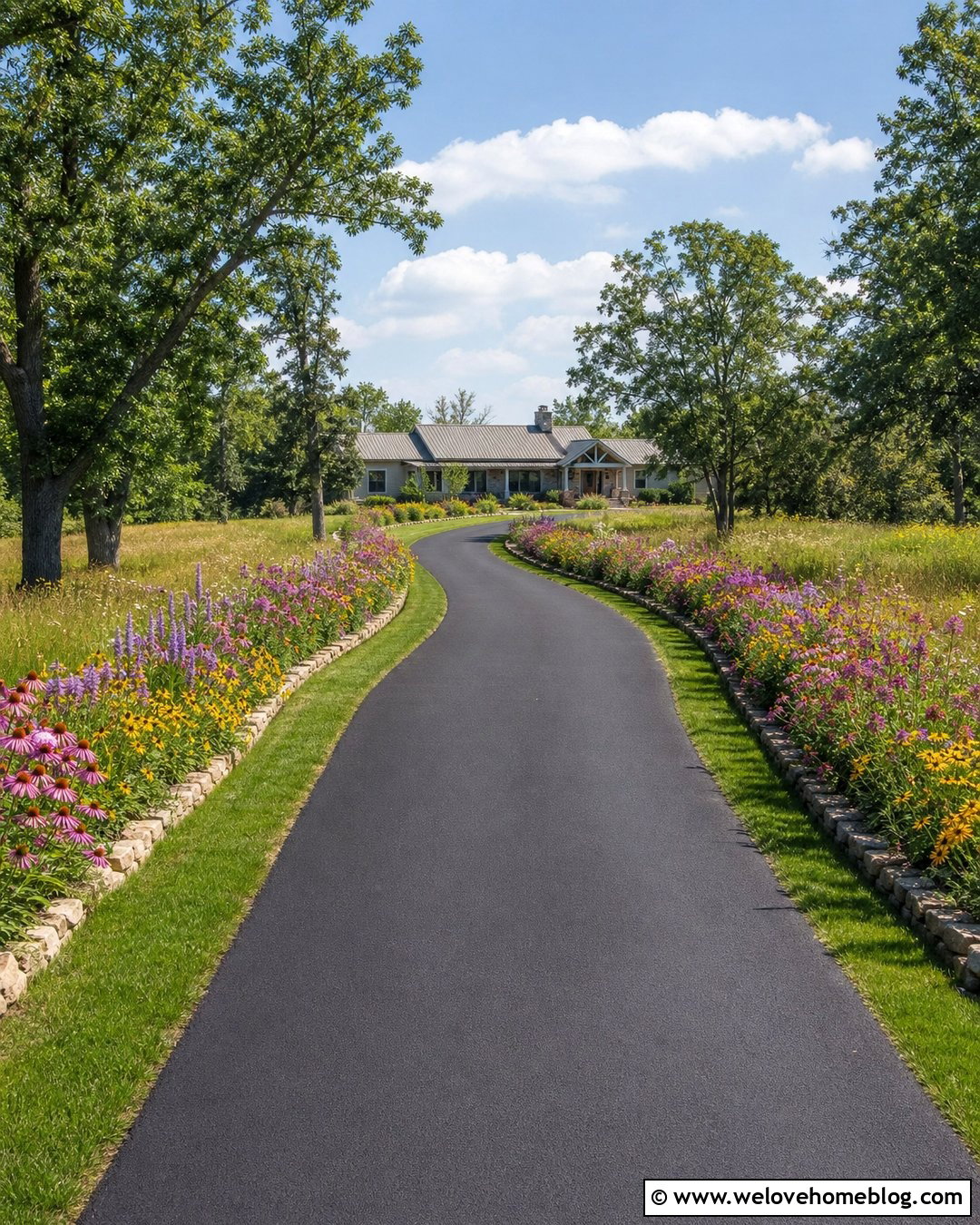
A black asphalt driveway becomes much softer when surrounded by colorful native wildflowers. This design suits a long country drive, informal ranch property, or wooded suburban lot. Keep the area closest to the asphalt short and controlled, using low flowers or mowed grass strips to preserve visibility. Taller coneflowers, bee balm, blazing star, and asters can form broader drifts behind them, depending on your region. Select plants with overlapping bloom periods to extend color from spring through fall and provide more consistent resources for pollinators. Grouping flowers in visible drifts also creates a more organized appearance than scattering individual plants randomly. () Use natural stone edging or a shallow gravel strip to catch mulch and prevent stems from falling onto the pavement.
5. Tulip Lined Circular Driveway
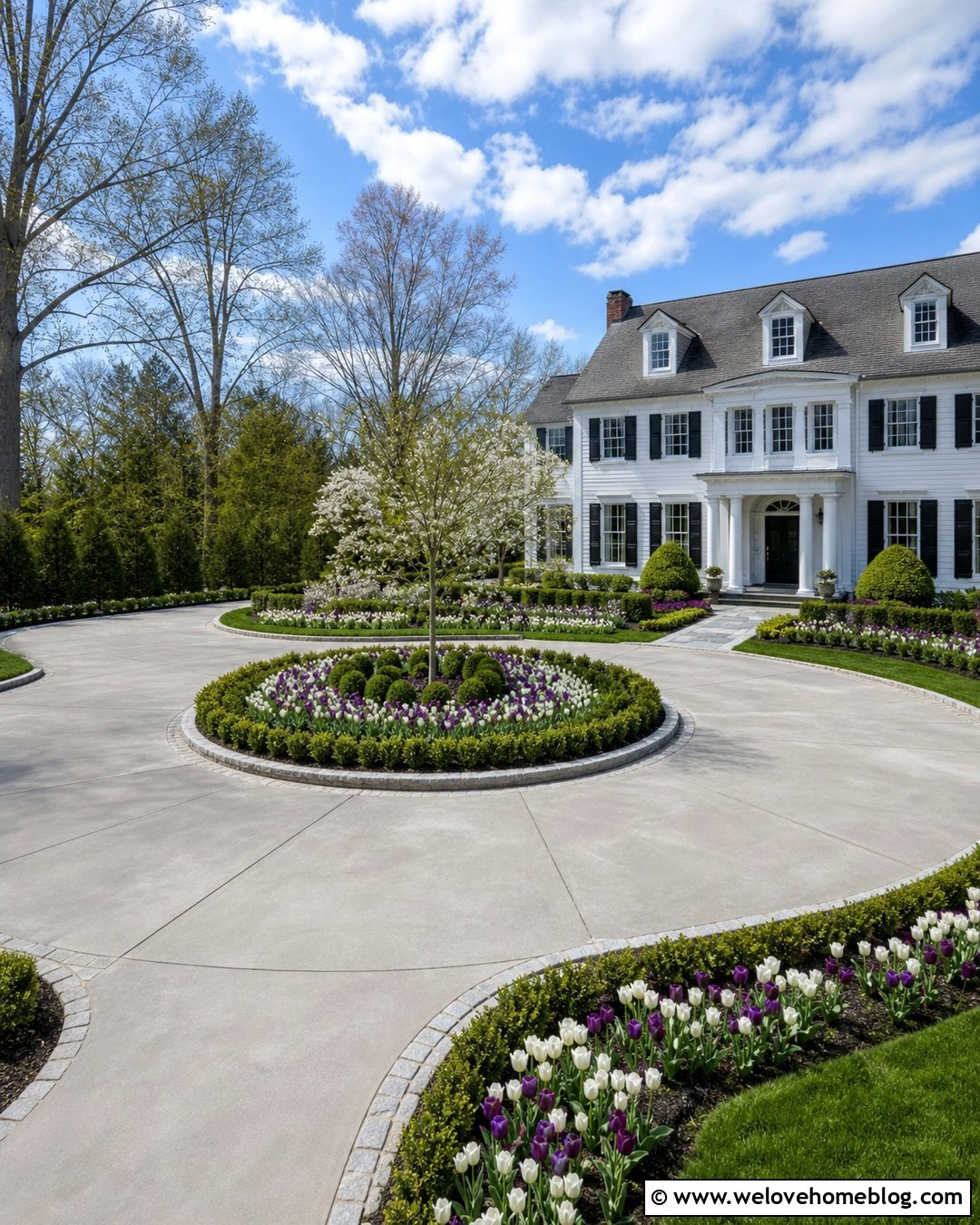
Spring tulips can turn a circular driveway into a formal, colorful arrival. A smooth gray concrete surface keeps the design practical, while a planted center island creates the main focal point. Repeat tulips around the island and along the outer curve to emphasize the circular shape. For the strongest display, choose a limited palette such as white and purple, red and yellow, or several shades of pink. Since tulips have a relatively short seasonal presence, combine them with low evergreen shrubs and later-blooming perennials. Stone edging gives the beds a crisp outline and prevents soil from washing onto the concrete. Keep plants near entrances compact so drivers can see pedestrians clearly. A small ornamental tree in the center can add height without overwhelming the house.
6. Coneflower Lined Paver Driveway
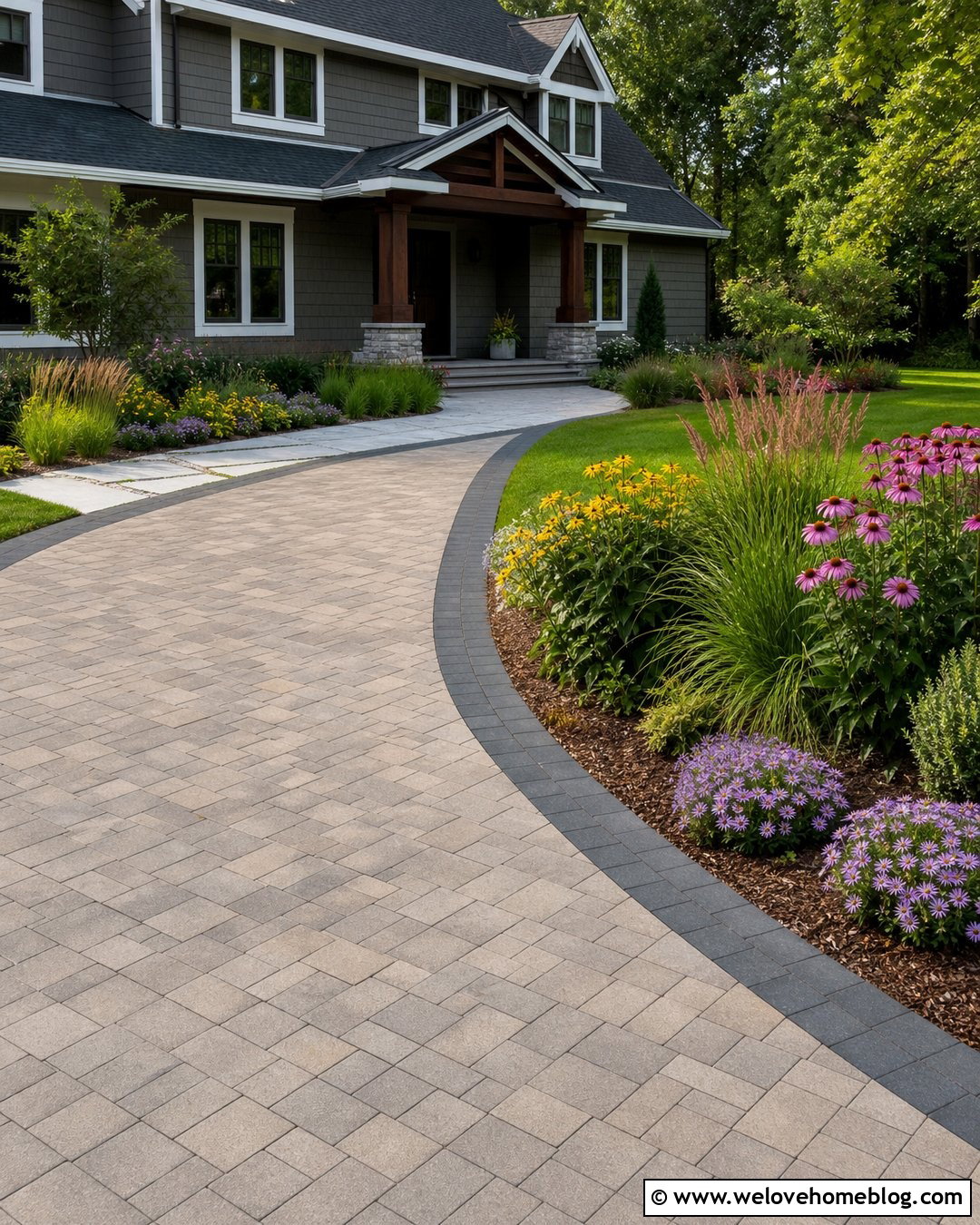
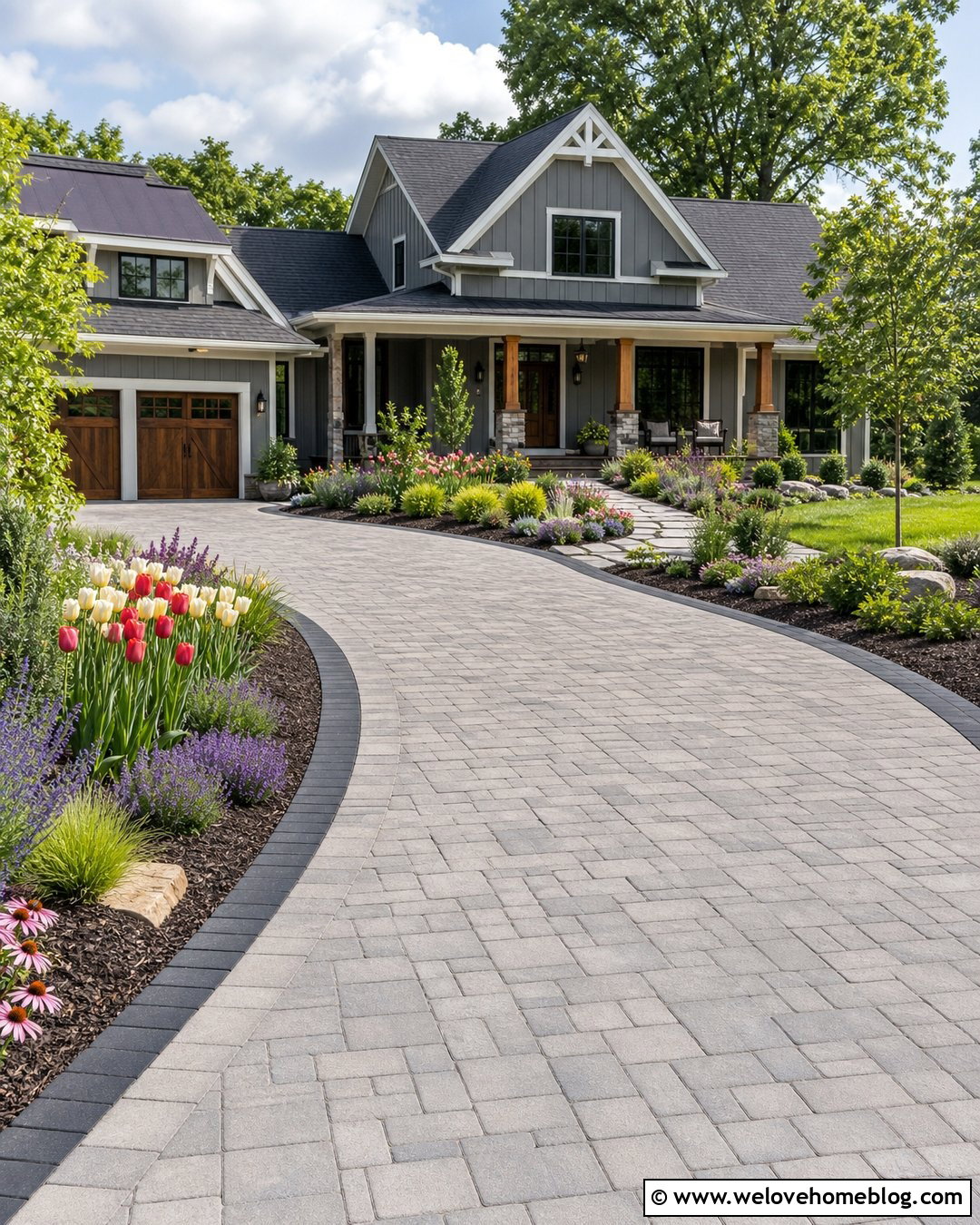
Purple coneflowers bring an easygoing prairie character to an interlocking concrete paver driveway. Choose warm gray or taupe pavers in a running-bond pattern, then frame them with a darker paver ribbon. Beyond the ribbon, create layered beds containing coneflowers, little bluestem, coreopsis, and compact asters. The combination adds movement and seasonal variety without making the entrance feel overly formal. A curved driveway makes the planting appear especially natural because the flower groups can follow the sweeping edge. Keep the front row low and position taller coneflowers farther from parked vehicles. Repeating the same plant combinations on both sides creates continuity even if the beds are not perfectly symmetrical. This complete look complements Craftsman homes, ranch houses, and contemporary prairie architecture.
7. White Flower Lined Modern Driveway
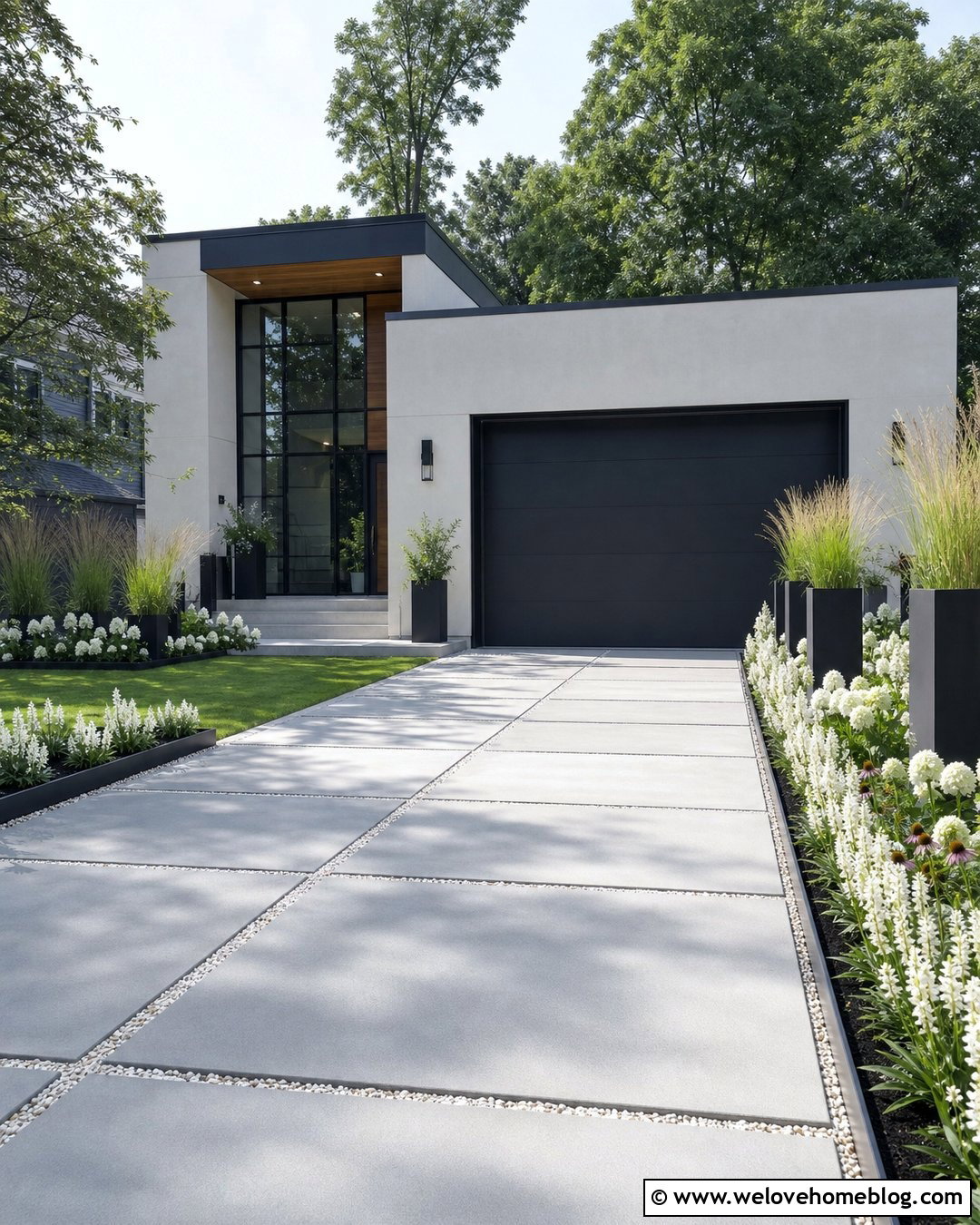
White flowers bring softness to a clean modern driveway without disrupting its restrained appearance. Start with large-format light gray concrete slabs separated by narrow gravel joints. Create linear beds along both sides using white salvia, compact hydrangeas, white coneflowers, and low seasonal annuals. Dark steel edging reinforces the geometric layout and prevents gravel from spreading into the soil. Repeat the same flower varieties in simple blocks rather than mixing numerous colors. Black planters or low charcoal retaining walls can echo dark window frames on the house. Add ornamental grasses behind the flowers for movement and year-round texture. Maintain enough open pavement near the garage for turning and unloading. The finished entrance should feel crisp and contemporary while still looking comfortable, green, and welcoming.
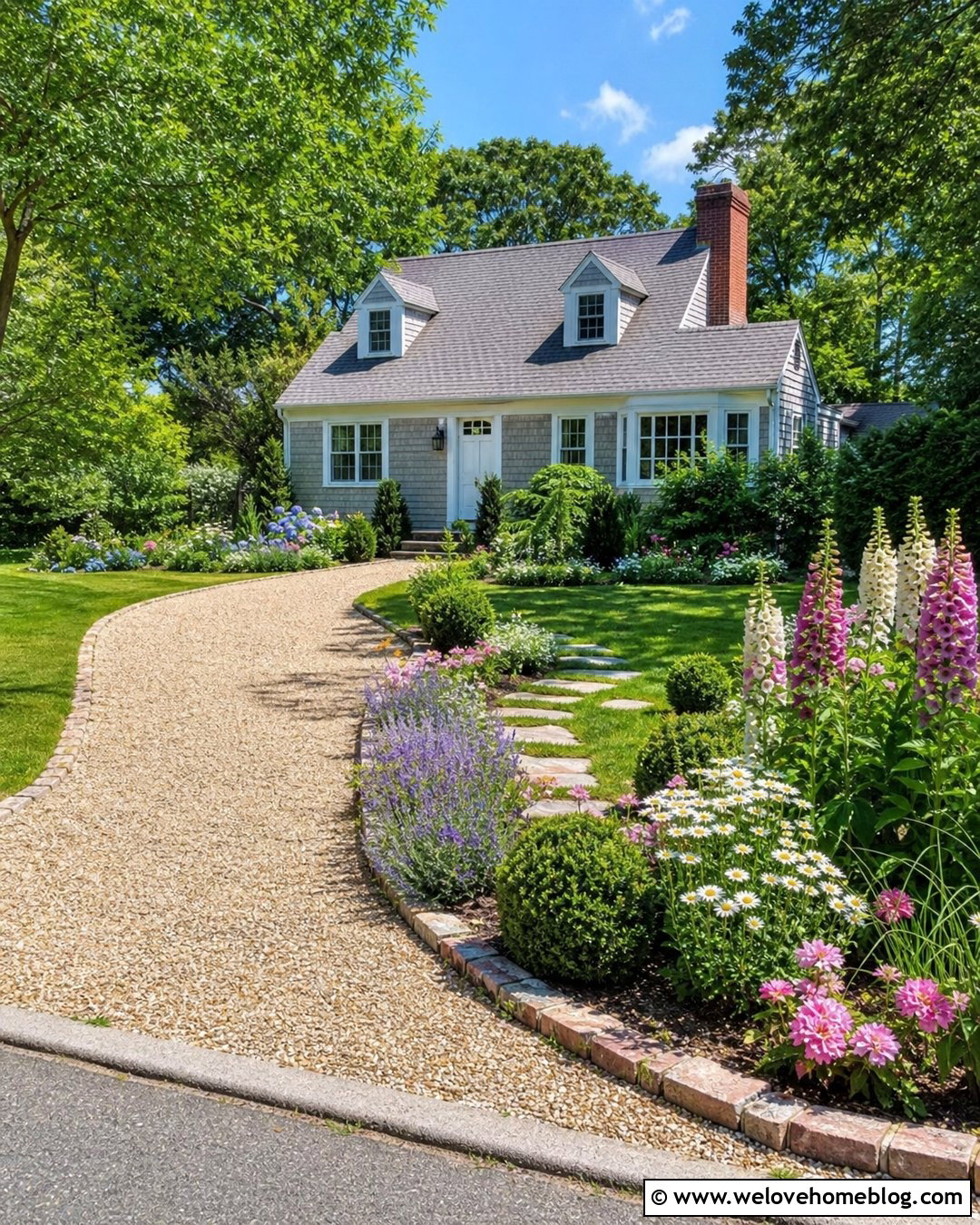
8. Cottage Flower Lined Cobblestone Driveway
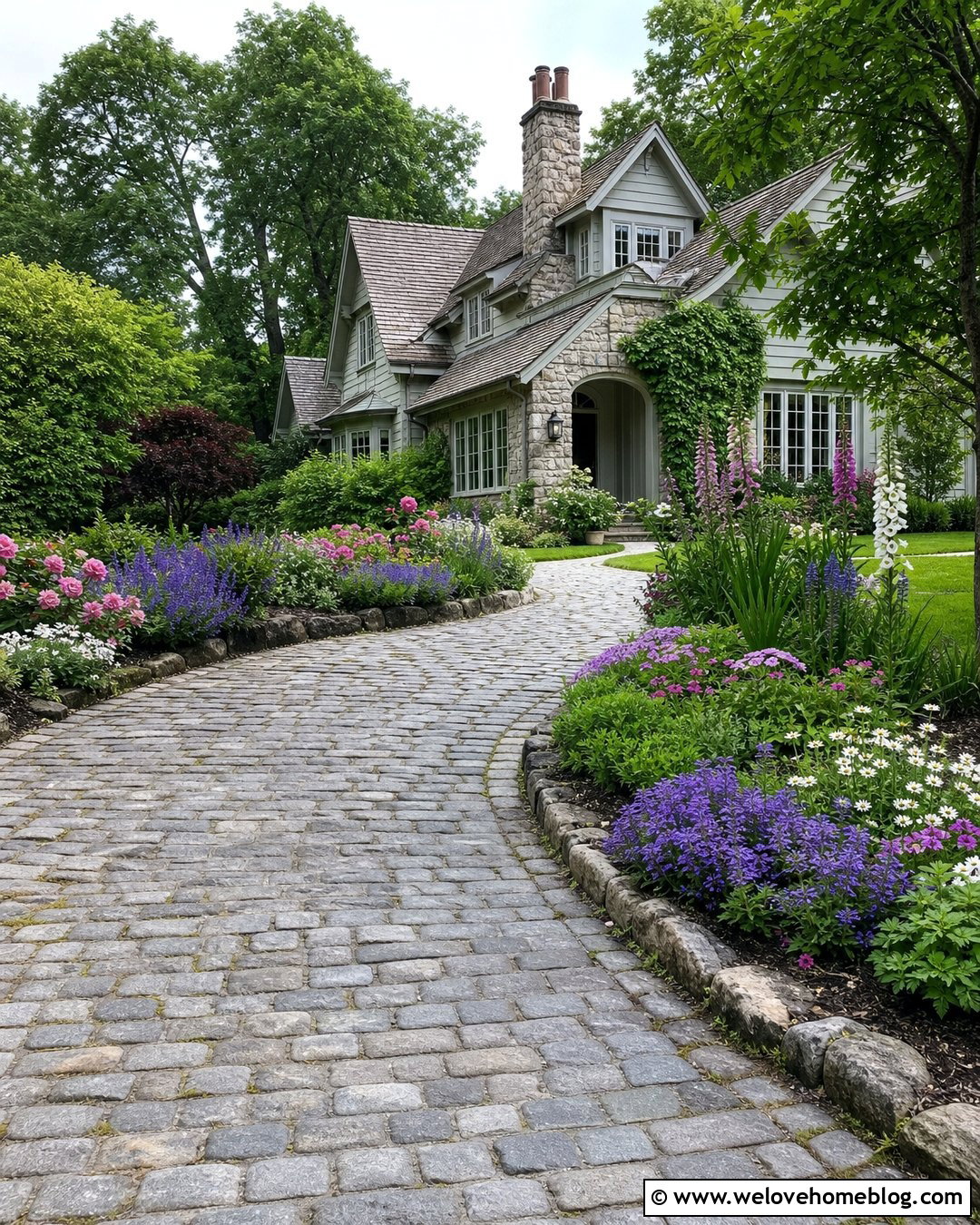
A cobblestone driveway surrounded by abundant cottage flowers creates a layered entrance that feels established rather than newly installed. Use weathered gray cobblestones in a gently curved layout leading toward a cottage, Tudor, or storybook-style home. Plant soft drifts of foxglove, catmint, salvia, daisies, geraniums, and roses along irregular beds. Position taller flowers toward the lawn and lower plants beside the stones. This protects delicate stems while keeping the driveway usable. Allow a few creeping plants to soften the border, but trim them before they spread across the driving surface. Reclaimed brick or natural stone can define the beds without making them look too formal. Repeat several key flowers throughout the border so the generous mixture still feels connected and intentional.
9. Marigold Lined Budget Driveway
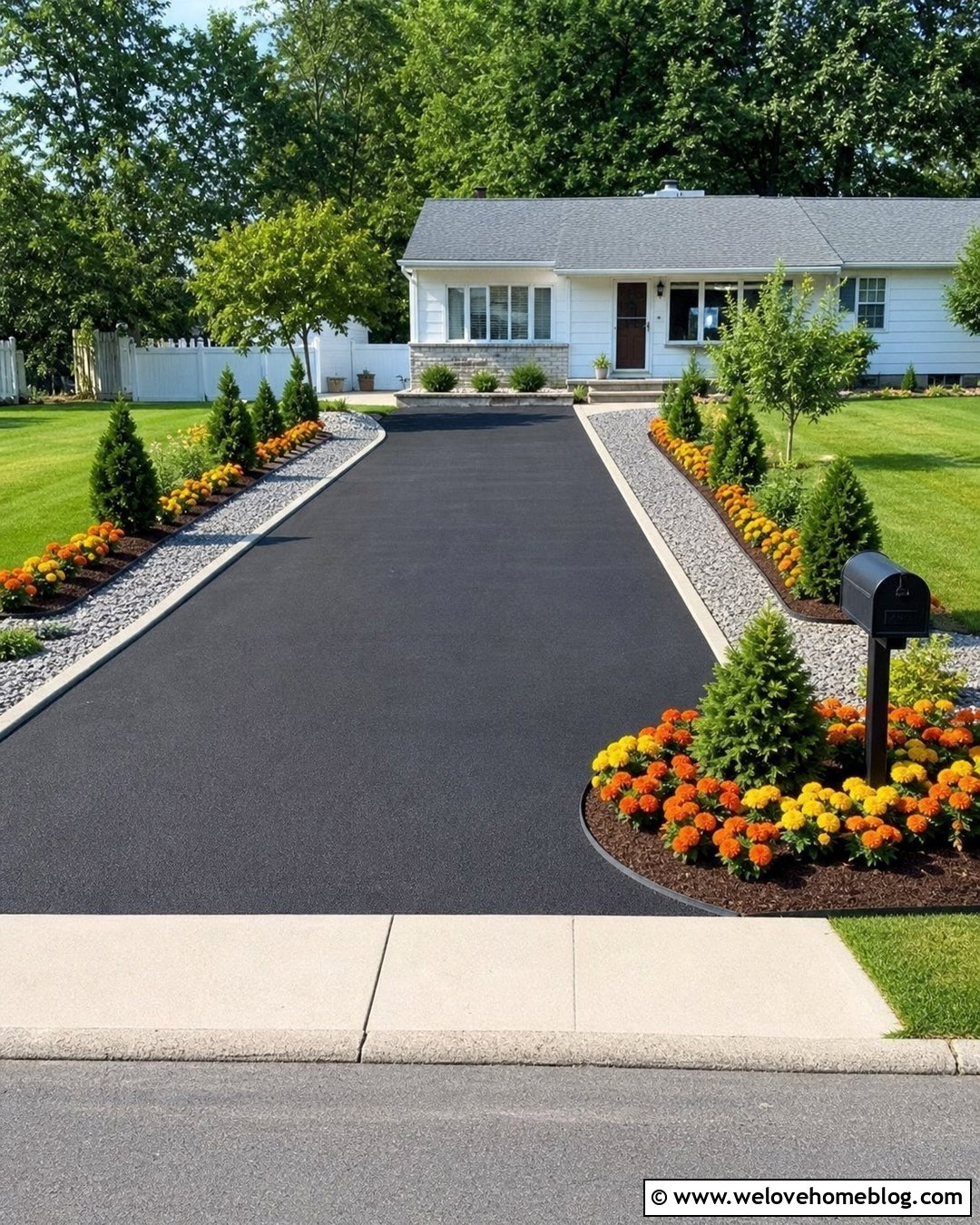
Bright marigolds offer an affordable way to improve a simple asphalt or compacted gravel driveway. Their orange and yellow flowers look particularly vibrant against dark pavement. Create narrow beds with flexible landscape edging, amended soil, and an even mulch layer. Plant marigolds in repeated groups along the sunniest side of the driveway rather than spreading them too thinly. Add low evergreen shrubs at the entrance and near the garage so the design retains structure outside the annual growing season. A straight driveway suits this simple arrangement because the repeating flowers produce a clear visual rhythm. Homeowners in warmer climates can combine marigolds with heat-tolerant salvia or lantana. Leave small gravel landing zones beside frequently used doors to protect plants from foot traffic and accidental damage.
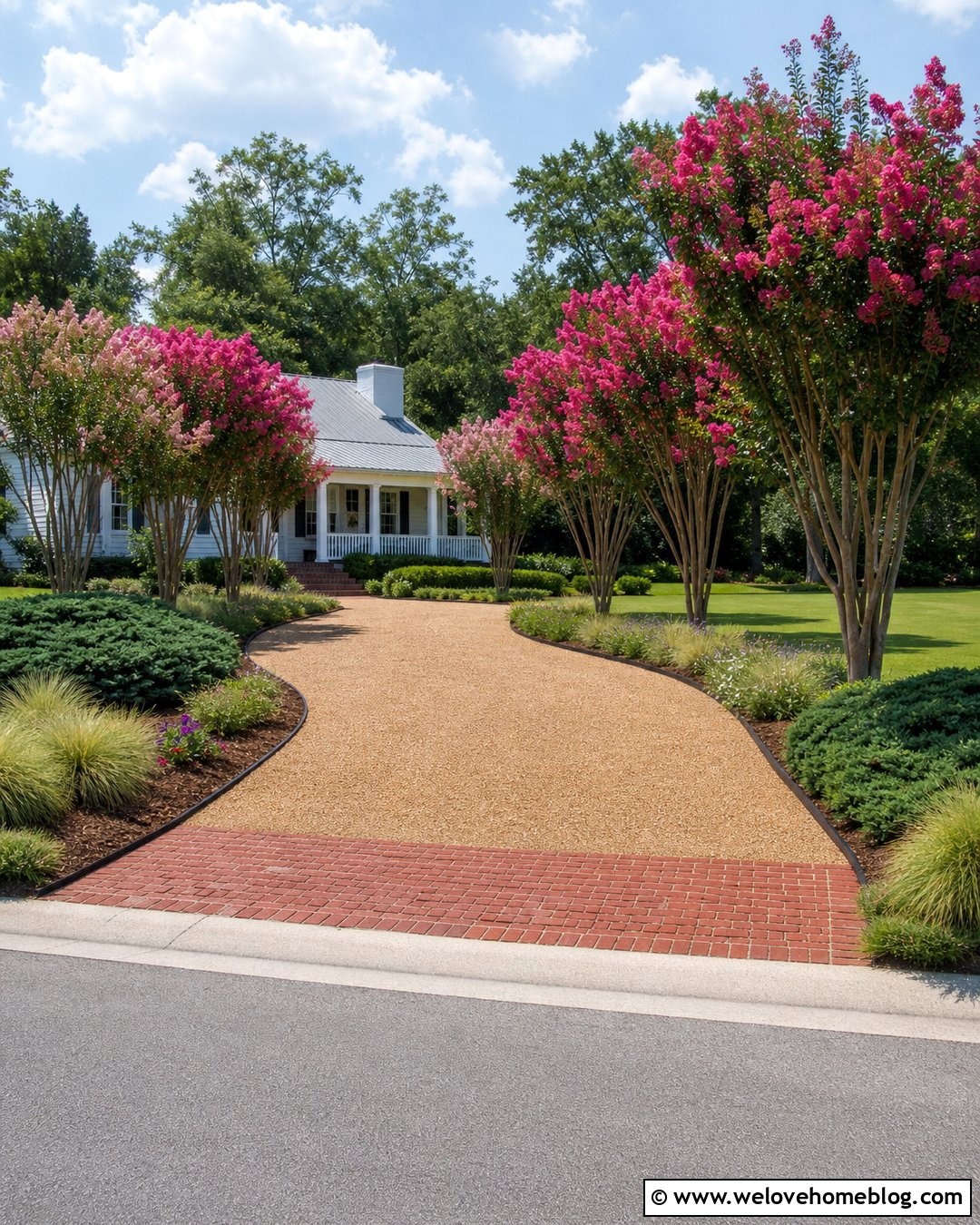
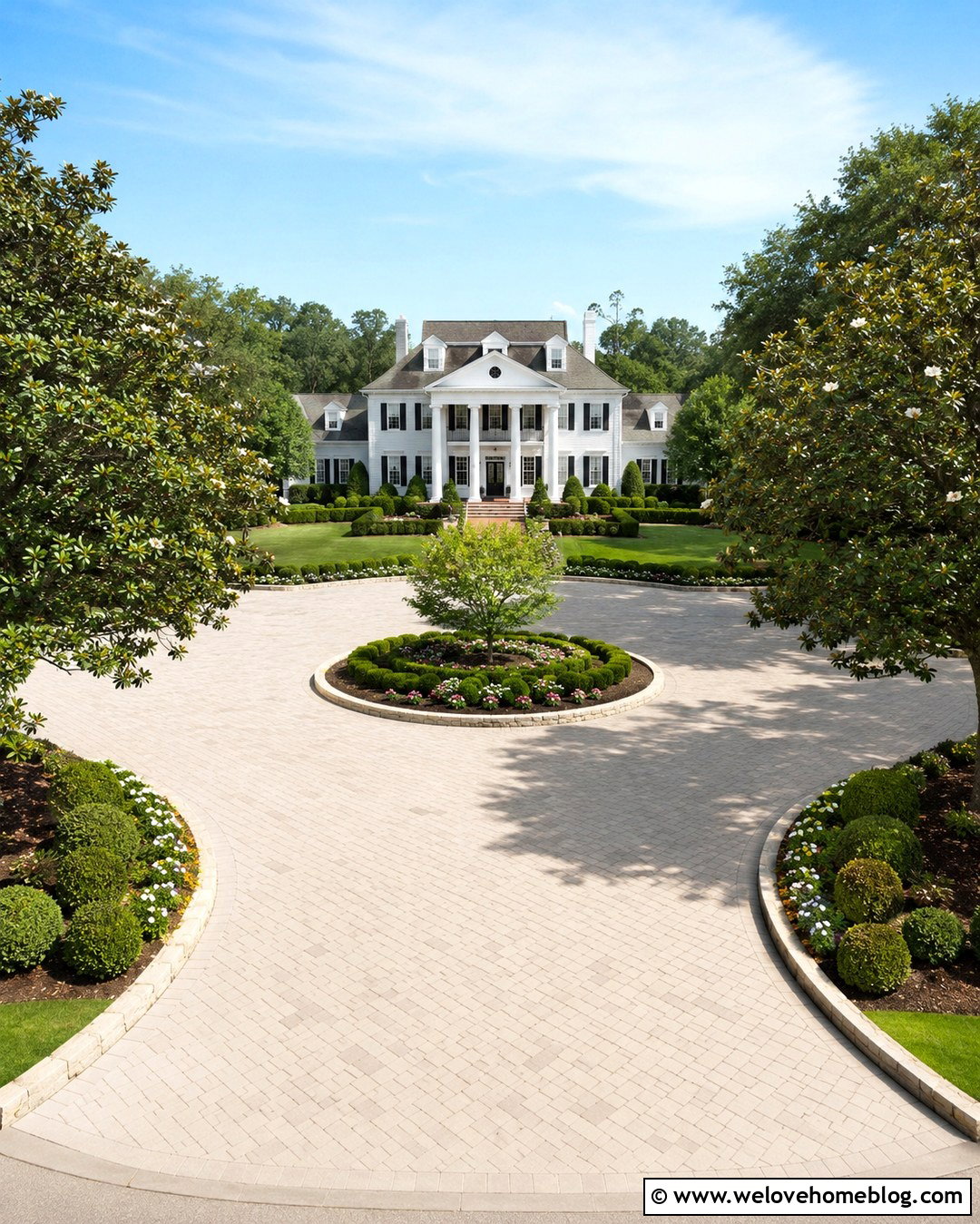
10. Daisy Lined Country Driveway
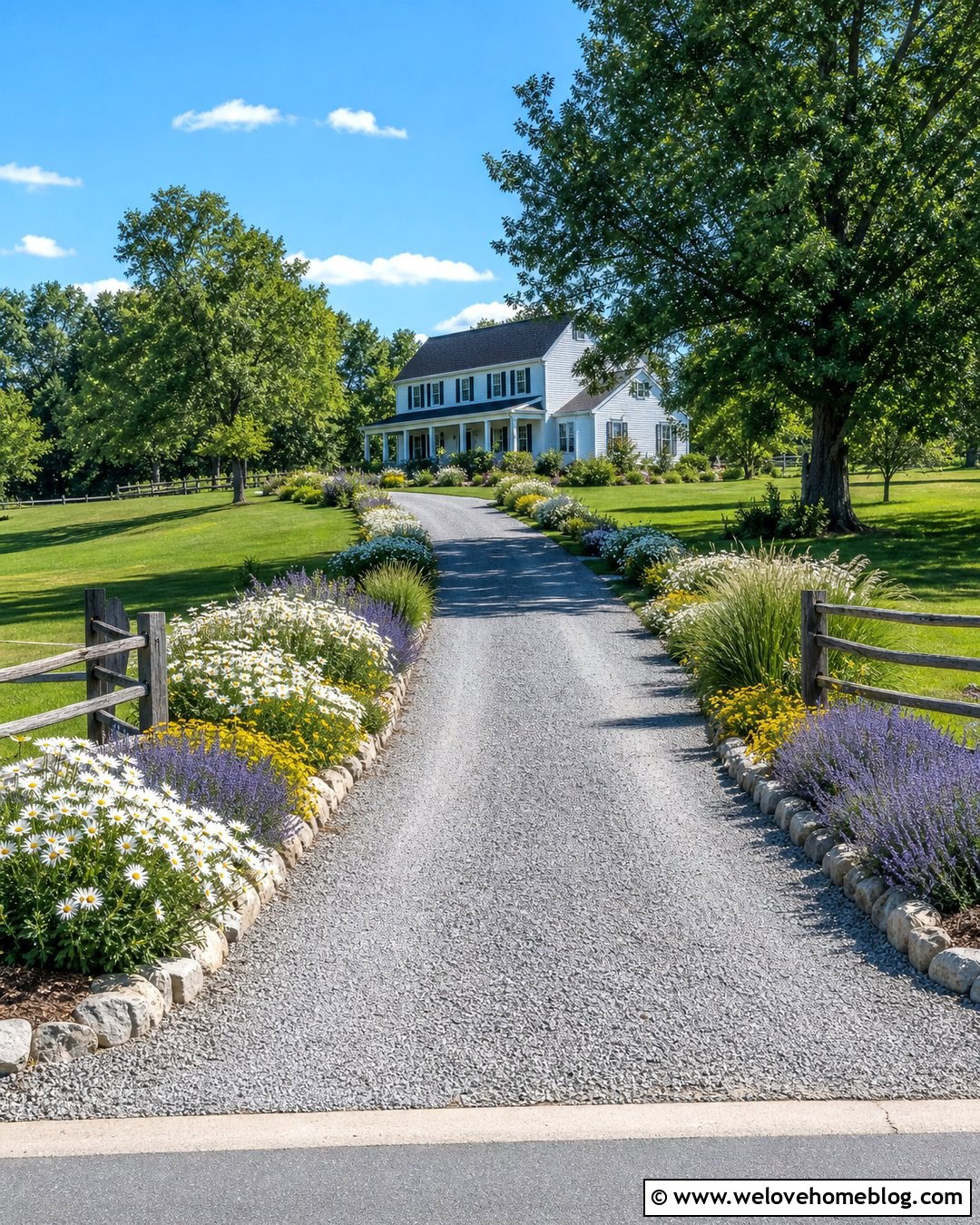
White daisies lining a long gravel driveway can create a bright country entrance without complicated landscaping. Choose compacted gray gravel with natural stone edging, then allow the flower beds to follow a loose, slightly irregular line. Combine Shasta daisies with catmint, yarrow, and soft ornamental grasses for different heights and textures. Planting in broad groups makes the border visible from the street and prevents the design from looking spotty. A split-rail fence behind one flower bed can reinforce the rural setting while protecting plants from lawn equipment. Keep a gravel shoulder between the flowers and driving lane where snow, mud, or vehicle tires may disturb the edge. At the house, widen the planting beds and repeat the daisies near the front walkway for a connected landscape.
11. Petunia Lined Suburban Driveway
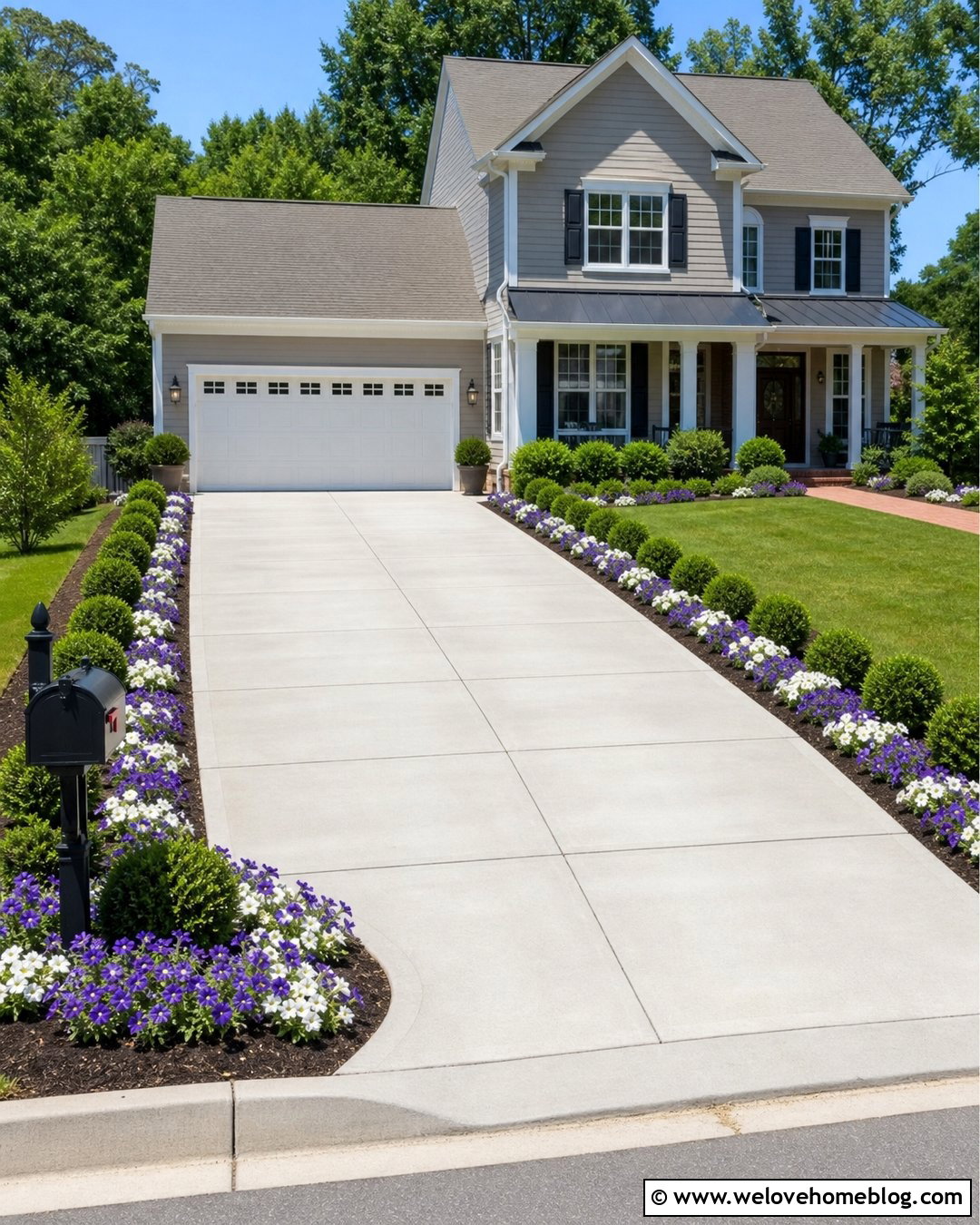
For quick seasonal color, petunias can create an orderly border around a standard suburban concrete driveway. Their low growth keeps the entrance open and makes them suitable near parking and passenger areas. Install a narrow bed between the driveway and lawn, using brick or dark metal edging for definition. Repeating a single petunia color creates a clean look, while two coordinated colors can connect the driveway to the home’s facade. Add compact boxwood or dwarf hollies at regular intervals to give the design permanent structure. A matching flower bed around the mailbox can visually extend the driveway entrance to the street. Petunias generally perform best with adequate sun and regular care. Use mulch and accessible irrigation so the long, narrow border remains manageable throughout the growing season.
12. Salvia Lined Curved Driveway
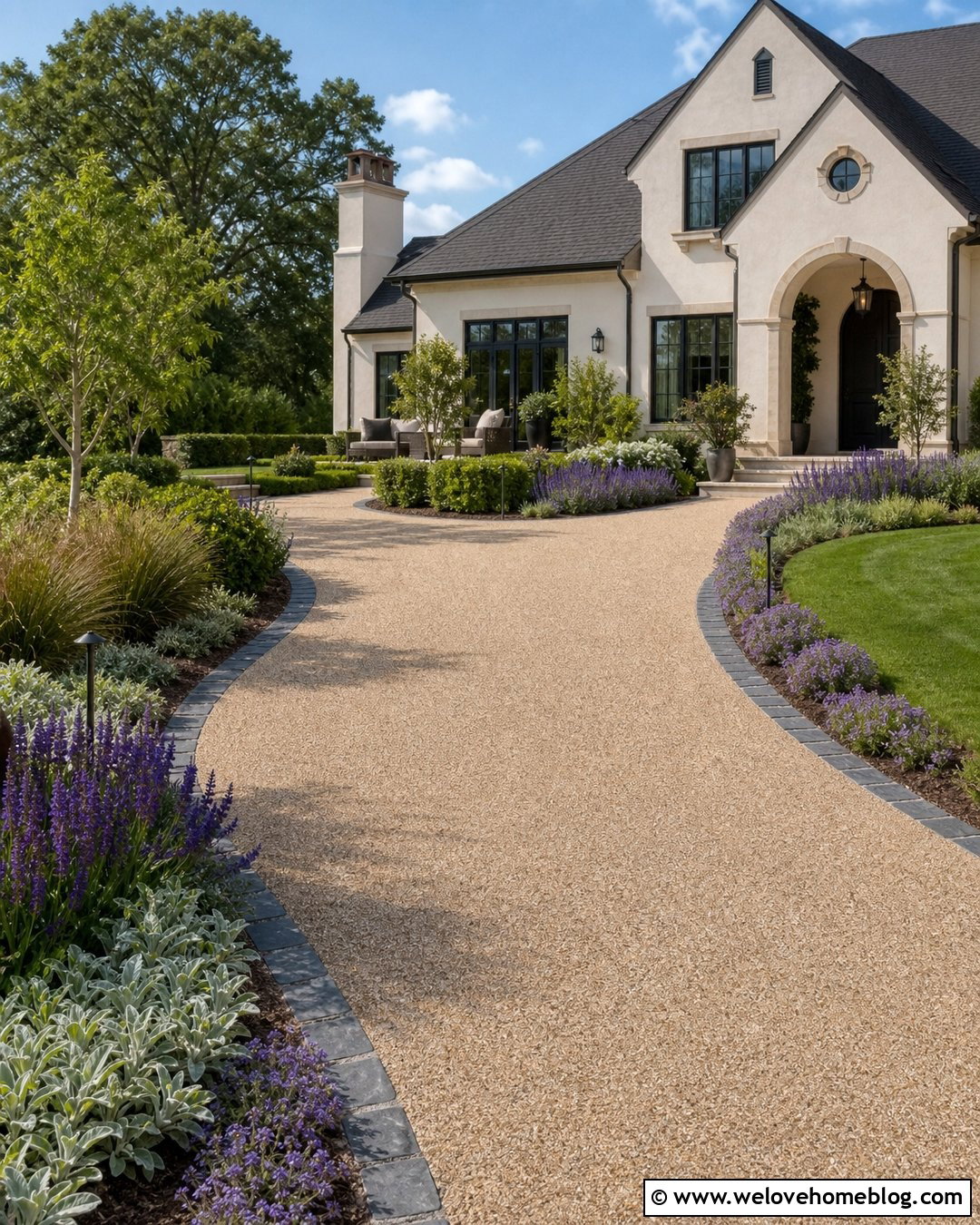
Vertical salvia flowers beautifully highlight the movement of a curved driveway. Choose tan resin-bound gravel for a smooth, contemporary surface, then outline the edge with dark granite setts. Plant purple or blue salvia in repeated sweeps that follow the driveway’s curve. Low lamb’s ear or creeping thyme can fill the front edge, while ornamental grasses and small flowering shrubs add height behind the salvia. This arrangement looks organized but not excessively formal. Avoid positioning tall plants near the street entrance, where they could limit visibility. Low-voltage lights can be placed between flower groups without becoming the main feature during the day. The combination of a flowing driveway, defined stone border, and repeated flower color works well with modern farmhouse, stucco, and transitional homes.
13. Daylily Lined Long Driveway
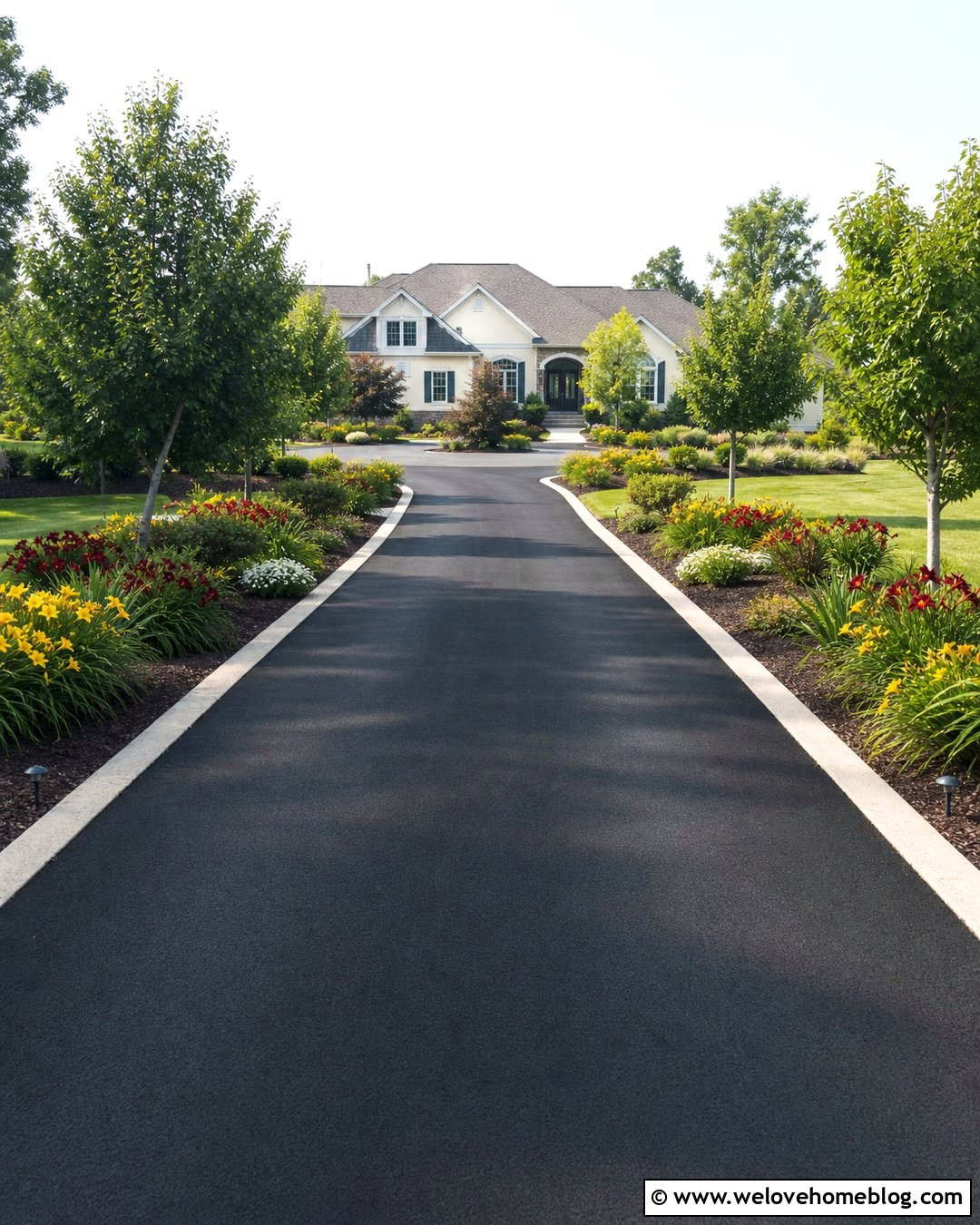
Daylilies can provide bold color along a long driveway where an intricate planting plan would be difficult to maintain. Use a black asphalt surface with a pale concrete curb to produce a strong, durable outline. Plant daylilies in wide repeating groups rather than one continuous narrow row. Break up the flowers with compact shrubs, decorative grasses, or small ornamental trees to make the journey toward the house more interesting. Select daylily colors that complement the property, such as yellow beside a red barn or burgundy near a cream-colored home. Their arching foliage helps soften the pavement even when the plants are not blooming. Keep the beds generously mulched, and leave wider openings at pedestrian routes, utility areas, drainage points, and locations used for snow storage.
14. Flower Lined Driveway With Stone Walls
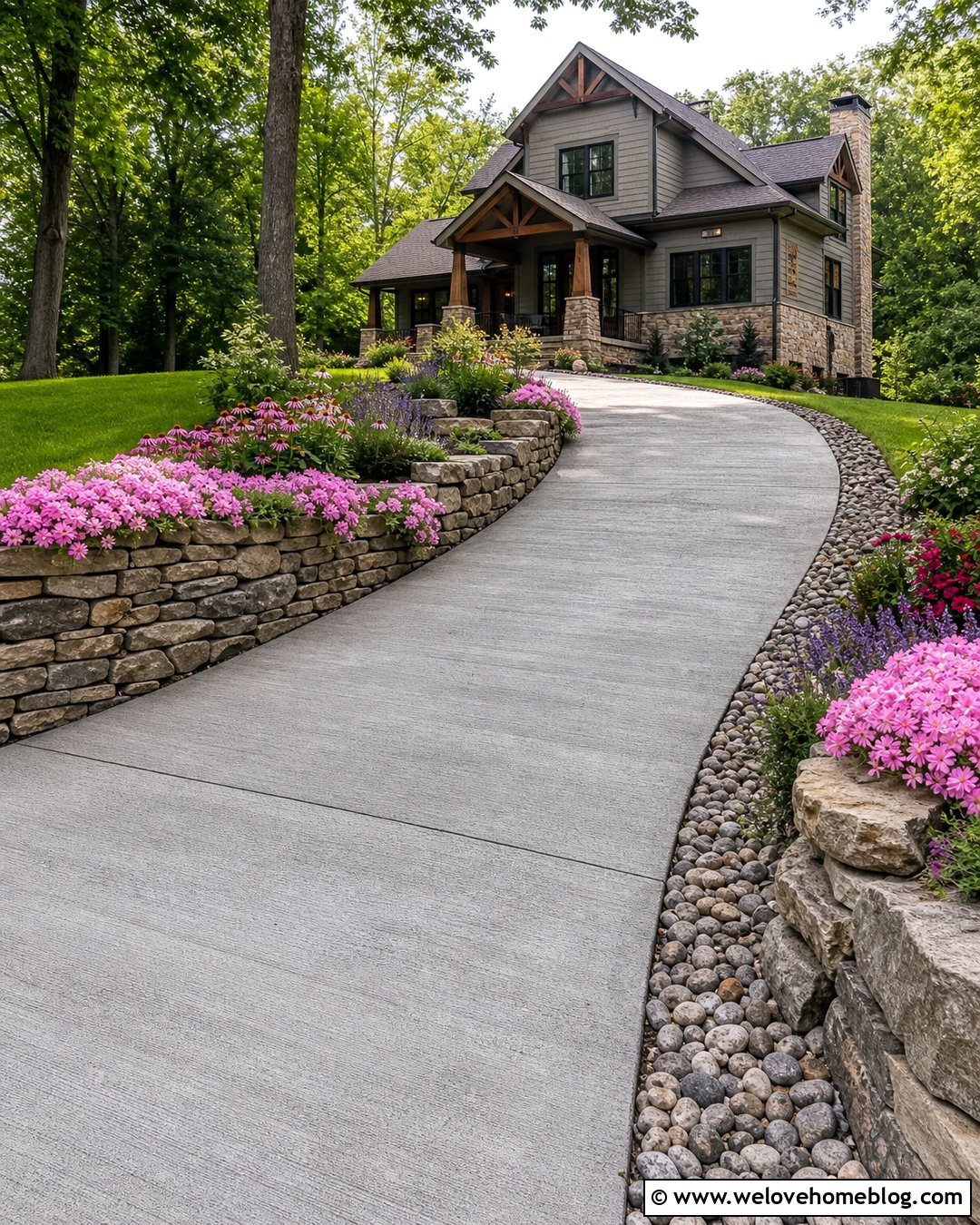
Low stone walls give flower borders definition while handling changes in grade beside a sloped driveway. Pair a broom-finished concrete surface with dry-stacked fieldstone walls that follow the driveway’s curves. Plant trailing phlox, dianthus, and creeping thyme near the wall’s top, allowing limited growth to soften the stone. Behind them, use upright flowers such as salvia, coneflowers, and compact roses. The result combines practical soil retention with a layered garden appearance. Keep the walls low near the street and any intersections to protect sightlines. Include drainage behind retaining sections so water does not push soil through the joints. Use stone that relates to the house foundation, porch columns, or front steps. This creates one complete landscape rather than a driveway with unrelated decorative additions.
15. Flower Lined Driveway With Brick Edging
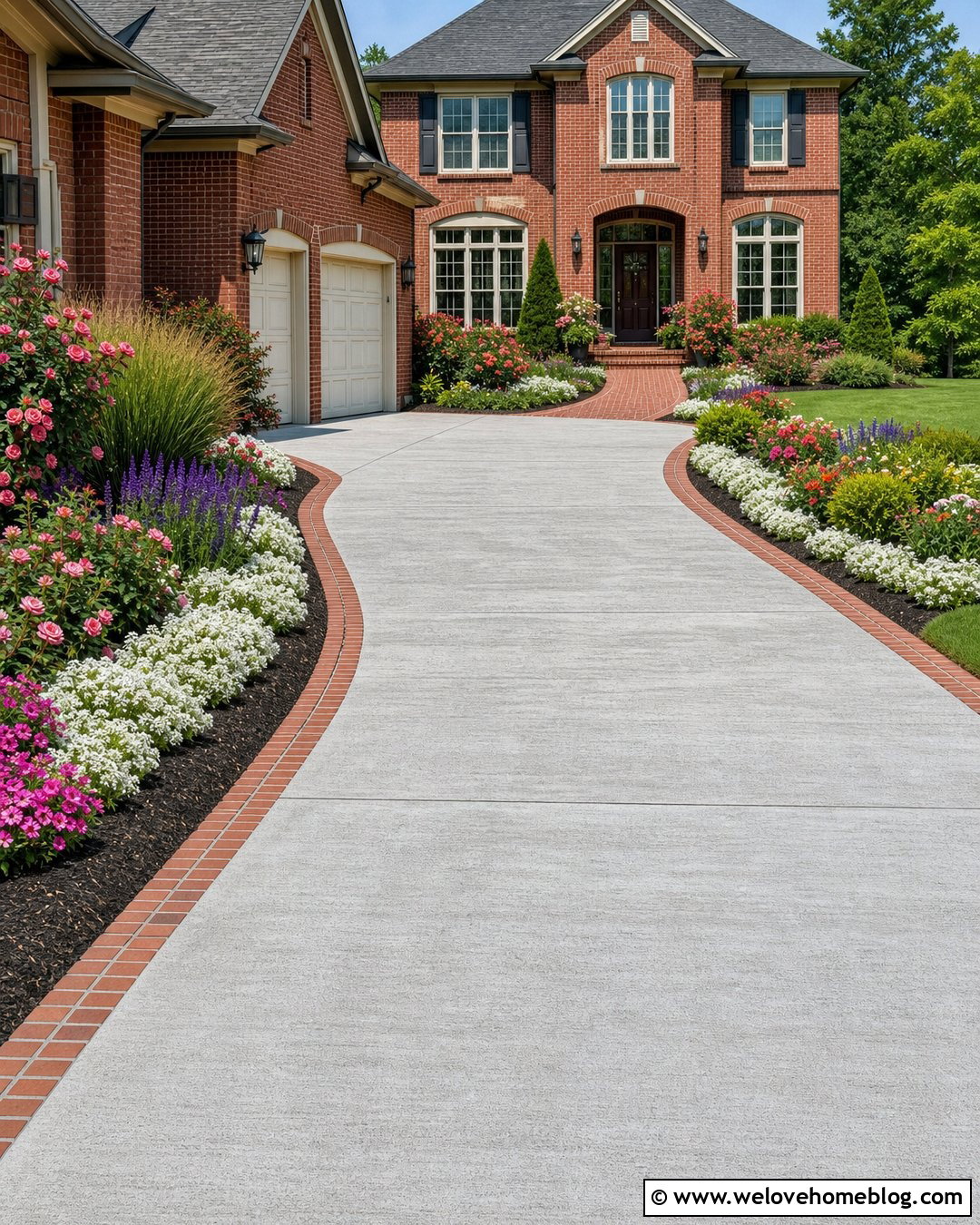
Brick edging creates a polished transition between a light concrete driveway and colorful planting beds. Choose bricks that coordinate with the house rather than trying to match every exterior color. A single soldier course provides a simple border, while a double row makes a wider visual statement. Plant low alyssum, dianthus, or creeping phlox close to the bricks. Place taller zinnias, salvia, or shrub roses behind them where stems have room to spread. Following the driveway with a gentle curved bed line can make a straight suburban layout feel less rigid. Keep the brick edge slightly raised but not high enough to become a tripping hazard. Repeat the brick around the front walkway or mailbox bed so the flower-lined driveway feels connected to the rest of the front yard.
16. Flower Lined Driveway With Hydrangea Entrance
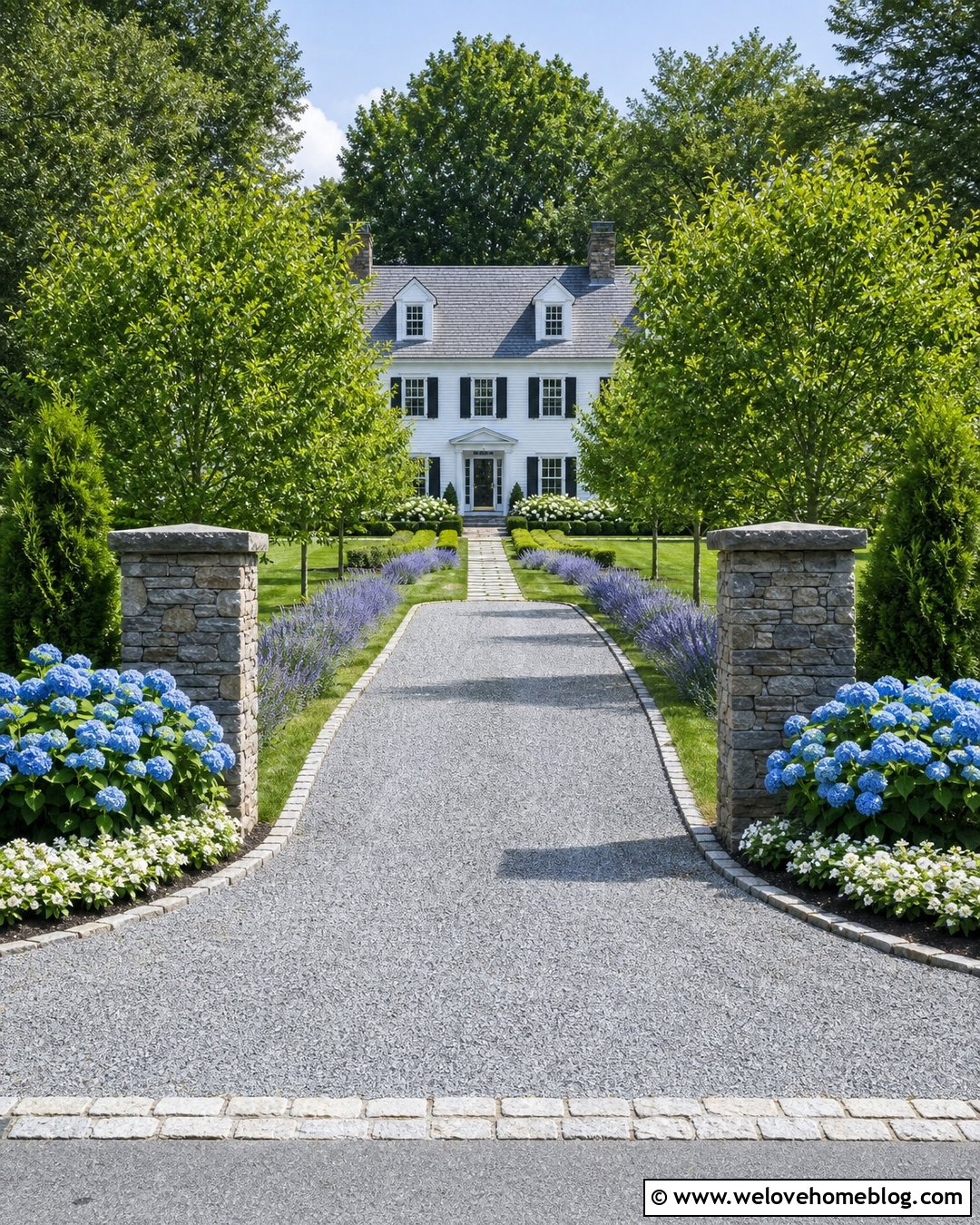
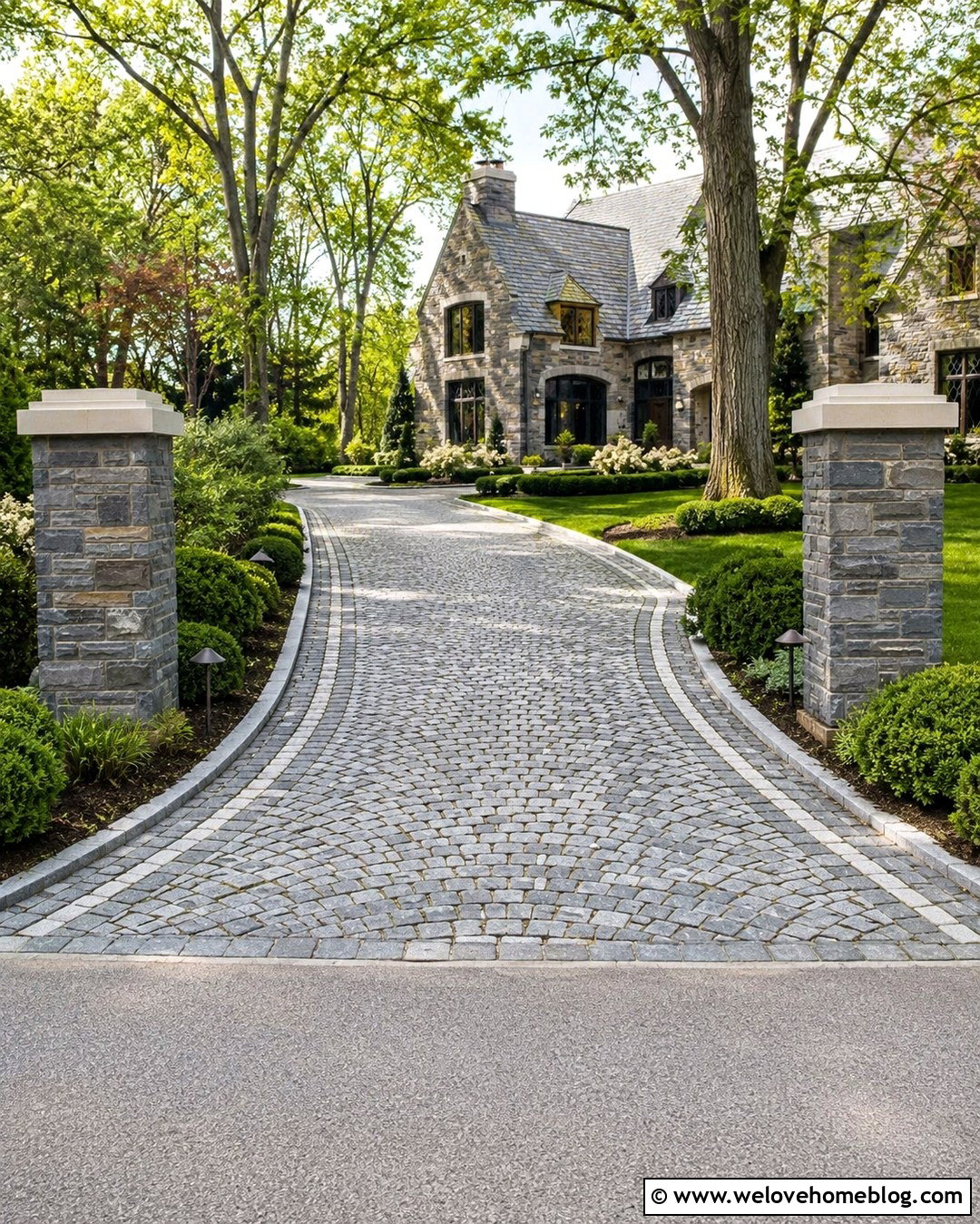
Instead of planting large flowers along the entire driveway, concentrate hydrangeas around the entrance for a strong, manageable focal point. Begin with a gray gravel driveway framed by cobblestone curbing. At the street, create two deep symmetrical beds containing compact hydrangeas, low annual flowers, and small evergreen shrubs. Brick or stone pillars can mark the entrance without requiring a gate. Continue a simpler border of catmint or groundcover along the remaining driveway length. This gradually leads the eye toward a traditional farmhouse or Colonial home. Choose hydrangeas that fit the mature scale of the entrance beds and local growing conditions. Keep the plants far enough from the road to avoid obstructing visibility. A matching pair of ornamental trees can add height behind the flowers and pillars.
17. Native Flower Lined Concrete Driveway
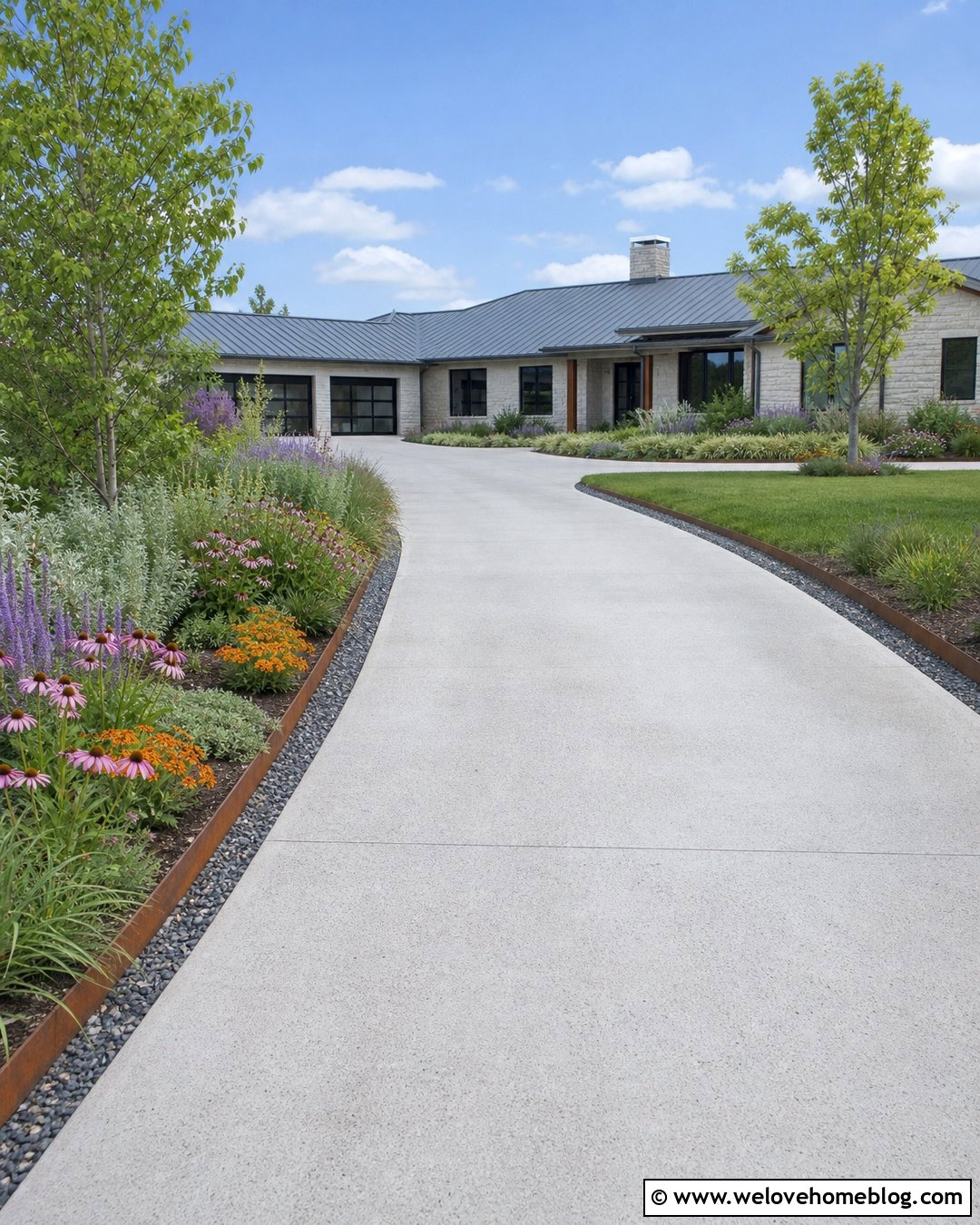
Native flowers can transform a basic poured concrete driveway into a more regionally appropriate landscape. The exact plants should match your location, soil, drainage, and sunlight rather than relying on a single national plant list. Along a sunny drive, possible combinations may include coneflower, butterfly weed, blazing star, mountain mint, and native asters where locally suitable. Arrange them in repeating drifts and include low sedges or groundcovers at the pavement edge. A weathered steel border can contain the soil while complementing a contemporary ranch home. Native planting does not need to look untidy. Defined edges, intentional repetition, and a narrow gravel maintenance strip provide structure. Choose flowers with varied forms and overlapping bloom periods to support a longer season of color and pollinator activity. ()
18. Flower Lined Driveway Rain Garden
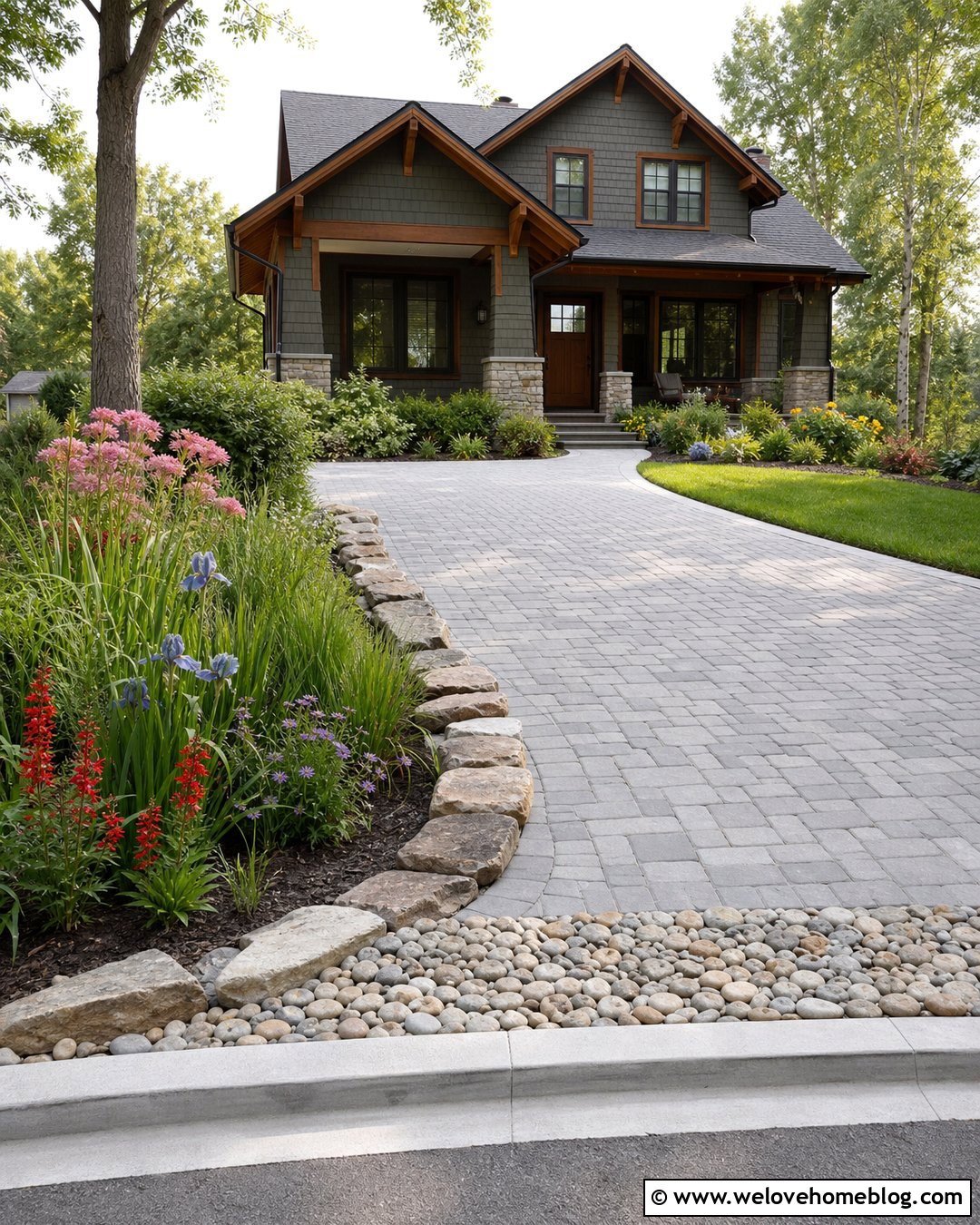
A shallow rain garden beside a driveway can turn runoff into a useful landscape feature. Pair a permeable interlocking concrete paver driveway with a gently depressed planting bed on the lower side. Use moisture-tolerant native flowers suited to both temporary wetness and drier periods between storms. Depending on the region, options may include cardinal flower, swamp milkweed, blue flag iris, asters, and sedges. Add a stone transition strip where water enters the bed to reduce erosion at the pavement edge. Rain gardens are designed to collect runoff temporarily and allow it to soak into the soil rather than remain permanently wet. Proper placement, soil testing, overflow planning, and distance from foundations are important. () The result can be attractive, practical, and visibly integrated with the driveway.
19. Flower Lined Driveway With Ornamental Trees
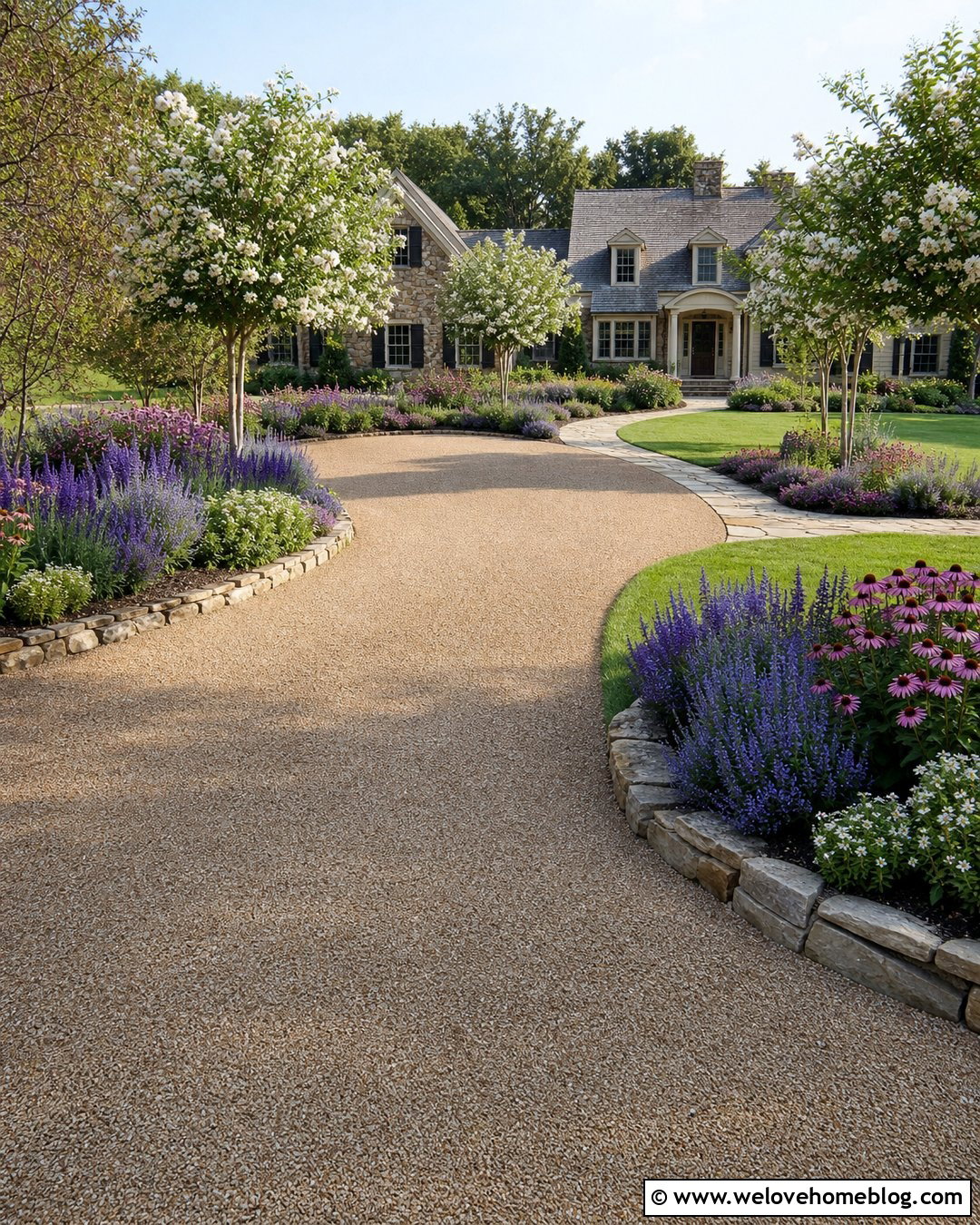
Flowering borders and ornamental trees can create an impressive sense of arrival along a spacious driveway. Use warm beige chip-seal or fine gravel for a gently curving surface. Plant small ornamental trees at generous intervals, positioning them far enough from the pavement for healthy root and canopy development. Between the trees, create broad flower beds containing catmint, salvia, coneflowers, and seasonal bulbs. Keep the planting closest to the driveway low, then increase the height toward the lawn. Repetition is essential on a long route, so use the same few plant groups rather than changing the combination at every tree. Natural stone edging provides an understated boundary. Uplighting can highlight the trees, but daytime color and structure should remain the main focus of the complete design.

20. Flower Lined Driveway With White Picket Fence
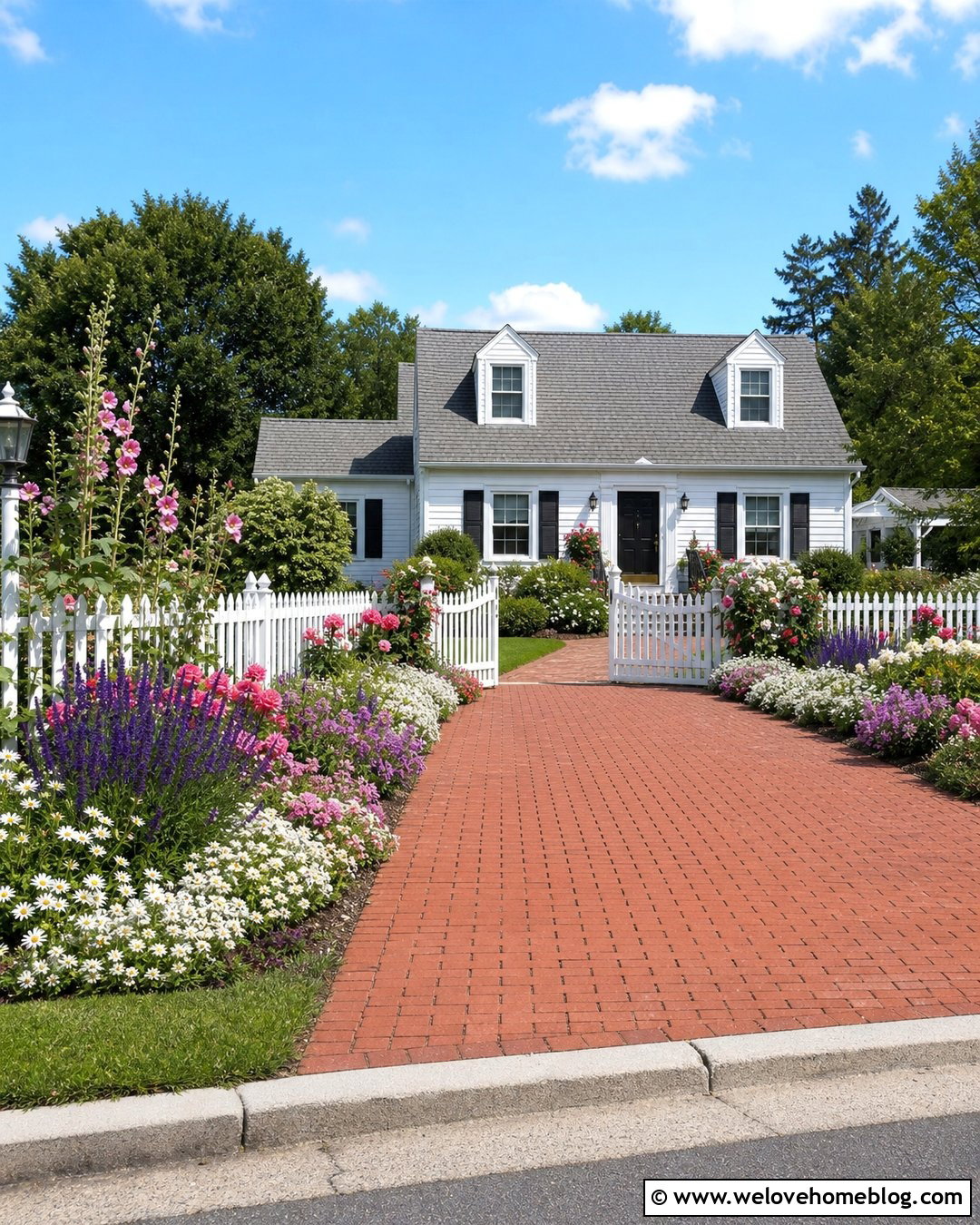
A white picket fence provides a classic backdrop for a cheerful flower-lined driveway. Choose red clay brick pavers laid in a running-bond pattern for a warm cottage appearance. Set the fence several feet beyond the pavement so there is room for a layered planting bed. Low sweet alyssum or creeping phlox can define the front edge, followed by daisies, salvia, roses, and taller hollyhocks near the fence. Repeat colors in loose groups to prevent the border from feeling chaotic. A matching gate can connect the driveway to a side walkway without blocking vehicle access. Keep flowers lower near the street for clear visibility. This arrangement pairs naturally with Cape Cod, cottage, and traditional farmhouse homes, especially when flower colors echo shutters, trim, or the front door.
21. Flower Lined Driveway With Black Mulch
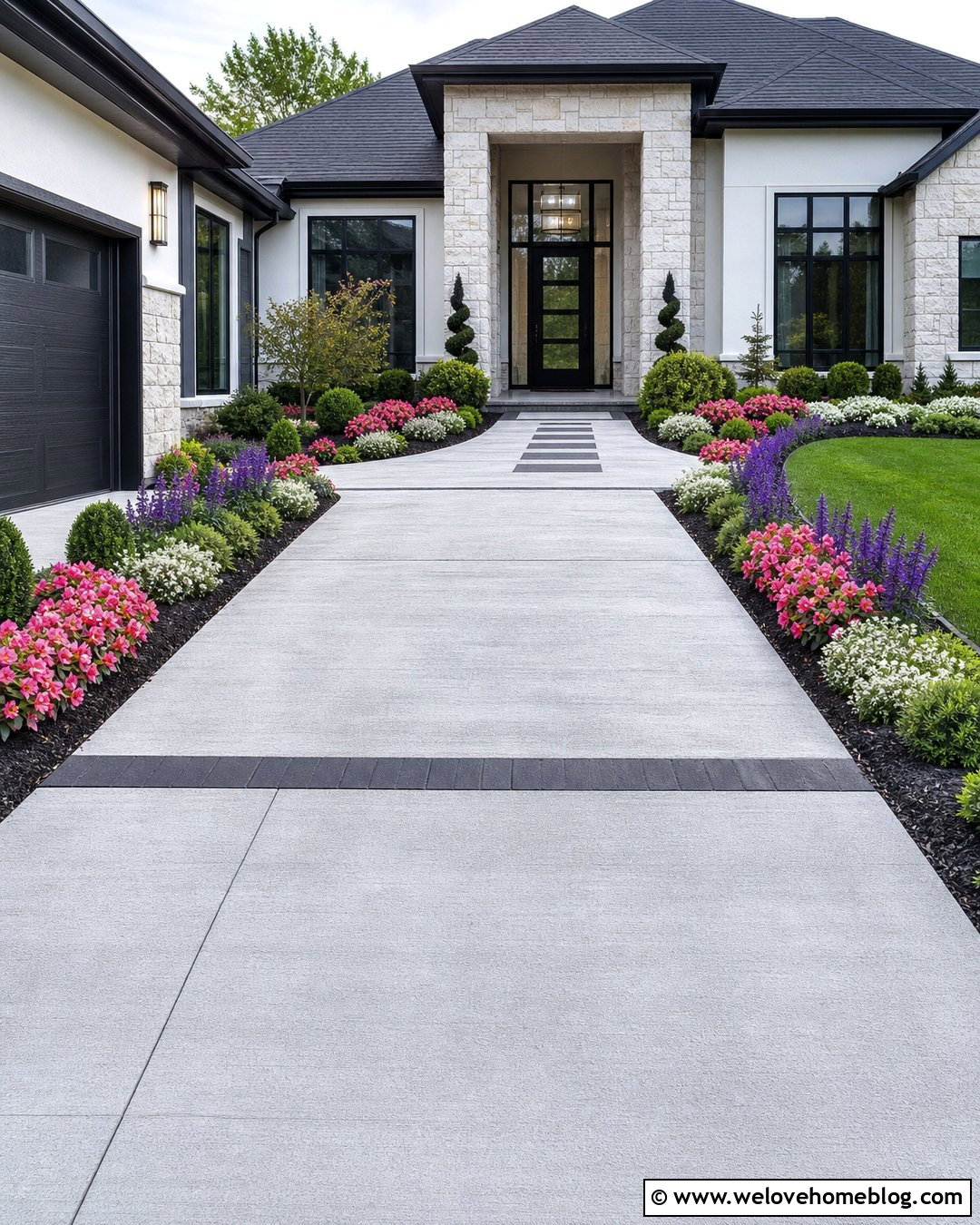
Dark mulch makes colorful flowers stand out sharply along a light gray driveway. Use brushed concrete with a charcoal paver ribbon, then create smooth planting beds that follow both sides of the approach. Choose compact flowers in two or three colors, such as pink begonias, white alyssum, and purple salvia. Space small evergreen shrubs through the beds to provide structure after the annuals are removed. Black or very dark brown mulch produces strong contrast, but it should complement the facade and local landscape rather than dominate the view. Install a secure edge so mulch does not spill onto the concrete during heavy rain. Avoid piling it against flower stems or shrub trunks. This tidy, high-contrast design suits contemporary suburban houses and homeowners who prefer defined, carefully maintained borders.
22. Salt Tolerant Flower Lined Driveway
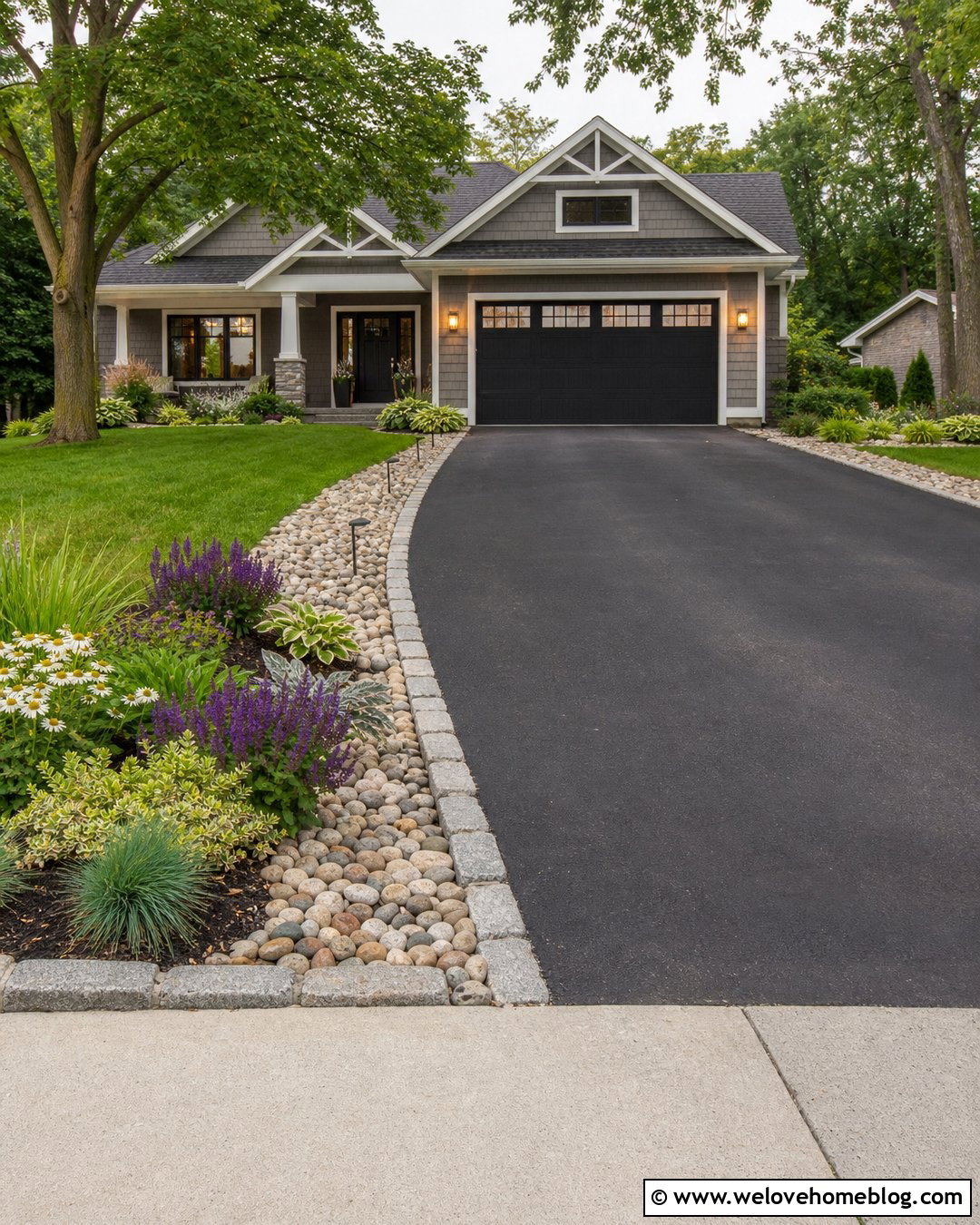
Driveways in snowy climates need planting that can handle winter maintenance and occasional salt exposure. Start with durable black asphalt bordered by a sacrificial strip of washed river rock. This buffer catches some snow, slush, and debris before it reaches the flower bed. Behind it, use salt-tolerant perennials appropriate for your region, mixed with annuals that can be replaced if damaged. Perennials that die back in winter may be practical beside salted driveways because vulnerable aboveground growth is absent during the harshest period. Evergreens are generally better placed farther away from direct salt spray. () Keep the beds broad enough for snow storage without crushing every plant crown. Granite curbing, clearly marked driveway edges, and good spring cleanup will help the complete entrance remain neat and functional.
23. Shade Flower Lined Driveway
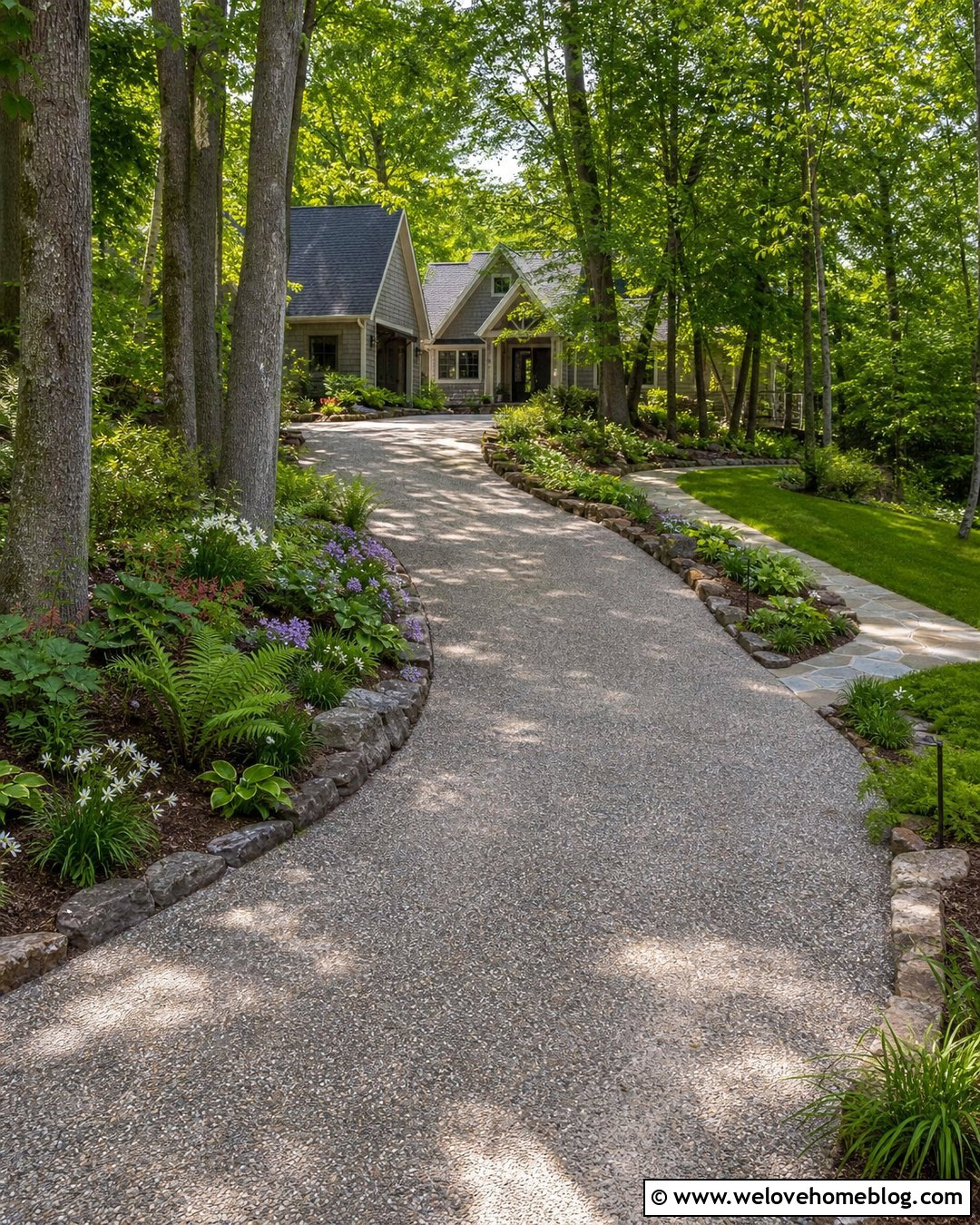
A driveway shaded by mature trees can still have a colorful border when the planting is designed for lower light. Use textured exposed aggregate concrete for a natural-looking surface beneath the canopy. Along the edges, create broad beds with woodland flowers such as native geranium, wild columbine, foamflower, woodland phlox, and white wood aster where regionally appropriate. Ferns and shade-tolerant sedges add foliage between flowering periods. Rather than forcing perfect symmetry, allow the beds to follow tree roots and existing contours. A stone or steel edge keeps soil away from the driveway while preserving an organic appearance. Avoid deep digging beneath established trees, and do not pile mulch against trunks. White and pale-colored flowers can help brighten the shaded approach and visually connect it to the house.
24. Low Maintenance Flower Lined Driveway
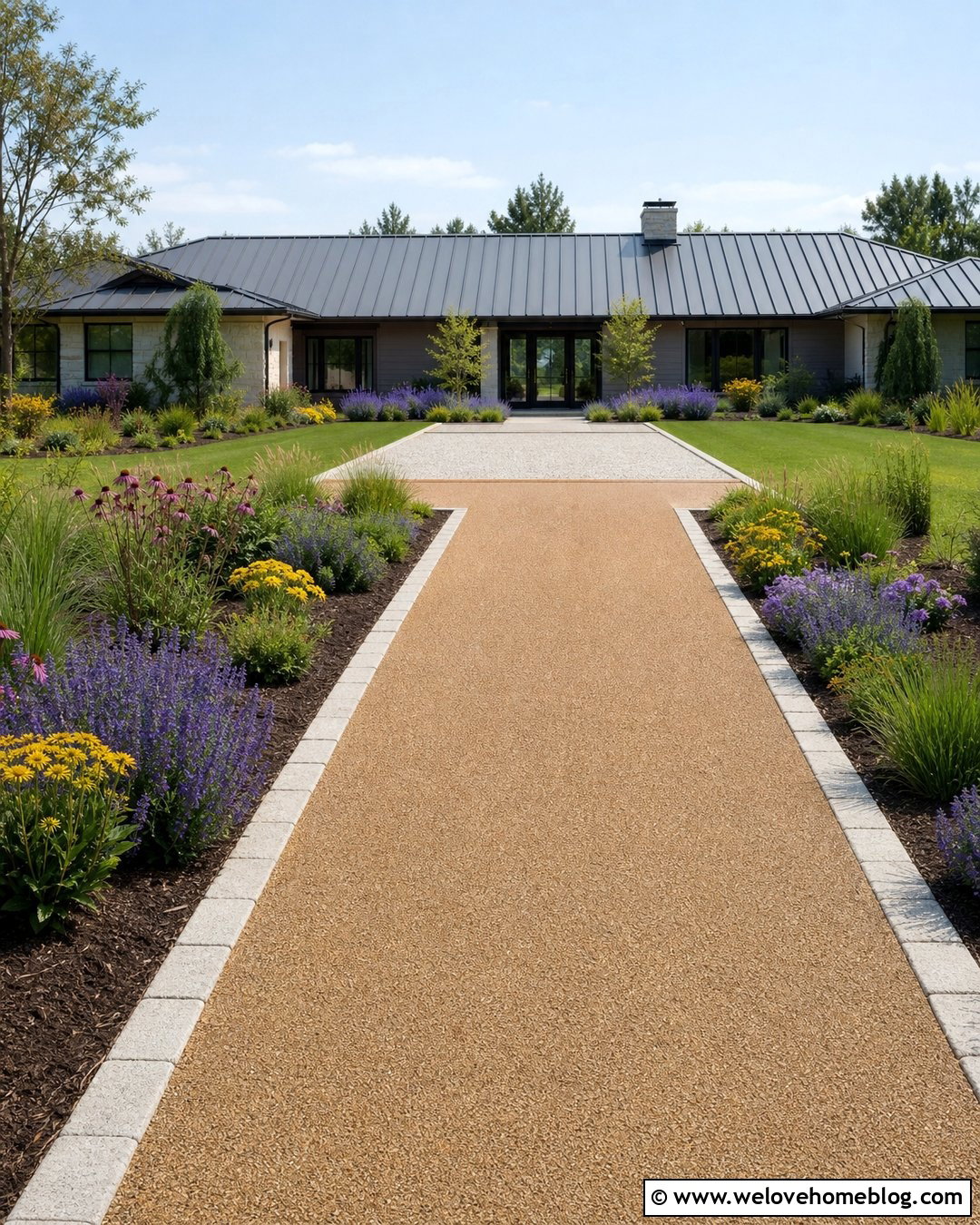
A low-maintenance flower border begins with fewer plant varieties and a clearly defined layout. Pair a resin-bound gravel driveway with granite edging for a smooth surface and clean perimeter. Plant broad groups of durable perennials selected for your regional climate, such as catmint, yarrow, coneflower, coreopsis, or hardy geranium where suitable. Use compact ornamental grasses between the flowering groups to maintain texture and rhythm. A drip irrigation line beneath mulch can simplify watering after establishment. Leave enough space between plants for mature growth, which reduces constant trimming beside the driveway. Avoid delicate flowers that repeatedly collapse onto the pavement. The design should include a practical gravel landing zone near vehicle doors and a wider bed near the house, where the flowers can merge naturally with the foundation landscaping.
25. Seasonal Flower Lined Driveway
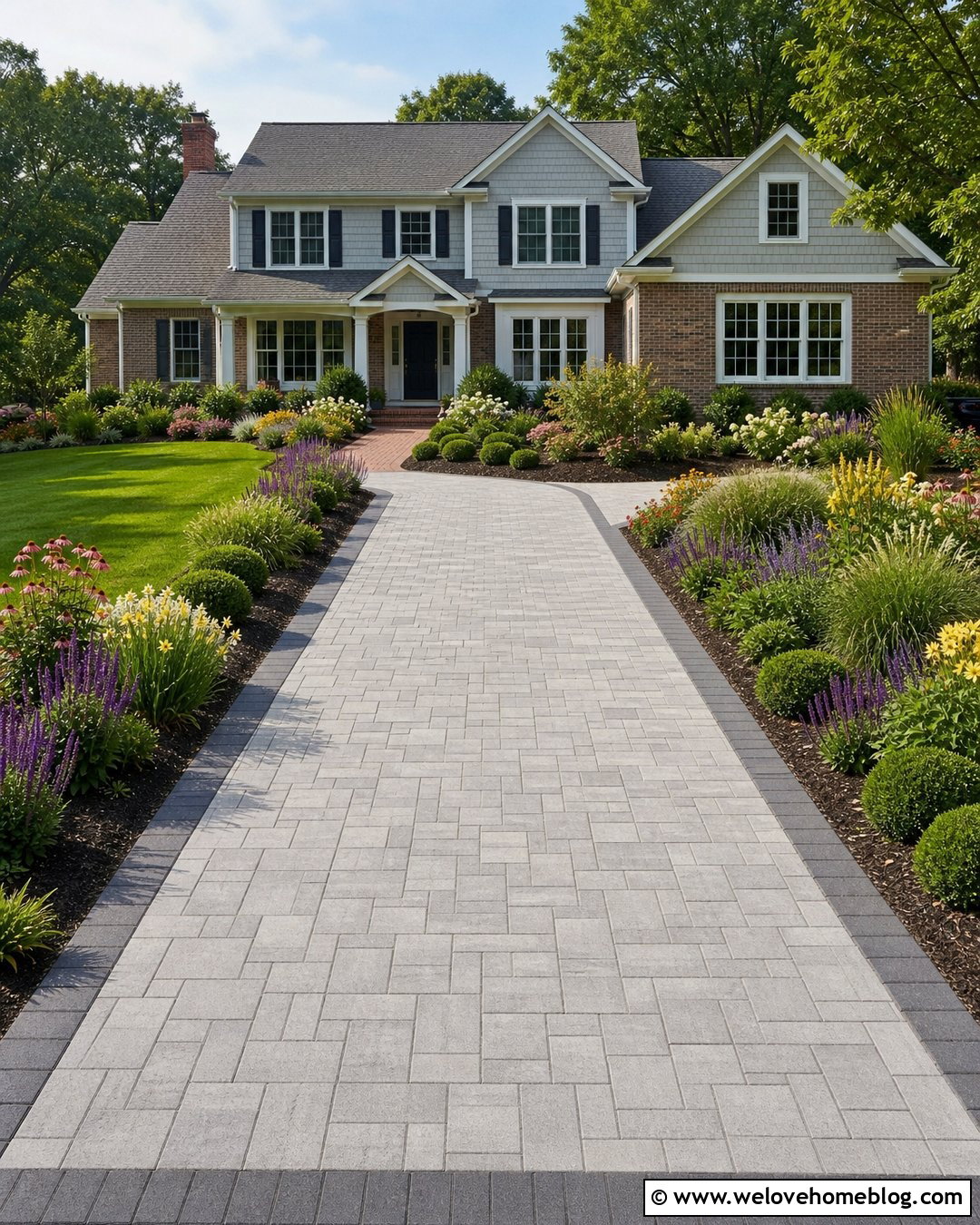
Seasonal planting creates a driveway that changes color throughout the year. Use medium-gray concrete pavers in a straight layout with deep planting beds on both sides. Begin with spring bulbs such as tulips and daffodils, then rely on summer salvia, coneflowers, and compact annuals. Finish the growing season with asters or other locally appropriate fall bloomers. Evergreen shrubs and ornamental grasses provide structure when few flowers are visible. Instead of mixing everything evenly, plant each variety in repeating drifts for a clear, organized effect. Place the shortest plants at the pavement edge and taller flowers toward the lawn. A dark brick border can tie the pavers to the house facade. Planning a succession of blooms maintains visual interest and supports pollinators across a longer season. ()
Conclusion:
The most successful **25 flower lined driveway ideas** balance beauty with everyday access, drainage, visibility, and maintenance. Begin with the driveway material and shape, then choose edging that creates a clean transition into the flower beds. Select plants for your local climate, sunlight, soil, and available growing space. Low flowers are usually best near parking areas, while taller perennials and shrubs can add depth farther back. Repeated colors and plant groups help even informal borders look intentional. Remember to leave room for vehicle doors, pedestrians, snow storage, and routine driveway care. Whether you prefer formal roses, relaxed wildflowers, or low-maintenance native plants, a coordinated flower border can turn an ordinary driveway into a welcoming garden approach.

Related posts:

Leave a Reply