
Tulips can turn an ordinary driveway into a colorful spring entrance that feels welcoming from the curb. The best 20 tulip lined driveway ideas combine flowers with the driveway surface, layout, edging, and surrounding landscape. Tulips generally perform best in sunny locations with well-drained soil, making an open driveway border a practical planting area. () Choose colors that complement the home’s exterior, then repeat them along both sides to create a connected look. You can also mix early-, mid-, and late-blooming varieties for a longer seasonal display. () From formal brick entrances to relaxed gravel lanes, these complete 20 tulip lined driveway ideas offer inspiration for different homes, yards, and budgets.

1. Red Tulip-Lined Asphalt Driveway
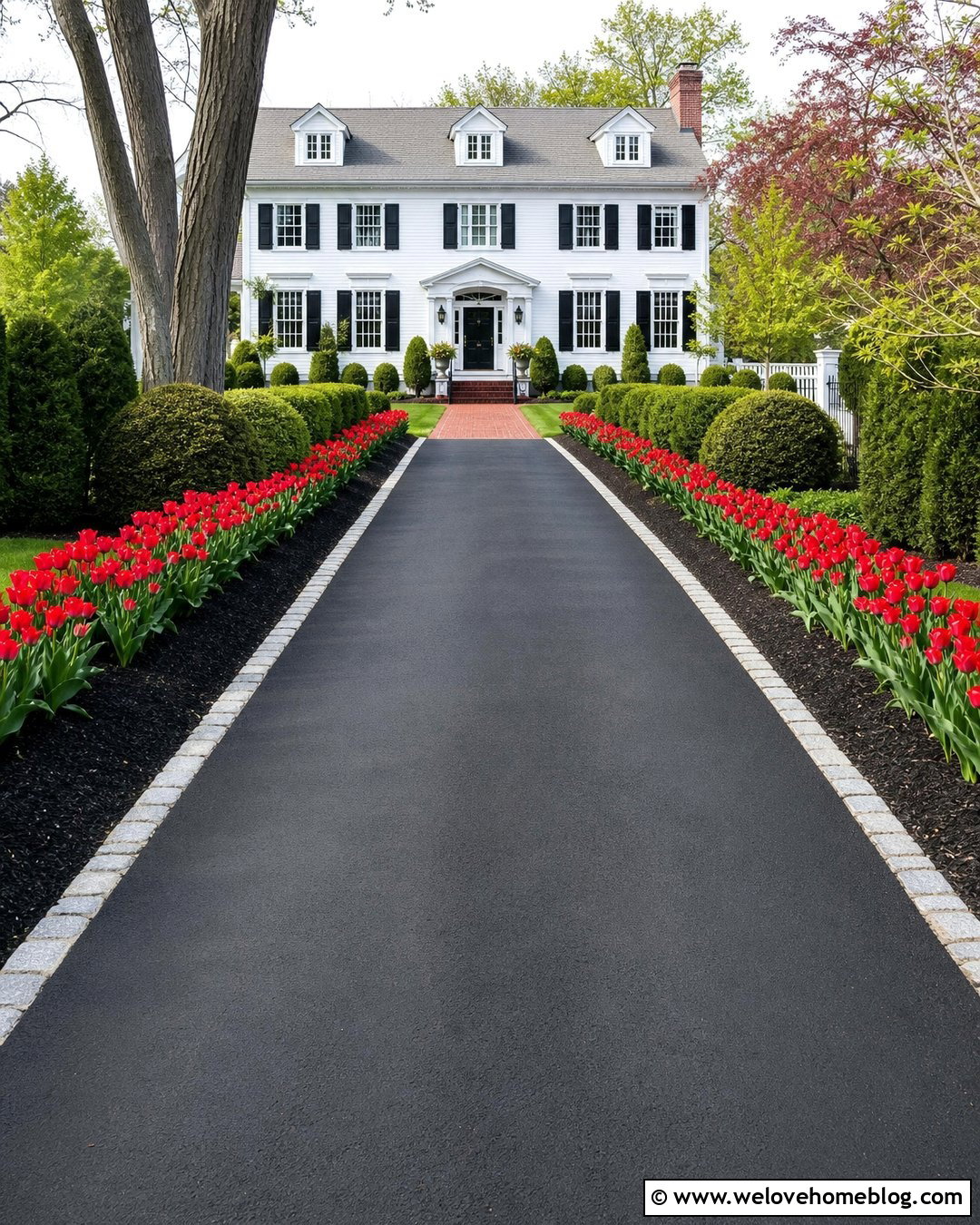
A black asphalt driveway creates a strong background for bright red tulips. Use a straight layout so the flowers form two clean lines leading toward the house. Narrow planting beds edged with gray cobblestones will separate the bulbs from vehicle traffic and prevent loose soil from washing onto the pavement. Plant the tulips in generous clusters rather than spacing single flowers far apart. A low evergreen hedge behind them can supply structure after the spring display fades. This combination works especially well with white Colonial homes, red brick houses, and traditional ranch properties. Add a matching brick walkway near the garage, but keep the overall design simple. The contrast between black pavement, green foliage, and red blooms creates immediate curb appeal.
2. White Tulip-Lined Gravel Driveway
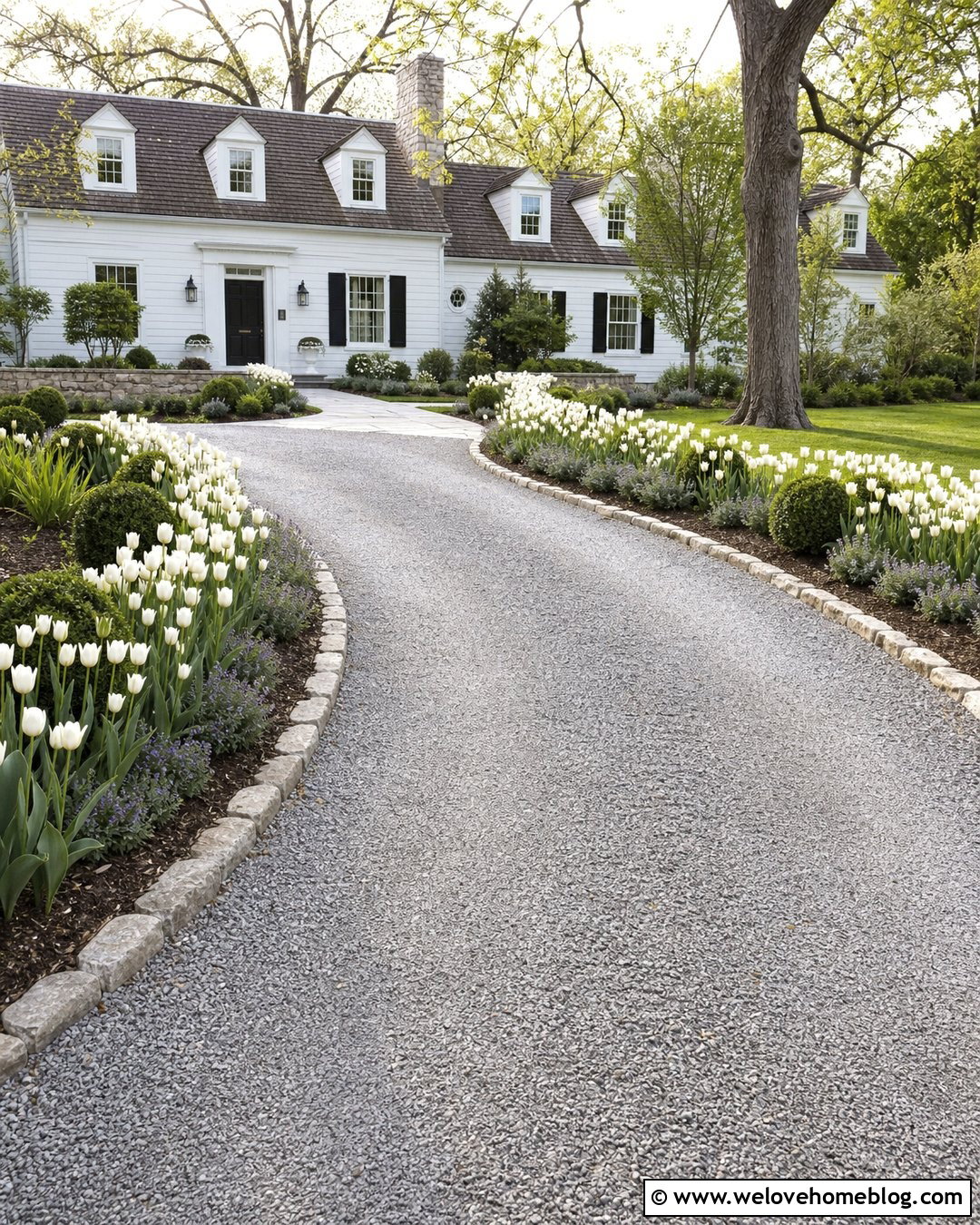
Soft white tulips can make a gravel driveway feel polished without removing its relaxed country character. Start with pale gray crushed gravel in a gently curved layout leading to a farmhouse or Cape Cod home. Define both sides with weathered limestone edging, then plant broad drifts of white tulips inside deep mulched beds. Dark green boxwood spheres placed at regular intervals add shape and contrast. Behind the tulips, use low catmint or hardy geraniums to fill the beds later in the season. This layered planting also helps draw attention away from fading bulb foliage. Perennials are commonly used around spring bulbs to continue the border after flowering ends. () Keep the color palette restrained for an airy, coordinated entrance.
3. Pink Tulip-Lined Concrete Driveway
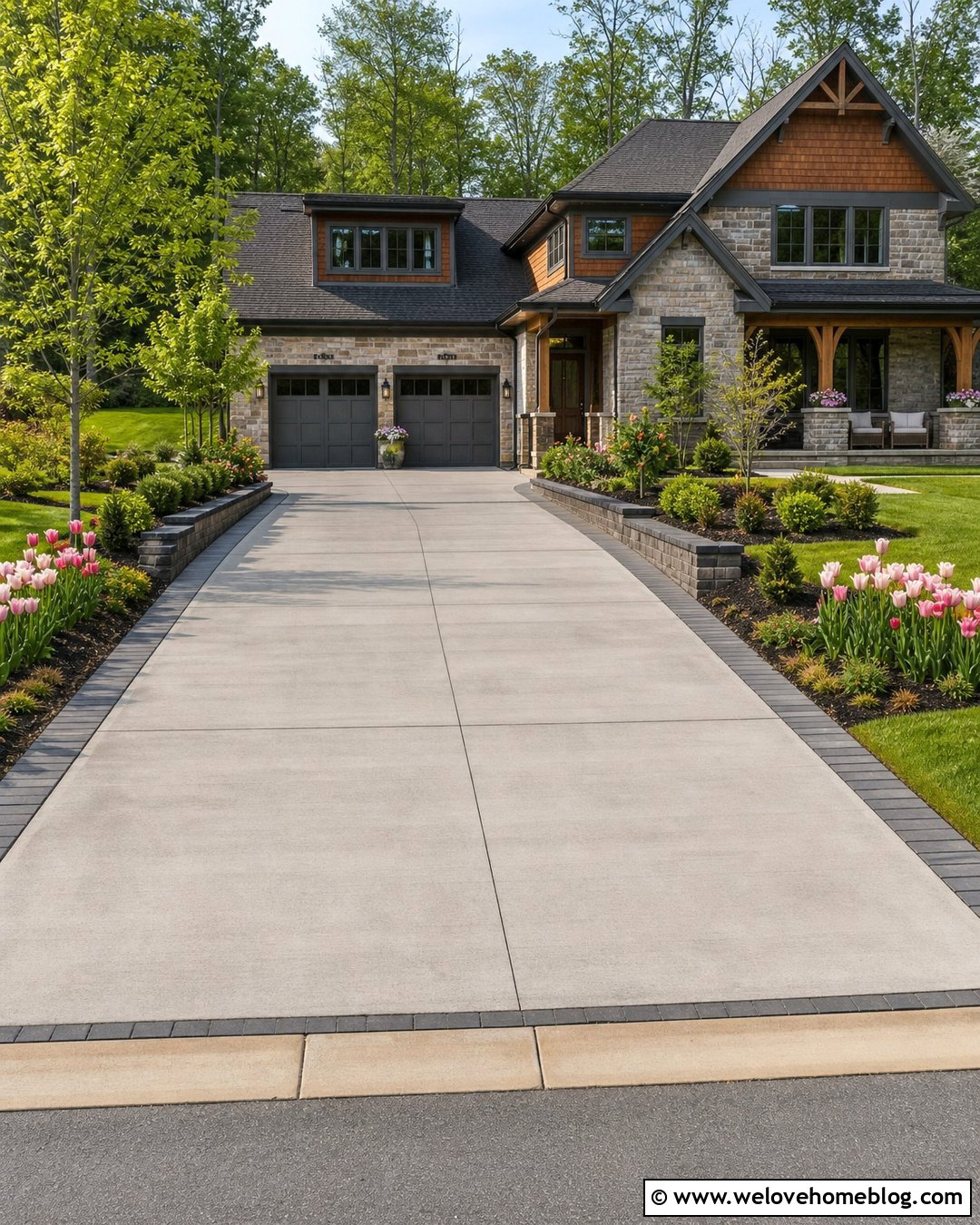
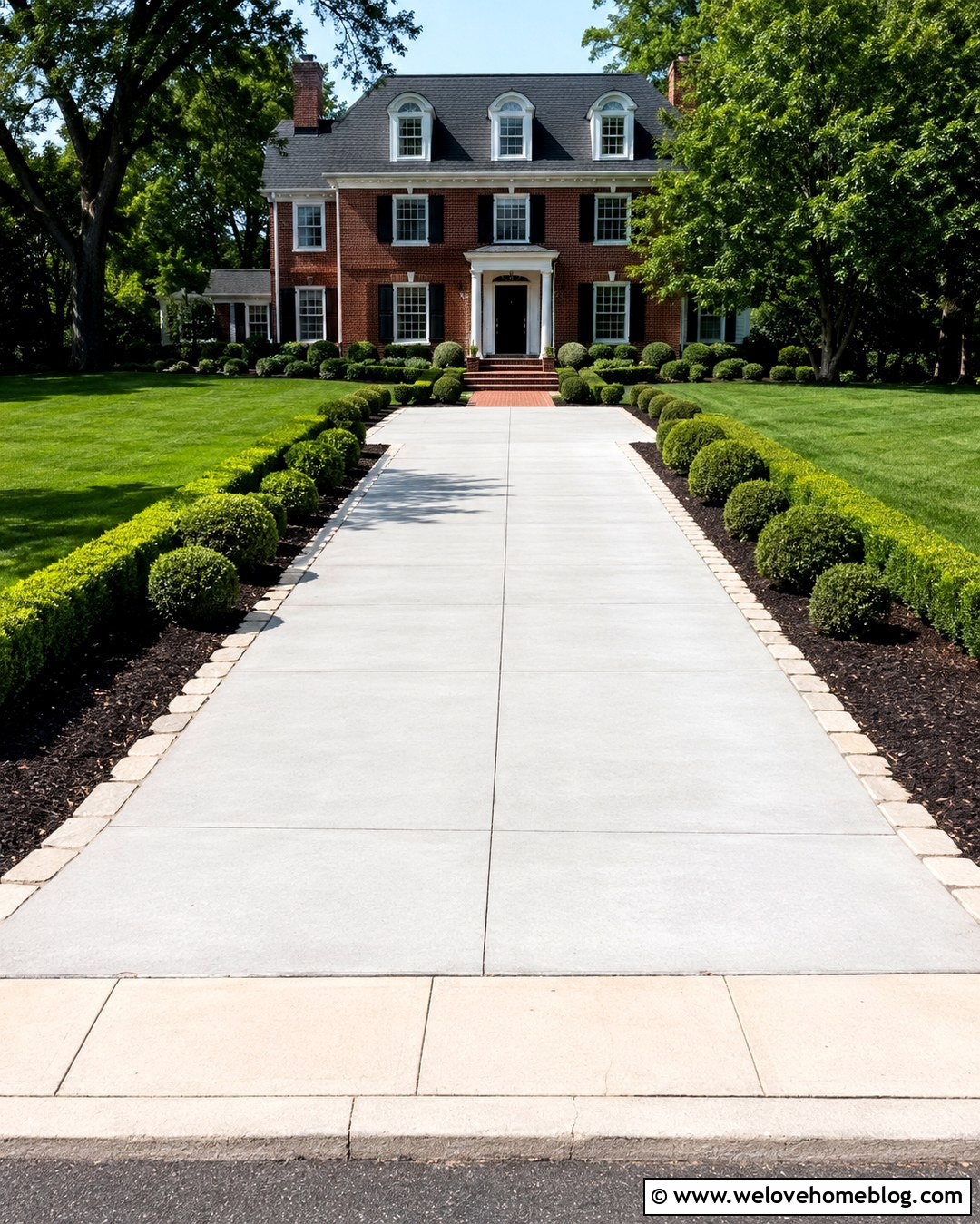
A light-gray poured concrete driveway pairs beautifully with blush, rose, and deep pink tulips. Choose a wide straight driveway with subtle control joints that create an orderly surface. Along each edge, install raised planting strips bordered by smooth charcoal pavers. Place darker tulips near the pavement and paler blooms toward the back for a soft layered effect. Rounded evergreen shrubs can anchor the corners near the street and garage. Between the shrubs, add low ground cover that will remain attractive after the tulips finish blooming. This complete look suits a craftsman house with warm stonework or painted siding. The restrained hardscape allows the flowers to become the focal point, while the dark edging gives the pastel border a crisp, intentional outline.
4. Yellow Tulip-Lined Brick Driveway
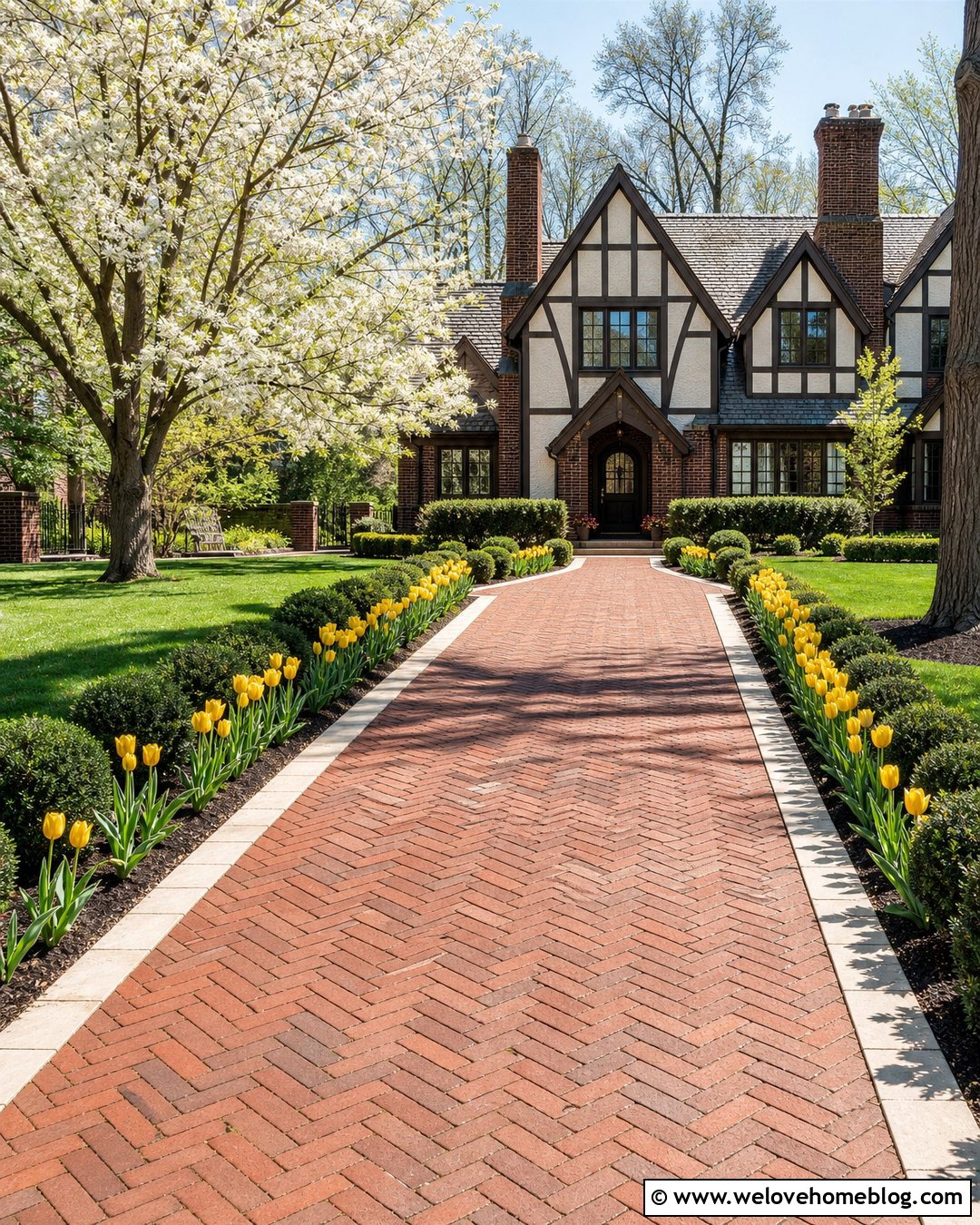
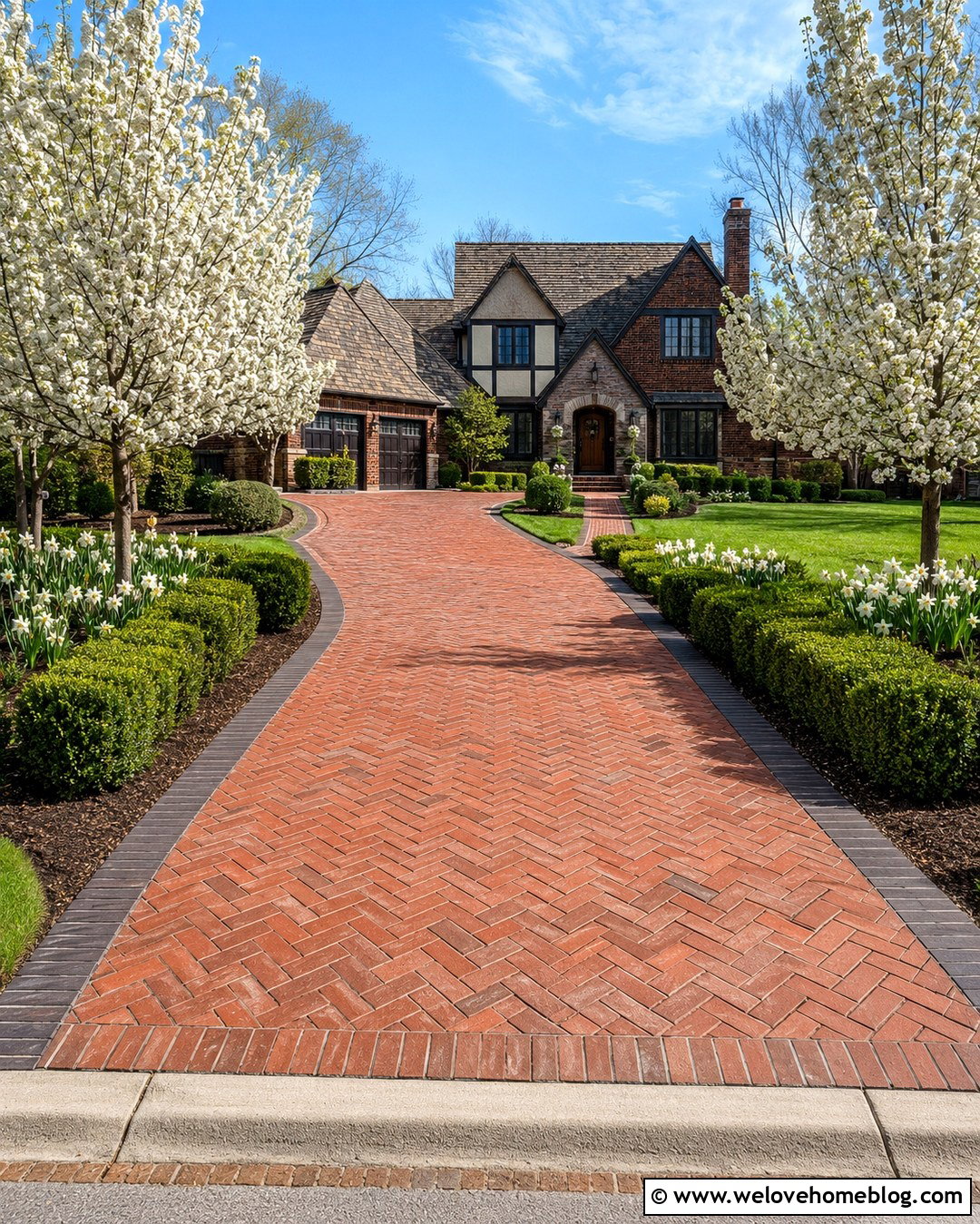
Warm yellow tulips bring out the earthy tones in a clay brick driveway. A herringbone surface adds texture, while a straight running-bond border keeps the pattern from feeling overly busy. Build narrow beds along both sides and repeat groups of golden tulips from the curb to the front steps. Cream limestone curbing can create a lighter transition between the red brick and dark soil. Add compact yew shrubs behind the bulbs, leaving enough open space for each flower grouping to remain visible. This welcoming design works well with Tudor, Georgian, and traditional brick homes. For a balanced entrance, continue the same tulips beside the front walkway. The repeated yellow color guides the eye naturally toward the house and brightens the entire driveway during spring.
5. Purple Tulip-Lined Paver Driveway
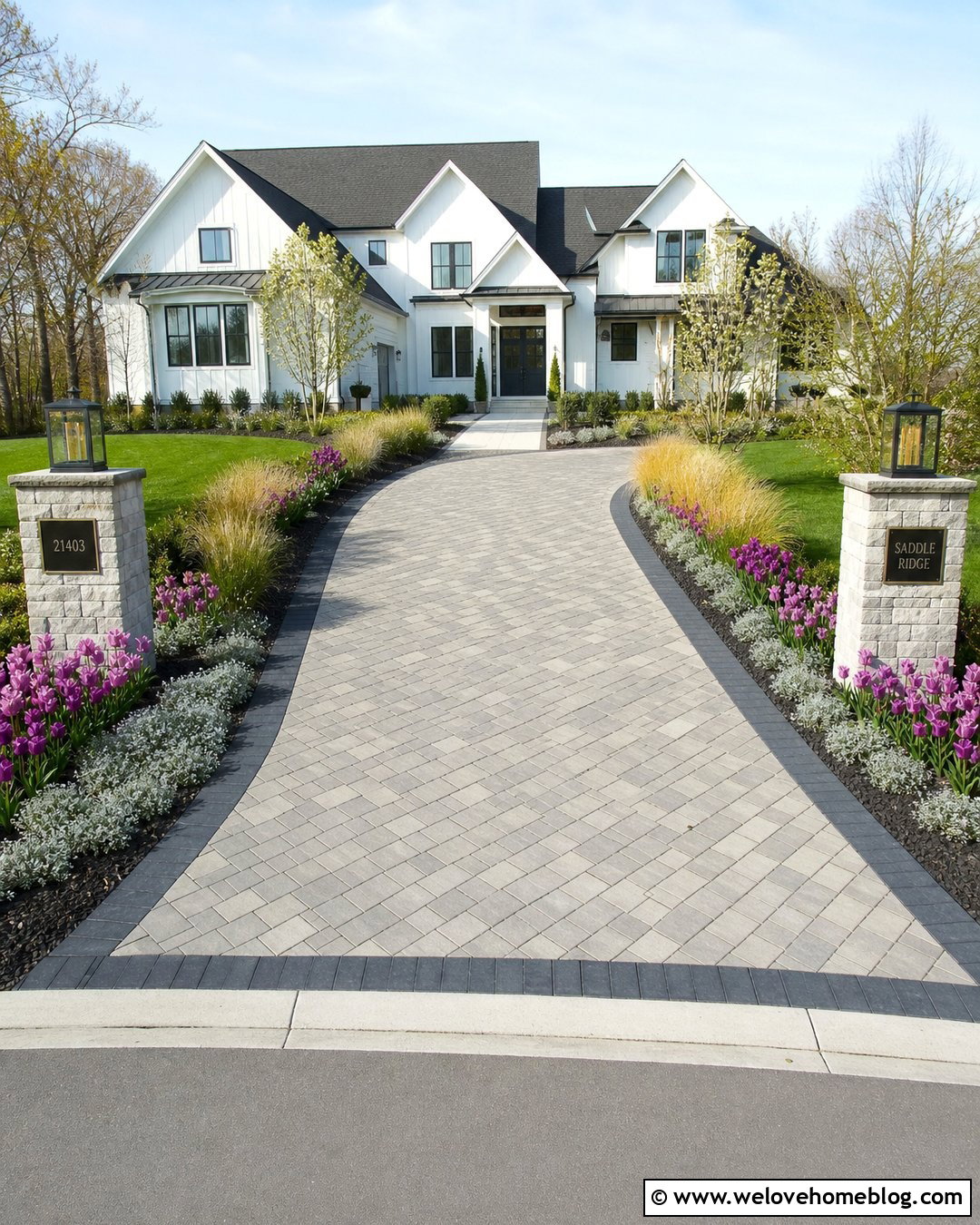
Purple tulips give a paver driveway a rich, elegant appearance without requiring elaborate landscaping. Use warm gray concrete pavers in a basketweave or running-bond pattern, then frame the surface with darker charcoal pavers. Create gently curved planting beds that widen near the street and garage. Fill them with violet, plum, and lavender tulips planted in repeated clusters. Silver-leaved ground cover and compact ornamental grasses will soften the hard edges while maintaining a coordinated color palette. A modern farmhouse with white siding and dark trim provides an ideal background. Near the entrance, install two simple stone pillars and repeat the purple tulips around their bases. The combination feels structured from a distance but still offers plenty of natural movement and seasonal color.
6. Mixed Tulip-Lined Circular Driveway
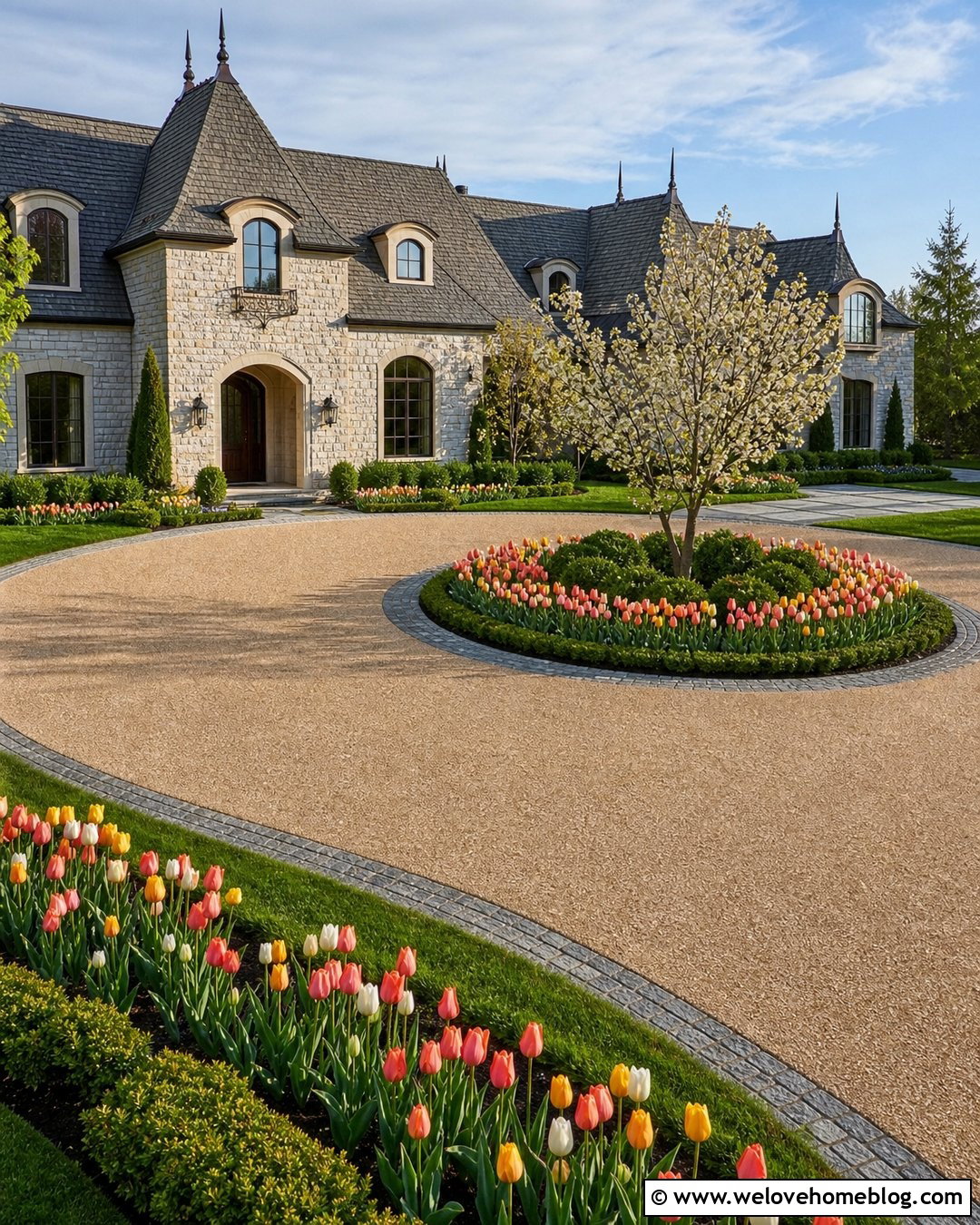
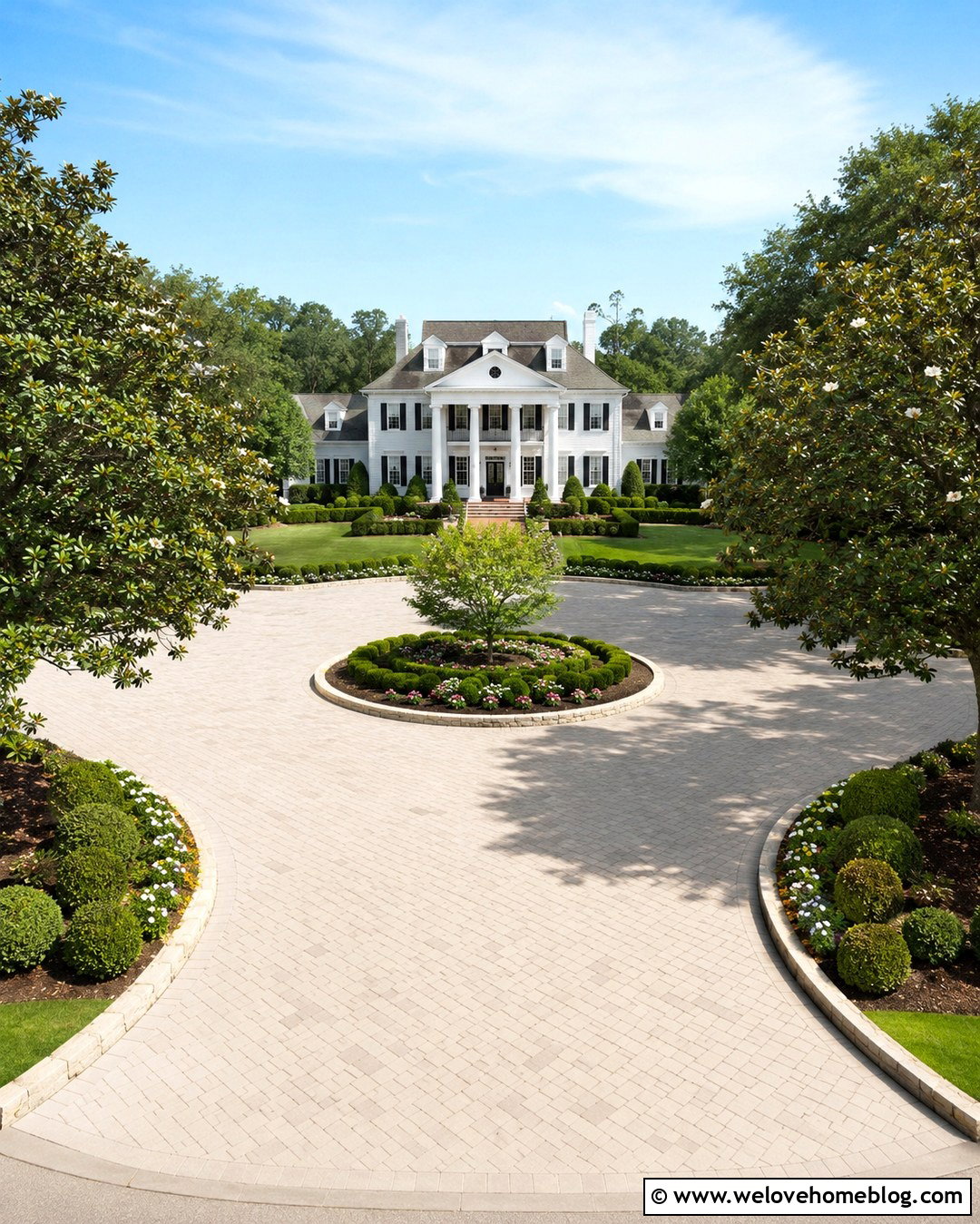
A circular driveway provides enough space for tulips to create a dramatic, garden-like arrival. Use warm beige exposed aggregate for the driving surface and a dark cobblestone border to clarify the curves. Plant coordinated mixtures of coral, pink, yellow, and white tulips around the outer edge. In the center island, repeat the same colors in larger sweeping groups around a small flowering tree. Limit the palette to three or four shades so the display looks connected rather than random. Low evergreen shrubs can define the island throughout the year. This design is especially effective in front of a large Colonial or French country home. The circular layout reveals the tulips gradually as visitors move around it, creating color from every approach and window.
7. Orange Tulip-Lined Curved Driveway
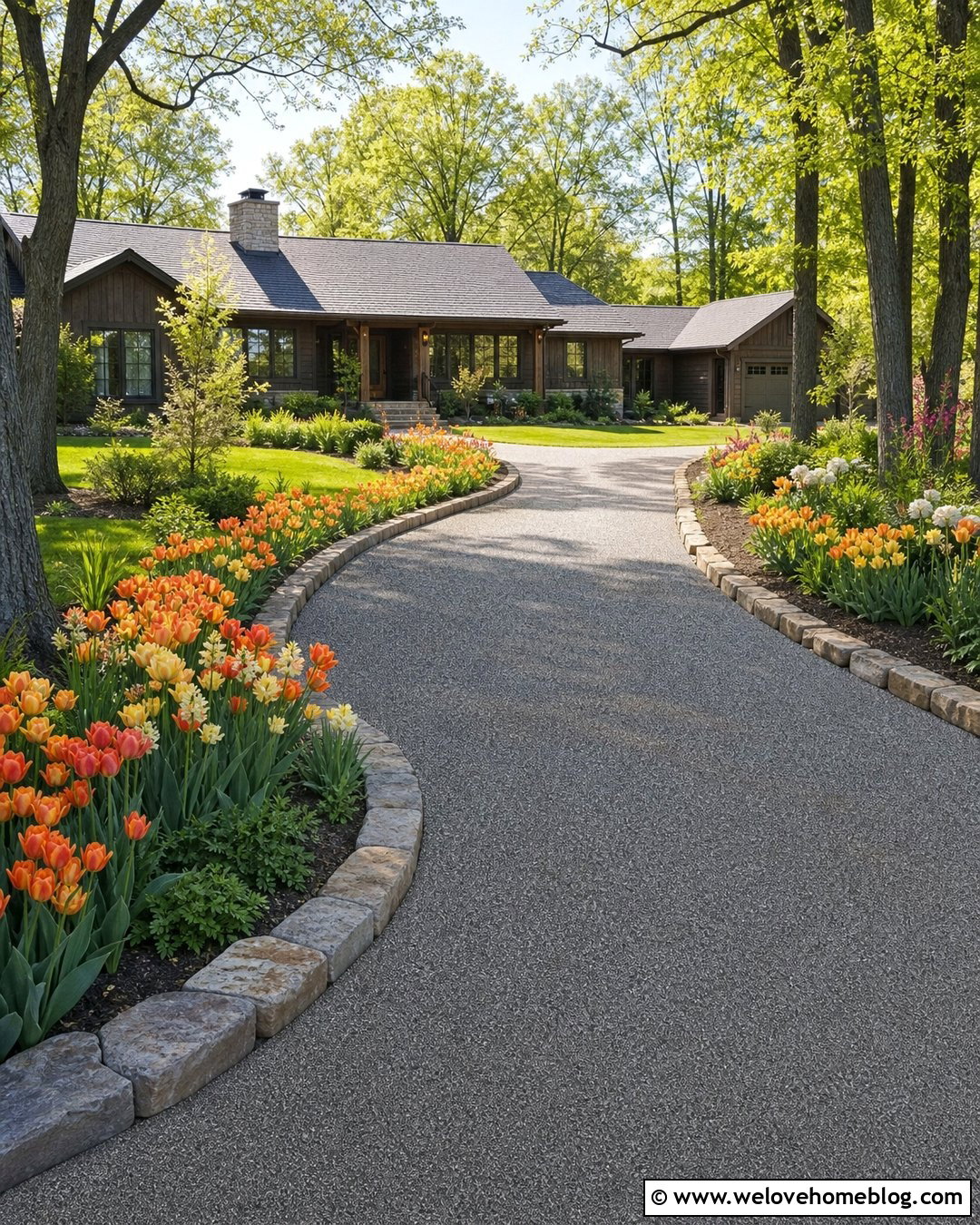
Orange tulips add warmth to a curved driveway surrounded by mature trees and green lawn. Select a medium-gray asphalt or resin-bound gravel surface that allows the bright flowers to stand out. Natural fieldstone edging should follow the driveway’s sweeping shape without creating sharp interruptions. Plant orange tulips in broad drifts, combining clear tangerine shades with softer apricot varieties. Add cream daffodils or white tulips sparingly for contrast. Behind the bulbs, use native grasses and compact deciduous shrubs to maintain a relaxed woodland edge. Early spring bulbs can receive useful sunlight beneath deciduous trees before their branches fully leaf out. () This complete driveway look suits a rustic ranch, country cottage, or contemporary woodland home.
8. White Tulip-Lined Modern Driveway
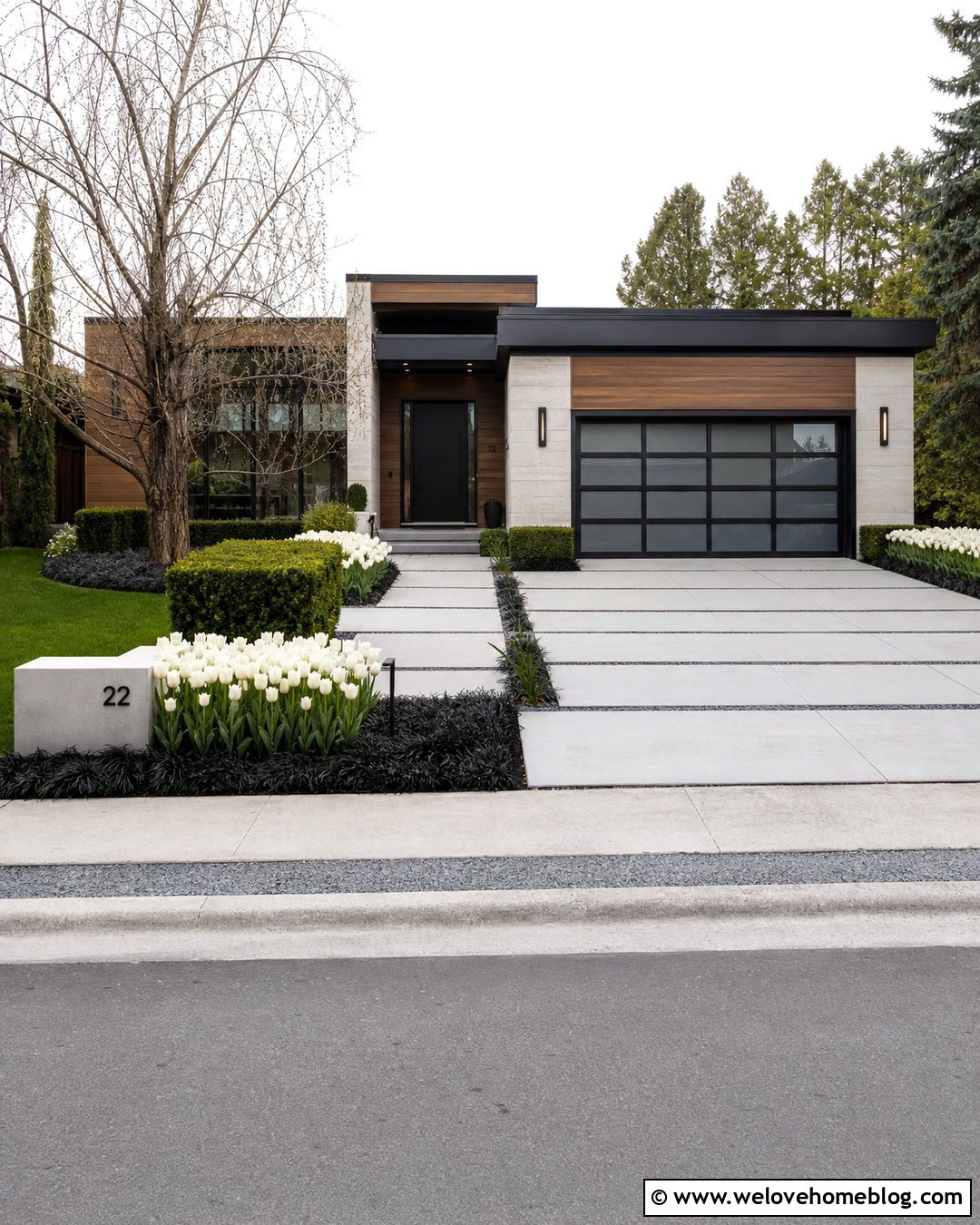
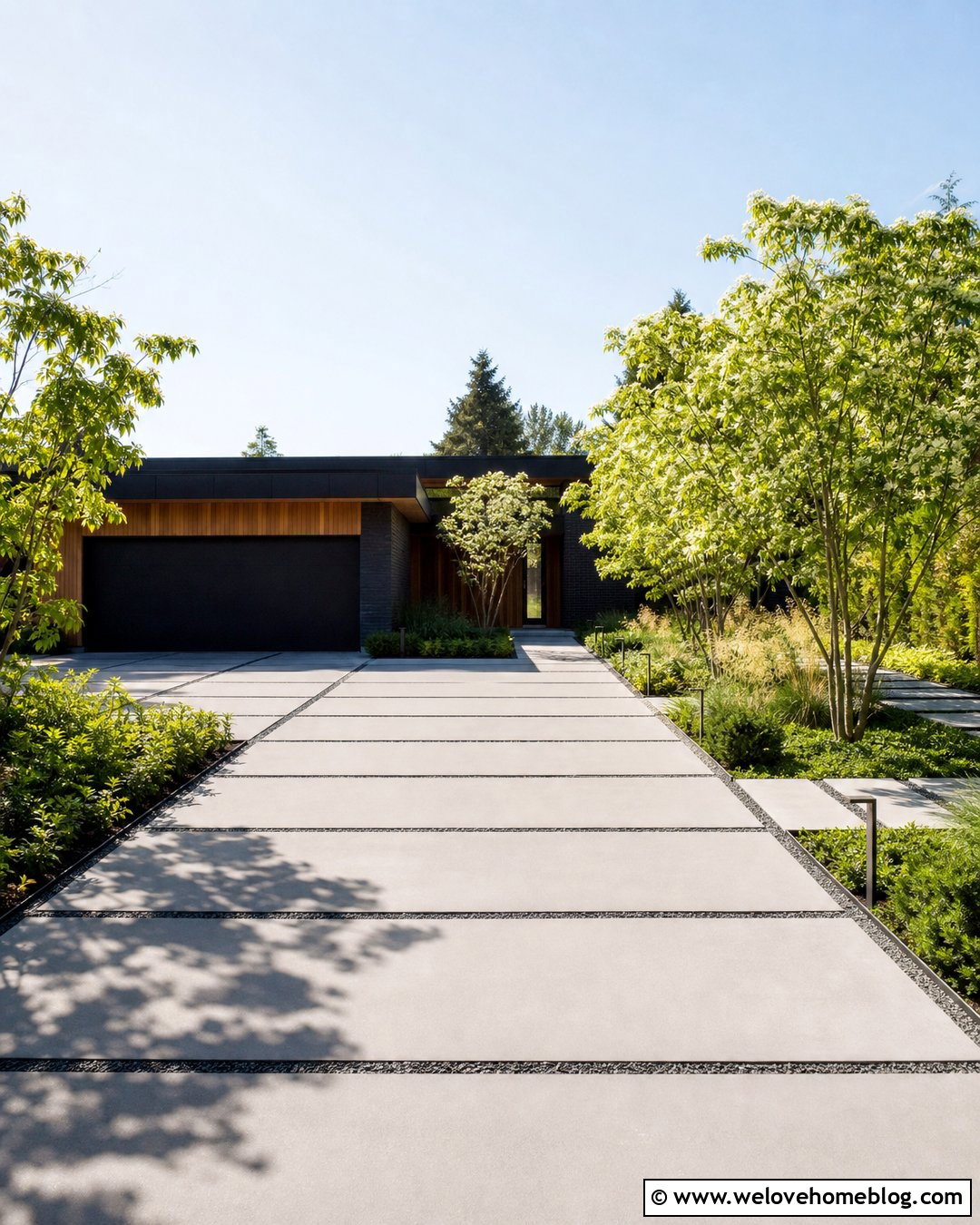
For a clean modern entrance, pair white tulips with large-format gray concrete slabs. Include narrow gravel joints or dark stone strips between the slabs to emphasize the driveway’s geometric layout. Instead of traditional curved flower beds, use long rectangular planting zones aligned with the house. Plant one white tulip variety in dense, orderly blocks for a uniform appearance. Low clipped boxwood, black mondo grass, or compact ornamental grasses can frame the seasonal flowers without introducing too many colors. Continue the design beside a straight concrete walkway leading to the front door. This minimal arrangement works well with a flat-roofed modern house, black-framed windows, and pale stucco. The white blooms soften the architecture while preserving the sharp lines and uncluttered curb appeal.
9. Pastel Tulip-Lined Cottage Driveway
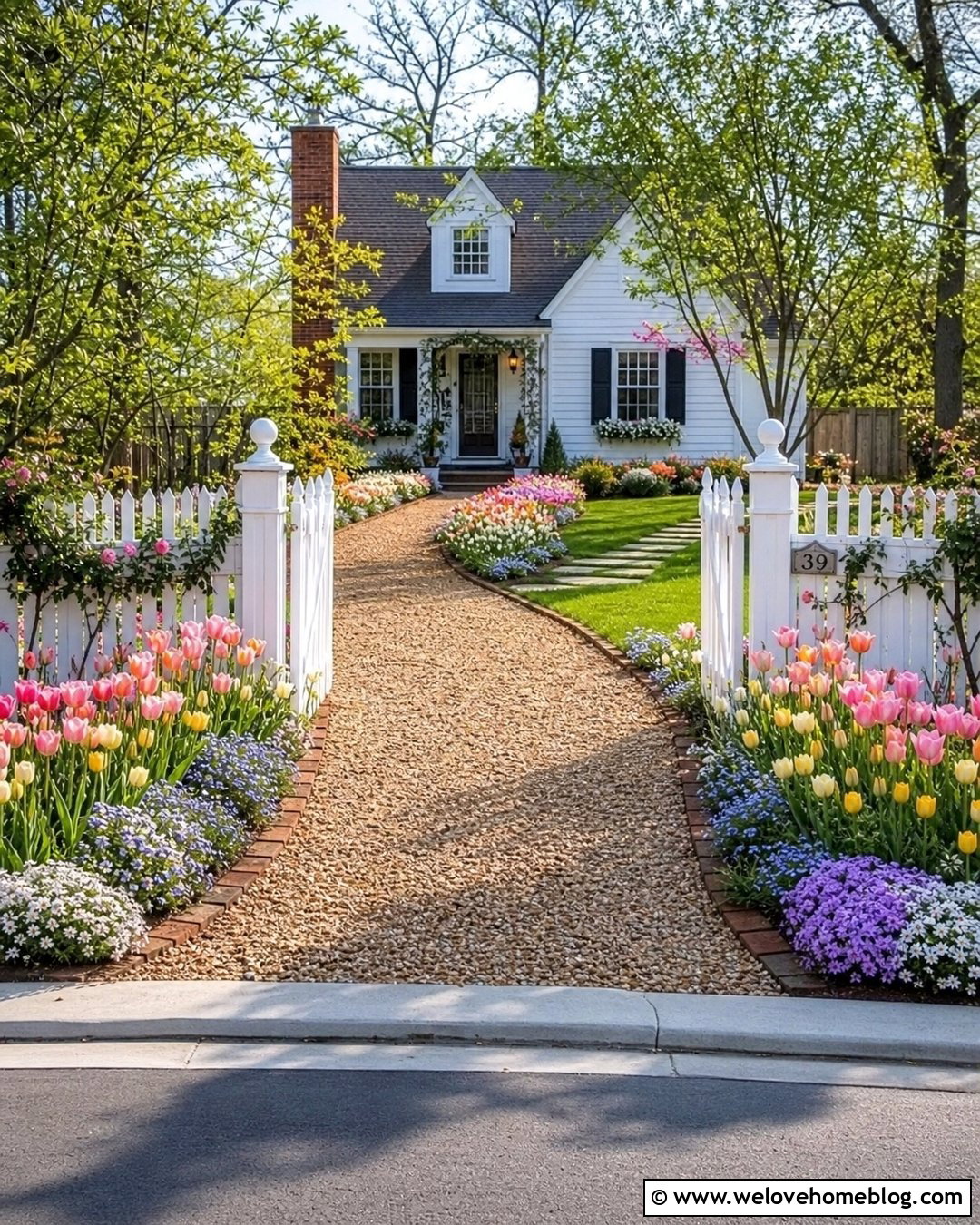
A cottage driveway looks especially inviting when tulips appear in loose pastel drifts. Use honey-colored pea gravel in a narrow curved layout, then contain it with reclaimed brick edging. Plant pink, peach, cream, lavender, and pale yellow tulips along both sides without arranging them in rigid rows. Repeat each color several times to keep the border visually connected. Add forget-me-nots, creeping phlox, and low-growing perennials between the bulbs for a fuller spring garden. Tulips are often planted in groups or masses with companion flowers instead of being isolated one by one. () A white picket gate and informal stepping-stone walkway complete the setting. This cheerful design suits a small cottage, Cape Cod home, or vintage bungalow.
10. Red And White Tulip-Lined Driveway
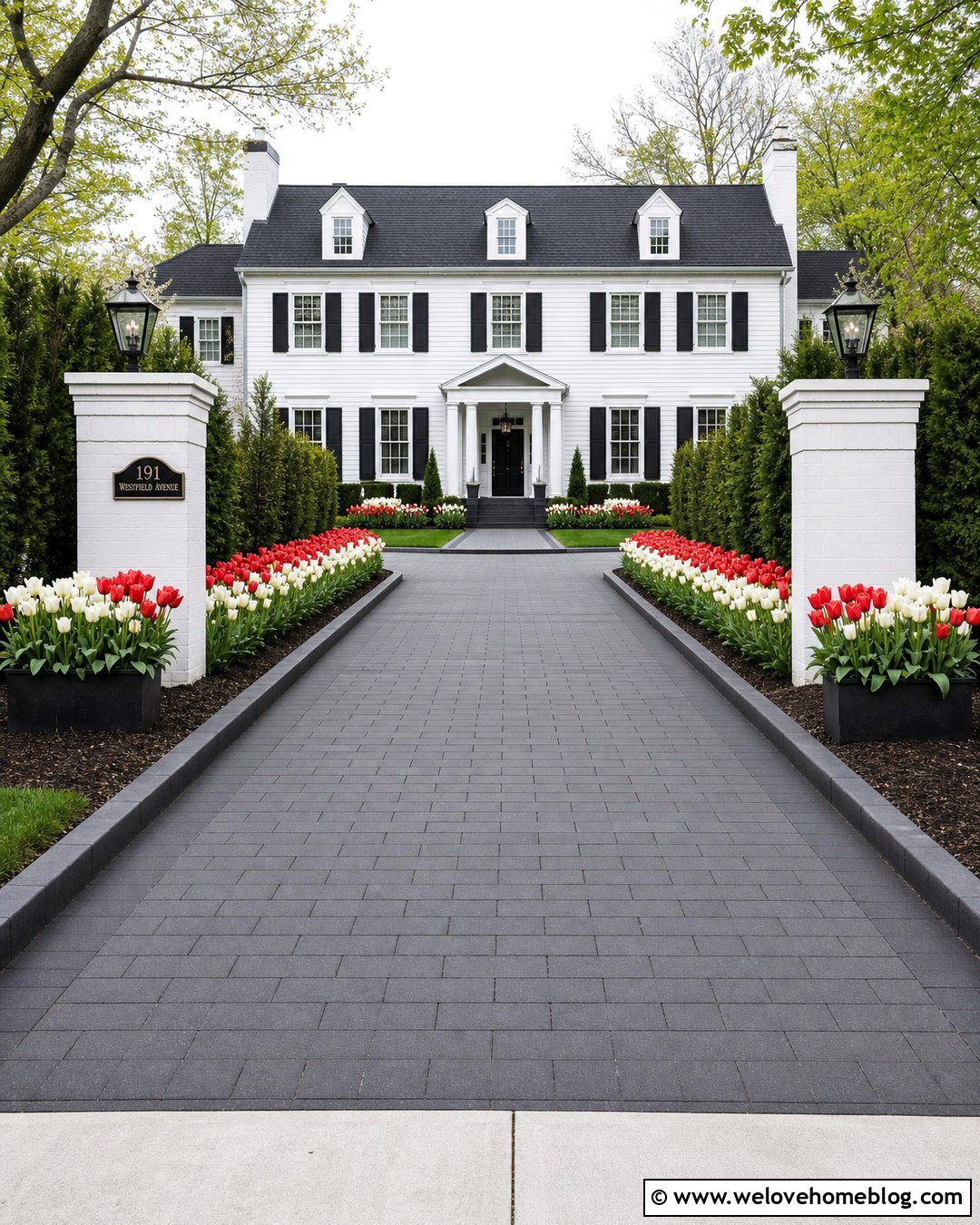
Alternating red and white tulips can create a bold driveway border that feels formal but not complicated. Pair the flowers with a dark charcoal paver driveway in a straight layout. Install matching raised curbs to protect the planting beds and give the surface a finished edge. Rather than alternating every bulb, arrange wide blocks of red and white for stronger color from the street. Evergreen hedges behind the tulips provide a dark background and keep the symmetrical planting clear. Repeat the pattern around the mailbox or address pillar near the entrance. This high-contrast scheme looks particularly attractive with a white house, black shutters, and a centered front door. Keep other flowering plants neutral so they do not compete with the crisp two-color display.
11. Tulip-Lined Driveway With Boxwood Borders
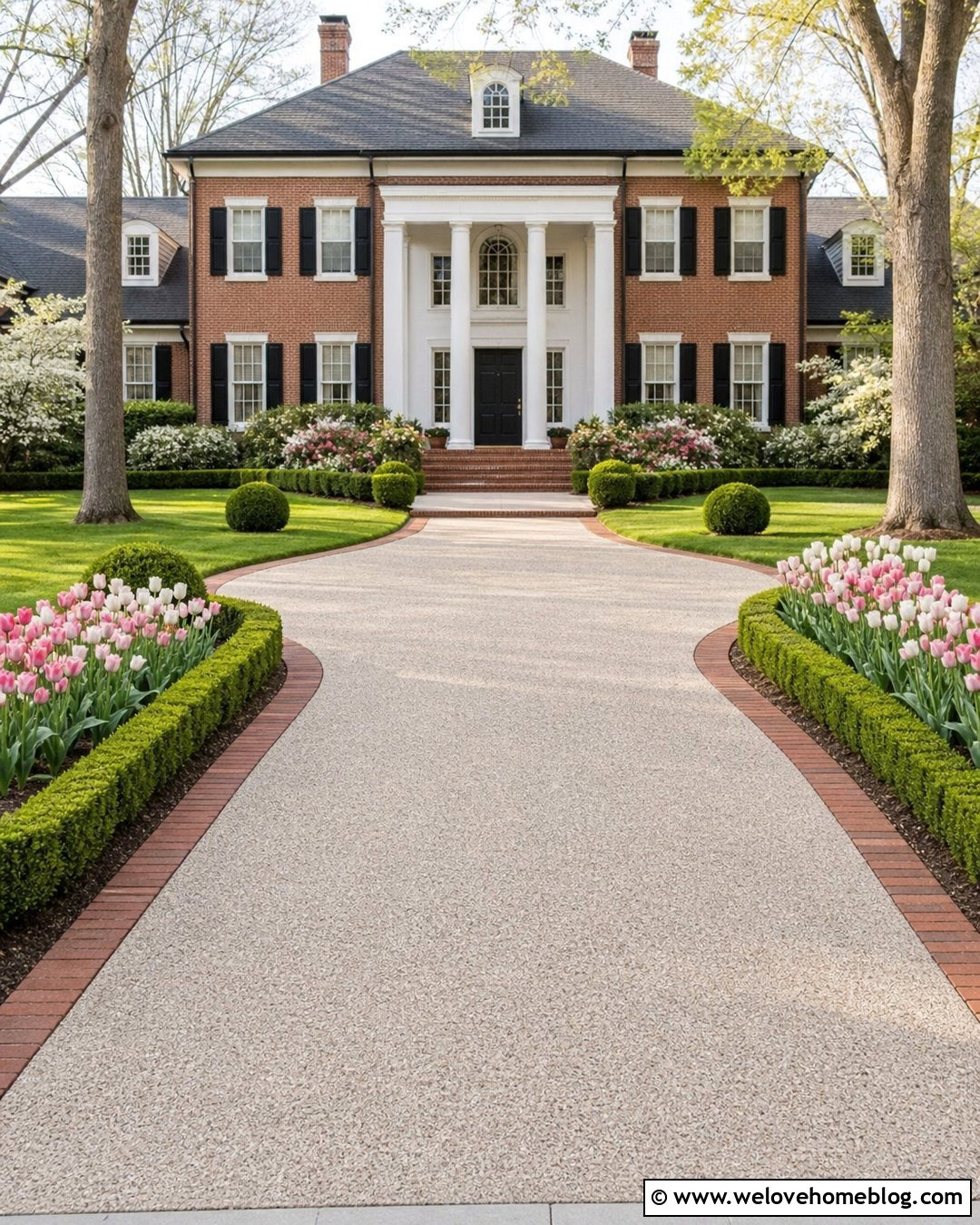
Boxwood borders provide year-round structure while tulips deliver a bright seasonal layer. Choose a light exposed-aggregate driveway with a gently curved approach and narrow brick ribbons along its edges. Plant a low boxwood hedge behind mixed pink and white tulips, keeping the hedge short enough that the flowers remain visible from the curb. The repeated evergreen line will emphasize the driveway’s shape after spring has passed. Near the house, expand the border into larger beds containing matching boxwood spheres and flowering shrubs. This arrangement works well with a formal Colonial, Georgian, or symmetrical craftsman home. Leave practical openings beside walkways and parking areas rather than forcing people to step over plants. The finished look is tidy, balanced, and easy to understand from a distance.
12. Tulip-Lined Driveway With Stone Edging
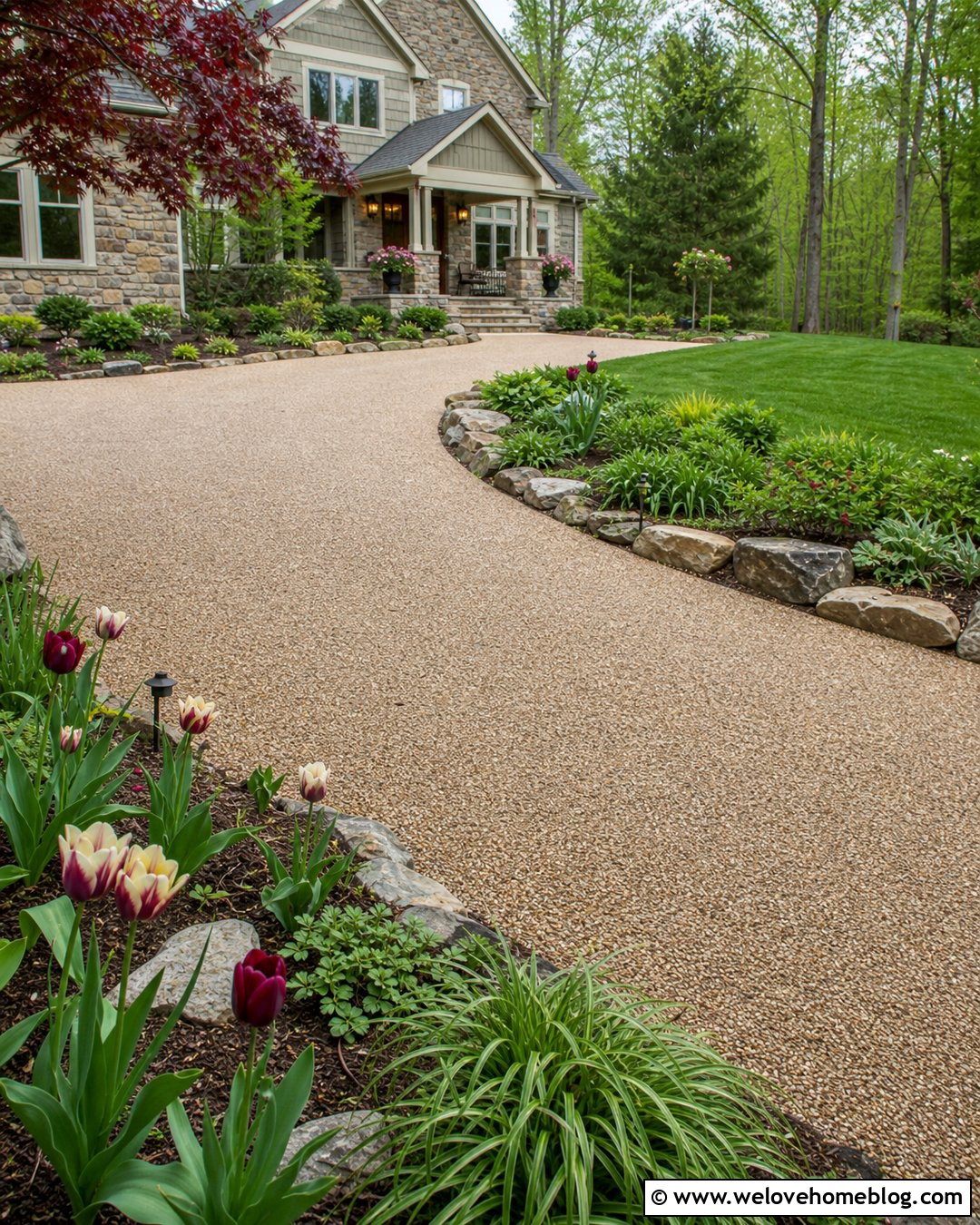
Natural stone edging helps a tulip border feel connected to the surrounding yard. Use a tan resin-bound gravel driveway with an informal curved layout leading toward a stone-front craftsman house. Line each side with irregular fieldstones set low enough to avoid becoming a driving hazard. Behind the stones, plant wide clusters of burgundy, cream, and dusty pink tulips. Repeat those colors near the front steps and foundation beds for continuity. Ferns, compact grasses, and low perennials can fill the border once the spring flowers fade. Choose stones that share tones with the home’s facade instead of introducing an unrelated color. The stone border controls the gravel, protects the planting area, and gives the entire driveway a substantial finish while preserving a natural, approachable character.
13. Tulip-Lined Driveway With Lavender
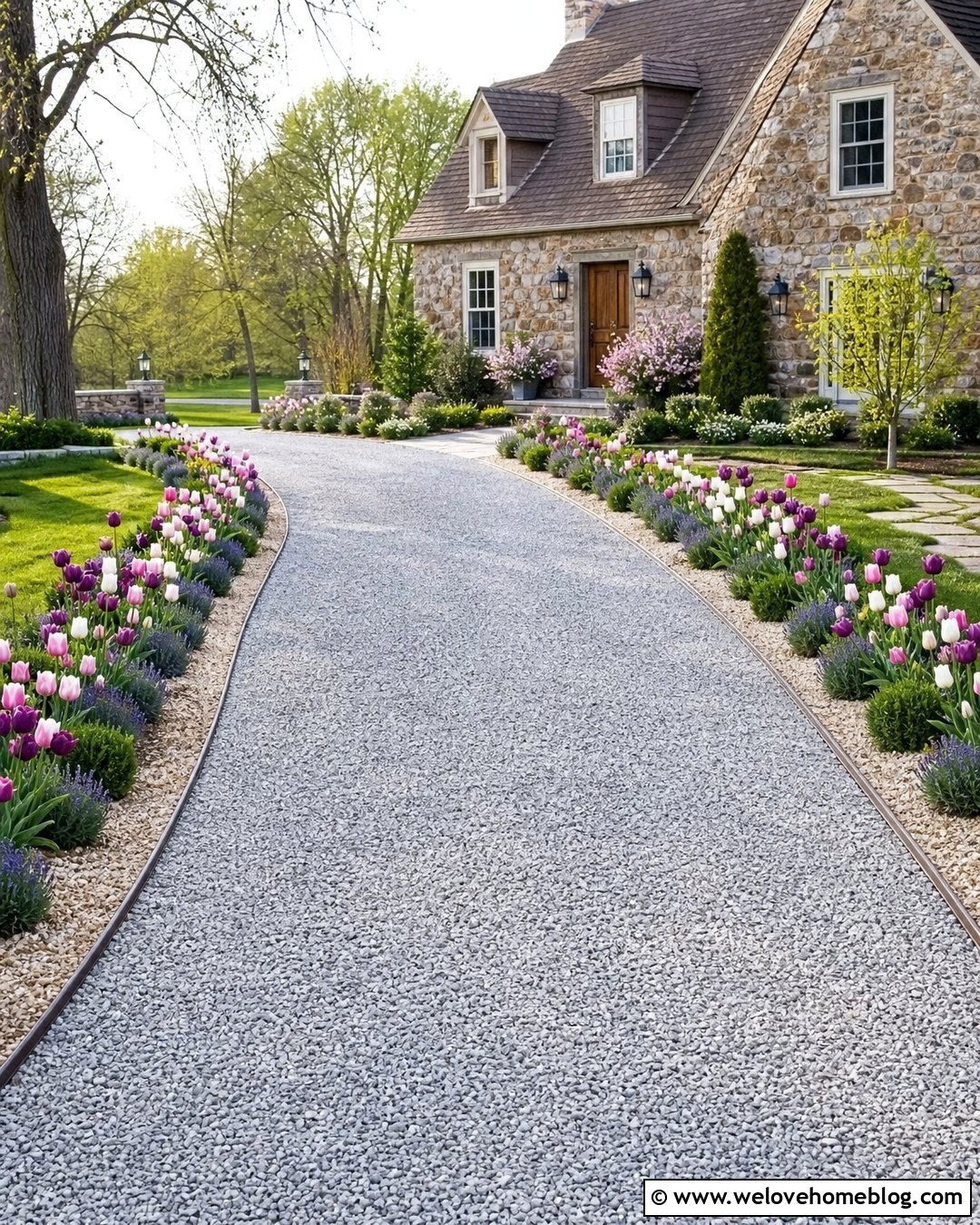
Tulips and lavender can create a border that changes gracefully from spring into summer. Begin with a pale gravel driveway in a straight or softly curved layout. Add steel edging for a narrow, almost invisible separation between the gravel and planting beds. Place purple, pink, and white tulips between evenly spaced lavender plants, allowing the bulbs to provide early color before the lavender becomes dominant. Keep adequate room around each perennial so the border does not become crowded. The muted colors work beautifully with a stone cottage, modern farmhouse, or Mediterranean-inspired home. Gravel mulch within the beds can improve the visual connection to the driveway and maintain a neat surface. This design feels relaxed, fragrant later in the year, and visually coordinated across multiple seasons.
14. Tulip-Lined Driveway With Ornamental Grass

Feathery ornamental grass can give a tulip-lined driveway movement and texture. Use smooth black asphalt for the surface and edge it with a narrow band of light-gray granite blocks. Behind the edging, plant drifts of orange, burgundy, and creamy white tulips between clumps of compact fountain grass. Cut the grasses back before spring growth so the tulips remain fully visible during flowering. As the bulb foliage declines, new grass blades will gradually fill the planting area. This is particularly useful along a long driveway where extensive formal hedging might feel too rigid. A contemporary ranch or prairie-style home complements the horizontal planting. Keep the groups broad and repetitive, allowing both the flowers and grasses to follow the driveway’s shape as one unified landscape.
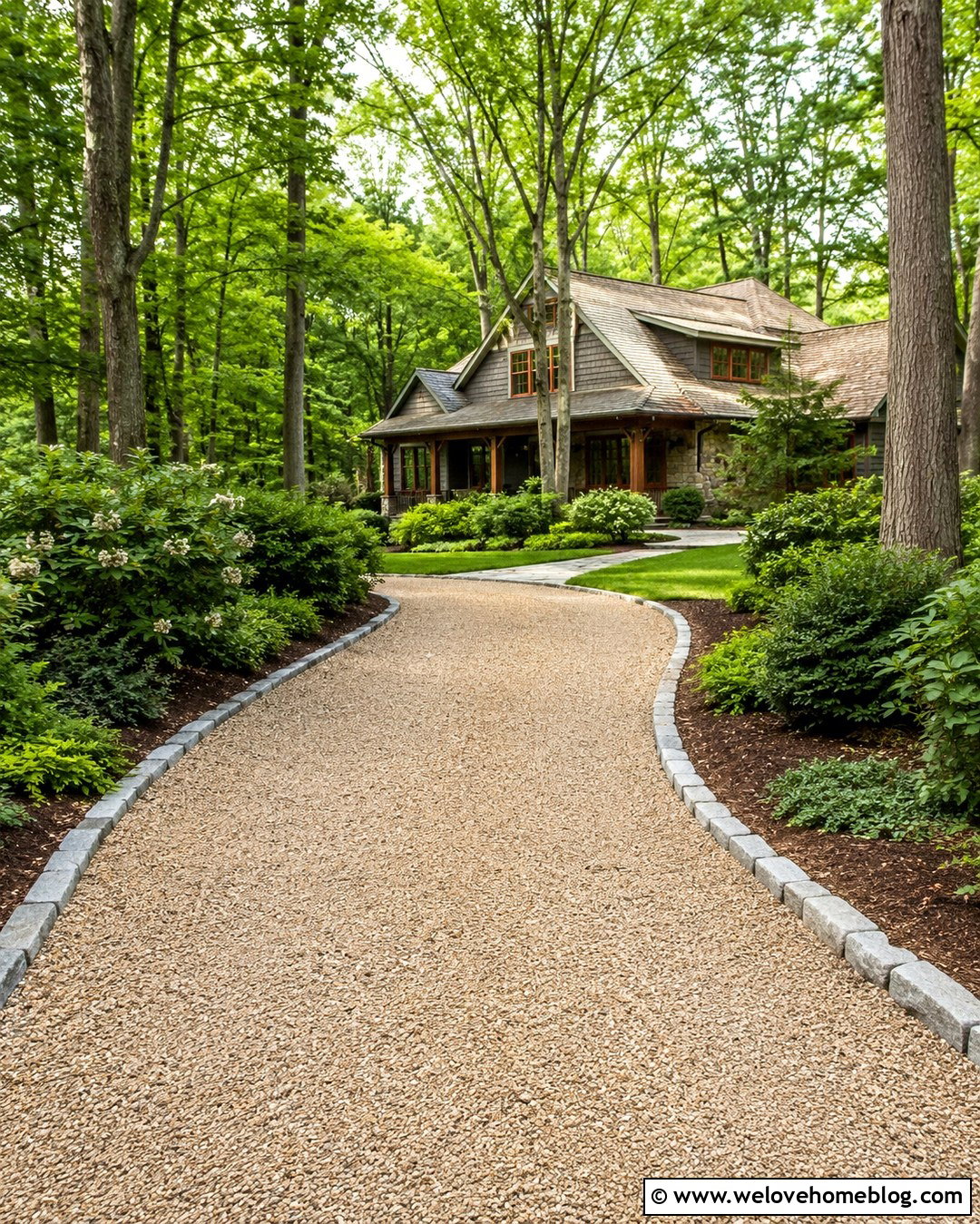
15. Tulip-Lined Driveway With Flowering Trees
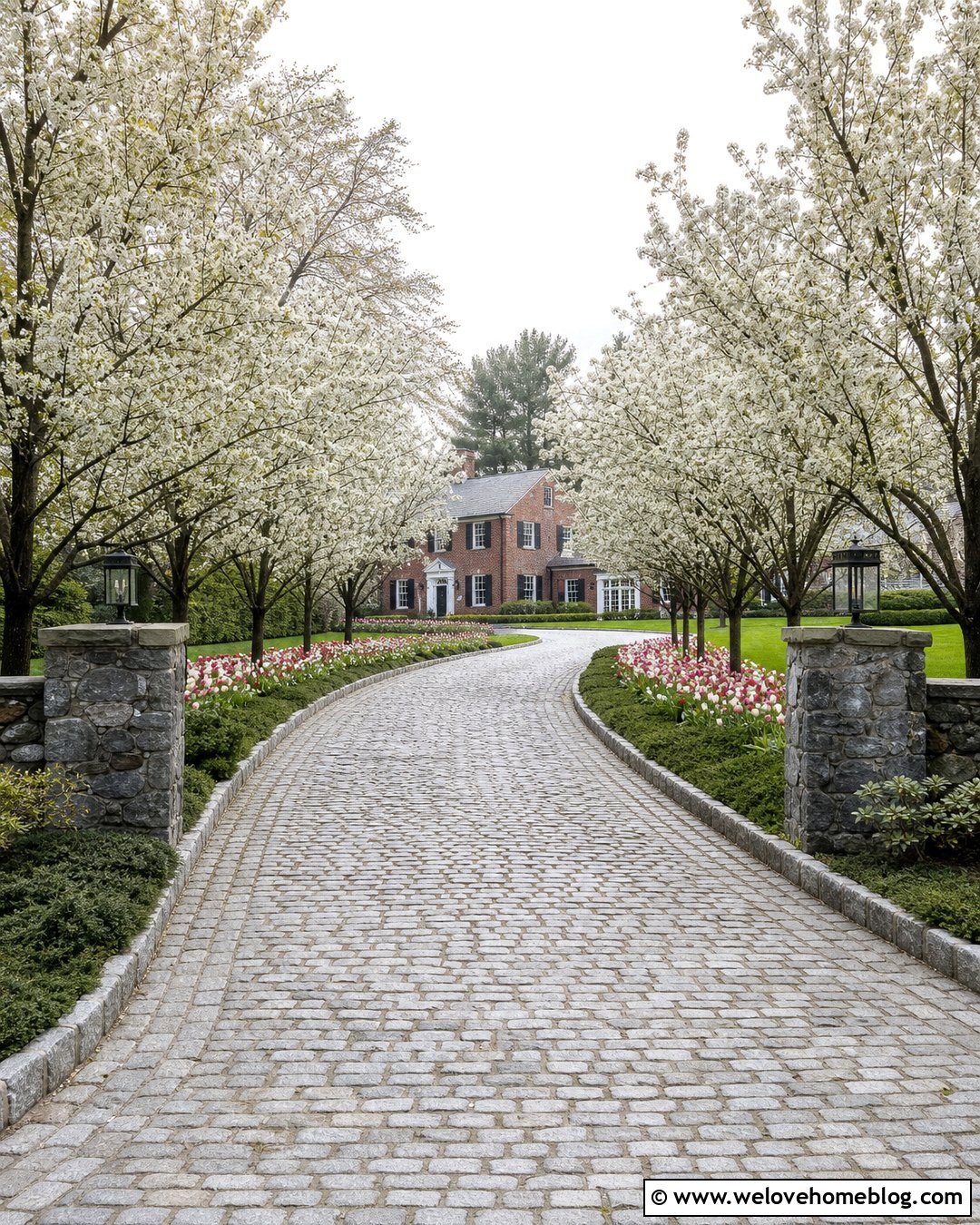
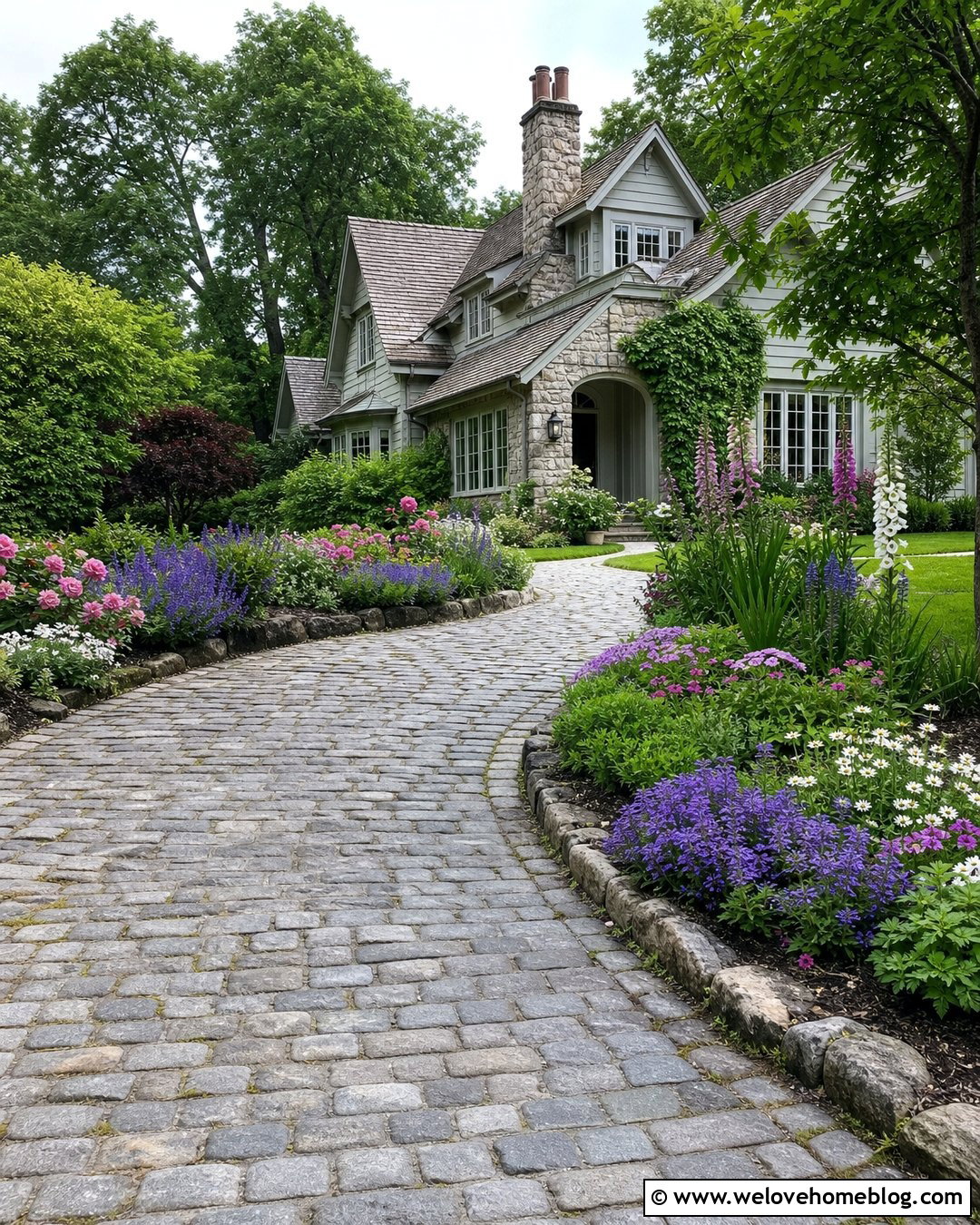
Imagine driving beneath flowering trees while coordinated tulips brighten the ground below. A long, curved cobblestone driveway provides a traditional foundation for this layered spring entrance. Plant small ornamental trees at generous intervals, keeping trunks and roots safely beyond the driveway edge. Beneath them, arrange white, pink, and deep rose tulips in flowing groups rather than tight straight rows. Add a low evergreen ground cover to link the planting beds and reduce bare spaces. A brick or Colonial Revival home makes a fitting destination at the end of the approach. Repeat cobblestone around the planting beds to prevent soil from spilling onto the driveway. Because the trees and tulips bloom at different heights, the landscape feels full without blocking views of the house or entrance.
16. Tulip-Lined Driveway With Brick Pillars
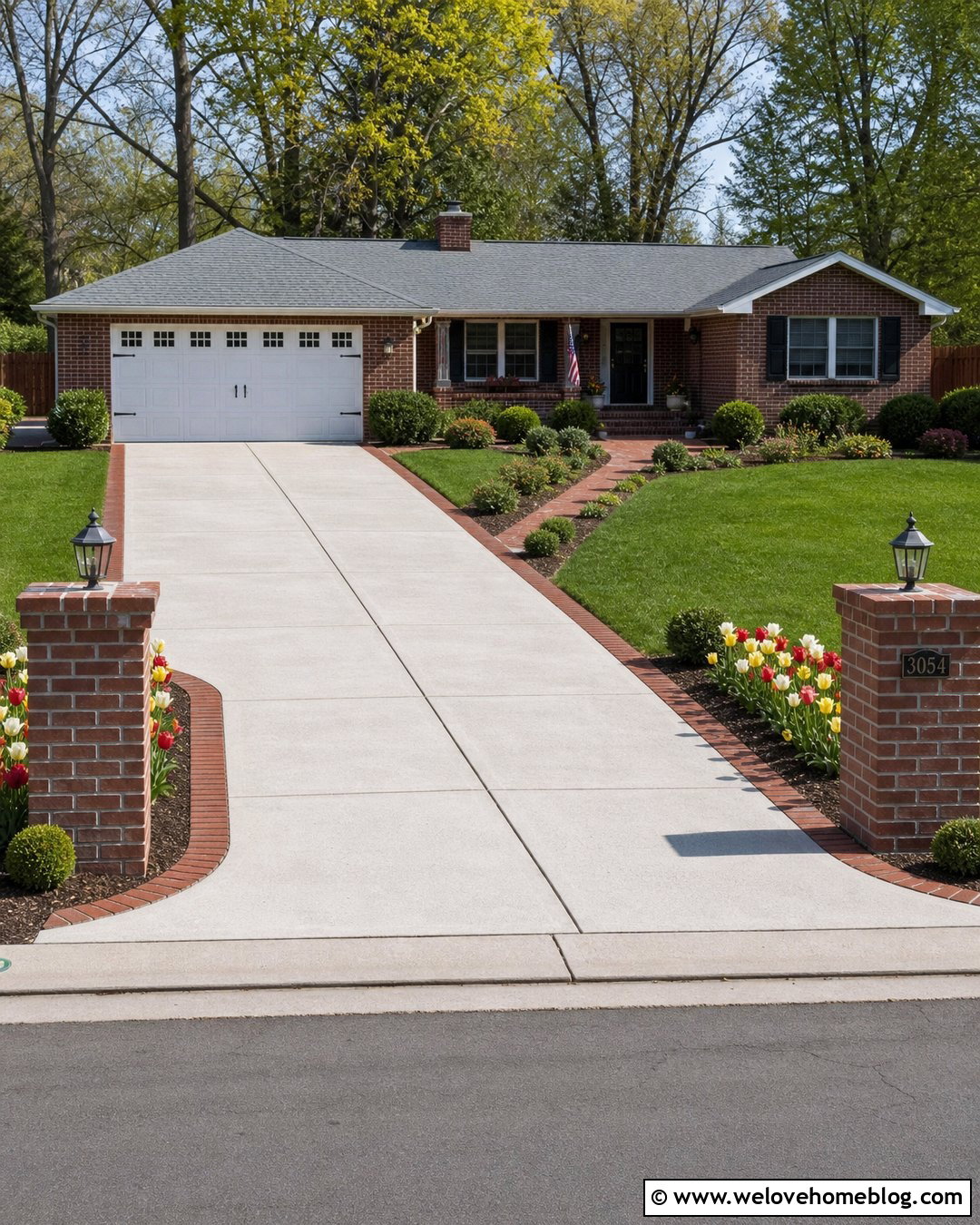
Brick entrance pillars can frame the beginning of a tulip-lined driveway and introduce materials used closer to the house. Choose a light-gray concrete driveway with red brick ribbons running along both edges. Build modest pillars near the curb, leaving clear visibility for drivers and pedestrians. Plant deep red, golden yellow, and cream tulips around each pillar, then continue those colors in narrower beds toward the garage. Low clipped shrubs can connect the flower groups without hiding the brickwork. This coordinated layout is well suited to a traditional brick ranch or two-story Colonial. Add a simple address plaque to one pillar and keep the other details restrained. Repeating the brick in the driveway border makes the entrance, flowers, hardscape, and home appear intentionally planned together.
17. Tulip-Lined Driveway With A White Gate
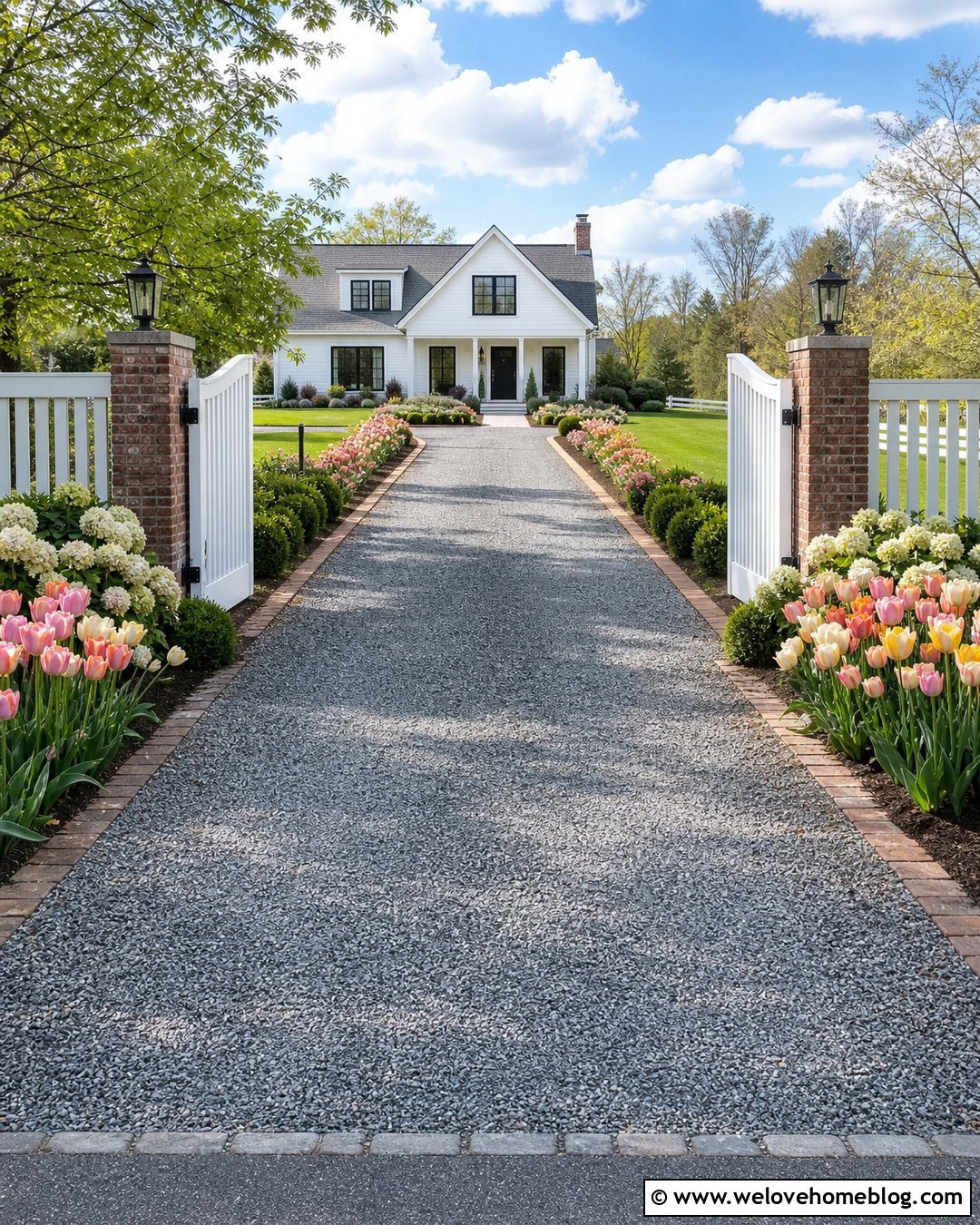
A white gate surrounded by tulips creates a charming focal point at the beginning of a country driveway. Use compacted gray gravel for a straight layout leading to a white farmhouse or cottage. Install low white gateposts and a simple open-style gate that preserves views toward the house. Plant coral, blush pink, white, and pale yellow tulips in generous beds around the entrance, then continue smaller groups along both driveway edges. Weathered brick or natural stone can hold the gravel in place. Add hydrangeas and low evergreen shrubs behind the bulbs for later-season interest. The gate should support the landscape rather than overpower it. Matching its finish to the house trim creates continuity, while the tulips make the entrance feel colorful, friendly, and distinctly seasonal.
18. Tulip-Lined Driveway With Solar Lights
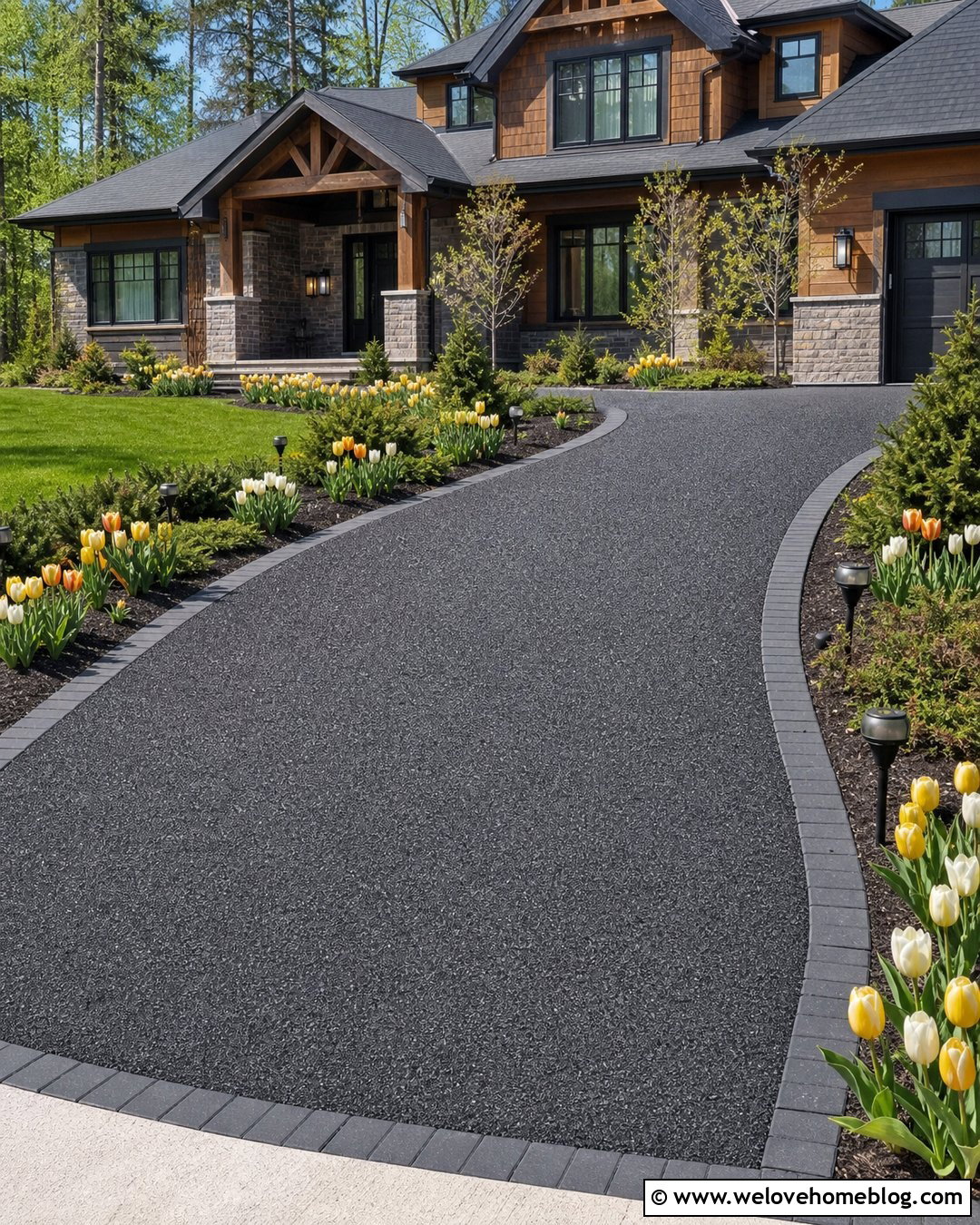
Low-profile lighting helps define a driveway throughout the year, while tulips soften the fixtures during spring. Select a dark resin-bound gravel surface with a sweeping curved layout and a flush charcoal paver border. Position simple black solar lights at consistent intervals outside the vehicle clearance zone. Between them, plant yellow, white, and orange tulips in large repeated clusters. The pale flowers will remain highly visible against the dark driveway during daylight, while the fixtures provide structure after blooming ends. Add low evergreen ground cover and neatly mulched beds to conceal wiring or mounting bases. This practical arrangement works with modern ranch, craftsman, and suburban homes. Keep lights below flower height so they do not interrupt the colorful border or clutter the daytime view.
19. Tulip-Lined Driveway For A Small Front Yard
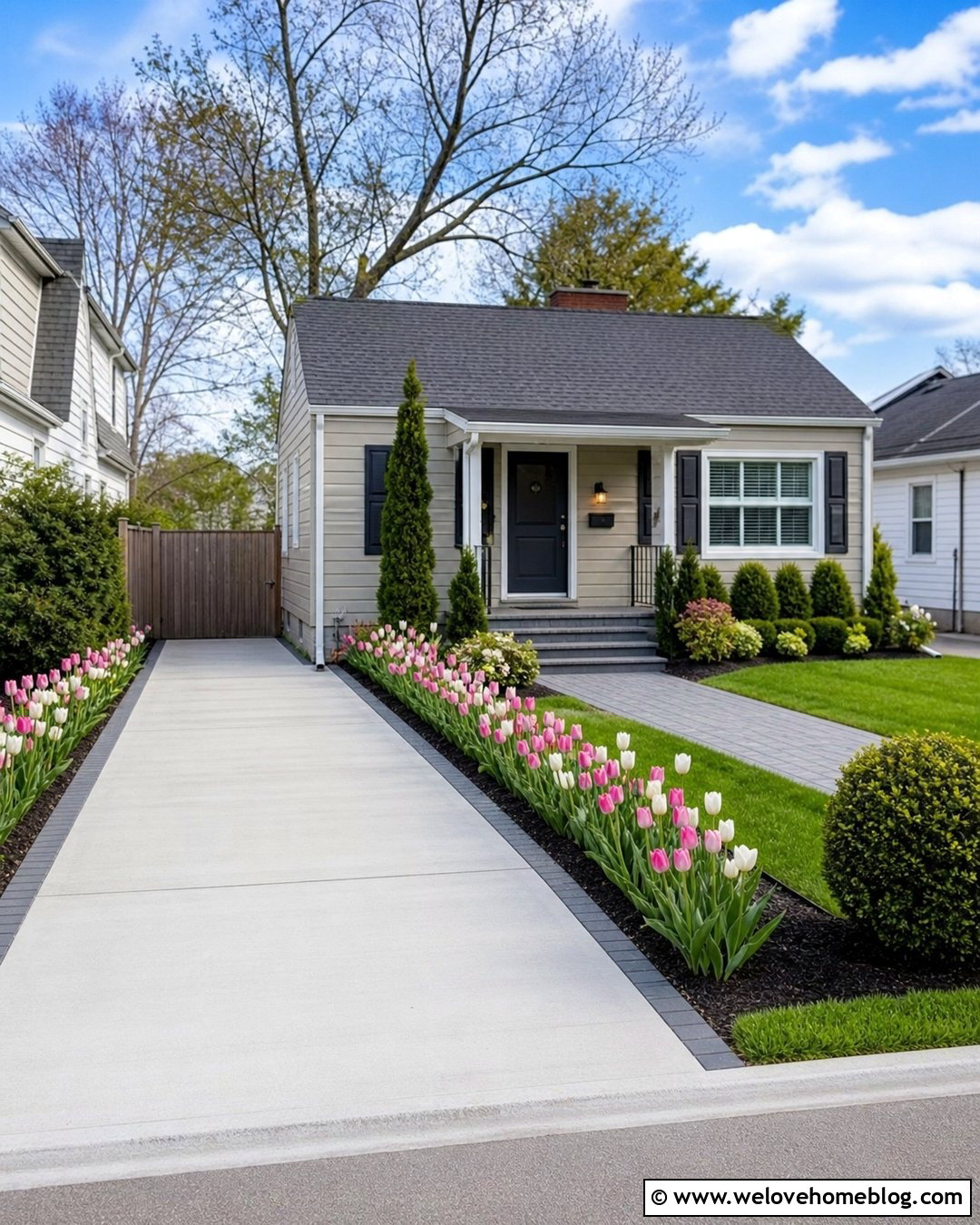
Even a short driveway can support an impressive tulip display when the layout remains simple. Use light-gray concrete with a narrow charcoal paver border to visually separate parking space from planting space. Build one continuous bed along the most visible side and a smaller matching bed near the front walkway. Fill both with pink and white tulips planted in dense groups. Compact evergreen shrubs at the corners can frame the flowers without consuming valuable room. Avoid placing tall plants near the sidewalk, street, or garage entrance where they could reduce visibility. A bungalow, townhouse, or small ranch home benefits from this clean arrangement. Repeating only two tulip colors prevents the limited landscape from appearing crowded and makes the driveway feel wider, brighter, and better organized.
20. Tulip-Lined Driveway With Seasonal Perennials
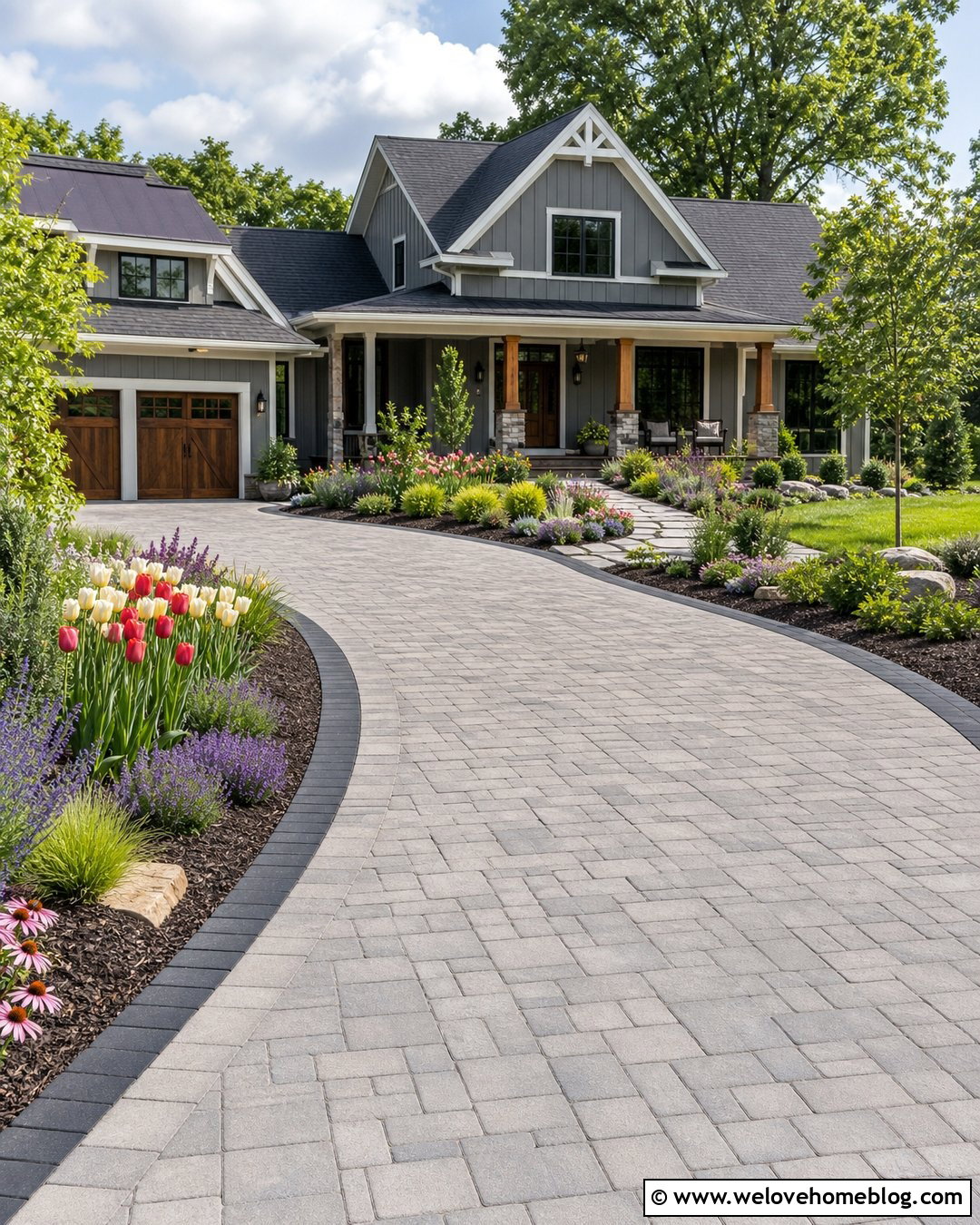
A mixed perennial border keeps a tulip-lined driveway attractive long after spring. Choose warm-gray interlocking concrete pavers for a softly curved driveway, finished with a contrasting charcoal edge. Plant red, apricot, and creamy white tulips in repeated drifts between salvia, catmint, coneflowers, and compact ornamental grasses. Place the tulips toward the middle of the beds so emerging perennial foliage can gradually hide their yellowing leaves. Avoid cutting healthy bulb foliage too early, because it helps replenish the bulb for future growth. () Low evergreen shrubs at key corners will maintain winter structure. This layered design complements craftsman, farmhouse, and traditional suburban homes. It also turns the driveway border into a complete seasonal garden rather than a short-lived strip of spring color.
Conclusion:
The most successful 20 tulip lined driveway ideas treat the pavement, flowers, edging, and home as one connected composition. Begin with the driveway’s existing material and shape, then choose tulip colors that complement the facade. Formal homes often suit symmetrical rows, clipped shrubs, and limited color palettes. Cottage or country settings can support curved beds and loosely grouped blooms. Protect planting areas with stone, brick, steel, or paver edging, and leave clear space around parking zones and entrances. For longer seasonal interest, combine tulips with evergreens, ground covers, grasses, and later-blooming perennials. Whether your driveway is short, circular, gravel, or paved, repeated tulip groupings can create a brighter and more welcoming spring approach.

Related posts:
Leave a Reply