
Dogwoods bring a graceful, four-season rhythm to an ordinary driveway. Spring bracts brighten the approach, green summer canopies soften hard paving, and rich fall foliage adds warm color near the house. Their attractive branching and bark can also provide winter structure. However, a successful dogwood-lined entrance needs more than rows of pretty trees. The driveway material, layout, edging, planting beds, drainage, and mature canopy width should work together. Most dogwoods perform best in well-drained soil with room for their roots, while flowering dogwoods generally appreciate filtered light and Kousa dogwoods tolerate sunnier, more open settings. () The complete designs below combine practical planting choices with distinctive surfaces and house settings. Use these 20 Dogwood Lined Driveway Ideas to create an inviting, balanced approach.

1. Straight Gravel Driveway With White Dogwoods
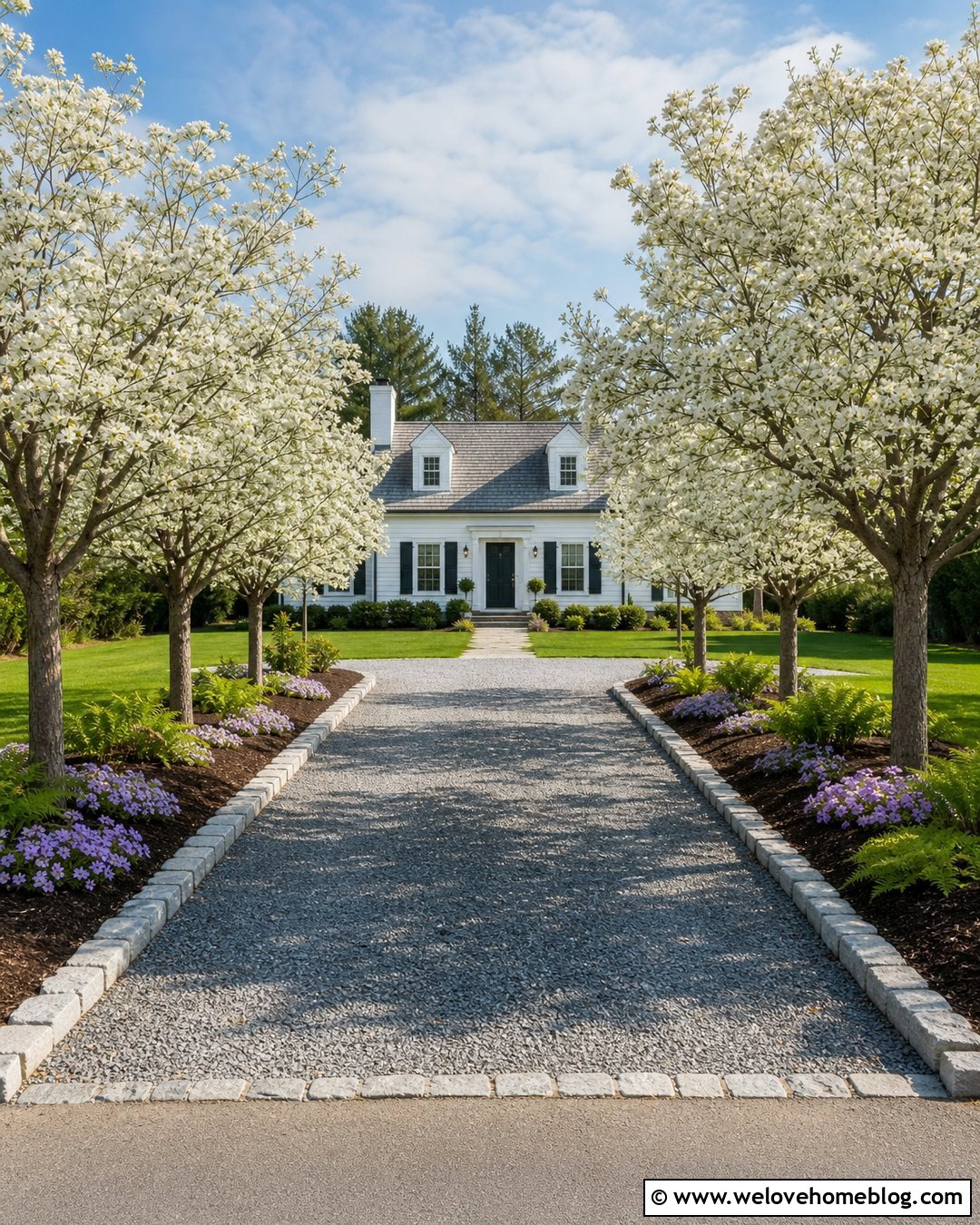
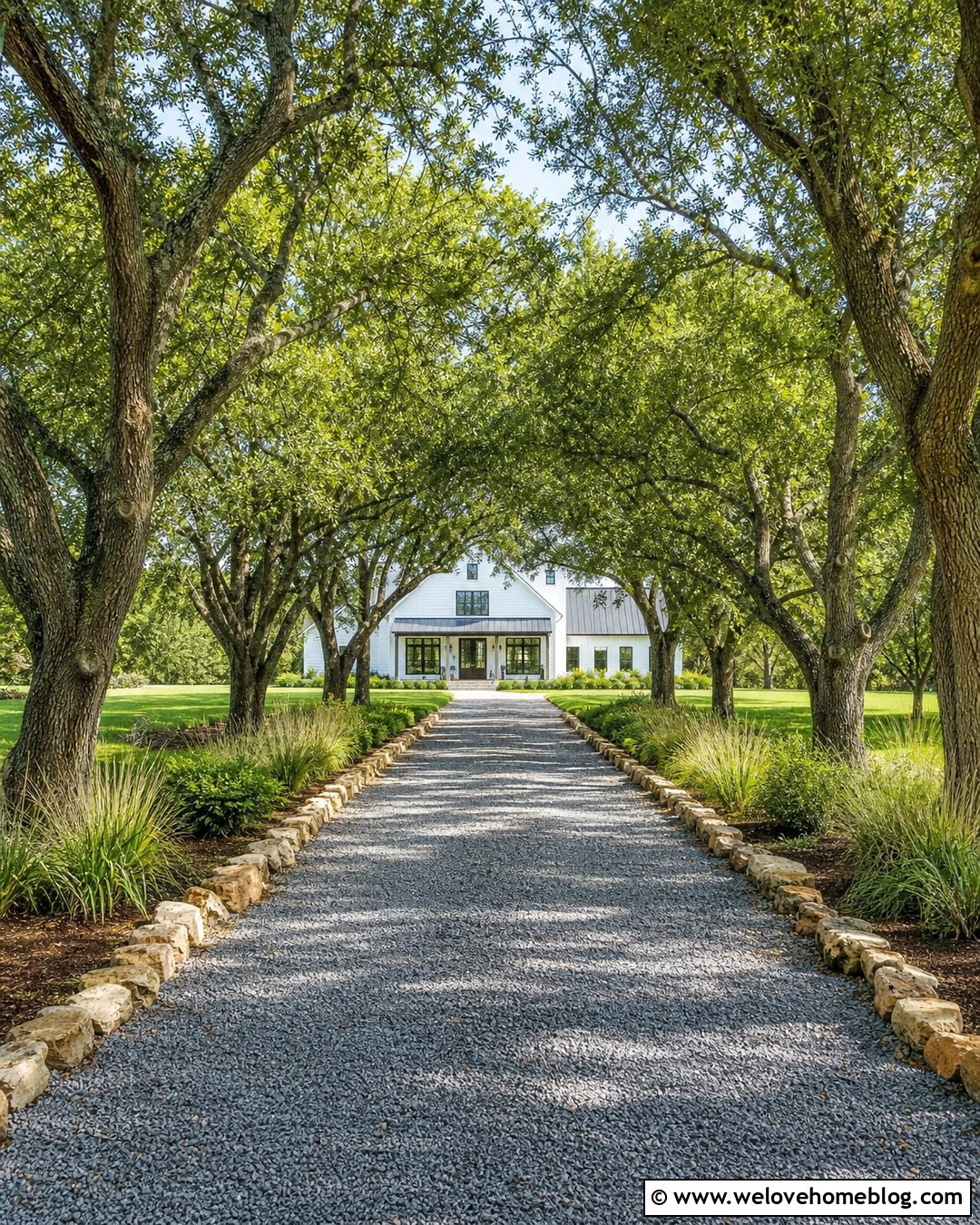
A straight gray gravel driveway becomes much more polished when evenly spaced white flowering dogwoods frame both sides. Use cobblestone edging to keep loose gravel inside the driving area and create a clean transition into the planting beds. Wide mulched beds beneath the trees protect their shallow root zones while reducing mowing near the trunks. Add low sweeps of woodland phlox, ferns, or sedges instead of deep-rooted shrubs that could crowd the dogwoods. This complete look works especially well with a traditional ranch or Cape Cod home. Keep the rows symmetrical for a formal approach, but avoid placing the trunks too close to passing vehicles. A narrow flagstone walkway can branch from the driveway toward the front porch without interrupting the strong central view.
2. Curved Asphalt Driveway With Pink Dogwoods
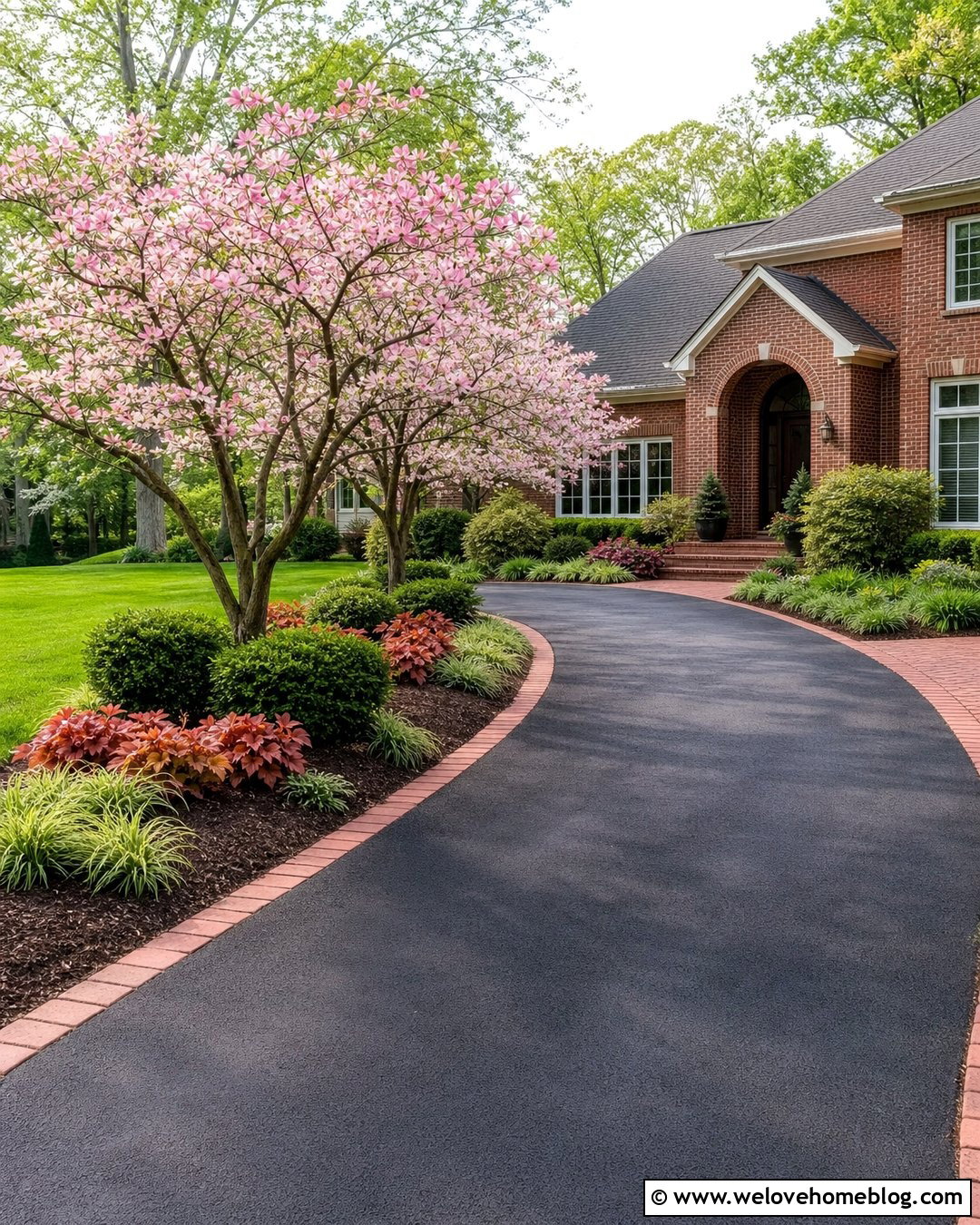
Imagine a smooth black asphalt driveway gently bending through pink dogwoods before revealing the house. The dark surface creates strong contrast with pale spring blooms and makes the curved layout easy to read from the street. A narrow red brick border warms the asphalt and visually connects it to a brick or mixed-material home. Plant the dogwoods along the outer curve where the planting area is usually wider, then use compact evergreen shrubs along the inner curve for year-round definition. Repeating groups of coral bells and native sedges can fill the lower beds without hiding the tree trunks. This asymmetrical arrangement feels natural rather than rigid. Leave open sightlines near the street entrance and inside bends so drivers can clearly see pedestrians, traffic, and the driveway edges.
3. Circular Paver Driveway With Kousa Dogwoods
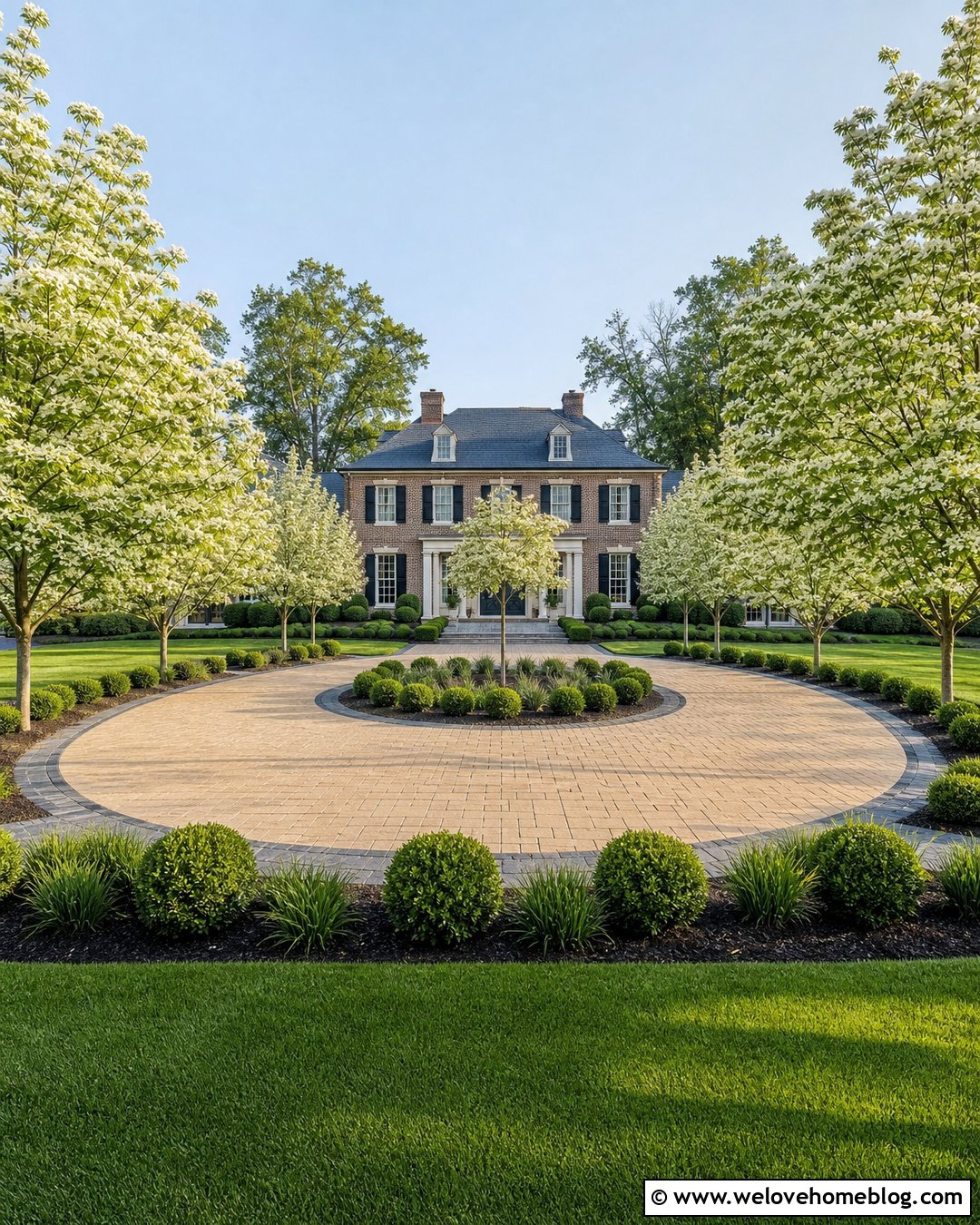
A circular driveway paved with warm beige concrete pavers offers enough open space to display Kousa dogwoods as coordinated specimens. Plant several trees around the outer edge and place one carefully positioned dogwood in the central island. Kousa dogwoods can reach approximately 15 to 30 feet tall and wide, so the island and perimeter beds should account for their mature spread rather than their nursery size. () Use a charcoal paver soldier course to define the circle and prevent the pattern from appearing busy. Inside the island, combine dark mulch, clipped inkberry, and low ornamental grasses. The horizontal branching of mature Kousa dogwoods complements the broad circular layout. This arrangement gives a Colonial or Georgian home a formal entrance without relying on oversized gates or elaborate masonry.
4. Concrete Driveway With Dogwoods And Hydrangeas
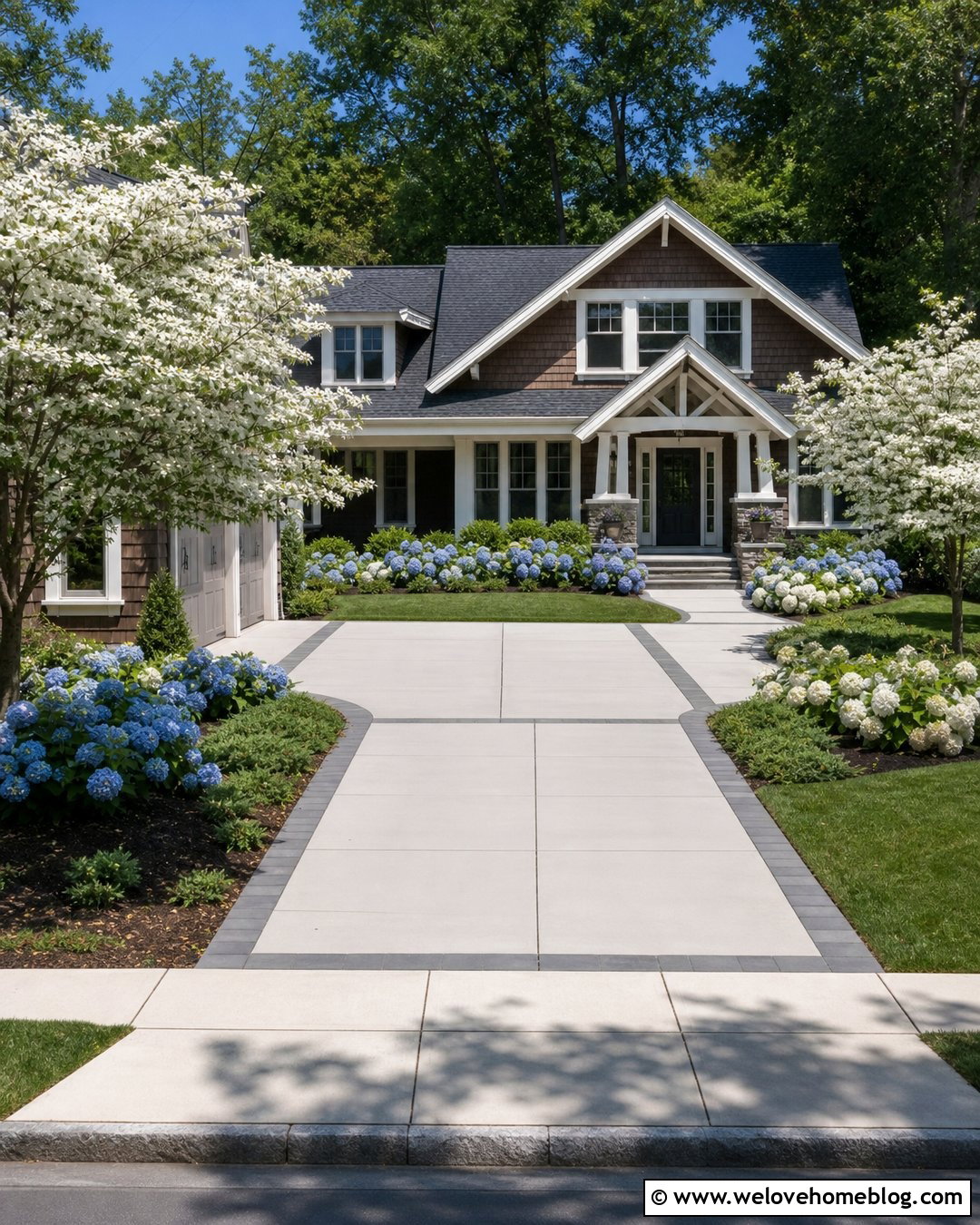
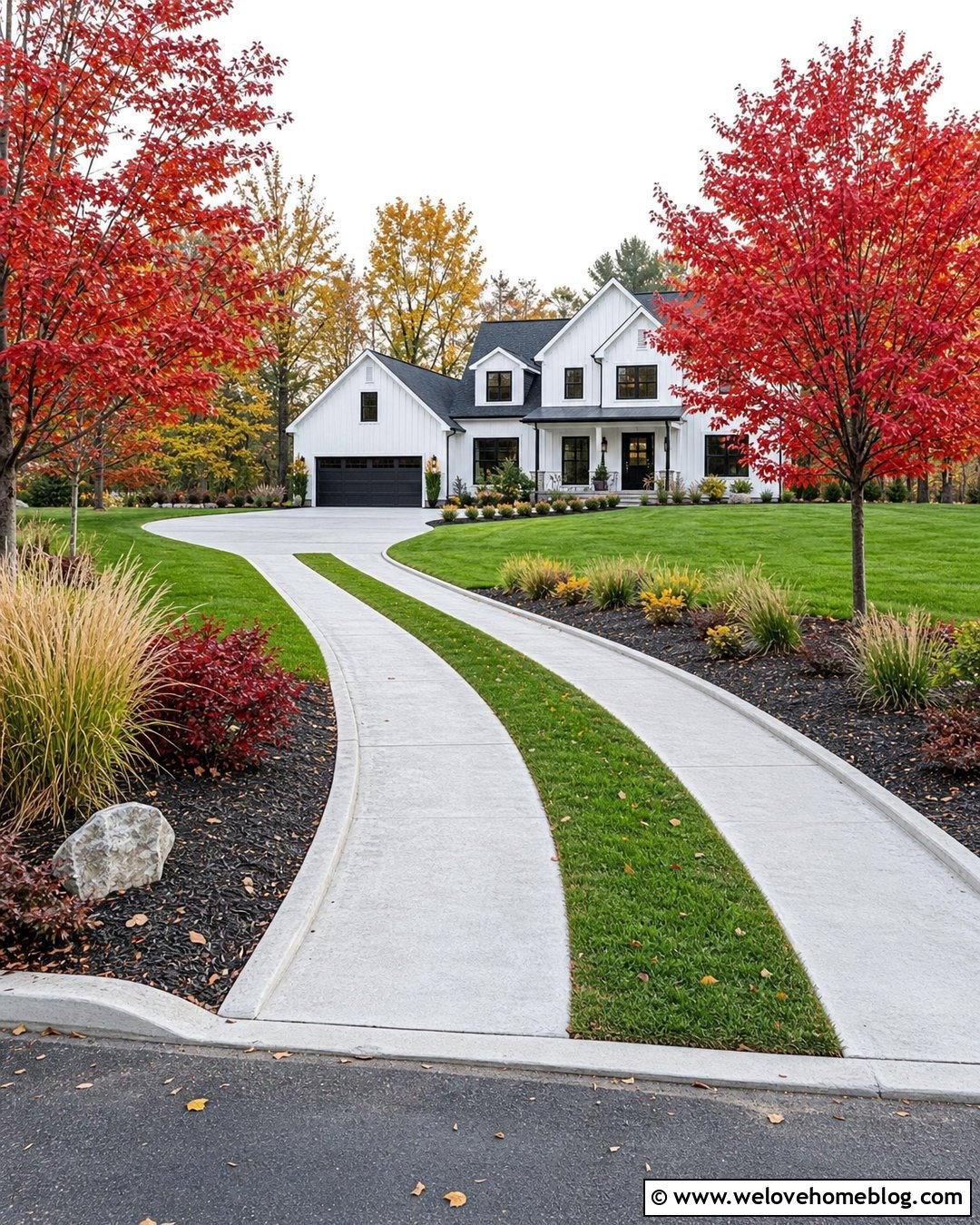
A light gray poured concrete driveway can feel softer when dogwoods and hydrangeas share generous beds along both sides. Space the dogwoods as the upper layer, then arrange hydrangeas between them rather than directly against each trunk. A simple saw-cut concrete pattern keeps the surface understated, while a thin charcoal paver ribbon adds definition. Choose hydrangea colors that complement the dogwood variety and the home’s exterior. White blooms create a calm, unified palette, while blue or pink flowers introduce more cottage character. Add evergreen groundcover around the front of the beds to reduce bare areas outside the flowering seasons. This complete design suits a Craftsman or updated suburban home. The concrete provides a practical, clean foundation, and the layered planting creates depth without making the driveway feel narrow or overgrown.
5. Long Country Driveway With Double Dogwood Rows
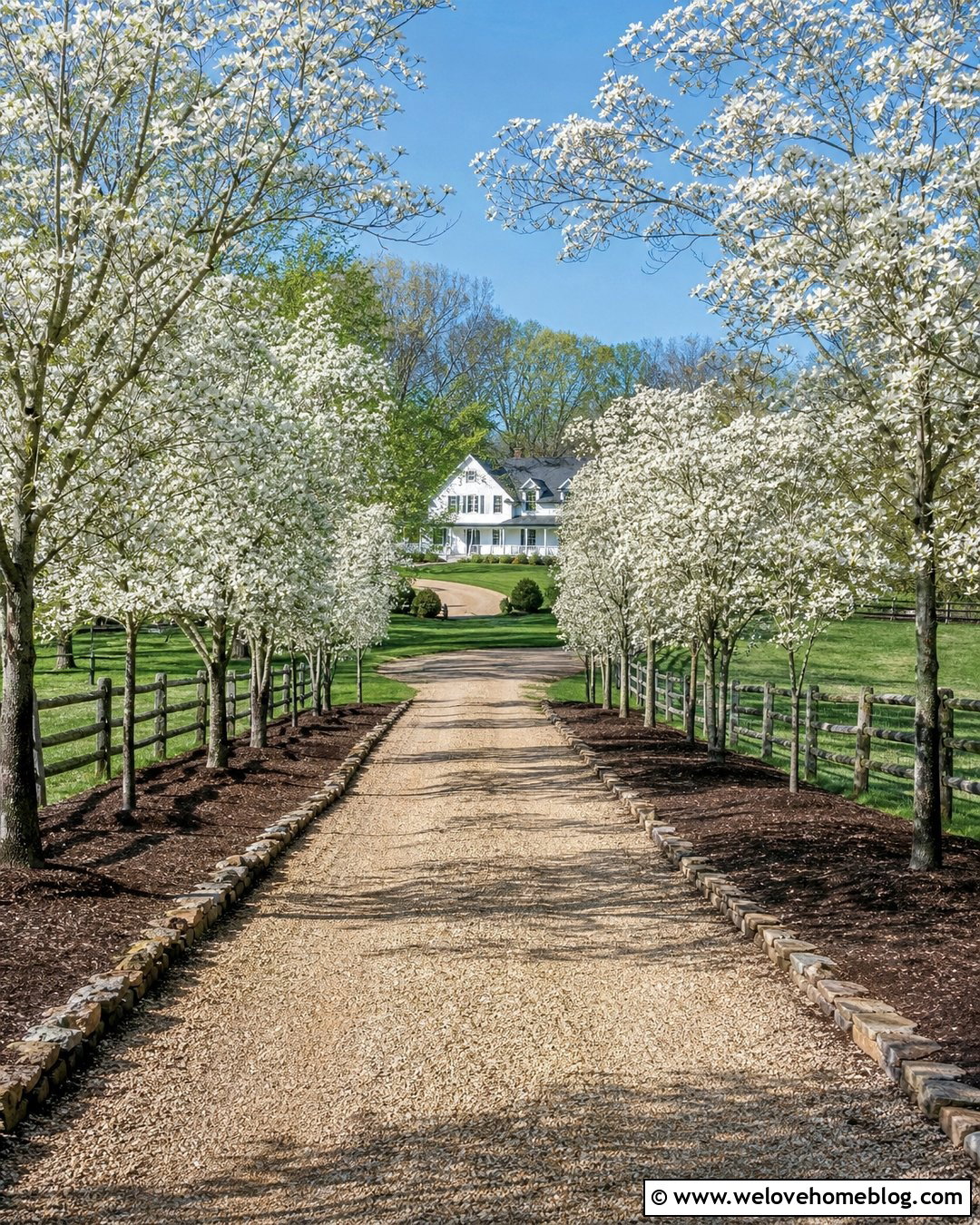
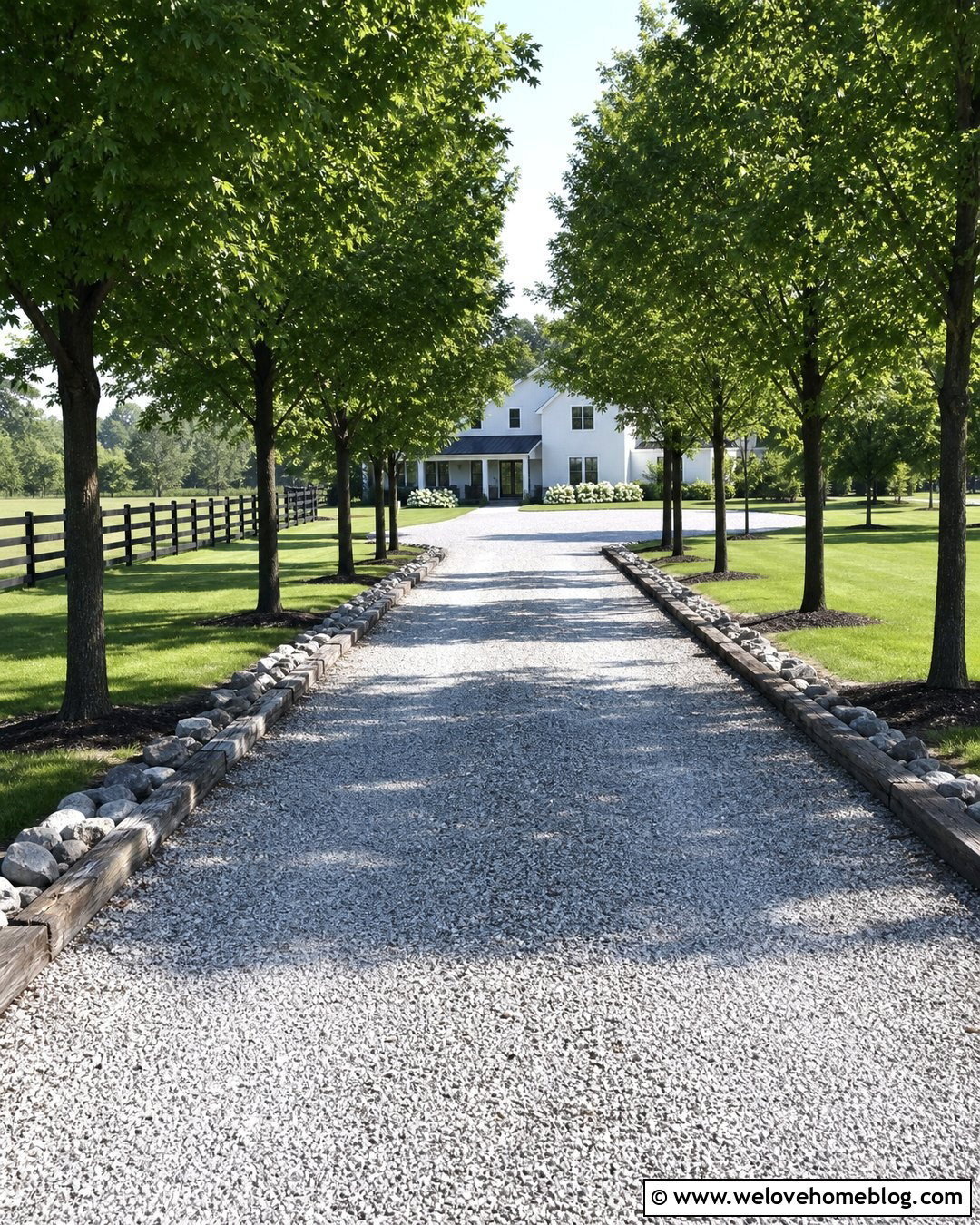
A long driveway offers enough distance to create a memorable double row of dogwoods. Begin with a compacted tan crushed-stone surface and line it with low fieldstone edging. Position the trees in broad mulched strips outside the drainage area, using consistent spacing to establish a clear rhythm toward the house. Mature width varies by species and cultivar, so select the trees first and plan the planting distance around their eventual canopies. () Between the trees, allow simple meadow grass or lawn to preserve the expansive country setting. A split-rail fence can run behind one row without competing with the blooms. This look works naturally with a farmhouse, barn-style home, or rural cottage. At the far end, widen the gravel into a turning court that repeats the same stone border.
6. Small Driveway With One-Sided Dogwood Planting
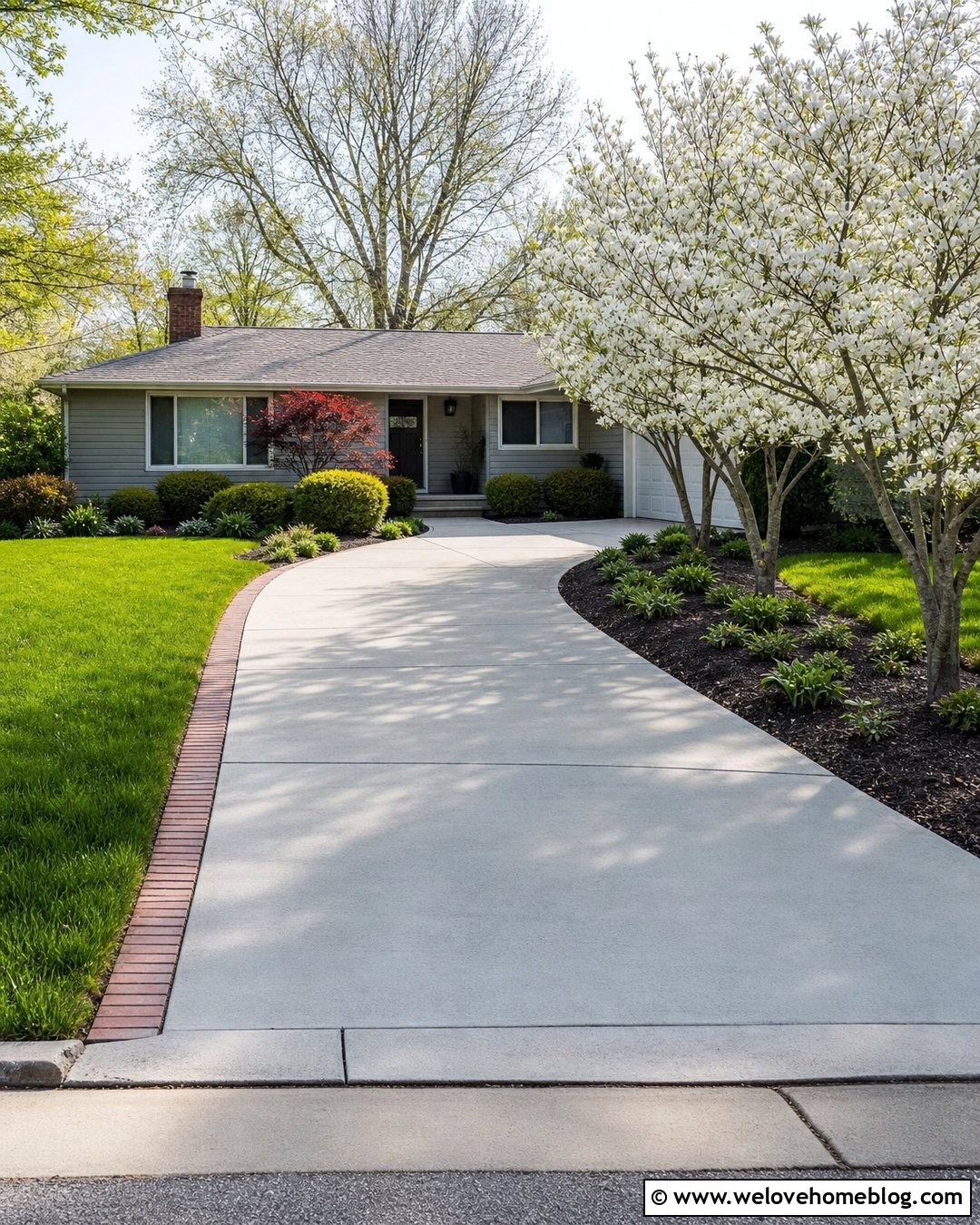
Not every property has room for matching tree rows. On a small suburban driveway, a one-sided arrangement of compact dogwoods can produce the same graceful effect while preserving parking and walkway space. Use smooth medium-gray concrete for the driveway and install a curved planting bed along the wider property line. Three dogwoods placed in a staggered rhythm will look more natural than forcing a tight, perfectly straight row. Finish the opposite edge with a slim brick ribbon and neatly maintained lawn. Beneath the trees, use mulch and low shade-tolerant plants that will not spill onto the driving surface. Connect the curved bed to the home’s foundation landscaping so it feels intentional. This layout guides the eye toward the front door while keeping vehicle doors, mirrors, and turning movements away from low branches.
7. Farmhouse Gravel Driveway With Dogwood Borders
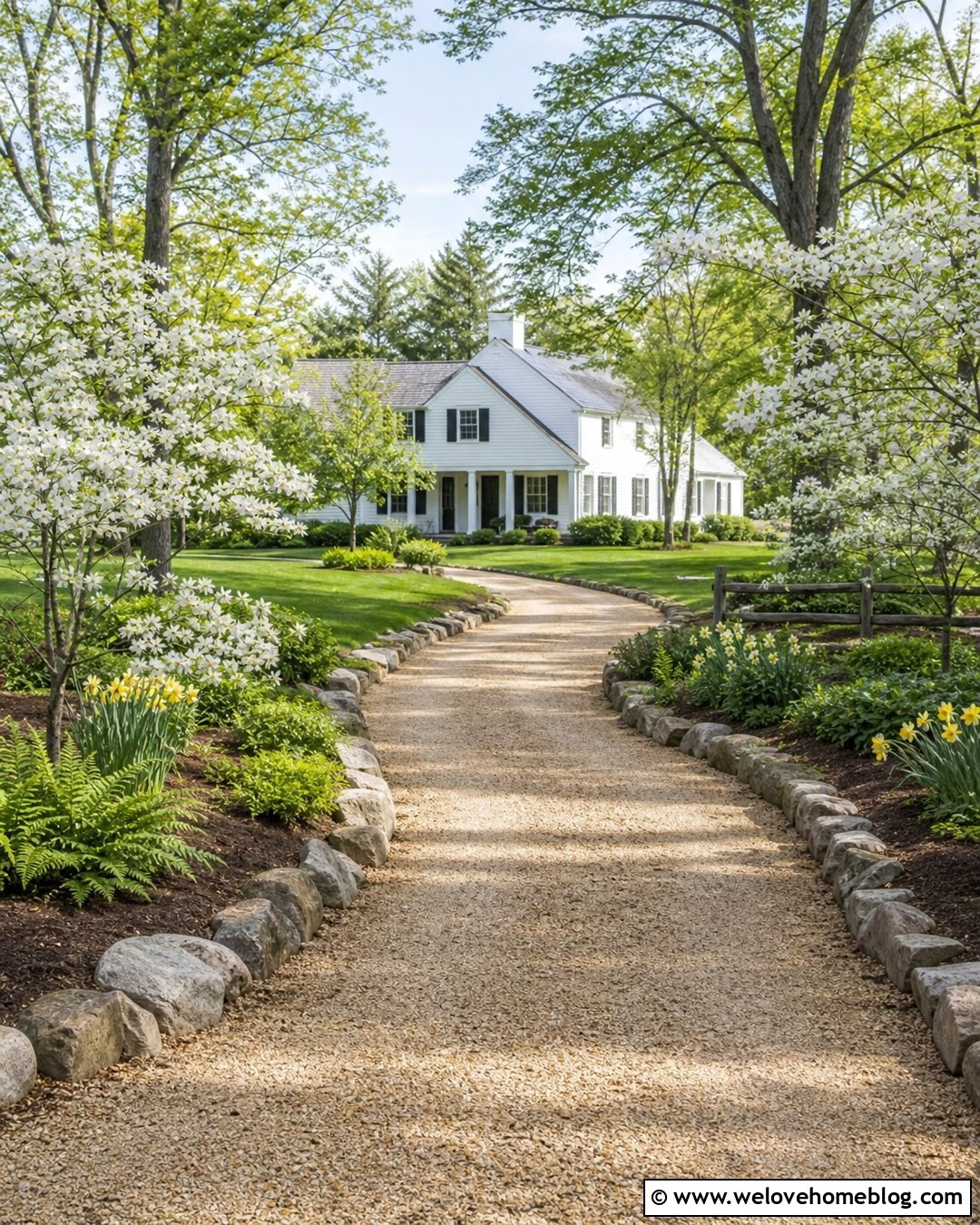
Warm buff gravel, white dogwood blooms, and simple timber fencing create a relaxed farmhouse approach. Shape the driveway with a subtle curve instead of a perfectly straight line, allowing the trees to appear gradually as visitors move toward the house. Use chunky natural fieldstone along the gravel edges where runoff is limited, then transition to open grass shoulders near drainage points. Plant dogwoods in wide mulched beds backed by a weathered split-rail fence. Drifts of daffodils can supply early color, while ferns and native groundcovers keep the beds attractive after spring. The trees should frame the farmhouse rather than completely hide it. Repeat the home’s white siding or dark roof color in a small gate, mailbox, or edging detail. The result feels established and welcoming without becoming overly formal.
8. Brick Driveway With Symmetrical Dogwood Rows
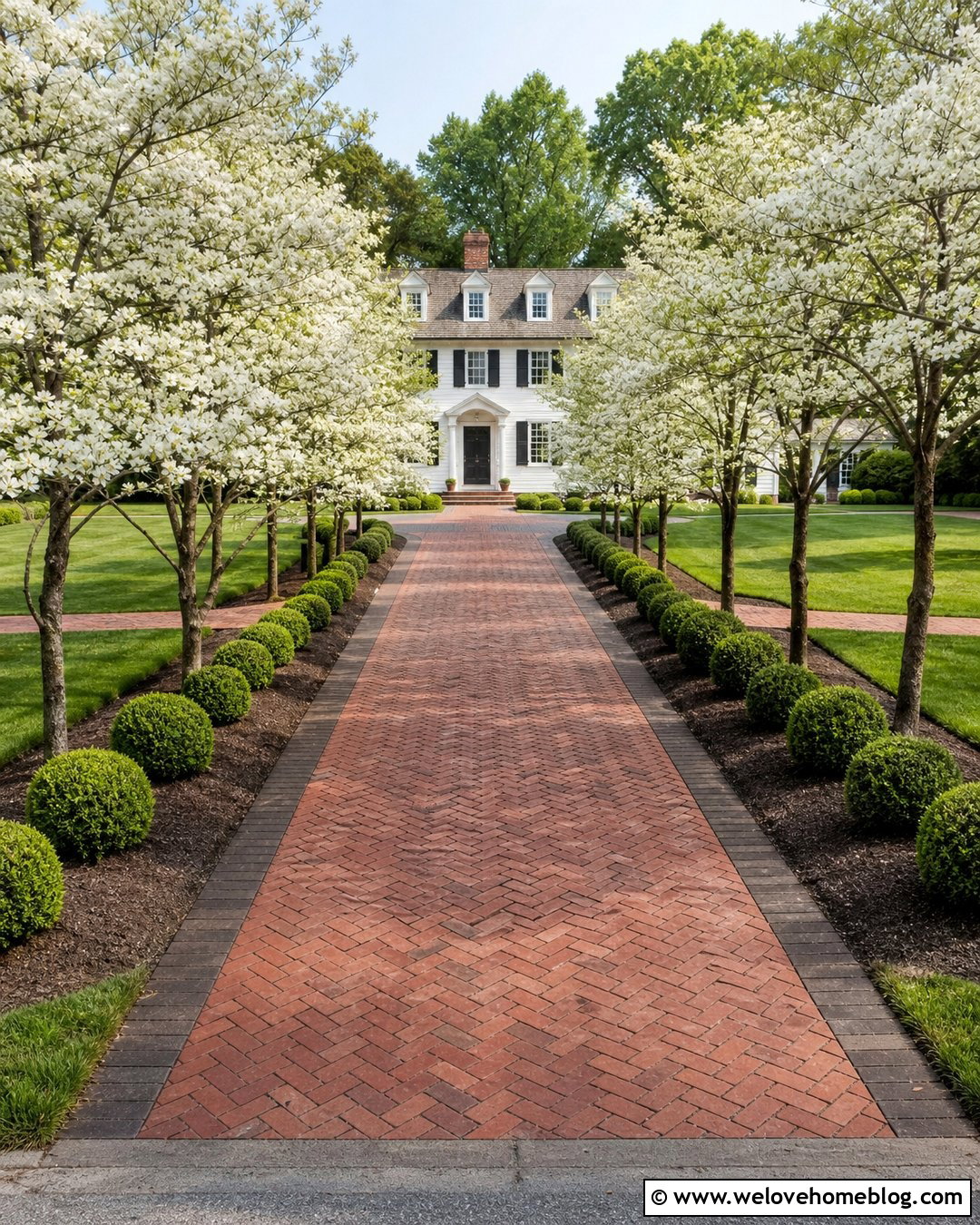
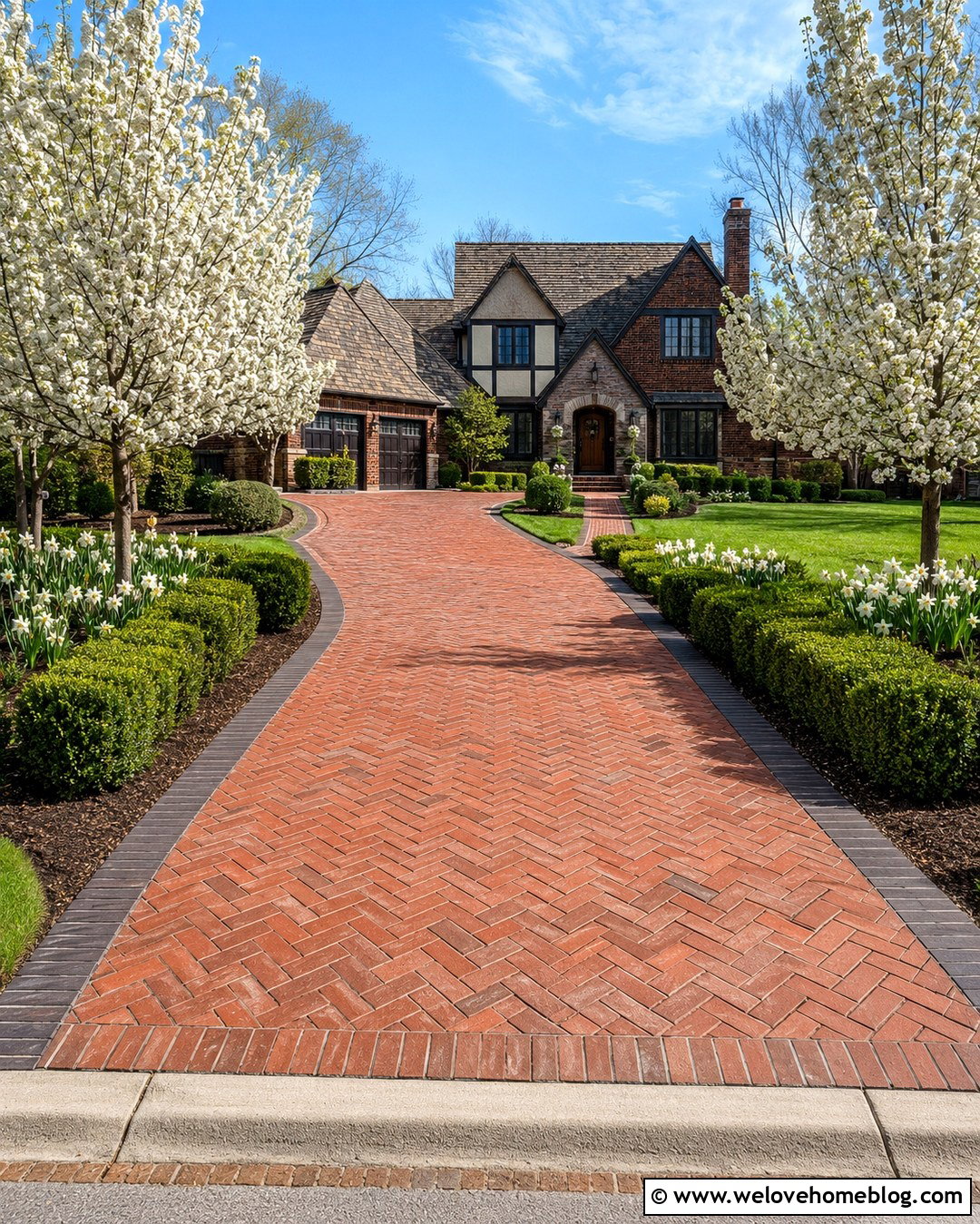
A clay brick driveway laid in a herringbone pattern creates a traditional foundation for symmetrical rows of white dogwoods. This refined design is particularly effective in front of a red brick Colonial, Federal, or Georgian house. Use a darker brick soldier course along each edge to contain the pattern and distinguish the driveway from its planting beds. Position the dogwoods in matching locations on both sides, then repeat clipped boxwood or inkberry at a lower level. A simple lawn strip behind the beds prevents the entrance from looking crowded. Keep the planting palette restrained so the brickwork and flowering canopies remain the main features. At the garage apron, turn the border bricks perpendicular to the driveway. That small transition makes the entire installation appear carefully planned and visually connects the driveway with nearby brick walkways.
9. Modern Concrete Driveway With Kousa Dogwoods
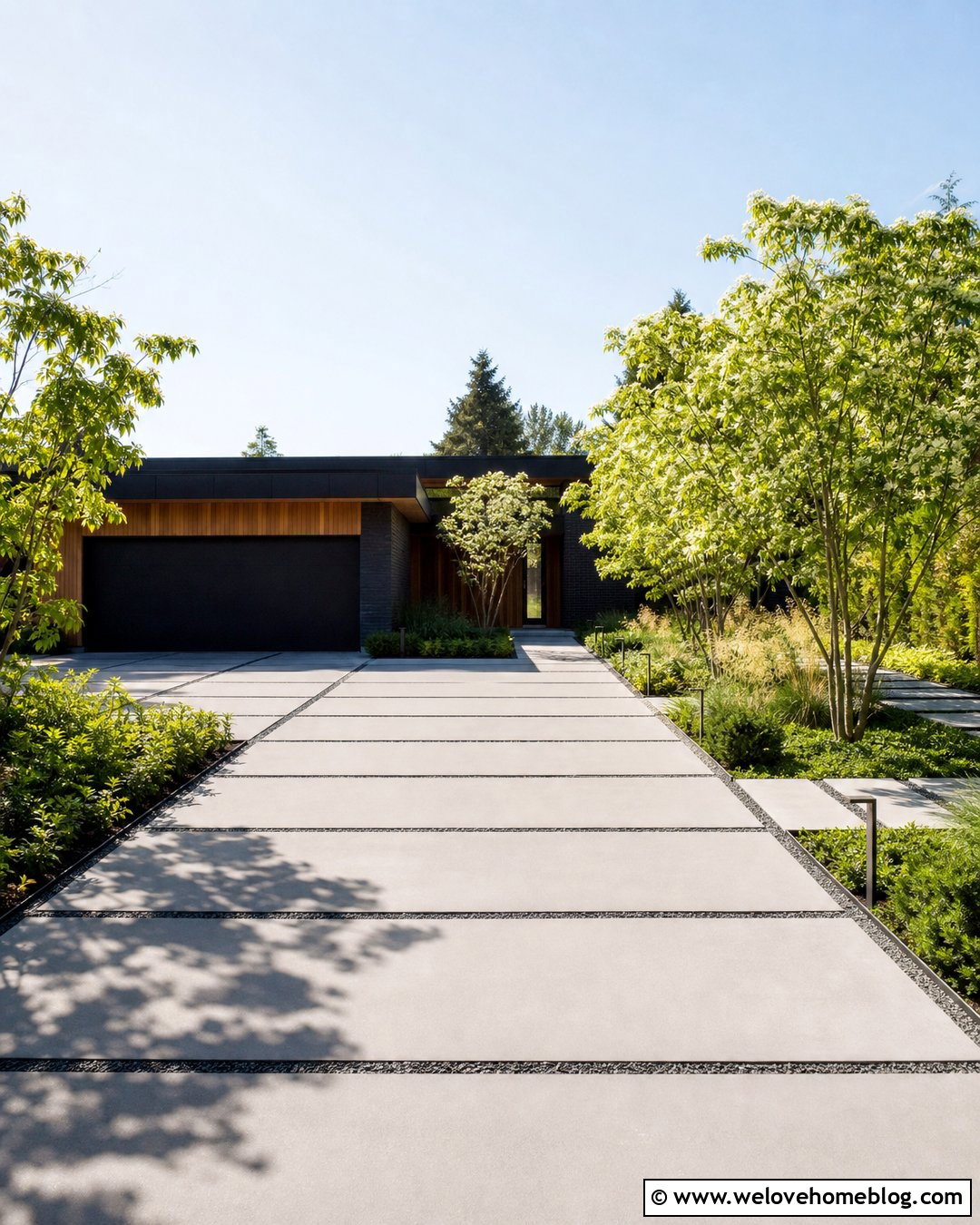
Broad rectangular concrete slabs separated by narrow gravel joints create a crisp setting for Kousa dogwoods. Instead of formal rows, use an offset arrangement that aligns the trees with the joints and architectural lines of a modern house. Choose smooth light-gray poured concrete and dark basalt gravel for clear contrast. Long planting beds filled with Kousa dogwoods, feather reed grass, sedges, and low evergreen groundcover soften the geometry without hiding it. Kousa dogwoods develop a spreading, layered form as they mature, making them an attractive counterpoint to flat roofs and simple facades. () Black steel edging can separate the planting beds from the gravel joints. Keep the entry area uncluttered, using one oversized address marker and simple pathway lighting instead of many decorative accents.

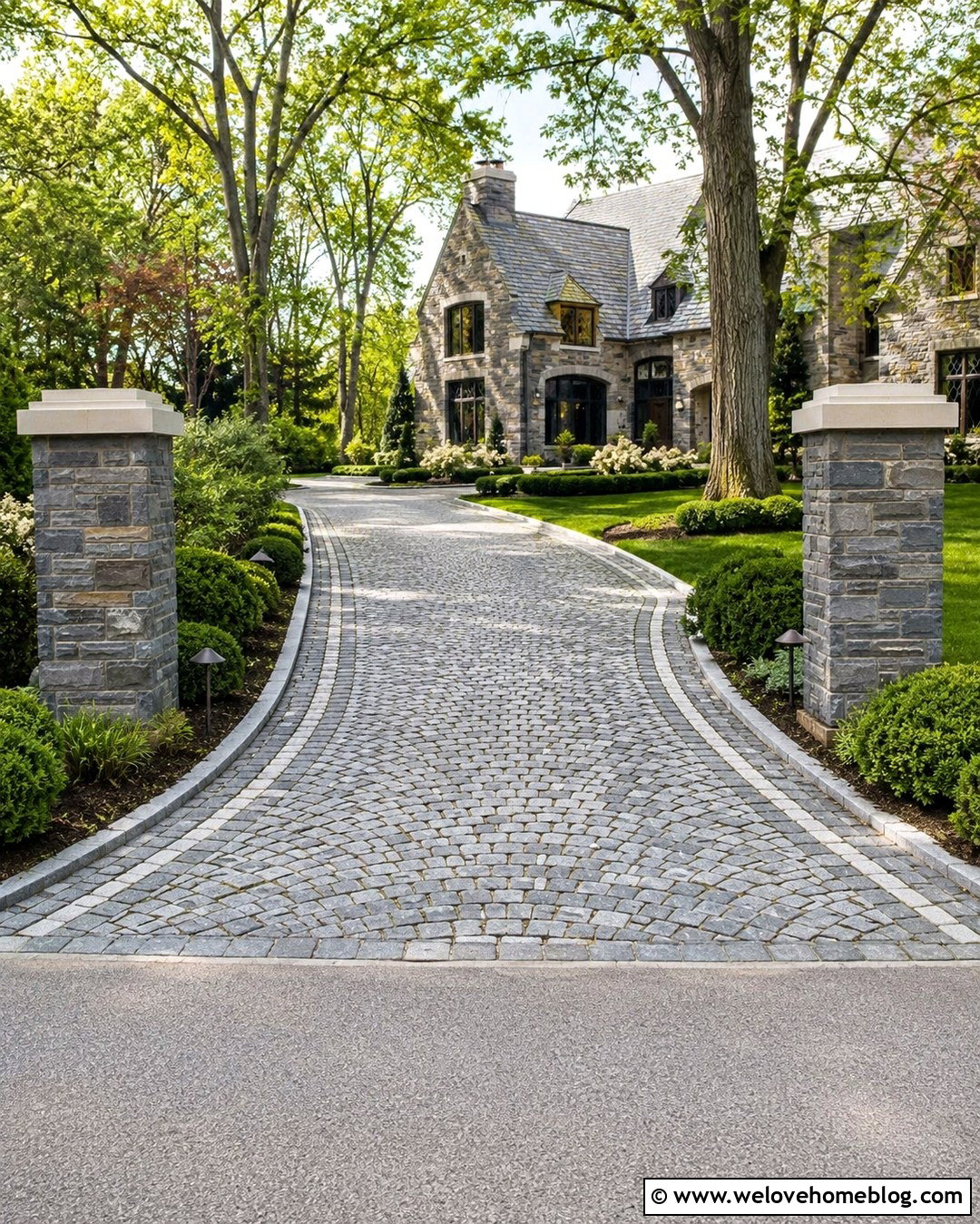
10. Woodland Driveway With Native Flowering Dogwoods
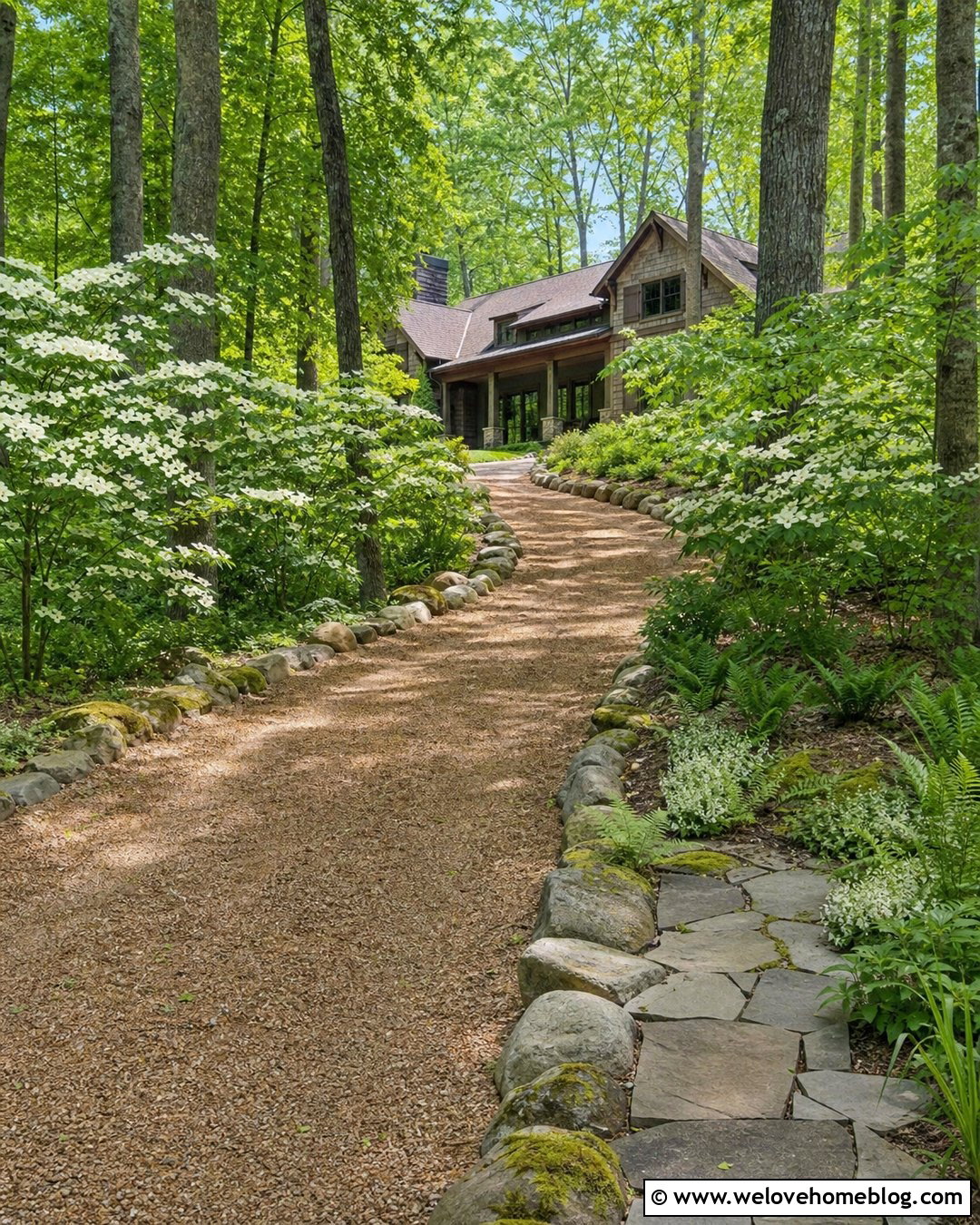
A woodland setting is a natural match for native flowering dogwoods, which grow as understory trees and generally perform well with filtered light. () Use a gently winding brown gravel driveway that follows the existing terrain rather than cutting a rigid path through the trees. Line selected sections with dogwoods, leaving irregular gaps where mature native trees already create strong structure. Mossy fieldstone edging can stabilize the gravel without looking overly finished. Beneath the dogwoods, layer ferns, Virginia sweetspire, foamflower, sedges, and other woodland plants suited to local conditions. Preserve leaf litter or use natural mulch to keep the ground visually connected to the surrounding woods. This design works beautifully with a rustic Craftsman, cabin-inspired home, or wooded contemporary house, creating an approach that feels settled into the landscape.
11. Sloped Driveway With Terraced Dogwood Beds
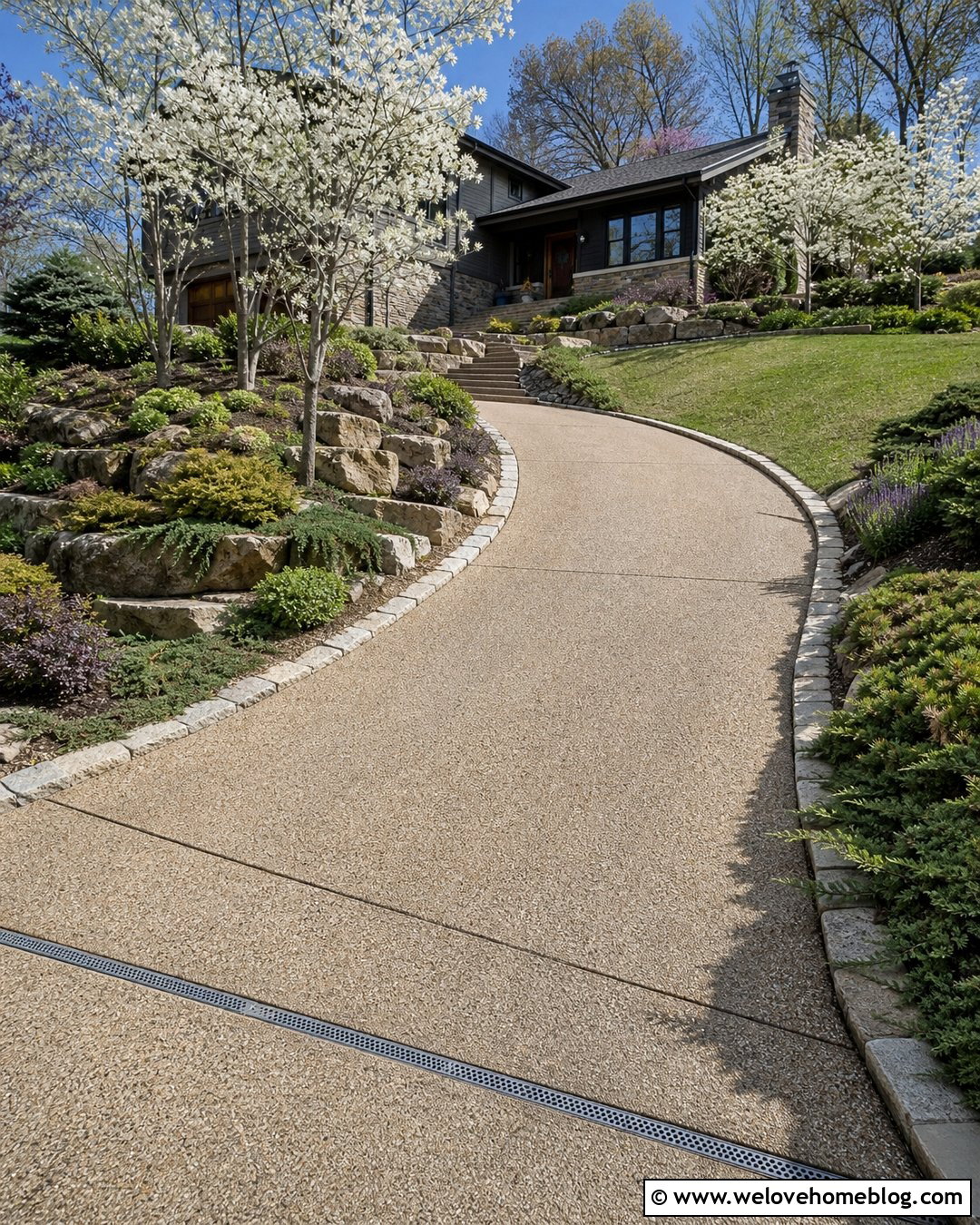
A sloped exposed-aggregate driveway needs planting beds that follow the grade without allowing soil or mulch to wash onto the surface. Build low terraced beds with natural retaining stones, then place dogwoods on the wider, level sections. The warm pebbled finish of exposed aggregate coordinates easily with tan or gray retaining stone. Curve the terraces slightly so they echo the driveway instead of forming harsh horizontal steps. Add low shrubs and groundcovers around each tree to cover exposed soil and slow runoff. A channel drain near the garage and defined drainage route along the lower edge can help keep water away from planting beds and structures. This complete look suits a hillside ranch or split-level home. The dogwoods visually reduce the apparent steepness by creating repeated canopies at several elevations.
12. Horseshoe Driveway With Pink And White Dogwoods
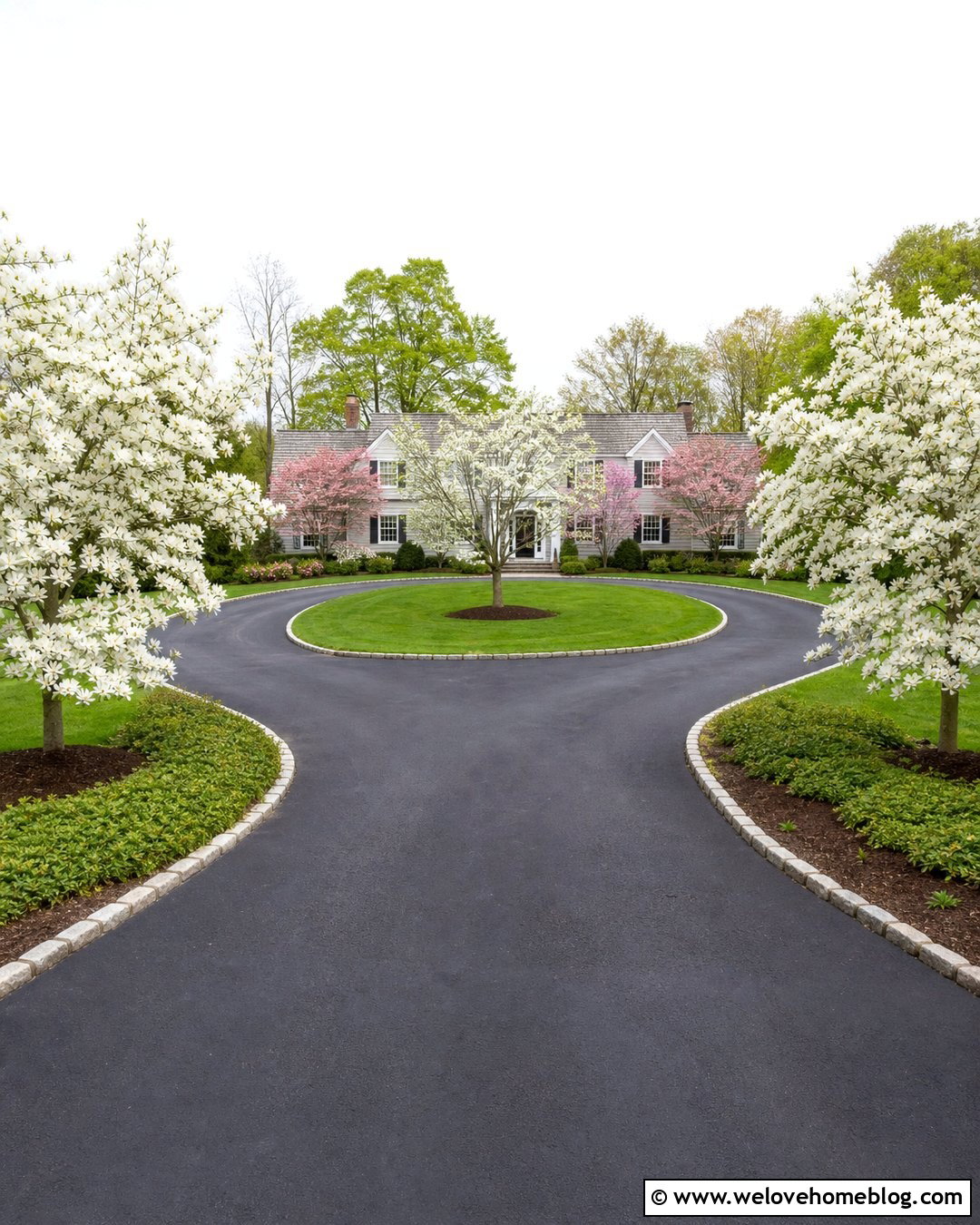
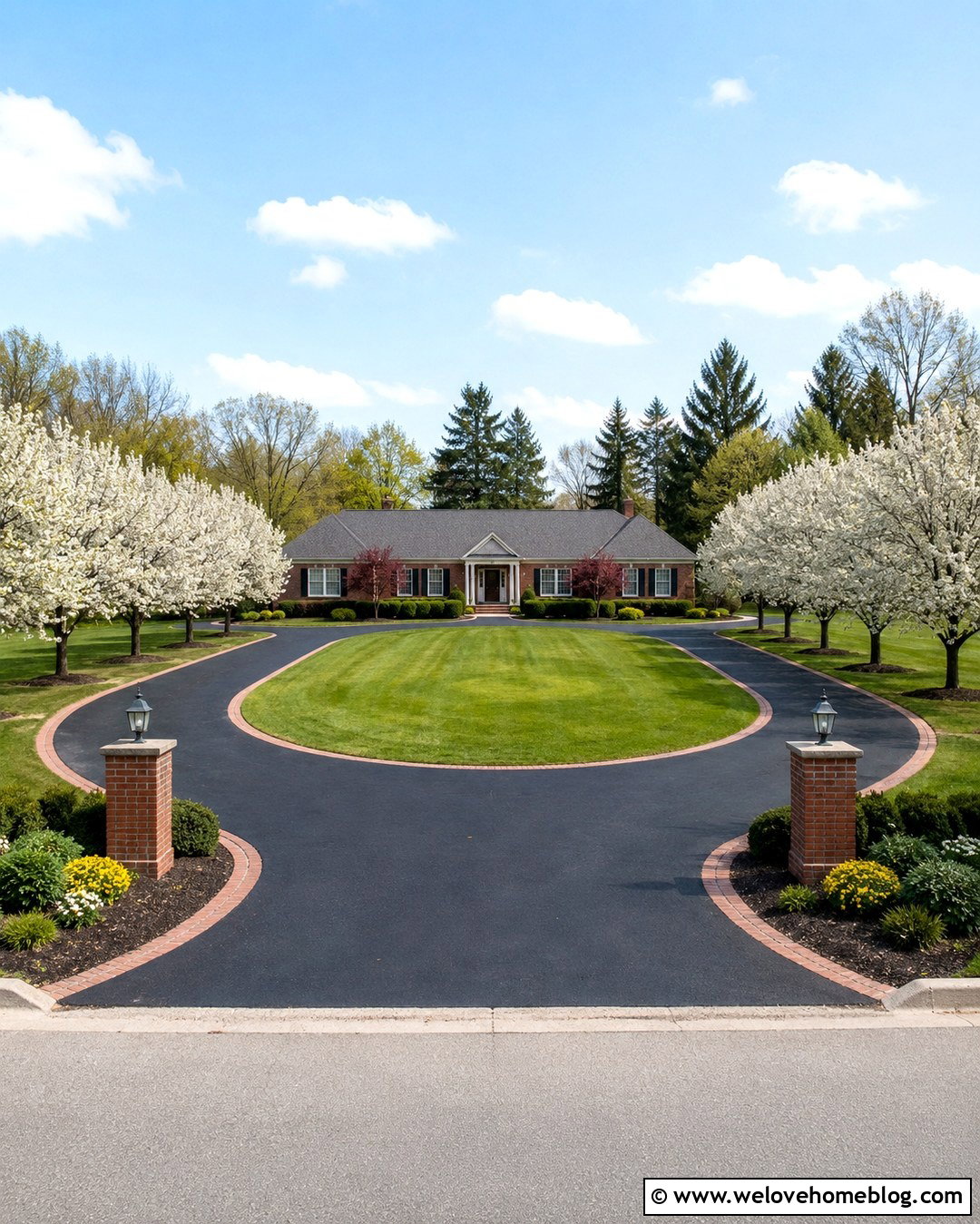
A horseshoe driveway creates two entrance points, making it ideal for a coordinated display of pink and white dogwoods. Use smooth black asphalt as the main surface and frame it with a pale granite cobblestone border. Place matching white dogwoods near both street entrances, then introduce pink varieties closer to the house for a gradual color transition. The large central lawn can hold one specimen dogwood surrounded by a broad circular mulch bed and low evergreen groundcover. Avoid filling the entire island with tall plants, since open space helps drivers see across the curve. Repeat the cobblestone edging around the central lawn for visual consistency. This balanced arrangement complements a wide traditional home, while the mixed bloom colors make the spring display more varied without sacrificing the formal symmetry of the horseshoe layout.
13. Cobblestone Driveway With Dogwoods And Azaleas
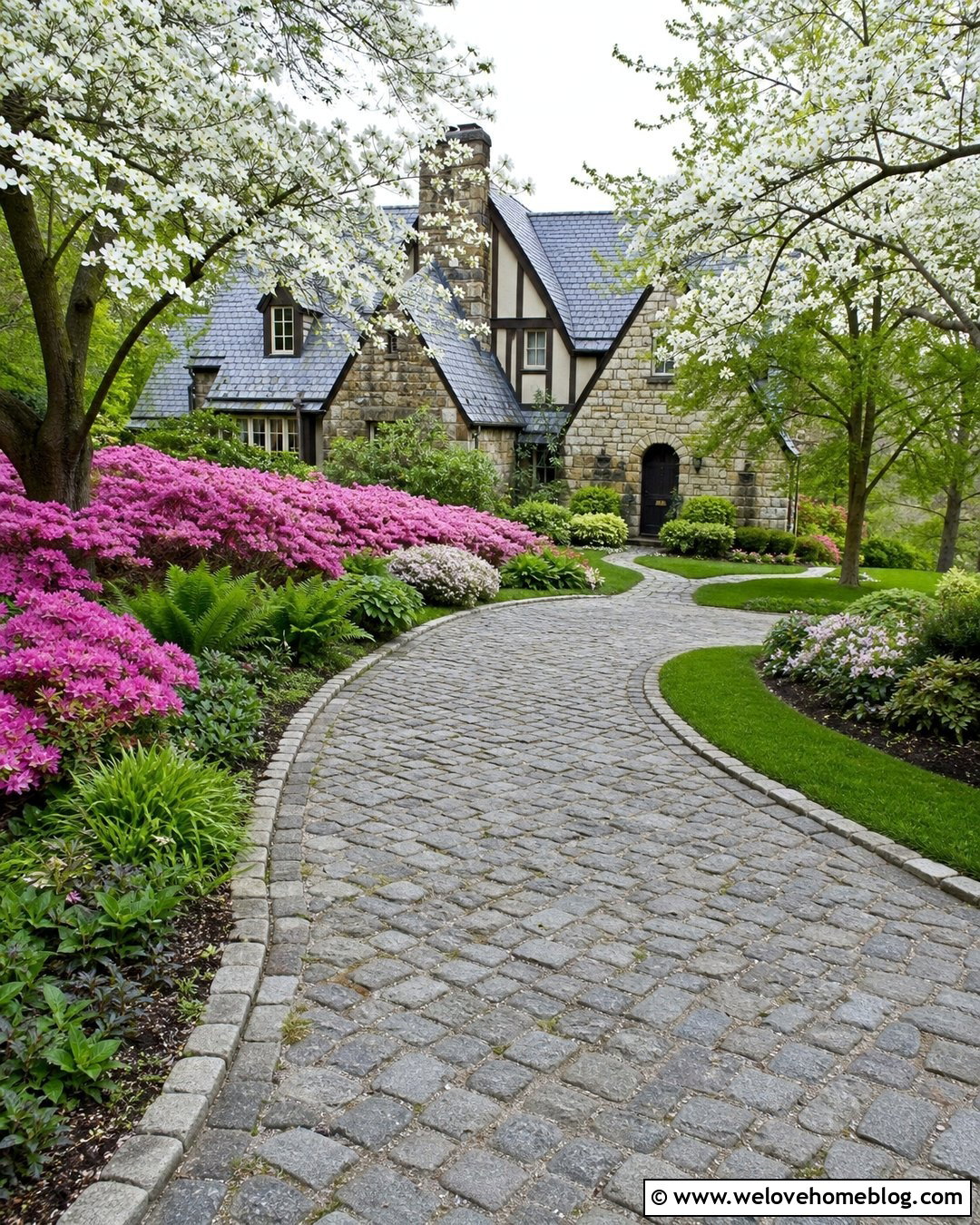
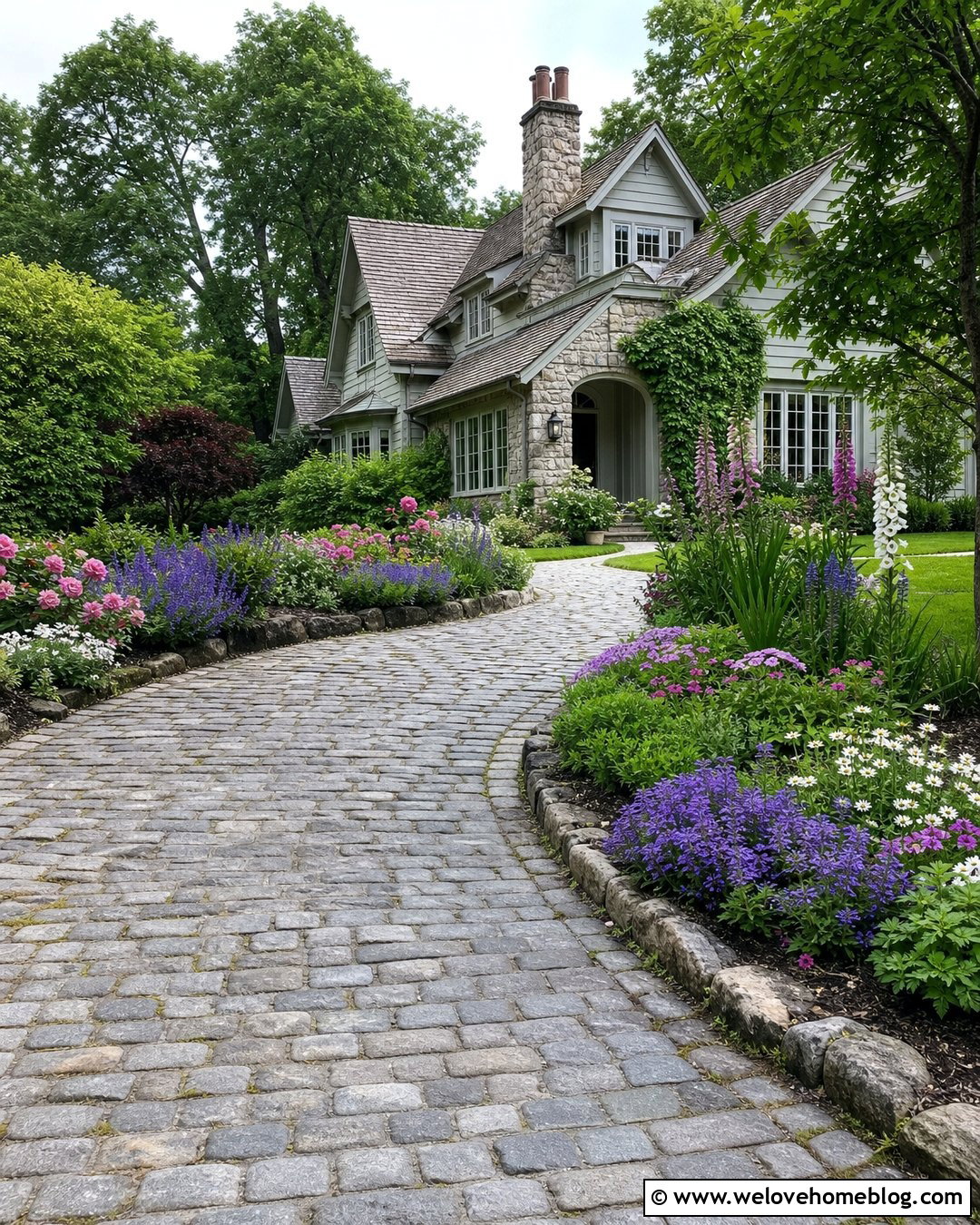
A cobblestone driveway has an old-world texture that pairs naturally with dogwoods and sweeping beds of azaleas. Choose weathered gray cobblestones for a curved driveway leading to a stone cottage, Tudor, or traditional brick home. Create generous planting beds beyond a flush cobblestone edge so the paving remains easy to navigate. Dogwoods form the upper canopy, while azaleas provide a colorful middle layer beneath and between the trunks. Complete the lower level with ferns, hellebores, and evergreen groundcover. Rather than lining every inch with identical plants, repeat loose groupings along the curve. This gives the entrance a mature garden character. Carry the cobblestones into a small parking court near the house, then use matching stone for the front walkway so the driveway, landscaping, and architecture feel like one complete composition.
14. Resin-Bound Driveway With Dogwood And Boxwood Beds
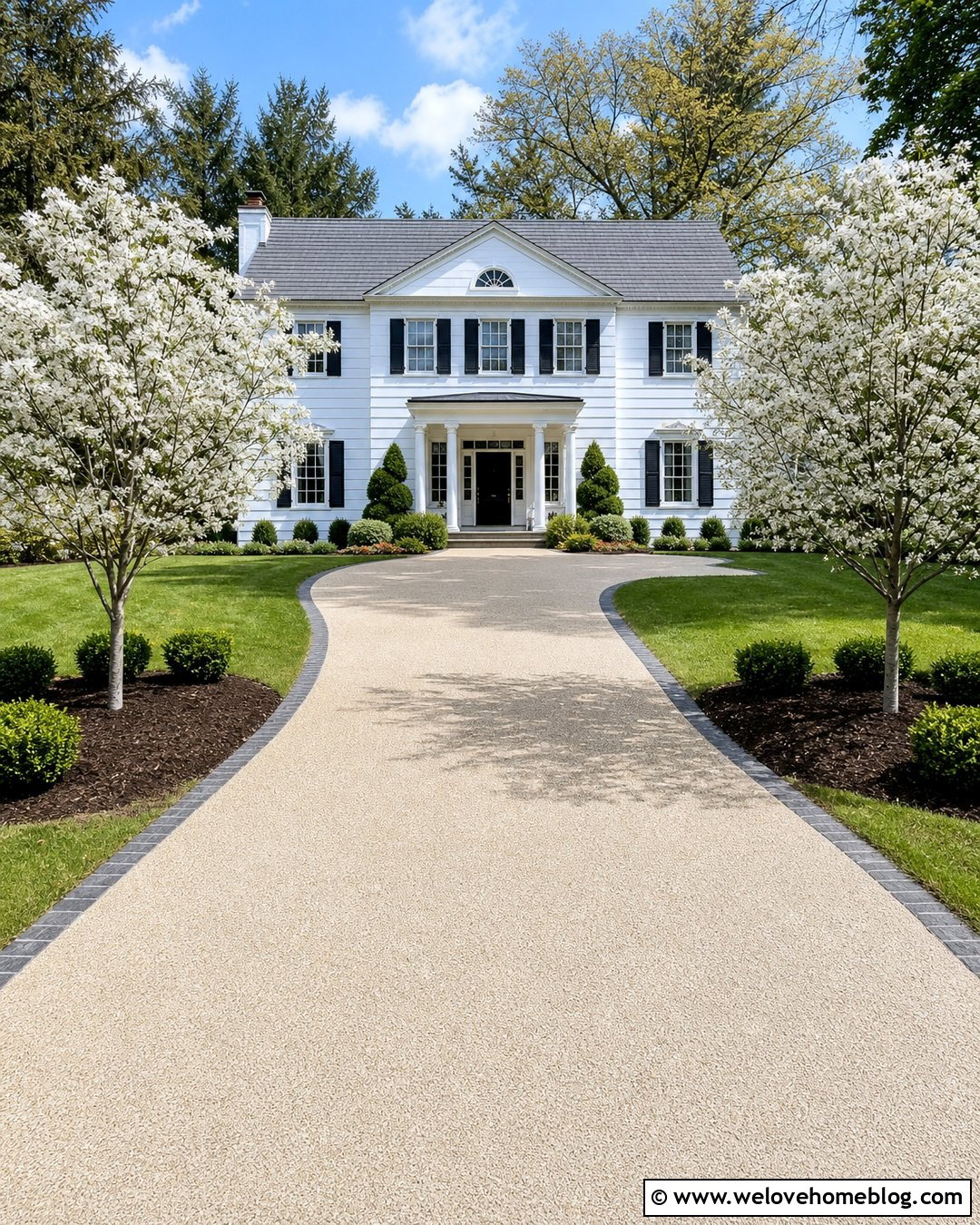
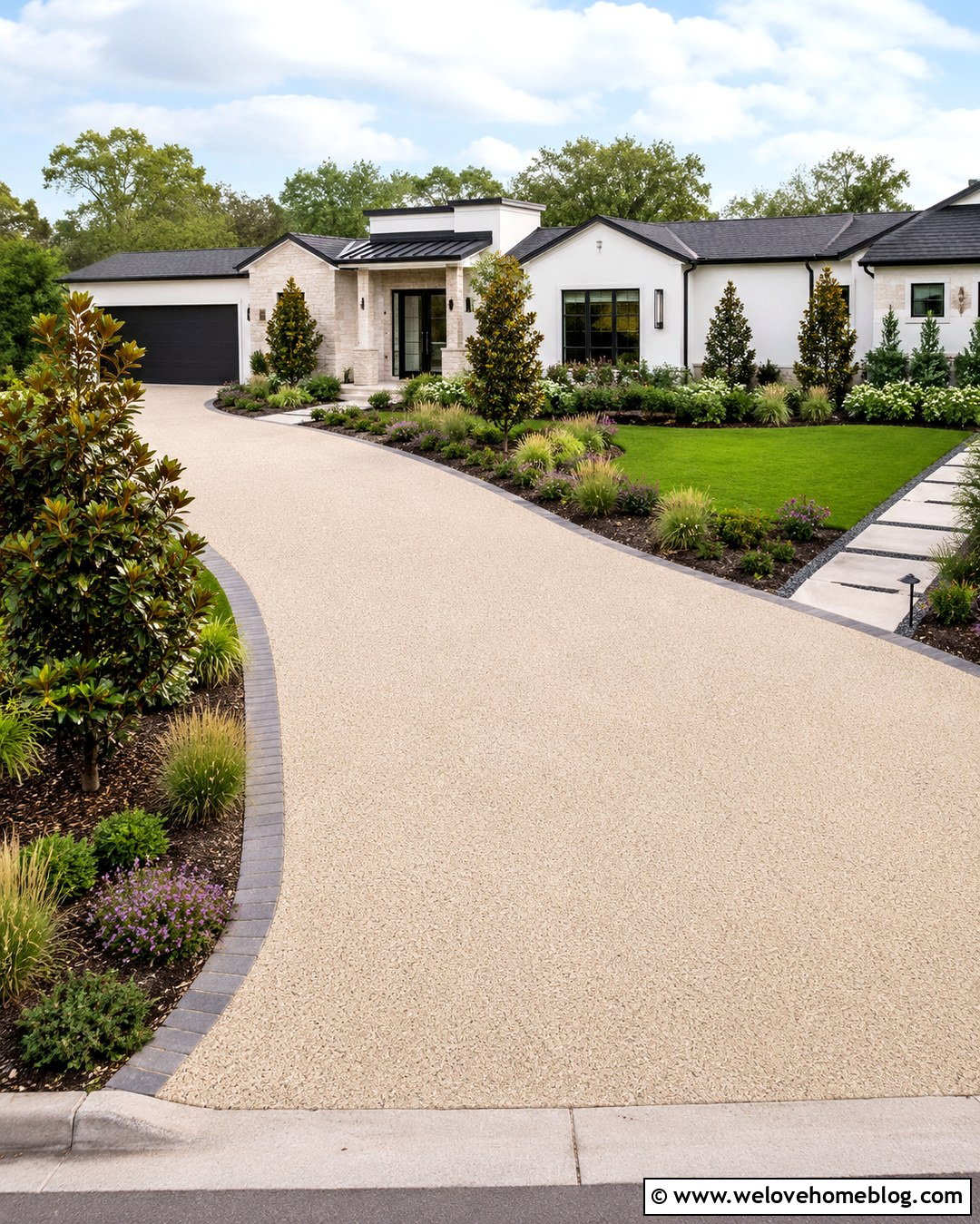
A pale beige resin-bound gravel driveway offers a smooth, contemporary surface while retaining the visual warmth of small stone. Frame a straight or gently curved layout with dark granite setts, then plant white dogwoods in symmetrical beds along the approach. Low boxwood alternatives, such as compact inkberry where suitable, can establish a neat evergreen outline beneath the trees. Use broad mulch circles within the larger beds to protect trunks and reduce maintenance around roots. This complete design suits an updated Colonial, transitional home, or modern farmhouse. Keep the planting arrangement simple and spacious so the dogwoods remain visible against the house. At the sidewalk, flare the granite border outward to create a more generous entrance. Repeat the pale driveway tone in the front steps or walkway for a calm, coordinated exterior palette.
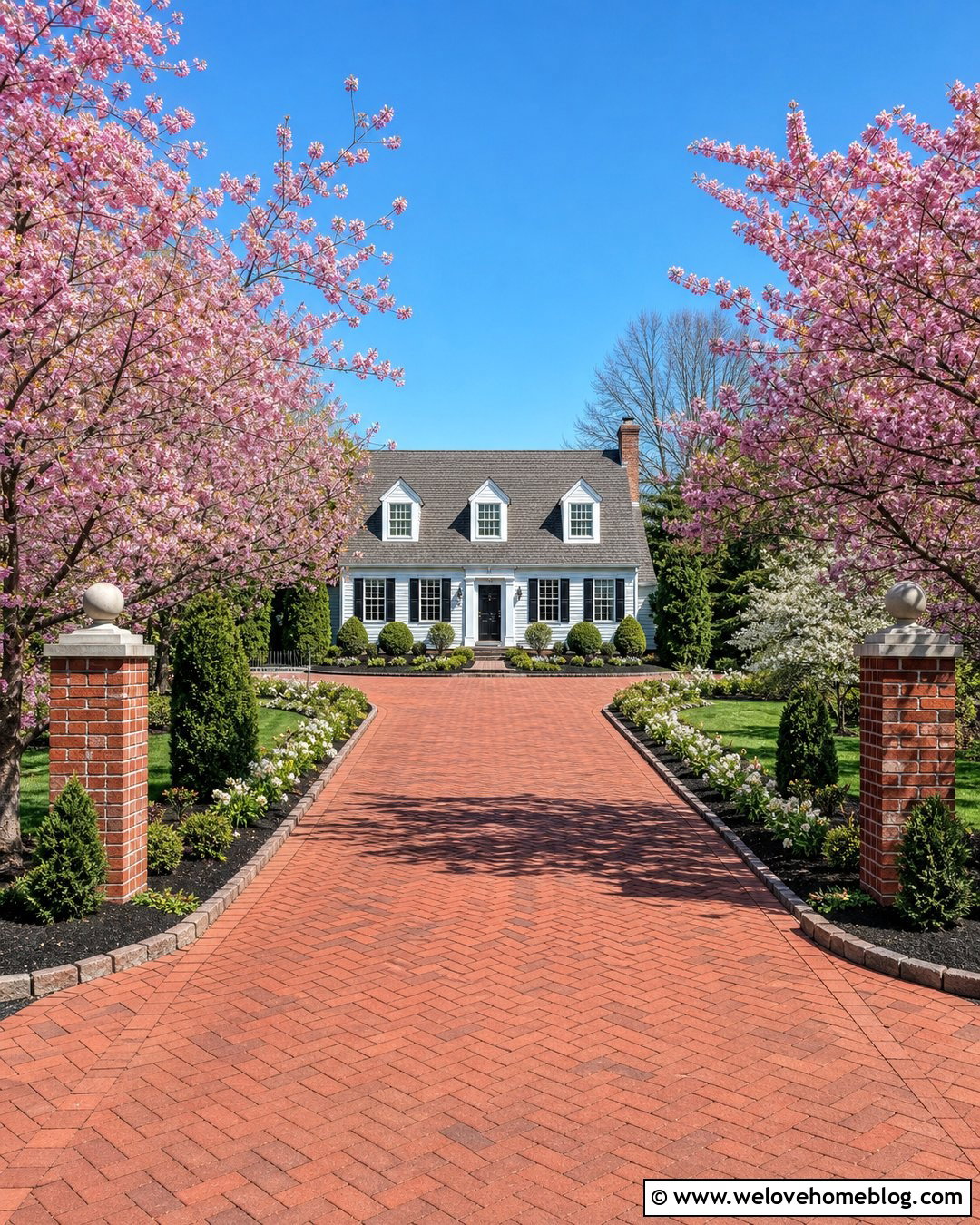
15. Pea Gravel Driveway With Natural Dogwood Planting
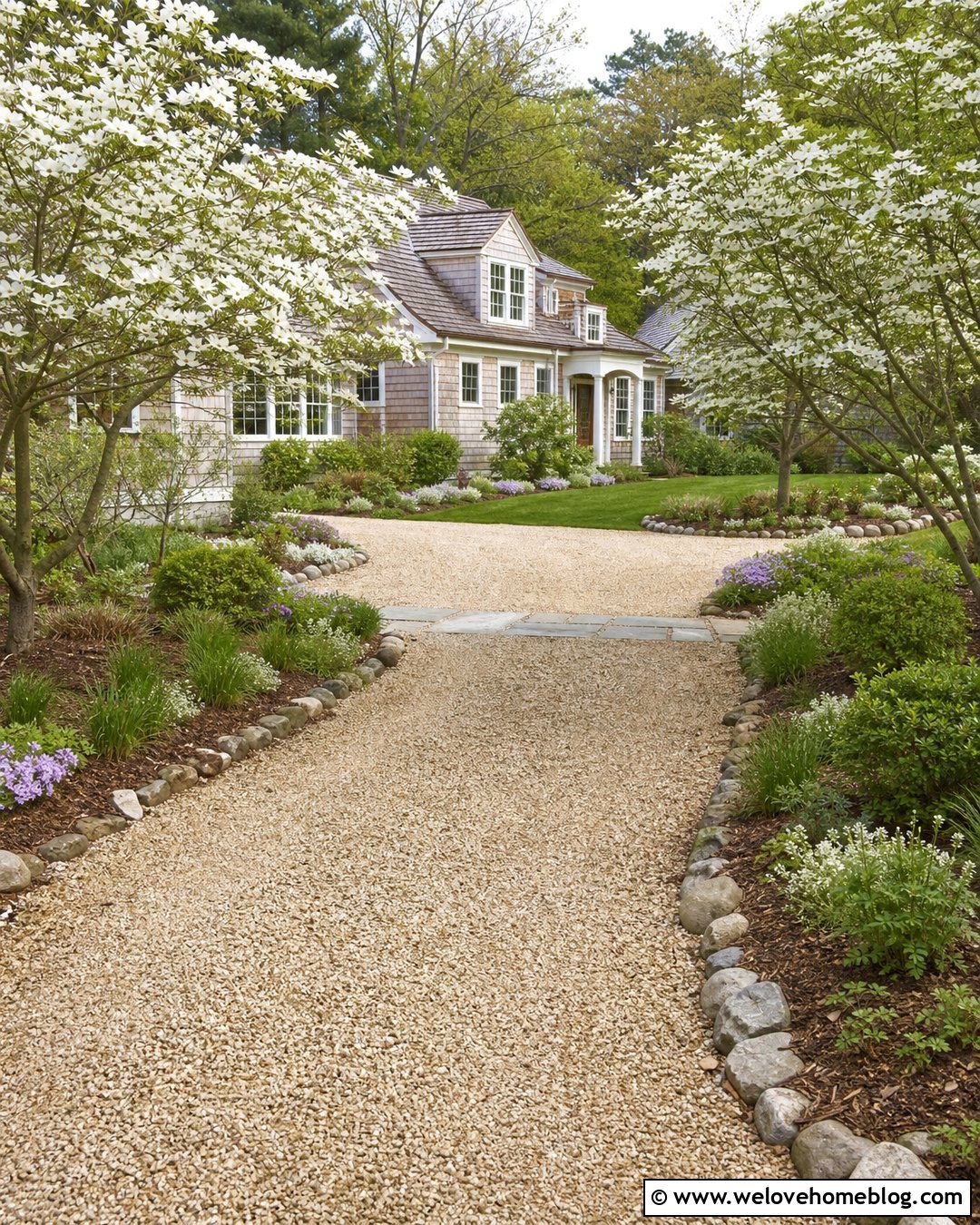
Soft tan pea gravel creates an informal driveway that works well with loosely grouped dogwoods and naturalistic planting. Give the driveway a shallow S-curve and contain the gravel with irregular fieldstone edging. Instead of evenly spaced trees, arrange dogwoods in alternating groups of one and three, allowing open views toward the yard and house. Underplant them with broad sweeps of native sedges, woodland phlox, foamflower, and low shrubs selected for local soil and light. The irregular rhythm feels more like the edge of a woodland than a constructed avenue. This design complements a country cottage or shingle-style home. Include a stabilized parking pad near the garage where vehicle movement is heavier. A simple flagstone path can cross the gravel and continue through the dogwood beds toward the front entrance.
16. Black Asphalt Driveway With White Dogwood Trees
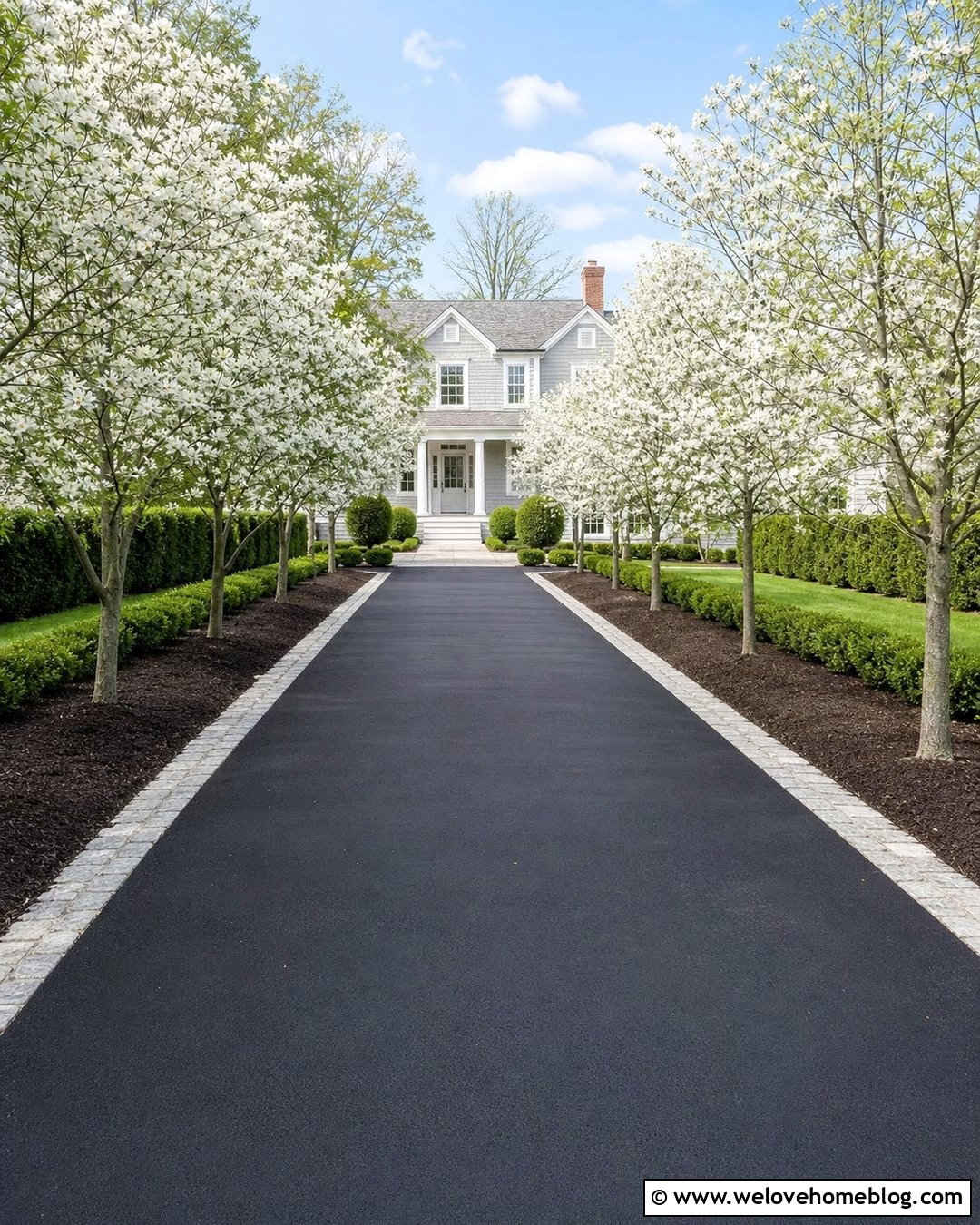
Few combinations are as visually clear as deep black asphalt beneath white flowering dogwoods. Use a straight driveway with a narrow border of light-gray concrete pavers to sharpen the edges and brighten the overall composition. Plant dogwoods in long mulched beds outside the paver strips, then place an evergreen hedge farther behind them. The hedge creates a dark backdrop that makes the spring bracts more noticeable while providing winter structure after the trees lose their leaves. Keep the hedge low enough to reveal the dogwoods’ branching. A simple rectangular walkway can connect the driveway to a white or light-gray house. This high-contrast design works well with traditional and contemporary architecture. Regular repetition gives the entrance a formal appearance, while the soft canopies prevent the dark asphalt from dominating the front yard.
17. Gated Driveway Entrance With Dogwood Trees
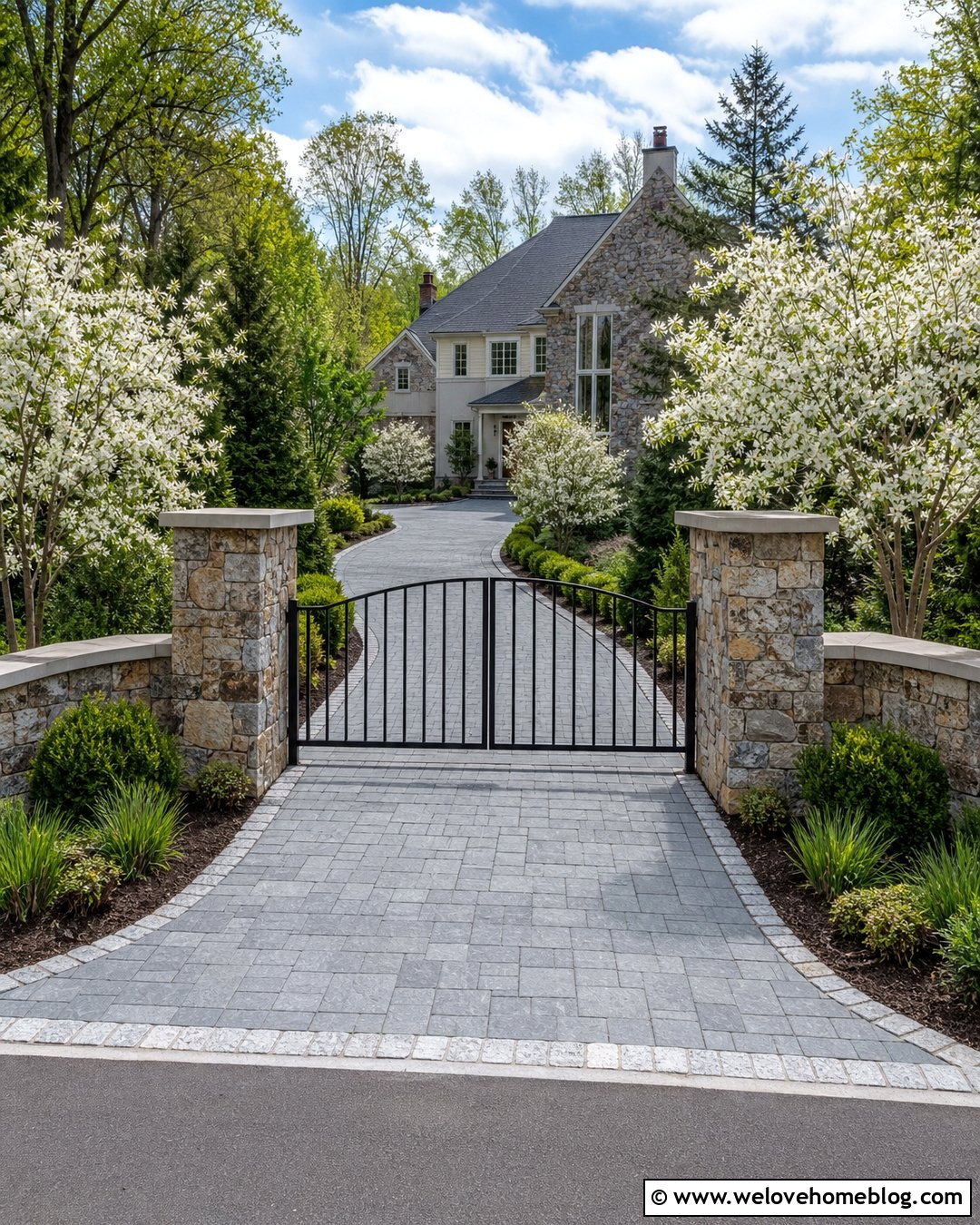
A gated driveway can feel welcoming rather than severe when dogwoods soften the entrance. Begin with a curved gray concrete-paver driveway passing between two low stone pillars and a simple black metal gate. Place one flowering dogwood behind each pillar, set far enough away that mature branches will not interfere with gate movement or sightlines. Continue a looser row of dogwoods inside the property to guide attention toward the house. Low evergreen shrubs, ornamental grasses, and broad mulch beds should connect the pillars to the tree planting. Match the pillar stone to the house facade or front steps for consistency. A paver apron at the road makes the entrance feel wider and more finished. Keep signs, lights, and hardware simple so the dogwood canopies remain the most attractive feature.
18. Dogwood Driveway With Landscape Lighting
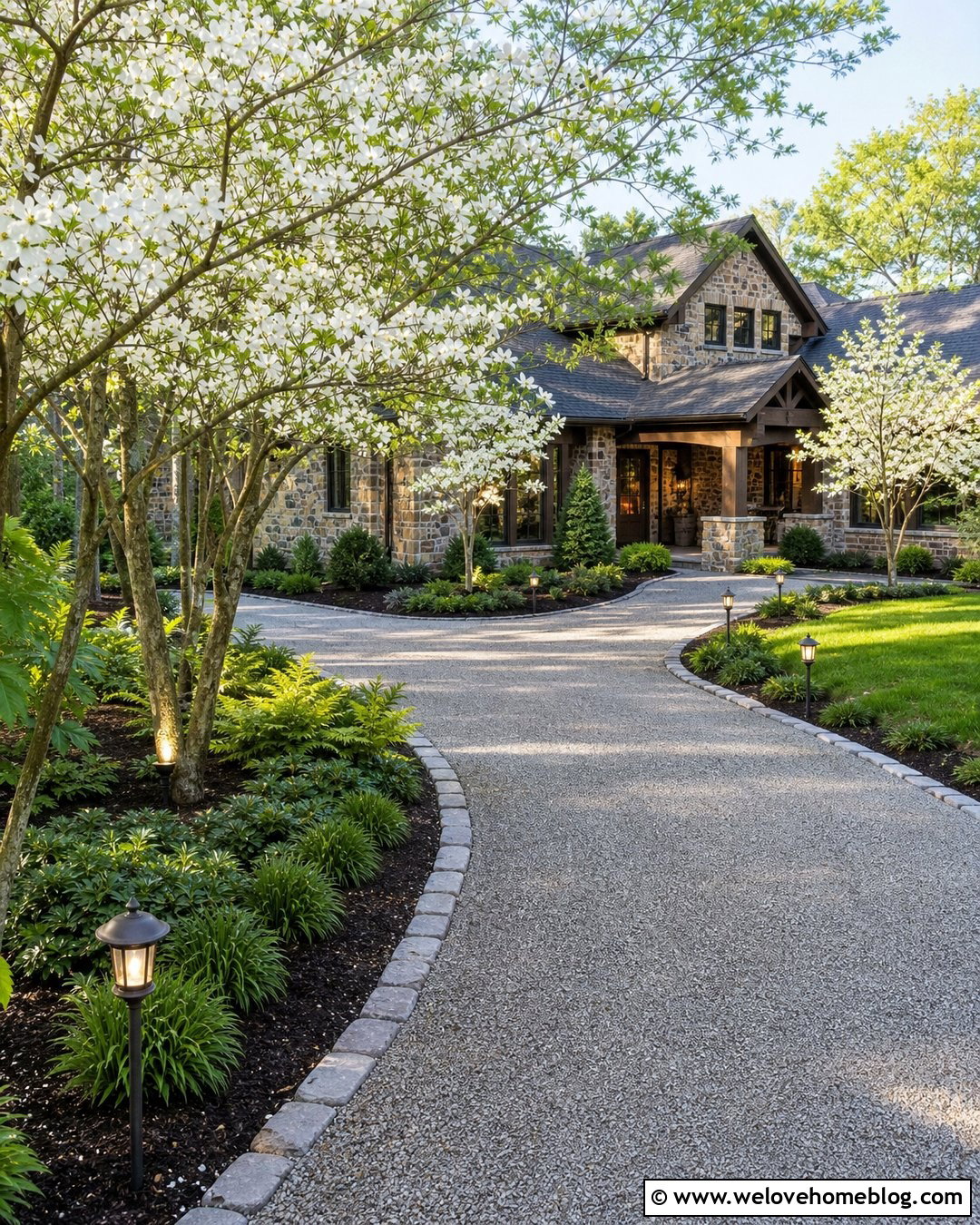
Landscape lighting can reveal the branching structure of dogwoods after sunset, but the daytime driveway design should remain equally strong. Use a warm gray cobblestone-edged gravel driveway with staggered white dogwoods planted in wide beds. Install small, shielded uplights near selected trees rather than lighting every trunk. During the day, the fixtures should disappear among low sedges, ferns, and groundcover. Add low path lights only at curves, walkways, and driveway transitions where guidance is useful. The driveway can gently bend toward a Craftsman home with a covered porch and natural stone accents. Keep electrical lines and fixtures outside areas likely to be disturbed by edging or routine maintenance. This layered approach combines a clearly defined gravel surface, graceful tree canopies, practical navigation, and restrained lighting within one complete landscape.
19. Low-Maintenance Kousa Dogwood Driveway
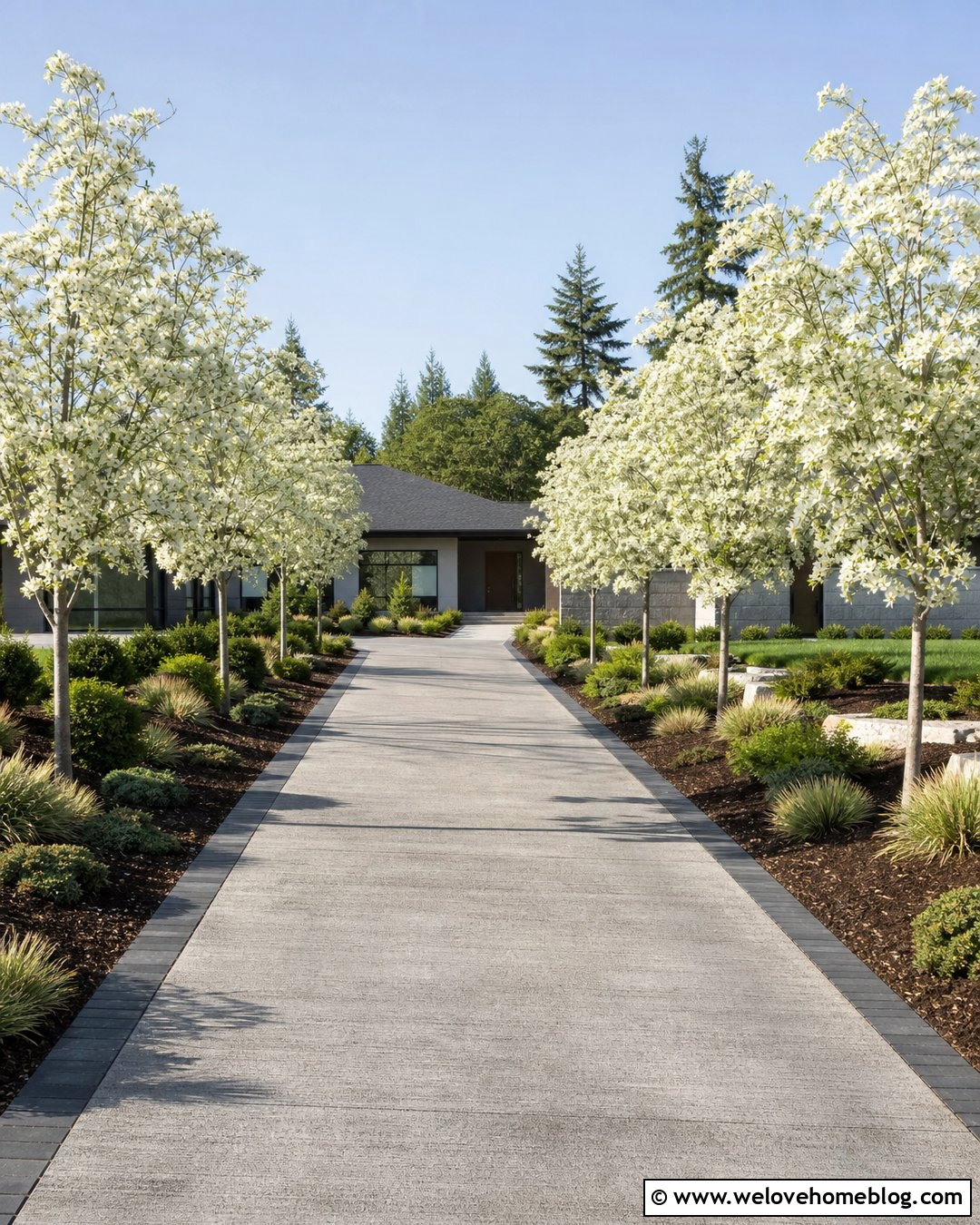
For a lower-maintenance approach, pair slow-growing Kousa dogwoods with a simple concrete driveway and broad mulched beds. Kousa dogwoods prefer well-drained soil and need enough open ground for root expansion, while mulch helps conserve moisture and protects the root area from mower damage. () Use medium-gray brushed concrete with a flush charcoal paver border. Plant the trees along one or both sides, depending on available width, and fill the beds with durable groundcover, sedges, and a limited number of compact evergreen shrubs. Avoid narrow lawn strips between the driveway and planting beds because they require awkward mowing. A drip irrigation line beneath the mulch can support new trees during establishment and dry periods. This uncluttered design works with ranch, contemporary, and transitional homes.
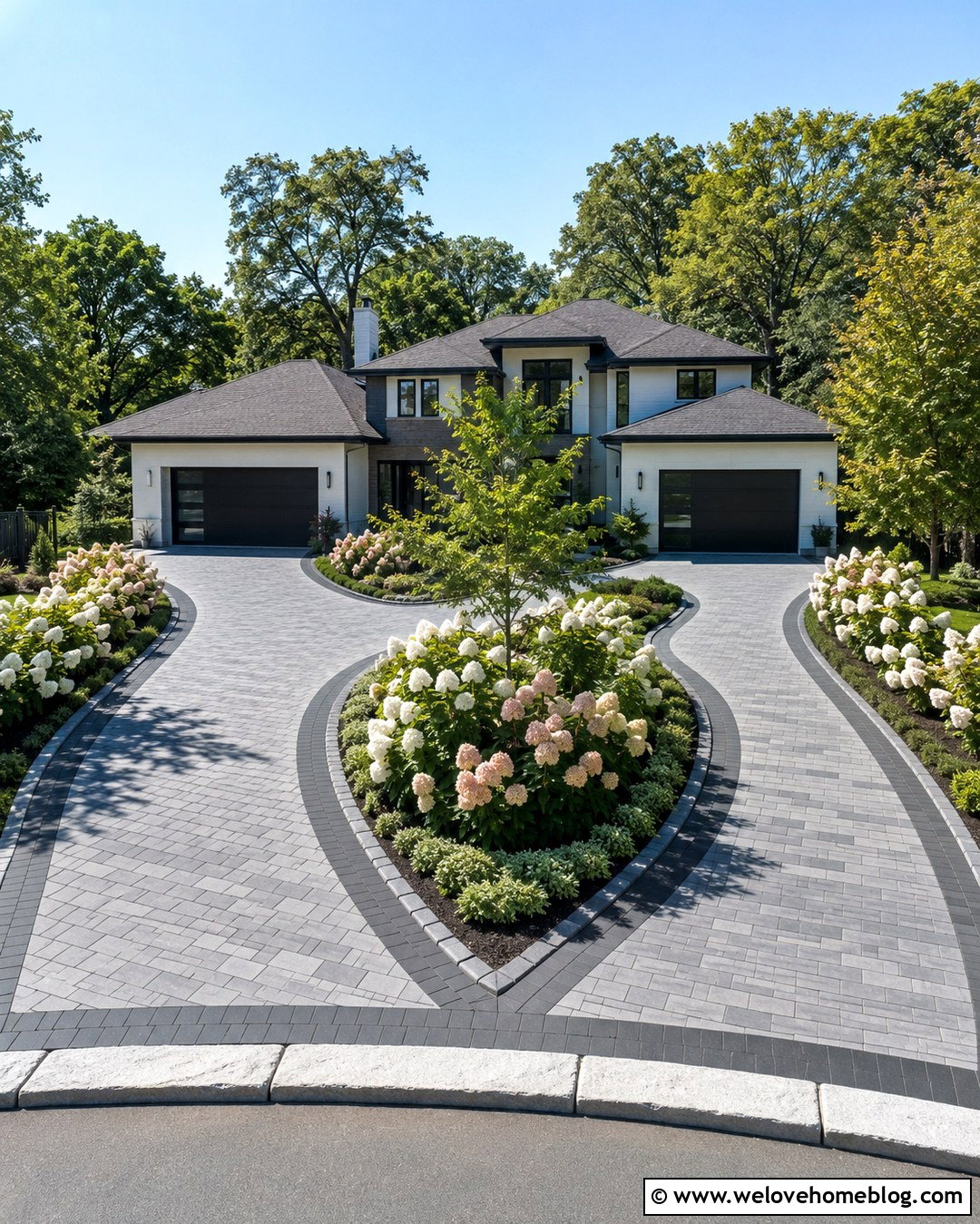
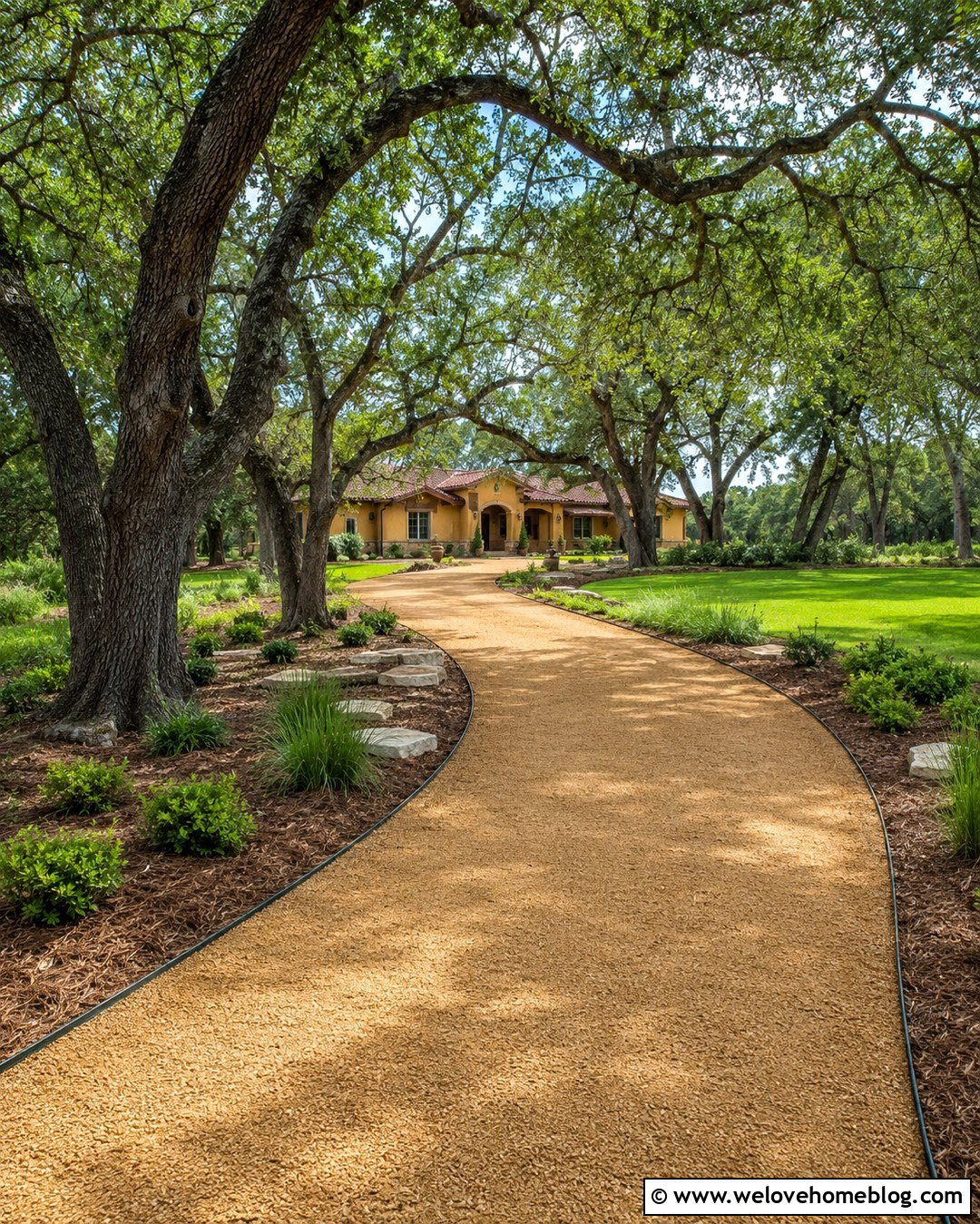
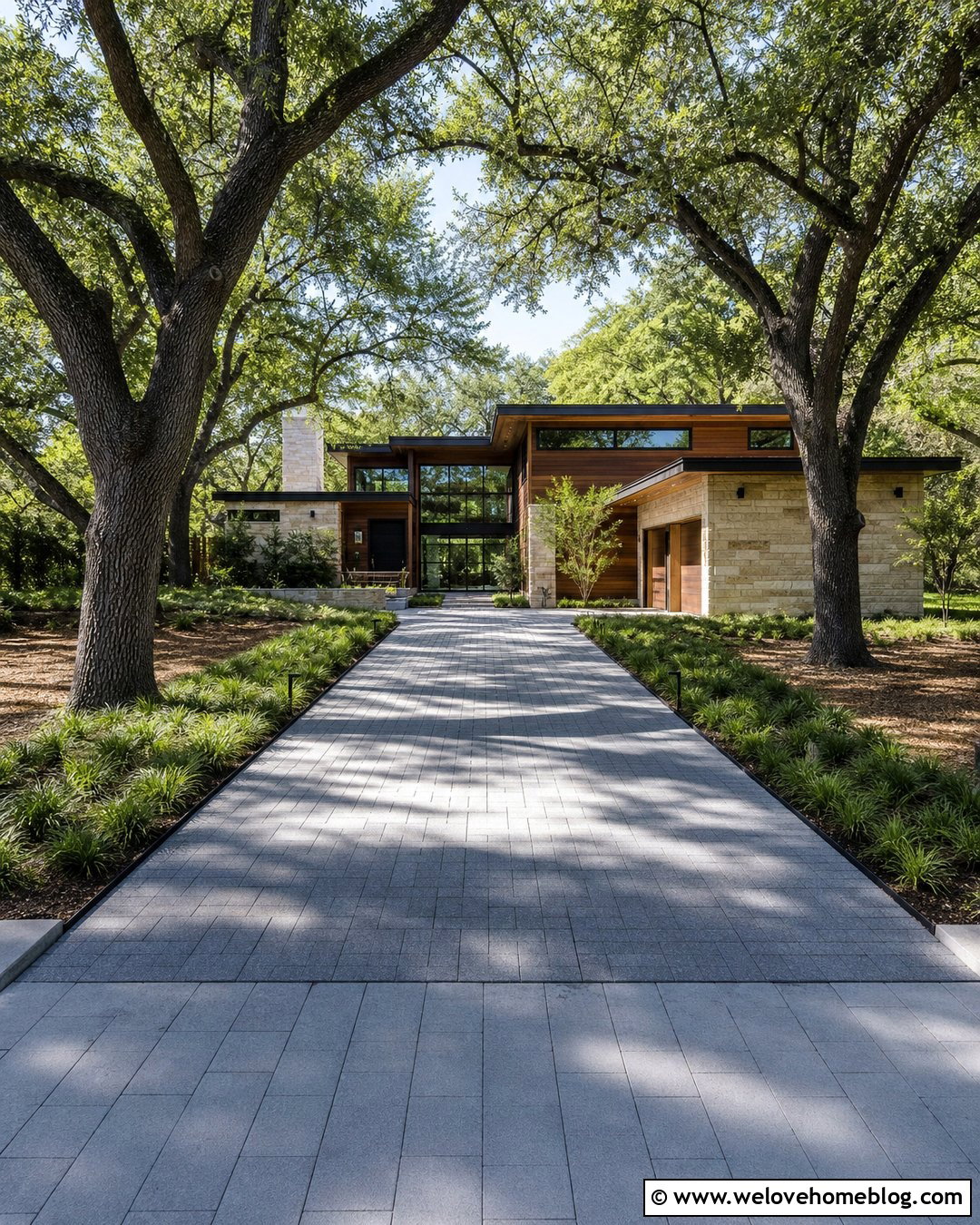
20. Four-Season Dogwood Lined Driveway
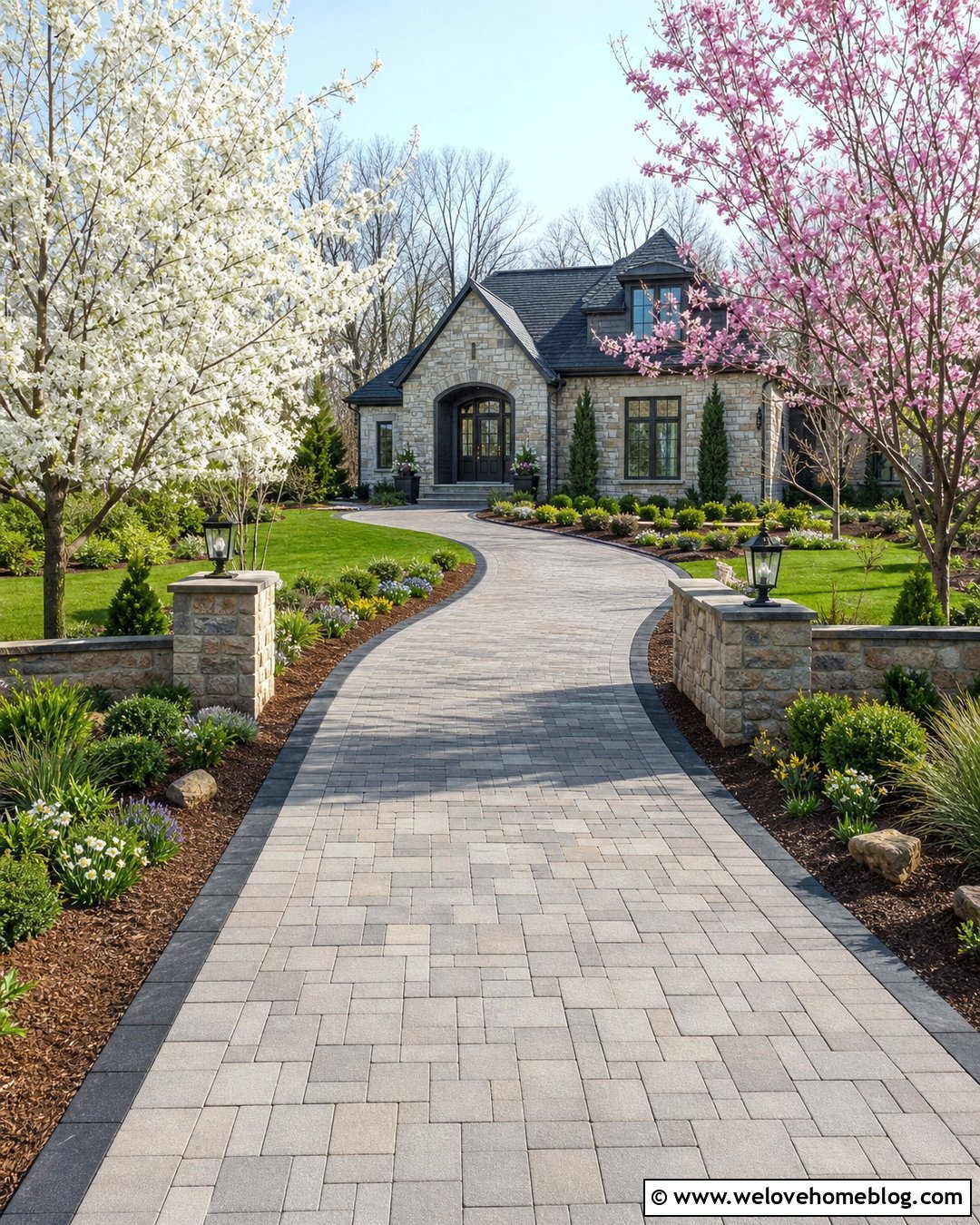
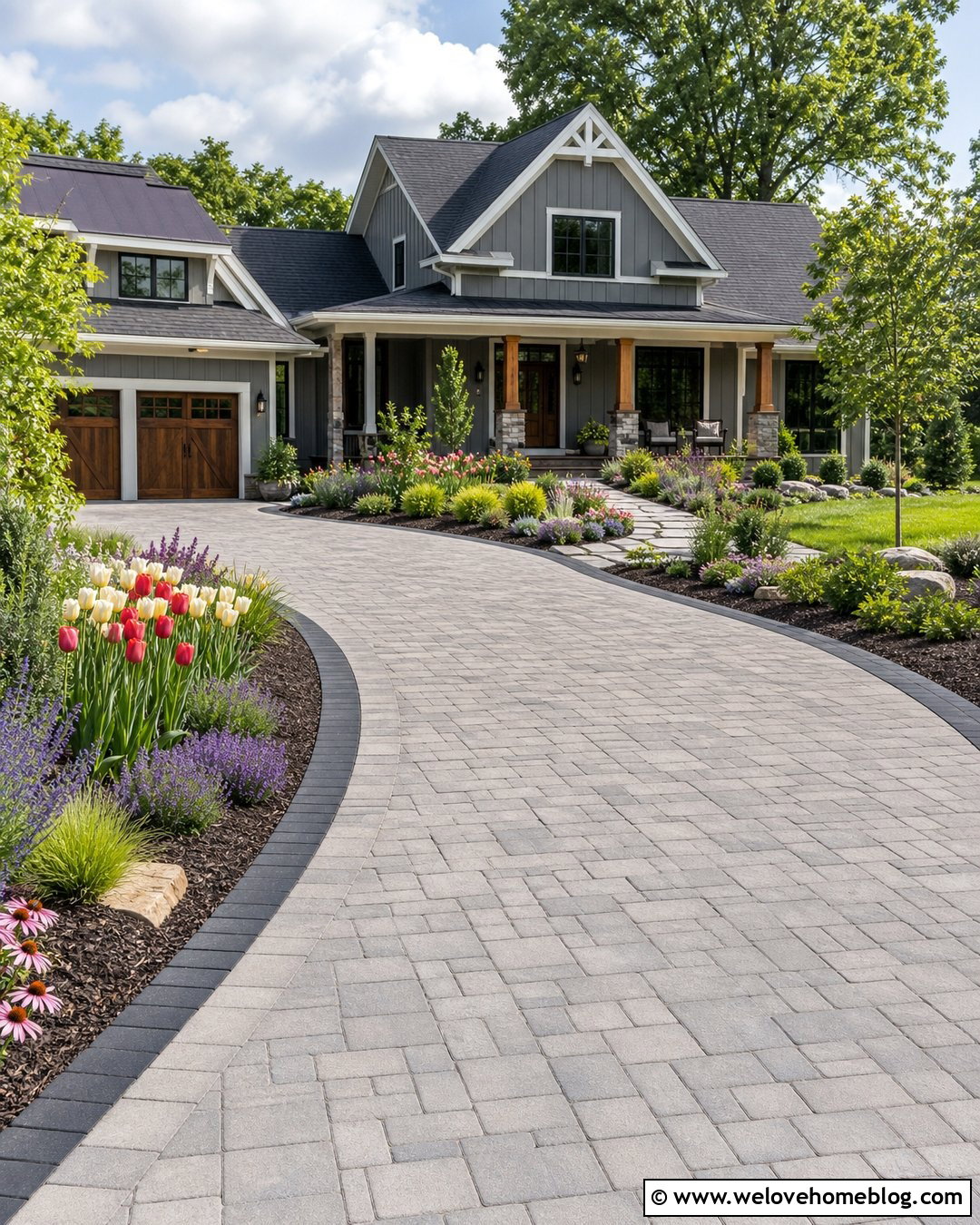
A four-season driveway should remain attractive long after the spring display ends. Choose warm gray interlocking pavers for a gently curved layout, then line the approach with a mixture of compatible dogwoods selected for bloom, foliage, bark, and mature form. Place evergreen shrubs behind the trees to provide a consistent winter background. Add spring bulbs and summer groundcovers at the front of the beds, followed by ornamental grasses that hold their shape into winter. Repeat plants in broad groups rather than adding many unrelated varieties. A dark paver border can define the driveway, while low stone walls mark the entrance and connect with the house facade. The completed landscape delivers changing color and texture through the year, yet the repeated dogwood canopies keep the driveway visually unified in every season.
Conclusion:
The best dogwood-lined entrances combine healthy tree placement with a driveway surface, border, and landscape that suit the property. Before planting, consider the selected dogwood’s mature width, light needs, drainage, root space, and distance from vehicles. Then choose a complete design language. Gravel and fieldstone feel relaxed, brick and cobblestone appear traditional, and concrete or resin-bound gravel can support a cleaner modern look. Mulched beds, low groundcovers, and thoughtful edging help connect the trees to the driveway while simplifying maintenance. Whether your approach is short, curved, circular, rural, or formal, these 20 Dogwood Lined Driveway Ideas can help you create lasting curb appeal that changes beautifully through the seasons.

Related posts:


Leave a Reply