
Basalt brings rich color, natural texture, and a substantial feel to residential driveways. Depending on the look you want, this volcanic stone can appear as neat rectangular pavers, timeworn cobbles, large-format slabs, or compacted crushed gravel. Its charcoal, blue-gray, and near-black tones pair especially well with green lawns, warm brick, pale siding, and contemporary architecture. The key is to treat the surface, layout, edging, drainage, and landscaping as one coordinated design. A suitable base and proper edge restraints are also essential because residential driveways must handle vehicle loads and seasonal ground movement. From compact suburban entrances to sweeping country approaches, the complete looks below offer practical and attractive inspiration. Explore these **20 Basalt Driveway Ideas** to find the right direction for your property.

1. Black Basalt Paver Driveway With Concrete Border
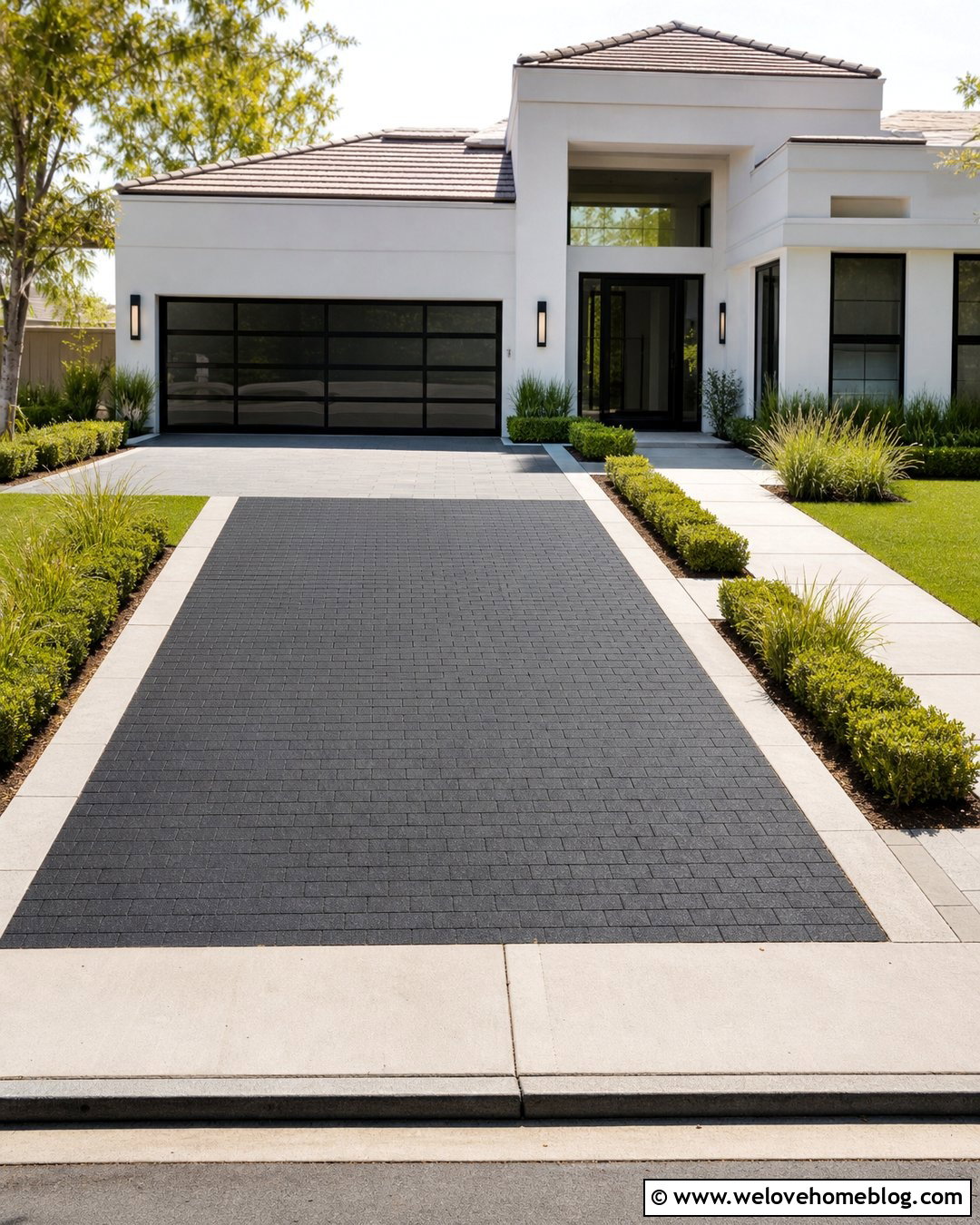
Deep black basalt pavers create a clean, upscale entrance when they are installed in a straight layout with a pale concrete border. Choose rectangular pavers with a lightly textured or flamed finish, then arrange them in a running bond pattern that visually lengthens the driveway. A wide concrete edge provides crisp contrast while giving the stone surface a defined frame. Beside the driveway, use clipped boxwood, ornamental grasses, and simple rectangular planting beds. This combination works particularly well with a modern house featuring white stucco, large windows, or natural wood siding. Continue the concrete border across the entrance as a subtle apron. The result feels modern without looking cold, and the strong color difference makes the complete driveway easy to appreciate from the curb.
2. Basalt Cobblestone Driveway With Brick House
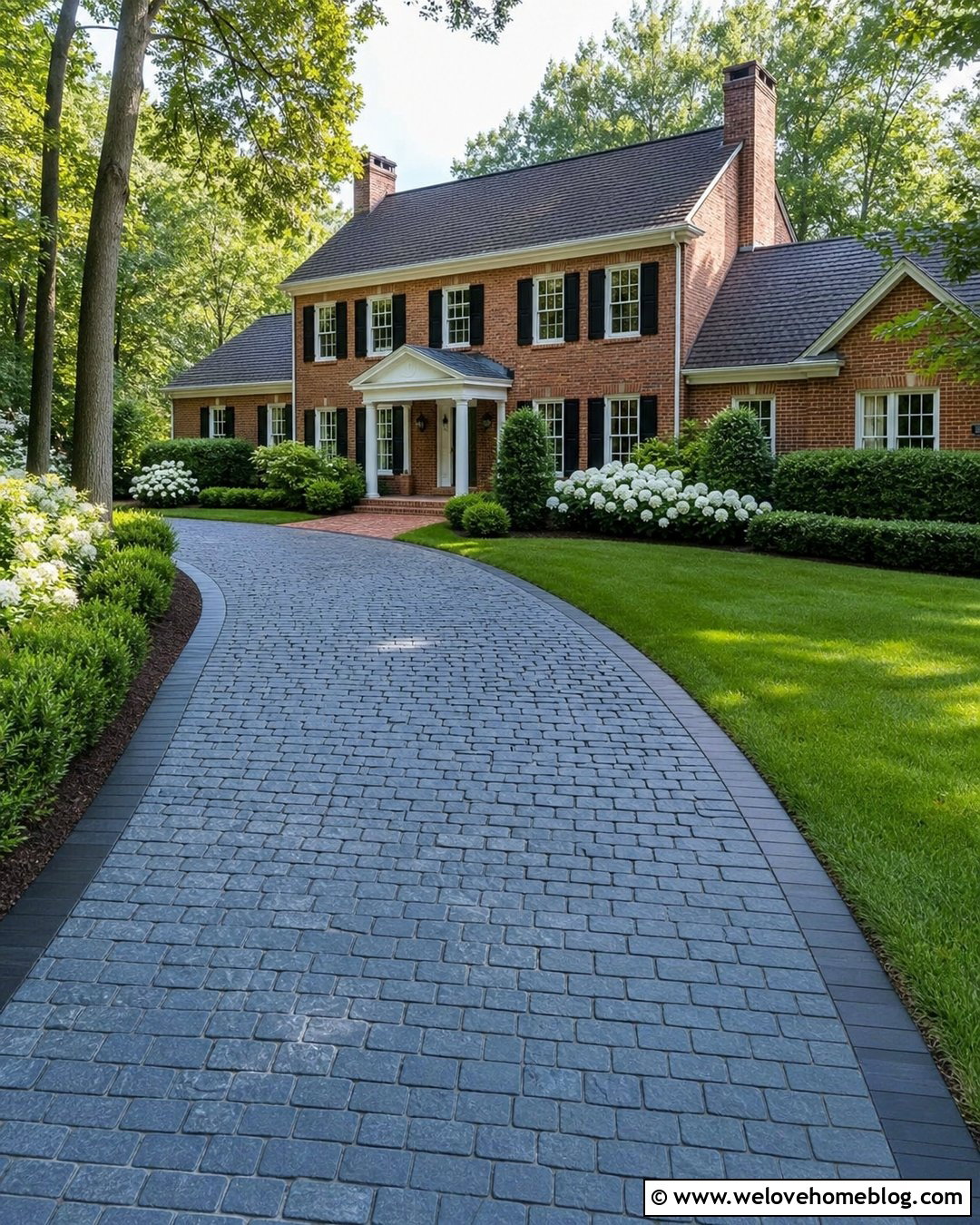
A traditional brick home can handle the weight and texture of a full basalt cobblestone driveway beautifully. Select tumbled blue-gray basalt cobbles in mixed rectangular sizes to soften the formal appearance of the facade. Lay them in a gently curved running bond pattern, with the courses following the driveway’s shape. A darker basalt soldier-course border will keep the edges visually organized. Add low evergreen hedges, white flowering shrubs, and a brick walkway that connects the parking area to the front door. Using multiple cobble sizes can produce the timeworn character associated with older stone streets, while wide joints strengthen the rustic effect. () Warm brick walls and cool basalt tones balance each other, creating a driveway that looks established rather than newly added.
3. Crushed Basalt Gravel Driveway With Steel Edging
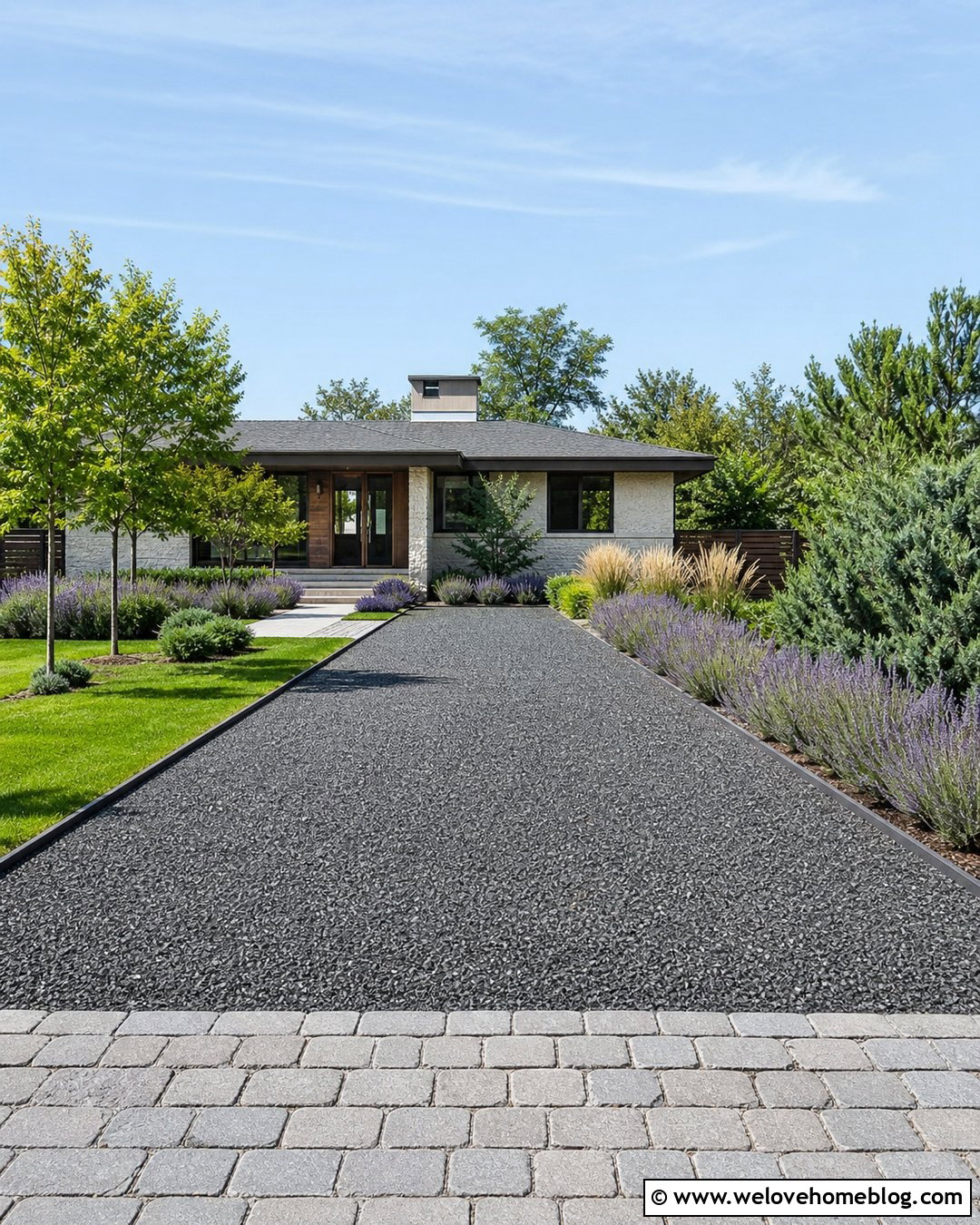
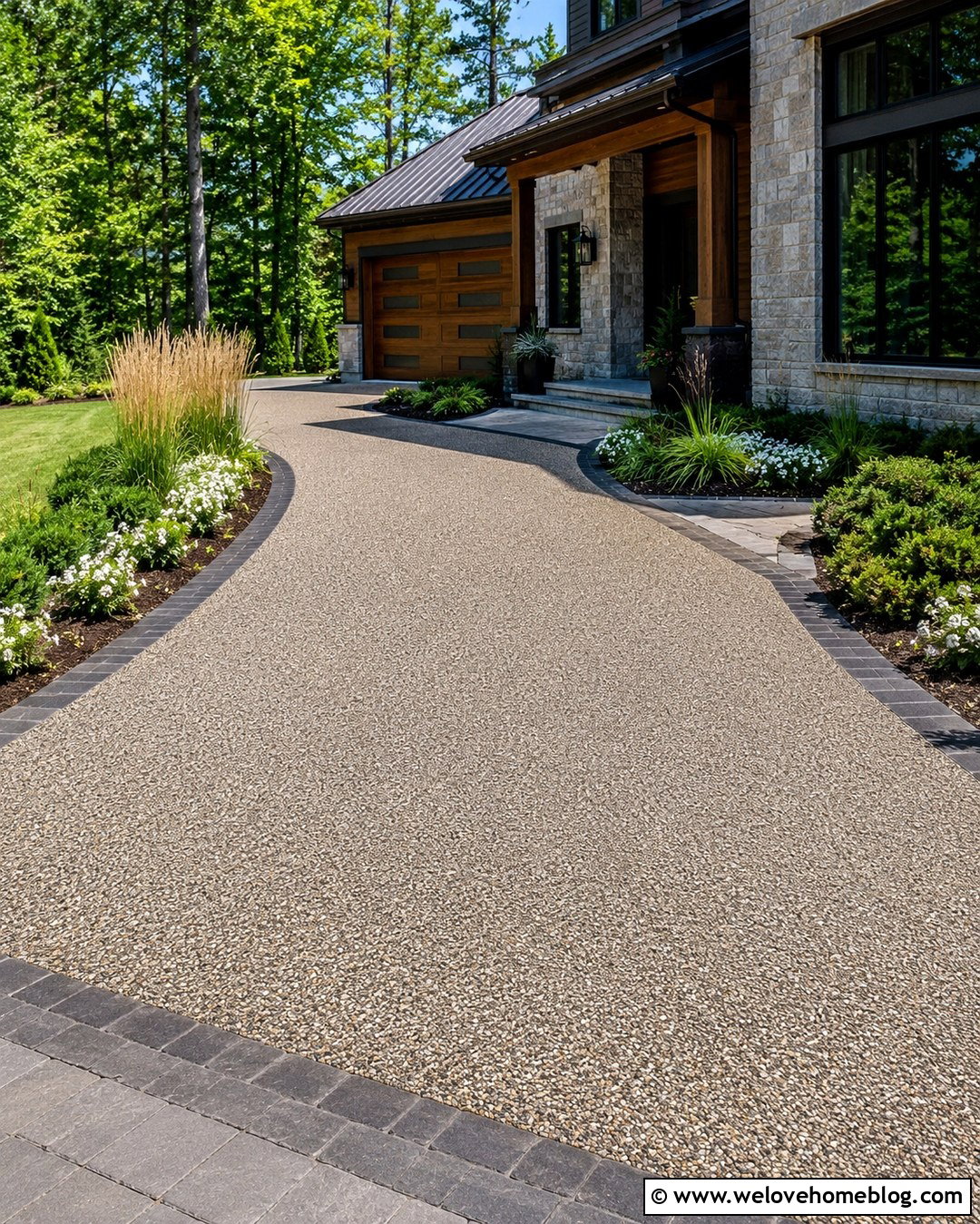
For a simpler and more budget-conscious approach, consider a straight driveway surfaced with compacted crushed basalt gravel. Its angular pieces create a darker, more structured appearance than pale rounded gravel. Install slim black steel edging along both sides to contain the material and preserve a sharp line against the lawn. At the street, add a band of large basalt setts to form a durable-looking entrance apron. Drought-tolerant grasses, juniper, and clusters of lavender can soften the dark surface without hiding it. This complete look suits a ranch house or understated contemporary home. Ask a local driveway contractor to specify the base, stone gradation, drainage, and compaction requirements for your soil and climate. Regular raking and occasional replenishment will help the gravel surface retain its neat profile.
4. Circular Basalt Driveway With Center Garden
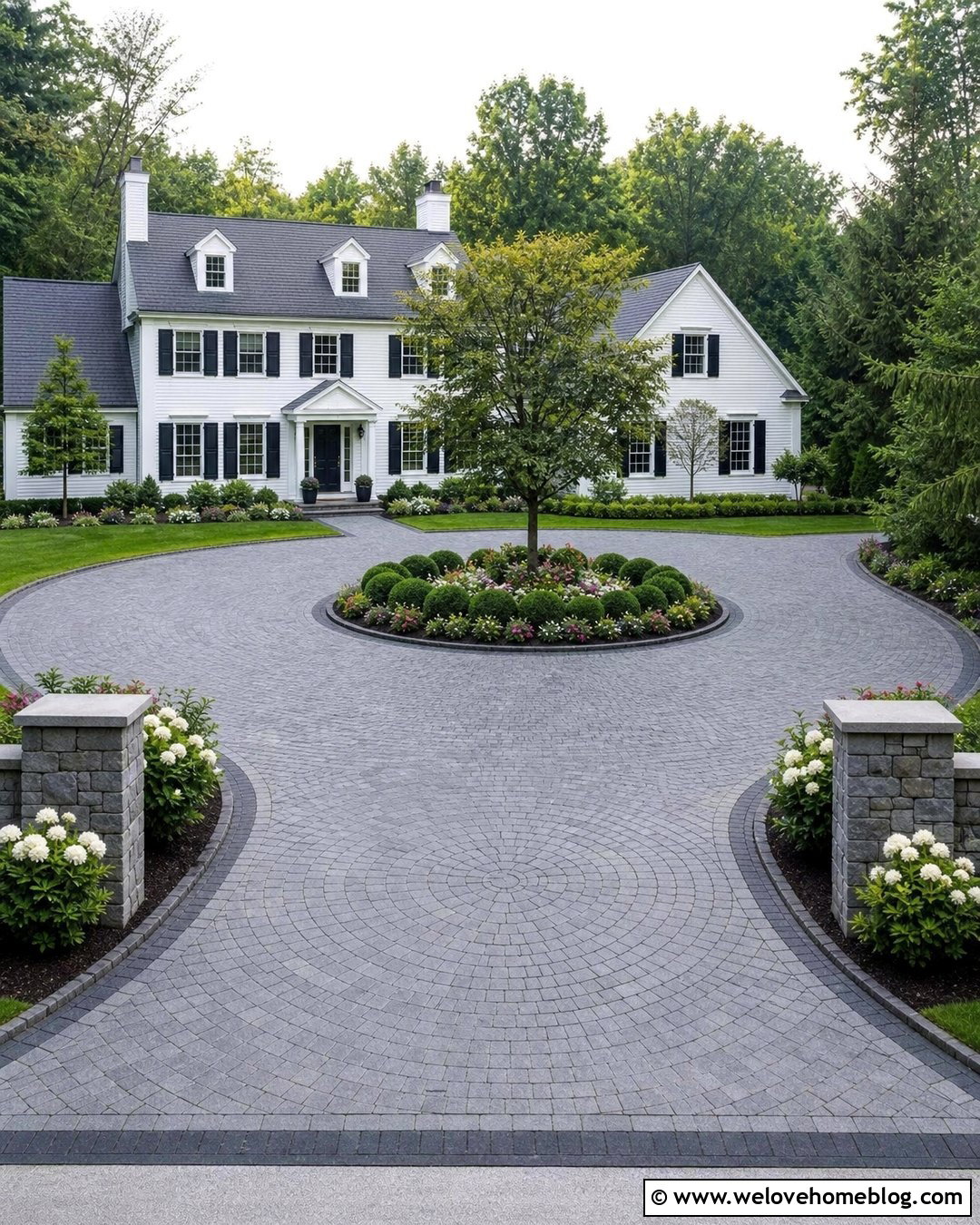
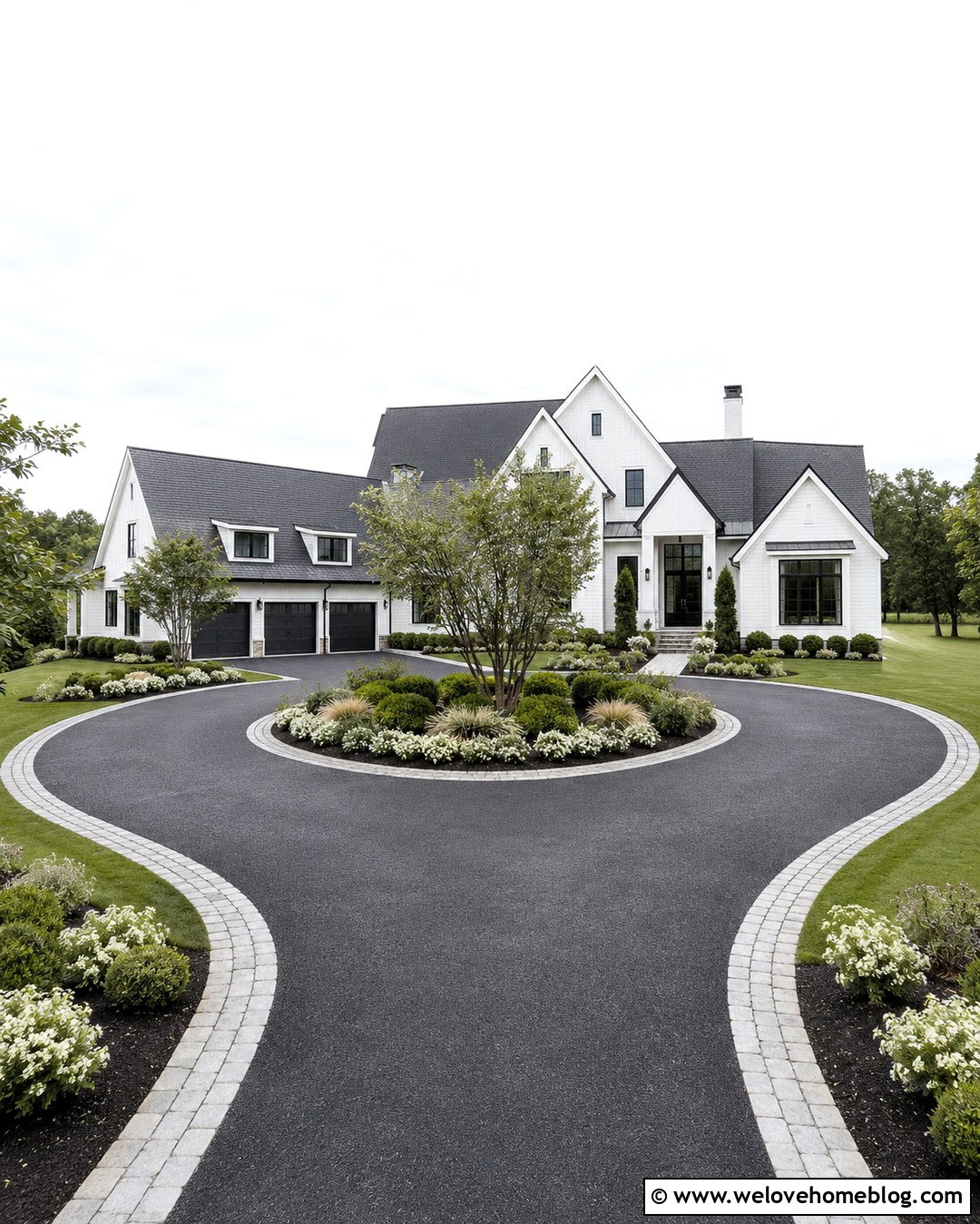
A circular basalt driveway creates an impressive arrival while allowing vehicles to approach and leave without complicated turning. Use medium-gray basalt pavers in a radial pattern so the joints visually follow the curve. Frame both edges with narrow charcoal basalt cobbles, then turn the center island into a balanced garden with one ornamental tree, low evergreen shrubs, and seasonal flowers. Keep taller plants away from important sightlines near the street. A light-colored colonial home provides an elegant background for the darker stone surface. The front walkway can branch naturally from the inside curve and use matching basalt pavers for continuity. On a larger property, simple stone pillars at each entrance reinforce the circular shape. The entire composition should feel open, symmetrical, and clearly organized from the curb.
5. Basalt Paver Driveway With Grass Strips
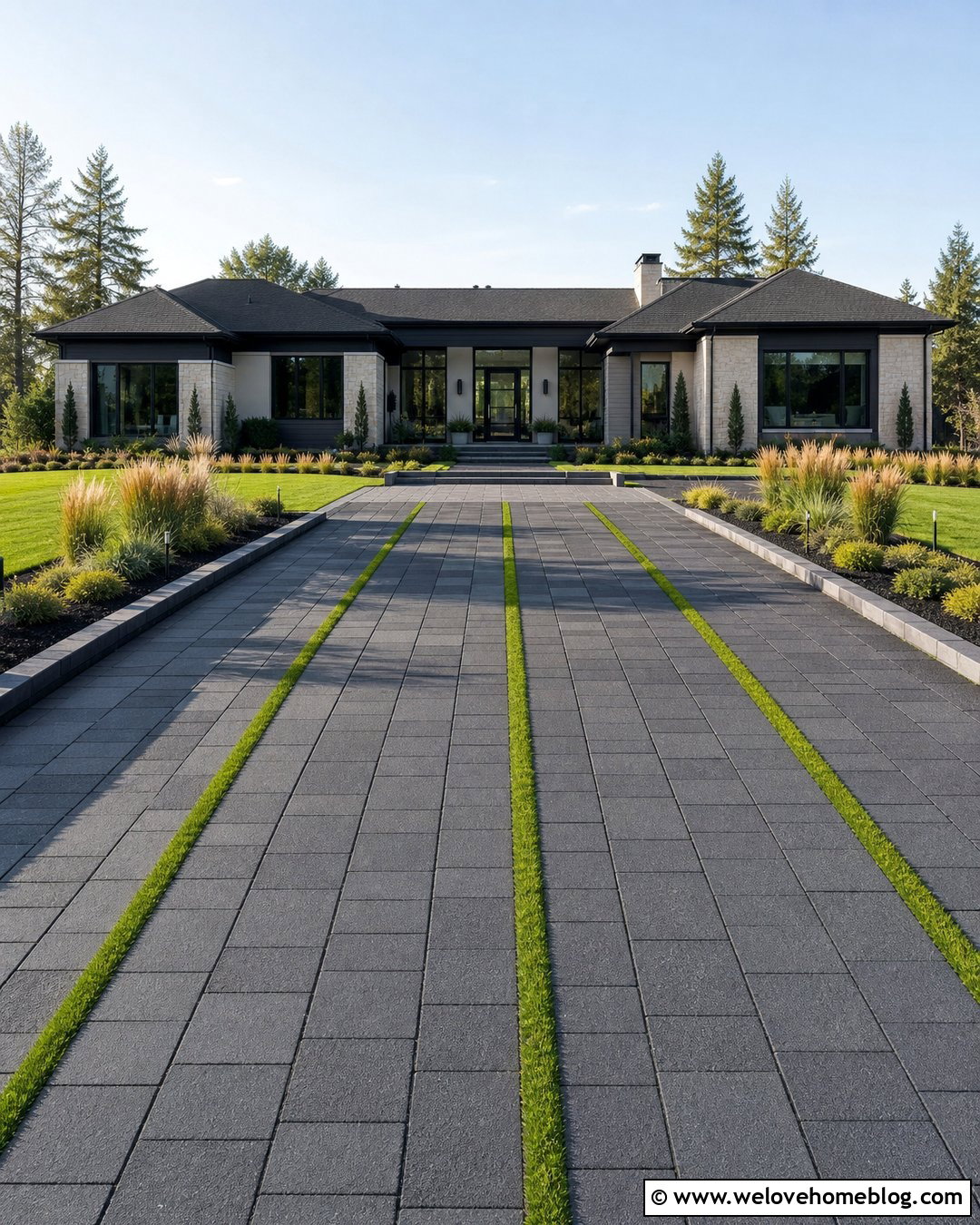
Grass strips can make a broad basalt driveway feel greener and less visually heavy. Begin with flamed rectangular basalt pavers laid in two generous driving lanes, leaving narrow planted bands between selected rows. Instead of creating delicate strips directly beneath constant tire traffic, place the grass channels between the wheel paths or along a central median where they are easier to maintain. Matching basalt edging keeps soil and roots separate from the paved sections. This layout works well in front of a low modern ranch house with wide rooflines and large windows. Repeat the linear design in the front walkway and planting beds. Choose a grass or low ground cover suited to local sunlight and irrigation conditions. The finished driveway combines strong geometry, dark natural stone, and living greenery in a controlled, practical composition.
6. Curved Basalt Cobblestone Driveway With Lavender Borders
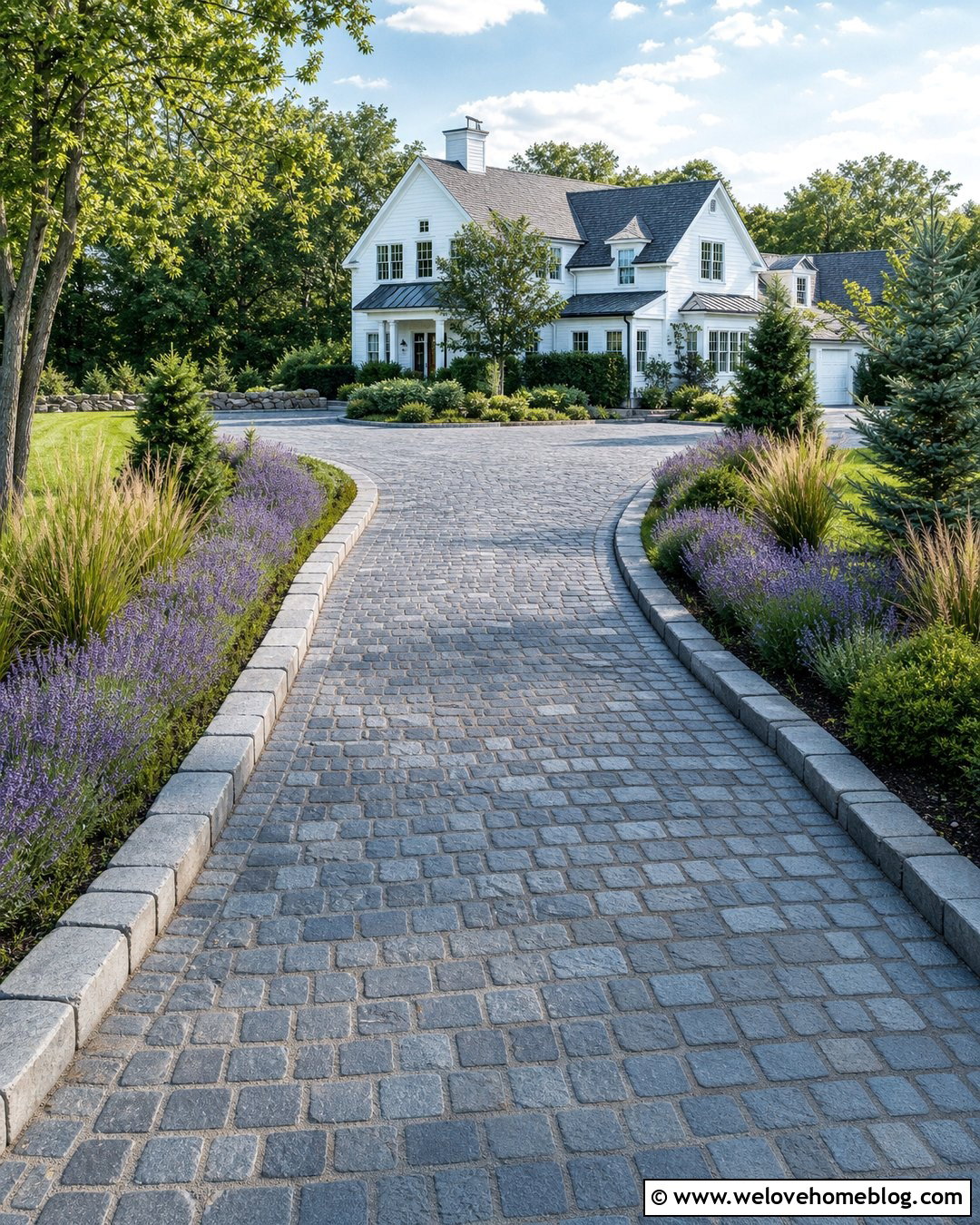
Imagine a blue-gray basalt cobblestone driveway sweeping through soft bands of lavender toward a country-style home. The curve makes the approach feel relaxed, while small tumbled cobbles provide enough texture to complement informal planting. Install the stones in arcing courses that follow the movement of the driveway rather than cutting rigidly across it. A flush border of larger basalt blocks helps contain the field and creates a smooth transition into the beds. Mix lavender with catmint, ornamental grasses, and compact evergreen shrubs for greater seasonal structure. Leave a narrow maintenance strip between spreading plants and the driveway surface. Near the house, widen the drive into a simple parking court. This design brings together a natural stone surface, flowing layout, fragrant landscaping, and welcoming residential scale.
7. Basalt Driveway With Light Granite Border
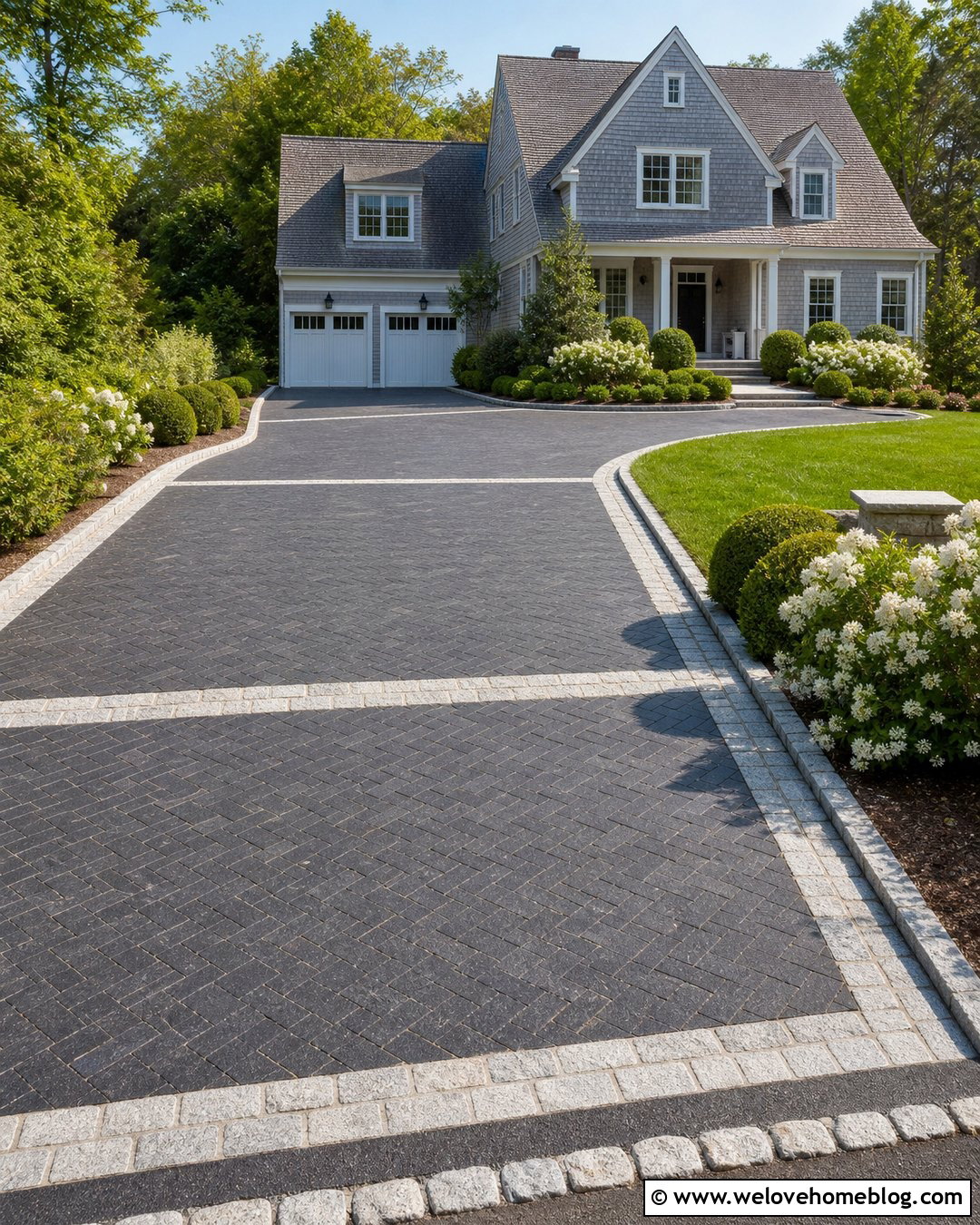
Pairing dark basalt with a light granite border gives a driveway a clearly defined outline. Use charcoal basalt pavers for the main surface and install two rows of pale gray granite setts along each side. The granite can continue across the driveway at the garage and street, creating framed sections that break up a long expanse. A subtle herringbone or angled layout adds movement without making the surface appear busy. Surround the driveway with a green lawn, rounded shrubs, and white flowering perennials that repeat the lighter stone tone. This combination is particularly effective beside a Cape Cod home with gray shingles and white trim. Keep both stones similar in thickness and choose materials rated for vehicular use. A coordinated installation allows the contrasting colors to provide visual interest without compromising the driveway’s unified appearance.
8. Basalt Driveway With Stone Pillar Entrance
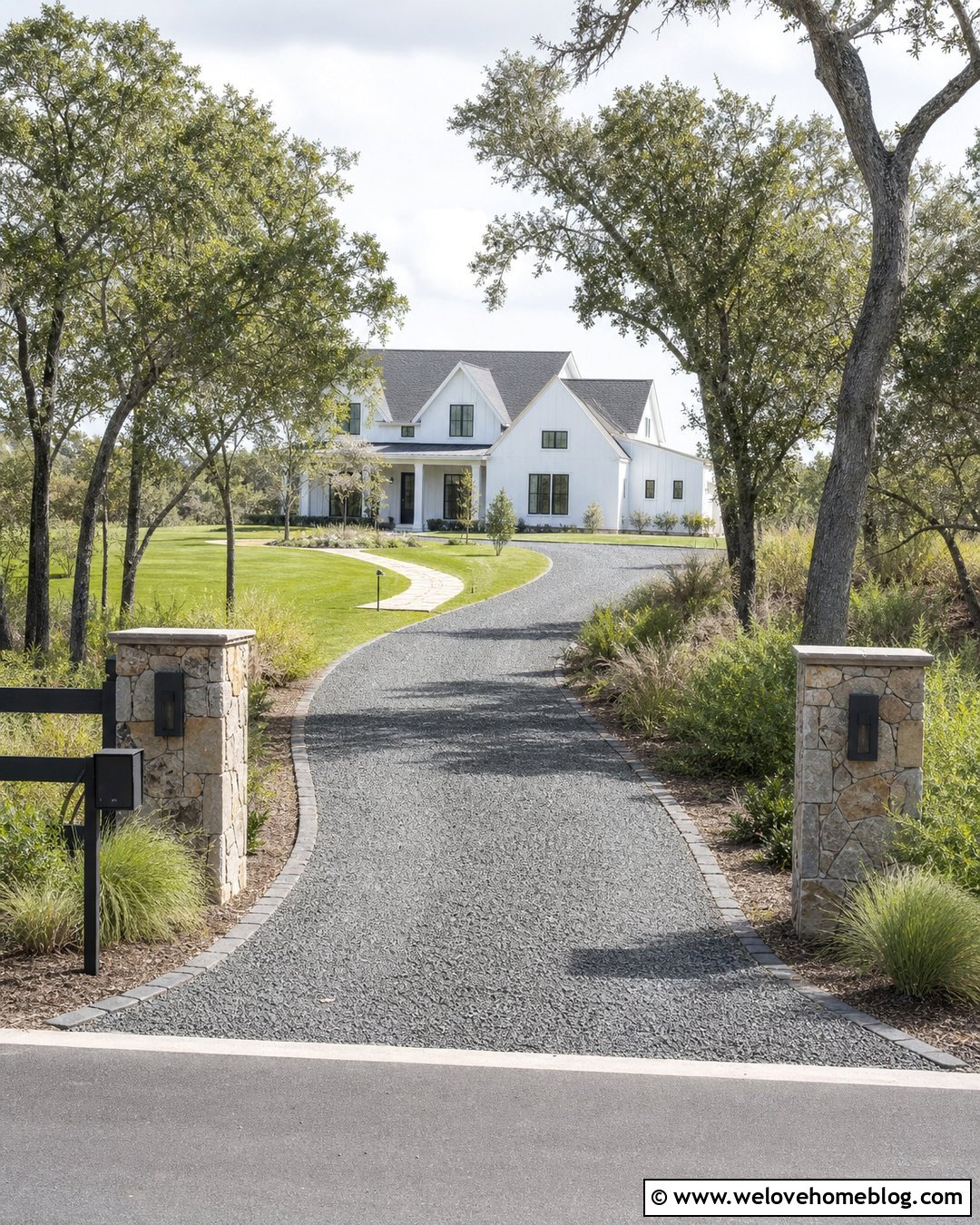
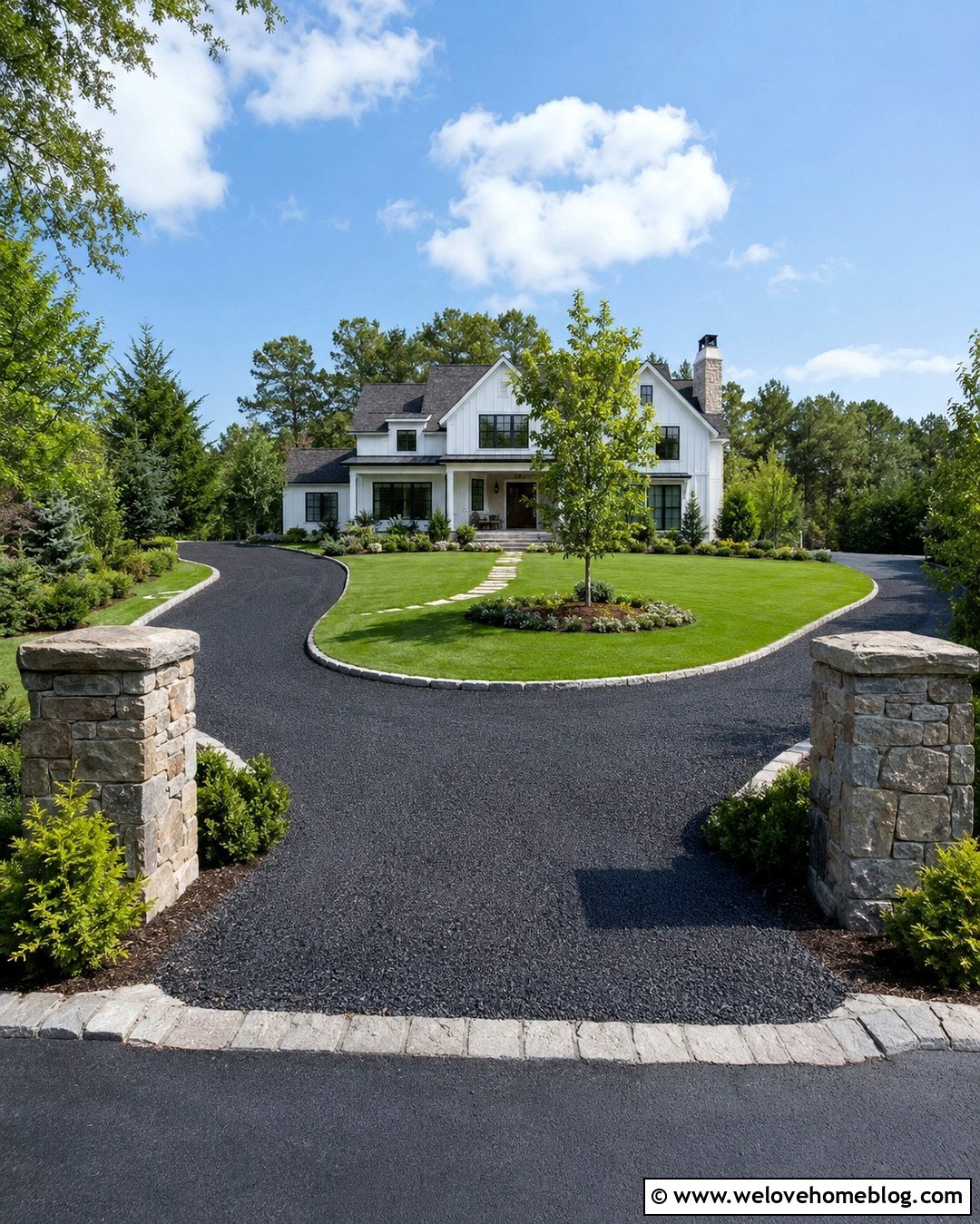
Stone pillars can turn a long basalt driveway into a clearly marked residential entrance. Surface the approach with compacted blue-gray crushed basalt, then use larger black basalt setts as sturdy-looking borders. At the street, build two low natural-stone pillars that complement the house rather than overwhelm it. Simple downward-facing lights can be integrated into the pillars for visibility, while a matching mailbox or address plaque completes the entrance. Continue the driveway in a gentle curve through groups of native shrubs and shade trees. A modern farmhouse with white siding and a dark roof makes an ideal focal point at the end. Keep plantings low around the pillars to protect street views. The consistent gray palette ties the gravel, edging, masonry, and architecture into one calm and welcoming composition.
9. Basalt Herringbone Driveway With Brick Edging
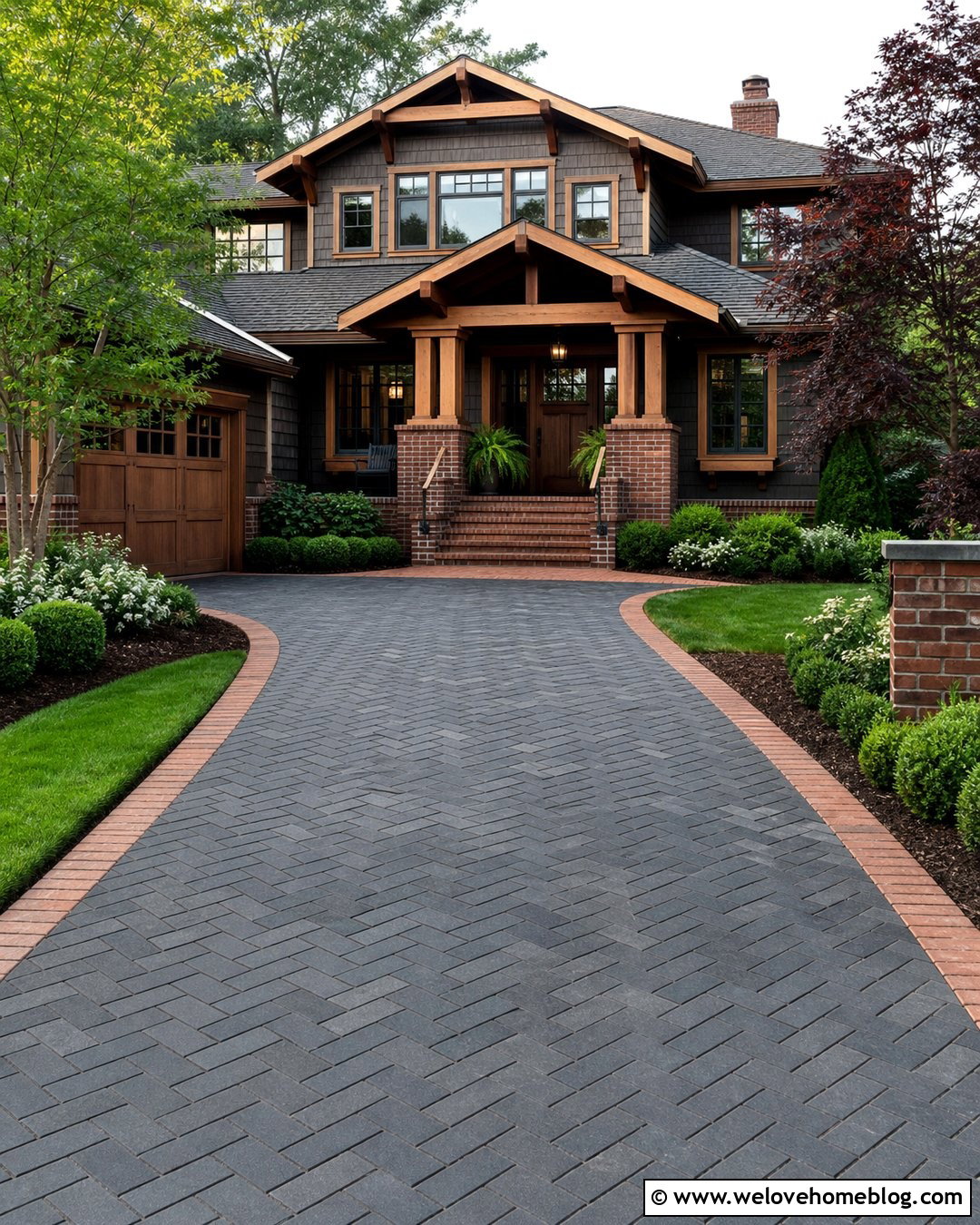
A herringbone layout gives rectangular basalt pavers a strong sense of movement and detail. Use medium-size charcoal pavers with a textured finish, setting the pattern at a 45-degree angle to the garage. Border the stone with warm red or brown clay bricks laid in a straight soldier course. This color combination looks especially natural beside a Craftsman house with brick columns, wood trim, and a deep front porch. Repeat the brick in the walkway or porch steps so the edging feels connected to the architecture. Neatly clipped shrubs and broad planting beds will soften the geometry. Because cuts are required along angled edges, the layout benefits from careful planning and professional installation. The finished driveway feels traditional, structured, and distinctive without depending on decorative features that could date quickly.
10. Large Basalt Slab Driveway With Gravel Joints
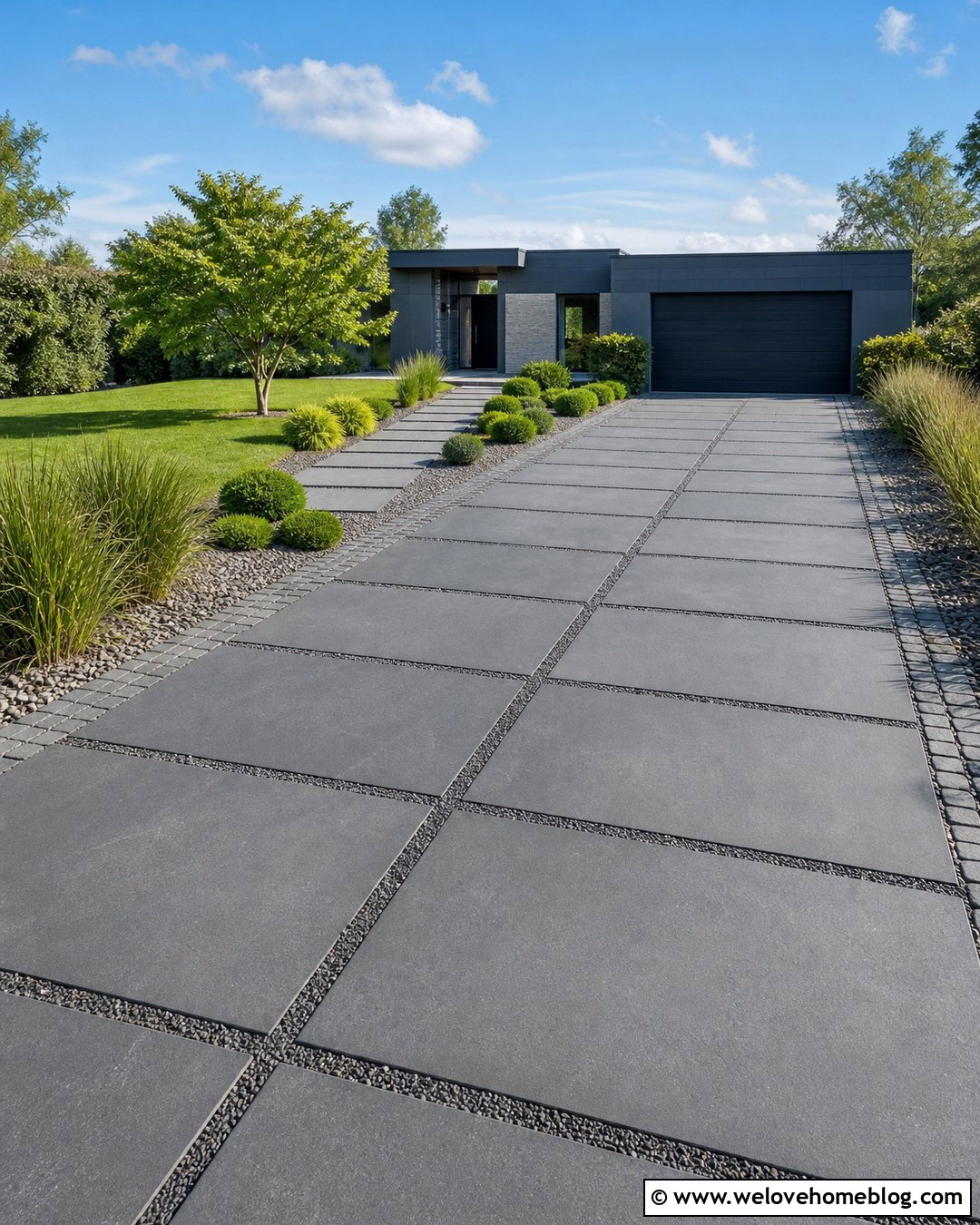
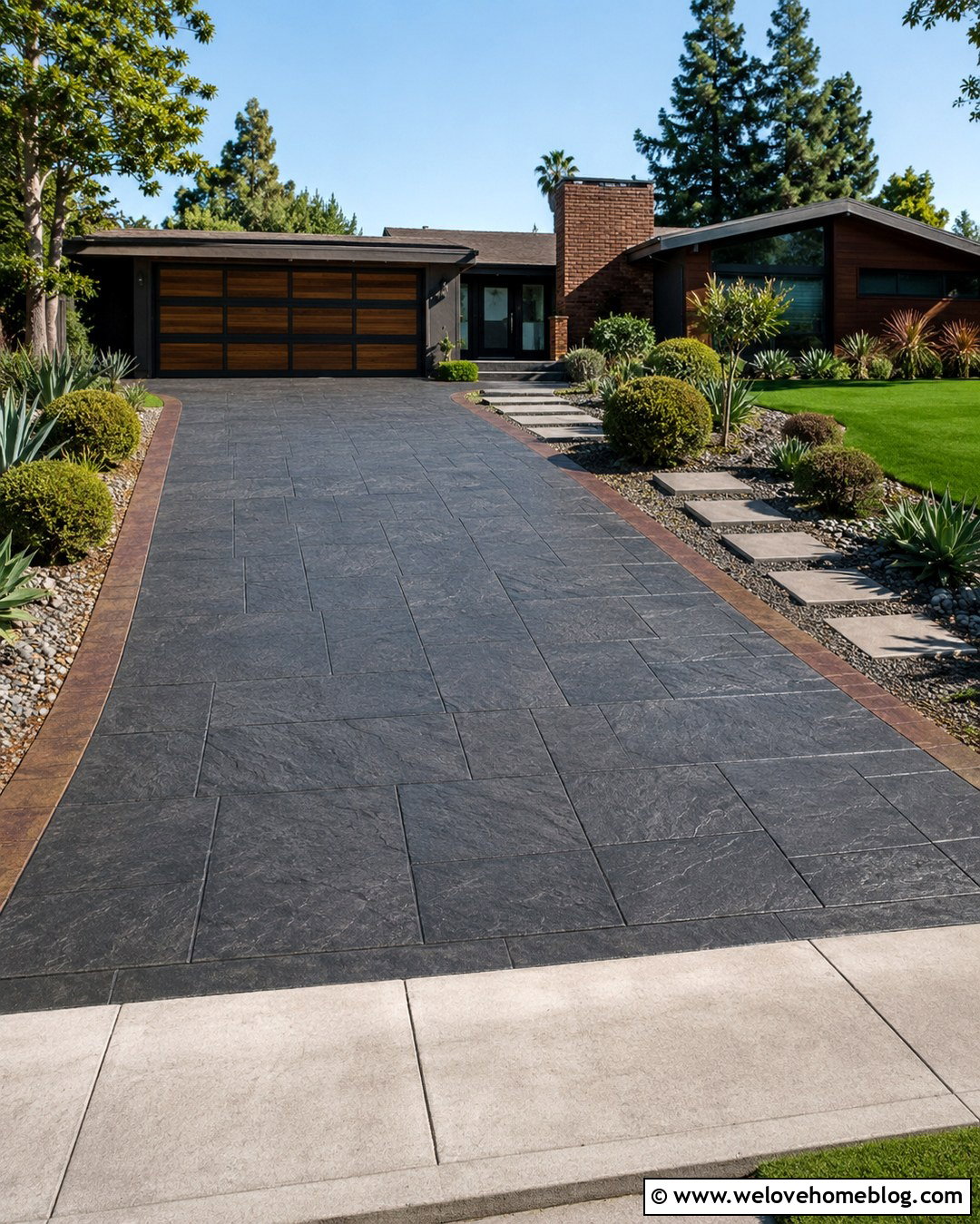
Large-format basalt slabs can give a modern driveway a bold architectural appearance. Choose flamed dark-gray slabs rated and installed for driveway traffic, then arrange them in a straight grid with narrow joints filled using compatible dark aggregate. The large units reduce visual clutter and make a compact front yard appear broader. Add a recessed basalt cobble border around the perimeter to define the driveway and protect adjacent planting areas. Minimal landscaping works best: sculptural grasses, low mounded shrubs, and one carefully positioned tree. A flat-roofed modern house with concrete, glass, and warm timber details will complement the stone’s restrained color. Coordinate the driveway joints with the lines of the garage and front walkway. This alignment helps the complete exterior feel deliberately designed rather than assembled from separate surfaces.
11. Basalt Cobblestone Driveway With Farmhouse Landscaping
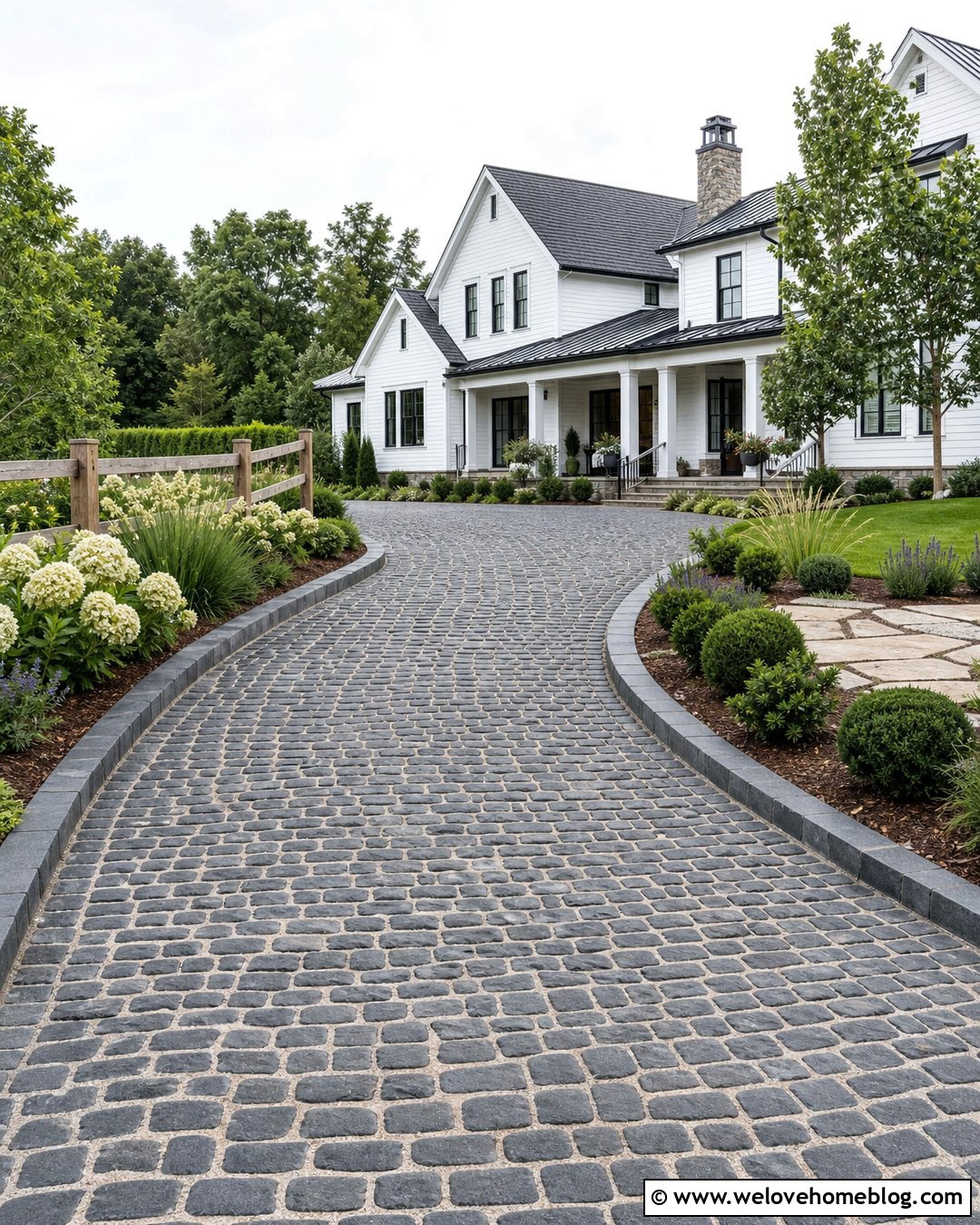
A farmhouse entrance feels more grounded when dark basalt cobbles are paired with relaxed, layered landscaping. Use tumbled cobblestones in mixed sizes across a gently curved driveway, with broad basalt curbs separating the paving from garden beds. Plant hydrangeas, salvia, ornamental grasses, and compact evergreens in loose groups instead of formal rows. A timber fence can follow one side of the approach, while a simple stone walkway leads toward the porch. Choose a warm gray joint color to soften the contrast between individual cobbles. Near the garage, create a wider turning area using the same material and pattern. Basalt cobblestones can be arranged in random-looking bundles or running bond layouts to achieve a convincing old-world surface. () Against white farmhouse siding, the dark driveway becomes a strong visual anchor.
12. Basalt Driveway With Modern Concrete Bands
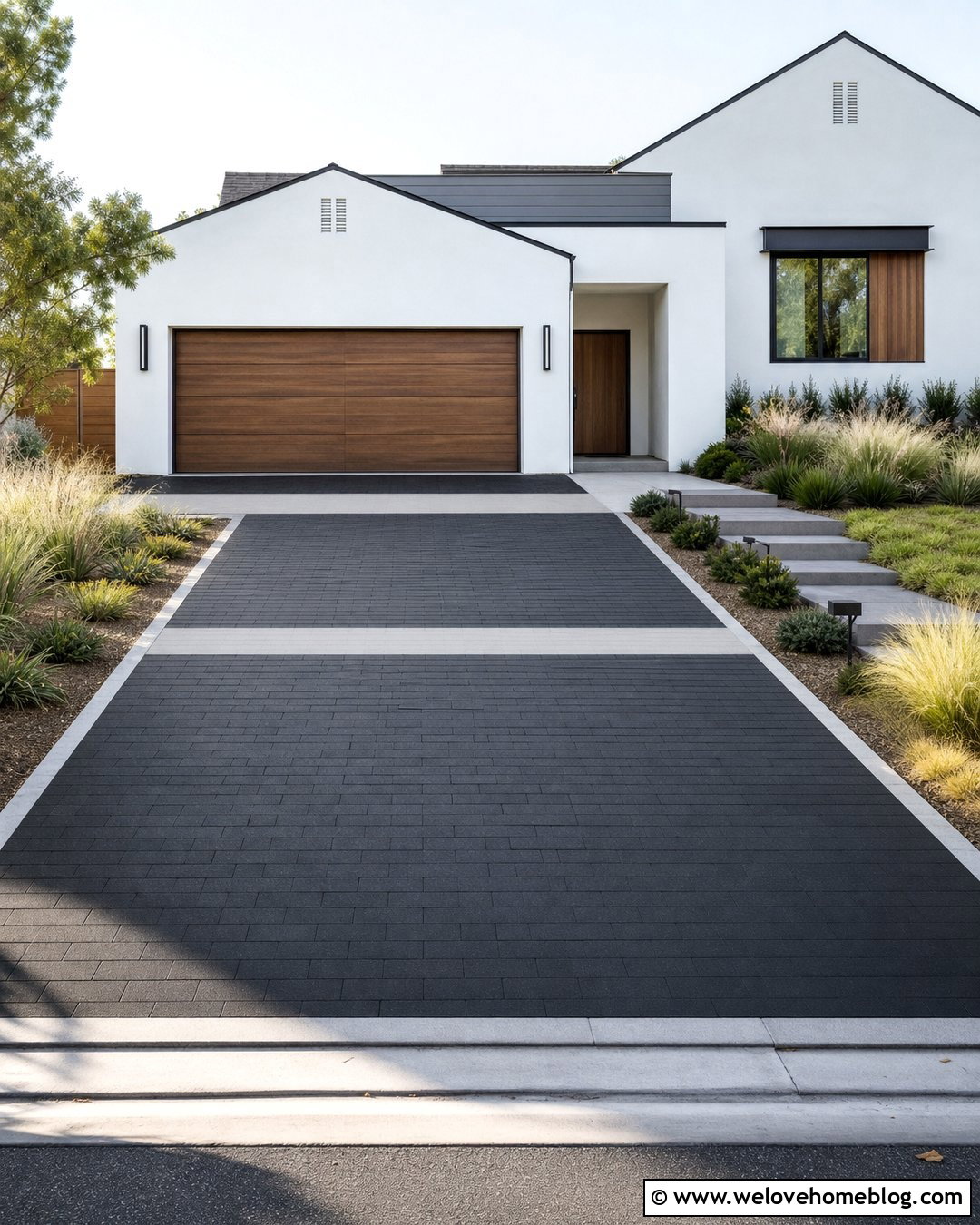
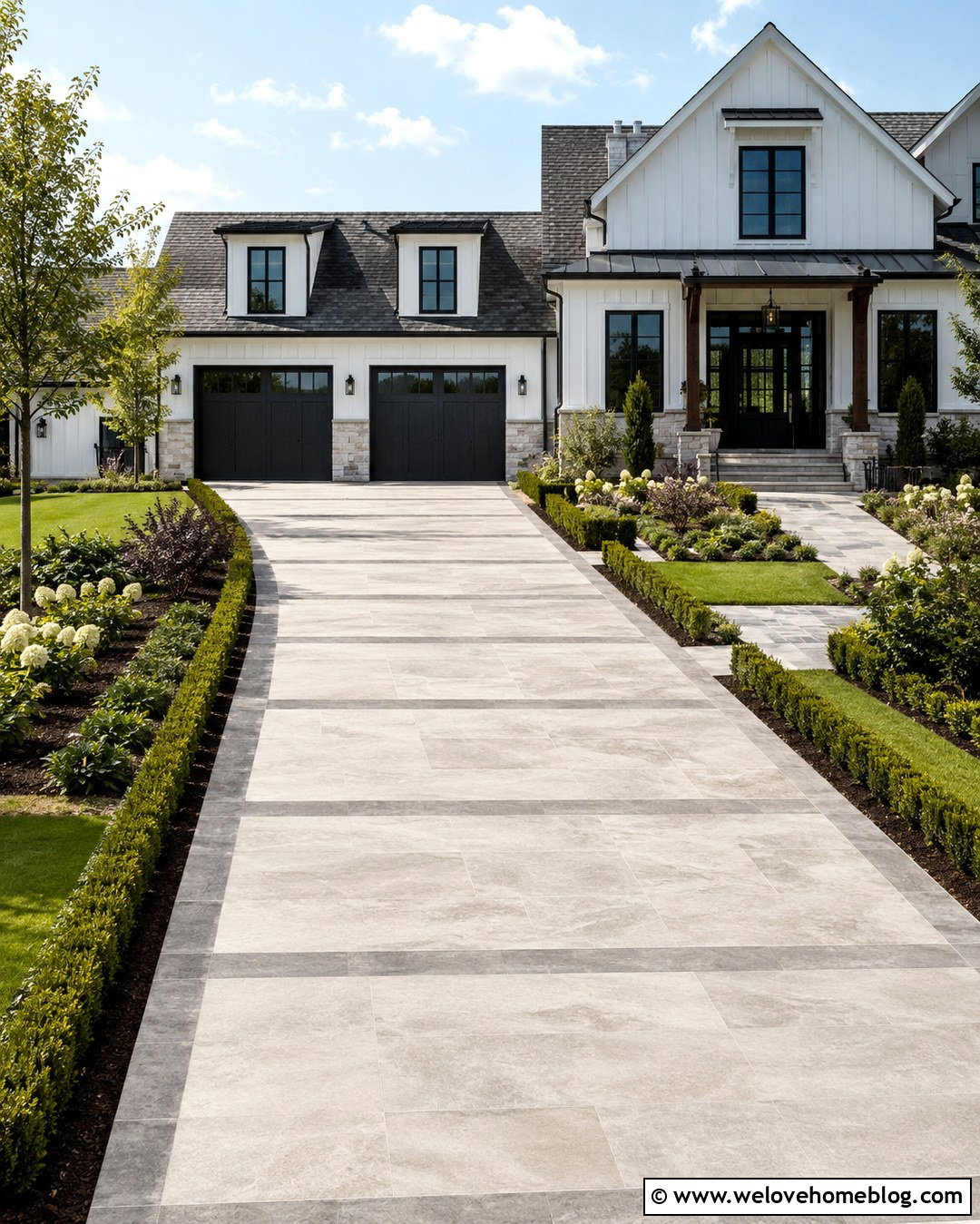
Concrete bands provide a crisp way to divide a basalt driveway into visually manageable sections. Fill the main areas with small rectangular black basalt pavers, then install smooth light-gray concrete strips across the driveway at regular intervals. Align those bands with architectural features such as garage doors, windows, or walkway edges. Use a straight layout for a clean, contemporary result. Along the sides, narrow beds containing ornamental grasses, agave where climate permits, or compact native shrubs will reinforce the linear design. A modern home with white stucco and wood accents creates a balanced background. Avoid making the concrete strips so wide that they dominate the natural stone. When the spacing is carefully planned, the light bands highlight the richness of the basalt while giving the entire driveway a calm, organized rhythm.
13. Basalt Paver Driveway With Red Brick Apron
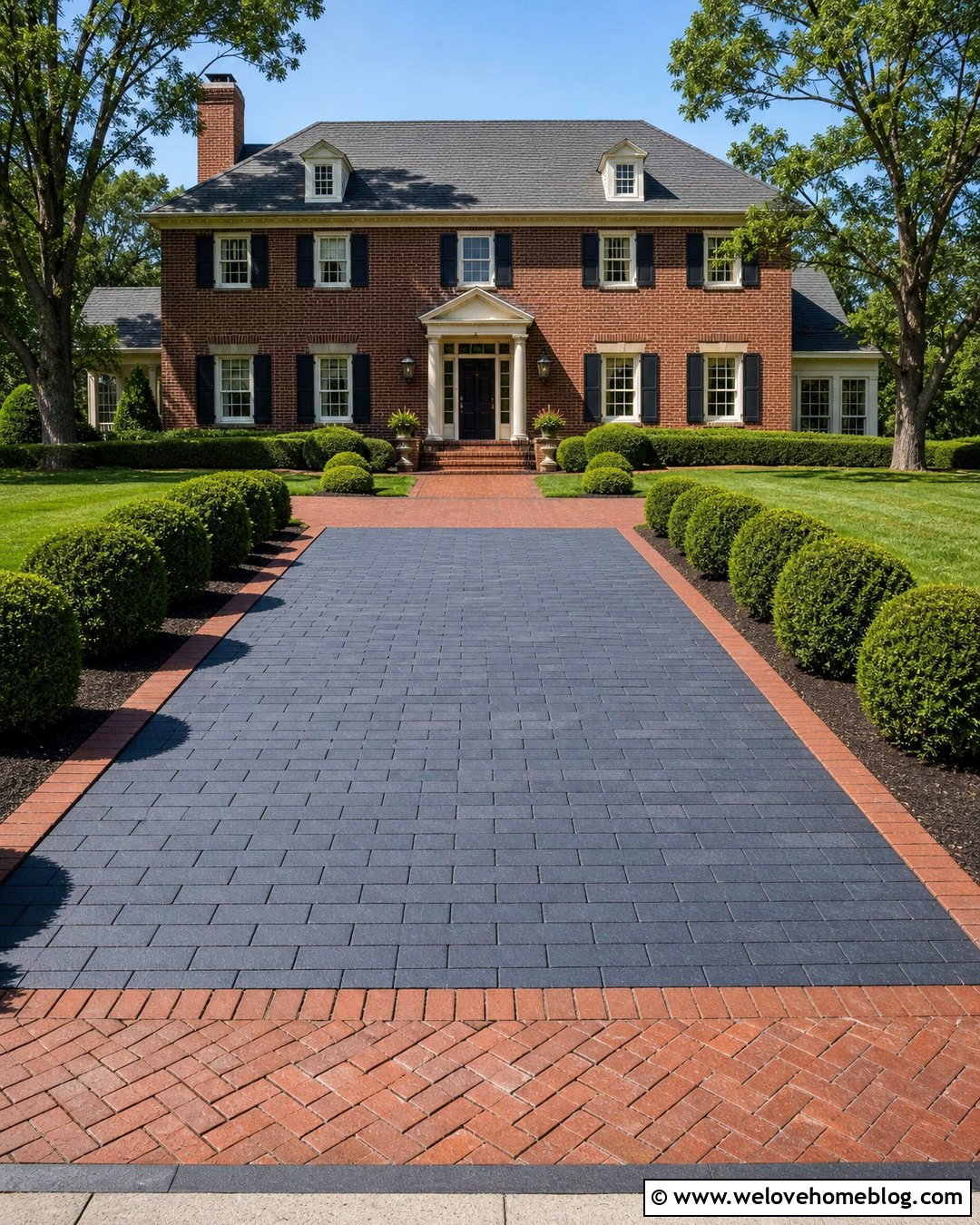
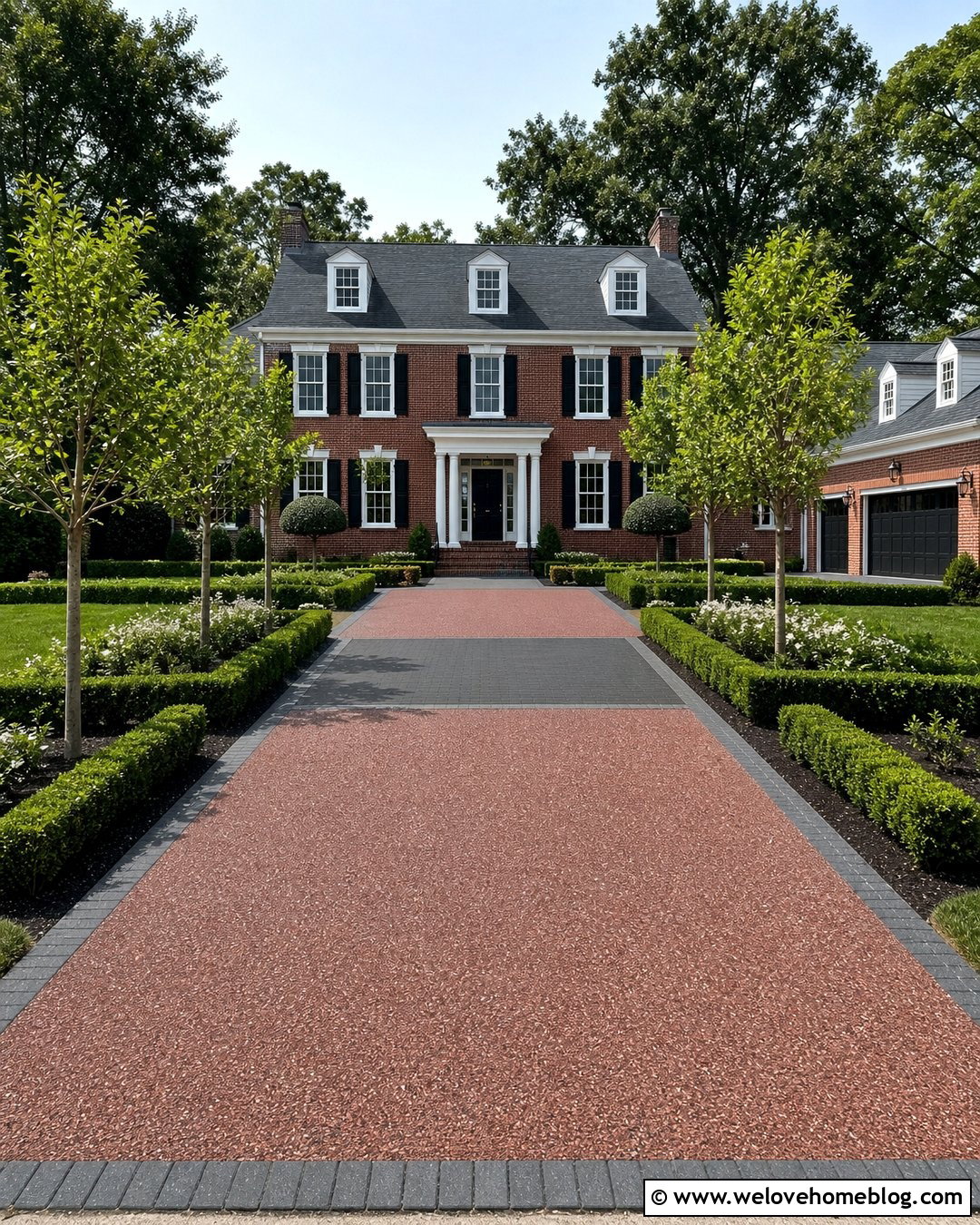
A red brick apron adds warmth and a clear transition between the street and a blue-black basalt driveway. Use textured basalt pavers in a running bond layout for the main surface, then build a brick section several feet deep across the entrance. The apron can feature a herringbone pattern framed by straight brick borders. Continue one narrow brick ribbon along each side of the basalt to connect the entrance detail with the house. This design works beautifully with a traditional colonial or Georgian-style facade where brick already appears in chimneys, steps, or walls. Add symmetrical evergreen shrubs and a simple lawn to keep the strong material contrast from feeling busy. The brick marks the arrival point, while the darker basalt visually carries attention toward the garage and front entrance.
14. Basalt Driveway With Natural Boulder Landscaping
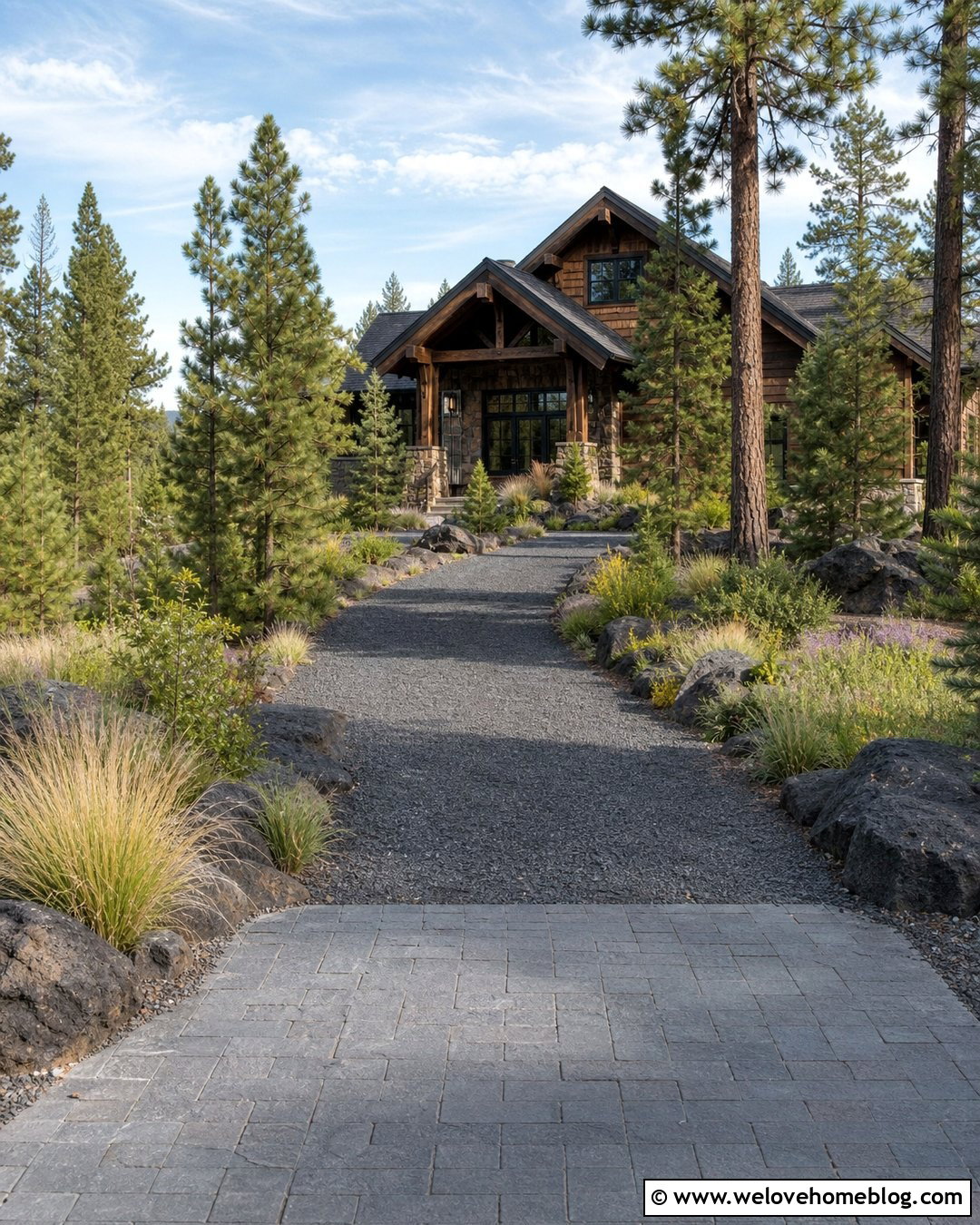
Basalt fits naturally into a rugged landscape containing boulders, native grasses, and drought-tolerant plants. Surface a gently winding driveway with compacted crushed basalt in mixed charcoal tones. Use larger basalt boulders along selected curves as landscape accents rather than lining every inch. Between them, plant bunch grasses, low juniper, sedges, and locally appropriate flowering perennials. A hidden metal edge can contain the gravel where a cleaner boundary is needed. Near the street, form an apron with rectangular basalt setts to strengthen the entrance visually. This look is well suited to a mountain home, woodland property, or contemporary house with stone and timber cladding. Preserve generous open spaces around the boulders so snow removal, drainage, and routine driveway maintenance remain manageable. The result should feel rugged but intentionally arranged.
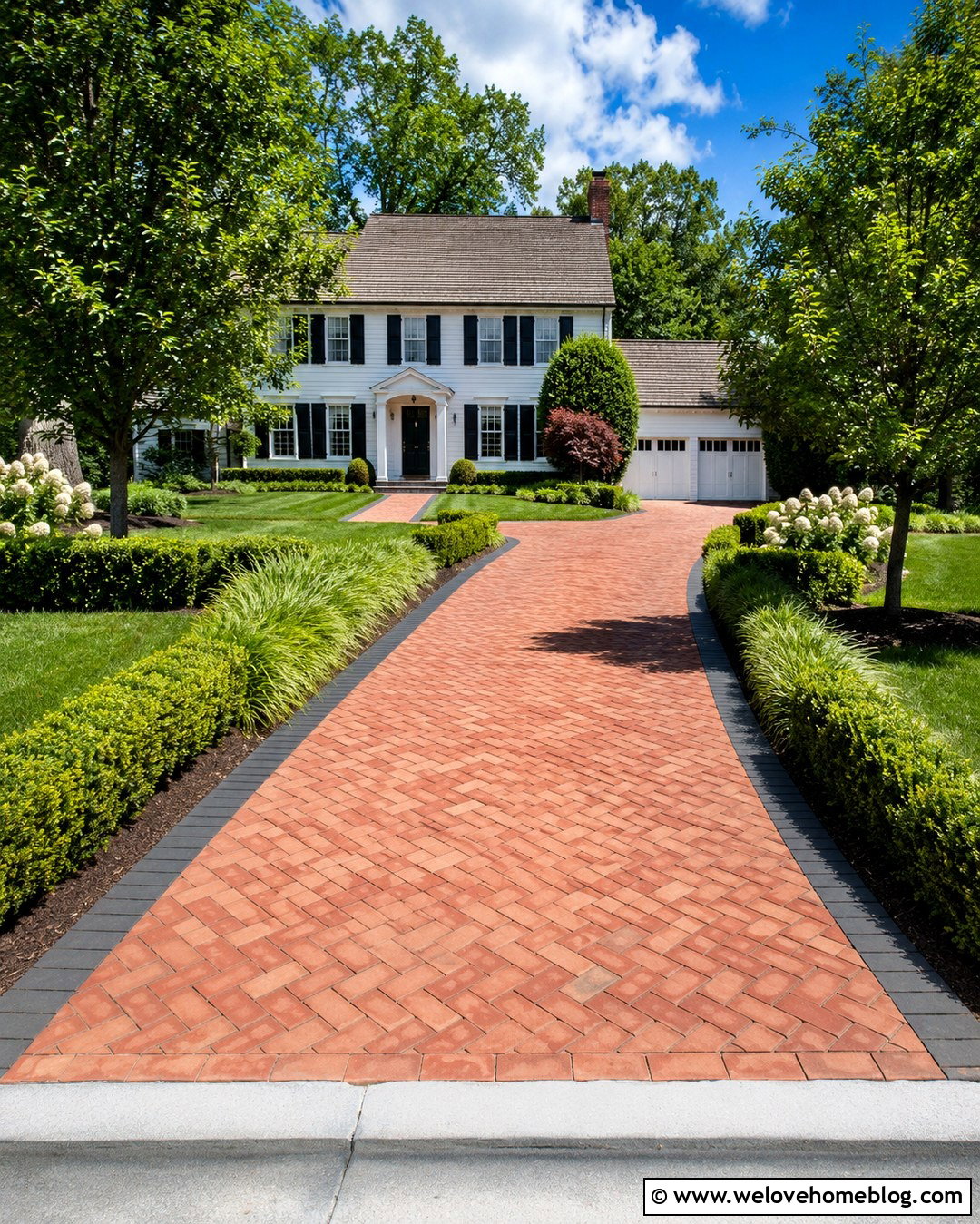
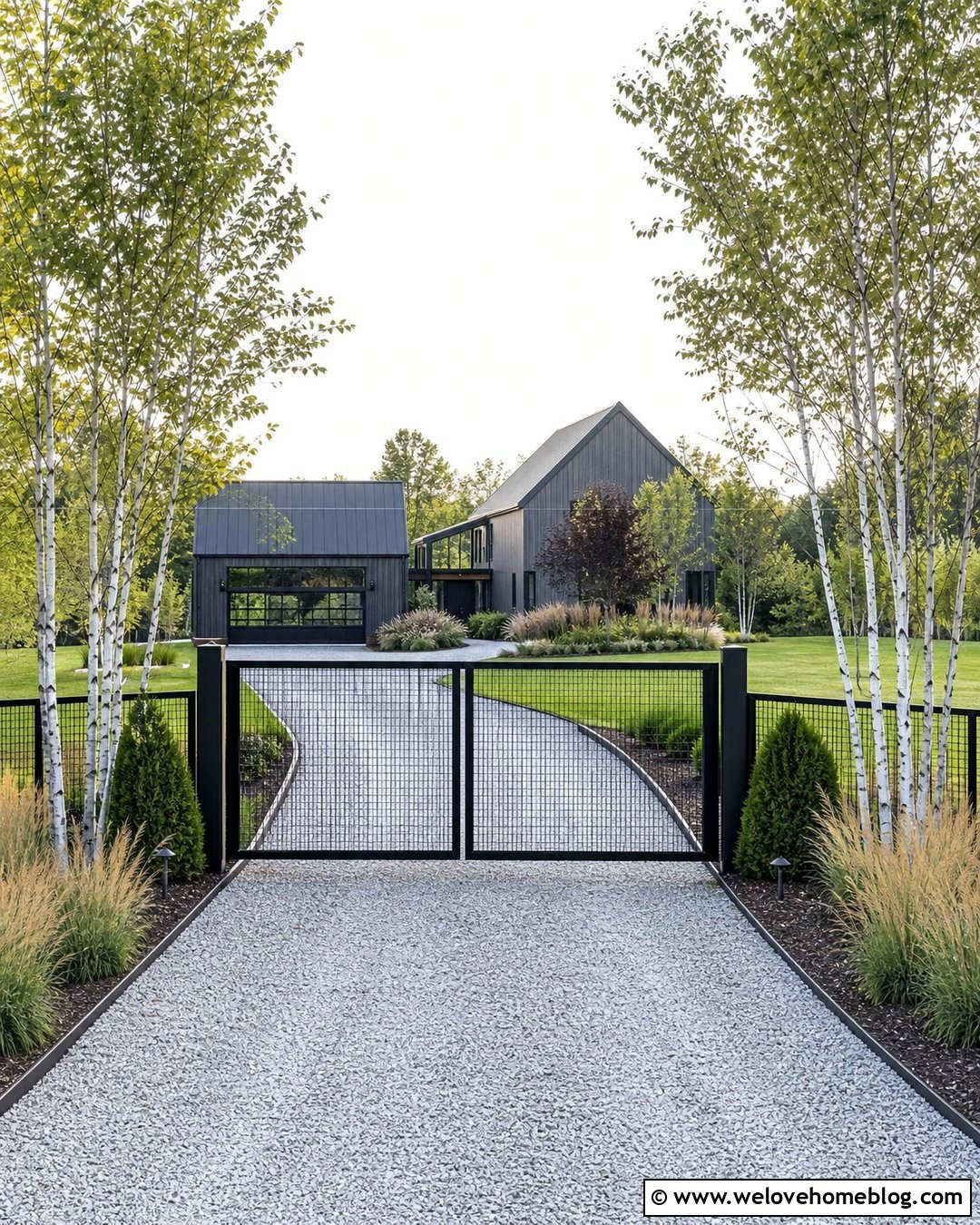


15. Permeable Basalt Paver Driveway With Planted Beds
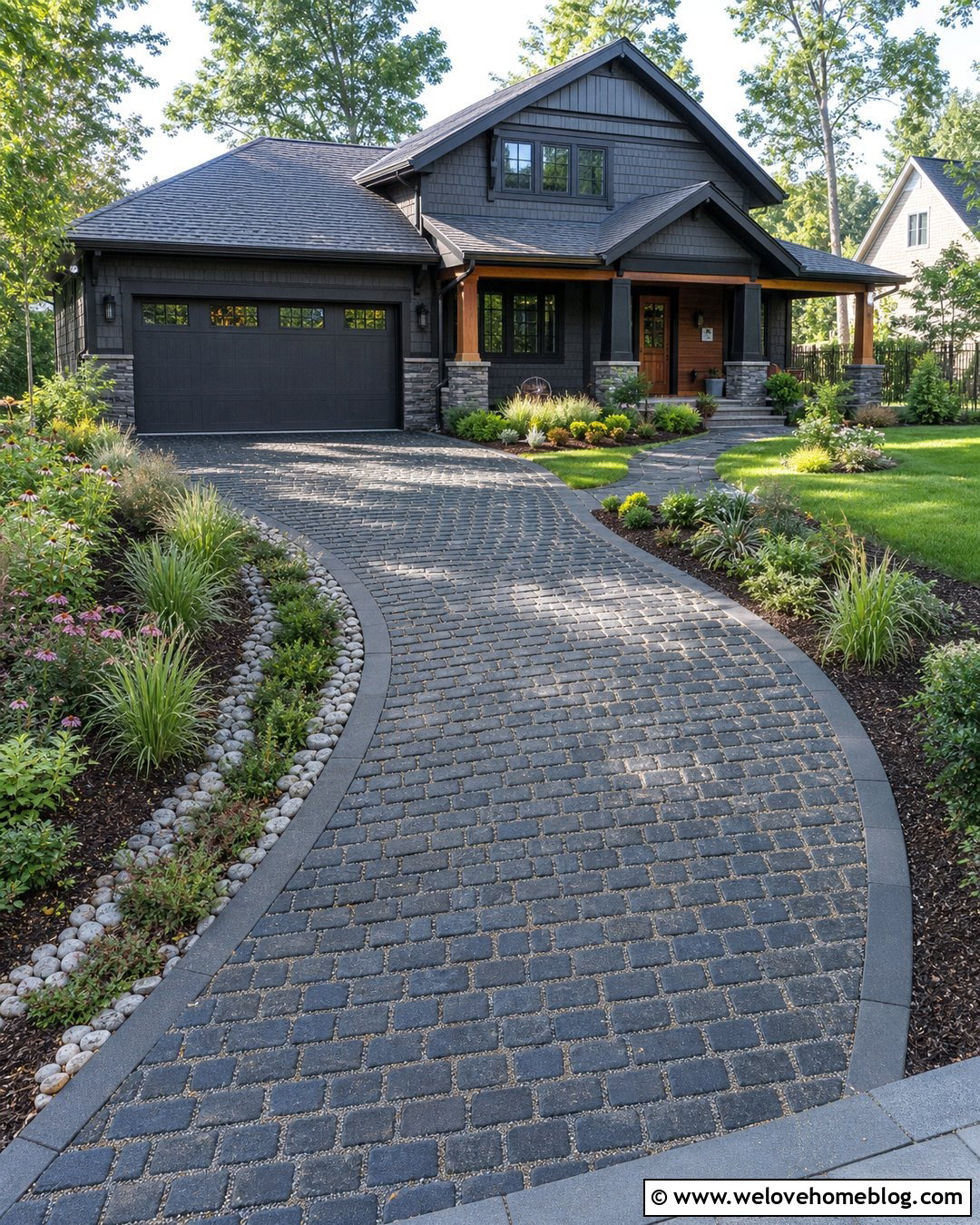
A permeable basalt driveway can combine dark natural stone with a landscape-focused drainage strategy. Select vehicle-rated basalt pavers or cobbles designed for wider, aggregate-filled joints, and install them over a professionally specified permeable base. Use a simple running bond layout on a straight or gently curved drive. Rain gardens or planted swales can sit beside the lower edge, filled with moisture-tolerant native grasses and shrubs selected for the site. Permeable paving systems are intended to let water move through openings into an aggregate base rather than immediately running across the surface. () Local soil, slope, groundwater, and stormwater rules should guide the final design. A contemporary craftsman home and basalt-edged walkway will complete this practical, naturally textured entrance.
16. Basalt Driveway With Timber Edging
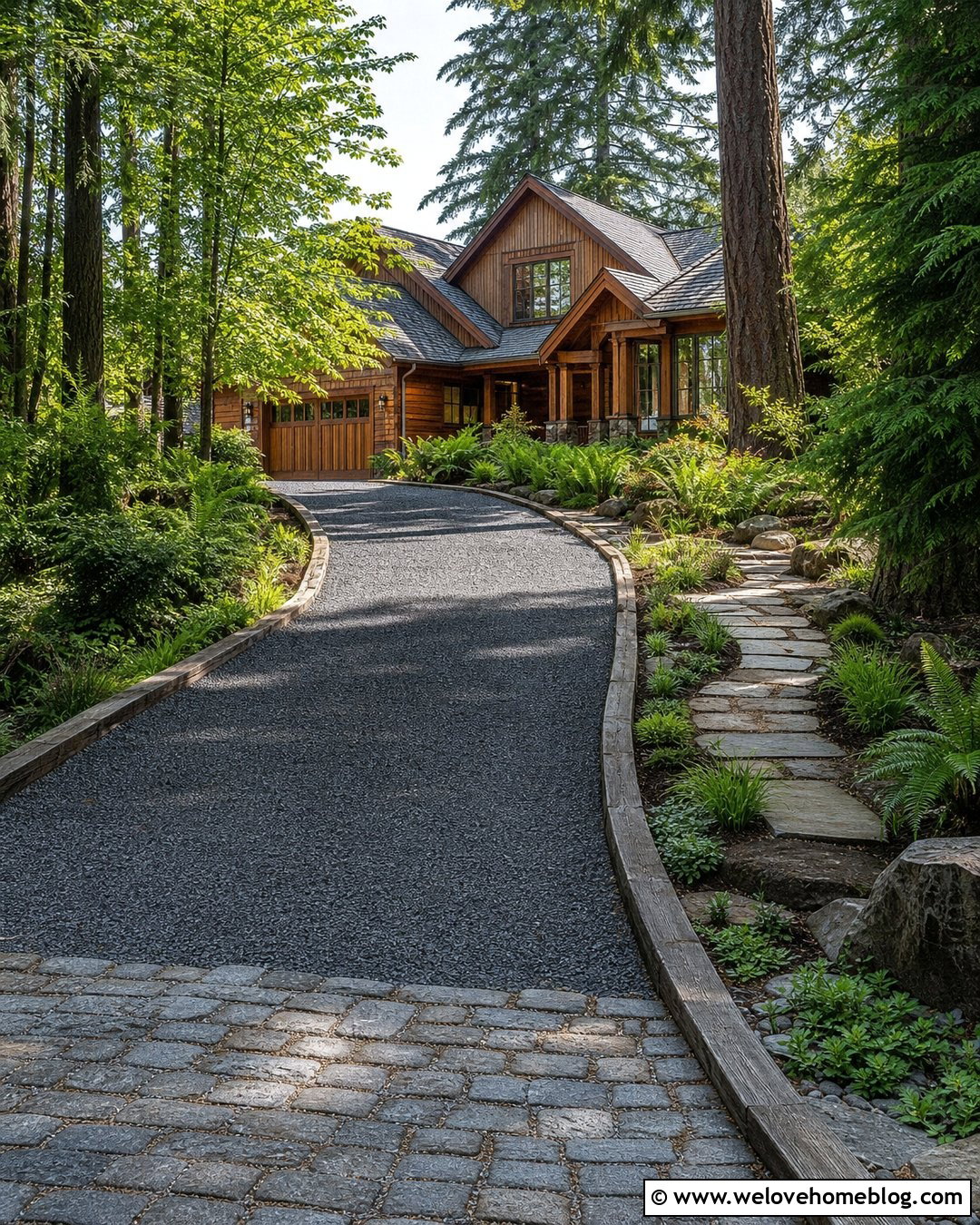
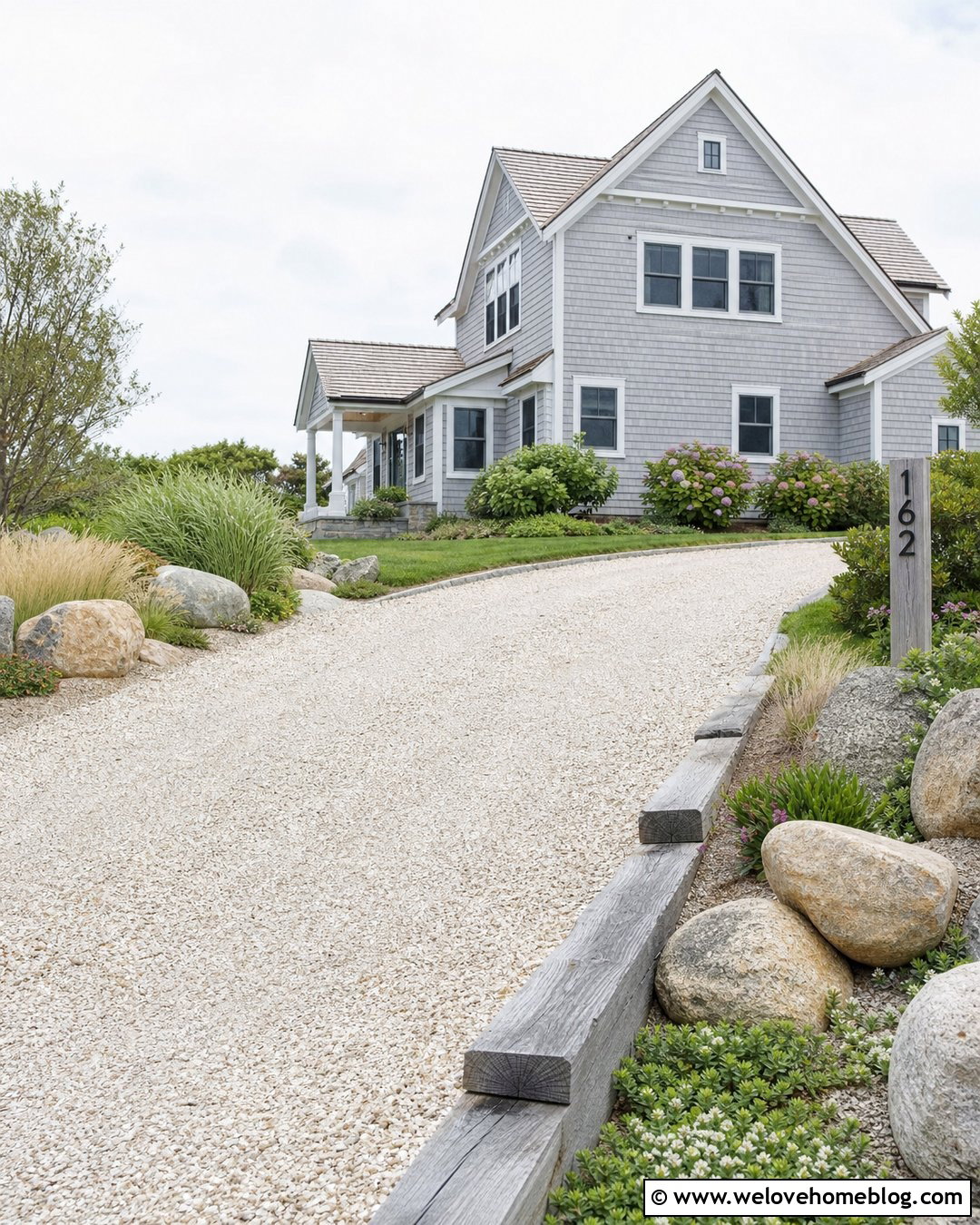
Timber edging brings warmth to a crushed basalt driveway and works particularly well in rural or wooded settings. Choose angular dark-gray basalt gravel and compact it into a gently curved approach. Install substantial treated or naturally durable landscape timbers along the sides, securing them properly so they help maintain the driveway’s shape. Add a second border of low ferns, native grasses, or shade-tolerant ground covers beyond the timber. At the entrance, switch to basalt cobbles for a more finished transition from the public road. A cedar-sided cabin, rustic ranch, or woodland craftsman house creates an appropriate background. Keep timber slightly separated from constantly wet planting soil where possible, and discuss service life with a local contractor. The mixed stone-and-wood palette makes the driveway feel informal, welcoming, and connected to its surroundings.
17. Basalt Cobblestone Driveway With Fan Pattern
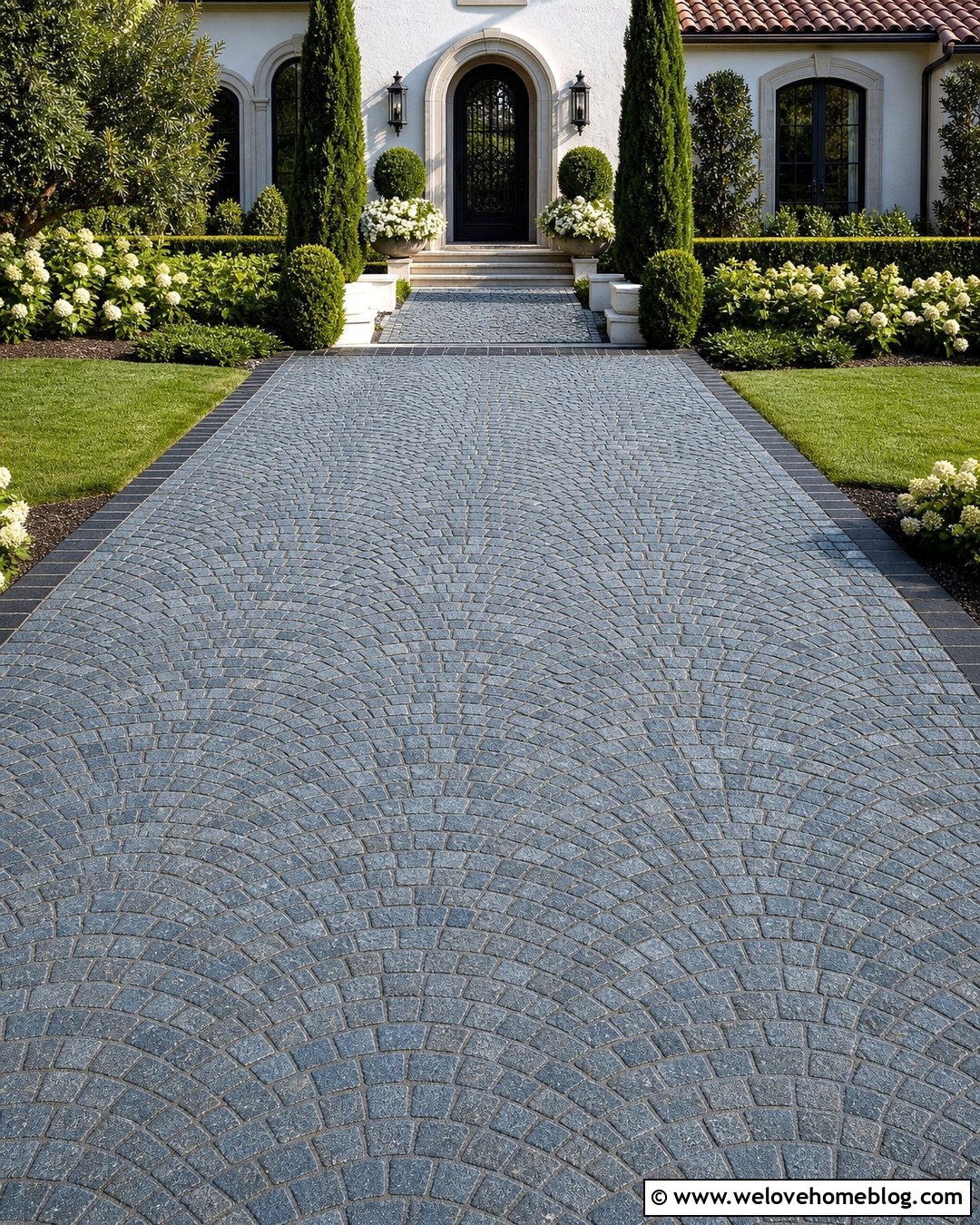
A fan pattern transforms small basalt cobbles into a decorative surface that still reads as one coordinated driveway. Begin each fan near the centerline and allow the curved rows to spread toward the edges. Use tumbled blue-gray cobbles for the main field and straight rows of darker black basalt setts for the border. Patterned aprons and contrasting borders can create a particularly strong entrance focal point. () This approach suits a Mediterranean, Tudor, or European-inspired home with stucco, stone, or warm brick details. Keep the surrounding landscape relatively simple, using evergreen hedges and pale flowering plants that will not compete with the paving. A matching basalt walkway can repeat a smaller fan near the front steps. From the curb, the curved paving lines create depth and guide attention naturally toward the house.
18. Basalt Driveway With White House Exterior
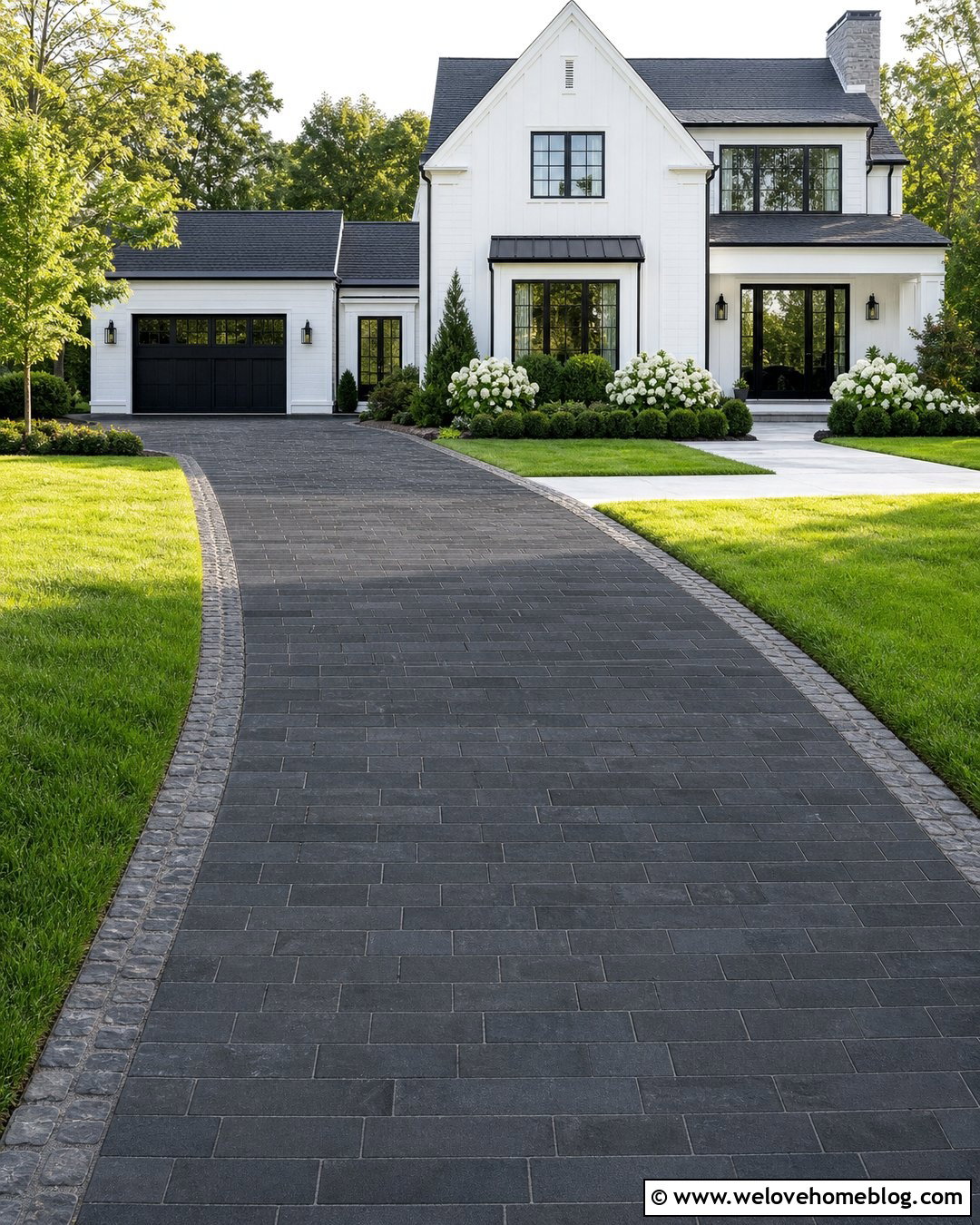
Few combinations are as crisp as a charcoal basalt driveway leading to a bright white house. Use rectangular flamed basalt pavers in a straight running bond pattern, framed by one row of matching cobbles. The dark surface will define the approach, while the simple layout prevents the contrast from becoming overly dramatic. Add broad green lawns, clipped evergreen shrubs, and white hydrangeas for a limited but effective color palette. A pale concrete walkway can cross the basalt near the house, providing an accessible visual route to the front door. This complete look works with modern farmhouse, colonial, and contemporary architecture. Repeat charcoal tones in the roof, window frames, or exterior lighting. By limiting the number of materials and colors, the driveway becomes a confident architectural feature rather than an unrelated patch of dark paving.
19. Basalt Driveway With Raised Garden Borders
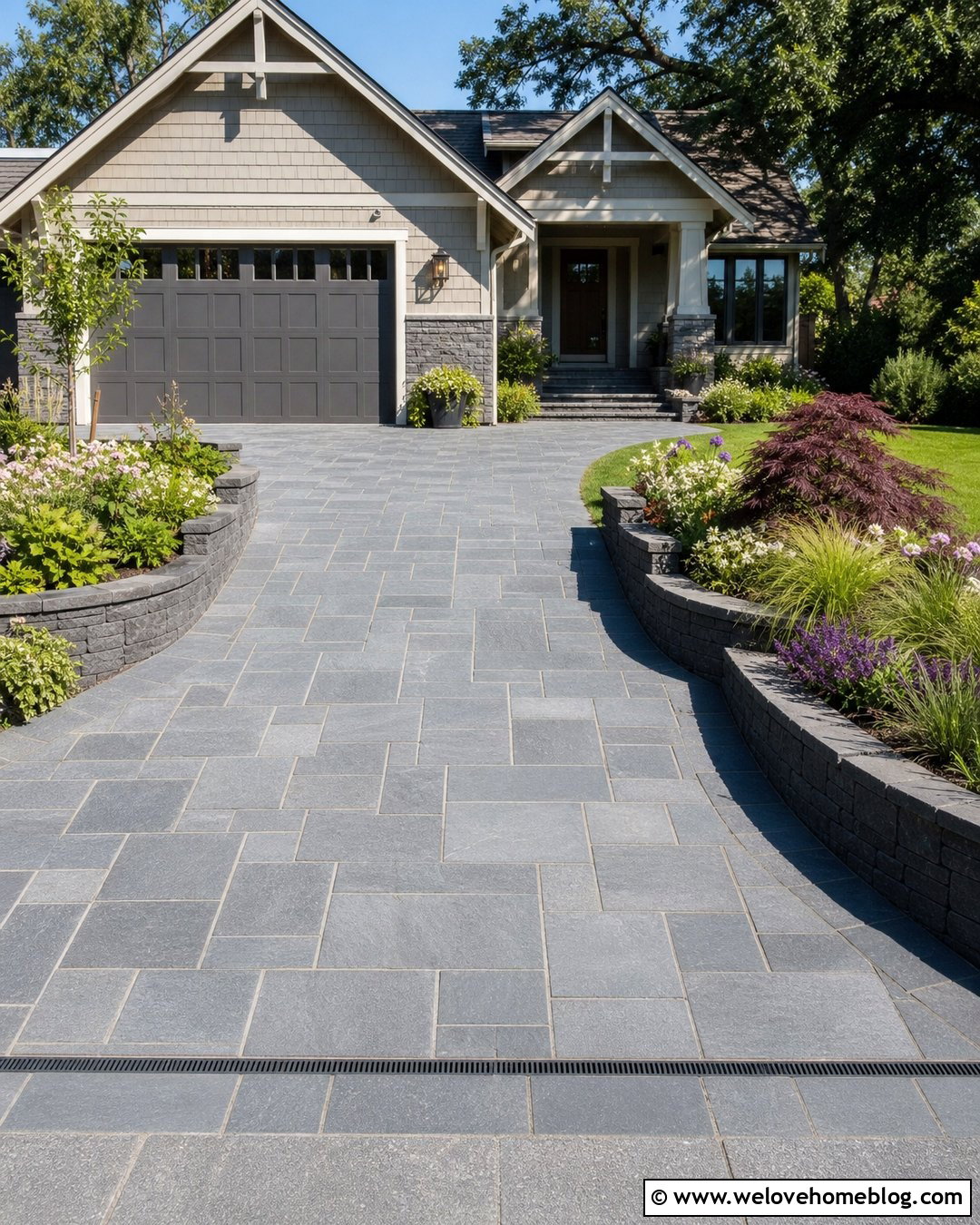
Raised beds can soften a wide basalt driveway while creating a clear buffer between vehicles and delicate planting. Build low retaining borders from stacked basalt blocks, then fill the beds with layered shrubs, flowering perennials, and ornamental grasses. For the driveway surface, use smaller blue-gray basalt pavers in a subtle random rectangular pattern. A narrow drainage channel can be integrated where the drive meets the raised border, depending on the site’s grading plan. Curve one bed near the garage to make the transition into the parking area feel less abrupt. This design complements a split-level, craftsman, or contemporary suburban house. Keep walls low near the street and along tight turns to preserve visibility. Repeating basalt in the paving, walls, and front steps produces a cohesive landscape without making every surface look identical.

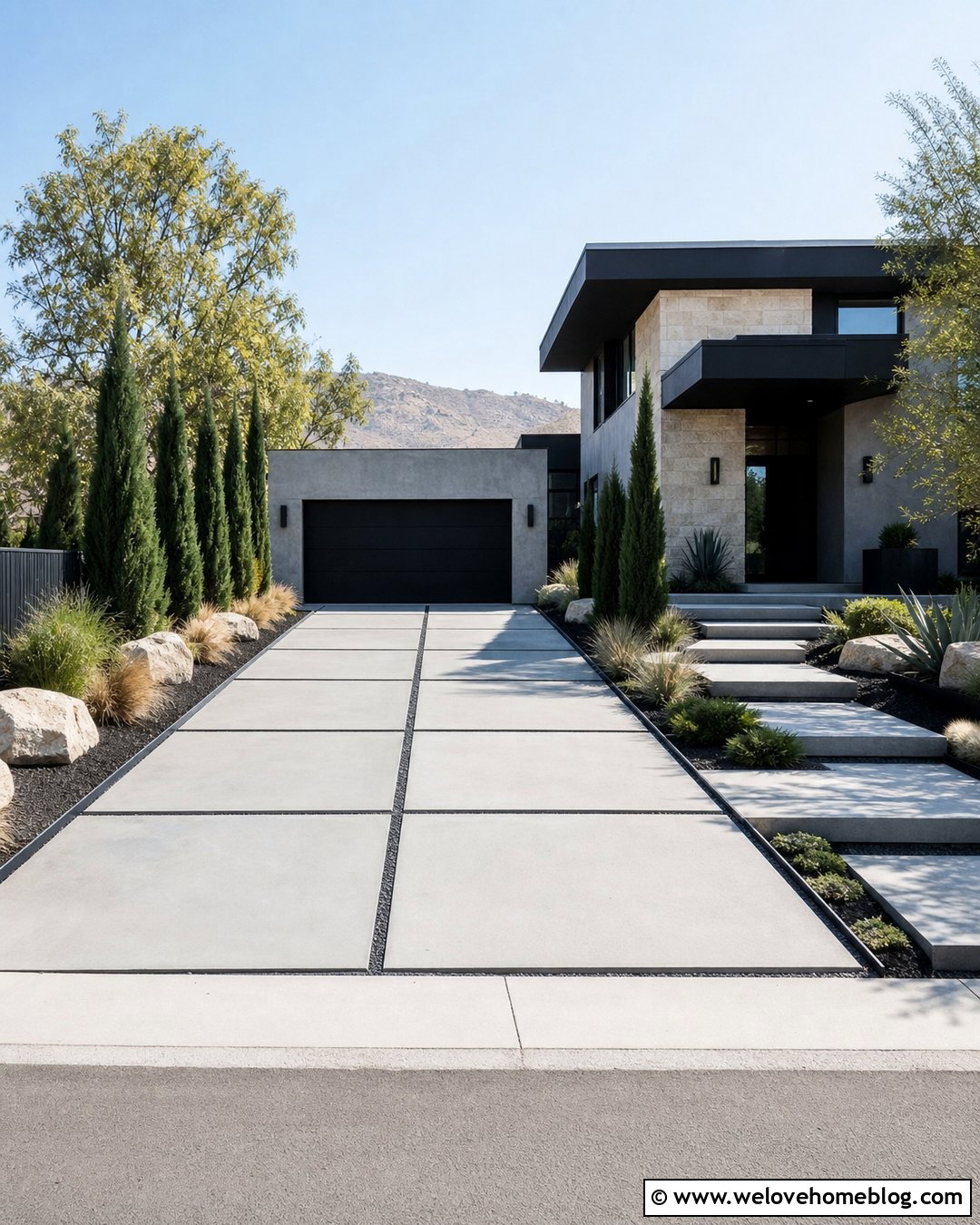
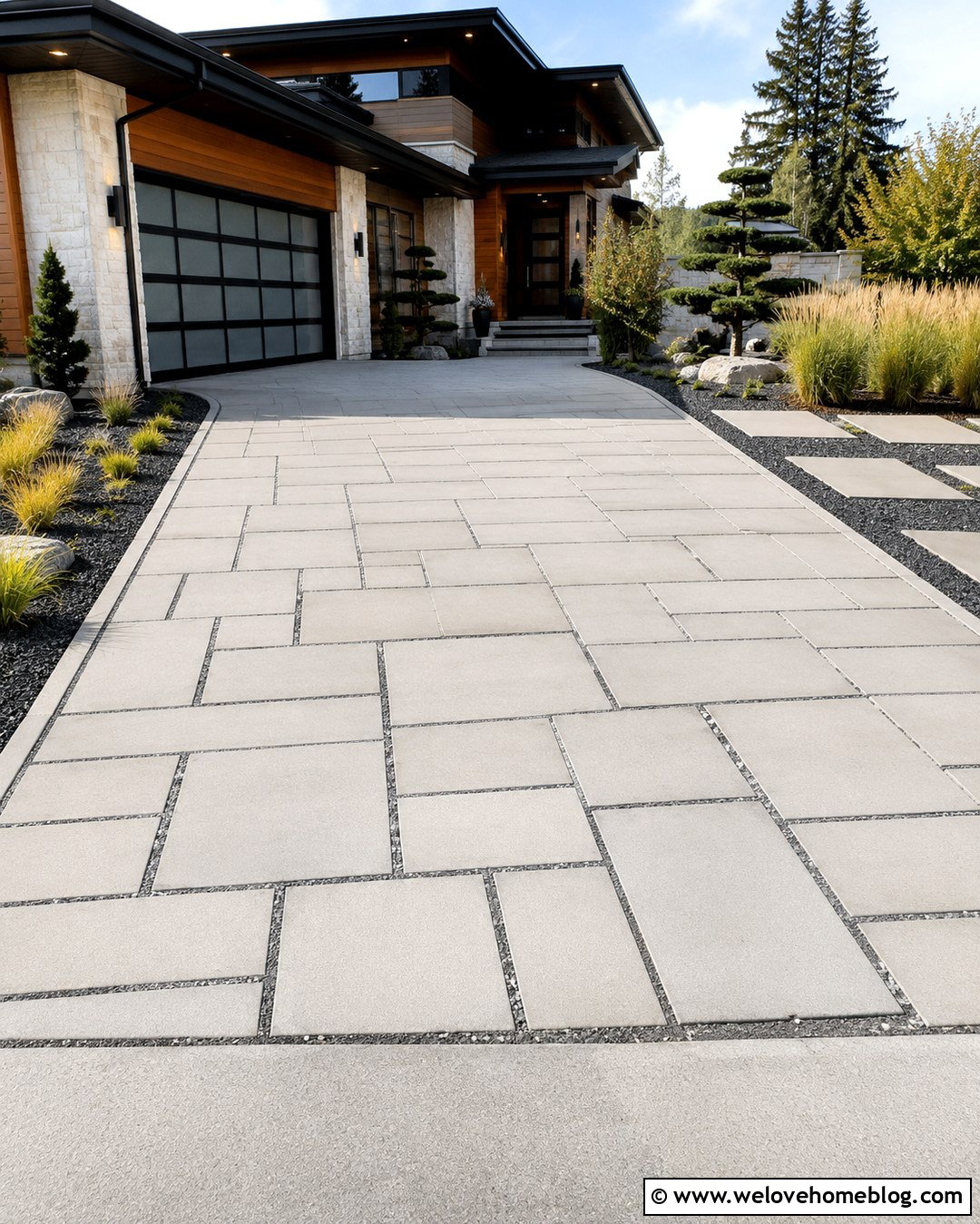
20. Basalt Horseshoe Driveway With Entry Gate
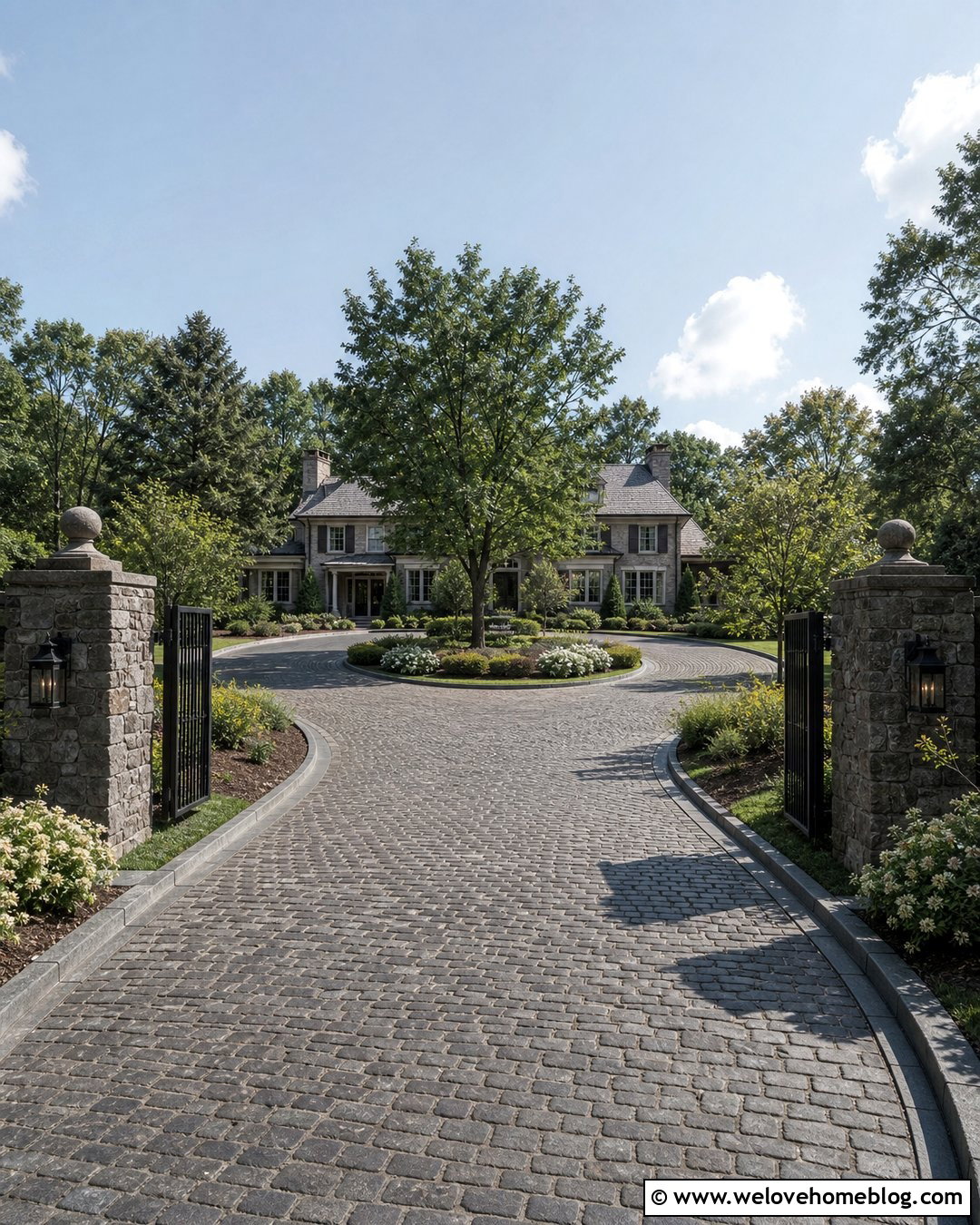
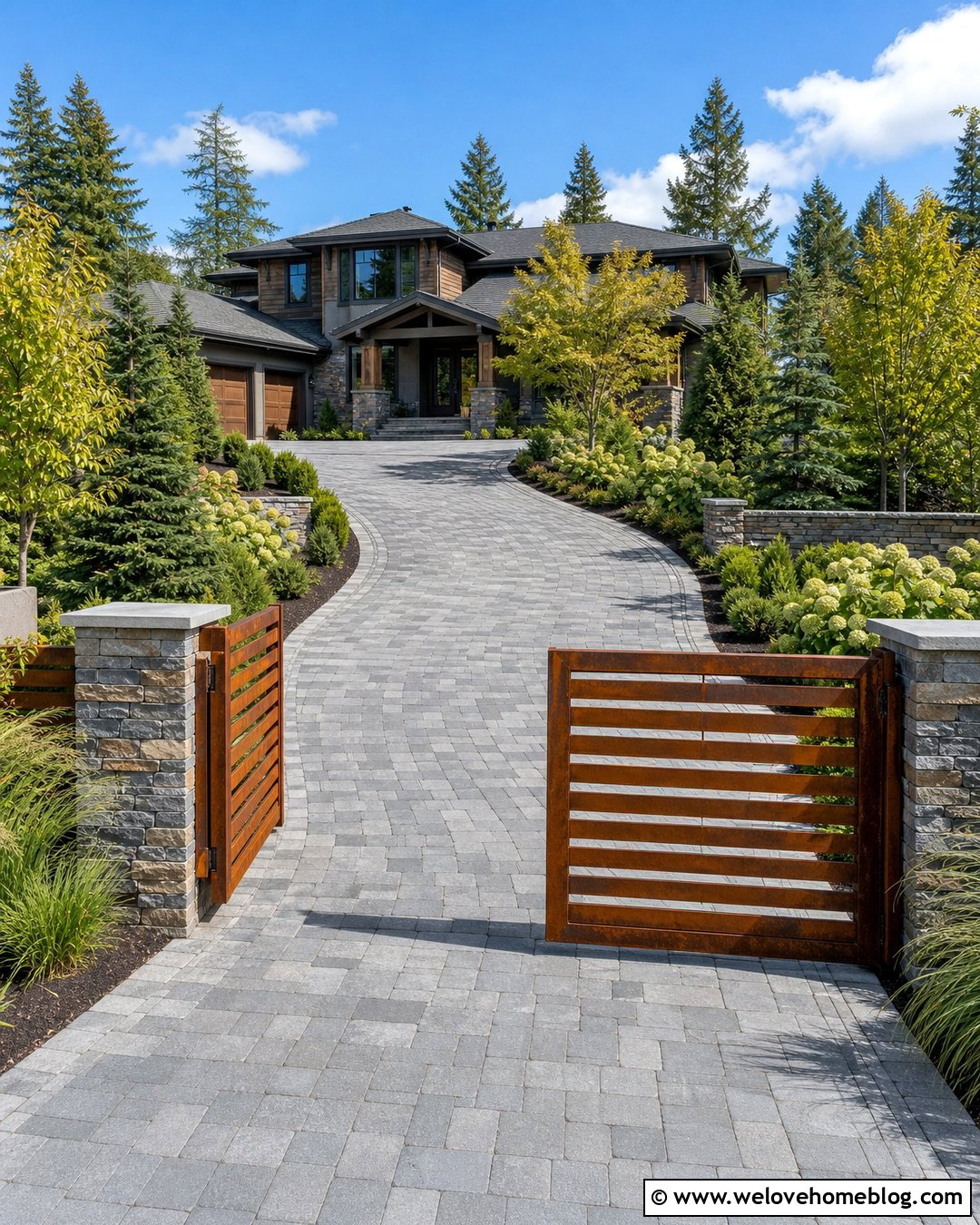
A horseshoe-shaped basalt driveway creates two convenient access points and a strong sense of arrival. Surface the drive with dark tumbled basalt cobbles arranged in curving running bond courses. Mark both entrances with simple stone pillars and an open metal gate that allows views toward the house. In the center, create a large lawn or planted island with one shade tree and a ring of low shrubs. Use broad basalt curbs along the inner and outer edges to reinforce the sweeping shape. This arrangement is best suited to a wider lot with enough space for comfortable vehicle movement. A country estate, traditional home, or large modern farmhouse makes an appropriate backdrop. Before construction, have the turning geometry, gate setbacks, drainage, and local access requirements reviewed by qualified professionals.
Conclusion:
Basalt can support many driveway looks, from compacted gravel approaches to formal cobblestone courts and clean modern paver layouts. Its naturally dark coloring creates useful contrast with lawns, pale facades, warm brick, and colorful planting beds. For the best result, choose the basalt format, surface finish, pattern, edging, and landscape as parts of one complete composition. Practical details matter just as much as appearance. Proper grading, a suitable load-bearing base, secure edge restraints, and thoughtful water management will help protect the finished surface. Because climate and soil conditions vary, consult an experienced local installer before finalizing construction details. These **20 Basalt Driveway Ideas** offer a versatile starting point for creating a distinctive, durable-looking residential entrance.

Related posts:
Leave a Reply