
Rock driveway edging does more than create a tidy line. It helps contain loose stone, separates the driving surface from lawns and planting beds, and gives the entire approach a finished appearance. The best **rock driveway edging ideas** combine the driveway material, border stone, layout, drainage, and surrounding landscape as one complete design. Natural boulders suit rustic properties, while cut granite, limestone, and dark river rock can produce a cleaner, more structured look. Consider how vehicles turn, where water flows, and whether the edge must tolerate mowing or snow removal before choosing a design. Properly planned edging can reduce gravel migration and simplify routine maintenance. () Here are 25 practical and attractive **Rock Driveway Edging Ideas**.

1. River Rock Driveway Edging
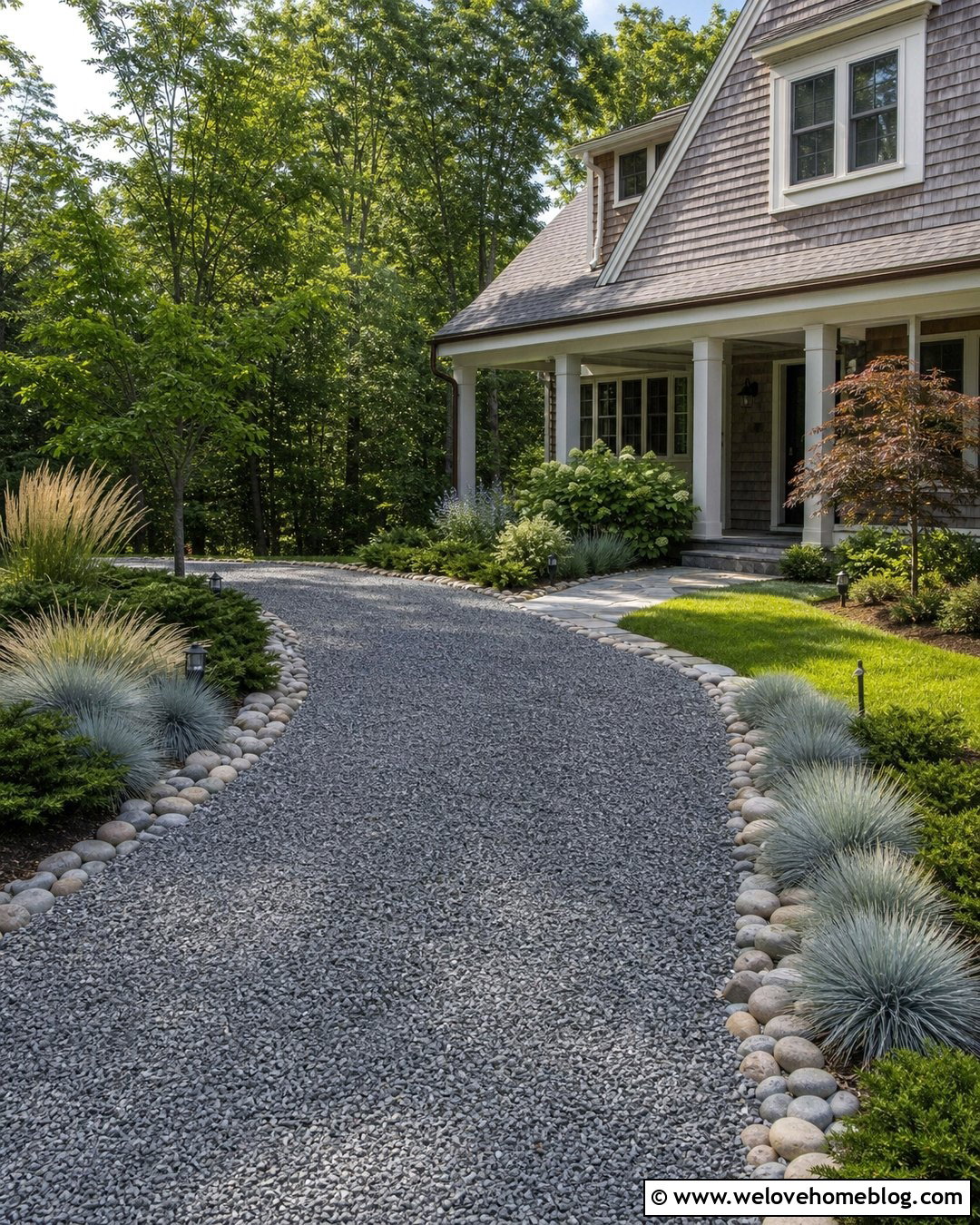
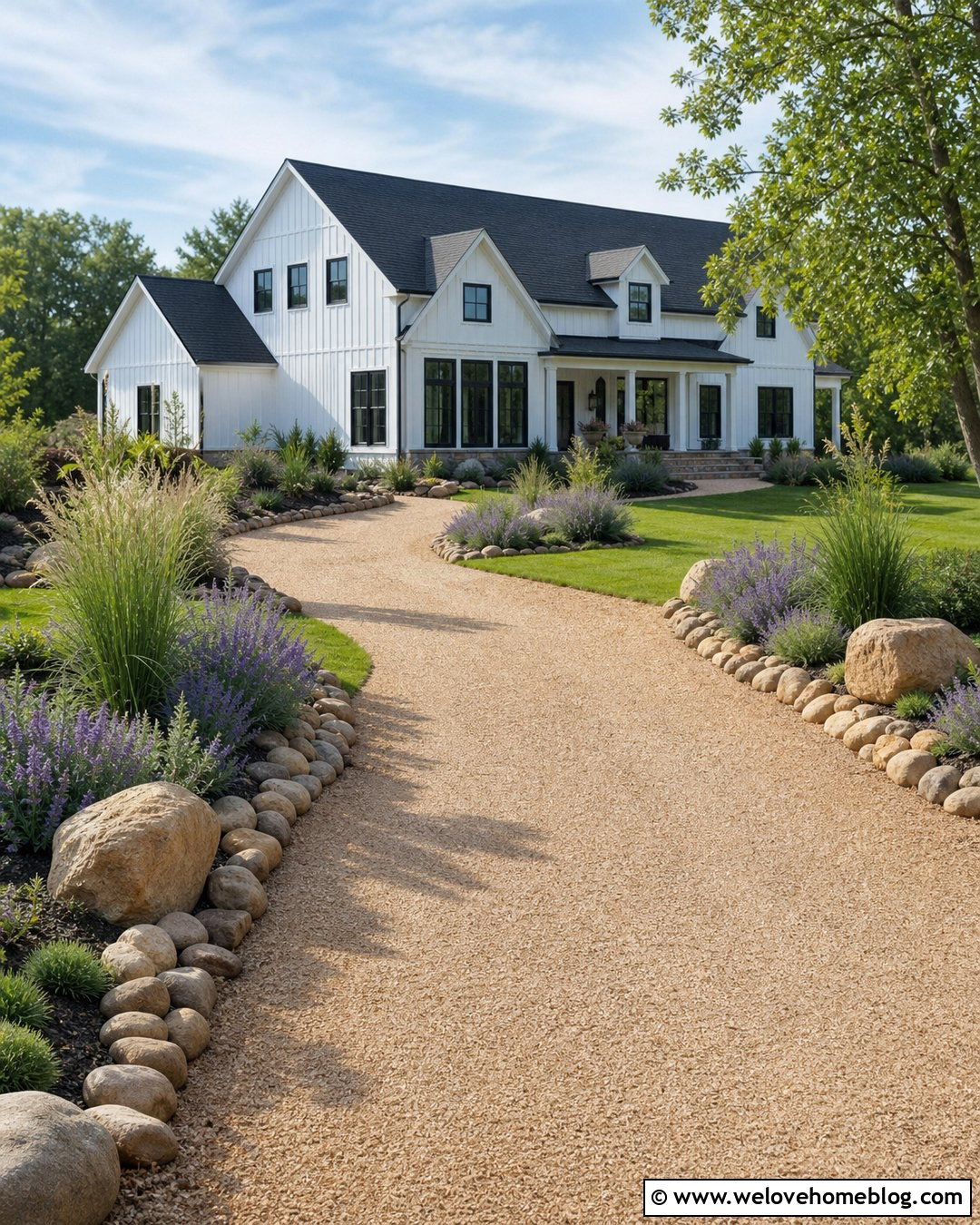
Smooth river rock creates a relaxed border that looks especially natural beside gray crushed-stone driveways. Use medium or large stones rather than tiny pebbles, which can mix into the driving surface. A shallow trench and a concealed rigid restraint on the lawn side will help the rounded rocks remain aligned. For a complete look, pair a gently curved driveway with wide river-rock borders and ornamental grasses. Blue fescue, dwarf fountain grass, and low junipers provide texture without hiding the edge. Choose river rocks in colors that connect with the house facade, such as warm tan for brick or charcoal gray for modern siding. Keep the border lower near the street so tires, snowplows, and drainage water can move safely.
2. Large Boulder Driveway Edging
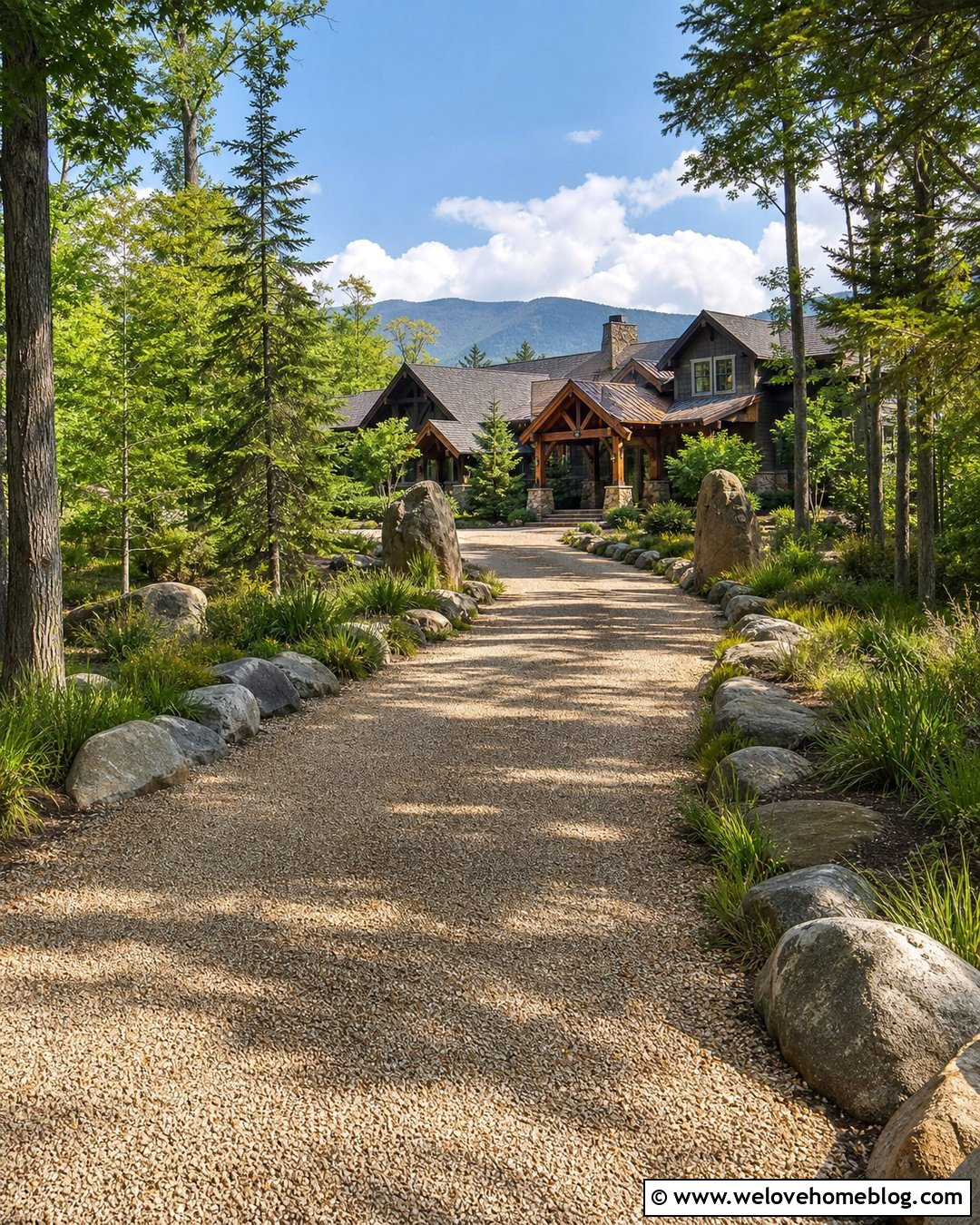
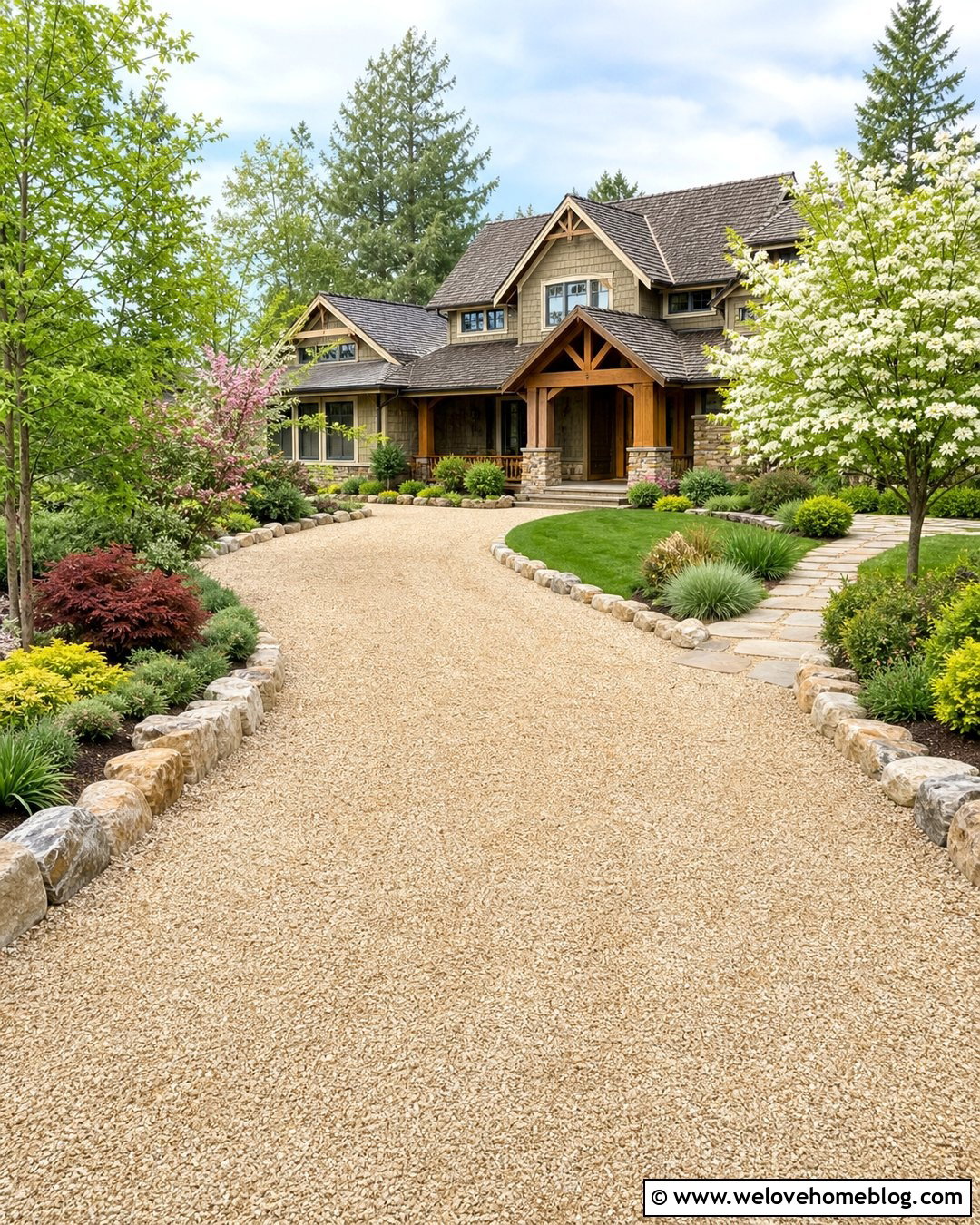
Large boulders can give a long rural driveway a strong, natural frame. Space them irregularly along the edge rather than forming an unbroken wall. This leaves room for drainage and makes the arrangement look integrated with the landscape. A crushed granite driveway works well with weathered fieldstone boulders, especially when it curves through mature trees. Set each rock partly into the soil so it appears grounded and cannot shift easily. Between the boulders, add tough native grasses, sedges, or low evergreen shrubs. Keep tall rocks away from tight turning points and the public road. At the entrance, two slightly larger stones can define the driveway without requiring formal pillars, creating an inviting transition from the street to a country or mountain-style home.
3. Granite Cobblestone Driveway Edging
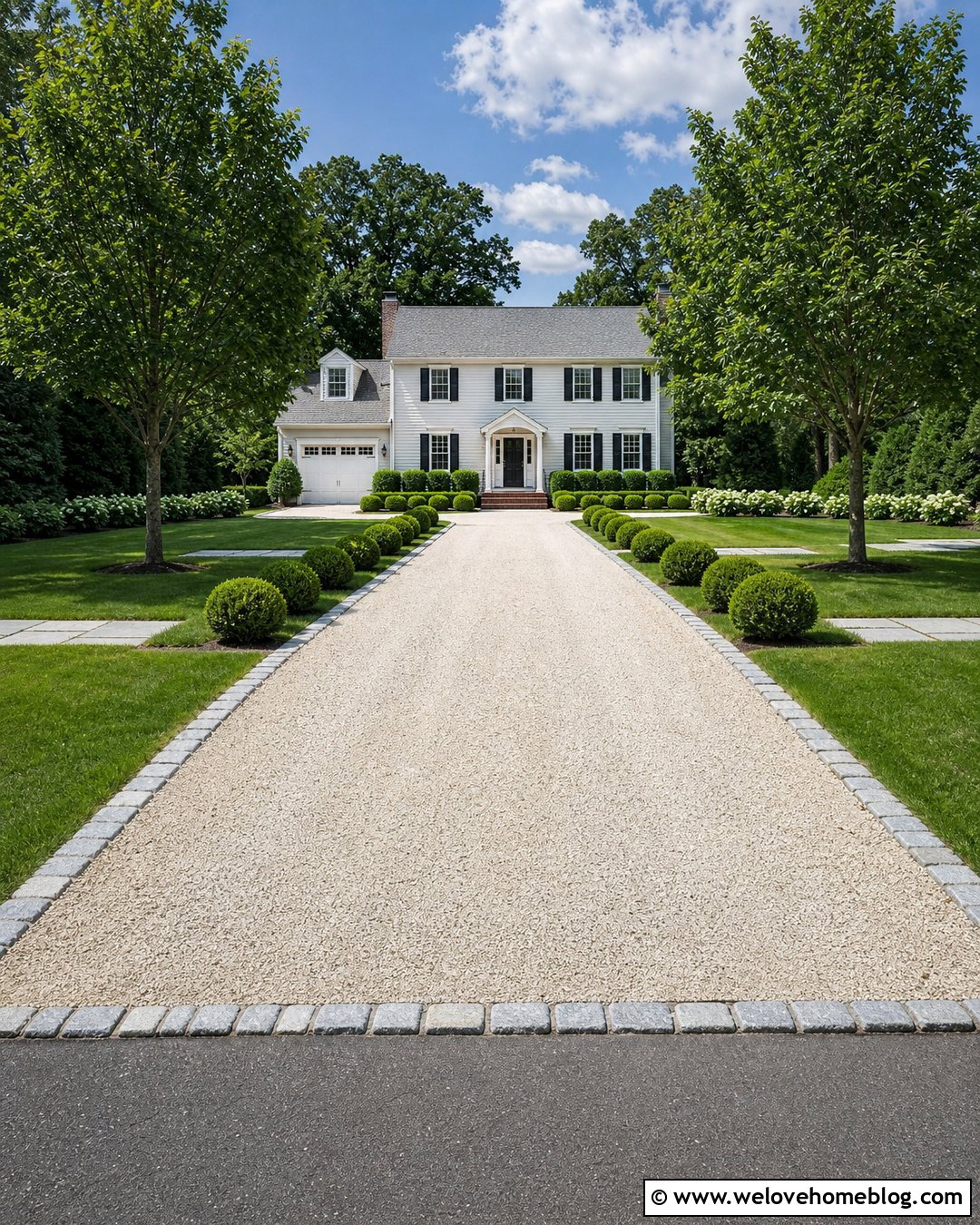
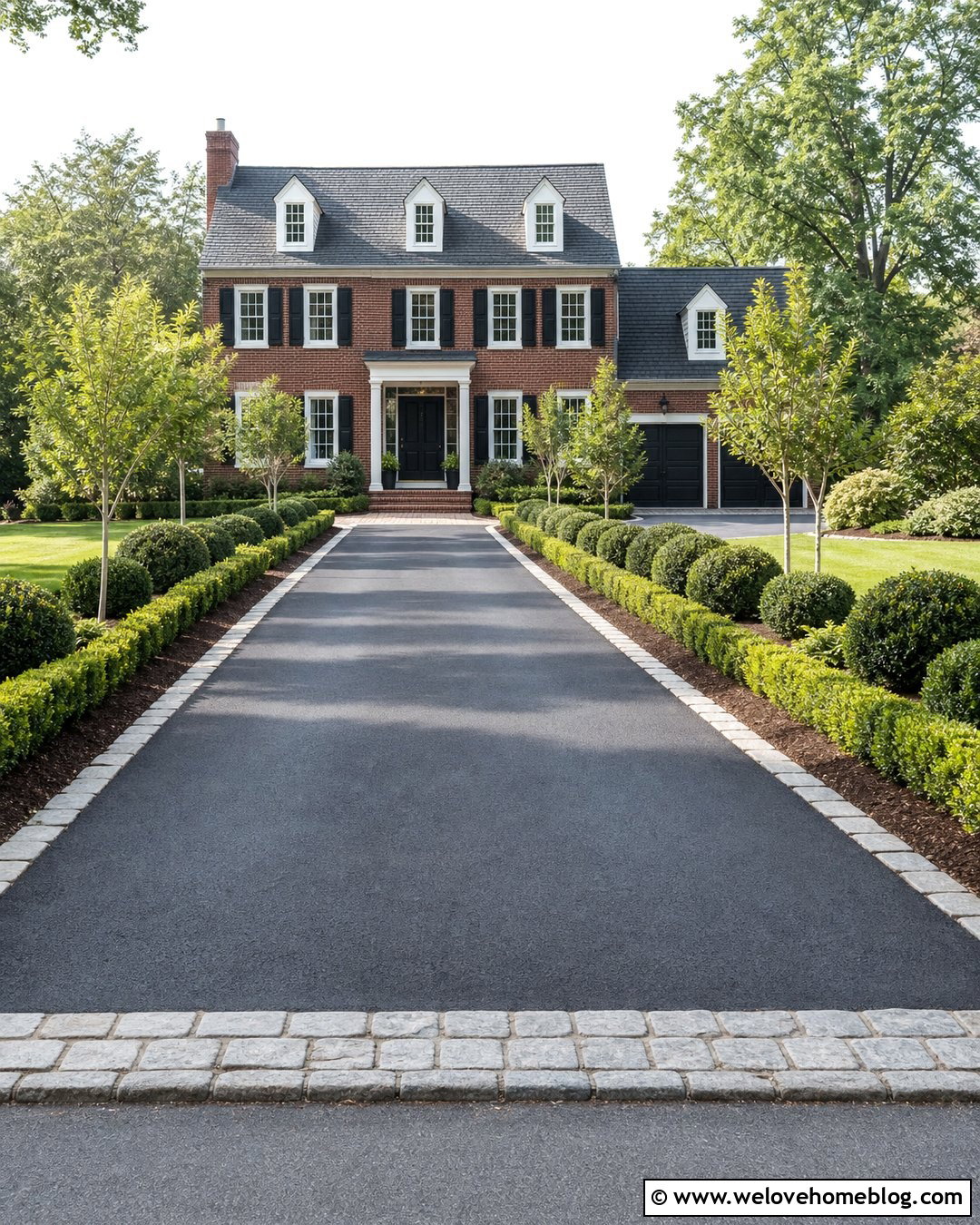
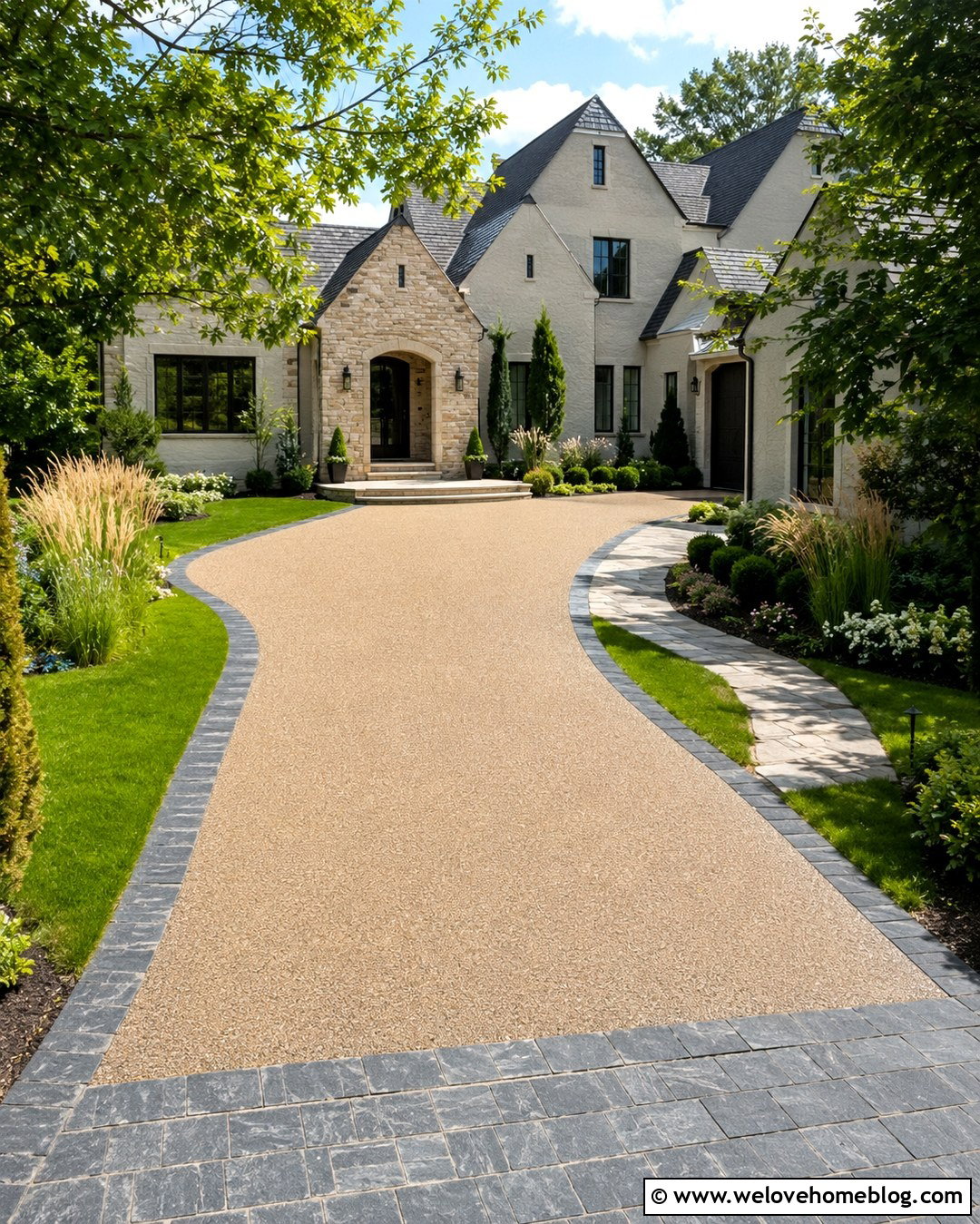
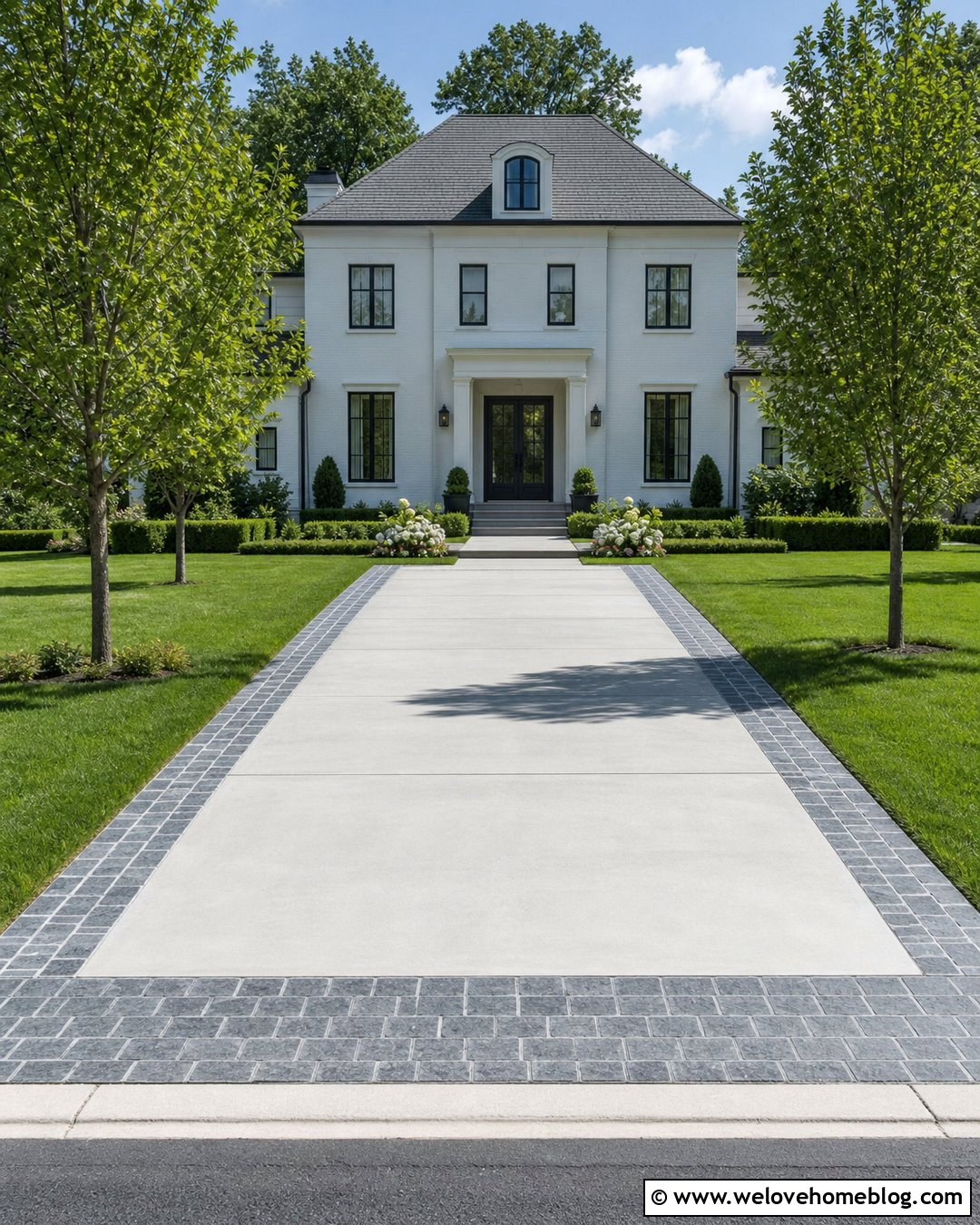
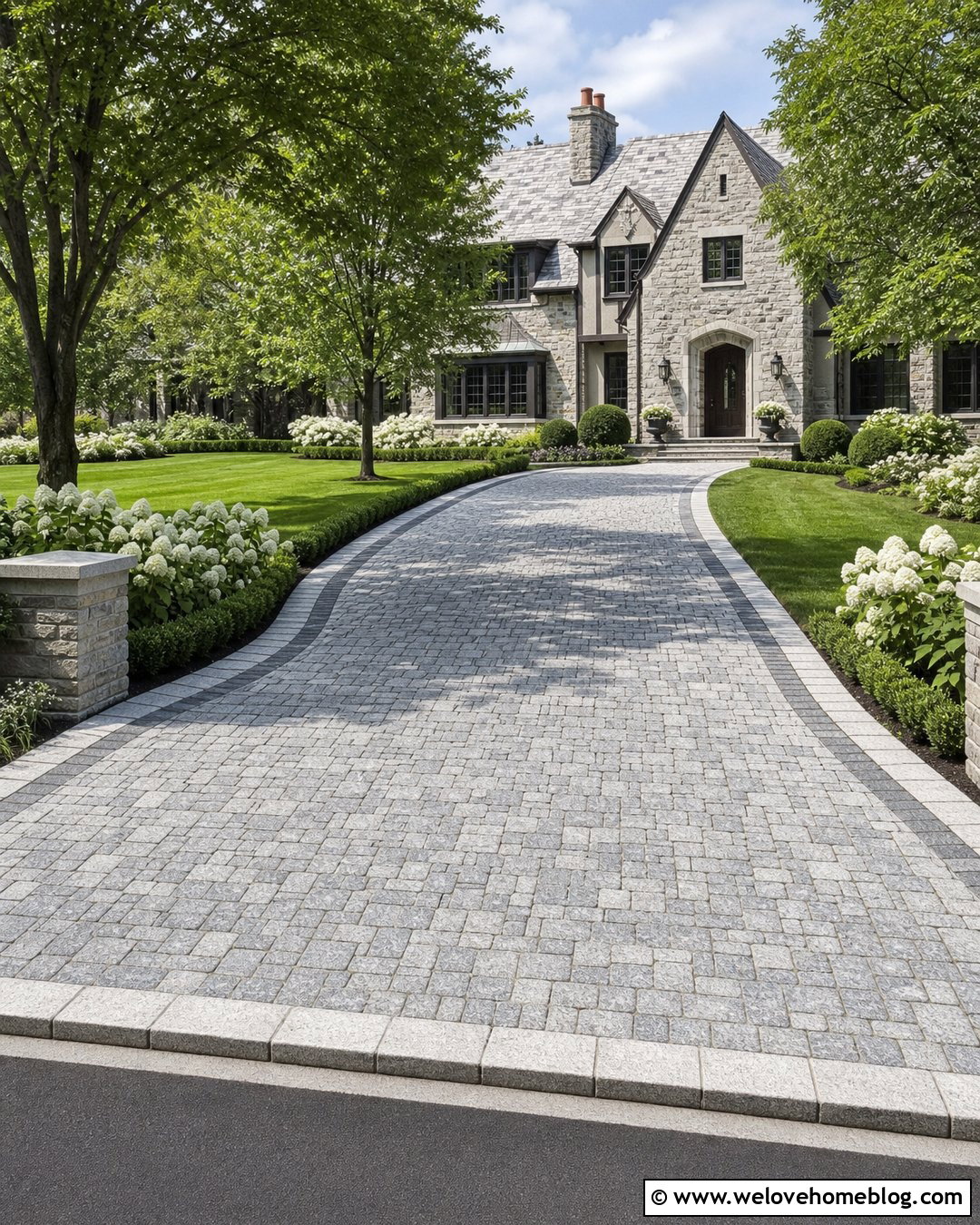
Granite cobblestones provide a durable, orderly edge for a driveway covered with pale gravel or crushed limestone. Their squared shape creates a noticeable boundary while their natural surface keeps the design from looking overly formal. Install one row along a straight driveway for a slim border, or use two rows around curves where stronger visual definition is needed. Gray cobbles coordinate easily with cool exterior colors, slate roofs, and stone veneers. Pink or warm granite can complement red brick and beige siding. Continue the cobblestones across the driveway as a threshold near the garage or street to make the border feel intentional. Finish the landscape with clipped shrubs, lawn, and evenly spaced trees for a traditional residential approach that remains easy to understand from the curb.
4. Flat Fieldstone Driveway Edging
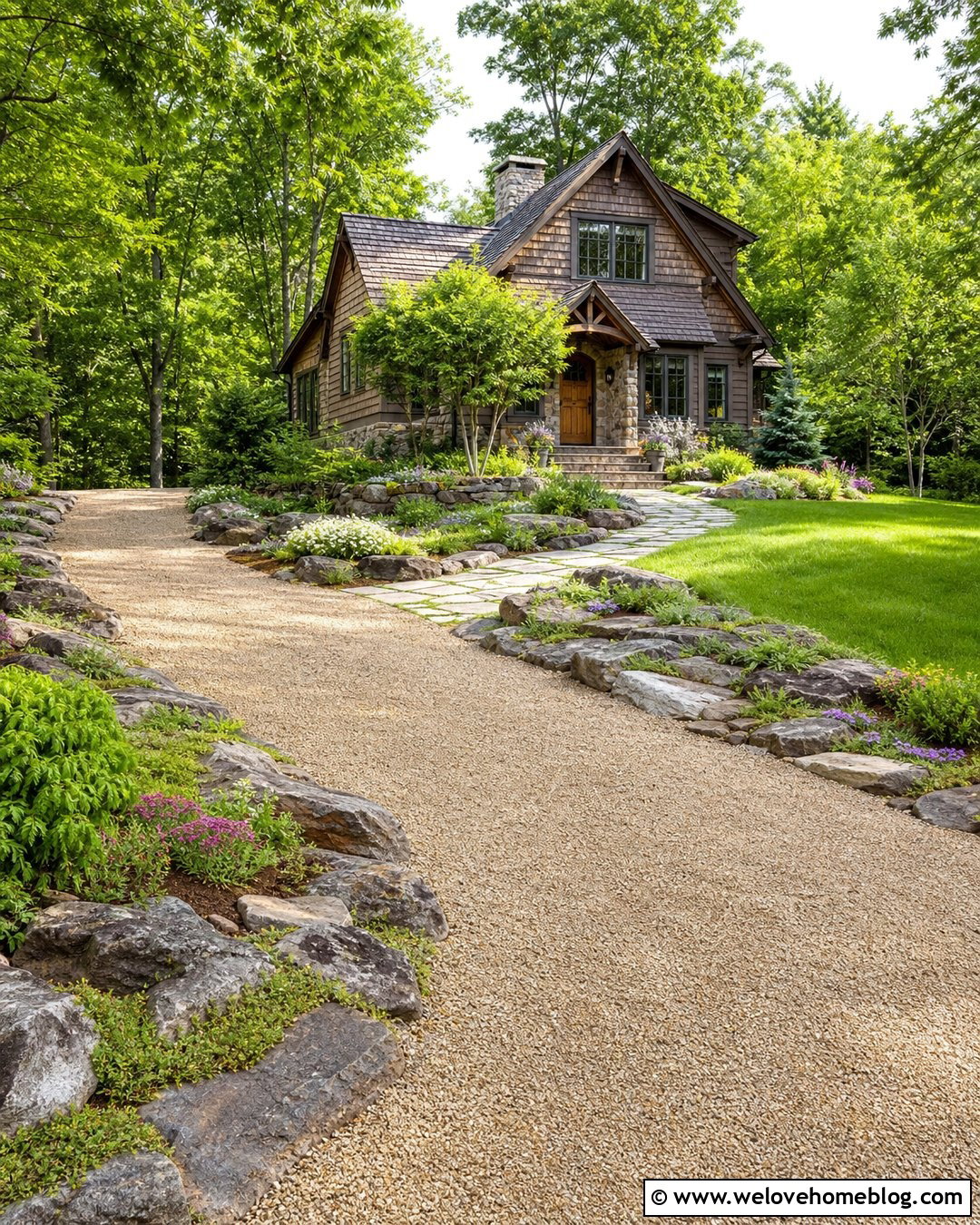
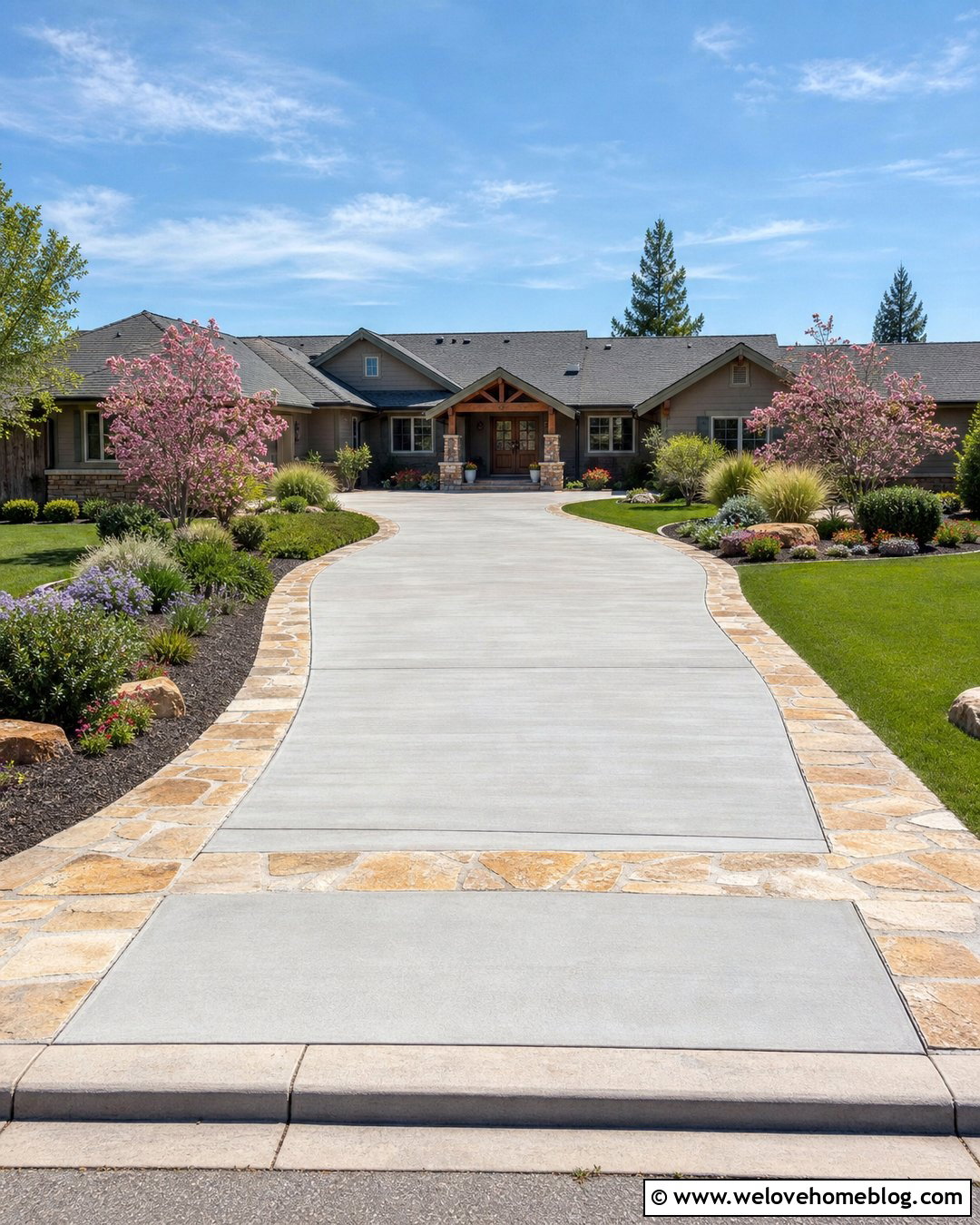
Flat fieldstone offers a softer, more informal alternative to perfectly cut edging blocks. Choose stones with relatively level tops and lay them tightly along the sides of a tan gravel driveway. Their irregular outlines look particularly attractive around a curved approach leading to a craftsman, cottage, or woodland home. Use similar fieldstone around nearby planting beds or the front walkway so the driveway belongs to the larger landscape. Creeping thyme, sedum, or low phlox can soften the lawn-side joints without spreading onto the driving surface. Avoid tall, narrow pieces that may loosen when touched by tires. A low and wide arrangement is more practical. Mixing several related brown, gray, and mossy tones gives the border character while maintaining a calm, cohesive appearance.
5. Stacked Stone Driveway Edging
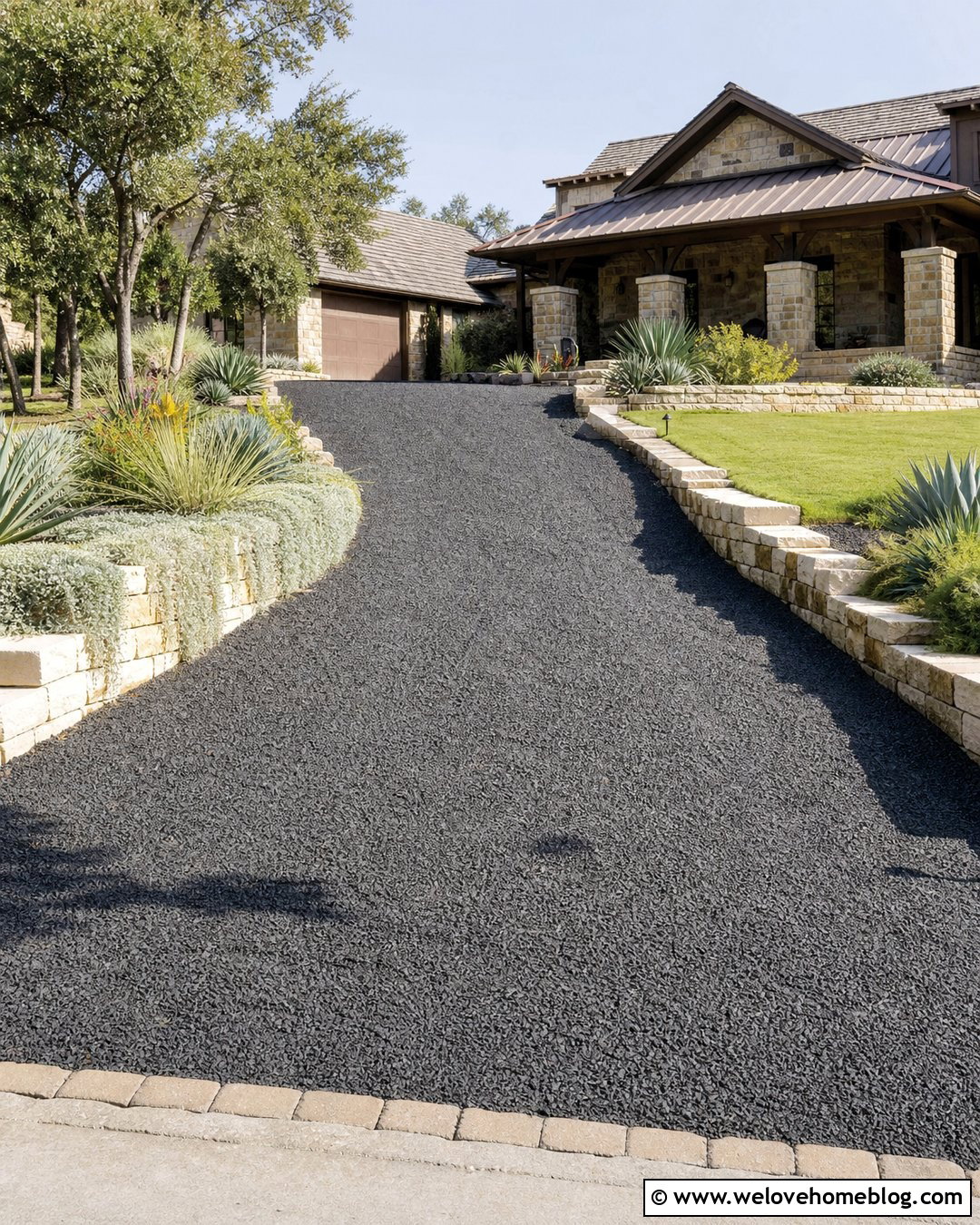
A low stacked-stone edge can manage a slight grade while bringing substantial texture to a gravel driveway. This treatment works best where the lawn or planting bed sits higher than the driving surface. Build a restrained wall with broad base stones and staggered joints, keeping the finished height low enough to preserve visibility. A dark crushed-basalt driveway beside buff limestone creates bold contrast, while matching gray materials produces a quieter result. Add drought-tolerant shrubs and cascading plants behind the wall, but leave clear space near the garage and street. On the lower side of a slope, provide a planned outlet for runoff rather than relying on loose joints alone. Repeat the stone on porch columns, steps, or a mailbox base to connect the driveway edge with the house.
6. Limestone Rock Driveway Edging
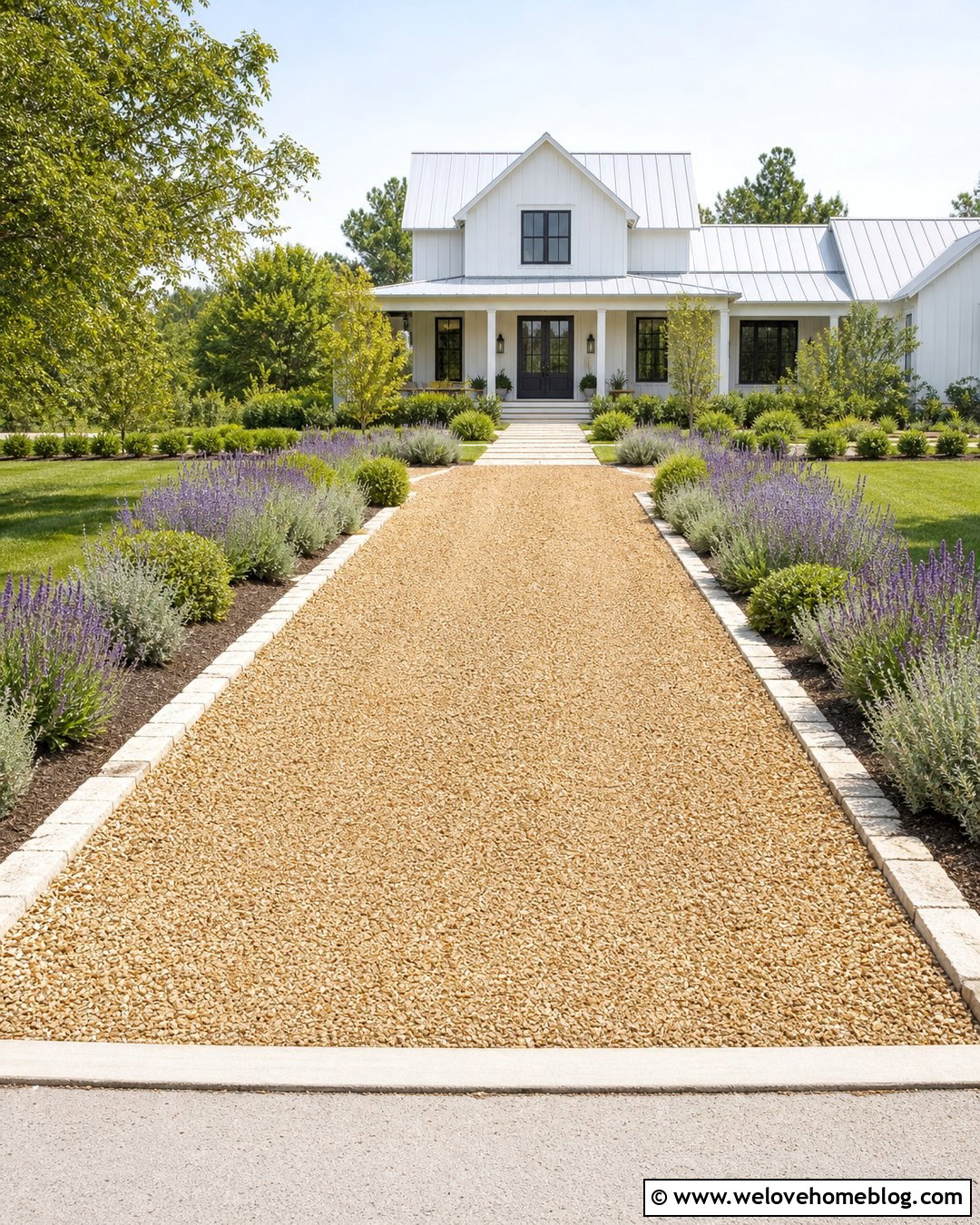
Creamy limestone edging can brighten a gray or honey-colored gravel driveway without feeling harsh. Use roughly rectangular limestone blocks to create a clean line beside a straight suburban approach. Their light color works especially well with white siding, pale brick, and modern farmhouse facades. For a coordinated landscape, add soft green shrubs, lavender, catmint, and neatly maintained lawn behind the stone. A matching limestone walkway can branch from the driveway toward the front entrance. Because very pale stone can show soil and tire marks, keep the driving surface slightly below the top of the border and provide adequate turning width. The overall effect should feel simple and balanced: a lightly textured driveway, a defined stone frame, restrained planting, and a bright house at the end of the view.
7. Black Basalt Driveway Edging
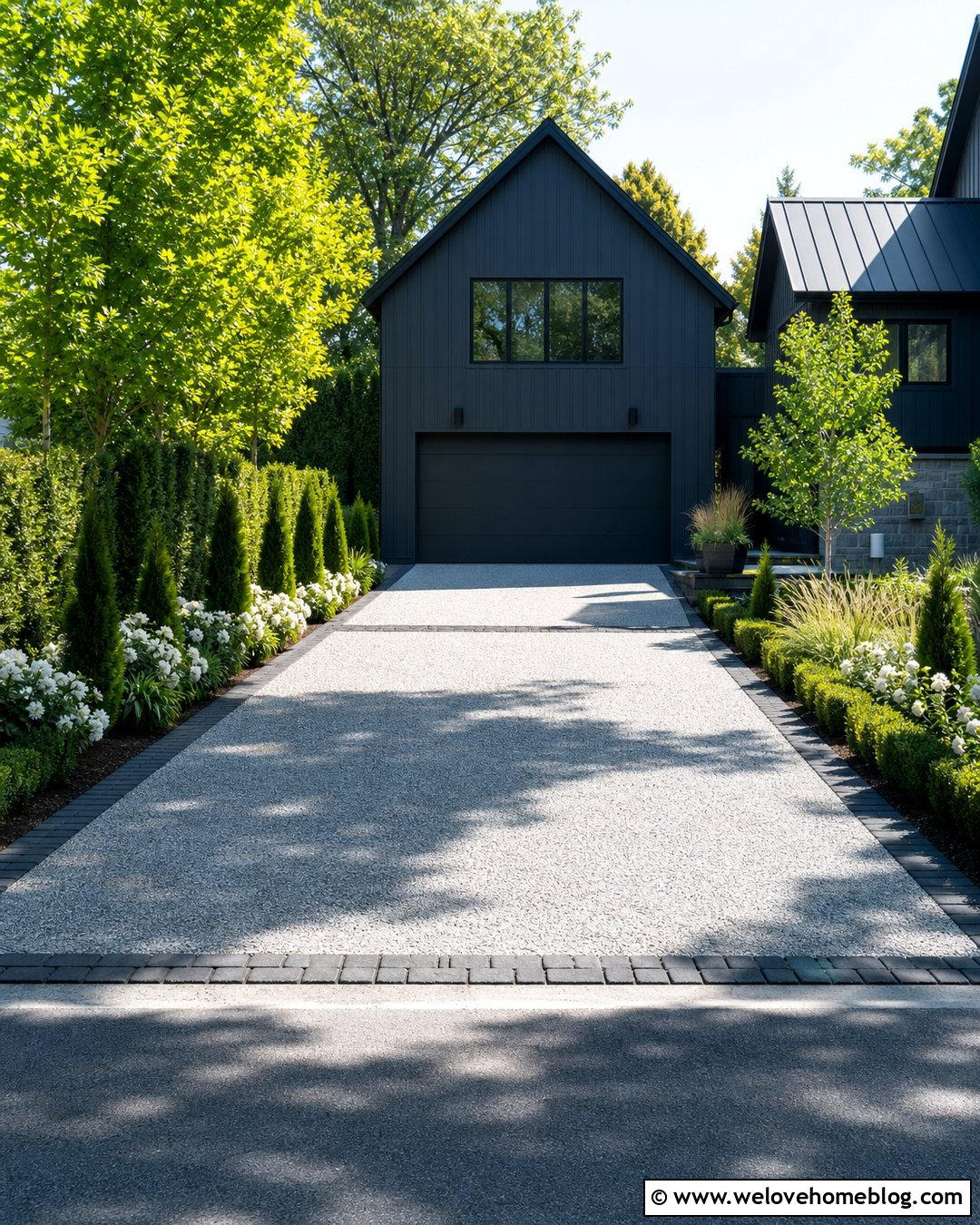
Black basalt creates a crisp border that suits modern homes and high-contrast landscapes. Pair rectangular basalt setts with light gray crushed granite for a driveway that reads clearly from the curb. A straight layout with broad planting beds strengthens the contemporary appearance. Use dark metal planters, clipped evergreens, white flowering perennials, and architectural grasses to repeat the driveway’s simple palette. The basalt can sit nearly flush with the gravel and adjacent lawn, allowing easier mowing and reducing the chance of tires catching a raised edge. At the garage, continue the stone in a narrow horizontal band across the driveway. This cross-strip visually completes the frame. Limit the surrounding material palette so the deep charcoal edging remains the main accent rather than competing with several unrelated colors and textures.
8. Sandstone Driveway Edging
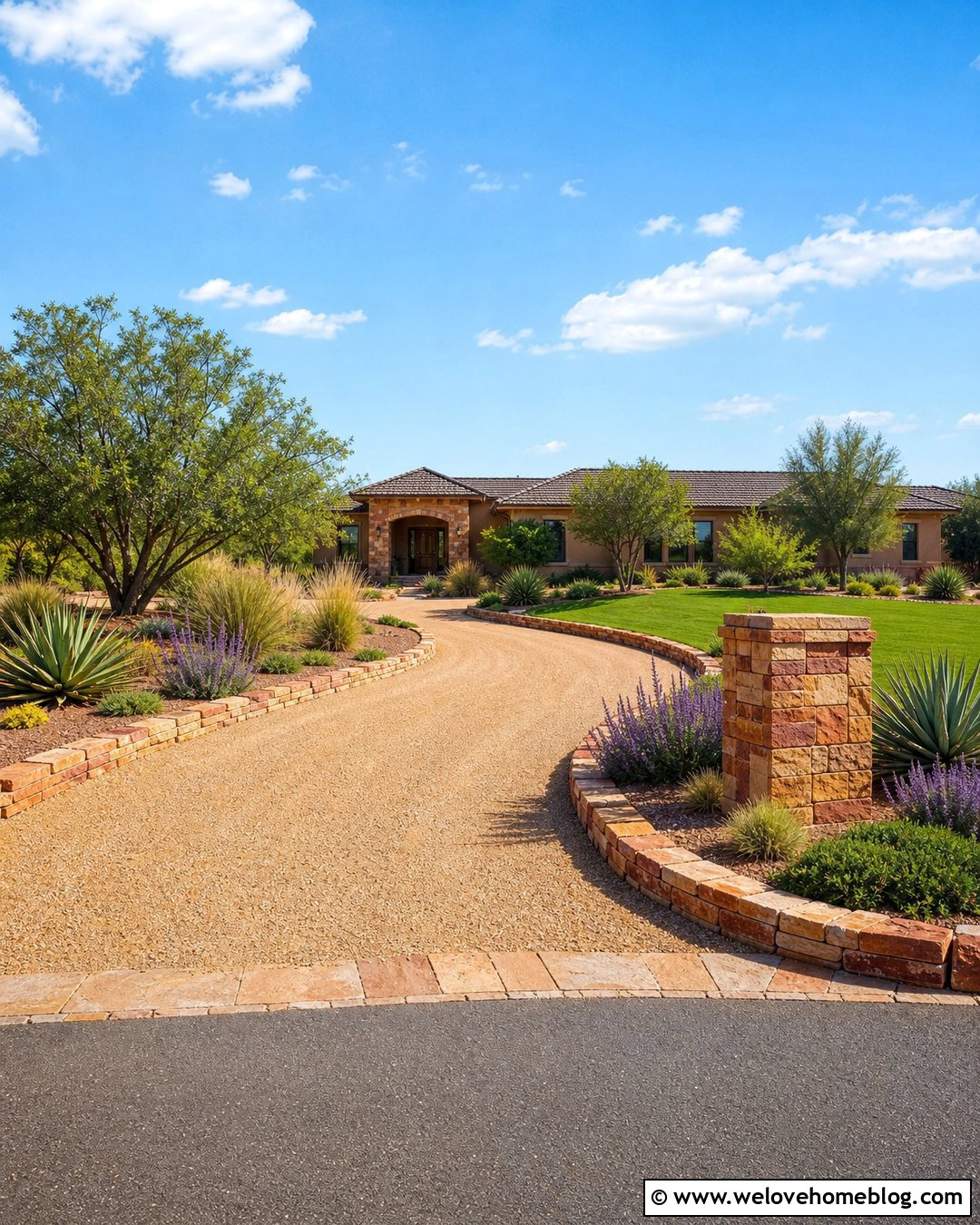
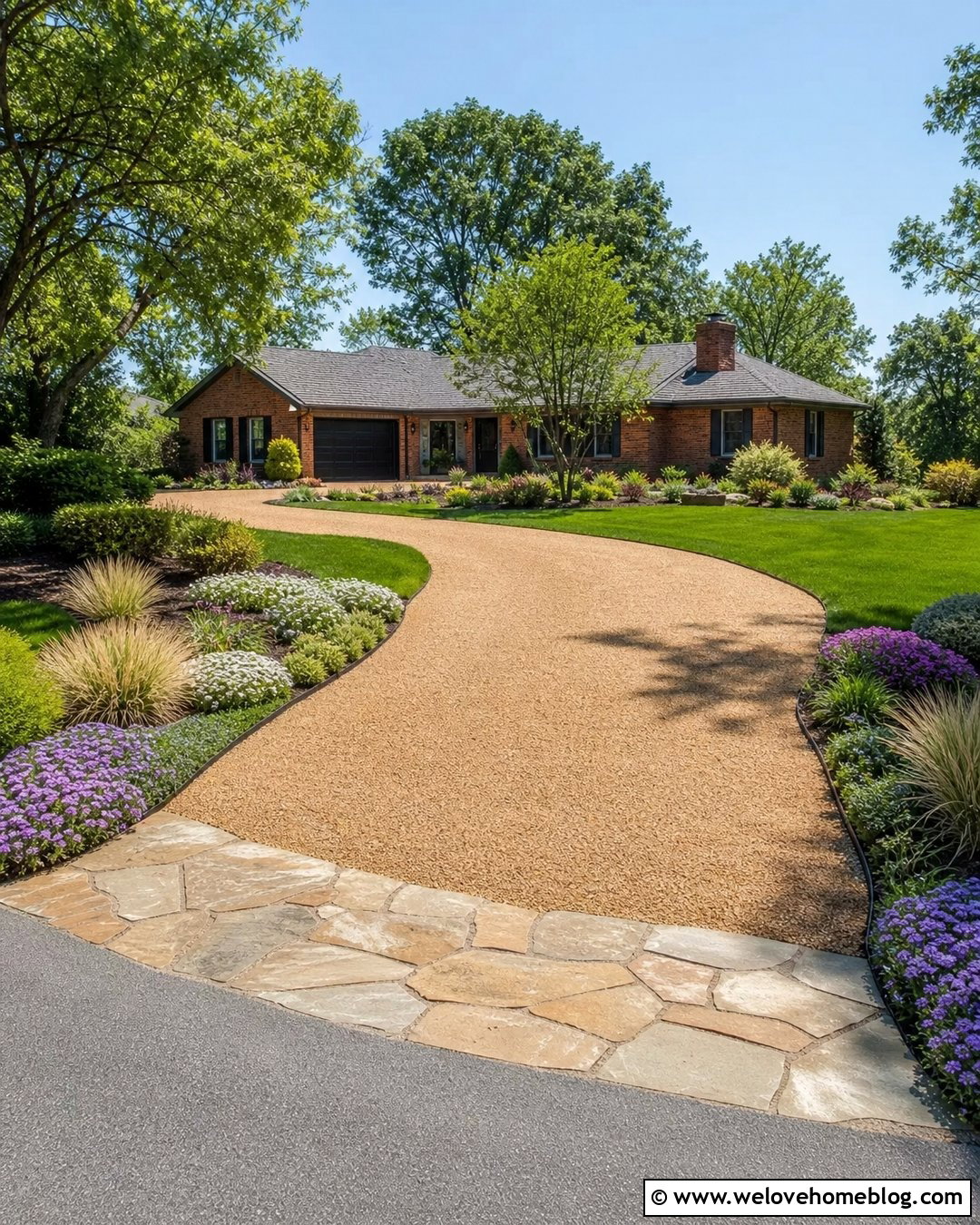
Sandstone edging brings warm color to a golden gravel driveway and blends naturally with sunny, informal gardens. Select sturdy sandstone blocks in buff, rust, and muted rose tones, then arrange them along a gently curved approach. A ranch or Southwestern-style house provides an ideal backdrop, especially when the facade includes stucco, wood, or similarly colored masonry. Plant yucca, ornamental grasses, salvia, and low-growing junipers beyond the stone to reinforce the dry-land character. Keep the border broad and visible at major curves, where it can guide the eye and help drivers follow the driveway. Near the street, transition to lower stones for a smoother entrance. Repeating sandstone around the address sign or walkway makes the warm edging look connected to the property rather than added as an afterthought.
9. Slate Rock Driveway Edging
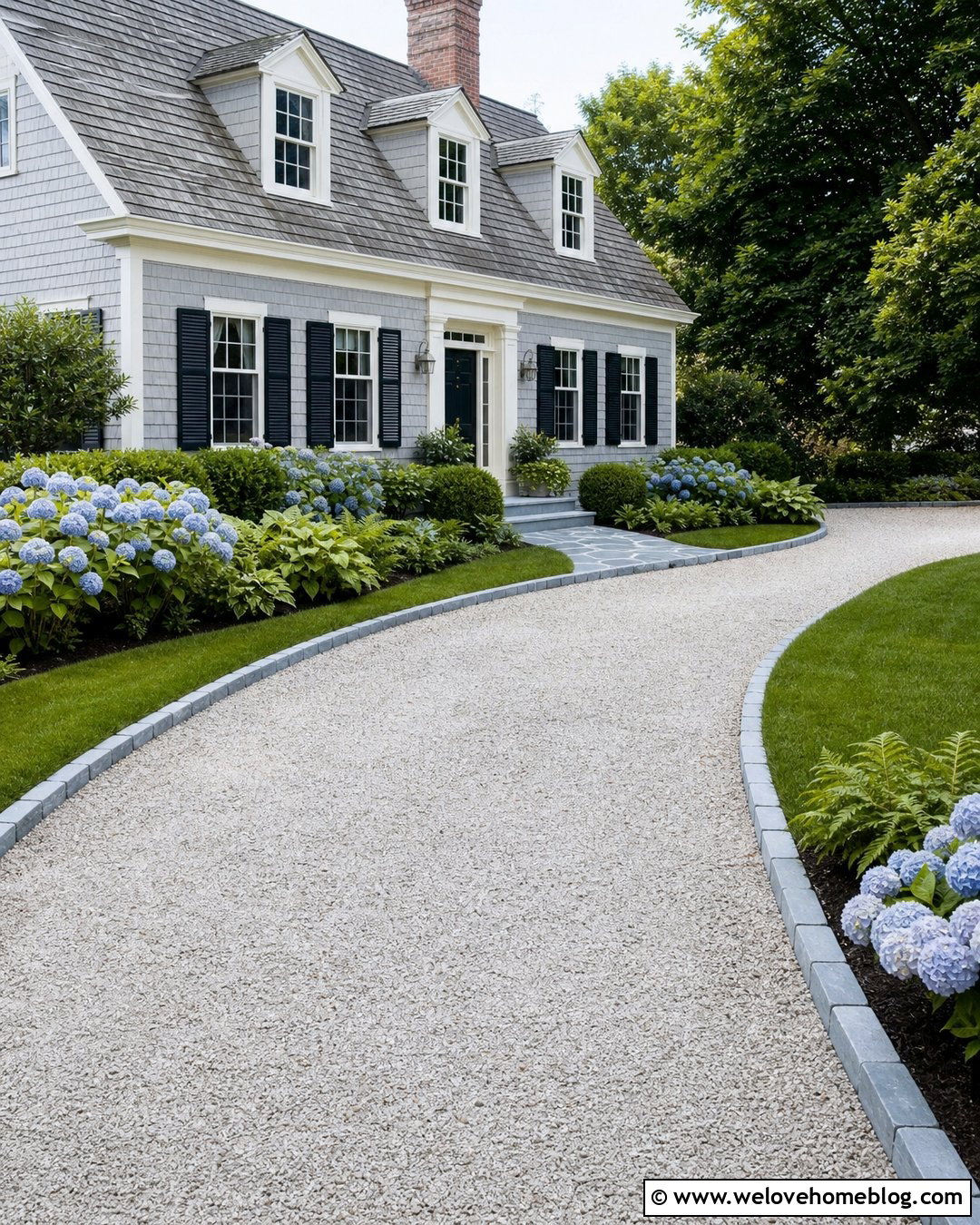
Slate edging introduces layered texture and rich blue-gray color without requiring an ornate design. It looks particularly effective against pale crushed limestone or warm pea gravel. For a neat finish, use thick slate blocks instead of thin, brittle landscaping chips. Lay them as a low flush border along a curved driveway leading to a Cape Cod or traditional home. Add hydrangeas, ferns, hostas, and compact boxwood in adjacent beds to create a lush but organized setting. A bluestone walkway can connect the driveway to the porch and repeat the cool coloring. Keep slate pieces out of wheel paths and stabilize the underlying base carefully. The finished design should show a clear relationship among the light driveway surface, dark border, green planting, and blue-gray accents on the house.
10. White Marble Rock Driveway Edging
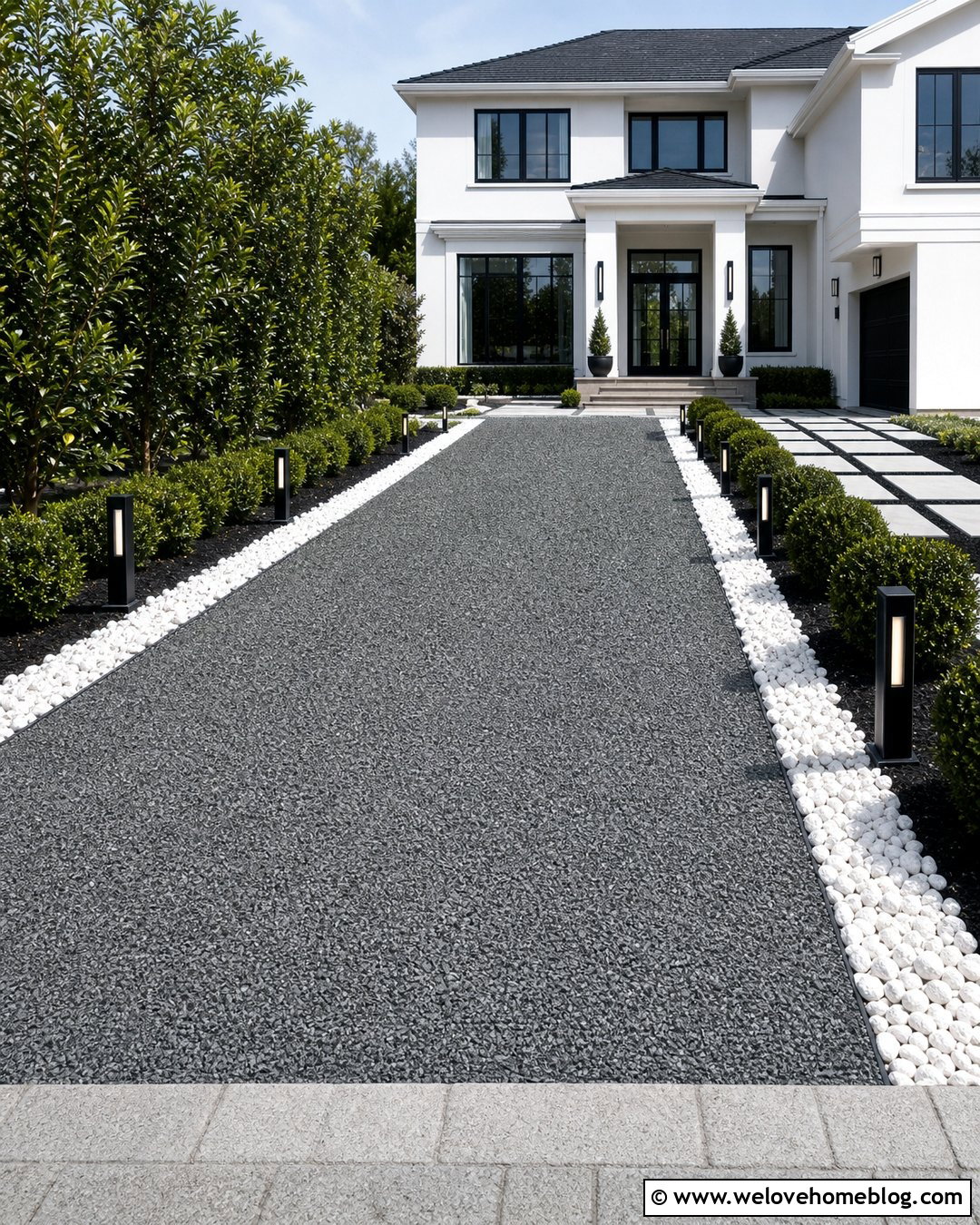
White marble rock can define a driveway with a bright, polished appearance, but it works best as a decorative side band rather than the main structural restraint. Begin with a gray gravel driveway and install a concealed metal or concrete edge. Fill the narrow outer channel with medium white marble stones. This keeps the decorative rock separate from the driving aggregate and surrounding lawn. Use the treatment on a straight or lightly curved driveway serving a contemporary white house. Dark mulch, glossy green shrubs, and black landscape fixtures will sharpen the contrast. Avoid placing marble where muddy runoff regularly crosses the border. A clean drainage plan and restrained planting scheme will help the white rock remain attractive. Repeat it sparingly in nearby beds to create continuity without making the landscape feel overly bright.
11. Lava Rock Driveway Edging
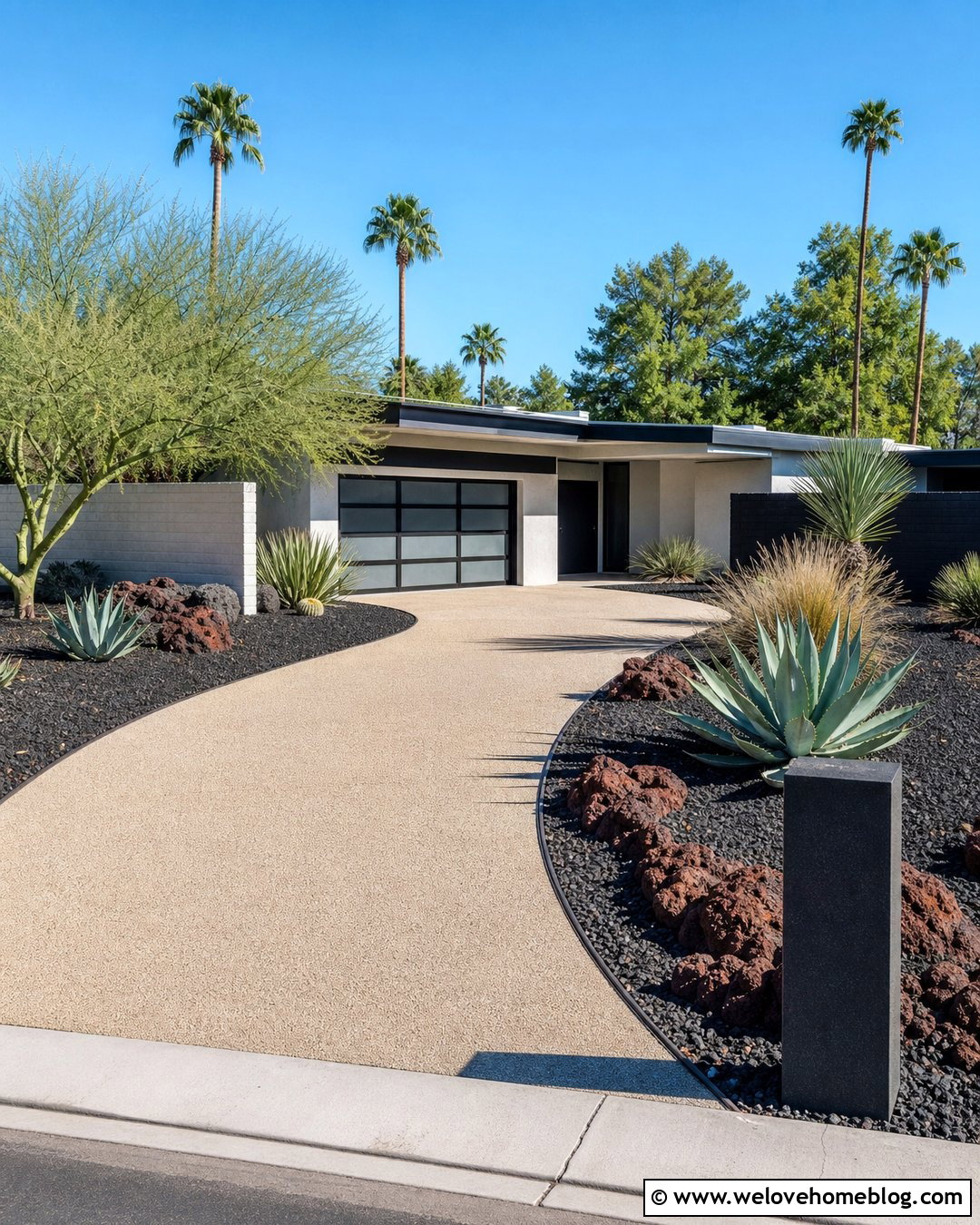
Dark lava rock can create a lightweight-looking, textural border around a pale gravel driveway. Its porous surface and deep red, brown, or black coloring suit modern desert landscaping and midcentury homes. Contain the lava rock inside a wide side channel with steel edging on both sides. This separation prevents it from mixing with the driveway aggregate or spilling into planting areas. Shape the driveway with a broad curve and surround it with agave, yucca, desert spoon, and sculptural grasses. Use larger lava pieces near the driving edge so the border appears substantial from a distance. A charcoal address monument or low concrete wall can reinforce the modern palette. Keep the border level and avoid creating deep loose areas where tires could sink if a vehicle leaves the intended surface.
12. Rounded Cobble Driveway Edging
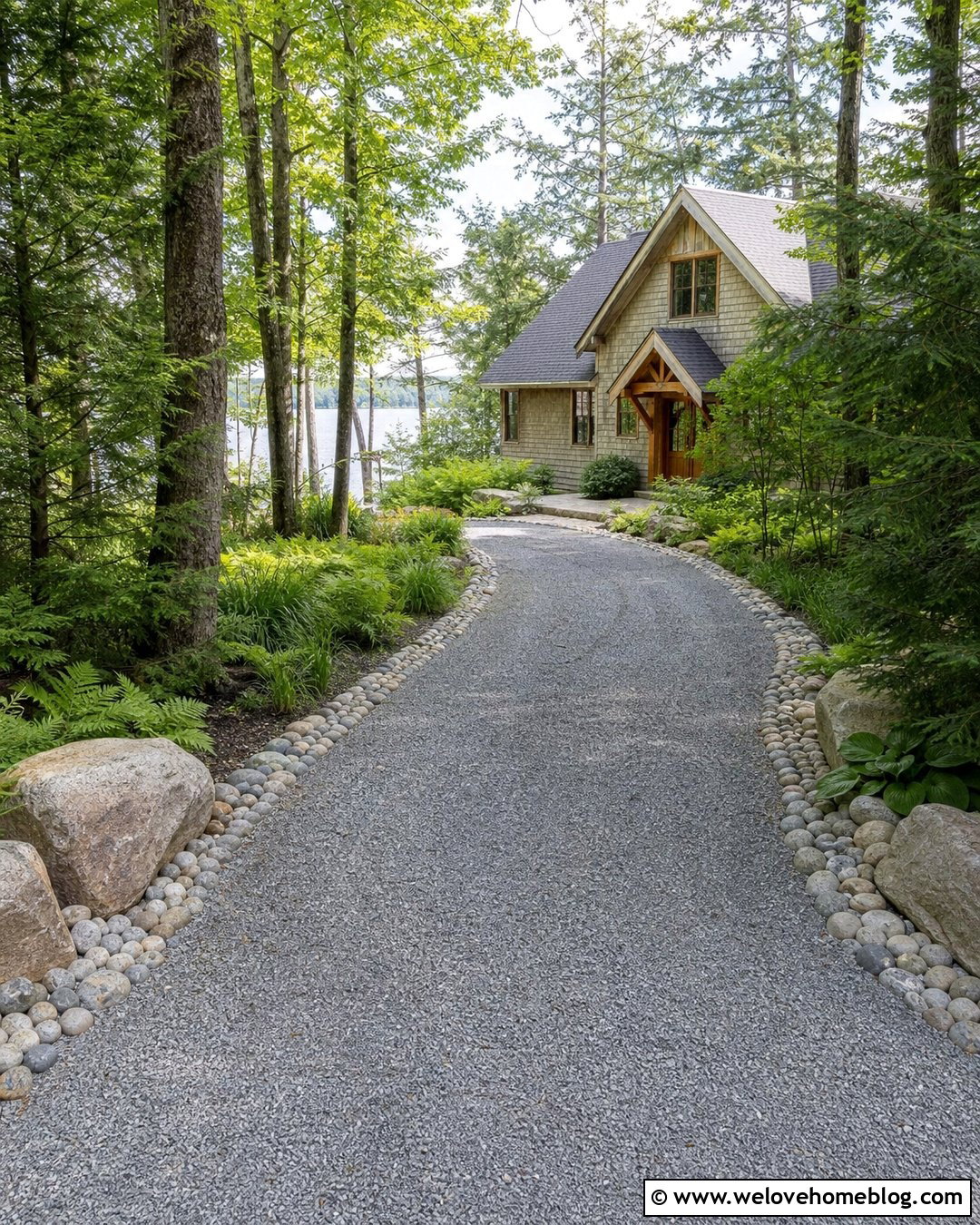
Rounded cobbles create an organic border with more visual weight than small river pebbles. Place hand-sized stones in a wide, shallow band beside a compacted crushed-granite driveway. A hidden restraint between the cobbles and lawn will maintain the shape while allowing the visible edge to remain natural. This design complements a wooded property, lake house, or shingle-style home. Repeat the rounded forms through curved planting beds filled with ferns, native grasses, and low shrubs. Use a few larger accent stones near the entrance, but keep the main border consistent in scale. Select cobbles with a mixed gray-and-tan palette to bridge cool driveway aggregate and warm house materials. The result feels relaxed while still clearly separating the driveway, lawn, and surrounding woodland landscape.
13. Crushed Rock Driveway Border
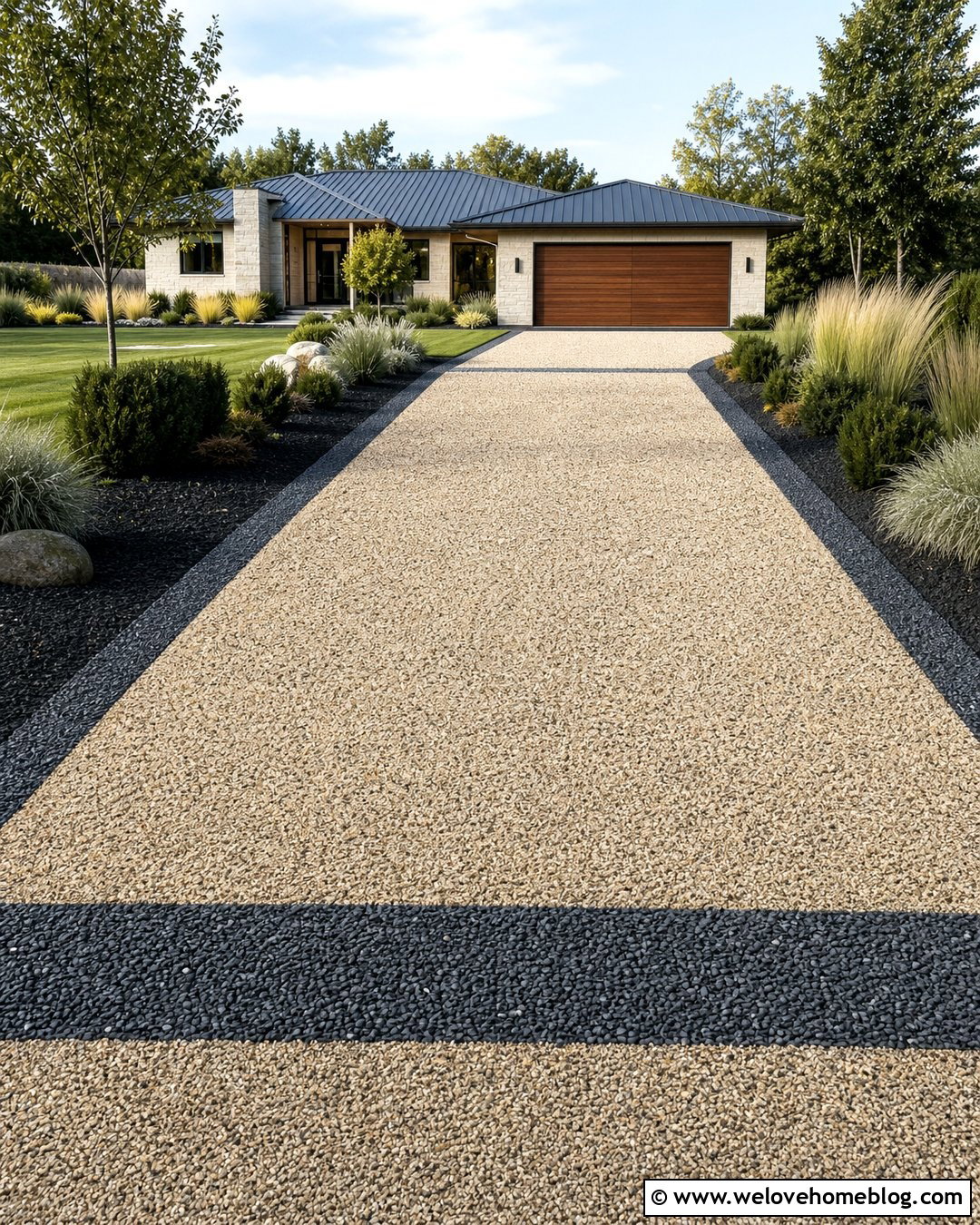
A contrasting crushed-rock band is a practical way to edge a rock driveway without introducing large blocks. Frame a light tan gravel surface with a wider strip of dark crushed granite, basalt, or trap rock. Install a concealed rigid separator between the two aggregates so their colors and particle sizes remain distinct. This look suits a long, straight driveway leading to a contemporary ranch house. Add linear beds of ornamental grasses and low evergreens beyond the dark border. At the entrance and garage, extend the contrasting aggregate across the driveway as matching bands. The repeated strips create rhythm and visually organize a long approach. Choose angular rock for the border rather than highly rounded pebbles, and compact the prepared base carefully so the side bands feel stable under occasional tire contact.
14. Mixed Rock Driveway Edging
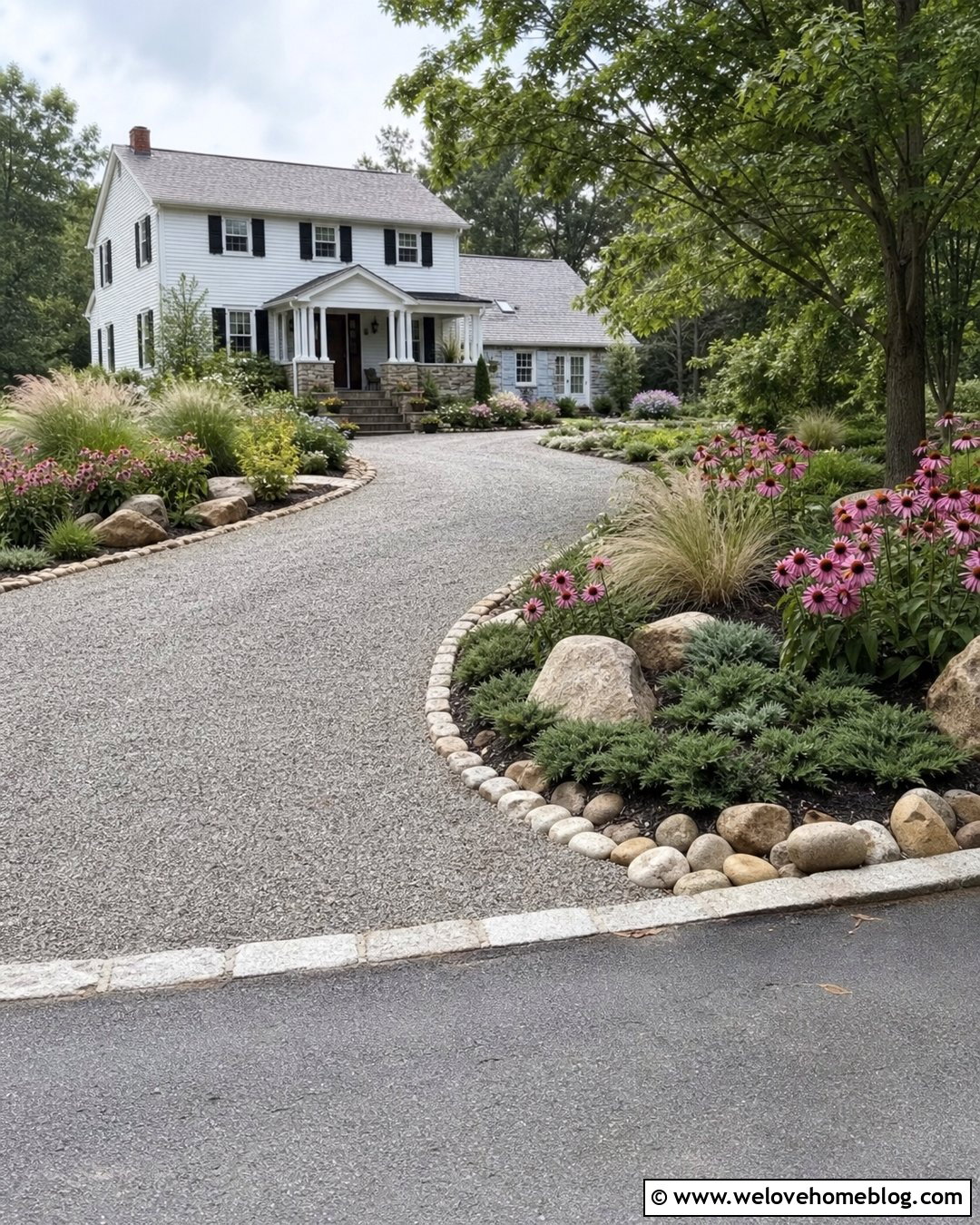
Mixed rock edging can feel intentional when the stones share a controlled color palette. Combine granite, fieldstone, and rounded cobbles in related gray, brown, and cream tones along a wide gravel driveway. Vary the shapes, but keep most pieces within a similar size range. A curved approach leading to an eclectic farmhouse or renovated cottage is a natural setting for this border. Arrange larger rocks at curves and entrances, with smaller stones filling the spaces between them. Behind the edge, use informal plant groupings rather than a perfectly clipped hedge. Coneflowers, grasses, low junipers, and seasonal bulbs can echo the relaxed texture. Repeat one dominant stone type around the walkway or porch to give the varied border a visual anchor and prevent the complete landscape from appearing random.
15. Rock Edging With Steel Border
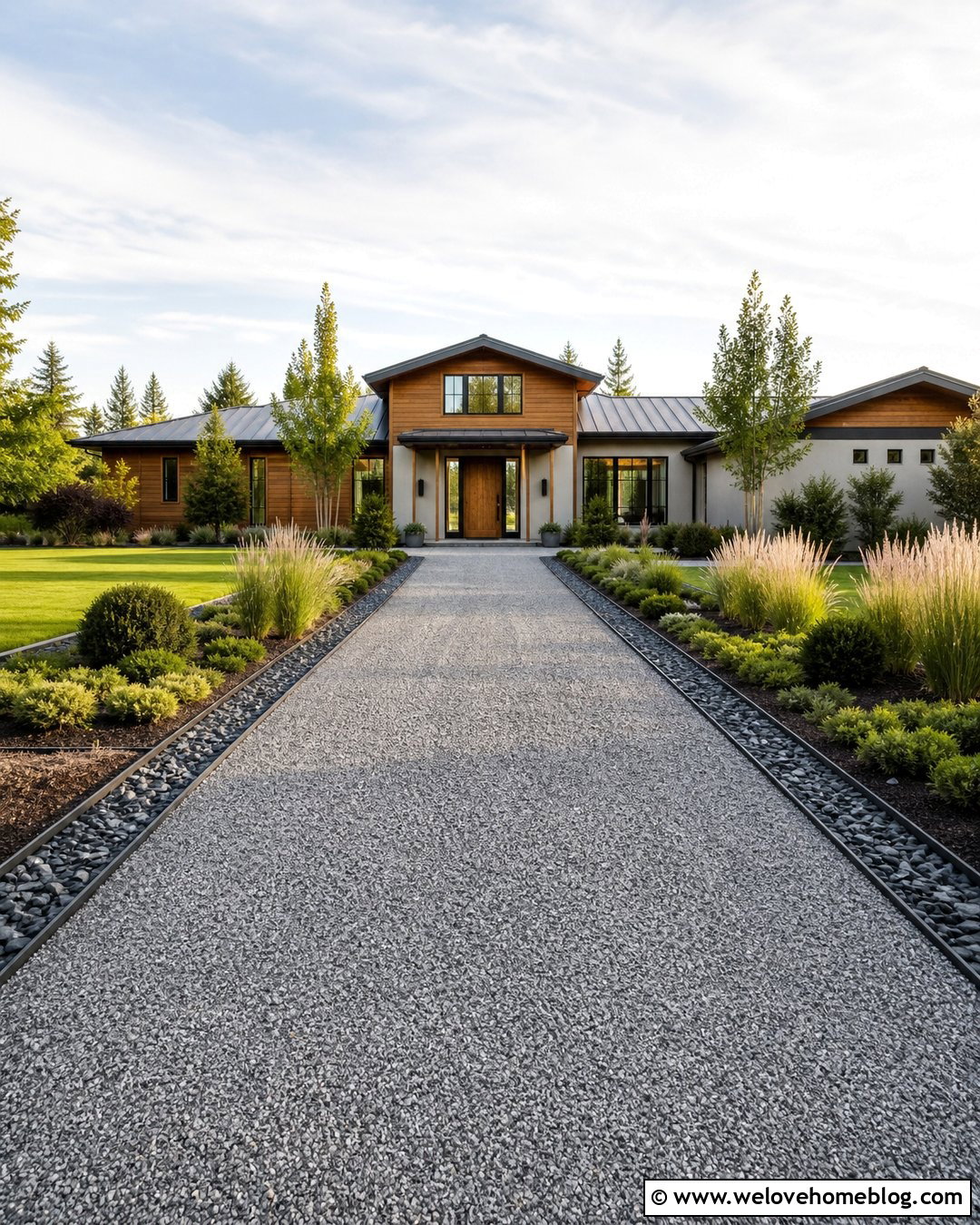
Combining rock with steel creates a clean structure while preserving natural texture. Install heavy-gauge steel edging as the functional restraint, then place a narrow band of decorative river rock or crushed slate on the landscape side. The metal should sit low enough to be discreet but high enough to separate the materials. Pair this border with a straight gray gravel driveway and a modern house featuring wood, stucco, or dark siding. Use geometric planting beds with feather reed grass, compact shrubs, and low ground covers. Blackened steel provides strong contrast, while weathering steel adds a warm rust tone. Continue the steel around nearby beds to unify the yard. The rock softens the sharp line, producing a driveway edge that feels both engineered and connected to the surrounding landscape.
16. Rock Edging With Concrete Curb
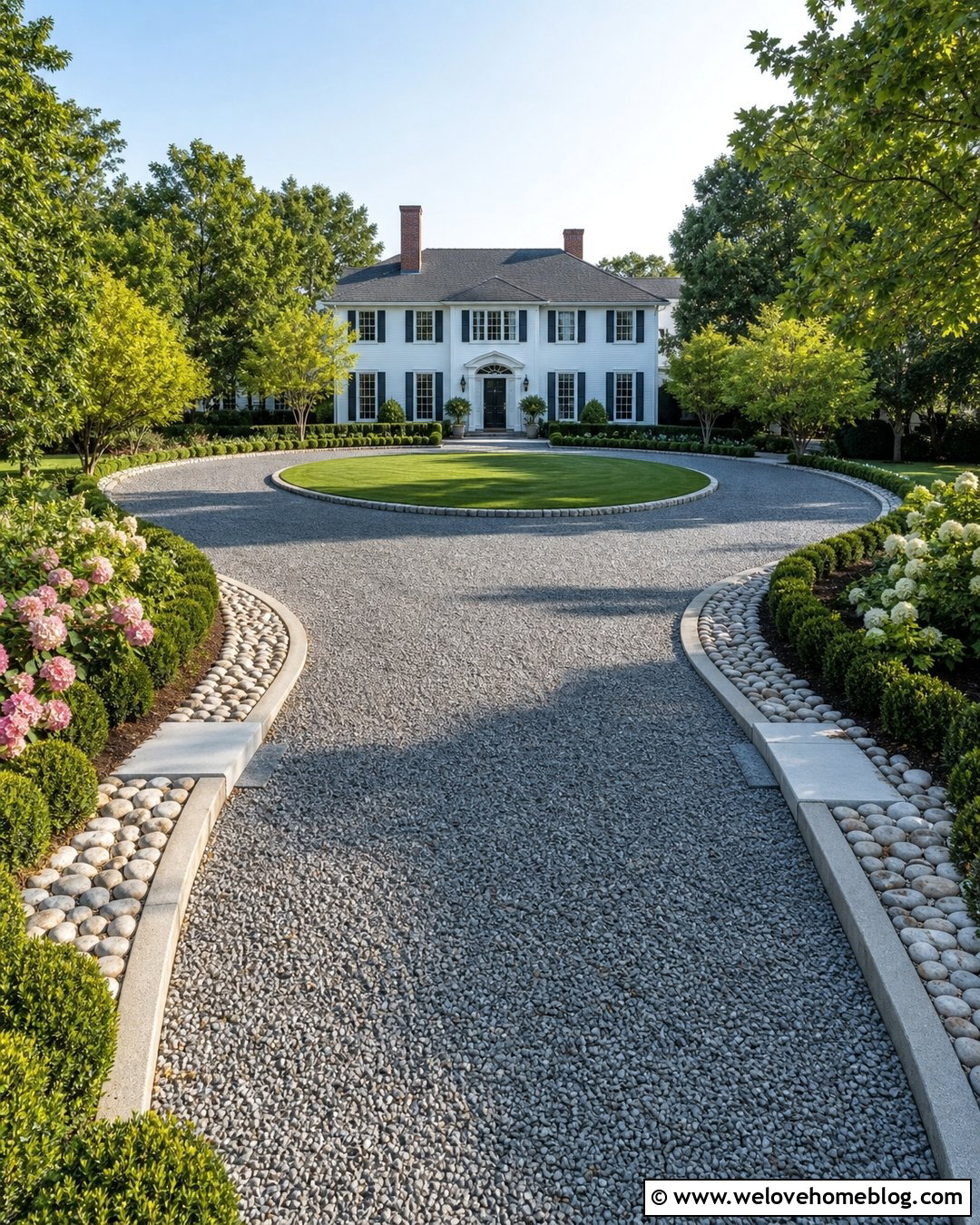
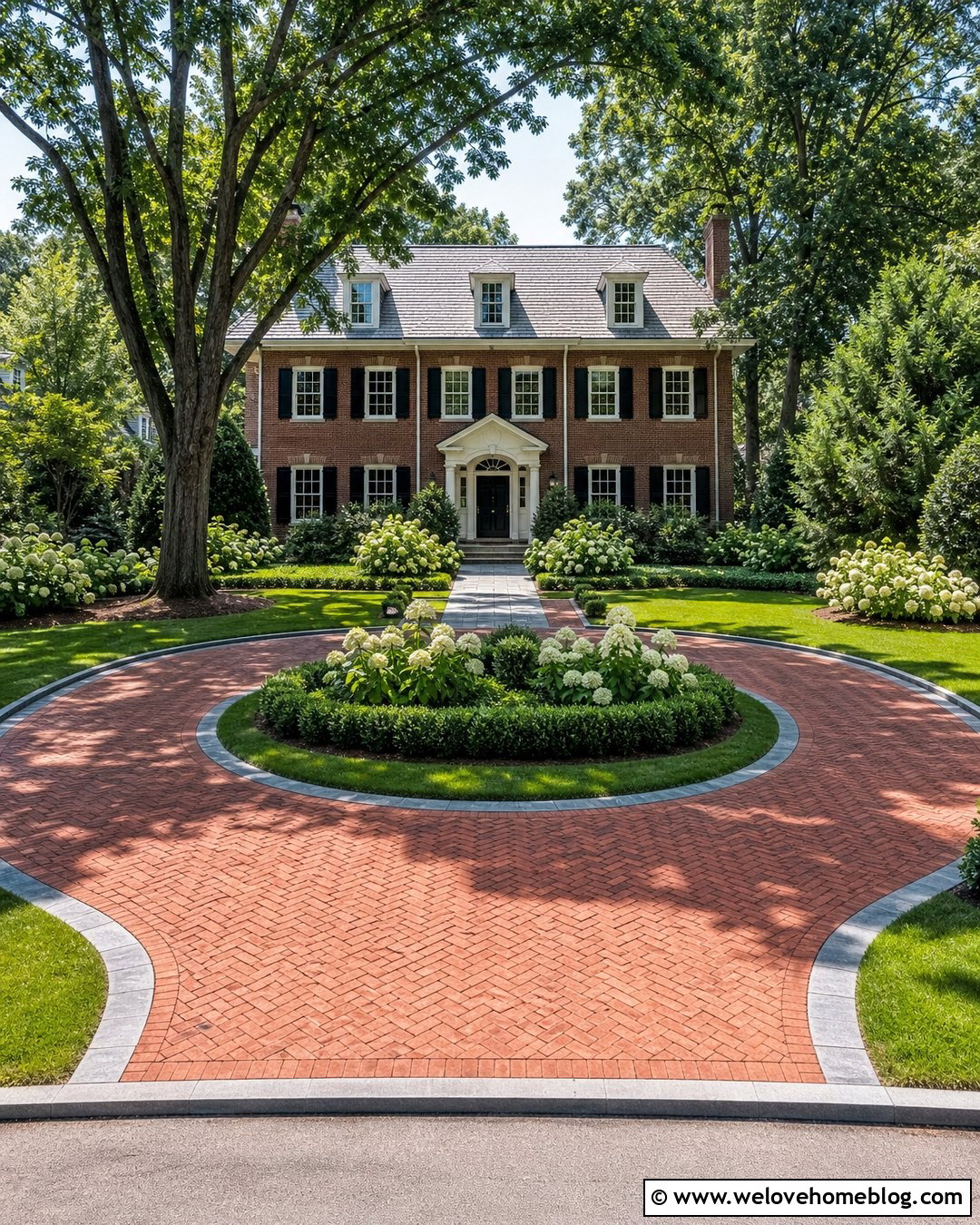
A concrete curb backed by decorative rock offers firm containment for driveways that receive frequent traffic. Use a low poured curb along a wide crushed-stone driveway, then install river rock, cobbles, or angular landscape stone on the outer side. This layered edge protects the gravel while preventing the concrete from looking exposed and utilitarian. A broad circular driveway in front of a colonial home can benefit from this organized treatment. Choose a concrete color that coordinates with the facade, walkway, or front steps. Plant boxwood, flowering shrubs, and small ornamental trees beyond the rock band. Lower the curb at walkway crossings and other access points. The combination works best when all lines follow the same smooth curve, creating a strong frame around the driveway and central lawn.
17. Rock Edging With Timber Border
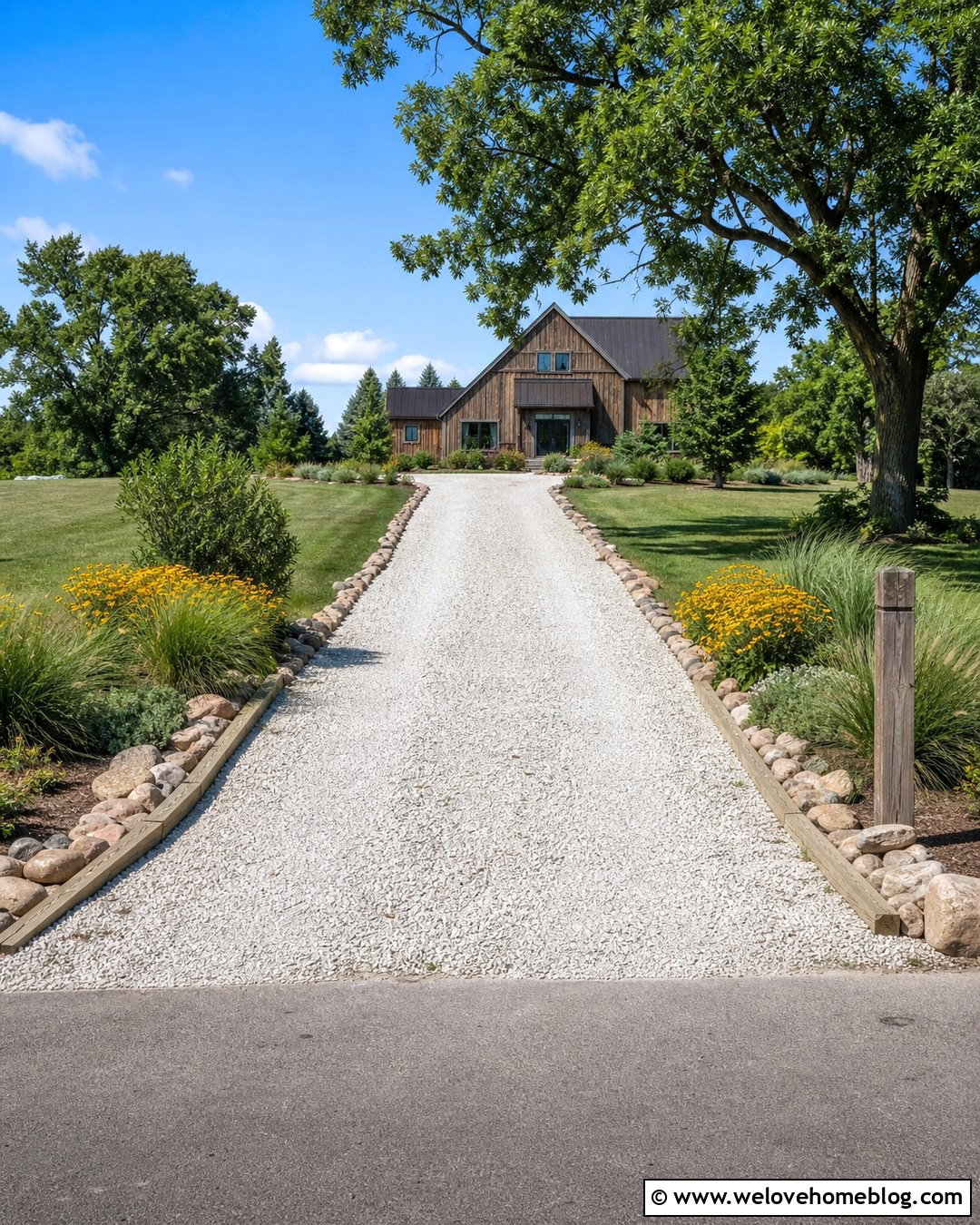
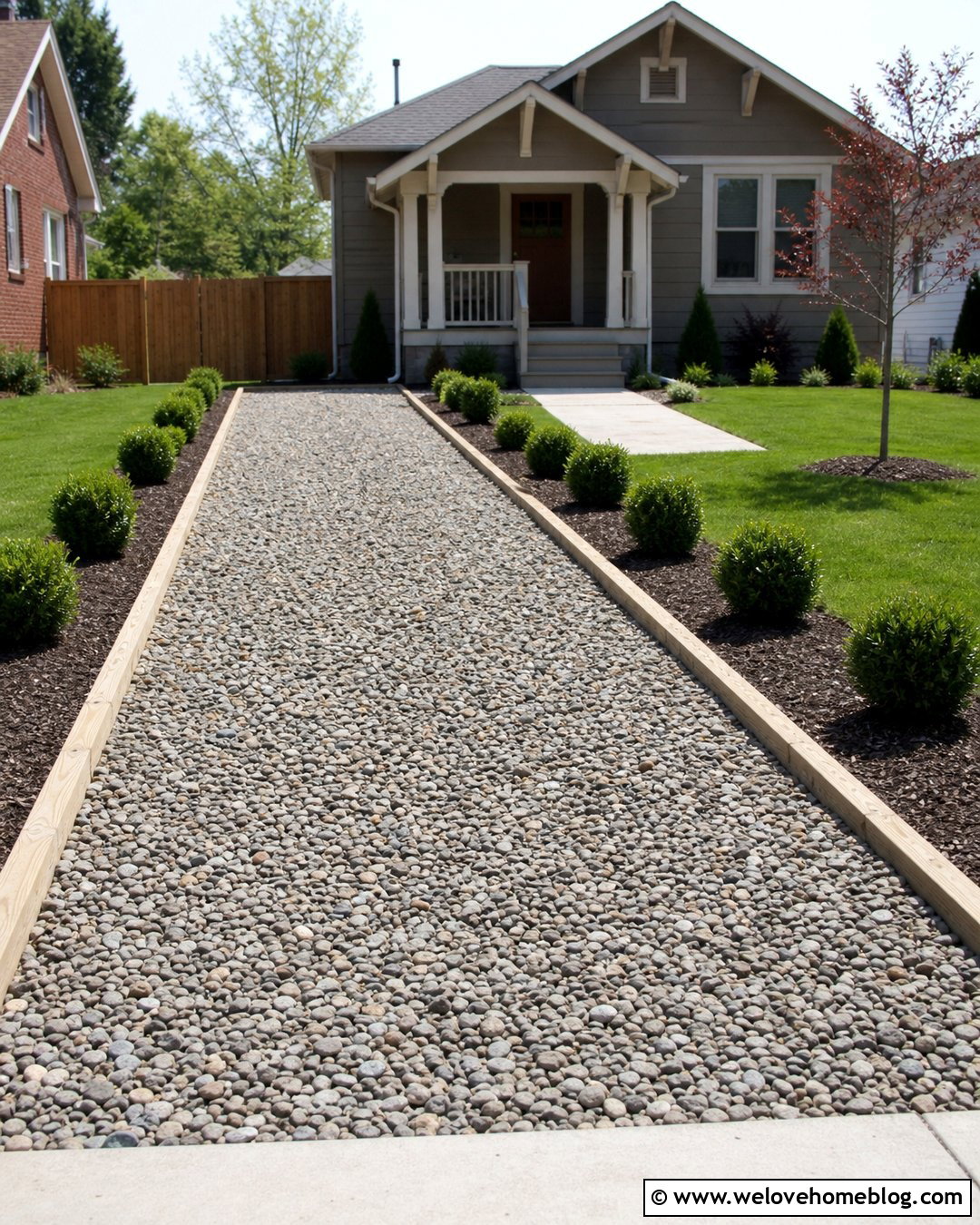
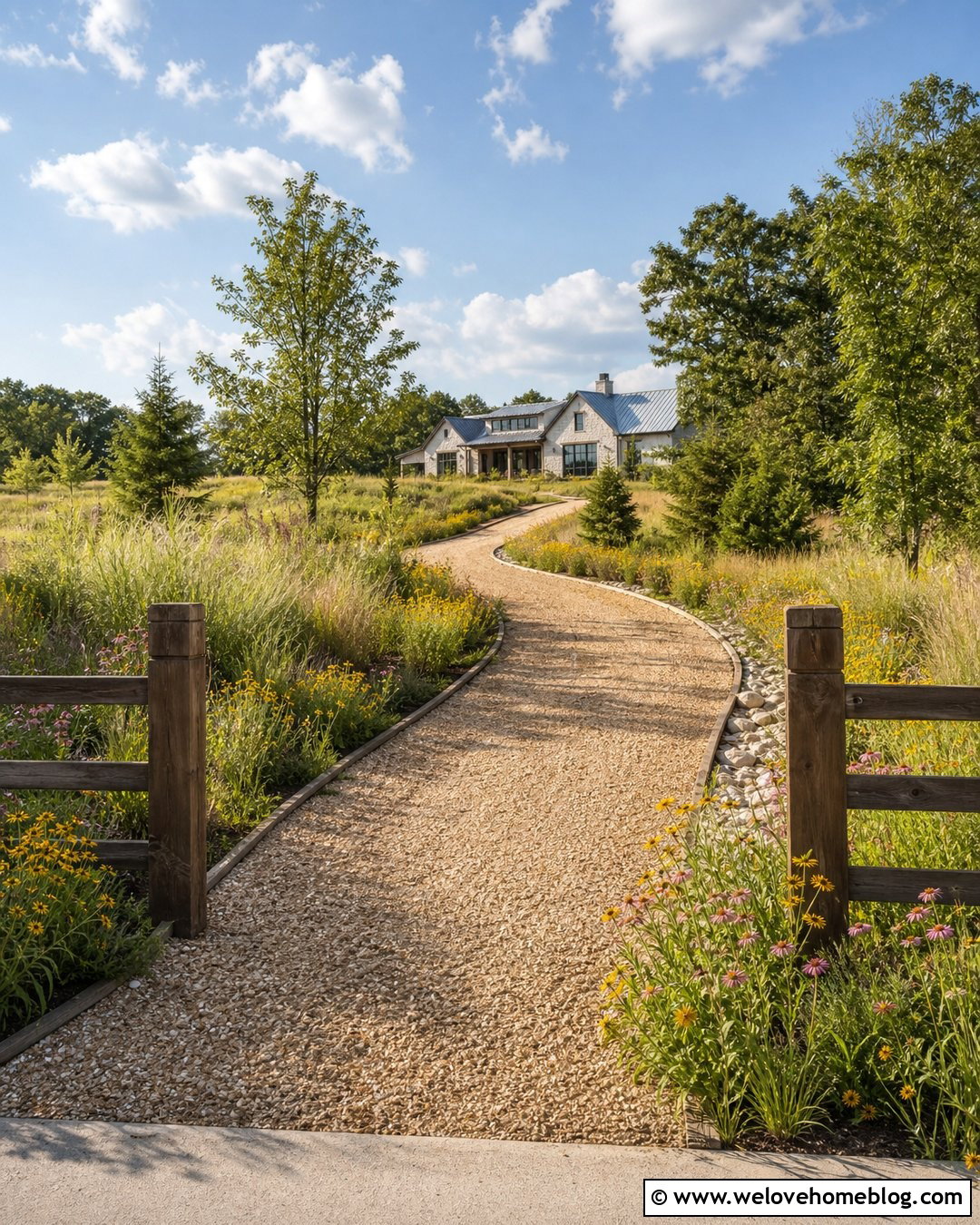
Timber and rock can give a gravel driveway an approachable country character. Set pressure-treated landscape timbers along the driving surface, then add fieldstone or rounded river rock on the lawn side. The timber acts as the straight restraint, while the stone disguises the rigid line and links it to the surrounding yard. Use this combination on a long crushed-limestone driveway leading to a cabin, barn-style home, or rustic farmhouse. Add native grasses, black-eyed Susans, and informal shrubs beyond the border. Anchor the timbers securely and keep their upper surfaces close to grade at turning areas. A matching timber address post at the entrance can complete the design. Choose brown and gray rocks that coordinate with weathered wood instead of introducing bright decorative colors that might disrupt the rural setting.
18. Rock Edging With Brick Ribbon
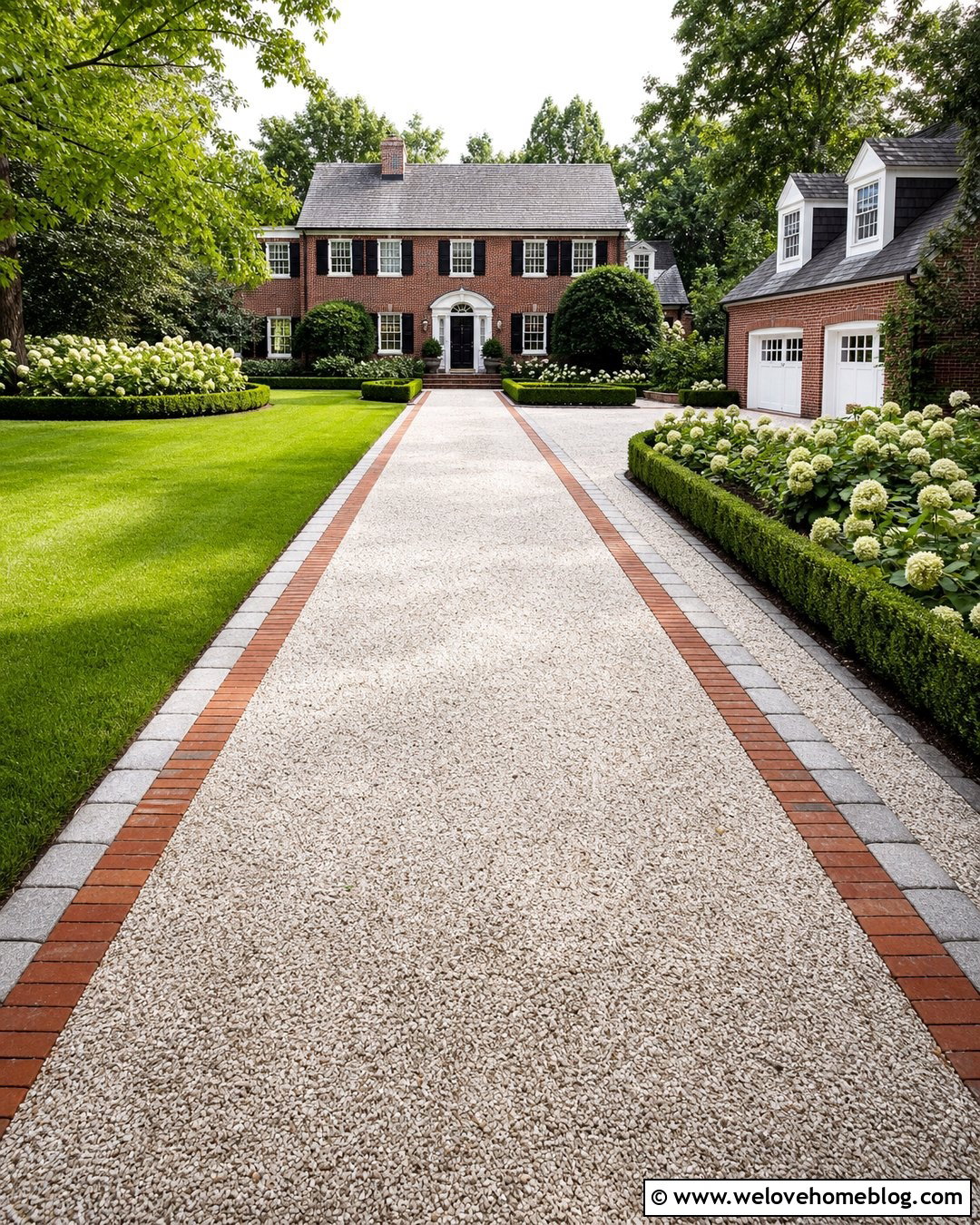
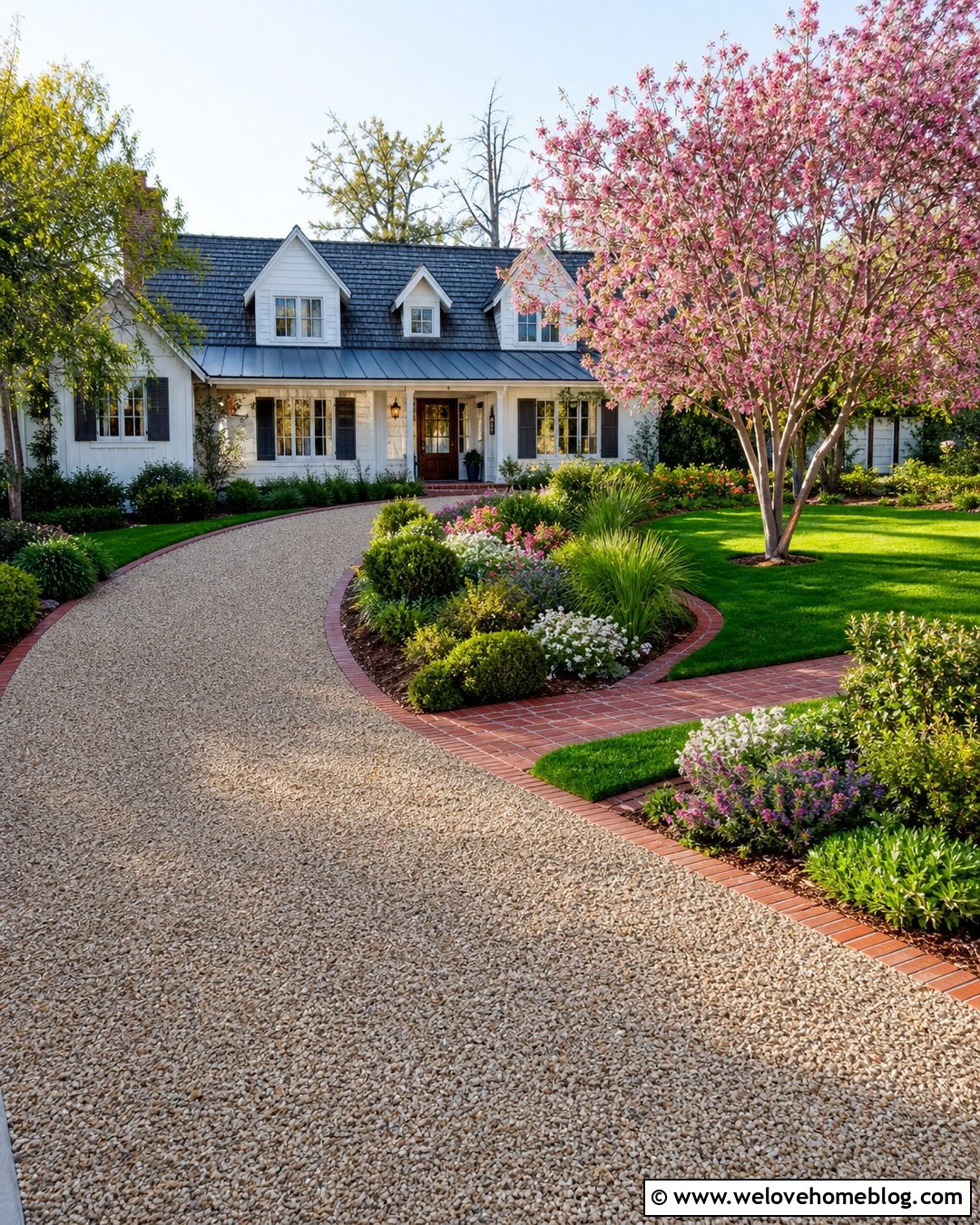
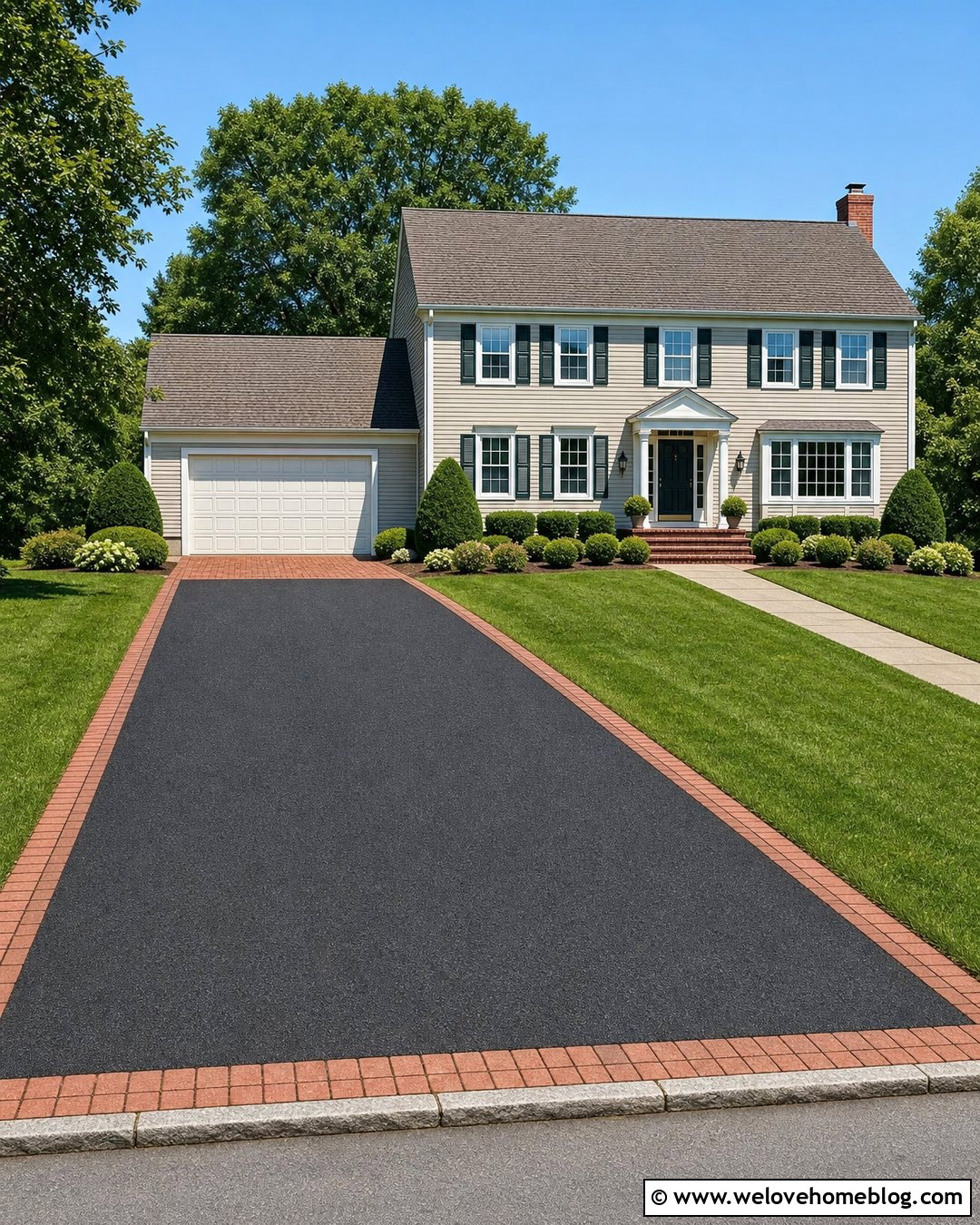
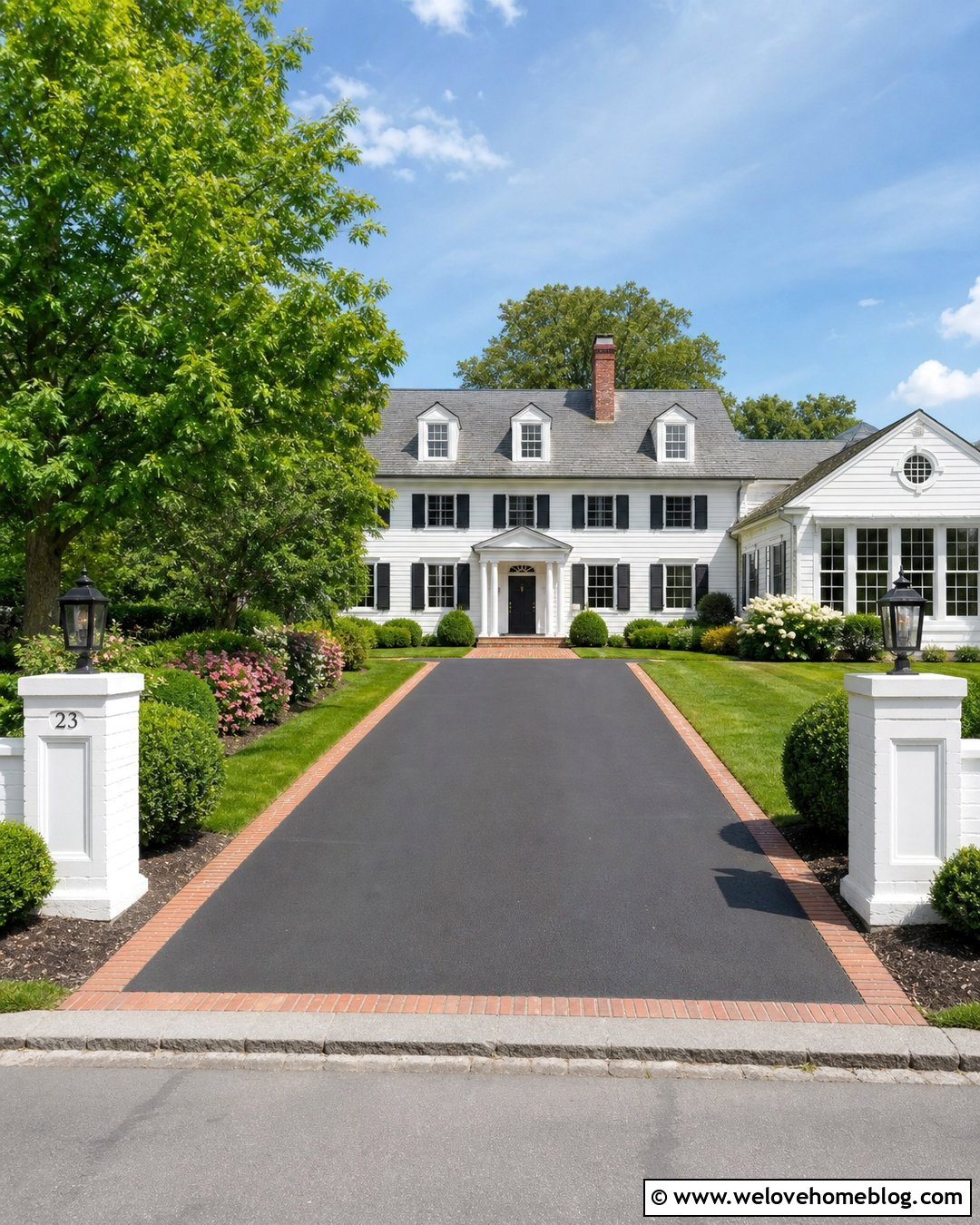
A brick ribbon combined with natural rock creates a layered border for traditional homes. Install one flush row of red or brown clay bricks beside a pale gravel driveway, then place a narrow bed of gray fieldstone or smooth cobbles beyond it. The brick provides a controlled edge, while the rock adds depth and connects the driveway to planting beds. A straight approach leading to a red-brick colonial works particularly well with this combination. Echo the brick pattern in the front walkway or driveway apron. Behind the rock band, use clipped boxwood, hydrangeas, and a green lawn for classic curb appeal. Keep the brick level and carefully supported where tires may cross. Limiting the stone to one complementary color family prevents the layered border from becoming visually busy.
19. Rock Edging With Paver Apron
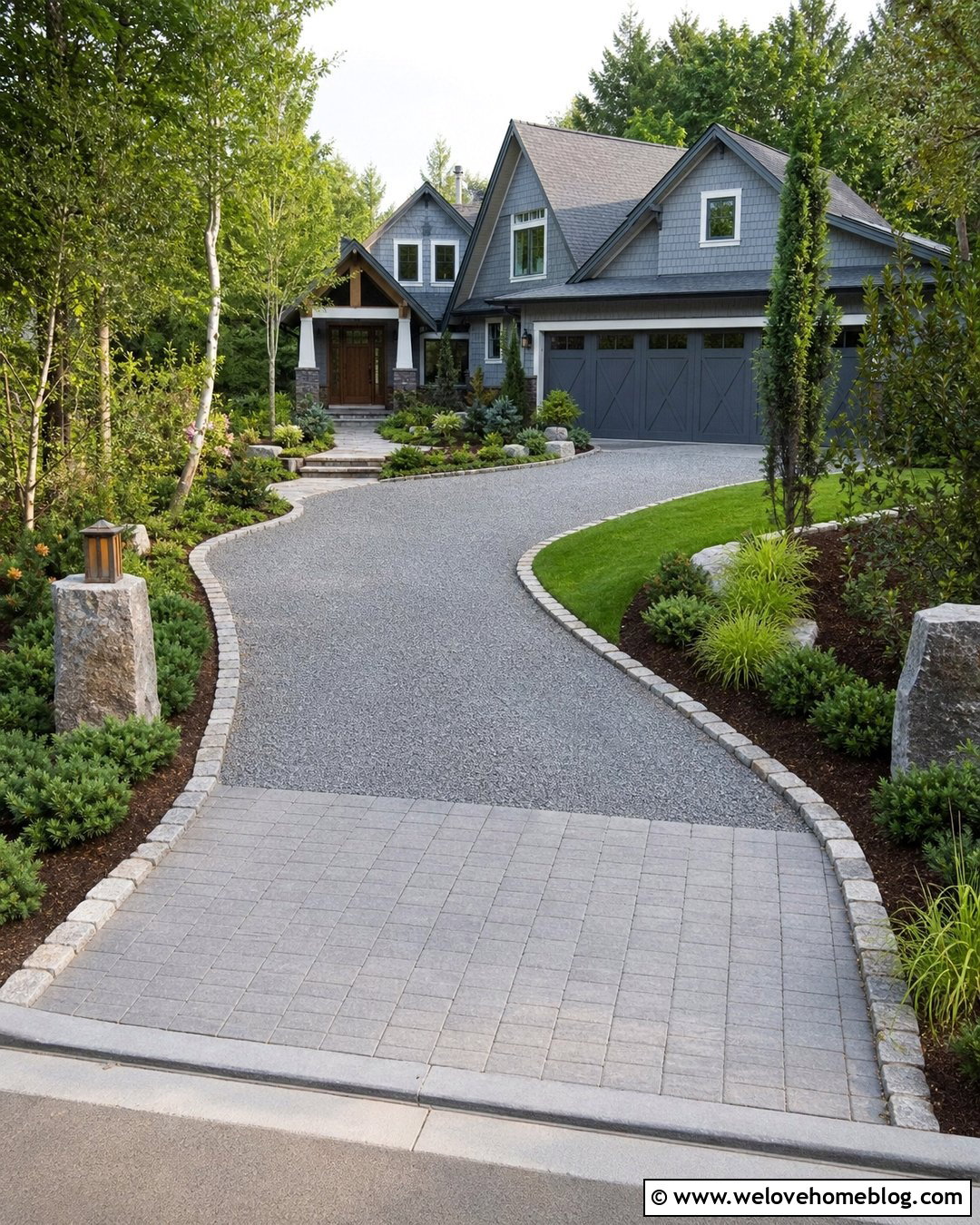
A paver apron can anchor rock edging at the street while giving loose driveway material a cleaner starting point. Begin with a crushed-granite or pea-gravel driveway bordered by large gray cobbles. At the entrance, install a deep apron of concrete or natural-stone pavers across the full width. Continue the cobble edging along both sides so it meets the apron without awkward gaps. This layout works for a curved suburban driveway leading to a craftsman house. Add low evergreen shrubs, ornamental grasses, and a clearly visible address sign near the entrance. Select paver colors that relate to both the border stones and the house facade. The apron becomes a strong visual threshold, while the rock edging carries that structure toward the garage and surrounding landscape.
20. Rock Edging With Lavender Borders
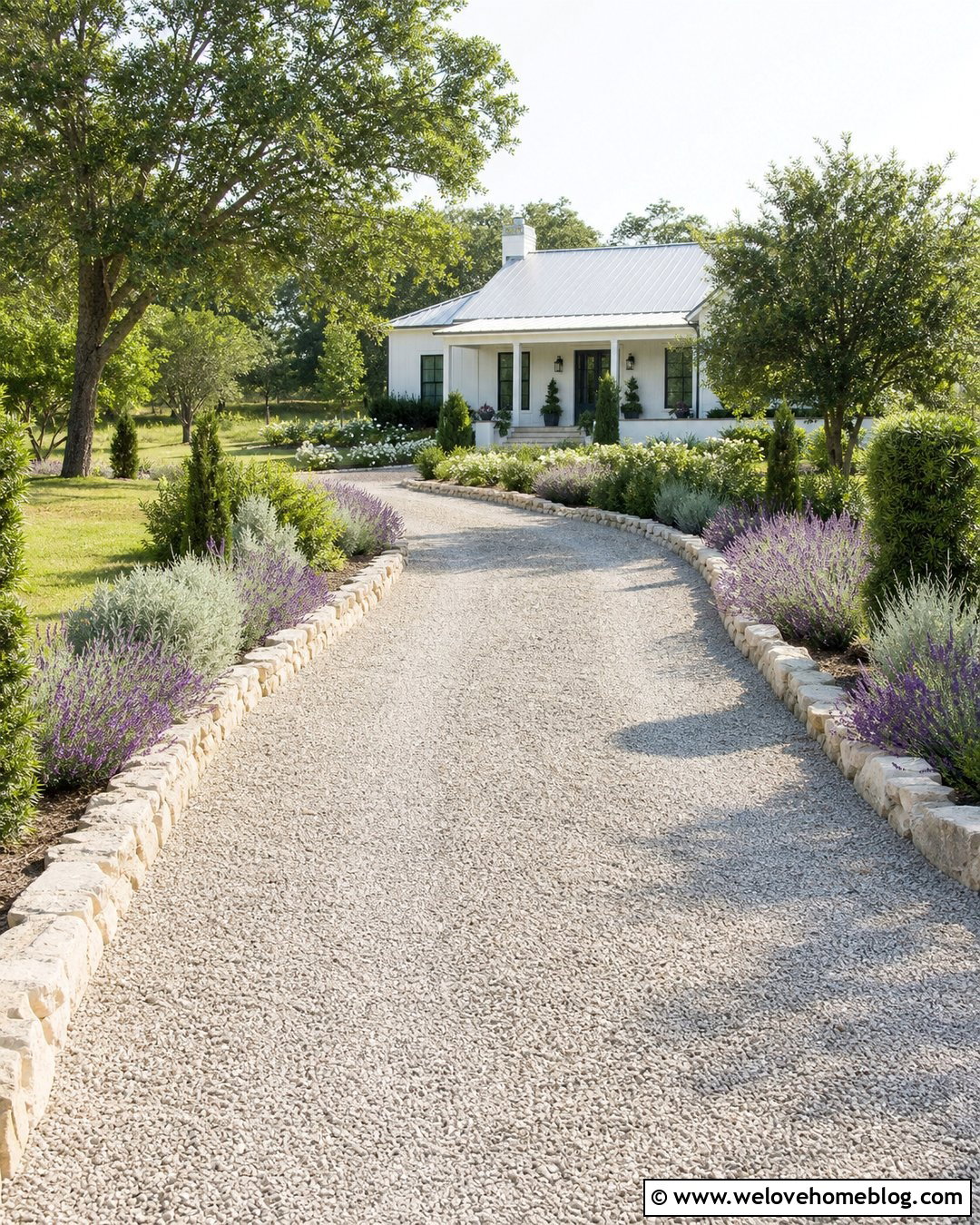
Soft lavender can turn a rugged rock edge into a welcoming garden feature. Frame a light gray gravel driveway with low limestone or fieldstone, then plant a repeating lavender border behind the rocks. A sunny curved approach to a cottage, French country, or modern farmhouse home provides the right setting. Leave enough room between plants and the driveway for mature growth, air circulation, and access to the stone edge. Add small ornamental trees or evergreen shrubs farther back to give the planting depth. The silver-green foliage complements gray aggregate, while the purple flowers introduce seasonal color. Continue the same stone around nearby beds and use a simple gravel walkway to the porch. The combination feels coordinated because every component shares a soft, natural color palette.
21. Rock Edging With Ornamental Grasses

Ornamental grasses bring movement and height to a structured rock driveway edge. Use chunky gray granite stones beside a dark crushed-basalt driveway, then plant grasses in measured groups beyond the border. Switchgrass, little bluestem, or feather reed grass can work depending on the climate and available space. A long driveway leading to a contemporary farmhouse benefits from this simple repetition. Keep the grasses set back from sightlines and turning zones so they do not obstruct drivers. Add low ground covers between groups to reduce exposed soil. Straight rock lines reinforce modern architecture, while slight curves create a more natural prairie effect. Choose one primary grass and repeat it consistently. Too many different varieties can distract from the strong relationship among the driveway, stone edge, and house.
22. Rock Edging With Evergreen Shrubs
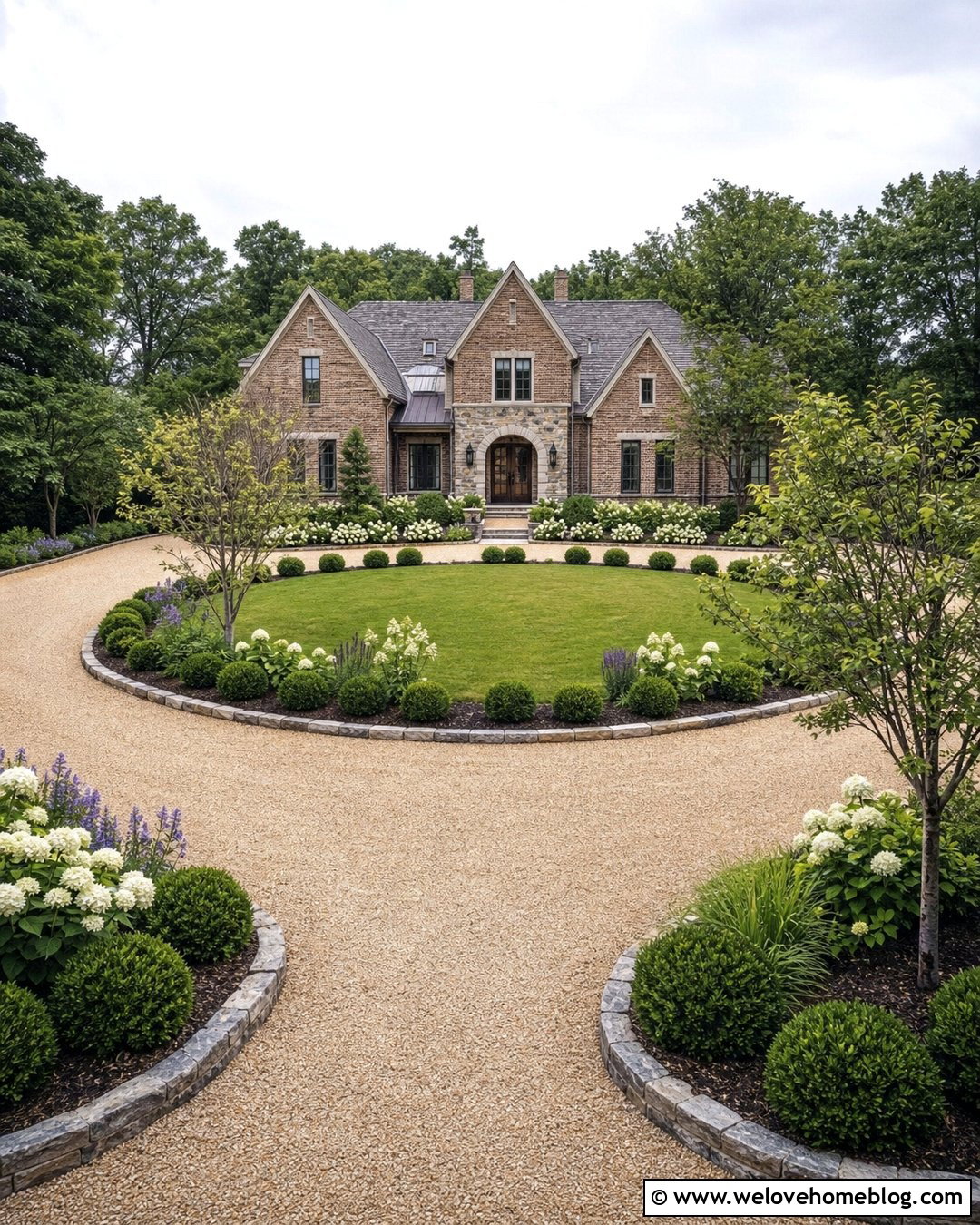
Evergreen shrubs provide year-round structure behind a natural rock border. Pair a tan crushed-stone driveway with large gray fieldstones and a repeating row of compact inkberry, juniper, or boxwood. This complete look suits a broad circular driveway in front of a traditional brick or stone house. Keep the rocks low around the inner curve so the central lawn remains visible. Use larger accent stones near the entrance pillars and smaller pieces closer to the garage. The shrubs should be planted far enough behind the edge to accommodate mature growth without narrowing the driveway. Add a few flowering perennials between shrub groups for seasonal interest. Repeating the same rock around the front walkway and foundation beds will connect the circular drive to the rest of the property.
23. Rock Edging With Dry Creek Drainage
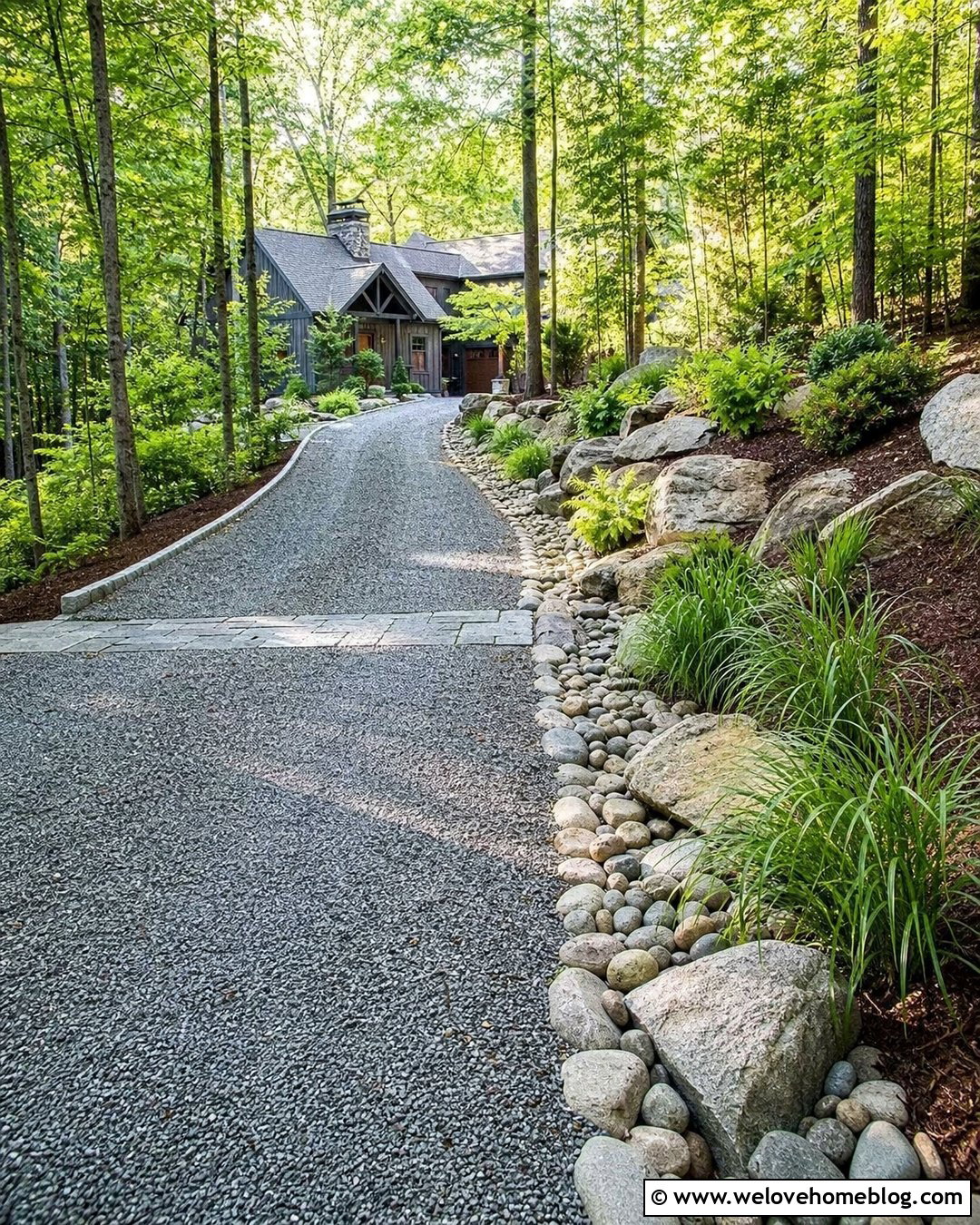
A dry creek border can turn necessary drainage into a natural-looking driveway feature. Along the lower side of a sloped crushed-granite driveway, shape a shallow channel and line it with mixed river cobbles and larger anchor stones. The opposite side can use a simpler flush granite edge for visual balance. Direct the channel toward an appropriate drainage area rather than allowing water to collect beside the driveway. A woodland or mountain home makes an ideal backdrop. Add moisture-tolerant grasses and native shrubs beyond the creek, keeping roots and foliage out of the water path. A small stone-lined crossing can connect the driveway to the front walkway. The varied rock sizes should resemble a natural streambed while remaining organized enough to support the driveway’s overall shape and approach.
24. Rock Edging With Stone Entrance Pillars
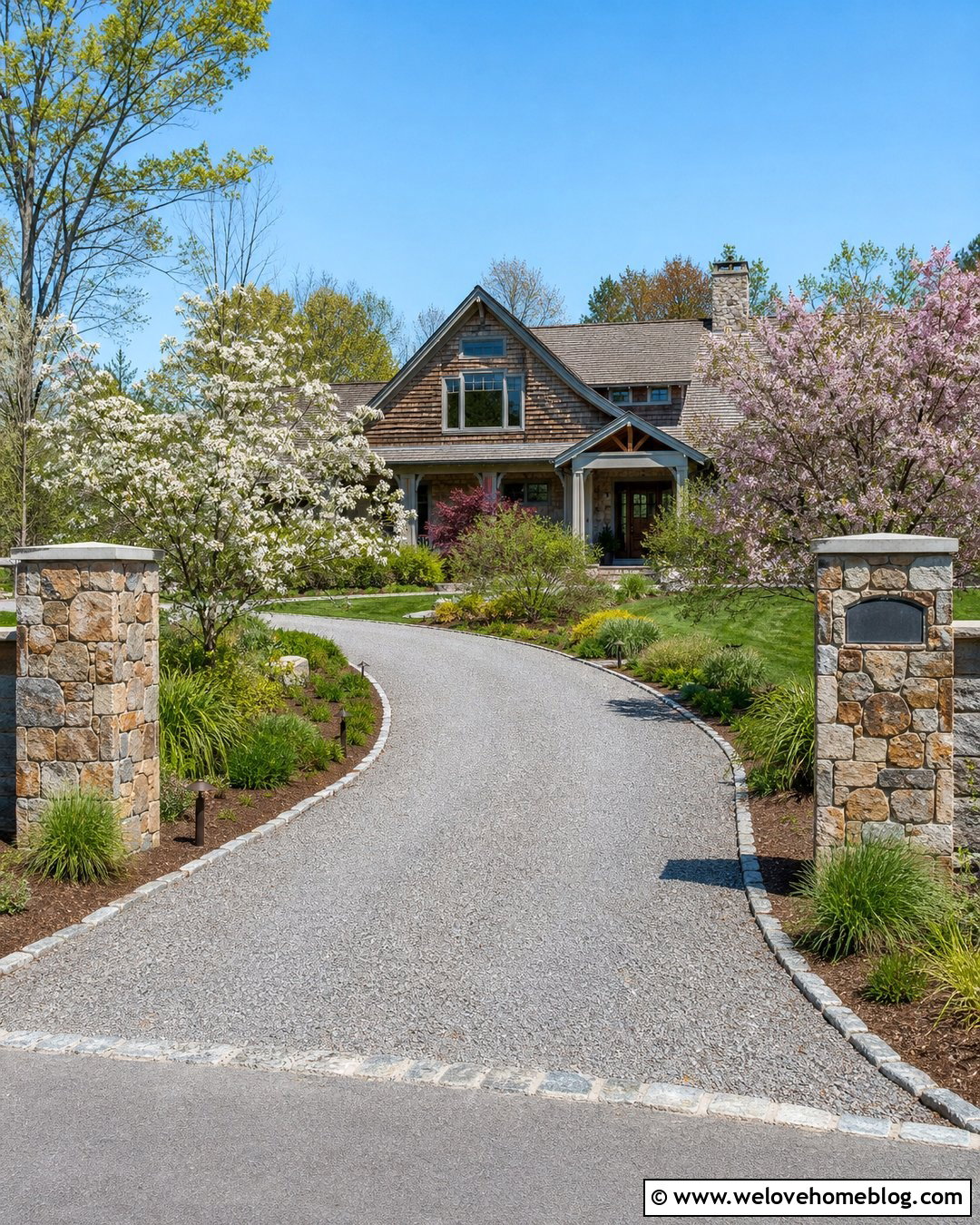
Stone entrance pillars can give rock driveway edging a clear beginning and a stronger connection to the house. Use a compacted gray gravel driveway bordered by low granite cobbles, then terminate the edging neatly at two masonry pillars near the road. Face the pillars with the same granite or a coordinating house stone. A gently curved driveway leading to a craftsman or country property will keep the entrance from feeling excessively formal. Place the address plaque where it remains visible, and maintain open sightlines around the road connection. Low shrubs, native grasses, and small flowering trees can frame the pillars without hiding them. Add subtle pathway lighting along the border if needed. The shared stone palette makes the entrance, driveway edge, landscaping, and house read as one complete composition.
25. Rock Edging With Natural Stone Gate
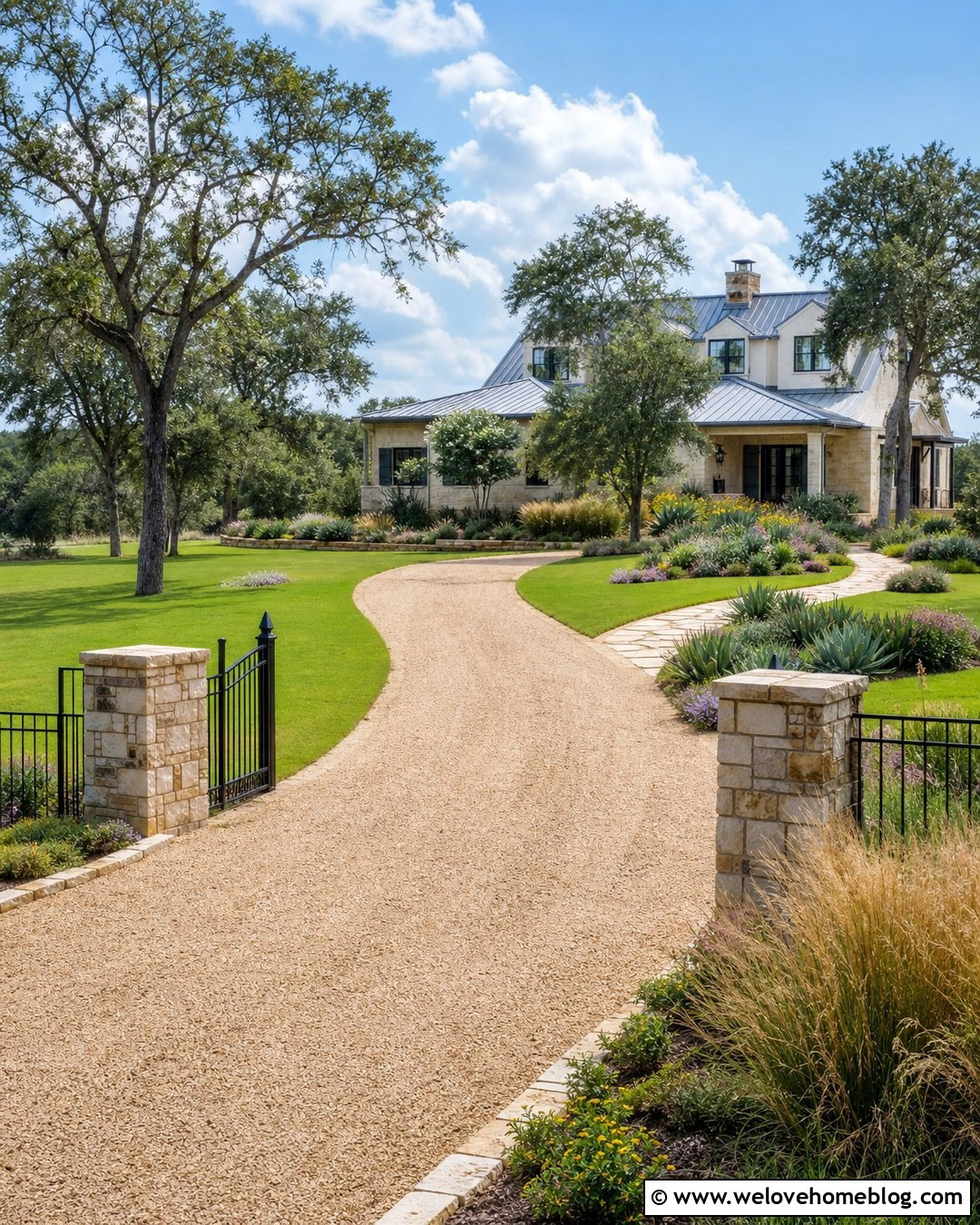
A natural stone border can guide the eye toward a simple driveway gate and create a memorable property entrance. Start with warm crushed-limestone gravel and edge both sides with irregular sandstone blocks. Carry the same stone into low gate pillars supporting a restrained wood or black metal gate. Beyond the entrance, curve the driveway through open lawn and groups of native trees toward a farmhouse or country home. Keep the border low and smooth near the gate so it does not interfere with moving parts, delivery access, or vehicle turns. Plant low grasses and flowering perennials around the pillars while maintaining clear visibility. Matching the driveway stone, edging, pillars, and nearby walkway creates consistency. The gate then feels integrated with the landscape rather than positioned as a separate decorative feature.
Conclusion:
The most successful **Rock Driveway Edging Ideas** balance appearance with everyday performance. Start by considering the driveway’s material, width, curves, vehicle movement, drainage, and maintenance needs. Then choose a rock that connects naturally with the house and surrounding yard. River rock creates a softer border, granite cobbles provide stronger definition, and large fieldstones suit rustic landscapes. Rock can also be combined with steel, concrete, brick, timber, plants, or drainage channels for additional structure. Whatever design you select, treat the driveway, edging, entrance, walkway, and planting beds as one connected composition. A coordinated plan will look more polished from the curb and remain easier to maintain than a collection of unrelated landscape elements.

Related posts:
Leave a Reply