
A well-planted driveway edge can soften hard paving, guide the eye toward the house, and make the entire front yard feel more finished. These 20 driveway edging plants ideas pair practical plants with gravel, concrete, asphalt, brick, pavers, and other popular surfaces. The strongest designs consider more than flower color. Mature plant size, sunlight, drainage, winter salt, visibility, and maintenance all matter beside a busy driveway. Low-growing plants usually work best near the street, while taller flowers and grasses can sit farther back within wider beds. Stone, steel, or brick edging also prevents soil and mulch from spilling onto the driving surface. Explore the complete driveway looks below to find adaptable, attractive 20 driveway edging plants ideas.

1. Lavender Driveway Edging
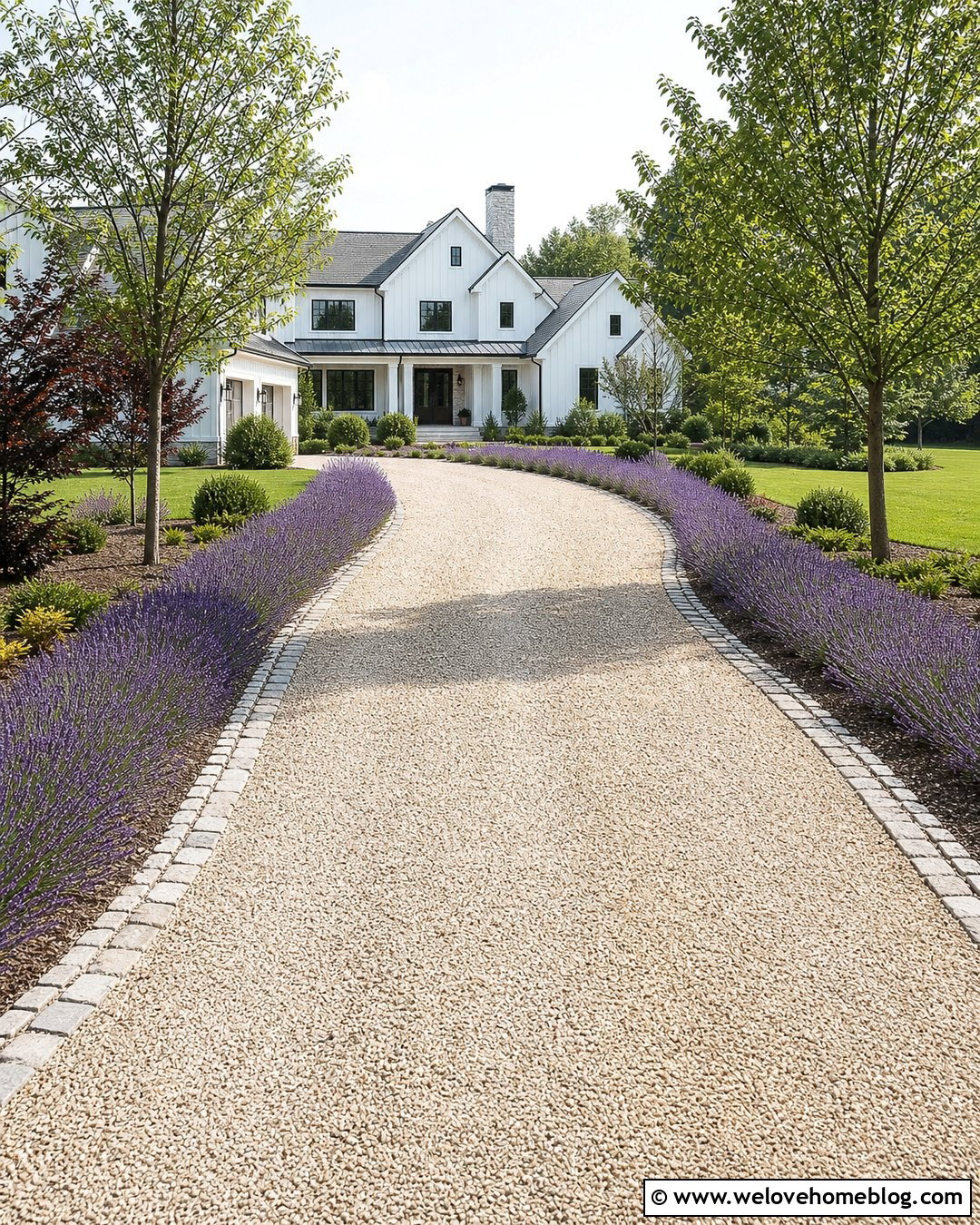
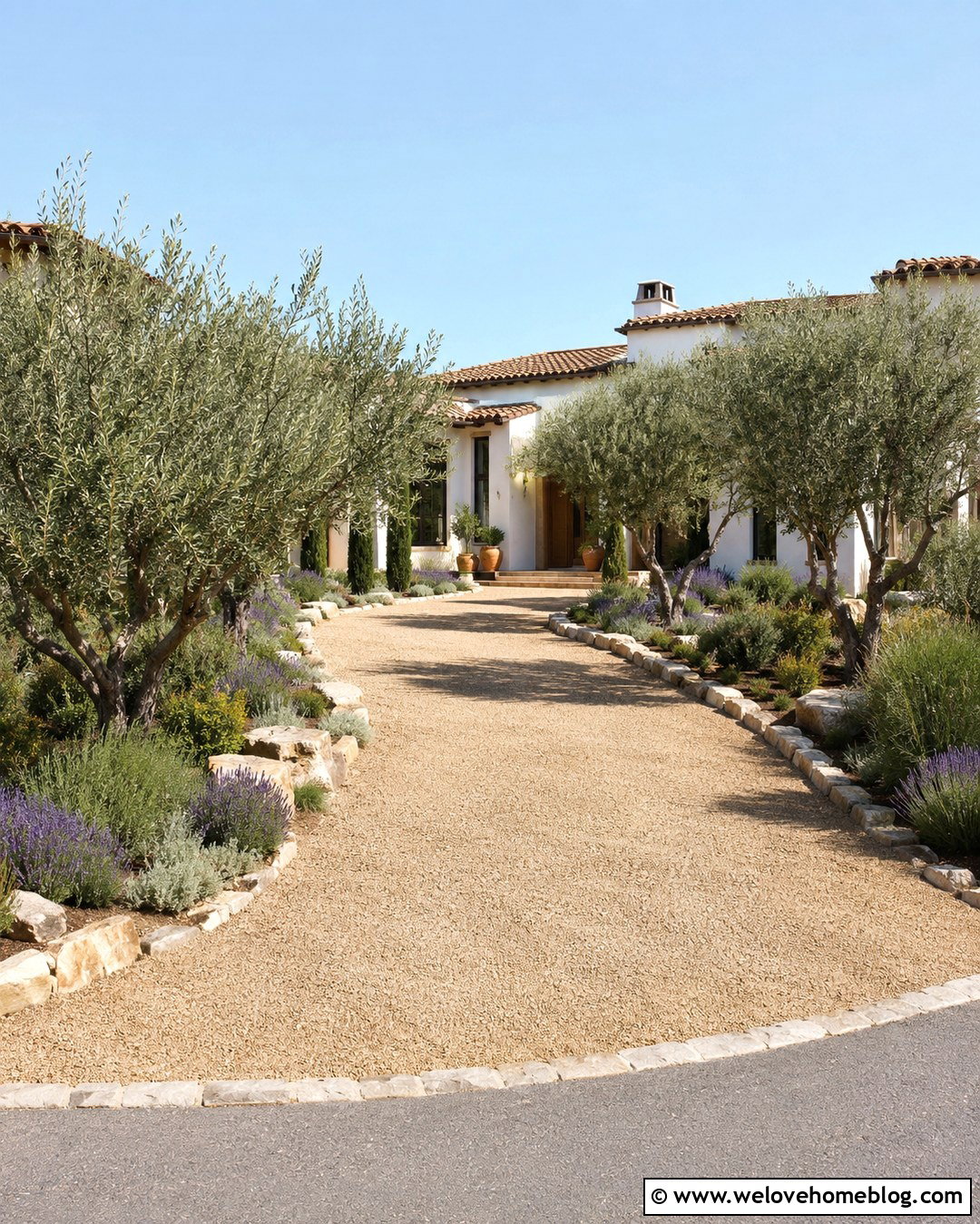
Lavender creates a relaxed but orderly border beside a sunny pea gravel driveway. Its silvery foliage connects naturally with pale stone, while purple flowers bring color without making the entrance feel crowded. Use a straight or gently curved driveway with cobblestone restraints to contain the gravel. Plant lavender in a generous strip beyond the stones, leaving enough room for each plant to reach its mature width without leaning into passing vehicles. Gravel mulch around the plants can improve the visual connection and keep the bed clean. This complete look works especially well with cottage homes, ranch houses, and modern farmhouses. Lavender prefers sunny, well-drained conditions and becomes drought tolerant after establishment, making it useful around warm driveway surfaces. ()
2. Creeping Thyme Driveway Edging
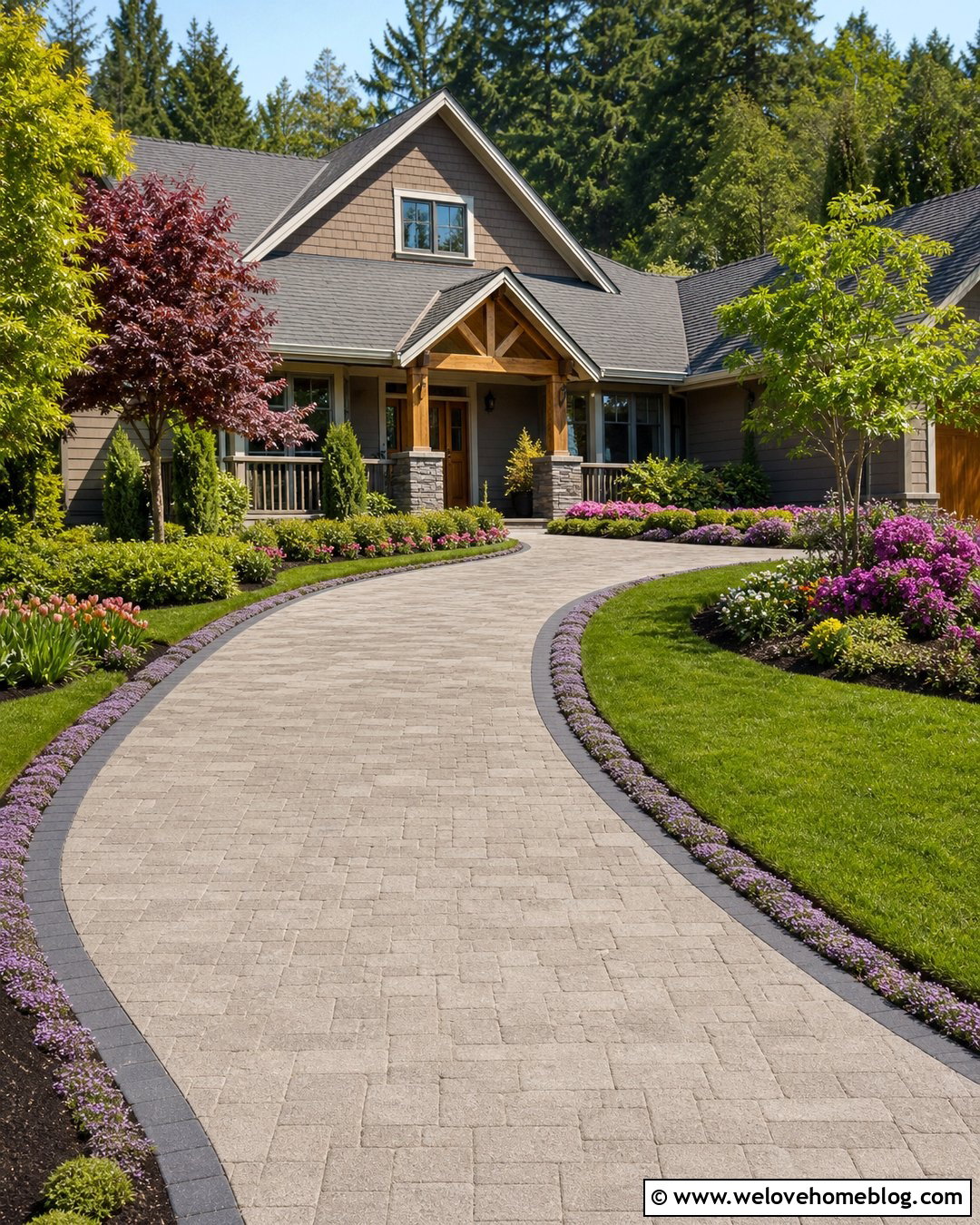
Imagine a curved paver driveway framed by a soft ribbon of tiny green leaves and seasonal flowers. Creeping thyme can fill narrow spaces between the paved surface and a stone or steel border, creating a low edge that does not hide the driveway layout. Pair warm gray concrete pavers with charcoal soldier-course edging, then repeat thyme along the outside curve. Small ornamental trees and simple lawn panels can provide height farther from the pavement. Keep plants away from areas where tires regularly turn, since even tough ground covers perform better without constant vehicle pressure. This treatment is particularly effective around craftsman and cottage homes. Thyme is among the heat- and drought-tolerant plants suited to sunny, well-drained landscape areas. ()
3. Dwarf Mondo Grass Driveway Edging
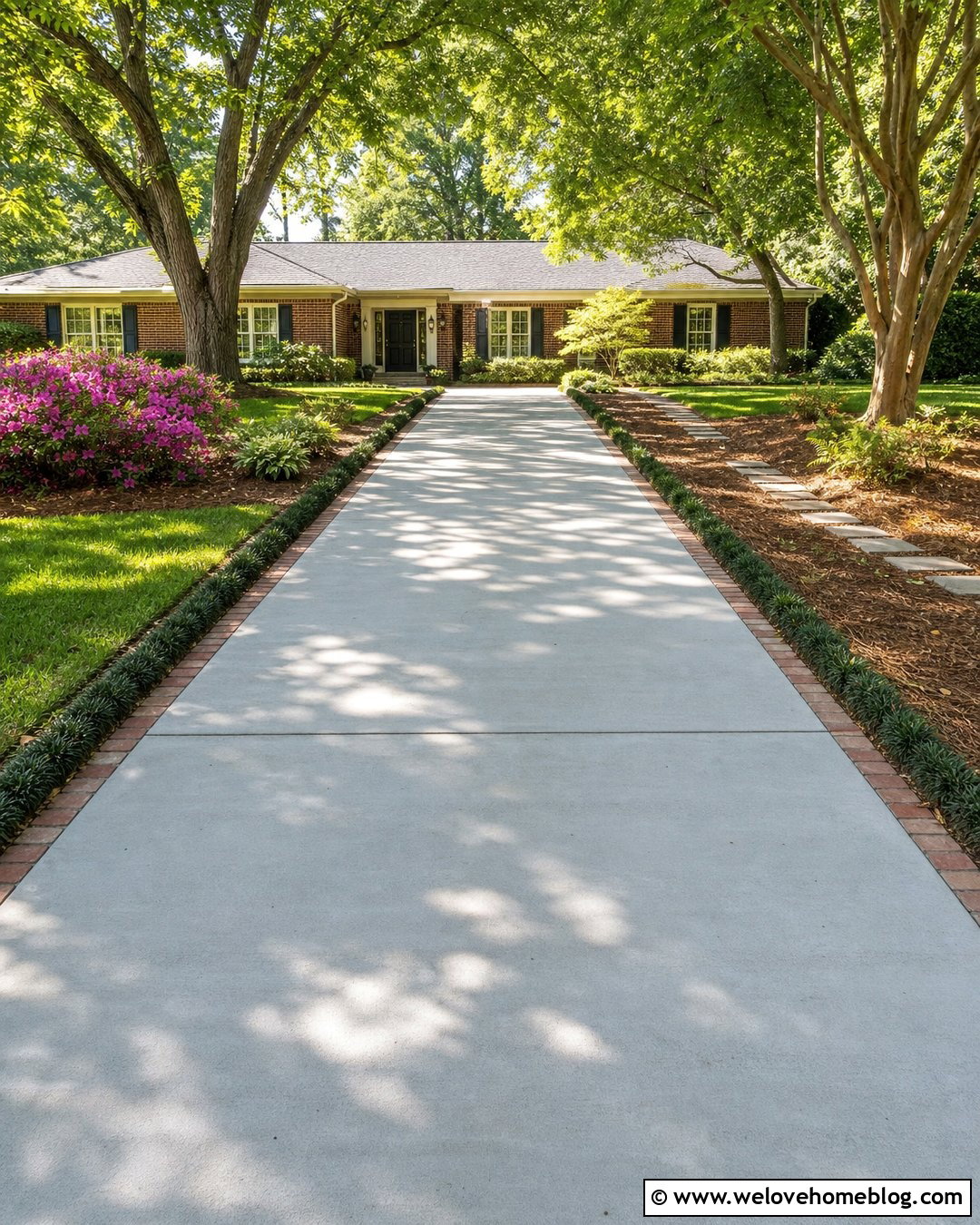
Dwarf mondo grass gives a shaded concrete driveway a precise, dark green outline. Use it along a straight driveway beneath mature trees, where ordinary lawn may appear thin or uneven. A narrow brick mowing strip between the poured concrete and planting bed keeps the grasslike foliage organized and protects it during yard maintenance. Beyond the mondo grass, add pine-straw mulch, compact azaleas, ferns, or other plants suited to the local climate. This layered treatment complements brick ranch homes and traditional suburban houses without overwhelming their architecture. Dwarf mondo grass remains especially low and works well as a border in mild regions. Regular mondo grass can also be used when a slightly taller edge is preferred. Both are best matched to filtered sun or shade. ()
4. Catmint Driveway Edging
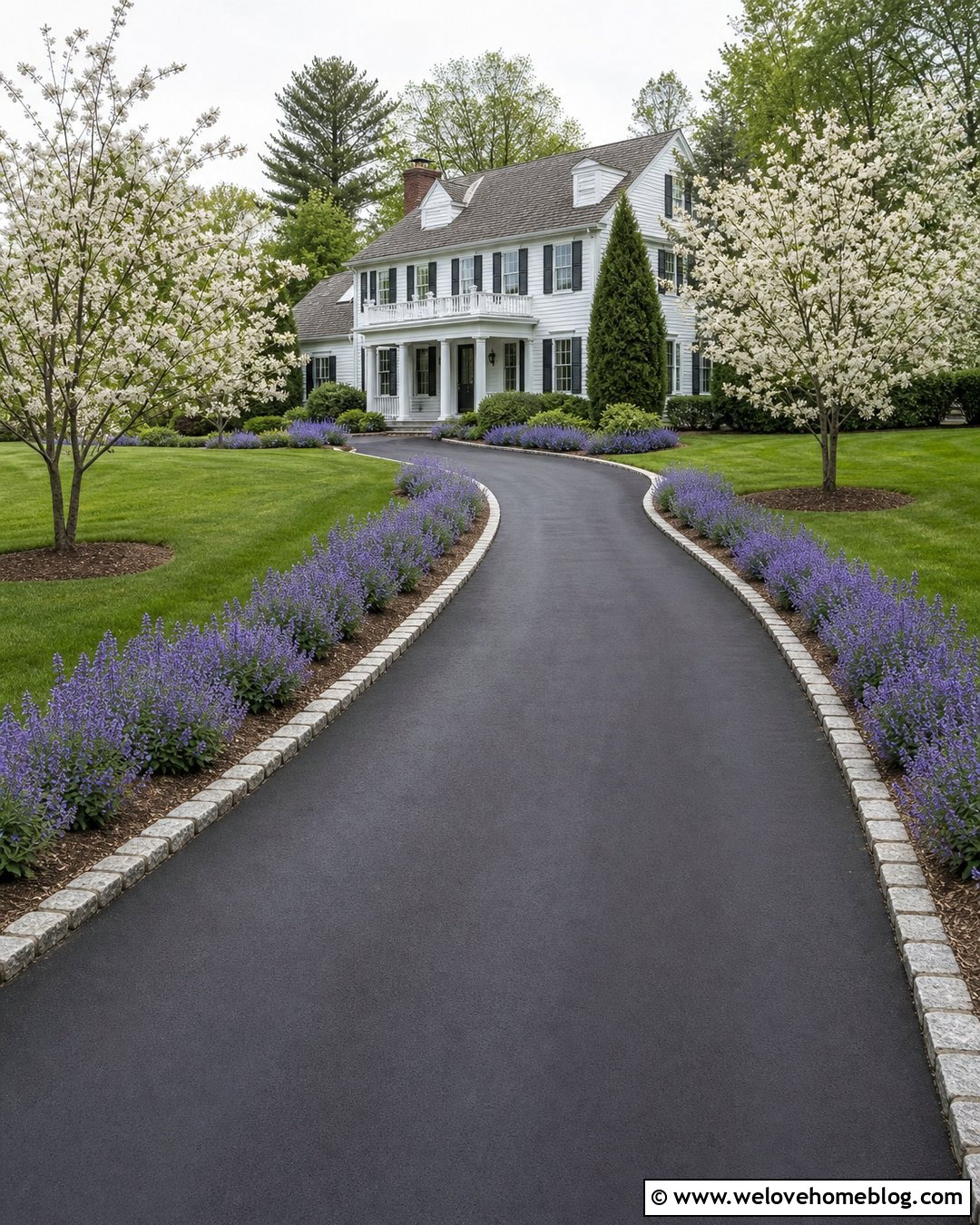
A sweeping asphalt driveway can feel much softer when bordered with mounded catmint. Its gray-green foliage and blue-purple flowers provide a cool contrast against black paving. Install a low granite cobble border first, then position the catmint behind it so the stems can arch naturally without covering the asphalt. Repeat plants in broad groups instead of scattering individual specimens. This creates a continuous visual line and makes the long driveway look intentional. A light mulch, clipped lawn, and a few upright evergreens near the house complete the arrangement. Catmint works particularly well with farmhouse, colonial, and country-style facades. It performs best in sun and well-drained soil, and established plants handle heat and periods of dry weather. ()
5. Blue Fescue Driveway Edging
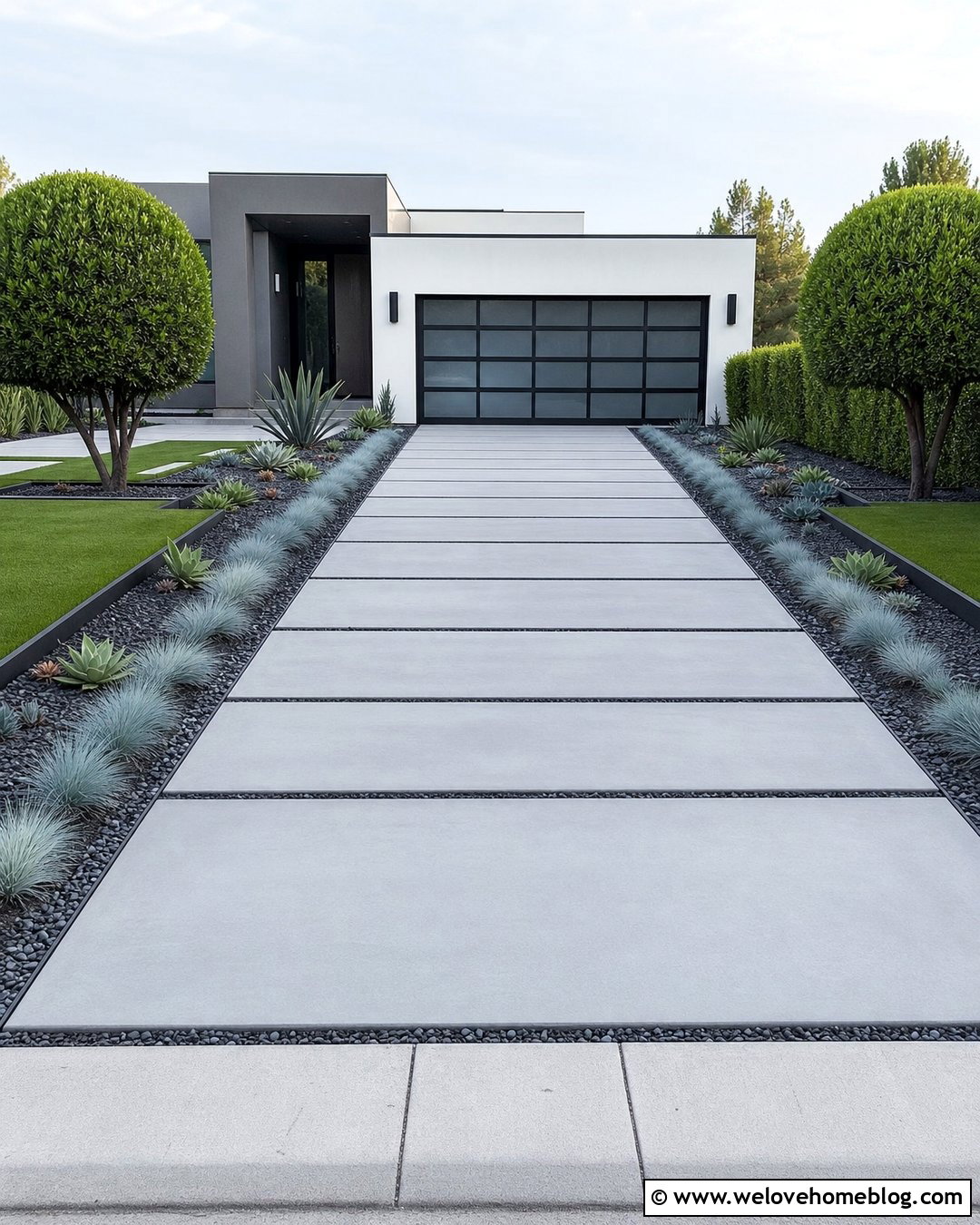
Blue fescue brings compact form and cool color to a modern concrete driveway. Pair large gray poured-concrete panels with narrow gravel joints and a crisp black steel edge. Plant repeated clumps of blue fescue in a band of dark stone mulch, spacing them according to their mature width rather than placing them tightly for instant coverage. Their rounded shape echoes contemporary architecture while the fine blades soften rigid concrete lines. Add low succulents between occasional clumps and reserve taller shrubs for the house foundation. The result is neat, drought-conscious, and easy to read from the street. Small ornamental grasses are useful along borders, but their mature size and seasonal growth should always be considered before planting near driving and walking areas. ()
6. Boxwood Driveway Edging
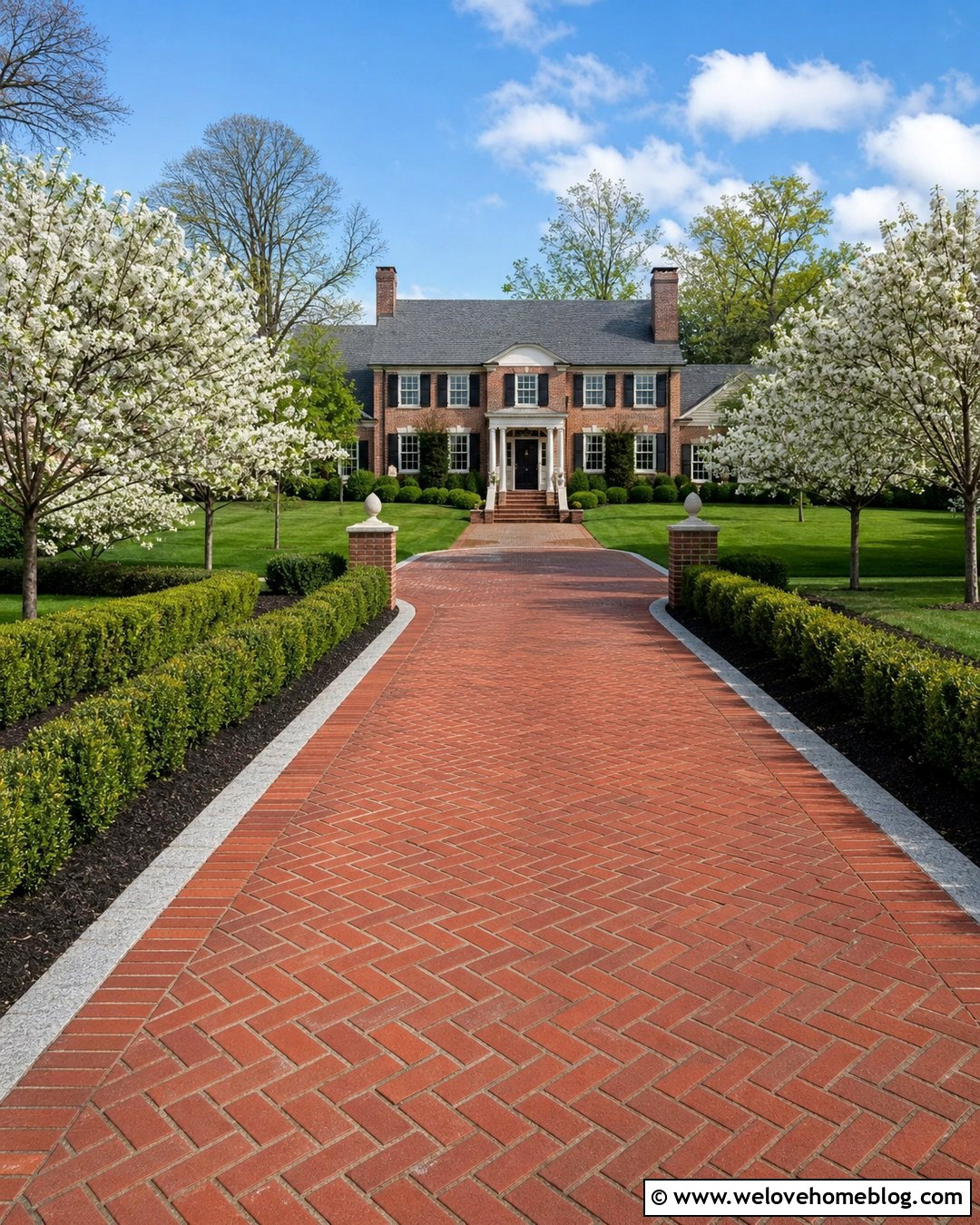
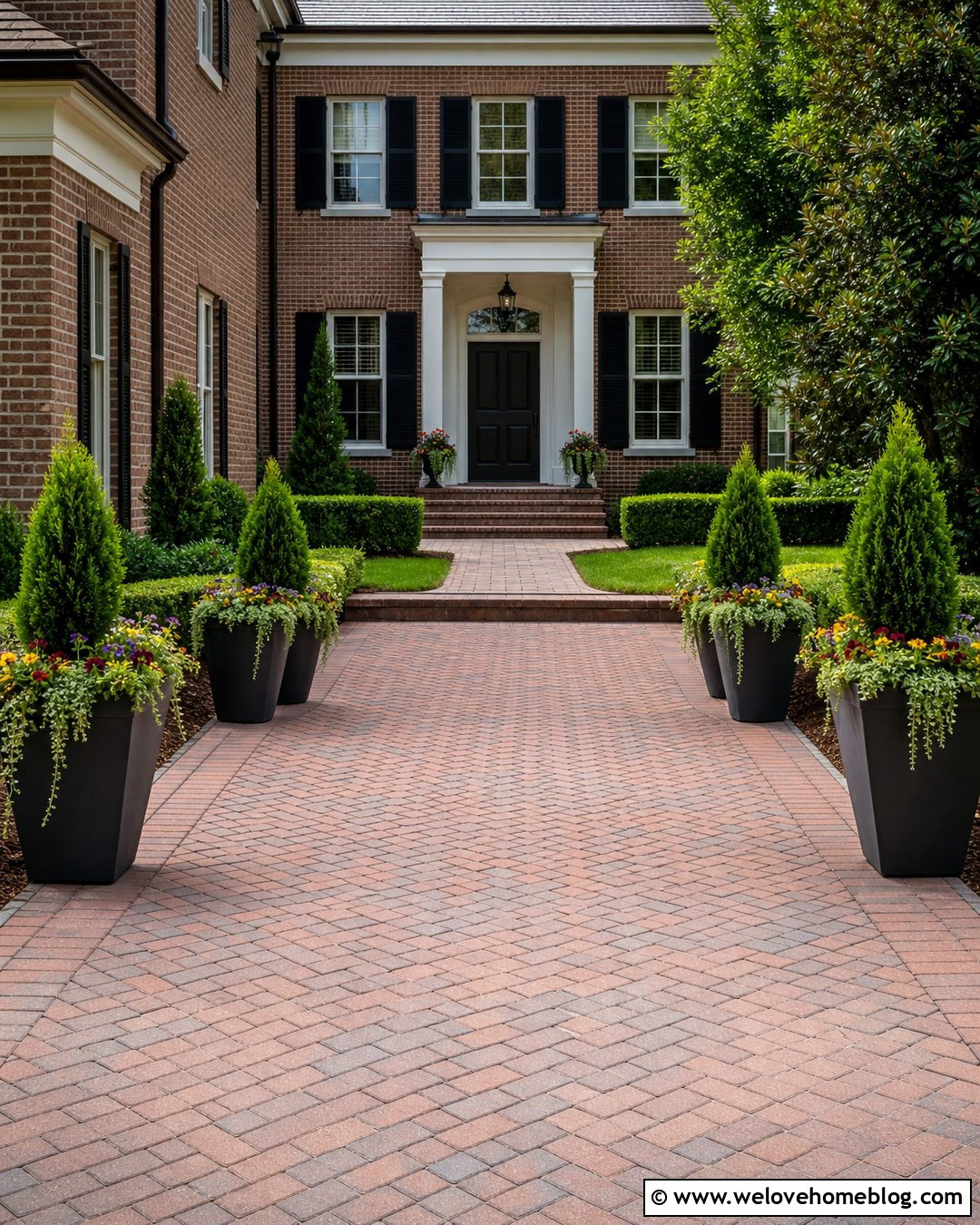
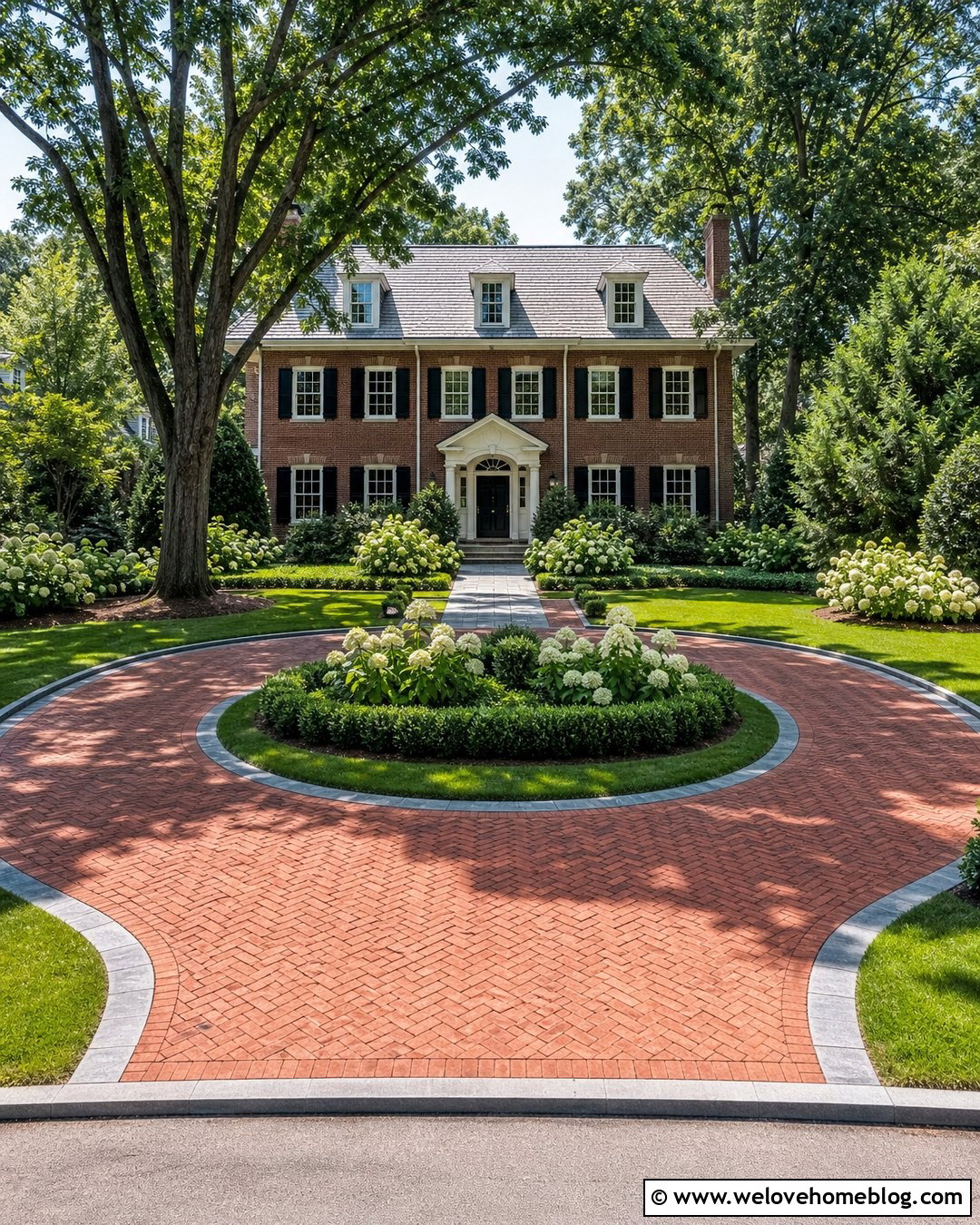
For a formal entrance, line a herringbone brick driveway with a low clipped boxwood hedge. The dense green border emphasizes the driveway’s shape and connects naturally with colonial, Georgian, and traditional brick homes. Place a flush granite curb between the hedge and brick surface to protect the planting bed and simplify cleanup. Keep the boxwood low near the street and around walkway intersections so drivers maintain clear sight lines. Taller matching shrubs can frame the house or entrance pillars farther back. A narrow mulch strip beneath the hedge helps create a tailored finish, while symmetrical urns or small flowering trees add structure near the front walk. Choose a boxwood variety suited to your region, exposure, available bed width, and desired mature height rather than relying on constant heavy pruning.
7. Daylily Driveway Edging
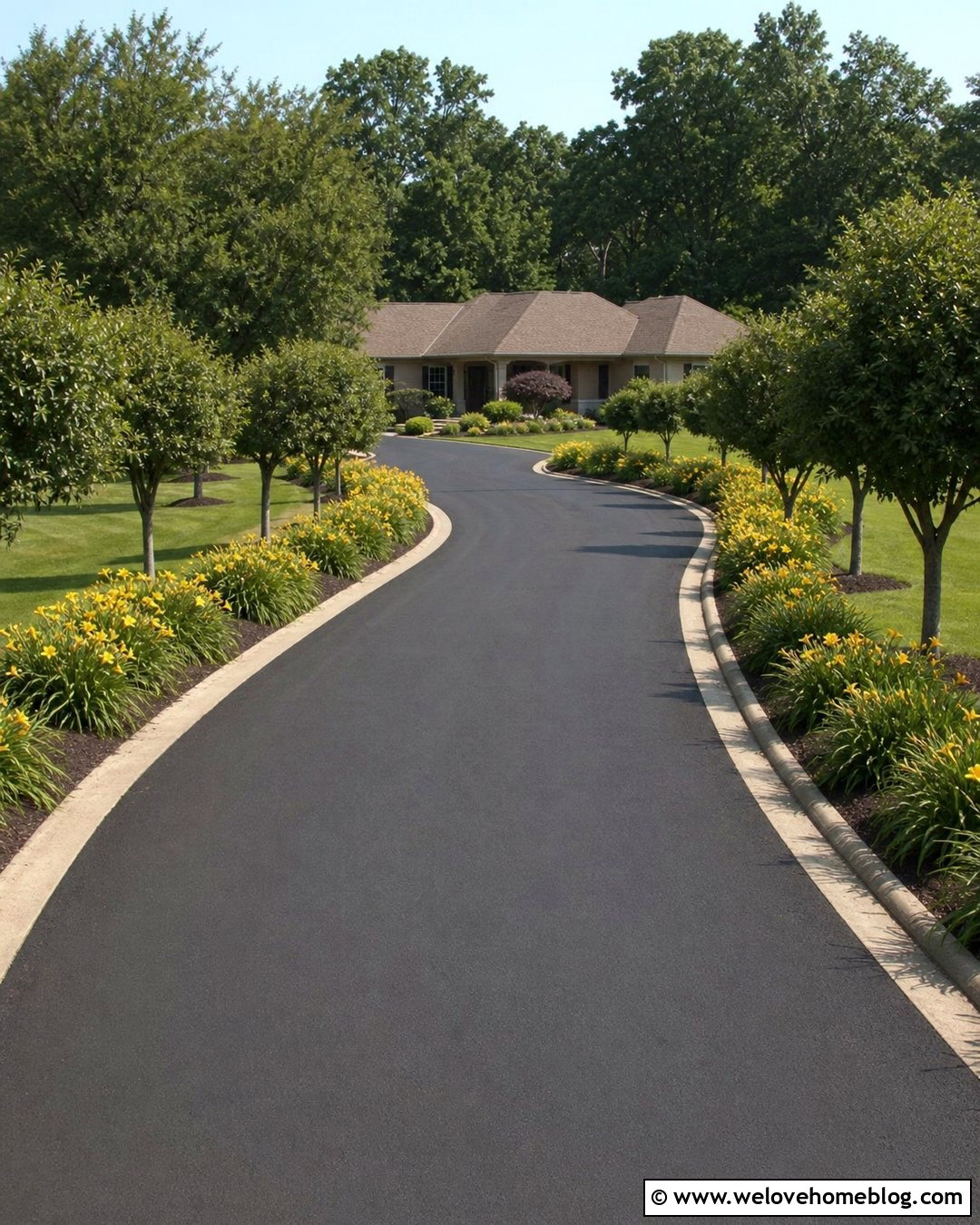
Daylilies make a colorful border for a long asphalt driveway where a wider planting strip is available. Their arching foliage creates a clean base even before flowers appear. Use a tan concrete curb or natural fieldstone edge to separate the bed from the dark asphalt, then plant one compact daylily variety in repeating groups for a unified look. Position the plants far enough from the pavement that flower stems and leaves do not obstruct car doors. Behind them, use lawn, scattered shrubs, or small ornamental trees to create depth. This combination suits ranch homes and casual suburban landscapes. Daylilies appear on extension recommendations for beds exposed to soil-borne deicing salt, although conditions and tolerance can still vary by location. ()
8. Sedum Driveway Edging
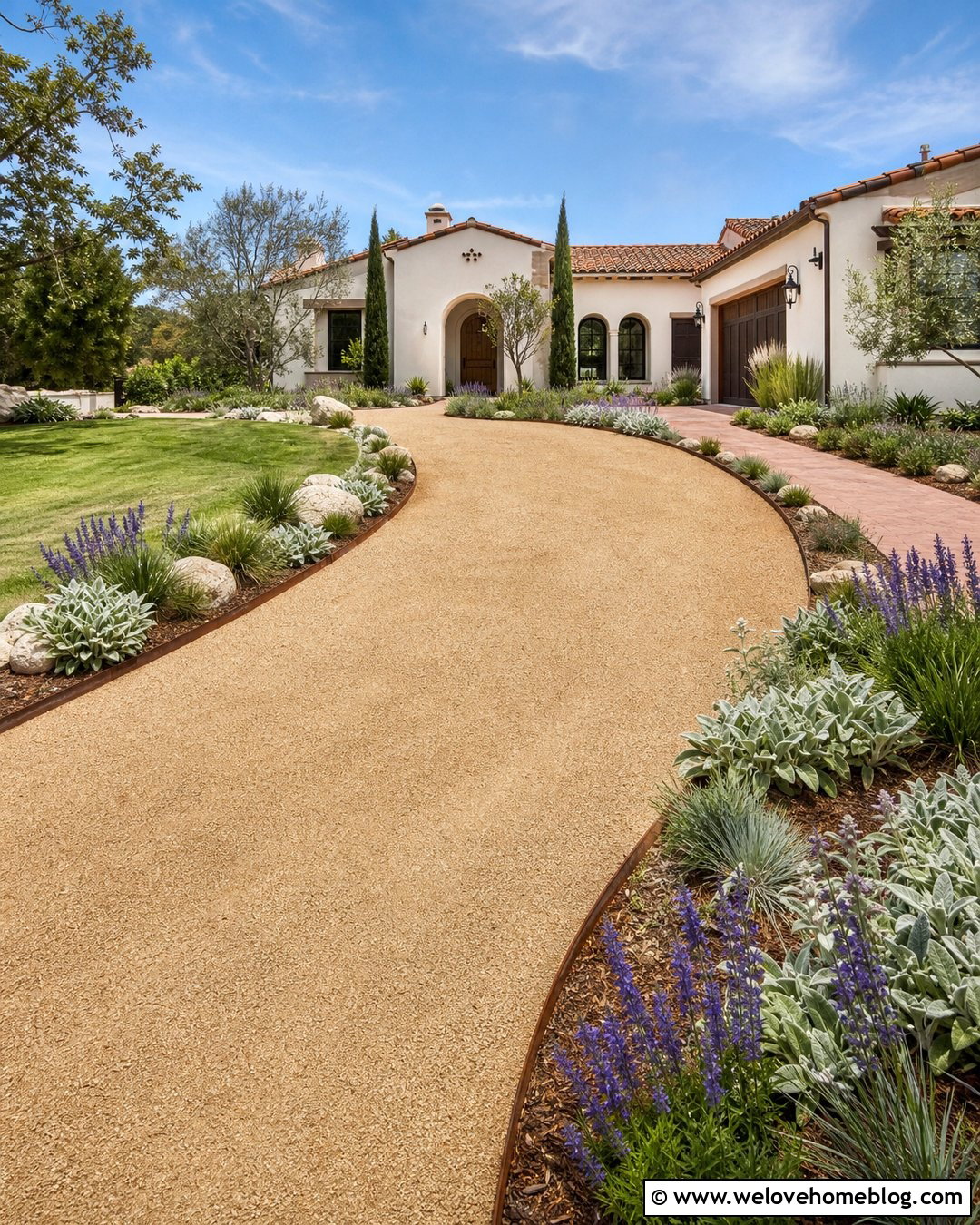
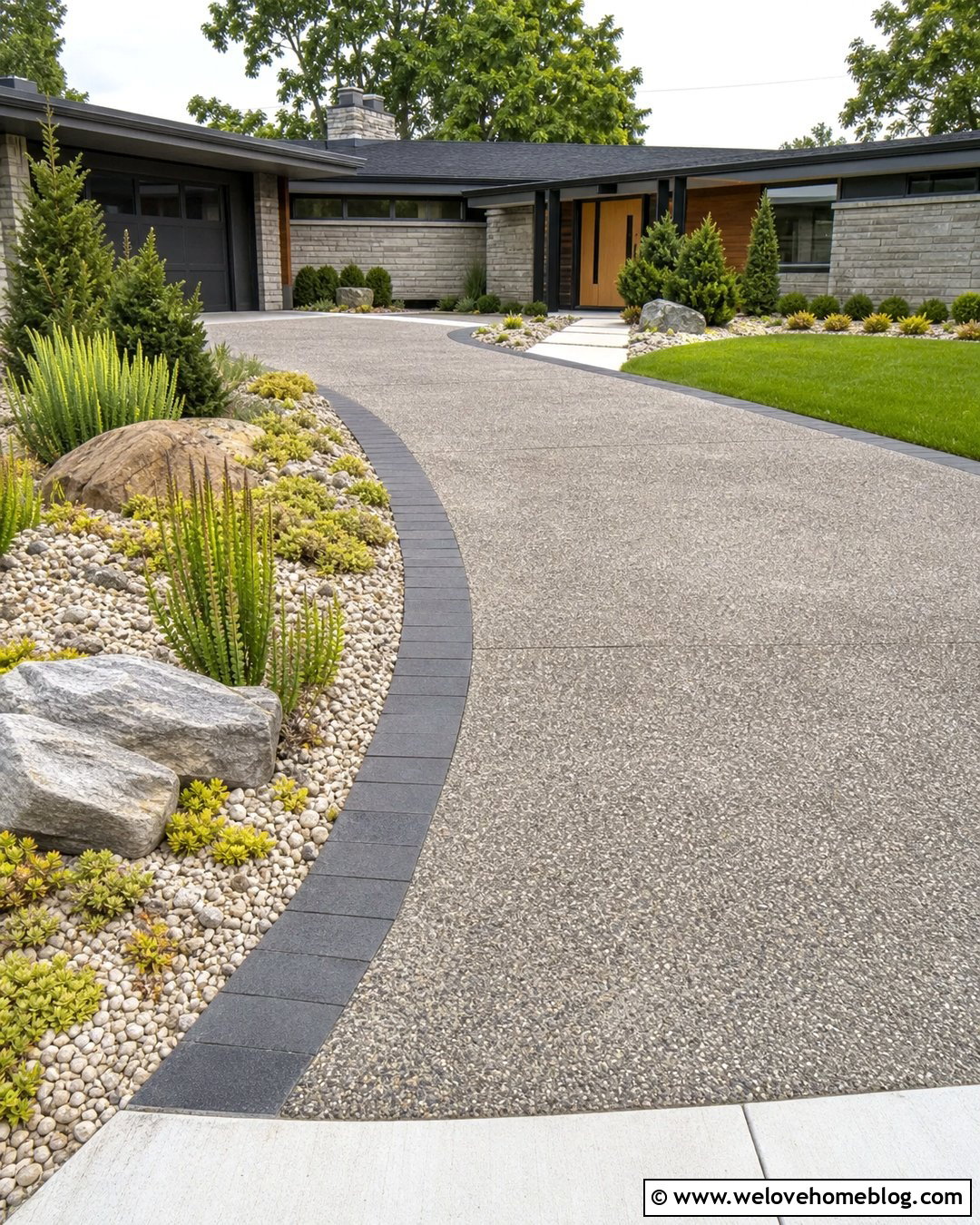
Sedum pairs beautifully with an exposed aggregate driveway because both offer visible texture. Create a gently curved driveway with a charcoal paver ribbon, then fill the outer planting beds with repeated patches of low stonecrop and several taller upright sedums set farther back. Decorative gravel between plants reinforces the dry-garden appearance and reduces loose mulch near the pavement. Add compact evergreens and sculptural boulders near the entrance, while keeping the section closest to the street open and low. This complete driveway design works with midcentury ranch houses, contemporary homes, and dry-climate landscapes. Many sedums tolerate heat and limited moisture once established, while some are also recommended for locations affected by deicing salt. Good drainage remains essential for maintaining compact, healthy growth. ()
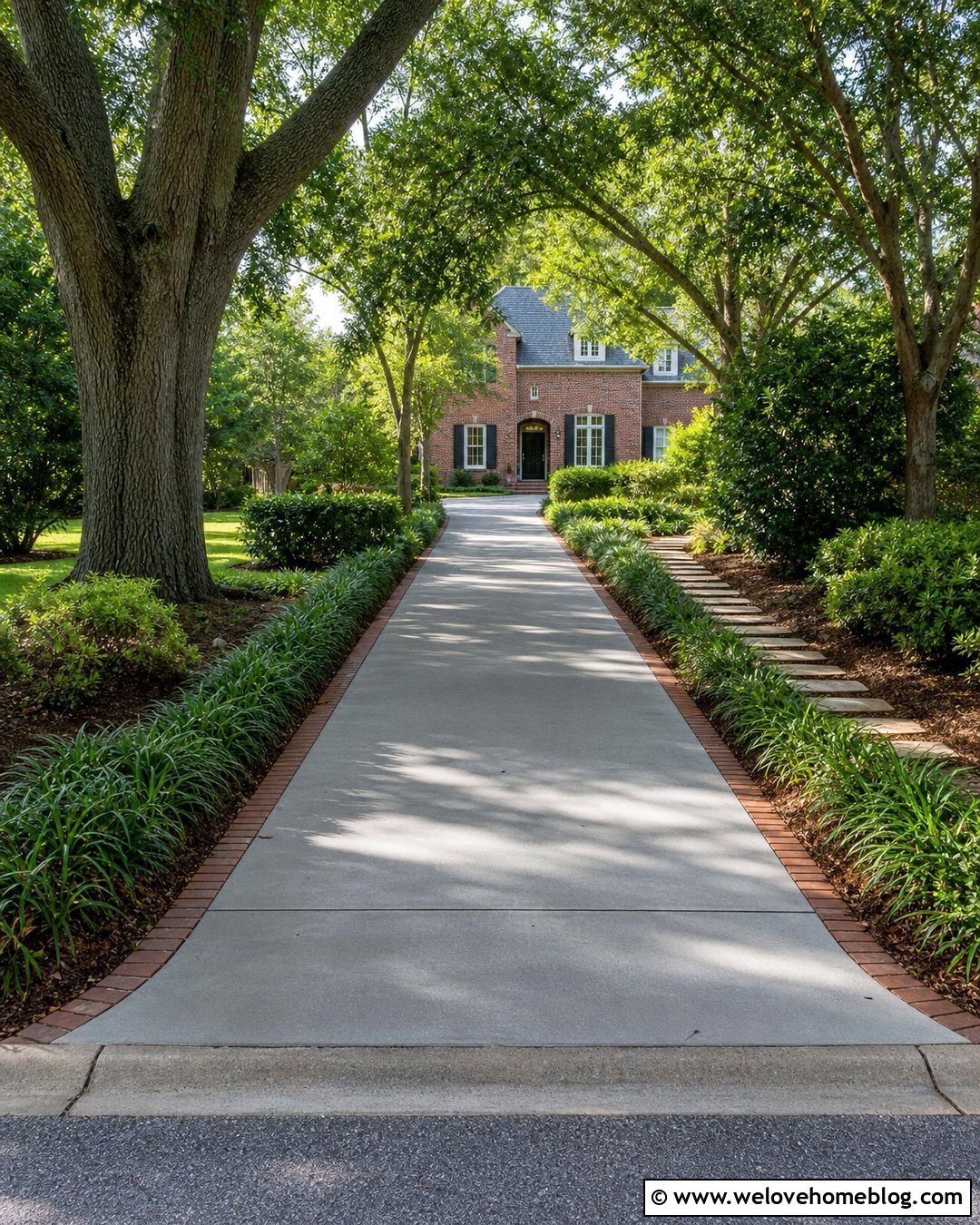
9. Liriope Driveway Edging
Clumping liriope provides a dependable grasslike edge beside a partially shaded concrete driveway. It is particularly useful under established trees, where a neat lawn-to-pavement transition can be difficult to maintain. Run a narrow clay brick border along the concrete, then plant Liriope muscari in evenly spaced clumps behind it. Continue the bed with shade-tolerant shrubs, mulch, and a stepping-stone walkway leading toward the house. Purple flower spikes add subtle seasonal interest without changing the restrained character of the design. Choose the clumping form for a controlled edge; spreading liriope can move too aggressively through mixed beds. Liriope muscari can tolerate a broad range of light and soil conditions, but it performs best where soil drains properly. ()

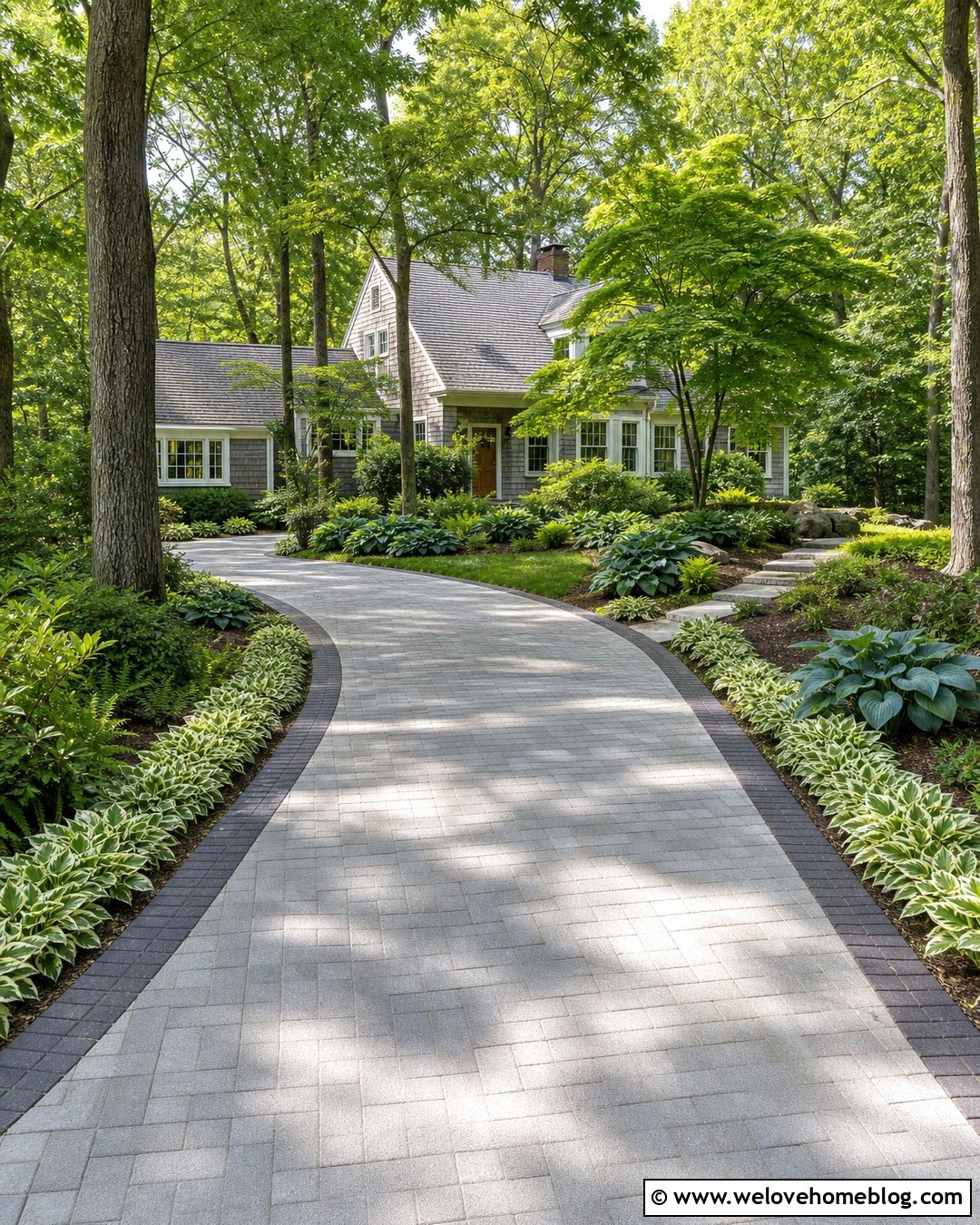
10. Hosta Driveway Edging
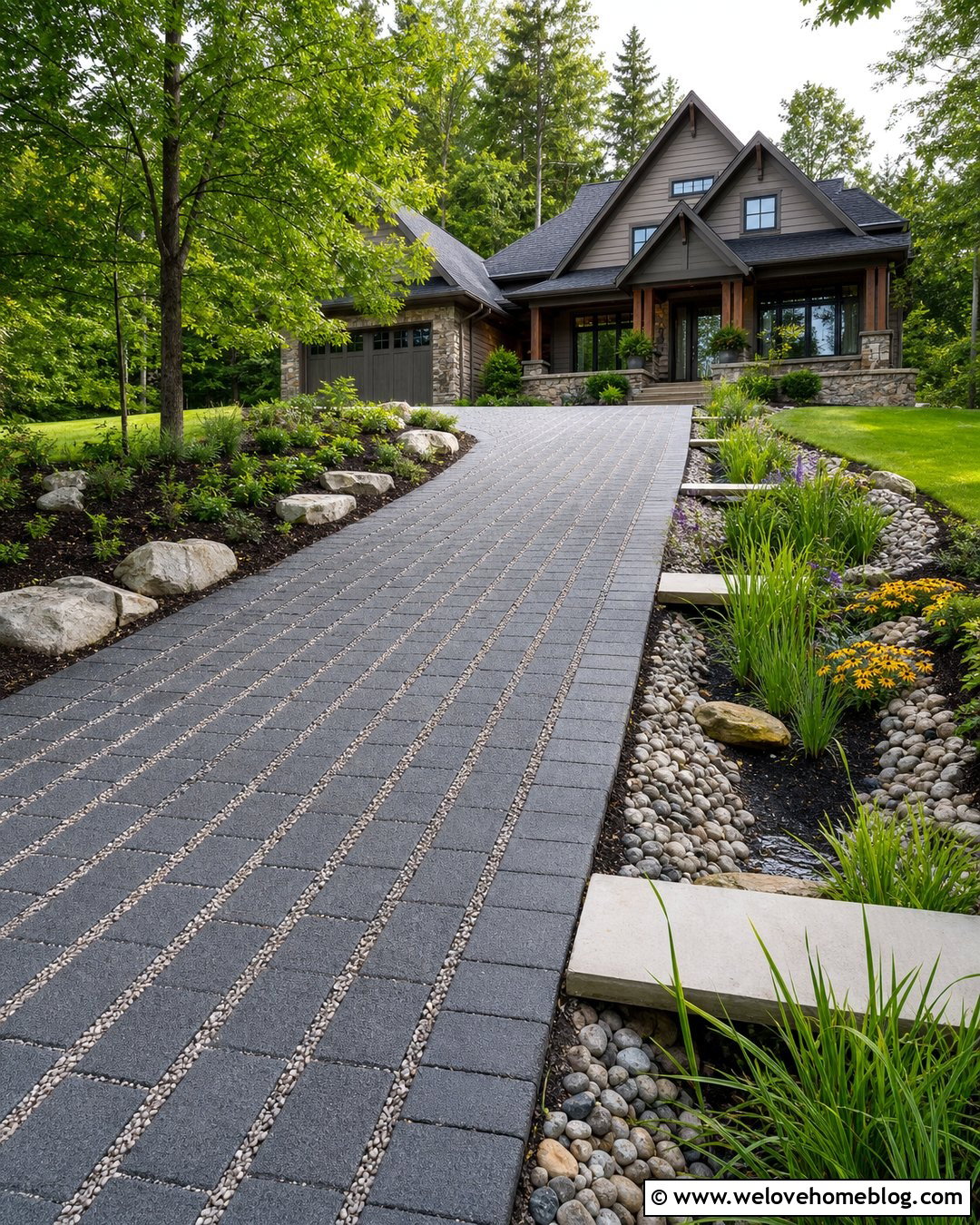
A driveway shaded by large trees can become an inviting woodland entrance with small hostas along the edge. Pair a light gray paver driveway with a dark brick ribbon that clearly separates paving from the planting bed. Repeat one compact hosta cultivar closest to the bricks, then layer larger hostas, ferns, and shade-tolerant shrubs behind it. Leaf colors ranging from blue-green to gold or variegated cream can brighten a dim side yard without depending on flowers. Keep the soil evenly moist and allow sufficient room for mature foliage, which can spread wider than expected. This design complements Cape Cod, craftsman, and wooded contemporary houses. Small hostas are recommended for walkway and border edging, particularly in filtered or dappled shade. ()
11. Coral Bells Driveway Edging
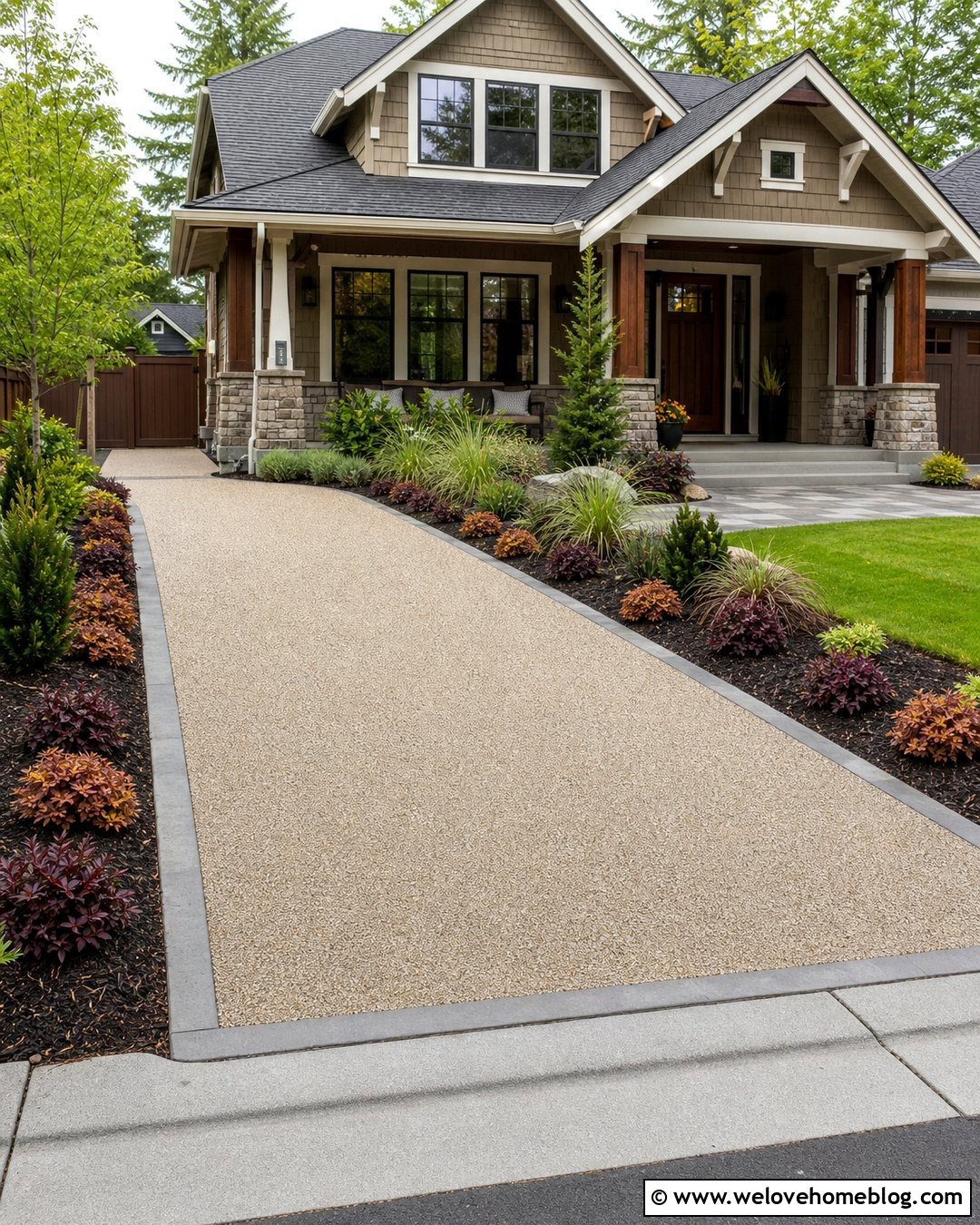
Coral bells introduce foliage color beside a resin-bound gravel driveway without creating a tall or heavy border. Select burgundy, caramel, lime, or silver-leaved varieties that complement the house facade and aggregate tone. A smooth concrete curb can define the resin surface, while repeated coral bells form a broad ribbon behind it. Add dwarf evergreens and airy shade grasses farther back for contrasting height and texture. This look is especially effective along a driveway receiving morning sun and afternoon shade. It also suits modern craftsman homes and updated traditional properties. Avoid planting directly against hot paving if the chosen cultivar needs cooler conditions. Coral bells appear among plants recommended for some salt-exposed beds, but proper siting, drainage, and regional cultivar selection remain important. ()
12. Candytuft Driveway Edging
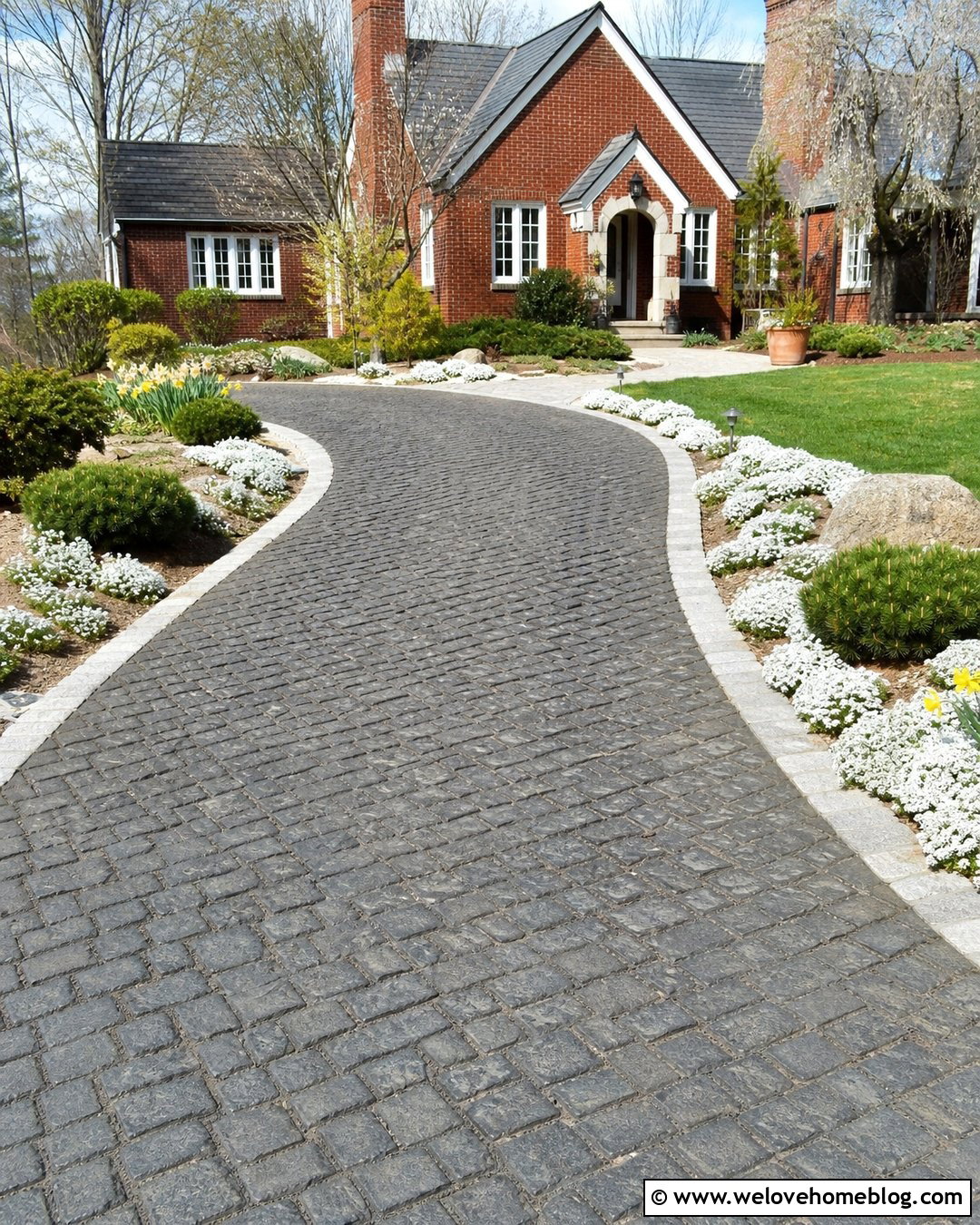
White candytuft can create a bright spring border along a gently sloped cobblestone driveway. Its low, spreading form looks natural spilling toward a flat limestone curb, while the curb prevents stems and soil from entering the driving area. Repeat candytuft in broad drifts rather than creating a thin, broken row. Behind it, add compact mugo pine, flowering bulbs, and light gravel mulch for year-round structure. The white flowers stand out particularly well against dark cobblestone and red brick facades. This complete design suits cottage homes, traditional houses, and garden-inspired entrances. Candytuft is included in extension guidance for perennial beds where soil-borne deicing salt may be a concern. Provide suitable light, drainage, and enough space for plants to spread naturally. ()
13. Creeping Juniper Driveway Edging
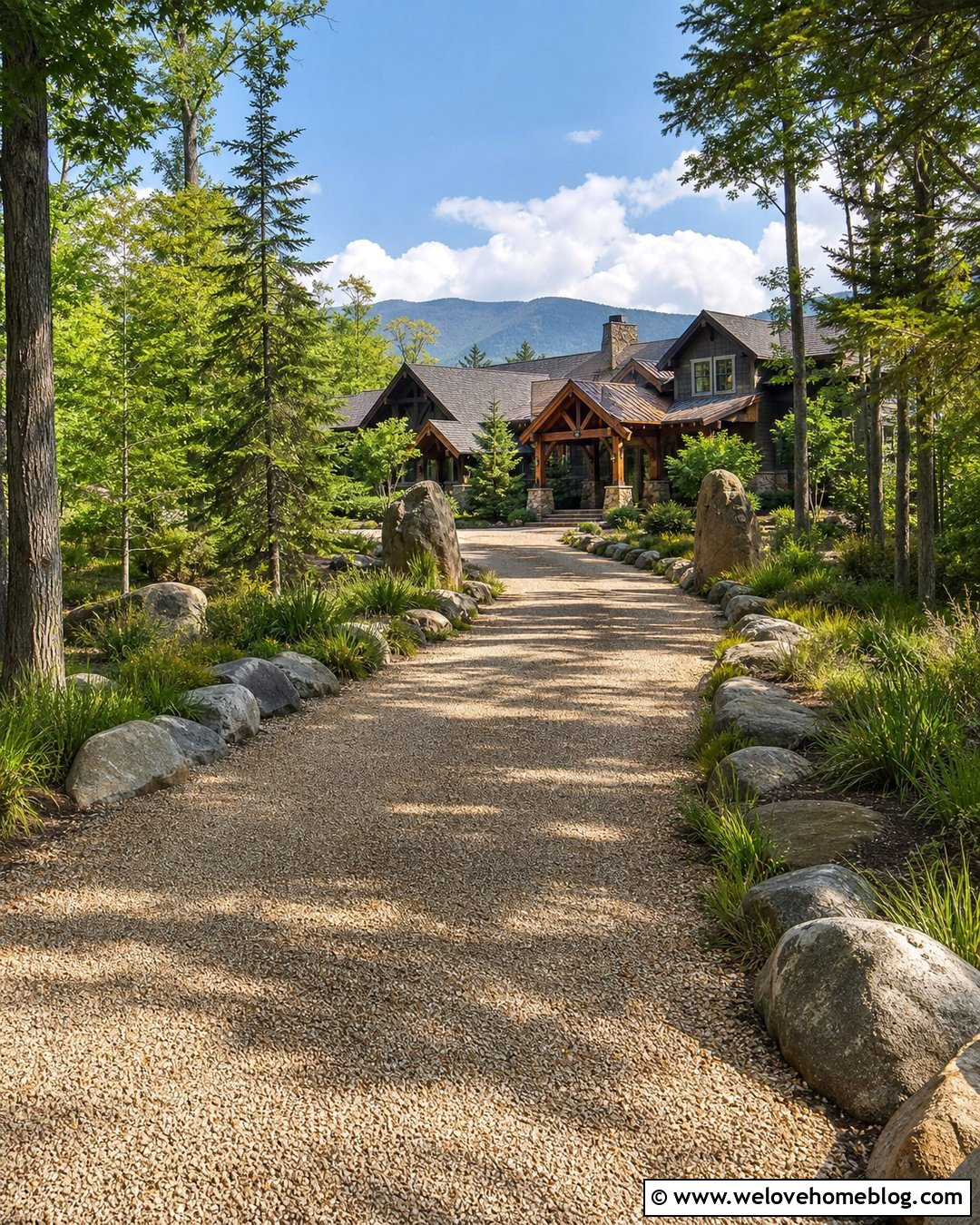
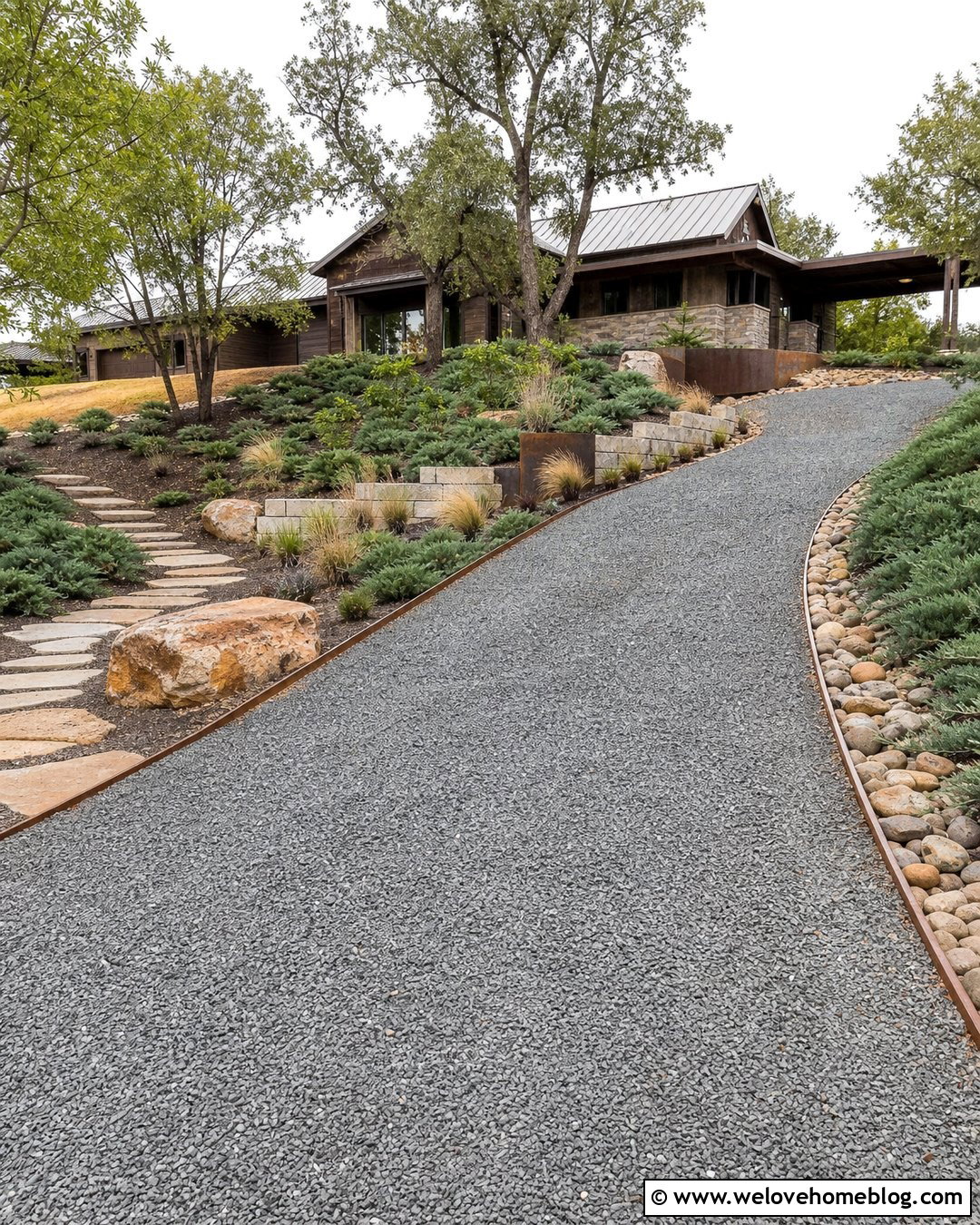
On a sloped property, creeping juniper can visually anchor the banks beside a gravel driveway. Use compacted gray crushed stone for the driveway, reinforced with weathered steel or granite block edging. Plant low junipers across the outer slopes, where their spreading branches can cover soil without blocking the driveway itself. Mix in large boulders and a few upright native grasses to prevent the landscape from looking like one flat mass. The blue-green foliage works well with mountain homes, rustic ranches, and contemporary houses surrounded by open land. Keep branches trimmed away from drainage channels and pavement. Because performance varies among juniper species and cultivars, select a low form recommended for your region, slope conditions, sun exposure, and expected winter salt contact.
14. Lamb’s Ear Driveway Edging
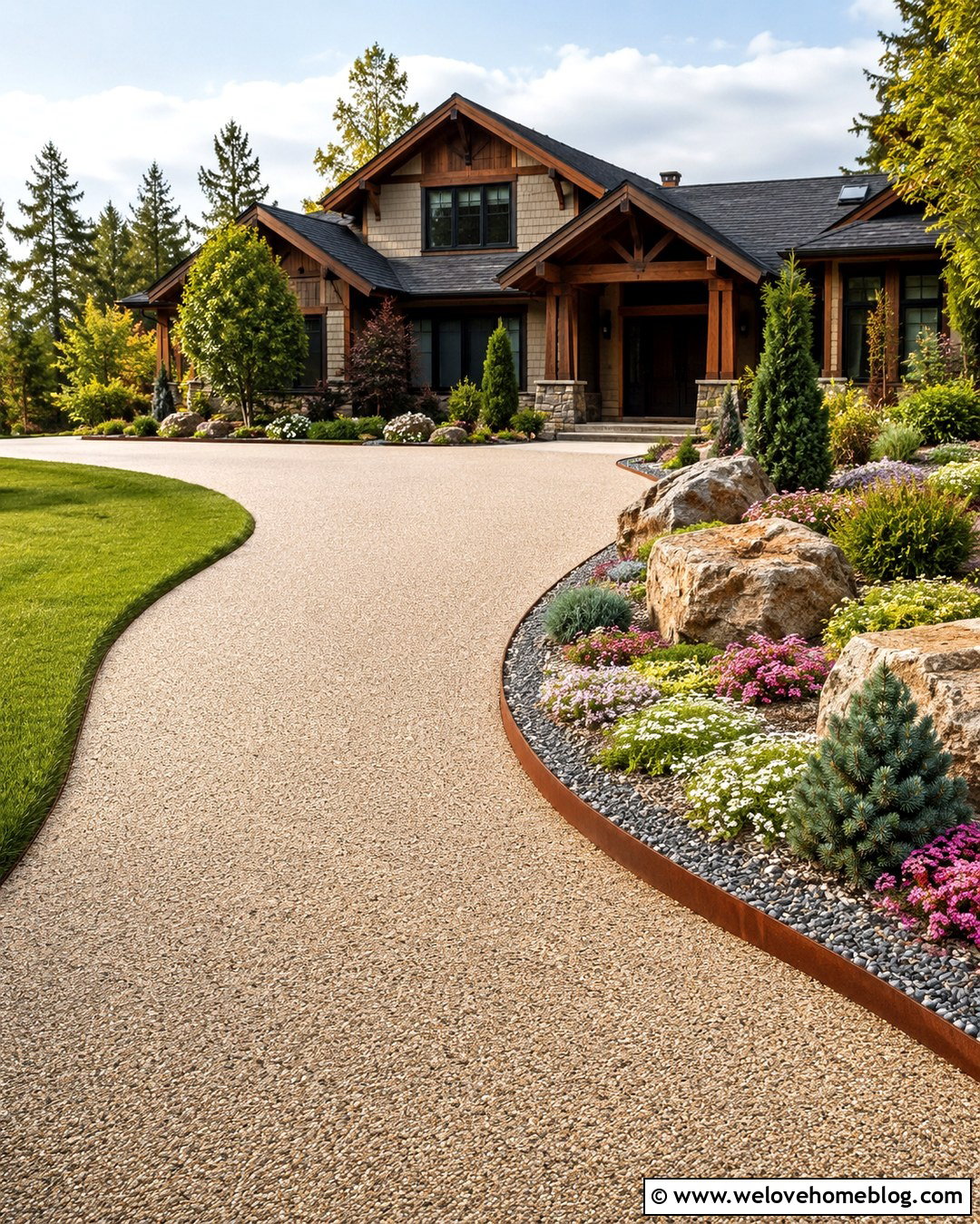
The soft silver foliage of lamb’s ear can lighten a warm-toned decomposed granite driveway. Shape the driveway with a gentle curve and contain the surface with rust-colored steel edging. Plant lamb’s ear in repeating drifts behind the steel, then combine it with purple salvia, compact grasses, and pale landscape rocks. The foliage creates an effective transition between golden paving and green lawn while adding a touchable, cottage-garden texture. Keep flower stalks set back from areas where car doors open, or remove them when a lower appearance is preferred. This design works with stucco homes, Mediterranean-inspired houses, and sunny cottages. Lamb’s ear is recognized as a heat- and drought-tolerant landscape plant, but well-drained soil helps prevent untidy growth. ()
15. Little Bluestem Driveway Edging
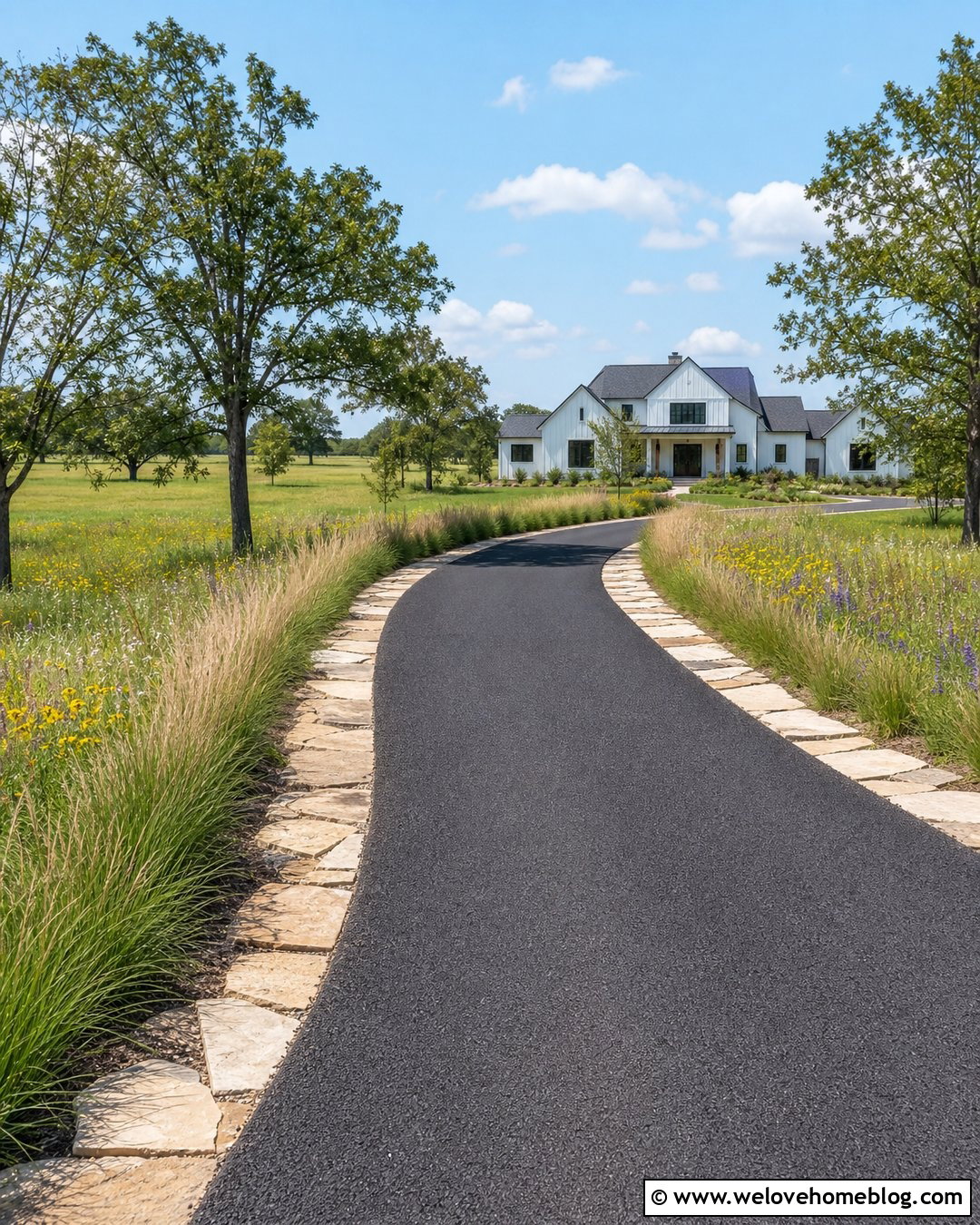
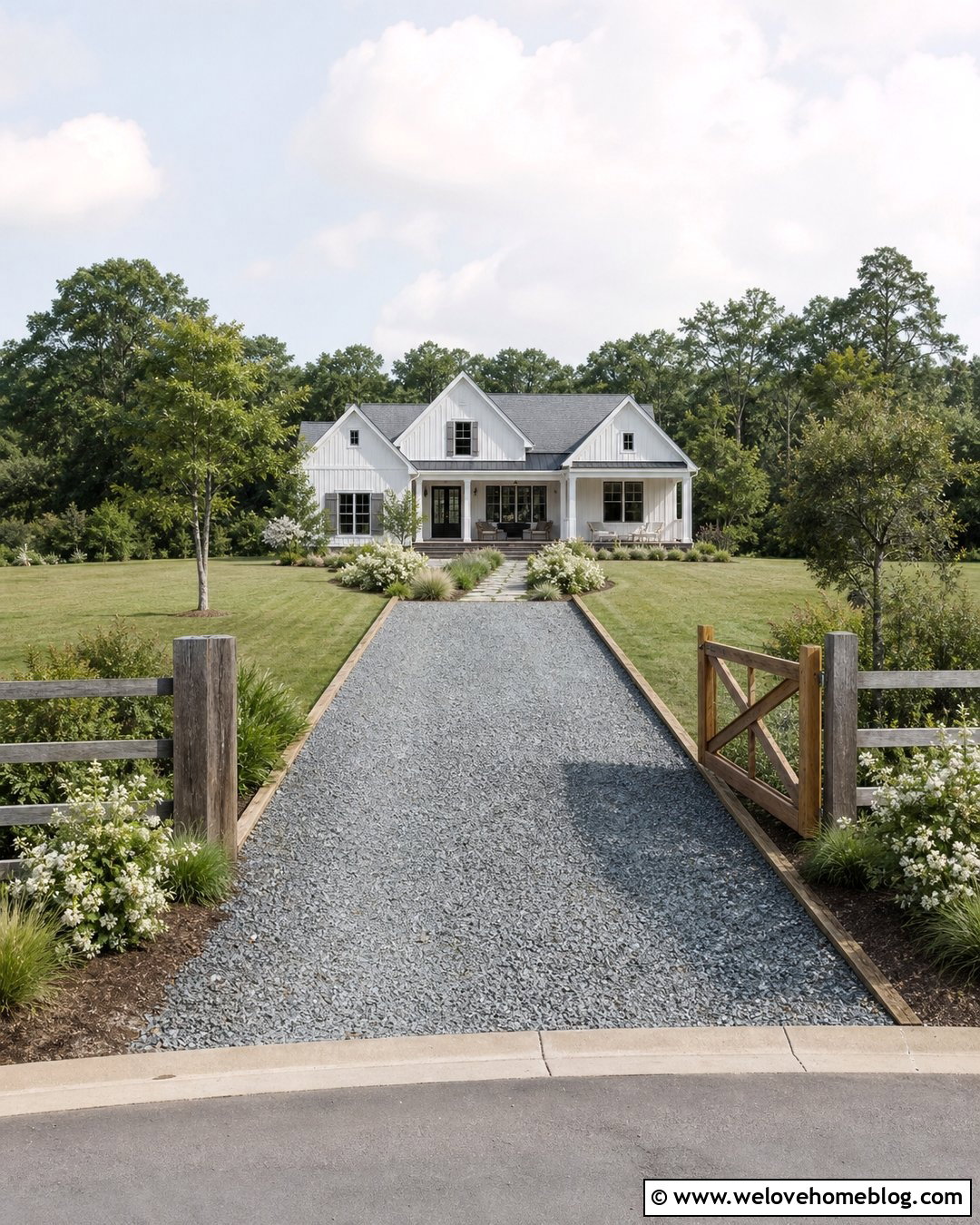
Little bluestem creates movement and seasonal color beside a long rural driveway. Pair a black asphalt or chip-seal surface with a broad natural-stone shoulder, then plant the grass in generous groups beyond the driving clearance zone. Mix it with lower native perennials near the front and a few deciduous trees farther back. The upright summer foliage keeps the border organized, while changing fall tones can connect the driveway to surrounding fields or woodland. This arrangement feels especially appropriate around modern farmhouses, prairie homes, and large ranch properties. Avoid placing taller grass directly beside street intersections, gates, or tight curves. Ornamental grasses provide texture, movement, and winter interest, but mature height and changing seasonal form should guide their placement. ()
16. Coreopsis Driveway Edging
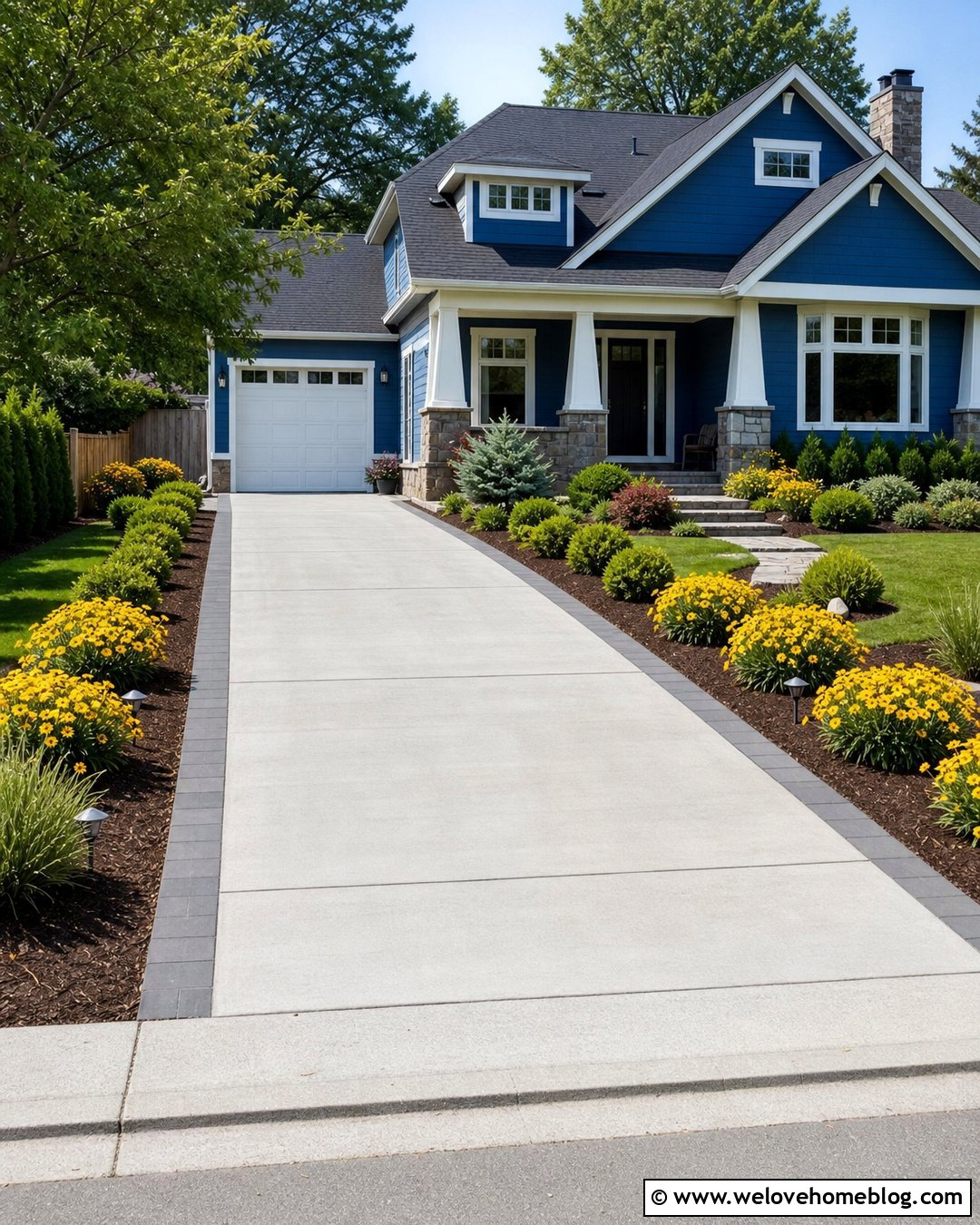
Sunny yellow coreopsis can enliven a plain poured-concrete driveway without requiring an overly formal planting plan. Add a narrow charcoal paver border to the concrete, followed by a mulched bed containing repeated coreopsis clusters. Thread compact evergreen shrubs through the background so the driveway still has structure when flowers are absent. A few ornamental grasses can provide additional movement, but keep the front layer low and open near the sidewalk. This cheerful combination works well with white ranch homes, blue craftsman houses, and casual cottages. Coreopsis is included among salt-tolerant perennial choices for beds near roadways and walkways. Select a cultivar with a mature size that fits the available strip, and allow sufficient airflow instead of crowding plants against hot pavement. ()
17. Yarrow Driveway Edging
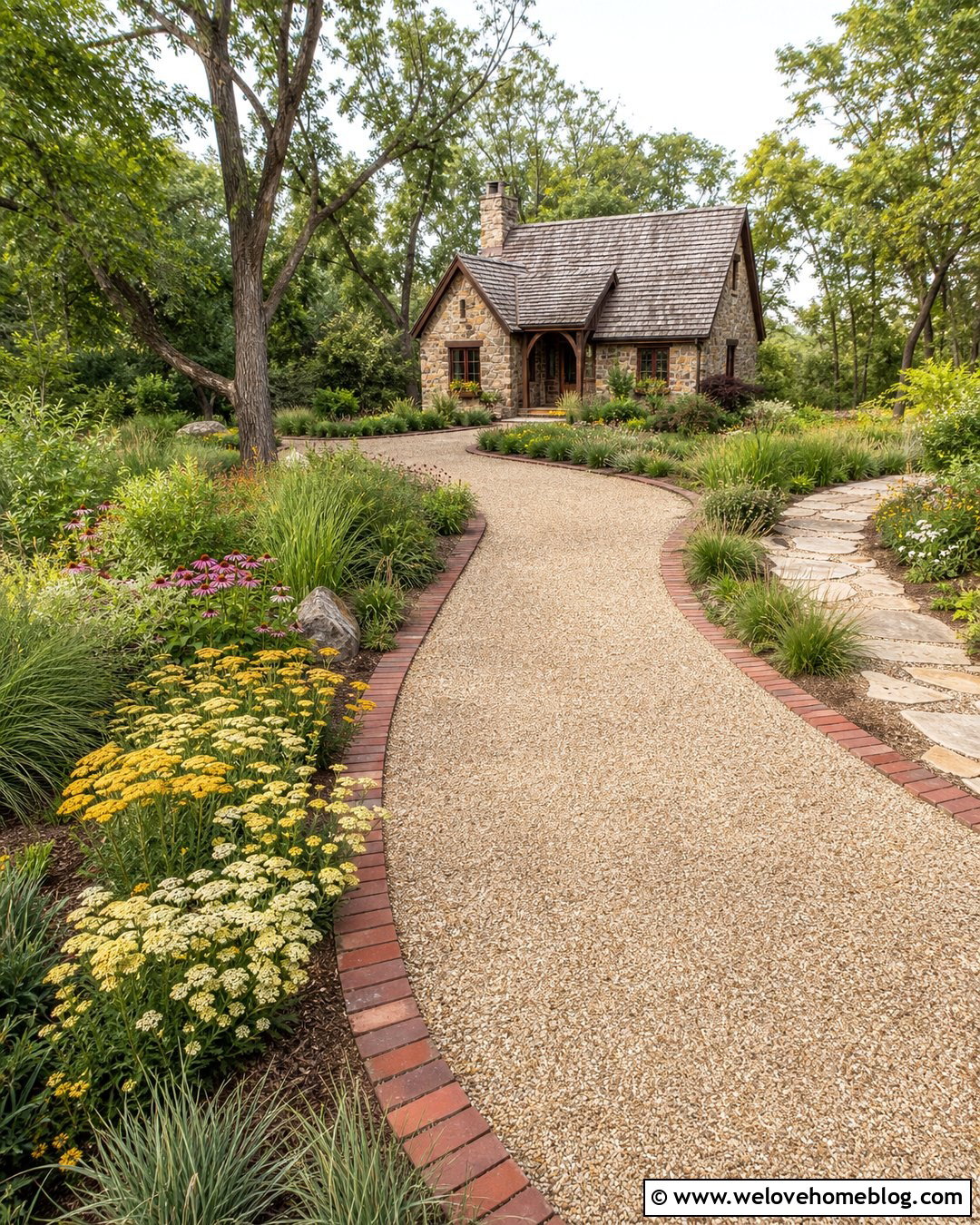
Yarrow offers a natural meadow effect along a curved gravel driveway. Use warm beige crushed gravel with a brick ribbon that keeps the driving surface separate from the planting bed. Position lower yarrow selections behind the brick, combining them with fine-textured grasses and scattered coneflowers farther from the pavement. Repeating one flower color creates a calmer result than mixing every available shade. This border fits country homes, cabins, rustic cottages, and modern farmhouses with relaxed landscaping. Cut back plants that begin leaning into the driveway, and preserve clear visibility near the entrance. Yarrow appears on extension lists for heat-, drought-, and salt-tolerant plantings, making it worth considering for challenging sunny edges when local climate and soil conditions are suitable. ()
18. Hardy Geranium Driveway Edging
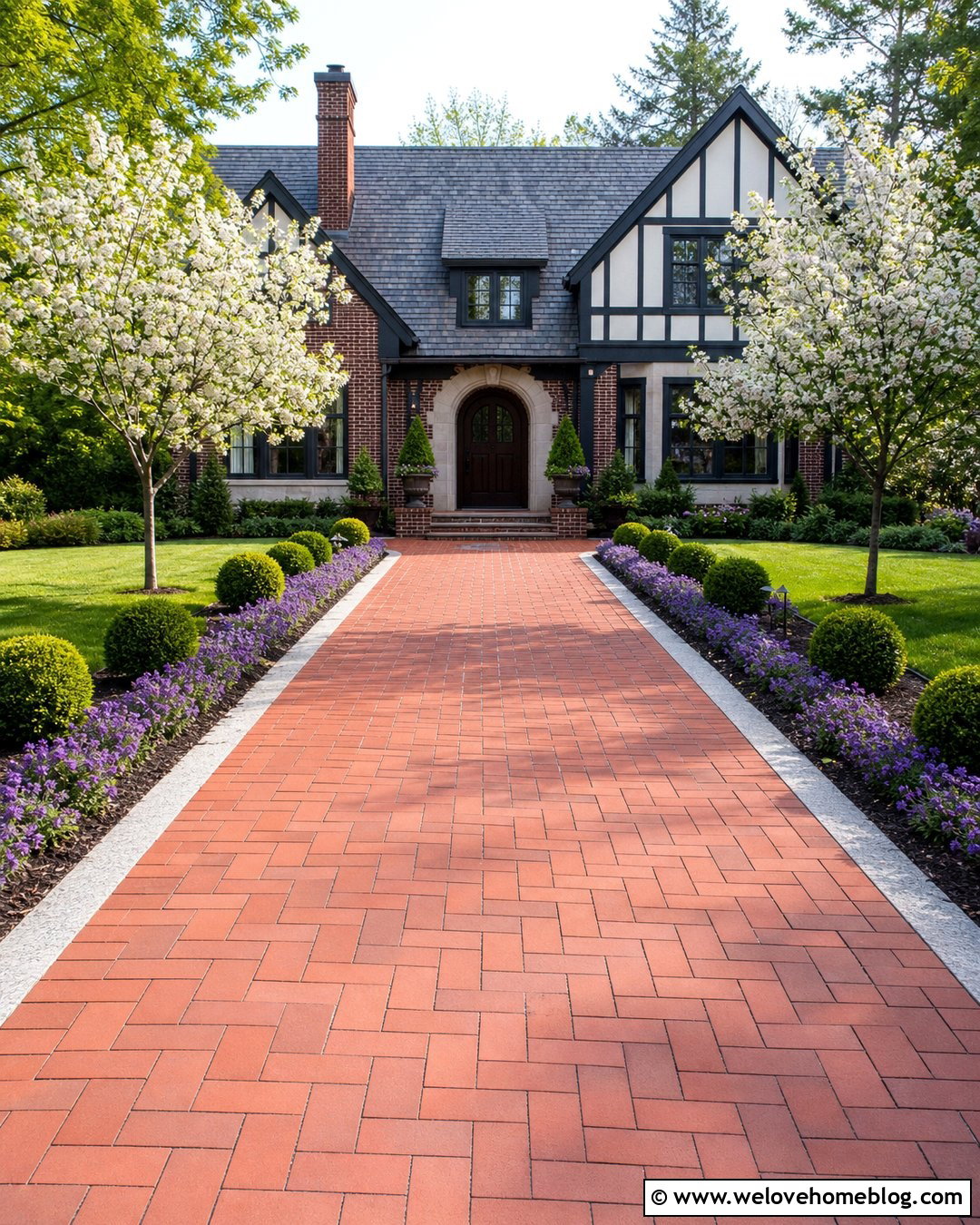
Hardy geranium can soften the straight lines of a clay brick paver driveway. Choose a low, mounding cultivar and plant it behind a flush gray granite border, allowing the foliage to approach the edge without covering the driving surface. Repeat the geranium along both sides for symmetry, or use it only along the wider side where a walkway and planting bed can share space. Boxwood spheres, small flowering trees, and dark mulch can add structure behind the loose flowers. This balanced look works with Tudor, colonial, and craftsman homes. Hardy geraniums are useful ground-covering perennials for borders, and cranesbill geranium appears in recommendations for some salt-exposed beds. Check mature spread carefully, since cultivars differ in size and growth habit. ()
19. Moss Phlox Driveway Edging
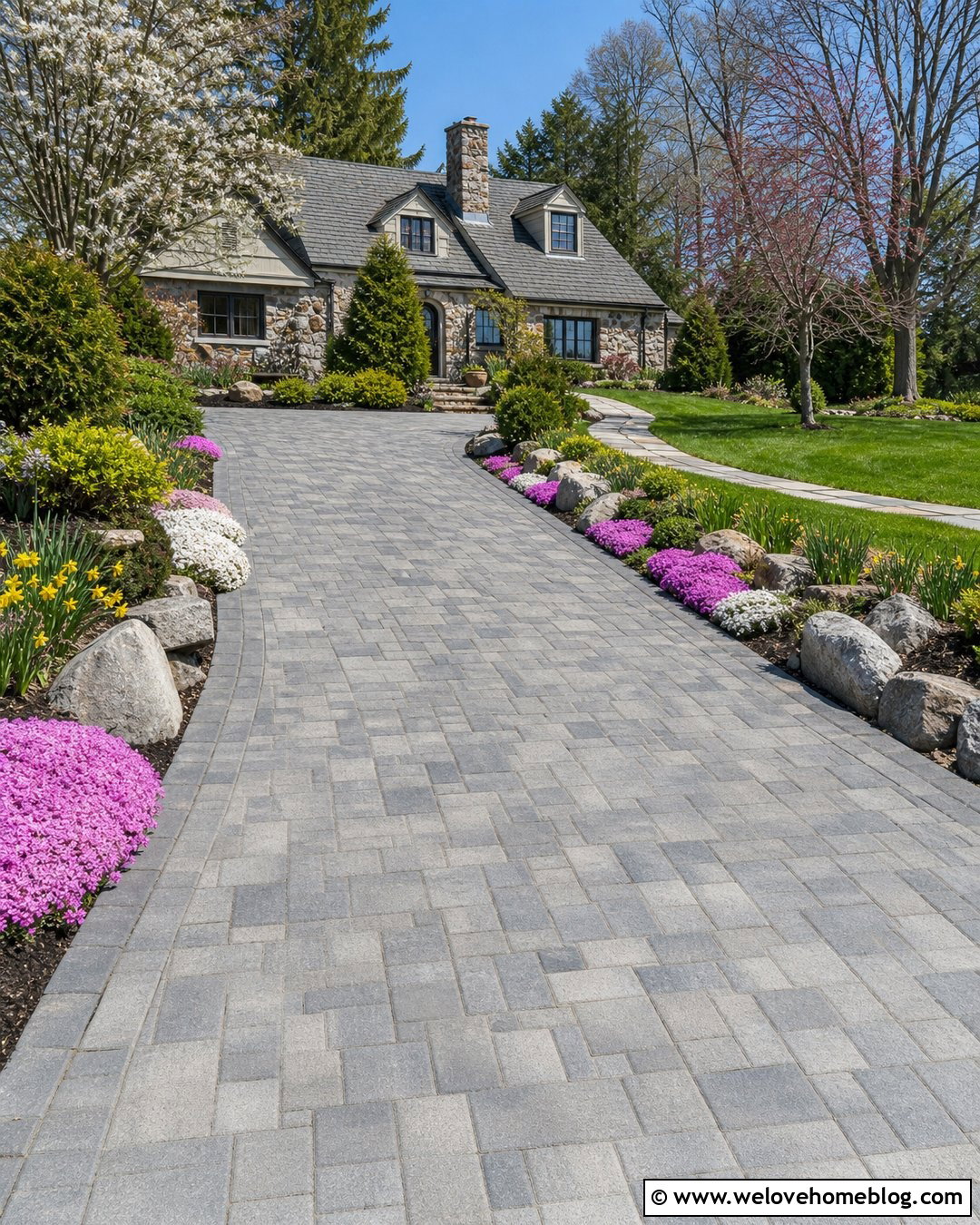
Moss phlox creates a colorful carpet beside a sloped concrete paver driveway. Use medium-gray interlocking pavers with a natural fieldstone edge, then let broad patches of phlox cover the upper side of the stone without spilling across the pavement. Combine several tones within a limited palette, such as white, pale pink, and deep rose. Add evergreen shrubs and spring bulbs higher on the bank to extend seasonal interest. After flowering, the low foliage still provides a neat transition between hardscape and lawn. This design complements stone cottages, split-level homes, and traditional suburban houses. Moss phlox is listed among heat- and drought-tolerant plants, making it a practical candidate for sunny, well-drained driveway slopes. ()
20. Hardy Ice Plant Driveway Edging

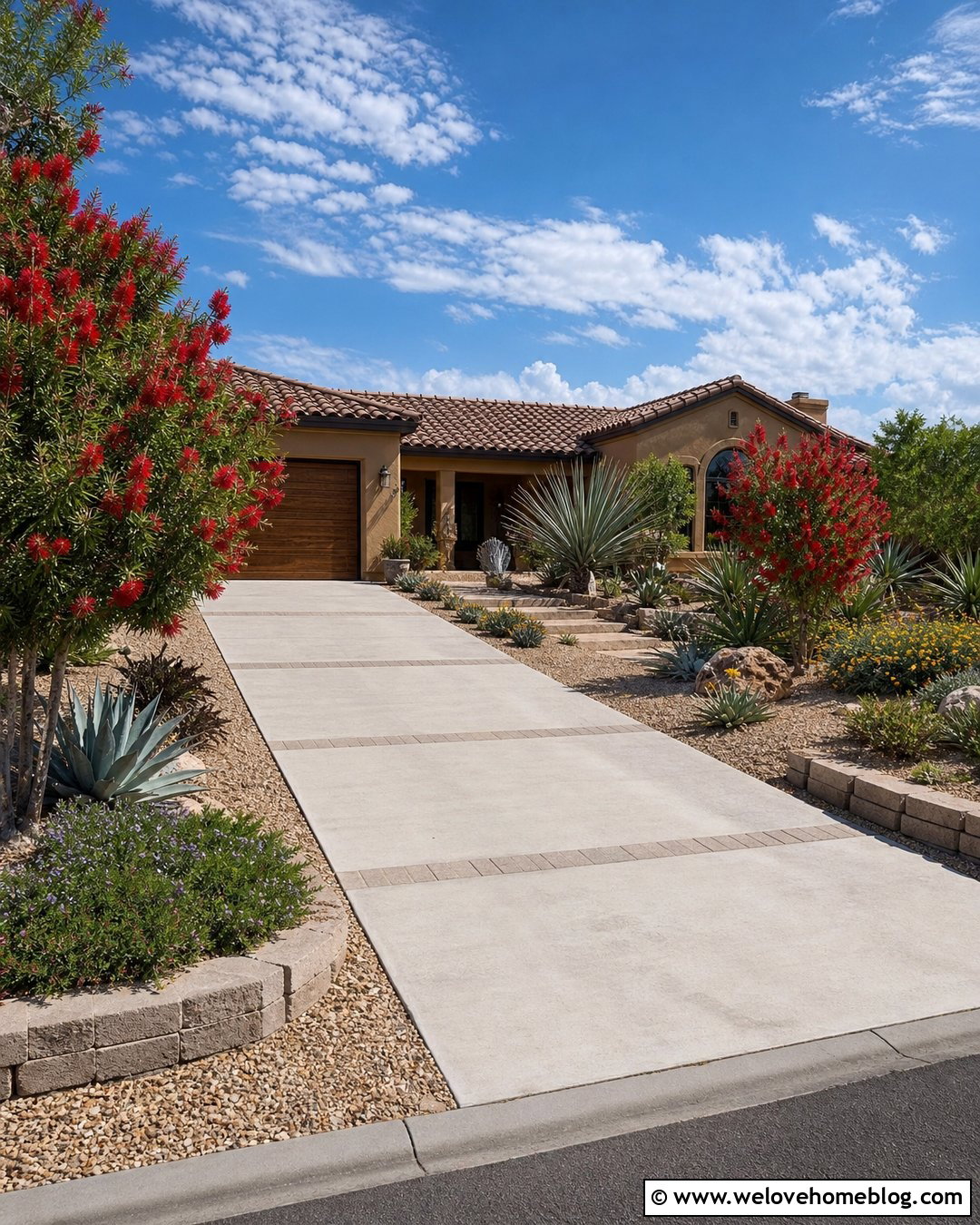
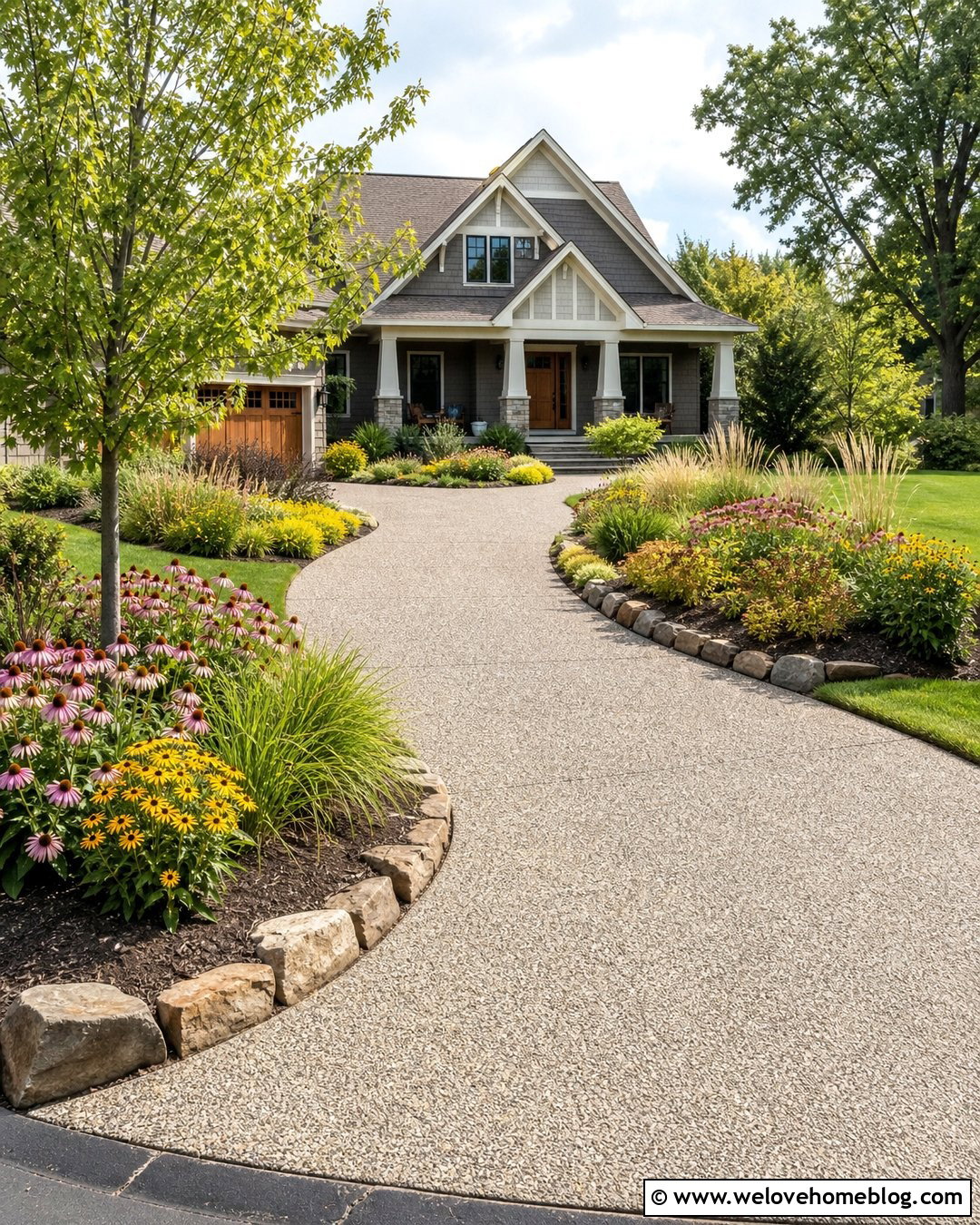
Hardy ice plant can give a sunny driveway edge a vivid, water-wise appearance. Pair a pale resin-bound gravel driveway with a low buff limestone curb, then mass the succulent ground cover in a wide strip beyond it. Use decorative rock mulch, compact agaves or yuccas where locally appropriate, and a few upright grasses to vary the silhouette. The low foliage keeps the driveway visible, while bright flowers create strong contrast against neutral paving. This complete look is suited to contemporary desert homes, Southwestern stucco houses, and hot exposed front yards. Hardy ice plant is included among heat- and drought-tolerant selections, but cold hardiness and moisture tolerance differ among species. Choose a locally suitable type and provide excellent drainage. ()
Conclusion:
The best 20 driveway edging plants ideas combine an attractive plant with the right paving, border, bed width, and home style. Begin by measuring the available space and observing how much sun, shade, runoff, heat, and winter salt the area receives. Then check mature plant height and spread before buying anything. Keep lower plants near sidewalks, street entrances, and tight curves to protect visibility. Place taller flowers and ornamental grasses farther back in wider beds. A physical edge made from brick, stone, steel, or concrete will also keep the overall design cleaner. With thoughtful spacing and repetition, driveway plants can provide color, texture, and a welcoming transition from the curb to the house.

Related posts:
Leave a Reply