
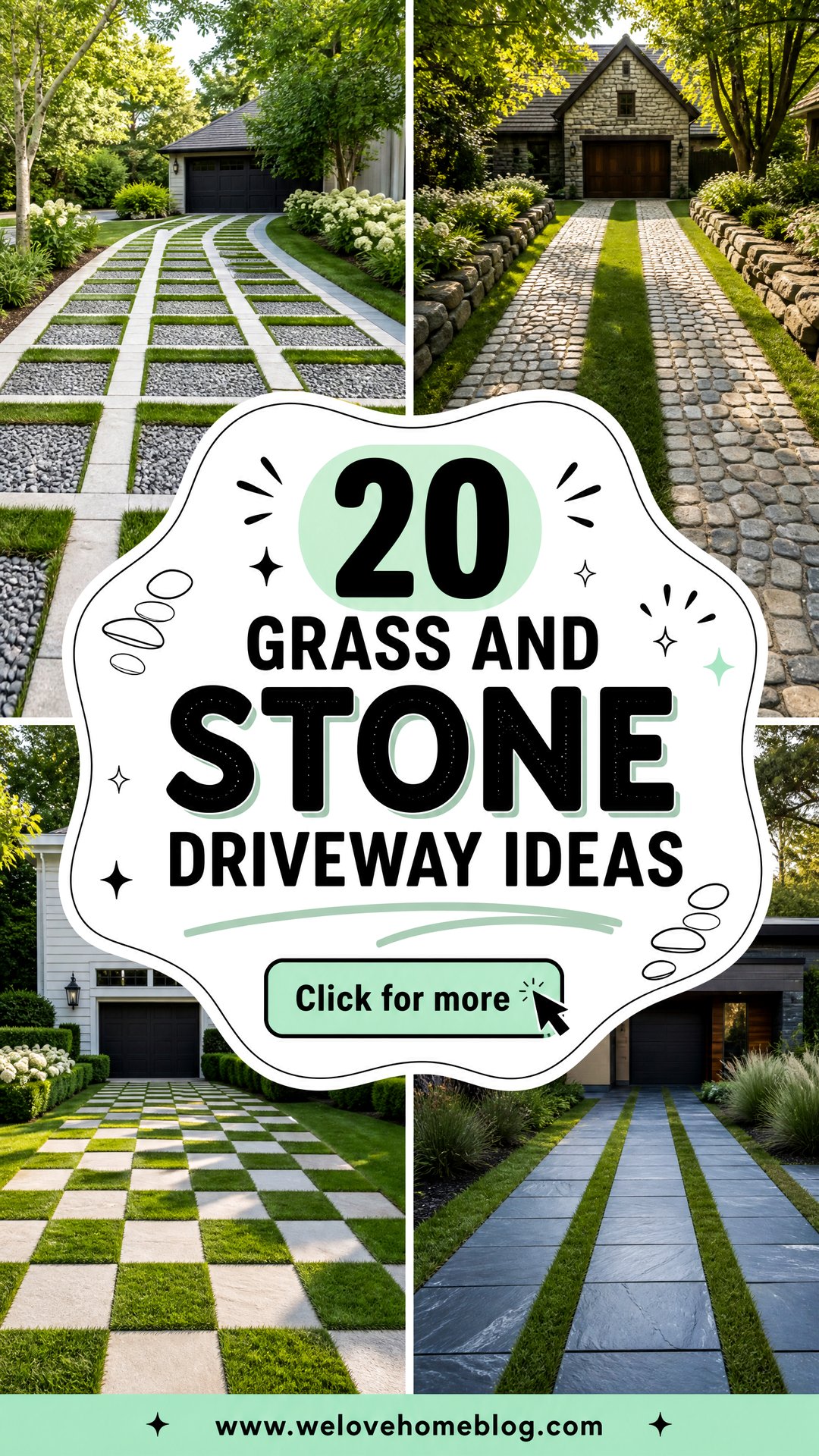
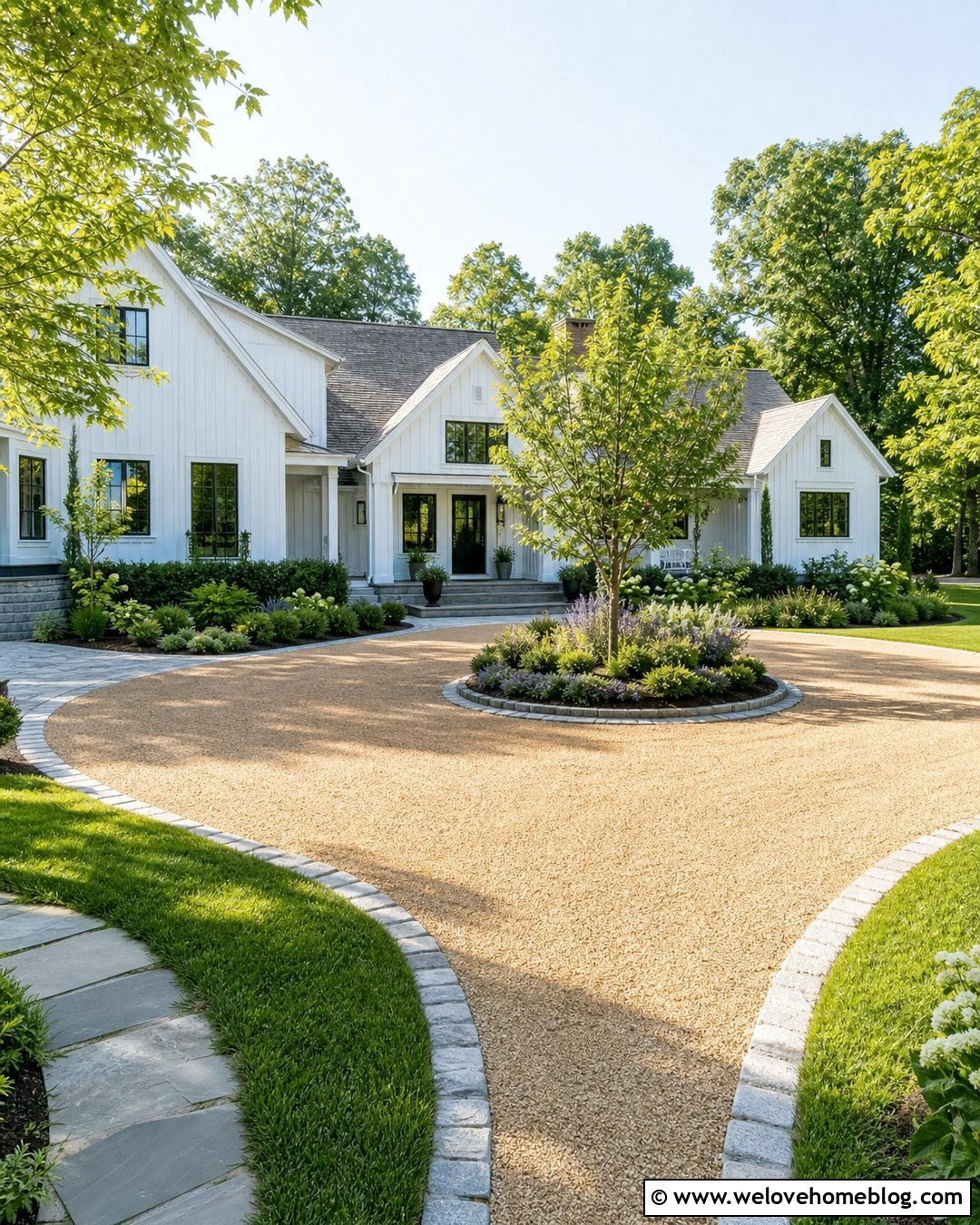
A grass and stone driveway creates a softer, greener entrance without losing the structure needed for daily parking. The best designs treat the driveway as one complete landscape. Stone size, driving pattern, grass spacing, borders, drainage, and surrounding plants should all feel connected. Large slabs can give a modern home clean geometry, while irregular flagstone suits cottages and country properties. Grass wheel tracks work well in relaxed settings, and checkerboard pavers create a bolder architectural look. Before choosing a layout, consider vehicle movement, sunlight, mowing access, local rainfall, and how much upkeep fits your routine. The following complete designs combine practical layouts with attractive materials and landscaping, offering 20 grass and stone driveway ideas for different homes, yards, and budgets.
1. Modern Grass And Bluestone Driveway
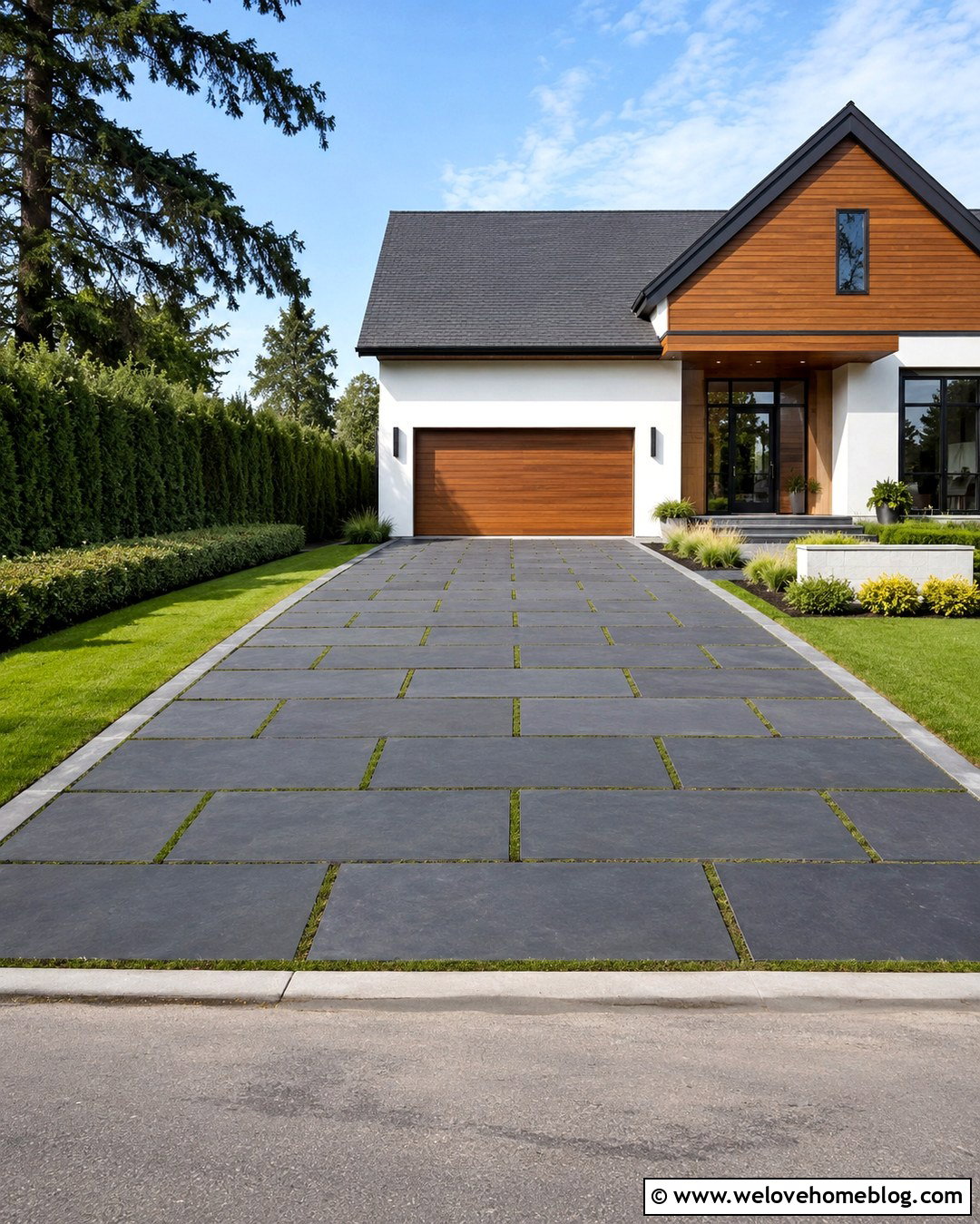
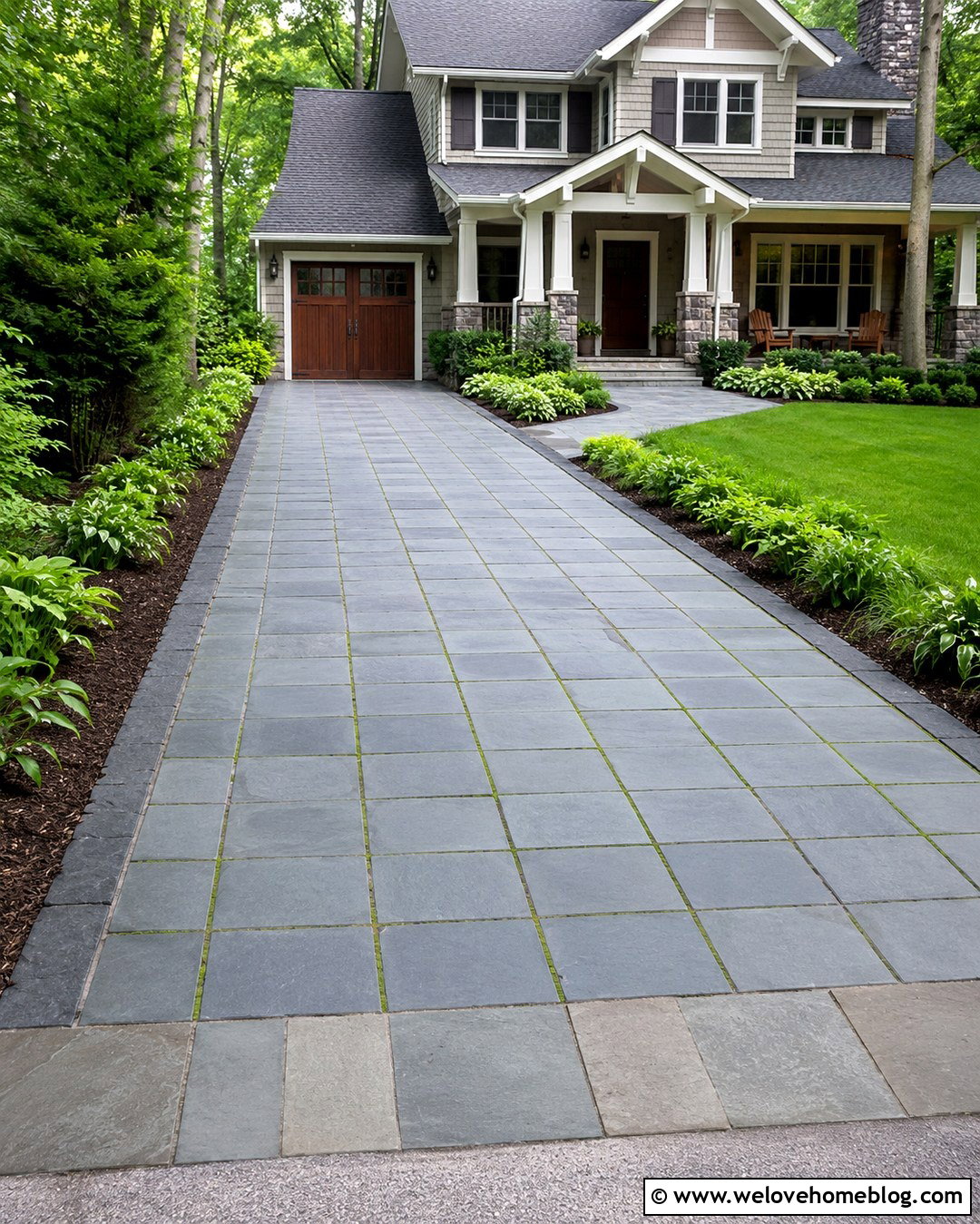
Large rectangular bluestone slabs separated by narrow grass joints create a clean driveway for a modern home. Arrange the stones in straight rows that align with the garage doors and main entrance. Keeping every joint the same width gives the surface a precise, uncluttered appearance. Dark gray bluestone works especially well with white stucco, pale brick, or warm wood siding. Continue the grass from the joints into the surrounding lawn so the driveway appears woven into the yard. Low planting beds filled with ornamental grasses and compact evergreen shrubs can frame the edges without hiding the pattern. Use a strong, properly compacted base beneath the slabs and choose grass suited to your sunlight and climate. Flush installation makes mowing easier and reduces awkward raised edges.
2. Flagstone And Grass Cottage Driveway
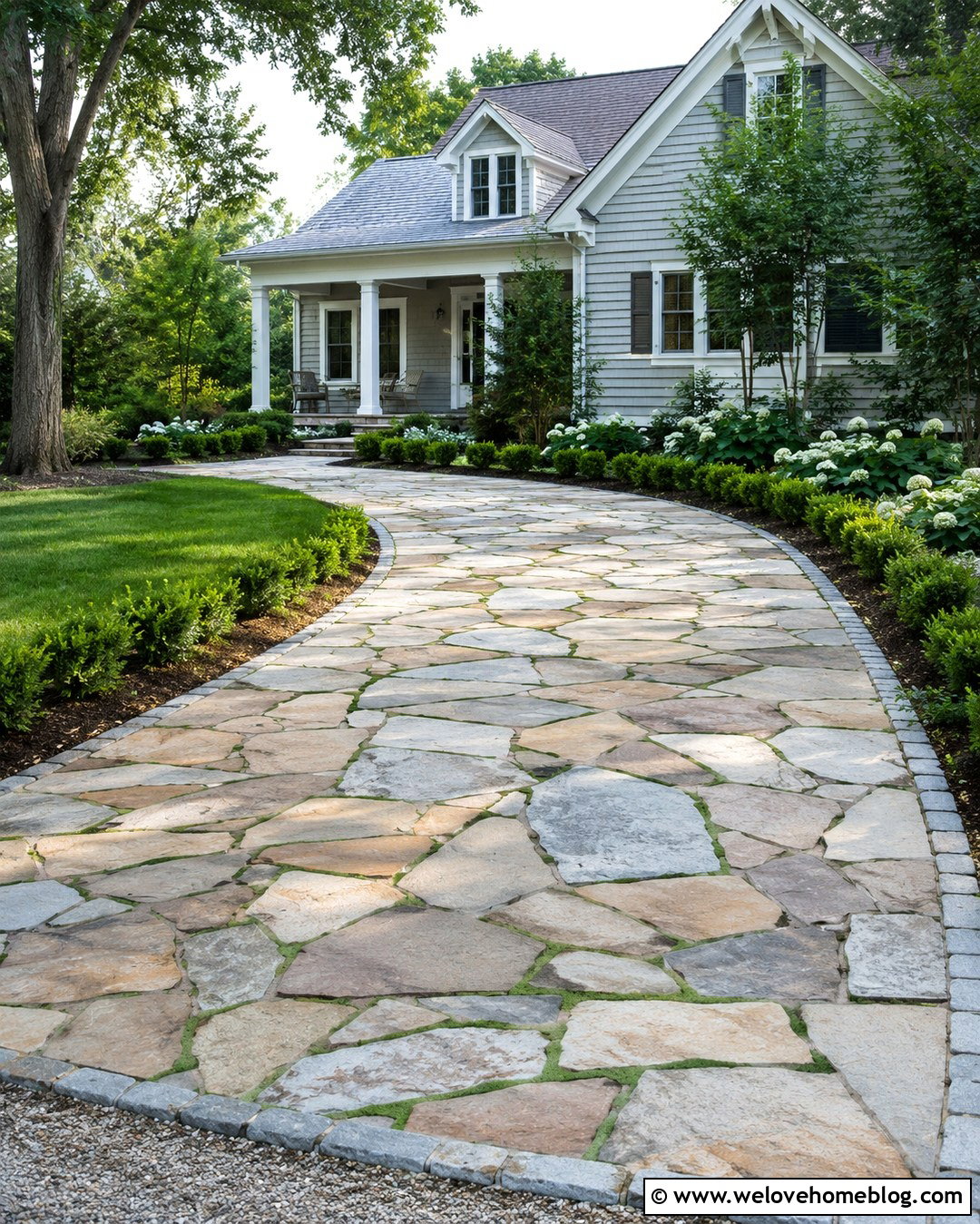
Irregular flagstone set into a green lawn gives a cottage driveway a relaxed, established character. Choose broad, relatively flat stones rather than small pieces that could shift under vehicle tires. Warm brown, gray, and muted tan tones complement painted siding, natural wood, and traditional brick. Follow a gently curved route toward the garage instead of forcing the stones into perfectly straight lines. Grass-filled joints can vary slightly in width, helping the layout appear natural while remaining organized. Frame the entrance with flowering shrubs, clipped boxwoods, and a simple stone walkway leading to the front door. A narrow band of compacted gravel beneath the stone edges can create a neat transition. Keep vigorous plants away from driving lanes so the driveway remains visible, usable, and easy to maintain.
3. Grass Grid And Crushed Stone Driveway
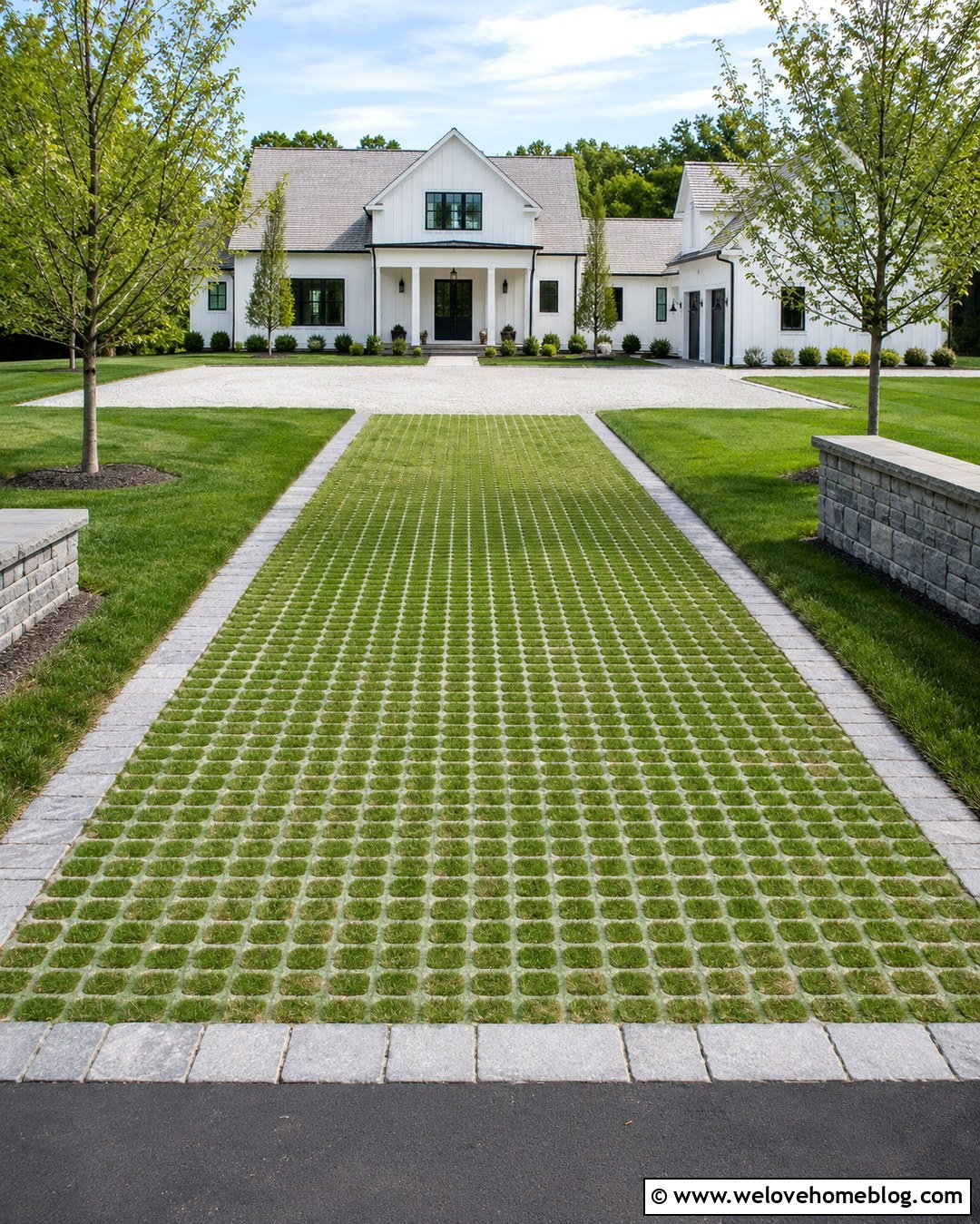
A reinforced grass grid filled with turf can form the main driving surface, while compacted crushed stone defines the edges and entrance. This combination is useful when you want the driveway to visually merge with a large front lawn. Select a grid system designed for vehicle traffic and install it over a carefully prepared aggregate base. Medium-gray crushed granite makes a practical border because its angular texture looks crisp beside green grass. Carry the stone into a wider parking apron near the garage, where tires turn more frequently. A straight layout suits a modern farmhouse, especially when paired with white siding, black lighting, and simple foundation planting. Add evenly spaced trees along the approach, but leave comfortable clearance for vehicles. Regular mowing keeps the grid pattern tidy and prevents the driveway from disappearing into the lawn.
4. Cobblestone Wheel Track Driveway
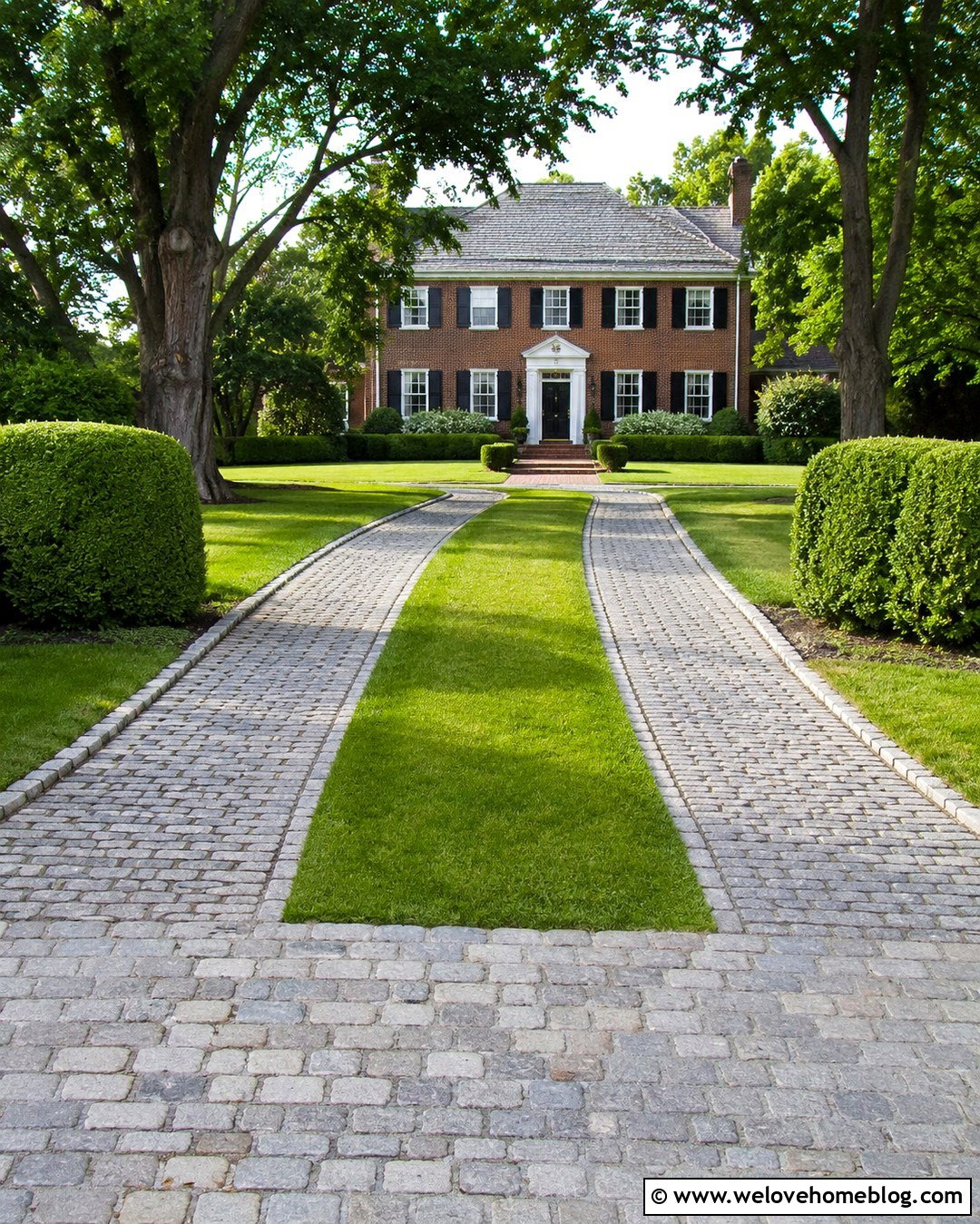
Two cobblestone wheel tracks with a grass strip between them create a classic driveway with less visible hardscape. Traditional granite setts in mixed gray tones provide a durable-looking route while the central lawn keeps the entrance green. Measure the wheel tracks around the vehicles that commonly use the property, allowing extra room for comfortable alignment. Continue the cobblestone across the entrance as a full-width apron so the transition from the street feels finished. This layout pairs naturally with a Colonial or Georgian-style house, clipped hedges, brick walkways, and symmetrical planting beds. Use matching cobblestone edging to hold the outer sides in place. The center grass should sit nearly level with the stone for convenient mowing. A gentle curve can soften the formal layout without making vehicle access difficult.
5. Limestone Slab And Grass Driveway
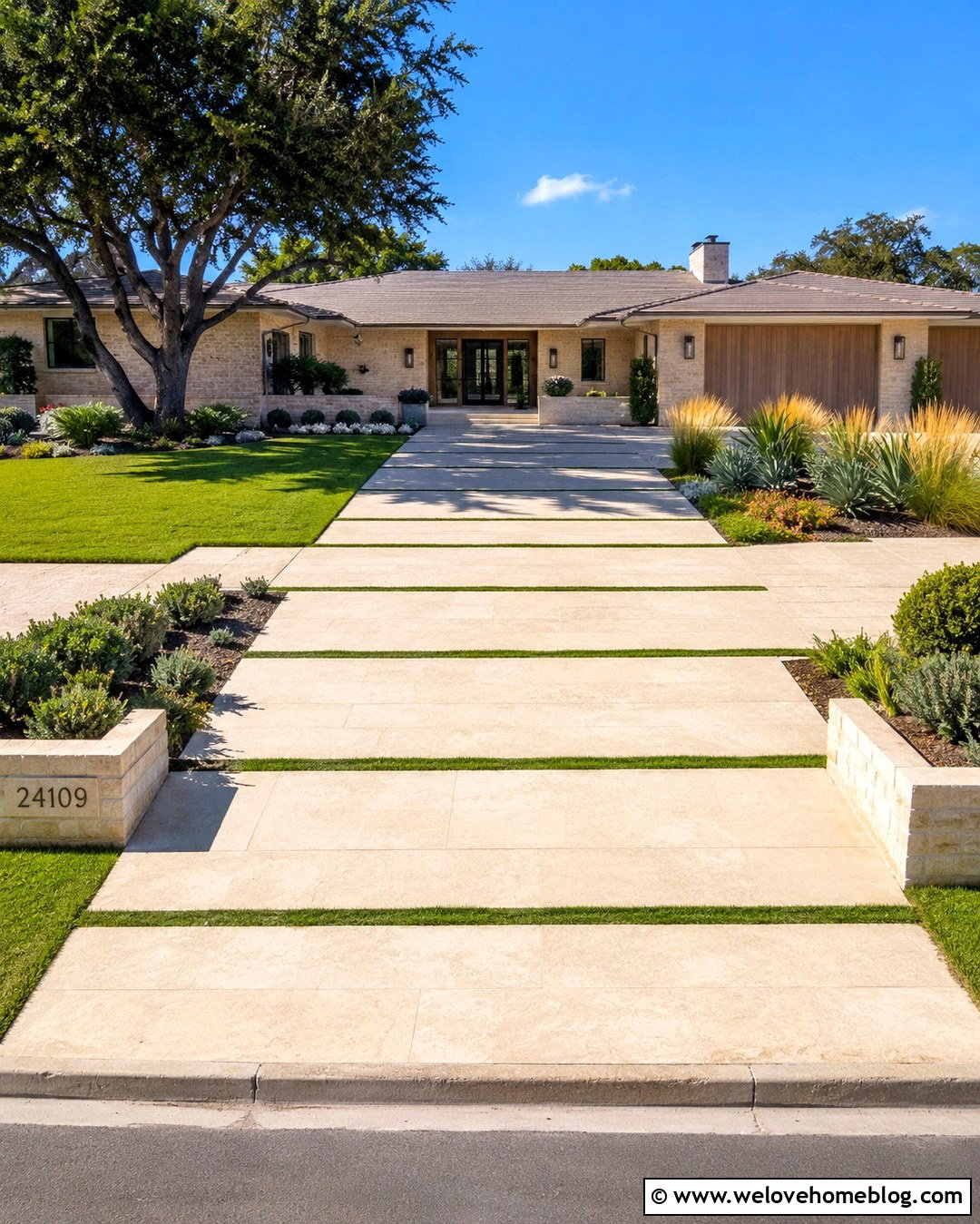
Pale limestone slabs and fresh green joints can brighten the approach to a low ranch home. Use long rectangular stones laid in horizontal bands, with slim grass strips breaking up the broad surface. Cream, buff, or light gray limestone coordinates well with beige stucco, light brick, and natural timber details. A straight driveway keeps the design practical, while a slightly wider landing near the garage provides space for turning and parking. Border the surface with matching limestone blocks installed flush with the lawn. Drought-tolerant shrubs, ornamental grasses, and a few sculptural plants can add texture without crowding the clean pattern. Because natural limestone finishes vary, select a texture appropriate for exterior vehicle use. Good joint alignment and consistent spacing will make this simple combination look intentional rather than unfinished.
6. Checkerboard Grass And Stone Driveway
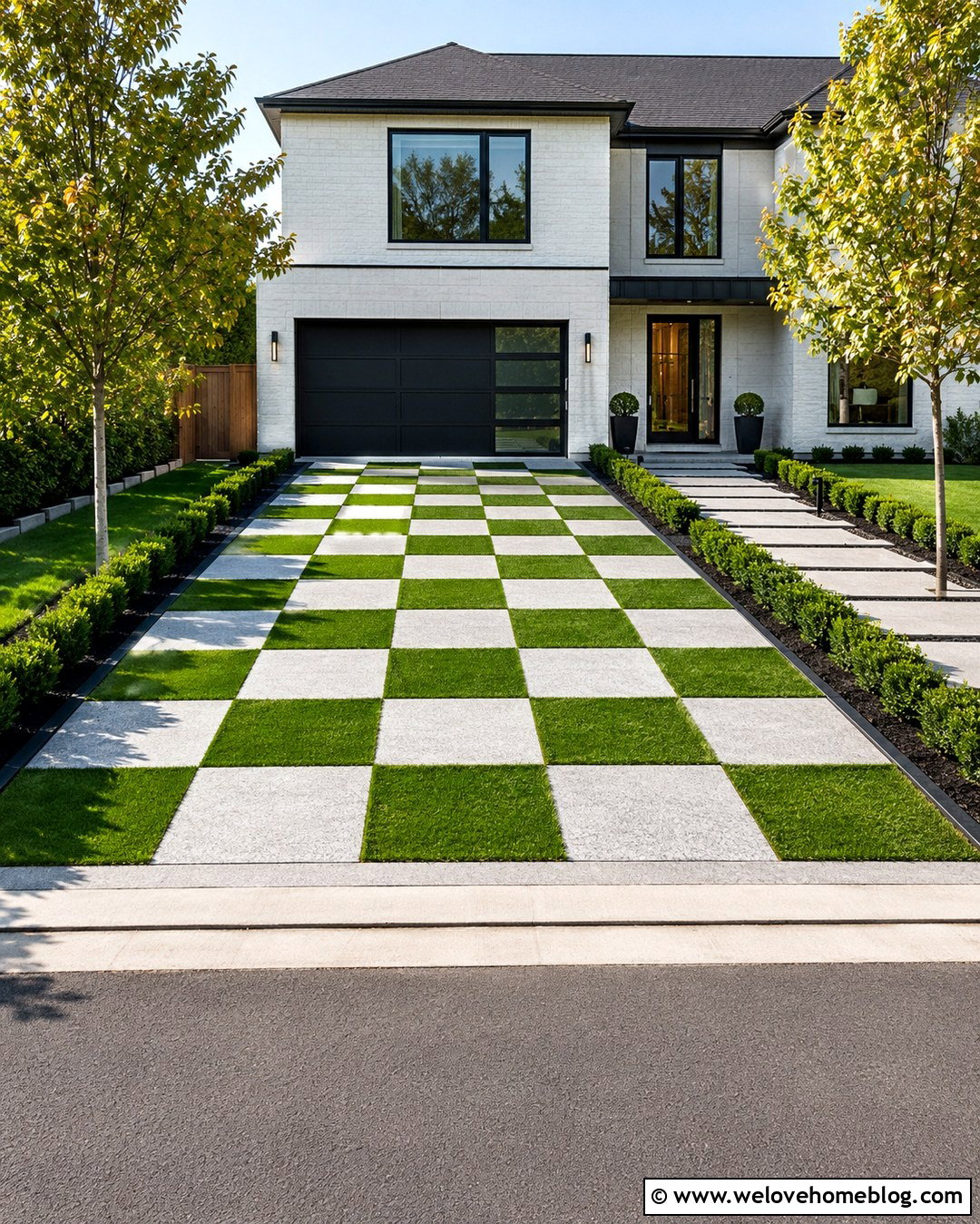
A checkerboard driveway alternates square stone pavers with blocks of grass for a bold, graphic finish. Large gray granite or limestone squares work best because they make the pattern easy to read from the curb. Keep the grid straight and align it with the architecture of a contemporary house. The strongest version uses consistent square dimensions across the driving area, parking apron, and connecting walkway. A restrained planting scheme prevents the frontage from becoming visually busy. Try clipped hedges, low evergreen mounds, and one or two small ornamental trees. Dark metal edging can create a clean boundary between the patterned driveway and planting beds. Choose a low-growing turf that handles your site conditions and routine maintenance. Keeping stones and planted squares level helps create a smoother surface and makes trimming noticeably simpler.
7. Curved Fieldstone And Grass Driveway
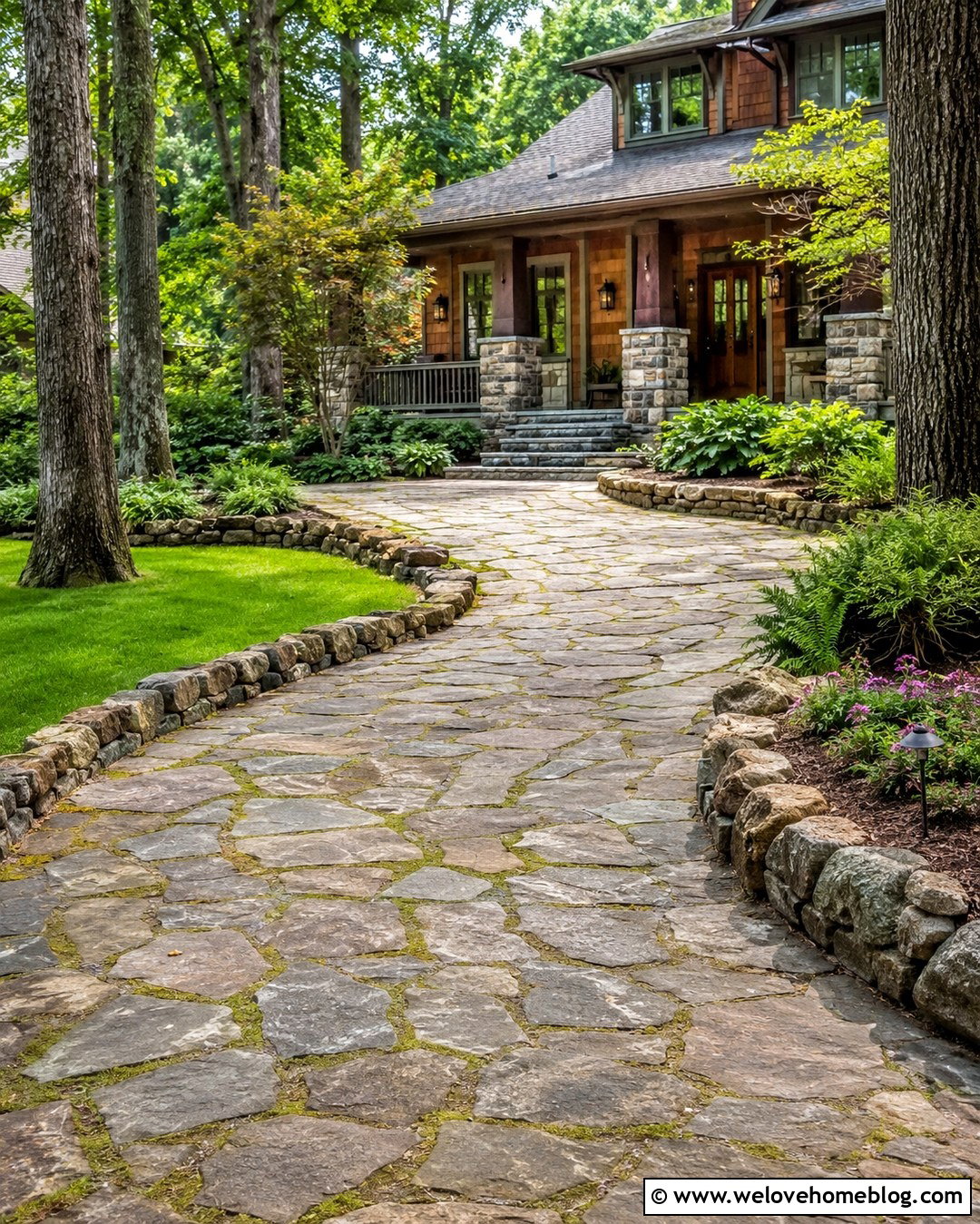
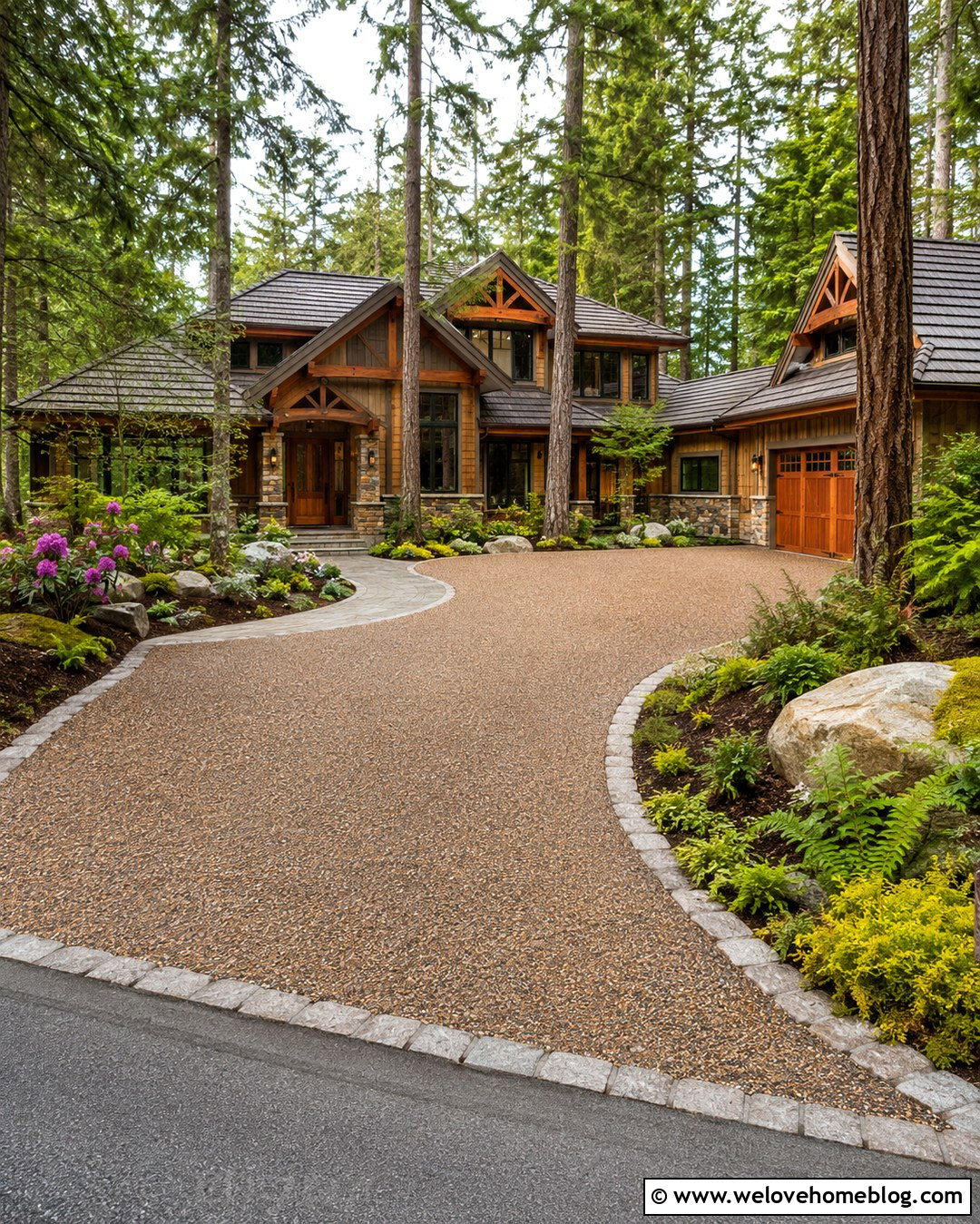
Soft curves make a fieldstone and grass driveway feel naturally connected to a wooded or craftsman-style property. Lay large, irregular fieldstone pieces along a broad arc leading toward the garage. Fill the spaces with durable turf, keeping the joints wide enough to soften the surface but narrow enough to maintain dependable tire contact. Use stone colors found elsewhere on the home, such as foundation walls, porch columns, or a front walkway. Native shrubs, ferns, flowering perennials, and shade-tolerant ground covers can frame the curve. A low fieldstone border adds definition where the driveway meets planting beds. Avoid placing large rocks near the inner turning area, since drivers need clear visual and physical space. The finished layout should look informal from the street while following a carefully planned, easy-to-navigate route.
8. Circular Grass And Granite Driveway
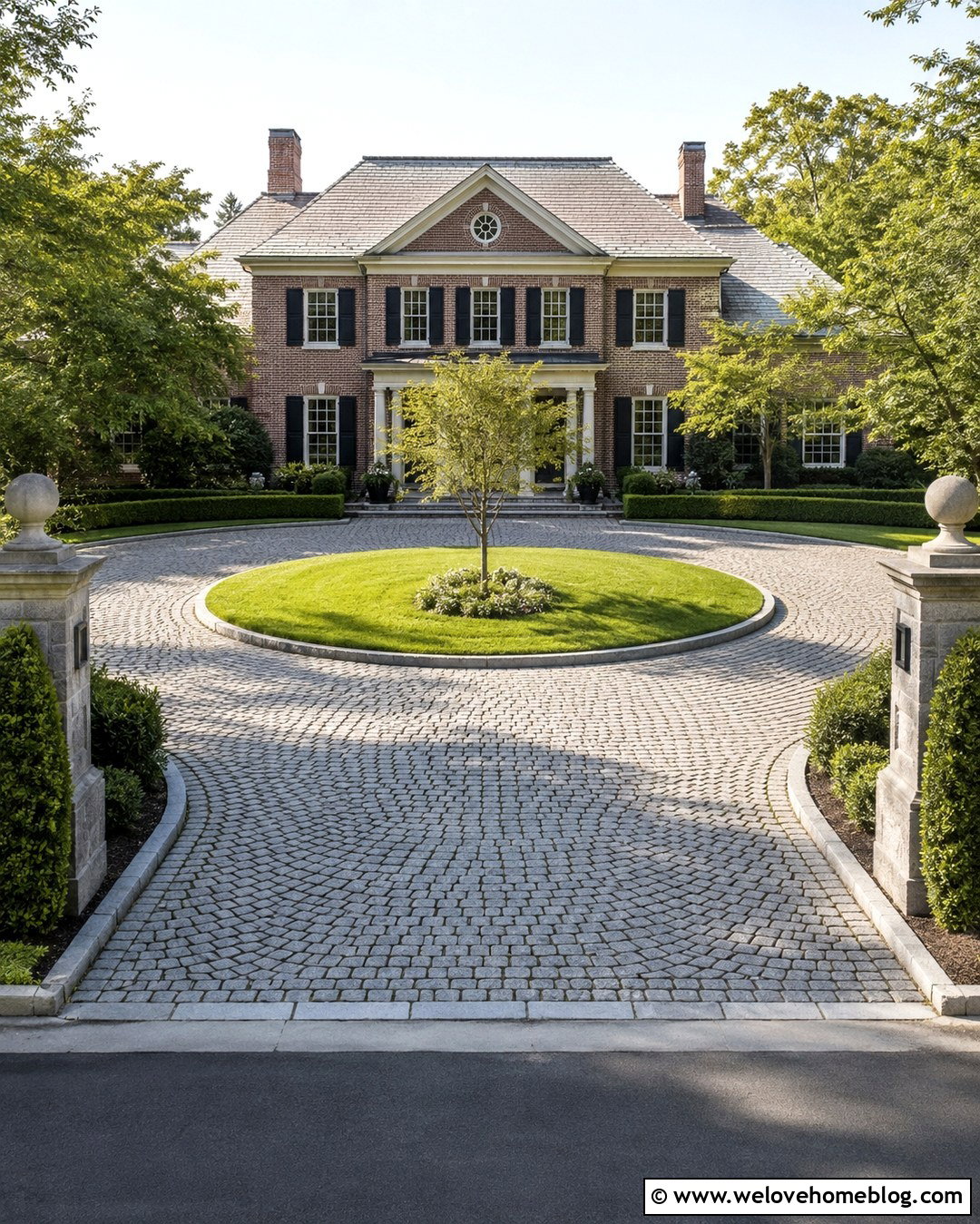
A circular driveway can combine granite paving with a planted center island for an elegant but welcoming entrance. Use gray granite setts for the primary driving loop, then introduce thin grass joints or wider turf bands around the outer edge. The central island may contain a manicured lawn, a small ornamental tree, and low shrubs that preserve sightlines. Matching granite curbing gives the circle a defined shape and protects nearby planting beds from tires. This design works particularly well with traditional brick, stone, or stucco homes set back from the road. Make the entrance and exit openings visually balanced, using stone pillars or low hedges as markers. Plan generous turning space before selecting the island size. A simple planting palette keeps the driveway functional and allows the stone pattern to remain the main architectural feature.
9. Gravel And Grass Ribbon Driveway
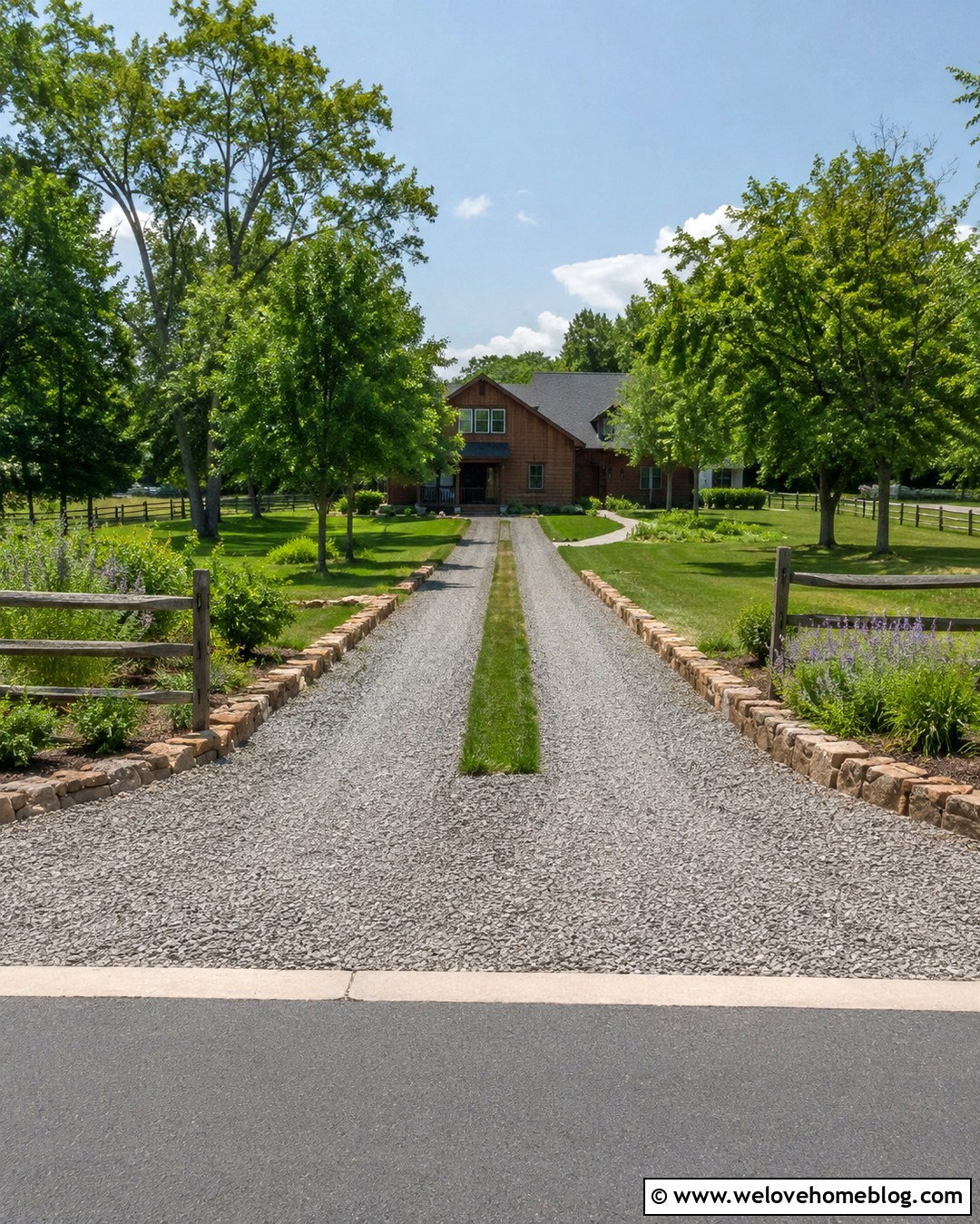
A compacted gravel driveway becomes greener and more structured when grass ribbons divide the driving lanes. Start with two broad strips of angular gray gravel positioned beneath the vehicle tires. Add a central grass strip and narrow green margins beside the driveway, then contain the gravel with sturdy stone curbing. The result feels relaxed enough for a country home while remaining clearly organized. Near the garage, convert the separate tracks into a full-width gravel parking apron to handle turning movements. Native trees, split-rail fencing, and loose perennial beds can frame the long approach. Use gravel intended for driveways rather than smooth decorative pebbles that move easily. Keeping the surface properly graded and the borders slightly restrained helps the tracks hold their shape. Mow the center ribbon at the same height as the adjoining lawn.
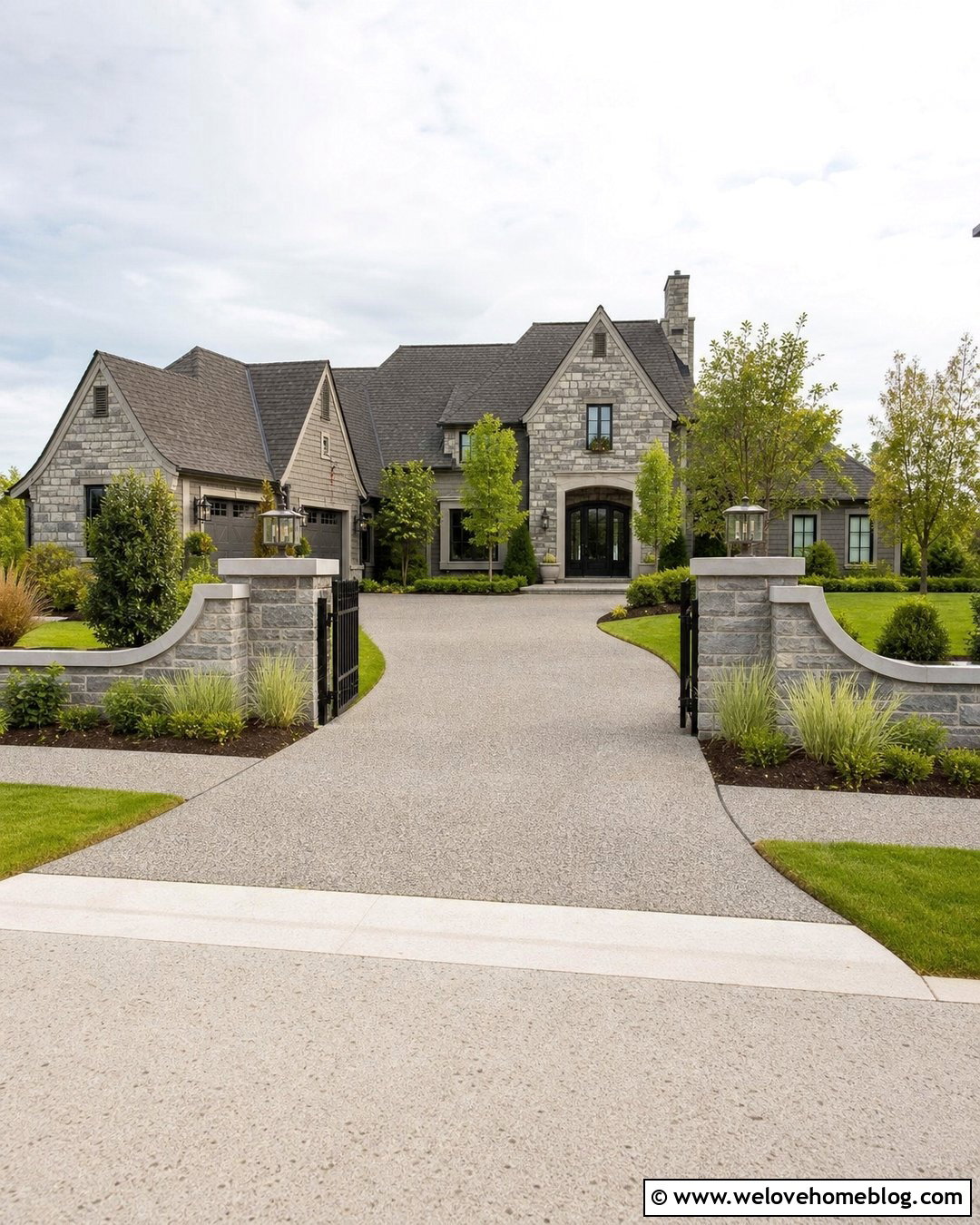
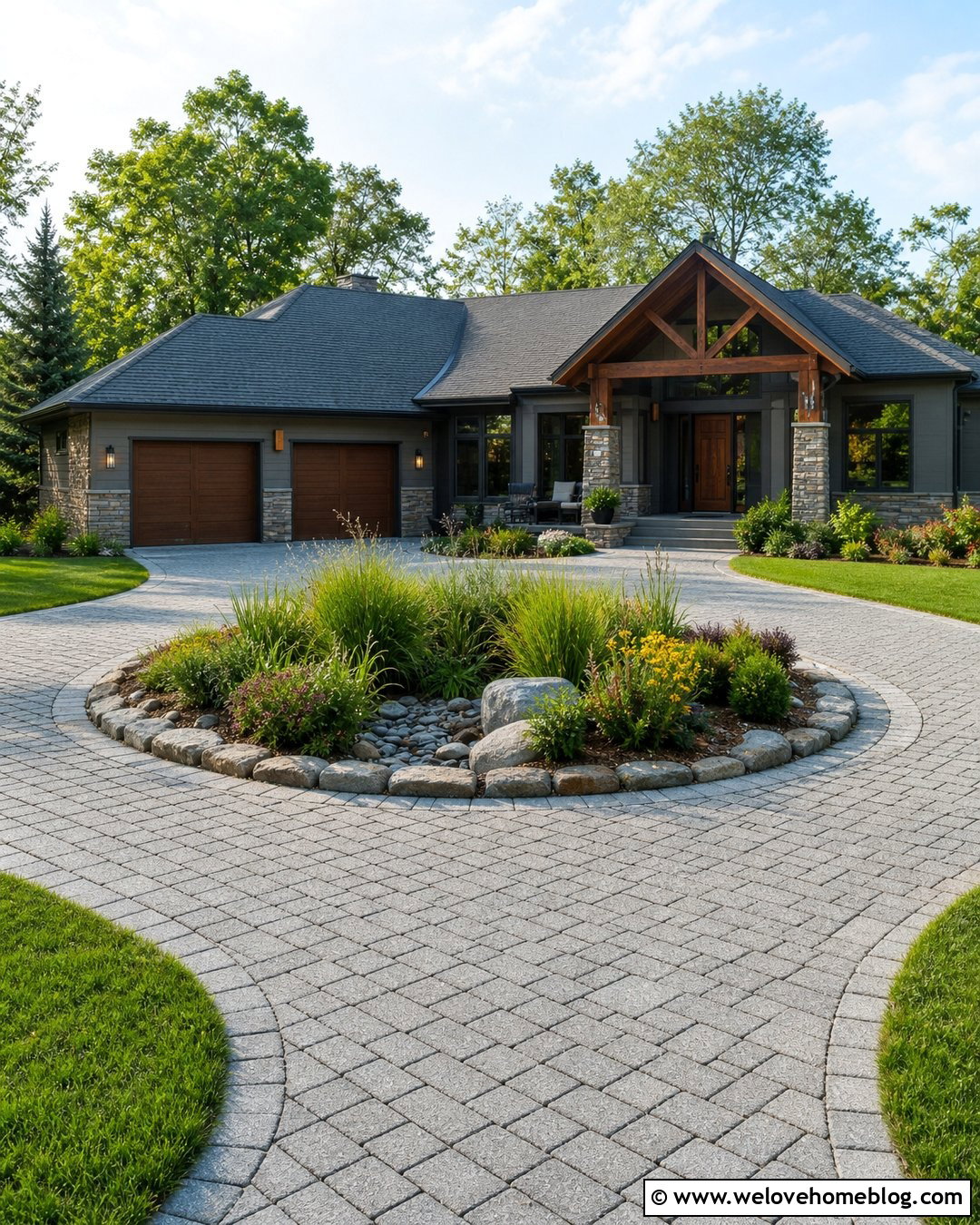
10. Stepping Stone Grass Driveway
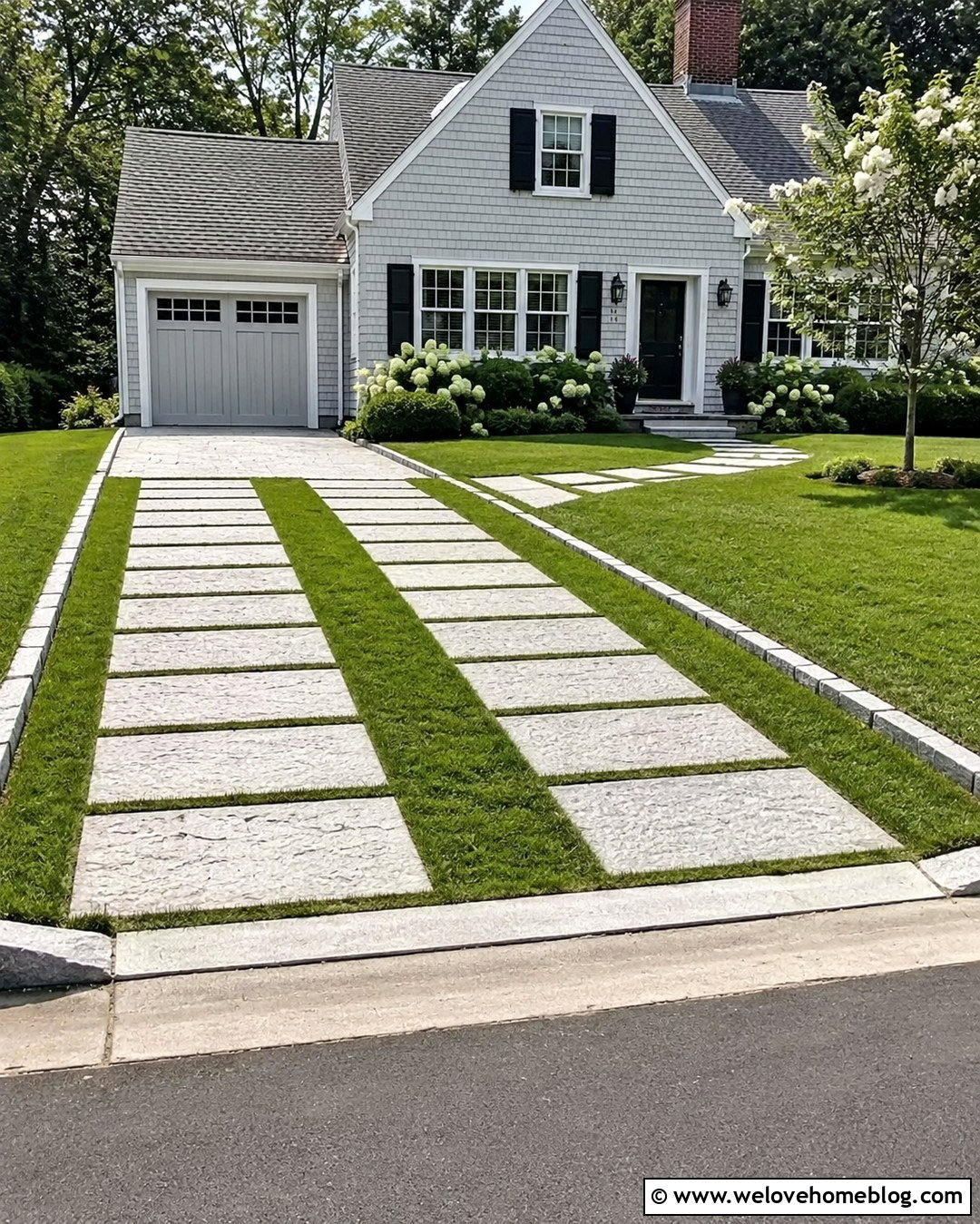
Oversized stepping stones placed beneath the main wheel paths create a minimal driveway that leaves much of the lawn visible. Choose thick rectangular granite or concrete-stone pavers with a textured finish and place them at consistent intervals. Two parallel rows should guide vehicles from the curb to a wider paved area near the garage. This layout looks especially suitable beside a compact Cape Cod or small suburban home where a full expanse of paving might overwhelm the yard. Connect the driveway to the entrance with a matching stepping-stone walkway. Low hydrangeas, foundation shrubs, and tidy lawn borders can complete the frontage. Careful measurement is essential because tires need reliable contact with the stones. Set each unit over a stable base and keep its surface flush with the surrounding grass for easier maintenance.
11. Sandstone And Clover Driveway
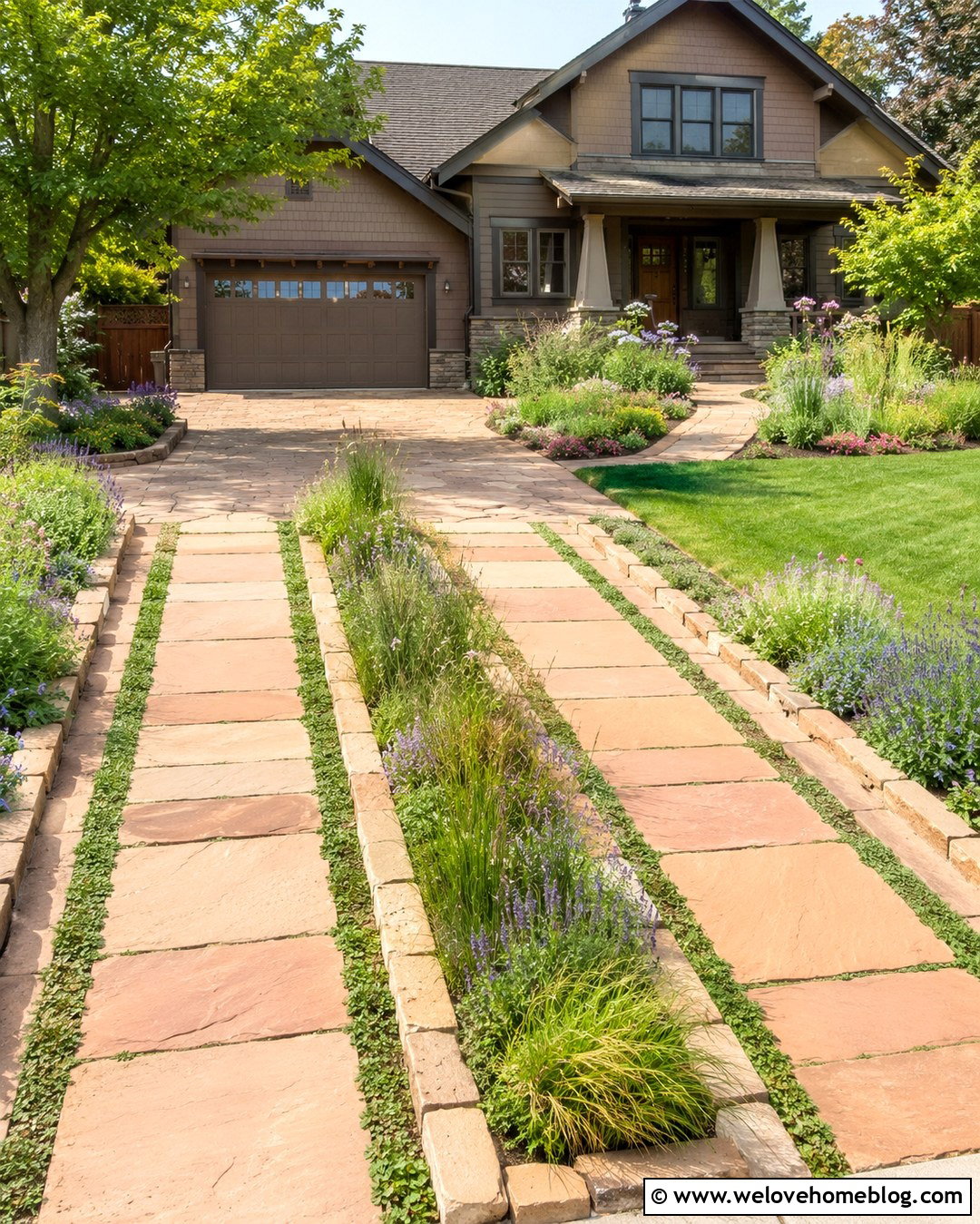
Warm sandstone paired with low-growing clover gives a grass and stone driveway a softer, meadow-inspired appearance. Choose square or rectangular sandstone pavers in tan, buff, and muted rose tones. Arrange them in straight wheel tracks with planted joints and a wider green strip through the center. Clover can visually blend with surrounding turf, but the best ground cover depends on local weather, sunlight, traffic, and maintenance preferences. A craftsman bungalow with warm wood trim makes a natural backdrop for this material palette. Border the driveway with sandstone blocks and loose beds of salvia, catmint, and compact ornamental grasses. A coordinating sandstone walkway can curve toward the porch. Keep planting away from frequent tire-turning zones, and use a solid paved apron near the garage to protect the most heavily used part of the layout.
12. Slate And Grass Strip Driveway
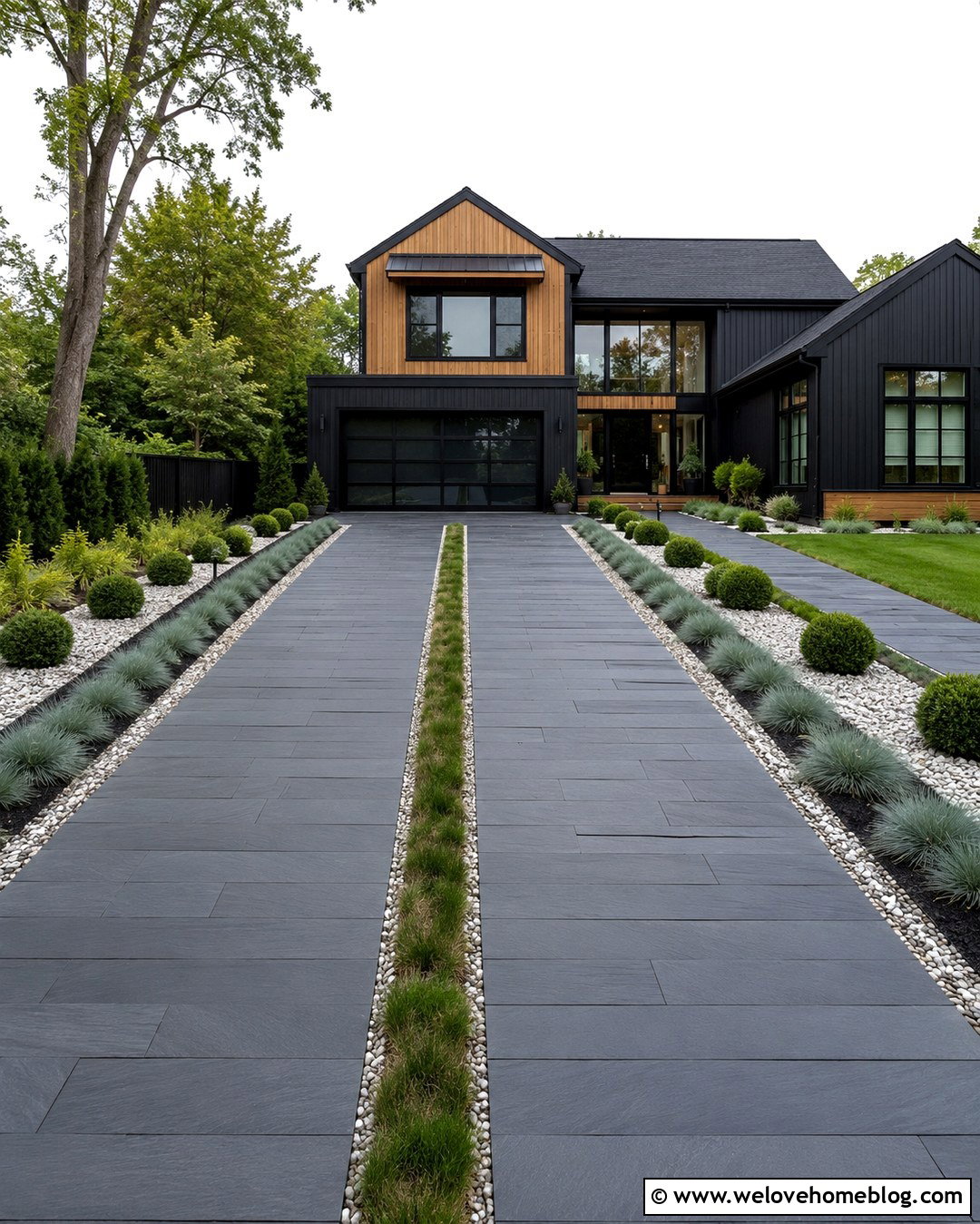
Dark slate strips cutting through green grass create a dramatic entrance for a contemporary house. Use long slate-colored stone pavers in two wide driving lanes, then continue narrow bands across the driveway to form a subtle linear pattern. The deep charcoal surface can echo black window frames, dark siding, or a metal roof. Install crisp steel or stone edging along the sides to prevent planting beds from spreading into the driving area. Blue fescue, evergreen shrubs, and light-colored decorative gravel provide contrast without making the landscape feel crowded. A straight driveway strengthens the modern geometry, particularly when it aligns with a single wide garage door. Select exterior stone with a surface texture suitable for wet conditions. Keeping the surrounding lawn neatly cut will sharpen the contrast between the dark paving and bright green joints.
13. River Stone Border Grass Driveway
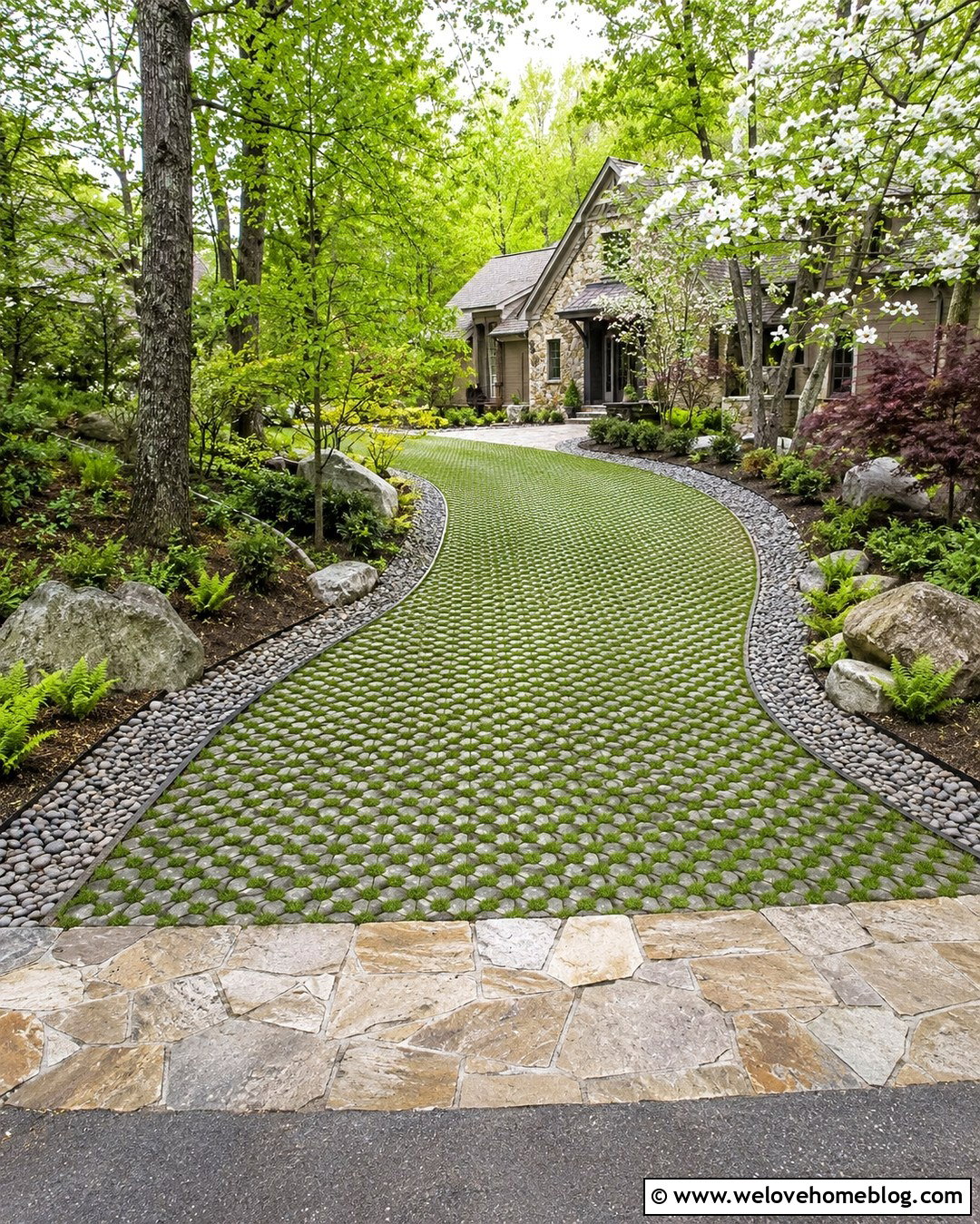
A grass paver driveway framed by smooth river stone offers an organic look for a casual suburban or woodland home. The driving surface can use open concrete-grid pavers planted with turf, creating dependable geometric structure beneath the greenery. Along both sides, add broad beds of mixed gray and tan river stone to manage the visual transition into the yard. Contain those rounded stones with discreet metal edging so they do not migrate onto the driveway. Repeat several larger boulders within nearby planting beds for a coordinated landscape. Ferns, sedges, low shrubs, and small flowering trees can soften the boundaries. Use a full-width natural stone apron at the road and garage to visually anchor the grass section. The combination should feel layered and natural while leaving the driving route clearly recognizable from the curb.
14. Stone Paver Driveway With Grass Median
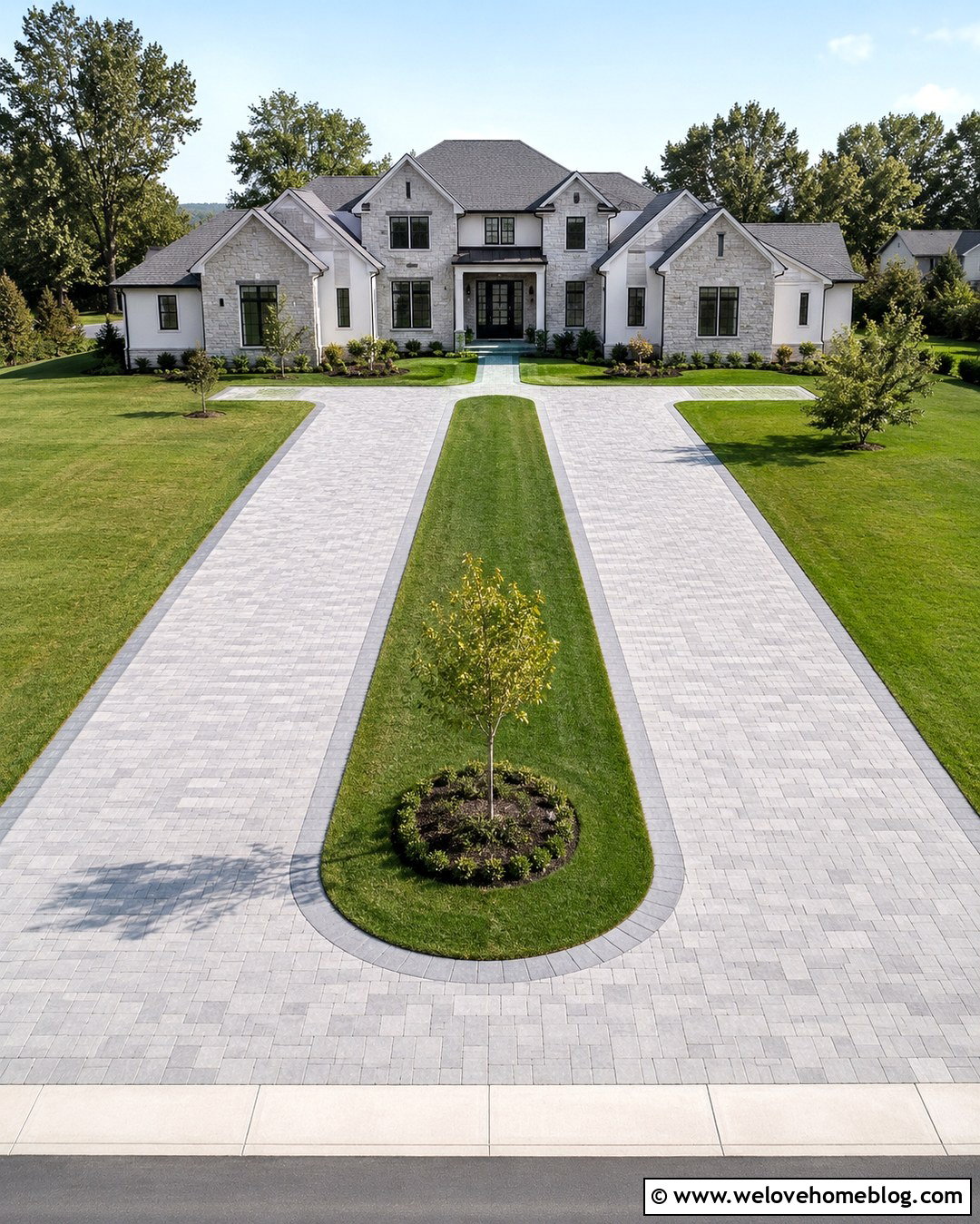
A wide driveway can feel less imposing when a long grass median separates two stone-paved lanes. Use rectangular concrete-stone pavers in a soft gray or taupe blend, laying them in a running-bond pattern for a calm appearance. The central median should be broad enough to look purposeful and simple enough to mow. Shape its end into a rounded point near the street, then finish it with a small ornamental tree or low planting that does not block visibility. Matching paver borders can define the outside edges and connect the driveway to the front walkway. This layout suits a large ranch, farmhouse, or transitional home with a generous setback. Repeat the median’s grass in broad side lawns, and use restrained foundation beds to keep the overall frontage balanced, open, and easy to navigate.
15. White Limestone And Native Grass Driveway
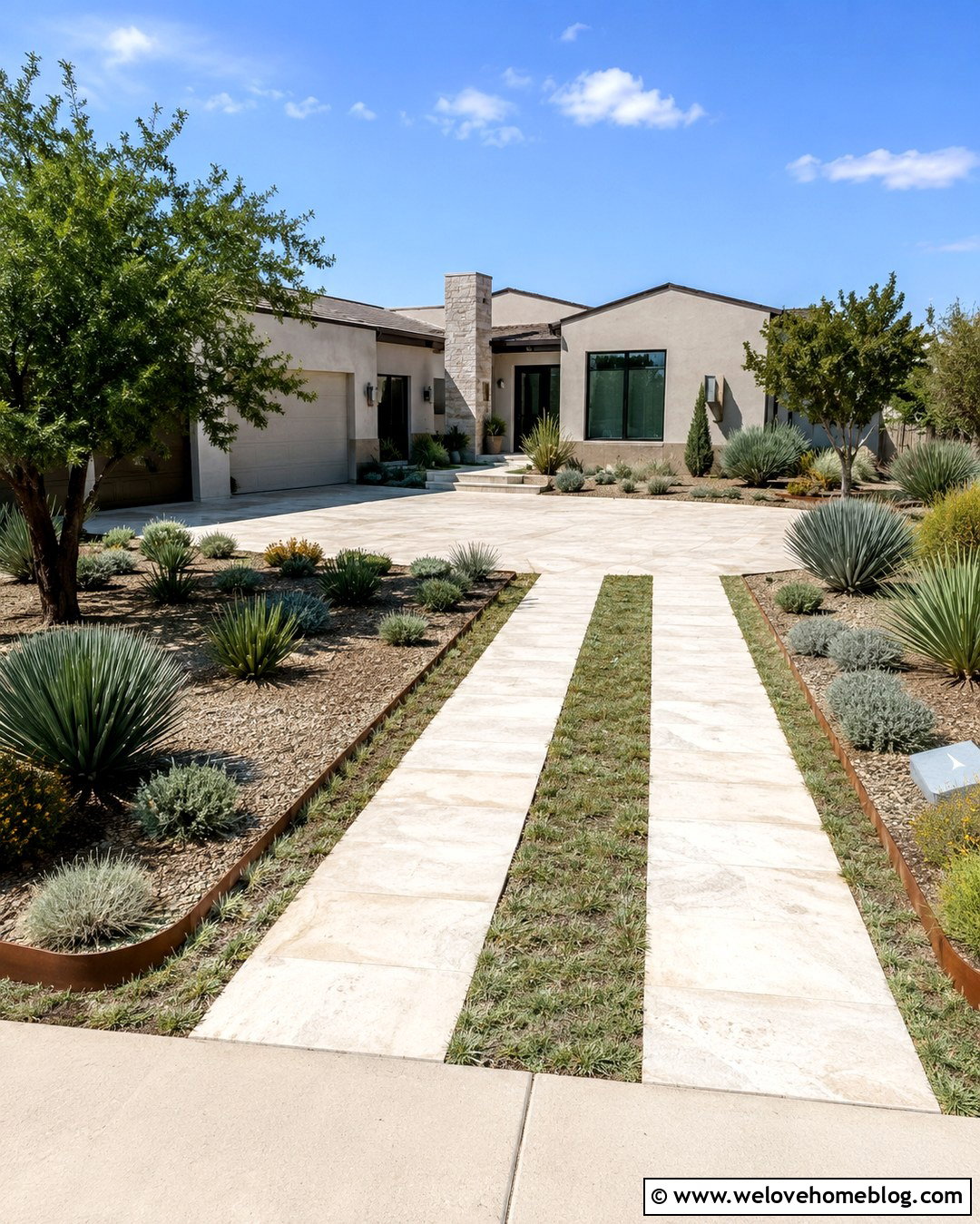
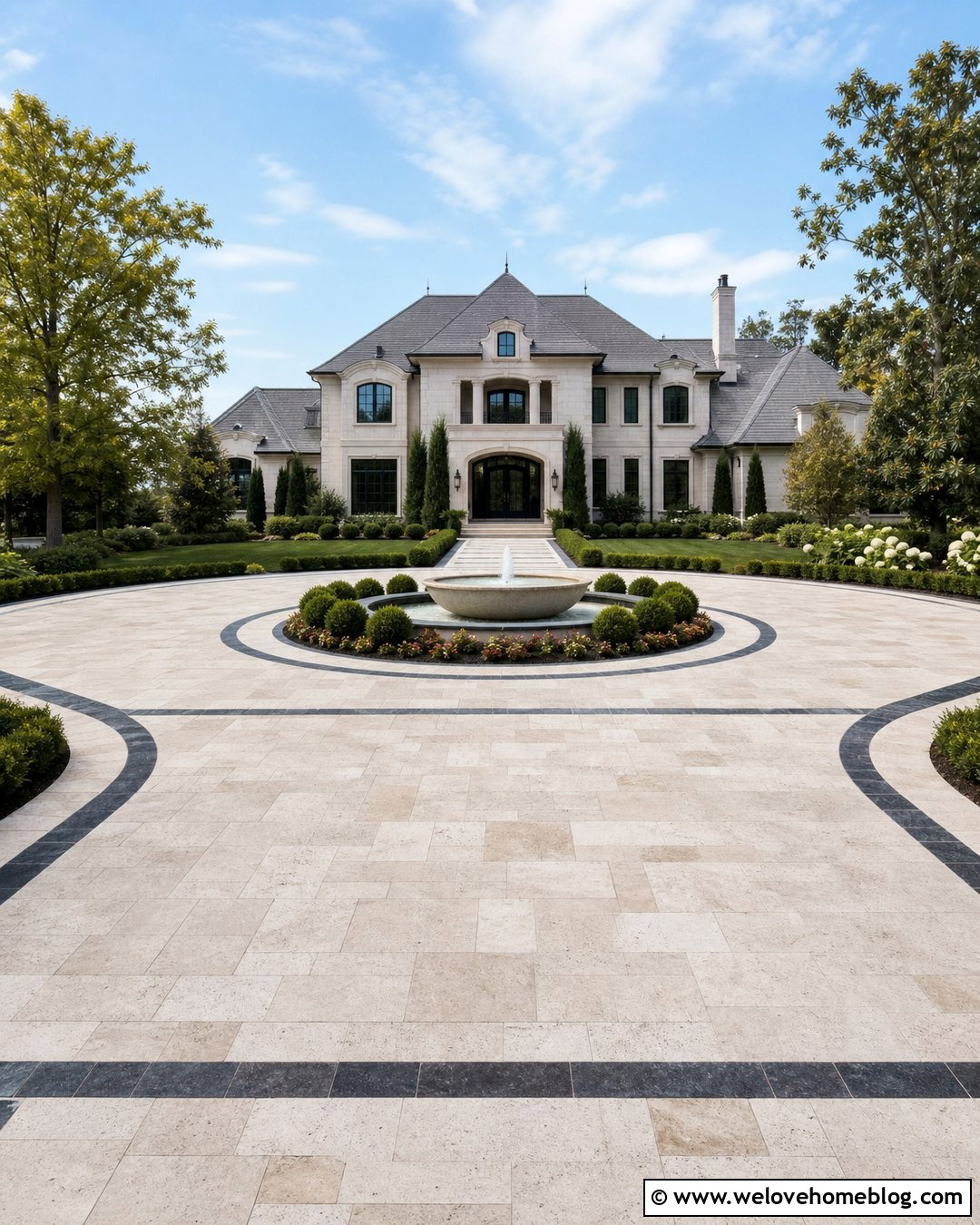
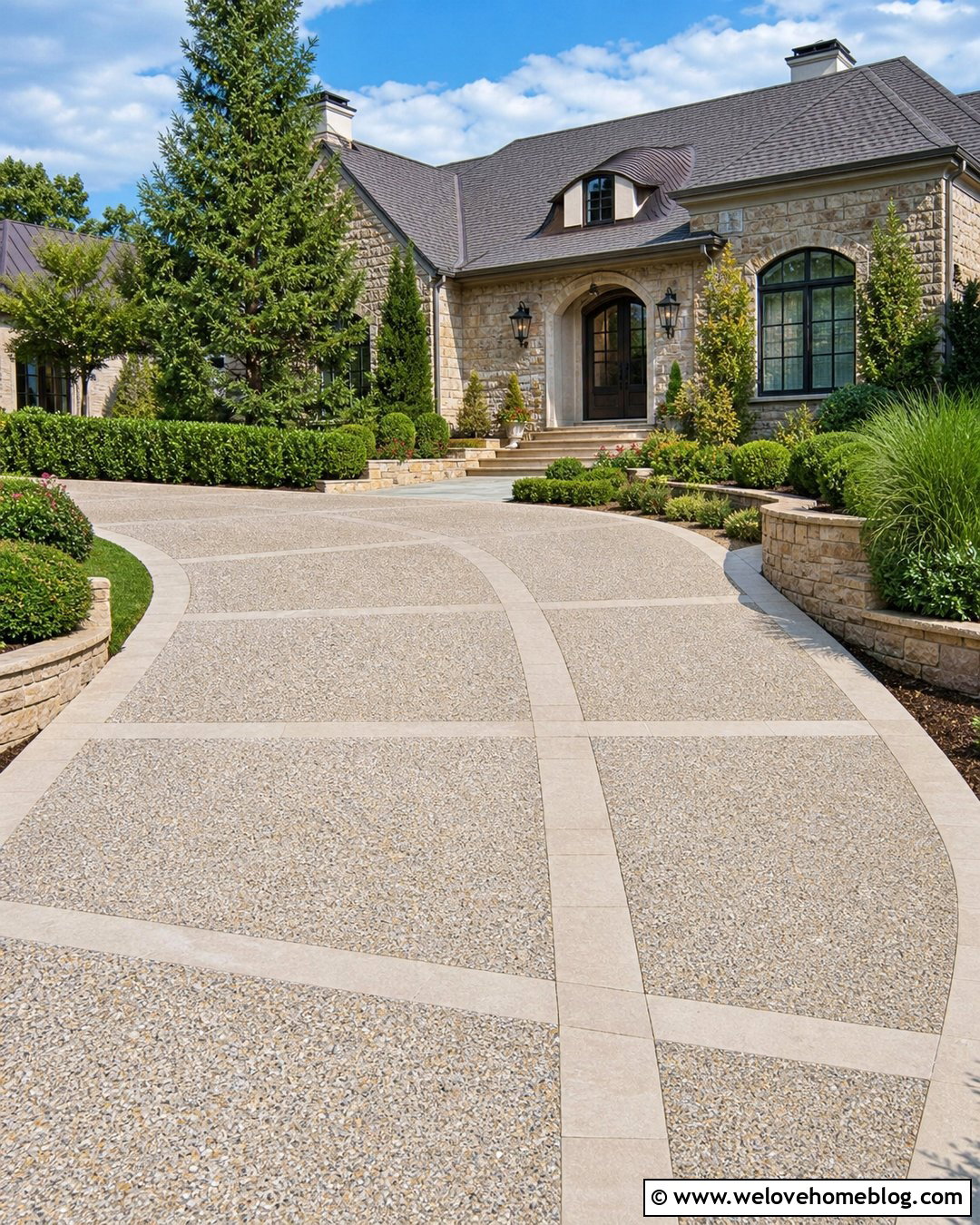
Bright limestone pavers surrounded by drought-conscious native grass create a clean driveway for a warm, sunny property. Set large ivory or cream limestone rectangles in two continuous wheel tracks, with a planted strip between them. Replace thirsty lawn around the driveway with locally appropriate low-growing grasses and gravel-mulched beds. Weathered steel edging can separate the planting from the stone while adding a warm color that complements the landscape. This design pairs well with a Southwestern, desert-modern, or light stucco home. Include a wider limestone apron near the garage and a matching path to the front door. Choose plants that stay low around the driveway entrance so drivers can see approaching pedestrians and traffic. The limited palette of pale stone, green-gray foliage, and rust-colored edging creates a clear, cohesive composition.
16. Reclaimed Stone And Moss Driveway
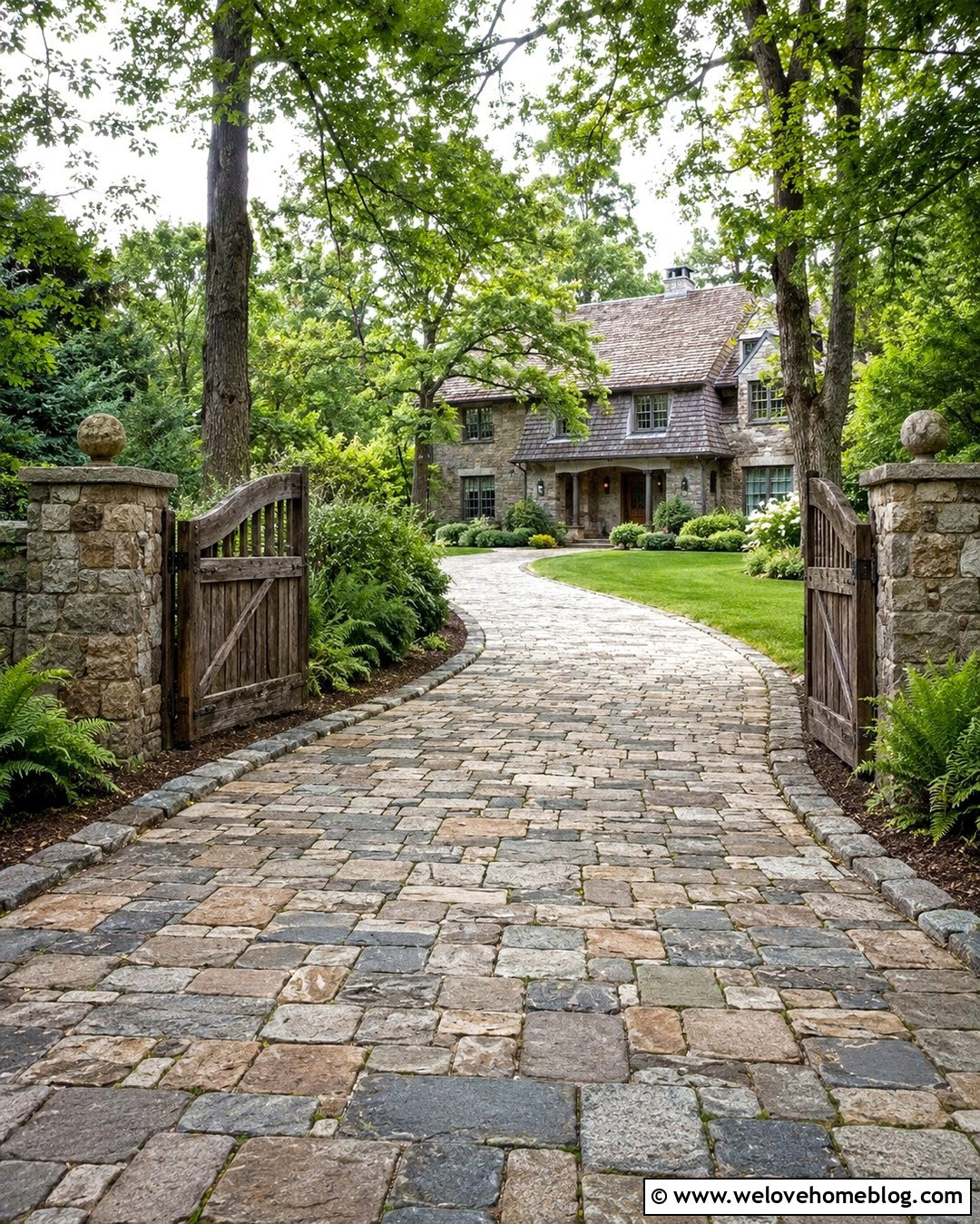
Reclaimed stone pavers with mossy joints can give an older country home an established, handcrafted appearance. Select thick, relatively even stones that can be installed securely over a vehicle-rated base. Mixed gray, brown, and weathered beige pieces create a more authentic result than a perfectly uniform surface. Lay the stones in loose rows along a gently curving driveway, using grass in sunny sections and climate-appropriate low ground cover in shaded joints. A full stone border helps contain the irregular pattern and creates a clean meeting point with garden beds. Surround the approach with mature-looking shrubs, ferns, shade trees, and a simple wooden gate. Avoid allowing moss or plants to cover the driving surface completely. The goal is a softened stone driveway that still provides a visible, comfortable route to the house.
17. Black Basalt And Grass Driveway
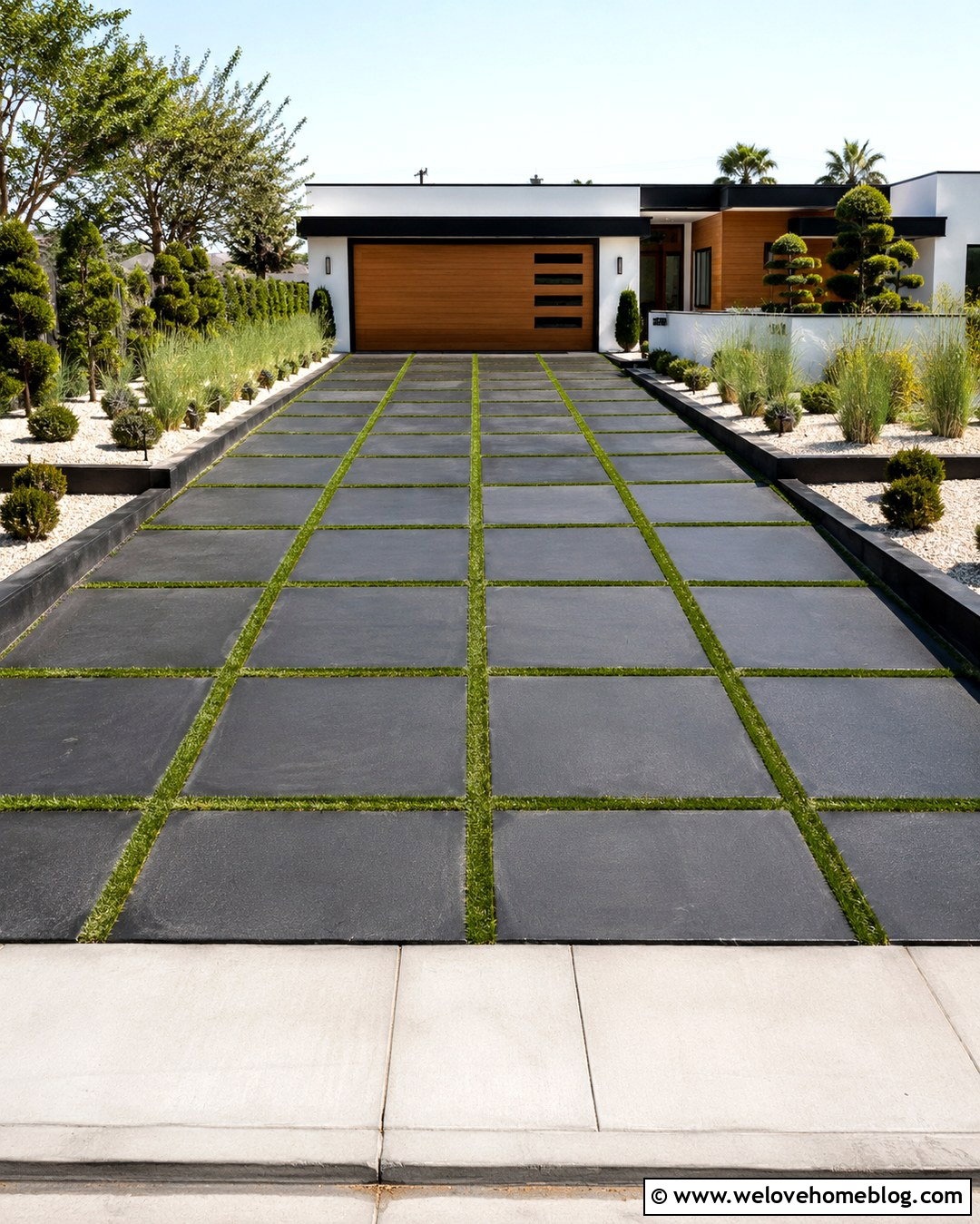
Black basalt pavers separated by bright grass lines produce a sharp, modern driveway with strong curb appeal. Use large square or rectangular units with a lightly textured finish, arranging them in a precise grid from the street to the garage. Narrow joints keep the dark surface dominant while adding enough green to connect it to the landscape. This combination looks striking beside a minimalist house with white walls, cedar siding, and black-framed windows. Continue basalt into the front walkway and use matching blocks as low driveway edging. Keep planting simple with clipped evergreens, upright ornamental grasses, and one sculptural tree. Pale gravel beds can brighten the sides and emphasize the paver color. Consistent alignment matters in this design, so center the paving grid carefully on the garage and main architectural lines.
18. Grass Driveway With Stone Borders
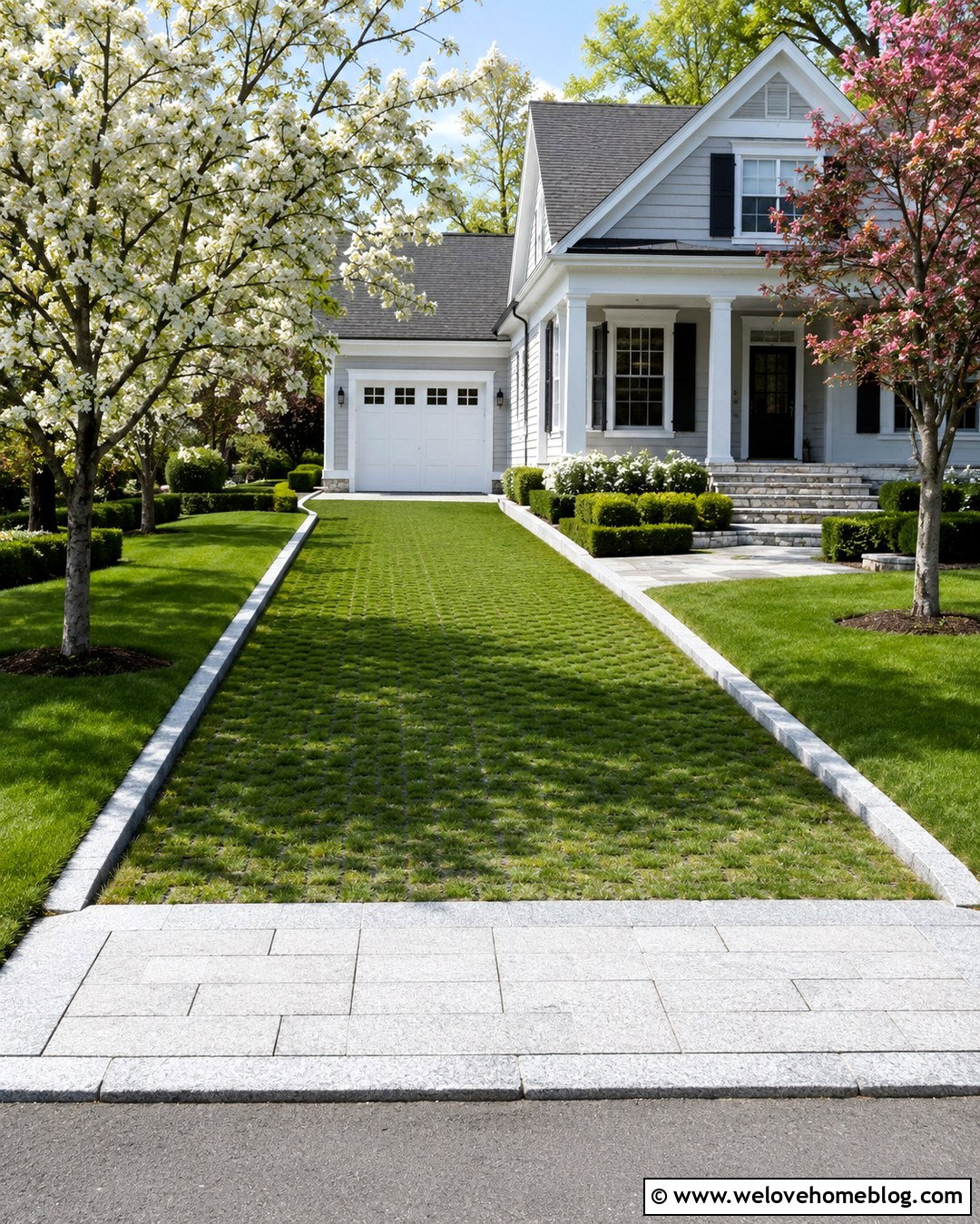
When maximum greenery is the goal, reinforced turf can cover most of the driveway while substantial stone borders provide definition. Install a vehicle-rated grass grid beneath the driving and parking areas, then frame both sides with thick granite or limestone curbing. Add a full-width stone apron at the curb and another in front of the garage to make entry and turning areas easy to recognize. This approach works well for a traditional suburban home surrounded by a broad lawn. Repeating the border stone in the walkway, porch steps, and foundation beds creates a unified exterior. Small flowering trees and low hedges can mark the driveway without closing it in. Keep irrigation and mowing requirements in mind during planning. Clearly defined edges help the green surface look like an intentional driveway rather than an extension of the yard.
19. Split Grass And Stone Driveway
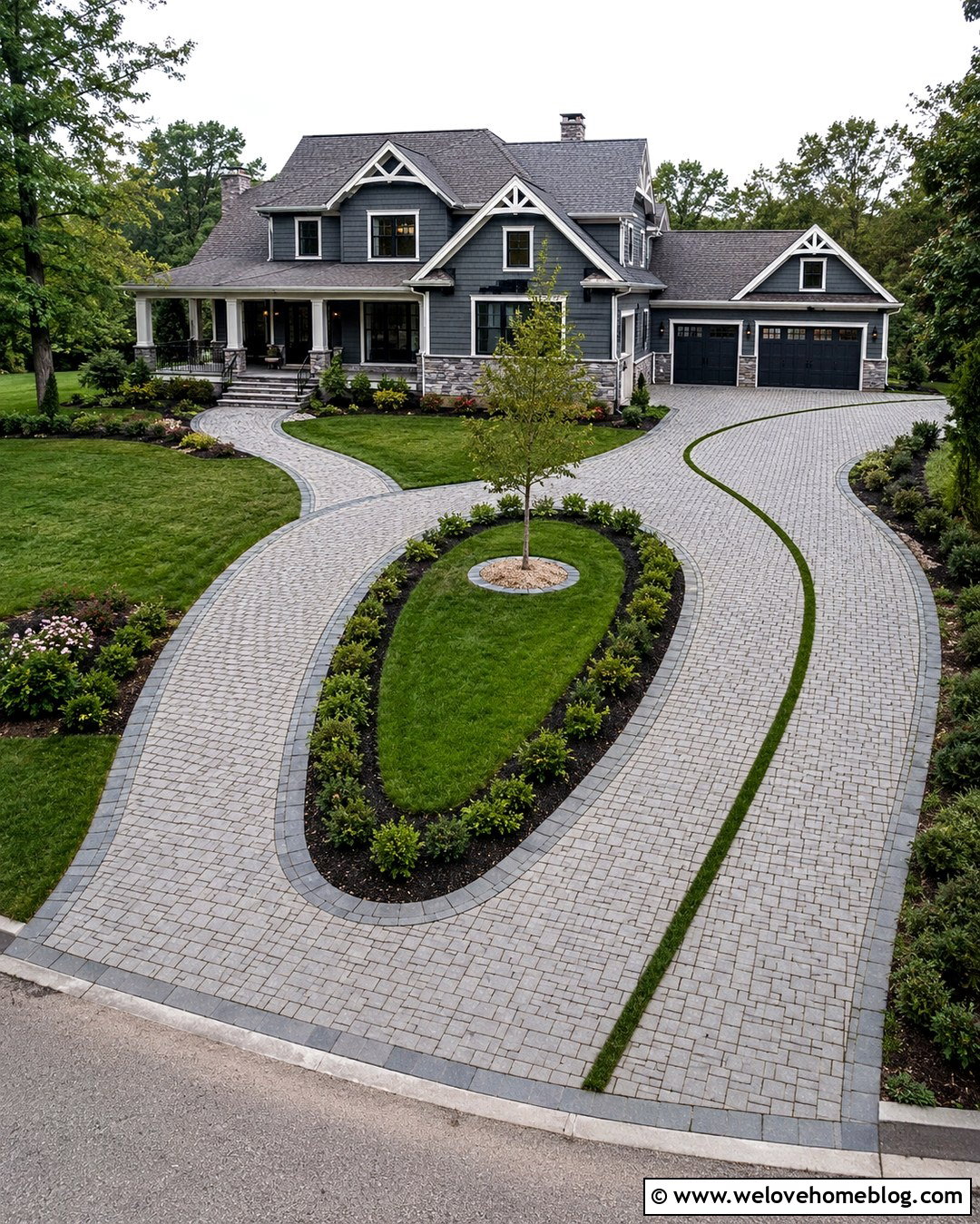
A split driveway uses two separate stone paths that branch toward different parking areas while preserving lawn between them. Begin with a shared entrance of rectangular granite pavers, then divide the route around a central green island. One branch can lead to the main garage, while the other reaches a side parking pad or detached structure. Continue grass joints through both lanes so the sections look connected. The island may feature a small tree, low shrubs, and a stone-edged lawn, but tall planting should not interfere with visibility. This design is useful on a large property where vehicles need multiple destinations. A farmhouse, carriage house, or broad craftsman residence provides an appropriate backdrop. Repeat the same paver size, border, and planting palette throughout to prevent the divided layout from feeling visually disjointed.
20. Gated Grass And Stone Driveway
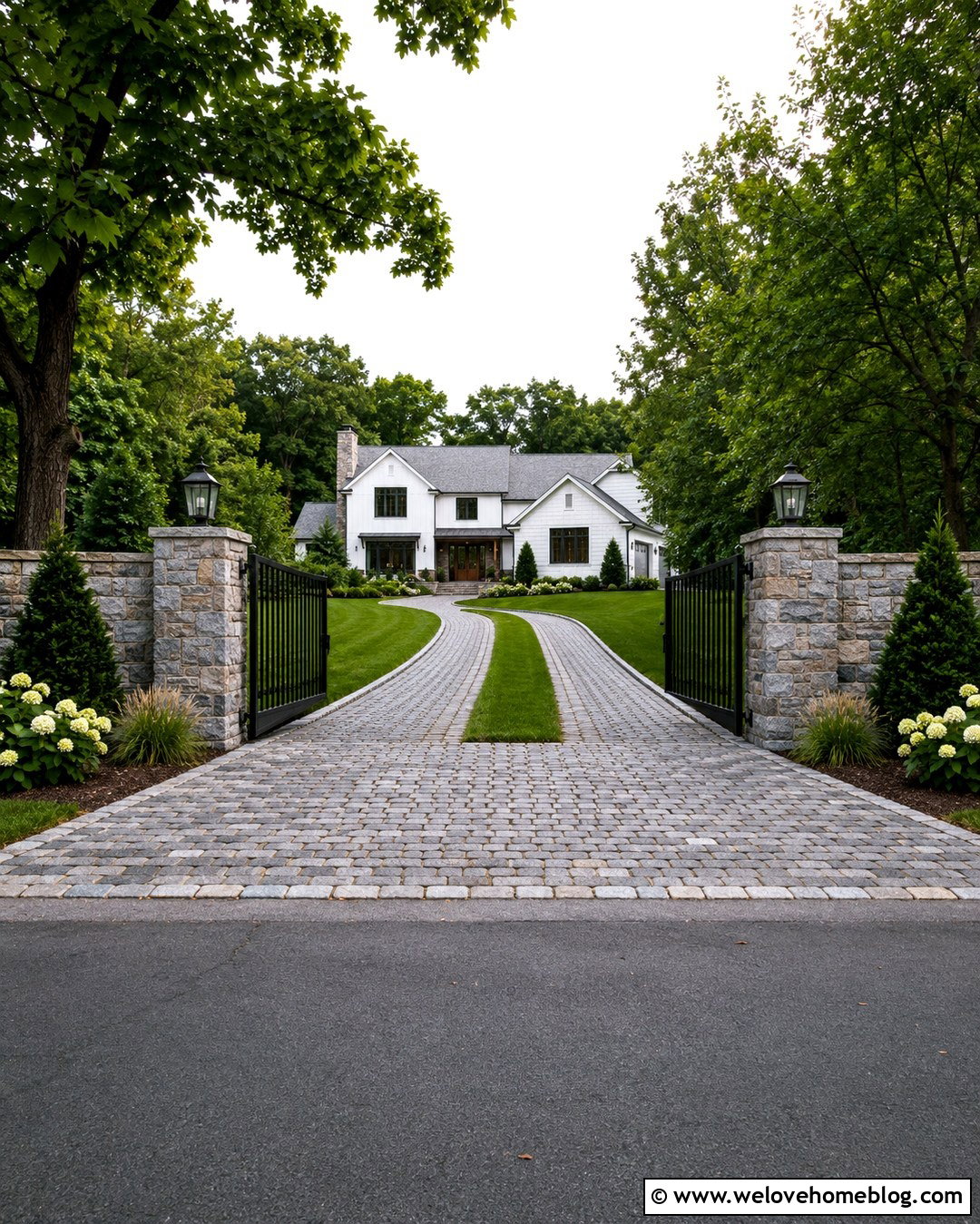
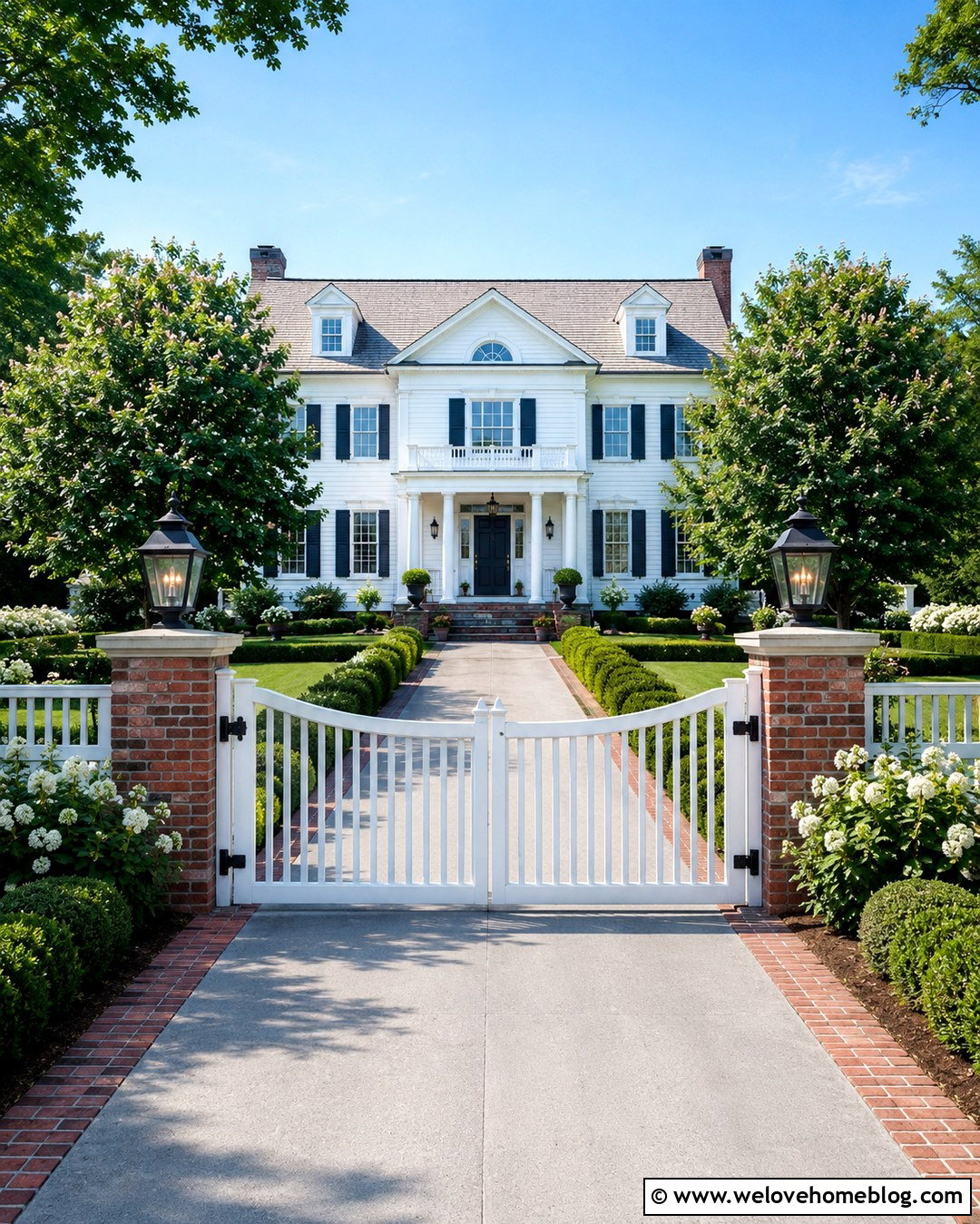
A gated entrance can turn a grass and stone driveway into a complete front-yard feature. Use warm gray cobblestone or granite pavers for two driving tracks, leaving a neat grass ribbon through the middle. At the curb, widen the stone into a full apron that connects to a pair of masonry pillars and a simple metal or wood gate. Low stone walls can extend from the pillars into layered planting beds filled with evergreens, flowering shrubs, and ornamental grasses. Continue the driveway in a gentle curve toward a country, Colonial, or modern farmhouse residence. Matching lanterns on the pillars provide architectural detail, even when the scene is viewed during the day. Leave enough level space around the gate for comfortable access. Repeating the pillar stone along the driveway edges helps the entire entrance feel coordinated.
Conclusion:
The strongest grass and stone driveway ideas balance a beautiful green appearance with a clearly defined, practical driving surface. Large bluestone slabs suit modern architecture, while flagstone, cobblestone, and reclaimed stone complement traditional or country homes. Grass wheel tracks can reduce the visual weight of a long driveway, and checkerboard layouts make compact front yards feel more designed. Whatever look you prefer, plan the base, drainage, stone thickness, joint spacing, vehicle movements, and mowing access before installation. Match the material to your home and repeat it in borders, walkways, pillars, or planting beds. With thoughtful construction and suitable plants, a grass and stone driveway can become a cohesive part of the entire front landscape.

Related posts:
Leave a Reply