
A grass driveway blends practical vehicle access with the soft, welcoming character of a front lawn. Instead of covering the approach with one solid paved surface, you can use reinforced turf, concrete tracks, open-cell pavers, stepping slabs, or stone bands that allow greenery to remain visible. Properly installed grass grid systems support vehicle traffic while creating a permeable surface that lets water enter the ground. () The finished look can feel modern, cottage-inspired, rustic, formal, or wonderfully understated. Your best choice will depend on the house, driveway slope, local climate, parking frequency, and desired upkeep. The following 35 grass driveway ideas explore complete designs that combine surface materials, practical layouts, attractive borders, and coordinated landscaping.
1. Concrete Track Grass Driveway
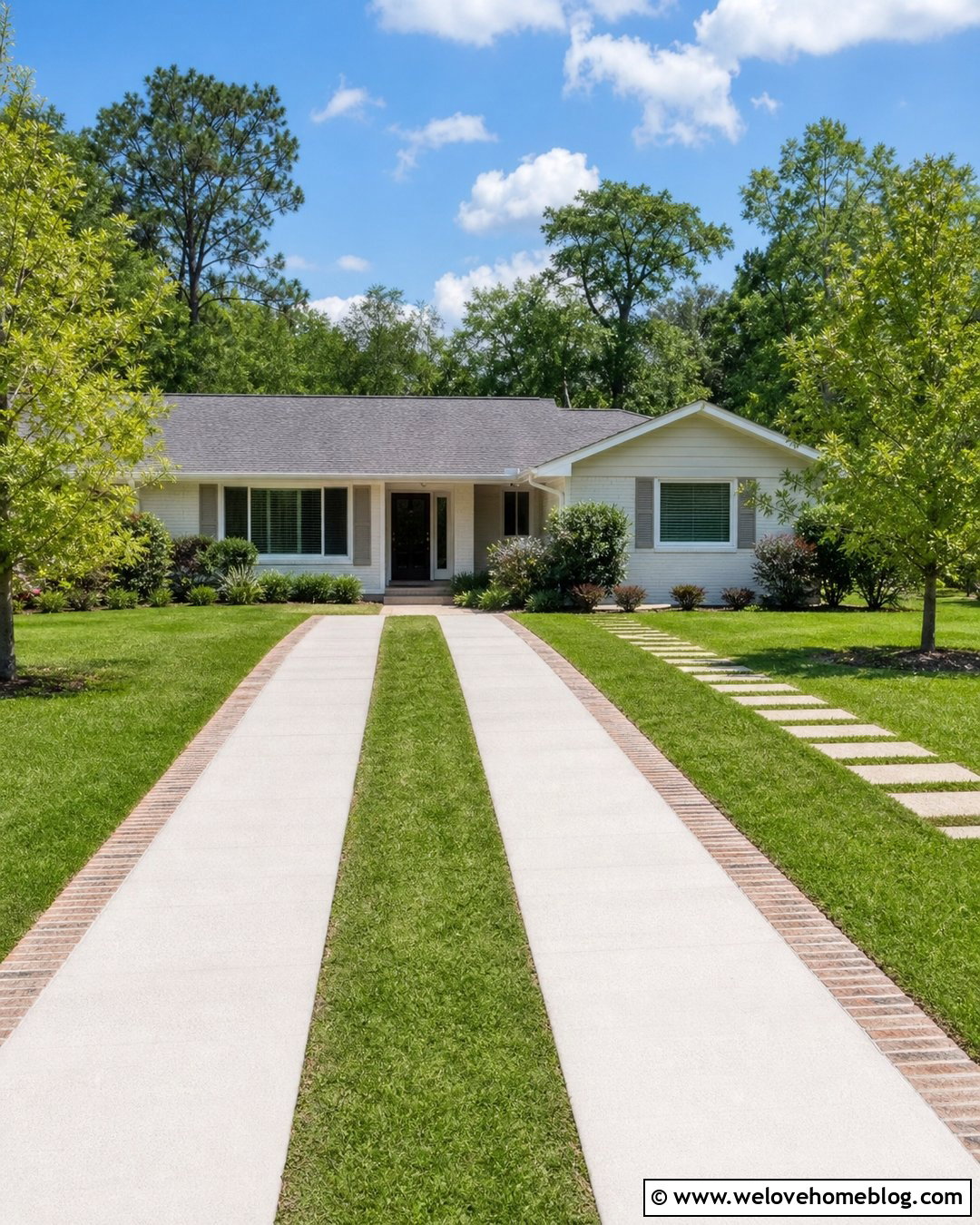
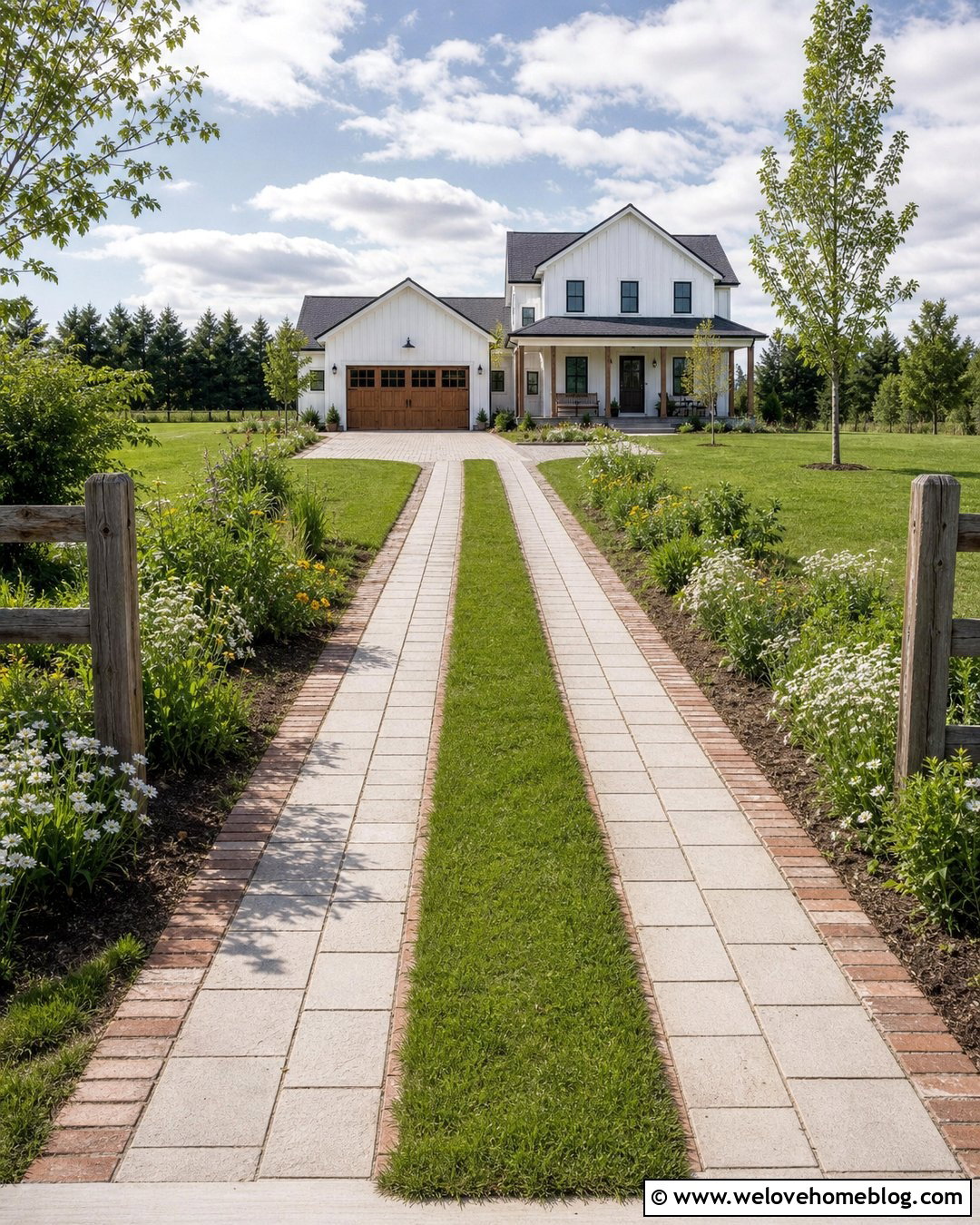
Two parallel concrete tracks create a clear driving route while preserving a generous strip of lawn through the center. This straightforward grass driveway works especially well for a ranch, cottage, or modest suburban home. Keep each concrete track wide enough for tires, and use a stable base so the strips remain level. The central grass can match the surrounding lawn, helping the driveway appear less visually dominant. Add flush steel or brick edging along the outside to prevent soil from spreading over the concrete. Low planting beds near the garage soften the transition to the house. A stepping-stone walkway beside the driveway gives visitors a comfortable path without requiring additional pavement. The result feels relaxed, green, and highly organized.
2. Grass Grid Paver Driveway
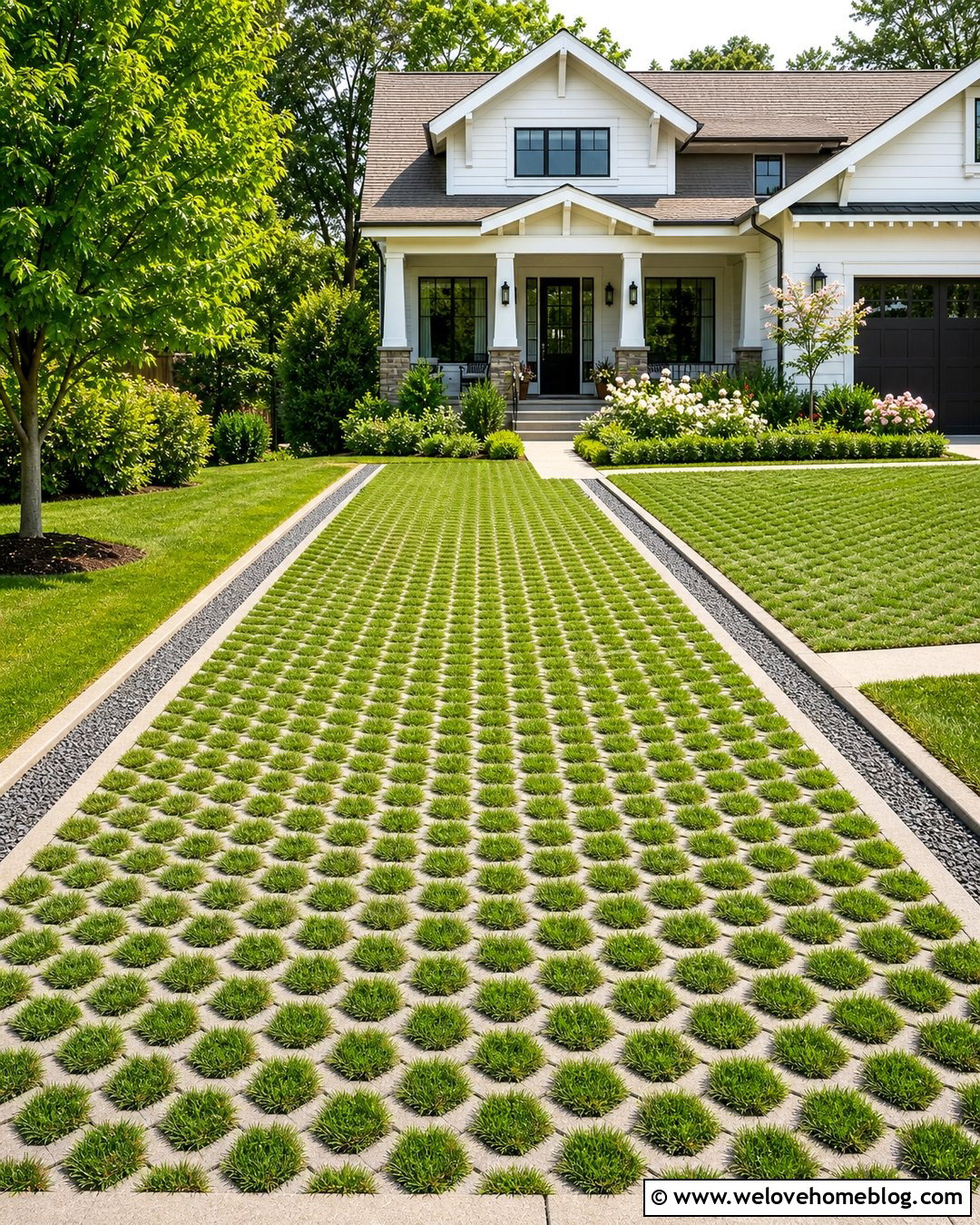
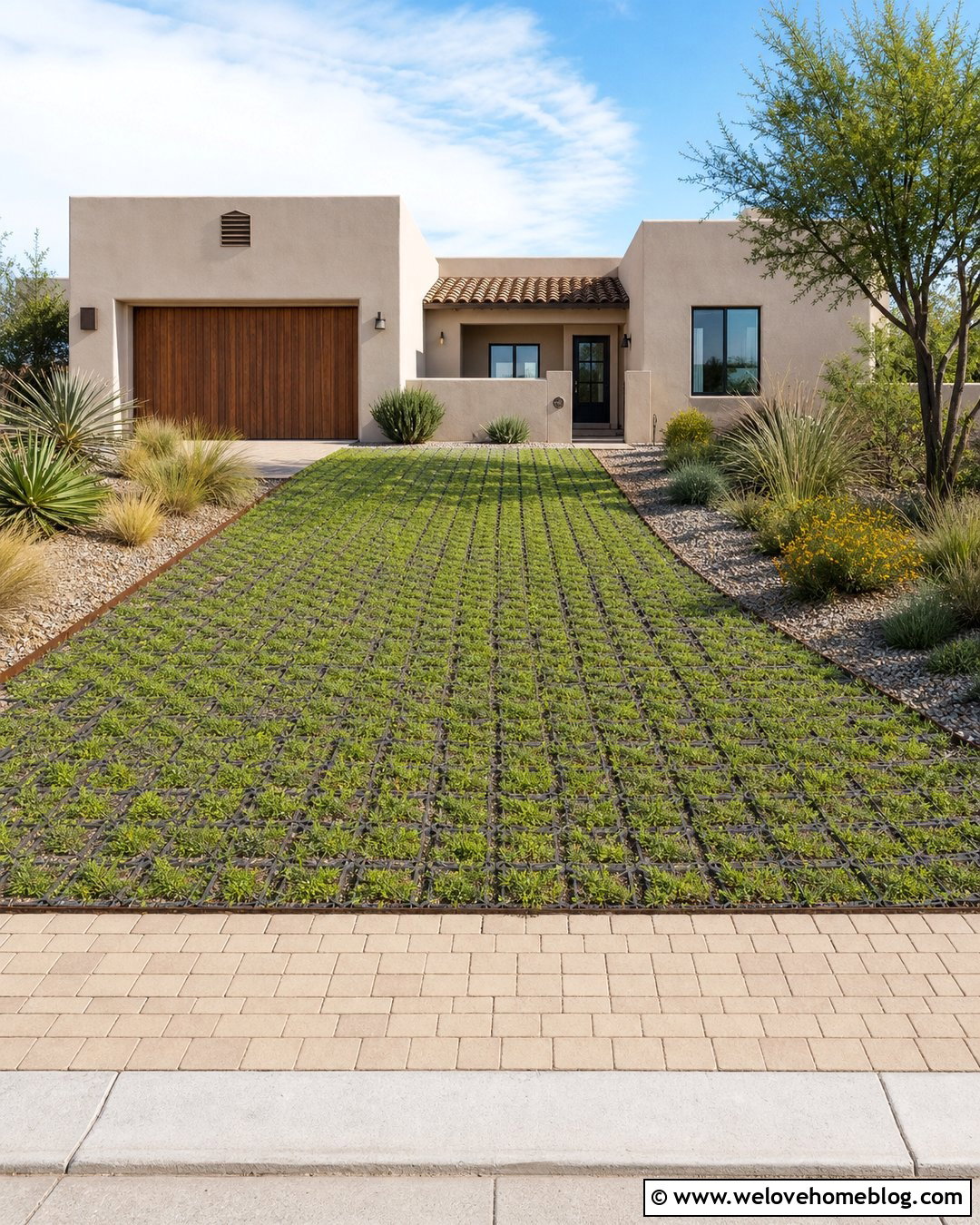
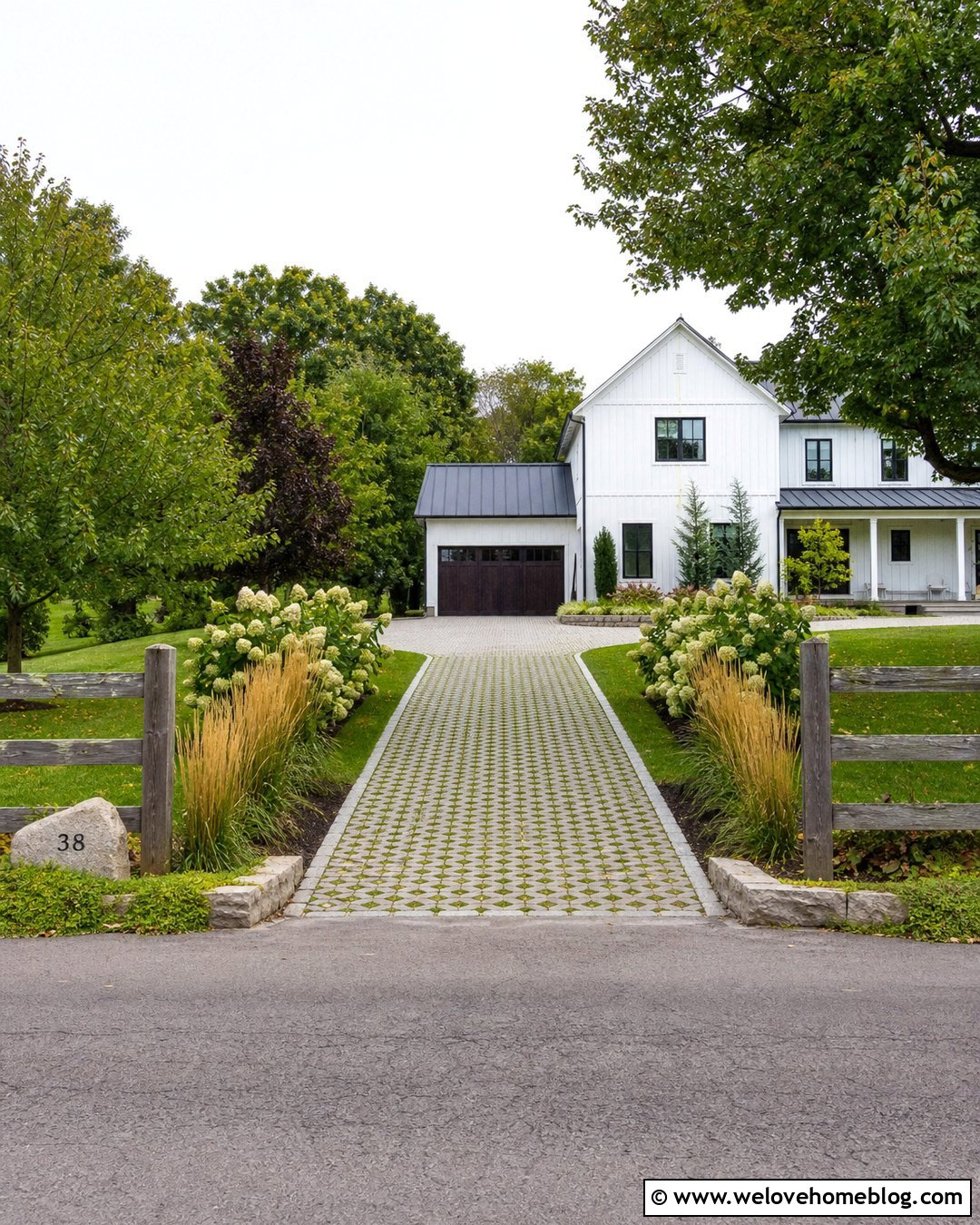
A reinforced grass grid driveway provides a mostly green surface without leaving tires to travel directly over unsupported soil. Interlocking concrete or plastic cells sit over a prepared base, while grass grows through the openings. The hidden structure gives the lawn a tidy, consistent shape and helps define the parking area. () Use a straight layout for a clean suburban entrance, then frame it with narrow gravel drainage strips or flush concrete curbs. Choose compact shrubs and small ornamental trees that will not block sightlines near the street. A matching grid parking pad can branch from the main driveway when extra space is needed. This design is especially appealing when you want everyday functionality with far less visible hardscaping.
3. Concrete Paver And Grass Driveway
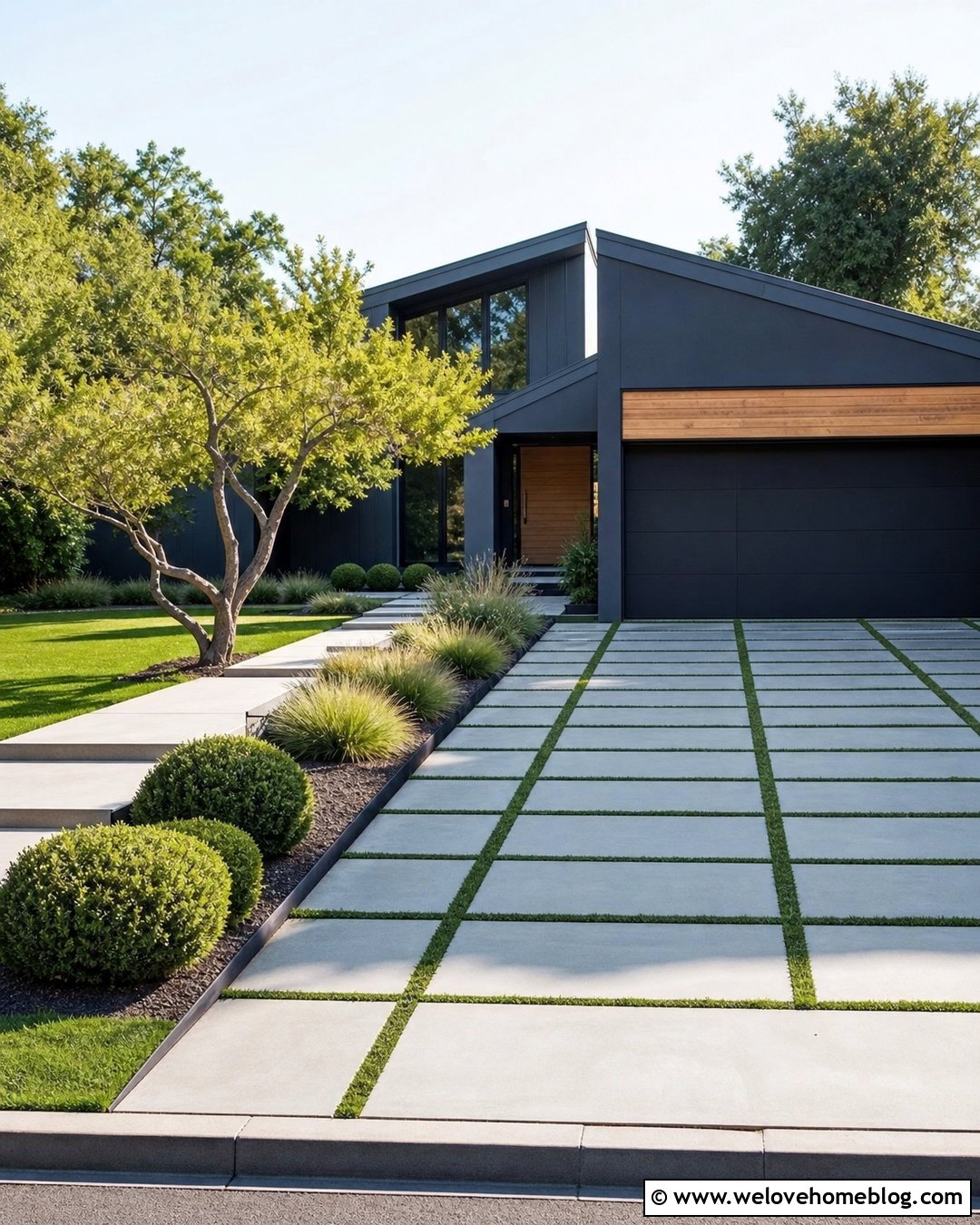
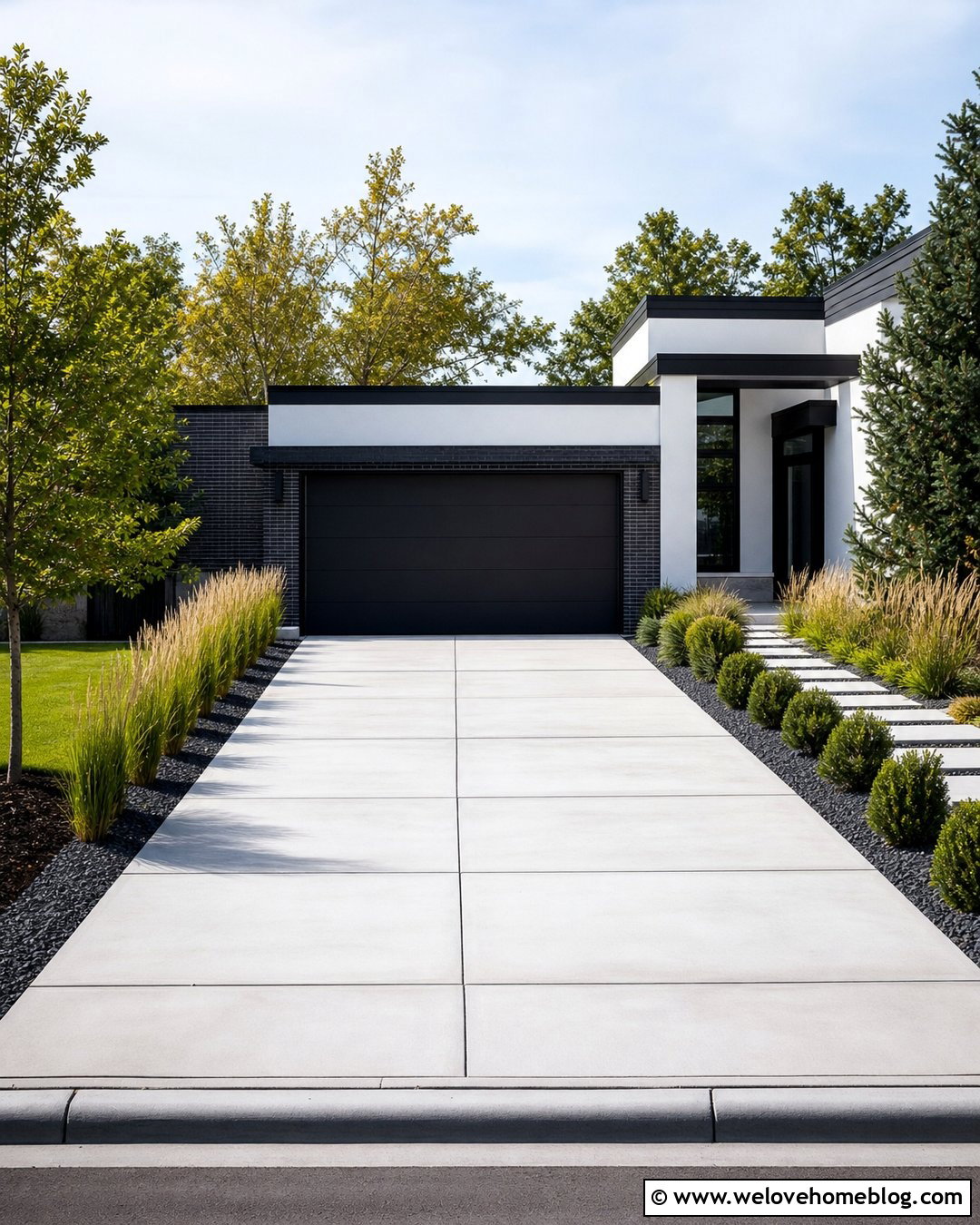
Large rectangular concrete pavers separated by narrow grass joints give a driveway a crisp, contemporary rhythm. The pavers should form stable wheel paths or a complete geometric field leading toward the garage. Keep the grass gaps narrow enough to maintain easily while still creating strong green lines. Smooth light-gray pavers pair naturally with a white, charcoal, or warm wood house facade. Add dark metal edging for sharp outer boundaries and repeat the paver material in the front walkway. Simple planting beds filled with rounded shrubs, ornamental grasses, and one sculptural tree complement the linear layout. Grass between concrete slabs is commonly arranged in grids, diamonds, and crossing patterns, offering plenty of flexibility for a custom design. ()
4. Curved Grass Driveway
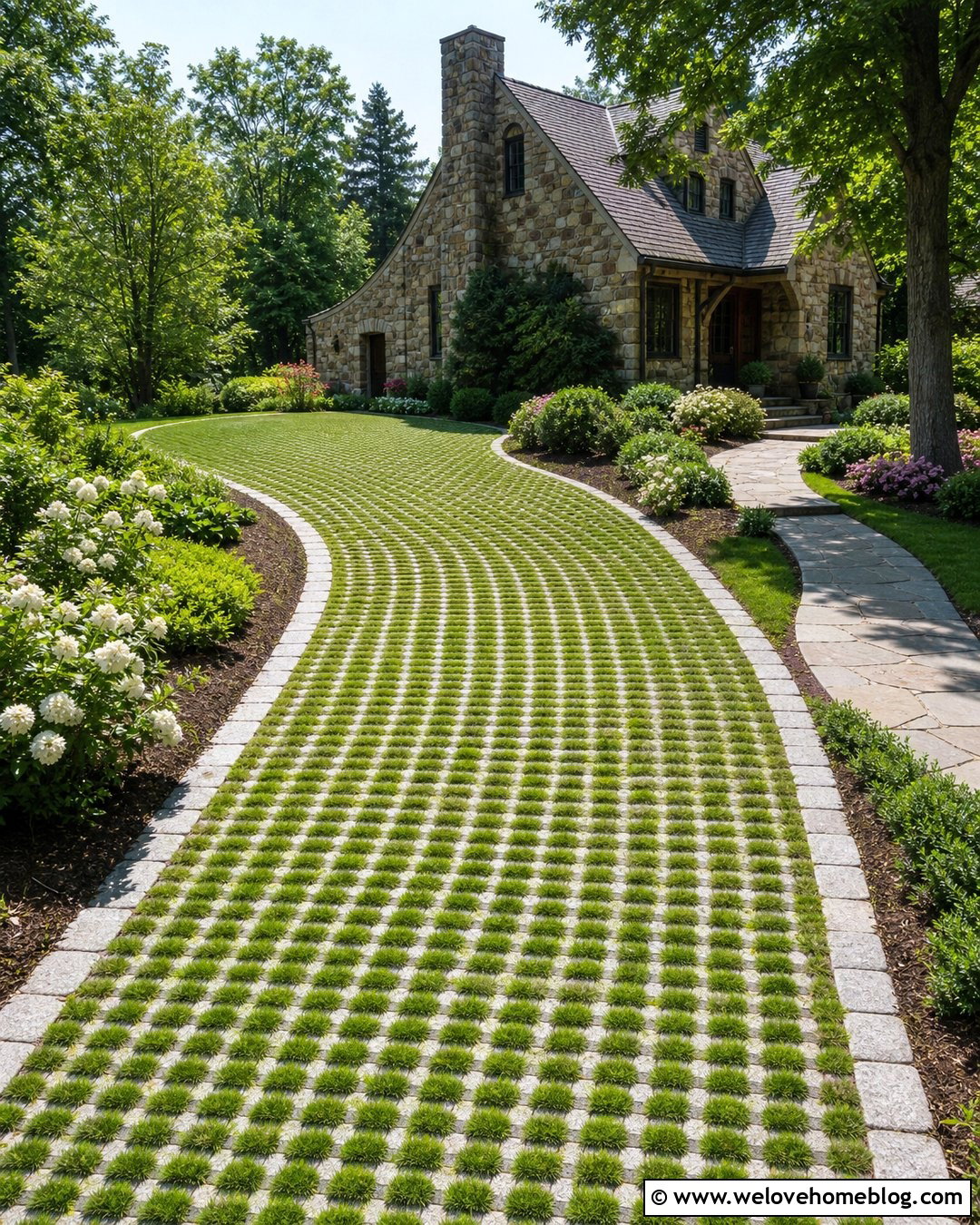
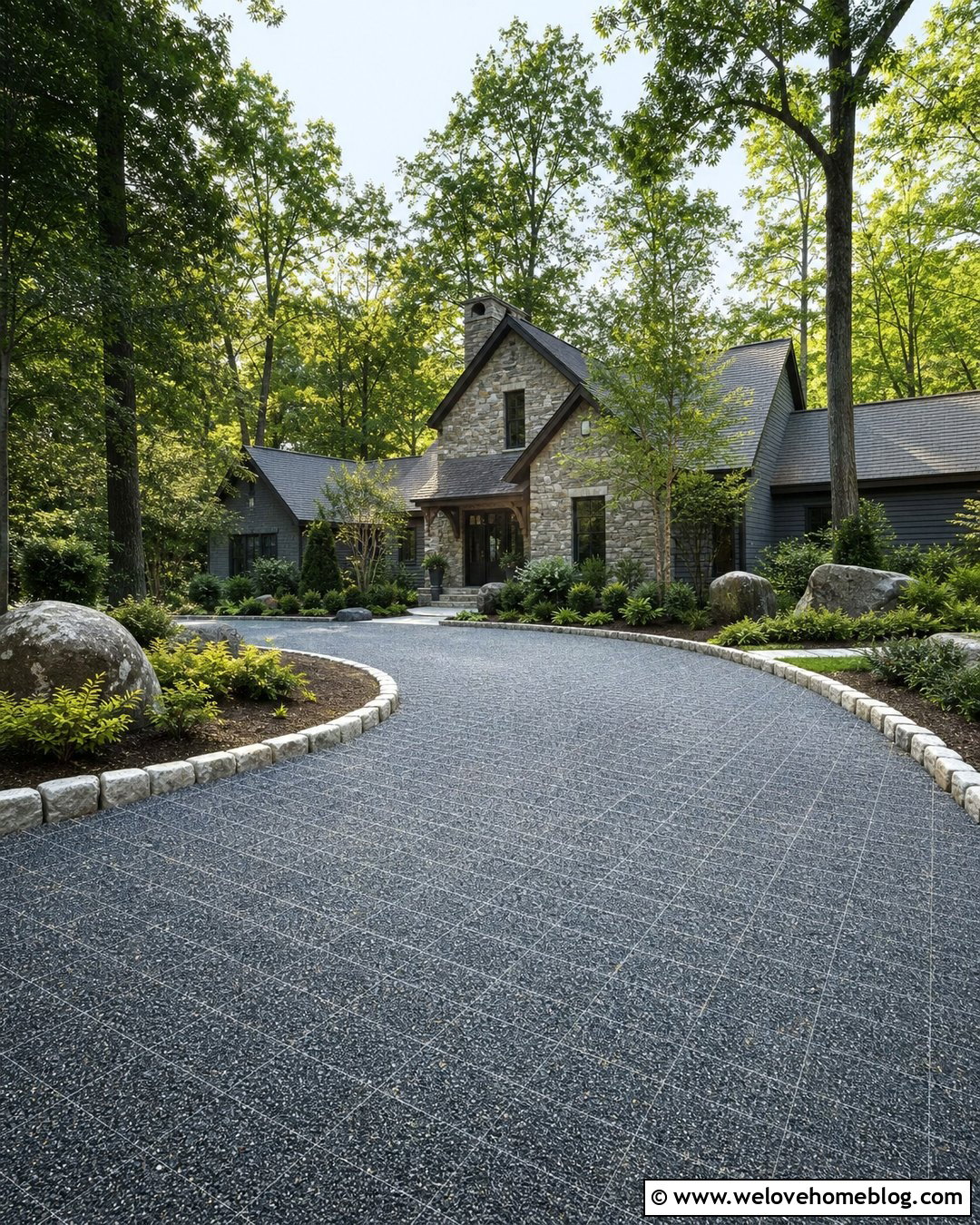
A gently curved grass driveway makes the approach feel softer and more connected to the landscape. Reinforced turf can cover the driving surface, while a line of cobblestones or clay bricks traces both edges. The border makes the curve easy to follow and protects nearby planting beds from wandering tires. Place taller trees along the outside arc and use lower shrubs on the inside so drivers retain a clear view. A curved flagstone walkway can echo the driveway without copying it exactly. Near the house, widen the reinforced area into a small parking court or turning space. This complete layout suits country homes, cottages, and wooded lots where a rigid straight driveway might feel out of place. Keep the curve broad rather than creating tight turns.
5. Circular Grass Driveway
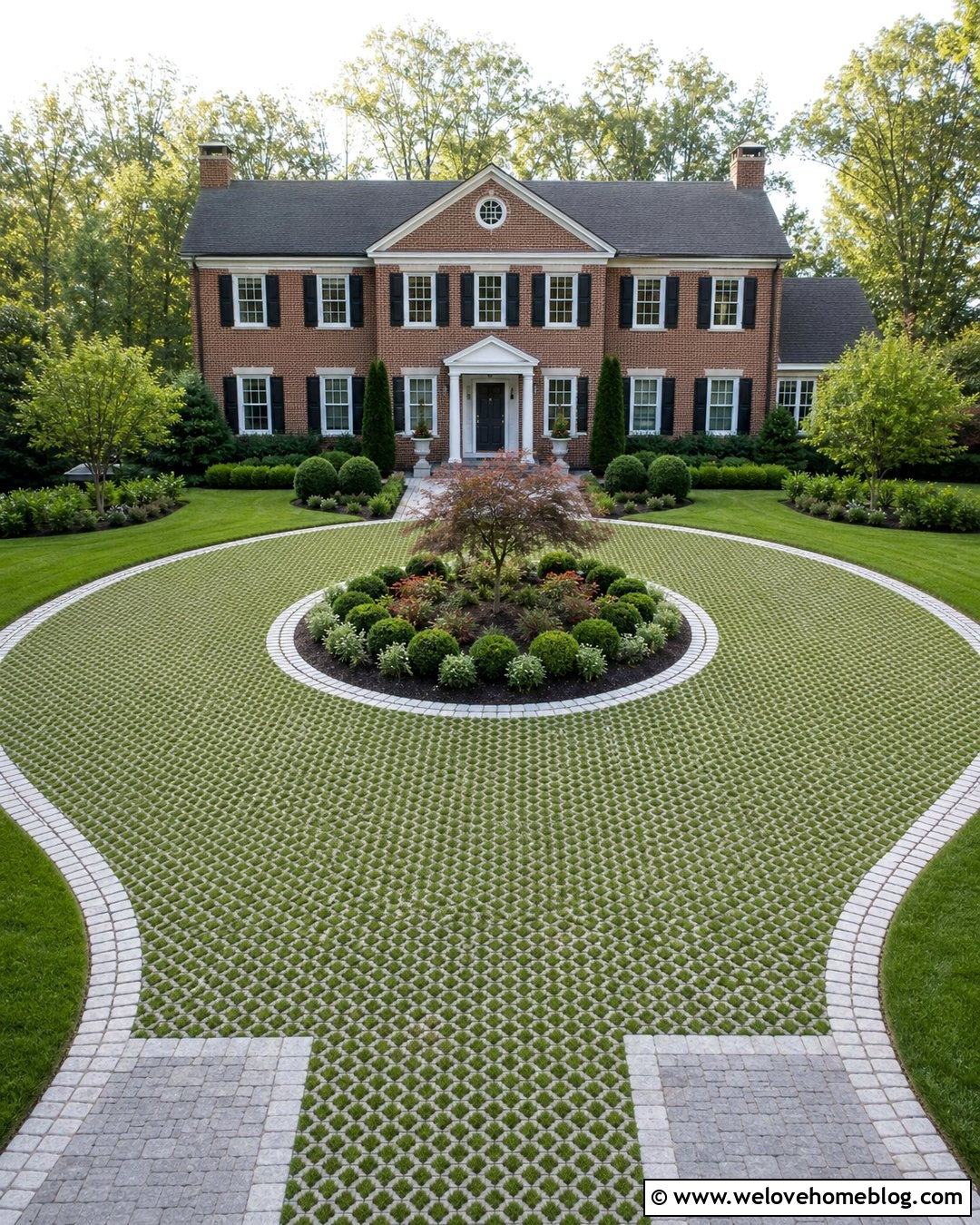
A circular grass driveway offers convenient movement while maintaining a lawn-like appearance across a large front yard. Use reinforced grass pavers for the driving loop and place a landscaped island in the center. A small ornamental tree, clipped shrubs, and layered perennials can make the island a strong focal point. Define the inner and outer curves with flush cobblestone borders that guide vehicles without interrupting the green surface. Two clearly marked entrances reduce confusion and help protect the surrounding lawn. At the house, connect the loop to a wider grass-grid parking area near the front steps or garage. This layout feels especially balanced in front of a colonial, Georgian, or large farmhouse where symmetry and a generous arrival space suit the architecture.
6. Grass Driveway With Brick Borders
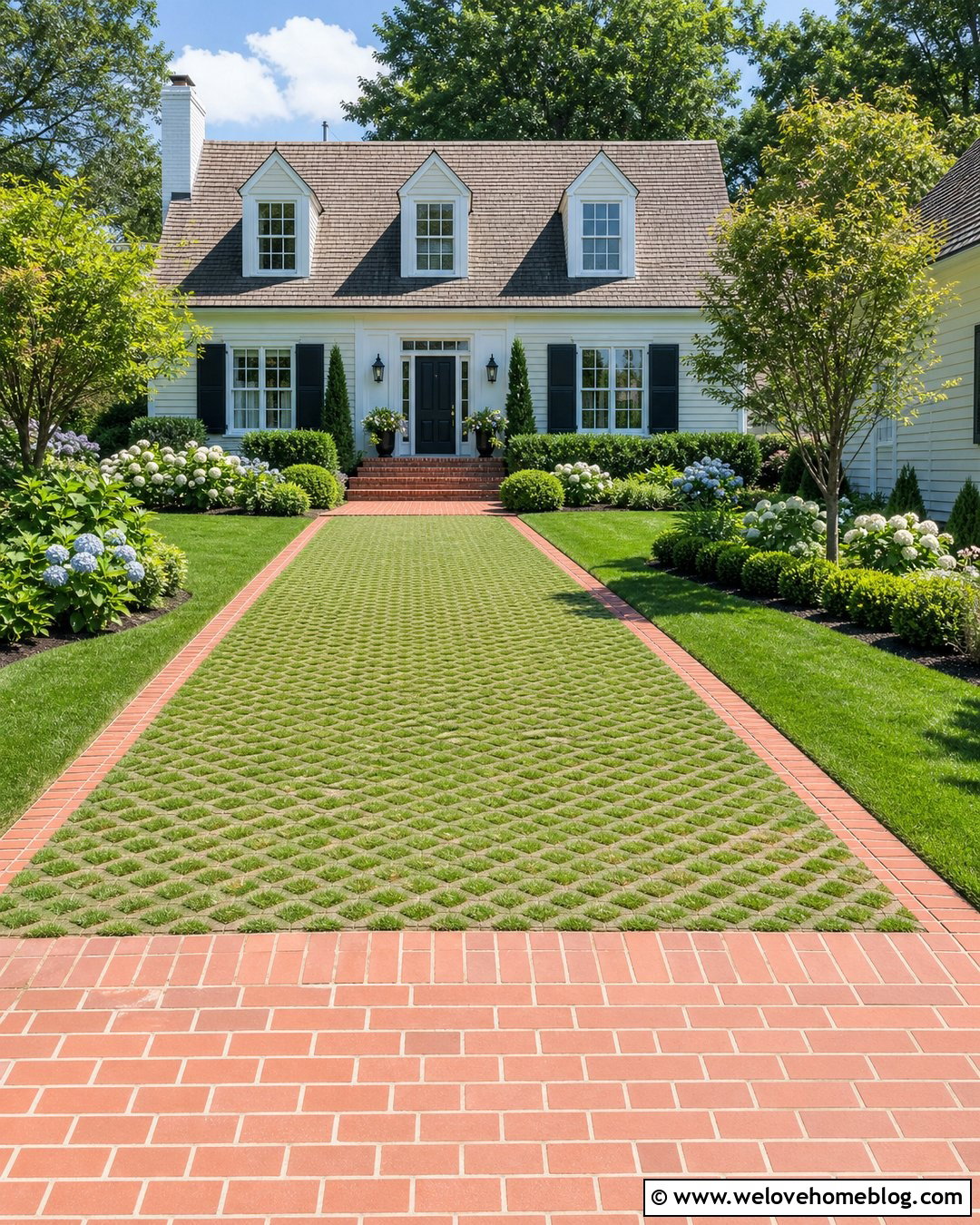
Warm clay brick borders give a grass driveway structure and a traditional connection to the house. Use reinforced turf across the driving surface, then install bricks in a soldier-course pattern along both sides. The brick lines make the driveway visible during wet weather and help separate the supported surface from regular lawn. Repeat the same brick around nearby planting beds or along the front walkway for a coordinated result. Hydrangeas, boxwoods, and flowering perennials complement the classic material without making the entrance feel overly formal. This combination looks particularly natural beside a red-brick colonial, Cape Cod, or traditional craftsman home. At the street, widen the brick border into a subtle apron that clearly identifies the entrance and protects the grass edges.
7. Grass Driveway With Cobblestone Edging
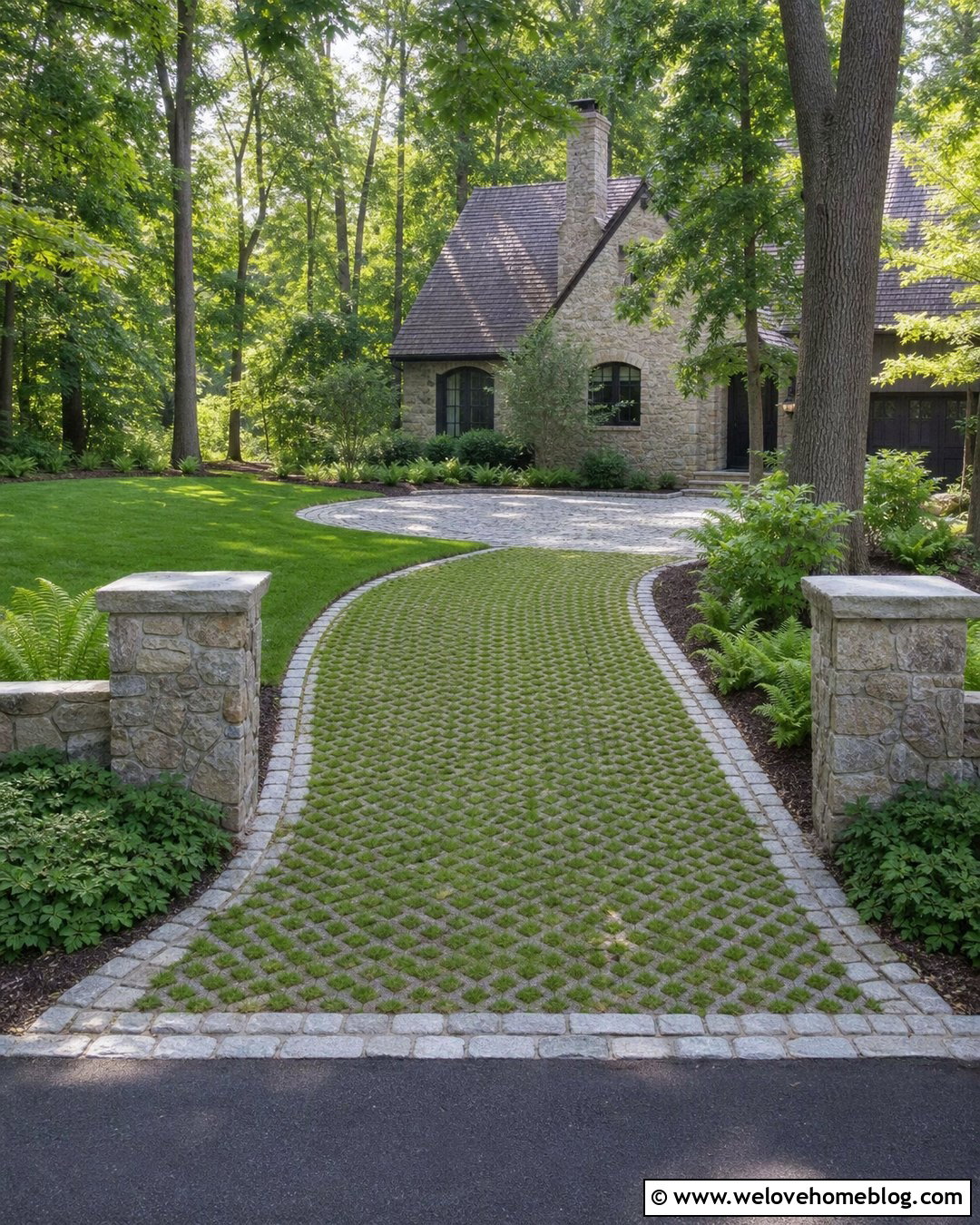
Cobblestone edging adds weight and definition to an otherwise soft grass driveway. The uneven tones of granite or reclaimed stone work beautifully with reinforced turf and mature landscaping. Set the cobbles flush with the driving surface to reduce tripping and simplify mowing. A straight layout creates a formal entrance, while a slightly curved route feels more rustic. Continue the cobblestone around a small parking court near the house so the entire approach reads as one complete design. Plant shade-tolerant ground covers under existing trees and use broad lawn areas elsewhere to keep the setting open. Stone gateposts at the curb can repeat the border material. This grass-and-stone combination suits cottages, country houses, and historic homes where highly polished concrete might appear too modern.
8. Modern Grass Strip Driveway
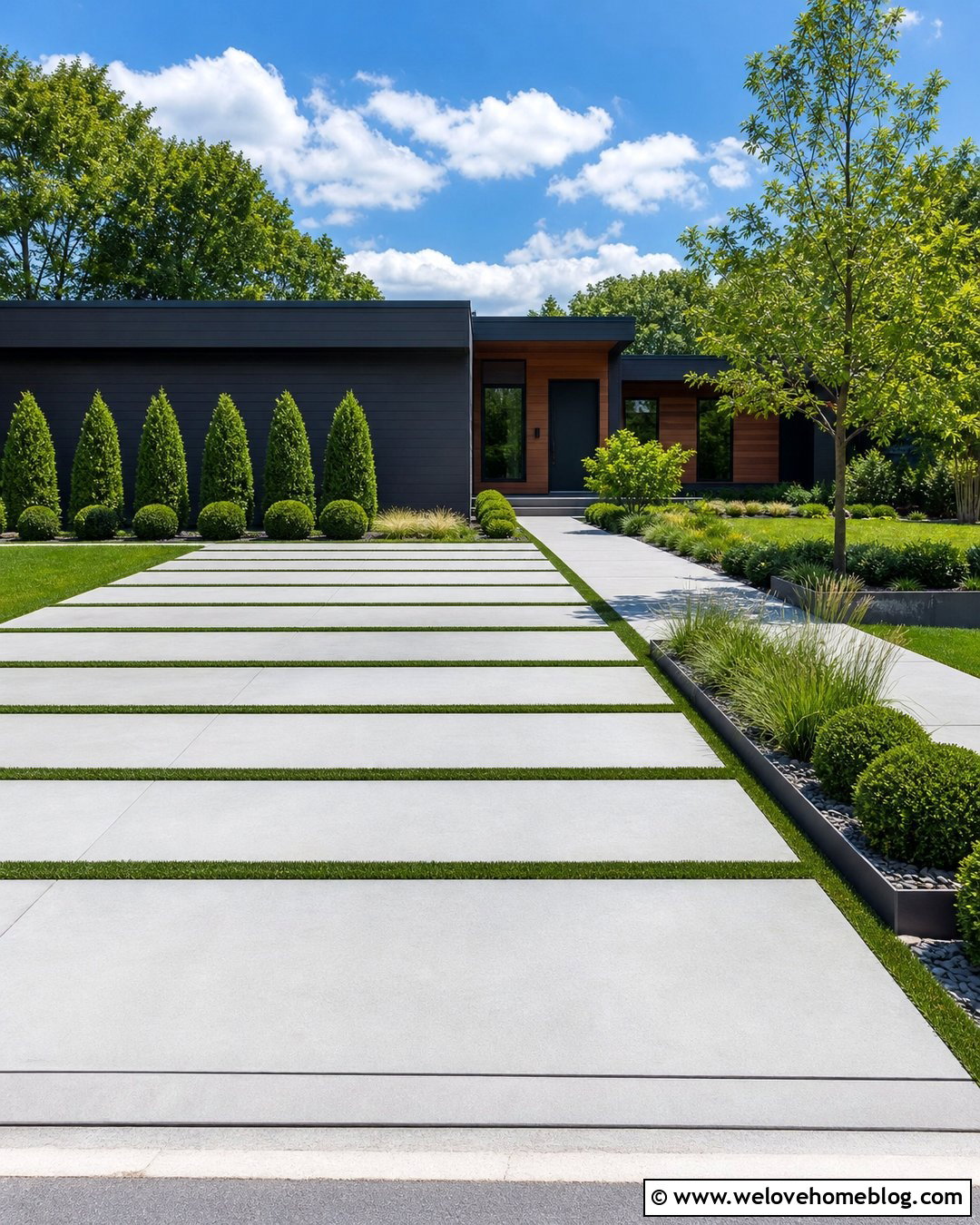
Bold strips of grass between wide concrete bands create a modern driveway with strong horizontal or vertical lines. Rather than scattering small pavers, use long poured-concrete sections that visually stretch toward the garage. Narrow turf channels soften the hard surface and can align with architectural details such as windows, columns, or rooflines. Keep the outside edges clean with concealed metal restraints or flush concrete curbs. Minimal landscaping works best: think clipped evergreen masses, a specimen tree, and ornamental grasses arranged in simple blocks. A broad concrete walkway can run beside the driveway and connect directly to the front door. This design needs careful spacing and accurate installation, but the finished entrance feels intentional, spacious, and well matched to a modern home.
9. Checkerboard Grass Driveway
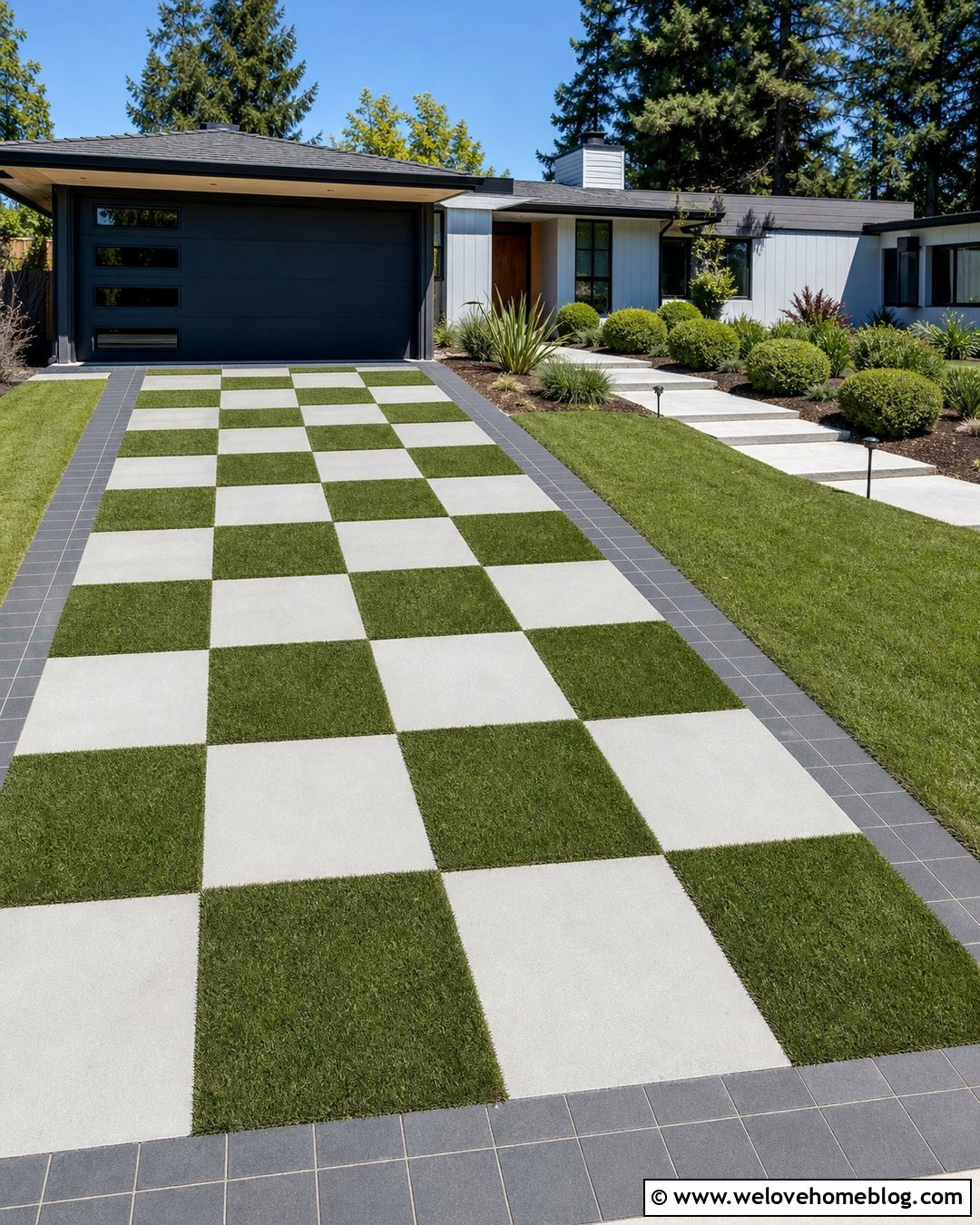
Alternating square concrete pavers and grass creates a checkerboard driveway that feels geometric without becoming visually heavy. Use large squares in a consistent grid so the pattern remains readable from the street. Light concrete and rich green turf produce a striking contrast, while charcoal pavers make the look more dramatic. Frame the checkerboard with a solid paver border to keep the perimeter neat and provide a stable transition to the sidewalk or road. Simple lawn panels and low foundation plantings prevent the surrounding yard from competing with the pattern. Near the garage, consider replacing several grass squares with solid pavers where vehicles frequently turn. The completed driveway works well with midcentury, contemporary, and minimalist houses that already feature strong rectangular forms.
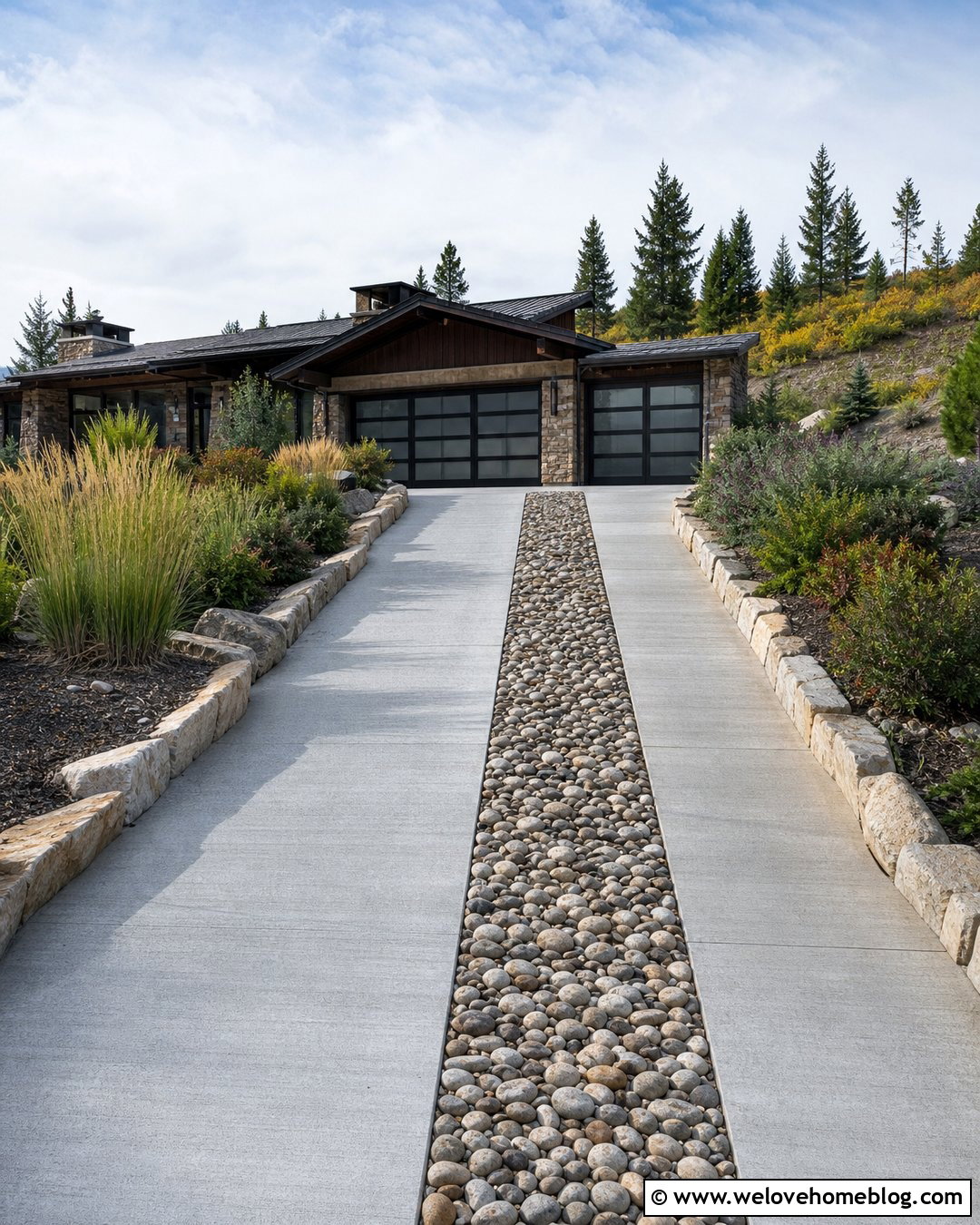
10. Diamond Pattern Grass Driveway
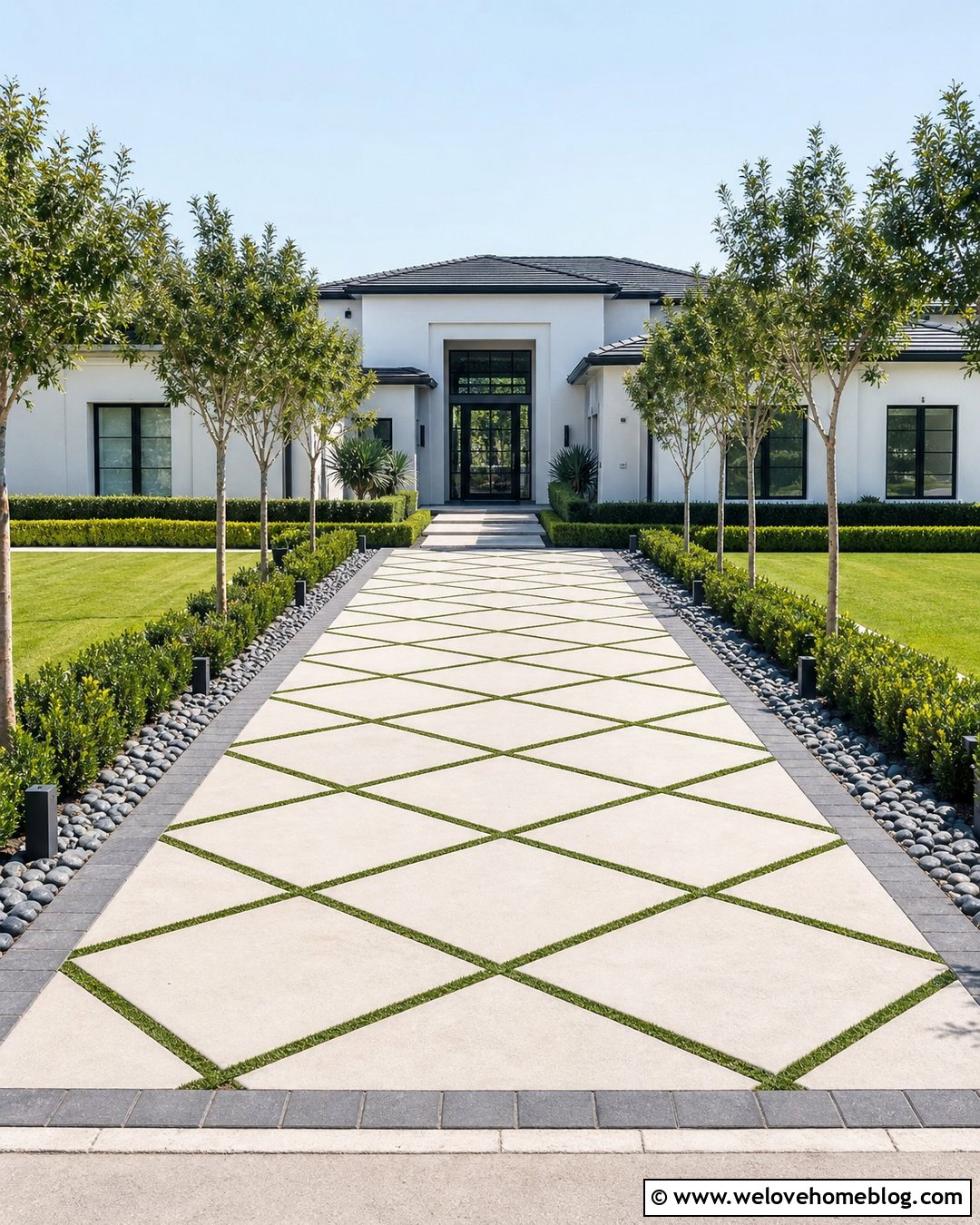
Concrete pavers turned on an angle can form a diamond pattern filled with narrow grass joints. This layout introduces movement while keeping the overall driveway orderly. Choose medium or large pavers so the pattern does not become too busy across a wide approach. A straight rectangular driveway provides the clearest background for the diagonal lines. Finish the sides with a contrasting charcoal paver border or a narrow band of river rock. Near the home, repeat one diamond motif in the walkway or entry landing to connect the spaces. Low hedges and evenly spaced ornamental trees create a calm frame around the patterned surface. This driveway is particularly effective with contemporary homes that need a softer alternative to a full expanse of plain concrete.
11. Grass Driveway With Stone Wheel Tracks
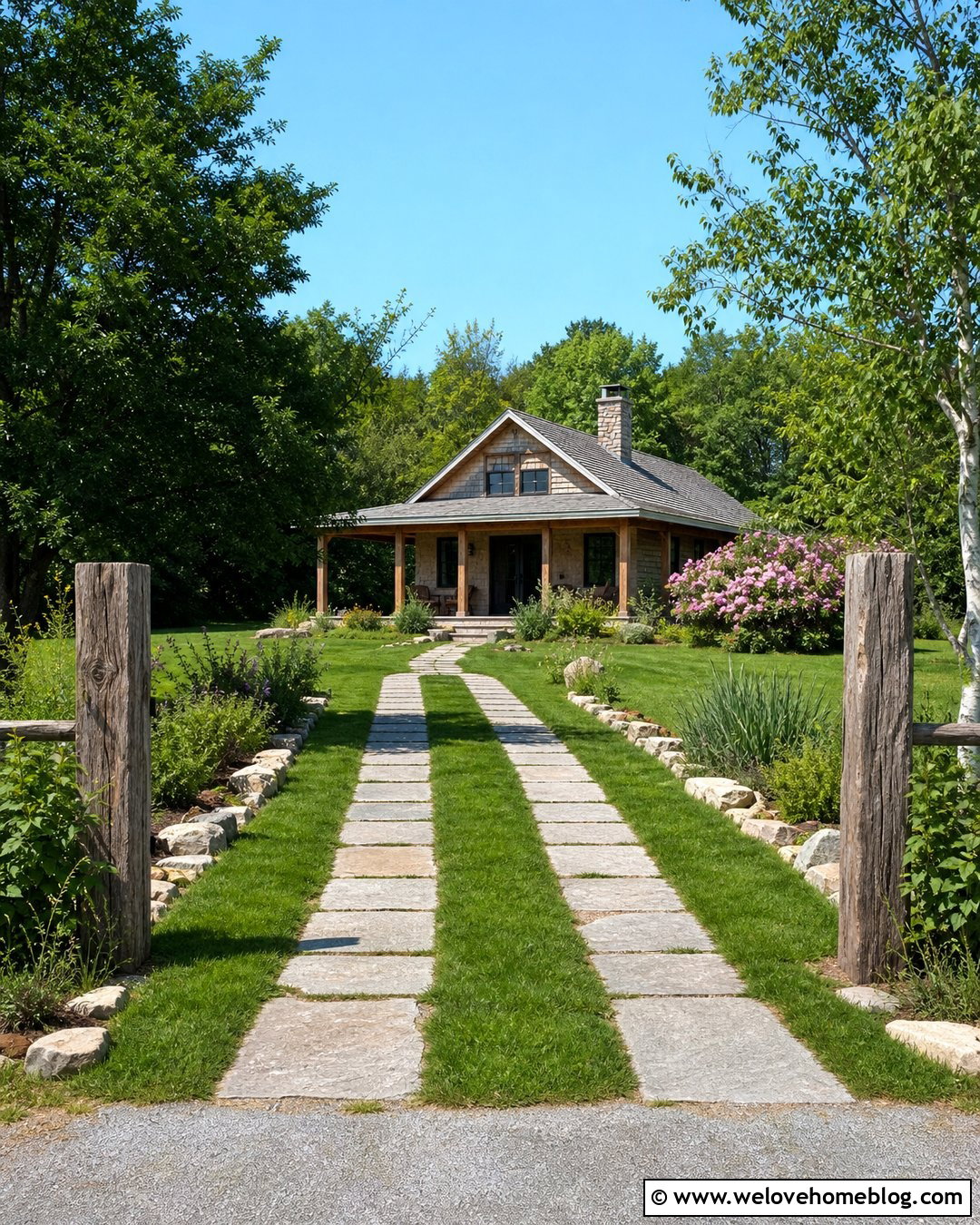
Natural stone wheel tracks create a durable route through a lawn while maintaining a rustic appearance. Use thick rectangular slabs, granite setts, or locally sourced fieldstone positioned along the expected tire paths. Reinforce the grassy center and outer strips if the driveway will receive regular traffic. Irregular stone colors help the surface blend into a cottage garden or wooded property. Define the sides with low native plantings rather than formal curbs, but leave enough open space for doors and vehicle clearance. A matching stone path can lead from the driveway toward the porch. At the entrance, two simple timber posts or low stone pillars make the route easier to identify. The completed look feels established, natural, and appropriate for an informal country setting.
12. Grass Driveway With Gravel Tracks
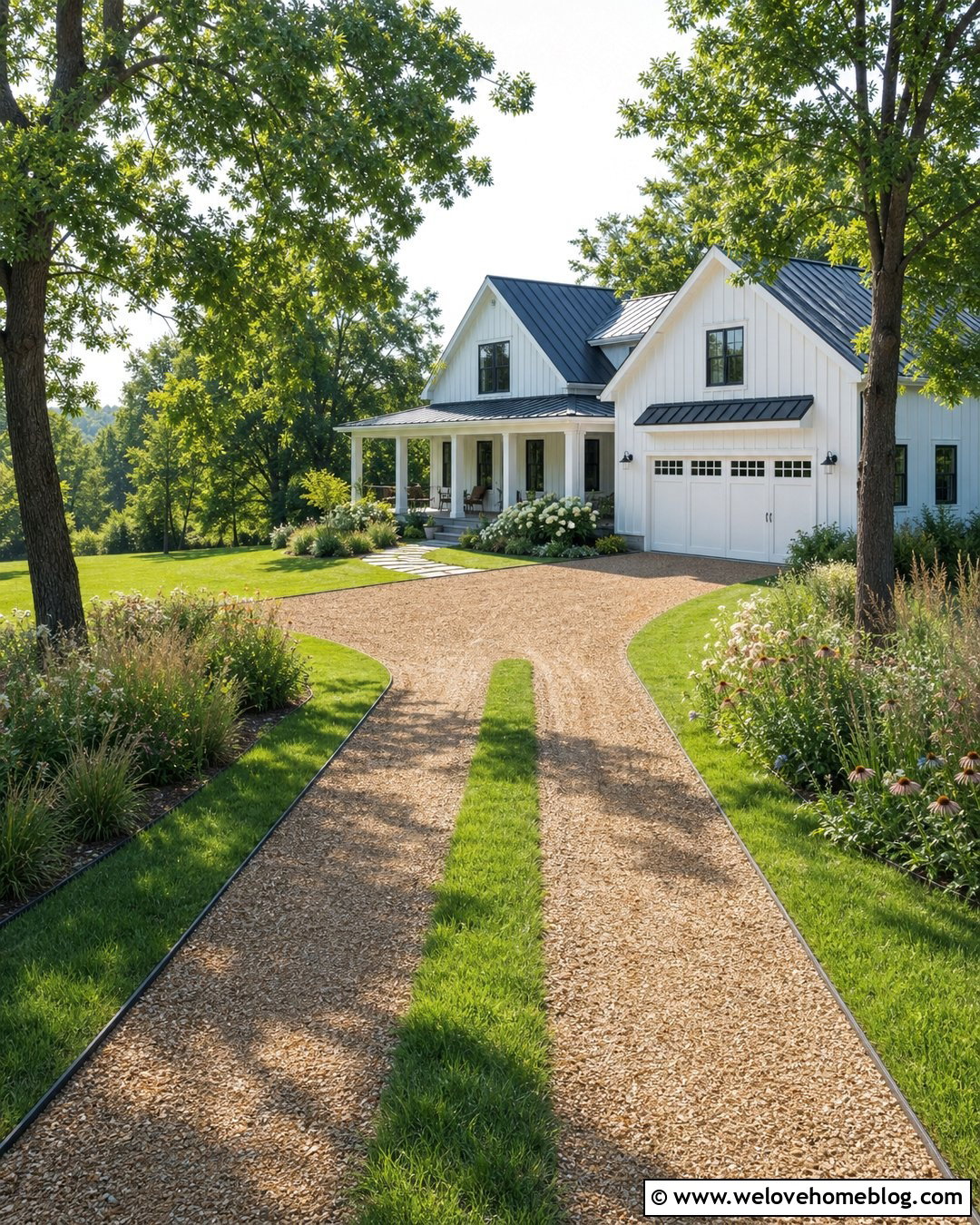
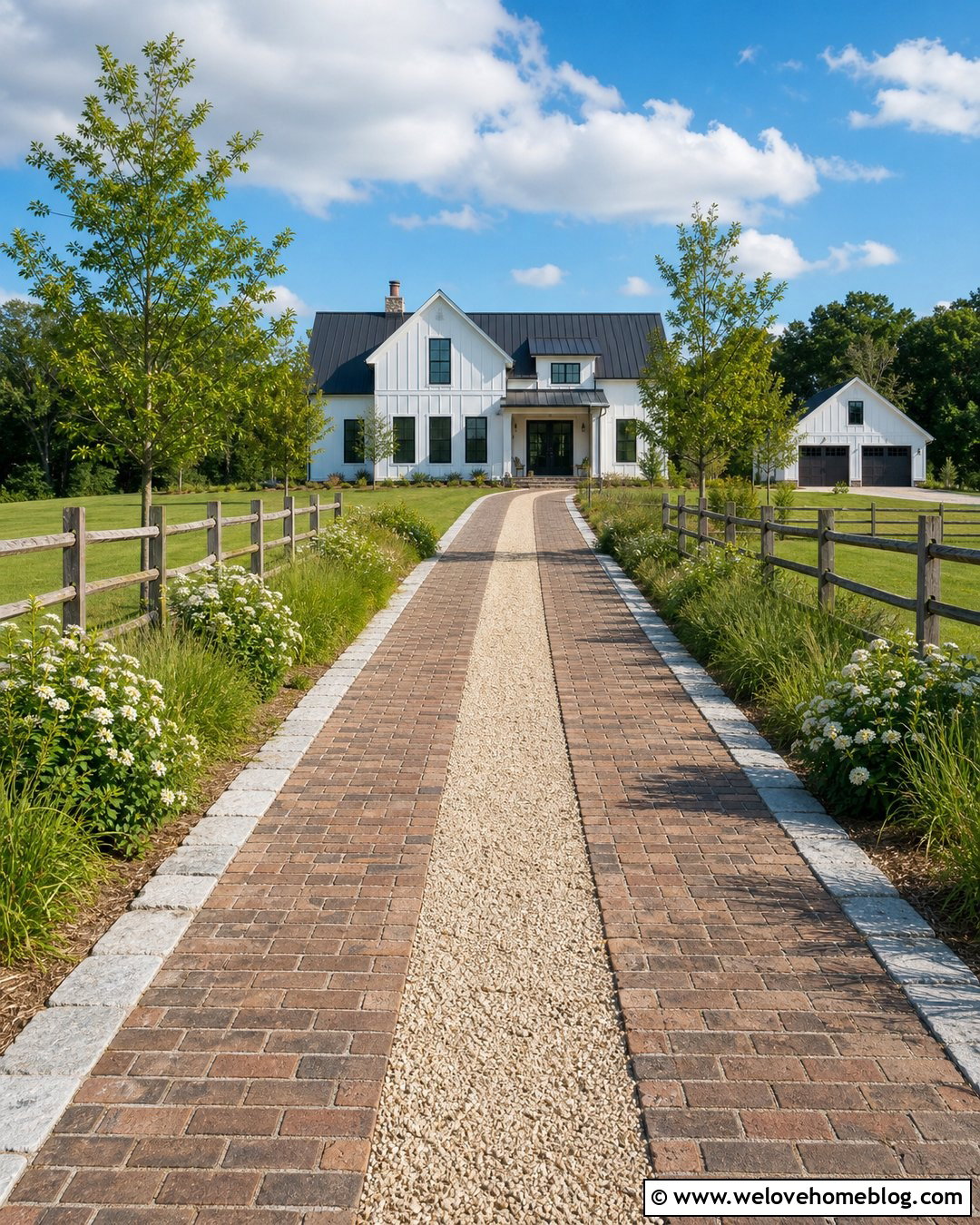
Gravel wheel tracks are a practical way to introduce texture while leaving the center and sides green. Install compacted gravel over a properly prepared base, and contain each strip with steel, brick, or stone edging. The grass between the tracks should sit close to the same finished level, creating a smooth visual transition. Choose gray crushed stone for a traditional look or warm buff gravel for a farmhouse setting. At the garage, join the tracks into a wider gravel parking pad to make turning and unloading easier. Border the approach with meadow-style planting, low shrubs, or a simple mown lawn. Avoid loose stone spilling into the turf by giving every gravel edge firm containment. This design feels casual but still offers an obvious, organized driving route.
13. Grass Driveway With Flagstone Pavers
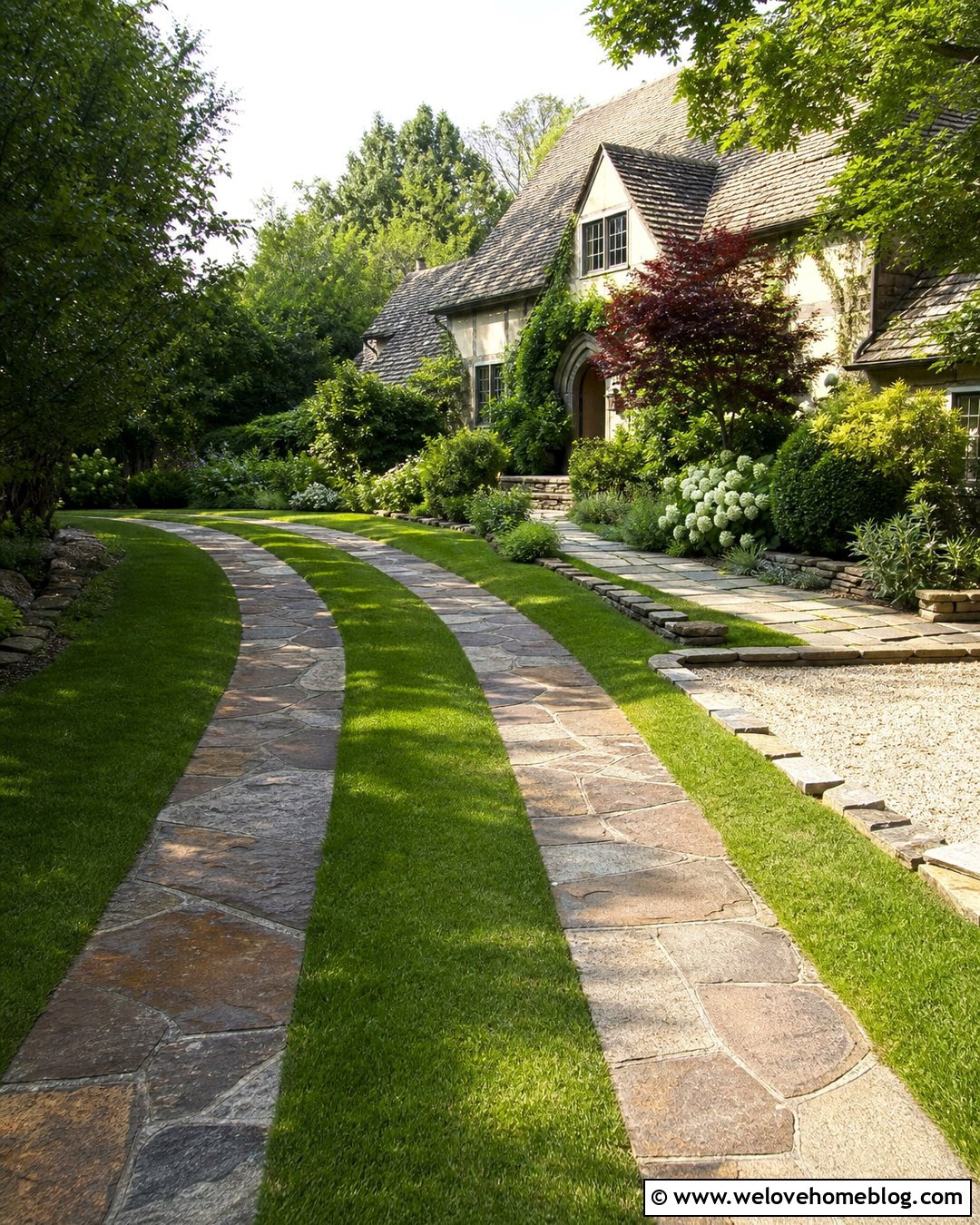
Broad flagstone slabs can create organic wheel paths through reinforced grass. Select relatively flat stones with enough thickness and strength for the intended vehicle use, then place them over a professionally prepared load-bearing base. Narrow green joints highlight each natural shape without making the surface difficult to navigate. Continue the flagstone into a front path or porch landing so the driveway feels integrated with the entrance. A curved layout works particularly well because the irregular stones follow gentle changes in direction. Frame the design with cottage planting, including compact flowering shrubs, soft perennials, and small ornamental trees. Keep plants set back from the tire route. The final look has more character than standard concrete but remains calm and cohesive when the stone colors are limited.
14. Grass Driveway With Concrete Ribbon Border
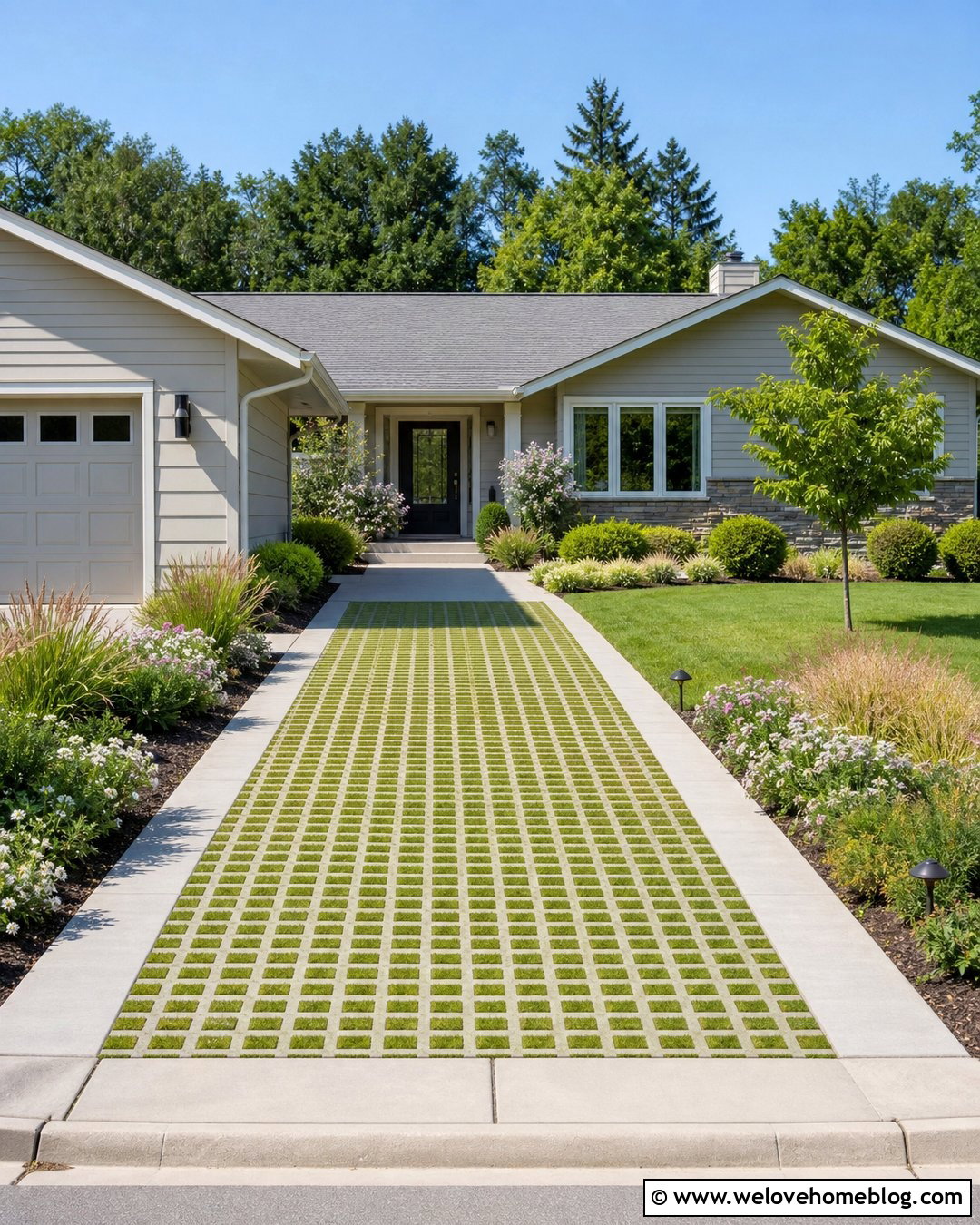
A smooth concrete ribbon around reinforced turf gives a grass driveway a precise finished outline. The border can be narrow and flush or slightly wider where pedestrians need a stable walking surface. Use it to frame a straight driveway, curved entrance, or small parking court. Light-gray concrete creates a subtle contrast, while darker concrete gives the green center more visual impact. Carry the border toward the front door as an integrated walkway, reducing the number of unrelated materials in the yard. Plant low grasses and flowering ground covers beyond the ribbon, leaving clear sightlines near the curb. This design suits contemporary ranch homes and updated suburban properties. Its restrained material palette allows the lawn and house architecture to remain the main features.
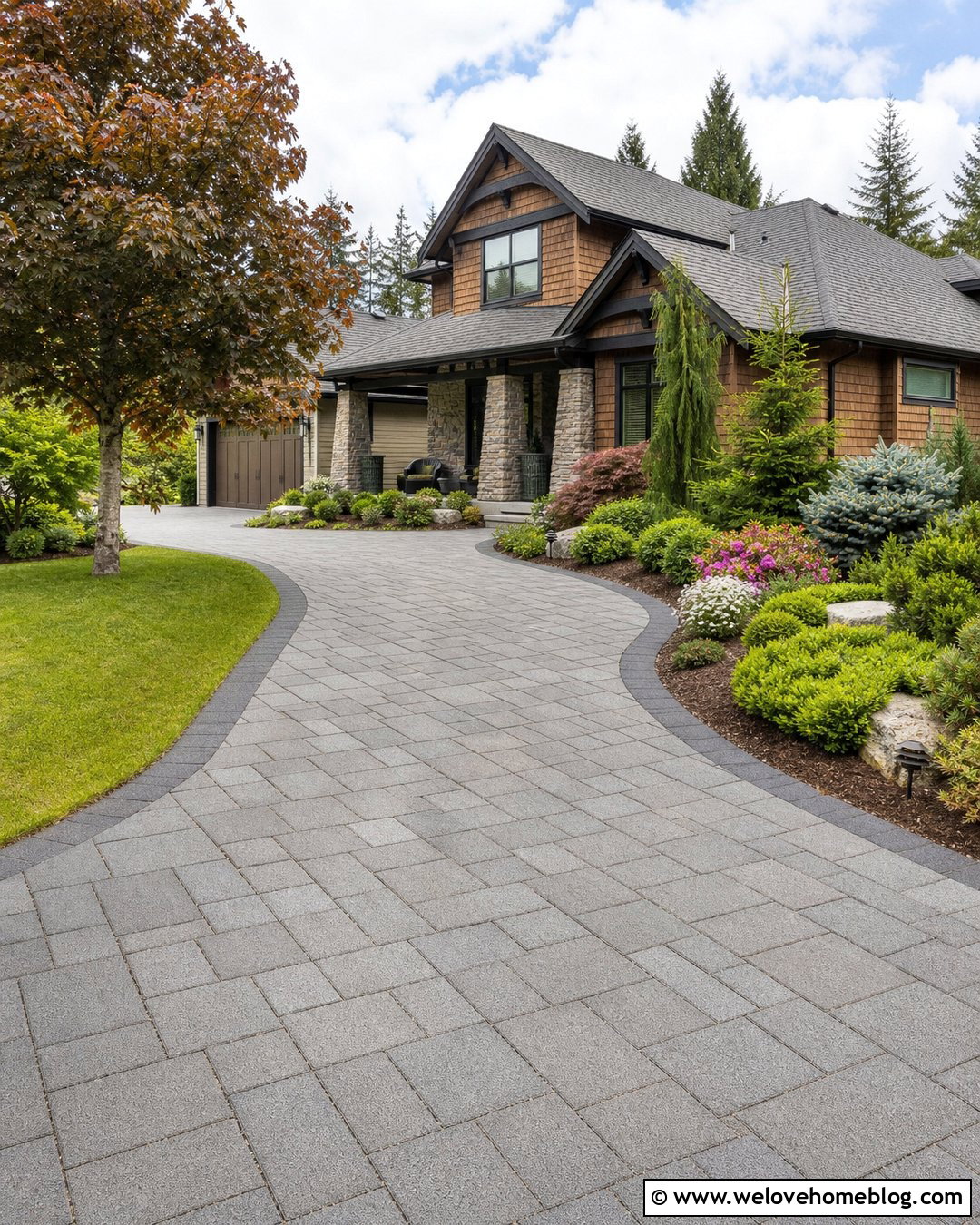
15. Narrow Grass Driveway
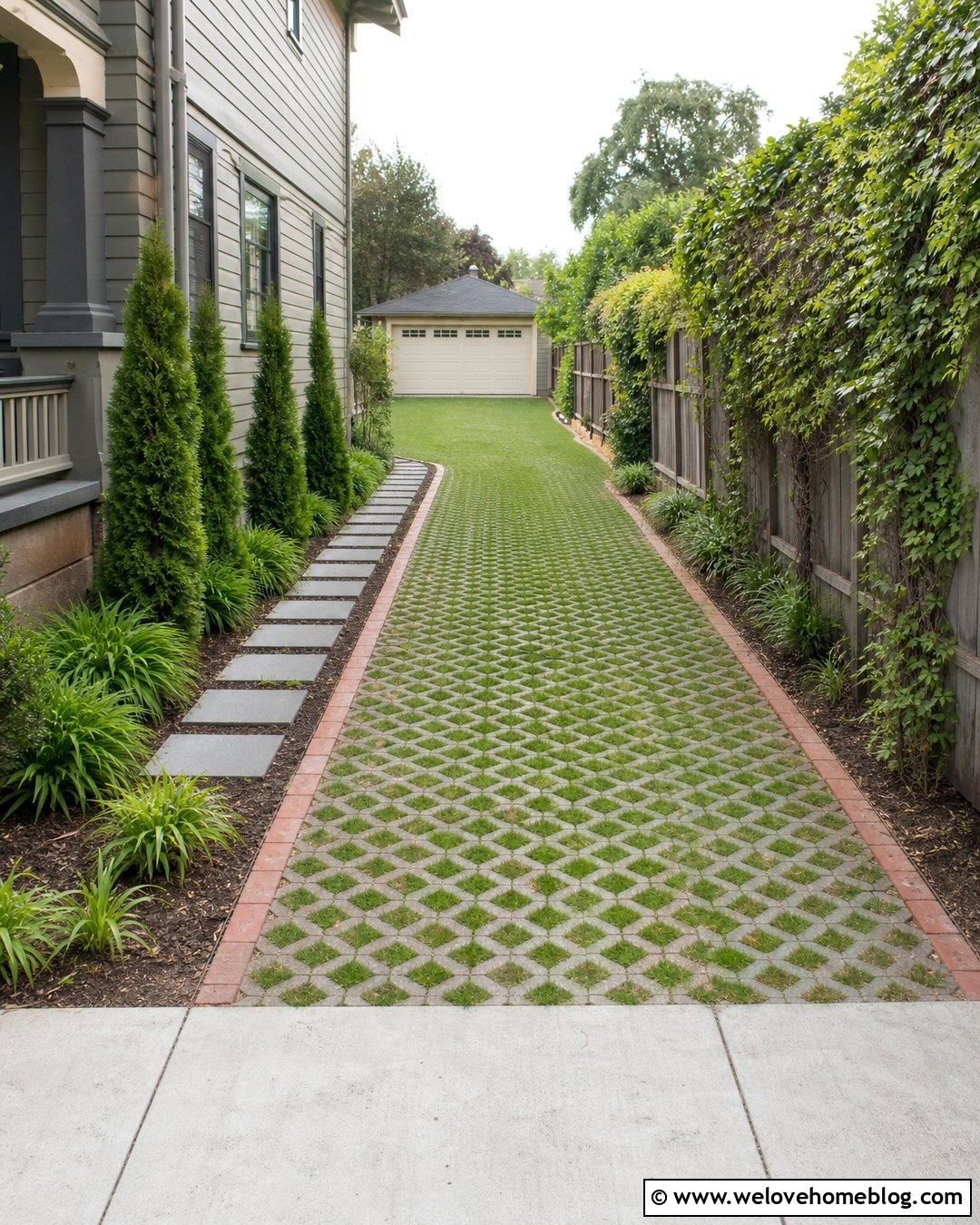
A narrow side driveway can feel wider and less confined when the driving surface remains green. Use reinforced grass cells across the full width, then add slim brick or concrete edges to protect adjacent beds and walls. Keep landscaping low and vertical, such as columnar shrubs, compact grasses, or vines trained against a fence. A line of small stepping pavers along one edge provides dry pedestrian access without using valuable driving space. Near the garage or rear parking area, gradually widen the reinforced surface rather than creating an abrupt change. Good visual organization is important in a tight area, so limit the design to two or three materials. The finished driveway should look like a deliberate green passage, not simply a lawn where vehicles happen to travel.
16. Wide Grass Driveway With Paver Bands
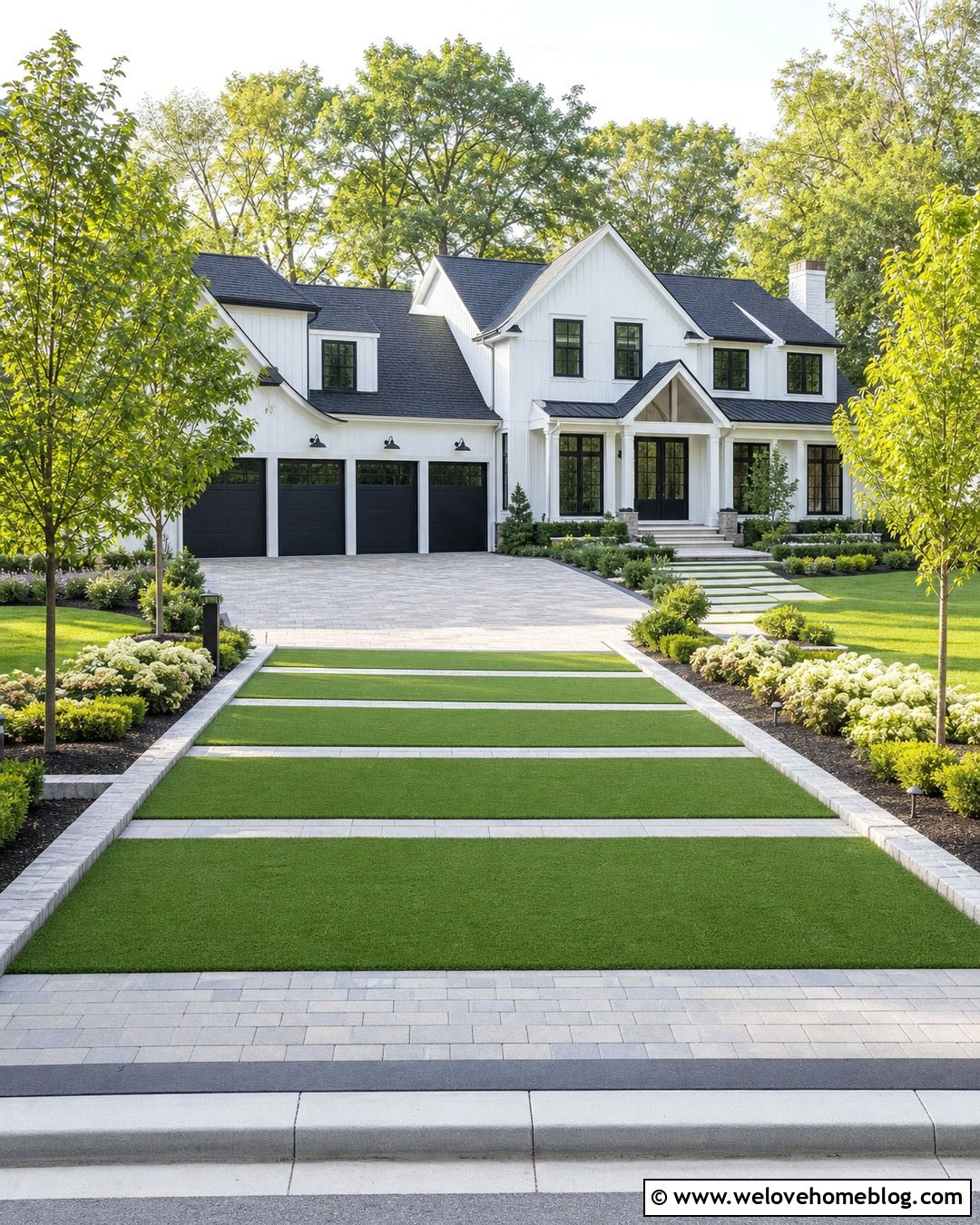
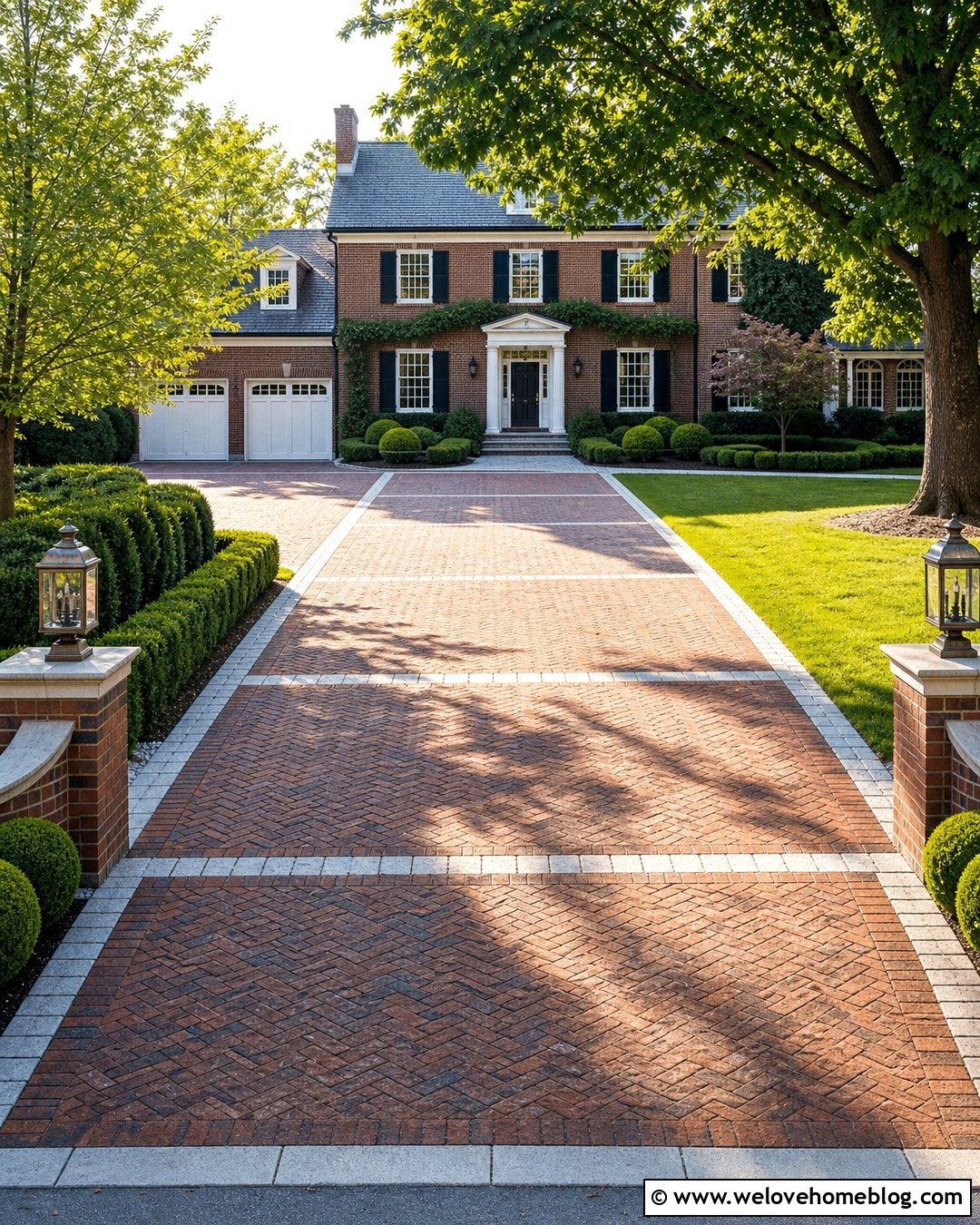
A wide driveway becomes more visually manageable when narrow paver bands divide the green surface into organized sections. Install reinforced turf as the primary material and place concrete, brick, or stone ribbons at measured intervals. The bands can run across the driveway to create a gentle rhythm or lengthwise to define wheel paths. Use a solid paved apron near the garage where turning movements are concentrated. On both sides, broad lawn panels and layered planting beds balance the driveway’s scale. Repeating the same band material around the walkway and entrance steps creates a unified front yard. This approach works particularly well for large suburban homes and modern farmhouses where a completely paved driveway could dominate the facade. The greenery keeps the arrival area softer and more residential.
17. Grass Driveway With Stepping Slabs
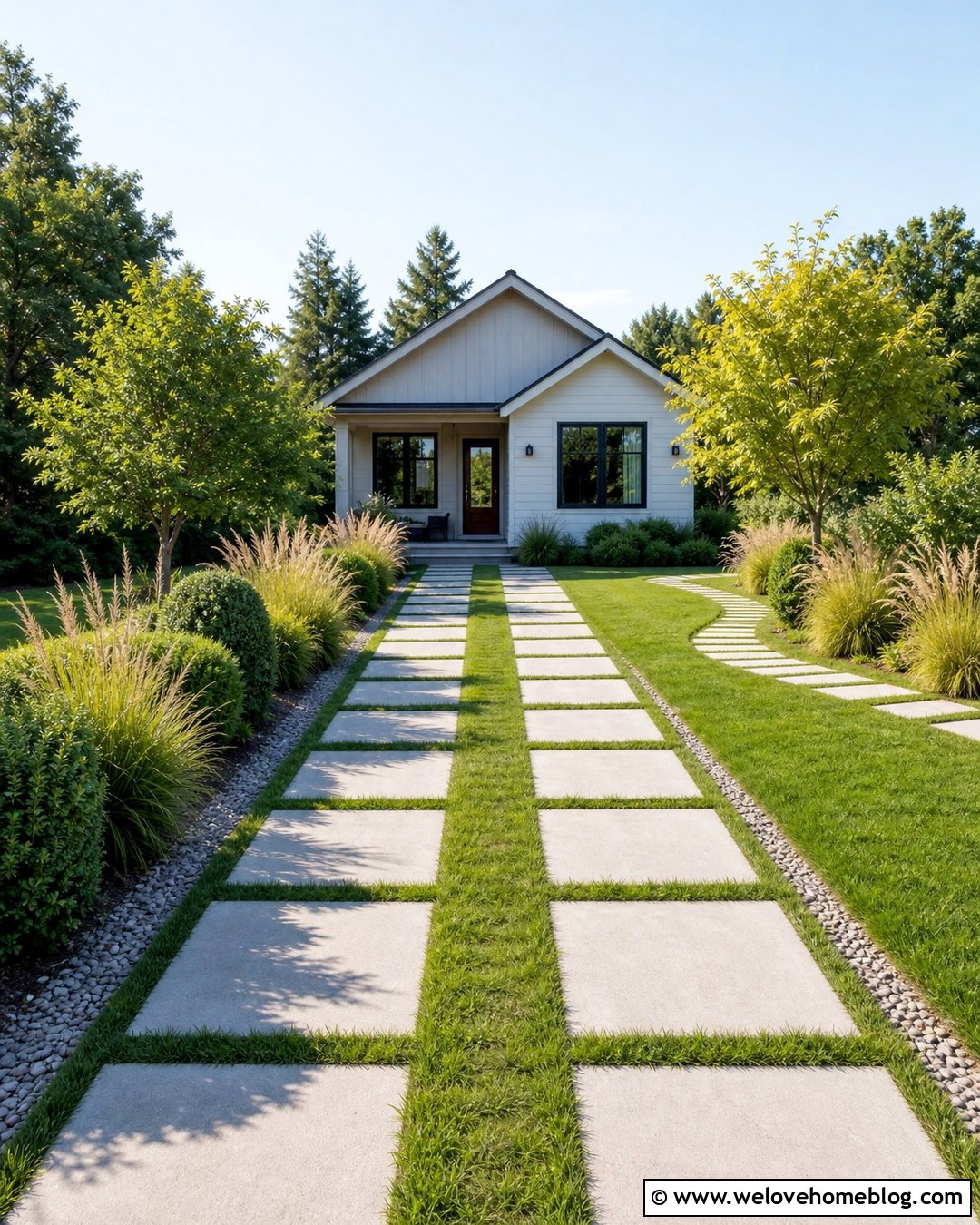
Oversized concrete stepping slabs can form a clear path for vehicles while leaving generous grass joints around every piece. Arrange the slabs in two aligned tracks instead of covering the full driveway. This reduces visual bulk and gives the entrance an informal modern character. Keep gaps consistent so the layout looks planned, and choose reinforced turf around the slabs where tires may drift. A matching pedestrian path can branch toward the front door using smaller versions of the same pavers. Along the outer edges, use simple lawn or gravel-filled drainage strips rather than decorative borders. Rounded shrubs and airy ornamental grasses soften the geometry. This complete design suits a contemporary cottage, compact modern home, or renovated ranch with clean architecture and a relaxed landscape.
18. Grass Driveway With Artificial Turf Joints
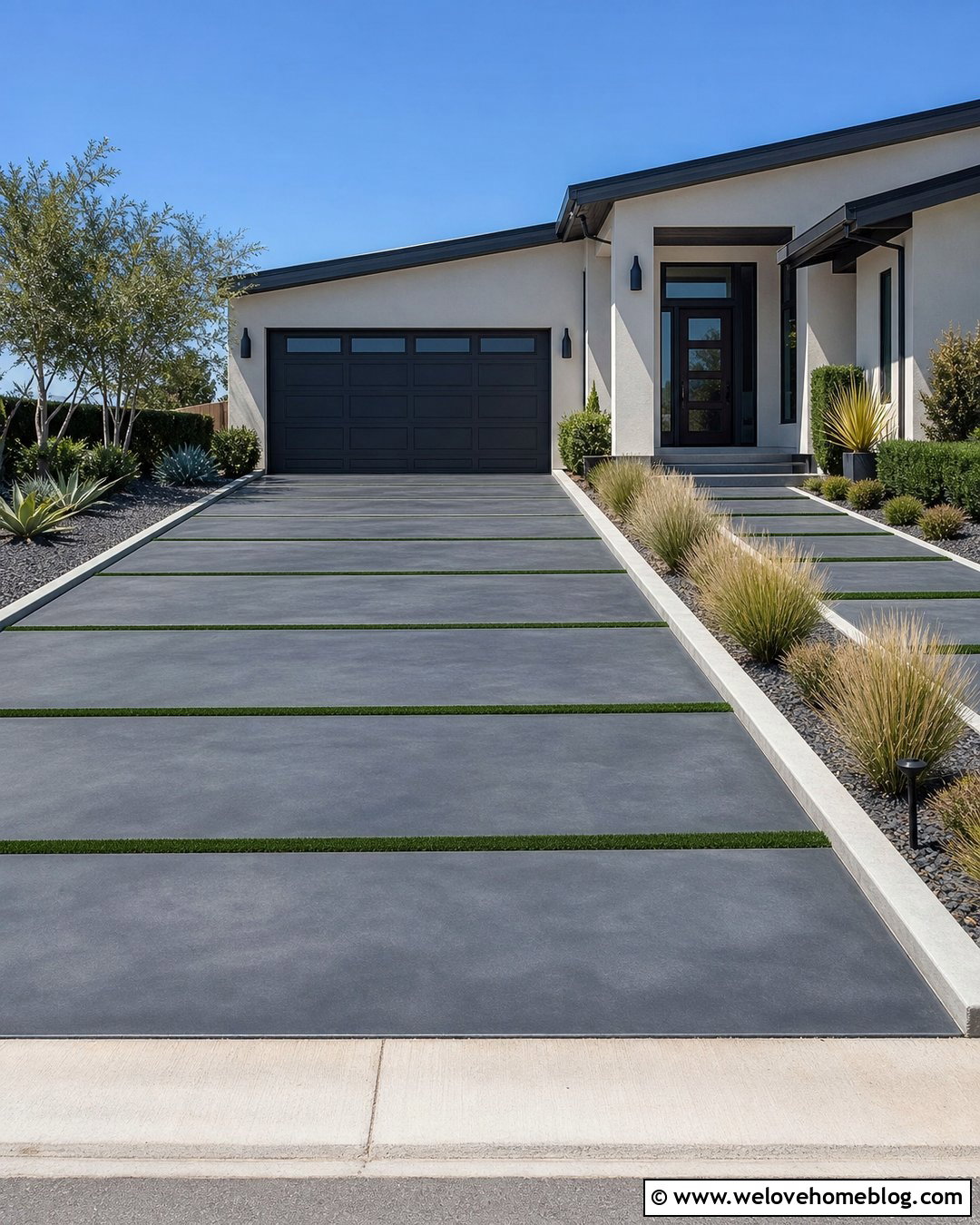
Artificial turf between concrete slabs provides a consistent green accent where maintaining living grass would be difficult. It works especially well in shaded side yards, dry climates, or small urban driveways with frequent traffic. Use high-quality turf in narrow, evenly spaced joints, and make sure the surrounding slabs provide the structural driving surface. Large rectangular pavers create a modern grid, while diagonal slabs offer a more graphic pattern. Frame the driveway with concrete curbs and drought-conscious planting, such as sculptural grasses, succulents, or clipped evergreen shrubs suited to the region. Repeat the turf joints in the front walkway for a connected design. The result should look crisp and architectural, with carefully fitted edges rather than wide patches of artificial lawn.
19. Grass Driveway With Permeable Concrete Pavers
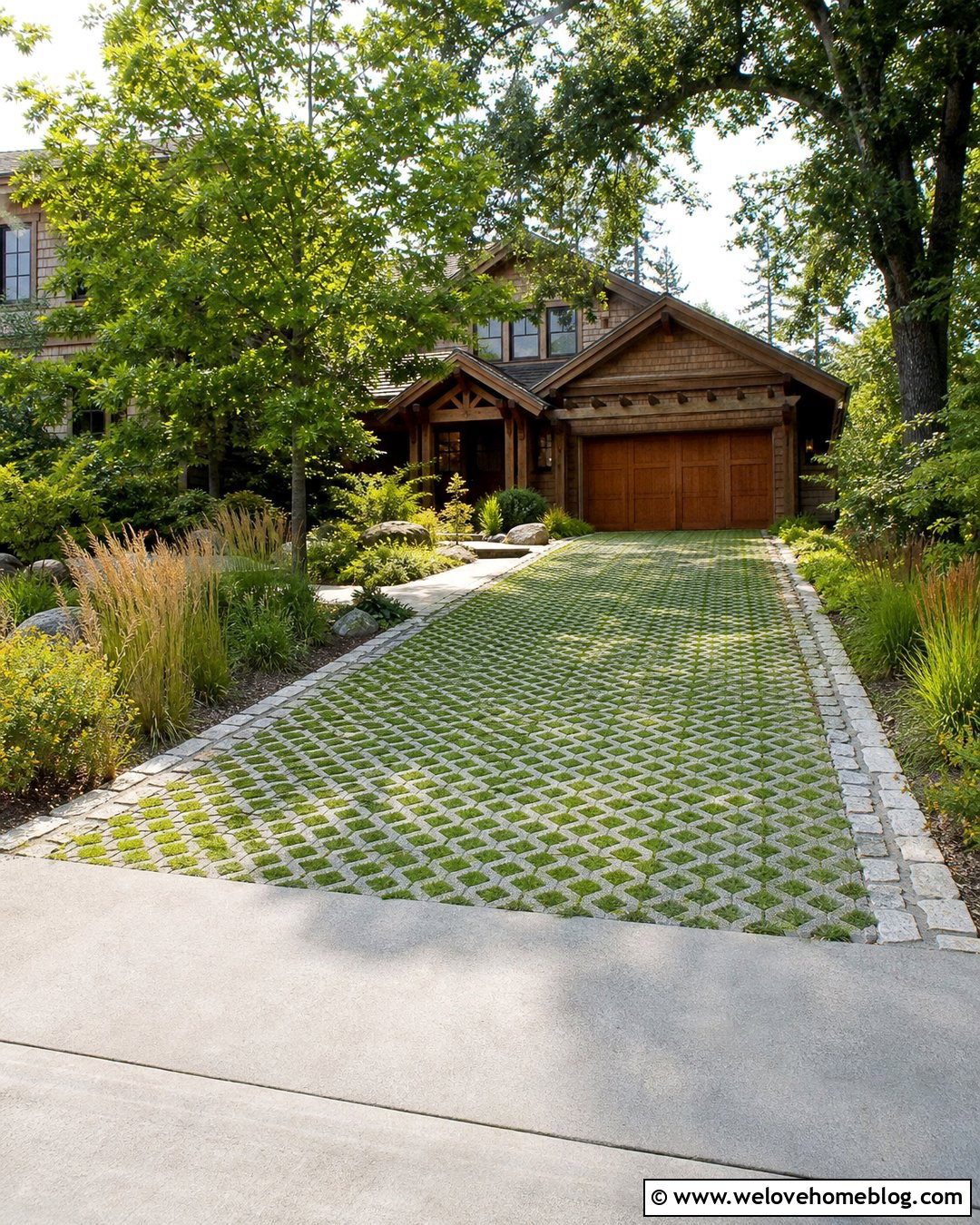
Open-cell concrete pavers combine visible structure with pockets of living grass. Their repeated shape gives the driveway a textured surface that works particularly well for parking pads, secondary entrances, and casual front approaches. Fill the cells evenly and maintain the turf at a low height so the concrete pattern stays readable. Add a solid paver apron at the road and another near the garage to create smooth transitions. A narrow stone border can contain the outer edges and separate the driveway from planting beds. Use meadow grasses, native shrubs, and a few shade trees to reinforce the natural character. The complete design feels more finished when the same concrete tone appears in the walkway, porch steps, or retaining walls around the house.
20. Grass Driveway With Timber Edging
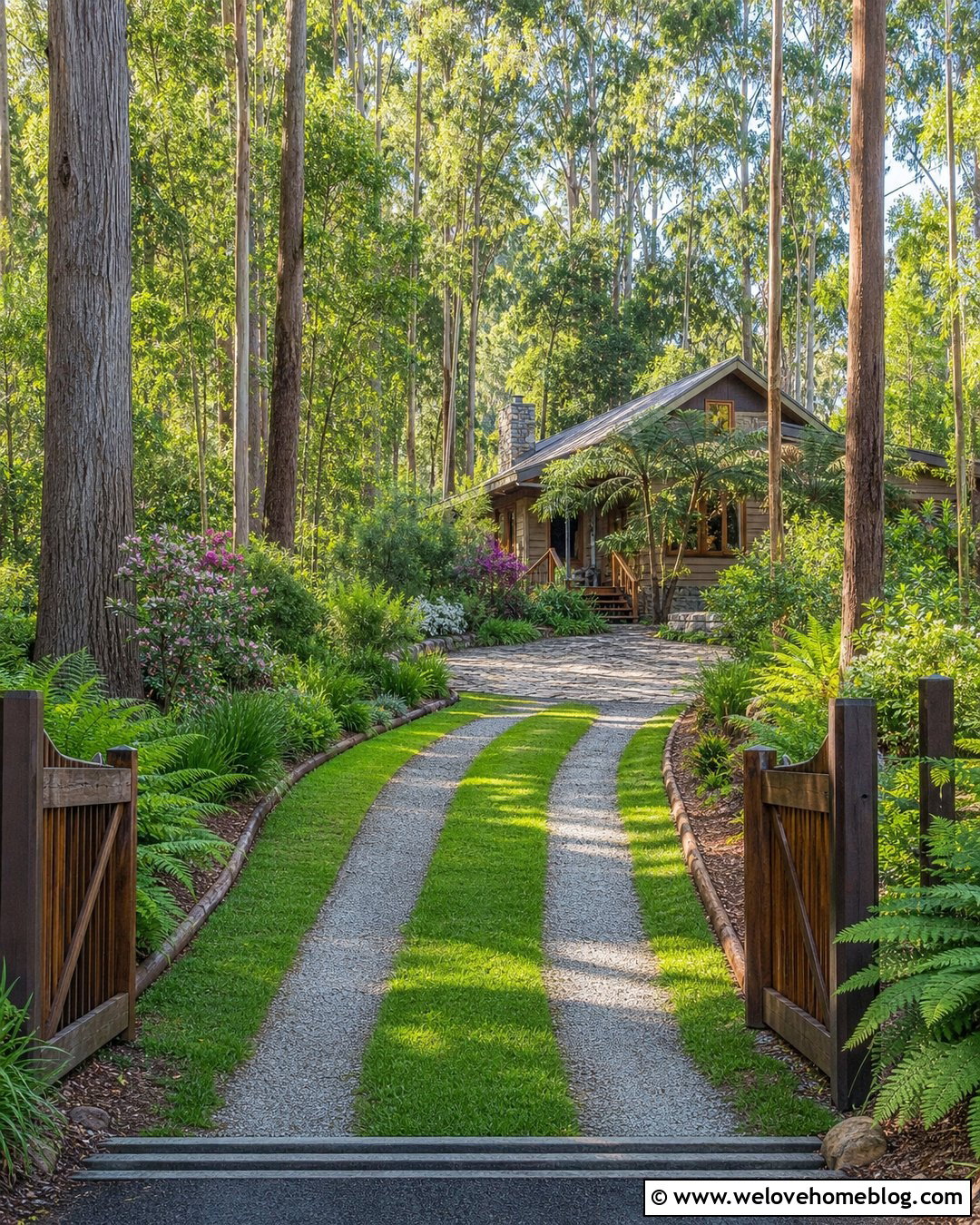
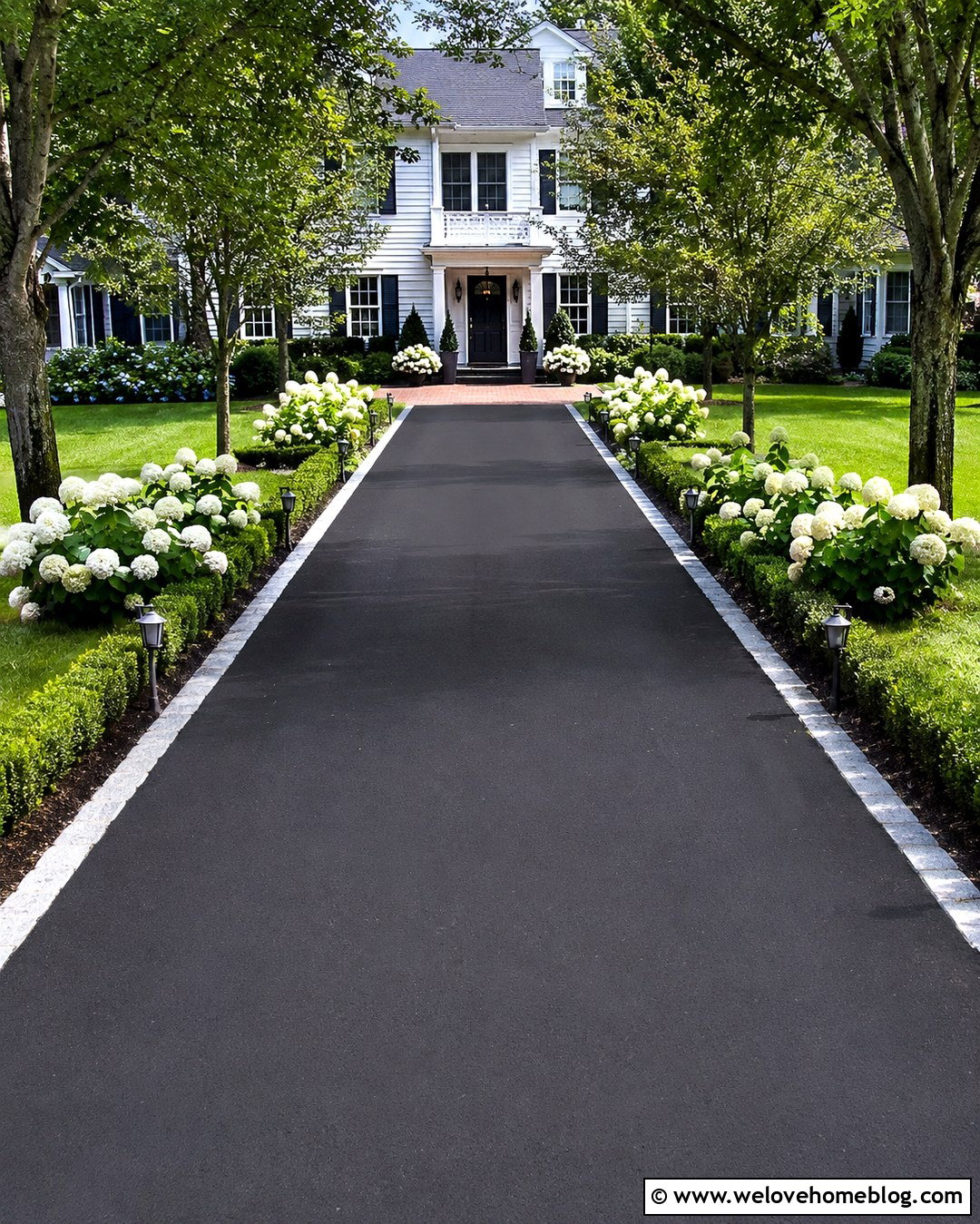
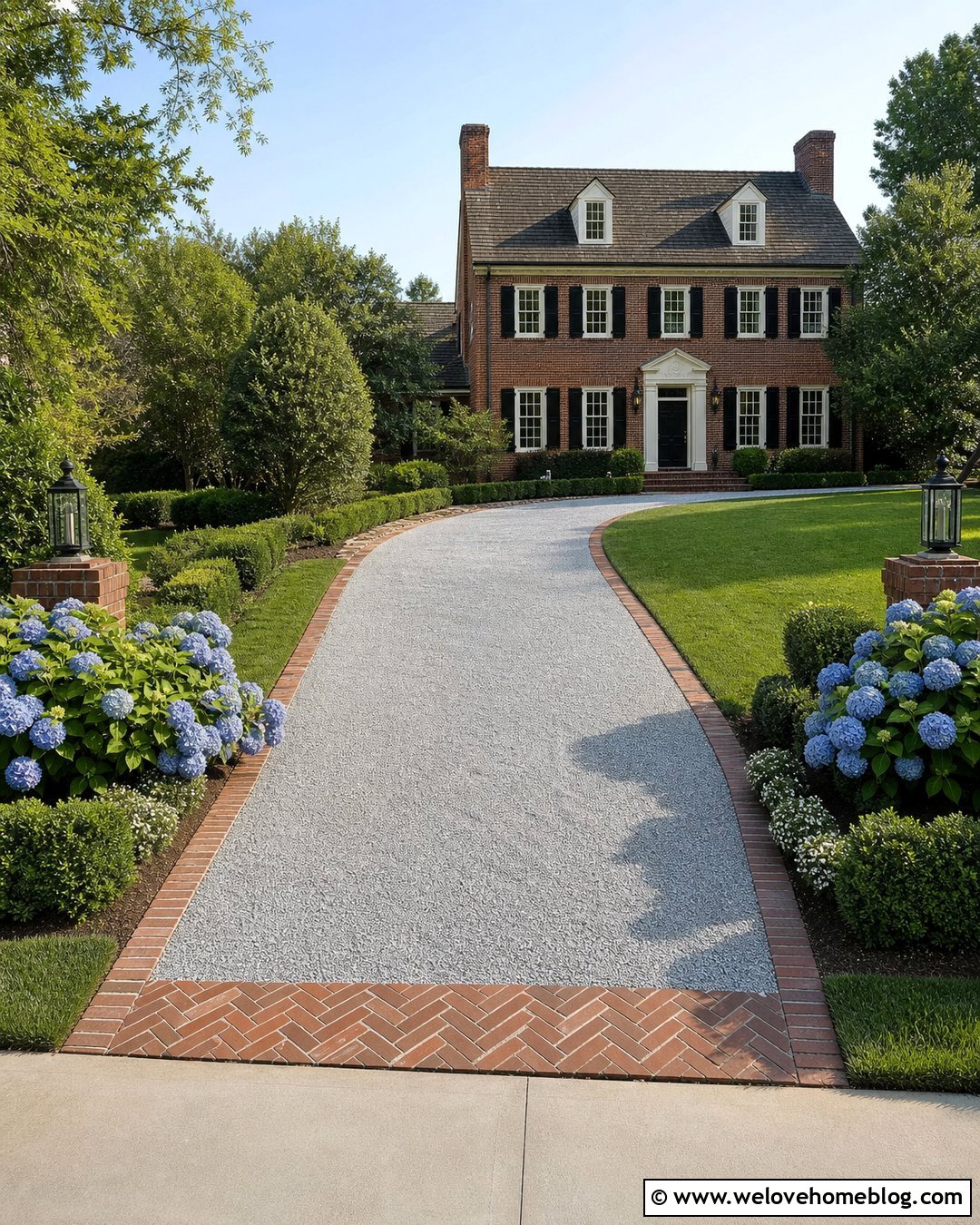
Timber edging brings a warm, rustic detail to a grass driveway, especially on rural lots and woodland properties. Use durable landscape timbers to outline reinforced turf or define gravel wheel tracks with a grassy center. Keep the timber close to ground level so it does not create a hazard beside vehicle doors or tires. A gently curving route looks natural when framed by ferns, native grasses, flowering shrubs, and existing trees. Near the house, transition to stone or concrete around the main parking area for a cleaner, more durable finish. A timber gate and simple address post can repeat the border material at the entrance. This design looks best when the wood is allowed to blend quietly with the landscape rather than becoming a large decorative feature.
21. Grass Driveway With Metal Edging
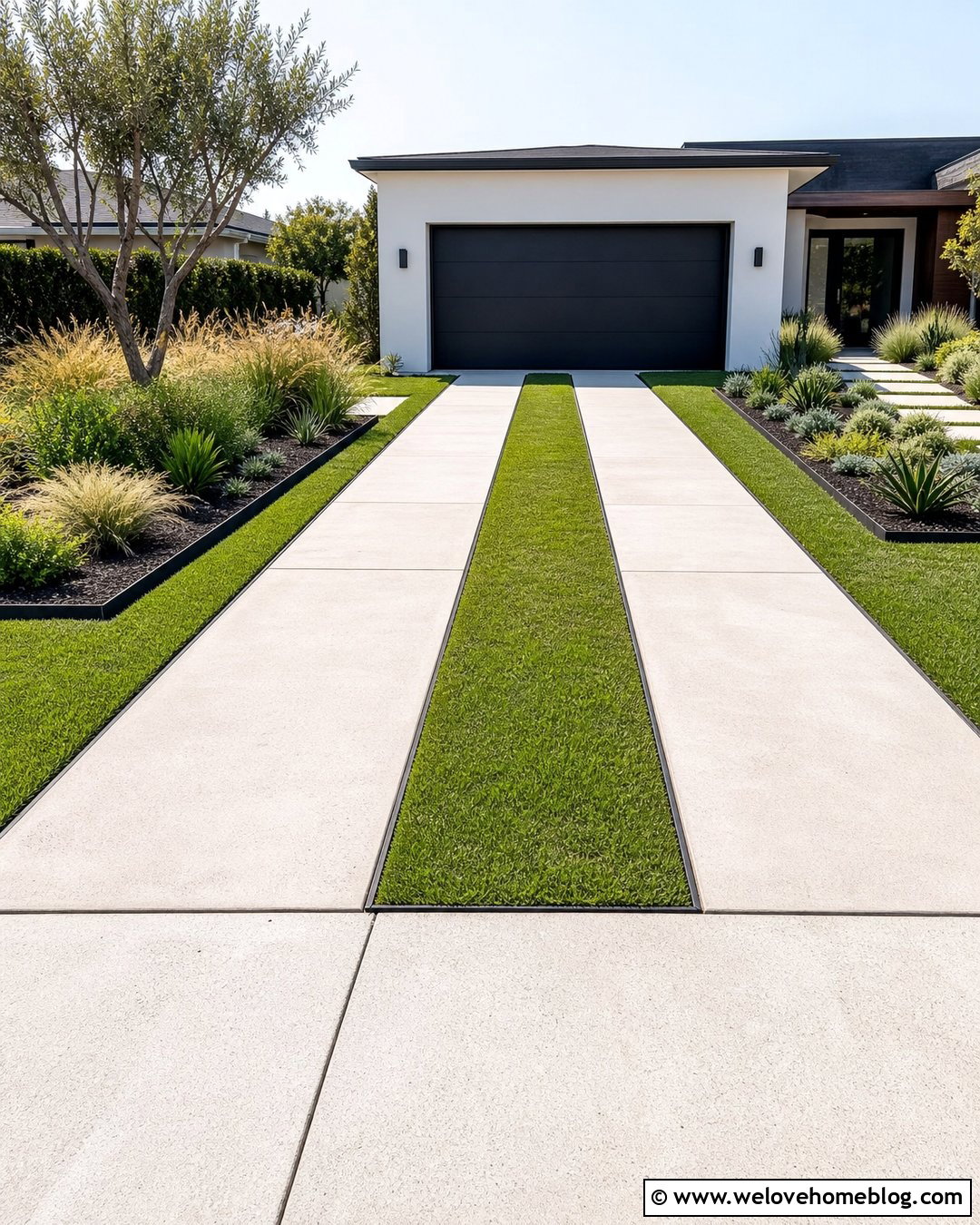
Slim steel edging creates an almost invisible boundary around a modern grass driveway. It is ideal for separating reinforced turf from gravel, planting beds, or ordinary lawn without introducing a thick contrasting border. Use weathered steel for a warm earthy line or dark powder-coated metal for a sharper contemporary finish. A straight driveway with concrete wheel tracks looks especially clean when every edge is carefully aligned. Continue the metal edging around rectangular planting beds filled with ornamental grasses, low shrubs, and a specimen tree. At the garage, add a full-width concrete threshold to handle frequent turning. The narrow border lets the surface materials meet neatly while keeping attention on the greenery, strong driveway geometry, and architecture of the home.
22. Grass Driveway With Wildflower Borders
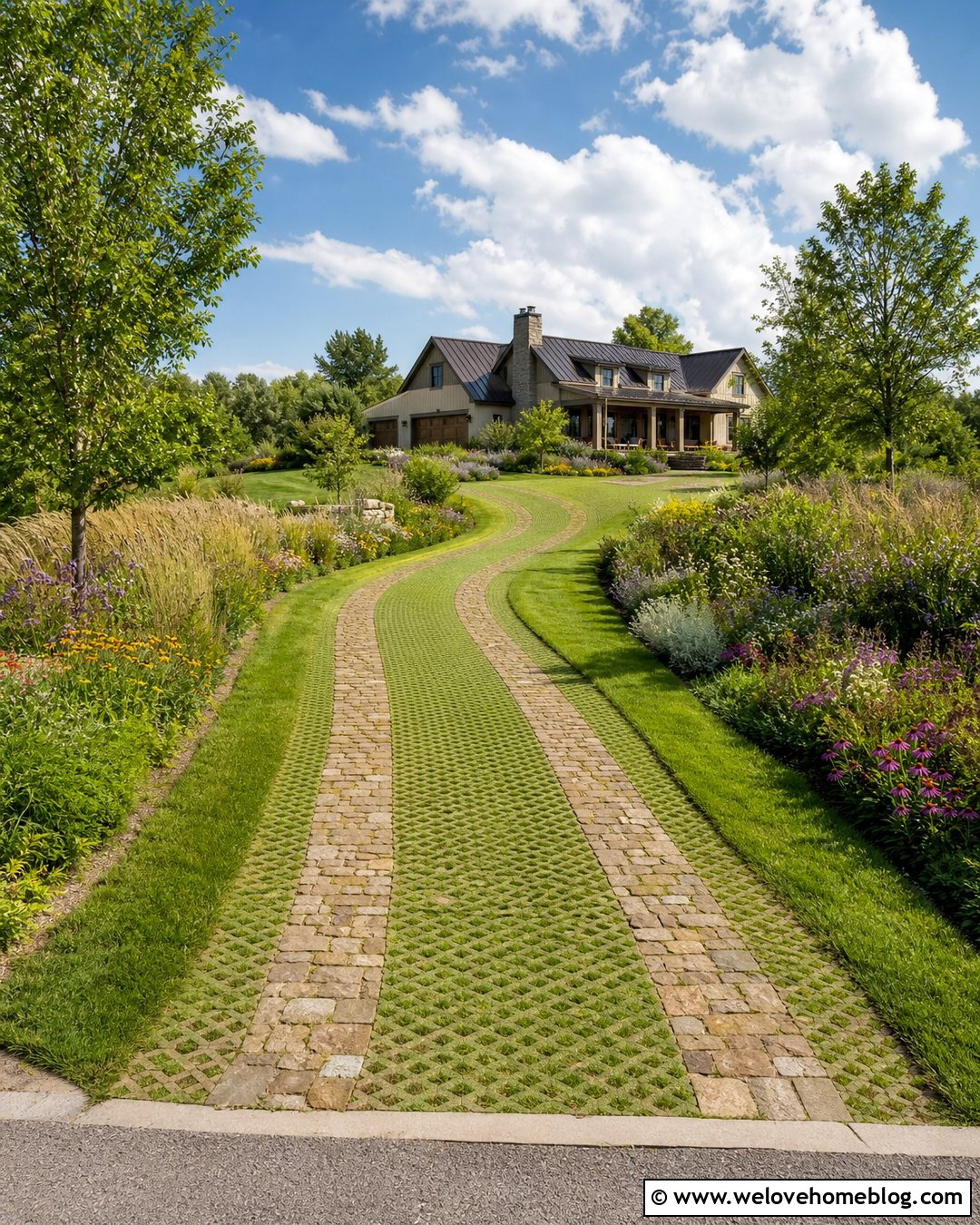
A reinforced grass driveway surrounded by wildflowers can turn a long approach into a relaxed garden experience. Keep the driving surface simple, using open-cell pavers or discreet stone wheel tracks that allow the greenery to remain dominant. Along both sides, establish broad planting bands with regionally suitable flowers, fine-textured grasses, and low native shrubs. Maintain a neatly mown strip between the driveway and taller plants so the design feels intentional and vehicle doors can open safely. A curved or gently meandering route works best for this natural layout. Near the home, transition to more organized beds and a wider parking court. The contrast between structured driving space and loose planting gives a country house, farmhouse, or cottage a welcoming sense of place.
23. Grass Driveway With Lavender Borders
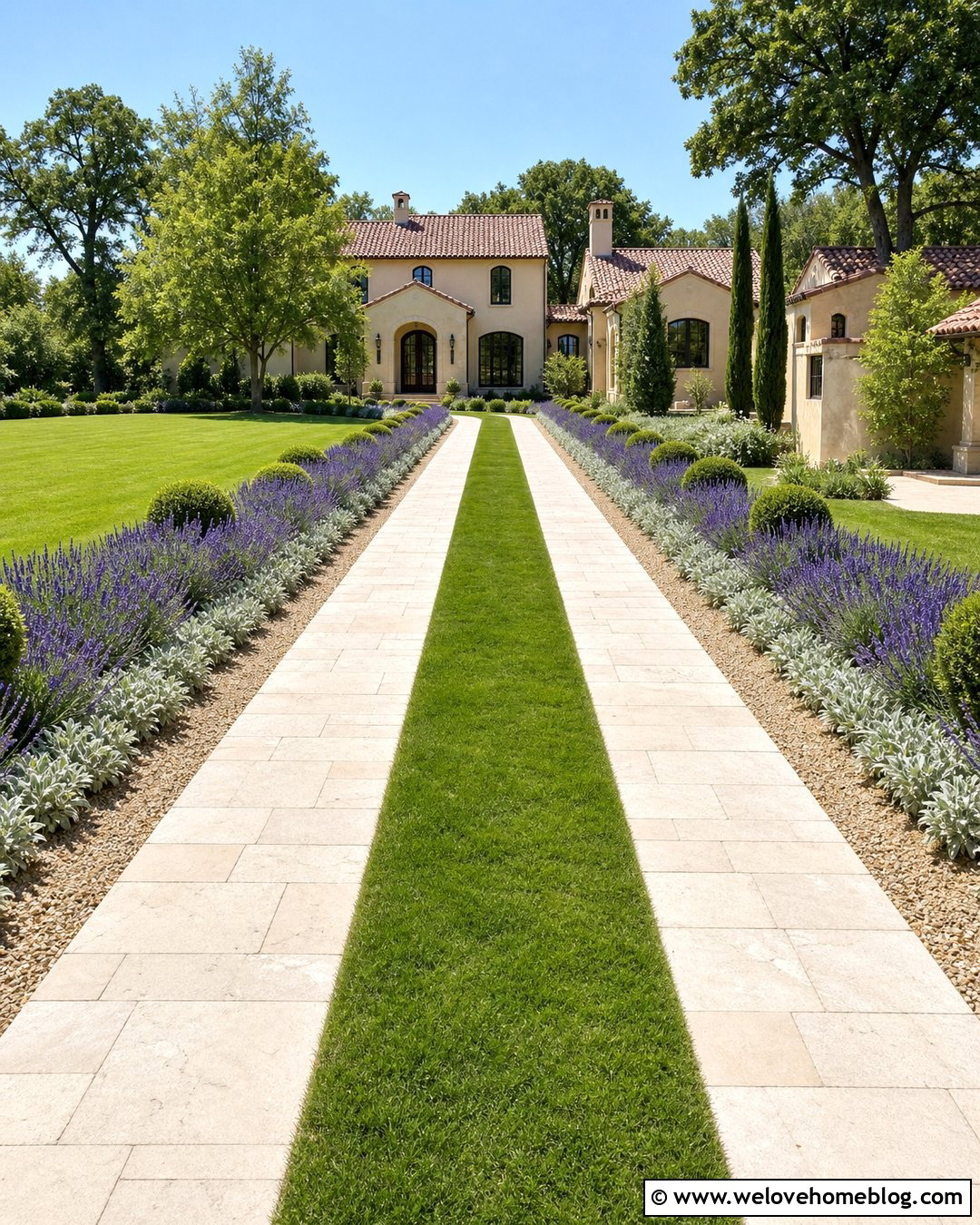
Rows of lavender can add color and a clear visual edge to a sunny grass driveway. Begin with a reinforced turf surface or concrete wheel tracks separated by grass. Then place the lavender in generous beds beyond a narrow gravel or stone buffer, keeping branches away from tires. Repeating plants in simple rows gives the entrance order without making it overly formal. Warm gravel, pale concrete, or limestone edging complements the silvery foliage and purple flowers. Include a small paved landing where the driveway meets the front walk, and repeat the lavender near the porch. This complete arrangement suits Mediterranean-inspired homes, modern farmhouses, and sunny cottages. In unsuitable climates, use another compact flowering plant that delivers a similar low, rhythmic border.
24. Grass Driveway With Boxwood Borders
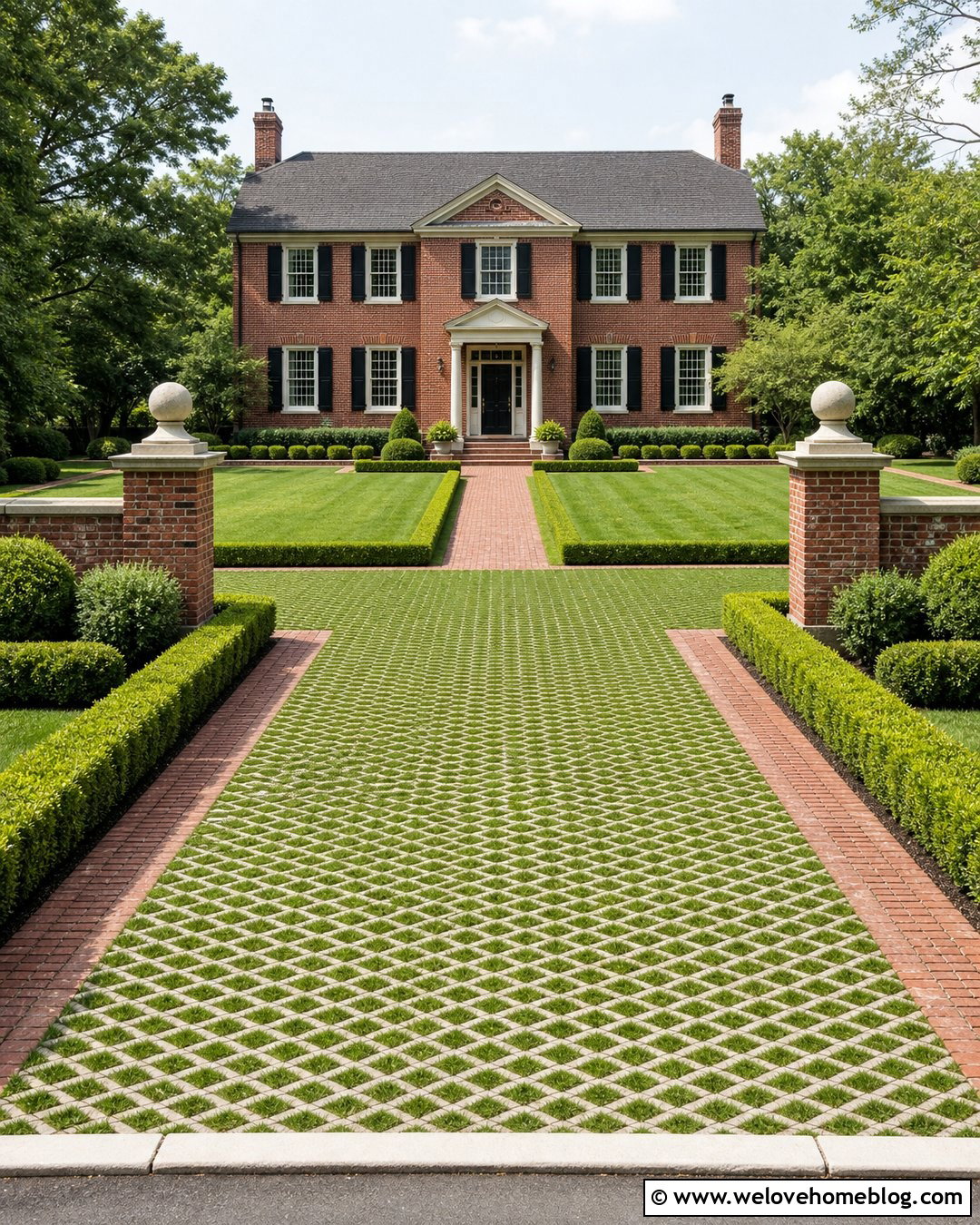
Low boxwood hedges bring formal structure to a green driveway and work especially well with symmetrical architecture. Use reinforced grass pavers for the driving route, then install a slim brick mowing strip before the hedge begins. The brick provides separation and protects plants from tires while connecting the landscaping to a colonial or traditional brick facade. Keep the hedge low enough to preserve visibility and allow passengers to open doors comfortably. At the curb, widen the beds around matching brick or stone entrance pillars. Near the house, guide the driveway into a rectangular parking court edged with the same clipped greenery. Add balanced foundation shrubs and a straight walkway to complete the composition. The result feels polished, calm, and intentionally tied to the home.
25. Grass Driveway With Ornamental Grass Borders
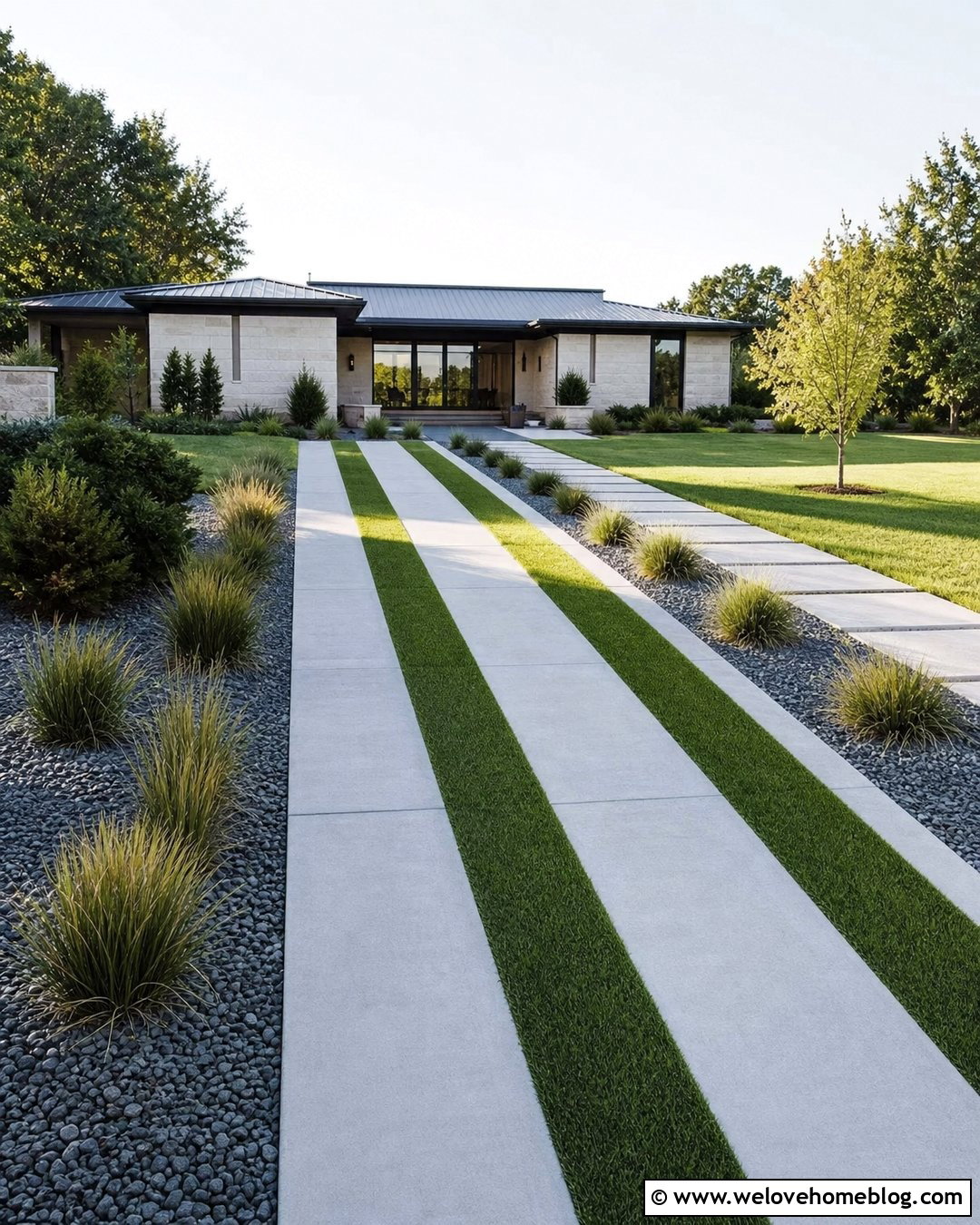
Ornamental grasses create movement around a structured grass driveway without requiring a formal hedge. Choose compact varieties that will not flop into the driving area, and place them behind a flush paver or gravel border. A concrete-and-grass strip driveway provides a useful contrast between rigid lines and soft planting. Arrange the ornamental grasses in broad repeated groups rather than isolated clumps. Add a few evergreen shrubs and one small tree to provide structure throughout the yard. This design works well with modern, coastal, prairie-inspired, and midcentury homes. Keep planting lower near the street and taller toward the house to protect visibility. A coordinated concrete walkway and simple porch planting can carry the same clean, natural balance to the front entrance.
26. Grass Driveway With Tree-Lined Entrance
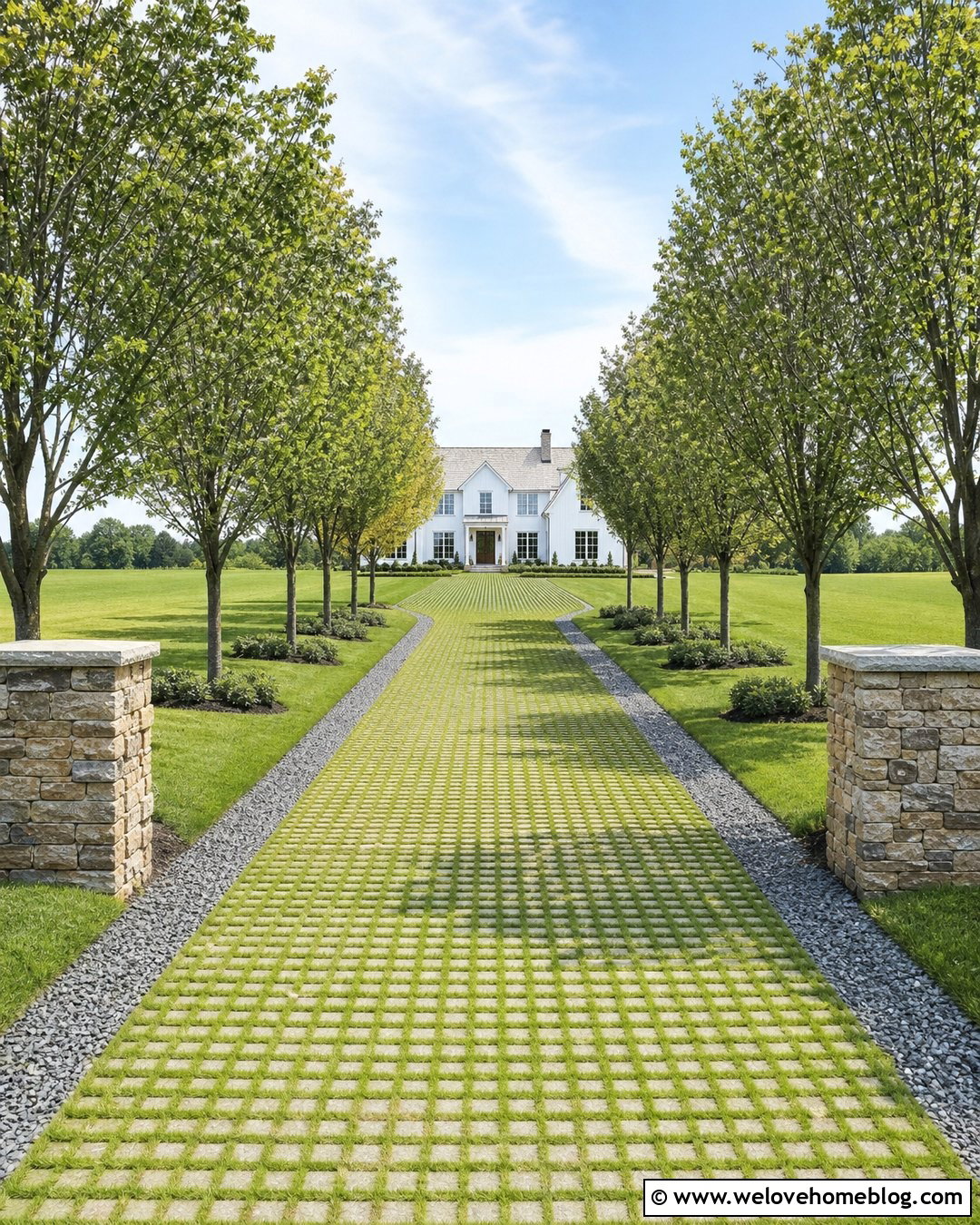
A long grass driveway becomes more memorable when evenly spaced trees frame the approach. Use reinforced turf grids across the driving surface and define both edges with narrow gravel drainage bands. Plant trees far enough from the driveway to protect roots, maintain clear vehicle space, and allow mature canopies to develop naturally. A straight layout creates a strong formal view toward the house, while a gentle curve reveals the property gradually. Underplant the trees with lawn or simple ground cover rather than crowded flower beds. At the street, low stone pillars can mark the entrance without blocking the tree-lined perspective. Near the house, widen the driveway into a grass-paver turning area surrounded by restrained shrubs. The overall effect feels green, established, and impressively cohesive.
27. Grass Driveway With Stone Entrance Pillars
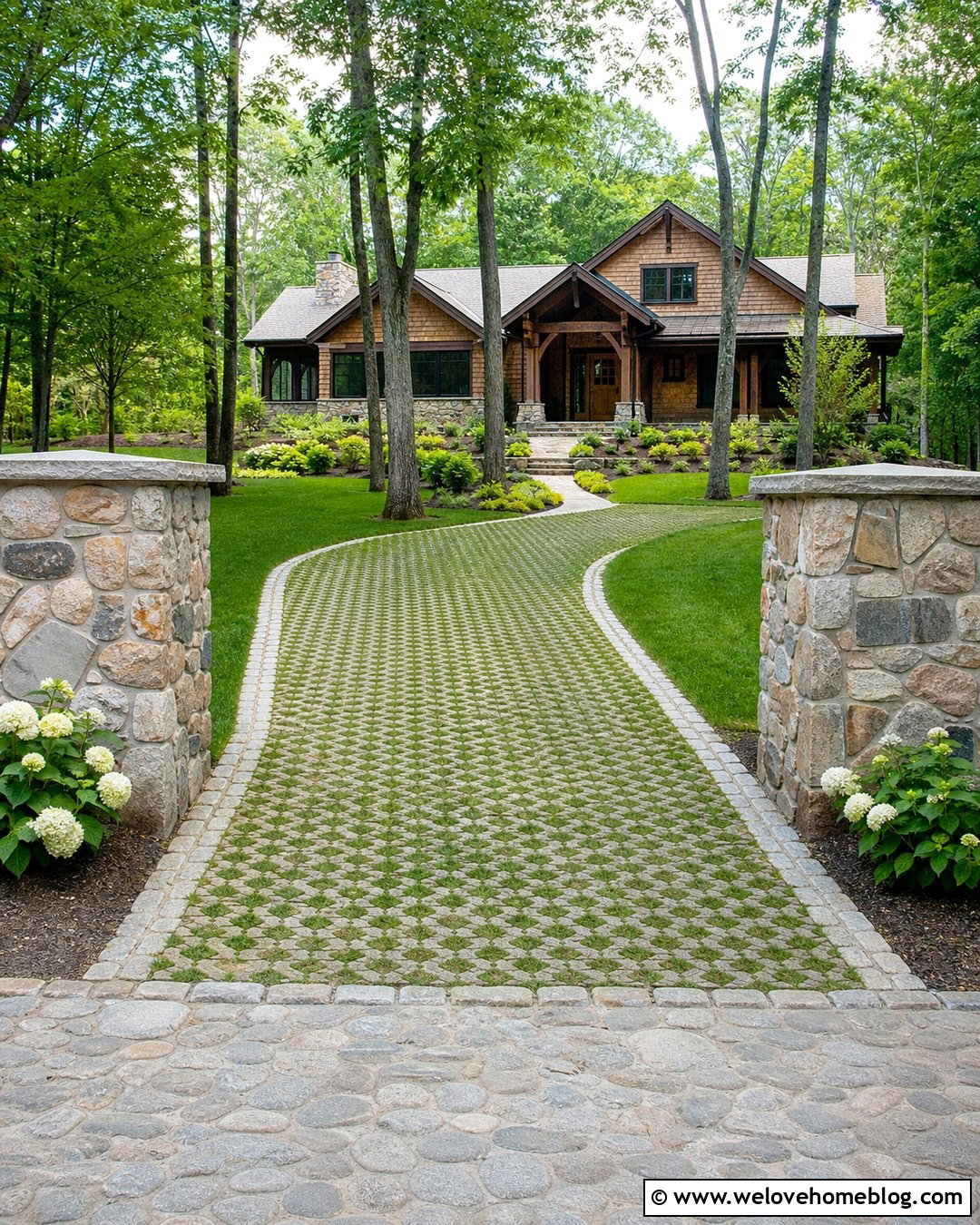
Stone entrance pillars give a grass driveway a visible starting point and help a soft surface feel intentionally designed. Choose stone that relates to the house foundation, chimney, or nearby retaining walls. Between the pillars, use reinforced grass pavers with a solid stone or concrete apron at the road. Continue a narrow cobblestone edge along the driveway to visually connect the entrance with the route. Low shrubs and flowering perennials can soften each pillar, but keep plants clear of sightlines and gate hardware. For a country or craftsman house, a slightly curved driveway adds an inviting sense of movement. Include understated address numbers on one pillar and place a coordinated walkway near the home. The finished entrance feels substantial without requiring a fully paved approach.
28. Grass Driveway With Farmhouse Gate
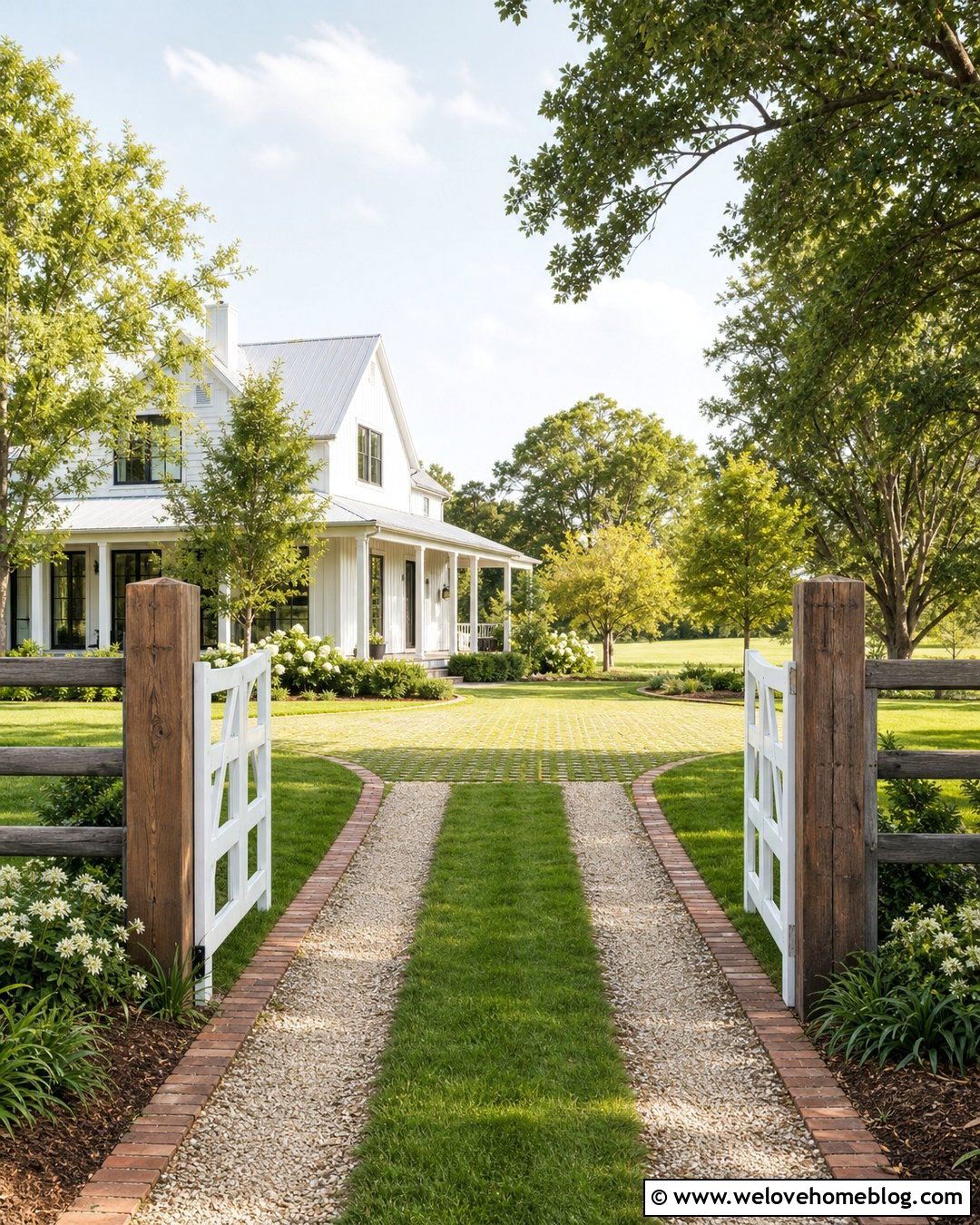
A simple farmhouse gate can anchor a long green driveway and make the property entrance easier to recognize. Use reinforced turf for the main surface, paired with gravel wheel tracks or a flush stone border for definition. White timber, natural wood, or dark metal gates all work, depending on the house facade and fencing. Set the gate between sturdy posts with enough width and clearance for comfortable vehicle access. Beyond it, line the driveway with mown lawn, scattered shade trees, and relaxed planting beds. Near the house, transition into a wider grass-grid parking court edged with reclaimed brick. The gate, driveway, fence, and landscape should share a restrained rural palette. This creates farmhouse character without relying on excessive decorative signs or unrelated rustic accessories.
29. Grass Driveway With Low Landscape Lighting
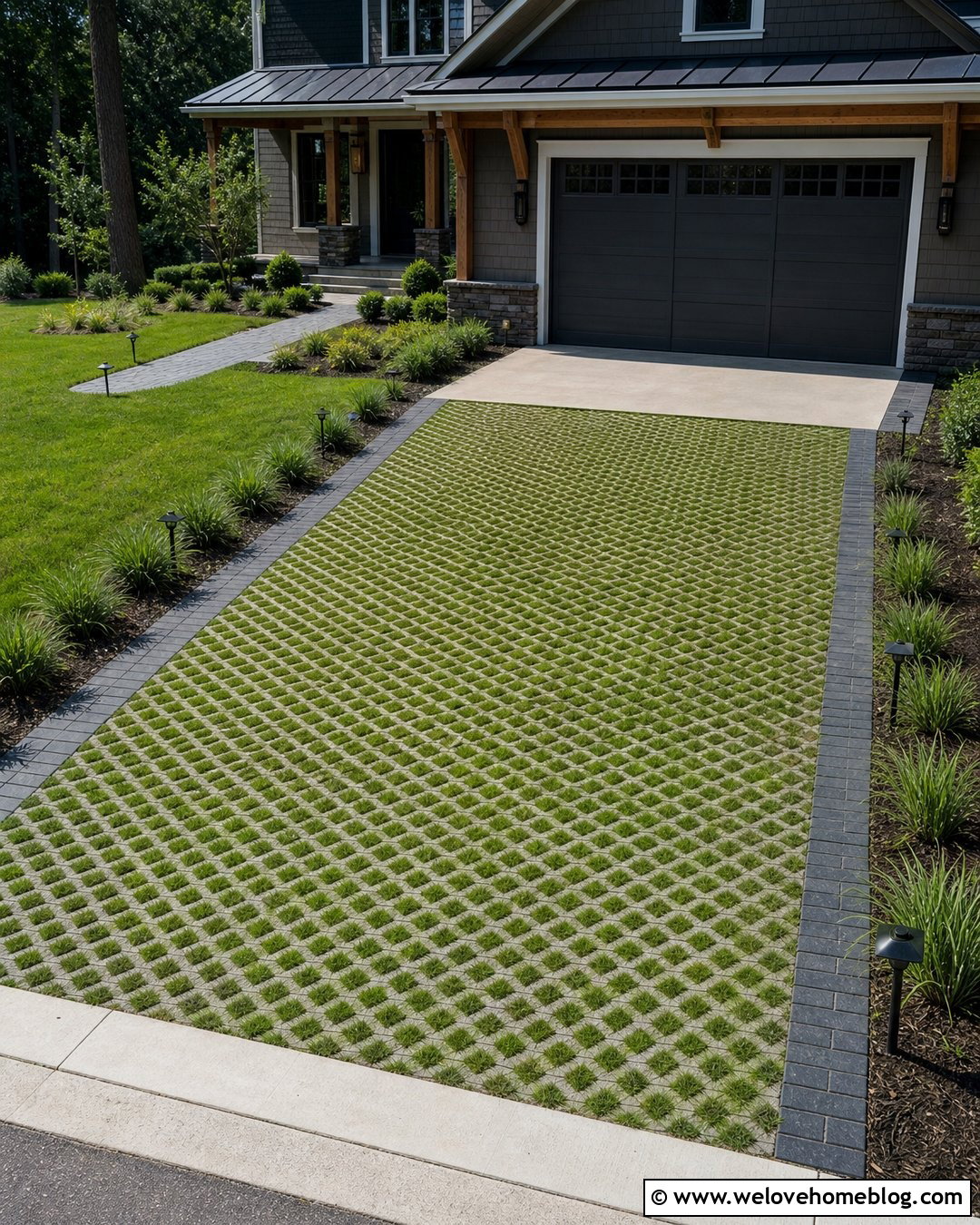
Low lighting can make the edges of a grass driveway easier to understand while preserving a clean daytime appearance. Use reinforced turf with a flush brick or concrete border, then position compact fixtures just outside the driving clearance. Space lights consistently along curves, near entrance points, and around changes in width rather than lining every inch. During daylight, the fixture finish should coordinate with the house hardware, gate, or mailbox. Layer the surrounding landscape with low shrubs, ornamental grasses, and open lawn so lights do not become buried in foliage. A paved apron at the garage creates a practical endpoint for the green approach. The complete design feels orderly and welcoming, while the grass remains the dominant surface when viewed from the street.
30. Grass Driveway With Address Sign
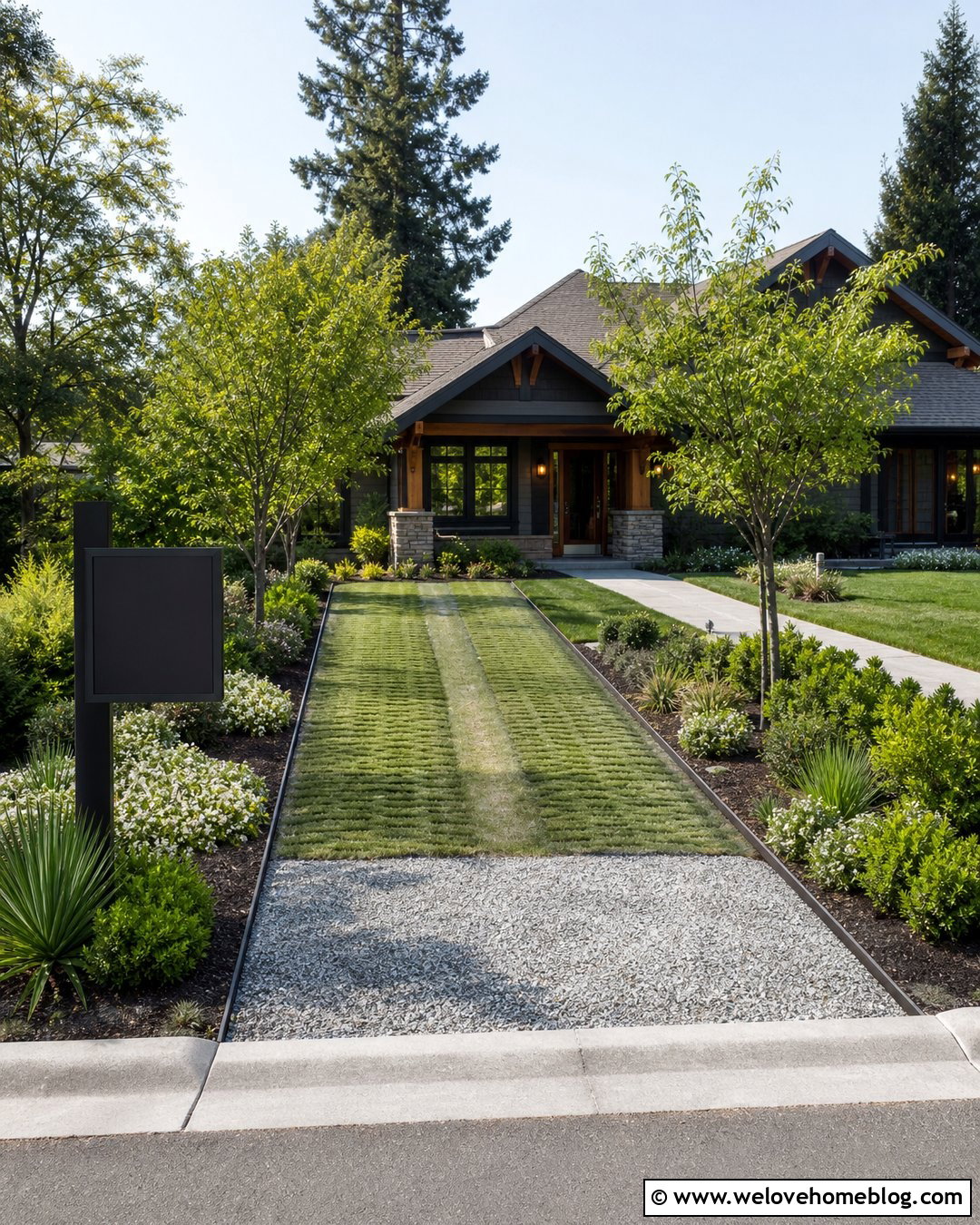
A clear address sign can act as the focal point of a modest grass driveway entrance. Pair reinforced turf wheel paths with a small gravel or concrete apron where the driveway meets the road. Place the sign on a low stone wall, timber post, or simple metal panel positioned outside required visibility areas. Repeat its material along the driveway border for a connected look. For example, a black metal sign can coordinate with slim steel edging, while a stone marker can match cobblestone bands. Surround the feature with low, durable plantings that will not conceal the numbers. Continue the driveway toward a craftsman or suburban house framed by lawn and compact trees. The finished approach remains practical but gains a recognizable, polished identity.
31. Sloped Grass Driveway
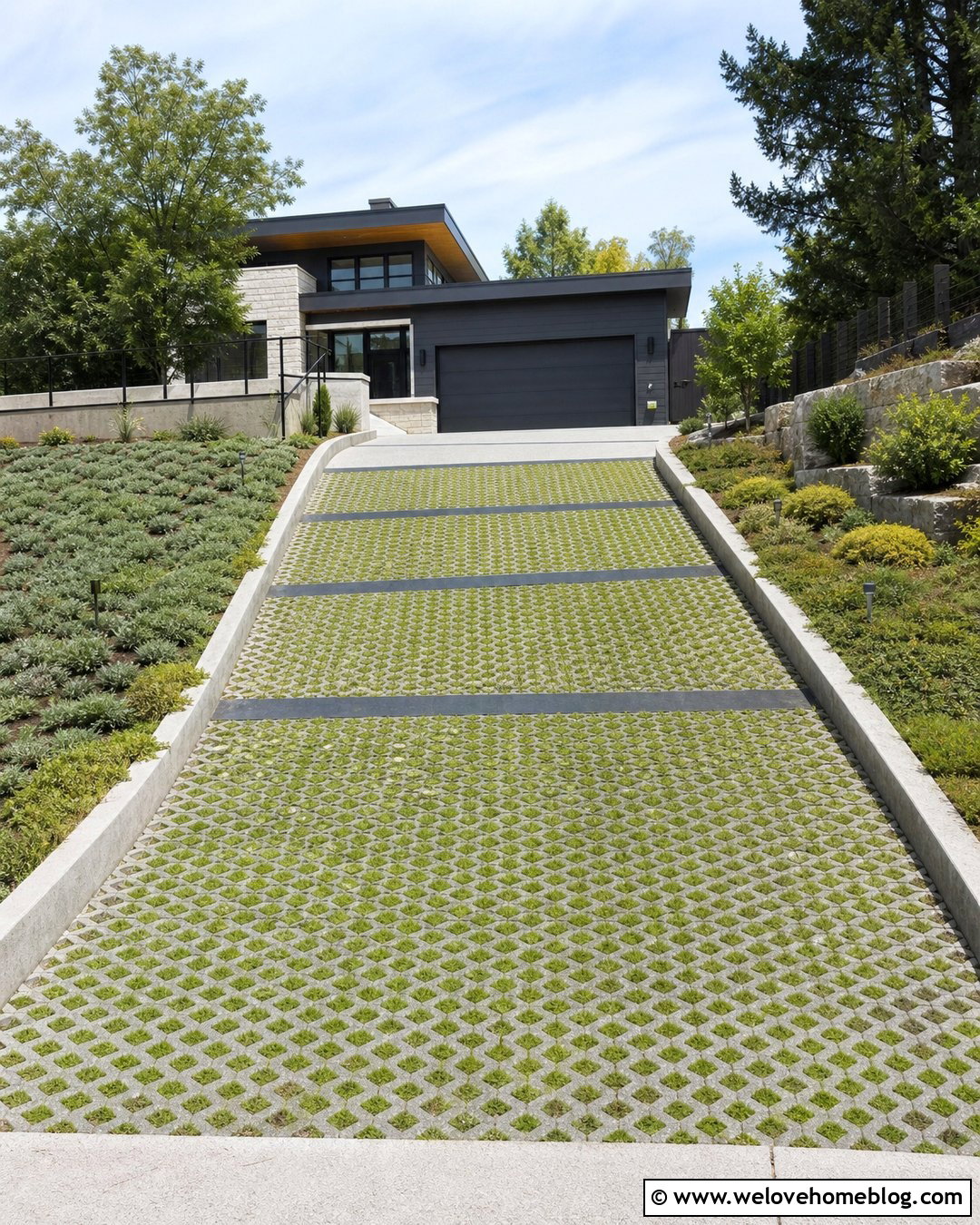
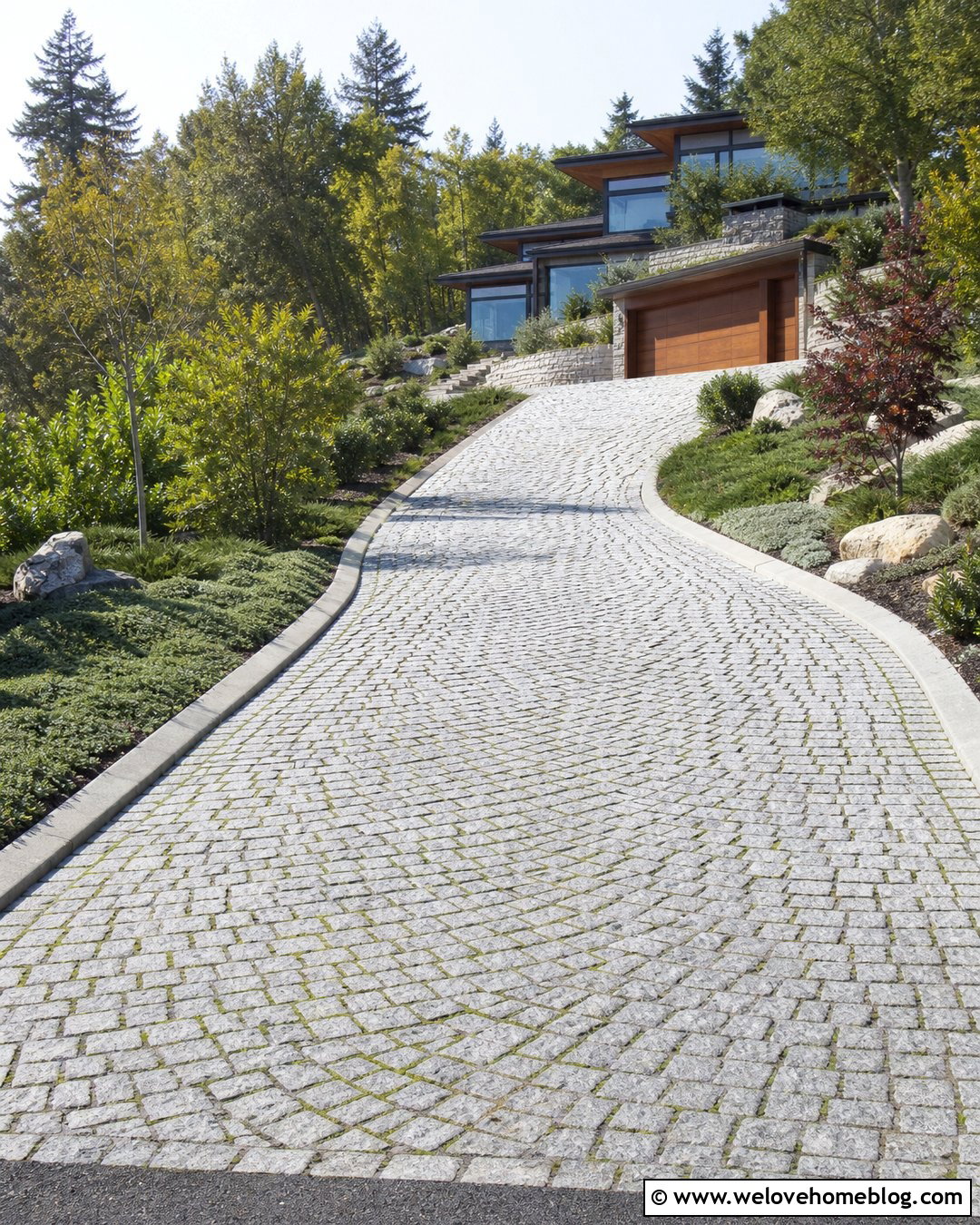
A sloped grass driveway needs strong visual definition and a carefully planned structural system. Open-cell concrete pavers can create a reinforced surface, while solid paver bands across the slope add a useful sense of rhythm. Frame both edges with substantial concrete or stone restraints that follow the grade cleanly. Keep planting simple, using erosion-conscious ground covers, low shrubs, and deep planting beds away from vehicle movement. A level apron near the garage makes the transition to parking feel more comfortable. Curves should be broad and easy to read, especially where the driveway approaches the street. Because slope, drainage, soil, and vehicle loads affect construction, this is a design to review with qualified local professionals. A successful layout should appear green without looking unstable or unfinished.
32. Small Front Yard Grass Driveway
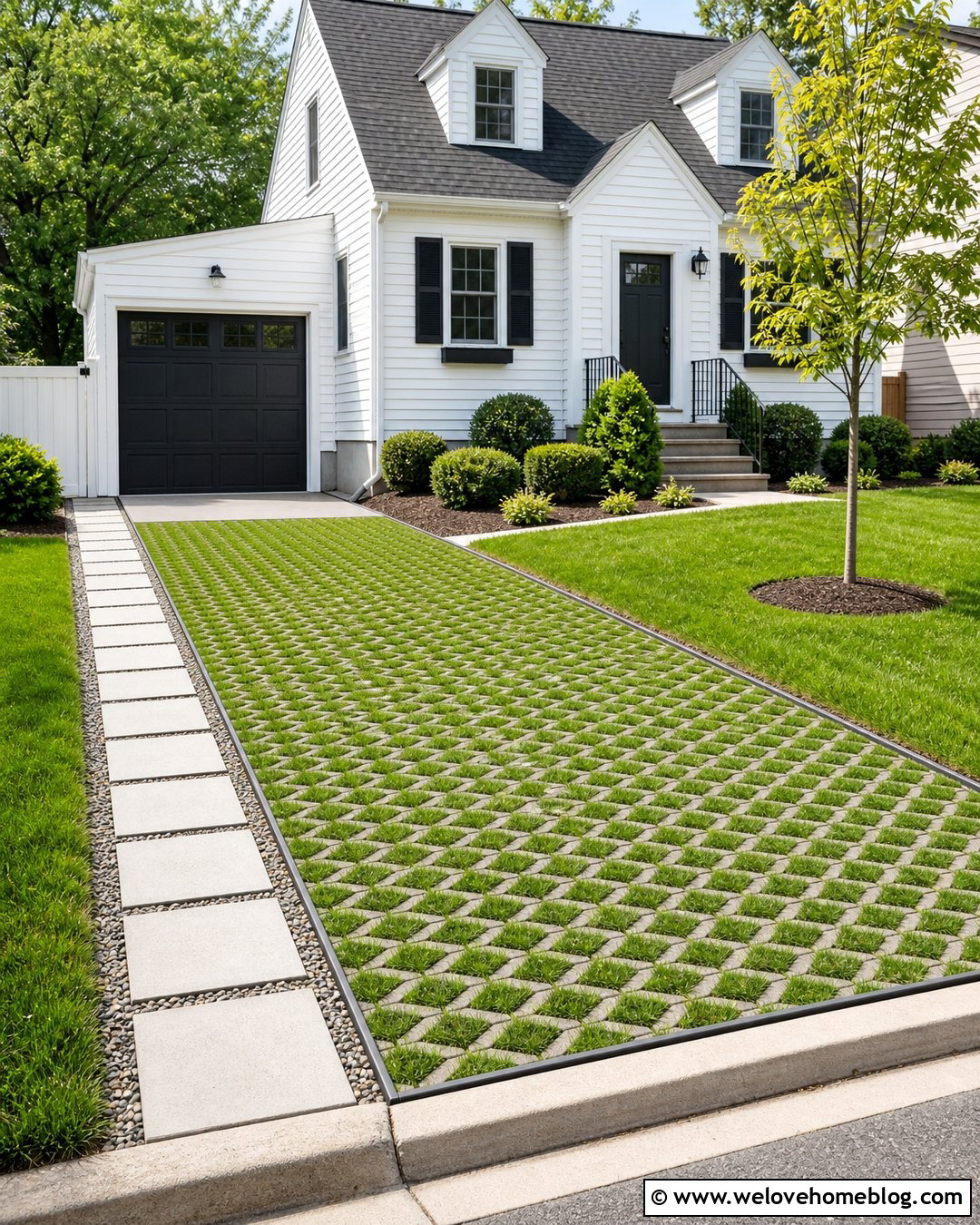
In a compact front yard, a grass driveway can provide parking without visually replacing the entire lawn. Use reinforced grass cells across a short straight driveway and add a narrow row of concrete pavers along one side as a pedestrian path. Keep the outer border flush and understated so the green surface blends with the remaining yard. A small tree, one foundation bed, and a few clipped shrubs are often enough to frame the entrance. Avoid oversized pillars or wide decorative bands that make the space feel crowded. At the house, use a slim solid-concrete threshold in front of the garage. Matching the grass within the driveway to the surrounding lawn creates continuity, helping a small property feel softer, wider, and less dominated by vehicle storage.
33. Grass Driveway Parking Pad
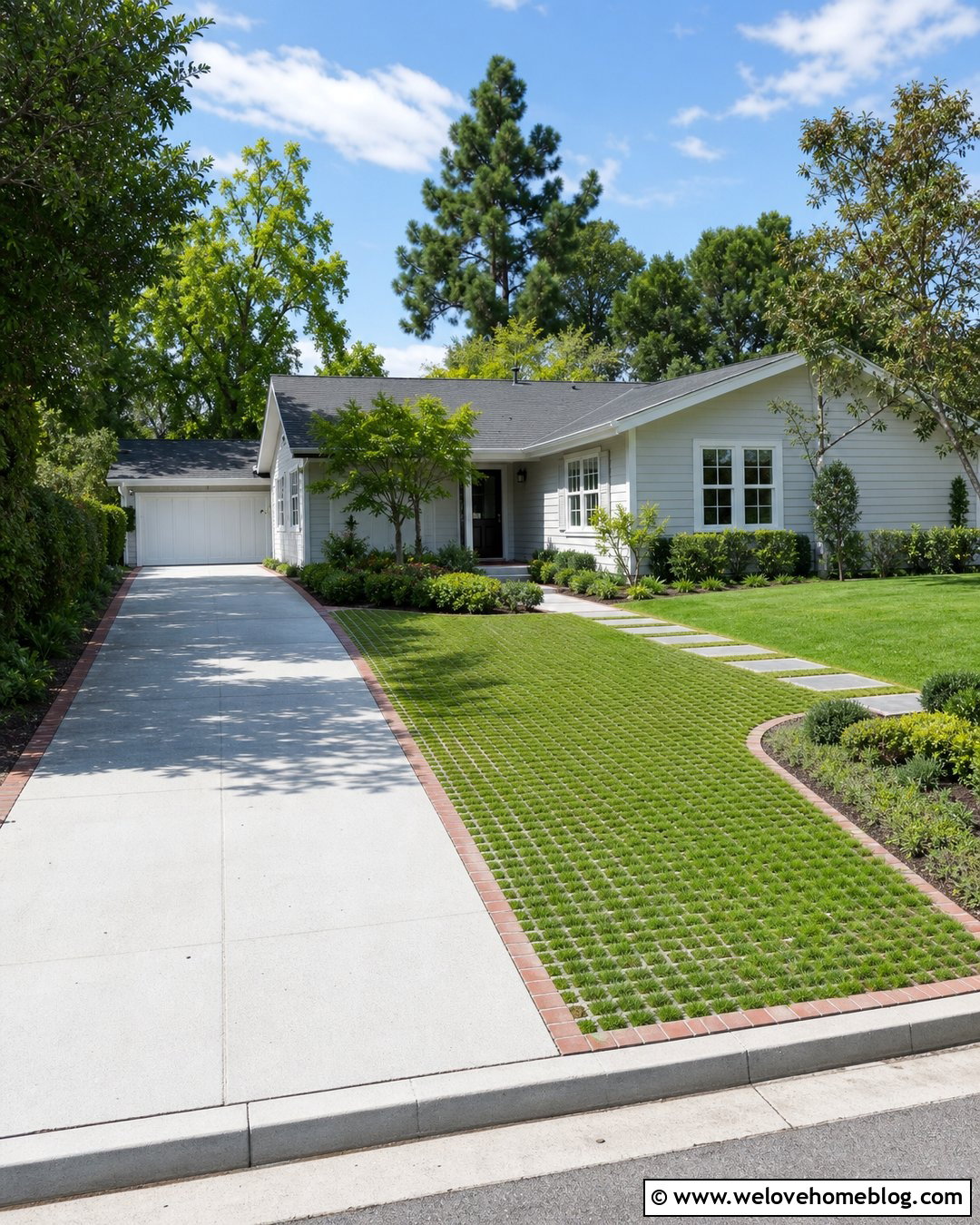
A grass-grid parking pad can add occasional vehicle space without introducing a large block of asphalt or concrete. Branch the pad from the main driveway using a gentle angle that makes entry straightforward. Reinforce the entire parking area, then outline it with flush brick, cobblestone, or metal edging. When empty, the pad should read as part of the lawn rather than an unfinished extension. Add low planting beds along the outer side, but leave generous clearance around doors and turning areas. A few stepping stones can connect the pad to the front walkway or side entrance. This solution suits suburban yards, guest parking areas, and secondary household vehicles. Coordinate the parking pad with the main driveway material so both areas form one purposeful layout.
34. Grass Driveway With Garage Apron
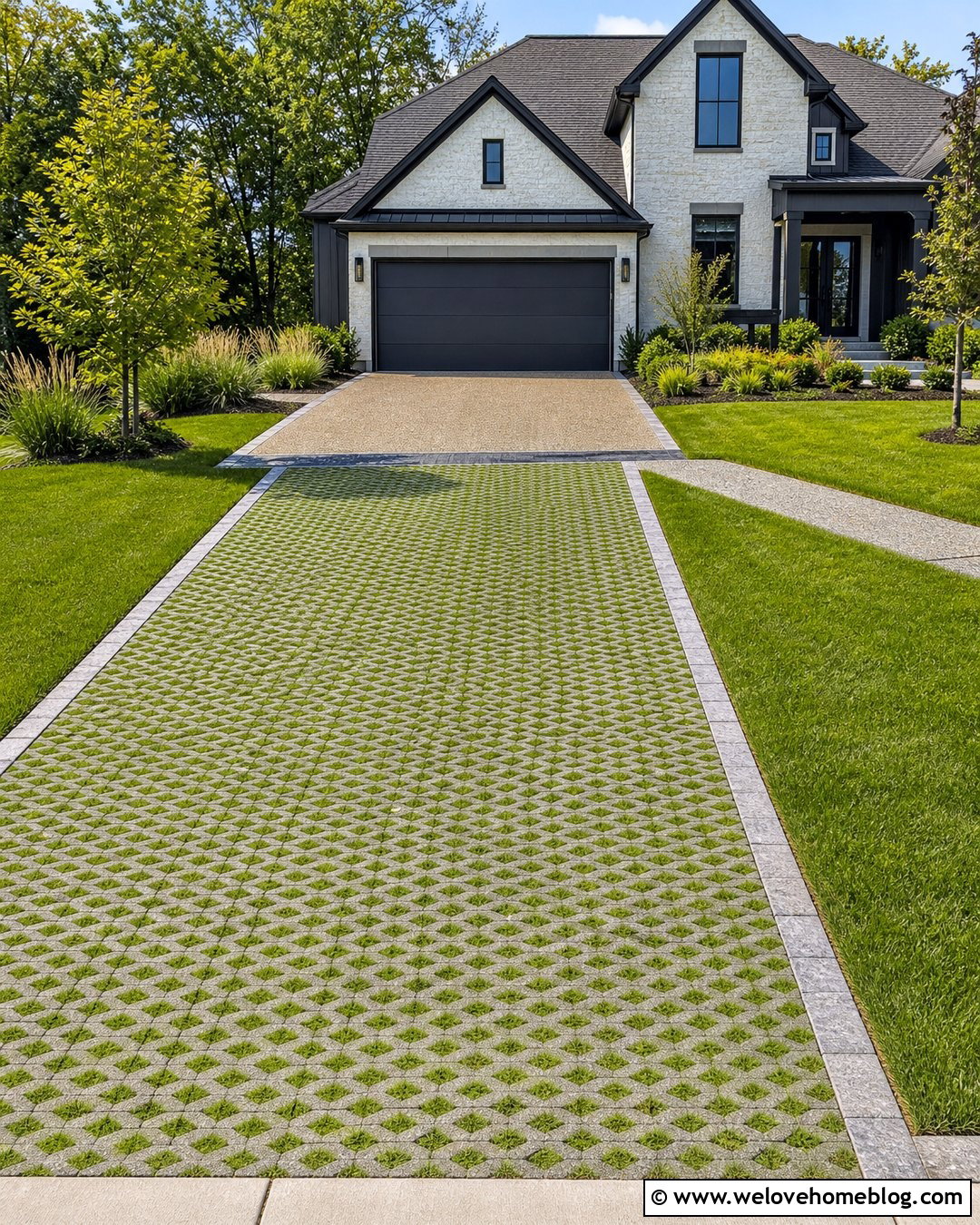
Combining a green driveway with a solid garage apron places durable hardscape where driving movements are concentrated. Use reinforced turf along the main approach, then transition into poured concrete, brick pavers, or exposed aggregate several feet before the garage. A straight stone or paver band can make the material change look intentional. Match the apron color to the home’s foundation, walkway, or porch details. Along the green section, use flush borders and simple lawn panels to preserve a seamless appearance. Add planting beds near the house, but keep shrubs away from garage doors and vehicle paths. This balanced design delivers the visual softness of grass across most of the front yard while giving the busiest part of the driveway a clearly defined paved surface.
35. Grass Driveway With Native Landscaping
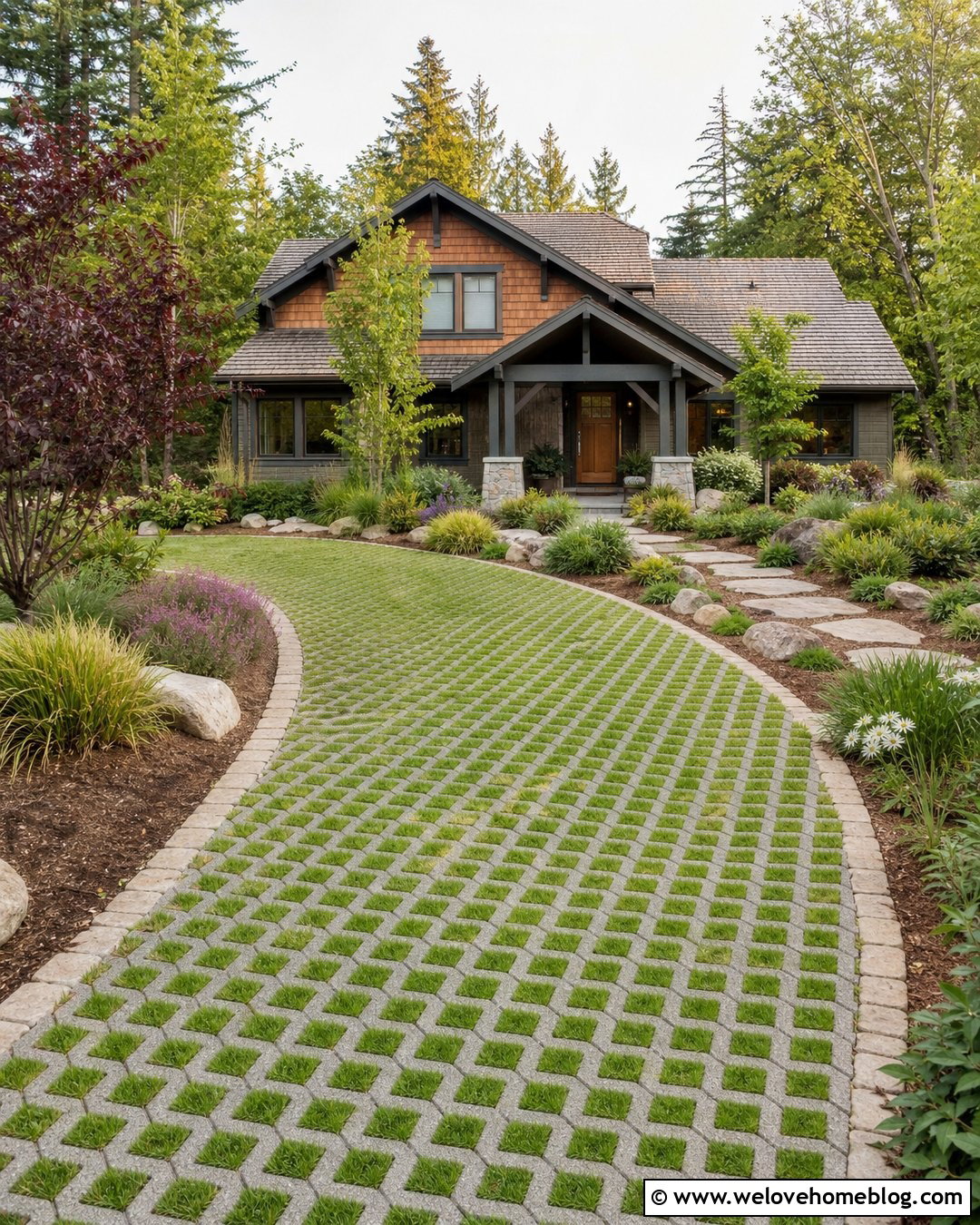
Native landscaping can help a grass driveway feel genuinely connected to its regional setting. Start with a reinforced green surface, concrete wheel tracks, or open-cell pavers suited to the driveway’s traffic. Frame the route with locally appropriate grasses, flowering perennials, shrubs, and small trees arranged in broad, repeating groups. Use stone sourced in a regionally compatible color for the edging and entrance apron. A gently curved layout often blends best with naturalistic planting, though a straight driveway can create an appealing contrast. Leave a mown or low-growing buffer beside the vehicle area to preserve visibility and easy access. Near the house, organize the planting into slightly cleaner beds. The complete landscape should feel cohesive, practical, and rooted in its surroundings.
Conclusion:
The best grass driveway ideas balance greenery with a stable, clearly defined route for vehicles. Reinforced grass grids provide an almost continuous lawn, while concrete tracks, open-cell pavers, stone slabs, and gravel bands create stronger visual structure. Borders, planting beds, entrance features, and walkways should work with the driveway instead of appearing as separate additions. Before selecting a look, consider vehicle frequency, drainage, climate, mowing access, slope, soil conditions, and the architecture of your home. Professional base preparation is especially important where the surface will receive regular traffic. Whether you prefer formal brick edging or relaxed native planting, these 35 grass driveway ideas offer practical ways to create a greener, softer, and more inviting approach.

Related posts:
Leave a Reply