
A driveway can feel practical and green at the same time when turf is built into the overall layout. These 20 Driveway With Turf Ideas combine durable driving surfaces with crisp grass strips, reinforced lawns, and low-maintenance synthetic turf. The result is a softer entrance that connects naturally with the front yard. Large concrete slabs create a clean modern grid, while brick, stone, gravel, and permeable pavers support more traditional looks. Proper base preparation, drainage, edging, and wheel-load support are essential because decorative turf should never replace the driveway’s structural foundation. Artificial turf is often useful in narrow joints where living grass may struggle with heat, shade, or repeated traffic. () Explore these complete 20 Driveway With Turf Ideas to find a layout that suits your home and yard.

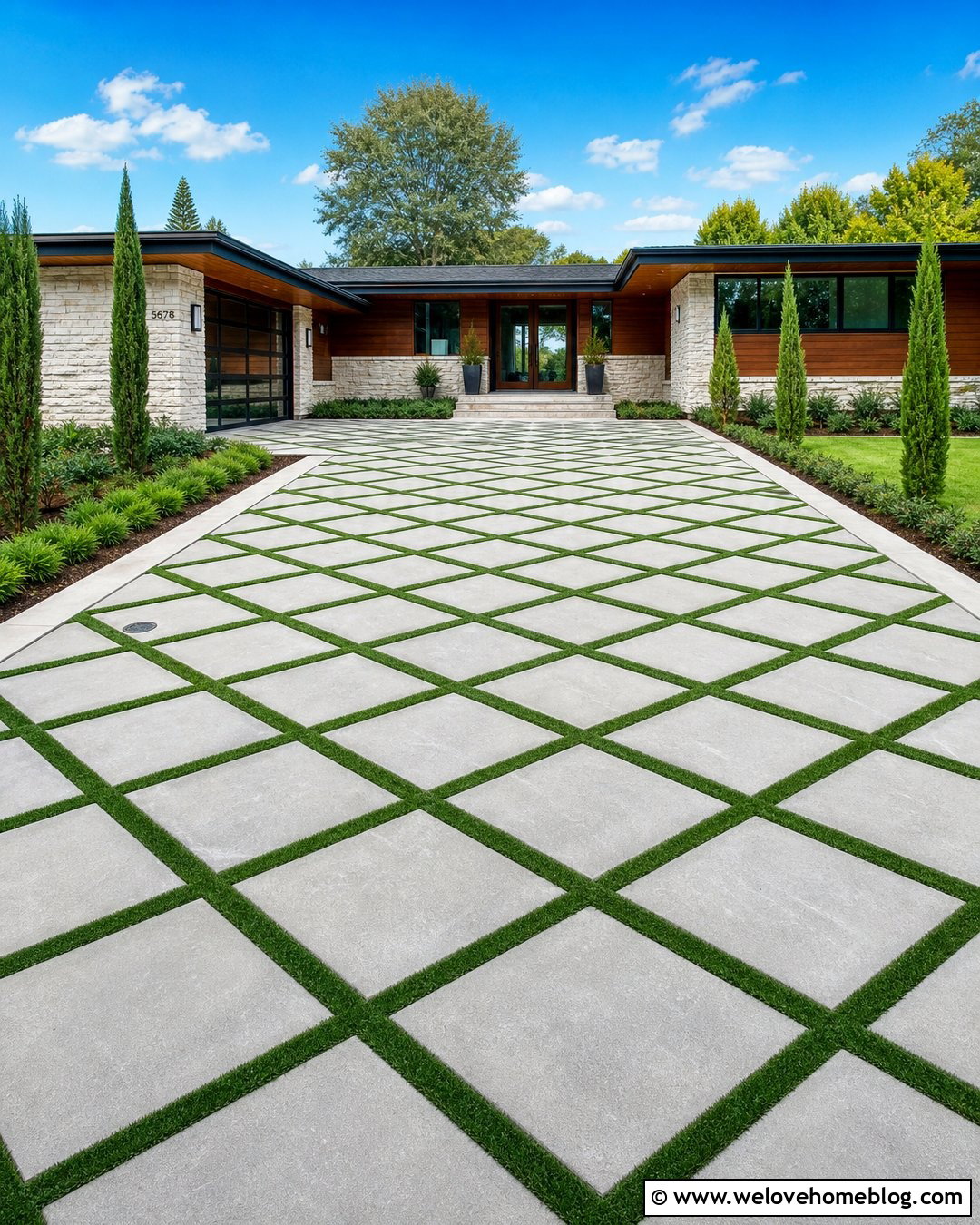
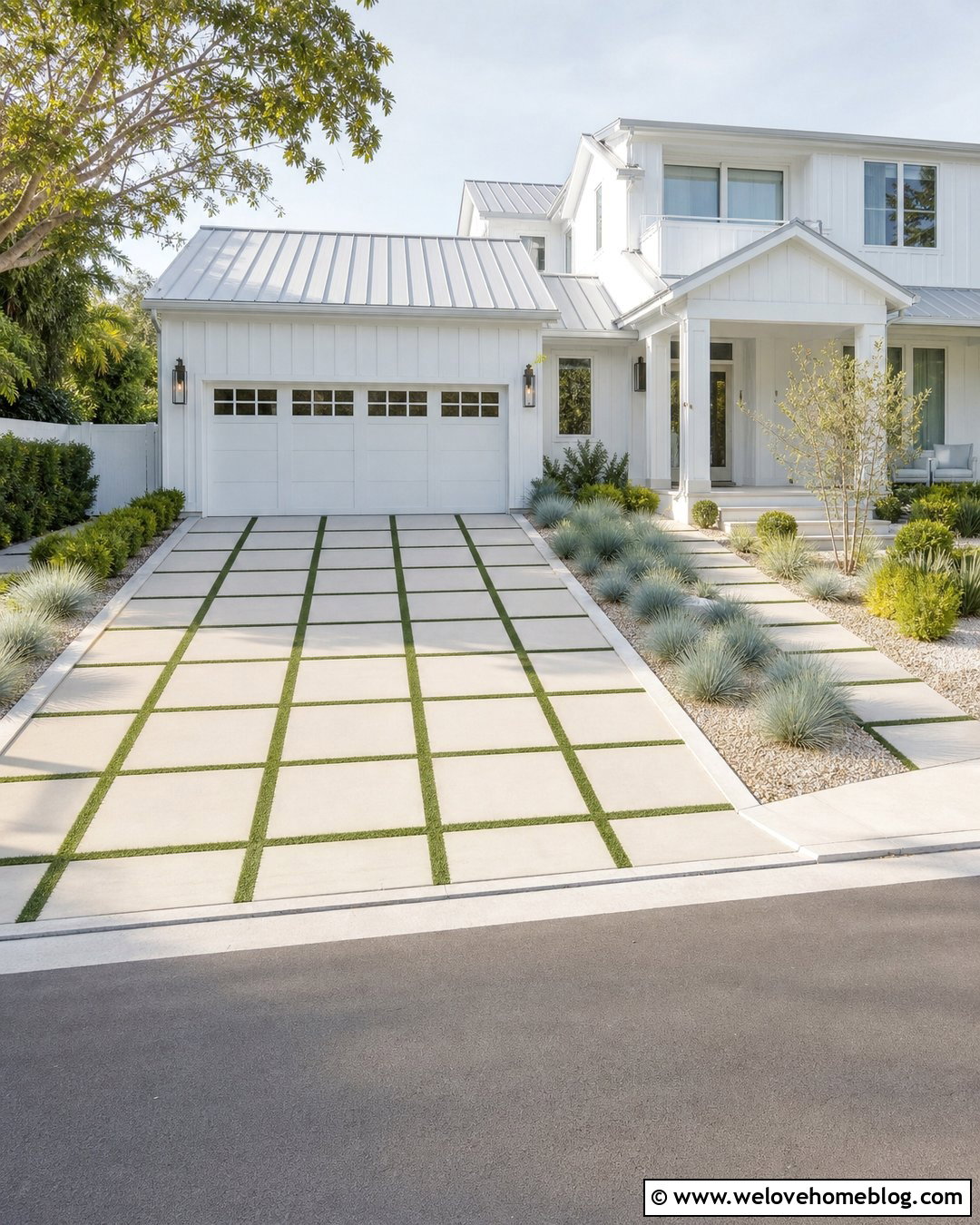
1. Large Concrete Slab Driveway With Turf Joints
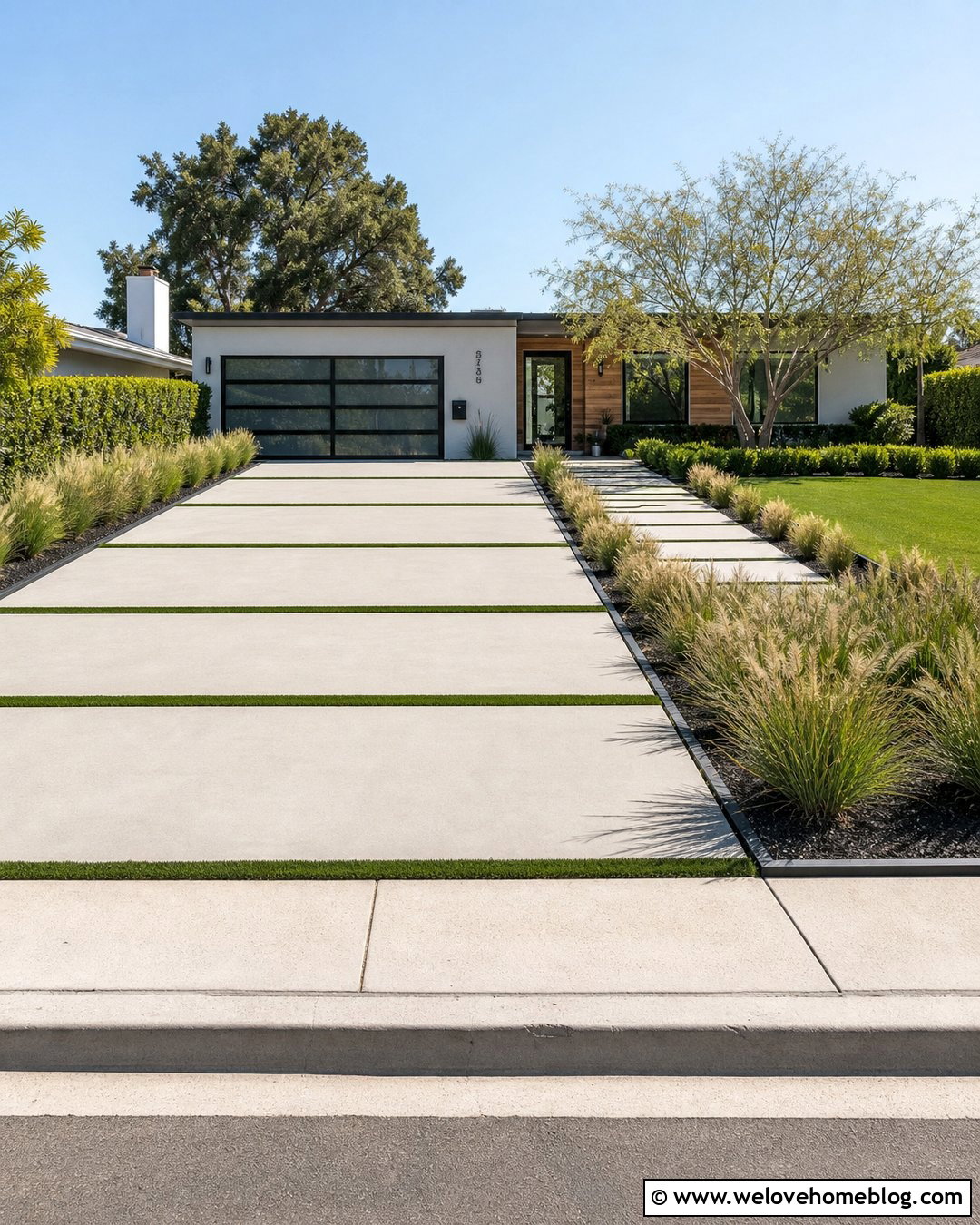
Oversized concrete slabs separated by narrow turf joints create one of the cleanest modern driveway designs. Choose light gray poured concrete with a smooth or lightly broomed finish to keep the entrance bright. Rectangular slabs can run toward the garage, making a short driveway appear longer and more organized. Artificial turf works well between the slabs because it stays evenly colored and does not require awkward mowing. Frame the driveway with simple planting beds containing ornamental grasses, compact shrubs, and a few sculptural plants. A matching concrete walkway can repeat the same spacing beside the driveway. Keep turf joints consistent in width so the design feels intentional. This complete look pairs especially well with modern, contemporary, and midcentury homes.
2. Concrete Tire Track Driveway With Center Turf
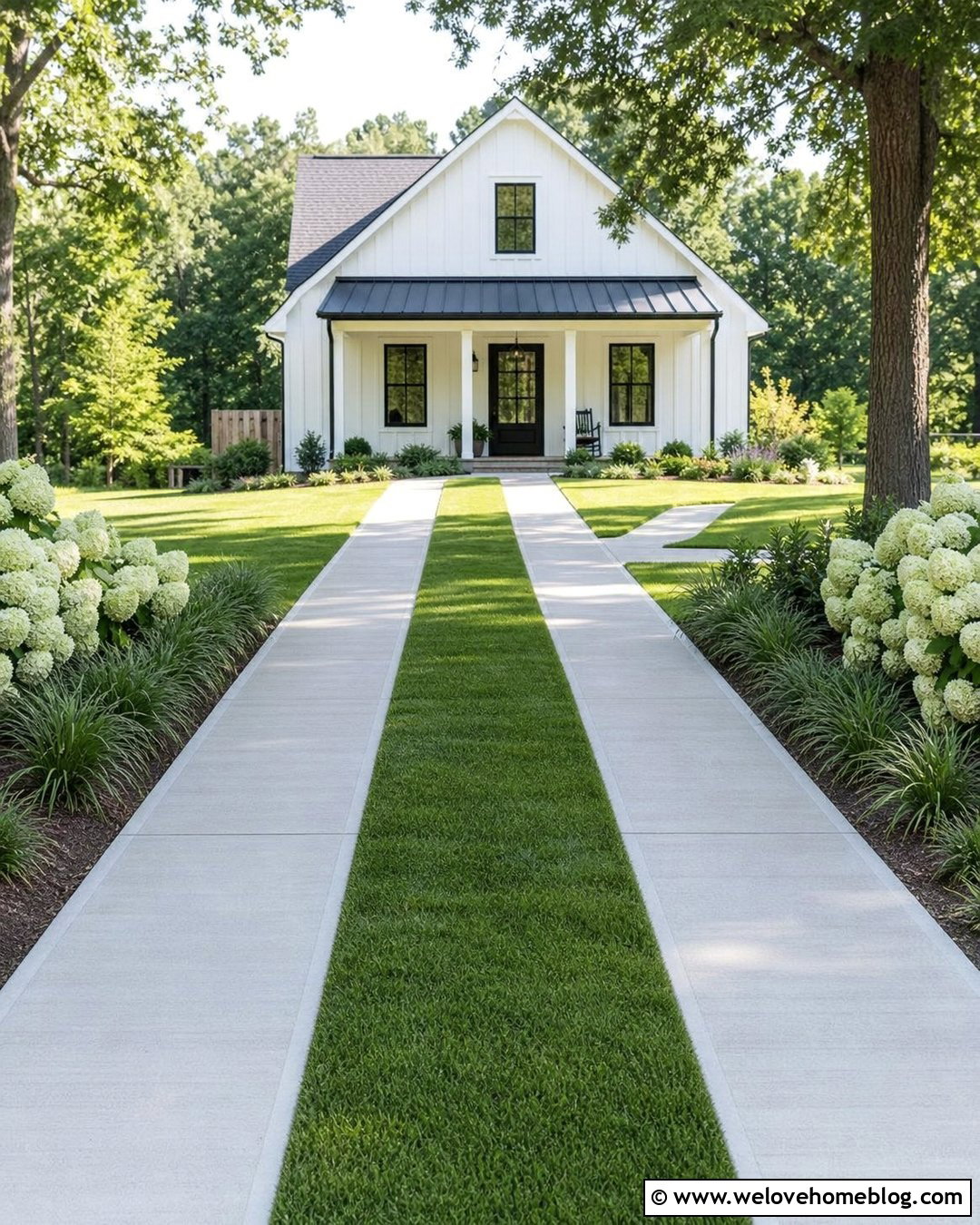
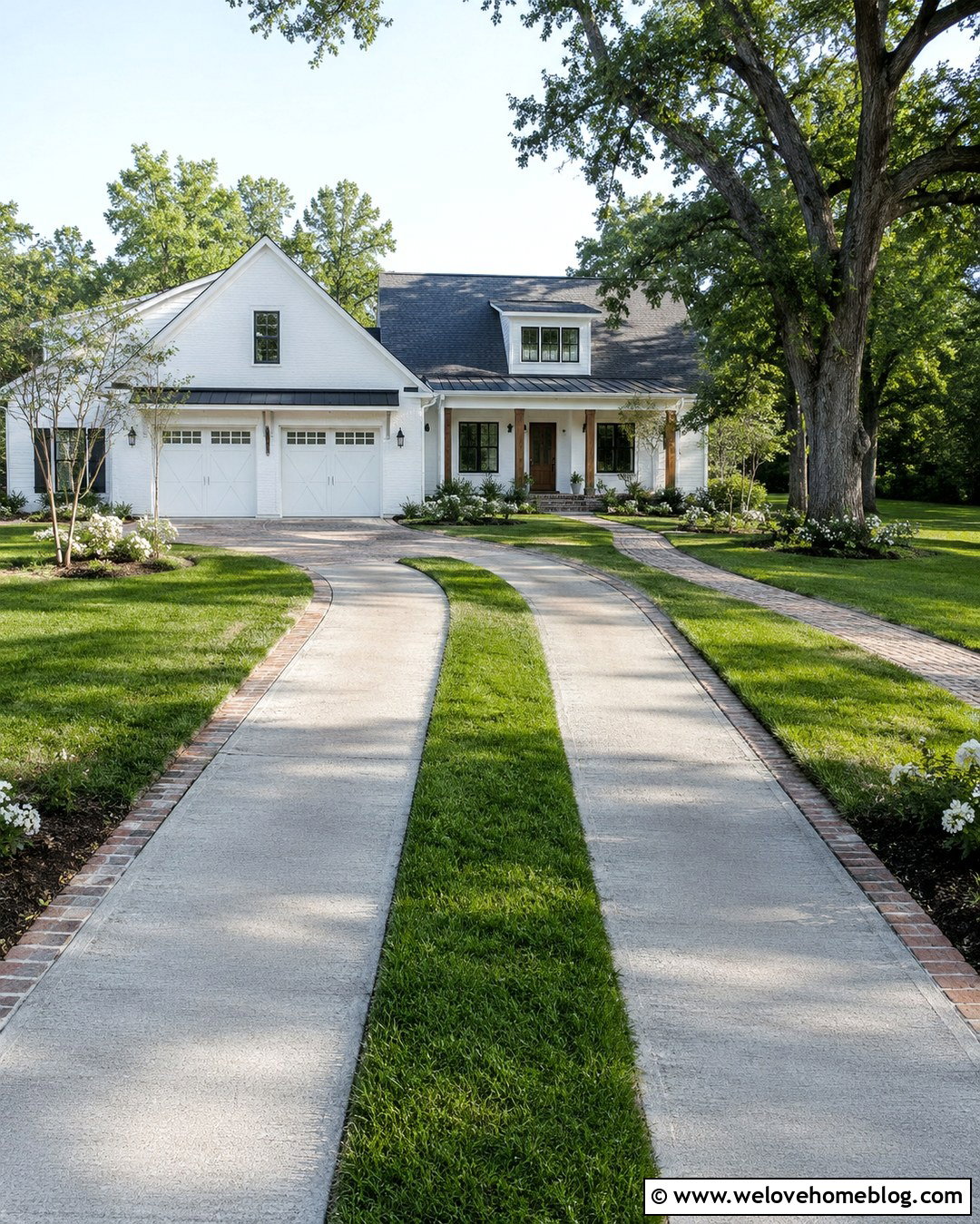
Two concrete wheel tracks with a wide strip of turf between them offer a practical way to reduce the amount of visible pavement. The tracks should follow the expected tire path and widen near the garage or parking area for easier maneuvering. Living turf can work in the center when the site receives enough sunlight and regular moisture. Artificial turf may be better for dry climates or heavily used entrances. Add steel, brick, or concrete edging to define the outer boundaries and prevent soil from washing onto the tracks. Low planting beds beside the driveway make the green center feel connected to the yard. This simple layout is especially attractive beside cottages, ranch homes, cabins, and modest modern farmhouses.
3. Checkerboard Paver Driveway With Artificial Turf
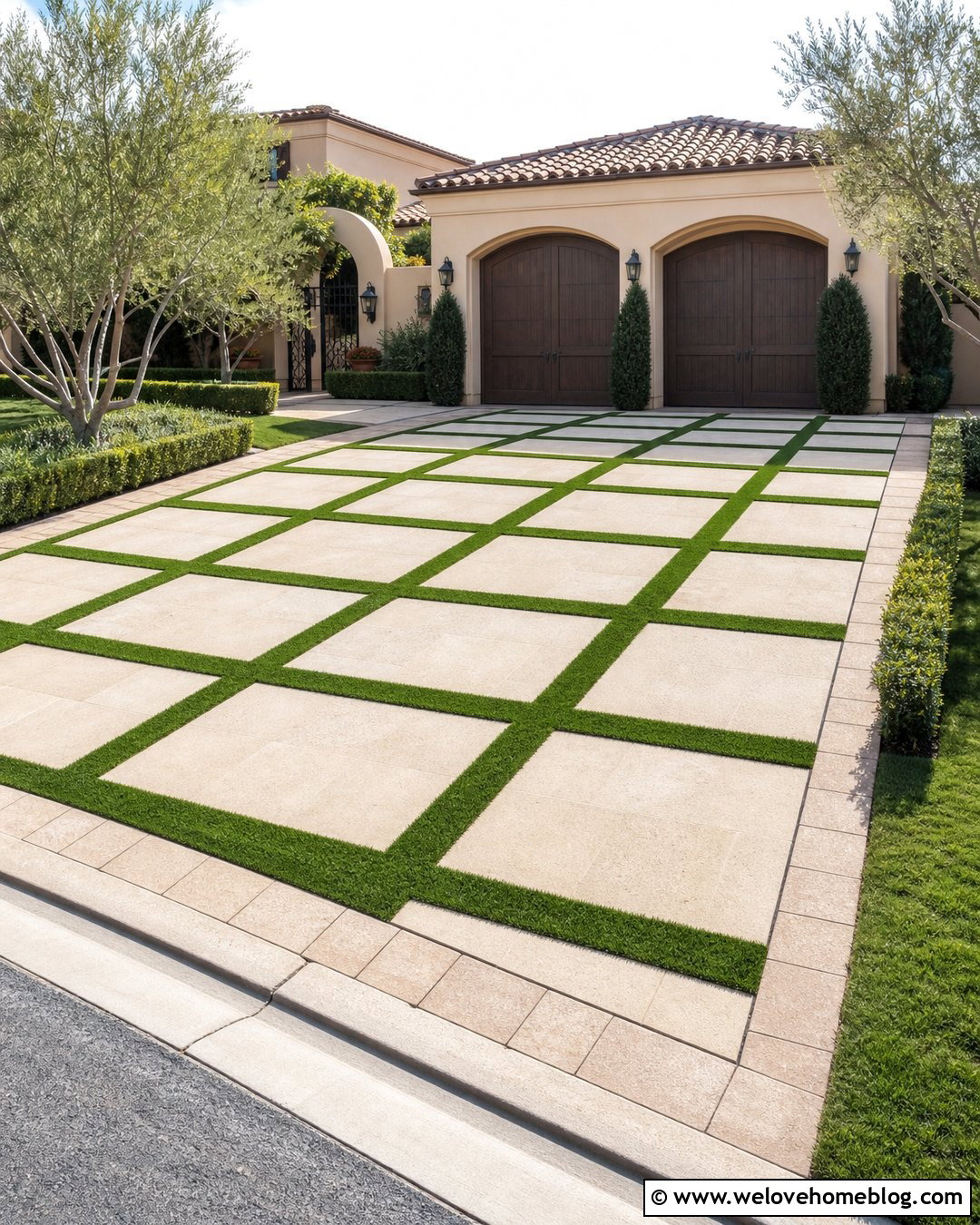
A checkerboard driveway alternates square pavers with sections of artificial turf for a bold geometric effect. Large concrete pavers provide a stronger, less cluttered appearance than numerous small units. Select warm beige pavers for a welcoming Mediterranean look or cool gray pavers for contemporary curb appeal. The turf squares should sit slightly below the paver surface so tires roll smoothly and water can move away from the pavement. Secure edging around the entire driveway helps hold the pattern together. Surround the checkerboard with a simple lawn, clipped hedges, and a straight walkway rather than adding too many competing details. This design works best on wide, level driveways where the complete grid remains visible from the street.
4. Linear Concrete Driveway With Turf Strips
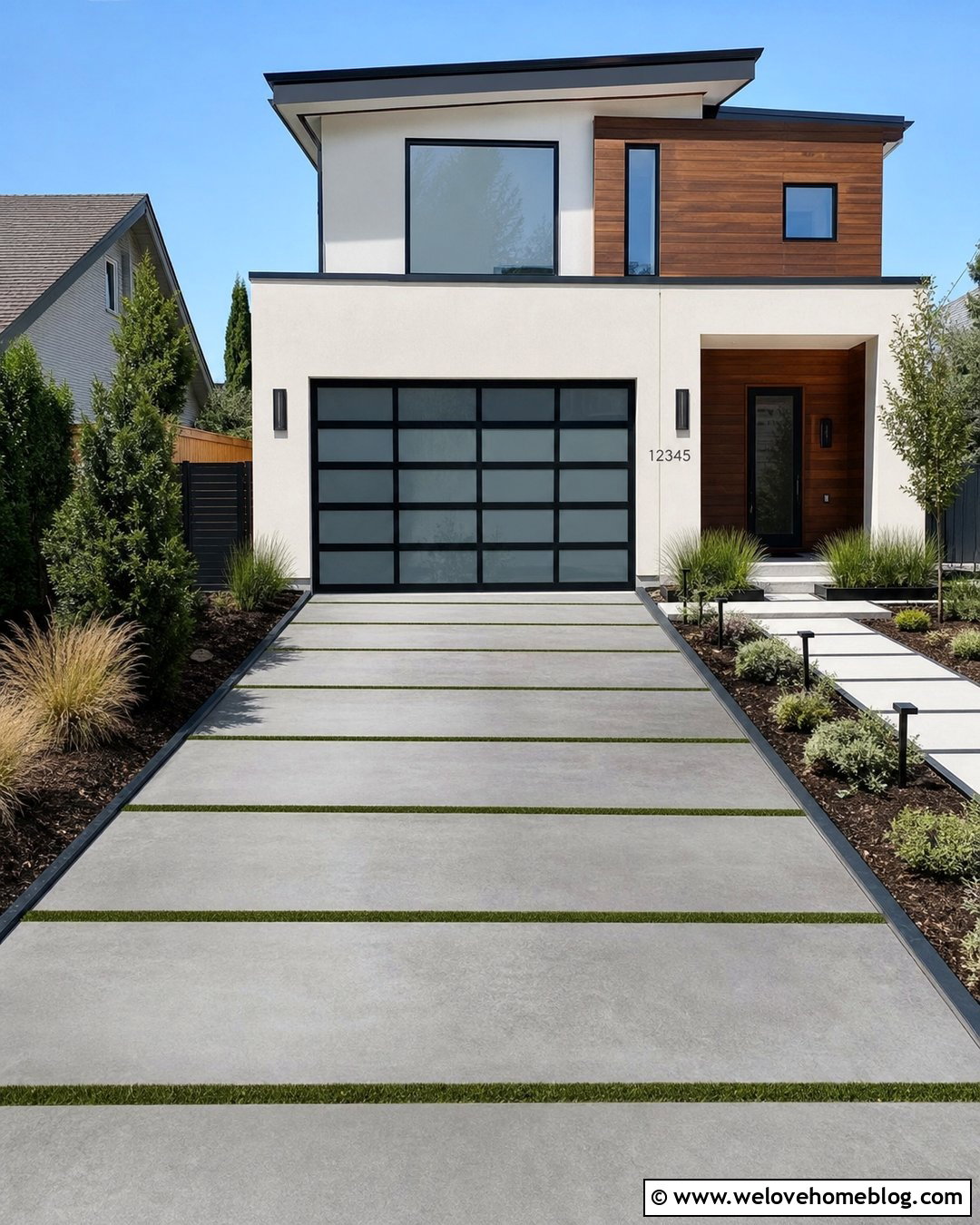
Long concrete panels crossed by straight turf strips can make a narrow property feel wider. Arrange the green bands perpendicular to the driving direction for a repeating horizontal pattern. Alternatively, run them lengthwise to emphasize the route from the curb to the garage. Medium-gray poured concrete hides everyday dust while maintaining a fresh, modern appearance. Artificial turf provides crisp lines and avoids uneven growth near warm concrete edges. Continue one or two bands into the adjacent walkway to visually connect the driveway and entrance. Black metal edging, rectangular planters, and neatly clipped shrubs strengthen the linear design. The result is organized without appearing harsh, making it suitable for an urban home, compact new build, or renovated midcentury residence.
5. Circular Concrete Driveway With Turf Inlays
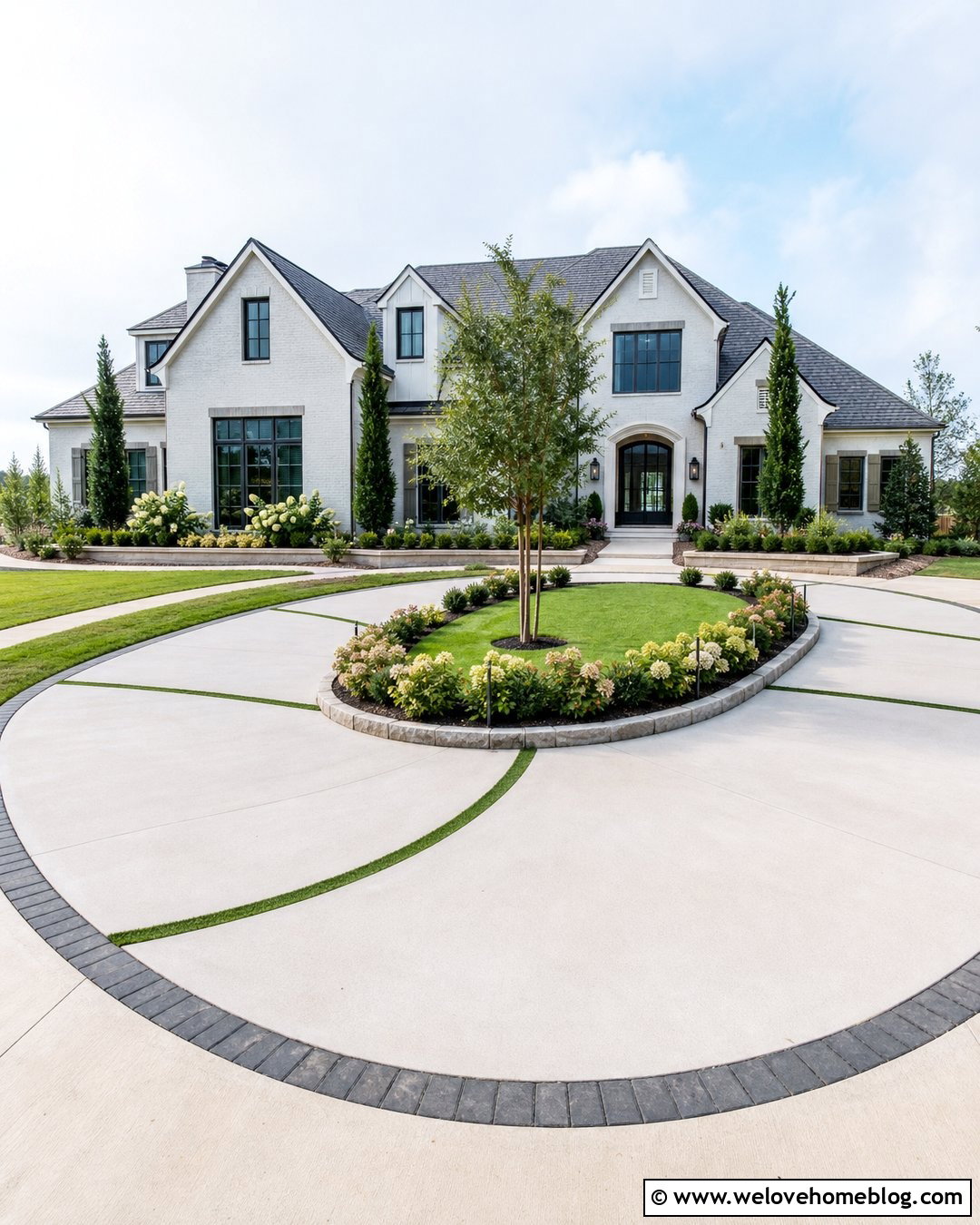
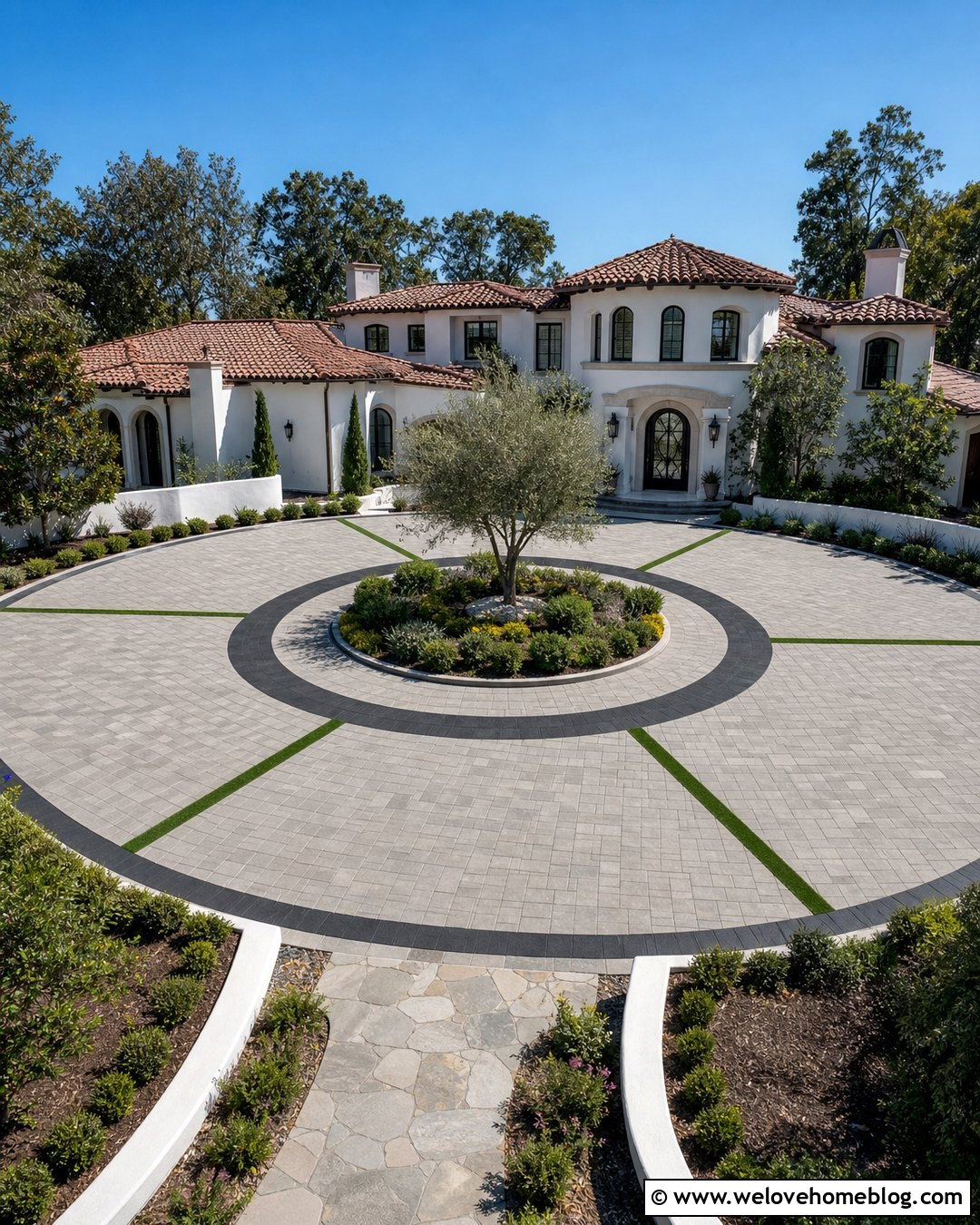
A circular driveway gains a softer appearance when turf bands follow its sweeping shape. Use curved poured-concrete sections or wedge-shaped concrete pavers divided by narrow green joints. A landscaped center island can repeat the turf with a small ornamental tree, low shrubs, and seasonal flowers. Keep plants short near the street so drivers maintain a clear view when entering and leaving. A contrasting paver border around the outer curve adds definition and protects the turf edge from turning tires. Artificial grass is often easier to shape into precise arcs, although reinforced living turf may suit a spacious property with good growing conditions. This complete arrangement creates an impressive but approachable entrance for colonial, transitional, and contemporary homes.
6. Curved Paver Driveway With Turf Borders
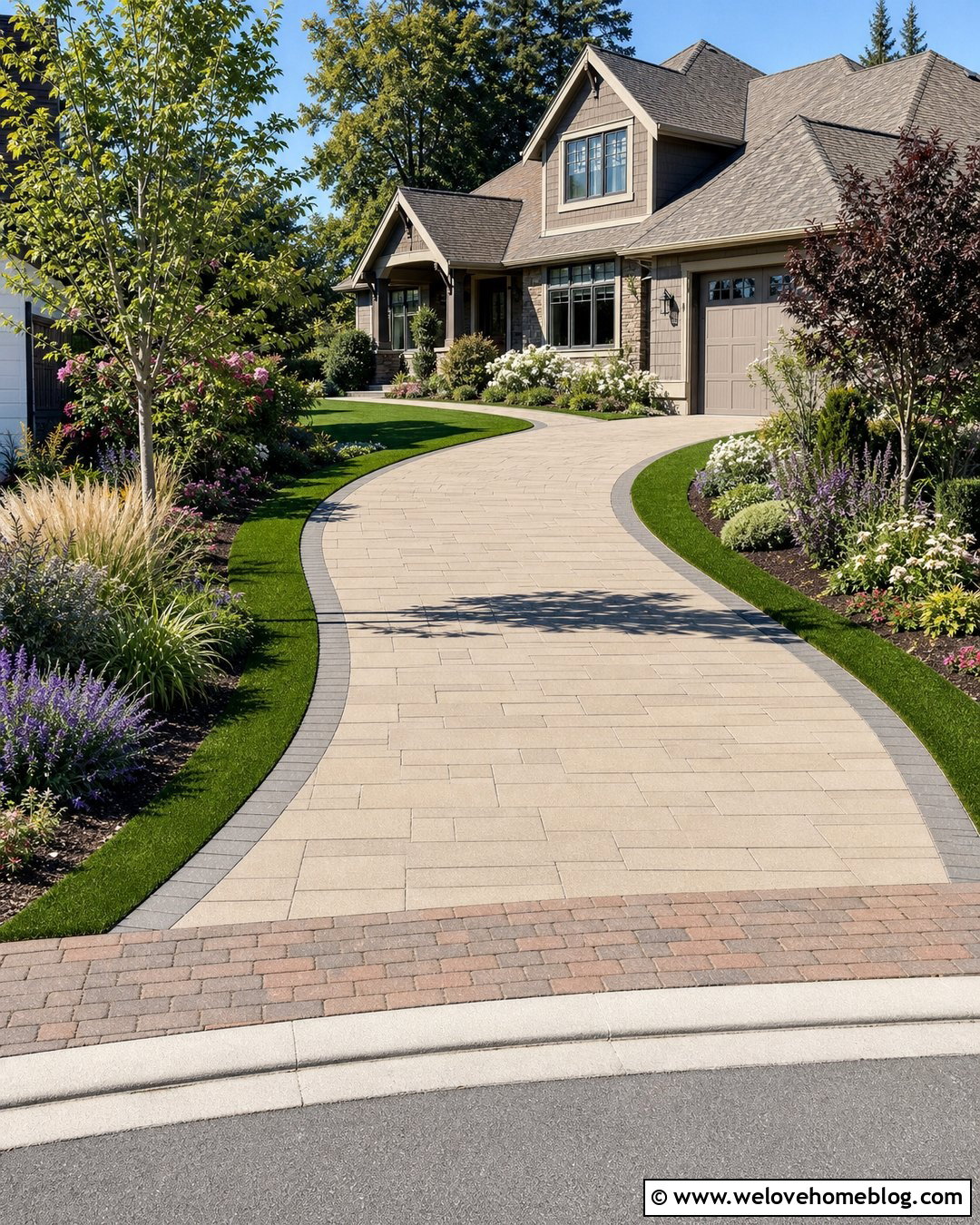
A gently curved driveway can be framed with turf borders that blend the paved route into the surrounding lawn. Use neutral concrete pavers in a running-bond pattern to provide a stable driving surface without distracting from the shape. Narrow artificial turf bands along both edges create clean green outlines and reduce the need to trim living grass directly against the pavers. Add broad planting beds beyond the turf with flowering shrubs, ornamental grasses, and small trees positioned away from sightlines. A brick or stone apron at the street can protect the entrance from frequent turning. This layout feels especially natural on wider suburban lots, where the curve can reveal the house gradually and make the front yard seem deeper.
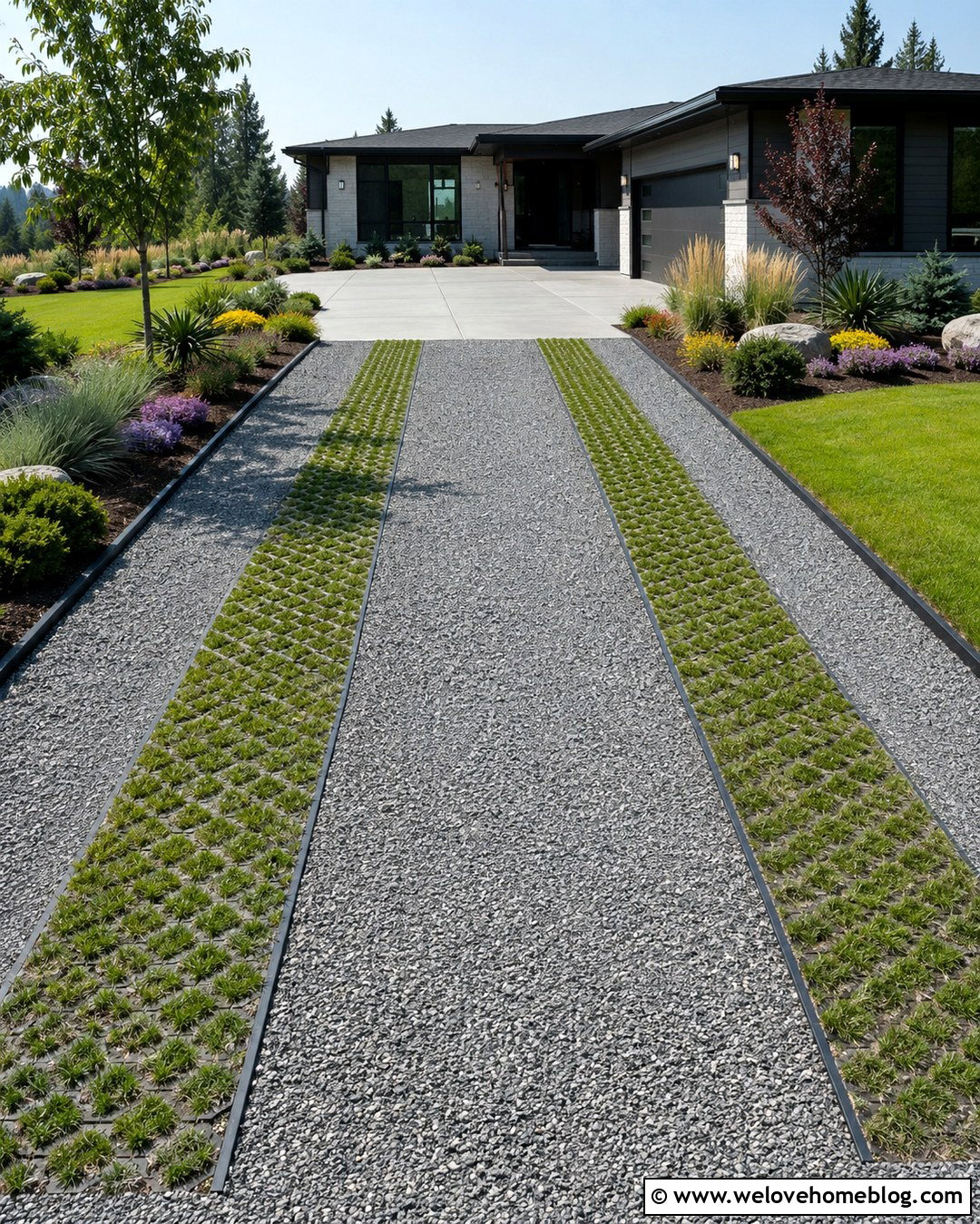
7. Grass Grid Paver Driveway
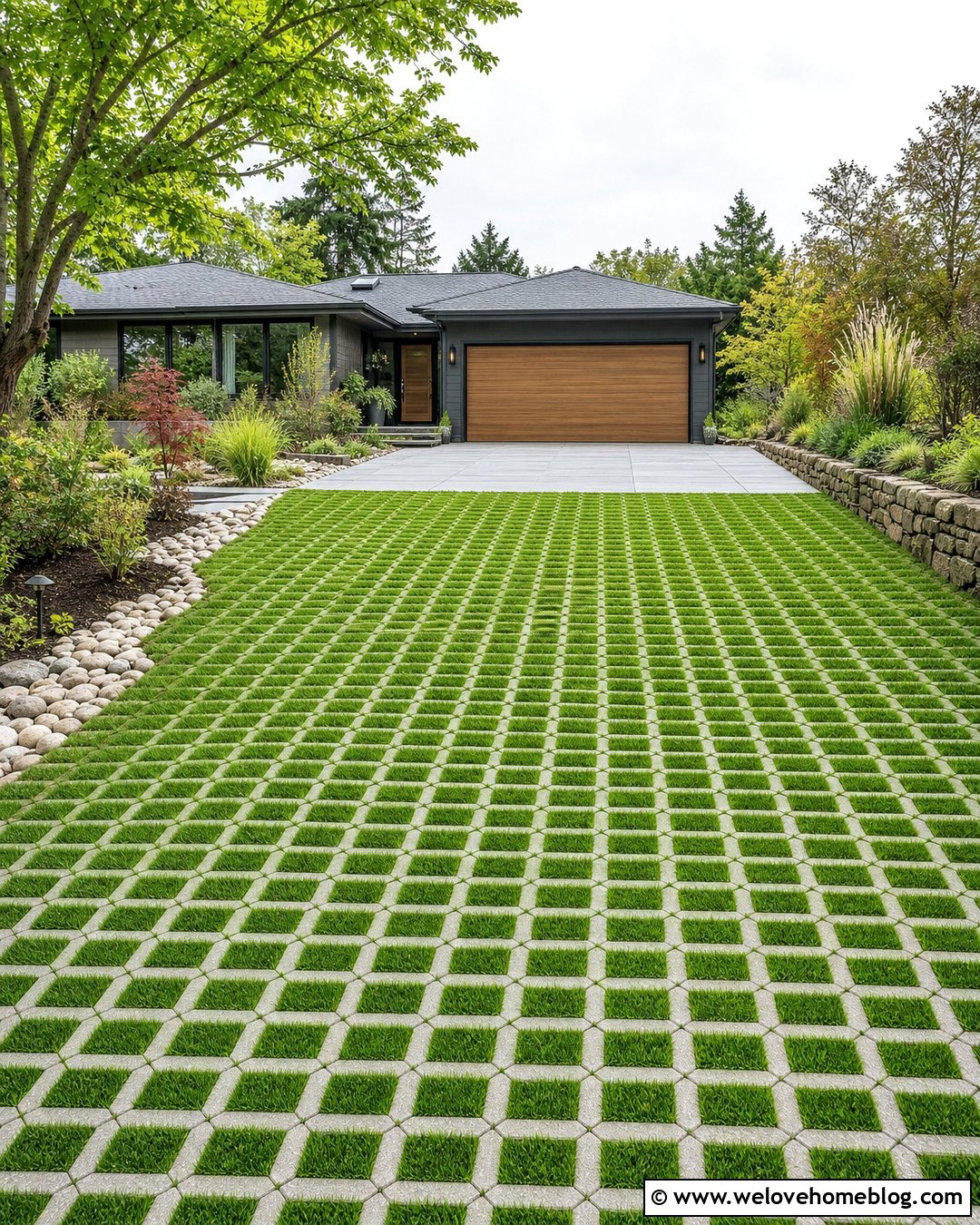
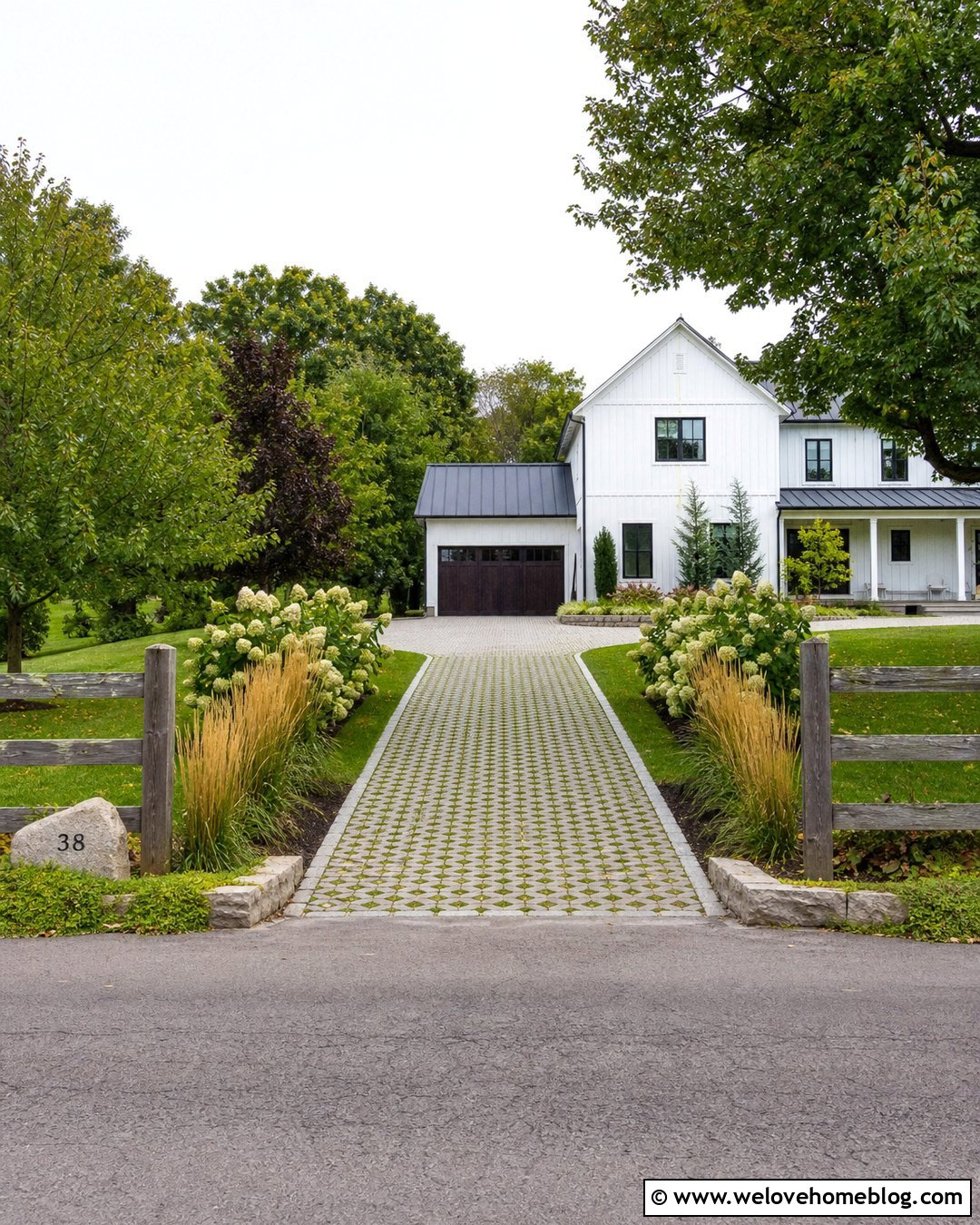
Grass grid pavers create the appearance of a lawn while reinforcing the surface for vehicle use. Concrete cellular pavers have visible geometric openings, while plastic reinforcement grids can become less noticeable once turf fills in. Both require a carefully prepared, load-bearing base rather than ordinary lawn soil. The grid should cover the entire parking and driving area, with solid pavers placed near the garage, walkway, or street where turning is more frequent. Use hardy living turf suited to the property’s climate and sunlight. A simple stone border helps contain the base and creates a finished transition into planting beds. Because vegetated openings can support on-site water infiltration, this design is particularly useful for an eco-conscious landscape. ()
8. Brick Driveway With Turf Ribbons
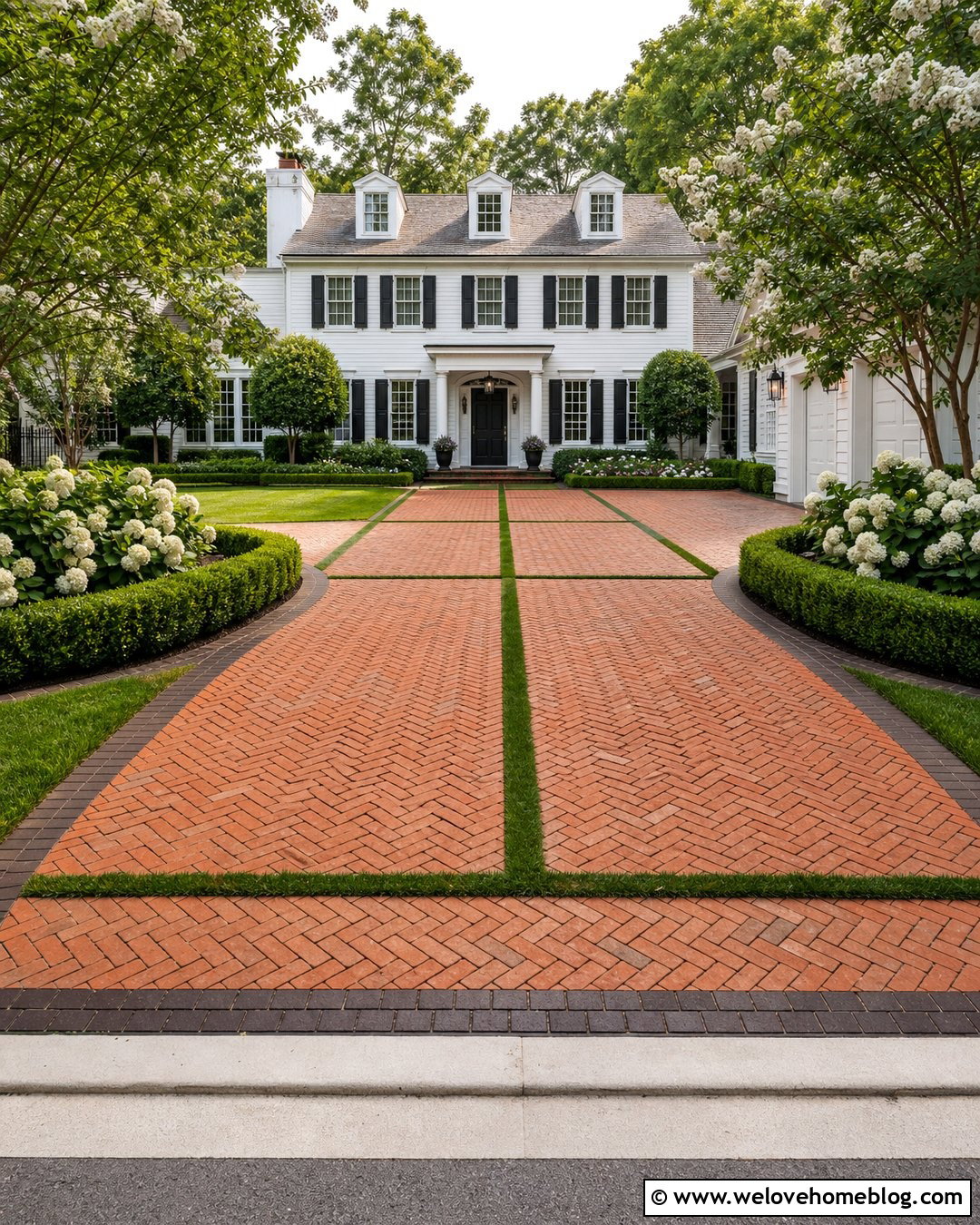
Red or brown clay brick pavers become more relaxed when narrow turf ribbons divide the driveway into larger sections. Lay the bricks in a herringbone pattern for dependable visual structure, then use straight green bands to prevent the surface from looking overly busy. Darker brick edging can outline the driveway and create a clean transition to the lawn. Artificial turf keeps the ribbons neat, while living grass can reinforce the traditional character if growing conditions are suitable. Add curved foundation beds with boxwood, hydrangeas, or small flowering trees. A brick walkway leading to the porch completes the coordinated entrance. This warm combination complements colonial, Cape Cod, Tudor, and traditional craftsman homes without making the frontage feel too formal.
9. Cobblestone Driveway With Turf Center Strip
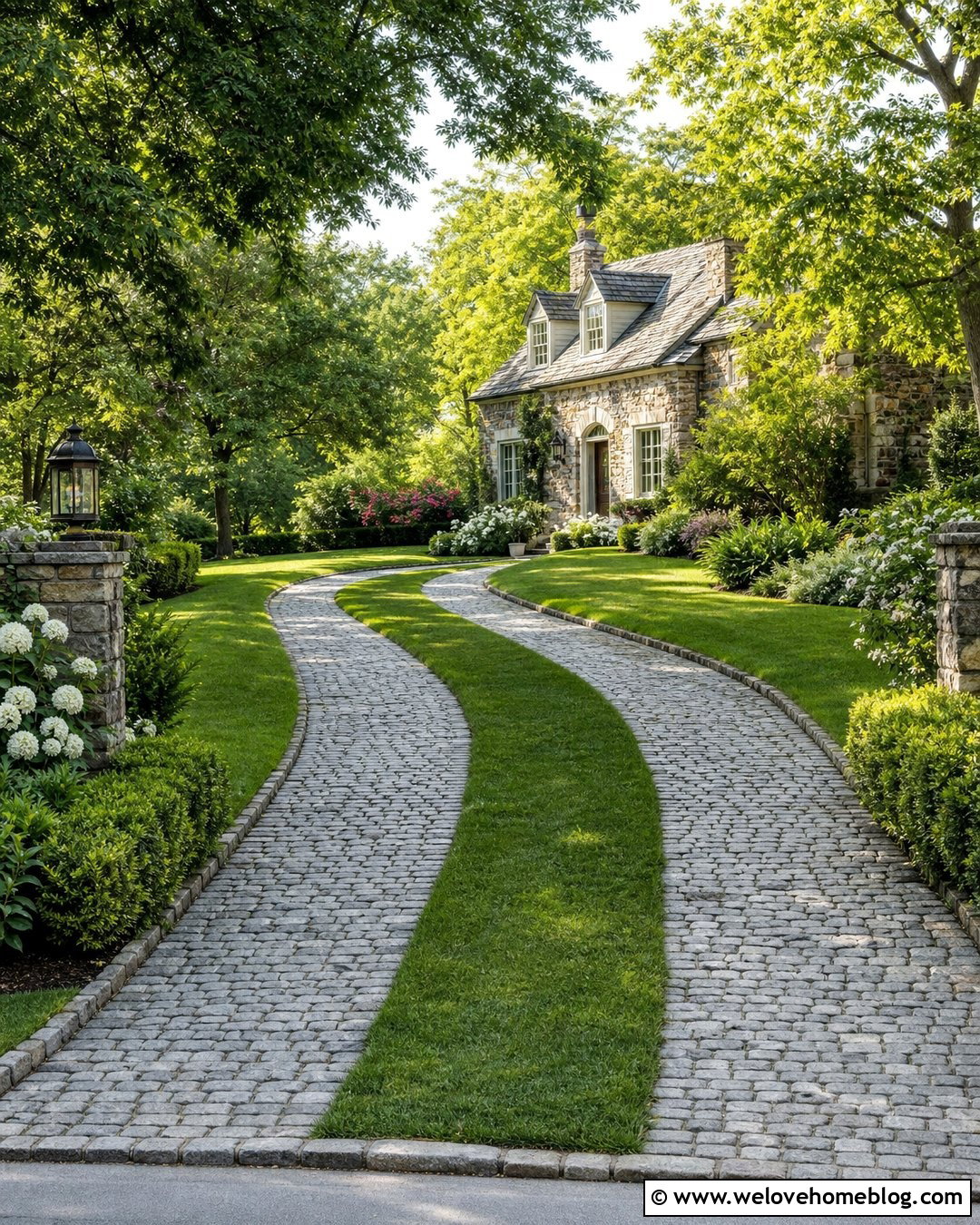
Weathered cobblestone and a broad turf center strip create an established country-house appearance. Build two sturdy cobblestone wheel lanes with enough width to accommodate regular vehicle movement. The central turf area should remain lower than the stones and should widen slightly where the driveway meets an open parking court. Steel or stone edging keeps soil and grass from spreading onto the wheel tracks. Use living turf for a naturally aged look, or install realistic artificial grass when maintenance access is limited. Frame the drive with informal hedges, flowering perennials, and mature shade trees. The mix of rough stone and green turf feels especially appropriate for cottages, European-inspired homes, and rustic properties with long entrances or detached garages.

10. Gravel Driveway With Turf Median
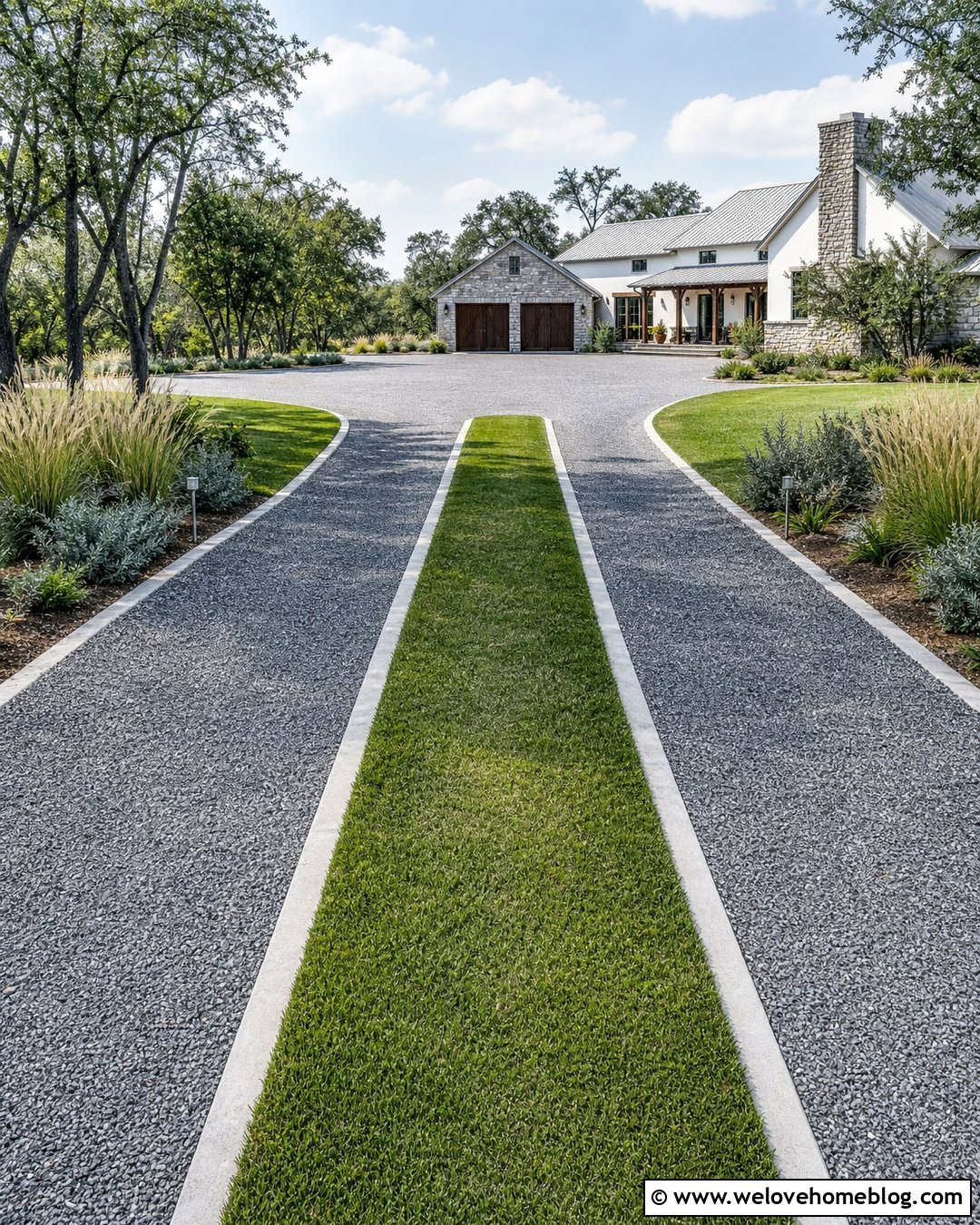
A gravel driveway can include a defined turf median without losing its casual character. Divide the surface into two compacted gravel driving lanes and stabilize them with a suitable grid system beneath the stone. The green center should be wide enough to read as a deliberate landscape feature but narrow enough to avoid contact with low vehicle components. Use metal or concrete edging on both sides of the median to keep loose gravel from migrating into the turf. Gray crushed stone creates a crisp look, while tan gravel feels warmer and more rural. Continue the center turf toward a circular parking court or terminate it at a stone garage apron. Native grasses and informal shrubs can complete this relaxed, budget-conscious entrance.
11. Black Paver Driveway With Turf Grid
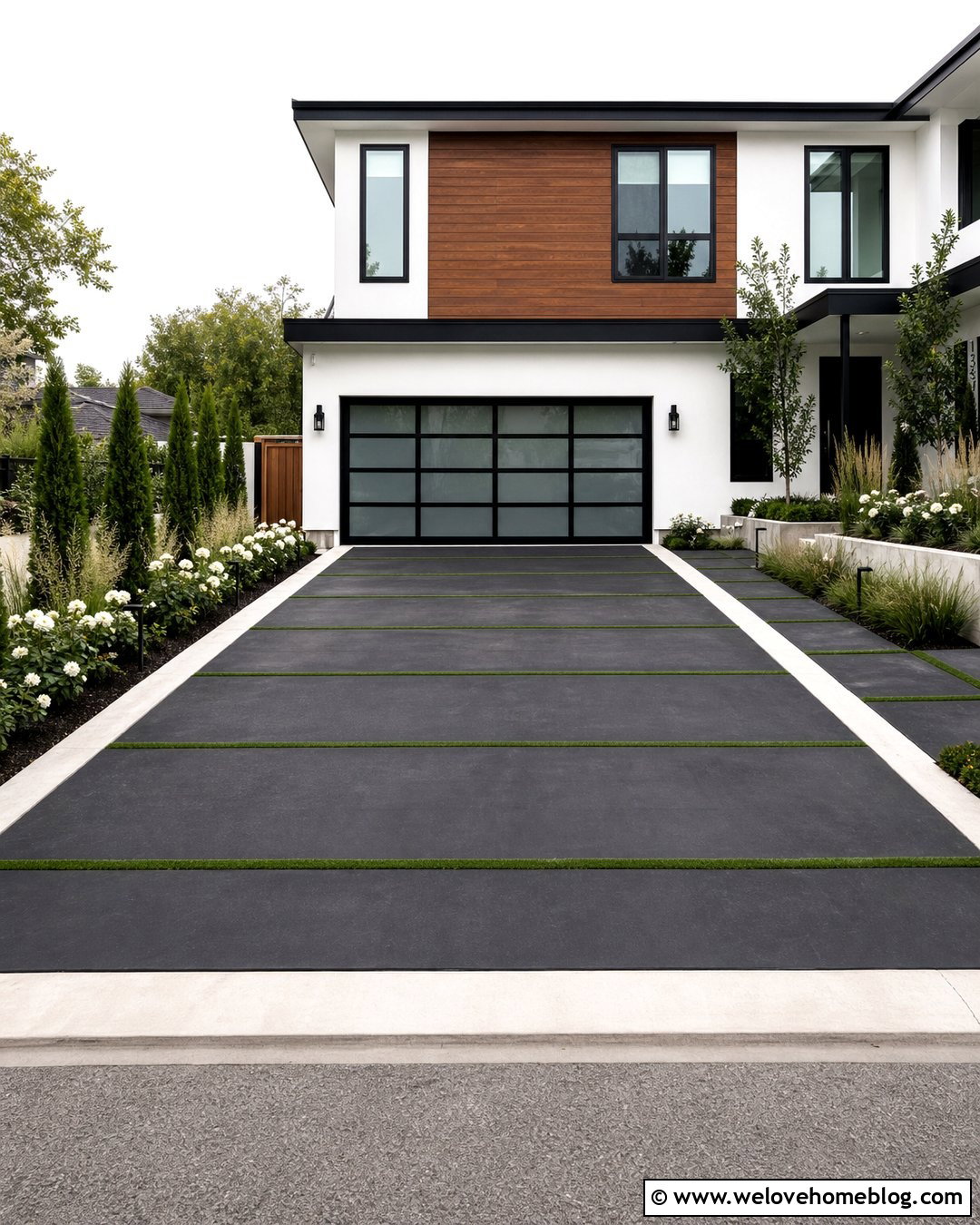
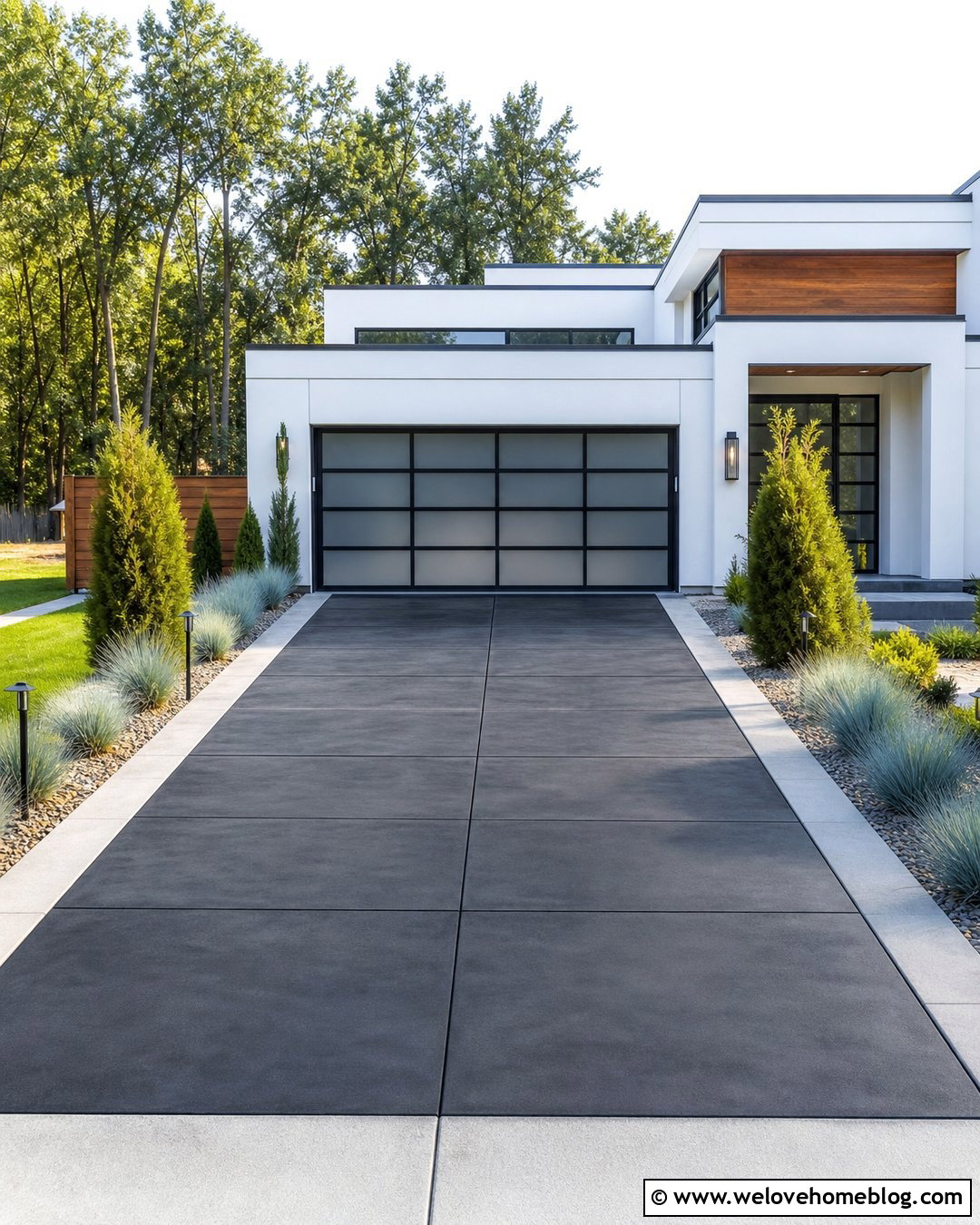
Charcoal concrete pavers paired with vivid turf joints produce strong contrast and modern curb appeal. Choose large rectangular pavers with a matte finish rather than small glossy units, which can make the driveway look crowded. Arrange the blocks in a precise grid that aligns with the garage doors and front walkway. Thin artificial turf strips soften the dark surface while keeping the pattern sharp throughout the year. Pale concrete curbs or light gravel planting beds can brighten the edges. Add evergreen shrubs, white flowering plants, and a few upright ornamental grasses for a restrained color palette. This complete driveway works particularly well with white stucco, natural wood siding, black-framed windows, and other features common to contemporary architecture.
12. White Concrete Driveway With Turf Bands
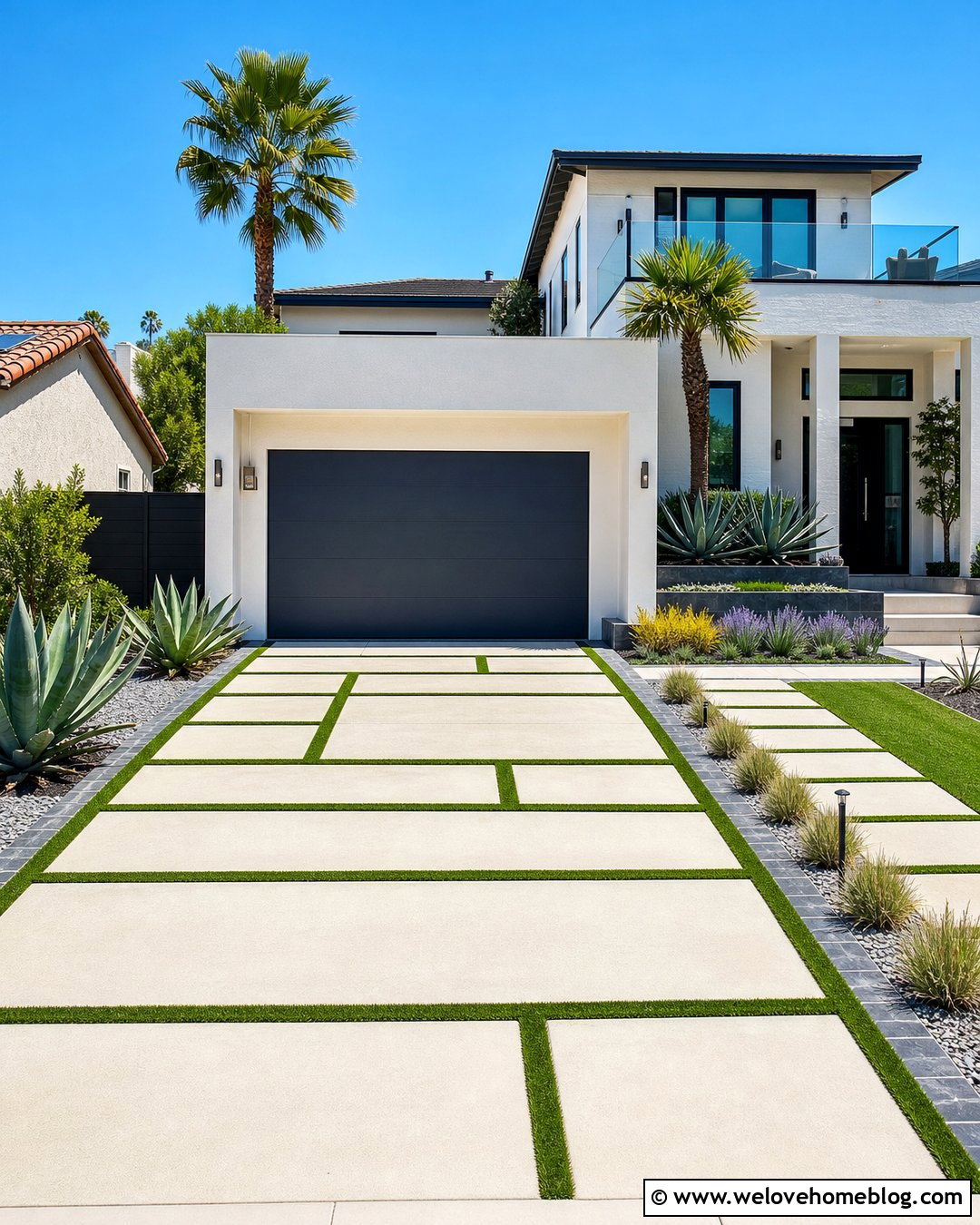
Bright concrete panels and wide turf bands can give a front yard a fresh, open appearance. Use off-white or pale sand-colored concrete rather than a glaring pure white finish, especially in sunny regions. Arrange long rectangular panels in a staggered layout, with artificial turf creating clean separations between each section. A darker stone border can provide contrast and help protect the pale concrete from lawn soil. Surrounding beds filled with agave, dwarf palms, lavender, or ornamental grasses support a warm-climate landscape. Carry the same concrete and turf combination into the walkway for a unified route to the front door. This driveway design feels polished beside coastal, desert-modern, Florida contemporary, and light stucco homes.
13. Exposed Aggregate Driveway With Turf Joints
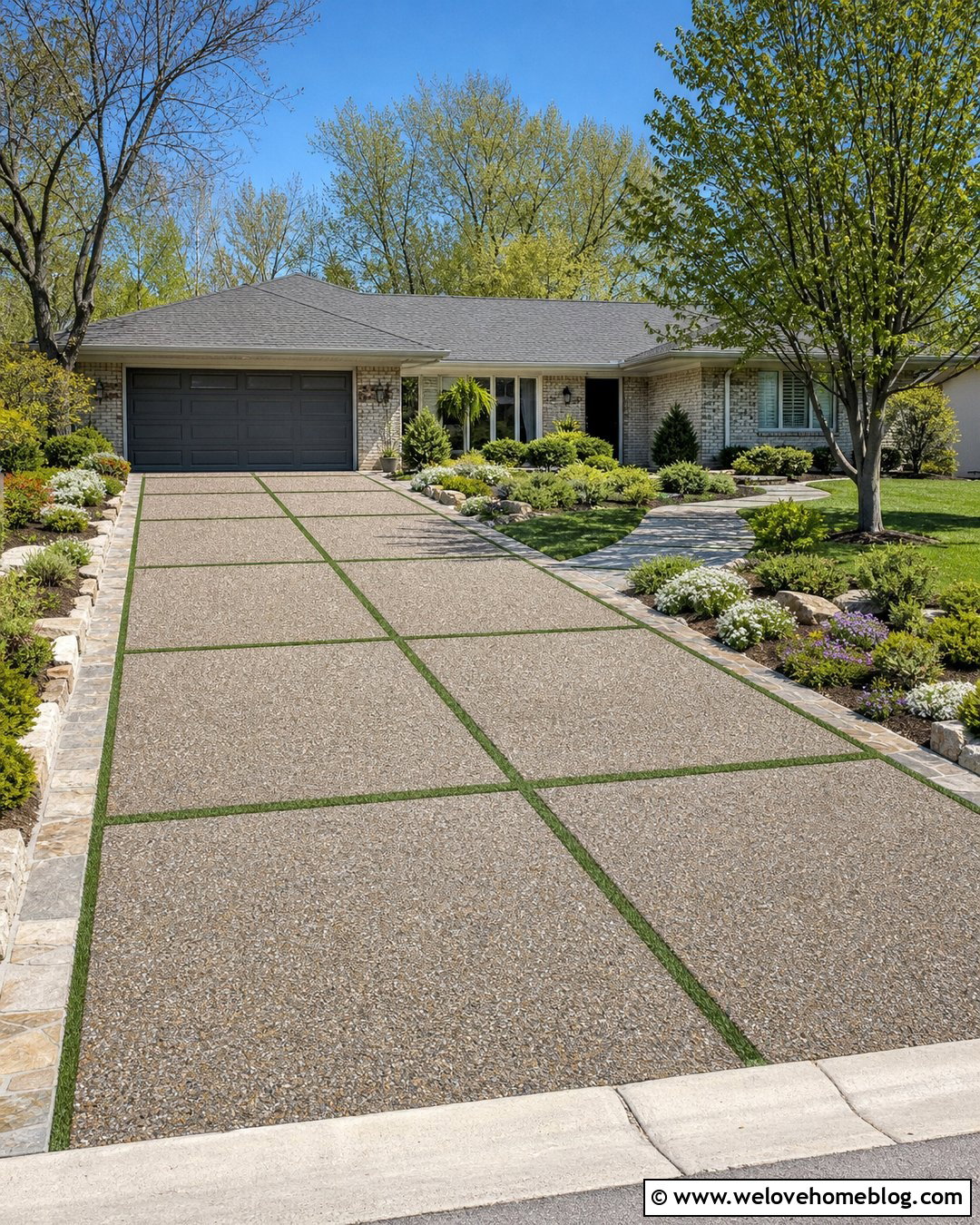
Exposed aggregate concrete offers more texture than smooth slabs while still working beautifully with green turf. Select an aggregate blend containing gray, cream, and warm brown stones so the driveway connects with both the house and landscape. Pour the surface in large rectangular panels separated by straight artificial turf joints. The rougher finish can provide useful visual depth, particularly on a large driveway that might otherwise appear flat. Outline the perimeter with matching concrete curbs or natural stone edging. Plant low shrubs and ground covers beyond the border, keeping taller plants near the house. Turf joints should remain clear of loose aggregate and sit at a consistent depth. The finished look suits ranch, craftsman, and transitional homes.
14. Flagstone Driveway With Turf Gaps
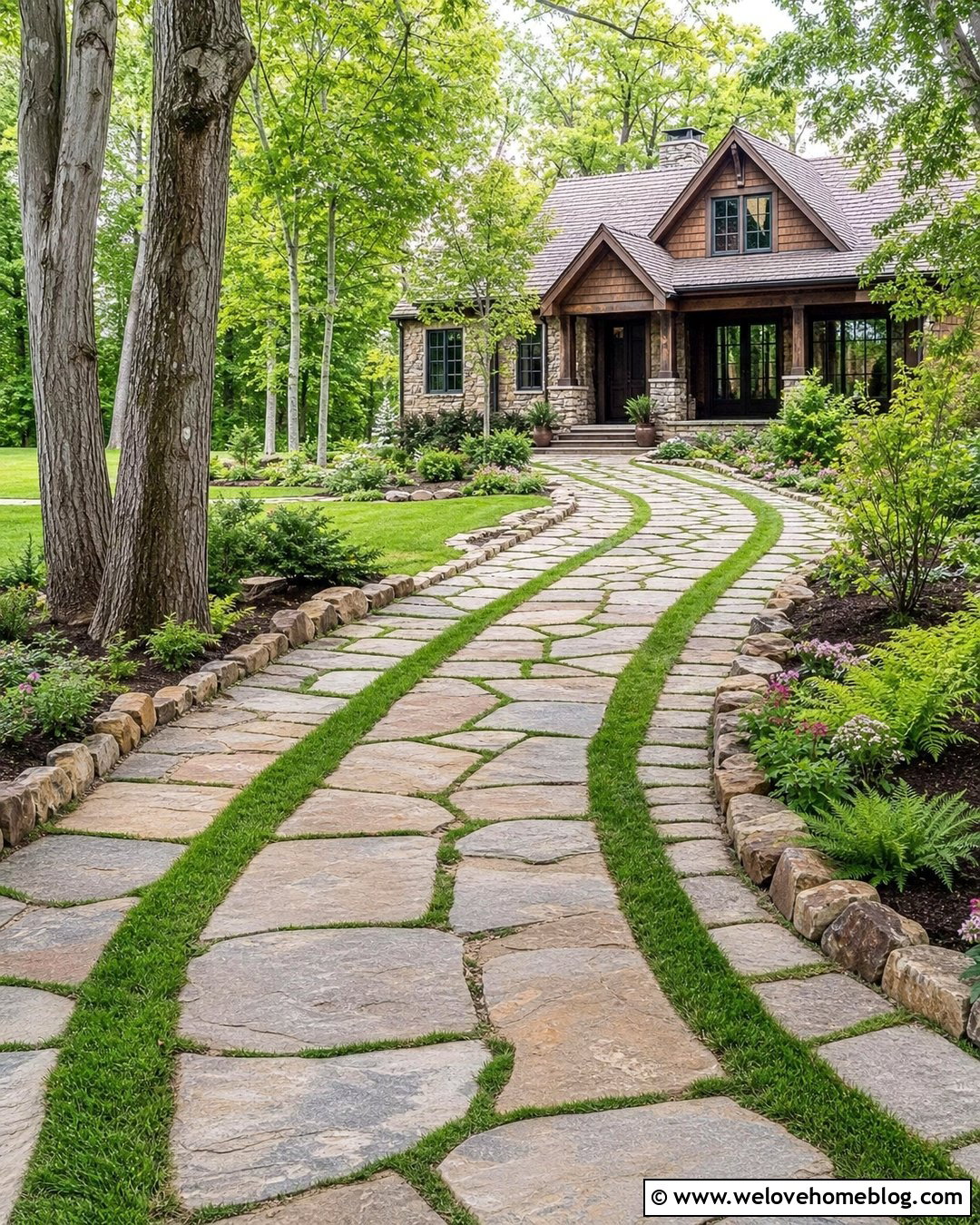
Large, irregular flagstones surrounded by reinforced turf create an organic driveway that blends into a garden setting. Select thick, vehicle-rated stone rather than thin patio pieces, and install every slab over a properly engineered base. Place the largest stones along the wheel paths, leaving controlled green gaps between them. Living grass adds a natural cottage look, while synthetic turf provides more uniform coverage beneath trees or in narrow joints. A curved outline helps the driveway feel like part of the landscape rather than a separate paved area. Frame it with woodland shrubs, ferns, flowering perennials, and a flagstone walkway. This complete design is best for low-speed residential approaches leading to cottages, cabins, and rustic craftsman houses.
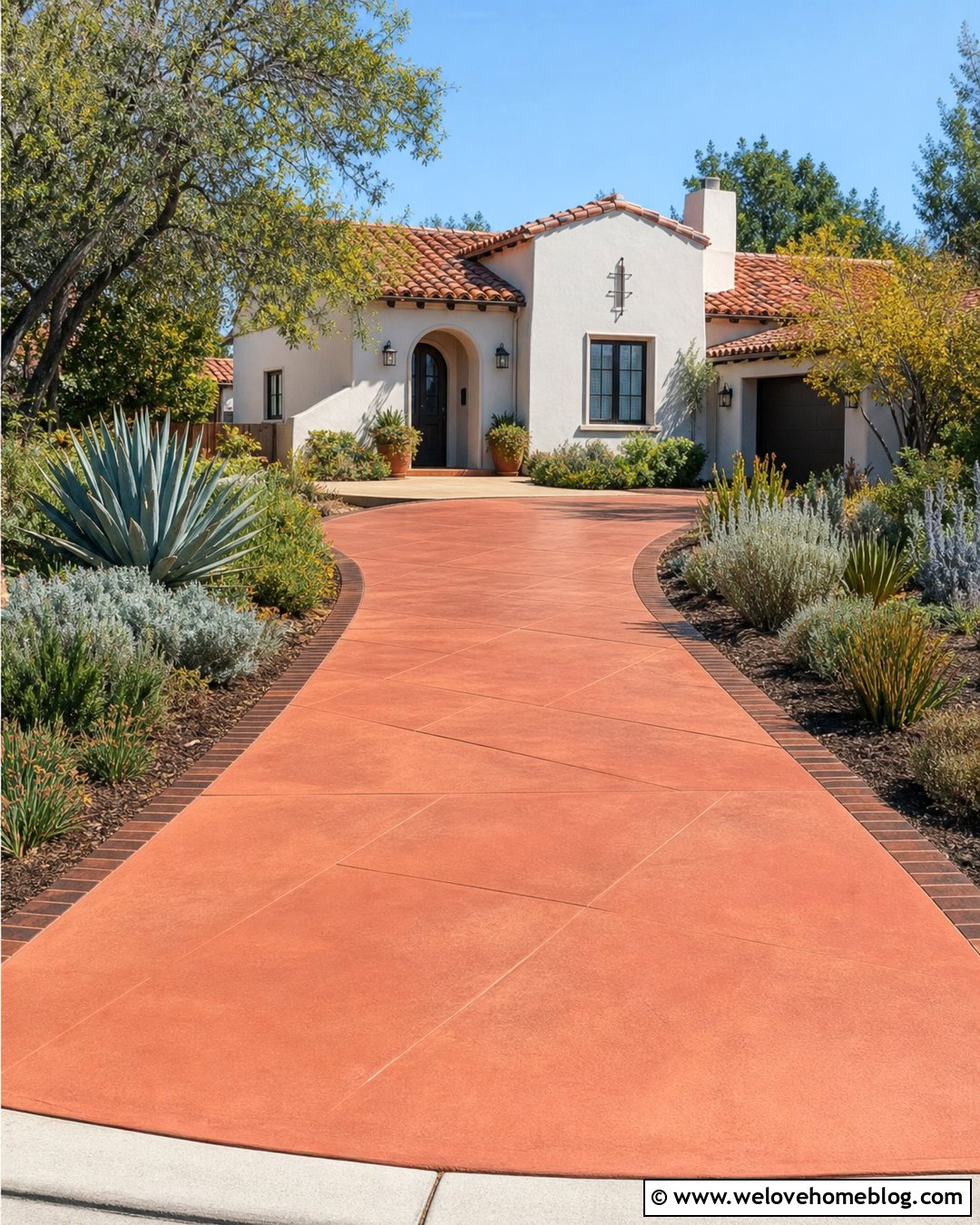
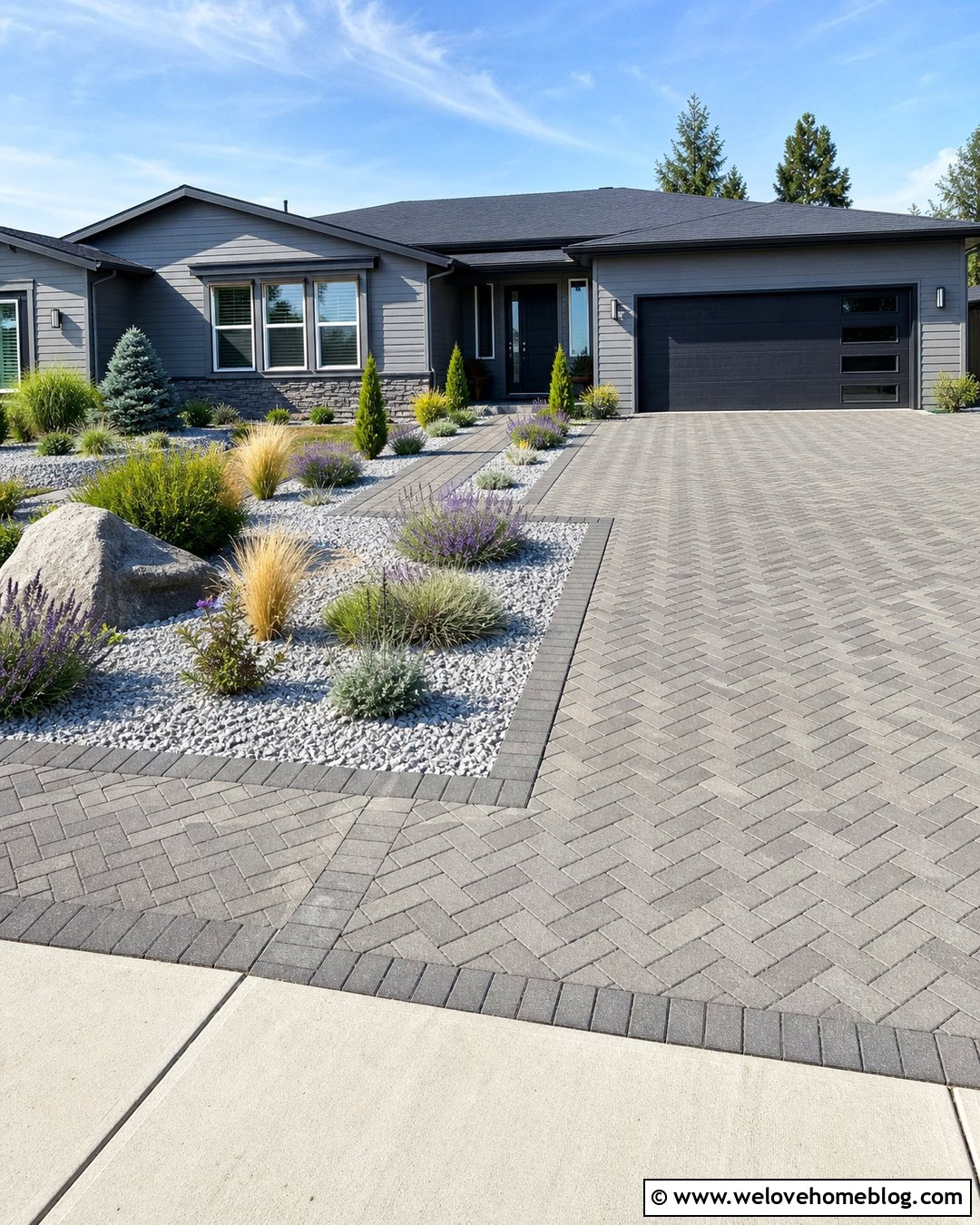
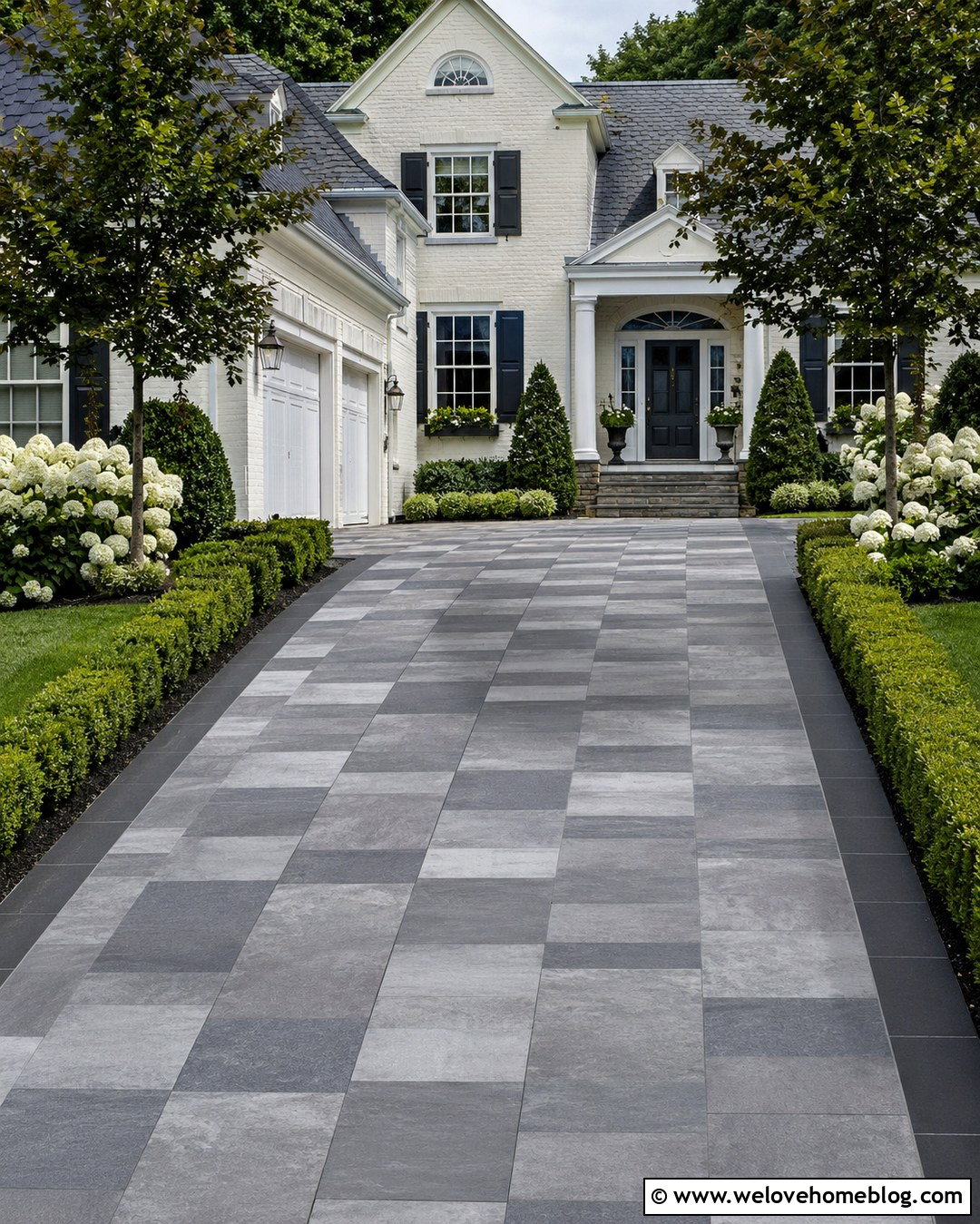
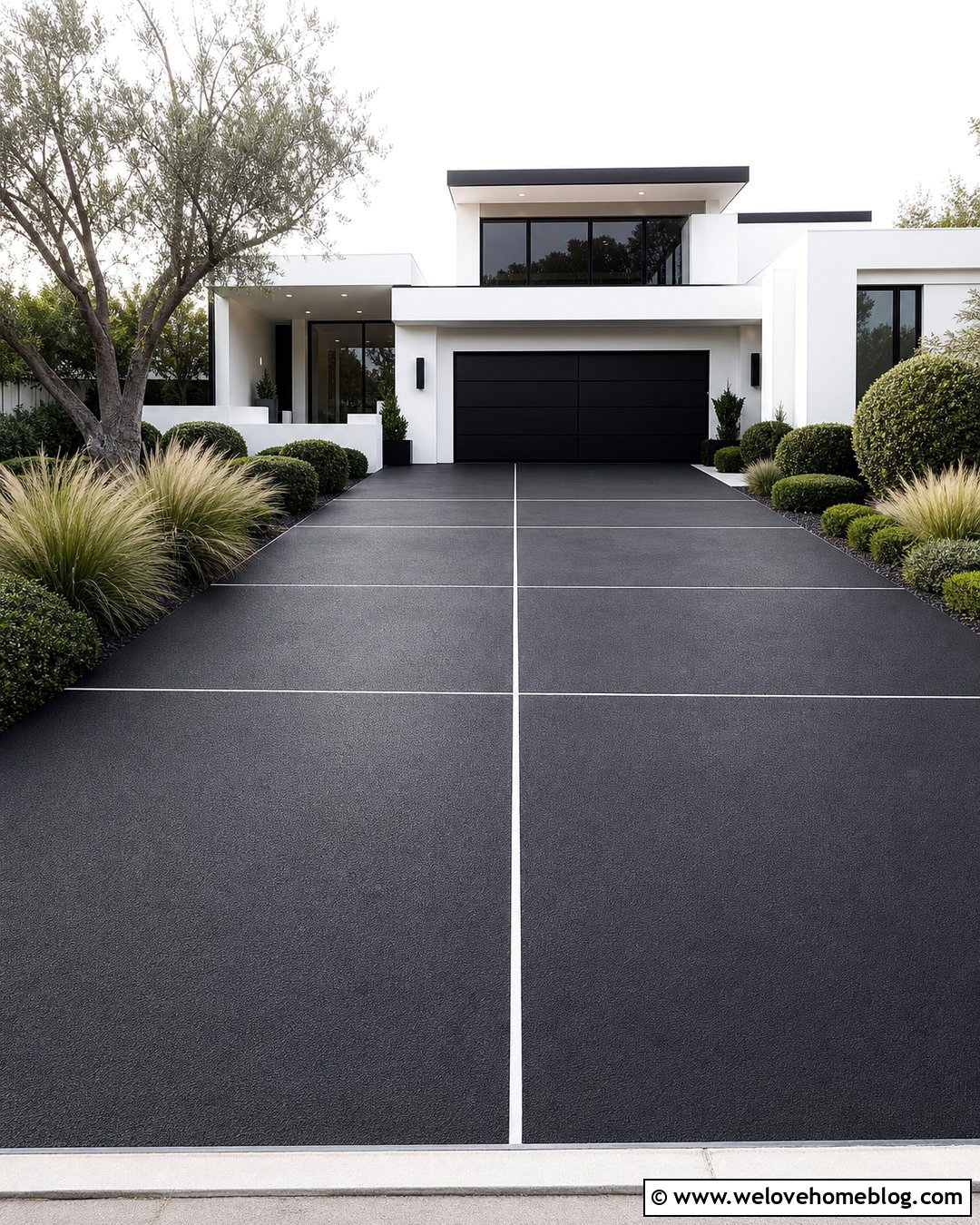
15. Modern Farmhouse Driveway With Turf Strips
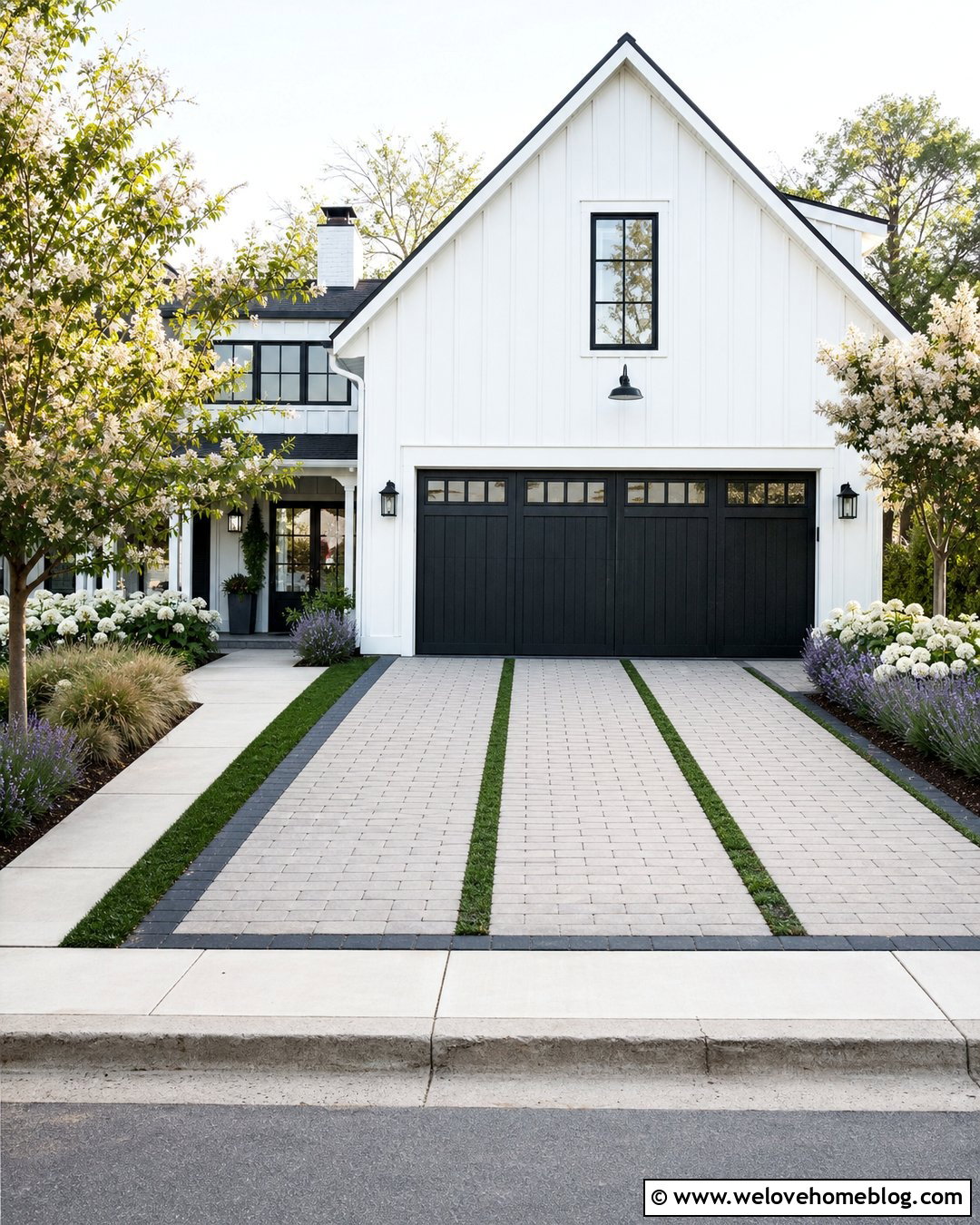
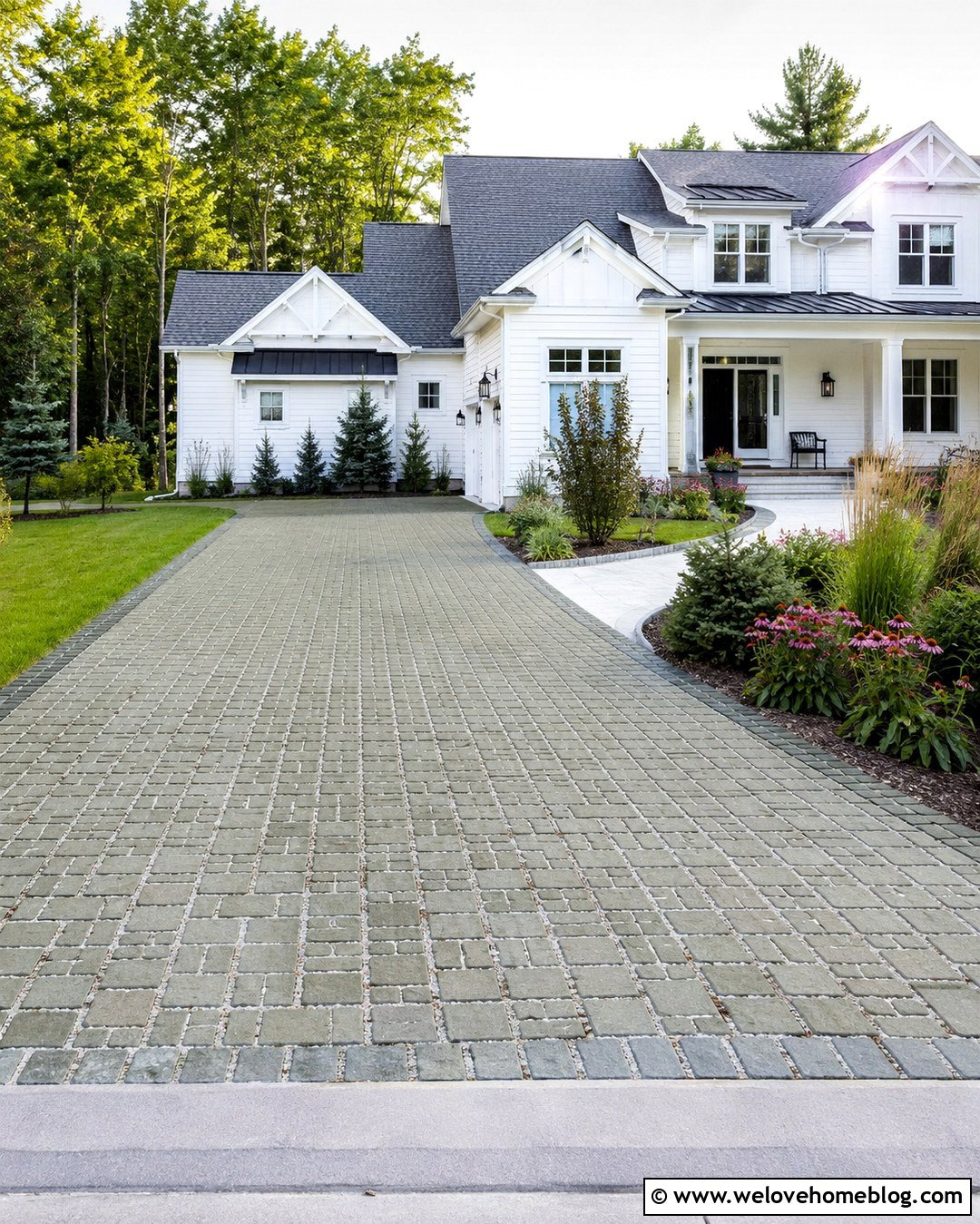
A modern farmhouse driveway can combine rectangular concrete pavers, turf strips, and simple country landscaping. Choose warm light-gray pavers that coordinate with white siding, black windows, and natural wood details. Lay the pavers in long rows toward the garage, adding narrow artificial turf lines between each row. A dark brick or charcoal paver border can echo exterior lighting and window frames. On either side, use relaxed beds with hydrangeas, fountain grass, lavender, and small flowering trees. A straight concrete walkway should branch neatly from the driveway and lead toward the porch. The contrast between structured paving and soft planting keeps the frontage modern without losing its welcoming farmhouse character. Avoid excessive decoration so the materials remain the main focus.
16. Small Driveway With Turf Parking Pads
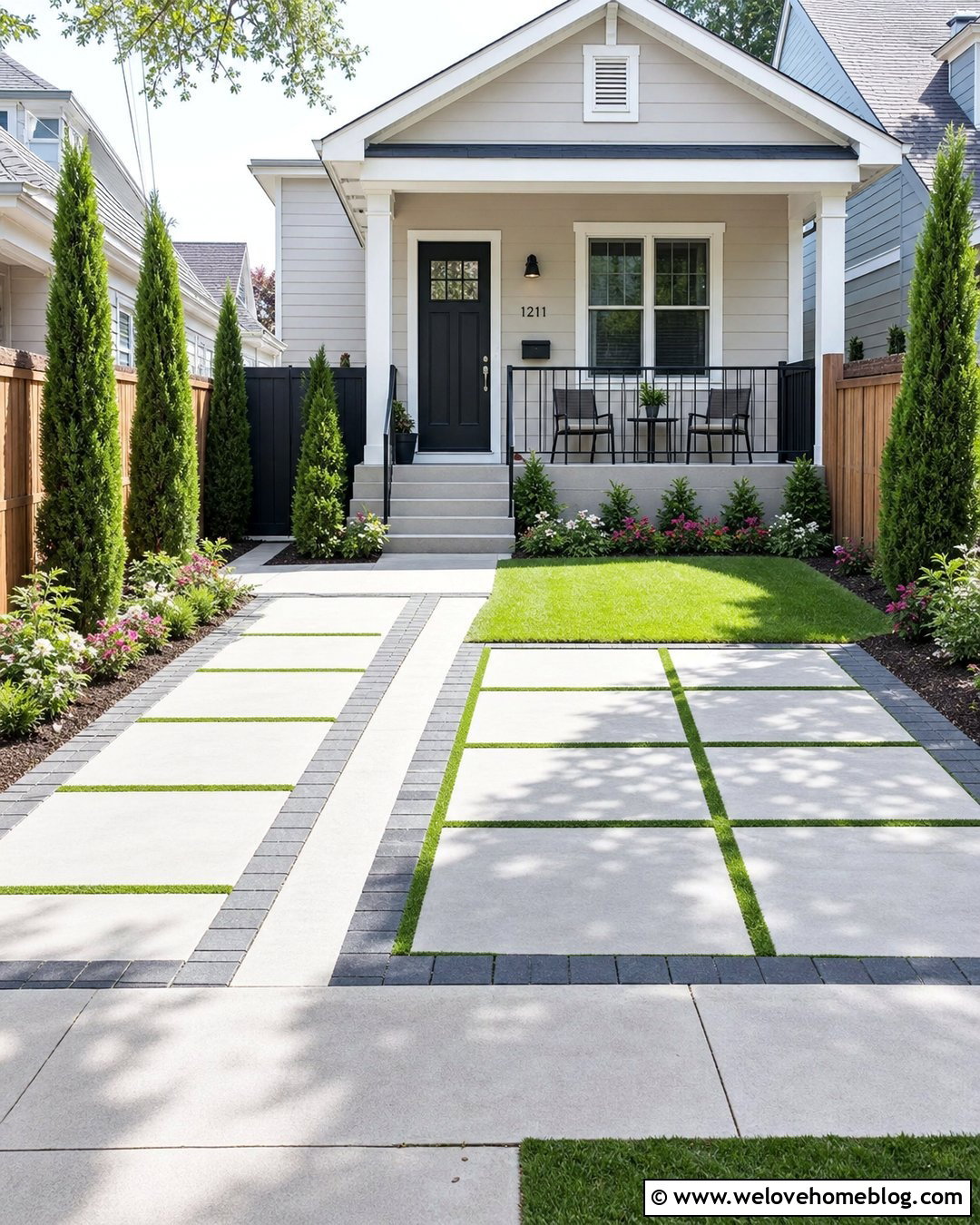
Limited frontage can still accommodate a polished driveway with turf. Create two compact parking pads using large square concrete pavers and narrow artificial grass joints. Align the grid carefully with the garage or side-yard gate to make the small area feel organized. A slim paver border can prevent the turf edges from lifting where tires enter from the street. Use vertical plants, columnar shrubs, and narrow planting beds to preserve as much usable width as possible. A walkway may share one edge of the driveway instead of occupying separate yard space. Light-colored pavers and a simple pattern prevent visual crowding. This complete layout is useful for townhomes, small bungalows, accessory dwelling units, and urban houses with short front setbacks.
17. Sloped Driveway With Turf Drainage Strips
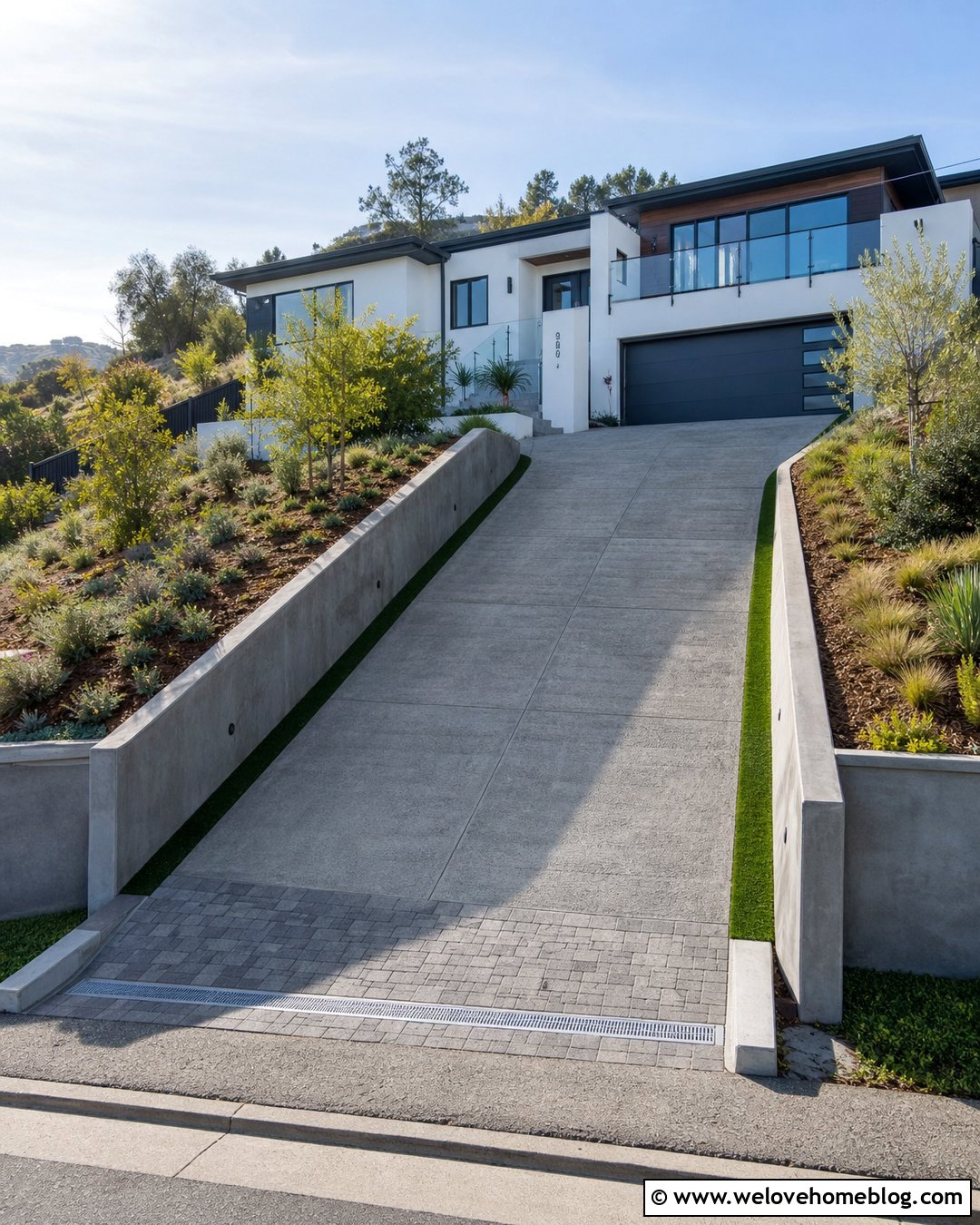
A sloped driveway needs careful engineering, but turf strips can still be included as controlled green accents. Use textured concrete panels for the primary driving surface and position narrow turf bands across or beside the slope only where the drainage plan allows. The base, retaining edges, and runoff route should be designed for local soil and rainfall conditions. Avoid placing delicate living grass in areas where fast-moving water or turning tires could damage it. Artificial turf over a properly drained base may provide a more consistent appearance. Add low retaining walls, erosion-resistant planting, and a level paver apron near the garage. The complete design should direct water away from the house while maintaining safe, clearly defined wheel paths and attractive curb appeal.
18. Horseshoe Driveway With Turf Island
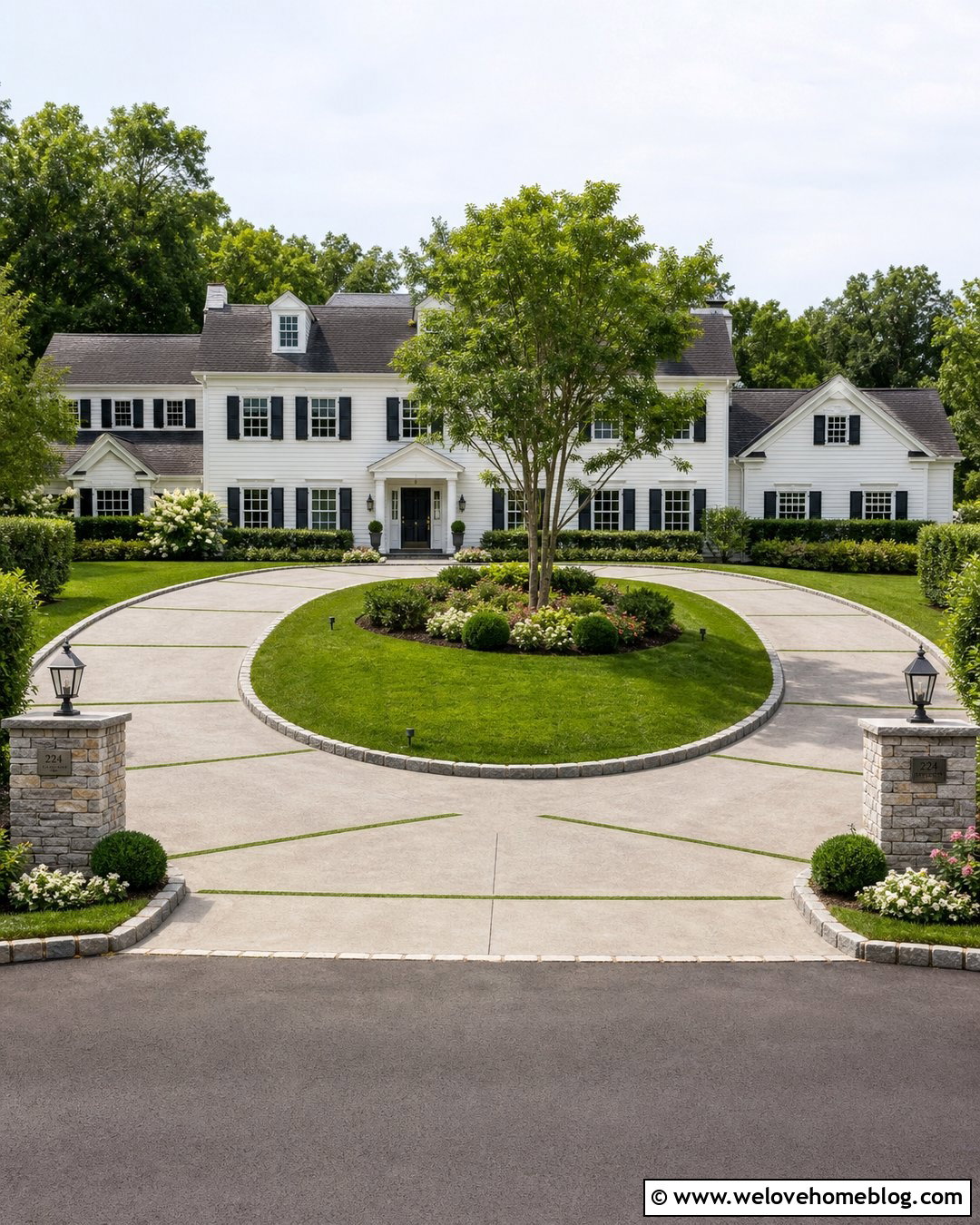
A horseshoe driveway naturally creates space for a prominent central turf island. Pave the curved driving lane with warm gray concrete pavers or textured poured concrete, then repeat green turf in narrow joints around the route. The center island can feature a healthy lawn, one small ornamental tree, and layered shrubs that remain clear of driver sightlines. Add a stone mowing strip around the island to protect its edge and simplify maintenance. Matching entrance pillars can mark both openings without making the property feel closed off. This complete layout provides separate entry and exit points while preserving a generous area of greenery. It works especially well for wide ranch houses, colonial homes, and larger suburban properties with broad street frontage.
19. Driveway With Turf And Stepping Stone Walkway
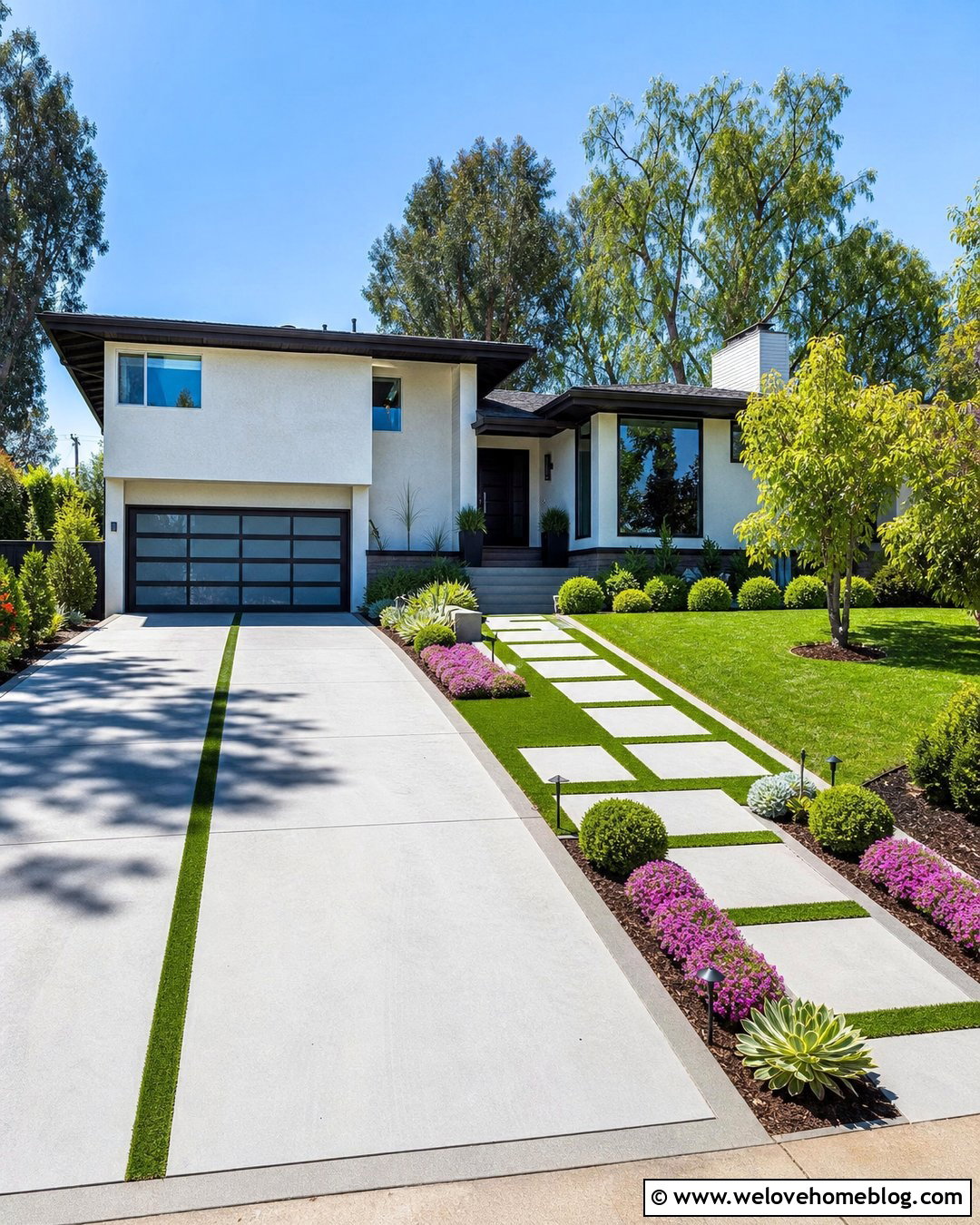
Connect the driveway and front door by repeating turf and paving materials in an adjacent stepping-stone walkway. A smooth gray concrete driveway can use long artificial turf bands, while large matching concrete steps cross a wider green strip toward the porch. Keep the pedestrian path visually separate from vehicle areas by adjusting the paver size or orientation. Low pathway lights, compact shrubs, and flowering ground covers can frame the route without narrowing it. A continuous concrete border maintains crisp turf edges and prevents planting soil from spilling onto the driveway. This coordinated design is useful when the front entrance is offset from the garage. Repetition helps the driveway, path, lawn, and house appear as one planned landscape rather than unrelated features.
20. Driveway Entrance With Turf And Paver Apron
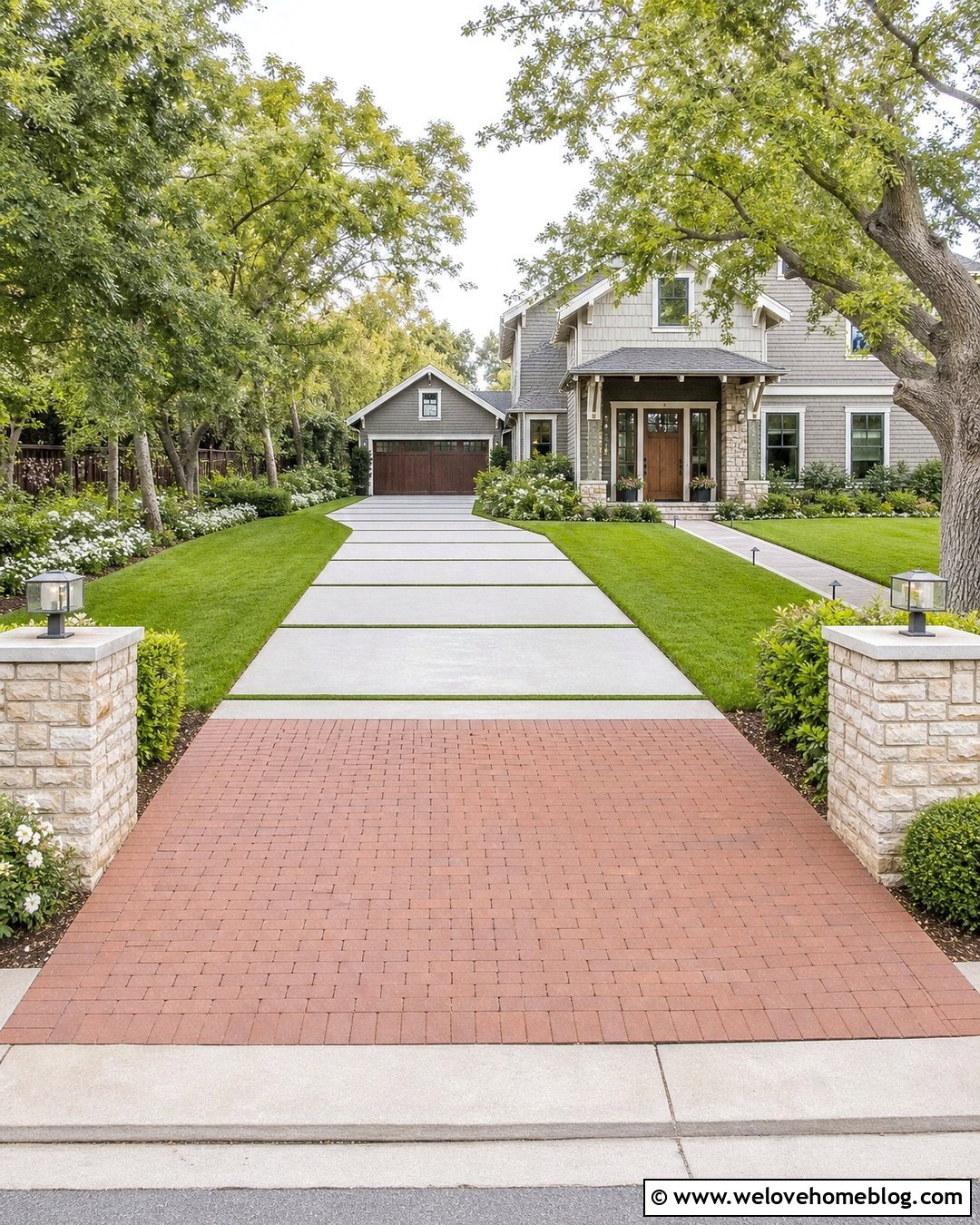
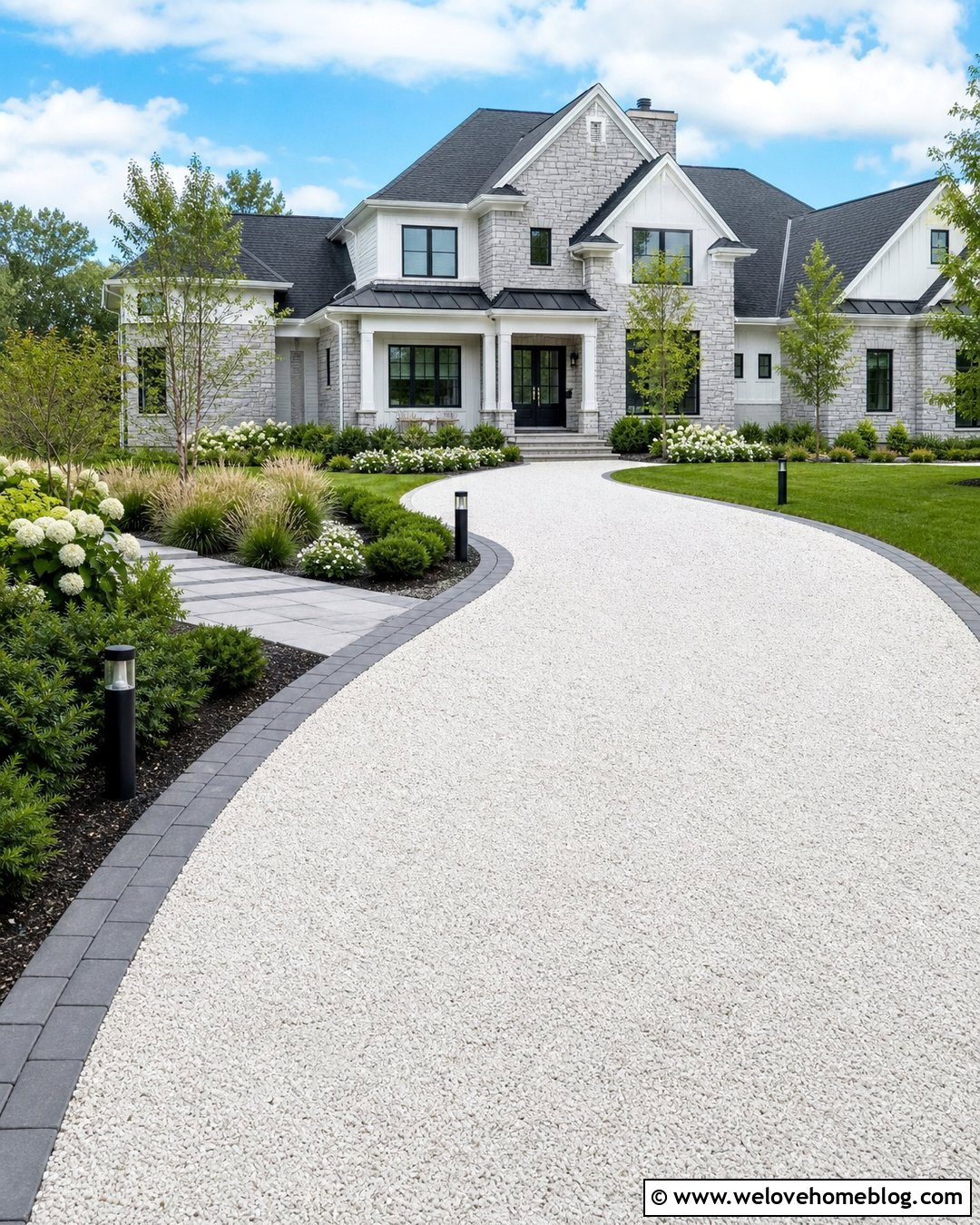
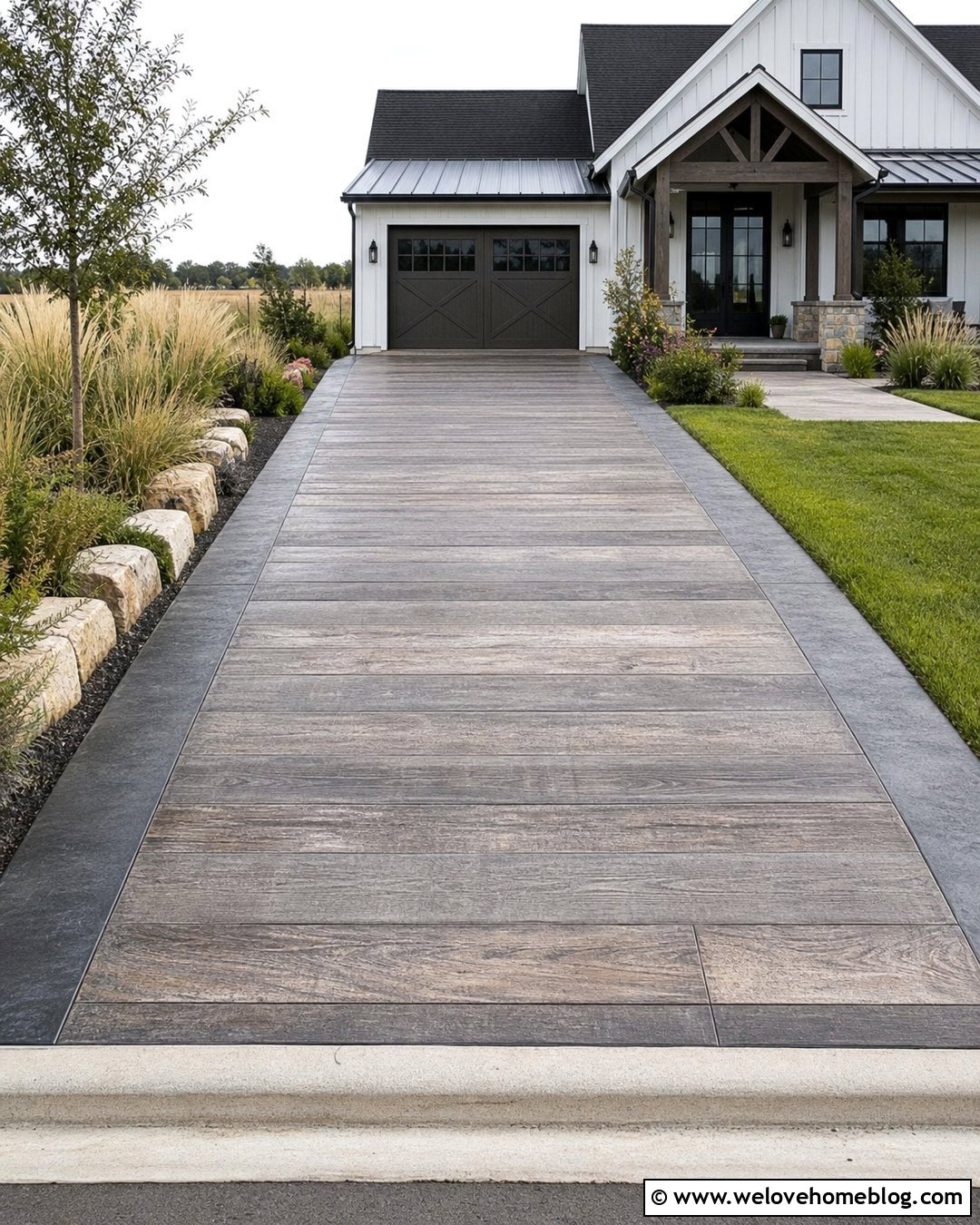
A defined paver apron can protect the busiest part of a turf-accented driveway while creating a polished street entrance. Use durable clay brick, granite cobblestone, or contrasting concrete pavers across the first several feet. Behind the apron, transition to large concrete slabs divided by artificial turf. Continue a narrow green band along each side to connect the driveway with the lawn. Low stone pillars, matching mailboxes, or modest address markers can frame the entry without blocking visibility. Plant salt-tolerant or regionally appropriate shrubs near the curb, where conditions may be harsher. The combination of a solid apron, structured wheel surface, and clean turf joints handles the visual transition from public street to private landscape in an attractive, practical way.
Conclusion:
The best 20 Driveway With Turf Ideas treat greenery as part of the entire driveway system rather than a decorative afterthought. Concrete slabs and artificial turf provide sharp modern lines, while brick, cobblestone, flagstone, gravel, and living grass create softer traditional entrances. Consider the driveway’s slope, vehicle movement, sunlight, drainage, and maintenance needs before selecting a pattern. Turf should sit within a stable, properly edged layout supported by a strong base. It should not carry wheel loads unless it is installed with a driveway-rated reinforcement system. With thoughtful materials and coordinated landscaping, a turf-accented driveway can reduce the look of hard pavement, strengthen curb appeal, and connect the home naturally with its front yard.

Related posts:


Leave a Reply