
A stained concrete driveway can turn a plain slab into a polished part of your home’s exterior. If you are searching for **20 Stain Concrete Driveway Ideas**, look beyond color alone. The most successful designs coordinate the stain with the driveway shape, decorative joints, borders, landscaping, and house facade. Acid stains create organic color variation, while water-based stains offer a broader palette and more consistent results. Because most stains remain translucent, the concrete’s existing texture and character may stay visible. Testing the selected color on a small area is wise before treating the entire surface. () From warm brown finishes to sharp charcoal patterns, the complete looks below offer practical inspiration through **20 Stain Concrete Driveway Ideas**.

1. Brown Stained Concrete Driveway
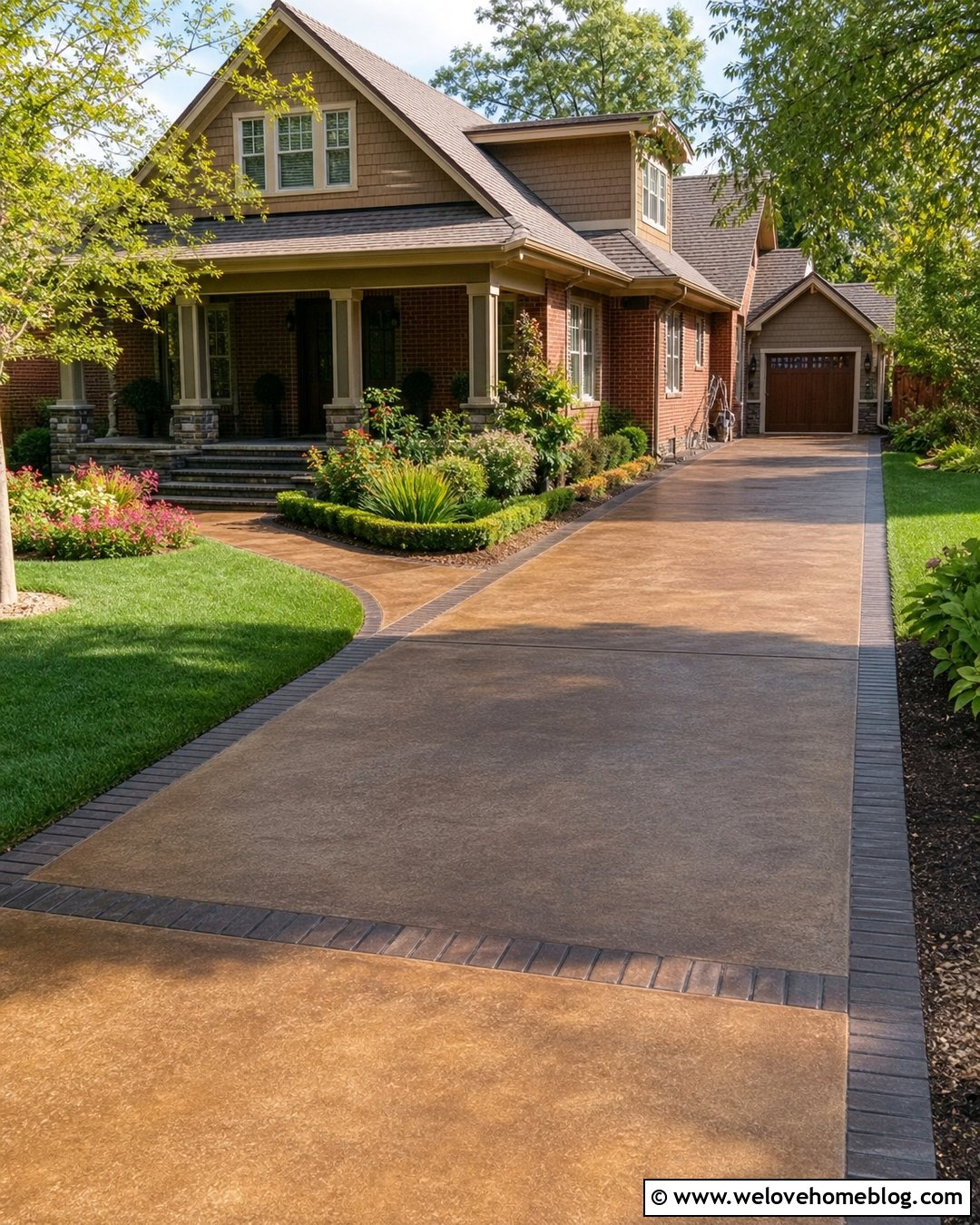
Warm brown stained concrete creates an inviting driveway that works especially well with brick, stone, and wood-sided homes. Choose a medium walnut or chestnut stain with subtle tonal variation rather than one completely flat color. A straight driveway can be framed with dark brick ribbons that connect visually to the house facade. Add gently curved planting beds filled with boxwoods, ornamental grasses, and seasonal flowers along both sides. A matching concrete walkway keeps the entrance unified. Brown also provides a practical backdrop where everyday dust and light tire marks may be less visually distracting than on a pale surface. Earth tones remain popular because they coordinate naturally with residential landscaping and many exterior palettes. () Finish the design with a compatible exterior concrete sealer.
2. Charcoal Stained Concrete Driveway
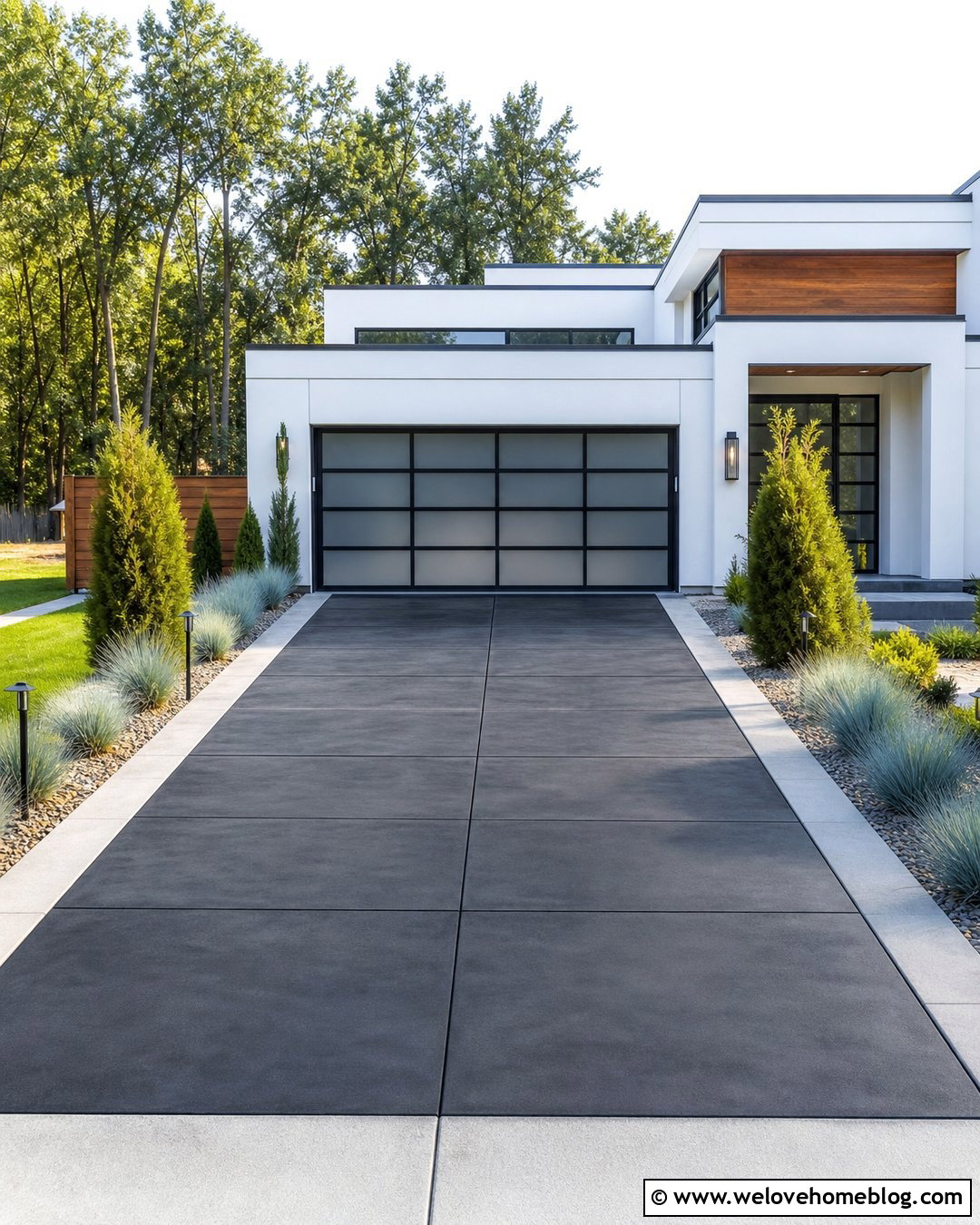
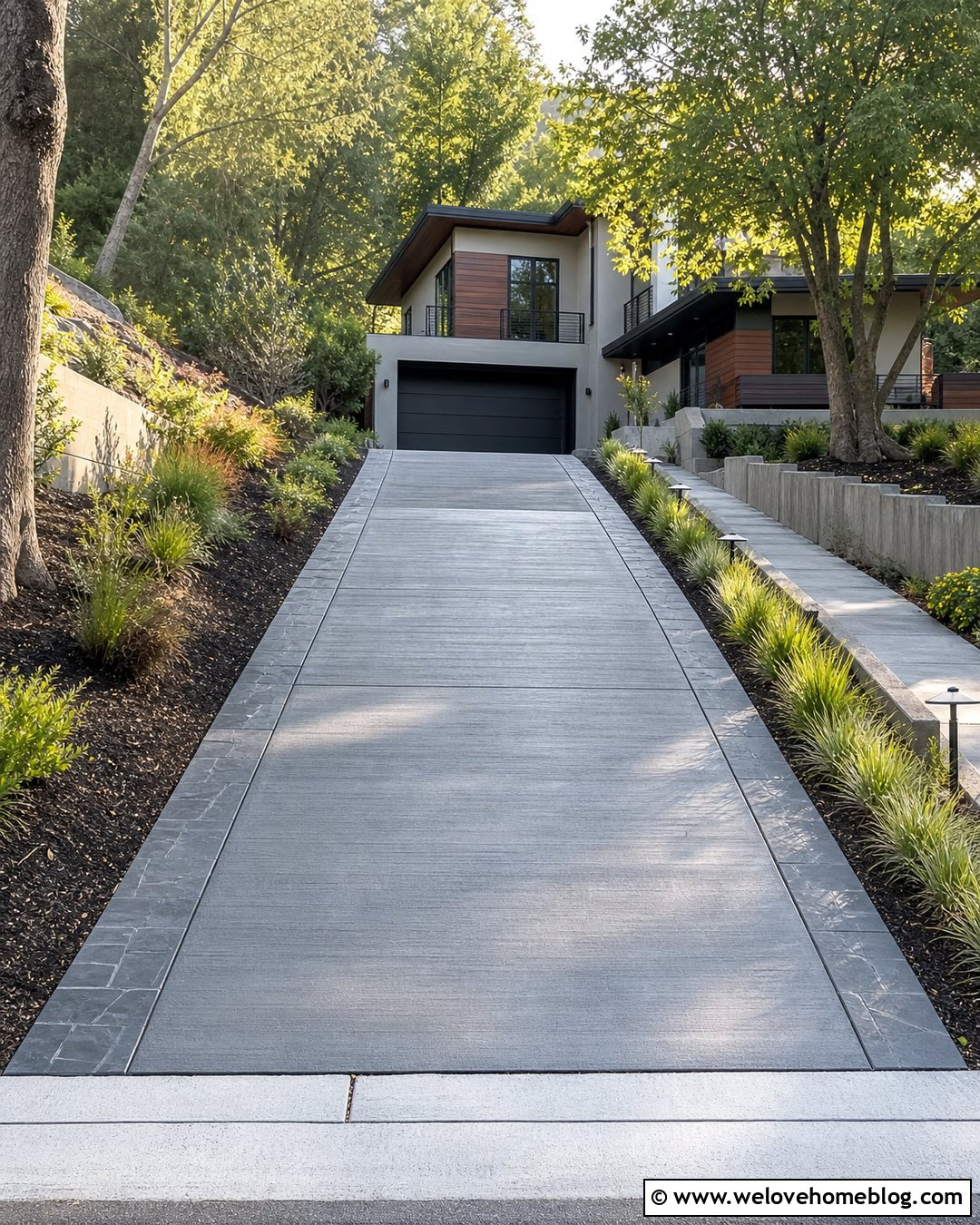
A charcoal stained concrete driveway gives a modern house a crisp, grounded appearance. Keep the layout straight and simple, using large rectangular sections separated by narrow saw-cut joints. A lighter gray concrete border prevents the dark surface from looking too heavy and clearly defines the driving area. On each side, use low planting beds with blue fescue, compact evergreens, and pale gravel mulch. These cooler landscape colors balance the deeper stain. Charcoal surfaces can absorb more heat than lighter colors, so local climate and sun exposure should influence the final shade. () A satin or low-sheen sealer usually feels more natural than an extremely glossy finish. Pair the driveway with a white, gray, or wood-accented contemporary facade for a cohesive exterior.
3. Tan Stained Concrete Driveway
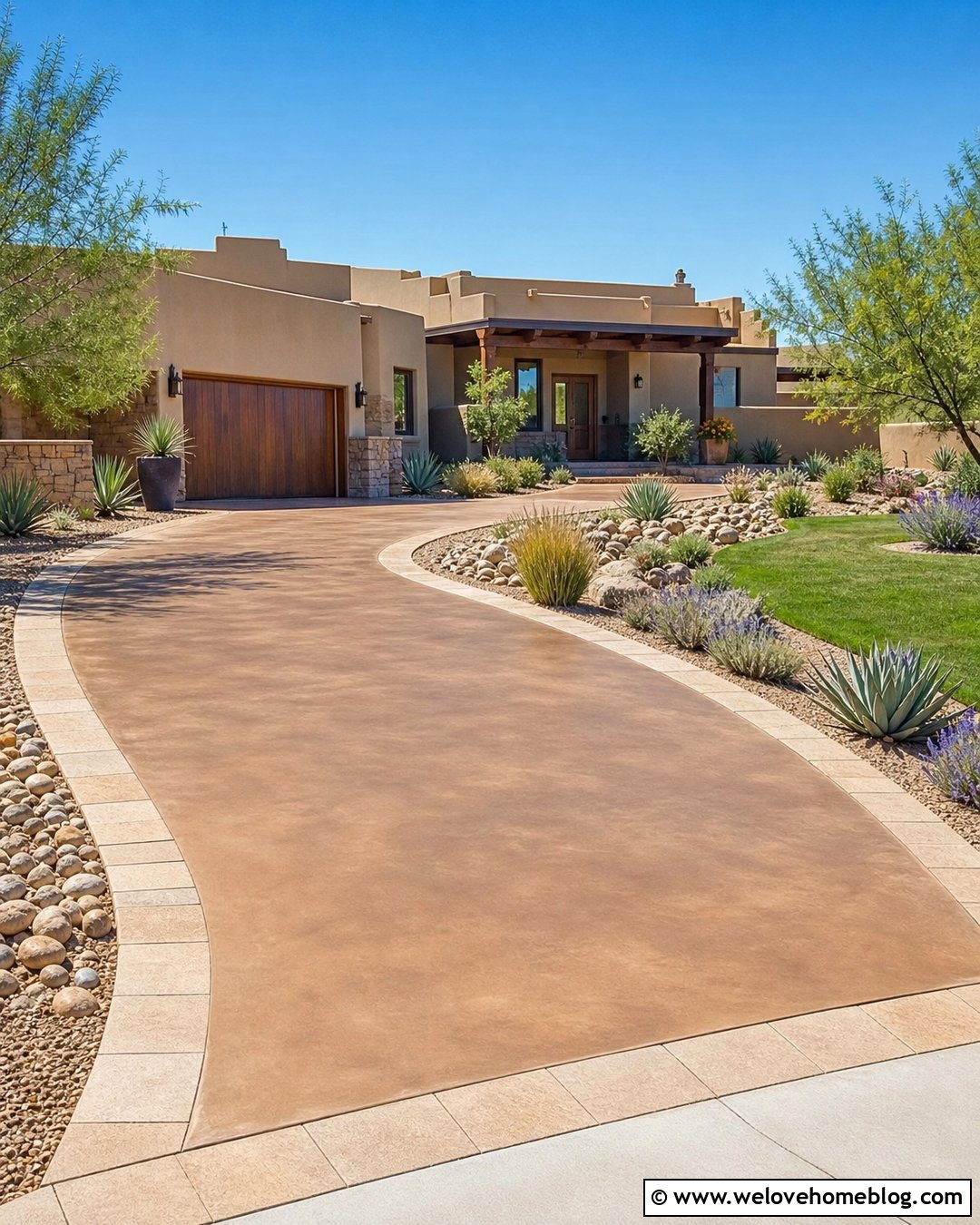
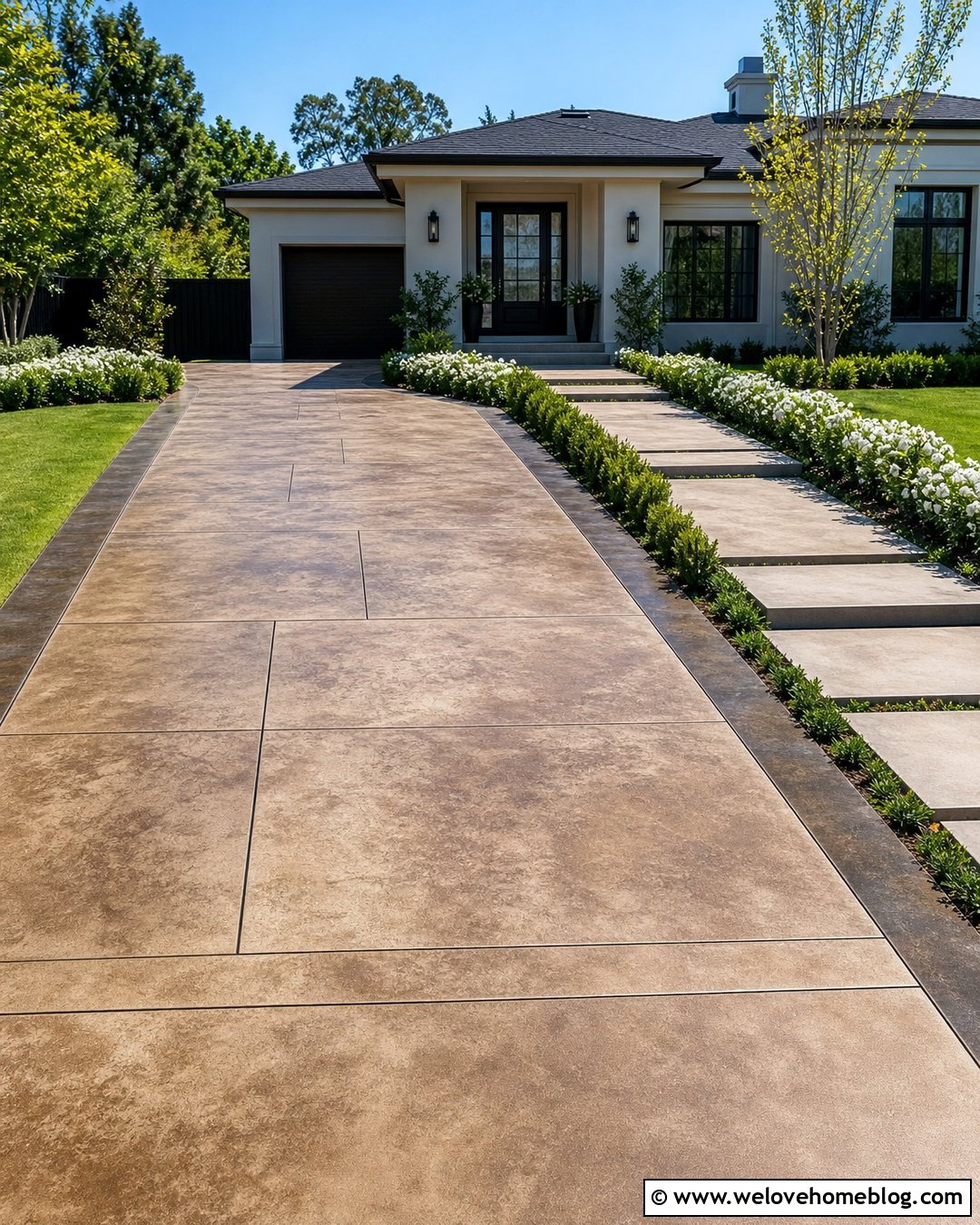
Soft tan stained concrete gives a driveway a clean appearance without the starkness of plain white or light gray. It is a useful choice for a ranch, stucco, Southwestern, or Mediterranean-style house. Form the driveway with a gentle curve that follows the natural shape of the front yard. A border of sandy beige pavers can add definition while preserving the light, tonal palette. Drought-tolerant beds containing agave, yucca, lavender, and decorative grasses will reinforce the warm finish. Use river rock around the plants to create an easy visual transition from landscaping to pavement. Because stains interact differently with individual slabs, ask for an on-site sample before approving a large application. The finished tan surface should complement both the roof and exterior walls rather than matching either one exactly.
4. Black Stained Concrete Driveway
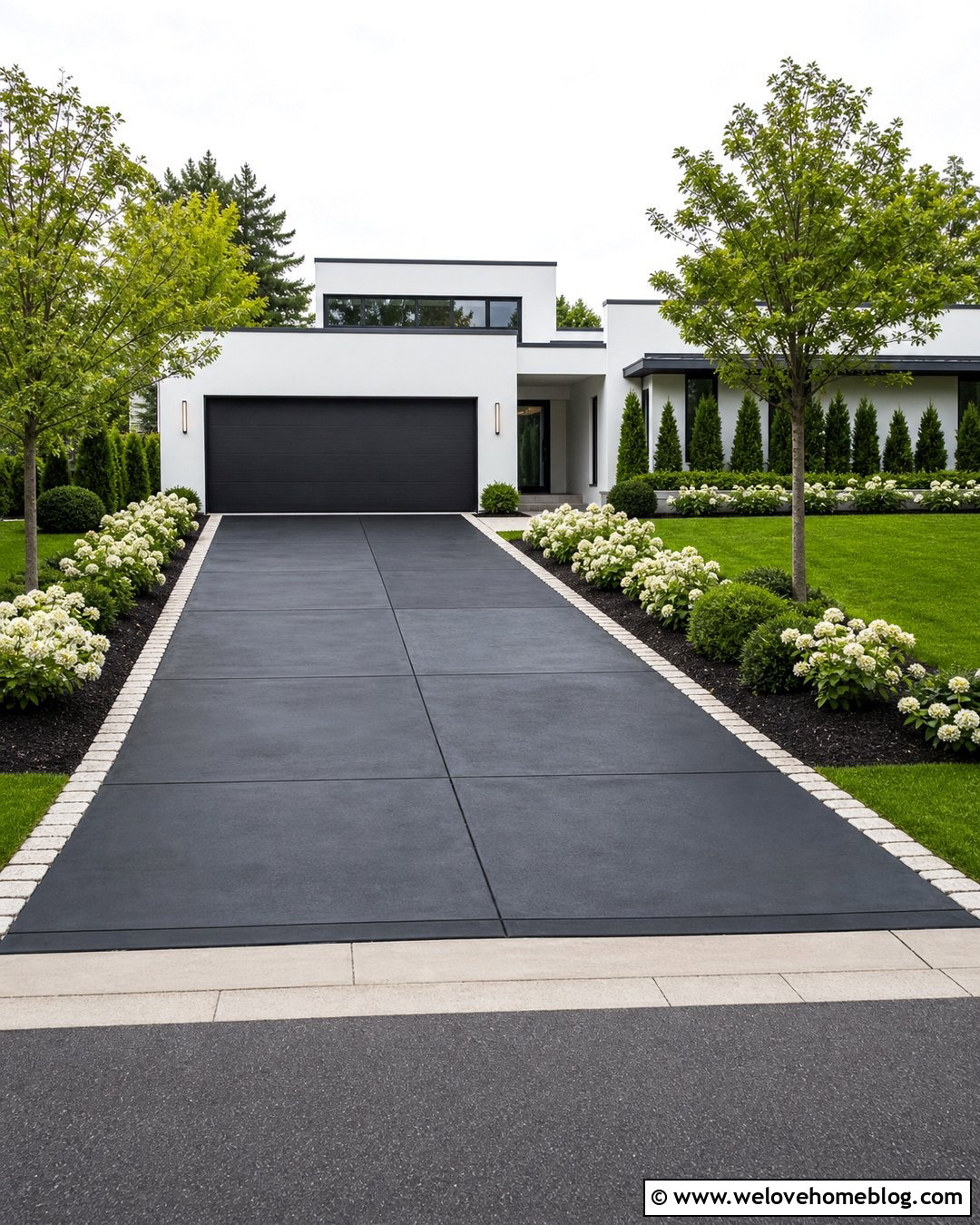
Black stained concrete can produce a dramatic driveway for a minimalist home, especially when the surrounding design remains bright and uncluttered. Use a water-based stain designed for exterior vehicular concrete to achieve a controlled, near-black color. Break the broad surface into oversized squares with clean control joints so it resembles a tailored outdoor floor. Thin strips of pale concrete or light granite pavers along the edges will sharpen the contrast. Frame the driveway with green lawn, white flowering shrubs, and a few sculptural trees. This combination keeps the dark pavement from dominating the yard. In sunny regions, consider a softened black or deep graphite rather than the darkest available shade. Simple stainless steel or matte black path lights can complete the contemporary approach without adding unnecessary decoration.
5. Gray Stained Concrete Driveway
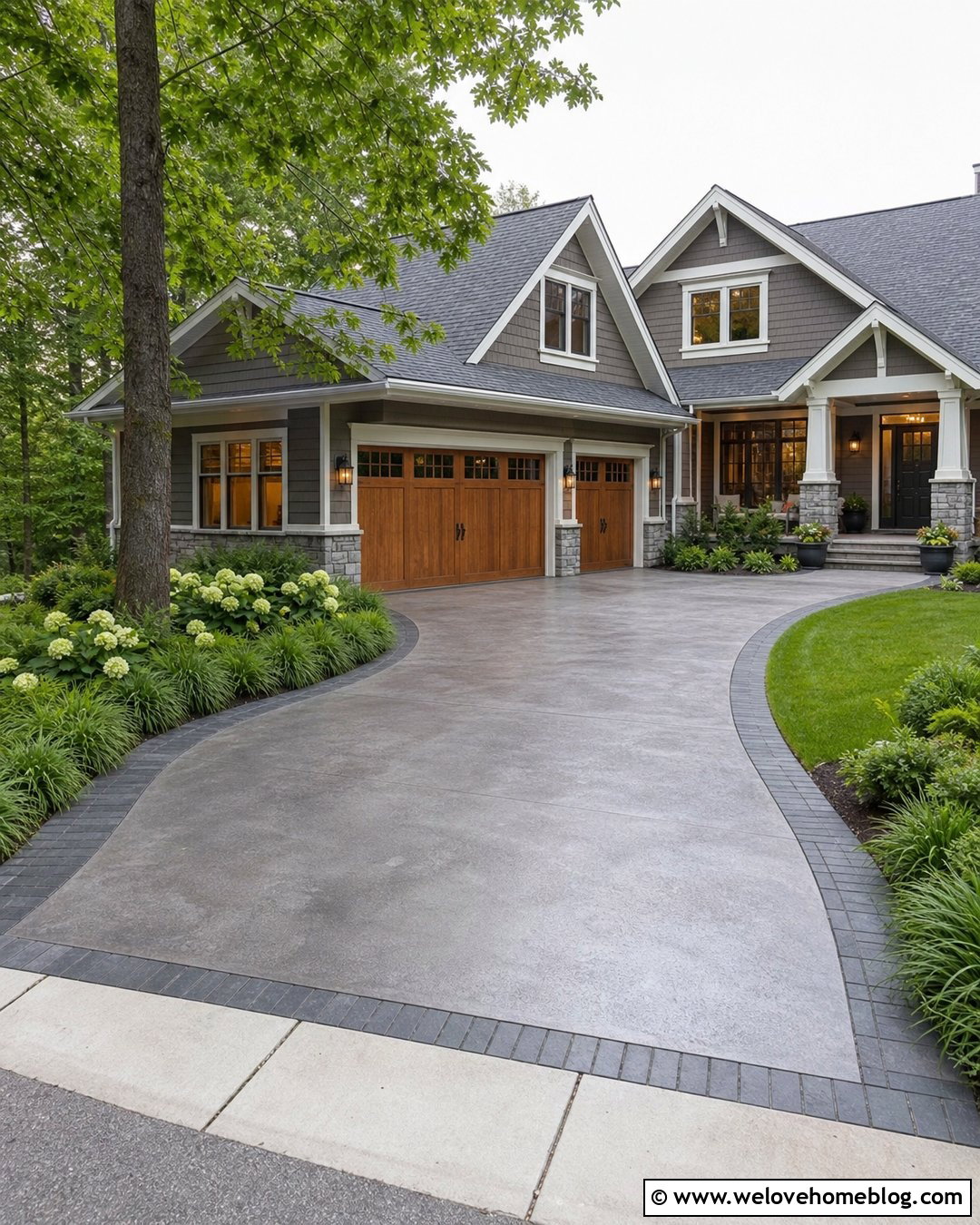
A gray stained concrete driveway suits nearly every home style, but thoughtful detailing keeps it from looking like untreated pavement. Apply a medium-gray water-based stain with slight clouding that adds depth across the slab. For a Craftsman house, shape the driveway with a subtle curve and install a charcoal paver border beside the lawn. Repeat the border material in the front walkway and porch steps. Plant Japanese forest grass, dwarf hydrangeas, and low evergreen shrubs near the entrance for soft contrast. Gray also provides a neutral foundation for colorful exterior doors and natural wood garage doors. Instead of choosing the color from a small printed chart, review a physical sample on the existing concrete. Surface age, porosity, repairs, and previous treatments can all influence how the final gray tone appears.
6. Copper Acid Stained Concrete Driveway
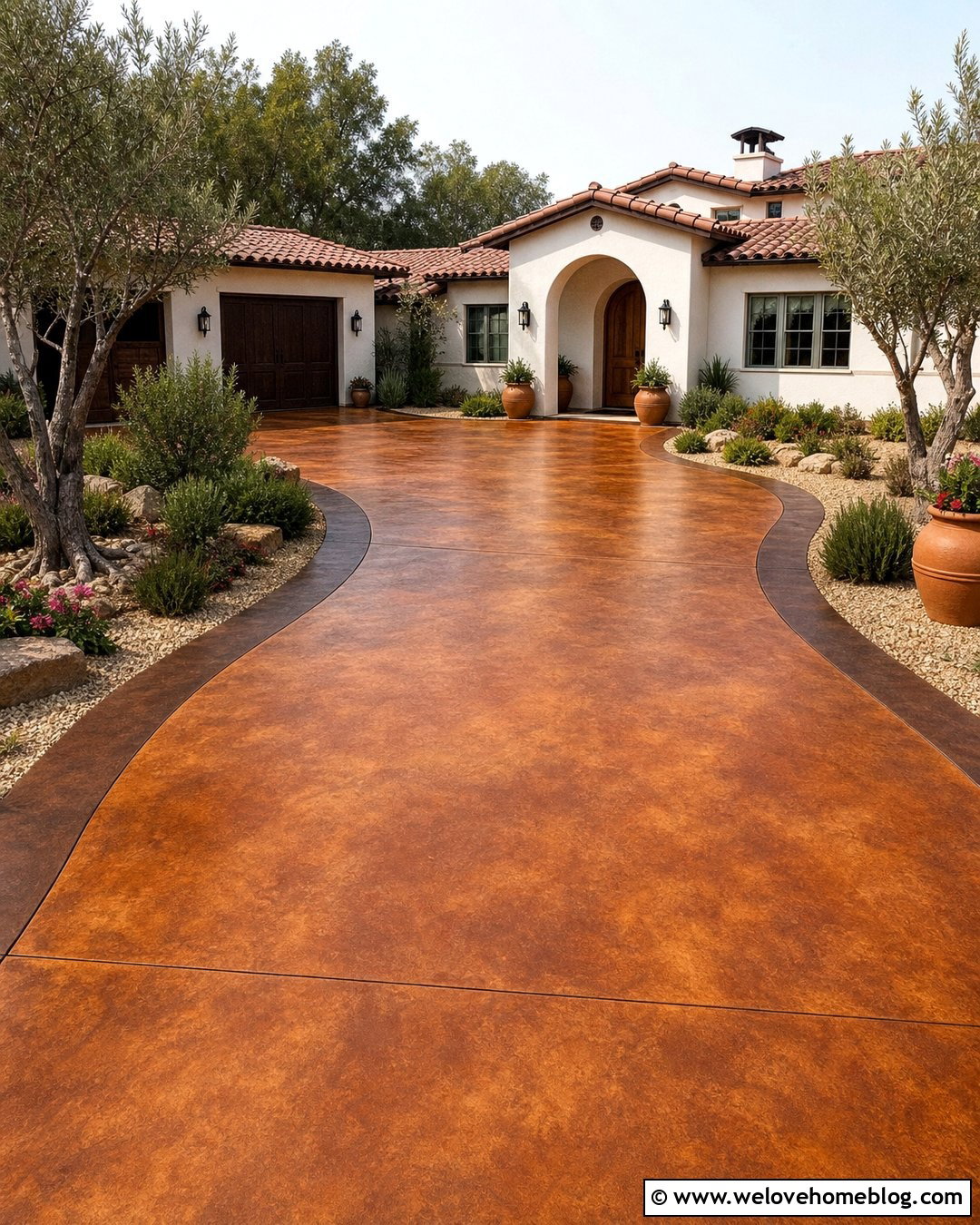
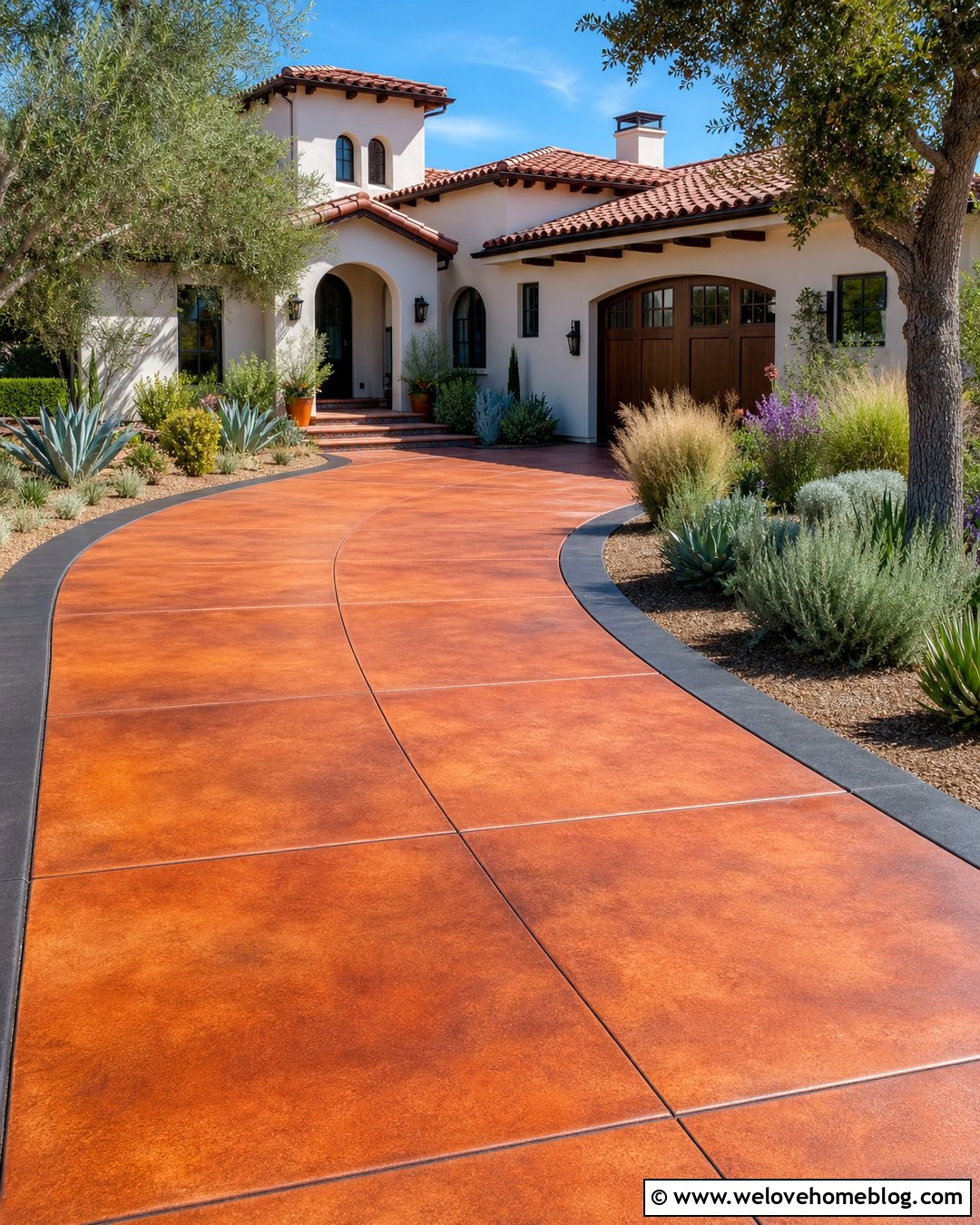
Copper acid-stained concrete brings natural movement to a driveway through warm amber, rust, and bronze variation. The effect works beautifully with a Spanish-style, adobe, or red-tile-roofed house. Use the stain across a wide curved driveway and add a dark brown stained band around the perimeter. The contrast makes the organic interior coloring feel intentional. Terracotta planters, decomposed granite beds, olive trees, and rosemary can connect the driveway to the surrounding landscape. Acid stains chemically react with concrete and typically create more mottled, less predictable results than uniformly pigmented finishes. () That variation is part of their character, so avoid expecting every section to match exactly. A professionally selected exterior sealer can enrich the color while supporting easier routine cleaning and maintenance.
7. Mahogany Stained Concrete Driveway
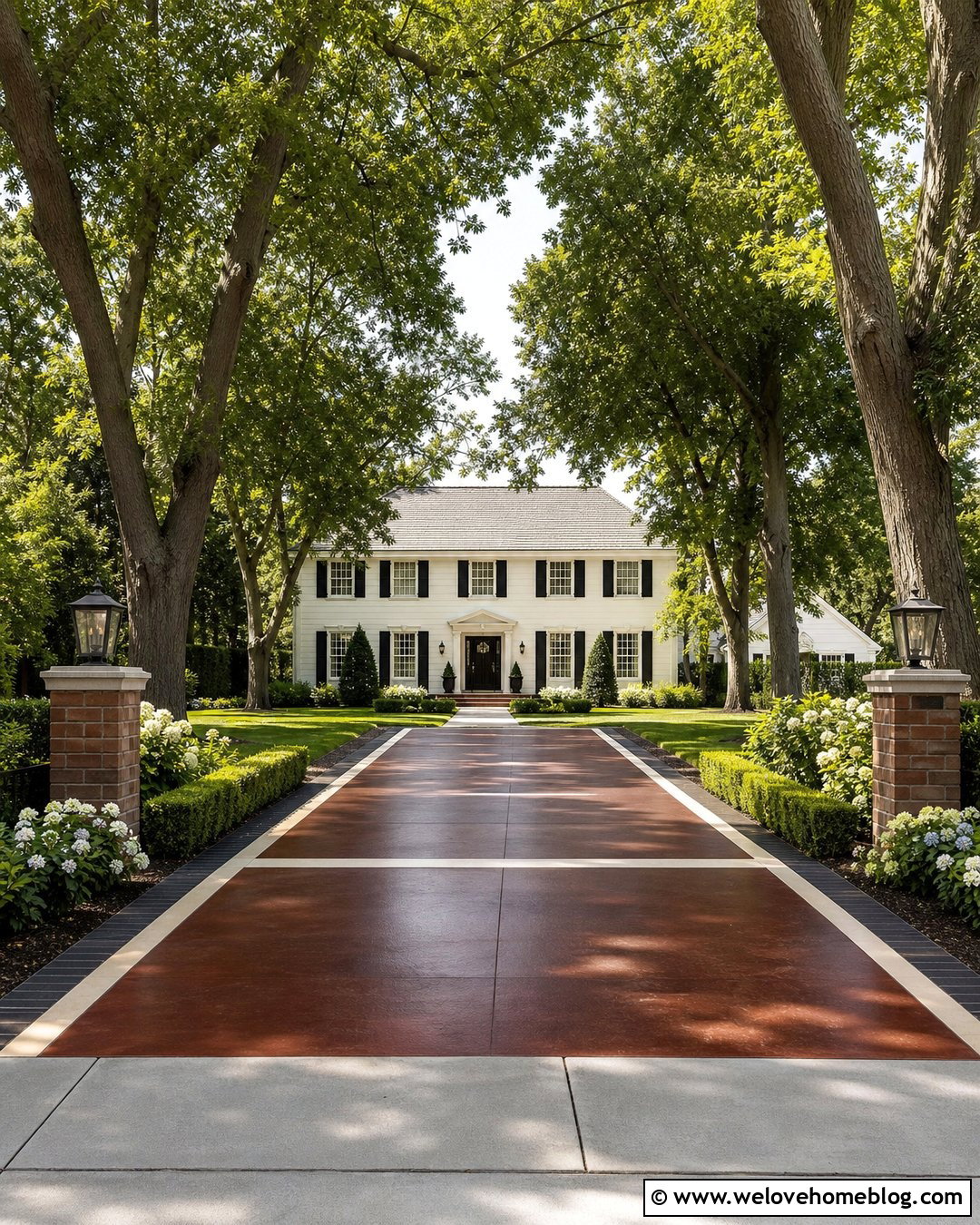
Deep mahogany stained concrete offers a rich alternative to ordinary brown while remaining suitable for a traditional residential exterior. It looks particularly polished in front of a cream Colonial or Georgian-style house with dark shutters. Use a symmetrical straight driveway with a double border: a narrow cream concrete band followed by dark clay brick pavers. This layered edge visually reduces the width of a broad parking area. Formal boxwood hedges, balanced planting beds, and matching walkway curves reinforce the architecture. Choose a semi-transparent water-based stain that allows modest concrete variation to remain visible beneath the red-brown tone. The garage doors can repeat the mahogany color through stained wood or coordinated paint. Keep nearby mulch and masonry slightly lighter so the driveway remains distinct rather than blending into one dark mass.
8. Sandstone Stained Concrete Driveway
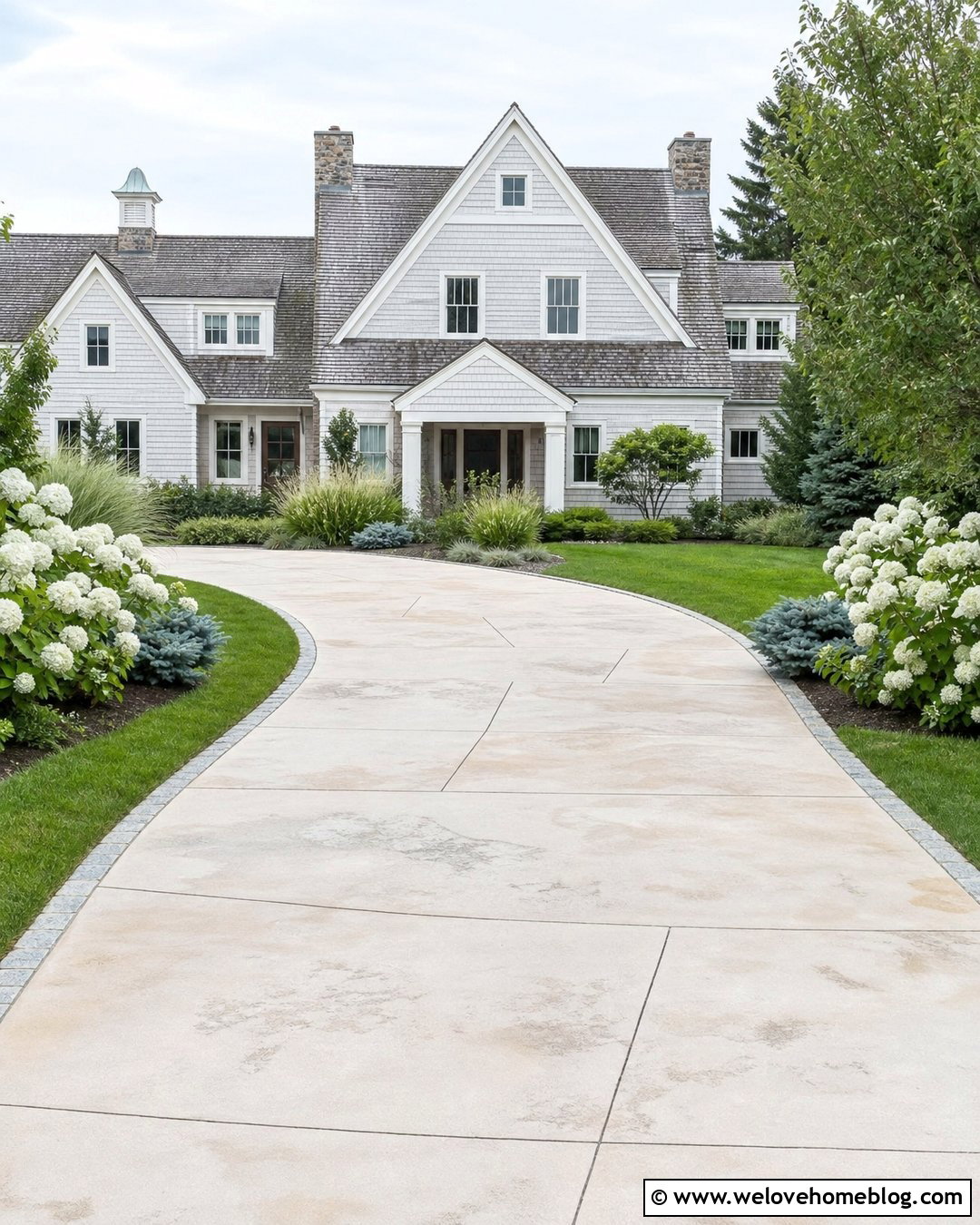
Sandstone stained concrete creates a light, natural-looking driveway for a coastal, Cape Cod, or cottage-style home. Combine pale beige, soft cream, and muted taupe stain tones rather than using one perfectly uniform shade. Saw-cut the surface into irregular rectangular sections to suggest large sandstone pieces without creating deep textured joints. A border of smooth gray cobblestones adds a gentle contrast and helps contain the visual pattern. Surround the driveway with airy grasses, white hydrangeas, and low blue-green shrubs. Leave a clear lawn strip between the pavement and larger planting beds to maintain an open curb view. This palette works best when the house includes white siding, weathered shingles, or pale stone. Use a low-gloss finish so the completed surface feels softly weathered instead of slick or overly polished.
9. Terracotta Stained Concrete Driveway
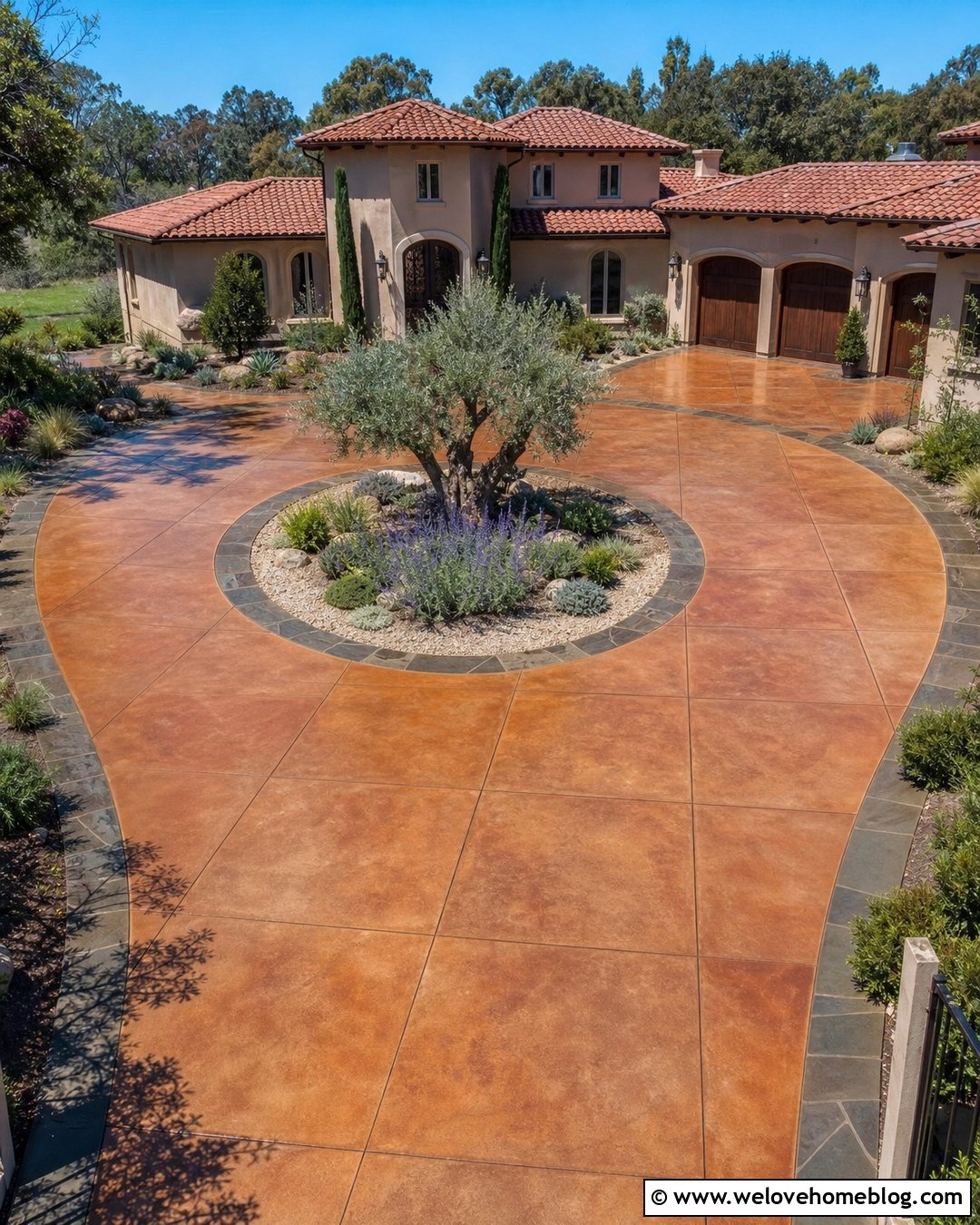
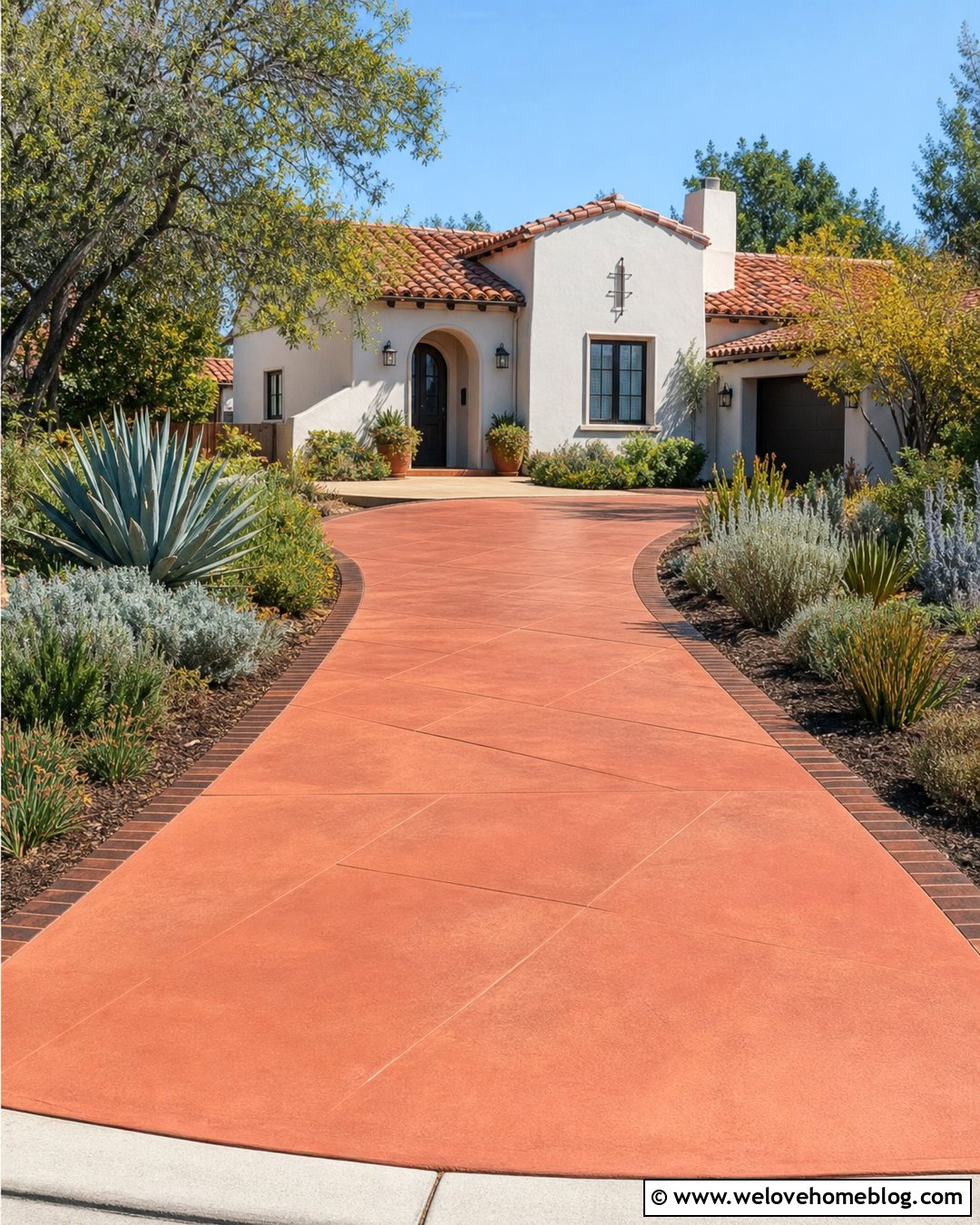
Terracotta stained concrete introduces the warmth of clay paving without covering the driveway in individual brick or tile units. A broad horseshoe layout is especially attractive in front of a Mediterranean or Spanish Revival house. Divide the concrete into large diagonal squares with decorative saw cuts, then deepen selected areas with rust and sienna stain accents. Dark stone edging will contain the warm color and connect it to the roof. In the center island, plant a small olive tree with lavender, sage, and pale gravel mulch. Keep the entrance generous and unobstructed so the circular movement remains easy to understand. Terracotta can become visually intense across a large area, so balance it with cream stucco, dark green foliage, and neutral borders. Avoid adding too many competing decorative patterns.
10. Blue Gray Stained Concrete Driveway
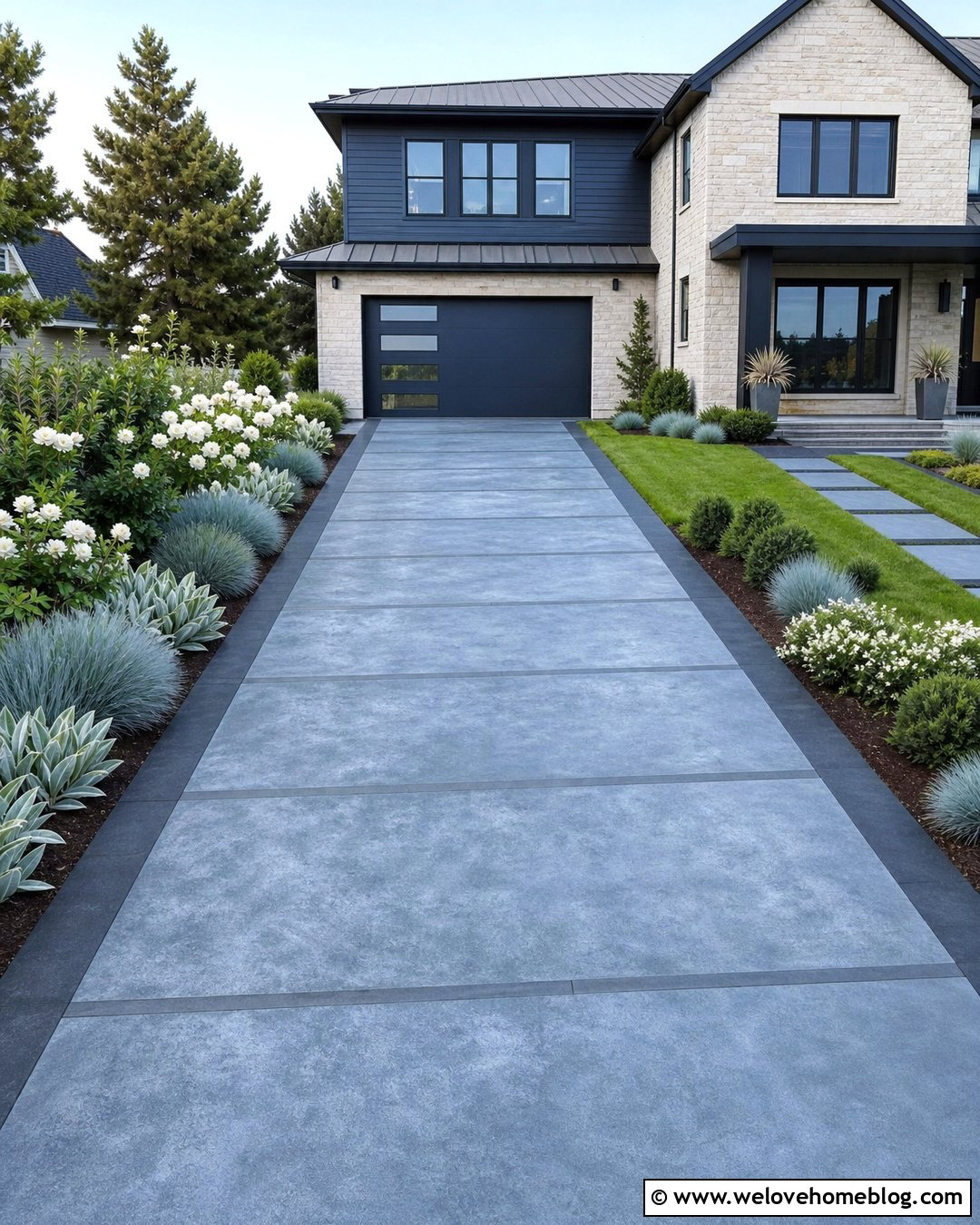
Blue-gray stained concrete provides a cooler, more distinctive alternative to standard gray. It works well with modern coastal homes, pale stone facades, and houses with navy or slate-colored accents. Use a straight driveway divided into long rectangular panels to emphasize the approach toward the garage. A narrow band of charcoal concrete along both edges adds structure without competing with the color. Plant silvery lamb’s ear, blue fescue, white roses, and compact junipers in adjacent beds. These plants repeat the cool palette while adding natural texture. Water-based stains generally provide more color choices than traditional acid stains, making them suitable for controlled blue-gray finishes. () Request a subdued sample rather than a bright blue tone. The driveway should read as sophisticated gray first, with blue appearing as a quiet undertone.
11. Two Tone Stained Concrete Driveway
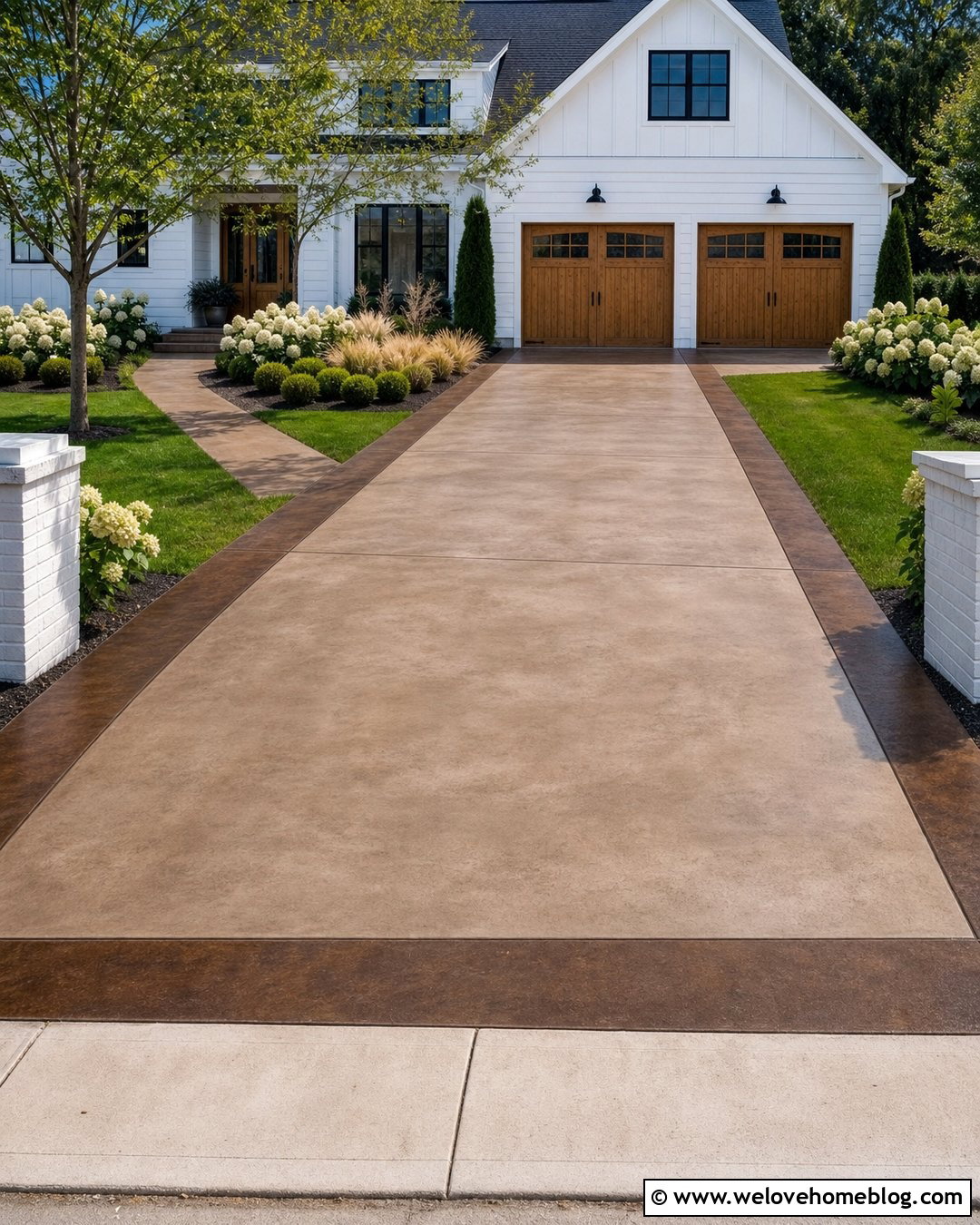
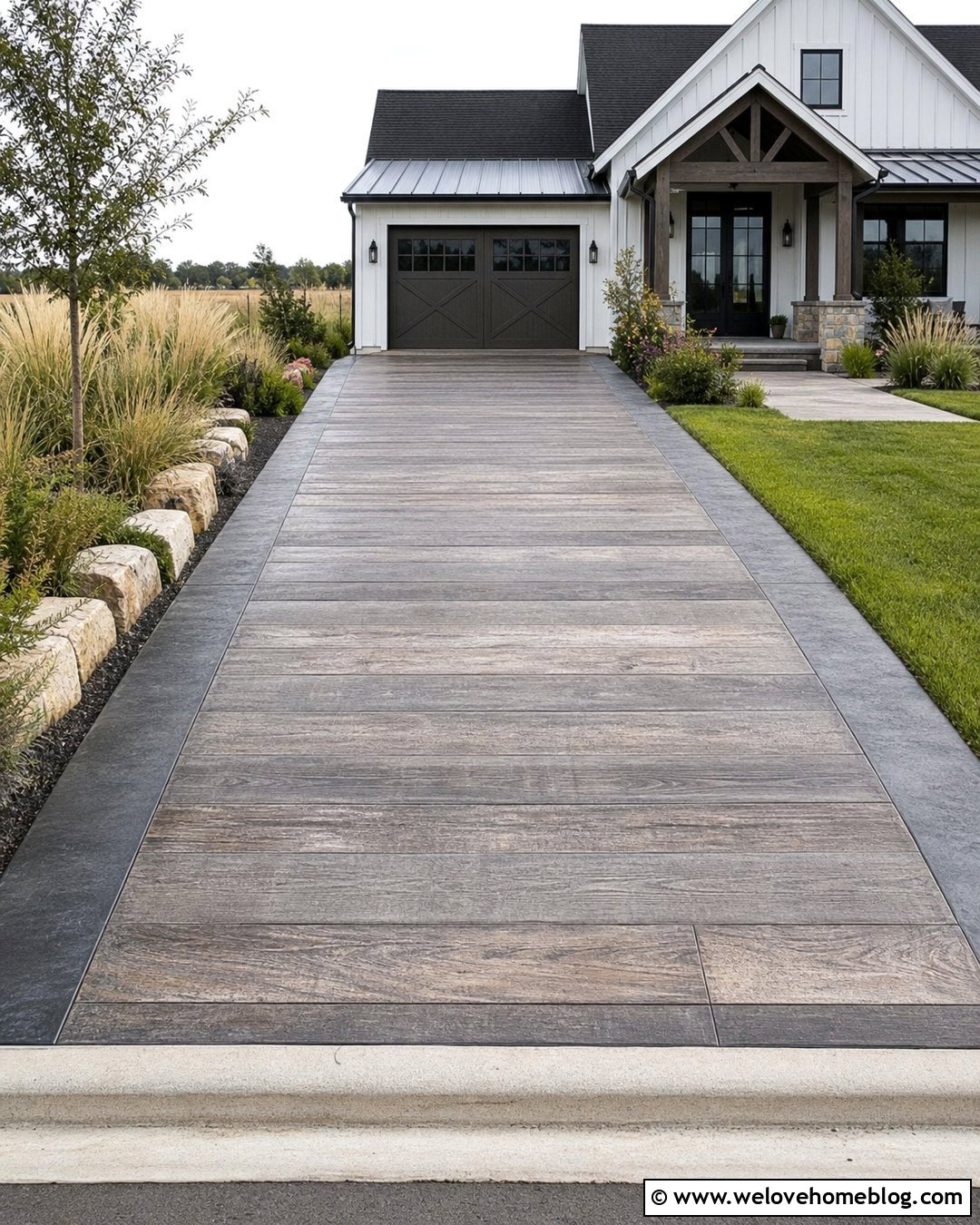
A two-tone stained concrete driveway uses color placement to define the entire approach. Start with a warm taupe field and add a chocolate-brown border approximately 10 to 12 inches wide. Continue the darker stain through a central walkway connection or an apron near the street. This strategy creates detail without covering the surface in a complicated pattern. For a modern farmhouse, pair the driveway with white siding, black windows, natural wood doors, and neat beds of hydrangeas and ornamental grasses. The two colors should share similar undertones so they feel coordinated. Contrasting stained borders are a recognized way to enhance an existing concrete driveway and connect it with the home’s exterior palette. () Use clean saw cuts between the colors to produce sharp, professional transitions.
12. Stained Concrete Driveway With Brick Border
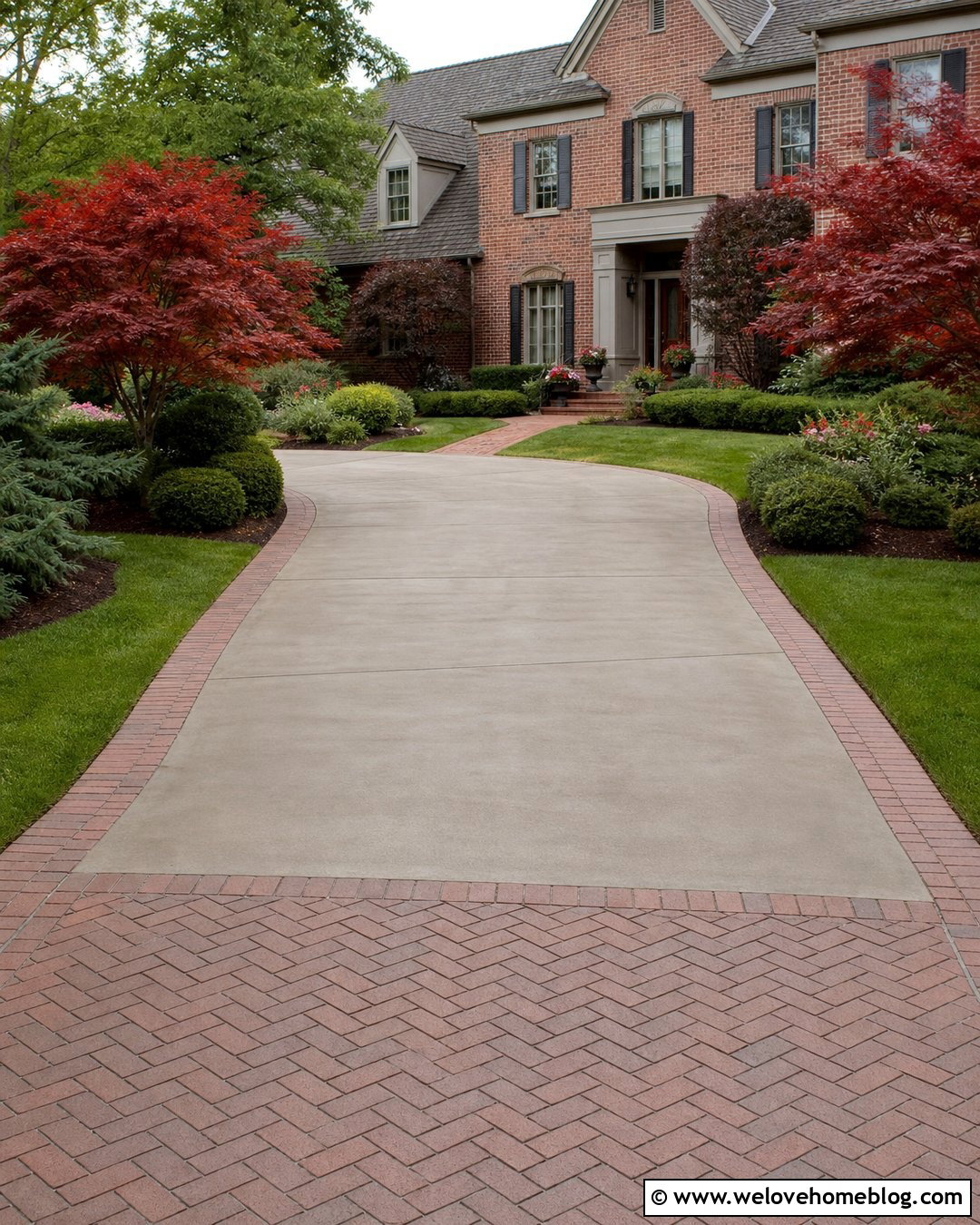
Stained concrete and clay brick form a classic combination that can visually connect a driveway to a brick house or traditional walkway. Choose a warm greige or light brown stain for the main concrete surface. Install a single herringbone brick ribbon along each side and across the street-facing apron. The brick should contrast with the concrete but repeat tones already present in the house facade. A gently curved layout will soften a wide front yard and make the border more noticeable. Add clipped shrubs, red maples, and layered perennial beds beyond the brick. Where the driveway meets the sidewalk, widen the brickwork slightly to create a deliberate entrance. Proper edge restraint and base preparation are important for keeping the border stable. The result should look integrated, not like brick was added as an afterthought.
13. Stained Concrete Driveway With Stone Edging
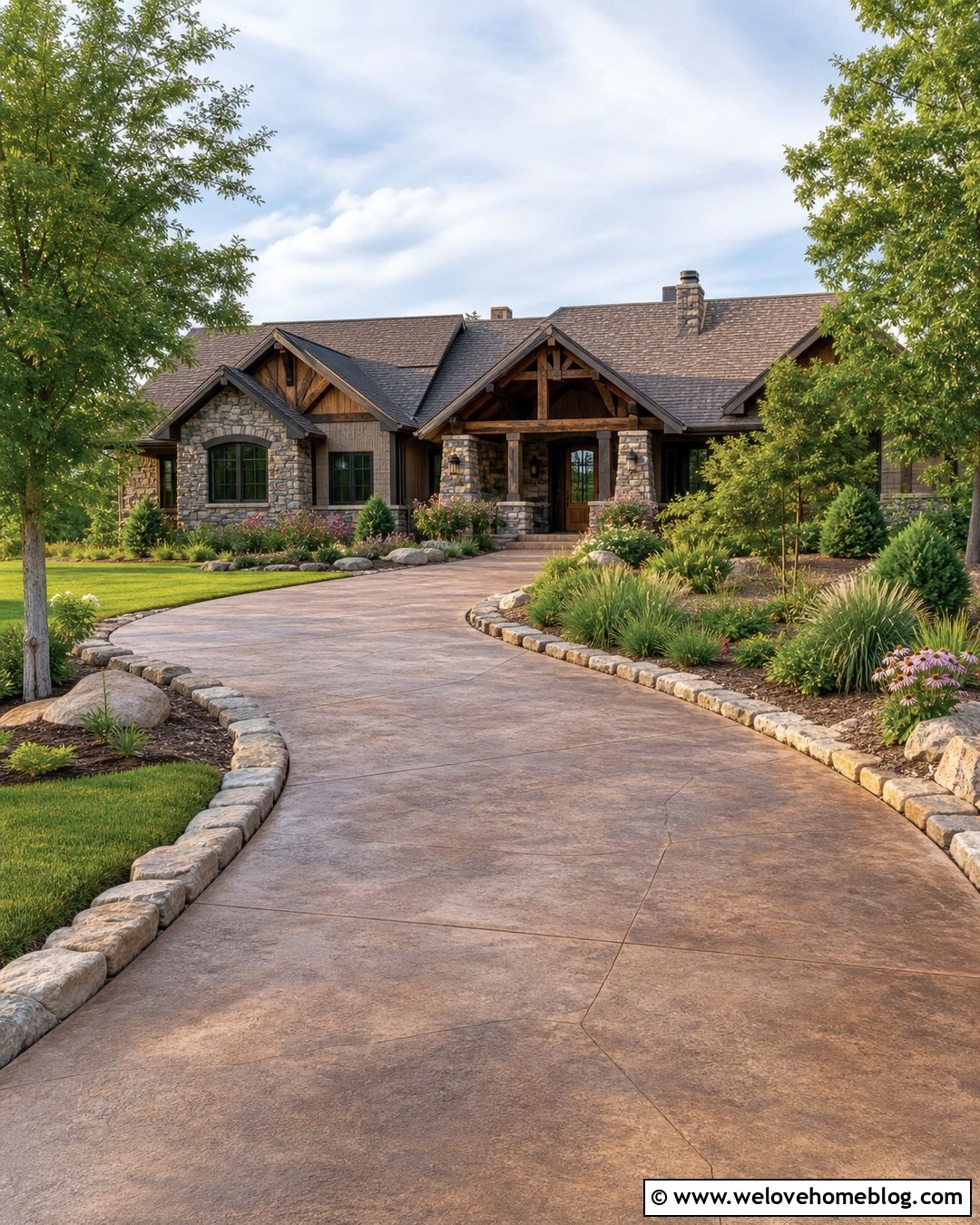
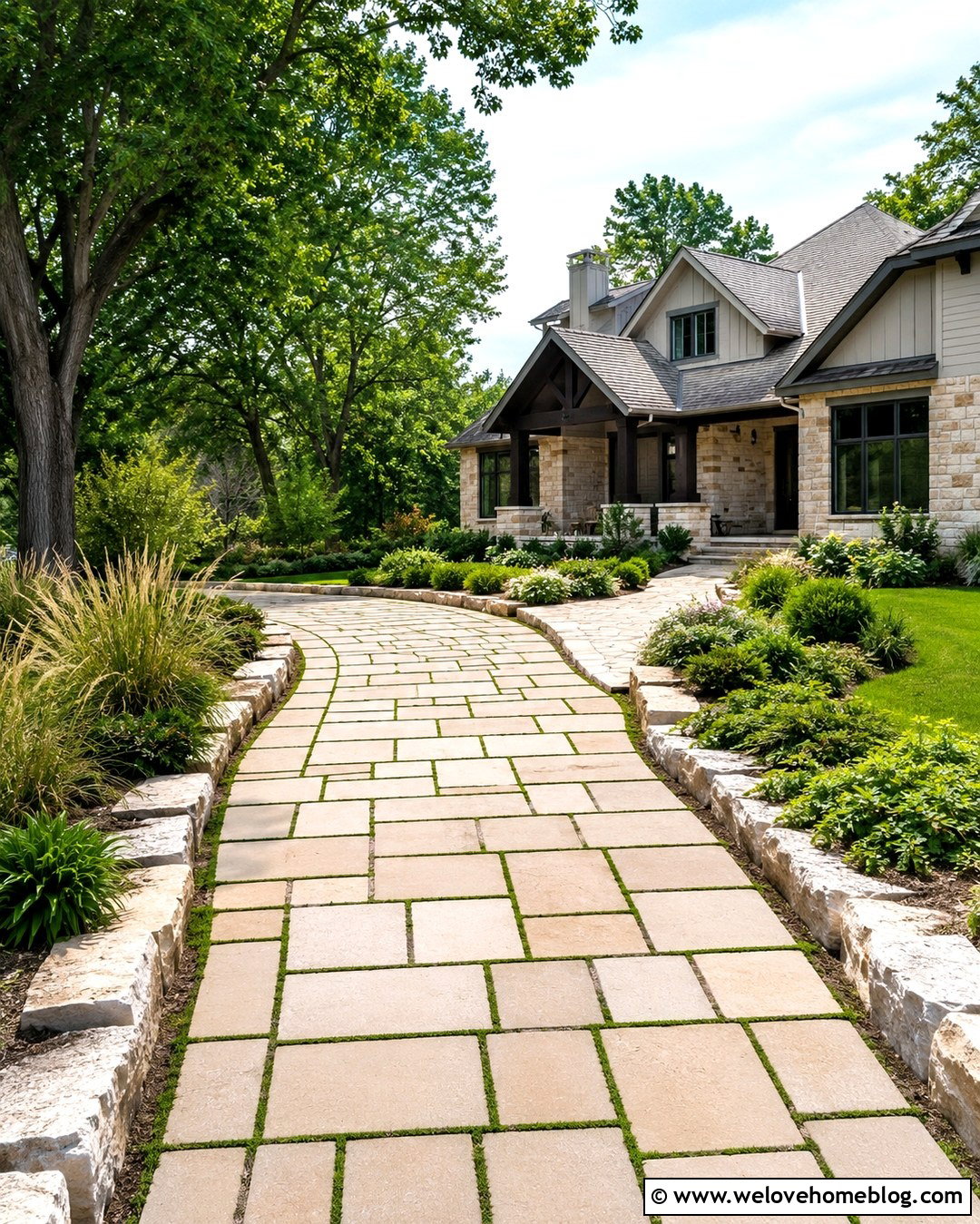
Natural stone edging gives a stained concrete driveway a substantial, high-quality frame. Begin with a mottled mocha or walnut stain that complements the irregular color of fieldstone. Shape the driveway into a soft curve leading toward a country, Craftsman, or rustic ranch home. Use low-profile stone blocks along the pavement rather than tall curbing that could interfere with doors or drainage. Repeat the same stone around planting beds and porch columns to unify the property. Native grasses, coneflowers, evergreen shrubs, and a few shade trees can make the setting feel established. Keep the stain pattern restrained because the stone already provides strong texture. A smooth concrete finish with gentle color variation creates the best balance. At the street, use a broader stone apron detail to make the driveway entrance easy to recognize.
14. Stained Concrete Driveway With Paver Bands
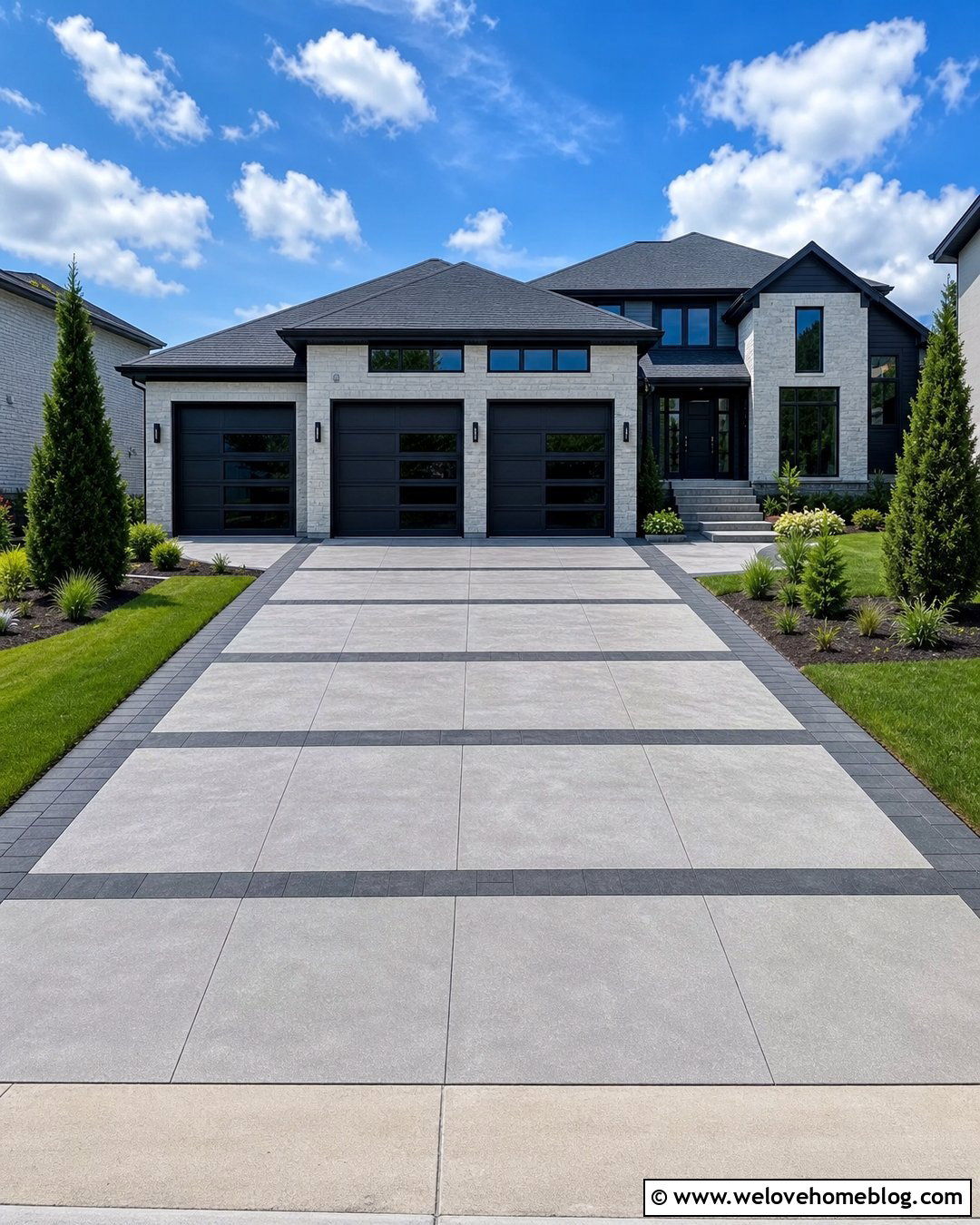
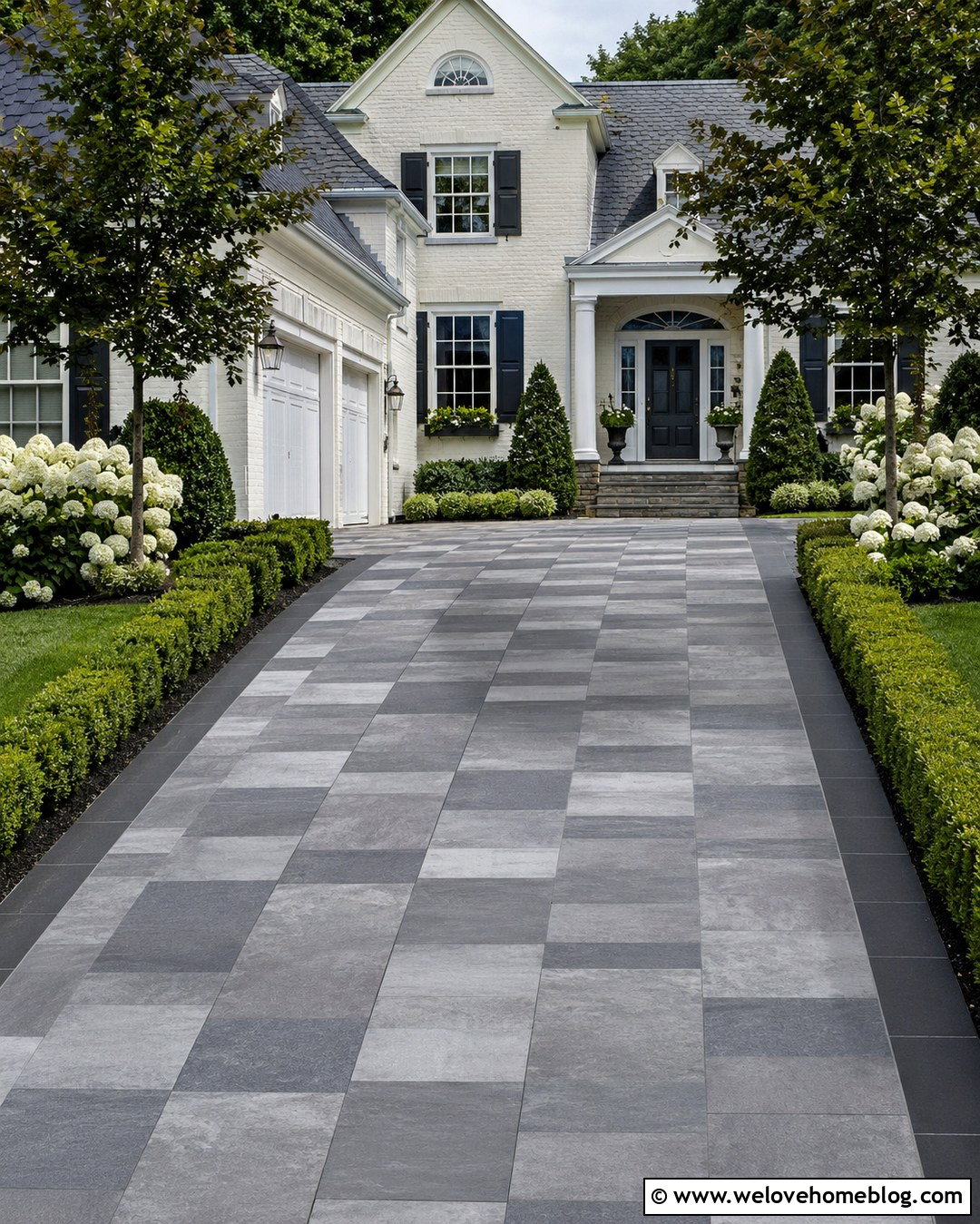
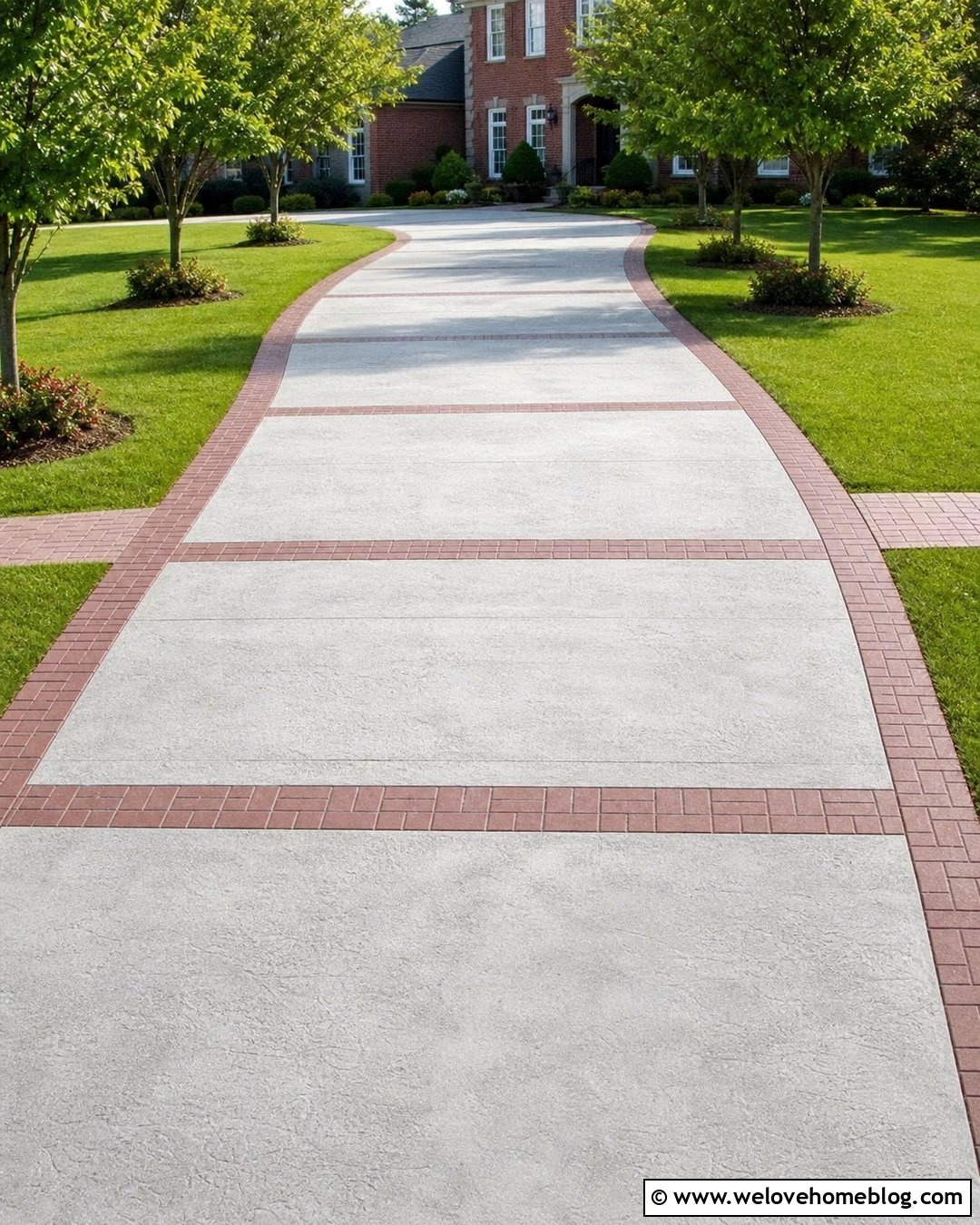
Paver bands can divide a large stained concrete driveway into more comfortable visual sections. Use a light gray stain across the main surface and place charcoal paver ribbons at regular intervals. Align the bands with control joints whenever possible so the decorative layout also respects the slab structure. A wide driveway leading to a three-car garage benefits from this approach because the bands reduce the appearance of one uninterrupted concrete expanse. Continue the charcoal pavers around the border and into the walkway. Simple foundation shrubs, upright evergreens, and broad lawn areas will prevent the design from becoming busy. For a contemporary home, choose large-format pavers with narrow joints. For a traditional facade, smaller tumbled pavers may feel more appropriate. Keep every band straight, evenly spaced, and aligned with architectural features.
15. Saw Cut Stained Concrete Driveway
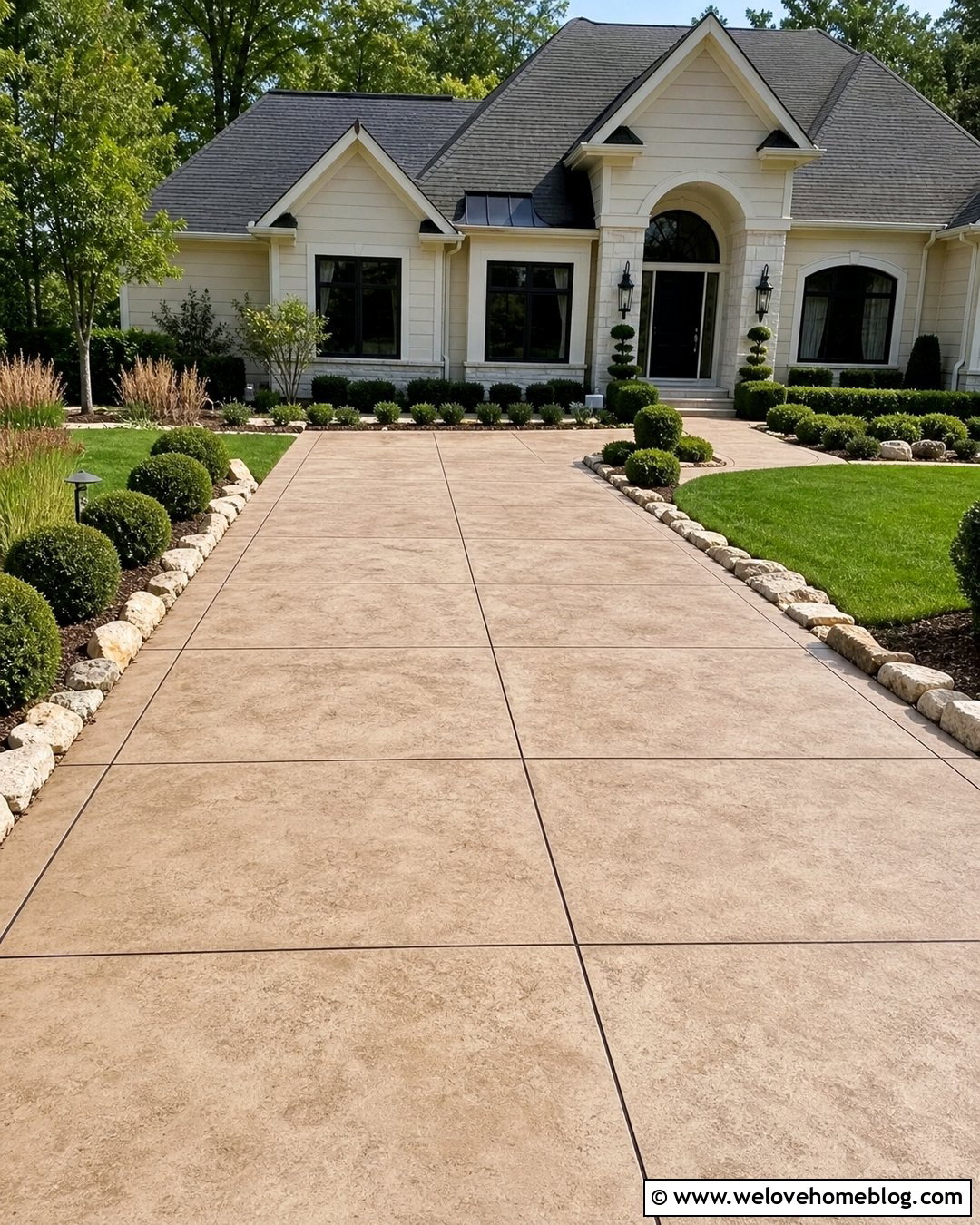
Decorative saw cuts can transform an existing stained concrete slab into a convincing tile-like driveway. Create large squares or rectangles rather than small sections that might look crowded from the street. Apply a sandy beige stain to the panels and use deeper brown coloring inside the narrow cut lines to suggest grout. A straight driveway framed by simple stone edging lets the geometric pattern remain the focal point. Pair it with a transitional home featuring cream siding, dark roofing, and clean landscaping. Rounded boxwoods and ornamental grasses can soften the strong lines. Saw cuts and multiple stain colors are commonly used to imitate individual tiles or decorative paving. () Before cutting, a contractor should assess slab depth, existing control joints, cracks, and reinforcement to develop an appropriate pattern.
16. Diamond Pattern Stained Concrete Driveway
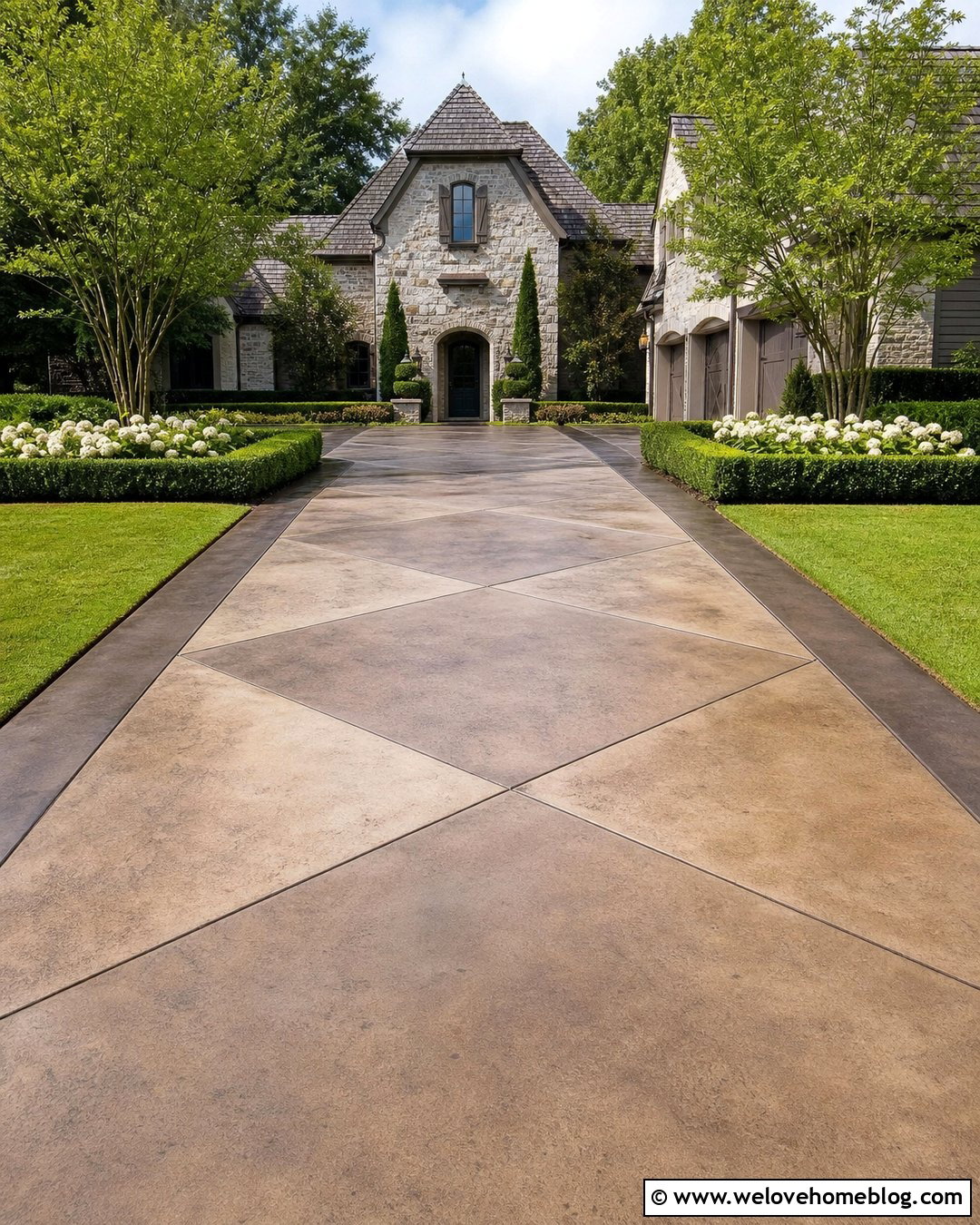
A diamond-pattern stained concrete driveway creates movement without requiring a highly textured stamped surface. Rotate large saw-cut squares at a 45-degree angle, then stain alternating sections in light taupe and medium brown. Keep the contrast subtle so the driveway does not resemble an indoor checkerboard. A dark brown perimeter band provides a clean stopping point for the diagonal layout. This complete look suits a formal ranch, French country, or traditional stone-front house. Frame the pavement with low hedges and symmetrical flowering beds. A matching diamond detail can appear in the walkway landing, but avoid repeating it on every surrounding surface. Oversized diamond and tile patterns are often used to give modern or decorative concrete the appearance of an outdoor floor. () Wider sections are usually easier to appreciate from the curb.
17. Faux Flagstone Stained Concrete Driveway
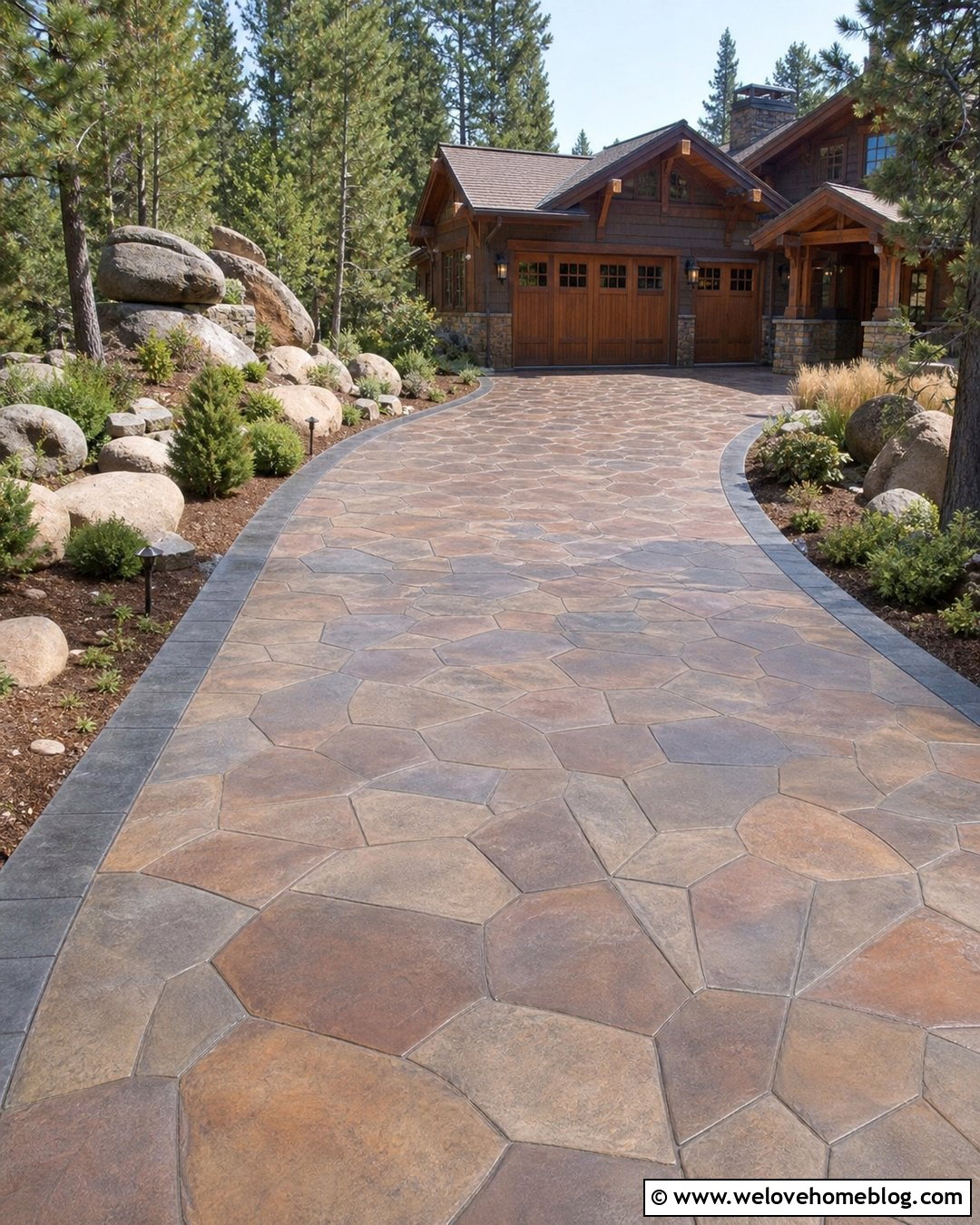
A faux flagstone stained concrete driveway captures a natural stone appearance while retaining a continuous concrete base. Use irregular saw-cut outlines across the slab and layer tan, brown, muted rust, and soft gray stains within the individual shapes. The colors should vary gently, with no single section becoming excessively bright. A dark gray border will contain the pattern and provide a clean transition to the lawn. This treatment works well for a curved driveway approaching a lodge, mountain ranch, or rustic Craftsman house. Add native boulders, evergreen shrubs, ornamental grasses, and natural mulch along the edges. Keep the garage apron slightly less patterned to prevent visual overload near the house. Successful faux stone coloring depends on careful placement, believable tonal variation, and joints sized appropriately for the overall driveway scale.
18. Stained Concrete Circular Driveway
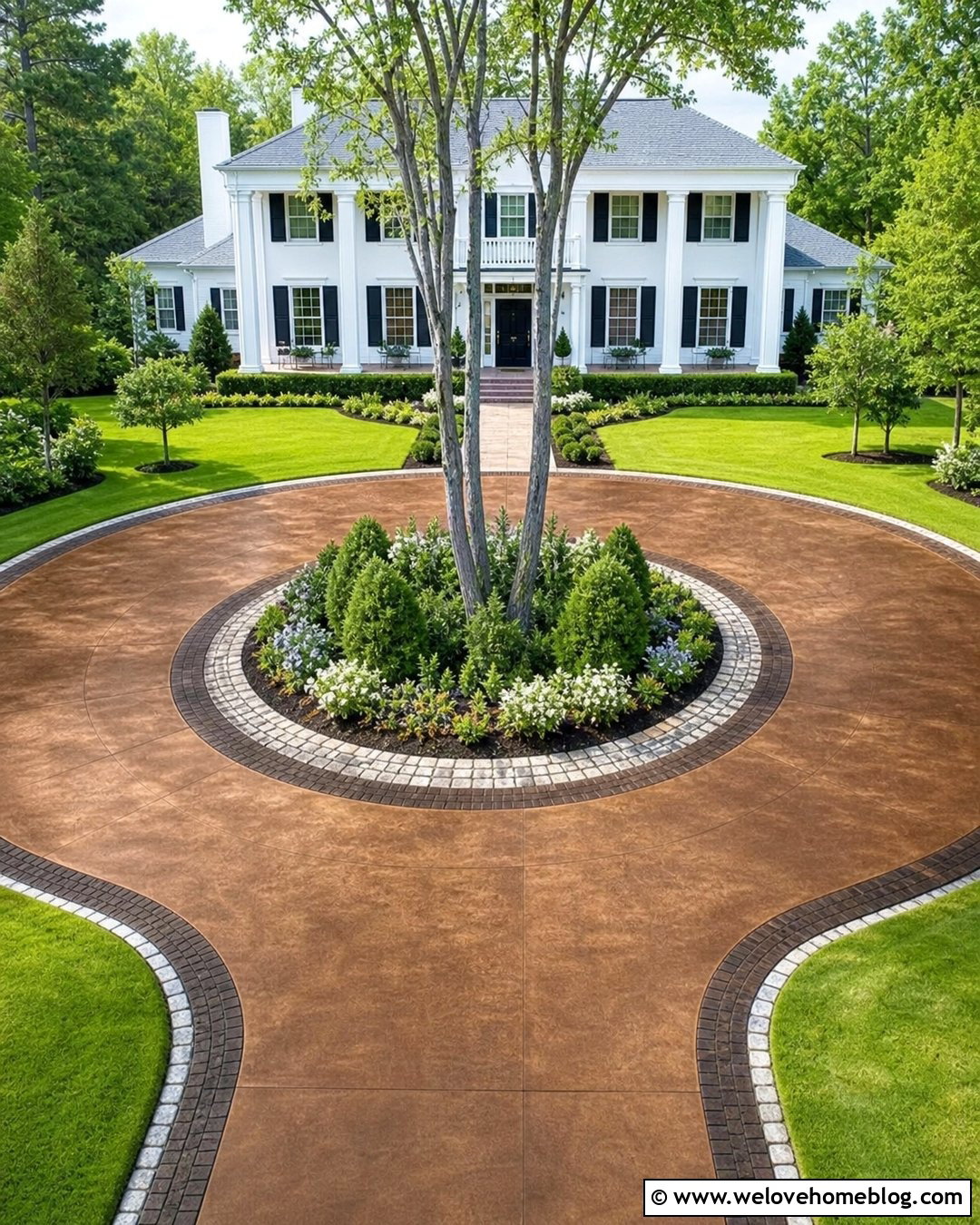
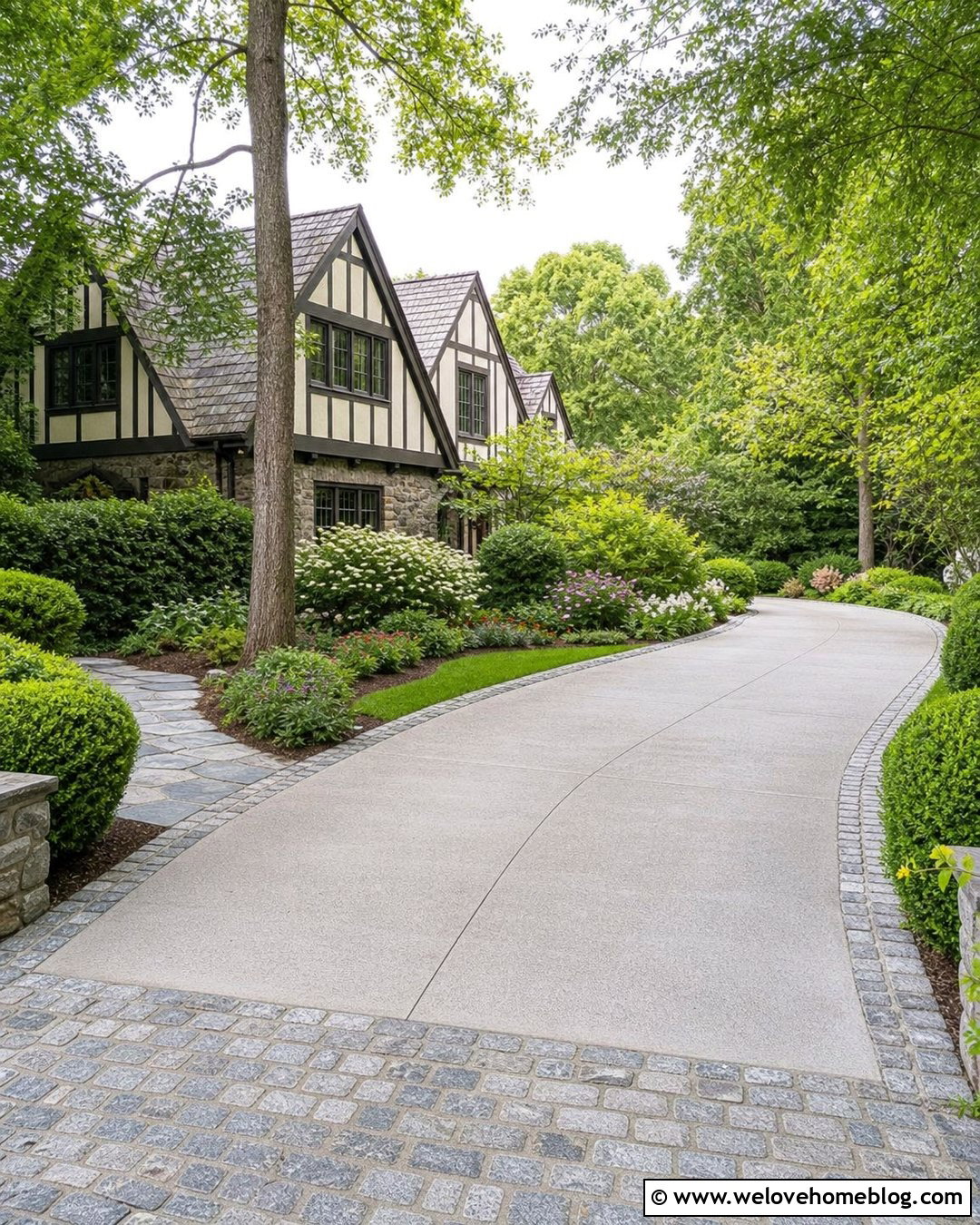
A stained concrete circular driveway can make a large front yard feel organized while creating a practical arrival route. Choose a medium caramel-brown stain with darker shading around the outer and inner borders. Build a landscaped center island containing a multi-stem tree, evergreen shrubs, and low seasonal flowers. A narrow cobblestone ribbon around the island separates roots and soil from the concrete. Repeat that cobblestone along the outer curve for a complete, balanced design. This layout complements a Colonial, Southern, or large modern farmhouse facade. Maintain clear sightlines near both street connections and avoid placing wide plants where they could crowd the driving path. The stain color should coordinate with the roof, walkway, and porch materials. Subtle surface variation will help the broad circular pavement feel warmer and less institutional.
19. Stained Concrete Driveway With Grass Strips
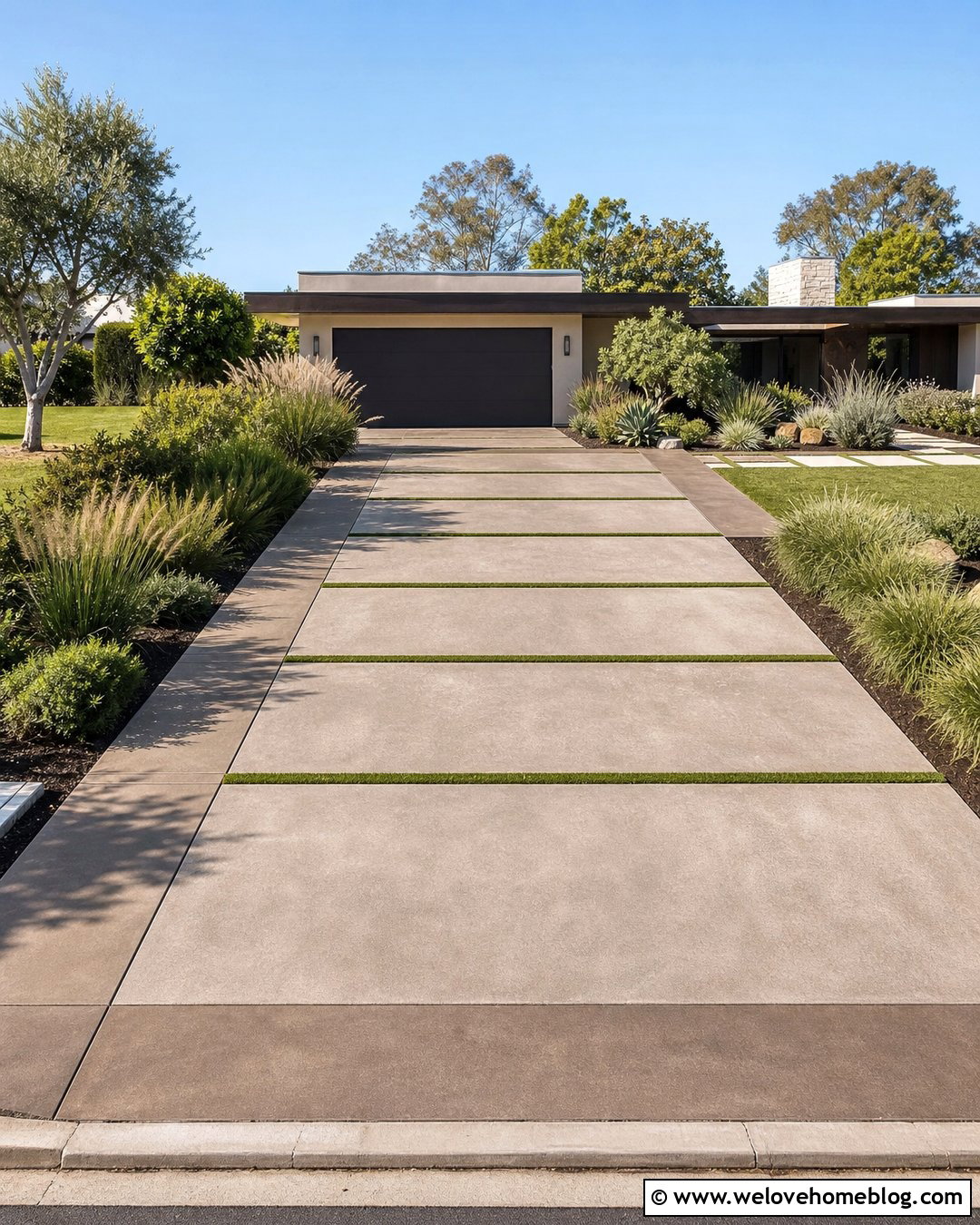
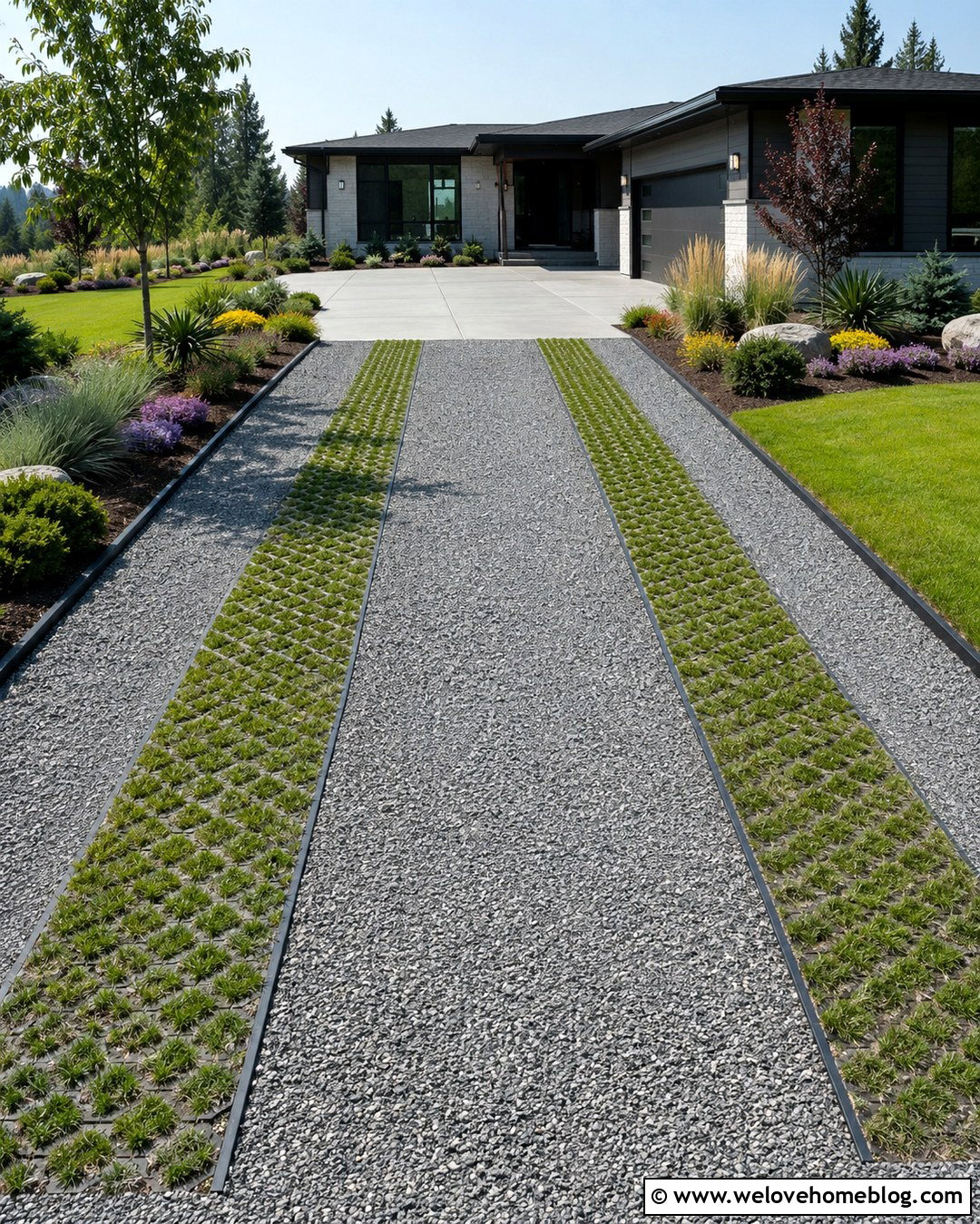
Grass strips bring greenery into a stained concrete design while preserving a clean modern layout. Instead of creating narrow tire tracks, divide a full-width light taupe concrete driveway into broad rectangular slabs with slim planted joints. The joints can contain reinforced turf or a durable low-growing ground cover suited to the local climate and traffic pattern. Use darker stained concrete at the street apron and garage threshold to frame the composition. This look works best with a contemporary or midcentury modern home surrounded by open lawn and architectural planting beds. Repeat the rectangular rhythm in the front walkway. Drainage, irrigation, maintenance access, and expected vehicle loads should be considered before installation. Keep the planted gaps wide enough to read clearly from the curb but proportionate to the driveway’s overall width.
20. Stained Concrete Driveway With Entrance Pillars
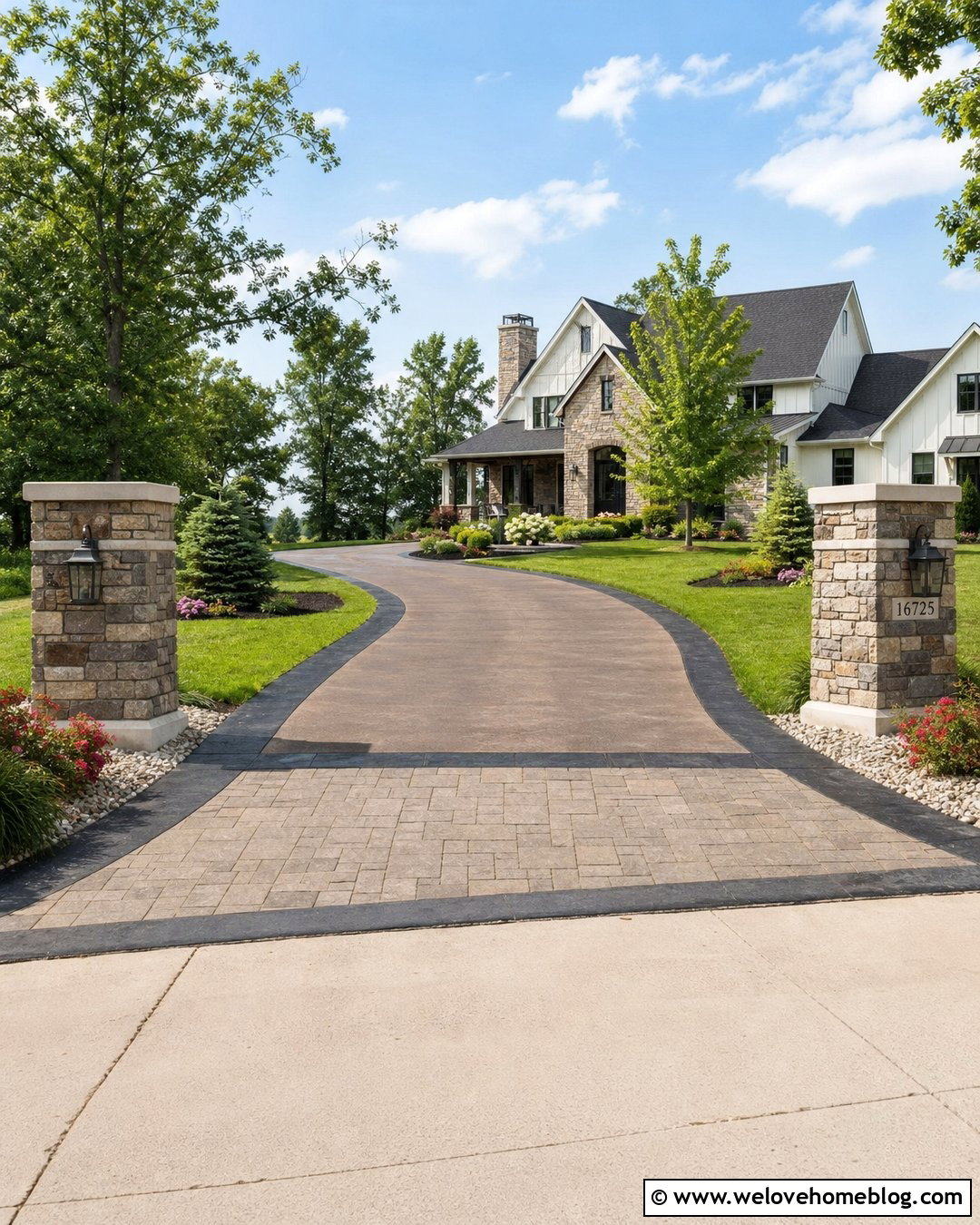
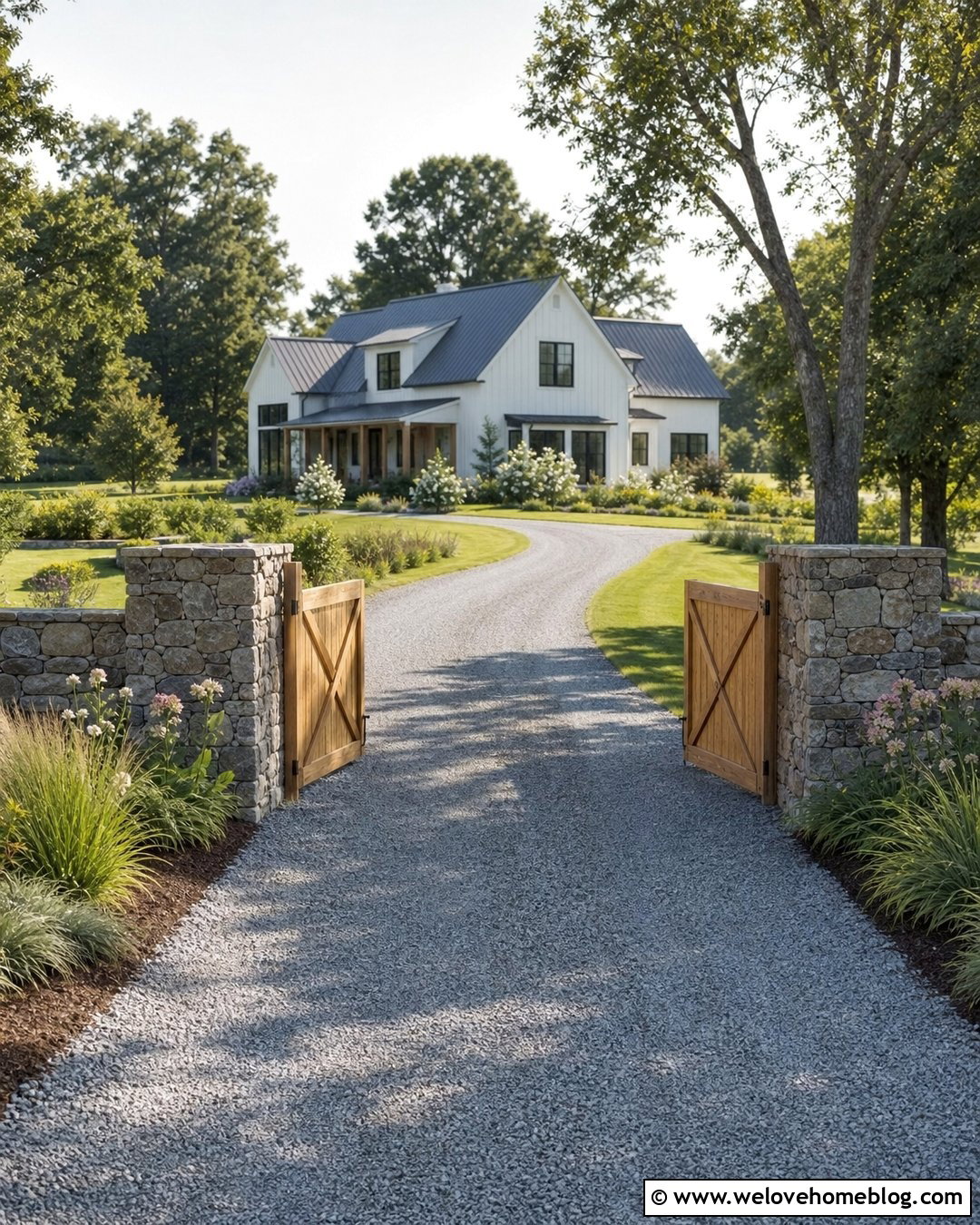
Entrance pillars give a stained concrete driveway a clear beginning and can tie the pavement to the architecture of the house. Use a warm gray-brown stain on a gently curved driveway, then add a charcoal stained border that follows the full route. At the street, place stone or brick pillars outside the required driving clearance. Match their masonry to the home’s foundation, chimney, or porch columns. Low evergreen shrubs and layered flower beds can soften the pillars without hiding them. Continue a stone paver apron between the pillars to reinforce the entrance. If lighting is included, choose properly scaled fixtures that direct light toward the pavement rather than the street. The pillars, stain, edging, and landscaping should share a restrained color palette so the entry feels coordinated instead of crowded.
Conclusion:
The best **20 Stain Concrete Driveway Ideas** treat the driveway as part of the full landscape rather than an isolated slab. Color should coordinate with the home, while borders, saw cuts, plantings, and entrance details give the pavement structure. Warm brown, tan, copper, and terracotta stains suit traditional or rustic settings. Gray, charcoal, black, and blue-gray finishes support cleaner contemporary designs. Whatever look you prefer, inspect and repair the concrete before staining, select a product intended for exterior driveway use, and test the color directly on the surface. Consider sun exposure, drainage, vehicle traffic, and long-term sealing requirements as well. Careful planning will produce a driveway that feels attractive, practical, and connected to the property.

Related posts:

Leave a Reply