
A new concrete driveway can do much more than create a clean place to park. The right combination of finish, layout, borders, drainage, and landscaping can make the entire front yard feel more intentional. Today’s concrete driveways range from large geometric slabs and exposed aggregate surfaces to warm colors, decorative bands, and nature-friendly layouts. Some designs suit compact suburban homes, while others create a grand approach for larger properties. Before choosing one, consider your home’s architecture, local climate, maintenance preferences, and how water will move across the site. The complete design should complement the house instead of looking like one oversized slab. Explore these **20 New Concrete Driveway Ideas** to find a practical, attractive direction for your entrance.

1. Large Slab Concrete Driveway With Grass Joints
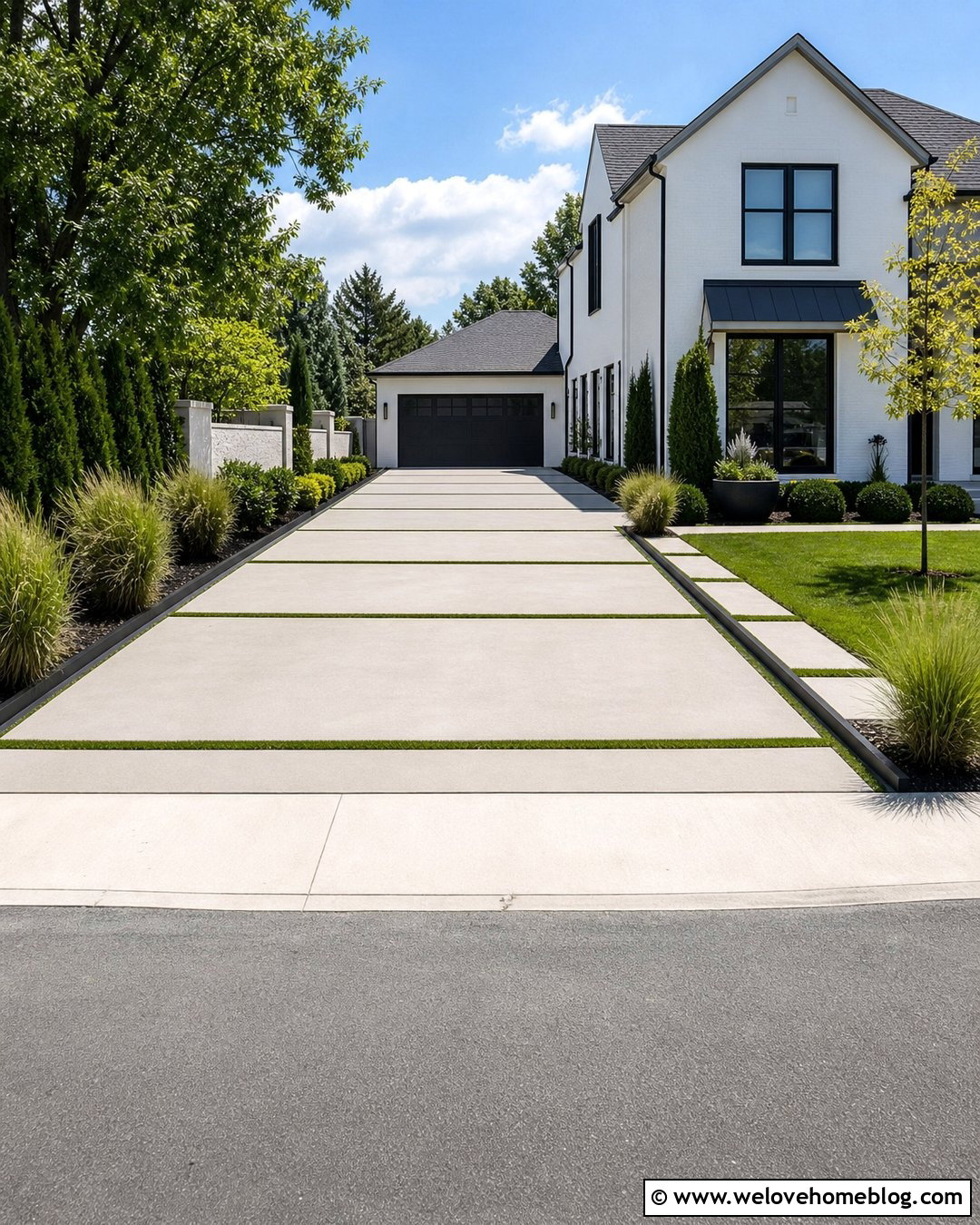
Oversized concrete slabs separated by narrow grass joints create a fresh, geometric entrance. This design works especially well with modern homes because the strong rectangular pattern echoes clean architectural lines. Use light gray poured concrete with a smooth or lightly brushed finish, then position reinforced grass strips between selected sections. Keeping the joints narrow makes the driveway easier to navigate while adding enough greenery to soften the hard surface. Low ornamental grasses, clipped shrubs, and simple planting beds can continue the streamlined look along both sides. Proper grading and a stable base are important because each slab must remain level. For easier maintenance, synthetic turf or decorative gravel can replace living grass in hot, dry, or heavily shaded yards.
2. Broom Finish Concrete Driveway With Dark Border
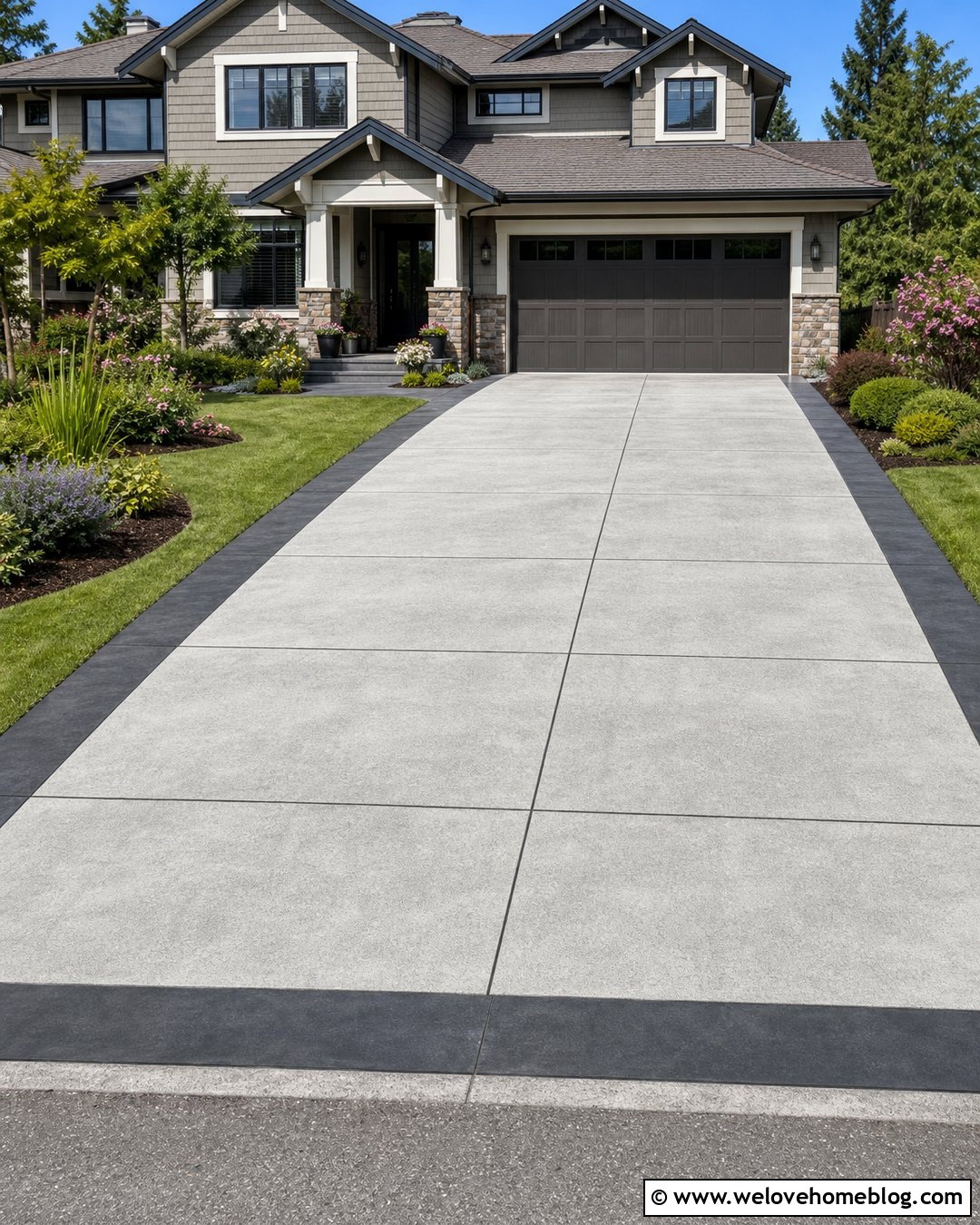
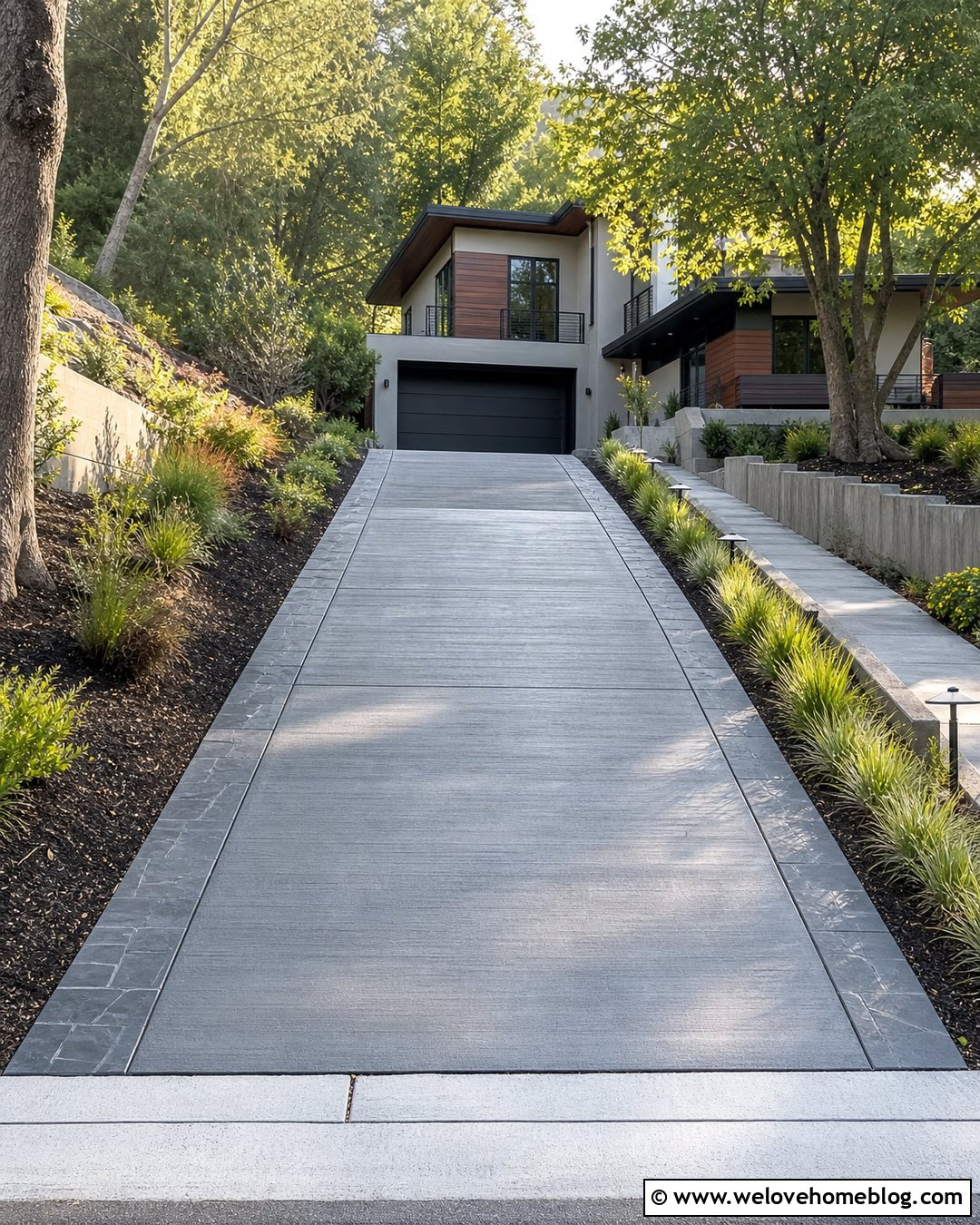
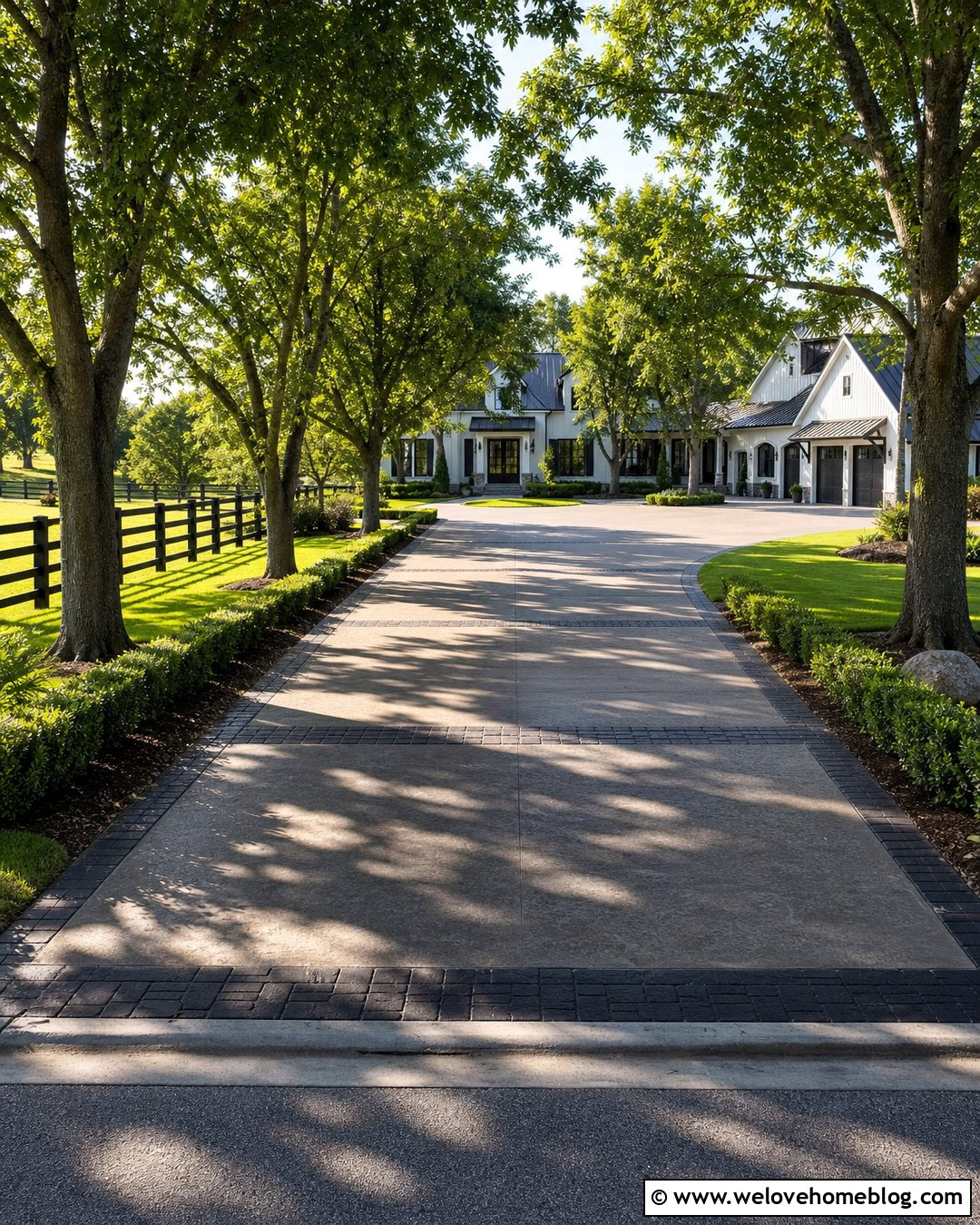
Could a basic concrete driveway look polished without elaborate decoration? A light gray broom-finished surface framed by a charcoal concrete border proves that simple details can make a major difference. The fine broom texture gives the driveway subtle visual movement, while the dark perimeter defines its shape from the curb to the garage. Use straight edges for a modern home or gentle curves for a ranch or craftsman facade. A matching charcoal walkway can connect the driveway to the porch and make the front yard feel coordinated. Keep nearby landscaping structured with compact evergreens, flowering perennials, and clean mulch beds. Ask the installer to align control joints with the border pattern so the finished driveway looks balanced rather than divided into random sections.
3. Exposed Aggregate Concrete Driveway With Brick Edging
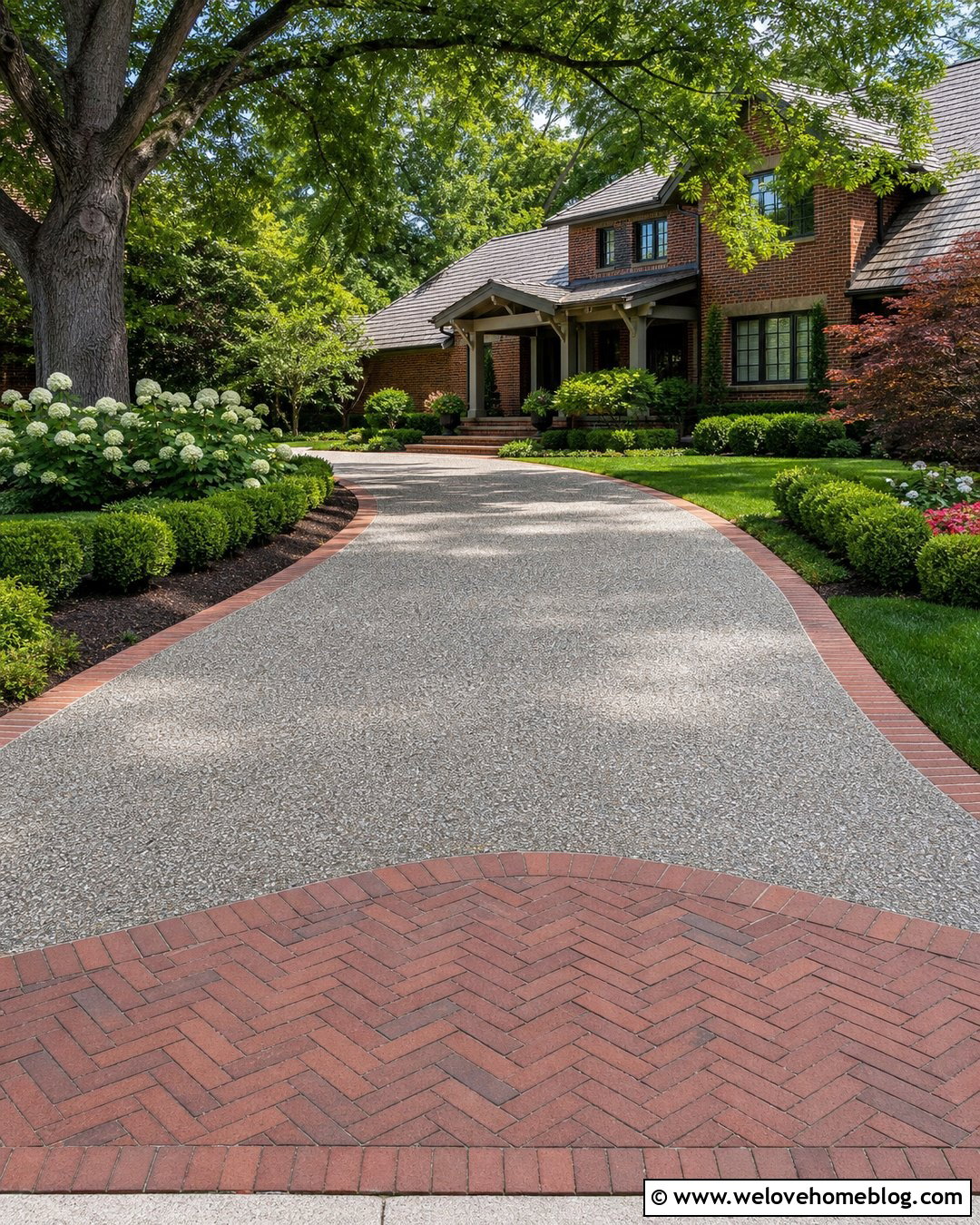
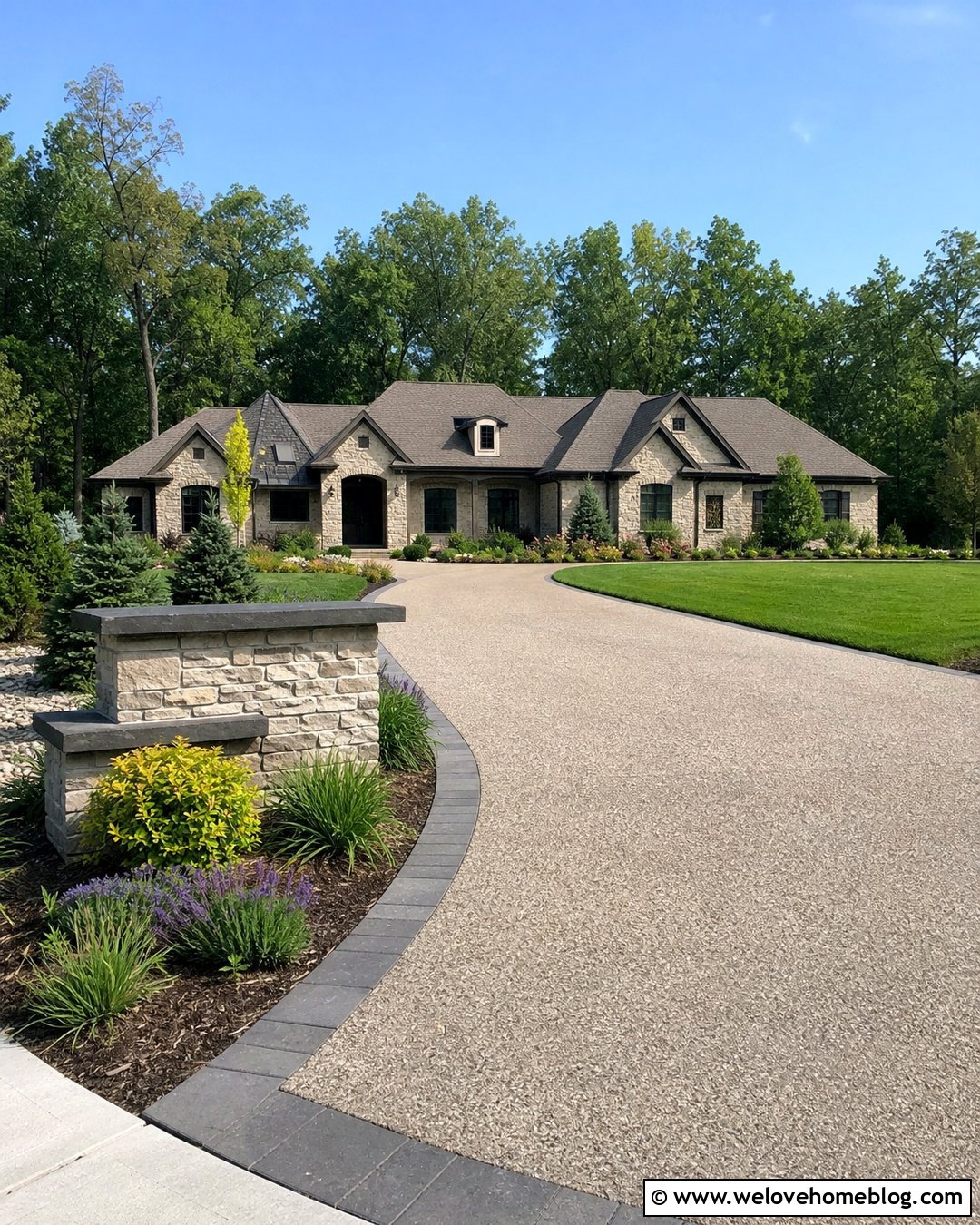
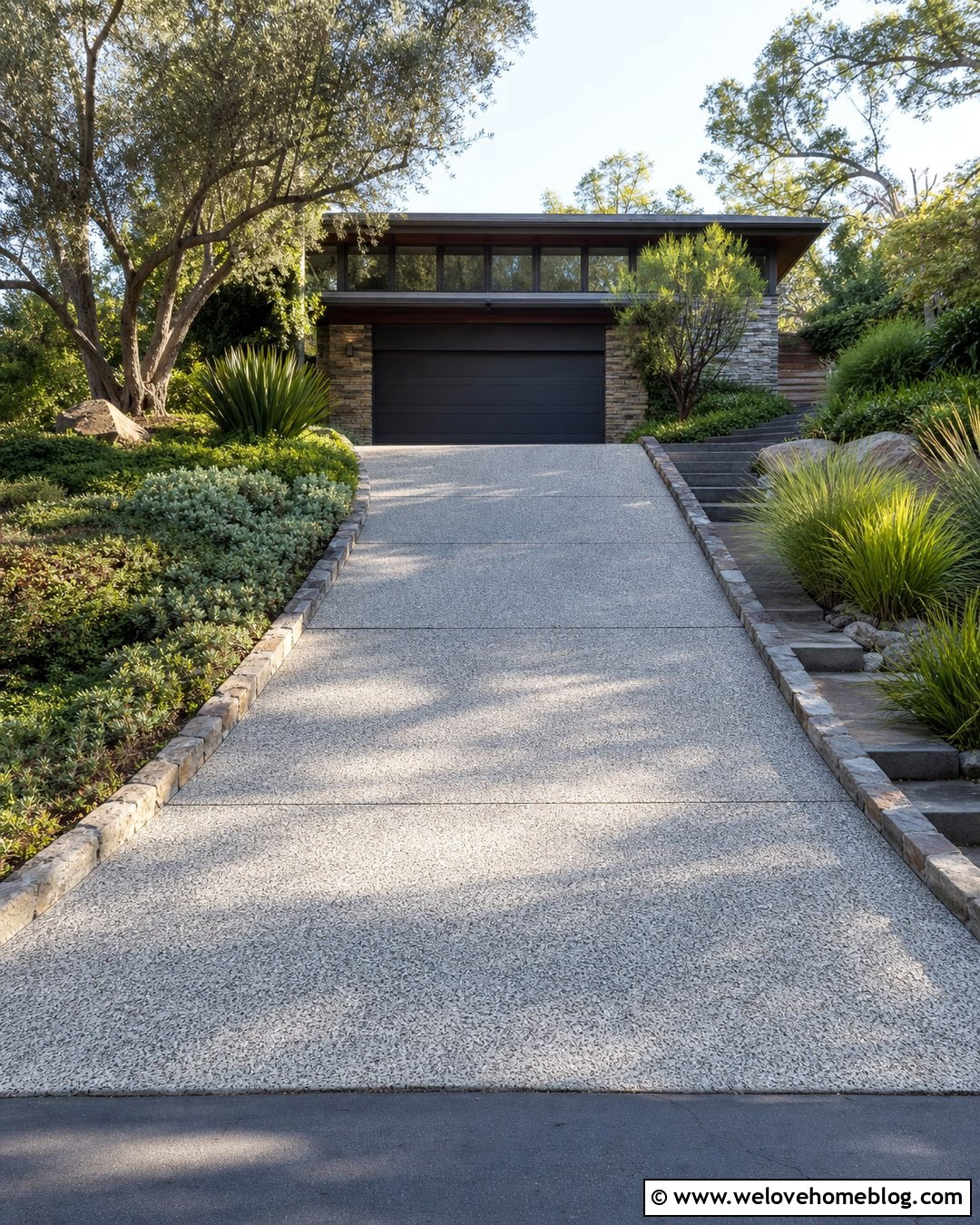
The natural texture of exposed aggregate gives a concrete driveway more color and depth than a plain slab. Small stones revealed at the surface create a durable-looking finish that feels appropriate beside traditional, craftsman, and cottage homes. Add red or brown clay brick edging to warm up the concrete and connect the driveway with brick walls, porch steps, or foundation details. A straight layout keeps the combination formal, while a lightly curved approach creates a softer garden setting. Frame the edges with lawn, hydrangeas, boxwood, and seasonal flowers. A brick apron at the street can strengthen the entrance visually. Choose aggregate colors that complement the facade, and review a physical sample outdoors because stone tones can look different under bright sunlight.
4. Stamped Slate Concrete Driveway With Curved Layout
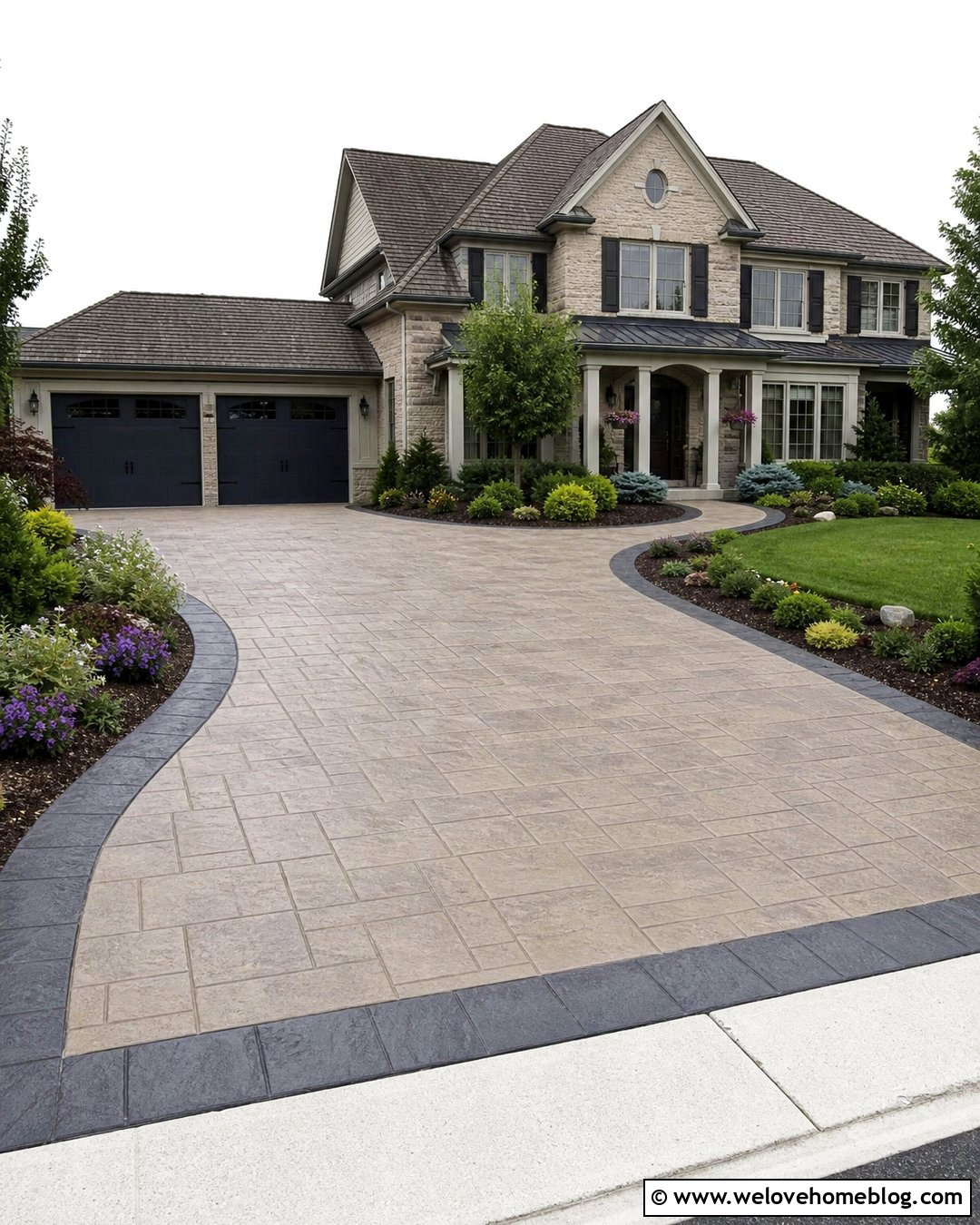
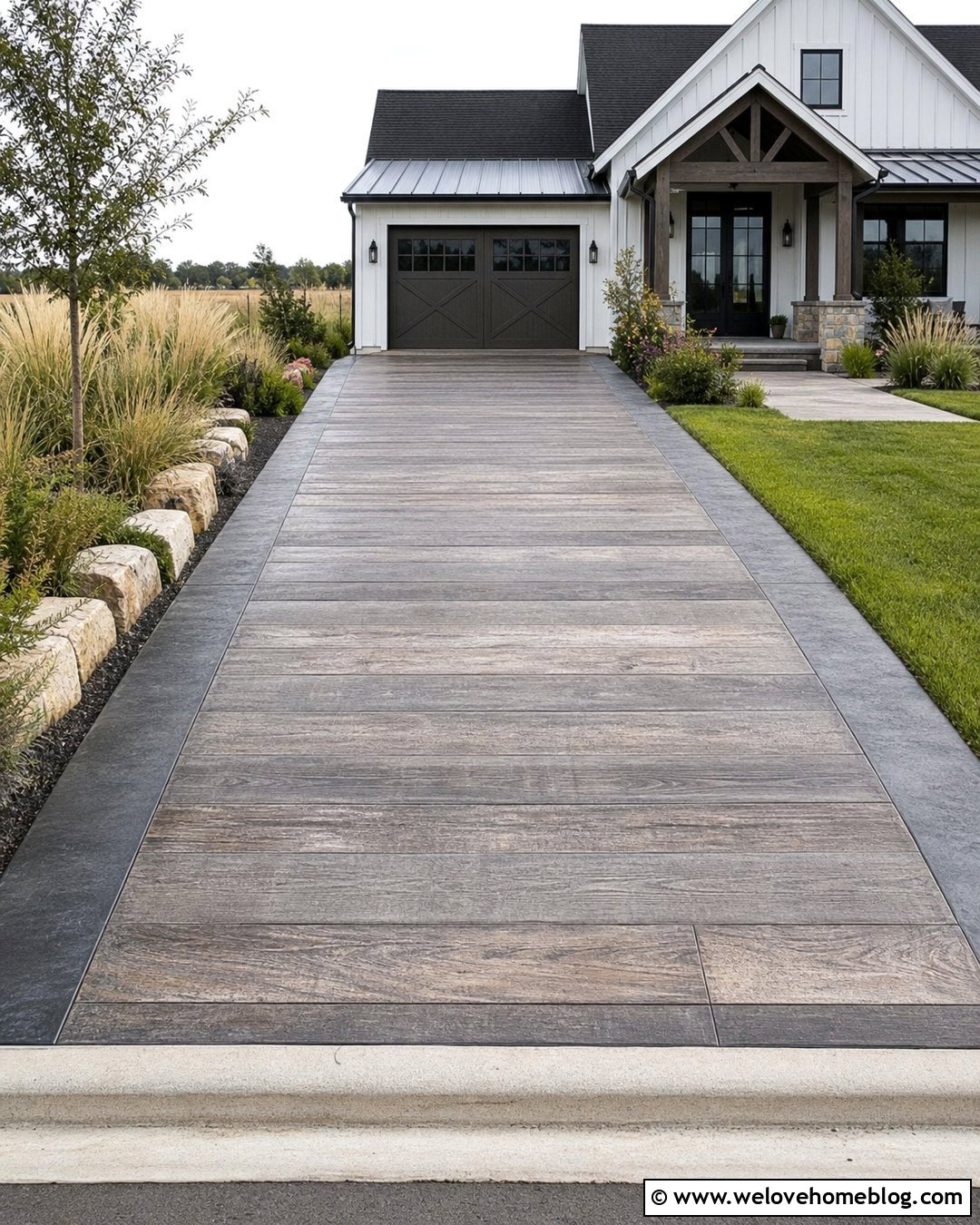
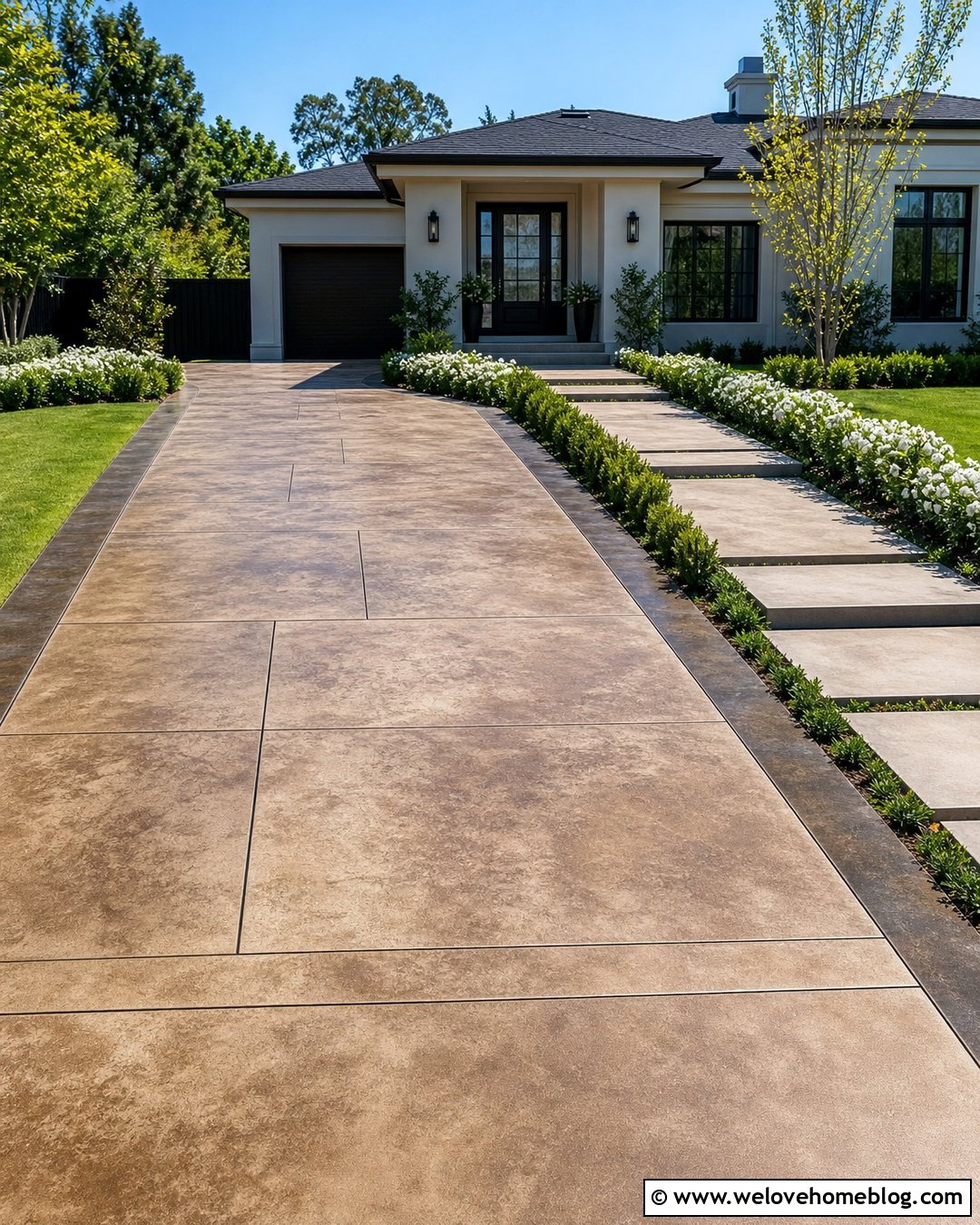
A gently curved stamped concrete driveway can make the approach to a home feel relaxed and inviting. Choose a slate-inspired pattern in blended gray or taupe tones rather than an overly busy imitation stone finish. The subtle color variation adds character, while the curved route creates space for layered landscaping on both sides. Use a darker stamped concrete border to outline the shape and prevent the pattern from visually blending into the lawn. Small trees, evergreen shrubs, and ground covers can follow the driveway’s curves without blocking sightlines near the street. This complete look suits colonial, craftsman, and transitional homes. Request a textured, slip-conscious finish and discuss sealer appearance before installation, especially if you prefer natural-looking concrete instead of a glossy surface.
5. White Concrete Driveway With Black Pebble Bands
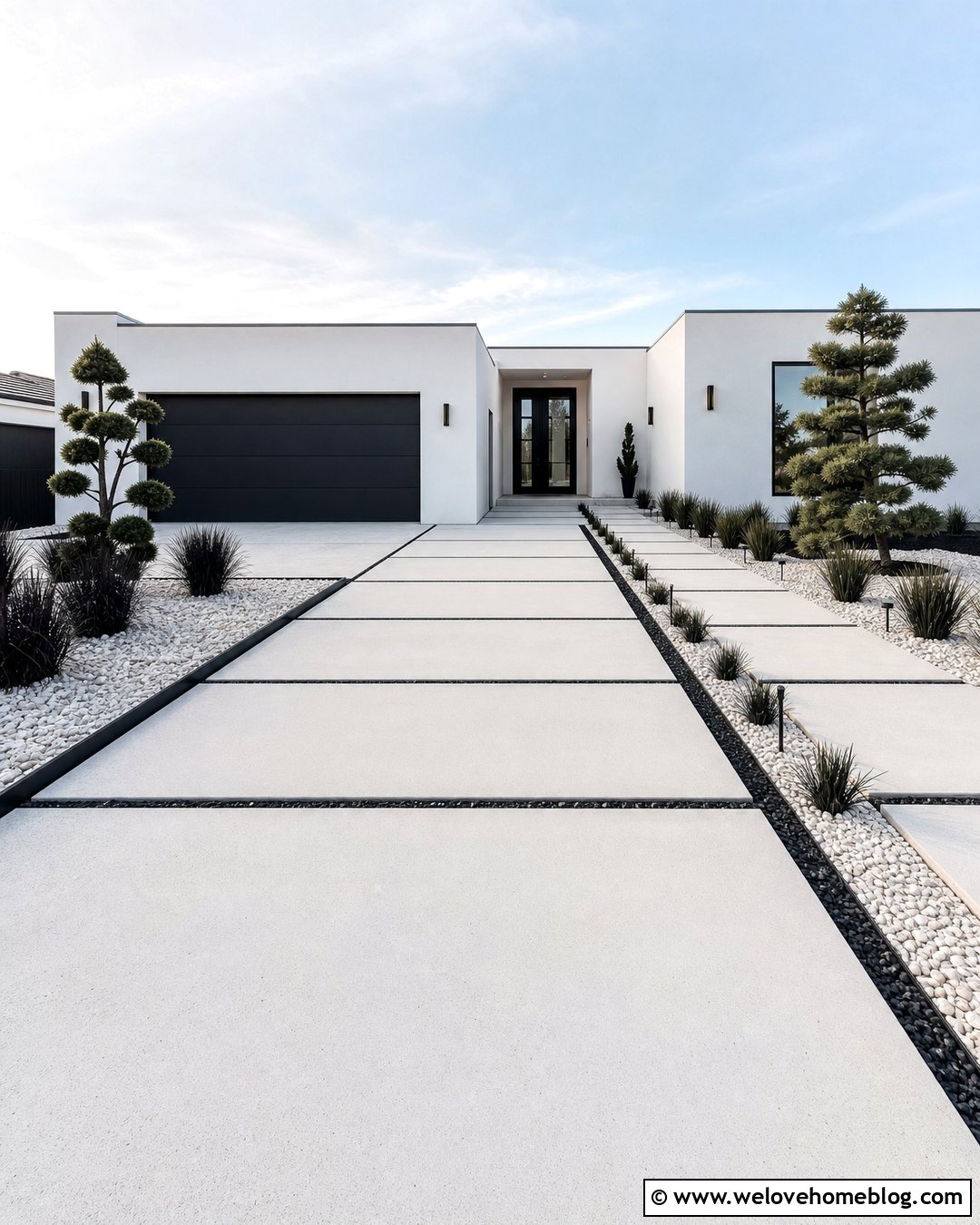
Bright white concrete paired with black pebble bands creates a crisp driveway for a minimalist home. Divide the surface into large rectangular panels, then use narrow channels of polished black pebbles to emphasize the geometry. The pebble strips should be positioned where they will not interfere with tires, walking routes, or regular sweeping. Black steel edging can keep the stones contained and provide another clean line along planting beds. Repeat the monochrome palette with white walls, dark window frames, sculptural evergreens, and a simple concrete walkway. In sunny regions, an off-white or pale warm-gray tone may feel less glaring than pure white. This design looks strongest when the joints, garage doors, walkway, and landscape beds align with the architecture.
6. Charcoal Concrete Driveway With Light Border
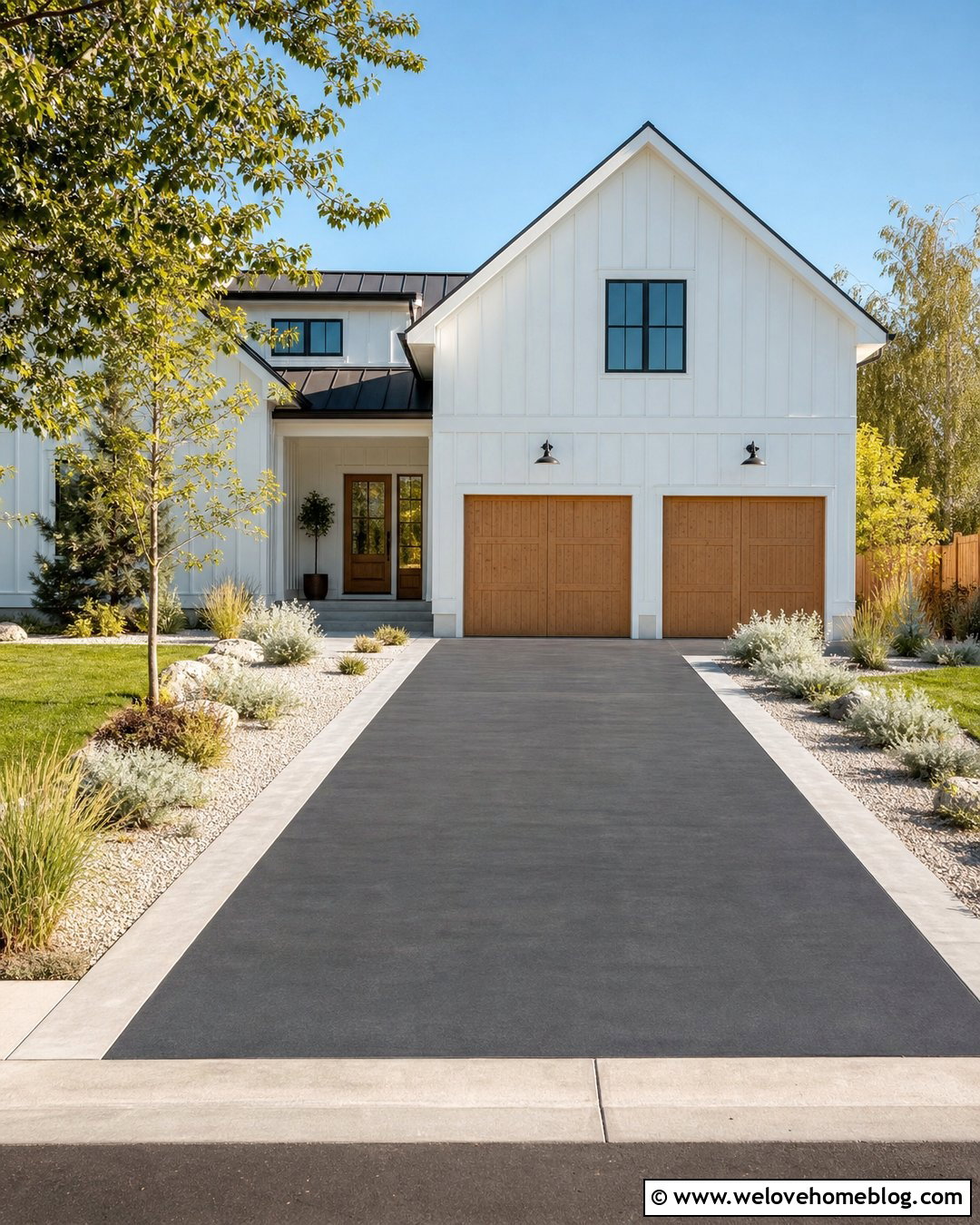
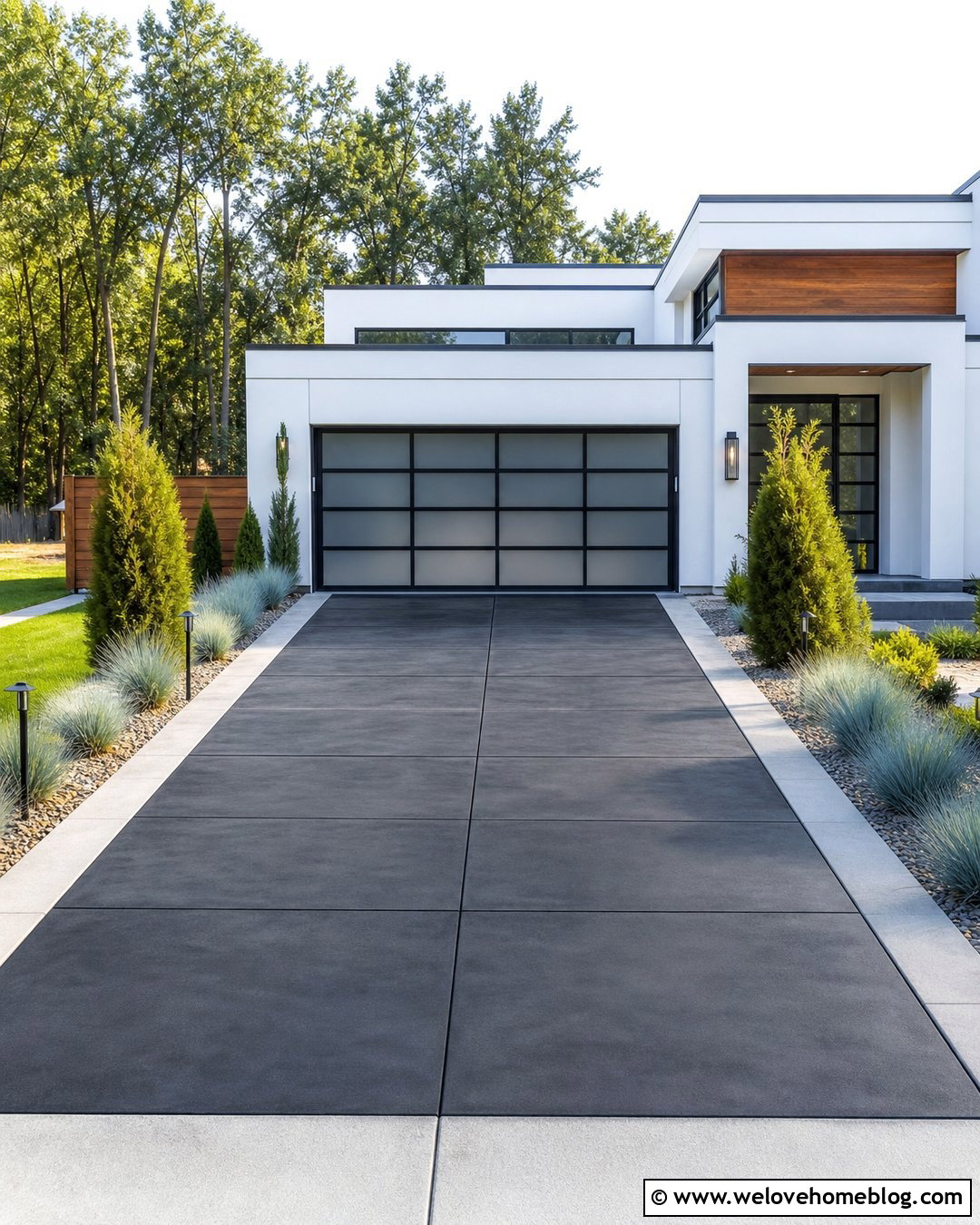
Deep charcoal concrete gives a driveway a bold presence without relying on an elaborate pattern. Surrounding it with a light gray concrete border prevents the dark surface from feeling too heavy and clearly defines the parking area. This two-tone combination works beautifully with white siding, pale stucco, natural wood, or mixed stone facades. Keep the driveway straight and symmetrical for a contemporary look, or introduce one broad curve on a larger property. Pale gravel beds, silver-green plants, and ornamental grasses provide contrast beside the dark pavement. Because darker surfaces can show dust and absorb more heat, consider the local climate and maintenance routine before committing. A matte, lightly textured finish usually looks more natural outdoors than a highly reflective decorative coating.
7. Concrete Driveway With Paver Apron
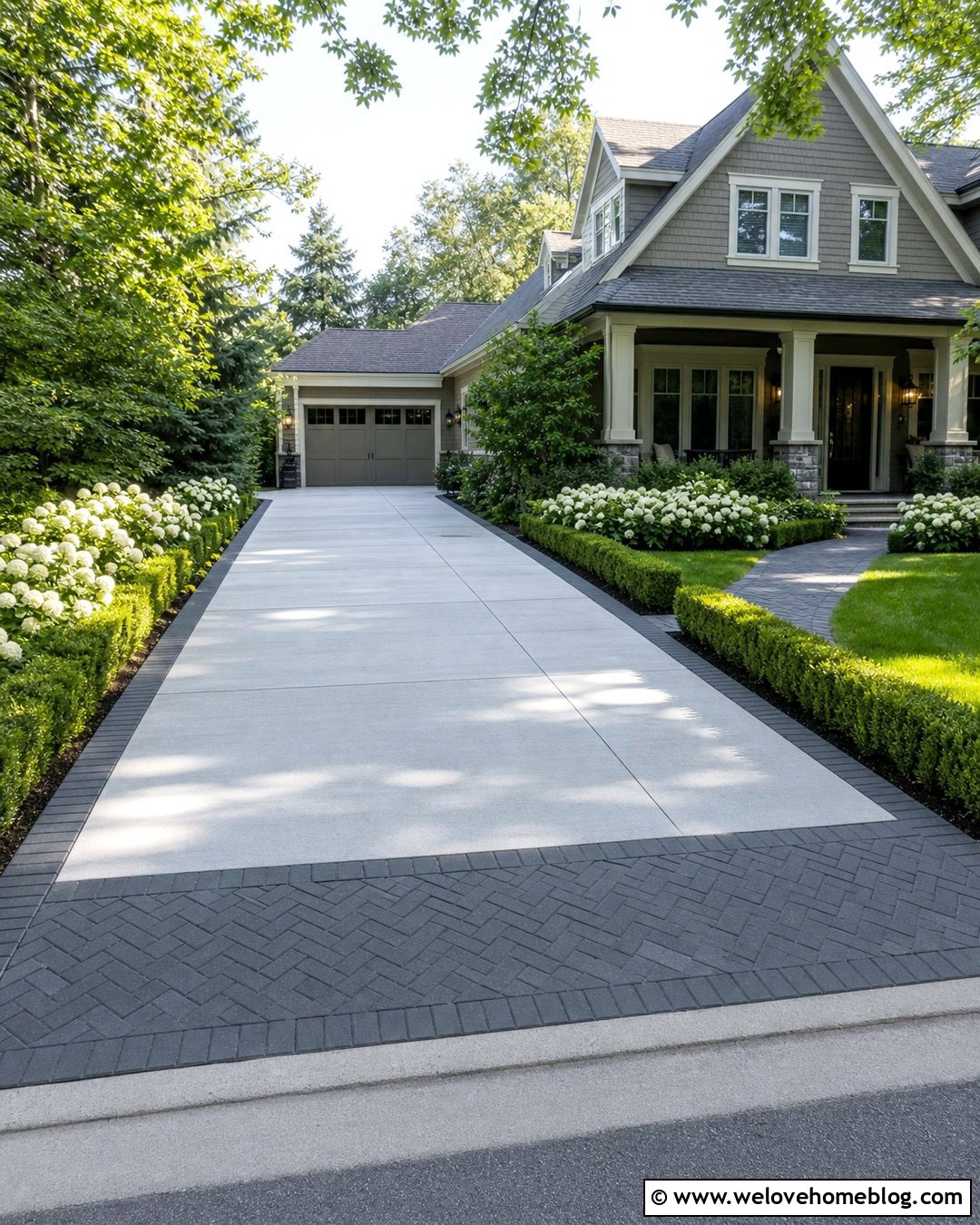
A paver apron can turn an ordinary poured concrete driveway into a more defined home entrance. Begin with a light broom-finished concrete field, then install a wide band of contrasting concrete or clay pavers where the driveway meets the street. Repeat the same pavers as narrow side borders or around the garage threshold for a connected appearance. A herringbone pattern introduces detail without covering the full driveway in expensive decorative material. This combination is particularly effective for craftsman, colonial, and modern farmhouse homes. Add symmetrical planting beds, low hedges, and a walkway that uses the same pavers near the porch. The transition between materials needs a stable base and careful installation so the apron remains even and handles regular vehicle movement gracefully.
8. Circular Concrete Driveway With Planted Island
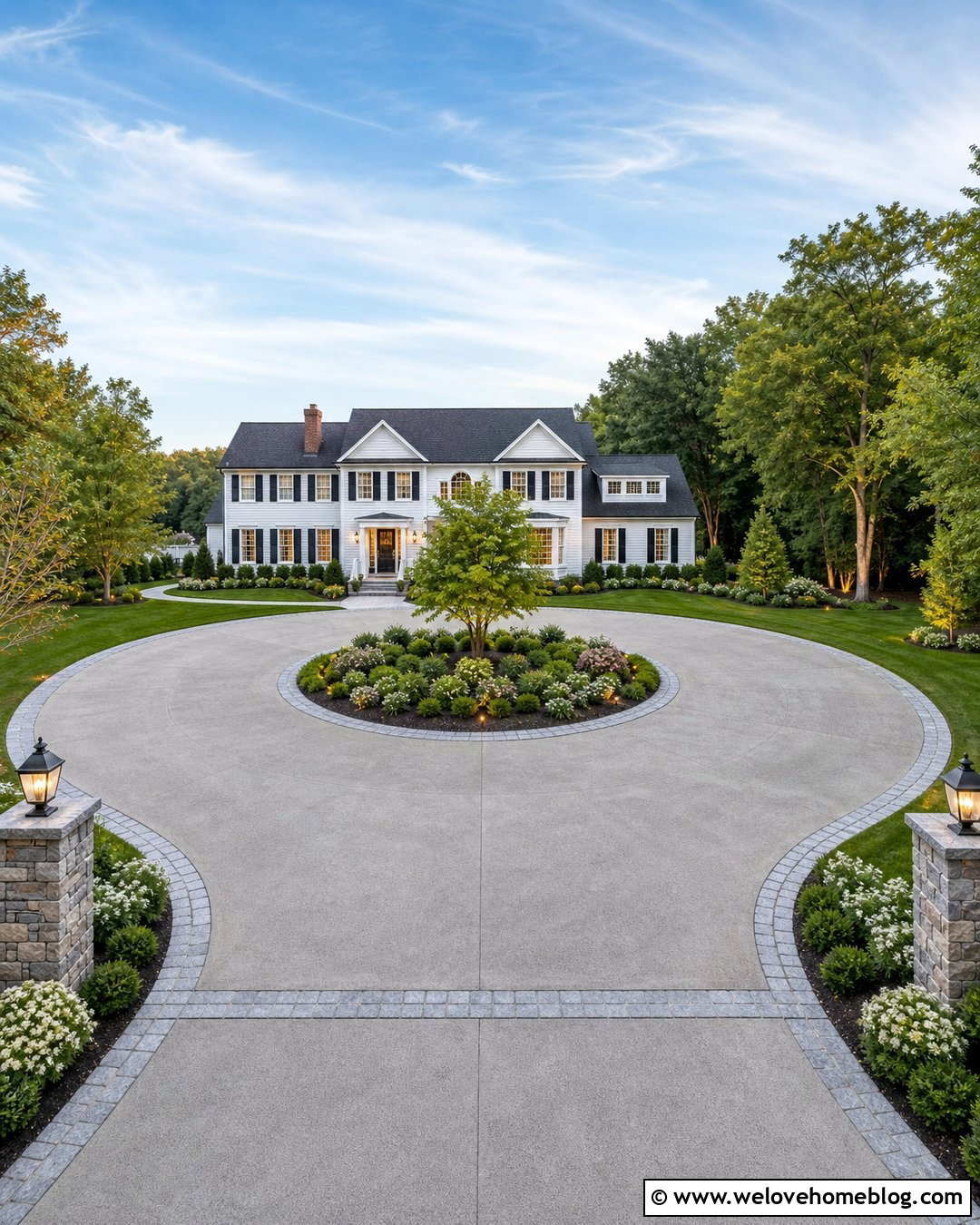
A circular concrete driveway creates a convenient arrival route while giving a spacious front yard a strong focal point. Use lightly brushed warm-gray concrete for the main surface and outline both edges with a narrow cobblestone or dark concrete border. In the center, build a generous planted island with a small ornamental tree, layered shrubs, flowers, and low ground cover. Avoid placing tall or dense plants where they could block views of approaching traffic. Curved control joints can follow the driveway’s shape and make practical divisions feel like intentional design details. This layout complements larger colonial, Mediterranean, ranch, and country homes. Coordinate the driveway entrance with stone pillars or understated lighting, but keep enough open lawn around the circle so the overall setting does not feel crowded.
9. Concrete Ribbon Driveway With Gravel Center
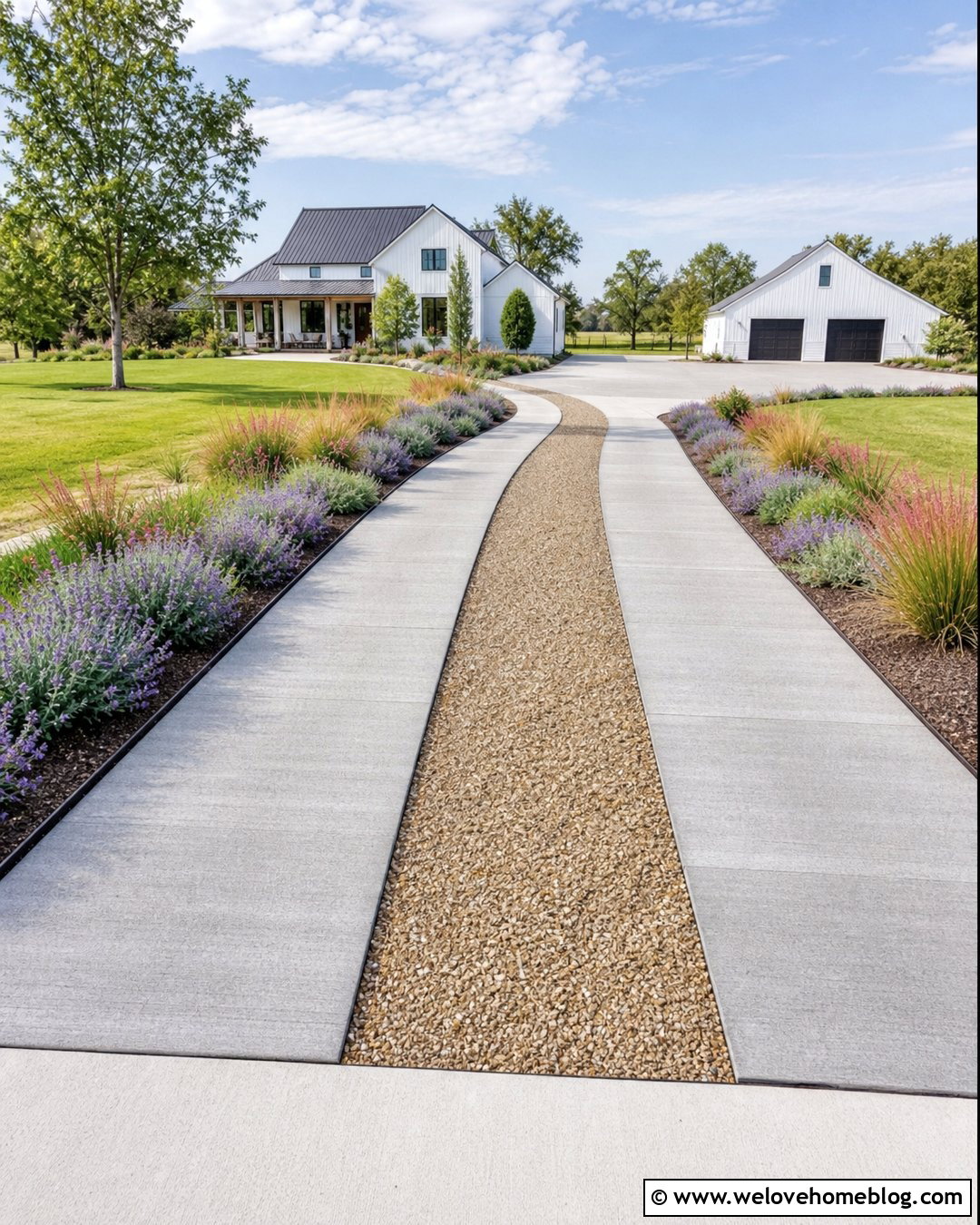
Two poured concrete tire tracks with a gravel center offer a lighter alternative to one wide slab. This ribbon driveway design suits cottages, modern farmhouses, detached garages, and country properties where a softer landscape connection is preferred. Use medium-gray brushed concrete for the wheel paths and compacted tan or gray gravel between them. Concrete or metal edging helps contain the loose material and maintains clean lines along the lawn. Continue gravel into a small parking pad near the garage, or widen the concrete where turning space is needed. Lavender, native grasses, and flowering shrubs can line the route without making it feel overly formal. Accurate track spacing is essential, so the layout should be planned around typical vehicles and comfortable walking access.
10. Saw Cut Geometric Concrete Driveway
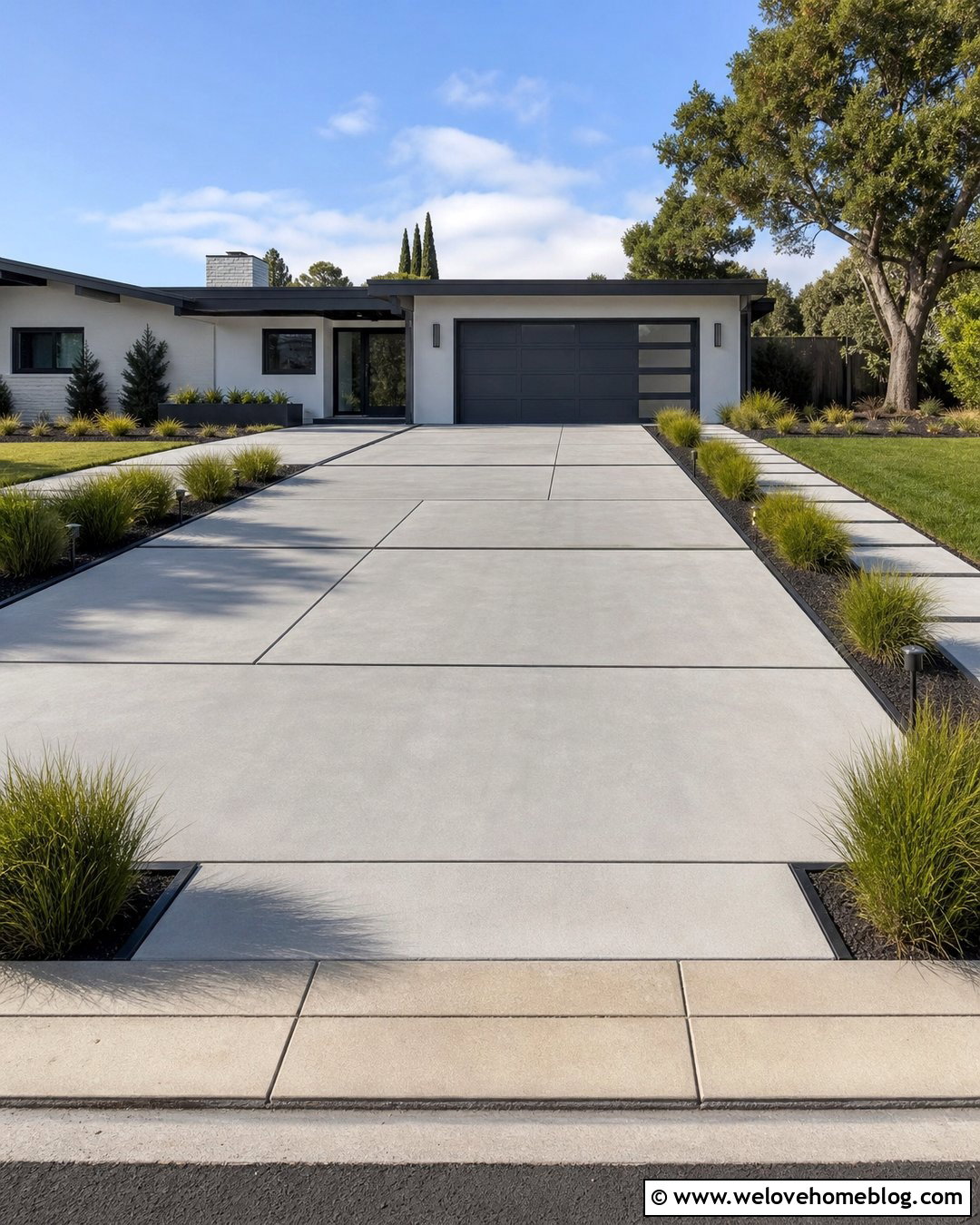
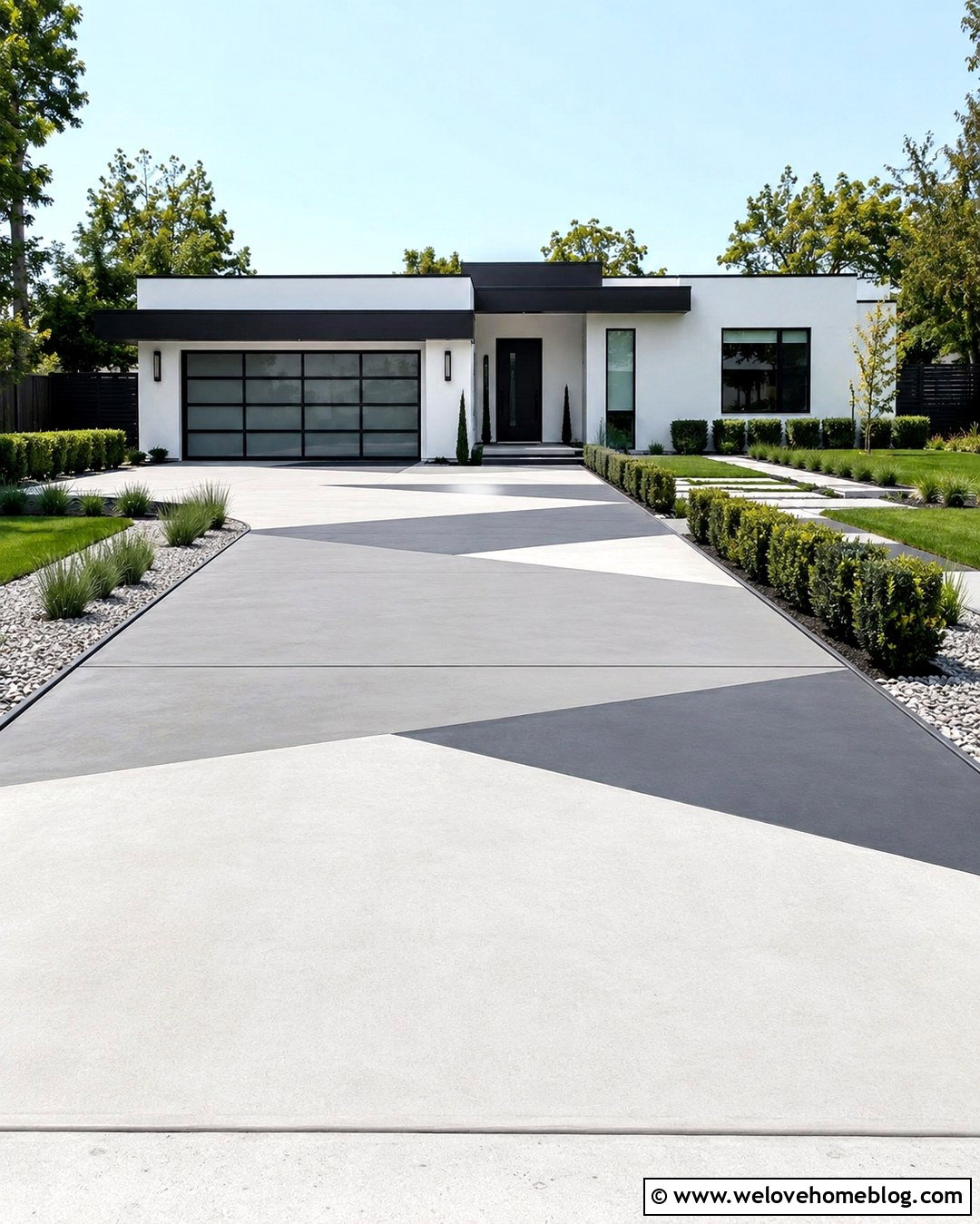
Clean saw-cut lines can give standard poured concrete a custom appearance without adding a second material. Divide a smooth light-gray driveway into large squares, offset rectangles, or long linear panels that relate to the home’s windows and garage doors. The pattern should feel deliberate, so avoid creating too many small sections or placing lines without an architectural connection. Add a black steel landscape edge, rectangular planting beds, and blocks of ornamental grass to reinforce the geometry. This complete design works particularly well with flat-roof, midcentury, and contemporary homes. The cuts must be properly planned for both appearance and crack control. Ask the contractor to map the joint layout before pouring, then view it from the curb to ensure the pattern remains balanced across the full approach.
11. Concrete Driveway With Cobblestone Border
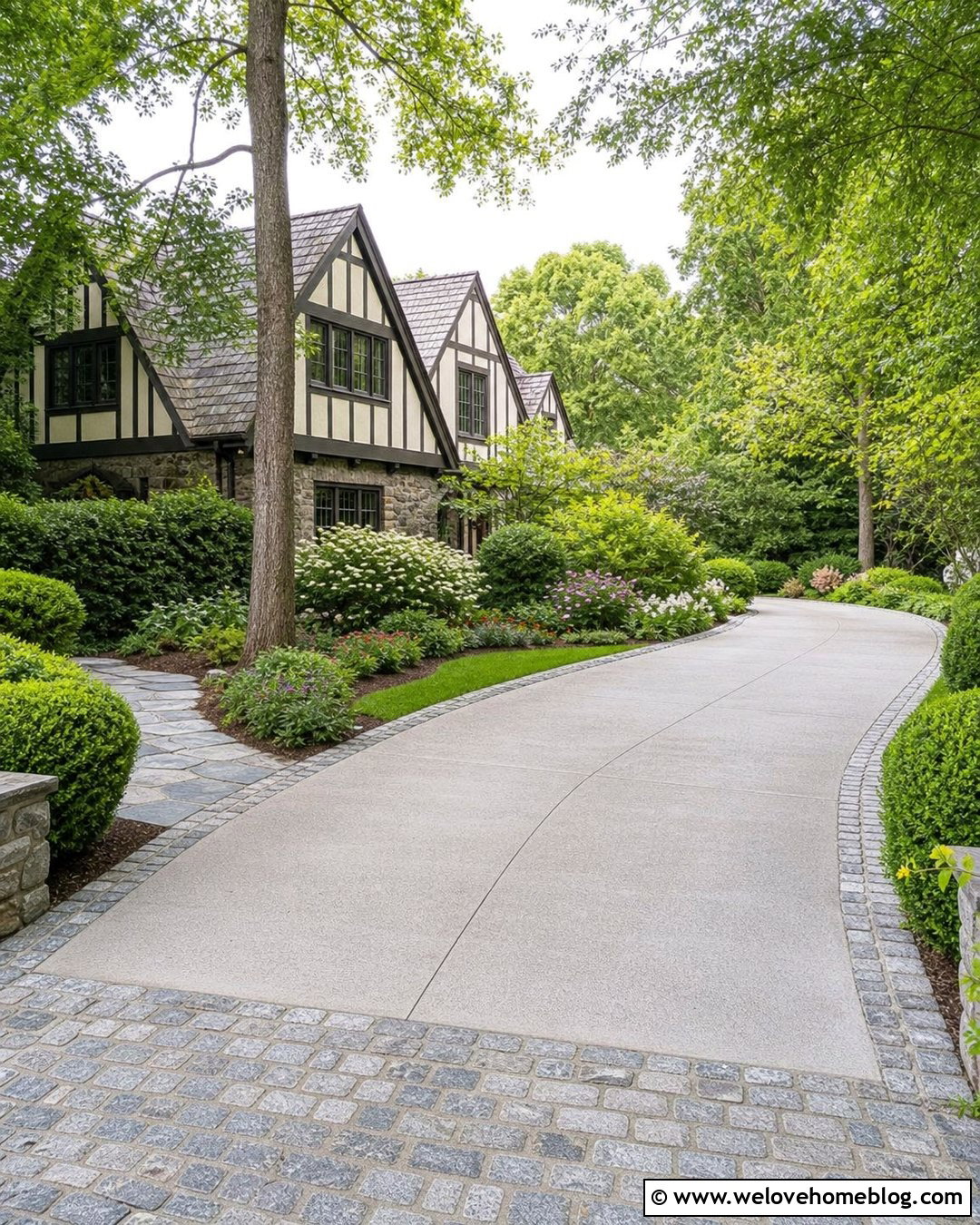
Cobblestone edging brings texture and traditional character to a smooth or broom-finished concrete driveway. Choose gray granite cobbles for a subtle transition or warmer brown stones for a rustic craftsman, Tudor, or cottage exterior. The border can run continuously from the curb to the garage, then widen into a small apron at the entrance. On a curved driveway, the individual stones naturally follow the shape and create an especially finished appearance. Pair the hardscape with deep green hedges, flowering shrubs, and a curved walkway leading toward the porch. Setting the cobblestones securely is important because weak edging may shift under tire pressure. Keep the center concrete simple so the natural stone remains an accent rather than competing with another strong pattern or color.
12. Beige Concrete Driveway With Native Landscaping
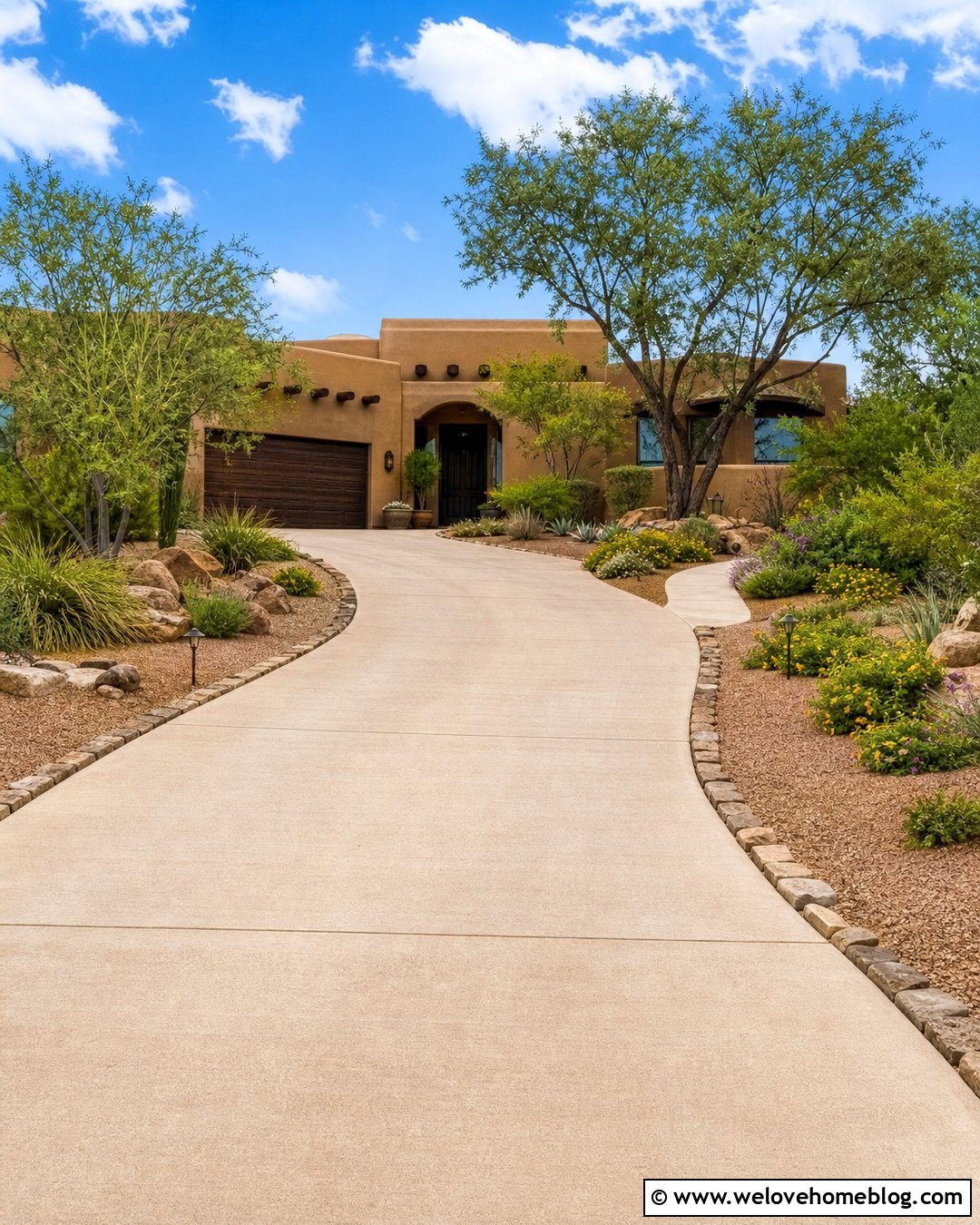
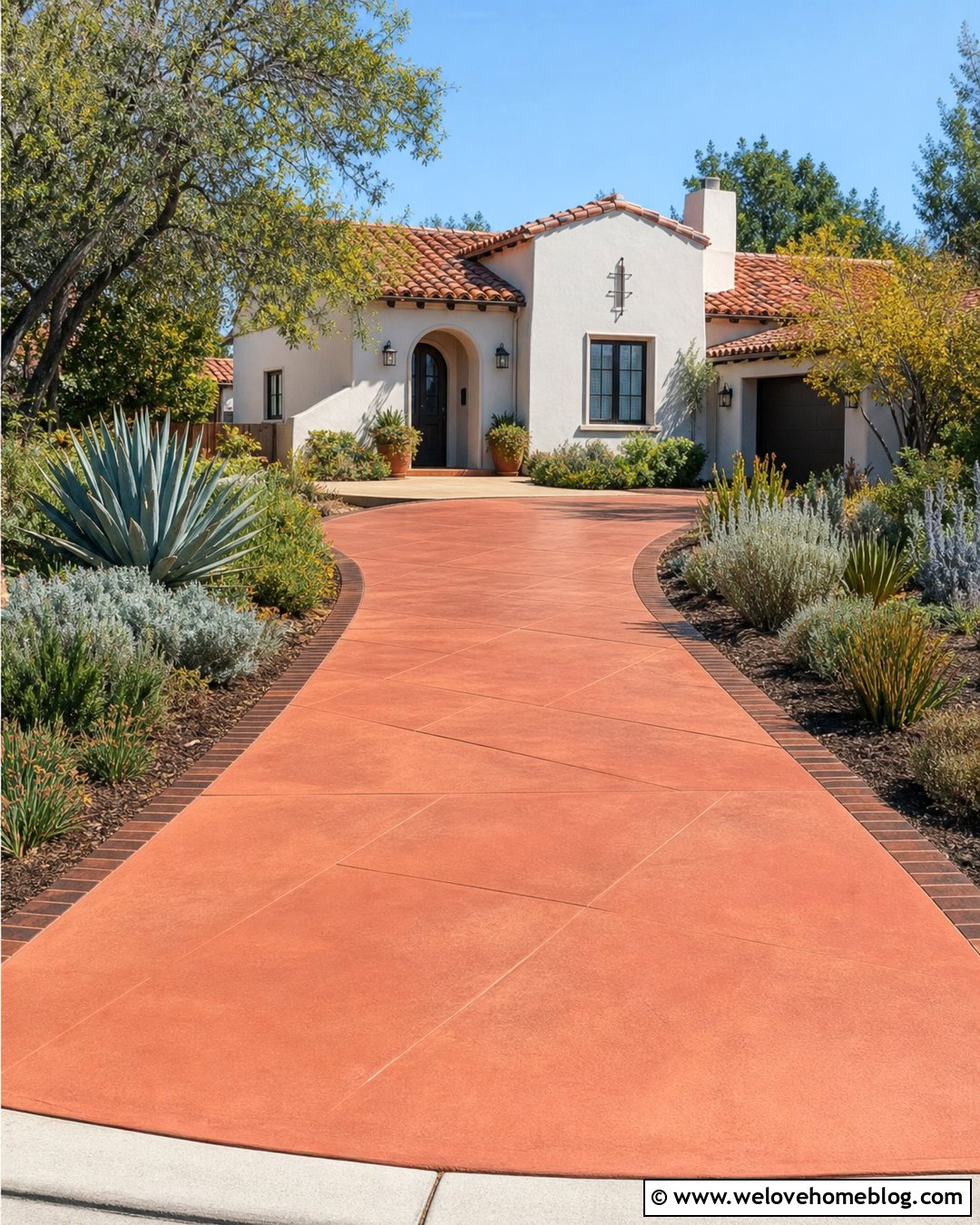
Warm beige concrete creates a softer transition between the driveway, house, and surrounding landscape. It works especially well with tan stucco, natural stone, cream brick, and desert-inspired architecture. Select an integral color or subtle stain with gentle variation, then use a fine broom or seamless stone texture for practical visual depth. A curved driveway bordered by weathered stone can feel relaxed without looking unfinished. Surround it with native grasses, drought-tolerant shrubs, flowering perennials, and small shade trees suited to the region. Gravel mulch can reduce the amount of lawn while coordinating with the warm concrete. Ask to see cured color samples before installation, since wet concrete and small sample cards may not represent the finished tone accurately. Restrained colors will generally age more gracefully.
13. Salt Finish Concrete Driveway With Coastal Landscaping
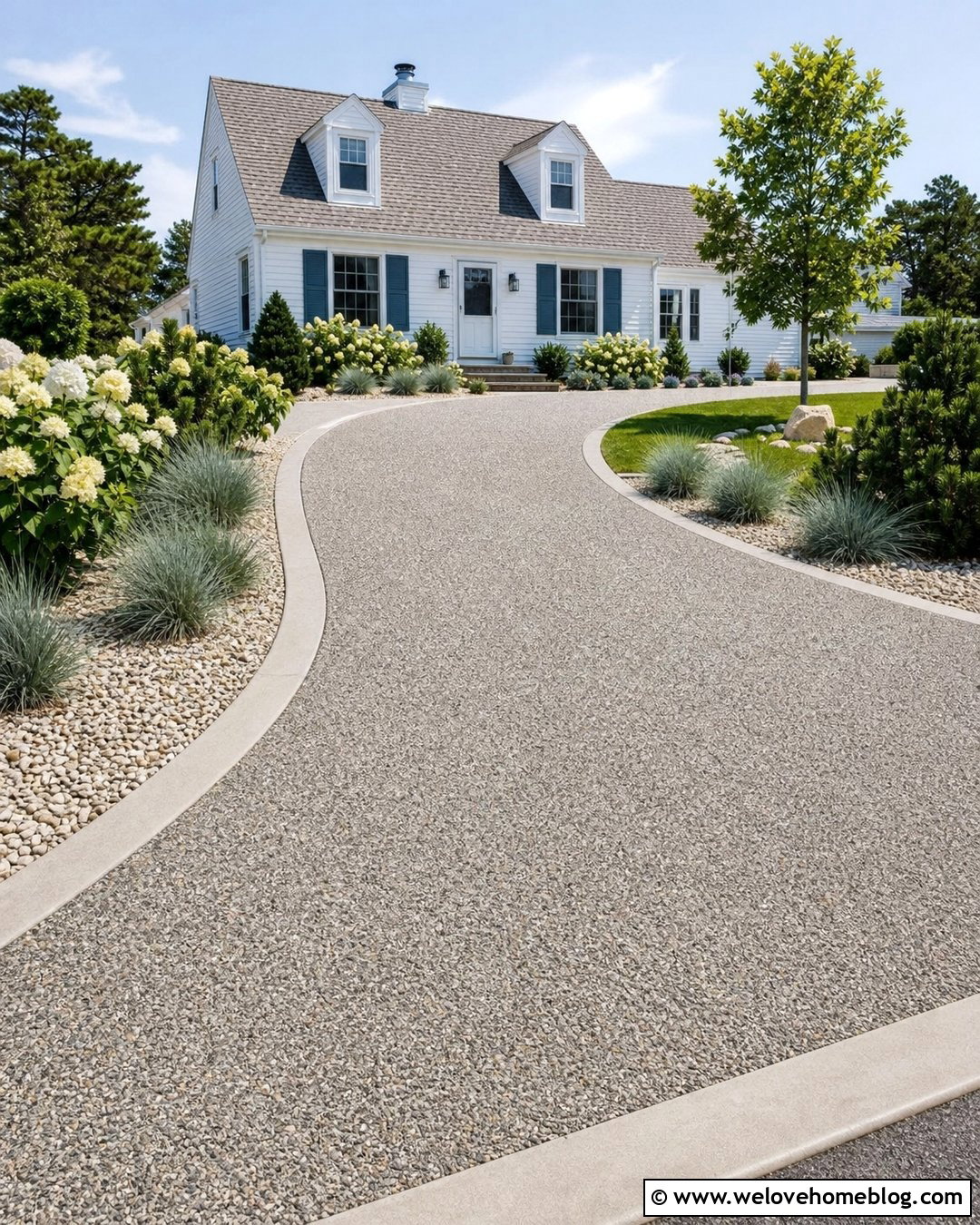
A rock salt finish leaves small, irregular indentations that give concrete a lightly weathered texture. Used on a pale gray or sandy-toned driveway, it can complement coastal cottages, Cape Cod homes, and relaxed ranch facades. Keep the layout straight or introduce a broad curve framed by shell-colored gravel and low planting beds. Blue-green grasses, hydrangeas, compact evergreens, and wind-tolerant shrubs can reinforce the coastal mood without using obvious themed decorations. A border of smooth poured concrete provides a crisp edge around the textured center. The finish should be selected with local weather and traction needs in mind, since texture depth affects both appearance and maintenance. Simple concrete steps and a matching walkway can continue the material naturally toward the home’s entrance.
14. Concrete Driveway With Rain Garden
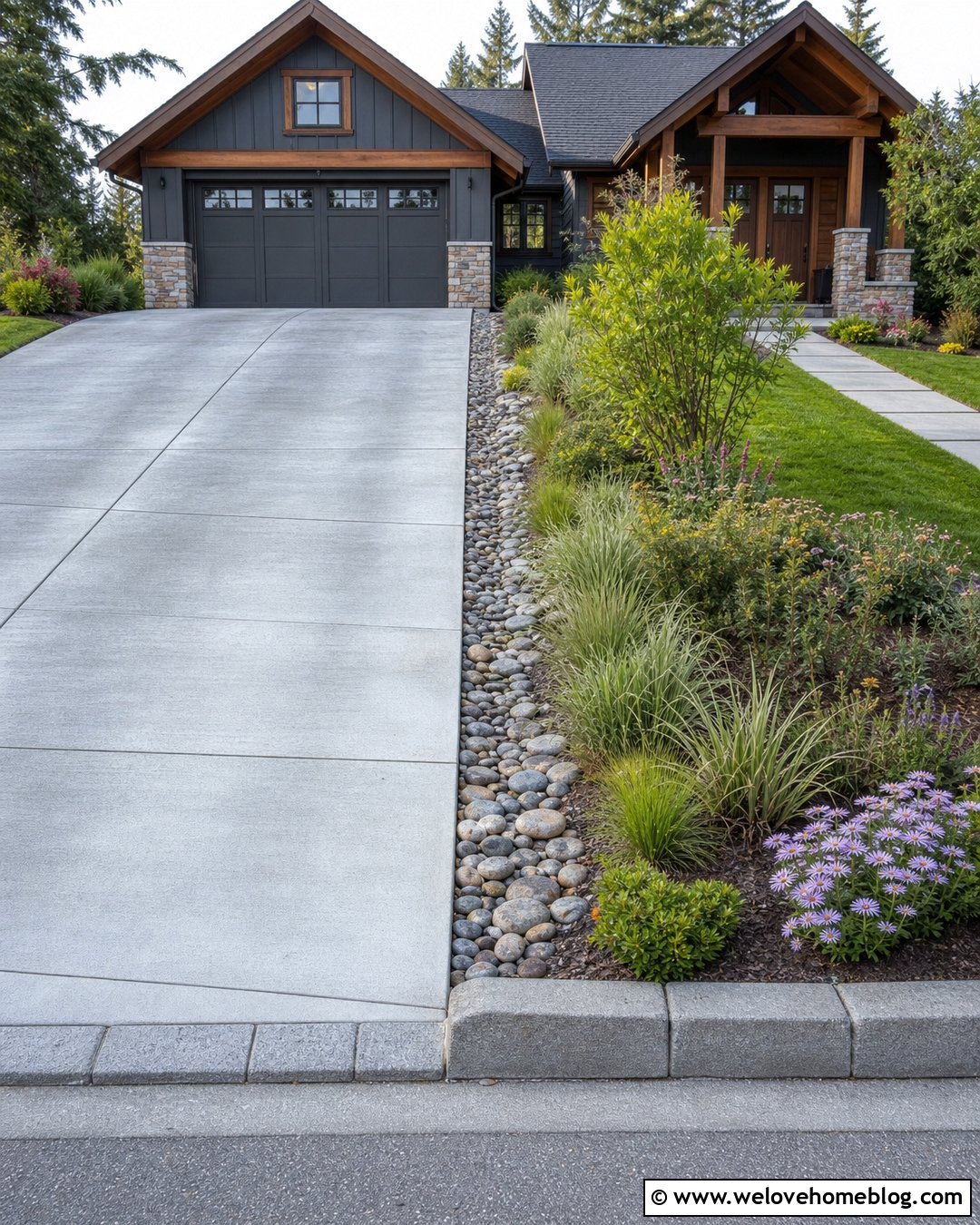
Heavy hardscaping can feel more connected to the yard when drainage becomes part of the design. Use a gently sloped brushed concrete driveway with a decorative stone channel along one side. Direct appropriate runoff toward a planted rain garden filled with regionally suitable grasses, sedges, flowering perennials, and moisture-tolerant shrubs. A concrete or stone curb can define the garden while helping protect planting areas from tires. This layout works with modern, craftsman, and suburban homes, especially where the front yard has enough space for a broad planting basin. Keep the street entrance open and maintain clear visibility around curves. Drainage requirements vary by property, so the grading, channel placement, soil conditions, and overflow route should be evaluated before installation rather than added after the driveway is poured.


15. Smooth Concrete Driveway With Wood Gate
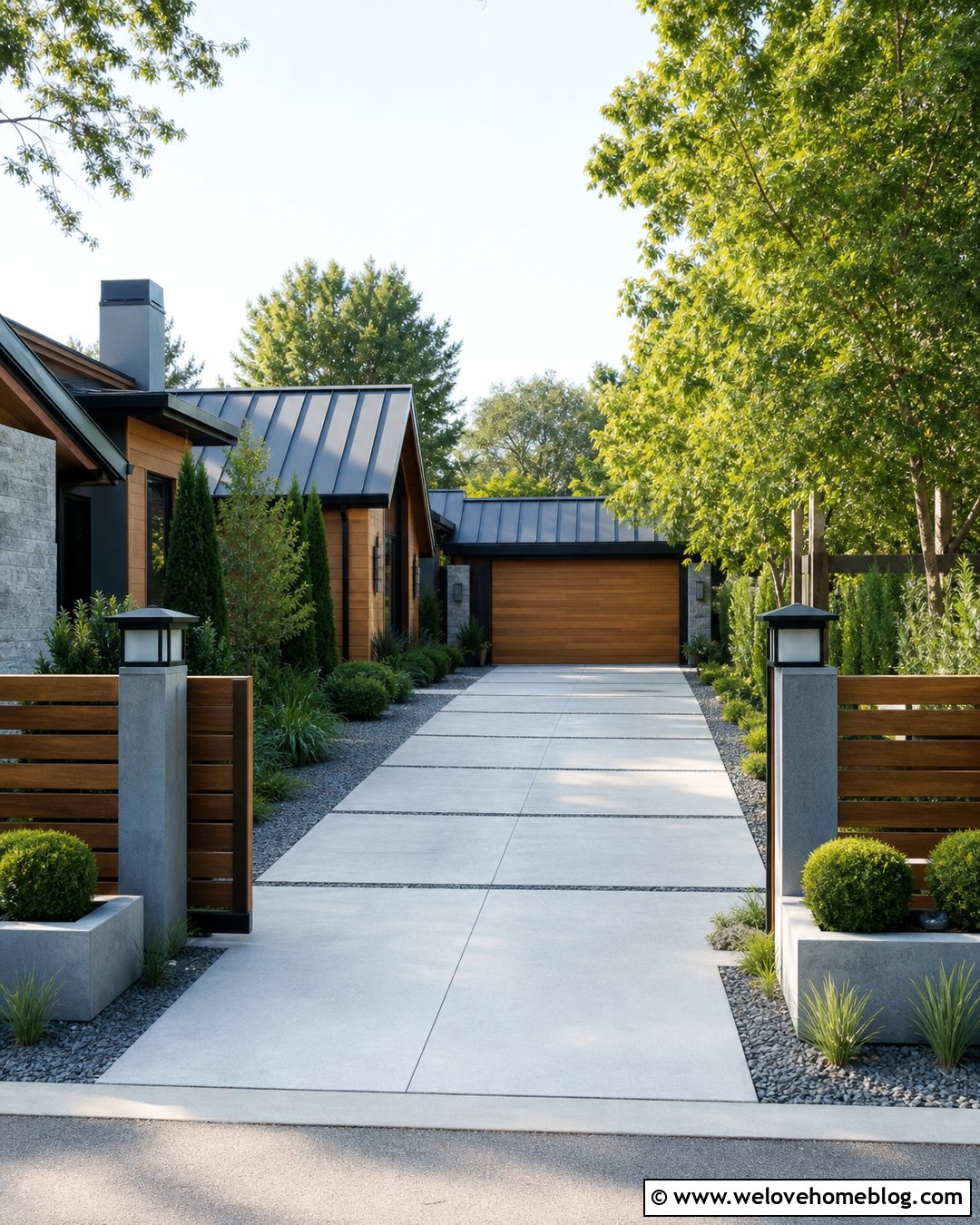
Natural wood can warm up the cool appearance of a smooth concrete driveway. Choose pale gray concrete divided into broad rectangular panels, then frame the entrance with a horizontal cedar gate and simple masonry pillars. The gate should align with the driveway and open without reducing necessary vehicle clearance. Continue the wood tone through the garage door, porch ceiling, or address marker to make the entrance feel cohesive. Linear grasses, clipped shrubs, and a narrow gravel border can soften the perimeter while preserving a modern look. Add low, shielded lighting near the pillars for safer visibility without cluttering the design. A lightly textured surface is often more practical than a slick finish, even when the desired appearance is clean and smooth from the curb.
16. Concrete Driveway With Brick Ribbon Pattern
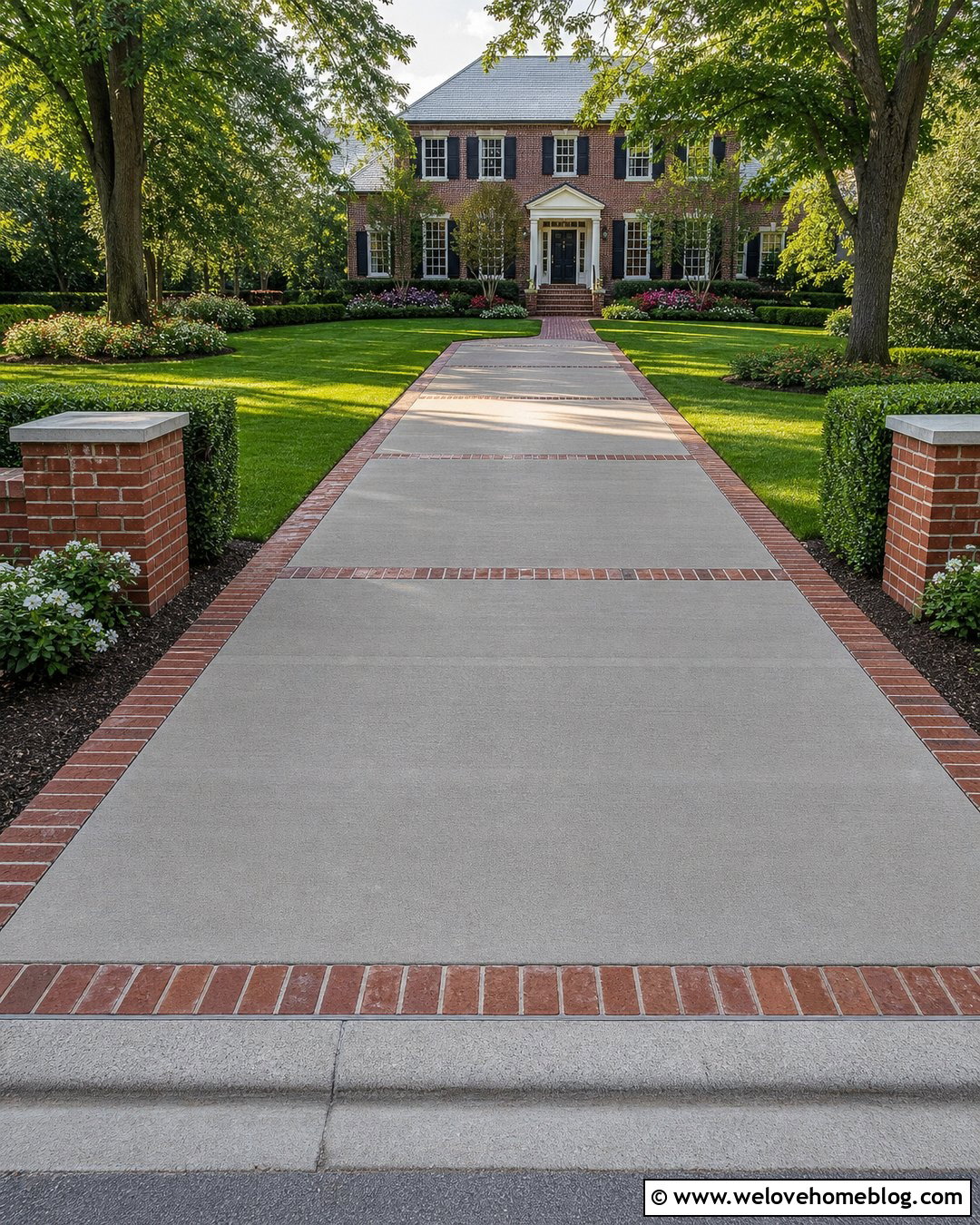
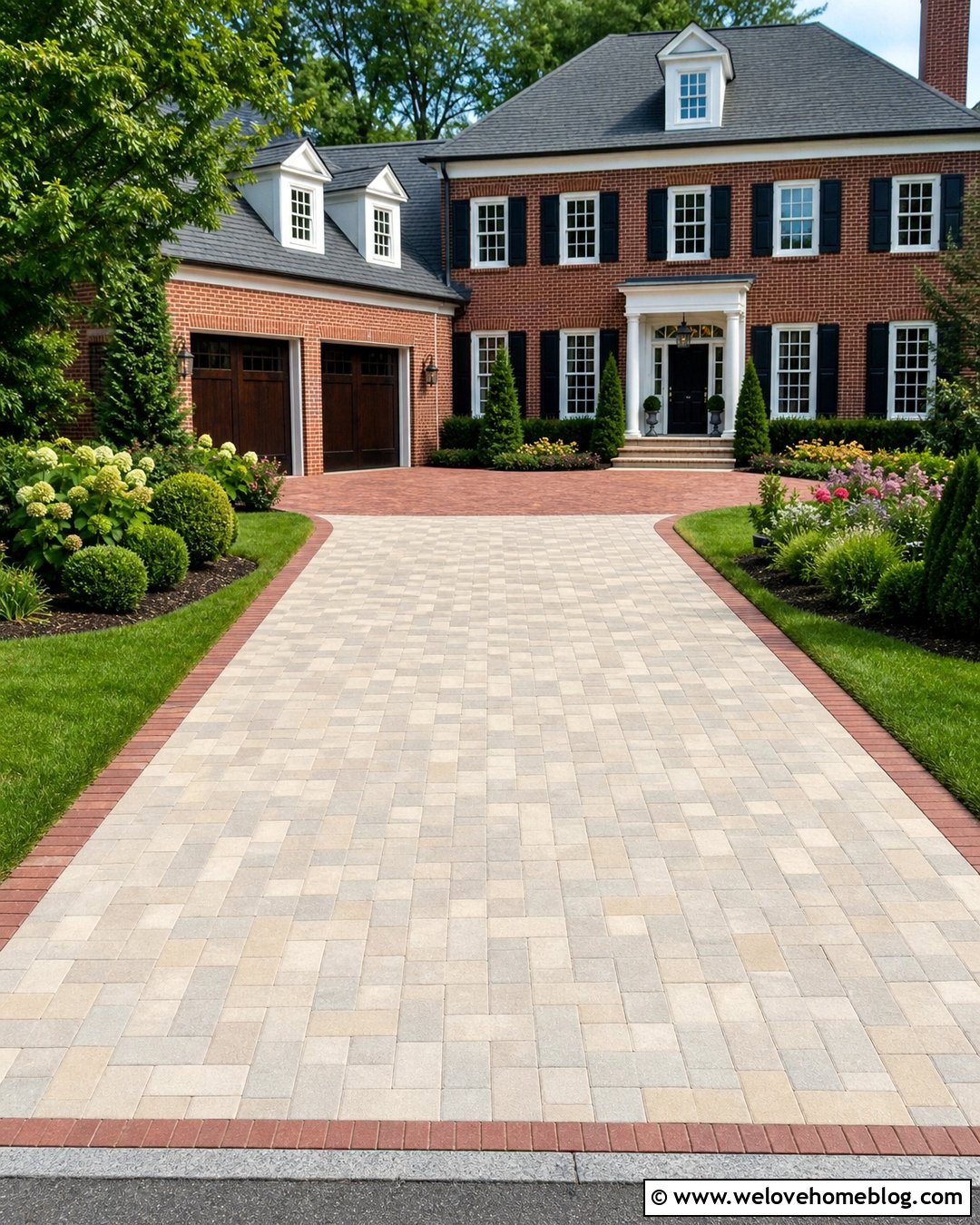
Brick ribbons can break up a broad concrete driveway and connect it with a traditional home’s exterior. Start with warm-gray broom-finished concrete, then add narrow bands of red, brown, or charcoal brick across the width at measured intervals. The ribbons can align with control joints, helping practical divisions become part of the decorative layout. Continue the brick around the perimeter or use it for the adjoining front walkway. This design fits colonial, craftsman, ranch, and brick-front suburban homes without making the driveway look overly ornate. Frame the approach with lawn, foundation shrubs, and two balanced planting beds near the garage. Brick colors should repeat tones already present on the facade. Proper separation and base preparation will help the two materials meet cleanly and remain visually level.
17. Swirl Finish Concrete Driveway With Soft Curves
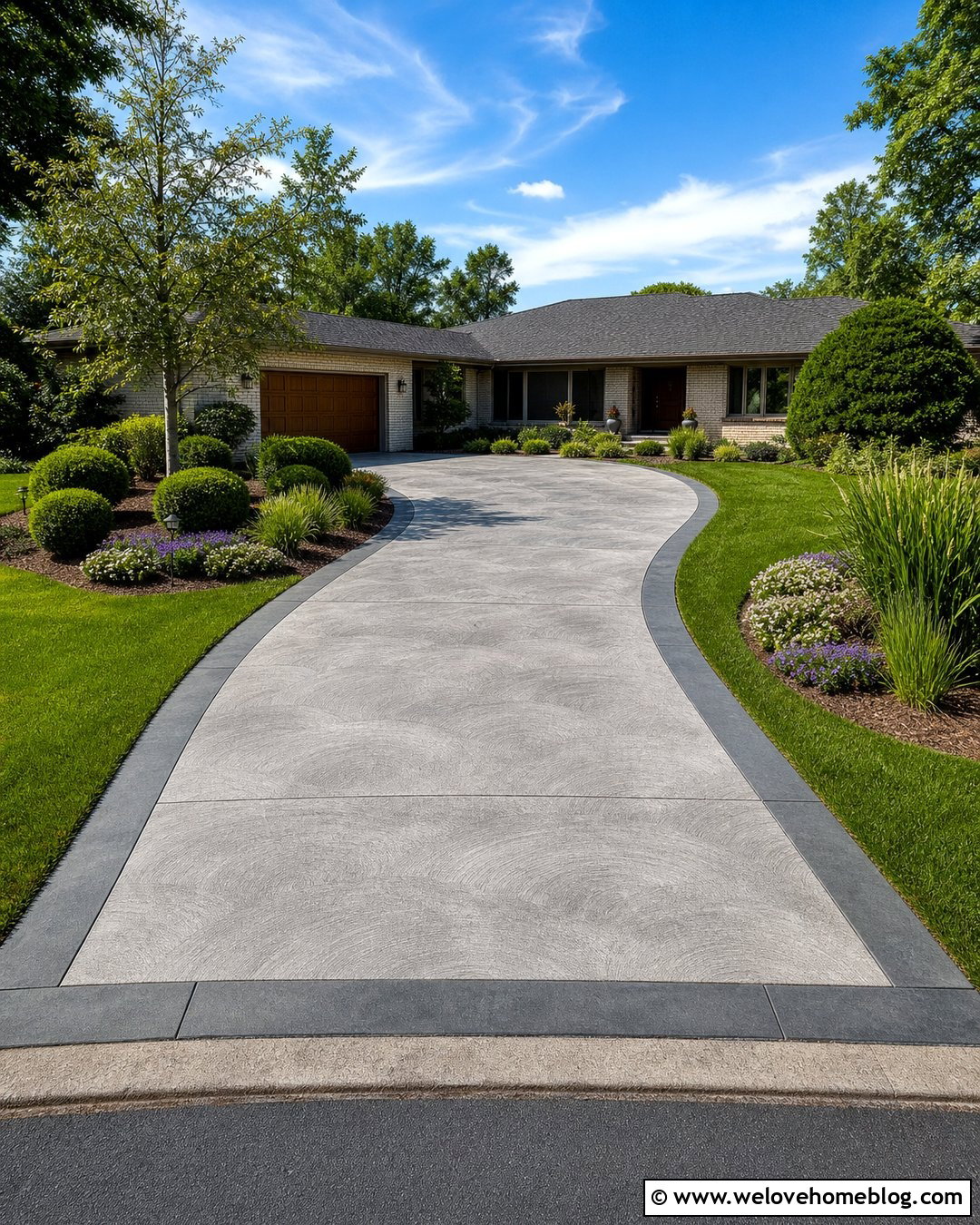
A hand-finished swirl texture creates graceful movement across a concrete surface. Pair it with a gently curved driveway so the pattern and layout reinforce one another rather than feeling disconnected. Medium-gray concrete keeps the swirls subtle, while a smooth darker border provides a polished frame. Use flowing landscape beds filled with ornamental grasses, rounded evergreen shrubs, and flowering ground cover along the outer curve. A small specimen tree near the bend can create a focal point without interfering with visibility. This complete driveway look feels at home beside ranch, split-level, and contemporary suburban houses. Swirl intensity can vary considerably, so discuss the preferred texture with the finishing crew in advance. A sample panel can prevent the completed surface from appearing busier or rougher than expected.
18. Two Tone Concrete Driveway With Parking Court
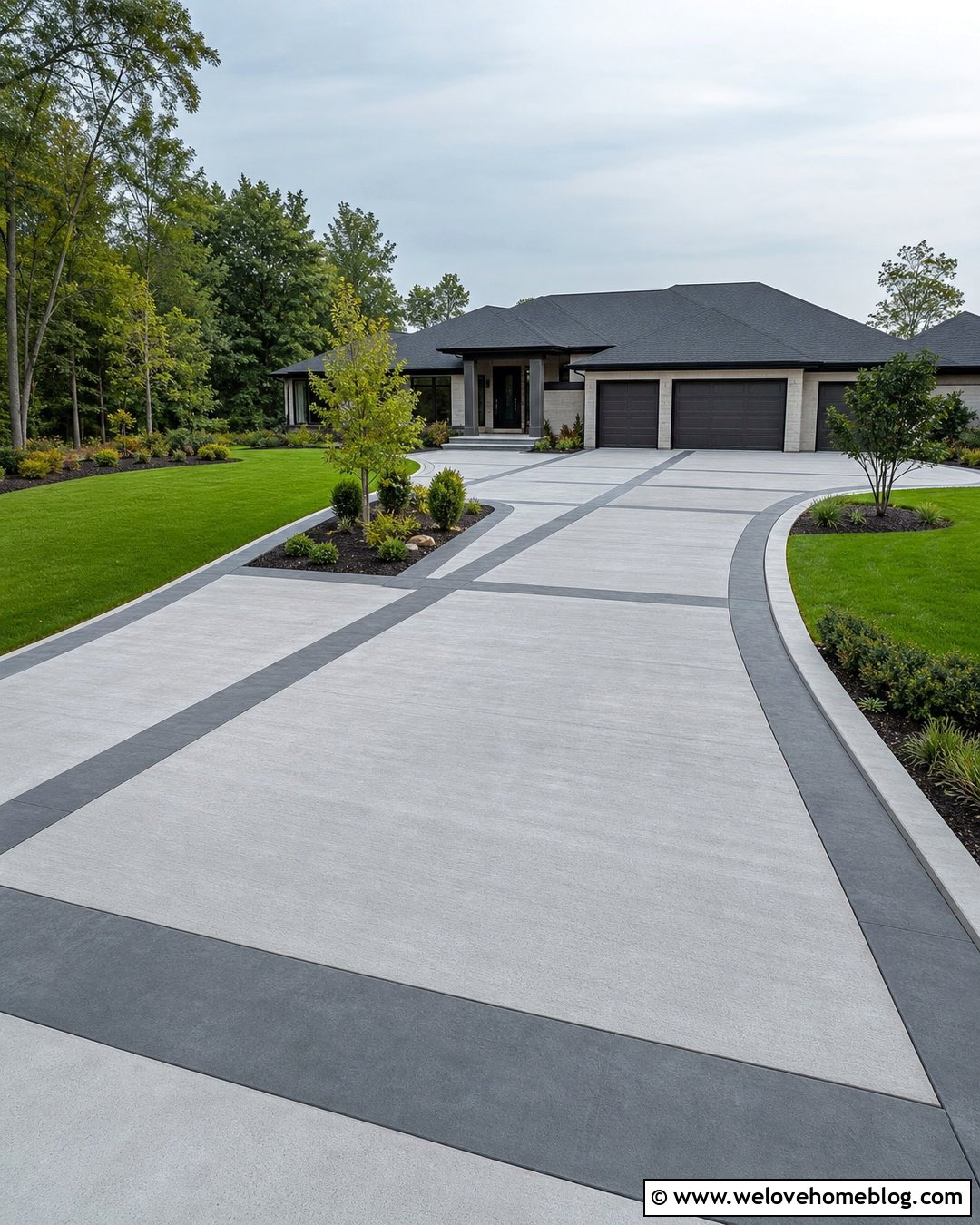
A wide parking court can look overwhelming when it is poured as one uninterrupted color. Break it into functional zones using two complementary concrete tones. Light gray concrete can define the main driving and parking surface, while charcoal bands frame individual bays, the turning area, and the route to the garage. Large rectangular panels keep the layout organized instead of creating a decorative patchwork. Add a central planting bed, a row of small trees, or deep foundation landscaping to soften the broad hardscape. This design is useful for larger ranch, transitional, and contemporary homes with multiple garage doors. Plan turning movements before finalizing the band locations. The joint pattern, color changes, drainage slope, and parking layout should work together as one clear composition.
19. Narrow Concrete Driveway With Side Planting Beds
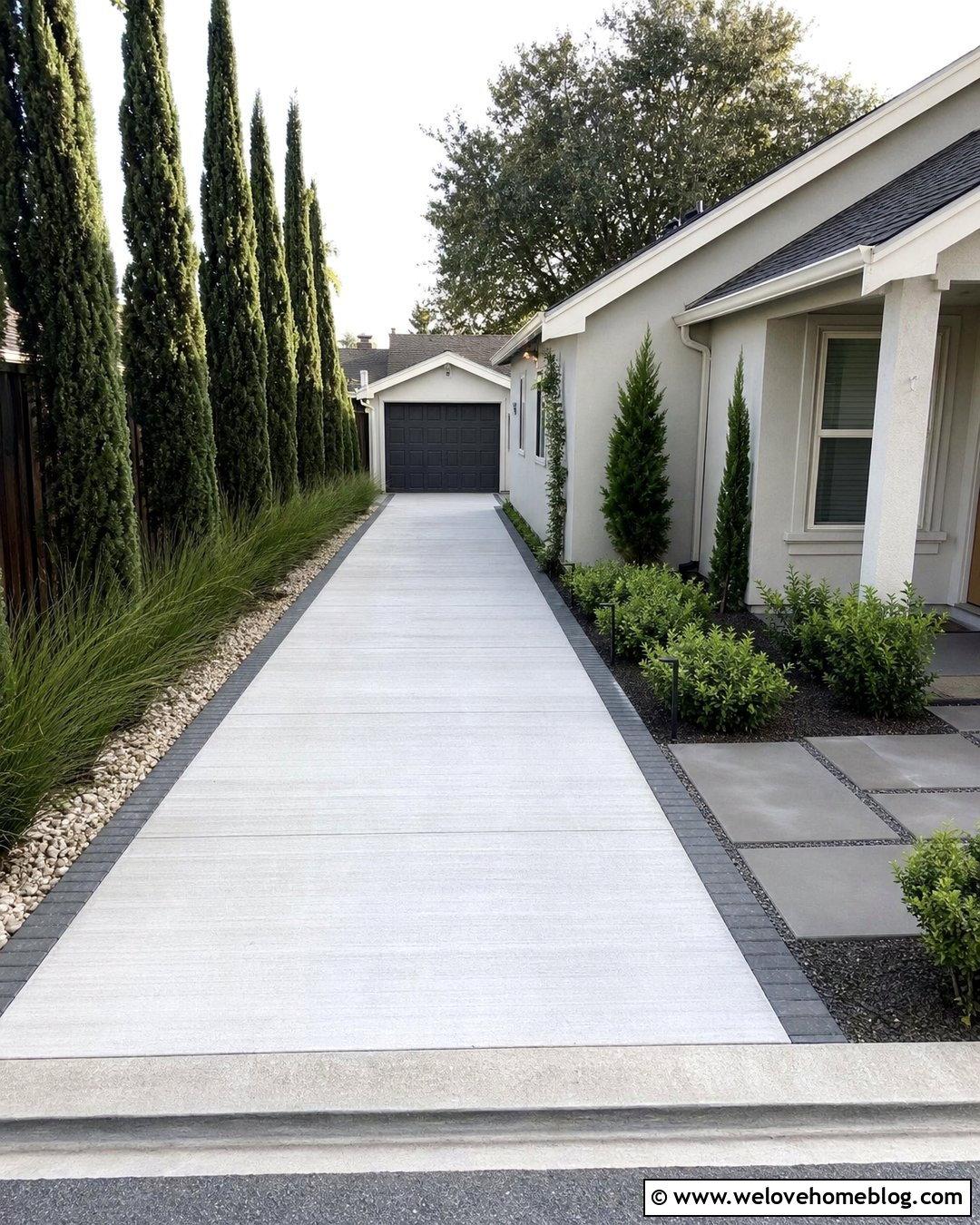
A narrow side driveway does not have to feel like a plain corridor between the house and property line. Use light broom-finished concrete with a slim dark paver border to create definition without reducing useful driving space. A straight layout typically works best, but a widened landing near the garage can improve parking and turning comfort. On one side, install a narrow bed with upright grasses, compact shrubs, or columnar trees. On the other, keep a simple walkway or clean strip of gravel beside the house. Repeating the border material around the front steps connects the driveway to the entrance. Choose plants that will not spread into the driving area, scratch vehicles, or block windows. Good lighting can make this compact layout feel safer and more welcoming.


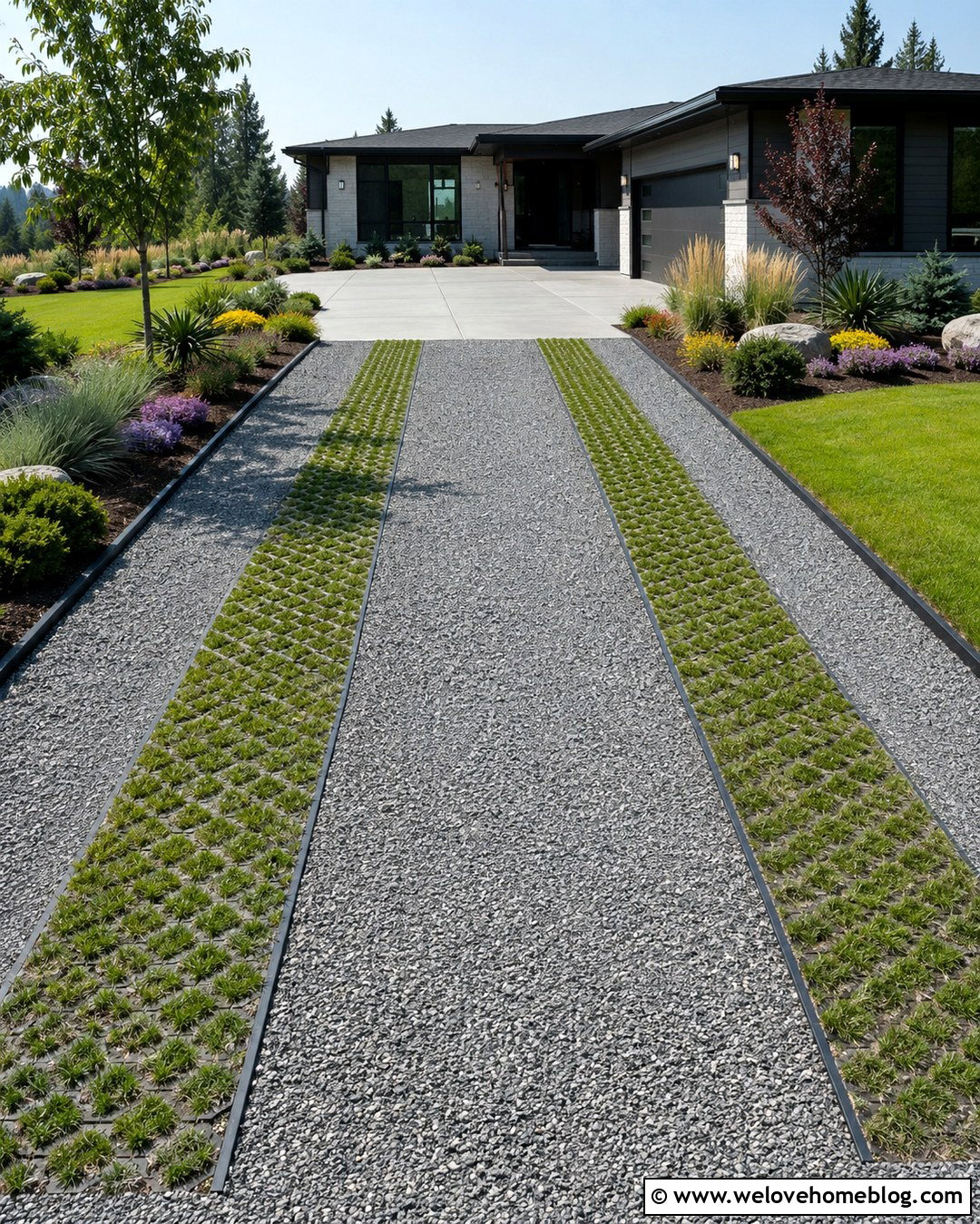
20. Concrete Driveway With Stone Pillars And Lighting
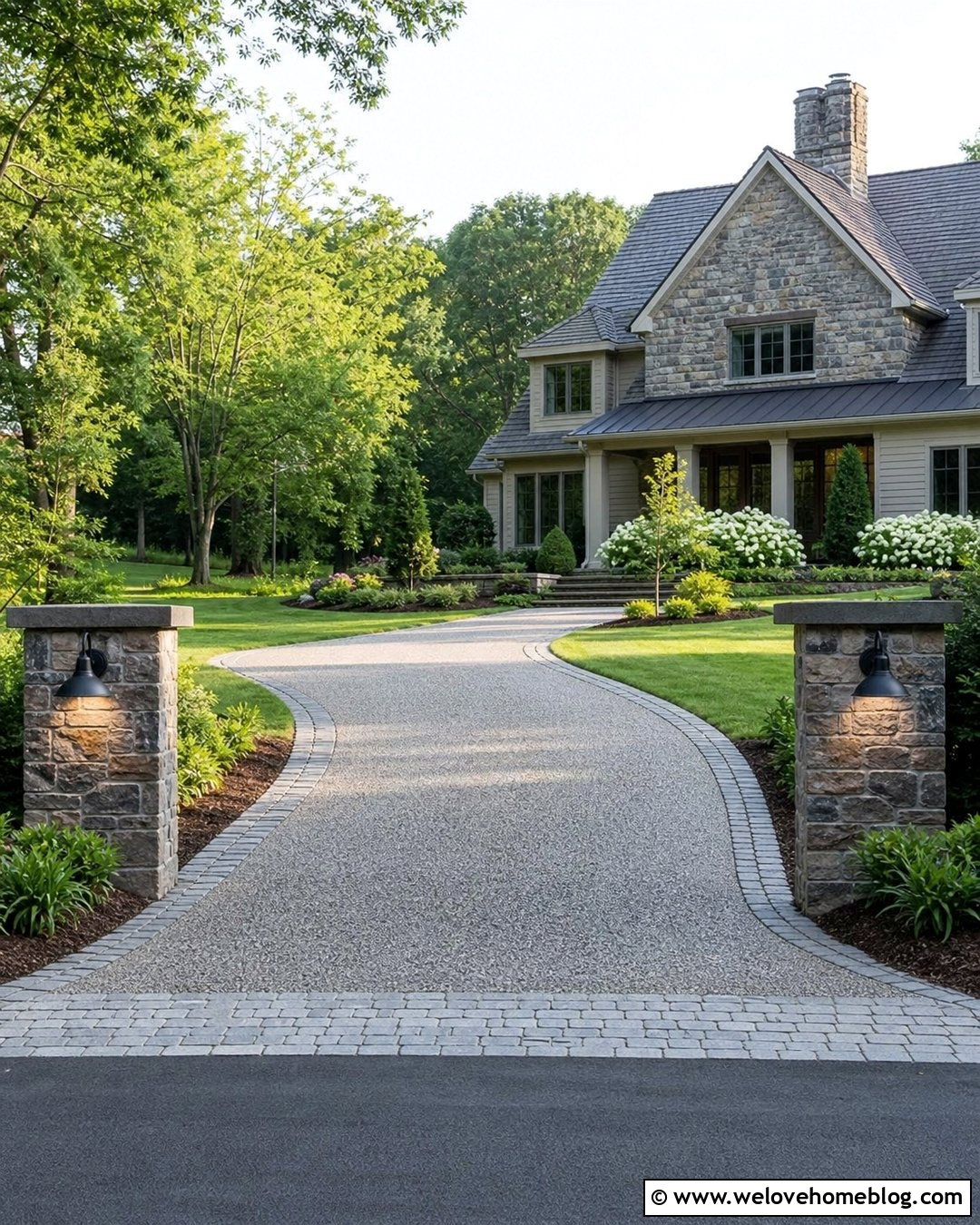
Strong entrance pillars can give a long concrete driveway a clear beginning and establish the character of the property. Use warm-gray exposed aggregate or brushed concrete in a straight or softly curved layout. At the curb, place two low natural-stone pillars with simple downward-facing lights and a coordinated address plaque. A cobblestone apron between the pillars can strengthen the transition from the street. Continue the stone as narrow driveway edging or repeat it near the home’s foundation. Tree-lined borders, layered shrubs, and broad lawn areas will frame the approach without hiding it. Keep pillars outside required visibility areas and allow comfortable clearance for delivery vehicles. The lighting, masonry, landscaping, and concrete color should feel related to the house rather than like separate additions.
Conclusion:
The best concrete driveway is not defined by one finish or color. It brings the surface, layout, borders, drainage, landscaping, and architecture together in a complete plan. Large slabs and geometric joints suit modern homes, while brick ribbons, exposed aggregate, and cobblestone borders can complement more traditional facades. Curved routes, planted islands, rain gardens, and carefully positioned lighting add function as well as curb appeal. Before construction begins, compare samples, review the joint layout, confirm grading, and discuss maintenance with an experienced local contractor. Use these **20 New Concrete Driveway Ideas** as a starting point, then adapt the details to your property, climate, available space, and everyday parking needs.

Related posts:
Leave a Reply