
A well-planned driveway can improve parking, drainage, curb appeal, and the overall character of your home. These 20 New Driveway Ideas explore fresh ways to combine durable surfaces with attractive borders, practical layouts, and coordinated landscaping. You will find concrete, gravel, asphalt, brick, pavers, cobblestone, resin-bound gravel, and permeable options for different climates and budgets. Each design treats the driveway as a complete part of the front yard rather than a plain parking surface. Consider how the material relates to your home, where rainwater will flow, and how much maintenance fits your routine. From compact suburban lots to wide country properties, the following complete driveway looks offer useful inspiration. Explore these 20 New Driveway Ideas to find an approach that suits your home.

1. Large Concrete Slab Driveway With Grass Strips
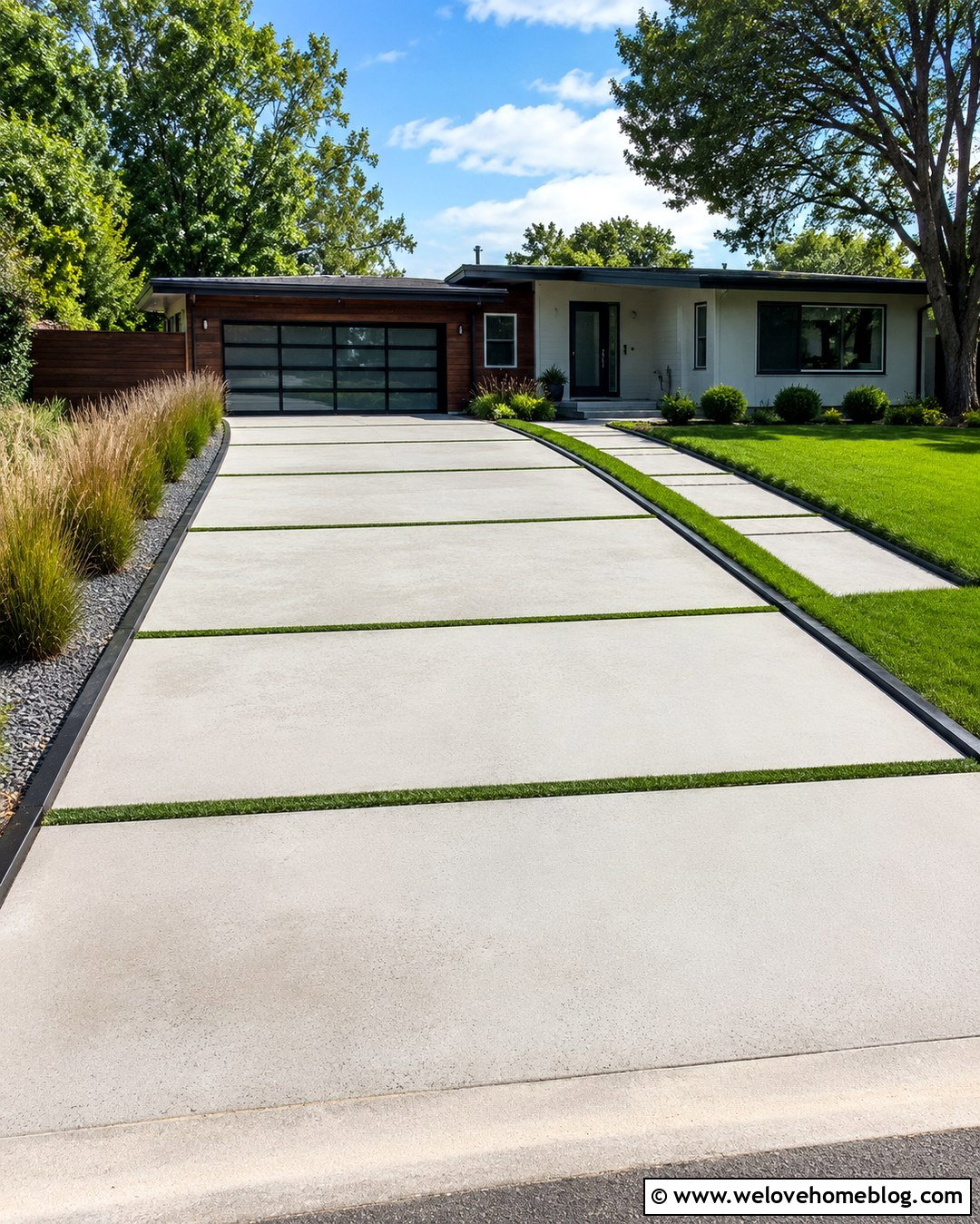
Large rectangular concrete slabs separated by narrow grass strips create a clean driveway that feels lighter than one continuous surface. This look works especially well with modern, midcentury, and updated ranch homes. Use smooth light-gray concrete to brighten the front yard, then align the slab joints with windows, garage doors, or architectural lines. Grass joints soften the hard surface, although low-growing ground cover can be easier where mowing is inconvenient. Add black steel edging to keep the planted strips neat. Simple ornamental grasses, rounded shrubs, and a straight walkway complete the contemporary setting. Proper base preparation remains essential because separate slabs can shift when drainage or soil conditions are poor. In snowy regions, keep planted gaps narrow enough for practical shoveling.
2. Permeable Paver Driveway With Rain Garden
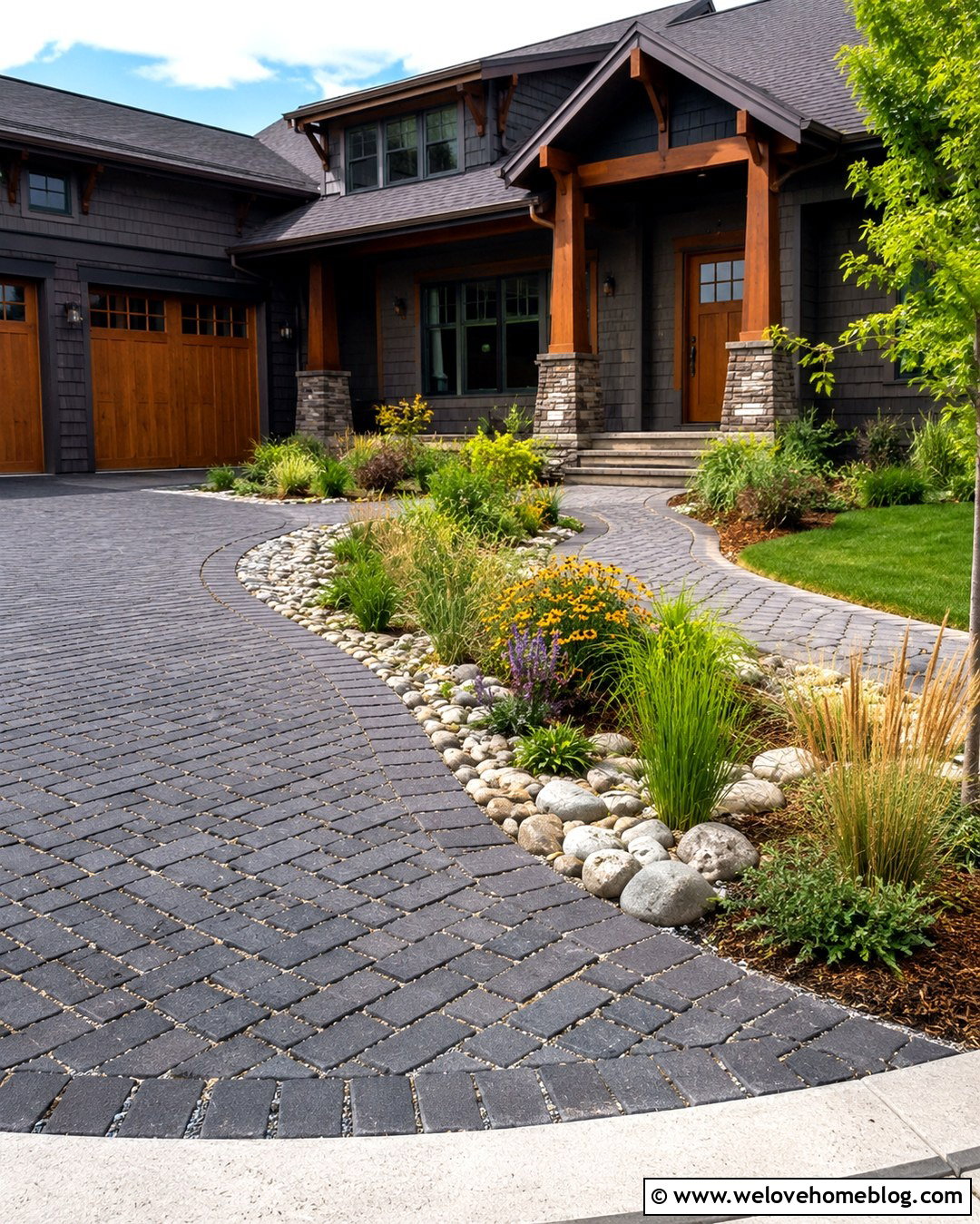
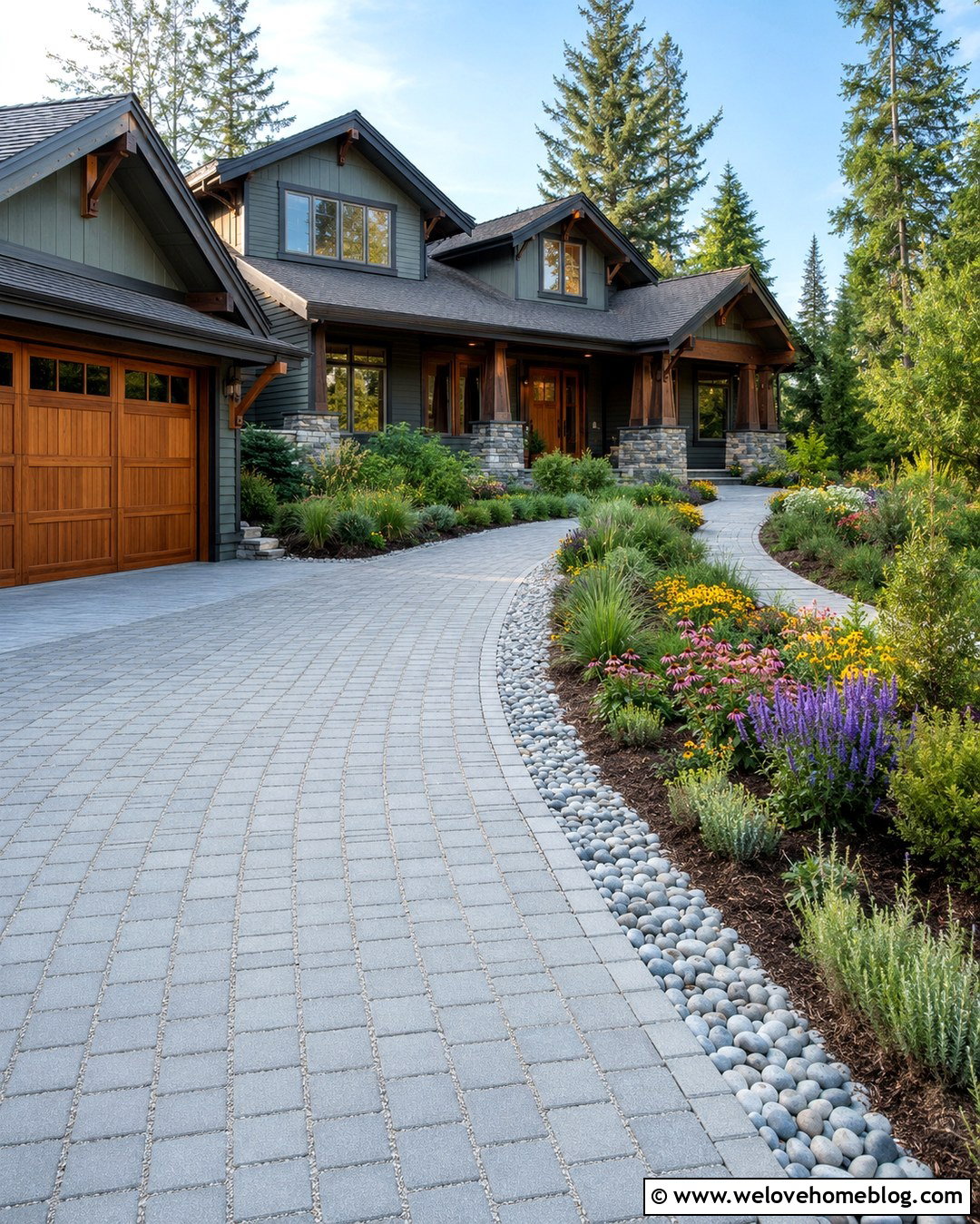
A permeable paver driveway can manage runoff while creating a polished entrance. Choose charcoal or warm-gray concrete pavers with wider, stone-filled joints that let water move into the prepared base below. A gently curved layout can direct attention toward the house without consuming the entire front yard. Along the lower edge, create a shallow rain garden filled with moisture-tolerant grasses, flowering perennials, and decorative river rock. This planted area should receive water without blocking parking or pedestrian access. Finish the opposite side with a restrained paver border and a connected front walkway. The result suits contemporary craftsman and modern suburban homes. Before installation, evaluate soil drainage, driveway slope, and local requirements. Permeable paving performs best when every layer is designed as one coordinated system.
3. Curved Resin-Bound Gravel Driveway
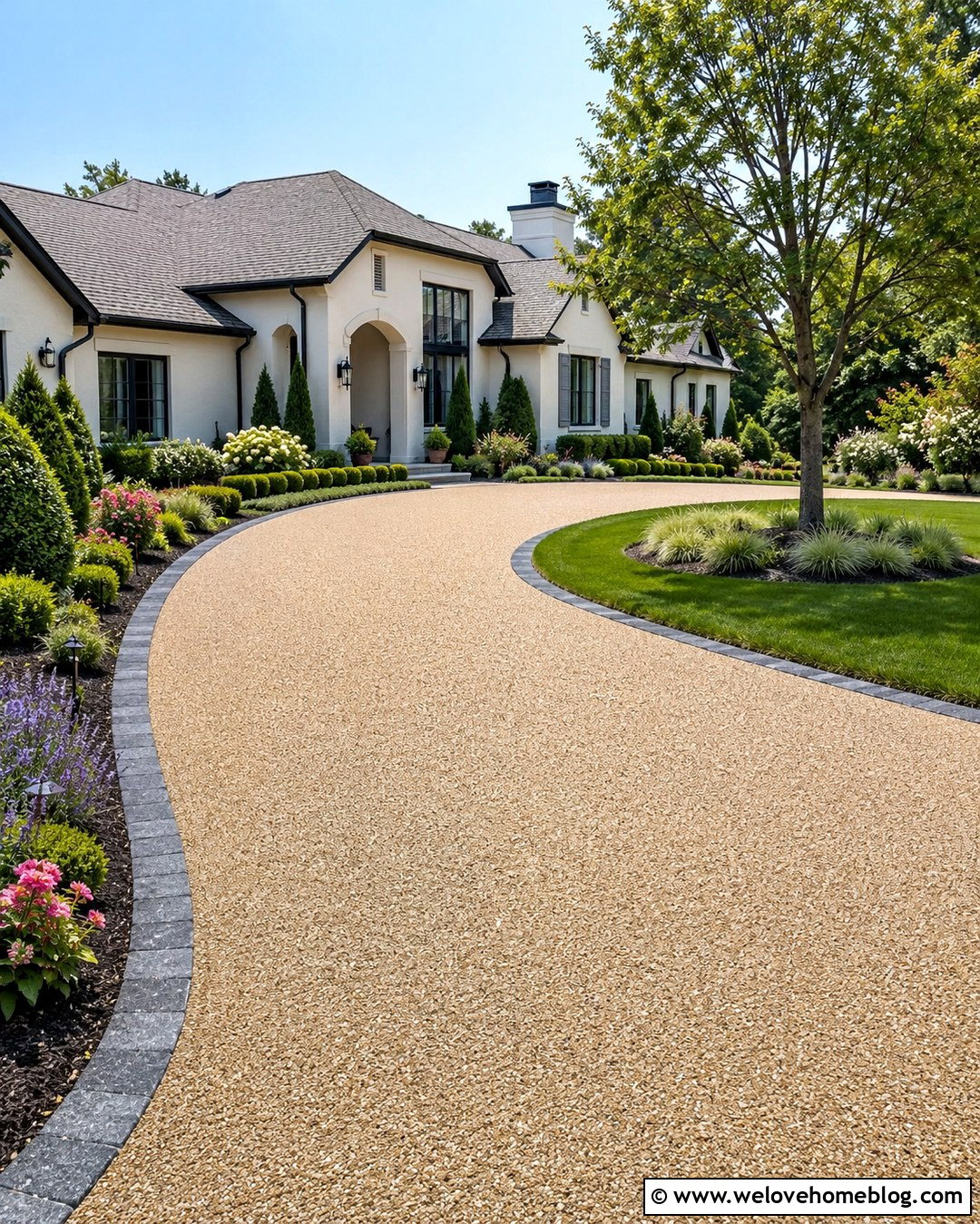
Resin-bound gravel provides the texture of small stones with a smoother, more controlled finish. A sweeping curved driveway in a warm beige blend can complement stucco, stone, brick, or light siding. Define the curves with dark granite setts or slim charcoal pavers so vehicles stay on the intended route. On the outer bend, layer dwarf evergreens, flowering shrubs, and ornamental grasses for year-round structure. The inner curve can hold a broad lawn or a simple specimen tree surrounded by mulch. Keep the entrance wider than the main drive to make turning more comfortable. Because resin systems depend on correct mixing, base conditions, and drainage, professional installation is usually worthwhile. The completed driveway feels refined without appearing overly formal or visually heavy.
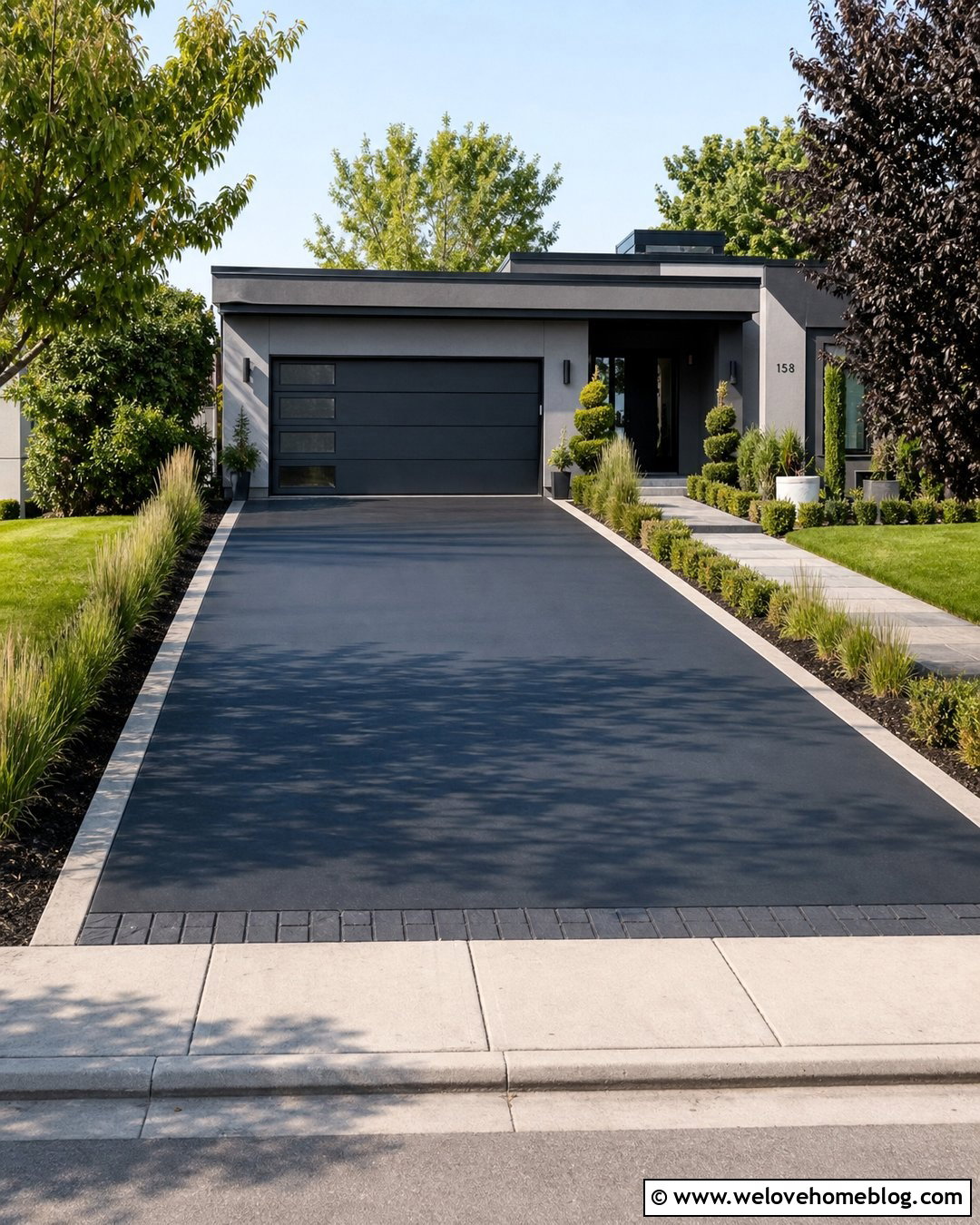
4. Black Asphalt Driveway With Brick Border
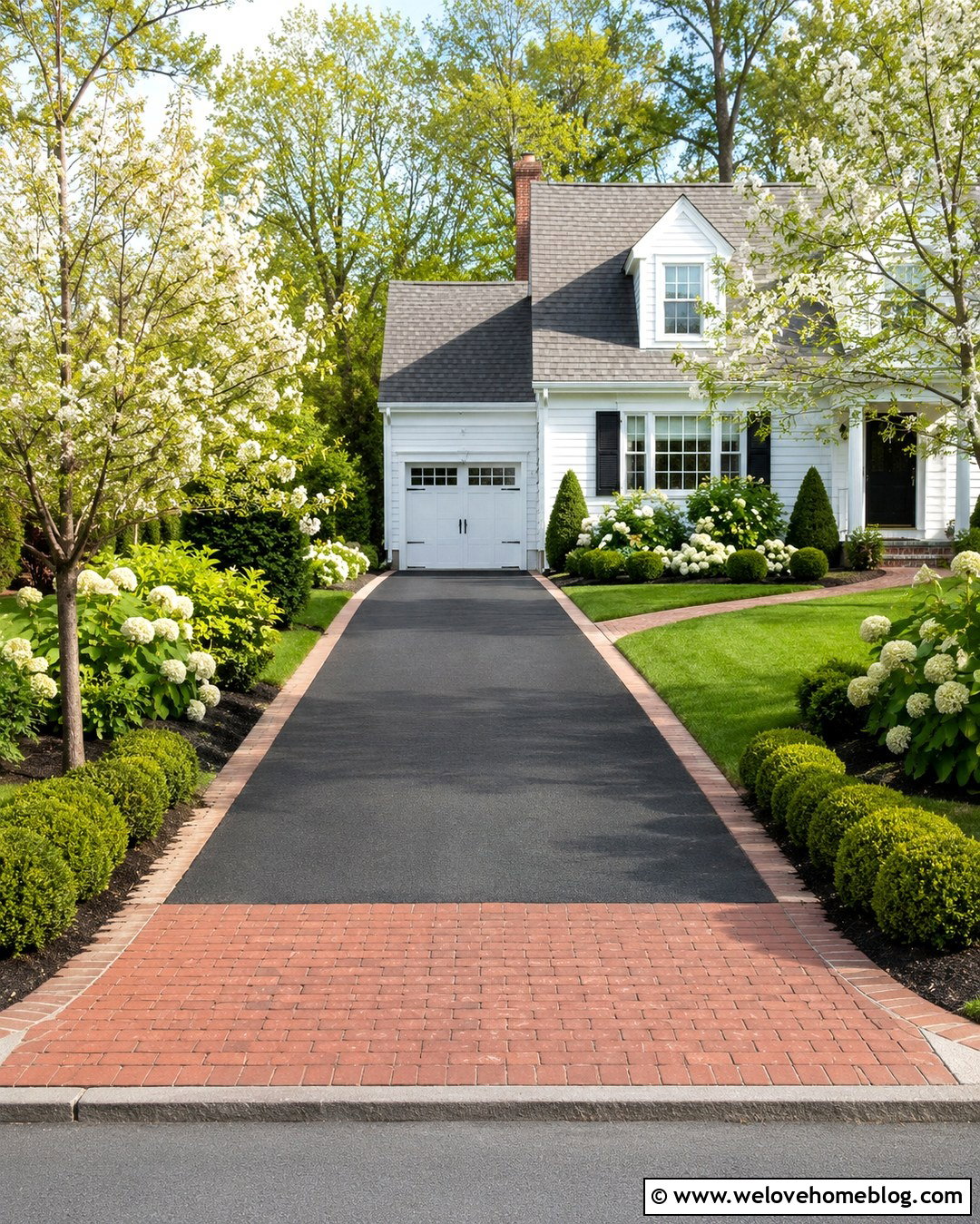
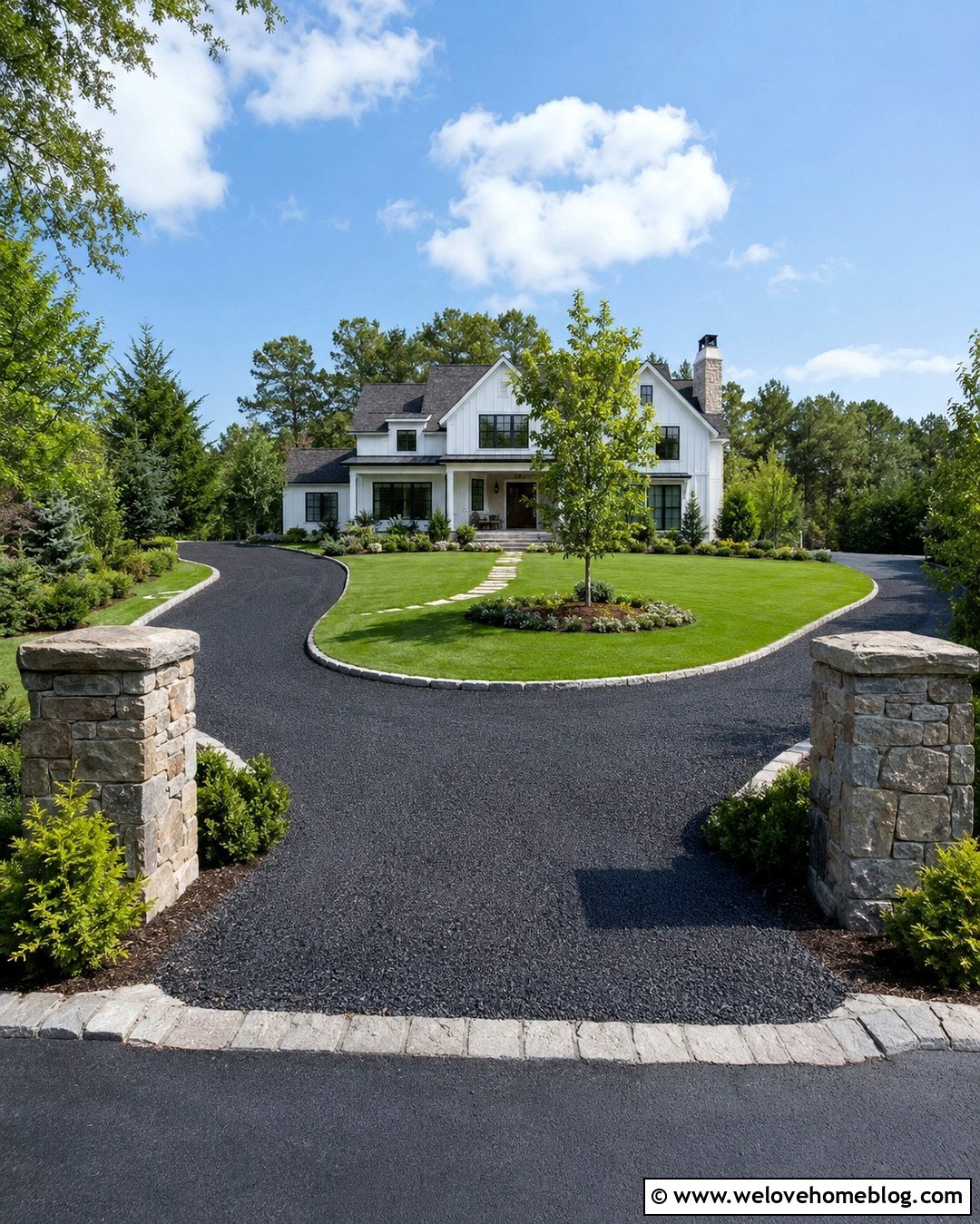
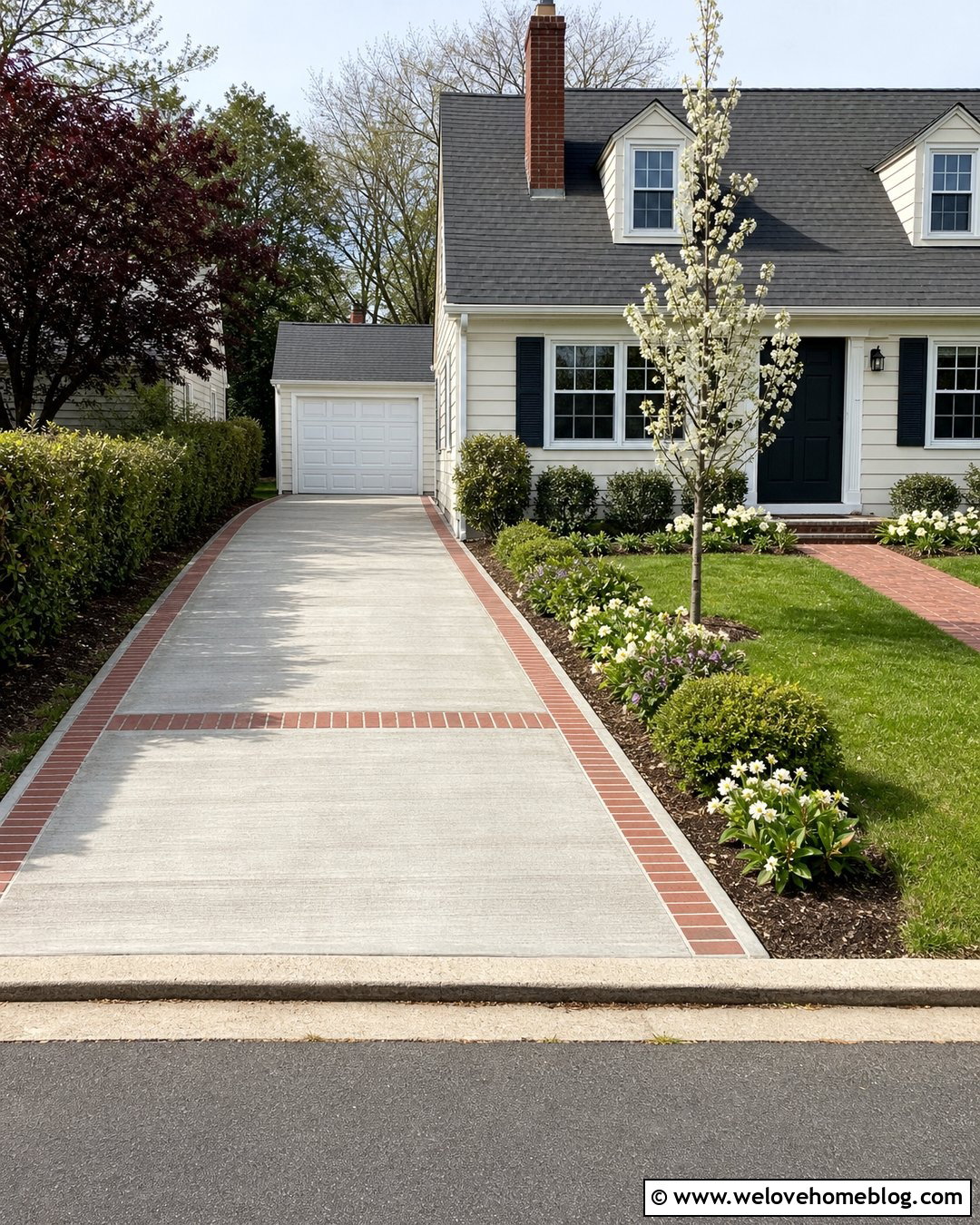
Fresh black asphalt can look crisp and intentional when it is framed with a contrasting brick border. This combination offers a practical surface while bringing warmth to colonial, Cape Cod, and traditional suburban homes. Use red or weathered clay bricks along both sides, then repeat the same material across the driveway apron or near the garage. A straight layout keeps installation simple and makes compact yards feel orderly. Add curved planting beds outside the brick edges to soften the strong lines. Boxwood, hydrangeas, small flowering trees, and seasonal perennials create a balanced transition into the lawn. Make sure the border is firmly restrained so it does not spread under vehicle weight. Sealing cracks promptly and protecting the edges will help the asphalt maintain its clean appearance.
5. Pea Gravel Driveway With Cobblestone Edging
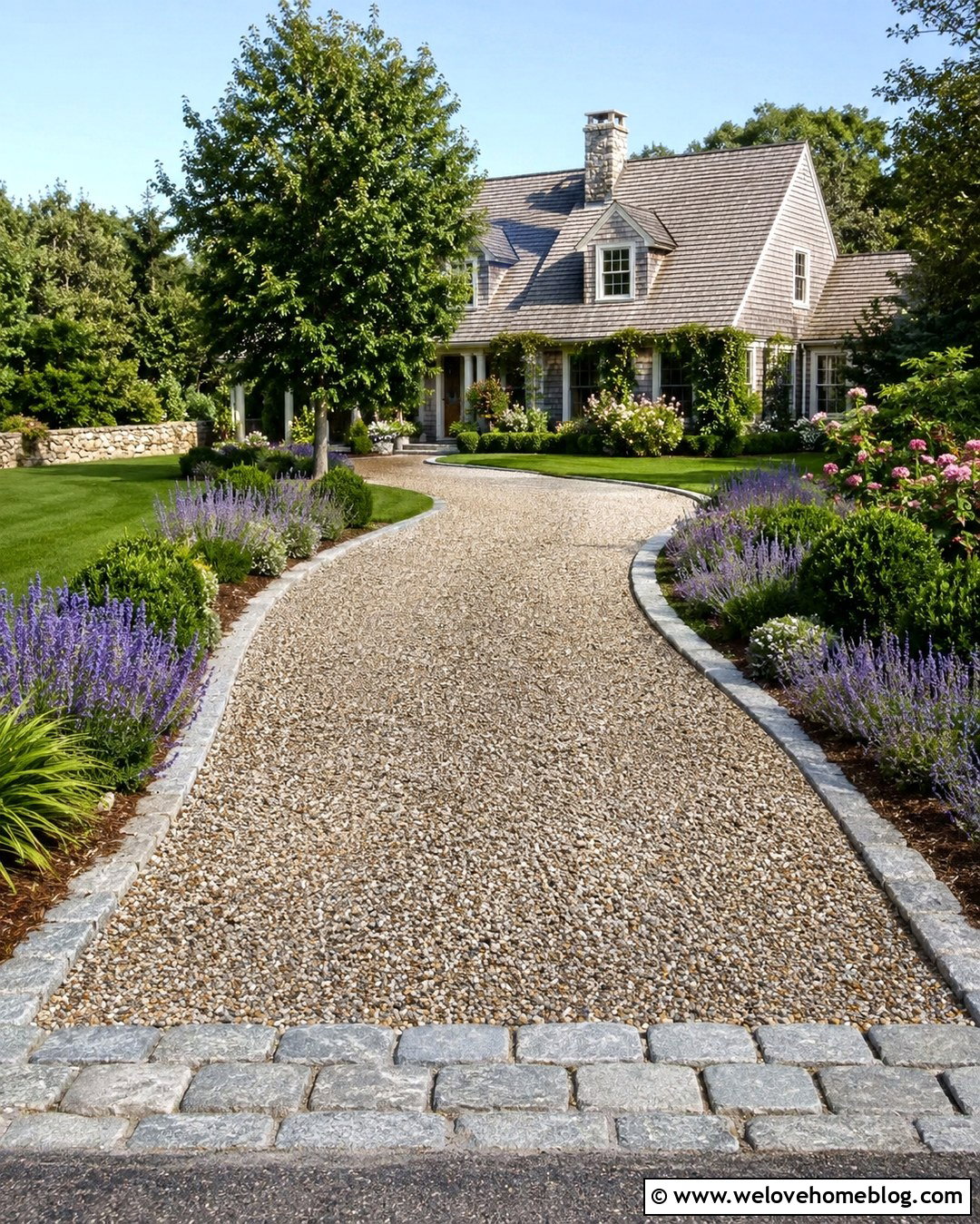
The soft colors and rounded texture of pea gravel create a welcoming driveway for cottages, farmhouses, and relaxed traditional homes. Use compacted tan or gray pea gravel over a properly prepared base, then contain it with substantial cobblestone edging. A gentle curve makes the approach feel natural while slowing vehicles near the house. Plant lavender, catmint, compact roses, and low evergreen shrubs beyond the stones for color and definition. A cobblestone apron at the street can reduce gravel migration and provide a strong visual entrance. Near the garage, install another solid transition strip to keep loose stones away from the threshold. Regular raking will restore an even surface, while occasional gravel replenishment handles thin areas. This complete look feels informal, textured, and comfortably established.
6. Herringbone Brick Driveway With Stone Apron
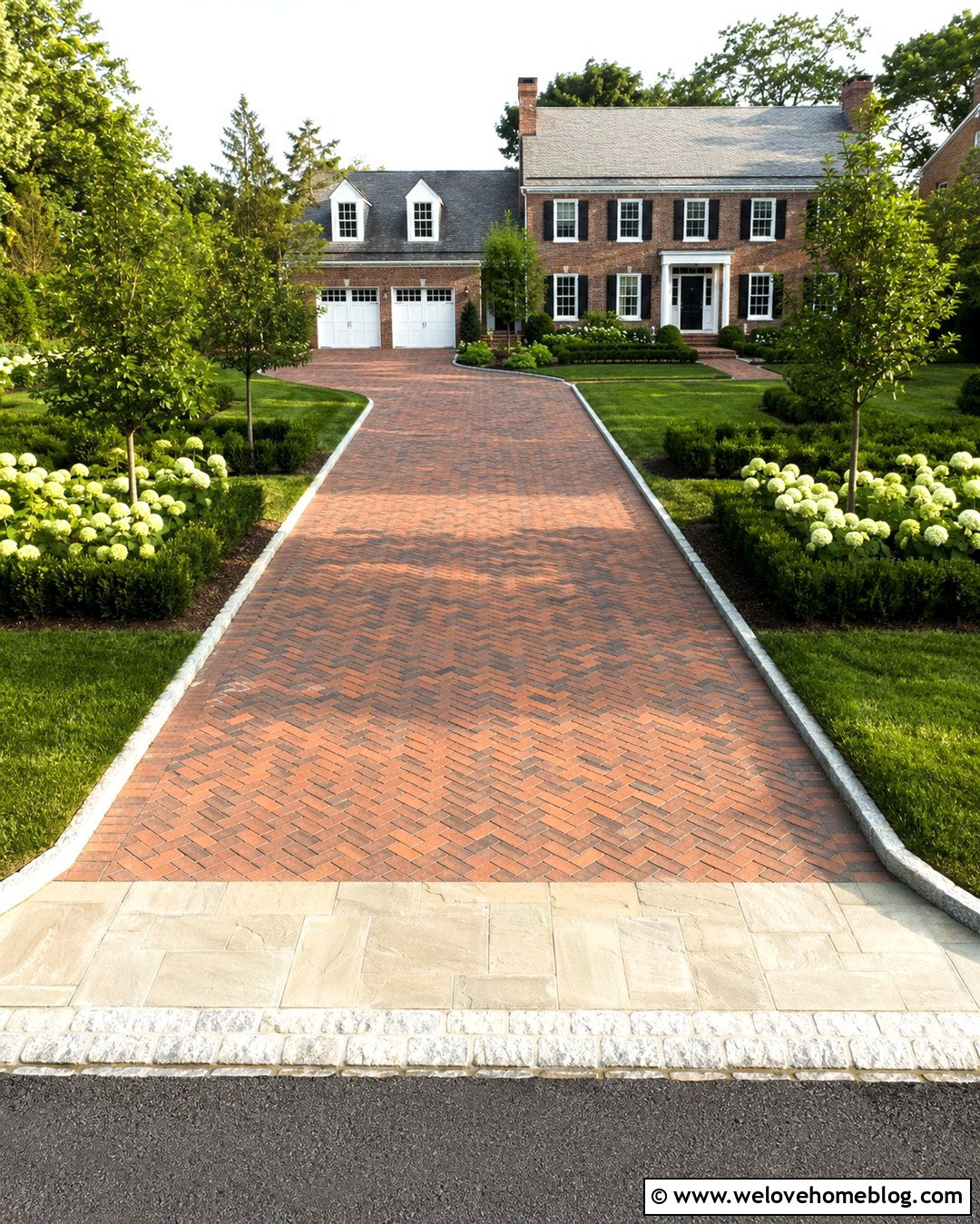
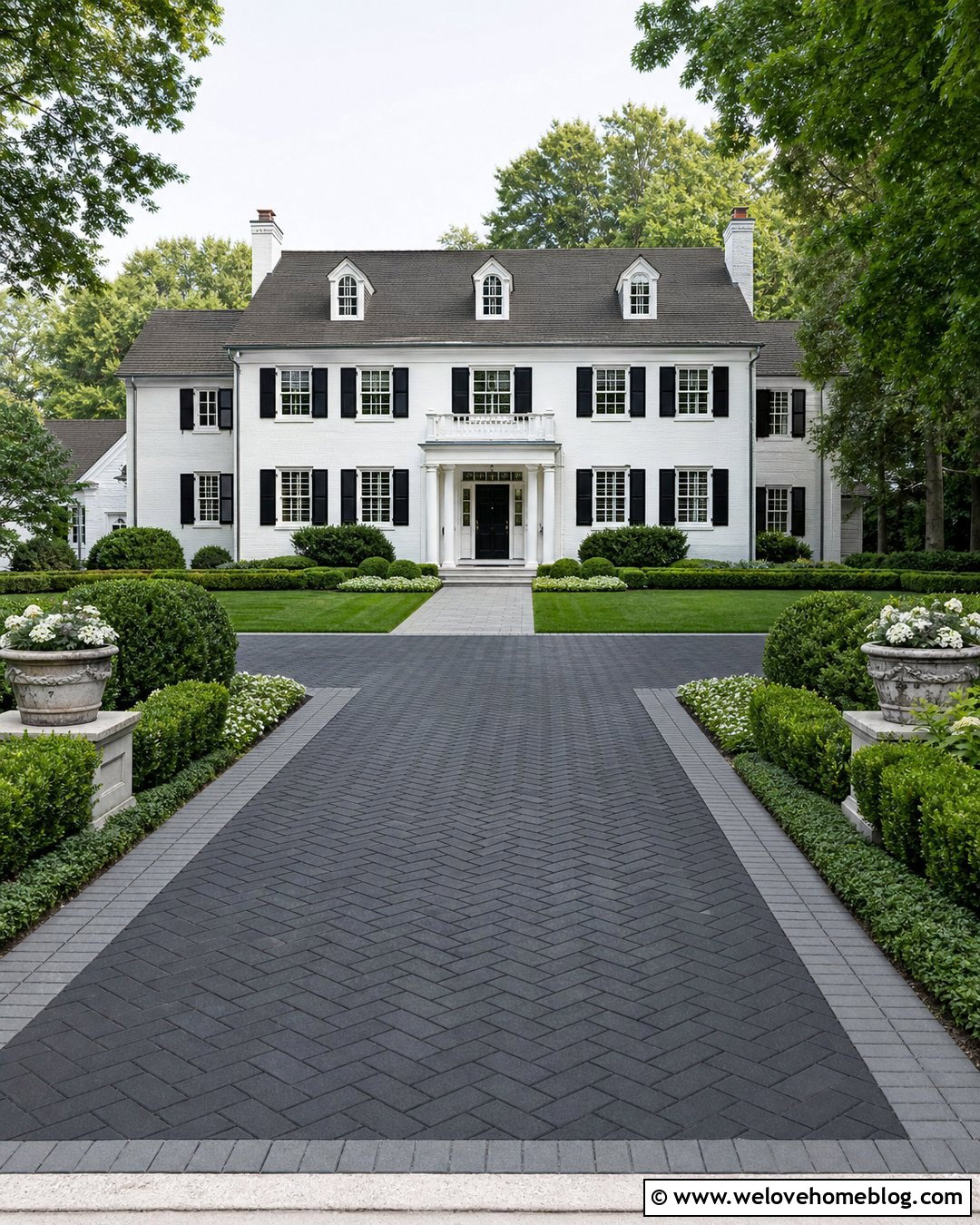
Clay brick pavers laid in a herringbone pattern bring movement and traditional character to a front drive. Their interlocking arrangement also suits areas that regularly carry turning vehicles. Select muted red, brown, and charcoal bricks instead of one flat color for a naturally varied surface. Frame the driveway with limestone or granite curbing, then create a wider natural-stone apron at the street. A straight or slightly flared layout works beautifully with colonial, Georgian, and brick-front homes. Formal hedges can line one side, while a broad planting bed with hydrangeas and small trees softens the other. Repeat the brick in the walkway to connect parking with the entrance. Careful grading and strong edge restraints will prevent low spots, spreading, and uneven joints over time.
7. Exposed Aggregate Driveway With Curved Borders
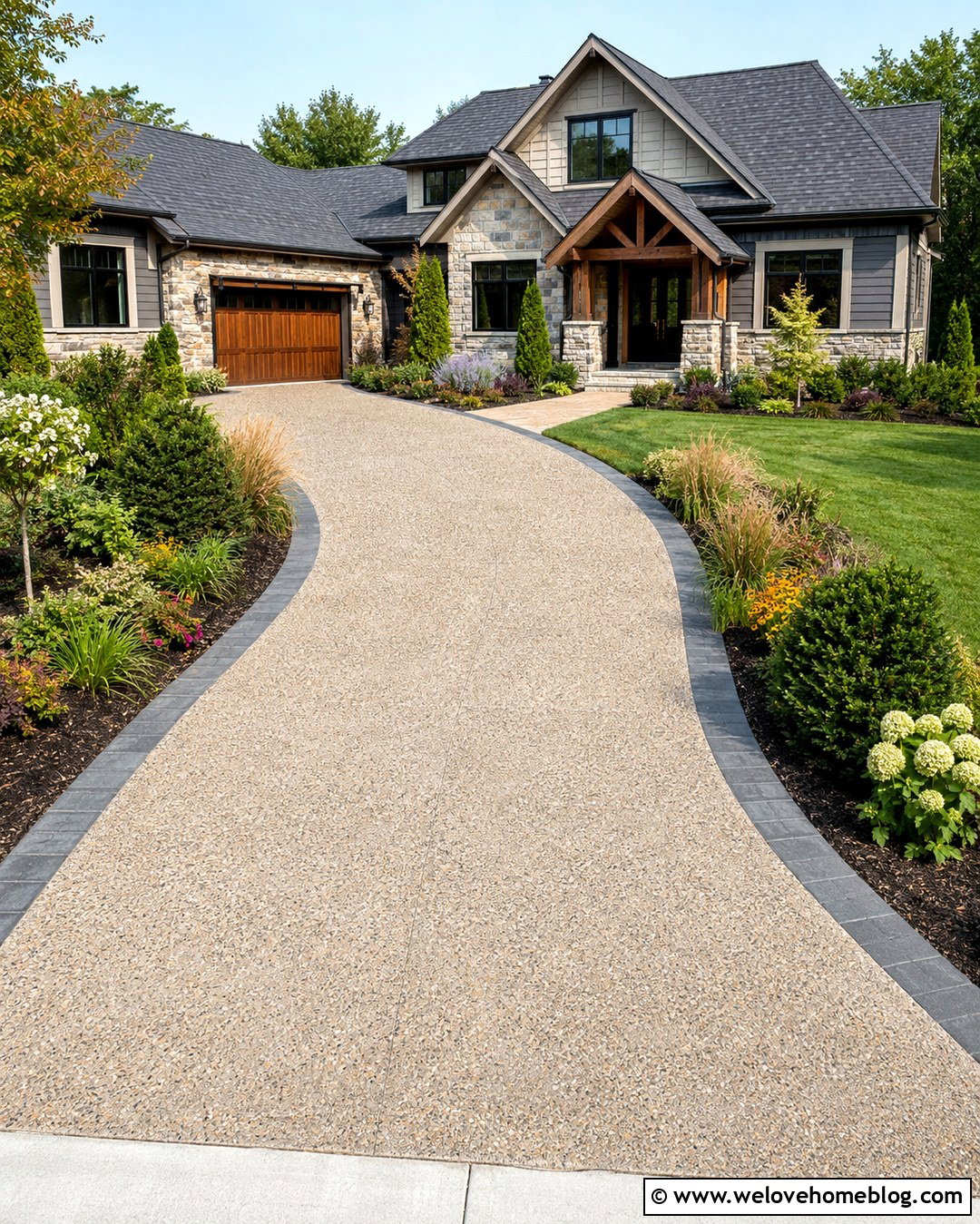
Exposed aggregate concrete combines a durable paved surface with visible stone texture. A light tan or gray mix can disguise minor dirt while coordinating with stone veneer, neutral siding, and warm wood details. Instead of using rigid straight edges, shape the driveway with broad, practical curves that flow around the lawn. Border the concrete with a single row of charcoal pavers to sharpen its outline. Low planting beds filled with compact evergreens, flowering perennials, and decorative grasses can follow the curves without limiting visibility. Add a matching walkway that branches toward the front porch rather than cutting awkwardly across the drive. Confirm the aggregate sample before installation because stone color and exposure level strongly affect the finished appearance. A quality sealer can enrich the texture and simplify routine cleaning.
8. Porcelain Paver Driveway With Linear Planting
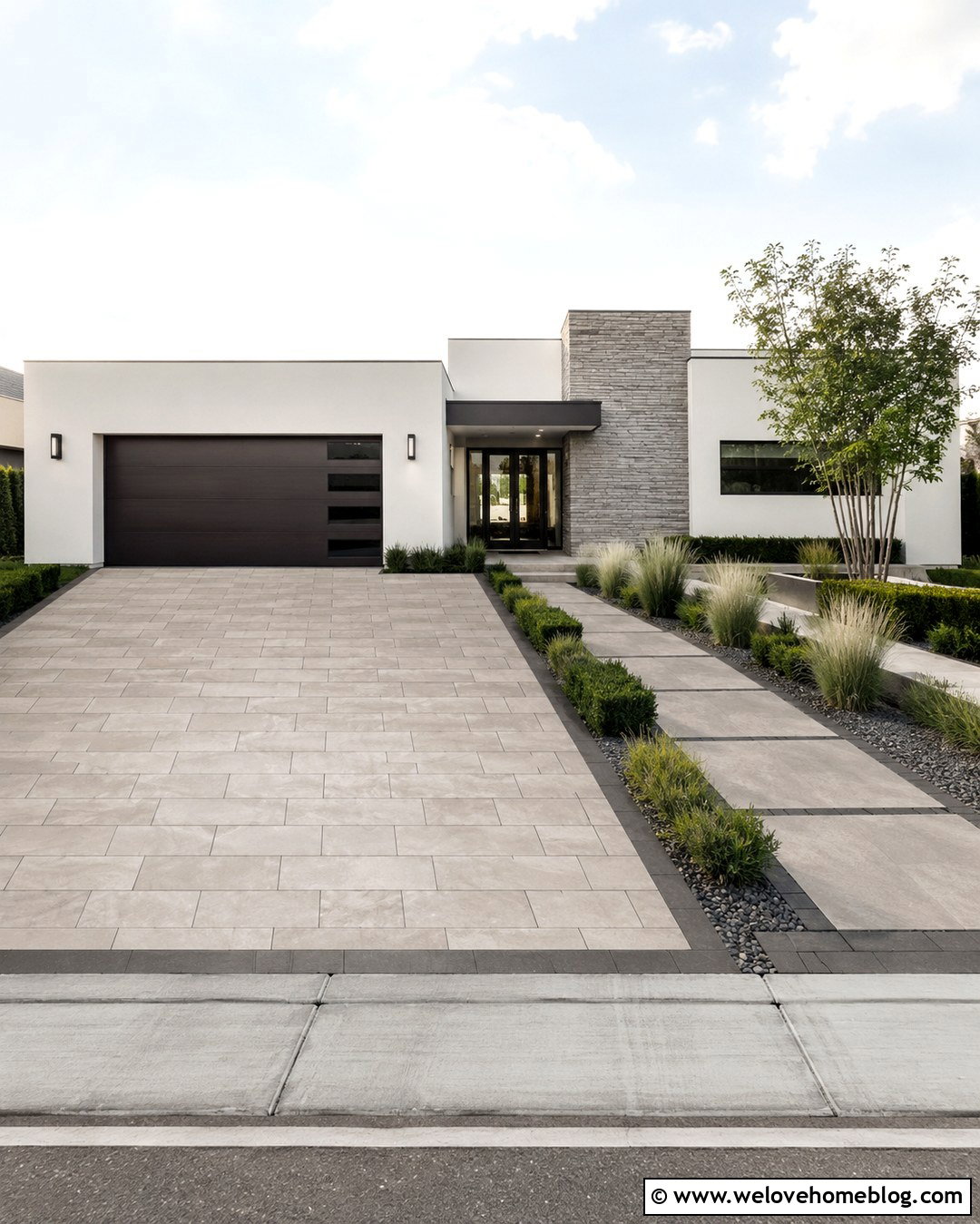
Driveway-rated porcelain pavers offer a sleek surface for contemporary homes when they are installed over a system designed for vehicle loads. Large charcoal or greige pavers can be arranged in long running lines that echo a flat roof, horizontal siding, or wide garage door. Use a straight driveway with a narrow contrasting border to create a precise outline. Along one side, build a linear planting bed with clipped shrubs, upright grasses, and a small ornamental tree. The other side can include a matching porcelain walkway separated by decorative gravel. Select textured, slip-resistant pavers rather than smooth indoor products. Proper thickness, base construction, joint treatment, and manufacturer approval are especially important. This coordinated layout looks minimal, but the variation in planting prevents the entrance from feeling cold or unfinished.
9. Gravel Grid Driveway With Timber Edging
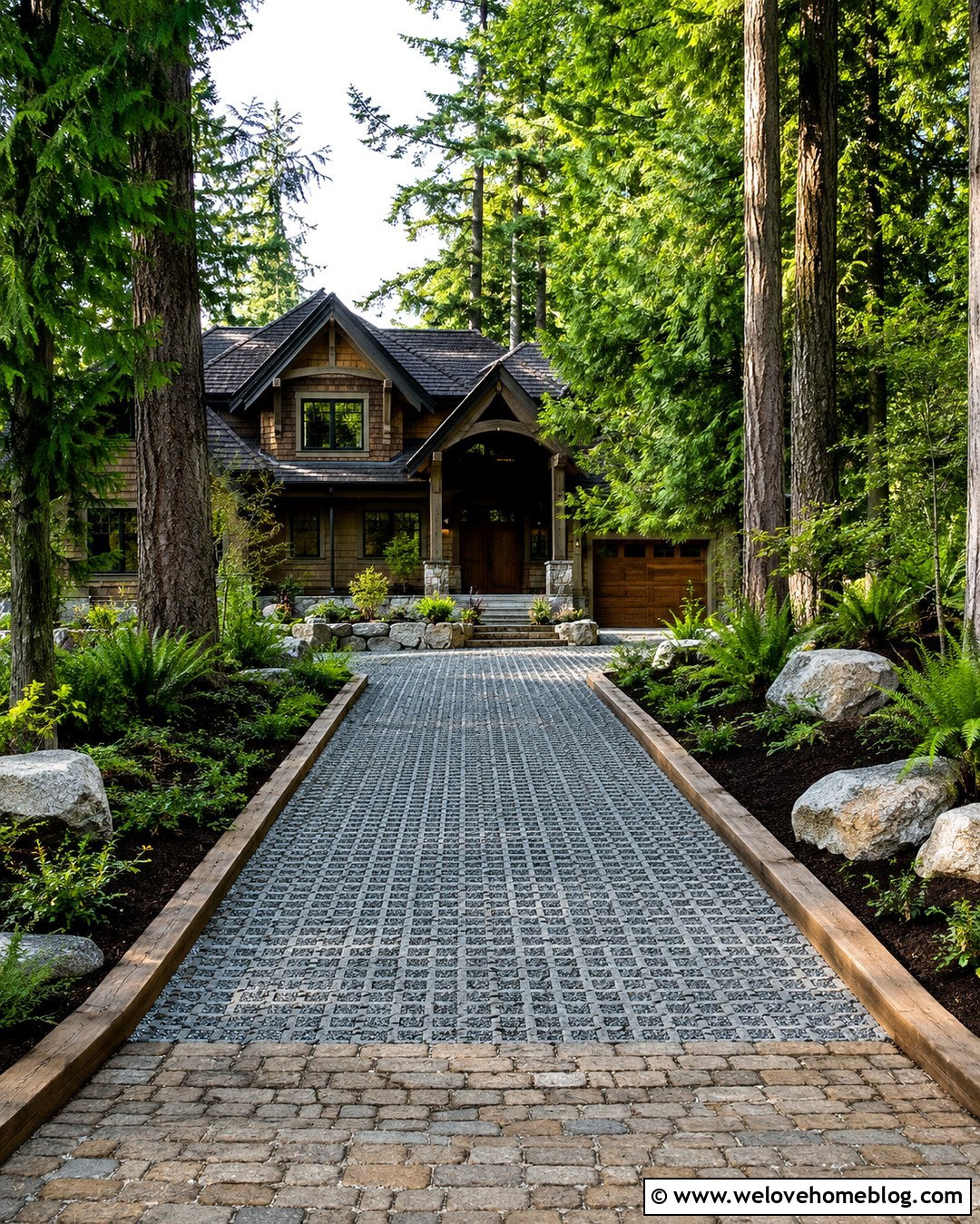
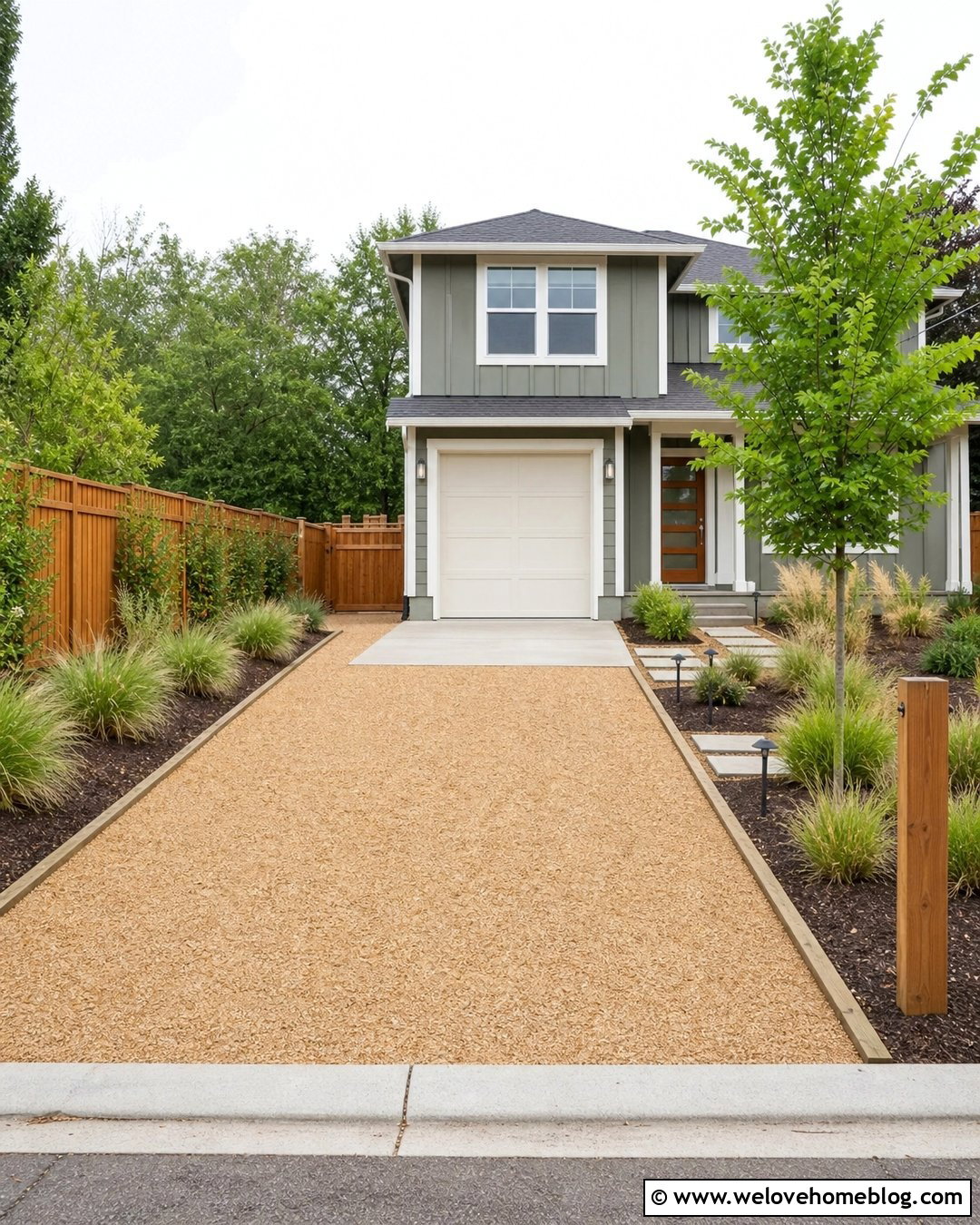
A gravel grid system helps stabilize loose stone while preserving the relaxed appearance of a gravel driveway. Fill the grid with angular gray gravel that locks together more effectively than rounded stone. This treatment suits a straight country driveway, rustic craftsman property, or wooded suburban lot. Install heavy timber edging along both sides to contain the gravel and create a warm natural border. Beyond the timbers, use ferns, native shrubs, shade-tolerant ground cover, and a few large boulders to connect the driveway with its surroundings. A compact stone apron at the road can handle frequent turning and reduce displaced gravel. The grid should sit on a well-compacted, correctly graded base. When properly installed, the surface remains neater under tires and requires less frequent raking than unsupported loose gravel.
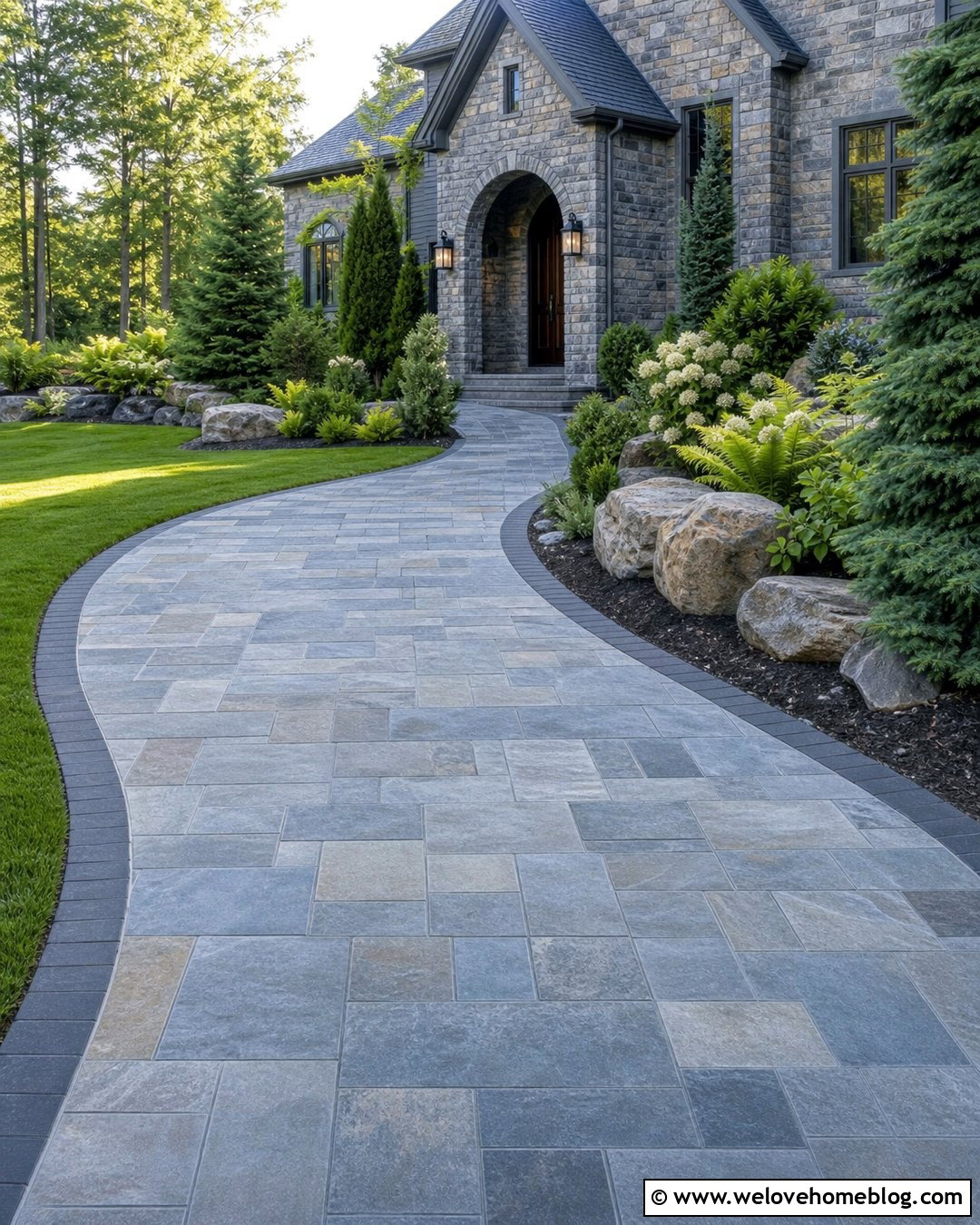
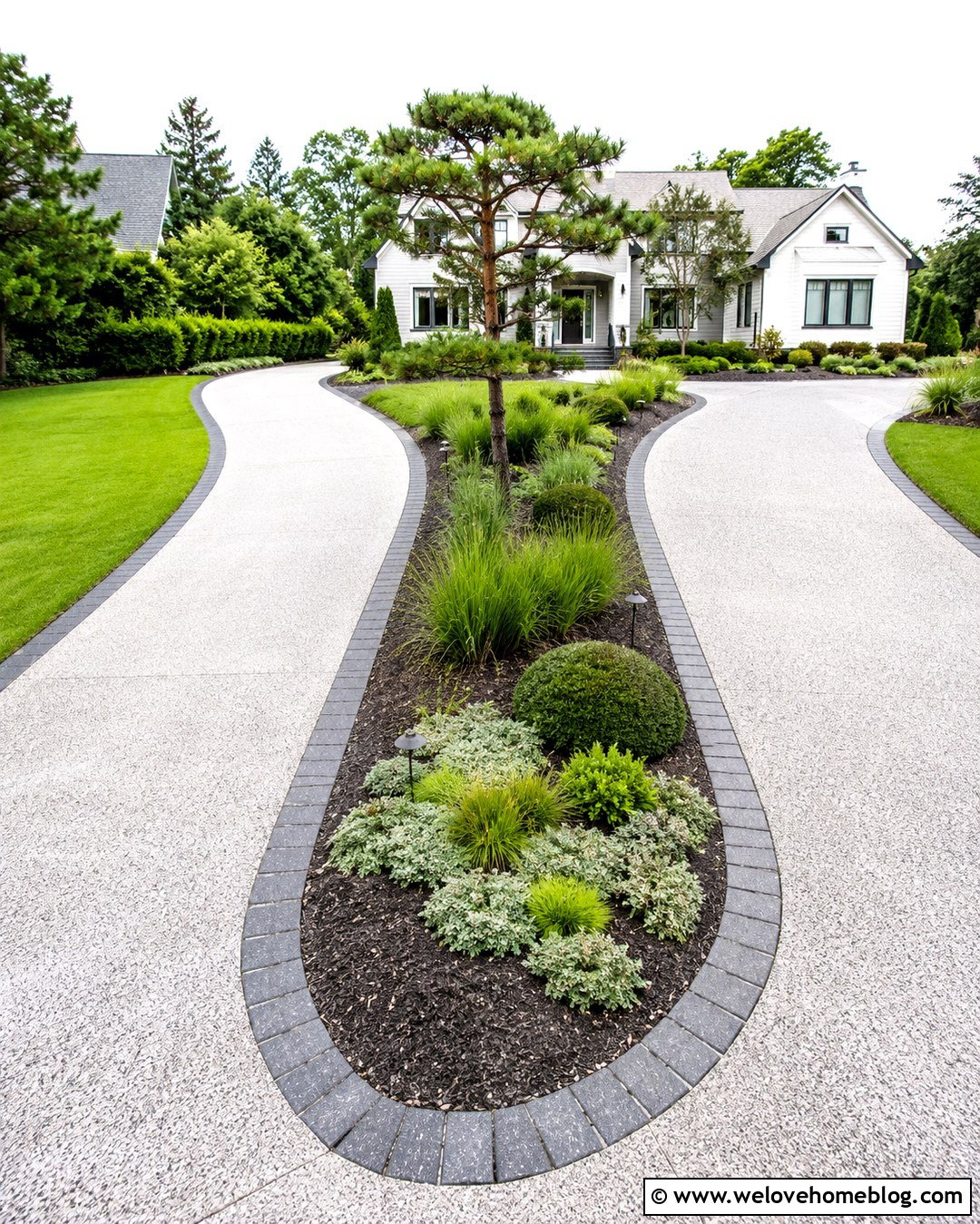
10. Circular Cobblestone Driveway With Center Garden
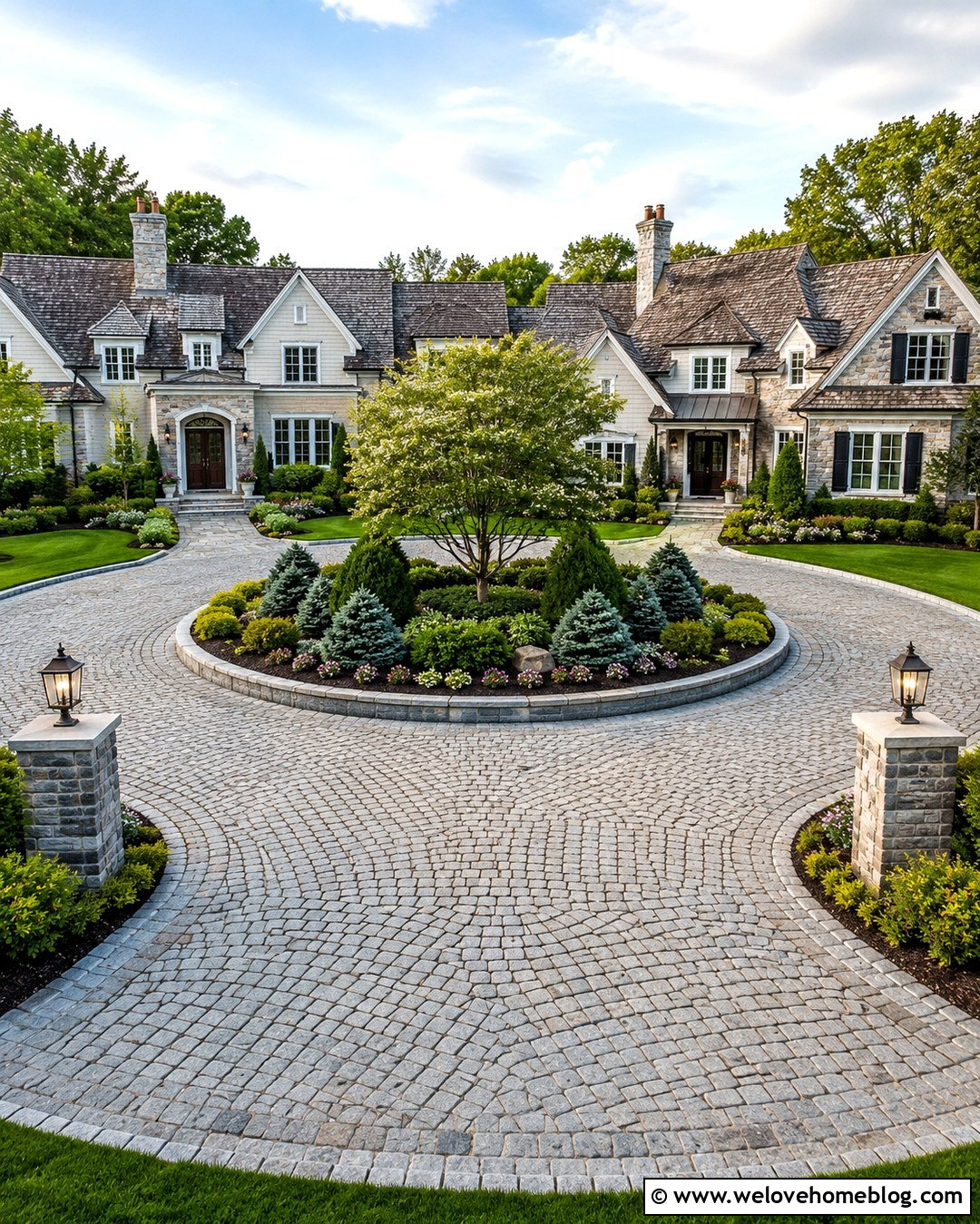
A circular cobblestone driveway can create convenient traffic flow while giving a large front yard a distinguished focal point. Use mixed gray granite cobbles in a fan or curved pattern to reinforce the circular shape. In the center, build a generous landscaped island with a small ornamental tree, layered evergreen shrubs, and low flowers that will not block views. A raised stone edge helps protect the planting from tires, but it should remain visible and forgiving. Connect the loop to the front walkway with the same cobblestone or a coordinating natural stone. The house entrance should remain easy to identify from both directions. Circular drives need enough turning space to function comfortably, so test the layout before construction. Subtle pillar lights can define both entrances without overwhelming the traditional design.
11. Stamped Concrete Driveway With Slate Border
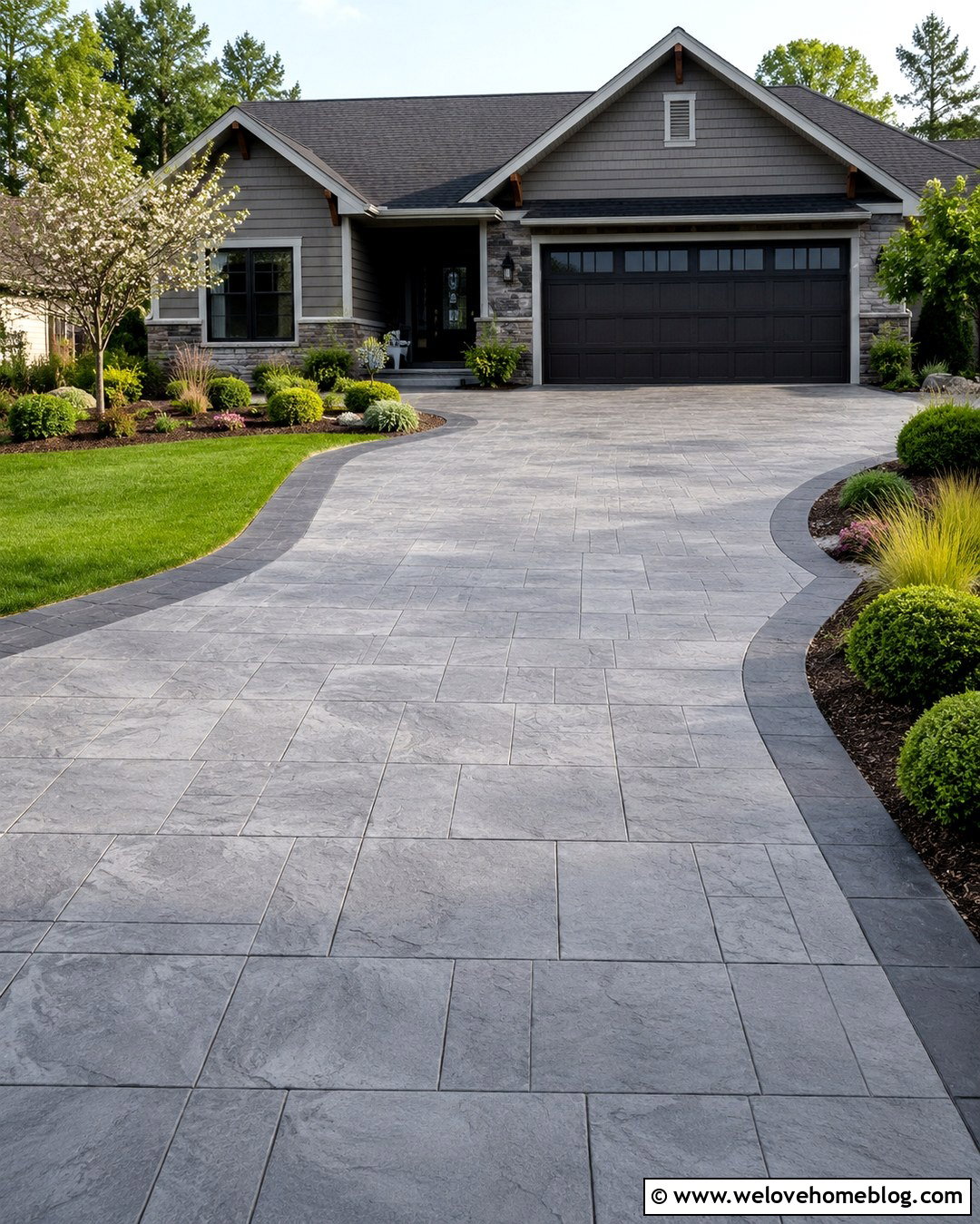
Stamped concrete can provide the appearance of stone with fewer individual joints, making it useful for broad residential driveways. Choose a restrained ash-gray or warm limestone color with a large slate pattern rather than an overly busy texture. A straight driveway with a gently widened parking area gives vehicles practical room near the garage. Use darker stamped bands along the sides and across the apron to frame the main surface. Planting beds with rounded shrubs, ornamental grasses, and one flowering tree can soften the stamped finish. Coordinate the walkway color without copying every pattern, which keeps the front yard from looking overly matched. Thoughtful control-joint placement remains important even when a decorative pattern is used. Apply a slip-resistant sealer and avoid excessive gloss for a more natural result.
12. Concrete Ribbon Driveway With Decorative Gravel
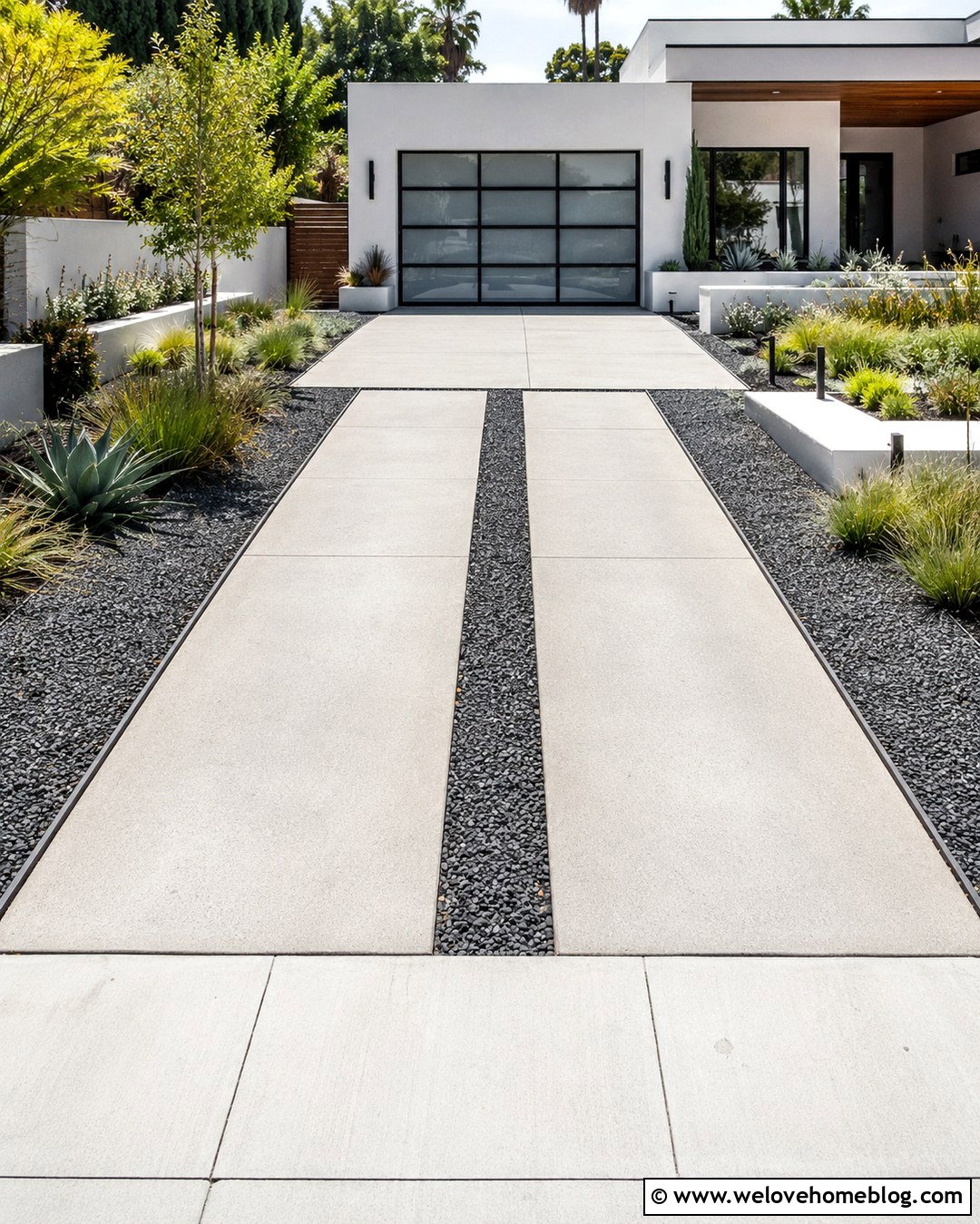
Two parallel concrete ribbons create a modern driveway with less visual pavement than a full-width slab. Fill the center and outer gaps with dark decorative gravel for strong contrast and easier drainage. This layout works best on a straight approach where vehicles can remain aligned with the concrete tracks. Use smooth light-gray poured concrete, black metal edging, and compact planting beds to support the graphic look. Drought-tolerant grasses, agaves, sedges, or low shrubs can frame the driveway according to the local climate. Near the garage, join the ribbons into a solid concrete parking pad so maneuvering remains simple. The track width must match typical vehicle placement while allowing reasonable flexibility. This design pairs especially well with modern homes featuring white stucco, dark siding, or natural wood accents.
13. Reclaimed Brick Driveway With Cottage Planting
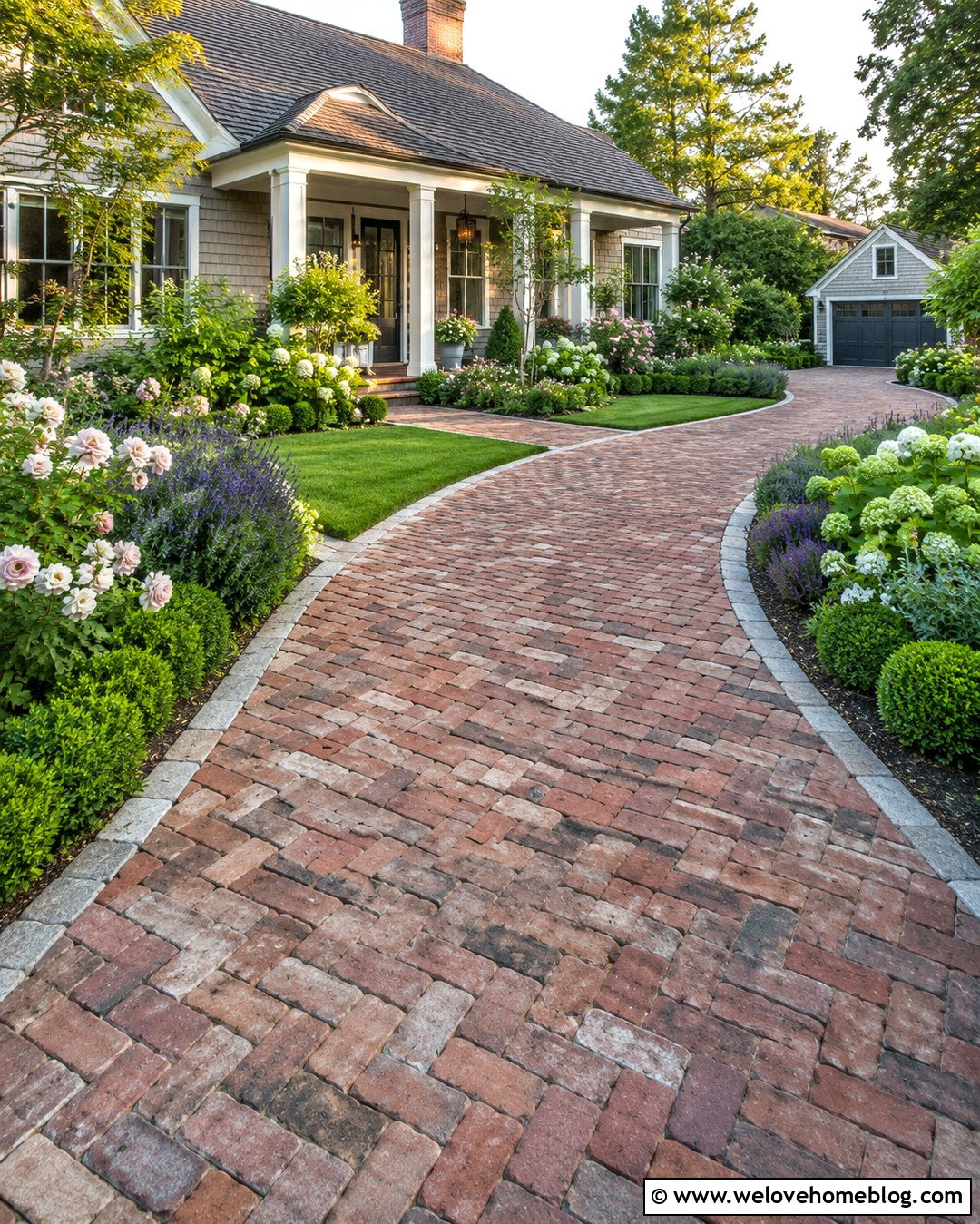
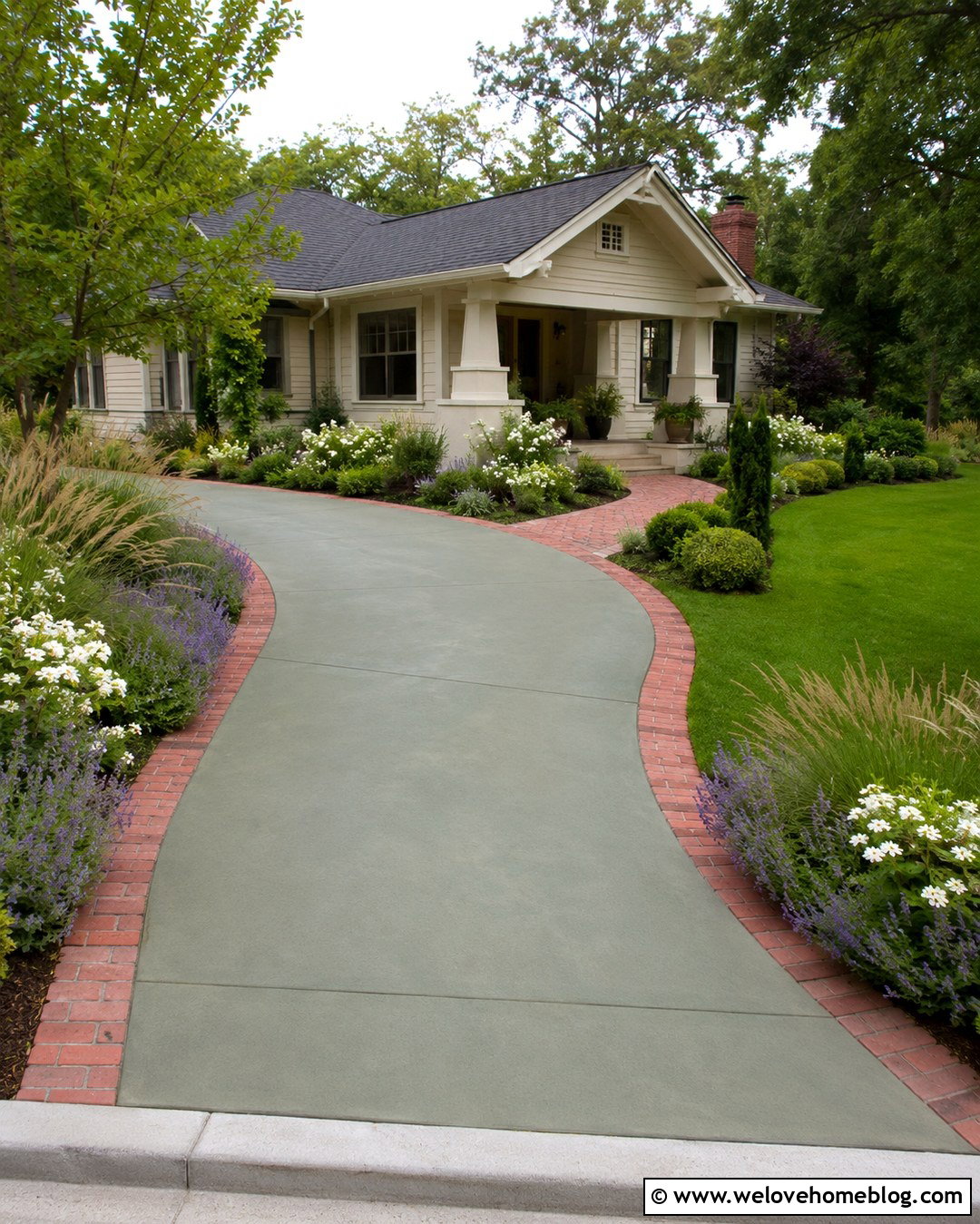
Reclaimed brick gives a new driveway the warmth and variation of an established landscape. Lay weathered clay bricks in a basketweave or running-bond pattern, using the most durable units in areas exposed to frequent vehicle traffic. A narrow, gently curved driveway can lead toward a cottage, bungalow, or historic-inspired home. Border it with flush-cut stone or darker brick to define the edge without creating a tripping hazard. Layer the surrounding beds with roses, salvia, hydrangeas, herbs, and evergreen structure, leaving enough clearance for car doors. A matching brick walkway can branch naturally toward the porch. Reclaimed materials vary in strength and dimensions, so sort them carefully before installation. The small color differences, softened edges, and lush planting make the complete entrance feel personal rather than factory-perfect.
14. Tar And Chip Driveway With Fieldstone Walls
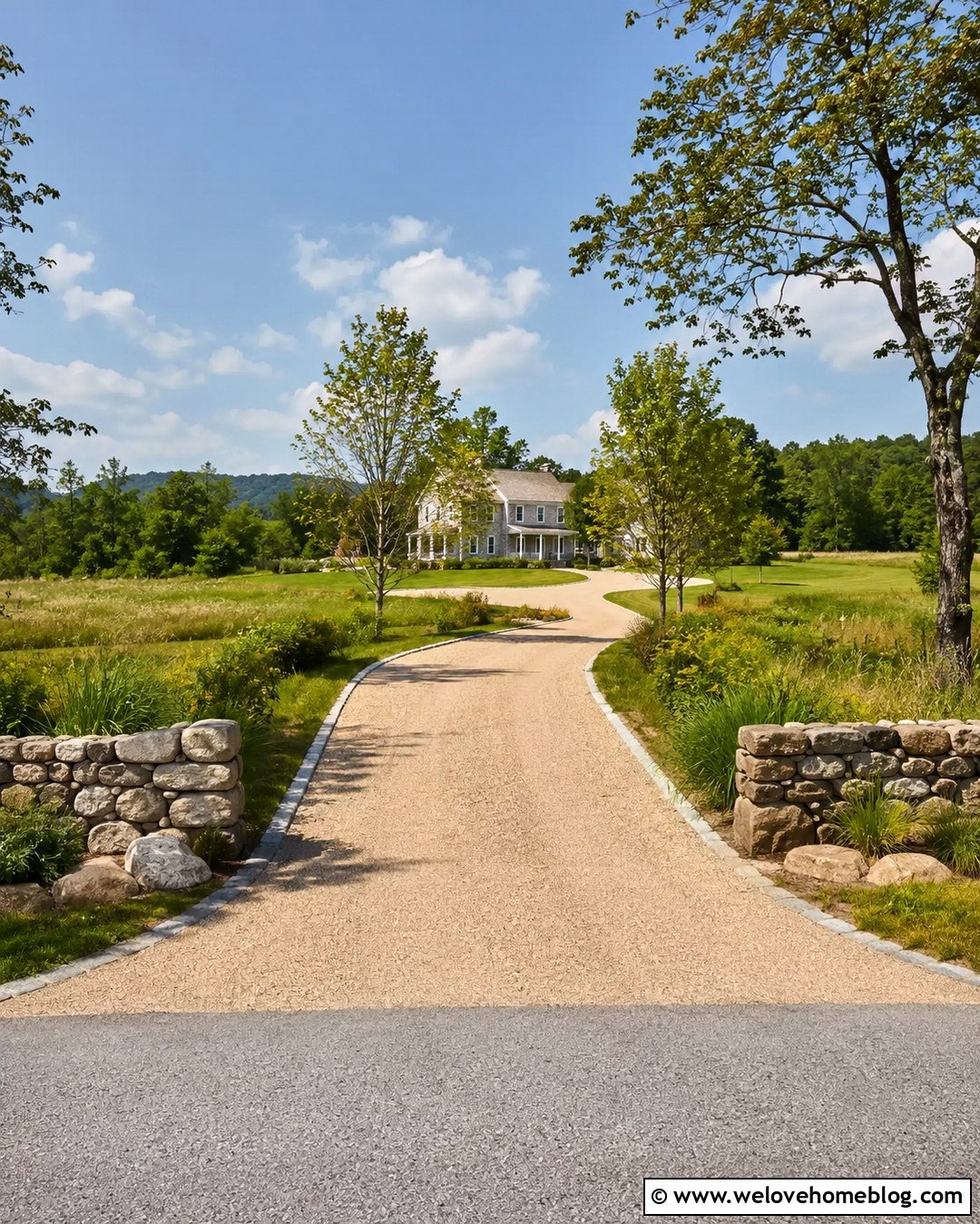
A tar and chip surface offers a textured country appearance between loose gravel and smooth asphalt. Select warm brown, buff, or gray stone chips that coordinate with the home and regional landscape. Use the material on a long, gently curved driveway leading to a farmhouse, ranch, or rural craftsman house. Low fieldstone walls can define the entrance, while simple stone edging keeps nearby soil and mulch away from the driving surface. Continue the natural look with meadow grasses, native shrubs, and spaced shade trees rather than highly formal hedges. A wider turnaround near the house improves everyday function. Stone selection affects both traction and color, so inspect real samples in daylight. Proper preparation and rolling are essential for creating an even, stable surface with consistent chip coverage.
15. Grass Paver Driveway With Native Landscaping
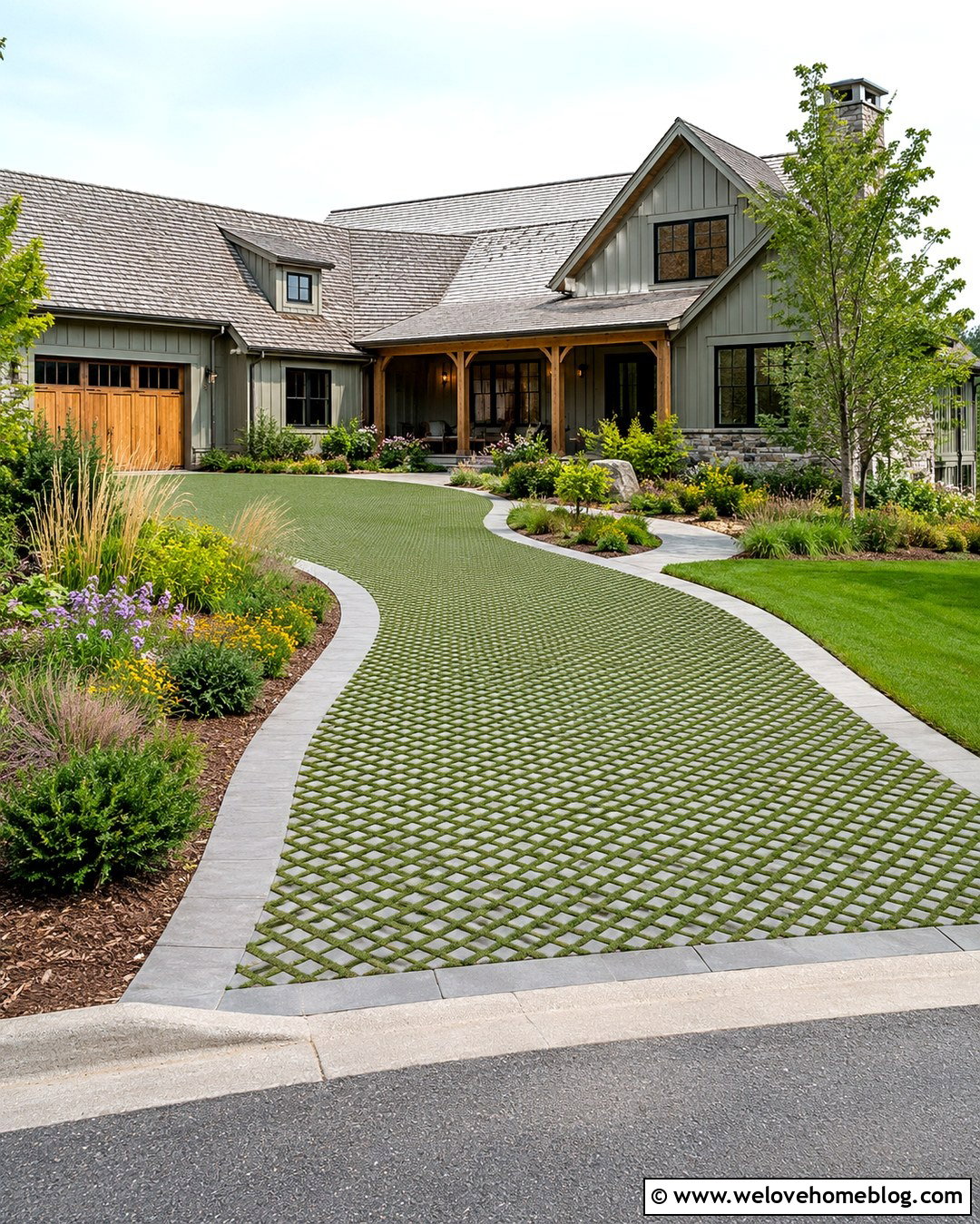
Open-cell grass pavers can reduce the appearance of hard paving while supporting occasional or regular vehicle use when the complete system is correctly built. Use a straight or gently curved layout filled with healthy turf or a suitable low-growing ground cover. Solid concrete paver bands at the entrance and garage create cleaner transitions where tires turn most often. Frame the driveway with native grasses, flowering perennials, and compact shrubs adapted to the local conditions. This planting can make the front yard feel connected instead of divided by a broad paved strip. Grass paving still requires irrigation, trimming, and soil care, so it is not maintenance-free. Confirm that the selected grid, infill, and base are rated for the expected traffic. The finished design feels green, subtle, and especially appropriate for spacious lots.
16. Mixed Concrete And Paver Driveway
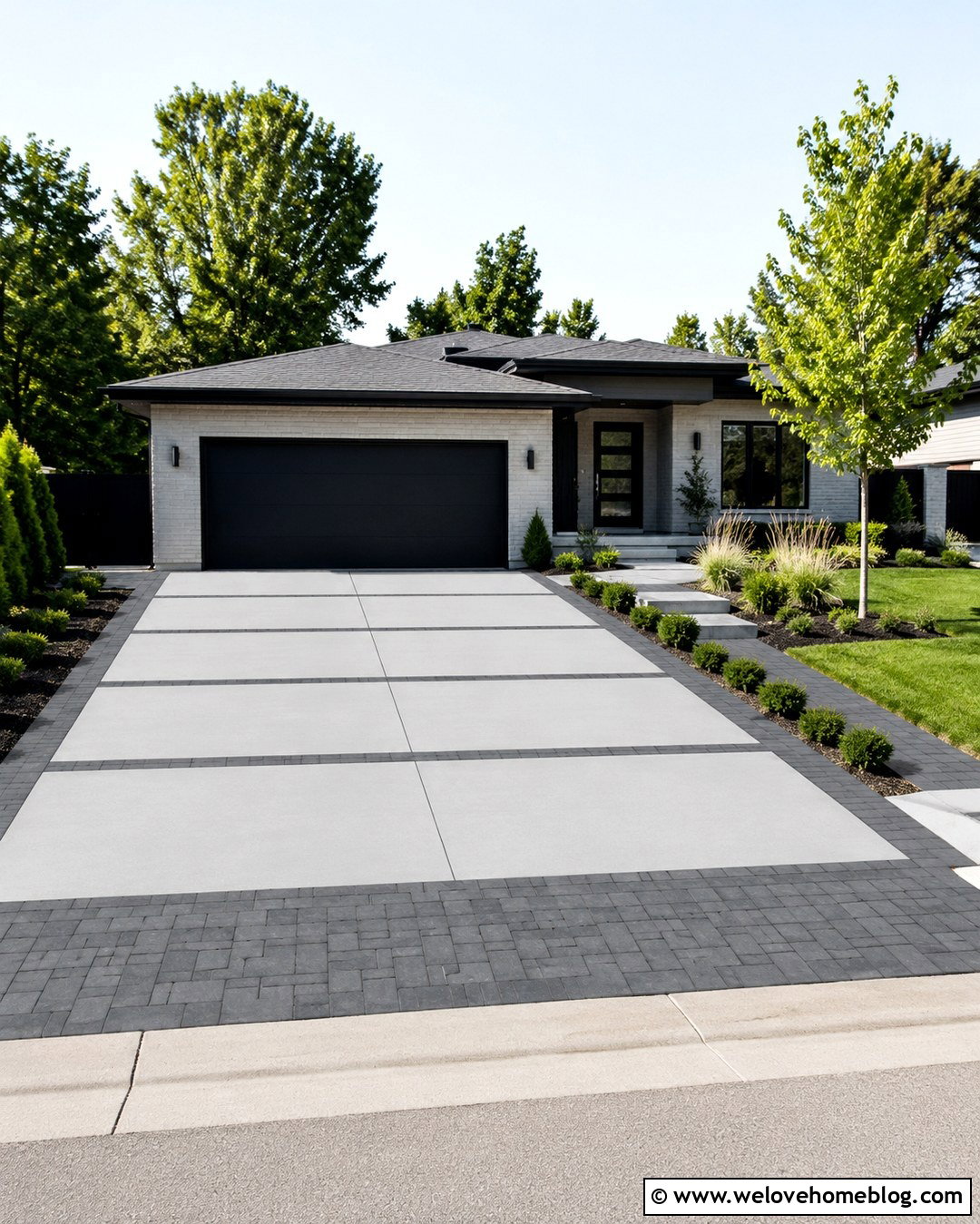
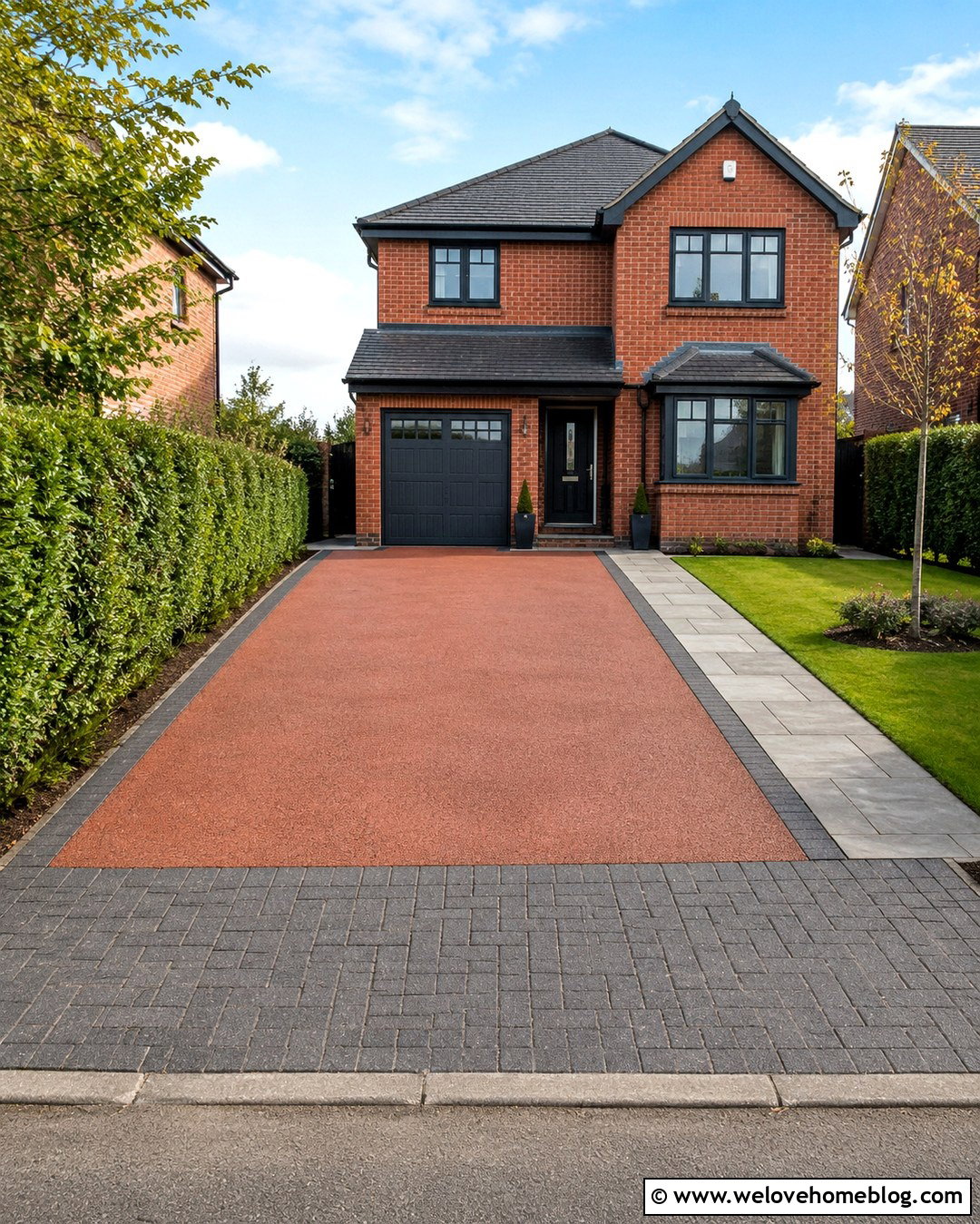
Combining poured concrete with paver accents can deliver a custom appearance without covering the entire driveway in premium masonry. Use light-gray concrete for the main parking surface, then add charcoal concrete paver ribbons along the edges and at regular intervals. A matching paver apron can make the street entrance feel more substantial. Keep the layout straight for a contemporary suburban home, or introduce a mild curve for a wider property. Plant low evergreen masses, ornamental grasses, and one or two small trees beside the driveway to balance the mixed materials. The paver bands should align with architectural features or control joints so they appear intentional. Coordinate base preparation and drainage across both surfaces. Uneven settlement is less likely when the materials are installed as one carefully engineered driveway system.
17. Heated Paver Driveway With Snow-Friendly Borders
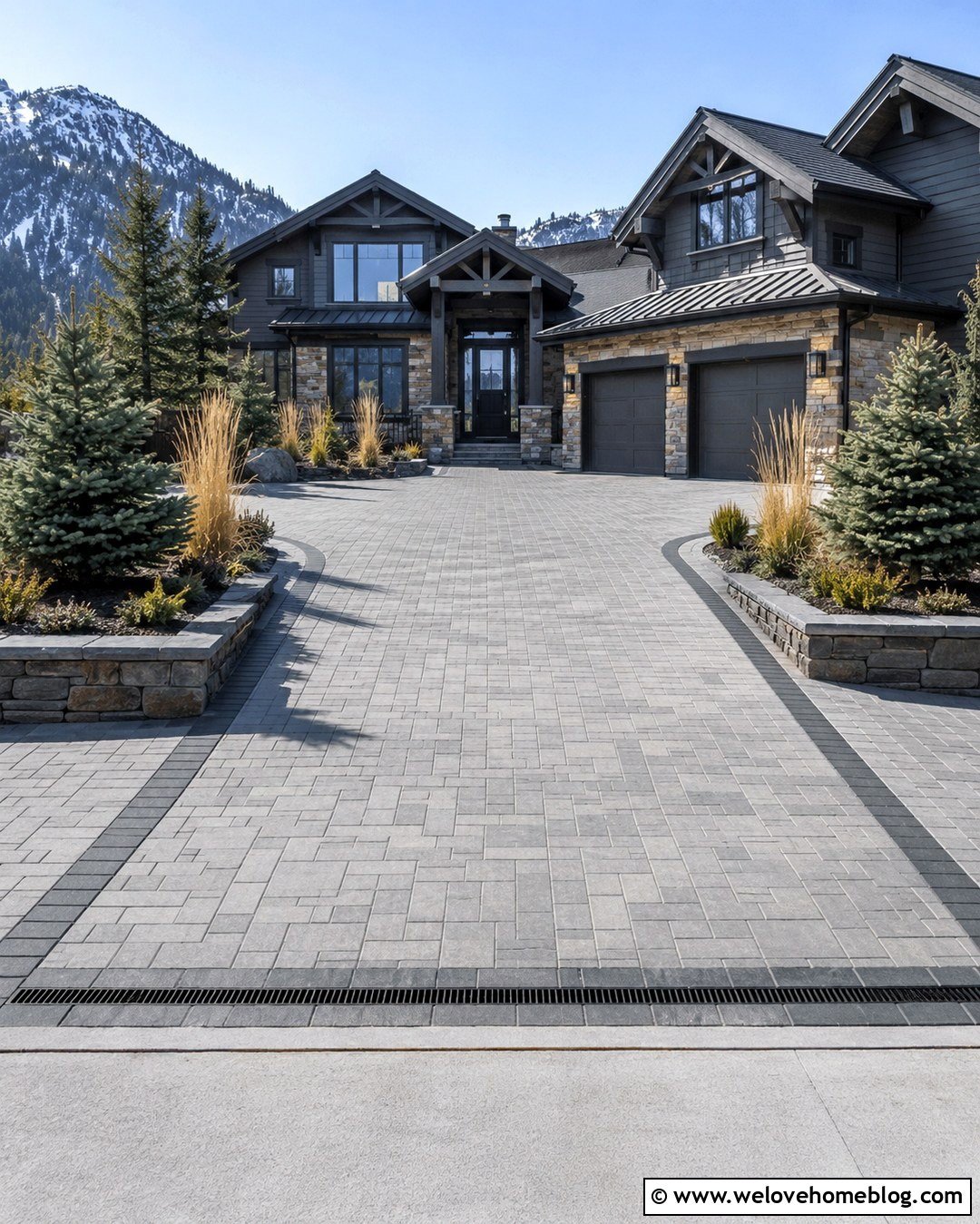
In a cold climate, a heated paver driveway can reduce snow buildup in critical areas while maintaining an attractive patterned surface. Use durable gray concrete pavers in a simple running bond, with darker border units marking the edges. A straight layout provides efficient coverage and a direct route to the garage. The heating system may cover the full drive or focus on tire tracks, slopes, and the section nearest the house. Keep landscaping snow-friendly by using raised evergreen beds, salt-tolerant plants, and clearly defined stone curbs. Install drainage where melting snow can move safely away without refreezing across walkways. The pavers should remain accessible if future system repairs are needed. This design requires a larger initial investment, but it combines winter practicality with a finished, high-quality entrance.
18. Desert Concrete Driveway With Xeriscape Borders
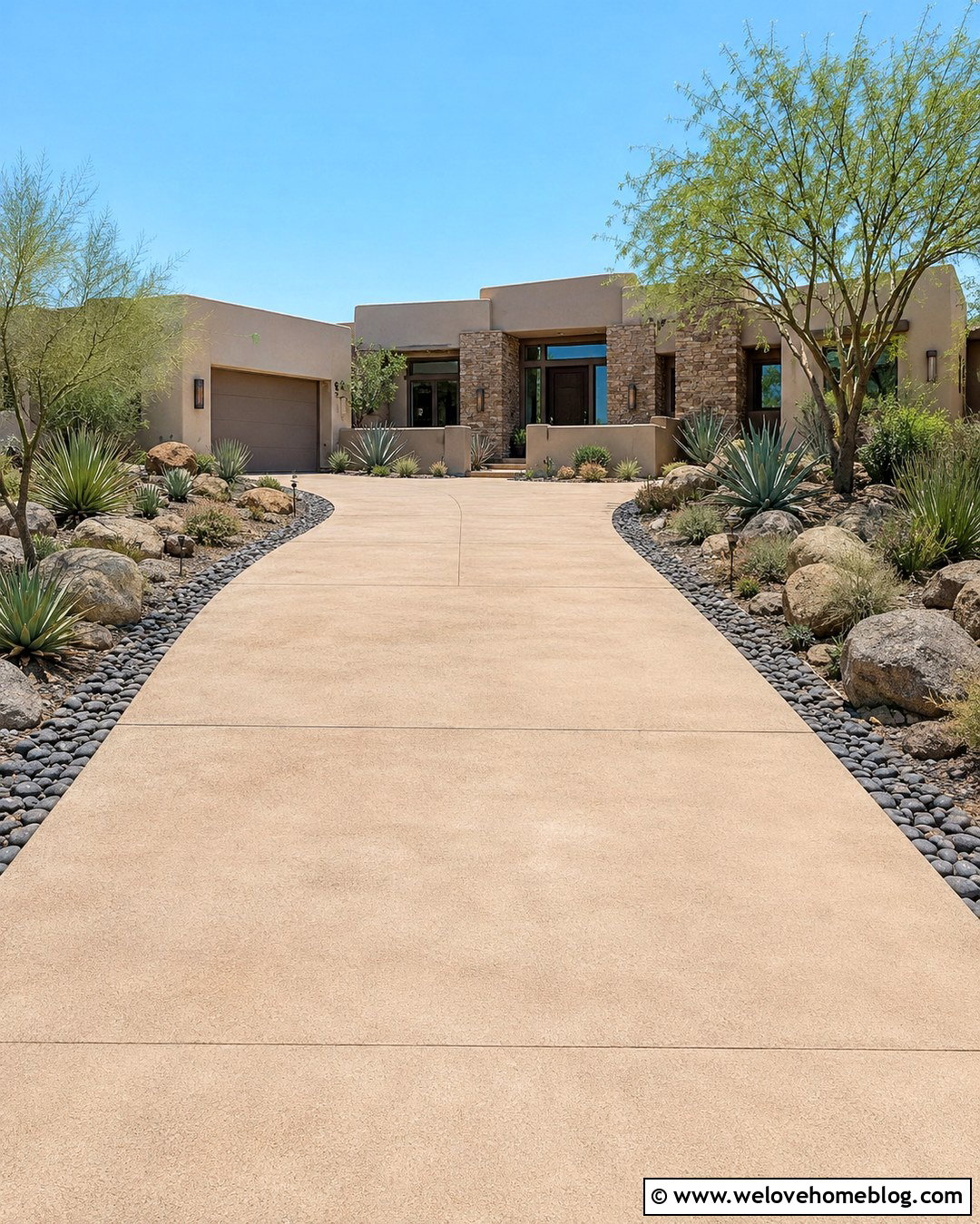
A pale concrete driveway surrounded by xeriscaping can create a cool, uncluttered entrance in hot, dry regions. Use sand-colored brushed concrete in a broad straight layout, with narrow bands of dark river rock separating it from the planting beds. Choose agaves, yuccas, desert grasses, low succulents, and sculptural boulders to frame the approach without crowding vehicles. A few carefully placed desert trees can provide height and filtered shade. Match the driveway color to a modern stucco, Southwestern, or desert contemporary home. Avoid scattering too many stone colors across the yard; a limited palette looks calmer and more coordinated. The surface should slope toward planned drainage areas instead of foundations. Expansion joints, an appropriate finish, and climate-conscious installation help the concrete manage intense sun and temperature changes.
19. Farmhouse Gravel Driveway With Tree-Lined Entrance
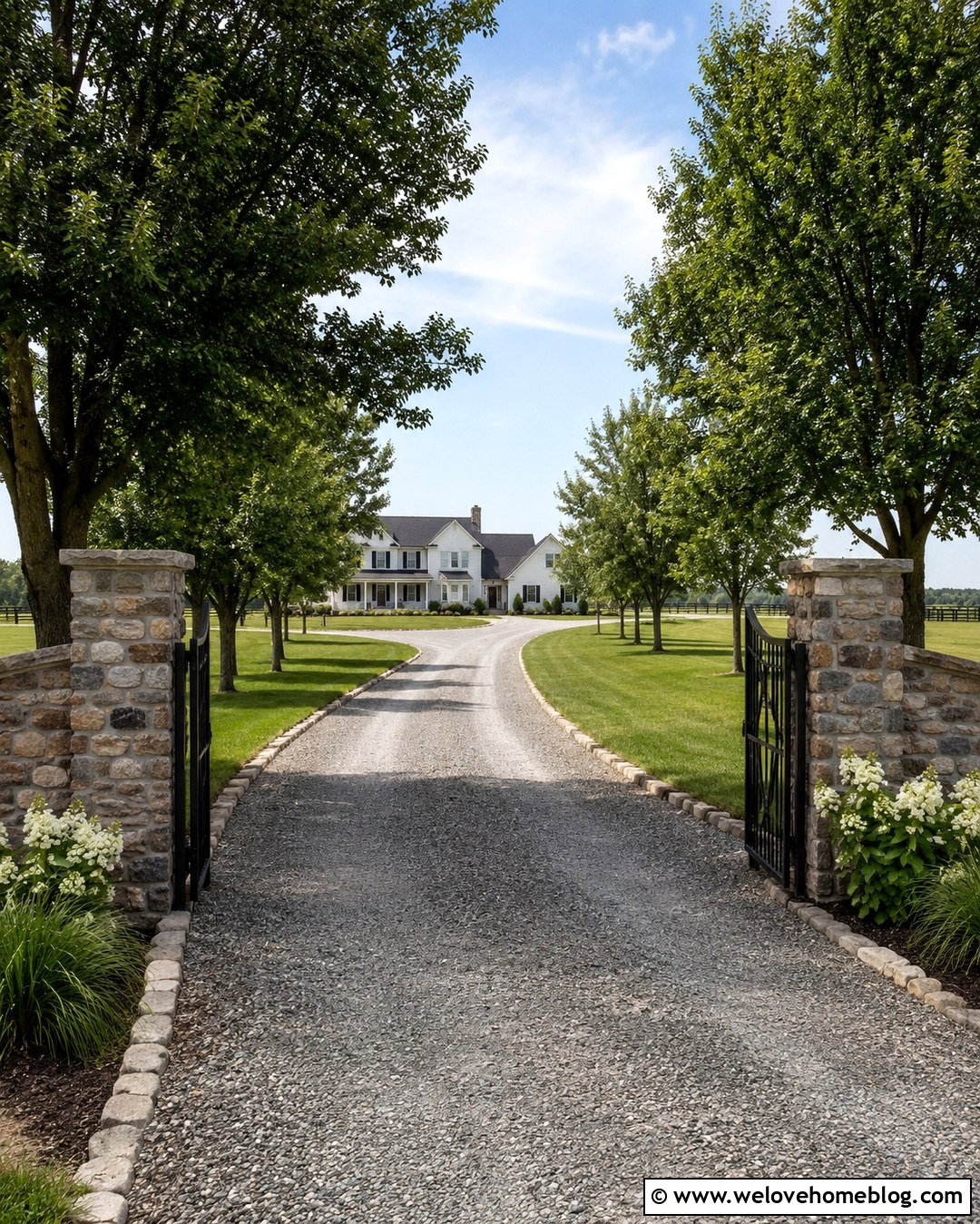
A long gravel driveway lined with trees creates a memorable approach to a farmhouse or country home. Choose compacted gray limestone or warm buff gravel with enough angular texture to resist shifting. A gentle curve can reveal the house gradually while preventing the entrance from feeling like a direct runway. Edge the drive with flush steel, timber, or local stone, then maintain broad grass shoulders on both sides. Plant evenly spaced shade trees far enough from the surface to protect visibility, roots, and vehicle clearance as they mature. Near the road, add simple stone pillars, a farm-style gate, and low native planting. A gravel turnaround beside the house keeps departures convenient. Good grading, a durable base, and strategically placed drainage prevent ruts from weakening this classic rural driveway design.


20. Diagonal Paver Driveway For A Small Front Yard
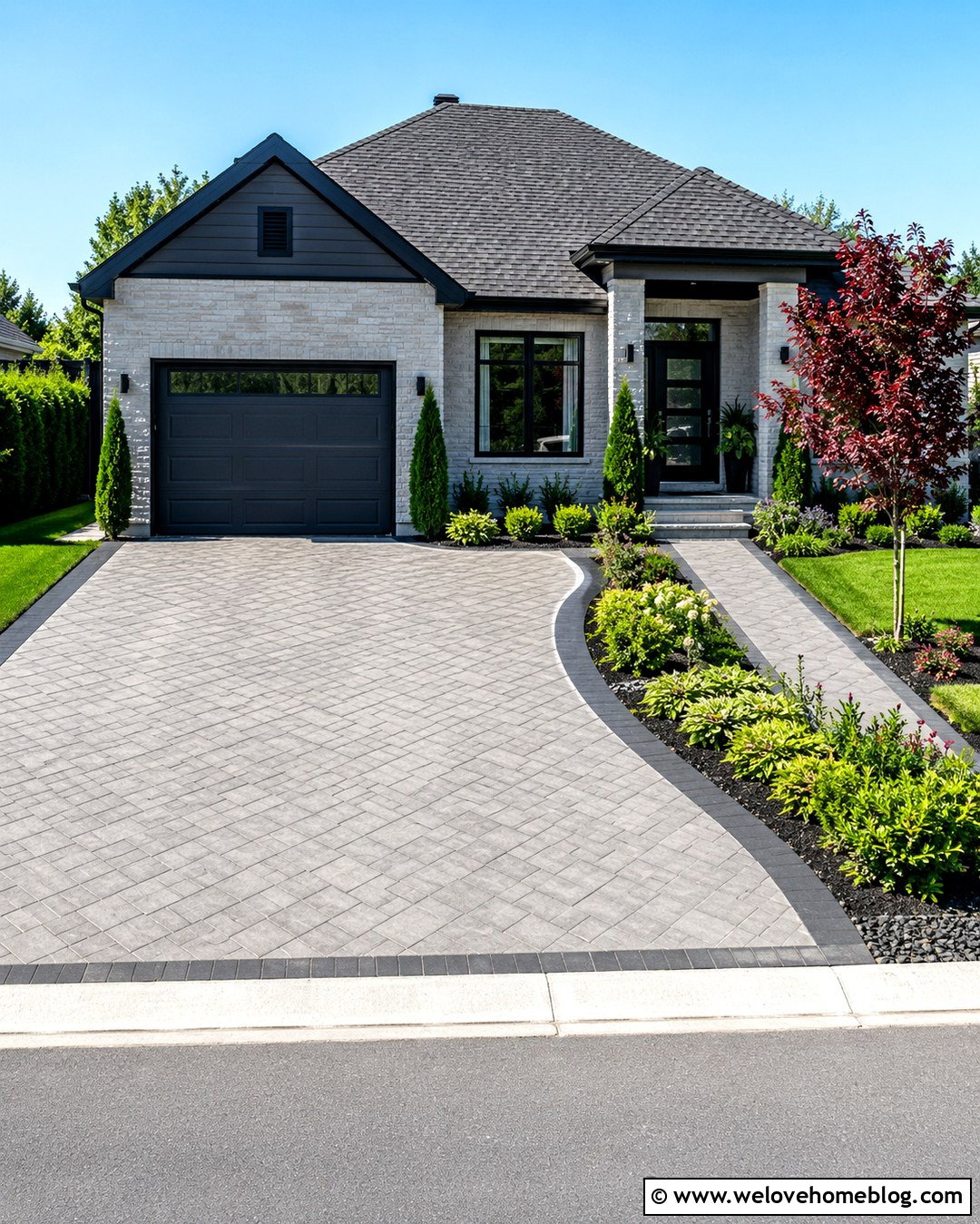
Diagonal paver lines can make a compact driveway appear wider and more dynamic. Use medium-gray concrete pavers laid at a 45-degree angle, then contain the pattern with a dark straight border. A slightly flared entrance makes pulling in easier, while a full-width parking pad uses the available space efficiently. Keep landscaping narrow but layered. Upright shrubs, low ground cover, and a small ornamental tree can add greenery without reducing door clearance. A slim walkway should lead clearly from the parking area to the front entrance, ideally using the same border paver. Light-colored joints will emphasize the diagonal geometry, while darker joints create a quieter surface. Careful measurements are essential in a small yard because trash storage, utility access, drainage, and pedestrian movement must all fit comfortably around the driveway.
Conclusion:
The best driveway is more than a place to park. It connects the street, landscape, walkway, garage, and architecture into one practical front-yard design. These 20 New Driveway Ideas demonstrate how concrete, gravel, asphalt, brick, pavers, cobblestone, and permeable materials can create very different results. Before selecting a look, consider your climate, slope, drainage, vehicle movement, maintenance routine, and budget. Bring home samples whenever possible, and view them beside the exterior in daylight. Strong base preparation and reliable edge restraints are just as important as surface color or pattern. With thoughtful planning, a new driveway can improve daily function while giving the entire property a cleaner, more welcoming appearance.

Related posts:
Leave a Reply