
Choosing the right driveway color can make a plain concrete surface feel connected to the house, walkway, and front yard. These **20 Driveway Paint Colors Ideas** explore practical combinations for modern, traditional, farmhouse, coastal, and suburban homes. The strongest results usually coordinate with the roof, siding, masonry, and surrounding landscape rather than matching one feature exactly. Gray, brown, black, and white remain common concrete coating colors, while warm earth tones are especially useful for creating a natural transition into the yard. () Before deciding, compare samples outdoors in direct sun and shade because the existing concrete and final sealer can affect the appearance. Use the complete driveway looks below to find a balanced option from these **20 Driveway Paint Colors Ideas**.
1. Warm Gray Driveway Paint With Black Brick Border
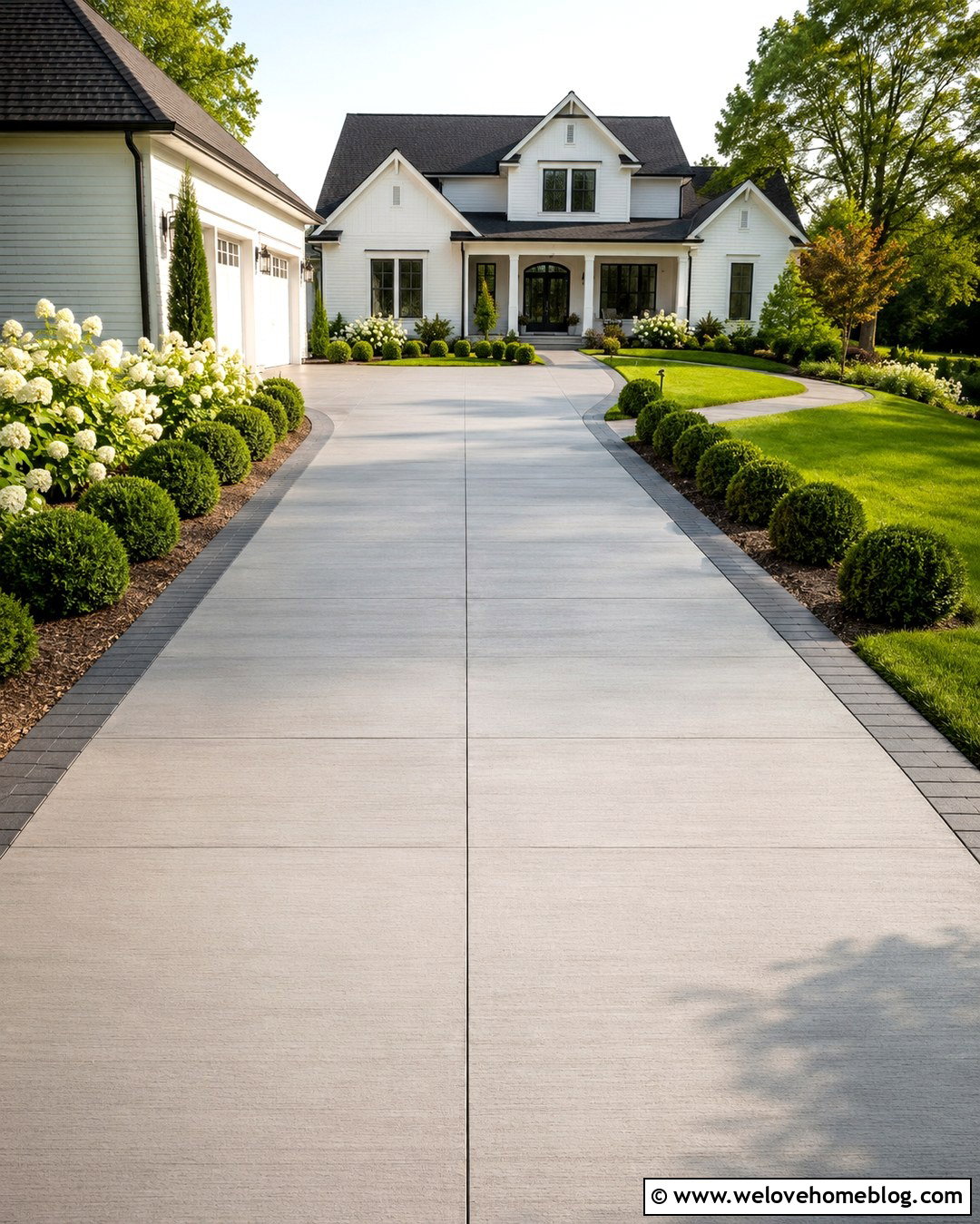
Warm gray driveway paint offers the clean appearance of classic concrete without looking cold or industrial. Use it on a straight, broom-finished concrete driveway leading to a white or light greige house. A narrow border of black concrete brick pavers gives the pale surface a defined outline and connects it to dark roofing, shutters, or garage hardware. Keep the surrounding landscaping simple with green lawn, rounded boxwoods, and white flowering shrubs. The warm undertone prevents the driveway from appearing blue beside beige stone or cream siding. This medium-light color also makes expansion joints less noticeable. Choose a matte, slip-resistant coating rather than a glossy finish, which may highlight surface flaws and become visually distracting across a large area.
2. Charcoal Driveway Paint With Modern Concrete Slabs
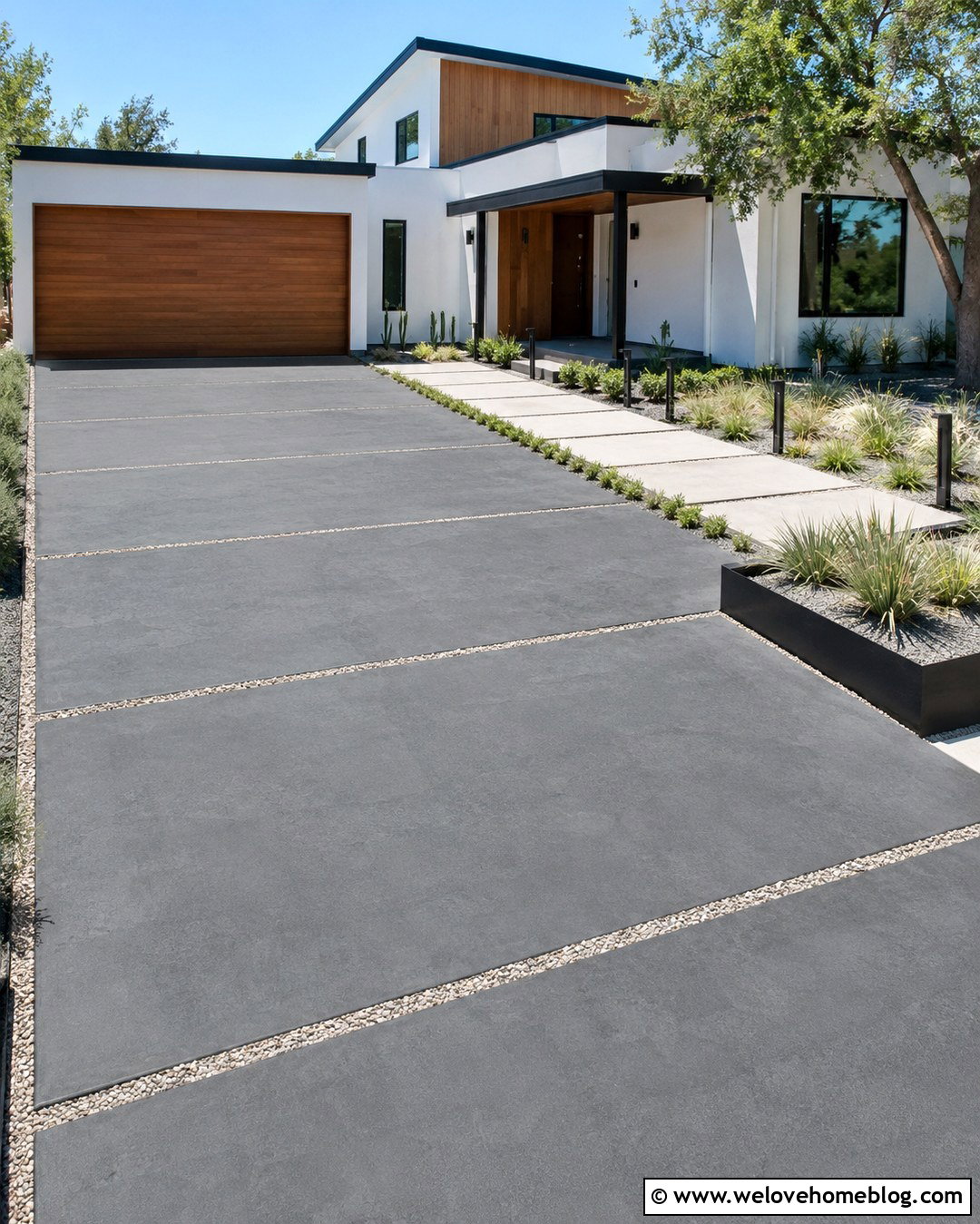
Deep charcoal paint can turn a wide driveway into a strong architectural feature. It works especially well with a modern house featuring white stucco, natural wood, or pale stone. Divide the painted concrete into large rectangular sections using existing control joints or narrow bands of light gravel. Add clean steel edging, ornamental grasses, and a simple concrete walkway beside the drive. The dark surface creates bold contrast, but it can also absorb more heat than a lighter color, making it better suited to shaded properties or cooler regions. () Because tire dust can appear pale against charcoal, select a softly mottled finish instead of a perfectly uniform black-gray coating. The variation creates depth while making everyday marks less obvious.
3. Greige Driveway Paint With Limestone Edging
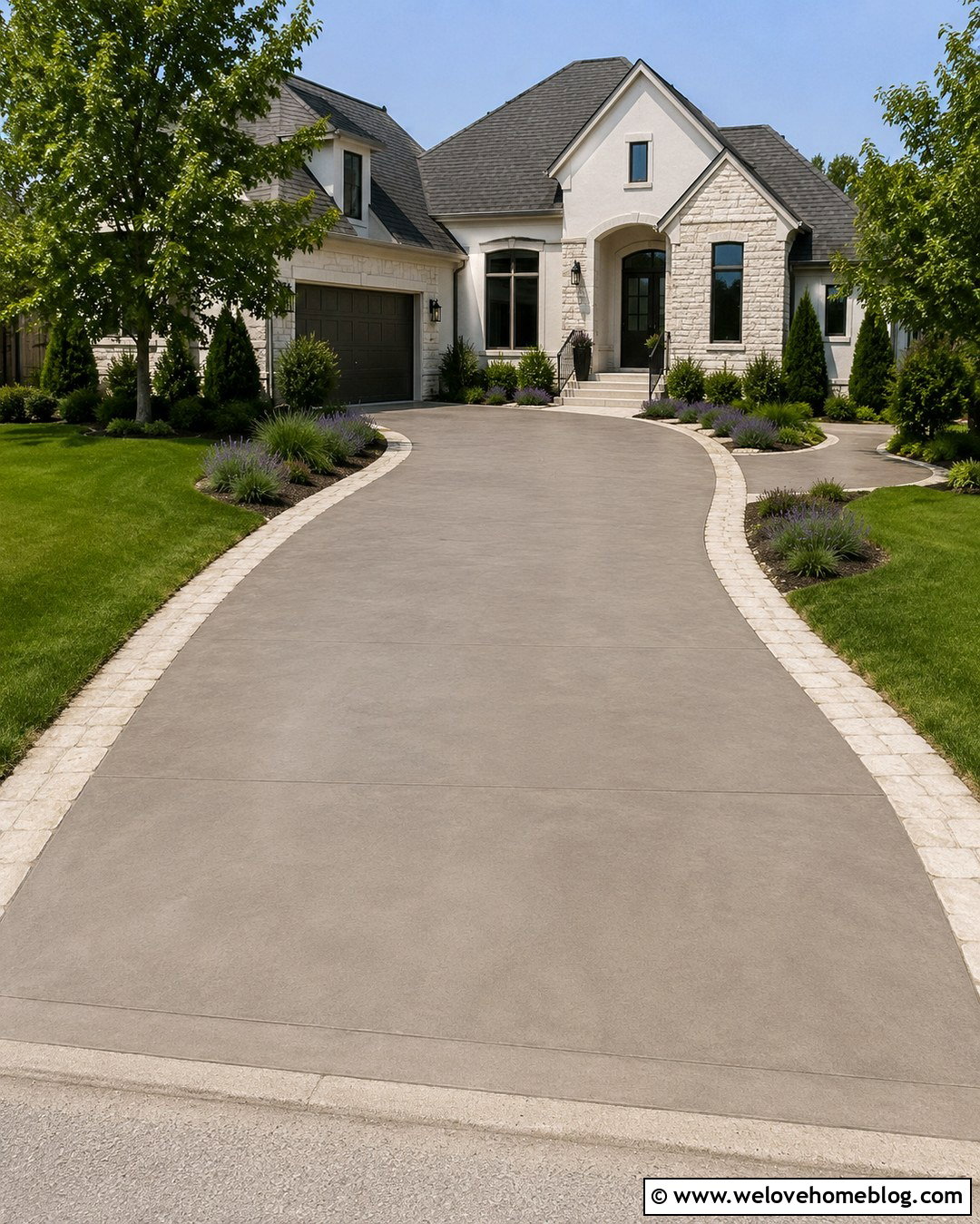
Can’t decide between gray and beige? Greige driveway paint provides a balanced middle ground that complements both cool and warm exterior materials. Apply it to a gently curved concrete driveway beside a transitional home with cream siding, gray roofing, and limestone details. Pale limestone blocks along the outer edge reinforce the warm undertone without making the design too beige. Use low lavender, dwarf grasses, and evergreen shrubs to soften the curve. A matching greige walkway can connect the driveway to the front porch, creating one continuous entrance. This color is particularly useful when the house combines several neutral finishes. Before coating everything, paint a sample near the garage because greige can look warmer in afternoon sunlight and cooler beneath tree shade.
4. Sandstone Beige Driveway Paint With Desert Landscaping
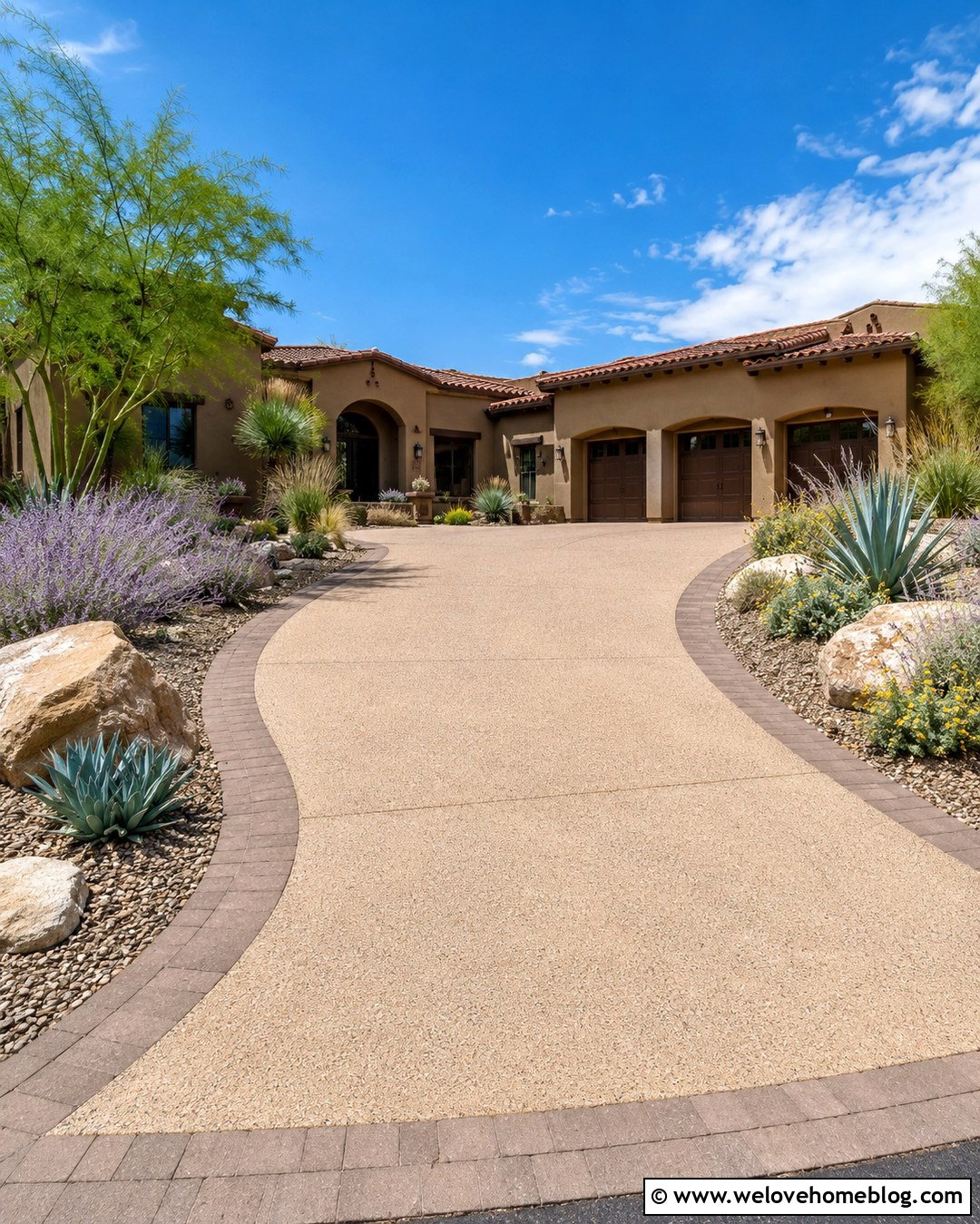
Soft sandstone beige gives a concrete driveway the natural appearance of sun-warmed stone. It suits ranch, Spanish, and Southwestern homes with stucco walls, clay roof tiles, or natural stone veneer. A broad curved layout makes the color feel relaxed rather than formal. Edge the driveway with darker tan pavers to create enough contrast between the painted surface and surrounding gravel beds. Drought-tolerant grasses, agave, flowering sage, and small boulders can complete the low-water landscape. Choose a textured matte coating that produces subtle tonal movement instead of a flat yellow-beige surface. Sandstone is light enough to keep the entrance visually open, yet earthy enough to disguise dust. Carry the same color onto the front walkway for a coordinated approach.
5. Taupe Driveway Paint With Cobblestone Apron
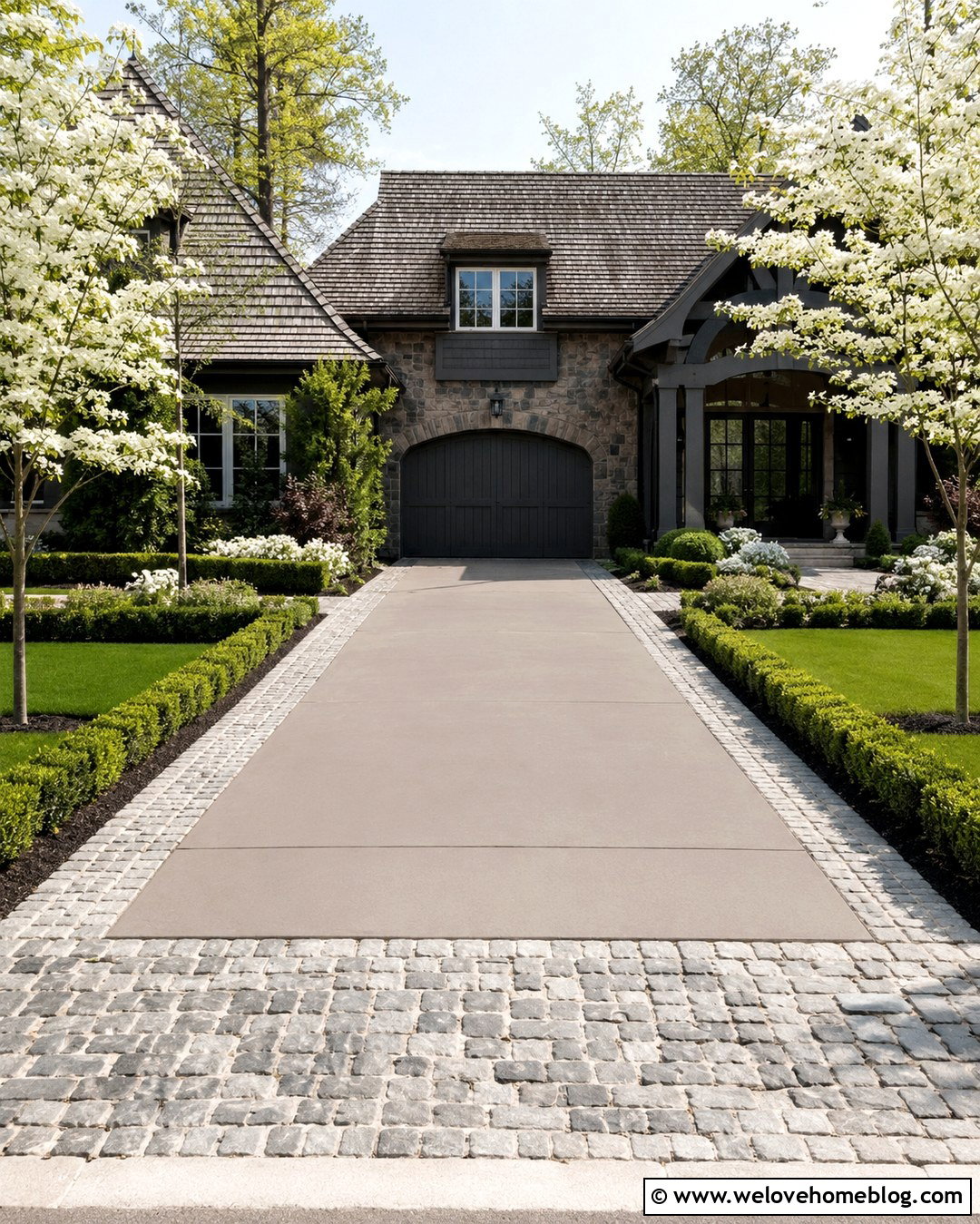
Taupe driveway paint creates a quiet, refined entrance for homes with mixed stone, brown roofing, or muted siding. Use it on a straight concrete driveway with a cobblestone apron installed where the surface meets the street. The combination adds traditional character while keeping most of the driveway visually simple. A narrow cobblestone ribbon can continue along both sides, helping the taupe coating look intentional rather than like ordinary weathered concrete. Frame the entrance with clipped hedges, small flowering trees, and symmetrical lawn panels. Select a medium taupe with enough gray to avoid orange undertones. The result works particularly well with Craftsman and European-inspired homes. Repeat the cobblestone near the garage threshold to give the complete driveway a finished, connected appearance.
6. Terracotta Driveway Paint With Spanish House Exterior
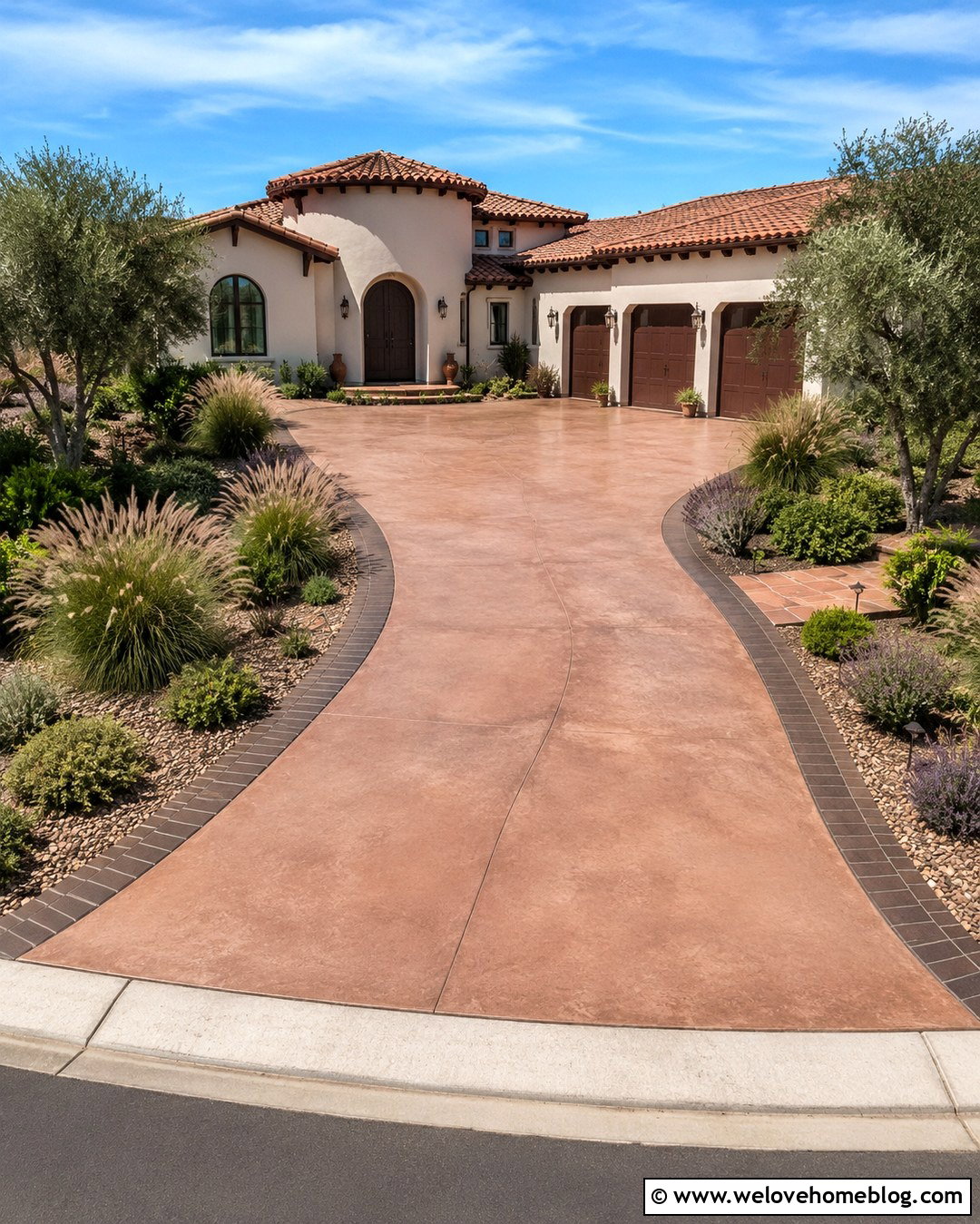
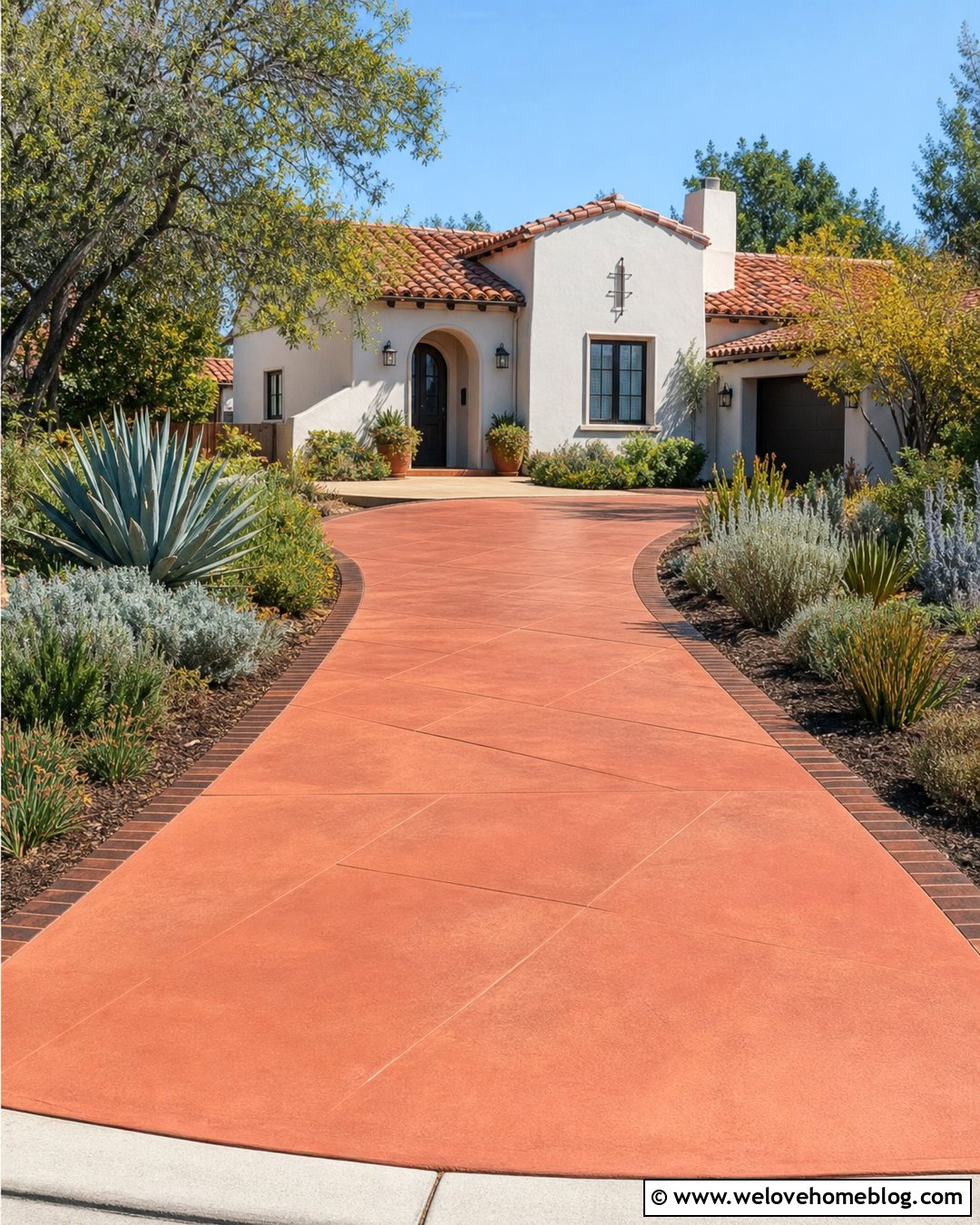
Terracotta driveway paint brings warmth to a stucco house and echoes traditional clay roofing without requiring a fully paved brick driveway. Apply it to a wide concrete drive with a soft curve or fan-shaped parking area. Use dark brown brick edging to control the strong color and define its shape against pale gravel landscaping. Olive trees, rosemary, ornamental grasses, and low flowering plants reinforce the Mediterranean character. Rather than choosing a bright orange coating, look for a muted red-brown terracotta with natural variation. Acid-based concrete stains commonly create earthy tans, browns, and terracotta tones, while water-based products generally provide a broader color selection. () A satin or matte sealer will keep the surface rich without making it appear overly shiny.
7. Brick Red Driveway Paint With Colonial Landscaping
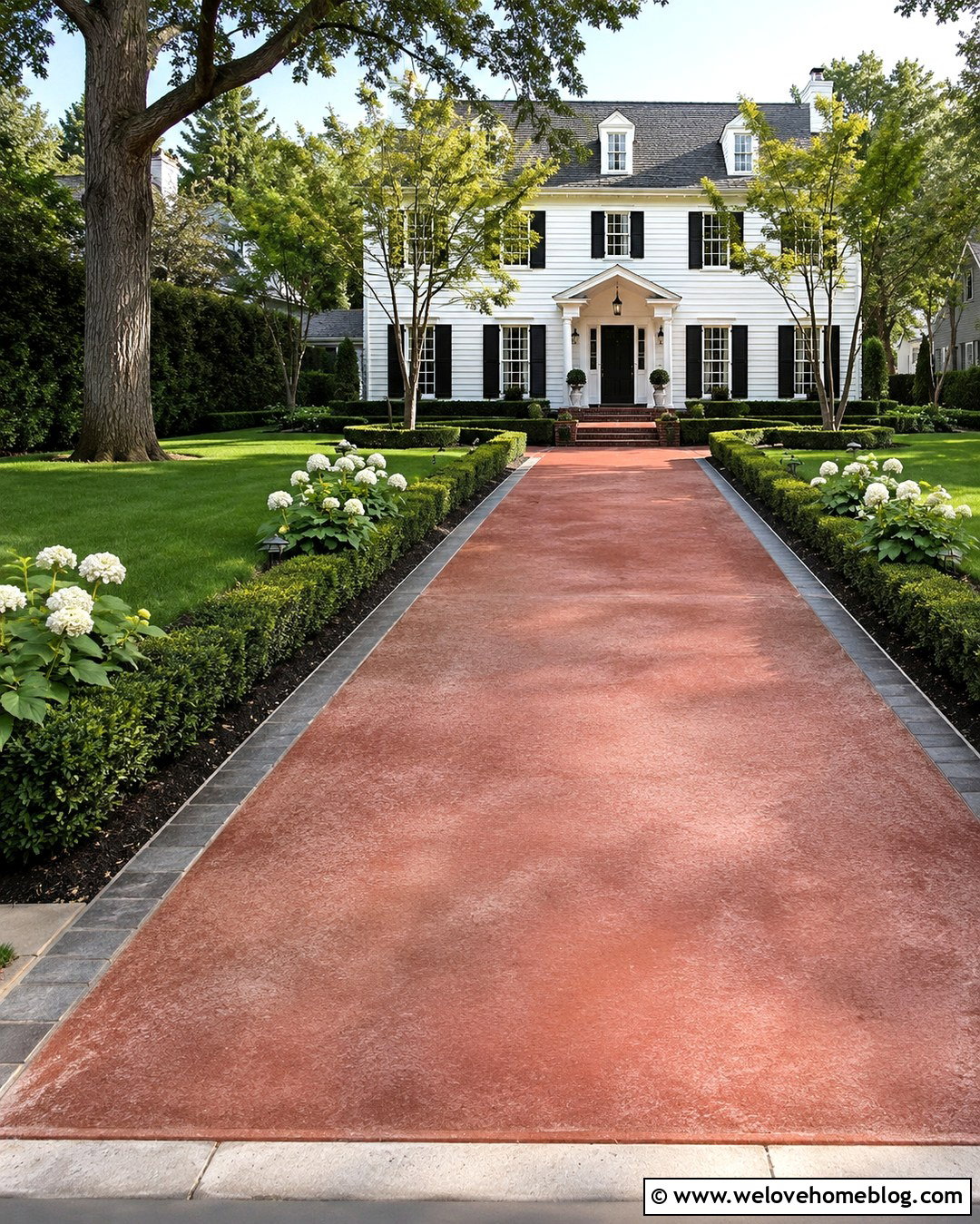
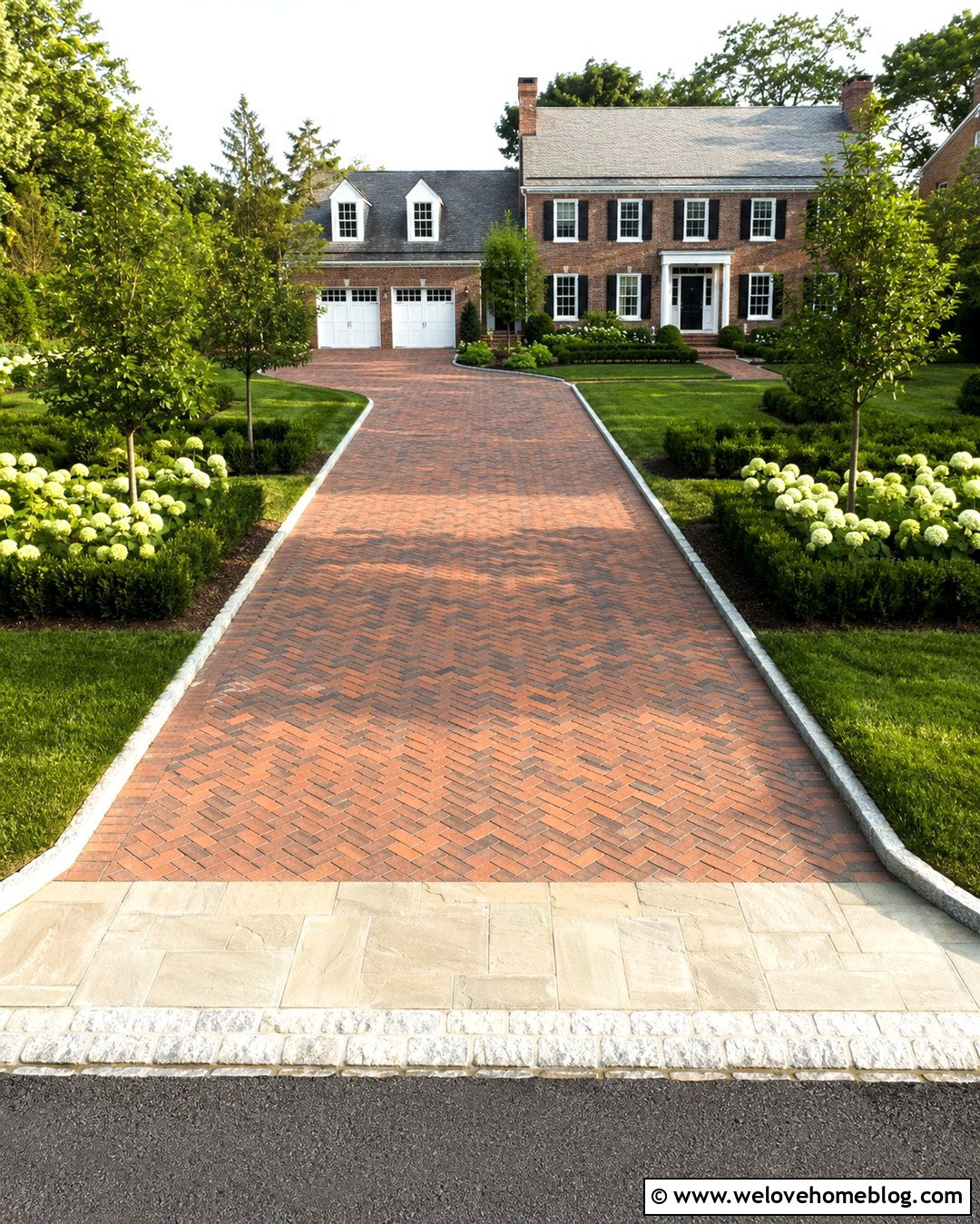
A muted brick red driveway can feel traditional and welcoming beside a white Colonial or Cape Cod home. The key is choosing a deep, weathered red rather than a bright primary color. Paint a straight concrete driveway and add charcoal paver ribbons along the sides to connect it with black shutters, lanterns, and roofing. Neatly trimmed boxwood hedges, white hydrangeas, and a brick walkway can frame the approach. If the house already has red brick, select a driveway shade that is slightly darker or browner instead of trying to create an exact match. Small color differences are less distracting when the materials are clearly distinct. Use a coating made for exterior concrete and vehicle traffic, with a fine anti-slip additive for safer wet-weather traction.
8. Chocolate Brown Driveway Paint With Stone Pillars
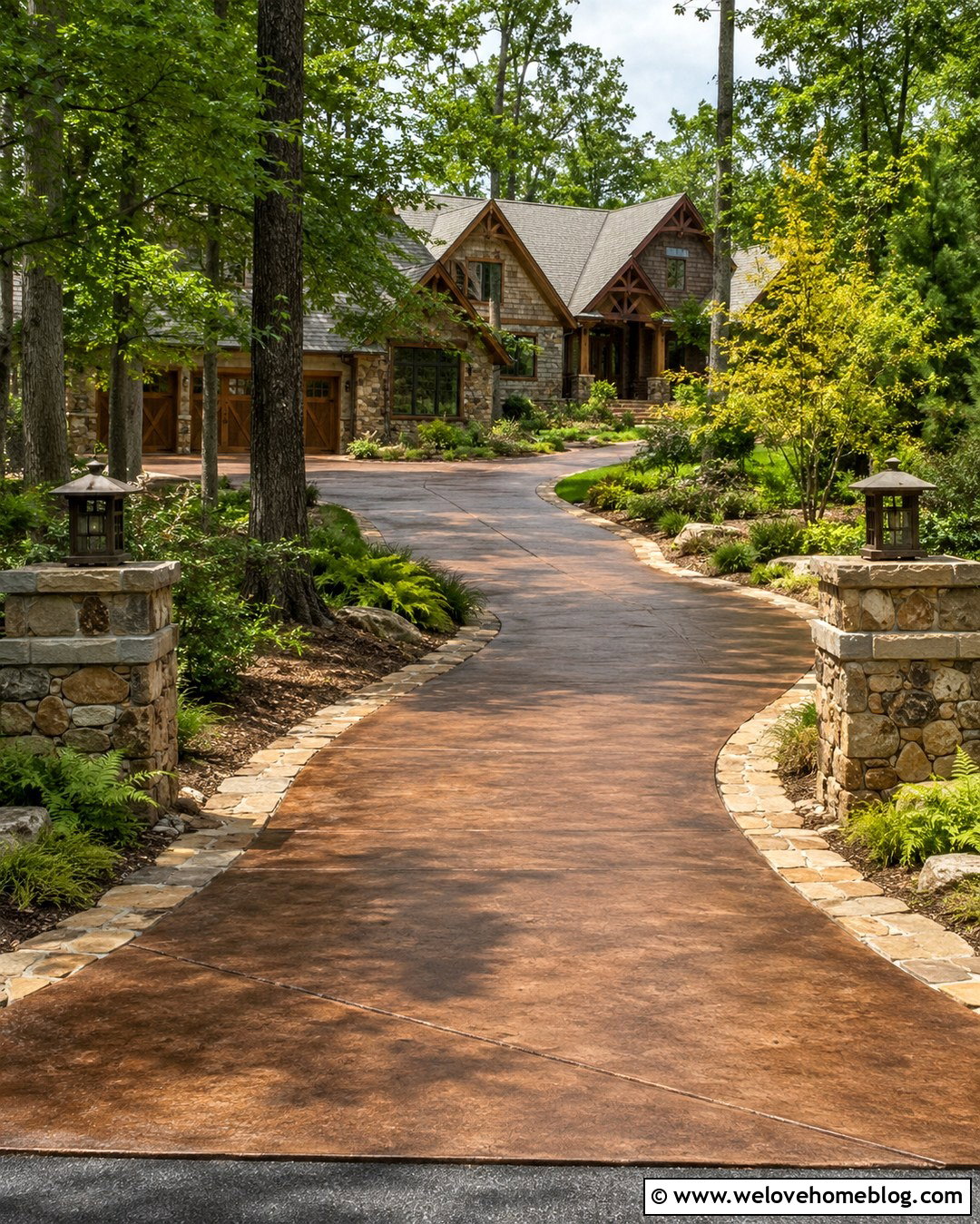
Rich chocolate brown gives a long driveway a grounded appearance and works naturally with wooded or country properties. Pair the painted concrete surface with rustic stone entrance pillars and a gently curved layout leading to a Craftsman or lodge-style house. Buff stone edging prevents the dark coating from blending into mulched planting beds. Ferns, evergreen shrubs, native grasses, and mature shade trees can create a layered border without hiding the driveway. Choose a brown with subtle gray undertones so it feels earthy rather than overly red. A mottled application can mimic aged leather or natural stone while helping conceal leaves and soil. Add simple downlighting to the pillars, but keep the driveway itself uncluttered so its curve and contrasting edges remain easy to follow.
9. Mocha Driveway Paint With Cream Paver Ribbon
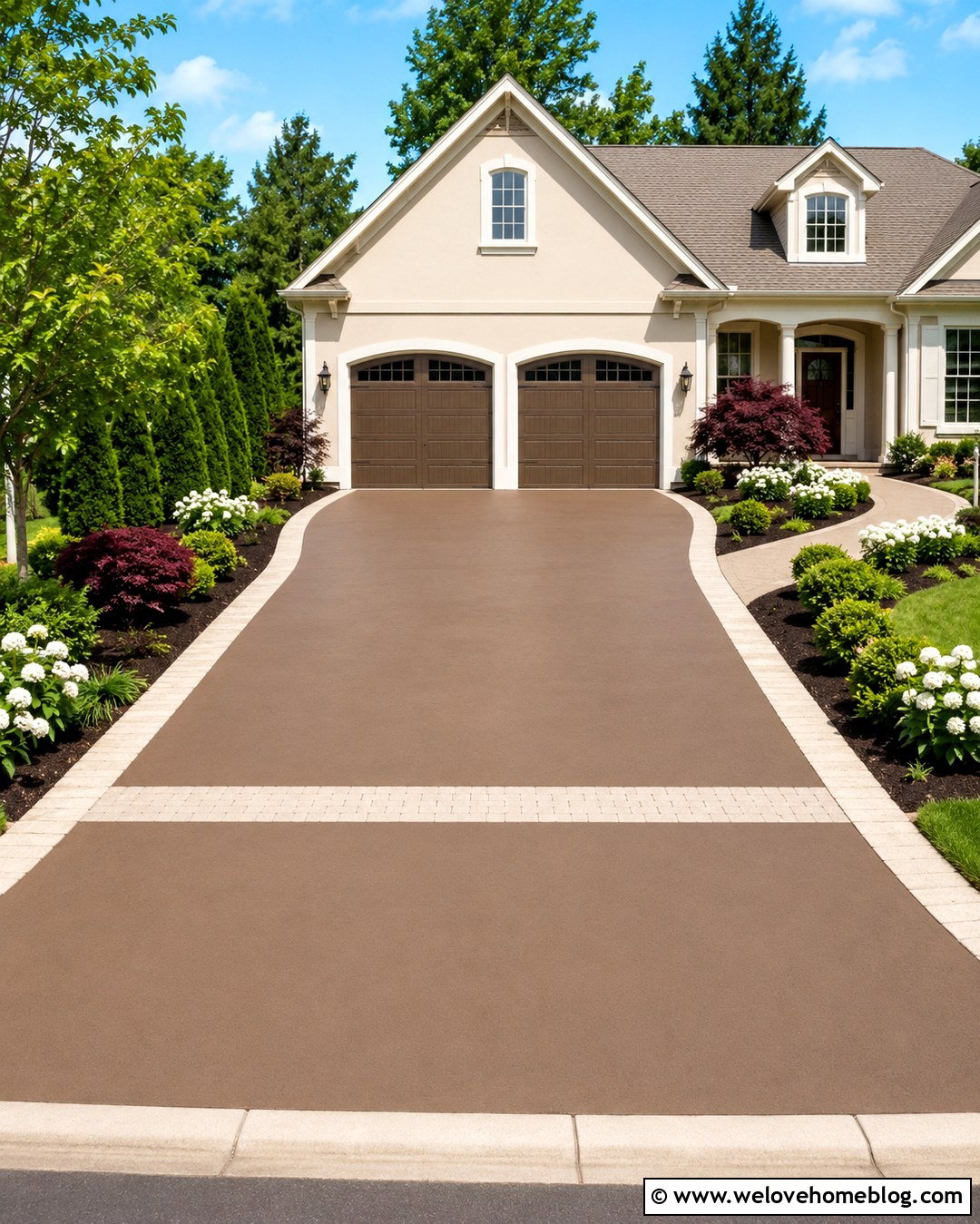
Mocha paint delivers more warmth than gray while remaining softer than dark chocolate brown. It is a practical choice for a suburban concrete driveway beside cream siding, tan brick, or bronze garage doors. Use a straight or slightly flared layout with a cream concrete-paver ribbon crossing near the sidewalk and garage. This repeated accent breaks up a large painted area and visually connects the driveway to the front walkway. Surrounding beds can include deep green shrubs, white flowers, and burgundy foliage for gentle contrast. Ask for a medium mocha sample and observe it after drying, since wet coatings often appear darker. A low-sheen surface will look more natural outdoors and make the driveway feel like part of the hardscape rather than a painted indoor floor.


10. Slate Gray Driveway Paint With White House Exterior
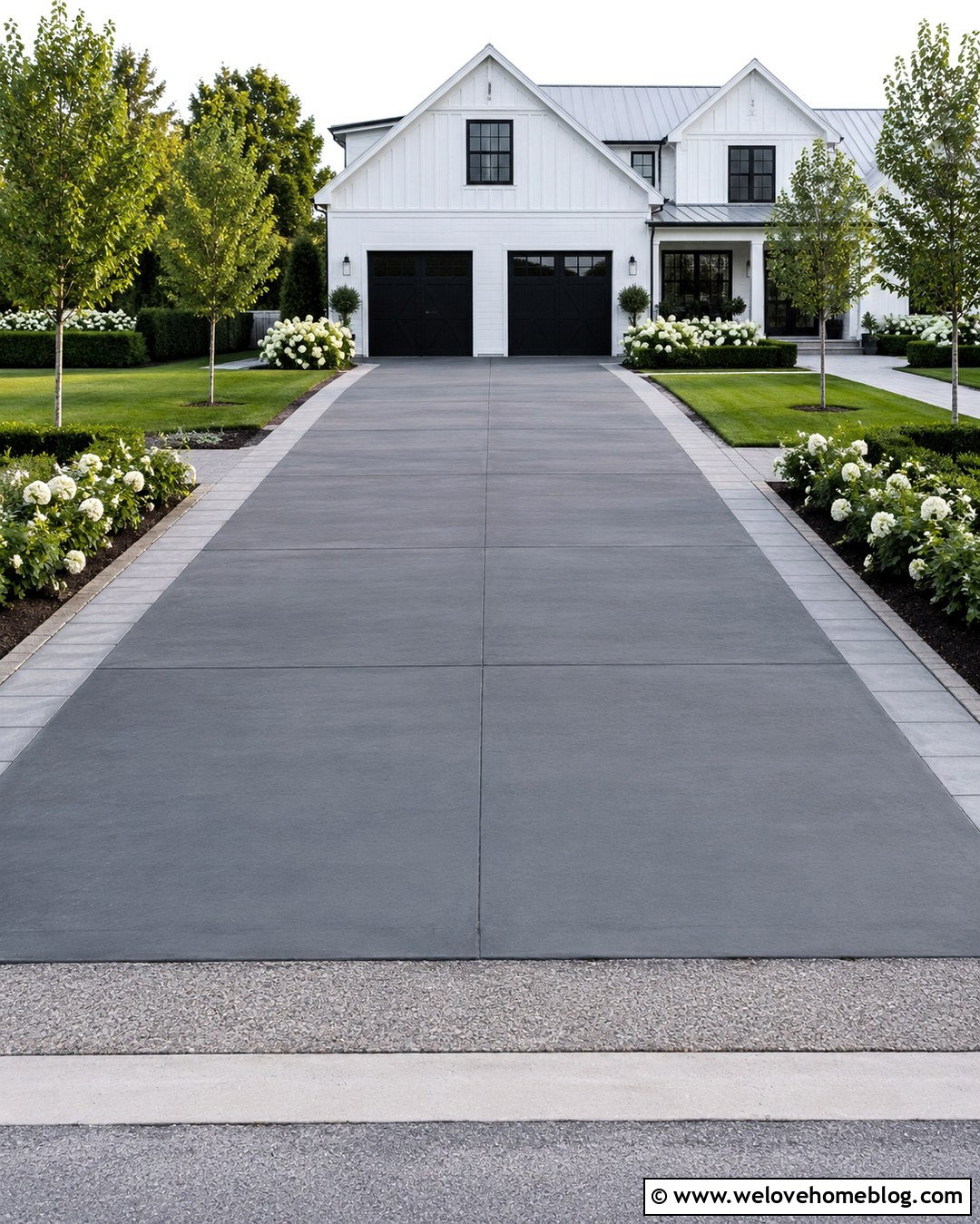
Slate gray provides crisp contrast against white siding while remaining less severe than solid black. It is especially effective on a wide driveway serving a modern farmhouse or updated Colonial home. Paint the concrete in a smooth slate tone, then define the perimeter with pale gray pavers or a narrow exposed-aggregate strip. Black garage doors, metal roof details, and simple wall lights can repeat the driveway’s deeper color. Keep the landscape bright with lawn, white roses, hydrangeas, and evenly spaced ornamental trees. A subtle blue undertone works well with cool white paint, while a warmer slate is better beside cream trim. Consider a lightly textured finish that reduces glare and provides grip without creating a rough, difficult-to-clean surface.
11. Blue Gray Driveway Paint With Coastal Landscaping
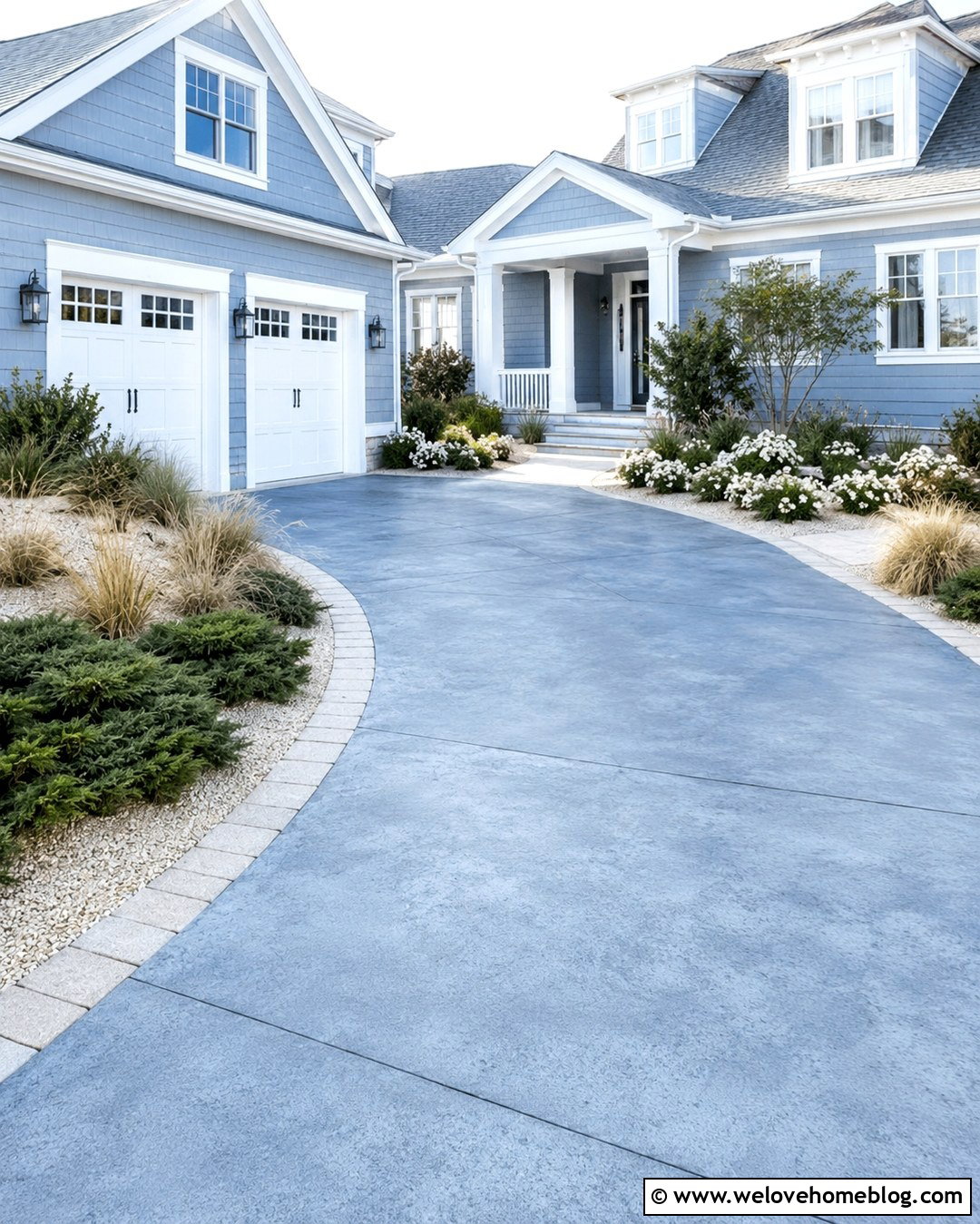
A restrained blue-gray driveway can complement a coastal home without looking overly colorful. Choose a desaturated shade that reads mainly as gray until it is placed beside blue siding, white trim, or weathered shingles. Apply it to a gently curved concrete driveway with a pale shell-colored paver border. Beach grasses, low junipers, white flowering plants, and sandy gravel beds can reinforce the airy palette. Keep the garage apron broad and uncluttered so the painted color remains calm across the larger surface. Avoid bright navy or sky blue, which may dominate the house and show fading more quickly. A matte blue-gray coating with light aggregate texture gives the driveway a stone-like quality while maintaining a clean residential appearance.
12. Sage Green Driveway Paint With Cottage Garden
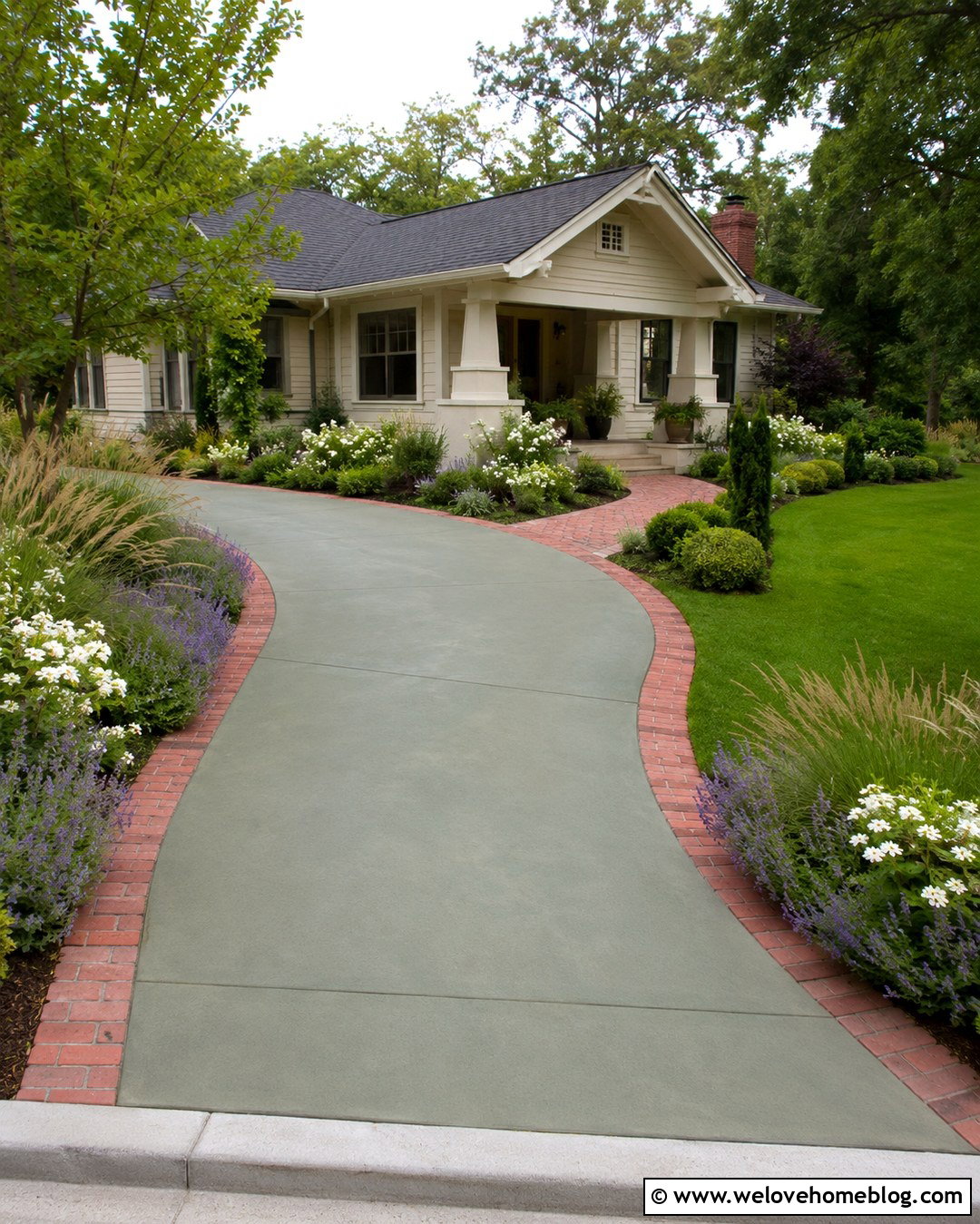
Sage green driveway paint creates a softer connection between concrete and a heavily planted front yard. This unusual color works best when it is muted with plenty of gray, allowing it to behave like a neutral. Use it on a narrow curved driveway leading to a cottage, bungalow, or Craftsman house with cream siding and natural wood details. Edge the concrete with weathered brick or warm gray cobblestones. Layer the surrounding beds with lavender, ornamental grasses, white flowers, and compact evergreen shrubs. The green surface should contrast gently with the lawn rather than match it exactly. Test several samples beside the grass during different seasons. A solid-color concrete stain may produce a more natural finish than thick, glossy paint on this garden-focused design.
13. Olive Driveway Paint With Natural Stone Border
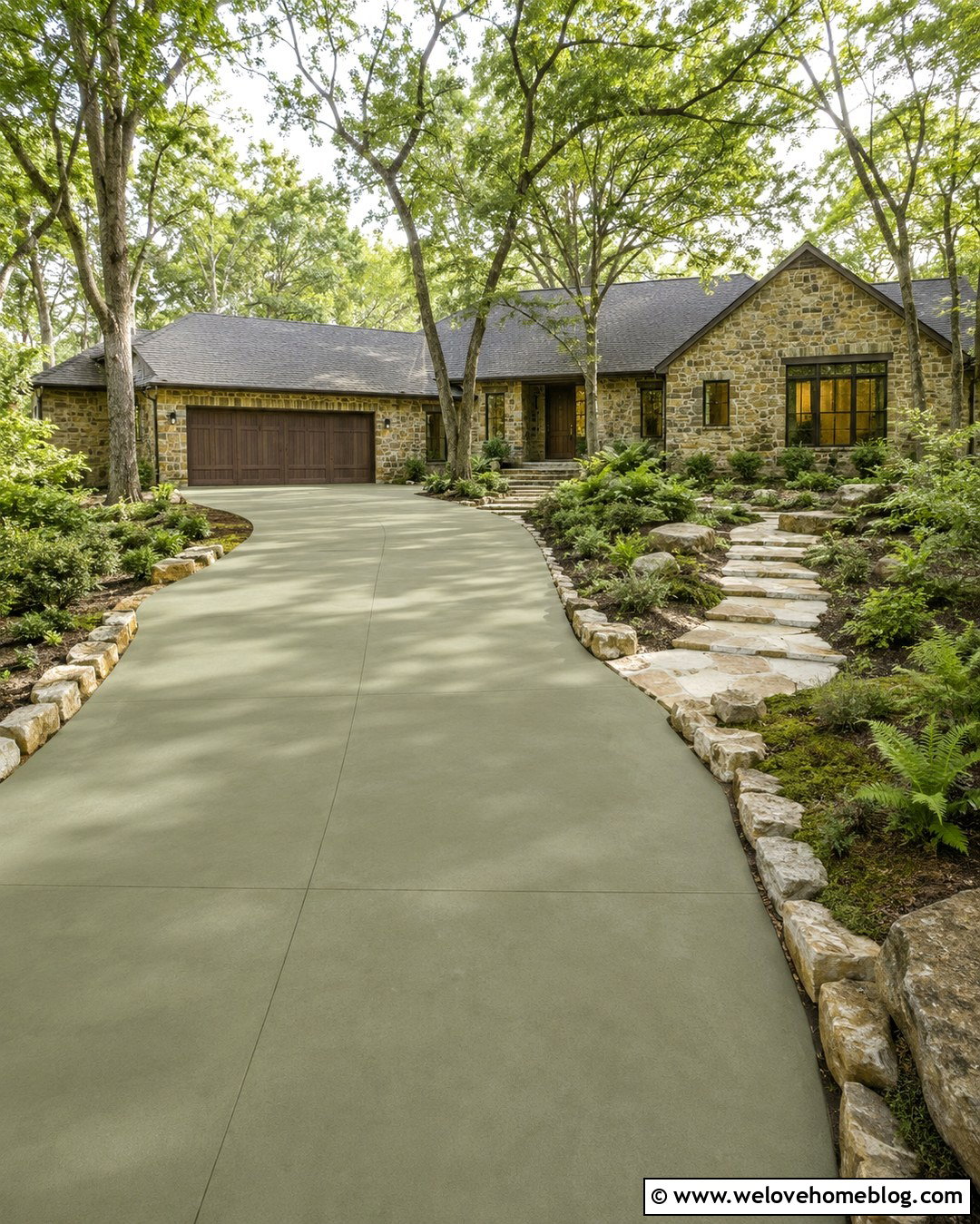
Muted olive paint gives a concrete driveway an earthy, established character. It pairs well with tan stone, brown roofing, dark green trim, and woodland landscaping. Choose a sweeping curved driveway with an irregular natural-stone border that follows the shape without becoming too formal. Add native shrubs, ferns, ground cover, and small canopy trees along the outside curve. The olive coating should contain brown or gray undertones, preventing it from appearing bright green in direct sunlight. This palette is particularly suitable for ranch and rustic contemporary homes surrounded by mature vegetation. Keep the front walkway in a neutral stone tone so the green does not cover every hard surface. A lightly mottled finish will further blend the driveway into the landscape.
14. Cream Driveway Paint With Dark Paver Border
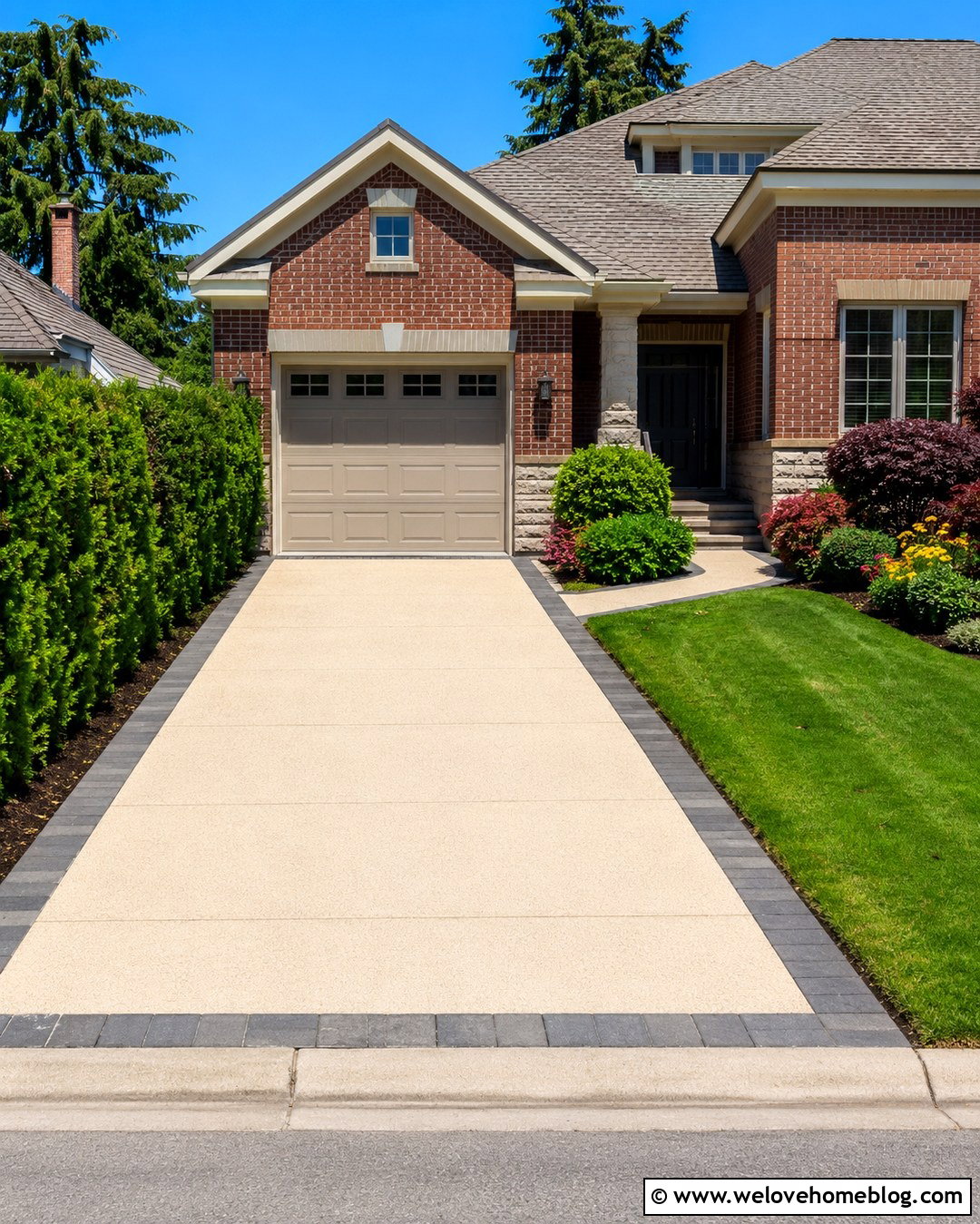
A cream-painted driveway can brighten a shaded entrance and make a compact front yard appear larger. It looks polished beside tan brick, pale stucco, or a traditional red-brick home with light trim. Use the color on a short straight concrete driveway, then add a dark charcoal paver border for definition. Without this stronger outline, cream can visually disappear into pale sidewalks and garage flooring. Deep green hedges, burgundy shrubs, and neatly maintained lawn supply additional contrast. Choose a warm, stone-inspired cream rather than stark yellow or bright white. Light coatings may show oil and leaf stains more readily, so prioritize a stain-resistant exterior product and regular cleaning. A fine textured additive can improve traction while preserving the driveway’s smooth, welcoming appearance.
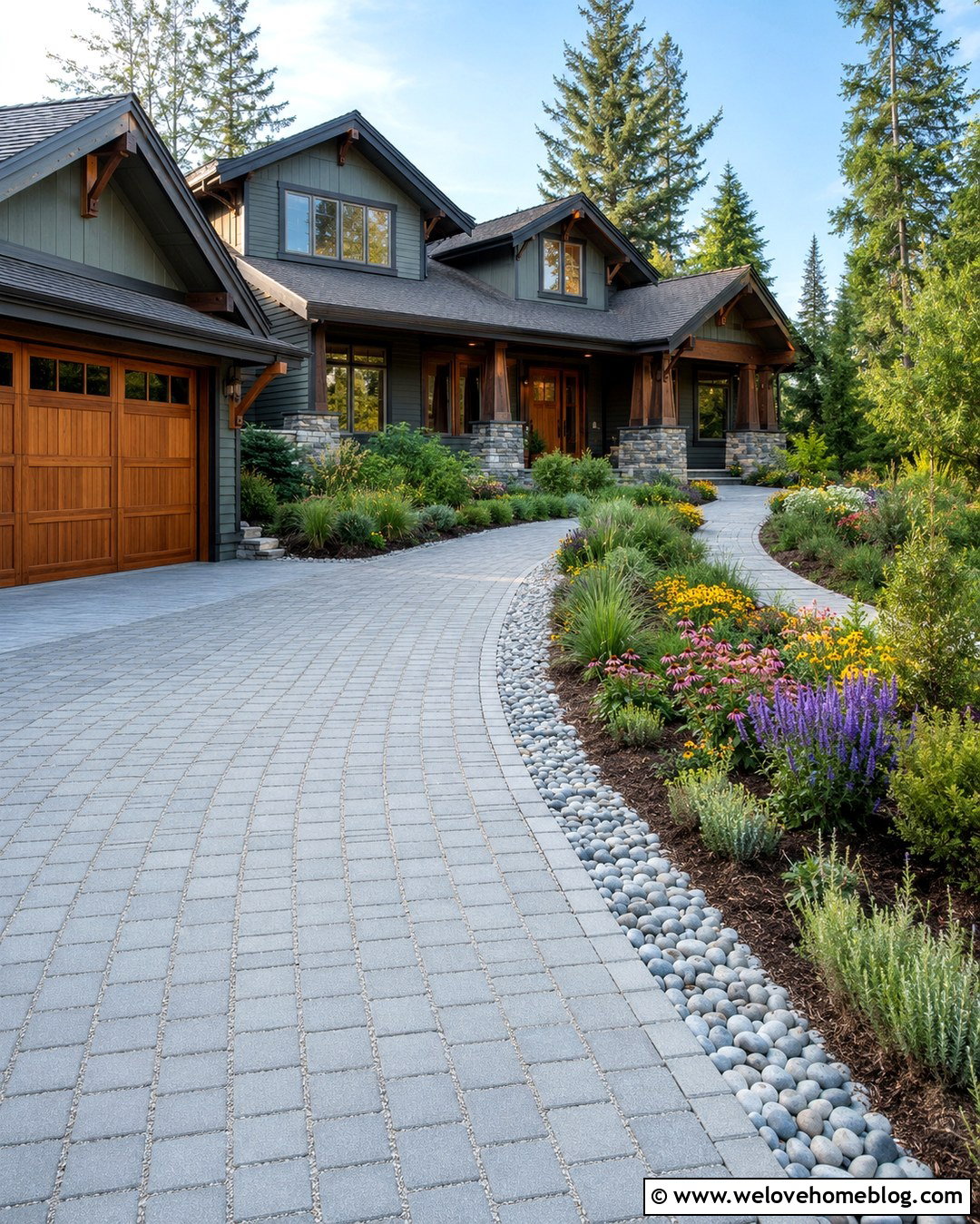
15. Soft White Driveway Paint With Grass Joints
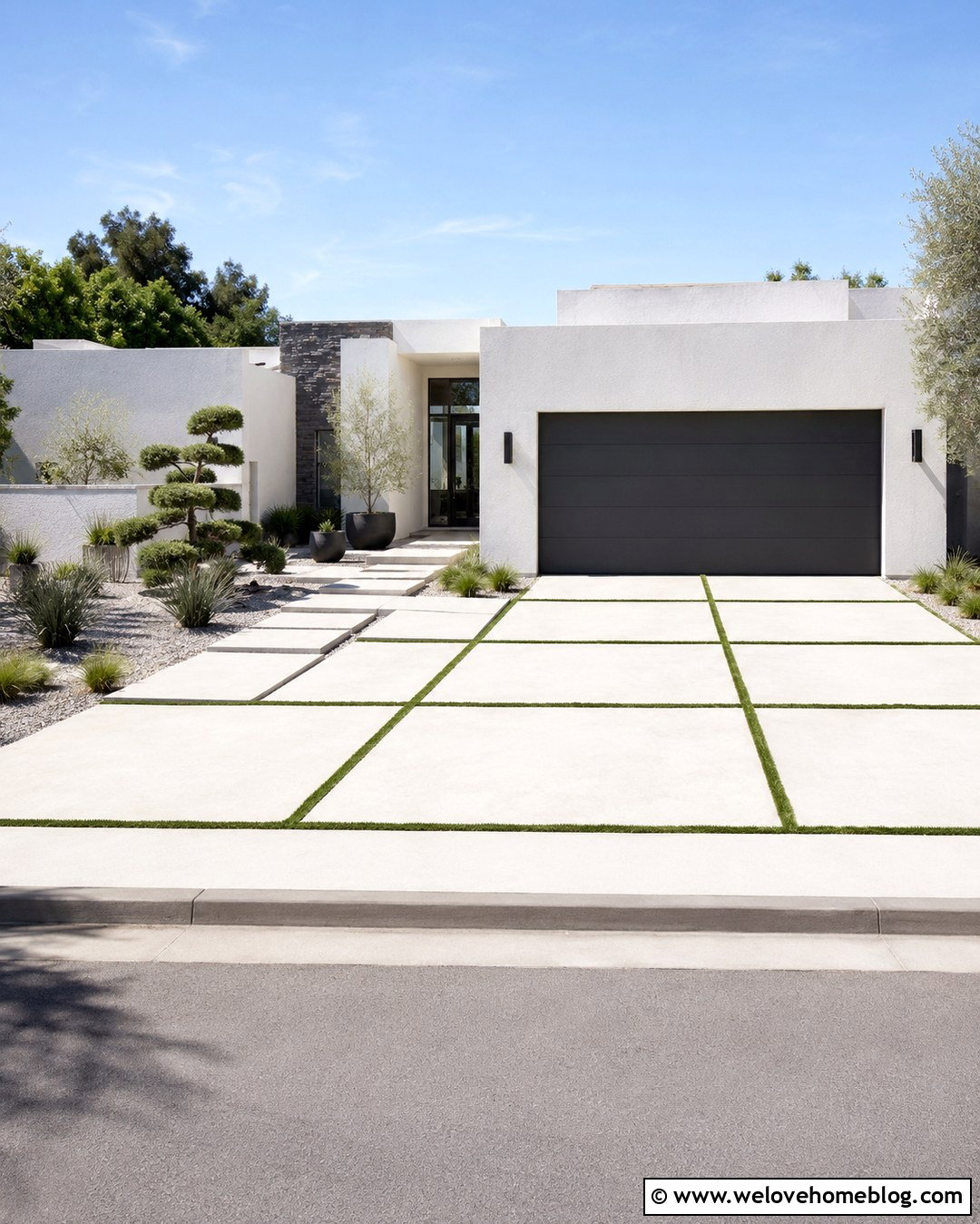
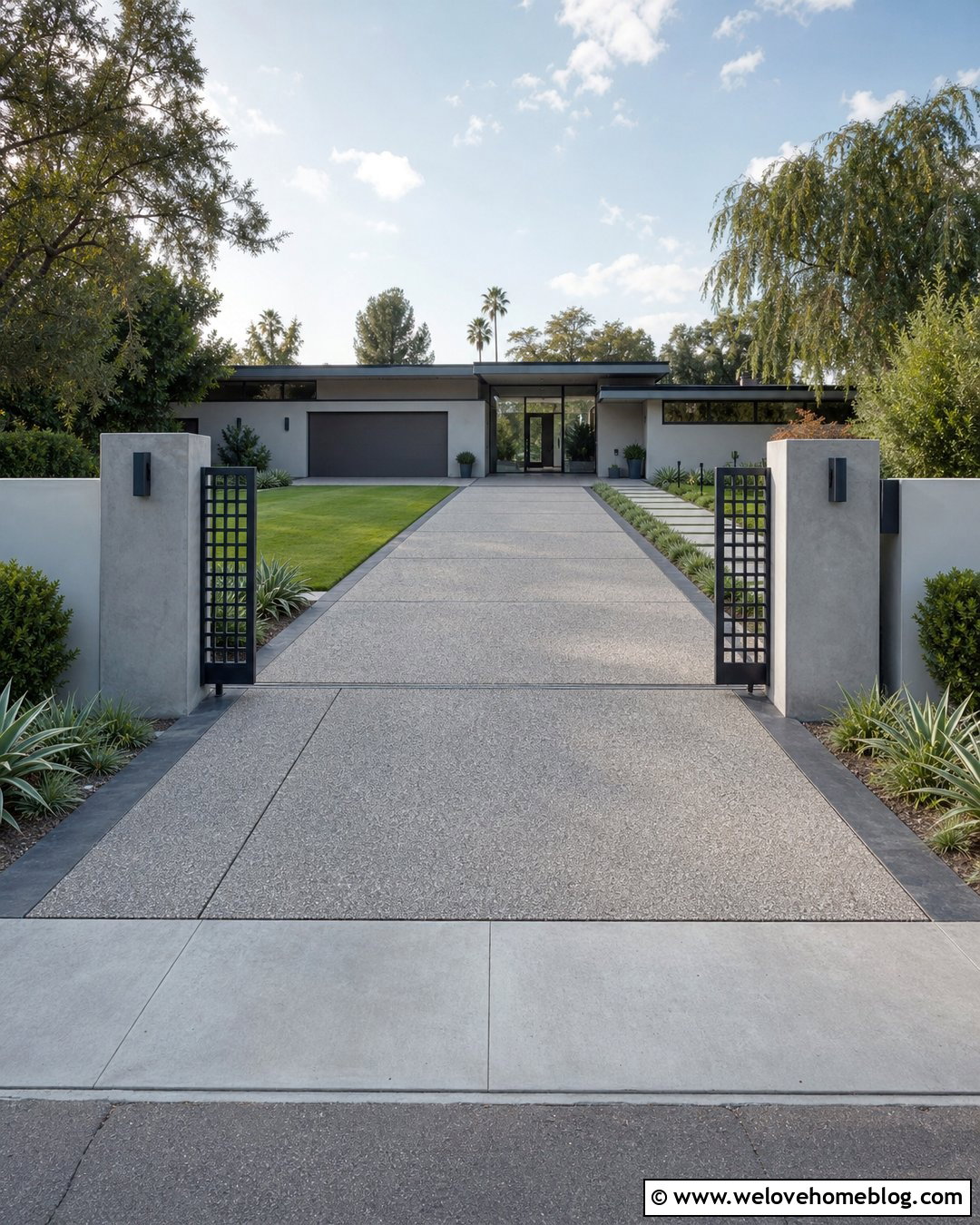
Soft white concrete panels separated by narrow grass joints create a bright, contemporary entrance. This design works best on a modern home with flat rooflines, pale stucco, large windows, and minimal landscaping. Instead of painting one uninterrupted slab, use existing saw cuts or planned rectangular sections to form an orderly grid. The green joints reduce the visual scale of the white surface and help it connect with the lawn. Add gravel beds, sculptural shrubs, and a simple stepping-stone walkway nearby. Repair cracks and damaged areas before applying stain because translucent finishes can emphasize flaws rather than conceal them. () Select a soft off-white coating with an anti-glare matte finish. Bright pure white may be difficult to maintain and uncomfortable in intense sunlight.
16. Black Driveway Paint With Concrete Border
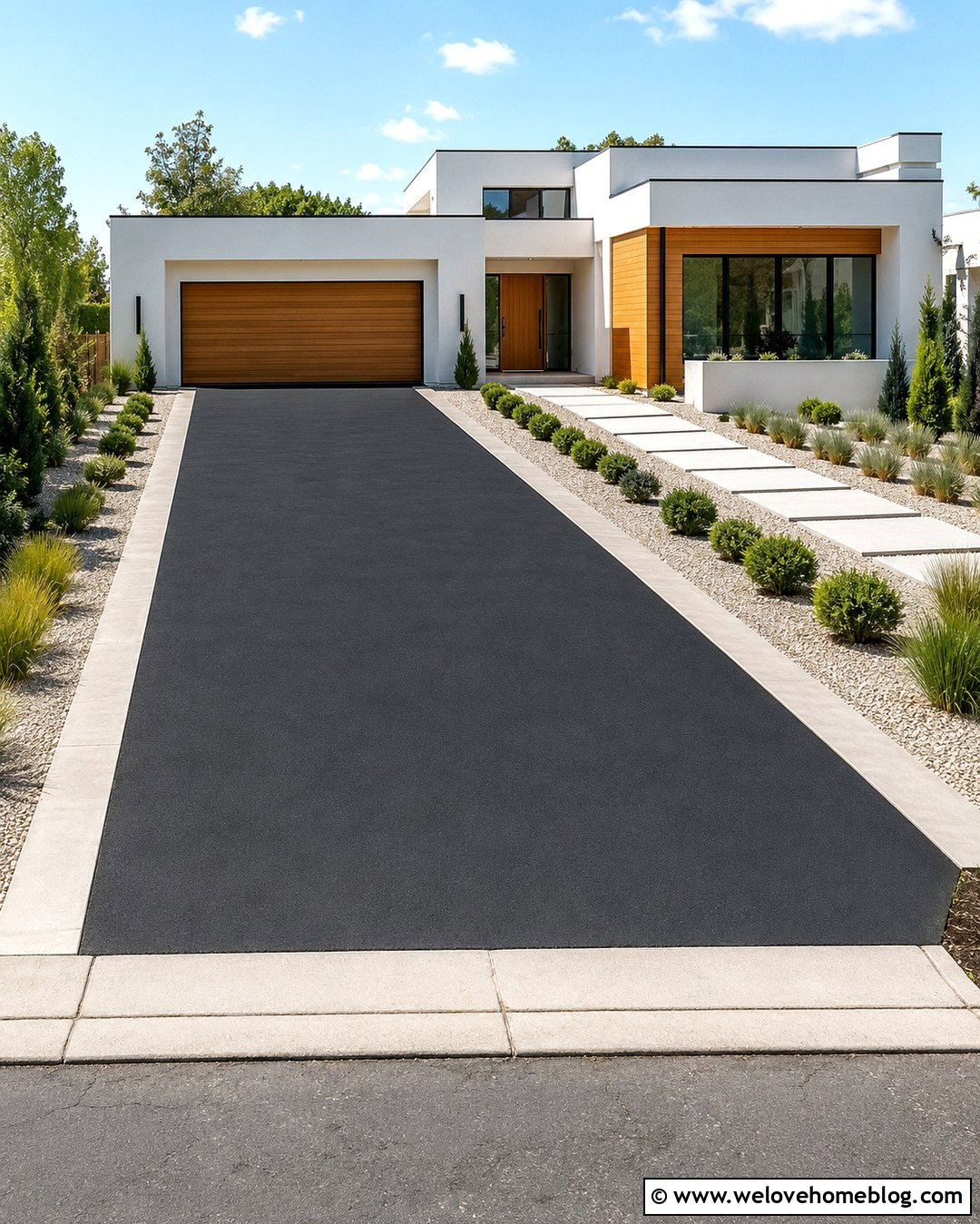
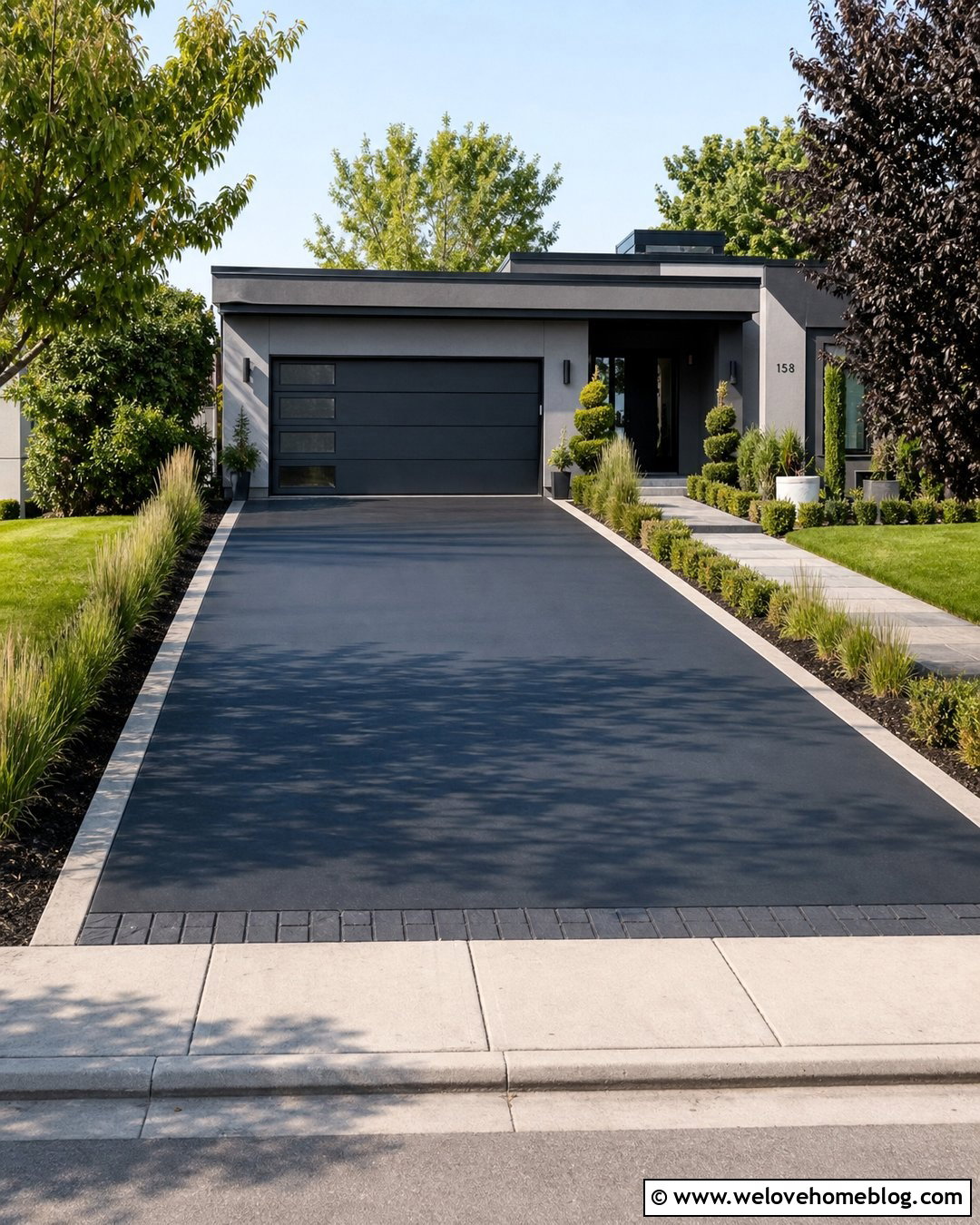
Black driveway paint creates dramatic curb appeal when it is balanced with lighter borders and architecture. Apply it to a broad concrete driveway leading to a minimalist house with white stucco, warm wood siding, or pale brick. Frame the surface with a six-inch band of unpainted light concrete to separate the black area from lawn and planting beds. Repeating the pale border around the walkway makes the design feel deliberate. Use simple ornamental grasses, clipped evergreens, and gravel mulch to maintain the modern effect. True black can show pollen, dust, and surface imperfections, so a softened near-black coating may be easier to live with. It will also become hotter in direct sunlight, making climate, shade, and exposure important considerations.
17. Two Tone Gray Driveway Paint With Geometric Pattern
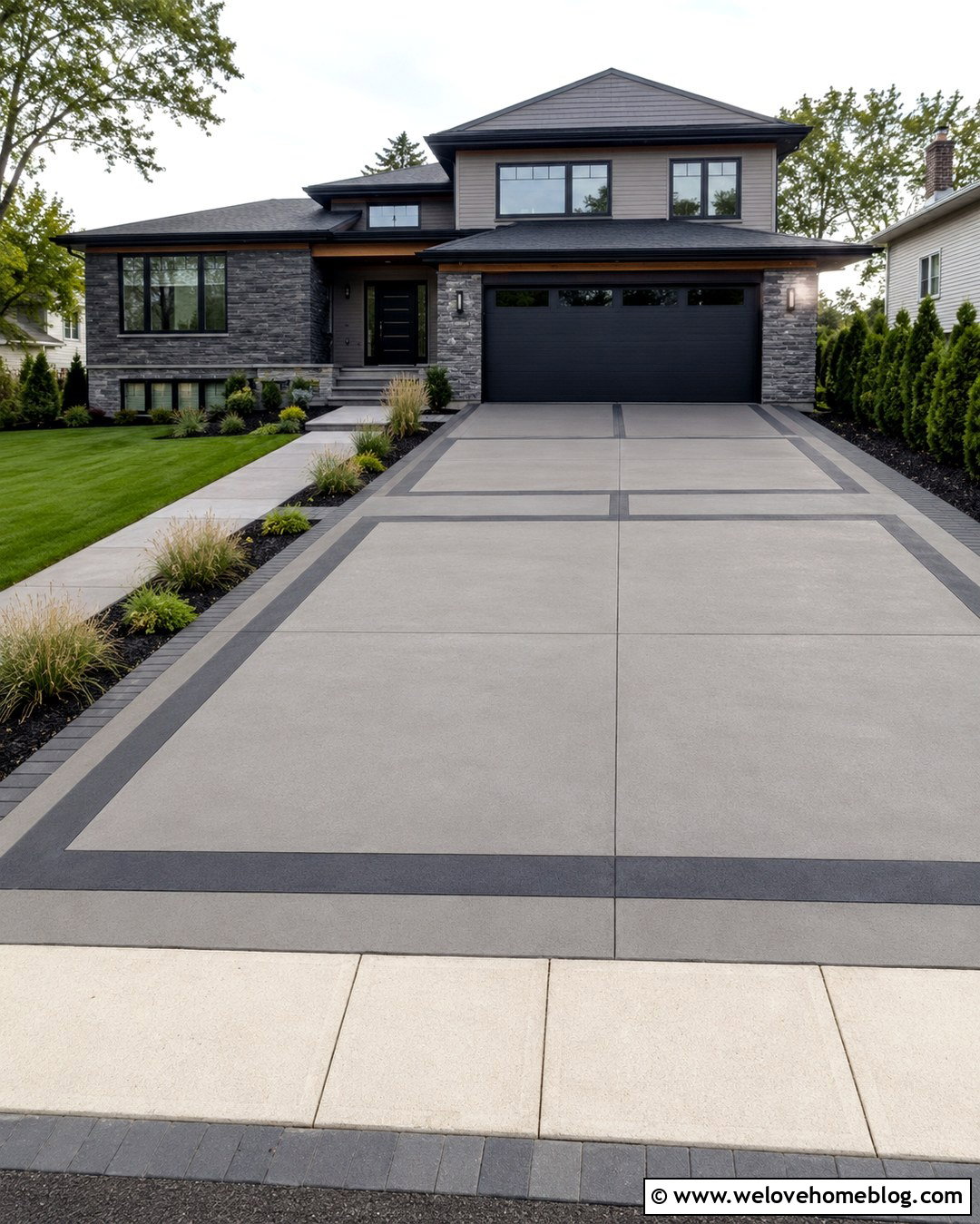
Two shades of gray can give a large concrete driveway structure without introducing a bold color. Start with a medium warm gray base and use charcoal paint to define wide rectangular panels or a simple perimeter frame. The pattern should follow control joints so it looks integrated with the construction rather than painted randomly across the surface. This approach suits a contemporary ranch or split-level home with mixed siding and stone. Add linear planting beds, low grasses, and a straight walkway to reinforce the geometry. Limit the design to two related shades for a clean appearance. Painted patterns also require careful masking and surface preparation. Test both colors together because a small contrast on sample cards can become much stronger across a full driveway.
18. Tan Driveway Paint With Charcoal Border
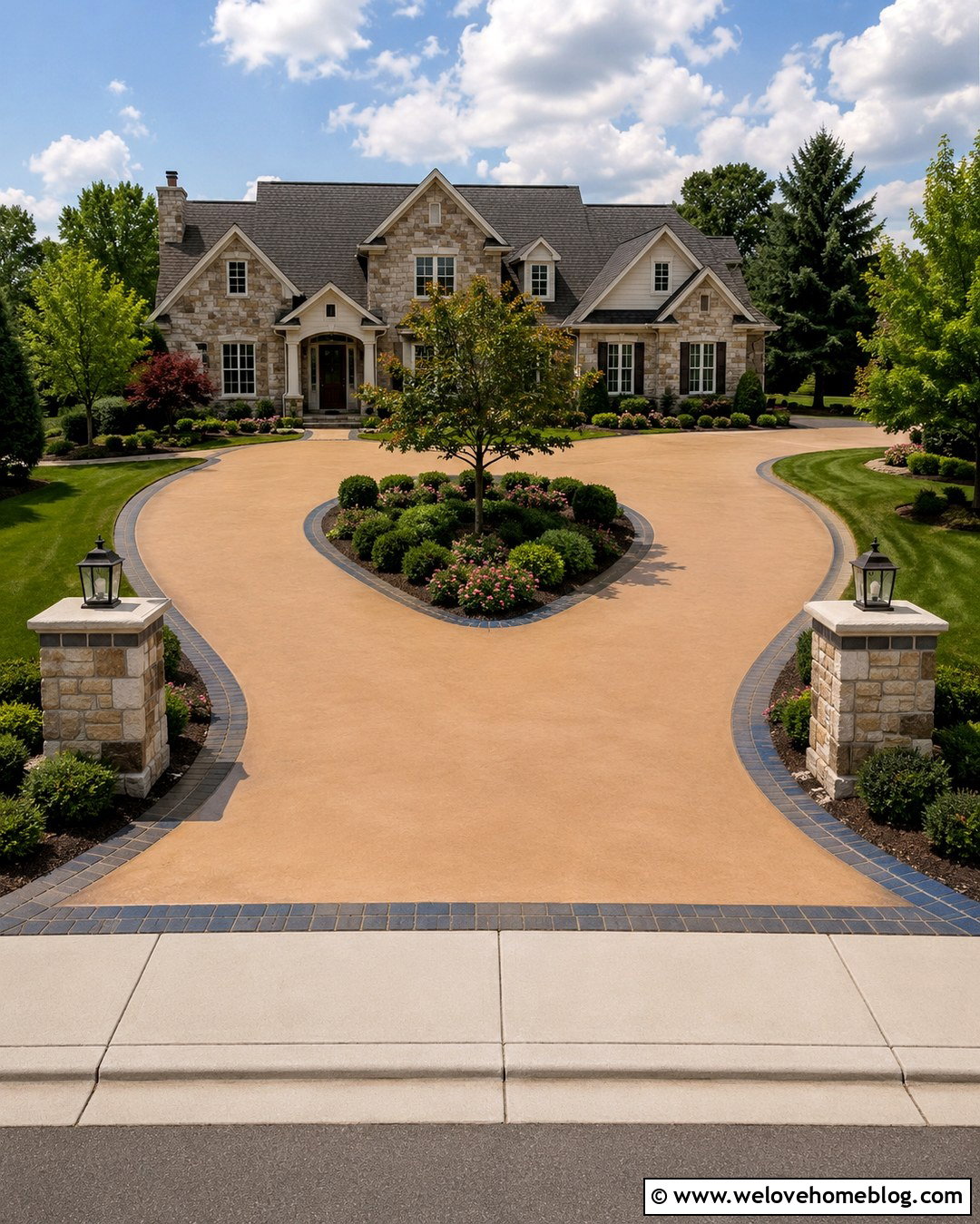
Tan driveway paint creates an easy transition between a concrete surface and a warm brick or stone house. Give the design more definition by adding a charcoal painted border or dark paver edge along both sides. A horseshoe driveway works particularly well because the darker outline clearly explains its shape from the street. Place stone pillars at both entrances and fill the center island with a small tree, low shrubs, and seasonal flowers. Select a tan with muted brown undertones rather than a golden shade that could look overly yellow beside green lawn. This combination feels traditional but remains simple enough for updated suburban homes. Repeat charcoal on the walkway steps, house trim, or garage hardware to unite the complete exterior palette.
19. Copper Brown Driveway Paint With Brick Apron
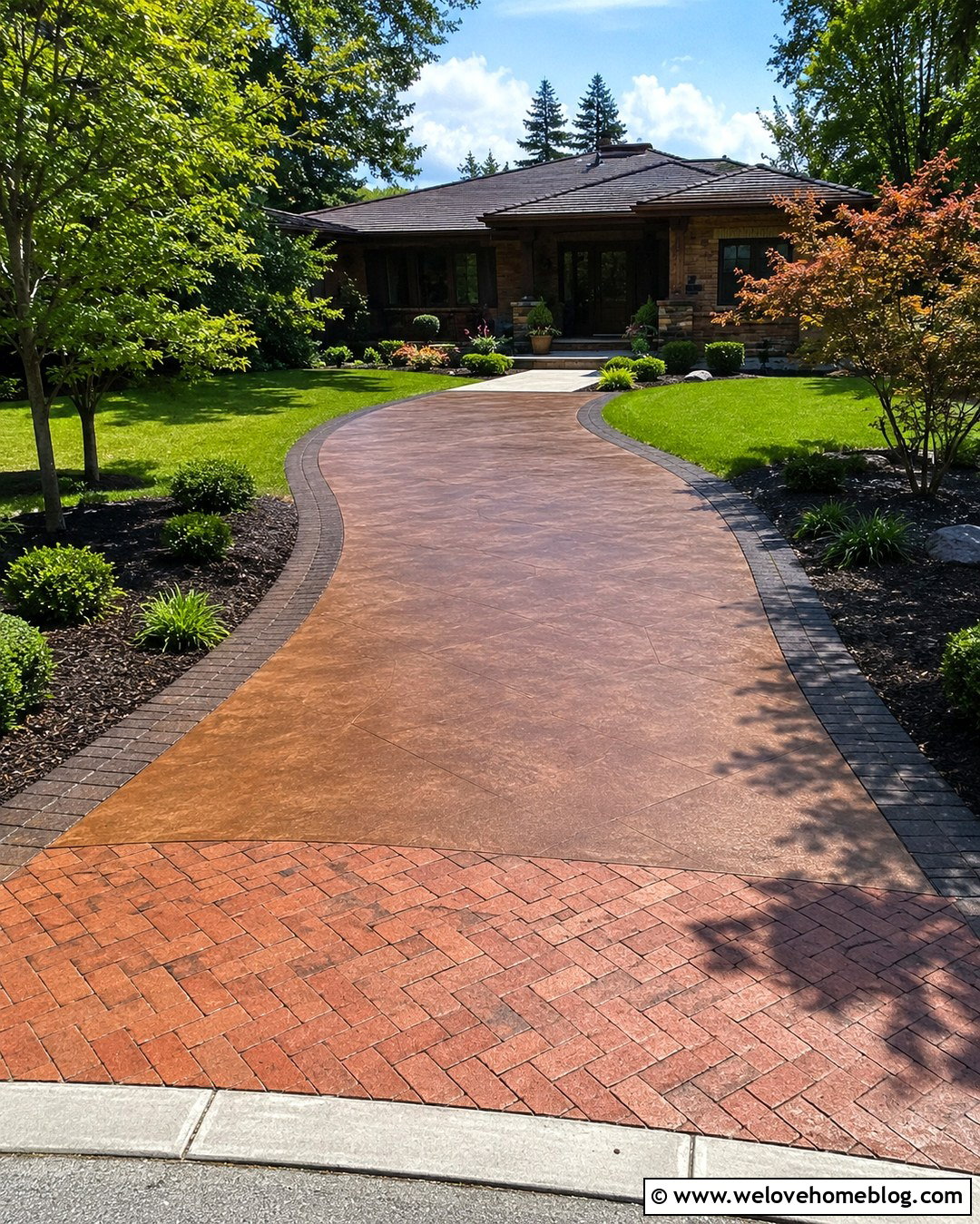
Copper brown brings warm red, orange, and earthy brown tones together in a surface that resembles aged masonry. Use it on a gently curving concrete driveway leading to a brick ranch or traditional Craftsman home. A real clay brick apron in a herringbone pattern creates a durable-looking transition at the street and gives the painted section a convincing material reference. Border the driveway with dark brown pavers, mulched beds, compact shrubs, and small ornamental trees. Keep the copper tone subdued so it complements the brick instead of competing with it. A layered stain application can create subtle variation across the concrete. Coordinate the finish with the walkway, but consider using neutral pavers there to prevent the front yard from becoming overly red or brown.


20. Mottled Earth Tone Driveway Paint With Curved Layout
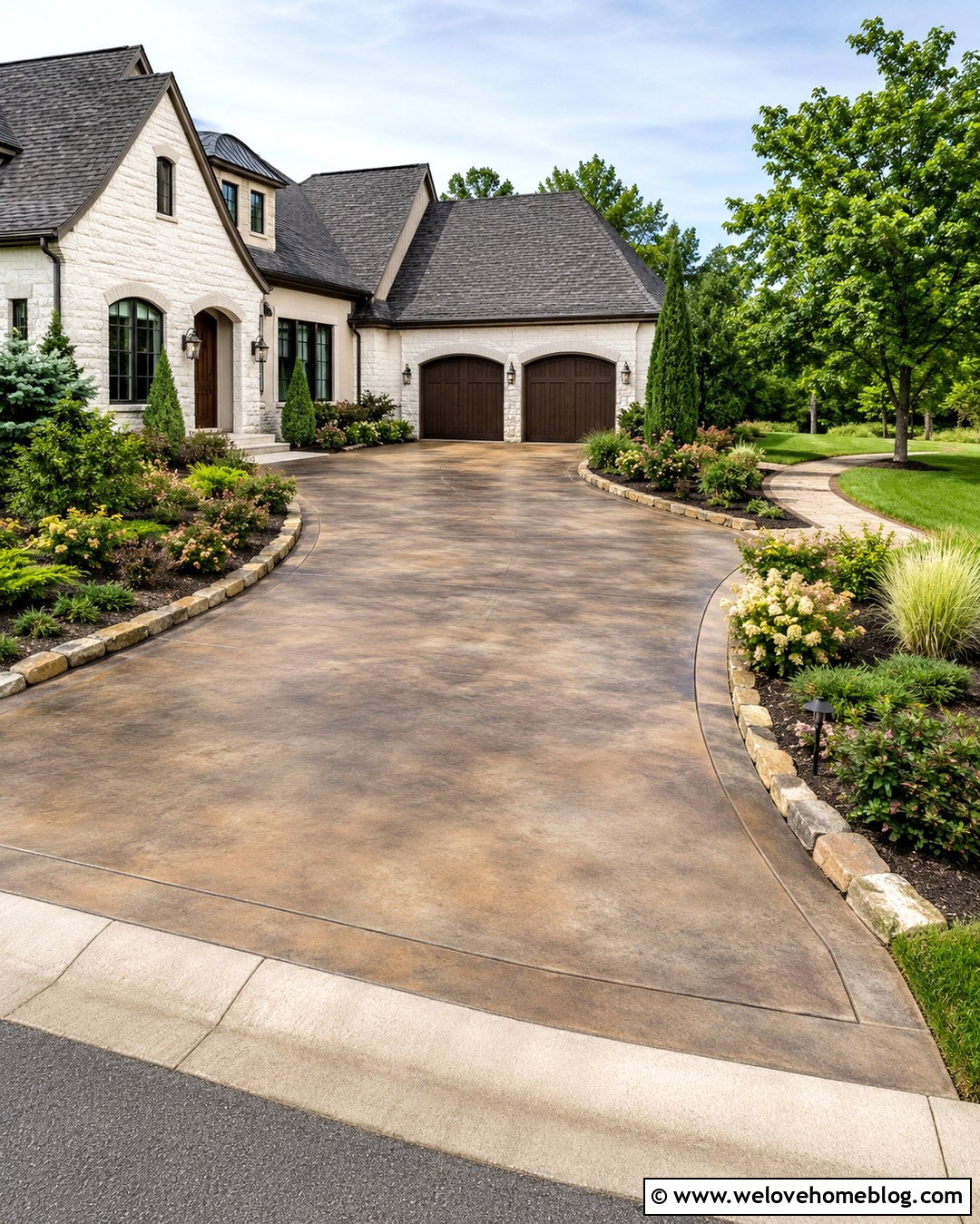
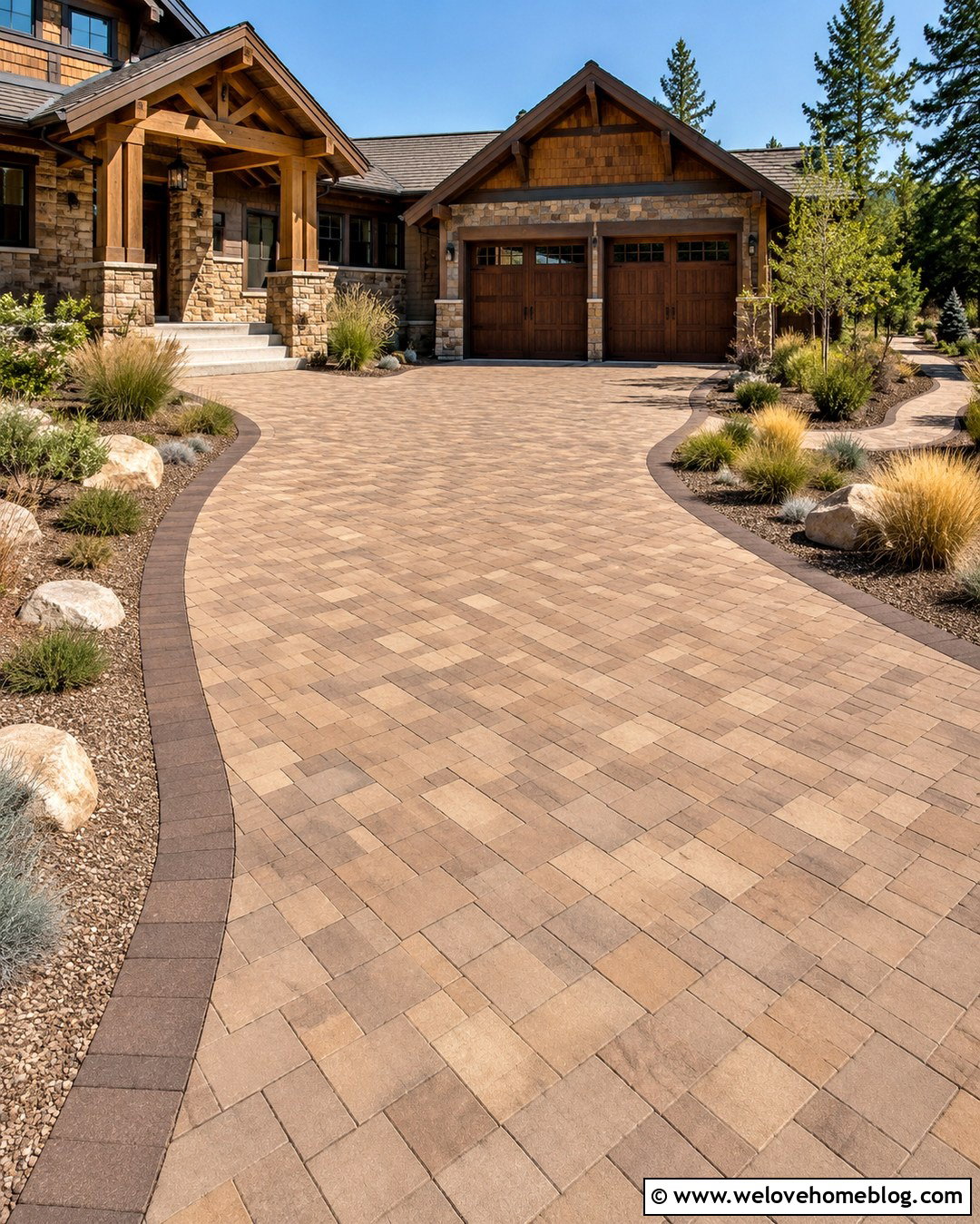
A mottled earth-tone finish combines tan, taupe, brown, and muted gray for a driveway that resembles natural stone. It is a flexible choice when the house exterior includes several materials or when one flat paint color feels too artificial. Use it on a broad curved concrete driveway with irregular stone edging and layered landscaping along the outer arc. A farmhouse, Craftsman, or European-style home can all work with this adaptable palette. Water-based stains are available in a wider color range than traditional acid stains, making them useful for controlled multitone effects. () Request a contractor sample on the actual driveway because porosity, previous repairs, and sealing can influence the finished appearance. Keep the variation subtle enough to avoid a patchy result.
Conclusion:
The best driveway color should support the entire property rather than stand apart from it. Compare each shade with the house facade, roof, garage door, walkway, borders, and front-yard planting before making a final choice. Warm gray, greige, taupe, and earth tones offer adaptable results, while charcoal, terracotta, sage, or black create a stronger statement. Always clean and repair the concrete, check coating compatibility, and use a finish rated for exterior surfaces and vehicle traffic. Test samples in sunny and shaded areas before committing to the full project. With careful color coordination and practical surface preparation, these **20 Driveway Paint Colors Ideas** can help create a more attractive and cohesive home entrance.

Related posts:


Leave a Reply