
Cast iron driveway gates can give a home more security, definition, and curb appeal while turning an ordinary entrance into a complete design feature. Current gate designs range from open vertical bars and traditional scrollwork to cleaner geometric patterns that suit contemporary homes. The strongest entrances also coordinate the gate with the driveway surface, pillars, fencing, lighting, and nearby landscaping. () Before choosing a design, consider the driveway’s width, slope, turning space, and available room for swinging or sliding panels. The gate should also reflect the scale and architecture of the house. Whether your property has a compact concrete drive or a sweeping estate entrance, the following 20 Cast Iron Driveway Gates Ideas offer practical inspiration for creating a polished arrival.
1. Arched Cast Iron Driveway Gate With Brick Pillars
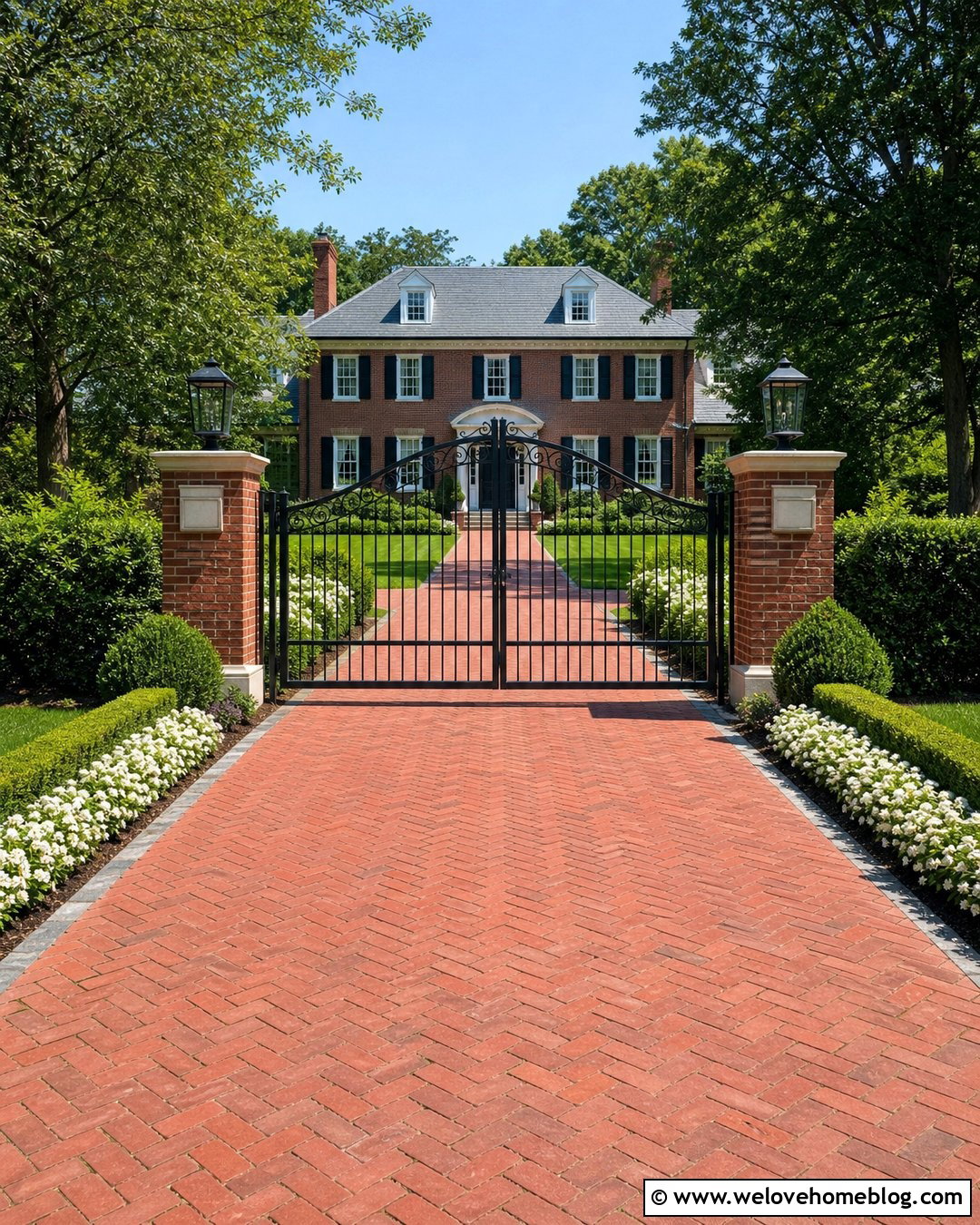
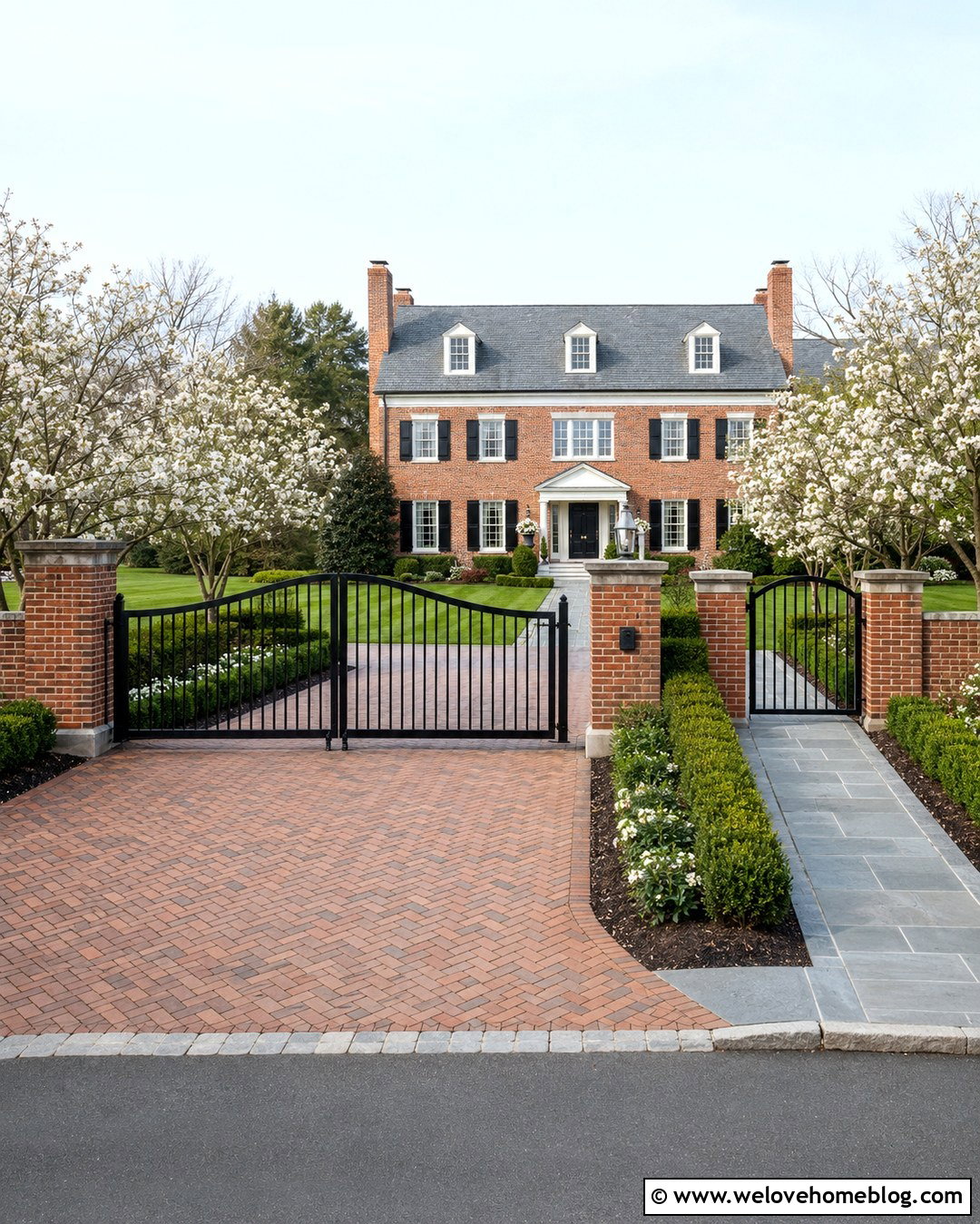
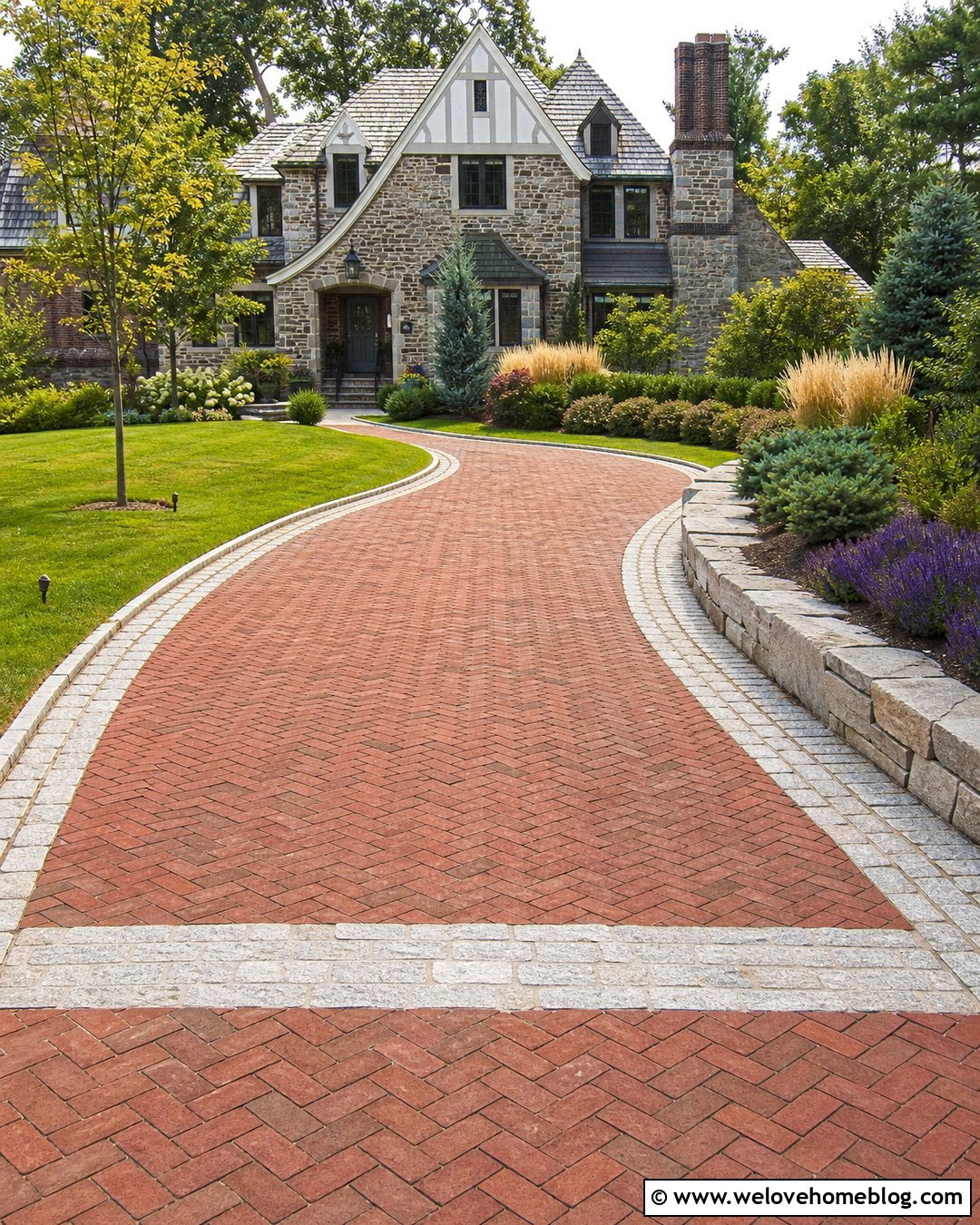
An arched double gate brings traditional structure to a straight driveway without making the entrance feel overly heavy. Choose black cast iron panels with open vertical bars, restrained scrollwork, and a gentle rise toward the center. Substantial red brick pillars can connect the gate to a Colonial or Georgian home, especially when the brick matches the facade or chimney. Continue the entrance with clay brick pavers laid in herringbone for a rich, coordinated finish. Low boxwood hedges and white flowering borders soften the masonry while keeping sightlines clear. Lanterns mounted on the pillars complete the arrangement. This look works best when the gate arch follows another curve on the home, such as a fanlight, portico, or upper window.
2. Modern Cast Iron Sliding Gate With Concrete Driveway
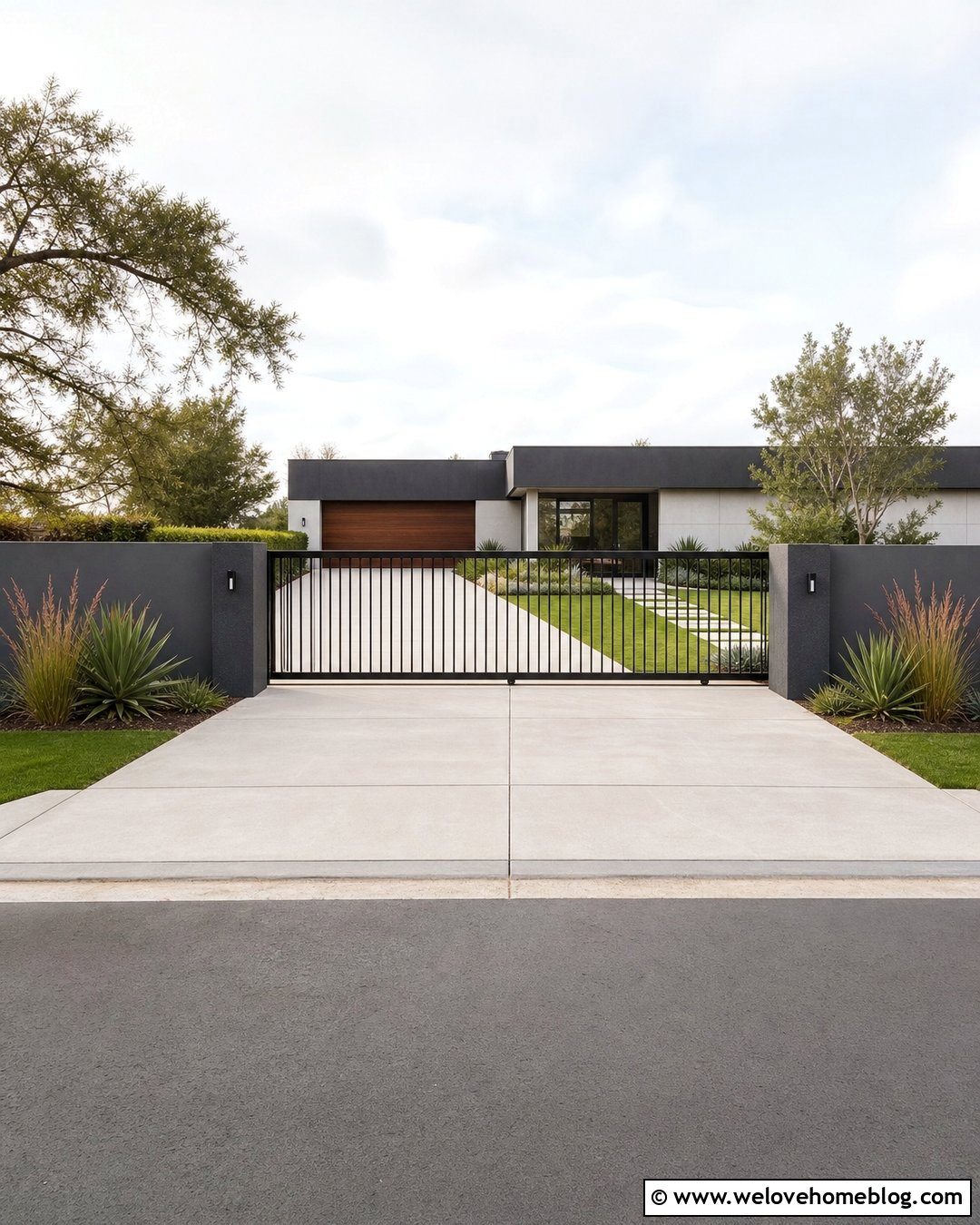
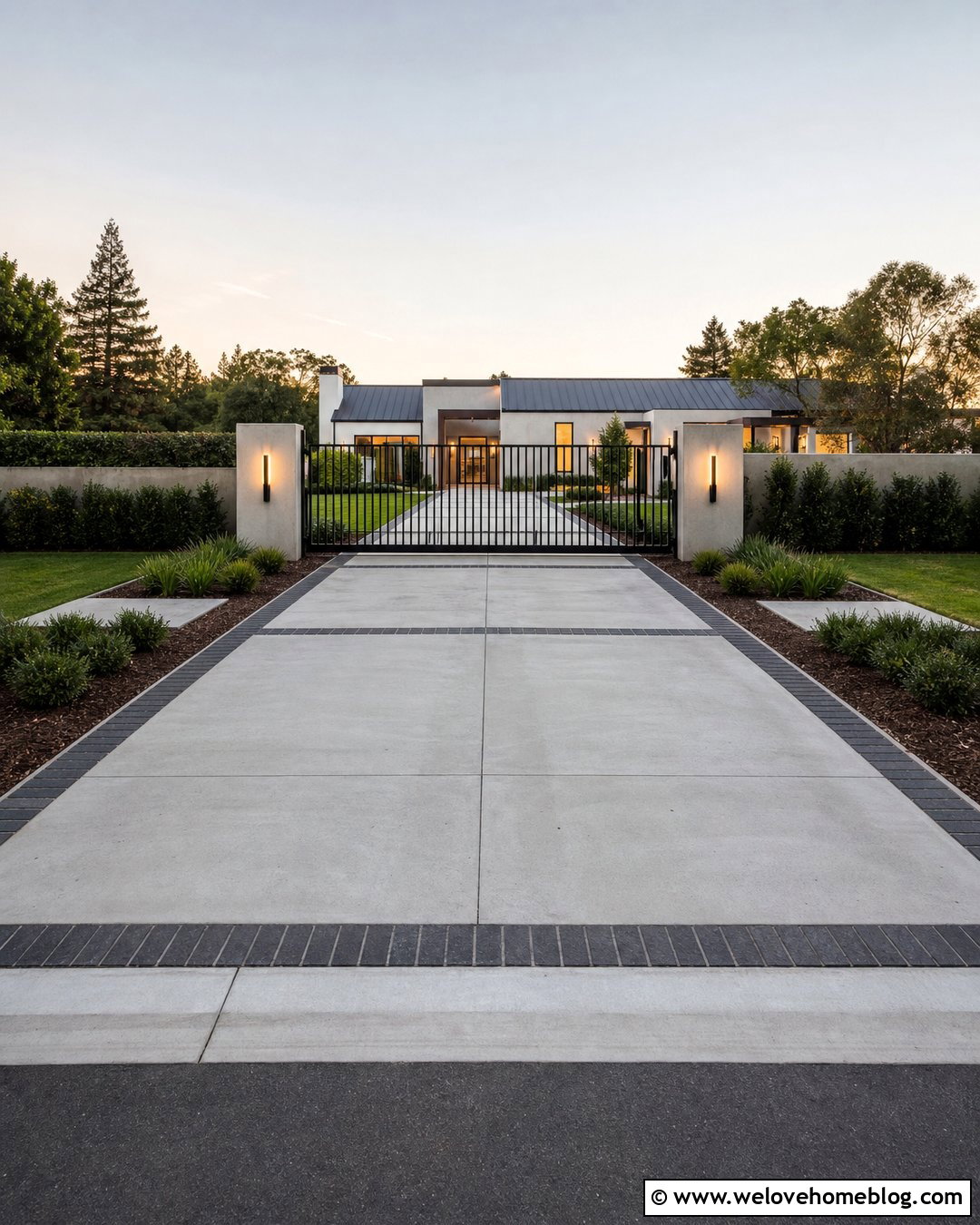
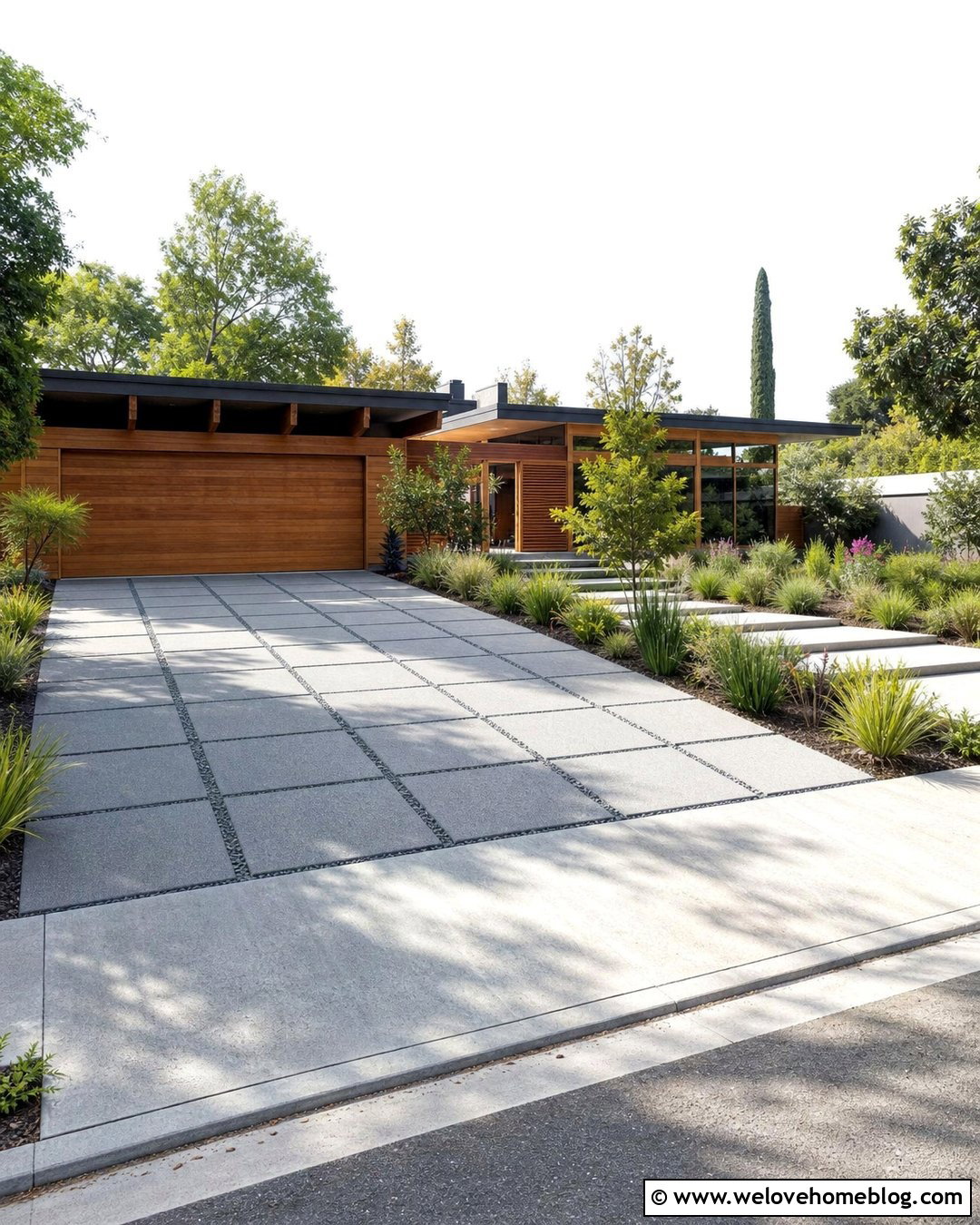
Limited opening space does not have to rule out a substantial iron entrance. A sliding cast iron gate travels alongside the boundary instead of swinging into the driveway, making it useful for short approaches and sloped lots. Select a clean pattern of straight vertical bars set inside a strong rectangular frame. Minimal ornament keeps the design compatible with a modern house. Pair it with smooth light-gray poured concrete divided by narrow control joints. Charcoal concrete walls or rendered masonry pillars can visually anchor the black gate. Use linear ornamental grasses, clipped evergreen shrubs, and a simple concrete walkway around the entrance. Concealing the track, motor, and wiring behind landscaping or a low wall helps the entire installation look intentional rather than overly mechanical.
3. Victorian Cast Iron Driveway Gate With Cobblestone
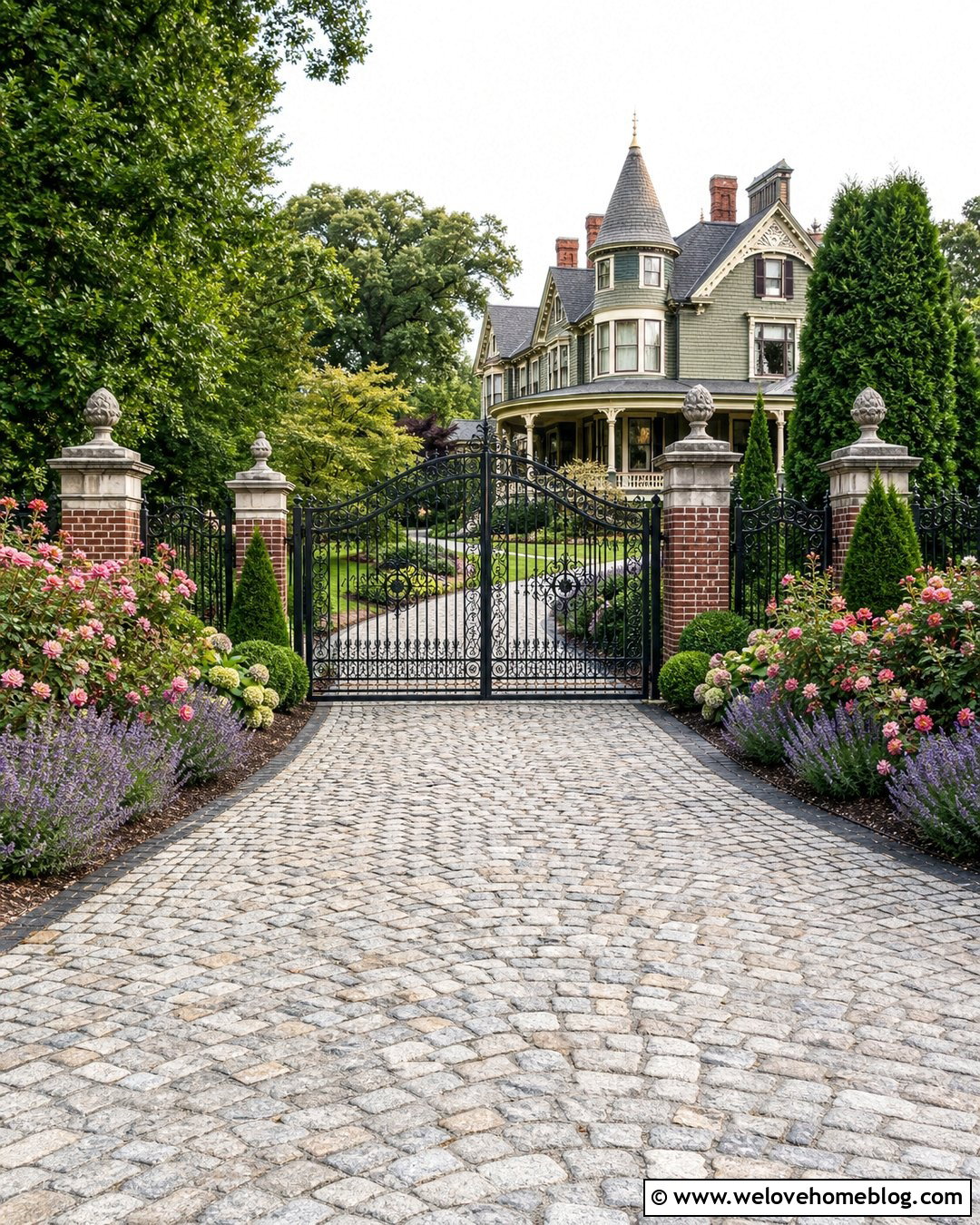
Detailed scrolls, floral castings, and decorative finials suit a Victorian home with an equally expressive exterior. A tall double gate with a curved upper edge can echo ornate porch trim, bay windows, and decorative roof details. Place it between painted masonry pillars or patterned brick columns topped with cast-stone caps. A gray cobblestone driveway gives the entrance an established appearance and creates an attractive contrast with glossy black iron. Use a darker stone border to define the driveway edges and protect nearby planting beds. Roses, lavender, hydrangeas, and clipped evergreens complement the period character without hiding the metalwork. Keep the most elaborate ornament near the upper half of the gate, leaving the lower bars relatively open so the entrance remains balanced and visually welcoming.
4. Spear Top Cast Iron Gate With Stone Pillars
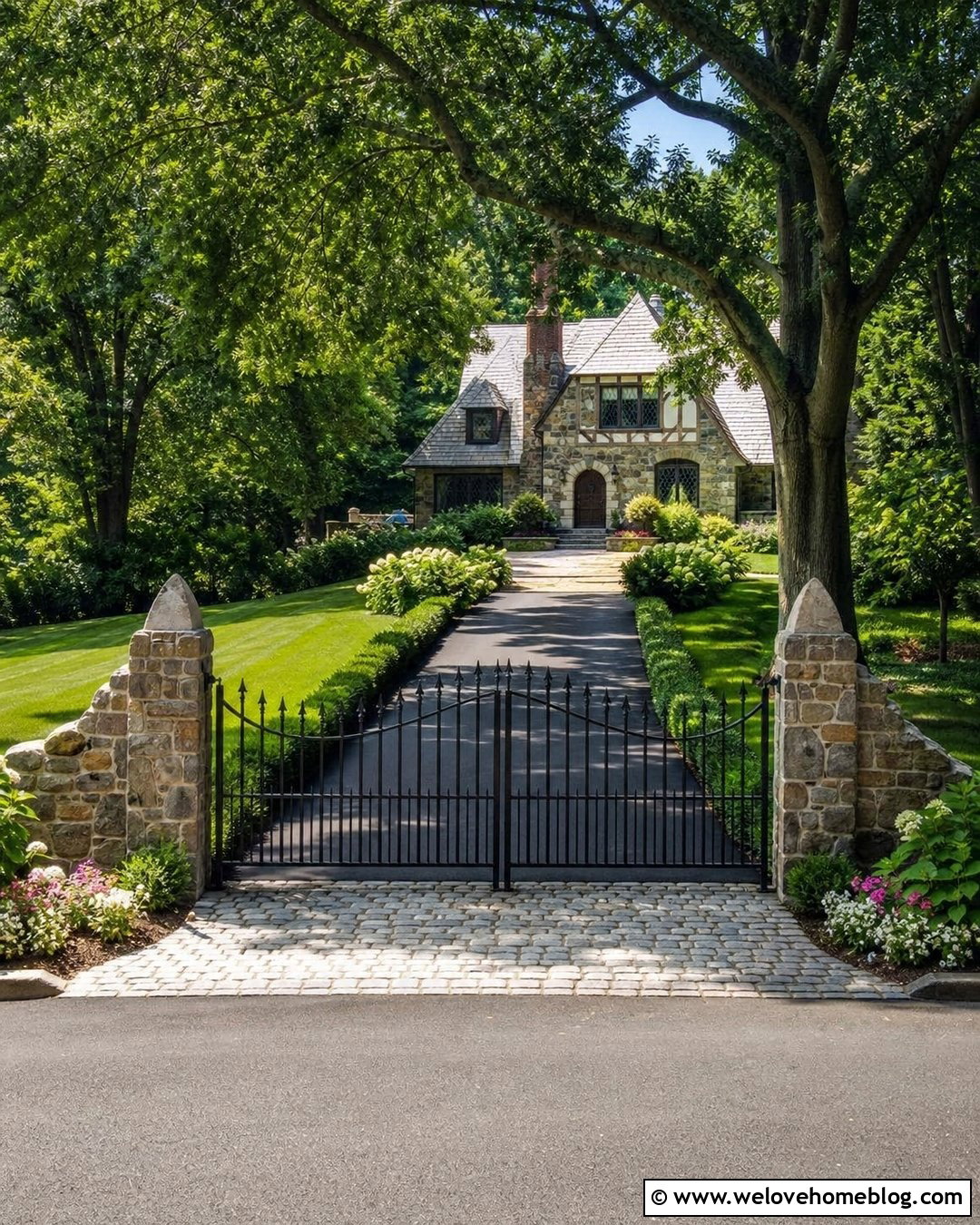
Spear-top pickets create a strong traditional boundary that looks especially appropriate at a Tudor, stone cottage, or English-inspired house. Use evenly spaced vertical bars with modest spear finials and a shallow arched frame. Natural fieldstone pillars give the gate weight while connecting it to rustic walls and textured house facades. Behind the entrance, a black asphalt driveway provides a simple surface that allows the stone and iron to remain the main features. Add a cobblestone apron where the driveway meets the road for a more refined transition. Informal hedges, mature shade trees, and layered perennial beds can soften the formal gate. For better visual balance, keep the pillar height slightly above the gate’s outer edges rather than competing with the taller center arch.
5. Spanish Cast Iron Driveway Gate With Stucco Columns
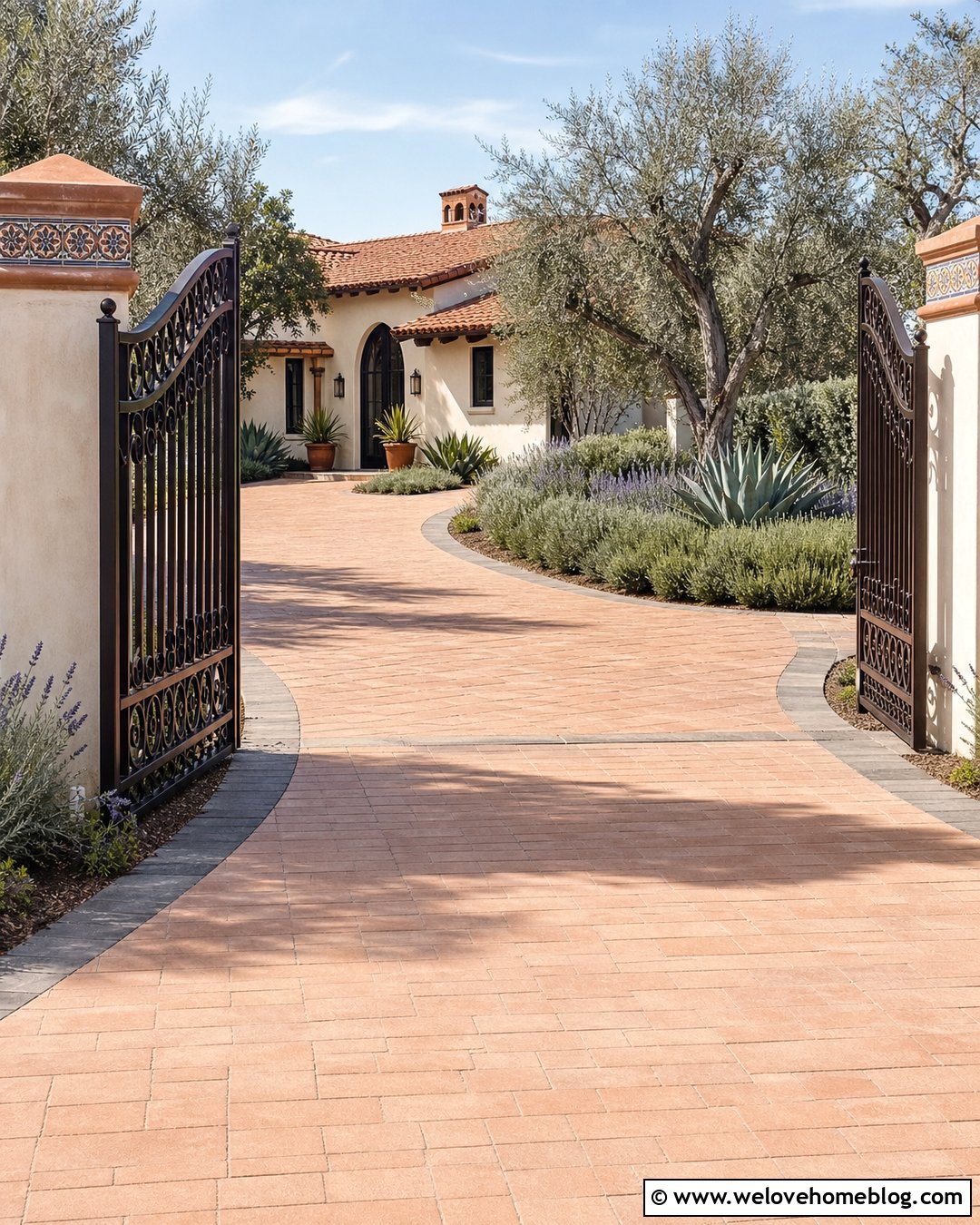
Warm materials and flowing ironwork create a welcoming entrance for a Spanish Colonial or Mediterranean house. Choose a black or dark bronze cast iron gate with broad scrolls, circular details, and a softly curved top. Smooth cream stucco columns can match the house walls, while terracotta caps reference the roof tiles. Continue through the entrance with warm clay pavers or terracotta-toned concrete pavers laid in a running bond. A narrow darker paver border gives the driveway a clean outline. Surround the columns with drought-tolerant rosemary, lavender, agave, and olive trees. Avoid packing plants too close to the gate’s operating path. Small lanterns with clear glass can highlight the metal pattern while keeping the entrance visually connected to the home’s doors, balconies, and window grilles.
6. Farmhouse Cast Iron Gate With Gravel Driveway
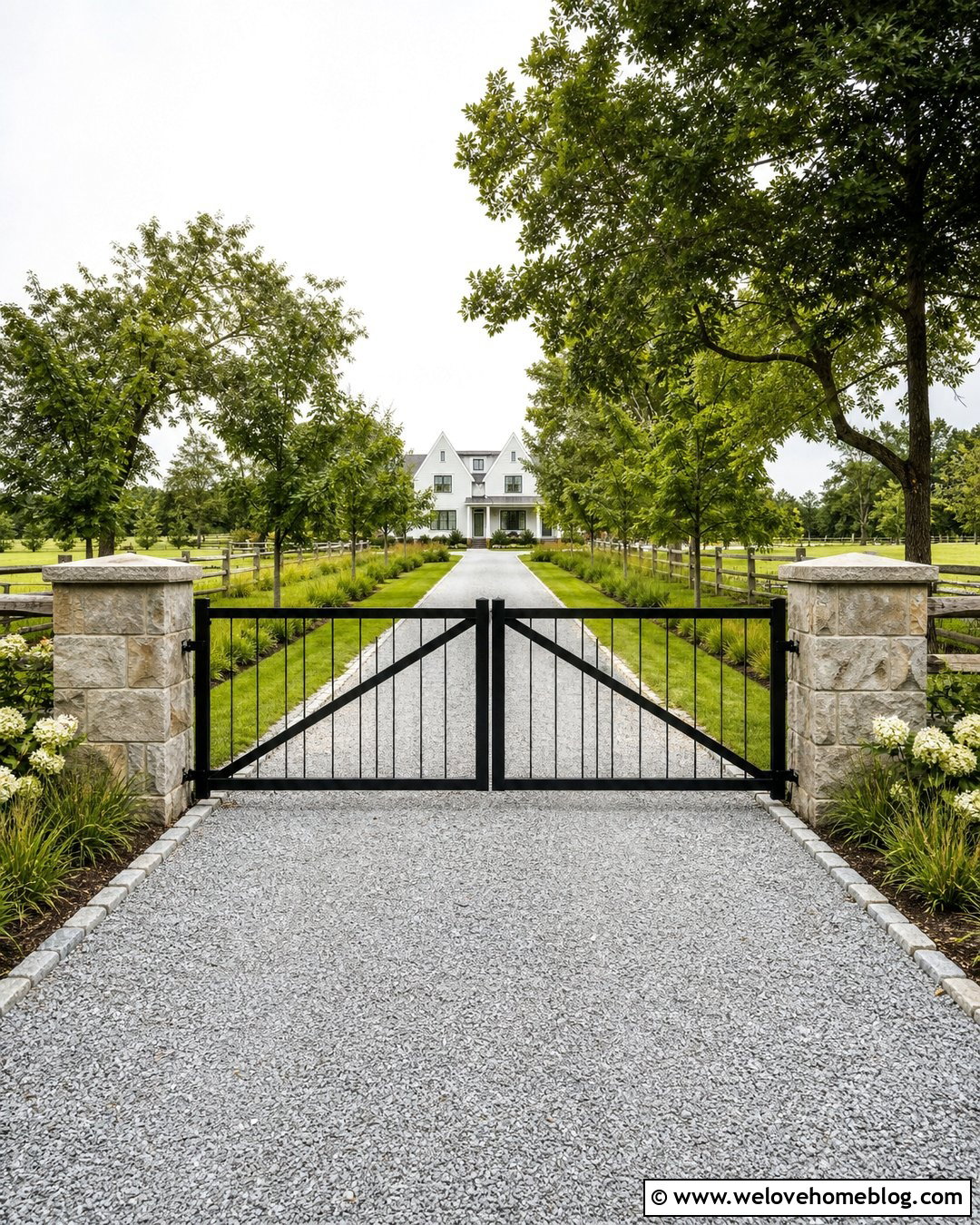
A simple cast iron gate can add definition to a farmhouse entrance without making it look too formal. Use a wide double gate with straight bars, diagonal bracing, and small circular cast details rather than dense ornamental scrollwork. Rough-cut limestone pillars or sturdy brick posts create an appealing transition from the road. A pale gray crushed-stone driveway keeps the setting relaxed and provides a practical surface for a long country approach. Edge the gravel with weathered granite blocks to reduce spreading and improve the finished appearance. Native grasses, white hydrangeas, split-rail fencing, and a few broad-canopy trees can frame the drive. A matte black finish ties the gate to black farmhouse windows, barn-style lighting, and other dark exterior accents without overpowering the landscape.
7. Cast Iron Estate Gate With Family Crest
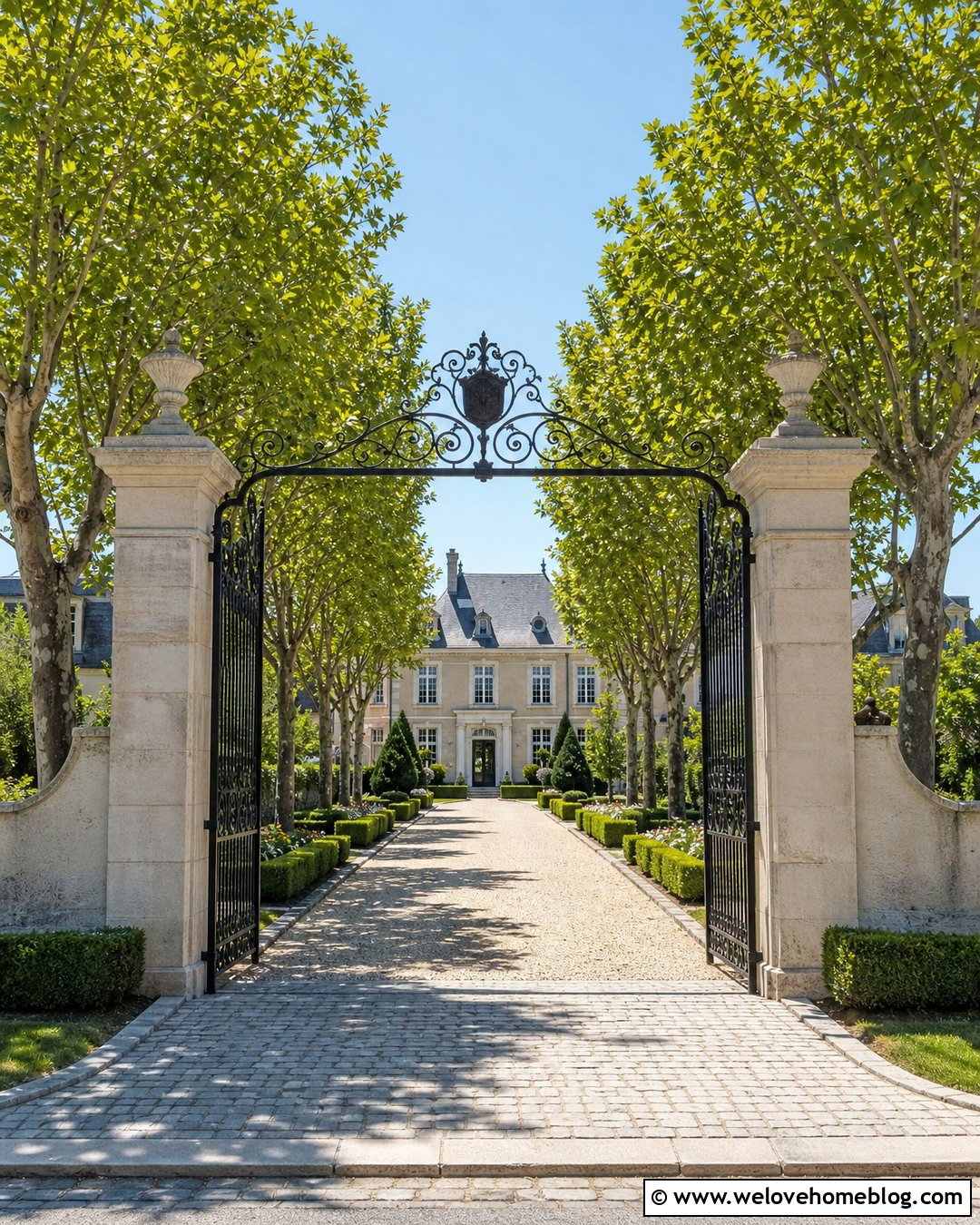
A large property entrance provides enough scale for a personalized crest or emblem, but the surrounding design should remain controlled. Center the decorative casting within an open double gate made from vertical bars and symmetrical scrollwork. Limestone pillars with molded caps give the composition a formal foundation, while a granite-sett driveway apron creates a durable and impressive transition from the street. Beyond the apron, continue with pale gravel or matching stone pavers along a straight, tree-lined approach. Formal hedges and evenly spaced canopy trees reinforce the balanced layout. The crest should be clearly visible without filling the entire gate. Consider using a dark bronze highlight on selected raised details while keeping the frame black. This entrance pairs naturally with French, Georgian, and European-inspired estate homes.
8. Geometric Cast Iron Gate With Exposed Aggregate Driveway
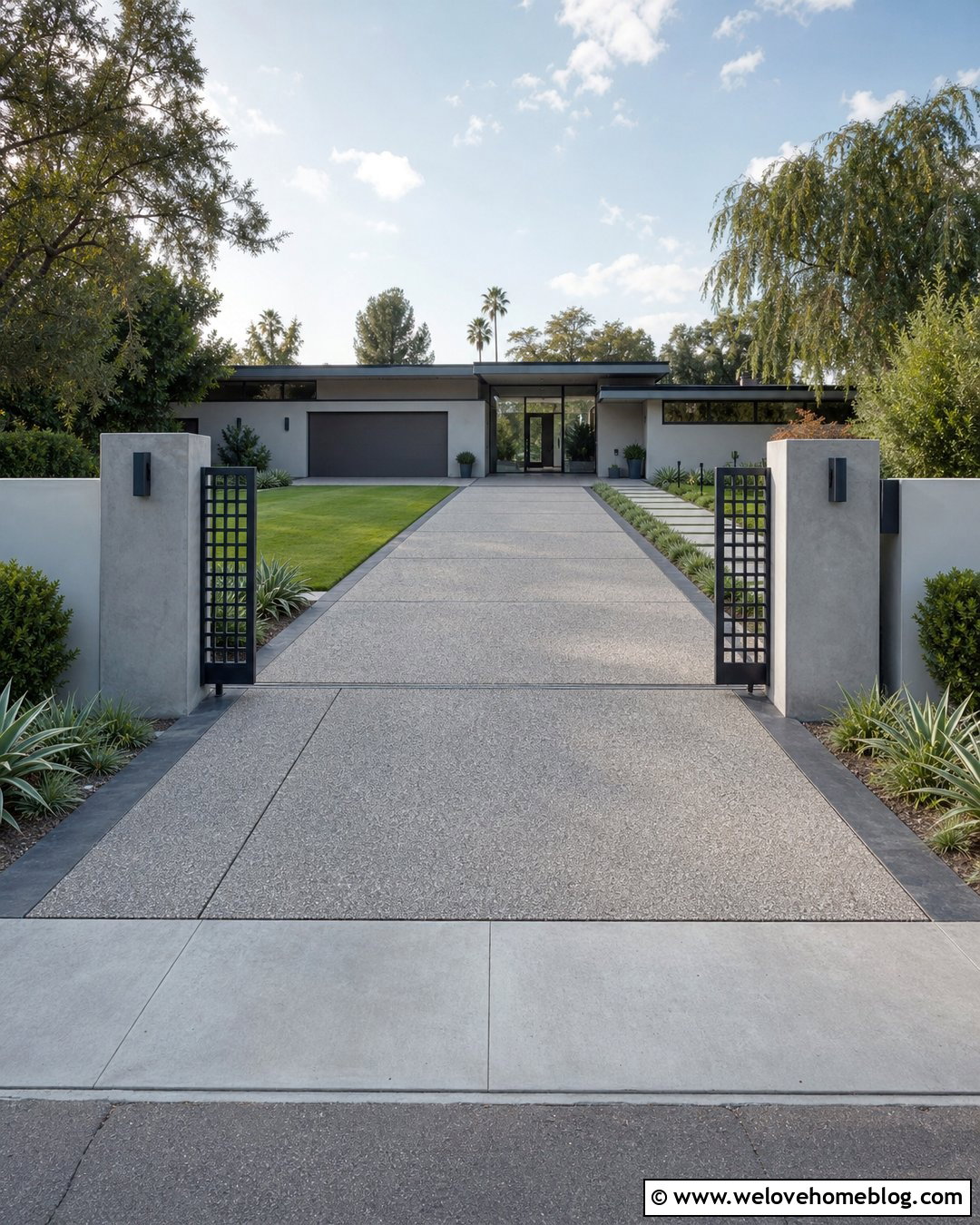
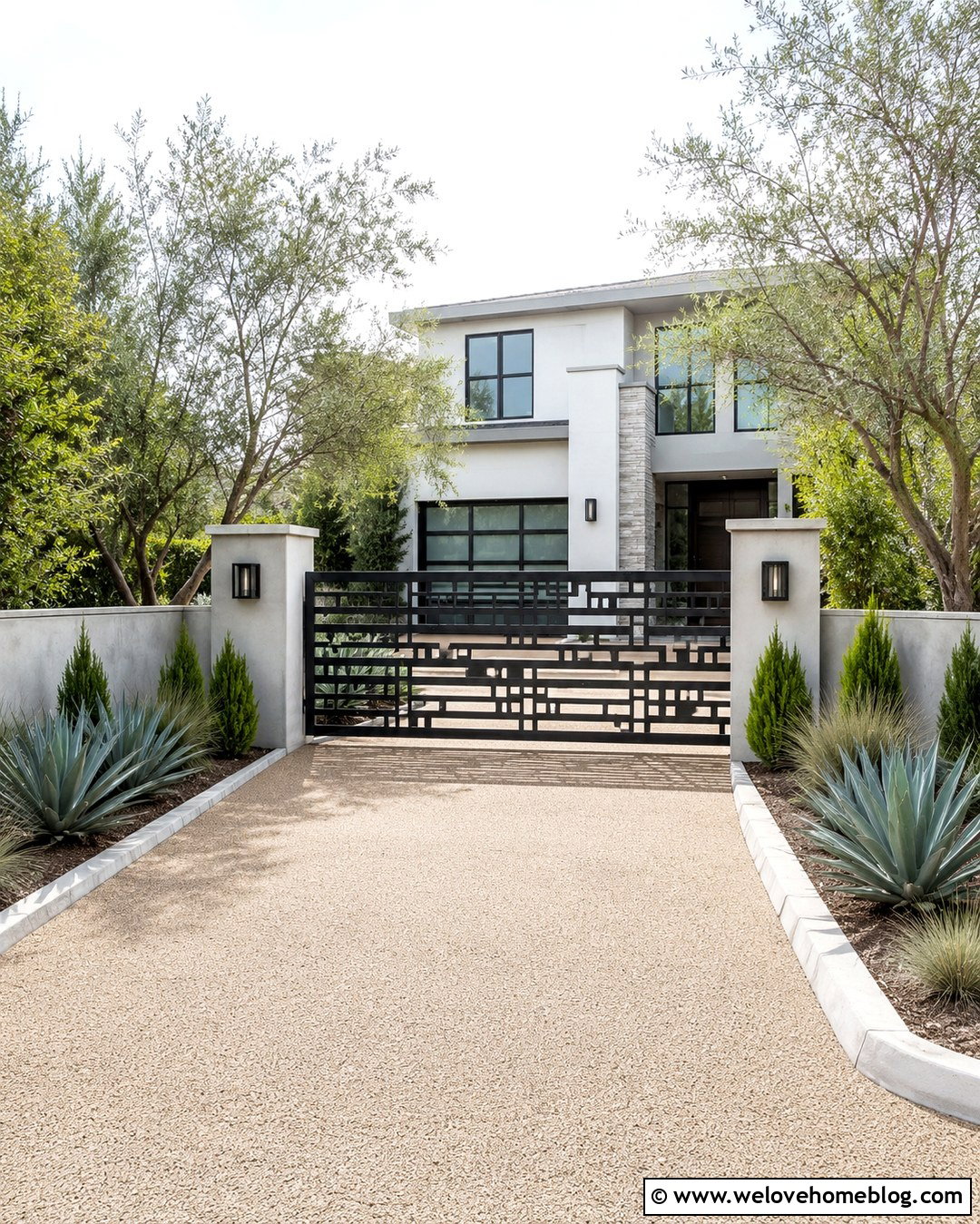
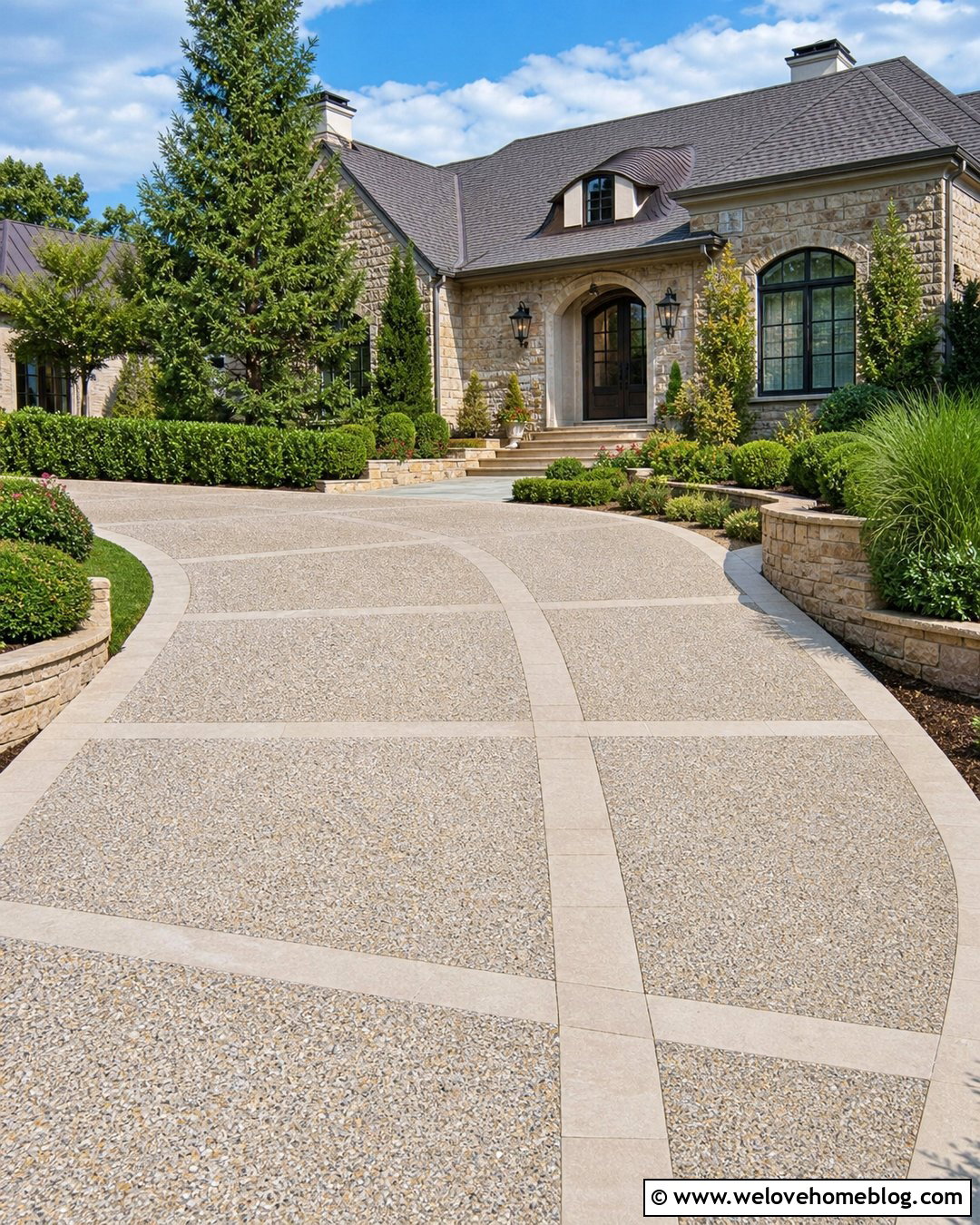
Crisp squares and rectangular openings can make cast iron feel suitable for modern and midcentury architecture. Choose a flat-topped gate with a restrained grid pattern instead of traditional scrolls or spear finials. A dark graphite finish creates a softer alternative to glossy black. Pair the gate with a warm-gray exposed aggregate driveway that provides texture without competing with the geometry. Smooth concrete pillars should be simple and slightly wider than the gate frame. Carry the same lines into horizontal boundary fencing or low rendered walls. Sculptural grasses, compact agaves, and neatly spaced shrubs reinforce the orderly appearance. For a cohesive result, align major gate divisions with architectural lines on the house, such as window mullions, garage panels, or vertical siding joints. The finished entrance feels modern but still substantial.
9. Tree Pattern Cast Iron Gate With Resin-Bound Driveway
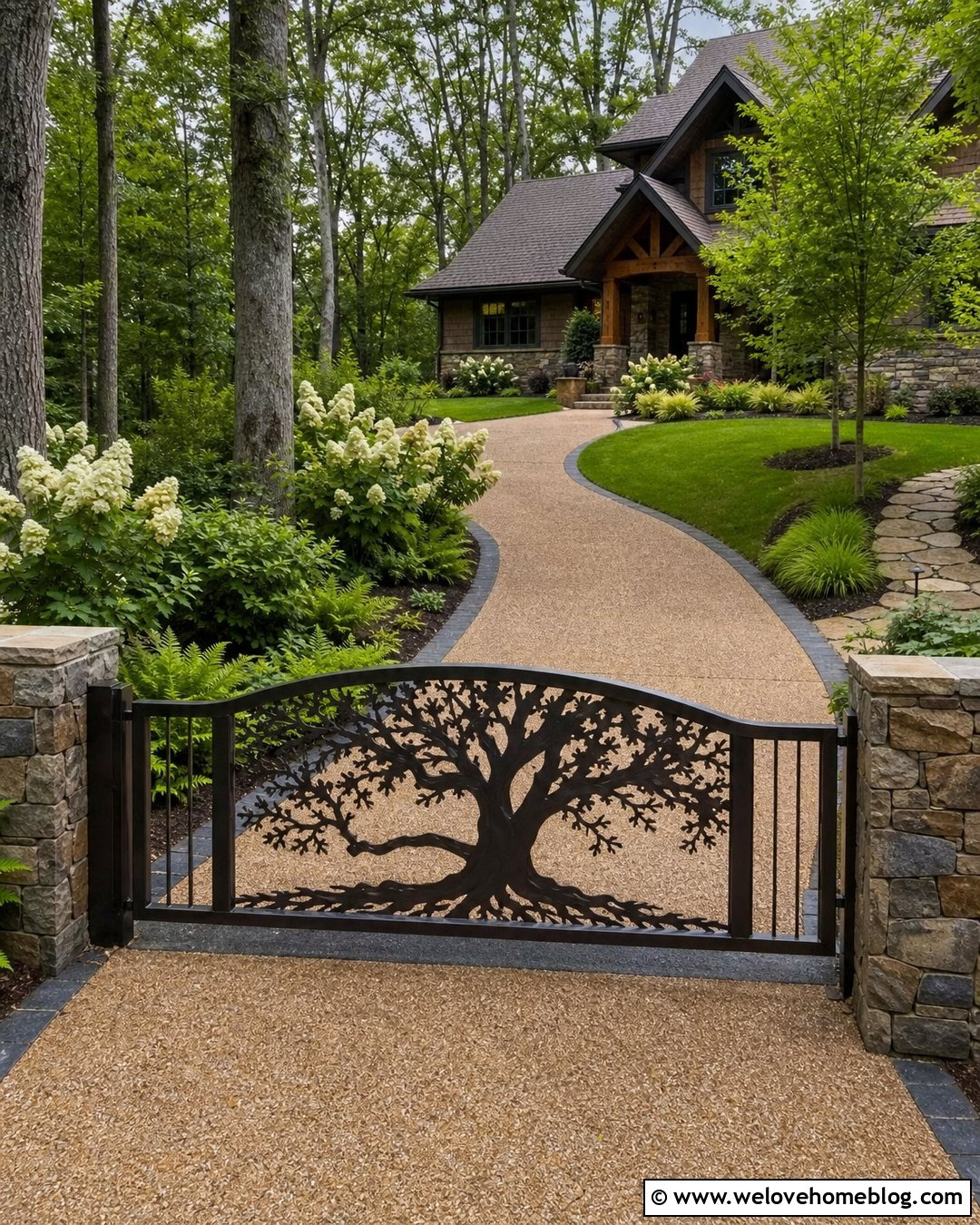
A cast iron gate featuring a simplified tree silhouette works beautifully at a Craftsman, woodland, or nature-inspired home. Keep the trunk and branches broad enough to read clearly from the street, with open areas that prevent the panel from looking too dense. Dark brown-black iron can coordinate with stained timber, stonework, and earthy exterior colors. A tan resin-bound gravel driveway offers a smooth, visually quiet backdrop for the decorative gate. Edge it with dark granite setts to define the approach. Natural stone pillars and low woodland planting complete the setting. Use ferns, ornamental grasses, oakleaf hydrangeas, and small native trees while preserving clear space around hinges and controls. Repeating the branch motif subtly in a pedestrian gate or railing can unite the property boundary without making it feel themed.
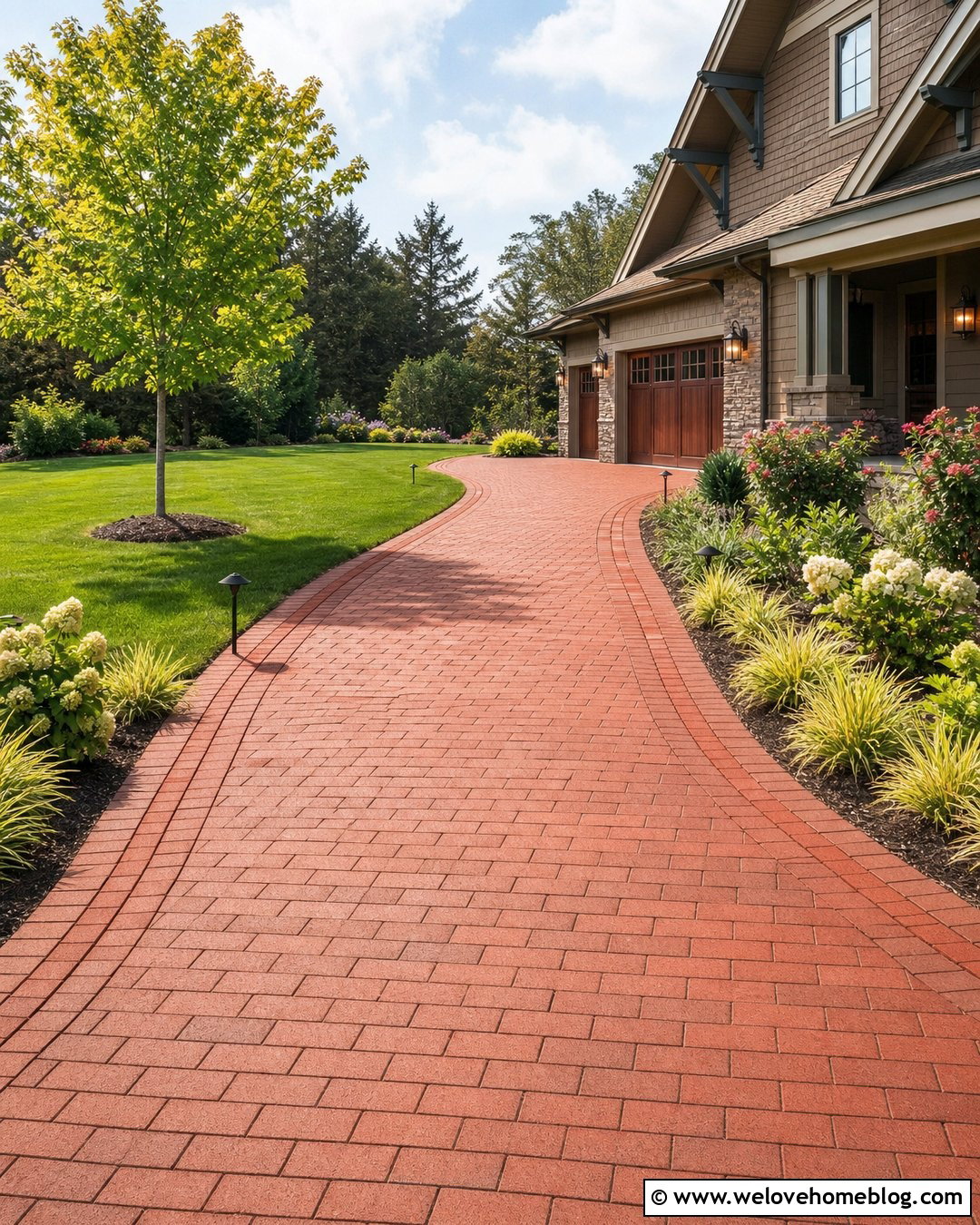
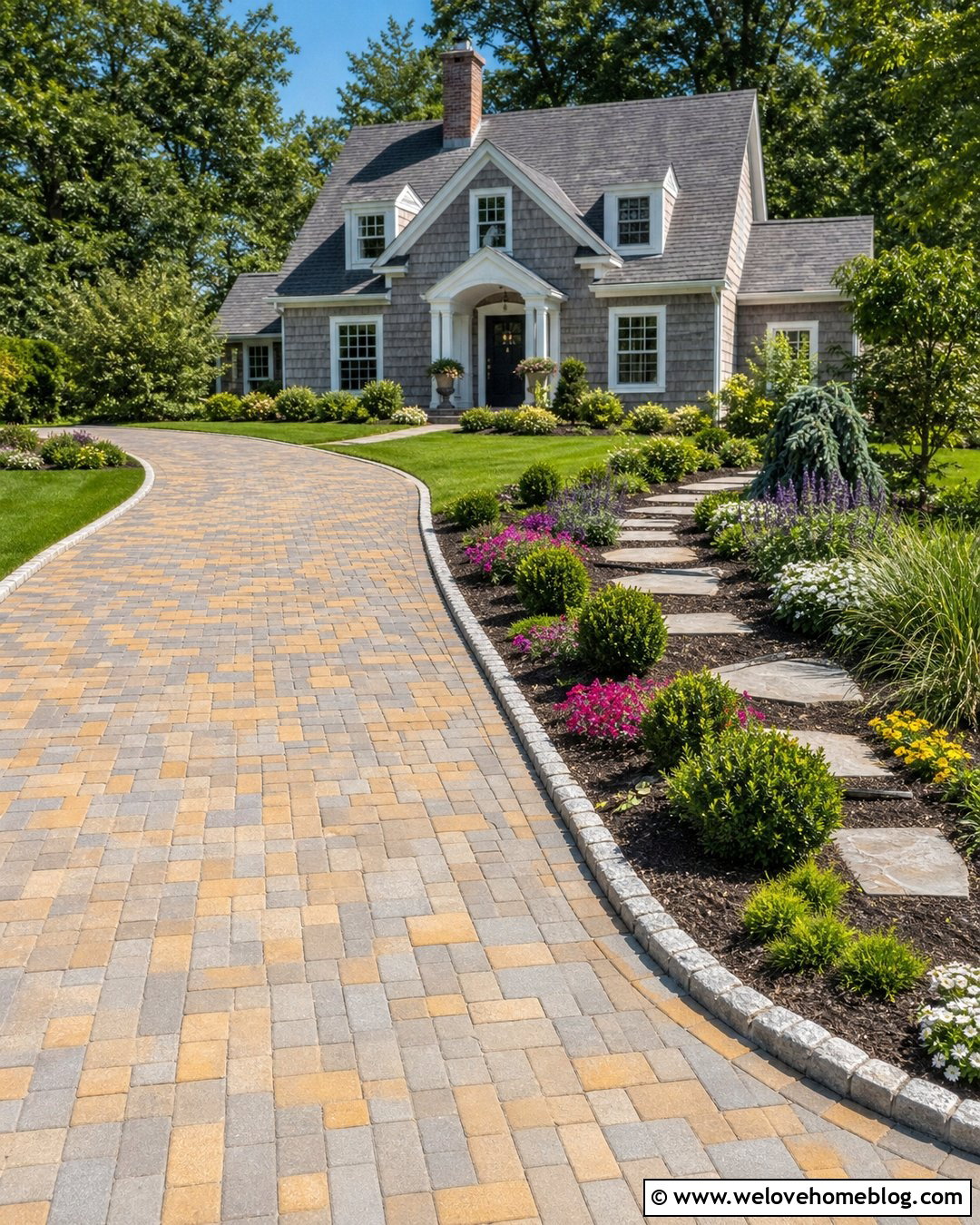
10. Monogram Cast Iron Gate With Brick Paver Driveway
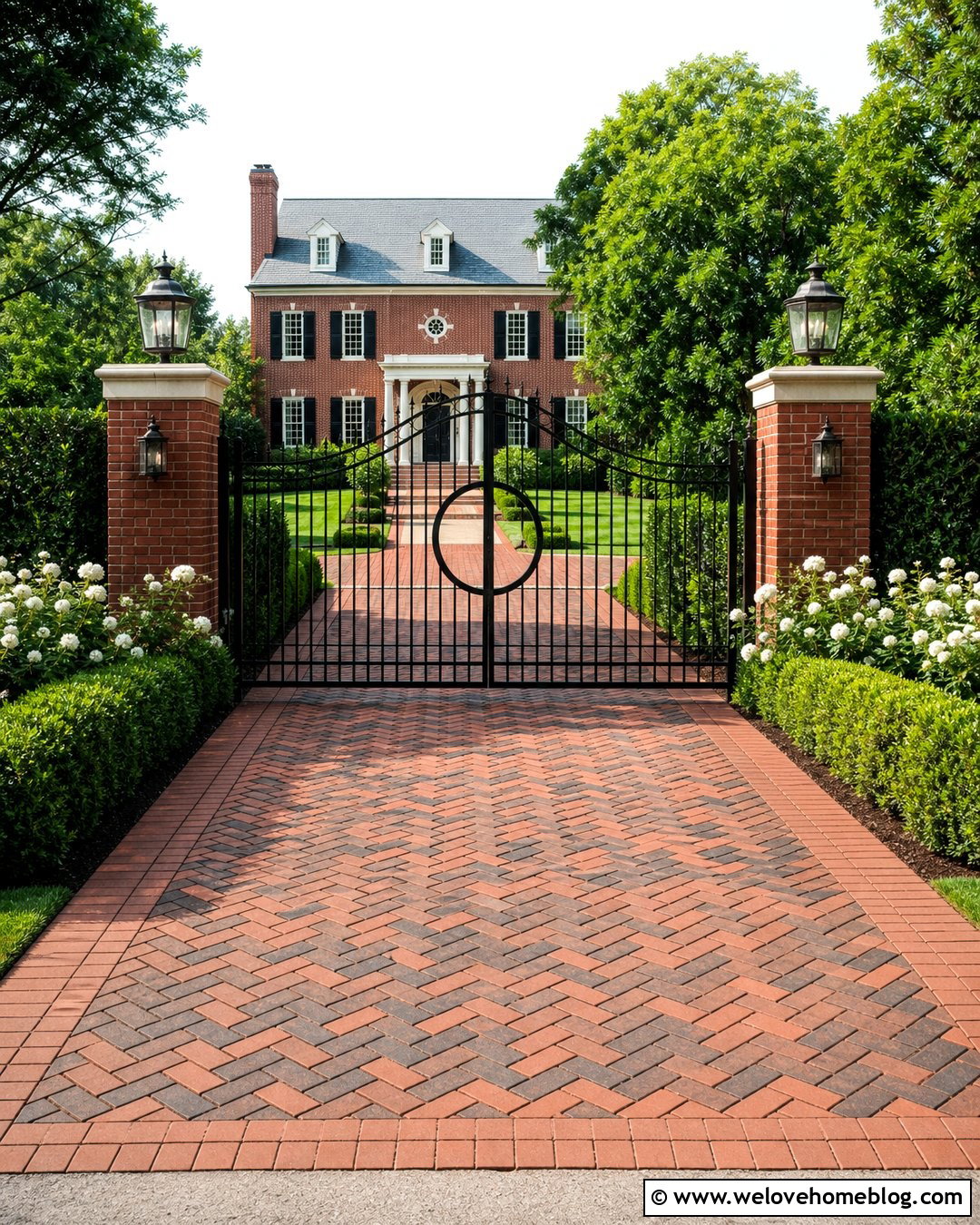
A centered monogram adds identity to a driveway entrance while maintaining a classic, symmetrical appearance. Set one large letter inside a circular or oval frame and surround it with simple cast iron bars. Limiting the personalized detail to the center prevents the gate from becoming visually crowded. A red and charcoal clay brick driveway laid in herringbone supports the traditional look, especially at a Georgian or Colonial Revival house. Use matching brick pillars with pale limestone caps and black lanterns. A soldier-course brick border can frame the driveway and connect it to adjacent walkways. Keep landscaping formal but manageable with low boxwoods, white roses, and neatly shaped hollies. Before fabricating the monogram, check the design from both sides so it remains attractive when viewed from the house and street.
11. Low Cast Iron Gate For A Small Driveway
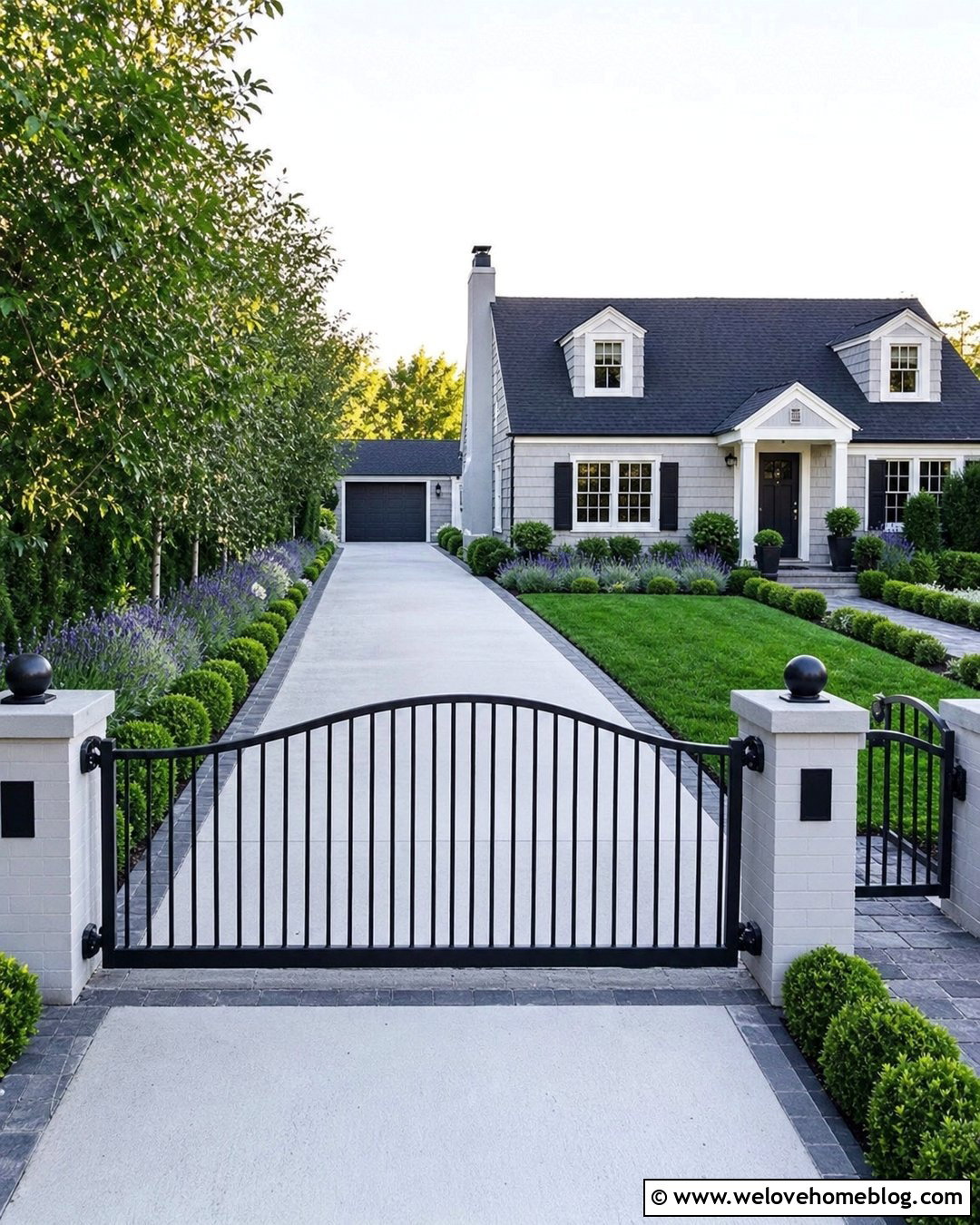
A compact front yard usually looks better with a lower gate that marks the boundary without hiding the house. Select an open cast iron design around three to four feet high, using narrow vertical bars and a slight center curve. Small brick or painted masonry posts provide adequate visual support without consuming valuable driveway width. Pair the gate with light broom-finished concrete, which keeps the short approach bright and uncomplicated. A thin charcoal paver border can make the concrete feel more finished. Use low lavender, dwarf boxwoods, and a narrow strip of lawn beside the driveway to preserve visibility. This arrangement suits Cape Cod homes, bungalows, and small cottages. A matching pedestrian gate beside the driveway can make everyday access easier while maintaining one coordinated entrance across the frontage.
12. Tall Cast Iron Privacy Gate With Metal Panels
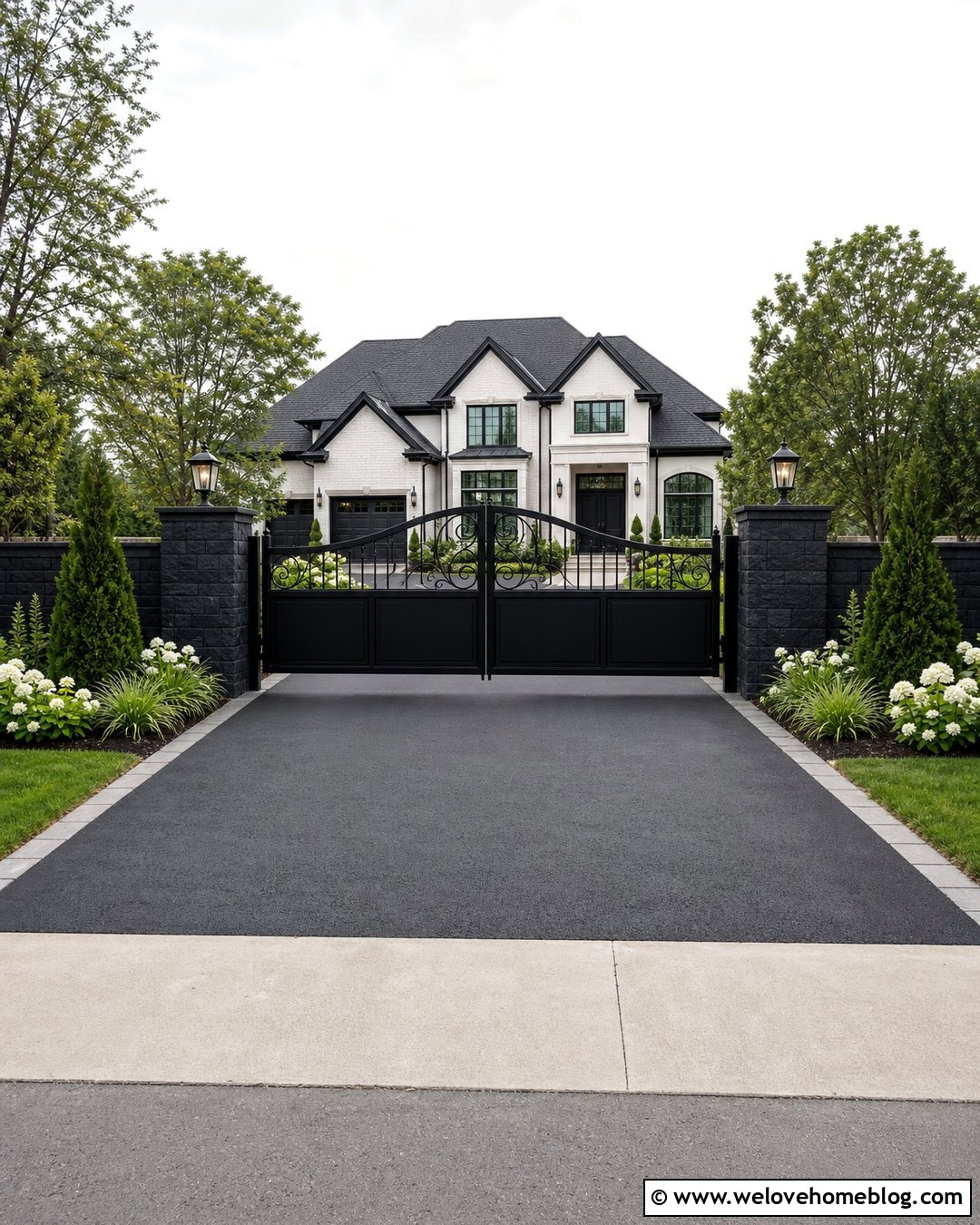
When privacy is important, solid metal infill can be combined with cast iron detailing to create a more decorative alternative to a plain barrier. Use tall black panels across the lower portion of the gate and open iron bars or scrollwork along the top. The open upper section reduces the visual weight while allowing light and air through. A smooth black asphalt driveway supports the strong entrance and works well with a contemporary or transitional home. Frame the gate with charcoal masonry pillars and matching boundary walls. Add upright evergreens, layered grasses, and restrained white flowering plants to soften the dark materials. Because solid panels catch more wind than open bars, the frame, posts, hinges, and operating equipment should be professionally sized for the gate’s dimensions and local conditions.
13. Bronze Cast Iron Gate With Limestone Driveway
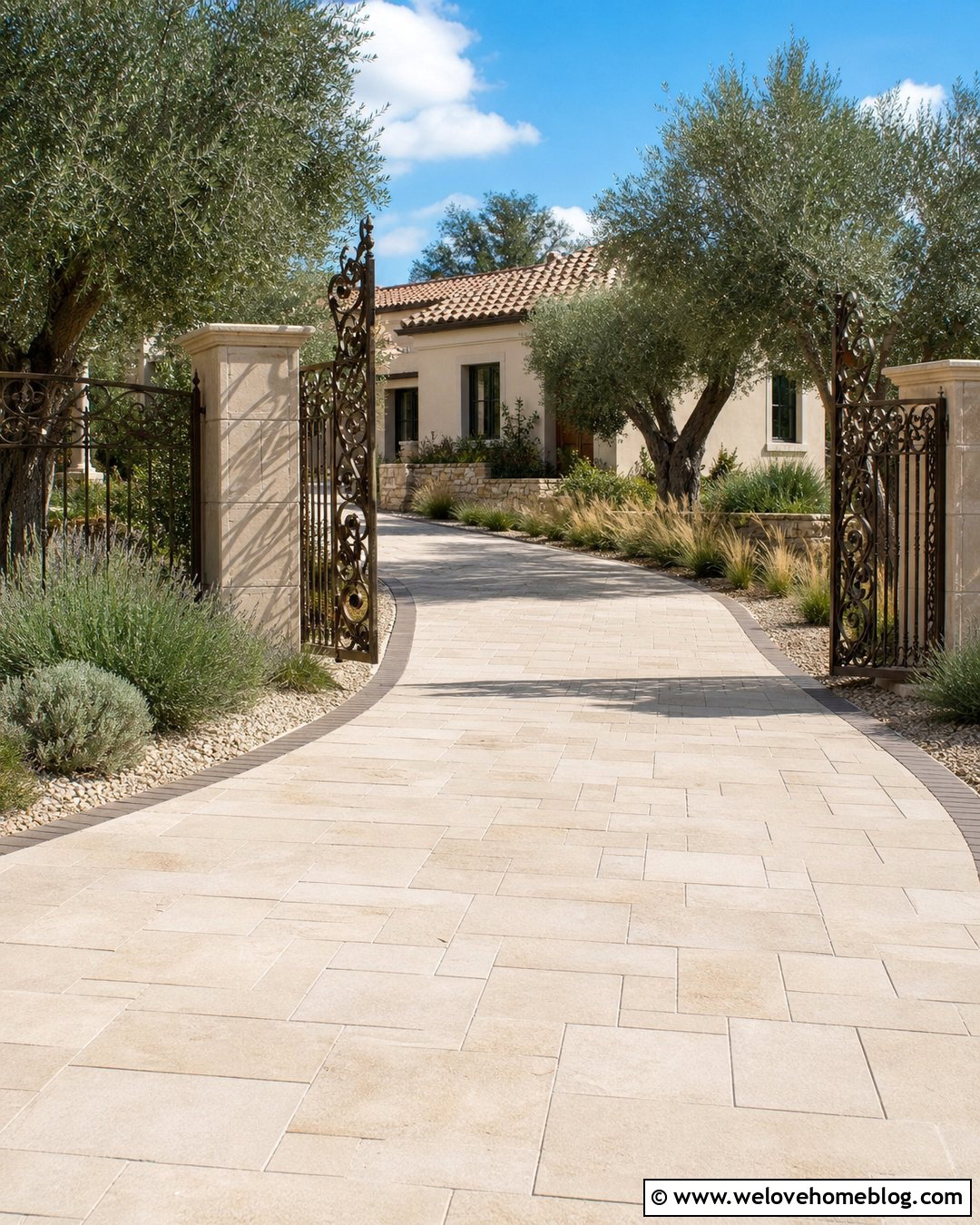
An aged bronze finish brings warmth to ornamental iron and works especially well with cream stone, tan stucco, and muted earth tones. Choose an arched double gate with open scrollwork and subtle leaf castings. Avoid an overly bright metallic coating; a dark bronze base with lighter highlights on raised details looks more convincing. Install the gate between pale limestone pillars topped with simple caps. A cream limestone paver driveway laid in a random rectangular pattern creates a refined Mediterranean entrance. Use a narrow bronze-toned paver ribbon to strengthen the color connection. Olive trees, rosemary, soft grasses, and pale gravel planting beds frame the driveway without hiding the gate. Warm-toned materials can still look crisp when the layout remains symmetrical and the landscaping is trimmed away from the moving panels.
14. White Cast Iron Gate With Crushed Shell Driveway
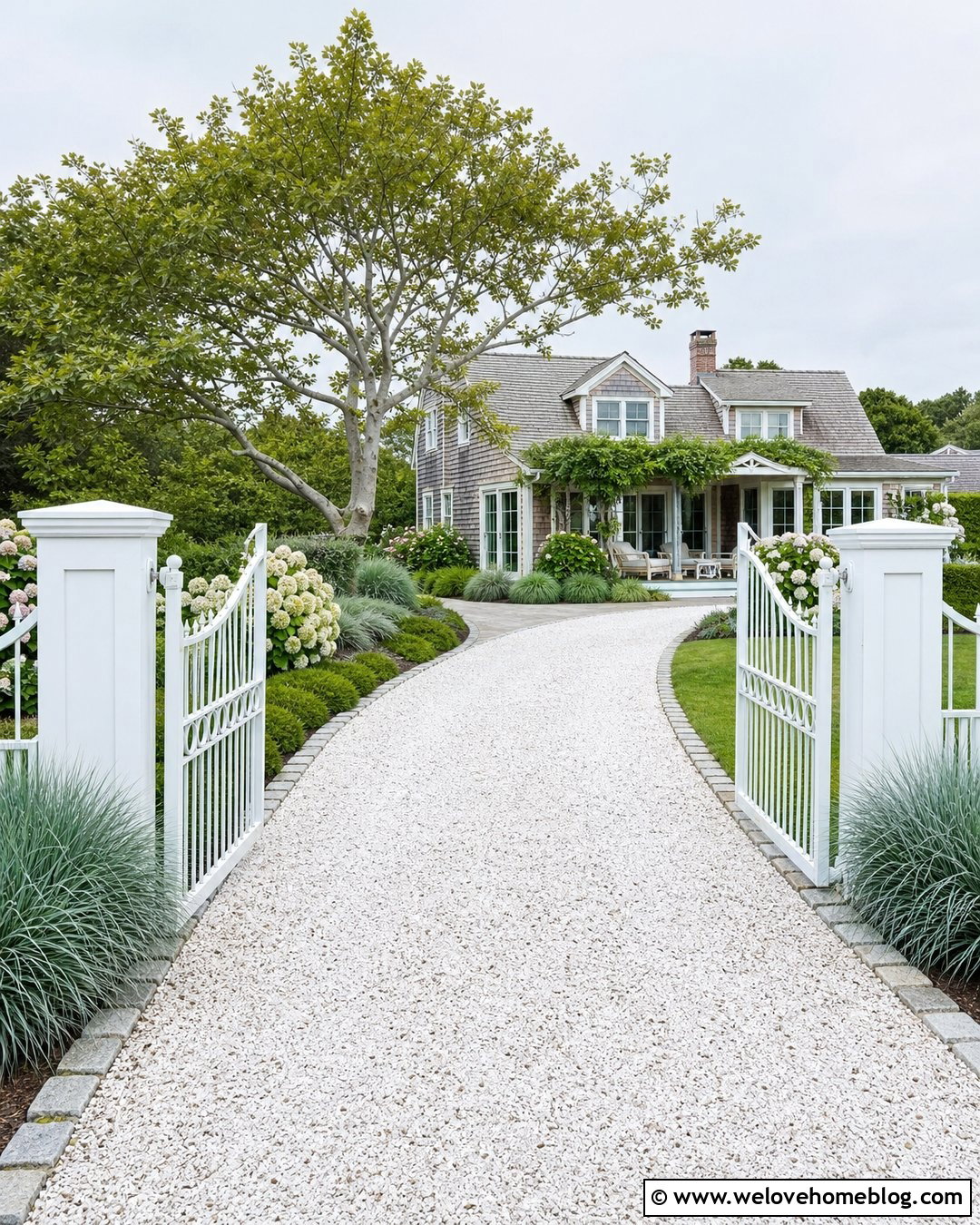
White-painted cast iron can give a coastal property a lighter, more relaxed entrance than traditional black metal. Select a simple arched gate with open bars, small rings, and minimal scrollwork. Crisp white masonry pillars help the gate blend with a Cape Cod or coastal cottage facade. Continue the bright palette with a compacted crushed-shell driveway bordered by light-gray granite setts. Blue-green grasses, hydrangeas, low junipers, and salt-tolerant shrubs can create soft movement around the entrance. Pale blue pillar lanterns or simple black fixtures provide a controlled accent. White coatings show dirt and corrosion more readily, so accessible surfaces make routine cleaning and touch-ups easier. The design is most successful when the gate remains visually open and the driveway is wide enough to avoid a cramped, fence-like appearance.
15. Green Cast Iron Gate With Brick Driveway Apron
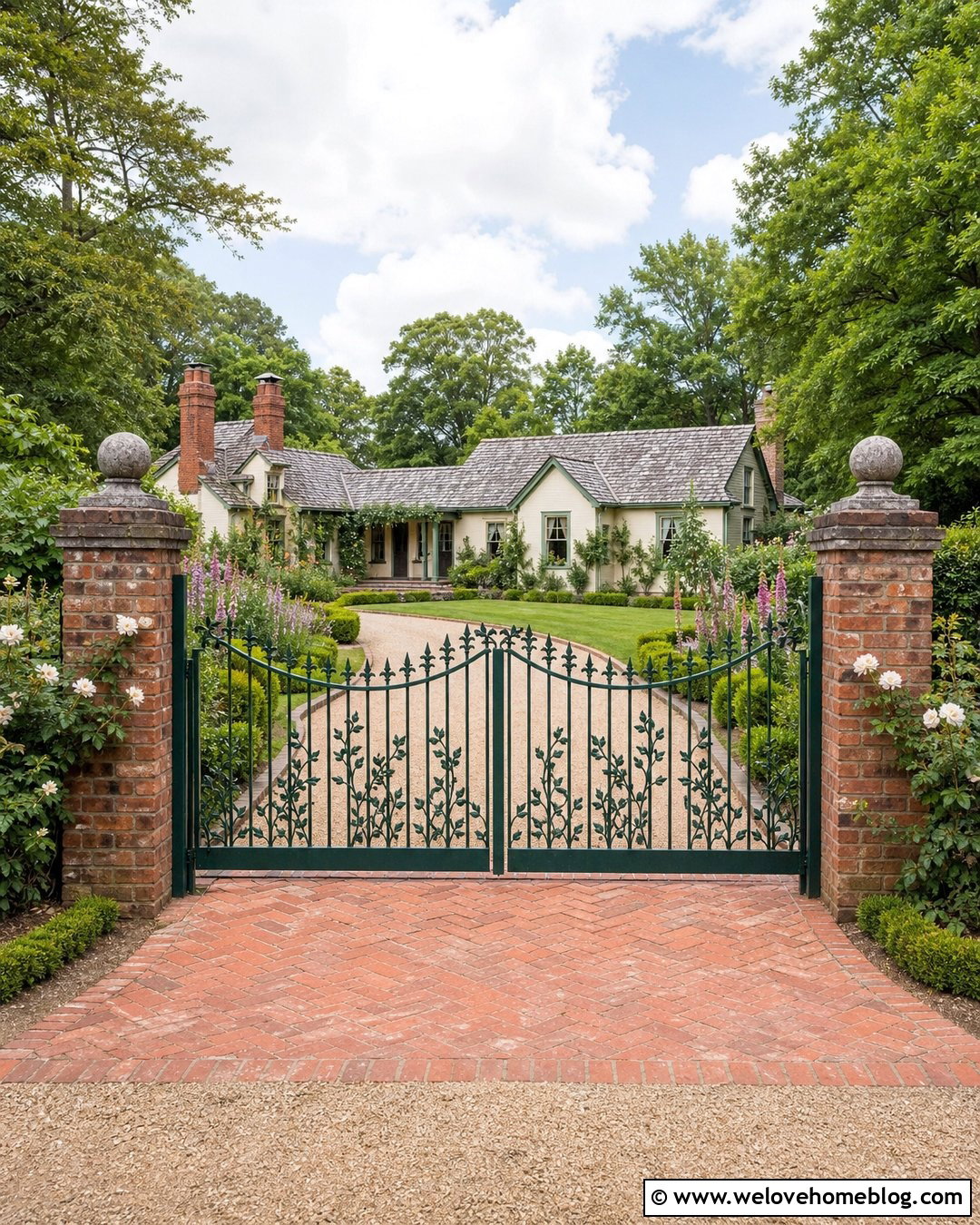
Deep green cast iron has a traditional garden character and blends gently into mature landscaping. It is an appealing choice when black feels too severe against a country house or cottage. Choose a double gate with a curved top, slender pickets, and small botanical castings. Weathered red brick pillars and a herringbone brick driveway apron create a warm entrance, while stabilized tan gravel can continue toward the house. Repeat the green finish on nearby railings, fencing, or a pedestrian gate for consistency. Boxwood, climbing roses, foxgloves, and deciduous trees strengthen the garden setting. Keep vines off the moving gate panels because stems can interfere with hinges and obscure decorative details. Dark green looks especially polished beside aged brick, cream siding, and natural stone garden walls.
16. Cast Iron Gate With Matching Pedestrian Entrance
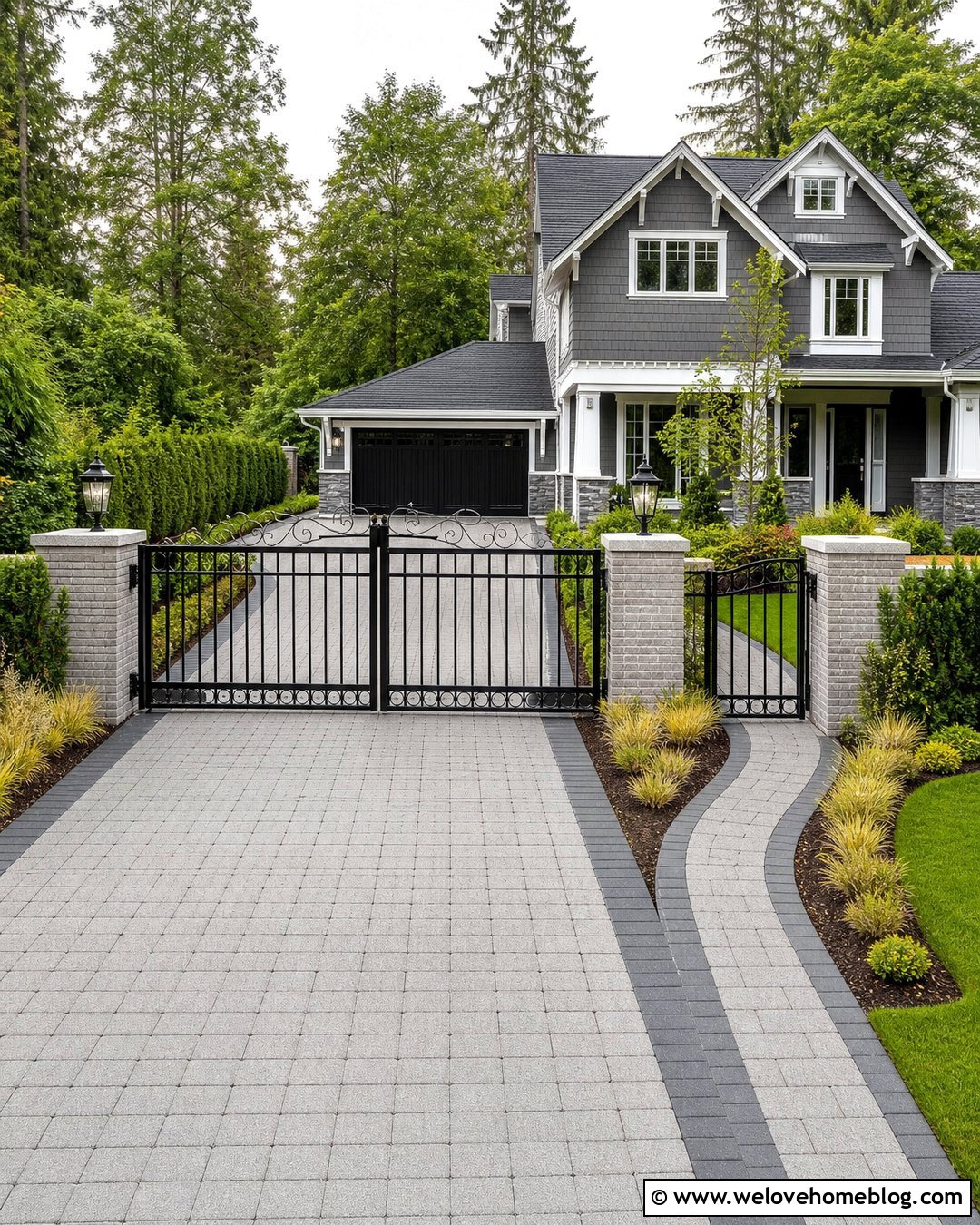
Separate vehicle and pedestrian gates improve everyday movement while giving a wide frontage a more complete appearance. Use a symmetrical cast iron driveway gate with a smaller matching walk gate positioned beside one pillar. Repeat the same top line, picket spacing, and decorative casting across both openings. Gray permeable concrete pavers can cover the driveway, while a narrower matching walkway leads from the pedestrian entrance to the front door. Brick or stone pillars help distinguish each access point without breaking the overall rhythm. Layered shrubs, ornamental grasses, and a clean lawn edge should guide visitors toward the walk gate. Include clear lighting and visible hardware on the pedestrian side. This arrangement works particularly well for Craftsman, traditional, and suburban homes where guests frequently arrive on foot.
17. Curved Cast Iron Gate With Lighted Stone Columns
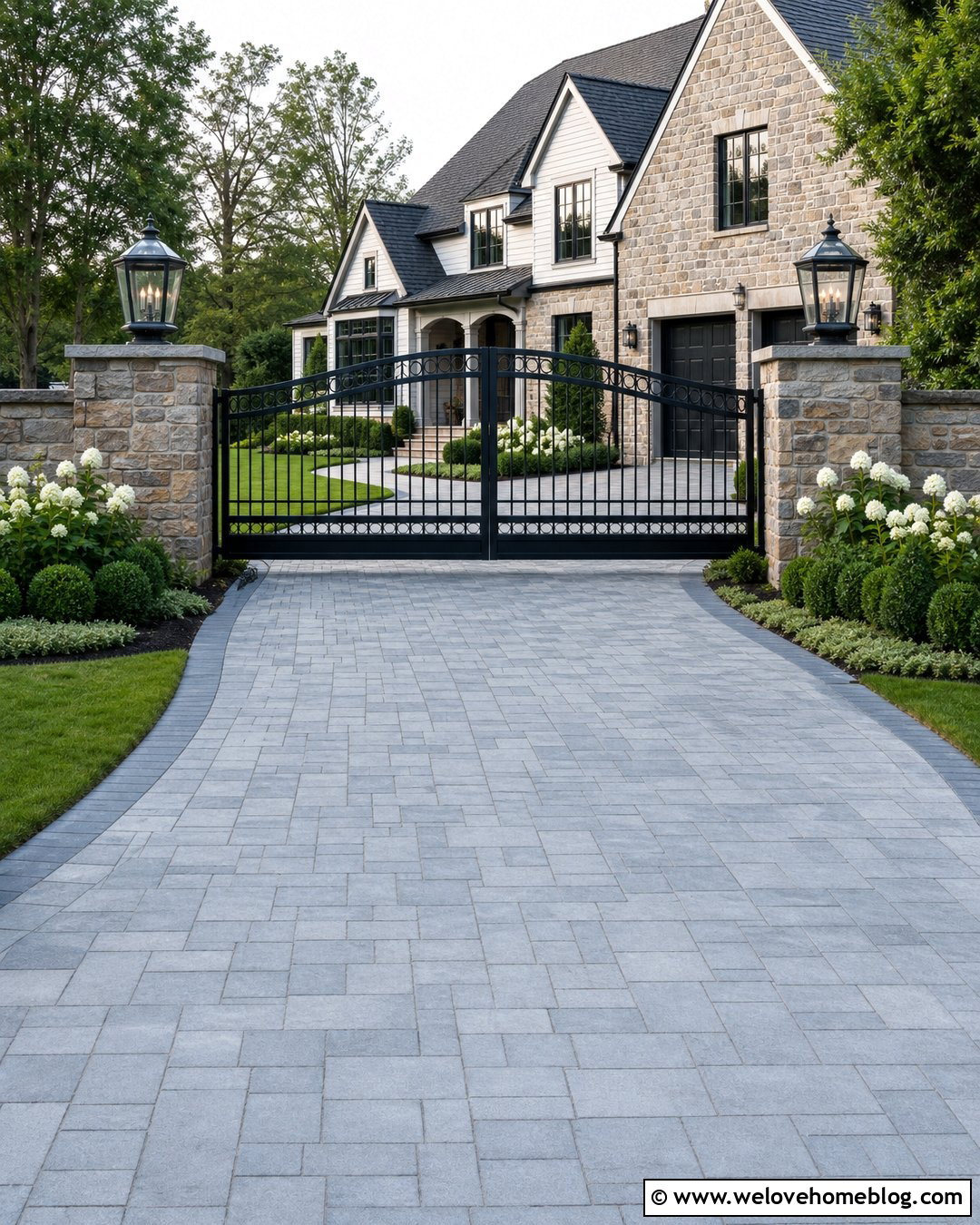
A broad curved gate becomes more inviting when its shape is reinforced by substantial columns and balanced lighting. Select a double cast iron gate with a shallow central arch, open vertical bars, and restrained lower scrollwork. Natural ledgestone columns add texture and connect the entrance to a transitional home with mixed stone and siding. Use blue-gray concrete pavers across a gently curved driveway, bordered by charcoal pavers that follow the same sweep. Oversized clear-glass lanterns mounted on the columns make the entrance easy to locate without overwhelming the gate. Plant rounded boxwoods, white hydrangeas, and low ground cover around the column bases. The driveway curve, gate arch, and planting beds should flow in the same direction so the entrance reads as one coordinated composition.
18. Cast Iron Gates For A Circular Driveway
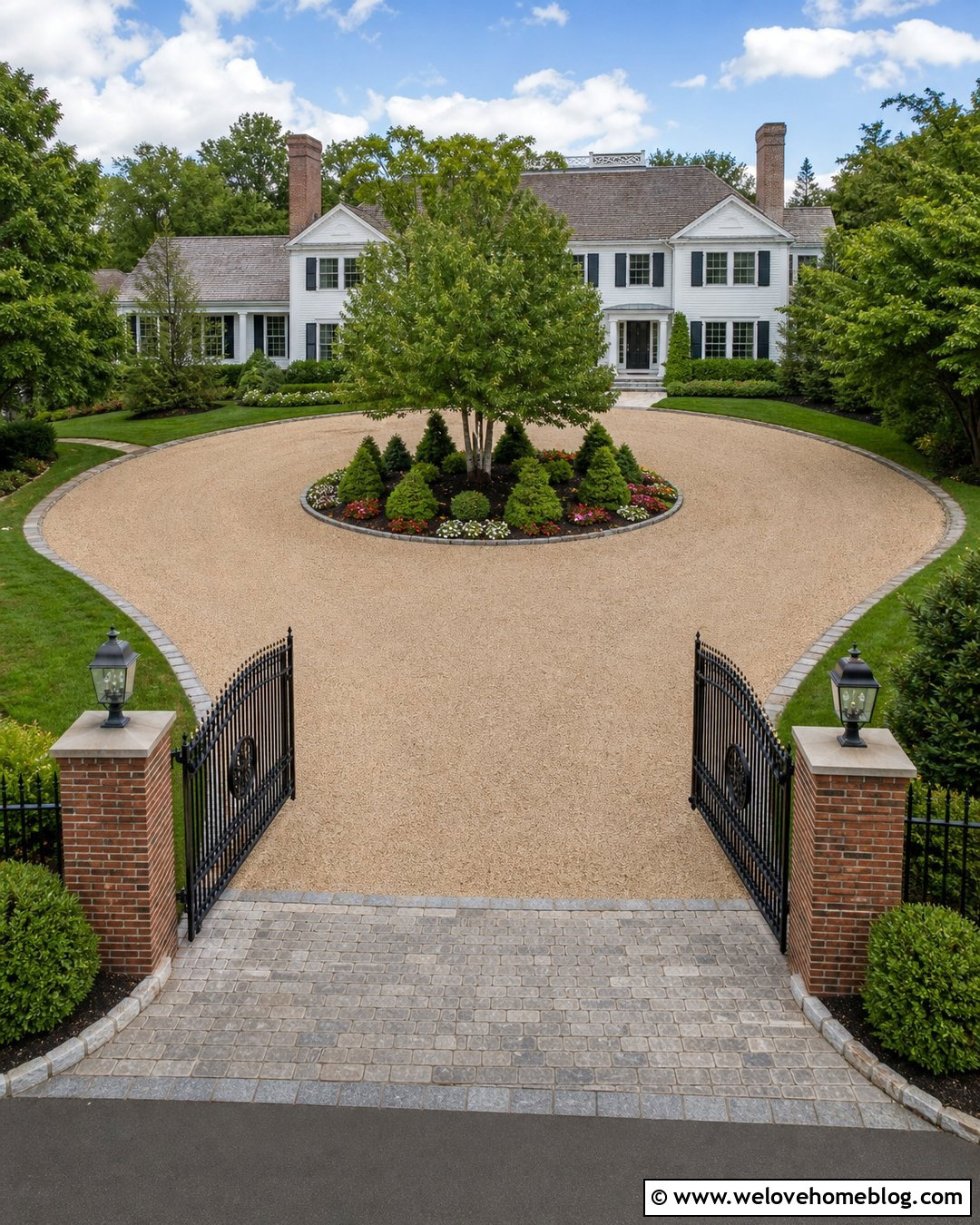
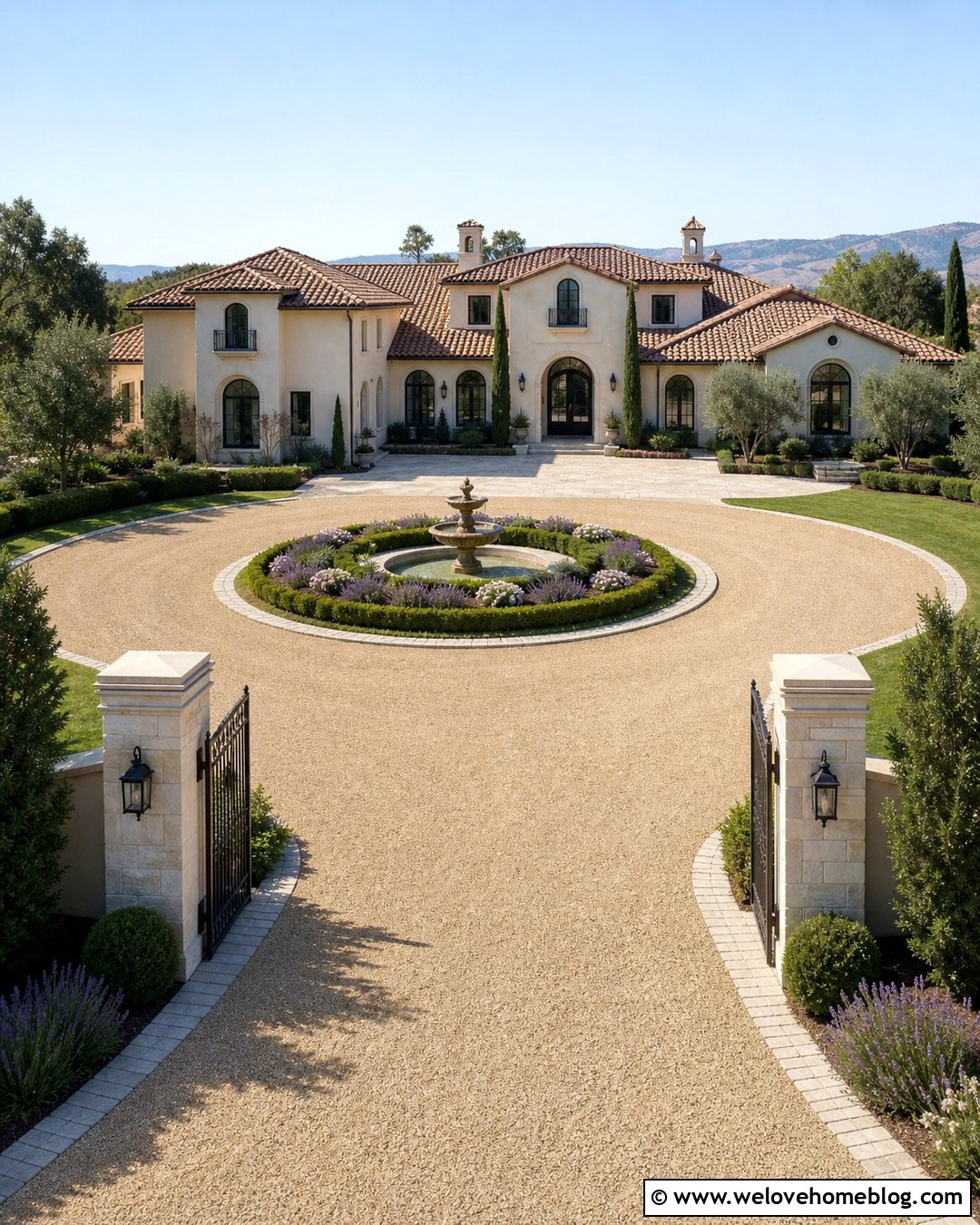
A circular driveway offers the opportunity to create matching gated entrances at both ends of the loop. Use two identical cast iron double gates with simple vertical bars, curved tops, and a modest central medallion. Matching brick pillars and short iron fence sections can connect the entrances across the front boundary. Choose warm beige gravel for the circular drive and define both edges with cobblestone to keep the surface contained. A landscaped center island with a specimen tree, low evergreen shrubs, and seasonal flowers gives drivers a clear route around the loop. The gates should be positioned far enough from the roadway to provide safe waiting space. Maintaining the same materials, lighting, and planting on both sides creates symmetry, even when the property frontage is not perfectly balanced.
19. Leaf Pattern Cast Iron Gate For A Woodland Driveway
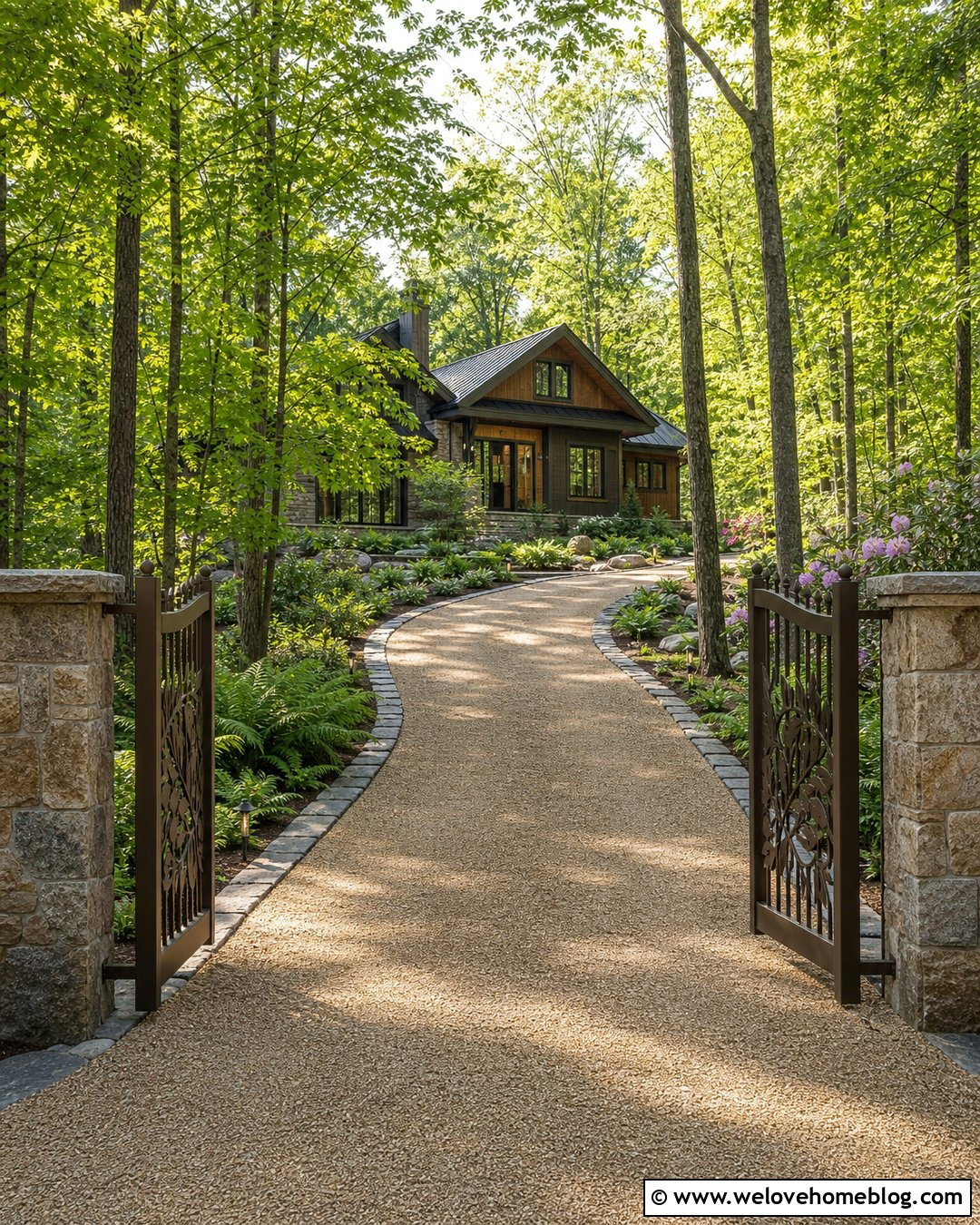
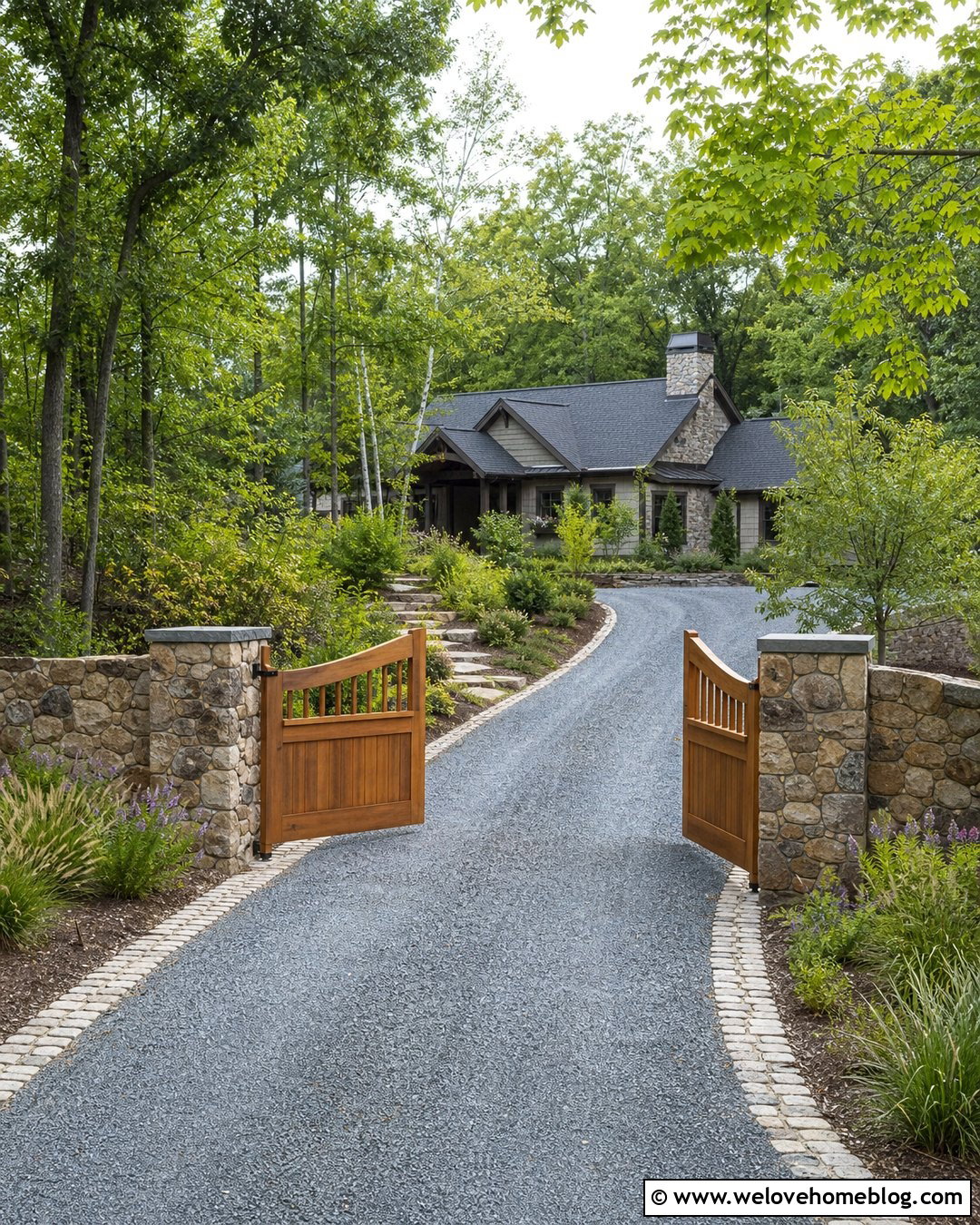
A leaf-pattern gate can introduce decorative detail while remaining connected to a wooded setting. Choose broad, simplified oak or maple leaves arranged within an open iron frame rather than a dense collection of tiny shapes. A matte black-brown finish complements tree bark, natural stone, and stained wood. Place the gate between rugged fieldstone pillars at the entrance to a curved stabilized-gravel driveway. Timber or dark granite edging can follow the drive through the landscape. Use native ferns, shade-tolerant grasses, rhododendrons, and canopy trees around the entrance, but trim branches away from the opening path. A Craftsman house or modern cabin in the background completes the natural character. The gate should feel like a crafted focal point without competing with the surrounding woodland scenery.
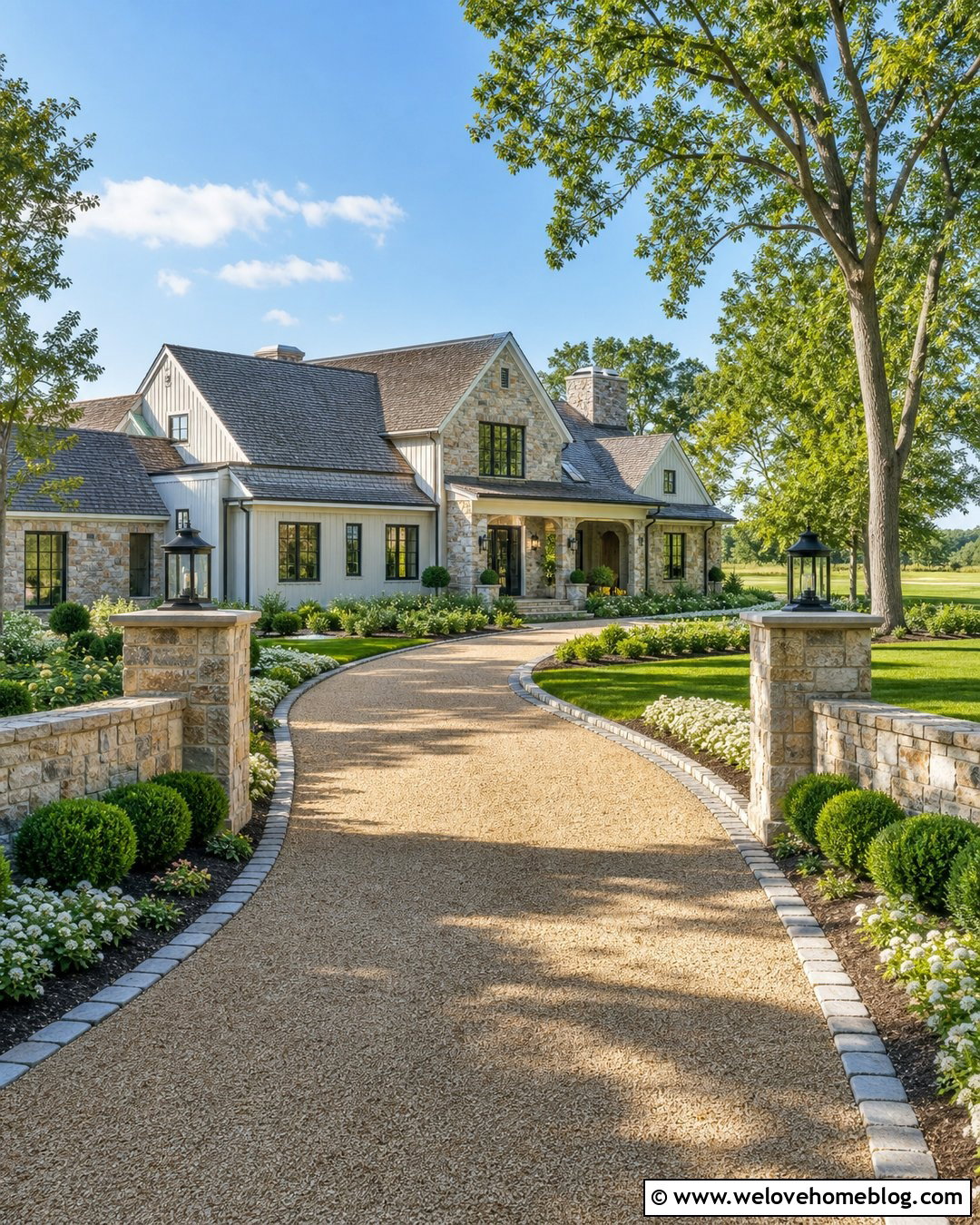
20. Automatic Cast Iron Gate With Limestone Pillars
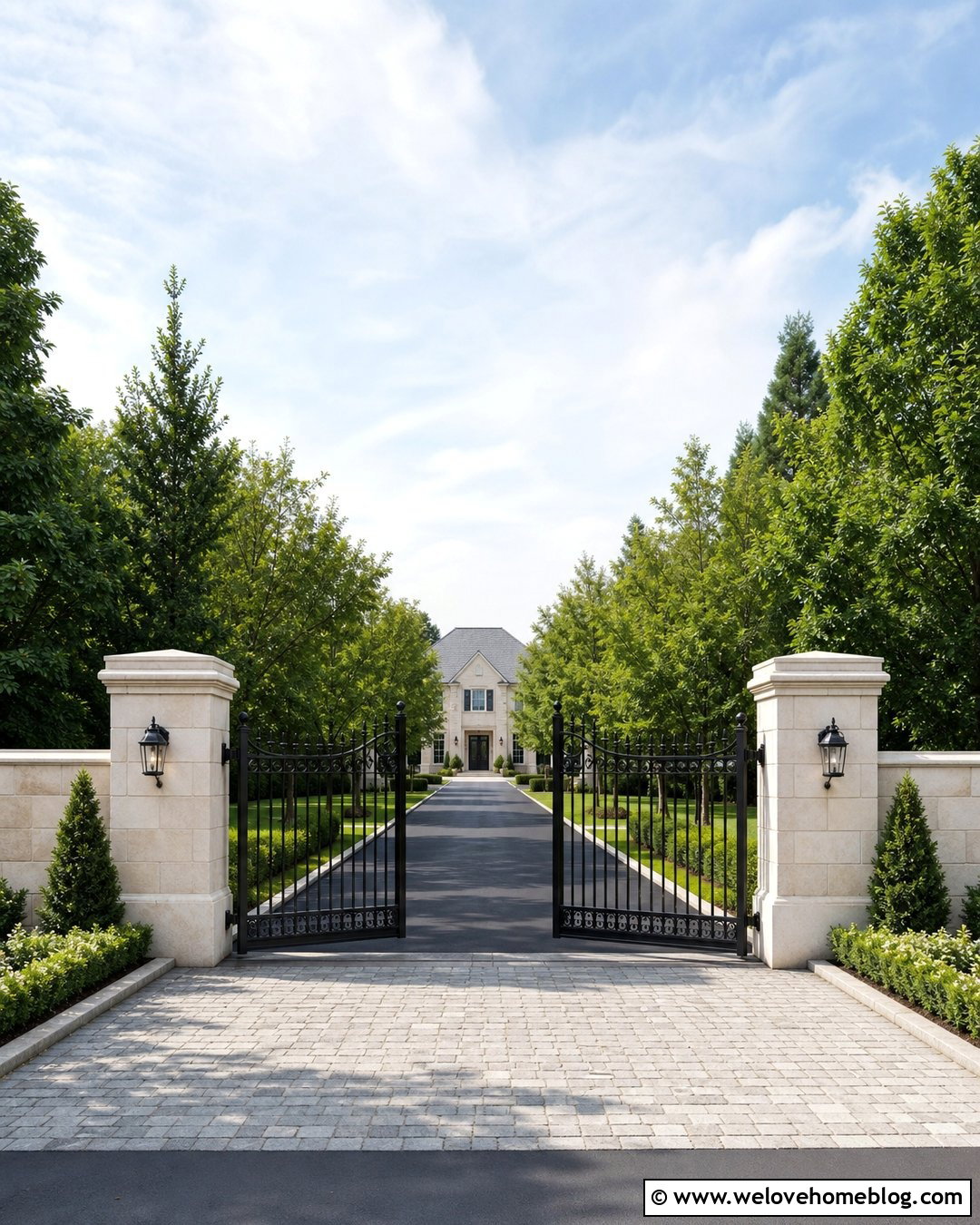
Automation brings convenience to a formal cast iron entrance, particularly on a long driveway or frequently used property. A classic double-swing gate can feature open bars, subtle scrollwork, and a gentle center rise. Pale limestone pillars keep the black iron from feeling too heavy, while matching boundary walls strengthen the estate-like composition. Use smooth black asphalt for the main driveway and add a light granite cobblestone apron near the entrance. Formal evergreens, low hedges, and evenly spaced trees can frame the approach without obstructing sensors or moving panels. Controls, hinges, conduits, and safety equipment should be integrated as discreetly as possible. Plan the automation before building the pillars so the structure, power supply, drainage, and gate geometry work together rather than appearing as later additions.
Conclusion:
The best 20 Cast Iron Driveway Gates Ideas combine attractive metalwork with a driveway, entrance, and landscape that feel intentionally connected. Traditional scrolls work well with brick, cobblestone, and formal architecture, while straight bars and geometric patterns suit concrete, exposed aggregate, and modern homes. Pillar scale, driveway slope, available opening space, and visibility should guide the final layout. Color also changes the character of the gate, from classic black and warm bronze to garden green or coastal white. Whatever design you prefer, coordinate the gate with the house before selecting decorative details. Professional fabrication and installation are especially important for large, solid, automated, or sloped gates. A carefully planned entrance can remain practical, welcoming, and visually balanced for years.

Related posts:
Leave a Reply