
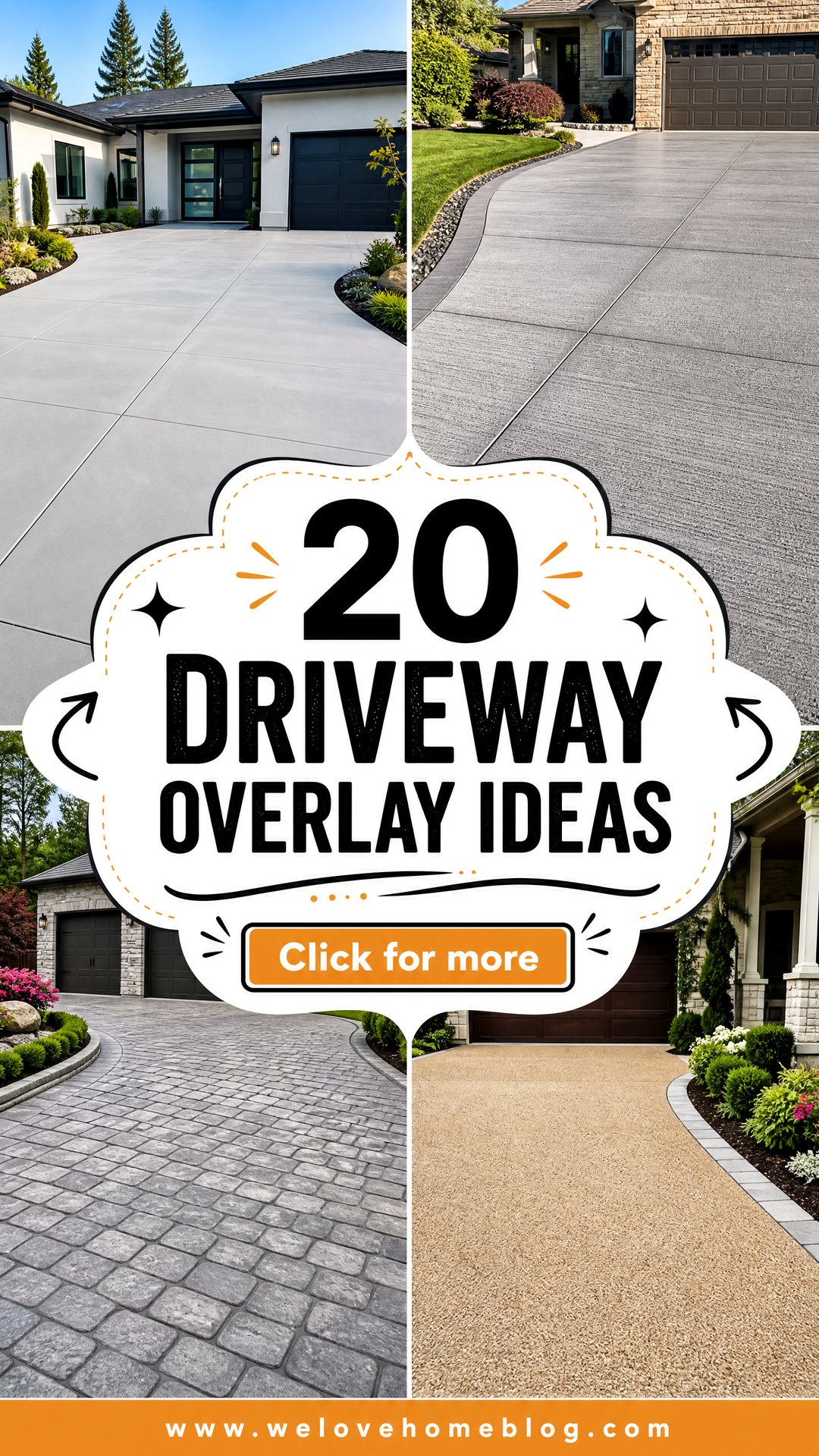
A worn driveway does not always need full demolition to look fresh, durable, and intentional. These 20 Driveway Overlay Ideas show how a structurally sound surface can become a major curb appeal feature through concrete resurfacing, asphalt, thin pavers, resin-bound aggregate, stamped patterns, and decorative finishes. The right overlay can hide discoloration, minor surface wear, and old repairs while creating a more cohesive connection between the driveway, walkway, landscaping, and home exterior. However, preparation matters. Existing cracks, drainage problems, settlement, and weak edges should be evaluated before installation because an overlay cannot correct serious base failure. From affordable finishes to detailed stone effects, the following complete designs offer practical inspiration for exploring 20 Driveway Overlay Ideas.
1. Smooth Concrete Driveway Overlay
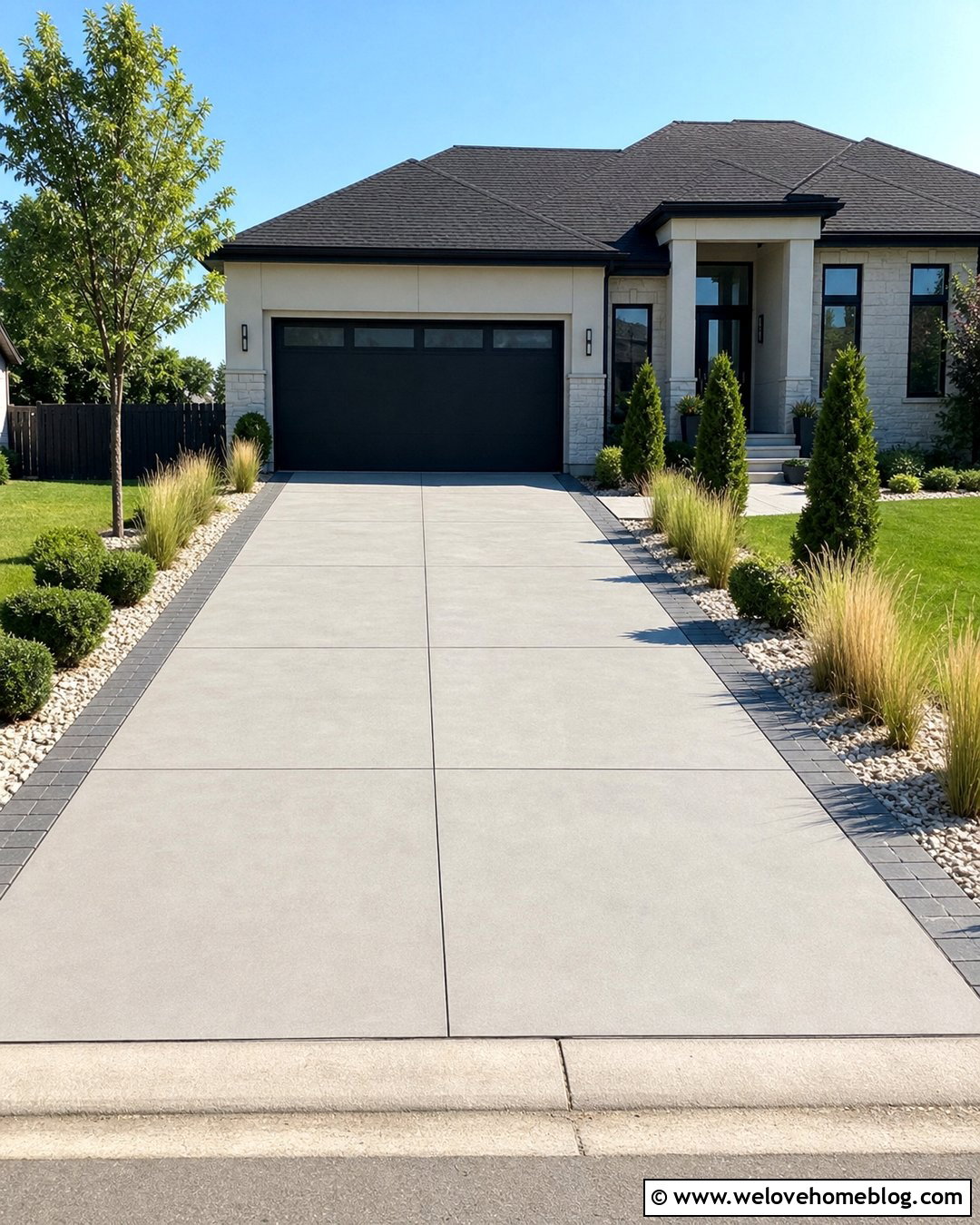
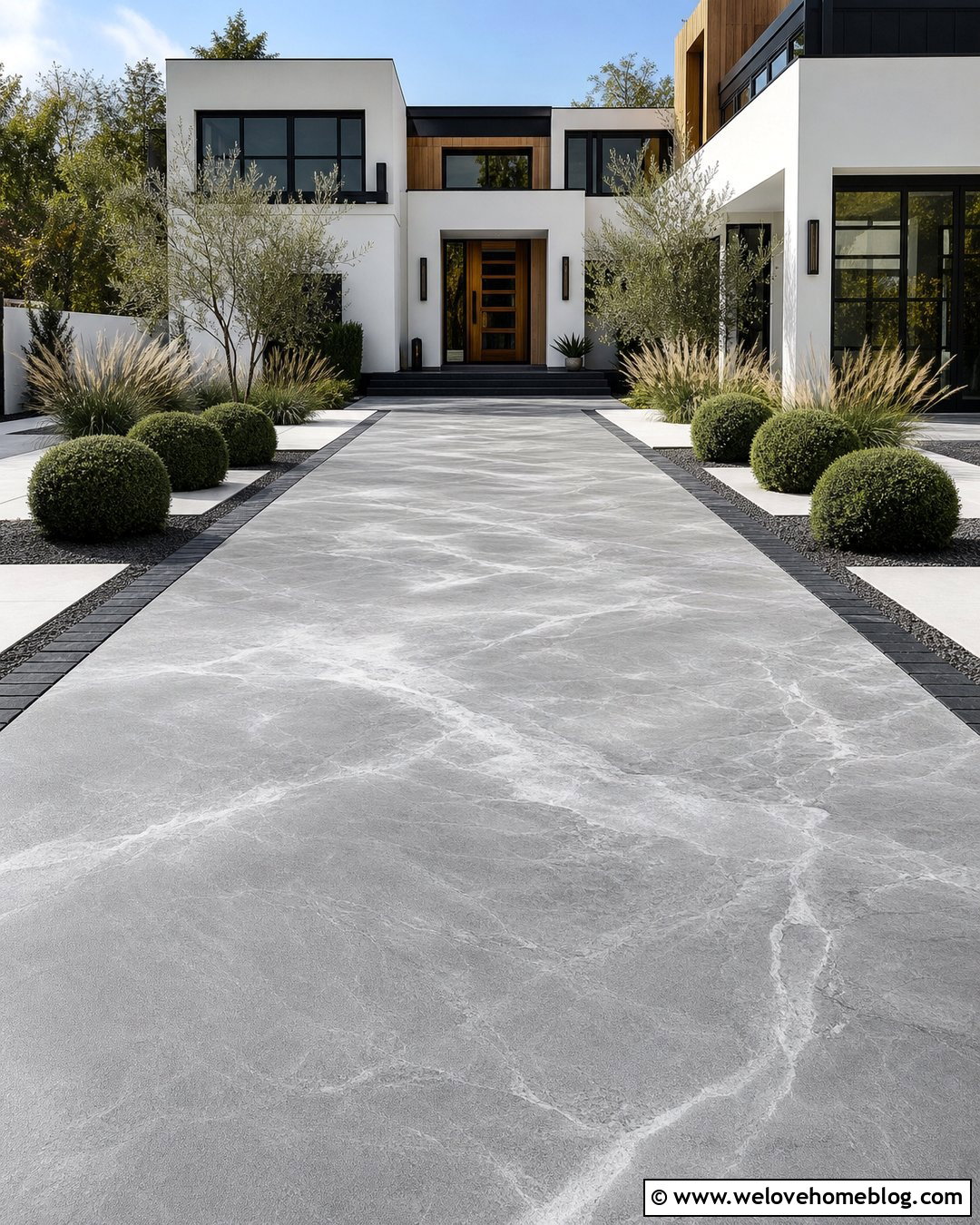
A smooth concrete driveway overlay creates a clean foundation for a modern or updated home exterior. Choose a light gray polymer-modified concrete resurfacer and divide the surface with narrow control joints for a crisp, organized appearance. A straight driveway works especially well with charcoal paver edging, rectangular planting beds, and a simple walkway leading toward the entrance. Use ornamental grasses, clipped evergreens, and pale river rock to soften the hard surfaces without creating visual clutter. The existing slab must be cleaned, repaired, and mechanically prepared so the new material can bond correctly. Because an overly slick finish may be unsafe when wet, ask for subtle texture and a compatible slip-resistant sealer. This understated overlay makes the entire front yard feel brighter and more spacious.
2. Broom Finish Concrete Driveway Overlay
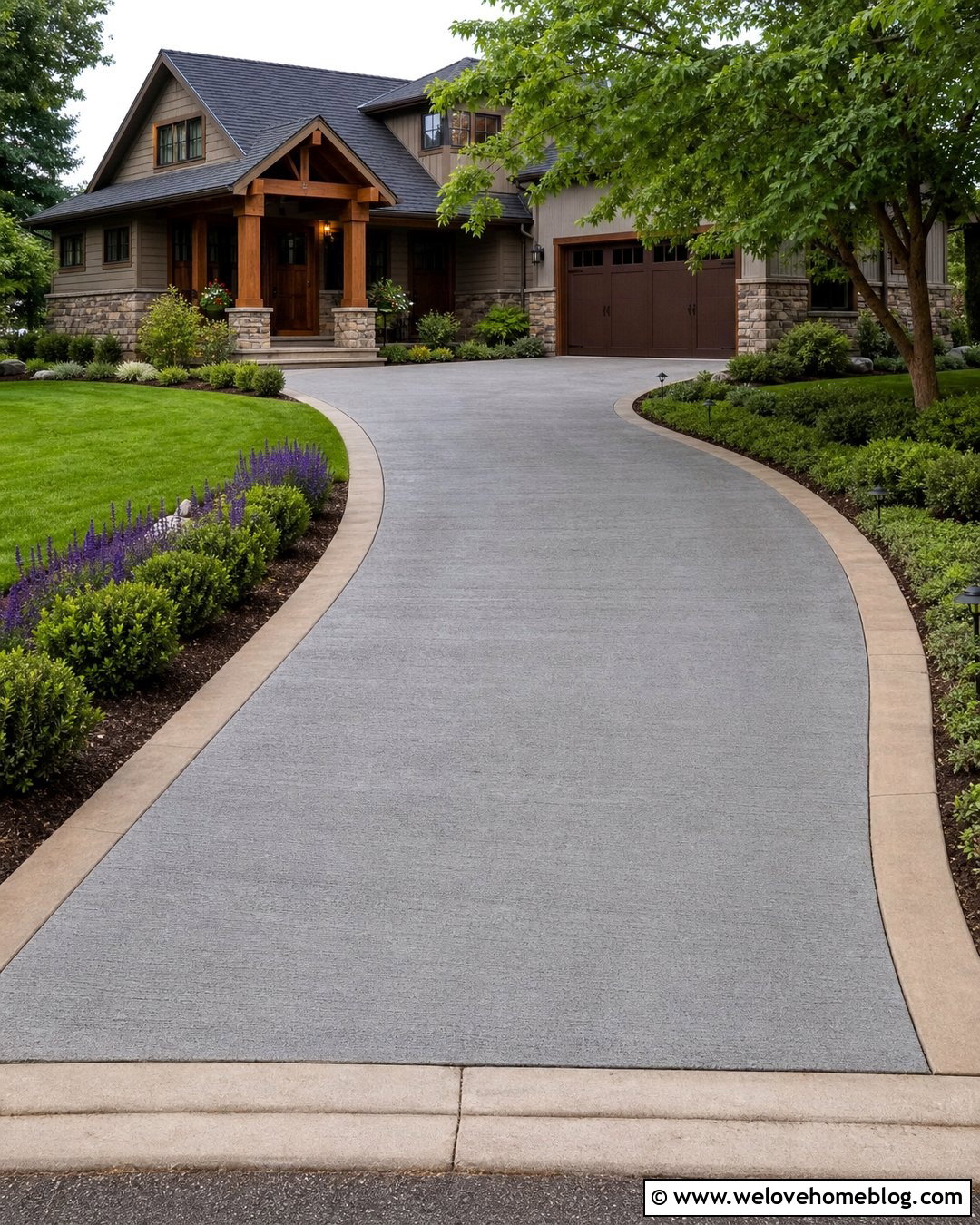
For a practical surface with familiar residential character, consider a broom finish concrete driveway overlay. Fine broom lines add traction while giving repaired or discolored concrete a consistent new appearance. A medium-gray overlay suits a wide range of homes, including ranch, Craftsman, and traditional brick houses. Frame a gently curved driveway with warm tan concrete curbing and low planting beds filled with boxwood, salvia, and seasonal ground cover. A matching resurfaced walkway can connect the driveway to the porch, making both areas feel like one planned installation. Keep the broom pattern running across the direction of travel for better grip. Finish the design with a penetrating or matte sealer rather than a glossy coating. The result is durable-looking, uncomplicated, and easy to coordinate with existing landscaping.
3. Stamped Cobblestone Driveway Overlay
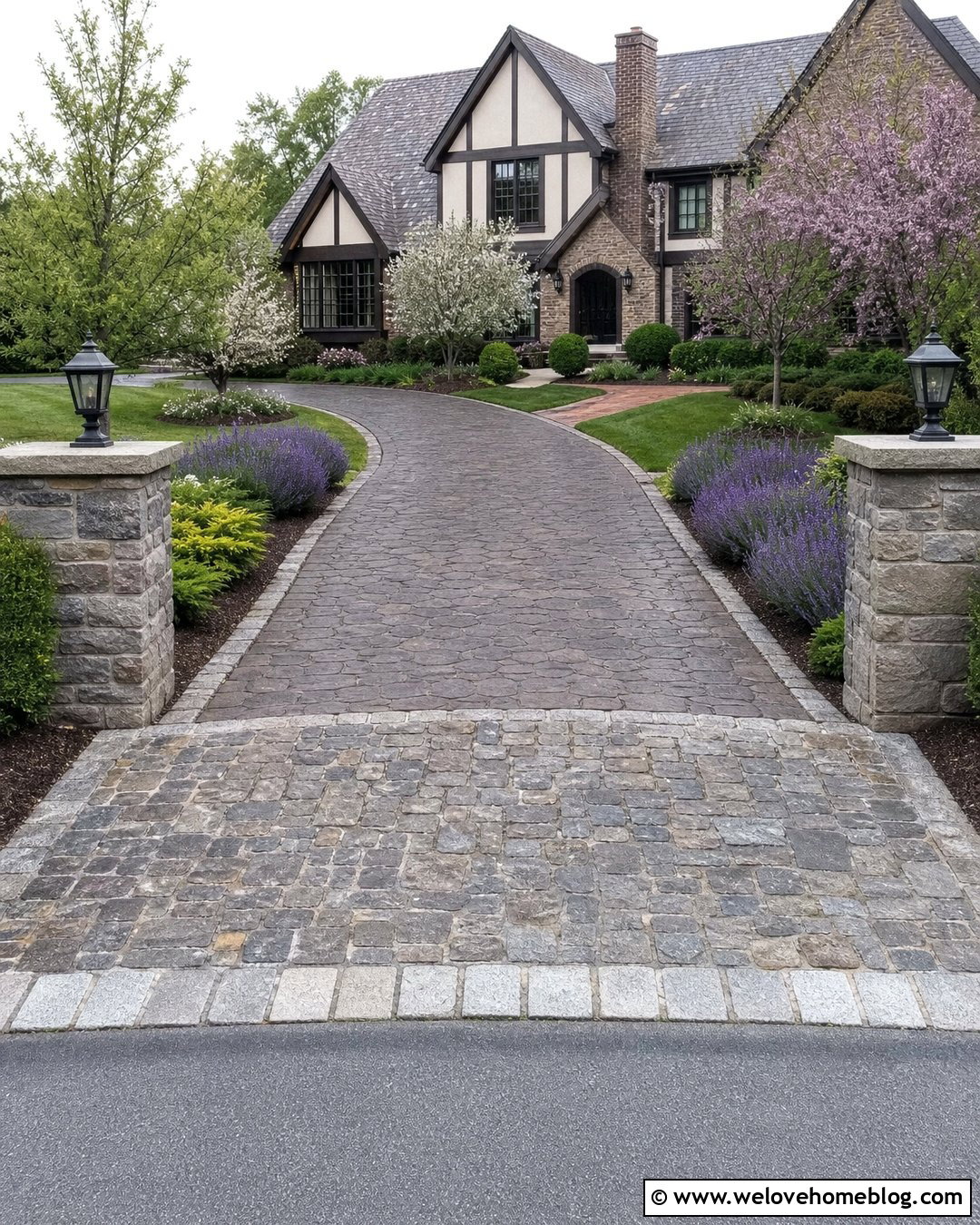
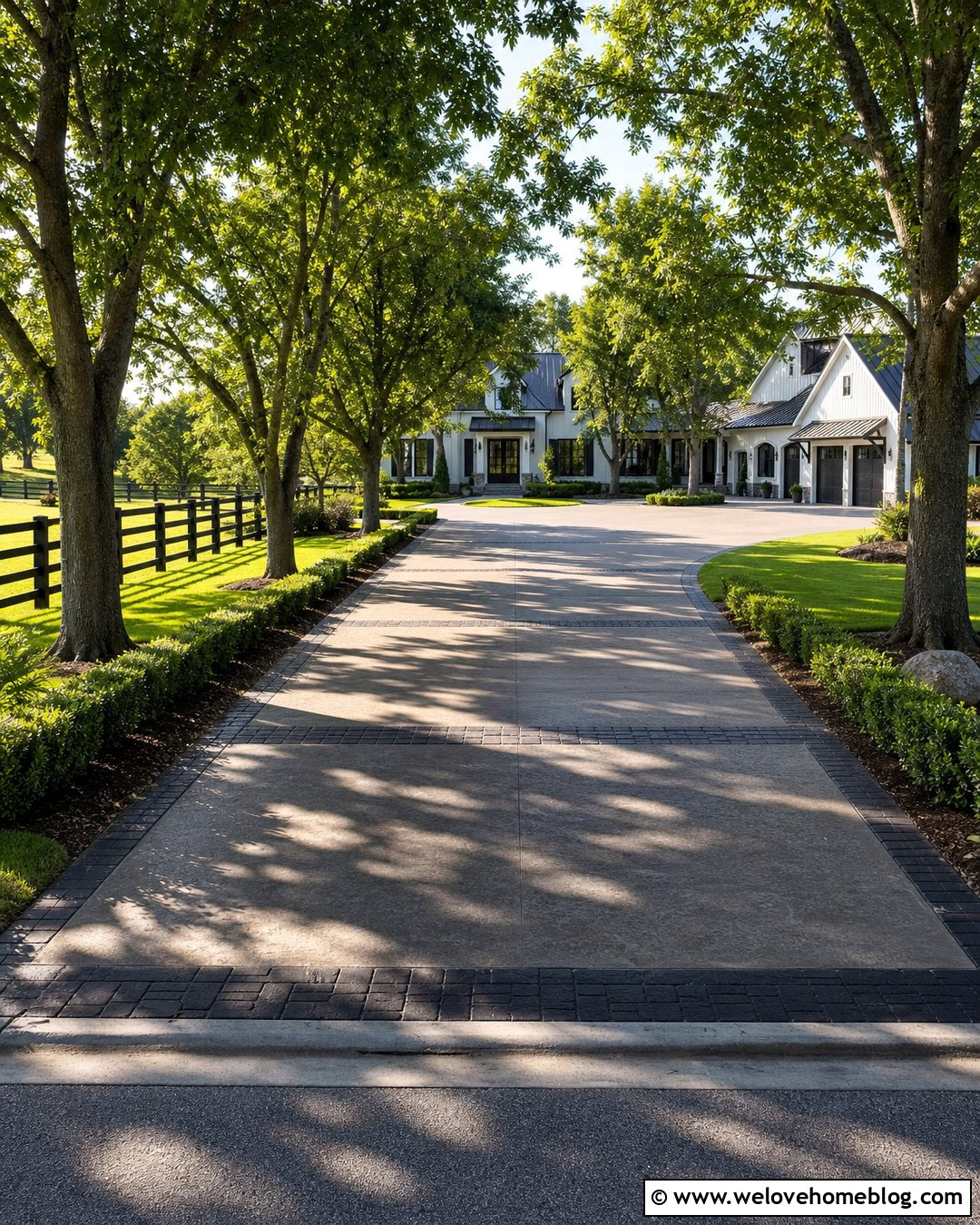
A stamped cobblestone driveway overlay delivers traditional texture without installing individual full-depth stones. Dark gray and muted brown color variation can recreate the aged look of European cobblestone across a curved approach. Pair the surface with real granite edging so the patterned overlay has a convincing, finished boundary. Near the street, add a wider cobblestone-style apron to emphasize the entrance and provide a strong visual transition from the road. Layered shrubs, lavender, small flowering trees, and a brick walkway can frame the driveway without hiding its pattern. Deep stamping requires the correct overlay thickness and careful surface preparation, so professional installation is usually worthwhile. Select restrained colors rather than extreme contrast. This helps the driveway complement a Tudor, stone, or traditional home instead of appearing artificial.
4. Stamped Slate Driveway Overlay
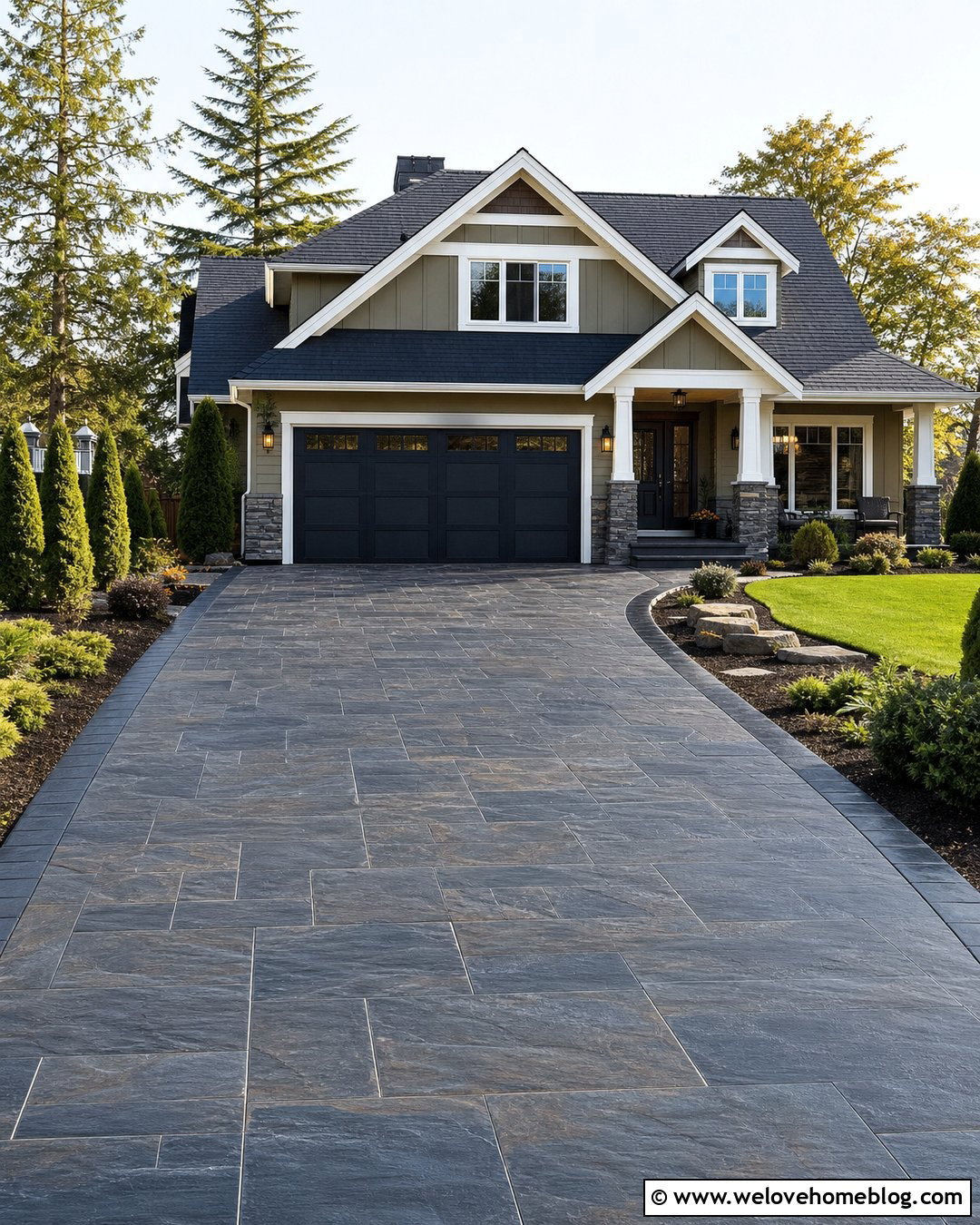
Broad slate patterns give a concrete driveway overlay an elegant surface with fewer visible joints than small stone designs. Use a charcoal-gray base with subtle blue, taupe, and warm gray highlights to create natural-looking depth. The pattern works beautifully on a wide straight driveway leading to a contemporary Craftsman or transitional home. Add black concrete edging, structured evergreen beds, and a wide walkway finished in the same slate texture. Repeating one overlay color around the porch steps can connect the entire entrance. Before choosing dark tones, consider sun exposure because deep colors may become hotter in warm climates. A UV-resistant, non-glossy sealer can preserve the color while maintaining a more realistic stone appearance. The finished driveway feels refined, but its simple landscaping keeps the complete look welcoming and residential.
5. Flagstone Driveway Overlay
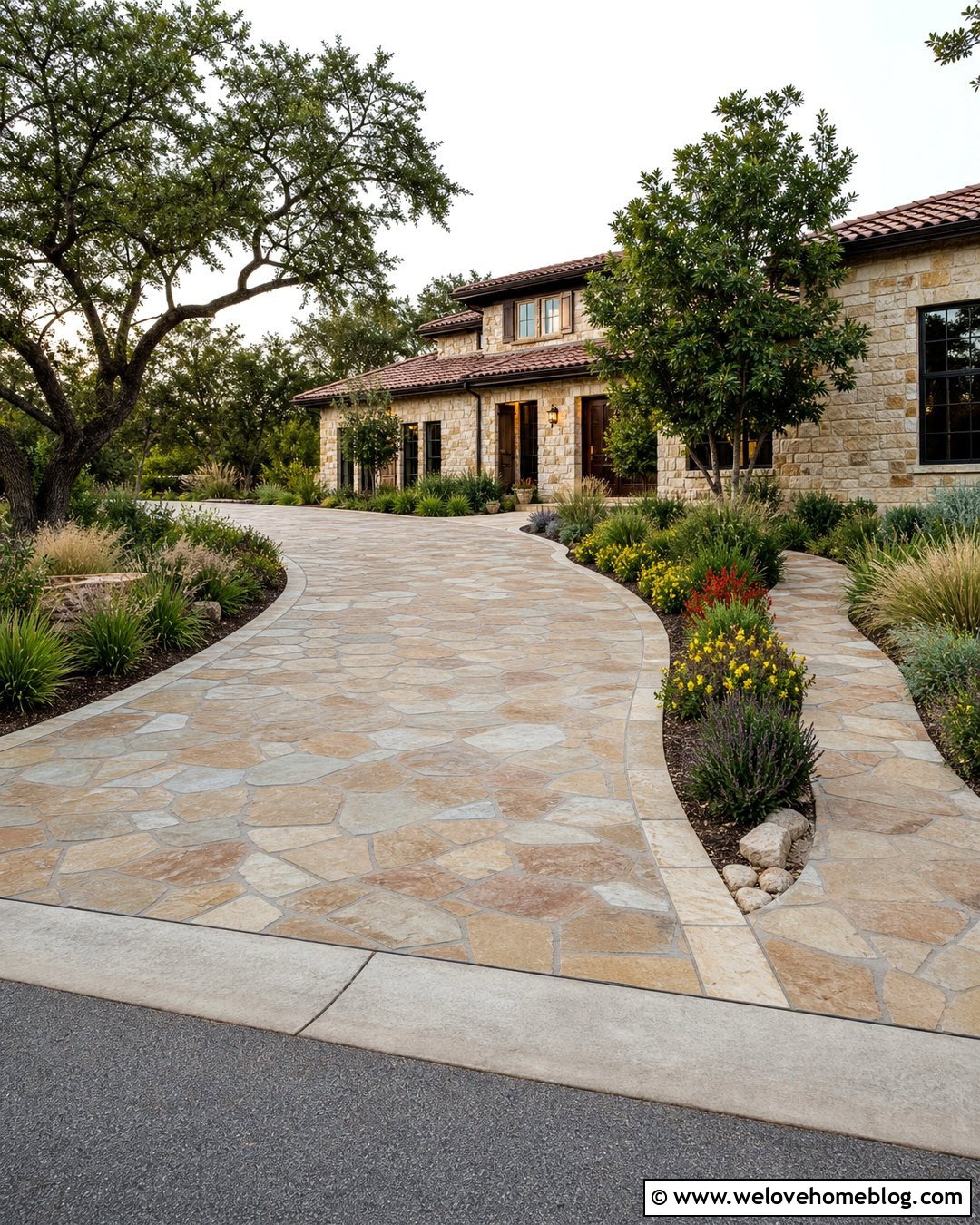
Irregular flagstone patterns can transform plain concrete into a warmer, more organic entrance. For a believable flagstone driveway overlay, blend sandstone, beige, muted rust, and soft gray instead of coloring every stamped section alike. Use the finish on a curved driveway bordered by natural limestone blocks and broad planting beds. Native grasses, flowering perennials, and one sculptural tree can reinforce the relaxed character. Carry the same pattern onto the front walkway, but define the transition with a narrow soldier-course border. The original driveway should have stable joints and no significant movement, since underlying cracks can eventually reflect through decorative resurfacing. Carefully placed pattern breaks can help align the overlay with existing joints. This complete look works especially well with Southwestern, rustic, cottage, or stone-clad homes surrounded by natural landscaping.
6. Brick Pattern Driveway Overlay
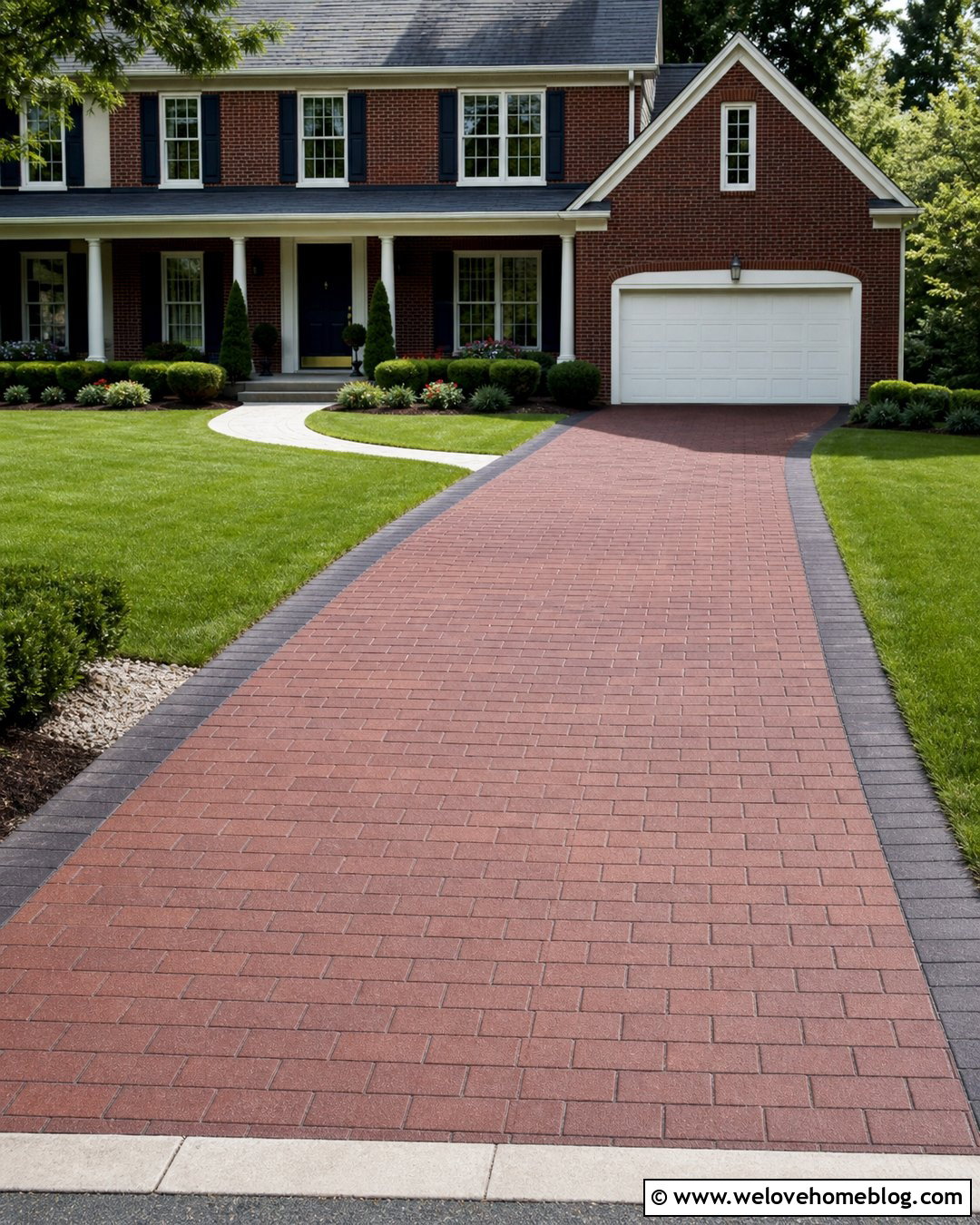
A brick pattern driveway overlay adds traditional warmth while preserving the existing concrete base. Choose a red-brown stamped or stenciled finish with charcoal accents that imitate slightly varied clay brick. A running bond pattern feels simple and orderly on a narrow straight driveway, while a darker border visually defines its edges. Pair the surface with a red brick colonial home, white porch columns, trimmed hedges, and a curved concrete walkway. Matching the overlay too closely to the facade can make the property feel flat, so select a driveway color that is one or two shades deeper than the house brick. Keep simulated mortar lines narrow and softly colored for a convincing effect. A matte protective sealer completes this classic design while avoiding the overly shiny appearance sometimes associated with decorative coatings.
7. Herringbone Paver Driveway Overlay
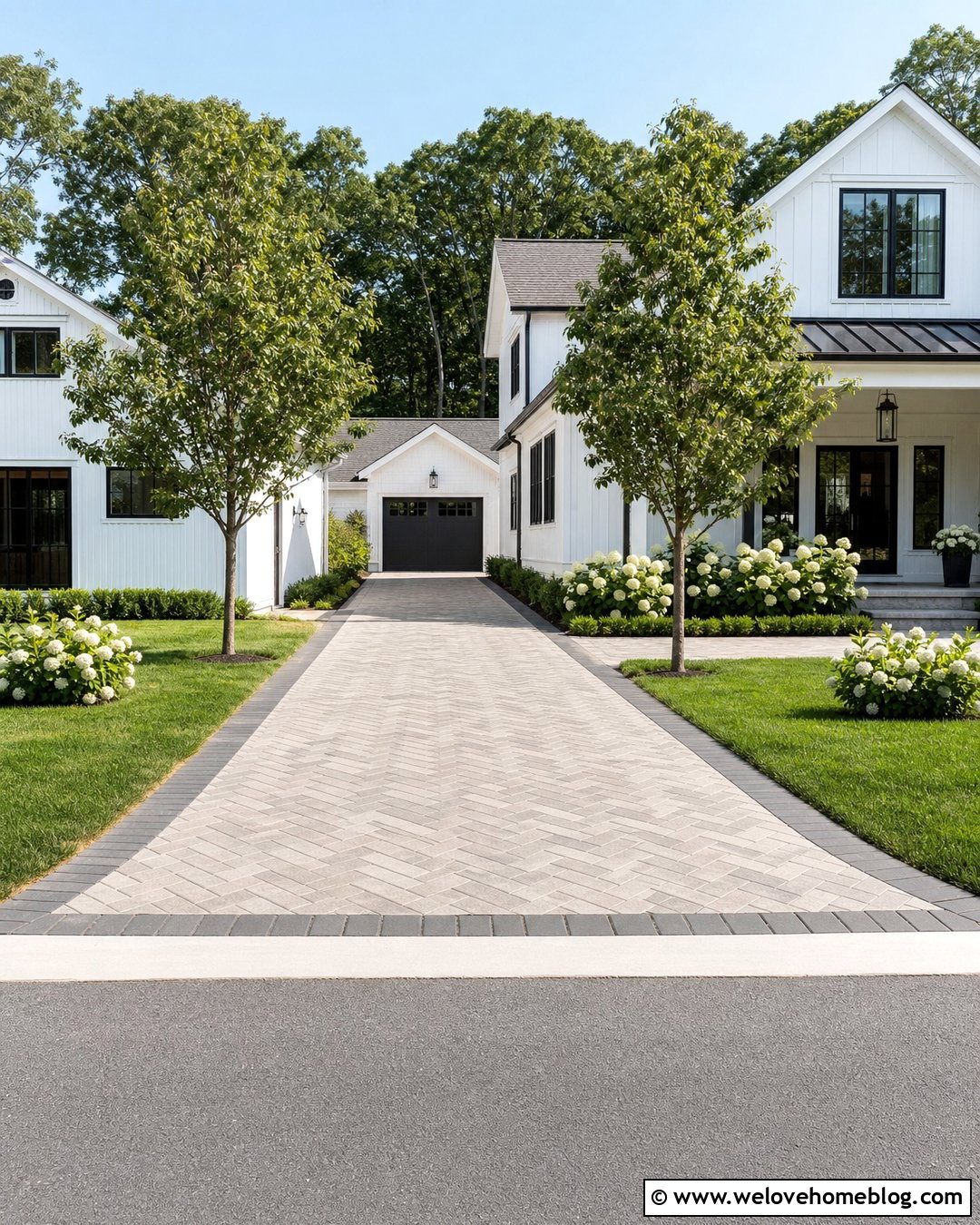
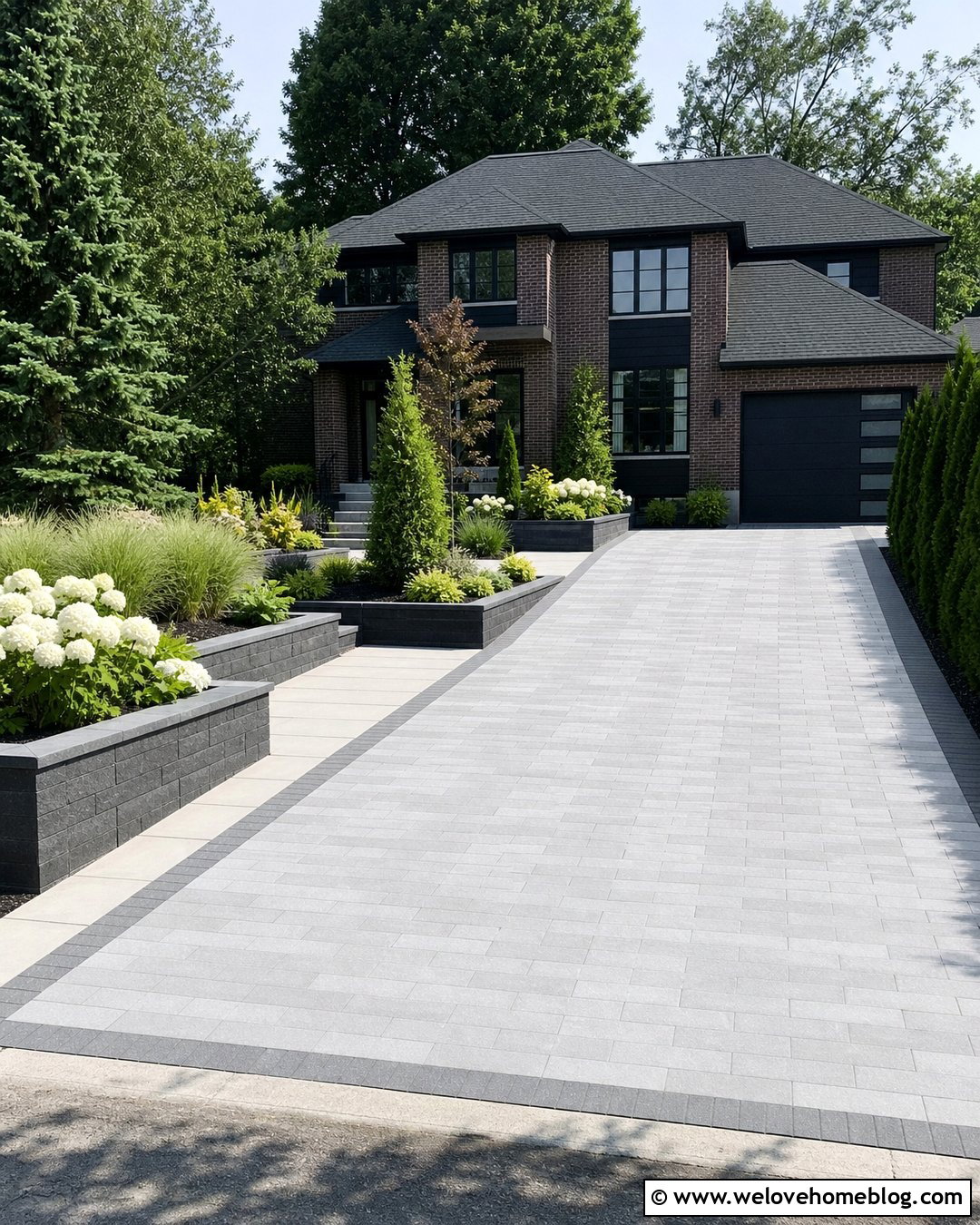
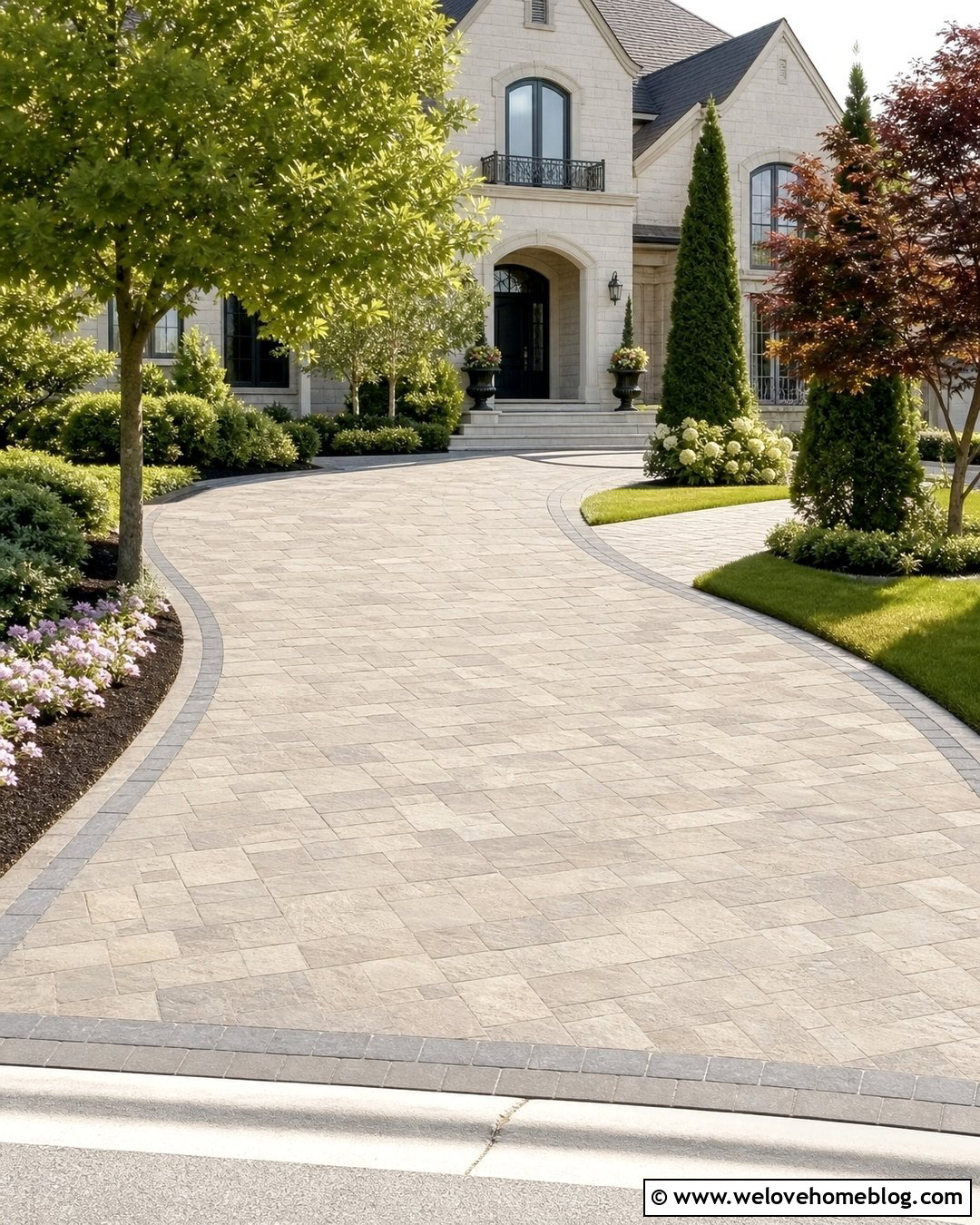
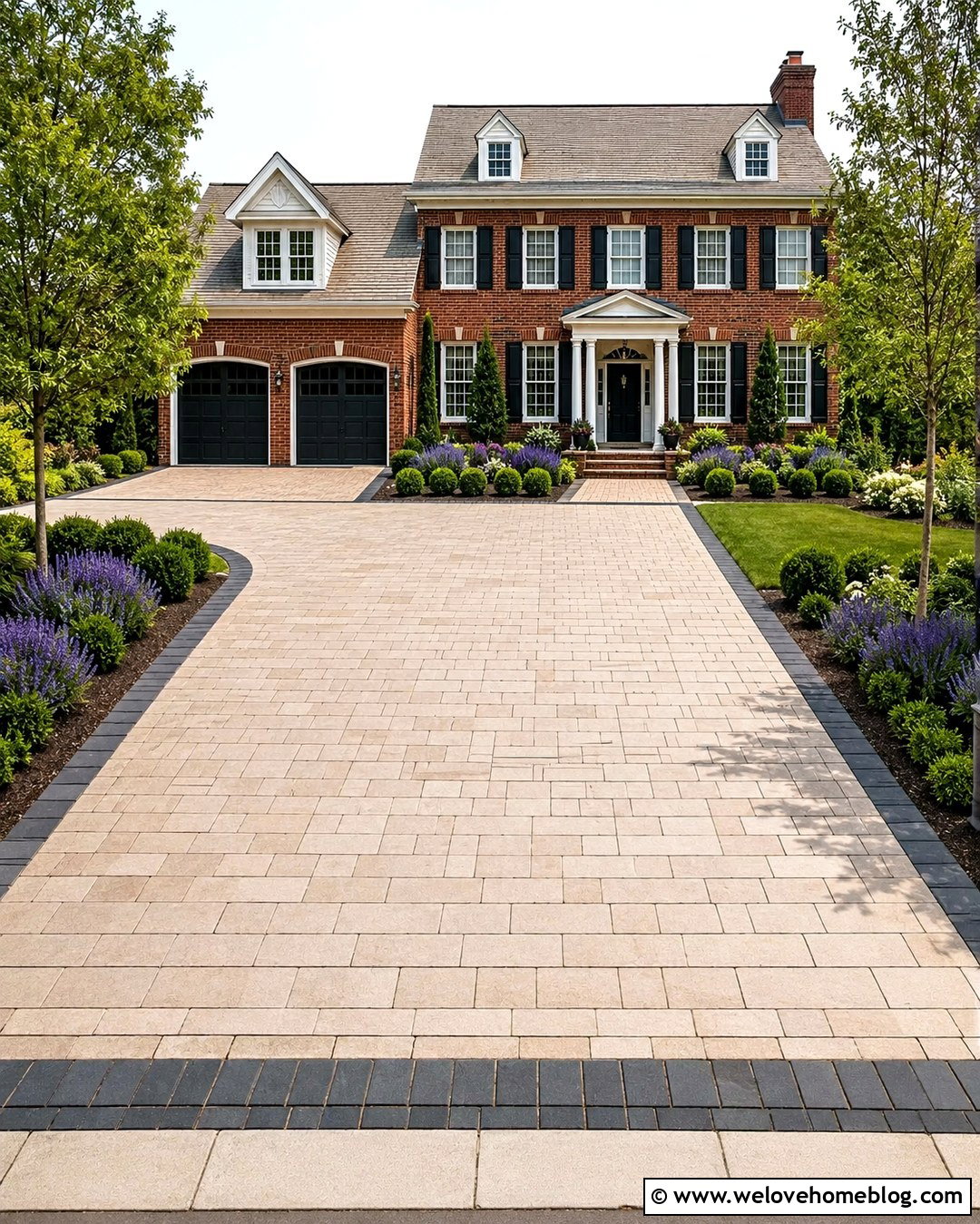
Thin concrete pavers laid over a suitable existing slab can create the appearance of a completely rebuilt driveway. A herringbone pattern is especially effective because its angled layout introduces movement and handles an expansive surface without looking monotonous. Select warm gray and sand-colored pavers, then surround them with a charcoal soldier-course border. A straight driveway leading to a modern farmhouse can be softened with lawn strips, hydrangeas, ornamental pear trees, and a coordinating paver walkway. Elevation is critical with this type of overlay. The installer must account for garage thresholds, drainage, street transitions, and the added paver thickness. Edges also need secure restraint to prevent shifting. When the underlying concrete is stable and properly prepared, this layered design provides dimensional texture and strong architectural character.
8. Large Format Paver Driveway Overlay
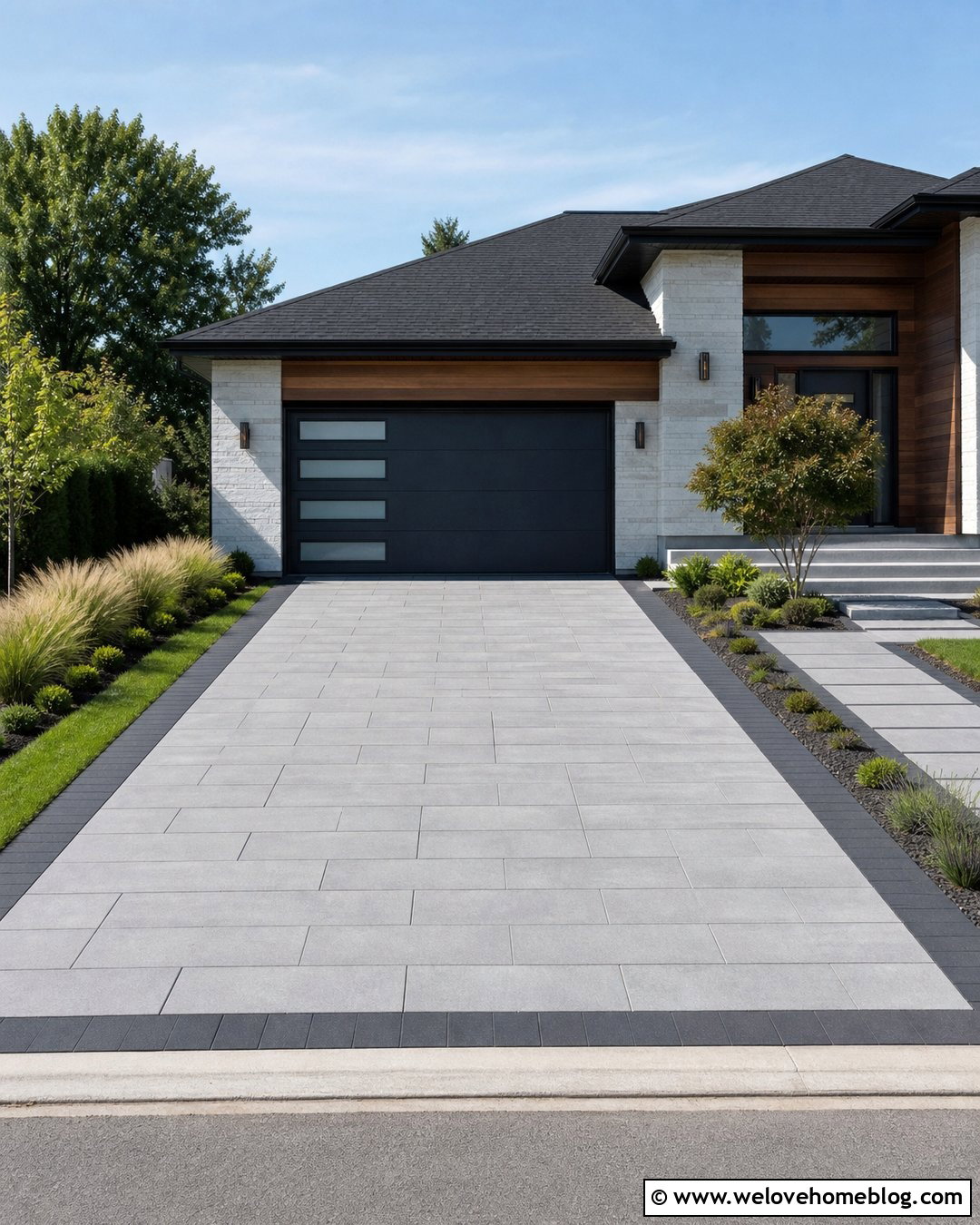
Large rectangular overlay pavers produce a streamlined driveway that pairs naturally with contemporary architecture. Use vehicle-rated thin concrete pavers in cool gray tones, arranged in a staggered running pattern over a sound slab. Their broad proportions make a short, wide driveway appear calmer and less visually busy. Dark charcoal perimeter pavers can outline the surface, while narrow planting beds filled with grasses and compact shrubs introduce movement. Continue the same pavers toward the front door to connect parking and pedestrian areas. Large pieces need consistent support and careful installation to avoid rocking or cracked corners. Existing concrete joints, slope, drainage, and door clearances should be reviewed first. With precise alignment and minimal color variation, the complete driveway becomes a simple architectural foreground for a modern home with wood, stucco, or stone accents.
9. Resin Bound Gravel Driveway Overlay
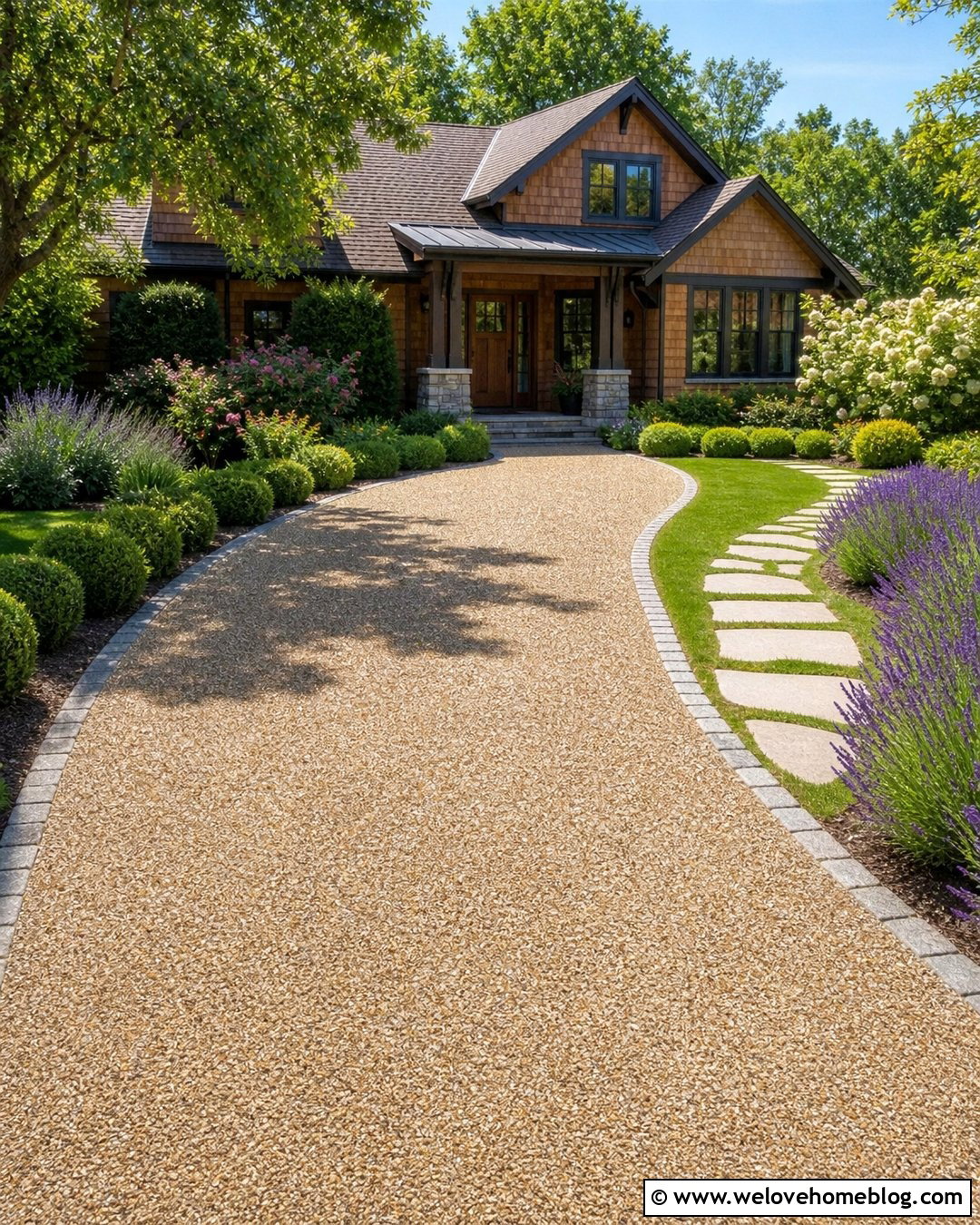
A resin-bound gravel driveway overlay provides the visual softness of stone with a smooth, fixed surface. Small natural aggregate is mixed with clear resin before application, creating an even finish without loose gravel spreading onto the lawn or sidewalk. Choose honey, cream, and light brown aggregate for a curved driveway leading to a cottage or Craftsman home. Define the edges with granite setts and add lavender, low hedges, flowering shrubs, and a stepping-stone walkway. The existing concrete or asphalt base must be stable, clean, and compatible with the chosen system. Drainage also requires careful planning because overlay performance depends on the base and installation details. Use a UV-stable exterior resin intended for vehicle traffic. This design feels natural and welcoming while maintaining a neat, contemporary surface.
10. Marble Aggregate Driveway Overlay
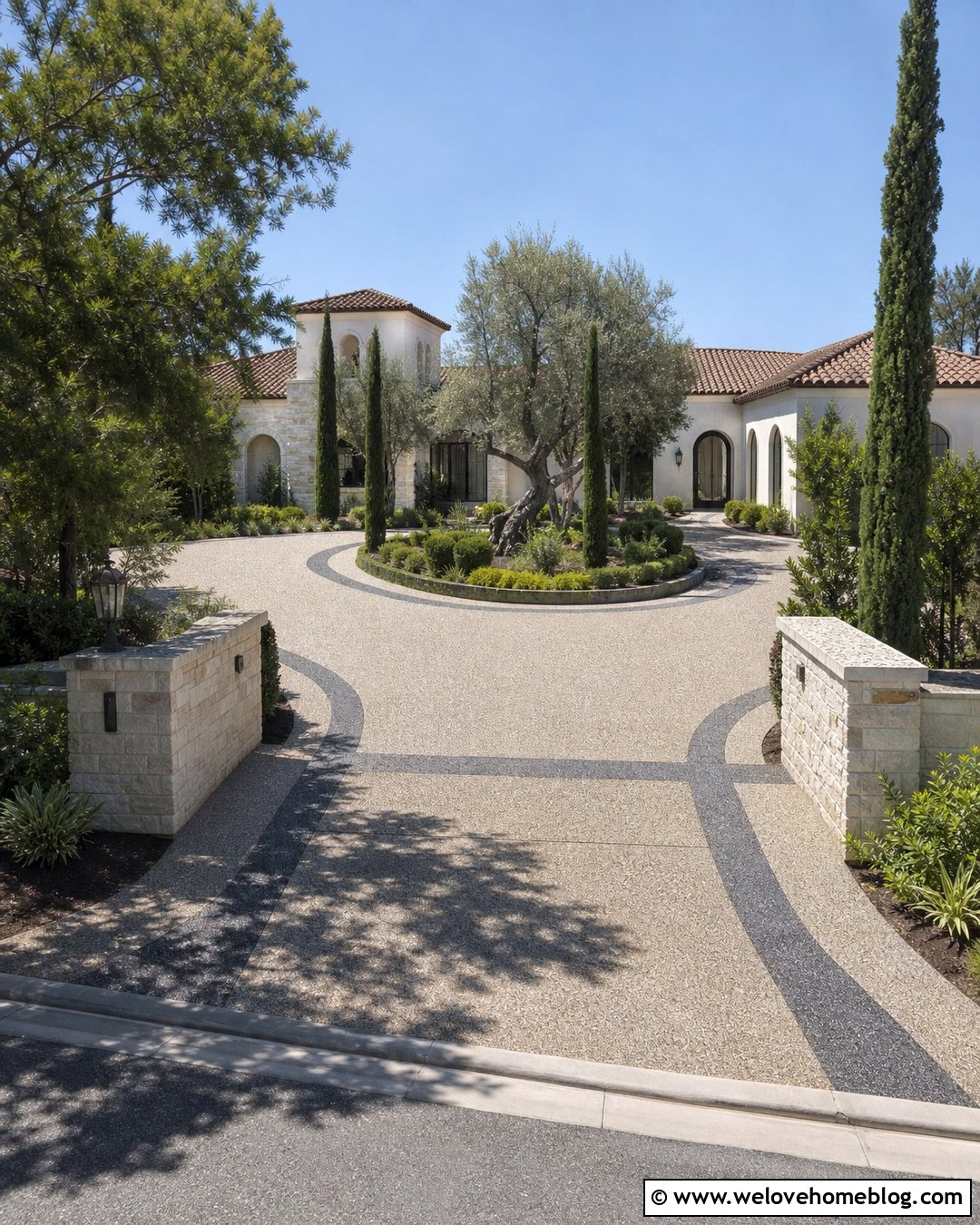
For a brighter entrance, a marble aggregate driveway overlay combines decorative stone with a clear exterior resin binder. Cream, pale gold, and soft gray chips can create a luminous surface that complements stucco, limestone, or light-painted brick. Apply the material across a horseshoe driveway and use darker aggregate bands to highlight both entrances and the central landscape island. Olive-toned shrubs, clipped evergreens, ornamental grasses, and pale stone walls can balance the driveway’s brightness. Avoid pure white aggregate in areas with heavy leaf drop or frequent tire marks because stains may become more noticeable. The resin system should be formulated for exterior UV exposure, local weather, and vehicle loads. When installed over a properly evaluated base, this seamless-looking overlay creates an upscale finish without making the residential landscape feel overly formal.
11. Black Asphalt Driveway Overlay
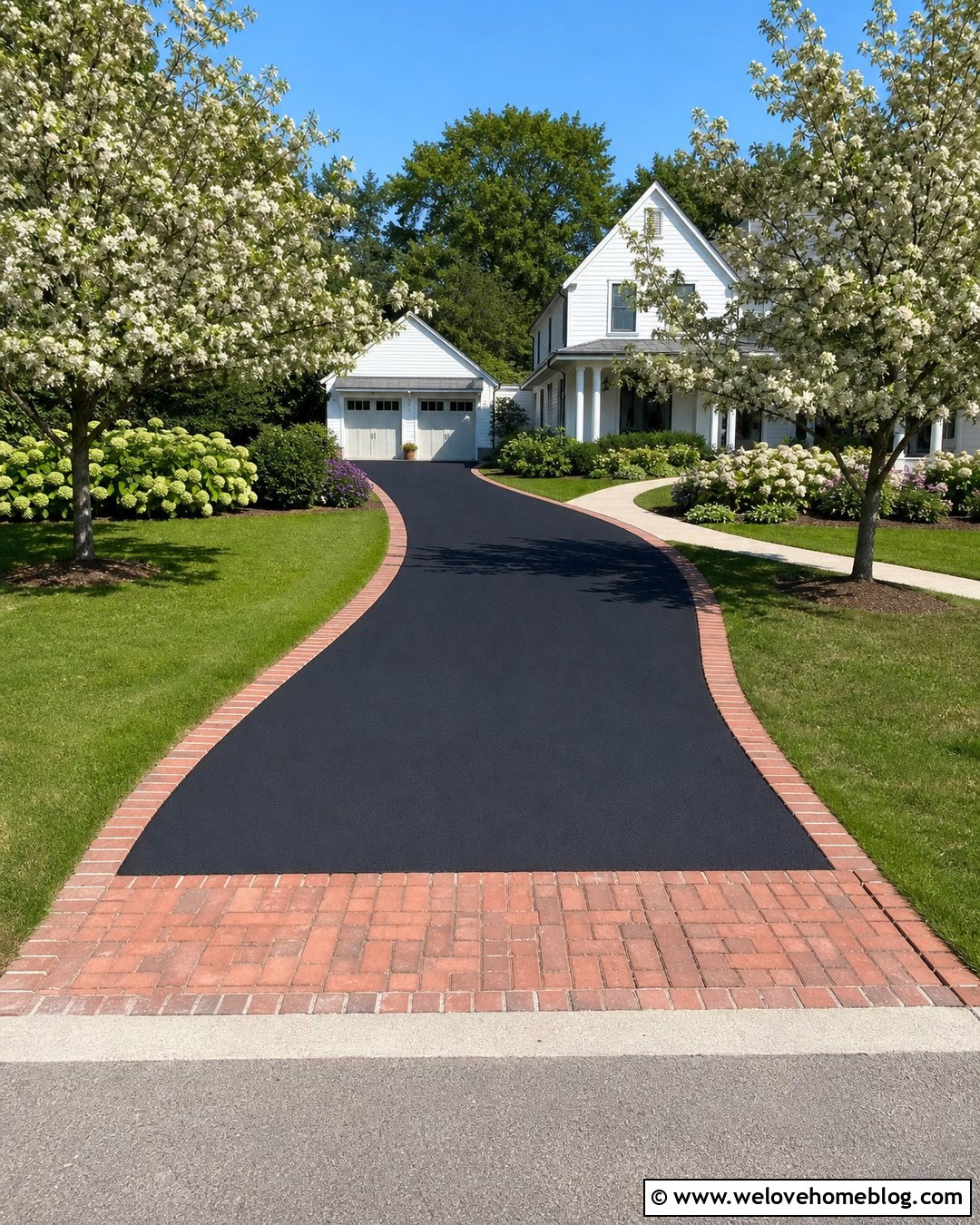
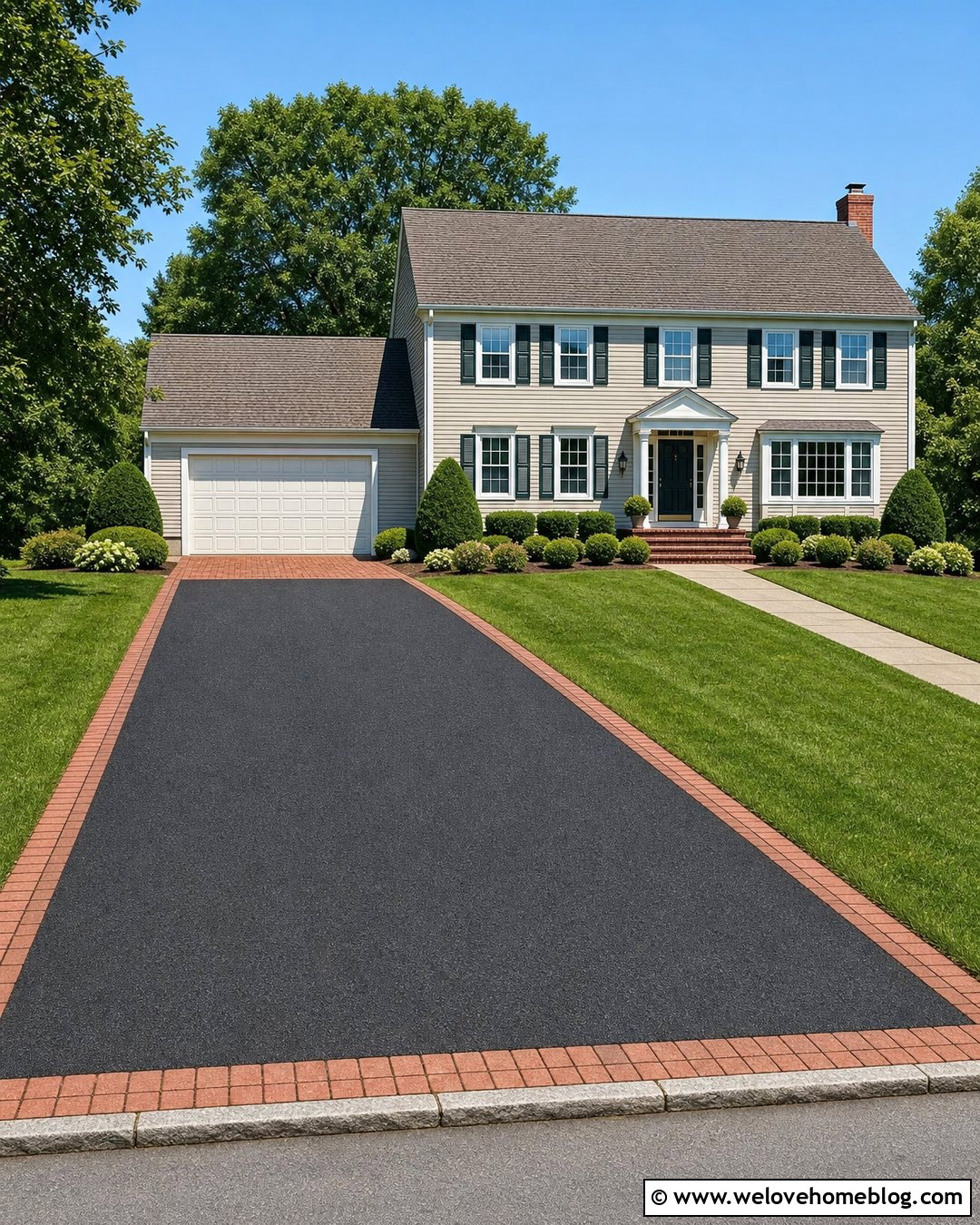
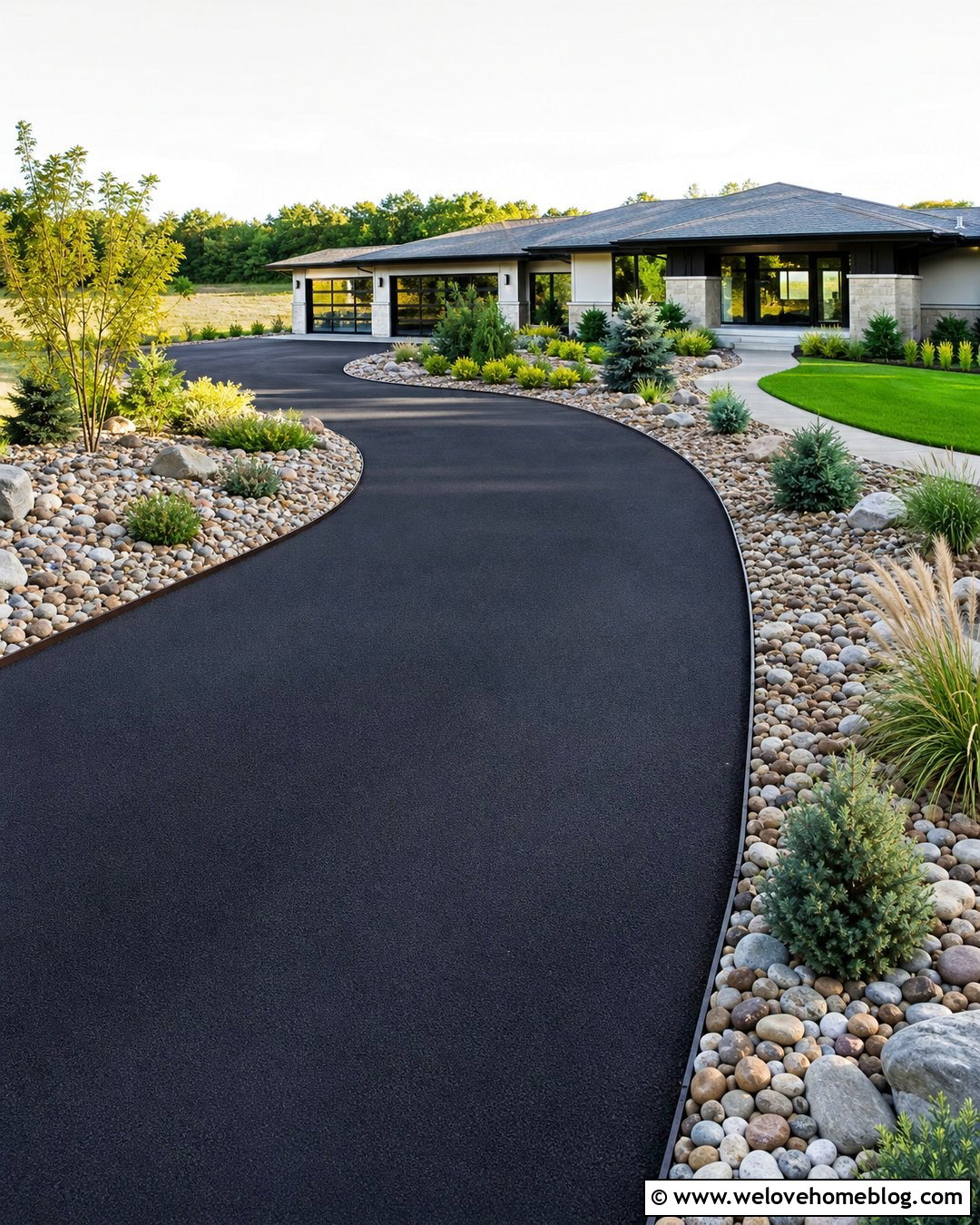
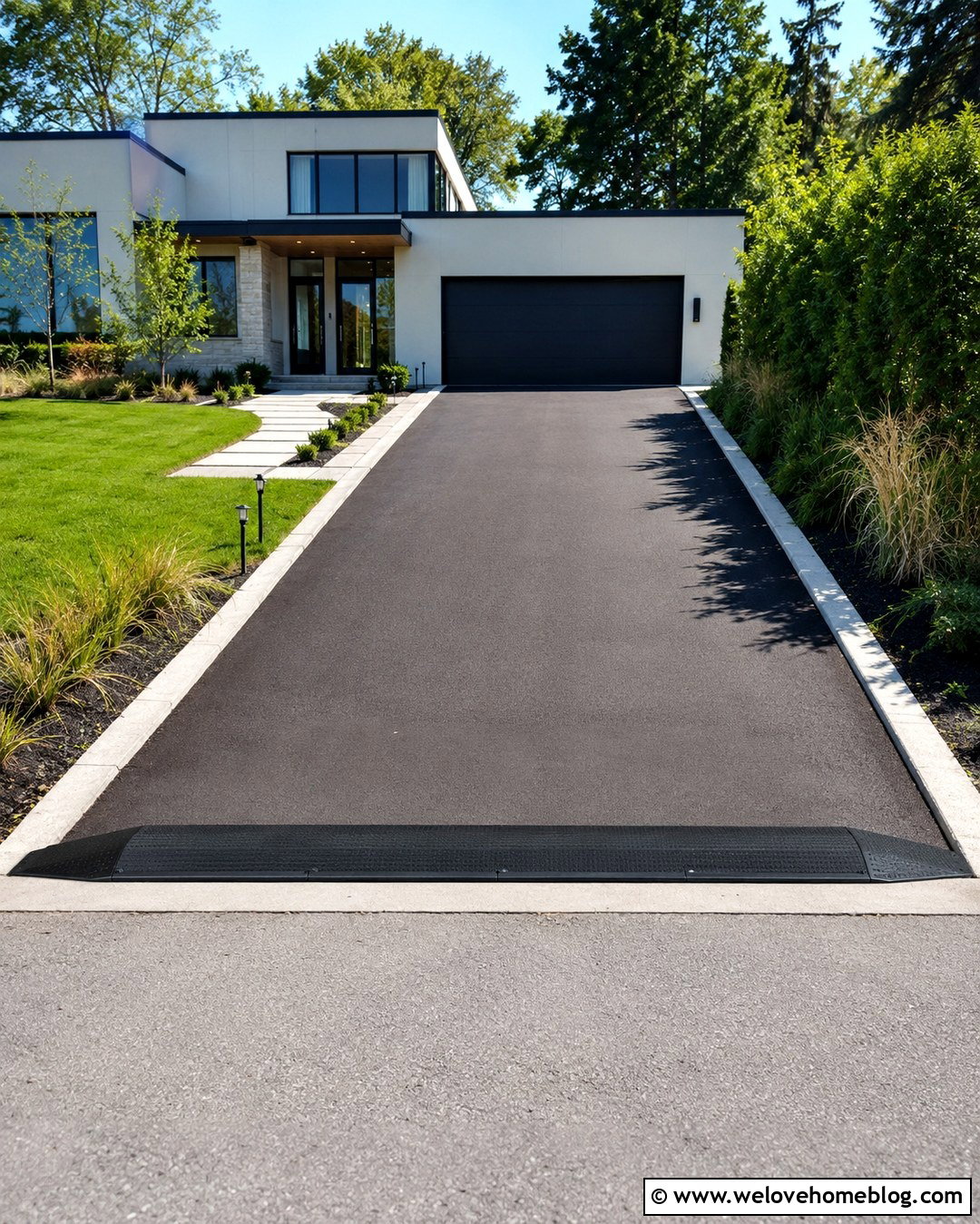
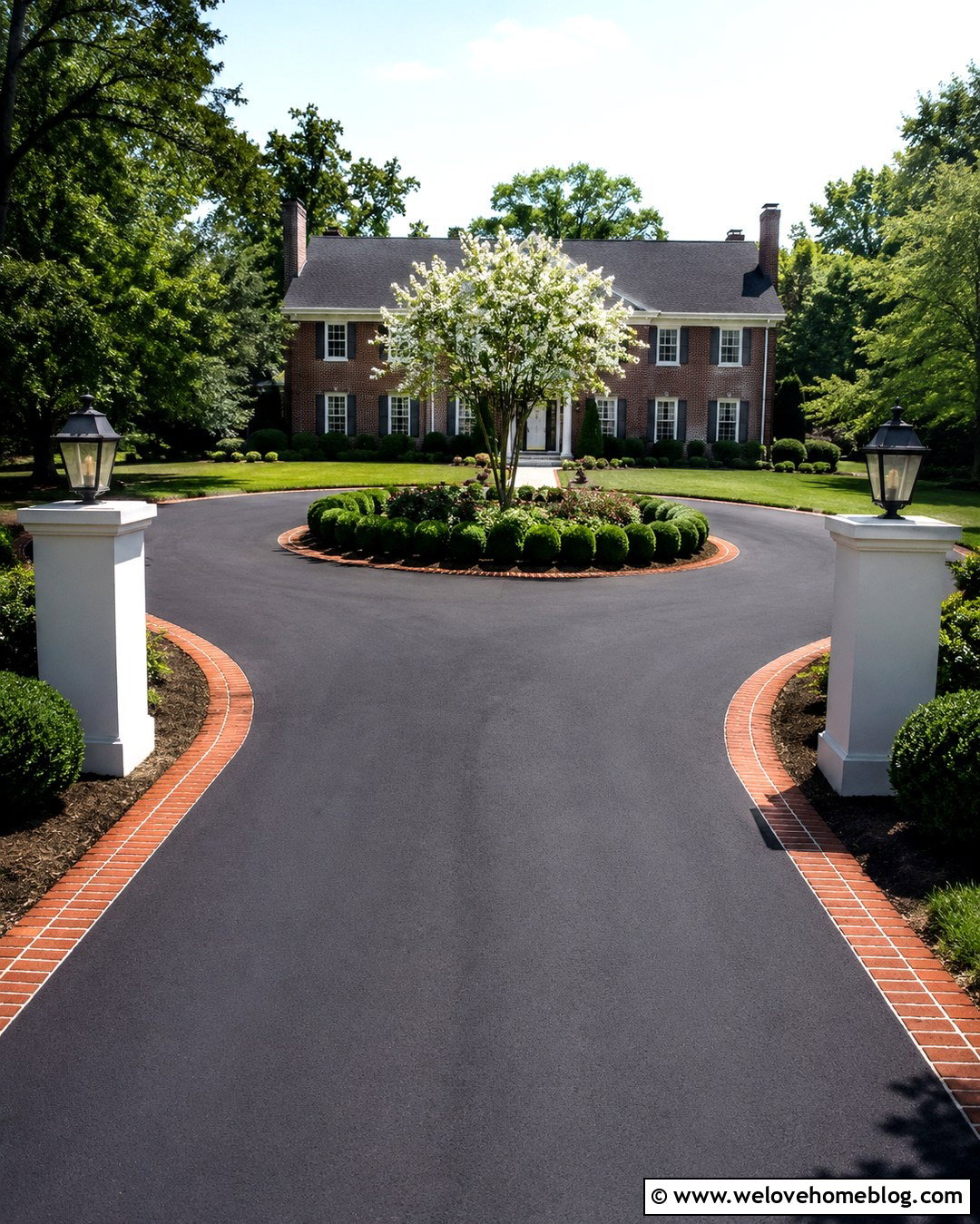
Fresh black asphalt can give a faded driveway a dramatic, uniform appearance while creating strong contrast with the lawn and house. A gently curved asphalt driveway overlay looks especially polished beside a white farmhouse or light gray Cape Cod home. Add a red brick border along both sides and repeat the brick at the street apron for a more finished transition. Flowering trees, low hydrangeas, and wide grass margins prevent the dark surface from overpowering the yard. Before resurfacing, weak areas, potholes, drainage issues, and severe cracking need proper correction. Finished elevations at the garage, sidewalk, and street must also be maintained. A simple asphalt overlay may not offer stamped decoration, but thoughtful shaping, brick detailing, and landscaping can turn it into a complete, attractive driveway design.
12. Asphalt Driveway Overlay With Cobblestone Apron
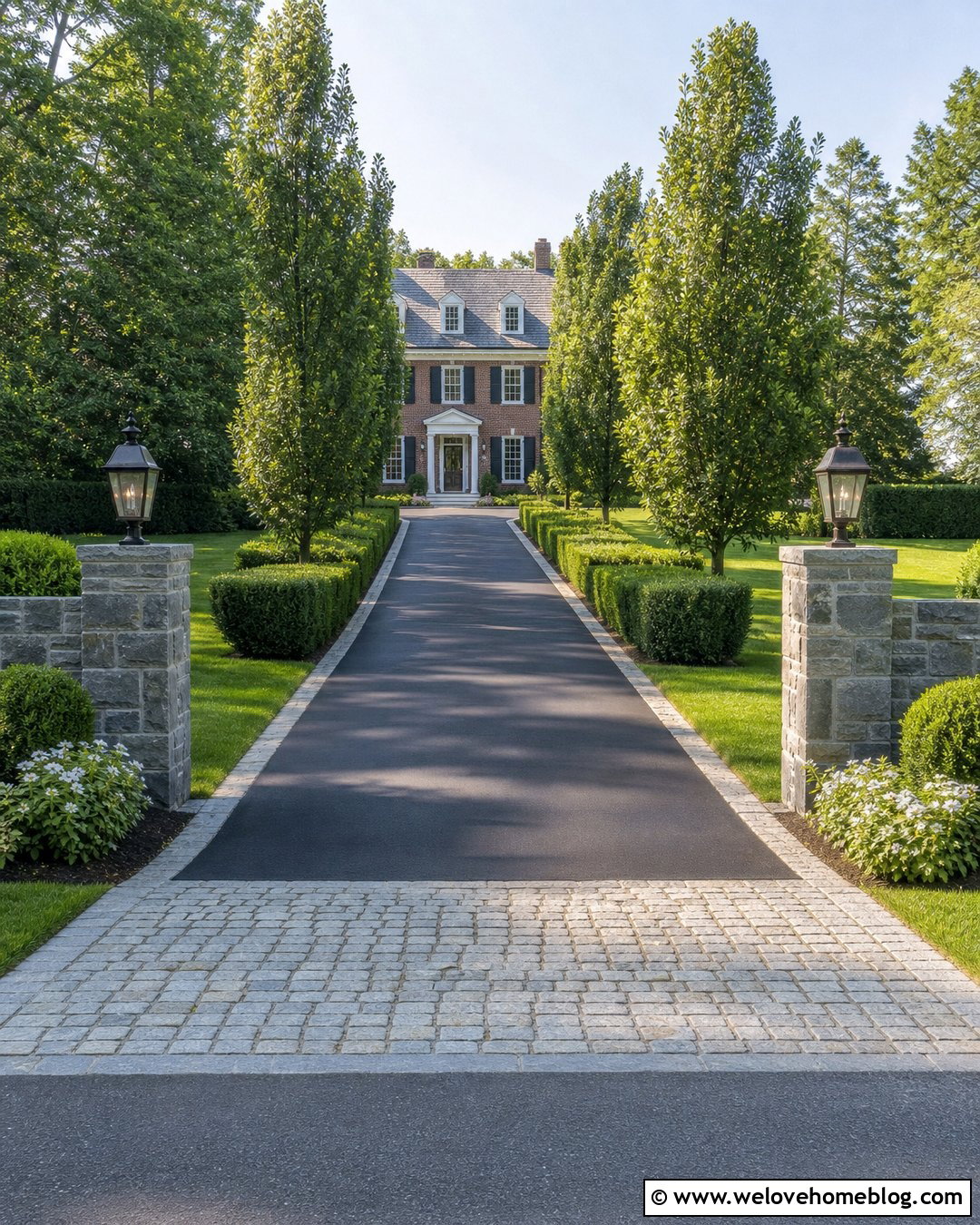
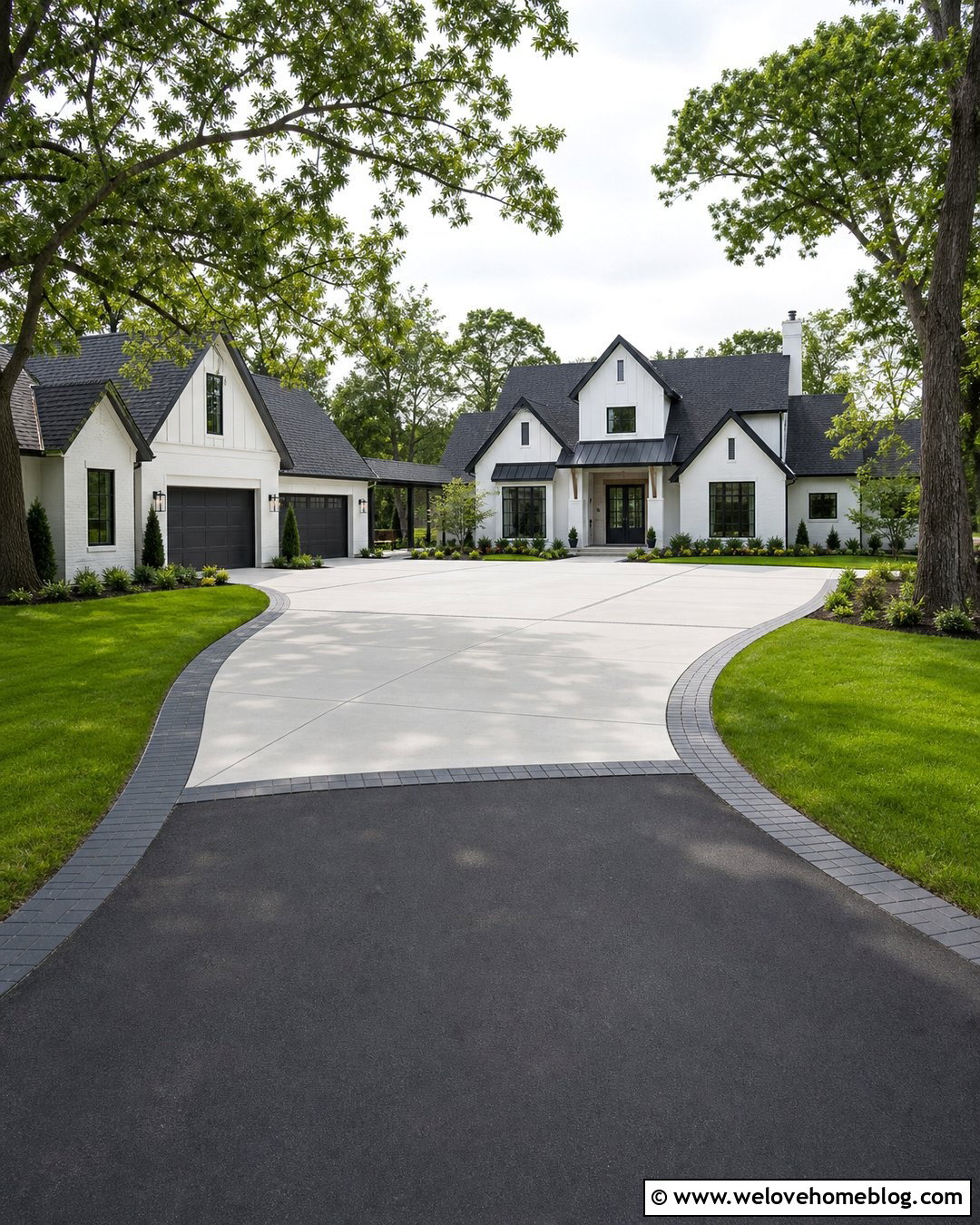
Combining a smooth asphalt overlay with a cobblestone apron gives a long driveway both practicality and character. Use dark black asphalt through the main driving area, then install gray granite cobbles across the entrance near the street. Continue a narrow cobblestone ribbon along the edges to visually connect the apron with the house. This treatment suits a colonial, Georgian, or stone-front property with symmetrical landscaping. Frame the approach with clipped hedges, upright trees, lawn, and traditional lantern-style fixtures. The cobbles should sit flush with the asphalt so snow removal and everyday driving remain comfortable. Proper transition details are essential because raised or poorly restrained stones can shift. The completed look creates a strong sense of arrival without covering the entire driveway in a more expensive decorative material.
13. Exposed Aggregate Driveway Overlay
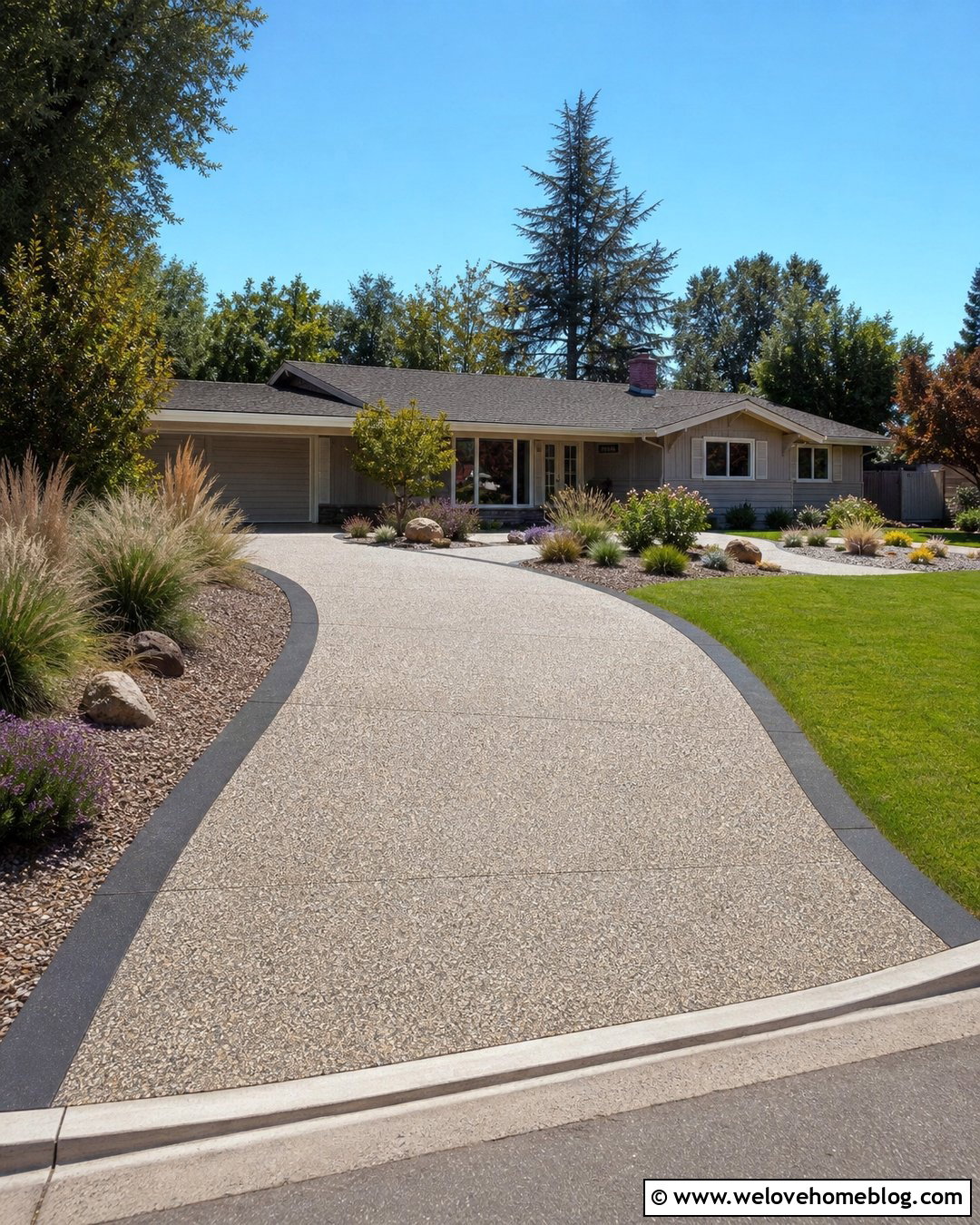
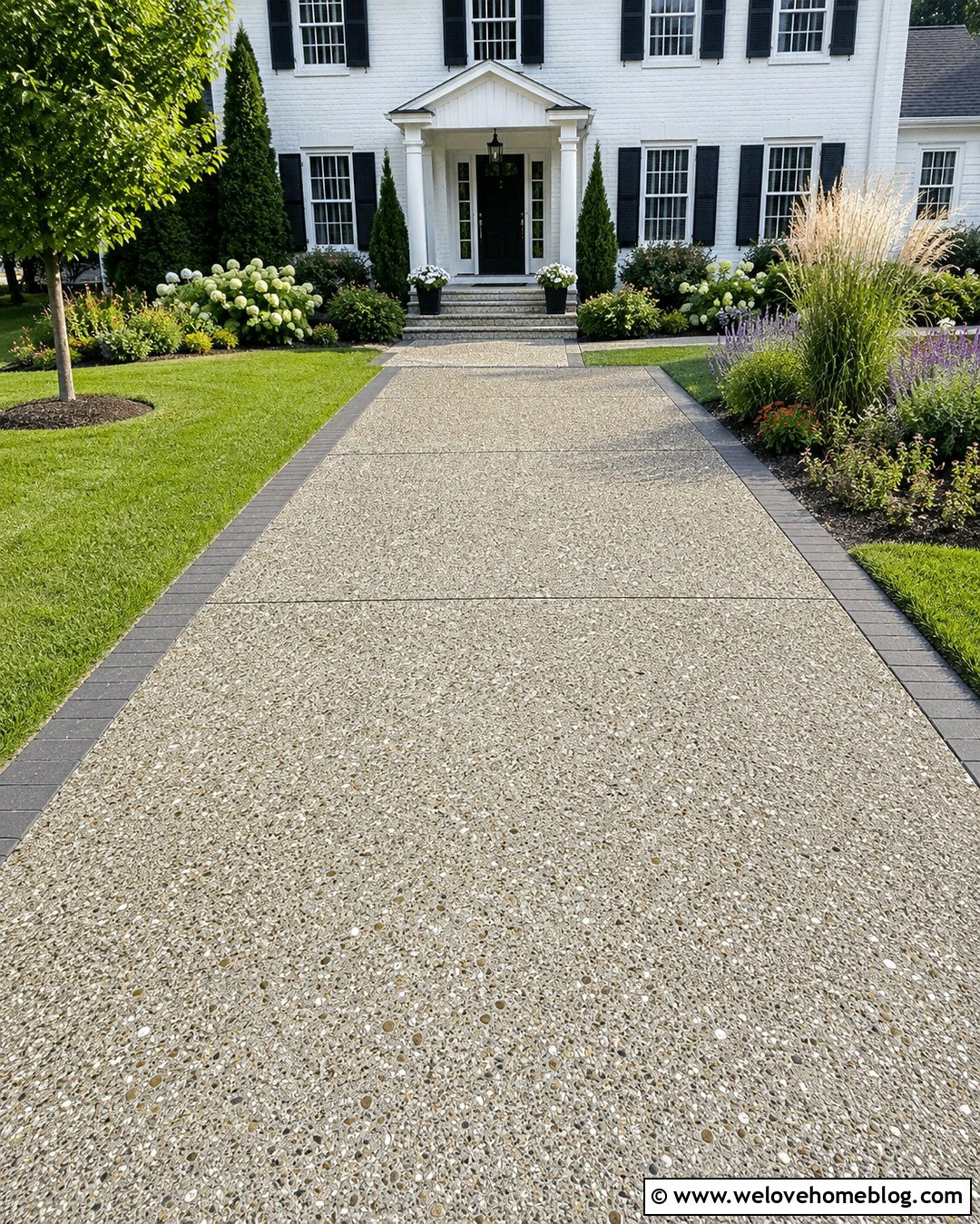
An exposed aggregate driveway overlay adds natural texture by revealing decorative stone within the resurfacing material. Choose a balanced blend of tan, gray, and charcoal aggregate for a surface that hides light dirt while coordinating with many exterior colors. A wide curved layout can be bordered with smooth dark concrete bands, creating a clean frame around the textured center. Add drought-tolerant grasses, flowering perennials, boulders, and a simple concrete walkway beside the driveway. Aggregate size and exposure should remain consistent so the finish feels intentional rather than rough or patchy. The installer should also create enough traction without leaving uncomfortable, sharply protruding stones. Joint placement must respect movement in the existing slab. This durable-looking design brings depth to a plain facade and works particularly well with midcentury, ranch, and contemporary homes.
14. Sand Finish Concrete Driveway Overlay
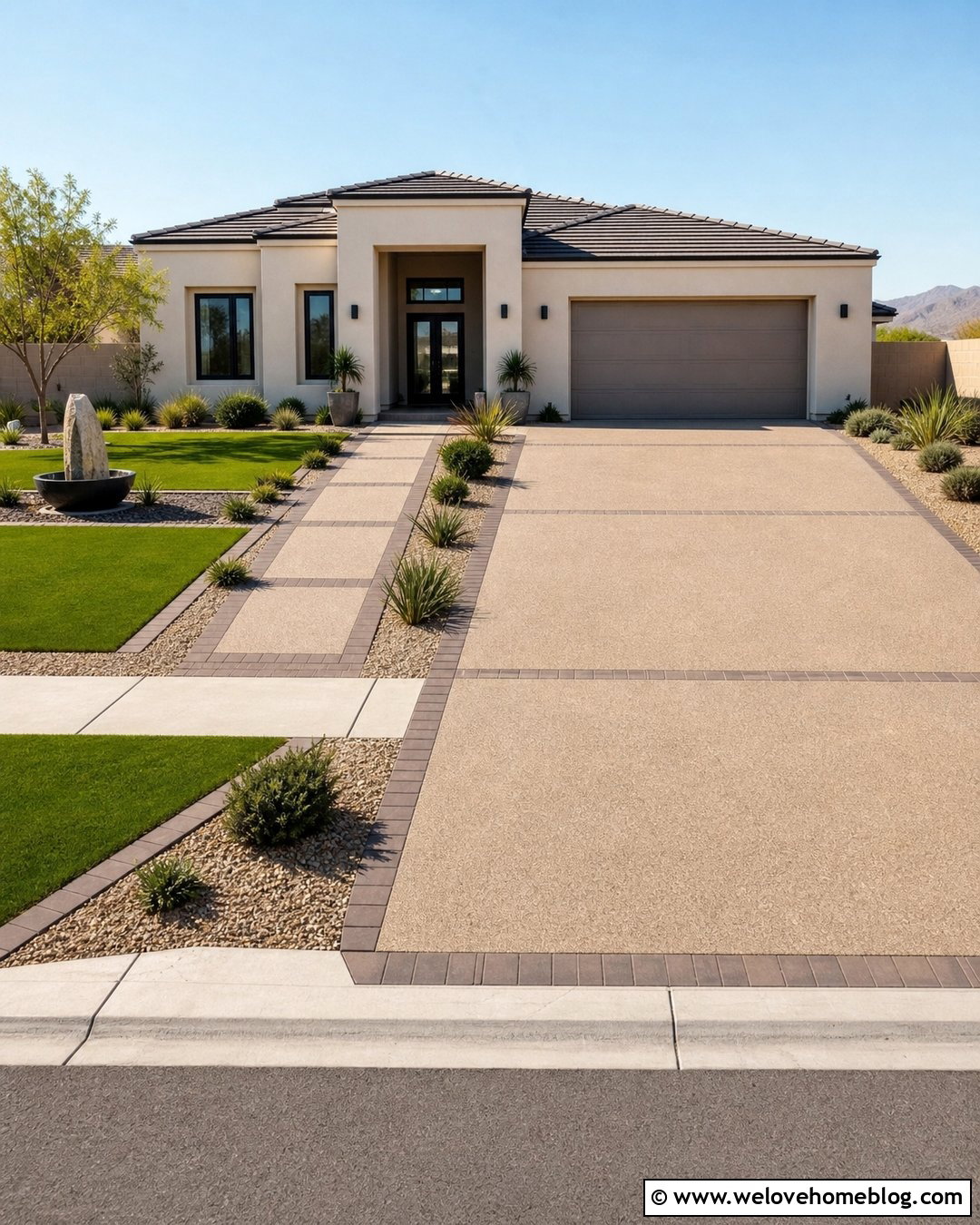
A sand finish creates a softly textured concrete overlay that feels smoother and more refined than a heavy broom surface. Warm beige or light taupe can brighten a straight driveway while complementing cream stucco, natural wood, and warm stone. Add a narrow brown paver border, rectangular lawn panels, and planting beds containing fountain grass, dwarf shrubs, and pale gravel mulch. The same finish can extend onto the walkway for visual continuity, with paver bands marking the change in direction. A sand texture offers subtle grip without introducing a bold pattern, making it useful when the house already has detailed architecture. Color samples should be viewed outdoors before installation because sunlight can change their appearance. A breathable, low-sheen sealer will help maintain the understated, natural quality of the finished surface.

15. Geometric Concrete Driveway Overlay
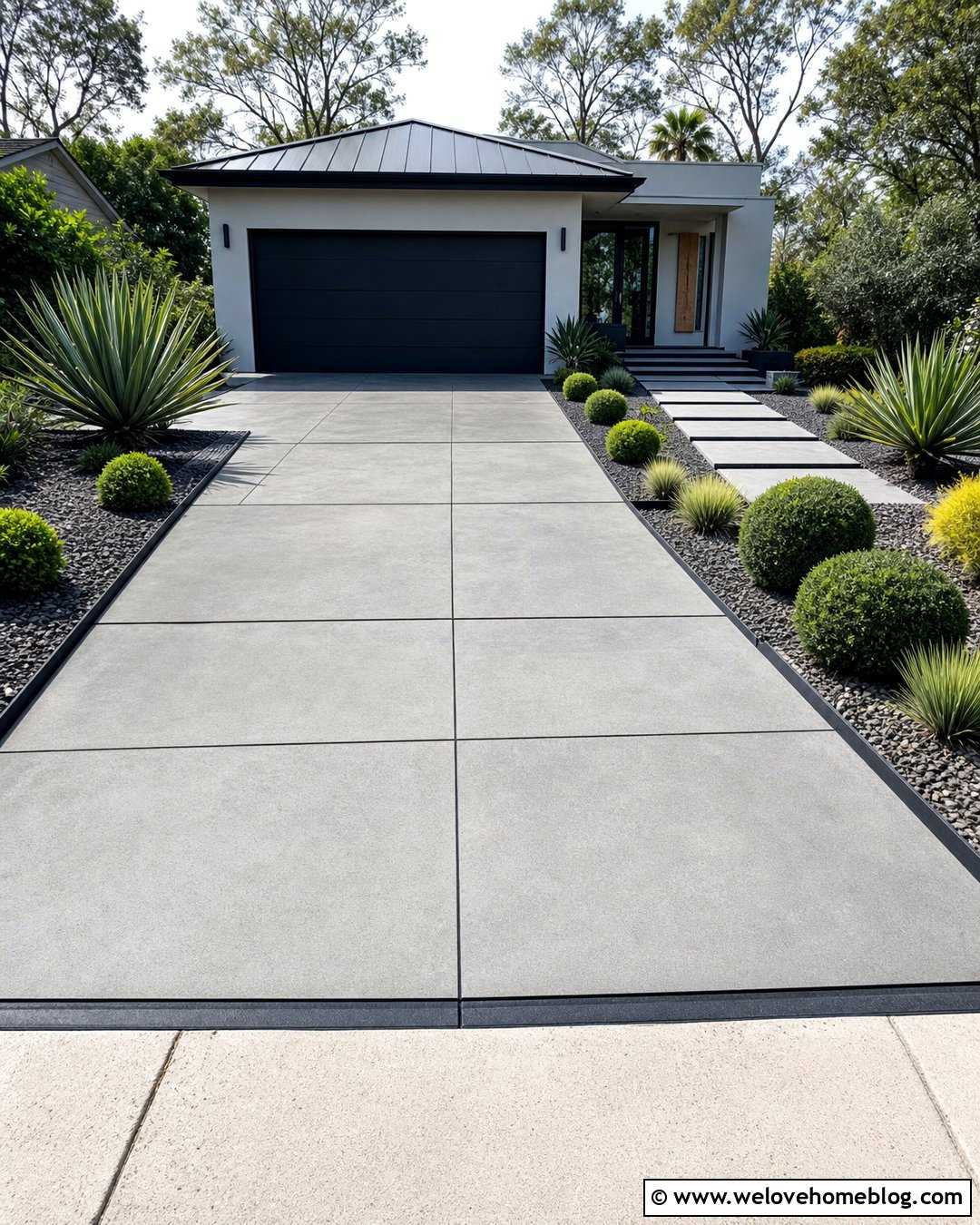
Sawcut or scored lines can turn a simple concrete overlay into a graphic modern driveway. Begin with a medium-gray microtopping or resurfacing layer, then divide it into large rectangular panels that align with the garage doors and front walkway. A straight or slightly angled layout works best because the geometry can follow the architecture. Fill narrow joints with a darker tone and edge the driveway using black concrete or charcoal pavers. Minimal planting beds with yucca, ornamental grasses, rounded shrubs, and gravel mulch reinforce the clean appearance. Scoring should be planned around existing control joints rather than placed randomly. This reduces visual conflict and helps accommodate expected movement. The finished design feels customized, yet it avoids the cost and complexity of installing separate slabs or individual paving units.
16. Two Tone Concrete Driveway Overlay
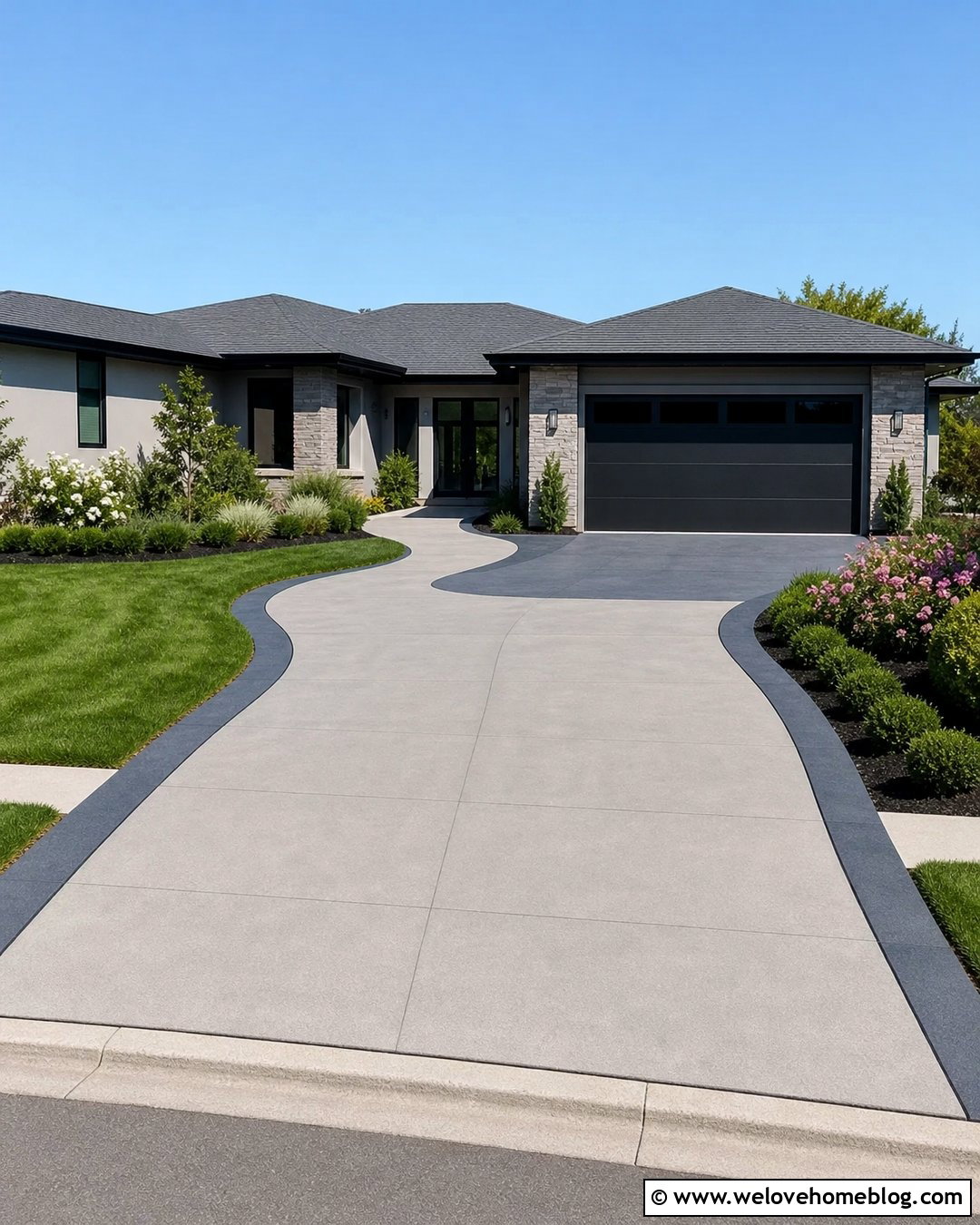
Using two coordinating colors can give a driveway overlay clearer structure and greater visual depth. Cover the main surface with warm light-gray concrete, then add charcoal resurfacing bands around the perimeter and across selected intervals. These darker ribbons can visually shorten a long driveway or emphasize a curved layout. At the garage, repeat the charcoal tone in a wider transition band for a clean endpoint. Pair the design with a contemporary ranch home, green lawn, low evergreen beds, and a walkway that uses the same two-color treatment. Keep the palette restrained so the driveway supports rather than competes with the facade. The contractor should use compatible overlay products and carefully mask each section for sharp lines. This approach creates a tailored appearance without relying on elaborate stamps or imitation materials.
17. Wood Plank Stamped Driveway Overlay
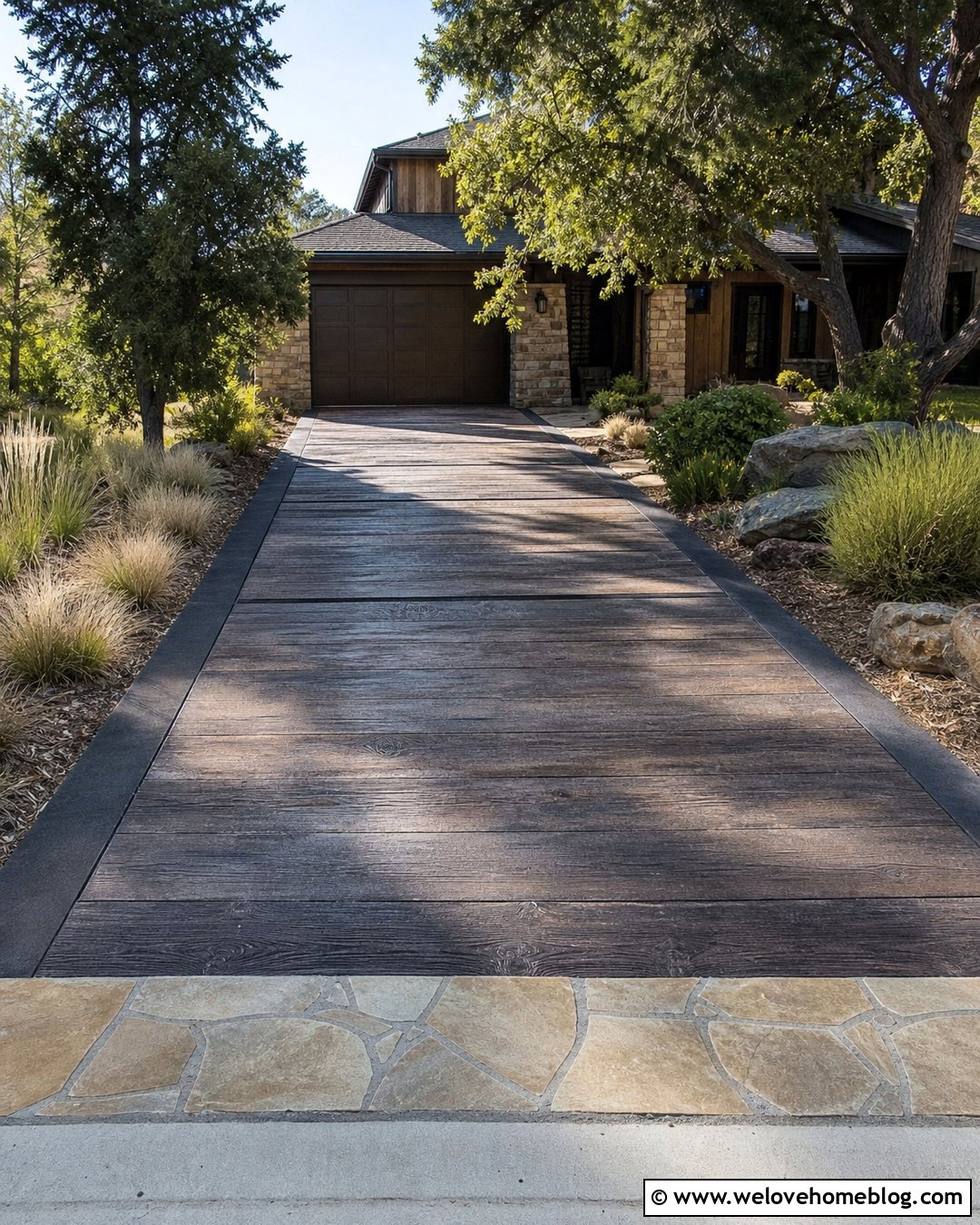
A wood plank stamped overlay offers the warmth of timber while using a cement-based surface suitable for driveway applications. Select wide plank patterns in weathered brown, taupe, and charcoal rather than bright orange tones. Arrange the planks across the driveway so the grain pattern visually widens a narrow approach. Dark concrete edging and a stone apron can prevent the wood effect from looking disconnected from the landscape. Surround the driveway with native grasses, evergreen shrubs, and mature shade trees near a rustic modern or cabin-inspired home. Variation is important, but excessive knots and repeated stamp patterns can make the finish look artificial. Ask for subtle antiquing and a matte sealer. With disciplined coloring and realistic texture, the overlay becomes an unexpected yet balanced part of the property.
18. Circular Driveway Overlay
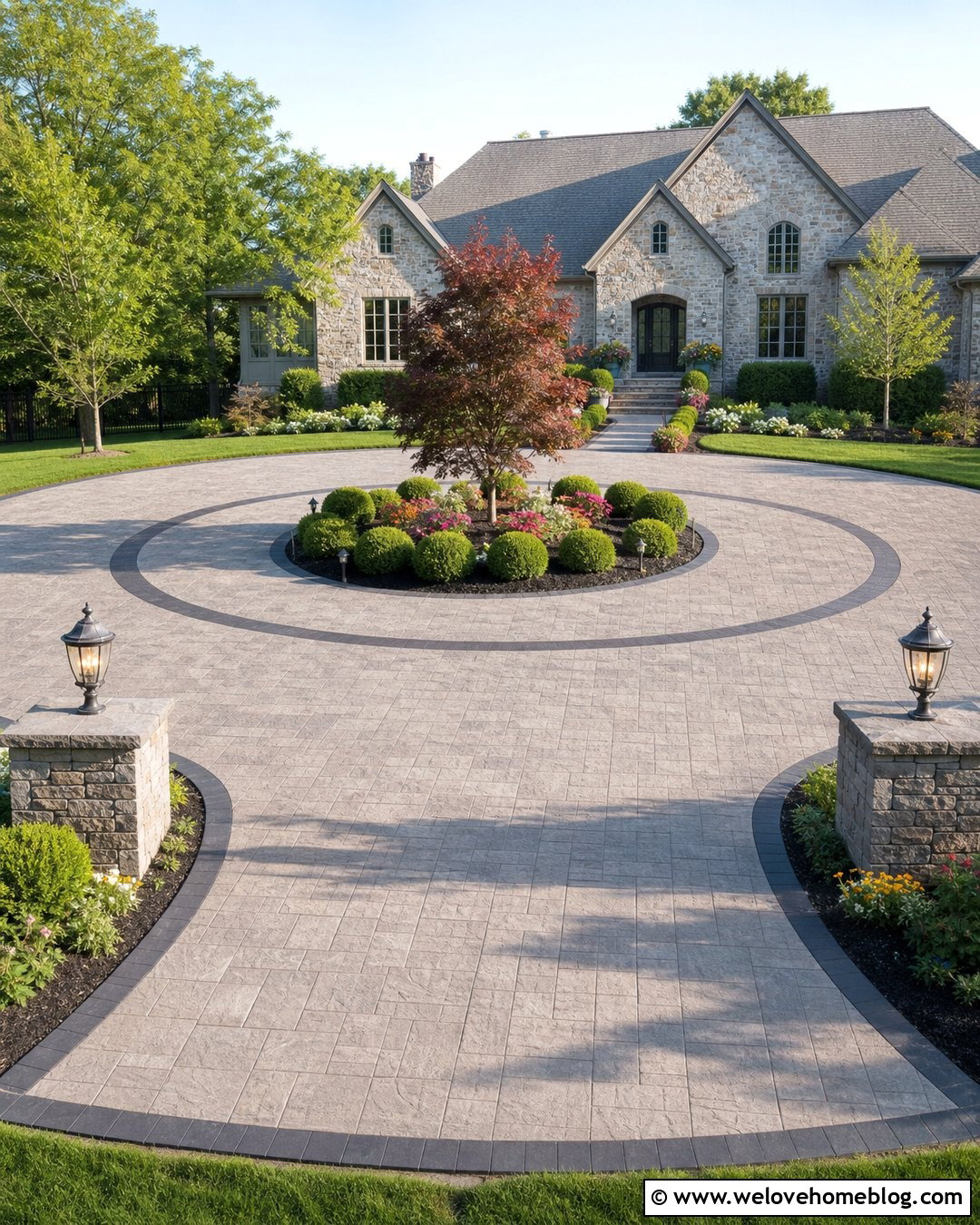
A circular driveway provides enough space to combine multiple overlay details without making the surface feel crowded. Use a warm gray stamped stone finish around the main loop, accented by a charcoal border and a darker ring surrounding the center island. Fill that island with a small ornamental tree, clipped shrubs, perennial flowers, and low landscape lighting. A traditional stone or stucco house creates an attractive backdrop, while a matching walkway connects the circle to the front steps. Existing slopes must continue directing water away from the house and planting island. The overlay should also preserve functional joints and comfortable turning space. Repeating the same border at both street entrances creates symmetry. This complete resurfacing plan emphasizes the circular layout and produces a formal but approachable arrival.
19. Driveway Overlay With Decorative Border
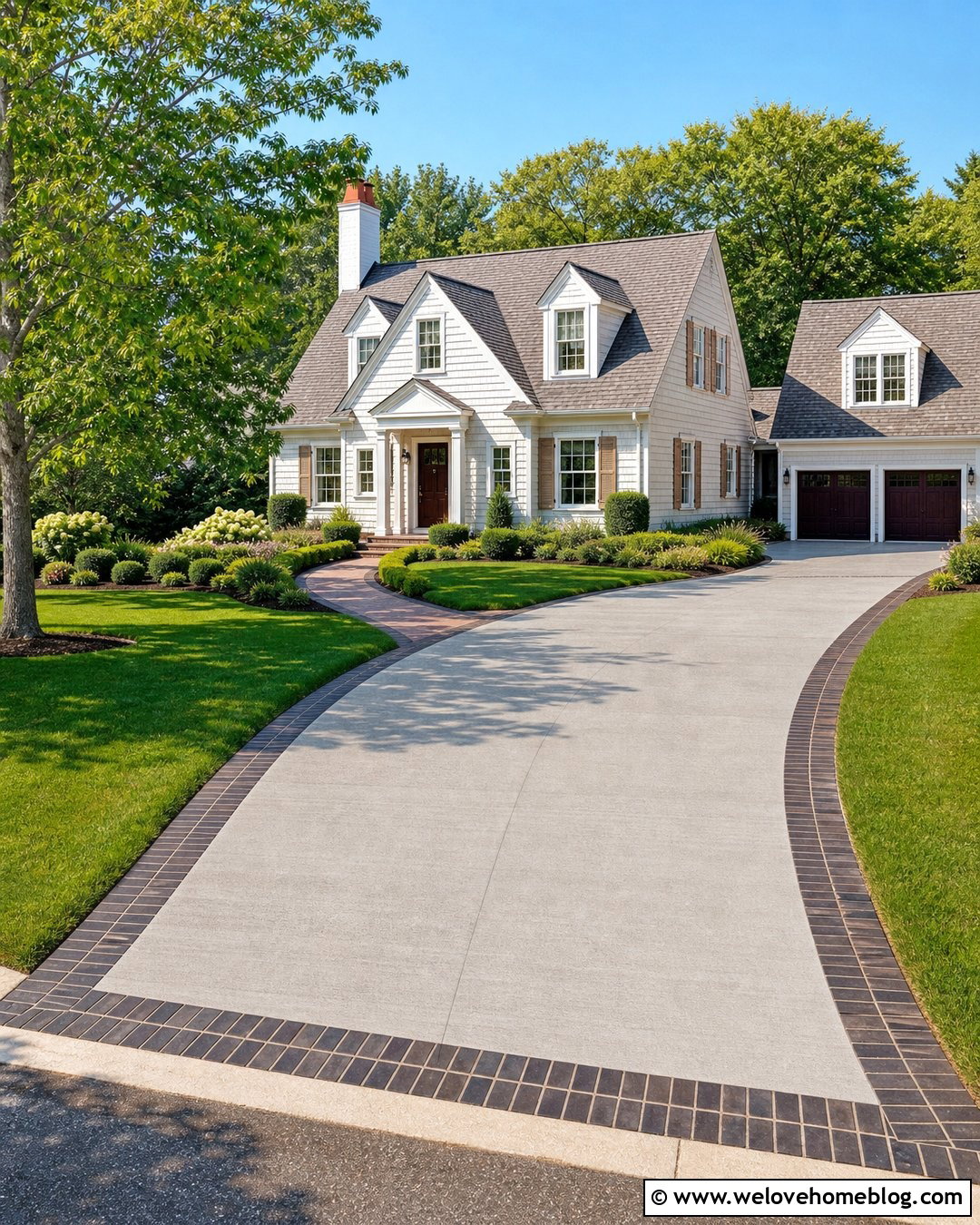
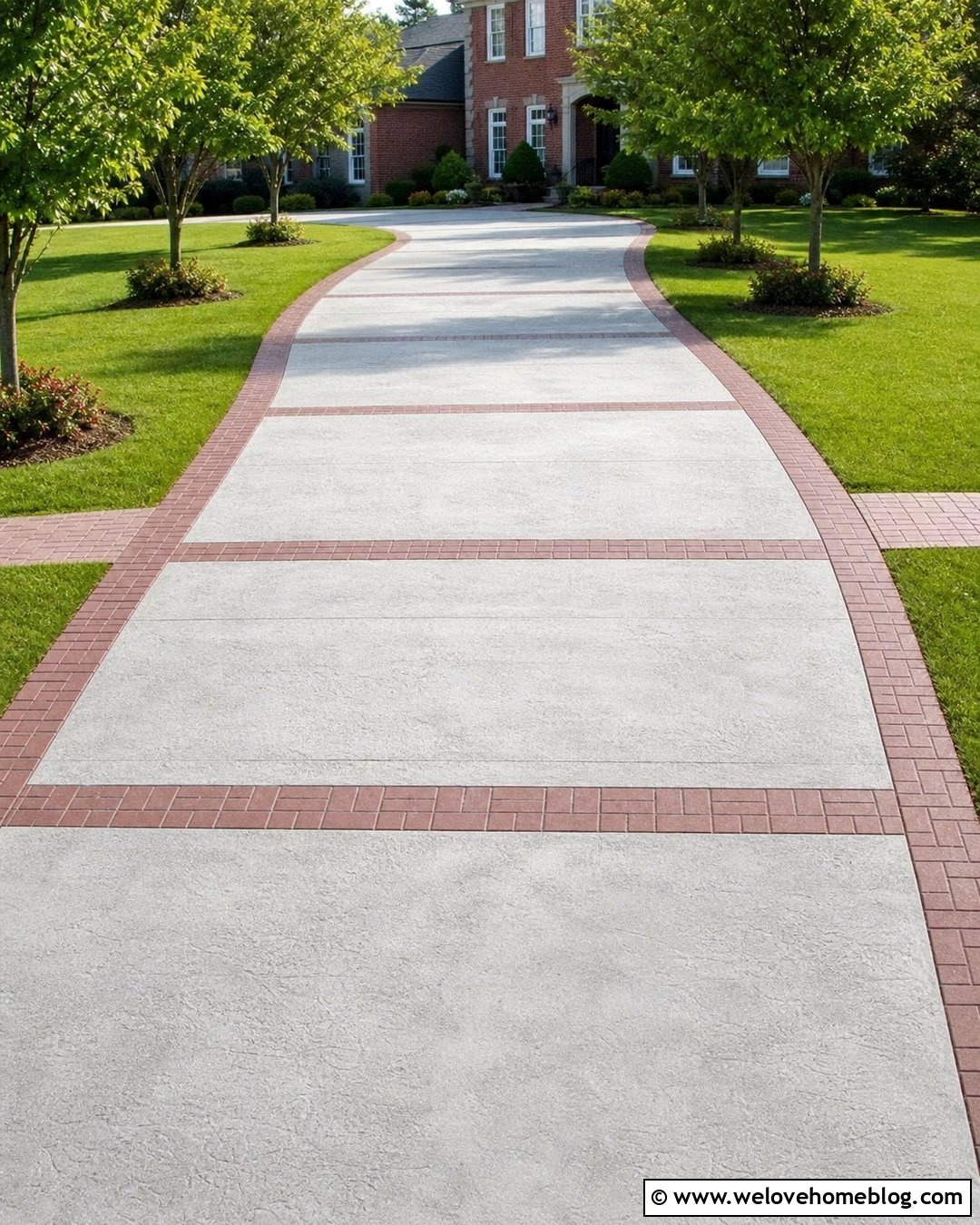
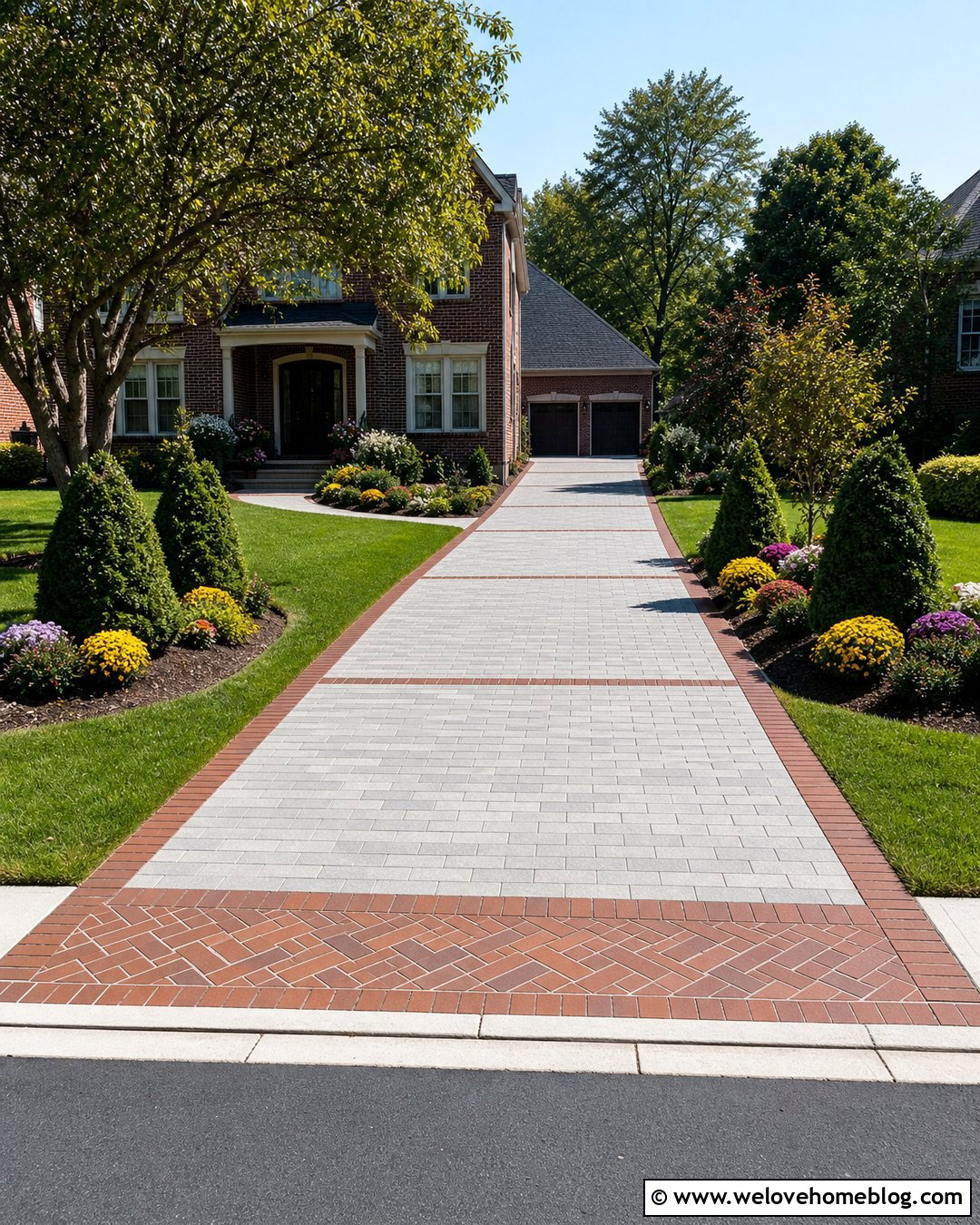
A wide decorative border can make a basic overlay feel deliberately designed. Resurface the center with light gray broom-finished concrete, then frame it with thin brick or concrete pavers in a deep brown tone. A curved border is particularly helpful on an irregular driveway because it creates a smooth visual outline and disguises minor variations along the edges. Repeat the border around a coordinating walkway and at the garage threshold. Layered planting beds with boxwood, flowering shrubs, ornamental grass, and mulch will soften the transition into the lawn. The pavers must be properly restrained and installed at a flush elevation for safe driving. By concentrating the more decorative material around the perimeter, homeowners can introduce color and texture while keeping the larger central overlay simple, practical, and visually quiet.
20. Driveway Overlay With Custom Medallion
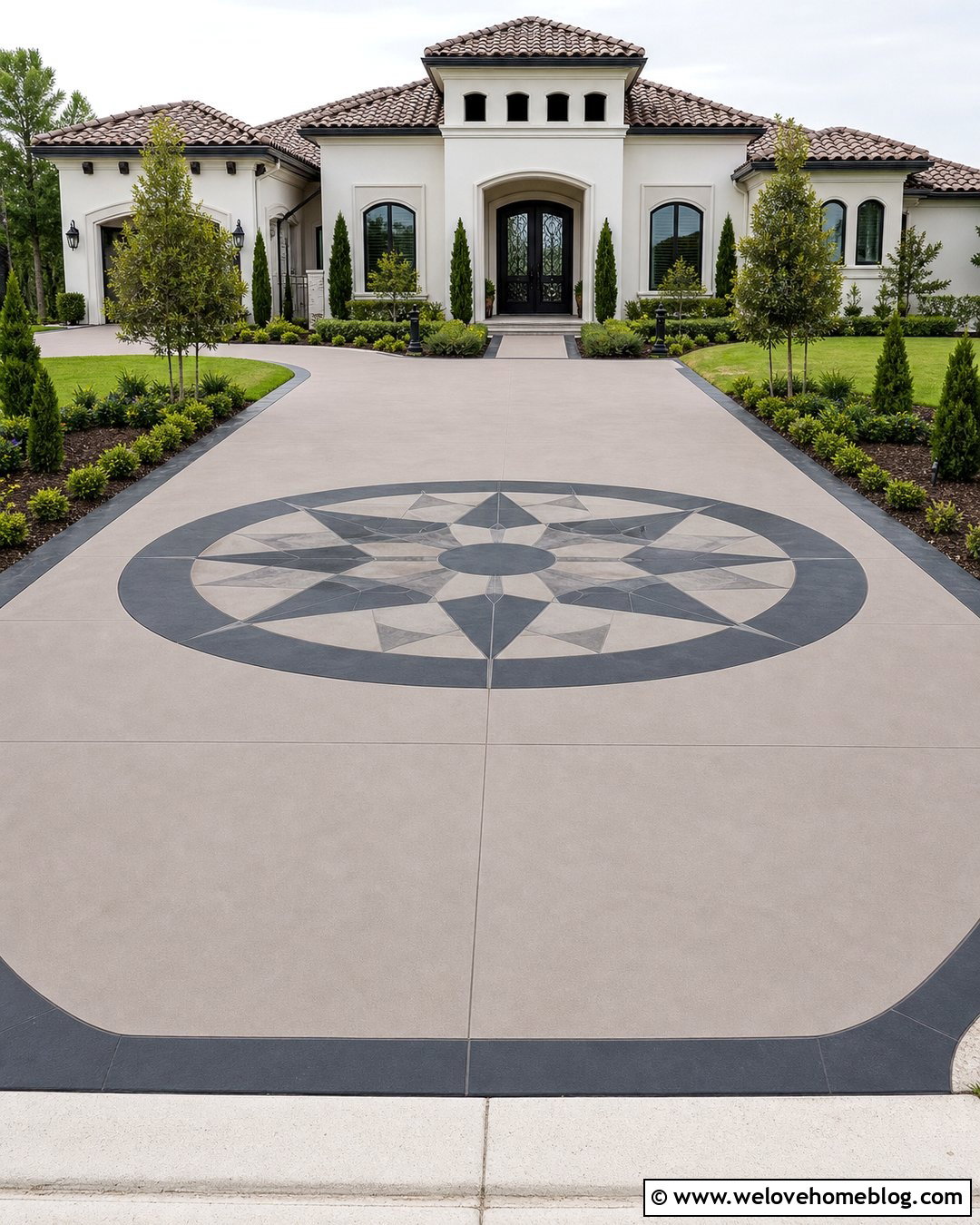
A custom medallion creates a focal point within a large resurfaced driveway without requiring pattern across every square foot. Use a smooth taupe concrete overlay for the main surface and place a stamped compass, geometric circle, or stone-inspired medallion near the center of a broad parking court. Outline the driveway with dark gray bands that repeat the medallion color. Symmetrical planting beds, small trees, trimmed shrubs, and a centered walkway can reinforce the formal arrangement. Keep the decorative feature proportional and avoid intricate lines that may become difficult to read from the curb. The medallion should be positioned away from awkward joints whenever possible. With restrained colors and careful placement, this design gives a substantial traditional or Mediterranean home a personalized entrance that remains polished rather than overly ornate.
Conclusion:
The best 20 Driveway Overlay Ideas combine surface improvement with thoughtful borders, landscaping, drainage, and transitions. Smooth or broom-finished concrete offers simple versatility, while stamped patterns can reproduce brick, slate, cobblestone, flagstone, or wood. Asphalt works well with masonry accents, and resin-bound aggregate introduces softer color and texture. Whatever design you prefer, the existing driveway must be stable enough to support it. Significant settlement, widespread cracking, drainage failure, and weak edges may require deeper repairs or replacement first. Ask an experienced contractor to inspect the base, recommend compatible materials, and confirm finished elevations. A properly planned overlay can refresh the driveway while making the house, walkway, entrance, and front yard feel more connected.

Related posts:
Leave a Reply