
Choosing a driveway surface is about more than finding a color that matches your house. The best material must support daily traffic, handle local weather, drain correctly, and fit your maintenance budget. These 30 driveway materials ideas explore practical options ranging from affordable gravel and smooth asphalt to decorative brick, natural stone, permeable pavers, and resin-bound aggregate. Each design considers the complete approach, including the driveway layout, edging, landscaping, and architectural setting. Before making a final decision, compare installation requirements, repair options, snow removal, heat retention, and long-term upkeep. A qualified local installer can also evaluate your soil, slope, drainage, and required base depth. Use the complete driveway looks below to find inspiration among these **30 driveway materials ideas**.

1. Broom Finish Concrete Driveway With Brick Edging
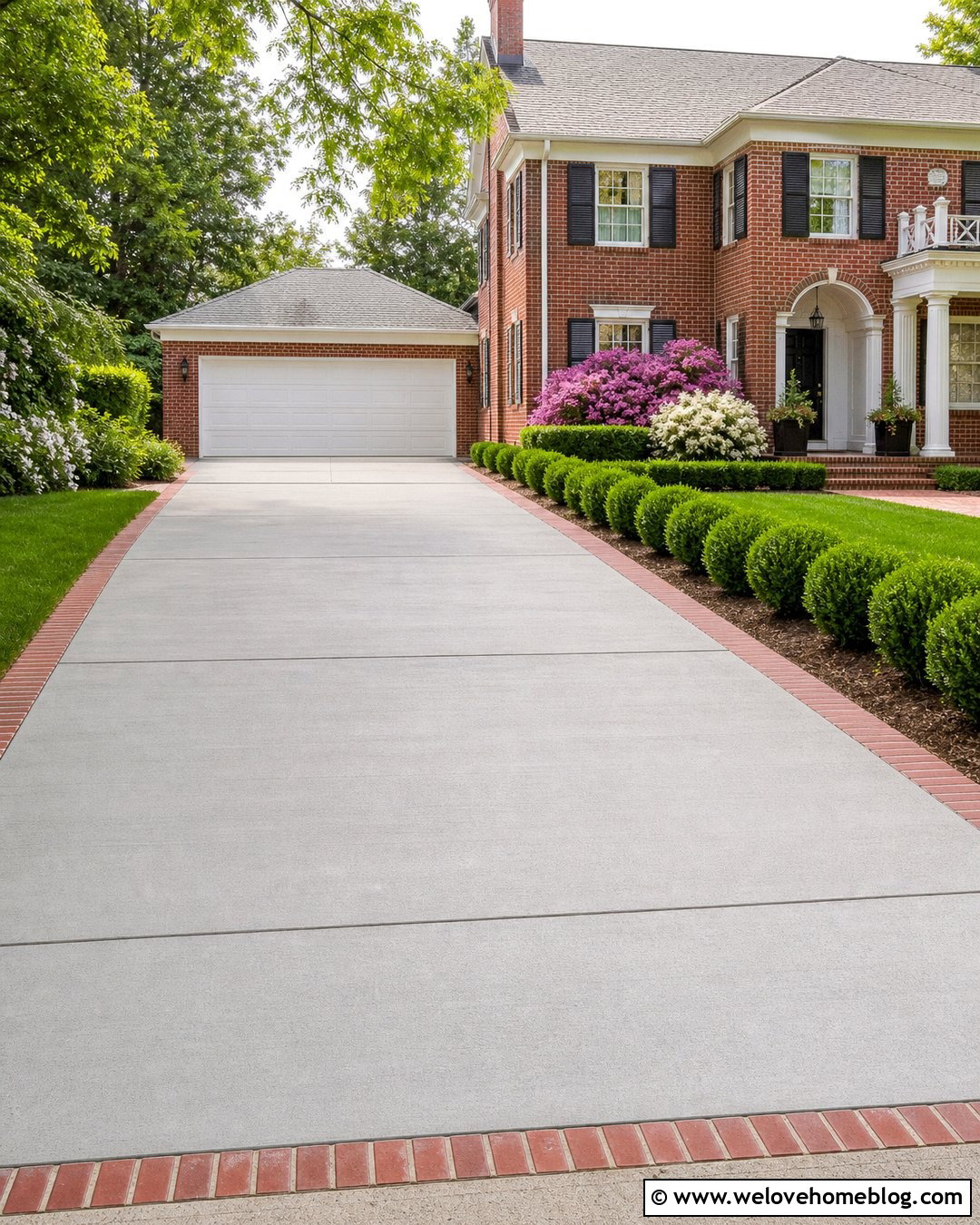
A broom finish concrete driveway offers a clean surface with subtle texture for better traction. It works especially well on a straight, two-car layout leading to a traditional brick or colonial home. Choose medium-gray concrete to hide everyday dust, then frame it with a red or charcoal brick border. The edging adds color and helps define the transition between the driveway, lawn, and planting beds. Control joints should follow an orderly pattern so they look intentional rather than purely functional. Low boxwoods, ornamental grasses, and a matching brick walkway can complete the entrance. Concrete requires a properly compacted base and thoughtful drainage. In cold climates, ask your installer about a mix and installation method suited to freeze-thaw conditions.
2. Exposed Aggregate Driveway With Curved Stone Borders
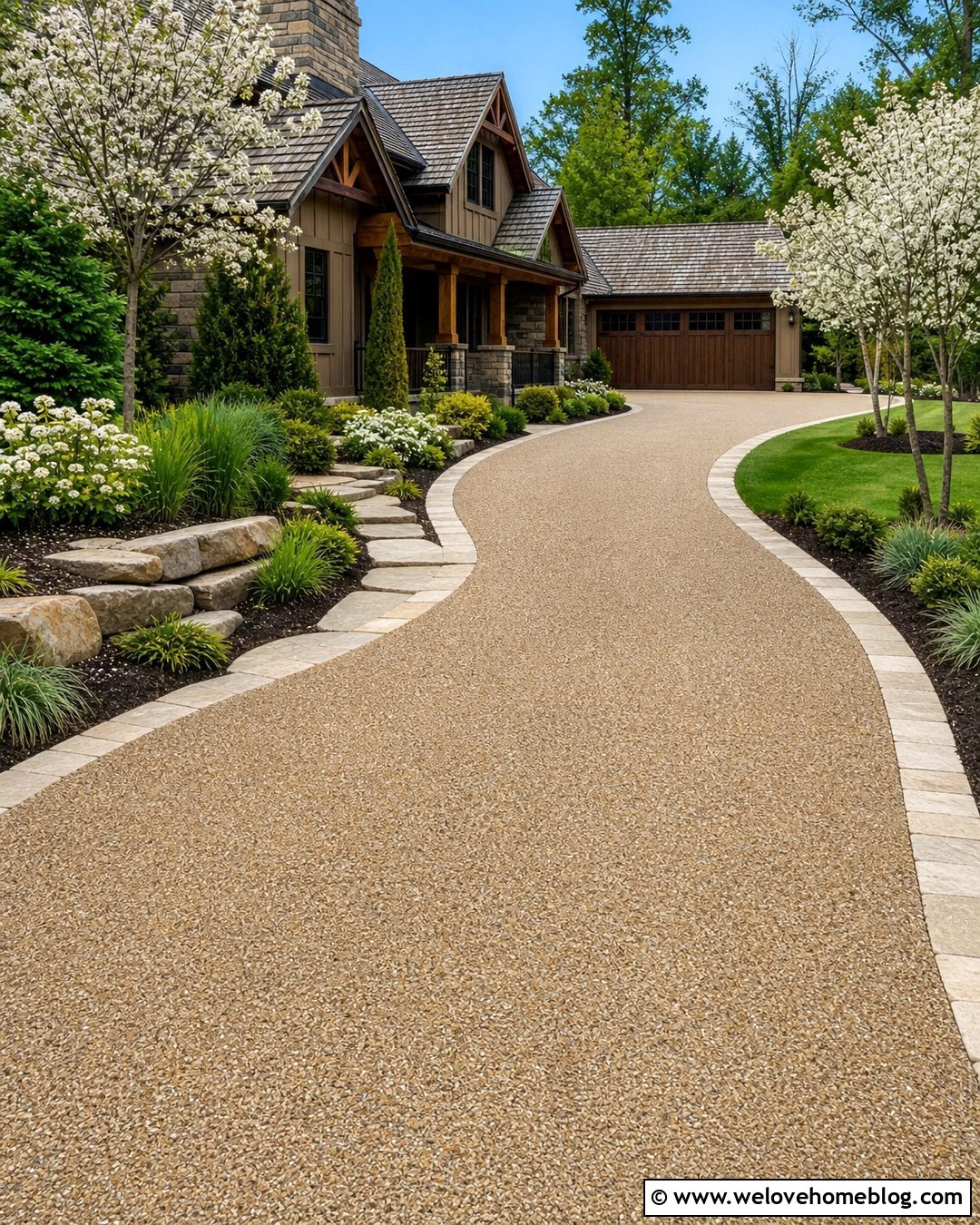
Exposed aggregate combines the strength of concrete with the natural character of visible pebbles and small stones. A gently curved driveway makes the textured surface feel softer and more connected to the landscape. Warm tan aggregate pairs beautifully with cream stone edging, layered shrubs, and a craftsman house with wood details. The border should be securely installed to protect the driveway edges and create a clear mowing line. Because the finish can vary in texture, review a physical sample before selecting the aggregate blend. Proper sealing can enrich its color and make routine cleaning easier. Use broad planting beds along the outside curve, but keep large roots far enough away to reduce future movement beneath the driveway.
3. Stamped Concrete Driveway With Cobblestone Pattern
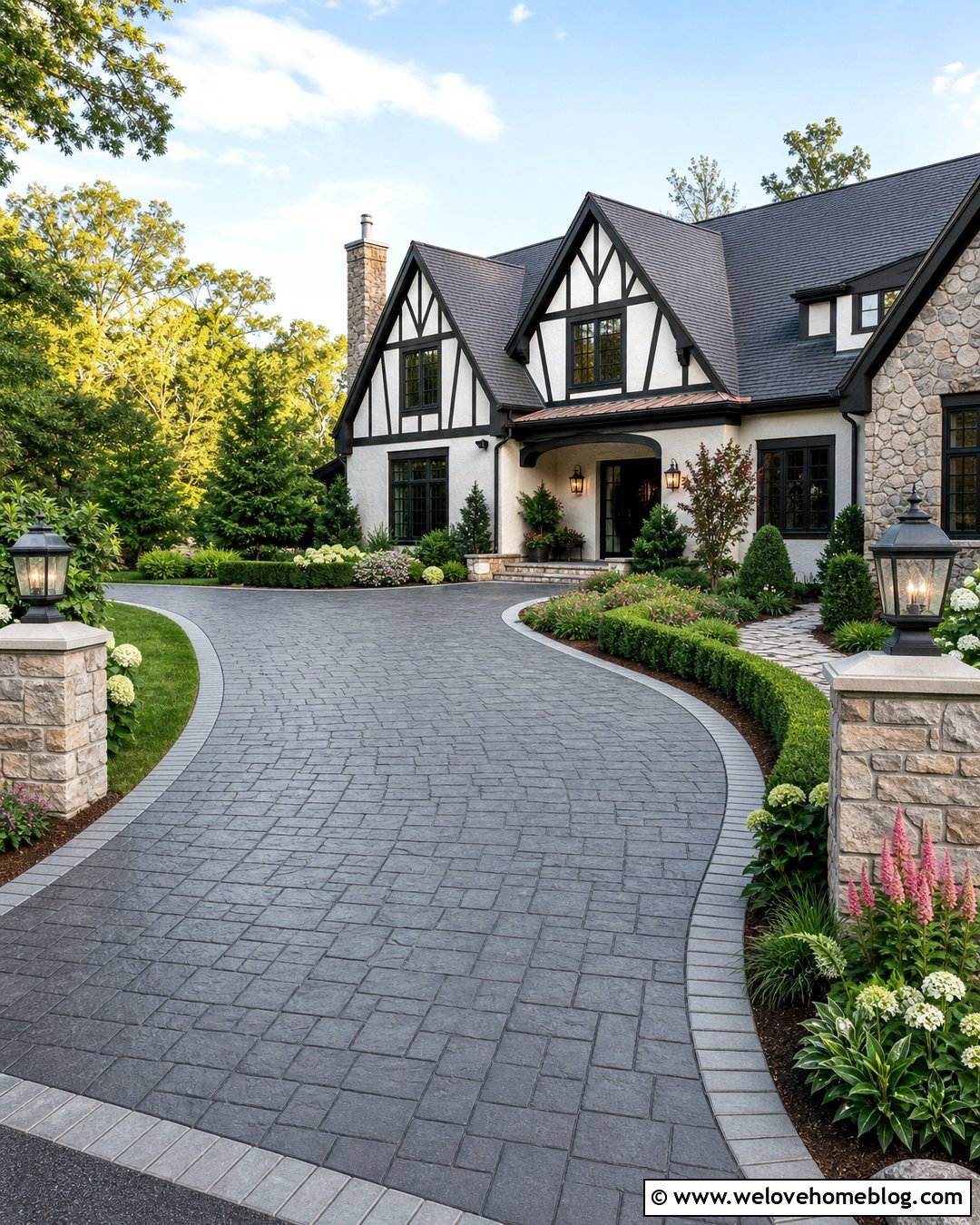
Stamped concrete can create the appearance of individual stone units while maintaining a continuous concrete surface. A charcoal cobblestone pattern looks particularly effective on a wide driveway serving a Tudor or European-inspired house. Use a contrasting soldier-course border to make the stamped field feel finished. Curving the driveway slightly will prevent a large decorative surface from looking too rigid. Since stamped concrete depends heavily on workmanship, choose an installer with driveway-specific examples, not only patios. The pattern should have realistic variation without excessive color contrast. Include properly positioned control joints within the layout whenever possible. Foundation plantings, stone columns, and a paved front walk can repeat the driveway’s tones and create a cohesive arrival experience.
4. Colored Concrete Driveway With Modern Grass Strips
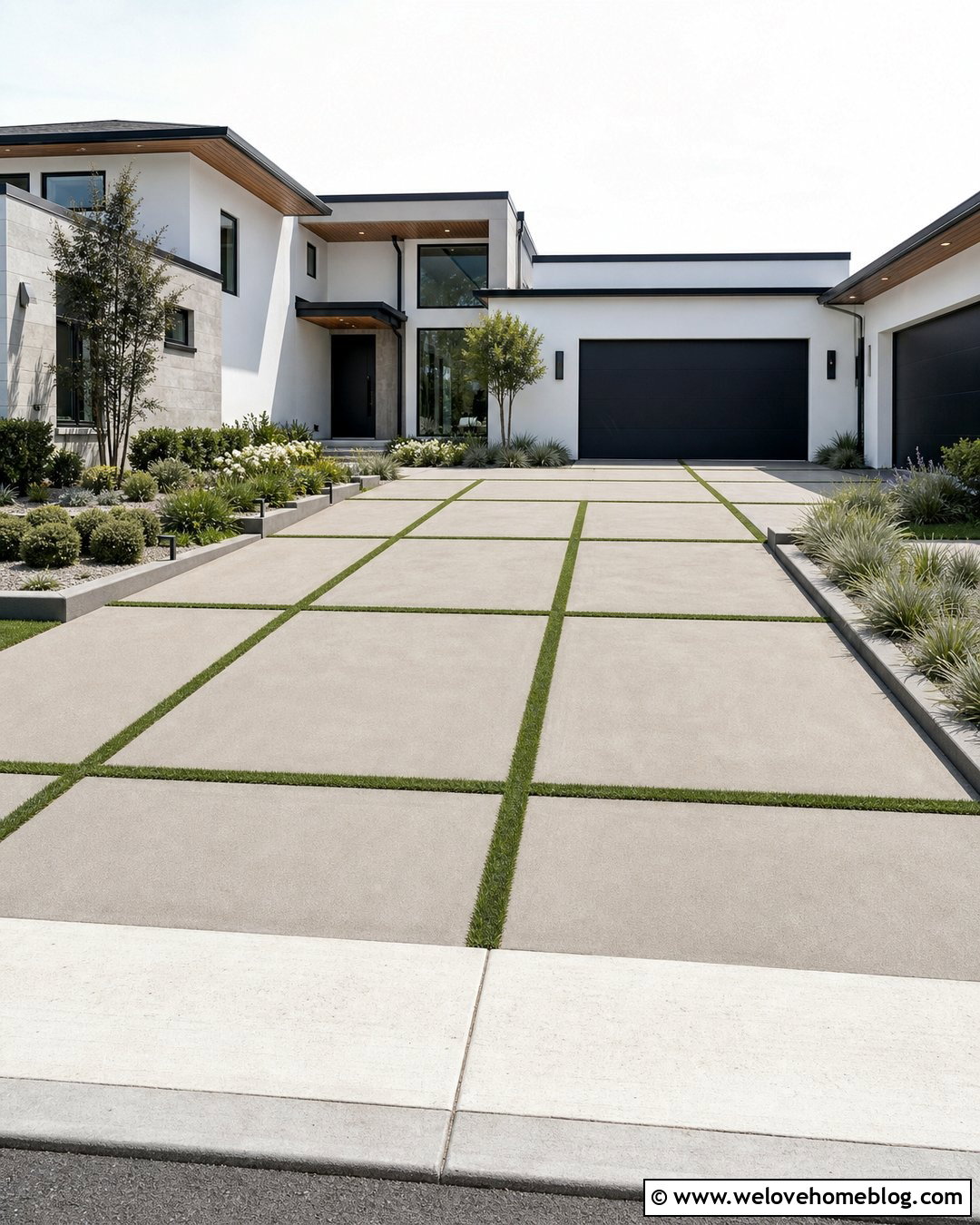
Warm gray, sand, or soft taupe concrete can feel more customized than standard light-gray paving. For a modern home, divide a wide driveway into large geometric panels with narrow grass or ground-cover strips between selected sections. The planted joints break up the paved area and reinforce the home’s horizontal lines. This layout looks best when the concrete color coordinates with the siding, garage doors, and front walkway. Keep the planting strips practical by using durable, low-growing vegetation suited to sun, tire exposure, and local rainfall. Avoid placing soft planting directly in primary wheel paths. A crisp steel or concrete border will help maintain the geometry. Confirm that every panel slopes toward an appropriate drainage area rather than the garage.
5. Concrete Ribbon Driveway With Gravel Center
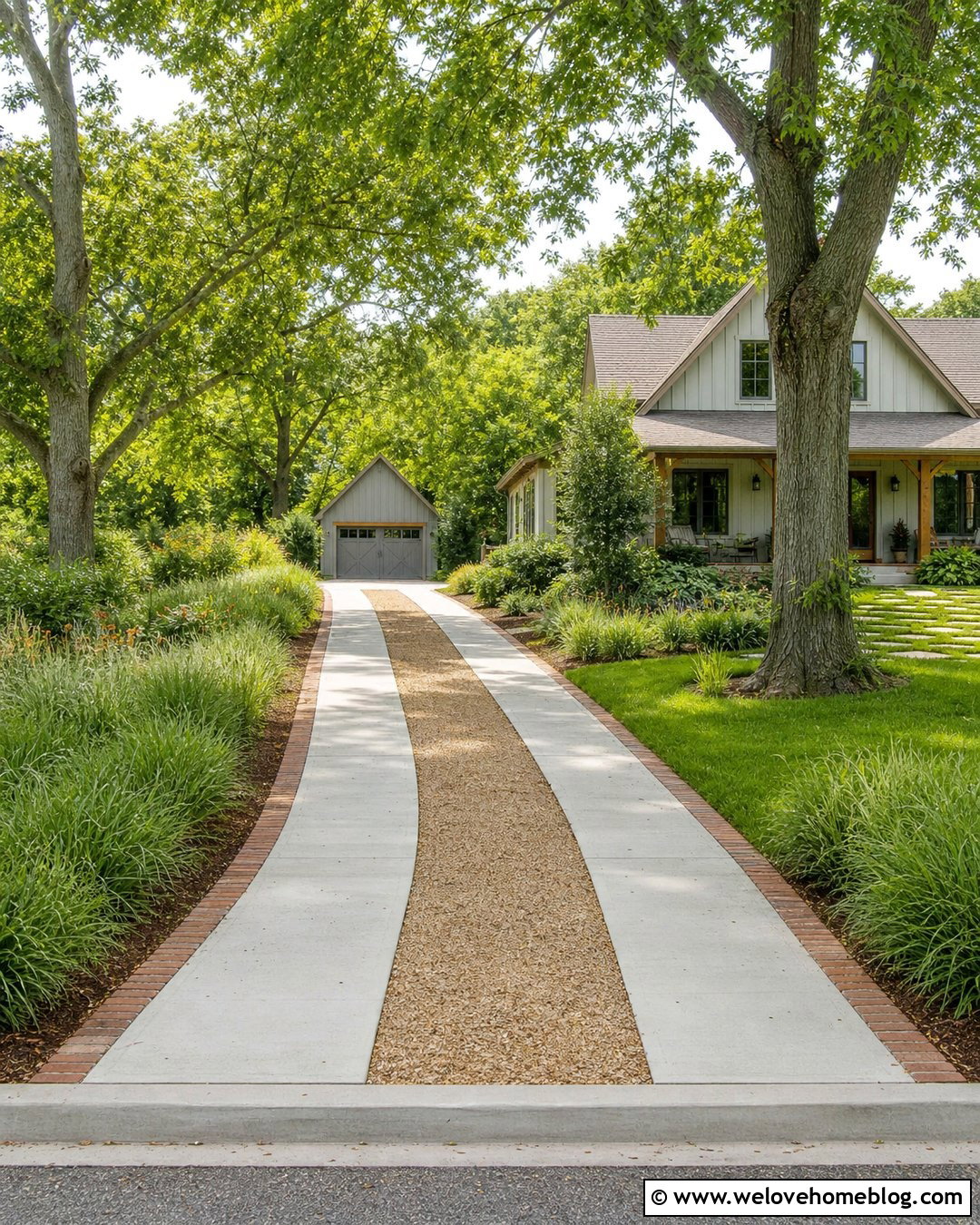
A concrete ribbon driveway uses two durable wheel tracks instead of covering the entire approach with solid paving. The center can be filled with compacted gravel, low grass, or another permeable treatment. This efficient layout suits a narrow country property, cottage, or detached garage where traffic follows a predictable path. Light-gray concrete tracks paired with tan gravel create a relaxed but orderly appearance. Install a stable base beneath both materials so the tracks remain level and the gravel does not develop deep ruts. Brick or stone edging can contain the loose center material near curves and entrances. Surrounding meadow grasses, shade trees, and a simple stepping-stone walkway help the driveway blend naturally into a less formal front yard.
6. Polished Concrete Driveway With Dark Paver Border
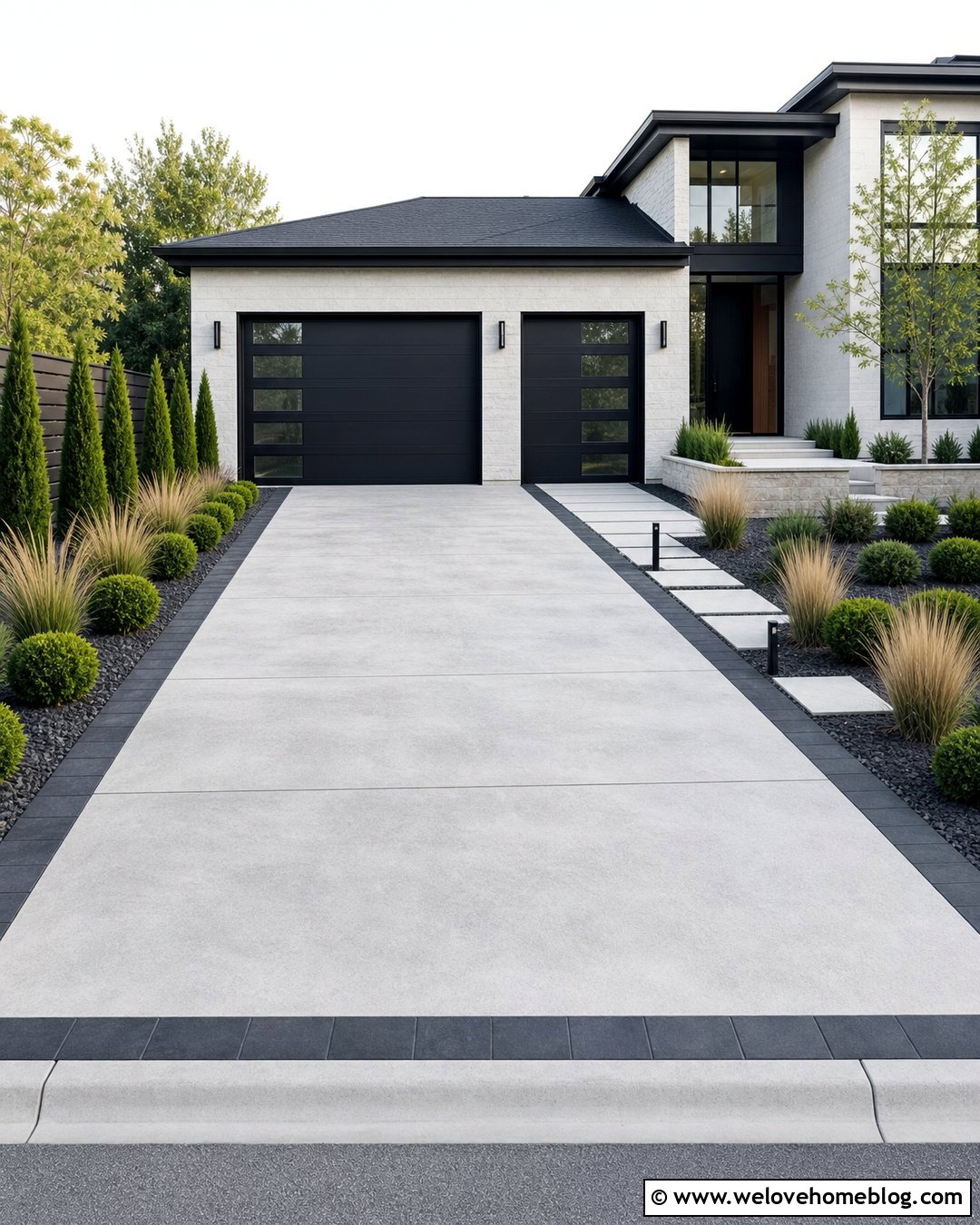
Exterior concrete can receive a refined, smooth-looking finish, although a driveway still needs enough texture to remain practical in wet conditions. This design works best for a sheltered modern residence in a suitable climate. Large pale-gray concrete panels create a minimalist approach, while a dark concrete paver border frames the driveway and visually connects it to black garage doors. Keep the layout straight and symmetrical for a crisp architectural effect. Linear planting beds with clipped shrubs, ornamental grasses, and gravel mulch can reinforce the clean design. Discuss slip resistance, surface treatment, drainage, and local weather with the installer before choosing the finish. A lightly honed or mechanically finished surface may provide the desired appearance without becoming overly slick.
7. Black Asphalt Driveway With Granite Edging
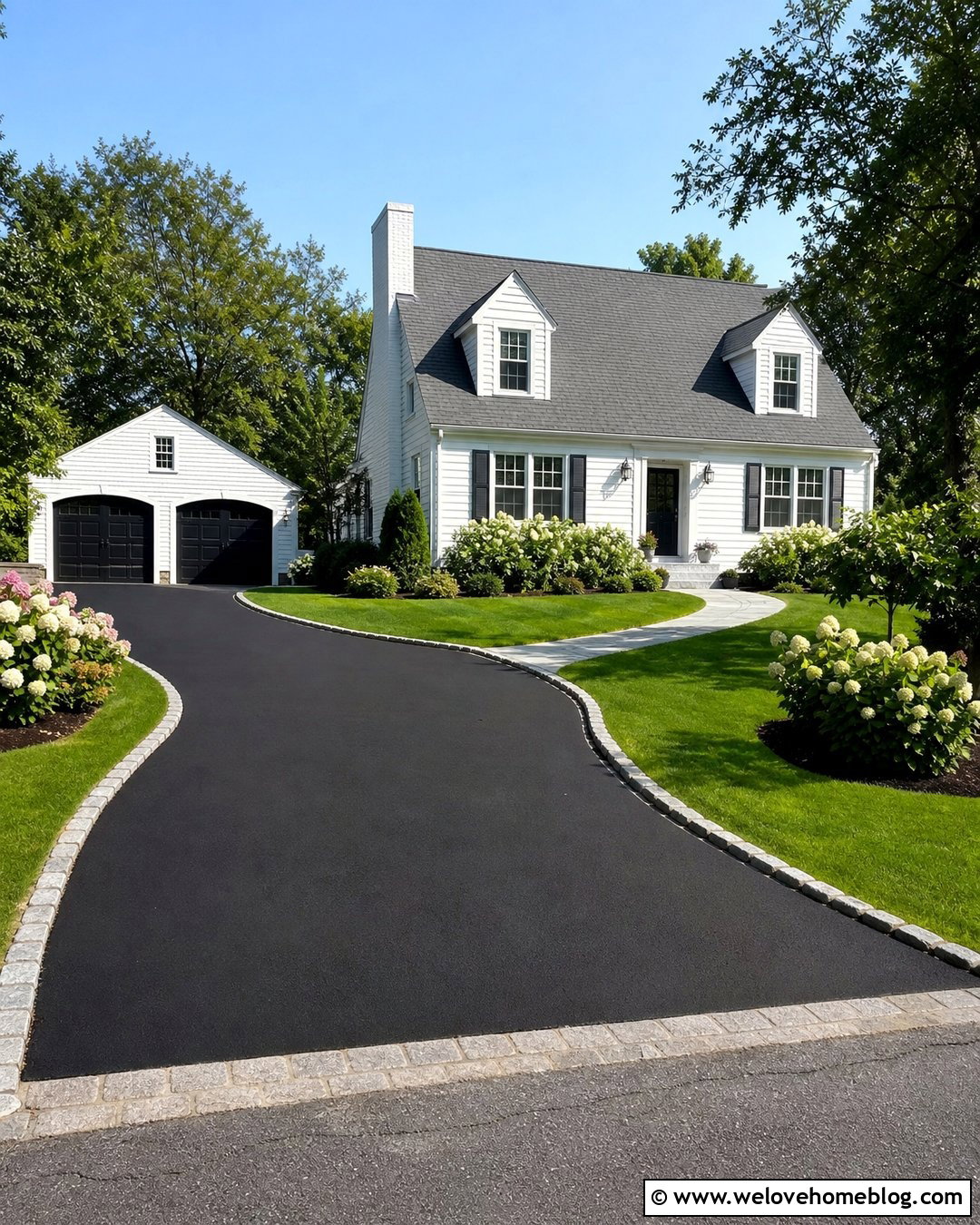
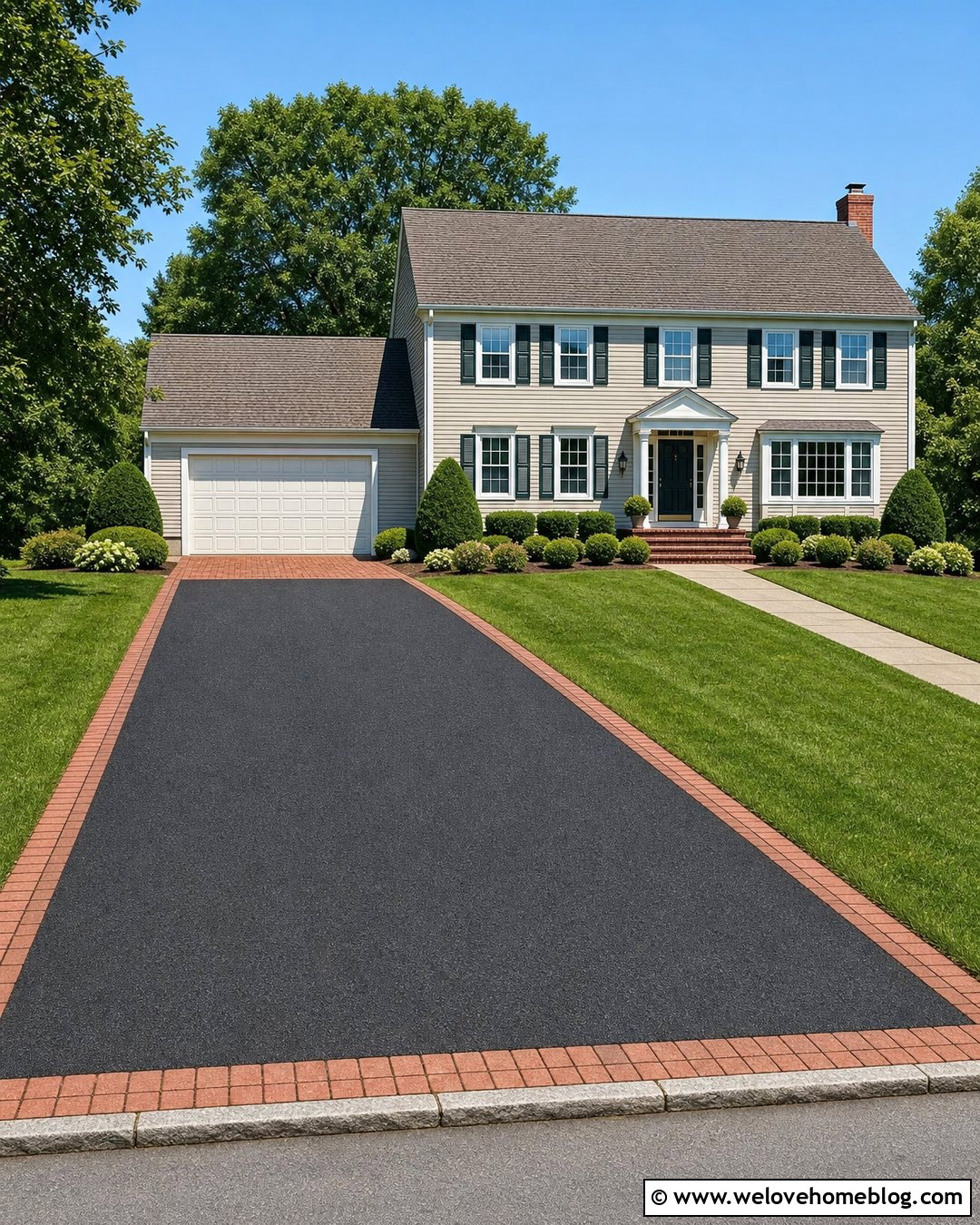
Fresh black asphalt creates a smooth, understated driveway that can make green lawns and pale house facades appear brighter. A straight or gently curved layout bordered with gray granite blocks gives the practical surface a more permanent, finished appearance. This combination works well with Cape Cod, colonial, and traditional suburban homes. The stone edge should be installed on a stable base so it resists shifting and supports vulnerable asphalt margins. Add foundation shrubs and small flowering trees without crowding the driveway or blocking visibility near the street. Asphalt can soften in extreme heat and may need periodic maintenance, so installation quality matters. Good grading is equally important because standing water can shorten the useful life of the surface.
8. Porous Asphalt Driveway With Rain Garden
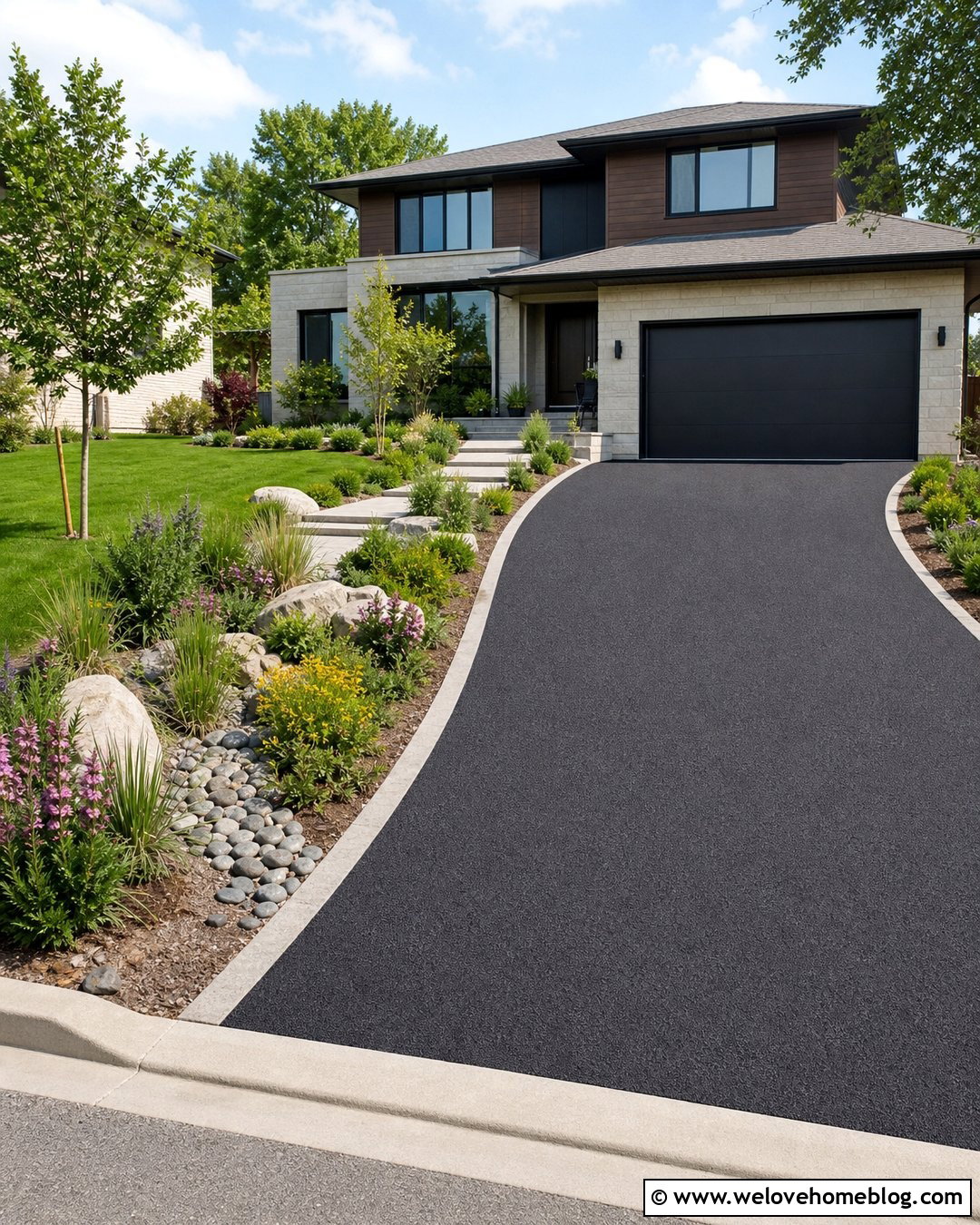
Porous asphalt resembles conventional asphalt but is designed as part of a system that allows water to move through the surface into an open-graded stone base. It can be a practical choice for a contemporary suburban driveway where stormwater management is a priority. Pair the dark surface with a gently sloped layout, concrete edging, and a planted rain garden beside the lower portion of the driveway. The rain garden adds visual softness and can receive overflow when properly designed. Porous systems require suitable soil conditions, careful base preparation, and maintenance that prevents the surface openings from clogging. Avoid assuming the top layer alone creates drainage. Have a qualified professional design the complete assembly according to local rainfall, soil, frost, and permitting requirements.
9. Chip Seal Driveway With Timber Entrance
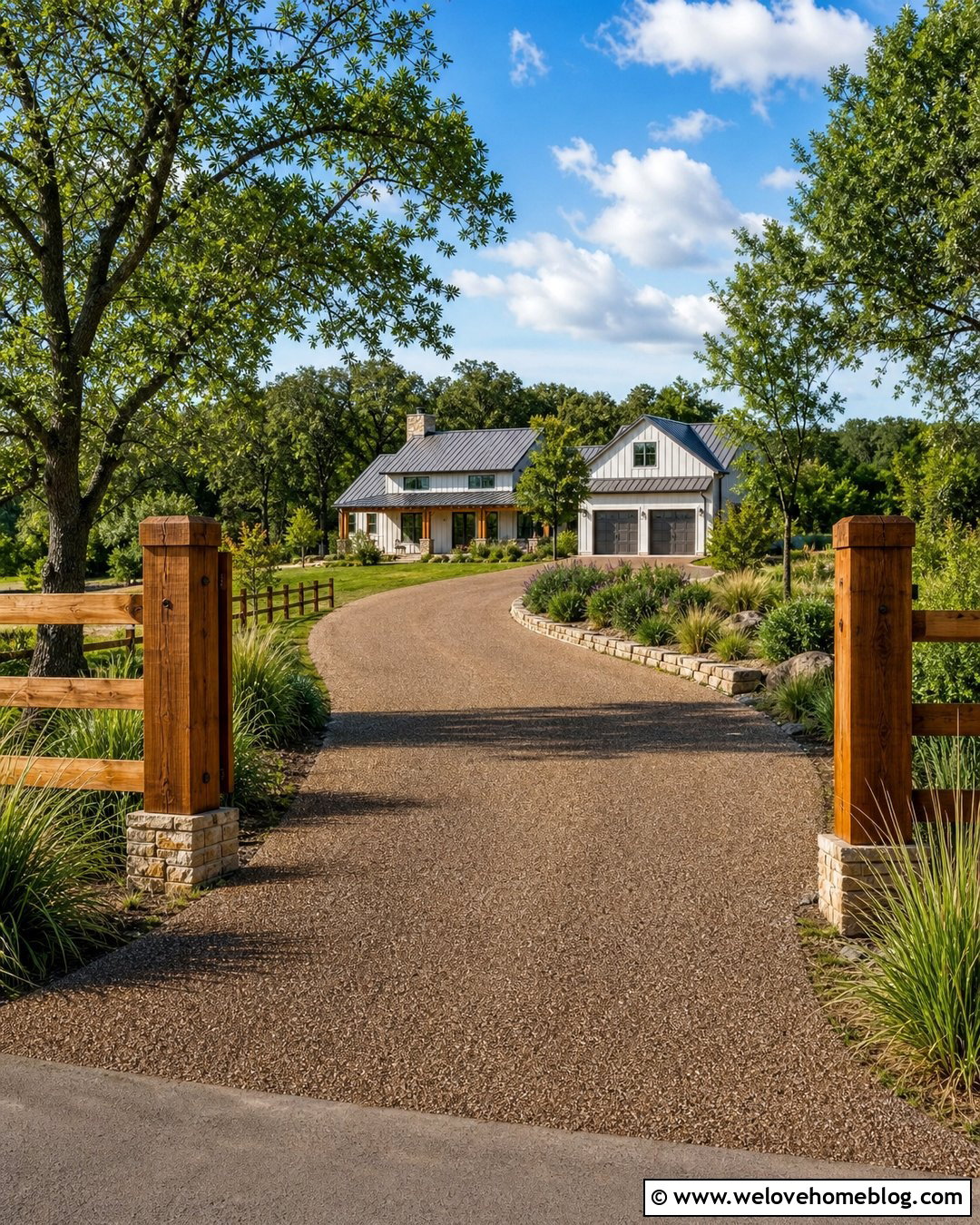
Chip seal combines an asphalt-based binder with a layer of aggregate, producing a textured surface that falls visually between asphalt and gravel. It is especially appealing on long rural approaches where plain black paving might look too formal. Choose warm brown or gray stone chips and frame the entrance with substantial timber posts, native grasses, and simple fencing. A curved layout can follow the land and reduce the appearance of a long paved strip. Stone edging near the garage helps create a tidy transition to walkways and parking areas. Aggregate selection affects both color and texture, so inspect completed local projects. Chip seal performance and availability vary by region, making an experienced local paving contractor essential for proper preparation and application.
10. Recycled Asphalt Driveway With Steel Edging
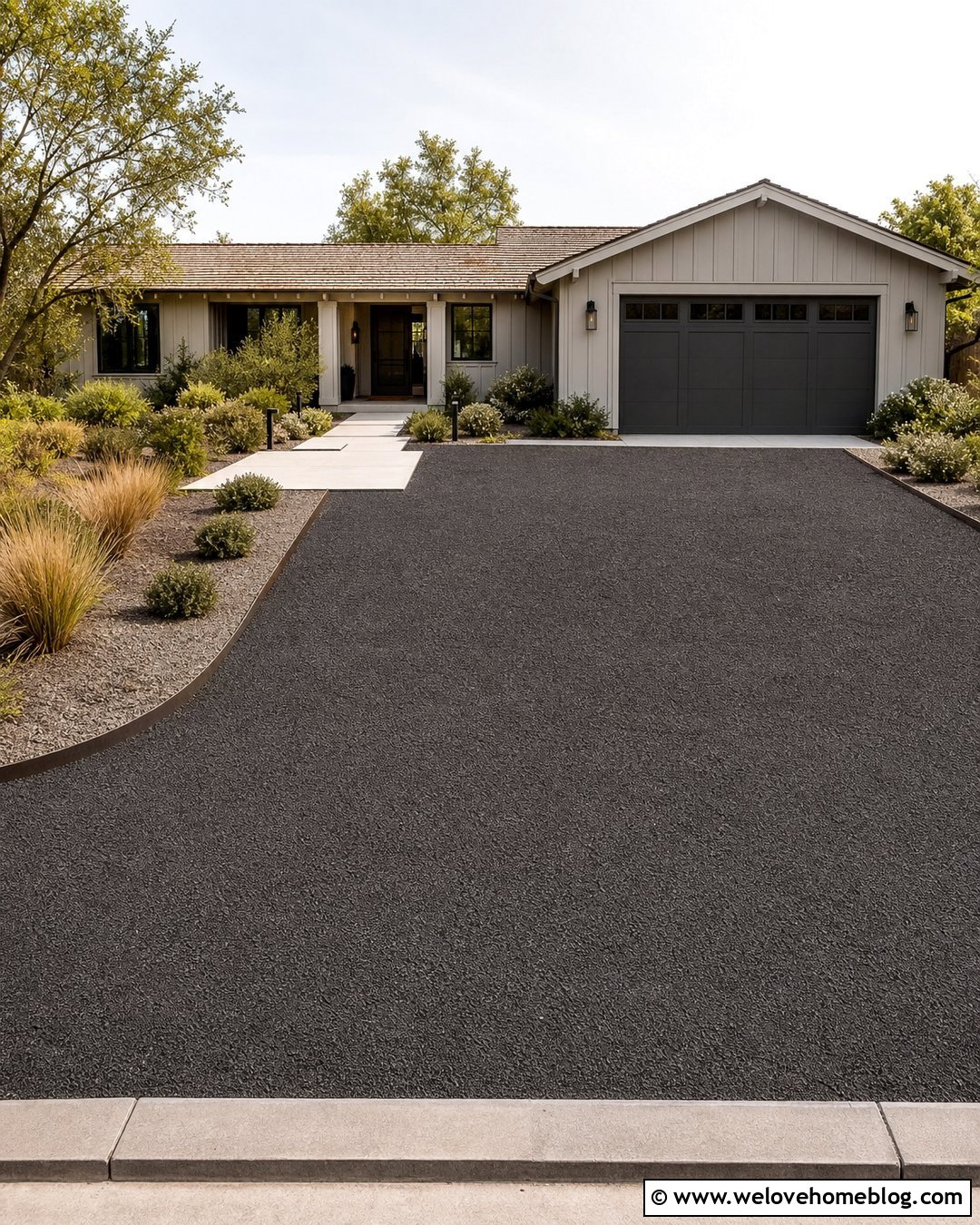
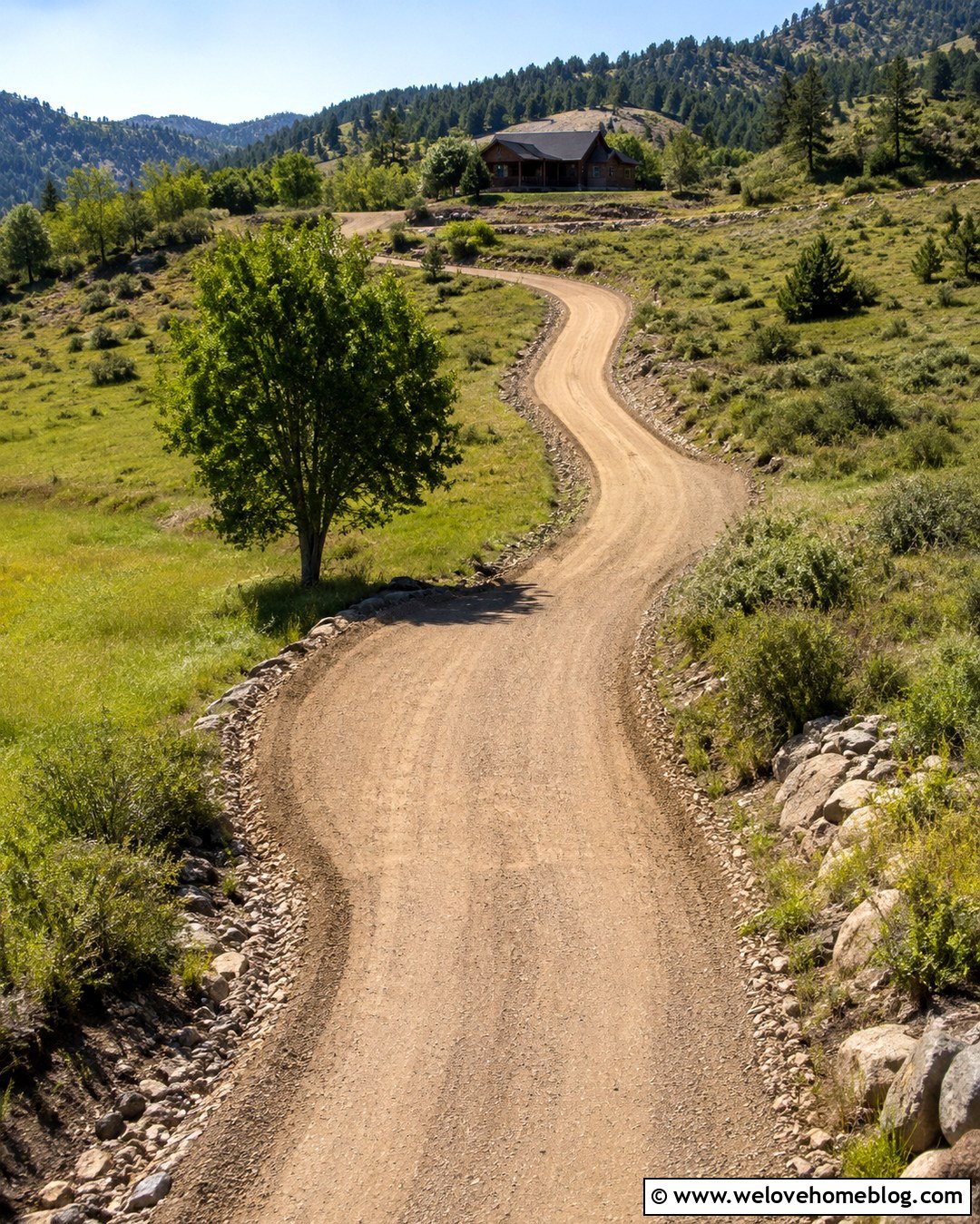
Recycled asphalt millings can create a compact, dark-toned surface for a budget-conscious rural or transitional property. The material has a more textured appearance than new asphalt but usually feels more settled than loose decorative gravel when correctly placed and compacted. Use weathered steel edging along a straight driveway to hold the margins and create a clean line against drought-tolerant planting beds. A wider apron near the garage gives vehicles space to turn without disturbing the landscape. Material quality can vary, so ask about particle size, contamination, placement depth, and compaction. Drainage must be established before installation rather than corrected afterward. Local regulations and material availability should also be checked before choosing recycled asphalt for a residential driveway.
11. Pea Gravel Driveway With Cobblestone Edging
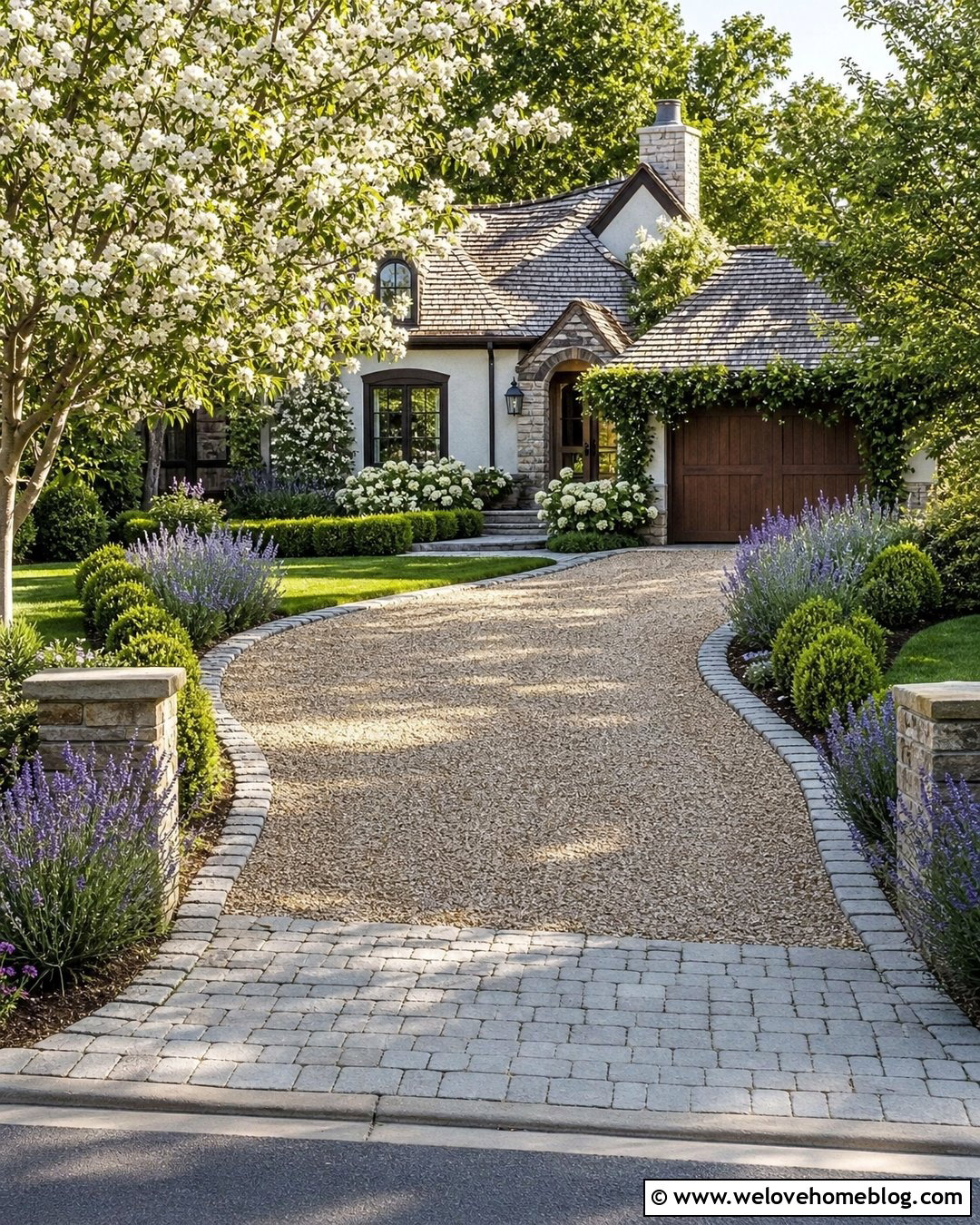
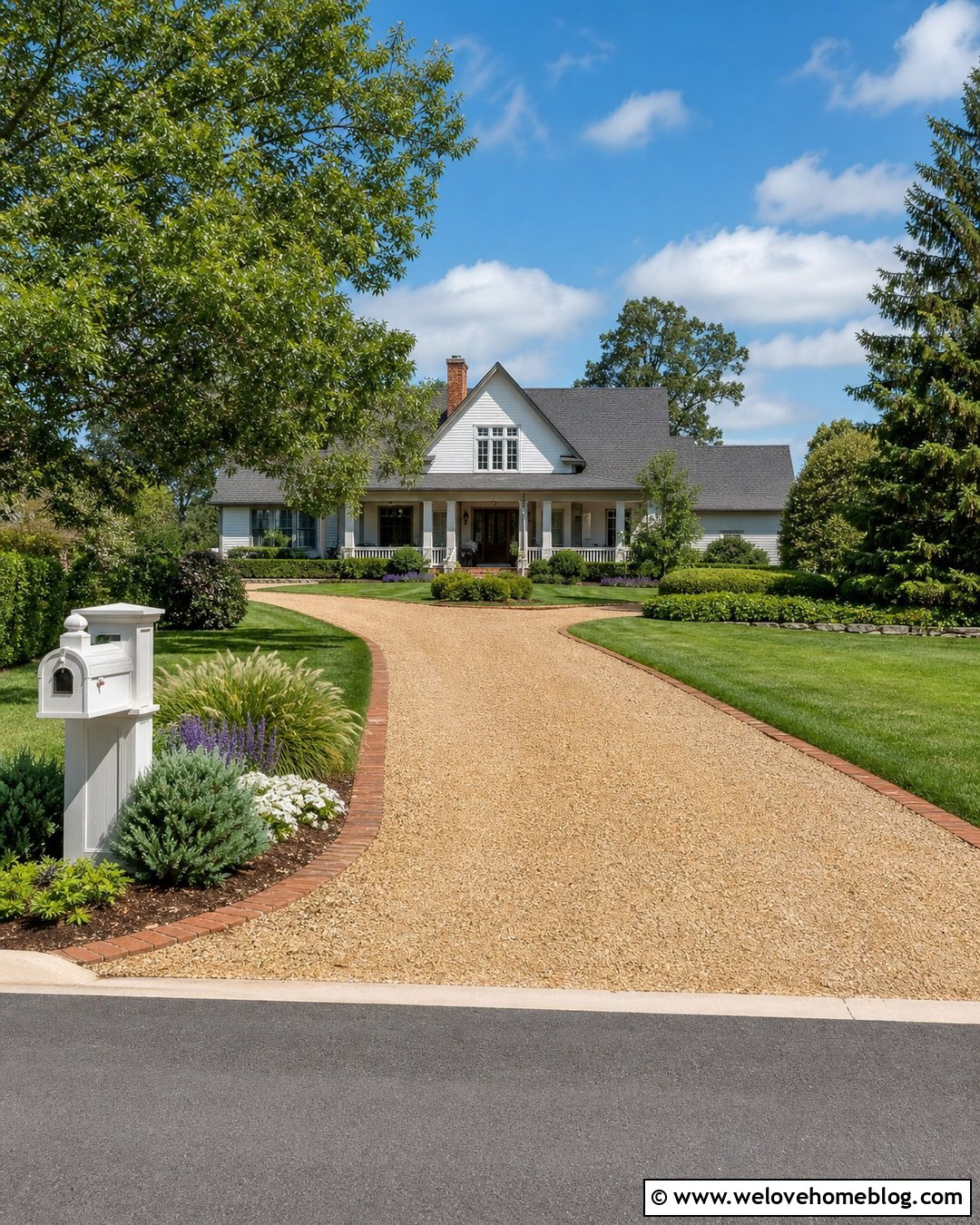
Rounded pea gravel delivers a soft, traditional appearance in shades of cream, tan, gray, or brown. It looks inviting on a curved driveway leading to a cottage, farmhouse, or colonial home. Because the stones roll more easily than angular aggregate, strong containment and a stable driveway grid can improve performance. Frame the surface with cobblestone edging set securely above the surrounding soil. Lavender, catmint, boxwood, and small ornamental trees can follow the driveway curves without narrowing the driving area. A paved apron at the street and garage helps reduce scattered stones at transition points. Plan for occasional raking and replenishment. Pea gravel is generally better suited to level or gently sloped sites than steep driveways where material movement becomes harder to control.
12. Crushed Stone Driveway With Brick Ribbon
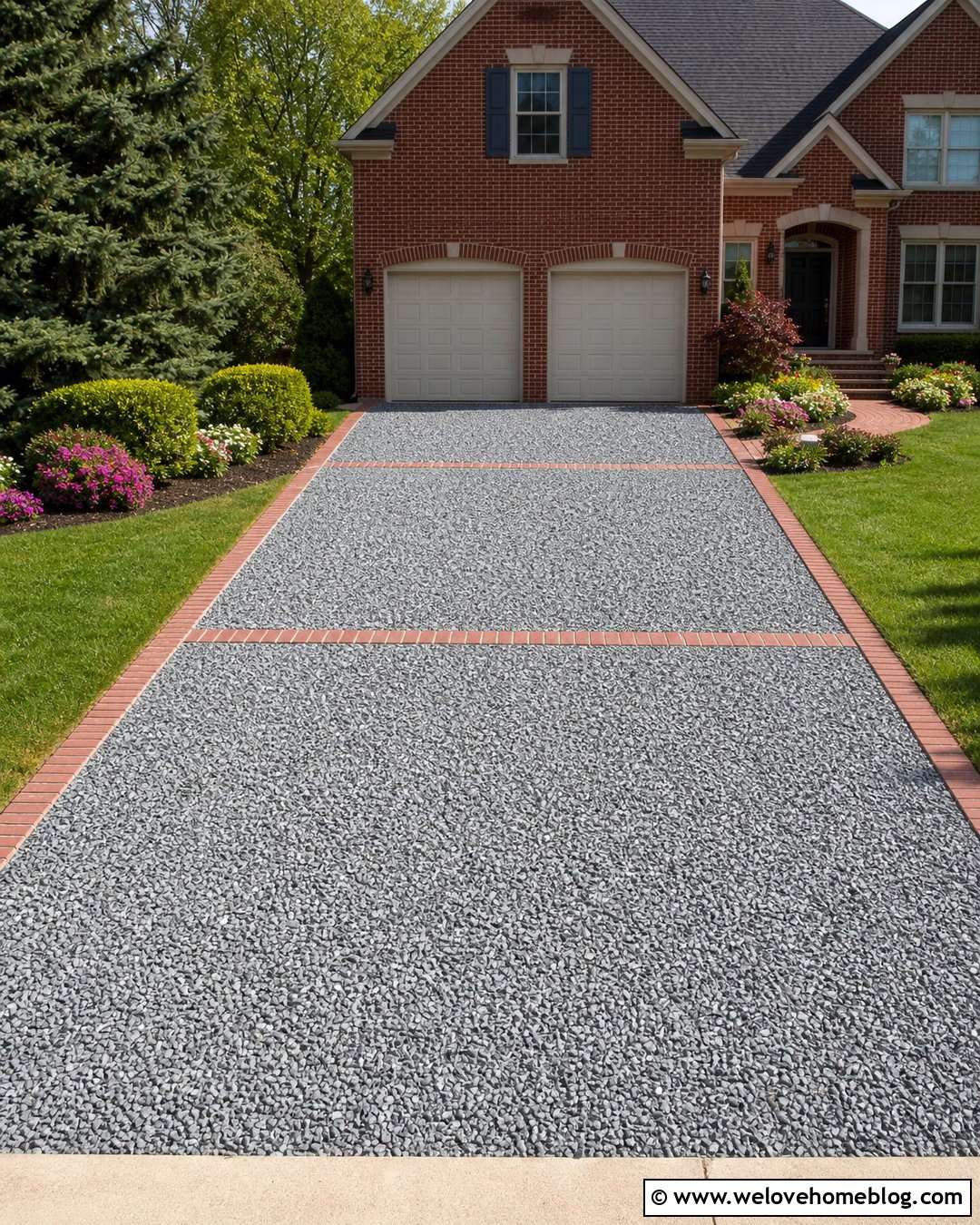
Angular crushed stone locks together more effectively than rounded gravel, making it a practical loose material for many residential driveways. Medium-gray stone looks neat on a wide, straight approach, while a red brick ribbon adds warmth and visually divides parking spaces from the main drive. Install brick along both sides and across key transition points to create a complete border. A compacted, well-graded base is essential for reducing ruts, low spots, and muddy sections. Traditional foundation shrubs, lawn, and a brick walkway can connect the driveway to a red brick home. Select a stone size that is comfortable to walk on yet substantial enough for vehicle traffic. Periodic grading and fresh aggregate will help maintain an even, attractive surface.
13. Decomposed Granite Driveway With Metal Borders
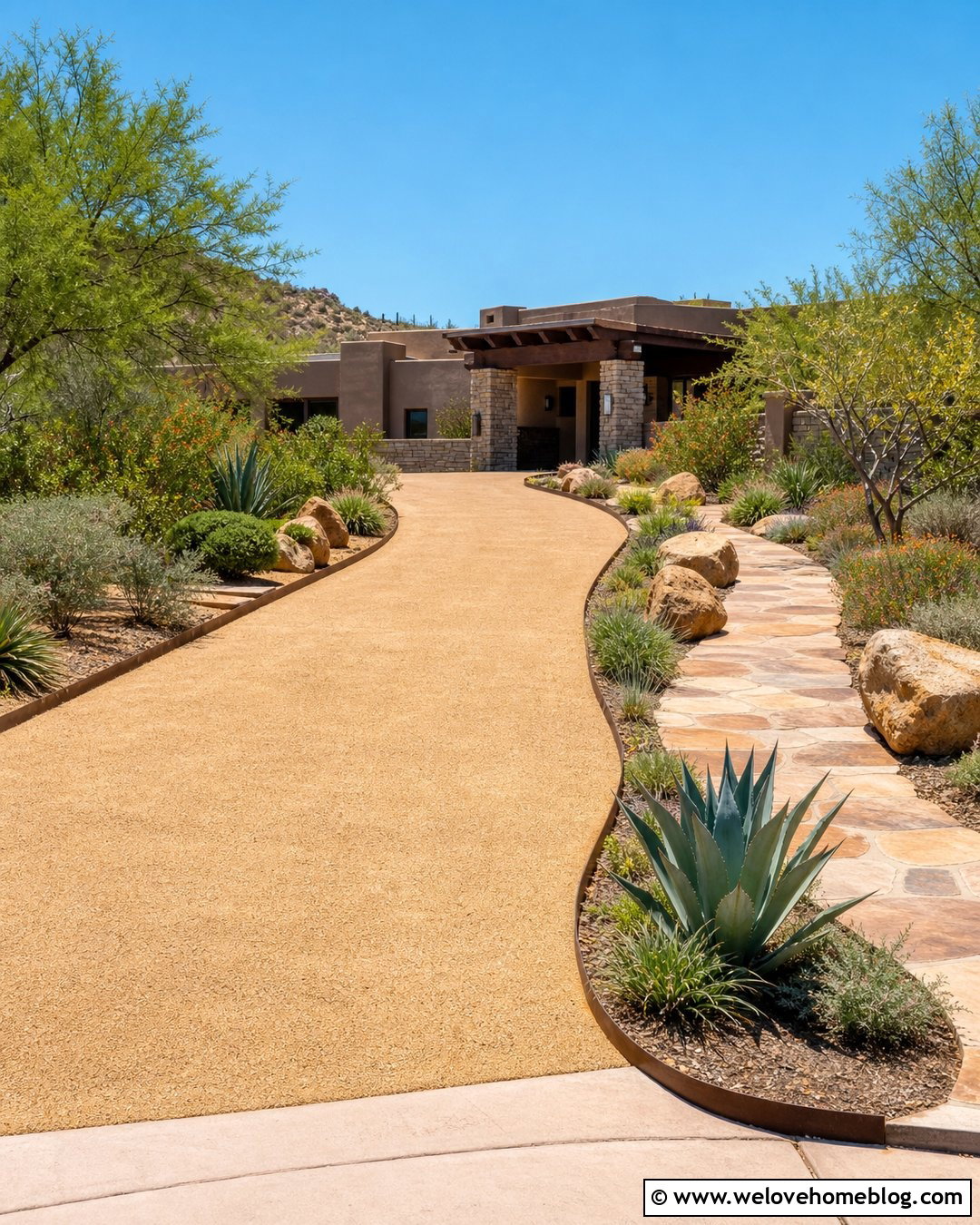
Decomposed granite creates a compact, earthy surface that complements dry climates and naturalistic landscapes. Its muted gold, tan, rust, or gray coloring looks especially fitting beside a ranch house or Southwestern-inspired home. Design a broad, gently curved driveway with steel edging to contain the material and keep the lines crisp. Use boulders, native grasses, agave, sage, and gravel-mulched beds to frame the approach without requiring a traditional lawn. Stabilized decomposed granite may resist erosion and movement better than an untreated loose installation, depending on the product and site. It still needs proper excavation, base preparation, compaction, and drainage. Consider local rainfall and freeze-thaw conditions because the material does not perform identically in every climate or soil type.
14. Limestone Gravel Driveway With Stone Pillars
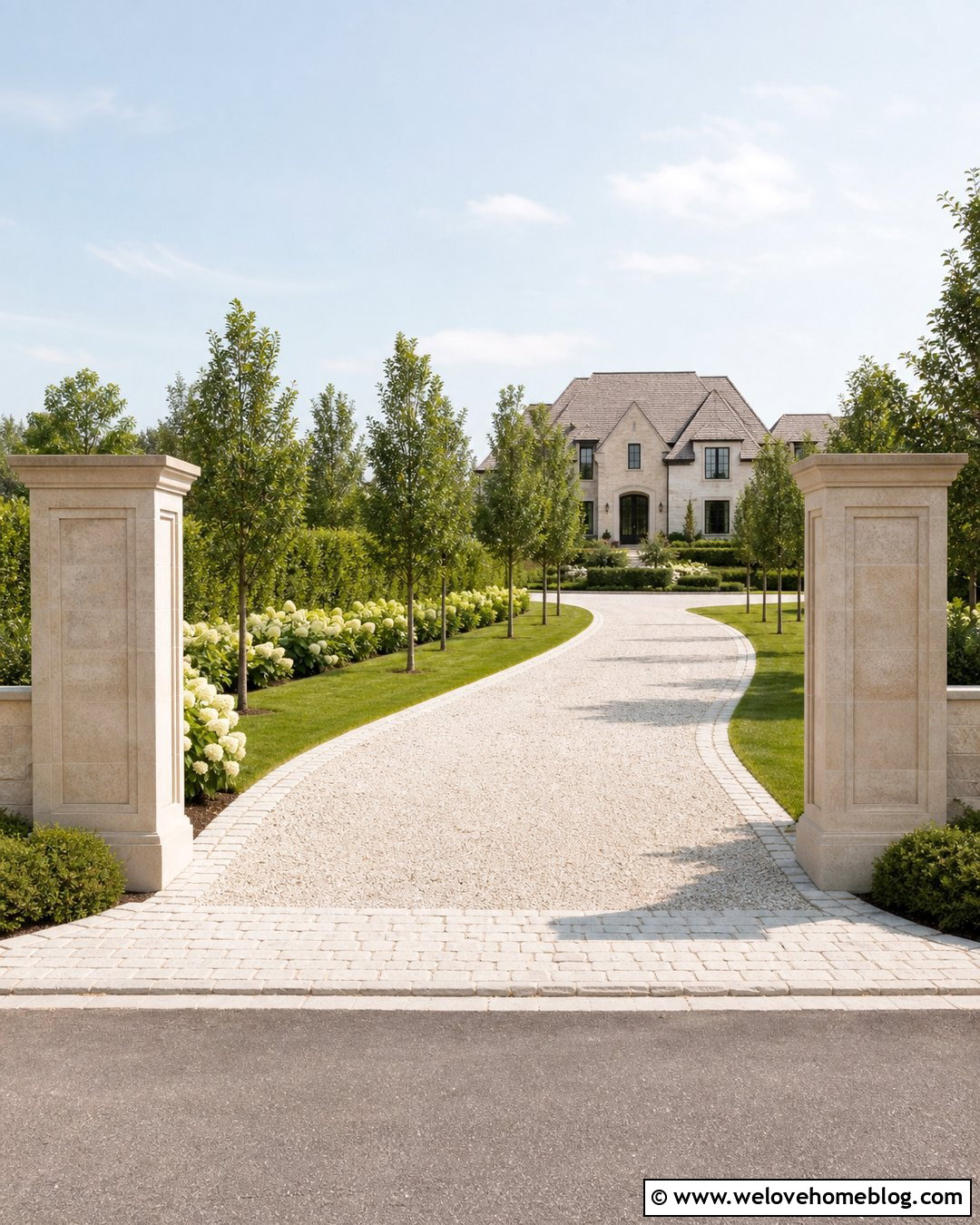
Pale limestone gravel creates a bright, classic entrance that pairs naturally with farmhouse, French country, and traditional stone architecture. A long driveway can curve between simple limestone pillars before opening into a generous parking court. Use larger stone blocks or matching limestone setts as edging to prevent loose aggregate from spreading into the lawn. The light color provides strong contrast with green hedges and dark garage doors, although it may show soil or leaf stains more readily than darker gravel. Angular, driveway-grade limestone should be installed over a stable, compacted base. Add rows of small trees or informal hydrangea beds outside the edging. Keep plants low near the street so the pillars do not reduce visibility when vehicles enter or exit.
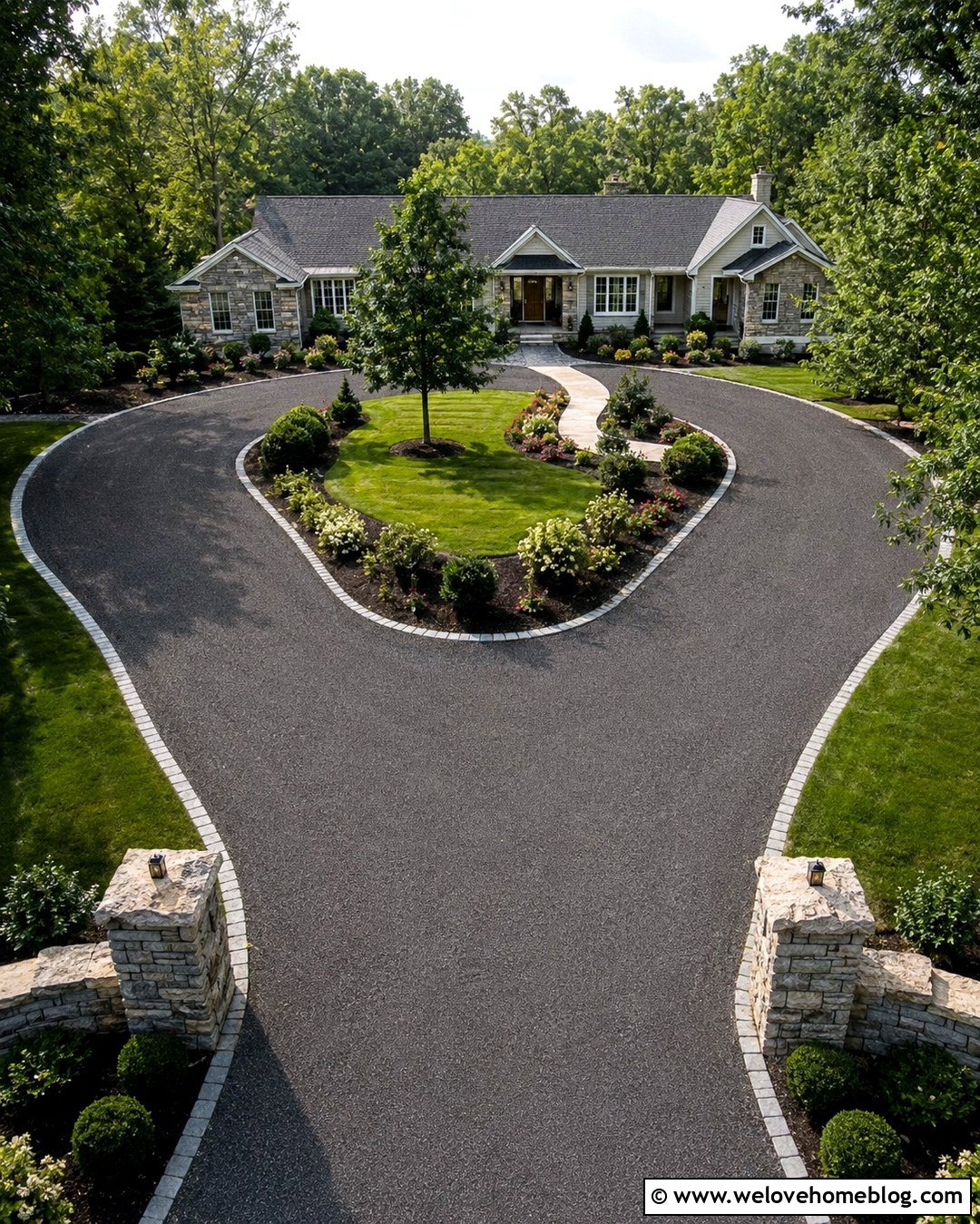
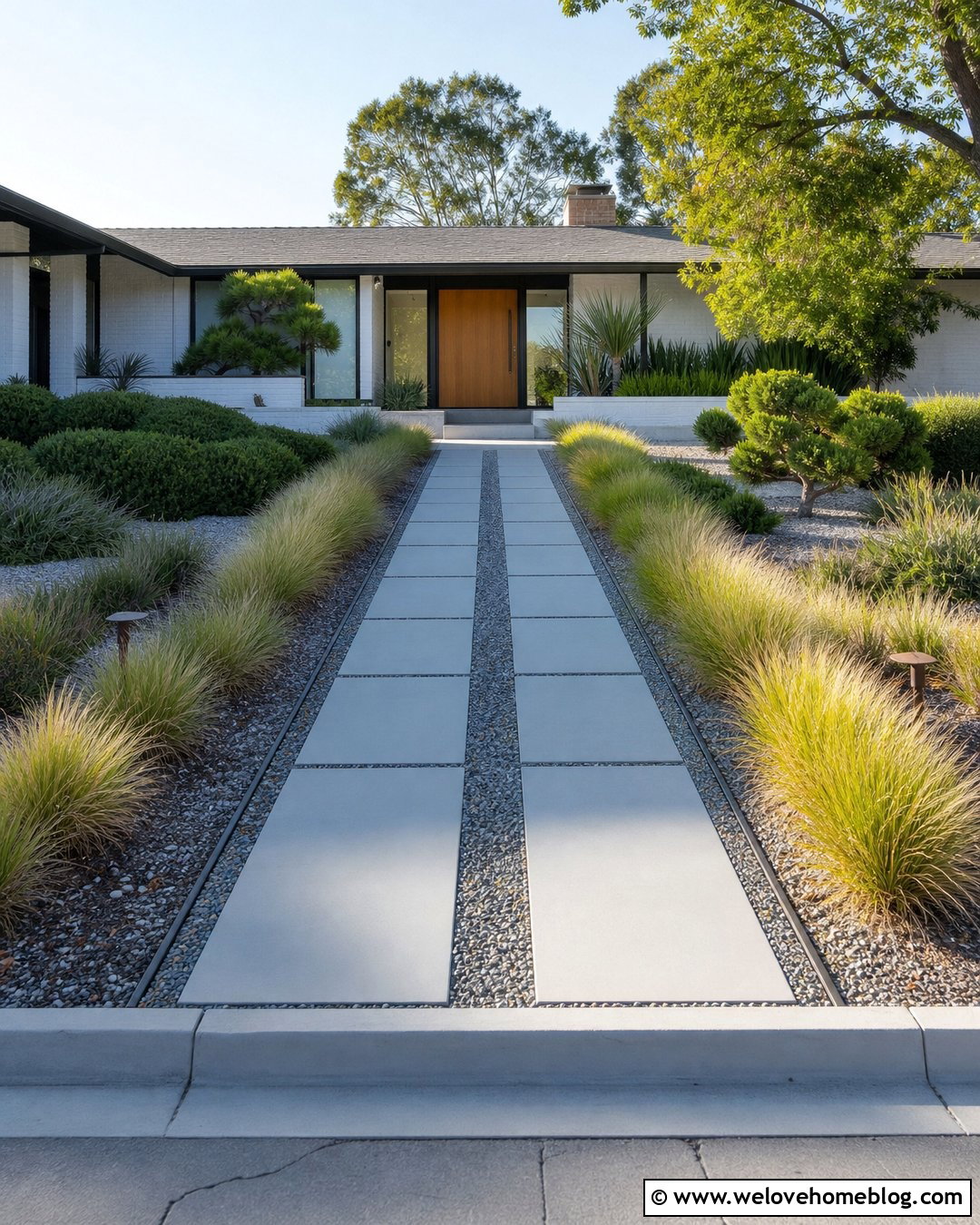
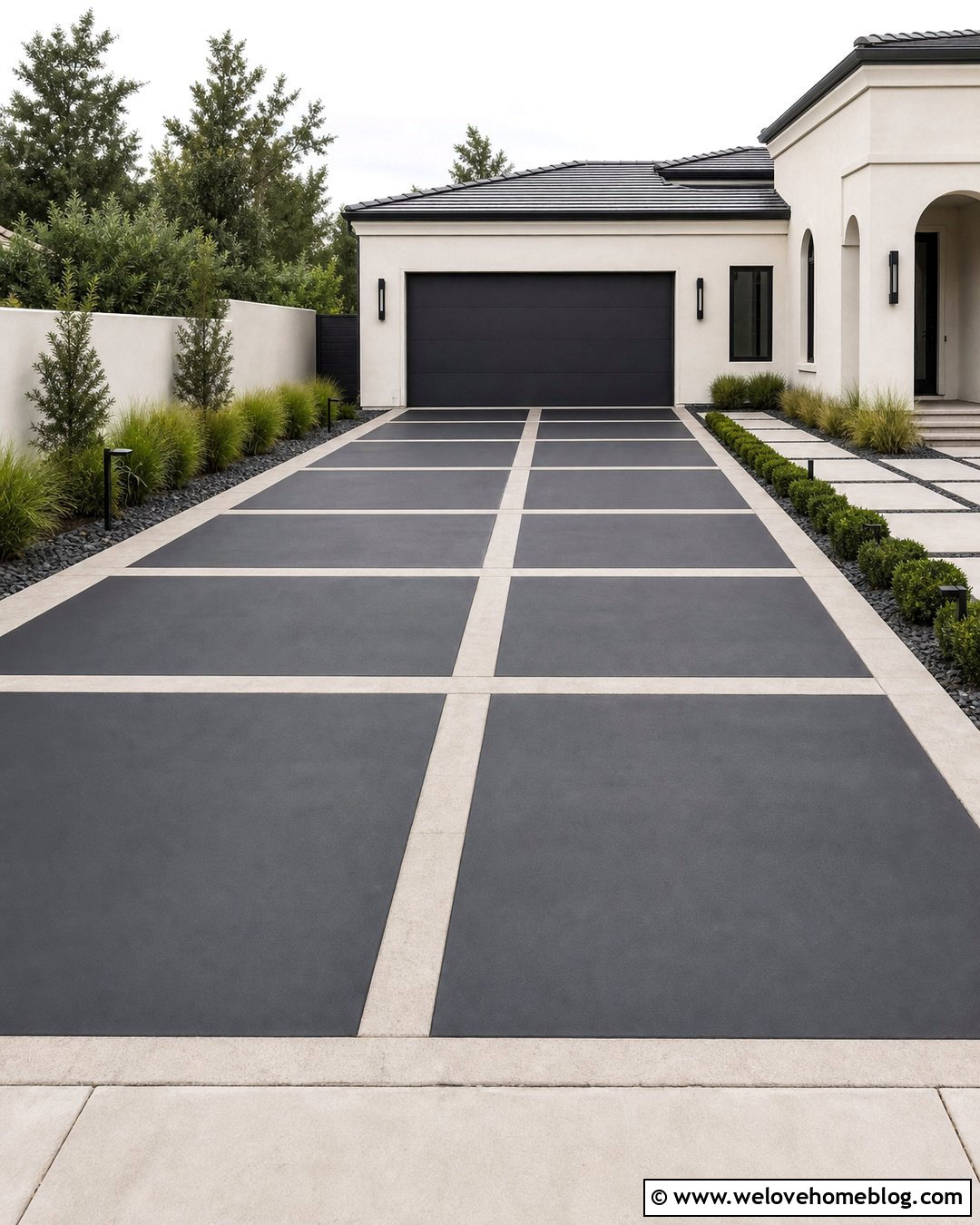
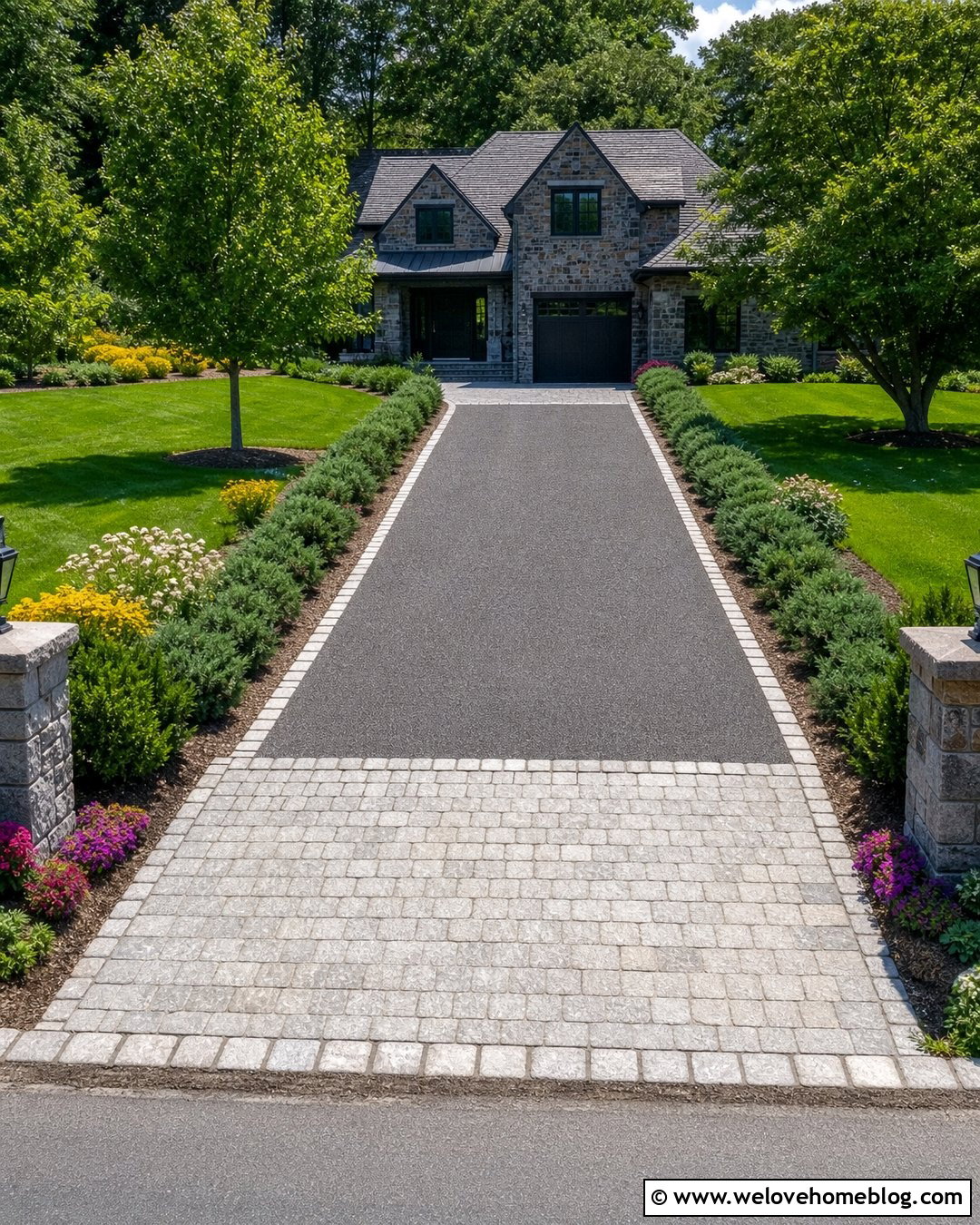
15. Slate Chip Driveway With Modern Planting
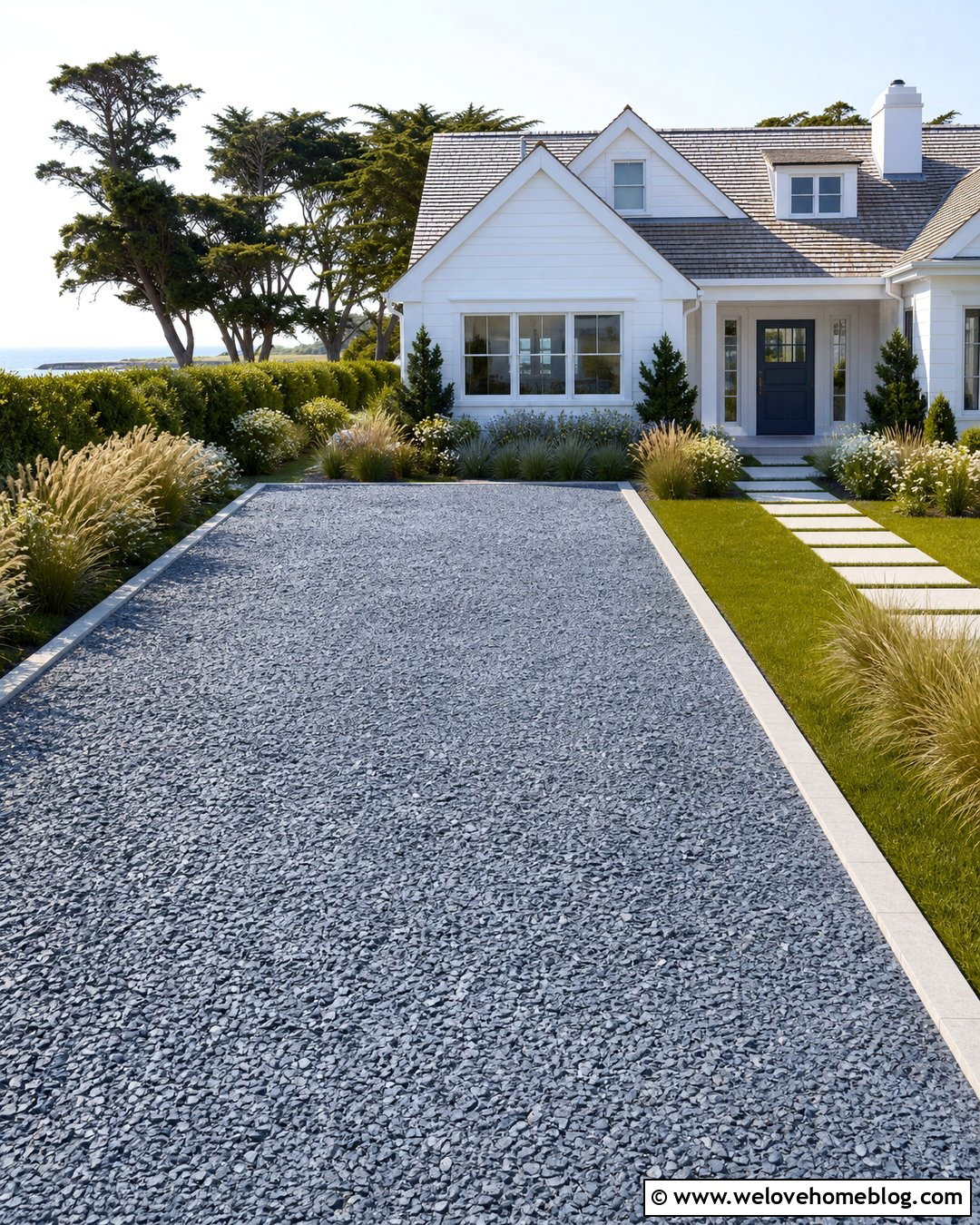
Blue-gray or charcoal slate chips create a distinctive driveway that works well with modern, coastal, and renovated cottage homes. Their rich color can connect dark roofing, black windows, and stone facade details. Use the slate on a straight driveway with a wide rectangular parking area, then contain it with flush concrete curbs. Plant silvery grasses, compact evergreens, and white flowering perennials in simple beds along the edges. Slate chips vary in shape and may shift or break under repeated traffic, so confirm that the selected product is sold for driveway use. A stabilizing grid may improve containment on flatter sites. Avoid steep layouts unless a contractor determines the material and retention system can handle the slope without continual migration.
16. River Rock Driveway With Gravel Stabilizer
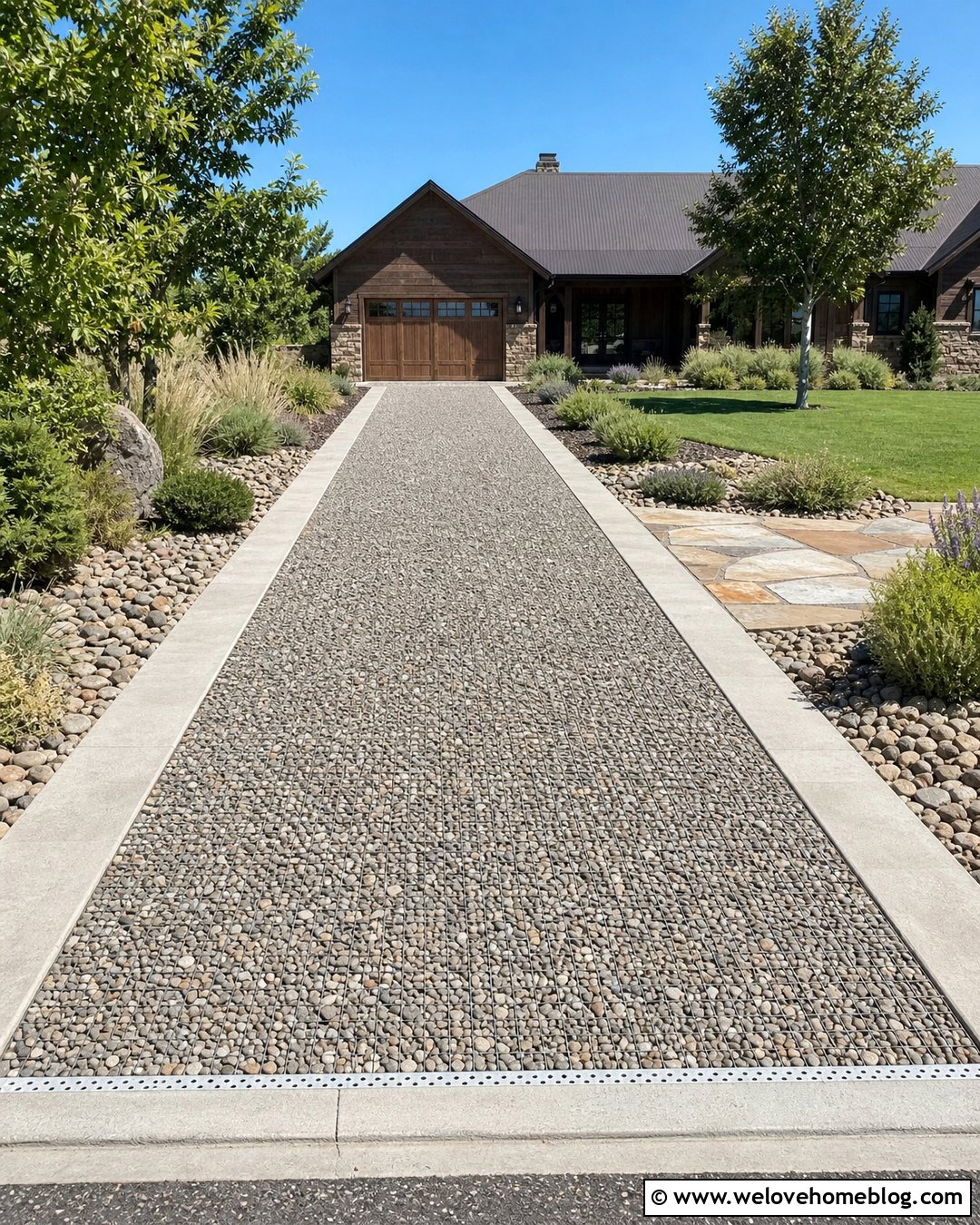
Smooth river rock offers beautiful natural color, but its rounded shape can move under tires if installed as an ordinary deep layer. A reinforced gravel stabilization grid makes this material more realistic for a flat, lightly trafficked residential driveway. Choose smaller driveway-appropriate river stones in a controlled blend of gray, tan, and brown. A straight driveway edged with concrete bands will create reliable boundaries and prevent stones from entering planting beds. Pair the surface with a rustic ranch house, native shrubs, and a flagstone walkway. The grid, aggregate depth, base, and stone size must be compatible as one system. This option requires careful specification and is generally less appropriate for steep slopes, frequent turning areas, or heavy vehicle use.
17. Recycled Concrete Driveway With Timber Edging
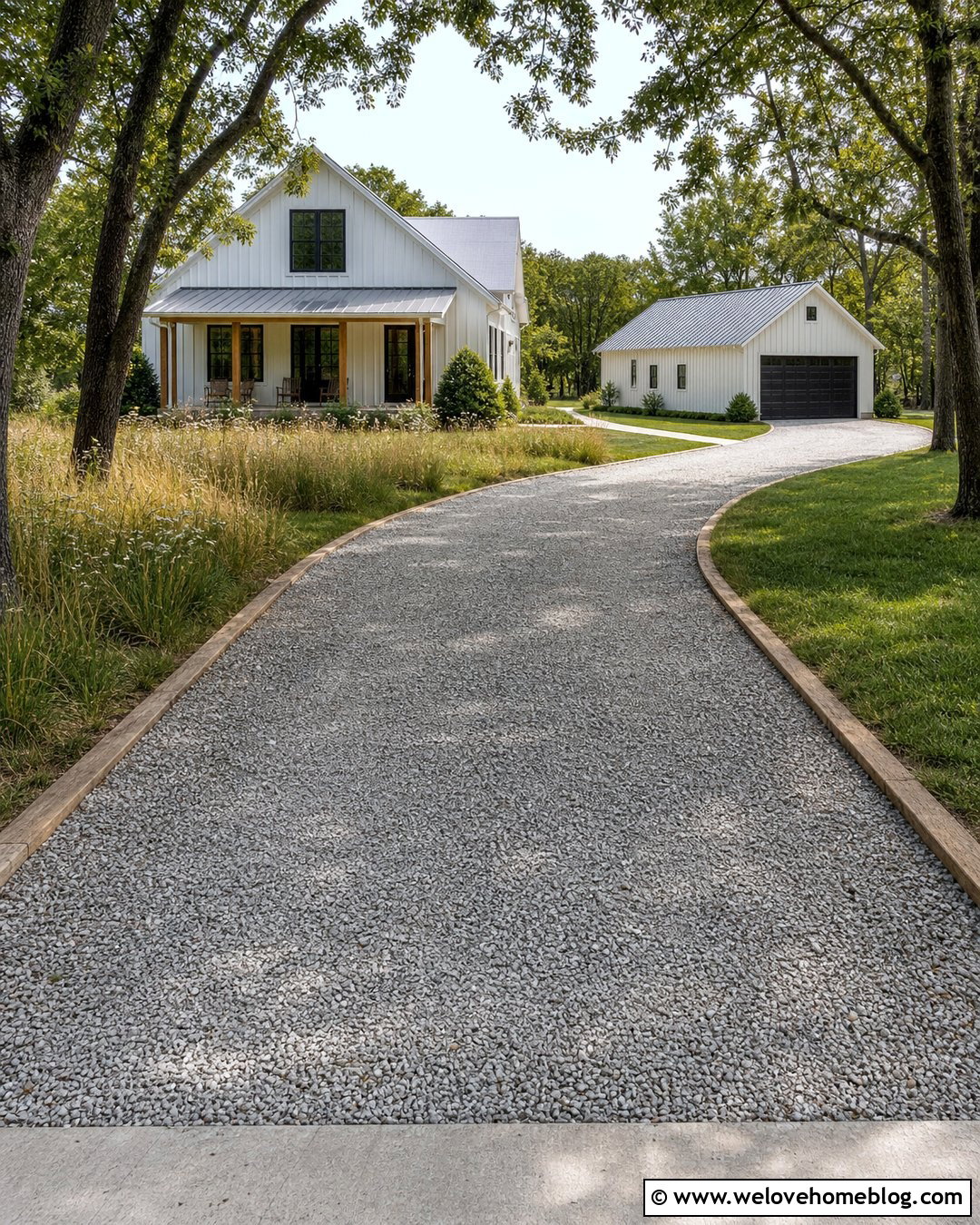
Crushed recycled concrete can provide a firm, economical surface for a farmhouse, workshop, or casual suburban property. Its pale gray and off-white tones brighten a long driveway while giving salvaged material a useful second application. Create a slightly curved approach contained by pressure-treated timber or durable composite edging, then soften it with meadow grasses and shade trees. The aggregate should be processed, screened, and free from unsuitable debris. Because recycled material can vary considerably, inspect a sample before ordering a full load. A geotextile layer may be helpful in certain soil conditions, but it does not replace a correctly prepared base. Compact the surface in suitable lifts and include a hard, tidy transition where the driveway reaches the garage floor.
18. Concrete Paver Driveway With Herringbone Pattern
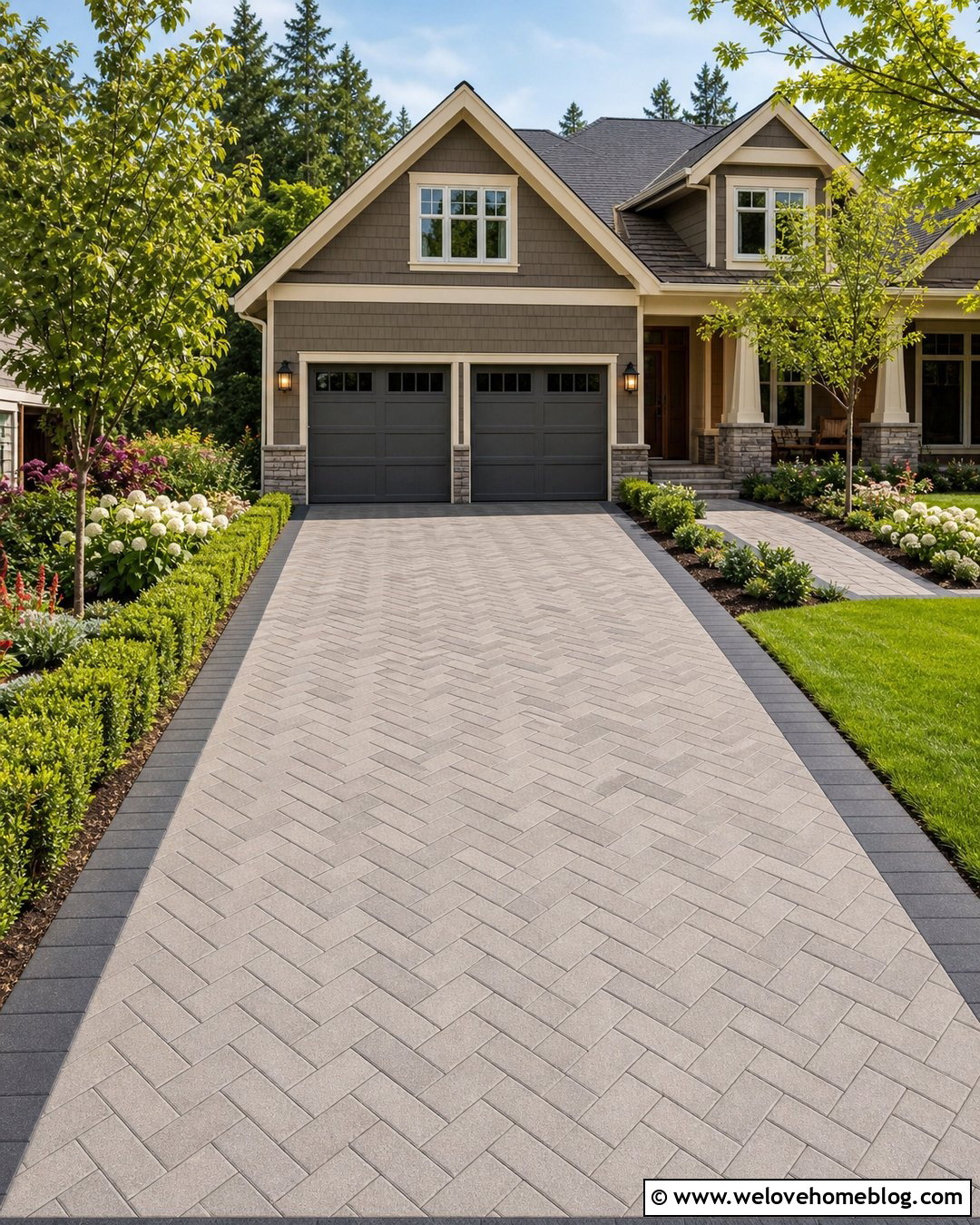
Interlocking concrete pavers offer extensive control over color, pattern, borders, and repair access. A herringbone field is a practical visual choice for a driveway because the angled layout creates strong interlocking lines. Use warm gray pavers with a charcoal soldier-course border on a wide driveway leading to a craftsman home. Match the front walkway to the border rather than repeating the entire driveway pattern, which keeps the design balanced. Correct excavation, base construction, edge restraint, joint filling, and compaction are critical to preventing movement. Choose pavers specifically rated for vehicular use. Low evergreen hedges and broad planting beds can frame the paving while leaving adequate room for doors, mirrors, snow storage, and comfortable movement around parked vehicles.
19. Large Format Paver Driveway With Gravel Joints
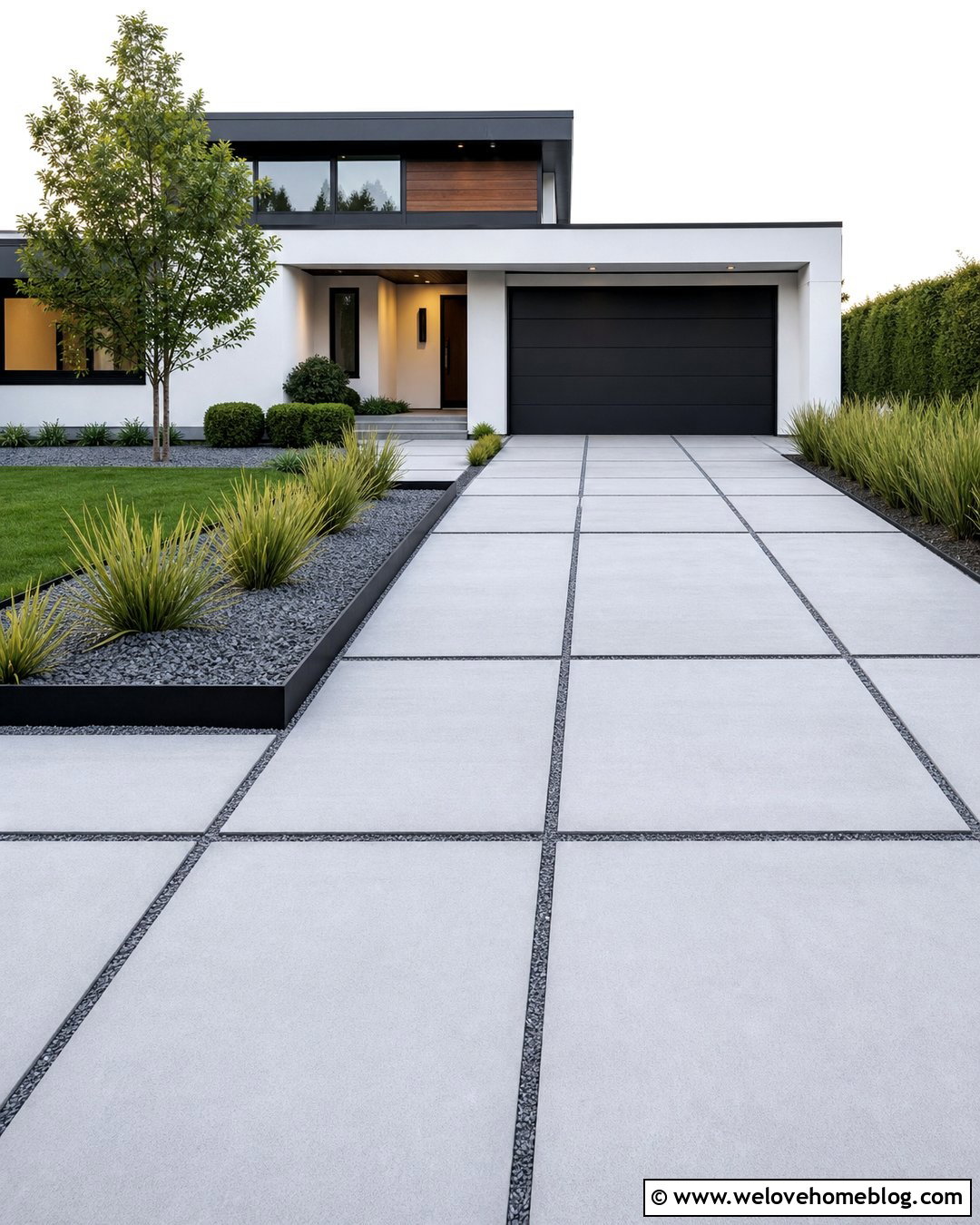
Large-format concrete pavers create a sleek driveway for a modern home, particularly when arranged in clean rows with narrow gravel-filled joints. Use pale gray rectangular units on a straight approach, then add dark crushed stone between the pavers for visible contrast. The slabs must be manufactured and installed for driveway loading; ordinary patio slabs may not be suitable. A reinforced base and accurate placement are essential because uneven units are highly noticeable in a geometric design. Continue the same material into a wide front walkway to visually connect the driveway with the entrance. Linear grasses, clipped shrubs, and one sculptural tree keep the landscape restrained. Design the joint width carefully so tires travel comfortably and loose aggregate remains contained.
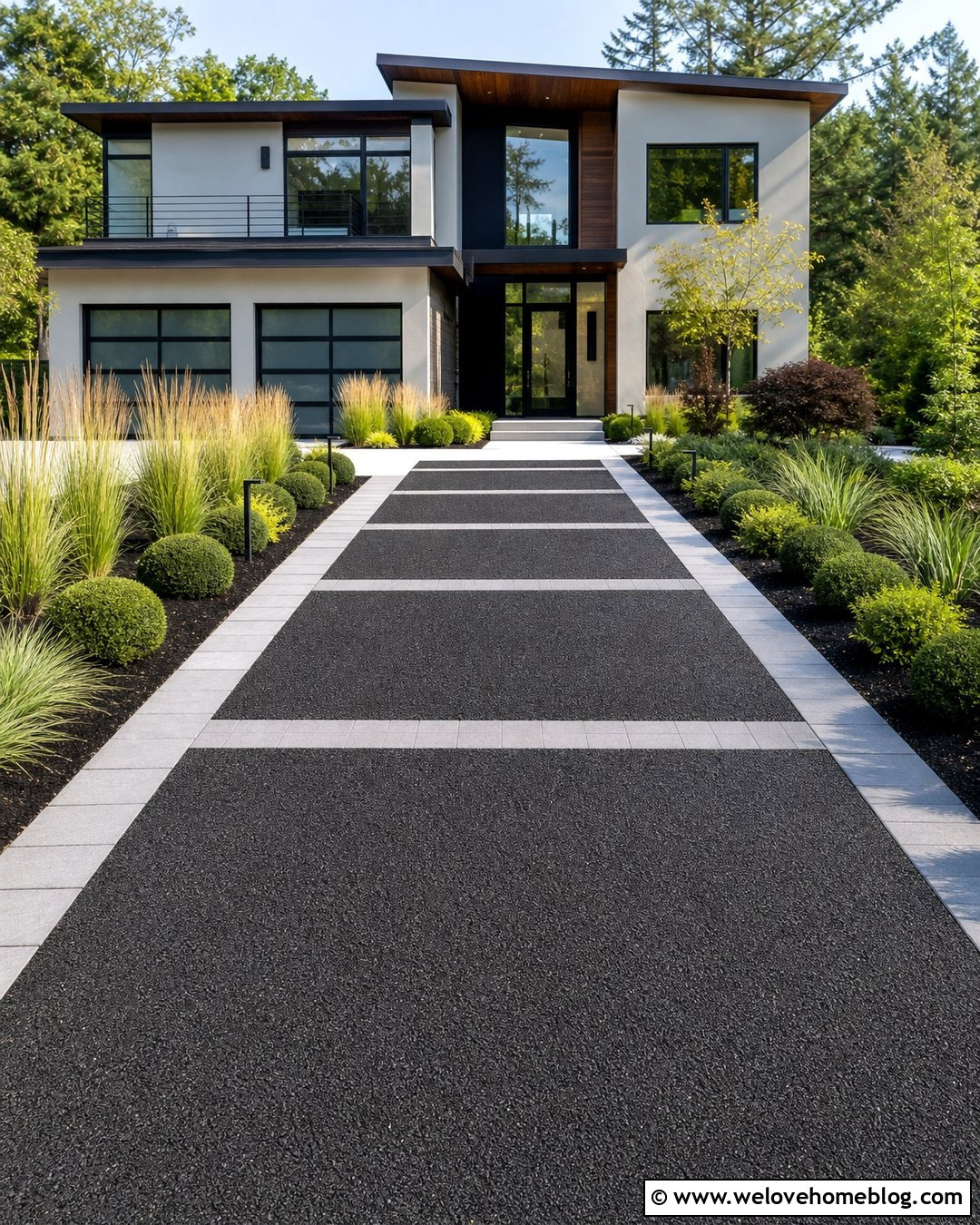
20. Permeable Paver Driveway With Planted Borders
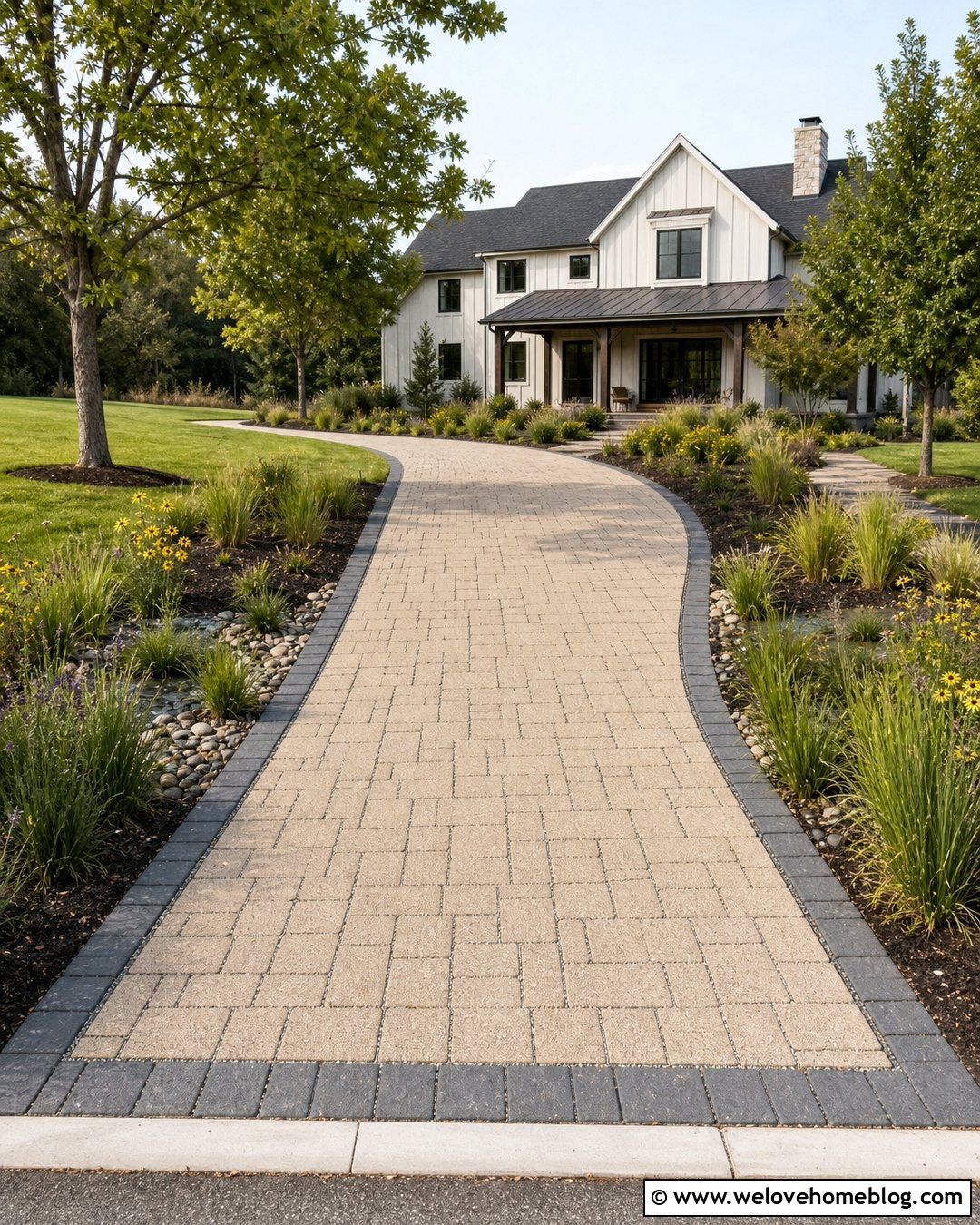
Permeable concrete pavers use wider, aggregate-filled joints and a specially prepared base to manage water within the driveway system. They can create a sophisticated surface without making drainage features look utilitarian. Choose warm beige pavers for a gently curved driveway leading to a craftsman or contemporary farmhouse. A darker paver border can define the driving area, while moisture-tolerant plantings occupy shallow beds along the lower side. The driveway should be designed according to soil infiltration, rainfall, frost depth, and overflow needs. Routine cleaning and suitable joint aggregate help preserve permeability. Do not fill the joints with ordinary soil or fine sand unless the manufacturer specifies it. This complete design works best when paving, drainage, grading, and landscaping are planned together.
21. Grass Grid Driveway With Concrete Apron
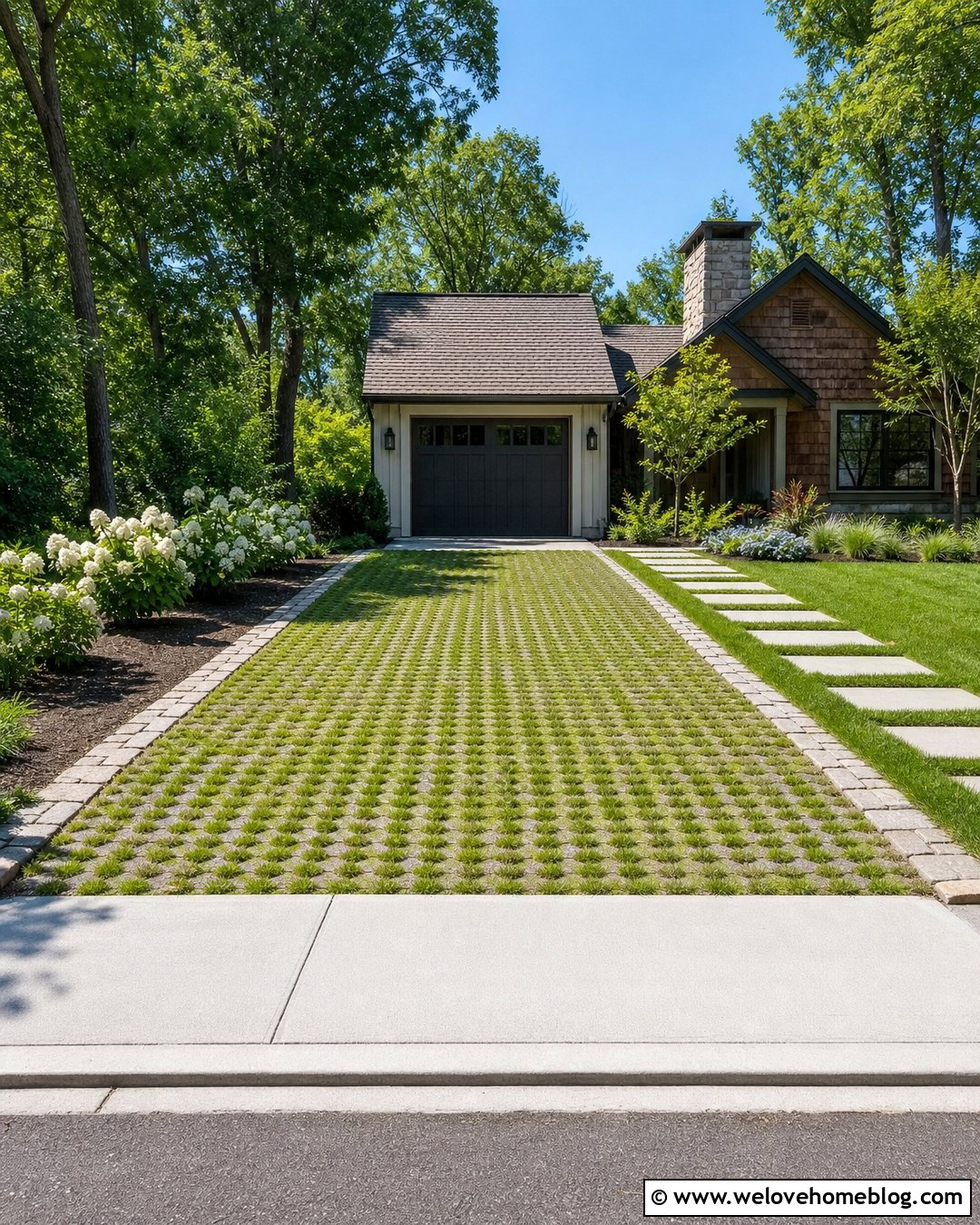
A grass grid driveway minimizes the visual impact of parking by allowing reinforced vegetation to grow within open cells. It suits a secondary driveway, guest parking area, or low-traffic approach to a cottage or eco-conscious modern home. Use a durable grid system rated for vehicles, then add a poured concrete apron at the street and garage to handle frequent turning and transitions. Narrow stone borders will separate the grid from flower beds and reduce edge damage. Grass selection must suit the sunlight, climate, irrigation, and expected traffic. Even reinforced turf can become worn when vehicles repeatedly follow the same tracks. Proper soil, drainage, and base construction remain essential. An alternative gravel-filled grid may work better in dry climates or heavily shaded yards.
22. Clay Brick Driveway With Herringbone Layout
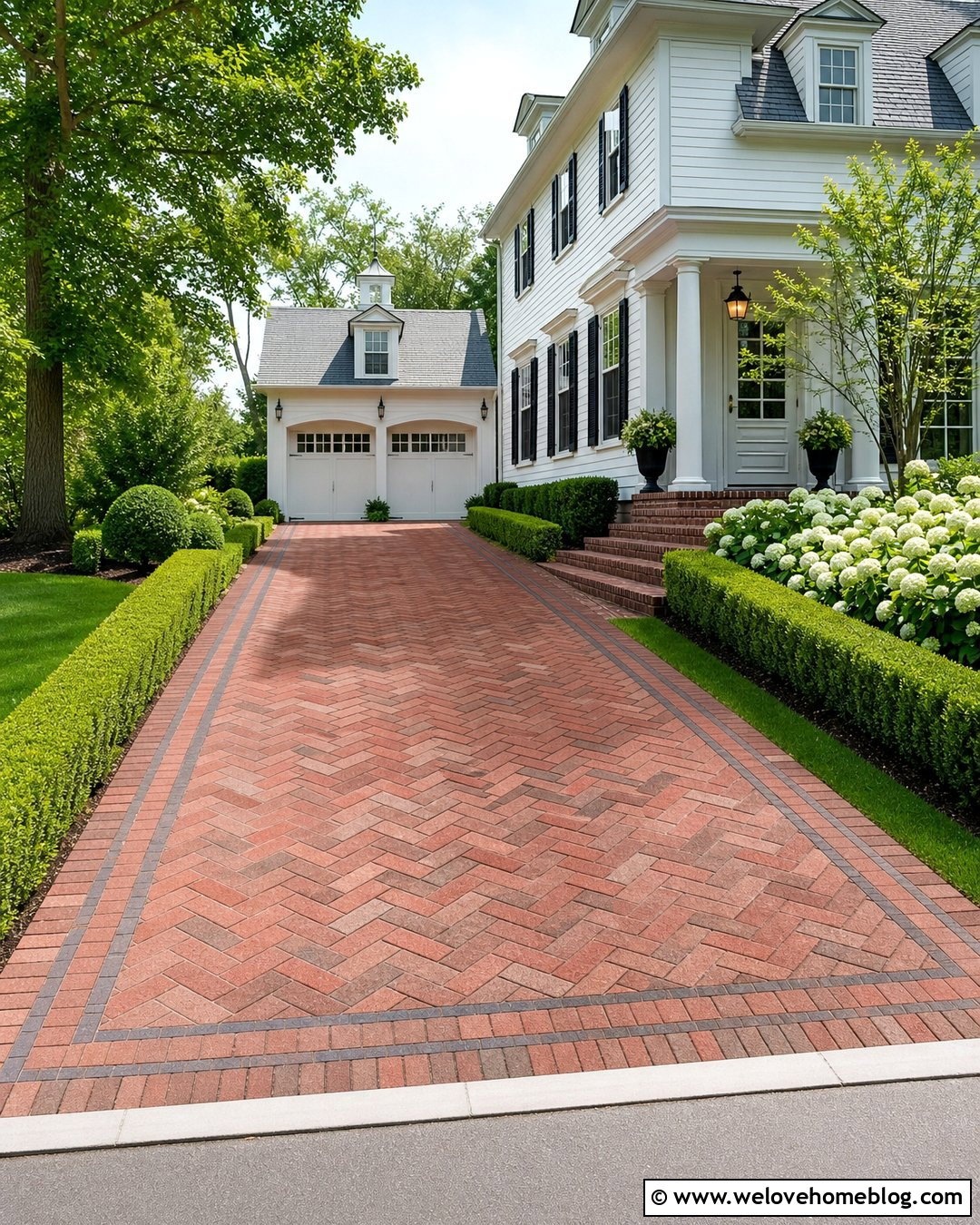
Clay brick pavers bring warm, enduring color to traditional homes and older neighborhoods. A red and brown herringbone driveway leading to a colonial house feels established without requiring decorative extras. Frame the field with a double soldier-course border, then repeat the brick in the front walkway and porch steps. Genuine paving brick should be selected for vehicle loads and local weather rather than using ordinary wall brick. The base, bedding layer, joint material, and edge restraints must work together to limit settlement. Brick can develop surface variation over time, which many homeowners value as part of its character. Green lawn, boxwood hedges, and white flowering shrubs provide a clean contrast while keeping attention on the richly patterned driveway surface.
23. Reclaimed Brick Driveway With Cottage Landscaping
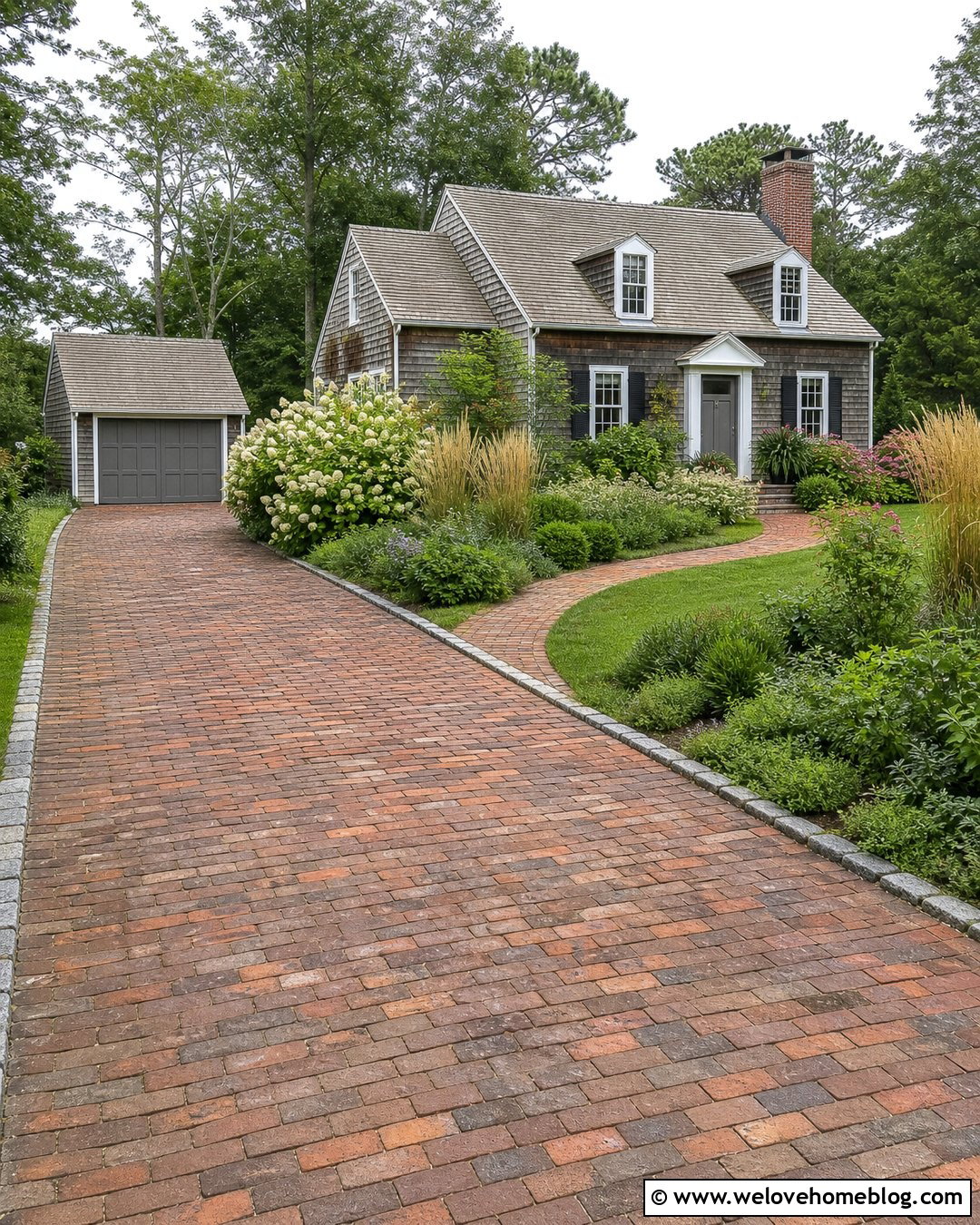
Reclaimed brick gives a driveway immediate age and variation, making it ideal for a cottage, historic farmhouse, or renovated craftsman home. Mix weathered red, brown, and muted orange paving bricks in a simple running bond or basket-weave field. Use reclaimed granite curbs to contain the edges and create a durable threshold at the street. Informal planting beds filled with hydrangeas, roses, herbs, and ornamental grasses can soften the straight layout. Salvaged bricks must be carefully inspected because units designed for walls or mild climates may not withstand driveway loads and freezing weather. Confirm dimensions, strength, condition, and quantity before installation. Keep extra matching bricks for future repairs, since finding the same reclaimed batch later may be difficult.
24. Cobblestone Driveway With Circular Layout
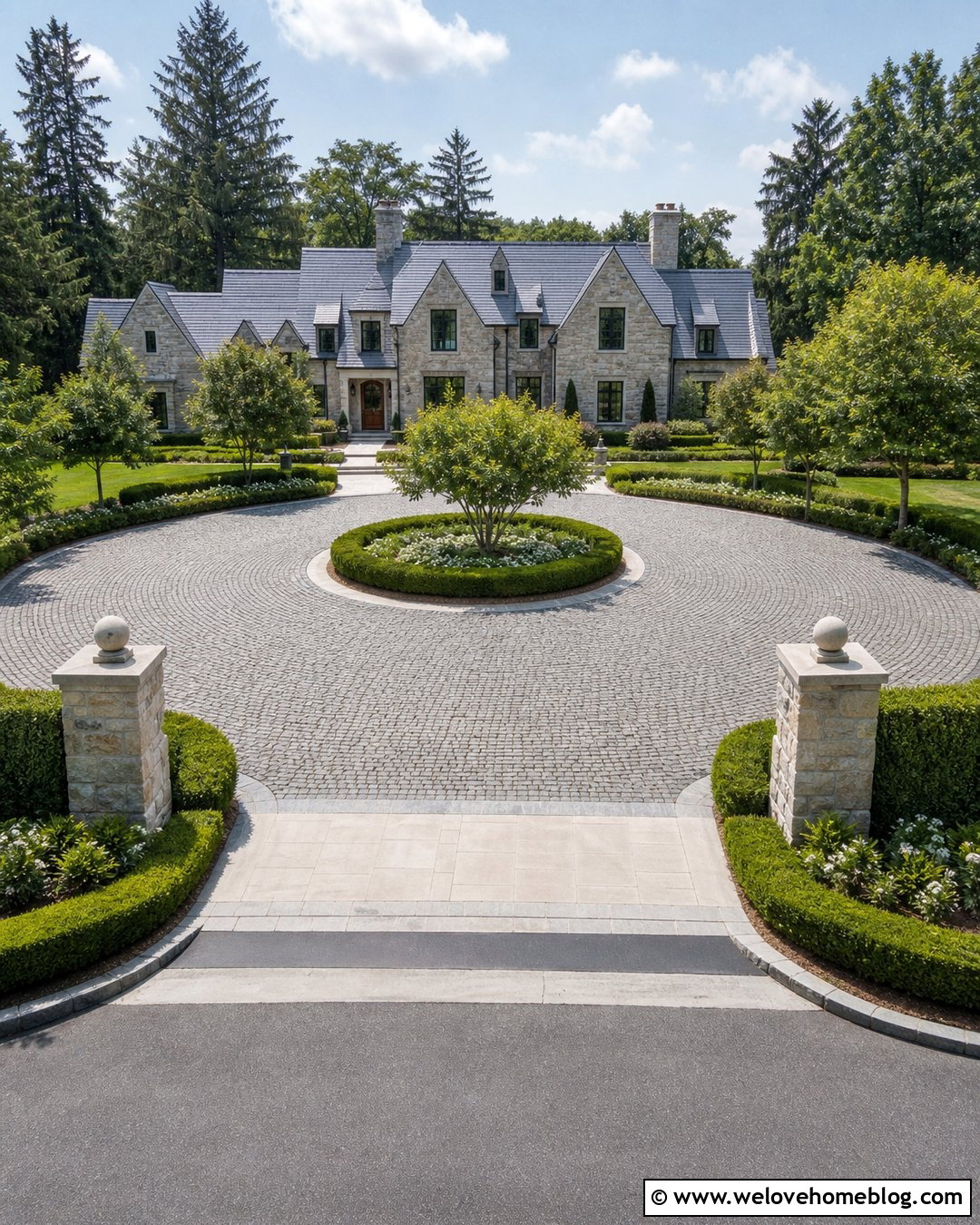
A full cobblestone driveway creates a substantial, historic appearance that complements stone estates, colonial homes, and European-inspired architecture. A circular layout allows the material to become part of a formal arrival court instead of a simple parking strip. Use gray granite cobbles in a fan or radial pattern around a landscaped center island. Stone pillars, clipped hedges, and small ornamental trees can define the entrance without hiding the house. Cobblestone installation is labor intensive and requires experienced craftsmanship to achieve a stable, reasonably even driving surface. Joint design and base preparation are especially important. Because the textured paving may be less comfortable for some users, include a smoother stone walkway from the parking area to the front door.
25. Granite Sett Driveway With Stone Borders
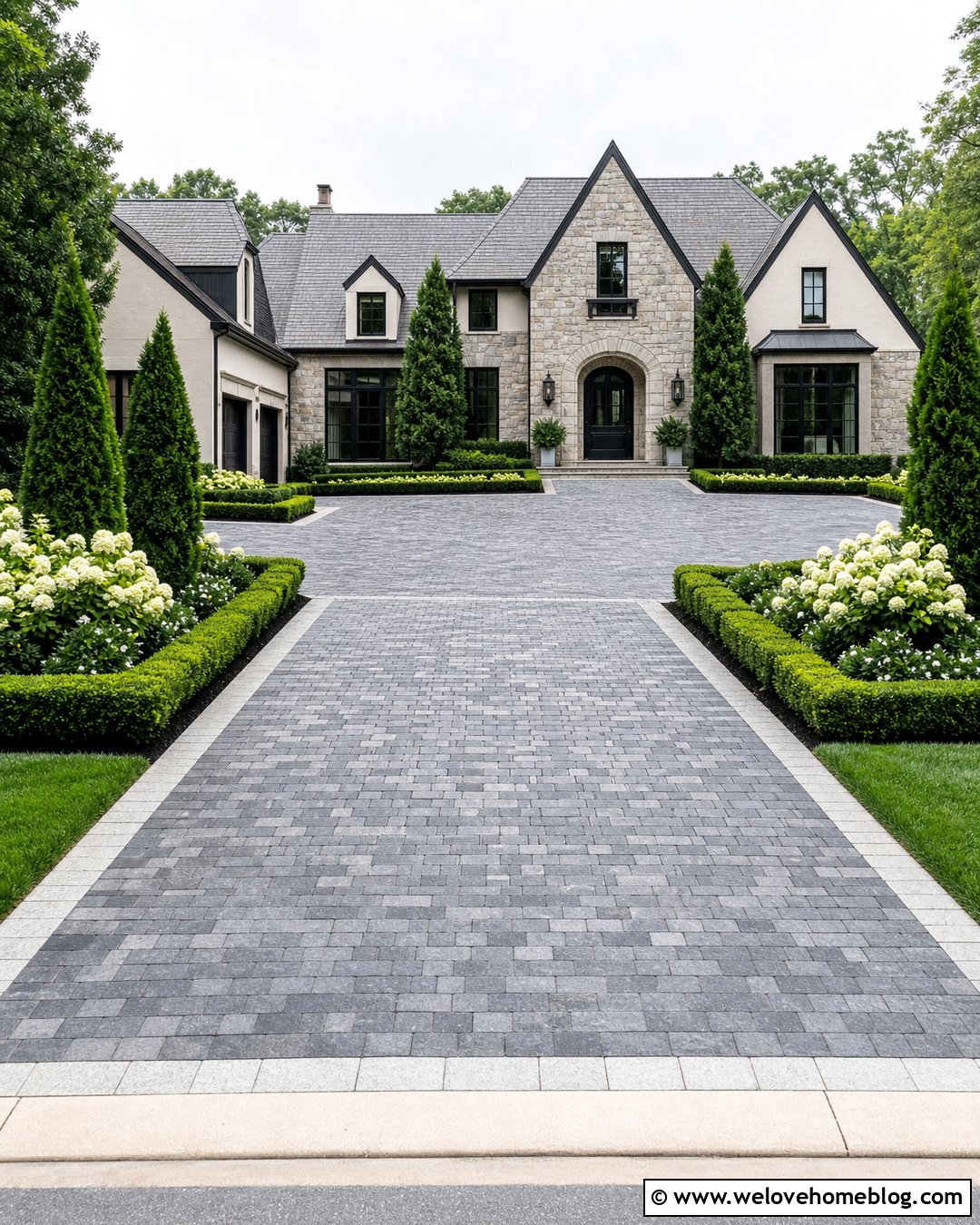
Granite setts offer the character of natural stone in more regular, block-like units than traditional rounded cobbles. Their strength and subtle color variation suit a formal driveway with heavy visual presence. Arrange gray and charcoal setts in a running bond across a straight approach to a stone or stucco home. A contrasting light granite border can emphasize the driveway shape and mark the edge of the parking court. Keep landscaping structured with evergreen hedges, symmetrical trees, and restrained perennial beds. Granite can represent a significant investment in both material and labor, so accurate planning is important. Select a surface texture appropriate for exterior vehicle and pedestrian use, and hire an installer experienced with natural-stone driveway bases, jointing methods, slopes, and transitions.
26. Bluestone Driveway With Gravel Infill
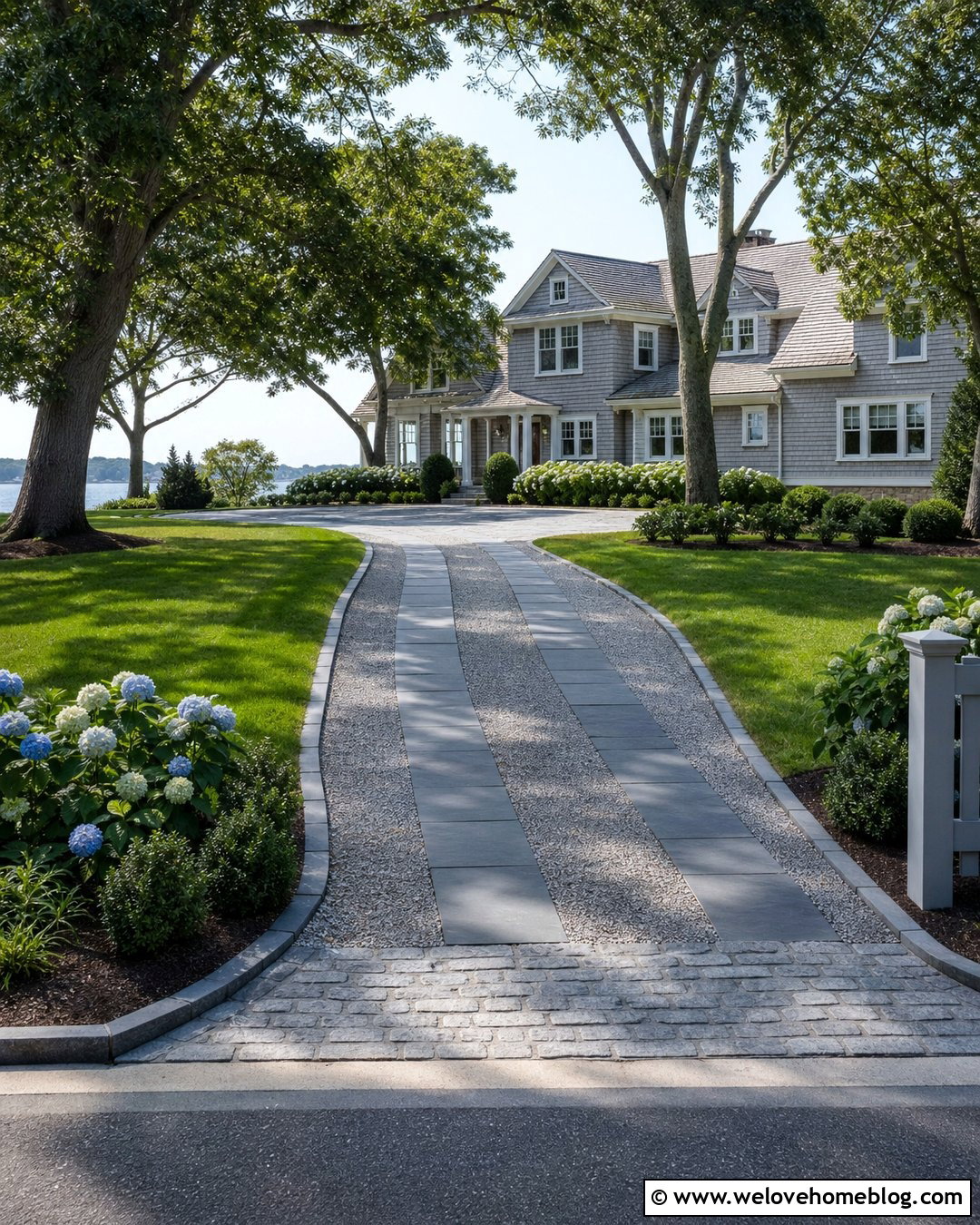
Bluestone can be used as durable vehicle-rated paving or as broad wheel tracks surrounded by compacted gravel. The second approach reduces the amount of premium stone while creating a graceful entrance to a coastal, shingle-style, or traditional home. Place thermal-finished blue-gray stone strips along the primary tire paths and fill the surrounding driveway with fine gray crushed gravel. Matching bluestone edging and a front walkway will unify the composition. Every slab must have the proper thickness, support, and installation method for vehicle loads. Avoid thin patio pieces that may crack under traffic. Hydrangeas, compact hollies, lawn, and mature shade trees can frame the approach. A paved turning pad near the garage makes the mixed-material layout easier to use.
27. Flagstone Driveway With Ground Cover Joints
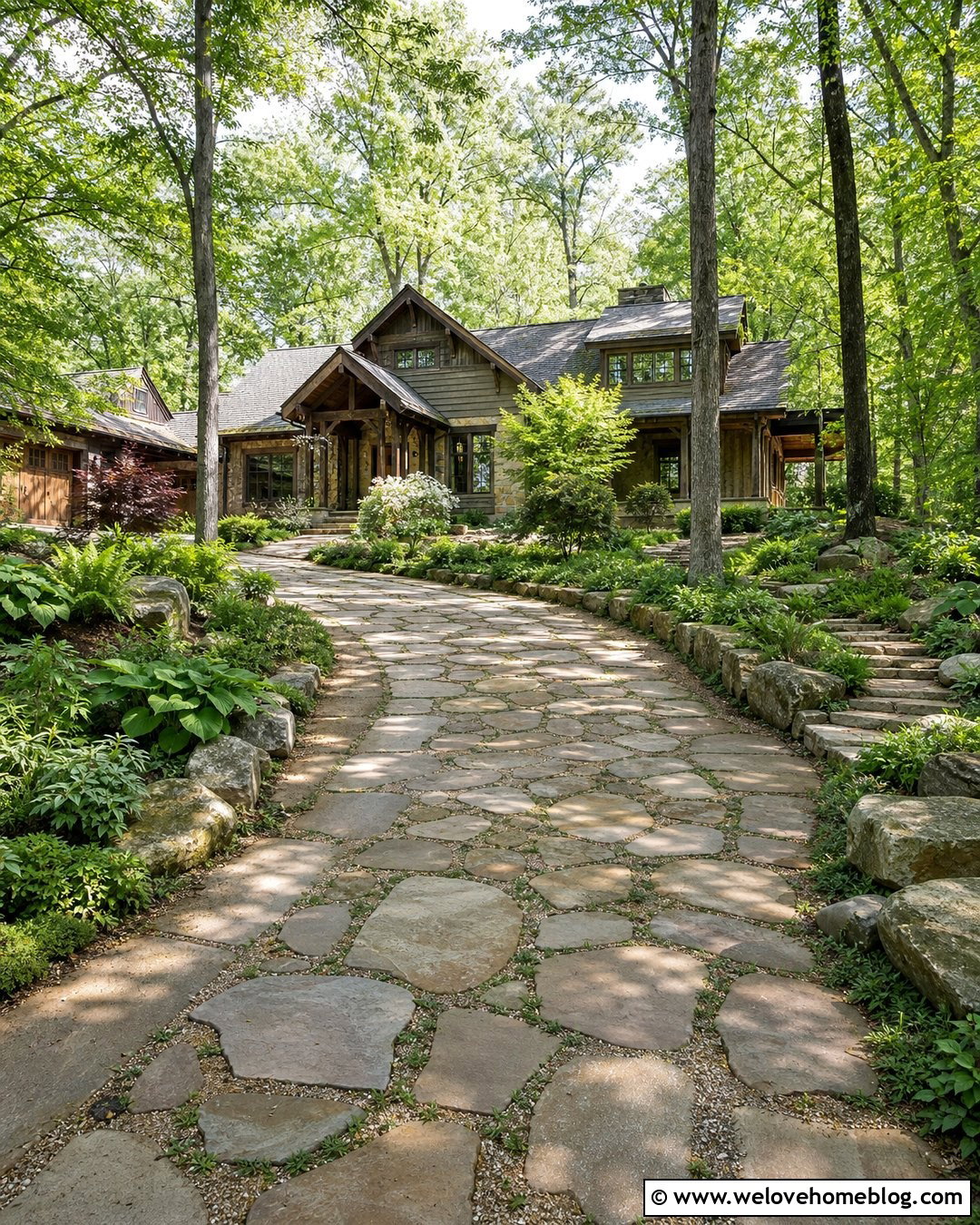
Large flagstones create an organic driveway that feels integrated with the garden rather than imposed on it. Choose thick, vehicle-rated sandstone or quartzite pieces with relatively flat surfaces, then arrange them on a gently curved approach. Low ground cover can occupy selected wide joints outside the main tire paths, while compacted aggregate fills areas exposed to regular loading. This design works beautifully with a rustic craftsman, mountain home, or woodland cottage. Irregular stone requires skilled installation because inconsistent support can lead to rocking, cracking, or uncomfortable transitions. Keep the driving route clearly defined with natural boulder edging and layered shade-tolerant plants. Confirm that the stone type, thickness, base, and joint treatment are suitable for the local climate and expected vehicles.
28. Resin-Bound Gravel Driveway With Paver Border
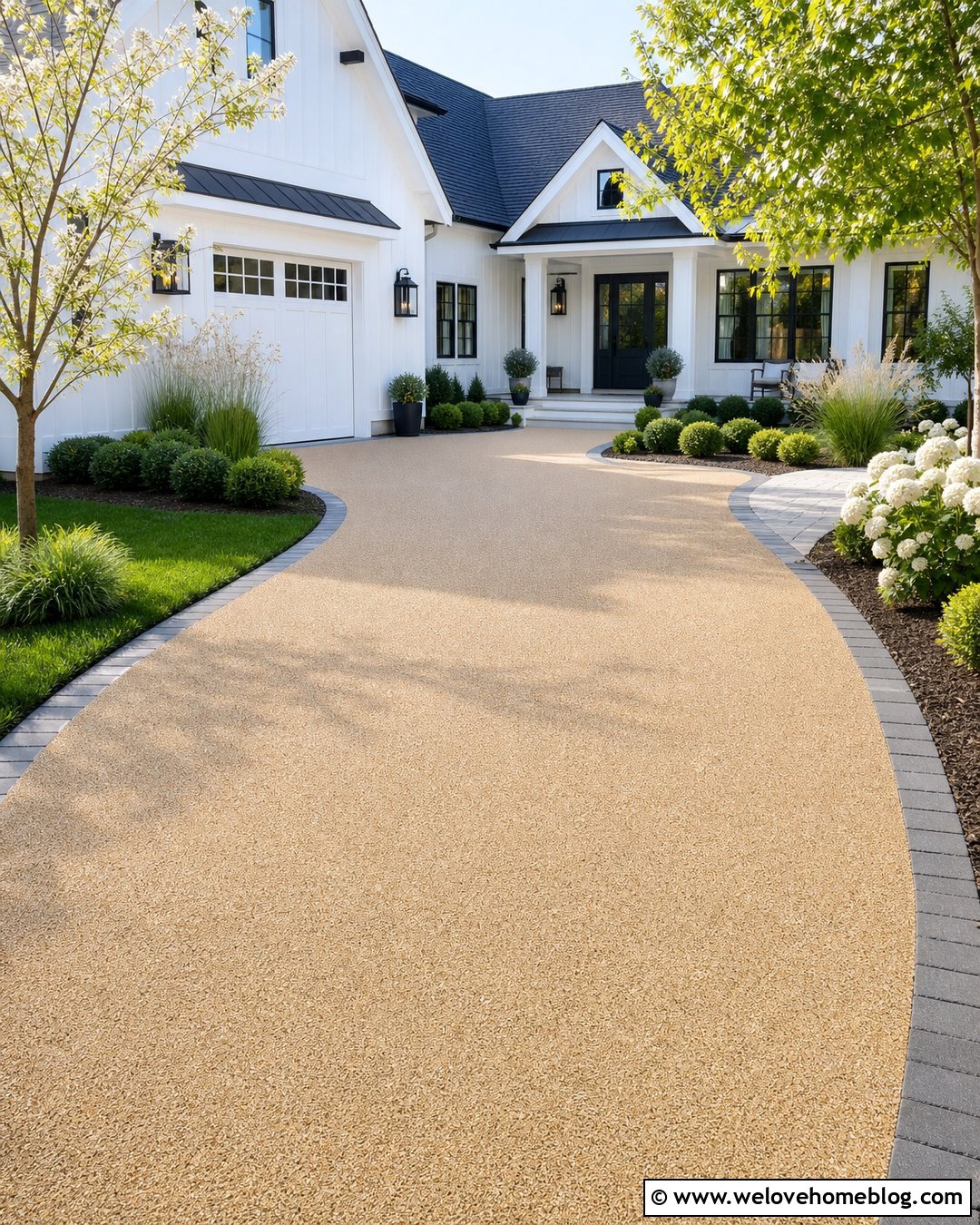
Resin-bound gravel combines clean, dry aggregate with resin to form a smooth, continuous surface with the appearance of finely textured stone. A warm honey-colored blend can brighten a curved driveway leading to a modern farmhouse or rendered home. Frame the surface with charcoal concrete pavers and repeat them around the front walkway. Neatly clipped shrubs, ornamental grasses, and a small flowering tree will complement the uniform finish. Resin-bound and resin-bonded systems are different, so confirm exactly which product is being proposed. Performance depends on compatible materials, correct mixing, suitable weather during installation, and a properly prepared base. Ask about permeability, ultraviolet stability, maintenance, repair appearance, and suitability for the site before selecting an installer.
29. Crushed Shell Driveway With Coastal Landscaping
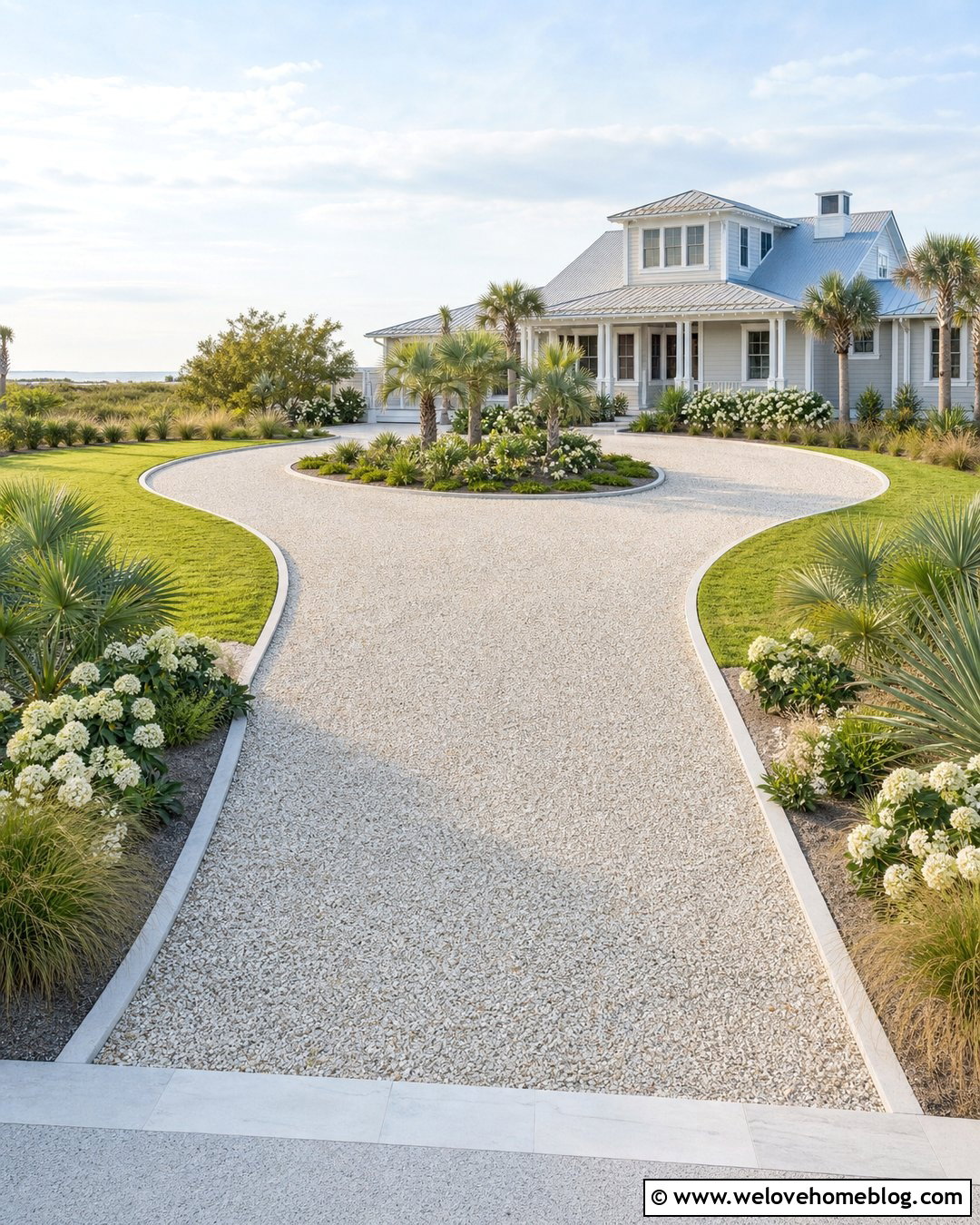
Crushed shell creates a pale, casual surface that feels naturally connected to coastal homes and warm-weather landscapes. Oyster, clam, or similar shells gradually compact into a textured driveway with soft white, cream, and gray coloring. Use the material on a flat, horseshoe-shaped approach bordered by pale stone or concrete curbing. Sea oats, ornamental grasses, palmettos, hydrangeas, and sandy planting beds can reinforce the coastal setting without making the entrance feel themed. Shell availability, sourcing, sharpness, and local acceptance vary, so purchase material specifically processed for landscape or driveway use. A solid base and effective edging will reduce rutting and migration. Expect periodic replenishment, especially in turning areas and locations exposed to heavy rain or frequent traffic.
30. Mixed Gravel And Paver Driveway With Parking Court
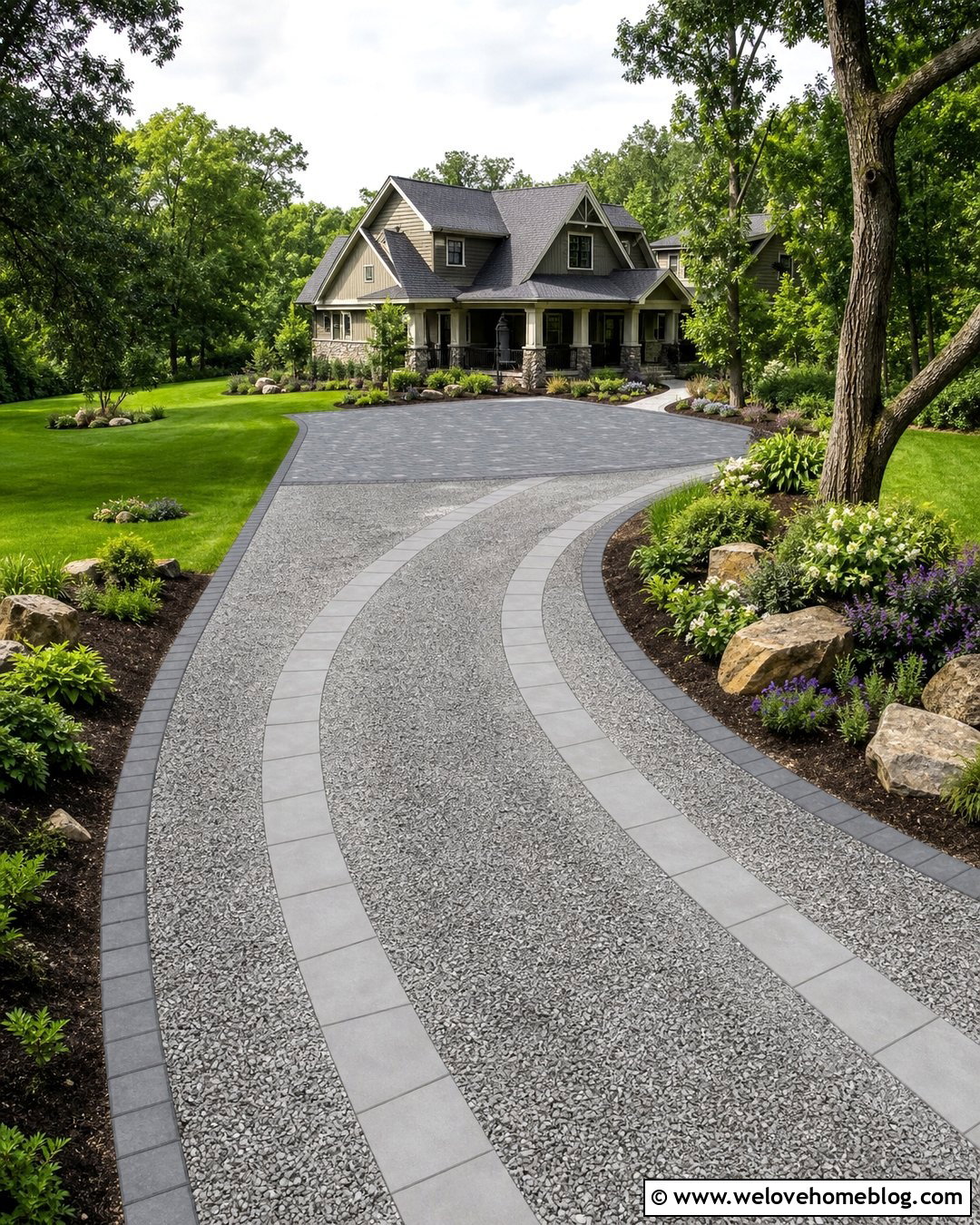
A mixed-material driveway can balance cost, drainage, and visual structure. Use compacted gray crushed gravel for the main curved approach, then install concrete paver wheel tracks and a full paver parking court near the garage. A dark paver ribbon should outline the gravel and create a clean threshold at the street. This layout places the more stable material where vehicles turn, stop, and park while keeping the longer driveway visually soft. It suits a large craftsman, country, or transitional home surrounded by lawn and mature trees. Both surfaces need compatible base preparation and carefully planned elevations. The transition must remain smooth enough for comfortable driving. Repeating the pavers in the walkway and entrance steps will make the combination look intentional.
Conclusion:
The right driveway should support your vehicles, complement your home, and remain manageable through changing seasons. These 30 driveway materials ideas show how concrete, asphalt, gravel, brick, pavers, natural stone, recycled aggregate, and permeable systems can create very different curb-appeal results. Before choosing, consider the driveway’s slope, soil, climate, drainage, traffic, snow-removal needs, and connection to the garage. Look beyond the surface price and ask about excavation, base construction, edging, sealing, repairs, and routine maintenance. Most importantly, treat the driveway, borders, walkway, planting beds, and entrance as one complete design. A well-planned combination will usually look more polished and perform better than a material selected in isolation.

Related posts:




Leave a Reply