
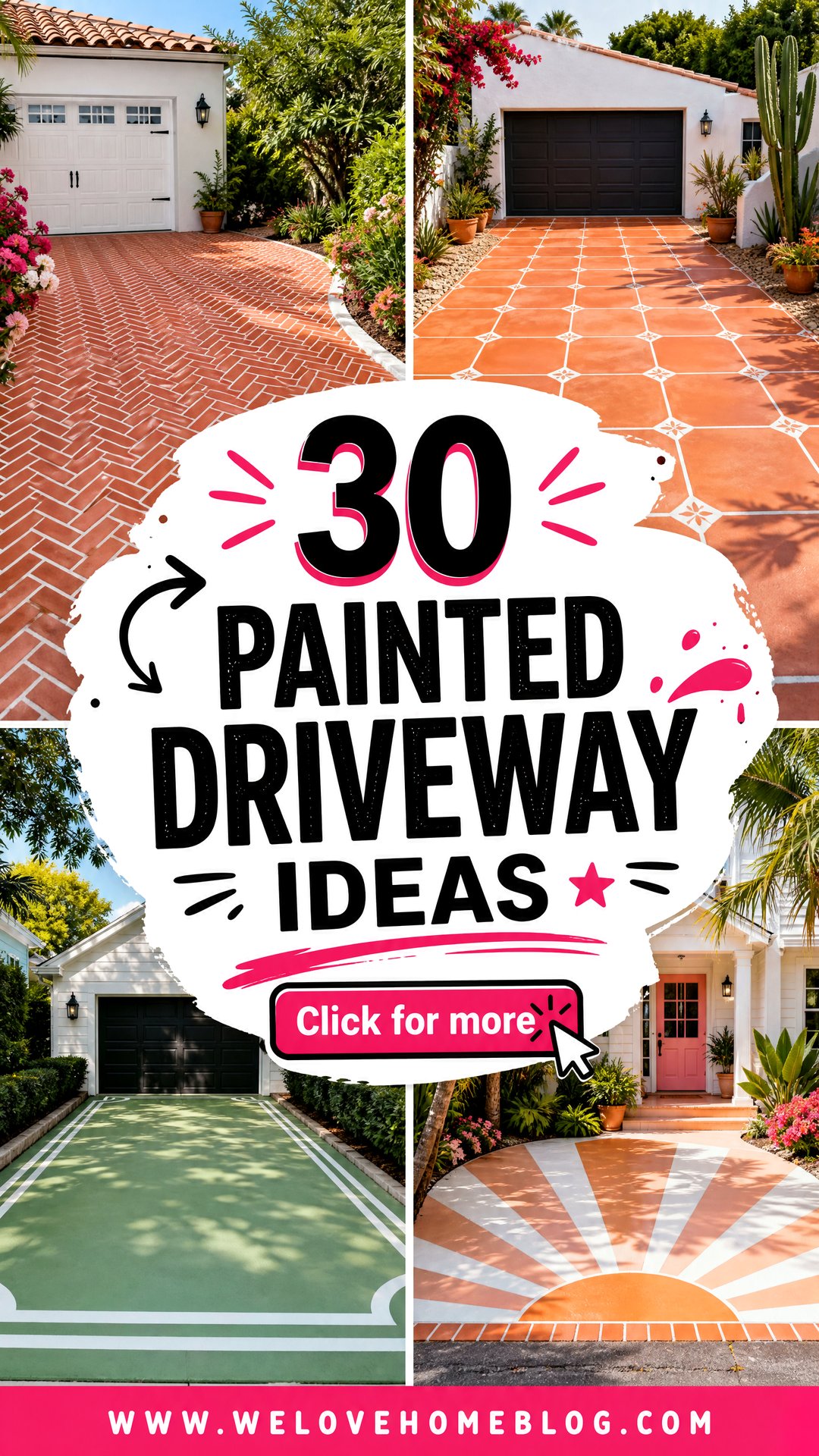
A fresh coat of color can turn plain concrete into a memorable part of your home’s curb appeal. The best painted driveway ideas go beyond covering the surface with one flat shade. They coordinate the driveway’s pattern, border, layout, landscaping, and house exterior as one complete design. Earth tones can blend naturally with traditional homes, while crisp geometric patterns suit modern architecture. Contrasting borders also help define the driveway and create a more finished appearance. () Before choosing a look, consider sunlight, visible tire marks, existing concrete condition, and any neighborhood restrictions. Always select an exterior coating intended for concrete and vehicle traffic. From subtle neutrals to colorful stencils, the following sections explore 30 Painted Driveway Ideas.
1. Charcoal Gray Painted Driveway
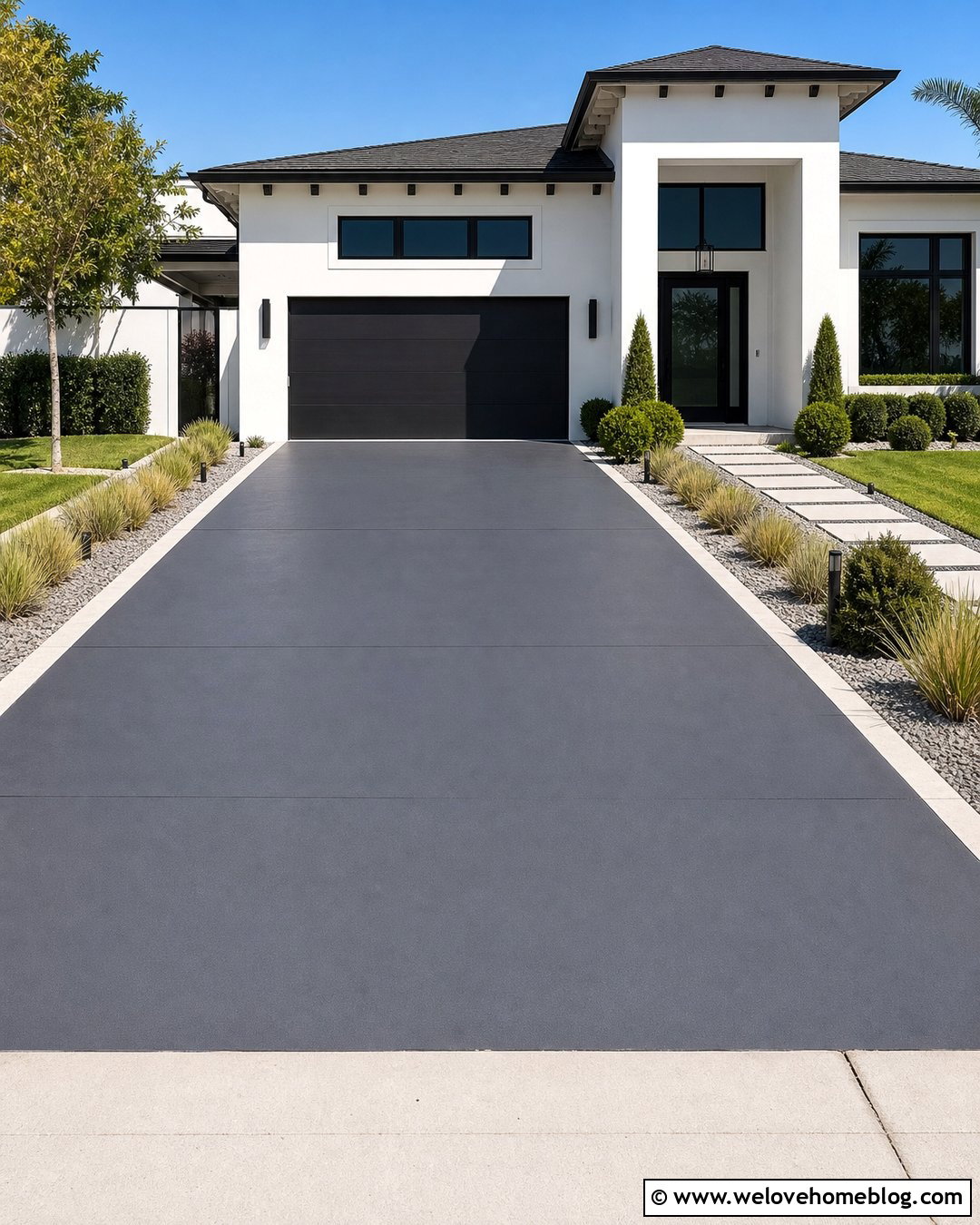
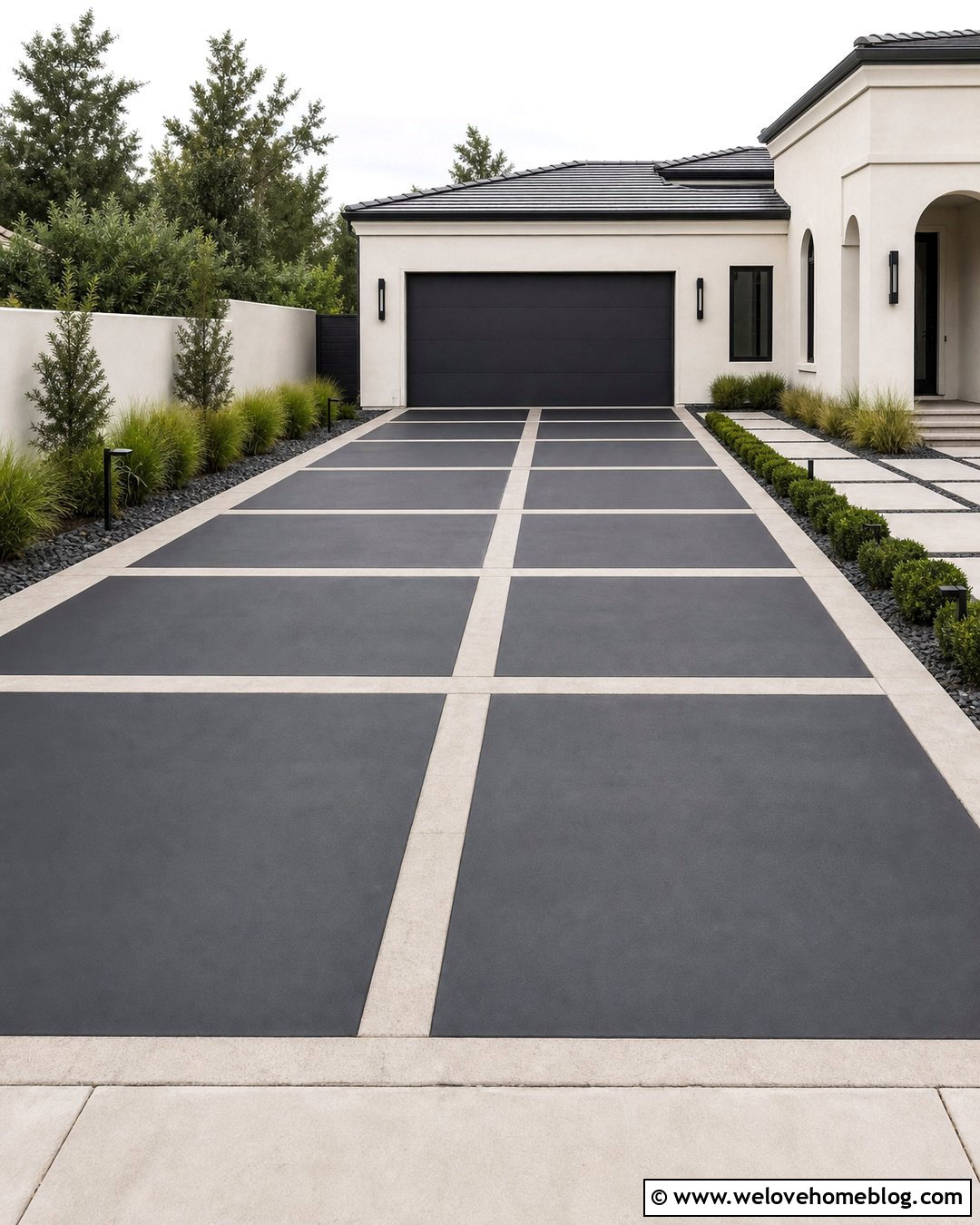
Charcoal gray gives a basic concrete driveway a clean, contemporary appearance without looking overly decorative. Use it across a straight two-car driveway leading to a modern home with white siding, black windows, or mixed wood details. A narrow white or light-gray painted border will sharpen the edges and separate the dark surface from the lawn. Add rectangular planting beds with ornamental grasses, clipped shrubs, and pale gravel for contrast. Because darker colors can make dust and light debris more visible, a softly mottled finish may be more forgiving than a perfectly solid coating. Continue the charcoal color across the driveway apron for a seamless street view, while keeping the adjoining walkway lighter to clearly distinguish pedestrian access.
2. Black And White Checkerboard Painted Driveway
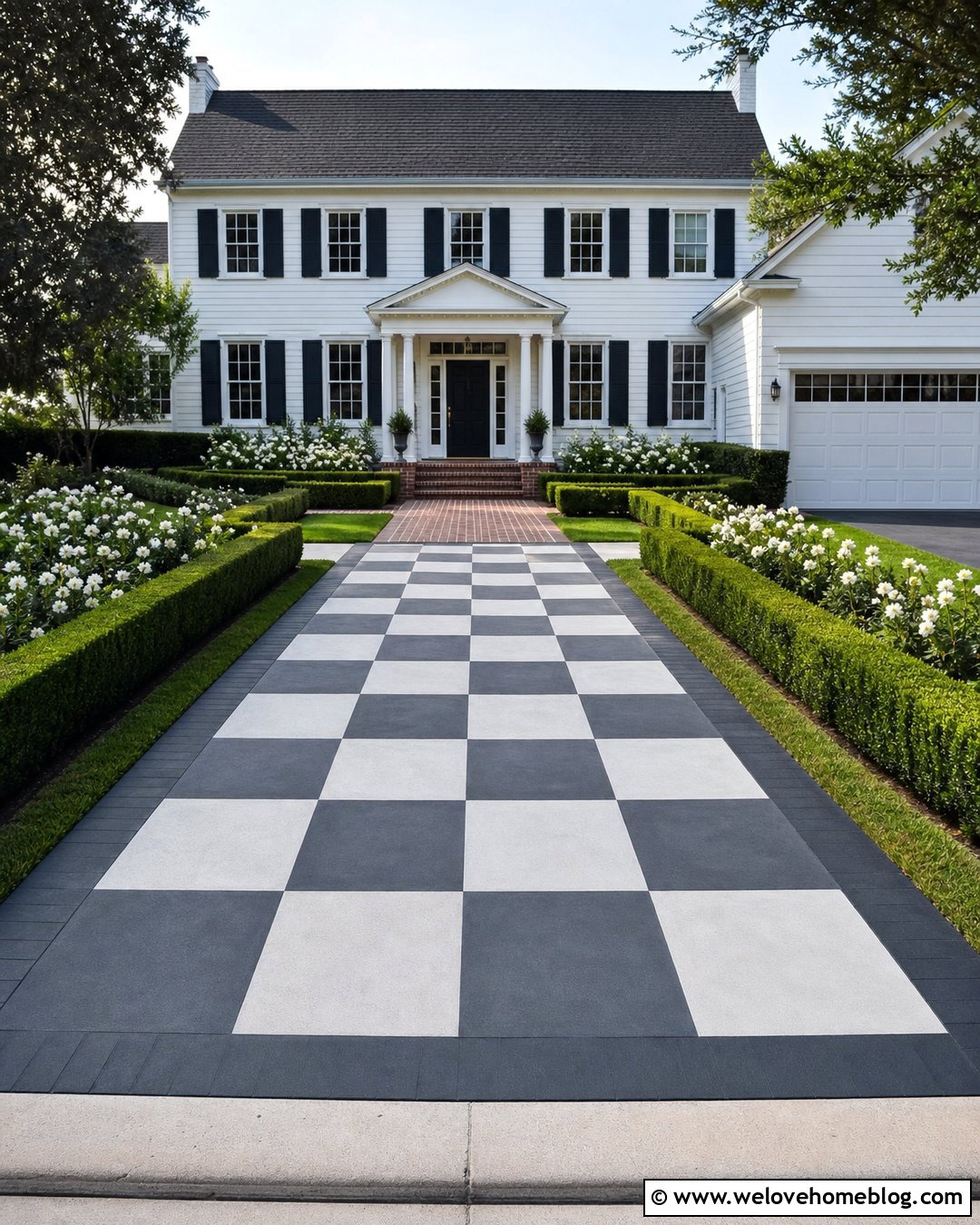
A black and white checkerboard pattern creates a bold driveway that works especially well with simple home exteriors. Use large squares rather than a small, busy grid so the driveway remains visually balanced from the curb. Soft white and charcoal-black paint will usually feel more residential than extremely bright white and deep jet black. Frame the pattern with a solid charcoal border to prevent cut-off squares from making the edges look unfinished. A straight driveway, symmetrical lawn, and neatly clipped boxwood beds reinforce the orderly layout. Near the garage, align the grid carefully with the doors and expansion joints. This complete look suits colonial, cottage, and updated traditional homes that can support a playful but structured entrance.
3. Faux Brick Herringbone Painted Driveway
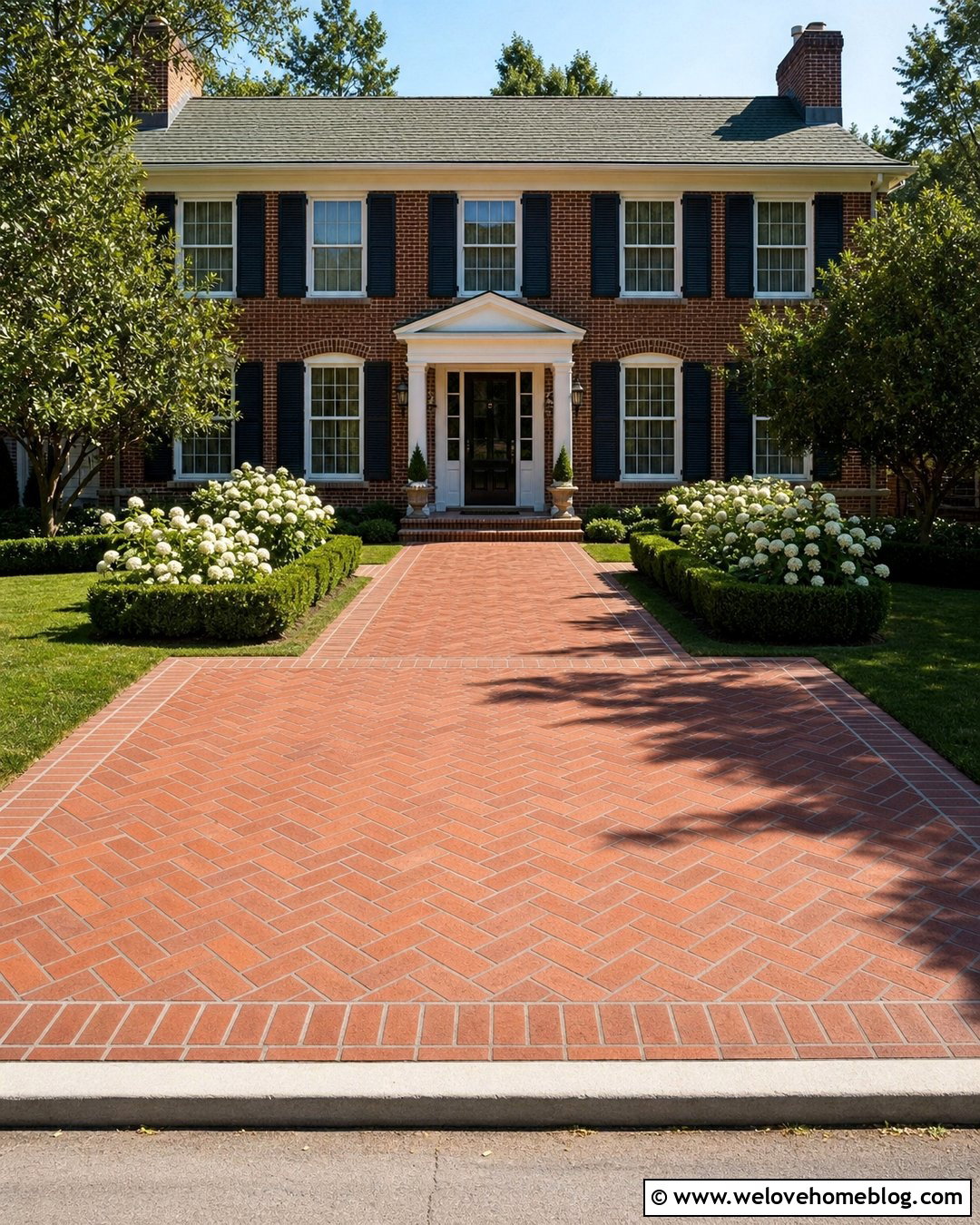
Bring the warmth of brick to an existing concrete surface with a painted herringbone pattern. Start with a muted mortar-gray base, then stencil brick shapes in several related shades of red, brown, and soft terra-cotta. Subtle color variation will make the finish appear more dimensional from the street. Surround the herringbone field with a painted soldier-course border that runs parallel to the driveway edges. This design works beautifully on a straight driveway approaching a colonial or Georgian-style house. Frame it with green lawn, low hedges, and white flowering shrubs to balance the warm colors. At the sidewalk, create a clearly defined rectangular apron so the faux brick pattern has an intentional beginning instead of ending abruptly at the curb.
4. Tan Flagstone Painted Driveway
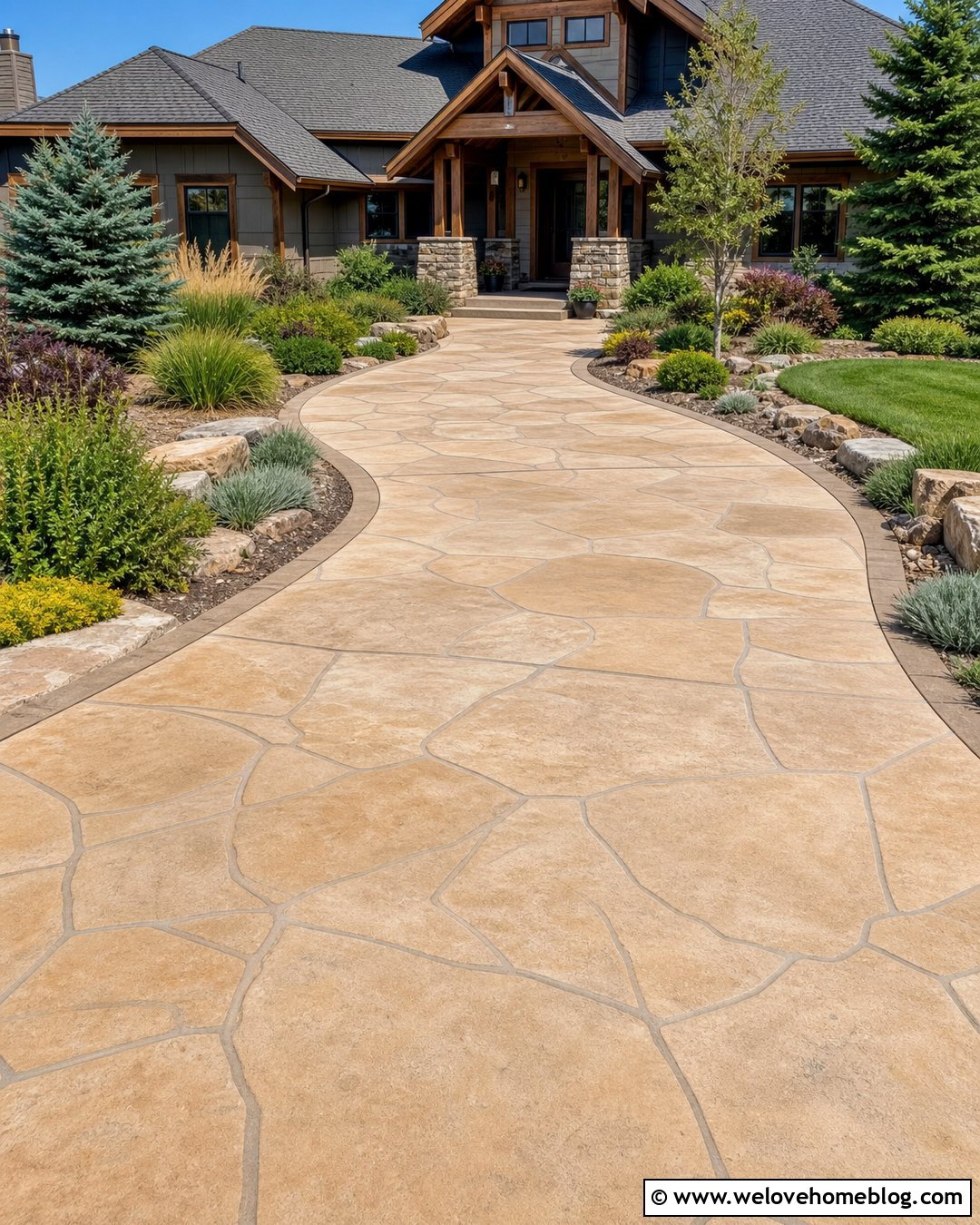
A painted flagstone pattern can give a wide concrete driveway a softer, landscape-focused appearance. Choose warm tan, beige, muted brown, and pale sandstone colors rather than making every painted stone identical. Irregular charcoal or taupe joint lines will establish the pattern, while a solid tan border keeps the edges tidy. This treatment is especially effective on a gently curved driveway leading to a craftsman or rustic ranch home. Use natural stone edging, layered evergreen shrubs, and drought-tolerant grasses to connect the painted surface with the yard. Keep the faux stones relatively large so the driveway does not look cluttered. A matching flagstone-painted walkway can branch toward the front door, creating a coordinated route through the overall entrance design.
5. Terracotta Tile Painted Driveway
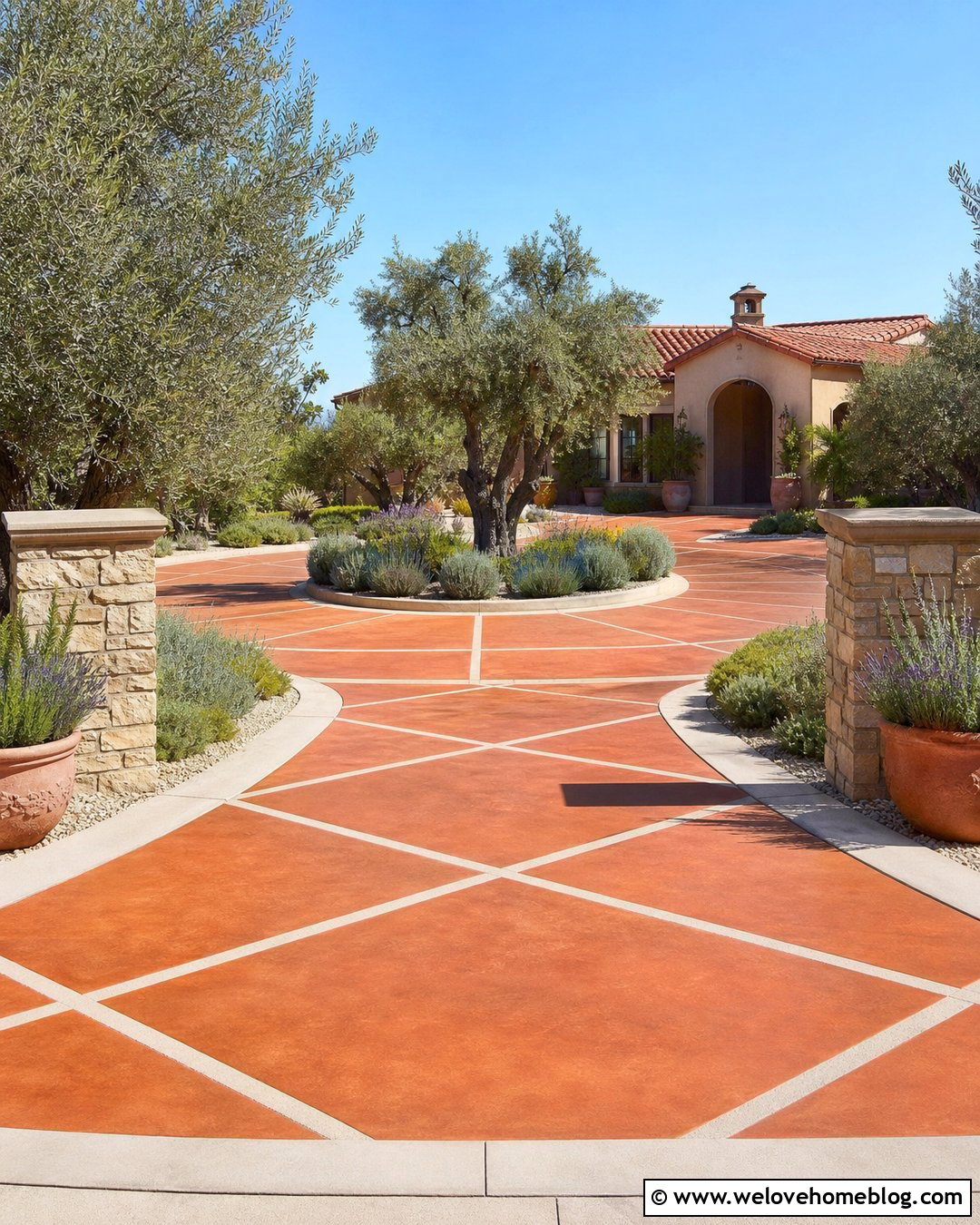
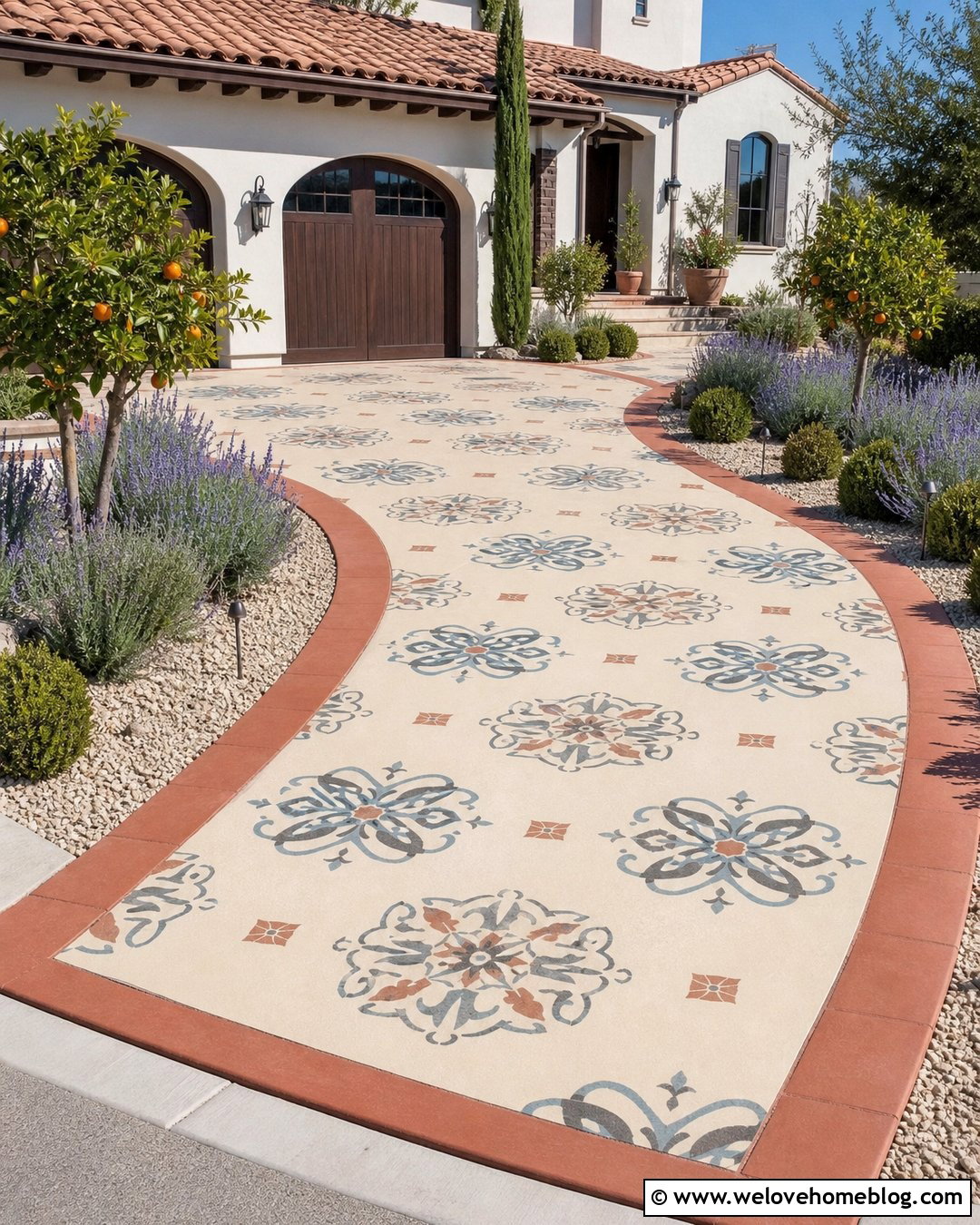
Warm terra-cotta color creates a welcoming painted driveway for a Spanish, Mediterranean, or stucco home. Instead of applying one uninterrupted shade, divide the surface into oversized square tiles using narrow cream-colored lines. Add occasional darker terra-cotta tiles to create gentle variation while maintaining a unified palette. A cream painted border can echo pale stucco walls, stone trim, or an arched garage entrance. This complete look is particularly attractive on a circular or horseshoe driveway surrounded by olive trees, rosemary, ornamental grasses, and gravel planting beds. Keep the pattern symmetrical around the central landscape island. Dark bronze lighting, clay planters, and natural stone pillars can strengthen the Mediterranean character without competing with the driveway’s painted tile design.
6. Sage Green Painted Driveway
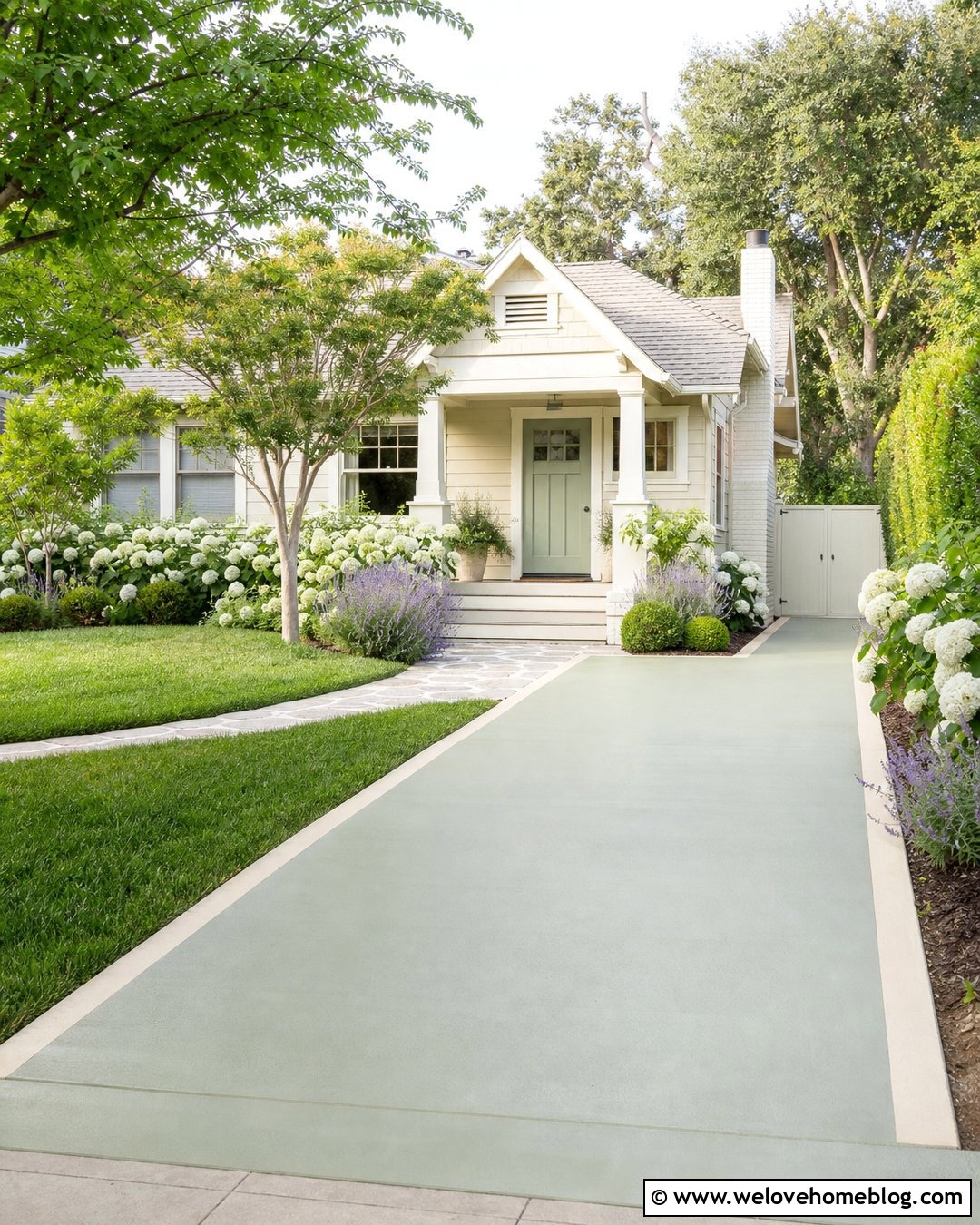
Would a softer color better complement your home and garden? Muted sage green provides an understated alternative to standard gray while blending comfortably with natural landscaping. Apply it to a straight painted concrete driveway beside a cottage, craftsman, or pale brick home. A warm cream border will keep the green surface from disappearing into the lawn. Frame both sides with white hydrangeas, lavender, rounded shrubs, and a narrow stone walkway. The green should have gray undertones rather than appearing bright or artificial. Add a subtle crossband near the garage and another at the sidewalk to organize the long surface. Repeating sage on the front door, planters, or shutters will make the driveway feel connected to the house rather than treated as a separate feature.
7. Navy Blue Painted Driveway
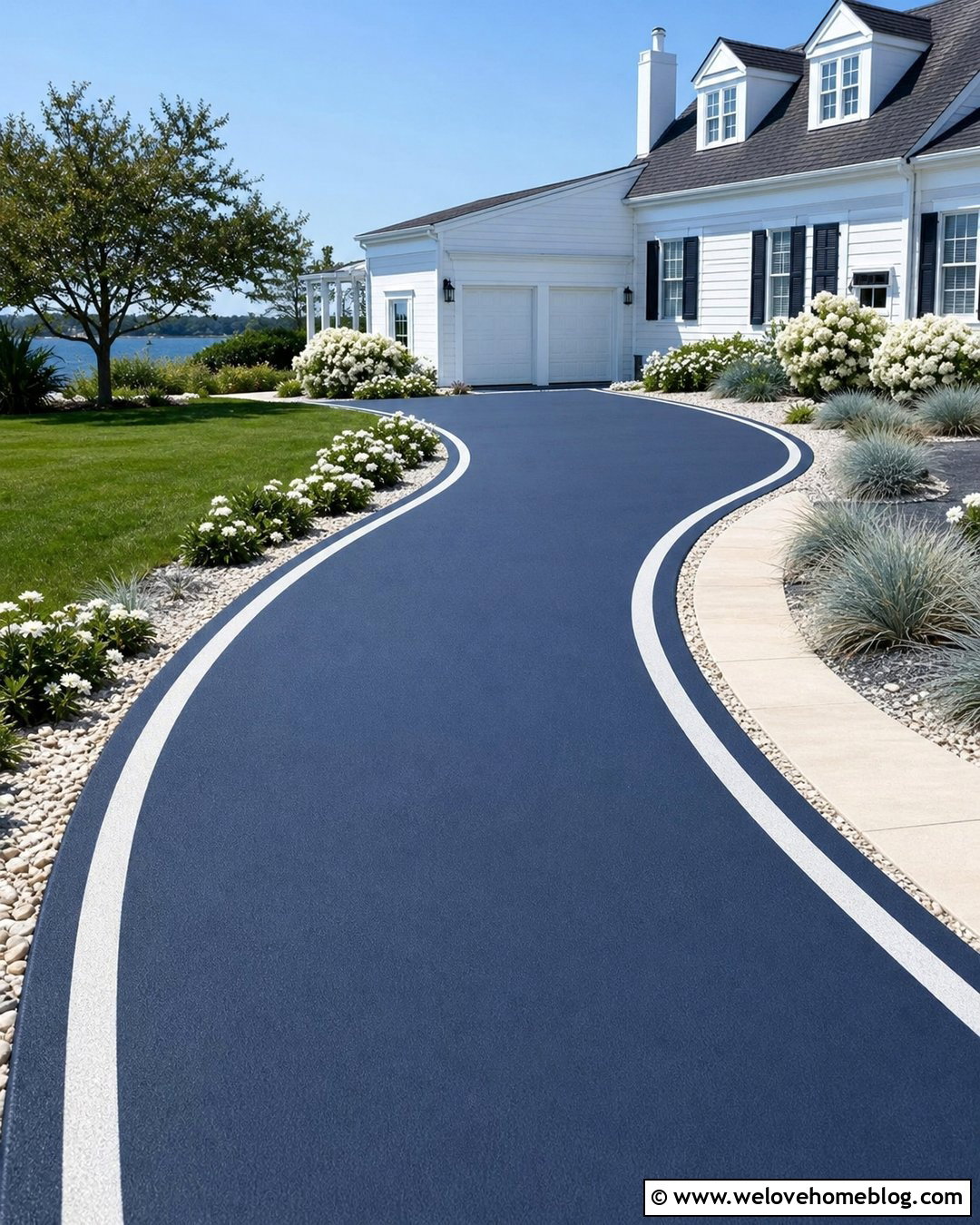
Deep navy can create a distinctive driveway without relying on a complicated pattern. It looks particularly striking beside a white coastal house, light-gray Cape Cod, or contemporary home with pale wood accents. Use a slightly softened blue rather than a glossy primary shade, then outline the driveway with two narrow white stripes. These lines emphasize a curved layout and create a crisp transition to green lawn or crushed-shell planting beds. Add blue-green grasses, white flowering shrubs, and a light concrete walkway to complete the coastal palette. Because navy is visually strong, keep gates, planters, and garage doors simple. A broad white band across the driveway apron can mark the entrance and repeat the clean trim around the house’s windows and roofline.
8. Beige Painted Driveway With Brown Bands
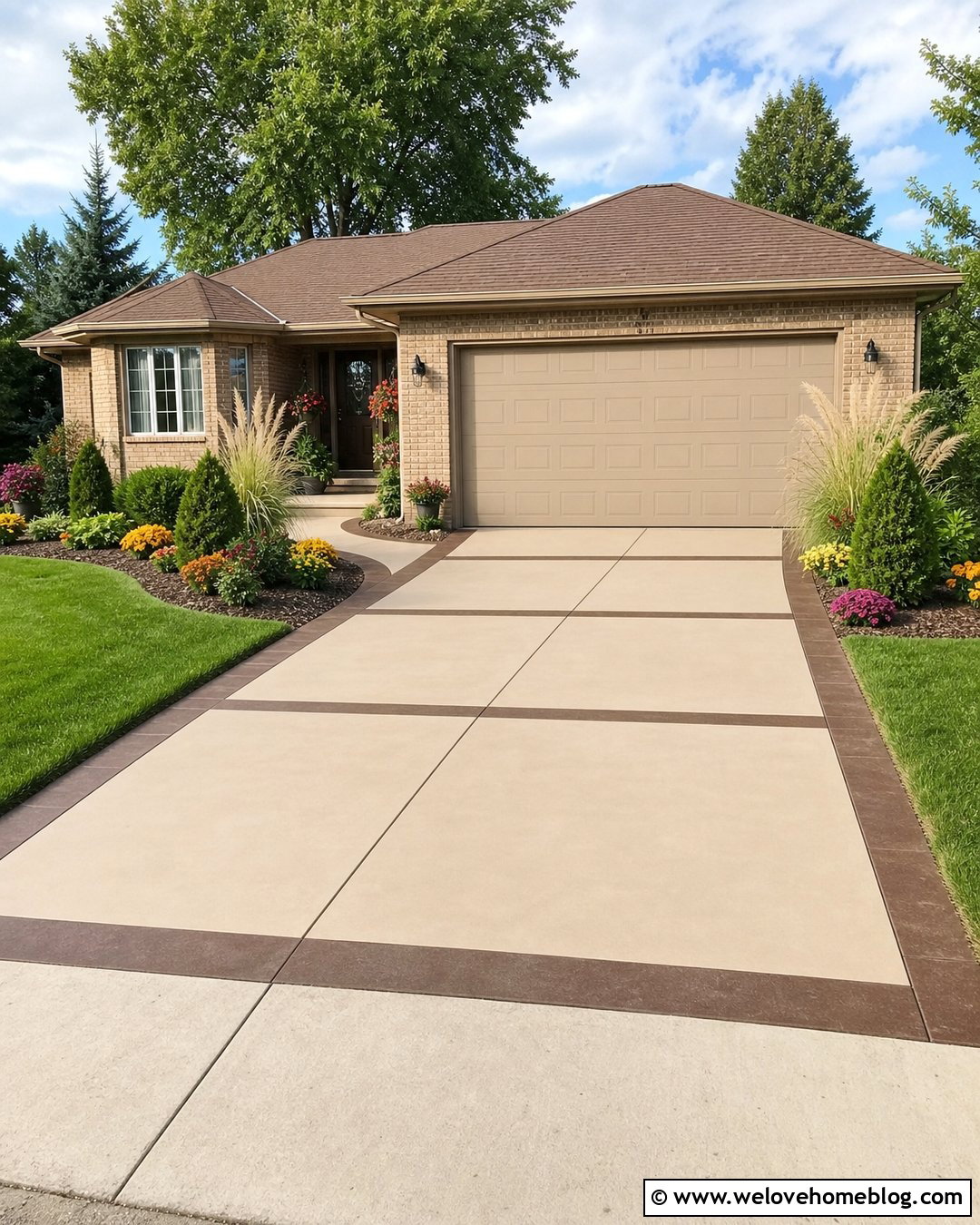
A warm beige surface with brown crossbands offers a subtle decorative option for traditional suburban homes. Paint the main concrete field in sandy beige, then position medium-brown bands over existing control joints. This transforms practical divisions in the slab into an intentional part of the design. A matching brown perimeter border will visually frame the entire driveway. Use the treatment on a wide, straight layout leading to a brick ranch or stone-front home. On each side, add curved planting beds filled with low evergreens, ornamental grasses, and seasonal flowers. A walkway in the same beige color can connect the driveway to the porch. The finished composition feels orderly and welcoming while remaining neutral enough to coordinate with future exterior paint changes.
9. Geometric Painted Driveway
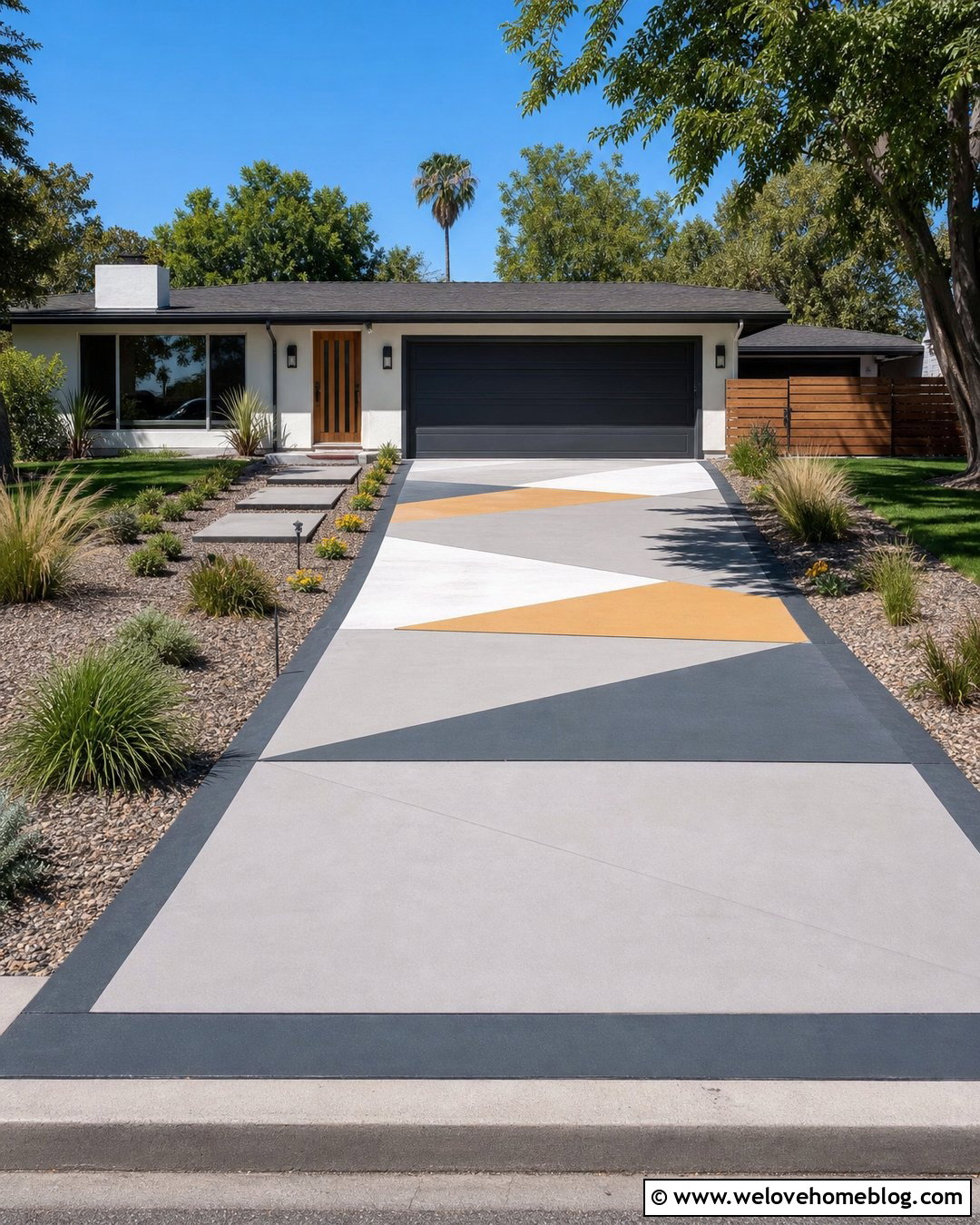
Overlapping geometric shapes can turn a plain driveway into a modern architectural feature. Use large triangles and angled blocks in charcoal, pale gray, white, and one restrained accent color. Position the pattern asymmetrically across a straight concrete driveway leading to a flat-roofed or midcentury modern home. Keep a solid charcoal border around the outer edge so the shapes have a clear frame. Low rectangular planting beds, sculptural grasses, and evenly spaced concrete stepping pads will complement the sharp lines. Avoid filling every available area with color. Leaving generous sections of soft gray gives the bolder shapes room to stand out. Align selected angles with the garage roof, front walkway, or property lines to make the abstract pattern feel purposeful.

10. Gray Diamond Painted Driveway
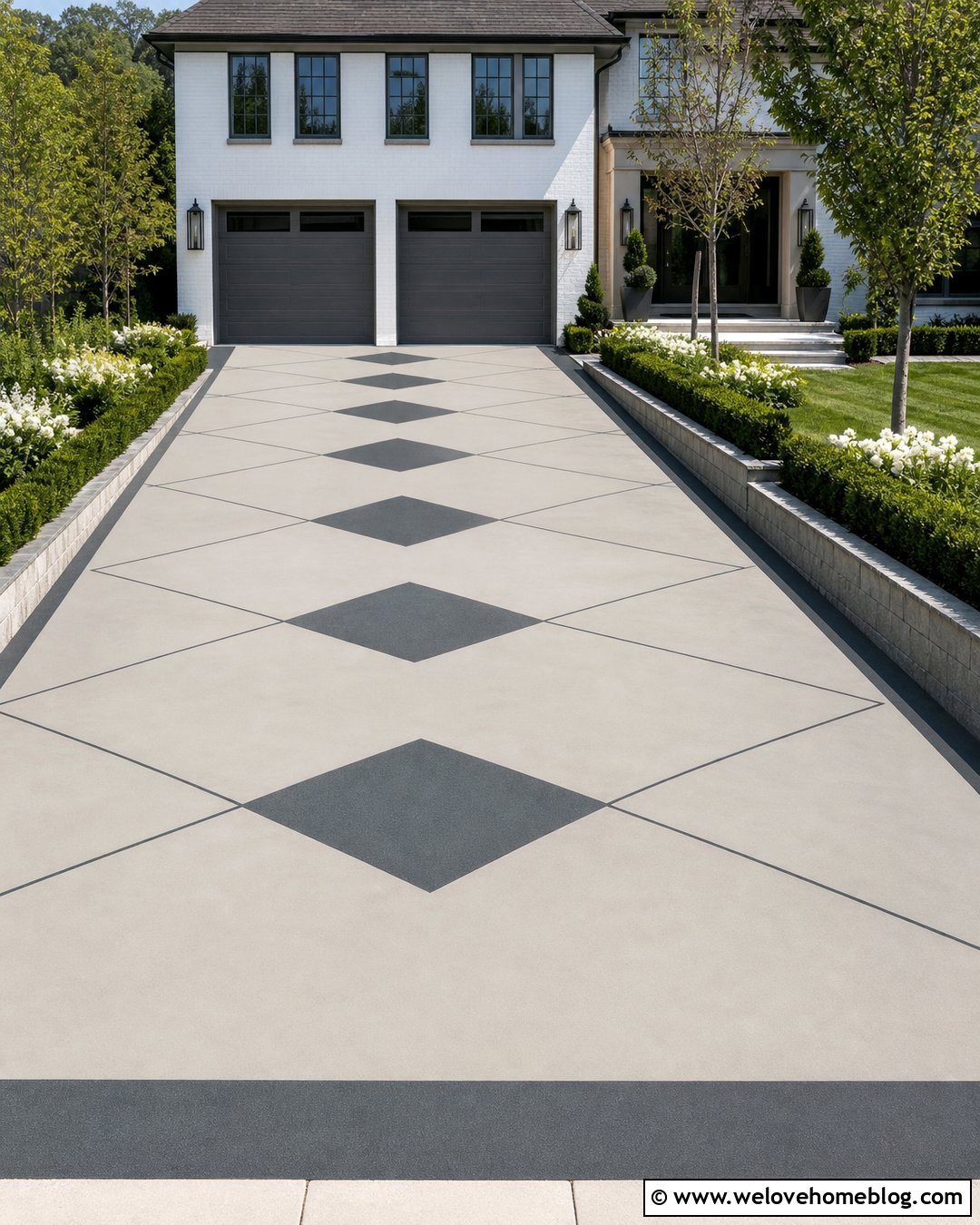
A two-tone diamond pattern introduces detail while staying within a practical neutral palette. Paint the concrete driveway light gray, then overlay large diamonds in a medium slate tone. Thin charcoal lines can define each shape and connect the design with black window frames or a dark garage door. This treatment works well on a broad driveway where the pattern can be seen clearly from the curb. Finish the edges with a solid slate border and use brick or stone curbing for added definition. Balanced planting beds containing boxwoods, dwarf trees, and white flowers will soften the grid. For the most cohesive appearance, center the diamonds on the garage doors and maintain equal pattern spacing on both sides of the driveway.
11. Faux Cobblestone Painted Driveway
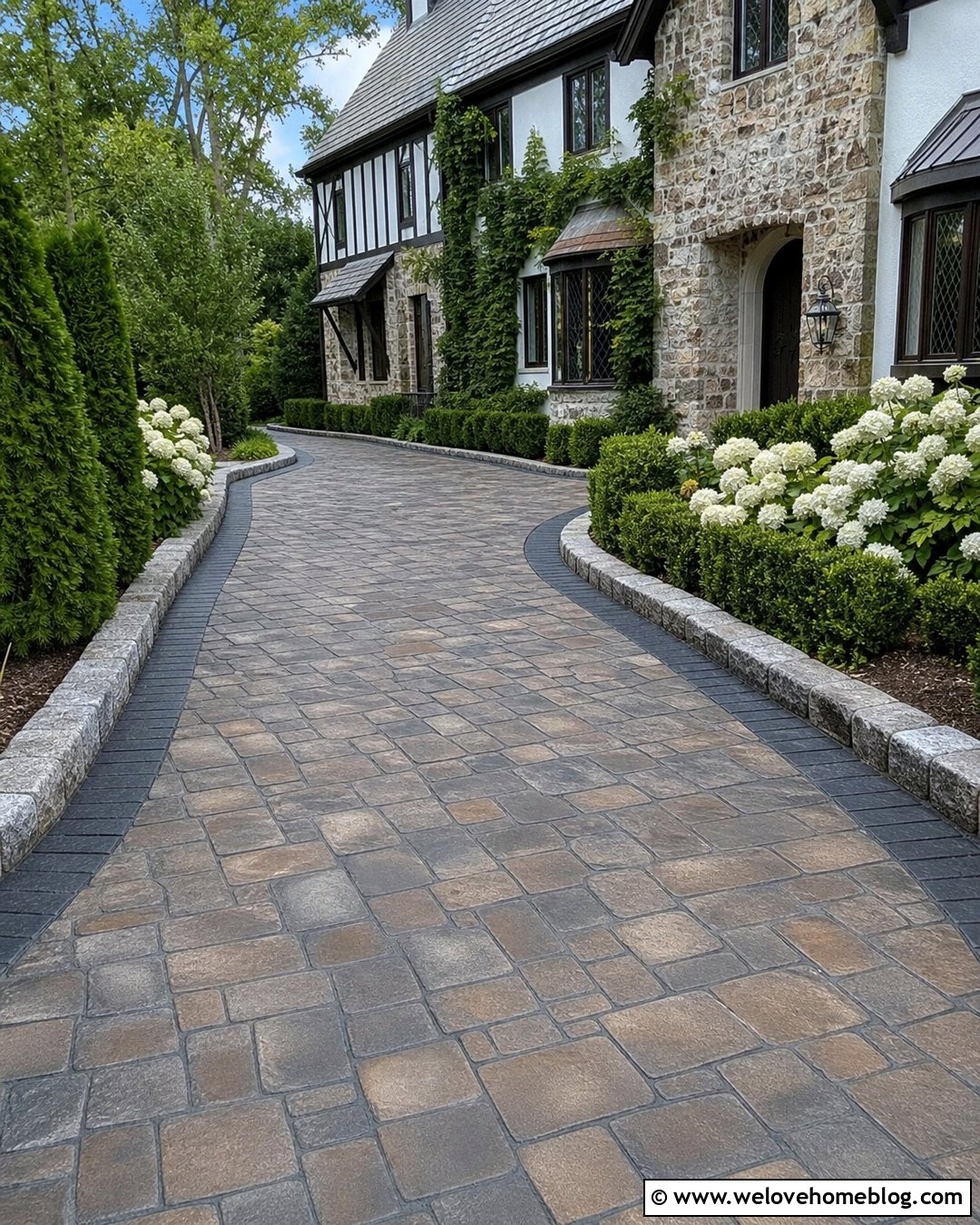
A faux cobblestone finish can create old-world character without visually overwhelming an existing concrete driveway. Use irregular rounded stencils in charcoal, brown, taupe, and muted gray over a darker mortar-colored background. Gradual tonal changes are more convincing than sharply alternating colors. This complete driveway look suits a curved approach leading to a Tudor, European cottage, or stone-front house. Define the edges with a painted charcoal soldier course and actual cobblestone curbing where practical. Plant compact evergreens, climbing greenery, and white flowering perennials along the approach. Black lantern-style lights can reinforce the traditional setting. Keep the driveway apron relatively simple so the cobblestone pattern transitions neatly to the street instead of creating a crowded curb line.
12. Whitewashed Painted Driveway
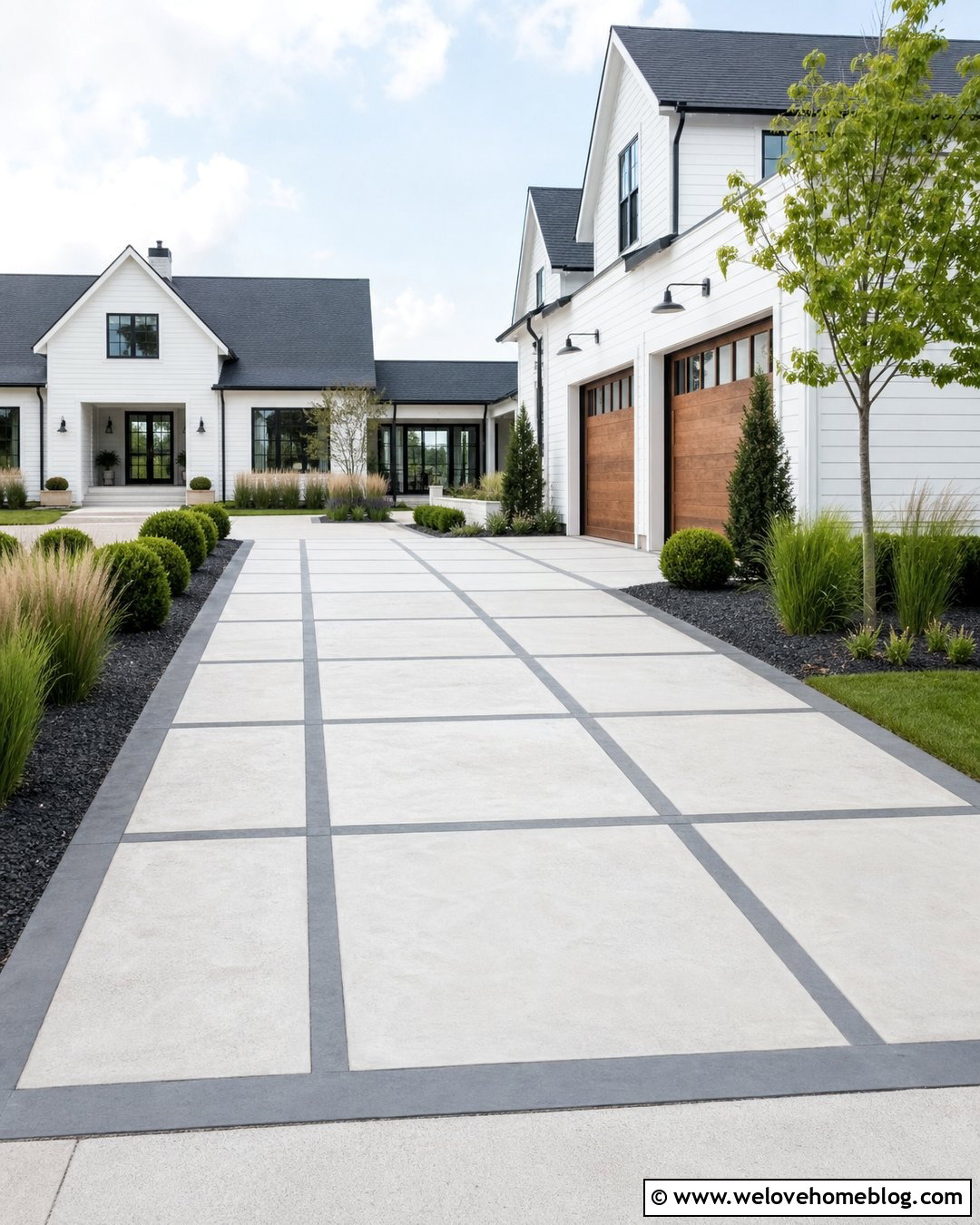
A whitewashed finish can brighten a shaded entrance while allowing some of the concrete’s natural variation to remain visible. Choose a warm off-white or pale greige rather than a stark white that may show every mark. Add thin medium-gray lines in a large rectangular grid to break up the surface. This look complements a modern farmhouse with white siding, natural wood garage doors, and black metal accents. Frame the straight driveway with dark gravel beds, clipped shrubs, and airy ornamental grasses. A charcoal painted border will provide contrast against the pale center field. Continue the off-white finish onto the front walkway, but use narrower grid sections there. The result feels light and open while maintaining enough pattern to define the driveway’s generous scale.
13. Blue Gray Curved Painted Driveway
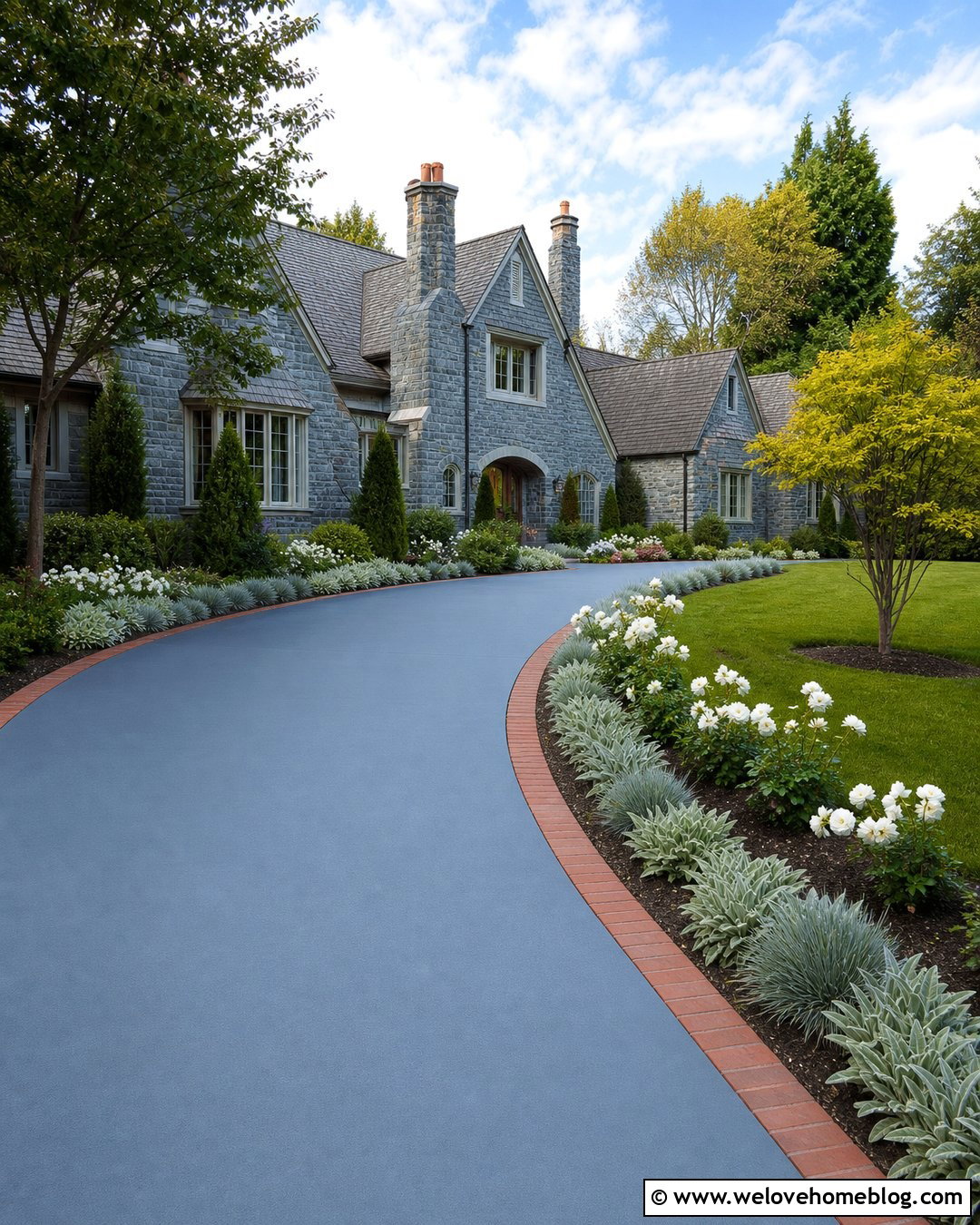
Blue-gray paint gives a curved concrete driveway a cool, refined character that coordinates naturally with stone and silver-green landscaping. Use a medium blue-gray for the main surface, then add a narrow brick-red painted border to warm the overall palette. The border can follow the curve from the street to the garage, visually guiding the eye toward the house. This combination works with gray siding, weathered brick, or a traditional stone facade. Plant lamb’s ear, blue fescue, white roses, and compact evergreens in beds outside the curve. A small ornamental tree can anchor the wider inside corner. Keep the center field solid rather than patterned, allowing the sweeping shape and contrasting red edge to become the primary design features.
14. Compass Medallion Painted Driveway
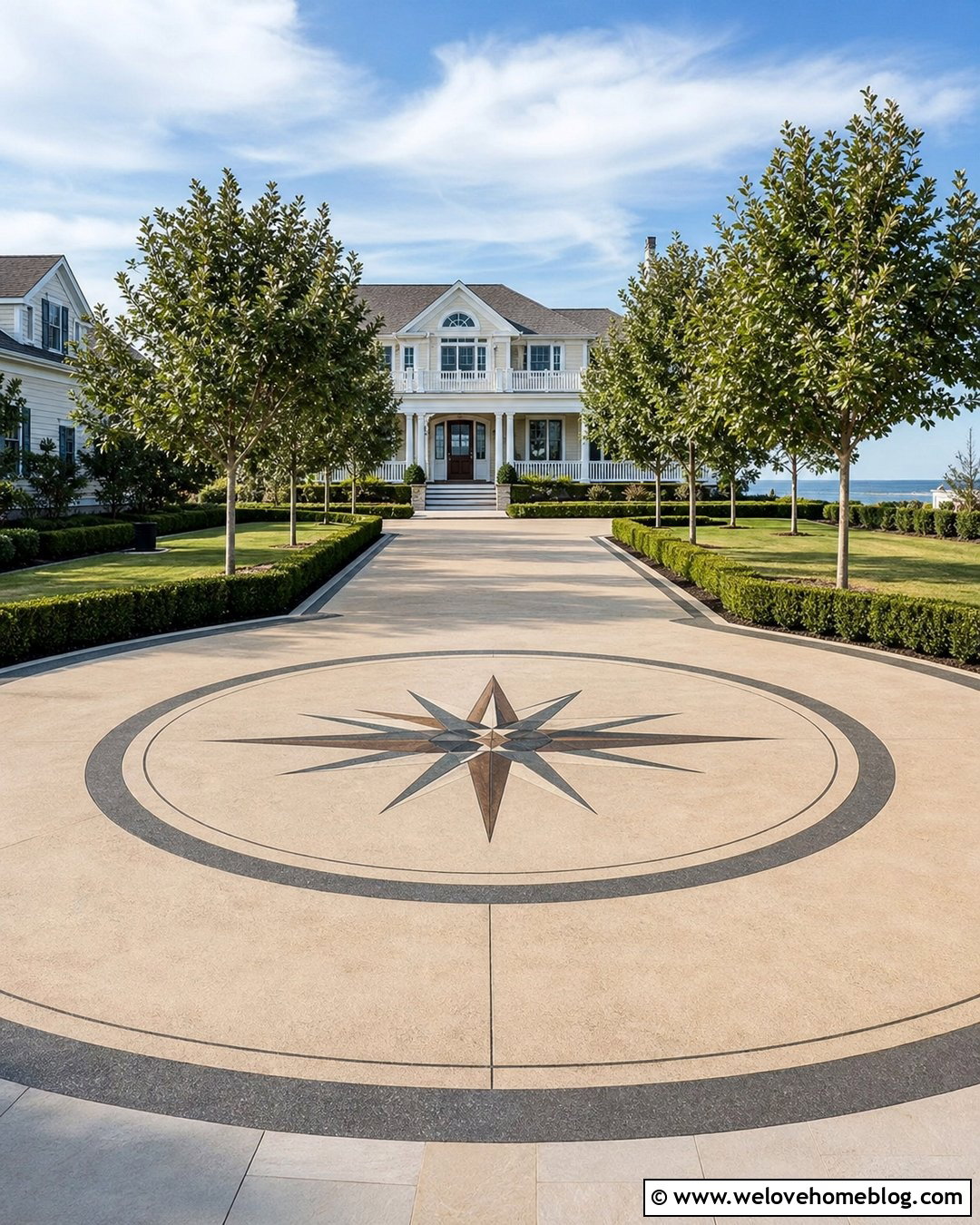
A compass medallion creates a clear focal point on a wide driveway without requiring a pattern across the entire surface. Paint the concrete warm sand or light taupe, then position a large compass near the garage court, circular turnaround, or intersection with the front walkway. Use charcoal, cream, and muted brown for the points so the design remains sophisticated. A double painted border can repeat the same colors around the driveway perimeter. This approach suits coastal, colonial, and traditional houses with symmetrical architecture. Surround the driveway with lawn, clipped hedges, and evenly spaced trees to reinforce the balanced composition. Keep the medallion large enough to read from the curb, but leave open space around it so it does not compete with the house.

15. Black Painted Driveway With Cream Border
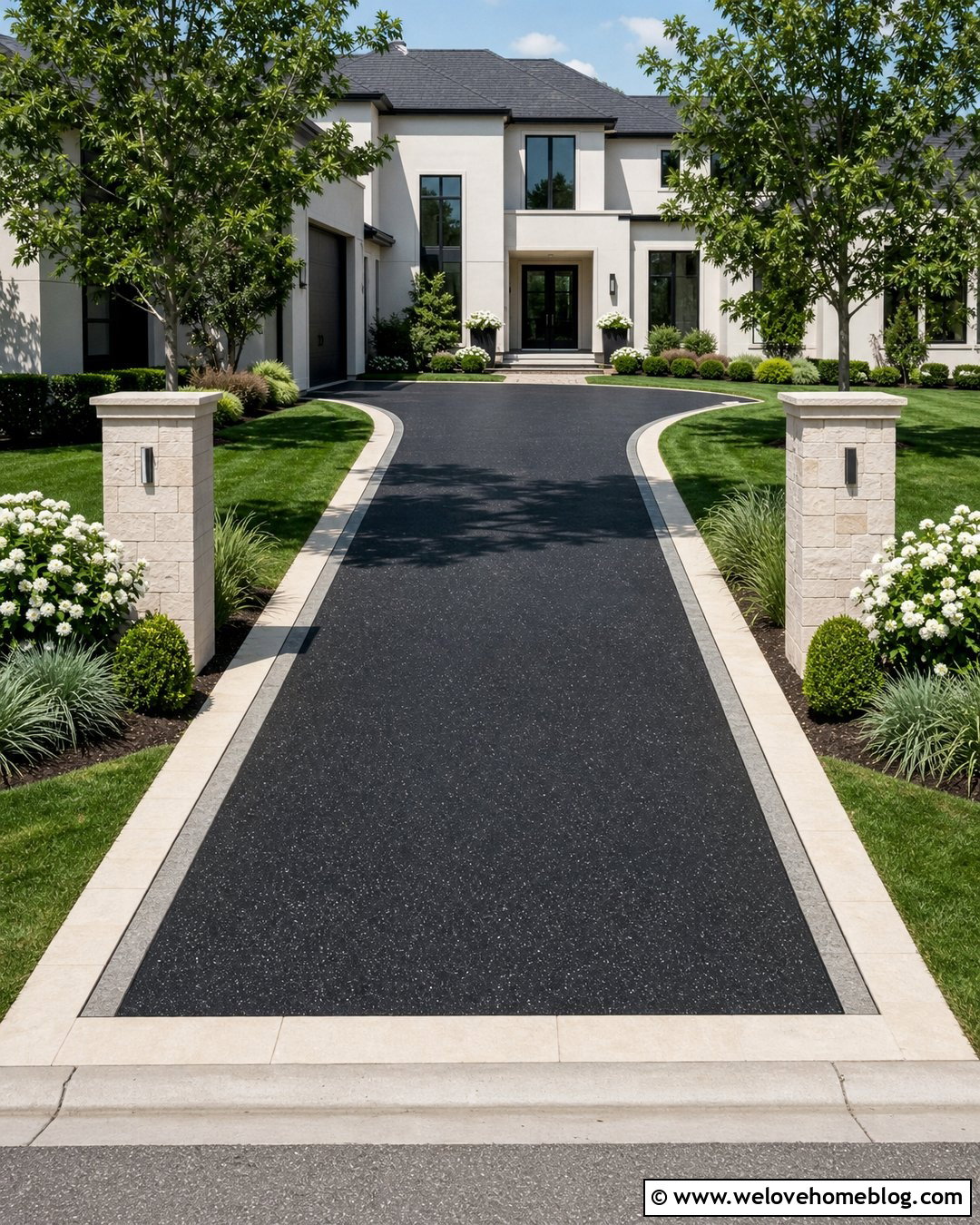
A black painted driveway can create dramatic contrast against a pale house and bright landscaping. To keep the surface from feeling visually heavy, surround it with a broad cream border and a second narrow gray line. This layered edge makes the driveway appear structured and connects it to cream stucco, limestone, or light siding. Use the design on a straight or gently flared driveway leading to a contemporary home. Plant white flowers, silvery grasses, and rounded green shrubs along both sides. Pale stone pillars at the entrance can repeat the border color and frame the dark approach. Consider a softly textured or speckled black finish instead of a perfectly flat tone, especially where dust, pollen, or surface imperfections are common.
16. Taupe Circular Painted Driveway
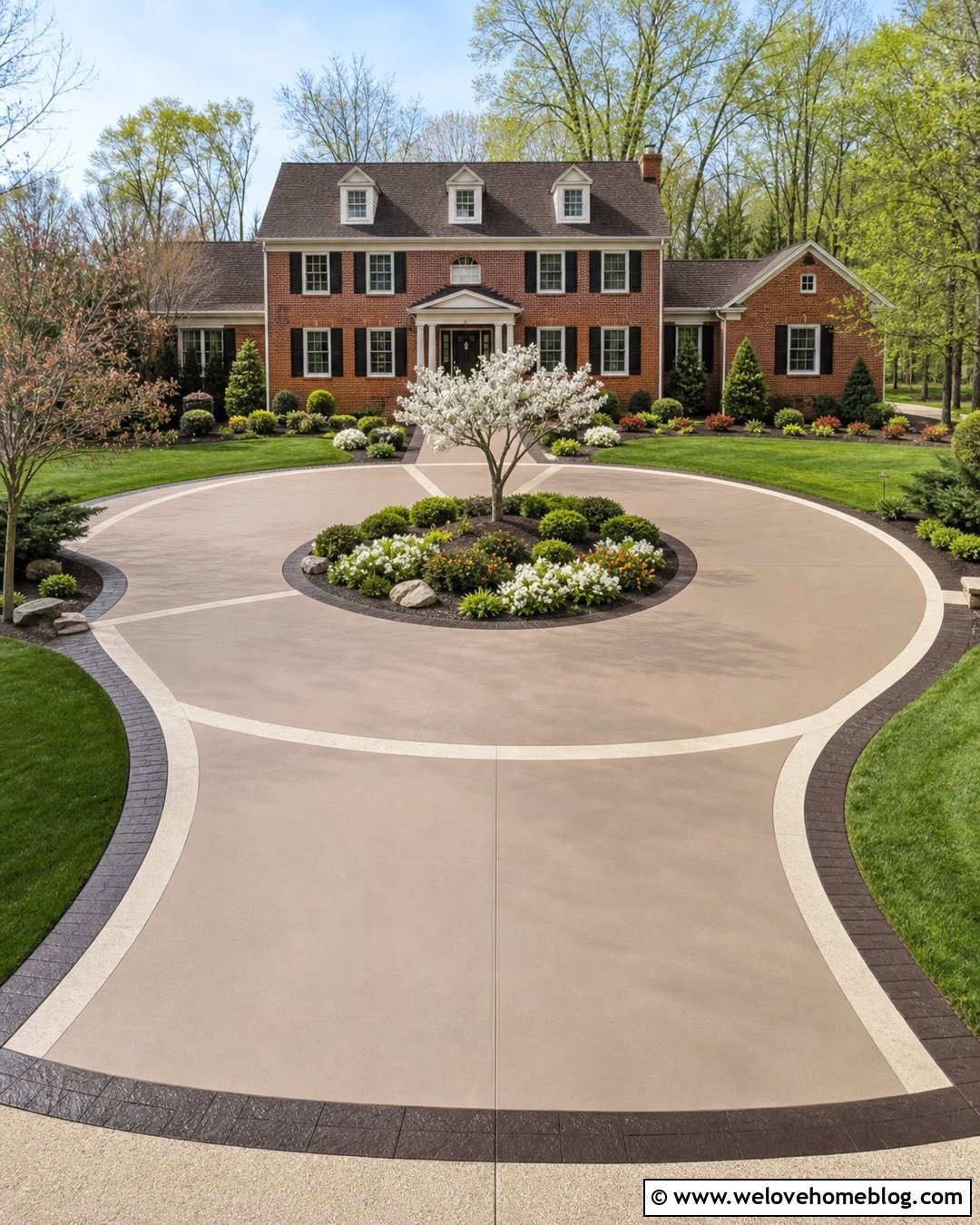
A circular driveway already has a strong architectural shape, so a restrained painted finish often works best. Cover the concrete with warm taupe and outline both the outer perimeter and central island with dark brown painted bands. Add narrow cream crossbands at the entrance and exit to clearly mark each route. In the center island, plant a small flowering tree surrounded by low evergreen shrubs and seasonal color. This layout complements a brick colonial, traditional ranch, or large craftsman home. Repeat the taupe on the walkway to the porch for a seamless connection. The neutral surface keeps attention on the circular form and landscaping, while the contrasting borders make every curve visible. Matching entry pillars can complete the formal but approachable curb view.
17. Green Painted Driveway With Grass Strips
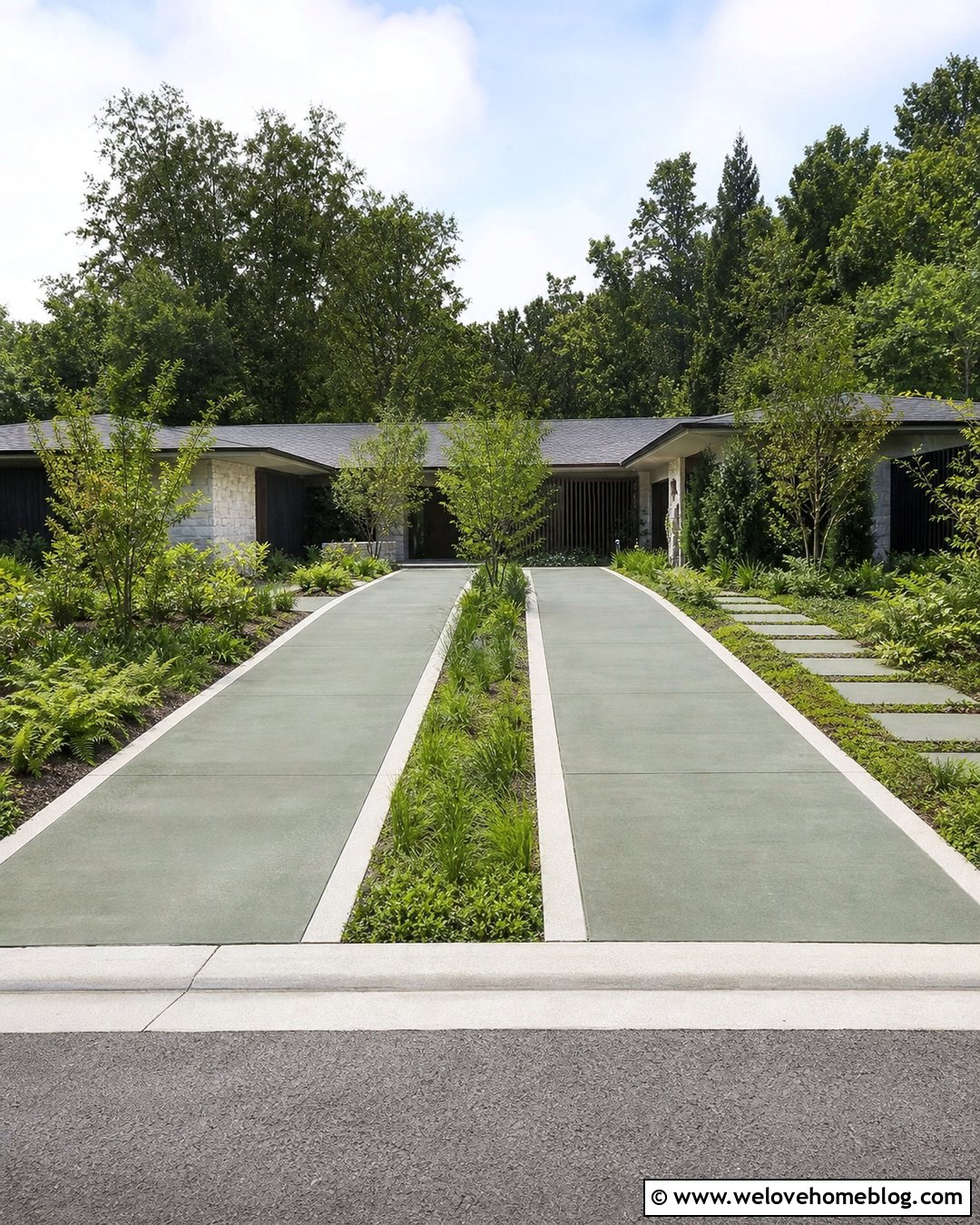
A muted green painted driveway can blend into a lush front yard, especially when paired with real grass strips. Divide a wide concrete surface into two painted driving lanes, leaving narrow planted channels or existing joints between them. Use moss green with gray undertones, then add a cream edge beside each lane. This arrangement suits a modern eco-inspired home, low ranch, or wooded suburban property. Surround the approach with ferns, native grasses, ground covers, and small shade trees. A simple stepping-stone walkway can cross the driveway near the house. The painted lanes should remain wide and visually clear, while the planted sections soften the hardscape. Repeating green and cream near the garage helps the split layout read as one complete design.
18. Rust And Charcoal Painted Driveway
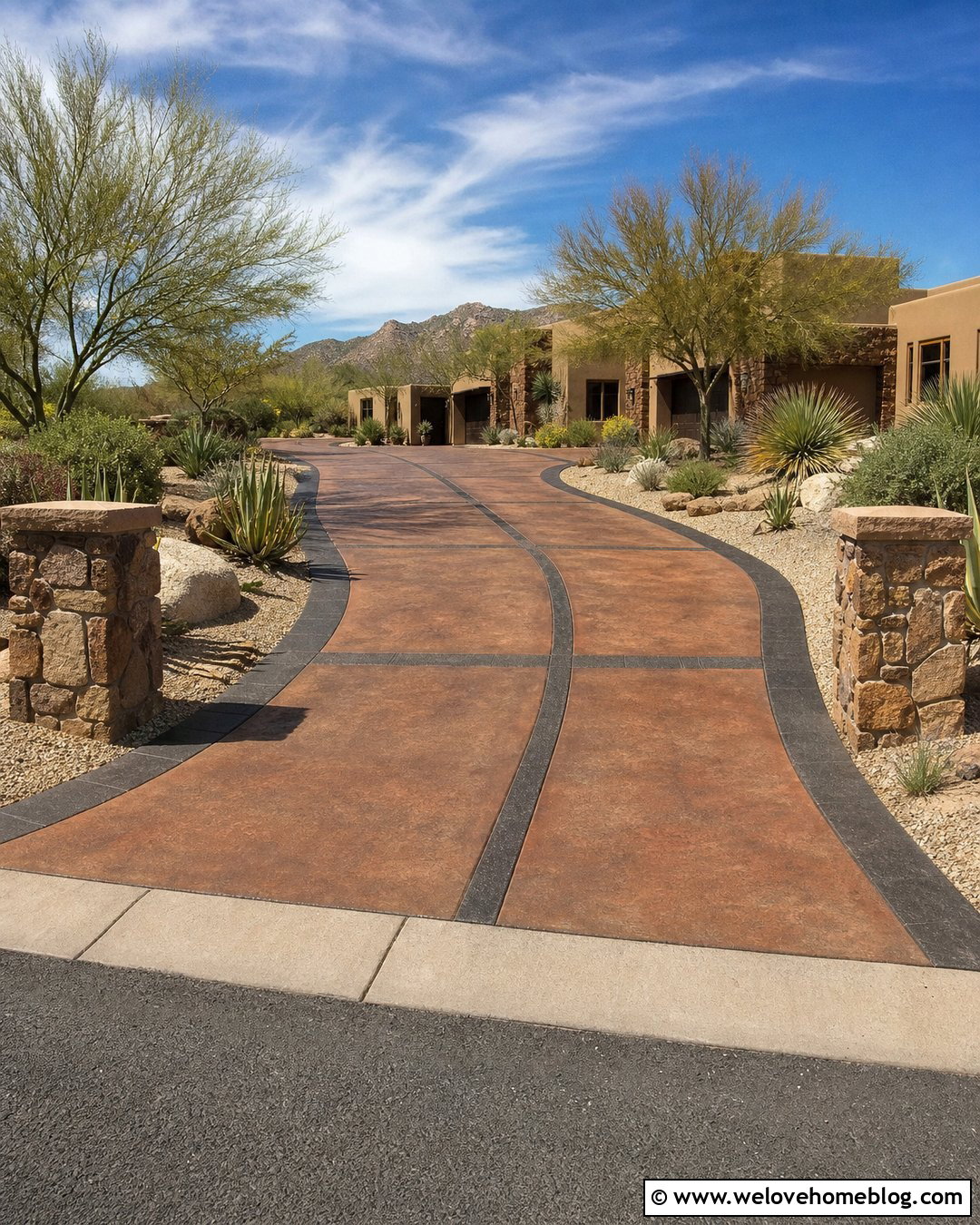
Rust and charcoal create a grounded palette that works well with desert landscaping and Southwestern architecture. Paint the main concrete surface a weathered rust tone, then introduce charcoal bands across the driveway and around its perimeter. The dark lines can follow existing slab divisions, producing a large-scale grid that feels intentional rather than decorative. Use this treatment on a straight or curved driveway leading to an adobe, stucco, or contemporary desert home. Frame it with decomposed granite, agave, yucca, ornamental grasses, and sculptural boulders. A pale sandstone walkway will provide a lighter visual break. Repeat the charcoal on metal gates or window frames, while the rust surface connects with terra-cotta walls, natural earth, and warm stone entrance pillars.
19. Pale Gray Grid Painted Driveway
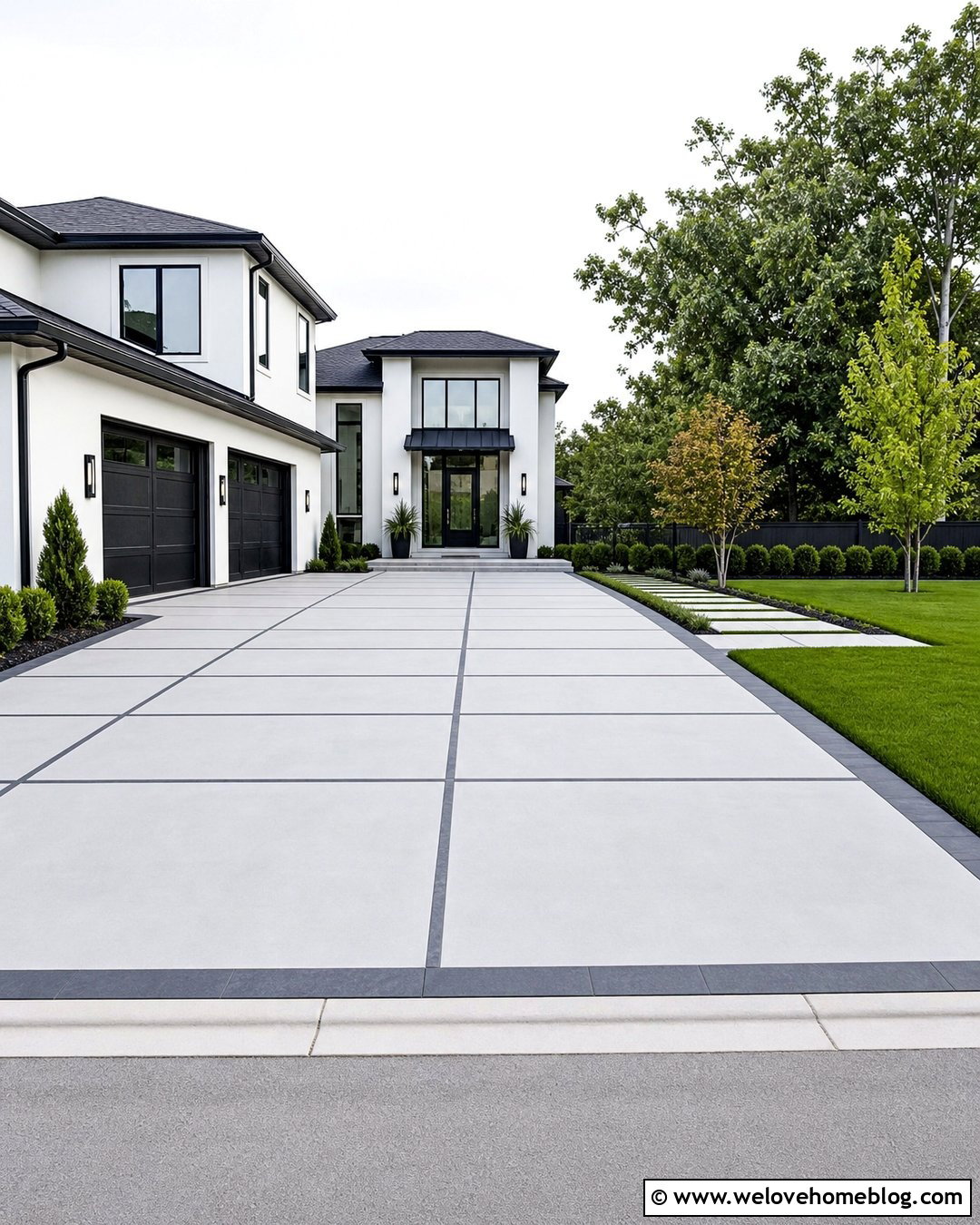
Sometimes a quiet pattern creates the strongest finished result. Paint the entire concrete driveway pale gray, then add thin charcoal lines that form large square or rectangular sections. Align the grid with expansion joints whenever possible to make the layout look integrated with the slab. A narrow charcoal perimeter border will stop the lines neatly at every edge. This understated design works with modern, transitional, and minimalist homes. Pair it with a straight driveway, large lawn panels, low hedges, and a walkway made from oversized concrete pads. Near the garage, continue the same spacing instead of shrinking the grid. The pale base keeps the approach bright, while the dark linear pattern adds enough structure to prevent the driveway from appearing plain or unfinished.
20. Mosaic Apron Painted Driveway
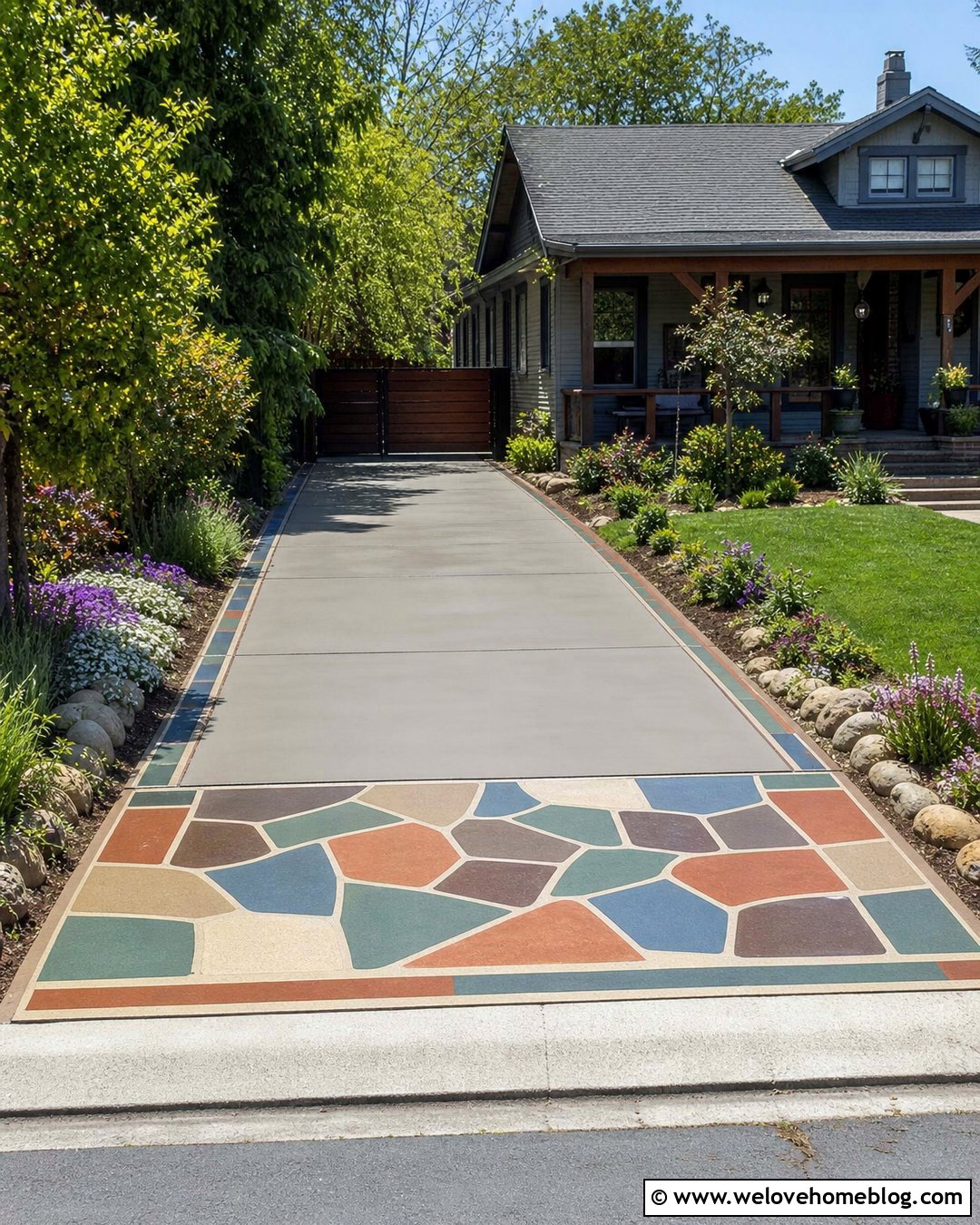
If a fully patterned driveway feels too busy, concentrate the color at the street-facing apron. Paint the main concrete surface soft beige or warm gray, then create a wide mosaic band where the driveway meets the sidewalk. Use irregular shapes in muted blue, terra-cotta, cream, sage, and brown. Repeat one or two of those colors in a narrow border running toward the house. This design suits an eclectic cottage, colorful bungalow, or Mediterranean-inspired facade. Frame the apron with low flowering plants and simple stone edging so it remains visible from the curb. Keep the upper driveway mostly solid to balance the detailed entrance. A smaller mosaic accent near the garage can repeat the theme and visually connect both ends of the approach.
21. Address Number Painted Driveway
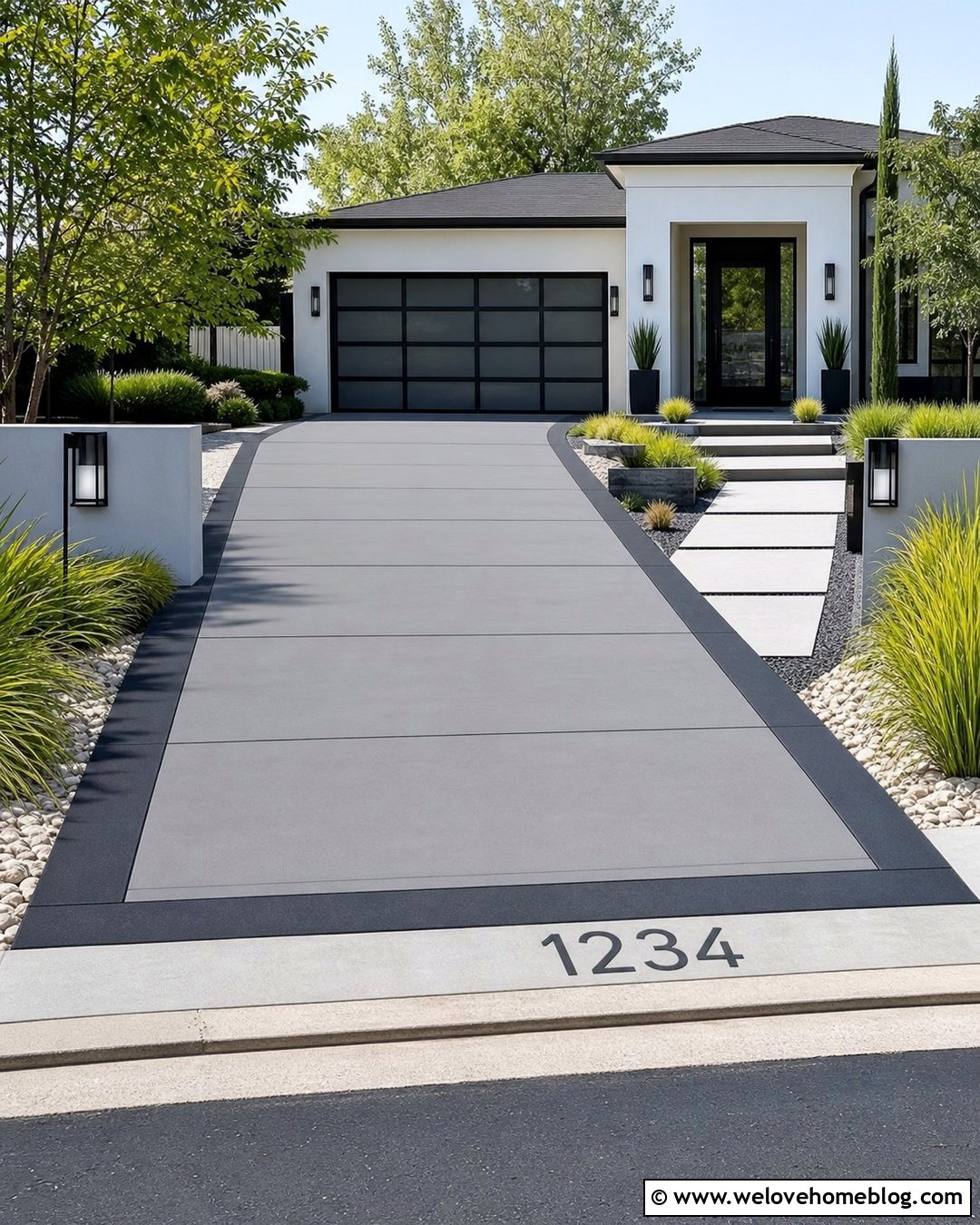
Large painted address numbers can make a driveway entrance more distinctive while strengthening the overall layout. Begin with a medium-gray concrete coating, then add a charcoal border around the perimeter. Position the house number within a light-gray rectangular panel near the curb, keeping it oriented for a clear street view. Repeat the panel shape near the garage or walkway with no additional text, creating visual continuity. This design works particularly well for a modern or contemporary house with simple exterior lines. Use black metal lighting, rectangular planting beds, ornamental grasses, and pale stone mulch around the entrance. Keep the number style clean and uncomplicated. Before painting, confirm that placement and visibility comply with local addressing or neighborhood requirements.
22. Leaf Border Painted Driveway
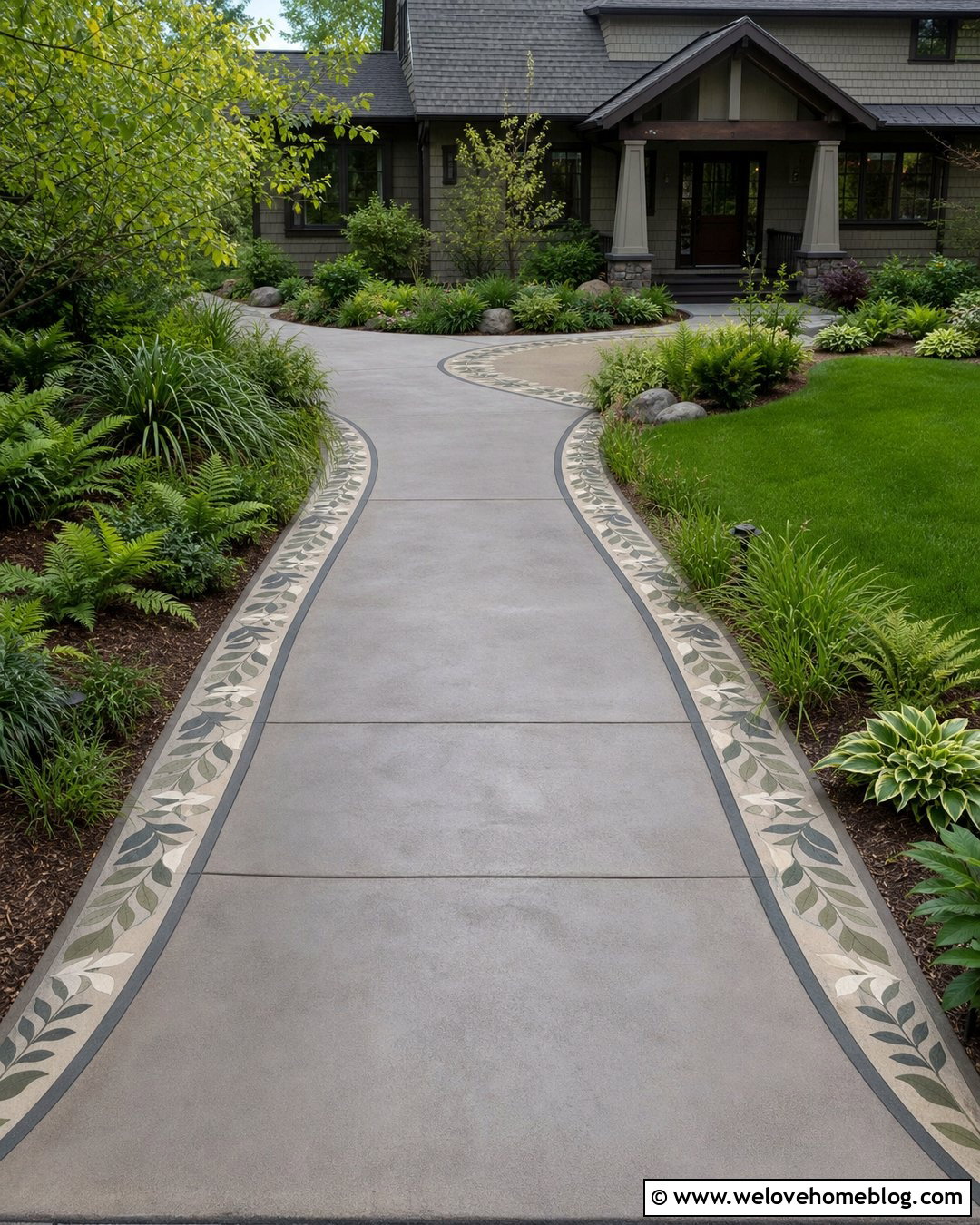
A botanical stencil can soften a concrete driveway when it is treated as a border rather than scattered randomly over the surface. Paint the main field a warm stone gray, then run a repeating leaf pattern along both edges in sage, olive, and muted cream. A thin charcoal line outside the leaves will give the border a clean stopping point. Use this design on a gently curved driveway approaching a cottage, craftsman, or garden-focused home. Fill the adjoining beds with plants that echo the stencil, such as ferns, ornamental grasses, hostas, and compact shrubs. Keep the center free from decoration so vehicles have an uncluttered visual path. At the entrance, widen the botanical border slightly to form a welcoming painted apron.
23. Farmhouse Cream Painted Driveway
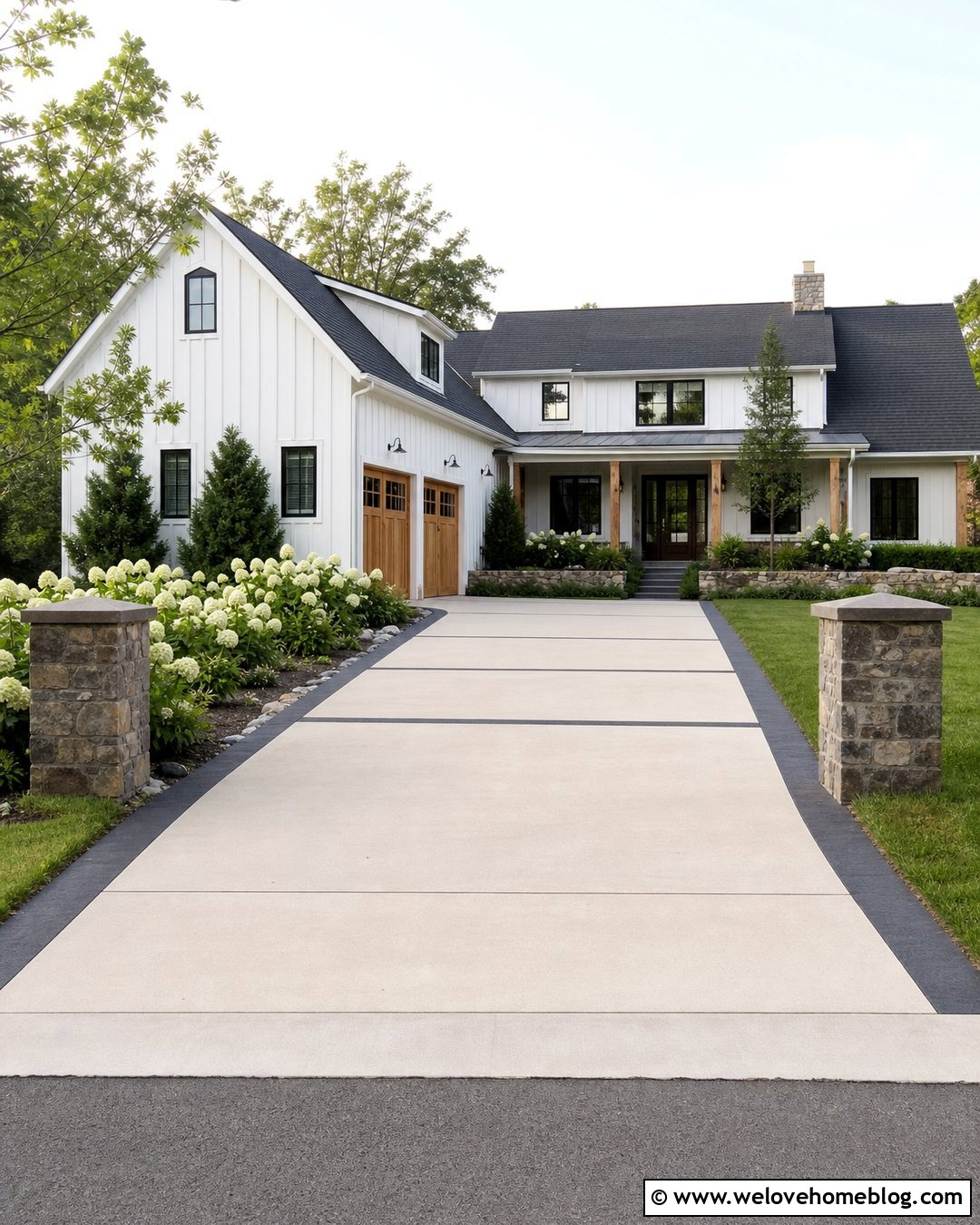
A cream painted driveway can complement a modern farmhouse when darker accents are used to define its shape. Choose a warm cream or pale greige for the main concrete surface, then add a charcoal ribbon around the edges and across selected control joints. The contrast will connect naturally with black windows, metal roofing, and dark exterior lights. Use a straight driveway leading to a white board-and-batten house with wood garage doors. Frame the route with lawn, white hydrangeas, clipped evergreens, and rustic stone beds. A charcoal walkway branching toward the porch can reverse the driveway’s color scheme. Keep the surface pattern broad and simple. This allows the cream finish to brighten the entrance without competing with the farmhouse architecture or surrounding country landscape.
24. Brown Faux Paver Painted Driveway
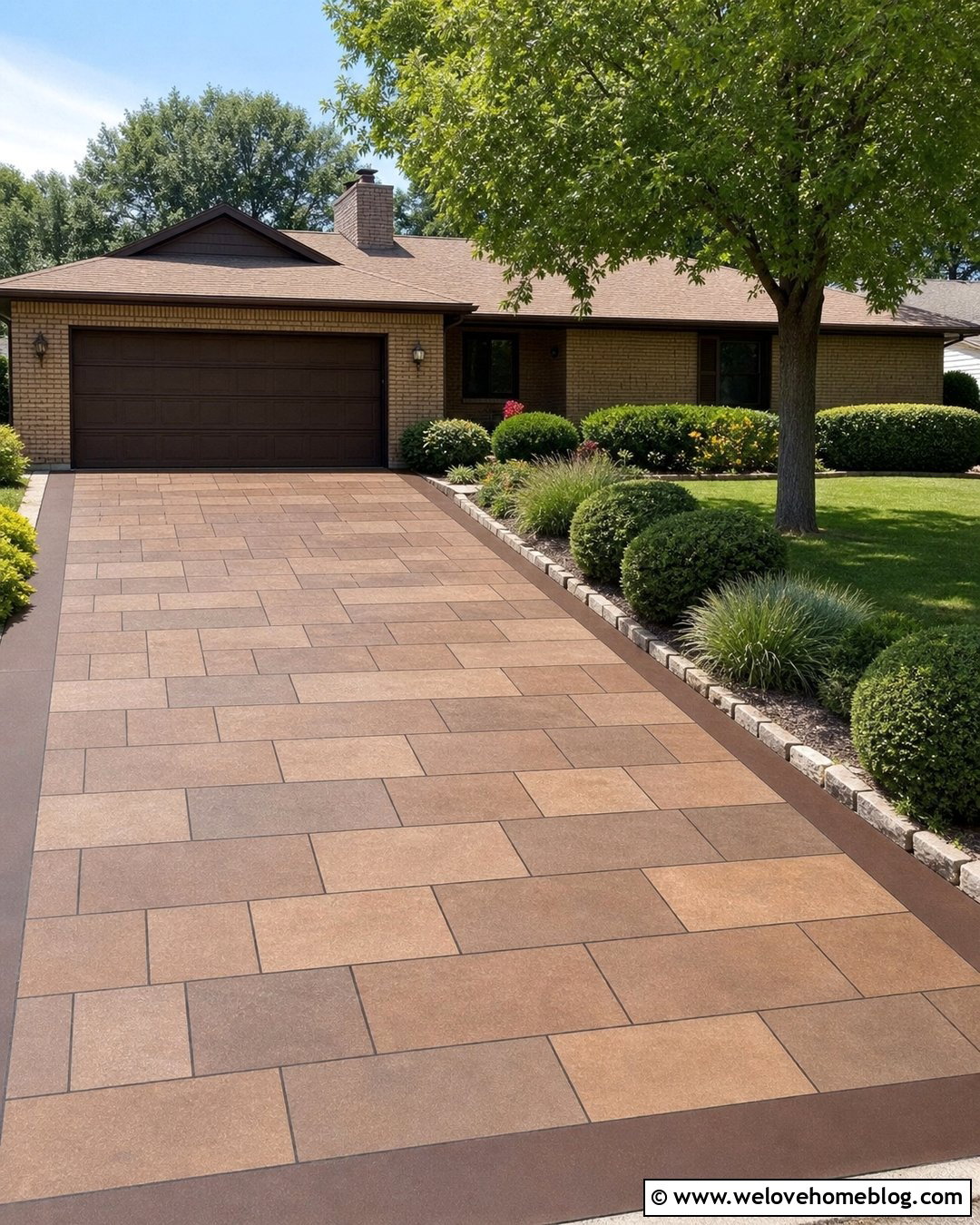
A faux paver pattern can make a large concrete driveway feel more detailed and proportional to a single-story ranch home. Apply a medium taupe base, then stencil oversized rectangular pavers in warm brown, tan, and muted clay tones. Use dark brown joint lines and a solid matching border to organize the pattern. A running-bond layout is straightforward and visually calm, making it suitable for a broad, straight driveway. Add low stone edging, rounded shrubs, ornamental grasses, and a mature shade tree beside the approach. Coordinate the warm colors with brick walls, natural wood trim, or a brown roof. At the garage, align the painted paver rows with each door to create a balanced, professionally planned appearance from the street.
25. Midcentury Painted Driveway
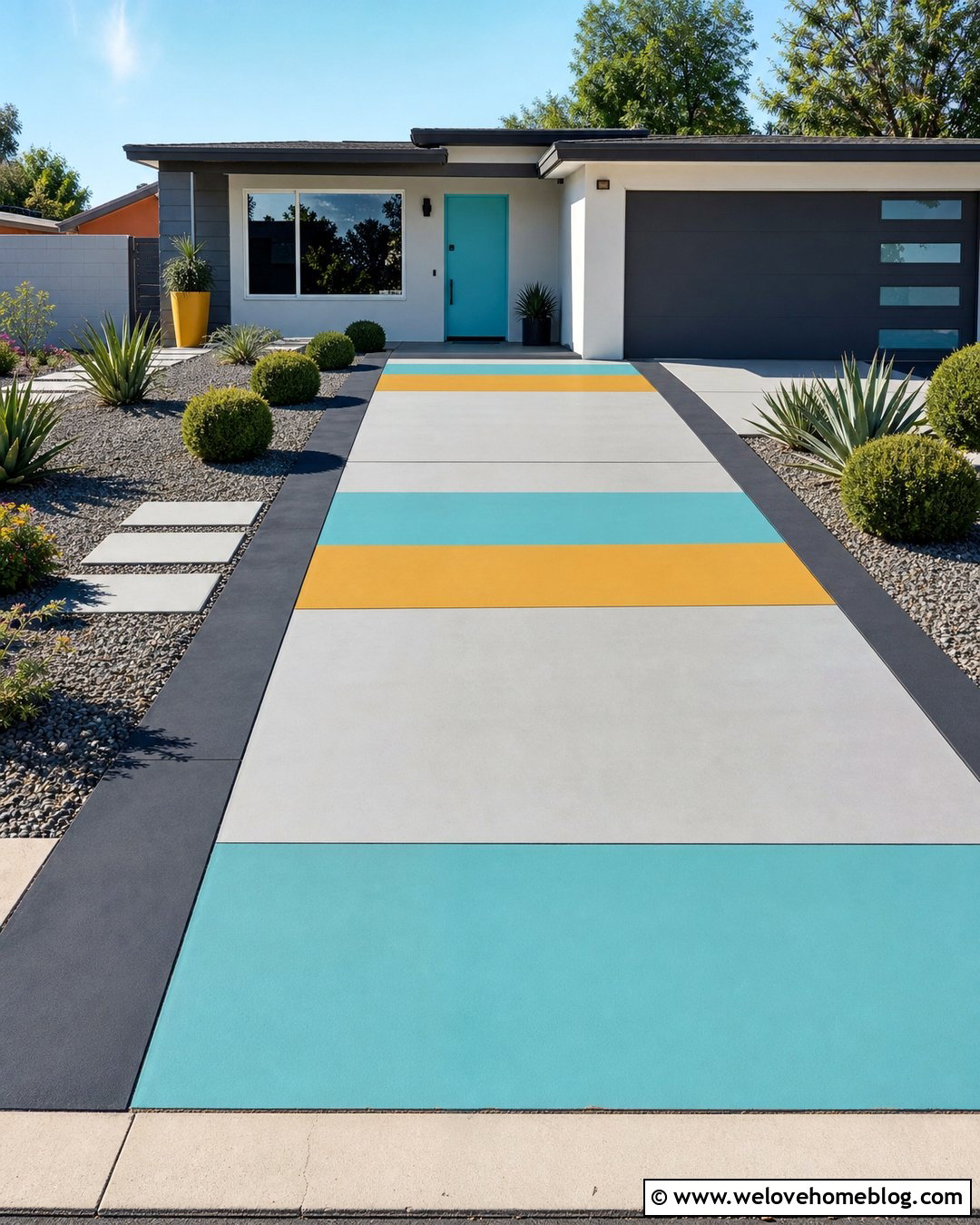
A midcentury home can support a more playful painted driveway when the colors remain controlled. Start with a light-gray concrete coating, then add broad turquoise, mustard, and charcoal bands at selected intervals. Position the bands perpendicular to the direction of travel, using asymmetrical spacing that echoes the home’s roofline and window placement. Frame the driveway with one uninterrupted charcoal edge. Low gravel beds, sculptural agaves, rounded shrubs, and concrete stepping pads will reinforce the period-inspired landscape. Keep most of the driveway gray so the accent colors remain special. Repeat turquoise at the front door or planter boxes and mustard in small flowering plants. Together, the driveway, garden, and facade form one lively but balanced curb-appeal composition.
26. Sea Glass Painted Driveway
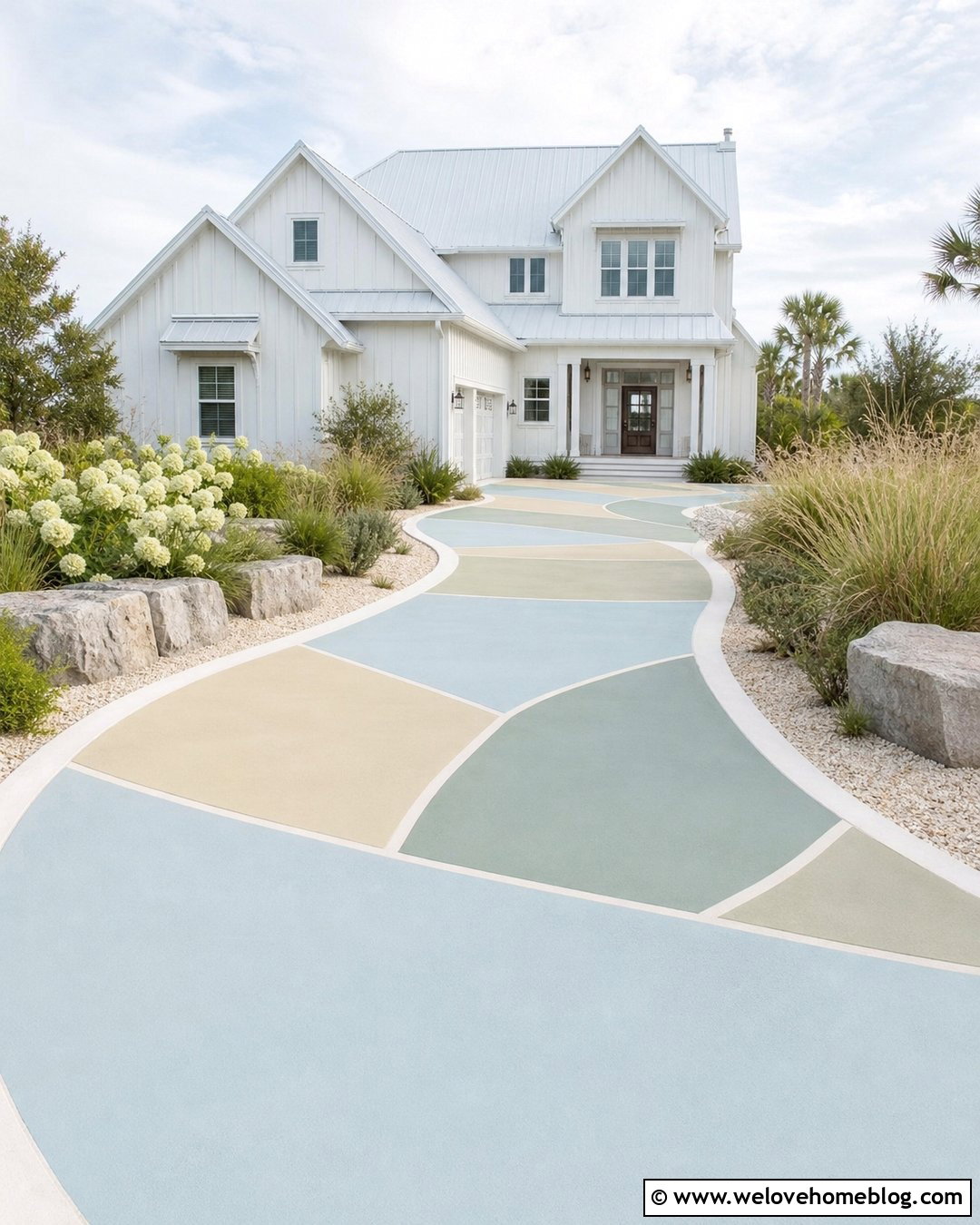
Sea-glass colors create a breezy painted driveway for a light coastal home. Use pale blue-gray as the main surface, then divide selected sections into oversized blocks of seafoam, muted aqua, soft green, and sandy beige. Keep the shades dusty rather than bright to preserve a relaxed residential look. A white painted border can trace a gently curved layout toward the garage. Surround the driveway with beach grasses, white hydrangeas, weathered stone, and a crushed-shell garden bed. A simple gray walkway should lead from the driveway to the porch without adding another pattern. Repeat the sea-glass palette in small exterior accents, such as shutters or planters. The complete design should feel fresh and coastal without becoming overly themed or visually crowded.
27. Lavender Gray Painted Driveway
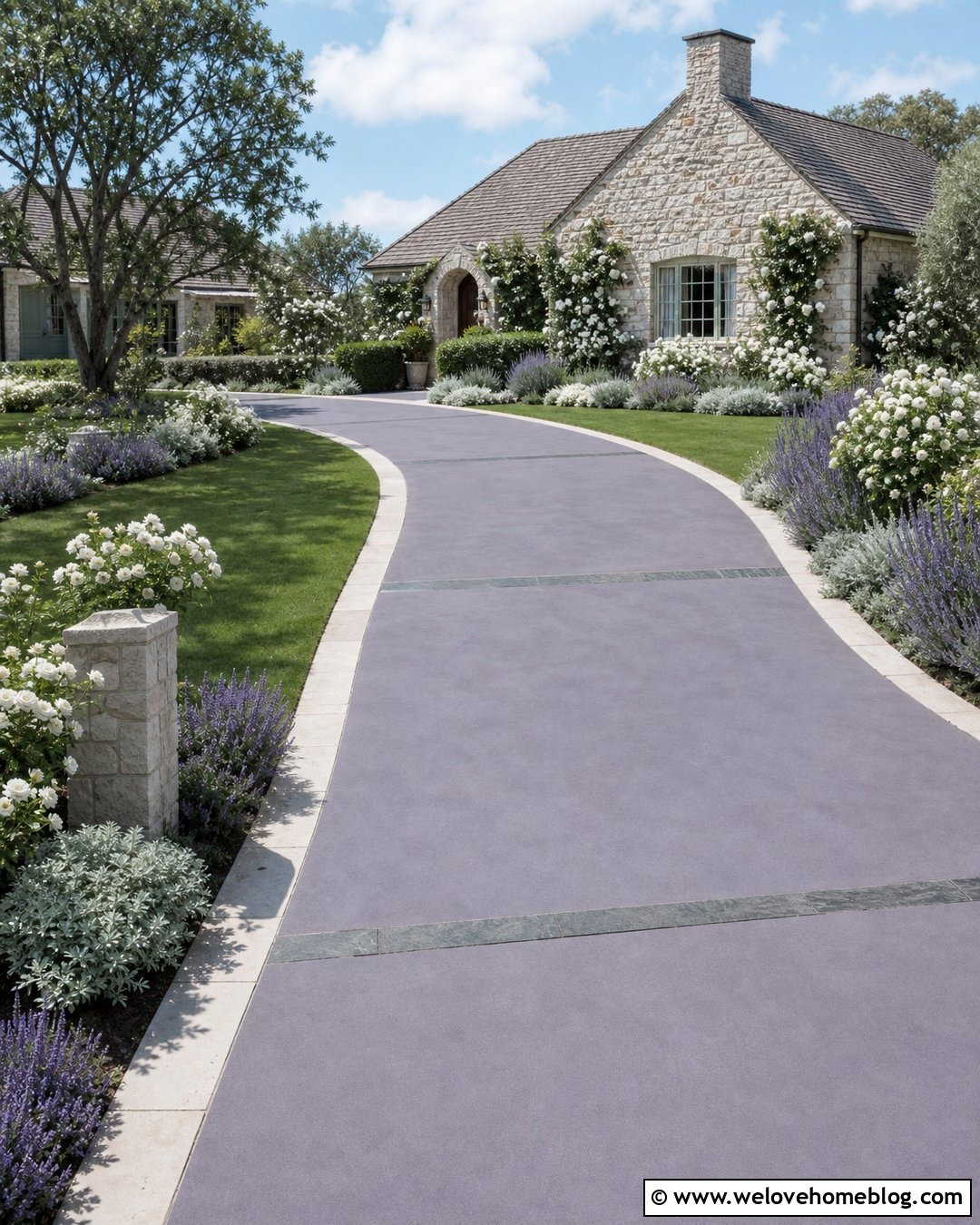
Lavender-gray offers subtle color for a cottage driveway while remaining calm enough for a large paved area. Select a gray-dominant shade with only a soft purple undertone, then pair it with a warm white perimeter border. Add narrow slate-gray bands over the control joints to divide the surface into generous panels. This combination looks especially attractive beside pale stone, creamy siding, or a soft blue exterior. Frame the driveway with lavender plants, white roses, silvery foliage, and neatly edged lawn. A curved layout will strengthen the romantic garden character, while simple stone entrance markers keep it grounded. Avoid adding more painted motifs. The distinctive base color, structured bands, layered planting, and traditional cottage facade already provide a complete and recognizable driveway design.
28. Ombre Earth Tone Painted Driveway
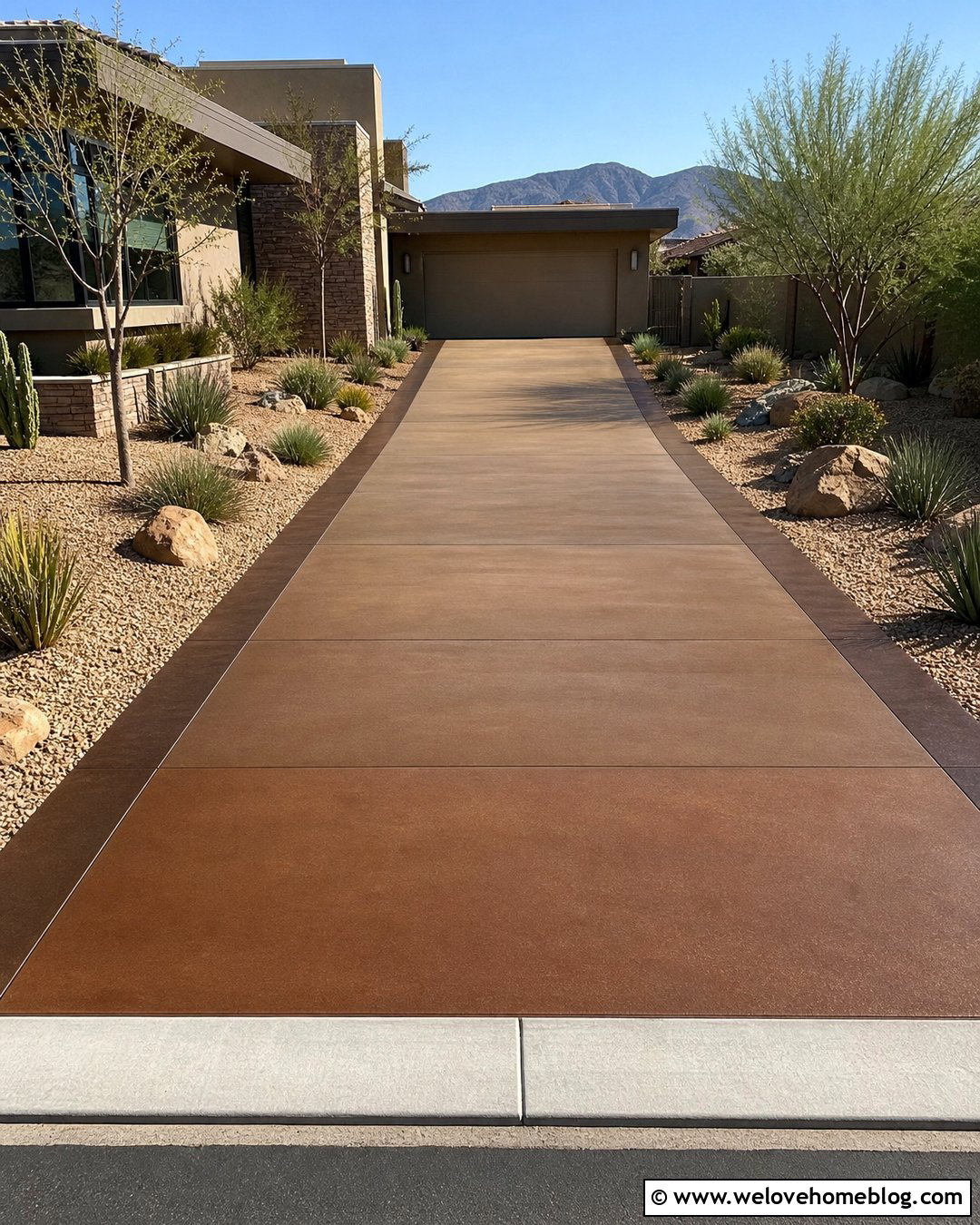
An ombre treatment can visually guide the eye from the street toward the house. Begin with a medium brown or clay tone at the curb, transition through warm taupe, and finish with sandy beige near the garage. Keep each color change gradual or position the tones in broad bands rather than creating many narrow stripes. A dark brown perimeter border will unify the full driveway. This approach works best on a long, straight concrete layout leading to a contemporary ranch or desert modern home. Use gravel beds, ornamental grasses, boulders, and low drought-tolerant shrubs along the sides. The changing shades should coordinate with the natural landscape and facade materials. A matching beige walkway near the house can complete the lightest end of the progression.
29. Split Color Painted Driveway
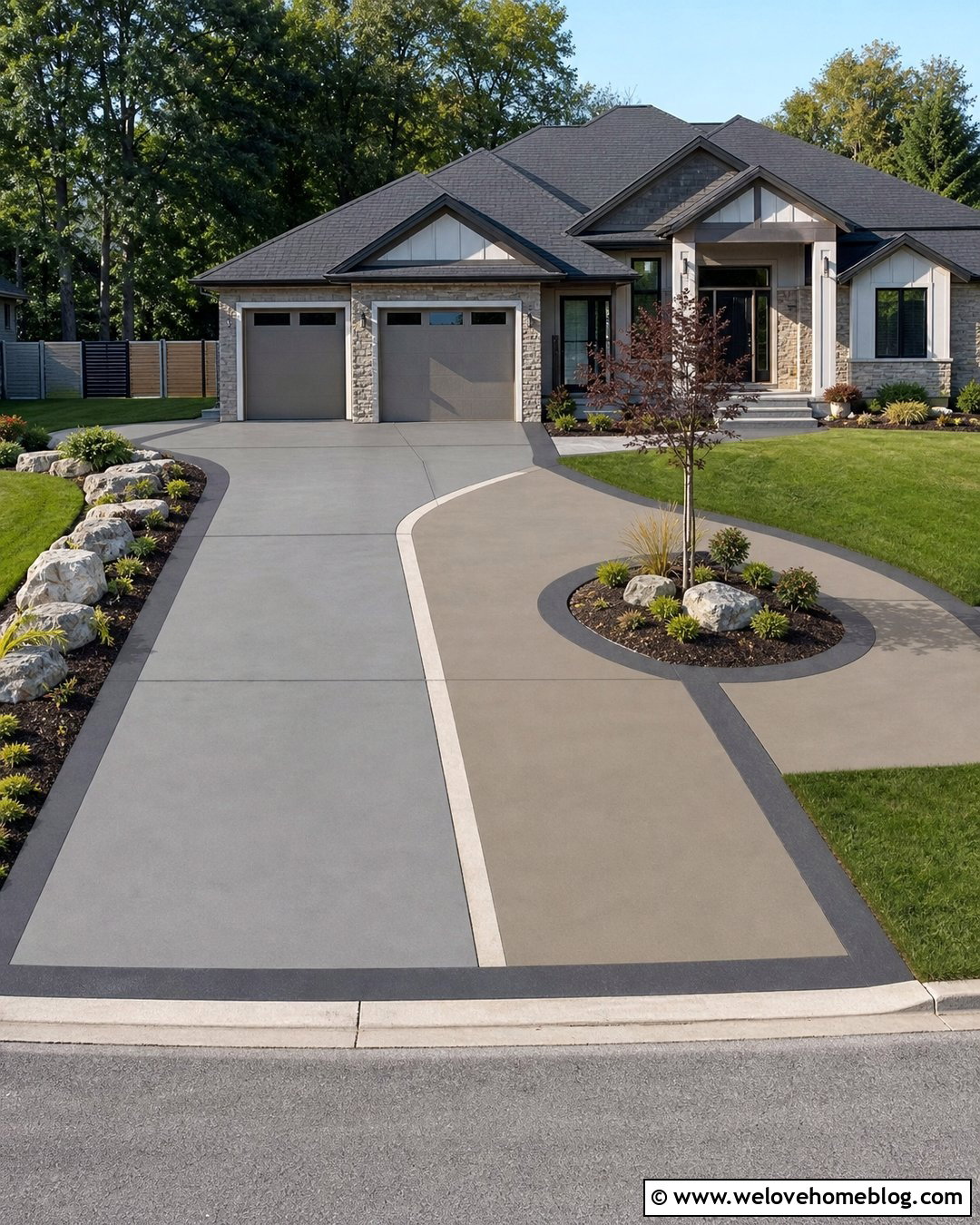
A split-color layout can organize a wide driveway and make separate parking areas easier to understand visually. Paint the main driving lane medium gray, then use warm taupe for the parking bay or garage approach. Separate the two zones with a narrow cream stripe that also connects to the front walkway. Outline the full driveway in charcoal so the different colors remain part of one composition. This design works well for an L-shaped or extra-wide suburban driveway beside a transitional home. Add a landscaped island at the turning point with a small tree, low shrubs, and decorative stone. Match the gray to the roof or trim and the taupe to brick or siding. Clear color blocking creates order without requiring an elaborate all-over pattern.
30. Sunburst Entrance Painted Driveway
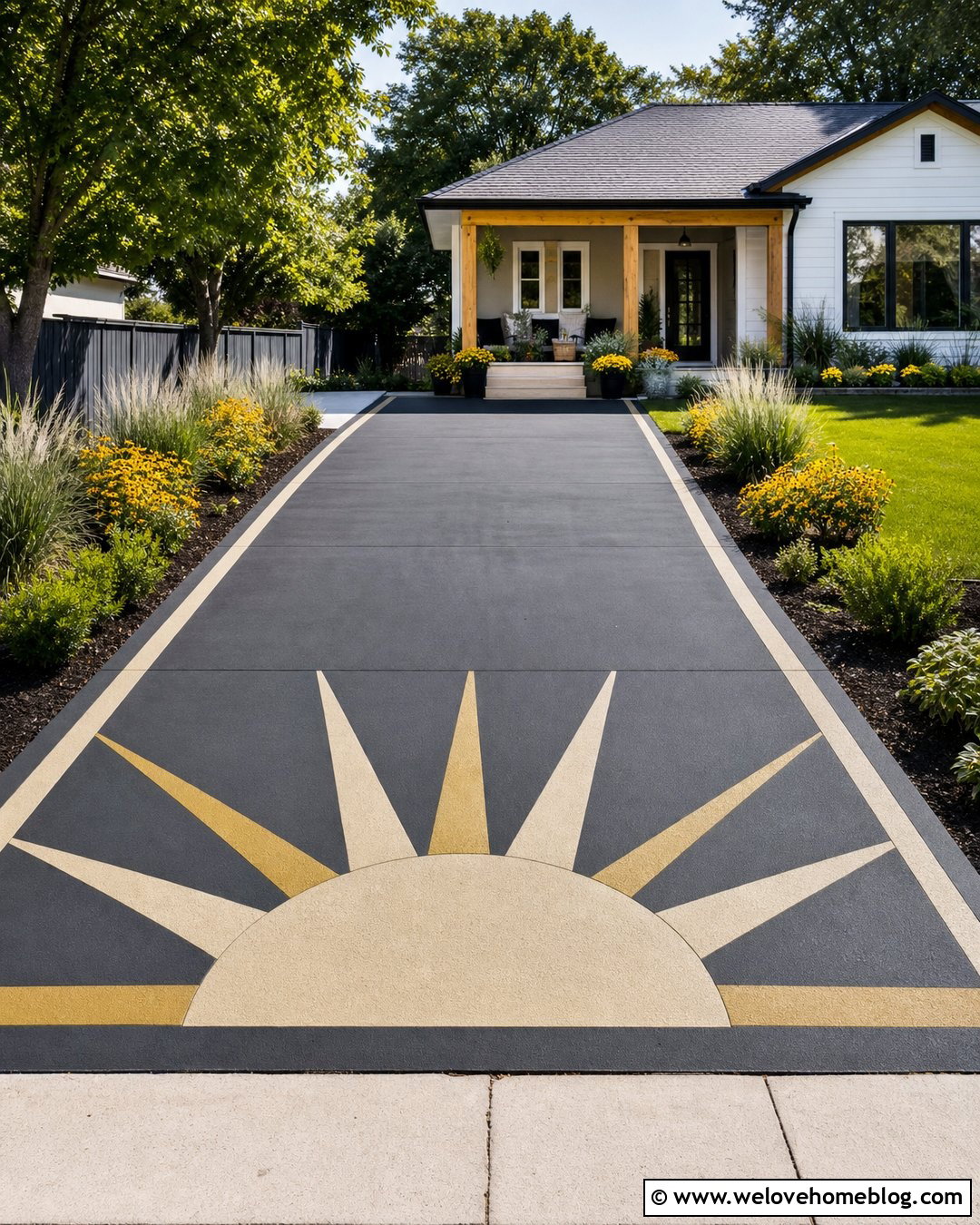
A painted sunburst can create an energetic entrance when it is limited to the driveway apron. Cover the main concrete driveway in soft charcoal or medium gray, then paint wide cream and muted gold rays extending from a semicircle at the curb. Stop the rays within the entrance area and surround them with a solid charcoal frame. This keeps the upper driveway calm and practical. Use the look with a cheerful bungalow, eclectic ranch, or contemporary home featuring warm wood accents. Low ornamental grasses and yellow flowering plants can echo the gold without making the landscape too literal. Repeat a narrow cream stripe along the driveway edges. From the street, the sunburst becomes a welcoming focal point that leads naturally toward the house.
Conclusion:
Paint can do much more than hide tired gray concrete. It can define curves, organize parking zones, imitate traditional paving materials, and connect the driveway with the architecture and landscaping. The most successful 30 Painted Driveway Ideas treat the entire approach as one coordinated scene. Choose colors that relate to the house, use borders to create clean edges, and keep patterns large enough to read from the curb. Before starting, clean and repair the surface, confirm neighborhood requirements, and use a coating specifically intended for exterior concrete and vehicle traffic. Test your colors in direct sunlight, too. With thoughtful preparation and a balanced design, a painted driveway can become a practical, personal feature that noticeably improves curb appeal.

Related posts:



Leave a Reply