
A fresh coat of color can turn plain concrete into a polished part of your home’s curb appeal. These 25 paint driveway ideas cover simple neutrals, bold borders, geometric patterns, faux finishes, and layouts suited to different architectural styles. The best results begin with sound concrete, careful cleaning, repaired cracks, and a coating specifically labeled for exterior drivable surfaces. Because painted concrete can become slippery when wet, consider a compatible traction additive, especially on sloped driveways. Always check product instructions, local weather conditions, and HOA requirements before starting. () Whether your home is modern, traditional, coastal, or rustic, the complete driveway looks below make it easier to explore 25 paint driveway ideas.
1. Light Gray Painted Concrete Driveway
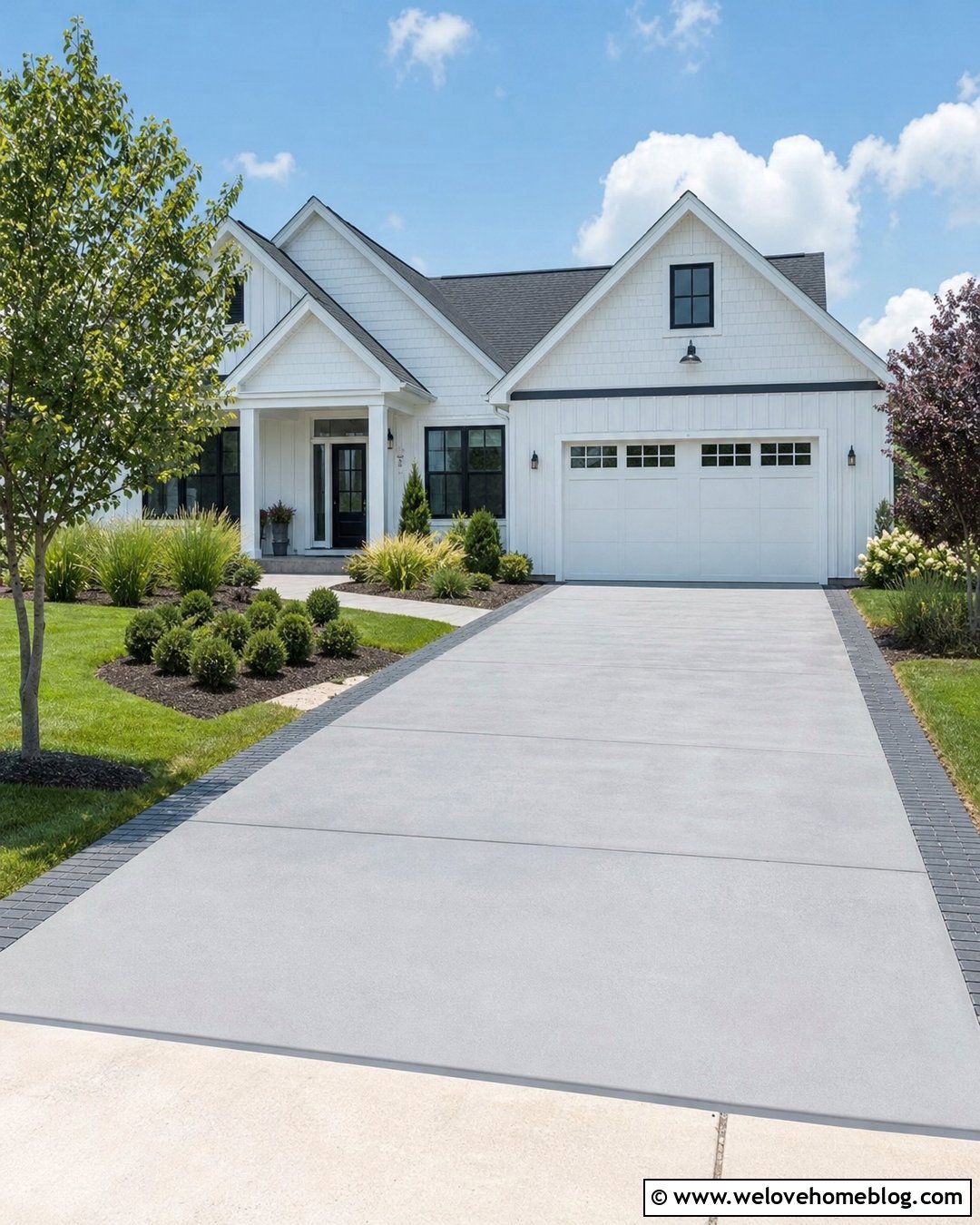
Light gray paint gives an aging concrete driveway a clean update without making it look overly decorative. Use a cool silver-gray coating across a straight driveway, then define the edges with dark charcoal concrete curbs or narrow paver ribbons. This combination works especially well with white, blue, or charcoal siding. Keep the surrounding landscaping simple with clipped shrubs, ornamental grasses, and an open green lawn. A matching gray walkway can connect the driveway to the front porch and make the entire entrance feel coordinated. Choose a satin or low-luster finish rather than a highly reflective surface. The softer sheen helps conceal minor imperfections while maintaining a refined appearance. Add a compatible traction additive wherever rain, snow, or a noticeable slope could make the surface slippery.
2. Charcoal Painted Driveway With White Border
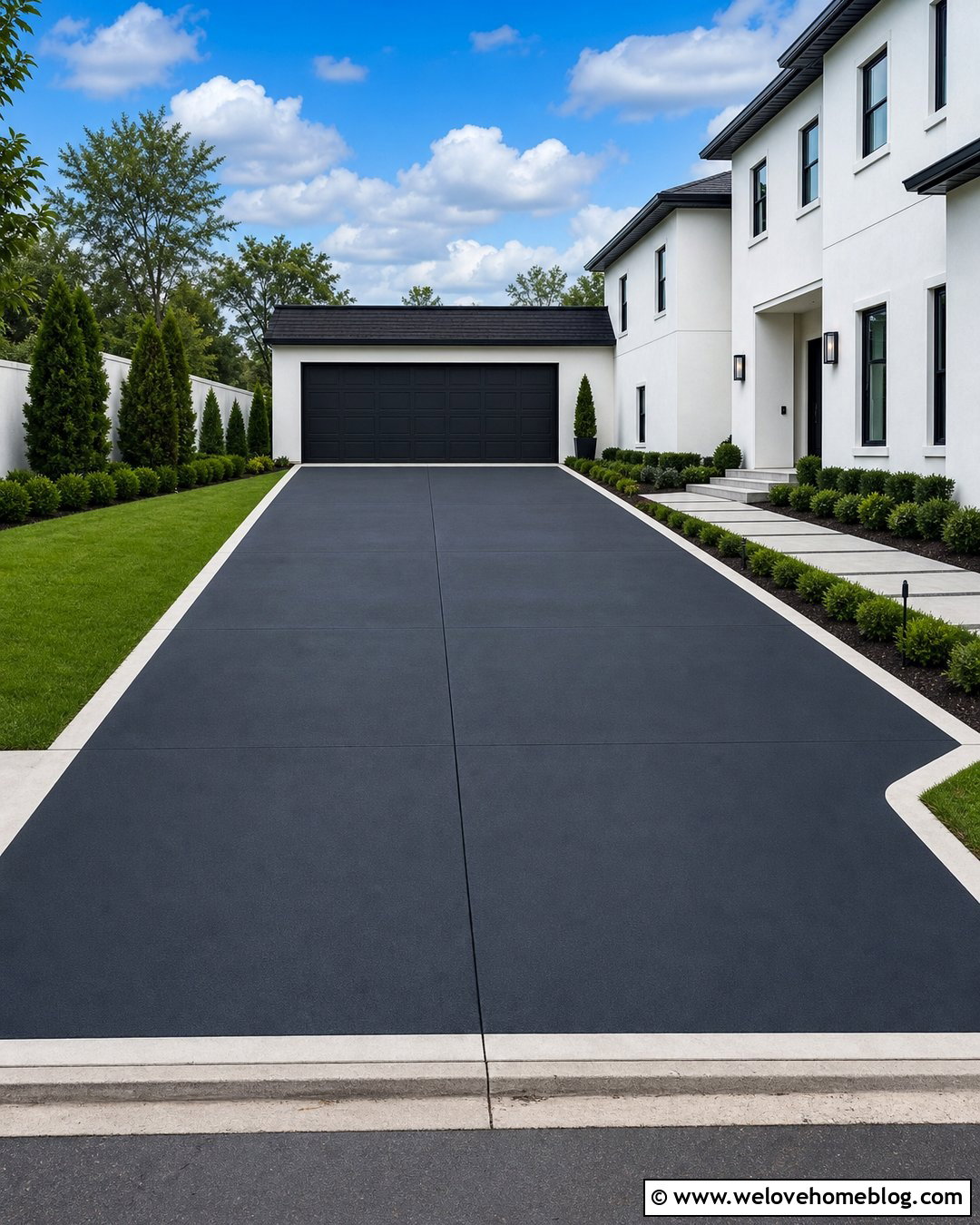
Deep charcoal can make a wide concrete driveway appear sleek and intentional. Instead of covering every detail in the same dark tone, frame the surface with a narrow warm-white painted border. The contrast highlights the driveway’s shape and connects naturally with white trim, columns, or garage doors. This complete look suits a contemporary home with black-framed windows and restrained landscaping. Place low evergreen shrubs along one side and a straight concrete walkway on the other. Because dark colors absorb more heat and show pale dust, charcoal is usually more practical in moderate climates or partially shaded yards. Consider using it as a medium-dark gray rather than pure black. The white border should remain narrow enough to feel architectural without resembling painted traffic markings.
3. Greige Painted Driveway With Brick Edging
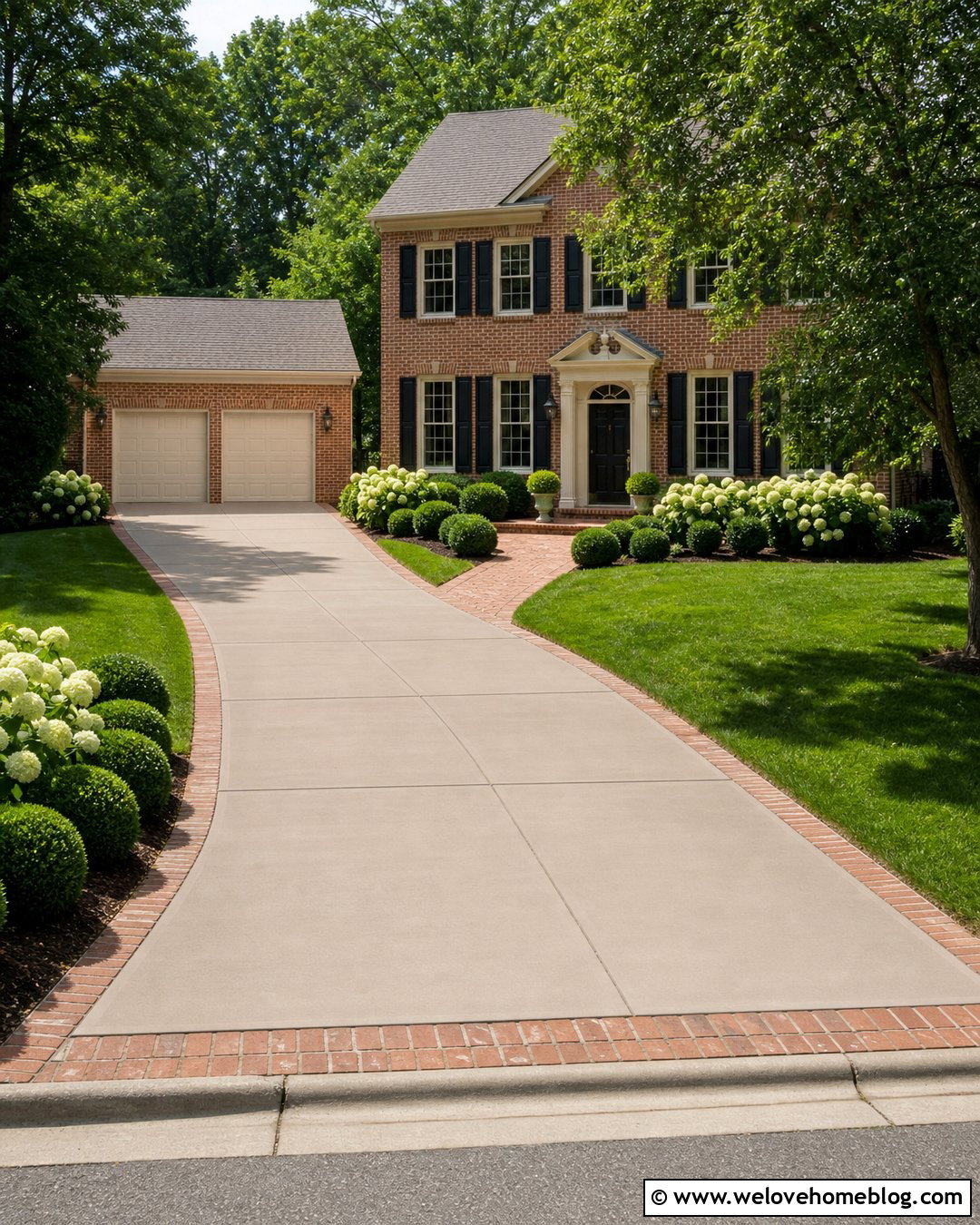
Greige blends warm beige with soft gray, creating an adaptable driveway color for traditional homes. Apply it to a straight or gently flared concrete driveway and finish both sides with red or brown clay brick edging. The brick introduces texture while linking the driveway to a brick facade, chimney, porch steps, or garden path. Frame the entrance with rounded boxwoods, hydrangeas, and tidy lawn panels for a welcoming suburban look. A warm greige coating is also more forgiving than bright white when exposed to soil and leaf debris. Test a small painted area beside the house before committing because undertones can change in direct sunlight. Repeat the greige color on the walkway or porch floor, but let the brick remain visible as a clear, durable transition.
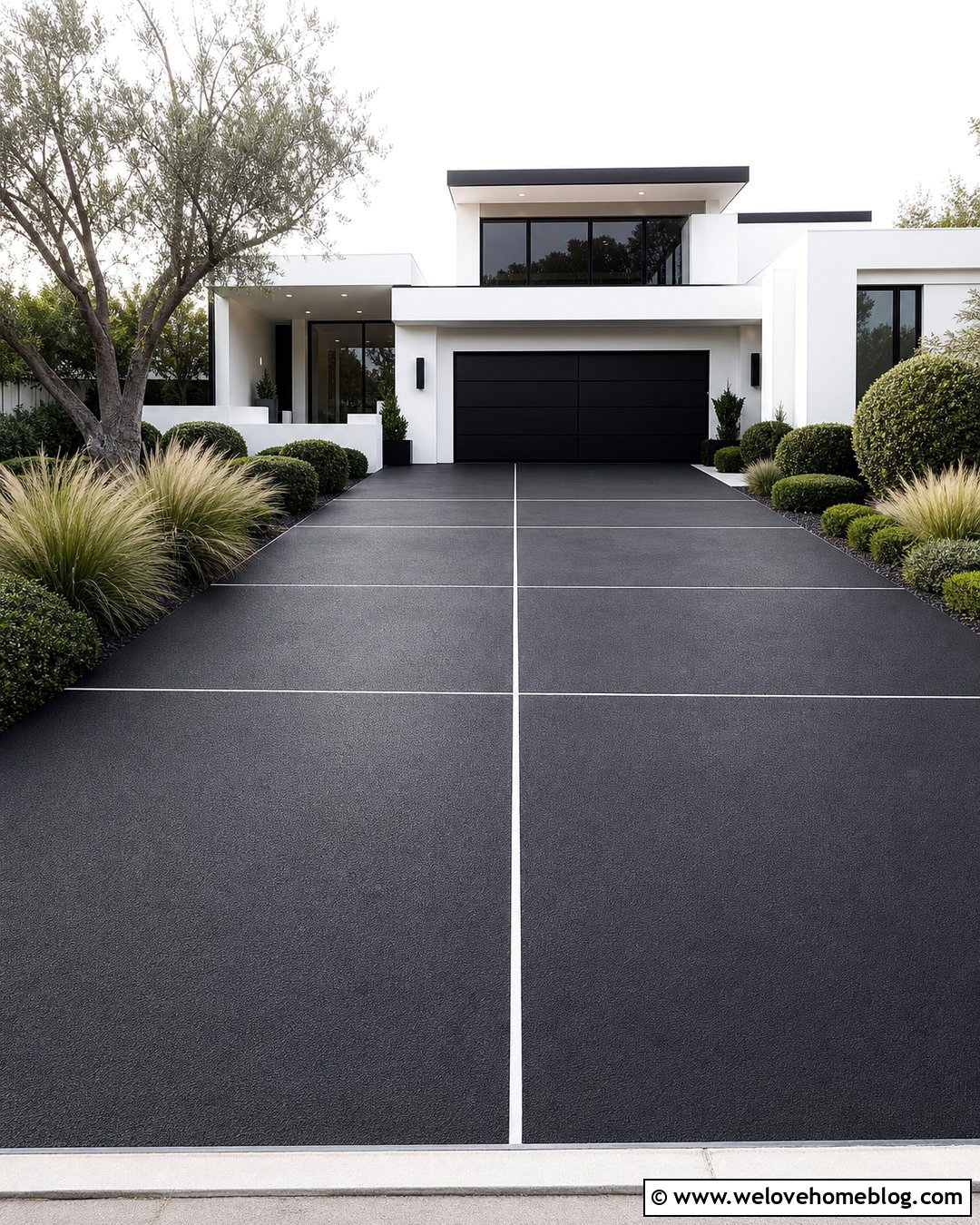
4. Black Painted Driveway With Concrete Bands
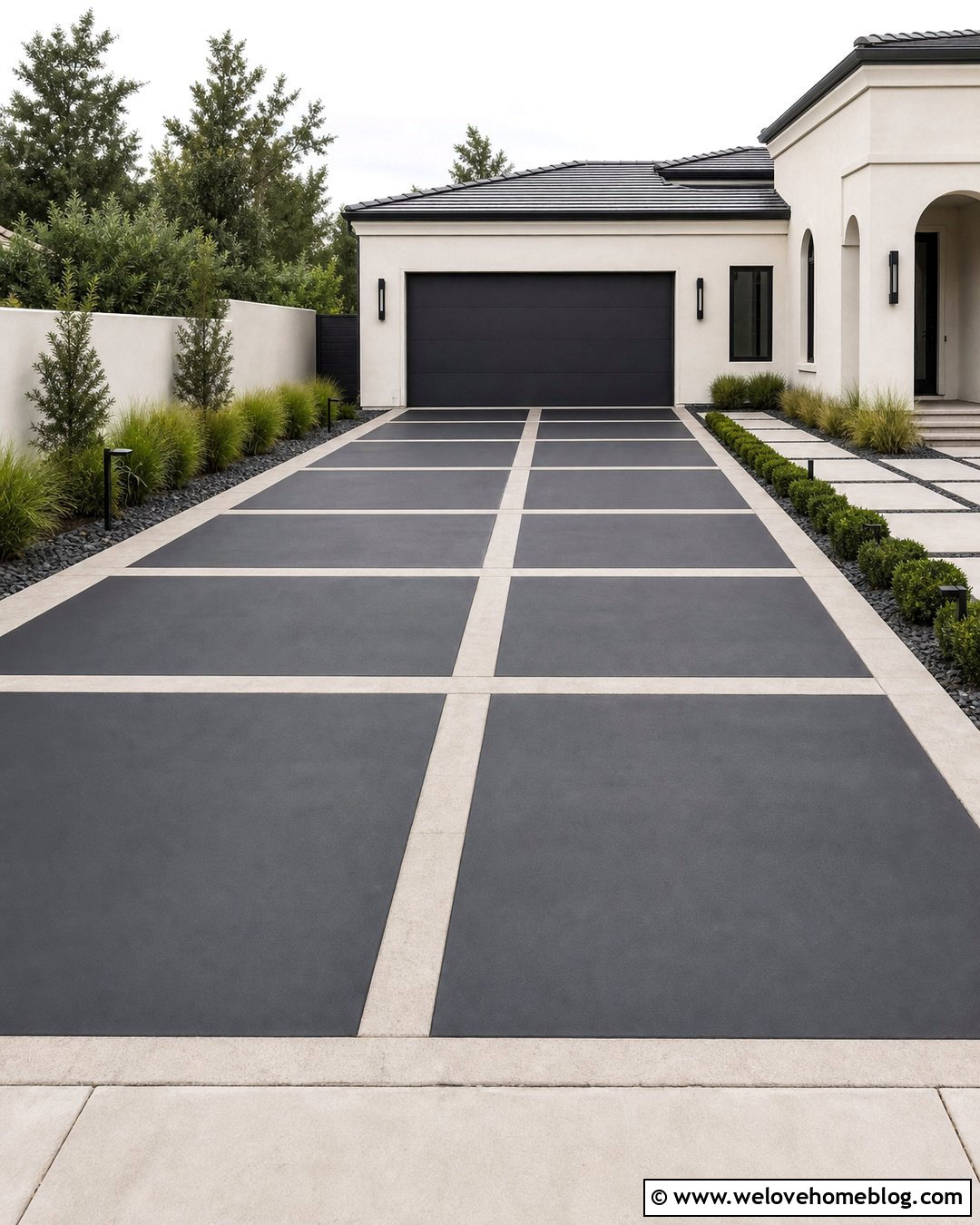
A black painted driveway can create dramatic curb appeal when its large surface is broken into smaller sections. Use wide, unpainted concrete bands across the driveway to form long rectangular panels. The light bands interrupt the dark coating, visually widen a narrow approach, and coordinate with pale stucco or raw concrete details on a modern house. Keep the layout straight and symmetrical, with linear planting beds filled with ornamental grasses, compact shrubs, and gravel mulch. Pure black can become noticeably hot in strong sunlight, so this look is better for shaded properties or cooler regions. A softer graphite tone provides a similar effect with less contrast. Use only coatings approved for vehicle traffic, and follow the manufacturer’s curing schedule before parking on the finished surface.
5. White Painted Driveway With Gray Grid
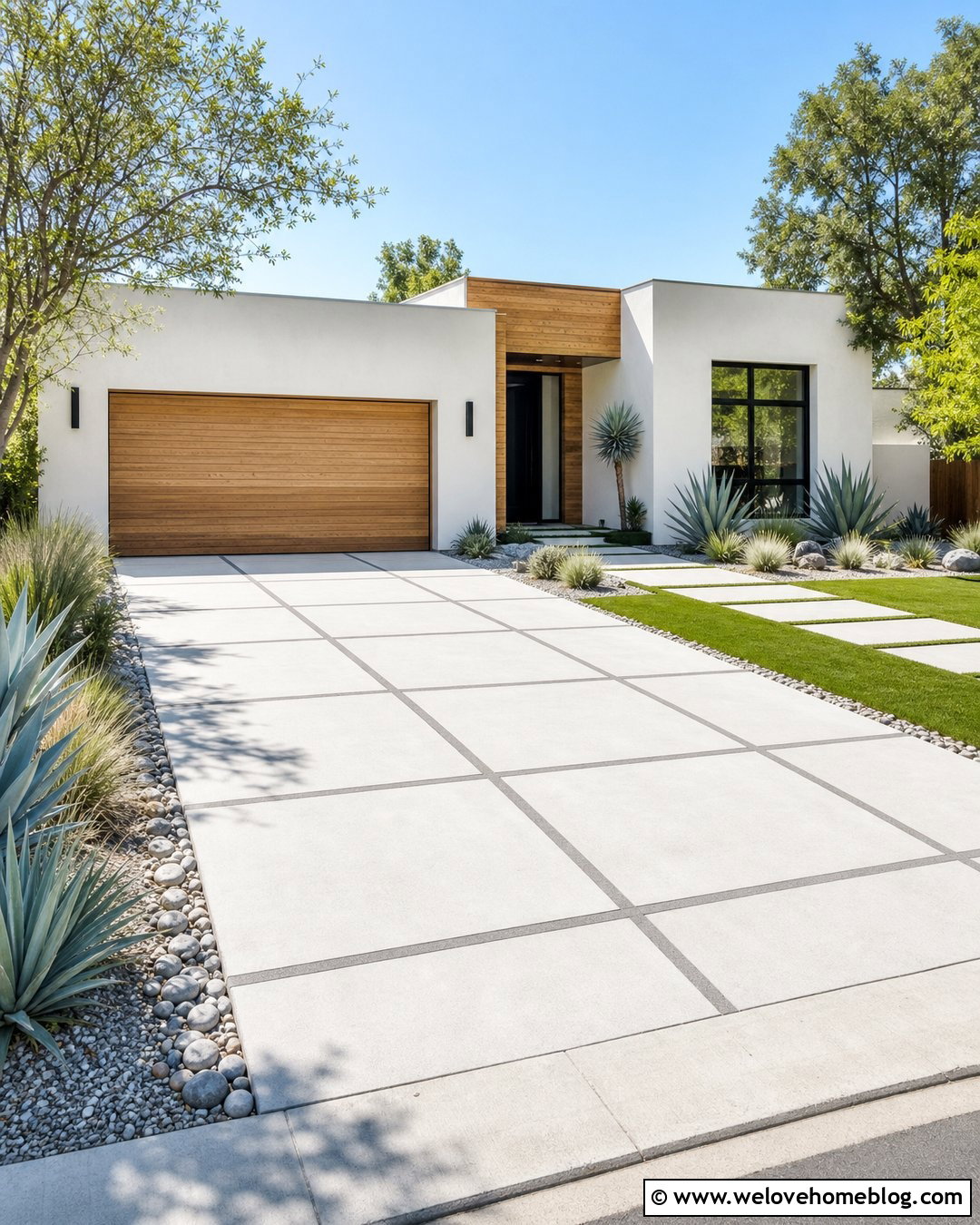
A warm-white painted driveway feels bright and spacious, particularly in a compact front yard. Divide the surface with thin medium-gray lines that follow the existing control joints, creating a simple grid rather than a busy pattern. This layout complements a minimalist house with pale stucco, natural wood, and black window frames. Add restrained planting beds with sculptural agave, dwarf grasses, or neatly clipped evergreens. Warm white is usually easier on the eyes than a stark, blue-based white, although it still requires more frequent cleaning than midtone colors. The grid helps disguise joints and makes spot touch-ups less obvious. Before painting, remove oil marks thoroughly because light coatings reveal discoloration. Finish with a compatible textured topcoat or traction additive to improve grip without disrupting the crisp design.
6. Sand Painted Driveway With Stone Border
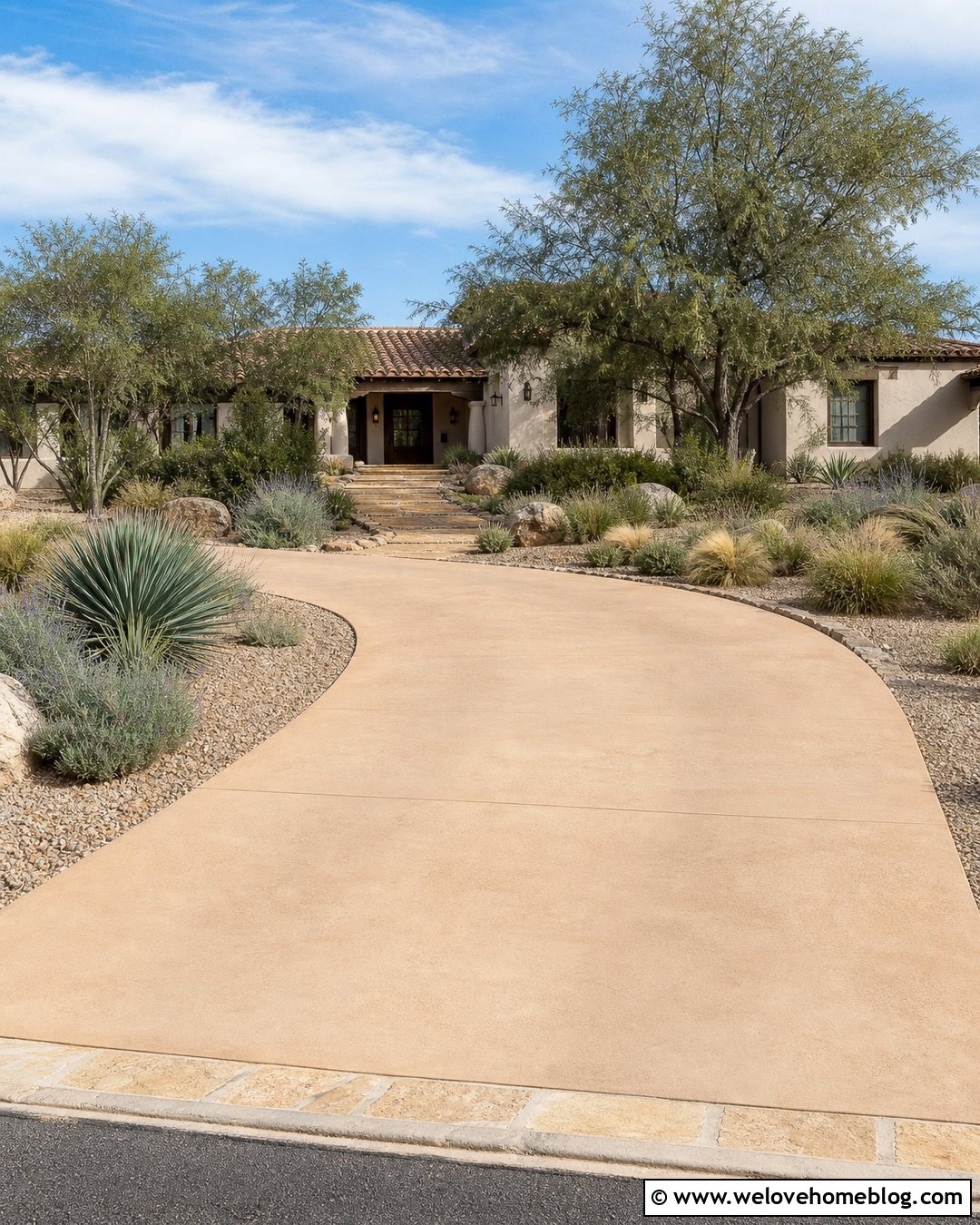
Soft sand-colored paint brings warmth to concrete while blending naturally with dry-climate landscaping. Cover a gently curved driveway in a matte sandy beige and border it with irregular tan fieldstone or neatly cut limestone blocks. Continue the natural palette through gravel beds, drought-tolerant shrubs, yucca, sage, and low ornamental grasses. The driveway can lead to a ranch, Southwestern, Mediterranean, or light stucco home without competing with the architecture. Sand tones are practical because they soften the appearance of dust and dried soil. Choose a shade that contrasts slightly with the house so the driveway remains visible as a separate surface. At the garage, create a smooth transition using a narrow stone band. Avoid overly yellow beige, which may appear artificial under intense daylight.
7. Terracotta Painted Driveway With Cream Trim
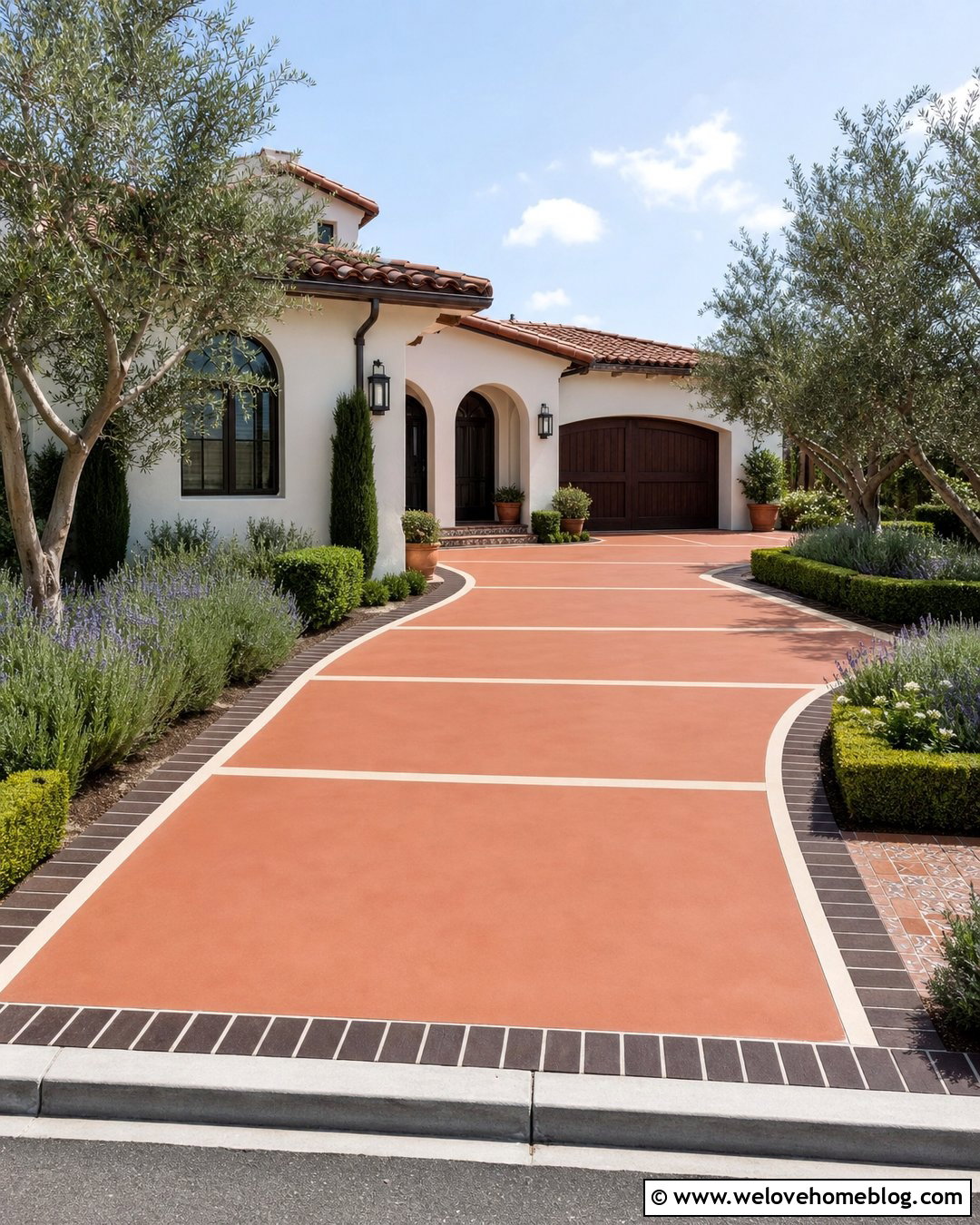
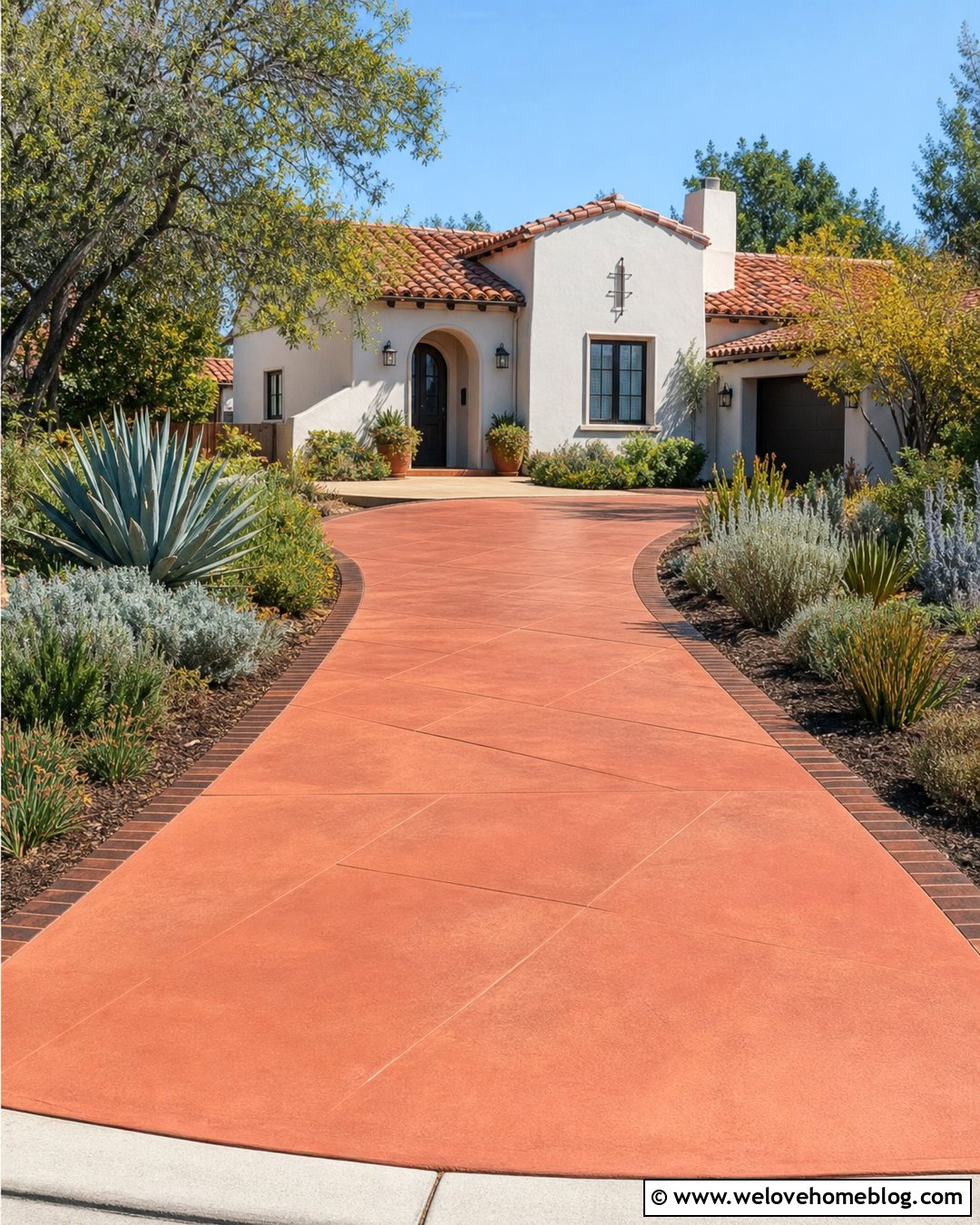
Terracotta paint can give a plain concrete driveway the warmth of clay paving without installing individual tiles. Use a muted red-orange coating over a straight or courtyard-style driveway, then add cream-painted edges that coordinate with the home’s stucco exterior. Dark brown brick, clay coping, or natural stone can form a durable outer border. This palette looks especially appropriate beside Mediterranean and Spanish-inspired houses with tile roofs and arched entrances. Surround the driveway with olive trees, rosemary, lavender, and low hedges to reinforce the warm landscape. Keep the terracotta slightly weathered rather than intensely orange. A subtle variation in tone will feel more natural and show less dirt. Painted expansion joints in a deeper brown can divide the broad surface into tile-like rectangular sections.
8. Slate Blue Painted Driveway With Paver Edging
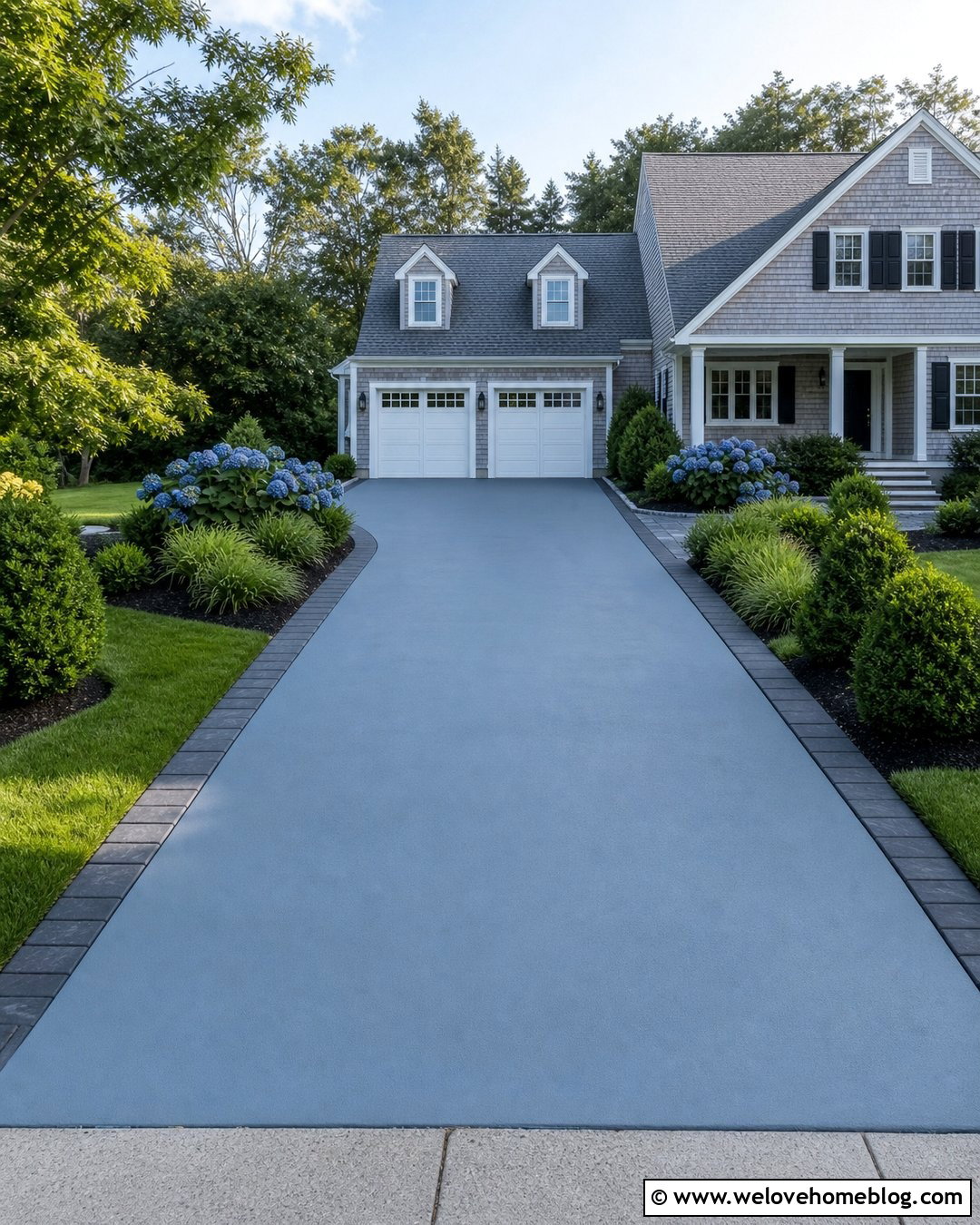
Slate blue introduces color while remaining subdued enough for a large driveway surface. Apply a blue-gray concrete coating to a straight driveway and edge it with charcoal pavers laid in a simple running bond. The cool palette works beautifully with a coastal, Cape Cod, or gray-shingled house. White garage doors and porch trim keep the entrance bright, while hydrangeas, ornamental grasses, and compact evergreens soften the hardscape. Avoid saturated royal blue, which can overpower the property and fade unevenly. A gray-based slate color is easier to coordinate and generally looks more architectural. Repeat the charcoal pavers around the walkway for continuity. Before selecting the final shade, view samples in morning sun, afternoon light, and shade because blue undertones can shift noticeably throughout the day.
9. Sage Green Painted Driveway With Natural Landscaping
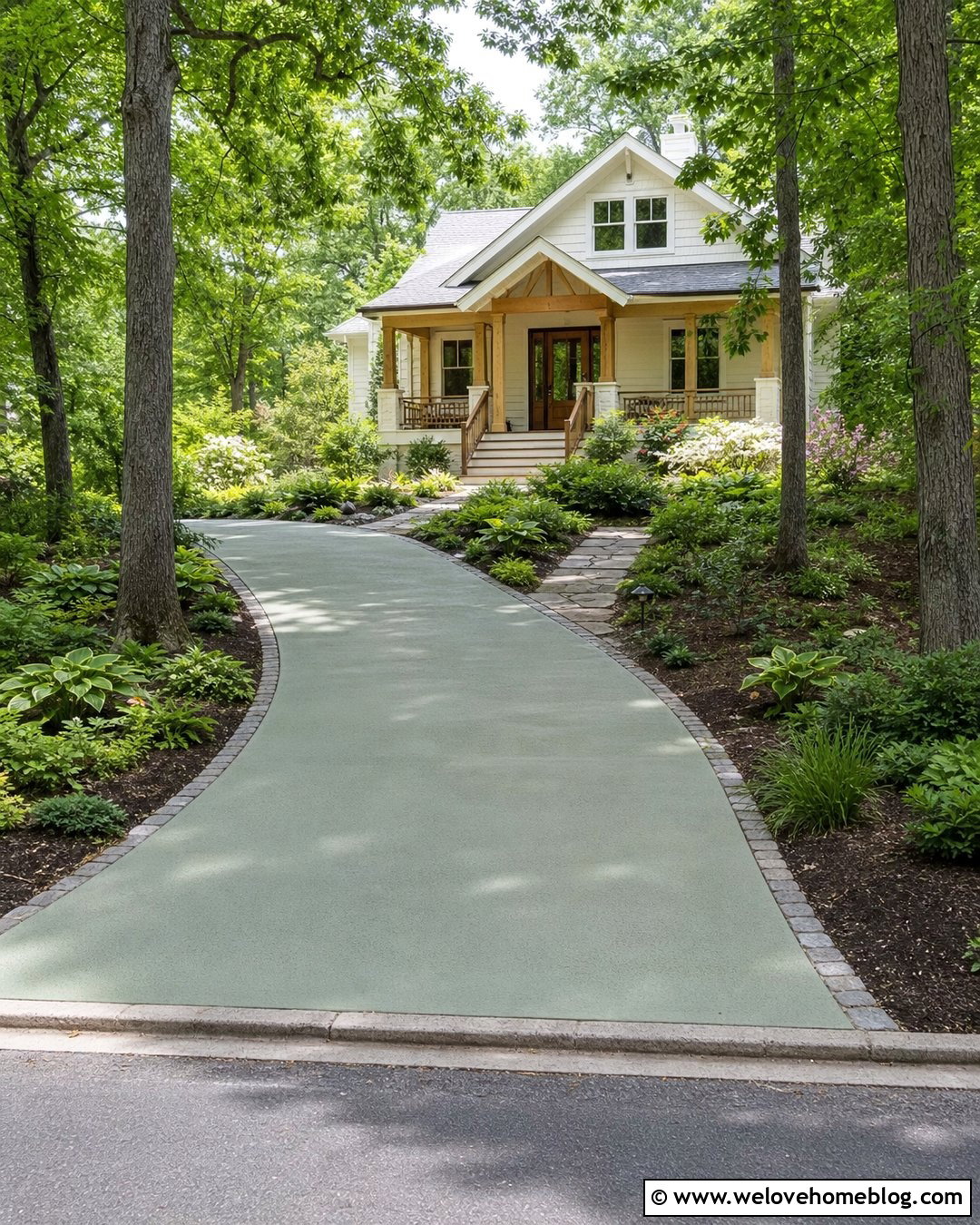
Could a green driveway feel subtle rather than bold? A muted sage coating can blend into a heavily landscaped front yard while giving old concrete a distinctive refresh. Use the color on a gently curved driveway beside a craftsman or cottage home with cream siding and natural wood details. Border the pavement with warm gray cobblestones, then plant ferns, hostas, small flowering shrubs, and shade-tolerant ground covers beneath mature trees. Select a gray-green shade with low saturation so it reads as an earthy neutral from the curb. A darker moss-colored edge can emphasize the curve without creating harsh contrast. This palette is most convincing in wooded or lush settings. Keep fallen leaves cleared because decomposing organic matter may stain lighter coatings and make damp surfaces more slippery.


10. Two Tone Gray Painted Driveway
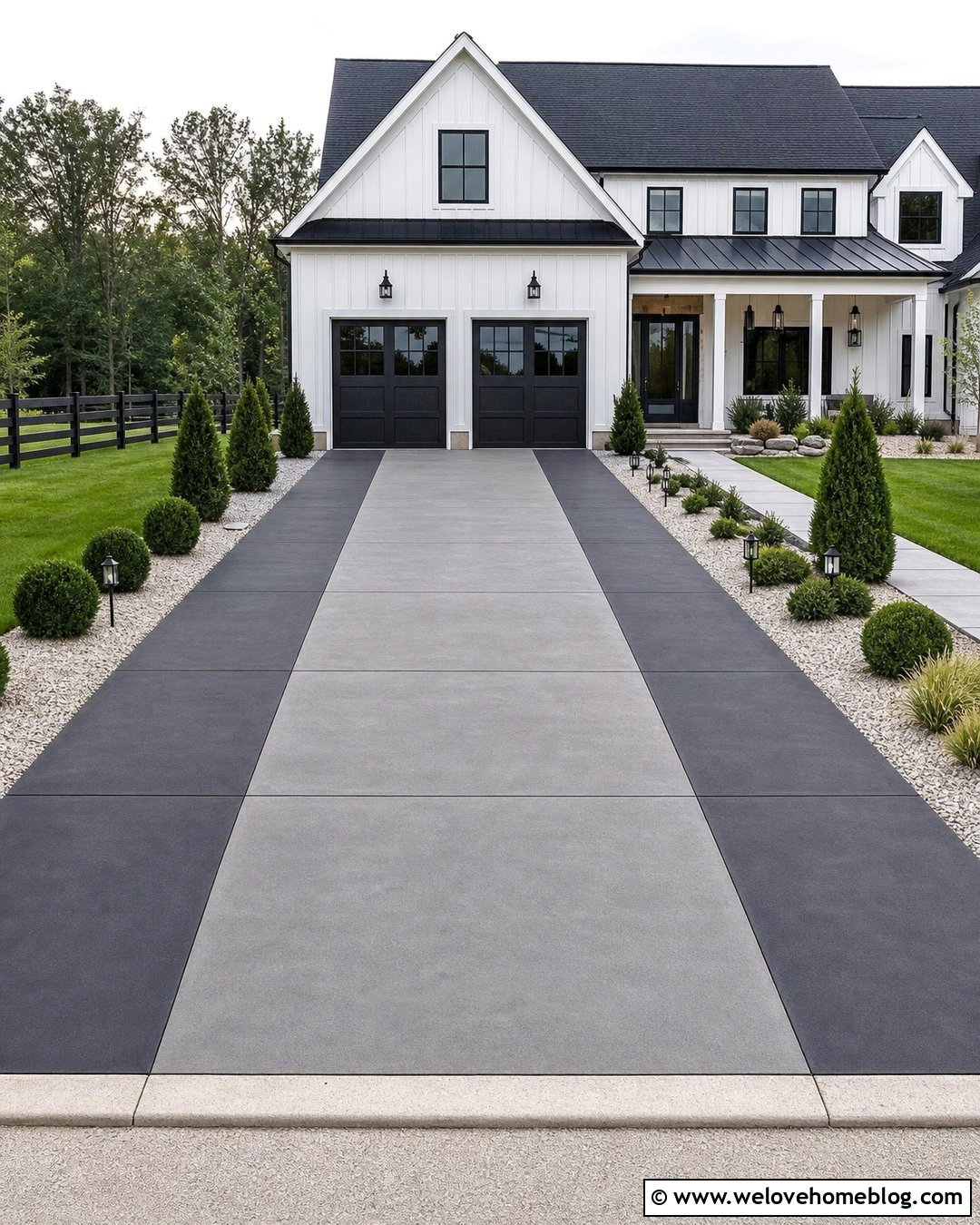
Two shades of gray can add definition without introducing a strong color. Paint the central parking area medium gray and use a darker charcoal tone along both sides. The darker sections can follow existing joints or form wide border panels that visually contain the driveway. This approach works well for a double-width concrete drive leading to a modern farmhouse or contemporary suburban home. Use black metal lighting, clipped shrubs, and pale gravel beds to reinforce the controlled palette. If the driveway is short, run the darker color lengthwise to make the approach appear longer. On an exceptionally long driveway, use crosswise bands to reduce its visual scale. Keep both grays in the same warm or cool family so the finished surface looks coordinated rather than patched together.
11. Painted Driveway With Diamond Pattern
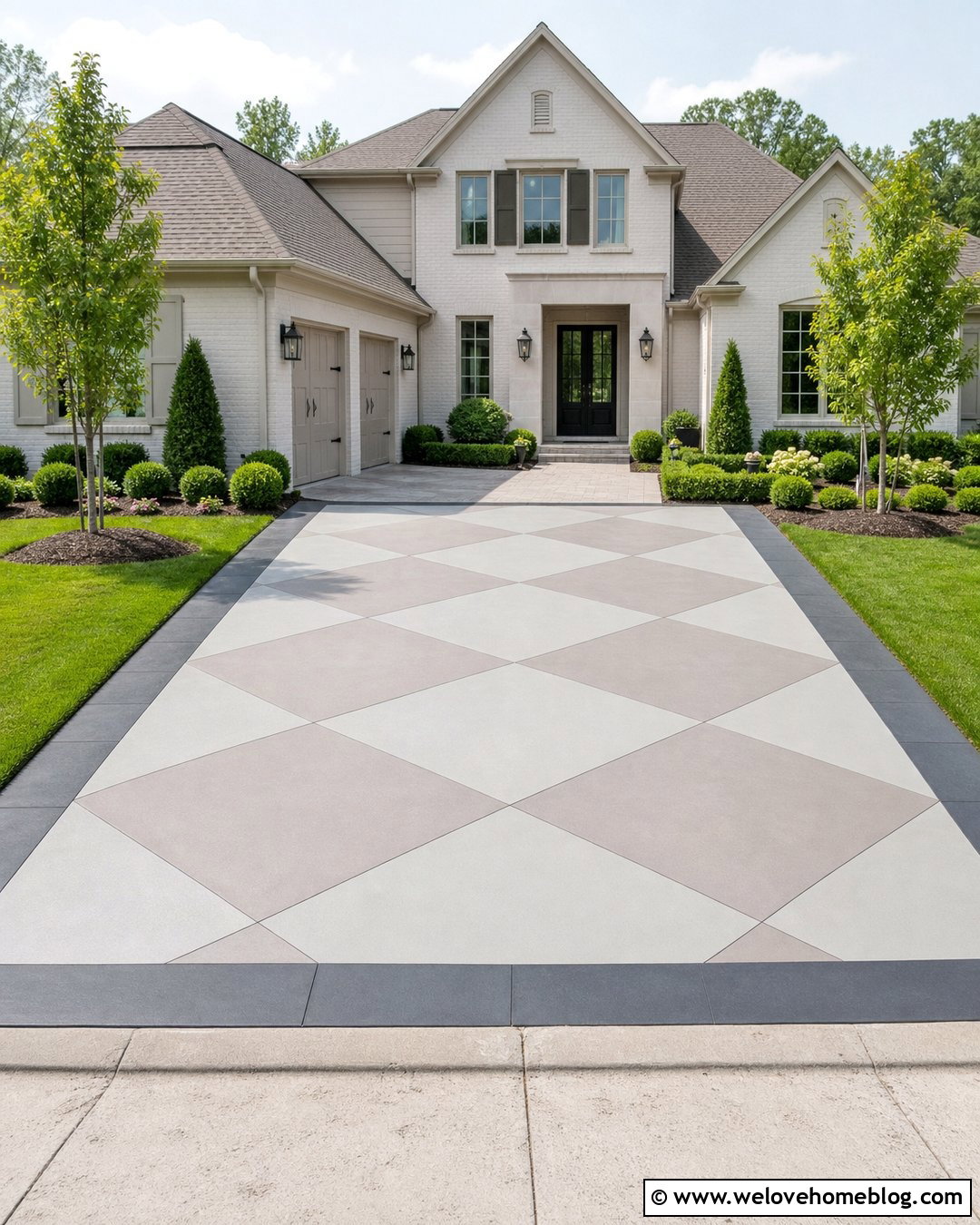
A diamond pattern can transform a broad driveway into a structured decorative surface. Begin with a medium-gray base coat, then create large diamonds using a lighter gray or soft taupe. Oversized shapes are easier to read from the curb and less visually crowded than tiny repeating diamonds. Align the pattern carefully with the garage doors and outer driveway edges. A solid dark border can frame the design and hide minor inconsistencies near planting beds. Pair the driveway with simple landscaping, such as lawn panels, rounded shrubs, and a few small trees, so the pavement remains the main feature. This design suits traditional and transitional homes, especially those with symmetrical facades. Apply painter’s tape only after the base coat has cured according to its instructions to protect the underlying finish.
12. Painted Driveway With Checkerboard Pattern
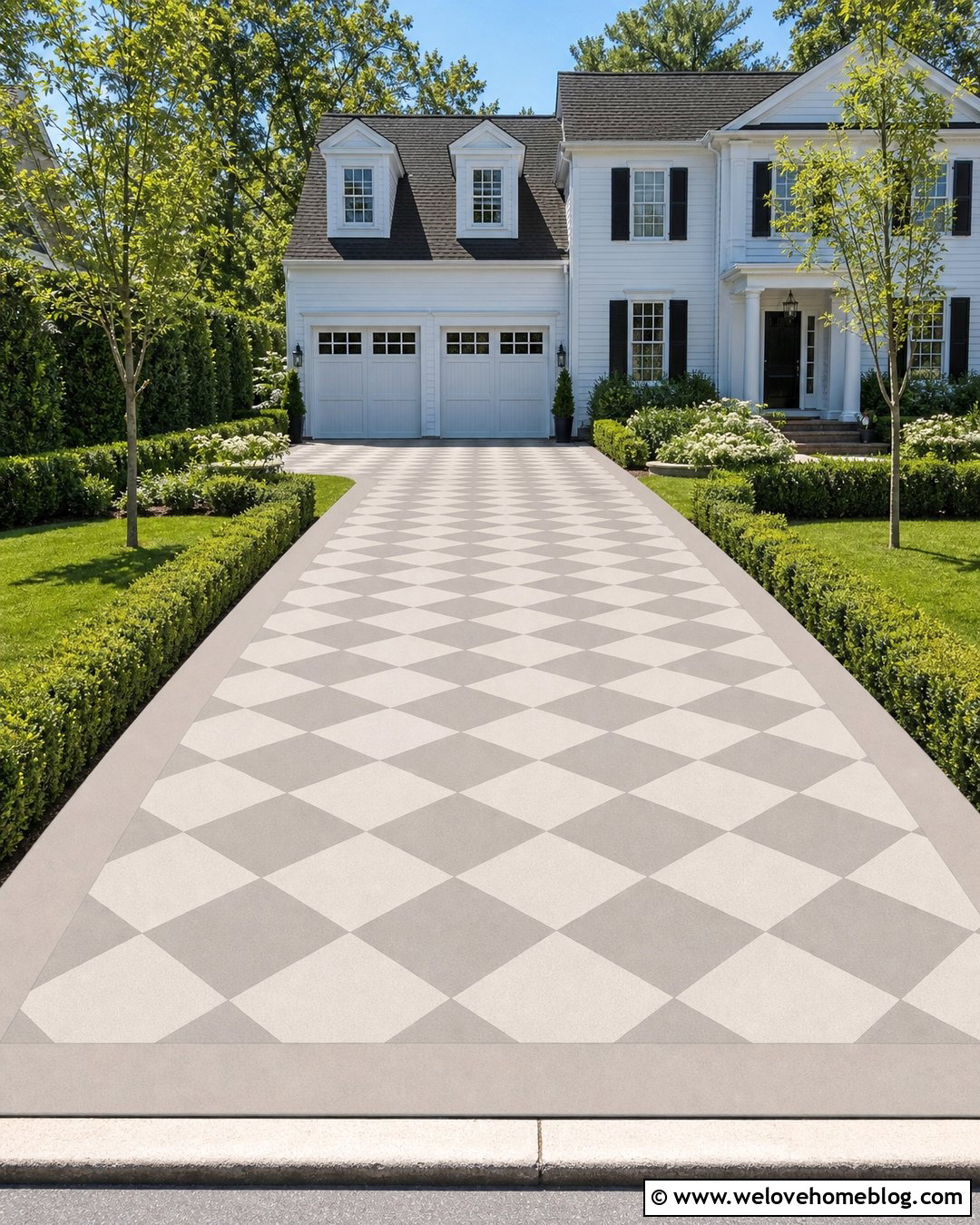
A large-scale checkerboard gives concrete a graphic look that can still feel sophisticated when the colors remain neutral. Alternate warm gray and pale greige squares across a wide, straight driveway. Keep each square large enough to accommodate the scale of a vehicle, avoiding the busy appearance of small tiles. Frame the full surface with a solid greige border and connect it to a matching front walkway. This complete design works best with a simple colonial or contemporary house where the facade provides strong symmetry. Use trimmed hedges and balanced planting beds on both sides to support the orderly pattern. Precise measuring is essential because misaligned squares become obvious from the street. For a quieter variation, choose colors that differ by only two or three shades rather than using extreme black-and-white contrast.
13. Painted Driveway With Herringbone Pattern
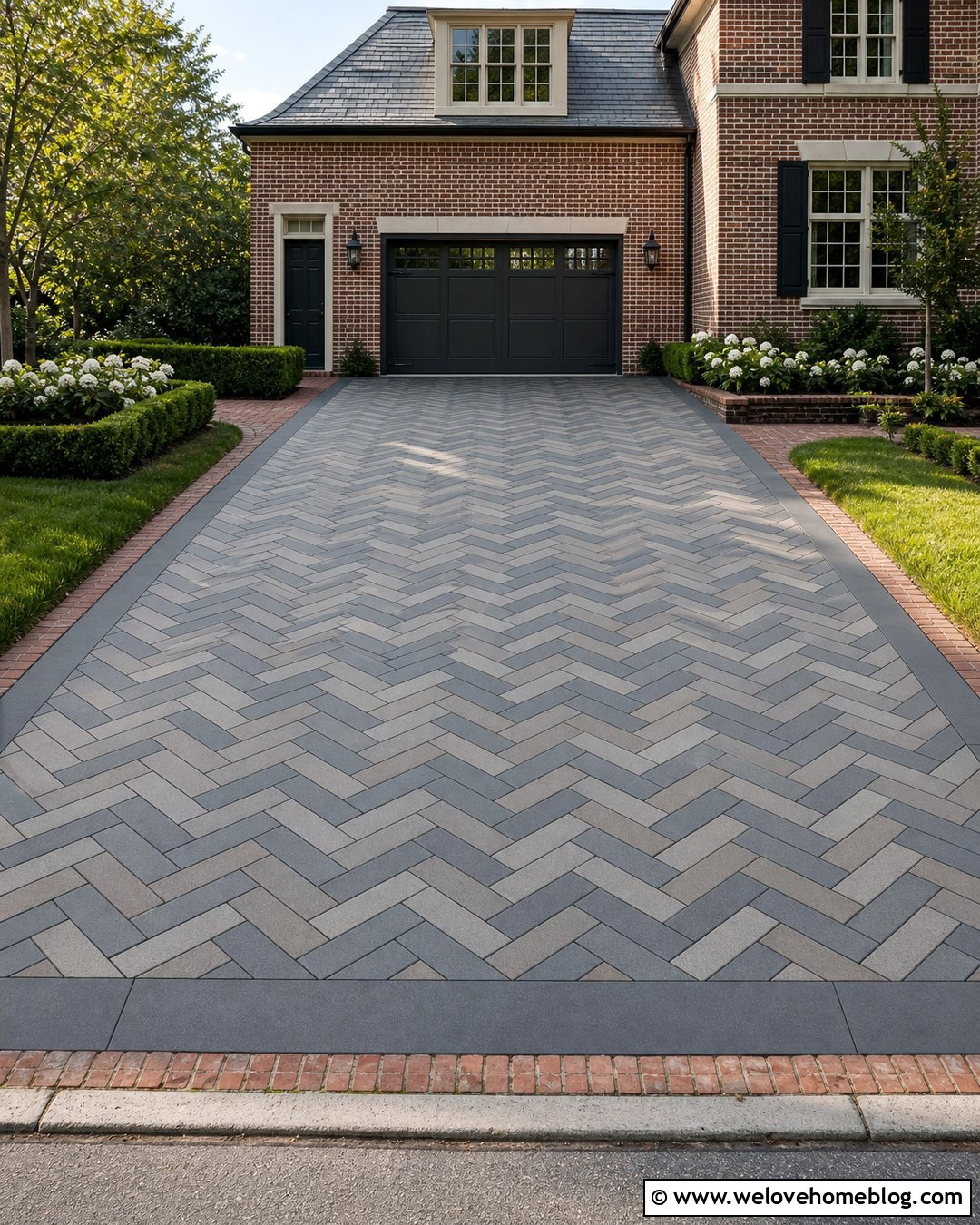
A painted herringbone pattern can suggest brick or pavers while retaining the continuous surface of concrete. Start with a warm charcoal or brown-gray base, then stencil long rectangular units in alternating taupe and greige tones. Use thin dark lines to represent joints, and surround the patterned area with a solid border. The herringbone should run toward the garage to guide the eye along the driveway. Pair this surface with brick edging, low boxwood hedges, and a traditional home with warm masonry details. Slight color variation between the painted units makes the design more believable, but avoid using too many shades. Test the stencil arrangement on paper first, especially around curves and control joints. A professional application may be worthwhile for an expansive driveway where alignment errors would be difficult to conceal.
14. Painted Driveway With Faux Brick Pattern
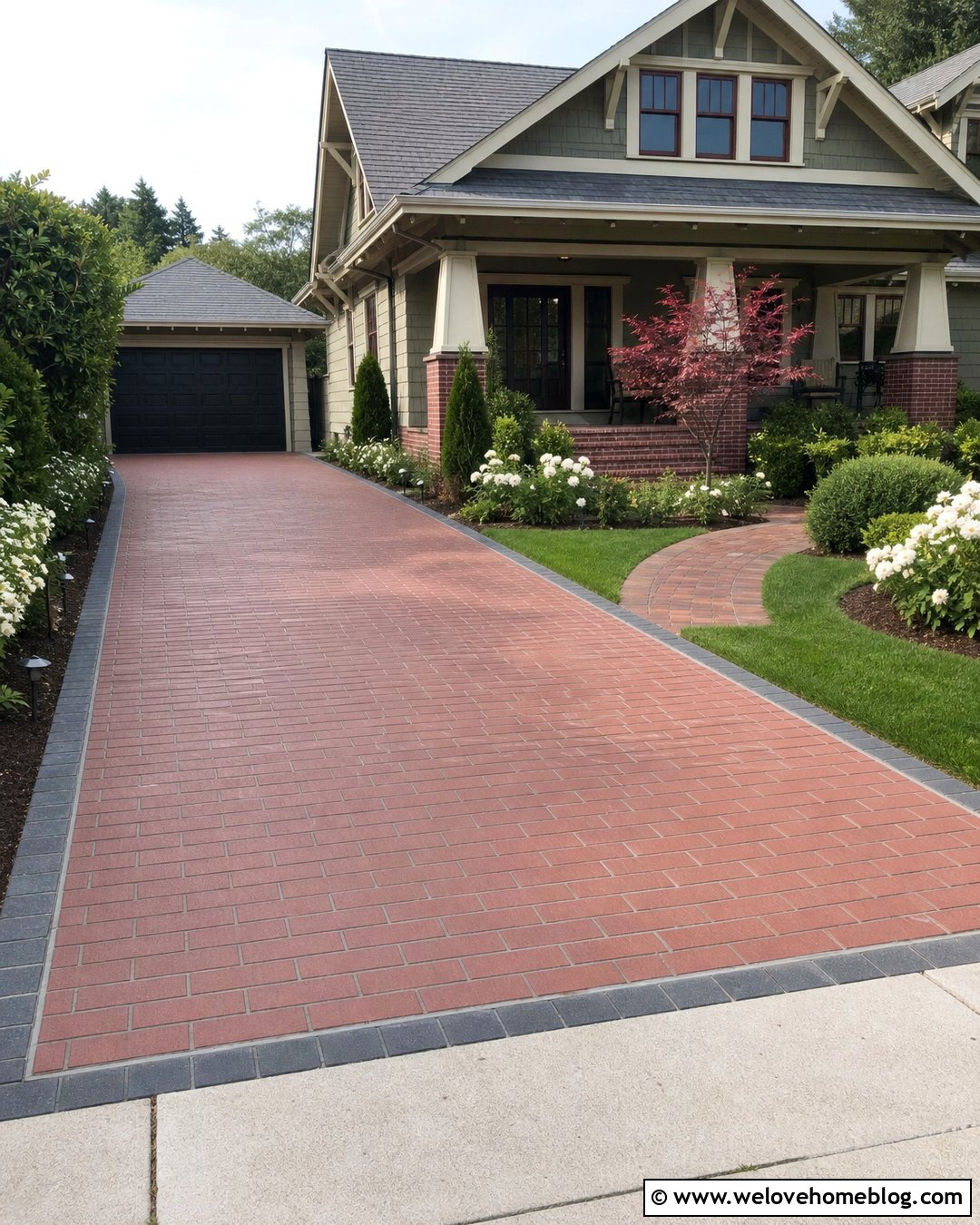
Faux brick paint offers a budget-conscious way to give plain concrete more character. Cover the driveway with a muted brick-red base, then add narrow charcoal or warm-gray mortar lines using a reusable stencil. A running-bond pattern feels familiar and works well on long, straight driveways. Define the edges with real charcoal pavers to make the painted treatment look more substantial. Pair the surface with a colonial, craftsman, or traditional brick home, but select a red tone that complements rather than exactly copies the facade. Plant evergreen shrubs, white flowering perennials, and a small ornamental tree around the entrance. Use a few subtly varied brick tones to prevent the surface from appearing flat. Keep the garage apron simpler so the pattern does not overwhelm the front elevation.
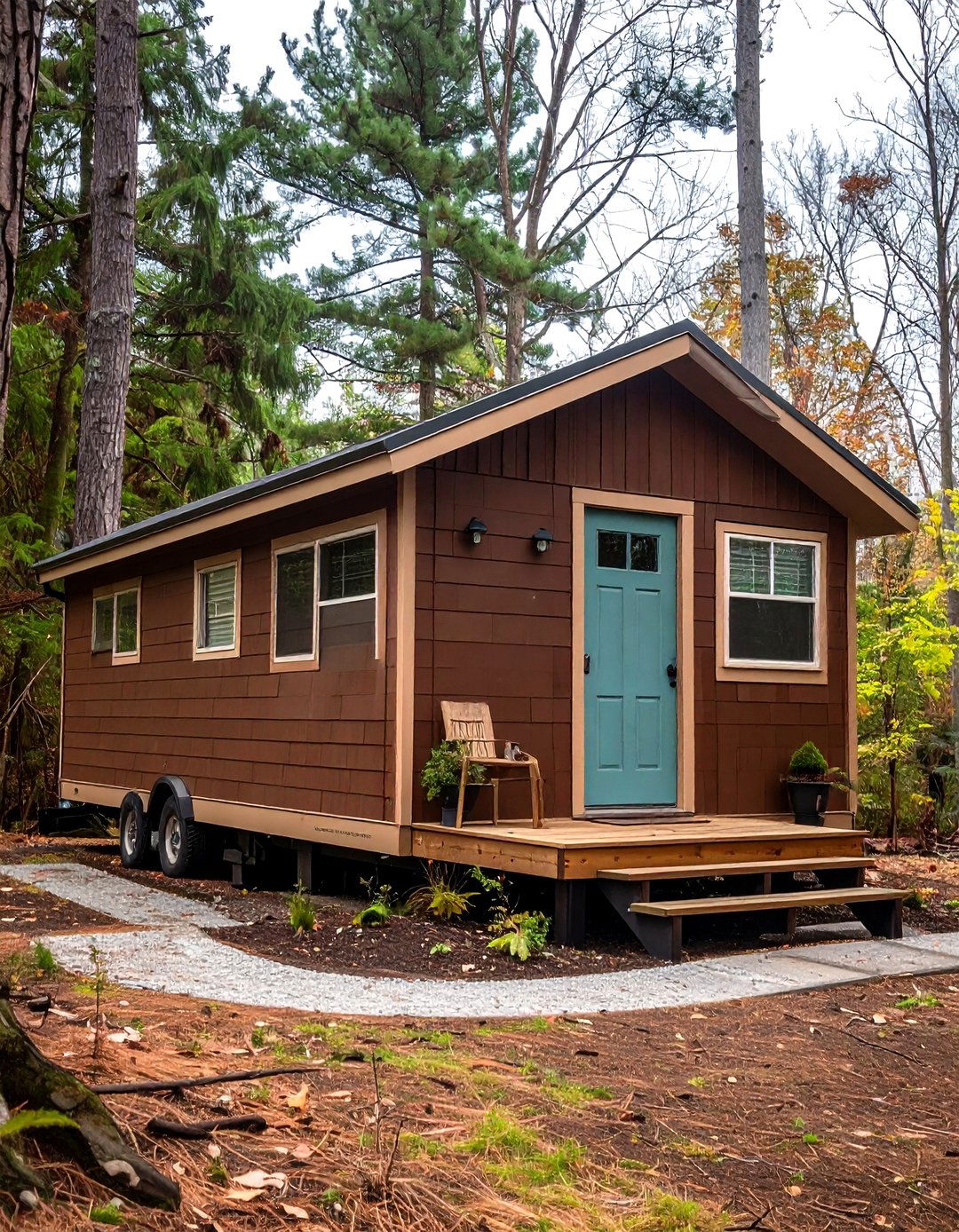


15. Painted Driveway With Faux Stone Pattern
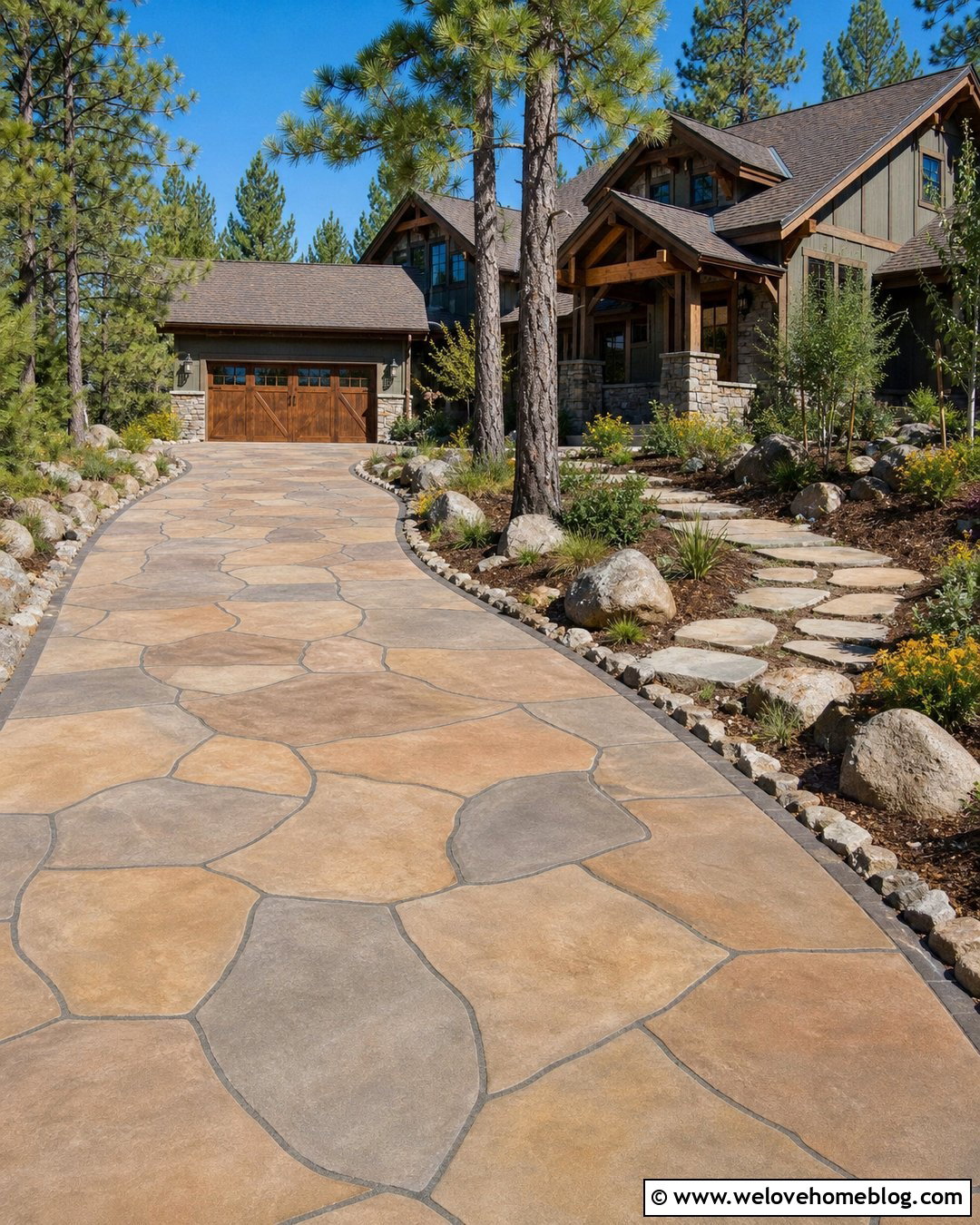
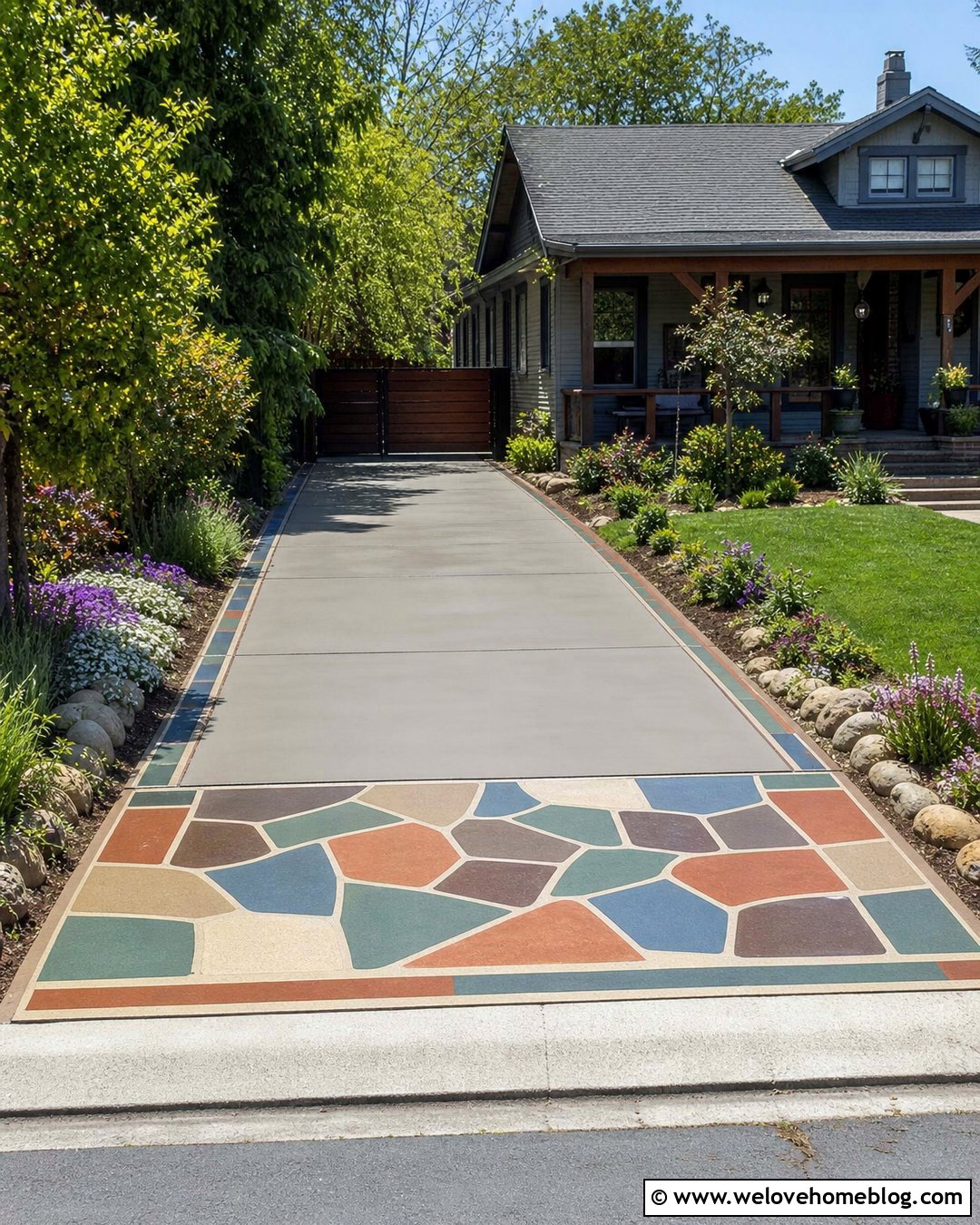
A faux stone finish can soften a large concrete area and connect it visually with natural landscaping. Paint irregular flagstone shapes in layered shades of taupe, sandstone, gray, and muted brown. Separate them with narrow charcoal joints, making each painted stone large enough to suit the scale of a driveway. Follow the outer curve naturally instead of forcing every shape into a rigid grid. A real stone border, boulder accents, and informal planting beds help the illusion feel grounded in the landscape. This treatment pairs well with rustic ranch, mountain, cottage, and craftsman homes. Avoid tiny stones or extreme color changes, which can make the surface look cluttered. The finished pattern should appear balanced from the curb, even when vehicles are not present to break up the expanse.
16. Painted Driveway With Geometric Lines
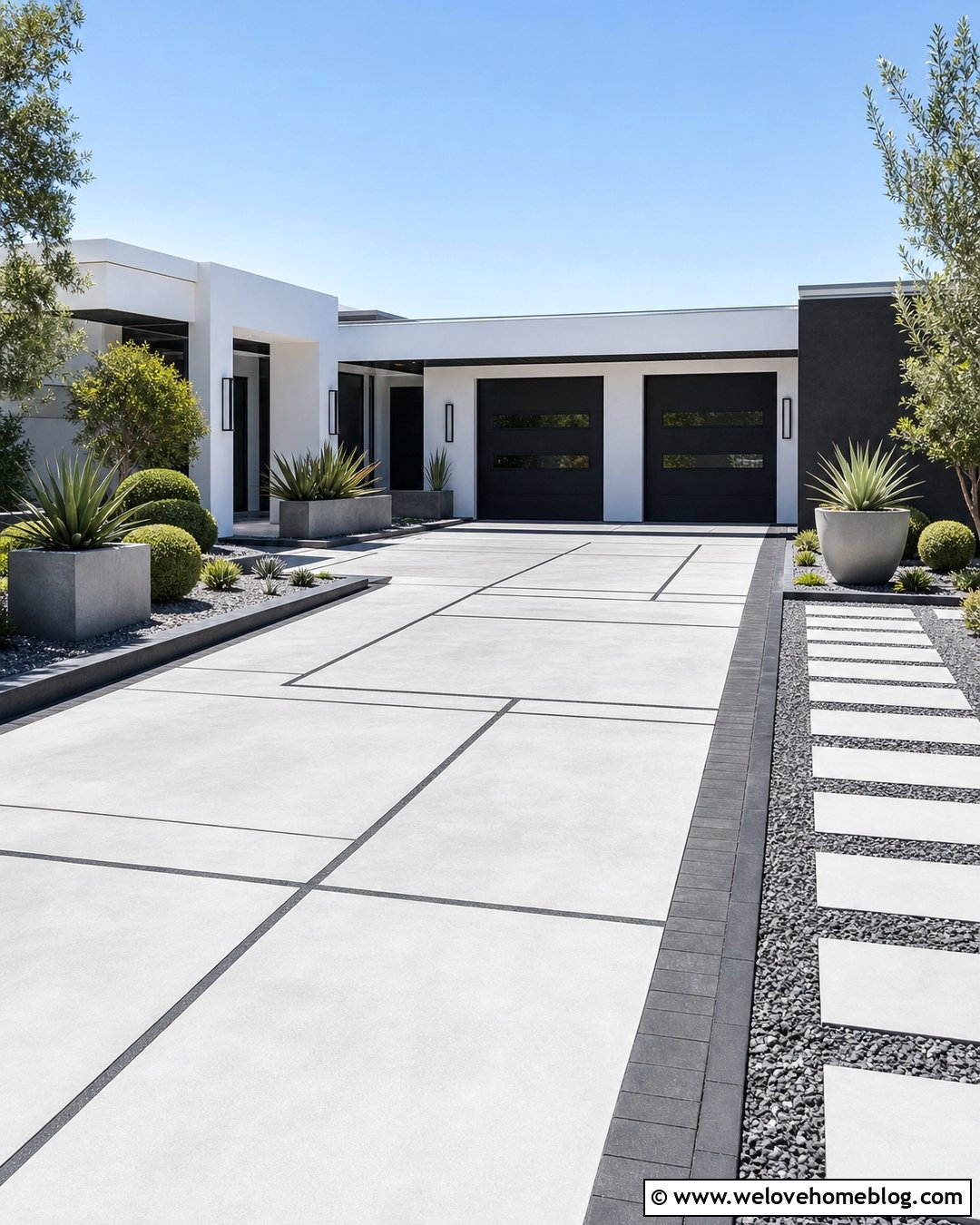
Thin geometric lines can give a concrete driveway a modern identity without covering it in complicated artwork. Apply a pale gray base and add charcoal lines that form offset rectangles across the surface. Let the lines follow expansion joints where possible, then continue selected segments to create an intentional asymmetrical composition. A straight driveway leading to a flat-roofed or contemporary house provides the best setting for this design. Use rectangular planting beds, sculptural shrubs, concrete planters, and linear walkway slabs around the edges. Maintain generous open areas between lines so the pavement remains calm and easy to understand. A narrow black paver border can reinforce the geometry. Map the entire pattern before painting, checking how it meets the sidewalk, garage apron, drainage areas, and front path.
17. Painted Driveway With Wide Border
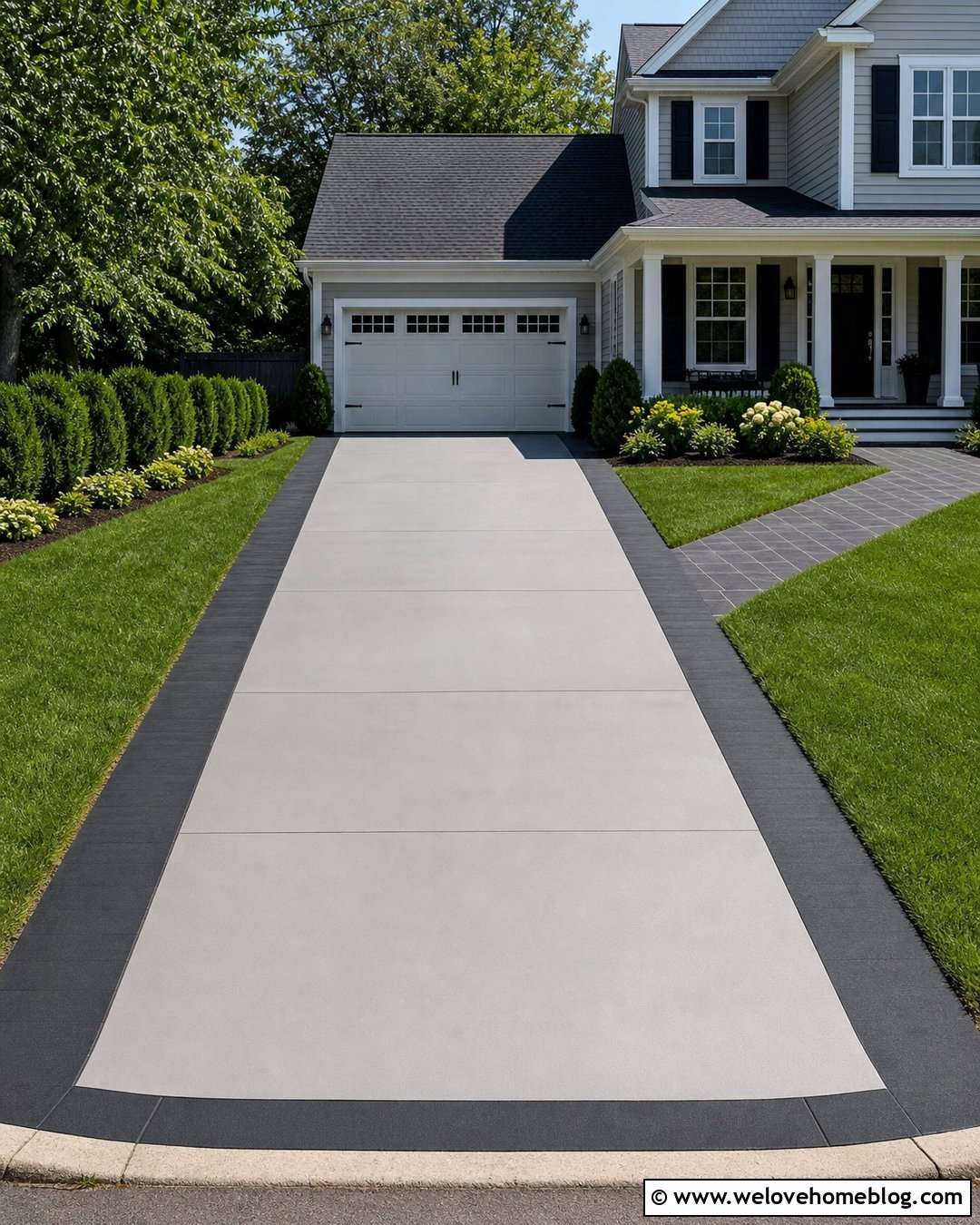
Sometimes the simplest transformation is a strong border around a solid painted surface. Coat the main field in warm gray, then apply a wide charcoal frame along the driveway edges and garage apron. The border visually contains patched or discolored concrete and gives a basic rectangular driveway greater definition. It can also coordinate with a dark roof, shutters, or front door. Pair this design with neat lawn strips, low evergreen hedges, and a paver walkway that crosses the driveway near the porch. Keep the frame consistent in width, even where the driveway flares toward the street. For a curved layout, use flexible measuring tools and smooth lines rather than abrupt changes. A moderately contrasting border is easier to maintain than bright white, especially near soil, mulch, and frequently used tire paths.
18. Painted Driveway With Center Stripe
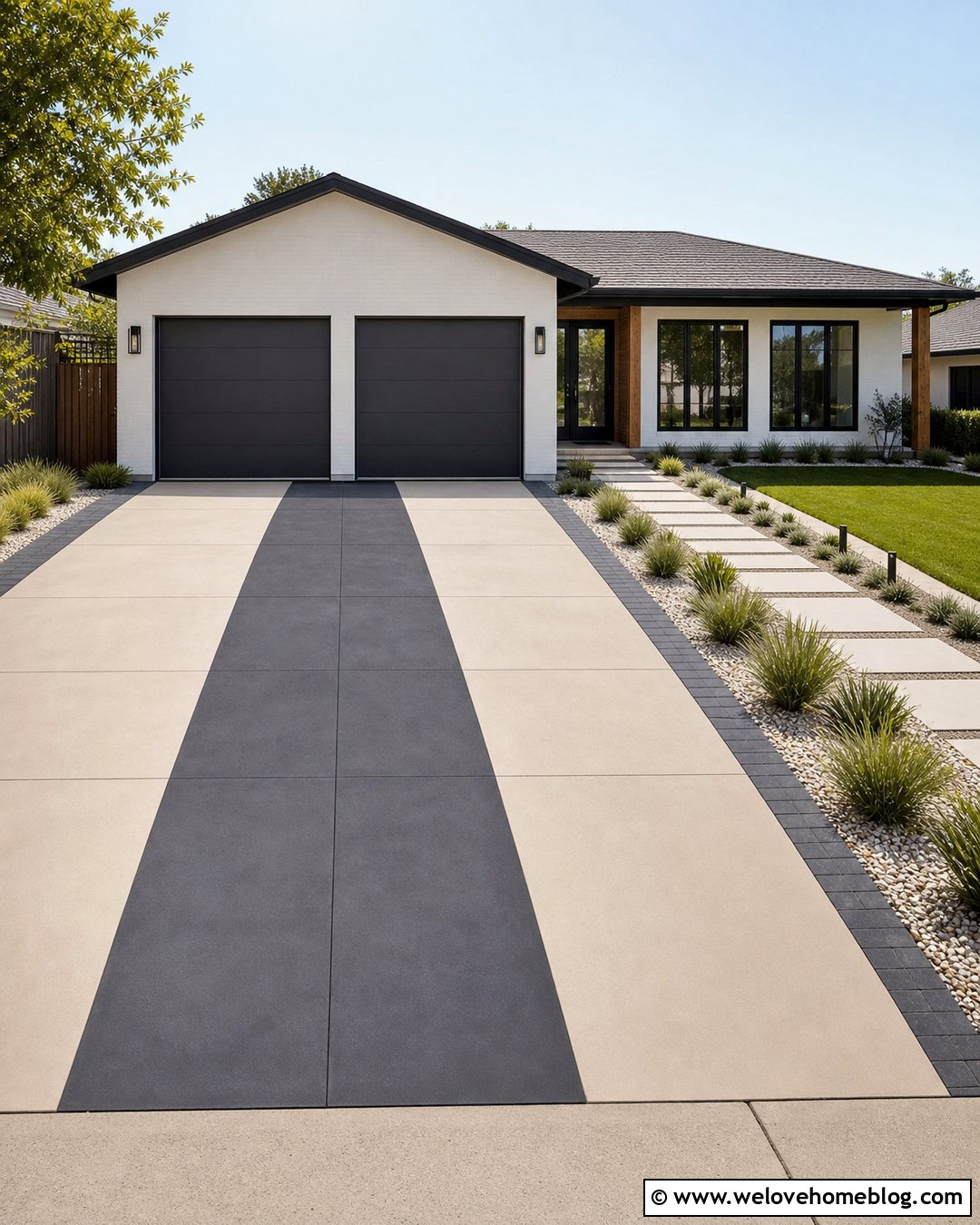
A broad center stripe can make an extra-wide driveway look more organized. Paint the overall concrete surface soft taupe, then run one wide charcoal panel from the curb to the garage. The stripe should align with the space between two garage doors or with the center of a single architectural feature. Add matching charcoal pavers along the outer edges to balance the dark center. This layout is particularly effective for modern ranch and midcentury homes with strong horizontal lines. Low grasses, gravel mulch, and flat planting beds preserve the uncluttered appearance. Avoid a narrow line that could resemble a road marking. Instead, create a substantial central panel that clearly reads as a decorative design. Use existing control joints to divide the stripe and simplify masking during application.
19. Painted Circular Driveway With Contrasting Ring
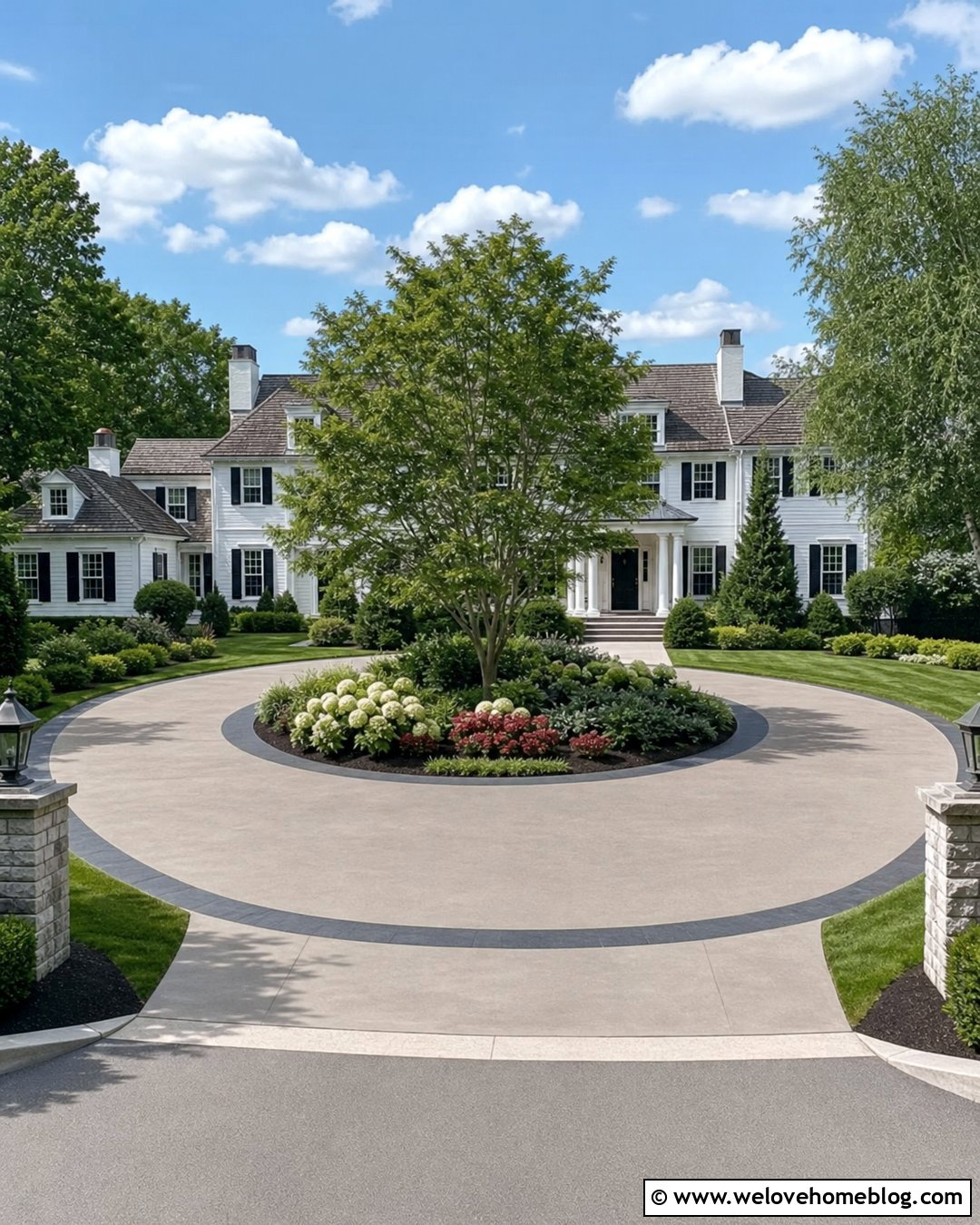
A circular driveway naturally provides an opportunity for a painted ring. Cover the main concrete surface in medium greige, then outline the outer and inner curves with charcoal bands. The contrasting rings make the circular layout clear from the street and create a polished connection between the entrance, front door, and exit. Place a landscaped island at the center with a specimen tree, layered shrubs, and seasonal perennials. Brick pillars or low stone walls can frame the two driveway openings. This complete look suits colonial, French country, and large traditional homes. Keep the painted bands proportional to the broad surface; very thin outlines may disappear from a distance. Make certain the coating does not block or disguise drainage channels, and use a traction-enhancing finish on curved or inclined portions of the drive.


20. Painted Curved Driveway With Landscape Border
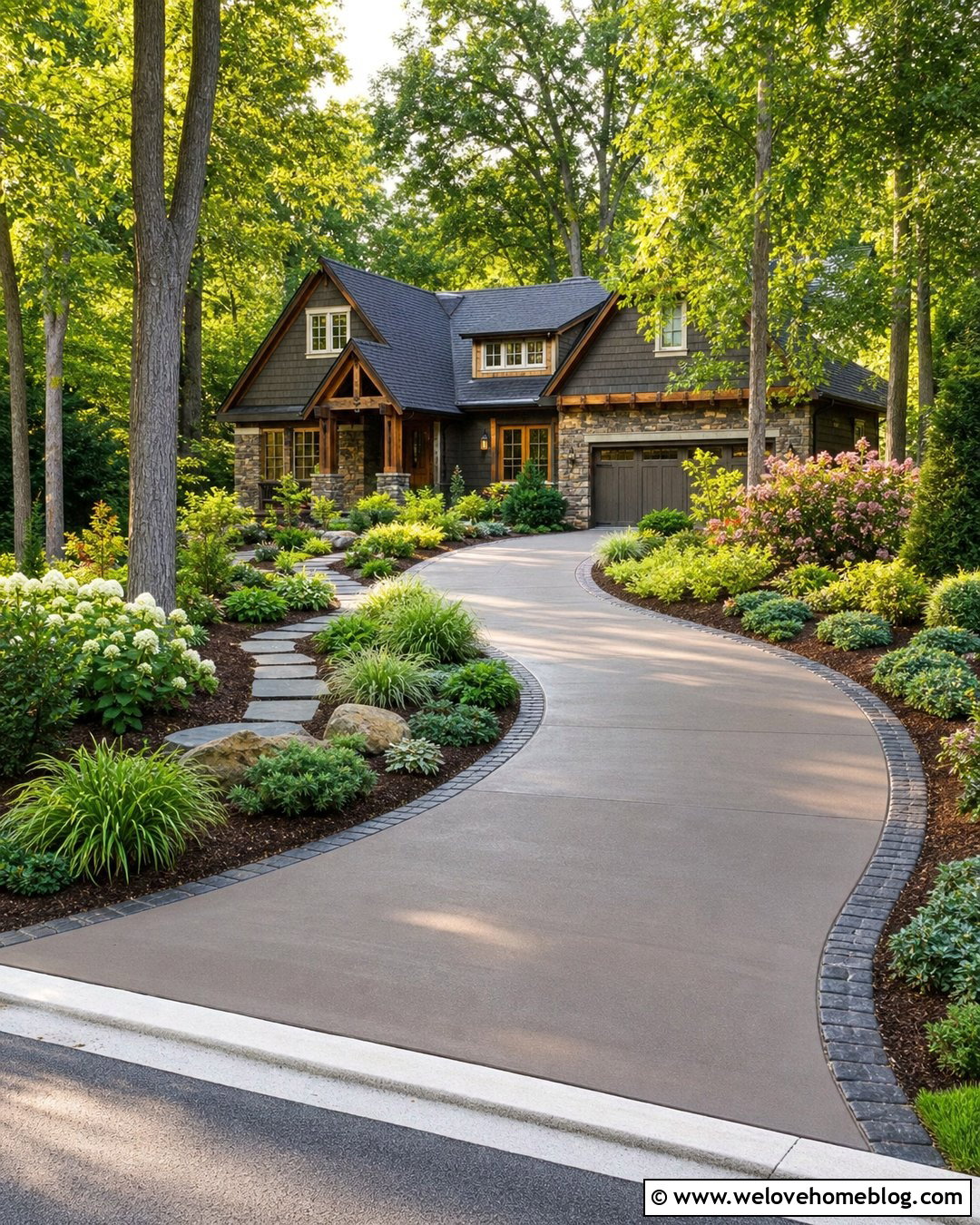
A gently curved driveway looks more inviting when its paint color responds to the surrounding garden. Choose a warm mushroom-gray coating that blends with stone, bark mulch, and mature trees. Define the outside curve with dark cobblestone edging and use a thinner stone ribbon along the inside. Layer ornamental grasses, flowering shrubs, and ground covers beside the pavement, keeping taller plants away from important sightlines near the street. This approach works well for cottages, craftsman homes, and wooded suburban properties. The painted surface should remain simple because the curved layout and landscaping already provide visual movement. Follow the concrete’s control joints rather than painting decorative lines that compete with the shape. A low-luster finish will feel more natural beside informal planting than a glossy, highly reflective coating.
21. Painted Driveway With Speckled Finish
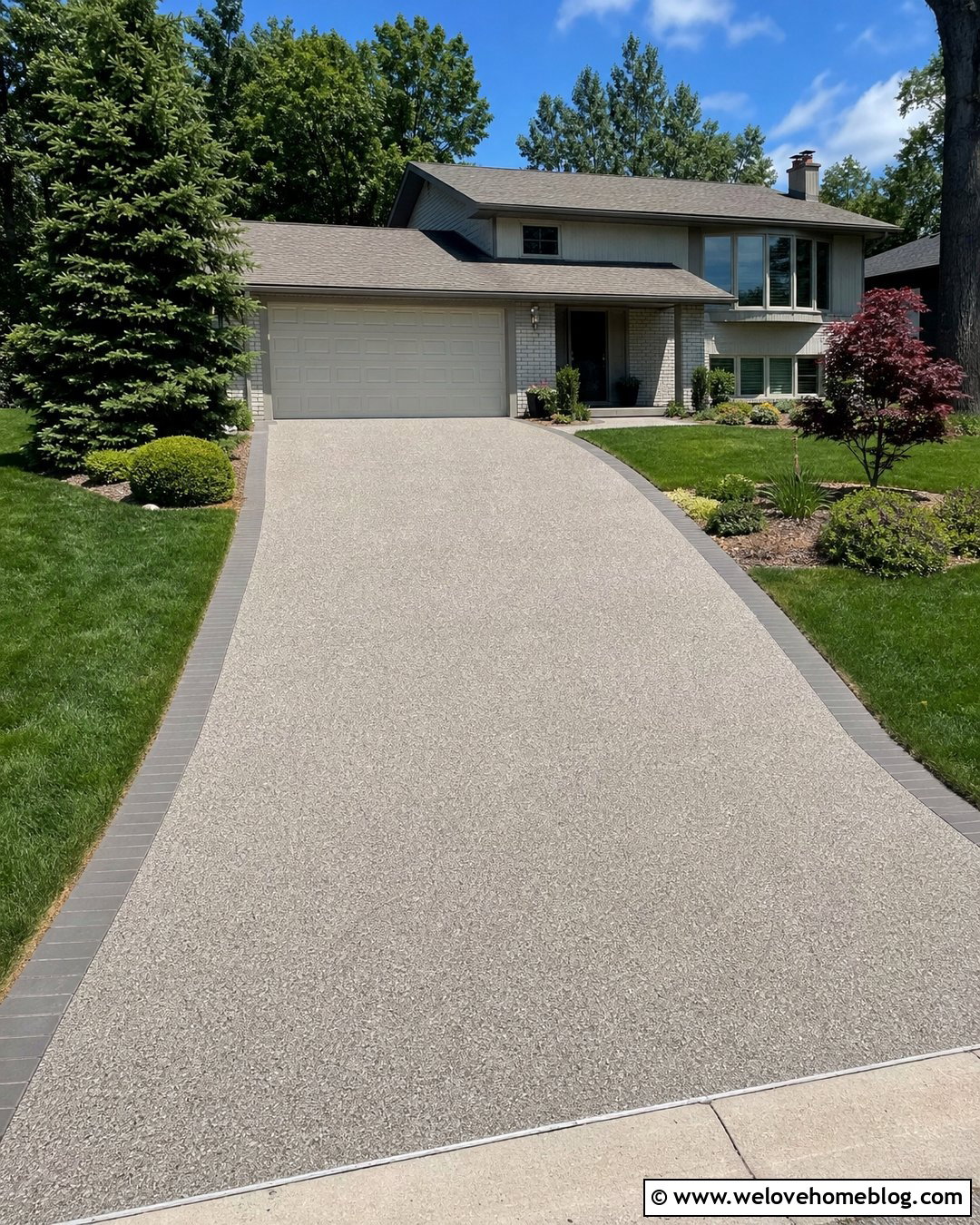
A speckled coating can disguise small stains and surface color variations more effectively than a completely solid finish. Choose a gray, tan, or greige textured driveway coating containing subtle multicolored flecks. Apply it across a straight or flared concrete driveway, then frame it with smooth charcoal pavers. The contrast between the softly textured field and crisp edging creates a finished appearance without a complicated pattern. Pair the surface with a casual ranch, split-level, or suburban home surrounded by low-maintenance shrubs and lawn. Keep the flecks close in color to the base so the result resembles natural aggregate rather than confetti. Textured decorative coatings may require product-specific application tools and multiple coats, so follow the coverage, preparation, and drying directions carefully. ()
22. Painted Driveway With Color Flakes
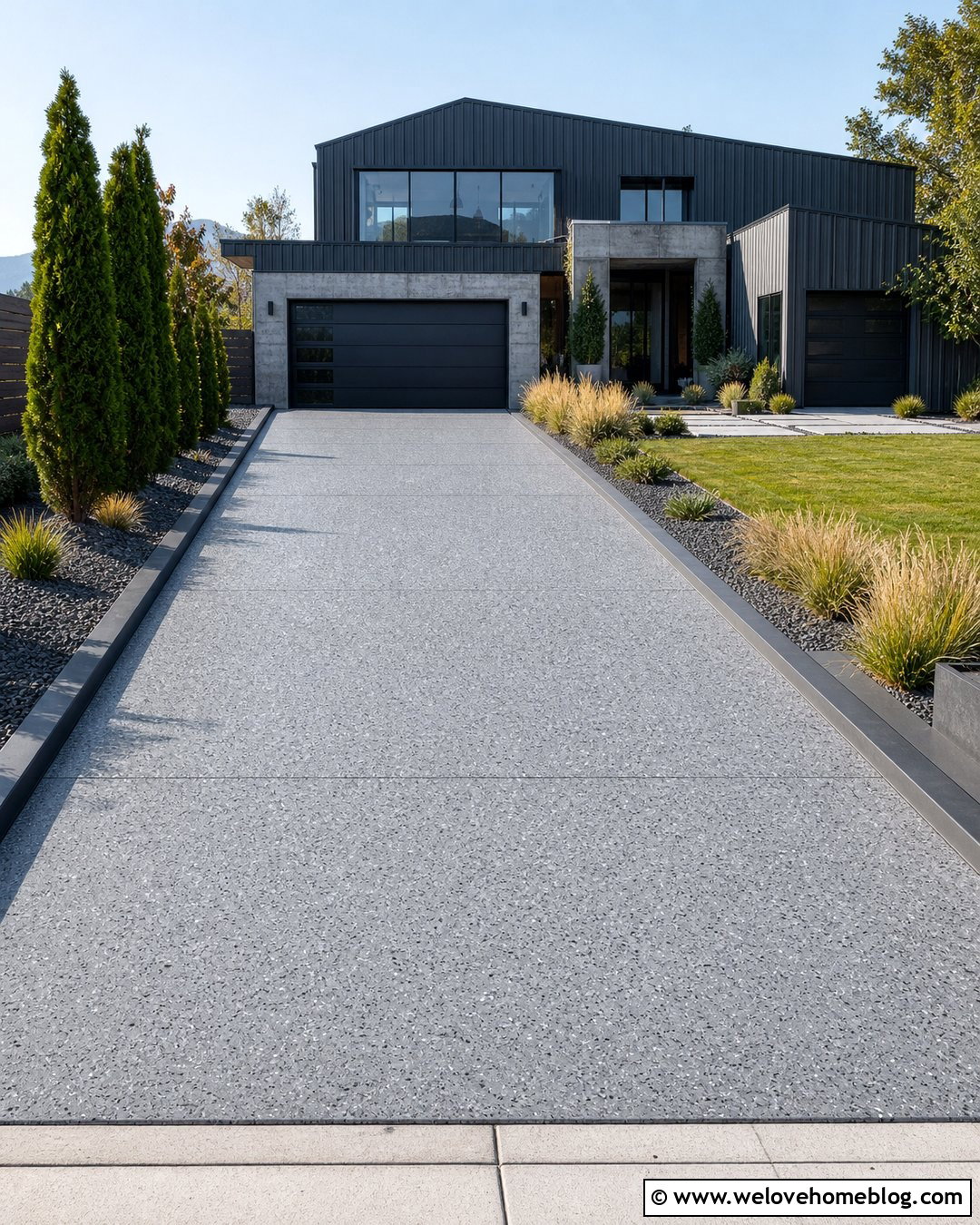
Decorative color flakes can give a painted concrete driveway more depth while helping everyday dirt appear less noticeable. Begin with a medium-gray or tan vehicle-rated base coat, then distribute black, white, and coordinating gray flakes evenly across the wet surface. Use a restrained blend with small flakes for a residential look. Border the driveway with solid concrete curbing or dark pavers so the flecked coating has a clean visual stopping point. This finish complements contemporary, industrial-inspired, and simple suburban homes. Surround it with structured evergreens, ornamental grasses, and broad lawn areas. Avoid concentrating flakes in random patches; consistent distribution makes the driveway appear professionally finished. Confirm that every component in the coating system is suitable for exterior UV exposure and drivable concrete before application.
23. Painted Driveway With Stenciled Tile Pattern
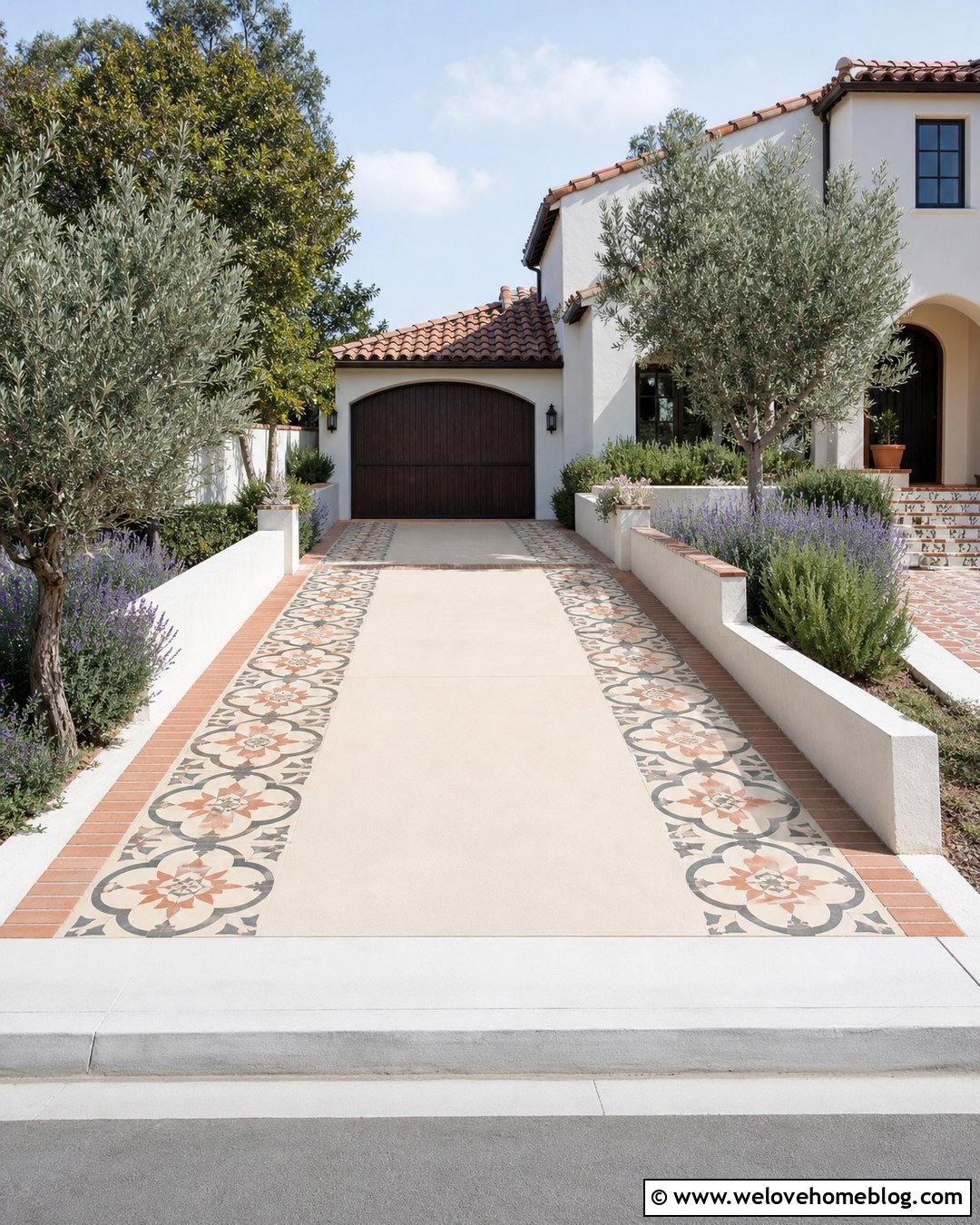
A stenciled tile pattern can bring Mediterranean character to a driveway without making the entire surface overly ornate. Paint the main field warm cream or pale sand, then stencil large repeating motifs in muted terracotta and charcoal. Limit the pattern to broad side panels or the garage apron, leaving the primary tire paths in a solid coordinating color. This controlled placement reduces visual clutter and simplifies future touch-ups. Use clay brick edging, stucco garden walls, rosemary, lavender, and small olive trees to connect the pavement with the landscape. The pattern suits Spanish, Mediterranean, and courtyard-style houses. Select an uncomplicated stencil with thick lines that will remain visible from the curb. Intricate, delicate details may disappear at driveway scale or wear unevenly under regular vehicle traffic.
24. Painted Driveway With House Number
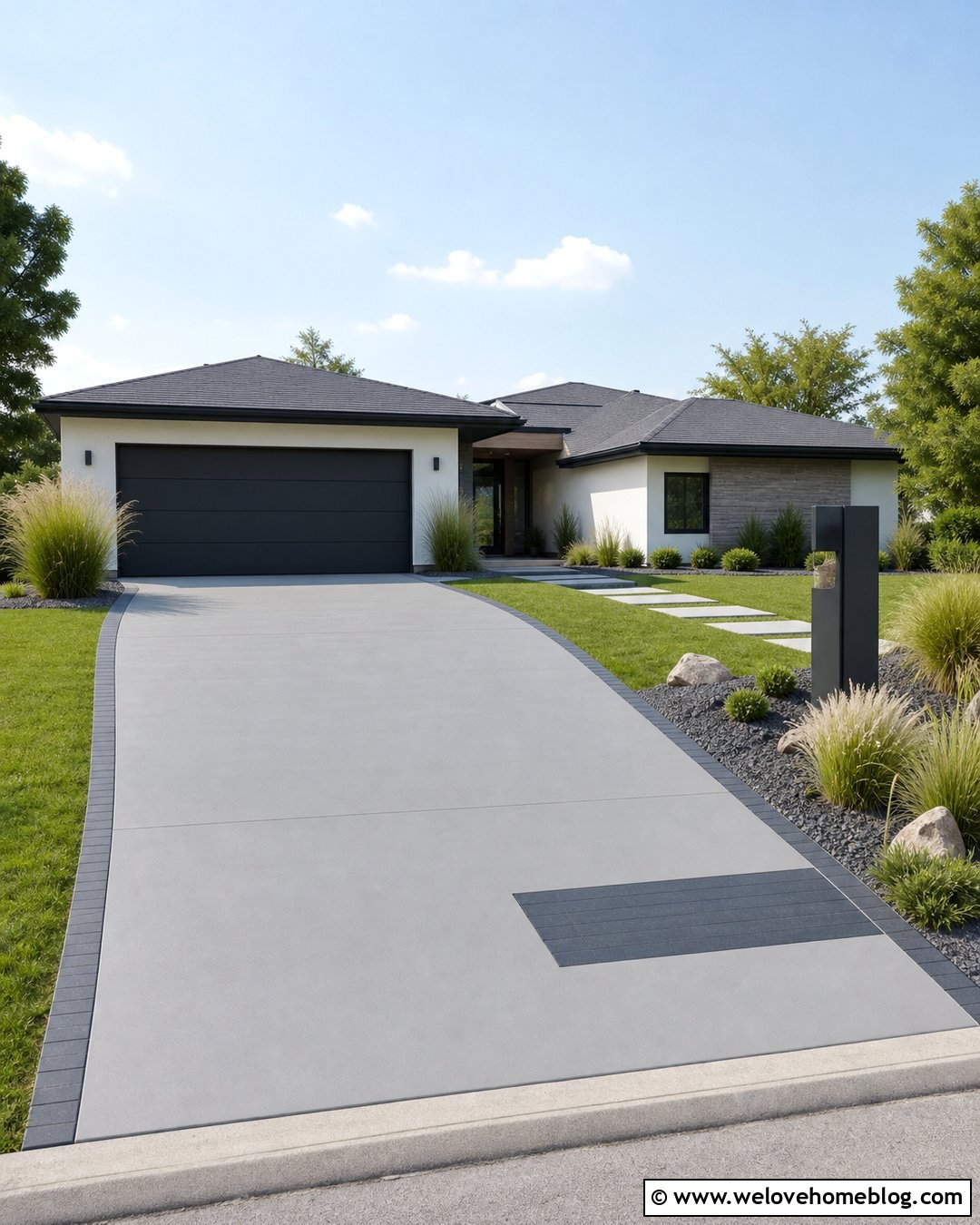
An oversized house number can become a practical accent when integrated carefully into a painted driveway entrance. Use a soft gray coating across the concrete, then place the address inside a dark charcoal rectangular panel near one edge of the apron. Keep it away from primary tire paths and ensure it remains secondary to any code-compliant address display on the house or mailbox. Border the driveway with matching charcoal pavers and add a coordinated freestanding address sign among low ornamental grasses. This modern layout works well with a simple ranch or contemporary home. Choose clean, easy-to-read numerals rather than a decorative script. Before painting, confirm that local or HOA rules allow pavement graphics. The panel should look residential and architectural, not like a public roadway marking.
25. Painted Driveway With Garage Apron Accent
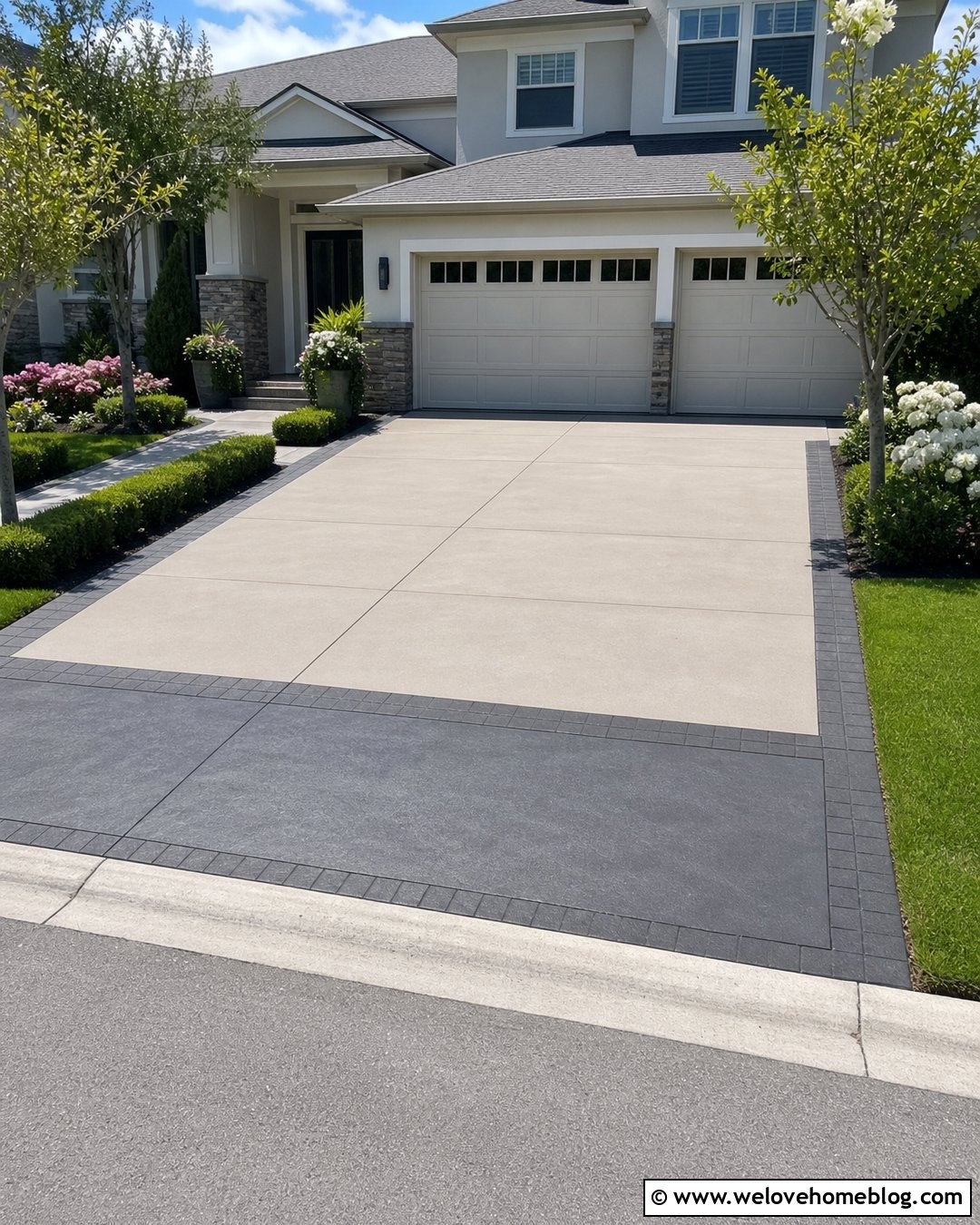
Painting only the garage apron creates a strong focal point with less maintenance than decorating the entire driveway. Coat the main concrete surface in light greige, then paint the final section near the garage in charcoal or slate gray. Follow an existing control joint to create a clean transition, and add a matching paver band across the driveway. The darker apron visually anchors white or pale garage doors and can conceal minor staining in this frequently used area. Repeat the accent color on the walkway border, porch steps, or planters for a coordinated entrance. This approach suits almost any home style and works particularly well on long driveways. Allow the coating to cure fully before vehicle use, following the exact manufacturer instructions rather than relying only on touch-dry time. ()
Conclusion:
The most successful 25 paint driveway ideas treat the pavement as part of the home’s complete exterior rather than as an isolated slab. Match the color to the facade, choose patterns that suit the driveway’s scale, and connect the finish with practical borders and landscaping. Neutral coatings offer lasting flexibility, while stencils, contrasting bands, and faux patterns create a more decorative result. Before painting, confirm that the concrete is sound, clean, dry, and properly prepared. Use a coating approved for driveways, add traction where appropriate, and respect all curing times. () Thoughtful preparation and a restrained palette will help the finished driveway look attractive, cohesive, and intentional.

Related posts:



Leave a Reply