
The best 25 Old Money House Driveway Ideas favor quiet refinement over flashy luxury. Think weathered stone, softly colored gravel, traditional brick, clipped hedges, mature trees, and entrances that appear established rather than newly decorated. The driveway should also complement the home’s architecture. A Georgian residence may suit a symmetrical gravel forecourt, while a Tudor house feels natural beside irregular cobblestone. Small details matter too. Granite edging keeps loose material contained, brick aprons create graceful transitions, and understated pillars give gates proper visual weight. Most importantly, the surface, layout, borders, and landscaping should read as one complete composition rather than separate upgrades. Classic materials and restrained planting are especially effective for creating this established estate character. ()
Here are 25 Old Money House Driveway Ideas.
1. Pea Gravel Driveway With Cobblestone Edging
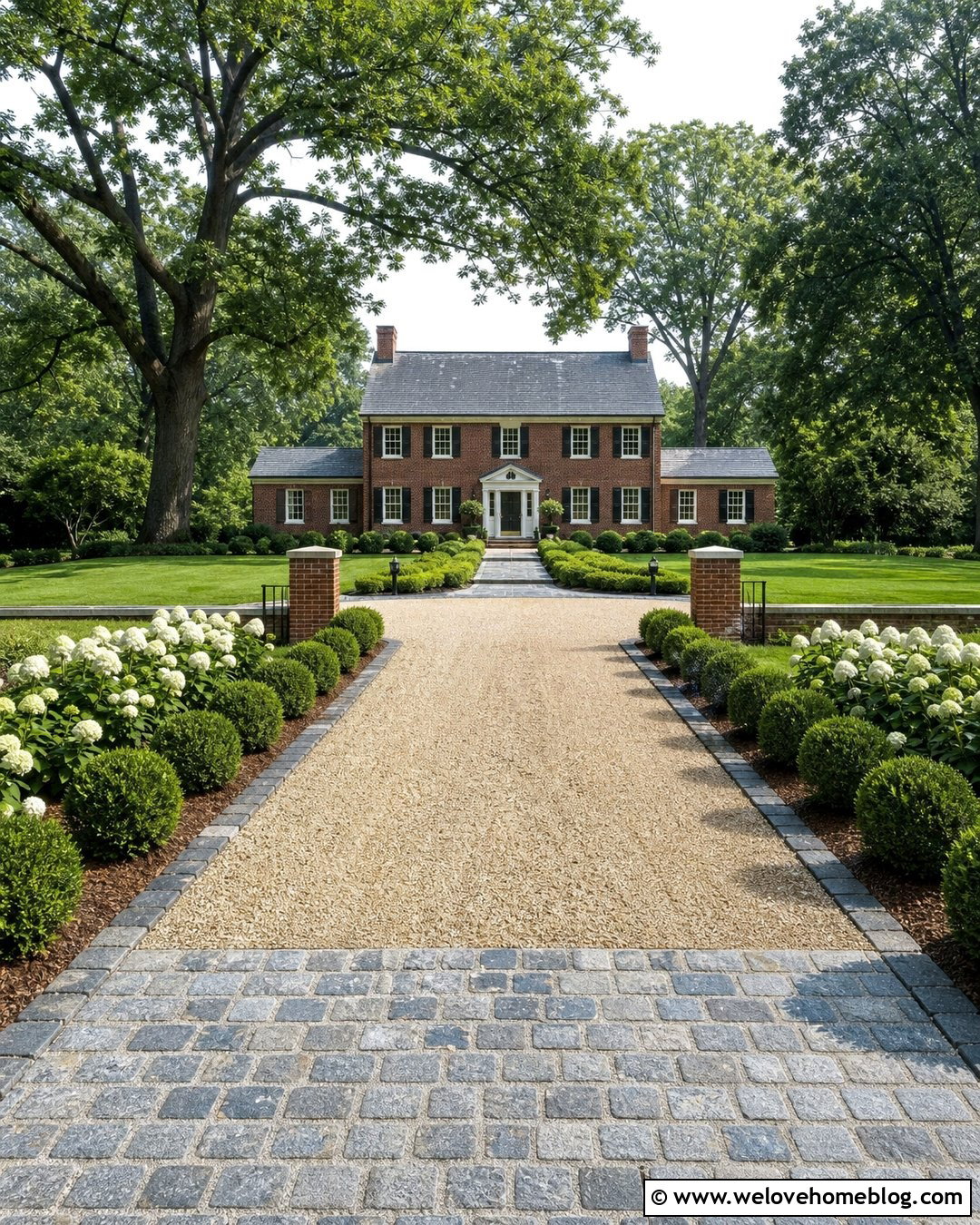
Warm beige pea gravel creates a relaxed entrance that feels appropriate beside an established brick or stone house. Use a straight driveway for a formal property or introduce one gentle curve when the home sits farther from the road. Dark gray cobblestone edging gives the loose gravel a tailored boundary and provides contrast without looking overly decorative. Continue the cobblestone across the entrance as a broad apron for a more substantial finish. On both sides, frame the approach with lawn, clipped boxwood, hydrangeas, and mature shade trees. Keep the planting beds wide and simple rather than filling them with many flower varieties. A properly prepared, compacted base beneath the decorative gravel helps the finished driveway remain stable and attractive. ()
2. Curved Gravel Driveway With Boxwood Hedges
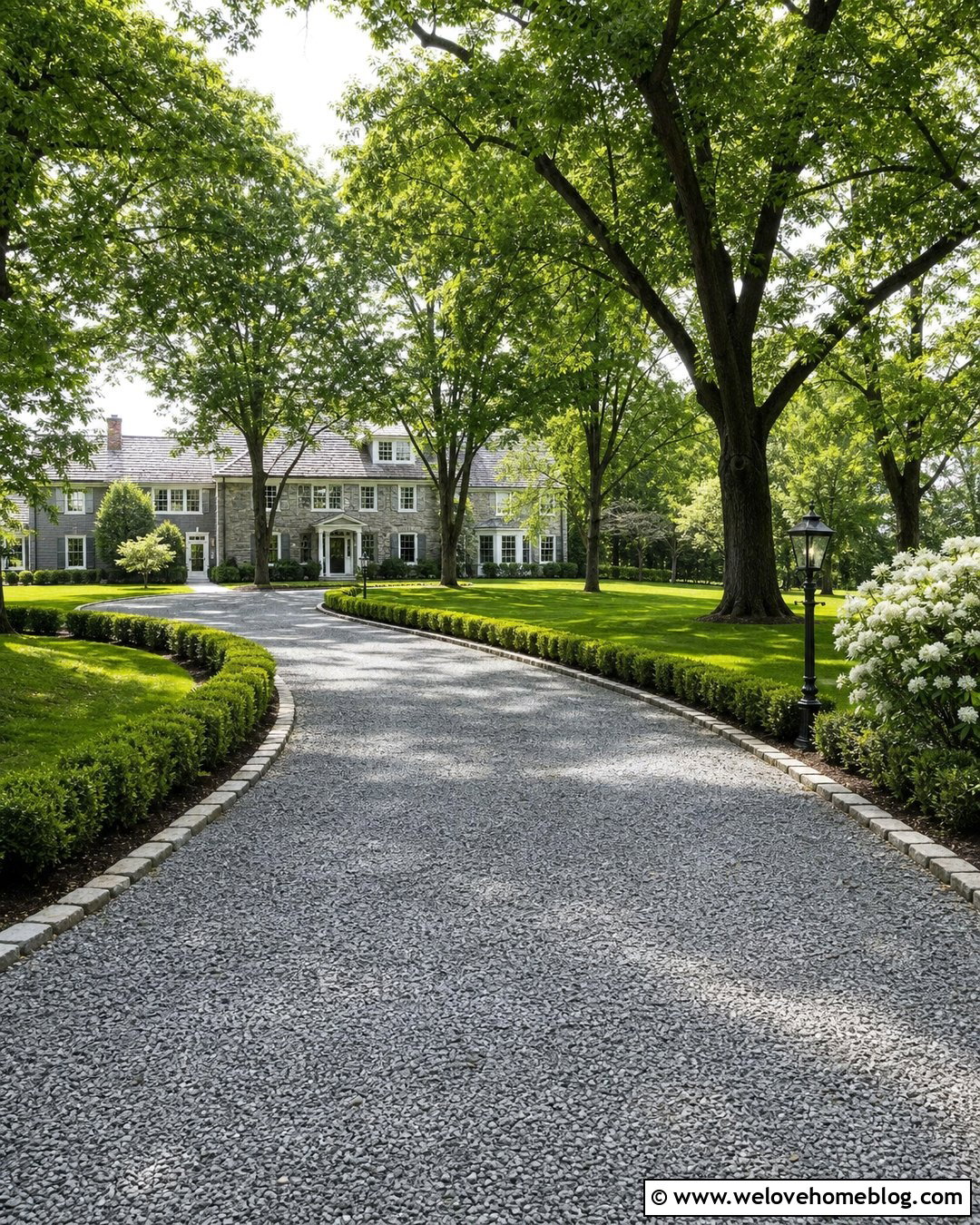
A curved gravel driveway creates a slower, more graceful approach to an old money house. Choose compacted gray crushed gravel rather than brightly colored decorative stone, then contain it with narrow granite setts. Low boxwood hedges can follow the outside curve, while the inner curve holds a broad lawn or a simple planting bed beneath an old oak tree. The house should appear gradually instead of being fully visible from the street. This sense of discovery makes even a moderate front yard feel more private. Avoid sharp bends, crowded flower borders, and excessive ornaments. One traditional lantern near the final turn is enough. Match the driveway’s curves to the natural grade so the complete landscape feels settled into the property.
3. Circular Cobblestone Driveway
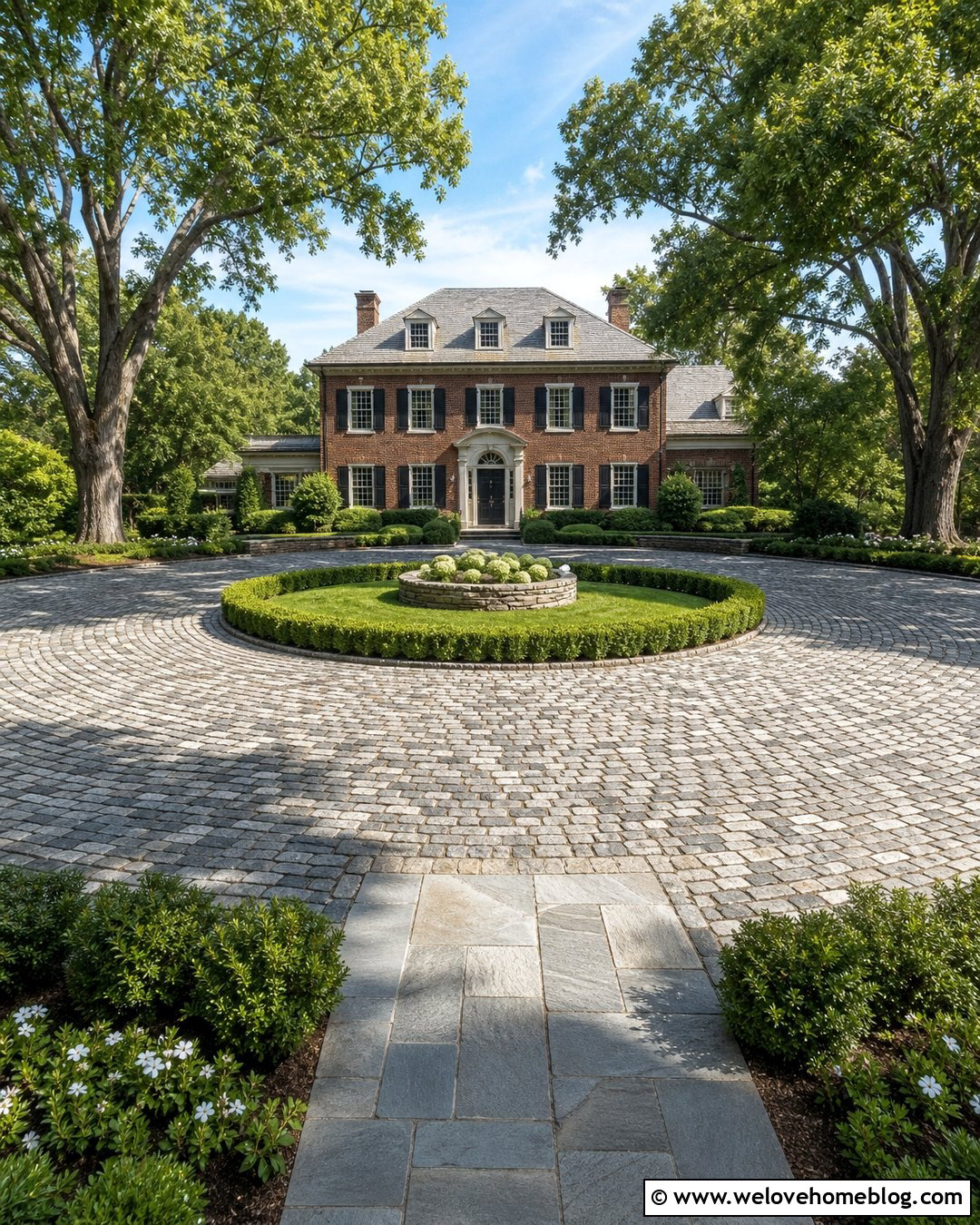
A circular cobblestone driveway works beautifully in front of a Georgian, Federal, or traditional stone residence. Select reclaimed granite cobblestones in mixed charcoal, silver, and muted brown tones. Their slight color changes give the surface an aged appearance that feels more authentic than a perfectly uniform finish. Place a simple lawn circle in the center, surrounded by a low boxwood ring or four symmetrical planting beds. A small stone urn may become the focal point, but it should remain proportionate to the house. Connect the circle to the front steps with a wide flagstone walkway. This layout creates a formal arrival area while making the front elevation feel balanced. Keep the surrounding landscape clipped, open, and visually calm.
4. Herringbone Brick Driveway
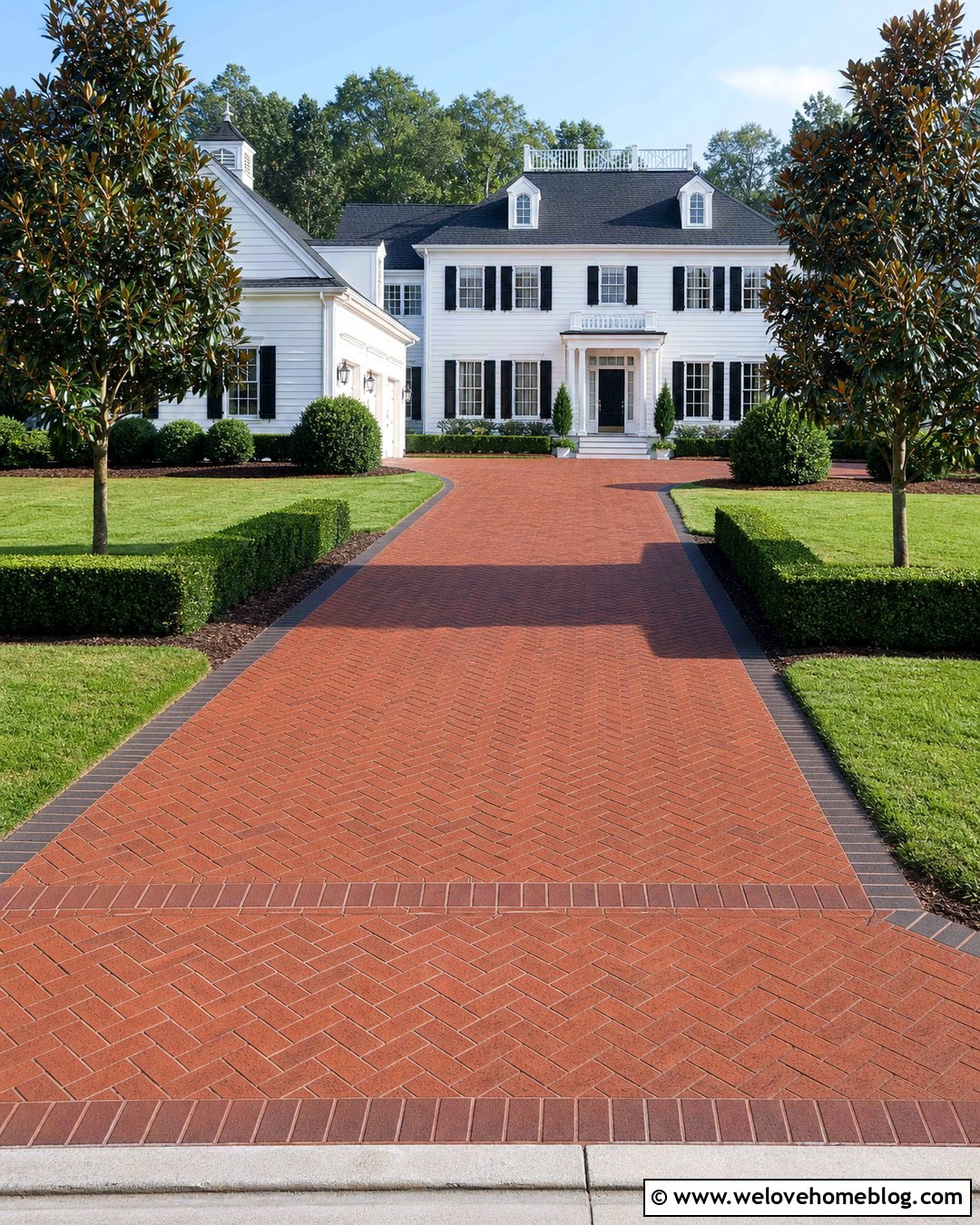
Deep red clay brick pavers laid in herringbone bring warmth to a white Colonial or painted brick home. The pattern has enough movement to make a large driveway interesting, yet it remains traditional and orderly. Use a darker brick soldier course around the perimeter to frame the surface and strengthen its visual connection to the house. A straight approach suits a narrow property, while a wider section near the garage can provide turning space. Plant symmetrical boxwood beds beside the entry walkway and soften the outer edges with mature magnolias or elms. Choose gently weathered brick colors instead of bright orange tones. Brick and gravel combinations have long been used to complement European-inspired and traditional residential architecture. ()
5. Granite Sett Driveway With Stone Pillars
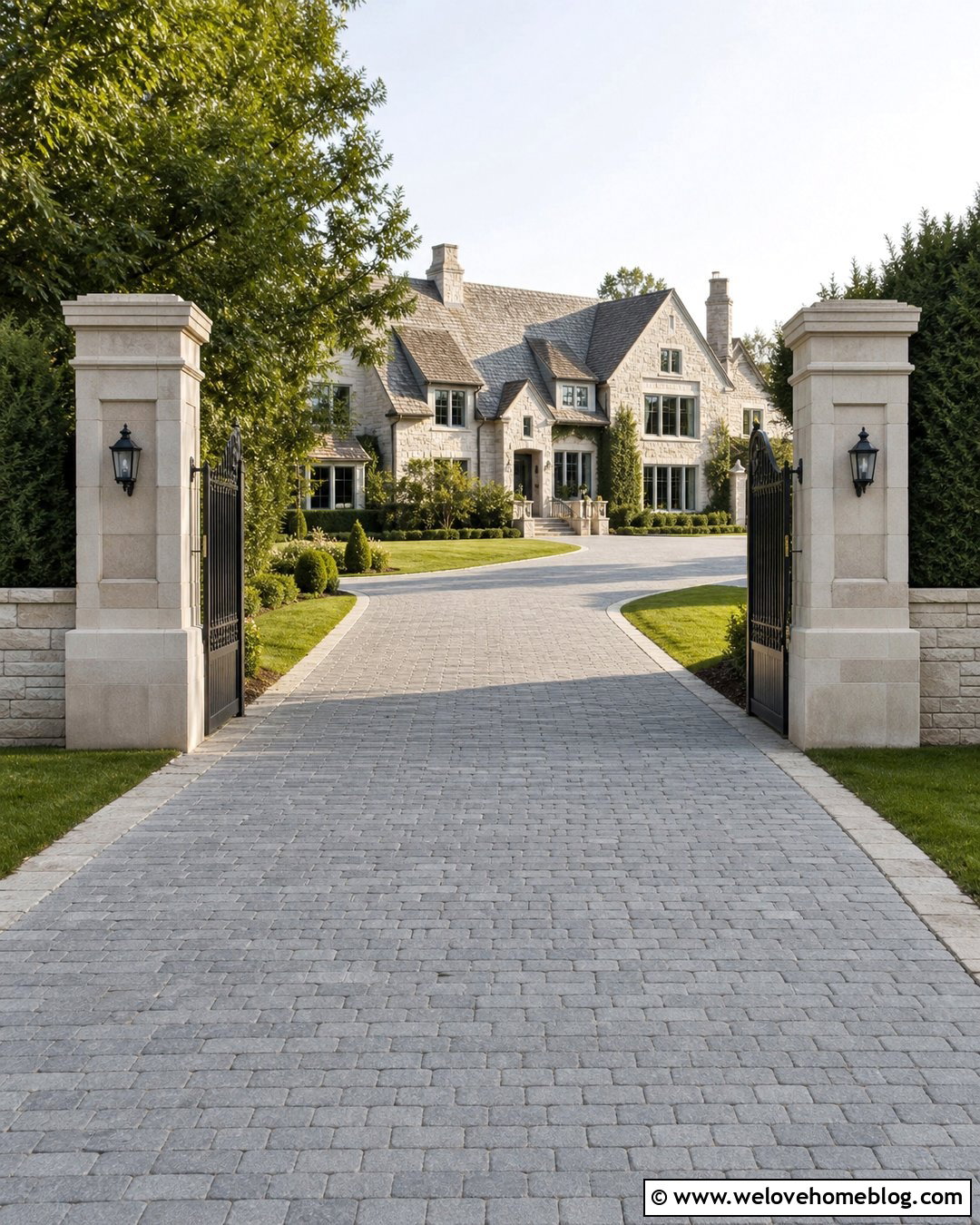
Granite setts create a substantial entrance that pairs naturally with limestone, fieldstone, or stucco architecture. Lay rectangular gray setts in a running bond pattern along a long, slightly curved driveway. At the street, introduce square stone pillars with restrained caps and simple black lanterns. The pillars should echo the masonry used on the house rather than introduce an unrelated color. Low walls can extend several feet from each pillar before disappearing into evergreen hedges. Continue the granite surface through the gate so the entrance feels cohesive. Near the house, widen the driveway into a modest motor court bordered by lawn. The combination feels dignified because it relies on natural texture, careful proportions, and consistent materials instead of oversized decoration.
6. Black Asphalt Driveway With Brick Apron
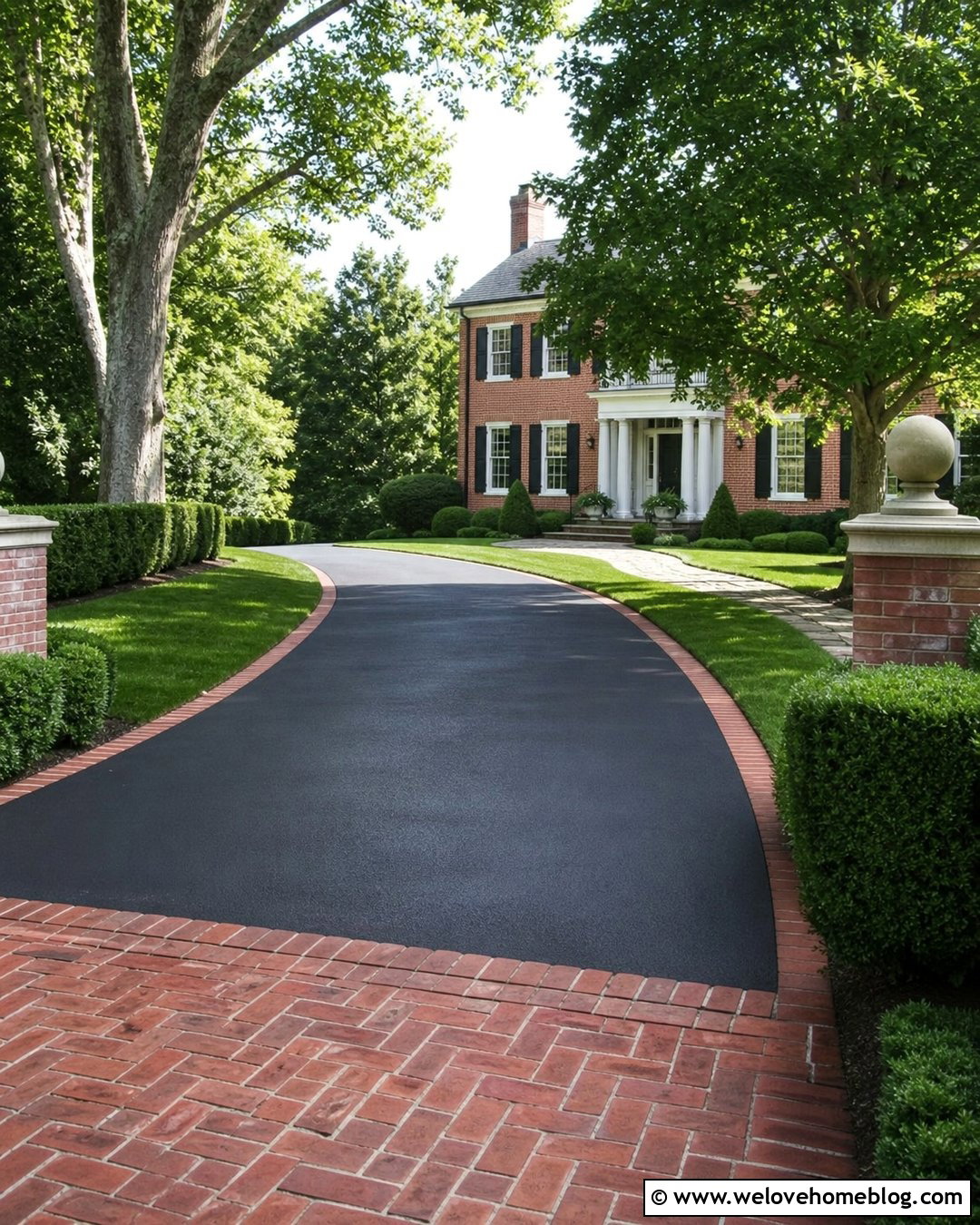
Black asphalt can still suit an old money exterior when it is treated as a quiet background material. Give a straight or gently curved asphalt driveway a broad clay brick apron at the street and another brick transition near the garage. Narrow brick borders along both sides make the dark surface look intentional rather than purely practical. This combination works especially well with a red brick Colonial, traditional ranch, or ivy-covered country house. Add clipped yew hedges, large deciduous trees, and a simple stone walkway connecting the drive to the front door. Avoid high-gloss sealers that make the pavement look overly new. The brick details, traditional planting, and dark neutral surface create a polished entrance without the expense or visual weight of full brick paving.
7. Crushed Limestone Driveway With Grass Median
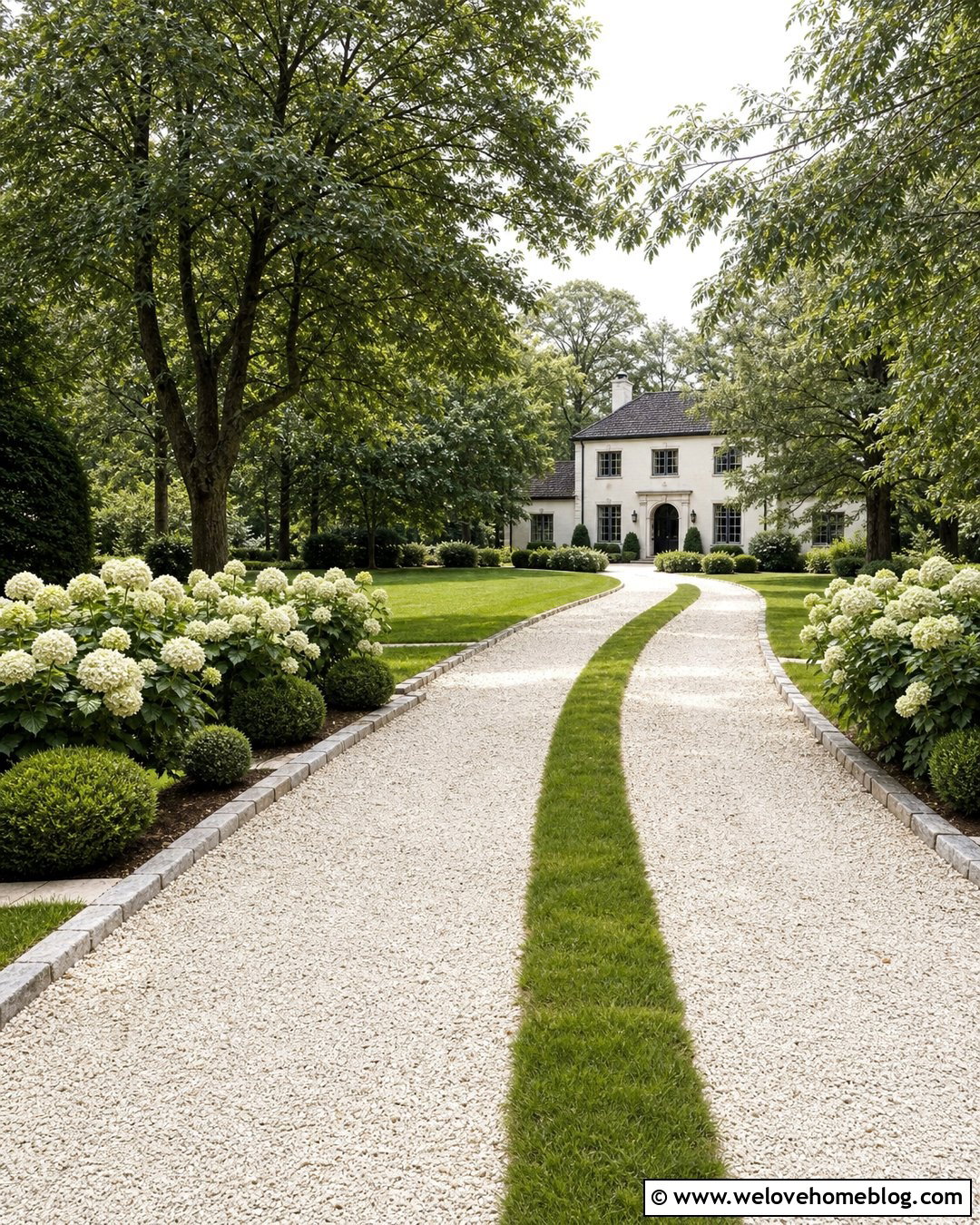
Pale crushed limestone feels understated beside a cream stucco, limestone, or light-painted brick house. Use it for a traditional ribbon driveway with two compacted driving lanes and a narrow grass median. Granite blocks can define the outer edges, while concealed metal edging keeps the central lawn strip crisp. The driveway might begin straight and then curve gently toward a detached garage or rear motor court. Surround it with broad lawn, white hydrangeas, clipped evergreen mounds, and a few mature canopy trees. The soft limestone color reflects light and prevents the approach from feeling heavy. Keep the grass median wide enough to remain visible but narrow enough for comfortable vehicle clearance. This complete look feels historic, rural, and carefully maintained.
8. Oyster Shell Driveway With Hydrangeas
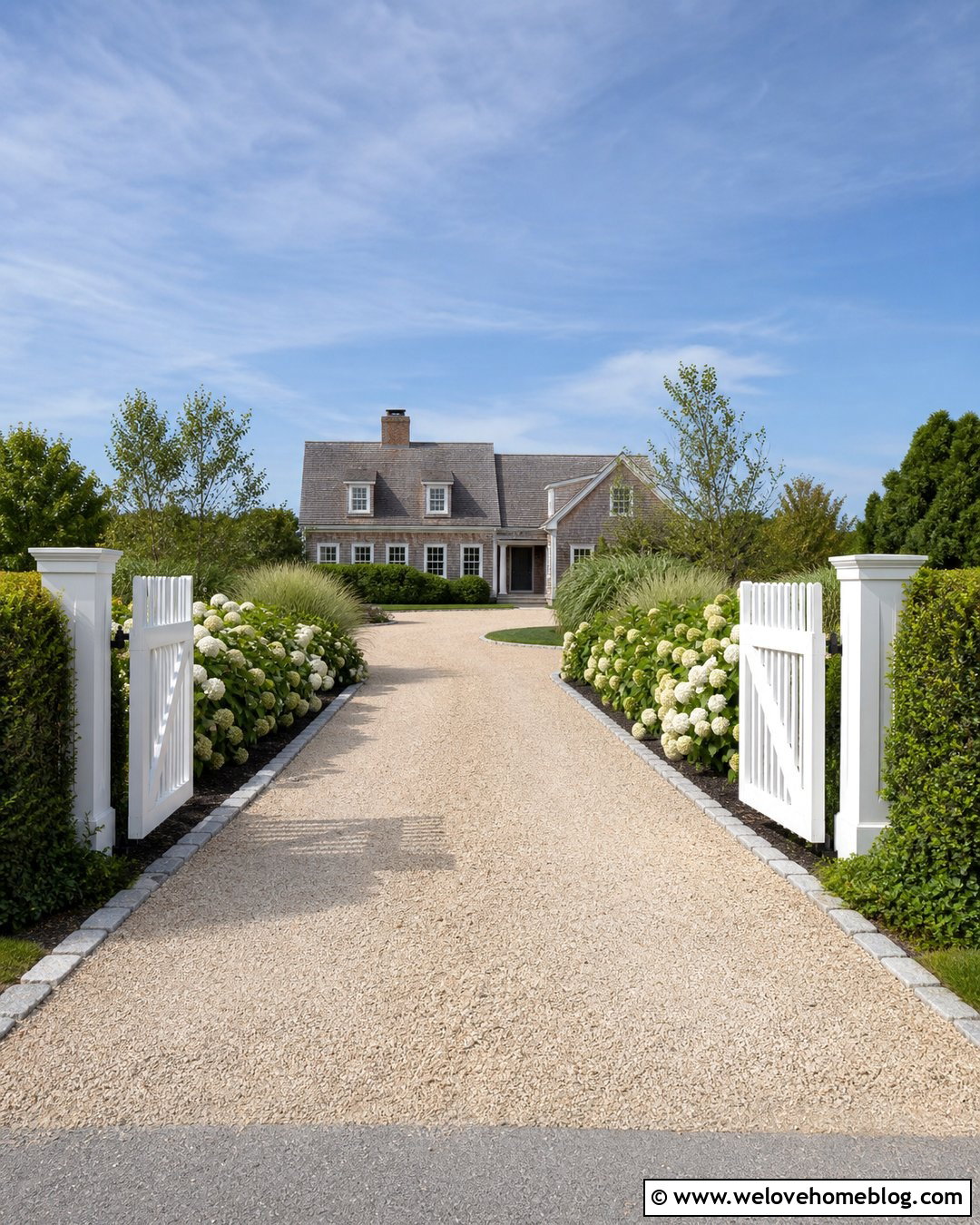
A crushed oyster shell driveway brings coastal old money character to a Cape Cod, shingle-style, or Lowcountry home. Its pale ivory surface pairs beautifully with weathered cedar shingles, white trim, and soft blue-gray shutters. Design a straight driveway with a small circular turnaround near the house, then contain the shells with gray granite cobbles. Large hydrangea beds can line the final section, balanced by beach grass, inkberry, and clipped privet near the entrance. Add a simple white wooden gate that stands open during the day rather than an ornate metal design. The overall palette should remain soft and salt-washed. Use an adequately prepared base and firm edge restraints so the decorative shell layer forms a neat, purposeful approach rather than an informal path.
9. Resin-Bound Gravel Driveway With Granite Borders
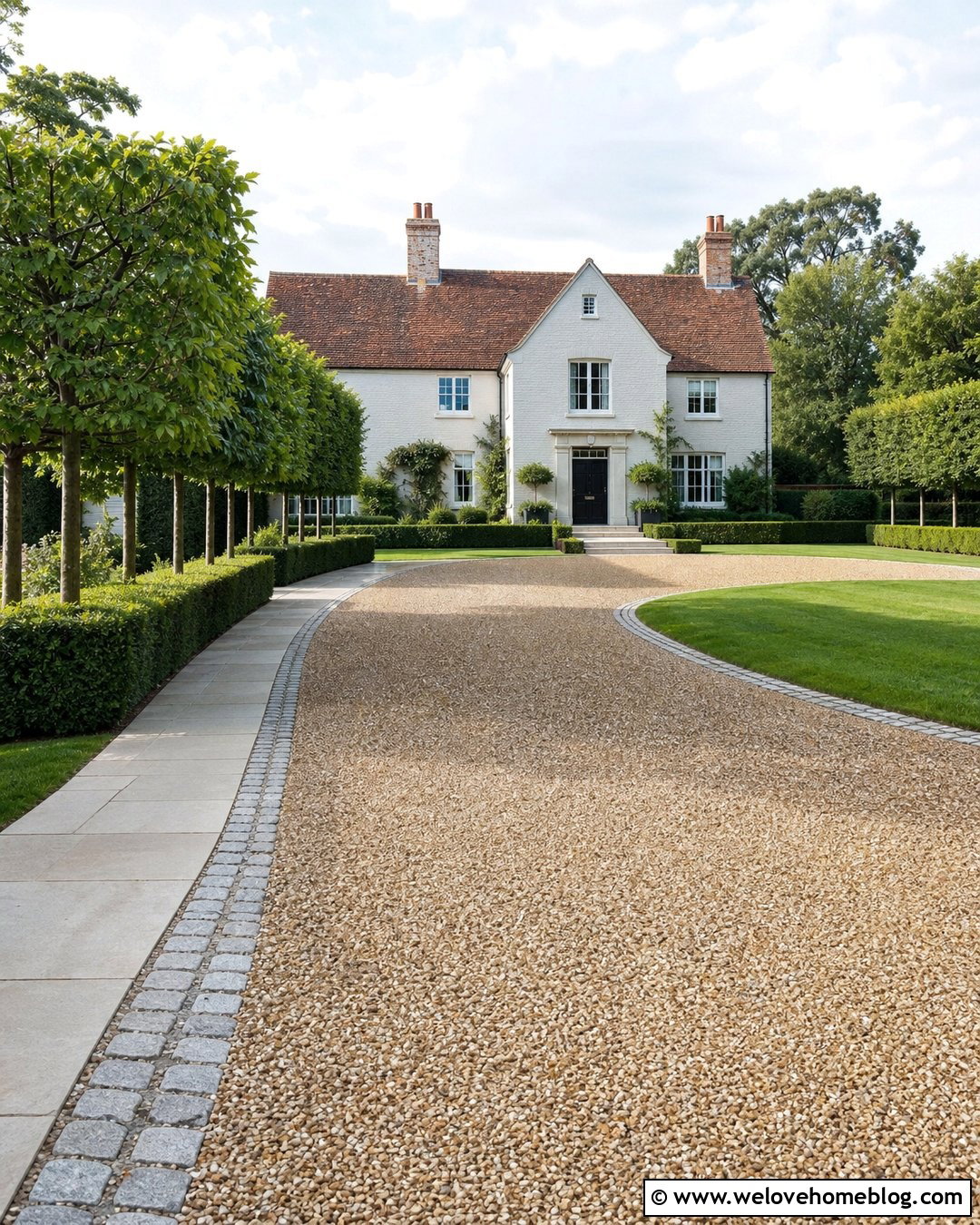
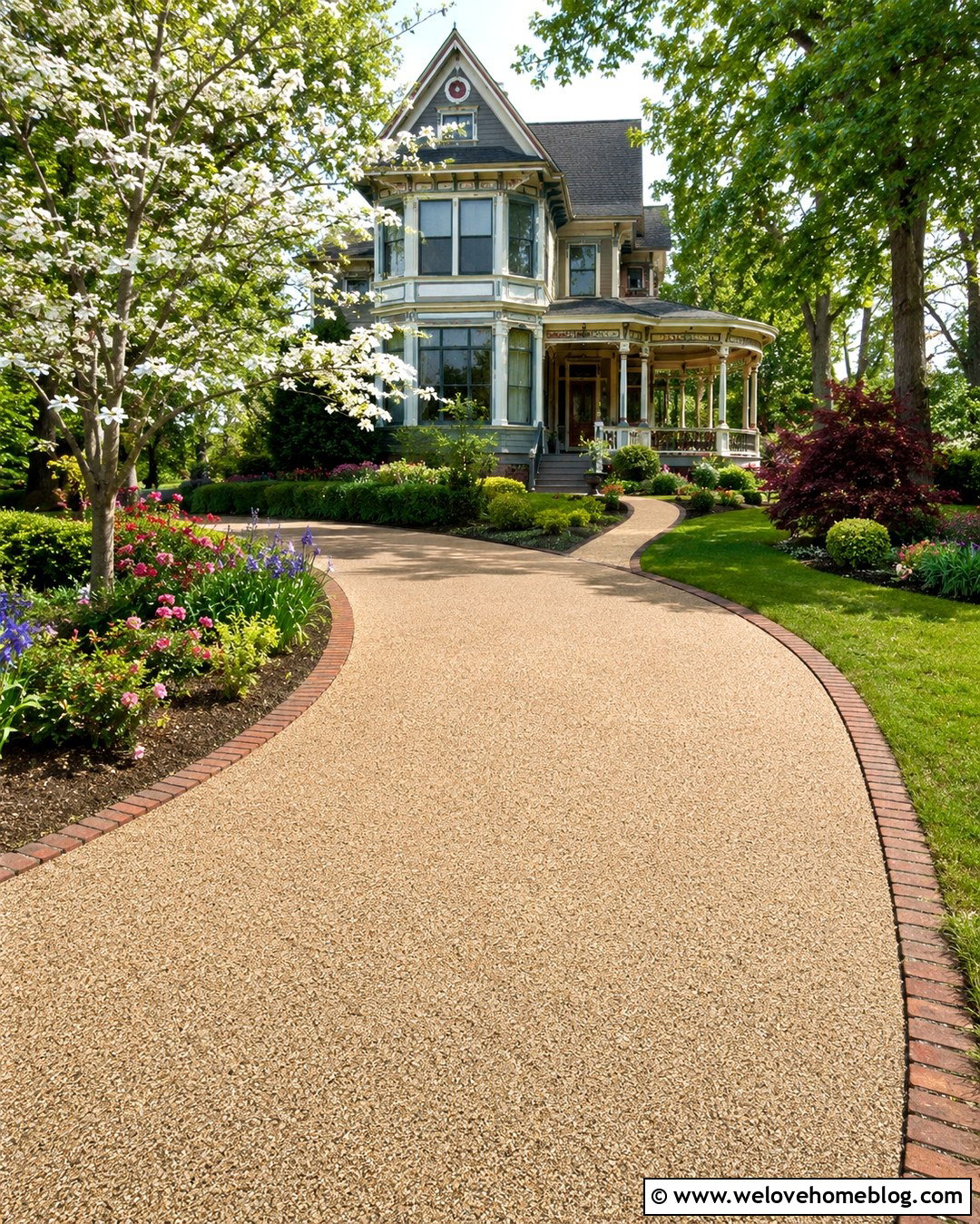
Resin-bound gravel offers a tidy interpretation of the traditional country-estate drive. Choose a warm blend of tan, cream, and soft gray aggregate so the finished surface resembles finely graded natural gravel. A sweeping layout works well, especially when outlined with reclaimed granite setts. At the house, widen the drive into a restrained parking court with a centered flagstone walkway leading to the entrance. Plant pleached hornbeams or clipped hedges along one side and preserve open lawn on the other. The surface should have a matte, natural appearance rather than a glossy finish. This driveway is especially useful when homeowners want the visual softness of gravel with a more uniform presentation. Traditional borders prevent the modern material from feeling disconnected from historic architecture.
10. Ribbon Driveway With Grass Center
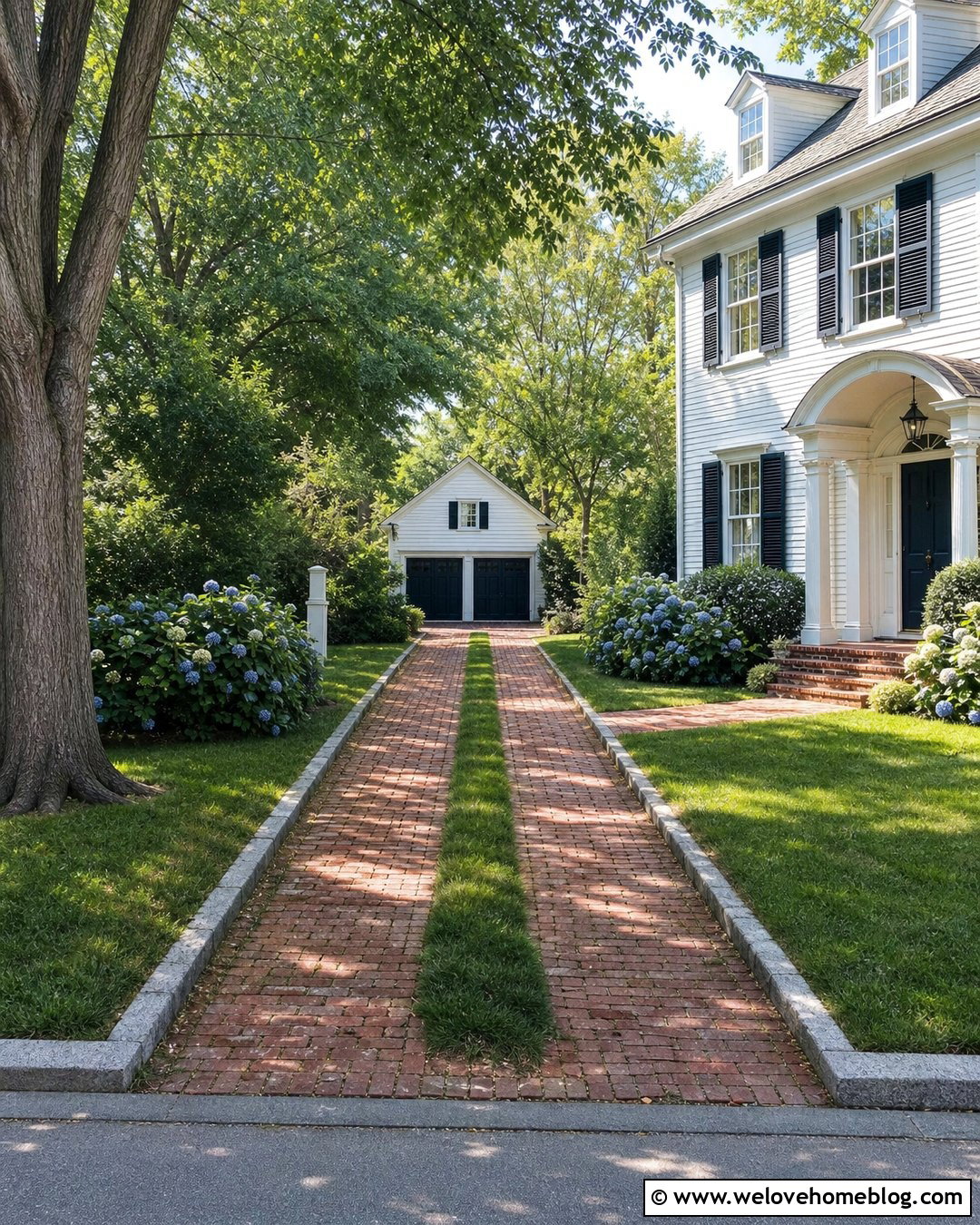
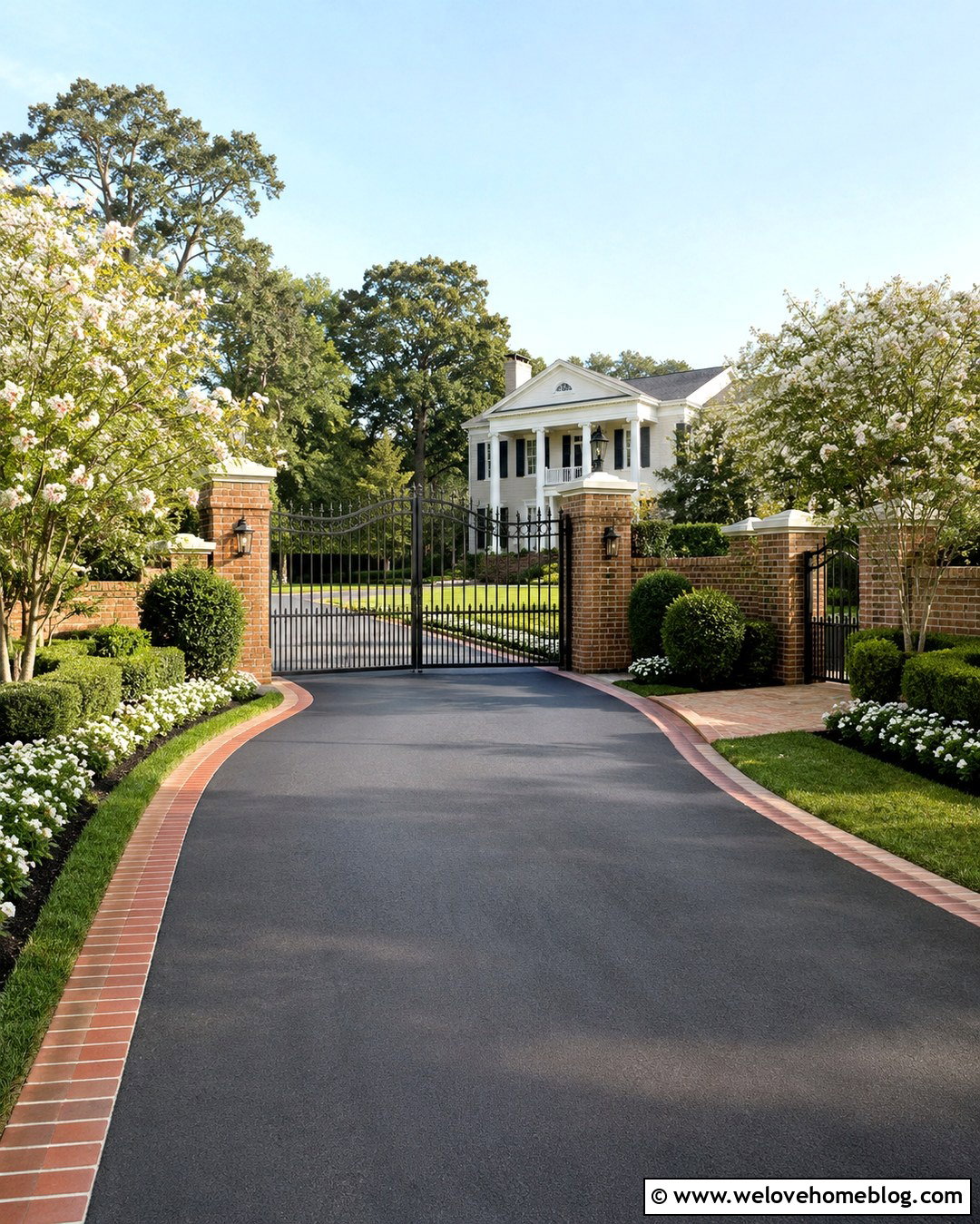
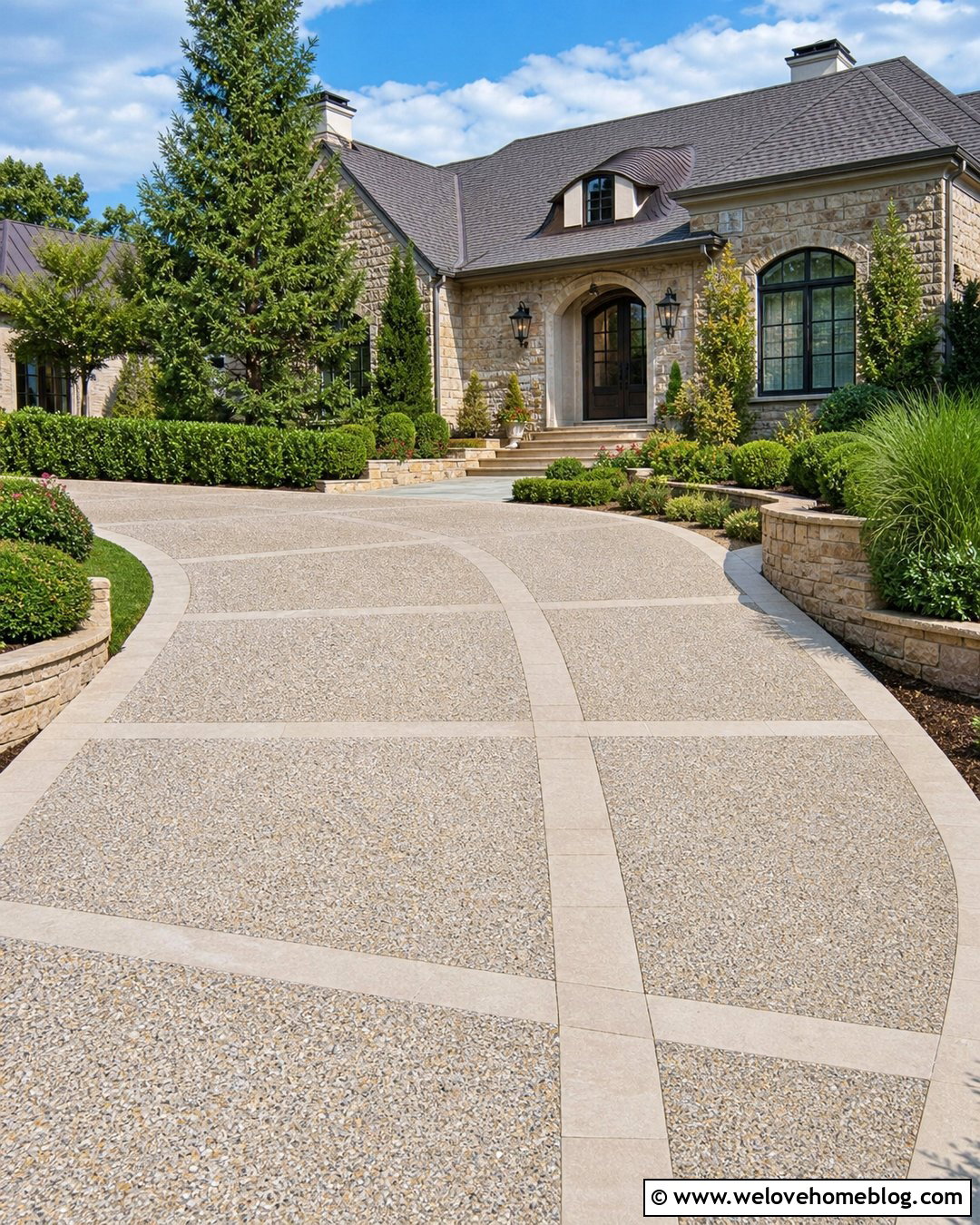
A ribbon driveway creates immediate period character because the paved wheel tracks leave a living strip through the center. Historic residential guidance often favors narrow driveway dimensions and traditional materials such as gravel or brick, while landscape examples show ribbon layouts framed by stone walls and established planting. () Use weathered clay brick for the two tracks, with a neatly cut grass median between them. Follow a straight route toward a detached carriage-style garage beside a Colonial or cottage home. Border the outer edges with low granite curbs and allow the surrounding lawn to meet them cleanly. Add hydrangeas near the house and mature trees closer to the road. The result looks charming, economical in scale, and connected to an older property’s original proportions.
11. Horseshoe Gravel Driveway With Iron Gates
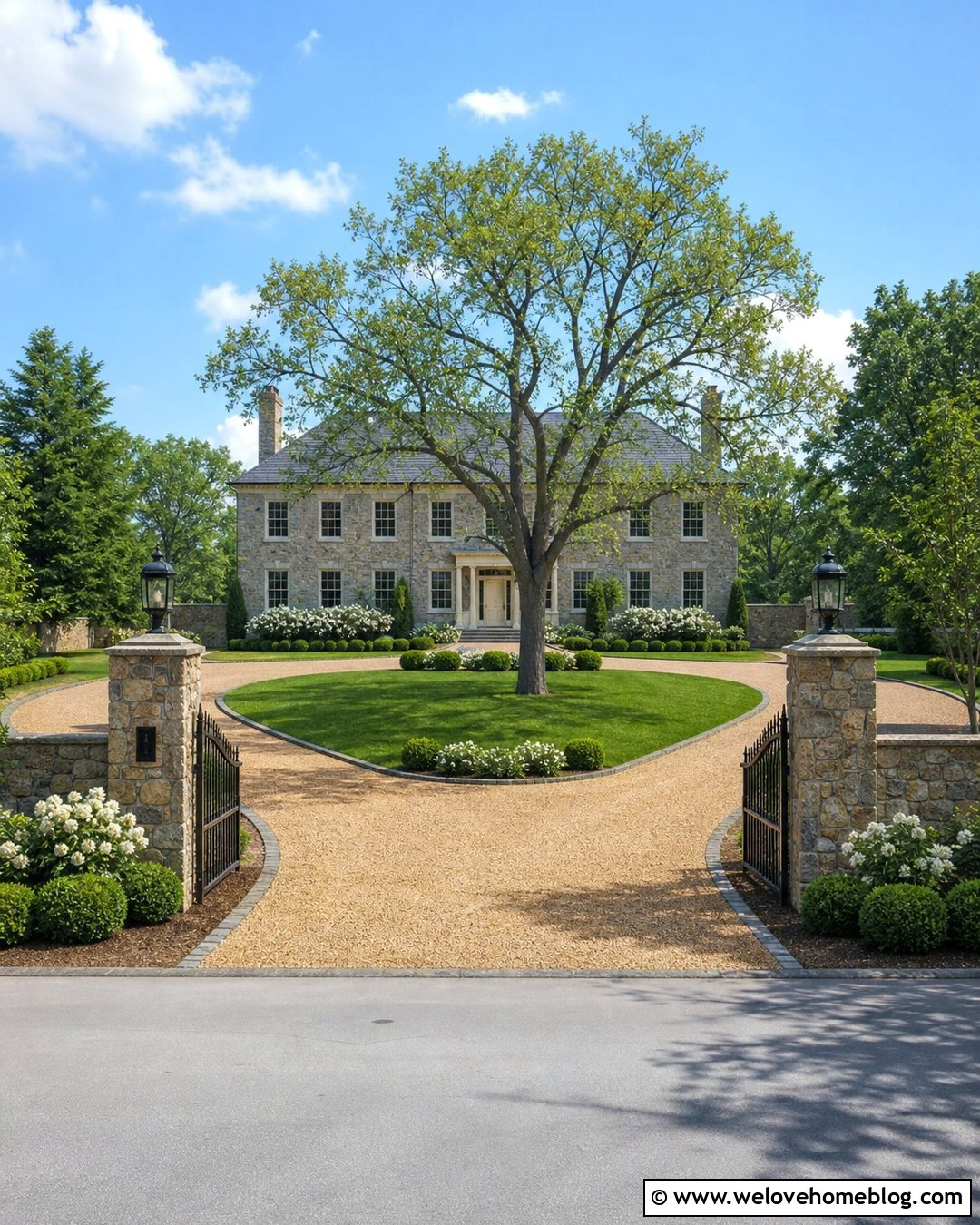
A horseshoe gravel driveway gives a large front yard a formal entrance and convenient exit without creating an oversized paved court. Cover the sweeping route with compacted golden-brown gravel and edge it with narrow charcoal granite setts. Place simple wrought-iron gates at both street openings, supported by matching brick or fieldstone pillars. Inside the loop, maintain an open lawn with one mature specimen tree rather than a crowded central display. Low boxwood and white flowering shrubs can soften the driveway near the house. Keep both curves equal when the architecture is symmetrical. On a more relaxed country property, slight variation can feel natural. The separate entrance and exit should remain visually connected through matching masonry, lighting, planting, and surface materials.
12. Tree-Lined Gravel Estate Driveway
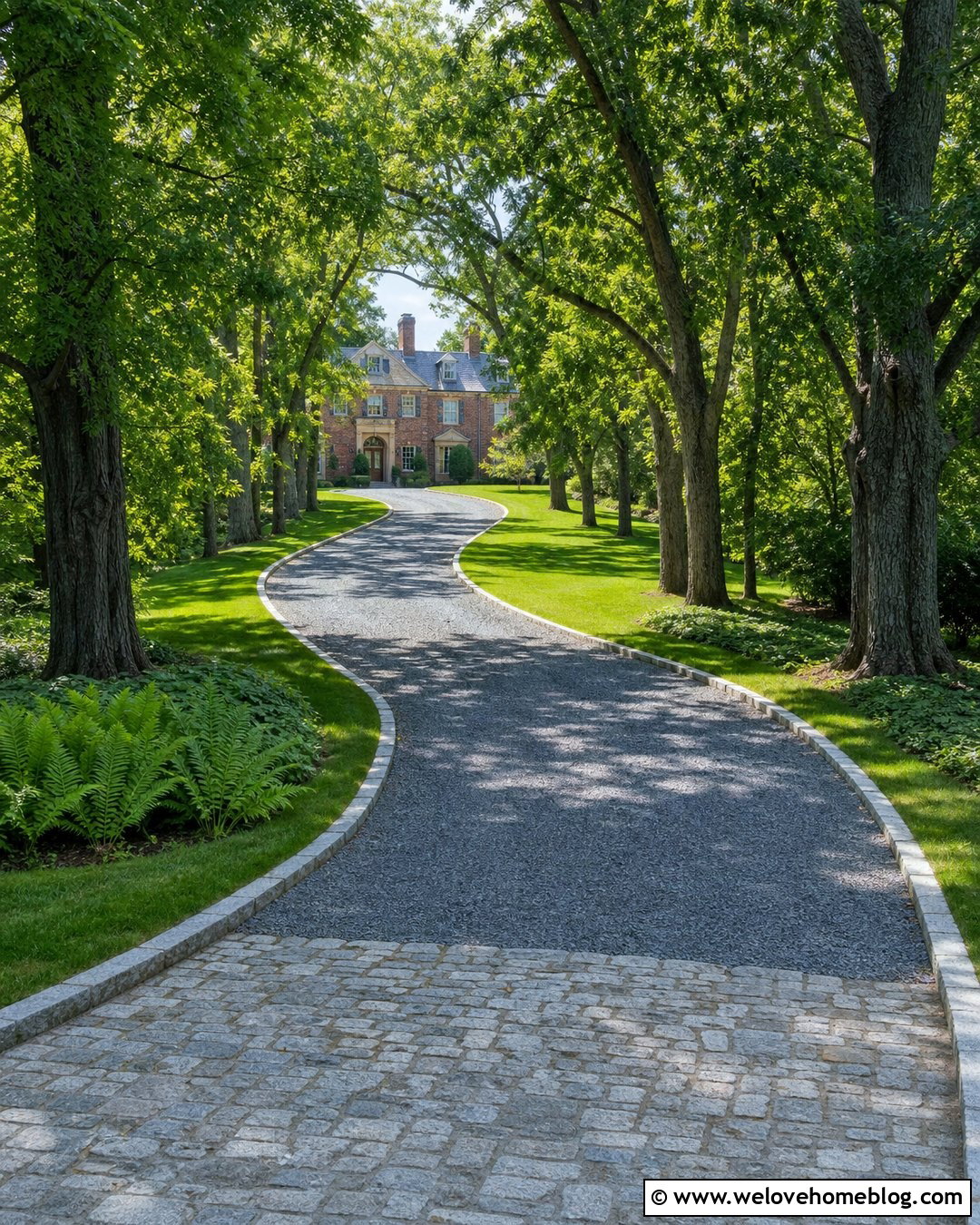
Few approaches feel more established than a long driveway framed by mature trees. Use medium-gray crushed gravel for the surface and a soft S-curve that responds to the land. Rows of oaks, maples, or elms can guide the eye toward a distant brick or stone house, but avoid planting young trees too close to the driving area. Low granite edging will contain the gravel without competing with the tree trunks. Beneath the canopy, keep the landscape simple with mown grass, ferns, and shade-tolerant ground cover. A cobblestone apron at the street introduces a durable visual threshold. The house should remain partially concealed until the final curve. This creates privacy, depth, and the impression that the landscape has matured naturally over generations.
13. Stone Walled Driveway With Lantern Pillars
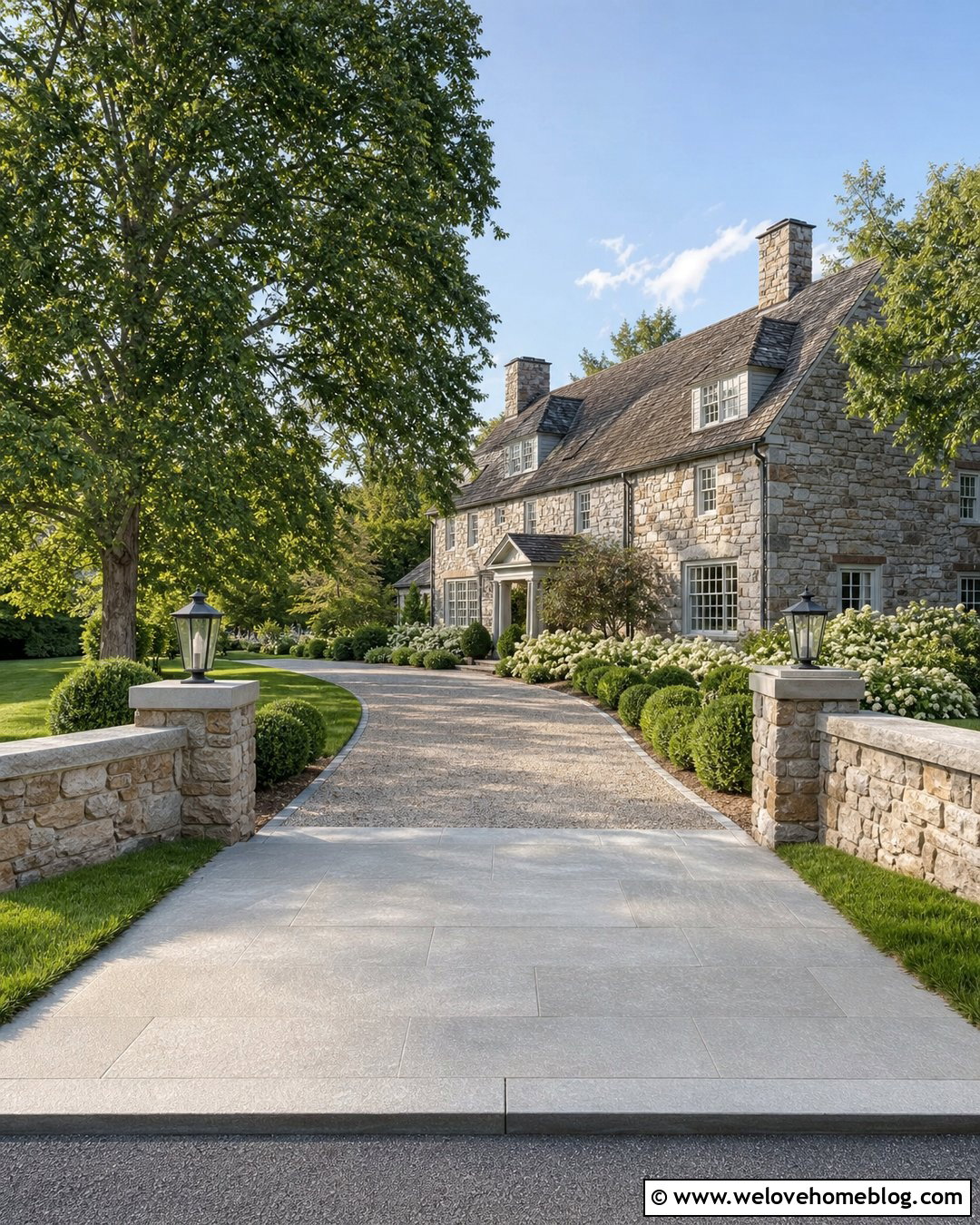
Low stone walls turn a basic driveway into a defined estate entrance without relying on elaborate gates. Build the walls from irregular fieldstone that matches the home’s chimney or facade, then cap them with flat limestone pieces. Square pillars at each end can support traditional black lanterns. Between the walls, install a warm gray gravel driveway with a broad granite apron. Allow the approach to curve gently through lawn before reaching a stone farmhouse or country manor. Behind the walls, use clipped yew, boxwood, and loosely arranged white flowering shrubs. The masonry should be broad and low, never tall enough to feel defensive. Repeating the same stone near the house, walkway, and garden steps creates a convincing sense that every exterior feature belongs to one original plan.
14. Tudor House Cobblestone Driveway
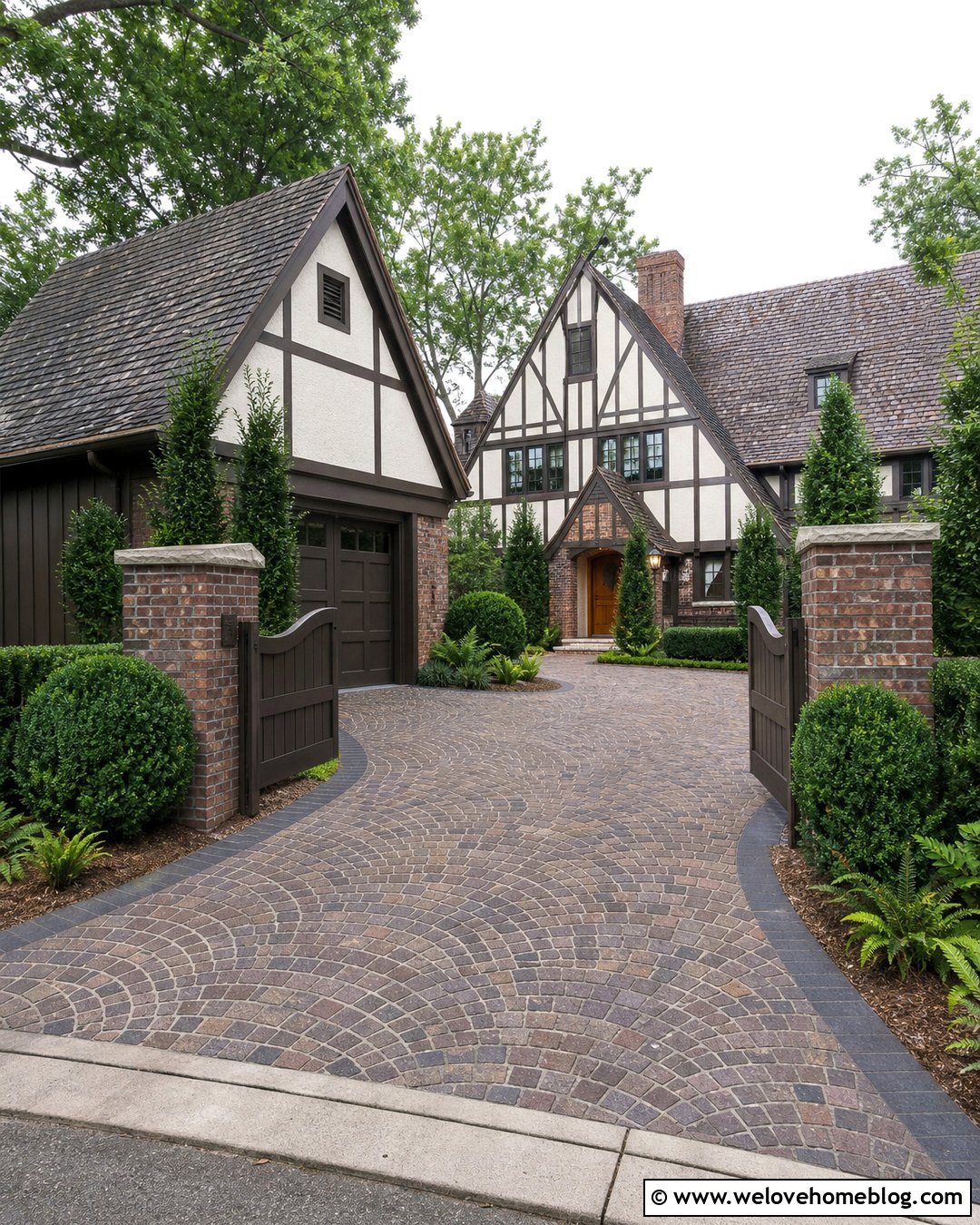
A Tudor house benefits from a driveway with irregular texture and deep, earthy color. Choose granite cobblestones in charcoal, brown, and muted plum tones, laid in a gently arched pattern. A curved layout can lead toward a side-facing garage, keeping modern garage doors from dominating the front elevation. Border the cobbles with dark brick and frame the approach with clipped yew, holly, and broad beds of ferns. Near the entrance, add brick pillars with simple timber gates that echo the home’s exposed beams. Avoid bright paving, pale contemporary gravel, and overly symmetrical flower beds. The driveway should feel substantial but slightly softened by age. Moss between selected border stones can enhance the established effect without overtaking the main driving surface.
15. Colonial House Brick Driveway
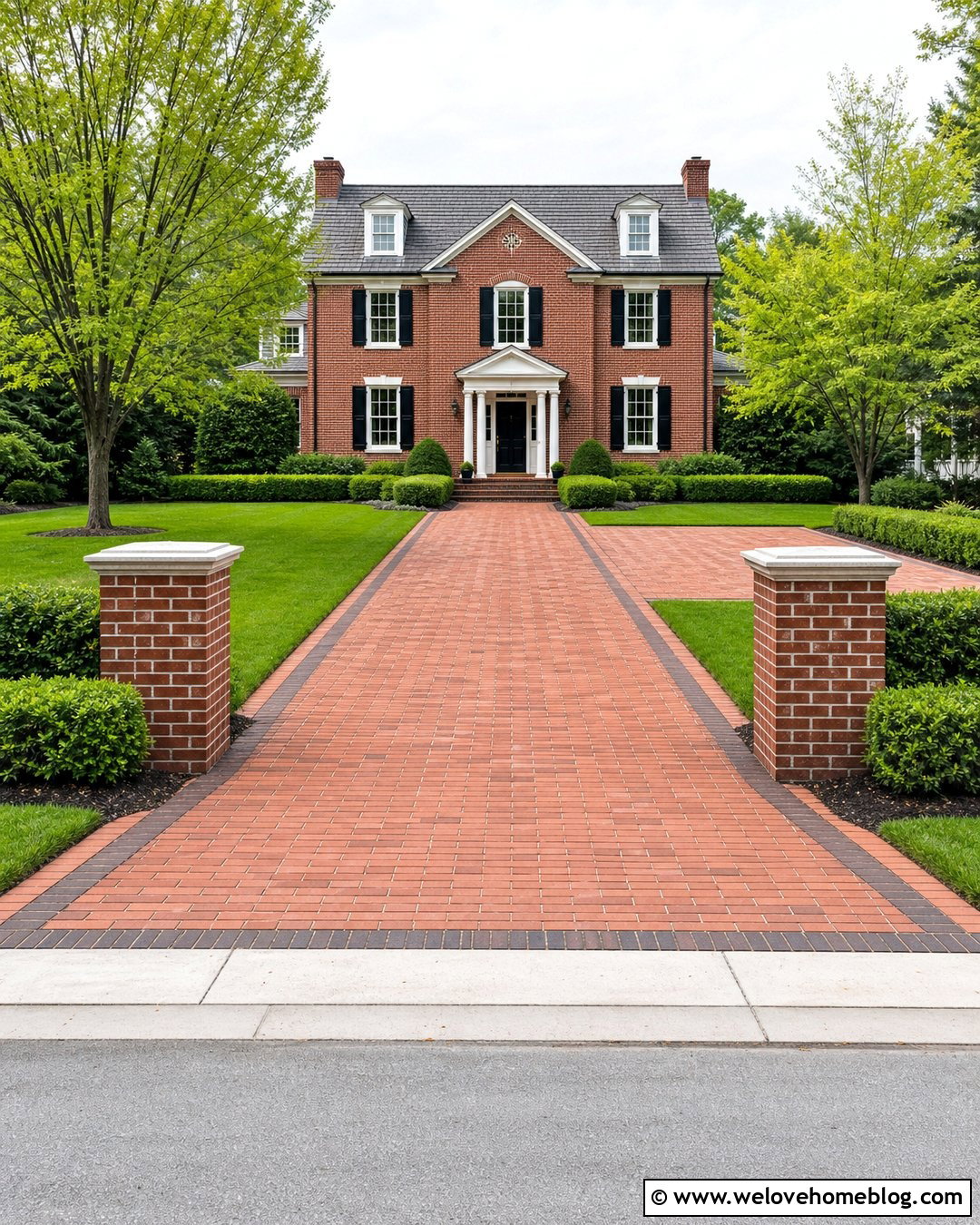
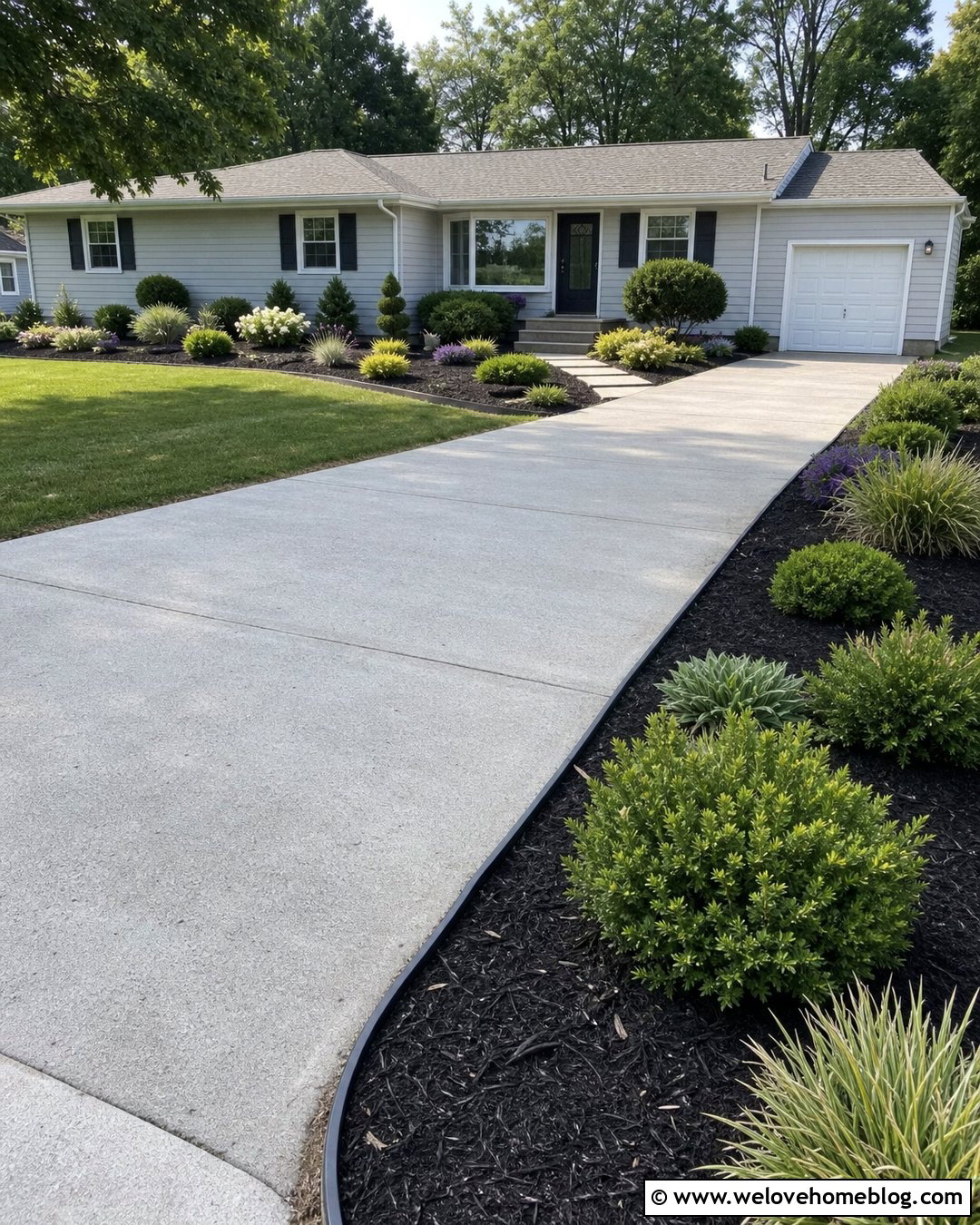
A red brick Colonial calls for a driveway that reinforces its symmetry without covering the entire front yard in hardscape. Use traditional clay brick pavers in a running bond pattern for a straight approach, then widen the surface into a rectangular parking court near the side garage. Define the perimeter with a dark brick soldier course. Balanced boxwood beds can flank the front walkway, while matching deciduous trees anchor both sides of the lawn. A pair of low brick entrance pillars provides structure at the curb without blocking the view of the house. Select bricks that coordinate with the facade but are slightly darker, preventing the materials from blending into one large red area. Crisp lawn edges and restrained planting complete the polished, historic composition.
16. Georgian House Gravel Forecourt
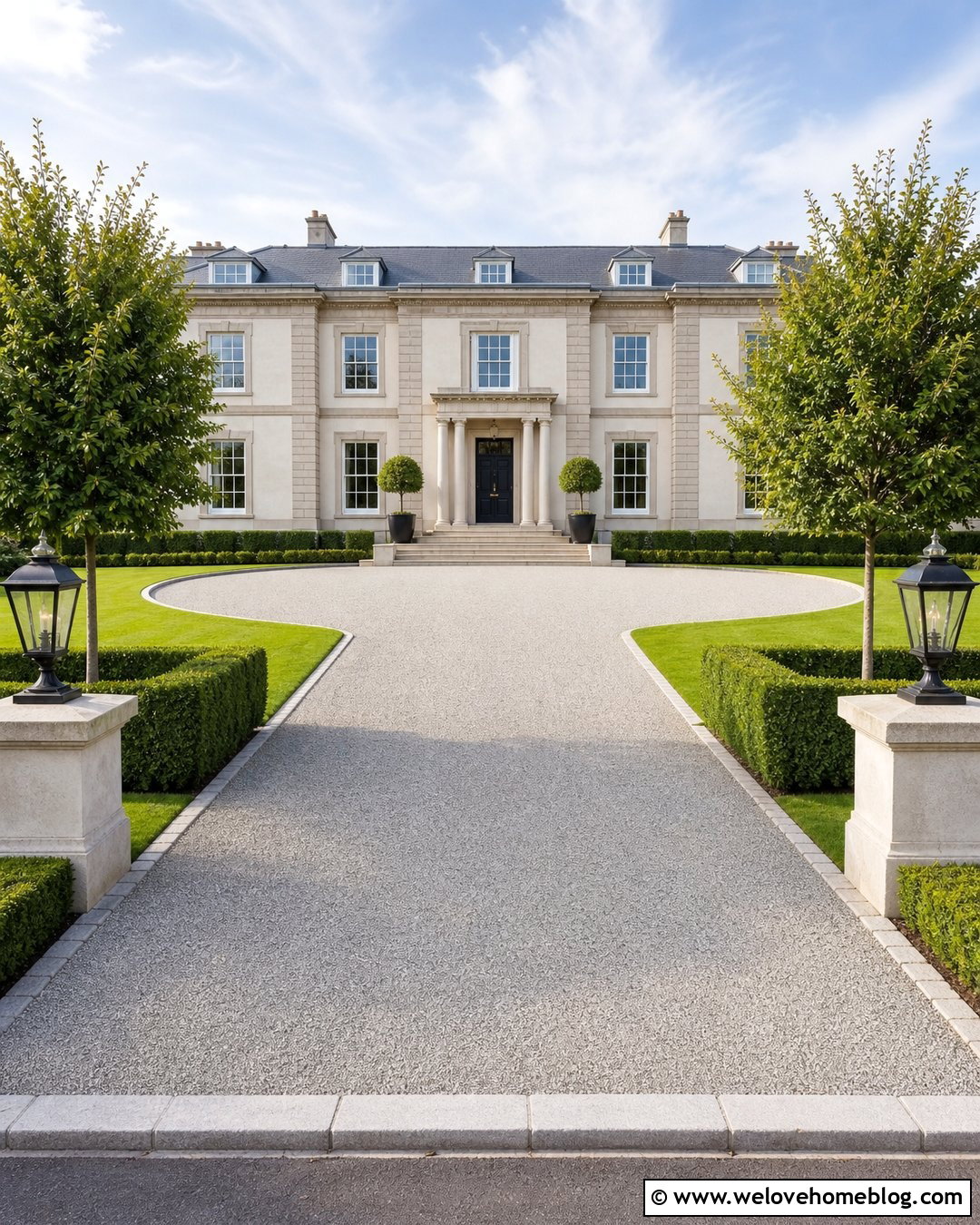
Symmetry is the key to a successful Georgian house driveway. Begin with a straight, pale gray gravel approach aligned with the center of the house. Near the front steps, open it into a broad oval or rectangular forecourt edged with granite setts. Two matching lawn panels can sit on either side, each bordered by clipped boxwood and punctuated by a small ornamental tree. Keep parking toward the outer edges so the central entrance remains visually clear. Limestone steps and a matching walkway can bridge the gravel to the front door. Decorative features should appear in pairs, including lanterns, stone planters, and entrance pillars. This disciplined arrangement supports the balanced architecture while allowing the textured gravel to soften what might otherwise become an overly rigid landscape.
17. French Chateau Gravel Driveway
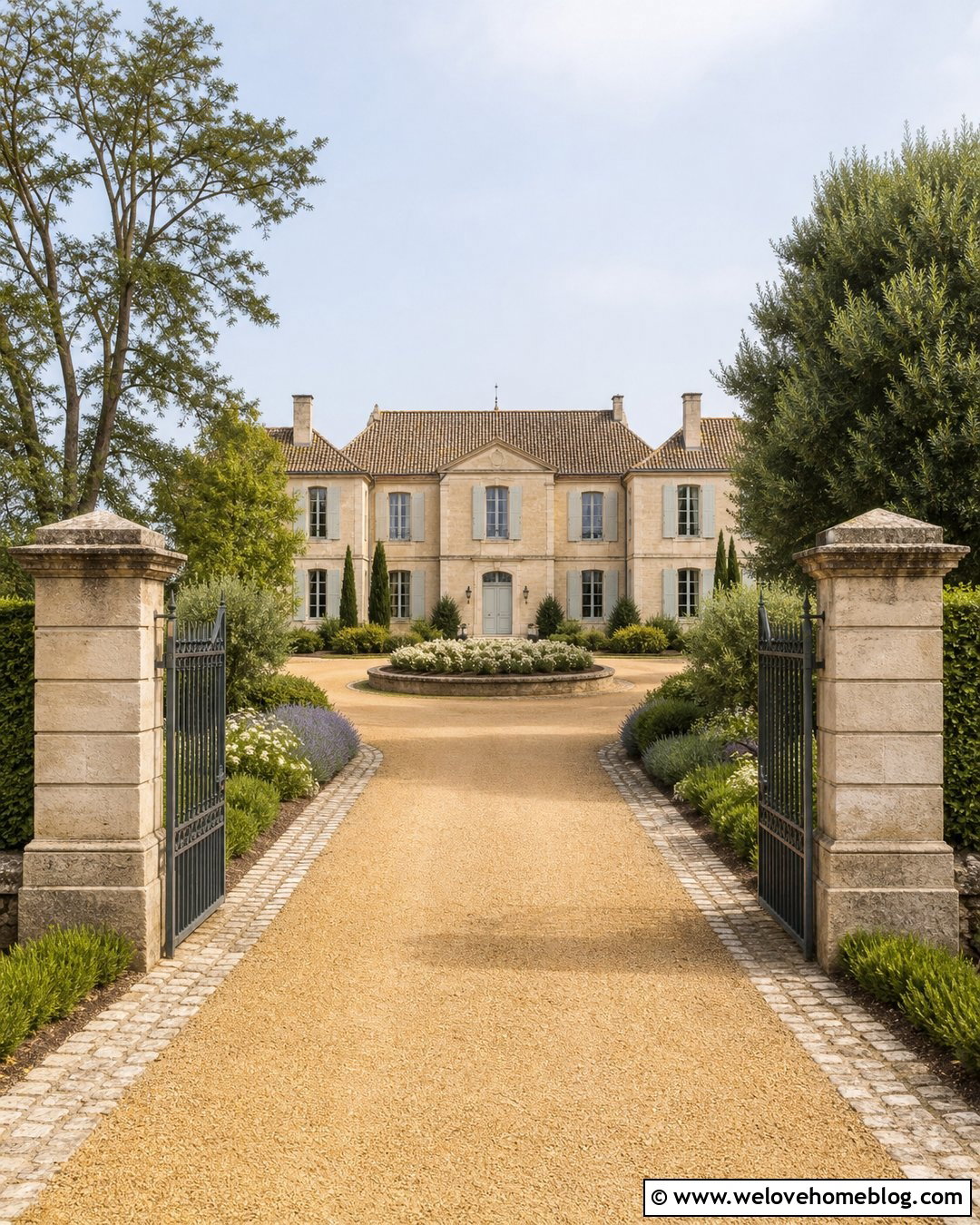
A French chateau-inspired home looks most convincing with a broad gravel driveway in a warm honey or light gray tone. Use a long, straight approach that opens into a circular arrival court near the entrance. Reclaimed cobblestone ribbons can outline the circle and mark the transition to the garage wing. Plant tightly clipped hedges around the formal areas, then soften the outer landscape with mature deciduous trees, lavender, and pale flowering shrubs. Limestone pillars with understated iron gates provide an elegant street entrance. Choose one classical focal point for the center circle, such as a low stone planter surrounded by boxwood. Avoid excessive statues or ornate paving patterns. The restrained palette allows the architecture, roofline, and carefully controlled geometry to carry the design.
18. English Country House Gravel Driveway
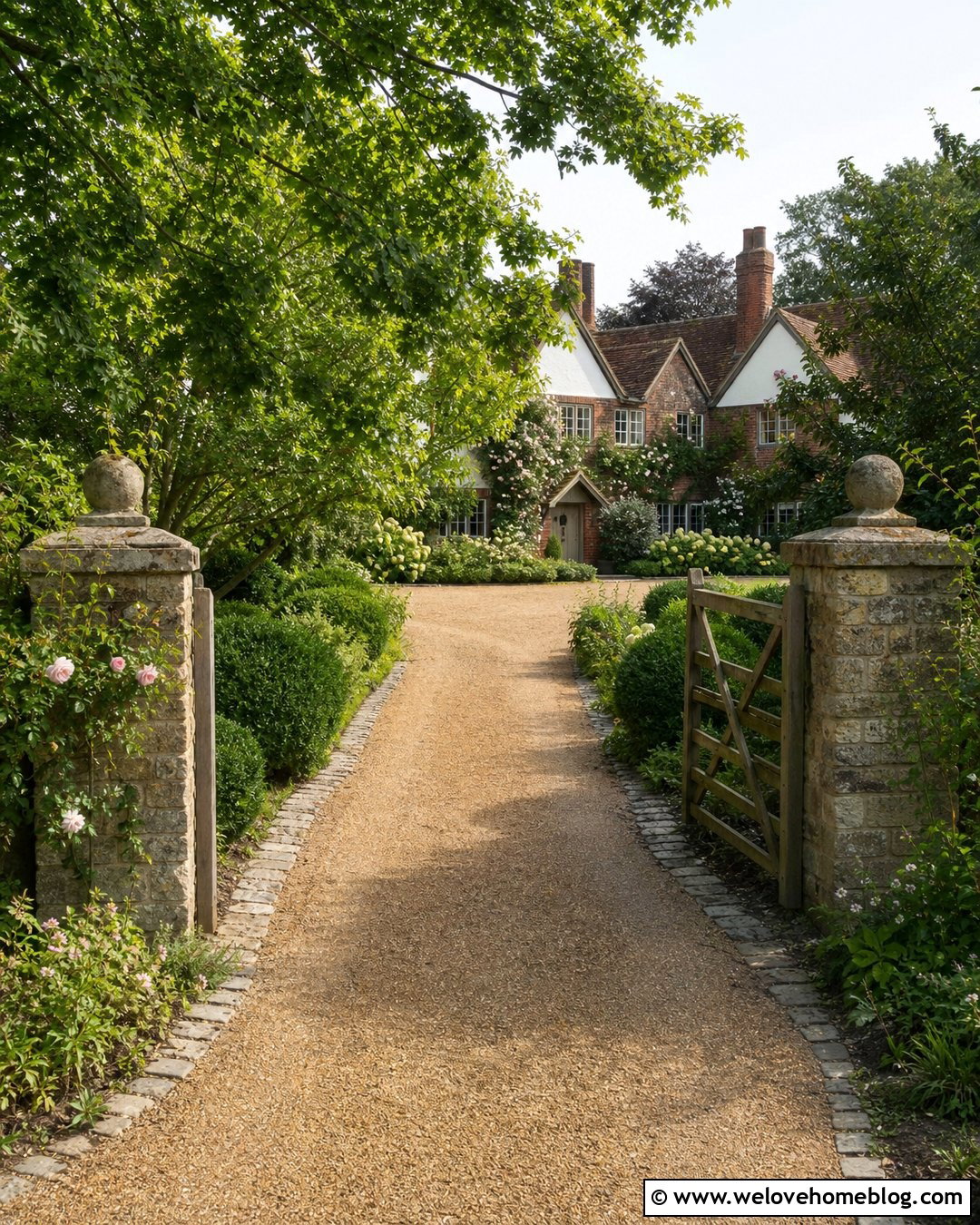
For an English country house look, combine warm brown gravel with relaxed planting and weathered natural stone. A narrow curved driveway should wind toward a brick, stone, or stucco home without following perfect symmetry. Edge the route with reclaimed cobbles, then allow lawn and soft planting beds to sit close to the borders. Use yew, climbing roses, hydrangeas, foxglove-like perennials, and mature shade trees in generous groups. A simple timber field gate between stone pillars feels more appropriate than highly polished metalwork. Near the house, expand the driveway into a small gravel court with room for turning. The finished landscape should look cared for but not overly clipped. Controlled irregularity gives this complete driveway its comfortable, inherited character.
19. Cape Cod Crushed Stone Driveway
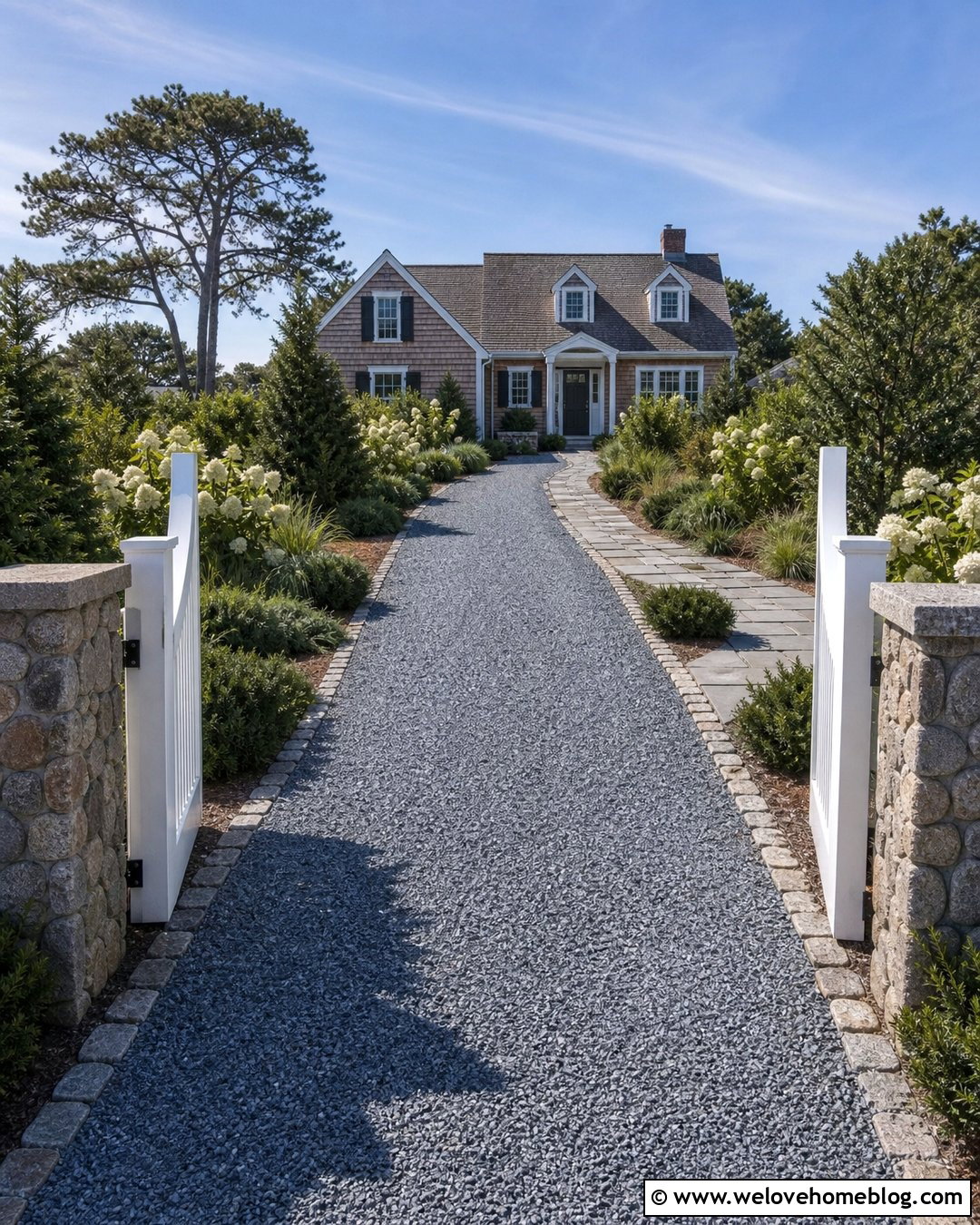
A Cape Cod or shingle-style home pairs naturally with a narrow crushed stone driveway. Select blue-gray stone that reflects the tones of weathered cedar shingles and traditional slate roofs. Keep the layout straight where space is limited, or add a mild curve around a lawn panel on a wider coastal property. Granite cobble edging prevents the stone from spilling into planting beds. Surround the driveway with white hydrangeas, inkberry, beach grass, and low juniper. A bluestone walkway can branch toward the front porch, linking the cool-colored materials. At the street, use short stone pillars and a white painted wooden gate. The design should feel fresh and coastal but not themed, with natural textures and muted colors doing most of the work.
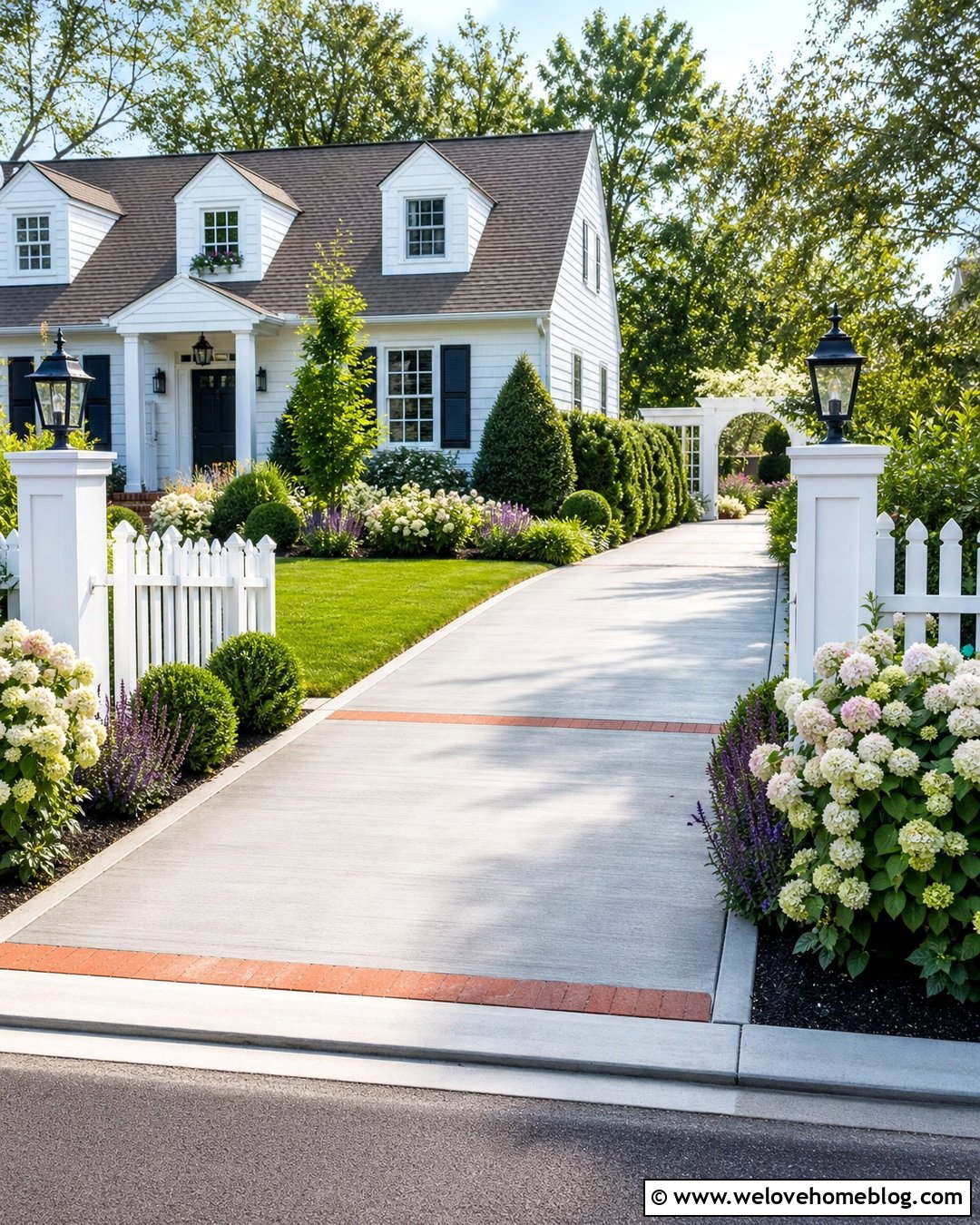
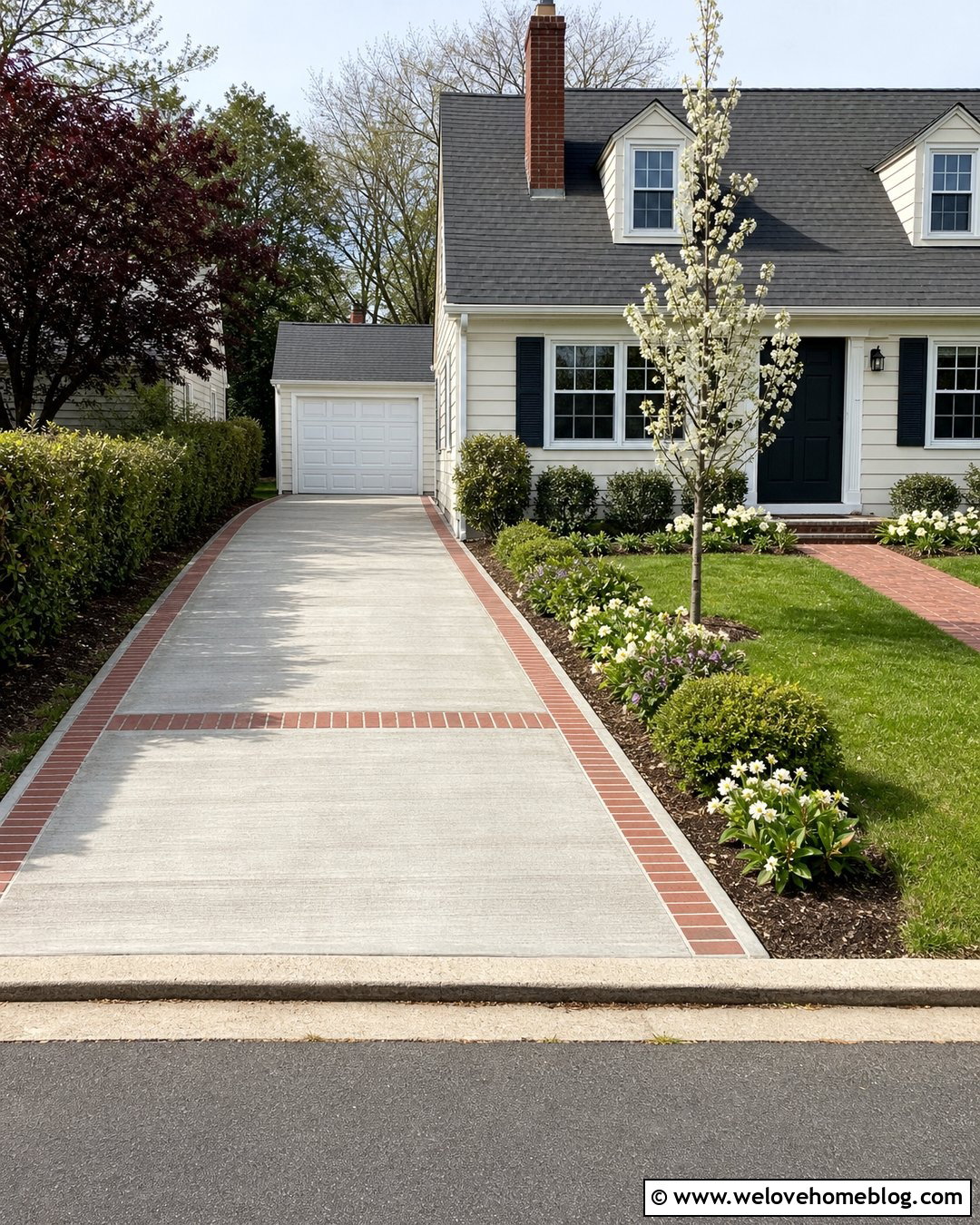
20. Red Brick Driveway With Stone Borders
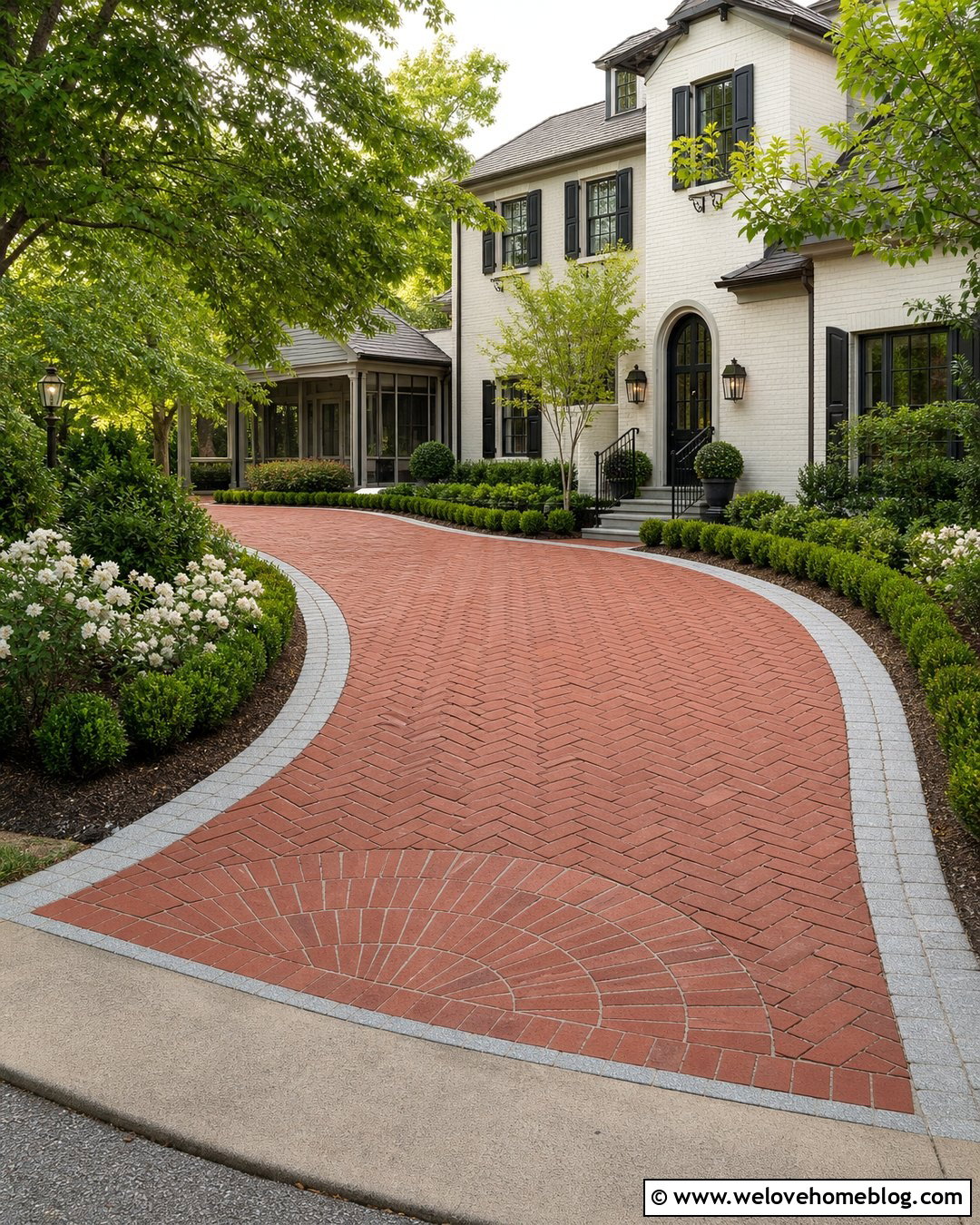
Red clay brick gains a more distinguished appearance when bordered by pale limestone or gray granite. Lay the brick in herringbone across a gently curved driveway, then install a double stone border to create a crisp frame. This combination works with painted brick, limestone, and traditional white houses because the contrasting edge prevents too much visual sameness. At the street, continue the border into a fan-shaped brick apron. Repeat the same stone around planting beds and the front walkway. Use dark green boxwood, white roses, and mature trees to balance the warm paving. Keep garage doors and utility areas partially screened with hedges. The complete scheme feels layered and permanent, yet the limited material palette keeps it from appearing busy or excessively ornamental.
21. Gray Paver Driveway With Granite Apron
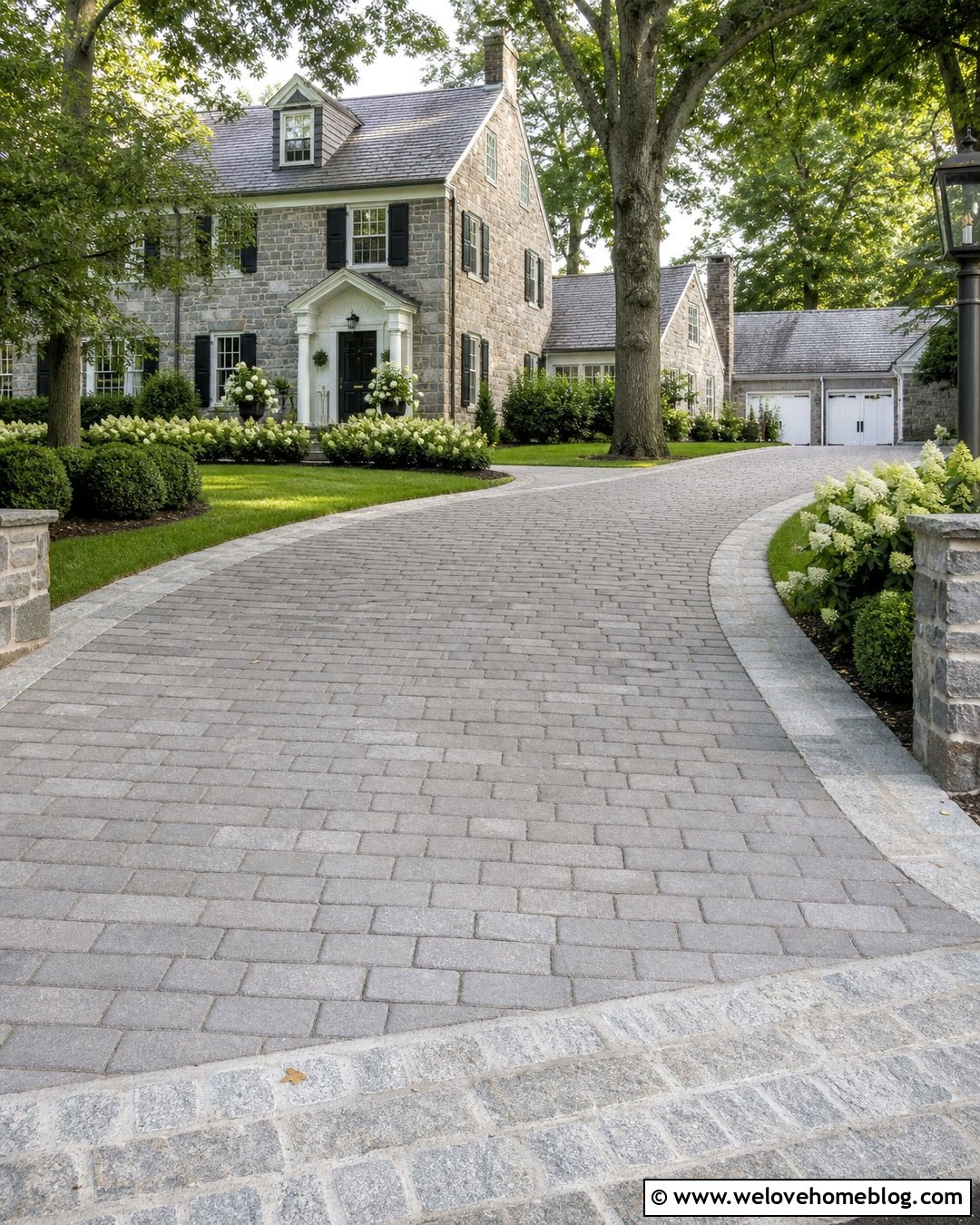
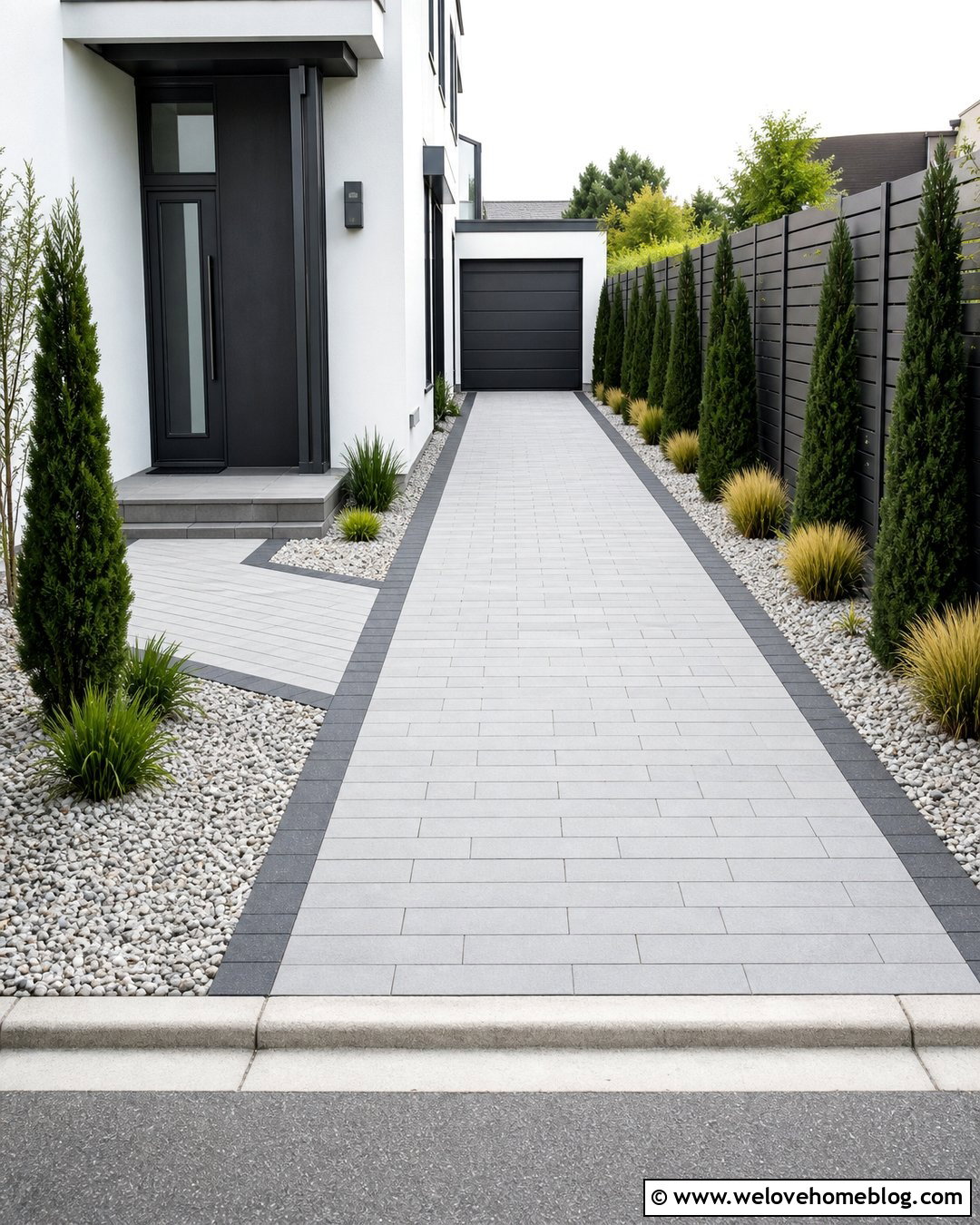
Weathered gray concrete pavers can create an old money look when their size, pattern, and borders are carefully selected. Choose small rectangular pavers with softly tumbled edges rather than sleek oversized slabs. Lay them in a running bond pattern across a curved driveway and finish the street entrance with a broad apron of genuine granite setts. A second granite band can mark the transition into the motor court. Surround the drive with lawn, clipped privet, hydrangeas, and tall shade trees. Pair the surface with a stone Colonial, traditional ranch, or painted brick home. The cool neutral palette should contain several related gray shades for depth. Avoid strong pattern contrasts, which can make the driveway look more like a decorative patio than an established residential approach.
22. Permeable Cobblestone Driveway With Green Joints
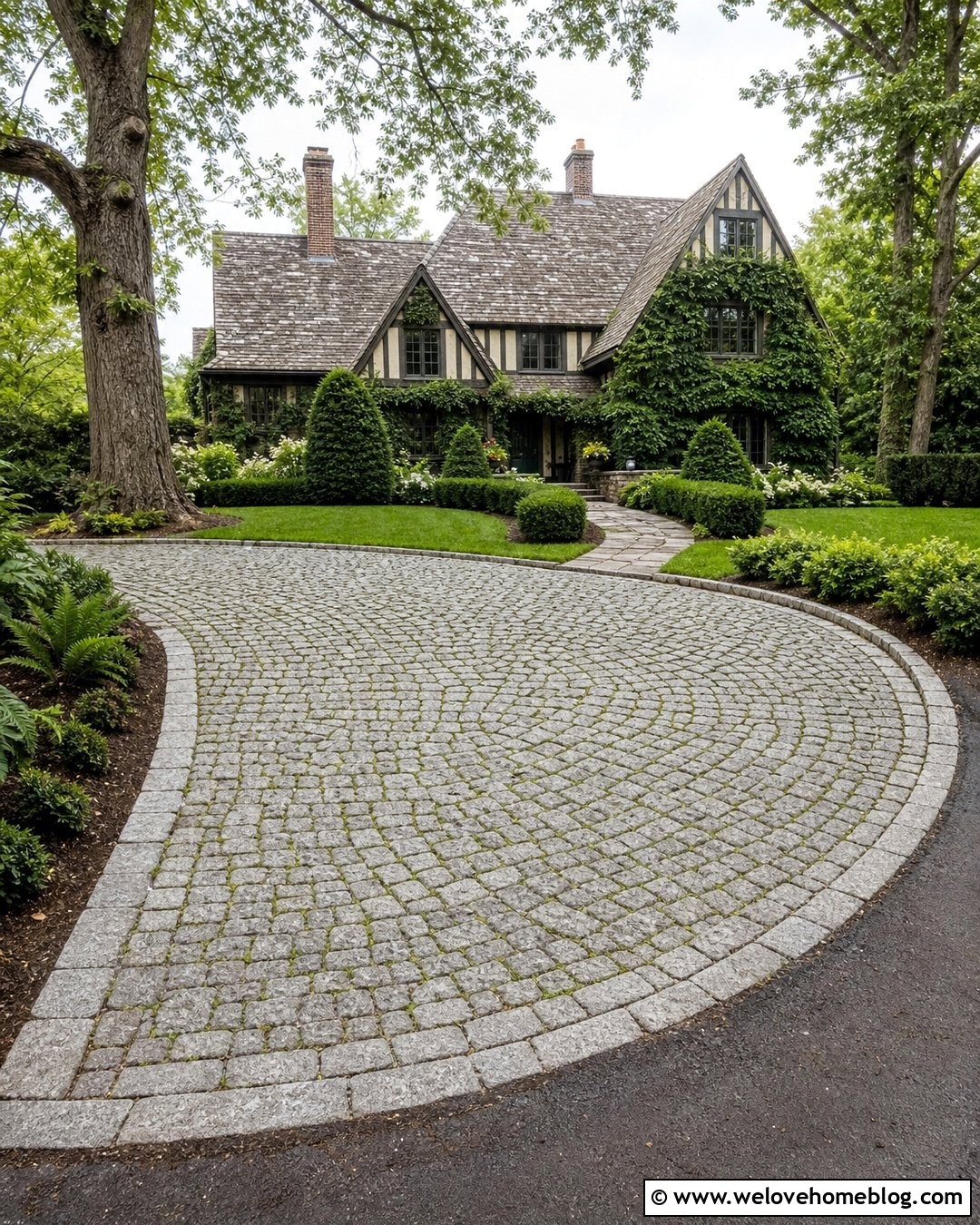
Permeable cobblestone paving combines old-world texture with a softer garden appearance. Use irregular gray granite cobbles across a straight or circular driveway, leaving carefully planned joints filled with a low-growing, traffic-tolerant green ground cover where conditions permit. Keep the central driving paths more tightly jointed for a practical, orderly surface. A thick granite border gives the driveway a firm visual frame. Pair it with a stone cottage, Tudor home, or ivy-covered brick residence. Ferns, clipped evergreens, and mature canopy trees can continue the green palette around the edges. The effect should be subtle rather than overgrown. Cobblestone with planted joints is often used to merge a hard driveway surface with the surrounding landscape and introduce an aged, garden-centered character. ()
23. Long Driveway With Brick Gate Pillars
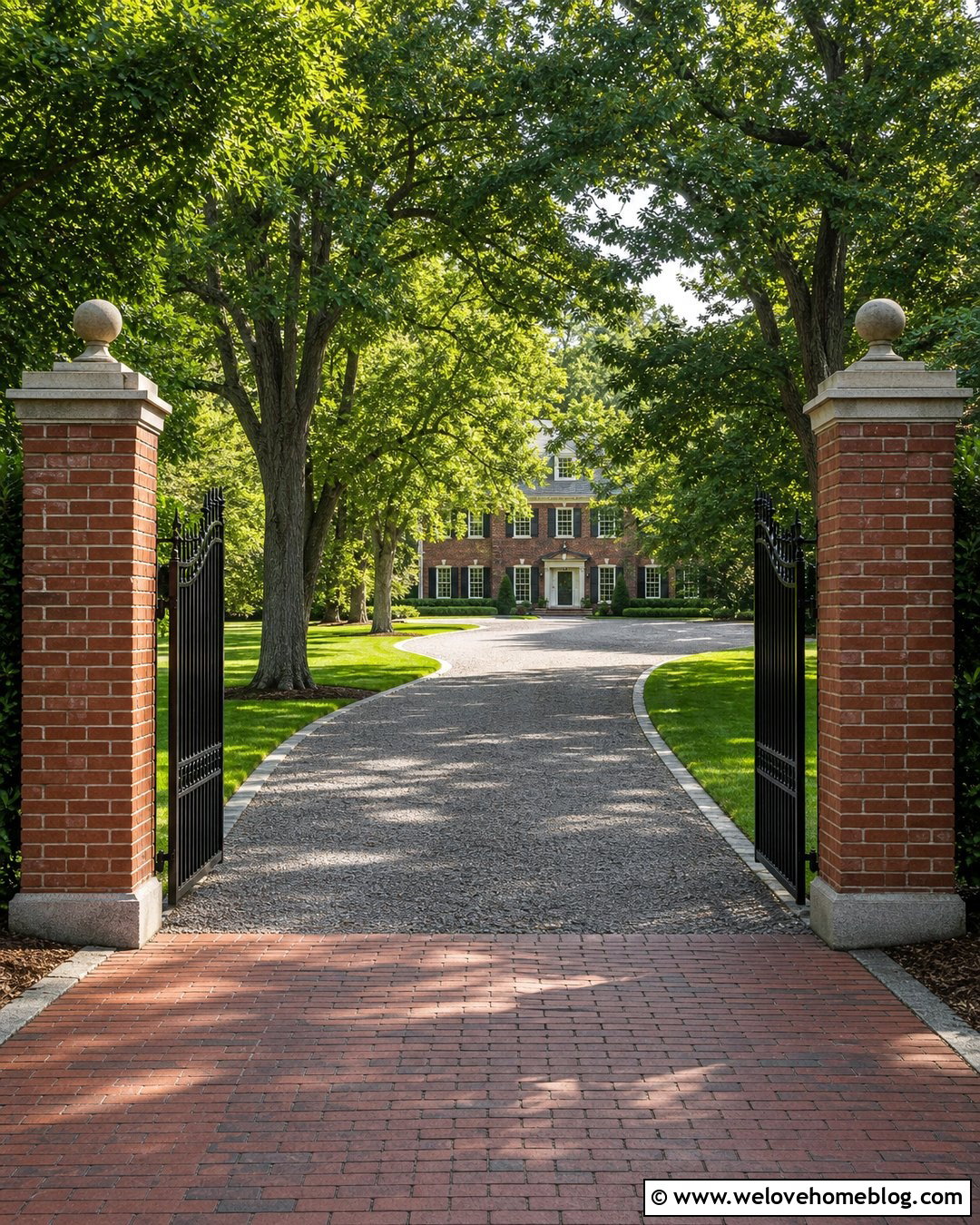
A long driveway needs a clear beginning, a graceful journey, and a well-planned arrival point. Start with substantial red brick pillars that match the house, then connect them with understated black iron gates. Beyond the entrance, use compacted gray gravel for a broad, gently curving route. Granite edging keeps the surface neat, while long stretches of lawn and mature trees prevent the driveway from feeling like a narrow corridor. Near the house, introduce a brick apron and widen the gravel into a turning court. Repeating brick only at important transitions makes the design feel coordinated without overwhelming the landscape. Keep lighting limited to the gate, final curve, and arrival area. This creates practical guidance while preserving a reserved, traditional appearance during the day.
24. Split Driveway With Formal Motor Court
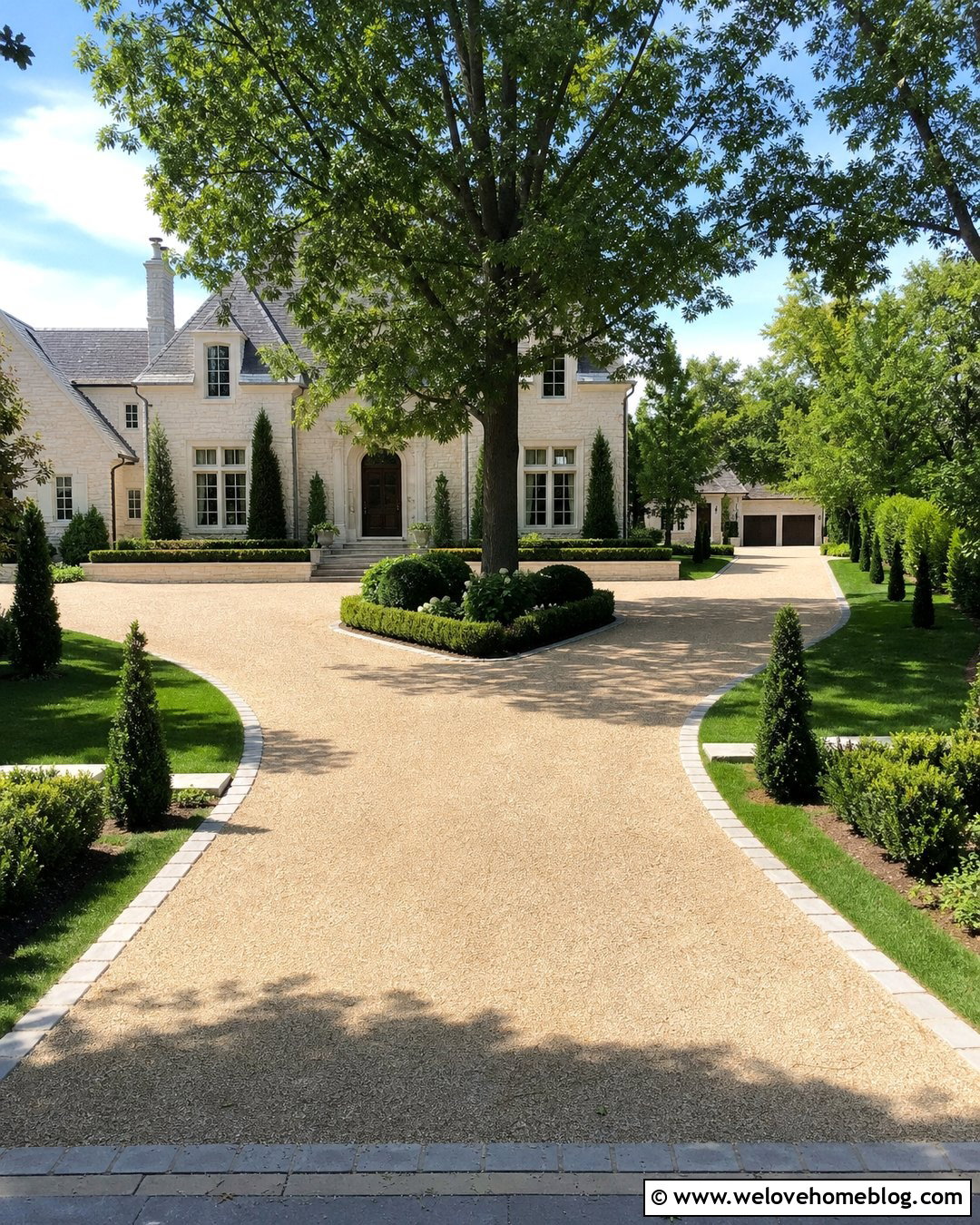
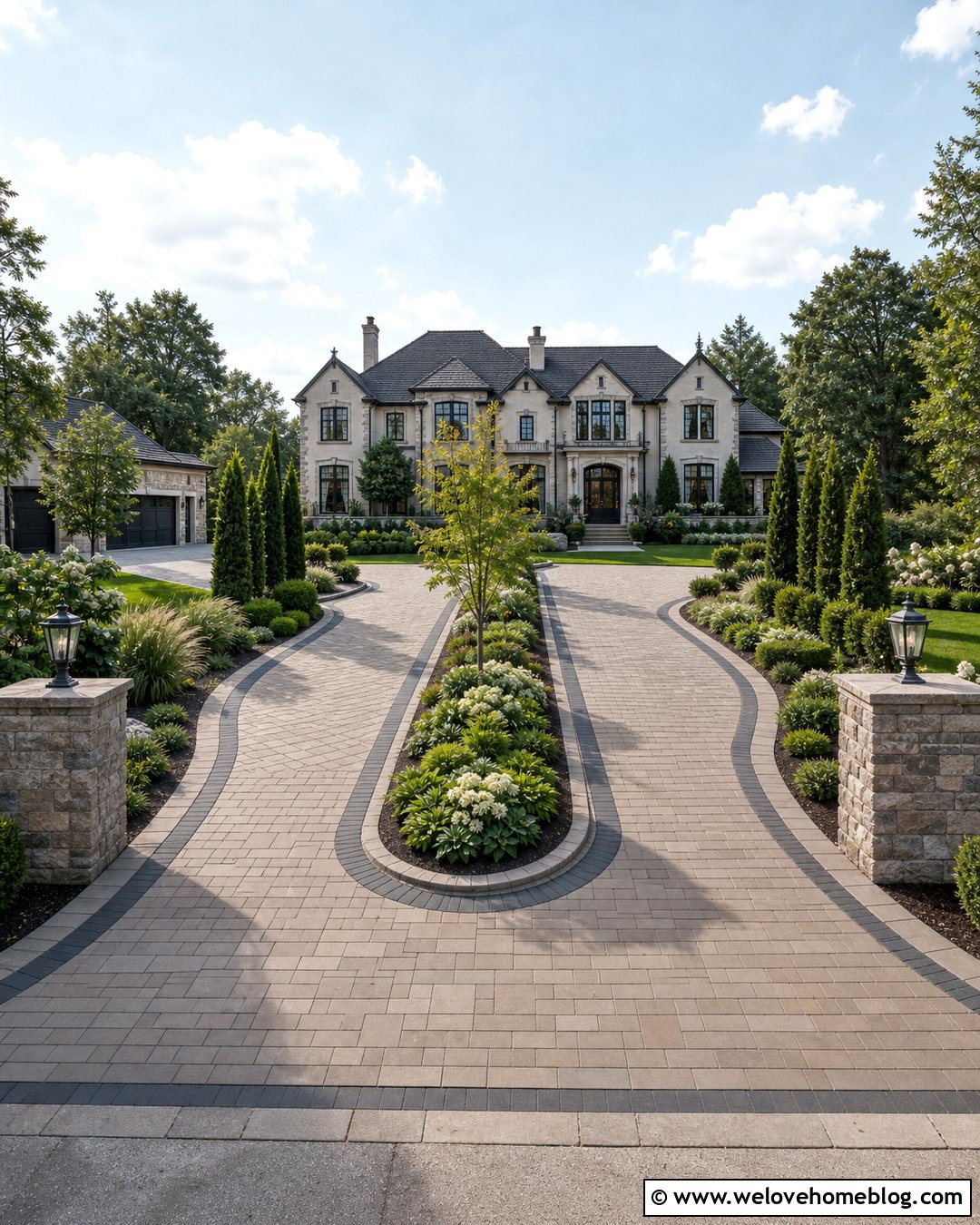
A split layout can separate guest arrivals from garage access while preserving the home’s formal front view. Use warm beige gravel for the primary approach, then divide it near the house. One branch should curve toward a circular or rectangular motor court aligned with the front entrance. The second branch can continue discreetly toward a side garage. Outline both routes with gray granite setts so the split feels deliberate. A boxwood island with one mature tree can organize the dividing point. Around the motor court, use symmetrical lawn panels, limestone walkways, and restrained evergreen planting. Avoid making either branch excessively wide. The old money effect comes from clear circulation, balanced landscaping, and the quiet concealment of practical parking areas rather than from an enormous paved surface.
25. Sloped Driveway With Stone Retaining Walls
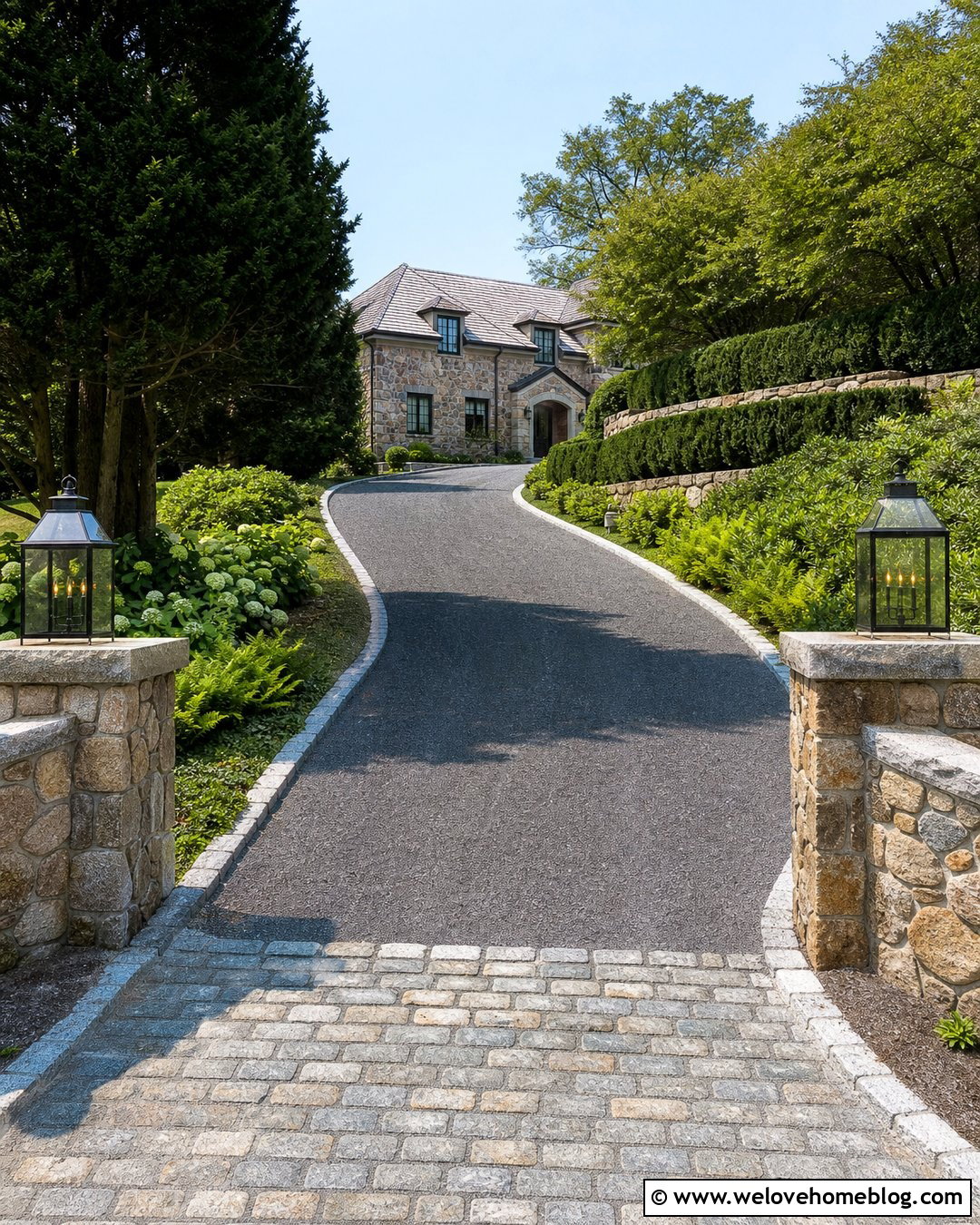
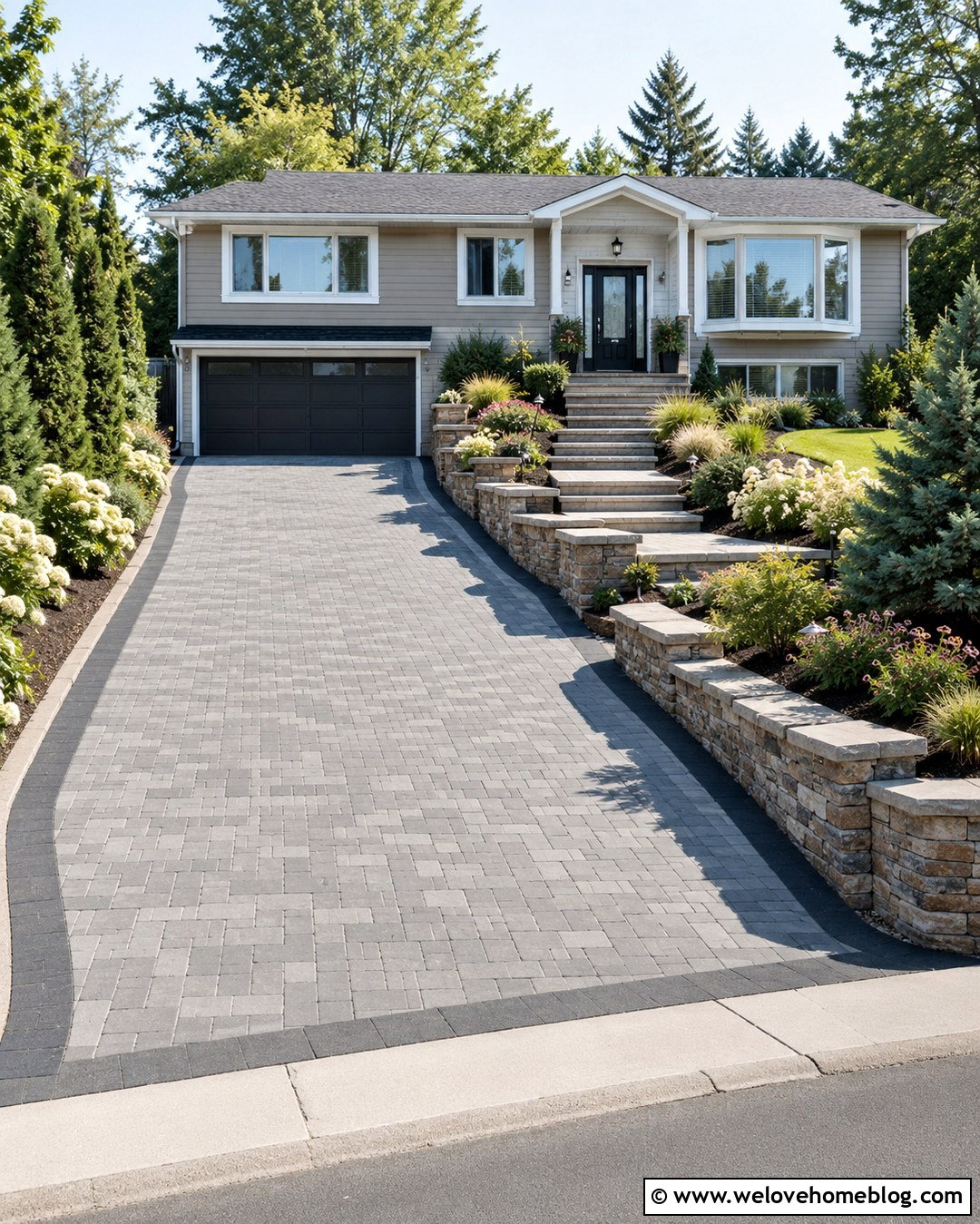
A sloped property can still achieve a formal old money entrance when the driveway follows the land instead of fighting it. Choose dark gray asphalt or compacted gravel for a gently curving climb, then use fieldstone retaining walls to support the higher planting beds. Granite curbs can define the driving edge and direct the eye uphill. At the base, install a cobblestone apron between stone pillars. Plant the slopes with layered yew, hydrangeas, ferns, and ground cover rather than exposed mulch. Near the house, create a level paver court for turning and parking. Drainage, grading, base preparation, and local requirements should be reviewed by qualified professionals before construction, particularly on steep sites where runoff and material movement require careful planning. ()
Conclusion:
Successful 25 Old Money House Driveway Ideas are built around restraint, proportion, and materials that become more attractive with age. Gravel, cobblestone, granite, clay brick, and subtly finished pavers can all work when they complement the house. The layout matters just as much as the surface. Curves create privacy, circular courts support formal arrivals, and narrow ribbon drives preserve more lawn. Complete the design with strong edging, mature greenery, balanced planting, and entrance details repeated from the architecture. Avoid combining too many colors, patterns, or decorative features. Whether the property is a compact Colonial or a large country estate, a coordinated driveway can create the quiet, established curb appeal associated with old money homes.

Related posts:




Leave a Reply