
A French chateau driveway should feel like part of the architecture, not simply a place to park. The most convincing designs connect the driveway surface with the home’s stonework, roof tones, entrance gates, and formal landscaping. Gravel, cobblestone, brick, limestone-look pavers, and mixed-material layouts all suit this elegant aesthetic. Current French country projects also show how structured greenery, generous planting beds, and traditional masonry can soften large paved areas while preserving a refined estate appearance. () Whether you have a long rural approach or a compact suburban front yard, proportion matters more than property size. The following complete looks balance beauty, practical access, drainage, and everyday maintenance. Explore these **20 French Chateau Driveway Ideas** to create an entrance that feels established, welcoming, and connected to your home.
1. French Chateau Pea Gravel Driveway
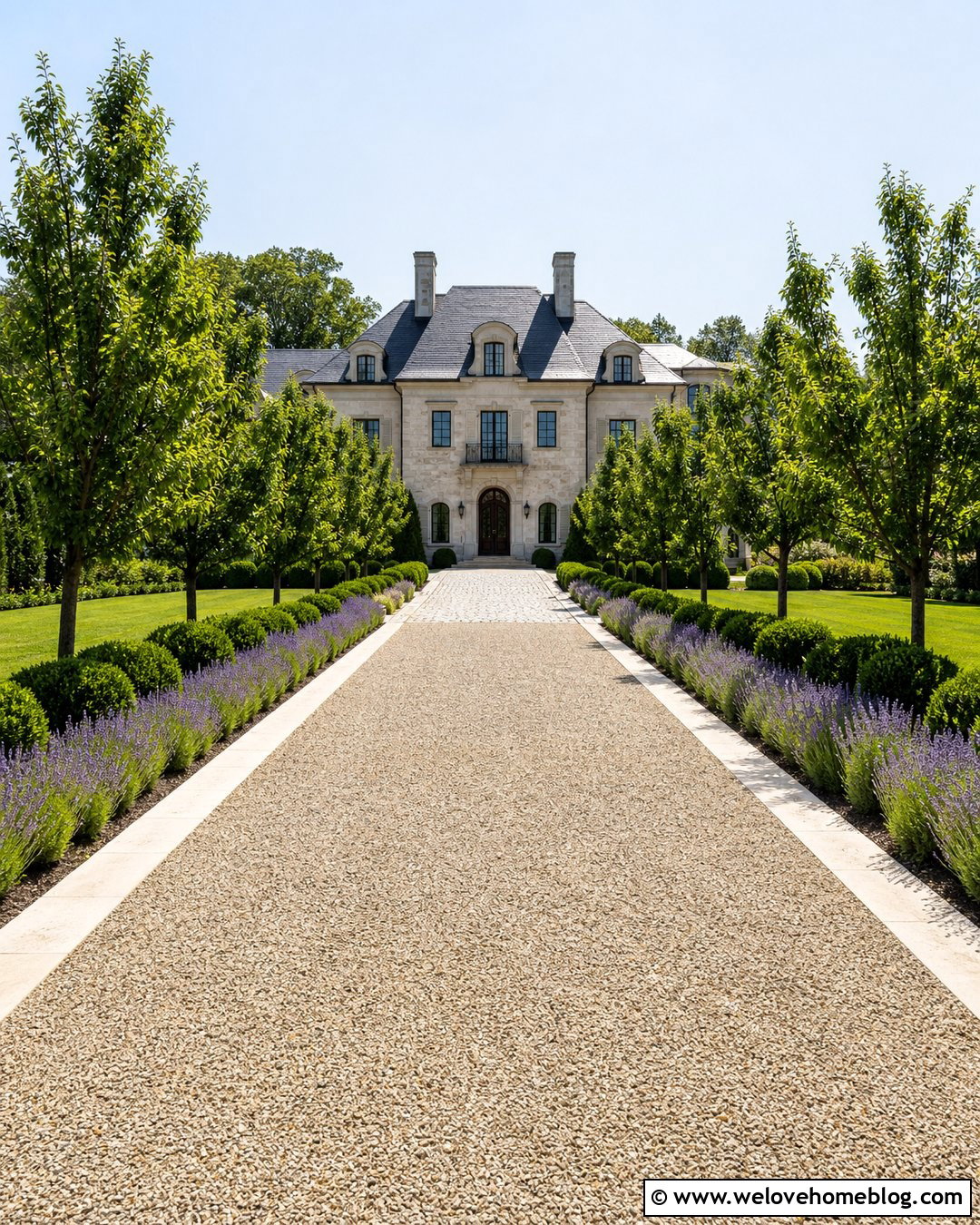
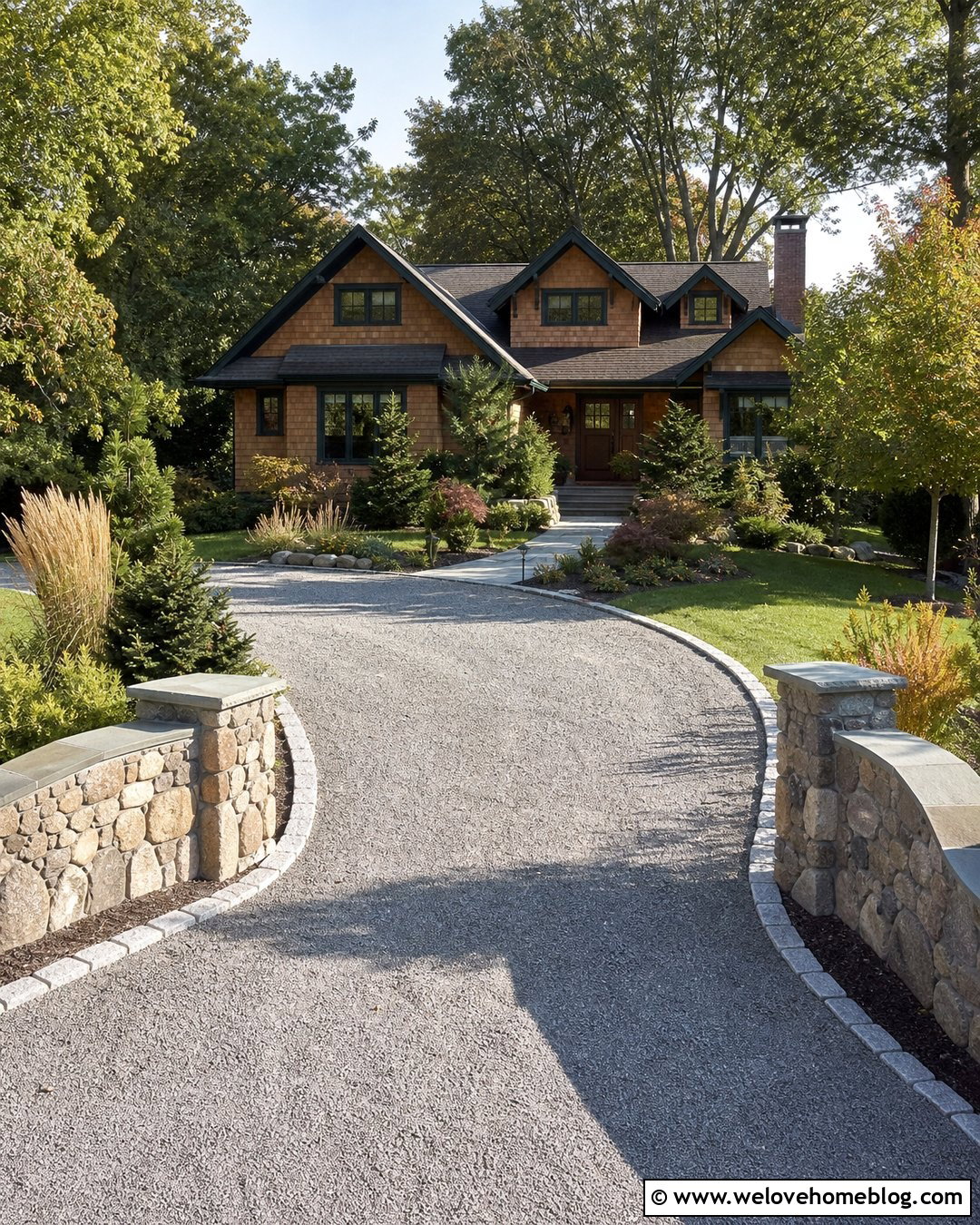
A pale pea gravel driveway creates the relaxed elegance associated with a French country estate. Choose buff, cream, and soft gray stones that complement limestone walls or warm stucco. A straight layout provides a strong view toward the front entrance, while wide limestone curbs keep loose gravel away from lawns and flower beds. Plant lavender, clipped boxwood, and small ornamental pear trees along both sides for a balanced but welcoming approach. Near the house, widen the drive into a simple parking court with a cobblestone apron. Proper excavation, a compacted aggregate base, and a stabilizing grid will reduce rutting. This complete look works especially well when the gravel color repeats the chateau’s facade, steps, and garden walls.
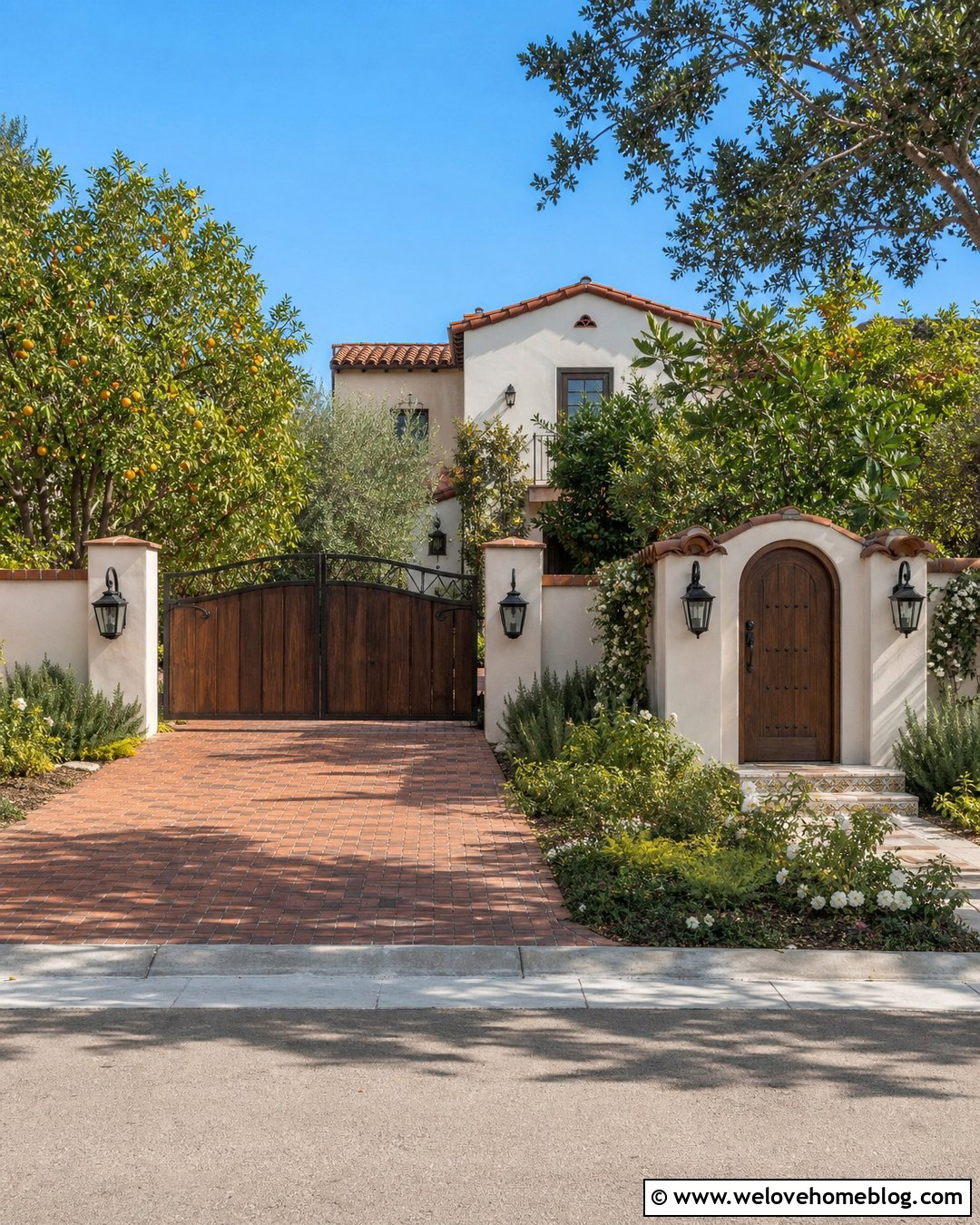
2. French Chateau Circular Cobblestone Driveway
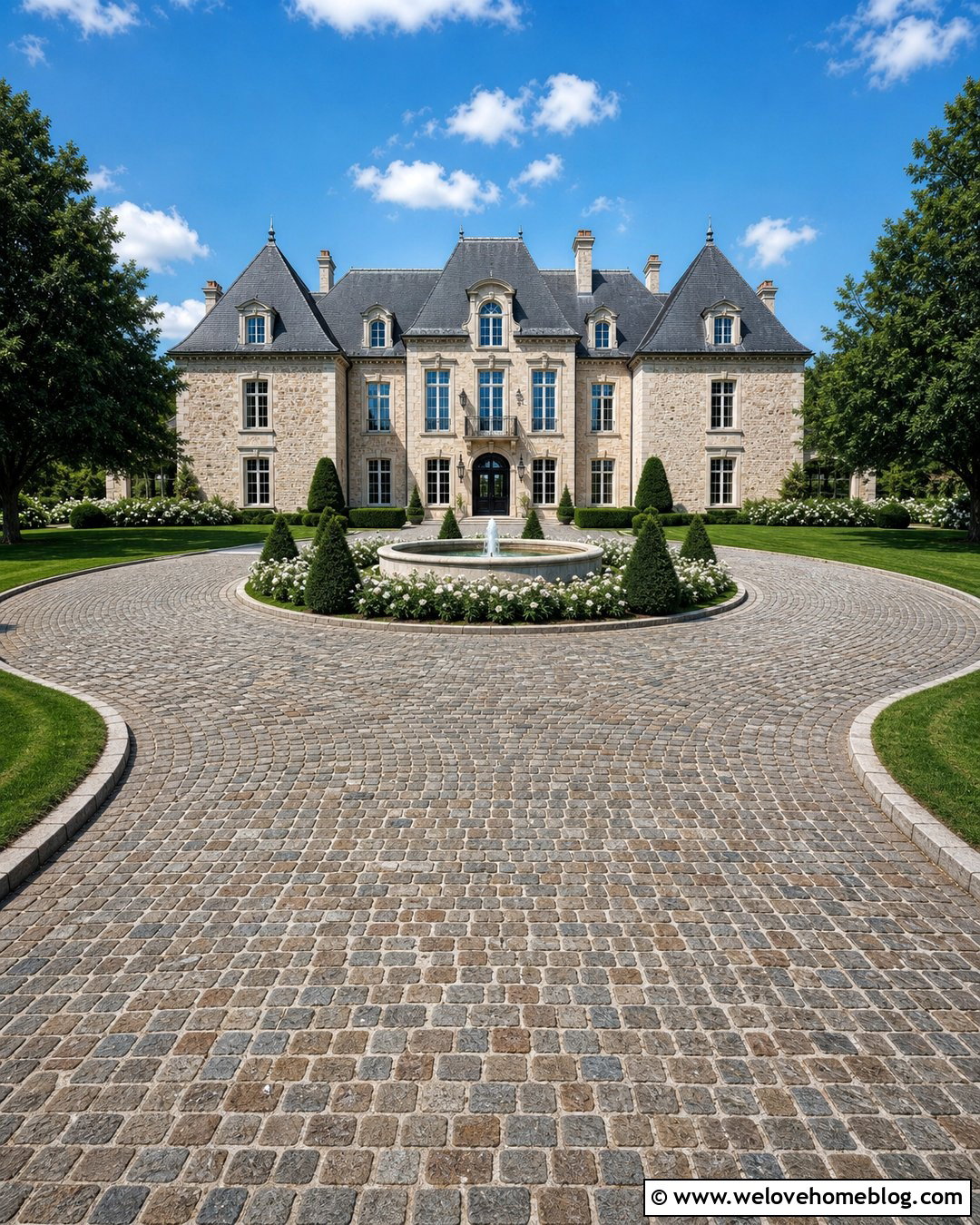
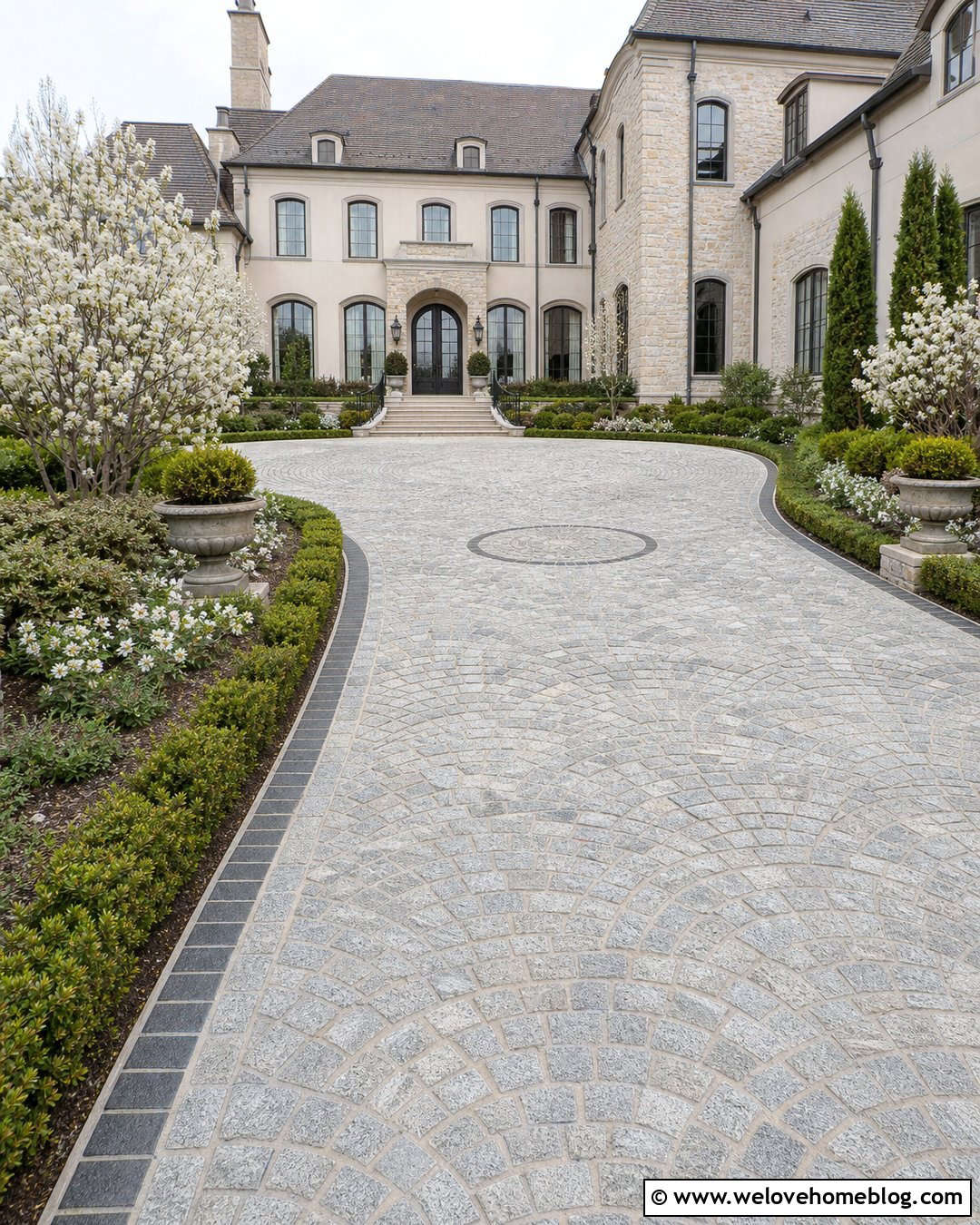
Imagine arriving at a broad cobblestone circle framed by clipped greenery and an old-world stone facade. Granite cobblestones in mixed charcoal, silver, and brown tones give a circular French chateau driveway authentic texture without looking overly uniform. Place a low limestone fountain, formal urn, or round boxwood bed in the central island. A contrasting cobblestone band can define the outer curve and create a clean transition into the entrance walkway. Keep planting symmetrical with yew cones, roses, and low hedges rather than tall shrubs that hide the house. The circle should be large enough for comfortable turning and positioned so parked vehicles do not dominate the entrance. This design creates an impressive motor court while maintaining a gracious, garden-focused view.
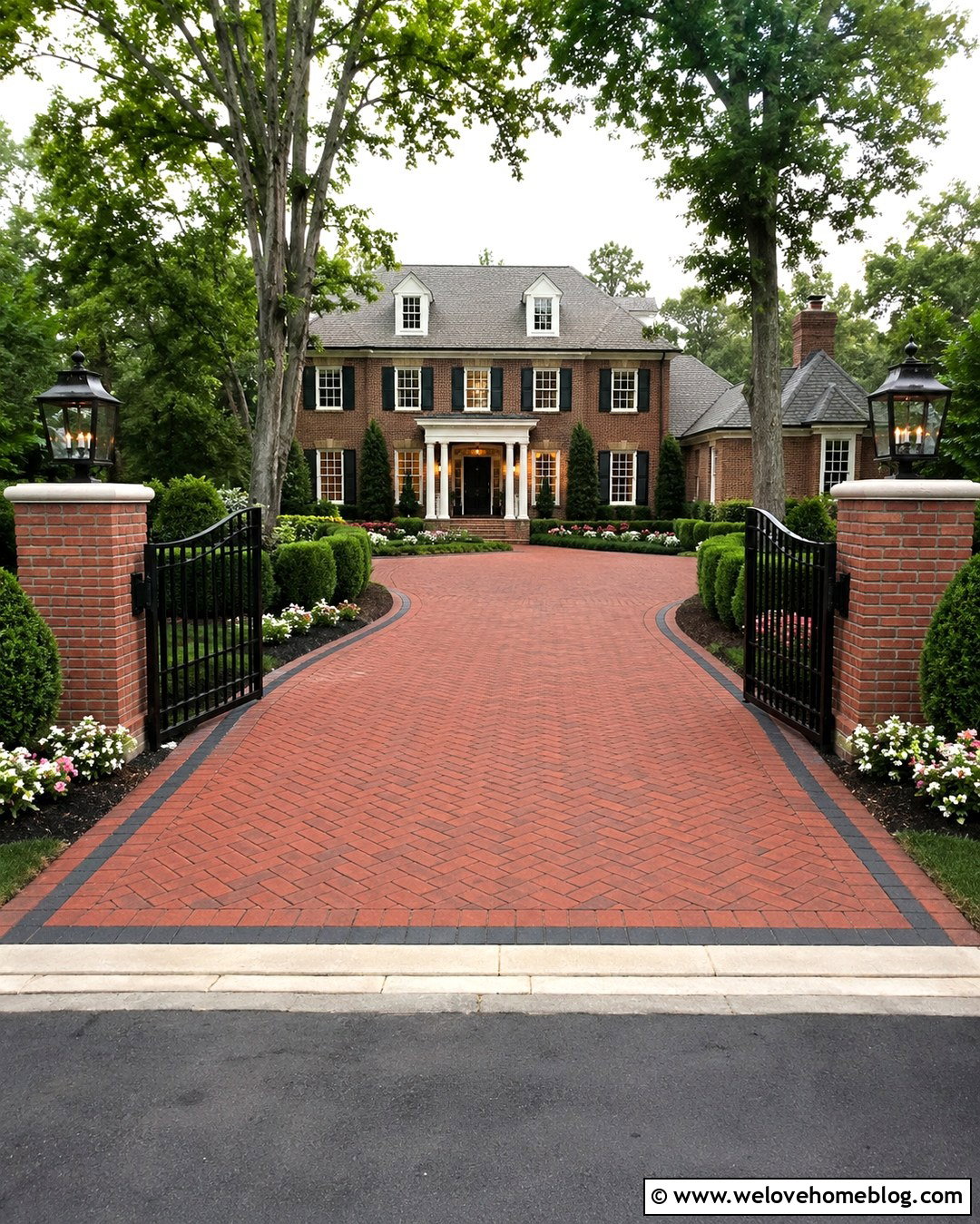
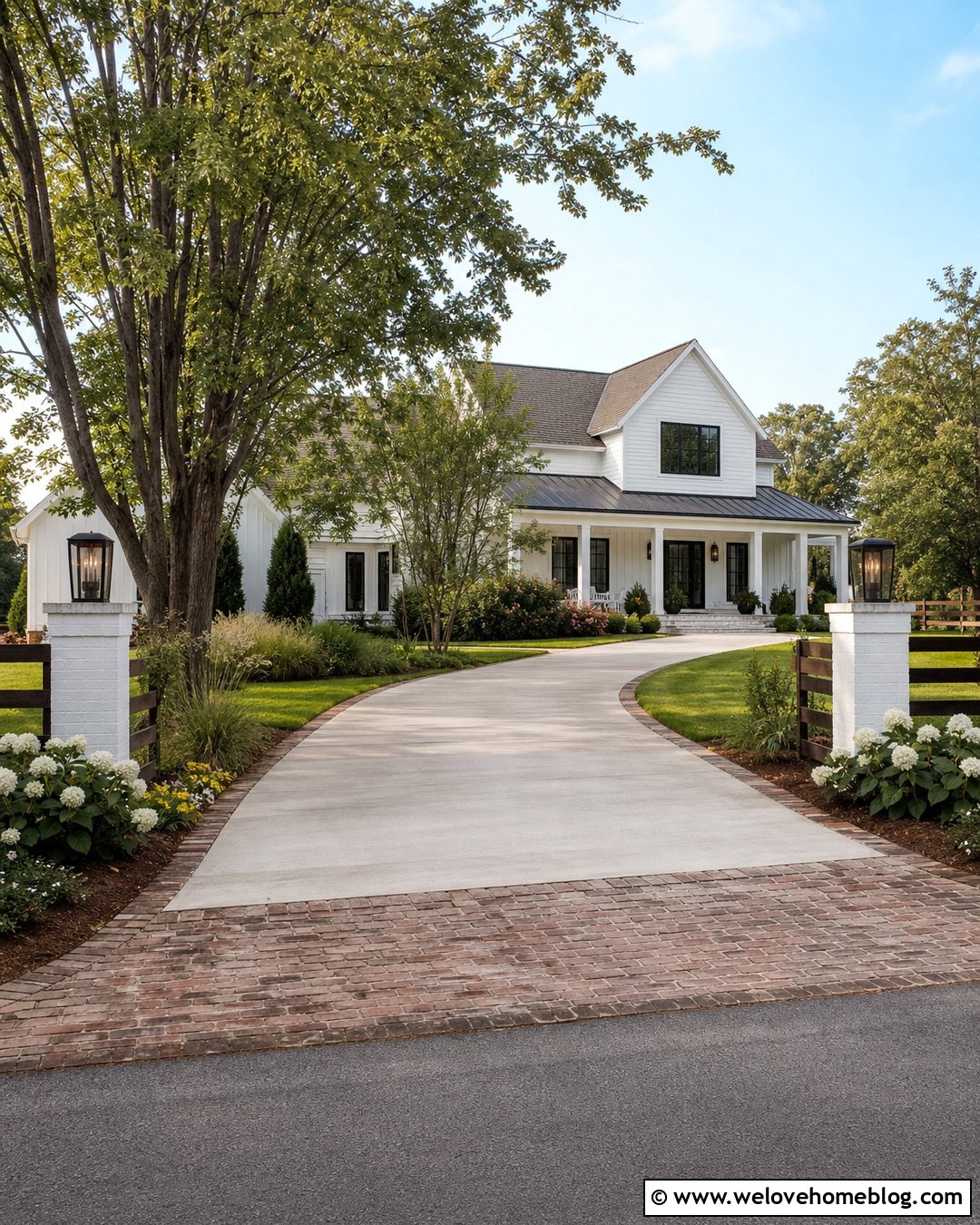
3. French Chateau Brick Driveway
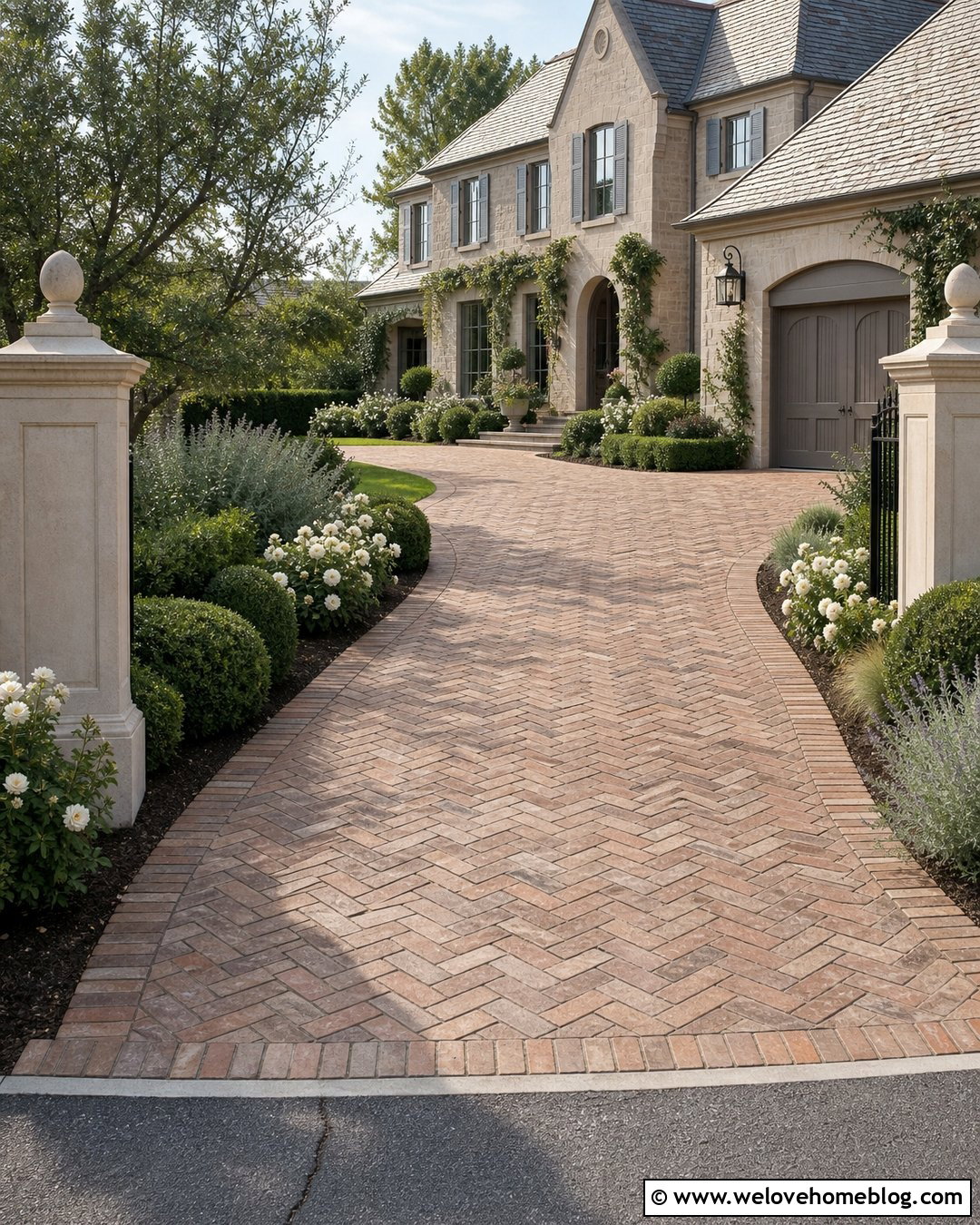
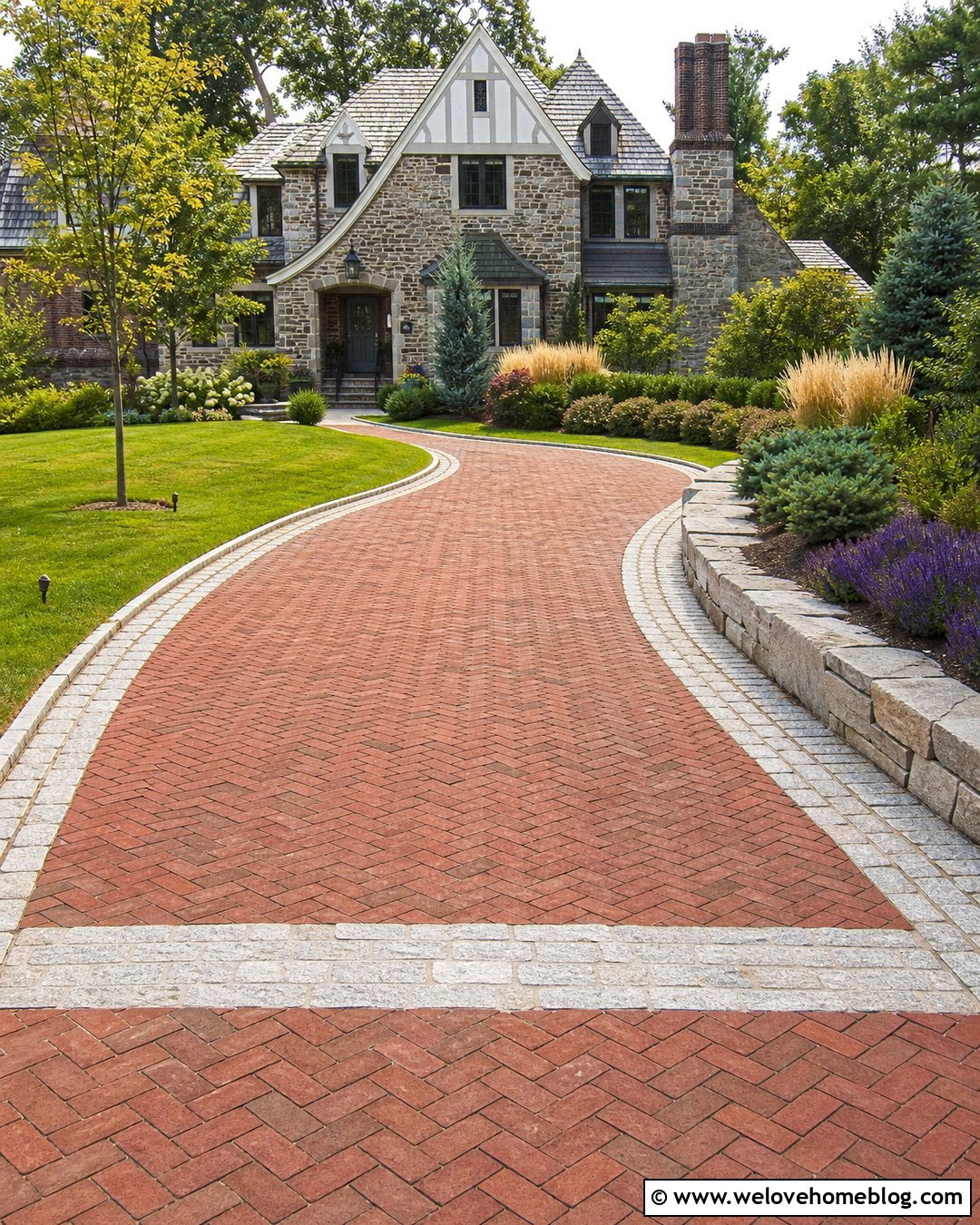
Warm brick can make a large chateau facade feel more inviting and less formal. Use weathered clay brick pavers in a herringbone pattern for the main surface, then add a soldier-course border to hold the edges visually. A gently curved layout feels natural beside an asymmetrical French country home with stone walls and steep rooflines. Cream limestone entrance pillars help connect the reddish driveway tones to the lighter architecture. Along the curve, combine clipped boxwood with white roses, catmint, and soft ornamental grasses. Select brick pavers rated for vehicular use and coordinate the base design with local soil conditions. The finished driveway should display subtle color variation, giving it the character of an established European courtyard rather than a newly installed red brick patio.
4. French Chateau Limestone Paver Driveway
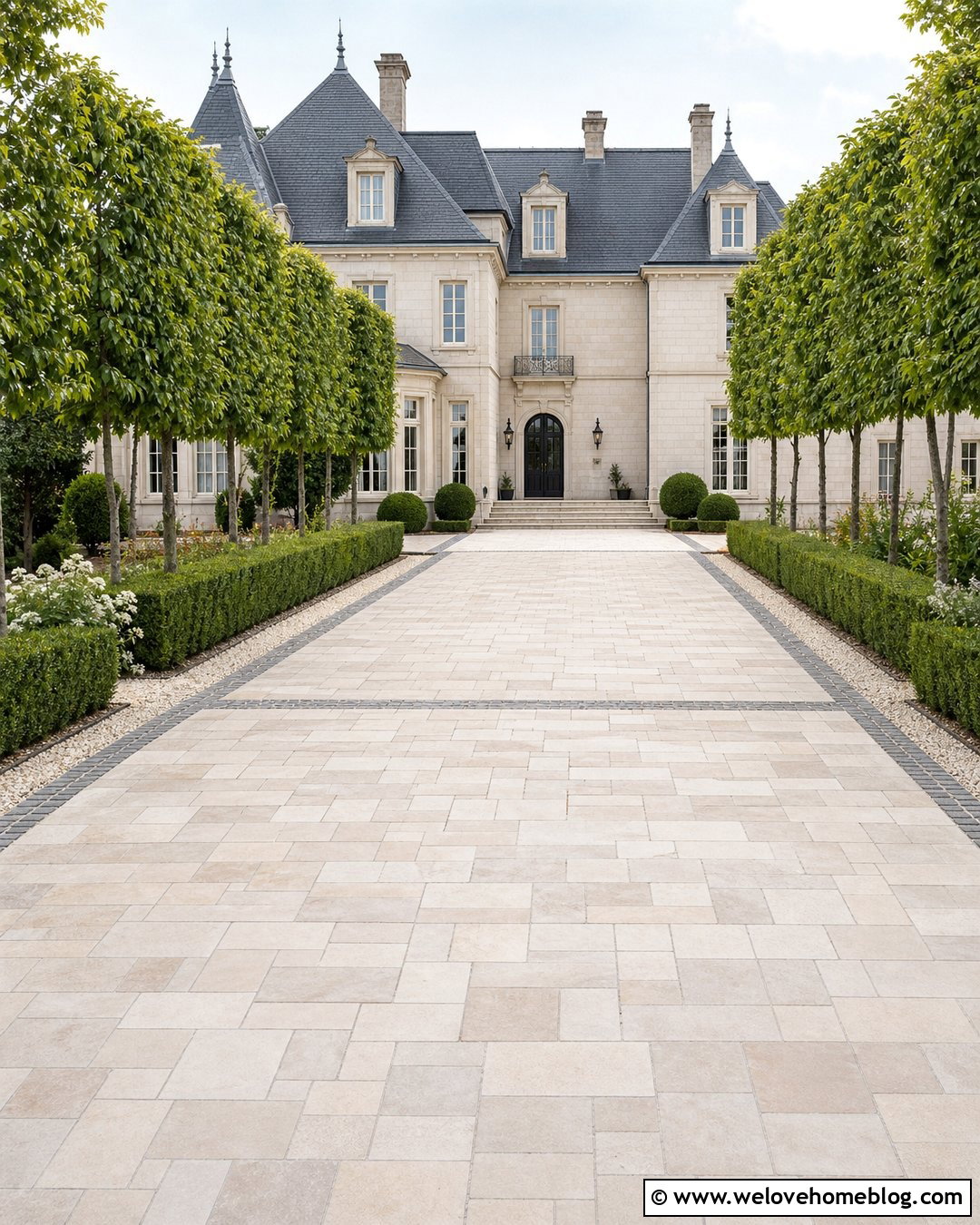
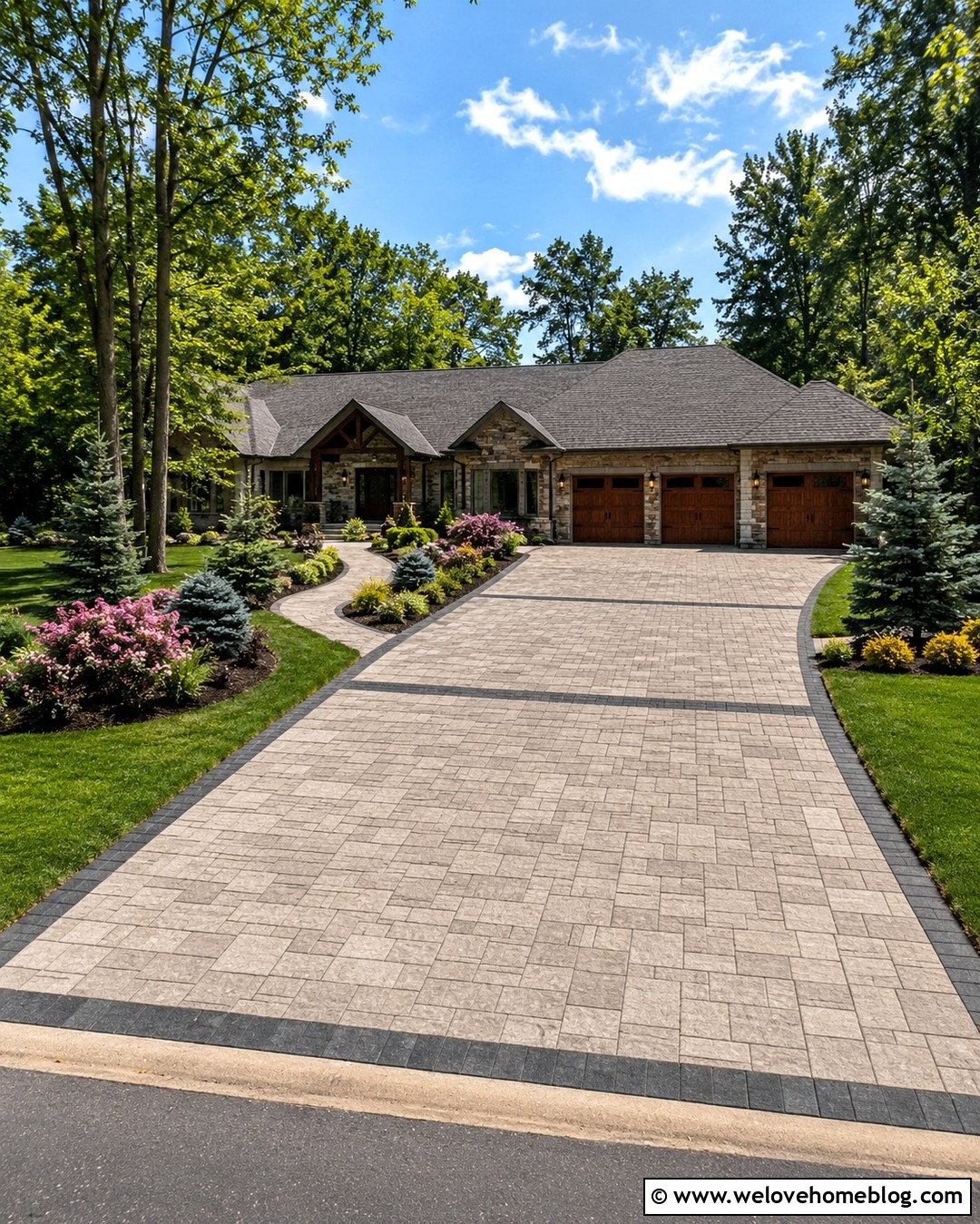
Large limestone-look pavers create a calm, refined entrance that suits a formal French chateau. Choose durable concrete or porcelain driveway pavers with creamy beige, taupe, and light gray variation instead of delicate interior-grade limestone. An ashlar pattern makes the surface feel traditional while preventing the design from becoming too rigid. Shape the driveway as a wide, straight approach that opens into a rectangular motor court near the front steps. Narrow cobblestone bands can outline parking areas and break up the expansive paving. Frame the drive with low boxwood hedges, pleached hornbeams, and gravel planting strips. Repeating the paver tone on the entrance walkway and stair landings creates continuity. The result is polished and stately without relying on complicated ornament or excessive color.
5. French Chateau Resin-Bound Gravel Driveway
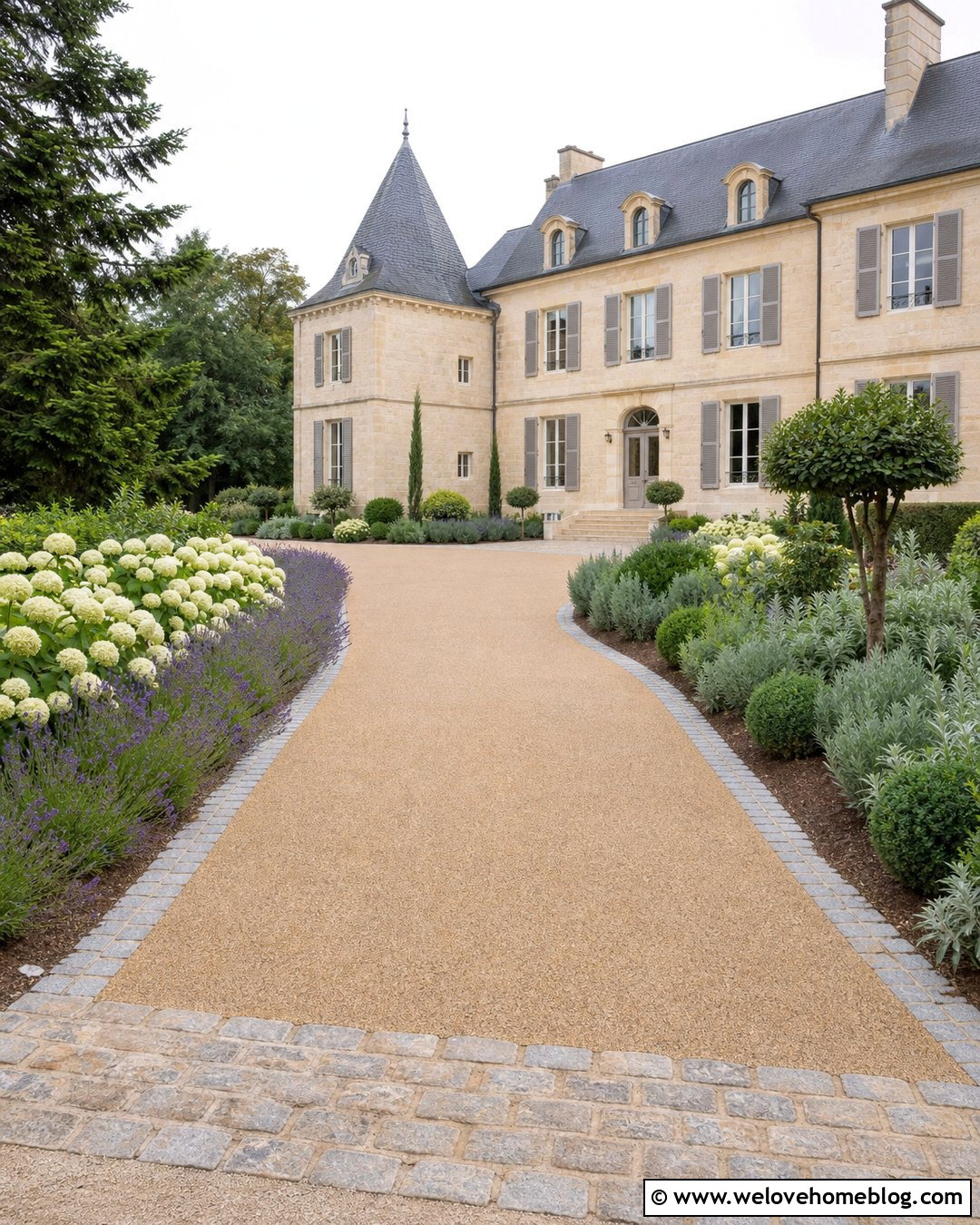
For a smoother interpretation of classic estate gravel, consider a resin-bound gravel driveway in warm champagne or natural stone tones. The seamless surface provides the visual softness of fine gravel while producing a cleaner, more contemporary finish. Use a sweeping curved layout that reveals the chateau gradually instead of presenting the entire facade from the street. Edge the driveway with narrow granite setts, then add layered beds of lavender, white hydrangeas, sage, and evergreen shrubs. A matching resin-bound parking court can sit near the house, separated by a cobblestone threshold. Discuss permeability, drainage, base construction, and local weather conditions with an experienced installer. This design is particularly effective for a renovated chateau-style home that combines traditional masonry with streamlined windows, doors, and landscaping.
6. French Chateau Asphalt Driveway
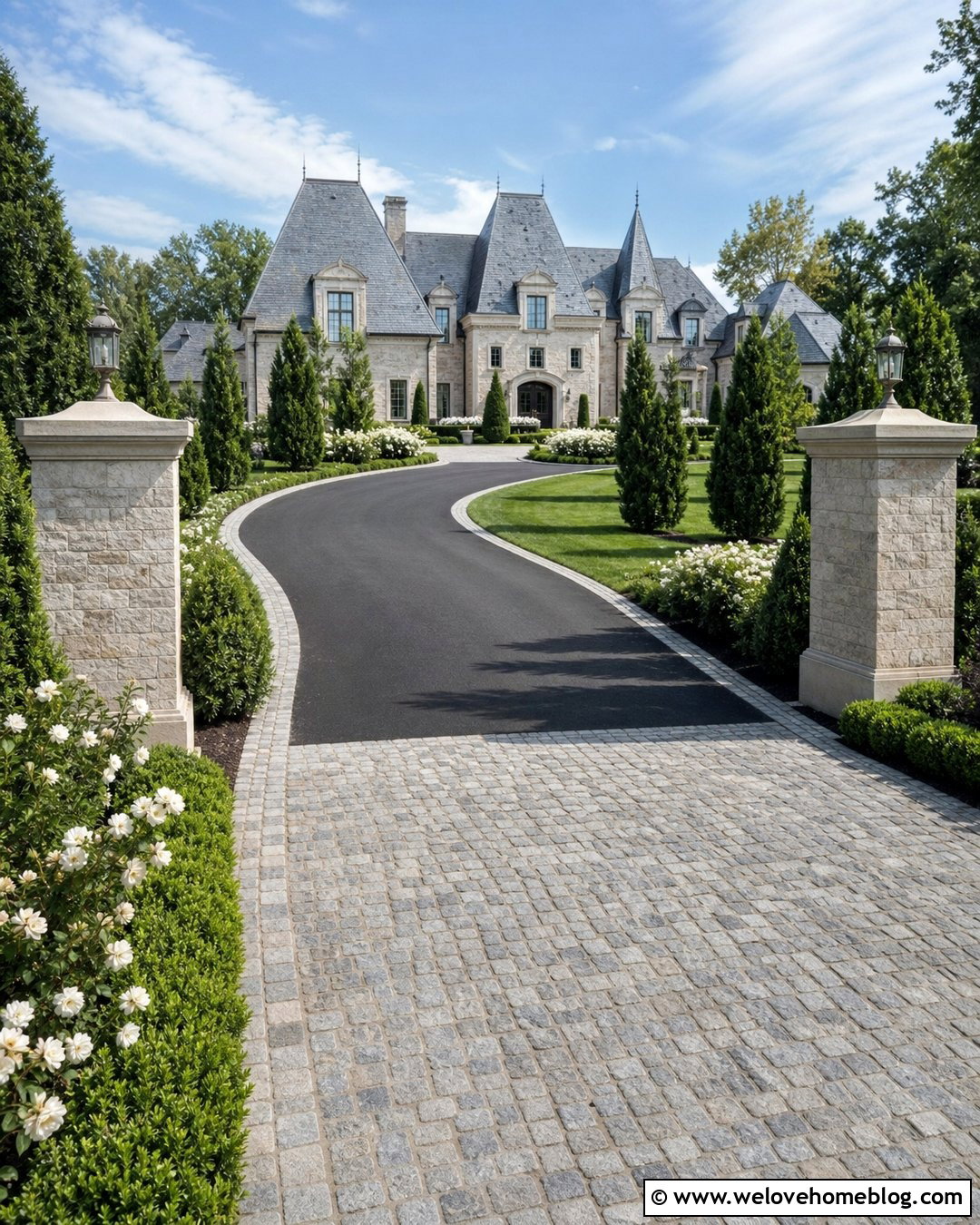
Black asphalt can complement a French chateau when thoughtful borders and landscaping soften its practical appearance. Keep the main driveway gently curved and finish the edges with reclaimed-looking granite cobbles or warm concrete setts. At the road, install a full-width cobblestone apron between stone entrance pillars. A second apron near the motor court makes the transition feel intentional. Avoid leaving wide asphalt shoulders exposed. Instead, bring lawn, ground cover, and layered planting beds close to the edging. White roses, upright evergreens, and multi-stem trees will draw attention toward the house. A deep charcoal surface also works well with dark slate roofs and black metal accents. This approach delivers an understated estate look while concentrating decorative masonry in the areas where it produces the greatest visual impact.
7. French Chateau Decomposed Granite Driveway
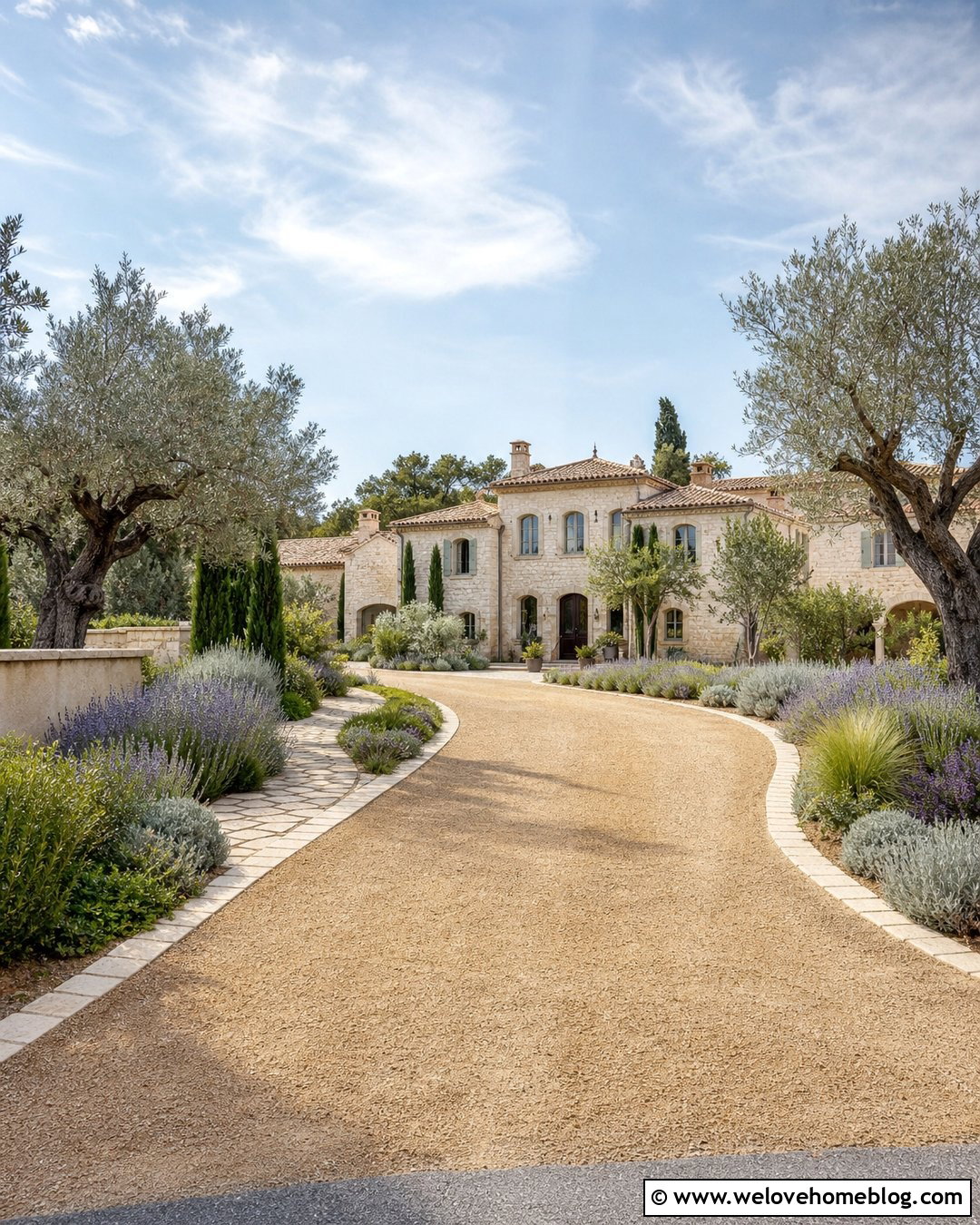
Decomposed granite gives a French chateau driveway a rustic, sun-washed character. Select a compactable blend in golden tan, buff, or muted gray to coordinate with the home’s exterior stone. A broad driveway with soft curves feels especially appropriate for a Provence-inspired chateau surrounded by informal gardens. Use steel edging where you want a nearly invisible boundary, or install chunky limestone curbs for stronger definition. Near the front door, transition into natural stone pavers so guests have a firm, comfortable walking surface. Olive-like ornamental trees, lavender, rosemary, and drought-tolerant grasses can reinforce the Southern French mood in suitable climates. Because decomposed granite performs best with correct grading and compaction, plan the base carefully. The completed design should feel relaxed, cohesive, and purposefully aged.
8. French Chateau Exposed Aggregate Driveway
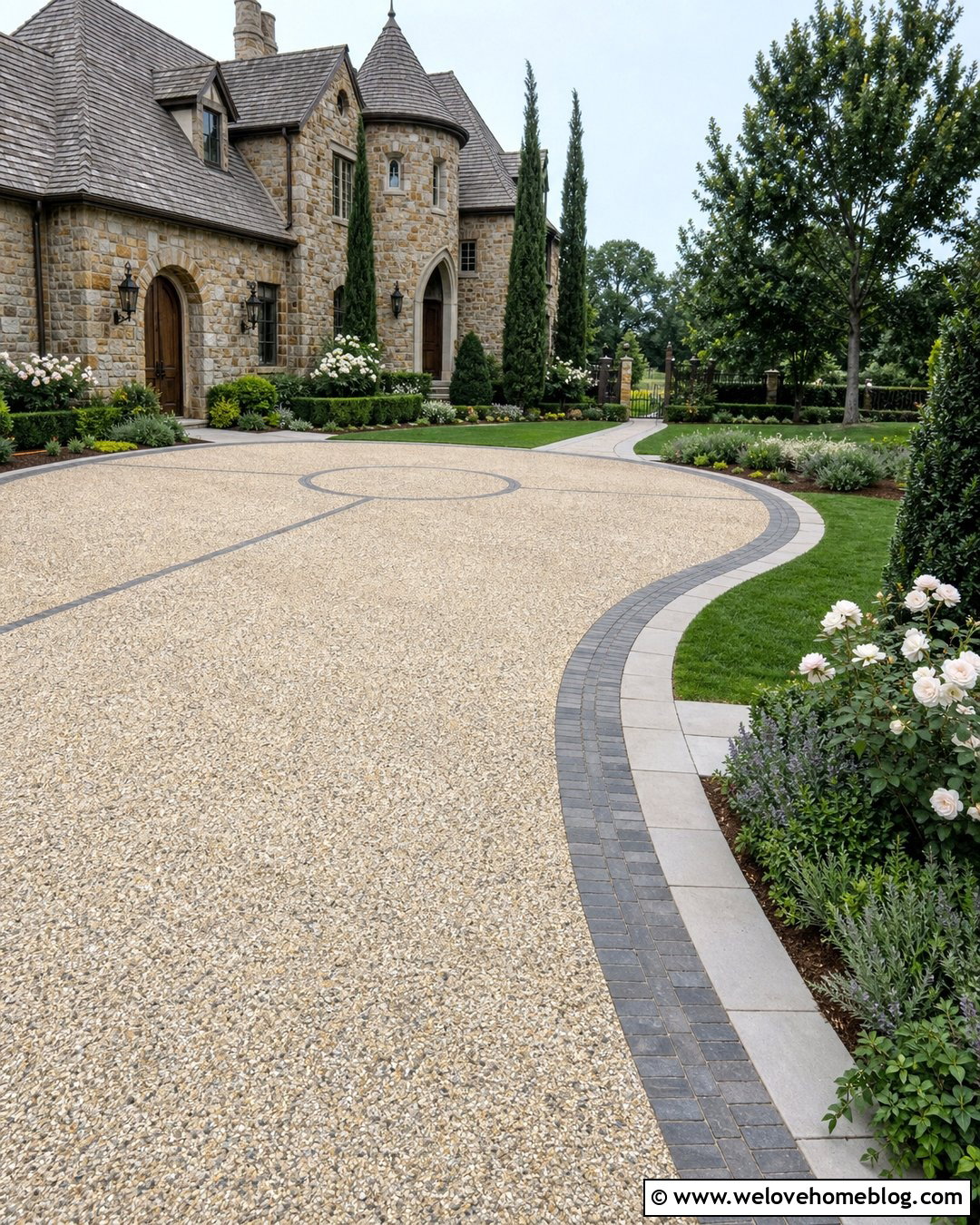
Exposed aggregate concrete adds texture without competing with an ornate chateau facade. Choose an aggregate mix containing cream, honey, gray, and brown stones that echo the exterior masonry. A wide curved driveway can flow toward a rounded parking area, with darker paver bands outlining the edges and turning zone. Rather than covering the entire front yard with concrete, preserve generous planting beds between the drive and the house. Formal evergreens provide year-round structure, while pale roses and flowering perennials add softness. A smooth concrete or stone border gives pedestrians a more comfortable route beside the textured surface. Control joints should be integrated into the overall pattern instead of treated as an afterthought. This balanced design offers a durable appearance with enough variation to suit French country architecture.
9. French Chateau Permeable Paver Driveway
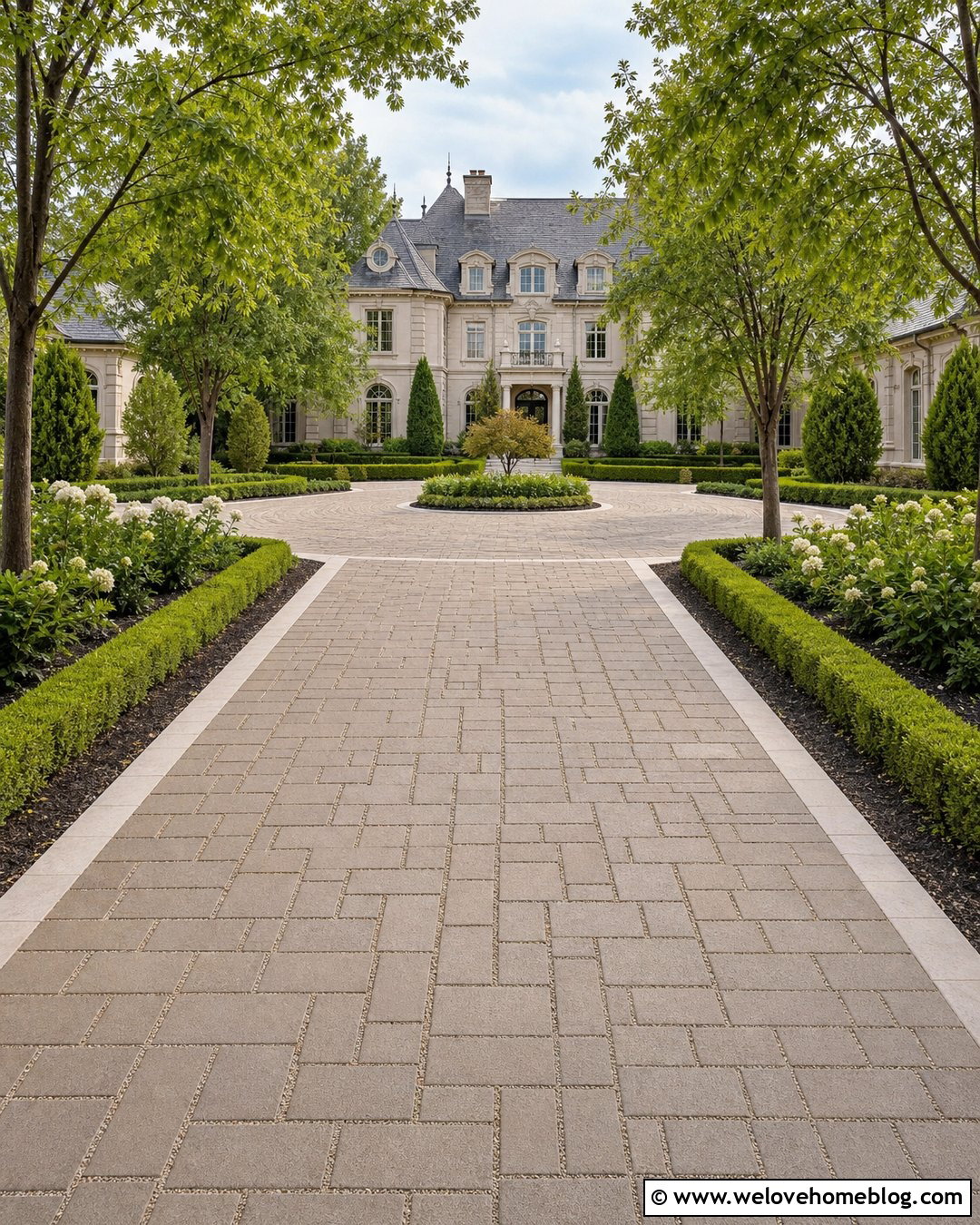
A permeable paver driveway can bring practical water management into a traditional French chateau landscape. Use tumbled concrete pavers in limestone gray or warm taupe, with narrow joints filled by clean aggregate. Lay them in a simple running bond or modular ashlar pattern so the surface feels established rather than highly decorative. A straight entrance that expands into a circular arrival court gives the system plenty of visual presence. Surround it with rain-friendly planting areas, clipped hedges, and small canopy trees. Permeable paving may help water infiltrate through the surface when the entire base assembly is designed correctly for the site. () Use solid stone bands at gates and walkways to create crisp transitions. The result combines estate-level formality with a more landscape-conscious driveway layout.
10. French Chateau Grass Joint Driveway
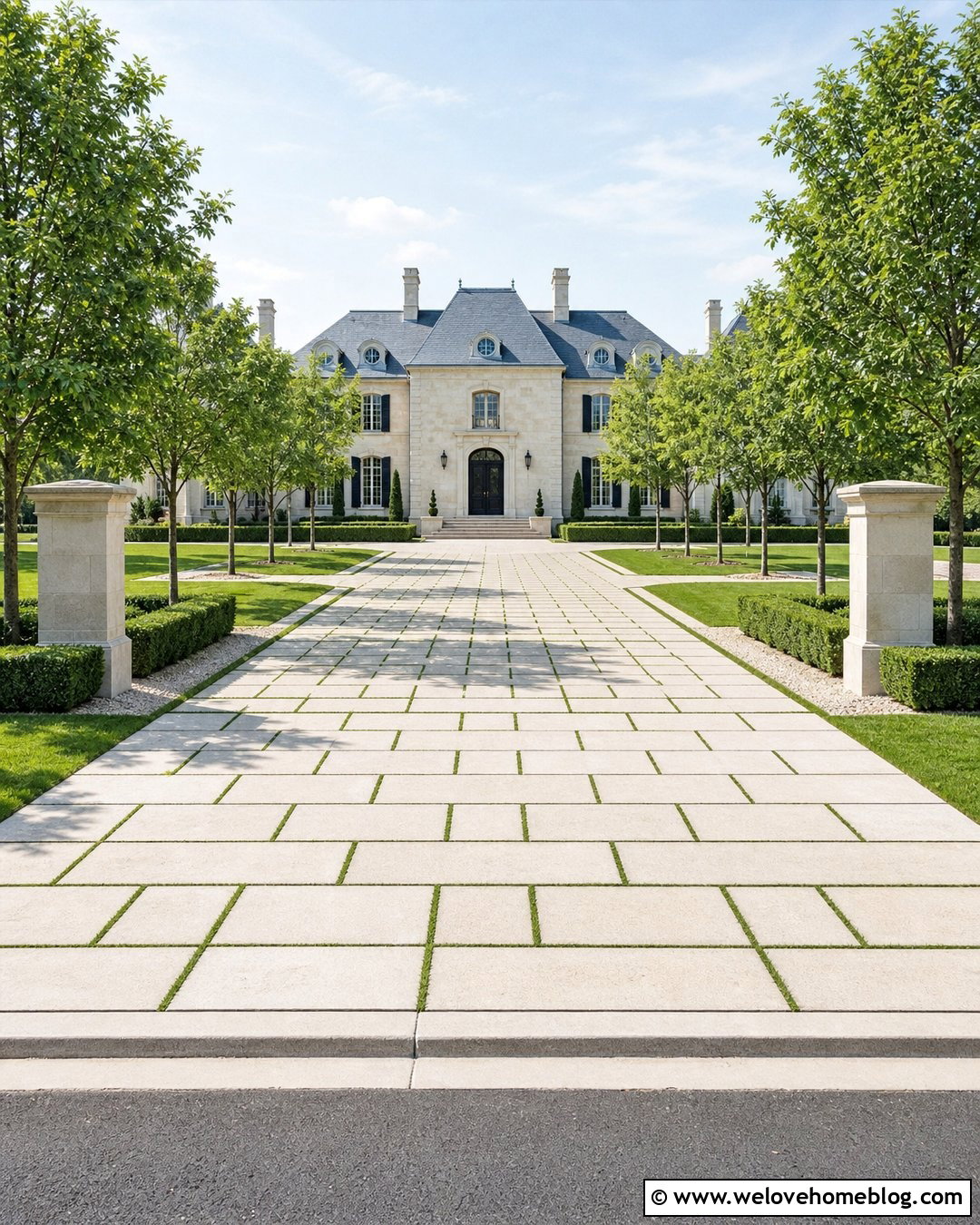
Stone pavers separated by narrow grass joints can reduce the visual weight of a large chateau driveway. Use rectangular concrete or natural stone pavers in a muted limestone finish, placing them in straight rows across a broad approach. Keep the planted joints consistent and narrow enough to support a clean architectural pattern. A solid paver track near the gate and garage will handle frequent turning more effectively than decorative green joints in every location. Frame the driveway with low hedges, pale gravel beds, and formally spaced trees. The mixture of stone and greenery works best on a relatively level property where irrigation and maintenance are manageable. For a more durable alternative, use low-growing ground cover or gravel-filled joints. This look makes a grand entrance feel softer and closely integrated with the lawn.
11. French Chateau Tree-Lined Gravel Driveway
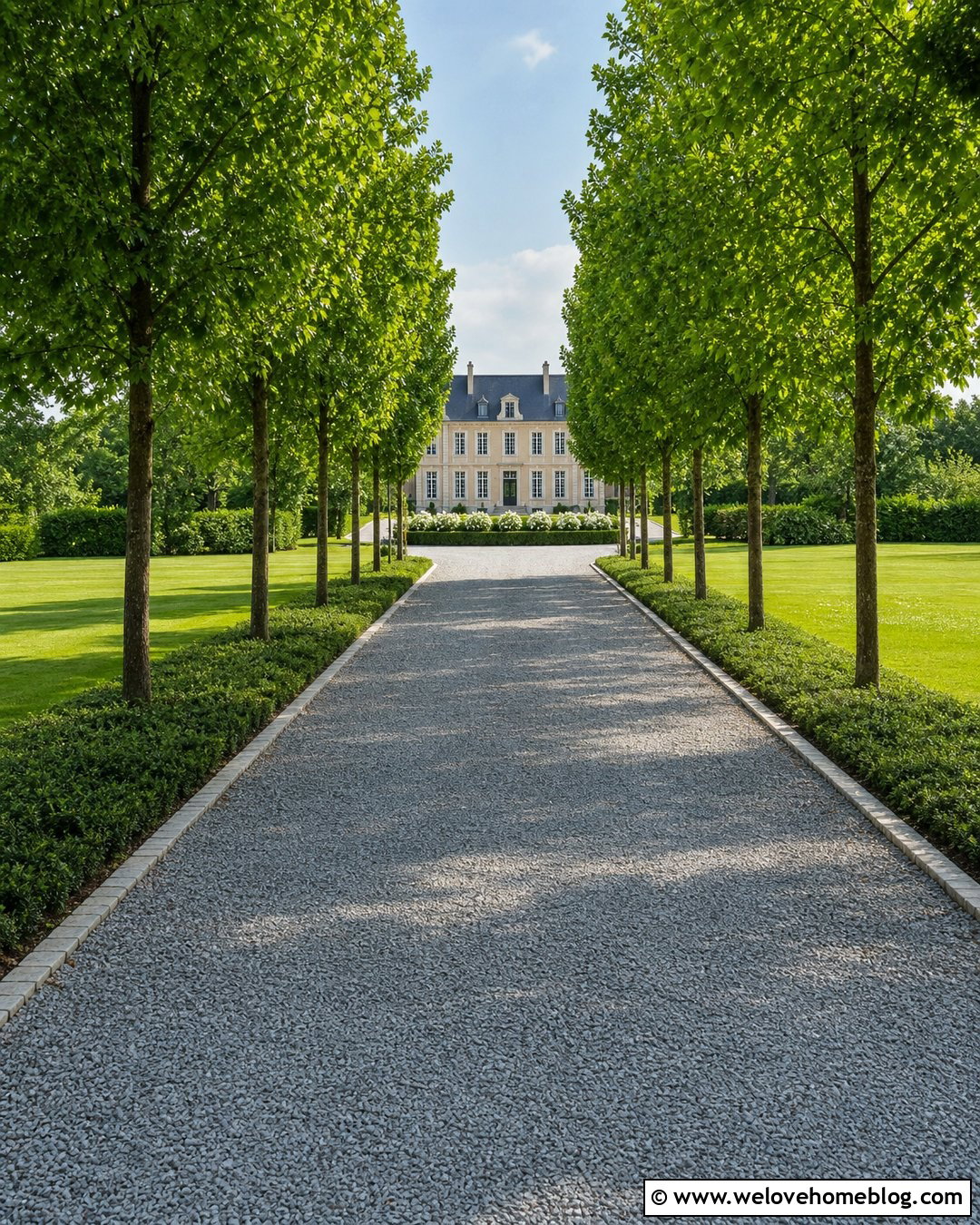
Few approaches feel as timeless as a long gravel driveway passing between evenly spaced trees. Use compacted gray or buff gravel for the surface and create a subtle center crown that directs water toward properly planned sides. Limestone edging can provide a crisp boundary without drawing attention away from the allée. Plant matching deciduous trees at generous intervals, allowing enough space for mature trunks, roots, and canopies. Beneath them, maintain simple lawn or low ground cover rather than crowded flower beds. As the driveway reaches the chateau, widen it into an oval arrival court surrounded by clipped yew and white hydrangeas. The repeated trees guide the eye toward the architecture and make the journey feel ceremonial. This complete look is best suited to a deep lot with an uninterrupted entrance view.
12. French Chateau Gated Driveway
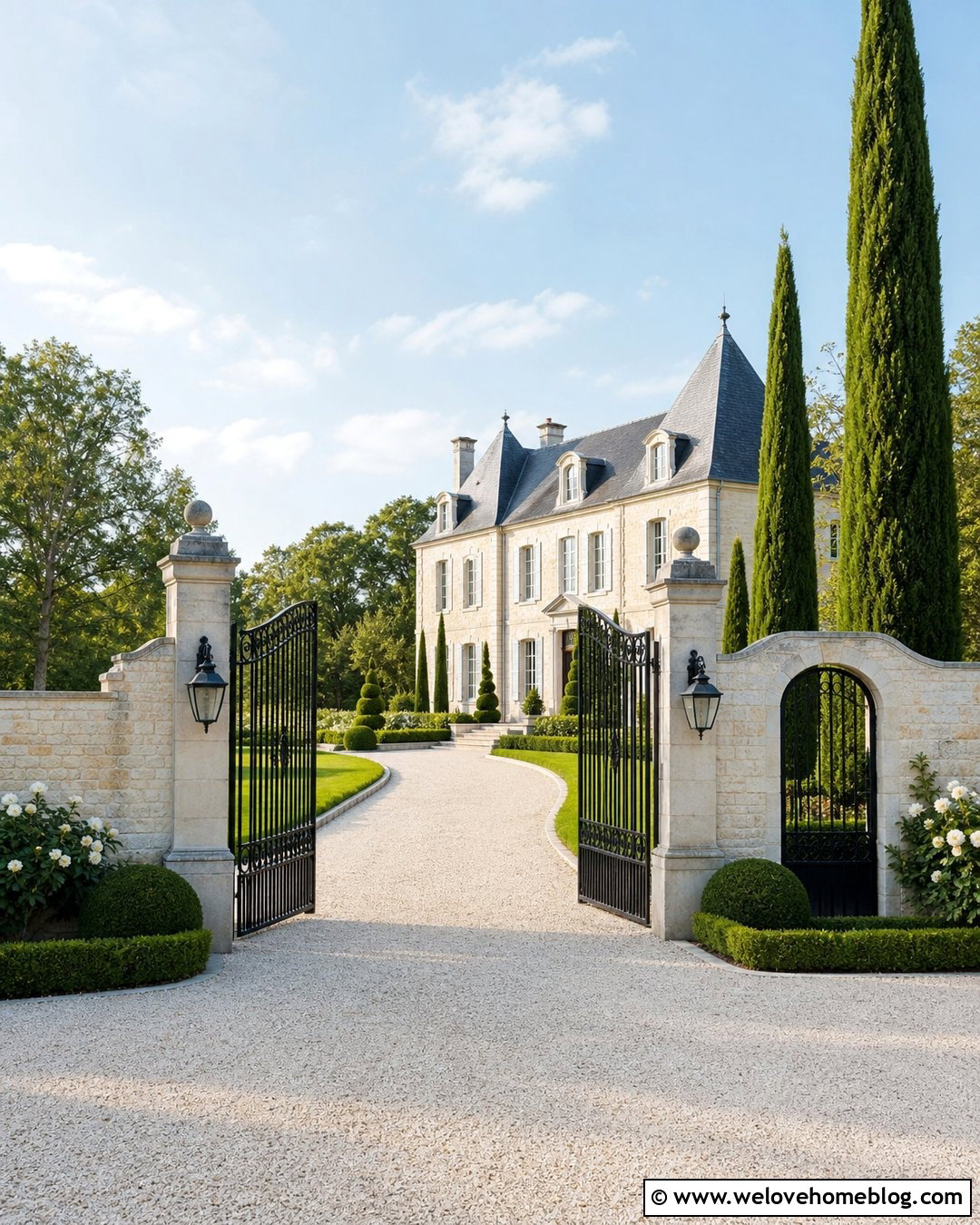
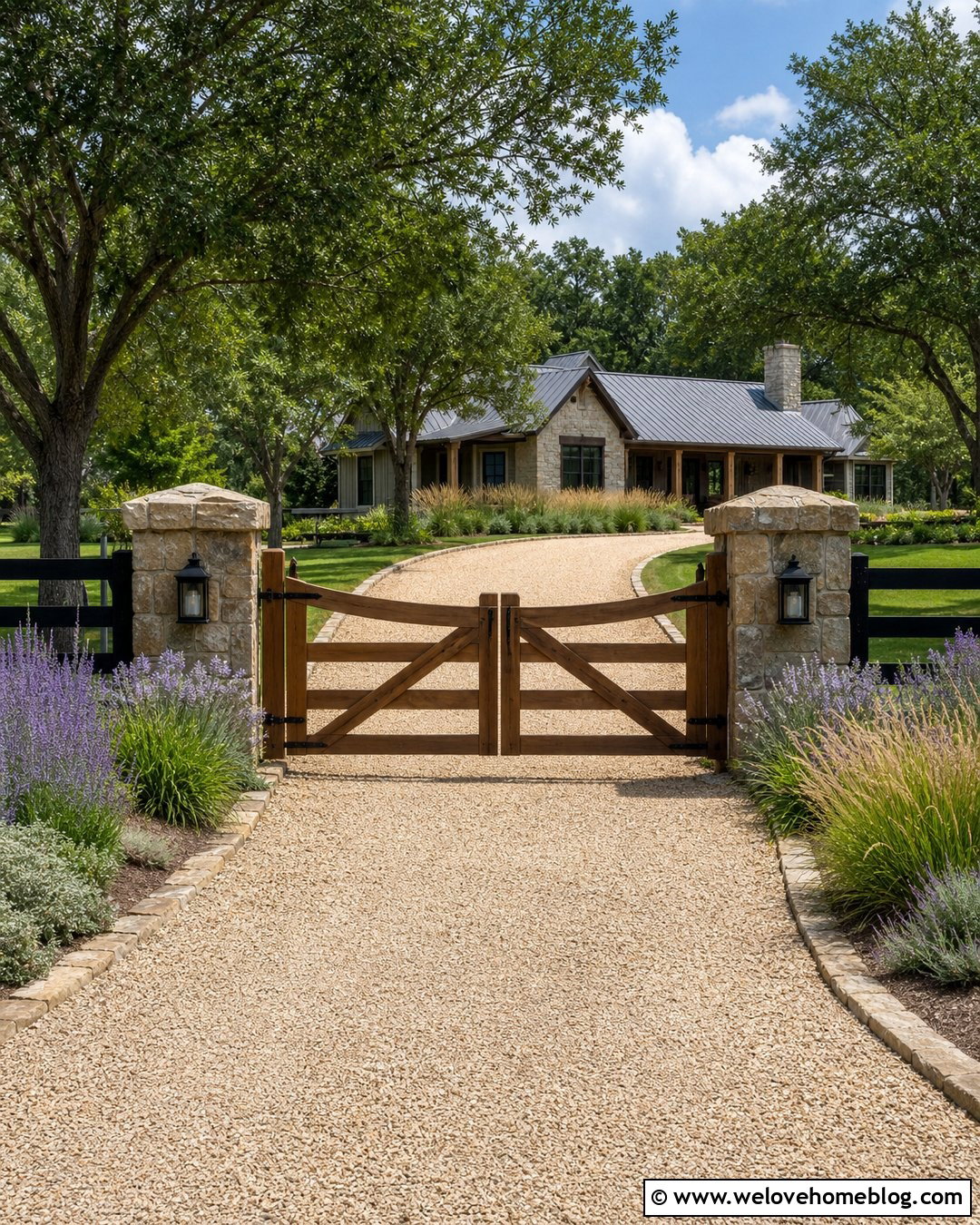
A wrought iron gate creates a clear sense of arrival when it is scaled to the driveway and architecture. Pair a gently arched black metal gate with substantial limestone or fieldstone pillars that repeat materials from the chateau facade. Continue the entrance with a pale gravel driveway that curves through layered landscaping before reaching the house. This prevents the gate and front door from appearing compressed into one view. Add low masonry walls beside the pillars, but keep them short enough to preserve visibility near the road. Boxwood, roses, and columnar evergreens can frame the entrance without interfering with gate operation. Include discreet lighting, access controls, drainage, and space for vehicles to wait safely. The full composition should feel secure and impressive while remaining open, balanced, and welcoming.
13. French Chateau Horseshoe Driveway
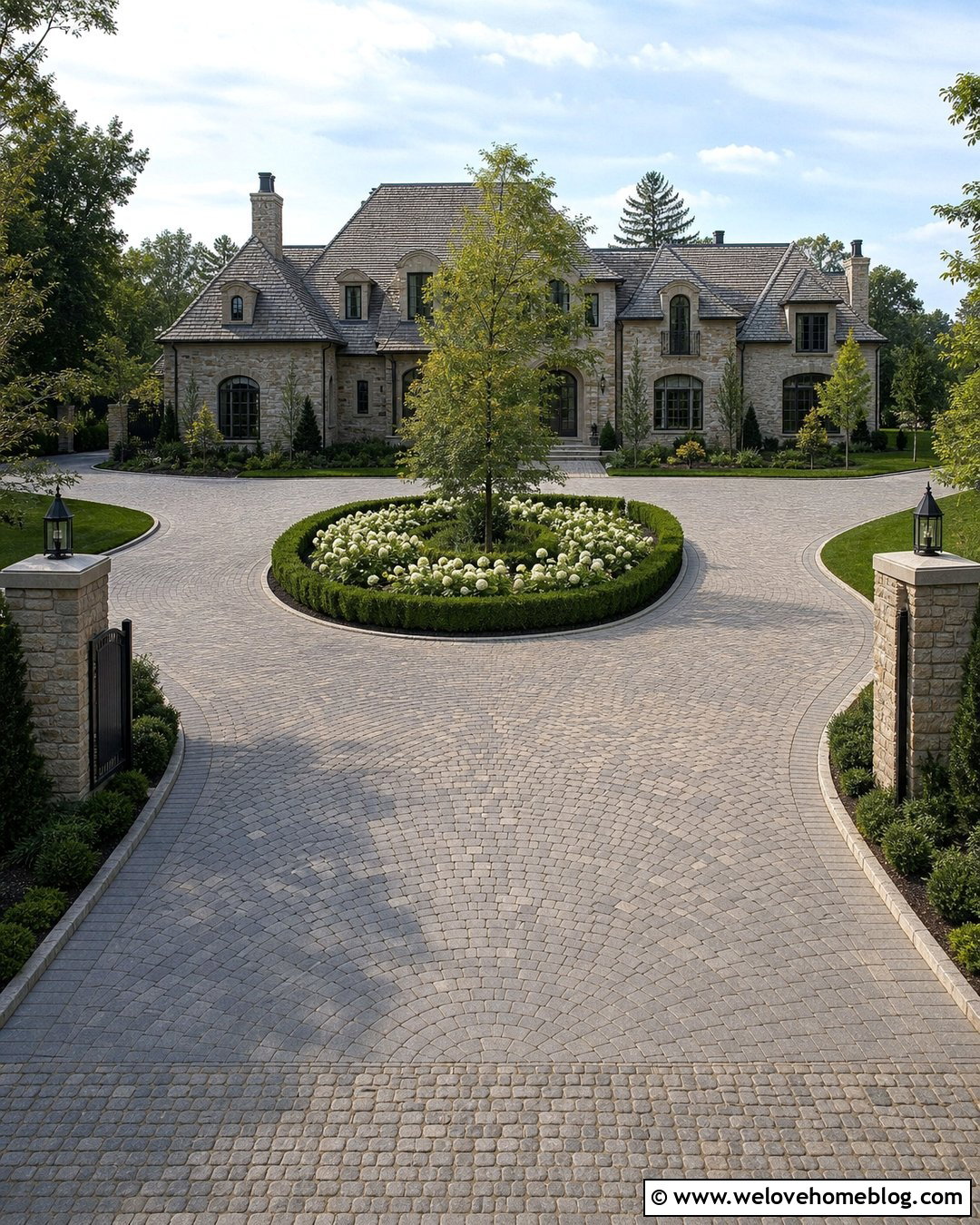
A horseshoe driveway provides separate entry and exit points while presenting the chateau as the central focal point. Use warm gray concrete pavers in a fan or random ashlar pattern to emphasize the broad curves. At each road connection, add cobblestone aprons and matching stone pillars for visual continuity. The center lawn can contain a formal oval bed with clipped boxwood, a specimen tree, and seasonal white flowers. Keep the inner curve clearly edged so vehicles do not damage the planting area. Near the front steps, widen the drive slightly for guest drop-off without turning the entire frontage into a parking lot. This layout works particularly well on wide suburban or estate properties. Balanced landscaping on both arms gives the entrance symmetry even when the chateau facade itself is slightly asymmetrical.
14. French Chateau Courtyard Driveway
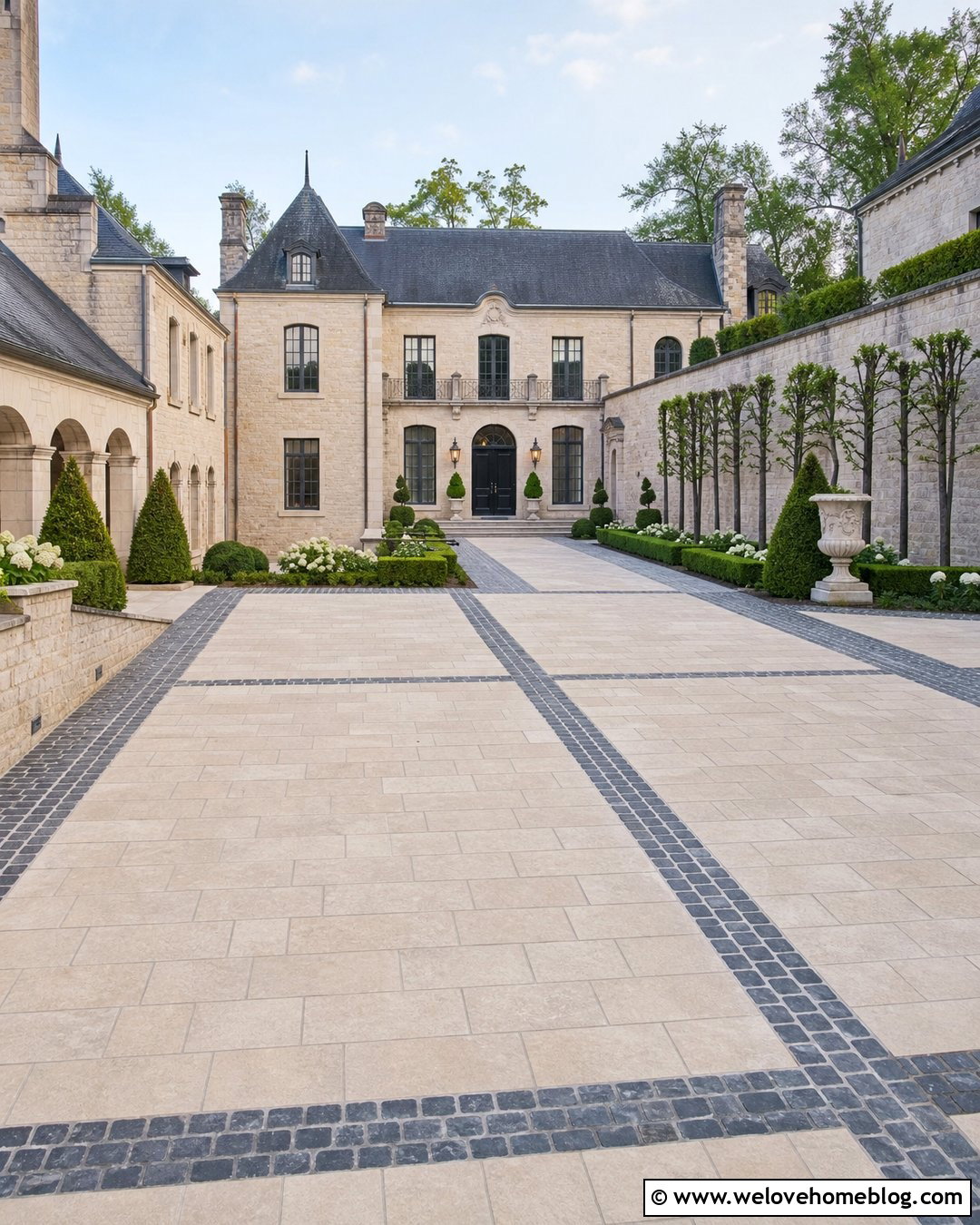
A front courtyard driveway can make the entrance feel private, protected, and architecturally complete. Cover the main court with tumbled limestone-tone pavers arranged in a modular pattern, then use cobblestone ribbons to define parking and turning areas. Low stone walls or side wings help enclose the space, but the driveway should remain open enough for effortless vehicle movement. Position a broad walkway directly between the motor court and the front door so guests never need to cross planting beds. Formal pots, clipped shrubs, and espaliered trees add greenery without consuming valuable turning space. Drainage should be resolved before choosing the final paving pattern, particularly when the court is surrounded by buildings. A restrained material palette keeps this substantial hardscape from looking busy and allows the chateau’s architecture to command attention.


15. French Chateau Narrow Driveway
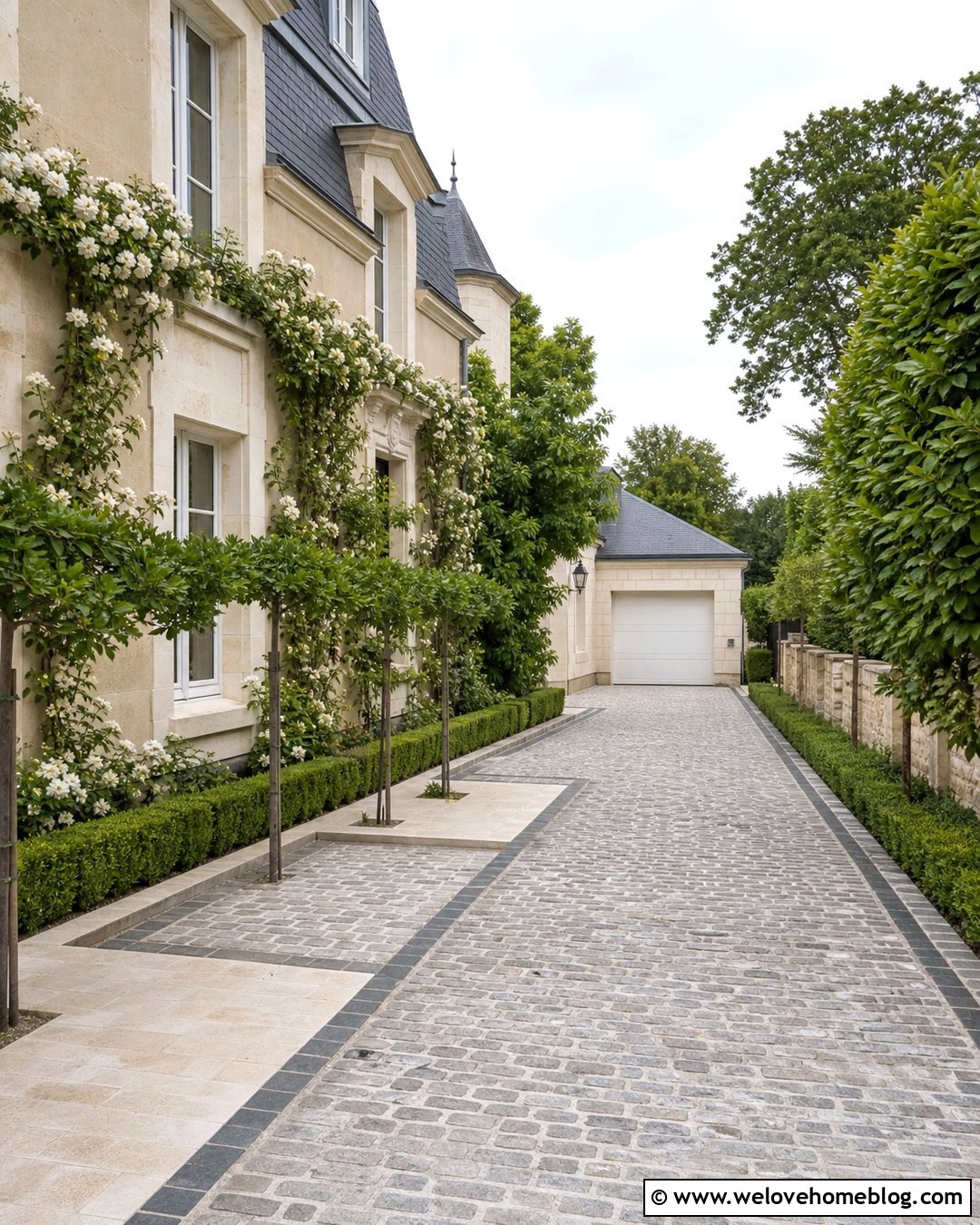
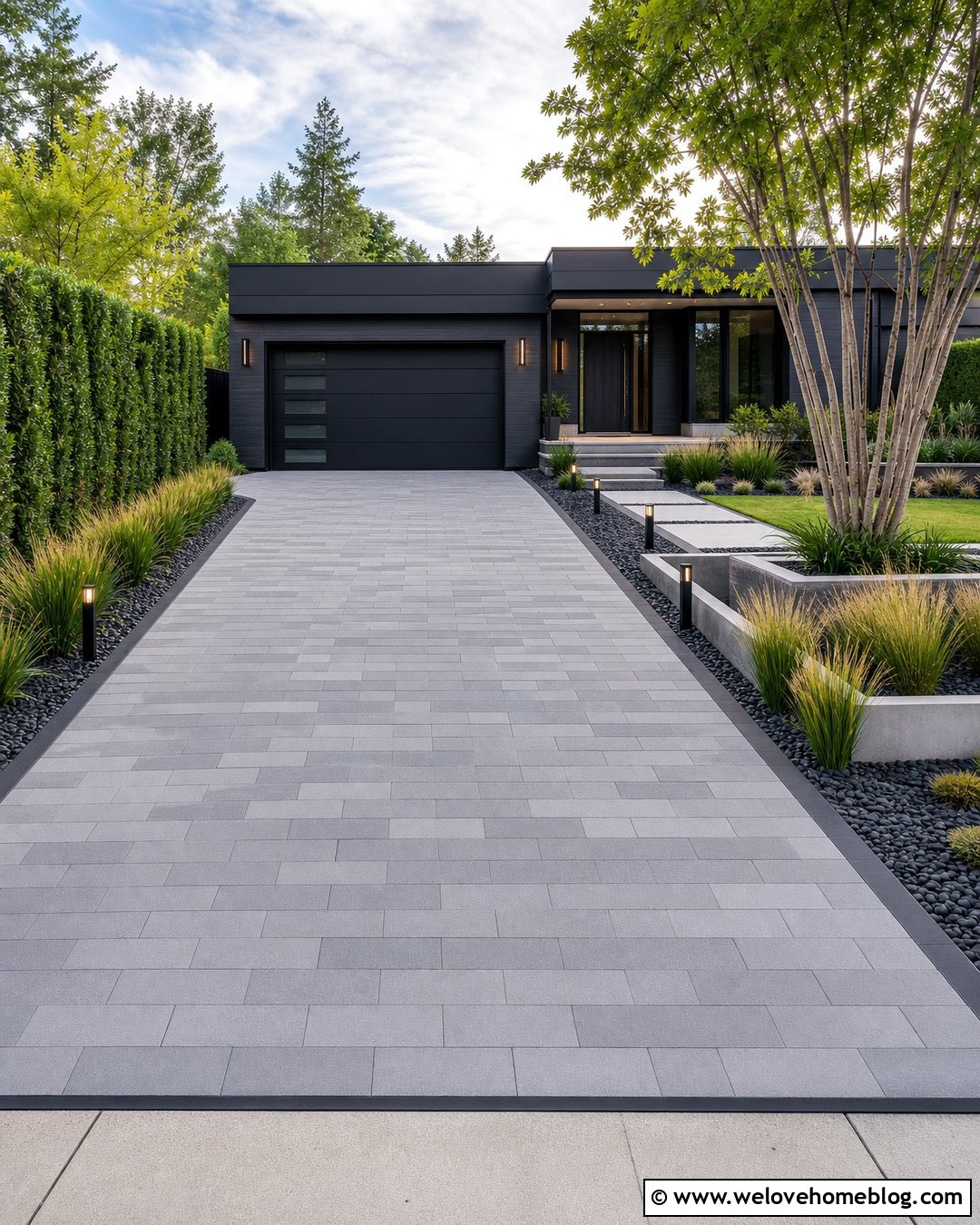
A narrow lot can still support a convincing French chateau entrance when every element is carefully proportioned. Use small-format gray cobblestone or cobblestone-look pavers in a straight driveway leading toward a side garage. A thin contrasting border will define the edges without sacrificing usable width. Along one side, install a limestone walkway with a low boxwood hedge separating pedestrians from vehicles. On the opposite side, use espaliered trees, climbing roses, or a shallow planting bed against a masonry wall. Keep large shrubs away from turning points and garage corners. Near the front entrance, create a modest rectangular pull-off or paved landing rather than forcing an oversized circle into the yard. Repeating the driveway stone on the walkway steps and gate pillars will make the compact landscape feel deliberate and unified.
16. French Chateau Sloped Driveway
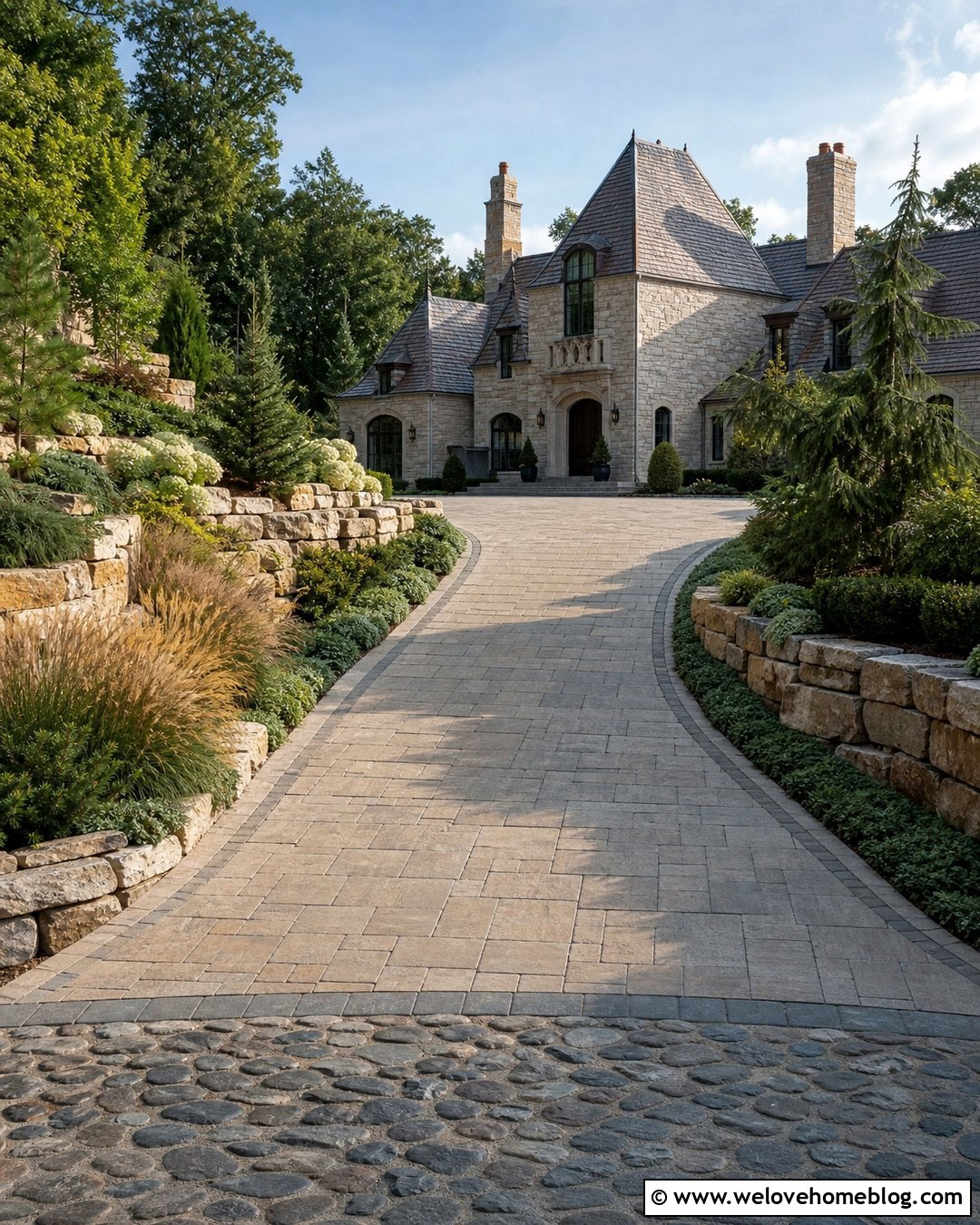
A sloped driveway requires restraint because too many surface changes can make the grade appear steeper. Choose textured concrete pavers in medium gray or weathered taupe for dependable visual definition, then follow the land with a gentle curved alignment. Stone retaining walls should step gradually down the slope rather than forming one tall, imposing barrier. Plant the terraces with spreading evergreens, hydrangeas, ornamental grasses, and ground cover that soften the masonry. At the base, add a cobblestone entrance apron between simple stone pillars. Near the house, flatten the driveway into a practical parking court with a clearly marked walkway to the door. Drainage channels, retaining structures, base preparation, and winter conditions require professional planning. When these functional elements are integrated early, the finished approach can feel graceful instead of heavily engineered.
17. French Chateau Split Driveway
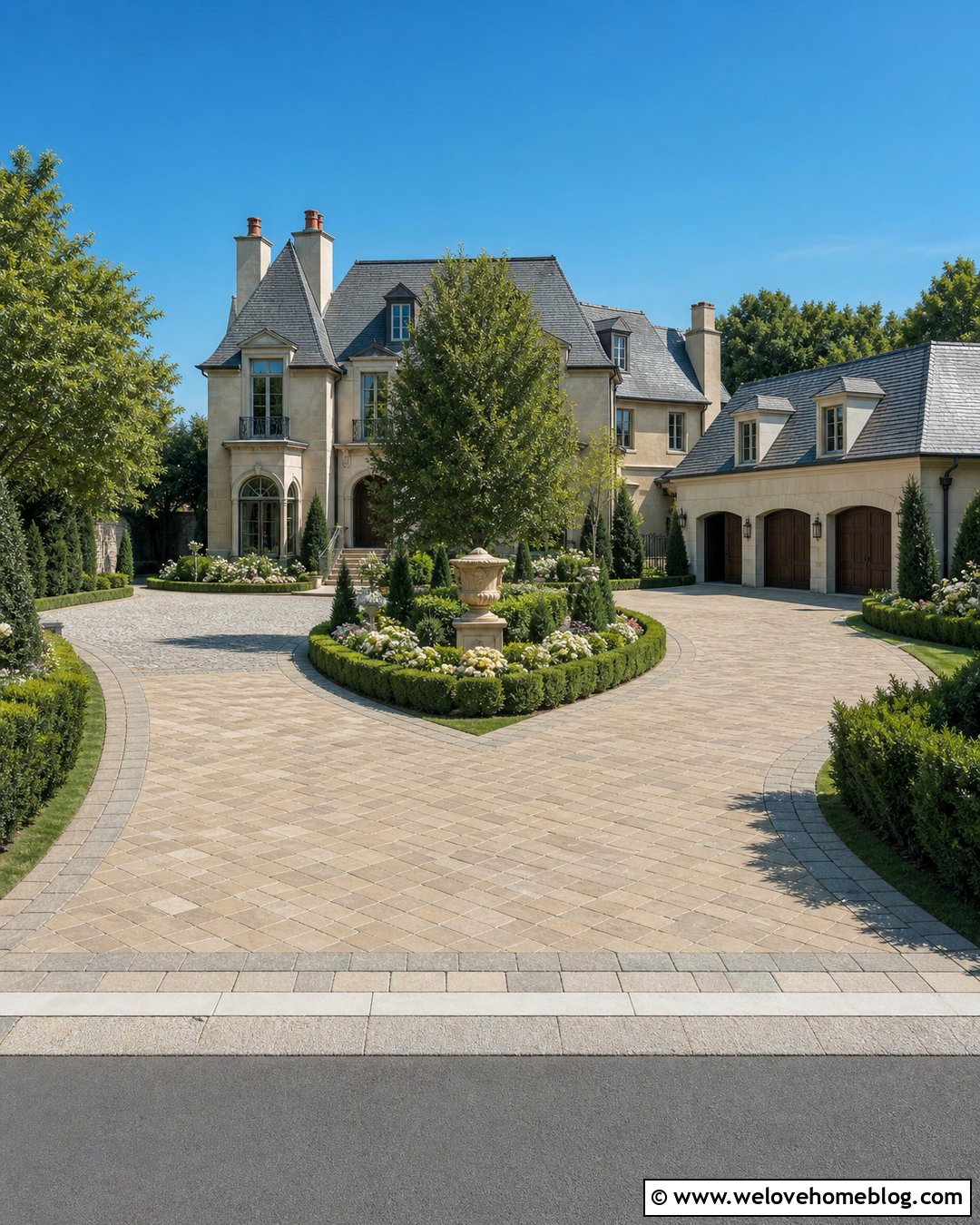
A split driveway separates the formal arrival experience from everyday garage traffic. Begin with one shared drive made from warm beige concrete pavers, then divide it near the house. The main branch can curve toward a small cobblestone motor court by the front steps, while the secondary branch continues discreetly toward side-facing garage doors. Use a landscaped island at the split to guide vehicles naturally. Fill it with a clipped tree, low boxwood, roses, and a limestone garden ornament. Matching paver borders keep both routes visually connected, even though they serve different purposes. This layout prevents parked vehicles and garage doors from dominating the chateau’s formal facade. It works best when the branches are obvious, comfortably sized, and supported by planting that directs movement without obstructing sightlines.
18. French Chateau Driveway Lighting
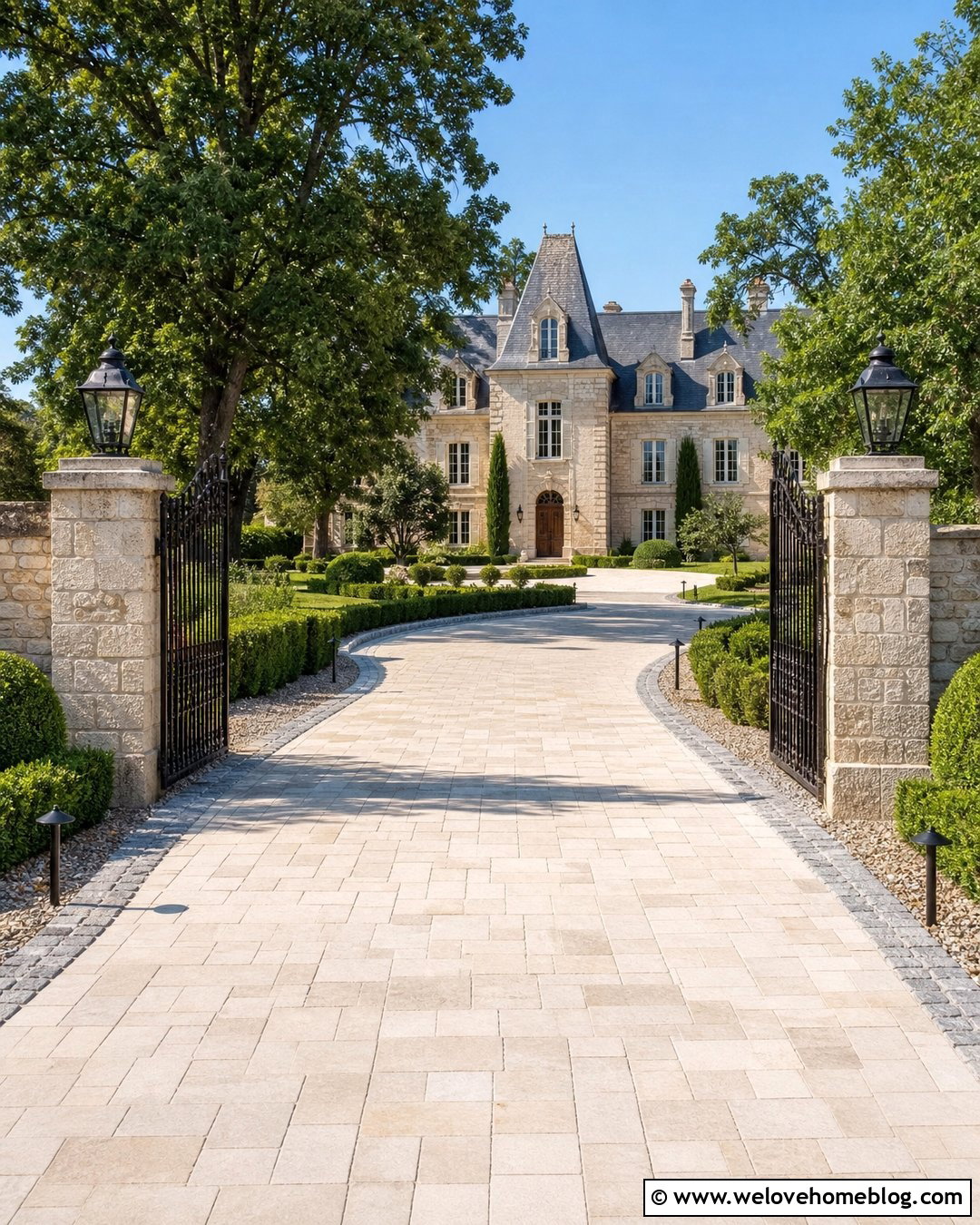
Driveway lighting should reveal the route and architecture without turning the landscape into a runway. Start with a pale gravel or limestone-paver driveway whose edges remain easy to recognize. Place compact shielded fixtures near curves, walkway crossings, gate controls, and changes in elevation rather than spacing identical lights along every foot. Black metal lanterns mounted on stone entrance pillars can establish the traditional French chateau character. Closer to the house, use subtle landscape lighting around specimen trees and masonry walls to give the motor court depth. Fixtures should coordinate with the gate, windows, and exterior hardware. During daylight, the lighting equipment needs to remain discreet within boxwood beds or gravel borders. This complete approach improves orientation while preserving the clean, formal view of the driveway and facade.
19. French Chateau Brick And Gravel Driveway
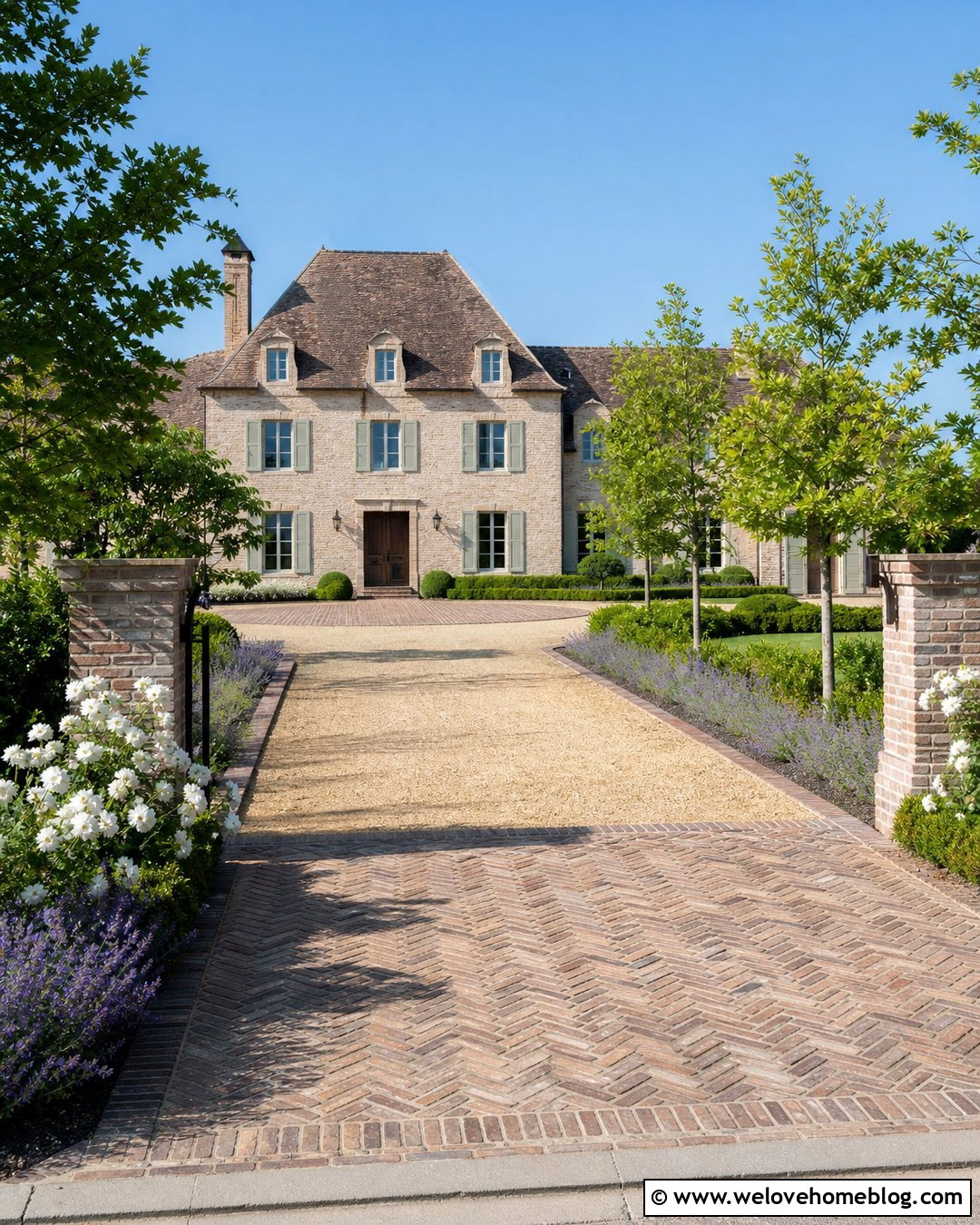
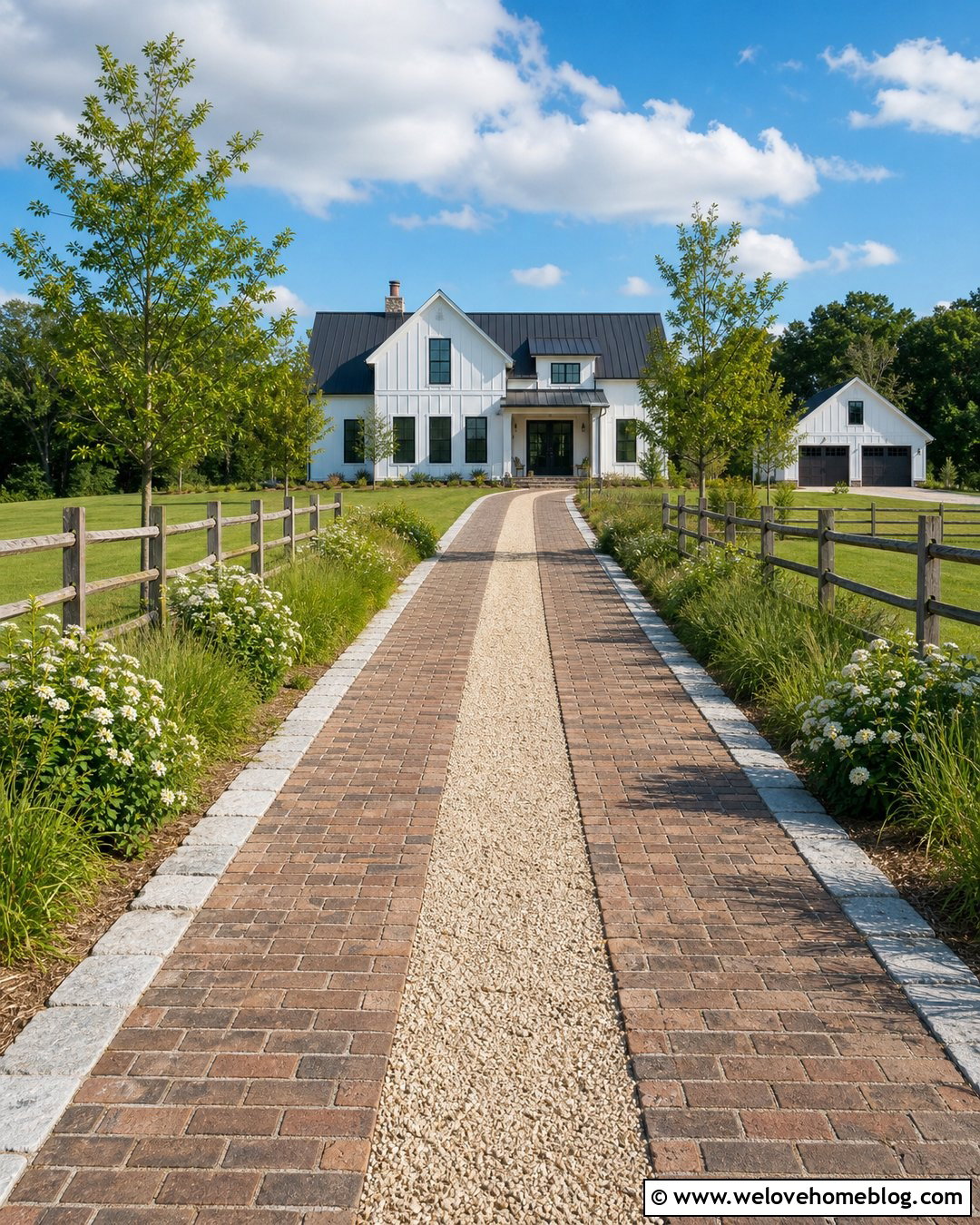
Combining gravel and brick creates a layered estate look while placing each material where it performs visually best. Use compacted buff gravel across the main straight driveway, then install weathered clay brick at the road apron, parking court, and front walkway. Brick ribbons along the gravel edges will contain loose stones and connect the different paved areas. A herringbone pattern in the motor court adds traditional detail, while the simpler gravel approach keeps the property relaxed. Frame the driveway with lavender, low boxwood, white roses, and evenly placed ornamental trees. Choose brick colors that echo the roof, shutters, or chimney rather than introducing a bright red tone unrelated to the house. This material combination creates richness, breaks up a large surface, and can make newer construction feel more settled.
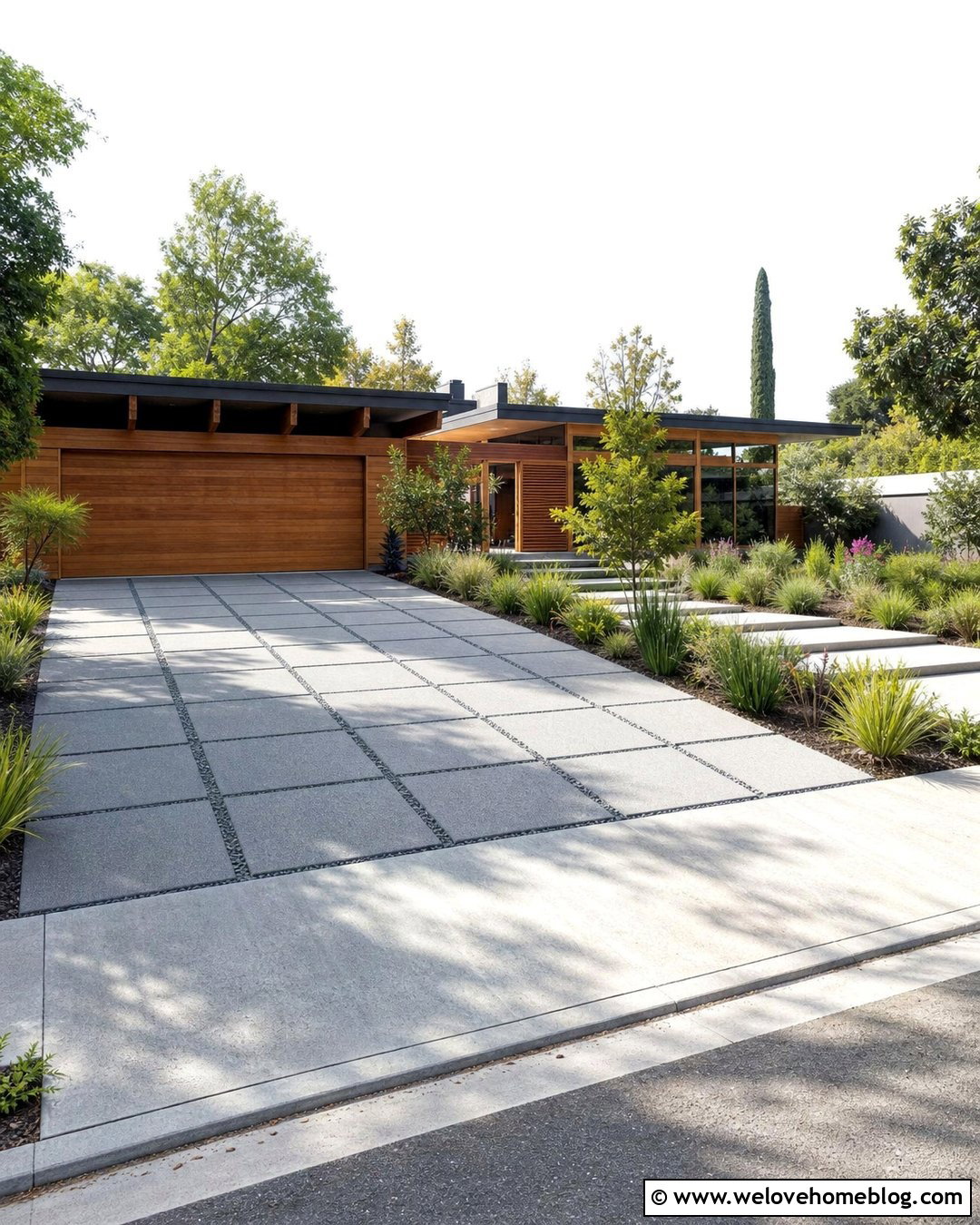
20. Modern French Chateau Driveway
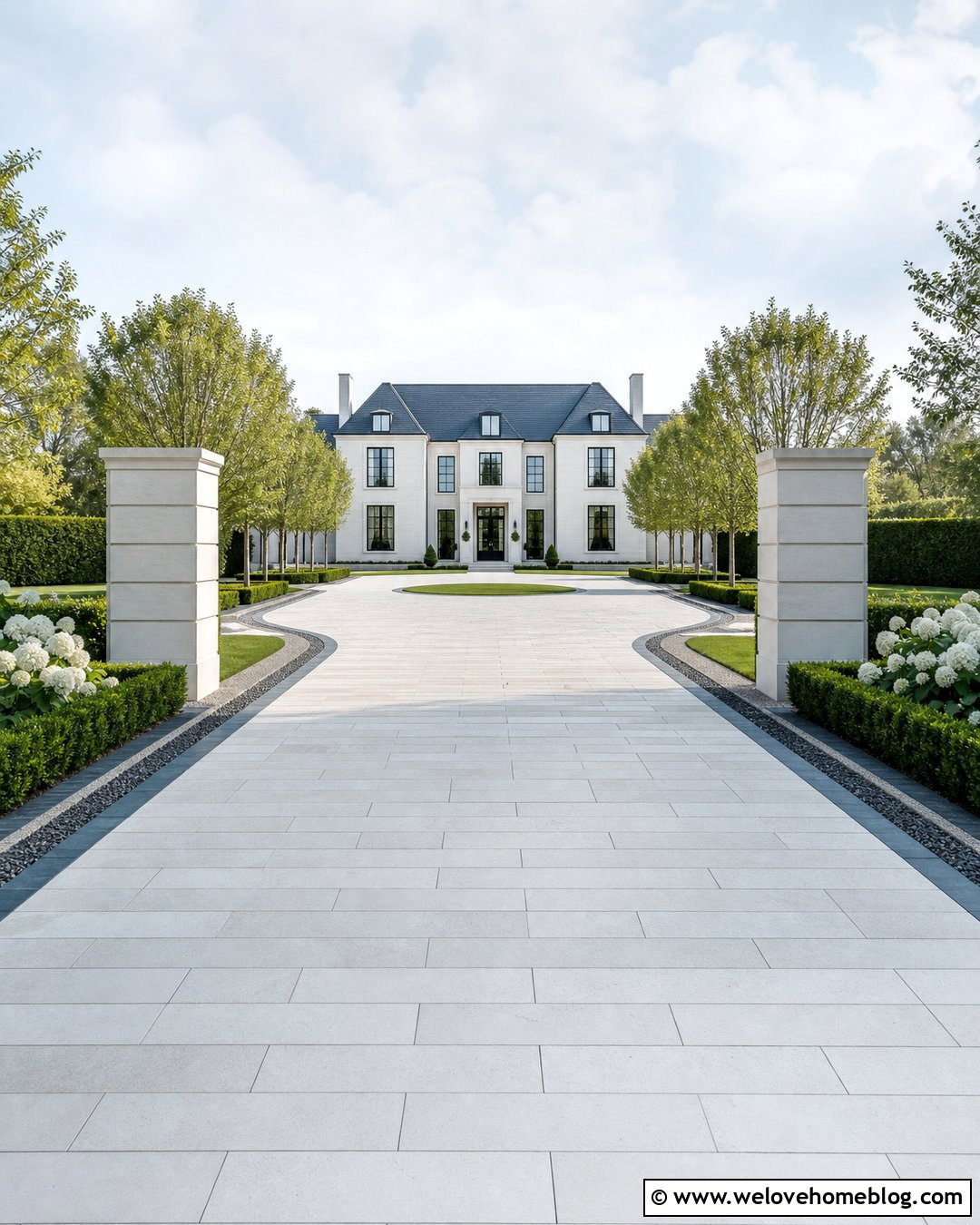
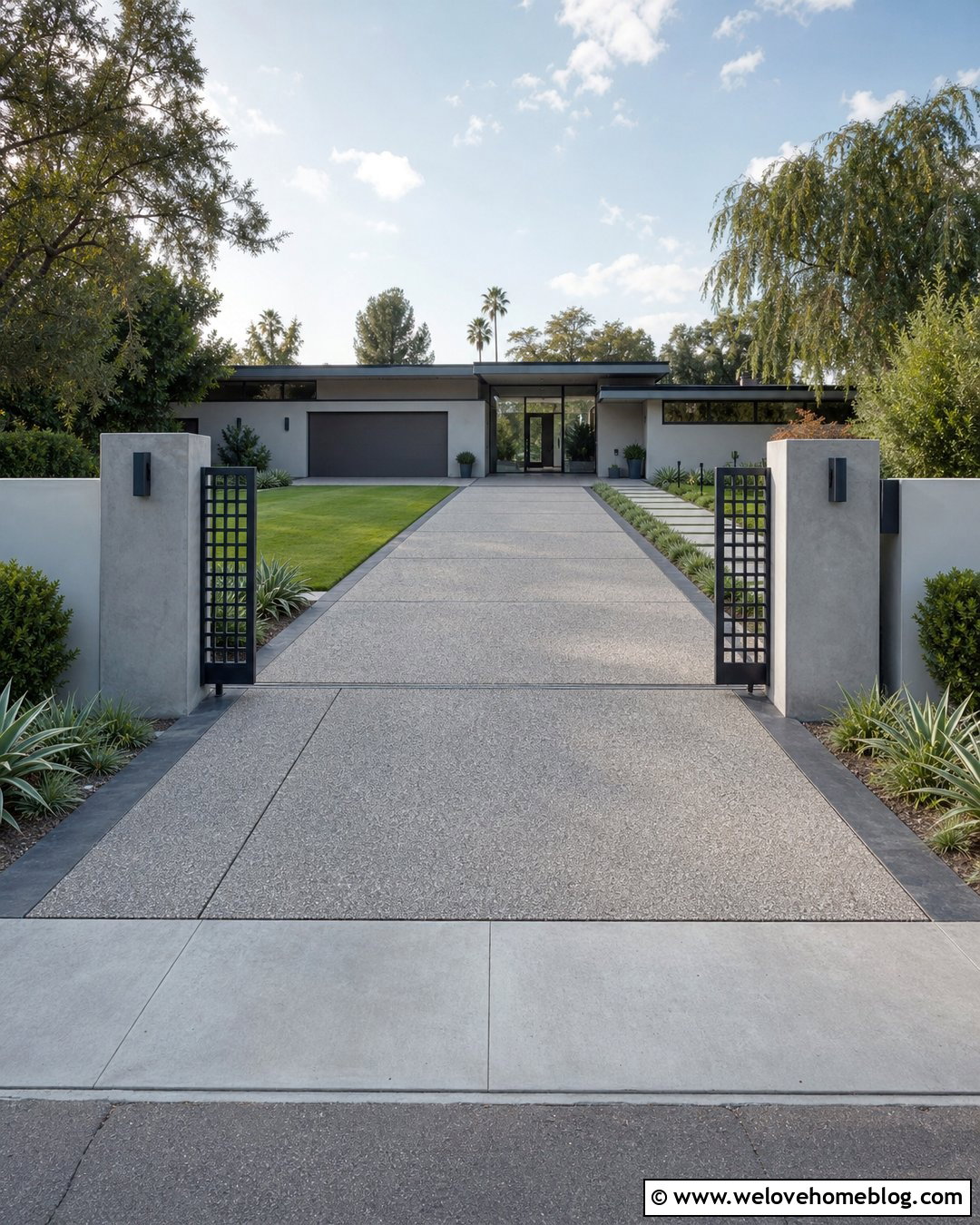
A modern French chateau driveway should simplify traditional materials without losing warmth. Choose large-format concrete pavers in a pale limestone finish and arrange them in a clean running bond. A wide, straight approach with a shallow circular turning court provides formality while matching a streamlined facade. Outline the surface with dark granite setts that relate to black windows, metal railings, and a slate-colored roof. Landscaping can include clipped evergreen blocks, multi-stem trees, white hydrangeas, and broad lawn panels instead of intricate parterre beds. Keep gates and pillars geometric, using smooth limestone with minimal ornament. Narrow gravel drainage strips can soften the transition between paving and plants. The finished design should feel crisp and current, yet still rooted in the symmetry, masonry, and garden structure associated with a French chateau.
Conclusion:
The best **20 French Chateau Driveway Ideas** combine an appropriate surface with a clear layout, substantial edging, layered landscaping, and architecture that remains the main focal point. Pale gravel creates relaxed country character, while cobblestone, brick, and limestone-look pavers deliver a more formal estate entrance. Asphalt and concrete can also work when stone aprons, thoughtful borders, and generous planting soften their appearance. Before selecting a design, consider turning space, garage access, drainage, slope, climate, and long-term maintenance. Repeat colors and materials from the house to make the driveway feel original to the property. Whether your entrance is narrow, circular, gated, or tree-lined, a coordinated plan will produce the most convincing French chateau look.

Related posts:
Leave a Reply