
A well-designed estate entrance creates a clear sense of arrival while improving privacy, security, and curb appeal. The best 20 Estate Driveway Entrance Ideas coordinate the driveway surface with gates, pillars, lighting, borders, and landscaping instead of treating each feature separately. Materials should also connect visually with the home. Natural stone suits country properties, brick complements traditional architecture, and streamlined steel works well with modern estates. Before building, consider gate clearance, drainage, visibility from the road, delivery access, and a safe place for vehicles to wait. Automation may also influence pillar placement and driveway width. Whether your property has a sweeping approach or a compact frontage, these complete 20 Estate Driveway Entrance Ideas offer practical inspiration for creating a polished first impression.

1. Stone Pillar Estate Driveway Entrance
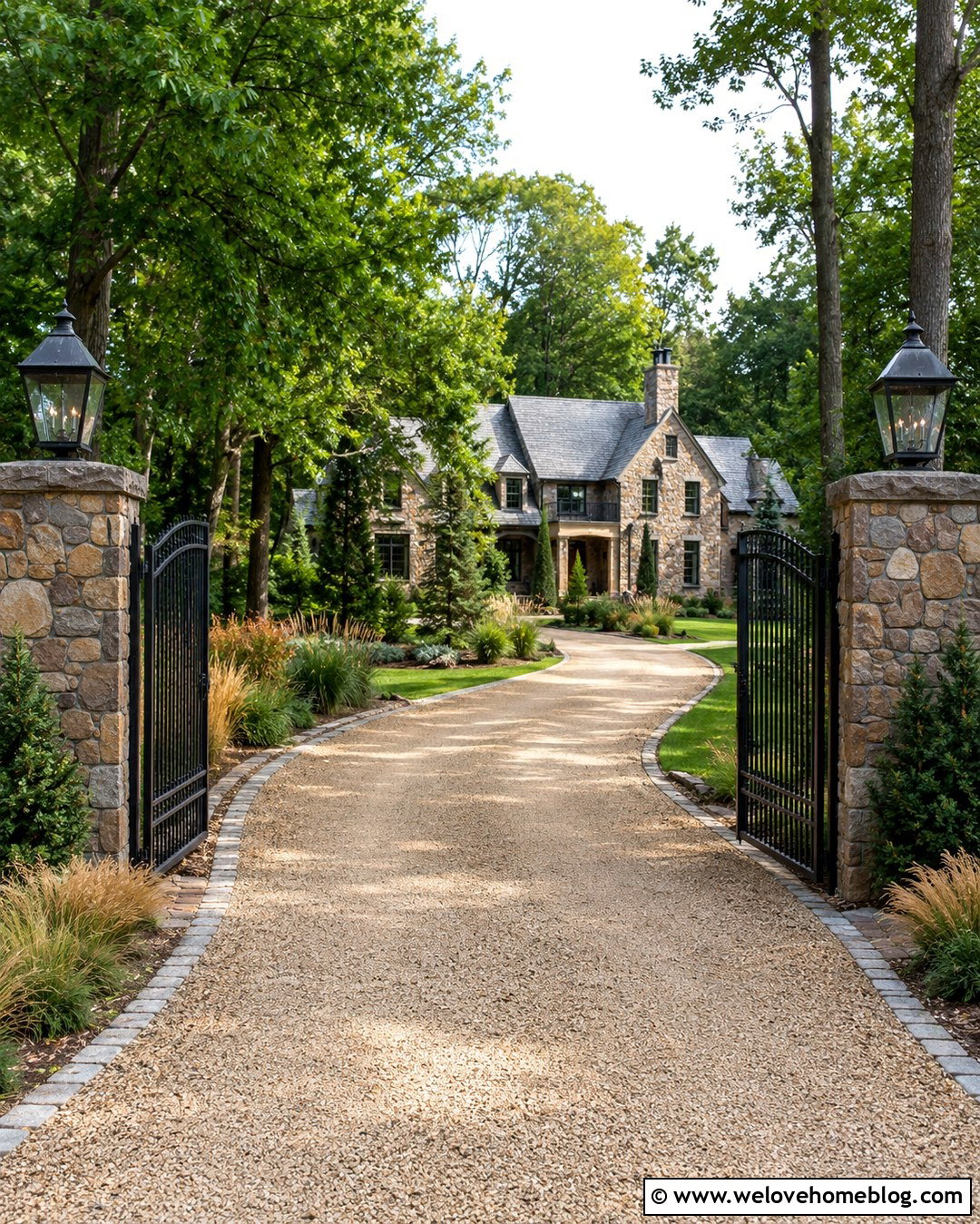
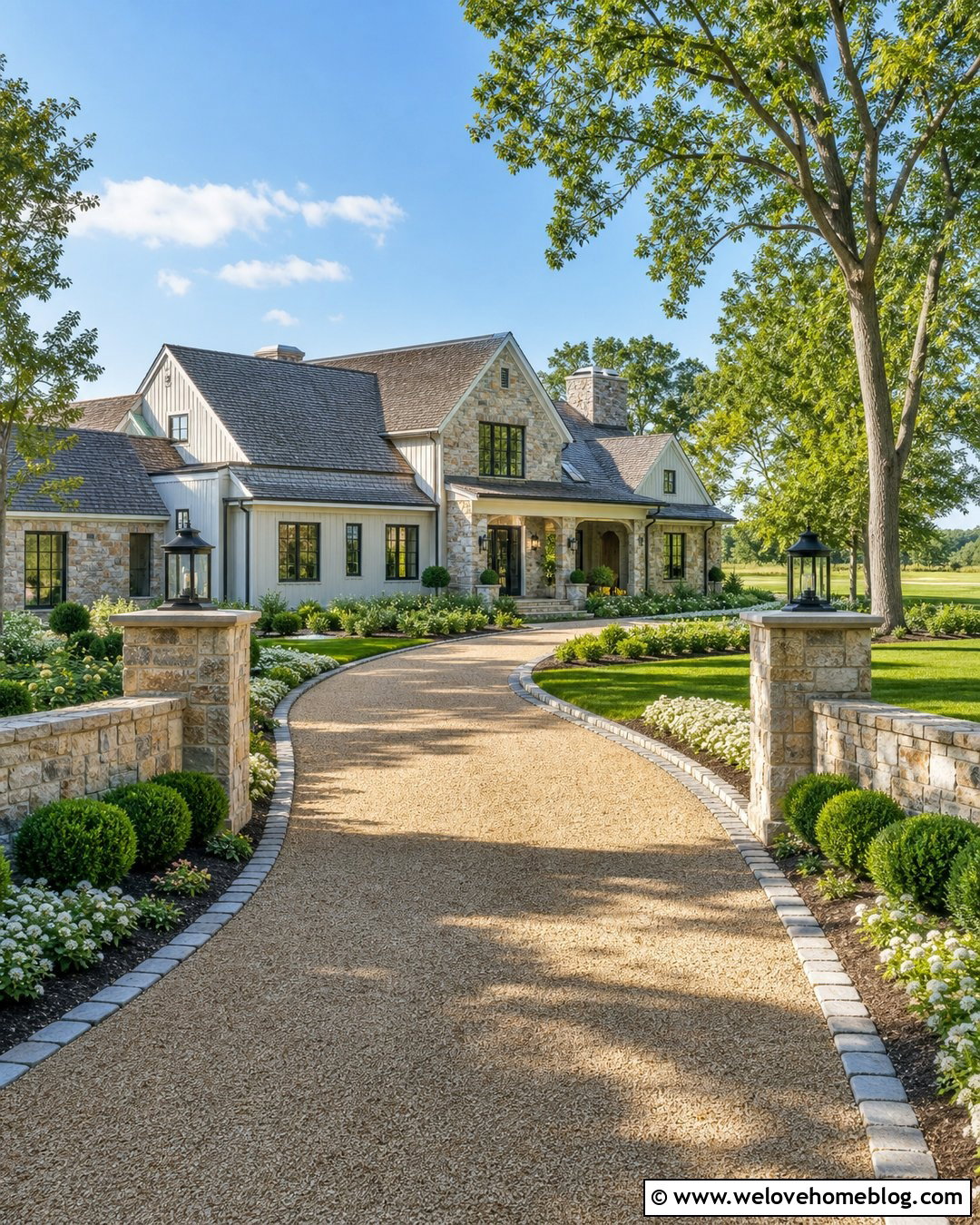
A stone pillar entrance gives a large property a strong, established appearance. Start with a gently curved driveway made from warm-toned gravel or exposed aggregate. Add substantial pillars faced in fieldstone, limestone, or granite that coordinates with the house facade. Black metal gates create an elegant contrast without hiding the view beyond. Place matching lanterns on the pillar caps and use low-voltage lights near the driveway apron for safer nighttime access. Layer evergreen shrubs, ornamental grasses, and low perennials around each pillar rather than leaving them surrounded by bare lawn. A cobblestone border can keep loose gravel contained while reinforcing the formal design. Keep plantings low near the road so drivers have a clear view when leaving the property.
2. Brick Column Estate Driveway Entrance
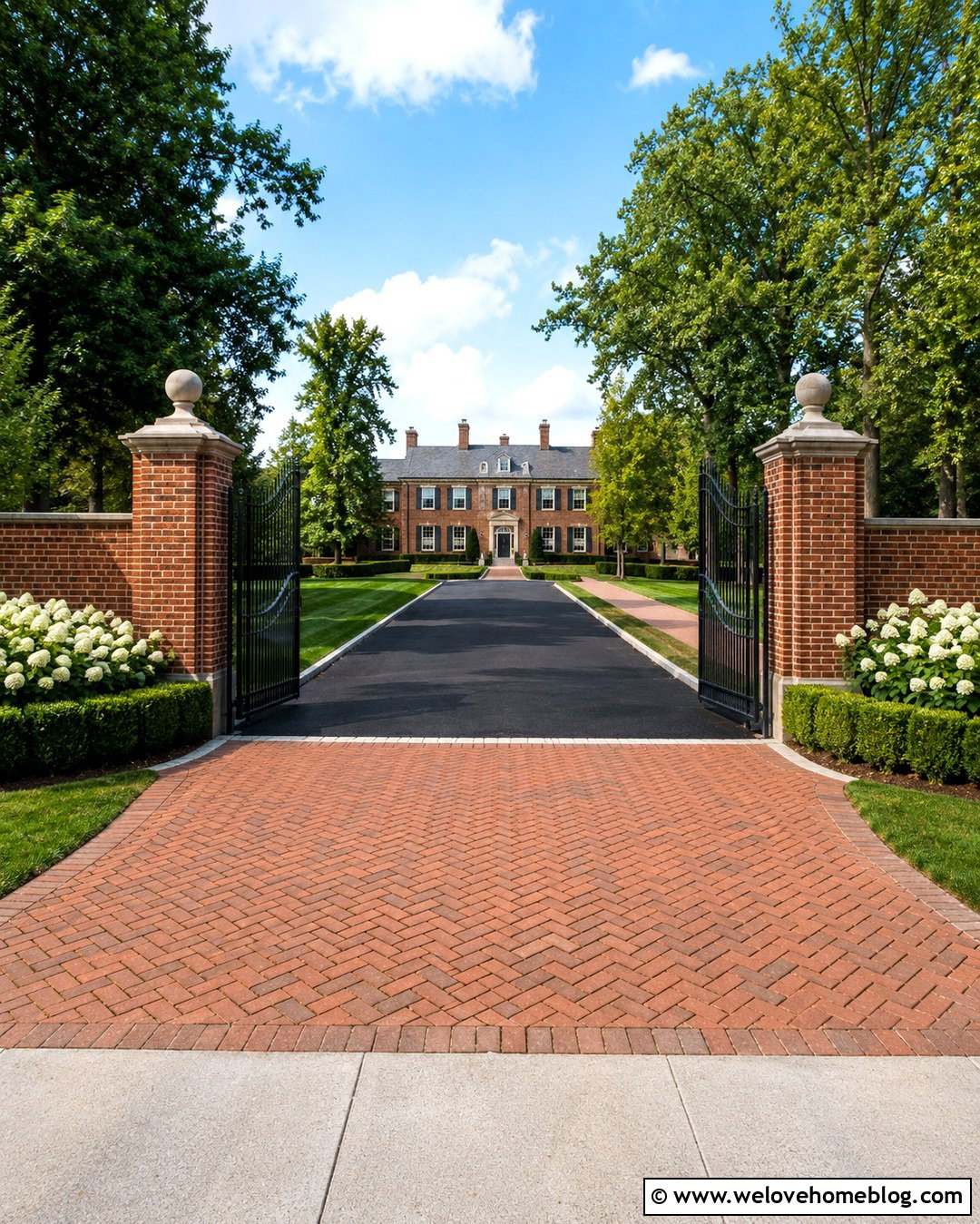
Brick columns make an estate driveway feel connected to a traditional brick home. A broad herringbone brick apron can transition into a smooth asphalt driveway, giving the entrance a premium appearance without paving the entire approach in brick. Build symmetrical columns using brick that closely matches the house, then finish each one with a cast-stone cap and classic lantern. Arched black iron gates add openness and allow the landscaping behind them to remain visible. Extend short brick walls outward from the columns to define the boundary naturally. Neatly clipped boxwood, white flowering shrubs, and small ornamental trees soften the masonry. A separate brick walkway and pedestrian gate can keep foot traffic away from moving vehicles while making the main entrance easier for guests to understand.
3. Wrought Iron Estate Driveway Entrance
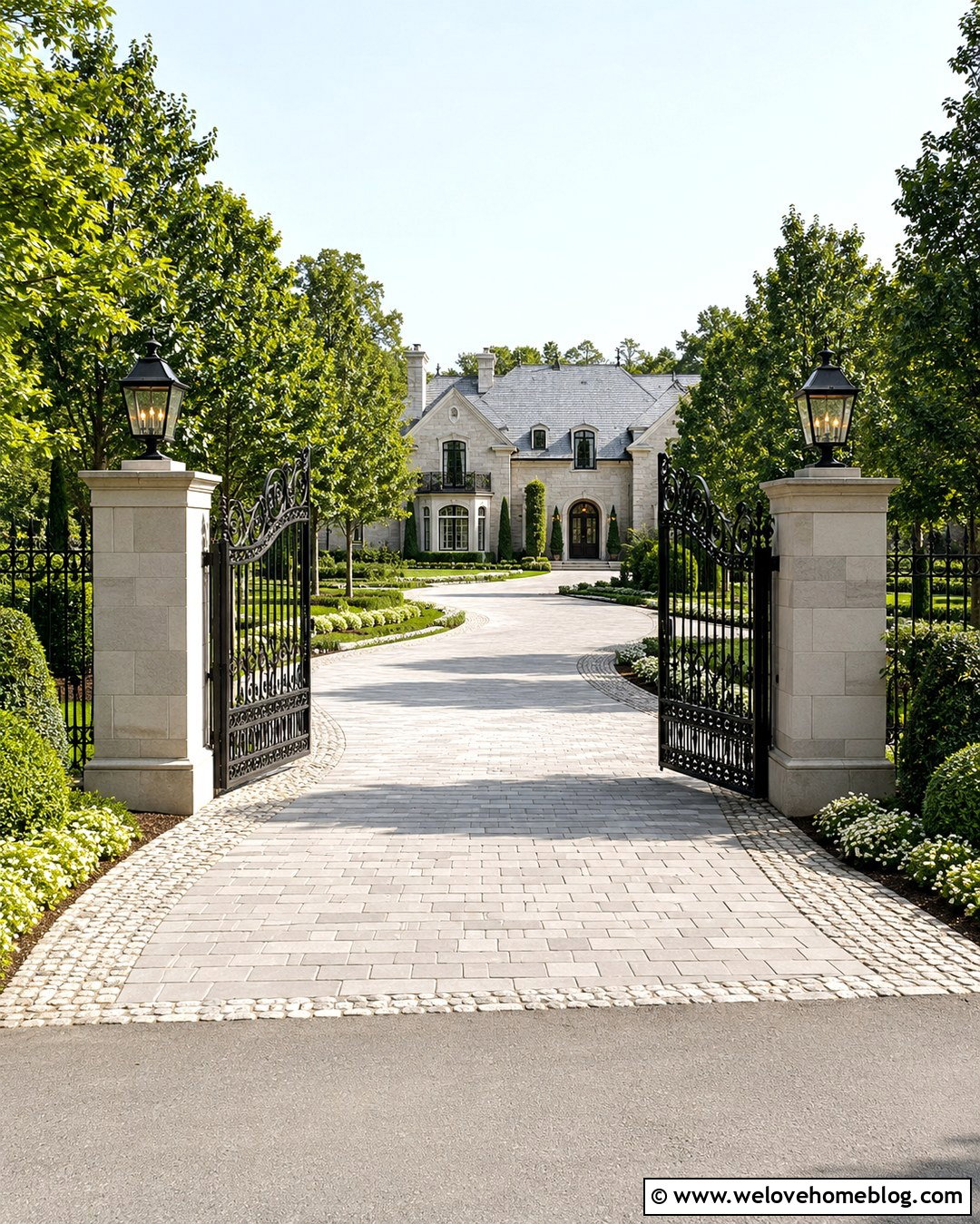
Could an open gate provide security without making the property feel closed off? A wrought iron estate entrance offers that balance. Pair ornamental double gates with a wide cobblestone or tumbled concrete paver driveway that follows a sweeping curve toward the house. Support the gates with stone or stucco pillars sized to match their visual weight. Repeating the gate’s dark finish in lanterns, fencing, and address plaques creates a coordinated design. Use formal hedges behind the fencing, but leave generous visibility triangles near the road. Flowering ground covers and seasonal perennials can soften the base of the pillars. For automation, plan wiring, safety sensors, drainage, and equipment locations before hardscaping begins. The finished entrance should appear graceful from the curb while remaining practical for everyday traffic.
4. Wood Gate Estate Driveway Entrance
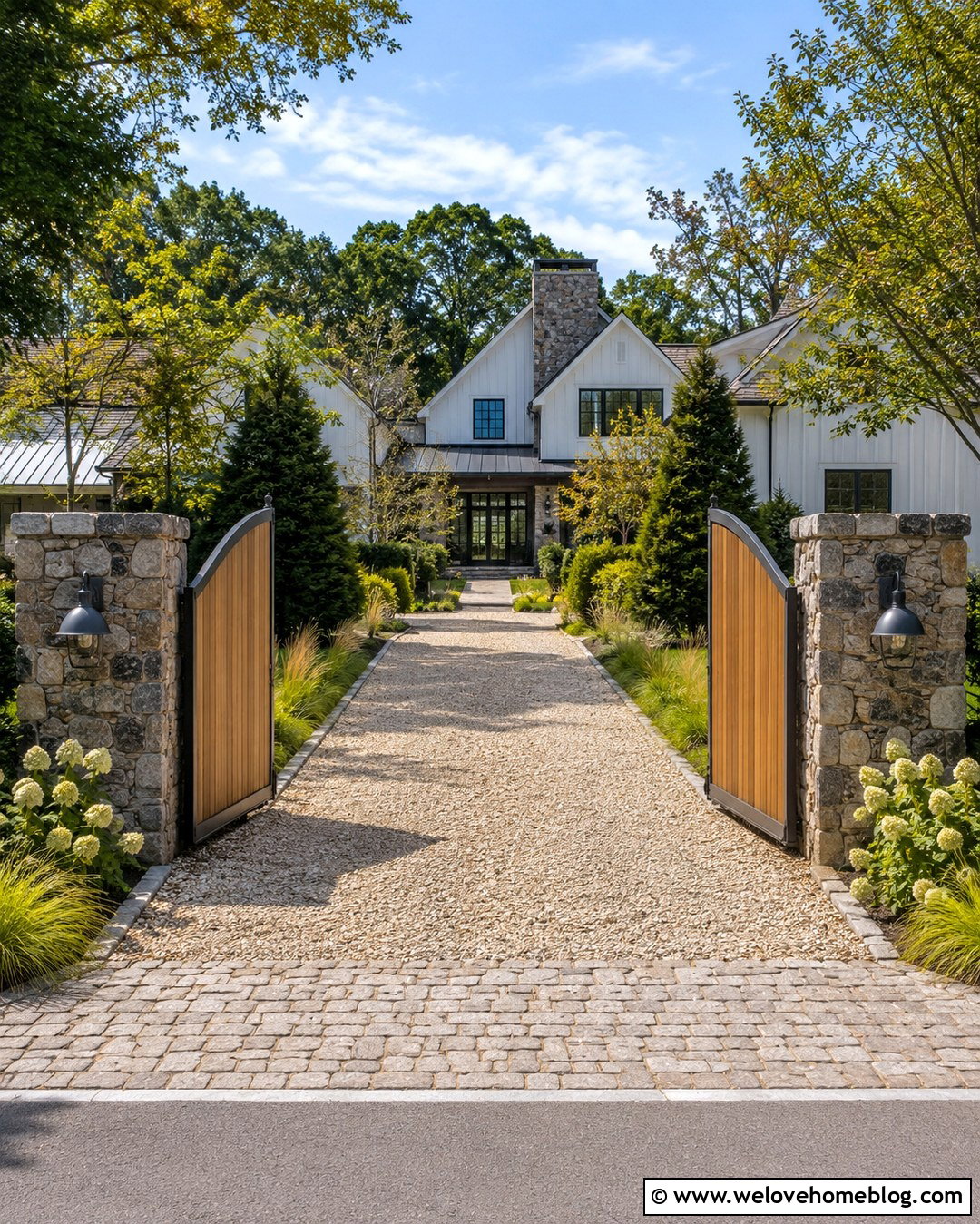
Warm wood can make a large estate feel more welcoming and less imposing. Choose a double cedar or redwood gate with simple vertical boards, a gently arched top, and a concealed steel frame for stability. A pale gravel driveway works especially well because its relaxed texture complements the natural gate material. Anchor the entrance with rugged fieldstone pillars and continue the stone as low walls on both sides. Native grasses, hydrangeas, and broad evergreen shrubs create soft transitions into the surrounding yard. Add a contrasting cobblestone apron where the gravel meets the road to reduce scattering and define the threshold. Downward-facing pillar lights provide useful illumination without overwhelming the landscape. Leave enough interior clearance for each gate leaf to open safely without contacting plantings or vehicles.
5. Modern Steel Estate Driveway Entrance
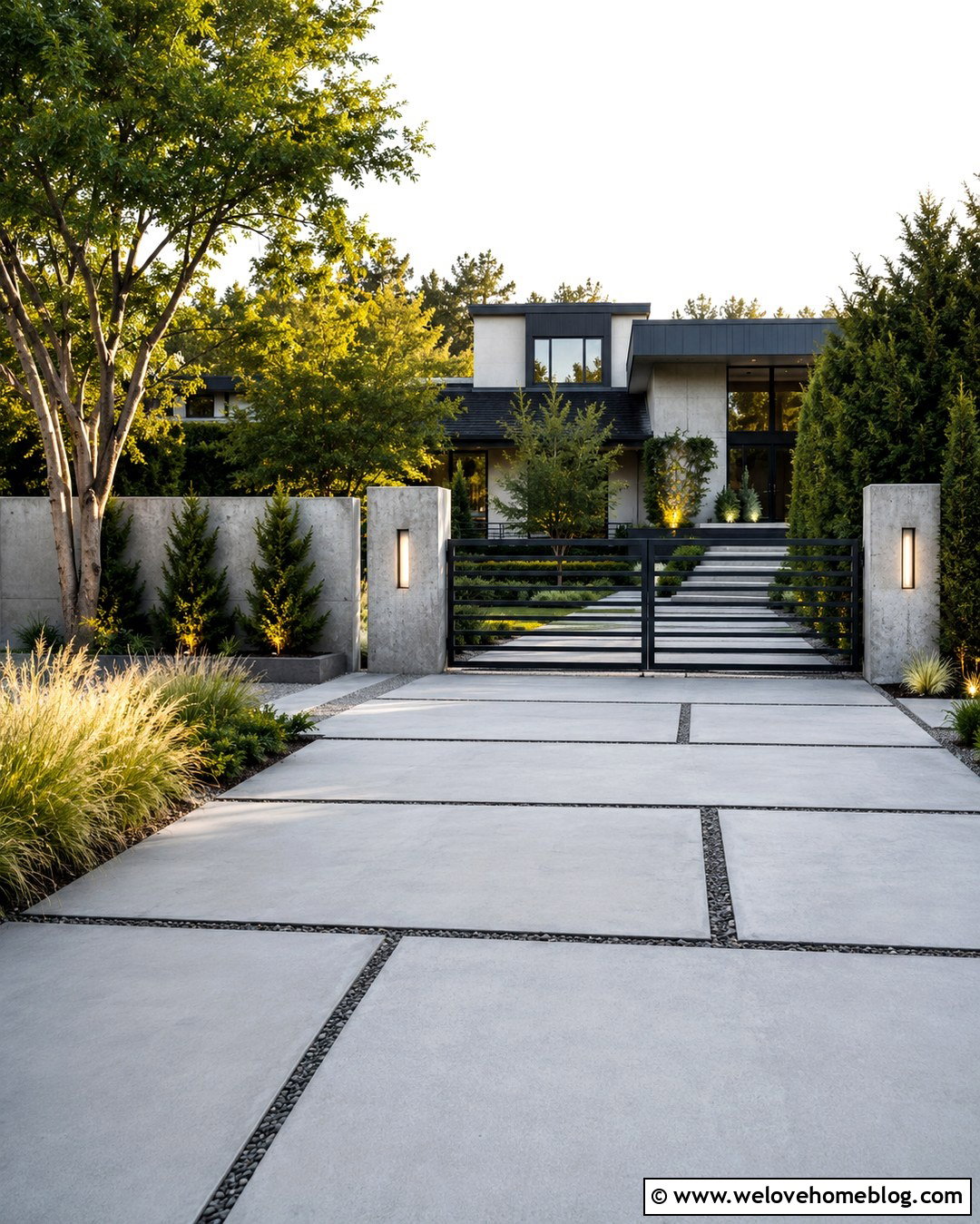
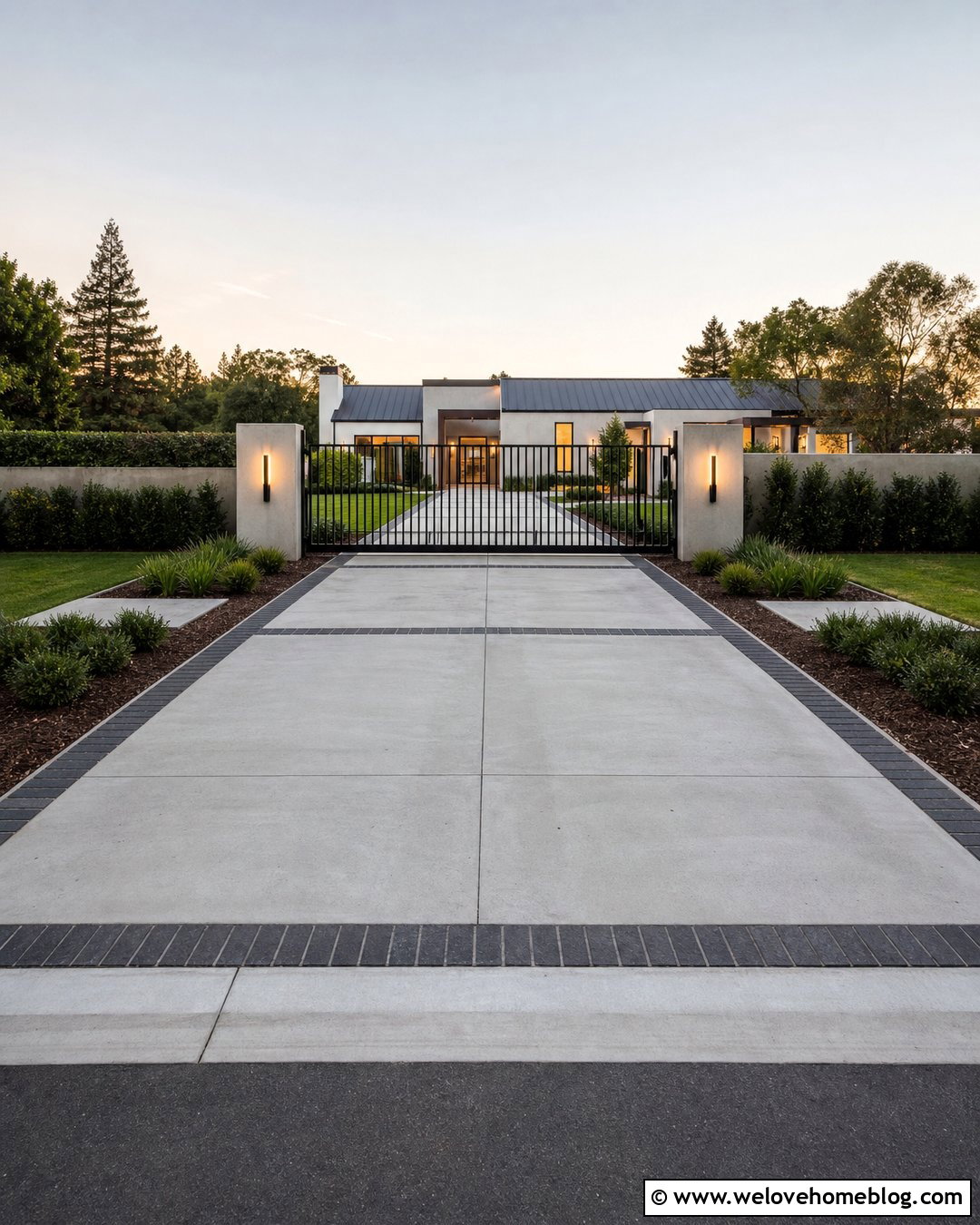
Crisp lines and restrained materials suit a contemporary estate entrance. Use a matte black or charcoal powder-coated steel gate with horizontal slats, paired with rectangular concrete pillars and a smooth gray poured-concrete driveway. Narrow grass or dark gravel joints can divide large concrete panels and improve the visual scale of the approach. Keep the surrounding landscape architectural with clipped evergreens, multi-stem trees, ornamental grasses, and broad planting beds. A backlit address panel can be integrated into one pillar, while linear LED fixtures illuminate the entry from above or below. Avoid decorative scrollwork, oversized finials, and complicated paving patterns. Every feature should support the clean geometry. If privacy is important, use closely spaced slats while preserving enough visibility for safe entry and exit near the road.
6. Limestone Estate Driveway Entrance
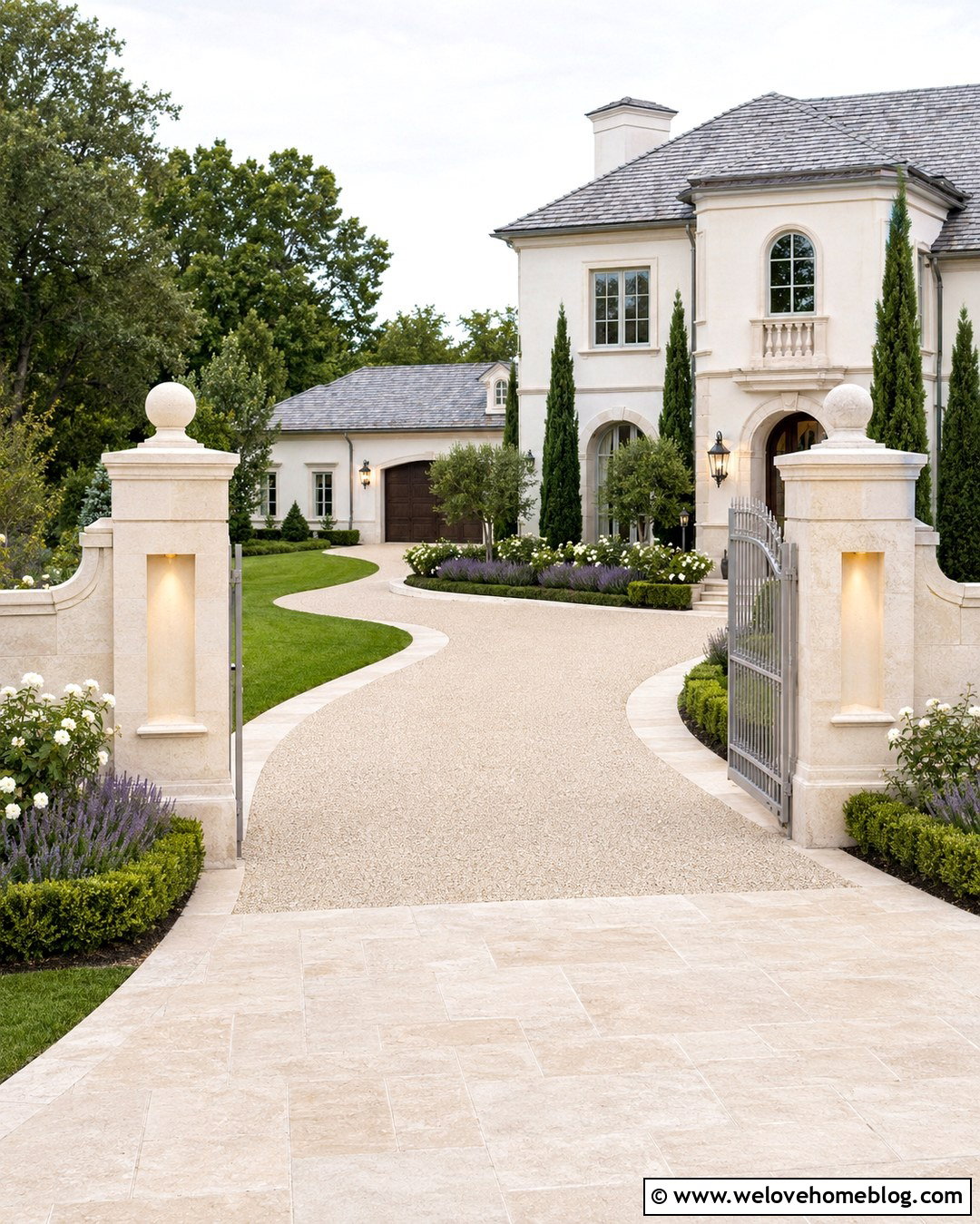
Creamy limestone creates a bright, refined entrance that pairs beautifully with traditional and European-inspired homes. Lay large limestone pavers across the apron, then continue with beige resin-bound gravel along a curved driveway to control cost and maintain a consistent color palette. Flank the opening with limestone pillars and low matching walls. Soft gray metal gates provide a lighter alternative to standard black iron. Plant lavender, clipped boxwood, white roses, and upright evergreens around the walls to emphasize symmetry without crowding the entrance. Recessed lights beneath the pillar caps can highlight the stone texture after dark. Choose frost-resistant exterior stone suited to the local climate, and plan positive drainage away from the gate mechanisms. The result feels formal, spacious, and carefully connected to the architecture.
7. Cobblestone Estate Driveway Entrance
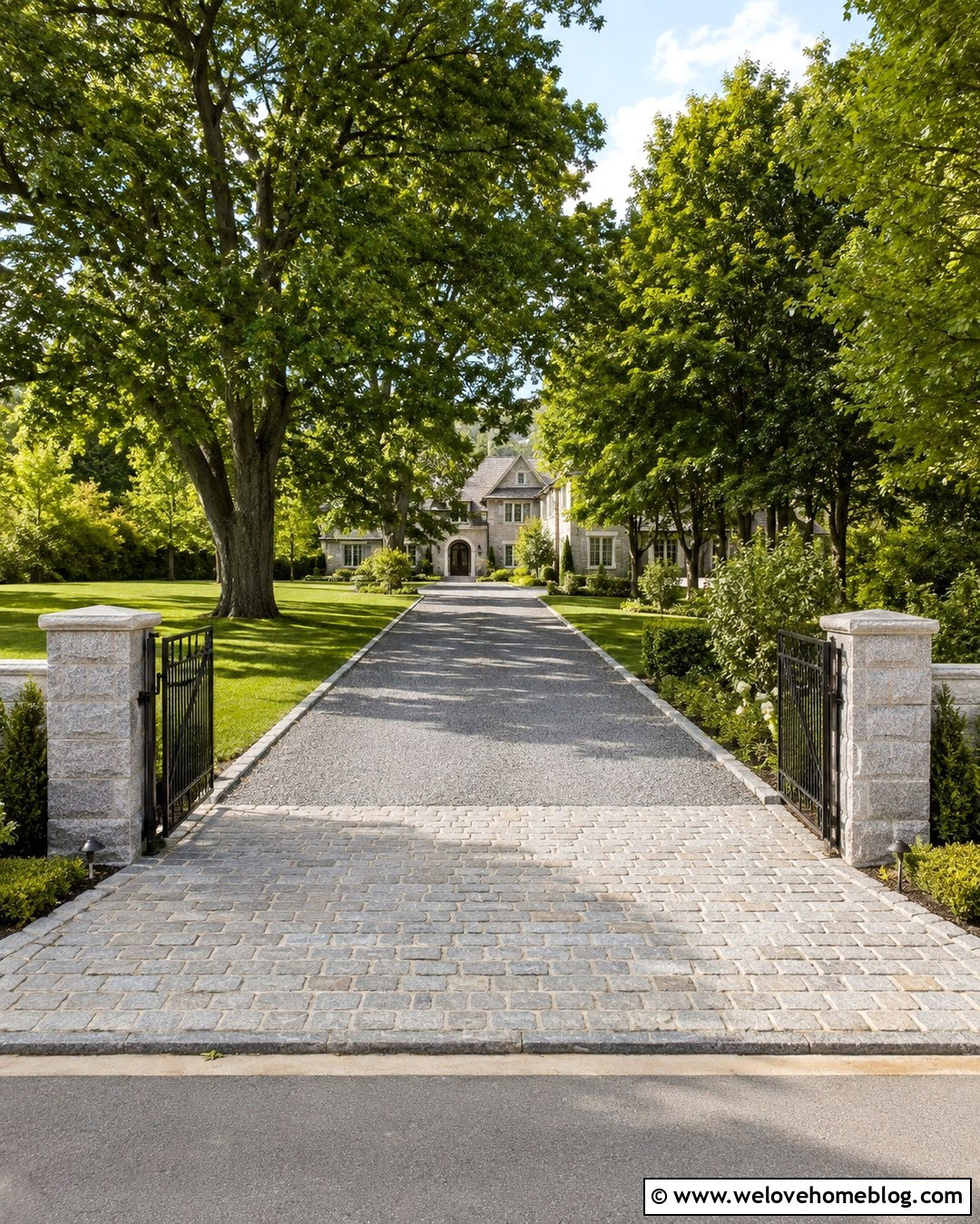
The rich texture of cobblestone instantly marks the transition from public road to private property. Create a generous cobblestone apron that widens slightly between granite pillars, then continue the driveway in compacted gray gravel or matching cobblestone if the budget allows. A simple black iron gate prevents the entrance from looking overly busy. Use cobblestone edging along the full approach so the apron does not feel like an isolated patch. Large shade trees, clipped hedges, and restrained perennial beds reinforce the old-estate character. Because an uneven surface can affect comfort and accessibility, use flatter stones with carefully filled joints near pedestrian routes. Soft lanterns on the pillars and subtle ground lights can reveal the paving texture while keeping the entrance practical, welcoming, and visually balanced.
8. Curved Estate Driveway Entrance
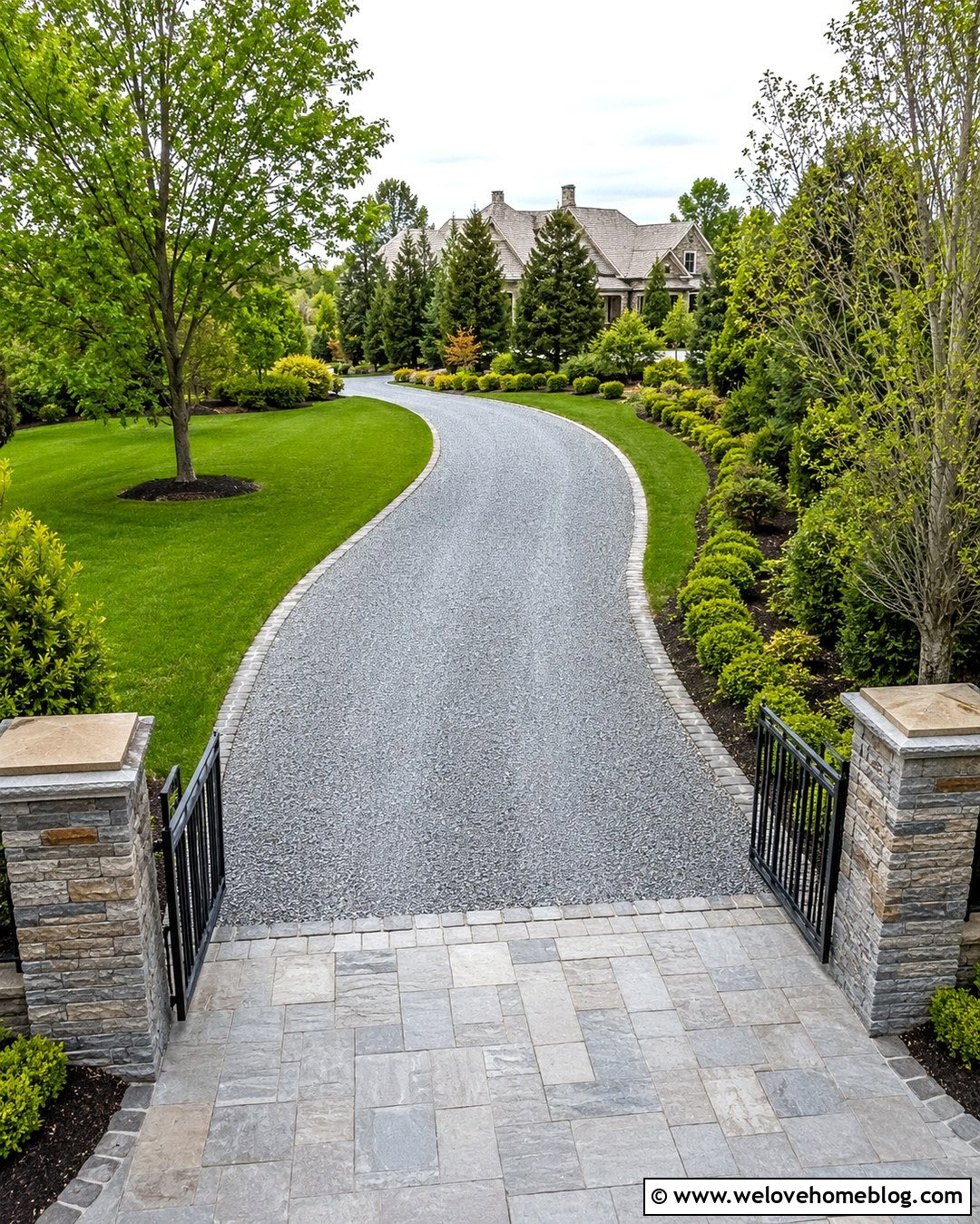
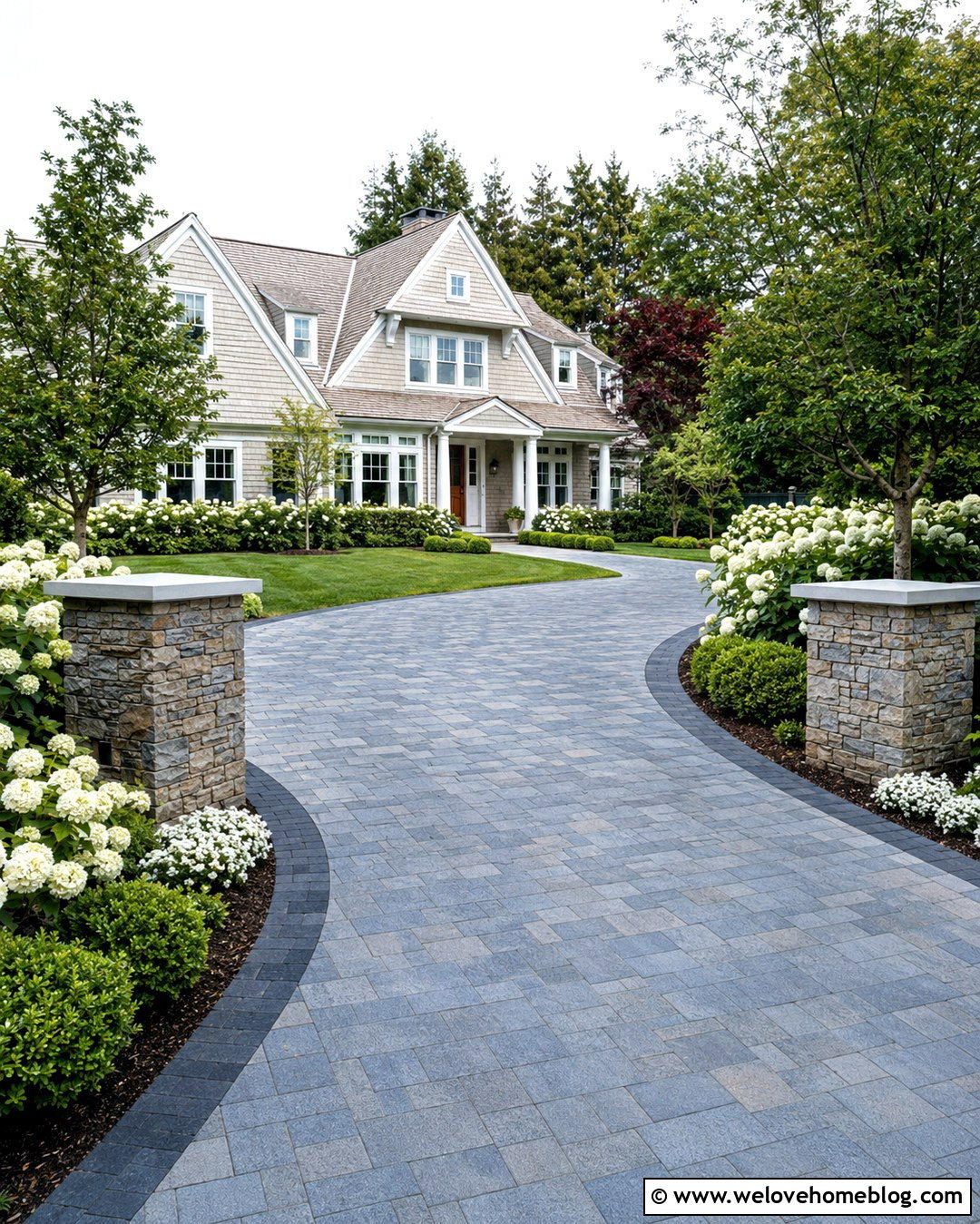
A curved driveway creates mystery because the entire house is not revealed from the road at once. Begin with a wide stone-paver apron between masonry pillars, then guide the approach through a gentle curve using fine gray gravel. A low, open metal gate preserves sightlines and follows the refined character of the layout. Reinforce the curve with continuous cobblestone edging, sweeping lawn, and layered planting beds that echo the driveway’s shape. Position specimen trees farther inside the property to frame the view without blocking drivers. Low shrubs should occupy the roadside corners, while taller evergreens can provide privacy beyond the entrance. The curve must be broad enough for delivery trucks and emergency vehicles. A smooth, intentional arc looks more elegant and functions better than several tight, irregular bends.
9. Tree-Lined Estate Driveway Entrance
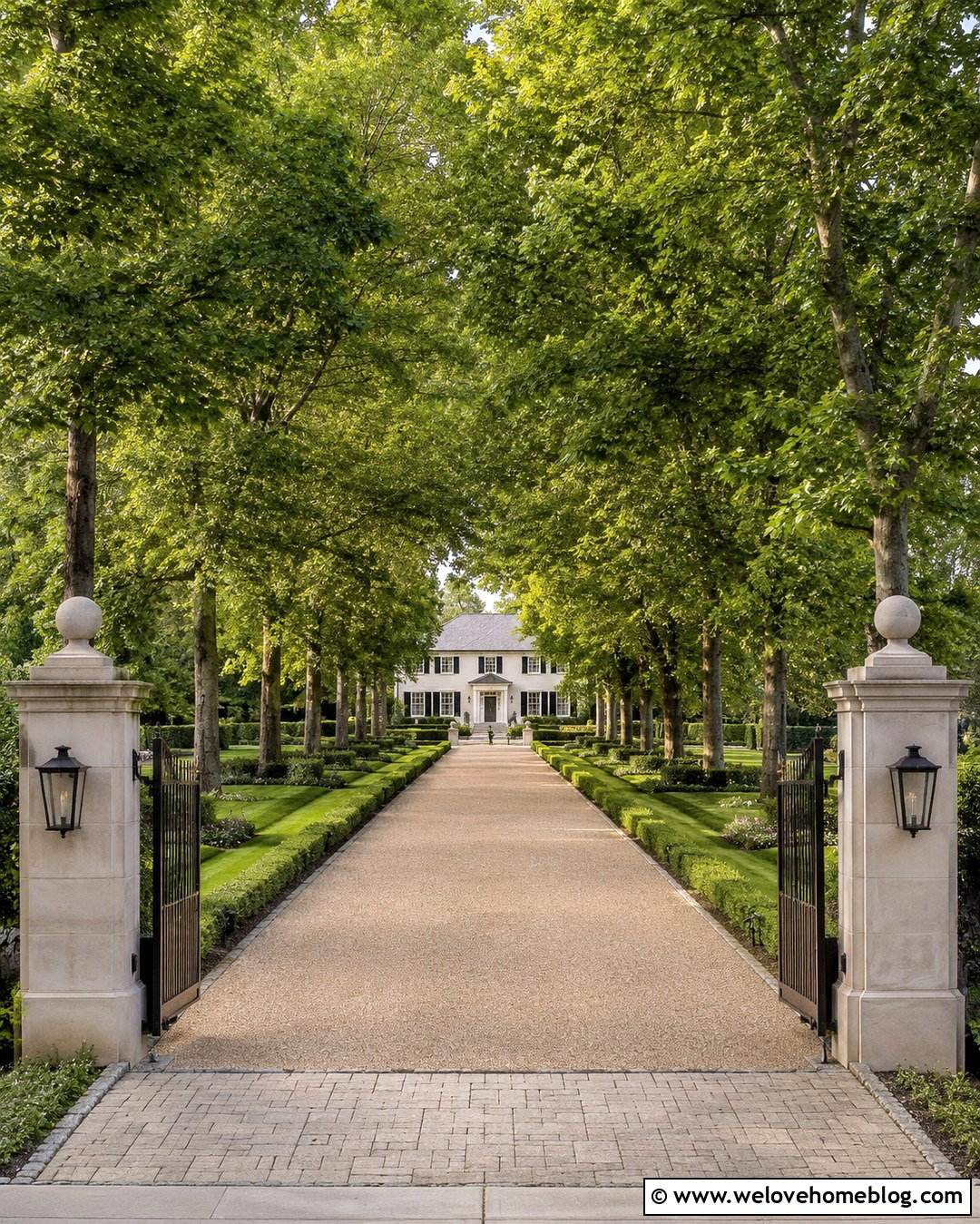
Nothing communicates scale like a long driveway framed by evenly spaced trees. Use a pale chip-seal, gravel, or resin-bound surface that leads straight from stone pillars toward the home. Install an understated dark metal gate so the rows of trees remain the primary feature. Oaks, maples, lindens, or upright ornamental pears can create rhythm, but the best species depends on climate, soil, root behavior, and mature size. Plant them far enough from the pavement to reduce future conflicts with branches and roots. Low ground covers or clipped hedges can connect the rows visually without narrowing the drive. At the roadside, repeat the tree species near the pillars for a cohesive entrance. A simple paver apron and discreet uplighting complete the formal view without competing with the landscape.
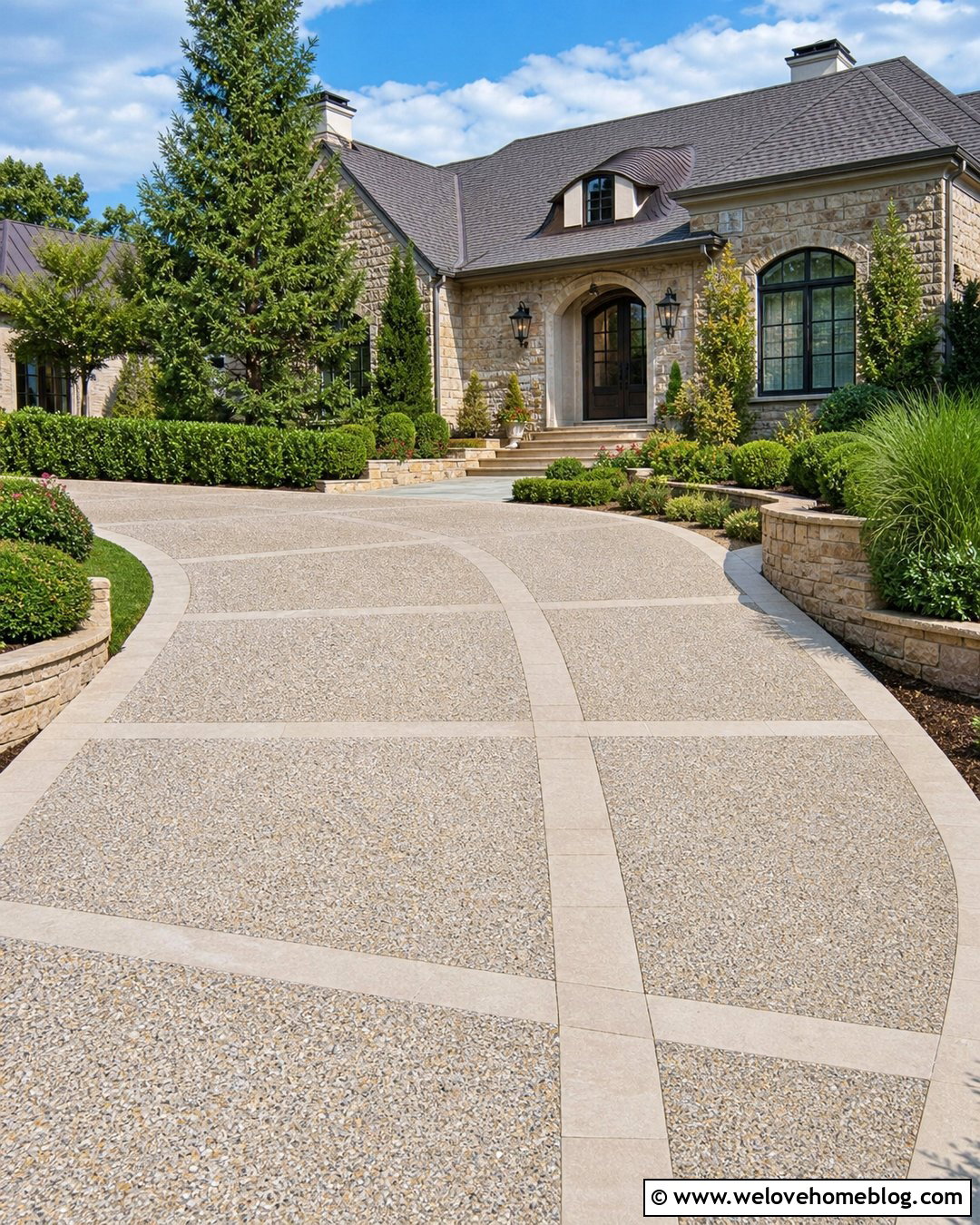
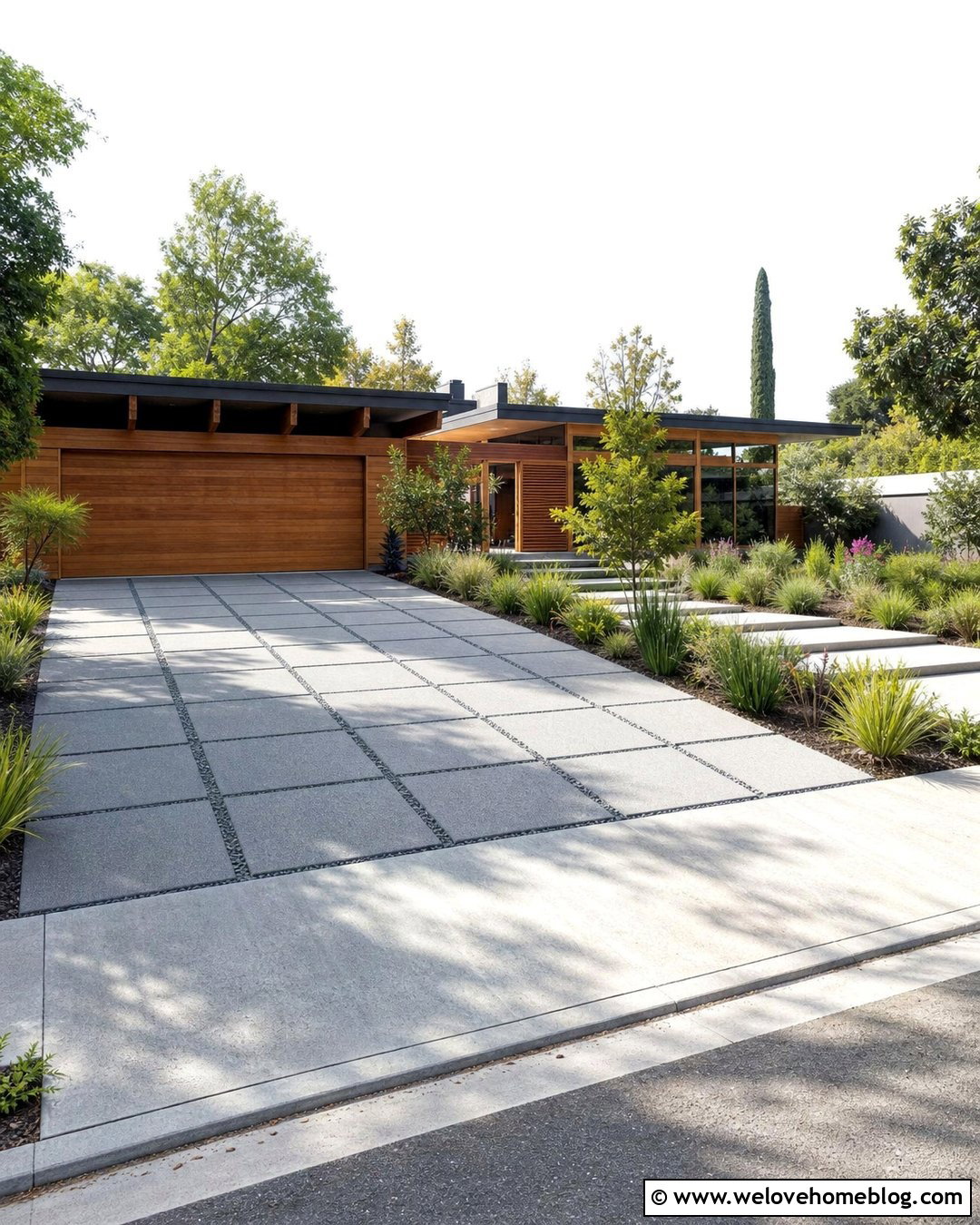
10. Hedge-Lined Estate Driveway Entrance
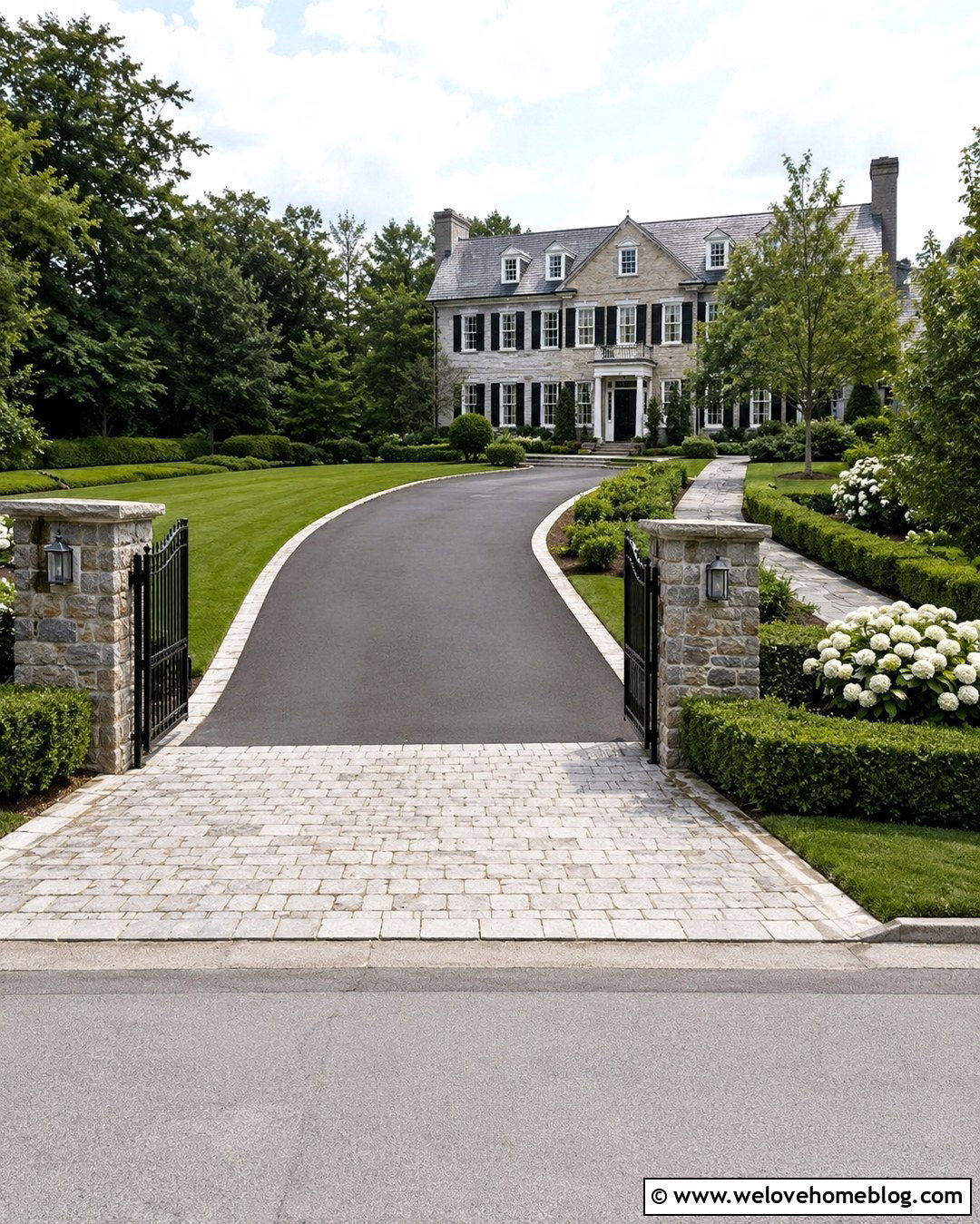
Dense green hedges can provide privacy while giving an entrance a neat, continuous frame. Pair a smooth black asphalt driveway with a contrasting light granite apron and low stone pillars. Install open black iron gates to keep the entry from feeling too enclosed. Continue evergreen hedges along both sides, but step them back from the road and gate swing area. Rounded corners or gradually reduced hedge heights improve visibility and soften the transition to the street. A narrow stone border between asphalt and planting beds protects the pavement edge and simplifies maintenance. Add white flowering shrubs near the pillars to brighten the dark surface. This entrance works particularly well with Colonial, Georgian, and traditional homes because the symmetry feels orderly while the greenery prevents the hardscape from appearing severe.
11. Farmhouse Estate Driveway Entrance
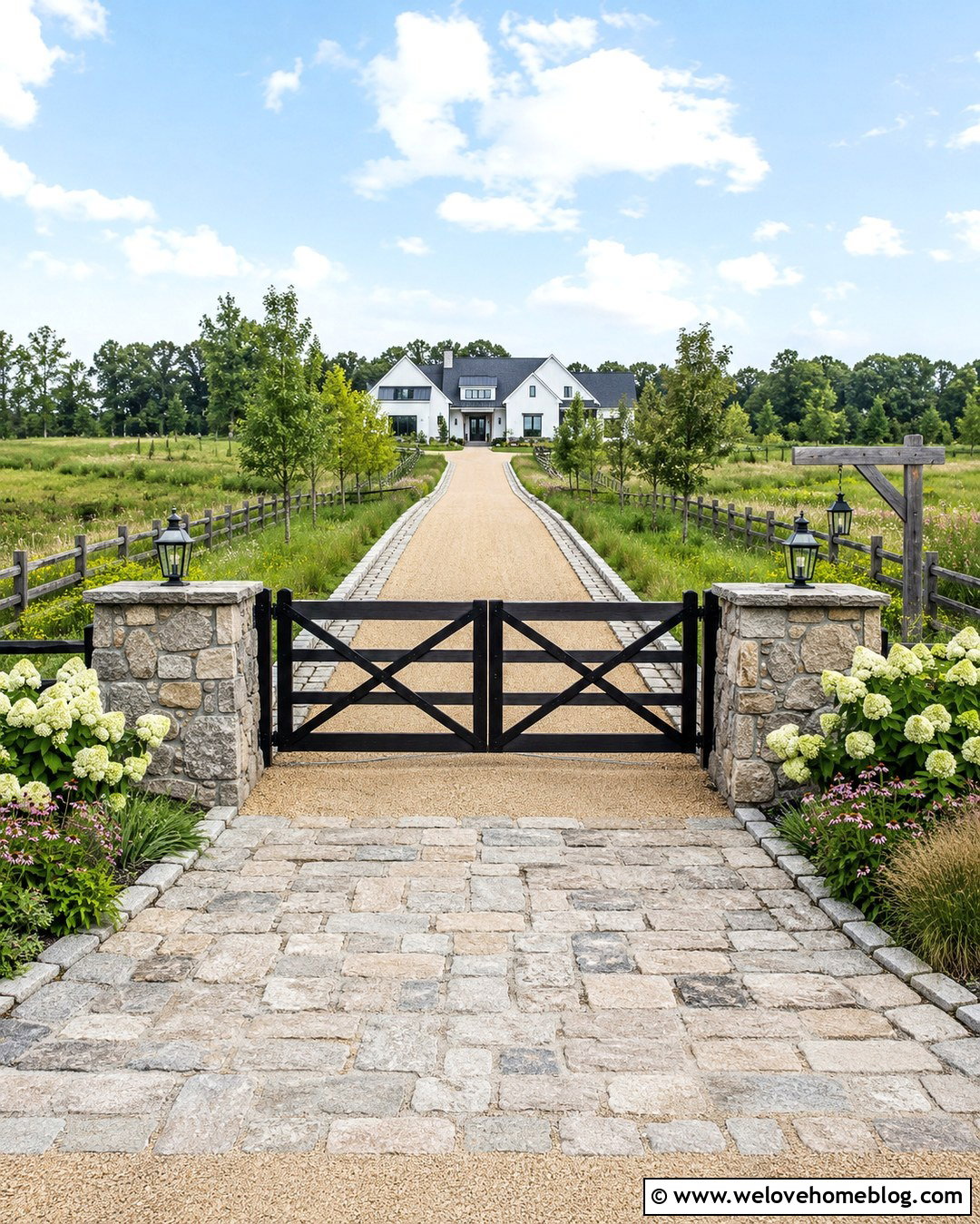
A farmhouse estate entrance should feel substantial without becoming overly formal. Start with a wide tan gravel driveway and a rustic cobblestone apron that stands up visually at the roadside. Set a black wooden or steel farm gate between chunky fieldstone pillars, then extend split-rail fencing into meadow-style landscaping. Groups of hydrangeas, ornamental grasses, and native wildflowers can soften the entrance while retaining an open rural character. Use simple gooseneck lights or traditional lanterns rather than ornate fixtures. A timber address sign positioned beside one pillar makes the property easy to locate without obstructing the gate. Keep the gravel contained with steel or stone edging, and create a separate compacted walkway where needed. The combined materials should appear natural, durable, and appropriate for a working country setting.
12. Mediterranean Estate Driveway Entrance
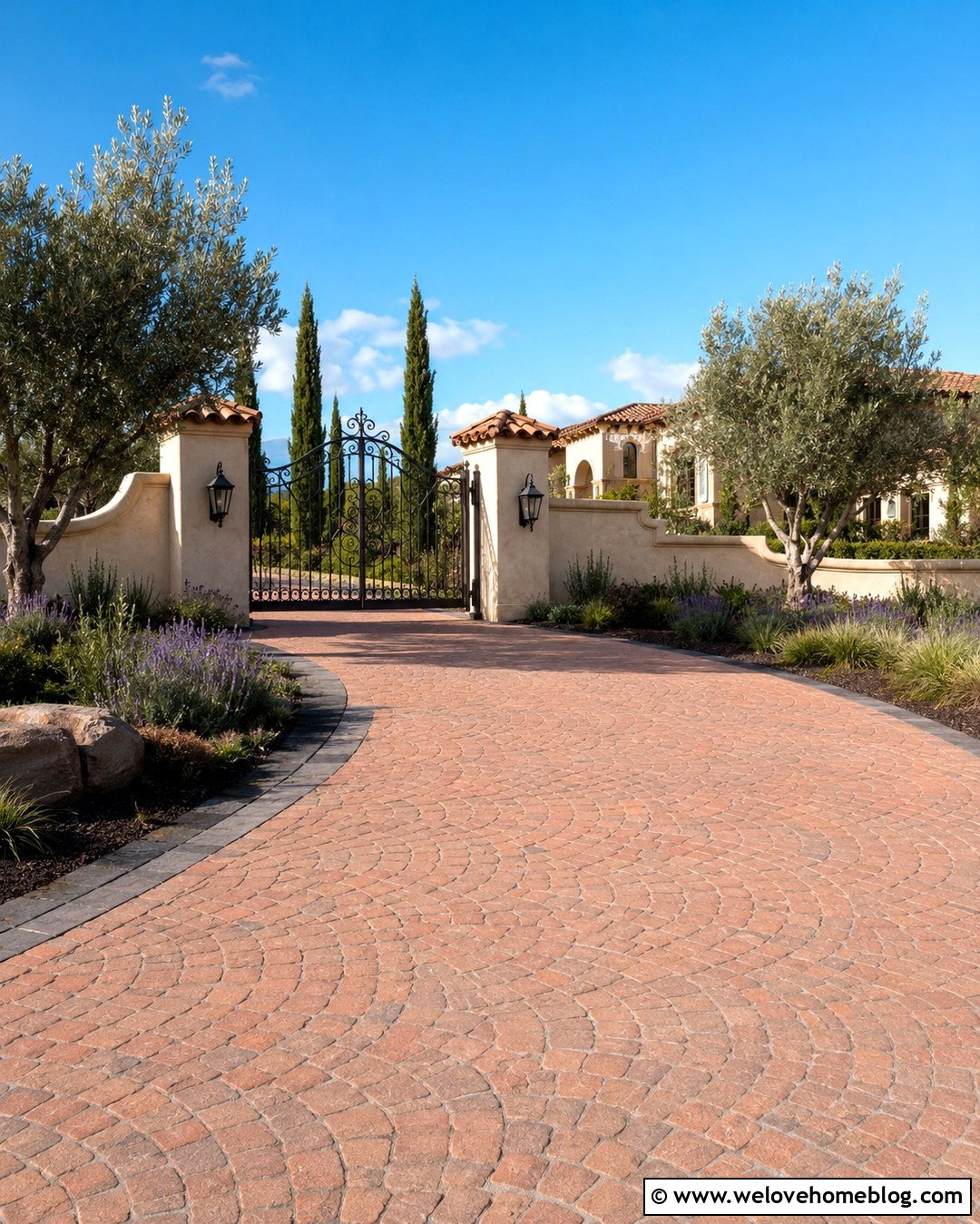
Sun-washed stucco, warm pavers, and sculptural planting create a distinctive Mediterranean estate entrance. Use terracotta-toned concrete pavers in a fan or running-bond pattern across a gently curved driveway. Support an arched wrought iron gate with cream stucco pillars topped by clay tiles. Continue low stucco walls from the pillars to form planting pockets on both sides. Olive trees, Italian cypress, lavender, rosemary, and drought-tolerant ornamental grasses reinforce the architectural character while conserving water once established. Dark metal lanterns provide contrast against the pale walls. A narrow band of darker stone around the pavers gives the driveway a finished edge. Keep the plants layered but uncluttered, allowing the gate, tile caps, and warm paving to create a coordinated entrance suited to sunny landscapes.
13. Contemporary Concrete Estate Driveway Entrance
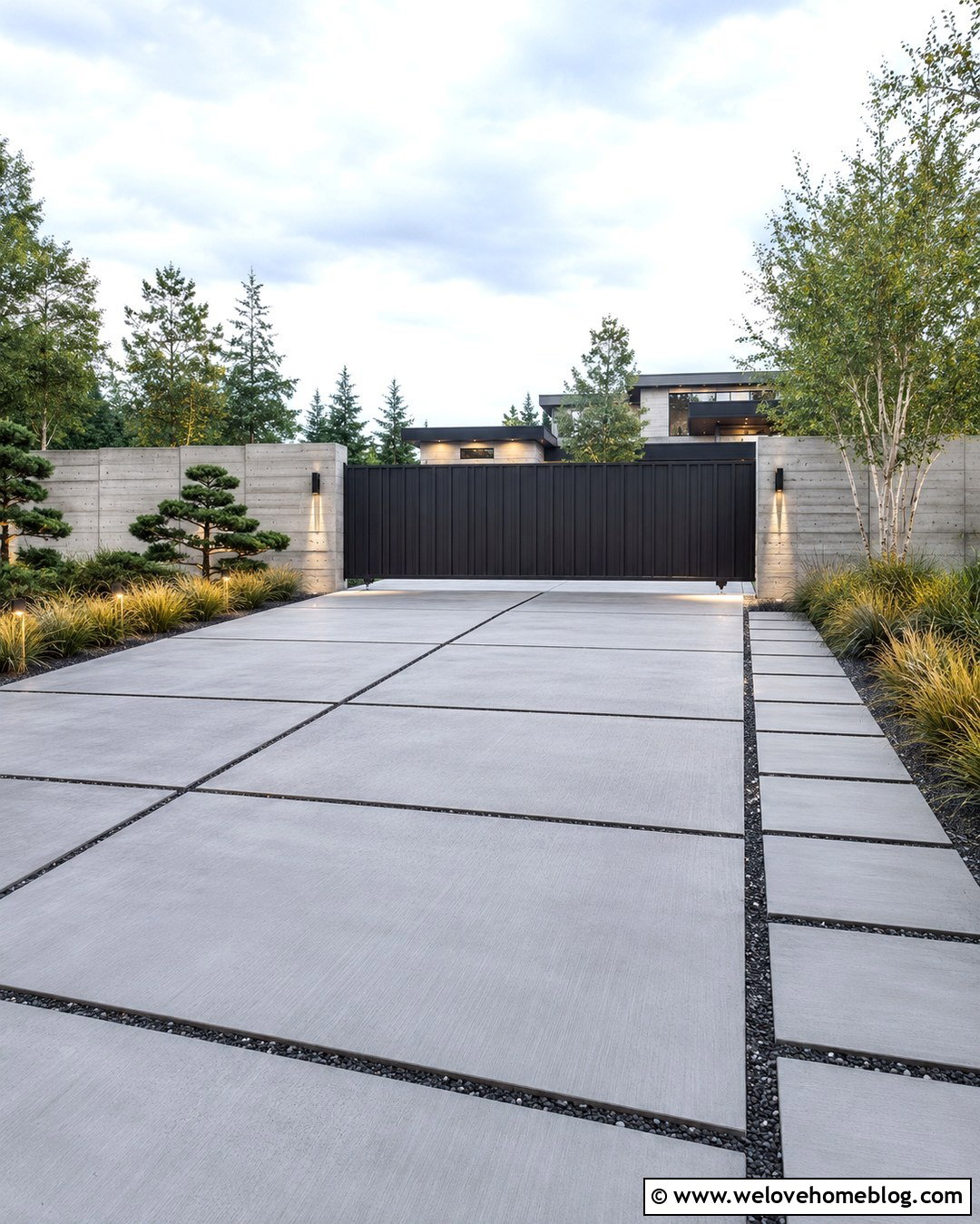
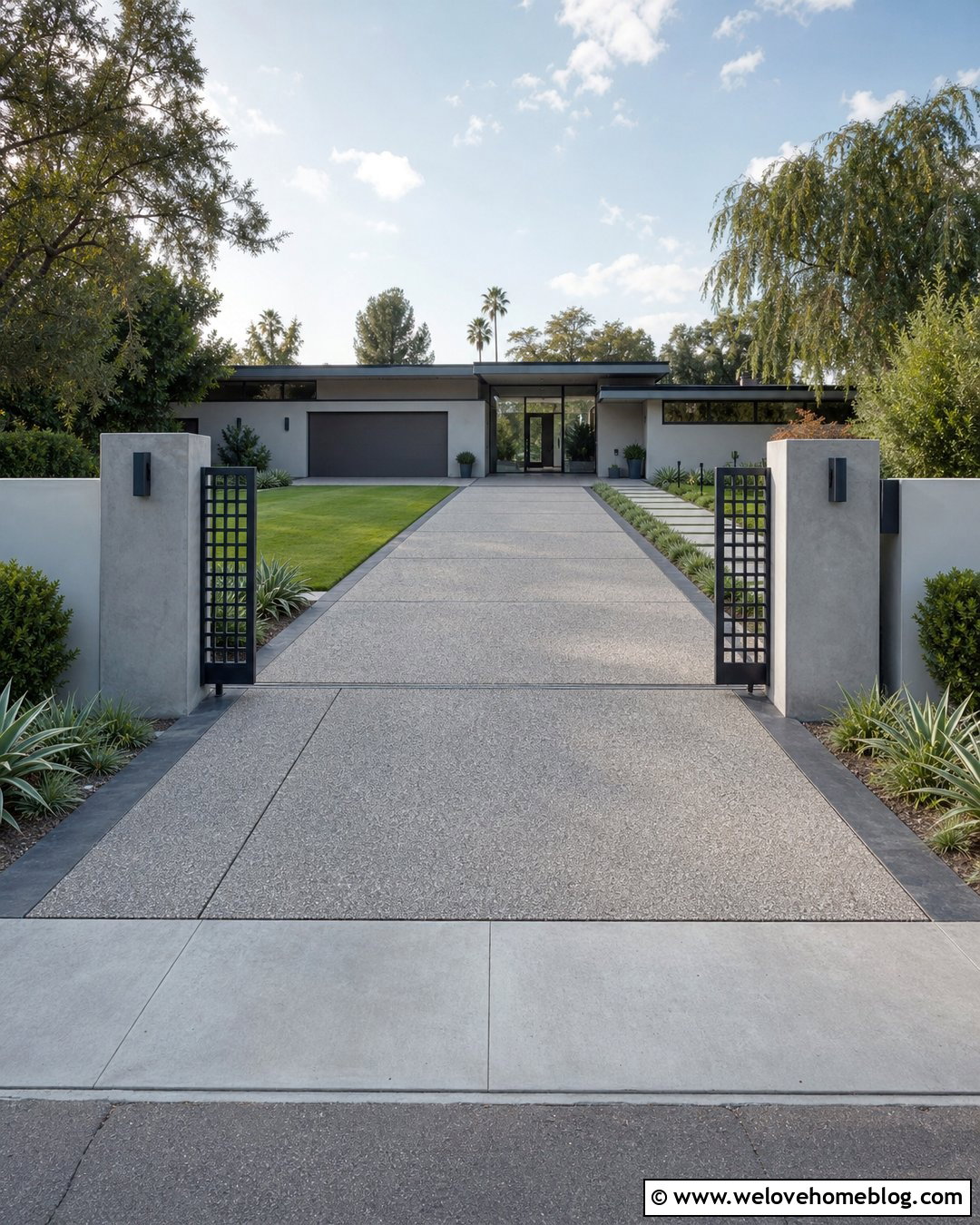
Large concrete panels can give an estate driveway a bold contemporary presence. Design a straight approach using light gray poured concrete with a subtle broom finish, divided by narrow black gravel joints. At the entrance, place a sliding steel gate between tall board-formed concrete walls. Sliding gates can be useful where there is insufficient room for large leaves to swing, although they require clear lateral travel space. () Add a flush-mounted address sign, integrated intercom, and linear lighting for a clean facade. Surround the hardscape with broad beds of ornamental grasses, sculpted evergreens, and one or two multi-stem trees. Avoid tiny decorative borders that compete with the driveway’s scale. A separate concrete pedestrian path should connect naturally to the gate without crossing the vehicle path unnecessarily.
14. Circular Estate Driveway Entrance
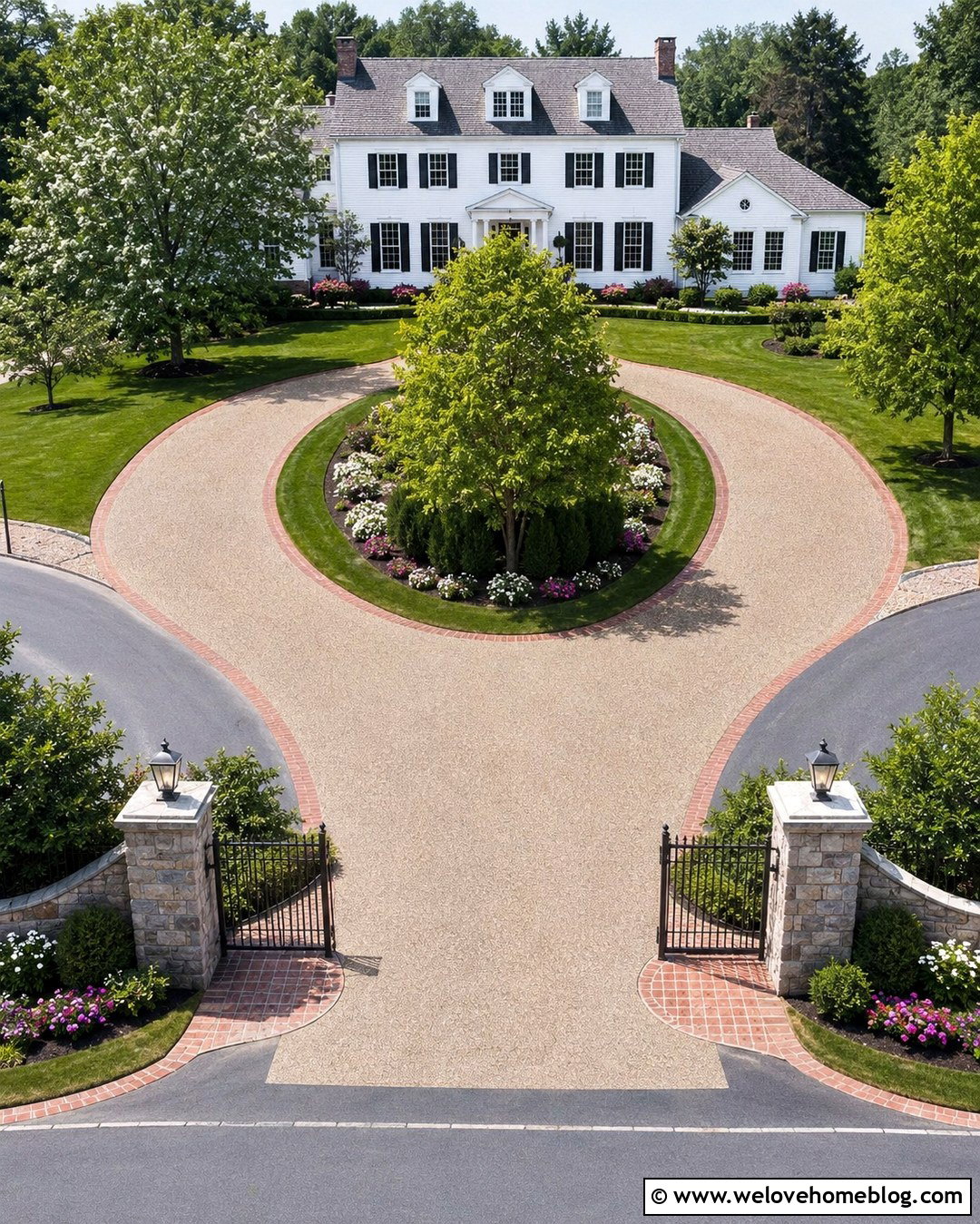
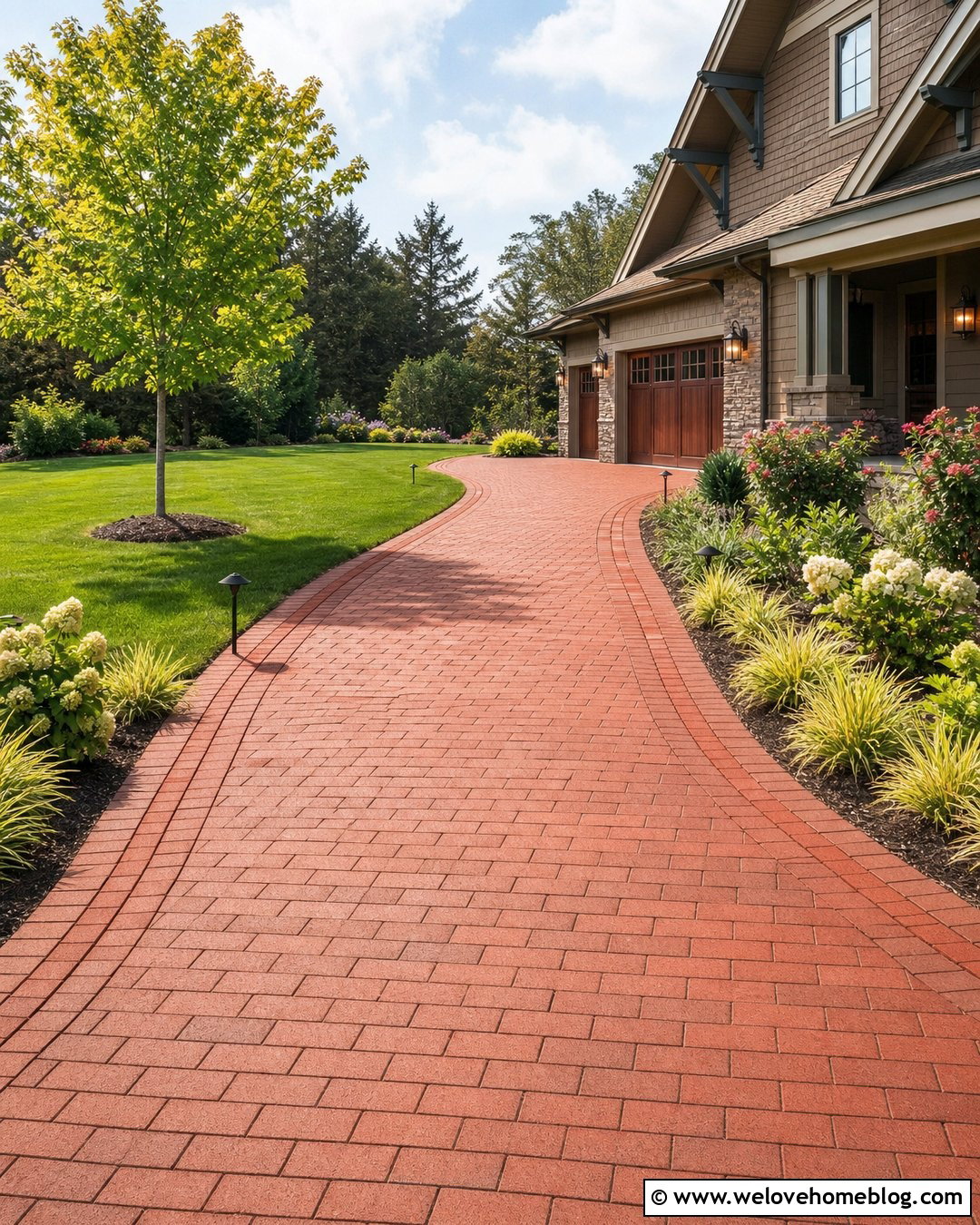
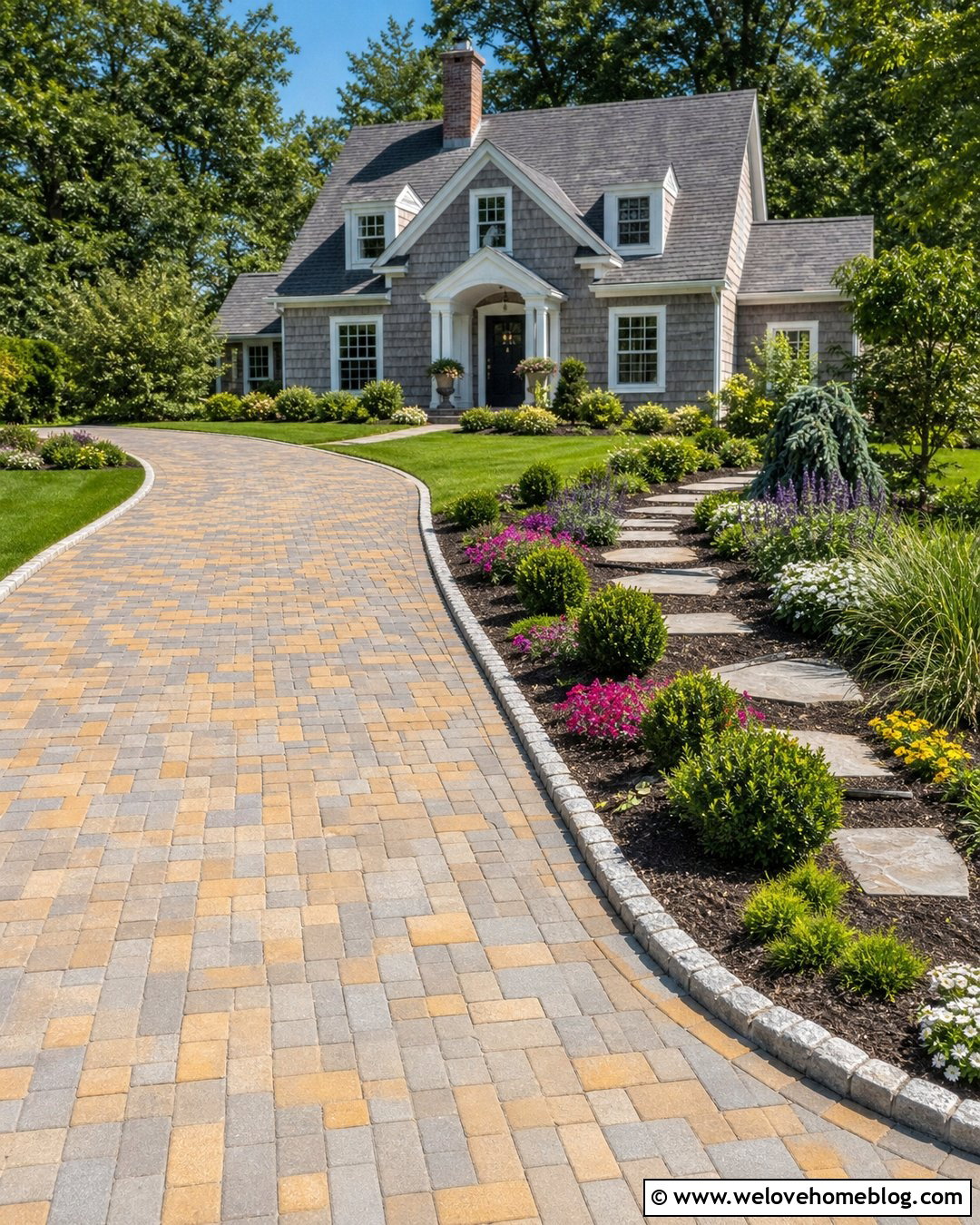
A circular driveway supports easy arrival, drop-off, and departure when the layout has enough space. Mark the entrance and exit with matching stone pillars so both openings appear connected. Use warm exposed-aggregate concrete for the drive and clay brick ribbons at the apron and inner curve. Simple iron gates can secure both openings while maintaining a consistent appearance. In the center island, plant a specimen tree surrounded by low evergreen shrubs and seasonal flowers. Keep the landscaping short near each road connection to protect sightlines. Matching lanterns, address plaques, and masonry details prevent one side from appearing secondary. The curves should accommodate expected vehicles without forcing tires over borders. When every surface, opening, and planting bed follows the same visual language, the circular layout feels elegant rather than oversized.
15. Horseshoe Estate Driveway Entrance
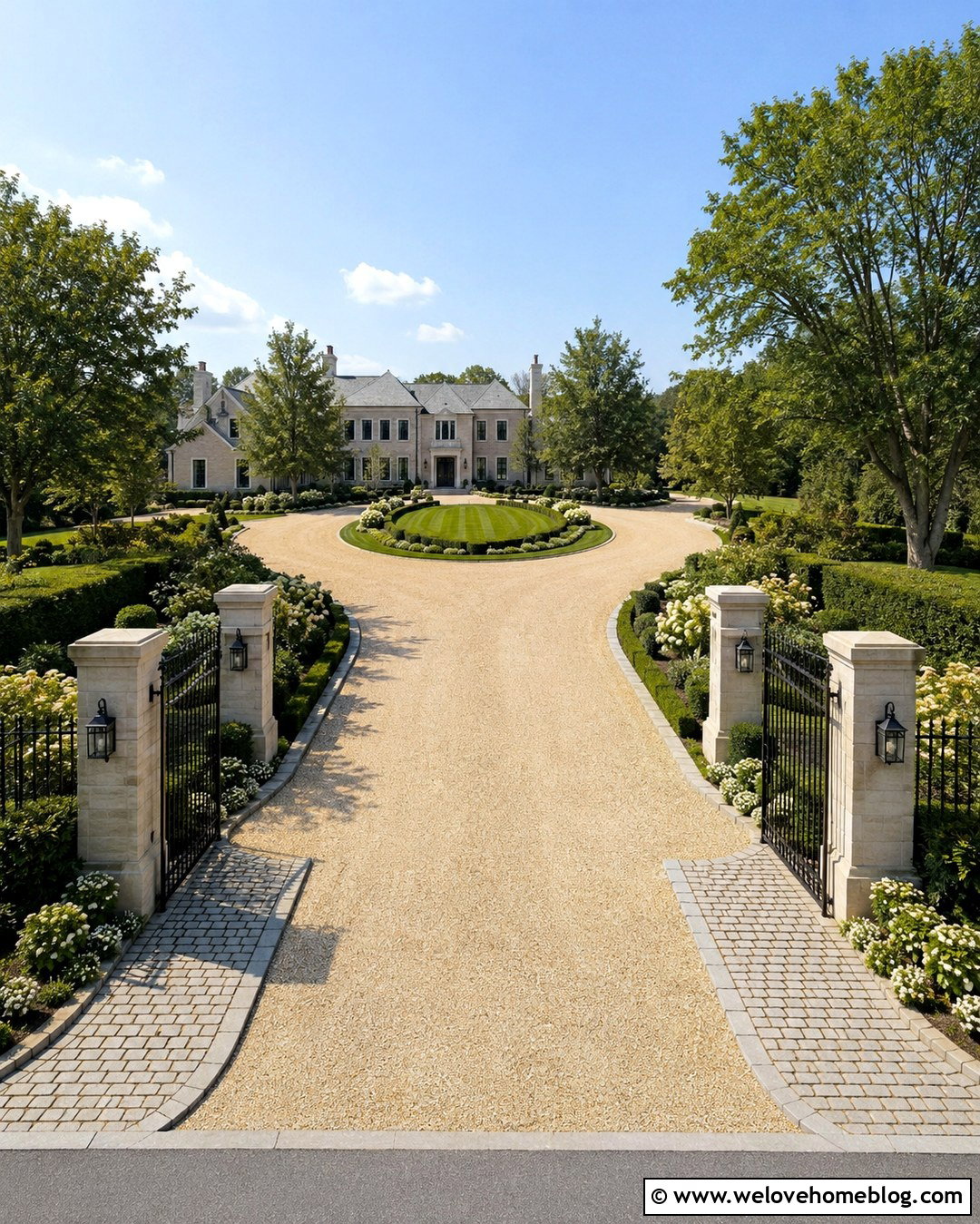
A horseshoe driveway creates two graceful approaches that can frame a broad front lawn. Use light-colored gravel for the sweeping drive, with cobblestone bands defining both roadside aprons. Build matching brick or stone pillars at each entrance and connect them with low walls or estate fencing. One opening can serve as the primary arrival point, but both should share the same materials, gate design, and lighting. Place a formal lawn or layered garden bed within the horseshoe, leaving clear views toward the house. Symmetrical trees near the outer edges can emphasize the estate’s width without hiding the architecture. Consider traffic direction, gate controls, drainage, and turning space during planning. The finished layout should guide drivers intuitively while presenting a balanced, impressive view from the road.
16. Woodland Estate Driveway Entrance
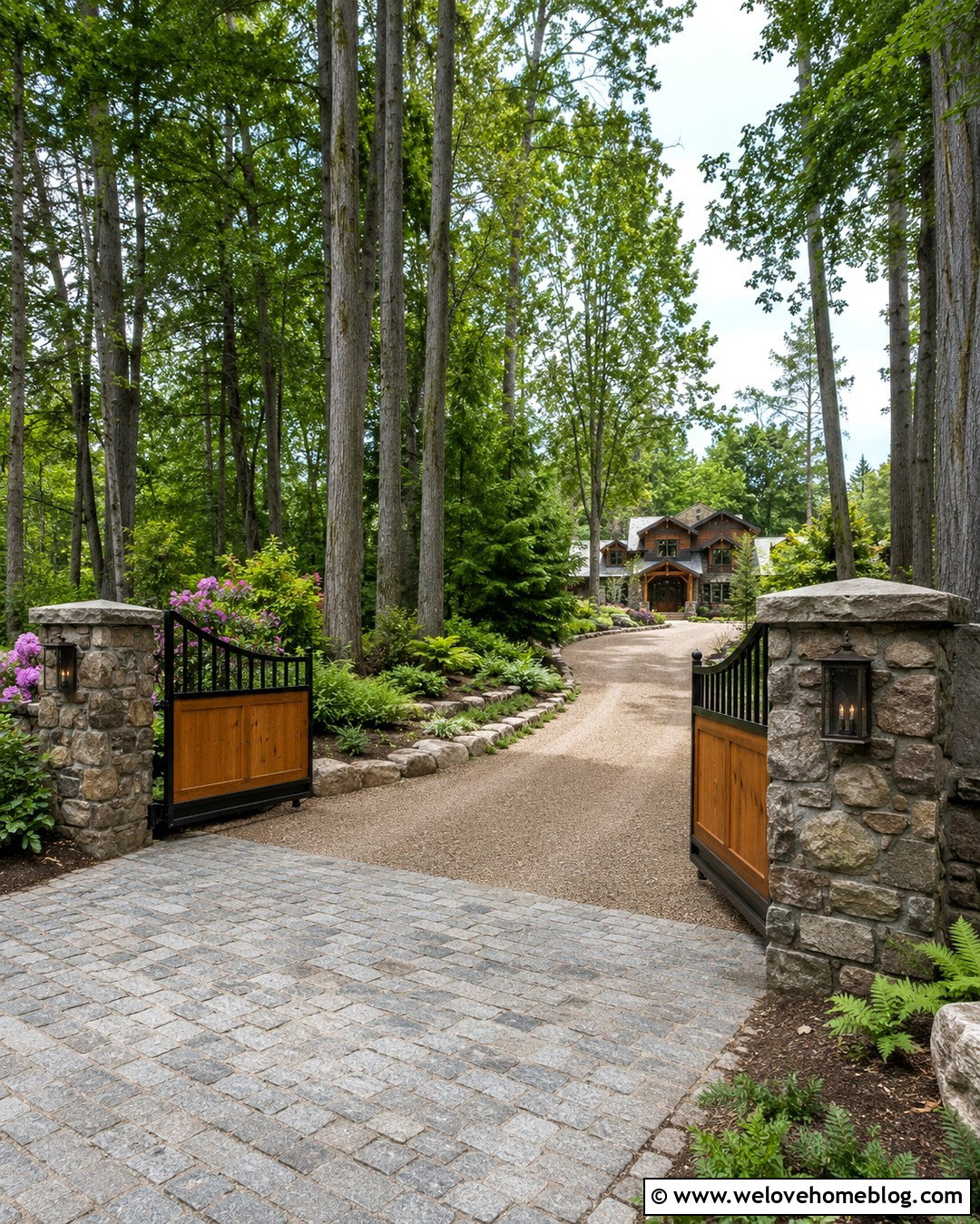
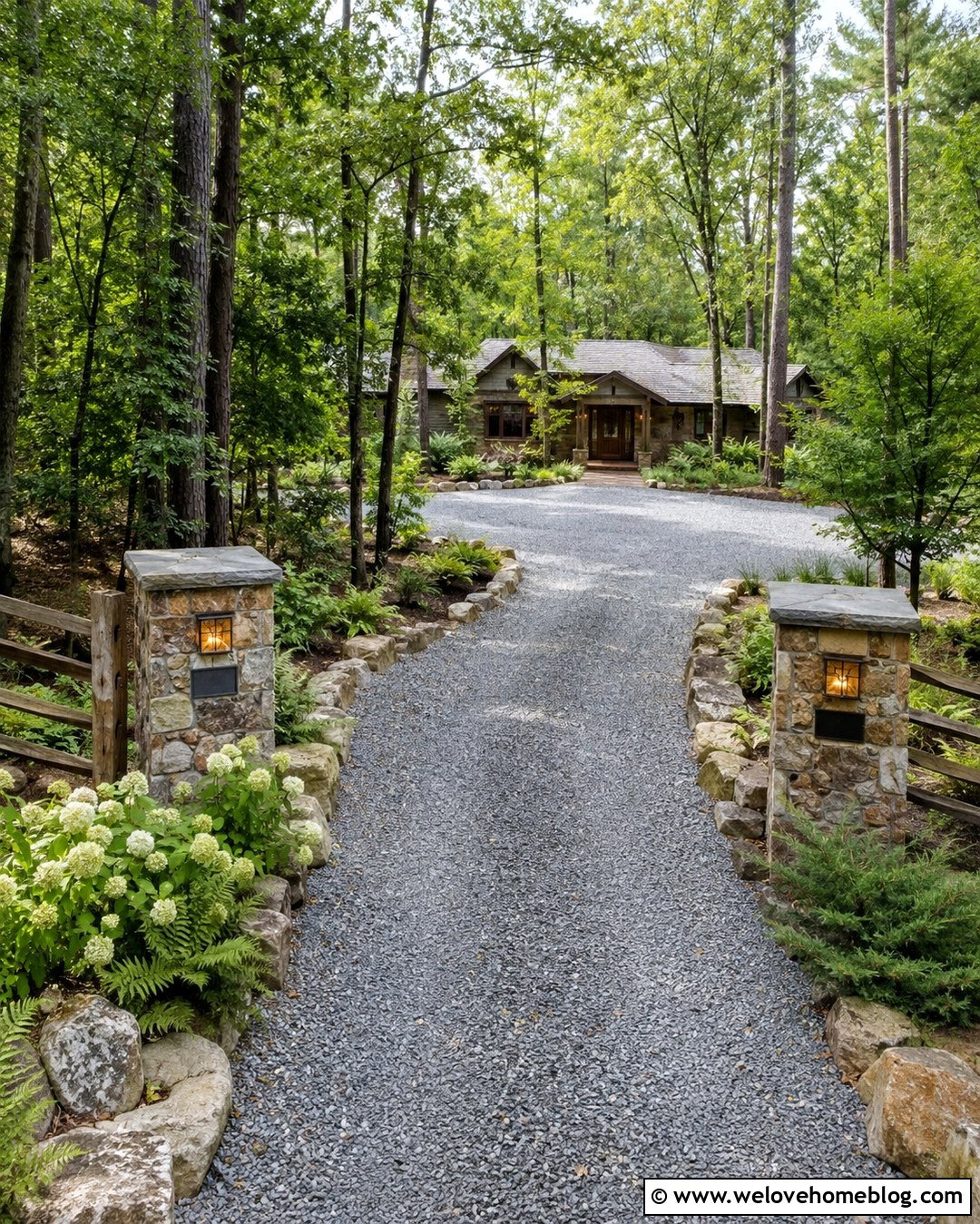
A wooded property calls for an entrance that feels integrated with the natural setting. Choose compacted brown gravel for a gently winding driveway, then add a rugged granite cobblestone apron at the road. Thick fieldstone pillars and a restrained timber-and-steel gate provide structure without looking urban. Continue native ferns, woodland grasses, rhododendrons, and shade-tolerant ground covers around the pillars. Existing mature trees should remain the dominant visual feature, so avoid overly formal rows or brightly colored annual beds. Low shielded lights can illuminate the gate, address marker, and driveway edges without flooding the woods. Use natural stone edging only where gravel containment is necessary. The complete entrance should feel quiet and established, with enough pruning and setback to maintain safe visibility under the tree canopy.
17. Coastal Estate Driveway Entrance
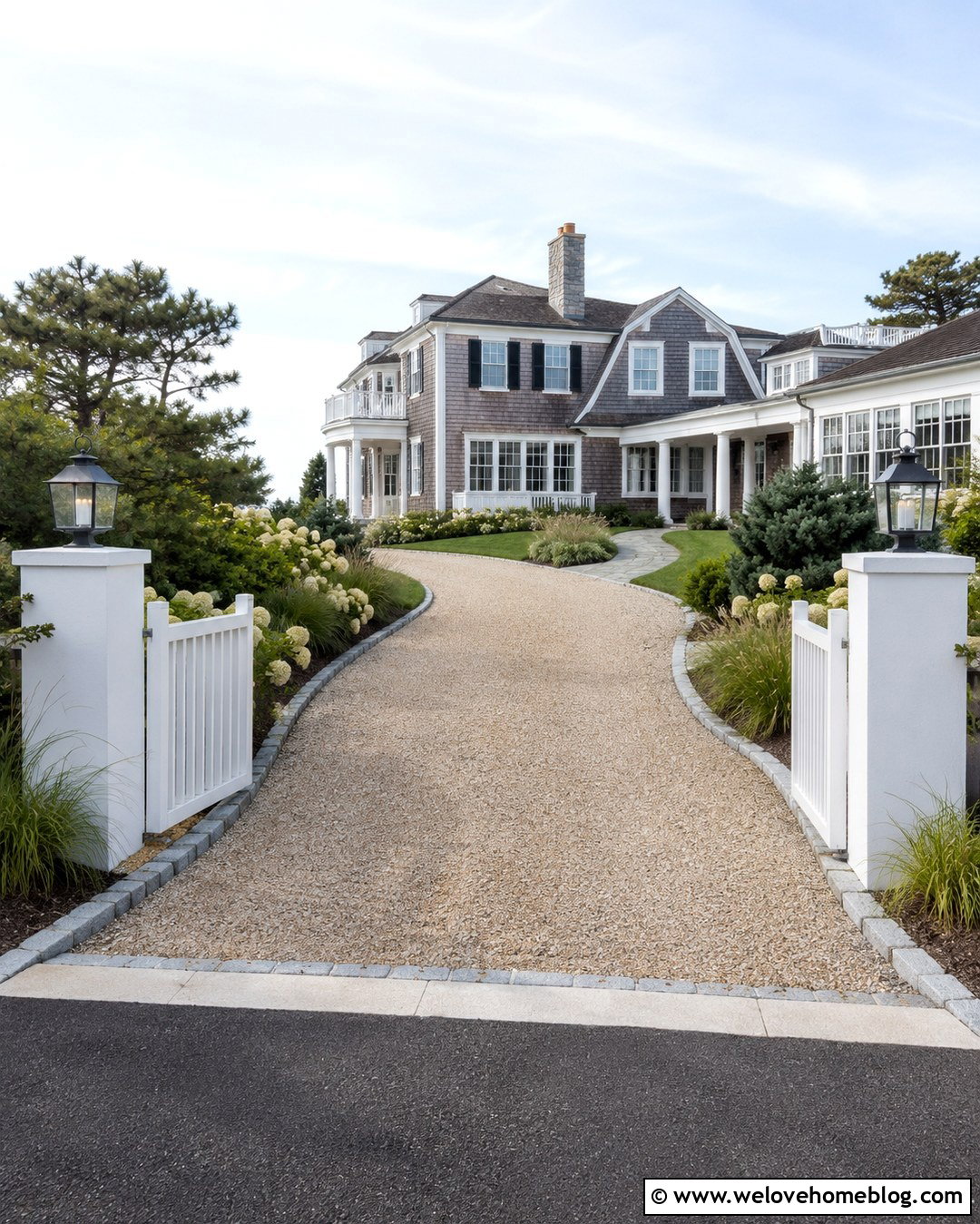
A coastal estate entrance benefits from light colors, open lines, and materials selected for exposed conditions. Use pale shell aggregate or sand-colored resin-bound gravel on a curved driveway leading to a cedar-shingle, coastal Colonial, or contemporary beach house. White masonry pillars and a simple powder-coated aluminum gate create a crisp roadside frame. Aluminum can provide the look of decorative metal with relatively low maintenance when properly finished. () Border the drive with gray granite setts, salt-tolerant grasses, bayberry, hydrangeas, and low evergreen shrubs. Avoid delicate ornaments that may look out of place in a breezy landscape. Marine-style lanterns and a weather-resistant address plaque finish the design. Keep planting loose but controlled so the entrance feels relaxed, bright, and clearly connected to its coastal surroundings.
18. Brick Paver Estate Driveway Entrance
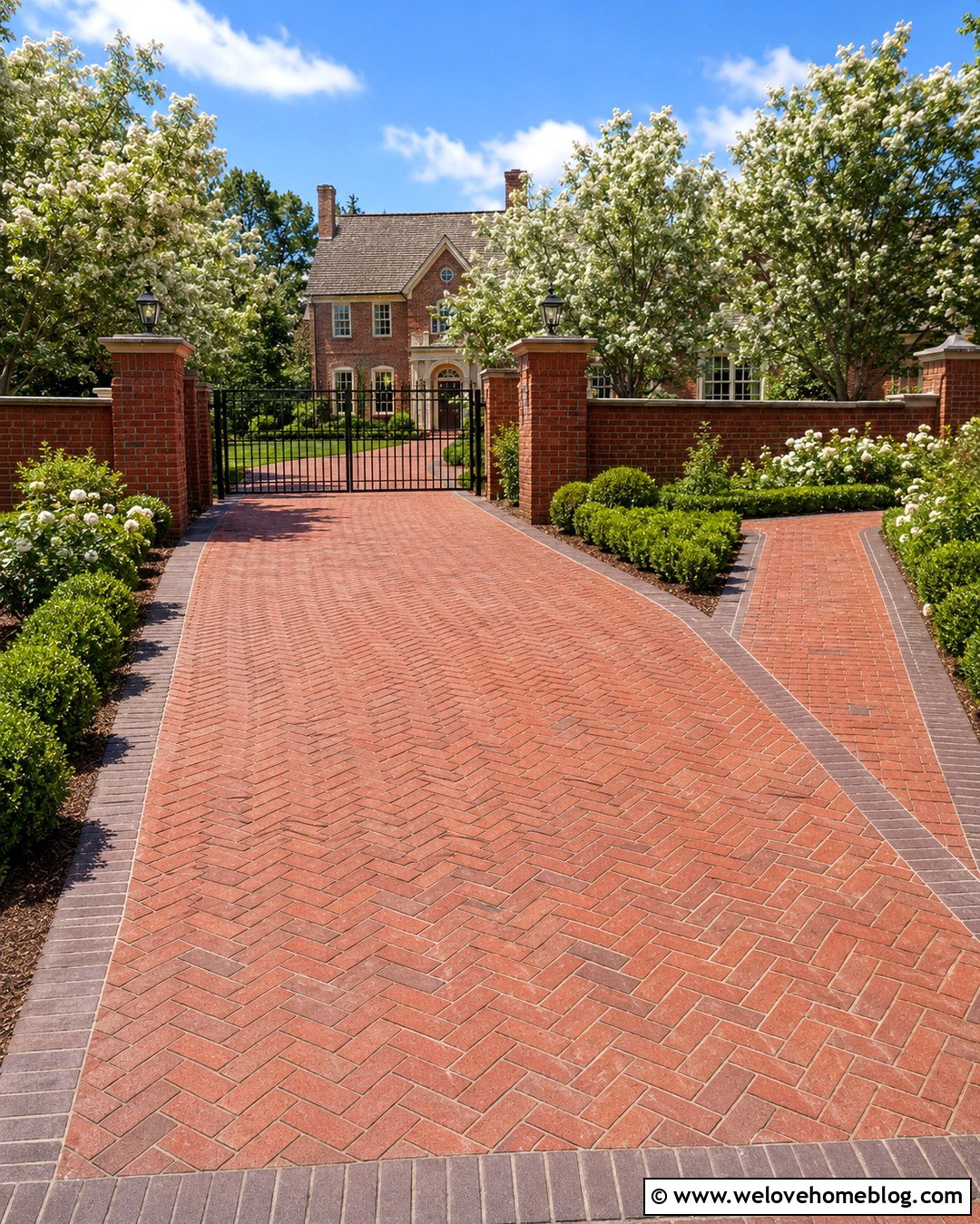
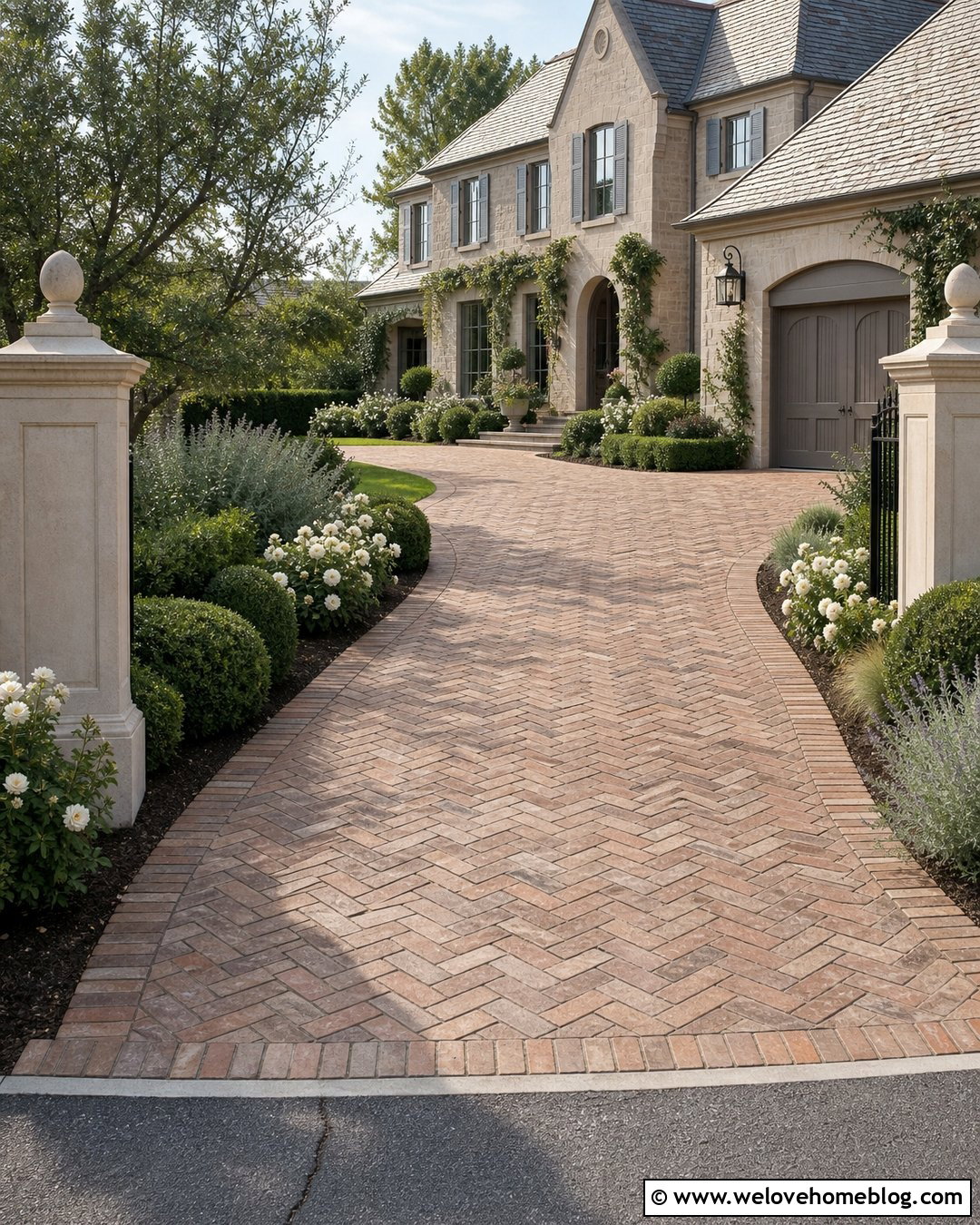
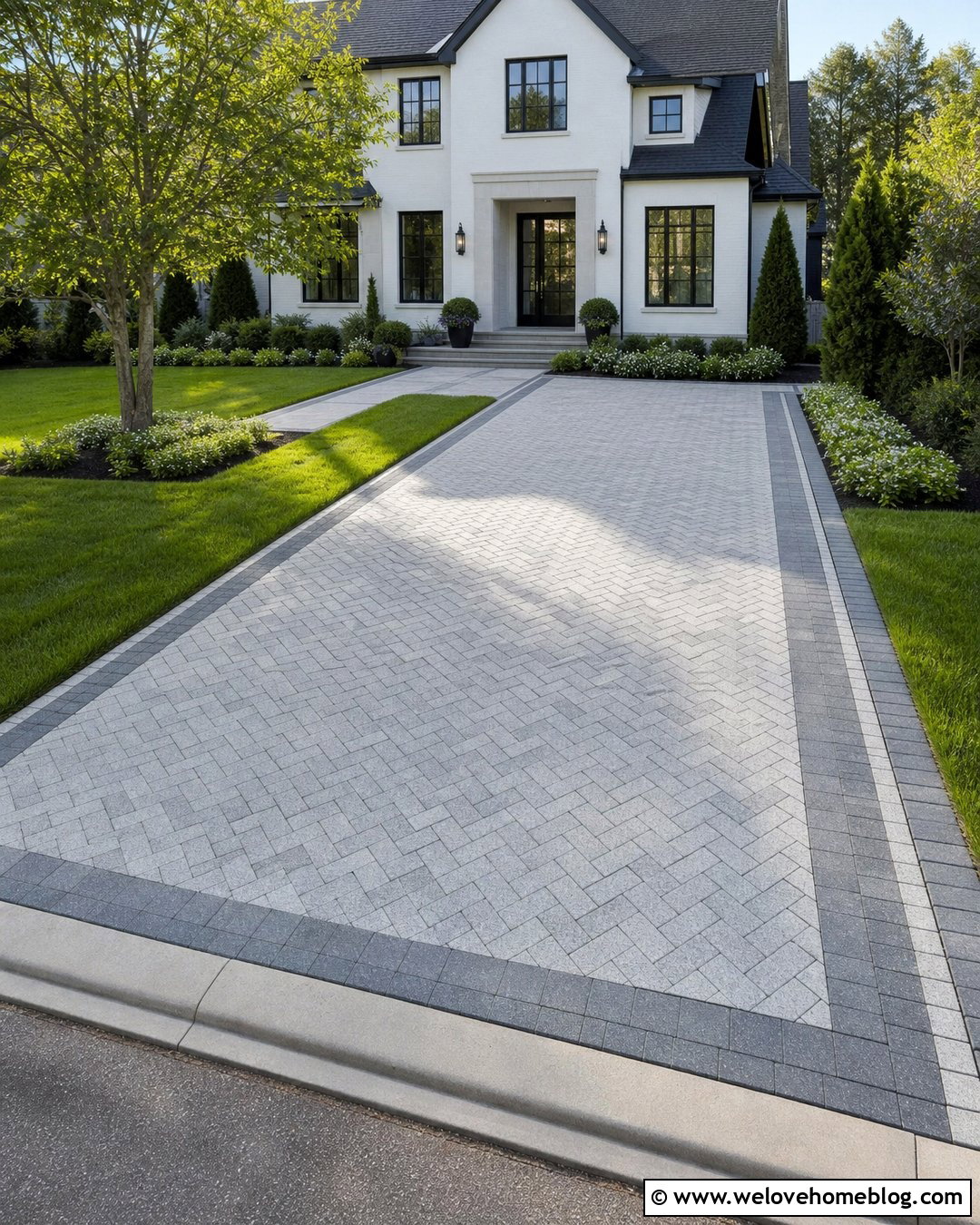
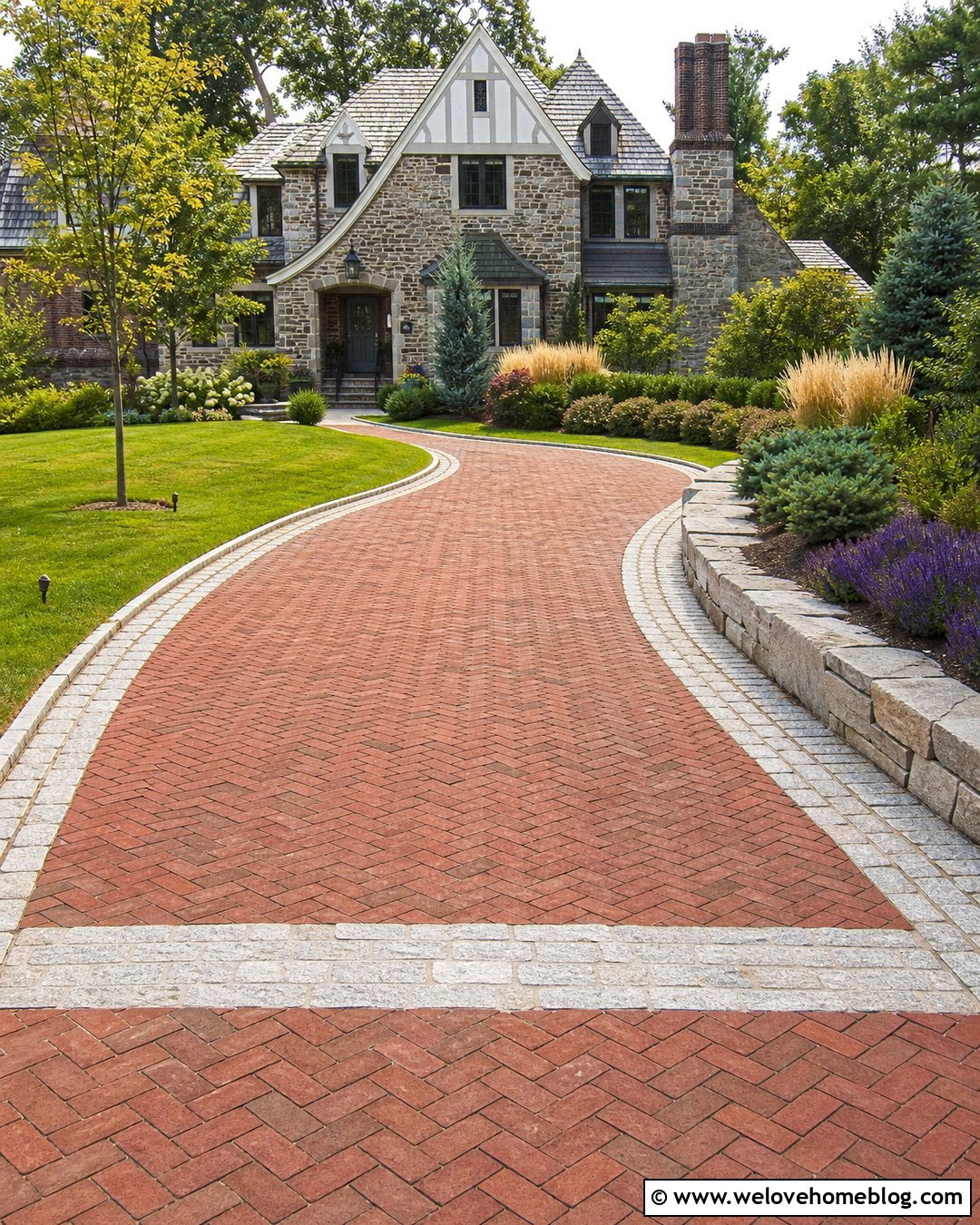
A full brick paver entrance brings pattern, warmth, and craftsmanship to a traditional property. Lay clay brick pavers in a herringbone pattern across the driveway, using a darker soldier-course border to hold the edges visually. Set tall brick columns at the roadside and match their mortar color to the home. A black steel gate with restrained detailing keeps the focus on the paving. Continue low brick walls into formal beds filled with clipped boxwood, white roses, and small flowering trees. Install drainage carefully so water does not collect around the gate threshold or wash material from beneath the pavers. Pillar lanterns and low path lights can illuminate both the entrance and a separate brick walkway. Repeating the same brick near the house creates a cohesive journey through the property.
19. Landscaped Open Estate Driveway Entrance
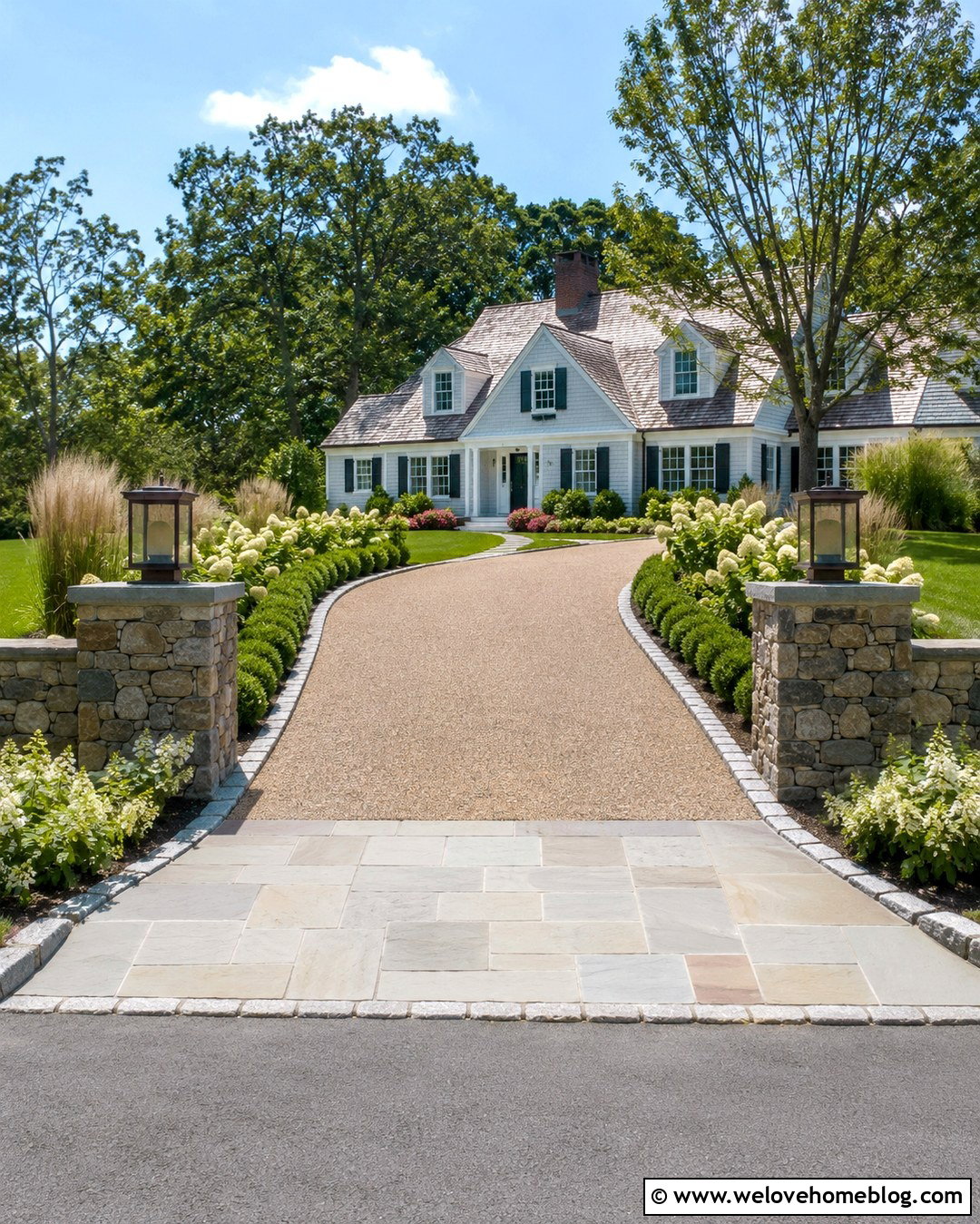
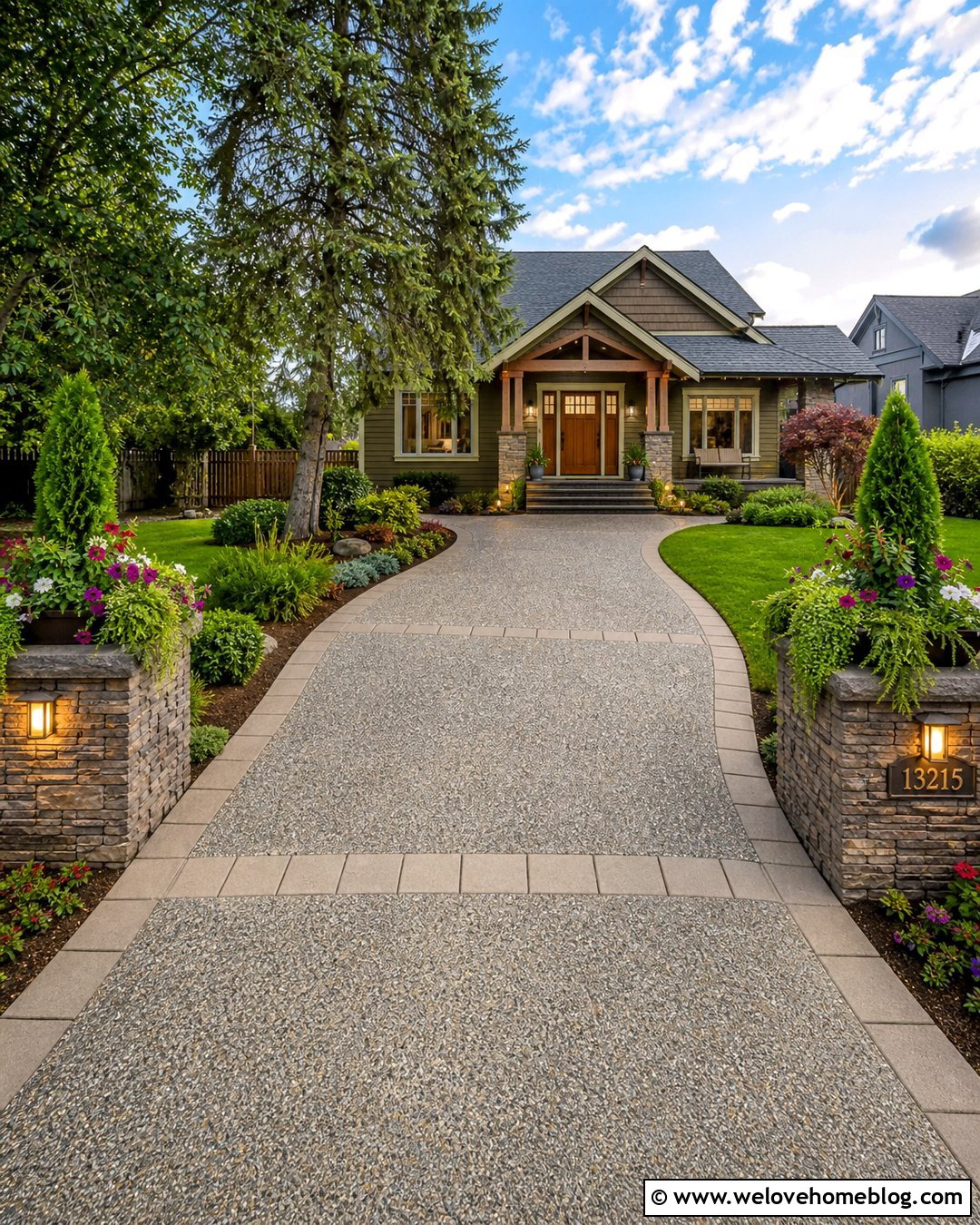
An estate entrance does not need a gate to feel finished. Create a broad exposed-aggregate driveway with a contrasting natural stone apron and substantial stone pillars that clearly identify the opening. Curve low planting beds around both sides using boxwood, panicle hydrangeas, ornamental grasses, and seasonal ground covers. Pillar lanterns, an integrated address plaque, and matching stone edging provide formality without closing the view. Extend the planting gradually into the lawn so the entrance does not look like two isolated decorative islands. An open design may suit properties where frequent access, snow removal, or wide vehicle movement is a priority. Short return walls can add presence while preserving visibility. The finished entrance remains welcoming, organized, and unmistakably intentional even without gates or perimeter fencing.
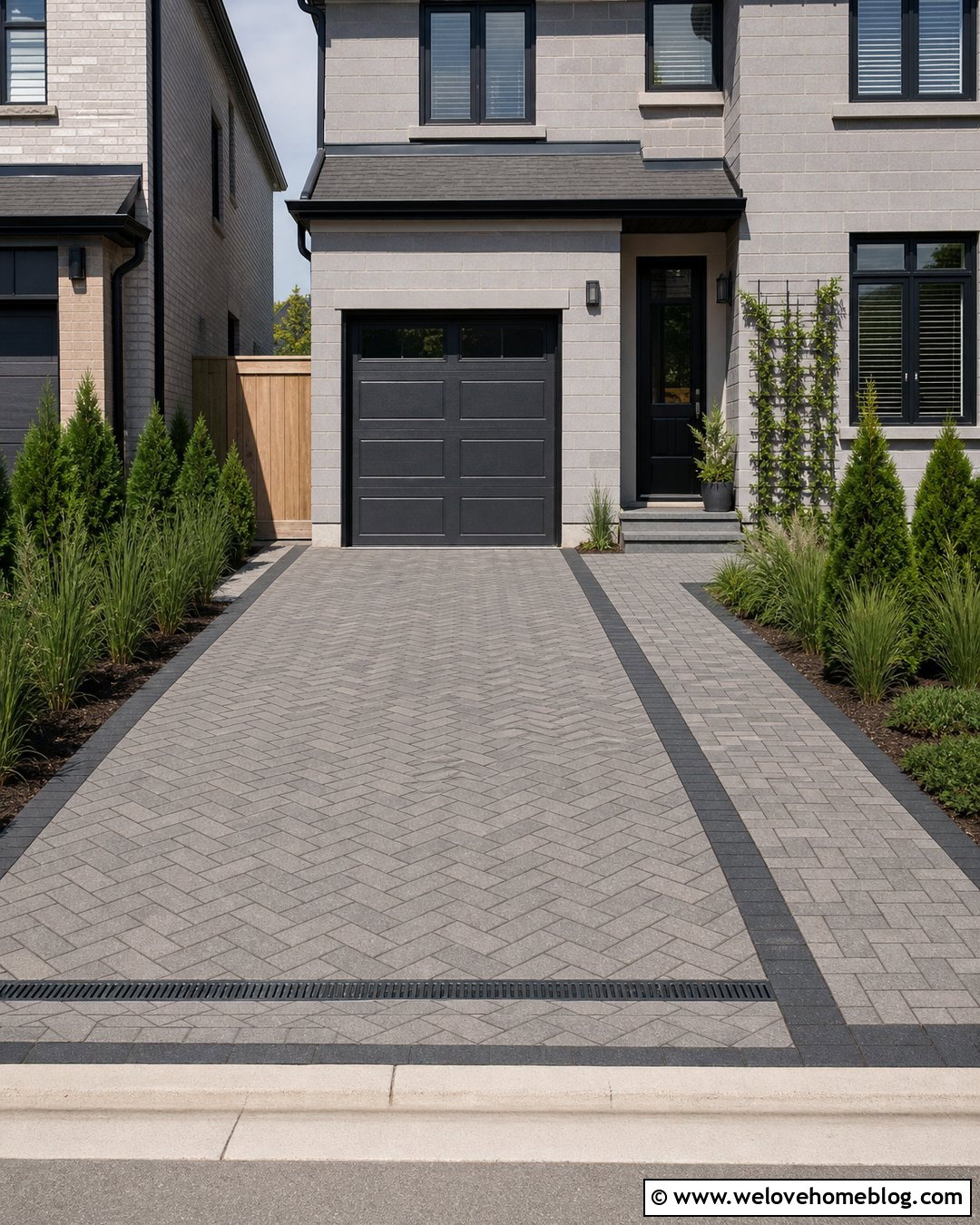
20. Pergola Estate Driveway Entrance
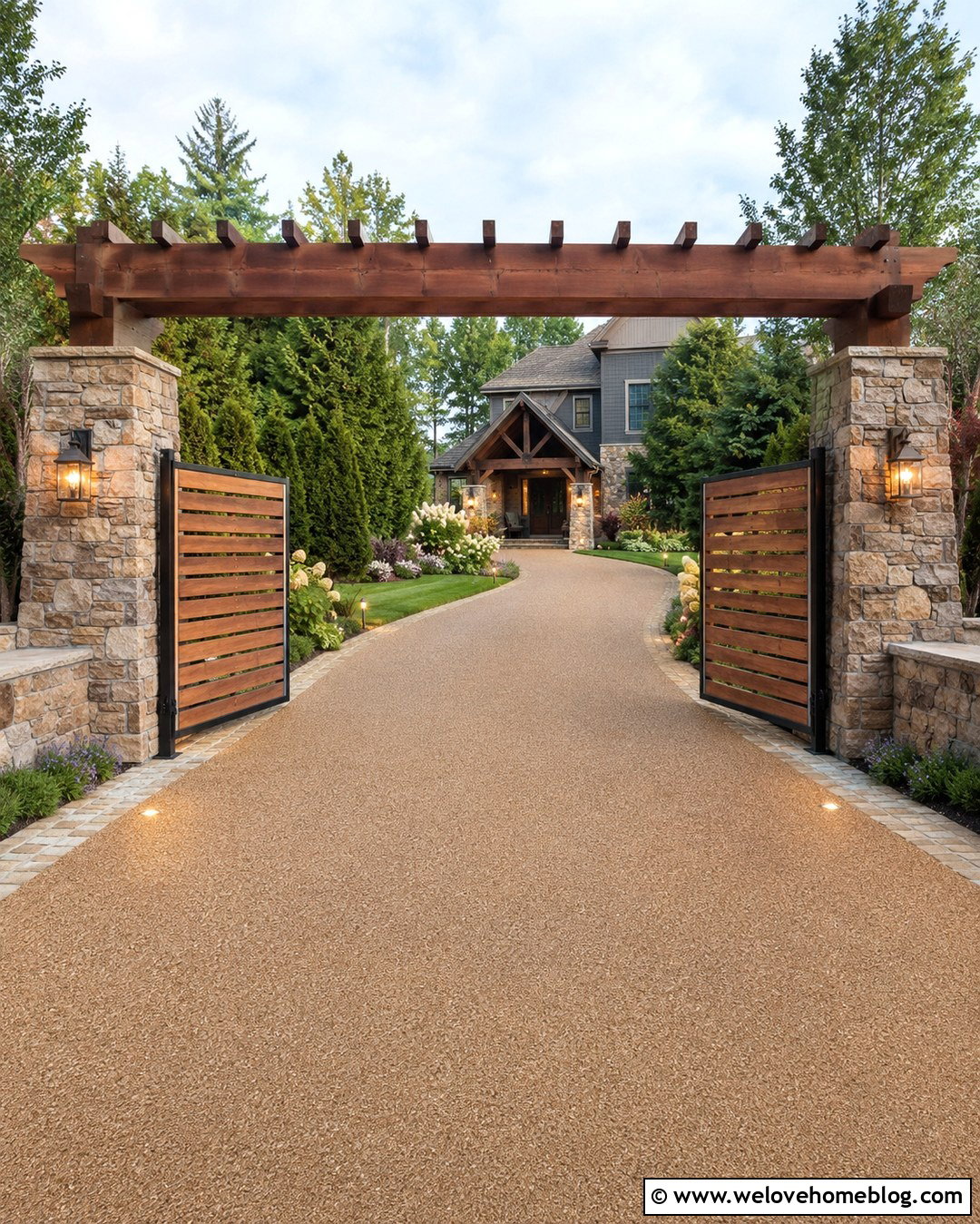
An overhead pergola can turn a driveway gate into an architectural gateway. Pair a straight tan resin-bound gravel driveway with stone pillars, a cedar pergola, and matching slatted wood gates supported by dark steel frames. The overhead structure should echo details from the home, such as exposed beams, timber siding, or a covered porch. Extend low stone walls outward and surround them with layered evergreens, flowering shrubs, and ornamental grasses. Keep climbing plants controlled so they do not interfere with gate hardware, lighting, or vehicle clearance. Integrated downlights can illuminate the threshold while remaining hidden within the beams. Pergola-topped gate designs create a strong sense of enclosure and arrival, but their height, foundations, proportions, and clearance should be planned for expected service and emergency vehicles. ()
Conclusion:
The most successful 20 Estate Driveway Entrance Ideas combine appearance with everyday function. Gates, pillars, paving, borders, lighting, and landscaping should look like parts of one plan rather than separate upgrades. Begin with the architectural style of the home, then select a driveway material and entrance structure that repeat its colors and textures. Allow generous room for turning, deliveries, drainage, gate movement, and safe road visibility. Use planting to soften hard surfaces, but keep mature sizes and maintenance needs in mind. Even an open entrance can feel impressive when it includes a defined apron, balanced pillars, and layered greenery. Thoughtful proportions and consistent materials will create a polished approach that remains attractive, practical, and welcoming for years.

Related posts:
Leave a Reply