
The best **25 Brick And Concrete Driveway Ideas** combine the clean strength of poured concrete with the warm color and detailed pattern of brick. This pairing can suit nearly any home, from a traditional Colonial to a simple ranch or sharp modern build. Brick can frame the driveway, mark parking zones, form decorative bands, or create a distinctive entrance apron. Meanwhile, concrete provides a practical main surface that keeps the overall design visually calm. Decorative concrete can also be colored, textured, scored, or stamped, while brick paving offers patterns such as running bond, basketweave, and herringbone. () Each combination below considers the full approach, including the driveway shape, border, landscaping, house exterior, and street-facing view. Explore these **25 Brick And Concrete Driveway Ideas**.
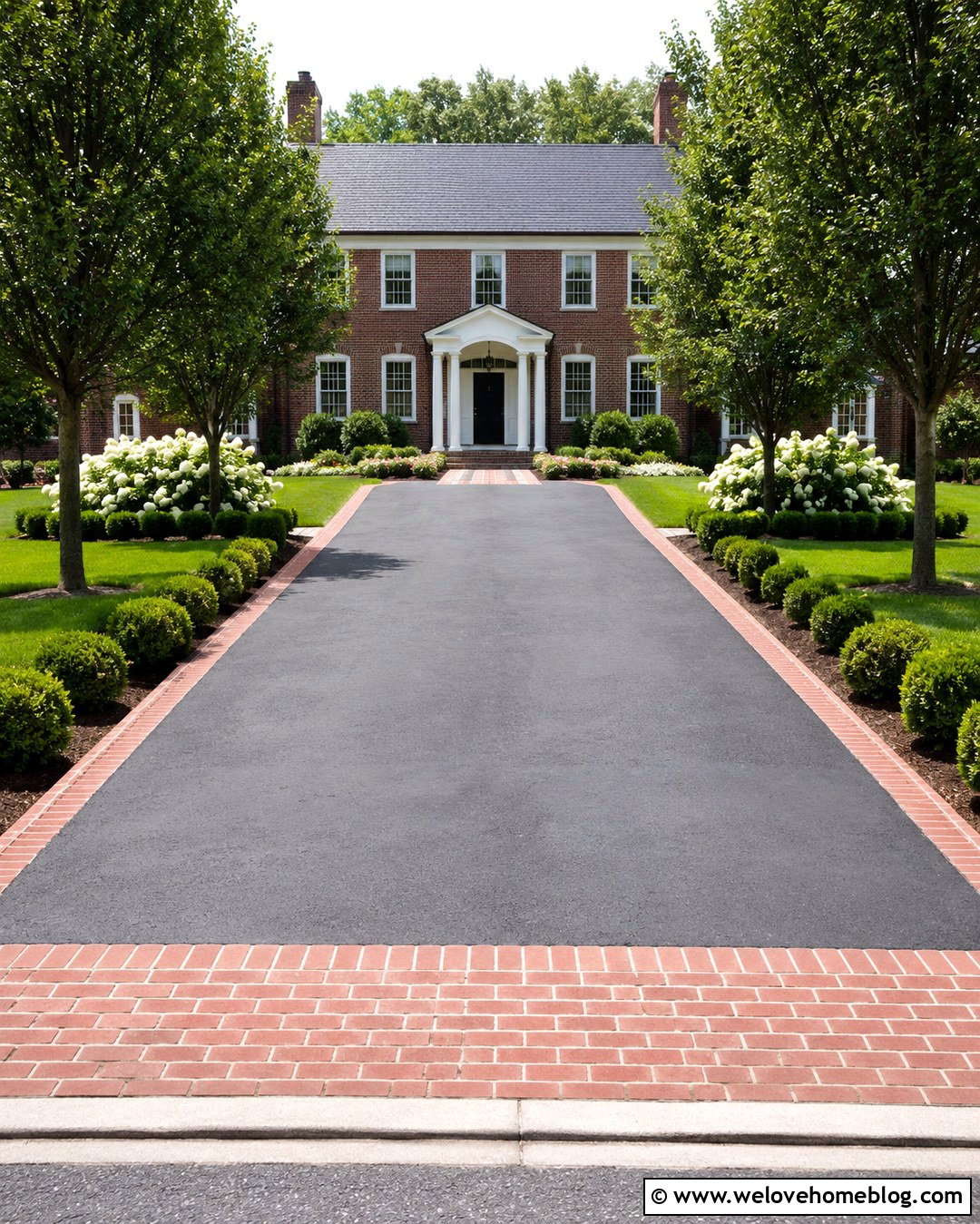
1. Concrete Driveway With Red Brick Border
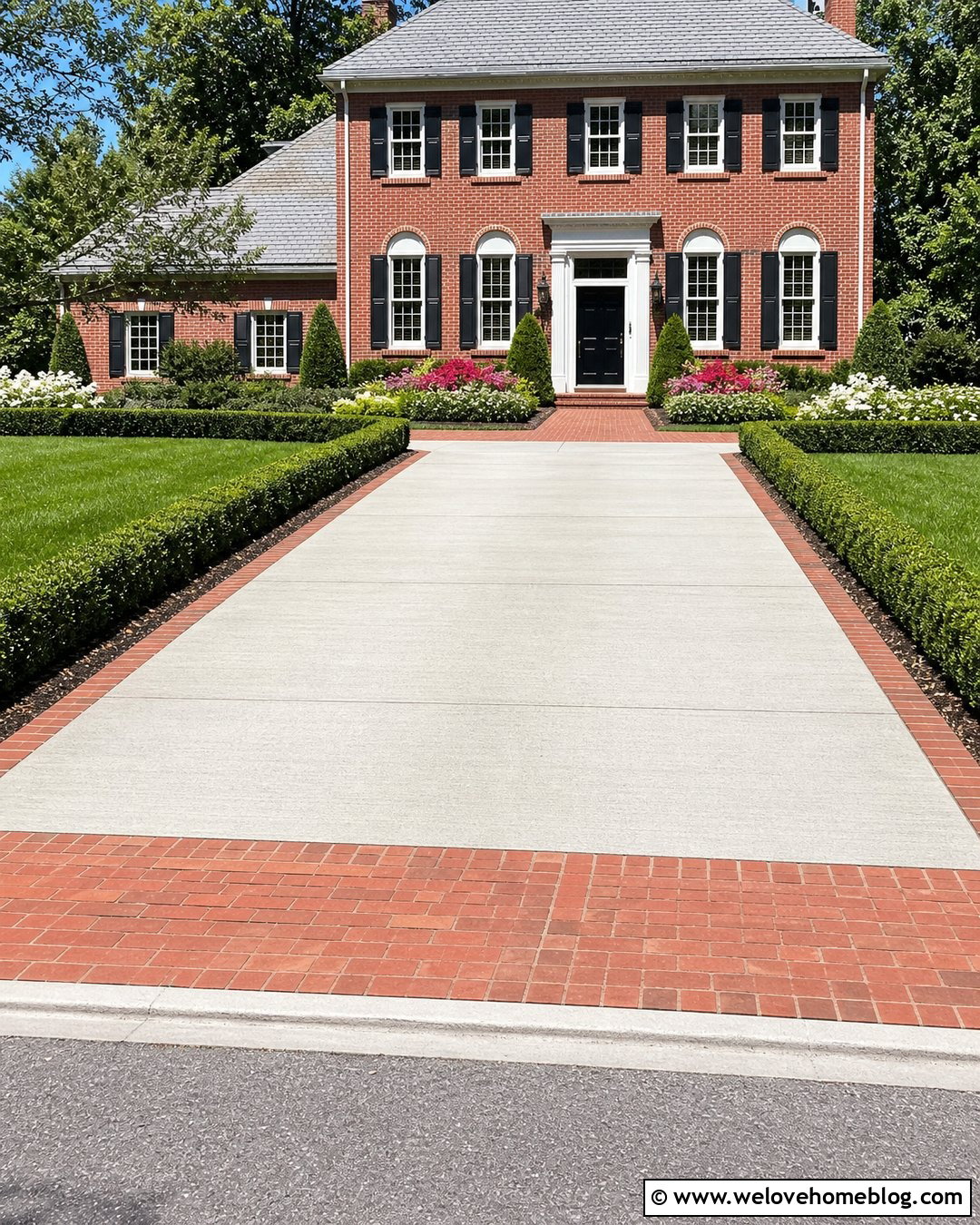
A light gray concrete driveway framed by red brick creates a classic look without making the front yard feel overly busy. Use a broom finish on the concrete for subtle texture, then install clay bricks in a straight soldier-course border along both edges. The strong color contrast defines the driveway and connects naturally with red brick siding, steps, or porch columns. For a complete design, continue the brick around the driveway apron and into the front walkway. Low boxwood hedges, green lawn, and simple flower beds soften the hard surfaces. This combination works especially well with Colonial, Cape Cod, and traditional ranch homes. Keep the brick color close to the home’s masonry so the driveway appears integrated rather than added later.
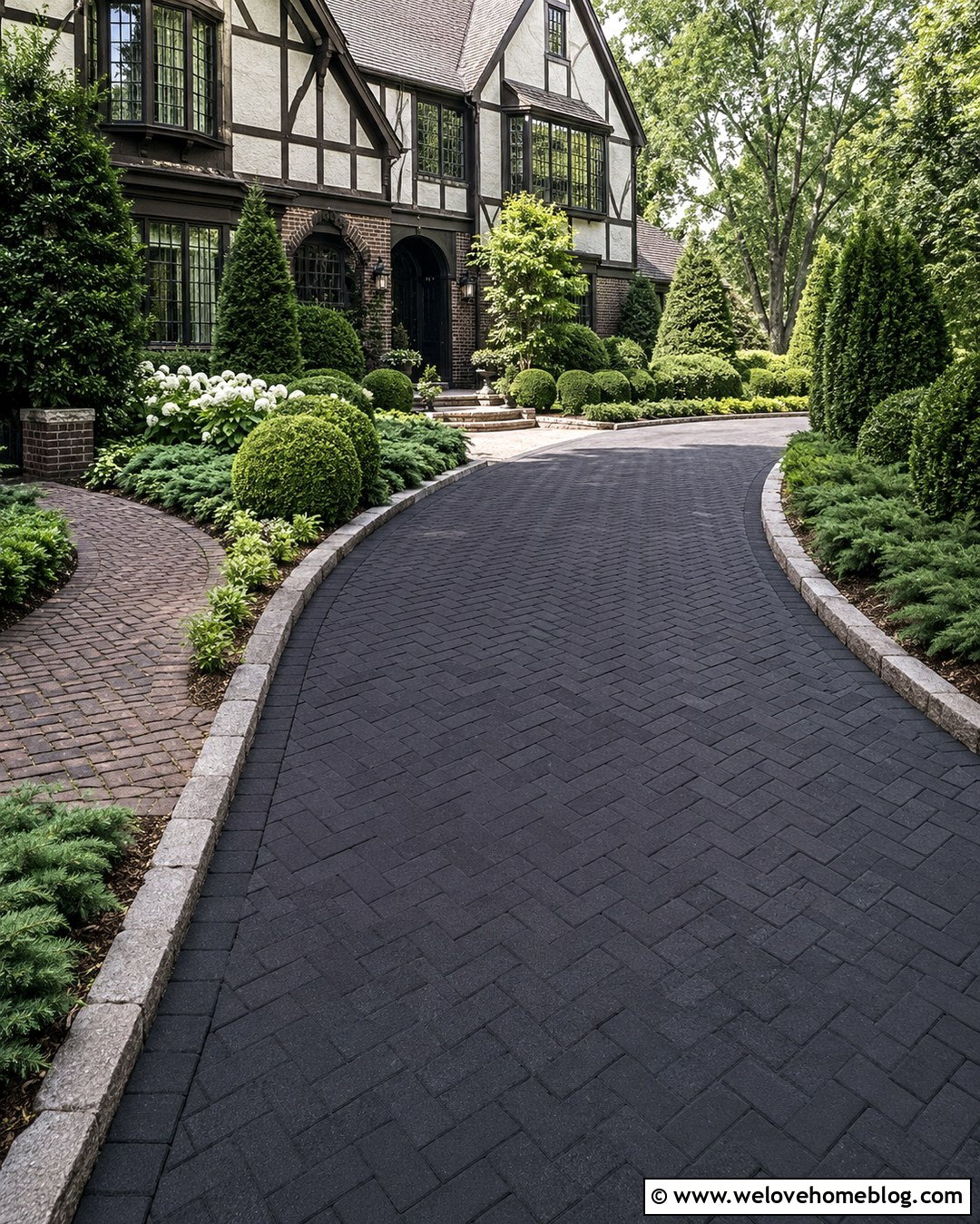
2. Concrete Driveway With Charcoal Brick Edging
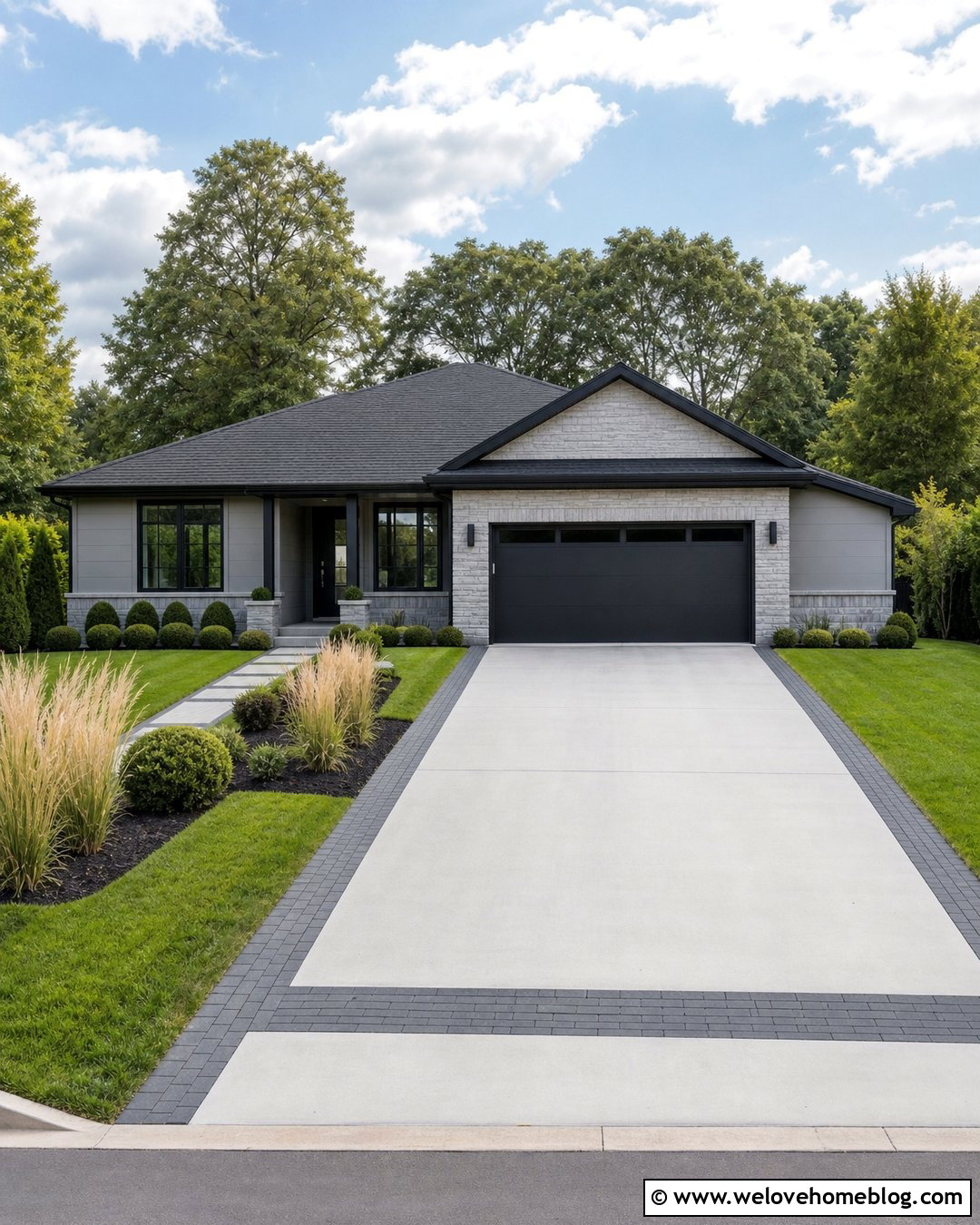
Crisp charcoal edging can make an ordinary concrete driveway look more tailored and contemporary. Start with smooth or lightly broom-finished pale gray concrete and add dark charcoal brick pavers around the entire perimeter. The darker border creates a clear frame while helping the broad concrete surface feel more intentional. A straight layout complements modern, transitional, and updated ranch homes with black windows or dark roofing. Repeat the charcoal brick in the walkway, porch steps, or planting-bed edging to establish continuity. Ornamental grasses, rounded evergreen shrubs, and a neatly cut lawn provide enough greenery without hiding the border. For better definition at the street, widen the brickwork across the apron into a two- or three-row band that visually announces the driveway entrance.
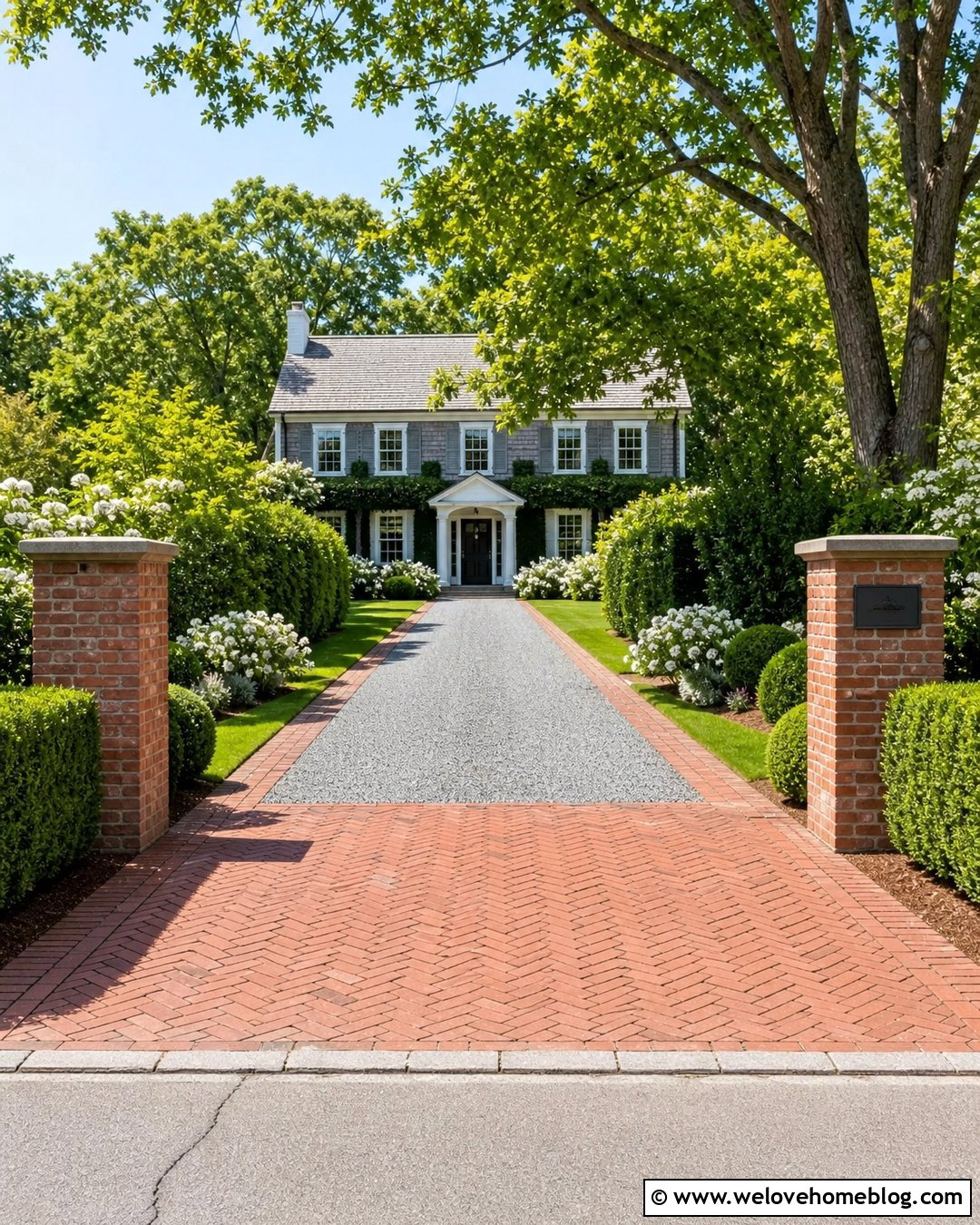
3. Concrete Driveway With Herringbone Brick Apron
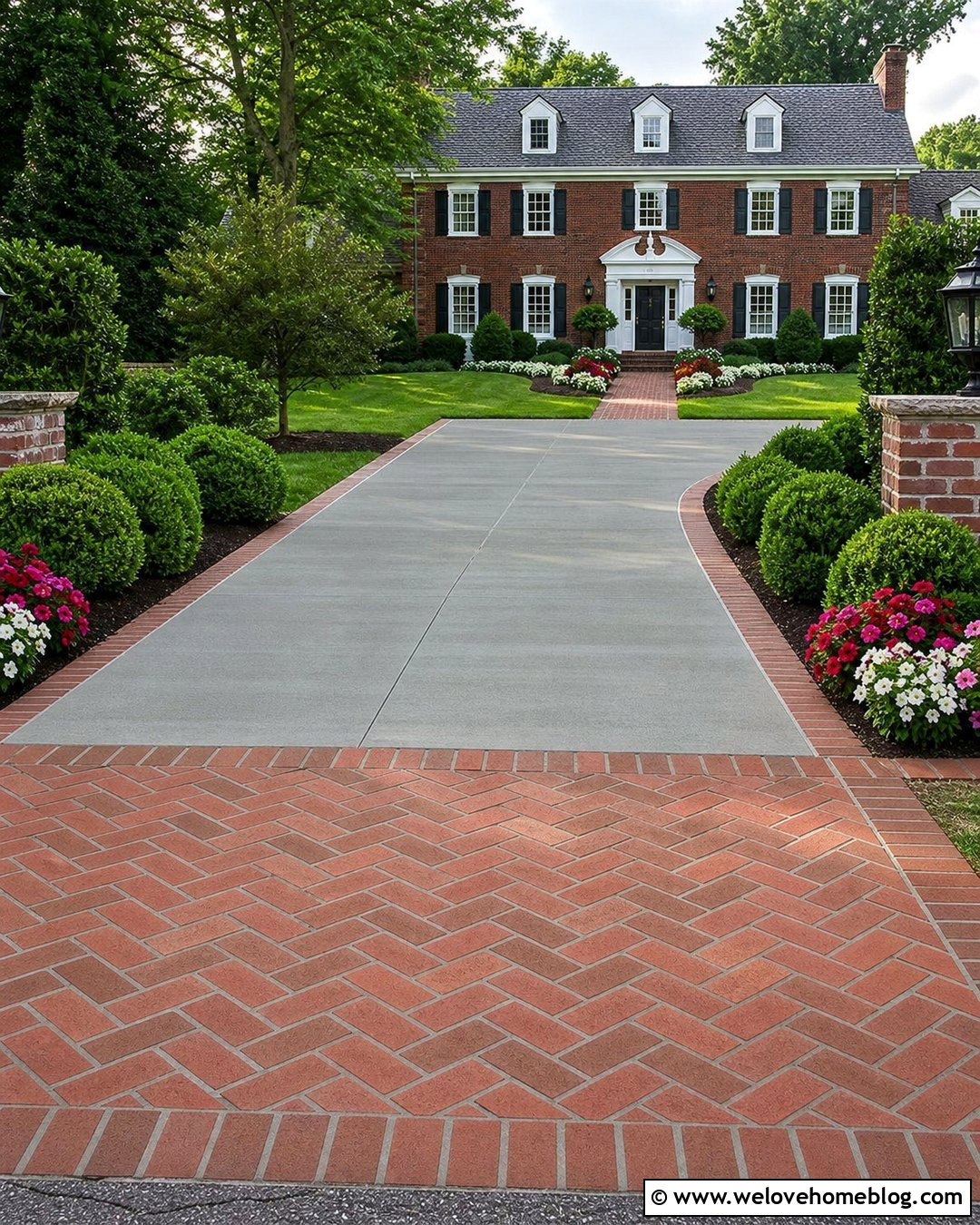
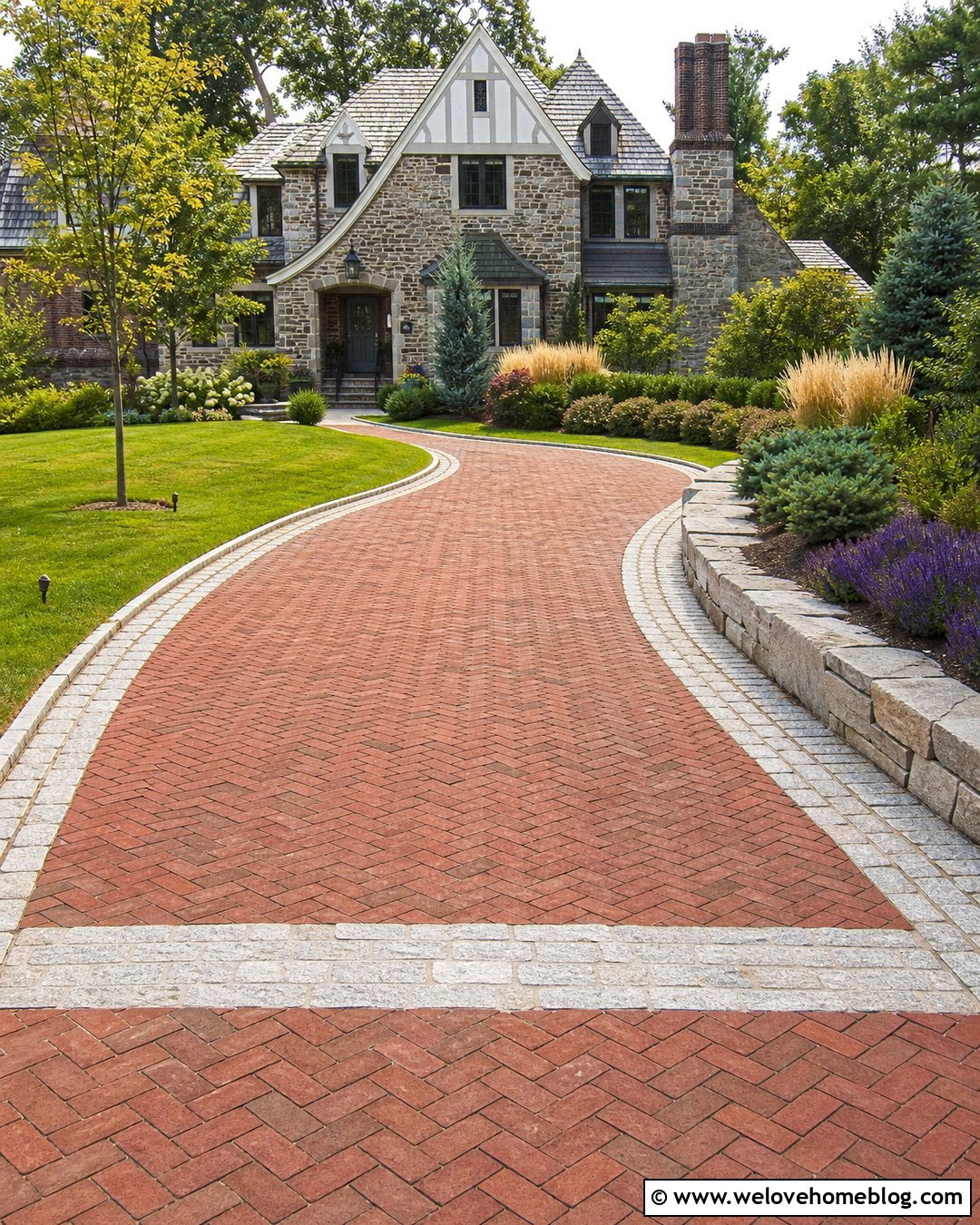
What if the most decorative part of the driveway appeared exactly where visitors first noticed it? A herringbone brick apron placed between the street and a poured concrete driveway creates an attractive transition and directs attention toward the house. Choose warm red or weathered brown clay brick, then frame the pattern with a straight brick soldier course. A medium-gray concrete field keeps the remaining surface practical and understated. The contrast is particularly effective on a long, straight driveway leading to a brick Colonial, Georgian, or craftsman home. Add symmetrical planting beds near the entrance, using clipped shrubs and seasonal flowers. Coordinate the apron with a brick walkway or front steps. Herringbone supplies movement, while the concrete prevents the overall composition from becoming visually overwhelming.
4. Concrete Driveway With Brick Ribbon Bands
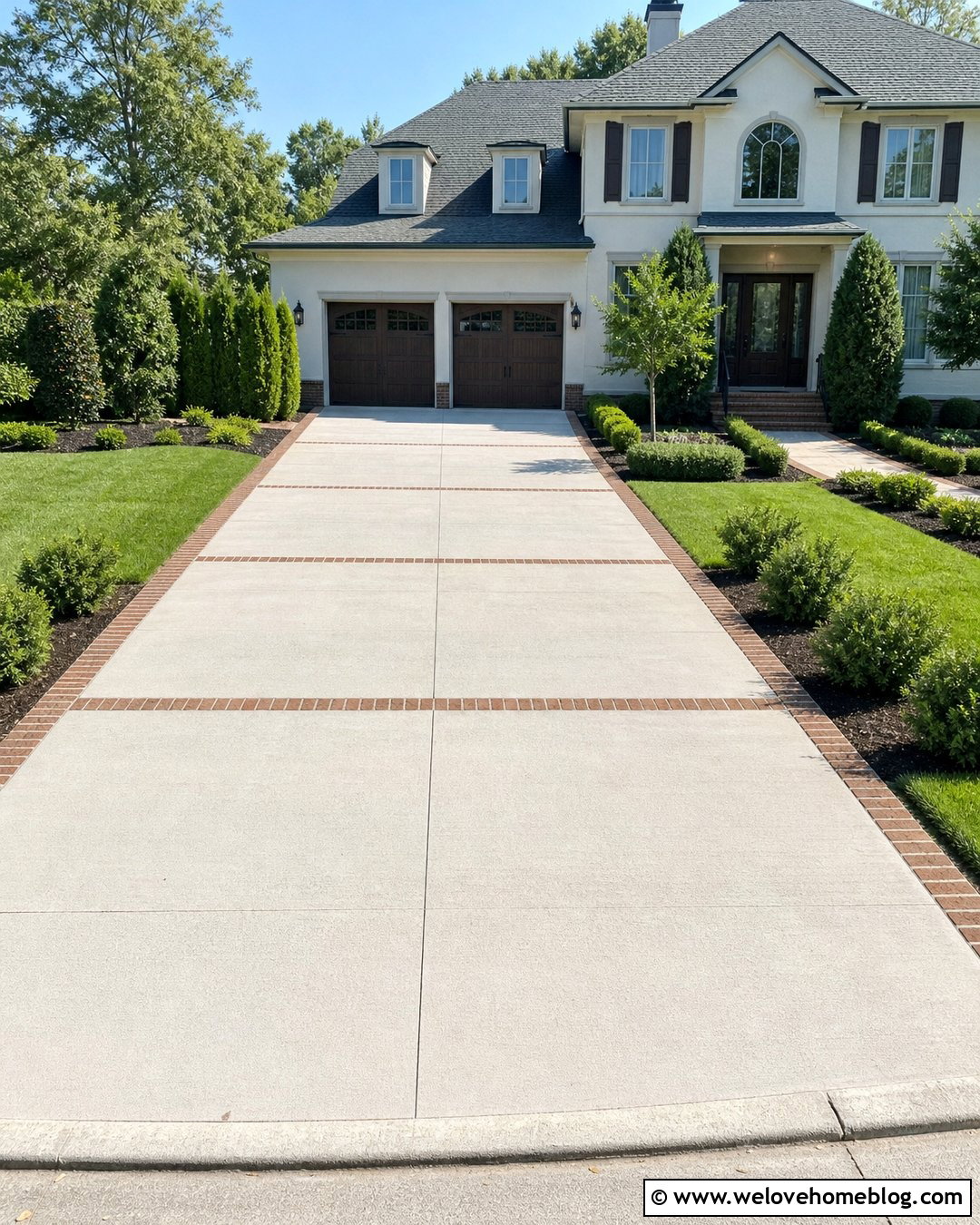
Brick ribbon bands divide a wide concrete driveway into smaller, more attractive sections. Instead of treating construction joints as random lines, coordinate the brick bands with the planned slab layout. A qualified installer can determine the correct joint and paving details for the site because contraction joints help regulate where movement-related cracking occurs. () Run narrow brick strips across the driveway at regular intervals, using deep red, brown, or charcoal pavers against light concrete. The bands can align with garage doors, walkway intersections, or changes in driveway width. This structured treatment suits traditional and transitional homes. Finish the complete look with brick-edged beds, compact evergreen shrubs, and matching porch accents. The result feels organized from the curb while adding color without covering the entire driveway in brick.
5. Concrete Driveway With Brick Center Strip
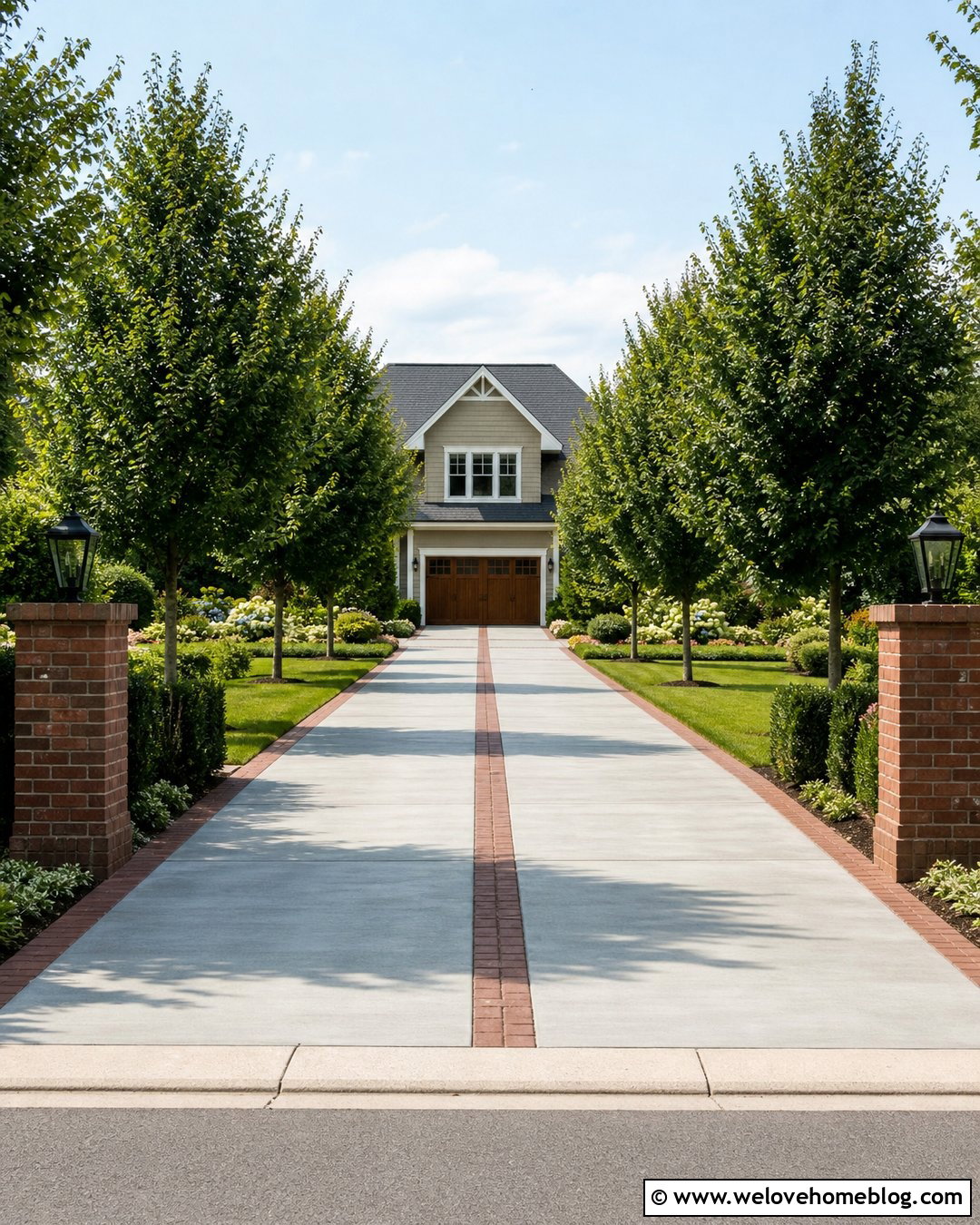
A brick center strip brings detail to a long driveway while emphasizing the route from the street to the garage. Pour concrete lanes on both sides and install a continuous band of clay brick pavers through the middle. Running bond creates a simple appearance, while herringbone adds stronger pattern and movement. The center strip should be wide enough to read clearly from the curb but narrow enough to preserve a generous concrete driving surface. This design looks especially balanced on symmetrical homes with centered garages or formal entrances. Brick pillars, low hedges, and evenly spaced trees can reinforce the central axis. Make sure the paving transition is properly supported and finished flush. When carefully installed, the strip becomes an attractive focal line rather than an awkward divider between concrete sections.
6. Concrete Slab Driveway With Brick Joints
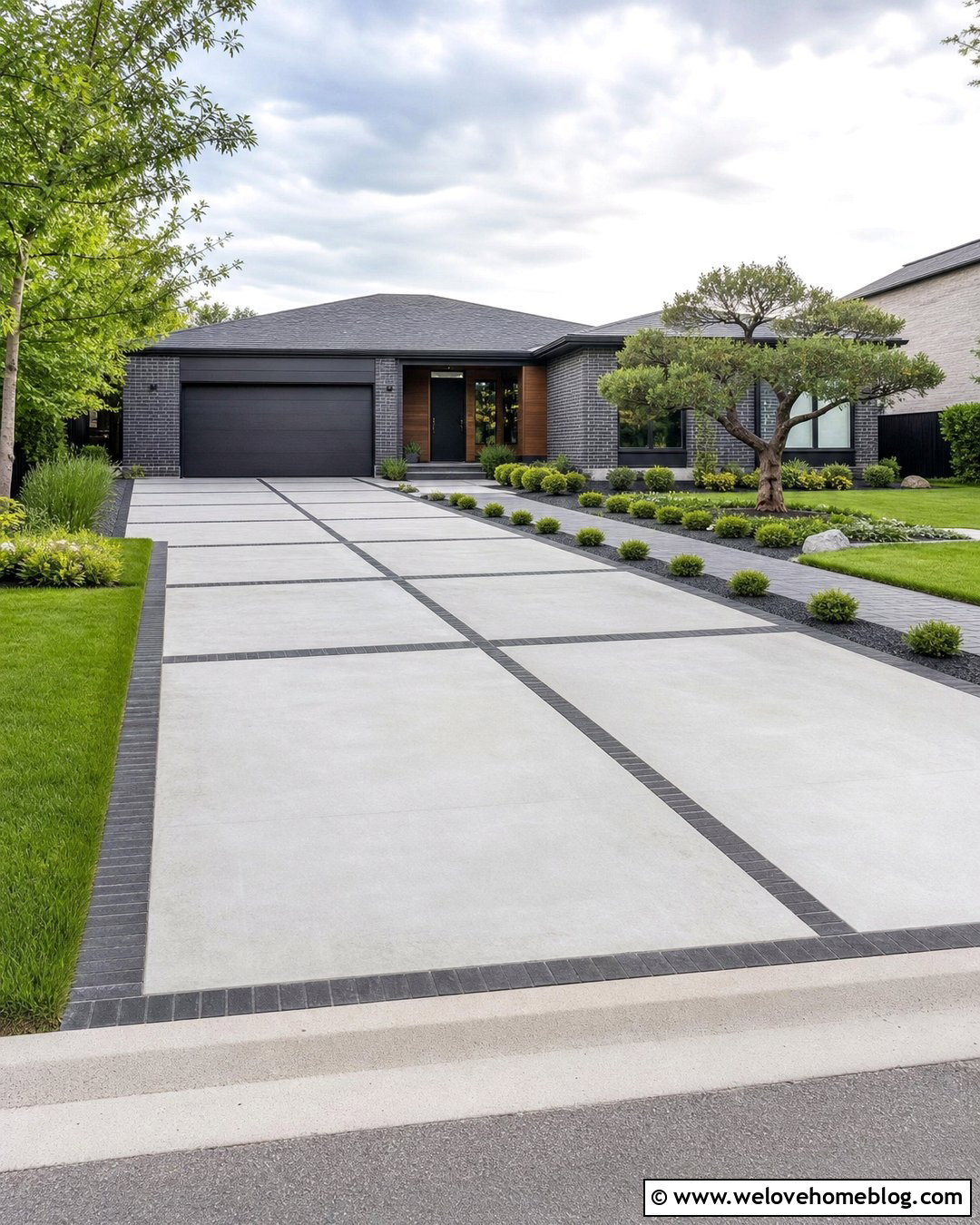
Large concrete slabs separated by narrow brick joints offer a geometric look that works beautifully with modern homes. Use square or rectangular concrete panels in a smooth light-gray finish, then place charcoal, brown, or muted red bricks between them. The masonry lines break up the broad surface and give the driveway a planned grid. Keep the layout straight and align the joints with architectural features such as garage doors, entry columns, and window divisions. Minimal landscaping works best around this design. Try clipped grasses, low evergreen masses, and one sculptural tree beside the approach. A matching brick path can branch from the driveway toward the entrance. Because decorative inserts and structural joints serve different purposes, ask the concrete contractor to coordinate both rather than assuming the brick lines can replace required jointing.
7. Curved Concrete Driveway With Brick Border
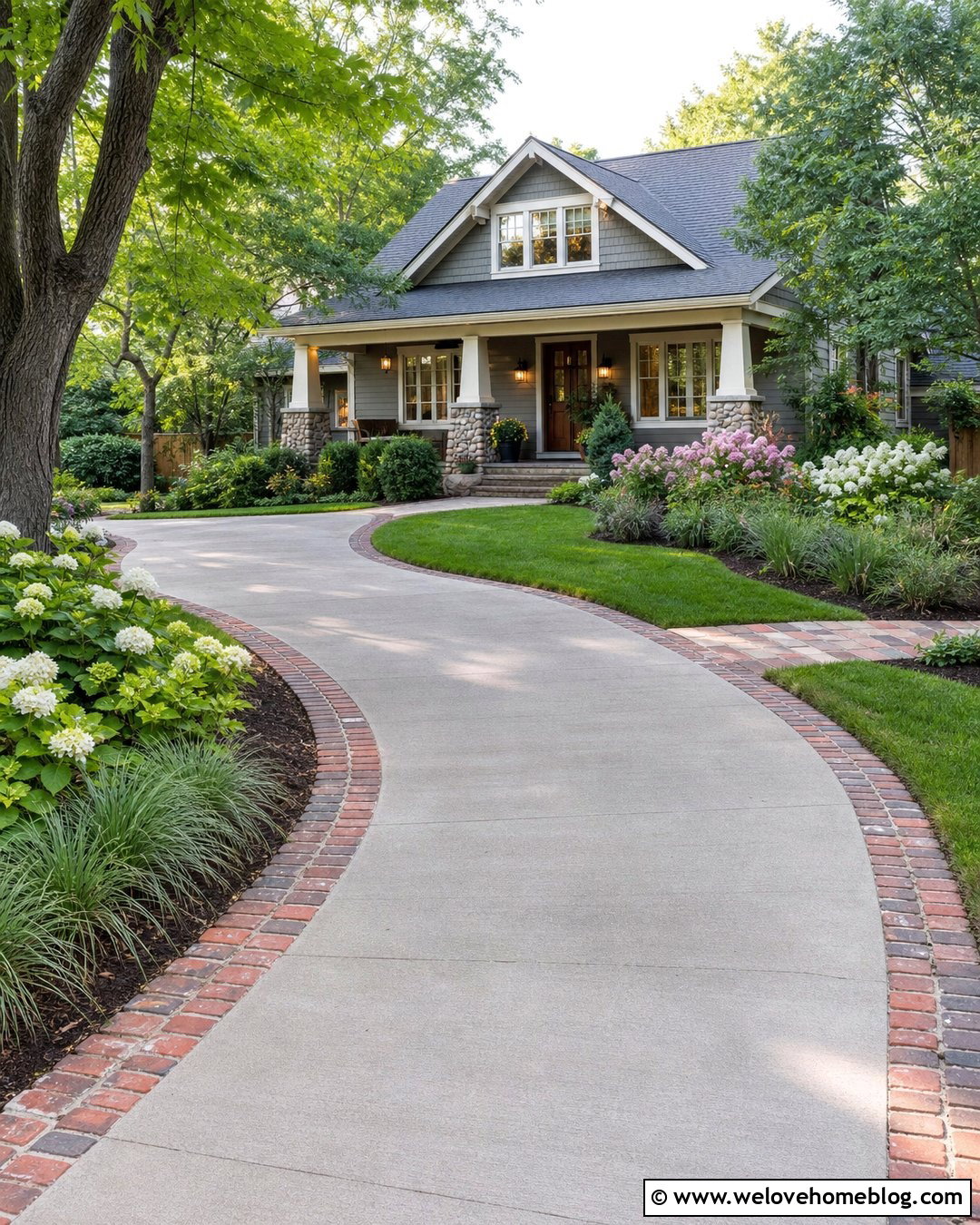
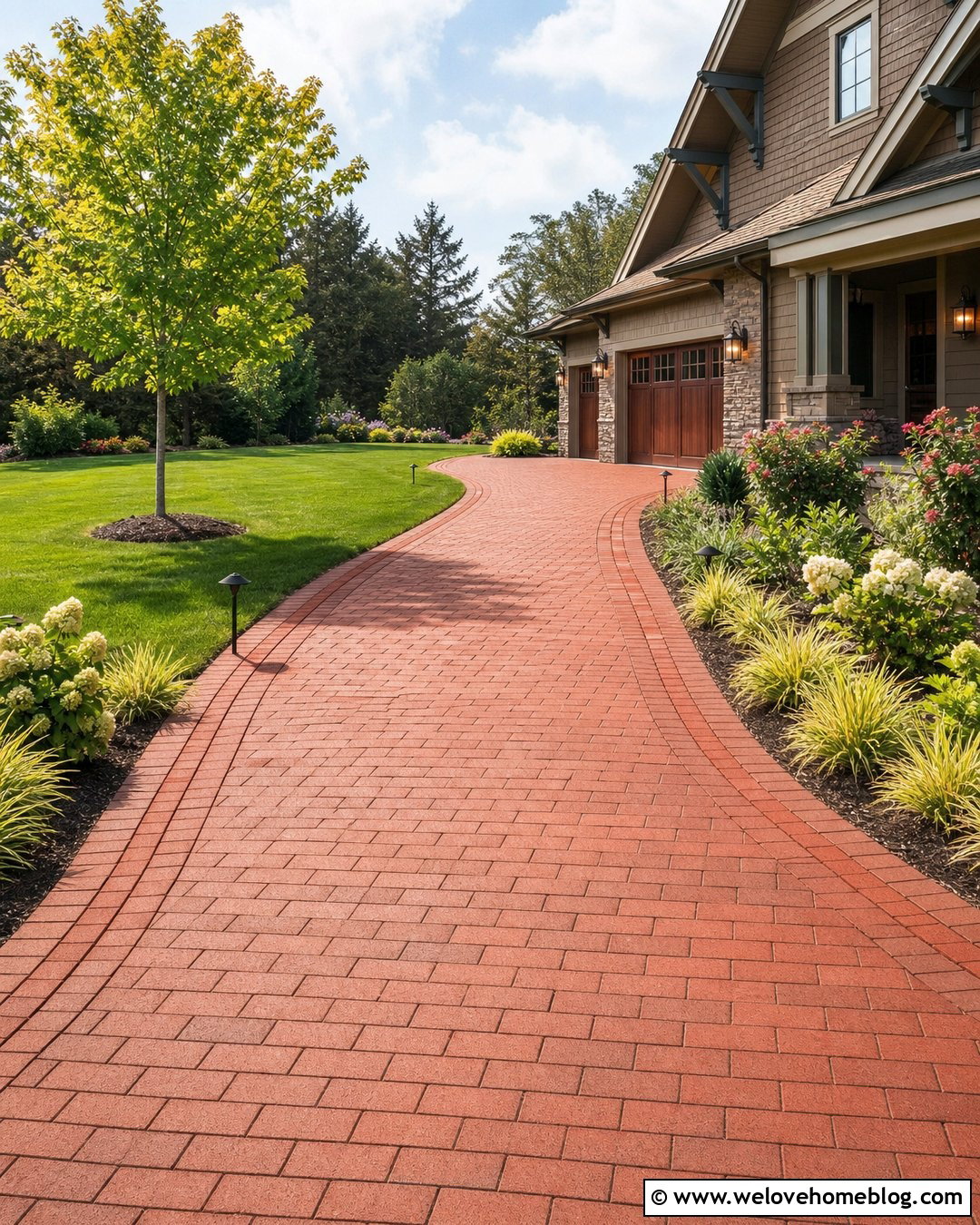
A sweeping driveway feels more polished when brick edging clearly traces every curve. Select softly colored concrete in warm gray, sand, or taupe and frame it with flexible rows of rectangular brick pavers. Smaller units are easier to arrange around bends without creating distracting gaps. The brick border should flow continuously from the street entrance to the garage or covered parking area. This complete design suits craftsman homes, cottages, and properties with mature front-yard trees. Layer the landscaping along the outside curve with groundcover, flowering shrubs, and ornamental grasses. Keep plants lower near the street to preserve visibility. On the inside curve, a broad lawn or planted island can balance the paving. The finished driveway should appear to follow the land naturally instead of cutting rigidly across it.
8. Circular Concrete Driveway With Brick Island Border
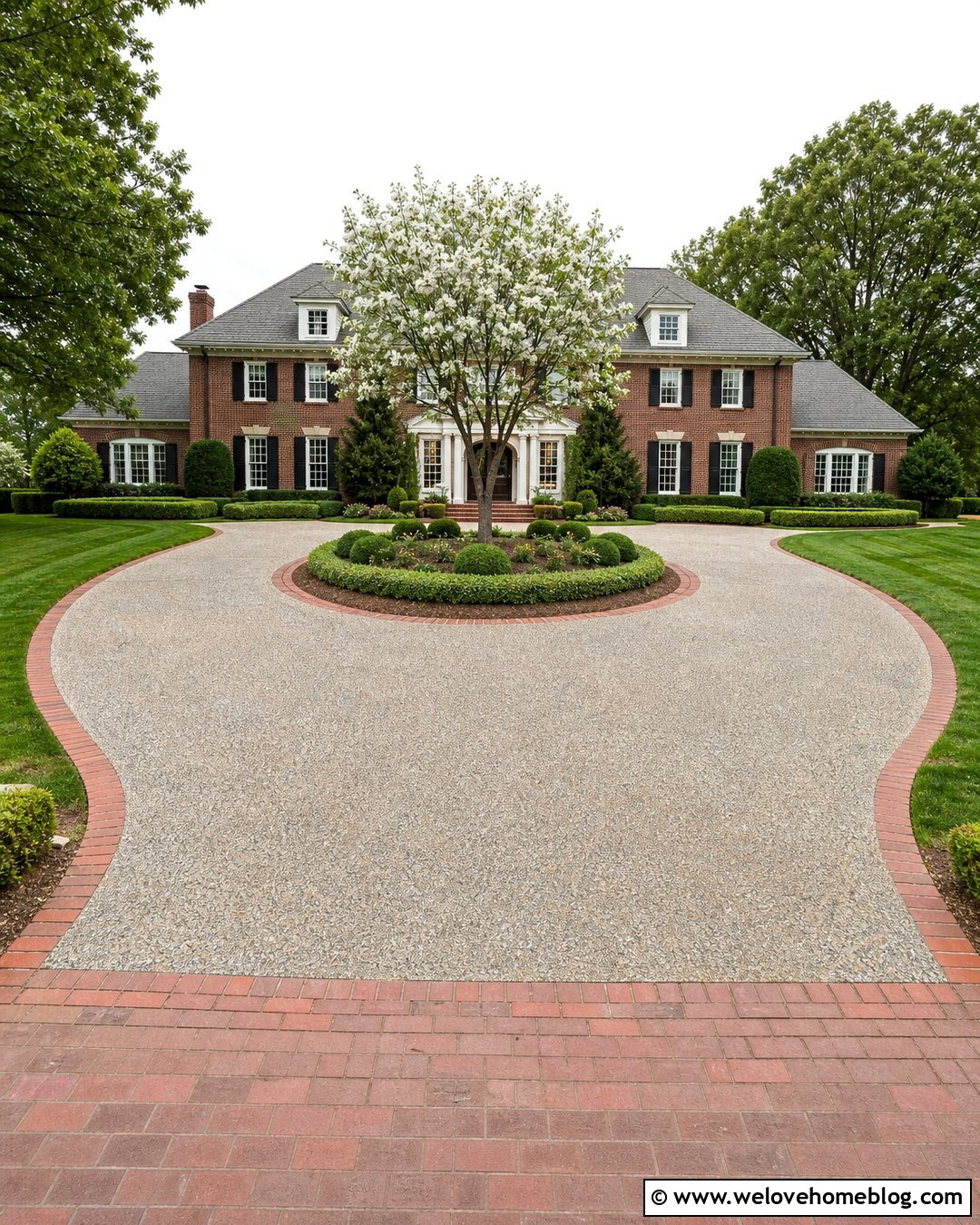
A circular concrete driveway becomes a strong front-yard feature when brick defines the center island. Use brushed or exposed-aggregate concrete for the main loop and install a two- or three-row brick border around the interior planting bed. Repeat the brick at the outer edge or entrance apron for a coordinated finish. Inside the island, choose a small ornamental tree surrounded by low shrubs and seasonal color that will not obstruct the house. This layout works particularly well in front of Colonial, Mediterranean, and larger traditional homes. The circular route should remain broad and uncluttered so vehicles can move around it comfortably. Match the brick to exterior chimneys, columns, or steps. From the curb, the island, paving, and facade will read as one symmetrical, welcoming composition.
9. Concrete Ribbon Driveway With Brick Infill
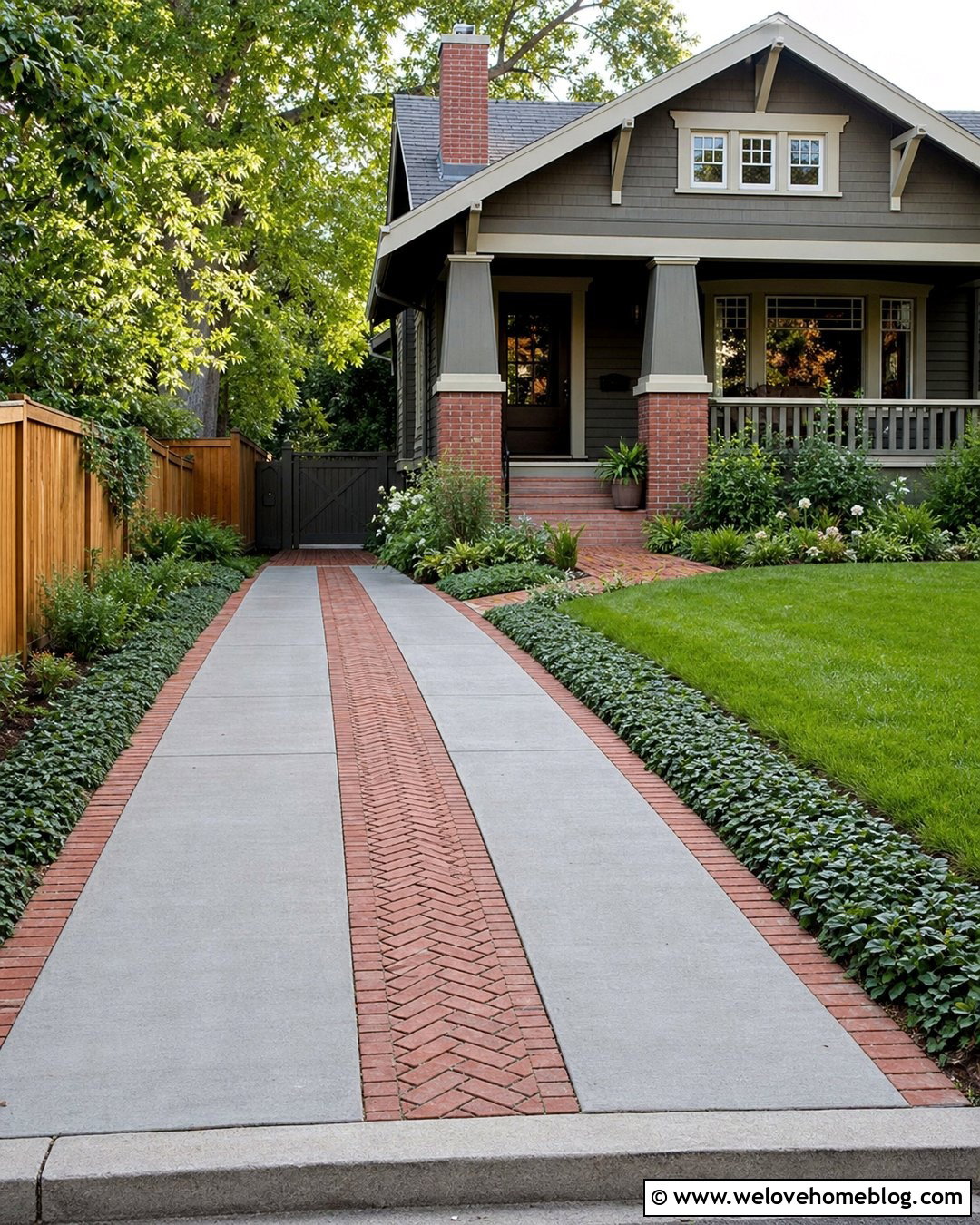
A ribbon driveway uses two concrete wheel tracks instead of one solid paved surface. Filling the center with brick adds texture while keeping the layout structured. Choose plain gray concrete for the tracks and install clay brick pavers between them in running bond or basketweave. Brick can also form narrow outer borders, giving the entire driveway a finished edge. This approach fits bungalows, cottages, and restored craftsman homes where a full-width slab might look too heavy. Use creeping groundcover beside the ribbons, but avoid placing loose soil or spreading plants where tires could damage them. Continue the brick center toward a matching walkway or small parking area. Accurate measurements are important because the wheel tracks must suit expected vehicles while preserving the visual balance of the design.
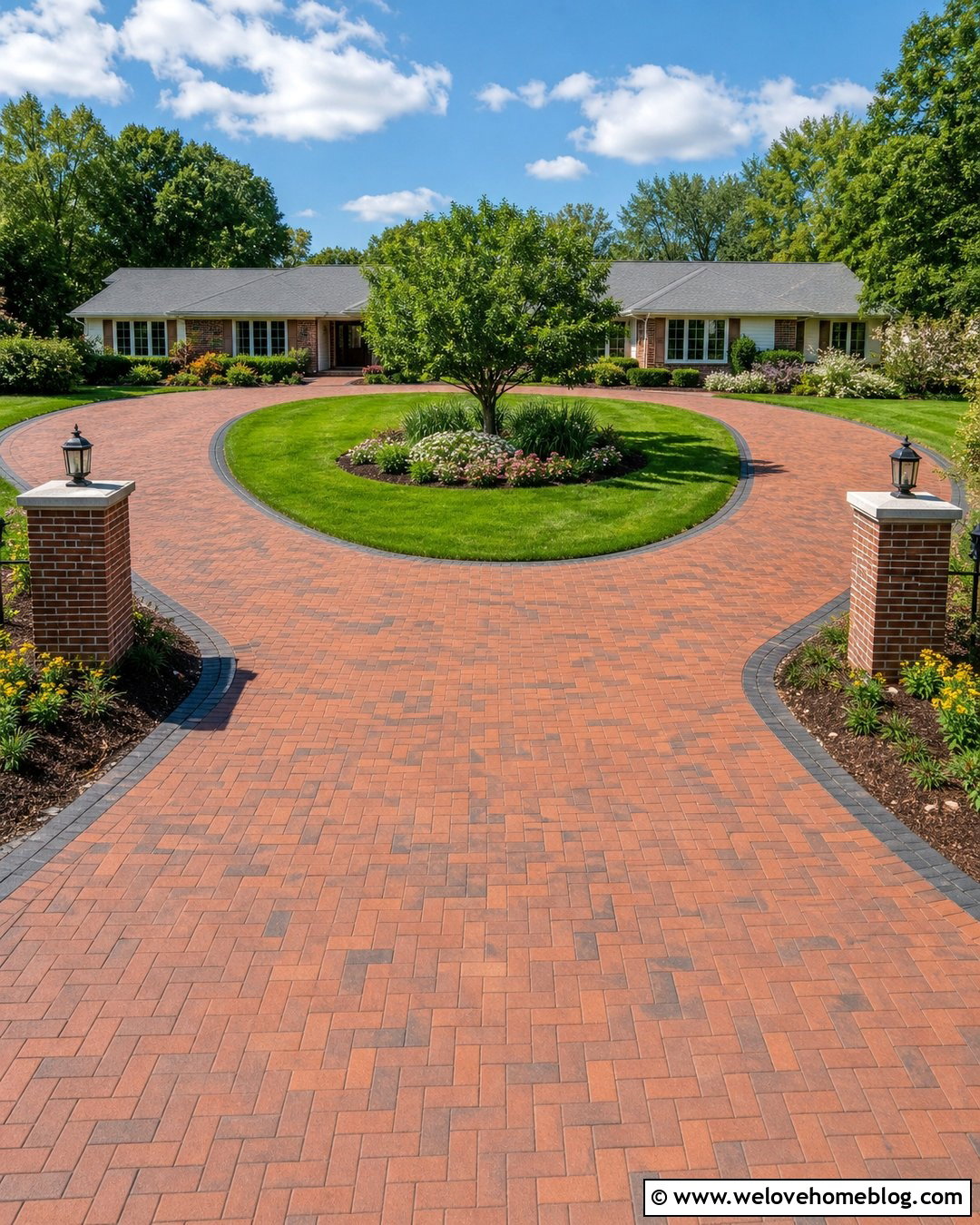
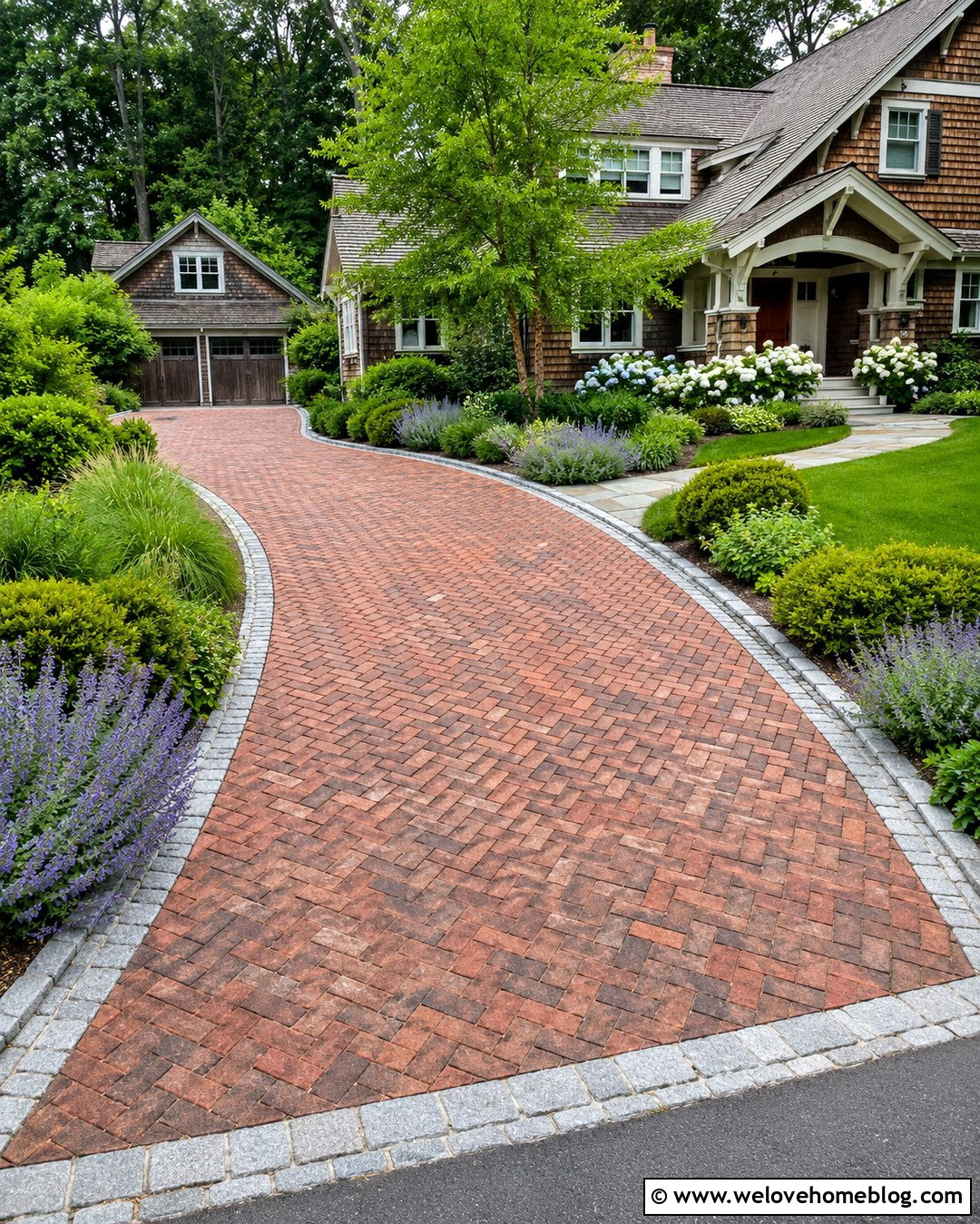
10. Exposed Aggregate Concrete Driveway With Brick Border
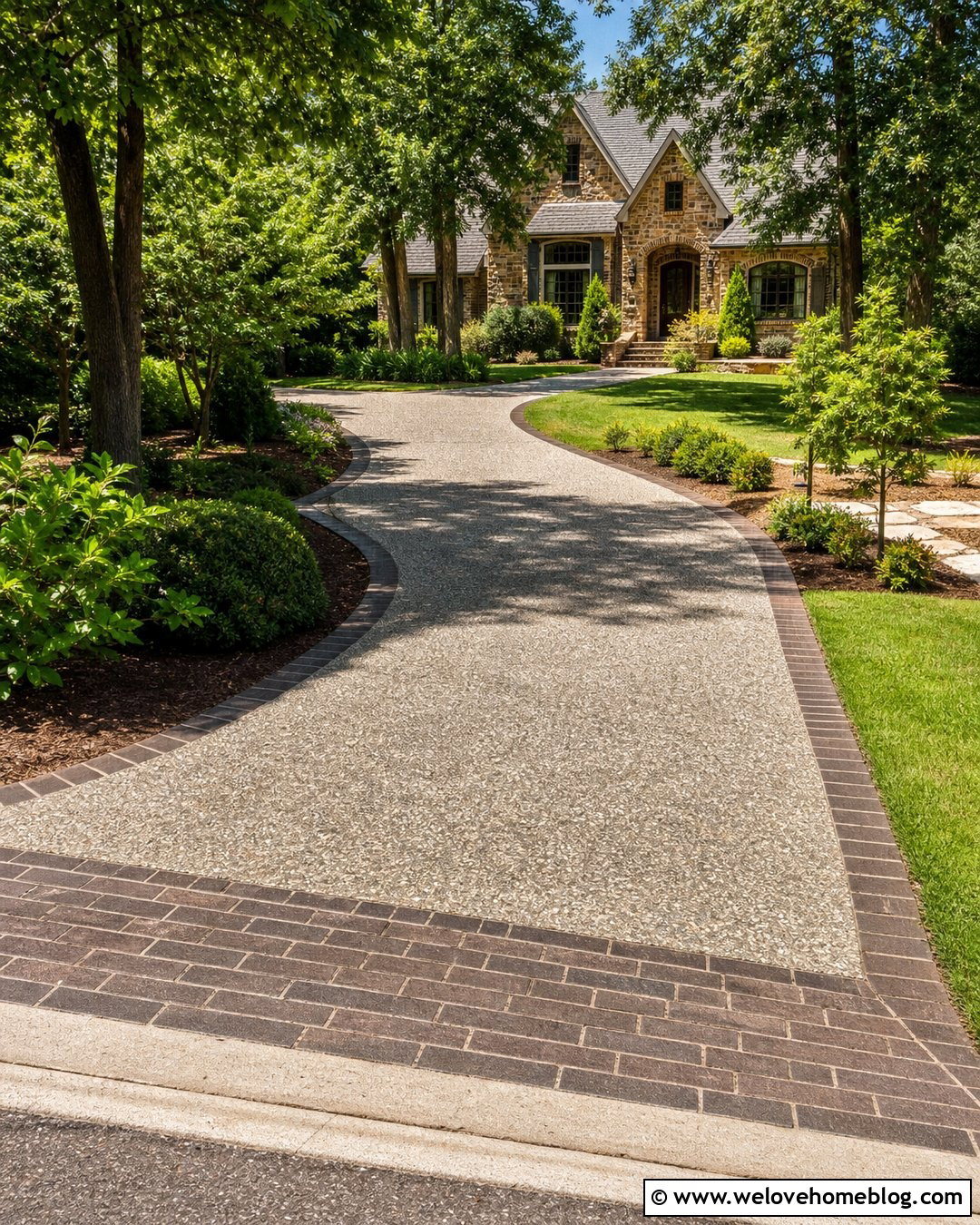
Exposed-aggregate concrete brings natural texture to the driveway, while brick edging supplies warmth and definition. Choose an aggregate blend containing gray, tan, and cream stones, then frame it with brown or deep red brick pavers. The slightly varied concrete surface works well on broad or gently curved approaches because it does not appear as stark as plain concrete. A brick apron at the street can strengthen the entrance and protect the visual continuity of the border. Pair this combination with a stone-and-brick craftsman house, traditional ranch, or wooded suburban property. Use mulch beds, shade-tolerant shrubs, and mature trees to reinforce the natural palette. Before installation, view a full-size sample because aggregate color and exposure can noticeably affect how the driveway coordinates with the home.
11. Stamped Concrete Driveway With Real Brick Edging
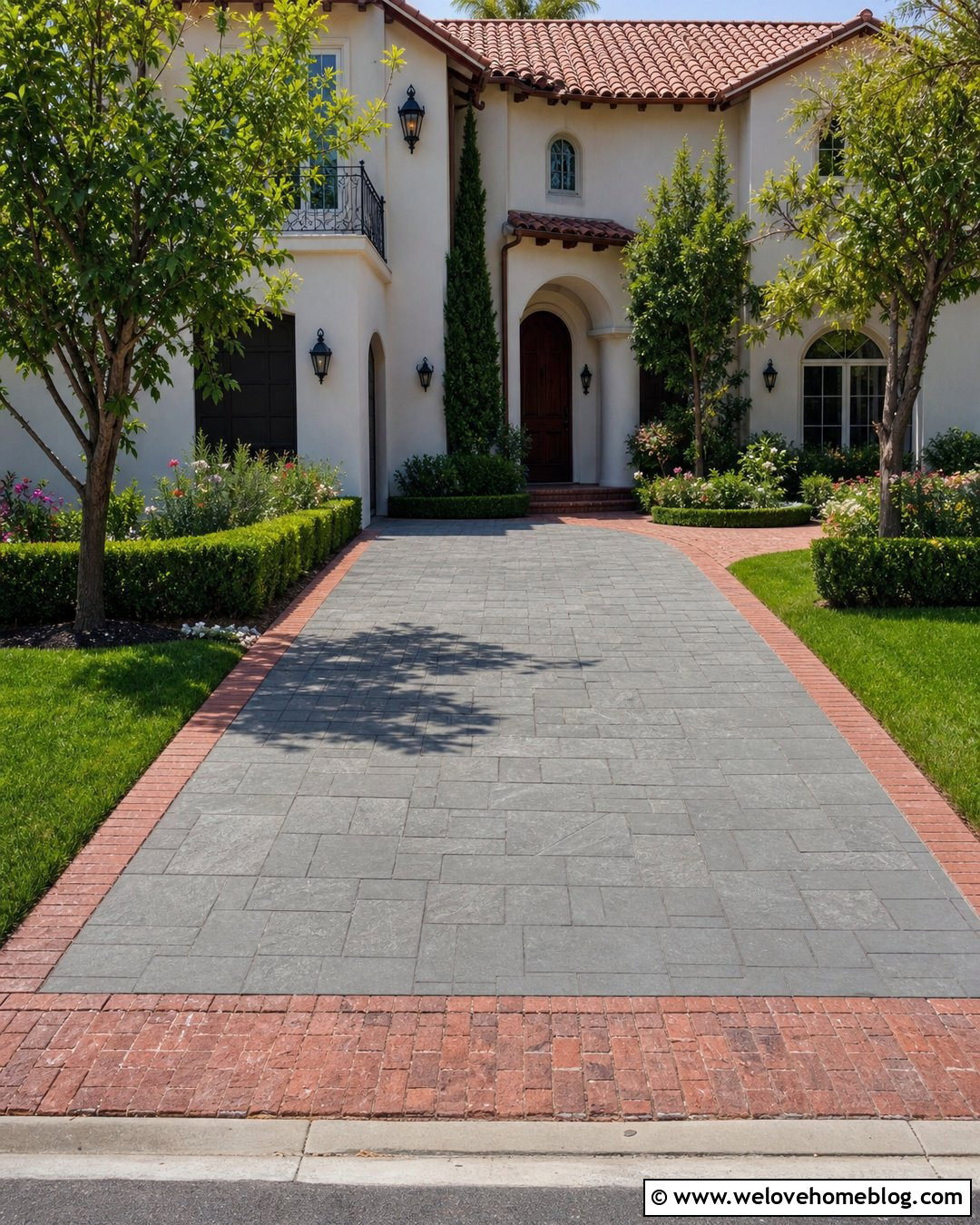
Stamped concrete and real brick can create a layered driveway without requiring brick across the entire surface. Select a subtle ashlar slate or seamless stone texture for the concrete, using warm gray or beige coloring. Then frame the driveway with genuine clay brick in a simple running bond. Stamping can reproduce stone, slate, cobblestone, and brick-like textures, while the real masonry edge creates a clear material contrast. () This combination complements traditional, Mediterranean, and transitional homes. Avoid choosing a concrete pattern that competes heavily with the brick. One detailed material and one quieter material usually look more balanced. Add restrained landscaping with low hedges, flowering perennials, and a matching brick walkway. A brick border around the apron completes the driveway from every street-facing angle.
12. White Concrete Driveway With Reclaimed Brick Border
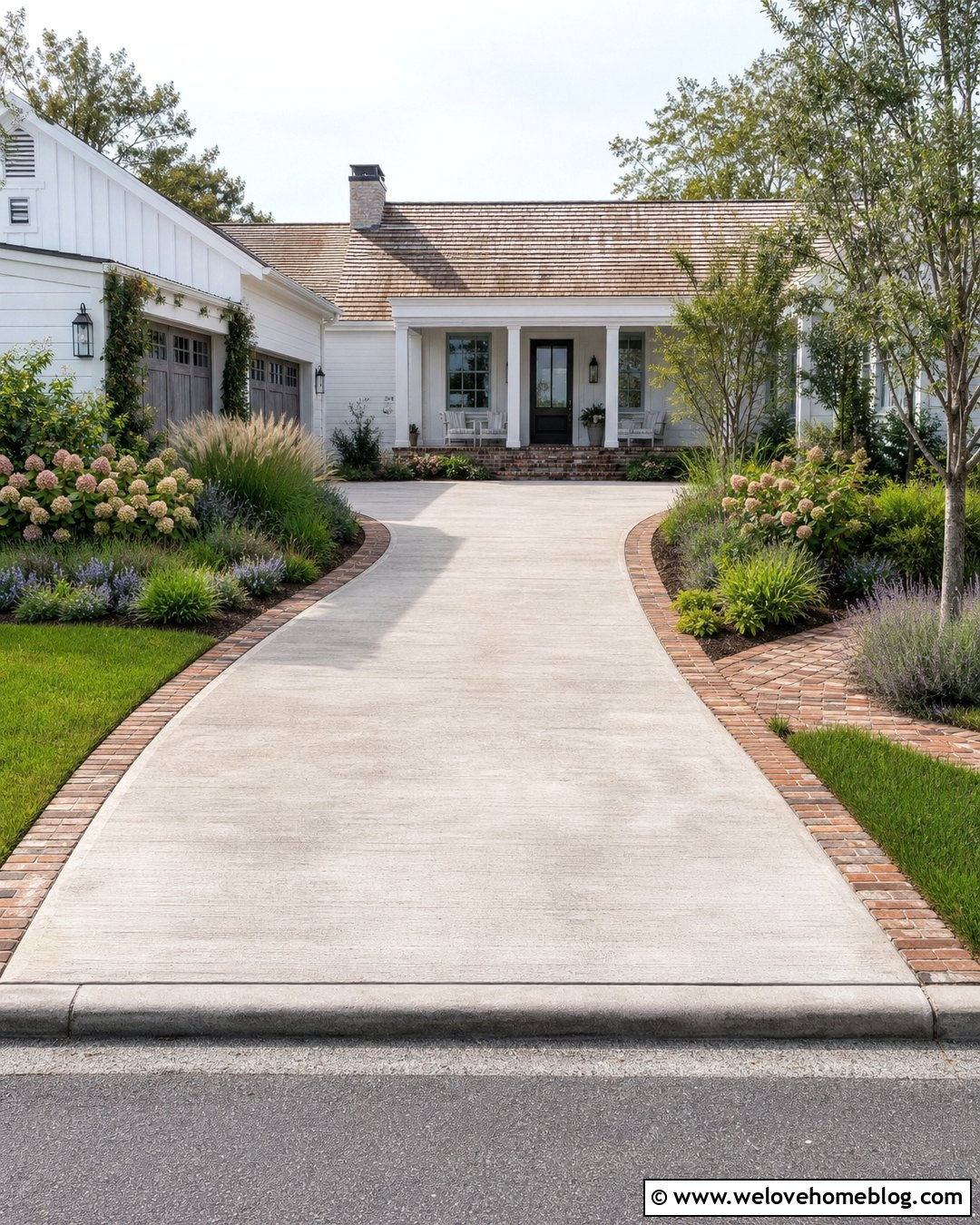
Bright concrete paired with reclaimed brick feels fresh, relaxed, and full of character. Use an off-white or pale cream concrete finish rather than stark white, which can create glare and reveal dirt quickly. Border it with salvaged clay bricks in mixed red, orange, and brown tones. Slight color variation gives the edging an established appearance that suits cottages, coastal homes, and renovated farmhouses. Keep the driveway straight or gently curved, and repeat the reclaimed brick in a walkway or small porch landing. Soft landscaping supports the weathered look. Lavender, ornamental grasses, hydrangeas, and loosely clipped shrubs are suitable choices. Ask the installer to sort damaged units and use bricks rated for exterior paving conditions. The result should feel collected and cohesive, not uneven or improvised.
13. Tan Concrete Driveway With Brown Brick Bands
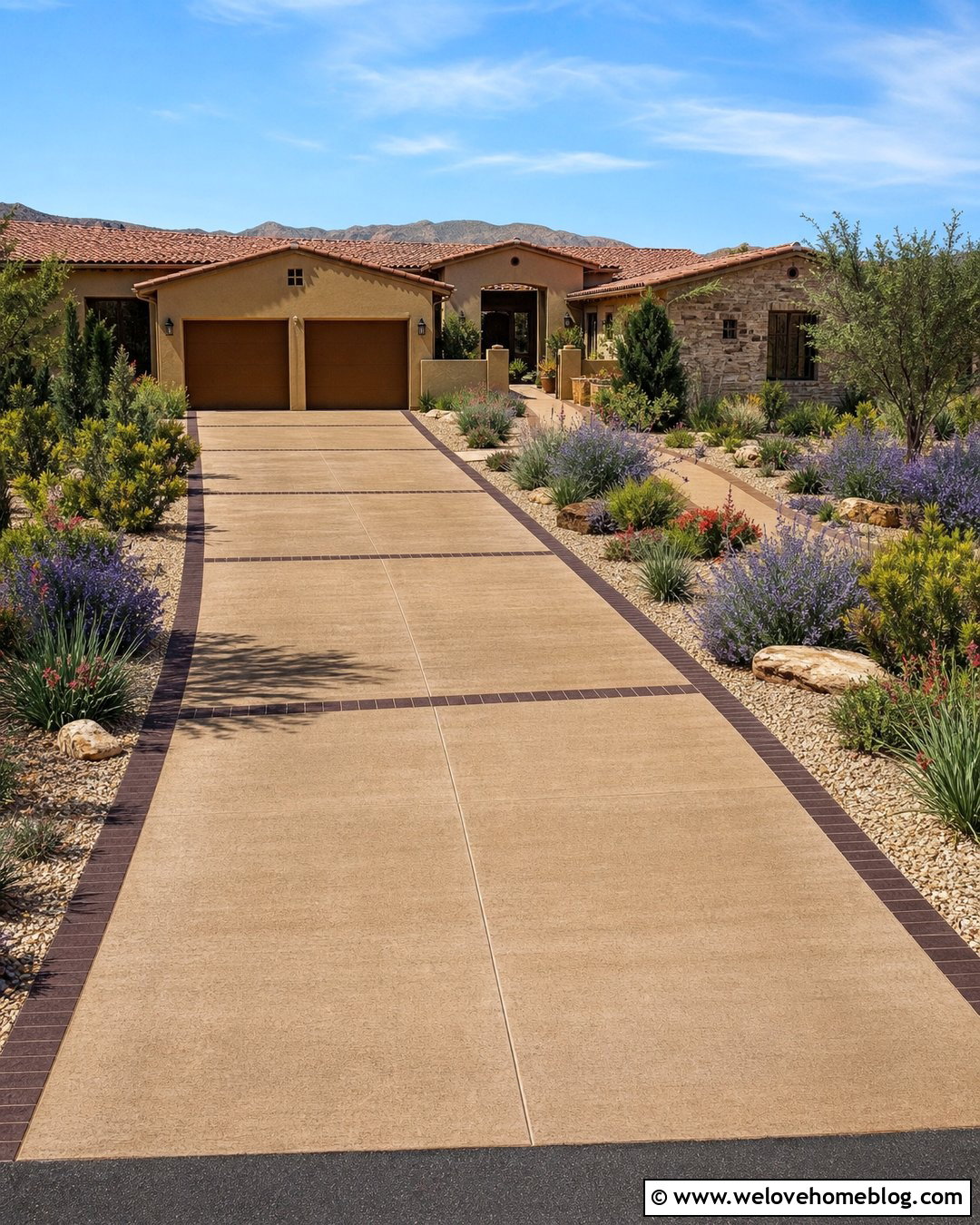
Warm tan concrete can blend more comfortably with beige siding, brown roofing, and earthy stonework than standard cool gray. Add chocolate or medium-brown brick bands to deepen the palette and create visual structure. Place a brick border around the driveway, then repeat crossbands near the sidewalk, garage, and front walkway. A light broom texture keeps the concrete practical without distracting from the darker masonry. This complete look suits Southwestern, Mediterranean, ranch, and transitional homes. Surround the approach with drought-conscious planting, such as compact grasses, flowering sage, and neatly spaced evergreen shrubs selected for the local climate. Use cream gravel or mulch inside the beds to connect with the concrete tone. Keeping all hardscape colors within the same warm family produces a calm, unified entrance from street to house.
14. Concrete Driveway With Brick Parking Pad
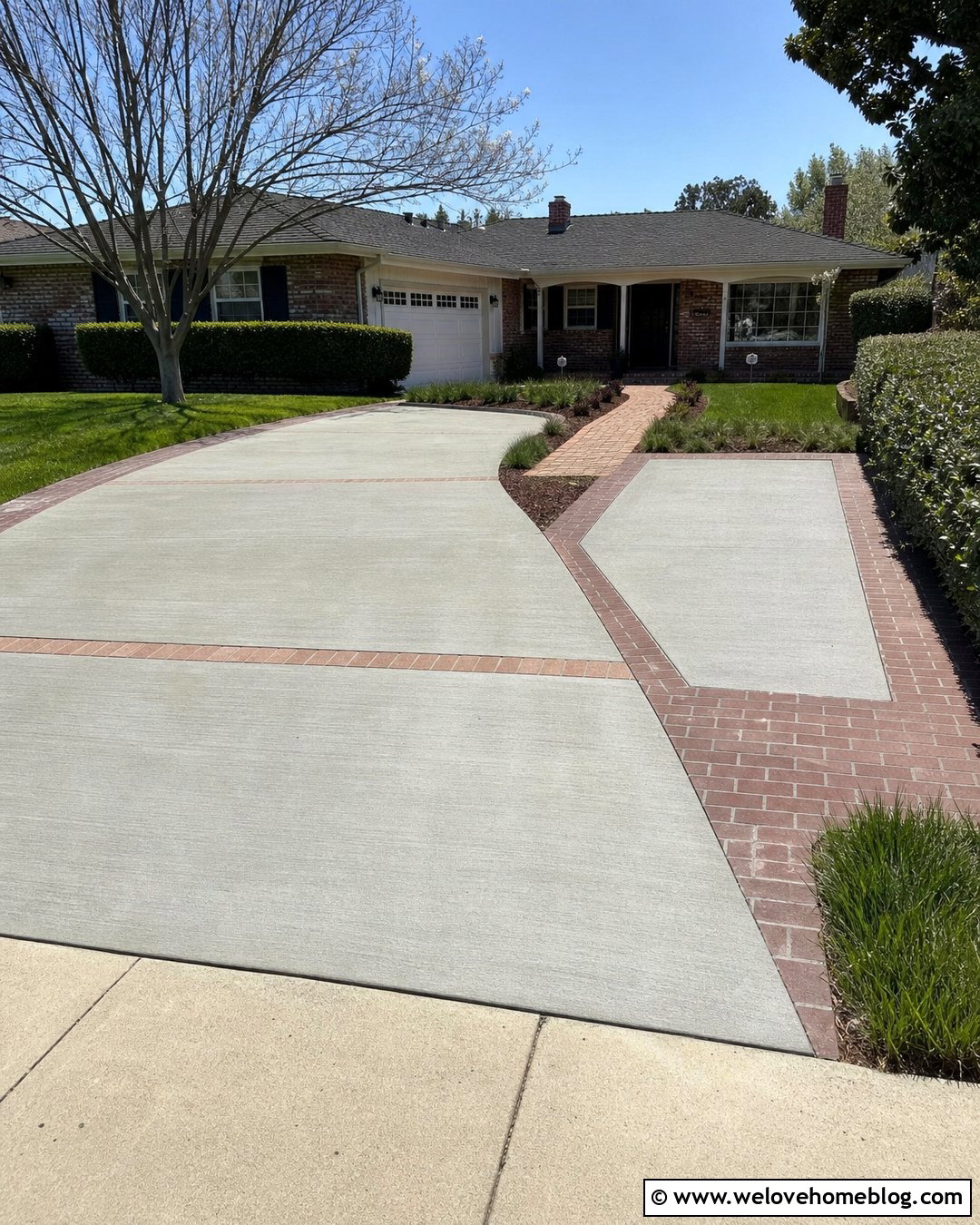
An extra parking area does not have to look like an unrelated slab added beside the driveway. Create the main approach in broom-finished gray concrete, then define the side parking pad with a brick perimeter and matching brick connector bands. The masonry frame visually separates the parking zone while tying it to the driveway. For greater distinction, use tinted concrete inside the pad or add a central brick rectangle. This layout works well for ranch homes, suburban family houses, and properties with side-entry garages. Plant a narrow hedge or ornamental grasses beyond the pad to soften its outer edge without reducing usable space. A brick walkway leading from the parking area to the front door makes the addition more convenient. Keep the surface transition flush to avoid an unnecessary tire edge.
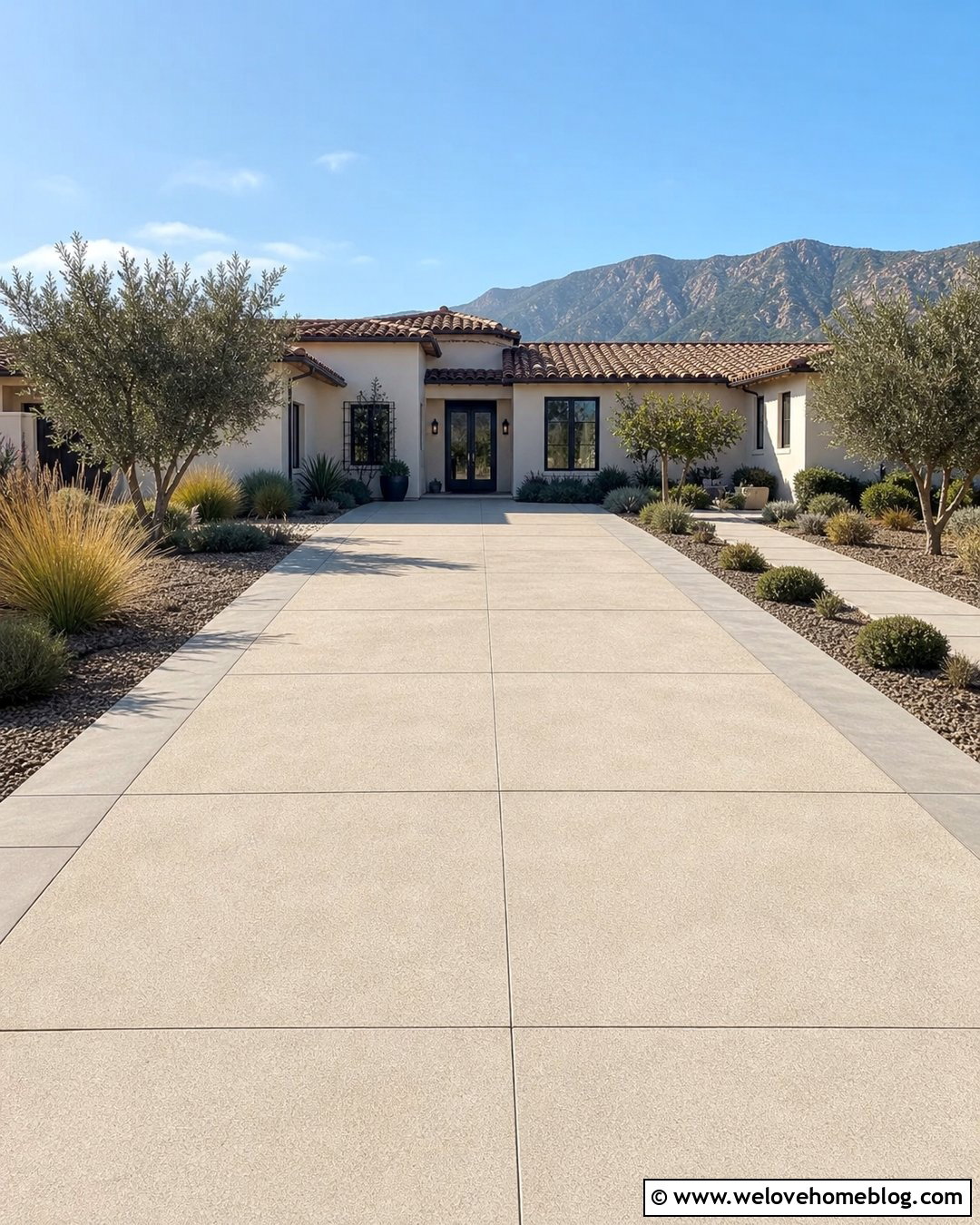
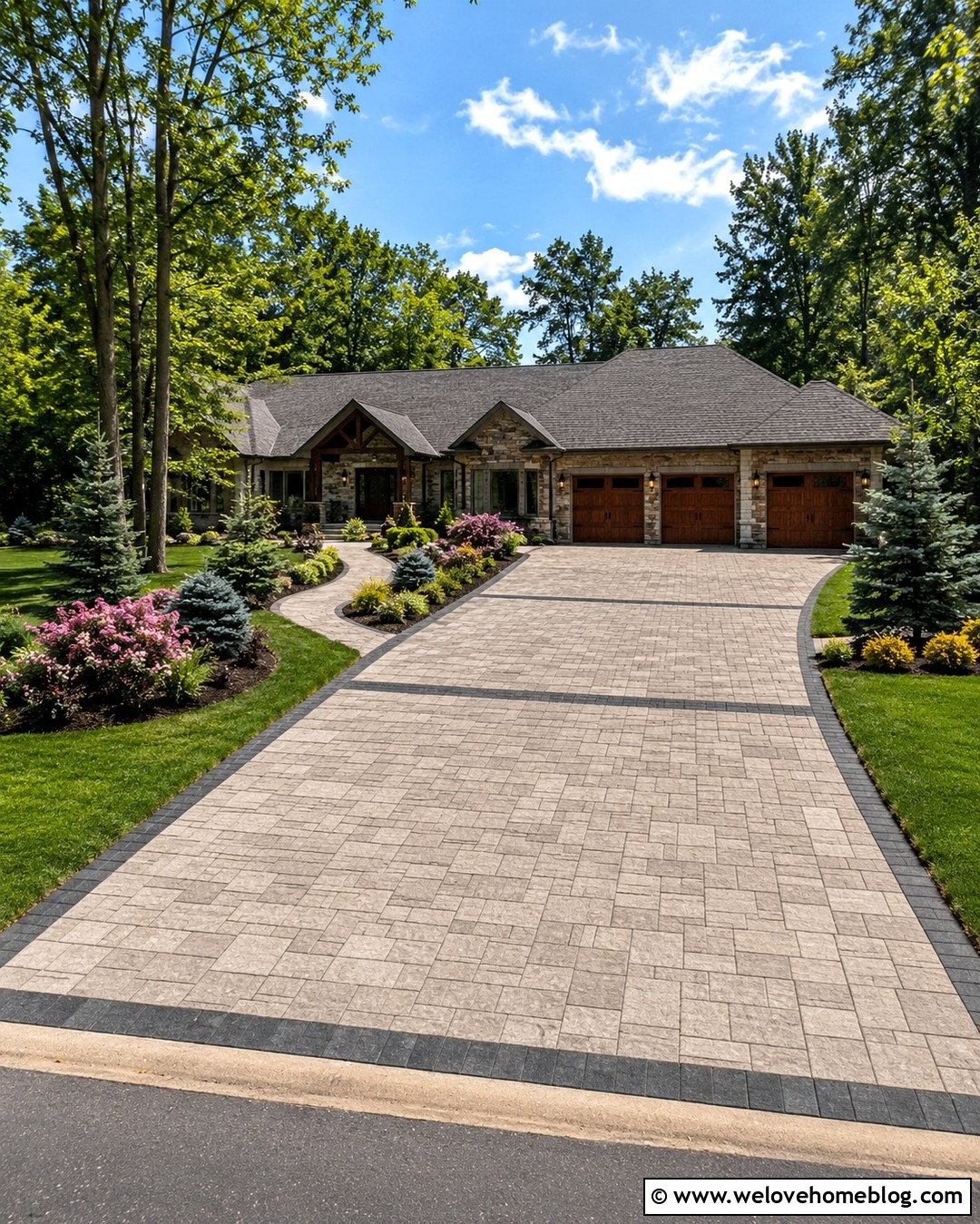
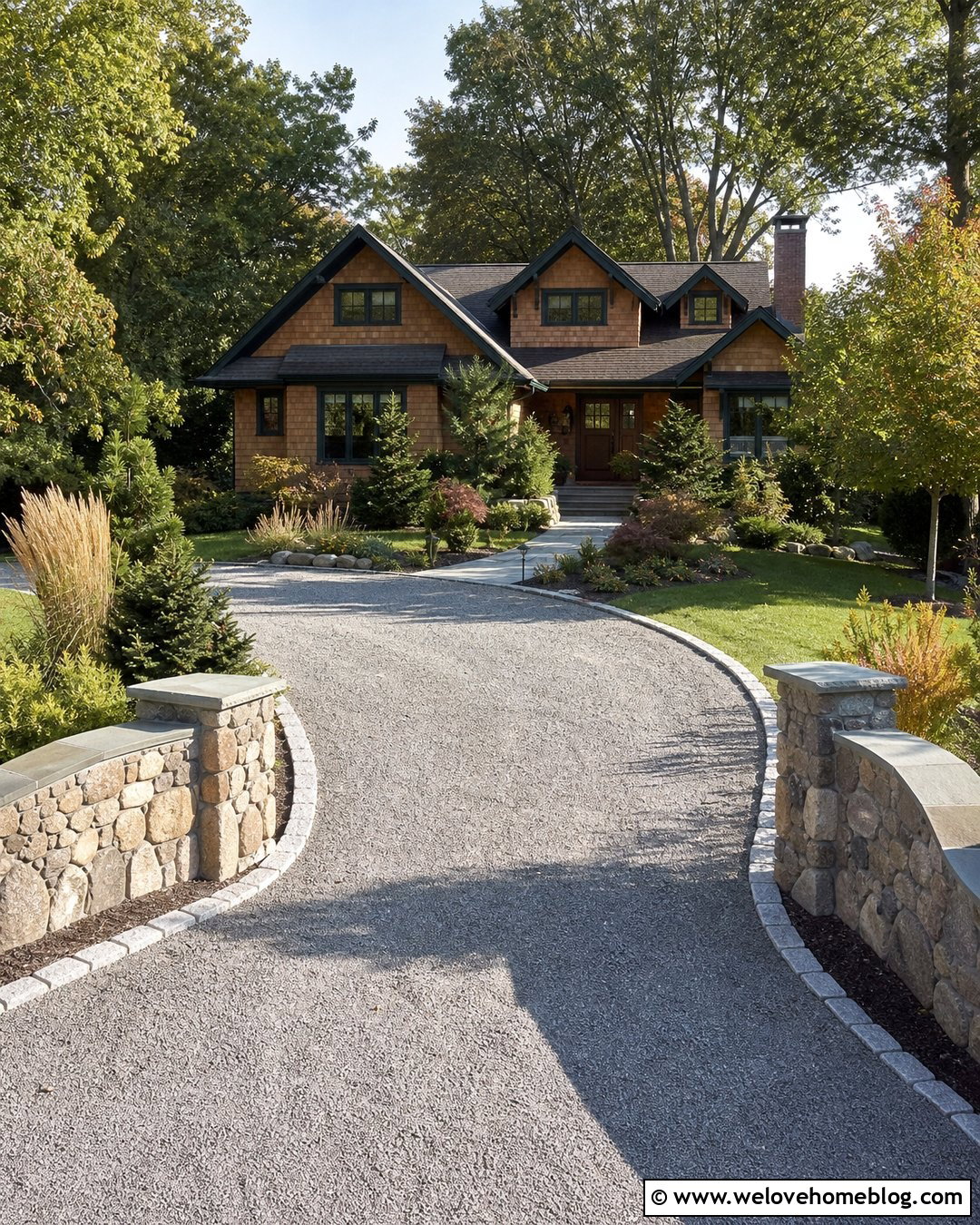
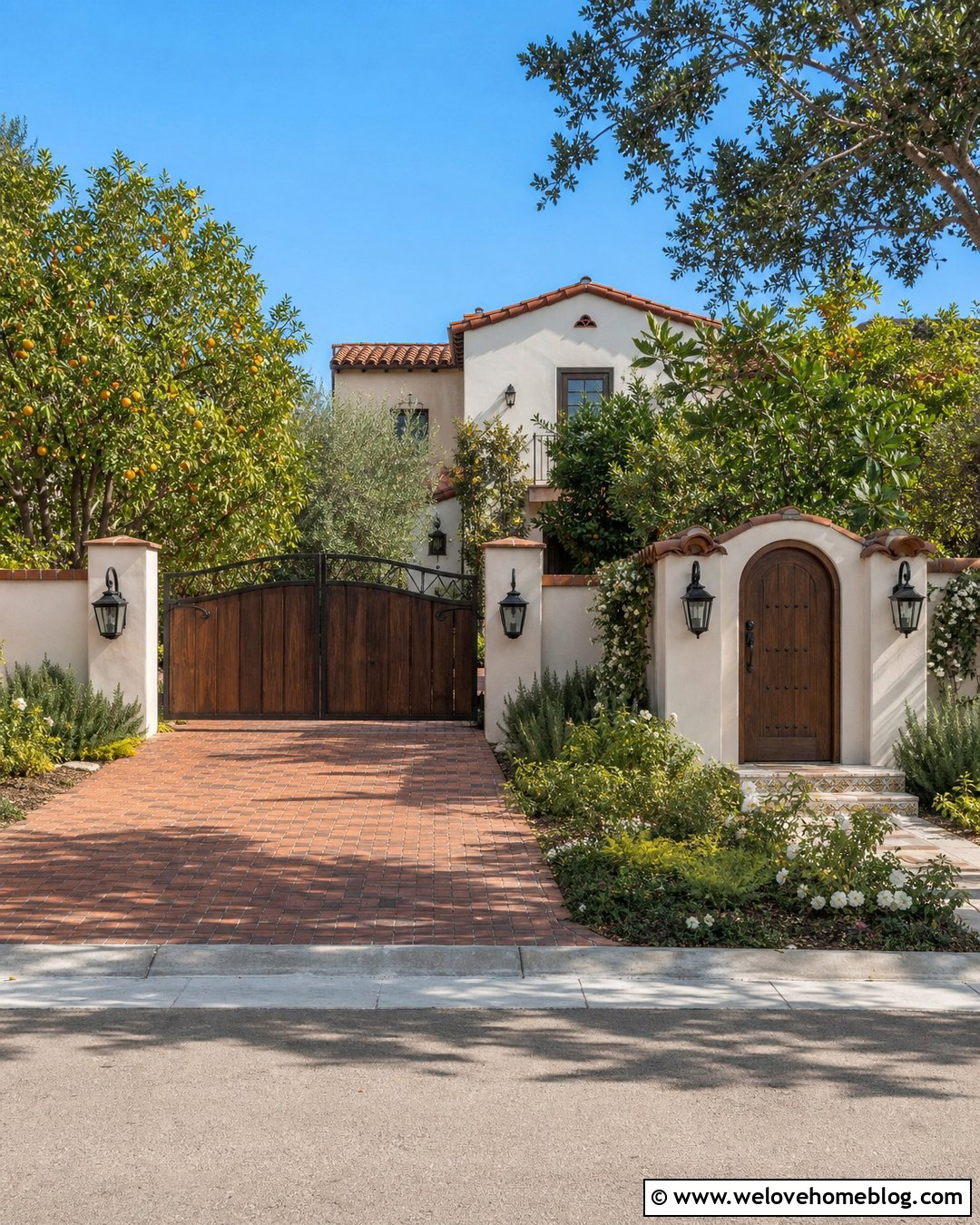
15. Concrete Driveway With Brick Walkway Connection
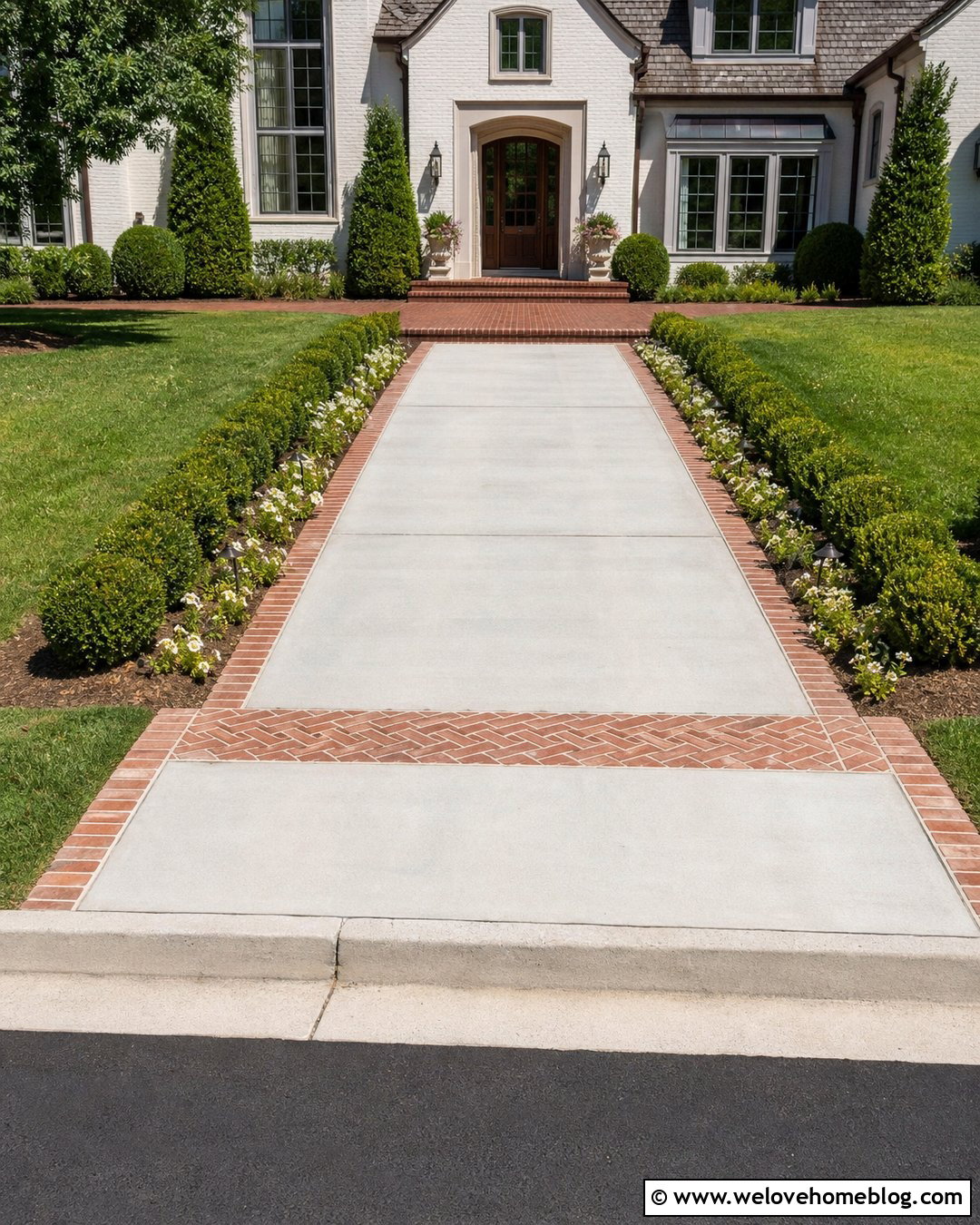
A brick walkway crossing or branching from a concrete driveway can guide guests clearly toward the front door. Start with a simple brushed-concrete surface, then install a brick path in herringbone, basketweave, or running bond. Extend the path through the driveway as a flush decorative band so it remains visually continuous. Red brick suits traditional architecture, while brown or charcoal brick works with transitional and contemporary exteriors. Frame both the driveway and path with low planting beds containing shrubs, perennials, and groundcover. At the intersection, widen the brickwork slightly to form a clear pedestrian landing. The paving should remain level and easy to navigate. This arrangement gives the driveway a stronger relationship with the entrance, preventing the garage from becoming the only feature that attracts attention from the street.
16. Concrete Driveway With Brick Gate Pillars
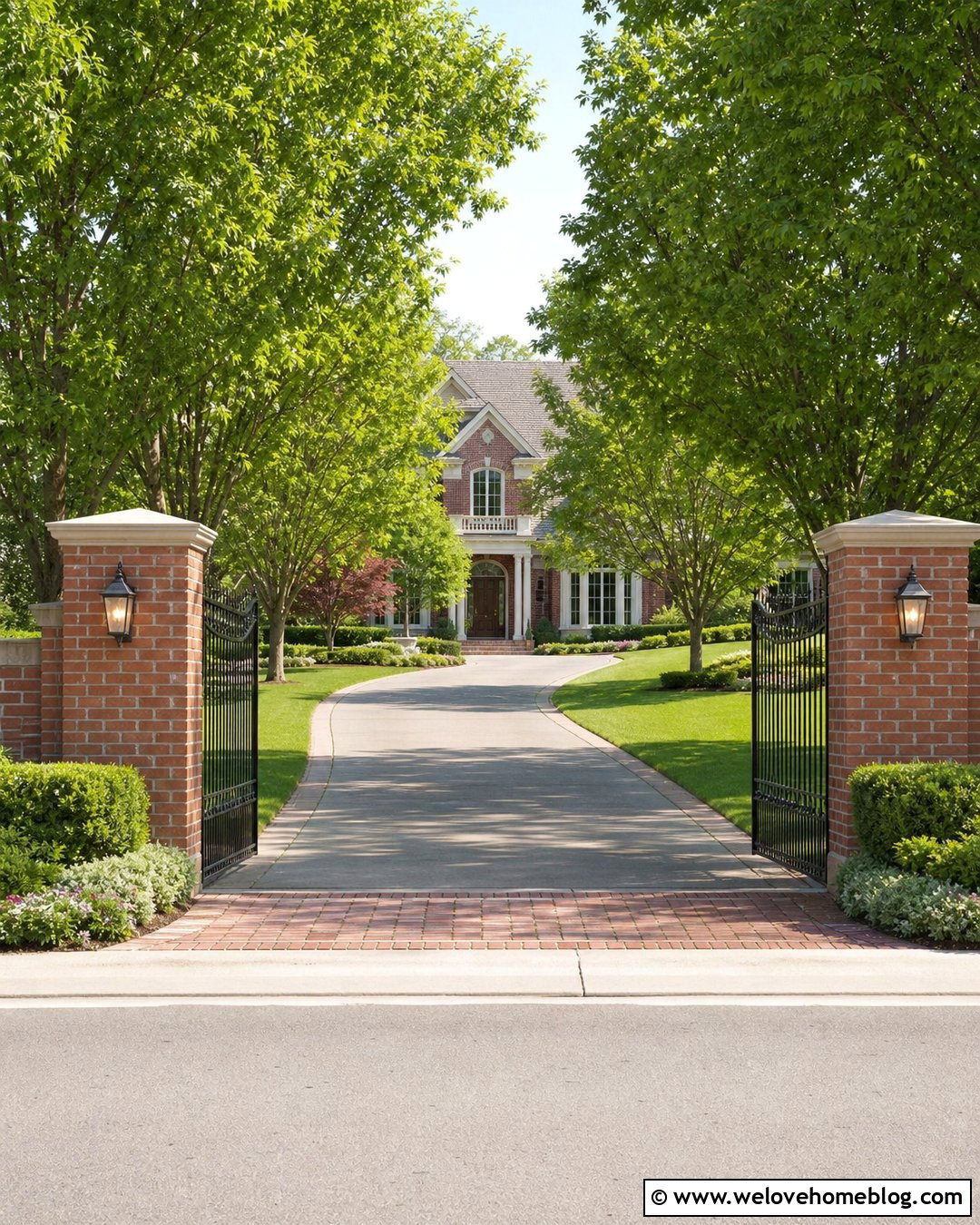
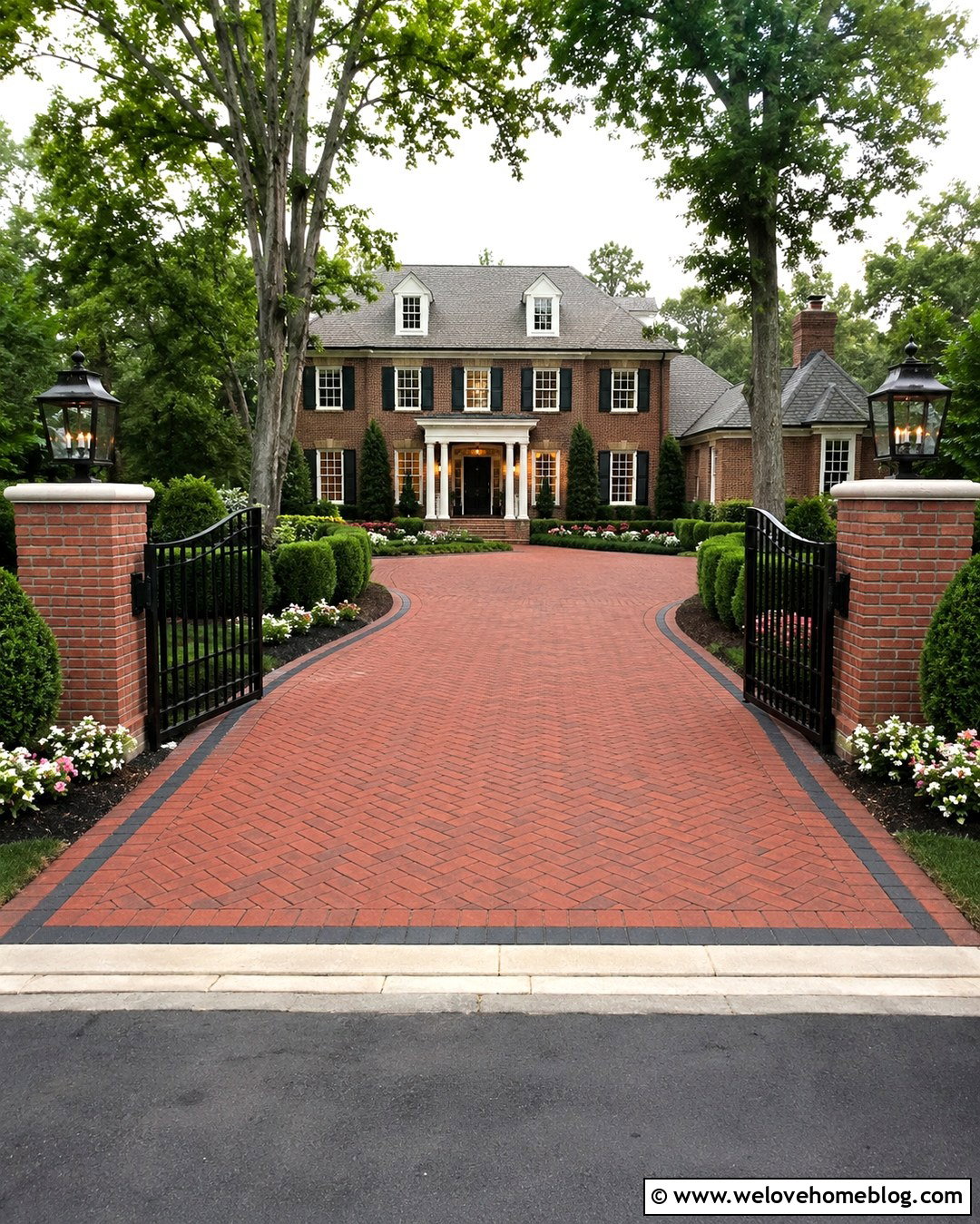
Brick gate pillars can transform a basic concrete driveway into a substantial, well-defined entrance. Choose pillars that match the house brick or repeat a masonry color already used on the facade. Between them, install a straight or gently curved concrete driveway with narrow brick edging. Black metal gates provide traditional contrast, while simple horizontal gates suit a more updated property. Leave enough open space around the entrance for clear sightlines and practical vehicle movement. Low shrubs, groundcover, and symmetrical trees can frame the pillars without concealing them. Add address numbers and understated lighting directly to the masonry for a useful focal point. The pillars, border, and driveway apron should share consistent brickwork so the entrance appears connected to the house rather than standing alone near the road.
17. Concrete Driveway With Brick Drainage Strip
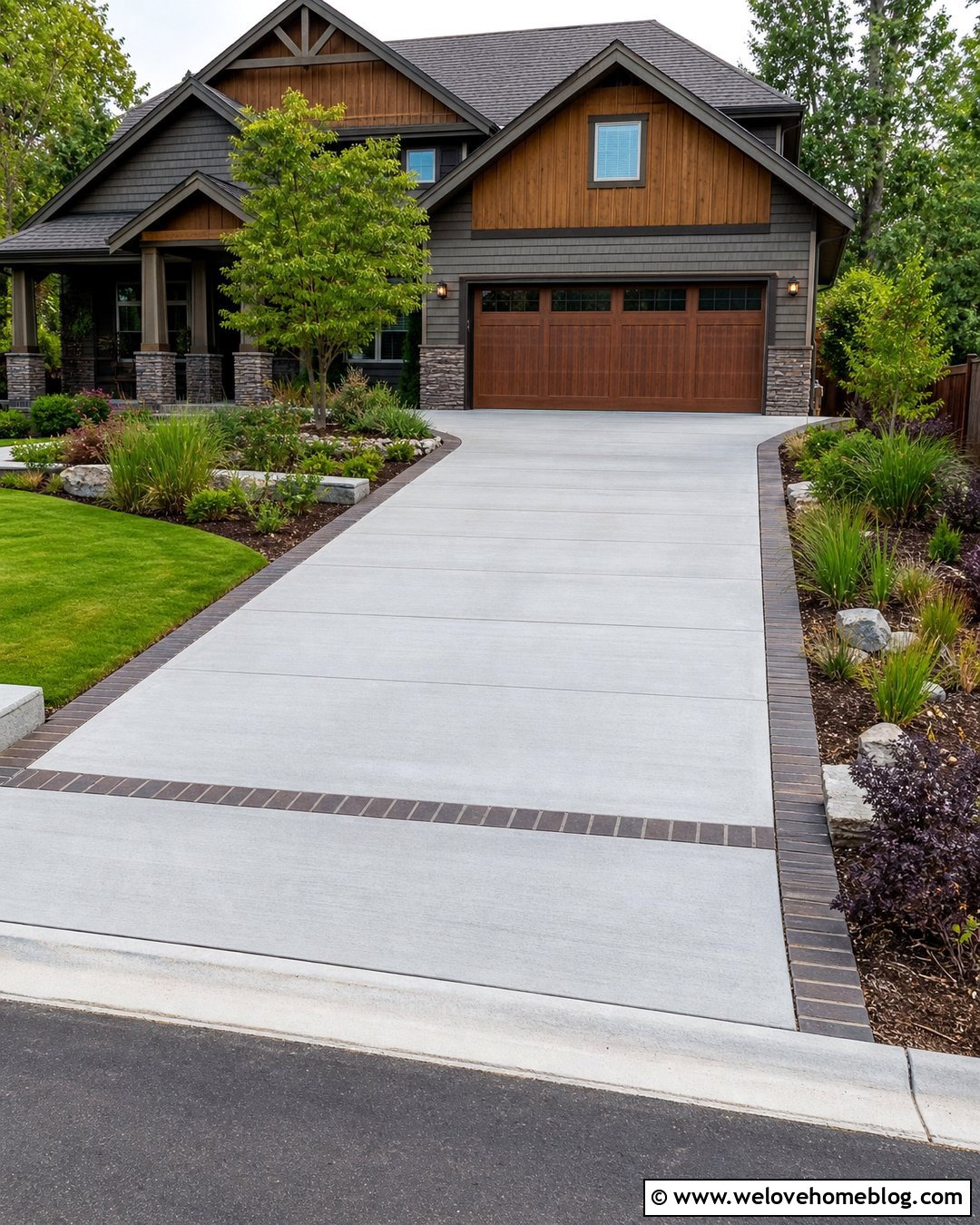
A brick drainage strip can become an intentional design detail when it is coordinated with the driveway layout. Position a brick-lined channel across the lower portion of a sloped concrete driveway or along one edge, depending on the site’s drainage plan. Use dark clay pavers or brick-compatible channel components to create contrast with pale broom-finished concrete. Proper drainage matters because standing water can contribute to concrete deterioration, particularly where freezing conditions and deicing materials are present. () The exact slope, channel, and outlet should be designed by an experienced professional. Repeat the brick in the perimeter edging and nearby walkway so the drainage feature looks purposeful. Rain gardens, moisture-tolerant planting, and neatly graded lawn can complete the practical landscape.
18. Concrete Driveway With Brick Medallion
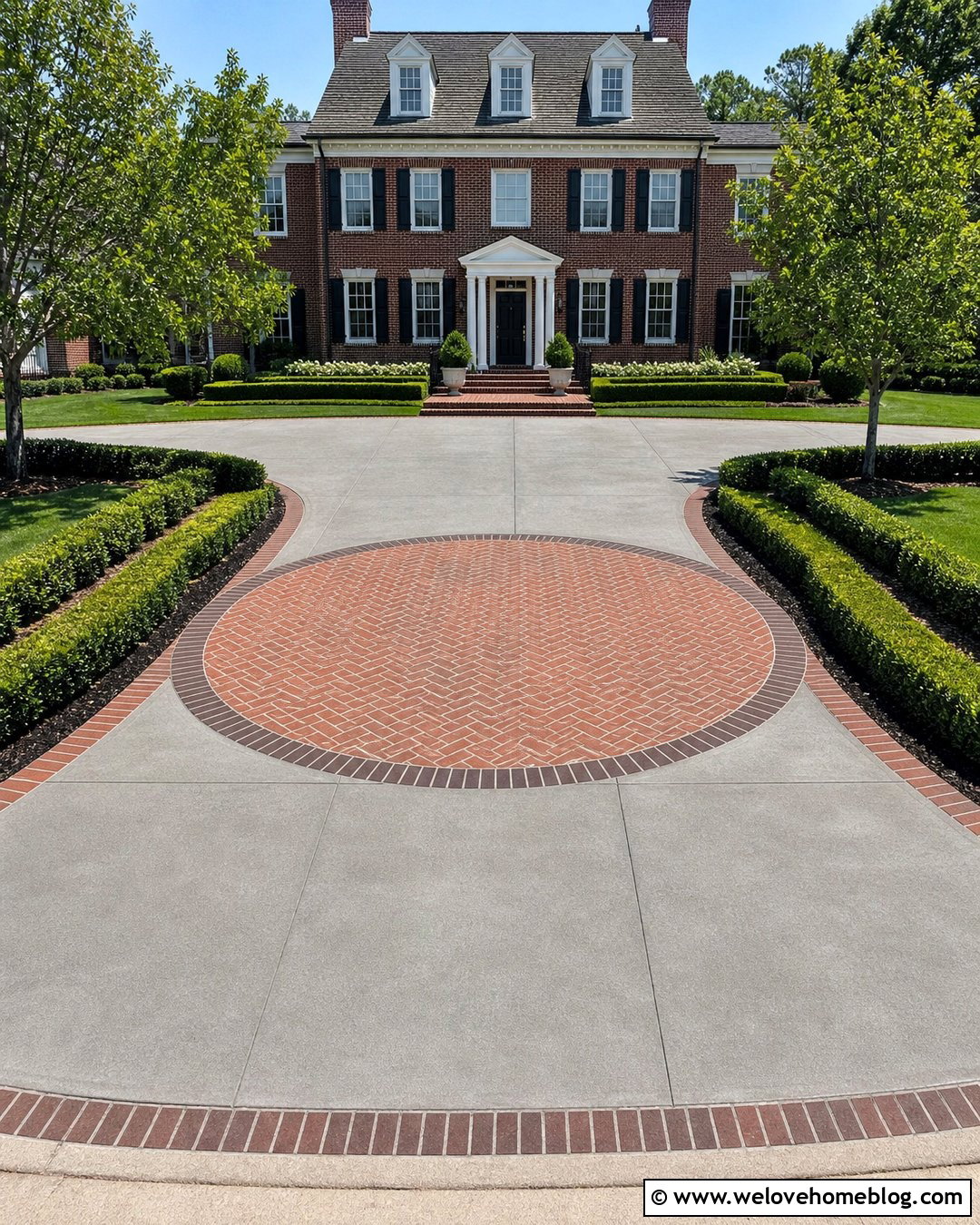
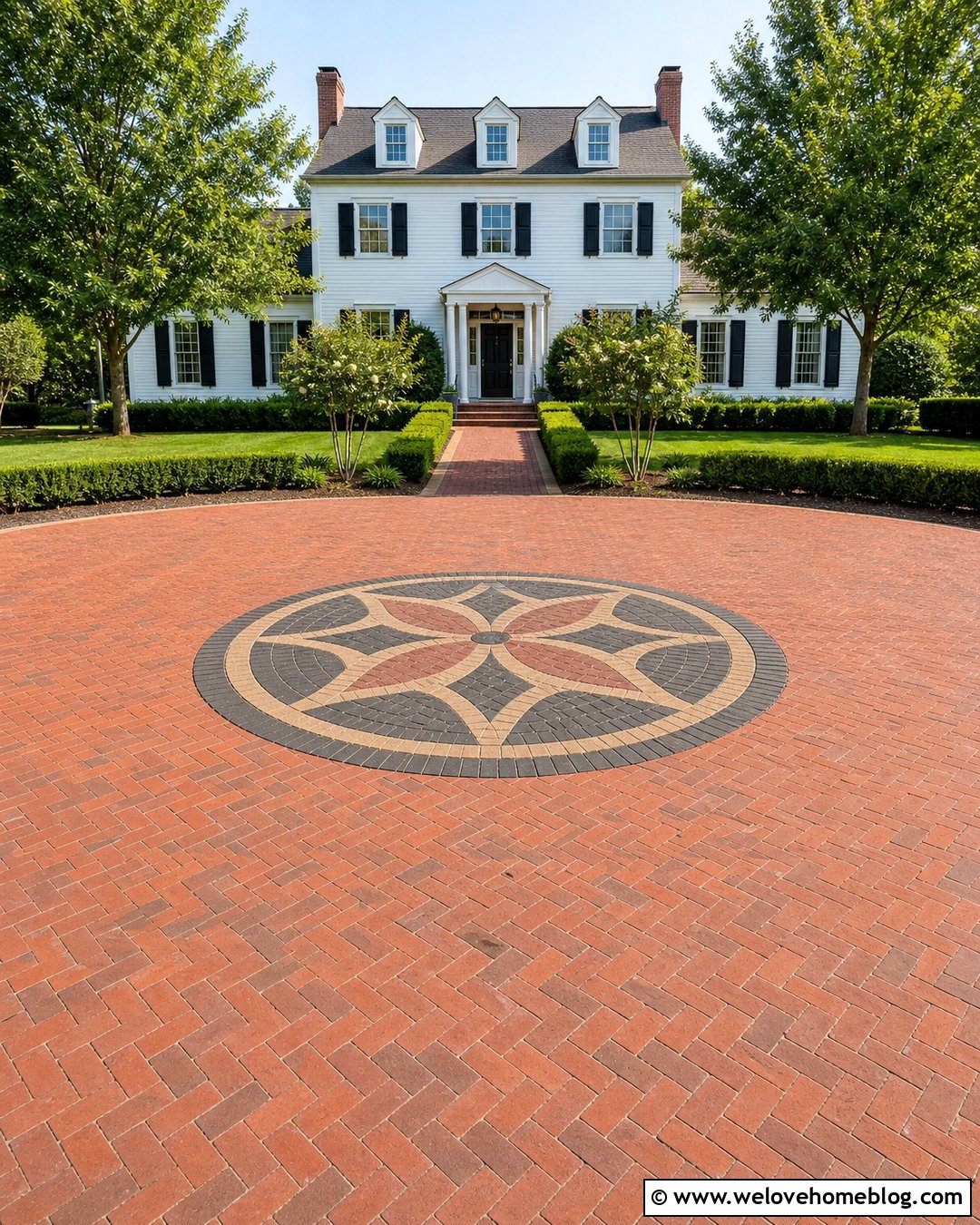
A brick medallion creates a focused decorative moment within a broad concrete driveway. Place a circular or diamond-shaped brick insert near the garage, at a walkway intersection, or in the center of a turning area. Herringbone, basketweave, and radial patterns provide enough detail to stand out against plain concrete. Frame the insert with a contrasting brick ring and align it carefully with the house entrance. A medium-gray broom-finished concrete field allows red or brown brick to remain the main feature. This design suits formal Colonial homes, large ranch houses, and traditional properties with wide driveways. Keep nearby landscaping symmetrical and restrained so it does not compete with the medallion. Matching brick steps, columns, or walkway accents will help the centerpiece feel like part of a complete exterior plan.
19. Concrete Driveway With Basketweave Brick Apron
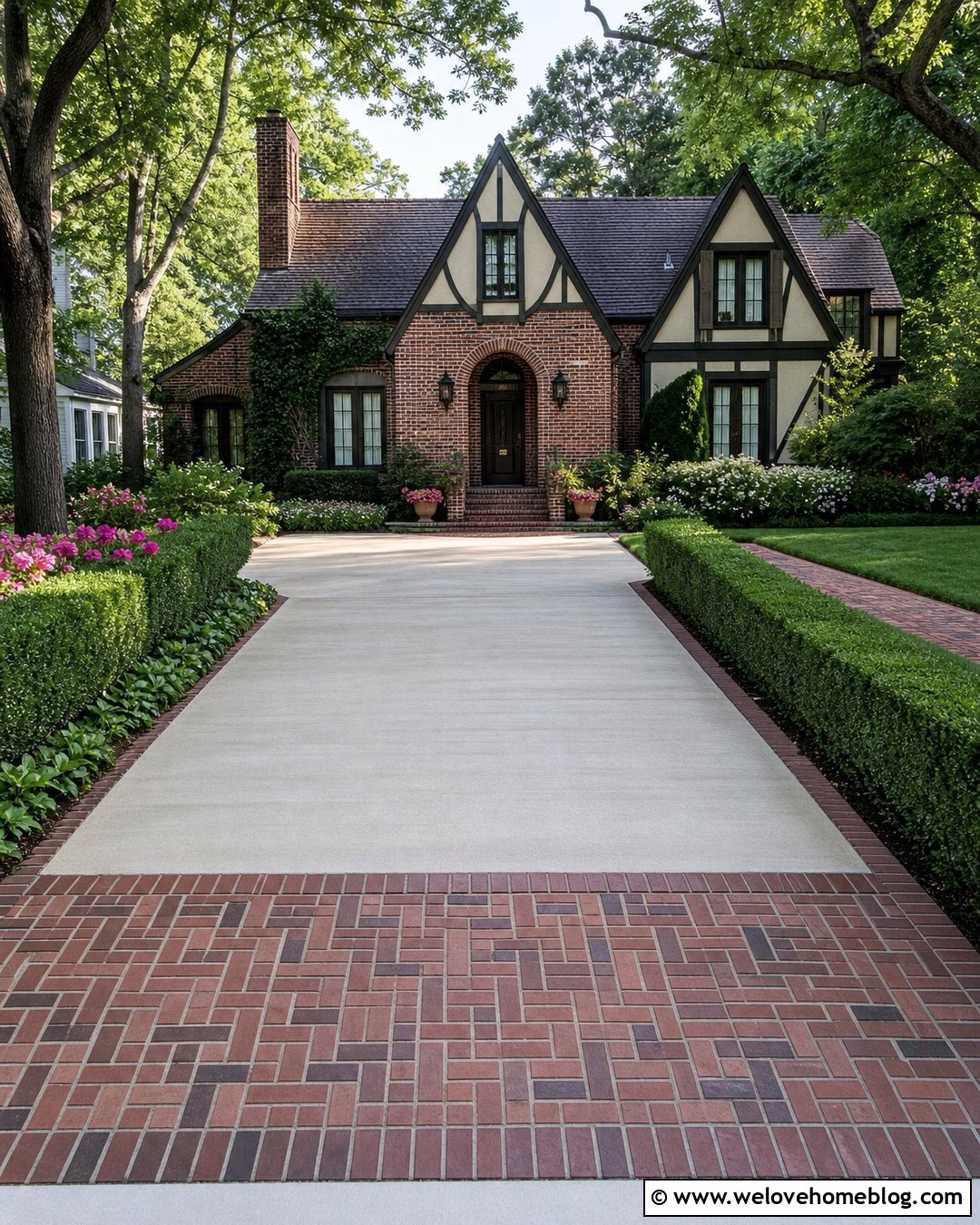
Basketweave brick creates a softer, more traditional entrance pattern than the sharp diagonal lines of herringbone. Use it across the street apron, then transition into light gray or warm beige concrete for the main driveway. A soldier-course brick frame keeps the woven pattern visually contained. This pairing works especially well with cottages, Tudor-inspired homes, and older brick houses. Repeat a narrow line of basketweave or running-bond brick near the garage to balance the apron at both ends. Dense green hedges, flowering borders, and a brick walkway can reinforce the established garden character. Select brick colors that relate to the home but provide enough contrast against the concrete. The apron should be broad enough for the pattern to read clearly from the sidewalk without dominating the entire front yard.
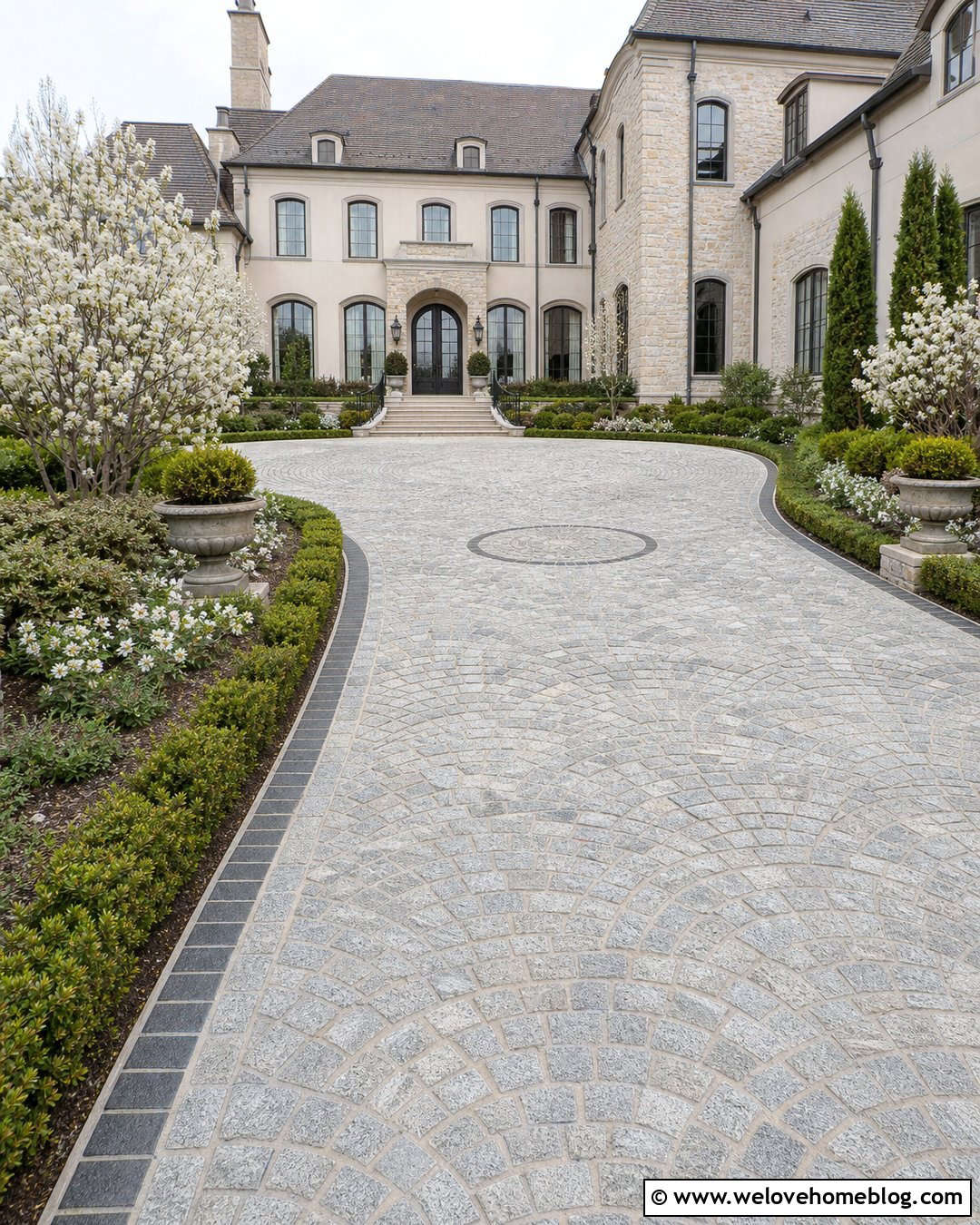
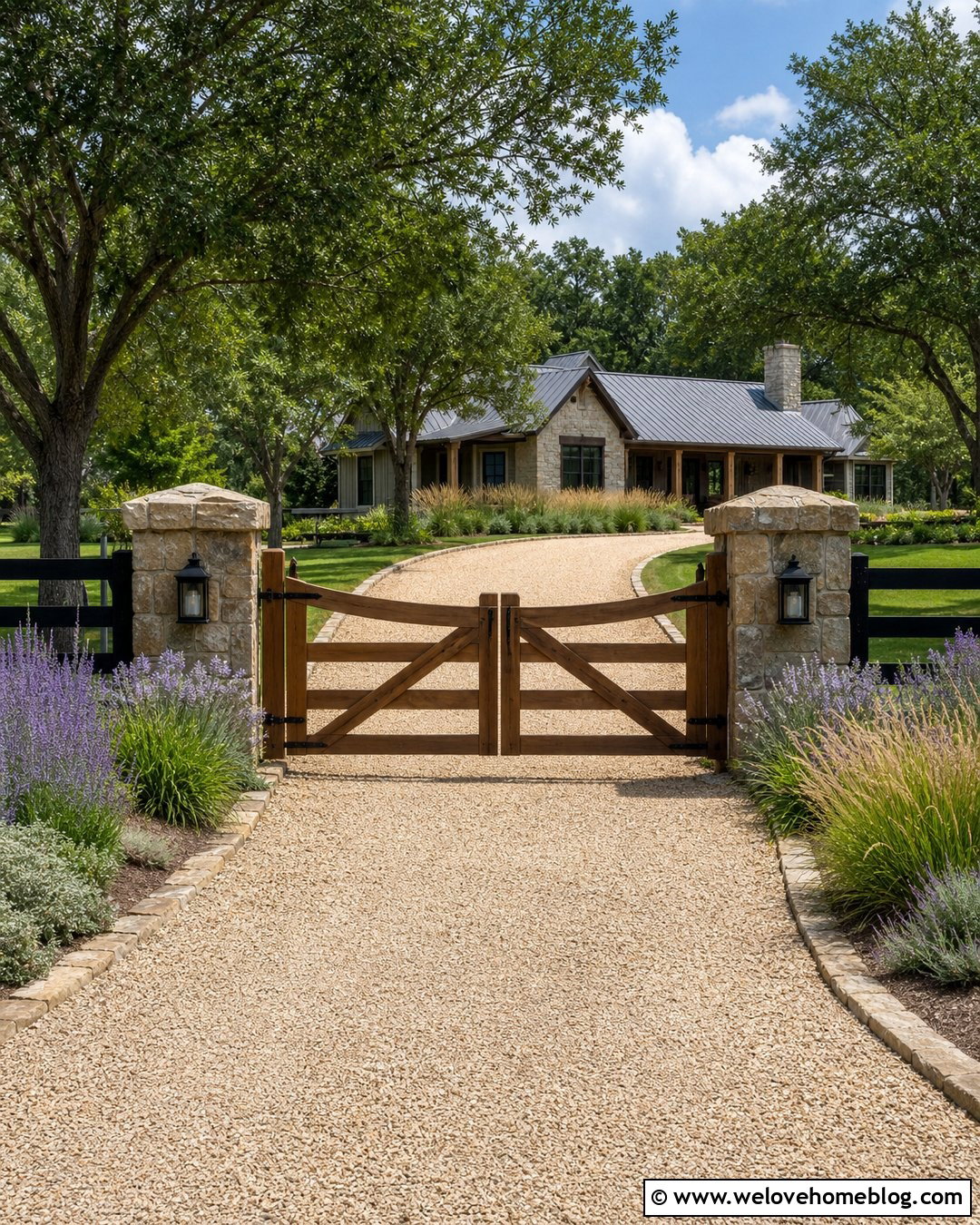
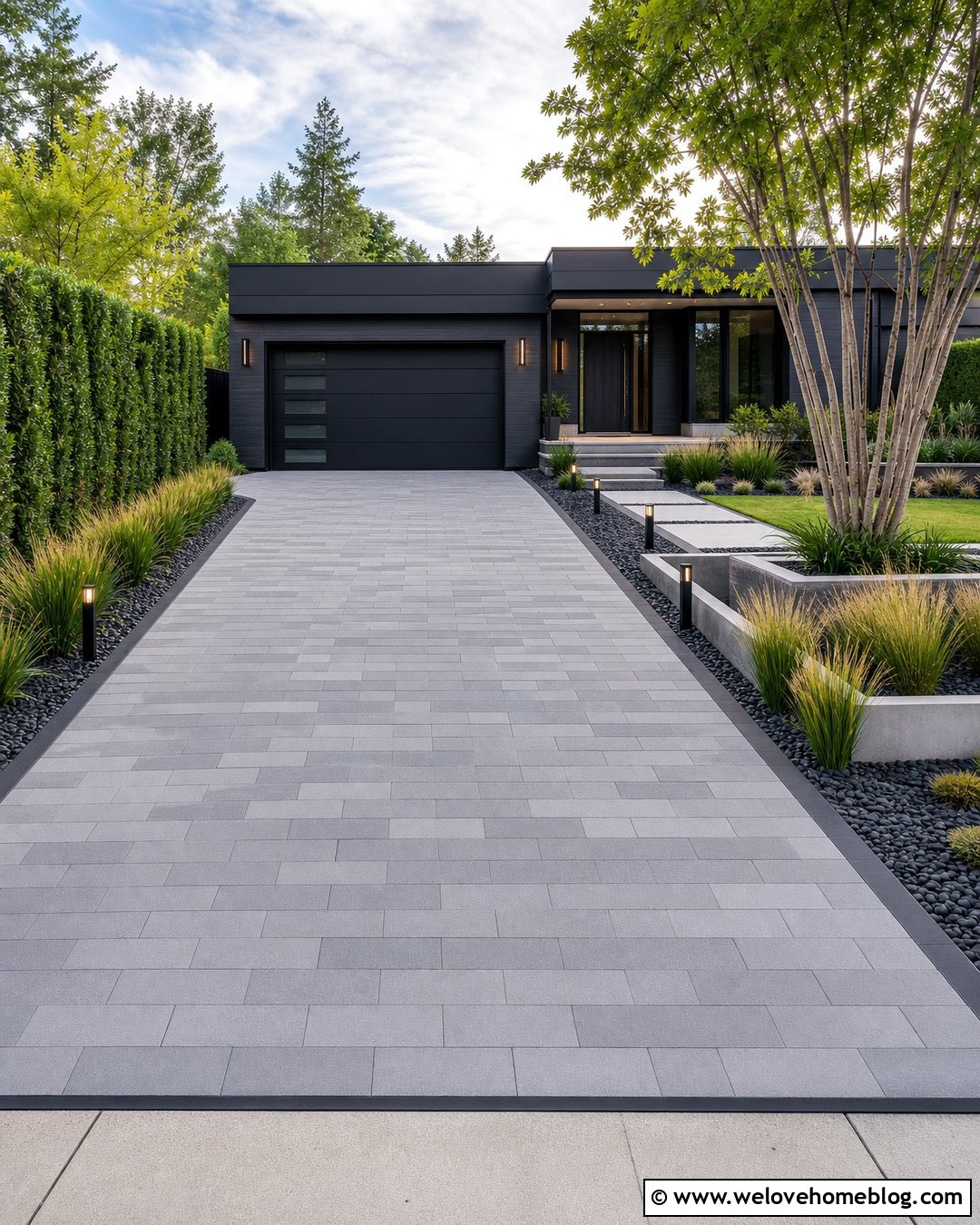

20. Concrete Driveway With Soldier Course Brick Border
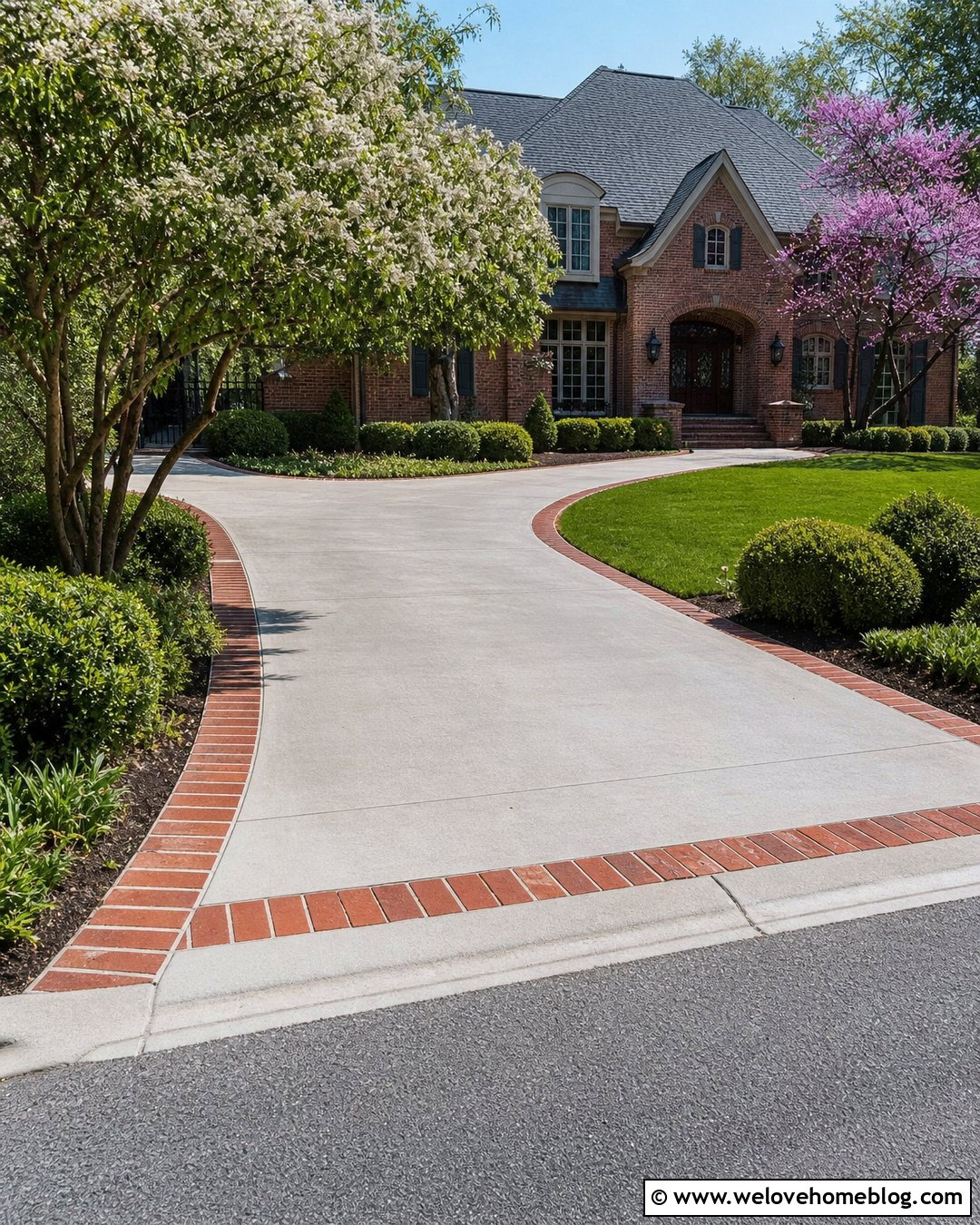
Soldier-course brick edging uses upright-looking rows of bricks placed with their narrow ends facing the driveway. The resulting border feels crisp, substantial, and easy to see from the curb. Pair classic red clay brick with pale gray concrete for a traditional contrast, or choose charcoal brick beside warm concrete for a more modern interpretation. Carry the soldier course around the complete perimeter, including the apron and parking areas. This treatment works on straight, curved, and circular layouts because the border can visually clarify the driveway shape. Match it with a brick home, masonry porch, or coordinated front path. Keep planting beds slightly below the brick edge so soil does not spill onto the pavement. Clean lawn lines and compact shrubs will preserve the border’s tailored appearance.
21. Concrete Driveway With Double Brick Border
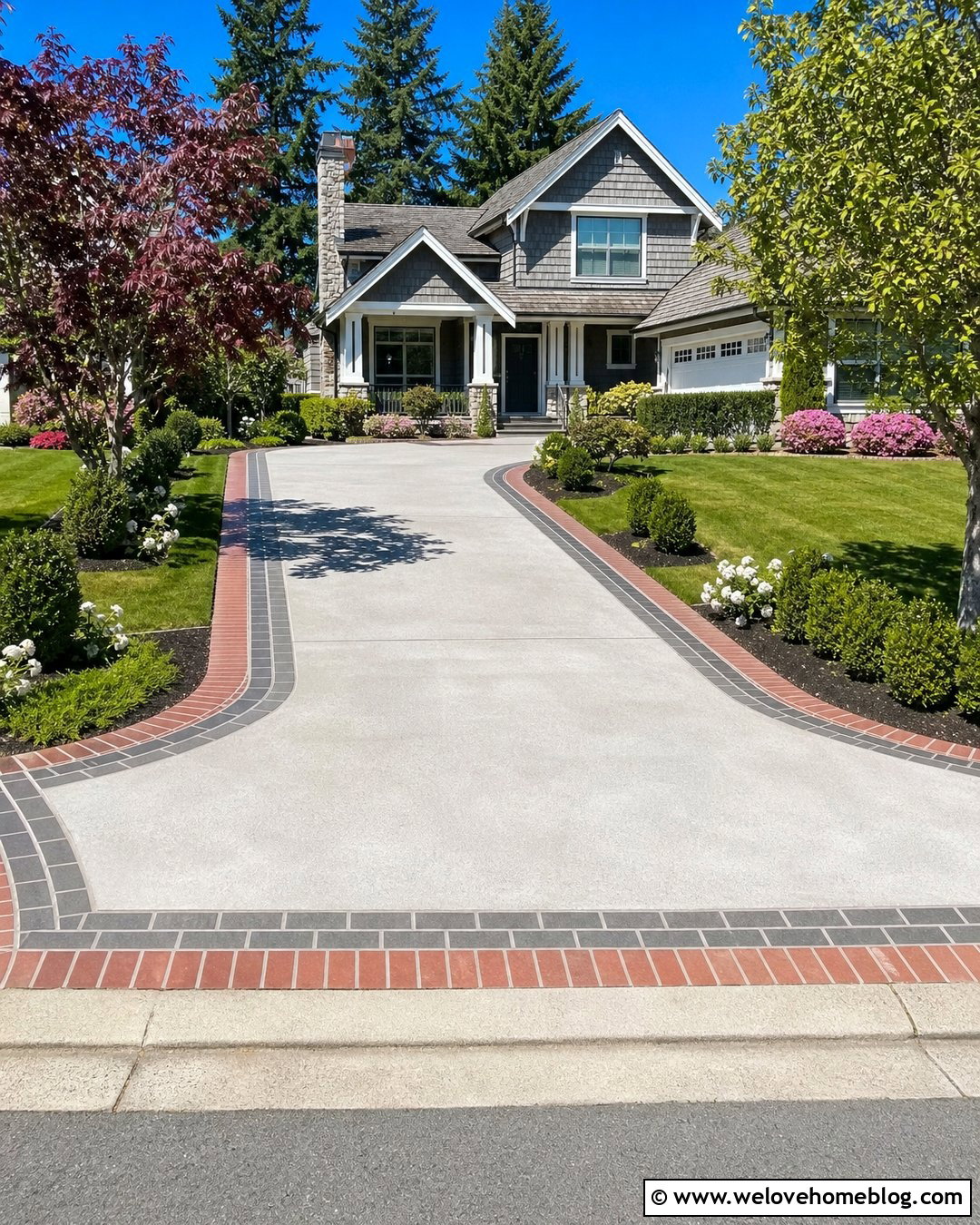
A double brick border gives a wide concrete driveway more presence than a single narrow row. Combine two complementary brick colors, such as red and charcoal, or use one color in two different laying directions. For example, a running-bond inner row can meet a soldier-course outer row. The added width creates a strong frame for pale concrete and can make a generous suburban driveway feel better proportioned. Repeat the double border across the entrance apron and around any turning area. This detail pairs naturally with two-story traditional homes, large craftsman houses, and brick-front properties. Leave enough planting space outside the edging for rounded shrubs, ornamental trees, and seasonal color. Avoid overly complicated concrete stamping because the layered masonry already provides plenty of pattern and contrast.
22. Modern Concrete Driveway With Thin Brick Bands
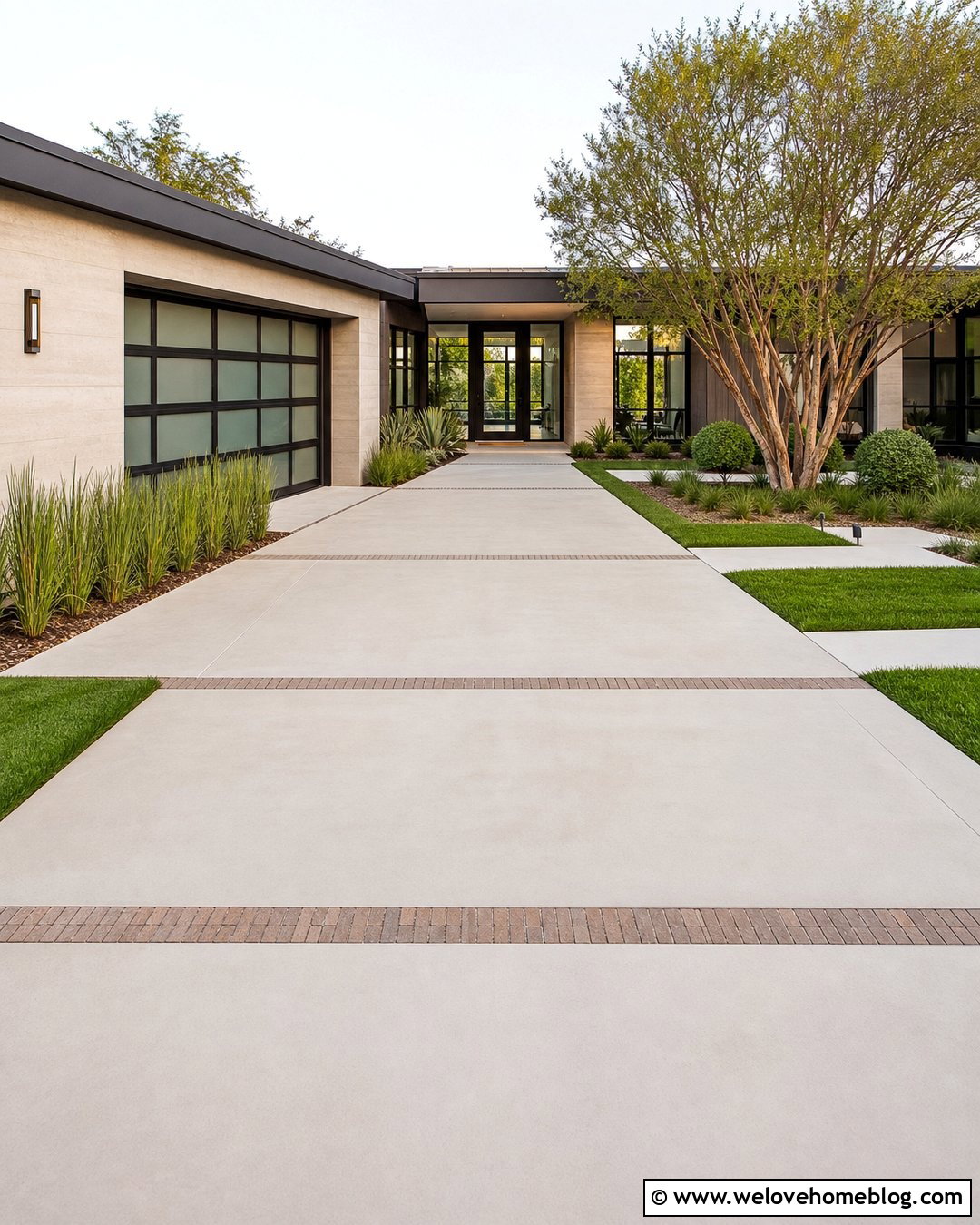
Thin brick bands can warm up a modern concrete driveway without weakening its clean, minimalist character. Use large smooth-finished concrete rectangles in light gray or soft greige, separated by slim charcoal or muted brown brick lines. Arrange the bands perpendicular to the driveway to emphasize width, or run one band lengthwise to draw attention toward the entrance. Keep the geometry aligned with the garage, front walkway, and house facade. A low-profile modern home with black windows, wood siding, or white stucco provides an ideal background. Complete the look with linear planting beds, sculptural grasses, and a small multi-stem tree. Avoid ornate brick patterns and mixed colors. Precise spacing and a limited palette allow both materials to look deliberate while preserving the home’s streamlined curb appeal.
23. Farmhouse Concrete Driveway With Rustic Brick Border
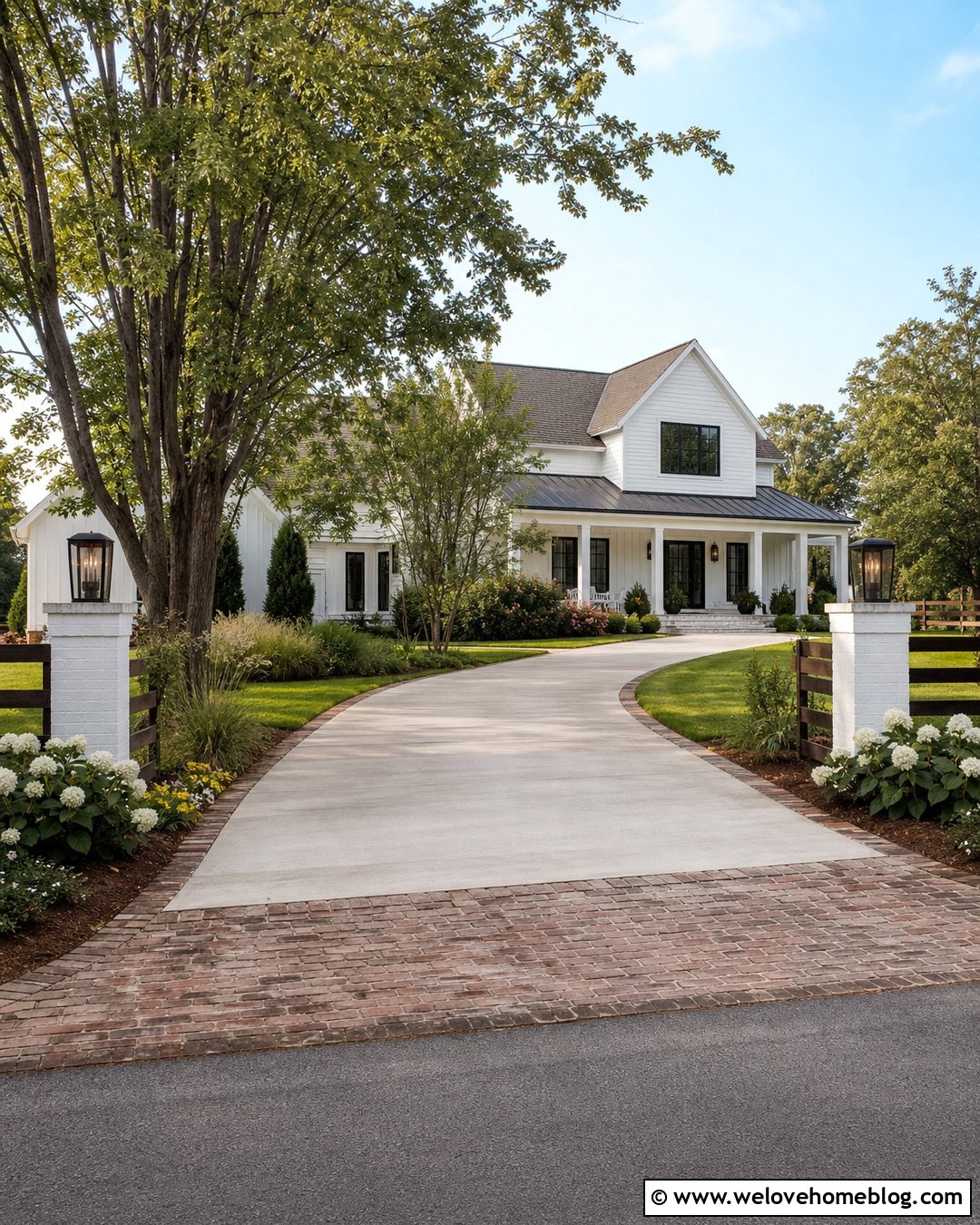
A farmhouse driveway should feel sturdy and welcoming rather than overly polished. Choose warm gray broom-finished concrete and edge it with weathered red or brown brick. A gently curved approach can follow the lawn toward a detached garage, barn-style structure, or modern farmhouse. Widen the brickwork at the road to create a simple apron, then repeat it around the front walkway. Natural landscaping works well here, including native grasses, hydrangeas, flowering shrubs, and shade trees. Keep the planting organized enough that the driveway remains clearly defined. Black lantern fixtures, timber fencing, and brick mailbox details can strengthen the rural character. Use restrained brick variation so the border appears aged but not patchy. The concrete provides a calm foundation while rustic brick supplies warmth and history.
24. Colonial Concrete Driveway With Red Brick Accents
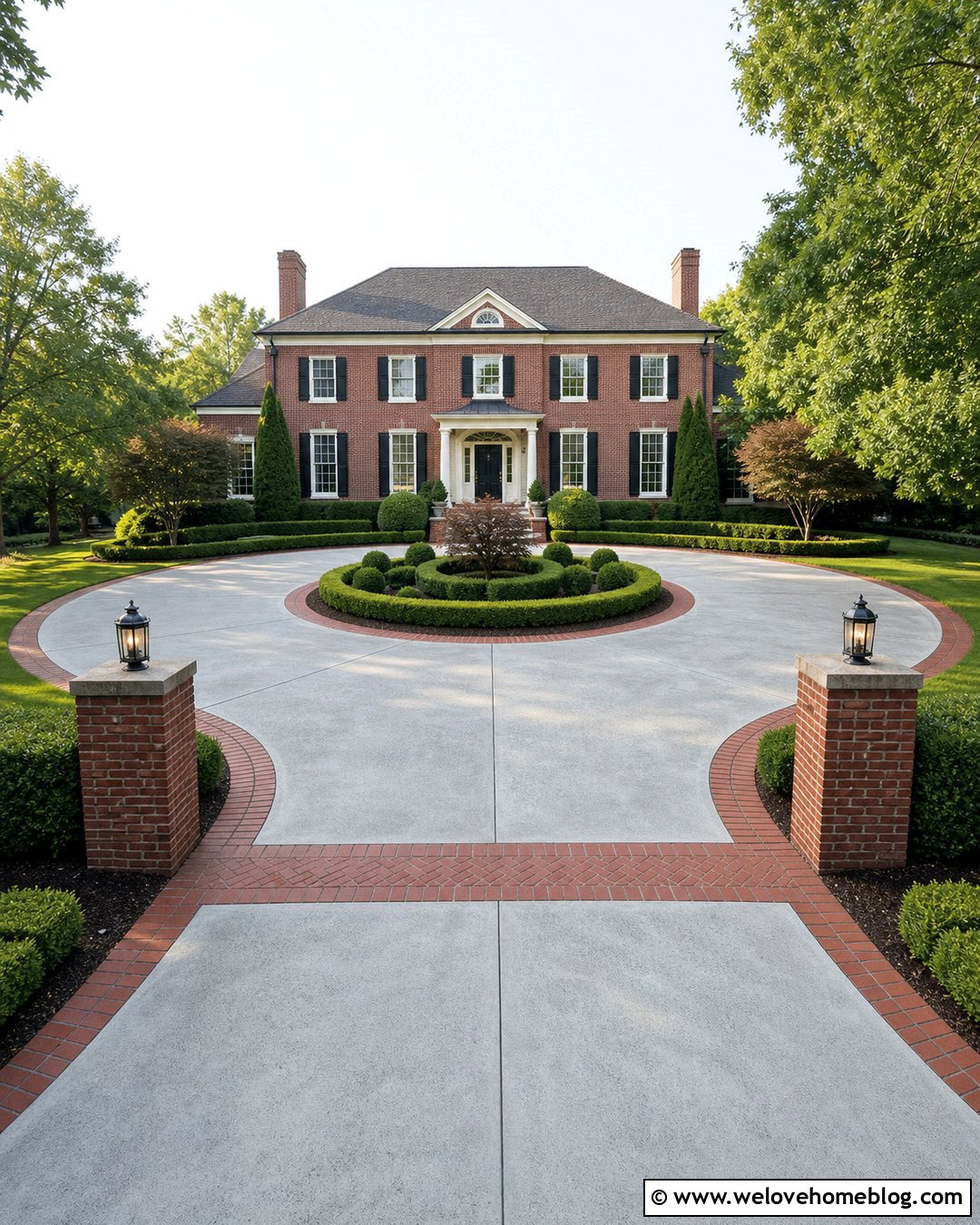
Strong symmetry makes brick and concrete an excellent combination for a Colonial-style home. Use a straight, centered driveway or formal circular layout in smooth or brushed light-gray concrete. Frame the surface with red clay brick, then add matching crossbands at the walkway and garage entrance. A herringbone brick apron can introduce traditional pattern without covering the whole driveway. Balance the hardscape with pairs of clipped boxwoods, upright evergreens, and matching ornamental trees. Brick gate pillars or a brick mailbox can reinforce the entrance, provided they align with the home’s facade. Keep curves gentle and borders precise because formal architecture benefits from clear geometry. White trim, black shutters, and red masonry in the background will complete the classic palette and create a cohesive view from the street.
25. Small Concrete Driveway With Brick Frame
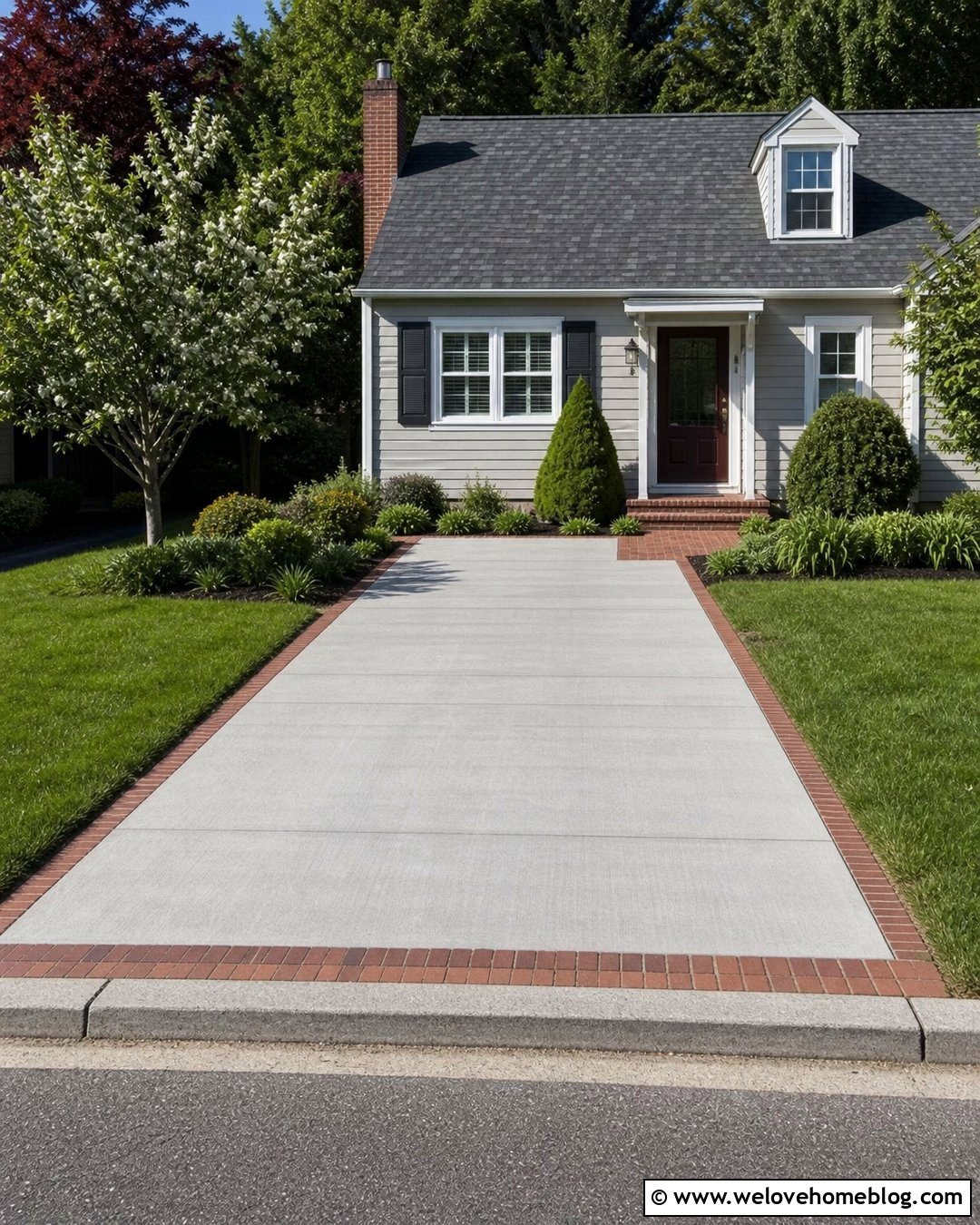
A small driveway often benefits more from one strong border than several competing details. Pour a compact light-gray concrete pad and surround it with a single or double row of red, brown, or charcoal brick. Extend the border across the street apron and use the same brick for a narrow path to the front entrance. This approach gives the entire paved area a finished shape while preserving as much usable driving space as possible. A straight layout works for small ranch homes, bungalows, townhomes, and cottages. Keep landscaping narrow but layered, using low groundcover, compact shrubs, and one small ornamental tree. Avoid raised edging that could interfere with doors or tires. Careful material coordination can make a modest driveway feel intentional, attractive, and properly connected to the house.
Conclusion:
These **25 Brick And Concrete Driveway Ideas** show how two familiar materials can create remarkably different entrances. Concrete offers a calm main surface, while brick adds color, pattern, definition, and architectural character. The best combination will reflect the driveway’s size, slope, shape, drainage needs, and relationship to the house. Consider repeating brick from the facade, porch, walkway, or pillars so the exterior feels unified. Keep decorative bands aligned with practical transitions and have the base, drainage, joints, and load requirements planned by qualified local professionals. Whether you prefer a simple brick frame, a patterned apron, or geometric slab divisions, design the driveway and landscaping together. A coordinated plan will always look more polished from the curb.

Related posts:
Leave a Reply