
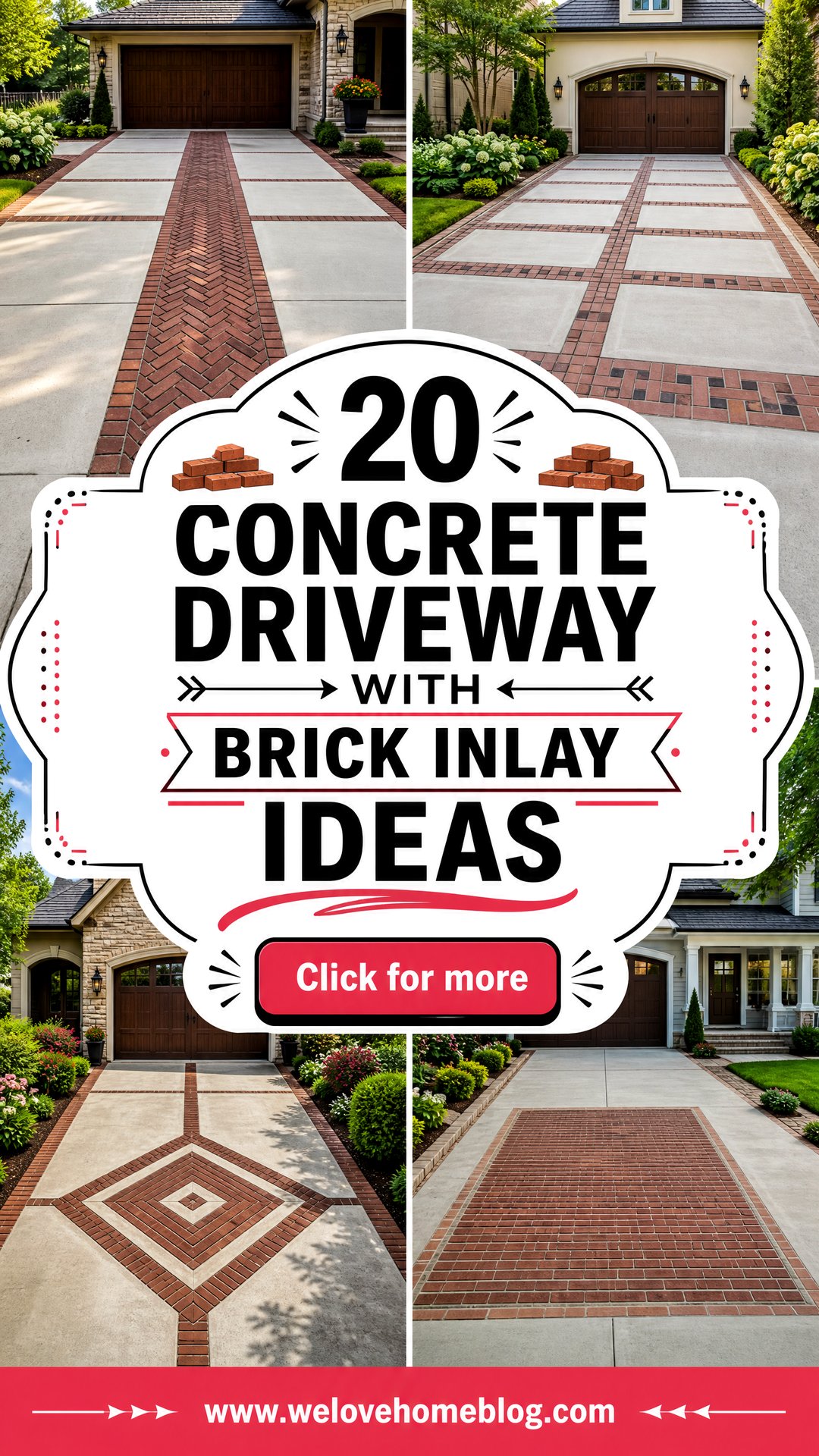
A concrete driveway can feel practical without looking plain. The best concrete driveway with brick inlay ideas combine a durable main surface with brick borders, bands, aprons, or focal patterns that connect the driveway to the home. Brick can also divide a broad concrete area into balanced sections, emphasize curves, and create a cleaner transition at the street or garage. These details work especially well when the brick color repeats tones found in the facade, walkway, porch, or landscaping. Decorative borders and contrasting bands can provide visual definition without covering the entire driveway in a premium material. () Whether your home is traditional or modern, the following concrete driveway with brick inlay ideas offer complete, practical looks worth considering.
1. Concrete Driveway With Brick Border
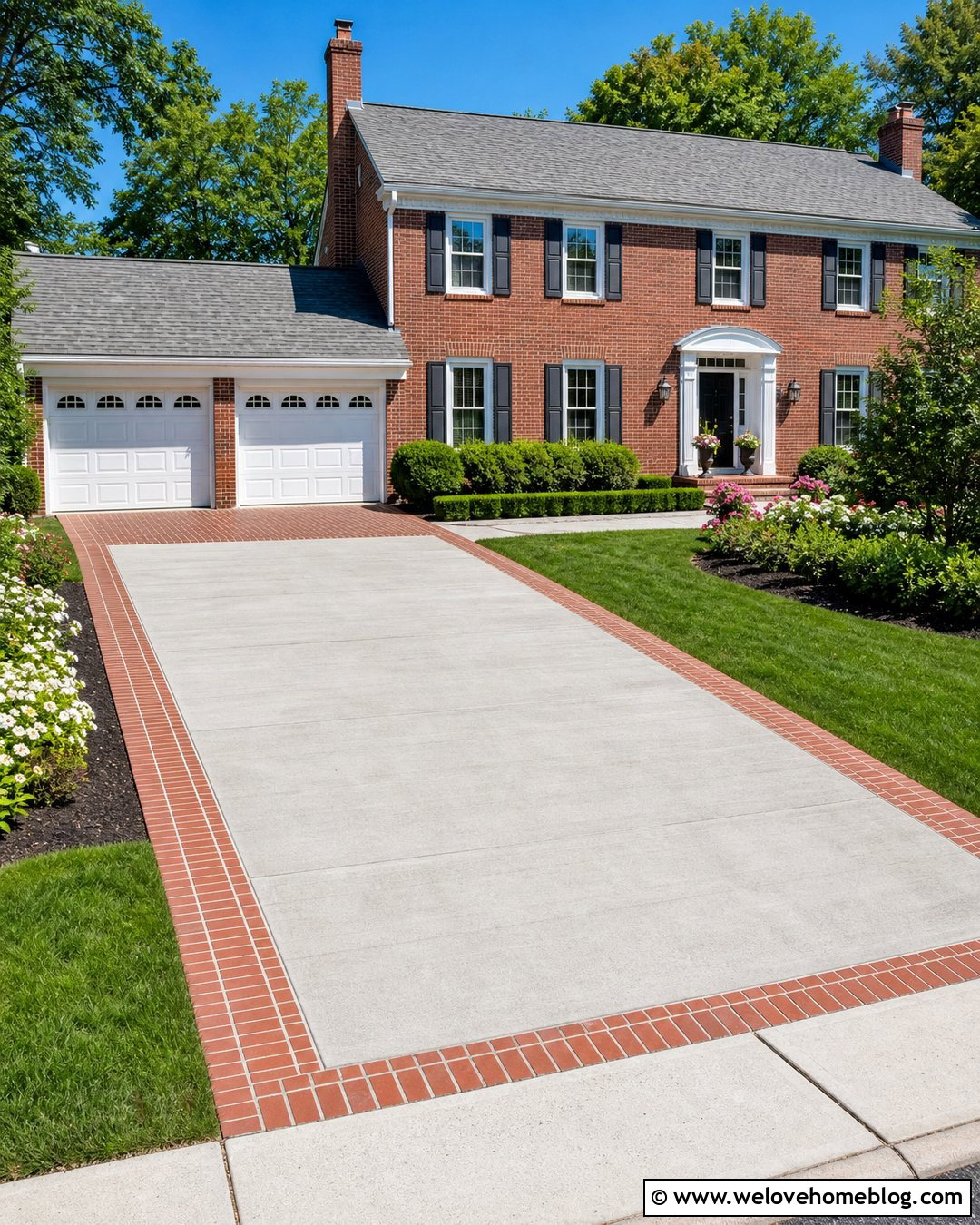
A full brick border gives an ordinary concrete driveway a crisp, intentional frame. Start with light gray broom-finished concrete and install one or two rows of red clay brick along both edges. A soldier-course layout, with each brick placed perpendicular to the driveway, creates a strong outline that is easy to see from the street. Continue the brick around the garage apron so the entire surface feels connected. For landscaping, add narrow planting beds with boxwood, ornamental grasses, or flowering perennials beyond the brick. This arrangement suits a colonial, Cape Cod, or traditional brick home. Keep the brick flush with the concrete to create a smoother transition for tires, lawn equipment, and foot traffic.
2. Concrete Driveway With Brick Apron
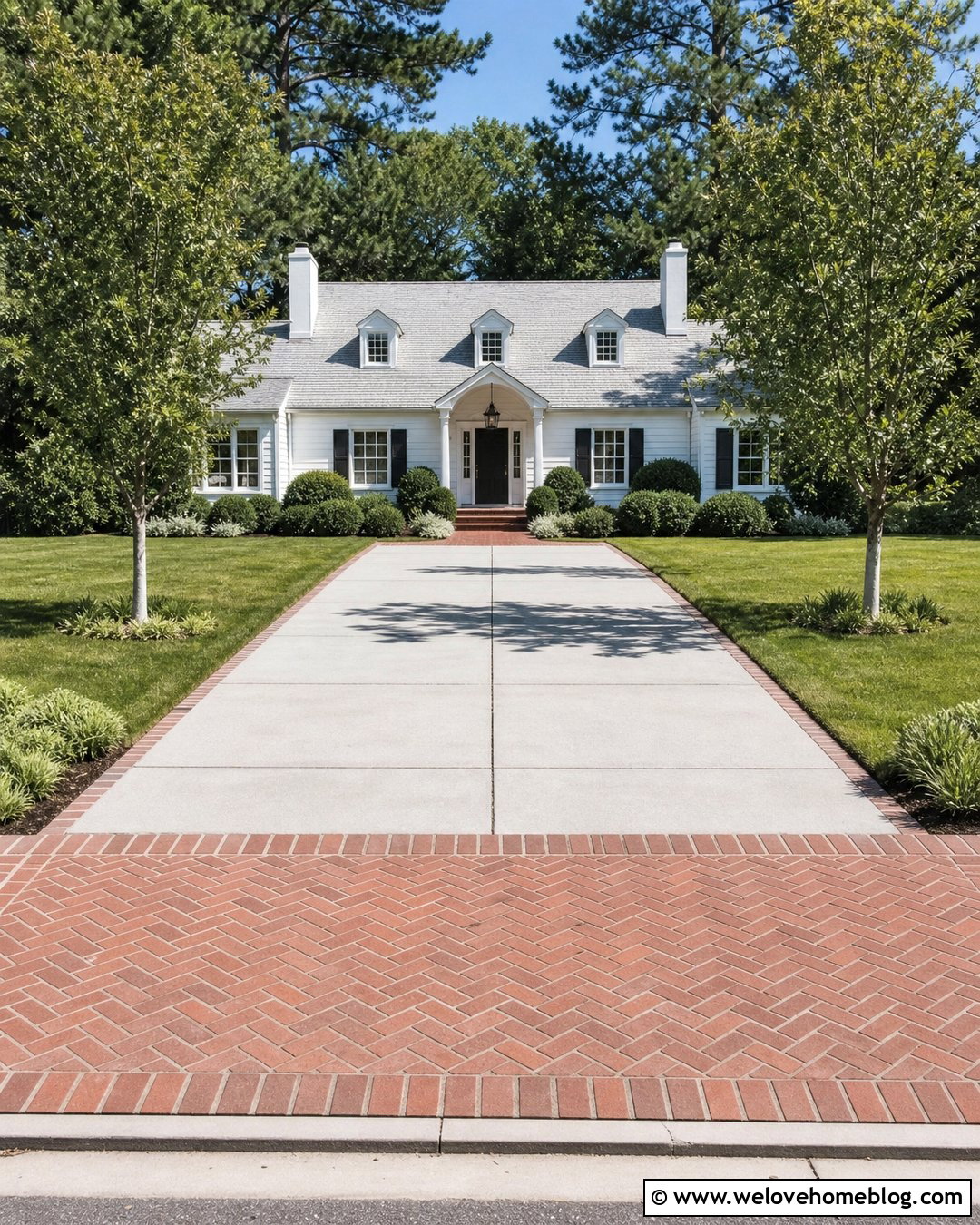
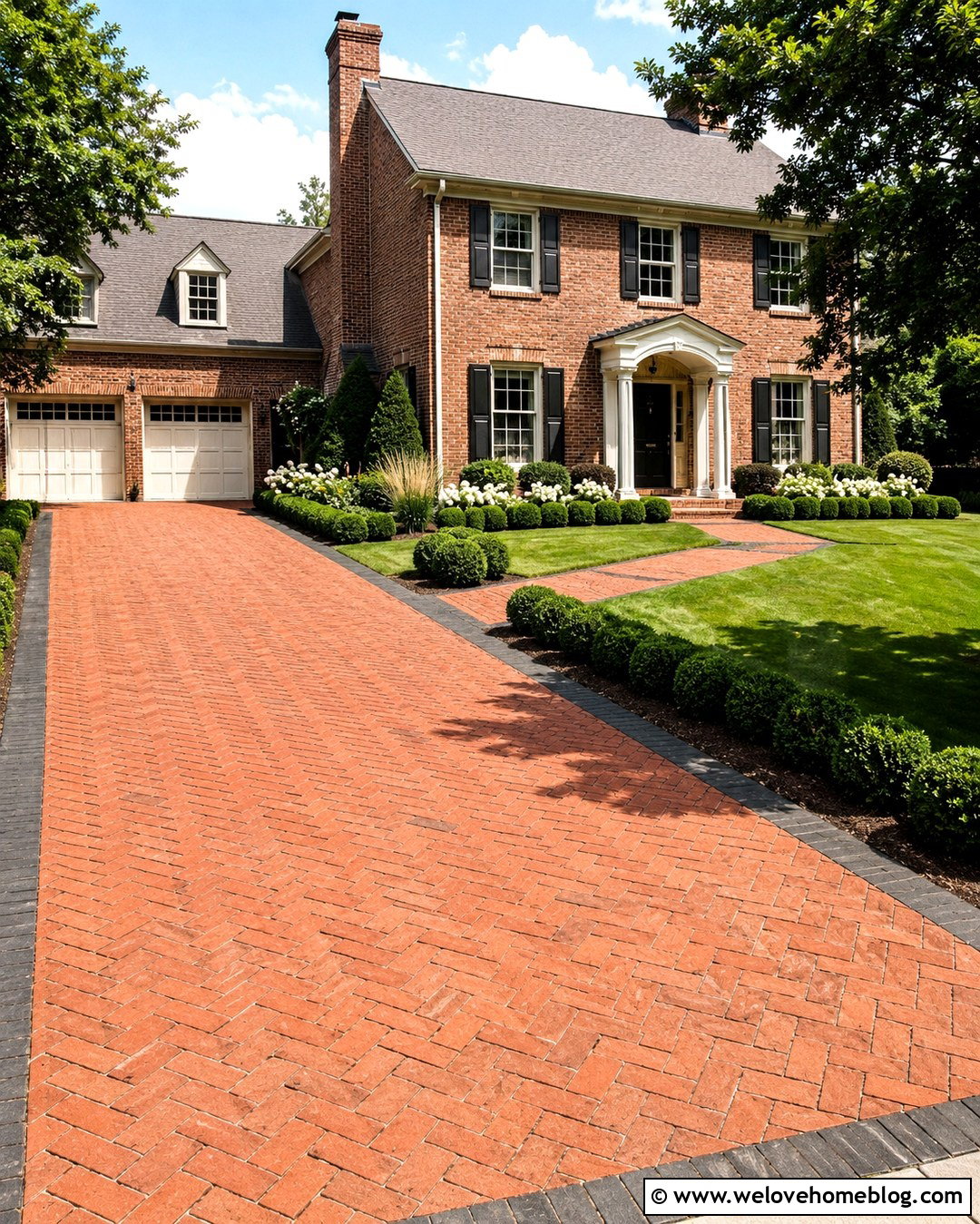
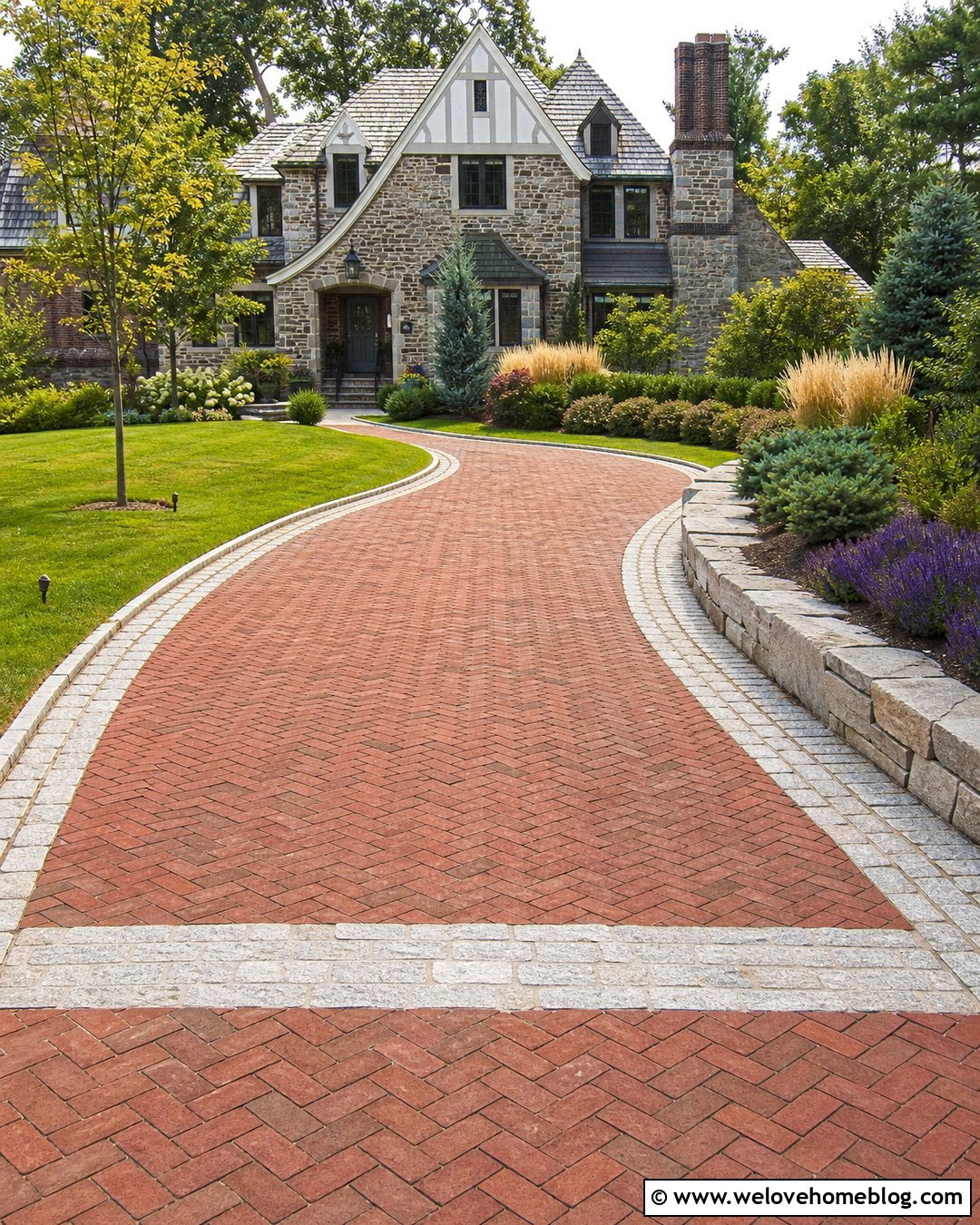
The street entrance is a natural place to make the brick inlay more noticeable. Pair a simple poured concrete driveway with a wide brick apron extending several feet inward from the curb. Herringbone clay brick creates attractive movement, while a straight soldier-course edge keeps the transition neat. Choose brick that matches the home’s chimney, porch floor, or exterior walls. Low evergreen shrubs can mark both corners without blocking sightlines near the road. A matching brick walkway leading from the apron toward the front door will strengthen the overall design. Because the decorative material is concentrated at the entrance, this look delivers substantial curb appeal while keeping most of the driveway straightforward, restrained, and easy to coordinate.
3. Concrete Driveway With Brick Bands
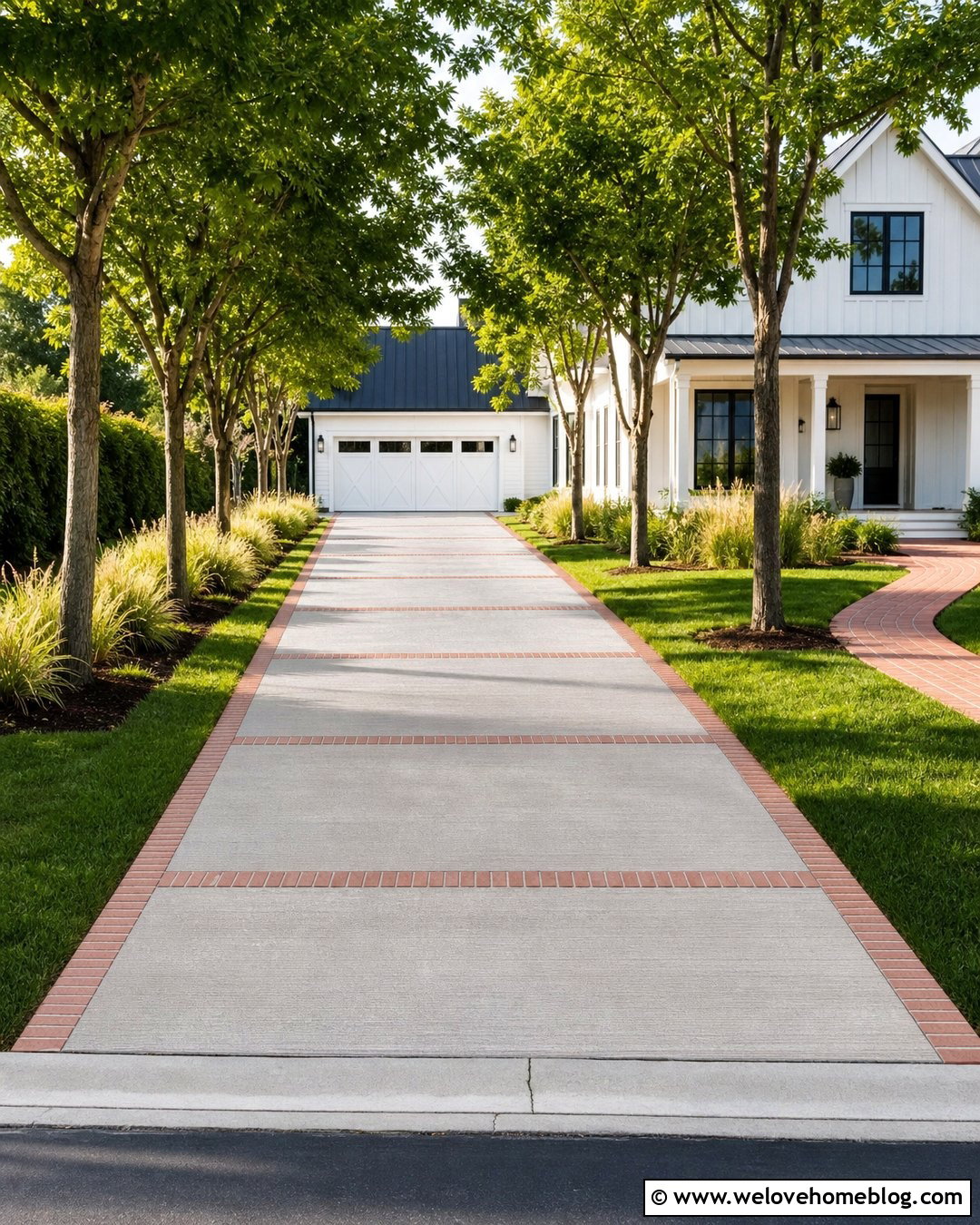
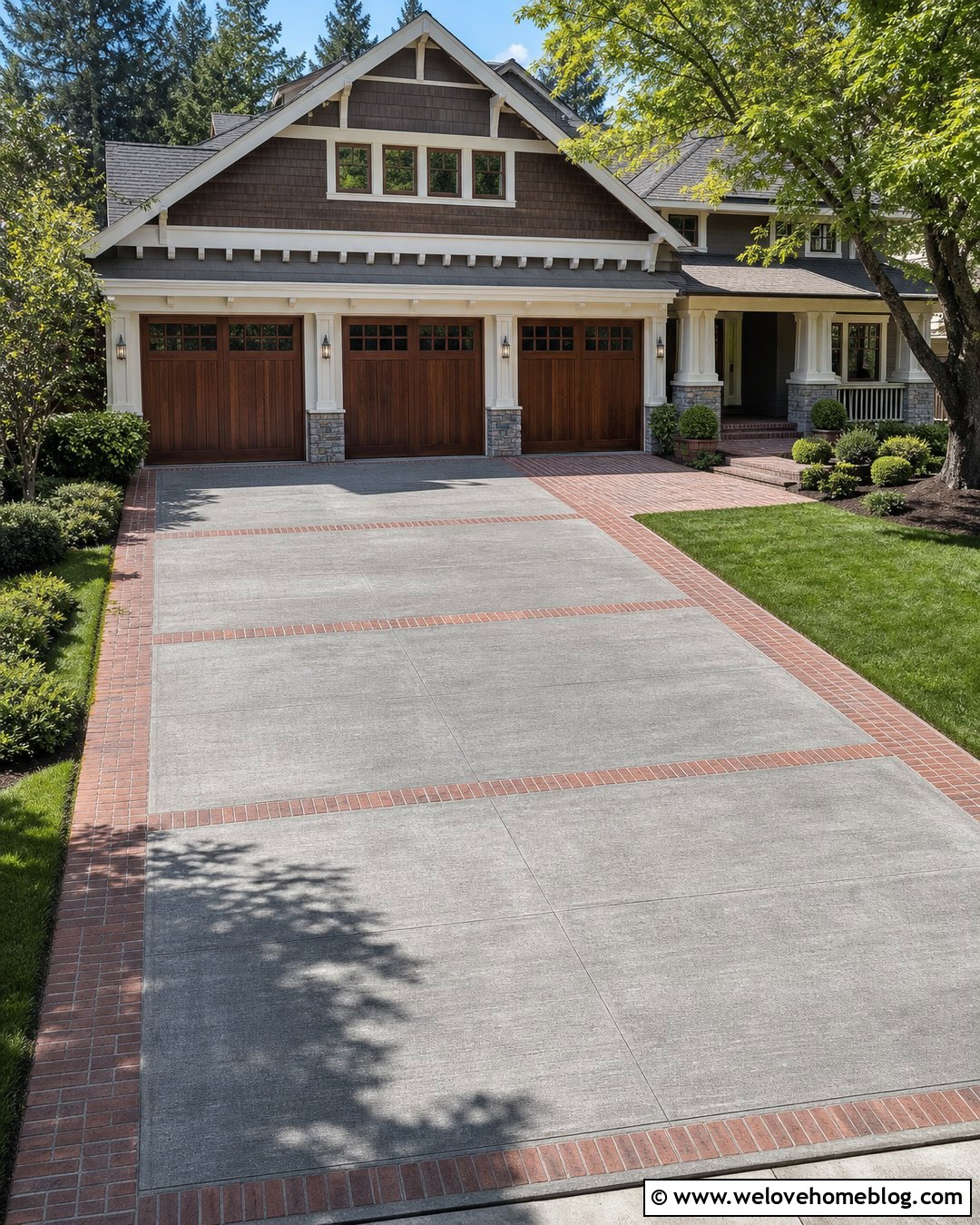
Brick bands can divide a long concrete driveway into smaller visual sections. Place narrow bands across the full width at regular intervals, using running-bond or soldier-course brick. These lines can coordinate with planned concrete joints, helping functional divisions appear like part of the design rather than an afterthought. Contrasting bands are also useful for giving broad concrete fields more definition. () Warm red brick looks classic against pale gray concrete, while brown or charcoal brick creates a quieter effect. Frame the driveway with lawn, low hedges, and evenly spaced trees to reinforce the repeating rhythm. This complete look works especially well for a long driveway leading to a ranch, farmhouse, or detached garage.
4. Concrete Driveway With Herringbone Brick Inlay
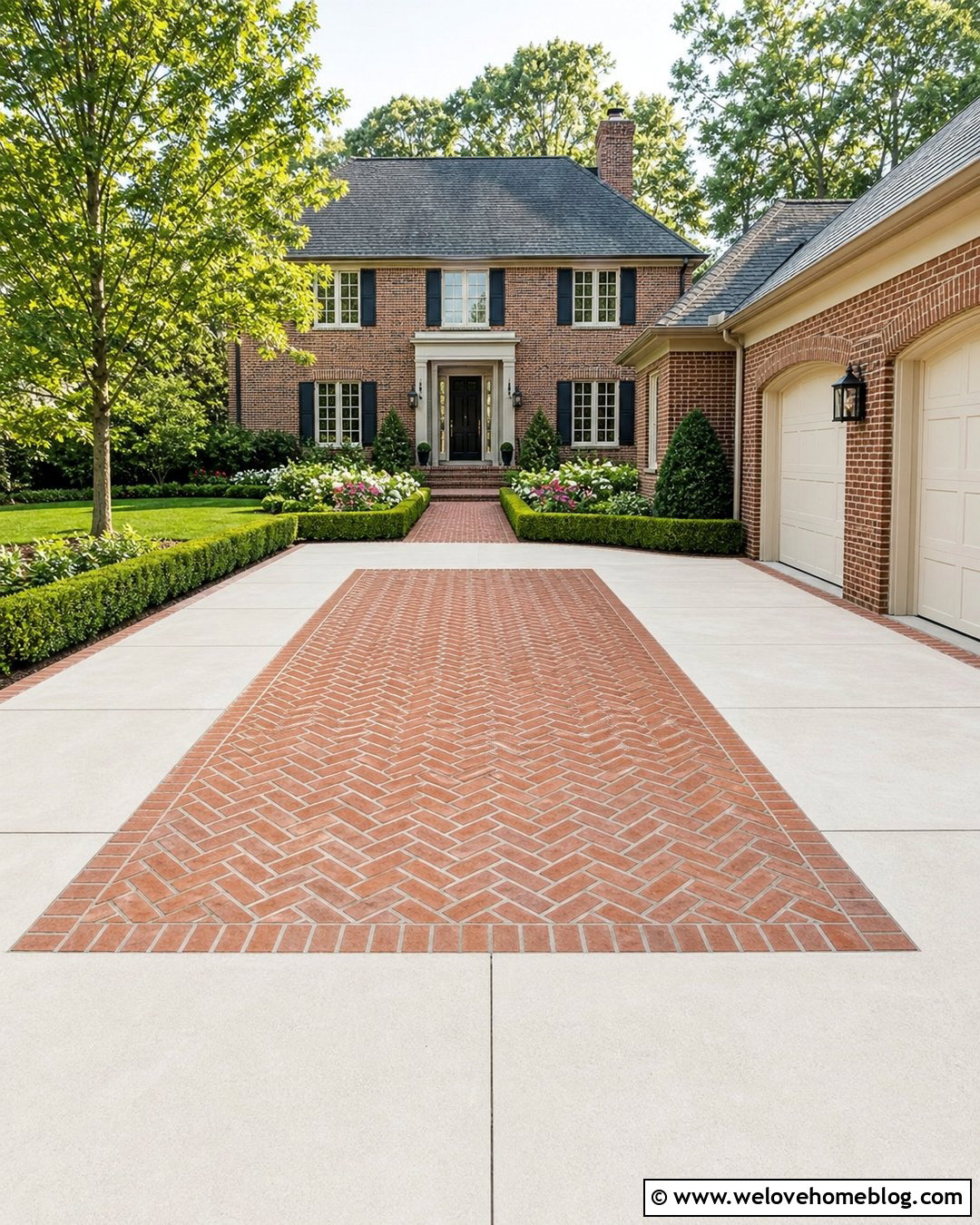
A herringbone inlay gives the driveway a detailed focal point without overwhelming the concrete. Use smooth or lightly broom-finished concrete around a rectangular herringbone brick panel positioned near the garage, turnaround, or front entry. The interlocking pattern is particularly appropriate for areas where vehicles turn because its diagonal arrangement handles directional movement well. () Add a soldier-course brick frame around the panel to create a clean boundary between materials. Deep red clay brick pairs naturally with warm white concrete and a traditional home. For a more contemporary result, use charcoal brick with medium-gray concrete. Balanced foundation shrubs, a paved walkway, and simple lawn borders will prevent the patterned area from appearing isolated.
5. Concrete Driveway With Basketweave Brick Inlay
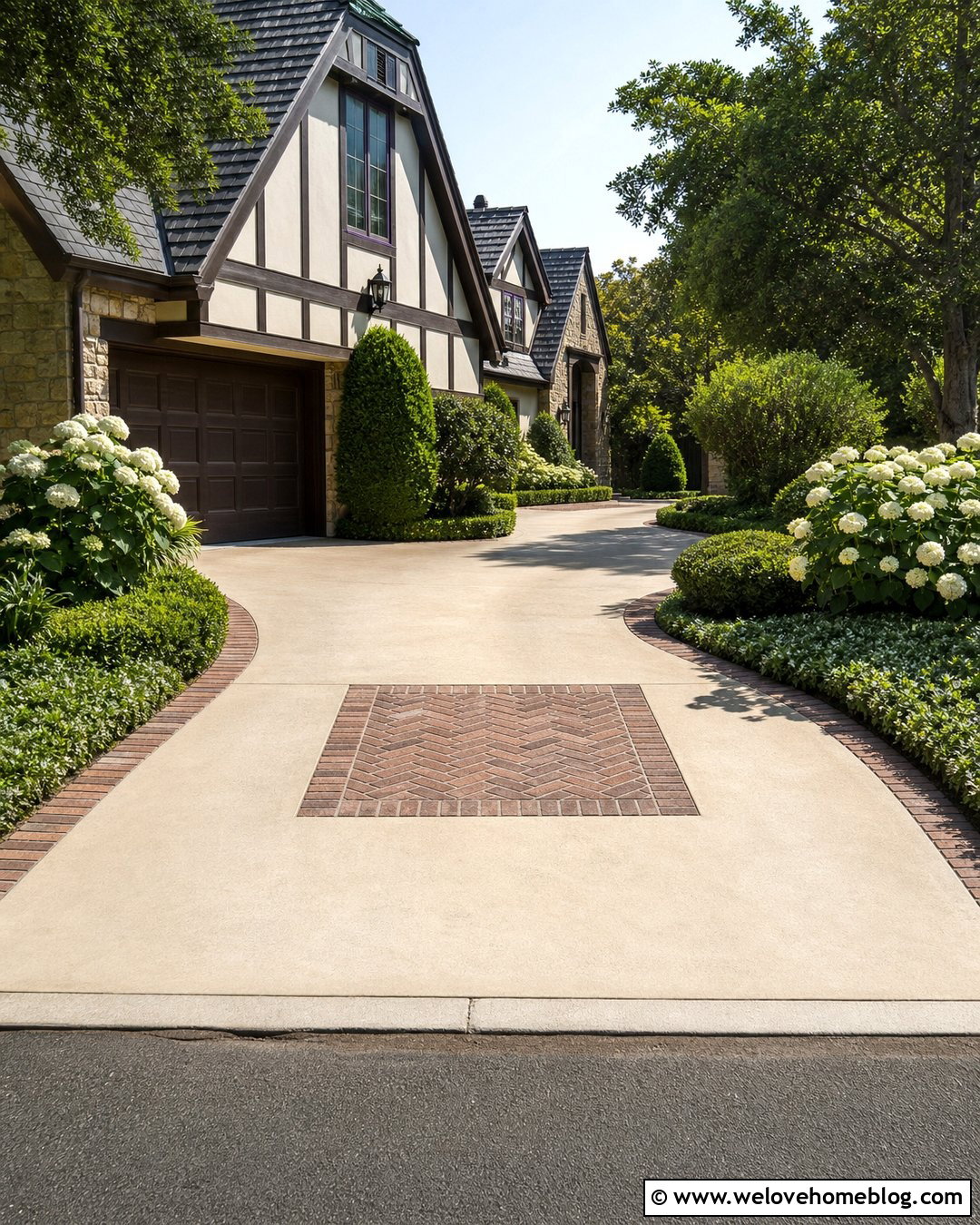
Basketweave brick brings a structured, traditional pattern to a concrete driveway. It works best as a broad central panel, a garage apron, or a rectangular accent placed where the driveway meets the front walkway. Surround the basketweave field with a straight brick border so the pattern finishes cleanly against the concrete. Buff-colored concrete and weathered red brick create a softer, established appearance that complements Tudor, colonial, and cottage homes. Repeat the brick around nearby planting beds or porch steps to make the combination feel deliberate. Curved beds filled with hydrangeas, compact evergreens, and ground cover can soften the straight geometry. Limit the inlay to one prominent location, allowing the woven pattern to remain a distinctive focal feature.
6. Concrete Driveway With Running Bond Brick Inlay
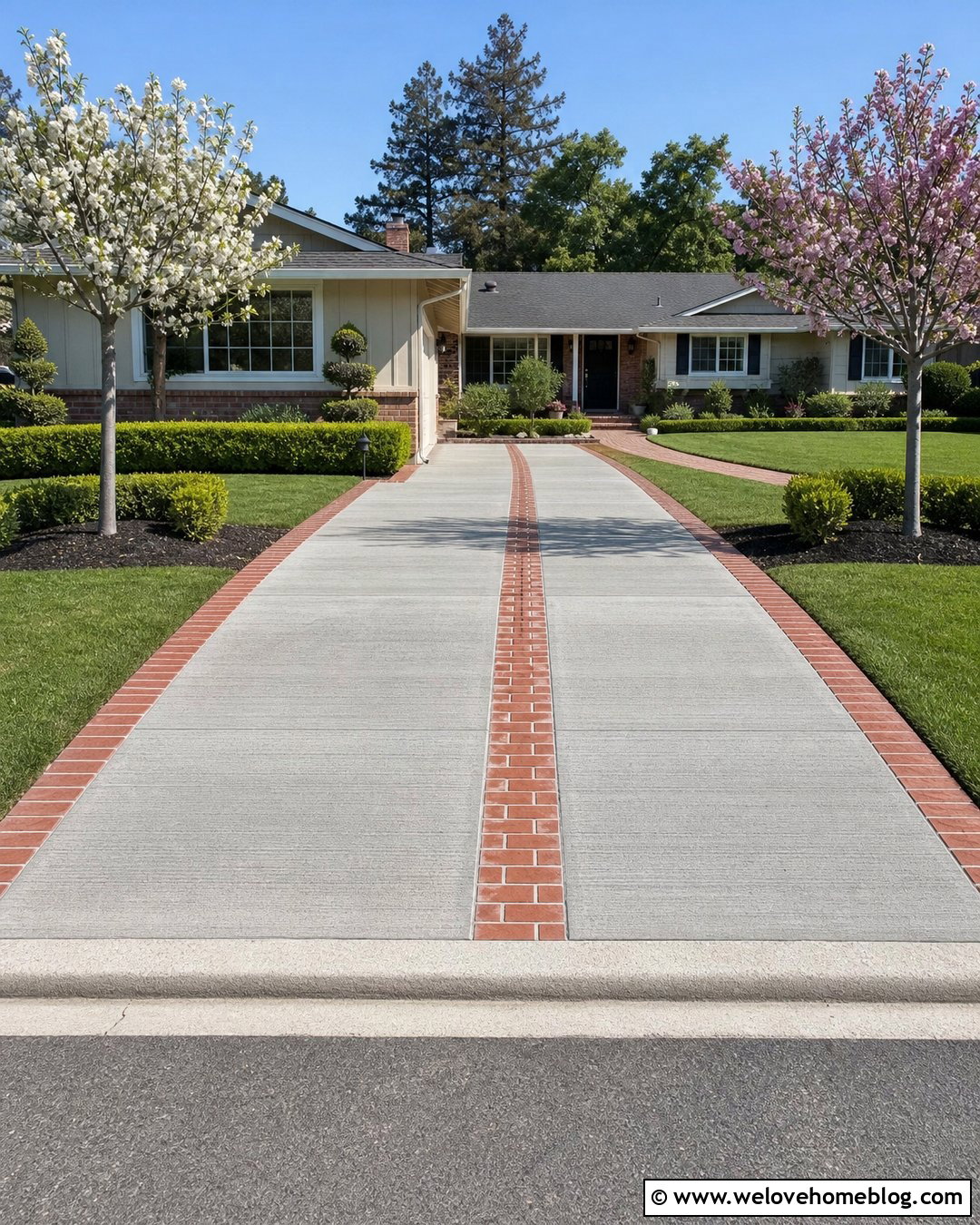
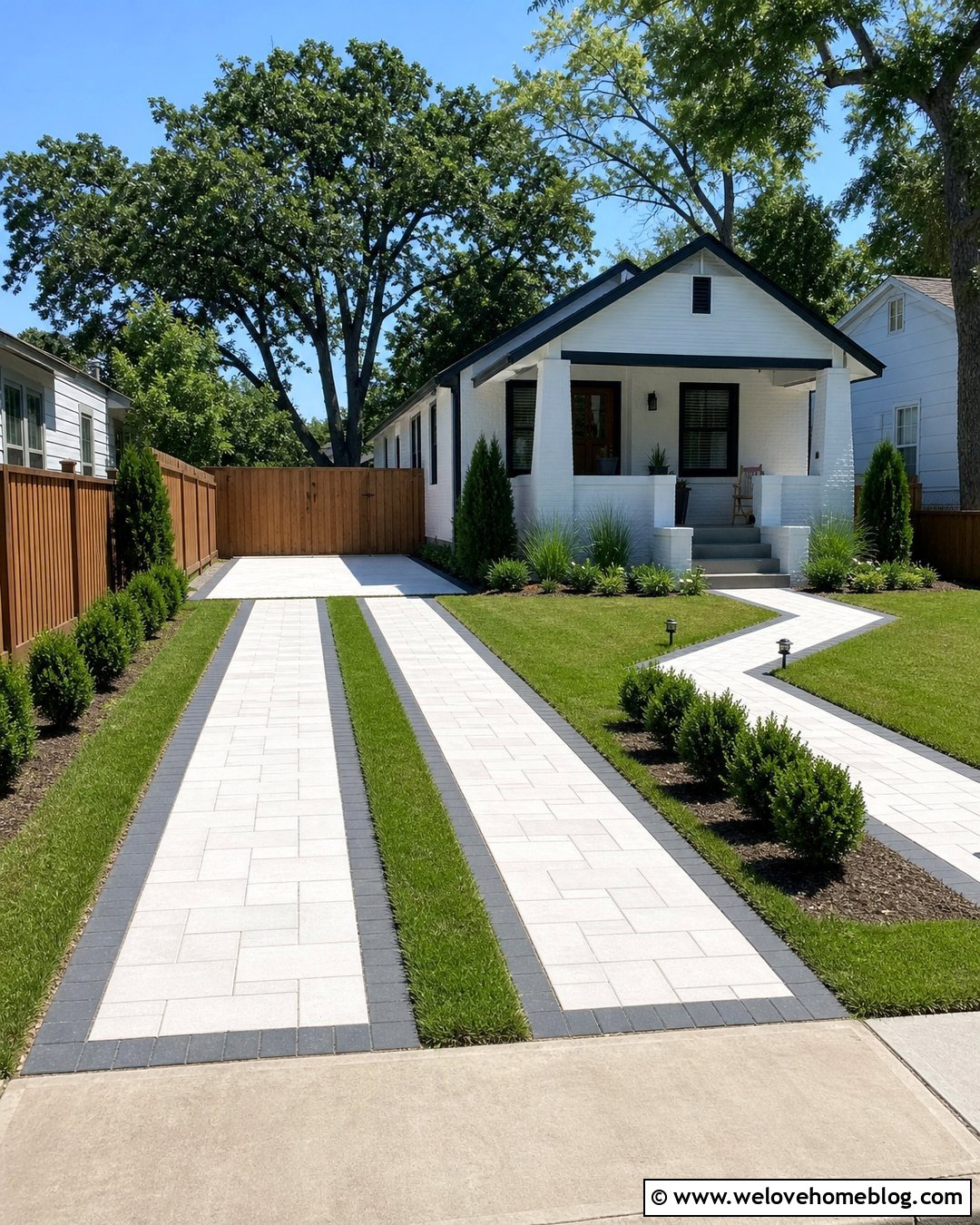
Running-bond brick has simple horizontal lines that work well with long, straight driveways. Install a narrow center ribbon that leads the eye toward the garage, then repeat the same pattern along the outer edges. This three-part arrangement makes a wide concrete surface feel organized without introducing a busy design. Traditional red brick creates strong contrast against cool gray concrete, while tan brick offers a subtle transition beside beige siding or natural stone. Keep the surrounding landscape equally streamlined with rectangular beds, clipped shrubs, and a straight walkway. A running-bond inlay is also useful for connecting the driveway visually to a brick front path. The result feels familiar, balanced, and adaptable to many common suburban house styles.
7. Curved Concrete Driveway With Brick Inlay
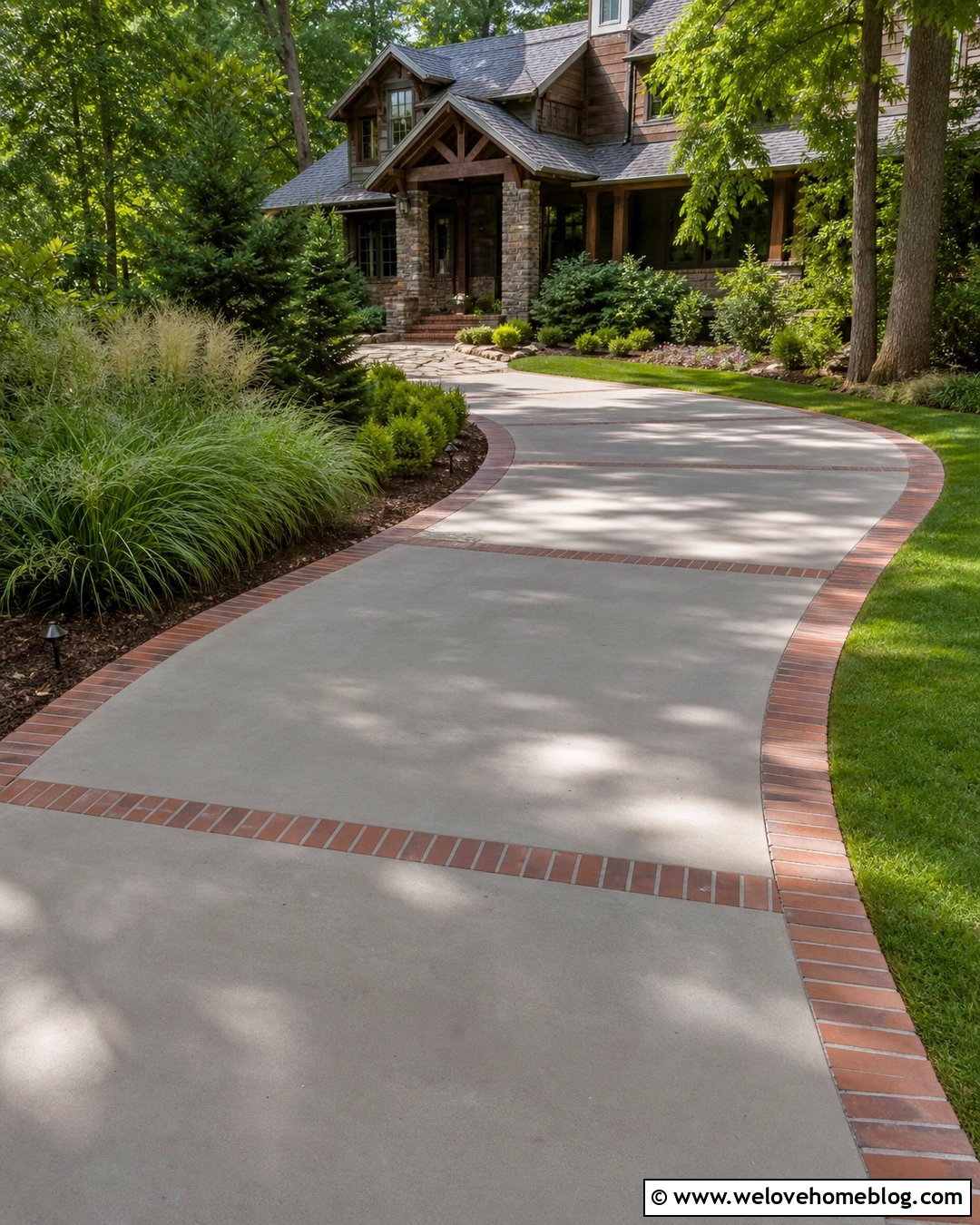
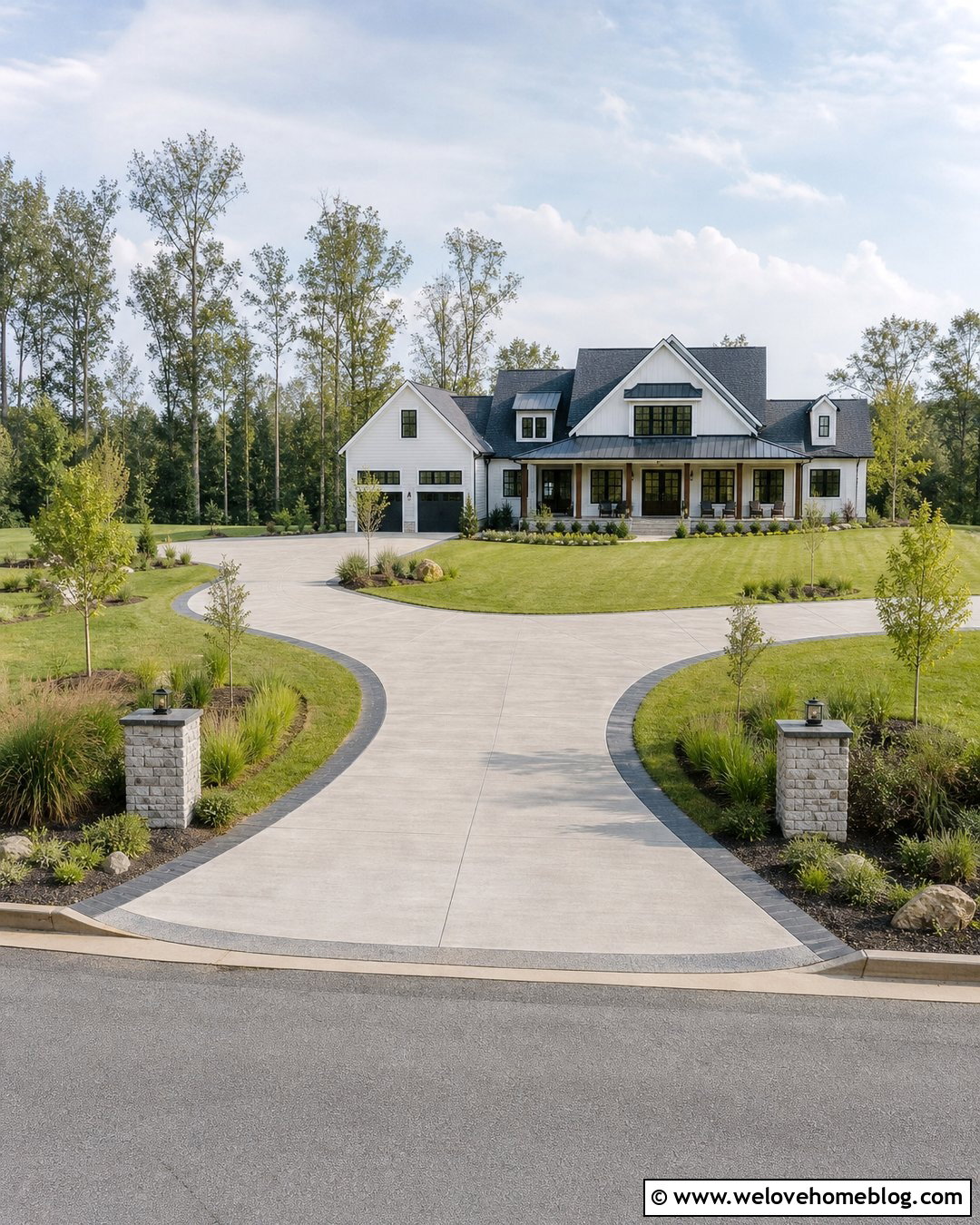
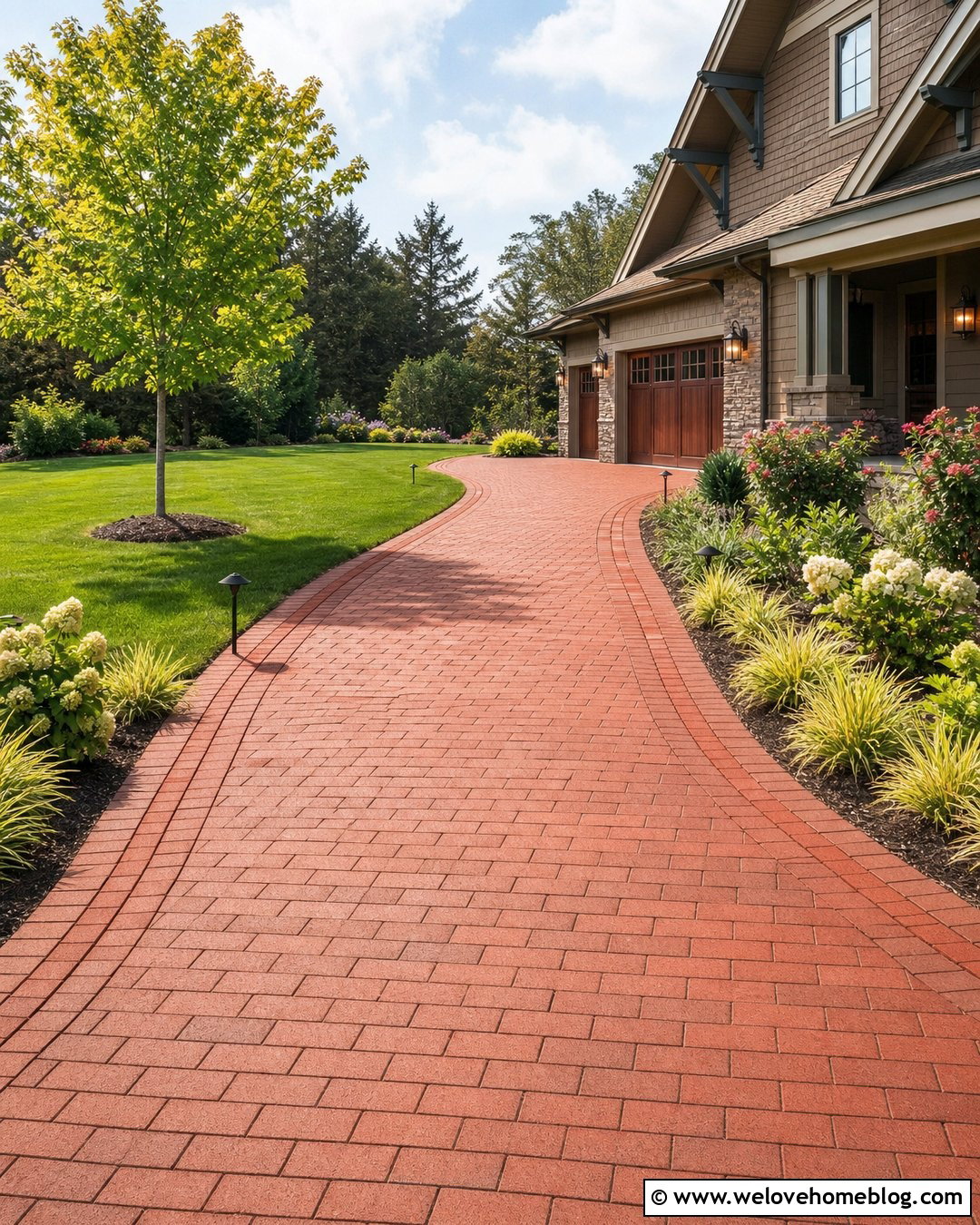
Brick can emphasize the graceful path of a curved concrete driveway. Use a continuous brick ribbon along the inside and outside edges, keeping the courses smooth and evenly spaced as they follow the bend. Add two or three curved brick bands across the concrete to prevent a long sweep from feeling empty. Warm gray concrete with muted red or brown brick suits a craftsman, ranch, or wooded country home. Place layered planting beds along the outer curve, using small trees, evergreen shrubs, and ornamental grasses to frame the approach. On the inside curve, maintain a broad lawn or low ground cover to preserve visibility. The repeated brick lines help the driveway shape read clearly from the curb.
8. Circular Concrete Driveway With Brick Inlay
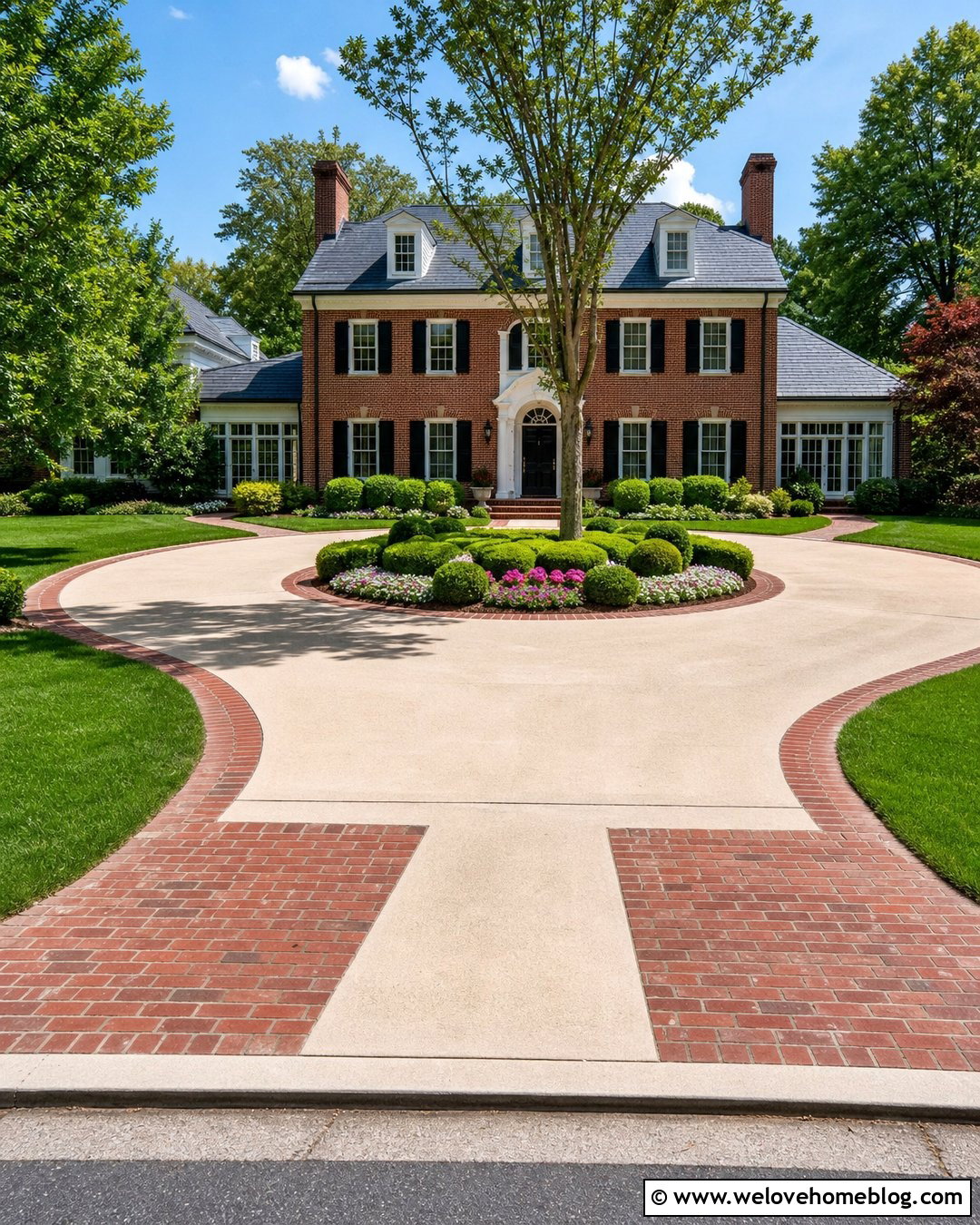
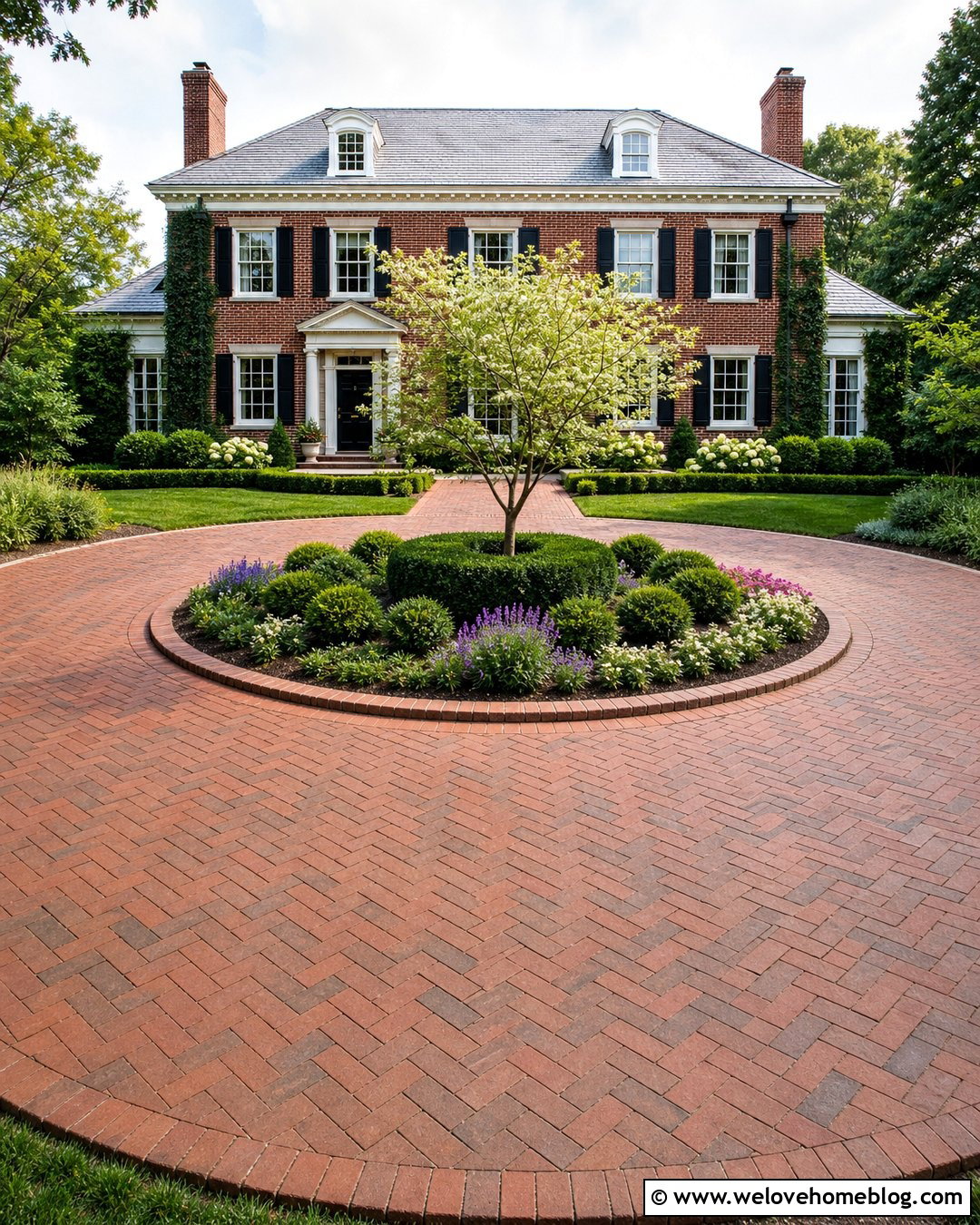
A circular driveway offers enough space for brick to become a major design feature. Frame both edges of the concrete loop with clay brick, then add a wide brick band around the center island. This creates three coordinated lines that define the circular layout. A brick apron at each street entrance can strengthen the effect and make both entry points feel finished. Fill the center island with a specimen tree, low shrubs, and seasonal flowers that will not obstruct the view of the house. Light buff concrete and traditional red brick suit a colonial or Georgian facade. For a calmer palette, combine medium-gray concrete with brown brick and restrained evergreen landscaping around a contemporary ranch home.
9. Modern Concrete Driveway With Charcoal Brick Inlay
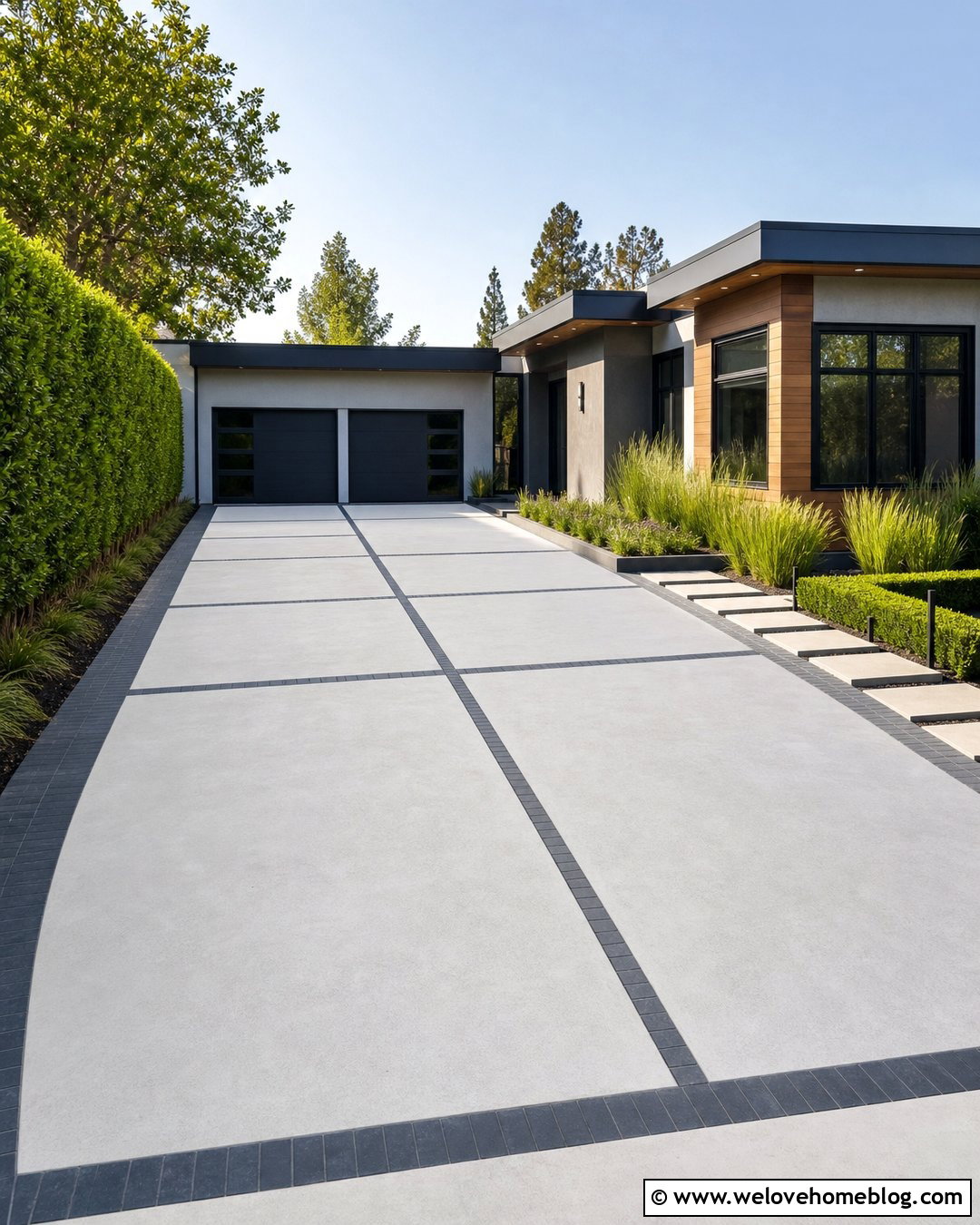
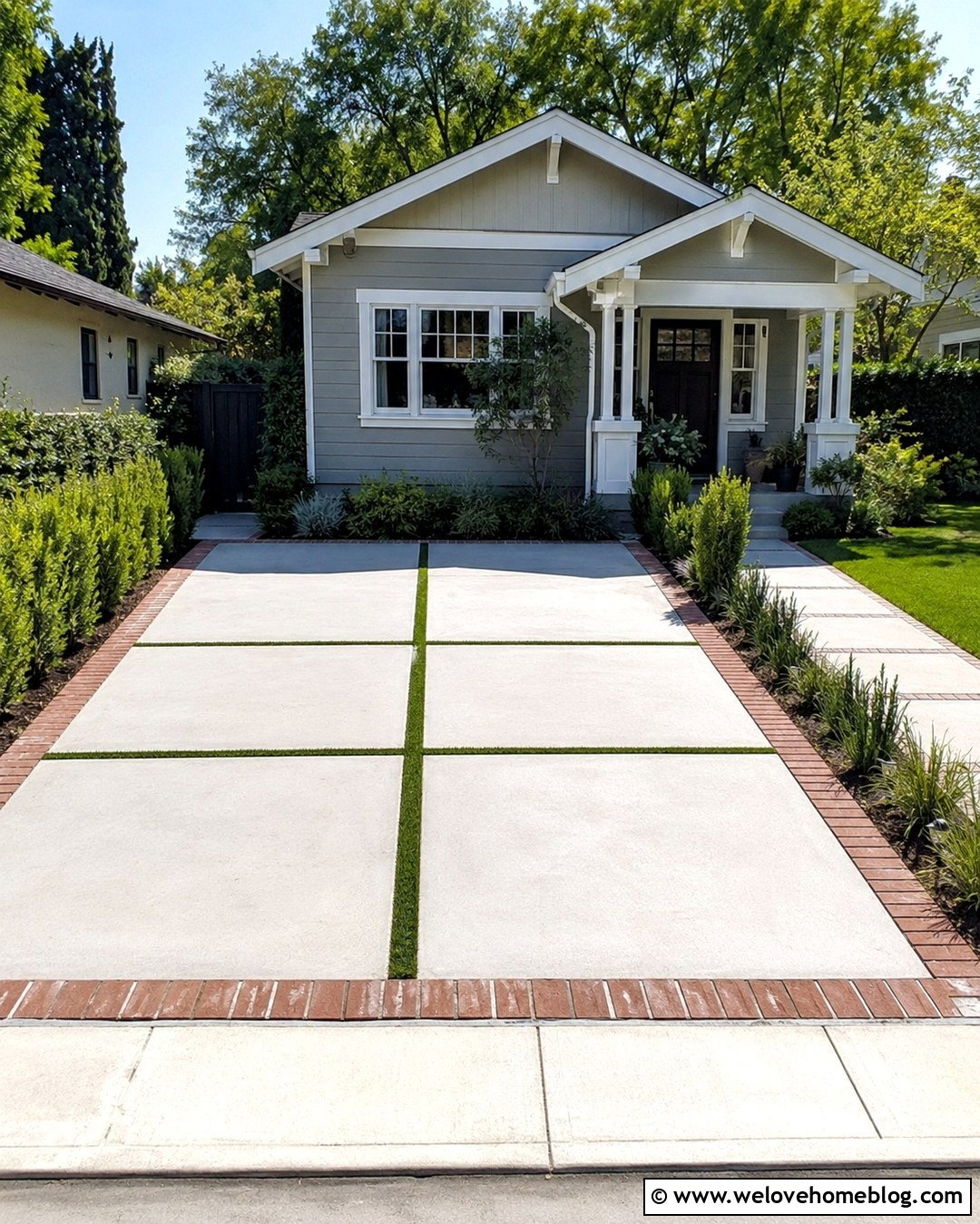
Clean geometry can make brick feel surprisingly modern. Divide large, smooth concrete slabs with narrow charcoal brick ribbons placed lengthwise and across the driveway. Keep the lines straight, symmetrical, and aligned with the garage doors or architectural grid of the house. Light gray concrete provides enough contrast for the dark brick to stand out without becoming overly dramatic. Use a flush brick border rather than a raised edge to maintain the sleek profile. The surrounding landscape should repeat the same disciplined approach through rectangular beds, architectural grasses, clipped hedges, and a simple concrete walkway. This design works particularly well with a flat-roofed modern home, black-framed windows, and a neutral facade containing wood, stucco, or stone accents.
10. White Concrete Driveway With Red Brick Inlay
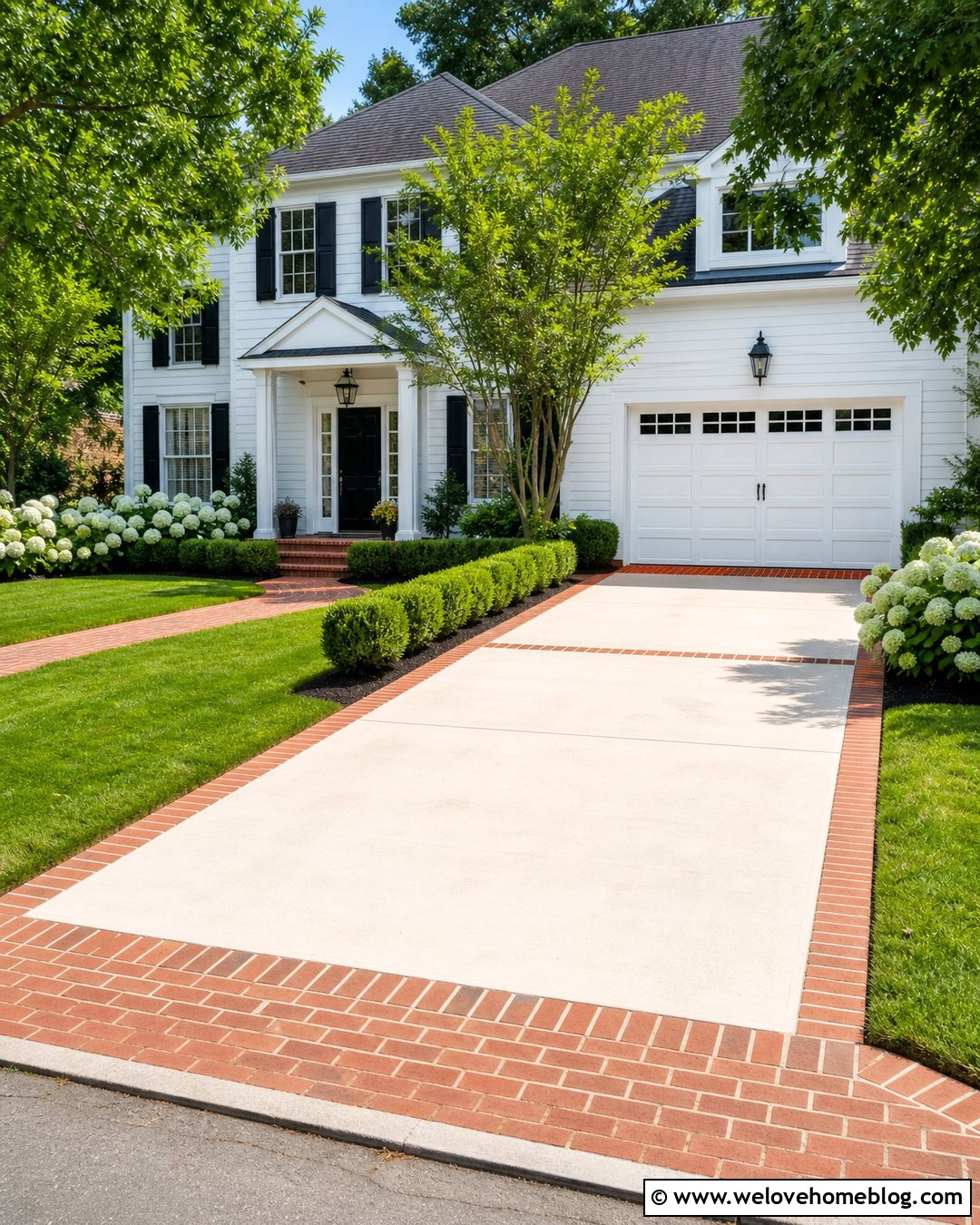
Bright concrete and rich red brick create a fresh, high-contrast entrance. Choose warm white or pale cream concrete rather than a stark blue-white tone, especially when the home has traditional brick details. Frame the driveway with a single soldier course, then add a brick apron at the garage and a matching band near the sidewalk. The repeated red accents will connect the street, parking surface, and house. Green lawn and clipped boxwood provide a clean color balance, while white flowering shrubs soften the edges. This combination looks especially natural with a white colonial, painted-brick home, or classic farmhouse. Before committing, compare actual material samples outdoors because sunlight can make the contrast appear stronger than it does on a small sample board. ()
11. Exposed Aggregate Concrete Driveway With Brick Inlay

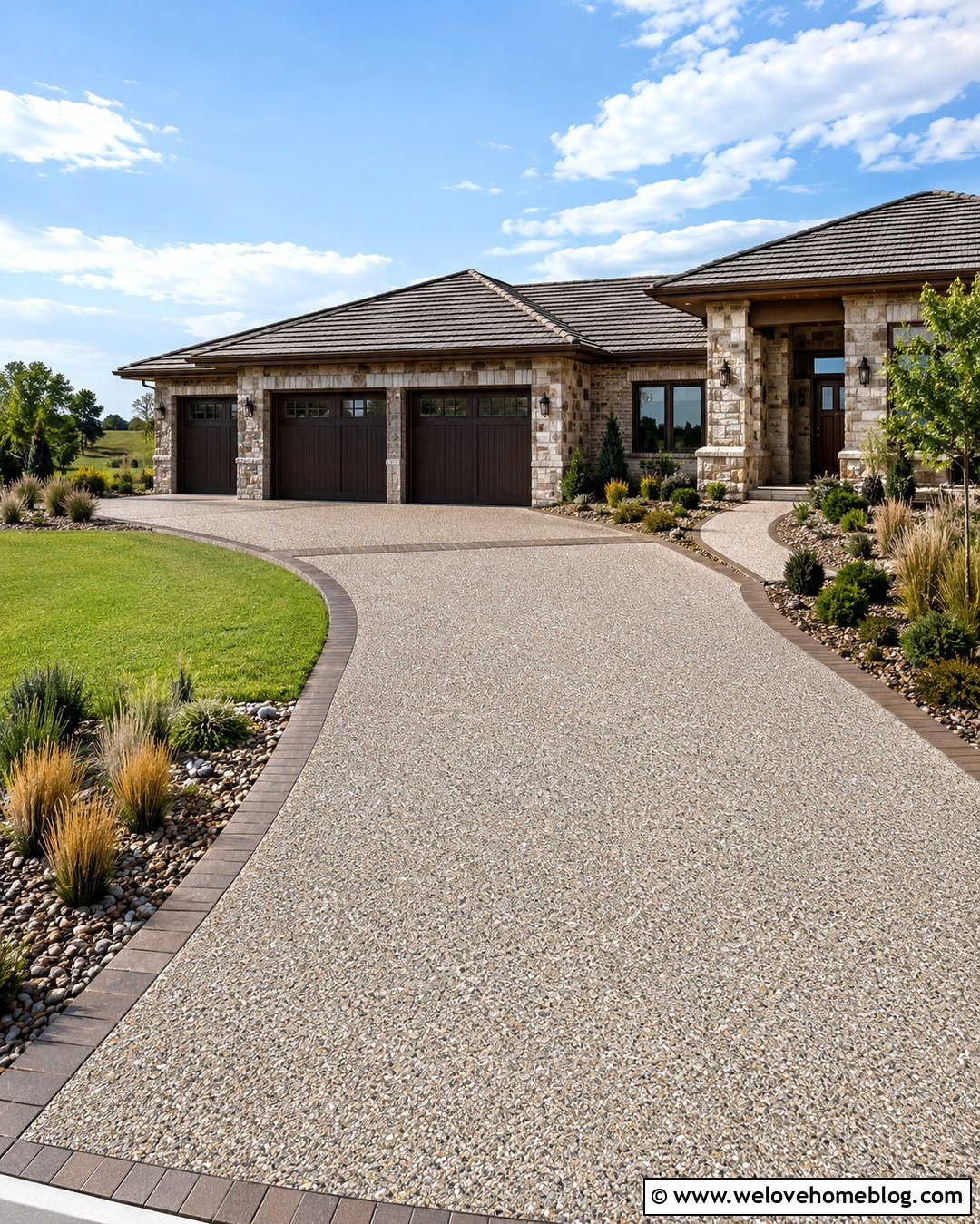
Exposed aggregate concrete provides texture, while brick adds a clear architectural outline. Select a fine aggregate mix in gray, tan, or cream and frame it with smooth clay brick. A double brick border will prevent the textured field from visually blending into nearby gravel, mulch, or planting beds. Add brick bands across the driveway at major transitions, such as the sidewalk, parking area, and garage entrance. Weathered brown or burgundy brick pairs especially well with warm aggregate containing beige stones. Continue the brick into a front walkway for a coordinated entrance. Around the driveway, use naturalistic grasses, small flowering trees, and stone mulch. The mix of rugged concrete texture and orderly masonry suits craftsman, ranch, and country properties.
12. Broom Finish Concrete Driveway With Brick Inlay
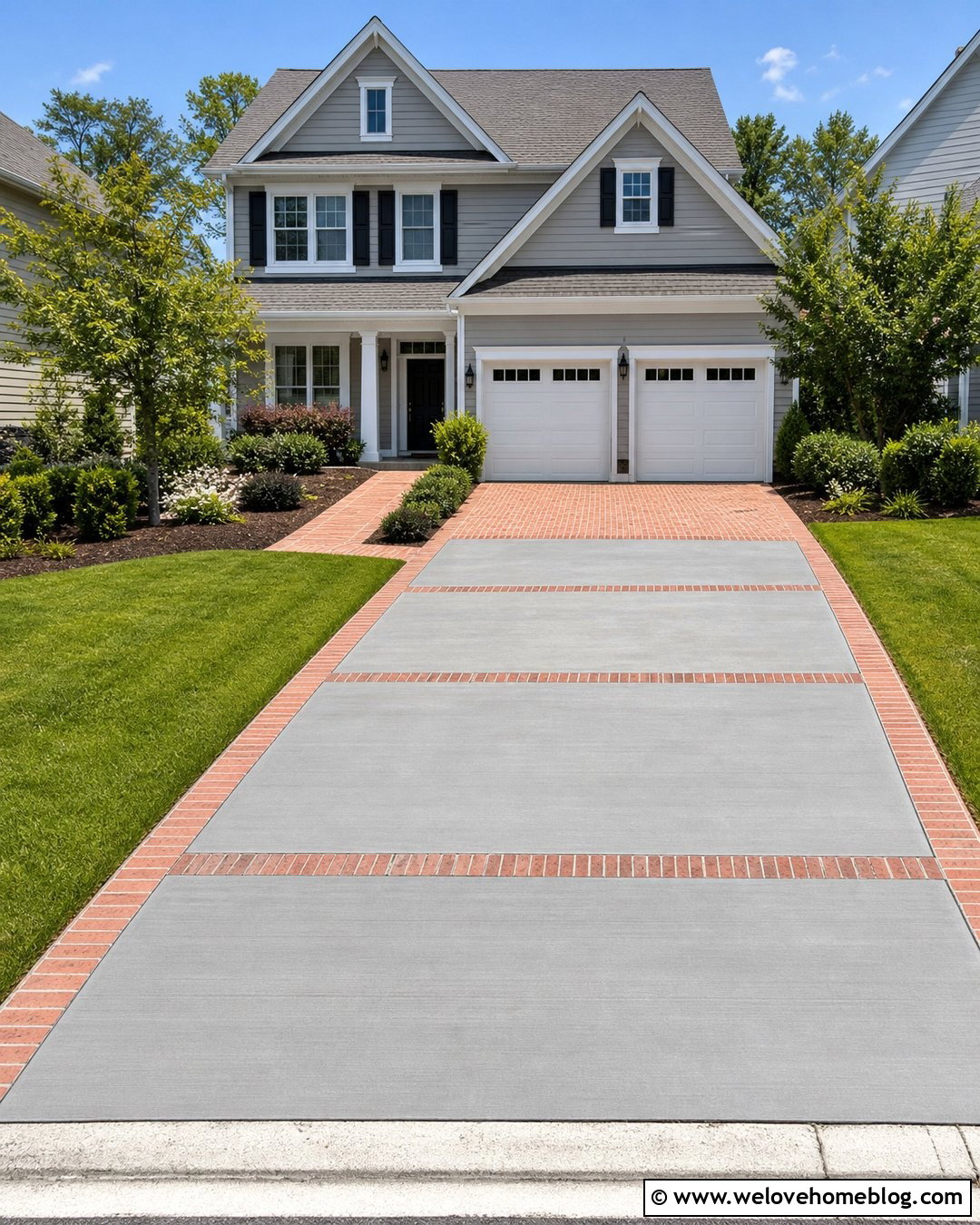
Broom-finished concrete makes an excellent neutral background for decorative brick. Its subtle linear texture keeps the surface practical while allowing the inlay to provide most of the visual interest. Use a medium-gray concrete field with a red brick perimeter, three cross bands, and a wider brick apron in front of the garage. Align the bands with concrete panel divisions to create an organized layout. For additional continuity, build the front walkway from the same brick used in the driveway. Simple lawn edges, foundation shrubs, and a pair of small ornamental trees will complete the setting without competing with the pattern. This approachable combination works with nearly any suburban home and offers a polished alternative to an uninterrupted concrete slab.
13. Stamped Concrete Driveway With Real Brick Inlay
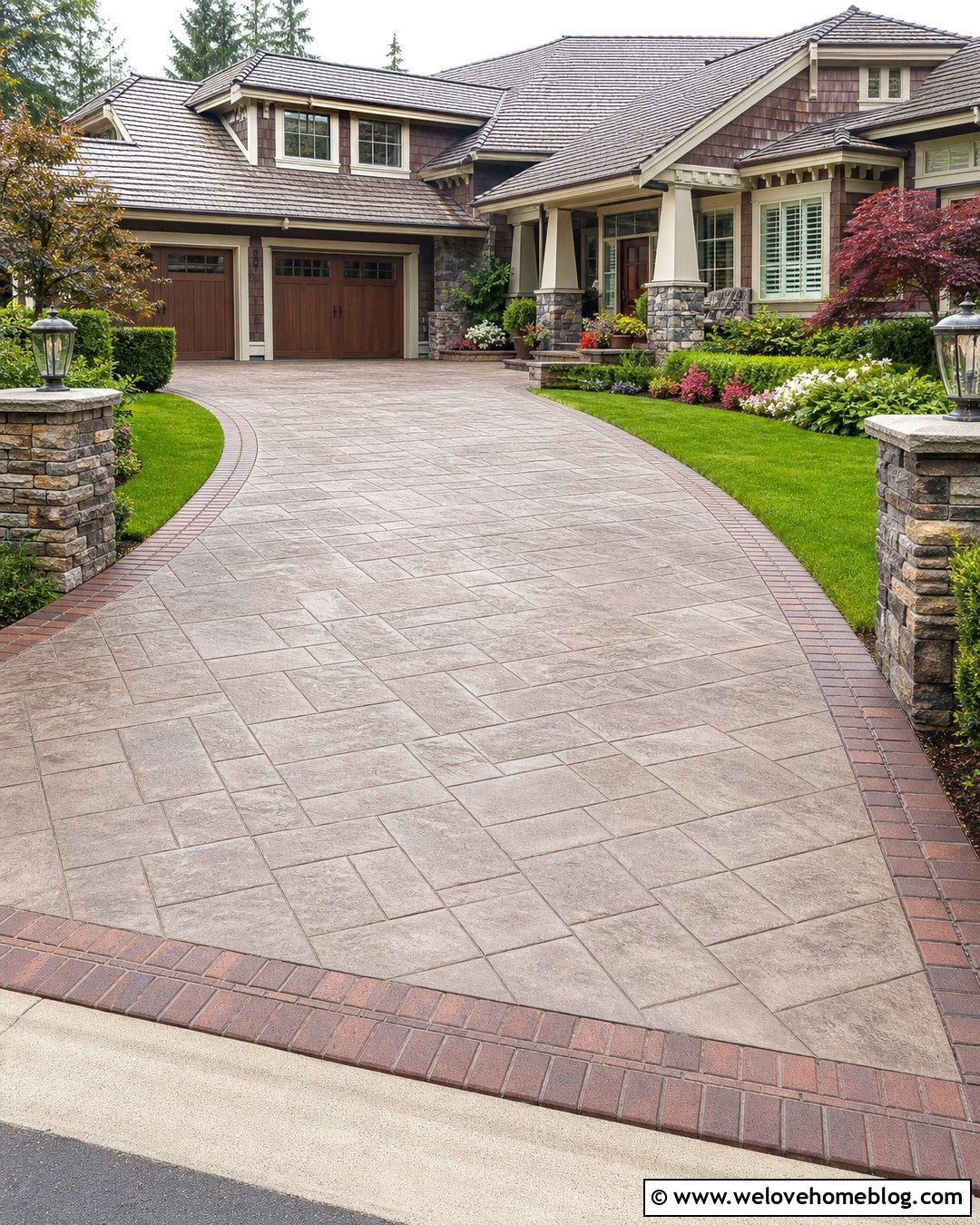
Combining stamped concrete with real brick creates a layered surface with noticeable depth and contrast. Choose a restrained stone-style stamp for the main field, such as large ashlar slate in soft gray or taupe. Frame it with smooth clay brick and add matching brick bands near the street and garage. The two patterns should remain visually distinct, so avoid using a concrete stamp that closely imitates small brick. A dark red border can warm a cool gray surface, while brown brick pairs well with tan stamped concrete. Surround the driveway with structured hedges, stone-faced pillars, and a simple walkway. This detailed look complements upscale craftsman, European-inspired, and traditional homes, especially when the brick repeats material already used on the facade.
14. Concrete Driveway With Brick Diamond Inlay
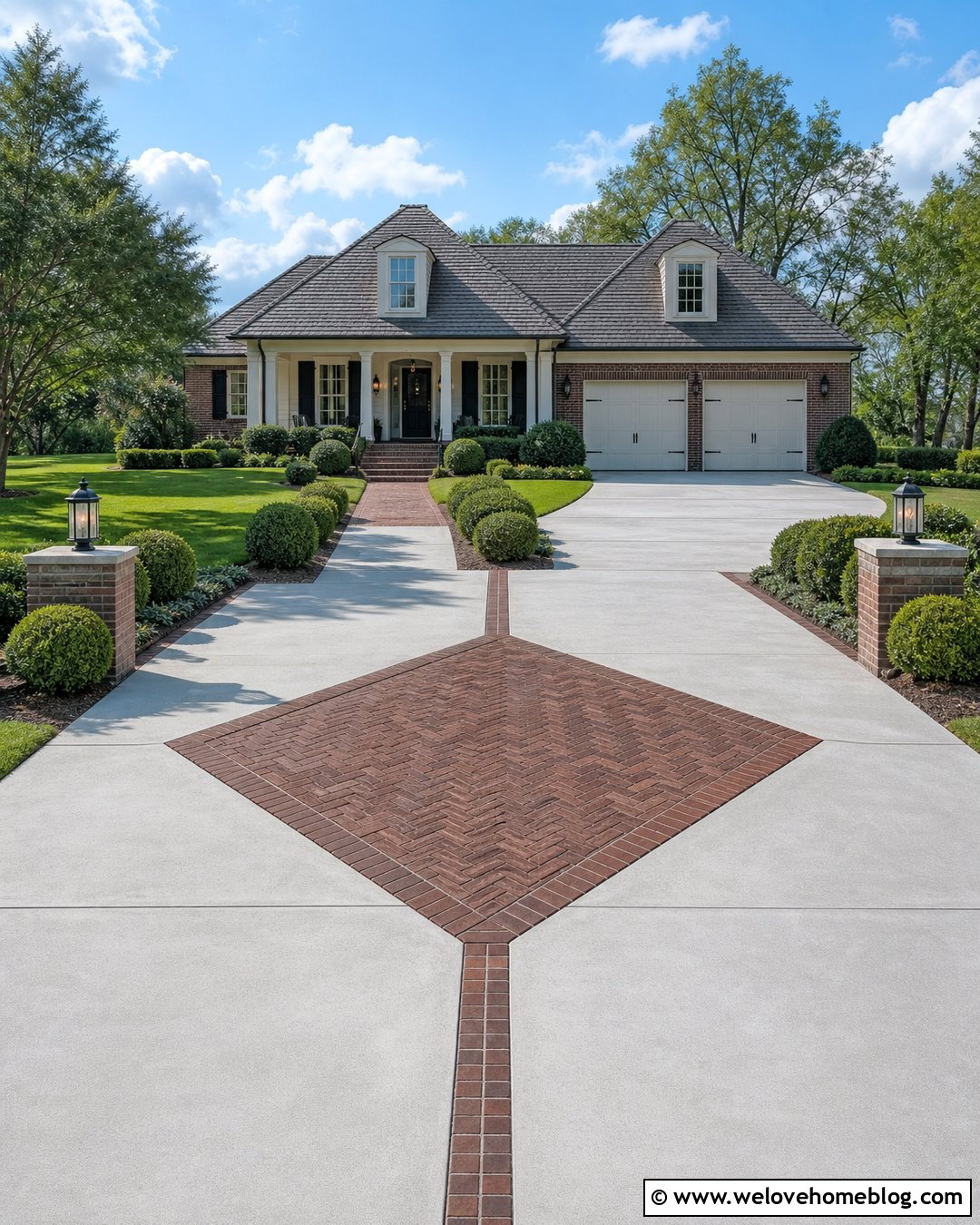
A brick diamond creates a centered focal point on a wide concrete driveway. Position it where the surface opens into a parking court or directly in front of a double garage. Fill the diamond with herringbone brick and outline it with a soldier-course frame. Add narrow brick bands extending from its corners or sides to connect it visually with the driveway border. The surrounding concrete should have a simple finish so the geometric centerpiece remains clear. Pale gray concrete and burgundy brick offer traditional contrast, while beige concrete and brown brick produce a softer appearance. Symmetrical planting beds, matching outdoor lights, and a centered front walkway will reinforce the balanced layout. This look works best where the complete diamond remains visible.
15. Concrete Driveway With Brick Center Strip
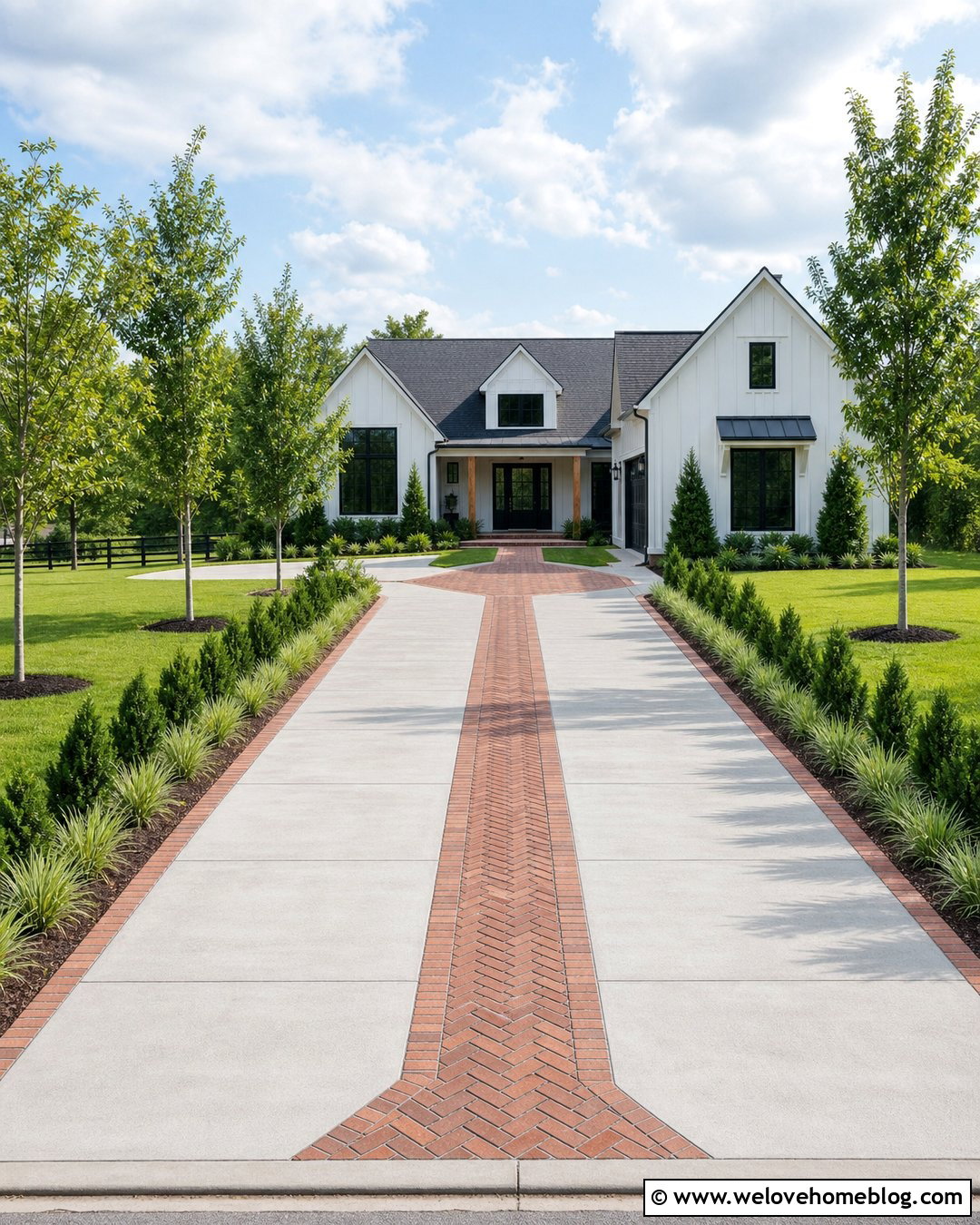
A brick center strip can transform a wide concrete driveway into two clearly defined driving lanes. Run a brick ribbon from the street apron toward the garage, widening it near the house to meet a brick walkway or parking court. A herringbone center strip creates energetic diagonal movement, while running bond feels calmer and more linear. Match the brick to the home’s porch, chimney, or foundation for a unified palette. Keep the outer driveway edges simple with flush concrete curbing or a single brick row. Narrow plantings of ornamental grasses and evergreen shrubs can frame both sides. This design is particularly effective for long approaches because the central line guides the eye directly toward the home and creates a strong sense of arrival.
16. Concrete Driveway With Brick Parking Pad Inlay
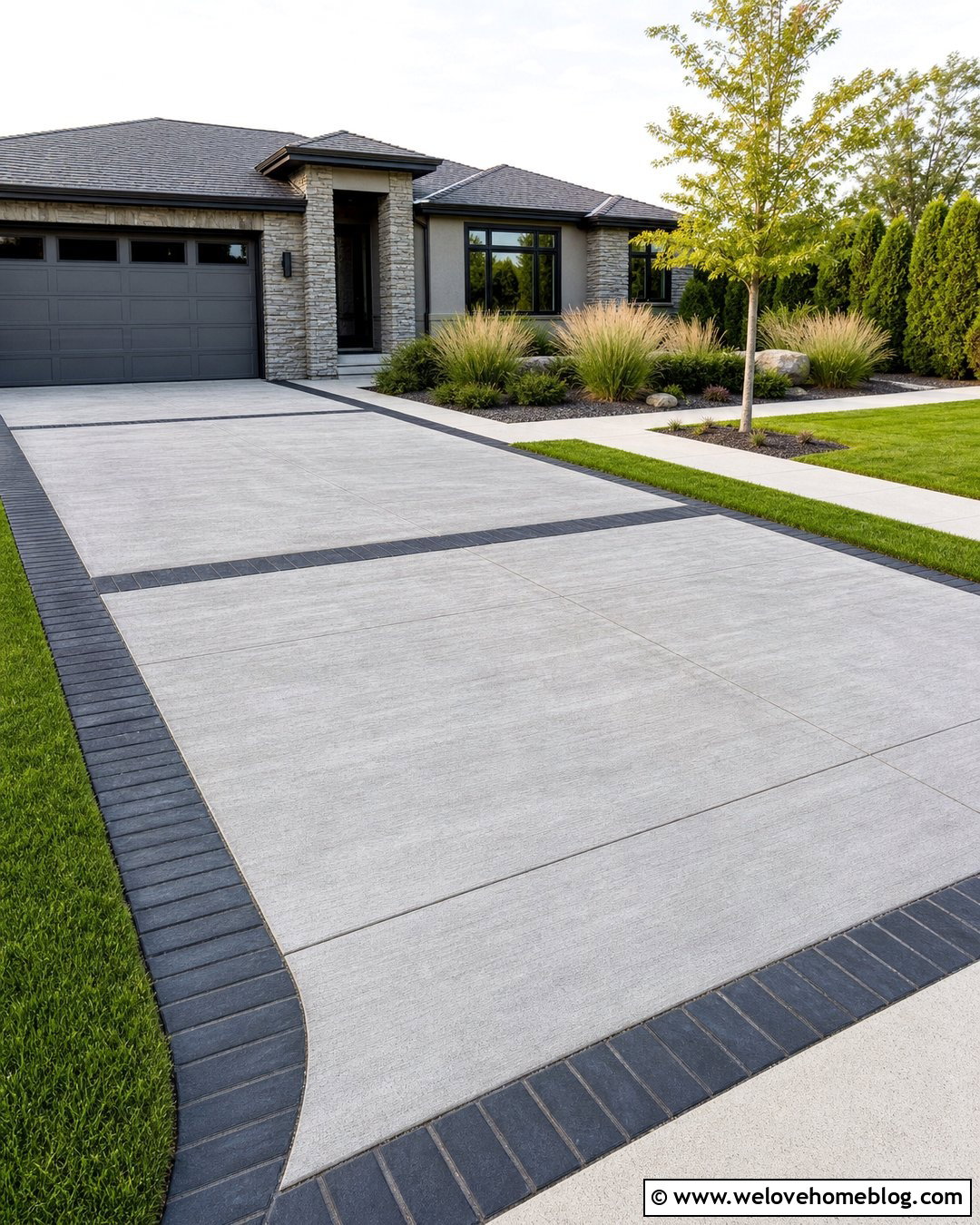
A side parking pad can look integrated rather than added later when brick defines the transition. Pour the main driveway and parking area in the same broom-finished concrete, then install a wide brick band where the two sections meet. Add a brick border around the outer edge of the parking pad and another band near its far end. This creates a complete framed panel without covering the entire area in brick. Use muted brown or charcoal brick for a subtle look beside a modern ranch, or red clay brick for a traditional suburban home. Screen the pad with a low hedge, ornamental grasses, or a small tree. Maintain enough open space around the planting so the parking area remains functional and visually tidy.
17. Concrete Driveway With Brick Walkway Connection
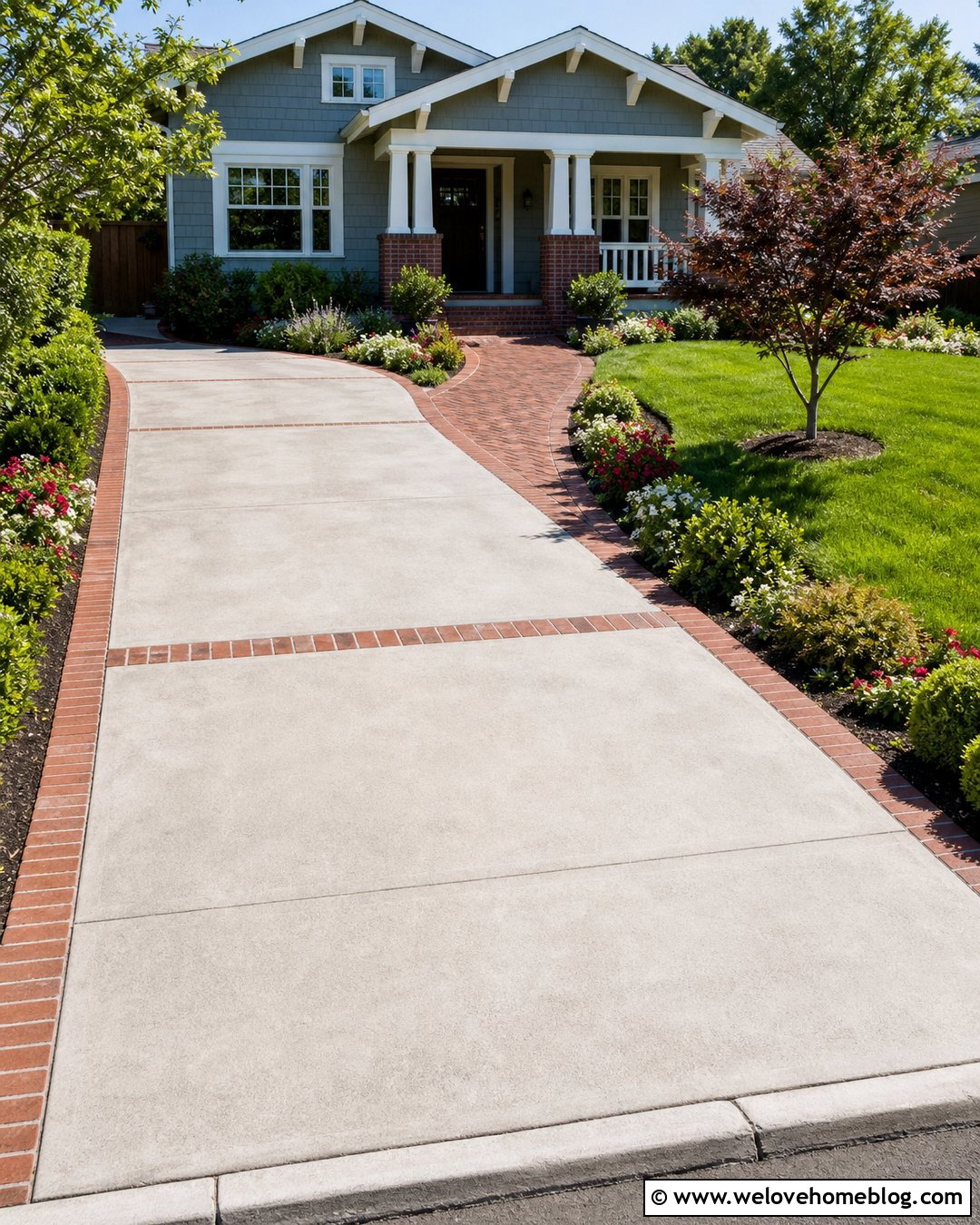
The driveway and front walk should look like parts of the same entrance. One effective approach uses a poured concrete driveway with a brick border that widens into a full brick walkway leading to the porch. Add a matching brick band across the driveway at the exact point where the walkway begins. This creates a clear pedestrian connection and makes the route to the front door easy to recognize. Choose a gently curved walkway for a cottage or craftsman home, or a straight path for a colonial or modern farmhouse. Plant low flowers and compact shrubs near the connection, keeping taller plants farther back. Repeating brick at the porch steps or entry landing will complete the coordinated material sequence.
18. Concrete Driveway With Brick Gate Entrance
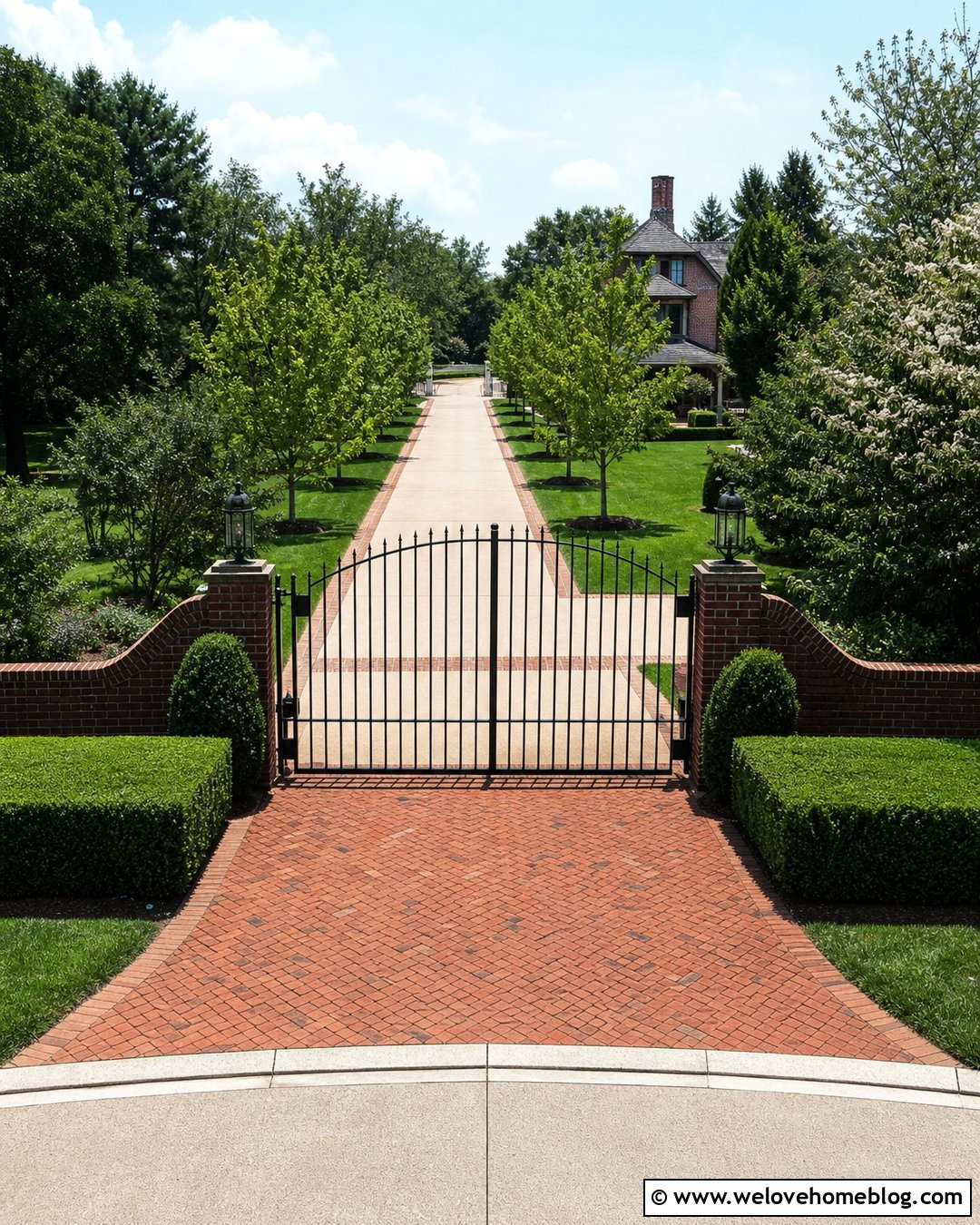
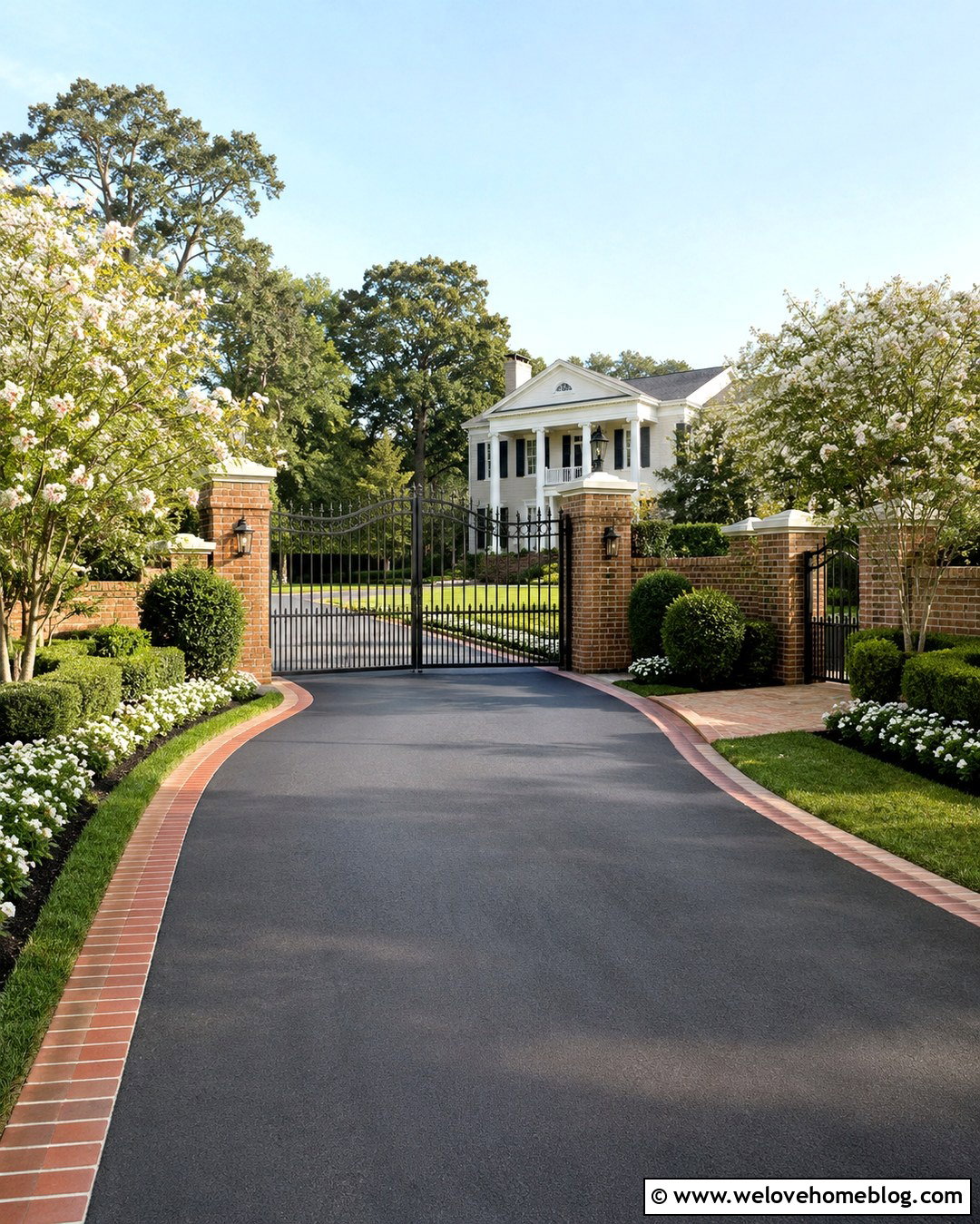
A gated entrance becomes more welcoming when its materials continue into the driveway. Begin with a broad herringbone brick apron beneath and around the gate, then transition to a straight concrete driveway framed by narrow brick borders. Add another brick band several feet beyond the gate to create a finished entrance zone. Red brick works naturally with black metal gates and traditional homes, while charcoal brick complements streamlined steel gates and modern architecture. Low masonry walls, clipped hedges, and evenly spaced trees can frame the approach without concealing the gate. Keep the concrete color light enough to show the brick pattern clearly. This complete layout gives the entrance visual weight while preserving concrete as the primary surface throughout the property.
19. Concrete Driveway With Brick Pillars And Inlay
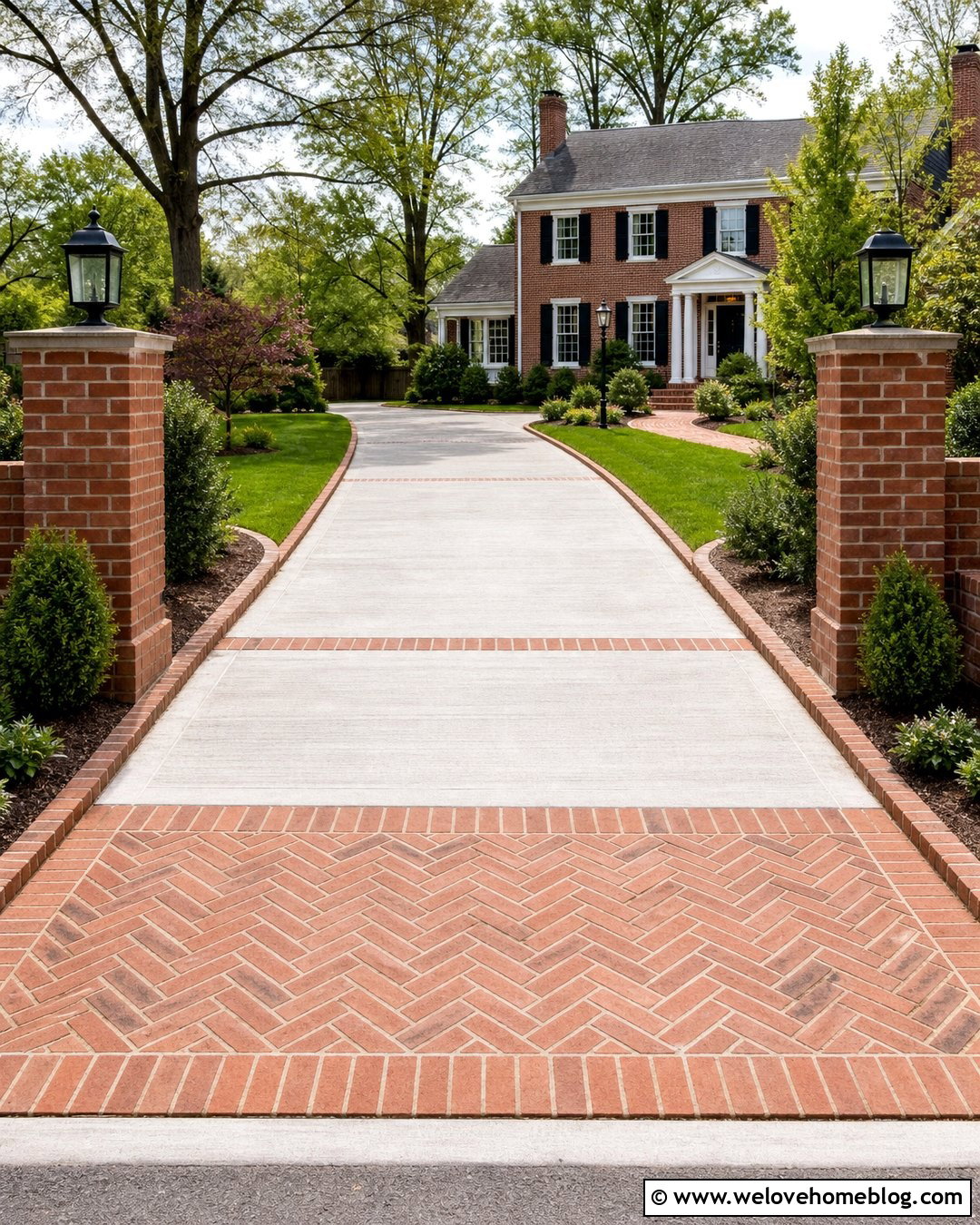
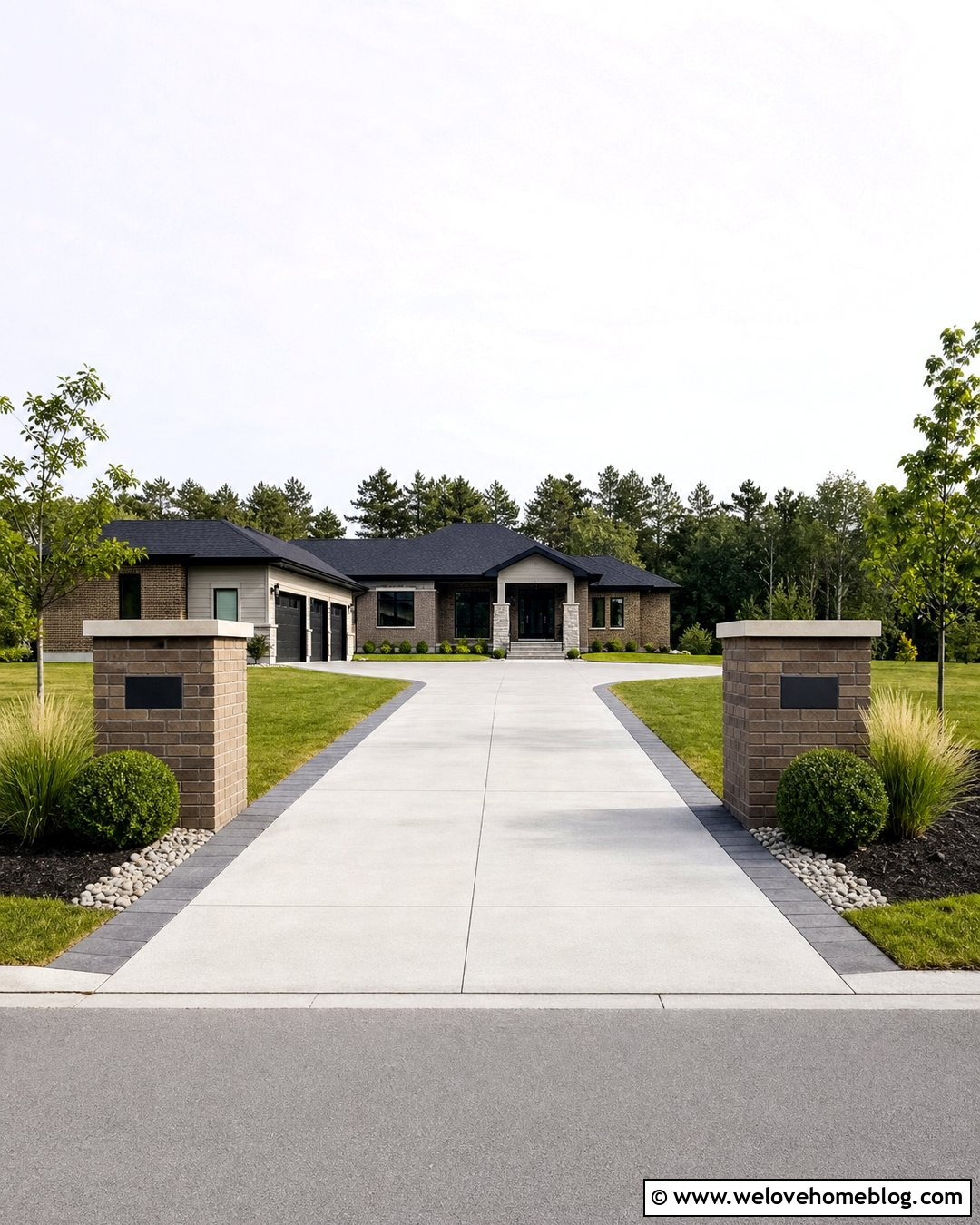
Brick pillars look more connected to the property when matching brick appears within the driveway. Place a herringbone or basketweave apron between the pillars, bordered by a straight soldier course. Continue one brick row along both edges of the concrete and repeat a cross band closer to the house. The coordinated material makes the pillars feel integrated rather than decorative objects placed beside the road. Add simple lanterns, low evergreen shrubs, and curved planting beds around the pillar bases. Traditional red brick pairs well with light gray concrete and a colonial home. Weathered brown brick can soften the entrance to a craftsman or country property. Keep plants below the pillar lights and away from important visibility areas near the street.
20. Small Concrete Driveway With Brick Inlay
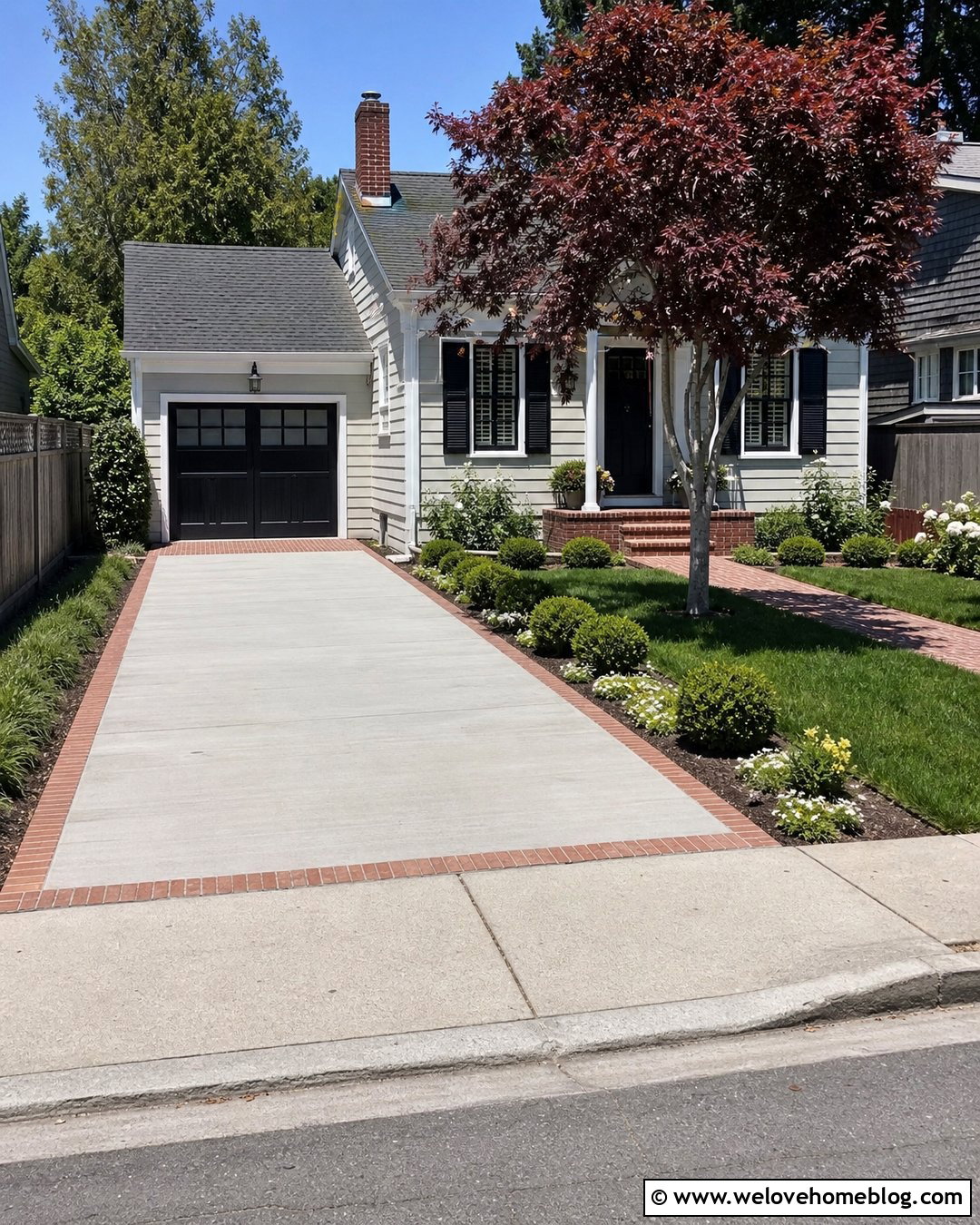
A compact driveway benefits from a restrained brick pattern that adds character without making the surface feel crowded. Use one soldier-course border around light broom-finished concrete, then install a narrow brick apron in front of the garage. If space permits, add a single cross band where the driveway meets the sidewalk. Keeping the brick color close to the home’s facade will create continuity and reduce visual clutter. A slim planting bed with dwarf shrubs, ground cover, and one small ornamental tree can soften the driveway edge. Connect the front walk using the same brick, but avoid combining several unrelated patterns. This simple arrangement gives a narrow urban or suburban driveway a tailored finish while keeping the concrete field visually open.
Conclusion:
The strongest concrete driveway with brick inlay ideas treat the surface, brick pattern, driveway shape, house, and landscaping as one complete composition. A simple border may be enough for a small property, while bands, aprons, medallions, and center strips can organize larger areas. Choose brick colors that repeat the home’s existing masonry or exterior accents. Keep patterns proportional to the driveway and use clean transitions between materials. Before construction, ask an experienced local contractor to coordinate the brick layout with drainage, concrete joints, base preparation, and finished surface heights. With careful planning, brick inlay can give a practical concrete driveway more warmth, definition, and lasting curb appeal without covering the entire entrance in brick.

Related posts:
Leave a Reply