
Red and gray paving creates a balanced driveway that feels warm, structured, and easy to coordinate with many home exteriors. These 20 Red And Gray Driveway Pattern Ideas explore complete looks rather than simple color combinations. Each design pairs a practical surface pattern with borders, landscaping, and an appropriate driveway layout. Classic choices include herringbone, running bond, basketweave, ashlar, and modular arrangements, while circular inlays and contrasting ribbons provide custom focal points. Herringbone is particularly useful for vehicle areas because its interlocking layout helps manage turning forces and repeated traffic. () Whether your home is traditional, contemporary, or rustic, the right ratio of red to gray can improve its connection to the driveway. Compare the complete designs below in these 20 Red And Gray Driveway Pattern Ideas.
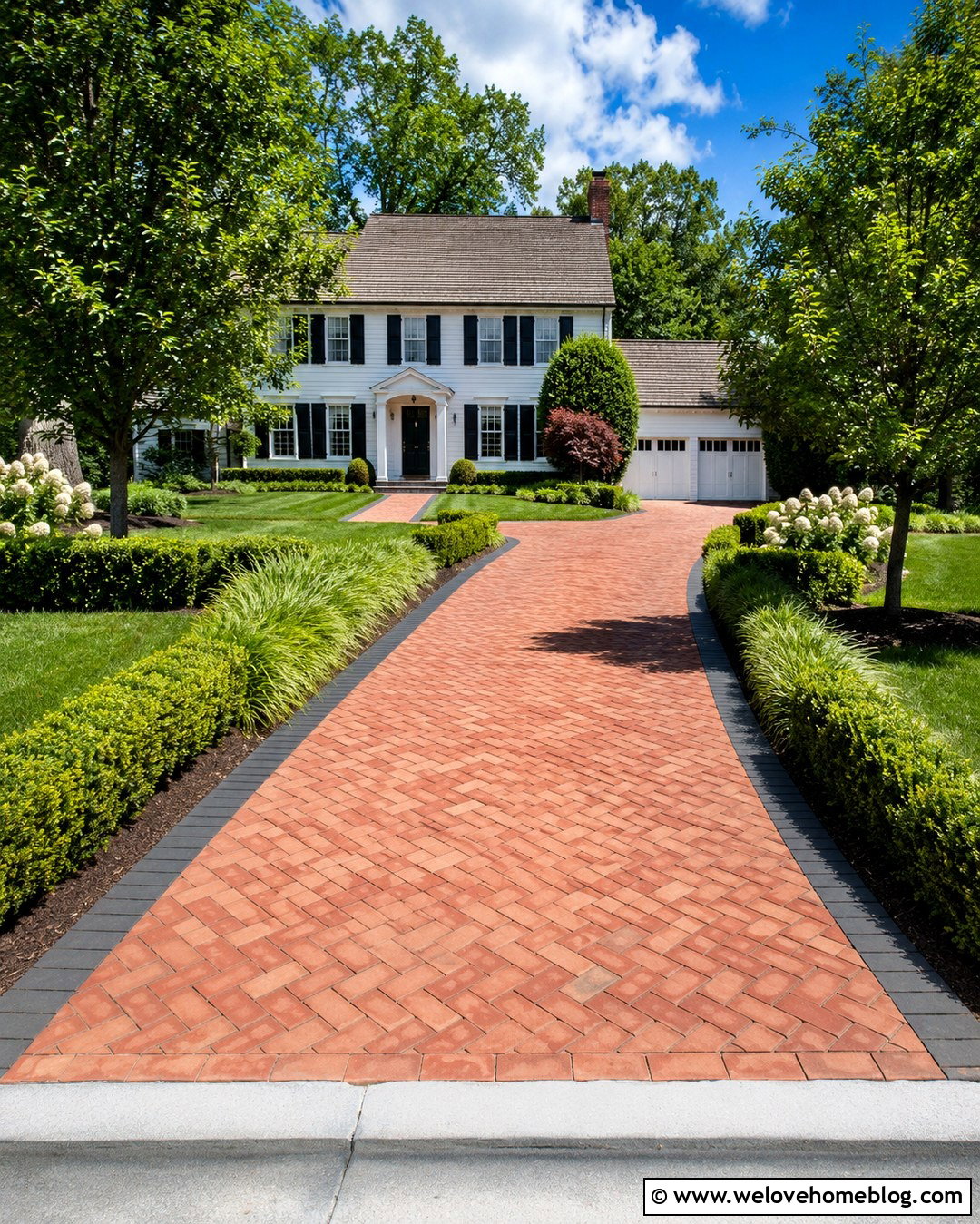
1. Red And Gray Herringbone Driveway
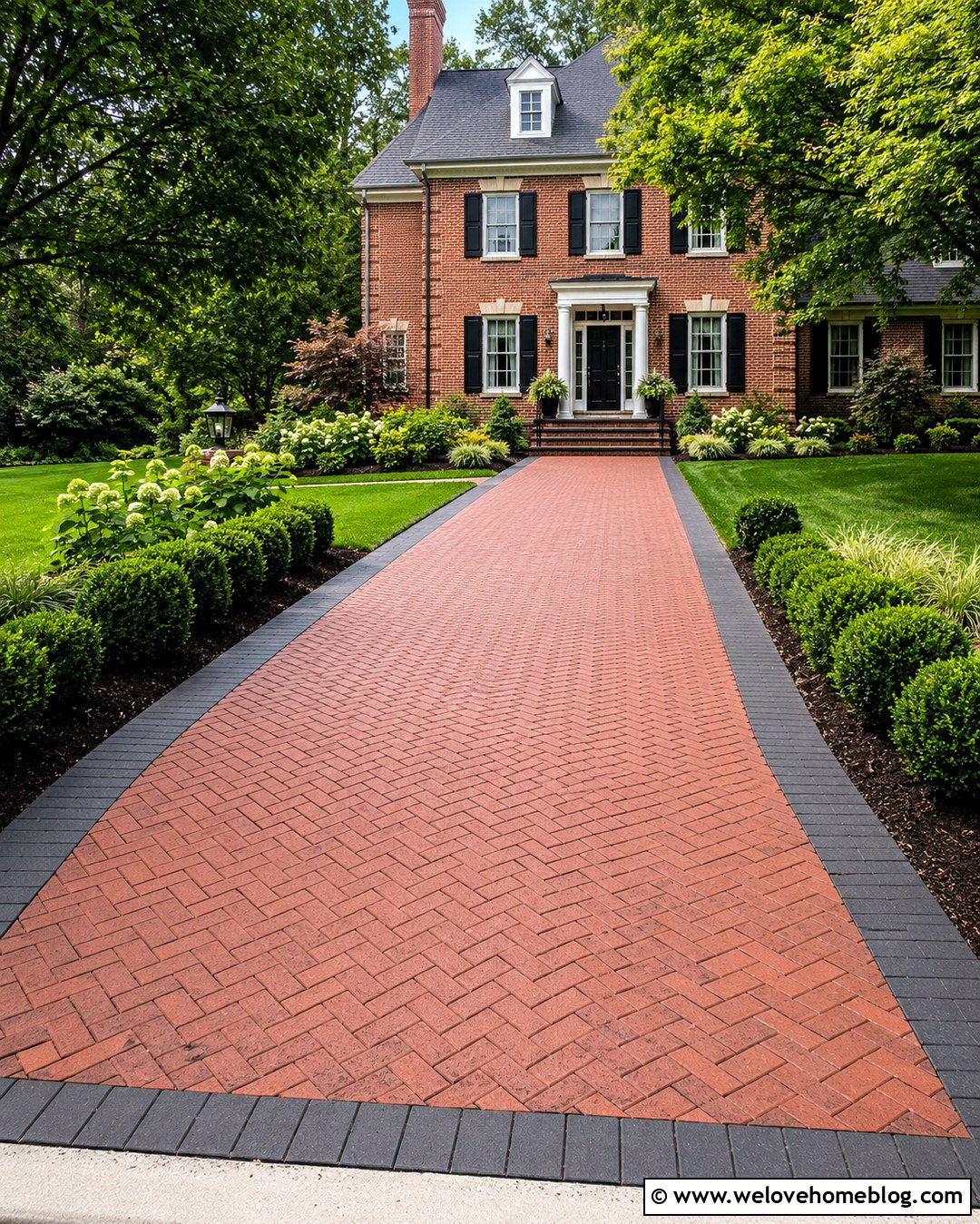
A red and gray herringbone driveway delivers strong contrast without making the entrance feel overly busy. Use medium-red rectangular concrete pavers for the main field, laid in a 45-degree herringbone pattern. Frame them with a single soldier course of charcoal-gray pavers to sharpen the edges. This combination works especially well on a straight driveway leading to a brick colonial or traditional two-story home. Low boxwood beds, ornamental grasses, and a matching gray walkway can keep the surroundings orderly. Continue the border across the garage apron for a finished transition. Because herringbone creates an interlocking arrangement with short, broken joint lines, it is commonly recommended for vehicle surfaces and areas exposed to turning movement. () Proper edge restraint and a professionally compacted base remain essential.
2. Gray Herringbone Driveway With Red Border
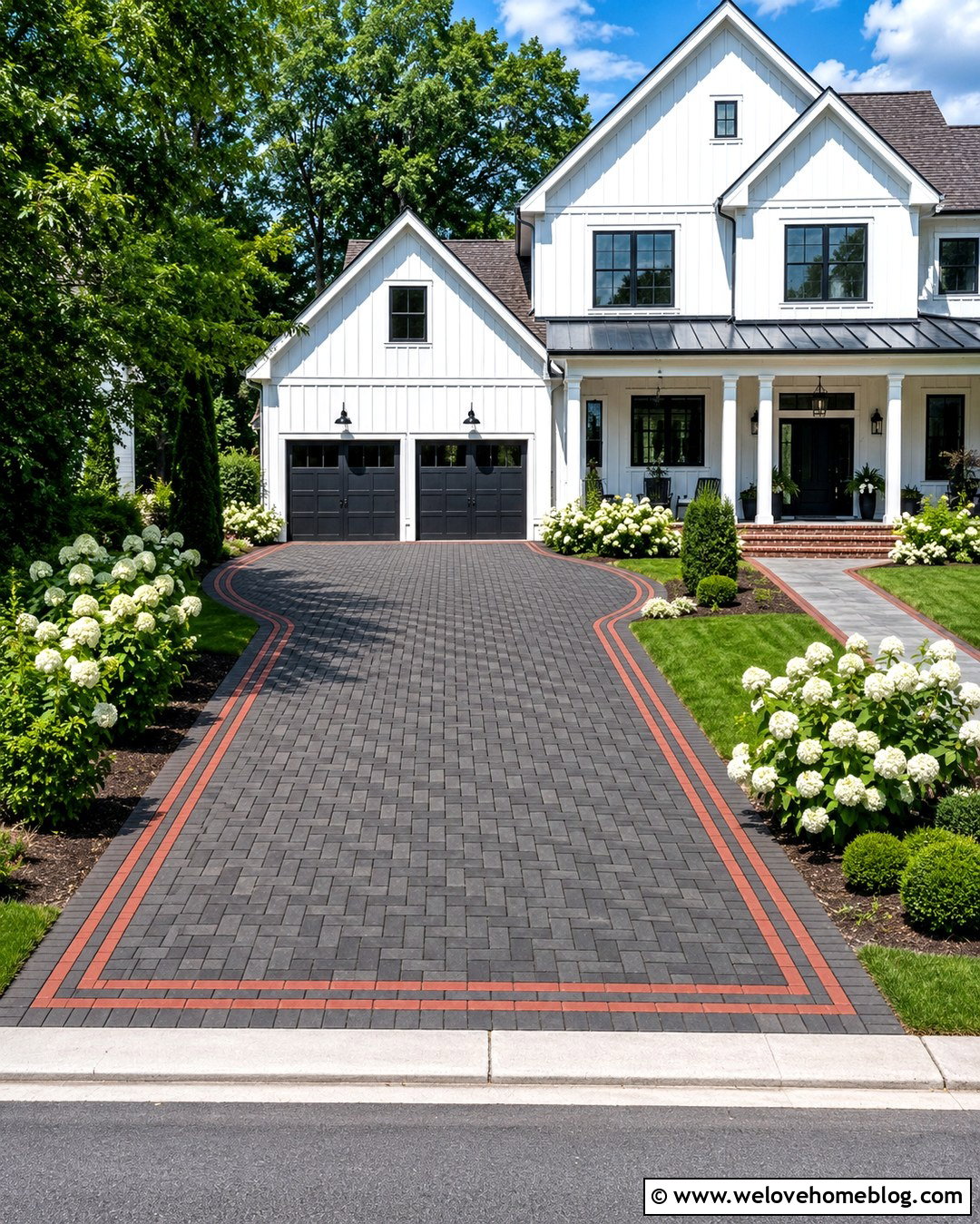
What if you prefer gray paving but still want the warmth of traditional brick? Cover the main driveway with charcoal and medium-gray concrete pavers in a 90-degree herringbone pattern. Then add a double red-brick border around the perimeter. The red outline becomes a clear architectural frame without dominating the surface. This design suits a white farmhouse, light-gray ranch, or cream-colored craftsman home. On a wide driveway, carry the red border around planting islands or along the curved garage apron. Deep green shrubs and a neatly cut lawn will make both colors look richer. Select pavers with subtle tonal variation rather than perfectly flat color. That variation disguises dust and everyday marks. Keep the walkway mostly gray with one red edge course so it relates to the driveway without copying it completely.
3. Red Running Bond Driveway With Gray Bands
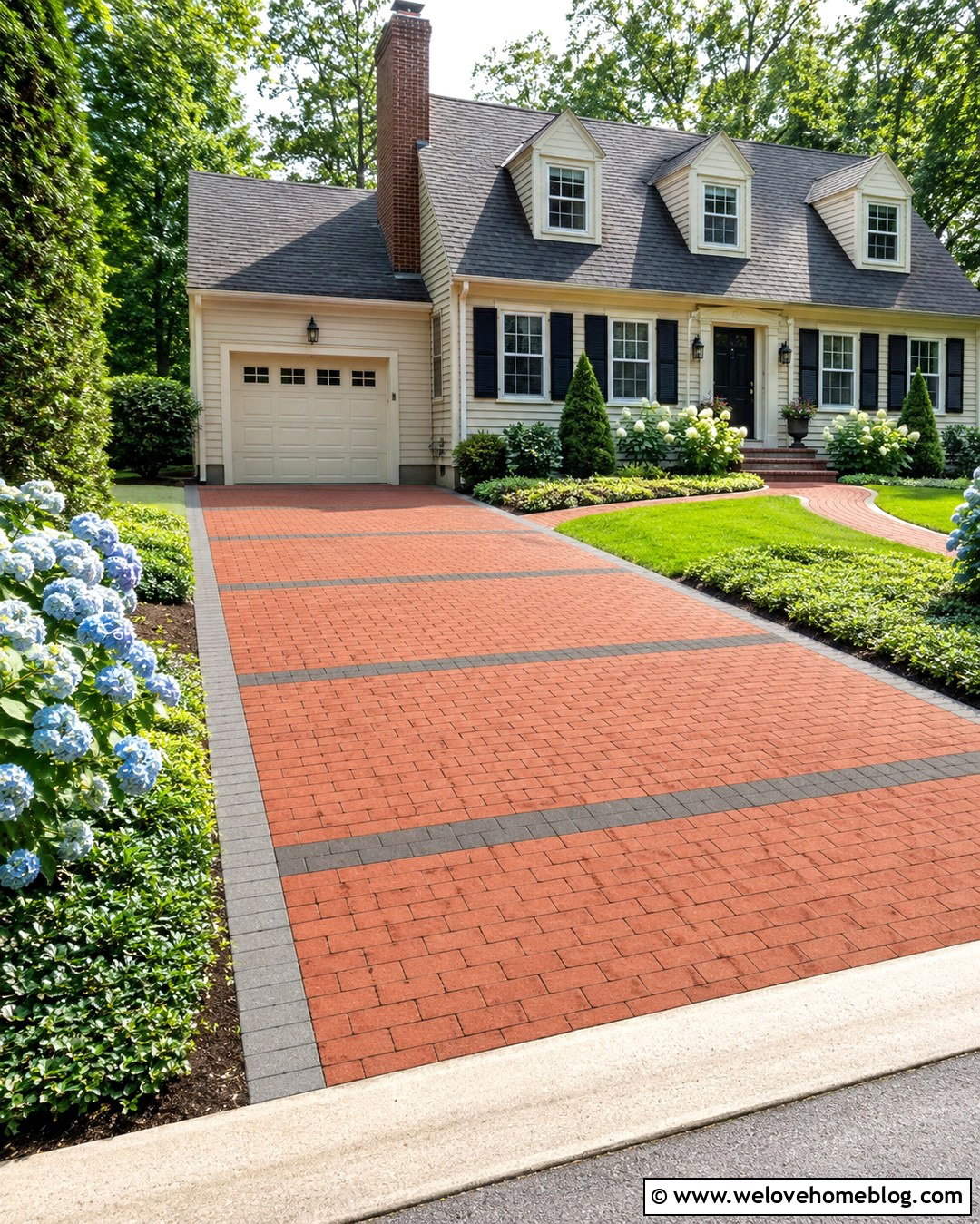
Long horizontal lines can make a narrow entrance appear more generous. Lay red clay brick pavers or red concrete pavers in a running bond across the width of the driveway. Break the surface into equal sections with charcoal-gray bands placed every eight to twelve feet. The bands give the layout rhythm and can visually connect the driveway to window trim, roofing, or gray stone on the house. This straightforward pattern looks natural beside a Cape Cod, bungalow, or traditional suburban home. Use a gray soldier-course border along both sides and repeat the red paving in the front walkway. Soft planting beds filled with hydrangeas, evergreen shrubs, and ground cover prevent the geometric surface from feeling rigid. Align every cross band carefully, especially where the driveway widens near the garage, so the pattern remains balanced.
4. Red And Gray Basketweave Driveway
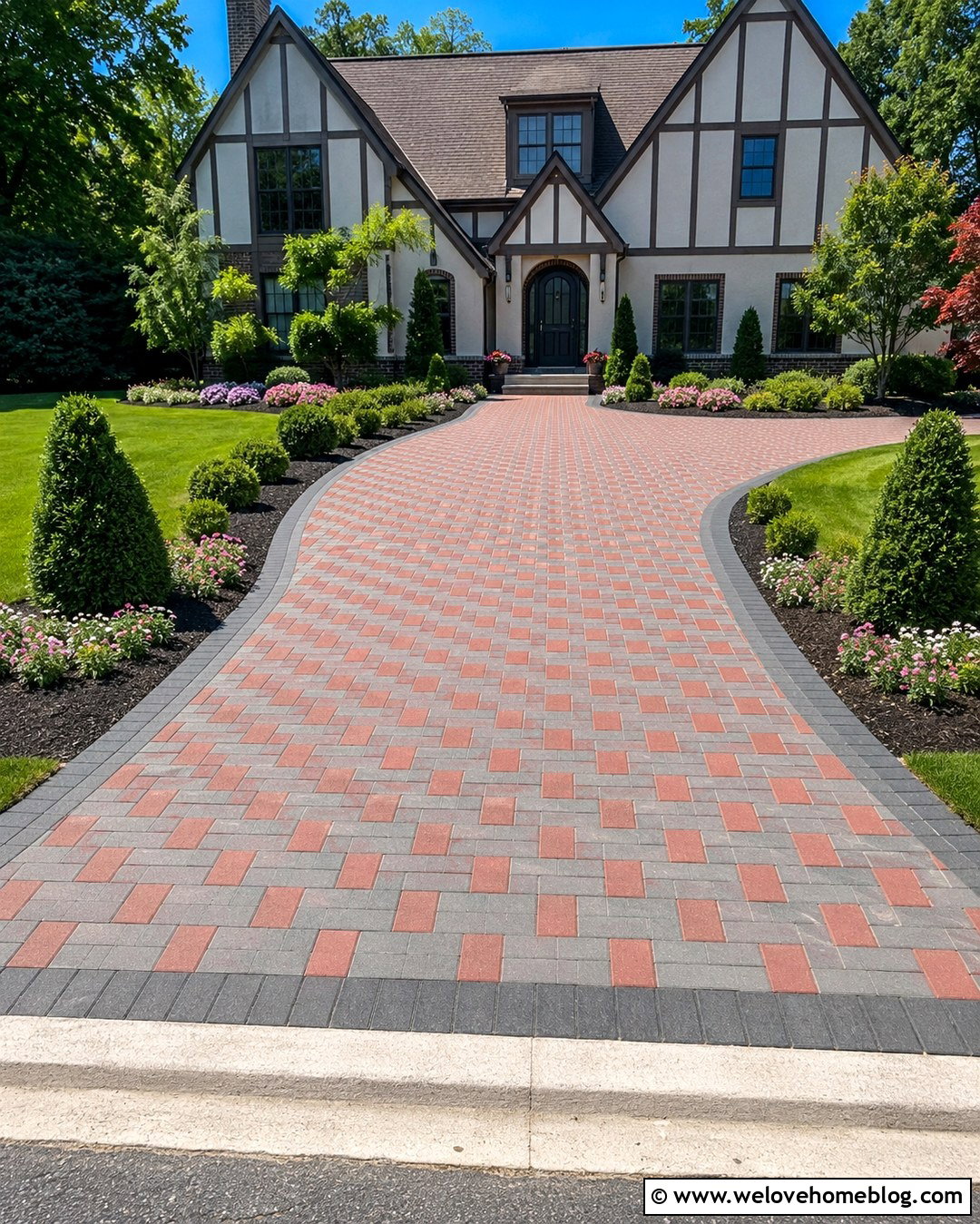
Basketweave paving brings an older, established character to a short driveway or formal entrance. Create repeating squares with pairs of red rectangular pavers, then use gray pavers in the alternating blocks. The changing direction produces a woven effect that looks detailed even though the color palette stays simple. Basketweave traditionally alternates horizontal and vertical pairs, making it especially recognizable with classic brick proportions. () Surround the field with a charcoal-gray running border to contain the pattern visually. This complete look works well with a Tudor, cottage, or colonial house. Add curved foundation beds, clipped shrubs, and a red-brick path to the front door. If the driveway receives frequent turning traffic, ask an experienced installer whether the selected paver, base, pattern, and edge-restraint system are suitable for the expected vehicle loads.
5. Gray Ashlar Driveway With Red Accent Pavers
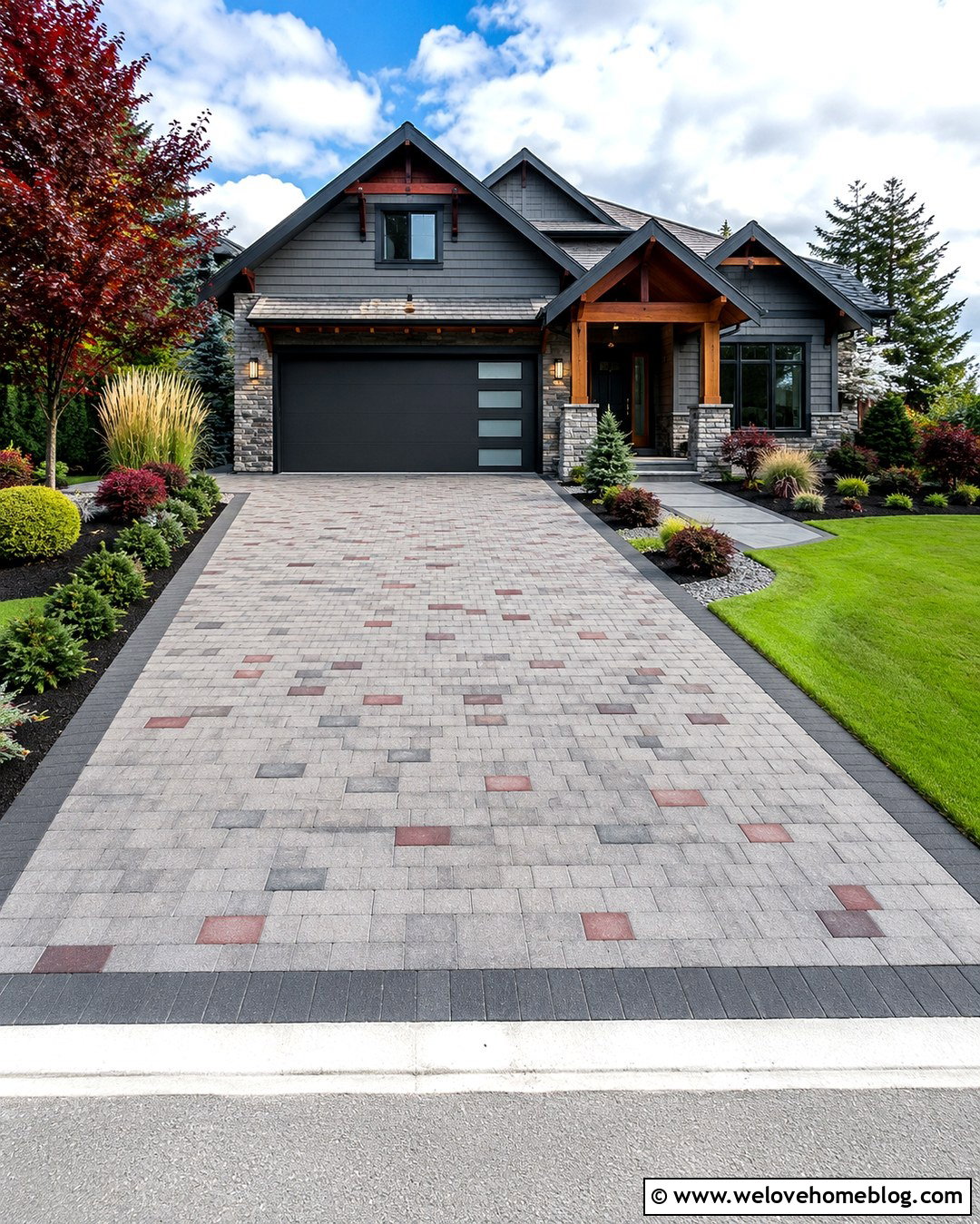
A mixed-size ashlar pattern gives a red and gray driveway a relaxed, high-end appearance. Use large and medium gray concrete pavers as the dominant material, combining rectangles and squares in a repeating modular layout. Place muted red accent pavers at irregular but evenly distributed points throughout the field. The red pieces should appear intentional, not scattered randomly. A solid charcoal border helps organize the varied sizes. This pattern is a good match for a contemporary craftsman or updated ranch home with gray siding and warm wood details. Along the edges, use broad planting beds with dwarf evergreens, burgundy foliage, and ornamental grasses. A straight driveway keeps the modular pattern easy to read from the street. Before installation, arrange a sample section so you can judge the color ratio and avoid concentrating too much red in one area.
6. Red Driveway With Gray Diamond Pattern
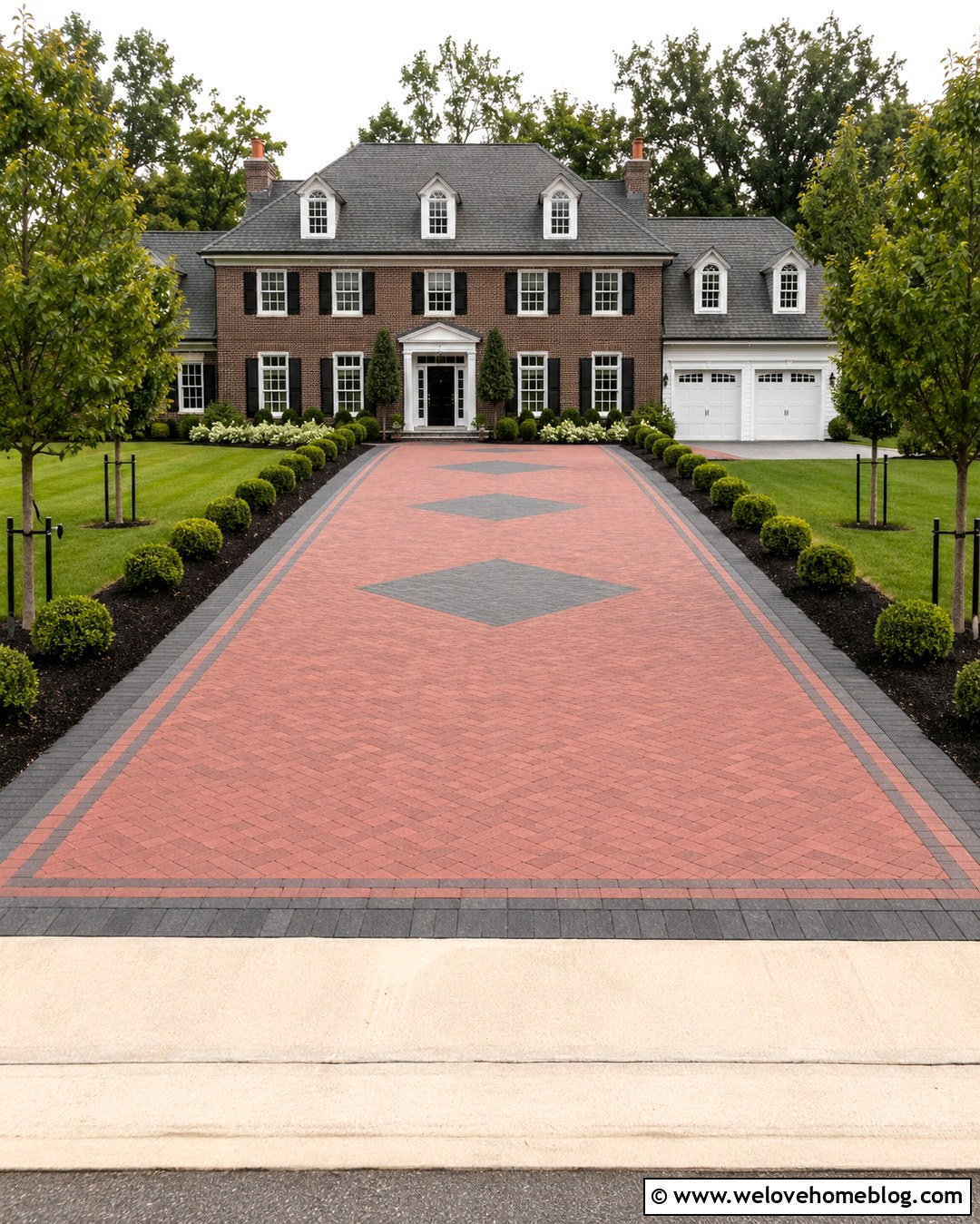
A centered diamond layout can transform a wide driveway into a formal arrival space. Begin with red concrete pavers in a straight stack or running-bond field, depending on the selected product and traffic requirements. Introduce charcoal-gray pavers in large diamond shapes that repeat from the street to the garage. A gray double border reinforces the geometry and prevents the central pattern from looking disconnected. This design complements a symmetrical colonial or Georgian-inspired home with a centered front entrance. Keep the landscaping equally balanced by placing matching trees or shrubs on both sides. A gray paver walkway can branch from one diamond near the upper driveway and lead toward the porch. The diamond dimensions should correspond with the driveway width. Oversized diamonds usually read more clearly from the curb and require fewer awkward cuts than many small motifs.
7. Gray Driveway With Red Center Stripe
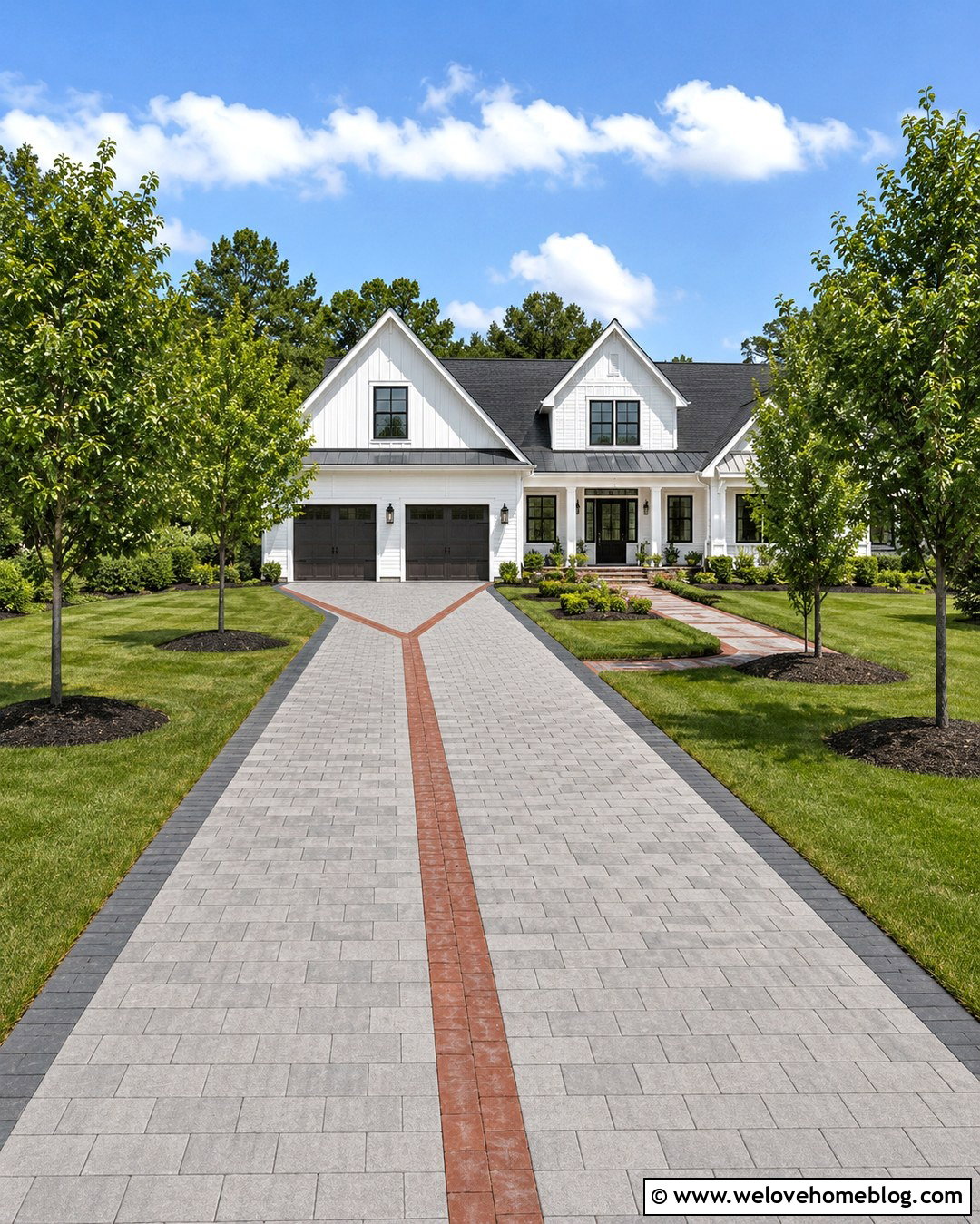
A continuous red center stripe creates direction and makes a long gray driveway more memorable. Install medium-gray concrete pavers in a running bond, then place a two- or three-paver-wide band of red brick through the center. Finish the perimeter with a narrow charcoal soldier course. This simple arrangement works especially well on a long straight approach leading to a modern farmhouse or country home. At the garage apron, divide the center stripe into branches that align with each garage bay. This makes the design feel connected to the building rather than purely decorative. Frame the driveway with mown grass, repeated shade trees, and low planting beds near the house. Keep the central band uninterrupted by drains whenever practical. If drainage must cross it, select a channel grate that coordinates with the charcoal edging and sits cleanly within the pattern.
8. Red And Gray Diagonal Stripe Driveway
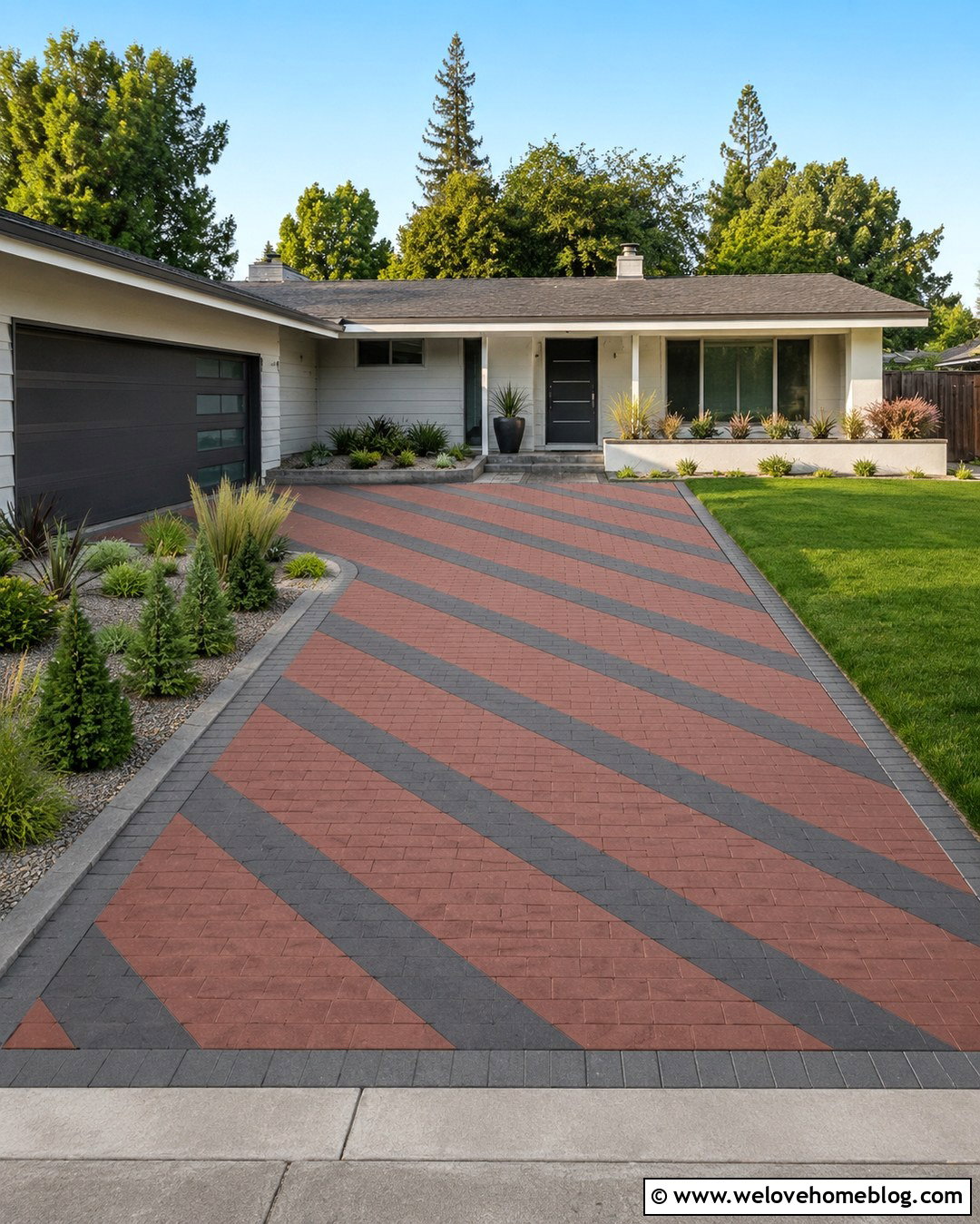
Diagonal stripes give a basic rectangular driveway a more energetic appearance. Use muted red rectangular pavers for most of the surface and create wide gray bands that cross the driveway at a consistent 45-degree angle. A solid gray perimeter border anchors the movement and provides a clean place for cut pavers to meet. The complete design feels particularly appropriate beside a midcentury ranch or modern split-level home. Repeat the diagonal direction in the walkway or planting-bed lines for a coordinated front yard. Compact evergreen shrubs and ornamental grasses soften the edges without hiding the pattern. Keep the stripe spacing generous so the design remains readable when viewed from the street. Before committing, mark the bands on a scale drawing. This helps center the pattern between the curb and garage while avoiding narrow, awkward pieces along the boundaries.
9. Gray Driveway With Red Brick Ribbons
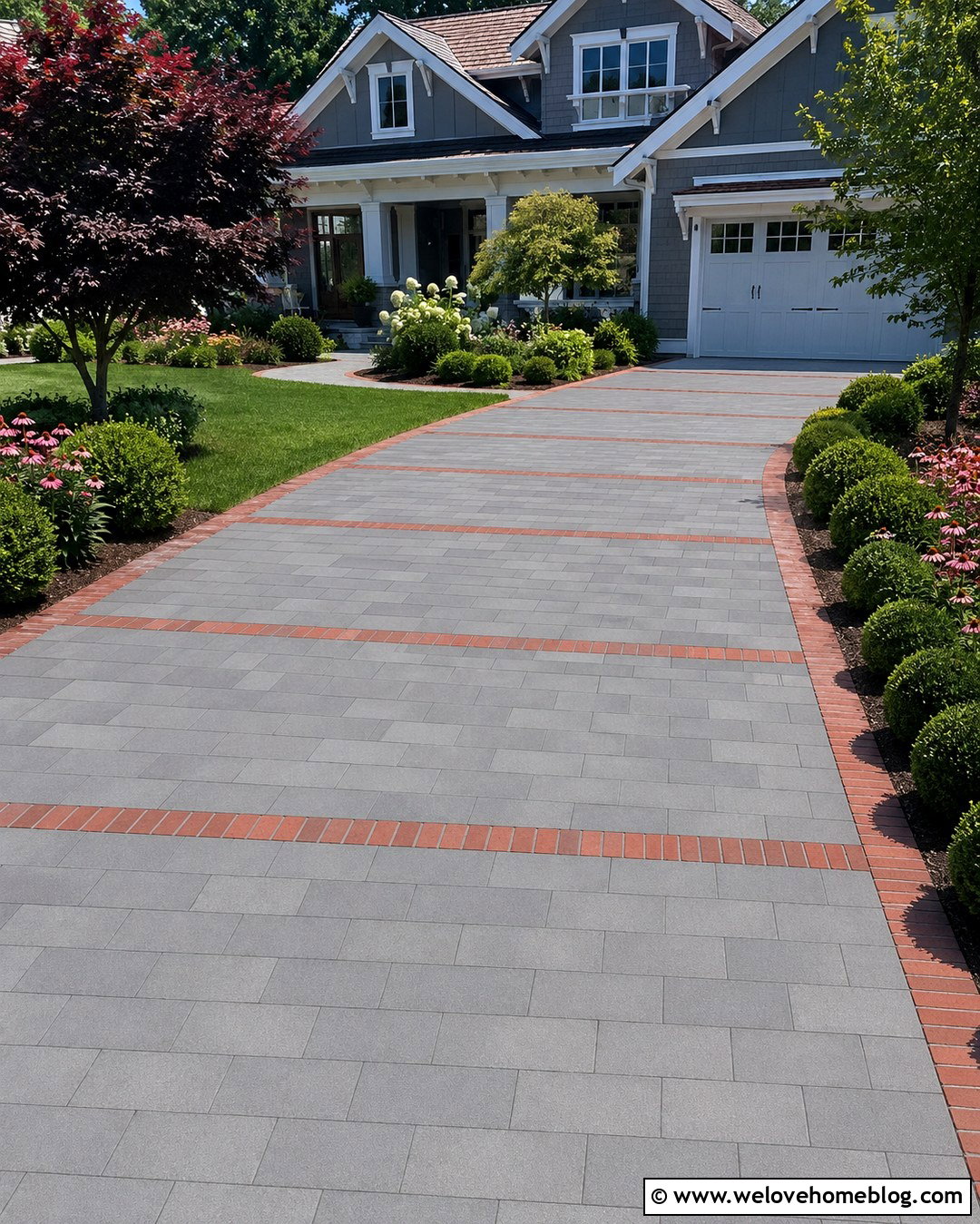
Red brick ribbons can divide a broad gray driveway into smaller, more inviting sections. Choose large-format gray concrete pavers in a simple running bond or modular arrangement. Insert narrow red-brick bands across the driveway at regular intervals and use matching red brick along the outer edges. The bands can follow expansion joints or changes in slope, helping practical transitions feel deliberate. This look suits a craftsman, ranch, or suburban home with red-brick facade details. Connect one ribbon to the front walkway so the hardscaping reads as a unified composition. Plant rounded shrubs, flowering perennials, and one small ornamental tree near the walkway junction. Gray should remain the dominant color for a calm overall effect. Select bricks and pavers with compatible thicknesses and installation requirements so the final surface stays even at every material transition.
10. Red And Gray Circular Driveway Medallion
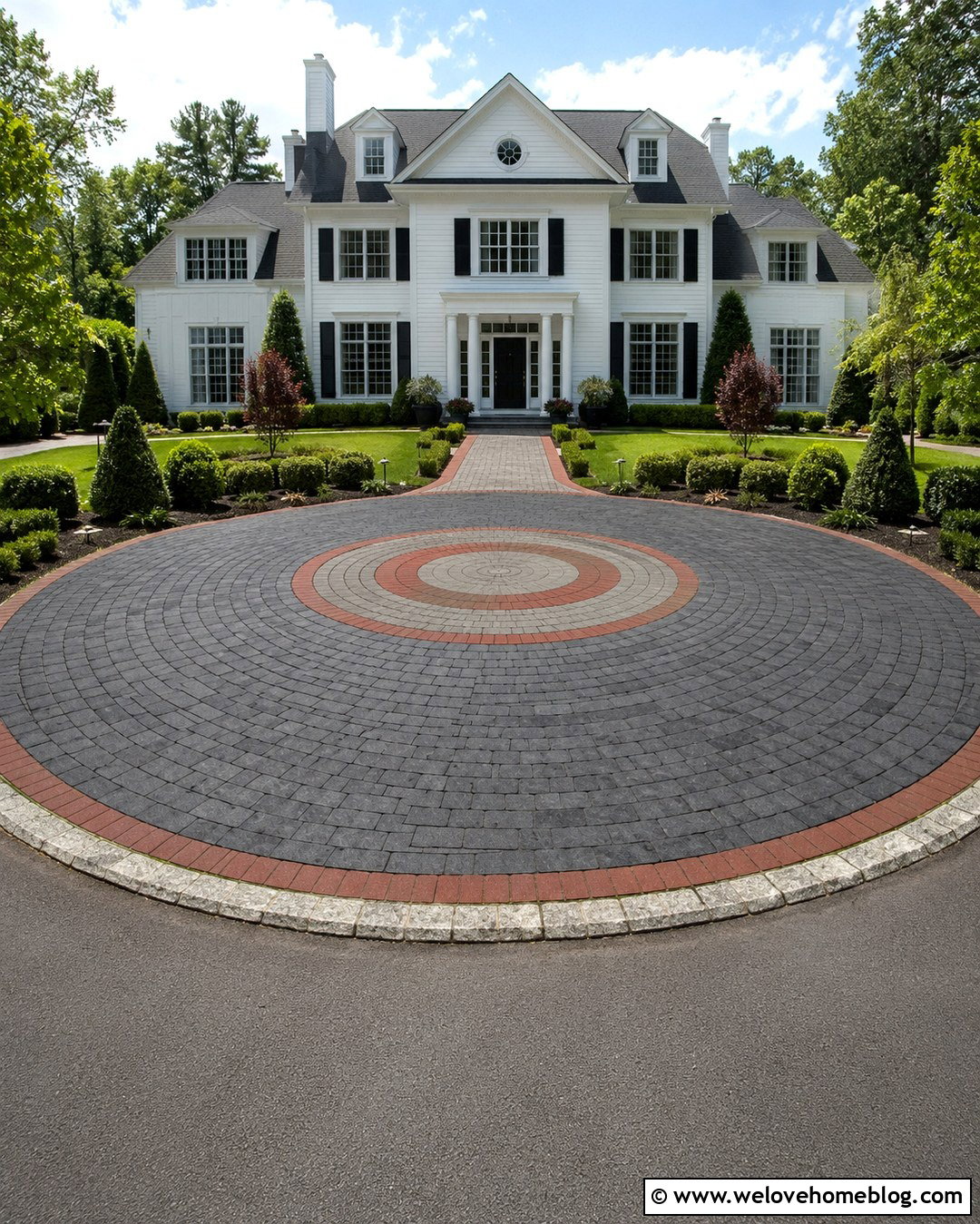
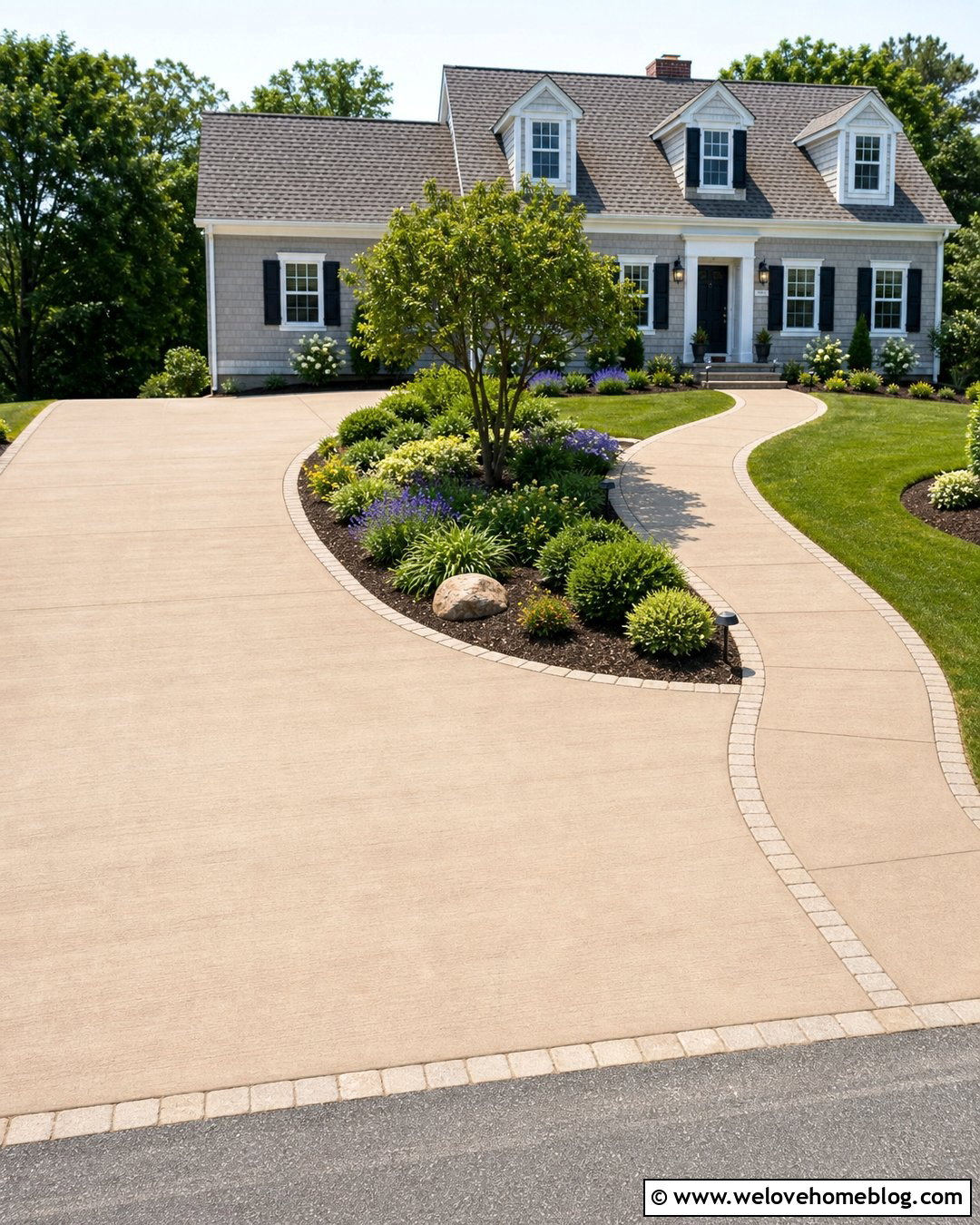
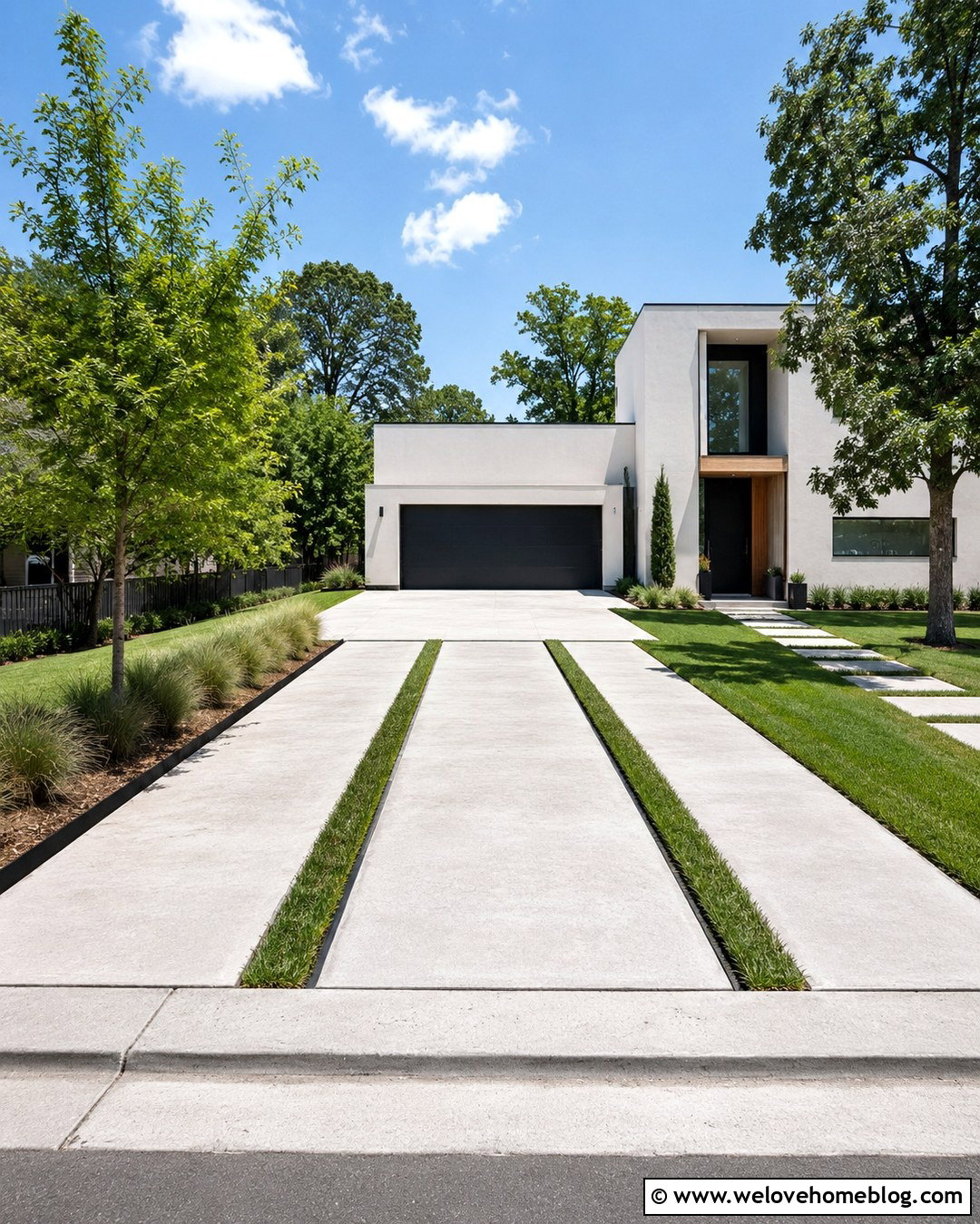
A circular medallion creates a strong focal point without covering the entire driveway in a complicated pattern. Build the main field from charcoal and medium-gray concrete pavers in a curved running bond. At the center of the circular turnaround, install concentric rings of red and gray pavers around a dark-gray core. Repeat the red tone in a narrow perimeter border. This arrangement works beautifully in front of a colonial, Mediterranean, or large traditional home. Place a landscaped island inside the circular drive only if there is enough turning space. Otherwise, allow the paving medallion to serve as the centerpiece. Symmetrical shrubs, small trees, and low lighting fixtures can frame the entrance. Accurate planning is crucial because radial patterns require carefully sized cuts. The medallion should align with the house entrance when viewed from the street.
11. Red European Fan Driveway With Gray Border
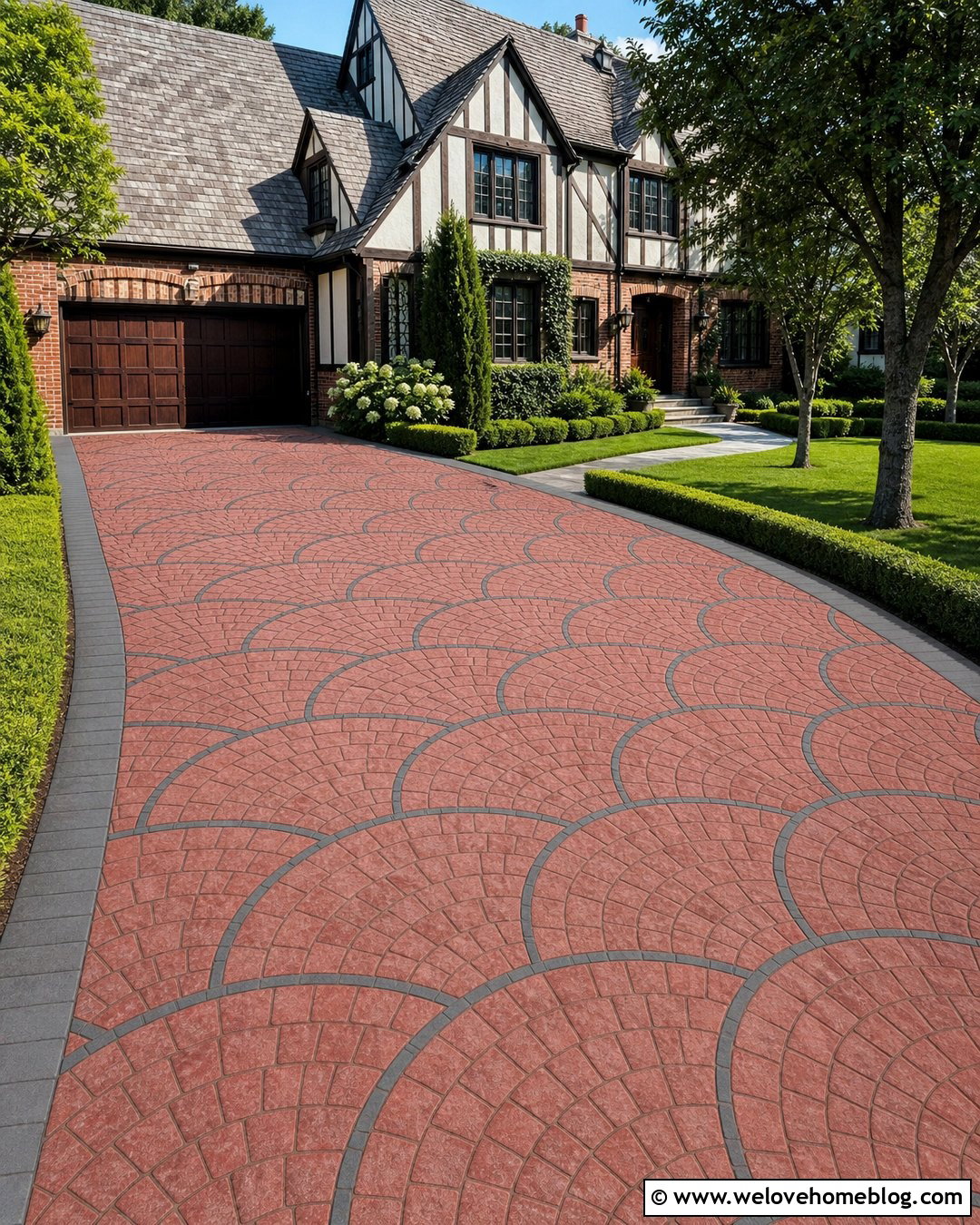
Fan paving introduces graceful curves to a red and gray color scheme. Form overlapping European-style fans with weathered red concrete pavers, using small charcoal-gray pavers to outline each arc. Surround the entire driveway with a wider gray border that separates the intricate field from the lawn. This pattern is best appreciated on a wide straight or gently curved driveway leading to a European-inspired, Tudor, or stucco home. Keep surrounding landscaping relatively restrained so it does not compete with the paving. Low hedges, simple lawn panels, and two structured trees near the house provide enough softness. The gray arcs should repeat at a consistent scale from the curb to the garage. Since fan patterns involve numerous changes in direction, use pavers designed for radial layouts and work with an installer experienced in setting curves, maintaining joints, and managing perimeter cuts.
12. Gray Pinwheel Driveway With Red Centers
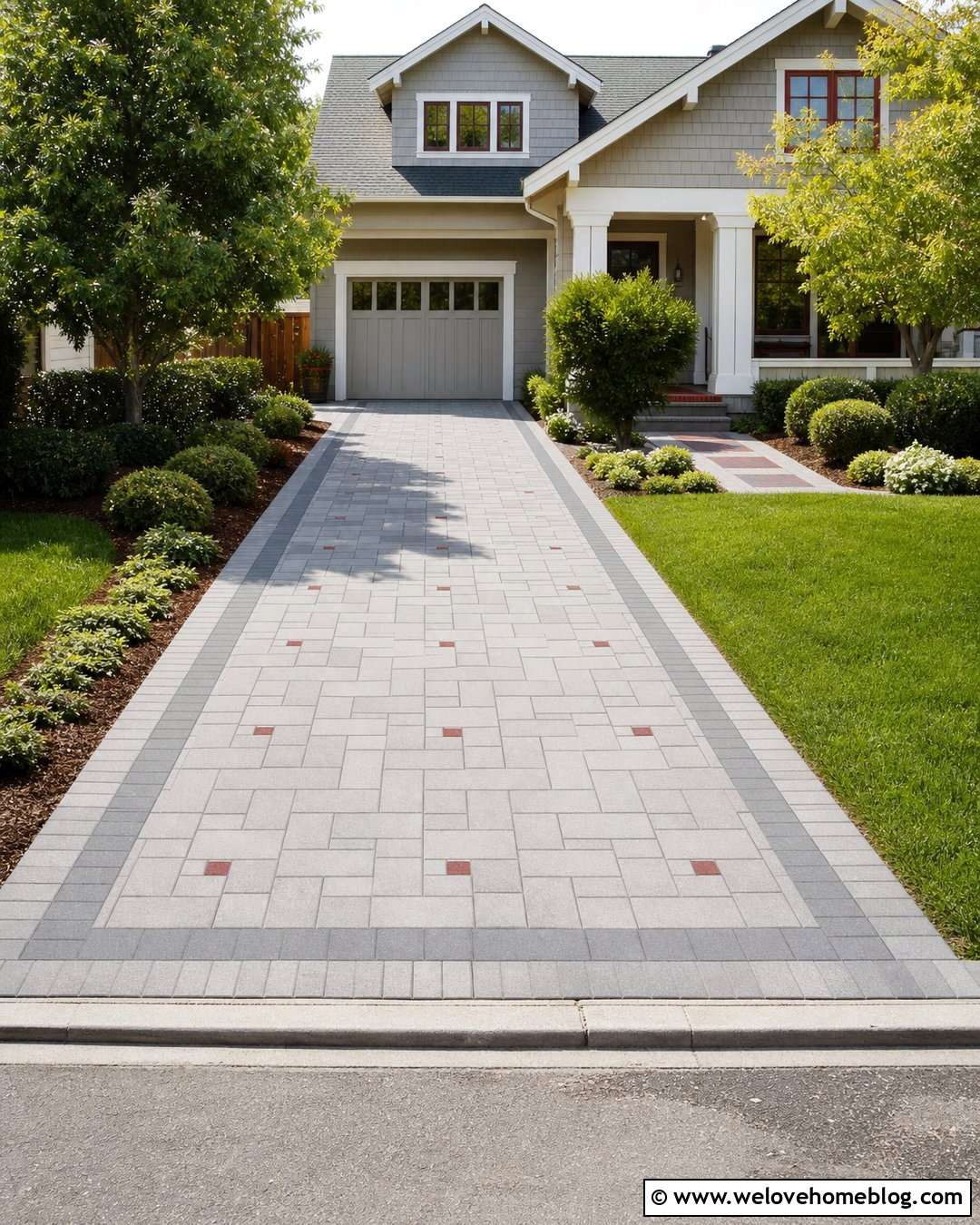
A pinwheel pattern provides detail while keeping the overall driveway organized. Use rectangular gray concrete pavers to form the larger rotating shapes, then place one square red paver at the center of each repeated unit. Choose a subdued brick red instead of a bright primary red for a more natural residential finish. A double gray soldier-course border can frame the surface and prevent the small red accents from feeling excessive. This complete look complements a craftsman bungalow, brick ranch, or traditional cottage. Echo the red squares in the walkway or porch steps to connect the driveway with the home. Along the sides, combine green ground cover, rounded shrubs, and warm-toned mulch. Plan the pattern from the centerline outward. Balanced placement is particularly important near the garage doors, where incomplete pinwheels or narrow cuts could make the installation look unfinished.
13. Red And Gray Checkerboard Driveway
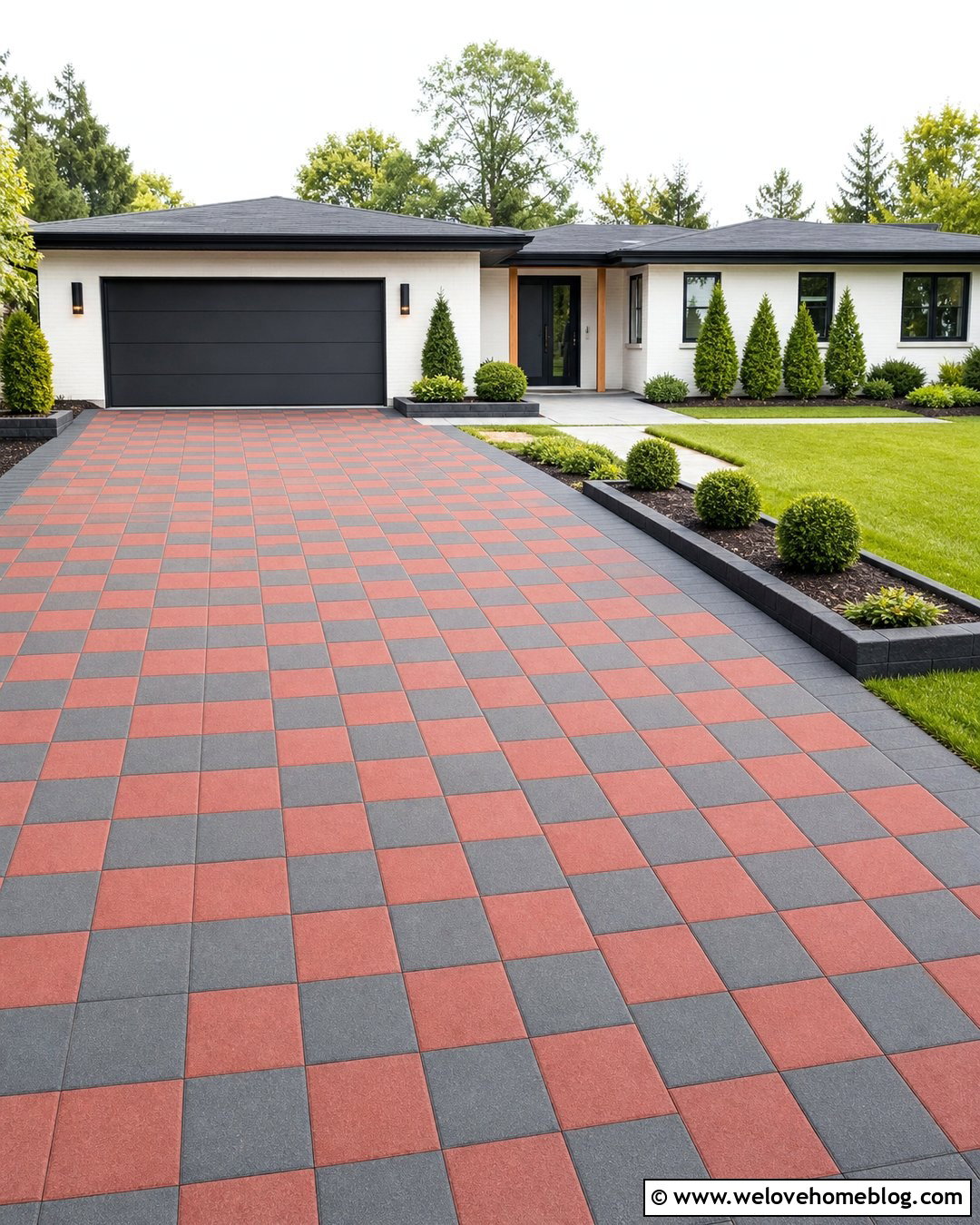
Large red and gray squares create a bold checkerboard driveway that feels cleaner than a pattern made from many small blocks. Form each square from groups of driveway-rated concrete pavers rather than relying on oversized slabs with unsuitable load capacity. Alternate muted red and charcoal-gray sections across a broad, level driveway. Finish the perimeter with a solid charcoal border to contain the grid. This striking treatment suits a minimalist brick home, modern ranch, or contemporary house with simple facade lines. Keep landscaping controlled with rectangular beds, clipped evergreens, and uninterrupted lawn. A plain gray walkway prevents the front yard from becoming overly patterned. Discuss the layout and expected vehicle movement with the installer, especially if using a stack-bond appearance. The bedding system, paver specification, joint stabilization, and edge restraint must be appropriate for an active residential driveway.
14. Gray Cobblestone Driveway With Red Wave Bands
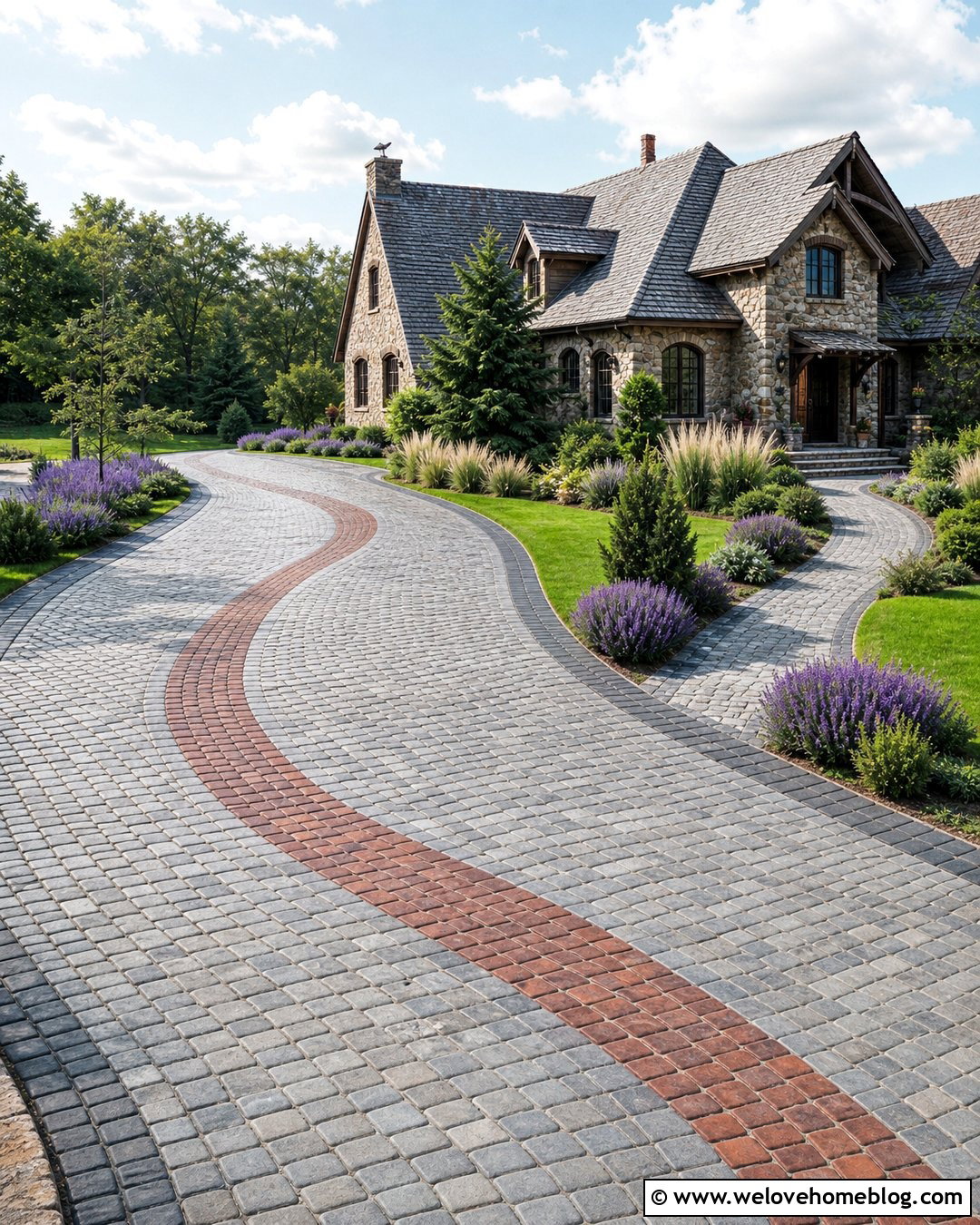
Curving red bands can soften the rugged appearance of a gray cobblestone driveway. Use tumbled charcoal and silver-gray concrete cobbles for the main surface, laid in gently sweeping rows. Insert two or three narrow waves of weathered red cobbles that move across the driveway and follow its curved approach. A dark-gray cobblestone border completes the edges. This design feels comfortable beside a stone farmhouse, country cottage, or rustic craftsman home. Plant lavender, ornamental grasses, and low evergreen shrubs along the outer curve, leaving enough open space to display the paving. A matching cobblestone walkway can begin where one red band reaches the driveway edge. Keep the waves broad and gradual rather than tightly curved. Smooth transitions are easier to read from the street and usually create fewer small, visually distracting cuts within the field.
15. Red Driveway With Gray Double Border
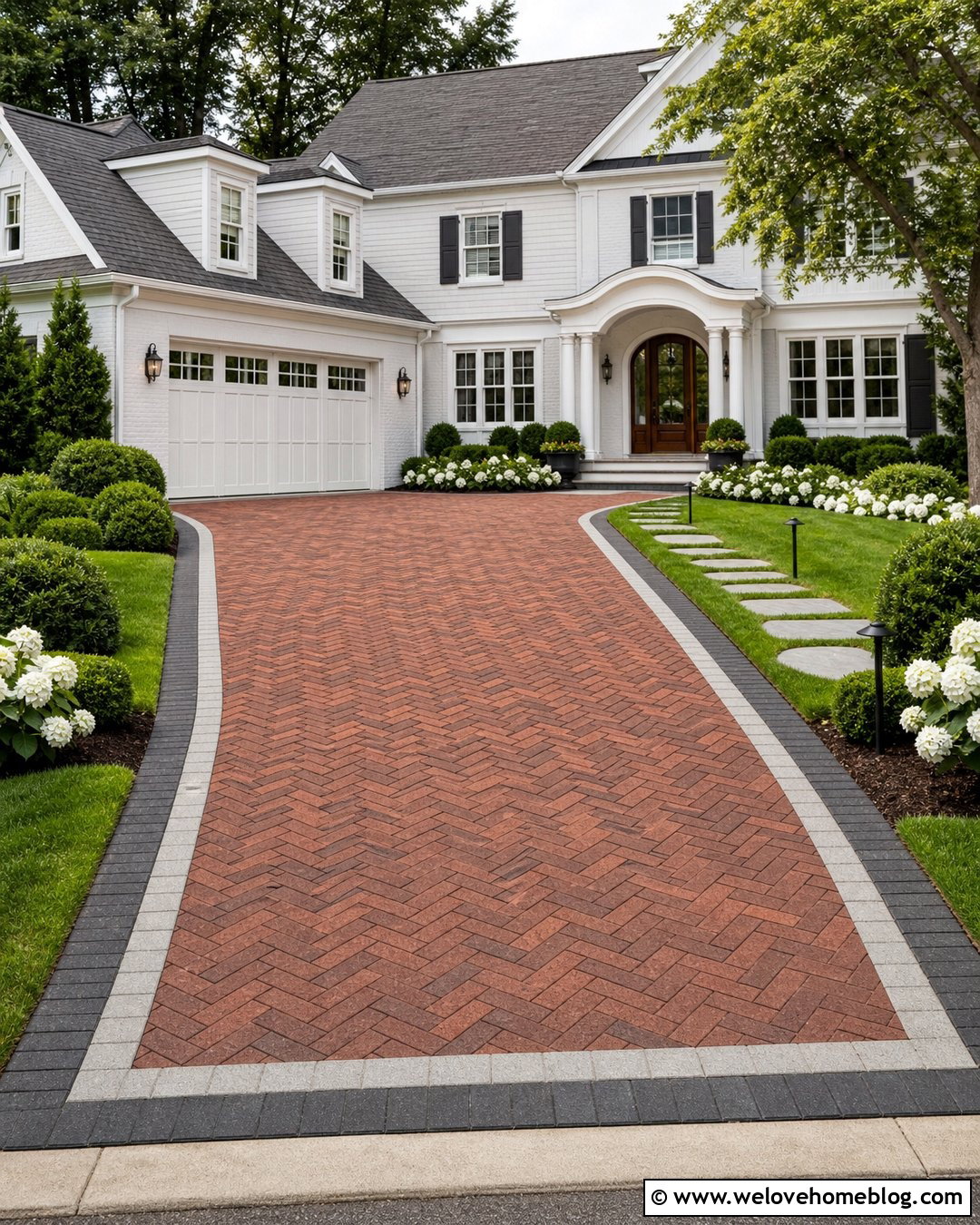
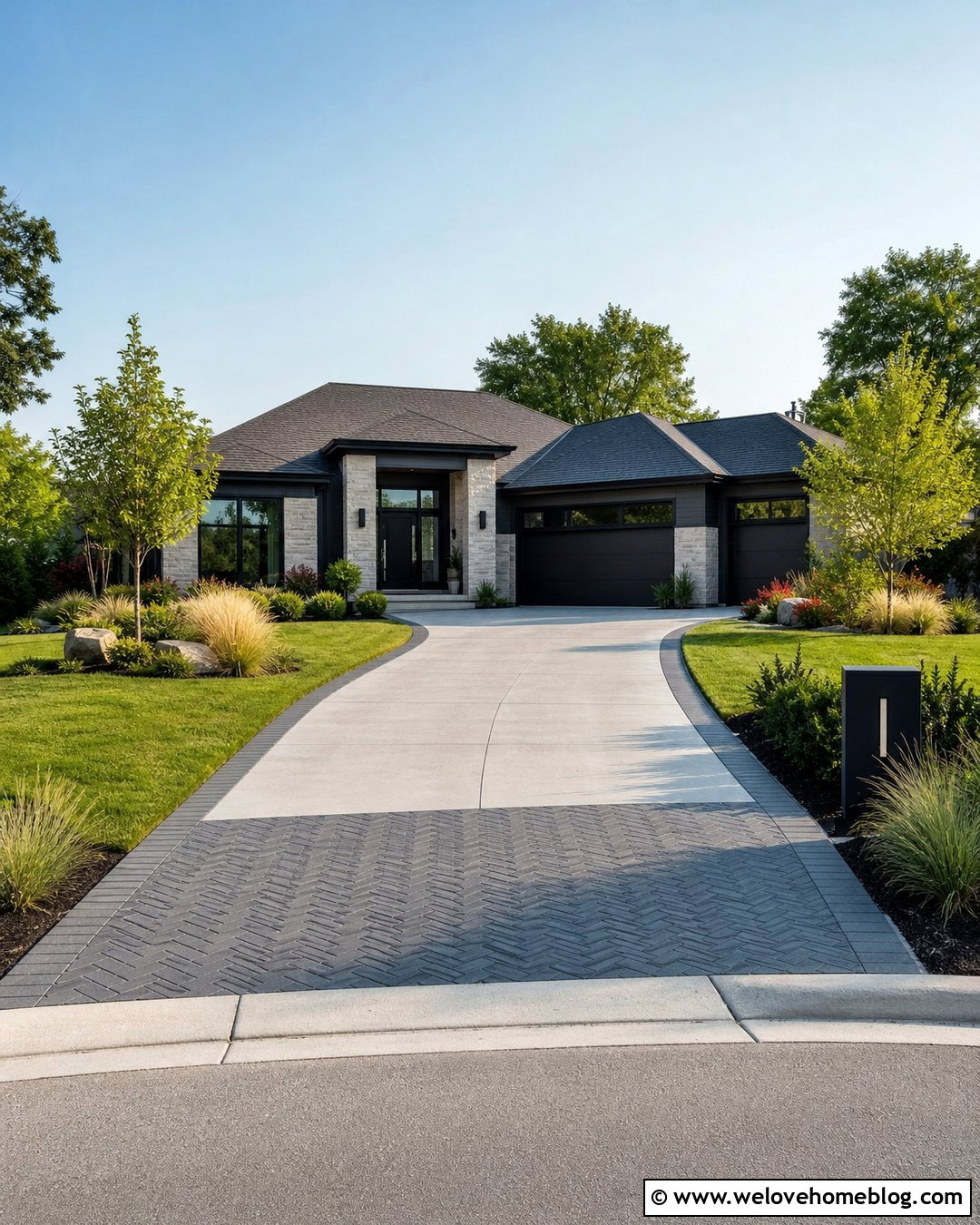
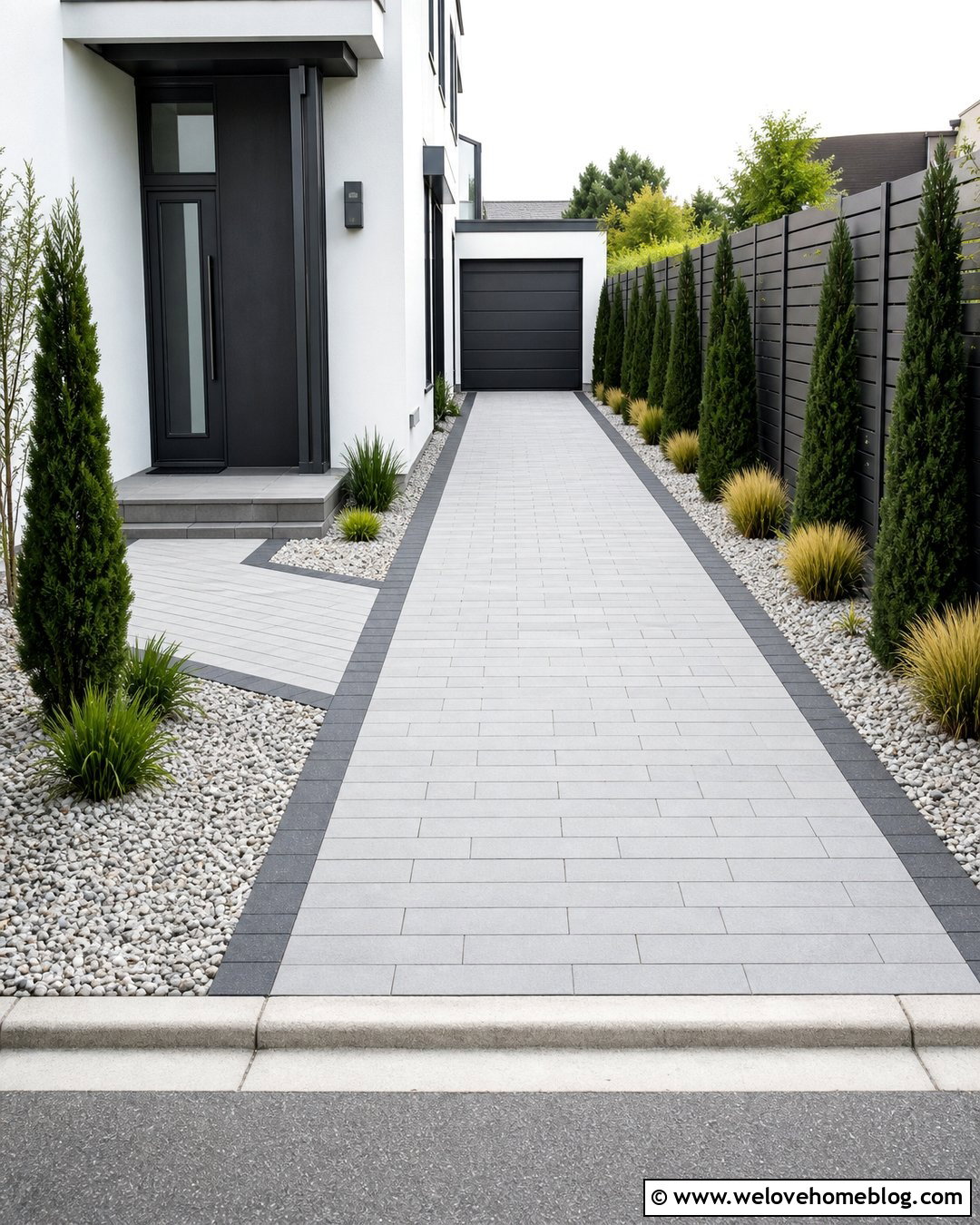
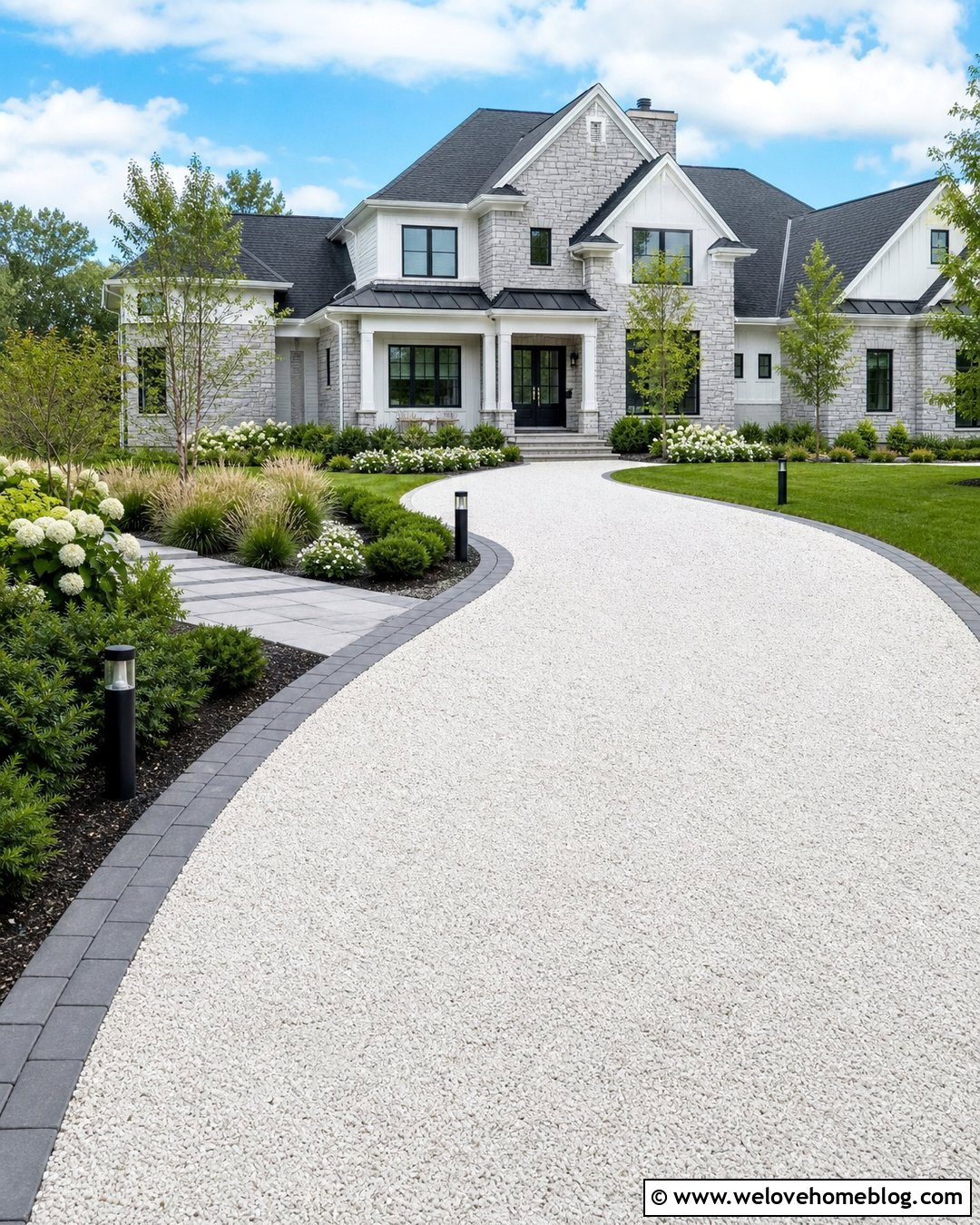
Sometimes the border can carry the entire color contrast. Cover the main driveway with deep red brick pavers in a 45-degree herringbone layout. Add two gray border courses: a light-gray inner soldier course and a charcoal outer running course. The layered edge creates depth and provides a clear transition to planting beds, lawn, and the street apron. This complete driveway works with red-brick colonials, white traditional homes, and craftsman houses with stone foundations. Use gray stepping stones or a gray paver walkway to repeat the cooler tones near the entrance. Rounded evergreen shrubs and white flowering plants offer a calm backdrop. At curves, maintain consistent border widths rather than allowing the bands to pinch inward. The two gray tones should be visibly different but related, with the darker course placed along the outside for the strongest visual frame.
16. Gray Driveway With Red Parking Bay Frames
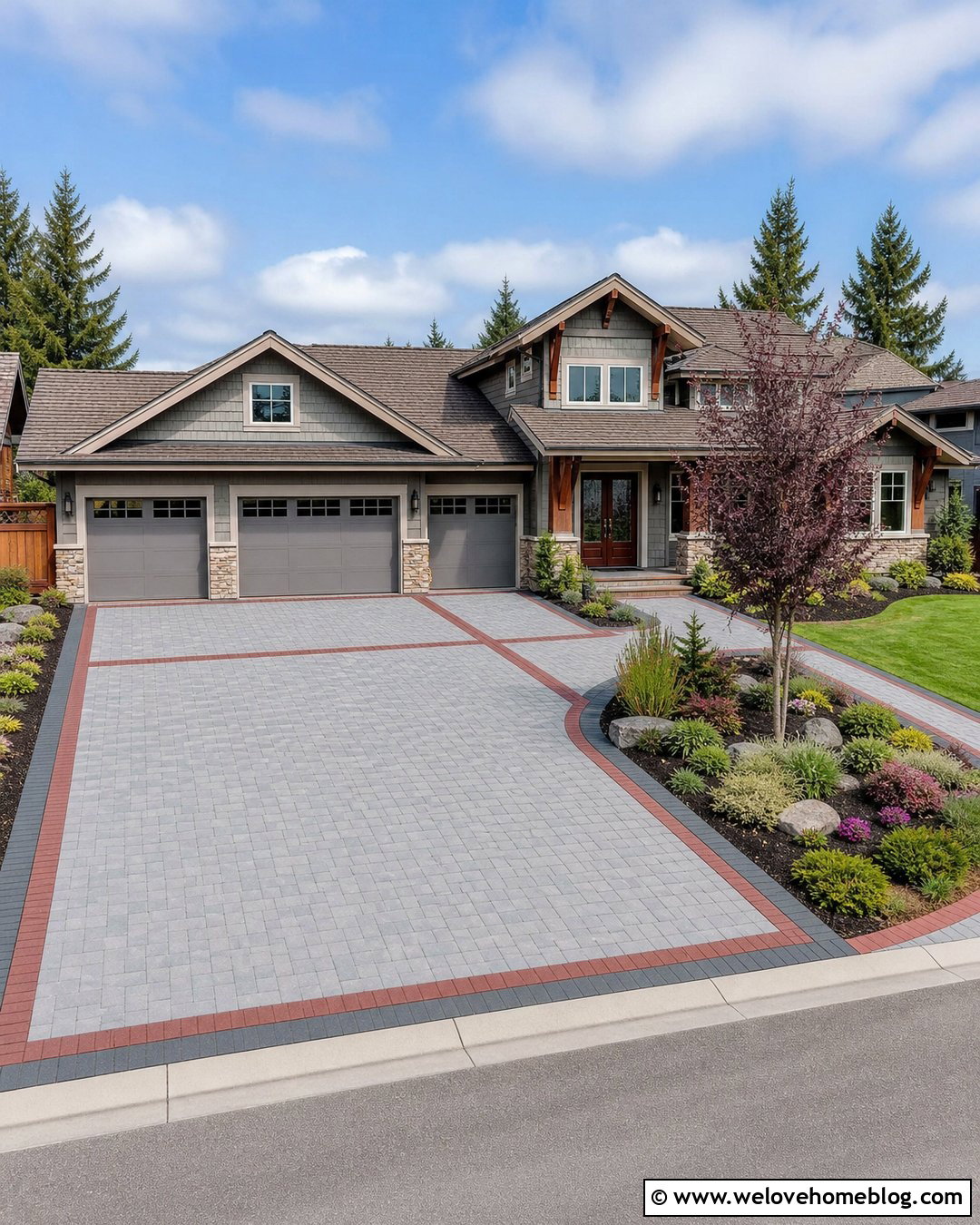
A large driveway can feel like an open parking lot unless the paving defines usable zones. Install a medium-gray modular concrete paver field across the full surface. Then use red rectangular pavers to outline individual parking bays and frame the garage apron. Keep the red lines decorative and subtle rather than imitating commercial markings. A charcoal perimeter border adds another layer of definition. This practical layout suits a wide suburban driveway serving a three-car garage or side-entry home. Between the driveway and front walkway, introduce a landscaped island with a small tree, ornamental grasses, and low shrubs. The red frames can align with columns, garage-door openings, or facade divisions. Avoid creating tiny paving sections between adjacent outlines. Wider gray areas will make the design feel residential, spacious, and balanced while still organizing the broad hardscape.
17. Red And Gray Permeable Grid Driveway
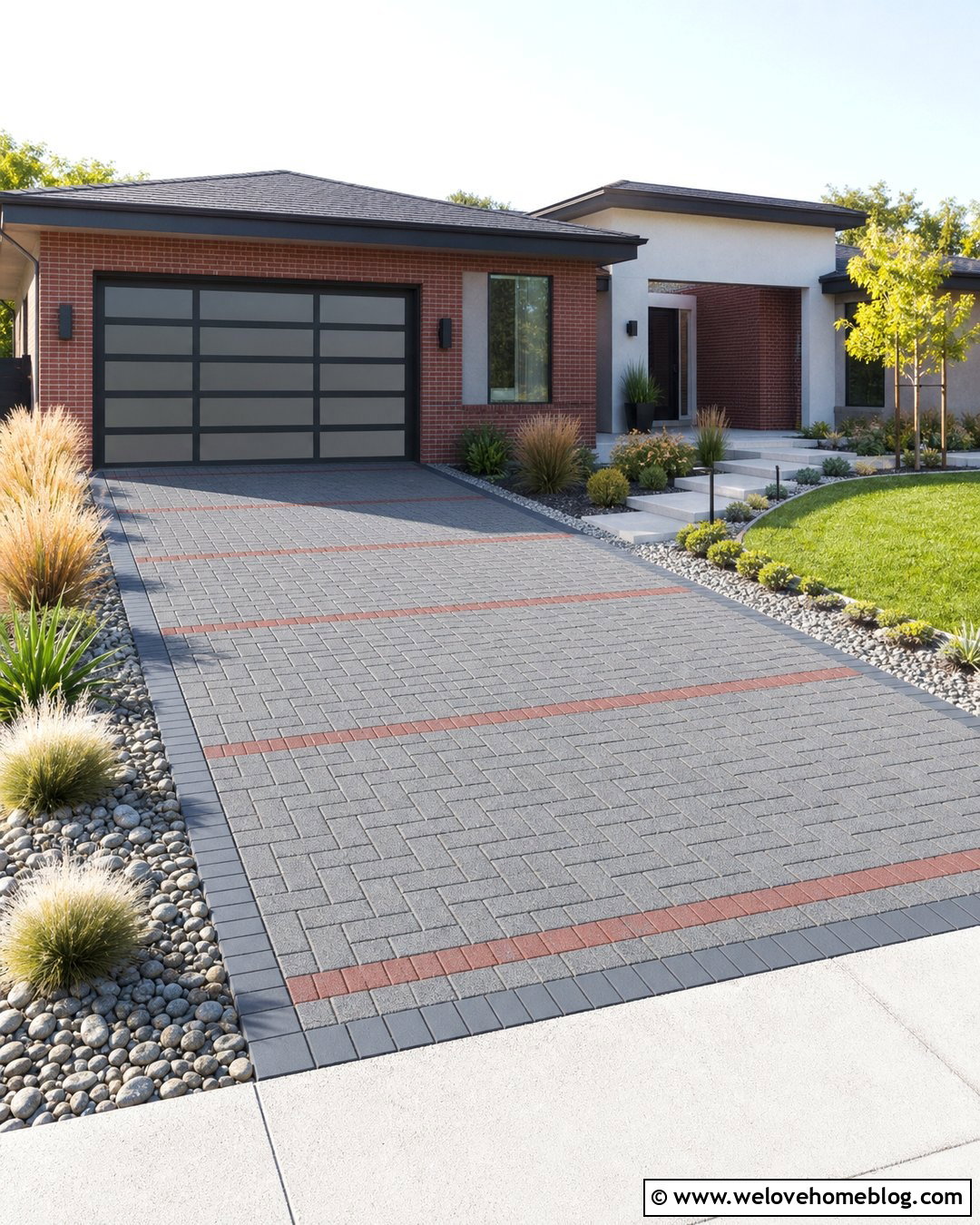
A permeable grid can combine color, pattern, and a softer landscape connection. Choose driveway-rated permeable concrete pavers in charcoal gray for the main field, leaving joints sized according to the selected system. Create repeated red rectangles or bands across the surface with compatible permeable pavers. Fill the joints with the specified clean aggregate rather than ordinary soil or sand. This pattern works especially well on a straight modern driveway beside a contemporary home with red-brick accent walls. Add drought-tolerant grasses, low shrubs, and stone-filled drainage beds along the edges. Keep the red design simple because the visible joints already contribute texture. A dark-gray border should follow the manufacturer’s complete installation system. Permeable paving depends on correctly designed base layers, drainage conditions, and maintenance, so have local site and soil requirements evaluated before choosing this approach.
18. Gray Concrete Driveway With Red Brick Bands
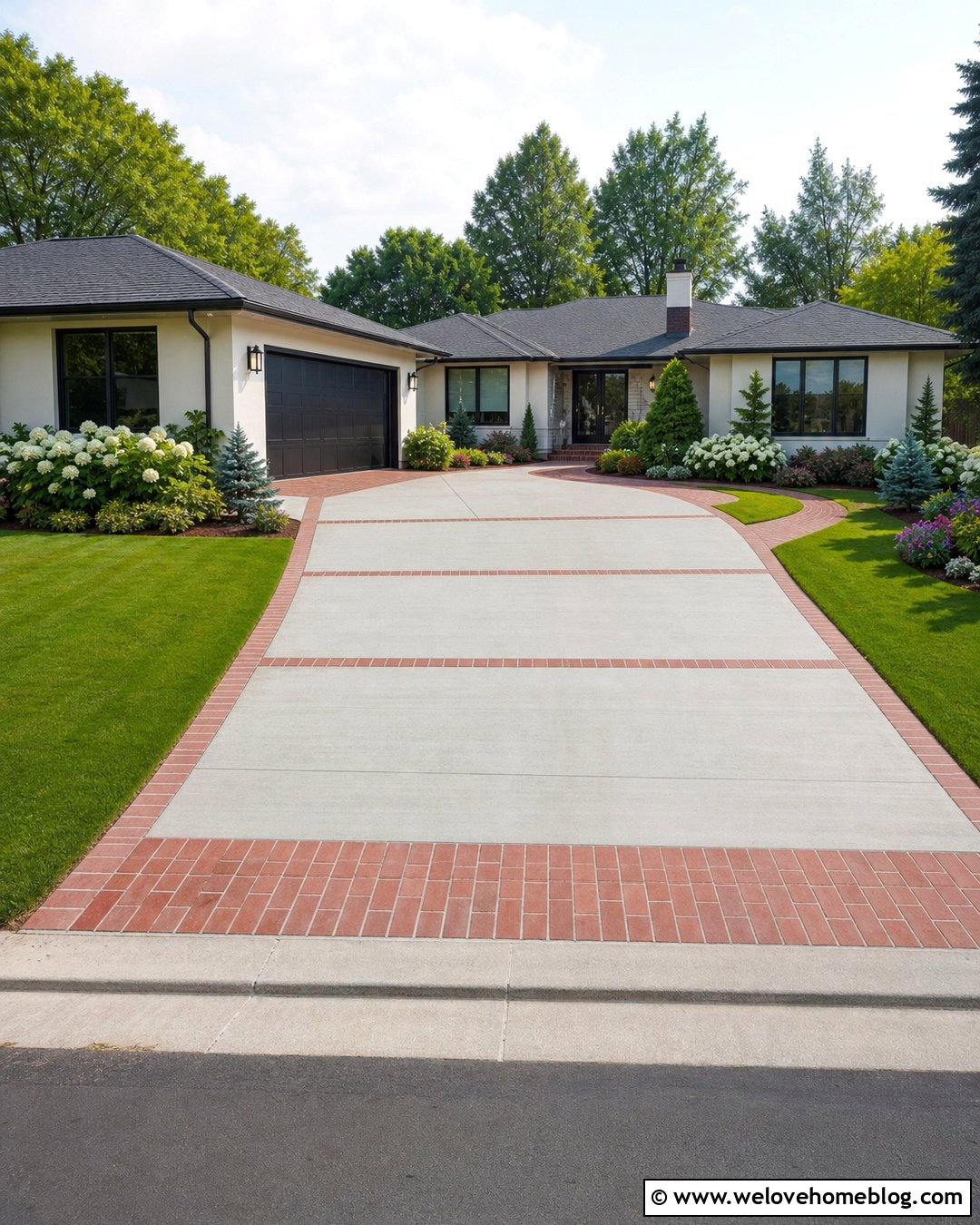
Pavers are not the only way to achieve a red and gray pattern. Divide a gray poured-concrete driveway into large rectangular panels with red clay-brick bands. Position the brick ribbons across the width, around the perimeter, and at the garage apron. A light broom finish gives the gray concrete practical texture while allowing the brick to remain the visual focus. This combination fits a traditional ranch, updated colonial, or simple suburban home. Use the same red brick for the front walkway and porch edging to establish continuity. Plant broad beds with hydrangeas, dwarf evergreens, and seasonal flowers beside the driveway. Plan the bands before the concrete is poured so joints and material transitions work together. An experienced contractor should account for drainage, movement, base preparation, and differences between the concrete and brick installation systems.
19. Red Stamped Concrete Driveway With Gray Borders
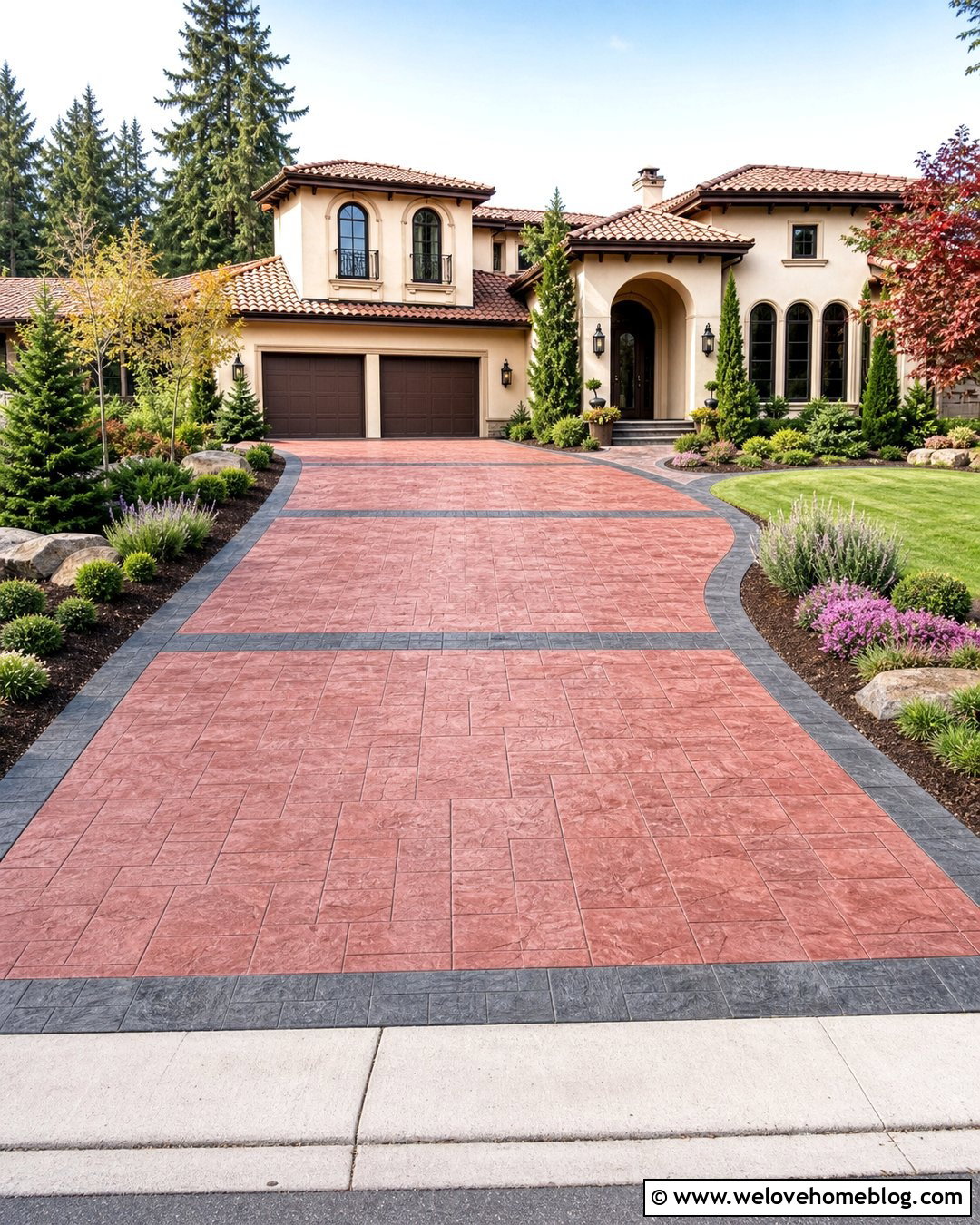
Stamped concrete can reproduce a paver-like pattern while maintaining broad, continuous sections. Choose a muted red integral or surface color with a rectangular ashlar stamp. Frame the driveway with charcoal-gray concrete borders and add gray bands at natural breaks near the curb and garage. The red should include subtle brown variation to prevent an overly bright finish. This design complements a Mediterranean, traditional stucco, or brick-accented home. Use curved beds with evergreen shrubs, flowering ground cover, and small ornamental trees to soften the solid surface. A gray stamped walkway can connect the driveway to the entrance. Ask the installer to create a realistic sample before approving the colors because sealers and release agents can alter the final appearance. Slip resistance, drainage, reinforcement, control joints, and long-term resealing requirements should also be considered.
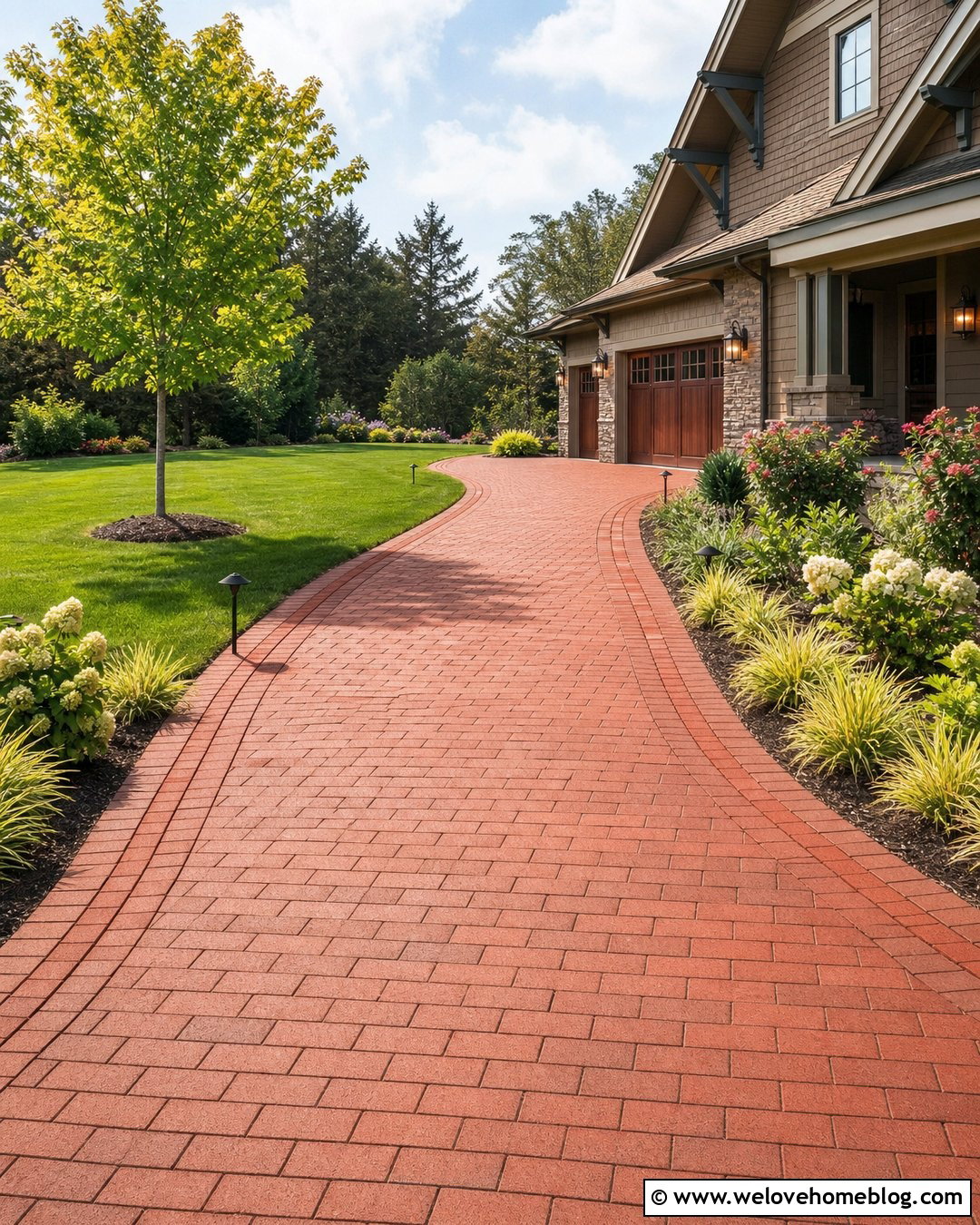
20. Red And Gray Curved Driveway Pattern
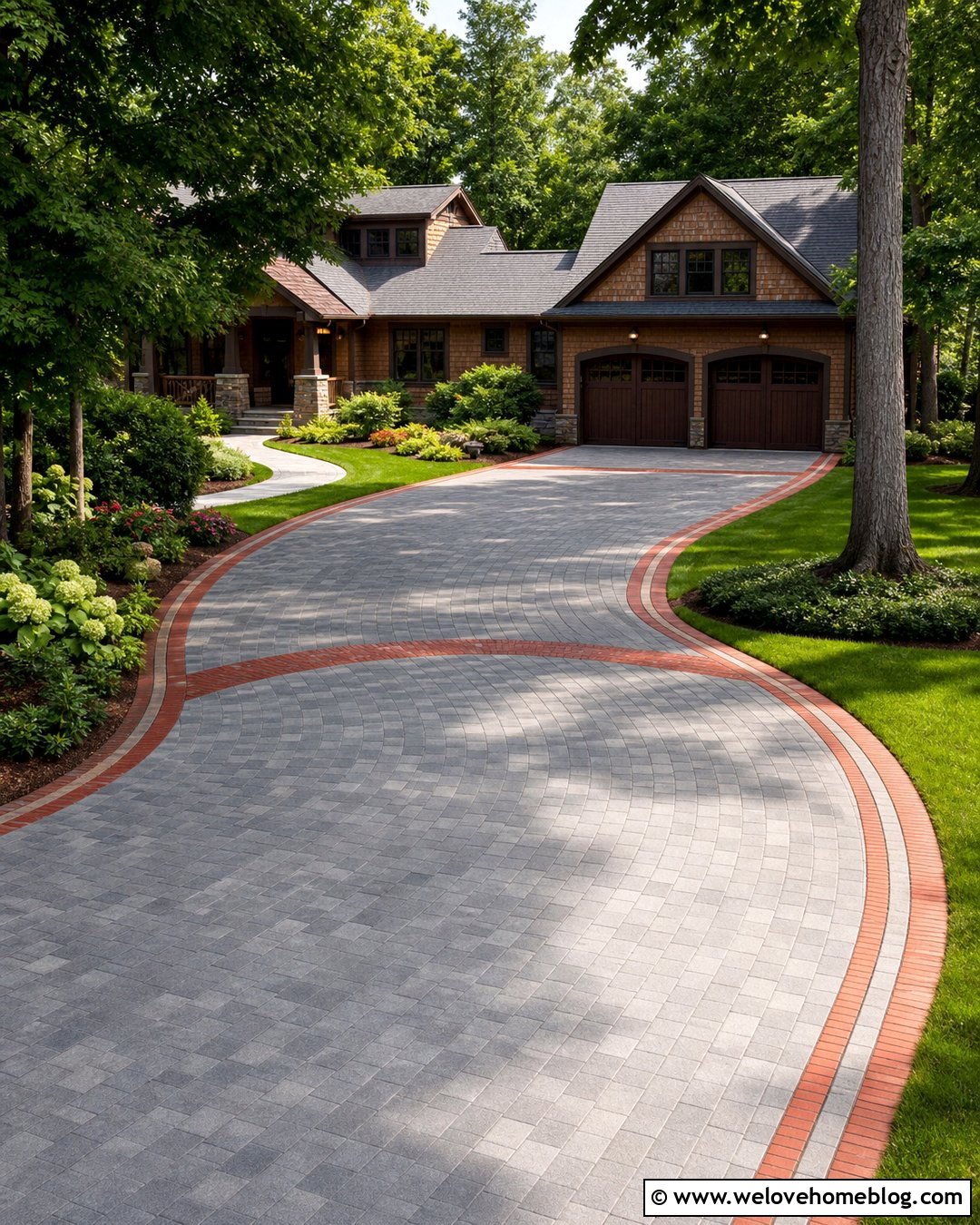
A sweeping driveway deserves a pattern that follows its movement. Use blended gray concrete pavers in a curved running bond, placing the rows perpendicular to the travel direction where the product and installation plan allow. Add a red-brick inner border along the tighter curve and a matching red double border along the wider outside edge. At the garage apron, introduce one broad red arc to complete the composition. This design works well with a craftsman, country, or wooded suburban home. Frame the approach with layered shrubs, shade trees, and low ground cover that leaves the driveway edges visible. Avoid forcing rigid straight bands onto the curve. Every accent should flow with the driveway’s geometry. A carefully planned centerline, consistent joint widths, firm edge restraints, and properly designed drainage will help the finished pattern remain visually smooth.
Conclusion:
The best red and gray driveway uses pattern, proportion, and landscaping as one coordinated design. Red can warm a gray home, highlight brick details, or create a welcoming path toward the entrance. Gray provides contrast and keeps larger paved areas from appearing too intense. Herringbone, running bond, ashlar, basketweave, fan, and circular arrangements each create a different character, but the pattern must also suit the driveway’s shape and expected traffic. Always compare physical color samples outdoors and view a planned layout from the street. Proper base preparation, drainage, edge restraint, and driveway-rated materials matter as much as appearance. Use these 20 Red And Gray Driveway Pattern Ideas to create an entrance that feels attractive, practical, and connected to your home.

Related posts:
Leave a Reply