
Japanese driveway ideas blend practical vehicle access with the calm, balanced character of a Japanese garden. Instead of treating the driveway as a plain paved strip, these designs connect the surface, route, borders, plants, rocks, and home entrance. Natural stone, gravel, and exposed aggregate concrete are especially compatible with Japanese-inspired landscapes because their colors and textures settle quietly into the surrounding garden. () Curved approaches can create a slower visual journey, while carefully placed maples, pines, moss, and sculpted shrubs frame the view without overwhelming it. () Whether you have a compact suburban lot or a long country entrance, the following **25 Japanese driveway ideas** offer complete, practical looks to inspire your project.

1. Japanese Gravel Driveway With Stone Edging
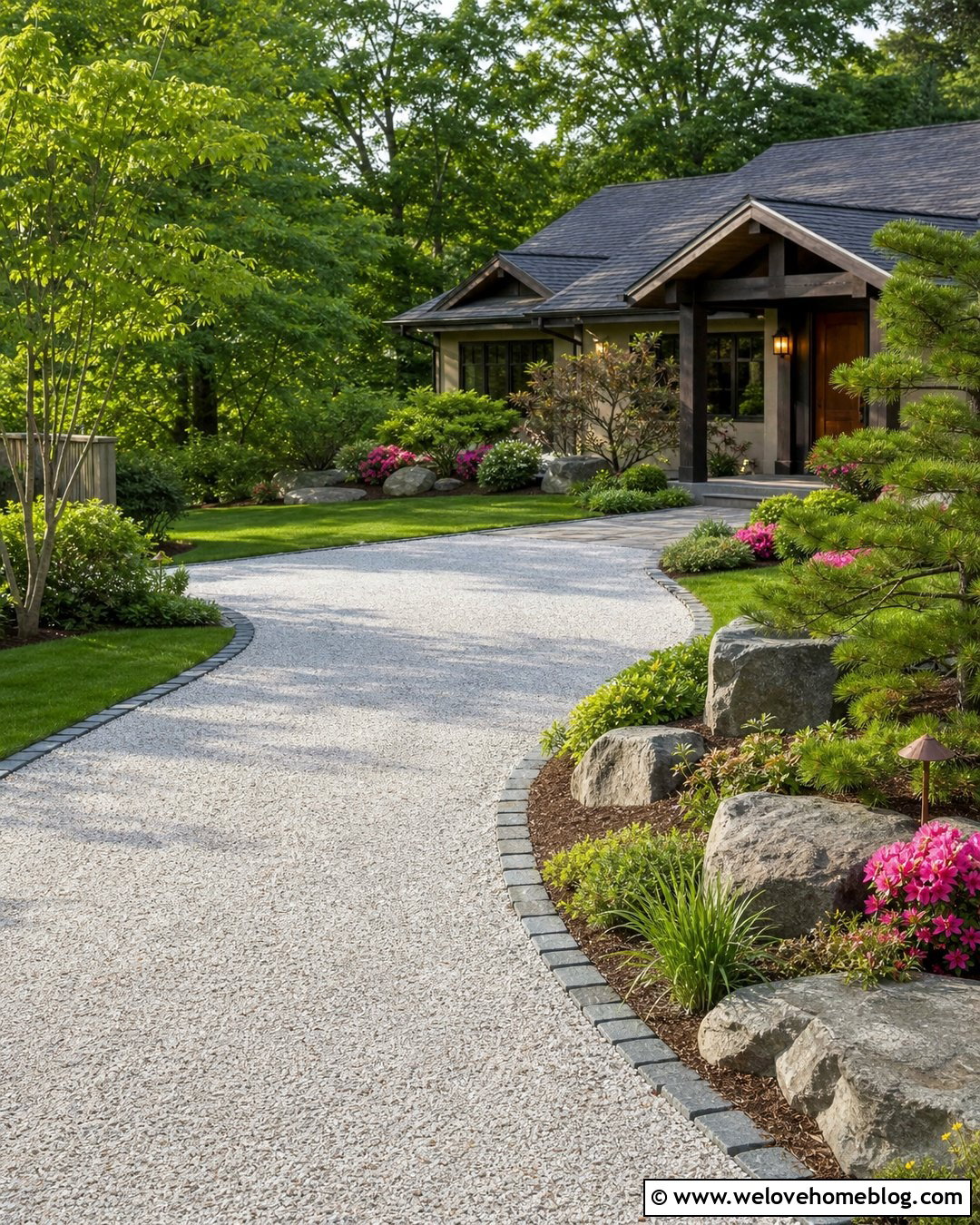
A pale gravel surface creates a soft, understated foundation for a Japanese-inspired entrance. Choose compactable crushed granite instead of loose decorative pebbles where vehicles regularly travel. A gently curved layout will feel more natural than a rigid path, especially when it follows existing trees or the slope of the yard. Define both sides with dark granite cobbles or irregular fieldstone set nearly flush with the surface. This keeps gravel contained without producing a heavy border. Complete the look with low mounds of dwarf pine, Japanese forest grass, azaleas, and moss-like ground cover. Add several weathered boulders in uneven groups rather than matching pairs. The contrast between pale gravel, dark edging, and layered greenery gives the entire driveway a calm, cohesive appearance.
2. Japanese Concrete Driveway With Grass Strips
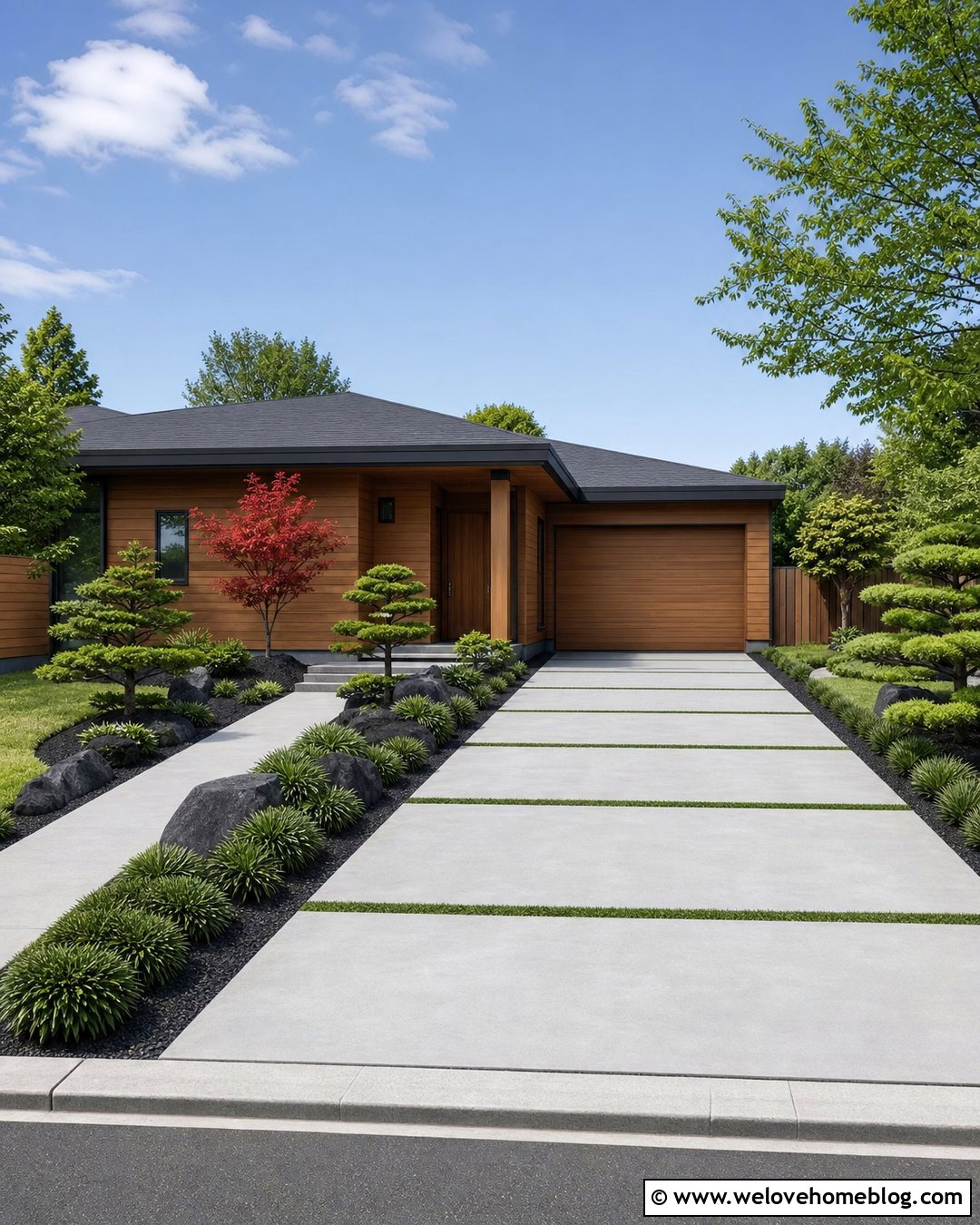
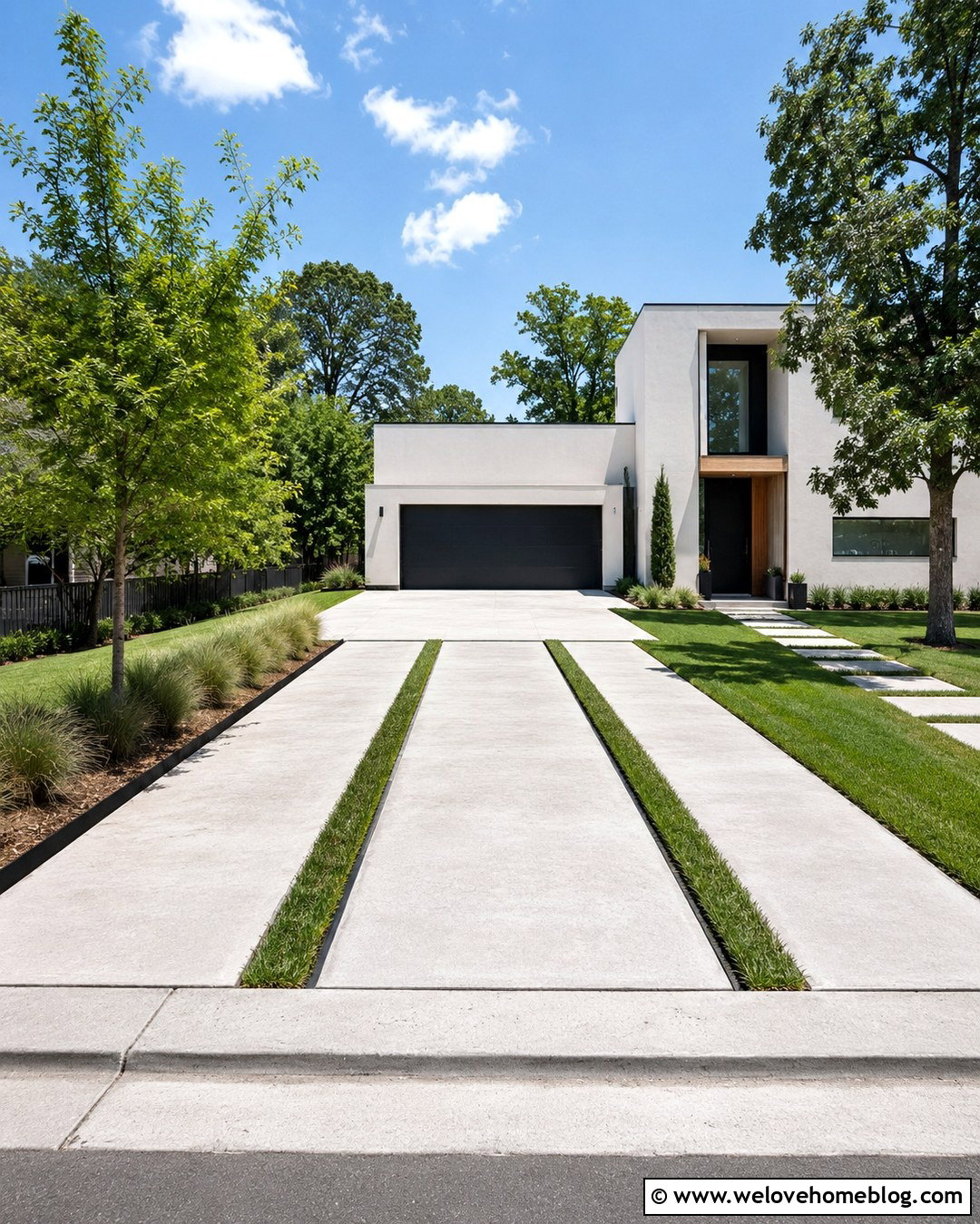
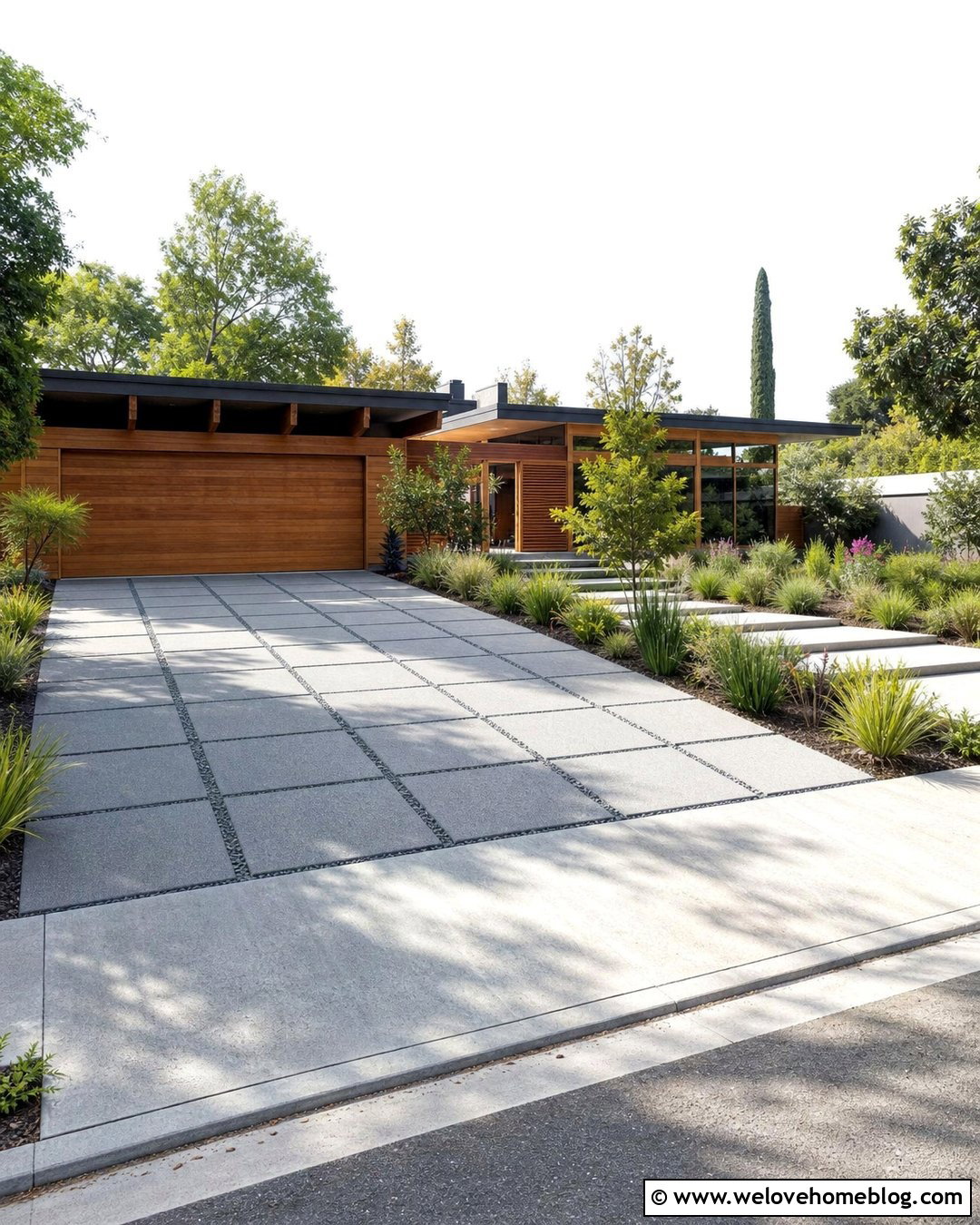
Would you like a modern surface that still feels connected to nature? Use large rectangular concrete pads separated by narrow grass or ground-cover strips. Soft gray poured concrete creates a clean driving surface, while green joints break up the hard area and improve its visual relationship with the yard. Keep the driveway straight for a contemporary Japanese home, or introduce a slight offset before it reaches the garage. Frame the route with clipped cloud-form shrubs, dwarf mondo grass, and one sculptural Japanese maple. Dark basalt stones can form a simple border between the planting beds and lawn. Avoid filling every open area with decoration. The restrained material palette and repeated geometry will make the entrance look intentional, peaceful, and easy to understand from the curb.
3. Japanese Paver Driveway With Black Pebble Borders
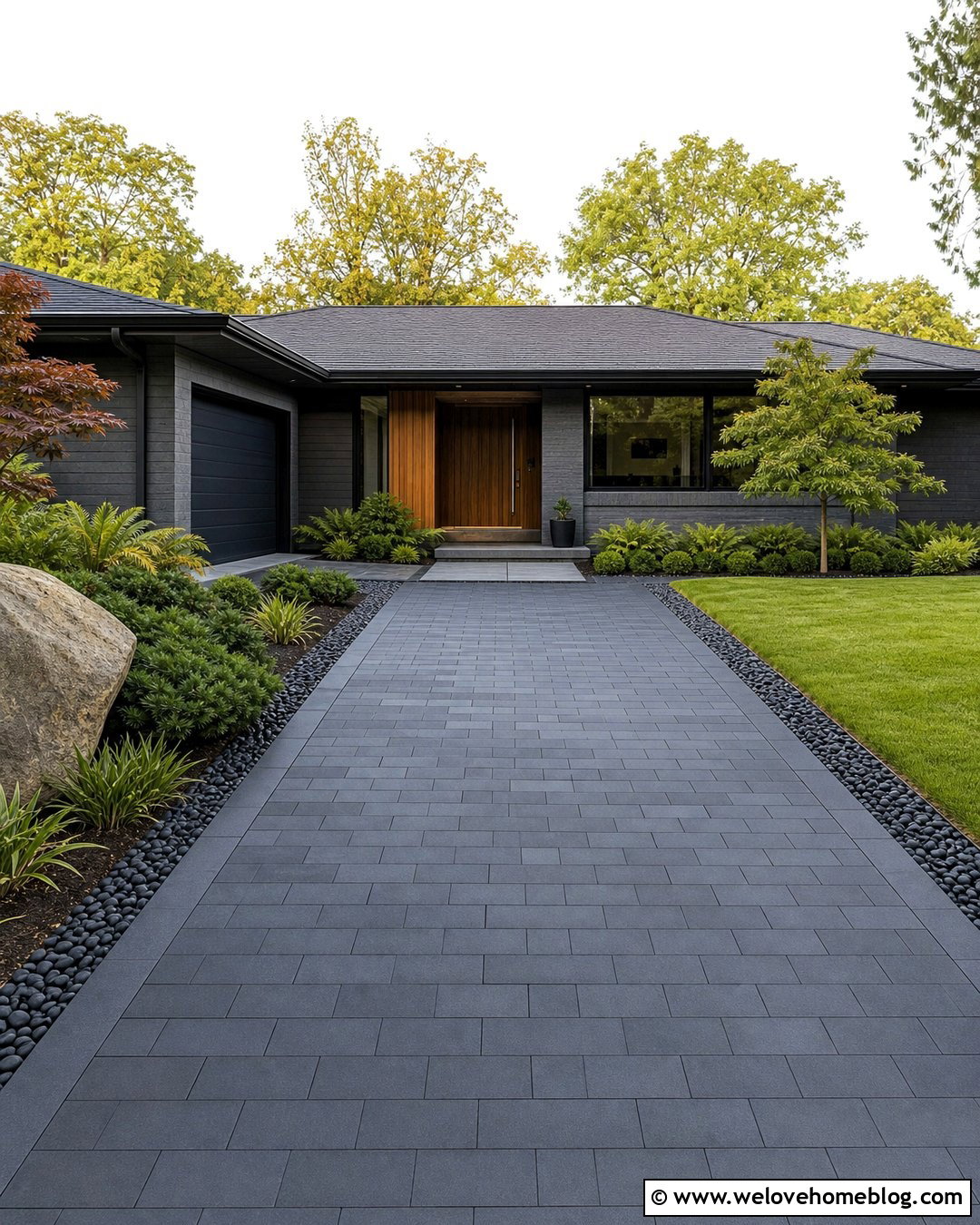
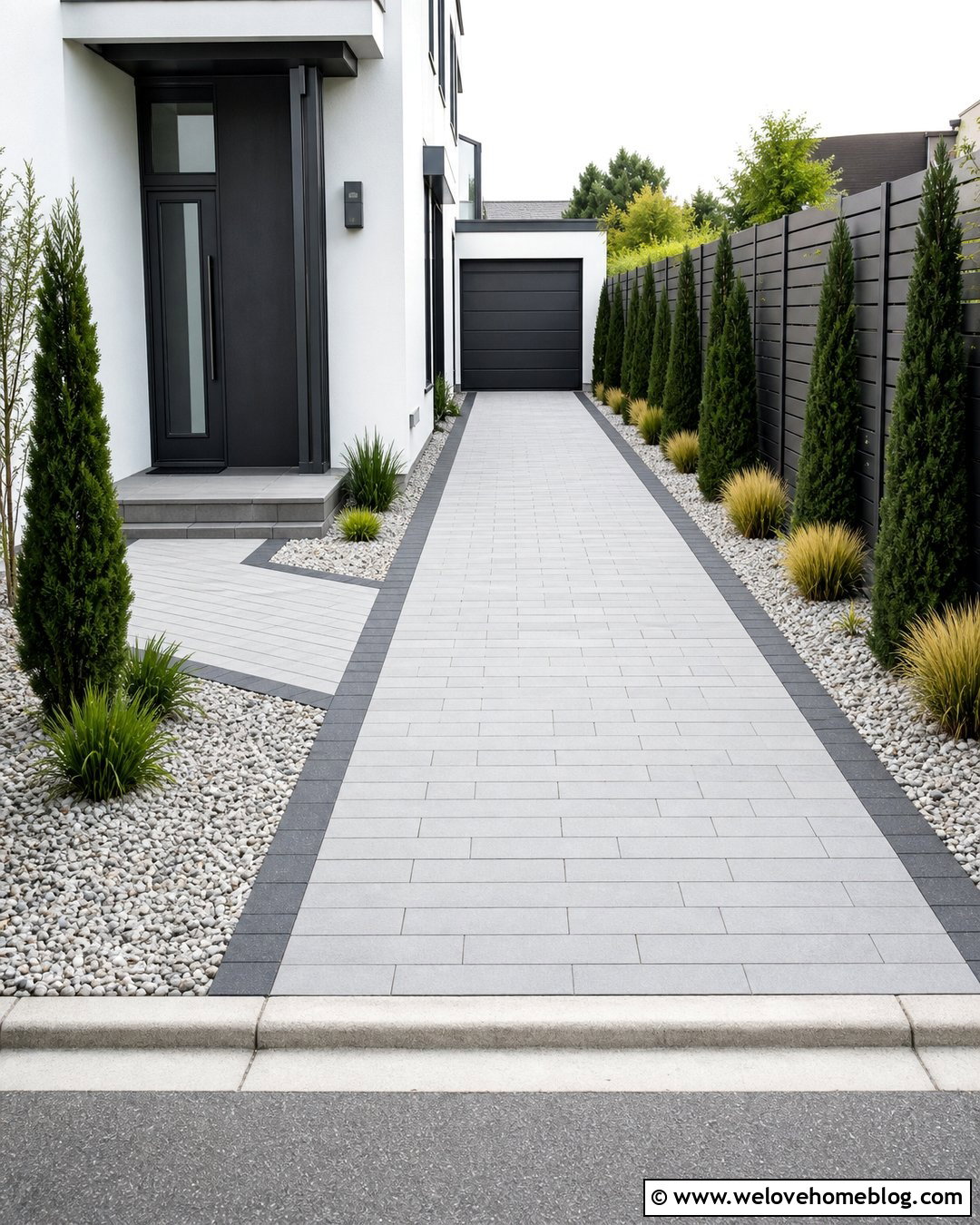
Large charcoal concrete pavers can give a Japanese driveway a dramatic yet controlled appearance. Lay the pavers in a simple running bond rather than an overly decorative pattern. Narrow channels of polished black pebbles along the sides will emphasize the driveway’s direction and visually connect it with a dark roof or wood-clad facade. For better stability, keep loose pebbles outside the main wheel path. Plant the bordering beds with compact junipers, ferns, Japanese sedge, and low evergreen mounds. One natural boulder near the entrance can provide a grounded focal point. A straight driveway suits this combination because the dark linear borders reinforce the architecture. The finished look feels contemporary, but its stone, restrained planting, and careful asymmetry still reference traditional Japanese landscape principles.
4. Japanese Curved Driveway With Maple Trees
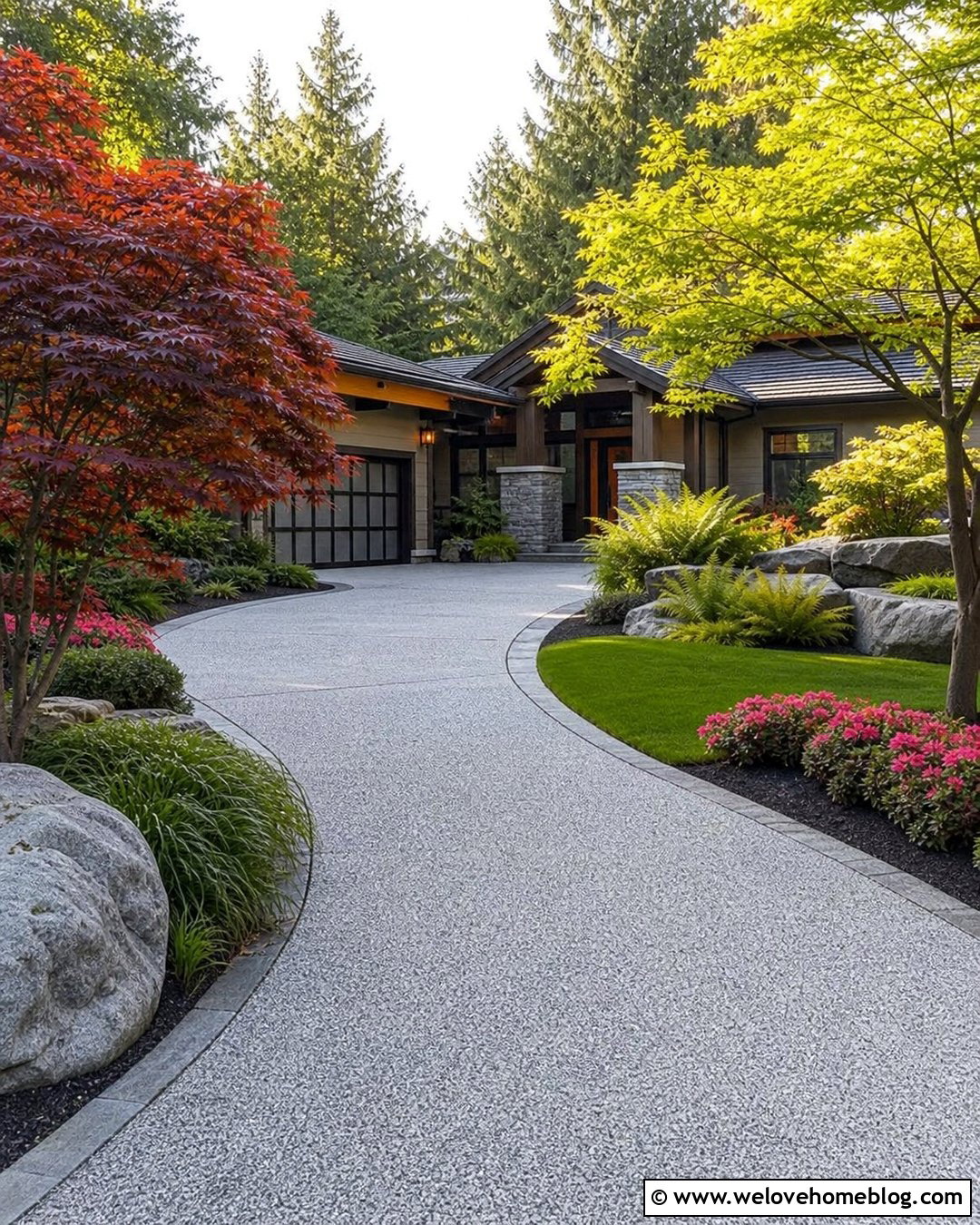
A curved driveway can reveal the house gradually instead of presenting the entire property at once. Surface the drive with fine gray exposed aggregate concrete for durability and natural texture. On the outside of the curve, plant several Japanese maples with enough spacing for their mature canopies. Use varieties suited to your local climate and sunlight conditions. Beneath them, create layered beds with ferns, hakone grass, low azaleas, and dark mulch. The inside curve can remain simpler, featuring lawn, smooth boulders, and a restrained ground cover. Install flush granite edging to separate the pavement from soil without creating a harsh outline. This complete design makes the turn feel purposeful while using seasonal foliage to frame the changing approach to the house.
5. Japanese Stone Driveway With Moss Borders
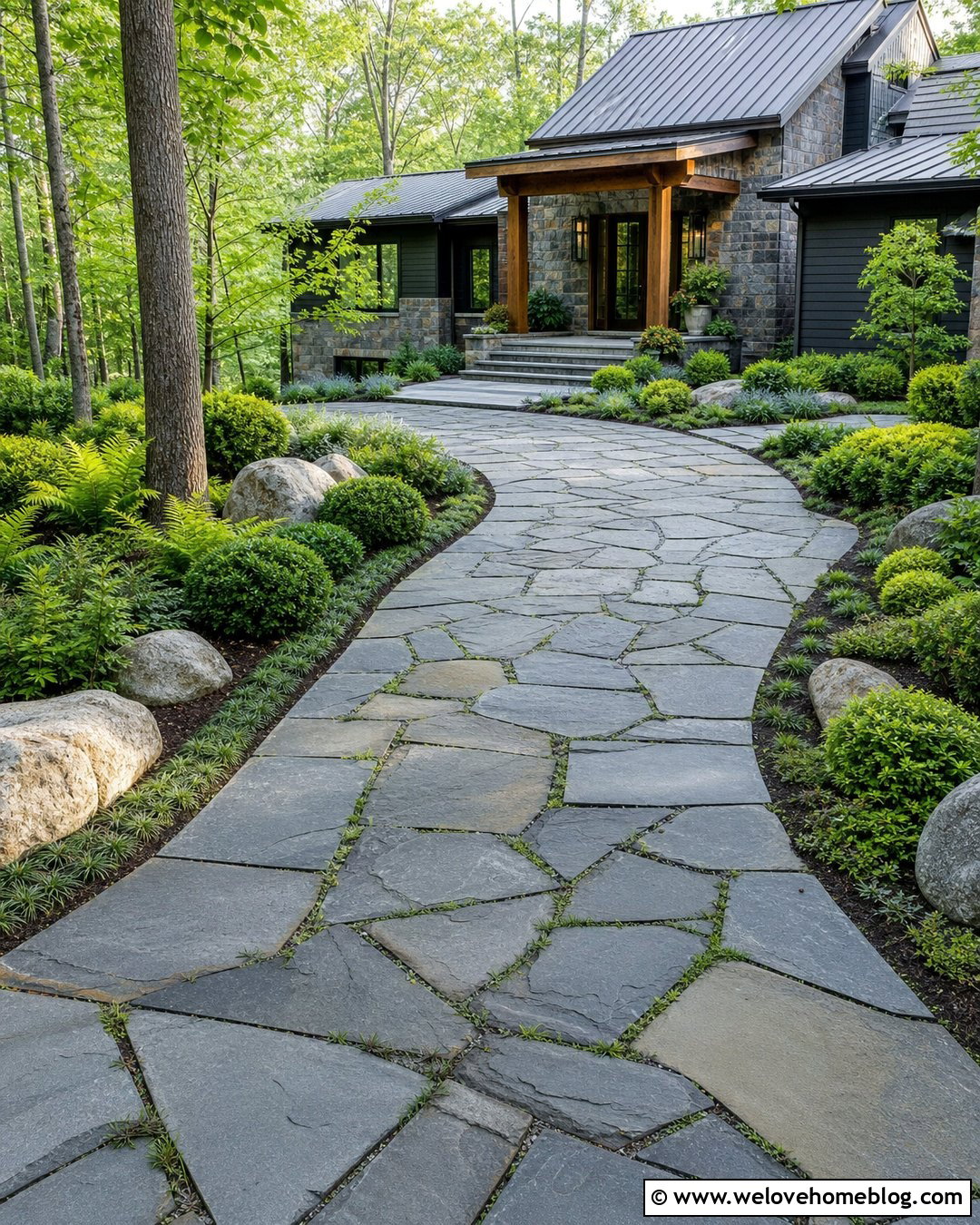
Irregular natural stone can produce a driveway that feels settled into the landscape rather than placed on top of it. Select thick granite or bluestone slabs with textured, slip-resistant surfaces and install them over a properly engineered vehicle base. Vary the slab dimensions while maintaining joints that are narrow enough for comfortable driving. In moist, shaded areas, moss-like ground covers can soften the outside borders. Where true moss would struggle, consider dwarf mondo grass or another low plant appropriate for your region. Add ferns, rounded evergreen shrubs, and a few partially buried stones beside the driveway. A gentle curve works beautifully with this material. The irregular paving, muted colors, and softened edges create an established garden atmosphere without making the entrance feel neglected.
6. Japanese Asphalt Driveway With Bamboo Screening
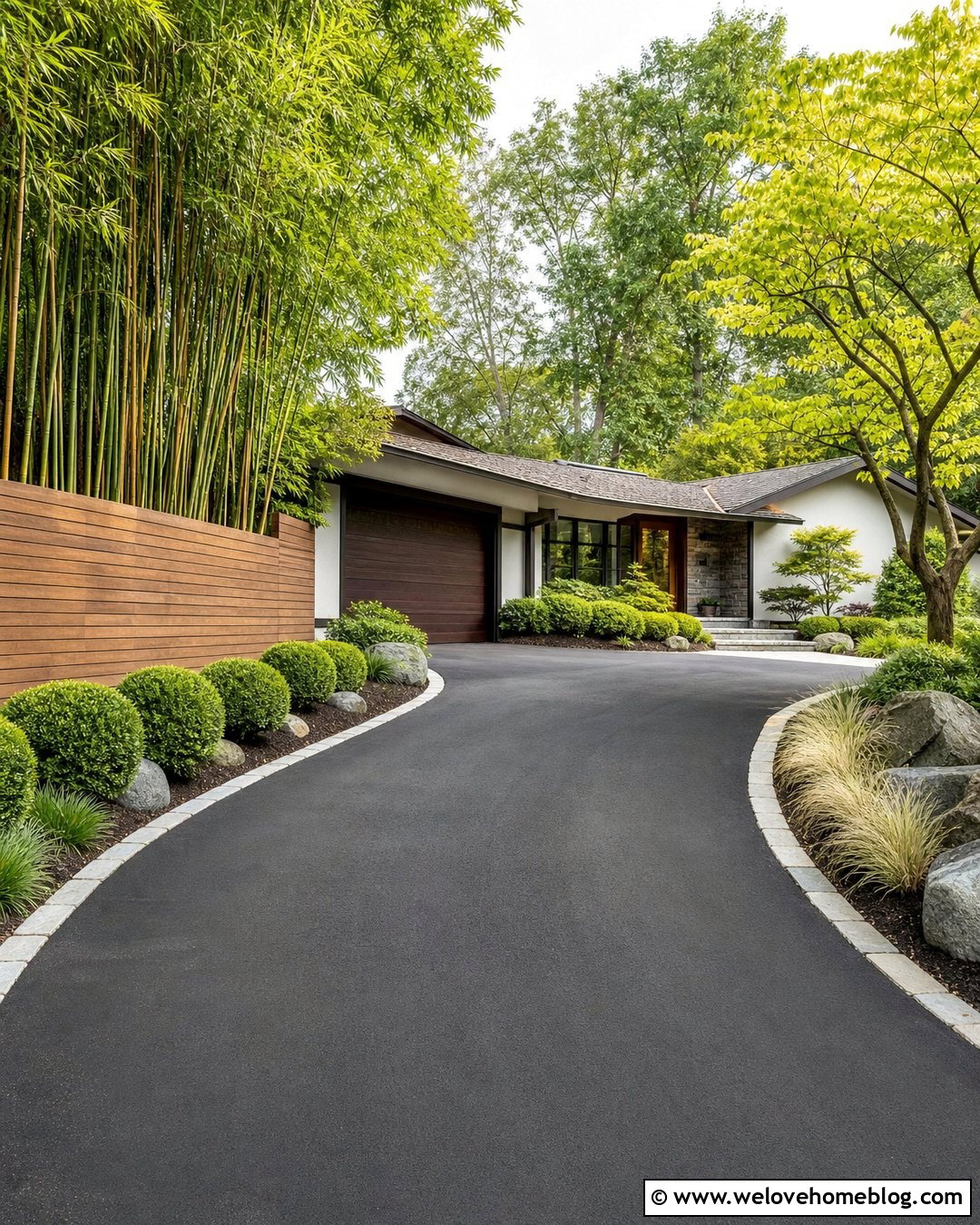
Black asphalt can work surprisingly well in a Japanese-inspired front yard when its bold color is balanced with natural borders. Use a smooth, freshly finished surface and create a simple straight or gently curved approach. Install a narrow row of granite setts between the asphalt and planting beds to sharpen the edges. Along one side, add clumping bamboo behind a slatted cedar screen for layered privacy. Avoid invasive running bamboo unless it is professionally contained. The opposite side can feature rounded shrubs, ornamental grasses, and several gray boulders to prevent the design from looking overly symmetrical. A dark timber gate or matching garage door will visually connect the house to the driveway. This practical combination turns an affordable surface into a polished, garden-focused entrance.
7. Japanese Cobblestone Driveway With Pine Landscaping
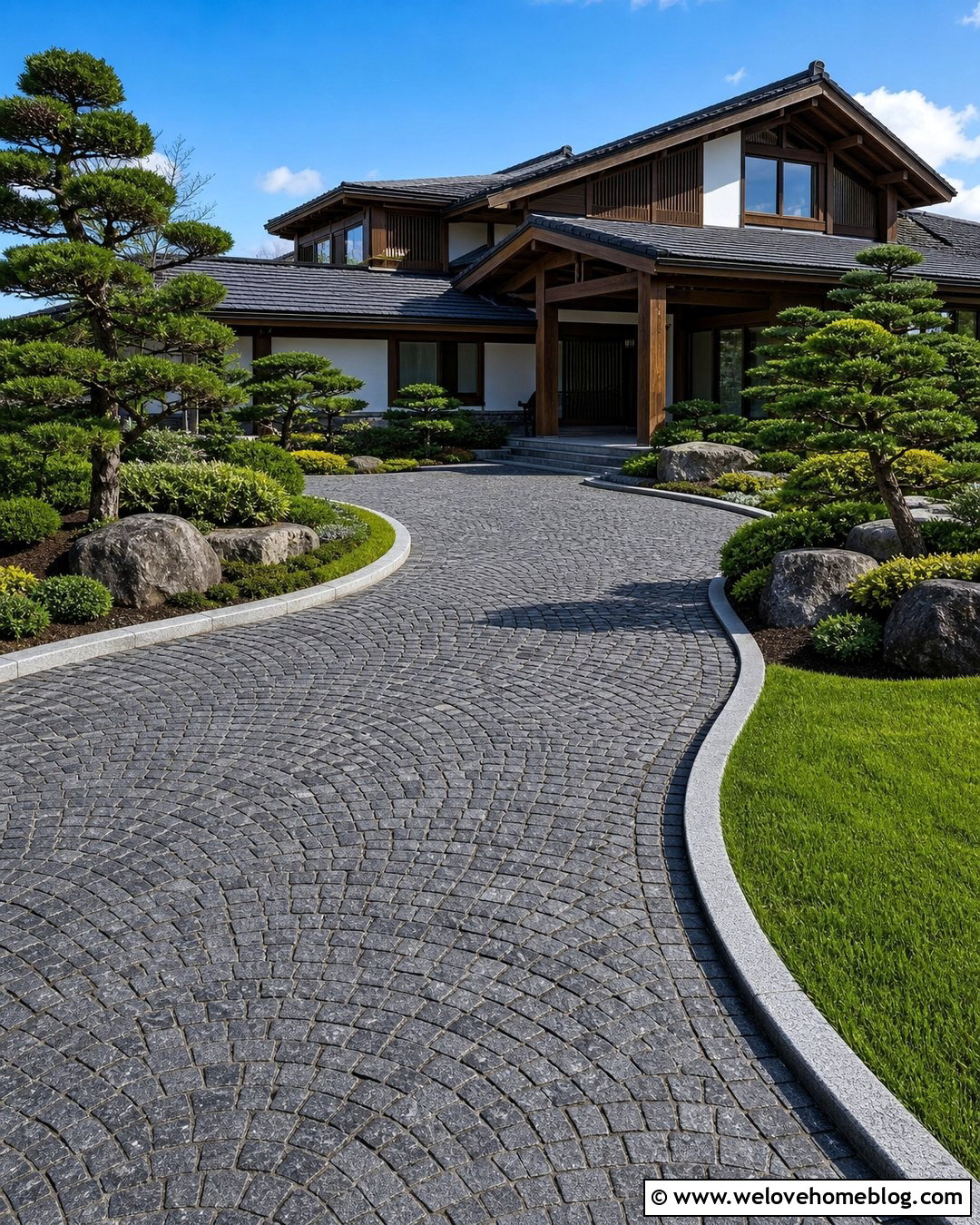
Dark granite cobblestones bring rich texture to a Japanese driveway and pair naturally with sculpted pine trees. Use a fan, stretcher, or subtle random pattern that supports vehicle movement without becoming visually busy. A broad, slightly curved layout is ideal for a traditional house with deep rooflines and timber details. Along the edges, build asymmetrical planting beds with Japanese black pine, compact junipers, evergreen azaleas, and low grasses. Position large boulders near the pines so the rocks appear anchored by the planting rather than scattered across the yard. A simple stone walkway can branch from the driveway toward the front door. Because cobblestone already has strong texture, keep additional ornaments limited. The completed entrance should feel layered, mature, and quietly impressive from the street.
8. Japanese Circular Driveway With Rock Garden
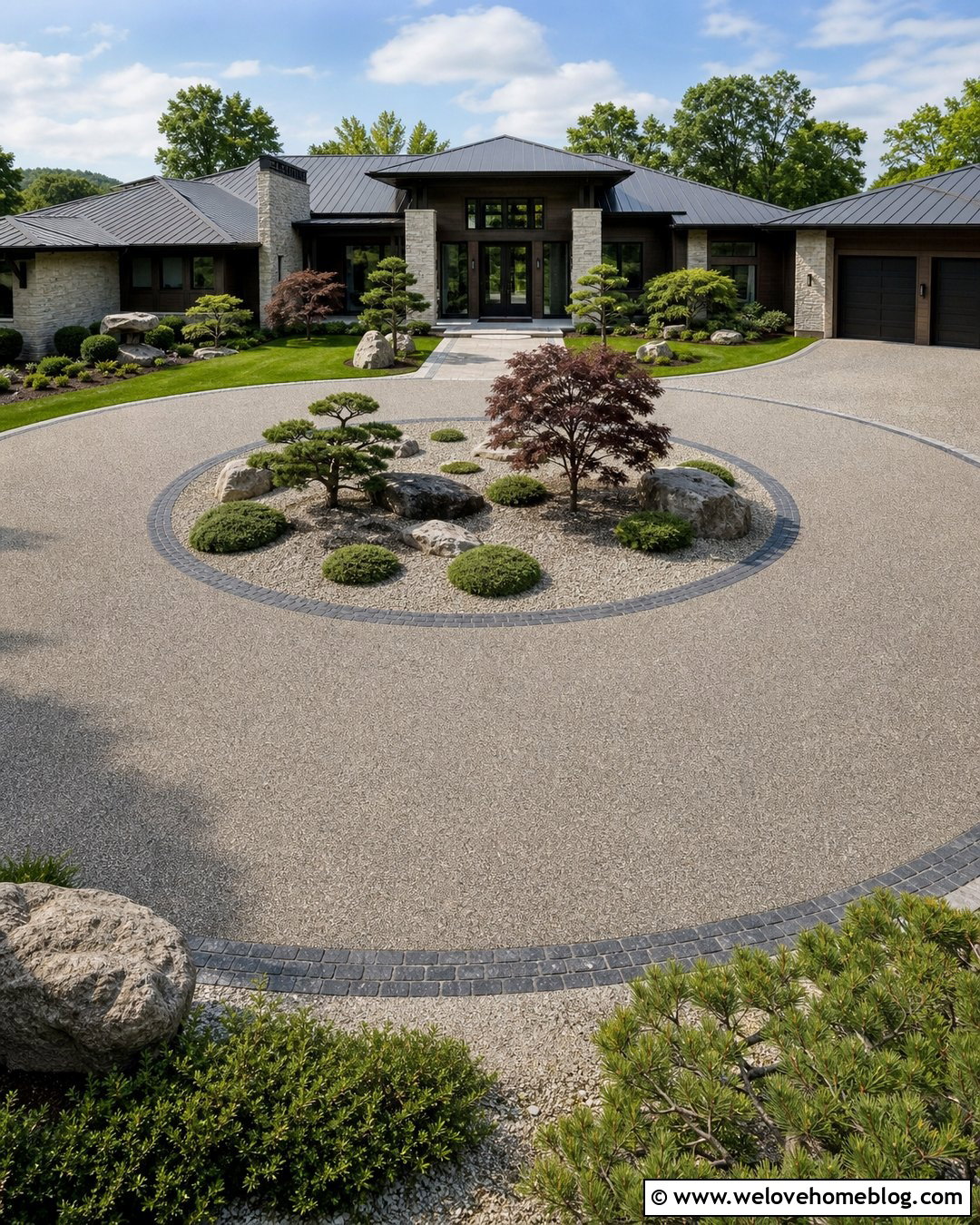
A circular driveway provides an opportunity to turn the central island into a Japanese-inspired rock garden. Use warm gray resin-bound gravel or compacted crushed stone for a smooth, visually quiet driving surface. Edge the circle with dark cobblestones that clearly separate the driveway from the garden. Inside the island, arrange three to five substantial boulders in an uneven composition. Surround them with pale decorative gravel, low evergreen mounds, dwarf pines, and a single airy Japanese maple. Leave generous open space so each feature remains visible. Near the house, repeat a few of the same stones and plants to connect the island with the front entry. The overall design balances convenient vehicle circulation with an attractive garden view from every side of the driveway.
9. Japanese Brick Driveway With Cedar Gate
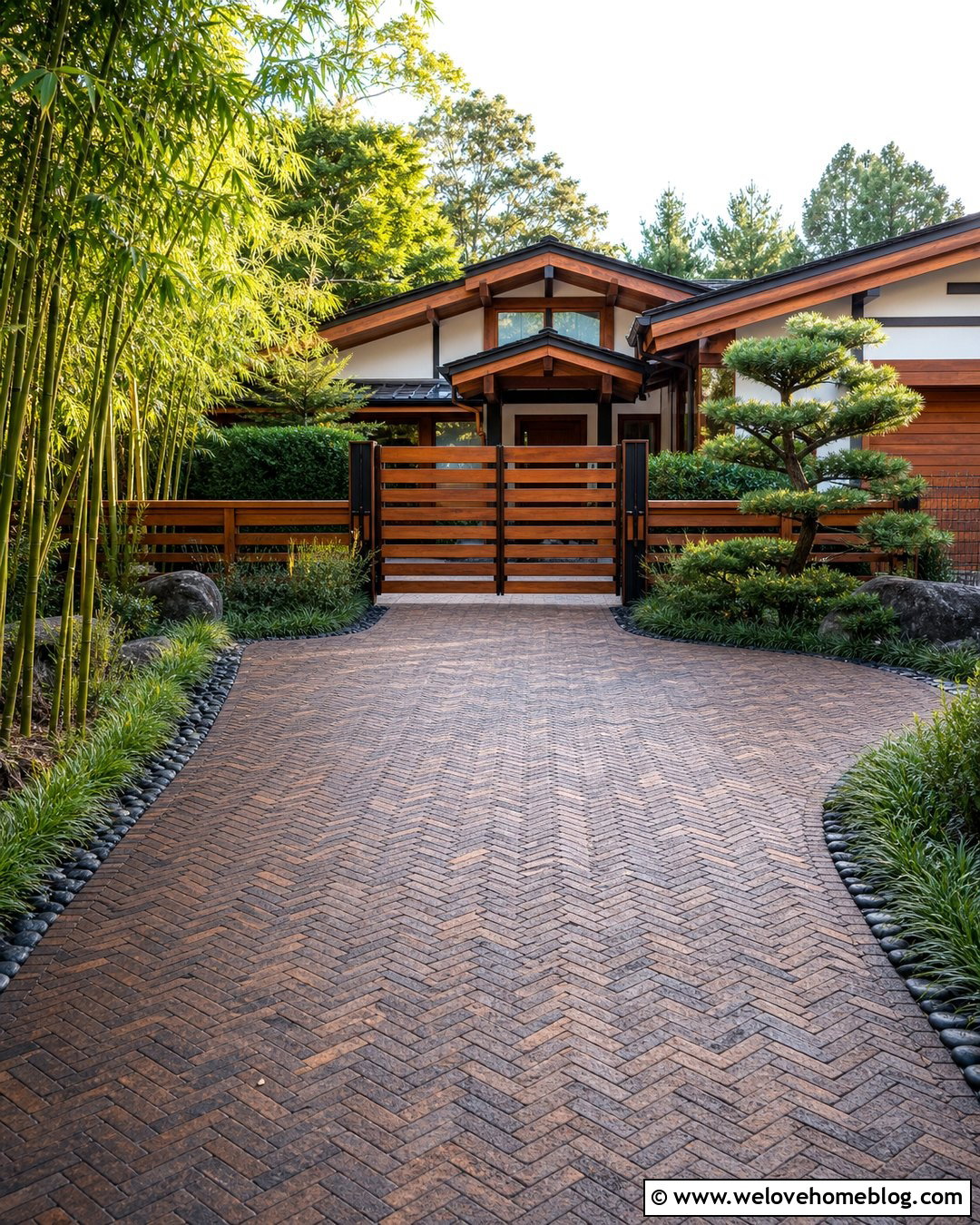
Muted clay brick pavers can give a Japanese driveway warmth without looking overly formal. Select dark brown, charcoal, or weathered red bricks and install them in a simple herringbone pattern for vehicle stability. A straight entrance leading toward a cedar gate creates a strong sense of arrival. The gate can use horizontal or vertical slats with a dark cap and understated black hardware. Continue short cedar fence sections into beds planted with bamboo, evergreen shrubs, and Japanese forest grass. Dark stone edging will help transition between the warm brick and green planting. Consider widening the area inside the gate to make turning and access easier. This combination feels welcoming and handcrafted, particularly beside a craftsman, ranch, or Japanese-influenced home with natural wood architectural details.
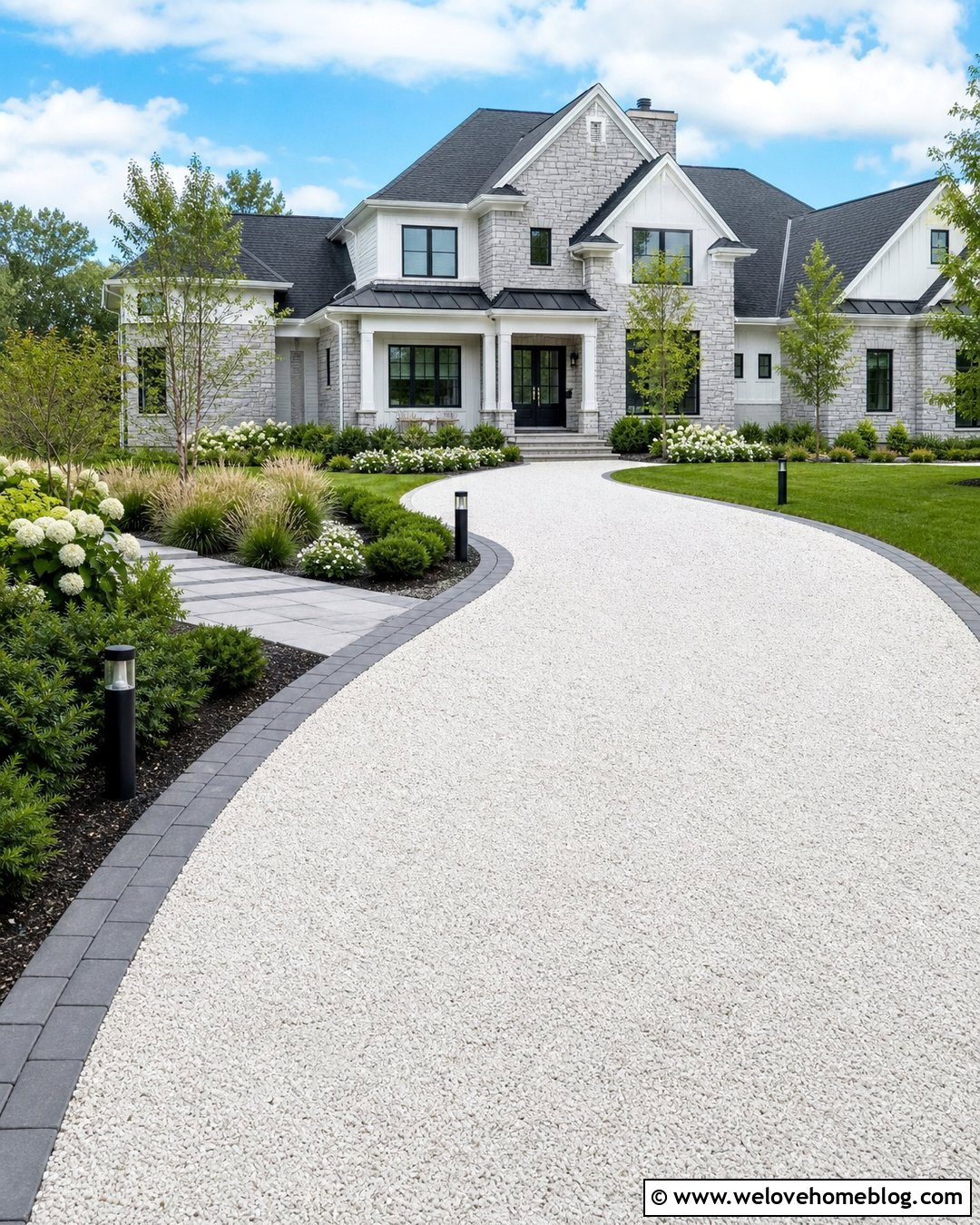
10. Japanese Driveway With Granite Pillars
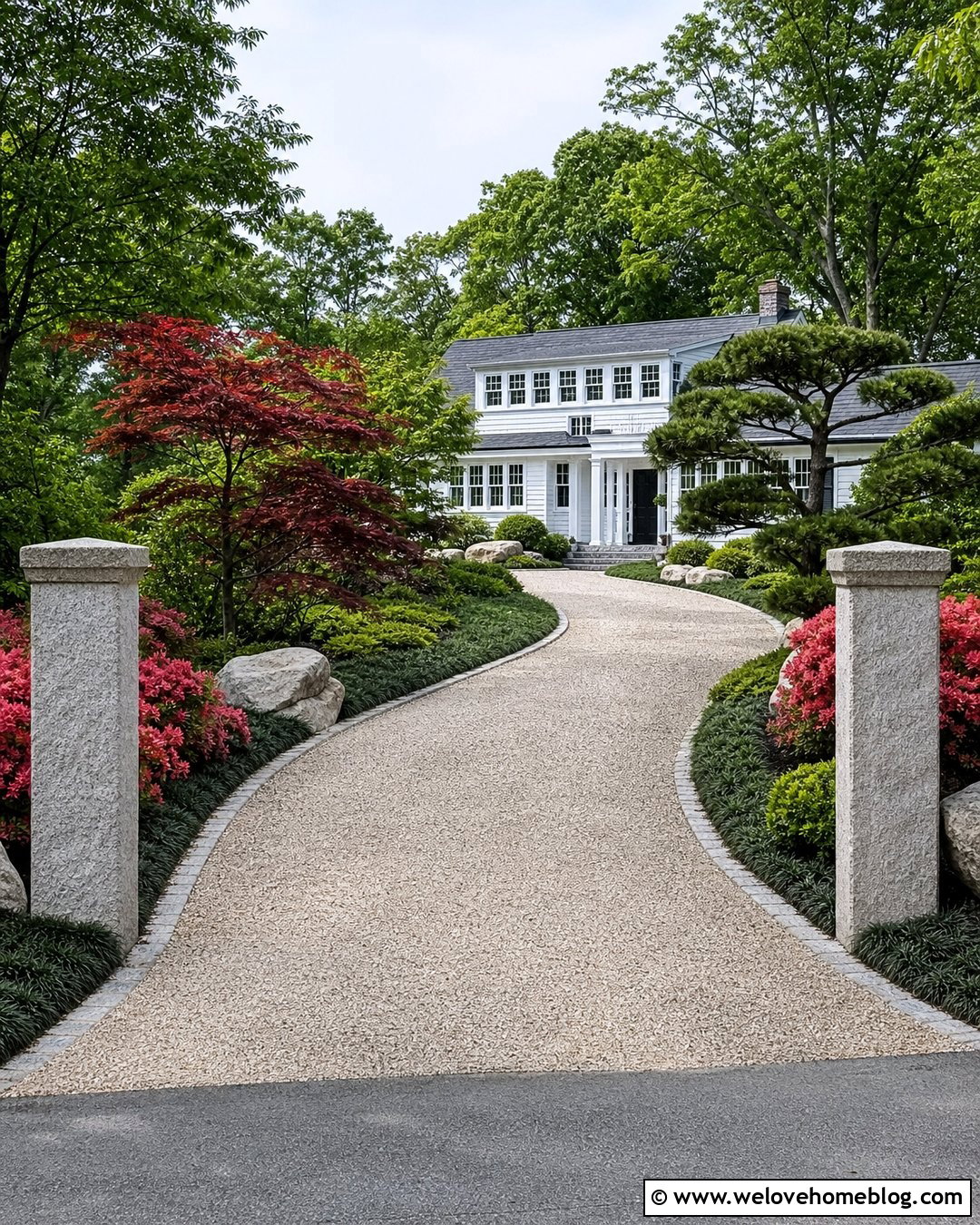
Granite pillars can mark a Japanese driveway entrance without the formality of tall masonry columns. Choose solid rectangular stones or stone-faced pillars with simple caps and minimal ornamentation. Pair them with a pale crushed-granite driveway that curves gently through the front yard. Set the pillars slightly back from the road so they frame the opening without reducing usable width. Low beds of dwarf mondo grass, azaleas, and spreading juniper will soften their bases. Add a Japanese maple behind one pillar and a lower pine arrangement behind the other to create balanced asymmetry. Discreet address numbers can be mounted on one stone face. Repeating the pillar granite in the driveway edging and landscape boulders ties the entire entrance together and prevents the markers from appearing isolated.
11. Japanese Driveway With Timber Wheel Strips
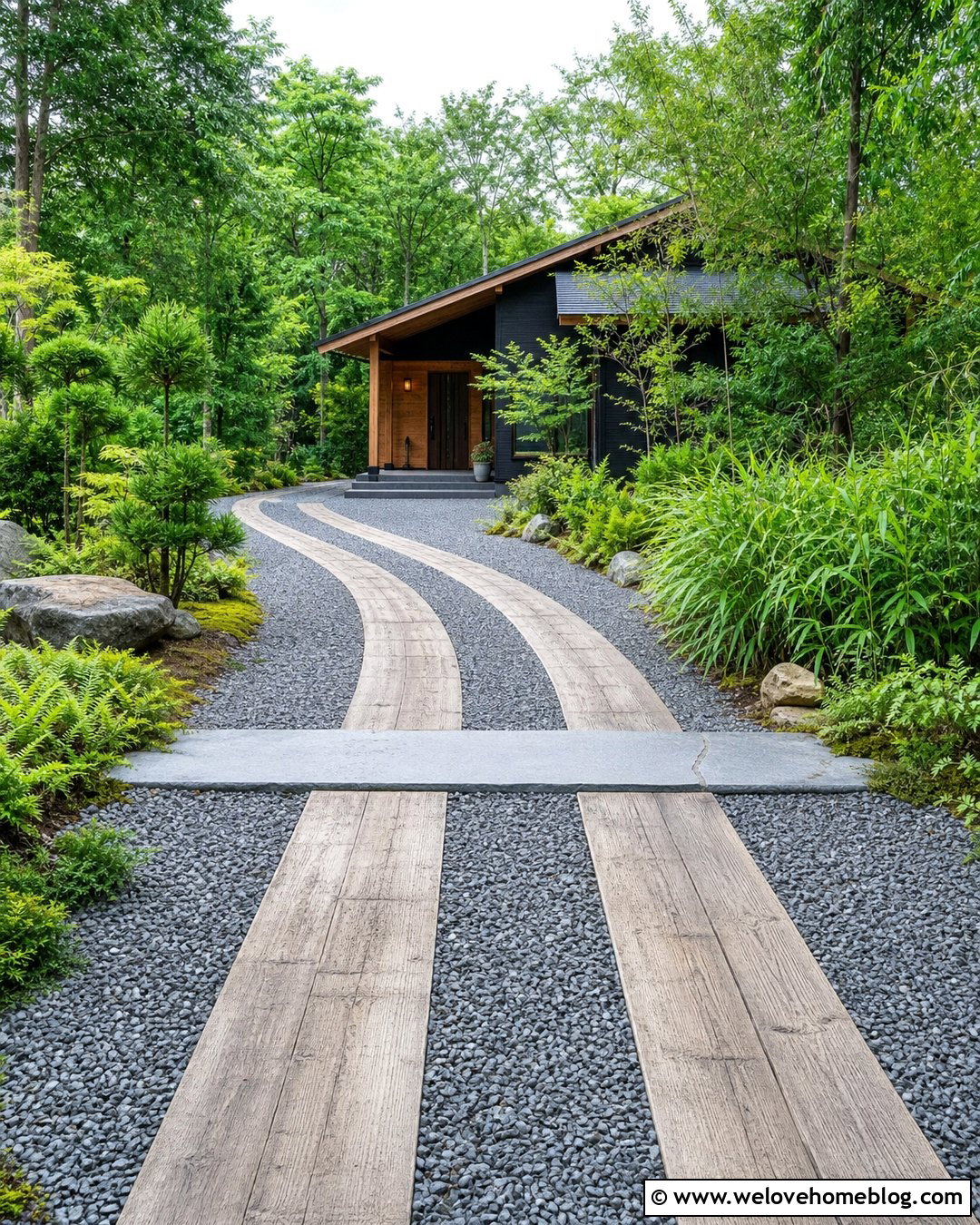
For a garden-oriented property with light vehicle use, timber-look wheel strips can create an unusual Japanese-inspired approach. Actual wood may deteriorate under traffic, so consider textured concrete planks or durable porcelain pavers that resemble weathered timber. Install two parallel tracks within a bed of compacted gray gravel. Keep the route straight or add a very gentle bend, ensuring the strips match the expected wheel position. Border the driveway with ferns, clipped shrubs, dwarf bamboo, and scattered natural stones. A stone footpath can cross the tracks and lead to the front door. This design reduces the appearance of a wide paved area while maintaining a clear route to the house. It works especially well for a small modern home or peaceful woodland setting.
12. Japanese Driveway With White Gravel Landscaping
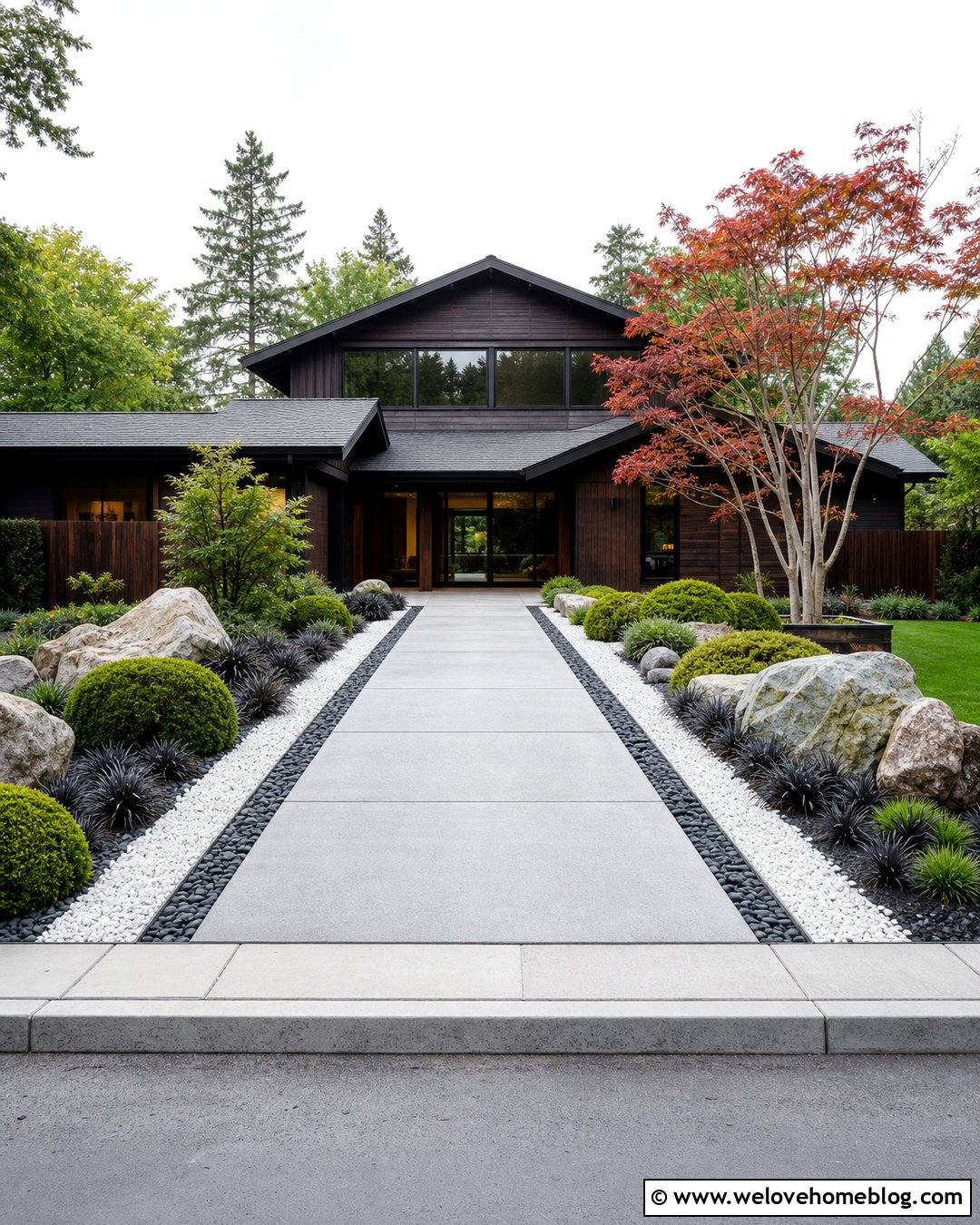
White gravel creates strong contrast with dark wood, green foliage, and charcoal stone. Use it primarily in decorative beds beside a stable gray concrete or concrete-paver driving surface, since brilliant loose gravel can quickly show tire marks. Create wide gravel borders with carefully positioned boulders and compact evergreen mounds. A straight driveway with clean edges suits this crisp material palette. Near the entrance, add a multi-stem Japanese maple to provide height, filtered shade, and seasonal color. Black mondo grass or dark river pebbles can form narrow accent bands between white gravel and pavement. Keep the decorative gravel free of excessive ornaments and fallen leaves. The result is a bright, minimalist driveway where contrasting tones make the complete landscape readable even in a compact front yard.
13. Japanese Driveway With Stepping-Stone Walkway
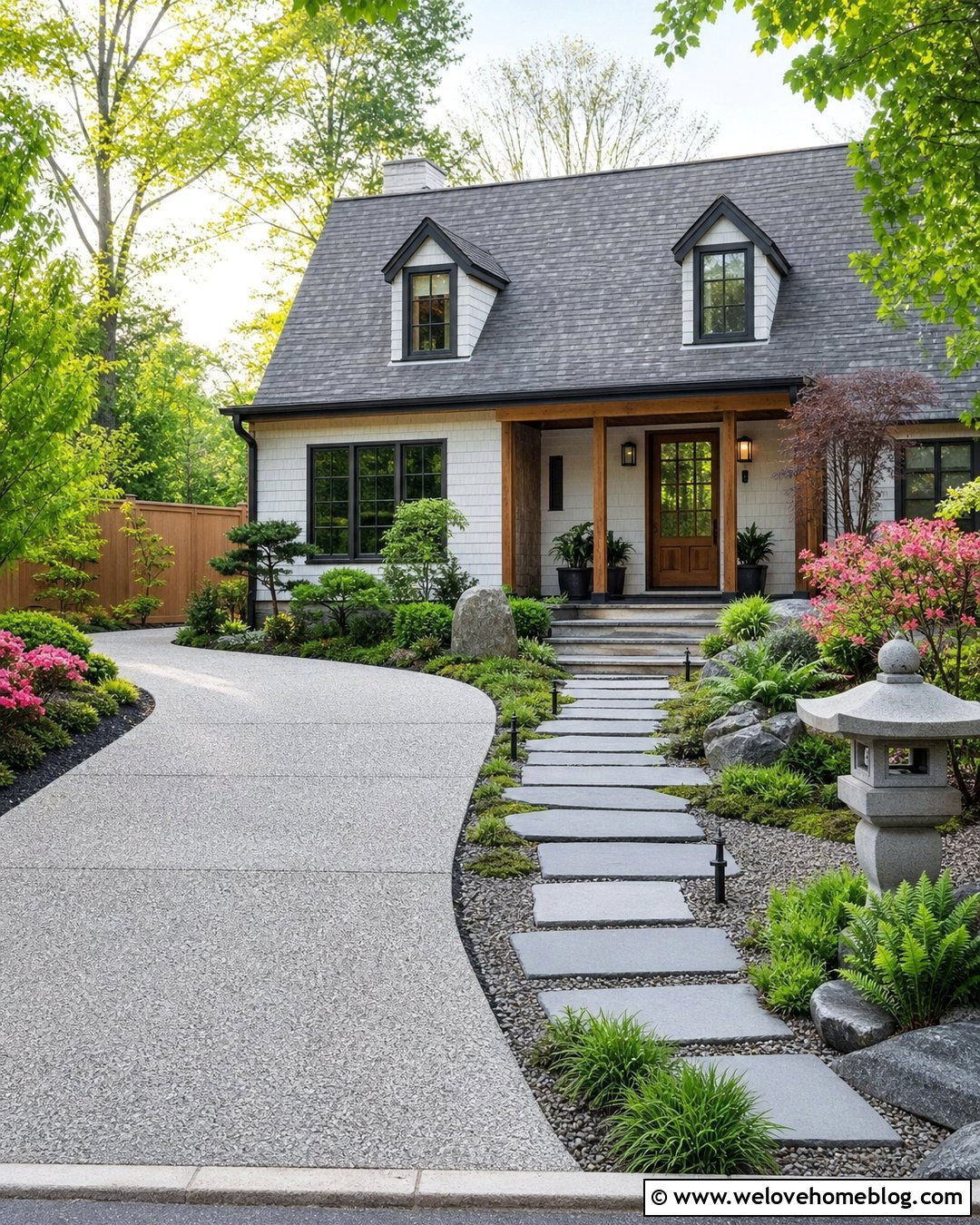
Separate pedestrians from vehicles by adding a stepping-stone path that runs beside a Japanese-style driveway. Begin with a light gray exposed aggregate surface in a gently curved layout. Along one side, place broad, flat granite stepping stones through a bed of low ground cover or fine gravel. Adjust the spacing for comfortable walking rather than using random gaps. A line of ferns, Japanese sedge, and low azaleas can divide the walking route from the driveway without blocking views. Include one stone basin or simple lantern deeper within the bed as a secondary focal point. The walkway should join the porch naturally instead of ending abruptly near the garage. This arrangement adds visual depth, improves pedestrian access, and makes the approach to the front door feel like a deliberate garden journey.
14. Japanese Driveway With Dry Creek Landscaping
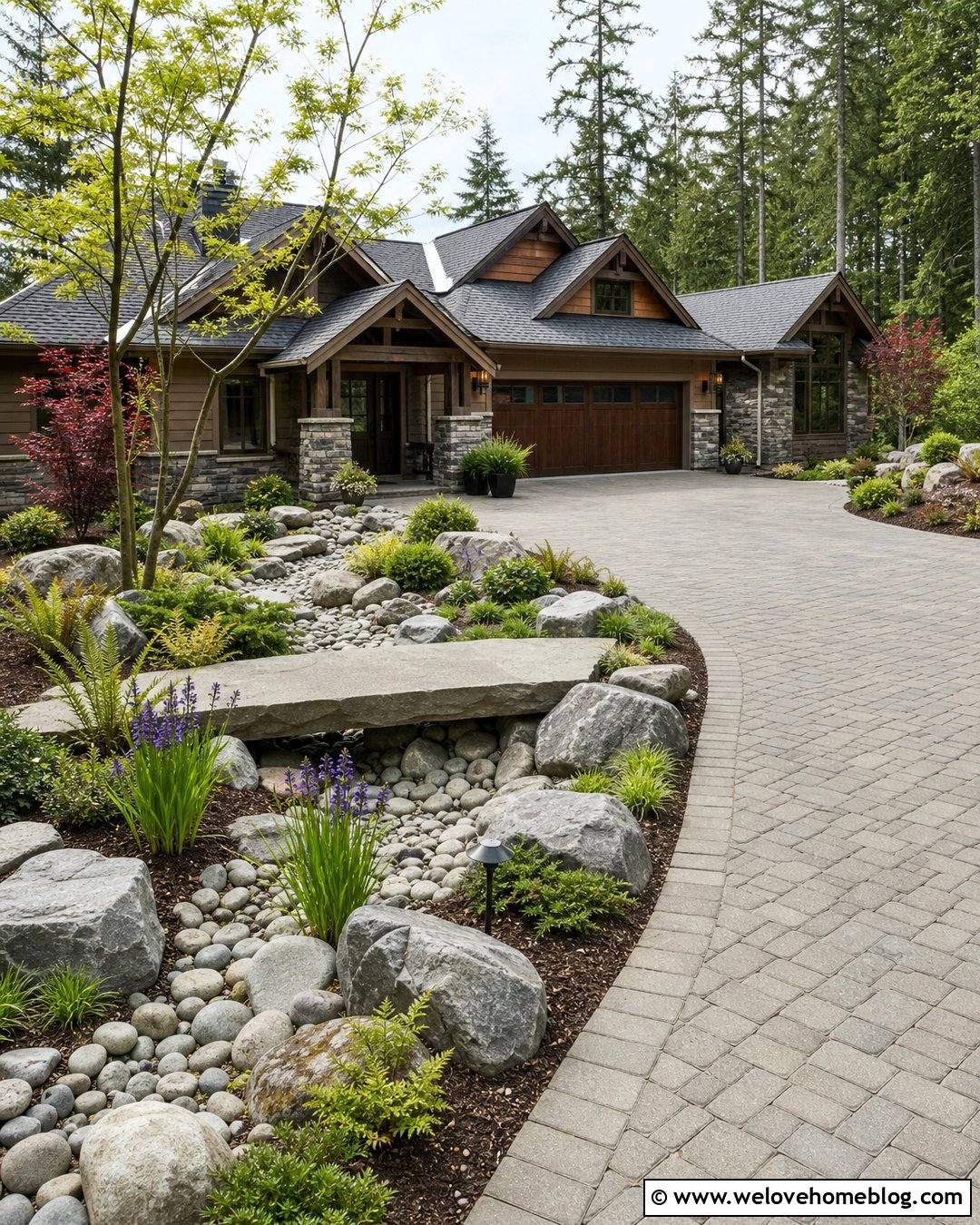
A dry creek bed can manage the visual transition between a driveway and sloping garden while reinforcing a natural Japanese aesthetic. Pair a warm gray permeable paver driveway with a curving channel of mixed river rock. Use larger stones along the banks and smaller pebbles through the center to suggest the movement of water. A subtle stone bridge or wide slab can carry the front walkway across the creek. Plant Japanese iris, sedges, ferns, and compact shrubs near the channel, selecting species appropriate for the site’s actual moisture level. Keep the planting irregular and leave some stones visible. The creek should follow the land’s drainage pattern rather than appearing as a decorative stripe. Together, the pavers, rocks, plants, and crossing form a complete and believable entrance landscape.
15. Japanese Driveway With Wooden Slat Fence
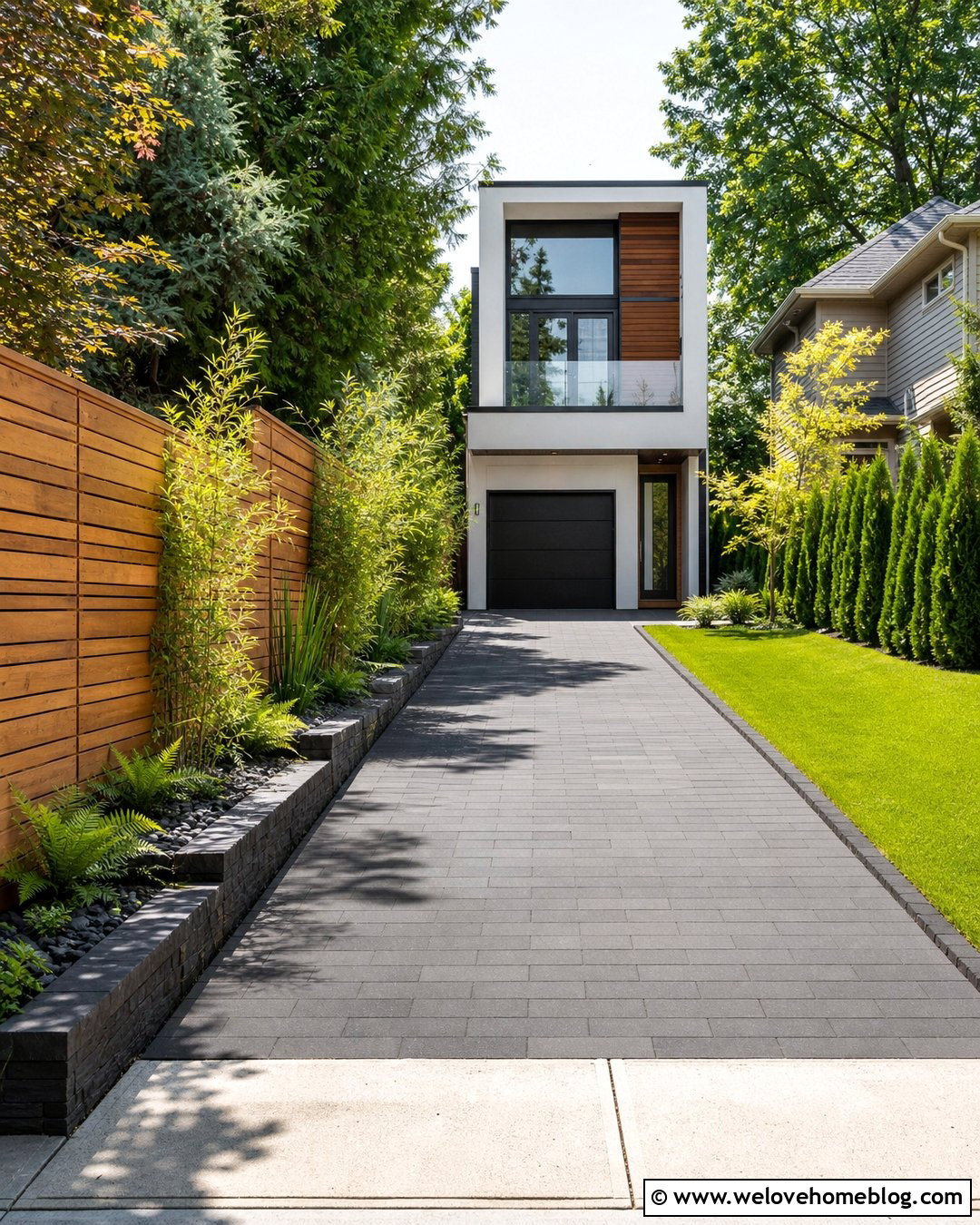
A narrow driveway can feel more private and attractive when bordered by a Japanese-inspired wooden slat fence. Use smooth charcoal concrete pavers for the surface and run them in a straight line toward the garage. Build the fence from cedar or another exterior-rated wood, using consistent spacing and a simple dark top rail. Leave a planting strip between the fence and driveway wherever space permits. Fill it with upright grasses, ferns, dwarf bamboo, and shade-tolerant evergreen shrubs. Low black stone edging will protect the plants and keep soil away from the pavement. On the open side, maintain a simple lawn or broader rock garden to avoid making the route feel enclosed. The repeated horizontal lines create calm rhythm while the layered greenery softens the long driveway corridor.
16. Japanese Driveway With Lantern Landscaping
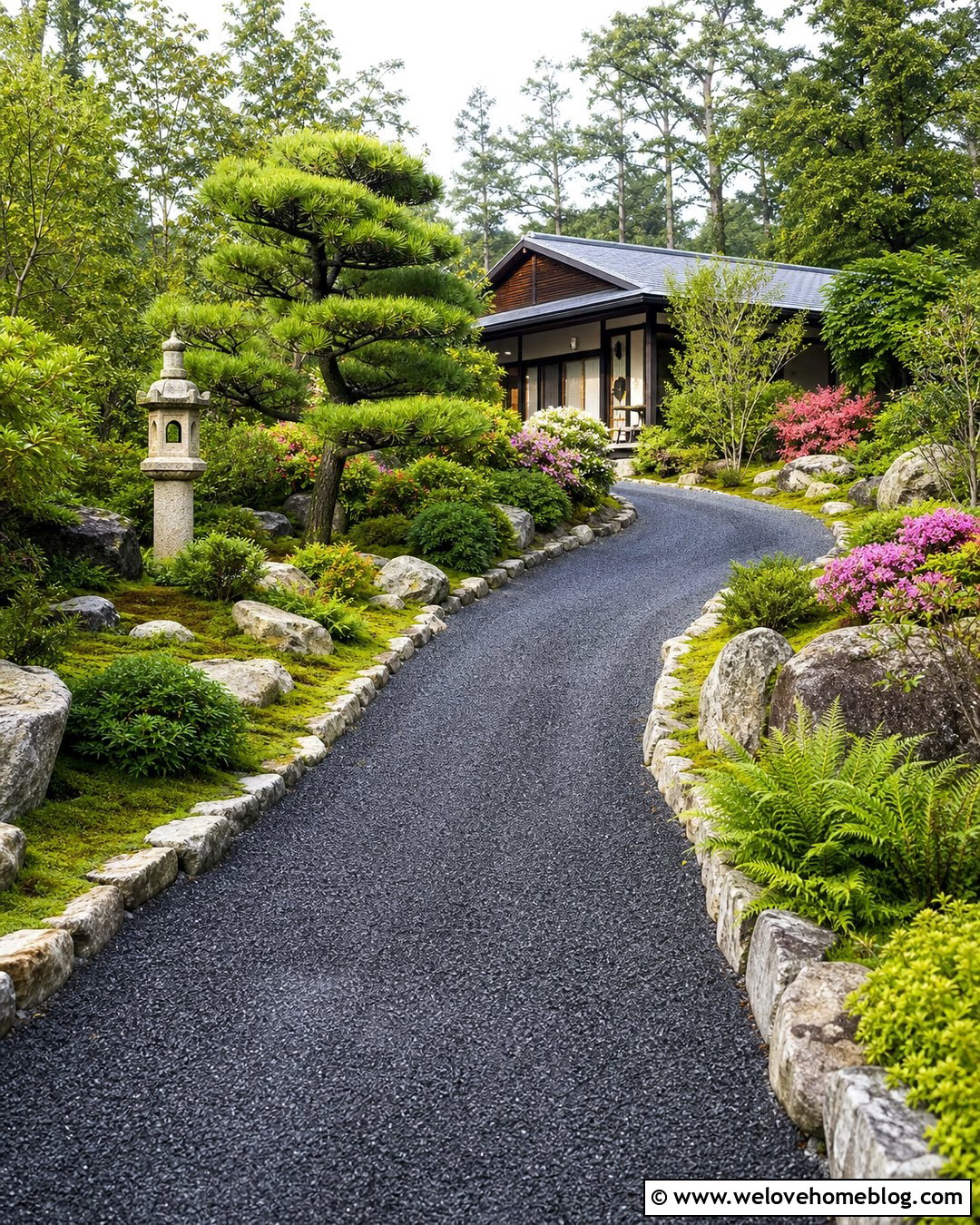
A Japanese stone lantern can enrich a driveway entrance when it is integrated into a full planting composition. Start with a curved, dark gray gravel driveway edged by irregular granite. Place one lantern several feet inside the property, slightly away from the pavement and surrounded by low foliage. Use ferns, moss-like ground cover, dwarf azaleas, and a sculptural pine to help it feel settled into the garden. Avoid installing matching lanterns on both sides of the entrance, which can create an unnecessarily formal arrangement. Small shielded landscape lights may illuminate the driveway edge without turning the lantern into a bright fixture. Continue the same stone and plant palette toward the house. The finished landscape feels authentic and restrained because the ornament supports the overall composition instead of dominating it.
17. Japanese Driveway With Water Feature Entrance
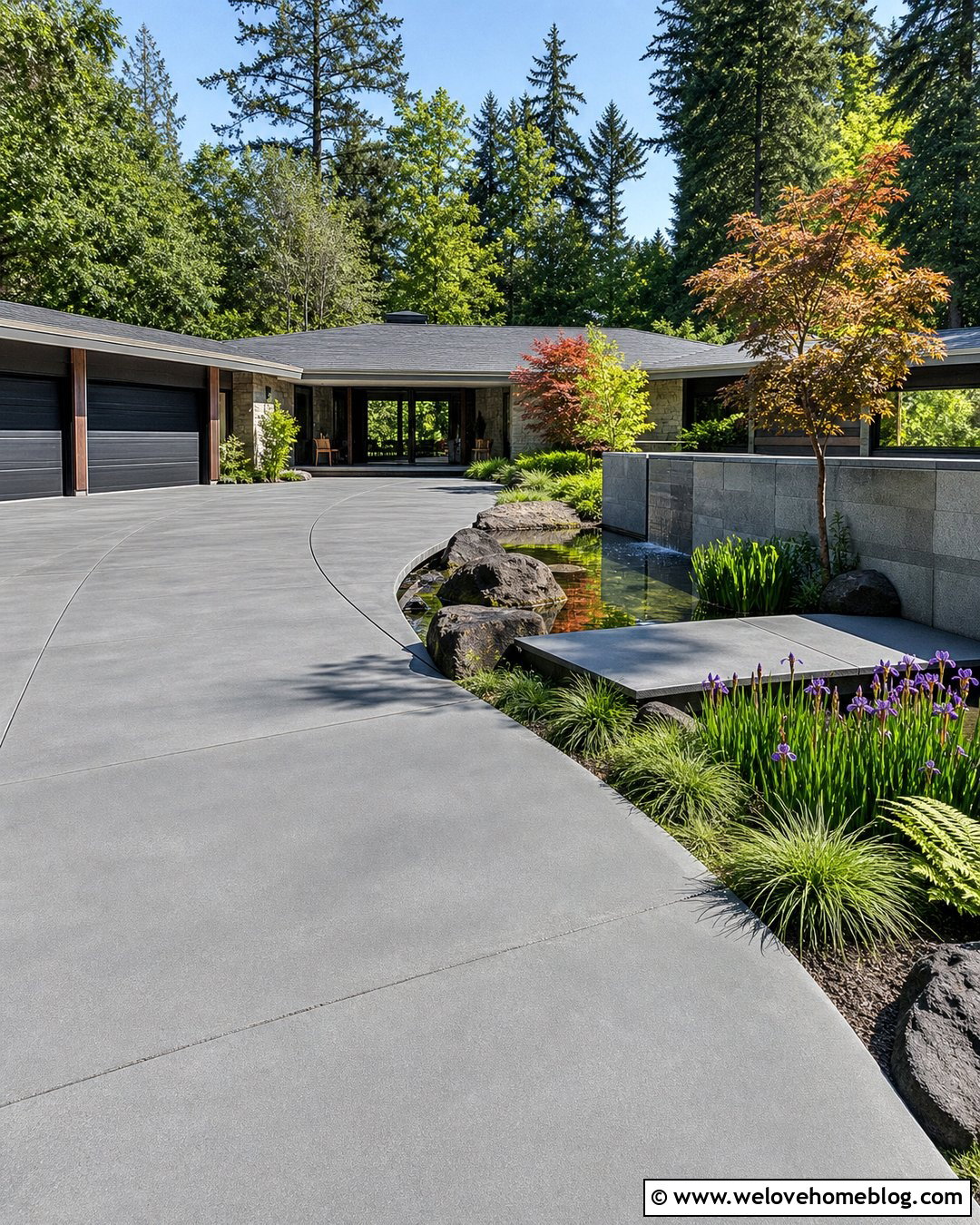
The gentle sight of water can make a driveway entrance feel separated from the busy street. Choose smooth gray concrete for a broad, curved drive and place a compact reflecting basin or recirculating stream in an adjacent planting bed. Keep enough distance between water and vehicle areas for safe access and easy maintenance. Frame the feature with dark boulders, Japanese iris, ferns, ornamental grasses, and one small maple. A low stone wall can protect the basin while also defining the driveway edge. Repeat the wall material near the front steps to connect the entrance with the house. Keep pumps, cables, and filters concealed. With a restrained scale and simple planting, the water becomes part of a complete driveway landscape rather than a separate decorative feature.
18. Japanese Driveway With Cloud-Pruned Shrubs
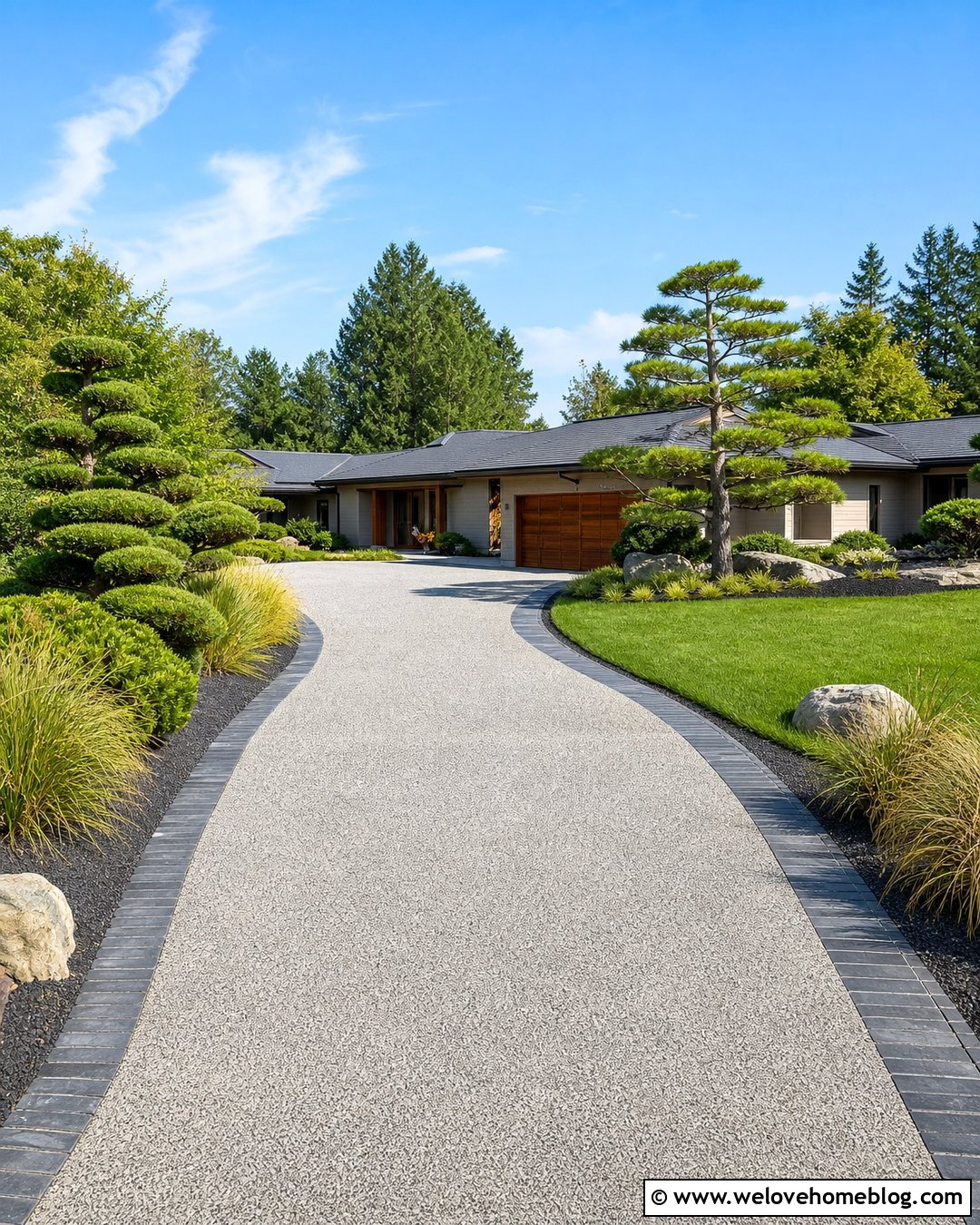
Rounded, cloud-like shrubs bring structure and softness to a Japanese driveway throughout the year. Pair them with a pale exposed aggregate driveway that sweeps toward a contemporary ranch or low-profile home. Arrange the shrubs in staggered groups along one side, varying their height and spacing rather than creating a formal hedge. Japanese holly, yew, pine, or other locally appropriate evergreens can be selected and trained for the desired form. Balance the opposite edge with ornamental grass, natural boulders, and an open lawn. A narrow charcoal paver ribbon will provide a crisp transition between pavement and planting. Allow adequate clearance for doors, mirrors, and snow management. The combination of sculpted plants, textural concrete, and open space creates an orderly entrance that still feels natural.
19. Japanese Driveway With Black Stone Edging
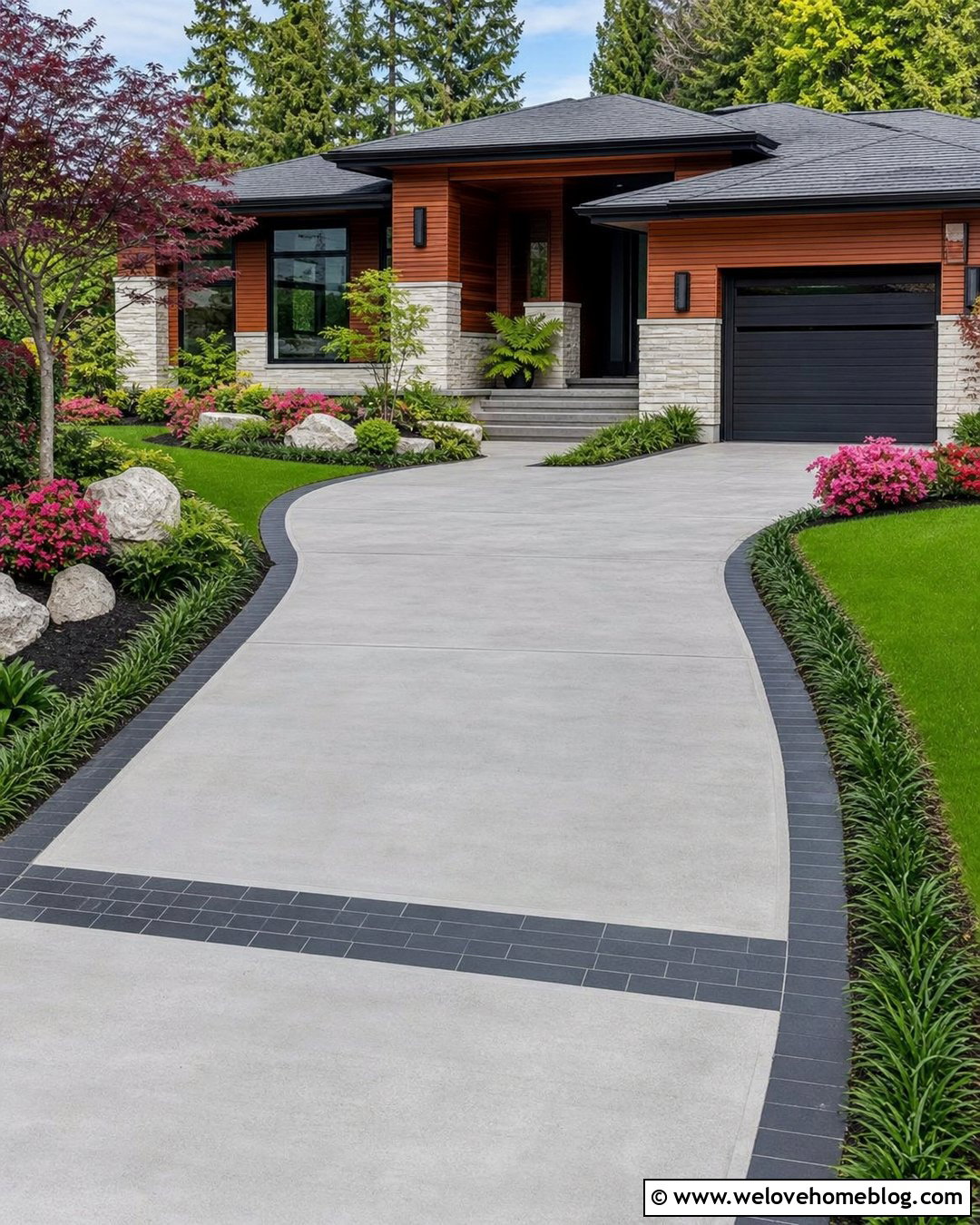
Black stone edging can transform a plain driveway by introducing a strong, refined outline. Use a medium-gray concrete surface with a slight curve and install narrow basalt or granite setts flush along both sides. Continue the black stone as a ribbon across the driveway near the entrance or garage to create visual continuity. Beyond the border, develop low planting beds with bright green mondo grass, compact azaleas, ferns, and carefully spaced maples. Light-colored boulders can provide contrast without adding another manufactured material. Keep the edge low enough that tires can cross it safely when necessary. This approach is practical for homeowners who want Japanese character without rebuilding the entire driveway. The dark line creates definition, while the planting and natural stone complete the broader landscape.
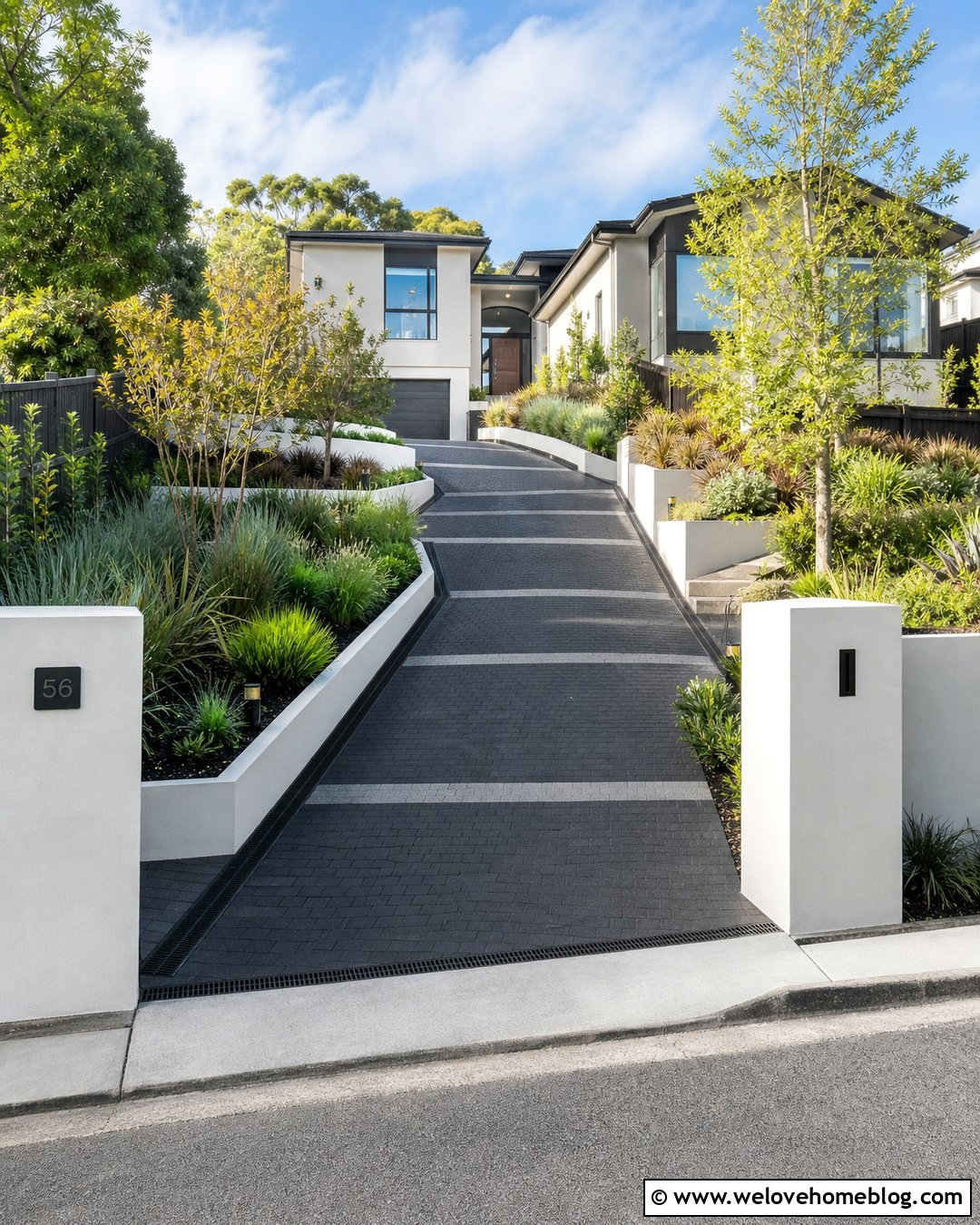
20. Japanese Driveway With Torii-Inspired Gate
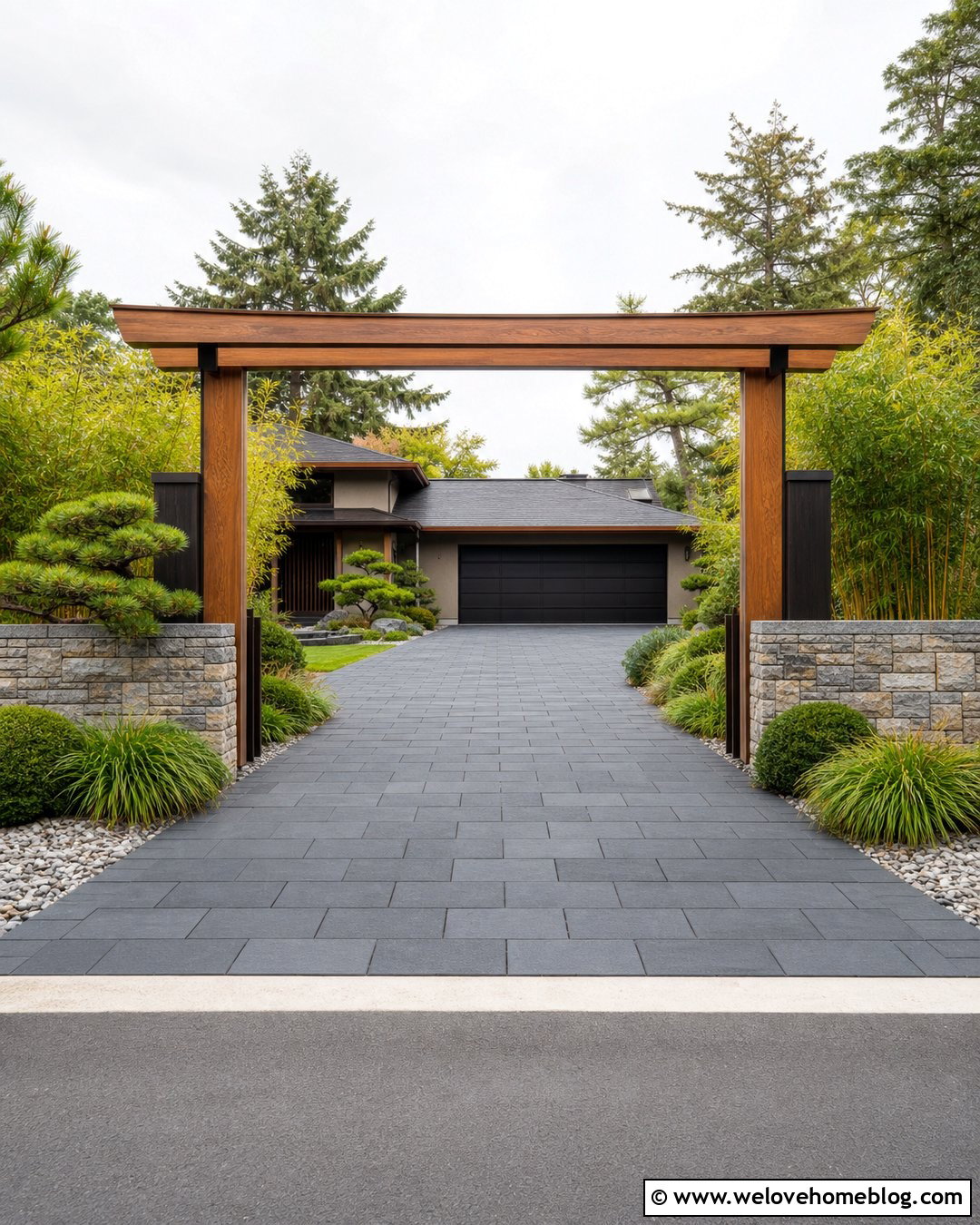
A simplified torii-inspired gate can create a recognizable Japanese influence while remaining suitable for a residential entrance. Avoid copying a sacred structure too literally. Instead, use restrained timber posts, a clean horizontal beam, and a dark natural finish. Position the gate over a straight charcoal paver driveway leading to a modern Japanese-style home. Low stone walls can extend from the posts and transition into beds of pine, bamboo, grasses, and rounded shrubs. Maintain generous vehicle clearance and check local setback, height, and visibility requirements before construction. Soft ground-level lighting can define the entry without attaching bulky fixtures to the beam. By repeating the gate’s wood tone on the garage door, fence, or house siding, the whole approach feels coordinated rather than themed.
21. Japanese Driveway With Rain Garden Border
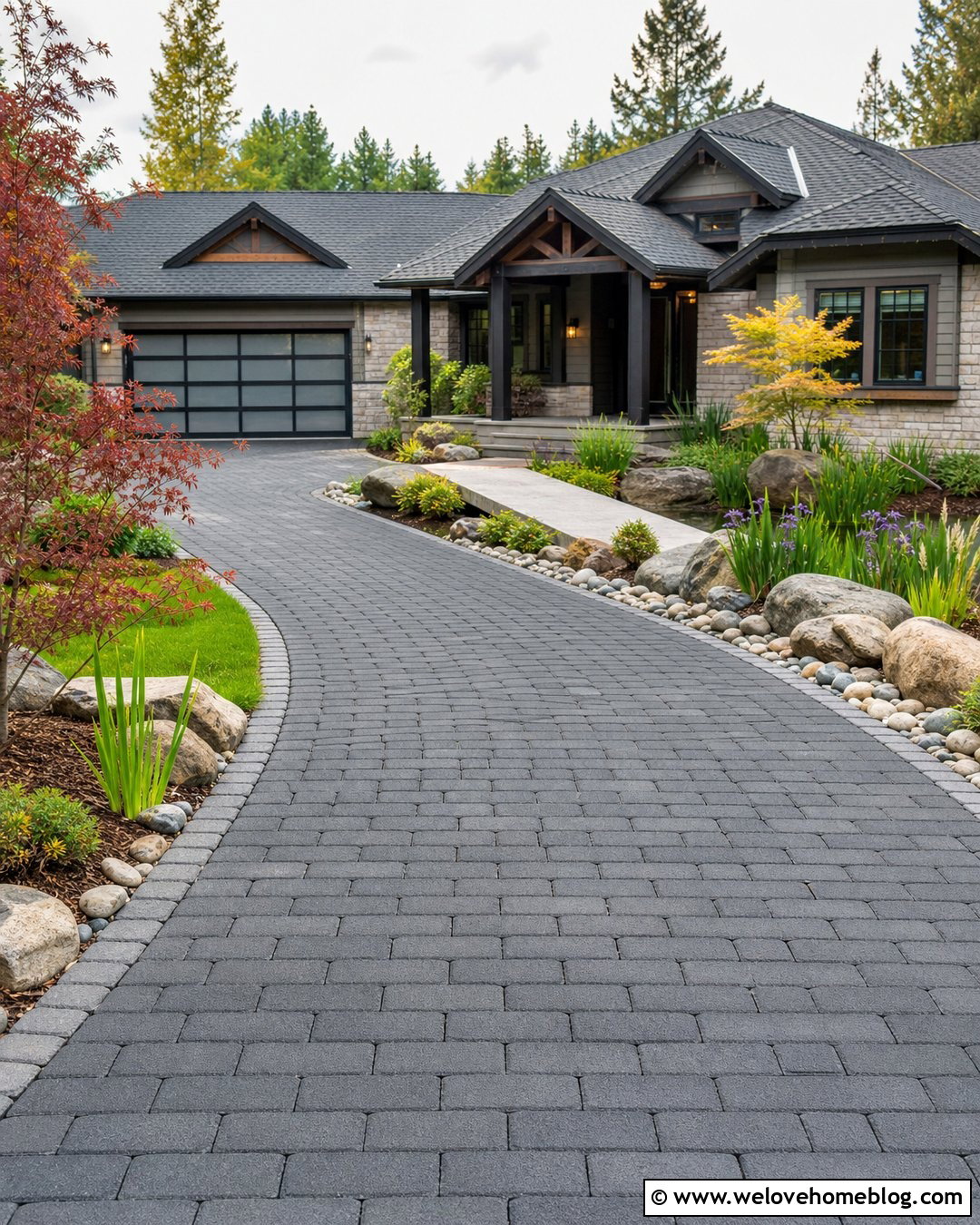
A rain garden can give a Japanese driveway both a natural edge and a stronger connection to the surrounding landscape. Use permeable charcoal pavers in a gently sloping layout, directing runoff toward a shallow planted basin beside the drive. Shape the basin with rounded river stones, larger boulders, and moisture-tolerant plants selected for your region. Sedges, iris, rushes, and low shrubs can create layered texture without blocking sightlines. A small slab bridge may carry the walkway across the planted area toward the front door. Add a slightly raised stone curb where needed to guide water while keeping soil off the driveway. When proportioned correctly, the rain garden appears like a seasonal stream landscape and turns a practical drainage zone into a defining part of the entrance.
22. Japanese Driveway With Raised Stone Beds
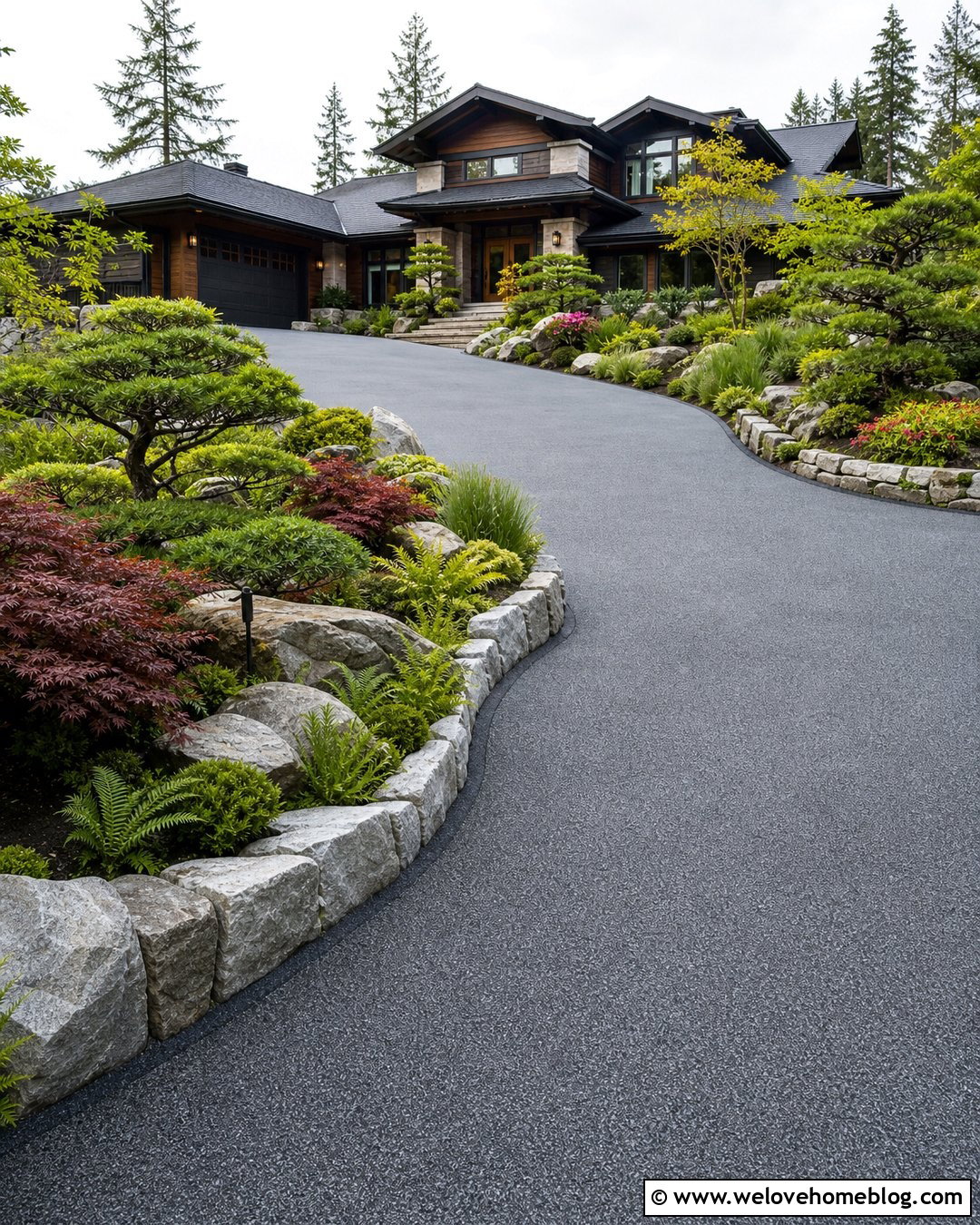
Raised stone planting beds work well along a sloped driveway where soil needs to be contained. Surface the drive with dark resin-bound gravel and follow the natural grade in a gentle curve. Build low retaining beds from irregular granite or weathered fieldstone, keeping the walls below eye level near the street. Plant the terraces with dwarf pines, Japanese maples, ferns, azaleas, and flowing ornamental grasses. Allow some plants to soften the wall edges, but keep growth away from the vehicle route. Incorporate several larger stones into the walls so the structure appears connected to the landscape. Wide stone steps can climb between the beds toward the front entrance. This complete design makes elevation changes look purposeful while adding depth and seasonal interest to the driveway approach.
23. Japanese Driveway With Courtyard Turnaround
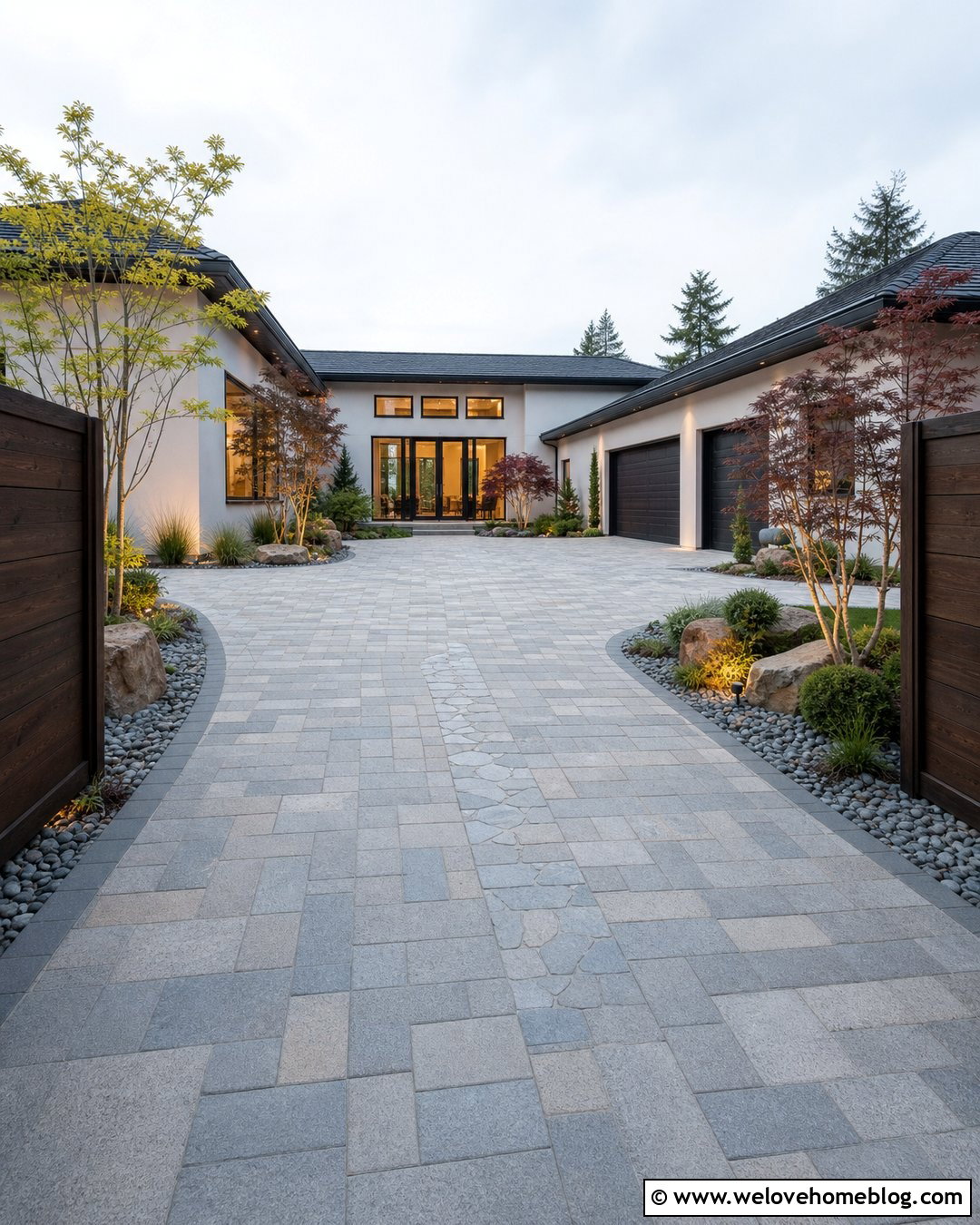
A courtyard turnaround can provide practical maneuvering space without resembling a large parking lot. Use warm gray granite pavers across a square or softly rectangular arrival area, then define its center with a simple stone inlay. Frame the courtyard with dark timber fencing, clipped evergreens, and multi-stem Japanese maples. A linear gravel bed along the house can include boulders and low grasses, creating a buffer between vehicles and windows. Keep the garage doors visually quiet with natural wood or charcoal finishes. If additional parking is needed, blend the spaces into the same paver pattern rather than outlining individual bays. This layout is particularly effective for U-shaped, modern ranch, and courtyard homes. The enclosed planting creates intimacy while the open paved center remains functional.
24. Japanese Driveway With Low Stone Walls

Low stone walls can guide the eye along a long driveway and provide structure without closing off the front yard. Pair rugged gray granite walls with a smooth, warm-toned gravel surface in a sweeping curved layout. Vary the wall height slightly as it follows the land, and use broad capstones for a clean finish. Behind the walls, plant layered evergreens, Japanese maples, ornamental grasses, and shade-tolerant ground covers. Leave occasional openings for a stone walkway, drainage route, or garden view. At the street, taper the walls downward to preserve visibility for drivers. Repeat the granite in several landscape boulders near the house. The consistent material palette connects the entrance, driveway, and architecture while the changing plants prevent the long route from feeling monotonous.
25. Japanese Minimalist Driveway With Modern Landscaping
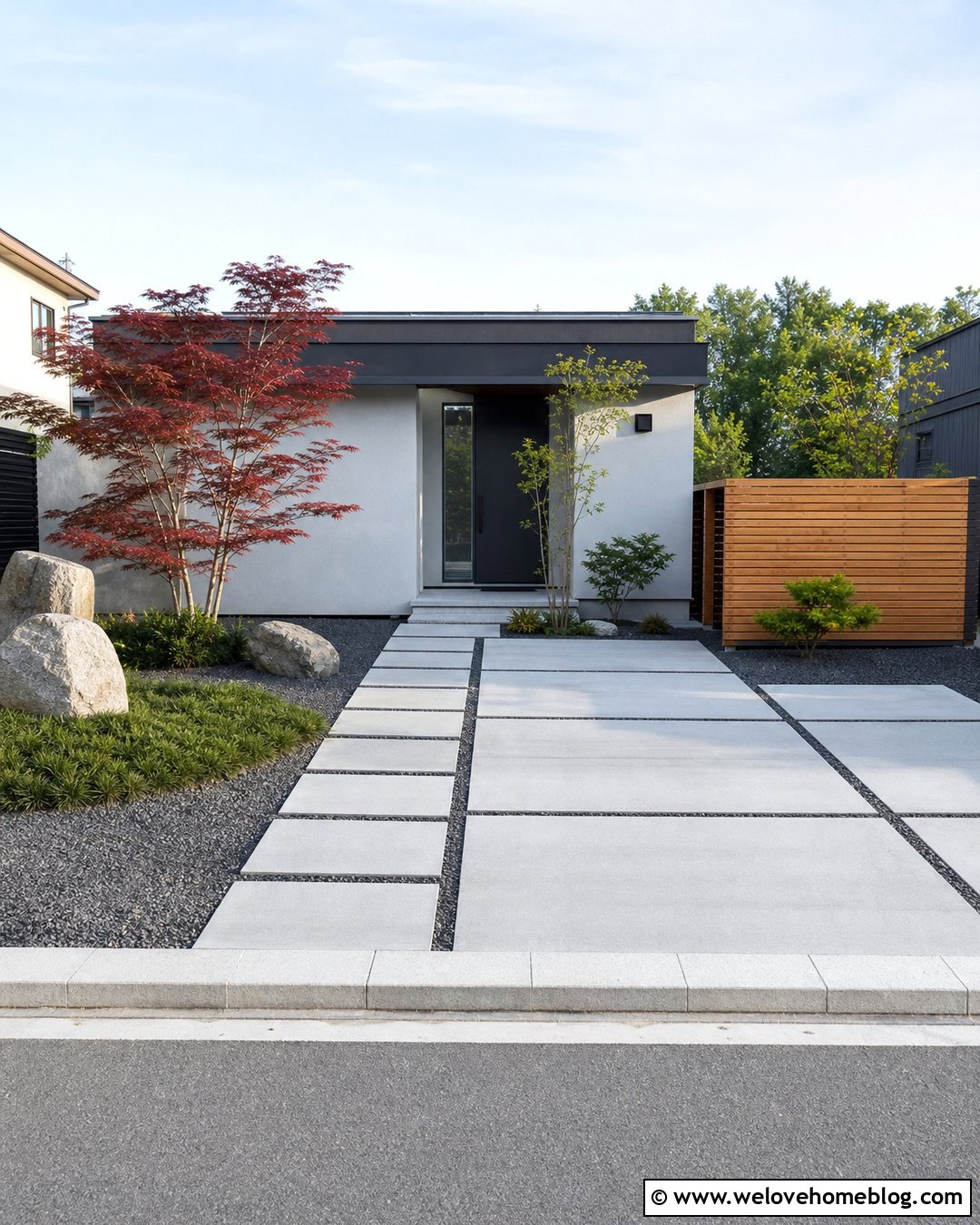
A minimalist Japanese driveway relies on proportion, texture, and careful placement instead of numerous decorations. Use large light-gray concrete slabs in a straight layout with narrow black gravel joints. Extend one slab pattern into the front walkway so the entrance and driveway appear as a unified composition. On one side, plant a single sculptural Japanese maple above a bed of dwarf mondo grass. On the other, arrange three natural boulders with low evergreen shrubs and an open gravel area. A cedar screen can conceal utilities or bins without interrupting the architecture. Keep lighting recessed or low to the ground, and select a restrained palette of gray, black, green, and warm wood. The finished design suits modern homes while retaining the calm asymmetry associated with Japanese landscapes.
Conclusion:
The best Japanese driveway ideas combine reliable vehicle access with an entrance that feels calm, natural, and connected to the home. Begin with a durable surface that suits your climate, drainage needs, maintenance expectations, and budget. Then shape the complete look through restrained stone borders, layered greenery, carefully positioned trees, and one or two meaningful focal points. Gravel, concrete, pavers, cobblestone, and asphalt can all work when their color and texture complement the landscape. Avoid crowding the yard with too many recognizable Japanese features. A simpler composition will usually feel more convincing. Whether you choose a curved gravel approach or minimalist concrete slabs, these **25 Japanese driveway ideas** can help you create balanced curb appeal.

Related posts:
Leave a Reply