
Hydrangeas can transform an ordinary driveway into a lush, welcoming approach filled with color, texture, and seasonal interest. The best 25 hydrangea driveway ideas do more than place flowering shrubs beside pavement. They coordinate the driveway material, layout, edging, plant spacing, and house architecture into one complete design. Hydrangeas are especially useful because their rounded flowers soften concrete, gravel, brick, asphalt, and stone surfaces. Different varieties can suit formal entrances, cottage gardens, modern homes, narrow side yards, and sweeping country drives. Before planting, consider mature shrub size, sunlight, drainage, winter exposure, and reflected heat from the driveway. The following complete designs make it easier to choose practical and beautiful 25 hydrangea driveway ideas.
1. Hydrangea Gravel Driveway Border
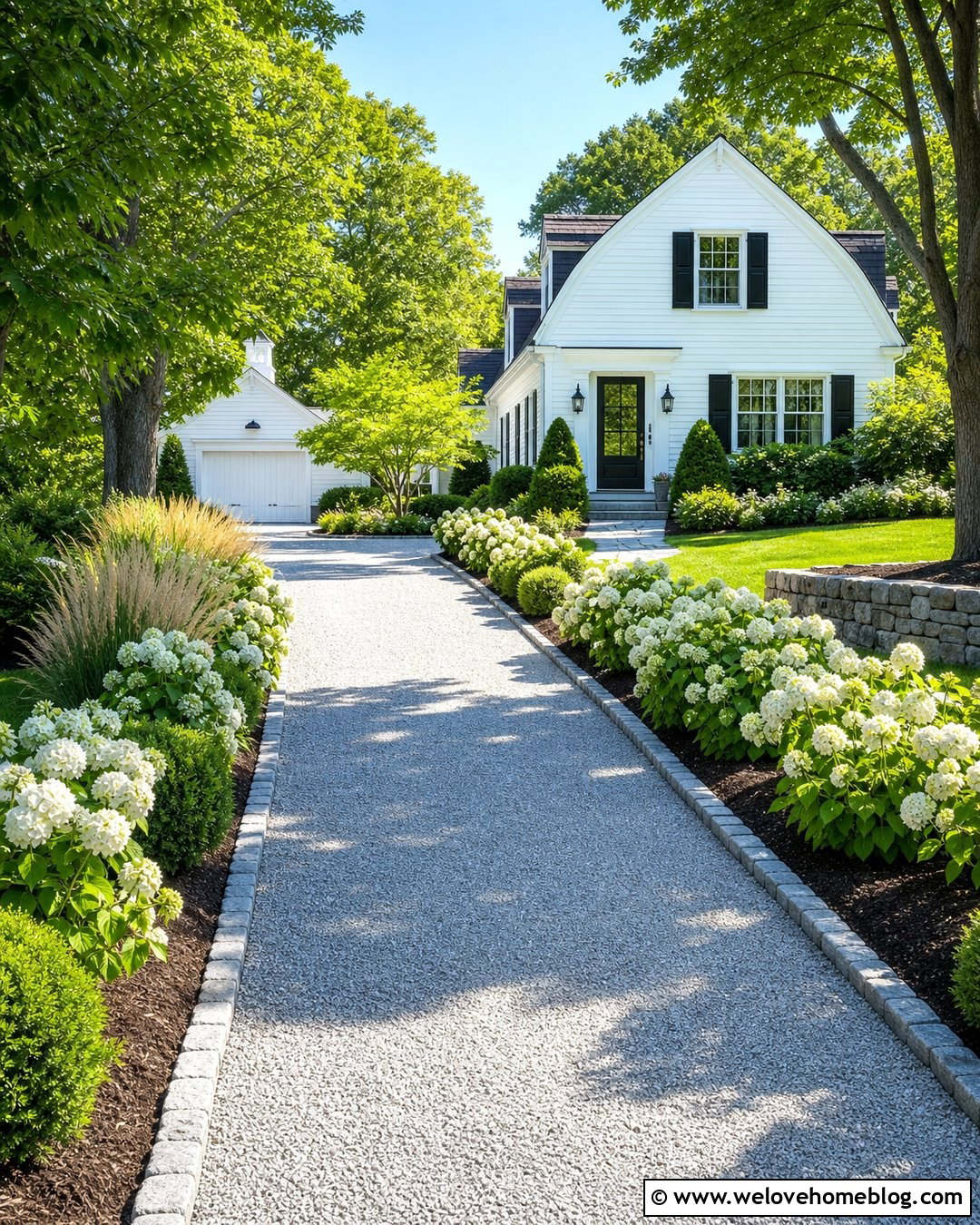
A straight gravel driveway gains softness and definition when hydrangeas form generous planting borders on both sides. Use pale gray crushed gravel to create a neutral surface that lets white, blush, or lime-green flowers stand out. A cobblestone edge keeps loose stones away from the planting beds while providing a classic transition. Panicle hydrangeas are a practical choice for open areas with plenty of sunlight, although local growing conditions should guide the final variety. Space the shrubs according to their mature width instead of crowding young plants together. Add shredded bark mulch, low ornamental grasses, and a few compact evergreens for winter structure. This complete look works particularly well with country homes, Cape Cod houses, and traditional white farmhouses.
2. Hydrangea Concrete Driveway Edging
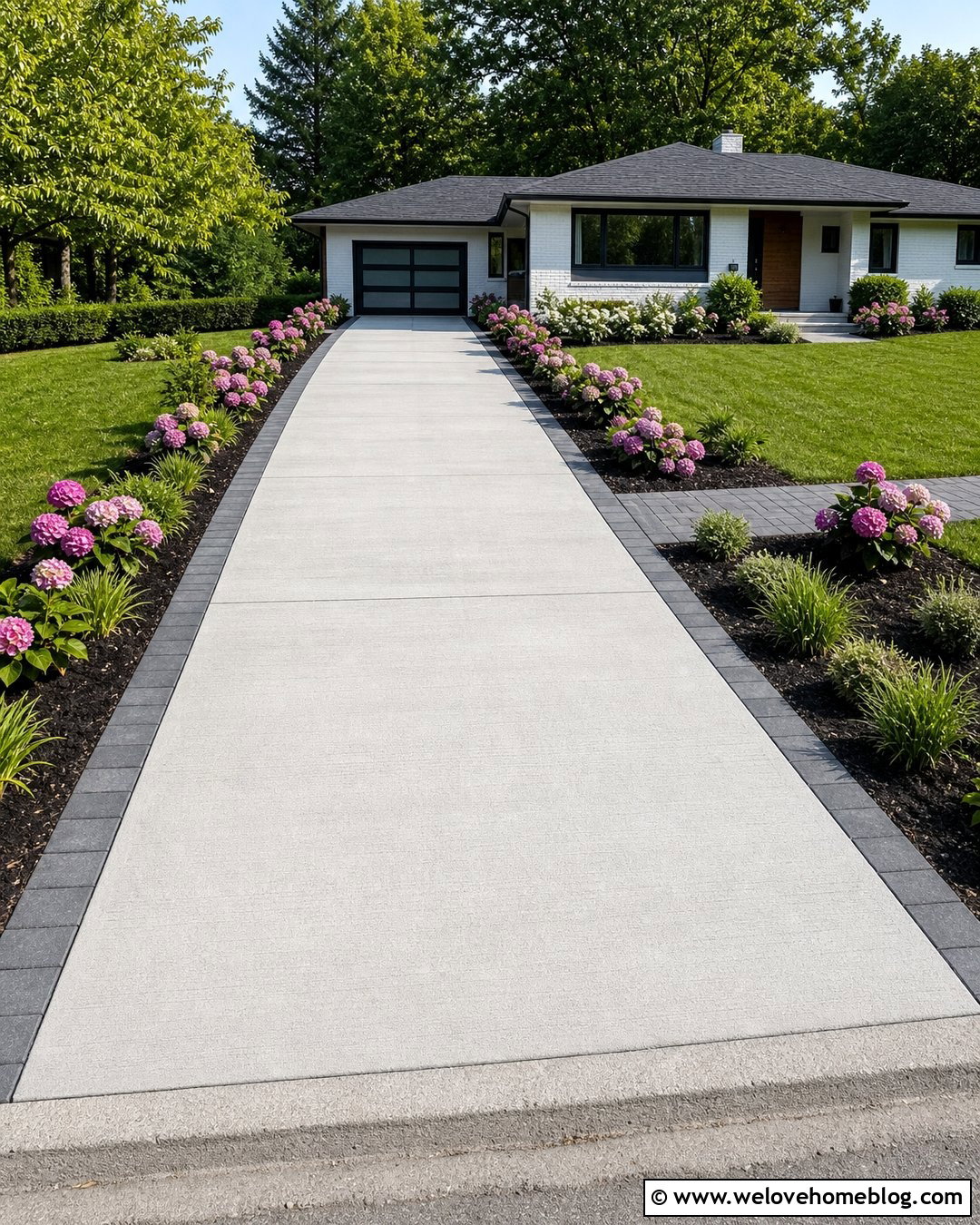
Can a basic concrete driveway feel warm and garden-focused? Wide planting beds filled with hydrangeas can soften its hard surface without reducing usable parking space. Choose light gray poured concrete with a clean broom finish, then install charcoal paver edging to create a crisp outline. Plant compact hydrangeas in evenly spaced groups rather than allowing larger shrubs to lean into the driving area. A second layer of low-growing ground cover can conceal bare stems and keep the border looking full. Include a paved walkway that crosses the bed without disturbing the plants. White flowers complement almost any facade, while pink blooms add contrast beside gray siding. The finished driveway feels organized, colorful, and suitable for an updated suburban or ranch-style home.
3. Hydrangea Circular Driveway Island
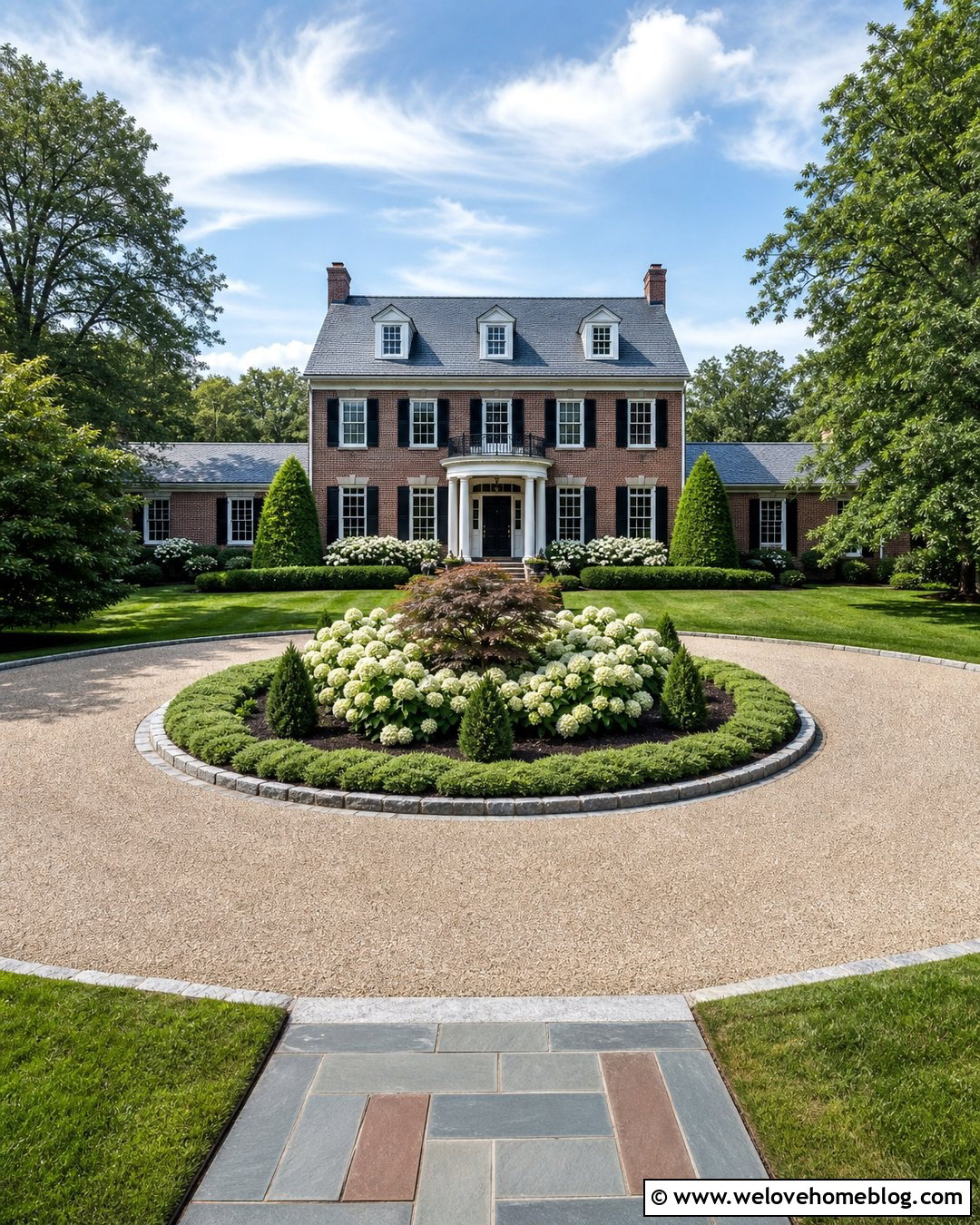
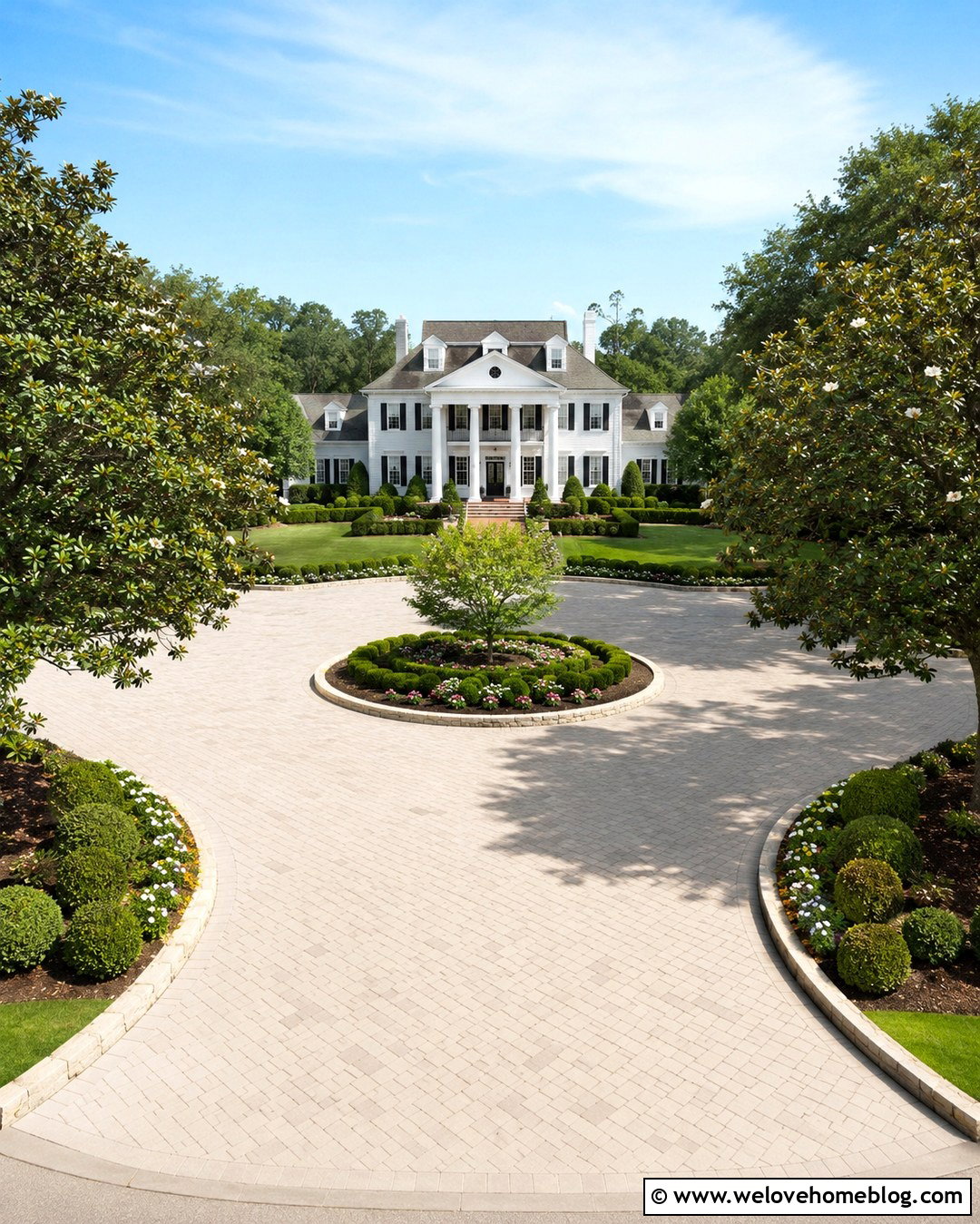
A circular driveway naturally creates a central focal point, making its island an excellent place for a layered hydrangea display. Surround the island with durable stone curbing that follows the driveway’s curve and protects the soil from tires. Place taller panicle hydrangeas toward the center, then use compact varieties around the outer ring. A small ornamental tree can add height without overpowering the house. Finish the open spaces with dark mulch, neat ground cover, and a few low evergreen shrubs for year-round definition. Keep plants near driveway exits short enough to preserve clear sightlines. Brick pavers or exposed aggregate concrete can reinforce the formal appearance. This arrangement suits colonial, Georgian, and large traditional homes with balanced front elevations.
4. Hydrangea Asphalt Driveway Border
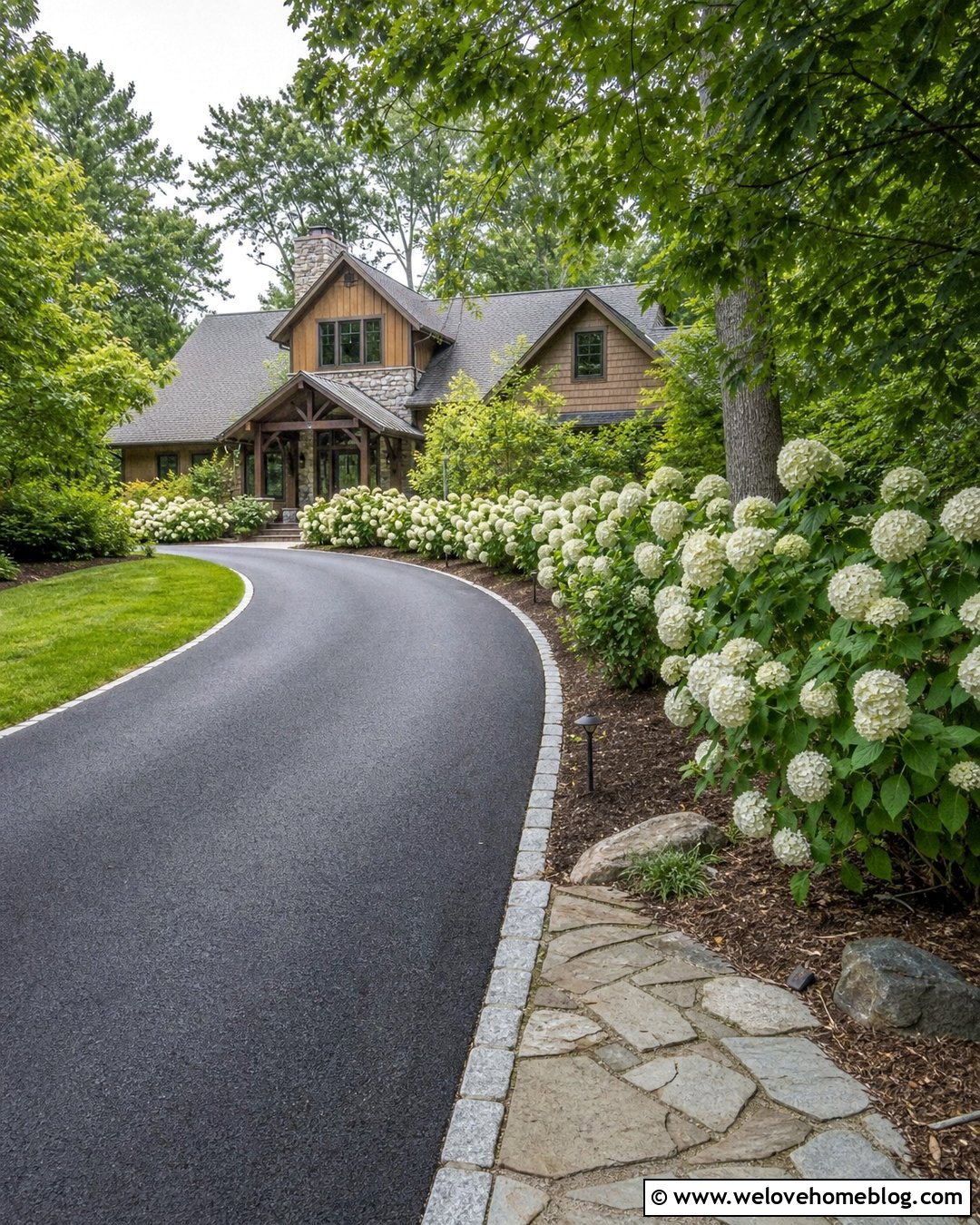
Deep green leaves and bright flowers provide attractive contrast against a smooth black asphalt driveway. Instead of planting directly against the pavement, add a granite cobblestone border and a narrow strip of mulch to reduce interference from spreading branches. Arrange durable panicle hydrangeas in relaxed groups along one side of a gently curved drive. Balance them with lawn and shade trees on the opposite side so the entrance does not feel like a tight corridor. White flowering varieties brighten the dark surface, while blooms that mature to pink create changing color later in the season. Simple path lights can mark the boundary without competing with the shrubs. This practical combination looks polished beside craftsman homes, wooded properties, and casual suburban houses.
5. Hydrangea Brick Driveway Border
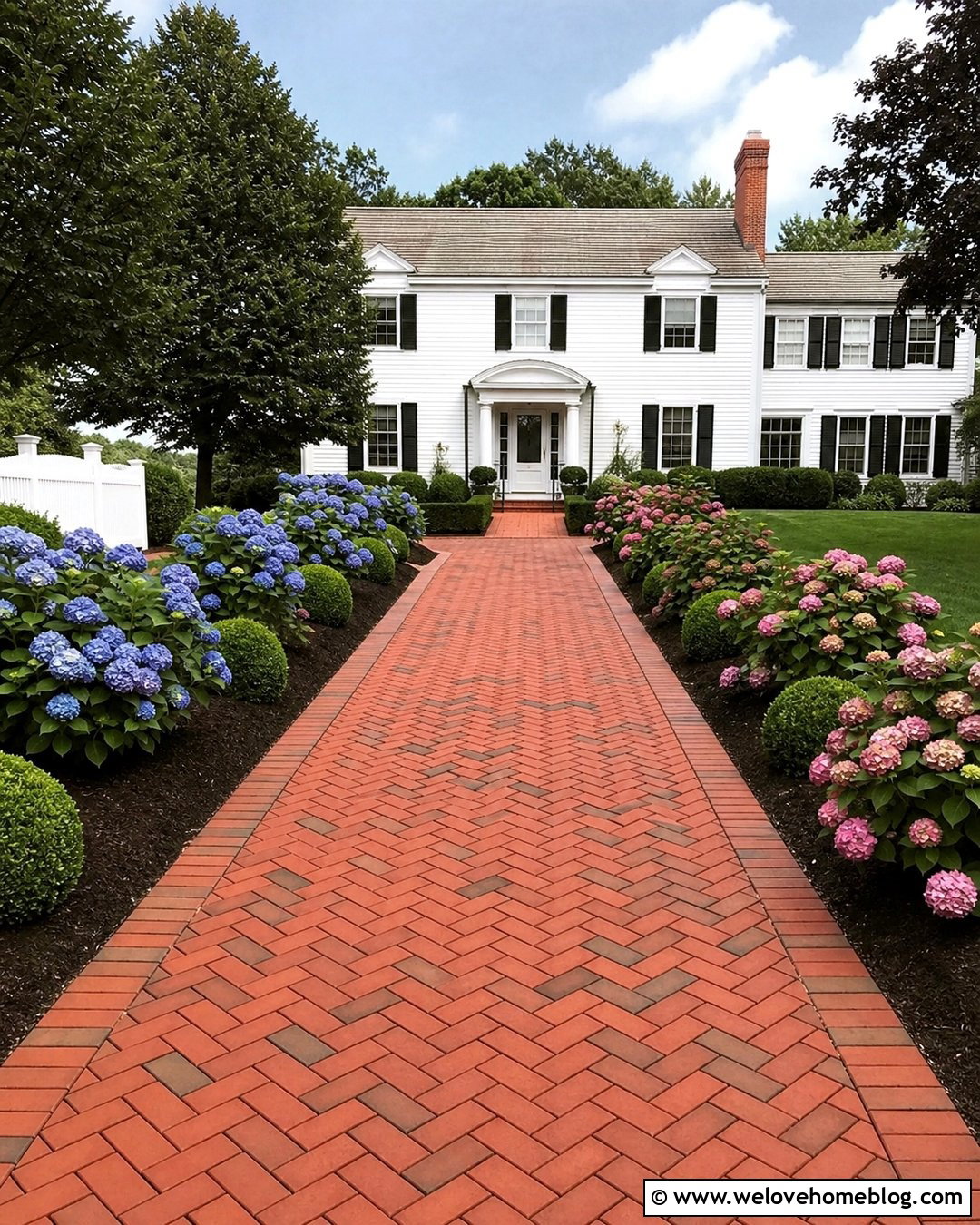
Warm brick and cool hydrangea colors create a welcoming combination with traditional character. Use clay brick pavers in a herringbone pattern for the main driveway, framed by a straight soldier-course border. Plant blue or soft pink mophead hydrangeas in deep beds along the outer edges where moisture and suitable light are available. Boxwood, inkberry, or another compact evergreen can be placed between groups to maintain structure when the hydrangeas are dormant. Match the flower colors to small details on the house, such as shutters, trim, or the front door. A brick walkway branching from the drive keeps the materials visually connected. This complete landscape works beautifully with colonial, Tudor, cottage, and redbrick homes without appearing overly decorative.
6. Hydrangea Curved Driveway Landscaping
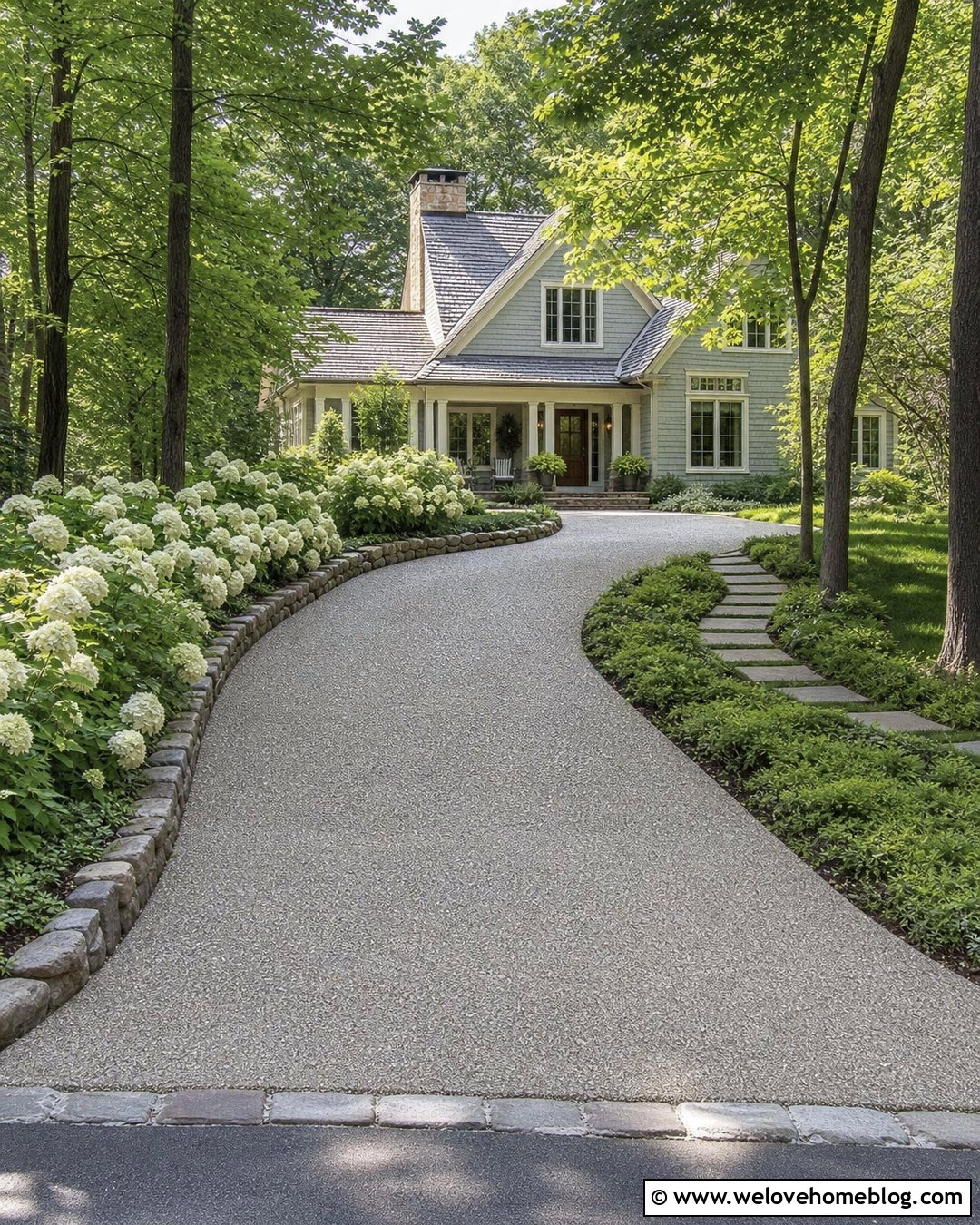
A curved driveway becomes more inviting when hydrangeas emphasize its movement rather than hiding the route. Place broad groups of white-flowering shrubs along the outside curve, where the bed can usually be wider. Keep the inside curve simpler with lawn, low ground cover, or compact ornamental grasses to protect visibility. Light-colored resin-bound gravel creates a smooth surface, while natural stone edging follows the bends with an organic appearance. Repeat the same hydrangea variety at measured intervals to establish a calm visual rhythm. Trees can provide filtered shade, but they should not overwhelm the flowering border. As visitors approach the house, the layered planting gradually reveals the facade. The result feels especially natural beside craftsman, cottage, and woodland-inspired homes.
7. Hydrangea Driveway Entrance Pillars
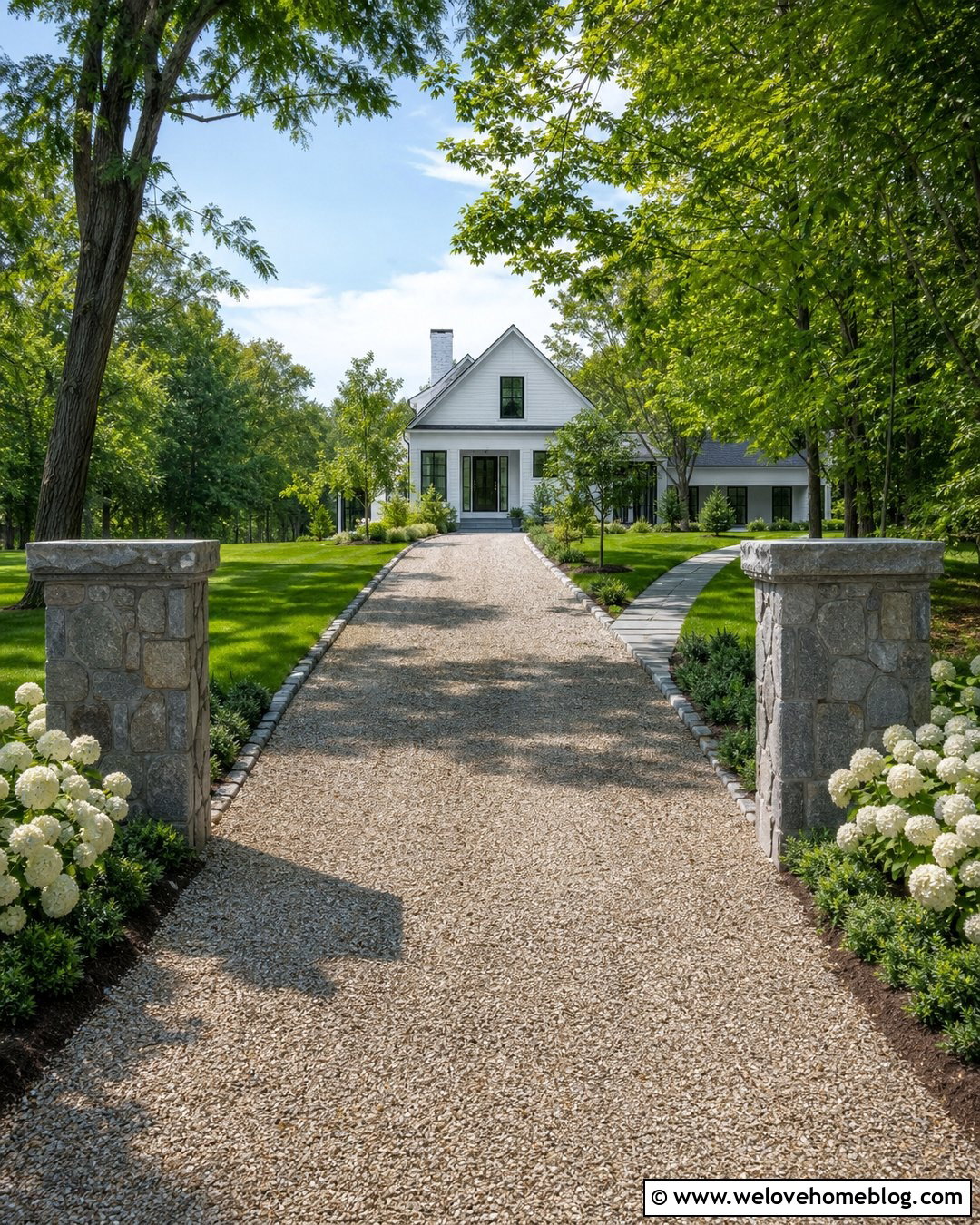
Stone entrance pillars feel less imposing when surrounded by full, flowering hydrangeas. Start with a straight pea gravel driveway edged in matching fieldstone, then position masonry pillars far enough from the driving lane for comfortable clearance. Plant compact hydrangeas behind or beside each pillar instead of directly in front of it. This preserves visibility and keeps address markers easy to read. Repeat the planting symmetrically for a formal entrance, or offset the groups for a relaxed country look. Low evergreen ground cover and neatly mulched beds help anchor the shrubs throughout the year. Choose flowers that complement the pillar stone and house exterior. White or pale green blooms pair naturally with gray stone, weathered wood, and modern farmhouse architecture.
8. Hydrangea Driveway Gate Landscaping
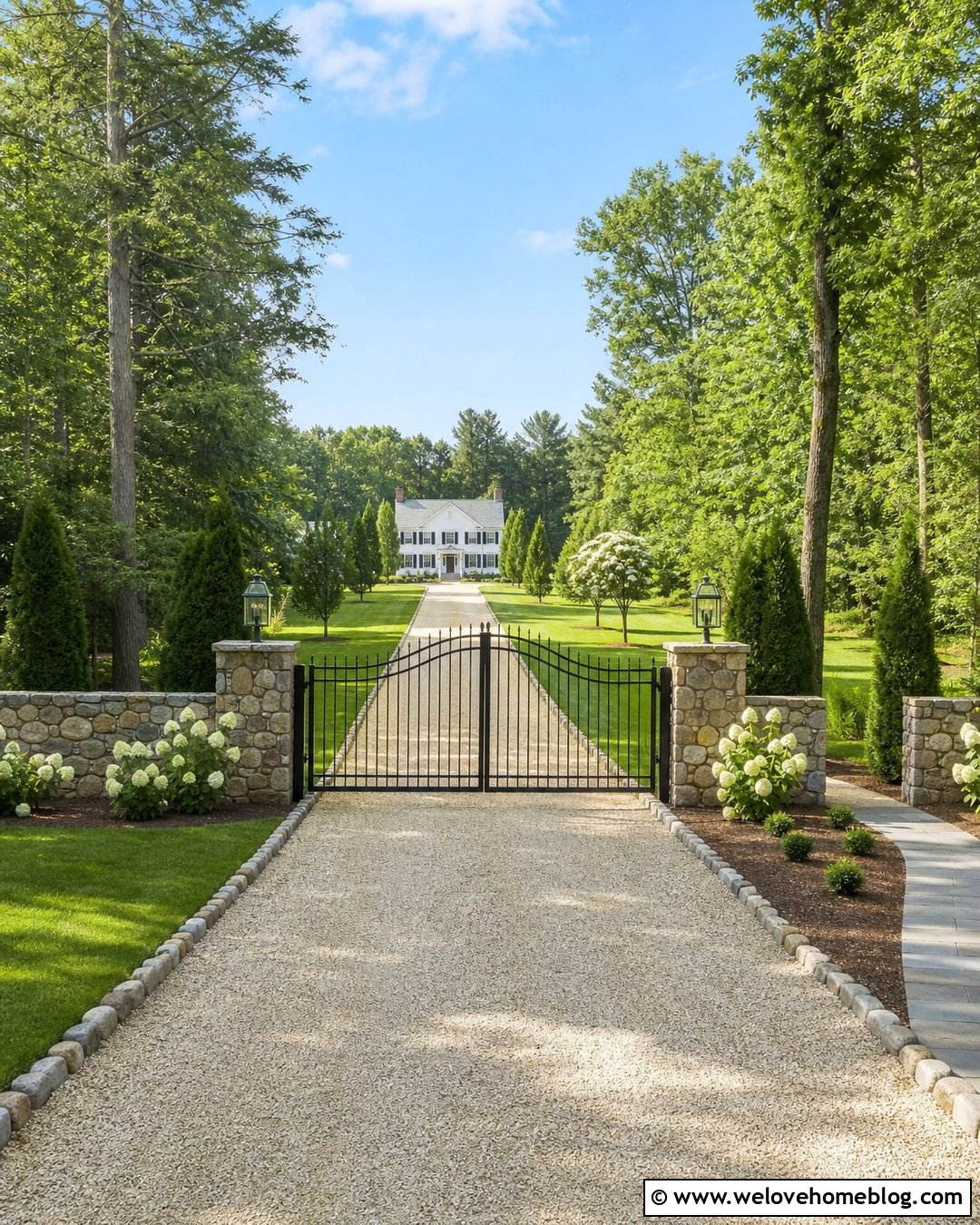
A driveway gate can become part of a complete garden entrance when hydrangeas connect it to the surrounding landscape. Pair a black metal gate with a pale crushed-stone driveway and low fieldstone edging. Set the flowering shrubs beyond the gate swing and away from control boxes, hinges, and vehicle sensors. Broad groups of white panicle hydrangeas can soften masonry columns without concealing their architectural details. Continue smaller hydrangea clusters farther along the drive so the entrance does not look isolated. Add upright evergreens behind the flowers for height and winter color. A separate pedestrian path can run beside the vehicle gate through the same planting scheme. This balanced layout gives farmhouse, colonial, and country properties a welcoming but clearly defined entrance.
9. Hydrangea Driveway With Boxwood
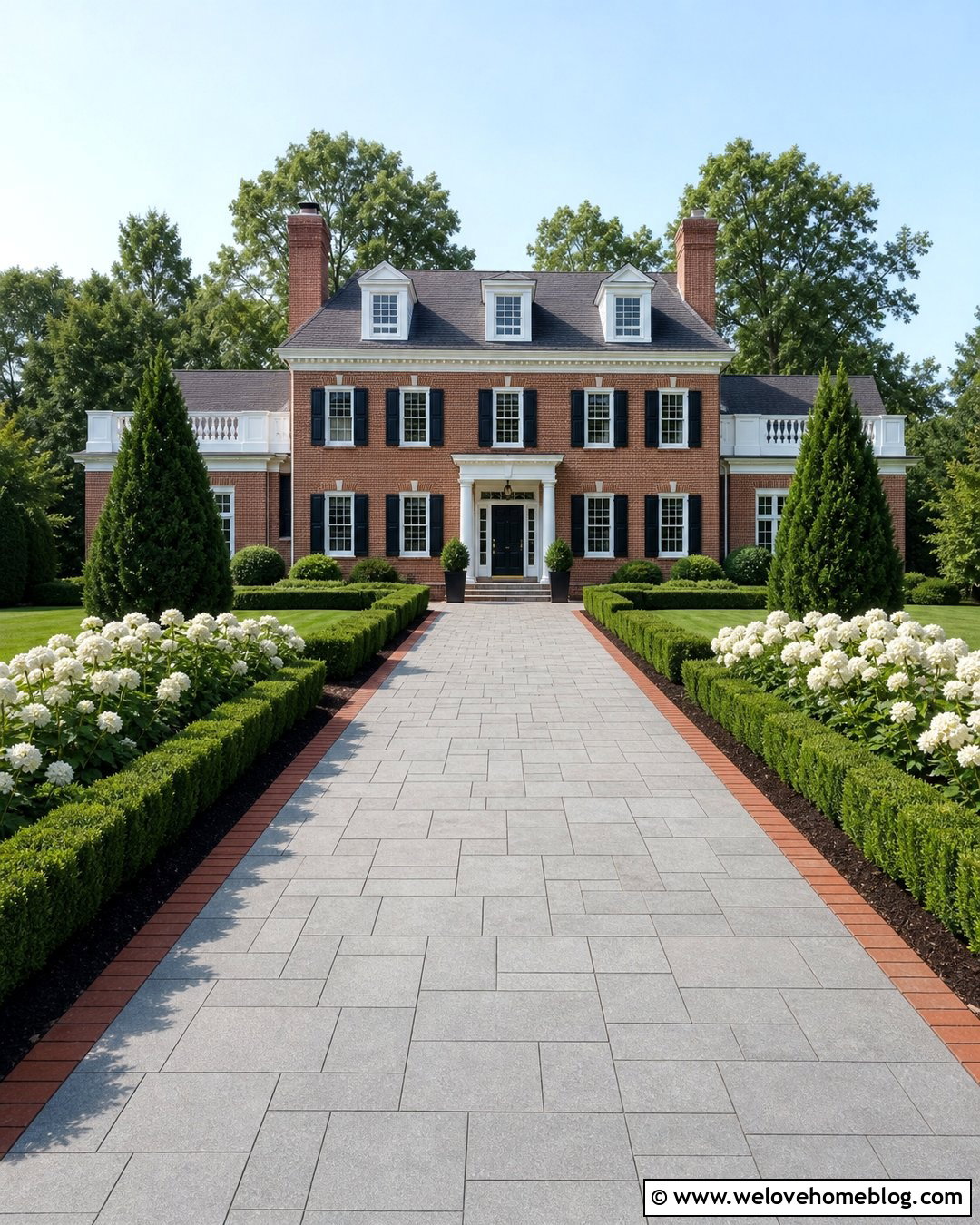
The contrast between rounded hydrangea flowers and clipped boxwood creates a neat, traditional driveway landscape. Use smooth gray concrete or concrete pavers for a straight approach, then frame both sides with broad beds edged in brick. A low boxwood hedge can define the front of each bed, while hydrangeas rise behind it in evenly spaced groups. Allow enough bed depth for mature growth and convenient pruning access. White hydrangeas maintain a restrained palette, while blue or pink flowers make the arrangement more colorful. Dark mulch sharpens the contrast and reduces the visual impact of bare soil. Align the planting with windows, porch columns, or other architectural features. This complete look suits colonial, Georgian, French-inspired, and formal suburban homes.


10. Hydrangea Driveway With Ornamental Grasses
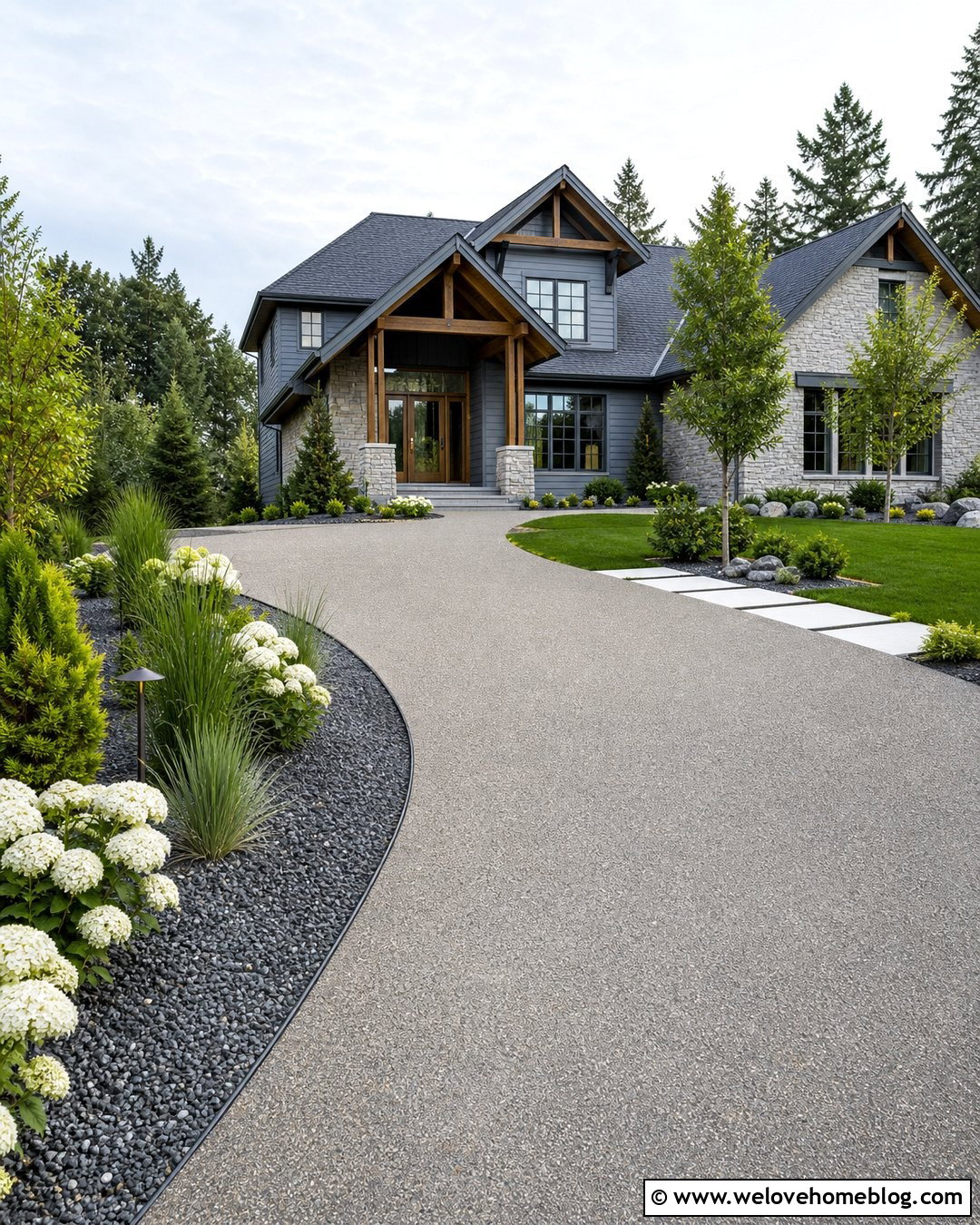
Movement from ornamental grasses can make a hydrangea-lined driveway feel lighter and less formal. Choose exposed aggregate concrete for the driveway and a gently curving layout that leads toward a contemporary craftsman house. Arrange compact hydrangeas in repeating groups, then place upright grasses between them to create vertical contrast. Keep the grasses and shrubs set back from the pavement so arching foliage does not interfere with vehicles. A steel or dark stone edge provides a clean boundary, while gravel mulch gives the bed a modern finish. Limit the plant palette to a few repeated varieties for a cohesive result. White hydrangeas, tan grass plumes, and gray aggregate produce a soft neutral scheme that remains visually interesting well beyond the main flowering period.
11. Hydrangea Driveway With Hostas
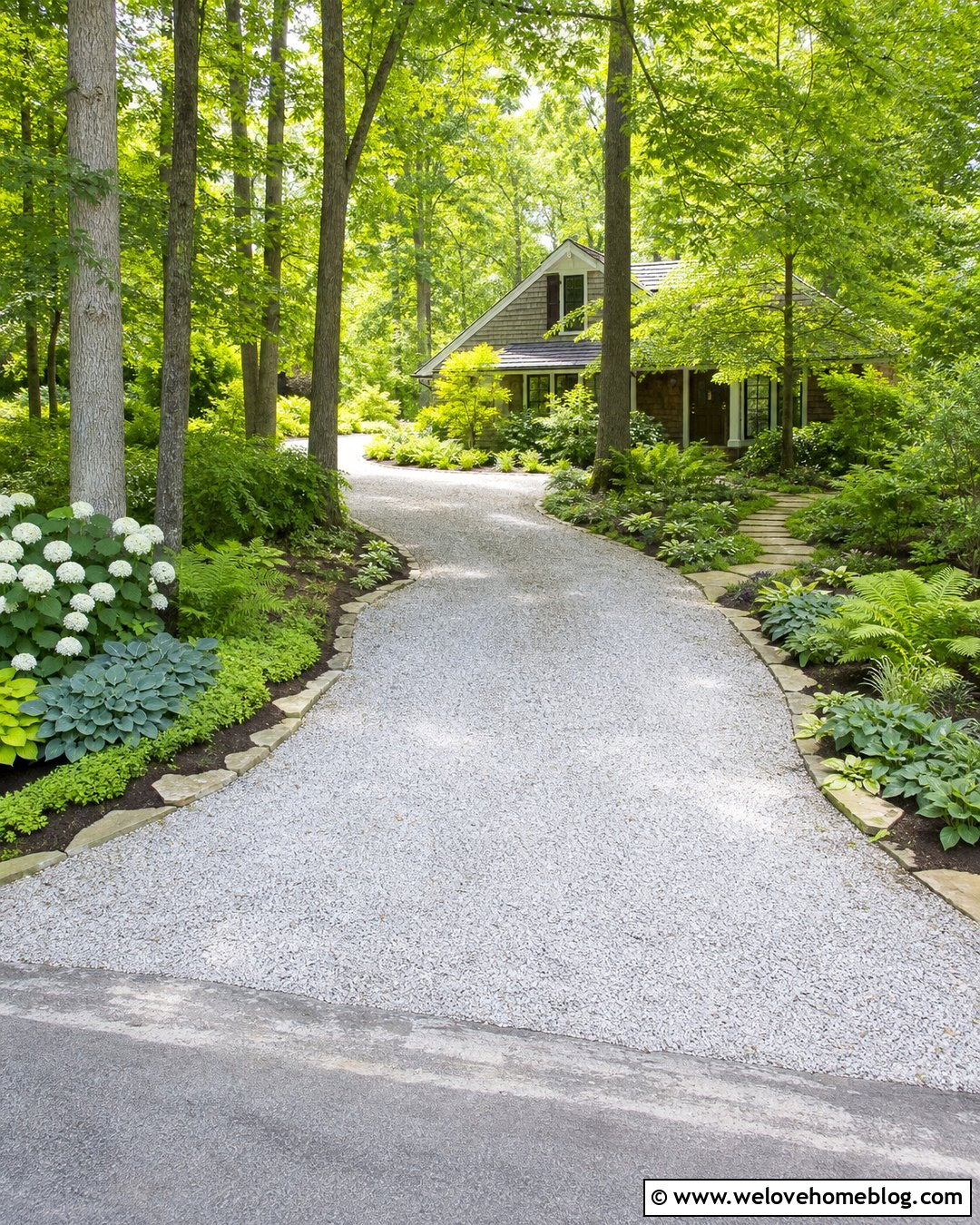
A partially shaded driveway beneath mature trees can support a layered border of hydrangeas and hostas. Begin with a natural gray gravel surface bordered by irregular flagstone. Place hydrangeas toward the back of the planting bed, where their height forms a leafy background. Arrange hostas in generous groups along the front edge, using different leaf sizes without mixing too many colors. Ferns and woodland ground covers can fill small spaces between the primary plants. This design is best where site conditions match the needs of the selected hydrangeas and companion plants. A meandering stepping-stone walkway can connect the driveway to a porch without cutting through the shrubs. The combination feels established and peaceful beside cottage, craftsman, and wooded ranch homes.
12. Hydrangea Driveway With Lavender
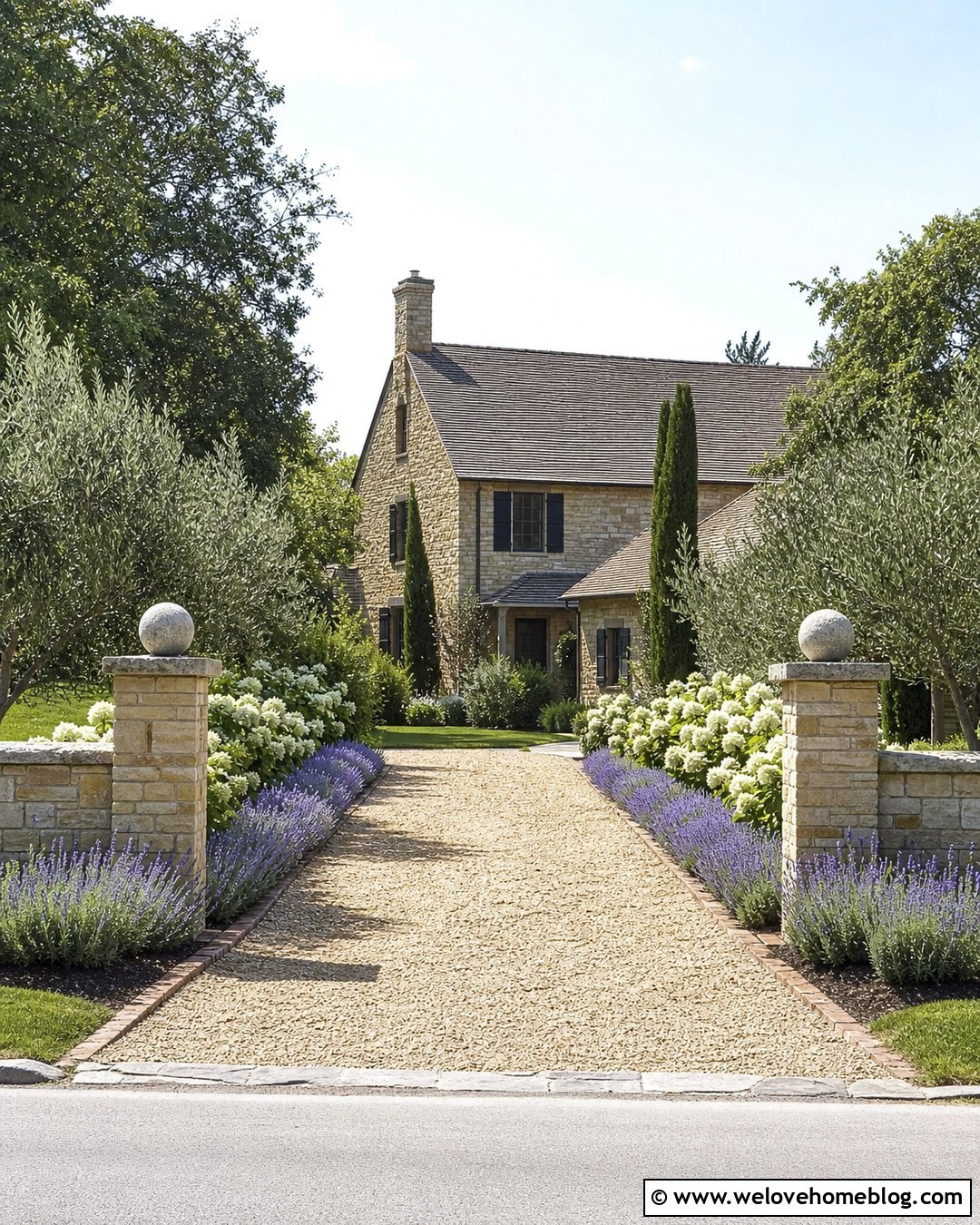
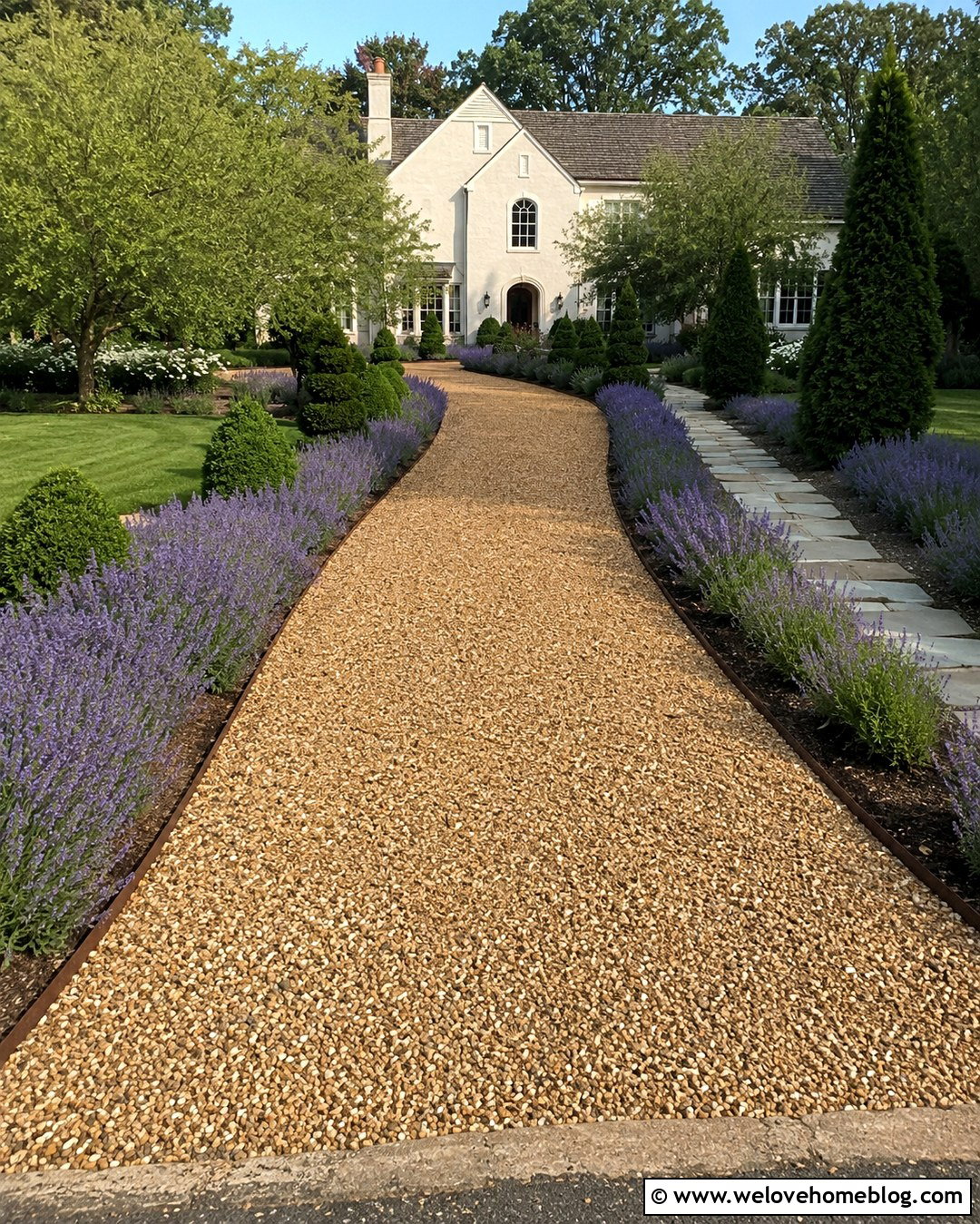
Hydrangeas and lavender can create a charming driveway border when varieties are selected for the site’s light, soil, and moisture conditions. Use warm beige gravel for the driveway, edged with reclaimed brick or weathered cobblestone. Plant sun-tolerant panicle hydrangeas toward the back of a wide border. Position lavender along the drier front edge where it will not receive the same irrigation as the hydrangeas. This separation makes the pairing more practical while preserving the desired layered appearance. White hydrangea flowers rise above the purple lavender, producing clear contrast against the neutral gravel. Repeat the planting in broad sections instead of alternating every plant. The finished design complements French country houses, cottages, stone homes, and relaxed modern farmhouses.
13. Hydrangea Driveway With River Rock
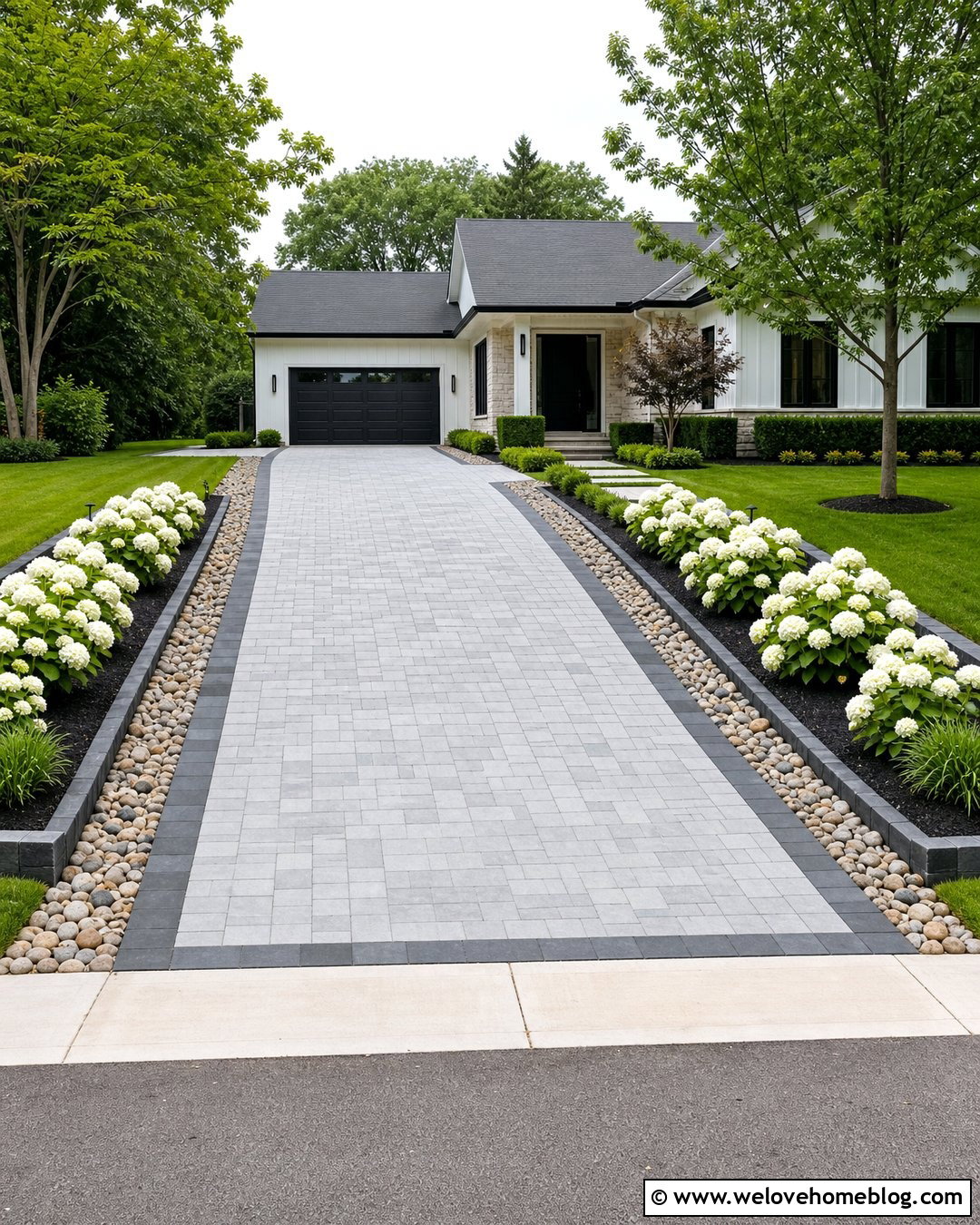
River rock offers an attractive transition between a driveway and hydrangea beds, especially where runoff needs to be managed carefully. Use light gray concrete pavers for the driveway and create shallow rock-lined channels along the edges. The drainage design should direct water appropriately rather than leaving hydrangea roots in persistently saturated soil. Set the shrubs behind the stone channel in raised, mulched beds with enough room for mature growth. Mix large and small river stones for a natural look, then repeat selected rocks within the planting beds. White or lime-green flowers keep the design calm and contemporary. Low sedges can soften the stone without blocking water flow. This integrated landscape works well beside modern ranch, craftsman, and mountain-inspired homes.
14. Hydrangea Driveway Retaining Wall
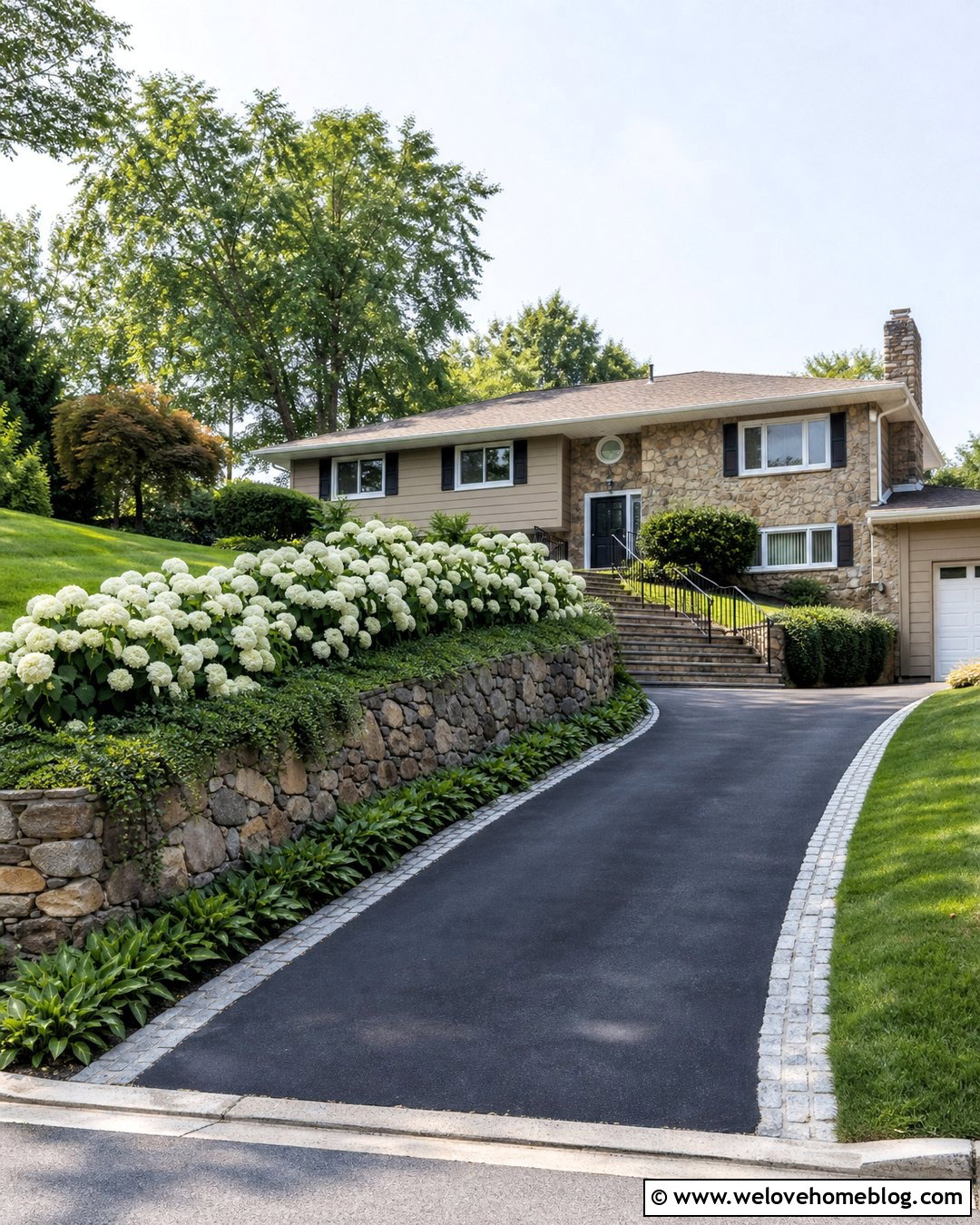
A sloped driveway can become a strong garden feature when a retaining wall supports a tiered hydrangea bed. Build the wall from natural stone or concrete blocks that coordinate with the house, then use it to frame a dark asphalt or textured concrete driveway. Hydrangeas can occupy the upper terrace, where their flowers are visible without narrowing the vehicle route. Select varieties whose mature height will not conceal windows, lights, or important sightlines. Trailing ground cover can soften the wall’s top edge, while low plants at its base connect the structure to the driveway. Include proper drainage behind the wall and a safe route for garden maintenance. The completed design turns a difficult grade into a layered entrance suited to hillside and split-level homes.


15. Hydrangea Driveway Privacy Hedge
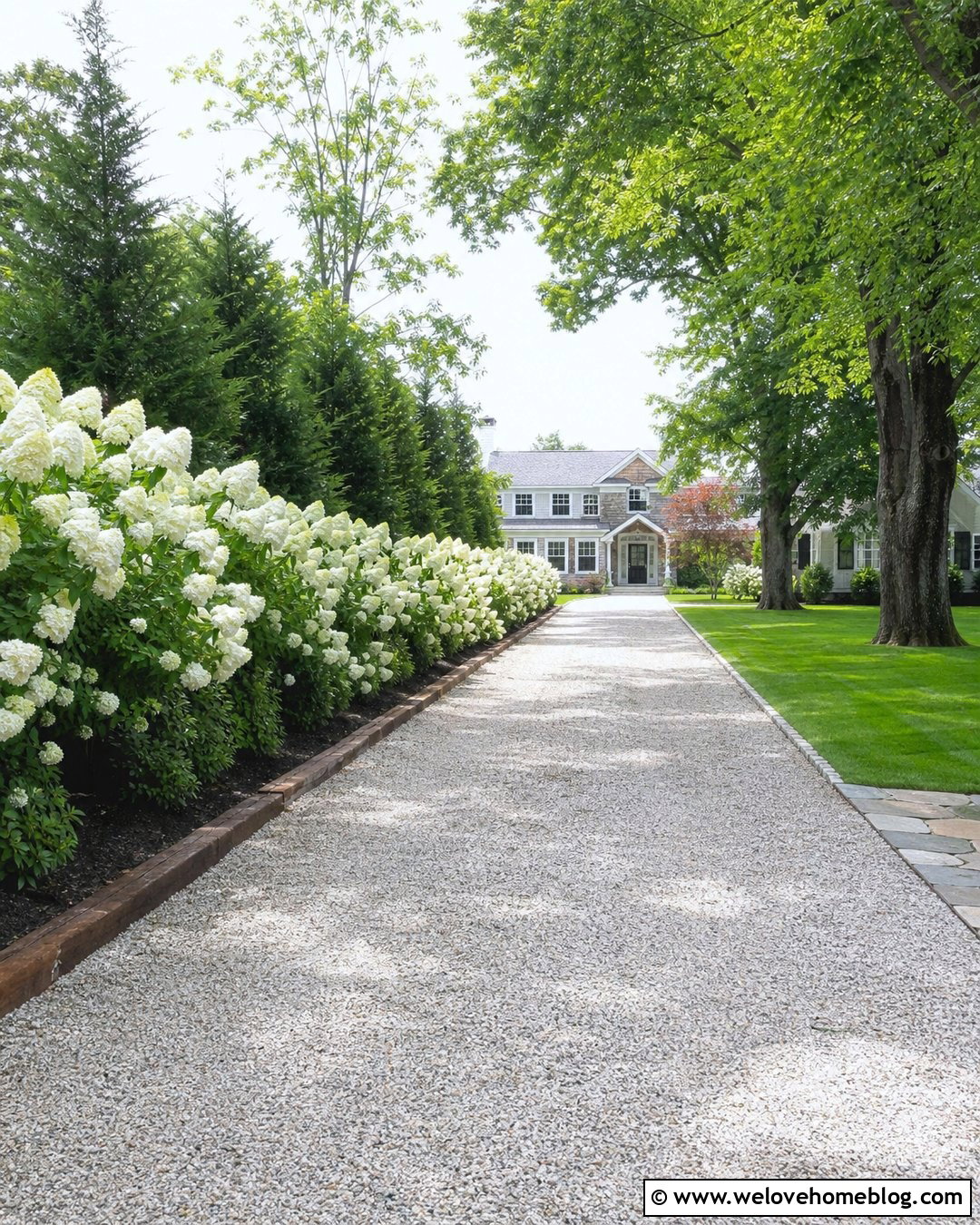
A long row of hydrangeas can screen a driveway from neighboring yards while creating a colorful arrival experience. Use pale gray gravel or asphalt for a straight driveway and provide a wide mulched bed along the property boundary. Plant the hydrangeas according to their mature width so they form a continuous hedge without severe crowding. Taller panicle varieties can provide seasonal screening, but combining them with strategically placed evergreens gives the border winter structure. A metal, stone, or timber edge keeps the bed separate from the driving surface. On the house side, maintain an open strip of lawn to prevent the route from feeling enclosed. This design is useful for suburban lots, country properties, and side driveways beside closely spaced homes.
16. Hydrangea Driveway With White Flowers
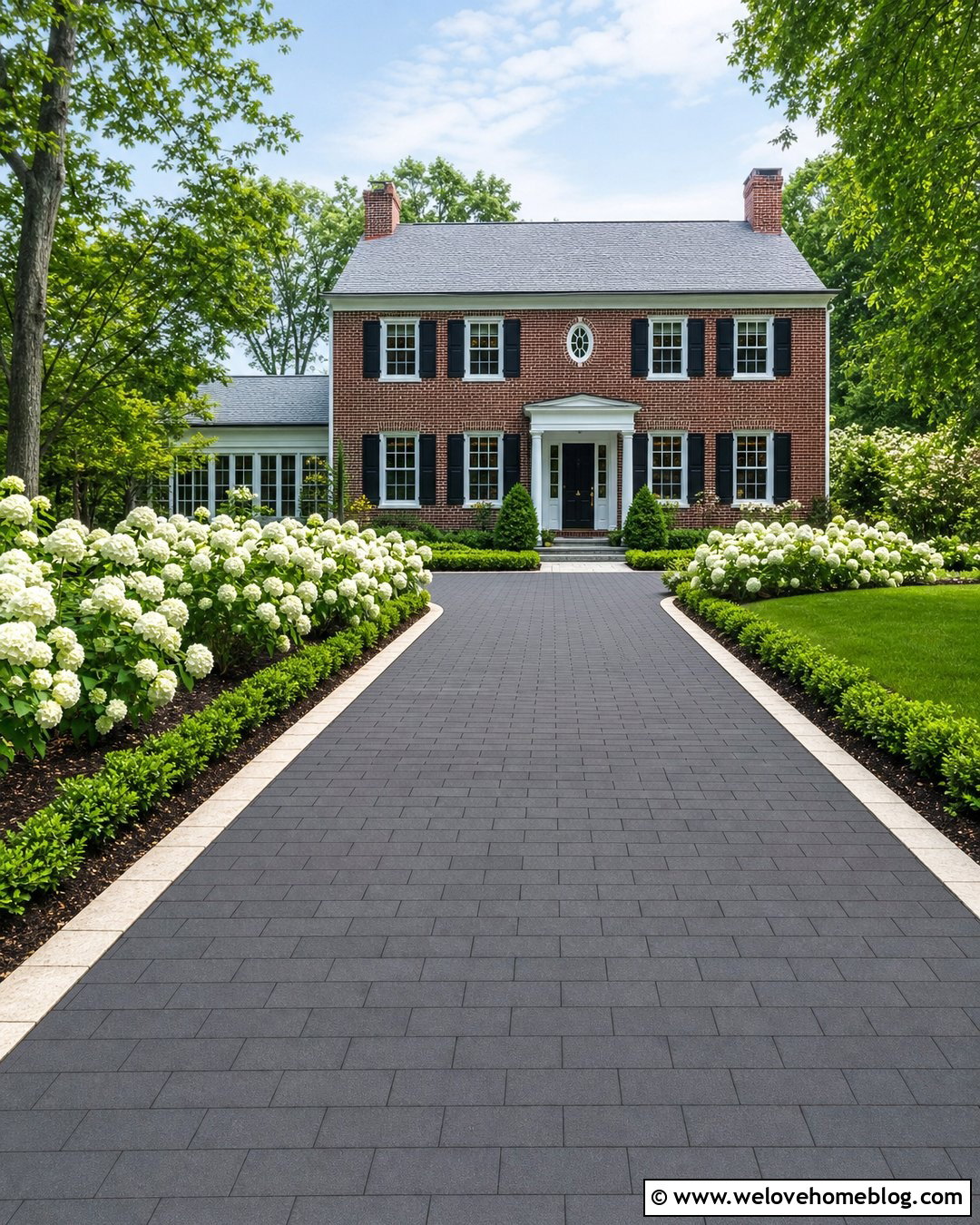
Masses of white hydrangeas can unify a driveway landscape without competing with a colorful or detailed house facade. Pair them with a charcoal paver driveway arranged in a running-bond pattern. A pale limestone border creates a distinct transition between the dark paving and deep planting beds. Repeat one white-flowering variety on both sides of the approach for consistency, then add restrained groups of evergreen shrubs and soft green ground cover. White flowers are particularly effective near shaded entrances because they remain visually prominent against dark foliage. Keep the beds broad enough that mature branches do not extend into parking or walking areas. This clean palette complements redbrick colonials, dark modern farmhouses, cedar-sided homes, and traditional houses with colorful front doors.
17. Hydrangea Driveway With Blue Flowers
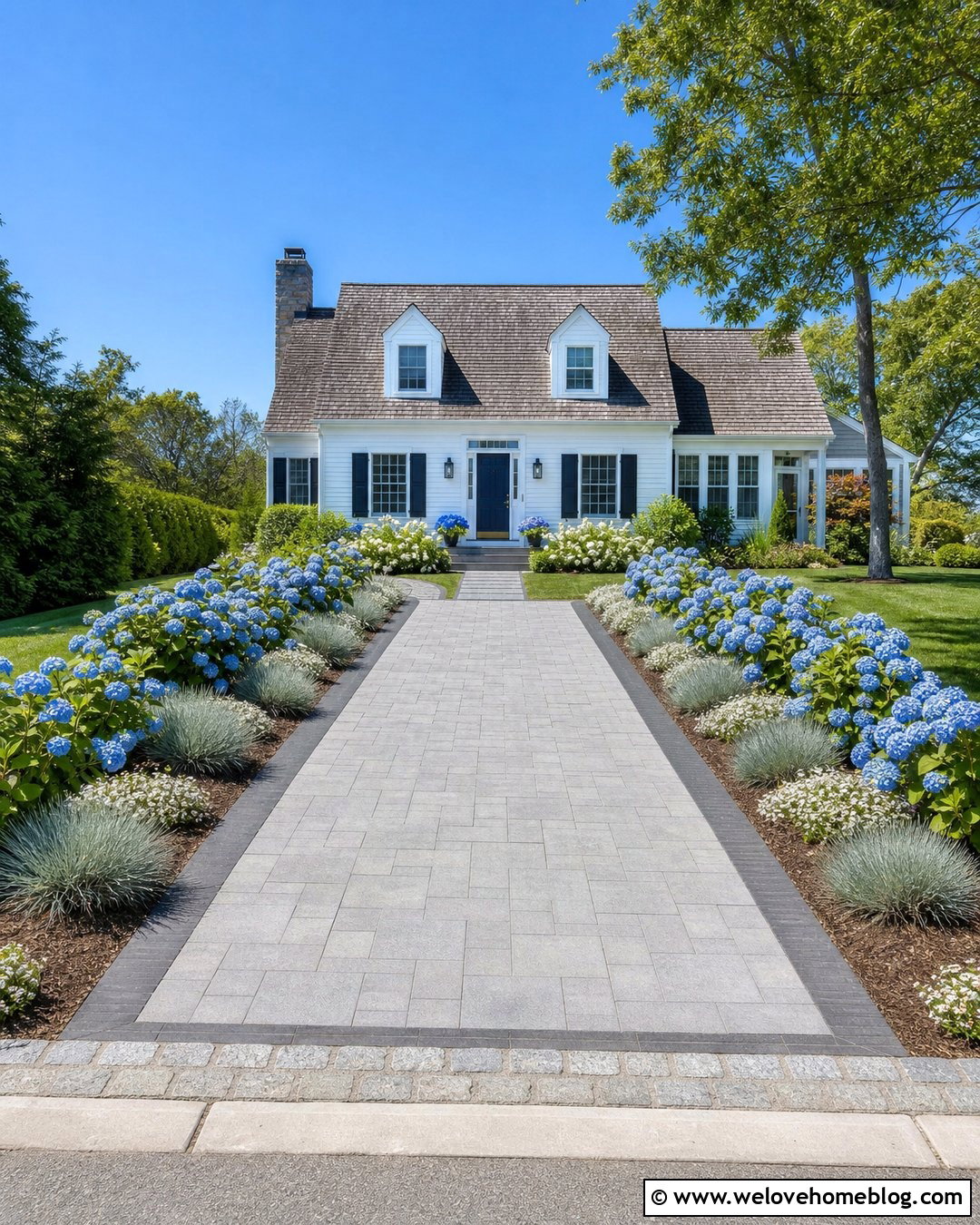
Blue hydrangeas can give a driveway a cool, coastal appearance, especially when paired with gray stone and crisp white architecture. Create a straight driveway from medium-gray concrete pavers with a darker border. Plant mophead hydrangeas in broad mulched beds where local climate and site conditions support them. Flower color in some bigleaf hydrangeas can be influenced by soil chemistry and cultivar, so choose plants and soil management methods carefully rather than expecting immediate color changes. Add blue-green ornamental grasses, white flowering ground cover, and a simple bluestone walkway. Avoid introducing too many additional flower colors. The coordinated gray, blue, green, and white palette feels calm and works especially well beside Cape Cod, coastal cottage, and shingle-style homes.
18. Hydrangea Driveway With Pink Flowers
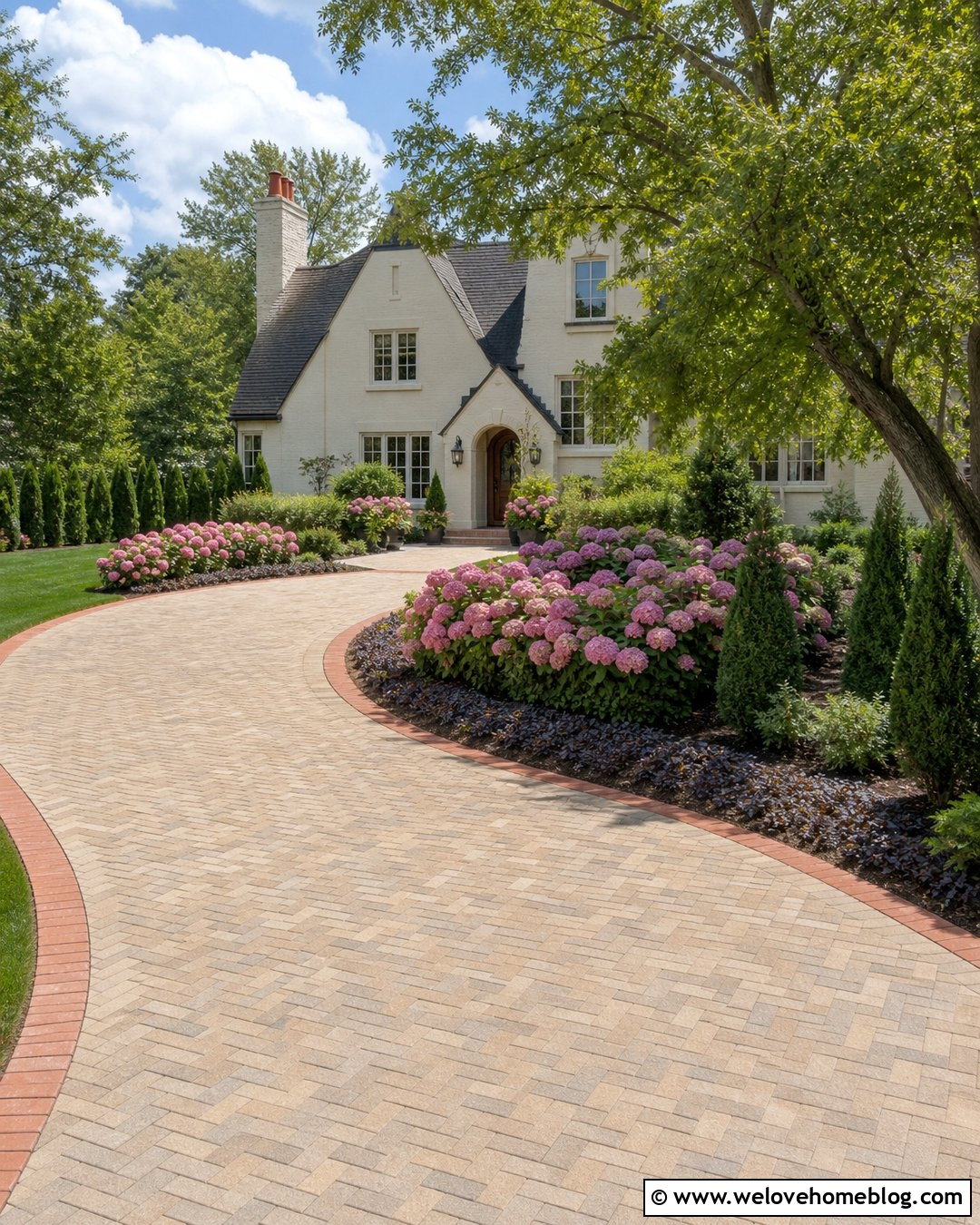
Pink hydrangeas bring warmth to a driveway bordered by brick, warm stone, or cream-colored architecture. Use buff concrete pavers in a subtle herringbone pattern for the main surface and frame them with a redbrick ribbon. Plant pink-flowering hydrangeas in curved beds that widen near the house, allowing the landscaping to guide attention toward the entrance. Burgundy foliage plants or dark-leaved ground cover can deepen the color scheme without making it busy. Include compact evergreens at key corners for dependable structure. If flower color is important, select a cultivar known for the desired result and consider the relevant soil conditions. This complete driveway look pairs naturally with Tudor houses, brick colonials, cottages, and cream stucco homes with dark shutters.
19. Hydrangea Driveway With Oakleaf Hydrangeas
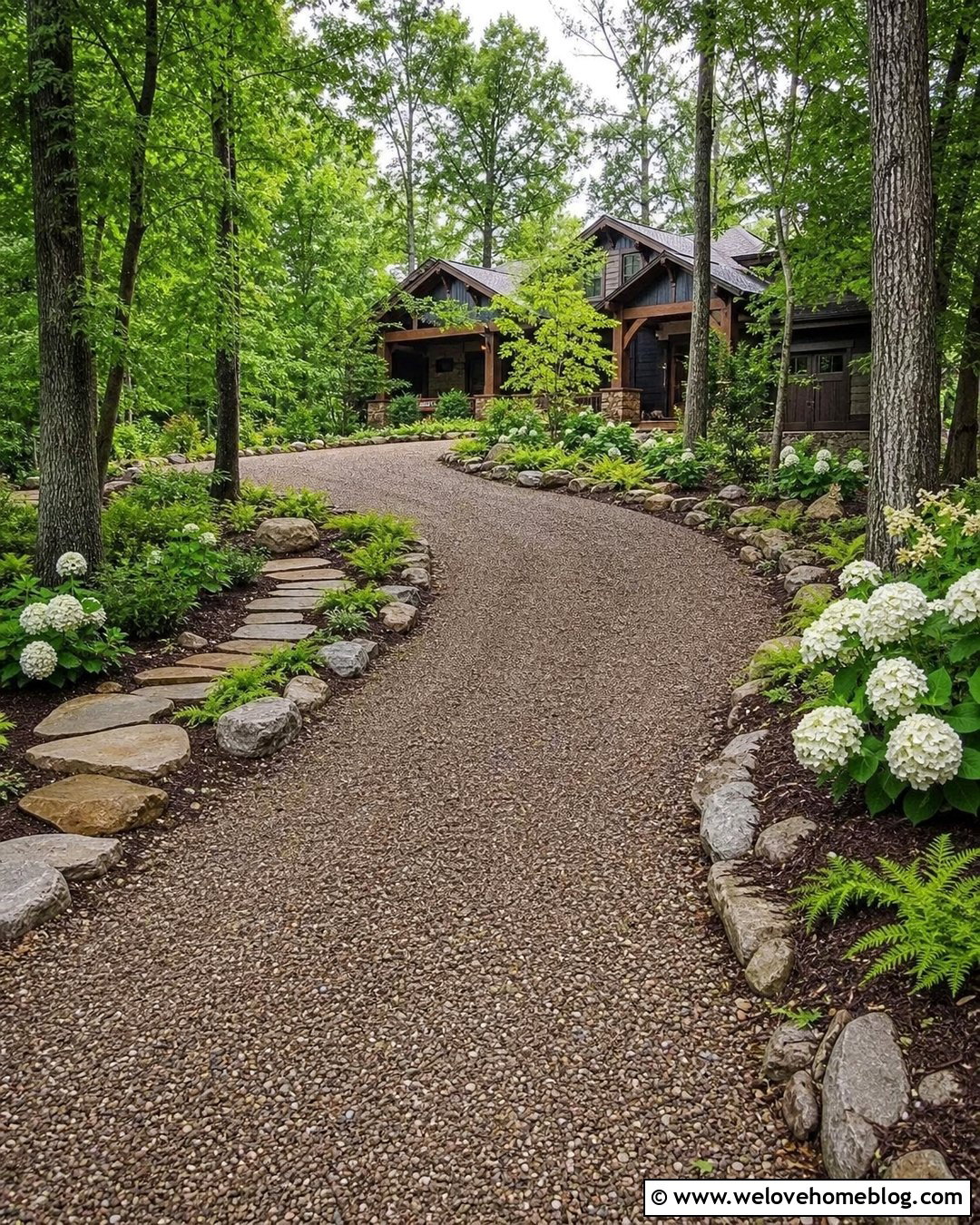
Large leaves, cone-shaped flowers, and textured branching make oakleaf hydrangeas valuable beside natural-looking driveways. Pair them with a curved driveway of brown or gray crushed stone bordered by irregular fieldstone. Arrange the shrubs in loose groups beneath high-canopy trees, leaving open areas of mulch and native ground cover between them. Their substantial form works best in wider beds where branches can develop without reaching the driving surface. Ferns, sedges, and woodland perennials reinforce the relaxed character. A flagstone walkway can branch toward a craftsman porch or rustic front entry. The driveway, stone edging, and layered planting should appear to follow the existing terrain. This design is especially effective for wooded lots and naturalistic country landscapes.


20. Hydrangea Driveway With Limelight Hydrangeas
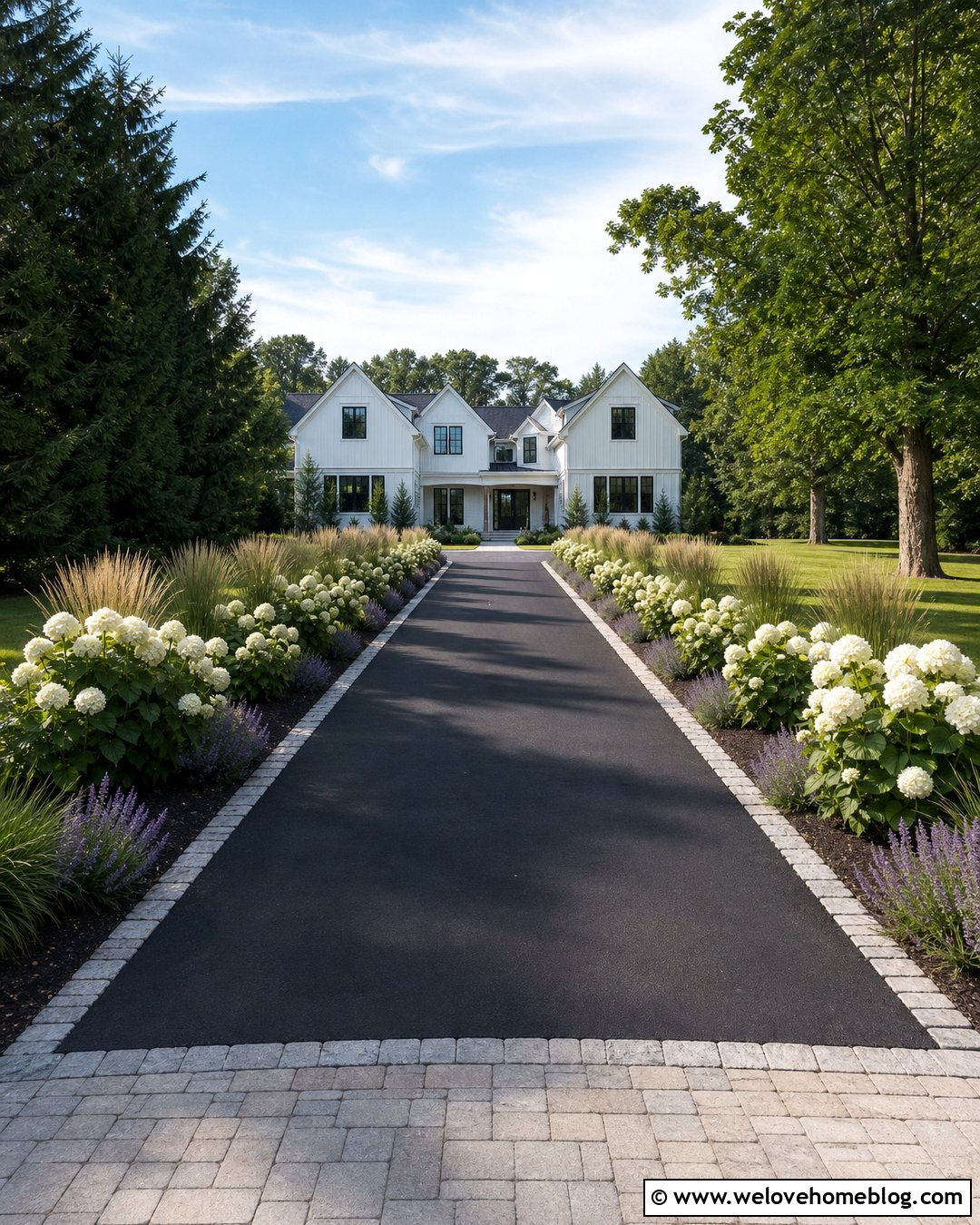
Limelight hydrangeas can create a bold flowering corridor along a long, open driveway. Their large panicles begin with light green tones and typically develop changing shades as the season progresses. Use black asphalt for the driving surface, edged with granite setts to provide a refined boundary. Plant the hydrangeas in generous groups on both sides, allowing sufficient distance from the pavement for mature branches. Dark green evergreens can be positioned behind them at the entrance and near the house, while low catmint or ornamental grass fills the foreground. Repeat the same spacing to create rhythm along the approach. The contrasting black, green, and white palette feels polished beside modern farmhouse, colonial, and large suburban architecture without requiring an overly complicated planting plan.
21. Hydrangea Driveway With Dwarf Hydrangeas
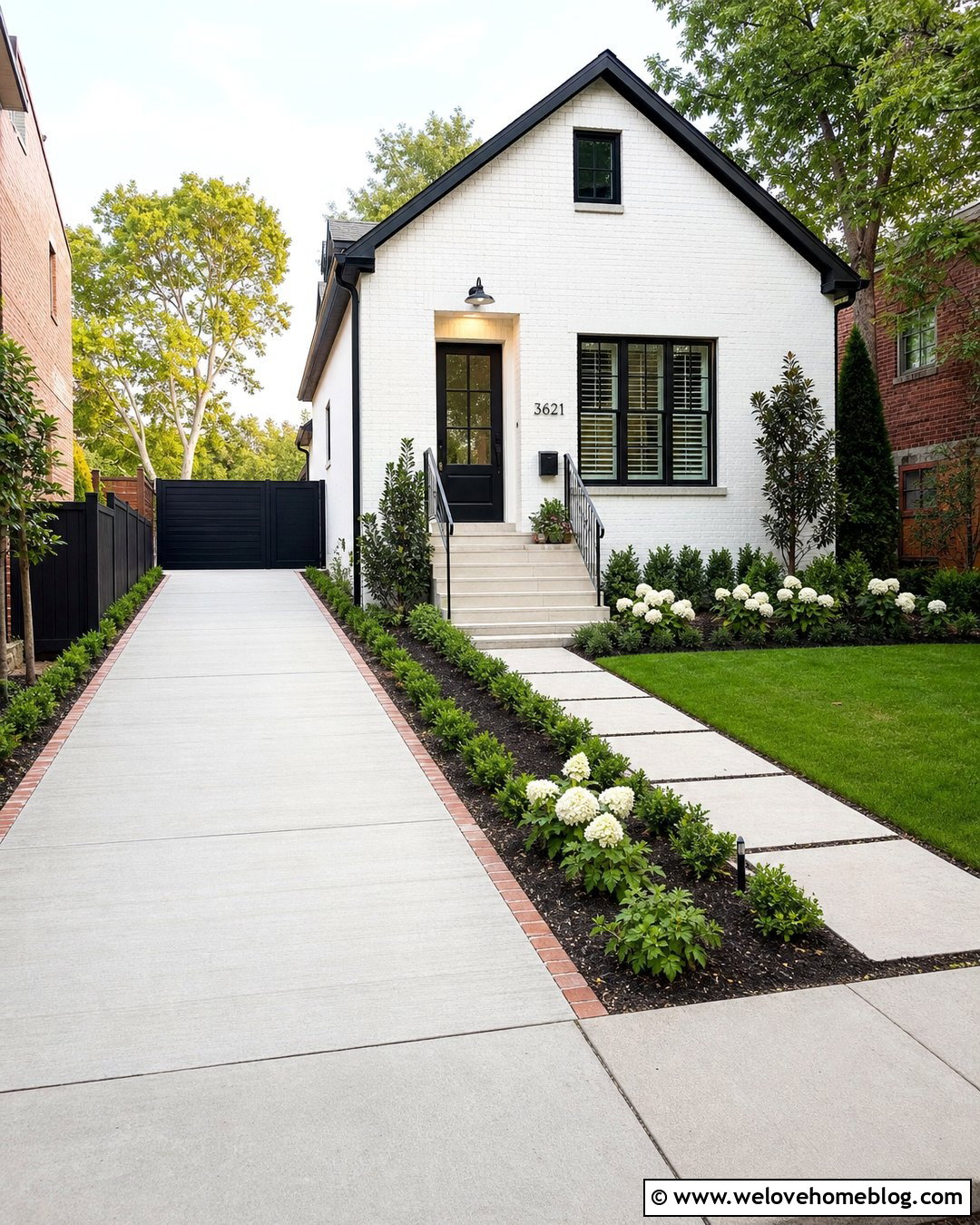
A narrow driveway does not need to miss out on hydrangea color. Compact varieties can fit into slim beds when their mature dimensions match the available space. Use a straight poured-concrete driveway with a light broom finish and a narrow brick edge. Plant dwarf hydrangeas in small repeating groups rather than a continuous hedge, leaving room for access, utility equipment, and vehicle doors. Low ground cover can fill the spaces between shrubs without adding excessive height. Keep the planting lower near the street to protect driver visibility. A vertical house facade, simple walkway, and tidy lawn will make the border feel intentional instead of crowded. This practical layout works well for urban cottages, duplexes, small ranch homes, and compact suburban properties.
22. Hydrangea Driveway With Landscape Lighting
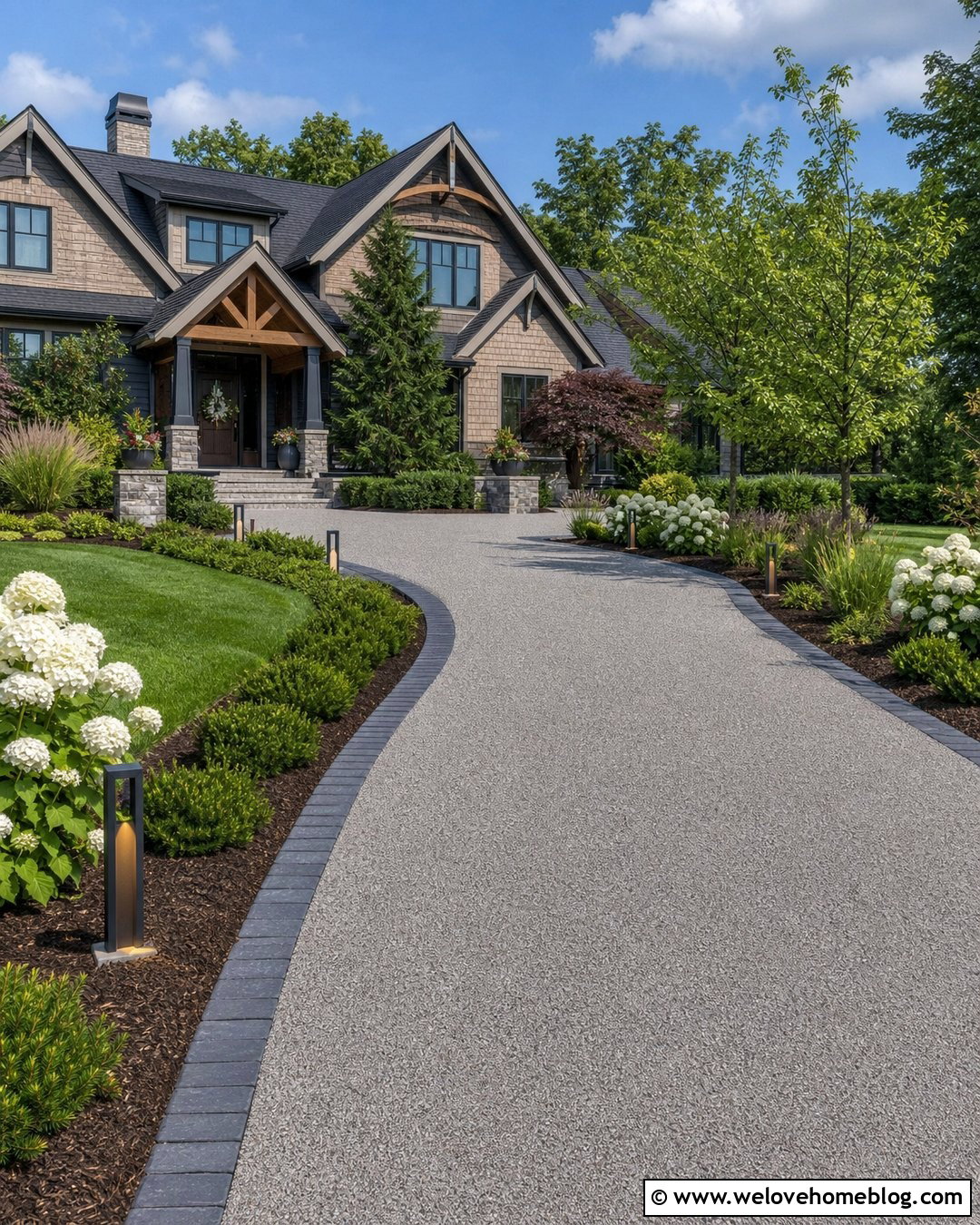
Landscape lighting can make a hydrangea border easier to navigate while preserving its daytime beauty. Begin with a curved driveway of resin-bound gravel in a warm gray tone. Edge it with charcoal pavers and create wide beds containing white hydrangeas, low evergreens, and ornamental grasses. During planning, place shielded fixtures where mature leaves will not completely cover them. Low path lights can define the driving edge, while carefully aimed accent lights highlight selected shrubs or entrance trees. Wiring and fixtures should remain accessible without crossing important root zones unnecessarily. The equipment should look understated in daylight and support safe movement after dark. This complete design fits contemporary homes, craftsman houses, and refined suburban landscapes while keeping the flowers—not the fixtures—as the main visual feature.
23. Hydrangea Driveway Address Sign
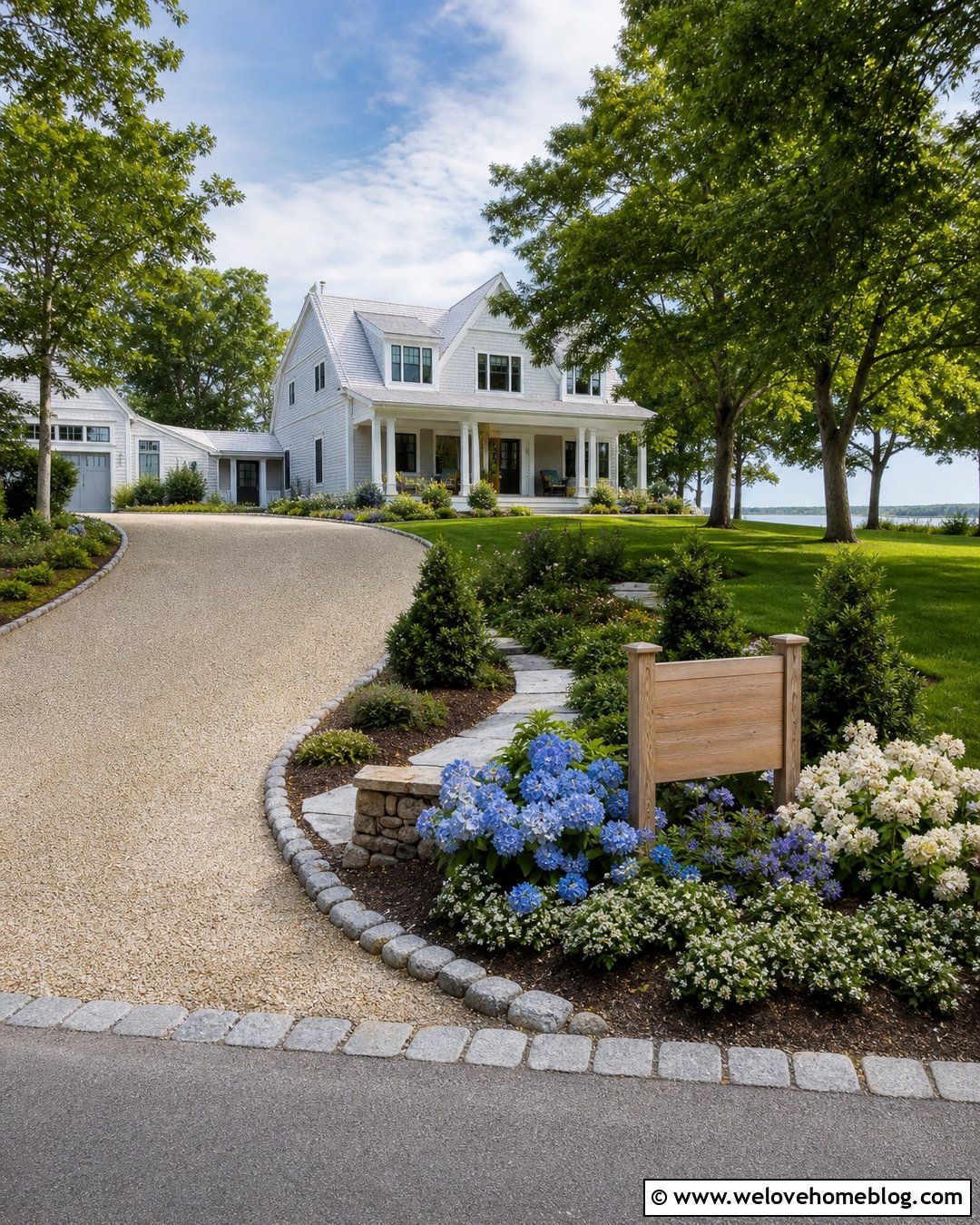
A freestanding address sign can become a small garden feature rather than an isolated post beside the road. Pair a light-colored pea gravel driveway with fieldstone edging and a wide entrance bed. Set the sign back from traffic while keeping its numbers clearly visible from the street. Plant compact white or blue hydrangeas behind the sign, using low ground cover or seasonal flowers in front so nothing blocks the address. Repeat the same hydrangeas near the house to connect the entrance bed with the rest of the property. A pair of small evergreens can provide winter structure without overwhelming the marker. The coordinated stone, gravel, sign, and planting create an attractive introduction to farmhouse, cottage, craftsman, or coastal-style homes.
24. Hydrangea Driveway With Climbing Hydrangeas
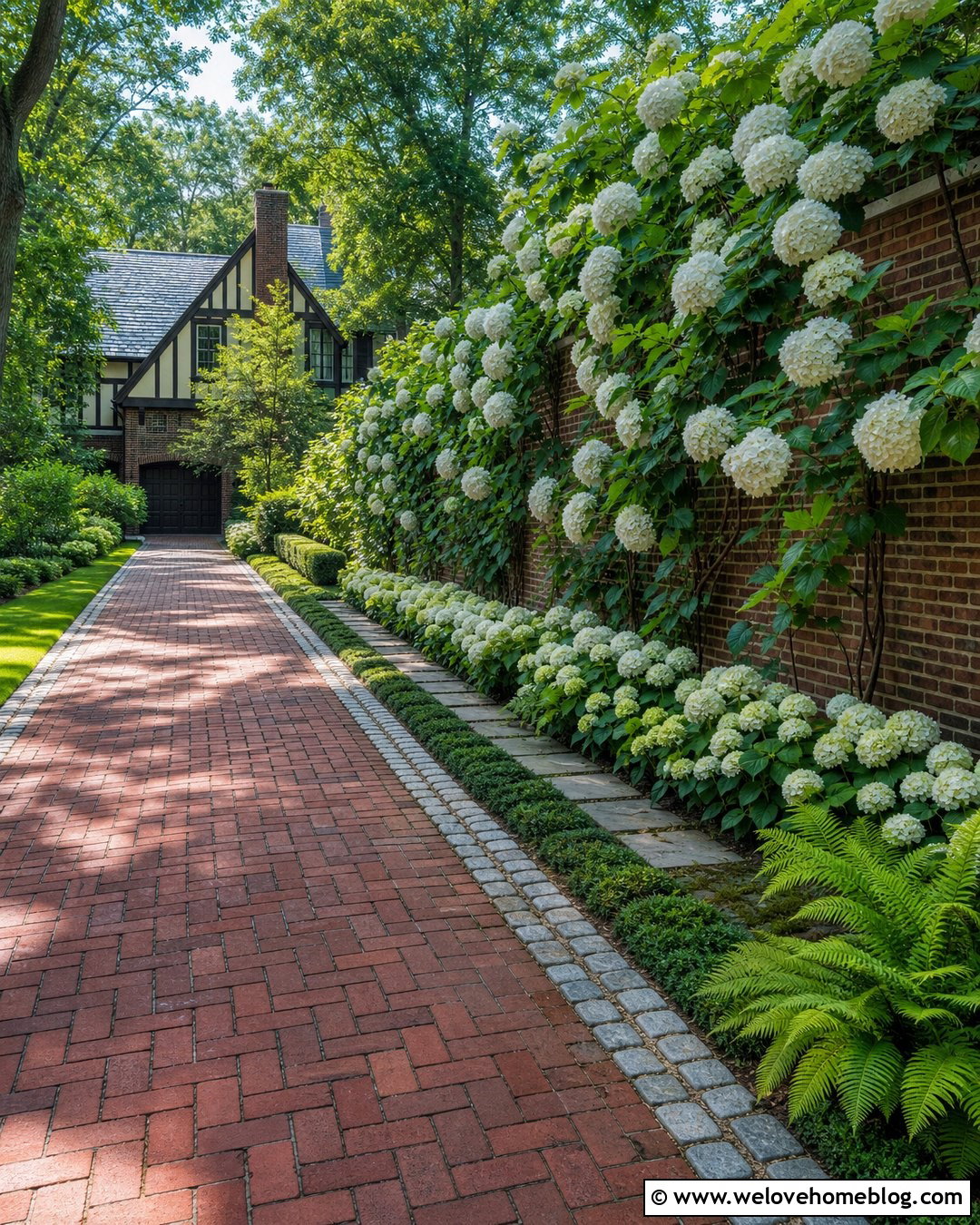
Where a driveway runs beside a tall masonry wall, climbing hydrangeas can add greenery without consuming the entire ground-level bed. Use clay brick pavers or warm exposed aggregate for the driveway and install a narrow cobblestone border. Train the climbing plants on a structurally suitable brick or stone wall, using appropriate supports where necessary. At ground level, add compact hydrangeas, ferns, and shade-tolerant ground cover to create a layered transition. Keep all plants away from doors, vents, drainage outlets, and vehicle mirrors. A slim stone walkway can provide maintenance access between the wall and driveway. This immersive design works particularly well with Tudor, traditional brick, English cottage, and shaded craftsman homes, giving a confined side drive a garden-like character.
25. Hydrangea Farmhouse Driveway
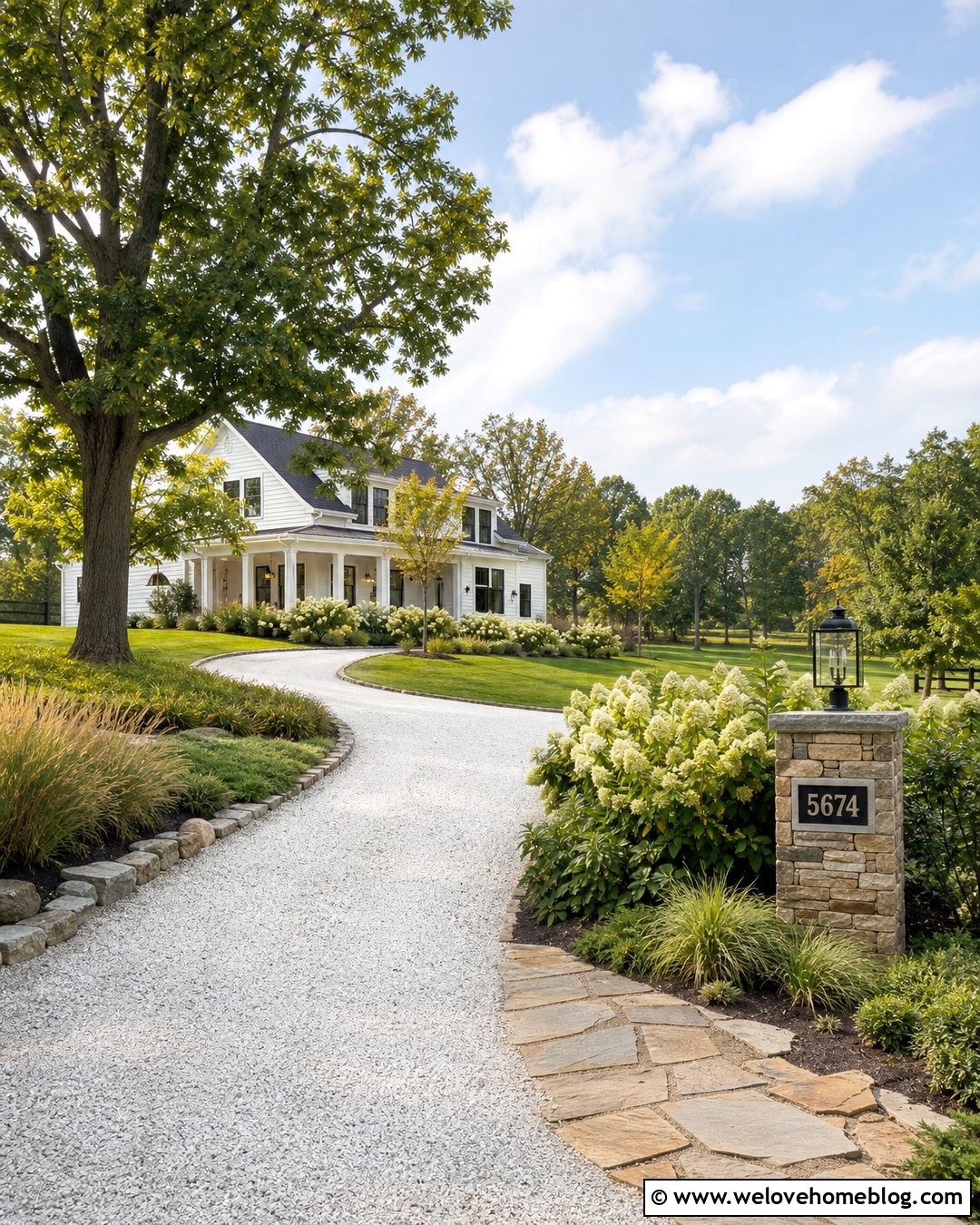
A farmhouse driveway feels welcoming when simple materials and generous hydrangea borders are allowed to work together. Use pale crushed limestone for a broad, gently curved drive leading to a white house with a covered porch. Weathered timber or natural fieldstone can contain the gravel along the outer edges. Plant large groups of white and soft green panicle hydrangeas near the house, then repeat smaller clusters along the curve. Add lawn, mature deciduous trees, ornamental grasses, and a traditional post-mounted address sign. Avoid lining every inch of the route; open sections create views across the yard and make the flowering groups more noticeable. The finished landscape feels relaxed and established while remaining practical for a country home or modern farmhouse.
Conclusion:
The most successful 25 hydrangea driveway ideas treat the driveway and garden as one connected landscape. Choose a surface, shape, border, and planting arrangement that fits your home rather than adding shrubs as an afterthought. Consider the mature size of every hydrangea and leave comfortable clearance around vehicles, walkways, gates, signs, and visibility areas. Match the variety to local sunlight, moisture, soil, and winter conditions. You can then use stone, brick, mulch, evergreens, grasses, or ground cover to complete the border. Whether your driveway is narrow, circular, gravel, concrete, or asphalt, thoughtful hydrangea landscaping can soften the hardscape and create a memorable approach to the house.

Related posts:



Leave a Reply