
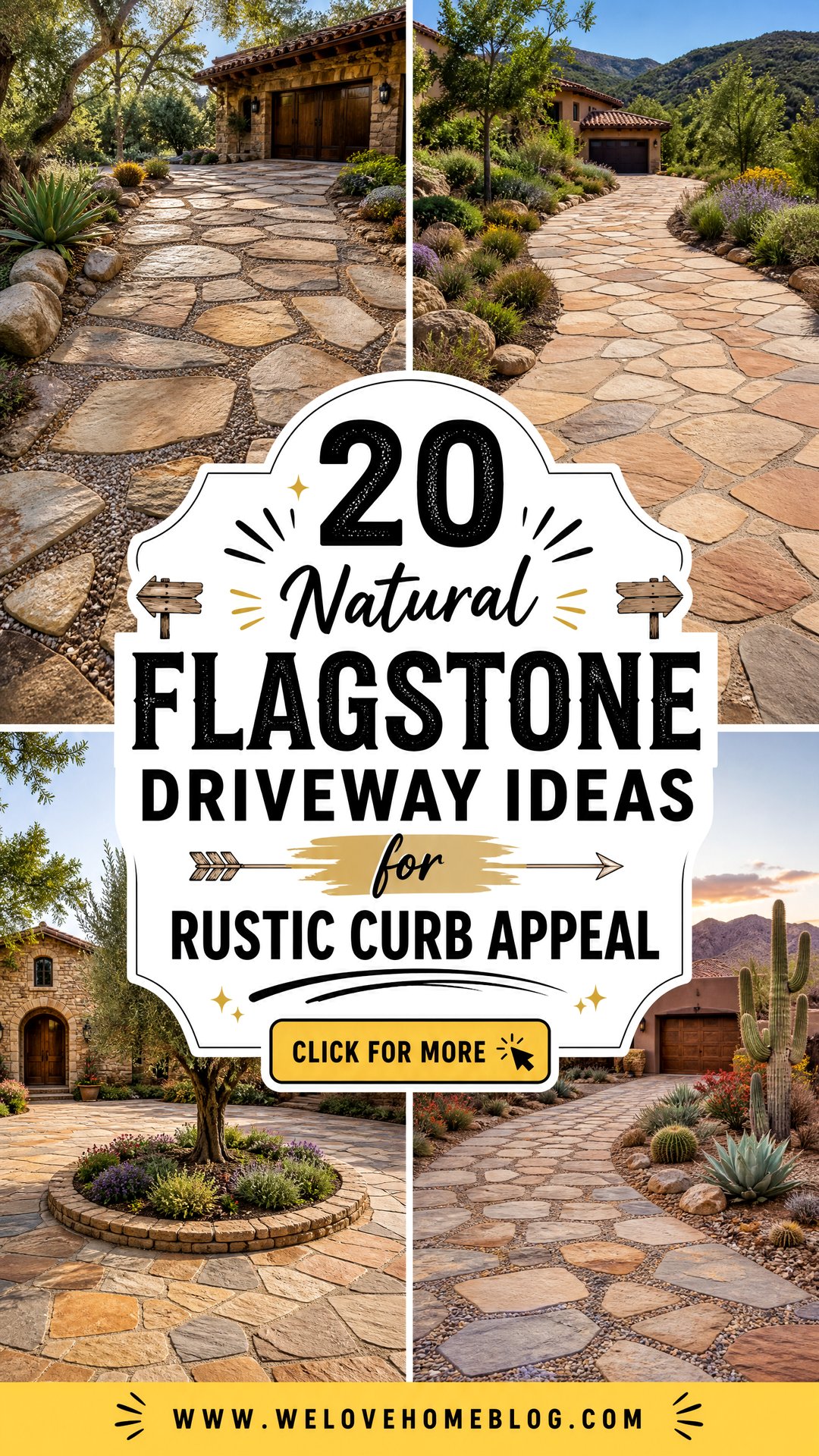
Natural flagstone brings rich color, irregular texture, and a sense of permanence to a residential driveway. It can complement everything from rustic cottages and ranch homes to modern farmhouses and contemporary architecture. The best designs treat the driveway as a complete landscape feature by coordinating the stone, layout, joints, borders, planting beds, and entrance. Because a driveway carries vehicle loads, the selected flagstone must be suitable for vehicular use and installed over a properly engineered base. Local drainage, freeze-thaw conditions, stone thickness, and surface texture should also guide the design. () Whether you prefer structured paving or an informal country approach, these complete 20 natural flagstone driveway ideas offer practical inspiration for creating distinctive curb appeal.
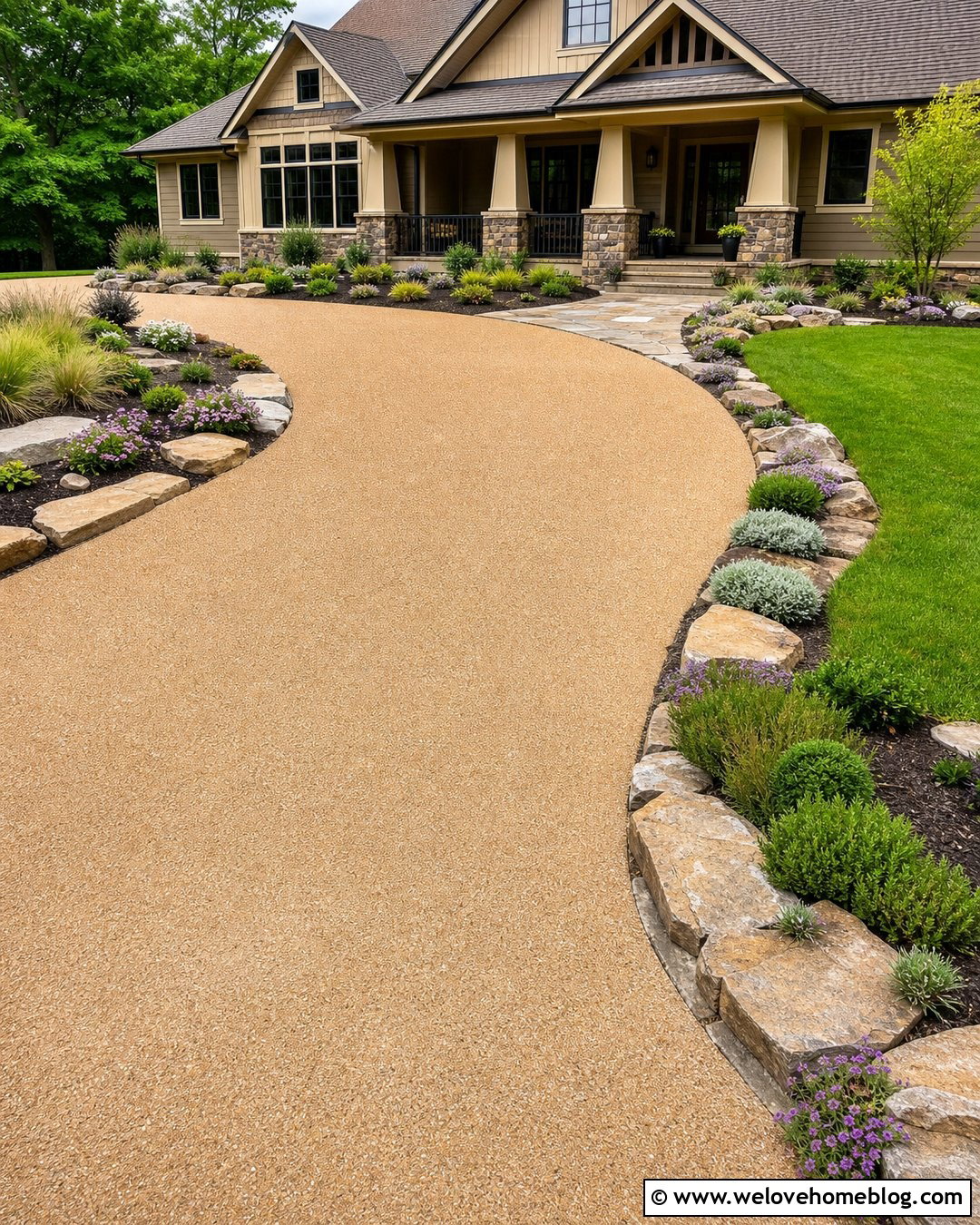
1. Irregular Sandstone Flagstone Driveway With Gravel Joints

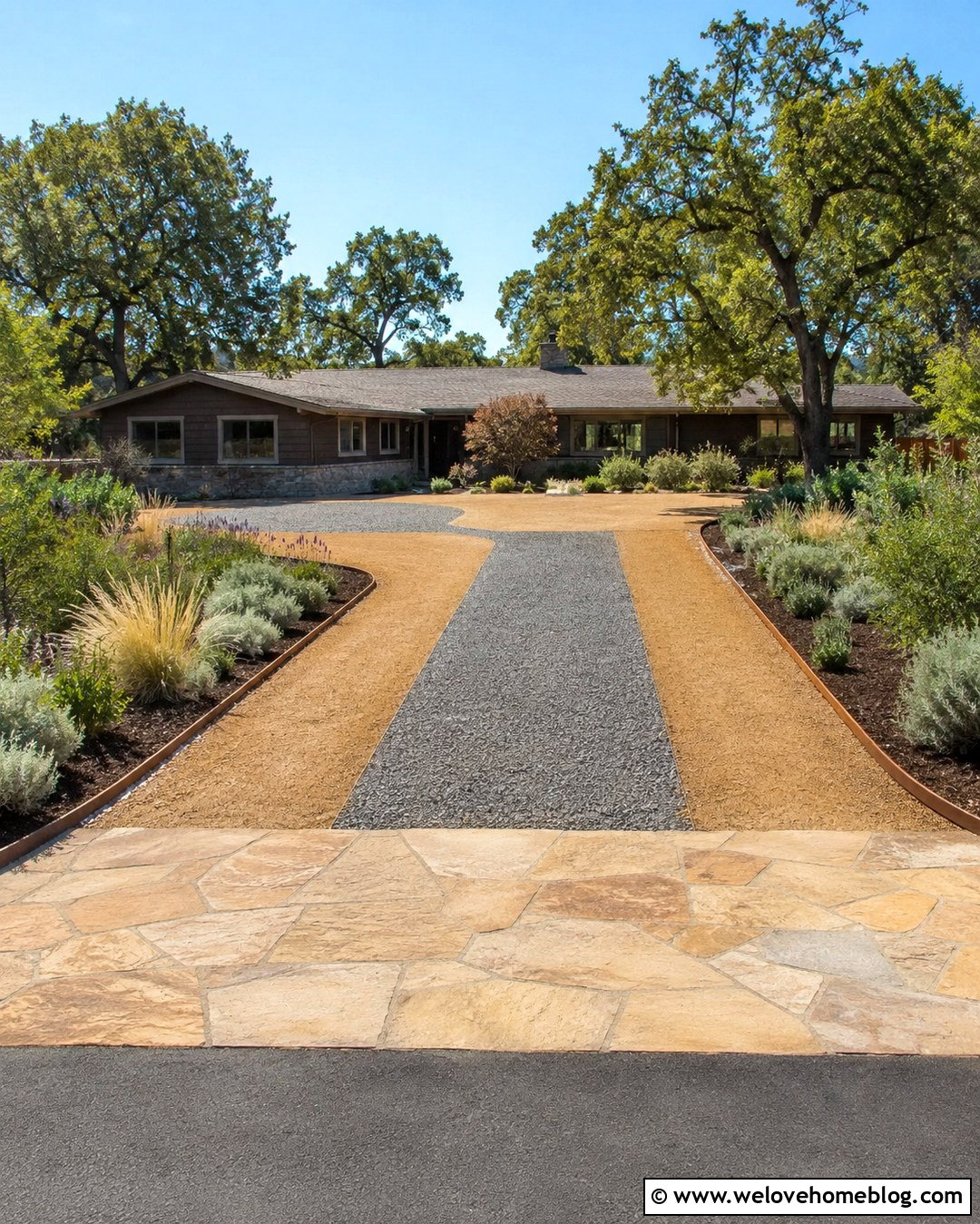
Irregular sandstone creates a relaxed driveway that feels connected to the surrounding landscape. Choose large, vehicle-rated flags in blended tan, buff, rust, and muted gray tones. Arrange them organically while keeping the driving surface level and the joints consistent. Small angular gravel between the stones adds contrast and allows the natural outlines to remain visible. A wide cobblestone edge can contain the gravel and give the entrance a finished appearance. Complete the look with ornamental grasses, low junipers, and scattered boulders near a ranch or Craftsman home. This combination works especially well on broad, gently curved driveways. Natural stone colors vary by their geographic source, so reviewing several full pallets helps produce a balanced blend. ()
2. Blue Flagstone Driveway With Cobblestone Border
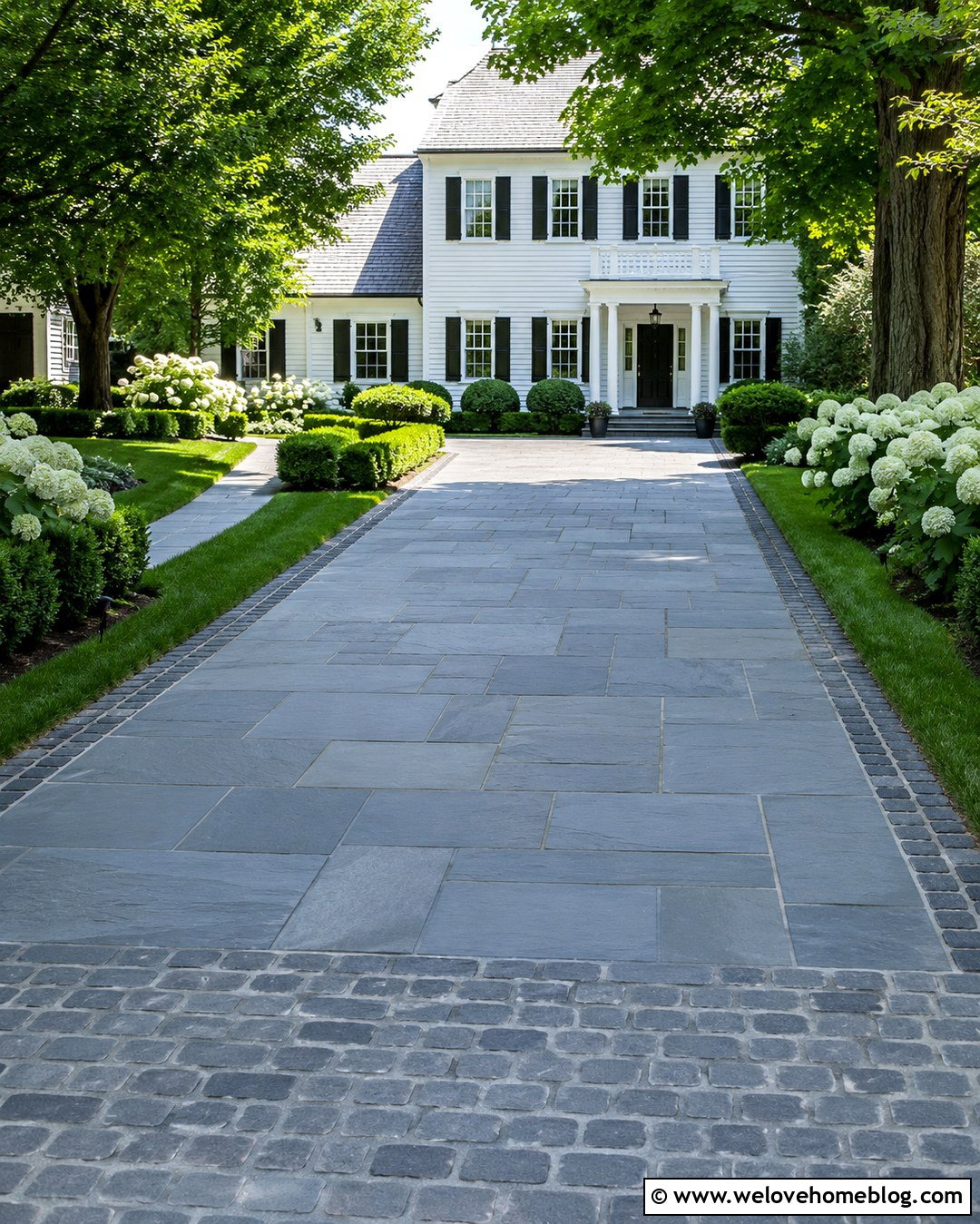
Blue-gray flagstone offers a cooler, more tailored appearance without losing the character of natural stone. Use large rectangular and square pieces in a random ashlar layout to create an orderly driving surface. Charcoal cobblestones installed along both sides provide a durable visual frame and help define the transition into planting beds. Near the street, continue the cobblestone across the driveway as a wide entrance apron. White hydrangeas, clipped boxwoods, and a clean lawn brighten the deep stone colors around a Colonial or Cape Cod home. Tight mortar joints create a formal finish, while slightly wider stone-filled joints feel more relaxed. Cut flagstone with controlled edges is particularly effective when a refined pattern and predictable alignment are priorities. ()
3. Rustic Flagstone Driveway With Grass Joints
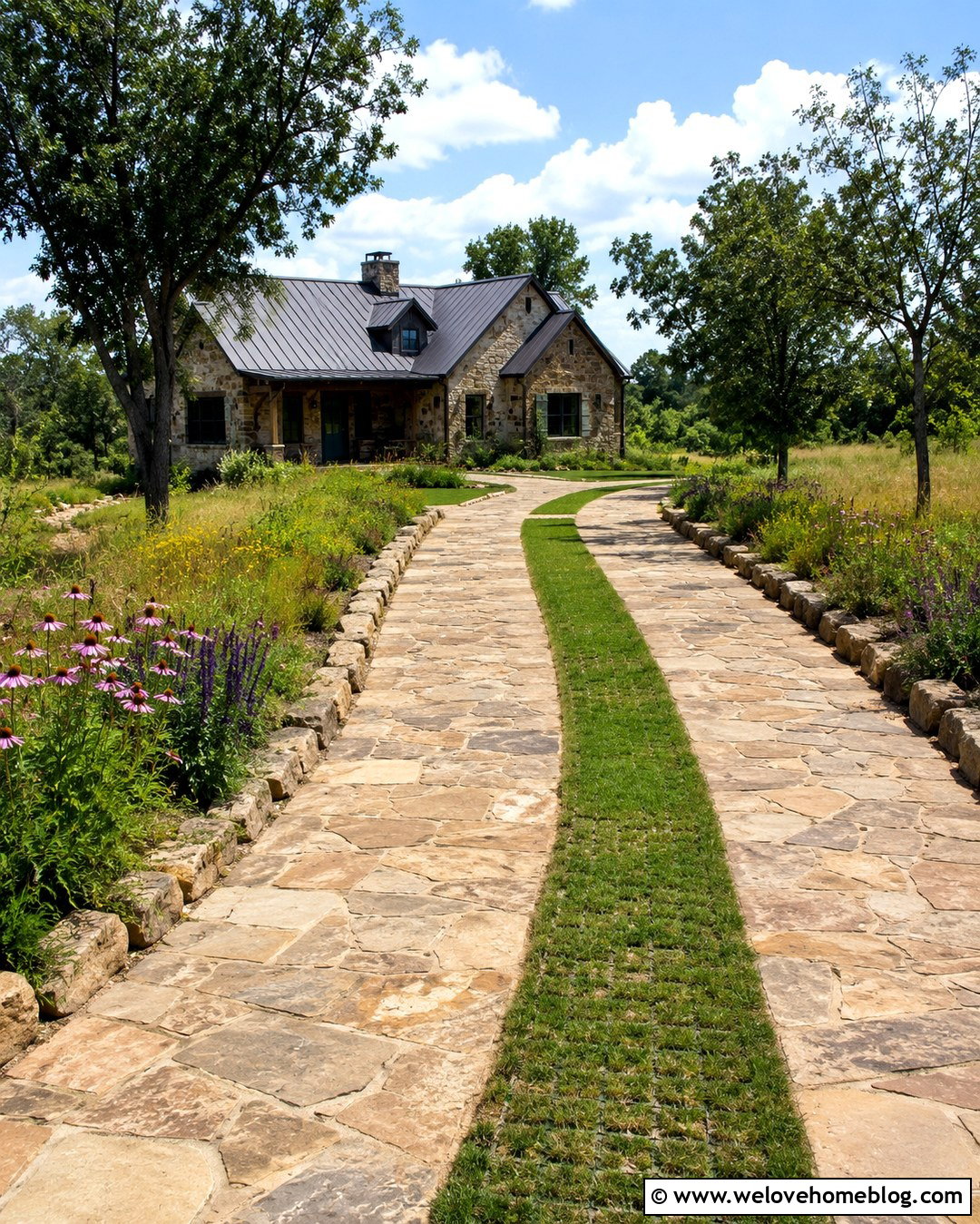
A grass-jointed flagstone driveway can soften a large paved area and help it blend into a country yard. Place substantial tan fieldstone flags in two broad wheel paths, leaving a planted center strip and narrow green joints outside the main tire zones. This arrangement reduces the amount of solid paving while still establishing a clear route to the garage. Use reinforced turf or a durable, regionally appropriate ground cover rather than delicate lawn varieties. Natural fieldstone edging can separate the driveway from meadow-style beds filled with coneflowers, salvia, and native grasses. The design suits cottages, barns, and informal farmhouses. Keep plants away from frequently traveled joints, where tires, heat, and maintenance equipment could quickly damage them.
4. Curved Flagstone Driveway With Native Landscaping
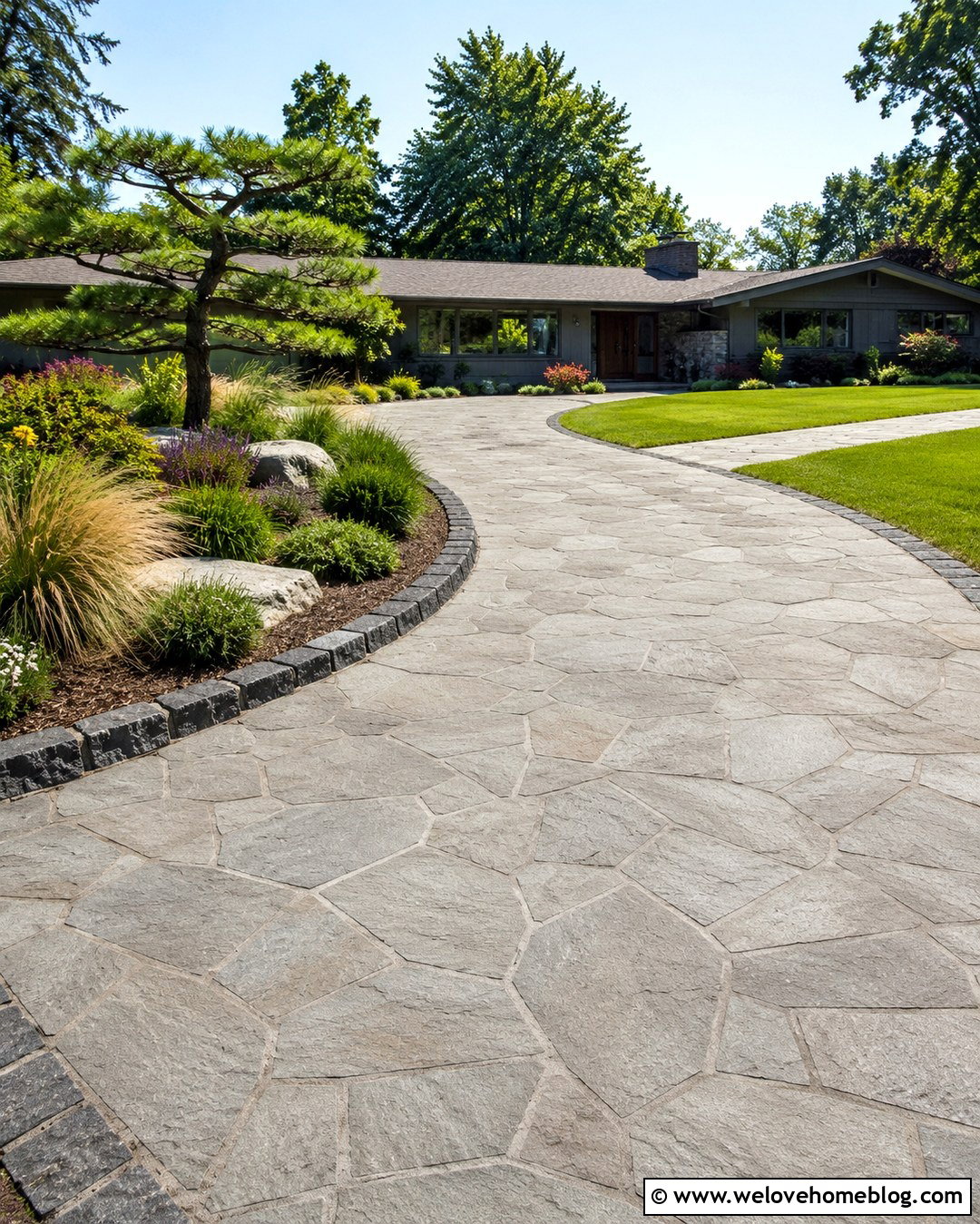
A sweeping curve makes the approach to a home feel more natural and can work around existing trees, slopes, or prominent garden features. Lay warm gray flagstone in an irregular pattern, then define the outside curve with a continuous band of dark stone setts. On the inside, create a generous planting bed filled with native grasses, flowering shrubs, and one sculptural ornamental tree. Repeating a few flagstone pieces in the front walkway connects the entrance to the driveway. This complete design looks particularly attractive beside Craftsman and midcentury ranch homes. Avoid overly sharp turns that make daily access difficult. A gentle radius, clear sightlines, practical drainage, and enough maneuvering space will make the landscape-driven layout easier to use.
5. Circular Flagstone Driveway With Center Garden
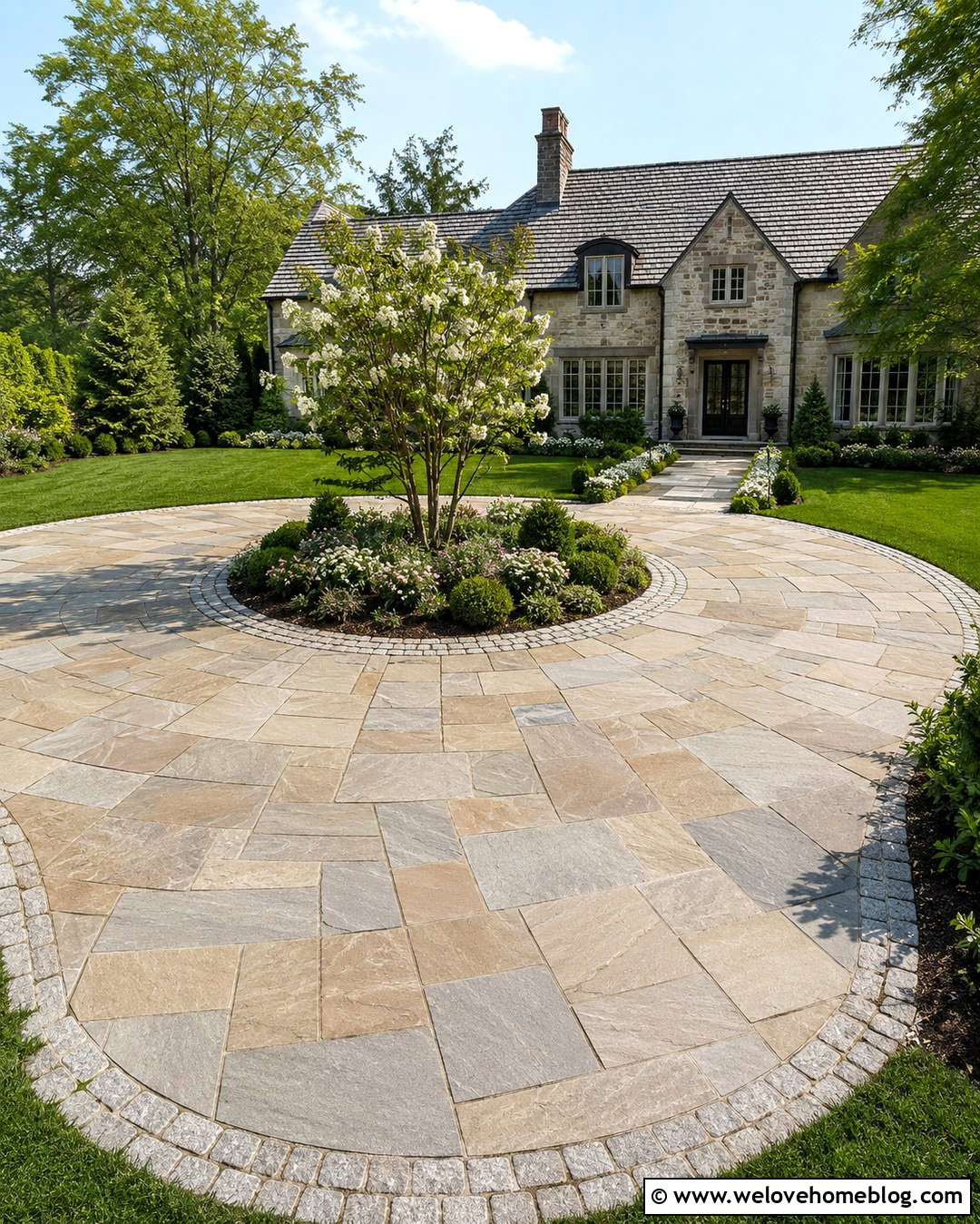
A circular flagstone driveway creates a graceful arrival sequence while providing a convenient route back toward the street. Large pieces of buff and gray limestone can follow the curve in an informal radial pattern. Frame the outer edge with granite cobblestones and repeat the border around a landscaped center island. A small flowering tree, low evergreen shrubs, and seasonal perennials give the island structure without blocking views across the driveway. Add a straight flagstone walkway from the circle to the front door so guests immediately understand where to go. This layout is best suited to a wide front yard with adequate turning space. Circular stone designs can also prevent an expansive paved area from looking visually flat or disconnected from the garden. ()
6. Flagstone Driveway With Brick Border
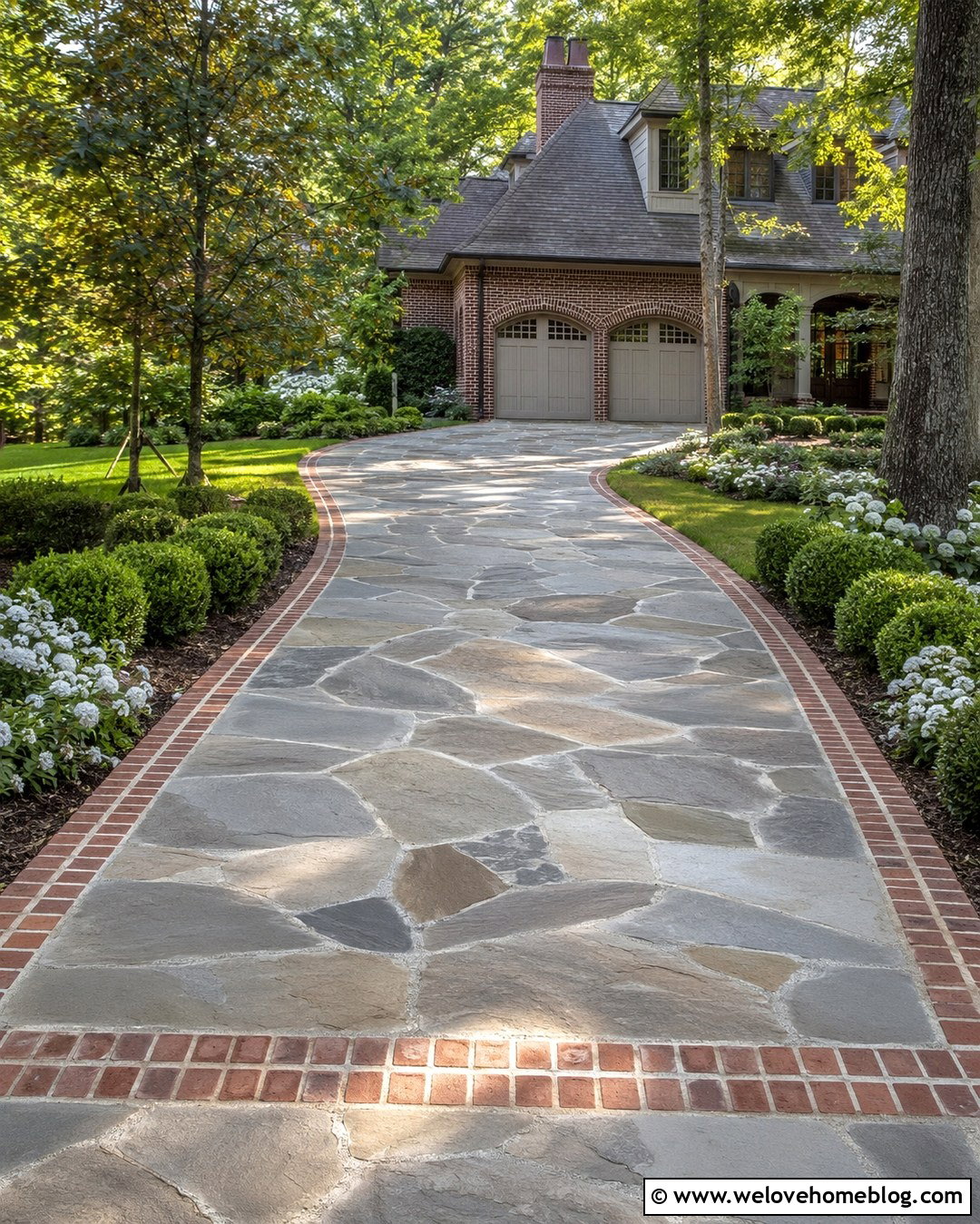
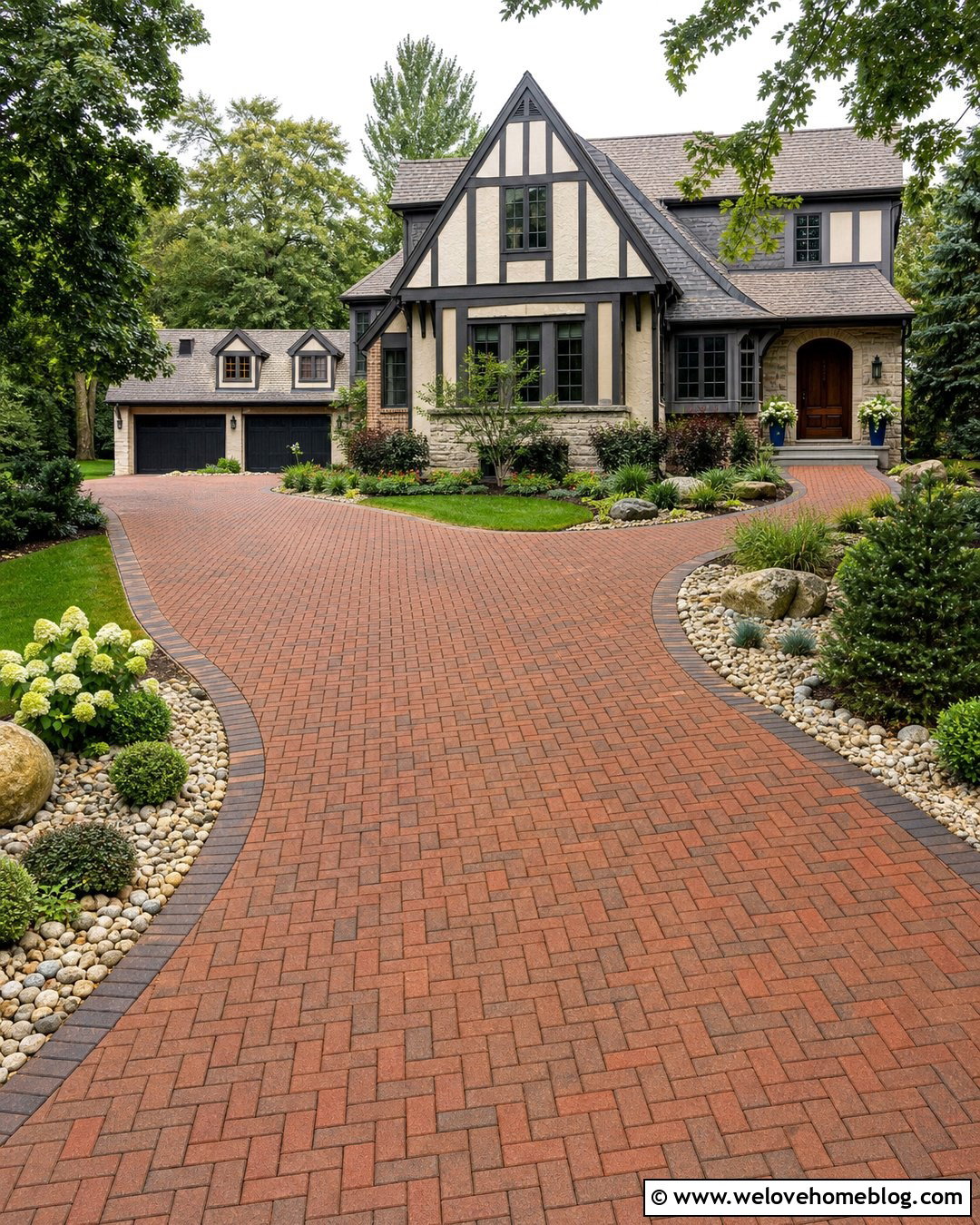
Warm clay brick creates a pleasing contrast against the earthy gray and tan shades found in natural flagstone. Use irregular sandstone across the main driveway and install a double brick border in a soldier-course pattern along each side. Carry the brick across the entrance and garage threshold to make the mixed-material design feel intentional. A curved layout can further soften the transition between the street and a traditional brick house. Frame the driveway with boxwood, compact hollies, flowering perennials, and neatly maintained lawn. Match the border to the home’s masonry, but avoid selecting an exact color duplicate. Slight variation gives the property more depth. The brick should act as a supporting detail, allowing the broad natural flagstone surface to remain the dominant feature.
7. Flagstone Driveway With River Rock Joints
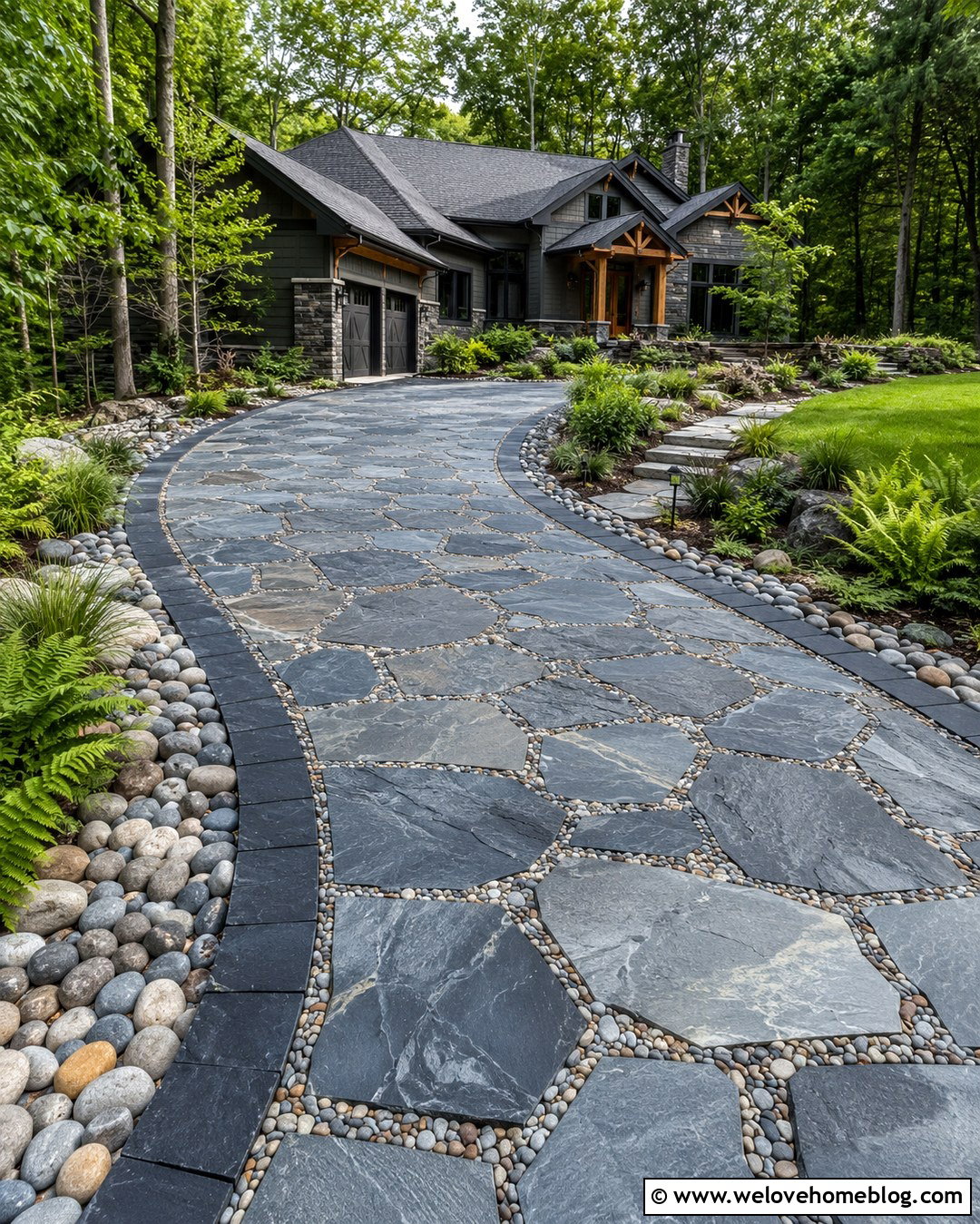
River rock joints give an irregular flagstone driveway a bold, highly textured finish. Choose large charcoal or blue-gray flags and fill the spaces with small, rounded stones in a compatible blend of gray, brown, and cream. Keep joint widths controlled so the driveway remains comfortable to walk across and easy to maintain. A solid stone or steel edge should contain loose material along both sides. Repeat the river rock in nearby dry creek beds to connect the driveway with the landscape and direct the eye toward the house. Ferns, sedges, and moisture-tolerant shrubs can complete the setting around a woodland home. For active tire paths, use stable joint construction rather than relying on loose decorative pebbles that may shift under repeated traffic.
8. Shaded Flagstone Driveway With Mossy Edges
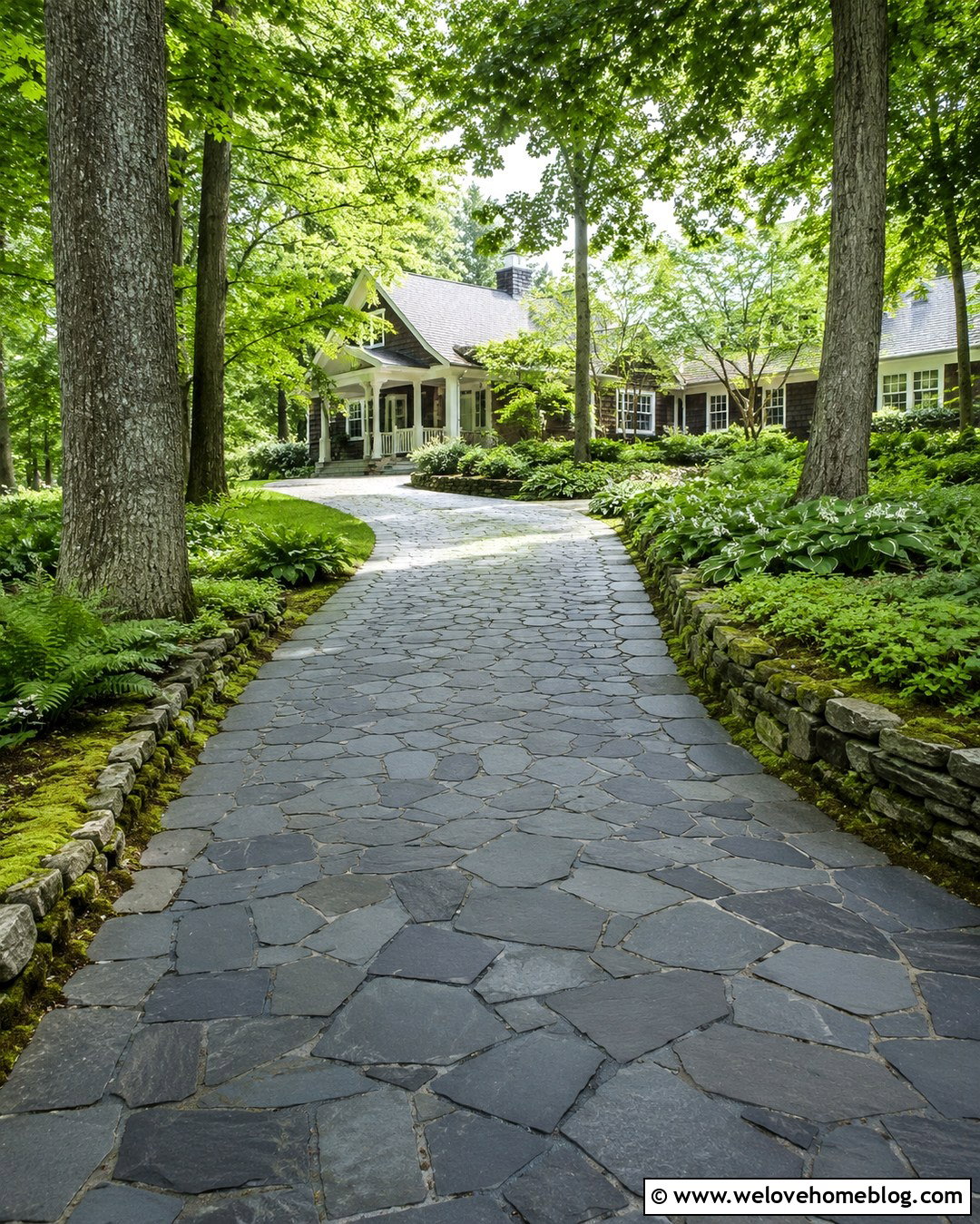
In a naturally shaded yard, dark flagstone and mossy edges can create a driveway that feels established rather than newly installed. Use broad gray fieldstone pieces with firm, closely packed joints throughout the main driving lanes. Reserve moss, Irish moss, or another shade-tolerant ground cover for protected margins where tires do not pass. A low dry-stacked stone border can separate the driveway from beds of ferns, hostas, hellebores, and woodland sedges. Mature deciduous trees will form an overhead canopy and frame the approach to a cottage or traditional home. Keep the center surface open enough to receive light and dry after rainfall. Regular cleaning is important because wet leaves and excessive organic buildup may make shaded natural stone less attractive and harder to navigate.
9. Modern Cut Flagstone Driveway With Dark Gravel
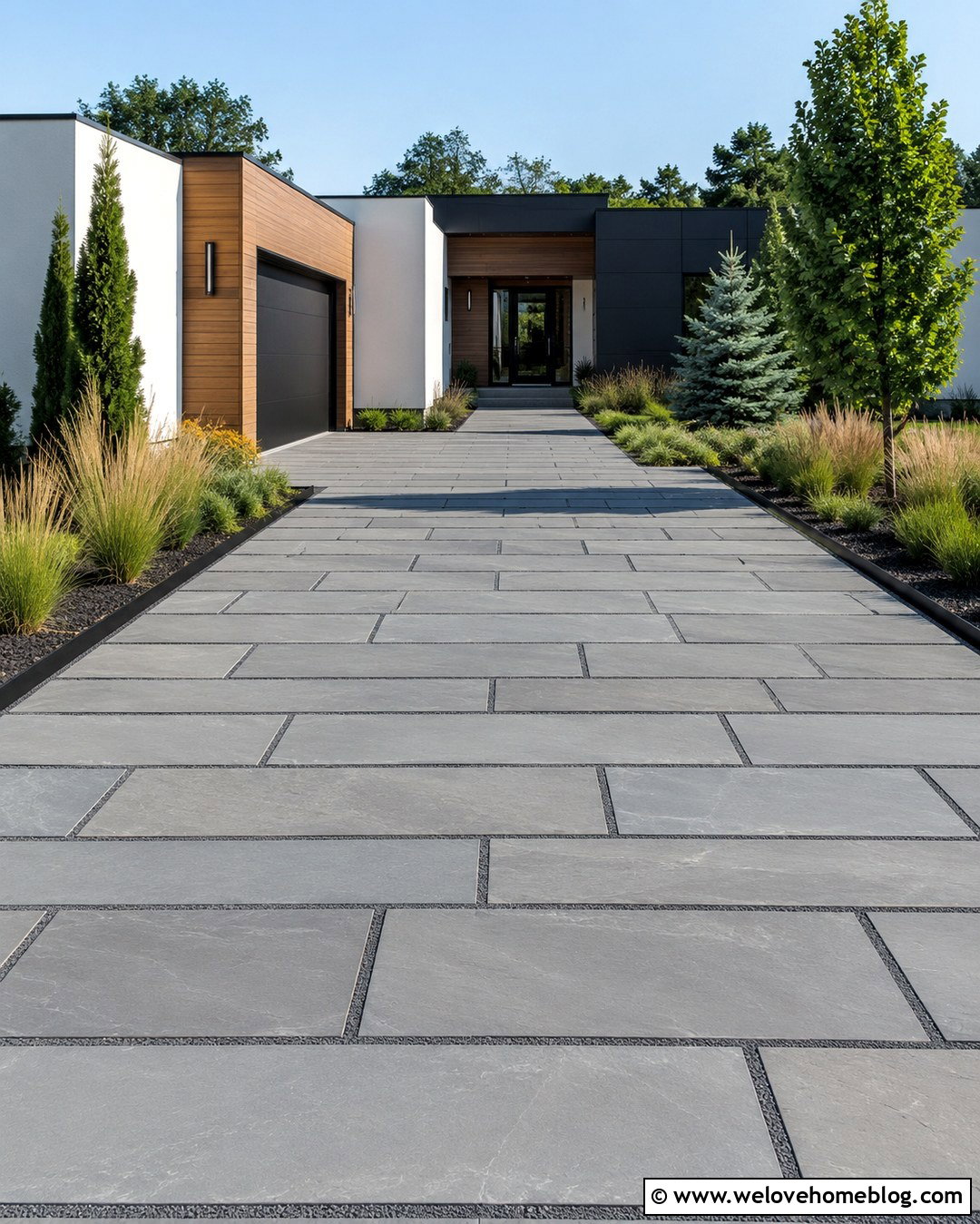
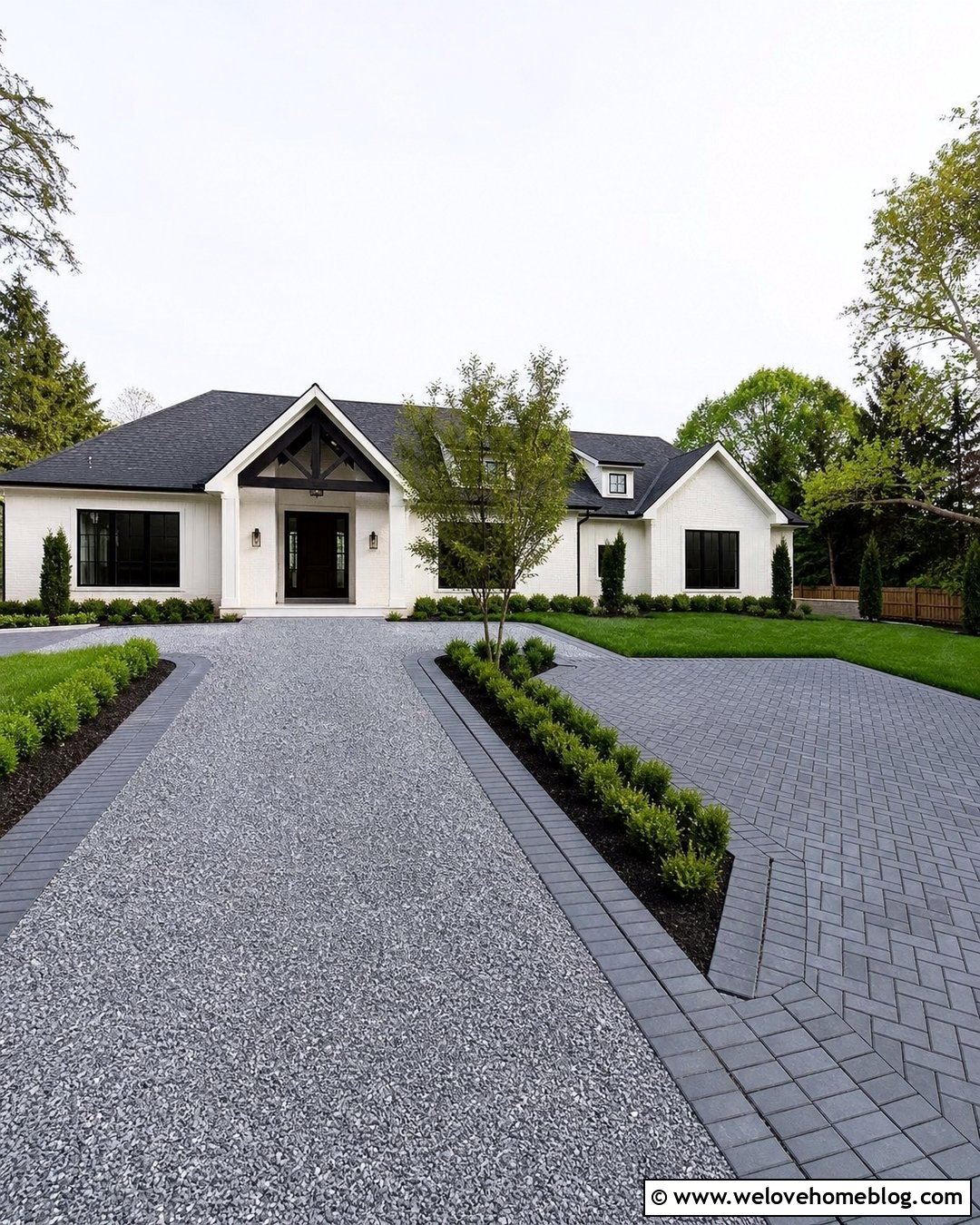
Clean geometry gives natural flagstone a distinctly modern personality. Select rectangular bluestone or limestone slabs with sawn edges and install them in offset rows across a straight driveway. Narrow charcoal gravel joints emphasize the grid without making the surface feel overly busy. Black steel edging provides a minimal boundary, while broad beds of ornamental grass and sculptural evergreens add movement around the stone. At the garage, align the paving joints with architectural features such as doors, columns, or facade panels. This precise layout works beautifully with a low-profile contemporary house in white stucco, dark siding, or warm wood cladding. Use only a few landscape materials and repeat them consistently. The result should feel restrained, balanced, and natural rather than stark or unfinished.
10. Farmhouse Flagstone Driveway With Gravel Apron
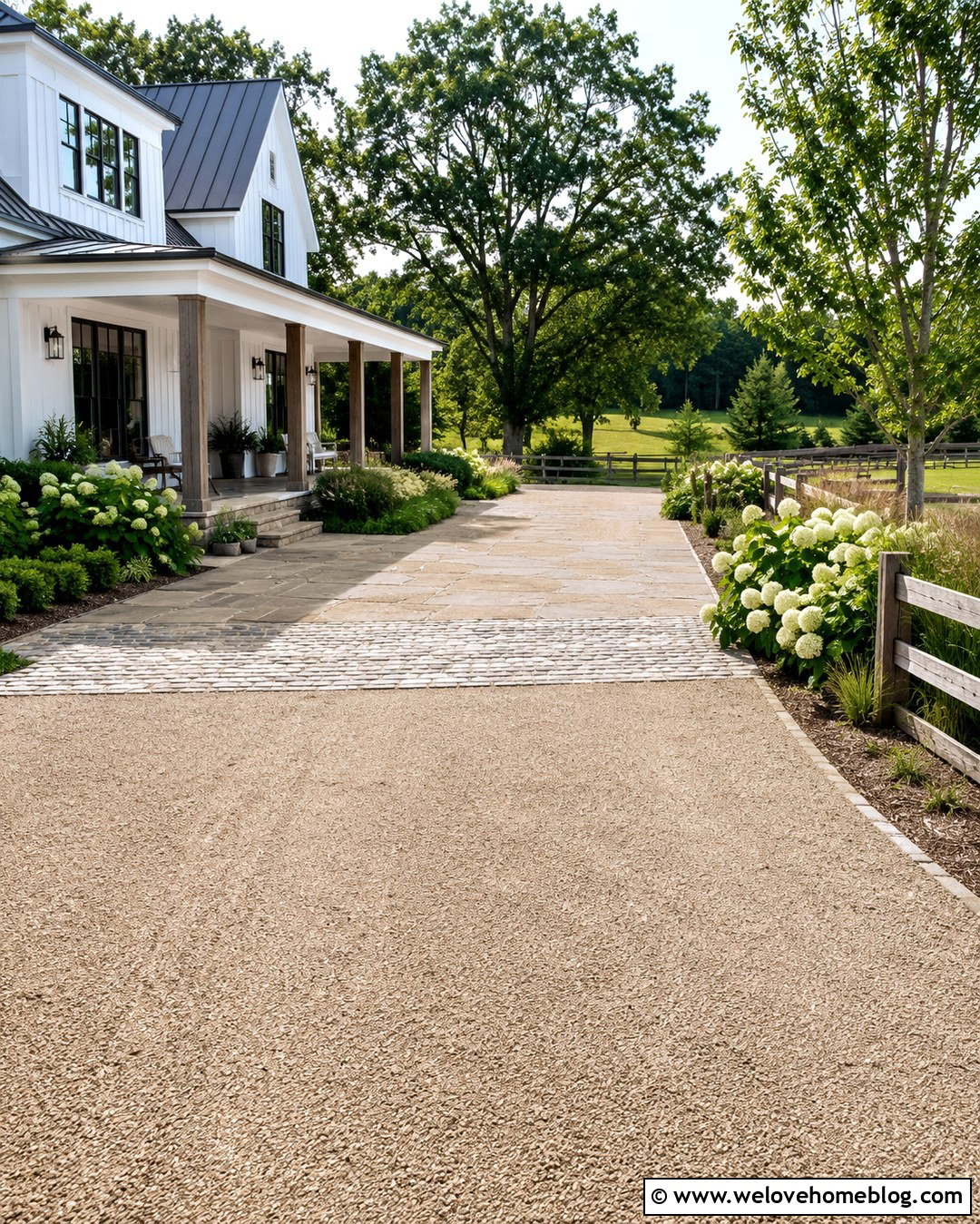
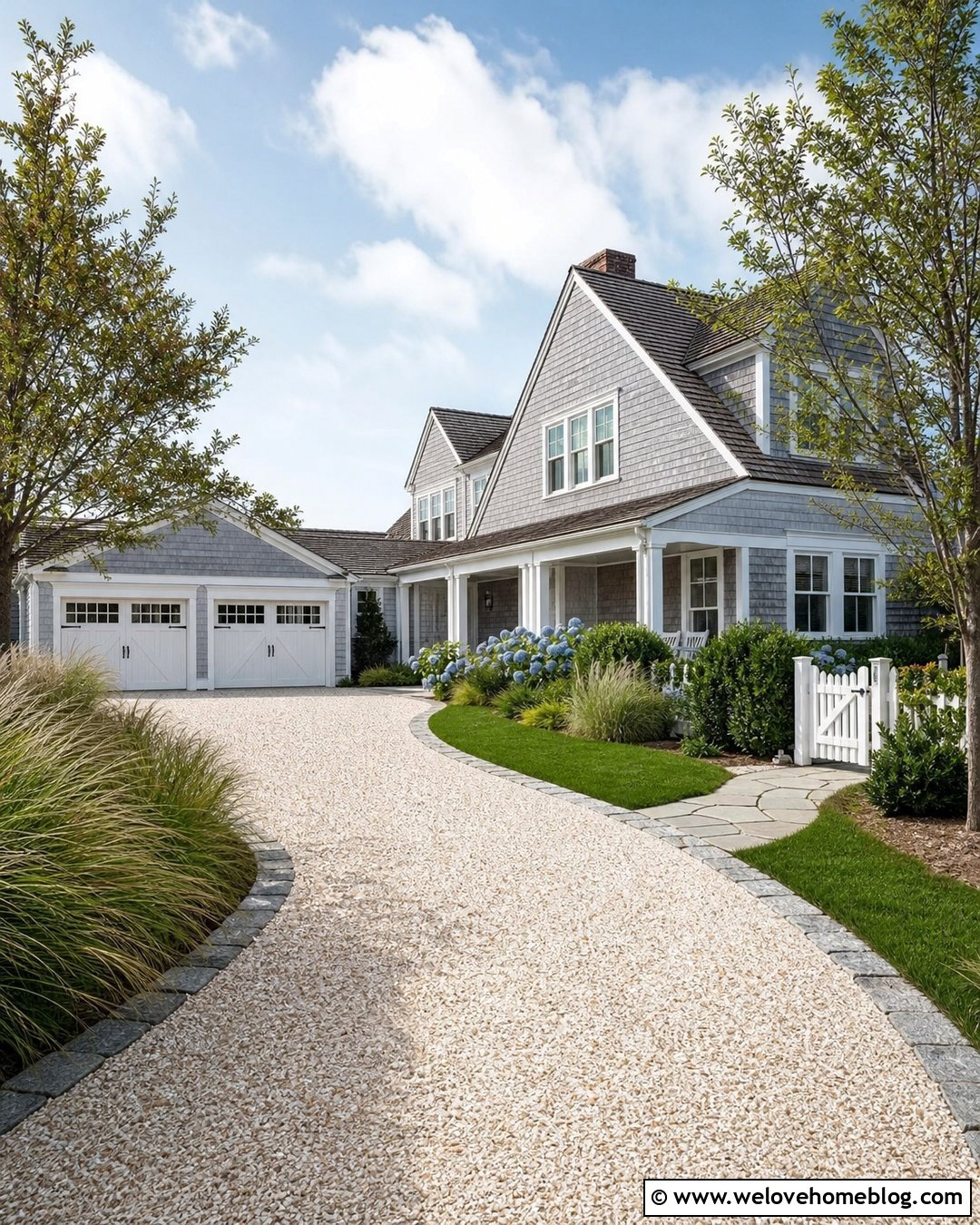
A farmhouse driveway can combine a full flagstone parking area with a gravel approach for a practical, layered look. Use warm tan sandstone near the house and garage, where a stable paved surface is most useful. Extend compacted gray or buff gravel toward the road and connect the materials with a wide granite cobblestone transition band. This change breaks up a long driveway and prevents the more expensive stone from visually overwhelming the property. Add simple timber fencing, meadow grasses, hydrangeas, and a few deciduous shade trees along the approach. A matching flagstone path can lead from the parking area to the porch. Choose gravel that complements the flagstone’s undertones so both surfaces read as one coordinated farmhouse entrance rather than two unrelated projects.
11. Flagstone Driveway With Stone Entrance Pillars
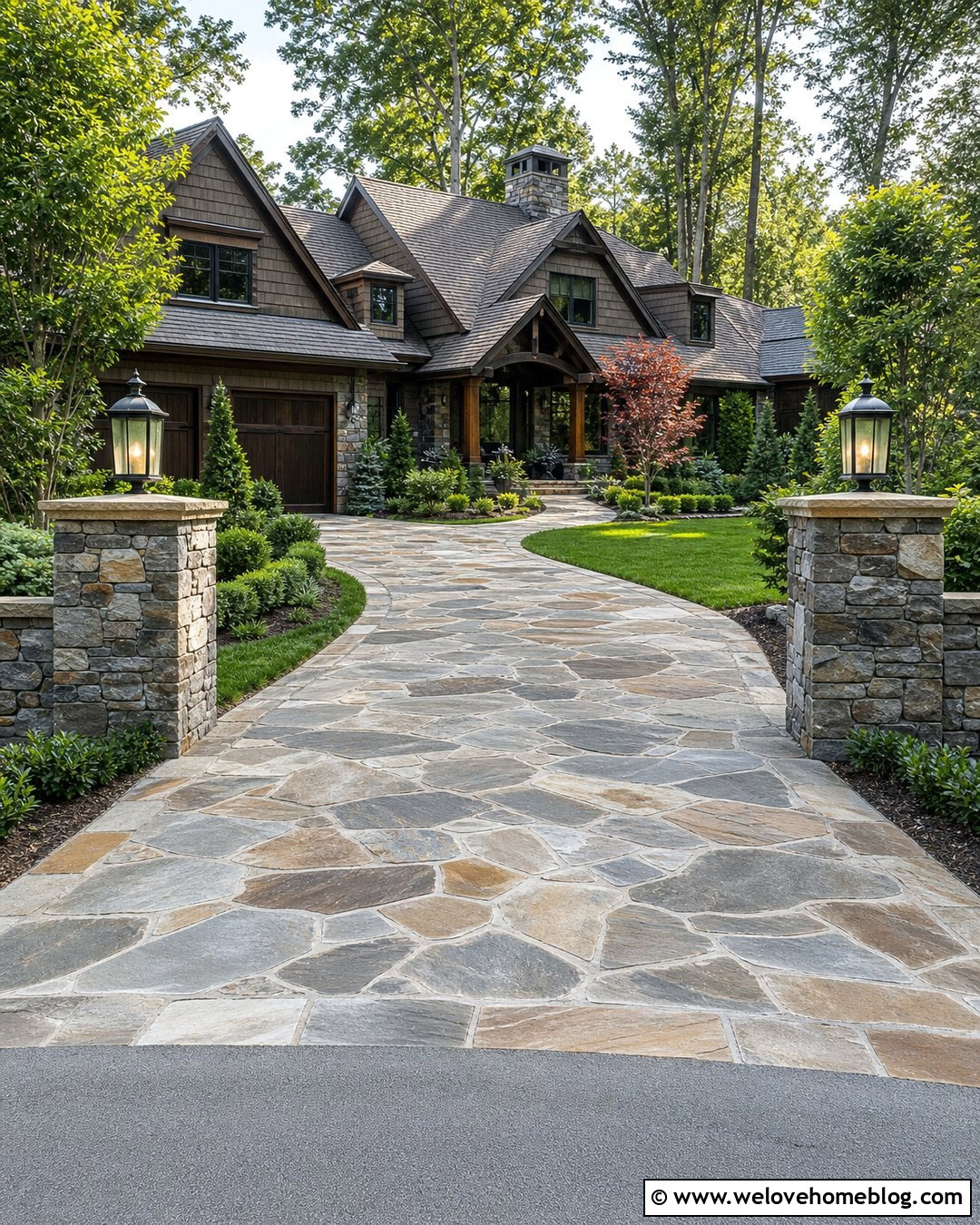
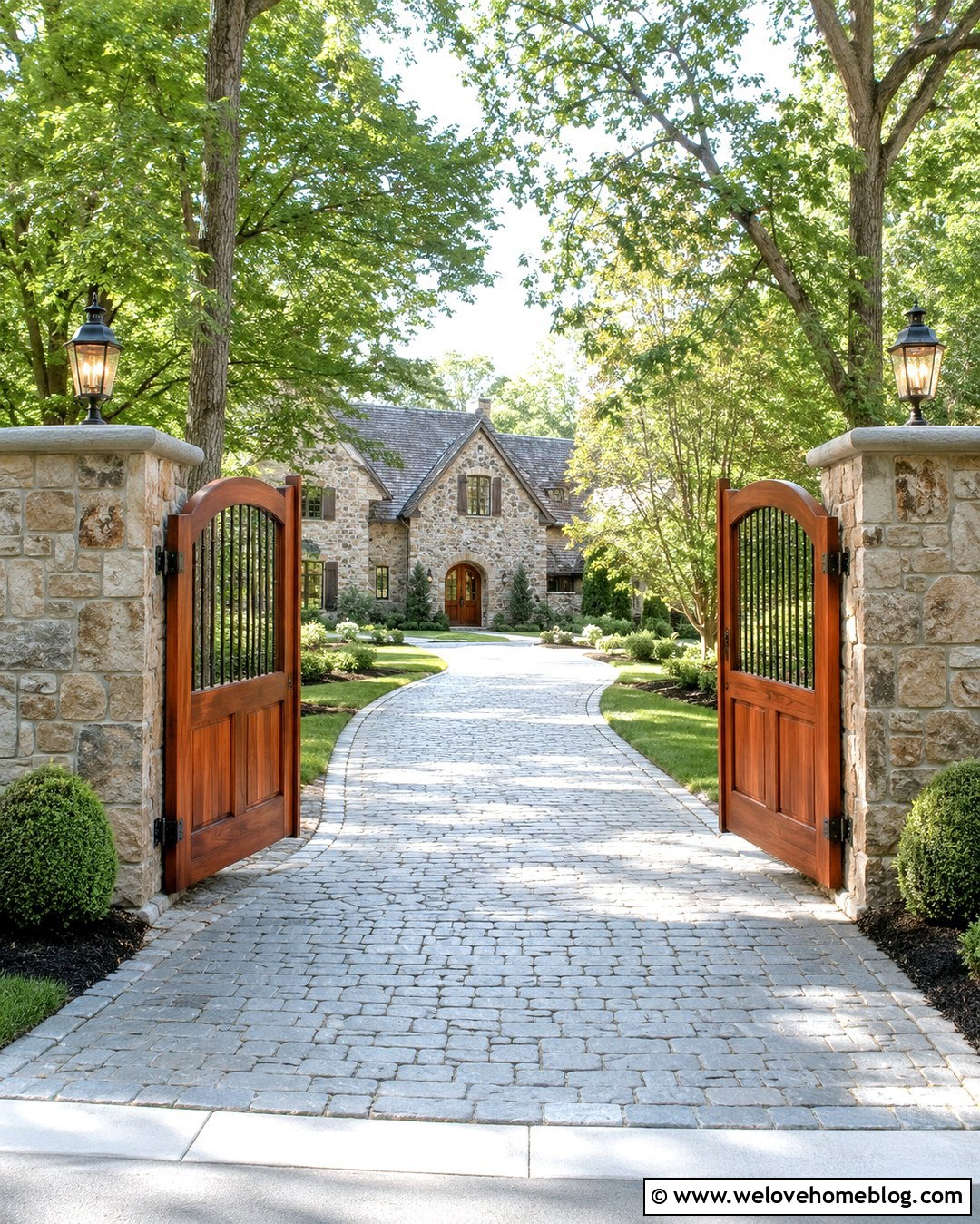
Stone pillars create a clear beginning for a flagstone driveway and can visually connect the entrance to the house. Build the pillars from ledgestone or fieldstone that repeats the driveway’s gray, tan, and brown coloring. Between them, lay a generous flagstone apron with enough open space to make turns comfortably. Continue the same irregular stone pattern along a gently curving drive toward the home. Low walls can extend from the pillars, but they should remain short enough to preserve safe sightlines. Finish the entrance with understated lanterns, layered evergreen shrubs, and a simple address plaque mounted where it is easy to see. A restrained palette works best. Too many competing masonry colors may distract from the rich variation already present in the natural flagstone.
12. Flagstone Driveway With Wood Farm Gate
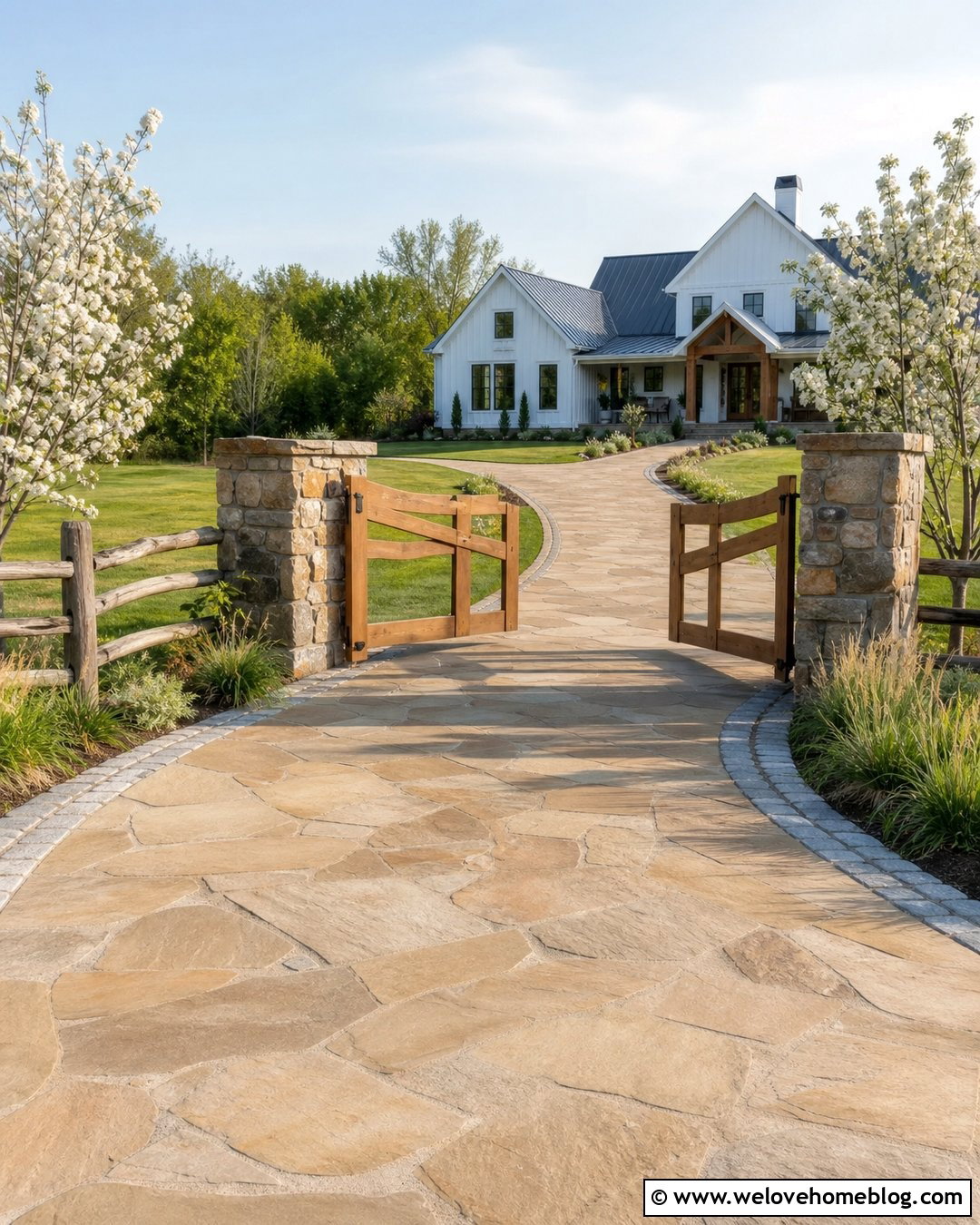
Natural flagstone and a wood gate form an inviting entrance for a country home or modern farmhouse. Start with a flared apron of irregular buff sandstone bordered by chunky gray cobblestones. Position a simple cedar or white oak gate between low fieldstone pillars, leaving adequate clearance for vehicles and gate movement. Beyond the entrance, allow the driveway to curve gently through an open lawn toward the house. Split-rail fencing, native grasses, and small flowering trees can follow the curve without creating a rigid corridor. Repeat the gate’s wood tone in porch posts, garage doors, or landscape fencing. For everyday convenience, select a gate system designed for the driveway’s slope and available opening area. The complete entrance should feel welcoming, visible, and comfortably proportioned.
13. Desert Flagstone Driveway With Drought-Tolerant Landscaping
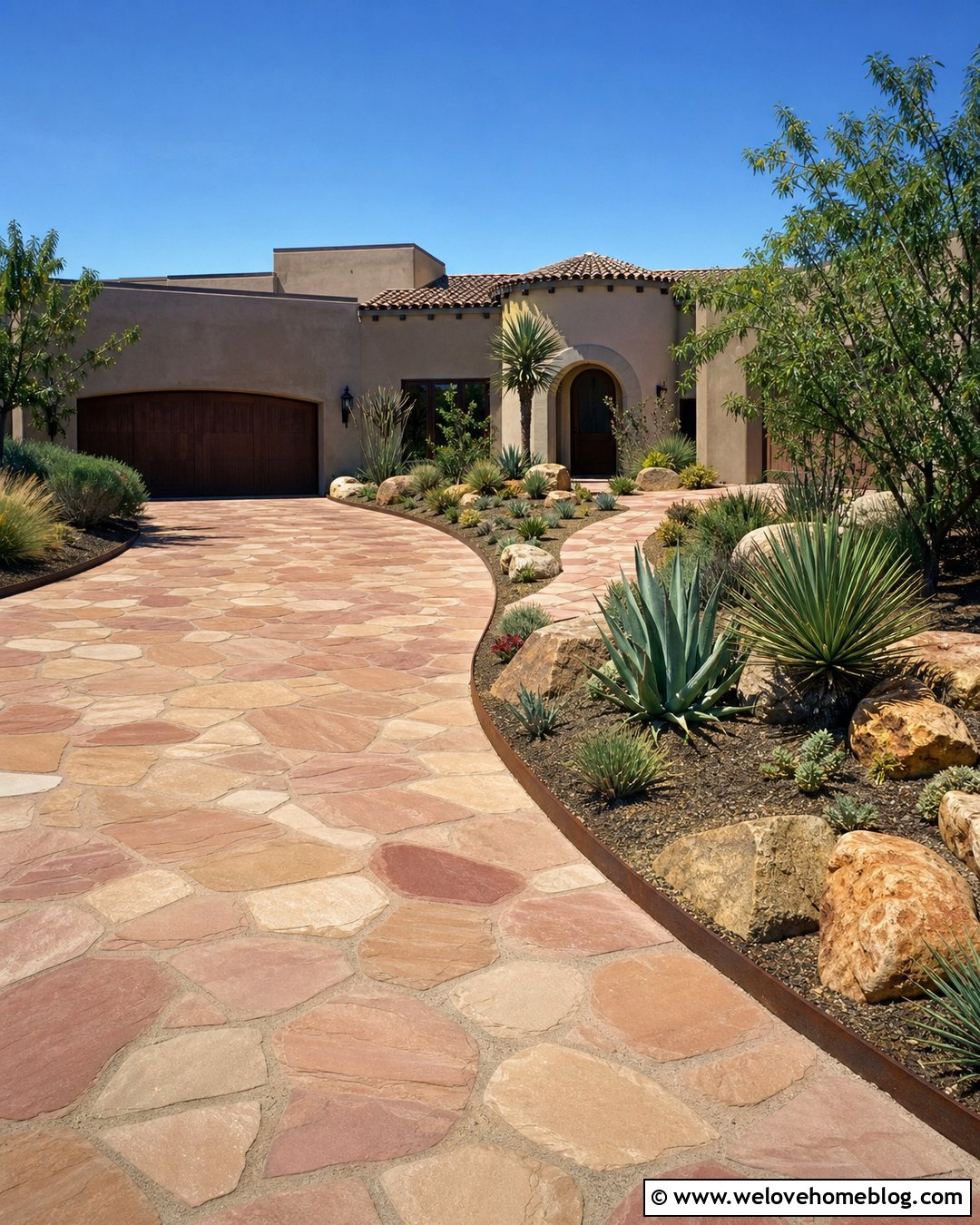
Warm flagstone looks at home in a desert landscape, especially when its colors echo nearby rock and soil. Use large red, gold, and brown sandstone flags in a wide, gently curved driveway. Fill narrow joints with stabilized decomposed granite in a matching sandy tone. Rust-colored steel edging can create a crisp transition into beds of agave, yucca, desert spoon, ornamental grass, and carefully placed boulders. Leave generous space between plants so the stone remains the main visual feature. A flat-roofed Southwestern or contemporary stucco house provides a clean backdrop for the varied paving. Position taller plants away from driveway corners and entrance sightlines. The restrained planting scheme will reduce visual clutter while showcasing the strong natural color variation of the flagstone.
14. Woodland Flagstone Driveway With Stone Walls
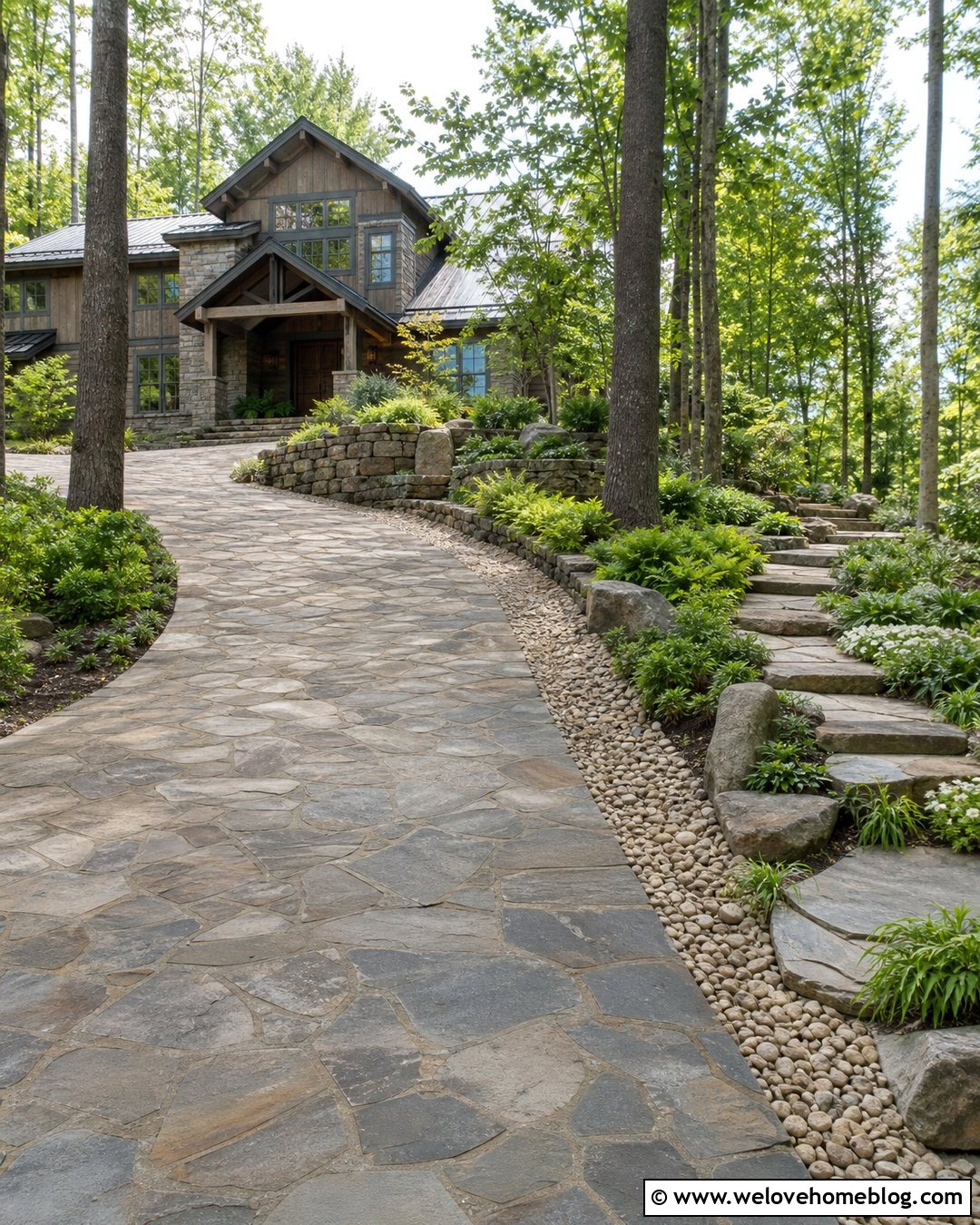
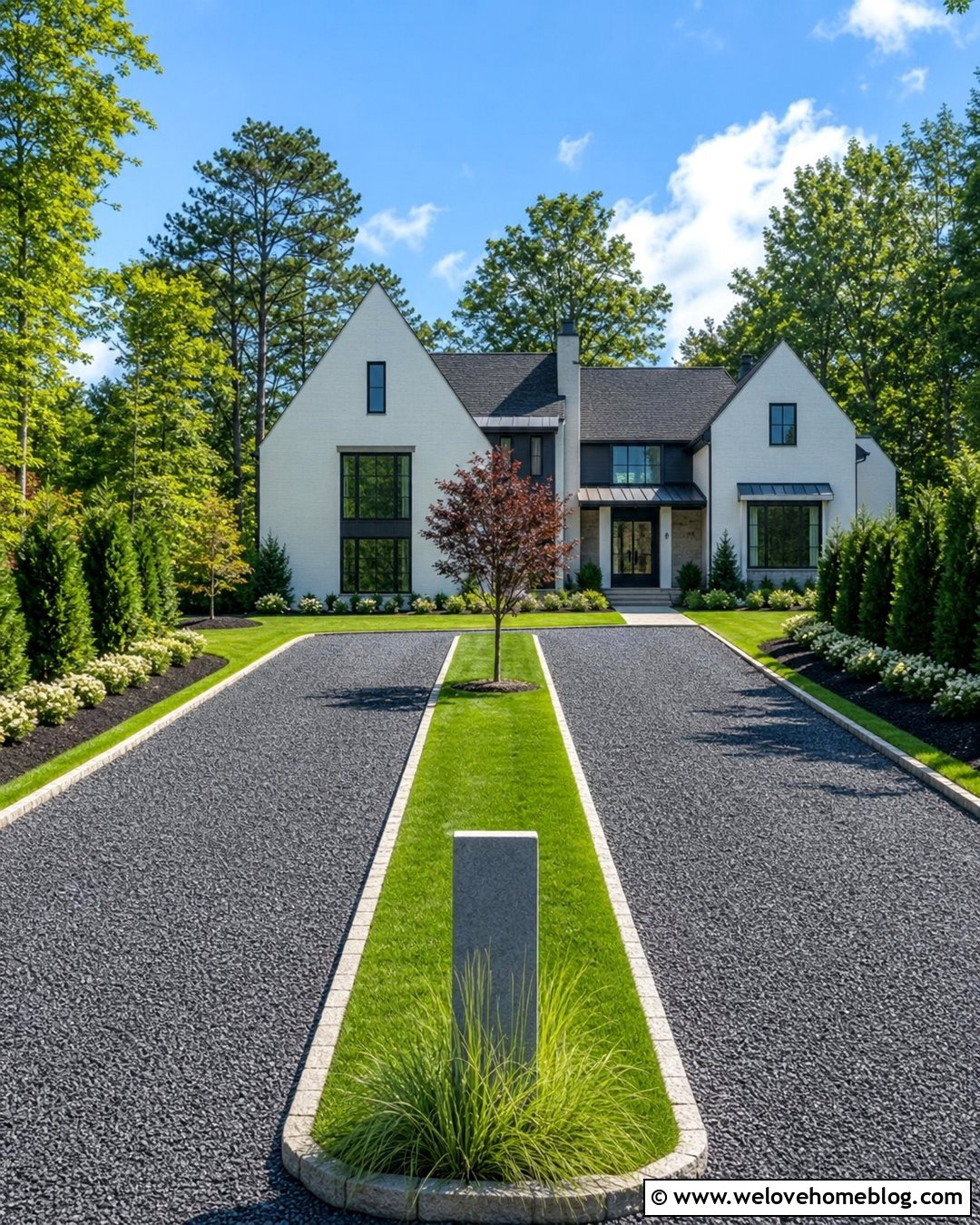
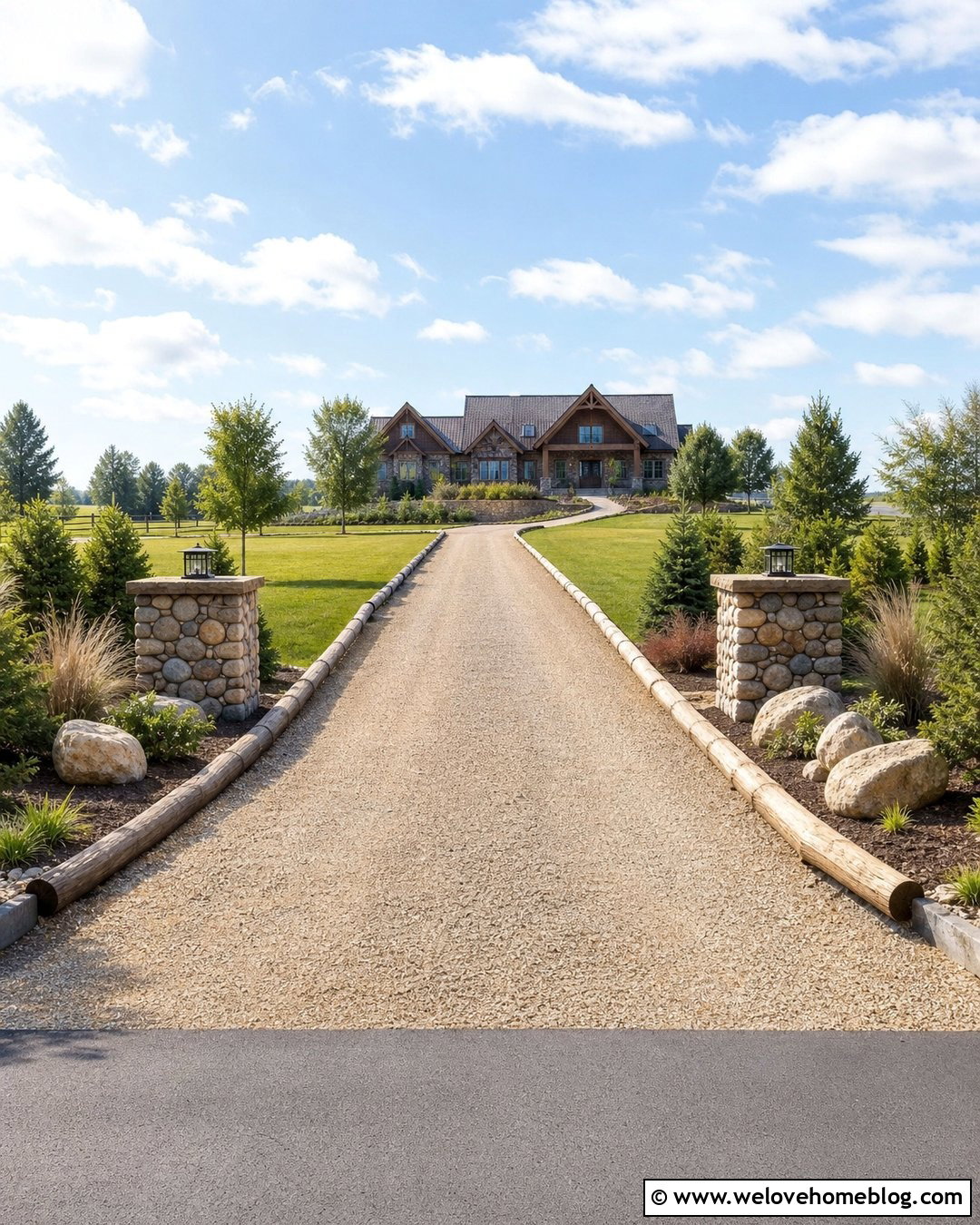
A wooded property calls for a driveway that appears to follow the land rather than cut through it. Lay irregular gray-brown flagstone along a broad curve, working around mature trees whenever the site and root protection requirements permit. Low dry-stacked stone walls can retain sloped planting beds and echo the rugged surface underfoot. Fill those beds with ferns, native shrubs, sedges, and spring-flowering ground covers. A small gravel drainage channel beside the wall can become a subtle design feature when edged with matching stone. The driveway should widen gradually near the house to provide parking and turning space. This composition is especially effective with Craftsman cabins, mountain homes, and rustic contemporary architecture surrounded by an established tree canopy.
15. Sloped Flagstone Driveway With Retaining Walls
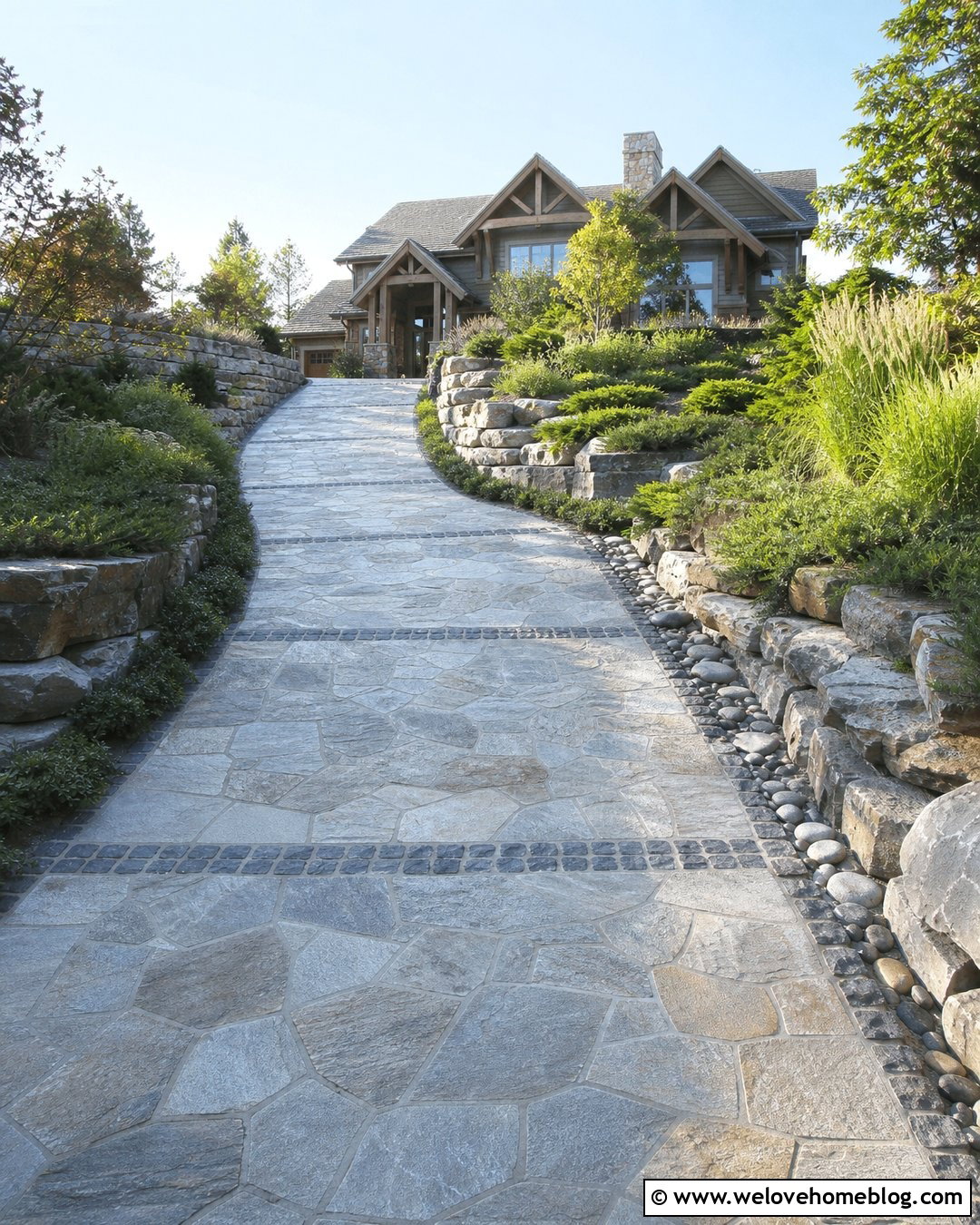
A sloped driveway needs a visually strong design and careful technical planning. Choose textured, vehicle-rated flagstone with a surface that suits the local climate. Lay the stone in an irregular pattern across the incline, using dark cobblestone bands to mark transitions and interrupt the long visual run. Terraced retaining walls on one or both sides can stabilize planting areas while framing the approach. Fill the terraces with low shrubs, spreading evergreens, and ornamental grasses that will not obstruct drivers. Integrated drainage should direct runoff away from the house, garage, walls, and neighboring property. Because the supporting layers carry vehicle loads, the base, stone specification, slope, and installation method should be designed for the site rather than copied from a pedestrian patio. ()
16. Narrow Flagstone Driveway With Planting Strips
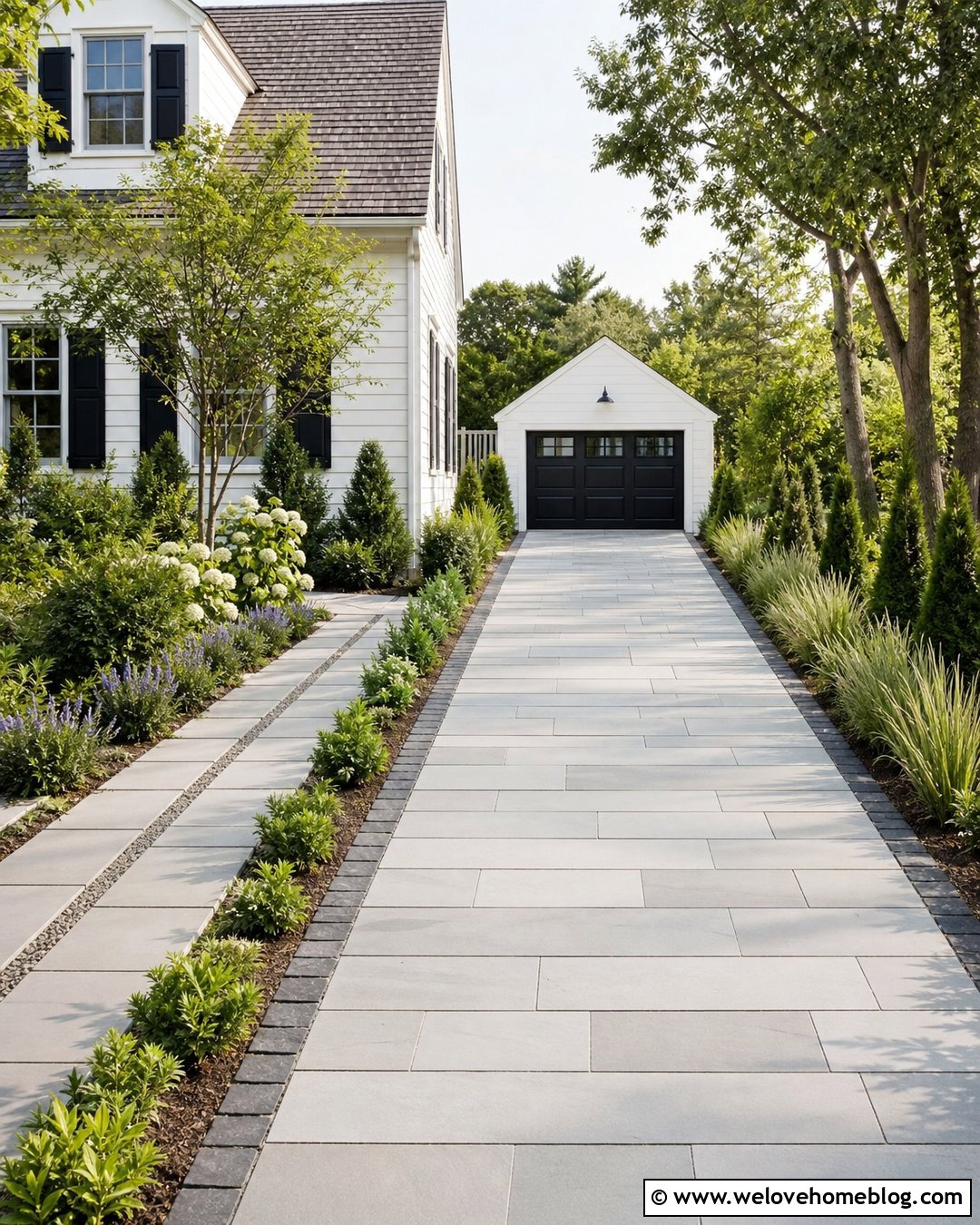
A narrow side-yard driveway can feel more generous when the paving pattern and landscaping are kept simple. Use elongated gray flagstone pieces running toward the garage to visually extend the space. A thin cobblestone border on each side will define the driveway without consuming much width. Add narrow planting strips filled with upright ornamental grasses, compact evergreen shrubs, or low perennials. Avoid plants that spread onto the driving surface or scratch vehicles. Where space allows, include a slim flagstone walkway separated from the driveway by a gravel ribbon. This provides a clear pedestrian route and strengthens the layered design. Light-colored stone can brighten a shaded side yard, while repeating the home’s siding and trim colors in the planting containers creates a cohesive, uncluttered appearance.
17. Flagstone Ribbon Driveway With Planted Center
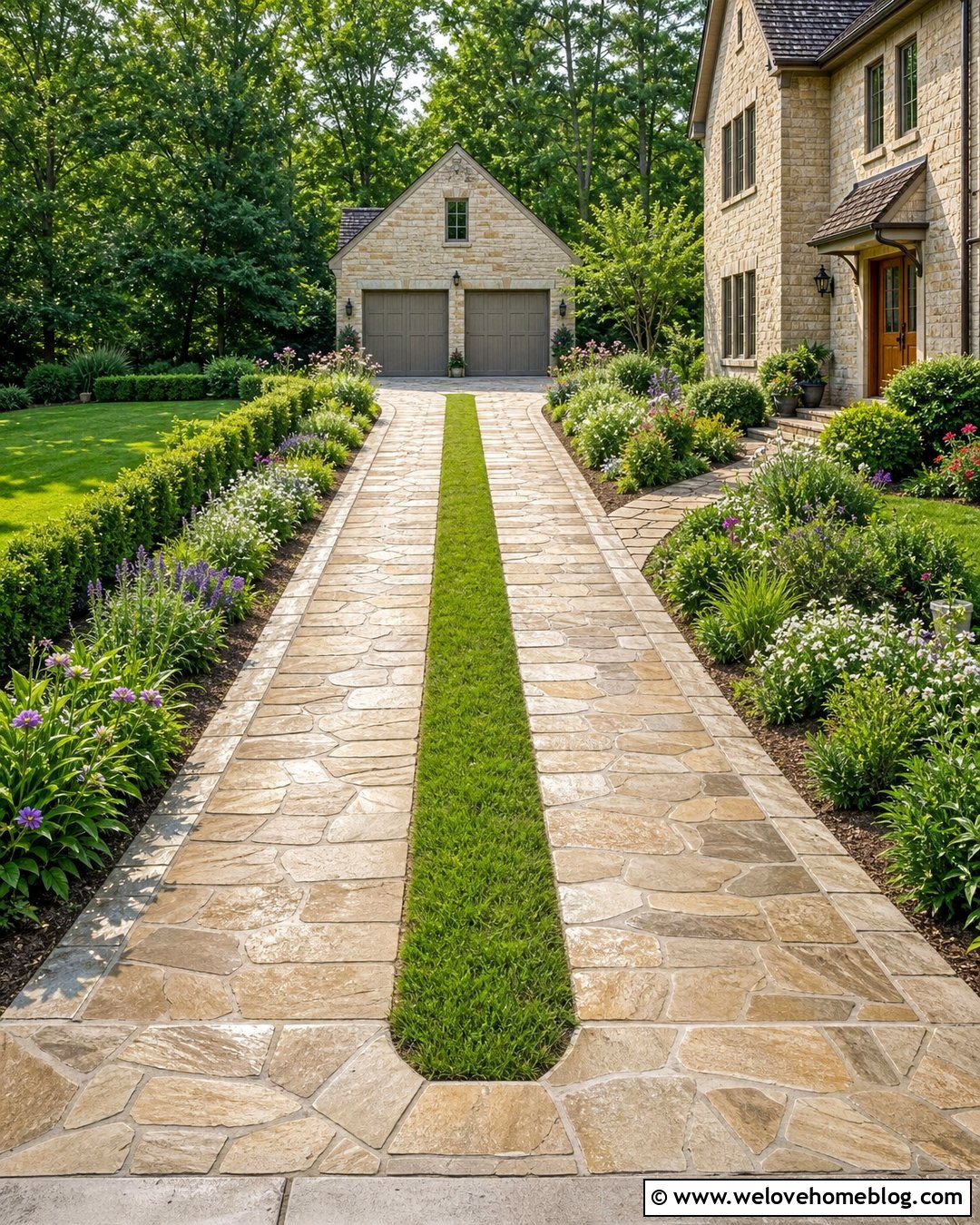
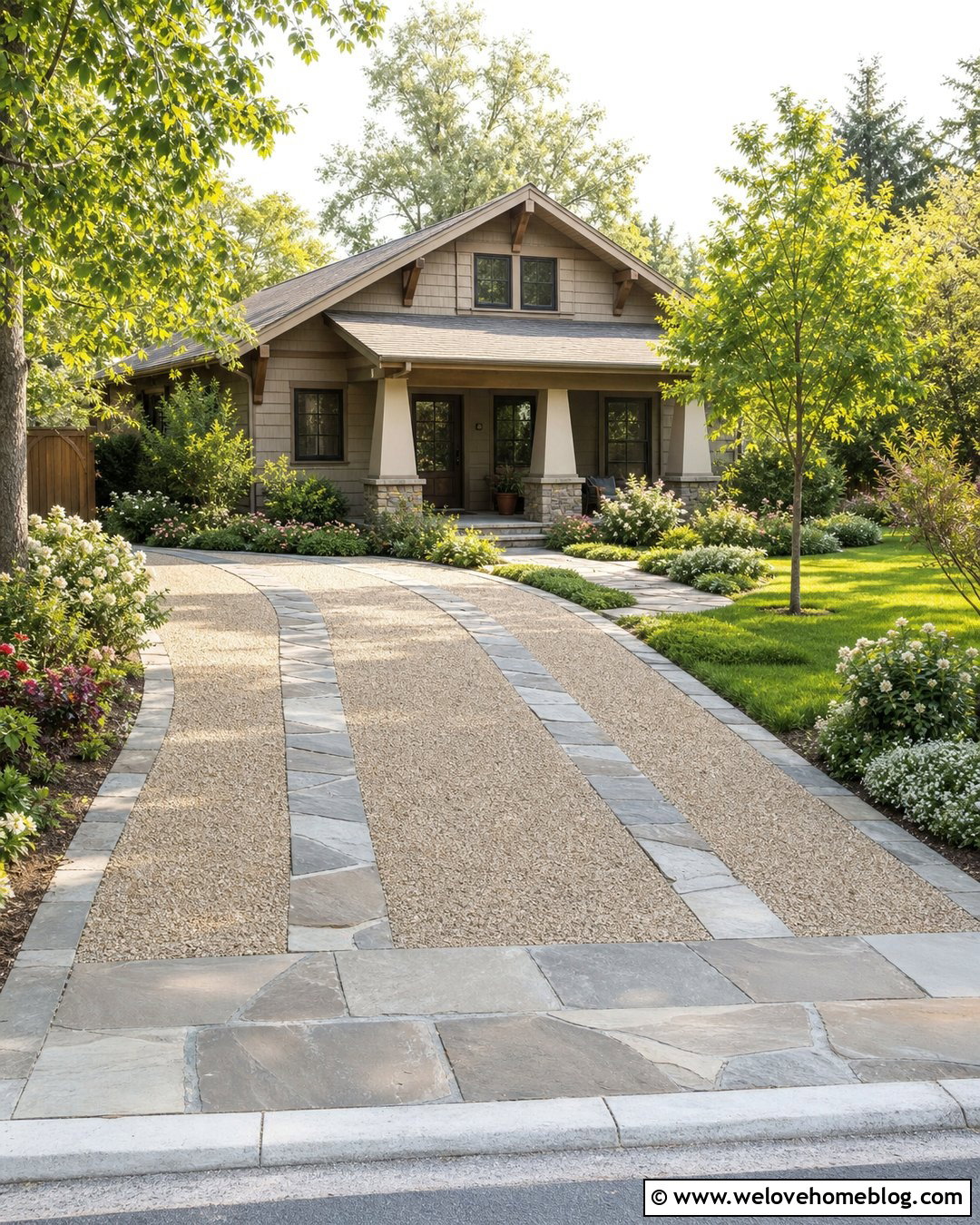
Two flagstone ribbons offer a lighter alternative to paving the entire width of a driveway. Build each wheel track from large, flat sandstone flags set over a load-supporting base. Leave a broad center strip of reinforced turf, low ground cover, or compacted gravel, depending on climate and maintenance needs. Use flush stone edging so tires can cross the boundaries without meeting a raised obstacle. At the street and garage, join the ribbons into full-width flagstone aprons for easier turning. Cottage garden borders, low hedges, and a matching walkway can help the layout feel finished. This design is especially attractive on straight drives leading to detached garages, carriage houses, or small cottages. Precise track spacing is essential because the layout must suit the vehicles using it regularly.
18. Mixed-Color Flagstone Driveway With Neutral Borders

Mixed-color flagstone can become the main decorative feature of a simple front yard. Select stone containing controlled variations of buff, rust, charcoal, blue-gray, and muted brown. Distribute the strongest colors across the driveway instead of grouping similar pieces together. A neutral granite border will contain the pattern and prevent the composition from becoming visually chaotic. Keep the driveway shape straightforward, such as a wide straight approach with a modest flare near the garage. Surround it with green lawn, clipped shrubs, and a few white-flowering plants that will not compete with the paving. The house facade should also remain relatively restrained. Brick, cream stucco, weathered wood, or soft gray siding can all provide an effective backdrop for the naturally varied stone surface.
19. Reclaimed Flagstone Driveway With Cottage Landscaping
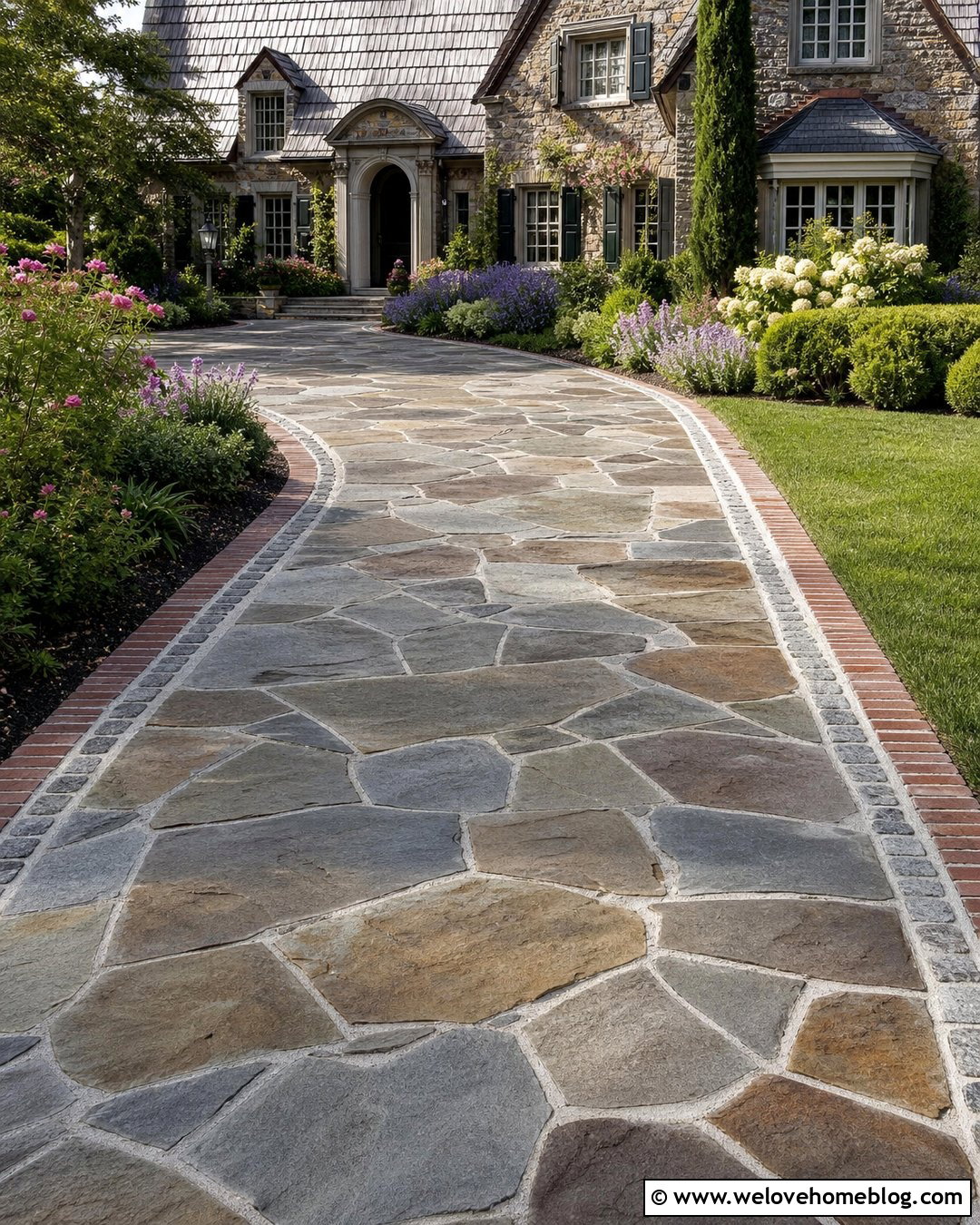
Reclaimed flagstone offers worn edges, softened colors, and small imperfections that can make a driveway feel connected to an older home. Arrange the salvaged stone in an irregular layout, mixing sizes carefully to avoid weak, awkwardly narrow pieces in traveled areas. A reclaimed brick or granite-sett border can reinforce the historic appearance. Around the driveway, use loose cottage planting with roses, catmint, lavender, hydrangeas, and compact evergreen structure. A curved walkway made from the same flagstone should connect the parking area to the porch. Before installation, sort the material by thickness, condition, and color. Reclaimed stone may vary considerably, so it requires thoughtful selection and experienced placement. The finished driveway should look comfortably aged while still providing a stable, professionally constructed surface.
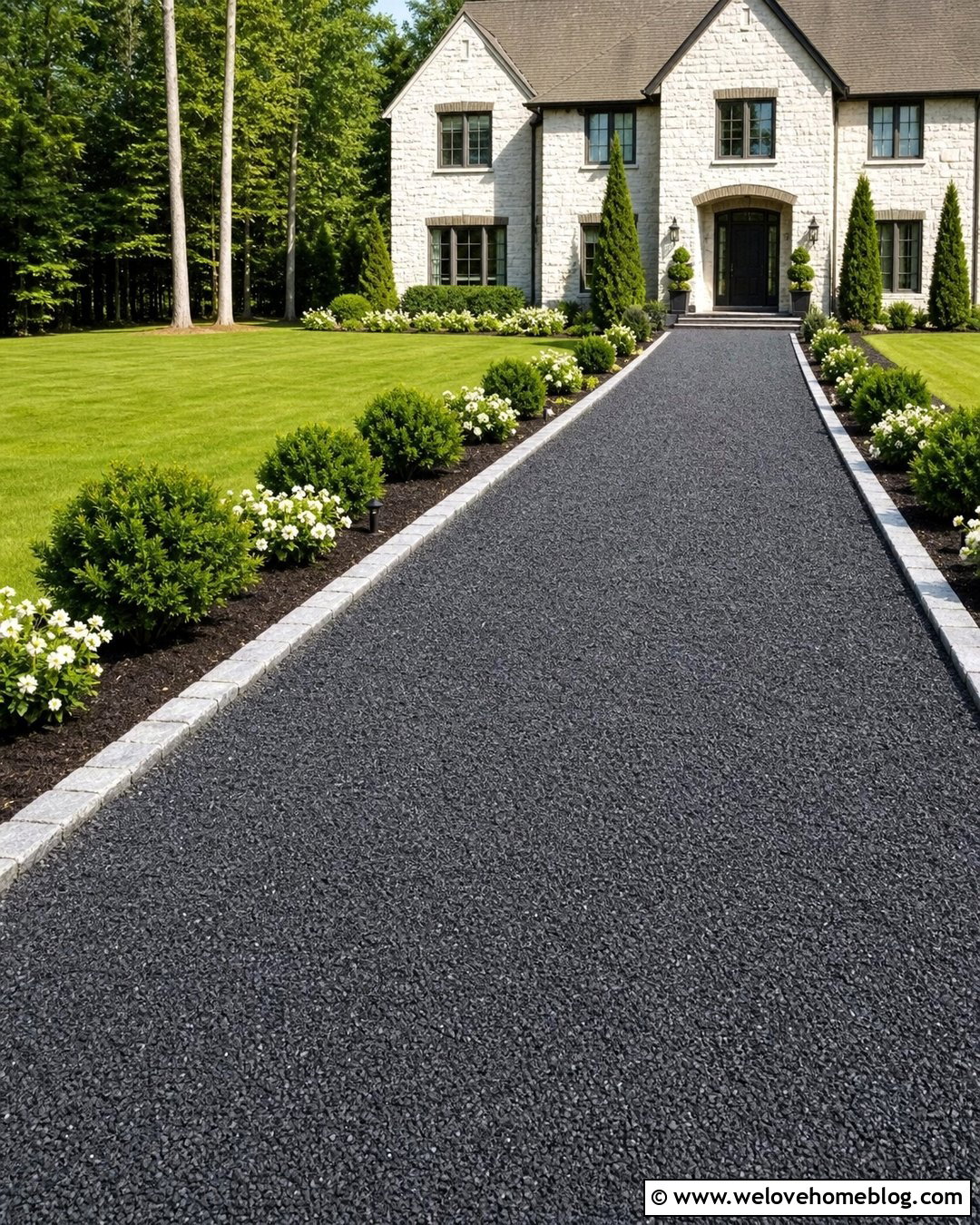
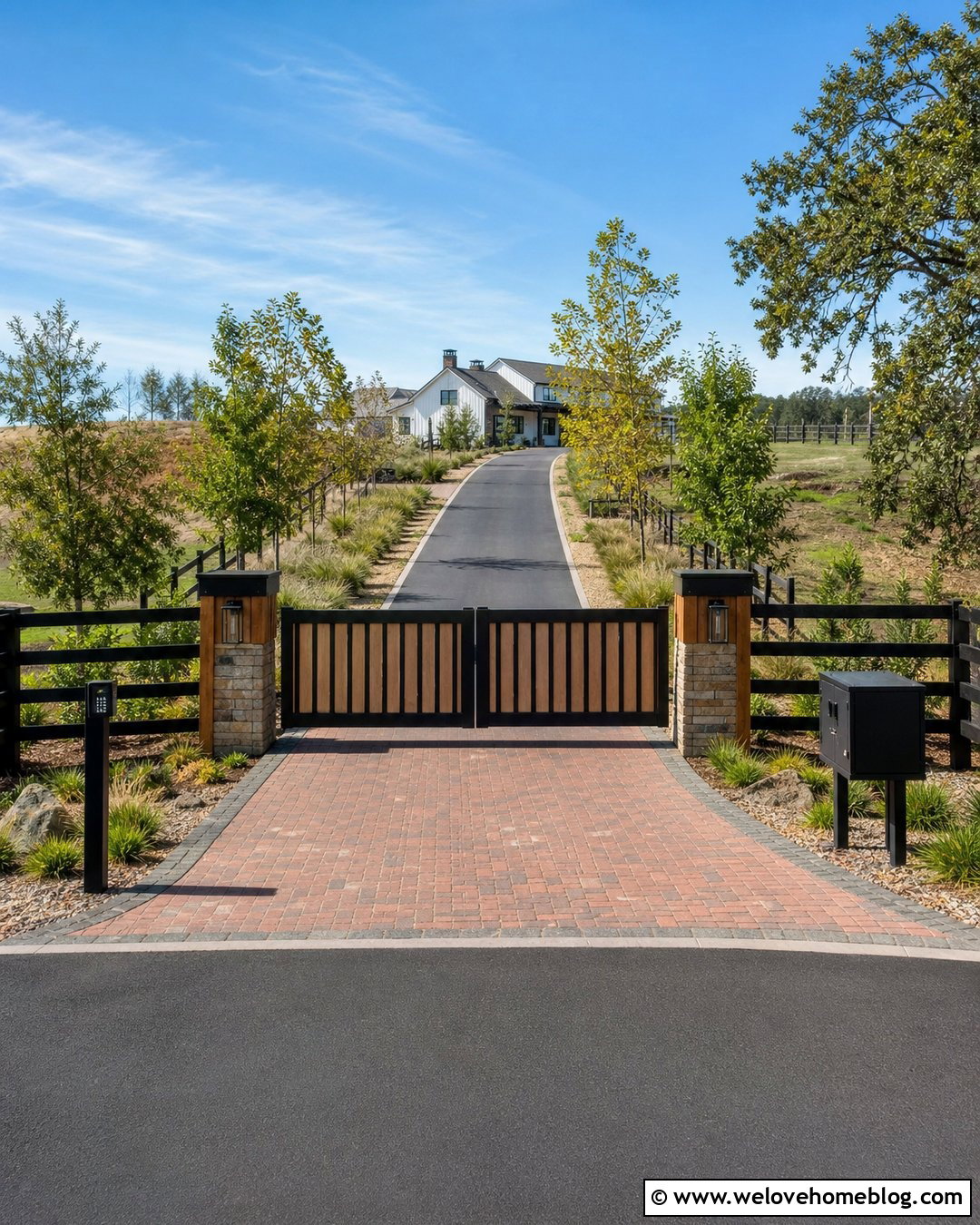
20. Flagstone Driveway With Matching Front Walkway
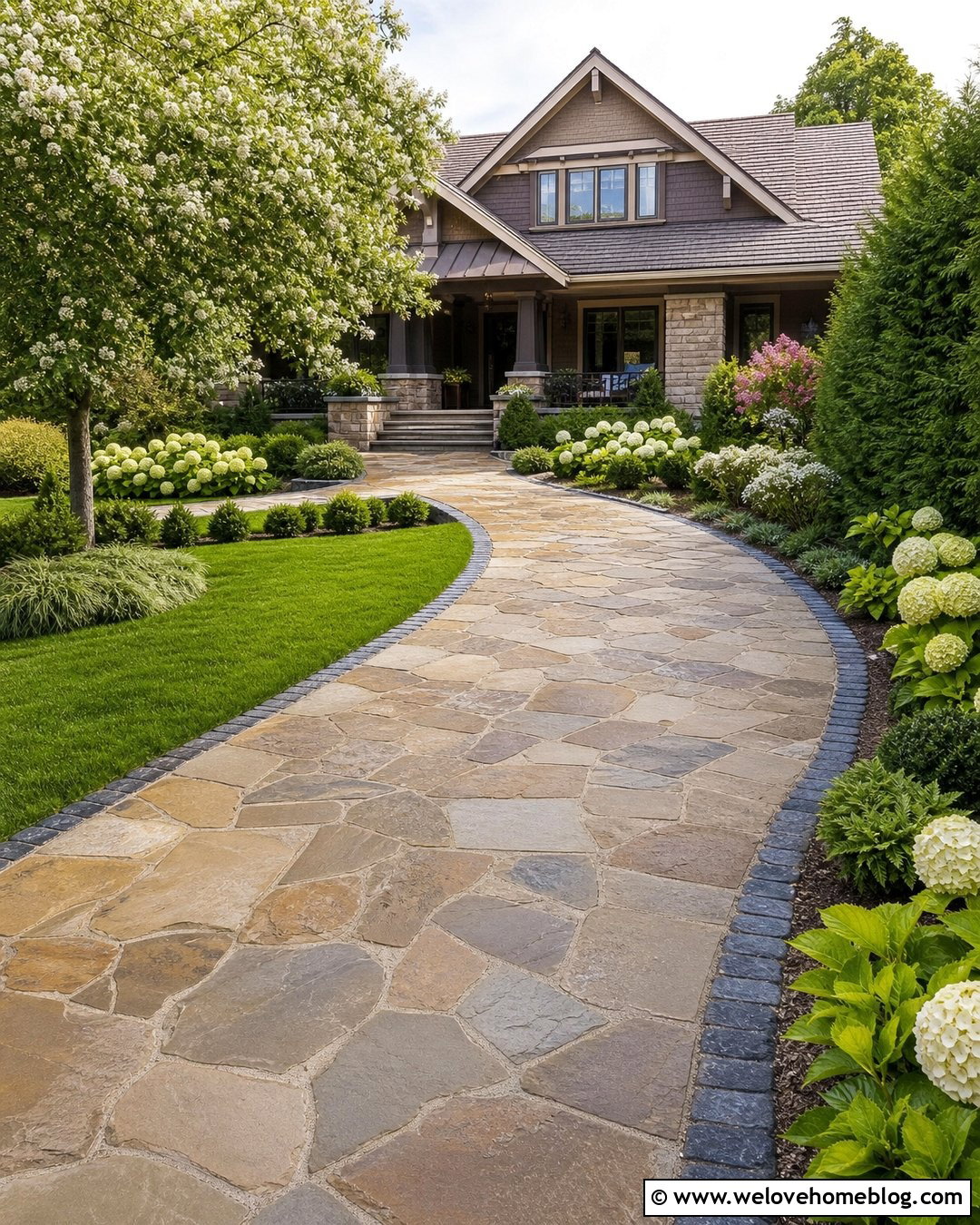
Repeating flagstone from the driveway in the front walkway makes the entire entrance easier to understand. Use irregular tan-gray sandstone for a gently curved driveway, then branch a narrower path toward the front door. Define both surfaces with the same dark cobblestone edging, but use slightly smaller flagstone pieces on the walkway to create a subtle change in scale. A broad planting bed between the driveway and path can hold hydrangeas, ornamental grasses, evergreen shrubs, and a small flowering tree. Near the porch, widen the walkway into a landing that matches the driveway’s stone palette. This coordinated approach suits many house types, including ranch, Craftsman, farmhouse, and traditional homes. Consistent materials allow the driveway, path, landscaping, and architecture to read as one complete curb-appeal design.
Conclusion:
The most successful flagstone driveway is more than a collection of attractive stones. Its surface, layout, borders, entrance, drainage, landscaping, and connection to the house should all support one clear design. Irregular sandstone creates an informal country look, while cut bluestone provides cleaner lines for contemporary or traditional homes. Gravel joints, cobblestone frames, planted center strips, stone pillars, and matching walkways can further personalize the approach. Always confirm that the selected stone and complete installation system are appropriate for vehicle traffic, local weather, and site conditions. With sound construction and a coordinated landscape plan, these 20 natural flagstone driveway ideas can inspire an entrance that feels durable, distinctive, and naturally connected to its surroundings.

Related posts:
Leave a Reply